
The 2023 LDV EV T60 may end up being the first fully-electric mass-produced ute to go on sale in Australia.
LDV launched the EV T60 in New Zealand last week, beating out the upcoming battery-powered GWM Ute, as well as the Rivian R1T, Tesla Cybertruck, and Ford F-150 Lightning.
The EV T60 ute uses a single electric motor to send 130kW and 310Nm to the rear axle, with the 88.5kWh battery delivering a claimed 325 kilometres of driving range from a single charge.
Only available in rear-wheel-drive at this stage, the dual-cab EV T60 has a payload capacity of 980 kilograms.
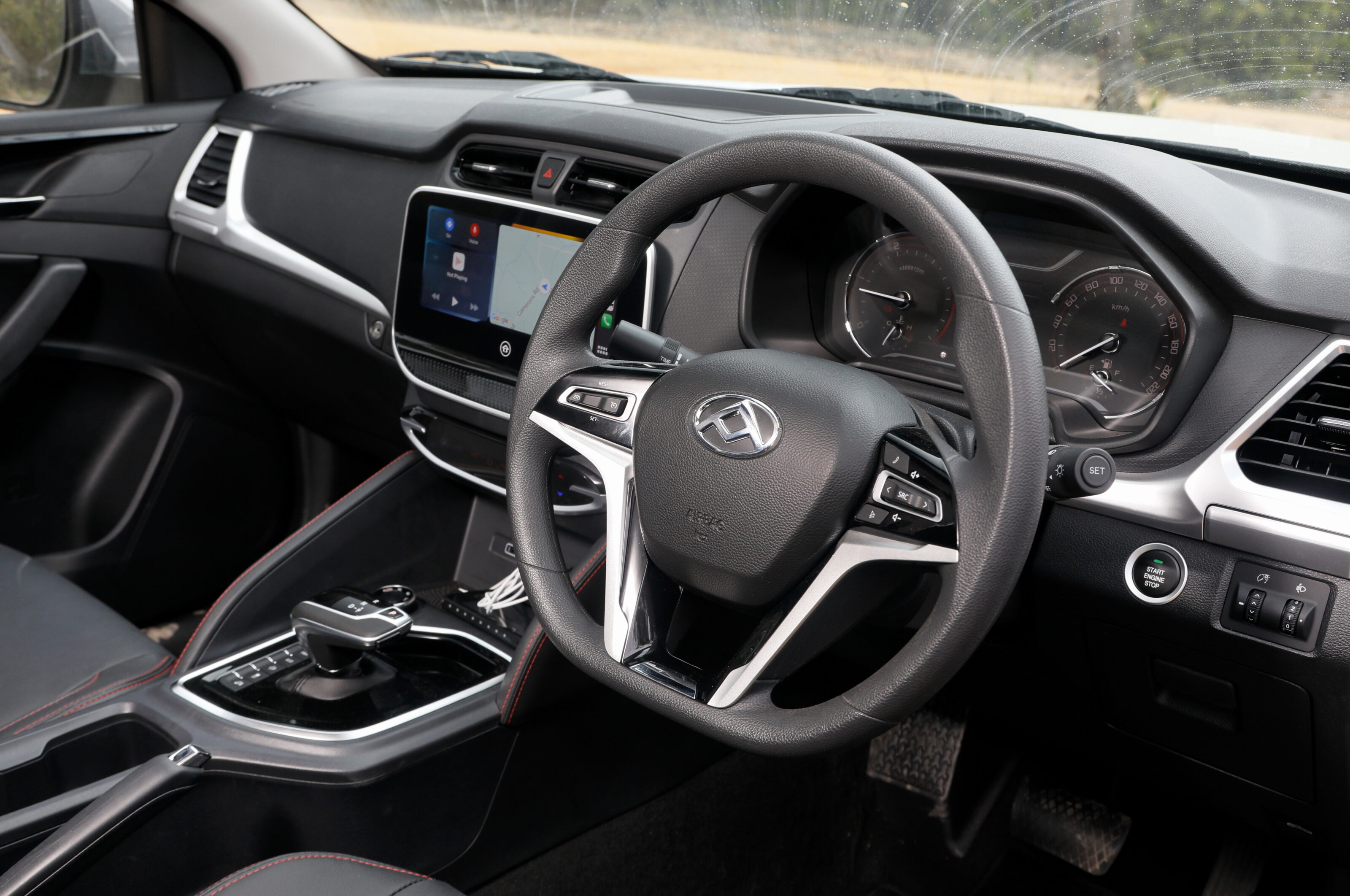
While Australian officials for LDV were tight-lipped on local plans for the EV T60, it’s believed the company is in the process of planning its future electric portfolio.
Sold under the Maxus brand overseas, the Chinese carmaker also offers the all-electric eDeliver 9 commercial van in right-hand-drive markets such as the UK and New Zealand. Buyers over the ditch can option the eDeliver 9 with a choice of three battery packs, and three different bodies – including a cab-chassis option.
The electric LDV van offers slightly more power thanks to its 150kW/310Nm electric motor, with a driving range of 353km claimed from the largest 88.5kWh battery.
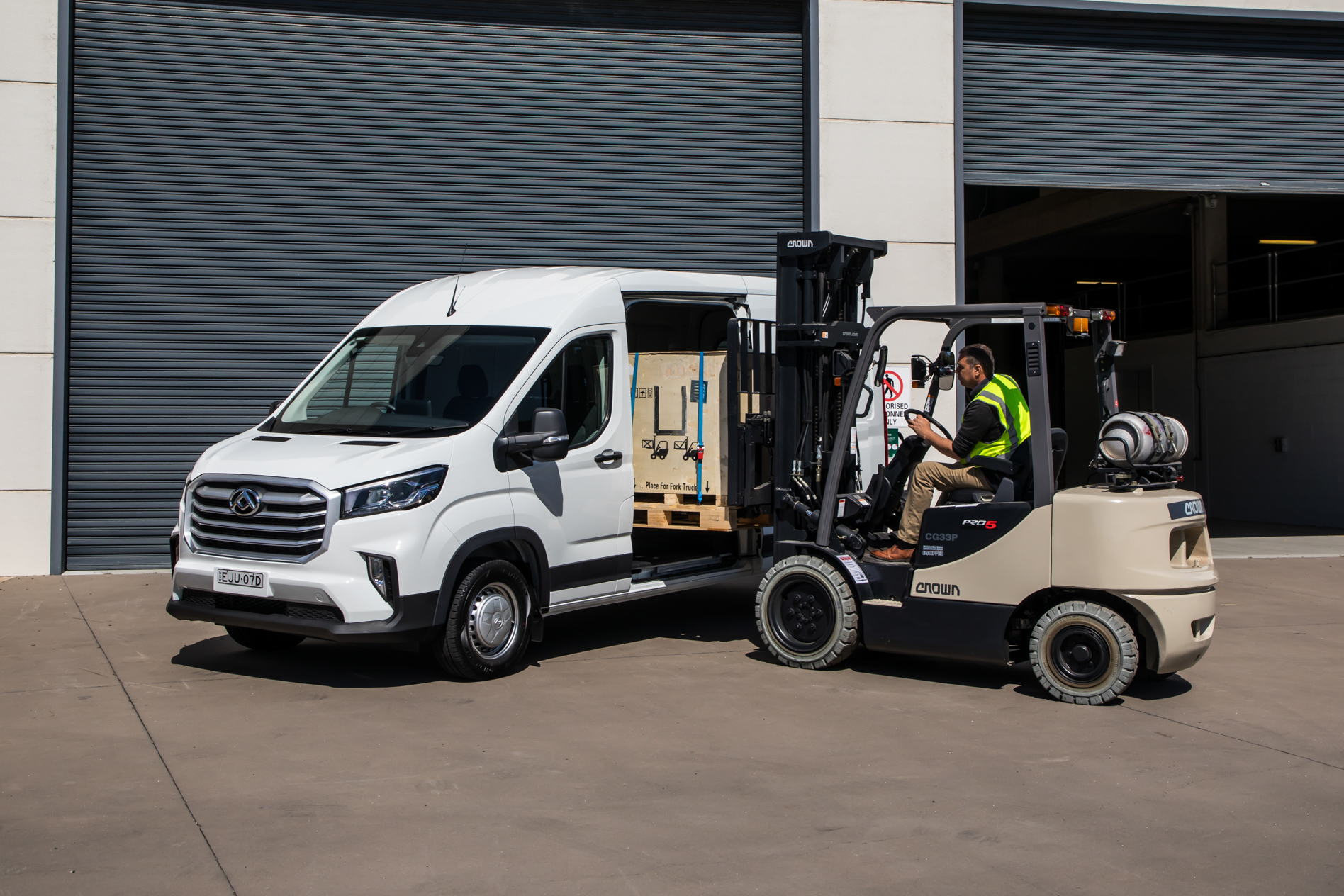
Pricing for the EV T60 ute has yet to be announced for New Zealand, but the eDeliver 9 is priced from NZ$75,990 to NZ$82,990 (AU$70,790-$77,312) before generous government subsidies.
A smaller eDeliver 3 commercial van is also available from LDV NZ, priced from NZ$57,489 (AU$53,550).
Documents published by a Chinese Government department last year show the LDV’s direct competitor, the electric GWM Ute, will use a 150kW electric motor and either a 60.5kWh or 79.6kWh battery, with a driving range of as much as 450km claimed.
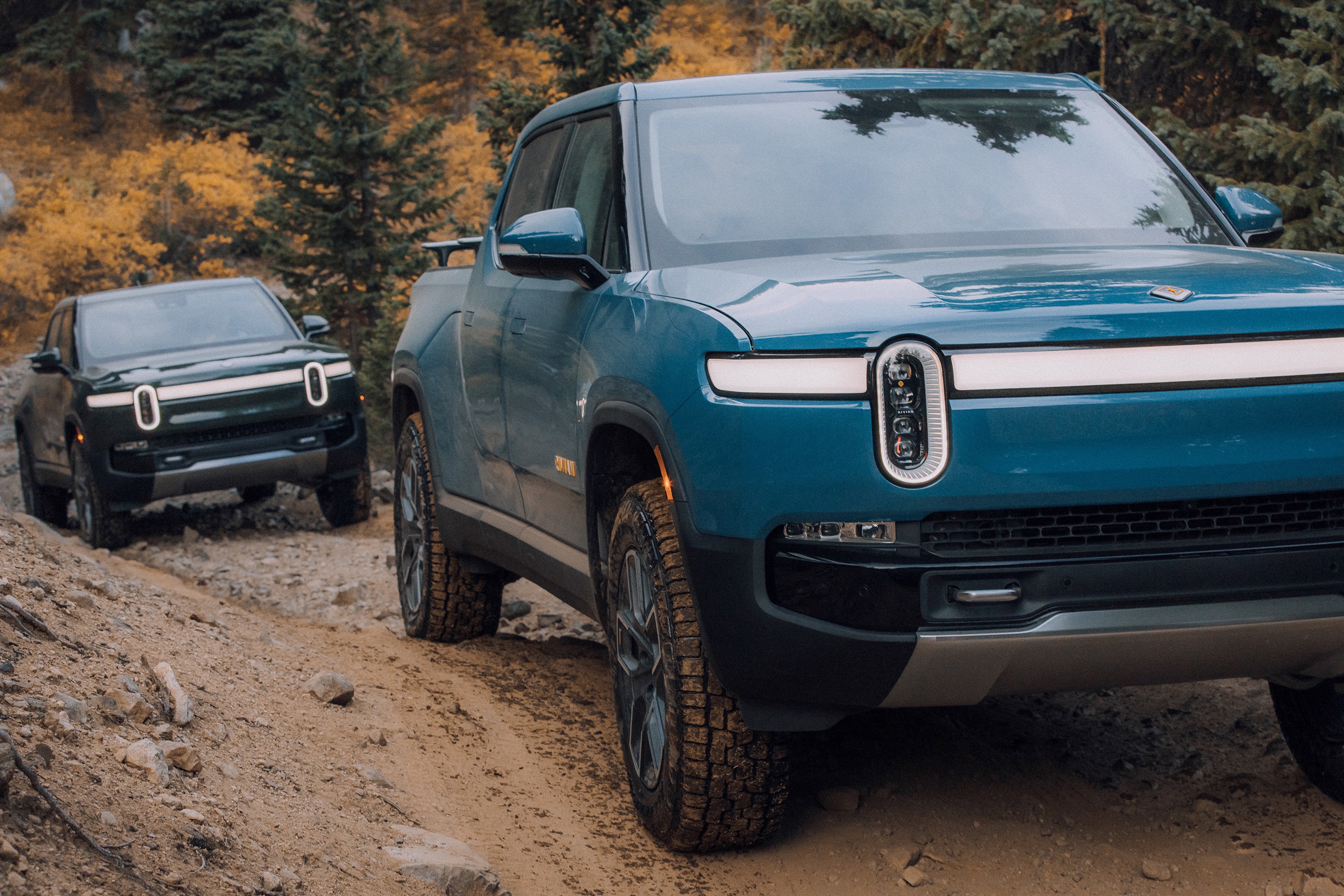
Rivian has also publicly expressed its desire to offer the R1T electric ute in Australia, though it’s unclear whether a right-hand-drive model will be built at its US plant, or whether Aussie buyers will be forced to wait for a rumoured UK factory to be built before vehicles start arriving on our shores.
Local company Ace is currently offering reservations for its Yewt model for $299, with pricing for the fully-electric ute starting from $25,995 before on-road costs.
The Australian-made vehicle is said to offer a driving range of up to 200km, with around 300 vehicles expected to be built in 2022 – making the Ace a low-volume manufacturer.
Electric passenger cars from the likes of Tesla, Hyundai, and Kia are in increasing demand with Australian buyers, but a lack of Federal Government incentives has Australia being overlooked for more attractive markets such as New Zealand.
While the 2023 LDV EV T60 has yet to be confirmed for Australia, the model is currently the front-runner to be the first electric ute to hit local showrooms.
Key Points
- Prices to start from US$37,499 (AU$51,600)
- Nickel manganese cobalt to feature in higher-spec variants
- Fisker has previously said the Ocean will come to Australia
UPDATE, February 28, 2022: Production of Fisker’s first electric vehicle has begun, as the Ocean starts to roll off the line in Austria.
Having been launched as the American manufacturer’s first model last year, the first 50 units of the electric vehicle are now under construction at Magna Steyr’s plant in Graz, Austria – home to other EVs such as the Jaguar I-Pace.
Fisker has previously told Wheels the Ocean will be coming to Australia, confirmed last year shortly before the EV officially went on sale at the Los Angeles Auto Show.
Read more about the Fisker Ocean below.
The story to here
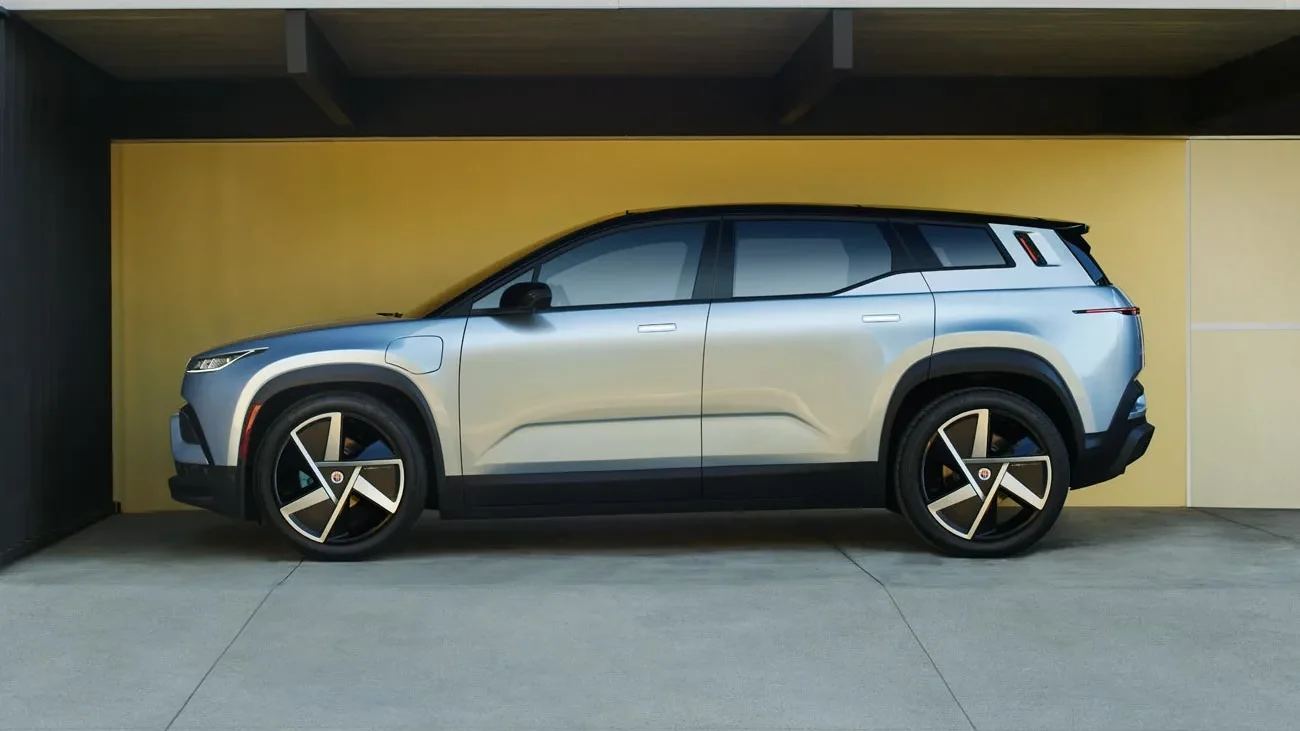
November 18, 2021: The first production model from American electric manufacturer Fisker has been officially unveiled at the Los Angeles Auto Show.
Known as the Ocean, the fully-electric SUV has been under development for the past two years since its first reveal at the 2020 Consumer Electrics Show – with the production-ready model now unveiled for the first time.
At a base price of US$37,499 (AU$51,600) before on-road costs for the entry-level Sports trim, the least expensive variant of the range is powered by a single motor on the front axle – developing 205kW and providing a driving range of 400 kilometres from its lithium-ion phosphate battery cell.
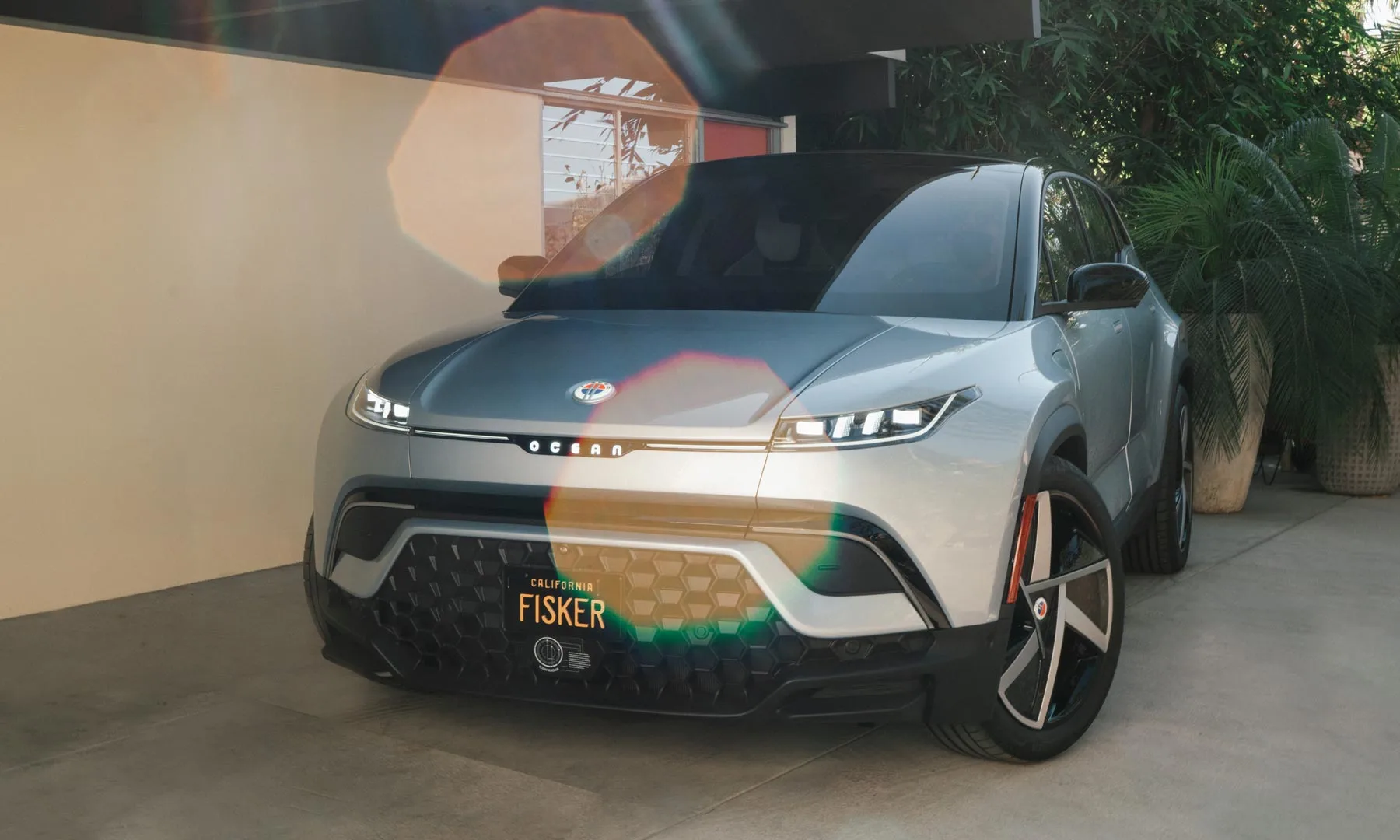
The three higher-spec variants – Ultra, Extreme and the limited edition One – will benefit from dual motors, increasing the Ocean’s power output to 403kW in Ultra trim, while its nickel manganese cobalt cell battery pack helps to deliver an increased driving range of up to 550km on a single charge.
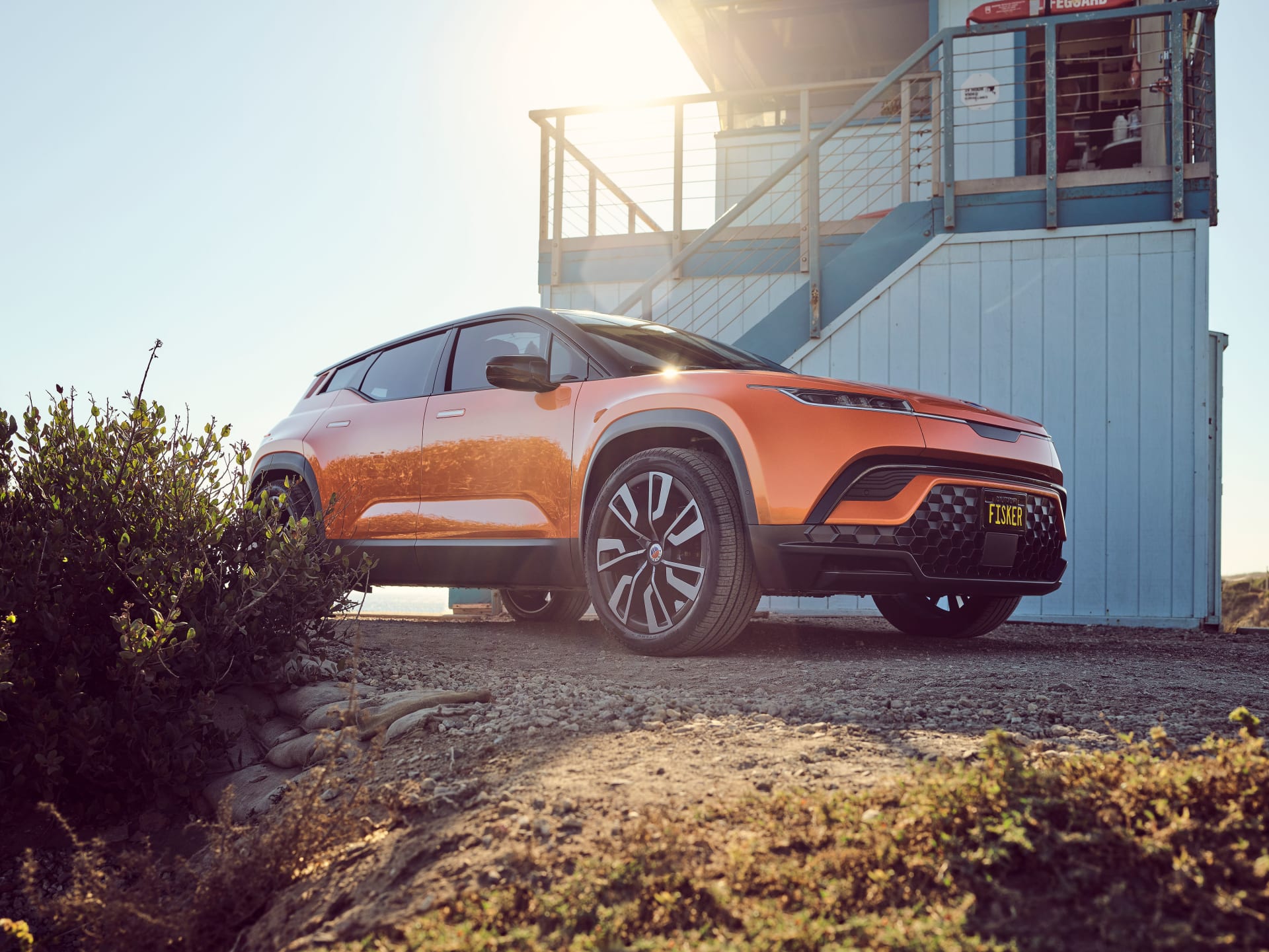
Extreme and One grades receive a small power boost up to 410kW, and driving range is also extended to 562km, while the optional SolarSky roof can extend the Ocean’s distance capabilities by up to 3200km annually, provided the conditions are right.
No matter what spec, all Oceans are sold with 20-inch ‘aero’ wheels as standard – but the manufacturer will also offer three 22-inch designs, all shod in tyres specifically designed by Bridgestone for the EV.
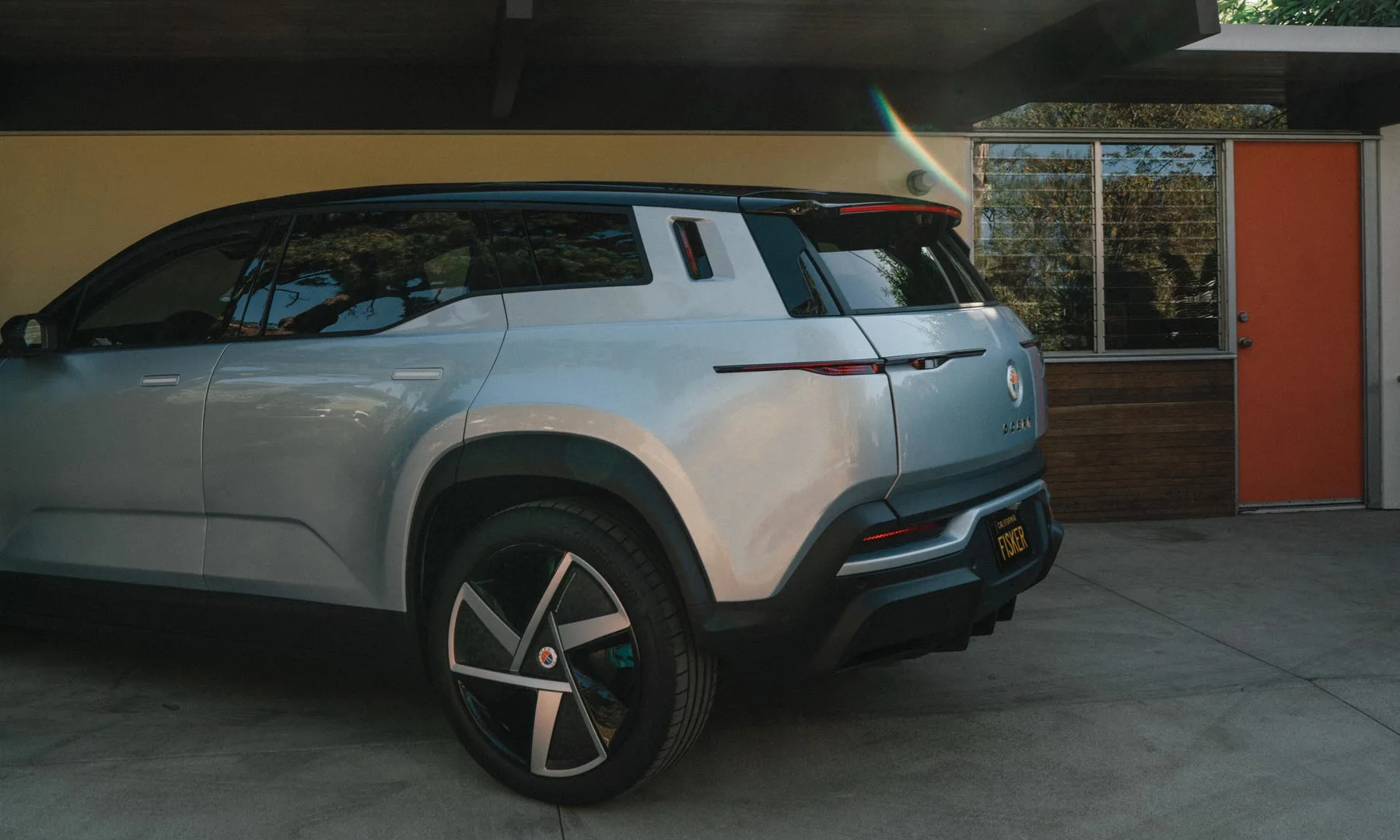
Designed in California with Golden State customers in mind, the roof can also slide back with the windows dropped to create ‘California Mode’ – all but turning the Ocean into a convertible.
Aiming to make its production as environmentally friendly as possible, the Ocean features seating for five with a fully vegan interior made of recycled materials, including; reclaimed fishing nets, old t-shirts, and renewed rubber.
Front and centre on the dashboard is a 17.1-inch, high-resolution touchscreen which can rotate between portrait and landscape mode, the latter of which Fisker dubs ‘Hollywood Mode’ when the vehicle is parked.
Although Fisker hasn’t released any charge times or capacity information for its Ocean batteries, the EV will be able to provide power back to the grid, charge other EVs, or act as a back-up supply of power for homes in the event of an emergency.
Production is slated to start in a year’s time at Magna-Steyr’s carbon-neutral factory in Graz, Austria, with the first examples expected to hit American roads in early 2023.
Fisker has previously told Wheels it had planned to bring the Ocean to Australia from 2023, potentially entering the market at around the same price as Tesla’s popular Model 3.
With the aforementioned Ocean Sport starting out at US$37,499 (AU$51,600), the all-wheel drive Ultra will go on sale from US$49,999 (AU$68,800), while the range-topping Extreme and One are given a US$68,999 (AU$95,000) price tag, although the latter is limited to just 5000 units.
Welcome
Price as tested: $66,883 (including on-road costs and accessories) Fuel since collected: 451km @ 10.5L/100km

I can’t say that the previous MU-X was on my list of Cars To Drive Before I Die. I understood the value proposition, was amused that it comprehensively outsold its Holden twin but found it to be a car I Did Not Want To Drive. Loud, ponderous and oddly packaged, it was clear that the fact it was cheap, good at towing and very, very capable off-road was what drove its sales. The blingy front end really turned me off it, too.
Then came the second generation, with big price rises corresponding to big on-paper improvements. New cabin, new packaging, updated engine and a slightly more restrained approach to styling, it looked the goods. And when I drove the mid-spec LS-U fresh off the boat, I agreed that this car was a vast improvement.
Which brings me to the LS-T parked on my driveway for the next few months. I am not an avid outdoorsman, camper or off-roader. I will be using this car largely as most suburban buyers do, for the usual running about and the occasional trip out of the city confines.
I will – various restrictions on time and movement permitting – find some challenging tracks and if the chaps at 4×4 Magazine have anything to do with it, hitch something heavy to its towbar.
What are the highlights?

As I’ve already said, this is the LS-T. That means it’s the top-of-the-tree of the three specification levels and it’s the 4×4 version, which since launch has been retailing for $63,990 drive-away (the MSRP is $65,990 + ORC). Added to that figure is $500 for the fetching Cobalt Blue paint and yet more for the tow kit, 12-pin plug and electronic brake controller, taking us to $66,883.
I said in my original review that the $6000 gap between the LS-U and LS-T probably wasn’t six grand unless you really wanted certain bits and pieces and I stand by that. Given the drive-away promotional price of the range-topper, maybe Isuzu thinks I’m on to something because the gap isn’t anything like that and changes the value proposition for the better.
You get the bigger 9.0-inch media screen (also on the LS-U) and 20-inch alloys, LED interior lighting, leather steering wheel and shifter, leather seats, dual-zone climate control, front and rear parking sensors, powered and heated front seats, reversing camera, keyless entry and start, remote start, sat-nav, auto door locking, auto-levelling bi-LED headlights with auto high beam, auto wipers and a powered tailgate.
Safety

The LS-T ships from Thailand with eight airbags (the curtain reaching all the way to the third row), forward AEB with turn assist, forward collision warning, post-collision braking, traffic sign recognition, misacceleration mitigation, lane departure warning, lane-keep assist, lane departure prevention, driver attention detection, blind-spot monitoring, rear cross-traffic alert, hill descent control, trailer sway control, rollover mitigation, reversing camera and tyre pressure monitoring.
Sadly for bigger families, only the middle row features child seat anchoring, with two ISOFIX points and three top-tether points.
Since I drove the new cars in August, ANCAP has had its wicked way with the MU-X and gave it a five-star safety rating to match that of the D-Max.
I said in my original review that the $6000 gap between the LS-U and LS-T probably wasn’t six grand. I stand behind that and given the driveaway promotional price, maybe Isuzu thinks I’m on to something.
Getting to know you

Given I had already driven the LS-U, I knew what to expect. Heft, mostly. It’s such a big car at just under five metres. It’s the height, though, that really gets you. The headlights are quite small and the grille kind of shrinks everything into it, so it looks taller again because it looks narrower than it is. It does look pretty good in the Cobalt Blue, though, a big improvement on the metallic brown of the last one I drove.
The cabin is roomy and robust. I was a fan of the cloth of the mid-spec car and I can’t say I’d choose the fake leather if I was to use this car as Isuzu intended. It does have rugged rubber mats for that “hose me out” vibe, though, so that’s a good thing. The plastics are middle-of-the-road, being neither plush nor scratchy (for the most part), the Tupperware vibe of the old one now a thing of the past.
It’s a loud old thing when you fire it up from cold. Trundling around the ‘burbs doesn’t quiet it down much either, so you need to be patient. The long lazy throttle suits the engine’s high torque delivery at low revs, you just need to remember to give it a good shove if you need a bit of extra pep.

Where the engine works really nicely is on the open road. A long motorway run delivered an unexpectedly comfortable and quiet experience. The stereo more than overcame the road and wind noise, which were nicely damped from the get-go.
Even rolling on 20-inch tyres, the ride is plush for a ute-based SUV and between the suspension and tyres, there’s not much left of bumps by the time they get to your backside. Speaking of backsides, the seats are very comfortable and suit the car perfectly, just enough grip to stop you sliding about and there are hefty grab handles everywhere if it’s really rough.
We’ve got a ways to go with the MU-X and hopefully some free time in the weeks ahead will see me get it a bit muddy and try out 4×4 mode.
Update 1: Getting Into the Groove
Fuel since collected: 2867km @ 8.5L/100km

The MU-X’s second month with me proved a challenge because, for some of it, it was in the hands of fellow contributor Curt Dupriez. In the spirit of the Victorian government giving him an inch, he took a mile – well, 1800km, so about 1116 of them – and fired off down the Hume to Ballarat.
I had expected my MU-X was going to be in demand because it’s so popular and because our initial impressions last year were very positive. Naturally, lockdowns stymied some of the plans we had for it.
Curt stepped up not only with the big trip south but he was keen to take it off-road. He didn’t get too ambitious because being at the top of the range on road-biased tyres, he didn’t fancy puncturing a tyre or worse, knocking it off its rim.

“It protested when attempting to activate 4L off-road with no clear indication to the user why. I wasn’t about to go digging through the owner’s manual, as one wouldn’t when finding themself in the middle of a tricky off-roading situation.”
Seems that may have been an unfortunate glitch because I gave it a go in the driveway and it engaged happily. These things do happen, but it might be something to watch for. Curt knows what he’s doing but also didn’t push his luck because he was a long way from a tow.
During his week and a bit with the big blue beast, Curt felt the engine was a bit lazy and thought the auto was reluctant to kick down.
“The powertrain doesn’t need a ‘sport’ mode, per se, just a generally crisper and more immediate calibration.”
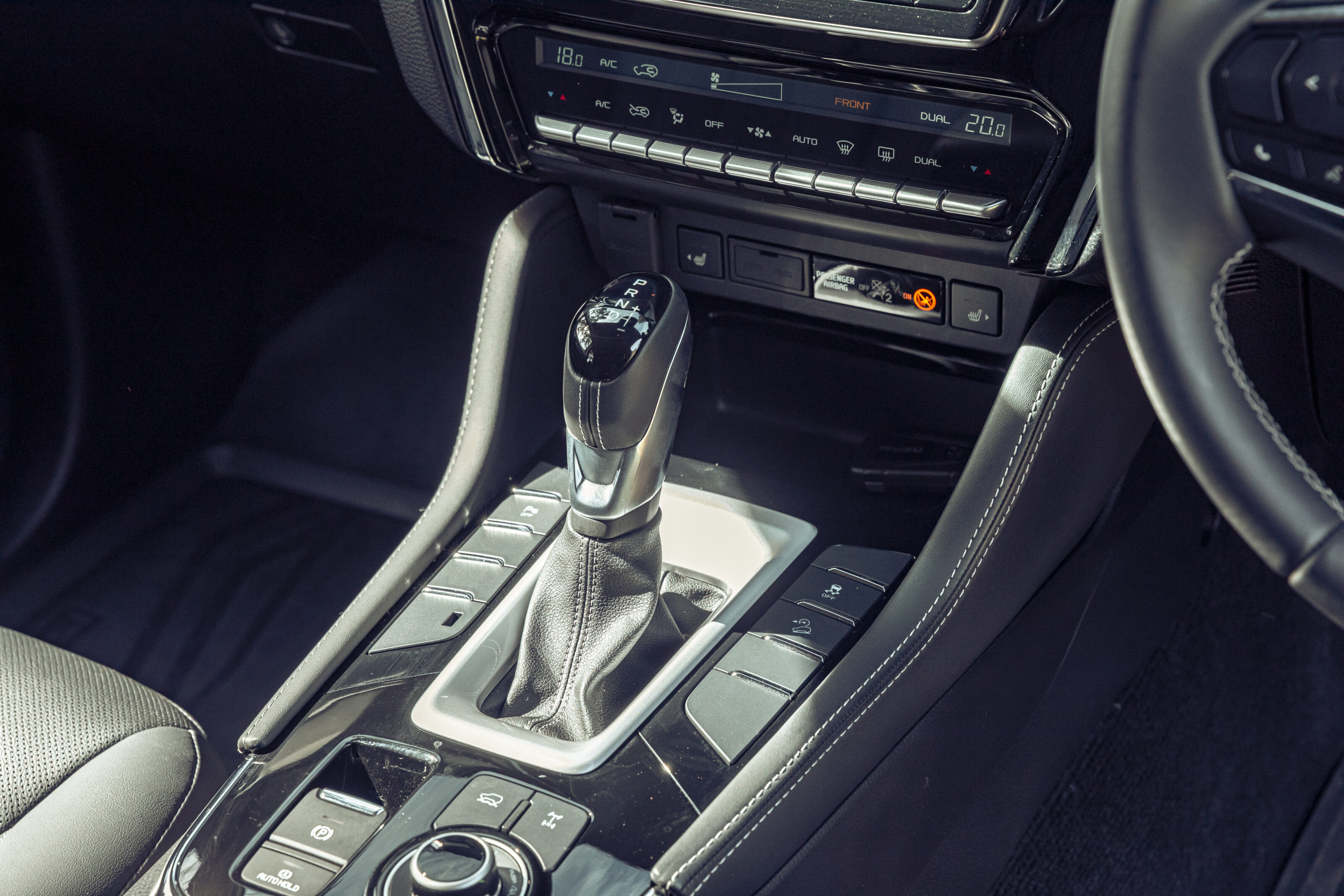
I share that view – while I get why the transmission isn’t super-fast, it does sometimes have a bit of a think before deciding what you’re after. The enormous torque does help fill the gap but around town, it would be nice if you could get the right gear to get it shifting when you’re going for a gap or you’ve just been informed by Sydney’s terrible road signage that you need to be over there.
Curt also found it thirsty around town, again something I didn’t find, so I originally put that down to driving styles. The average for November was 8.3L/100km, which is commendable for a giant brick of a thing both in town and firing down the freeway. I’m putting it down to a misreading of the fuel consumption figure as Isuzu insists on km/L rather than L/100km. He did concede it was at least acceptable on the open road.
During his week and a bit with the big blue beast, Curt felt the engine was bit and lazy and thought the auto was reluctant to kick down

Getting back to our experience as a family, the Isuzu’s utility is obviously excellent. Despite being tall and long, it’s not too tricky to park once you get the hang of the off-centre reversing camera. My wife, who is not a fan of giant SUVs, found it reasonably easy to live with. It’s done duty as a load-lugger but missed out on the litmus test for any long-termer in our possession – airport runs. Given the space, it would likely have swallowed luggage for even my heavy-travelling in-laws.
Next month is the final month in the update, where we hope to get a few more miles under the MU-X’s belt.
Update 2: Goodbye Already
Fuel since collected: 4317km @ 8.3L/100km
Spoiler alert: While this is Peter’s final instalment, we’ll have one final piece in the coming weeks, with Curt Dupriez taking our long-termer off-road. Watch for that.

Big lumbering off-roaders – the MU-X is a proper off-roader, not just an SUV – are not generally my bag. The previous MU-X, a vehicle I didn’t drive until very late in its lifecycle, I didn’t like very much at all. It was clearly capable but had some pretty weird usability problems.
It was, of course, dirt-cheap for a heck of a lot of metal, so I understood it, even if I didn’t like it.
Driving this new MU-X in 2021, in the depths of lockdown, made it very obvious that Isuzu had worked extraordinarily hard on it. Perhaps not working with penny-pinching General Motors released the teams to do their best work.
I knew the MU-X was a good car but I didn’t expect to like it as much as I did

Despite the various strictures we lived with during our time with the MU-X, we got almost everything done, except for the airport run with my in-laws, which is always a joyous occasion on the outbound run.
The off-road test was handled by the excellent Curt, so look out for that separate story.
I concentrated on how most people would use this car day-to-day. It navigated all the things we threw at it so much better than the old car.
Passengers didn’t have to contort themselves to get into either the second or third row. The third row is surprisingly usable. The second row, given its ute origins, is narrower than a dedicated passenger SUV platform (yes, that’s what I’m calling those cars now) but that’s the same as you’ll find in the Pajero Sport or Fortuner.

I was always out on my own when I considered the Pajero Sport the best of the ute-based SUVs for everyday use. It’s very capable on- and off-road but also has a good interior, works well in the city (for a car of its size) and is easy to live with.
“Ctrl+C, Ctrl+P” for the new MU-X. One of the things I wanted to think about with the MU-X was whether it had caught up to what I consider the best of the segment and it absolutely has.
It has a rugged but attractive interior, plenty of gear, looks pretty good in a fairly tall and narrow way, sort of like Jeff Goldblum. It’ll take on anything and be quite good at it, again sort of like Jeff Goldblum.

Also reinforced was my opinion that may not make me popular with Isuzu which is that the LS-T isn’t the one to have, even at the ongoing sharp price. You’re just not missing out on much and with the big spangly wheels, you’re probably less inclined to hit the mud and ruts.
I knew the MU-X was a good car but I didn’t expect to like it as much as I did. These two things can be mutually exclusive. I have liked some genuinely terrible cars in the past (Holden Malibu) and disliked some very good cars for no other reason than they just did nothing for me.
Capable, refined at a cruise, very comfortable and cheap to own and run. And a postcode’s worth of car for the price of a mid-sized European SUV

I liked the gravel-voiced Isuzu MU-X very much. It’s still not my bag but I know that if I was to set out on an adventure, it’s the kind of car I would consider very carefully.
Capable, refined at a cruise (but very grumbly when cold and around town), very comfortable and cheap to own and run. And a postcode’s worth of car for the price of a mid-sized European SUV.
Update 3: Off-the beaten path
By: Curt Dupriez

“Dickhead…dickhead…dickhead…”
It’s fair and reasonable that a certain amount of assumed knowledge, learnt through experience, is required for serious off-roading. Or situations serious enough to demand low-range 4×4 activation.
But there I was, a city-slicker pointing the long-term Isuzu MU-X’s bluff noise up a steep, craggy ascent situated along a fire trail in the Victorian gold fields bushland. The wagon’s not happy, its driver’s screen flashing some warning code in the driver’s screen in a steady rhythm accompanied by an audible tone alerting that, no, low-range is not engaged. And it’s no fault of the machinery.

“Dickhead…dickhead…dickhead…” blares the MU-X.
“What’s wrong, Daddy?” asks my 11-year-old son riding shotgun. “I’m scared.”
Drive. Park. Activate. Deactivate. Repeat. Beep…beep…beep.
Of course, it’s user error. The 4×4 system requires the transmission in neutral to electronically switch between high and low range. Or so I learn later. Duh!
The MU-X offers no in-screen guidance-for-newbies but why should it? Low-range is ‘getting serious’ mode for at least an intermediate-grade 4×4 challenge. Be it pride or ego in the presence of Junior, I resist diving for the owner’s manual in the glovebox. We abort.

Some weeks and around 800 kilometres later, the MU-X and I reconvene at the wonderfully named Wombat Holes on the Old Bells Line of Road not far from Lithgow, right in thick of one of New South Wale’s most popular hard-core off-roading meccas. From here to the more gloriously coined Lost City tourist landmark, it’s expert mode off-roading, punctuated with pro-level challenges thanks to recent spell of torrential rain.
It’s our very last day of long-term MU-X custodianship. I want to make it count.
In such wet conditions, traction and wading become deceptively challenging. Or so I’m told from the passenger seat of the MU-X, not from Junior but via 4×4 Australia Deputy Editor Evan Spence, fresh from 4×4 Of The Year, my guardian angel of sorts today. He’s brought along the sister title’s Project D-Max, complete with mud-kicking modifications and enough rescue gear to, if need be, snatch a Tarmac-dweller and his factory-fresh, stock-rubbered MU-X from disaster’s brink.

Confidence is high. The MU-X is decent enough hot-mix cruiser, but it’s slightly spongy and aloof chassis really finds its natural groove – and begins to really make sense – the instant it leaves sealed roads and powers across dirt and gravel. Across the well-graded surfaces along the Old Bells main artery, from which the proper off-roading trails branch from too and fro, it’s a champ.
The course gets rougher as you further into the bush. Still, the MU-X glides across the deep potholes and heavy corrugations at speed, with a shimmy in its tail while offering plenty of grip, traction and composure. Slightly fidgety around town, the ride becomes fittingly compliant and controlled even when the suspension encounters fast and sharp vertical movements, the dampers settling progress nicely. The Dueller H/T rubber – quite low in profile, a fairly closed tread pattern and not uncommon fitment for the dual-cab pick-ups – iron out the smaller lumps, rocky edges and shards well.
The MU-X is a decent hot-mix cruiser, but its slightly spongy chassis finds its groove the instant it leaves sealed roads and powers across dirt and gravel
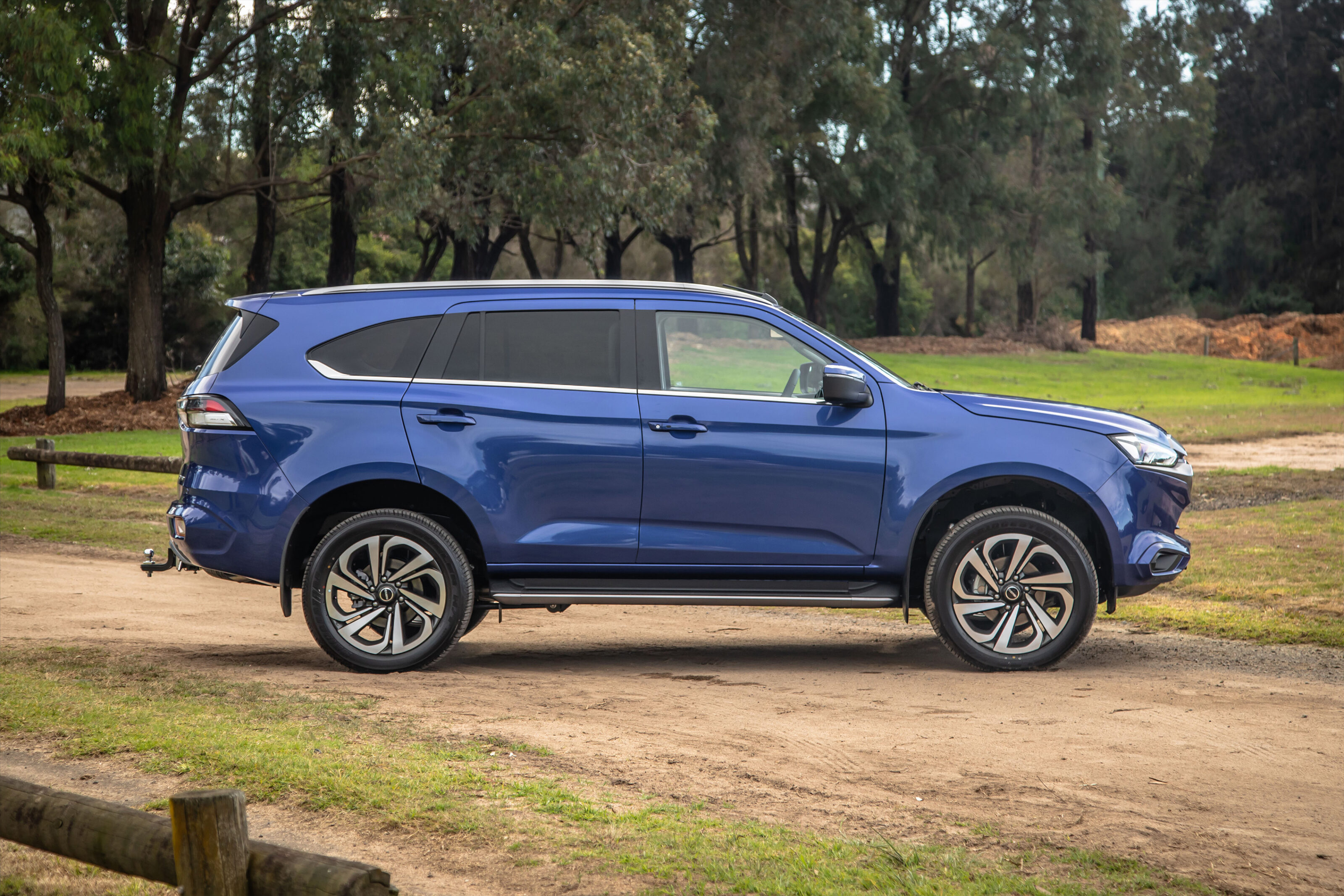
We arrive at a spot Evan uses to assess all manner of 4×4 machinery regularly, “sometimes once a week,” he explains. Before venturing into the landscape moguls, he dives into a tale of a recent incident where a common acquaintance had ventured through tougher stuff nearby with a press vehicle, entering a body of water and hydraulic locking the engine, throwing a con-rod through the side of the cylinder block.
Suddenly, confidence is lower…
The ruts ahead appear scooped from the earth by the Spoon of God if suspiciously manicured by man, barely wider than the MU-X’s sidesteps and with crowning lumps along its centre that’ll surely test the strength of the soon-to-be-beached Isuzu sump guard. This challenge is, I’m told, is the “easy one”.
“Neutral!” I volunteer proudly and the MU-X slips into 4-Low quickly, no dickheads required.

Technically, the MU-X differs from Evan’s D-Max daily driver beyond aftermarket modifications, despite possible assumption it’s simply a family friendly five-door body bolted atop the related pick-up’s backbone, hardware and heartbeat. The wheelbase is shorter and, importantly, the leaf sprung rear suspension has been supplanted by a coil-sprung design. It’s the MU-X, then, with slightly better ground clearance and longer travel for superior wheel articulation.
The wagon fits a selectable rear differential lock like the D-Max does, but also adds an independent Rough Terrain traction control system not present in Evan’s customized pick-up. After sizing up the unusually slick mogul mud, Evan advises, to my surprise, to set the rear axle centre unlocked and leave the heavy lifting to the traction control’s number crunching smarts.
“A locked axle with cause the rear to slide sideways,” he explains. And there’s simply no margin in the available clearance, lest we scrape the wagon’s metallic blue door skins against Mother Earth.

In we go, slow and steady, light on a constant throttle. The MU-X nosedives politely into one rut and then the other on the opposite side, no crashing or evident bodily impact as the rear tyres take turns cocking hind legs into the air like a drunk labrador. Soon enough, airborne wheels spin freely while the meagre Bridgestone tread that’s in contact with the slick trail struggles to find purchase.
“She’ll be right,” encourages Evan and, sure enough, restrain on the loud pedal entices the electronic torque-shuffling smarts to glean just enough adhesion from the rubber still in contact and with glacial momentum the MU-X negotiates a neat and dignified exit out the other side.
Buoyed, we head in convoy deeper inland towards Lost City – apparently – via a goat track mostly covered with neat brown pools of water, powering through before Evan’s D-Max hauls up just before nosing into largest tract. He gets out, grabs a tree branch and dips it into the pool to gauge its depth. “Nope, too deep to wade,” he advises. No conrods will be sacrificed today.

But he knows a spot – a “good one” – and off we go for a few kays before hauling up on corner, my guide quickly disappearing down a well-hidden side track before returning, a minute later, wearing a Cheshire grin. A tougher spot he often uses gets the thumbs up but I’m not so sure once I see it. A fair way down a narrow path, with no realistic way out (in reverse) the MU-X faces what appears all the part like a meteor crater, barely wider than the width of the wagon’s wheel tracks, complete with a severe left lean.
In we go, slowly as you like. He has me steering in effort find solid traction with the right-front tyre on some high rock sections. The more I aim, the more the Isuzu rolls to the left. But the time we’re fully committed and into the gully-like rut well deep, every measure of forward movement is met with an equal measure of sliding towards the left and the metre-deep vertical mud wall that’s becoming a close very acquaintance with the passenger-side window sill.

Evan advises I steer in counter directions to what all of my instincts lead me believe before he commands I hold up, the dramatically tilted Isuzu body work almost resting up against the vertical dirt bank. He winds down the passenger-side window and climbs out. I figure this is precisely where adventure ceases and recovery begins…
But no. From a better vantage point outside the vehicle, he guides my driving inputs remotely and soon enough the MU-X crawls itself, untethered and unscathed, from disaster. Or at least an uncomfortable phone call to Isuzu Ute Australia…
The MU-X glides across the deep potholes and heavy corrugations at speed, with a shimmy in its tail while offering plenty of grip, traction and composure

I spin the wagon around as the only the way out is the way we came in and Evan comes bounding back from his D-Max having fetched a couple of bright orange recovery tracks, “$500 a piece!”
He plants them at the start of the low-point of the hole (now the right side), climbs into the wagon, gently lowers it into the ruts and proceeds to make haste of the return trip with one very neat 4×4 party trick.
With almost full left-hand lock and on the power, the outer edge of the spinning front tyre creates a cushion along the muddy wall during surprisingly swift forward motion, creating a rubber buffer that keeps the rest of the MU-X – its sidesteps, its paintwork – from scraping against the landscape. In moments, he and his ride are safely out the other side. Bravo!

Our long-term MU-X’s hairiest test was to be its last. Mettle tested and point proven, we head back to the hot-mix, cross the Blue Mountains, hit the motorways and two hours later we return the Isuzu to its supplier’s south-western Sydney home. Utterly filthy if without a scratch.
Adios MU-X. In the end, you were great fun.
Ford’s proving ground, nestled at the foot of the You Yangs ranges in the heart of Mad Max country, is one of the most special and captivating places in the whole of this great land. For me it has the magic and excitement of Disneyland without the queues, the technology of Porton Down without the human testing, and the mystique of Area 51 without the abduction and probing. It is a national treasure that should be the source of pride not just for the Blue Oval but for the entire country.
Thanks to the incredible work that goes on in secret in the various sheds and on the test tracks, it appears the world-class facility’s future is bright. Unfortunately, good news stories of endurance through adversity are uncommon when it comes to our hallowed automotive halls. While the 56 year-old facility is still bustling day and night, just 100km away, Holden’s equivalent is ominously silent. An attempt to inject life into the Lang Lang proving ground lasted less than a year when Vietnamese manufacturer Vinfast bought the site from the departing lion and its fate, once again, is hanging in the balance.
Here is a place that has immense automotive significance and history, a place that could be argued is the birthplace of true Australian cars, but within months it could all be meadows and Metricon. Can you imagine Italy allowing the same fate to befall the Nardo Ring? Would the British wash their hands of Millbrook if it started to look a bit iffy? Of course not.
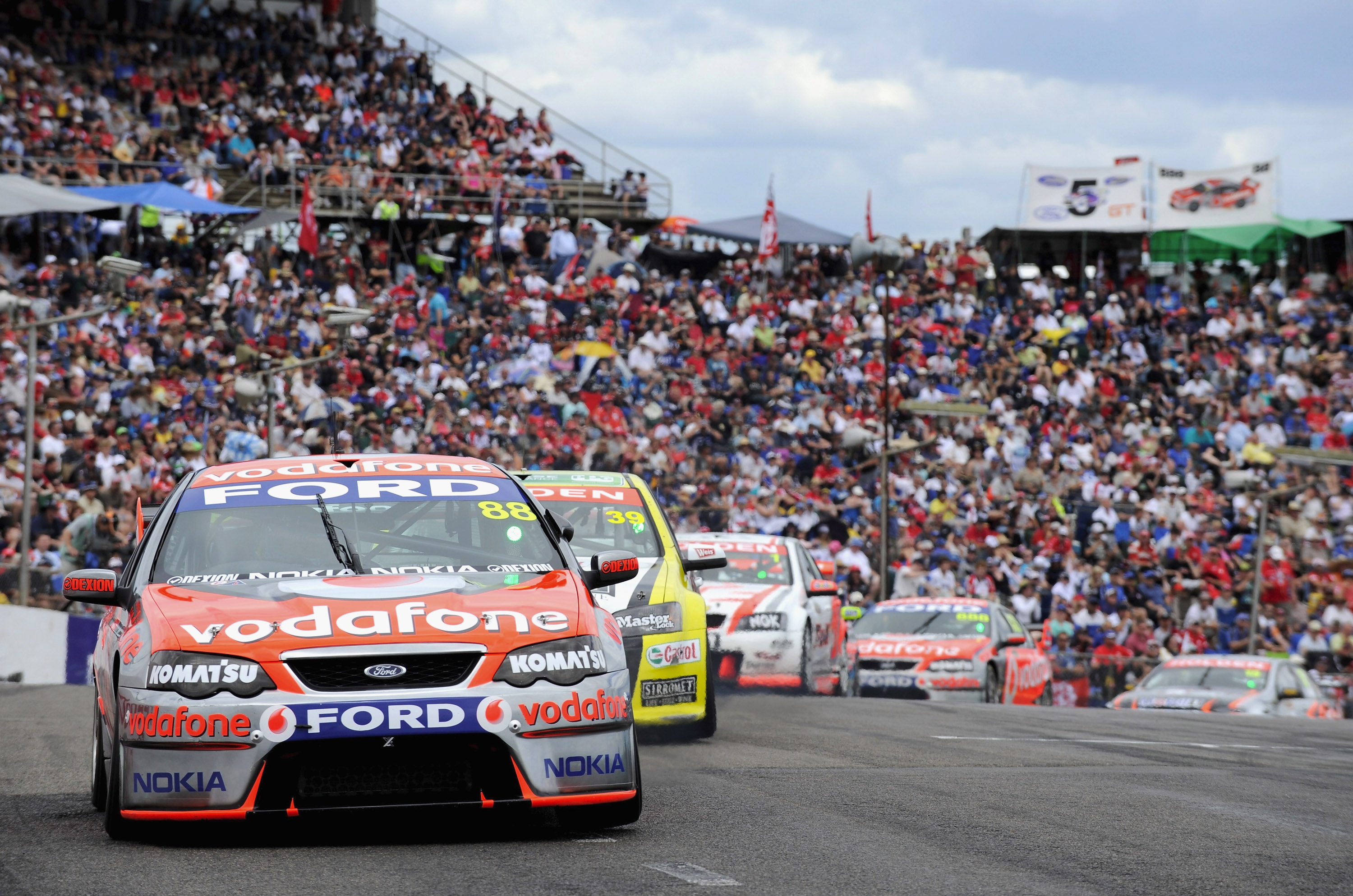
What most sane people realise is that these places are not just a network of private roads and mysterious sheds important only to petrolheads, they are the origins of patriotic greatness and culturally priceless. And yet, it is happening all over Australia.
Oran Park – twice the location for the Australian Grand Prix – gone, while the iconic Lakeside Park in Queensland could be crippled into obscurity by tightening noise restrictions. Last year, plans to tear up some sections of the former Adelaide Parklands street circuit were discussed, which would put a bullet in another Australian F1 and touring car icon. Owners of Melbourne’s Sandown circuit have finally folded under the increasing weight of fat cheques raining down on them from even fatter property developers and, while the proceeds of the sale will benefit the owner’s Caulfield horse racing venue, none of the cash will be funneled into proper racing.
On the other side of town, Calder Park’s Thunderdome – the first NASCAR-sanctioned banked speedway facility built outside the USA – continues to crumble into disrepair. Its lights long flickered out as the suburbs encroach. Instead of the new neighbours celebrating an exciting motorsport venue on their doorstep, noise complaints threaten the remaining motorsport activities hosted at Calder and this motor monolith may too be swallowed up by cheap starter homes.
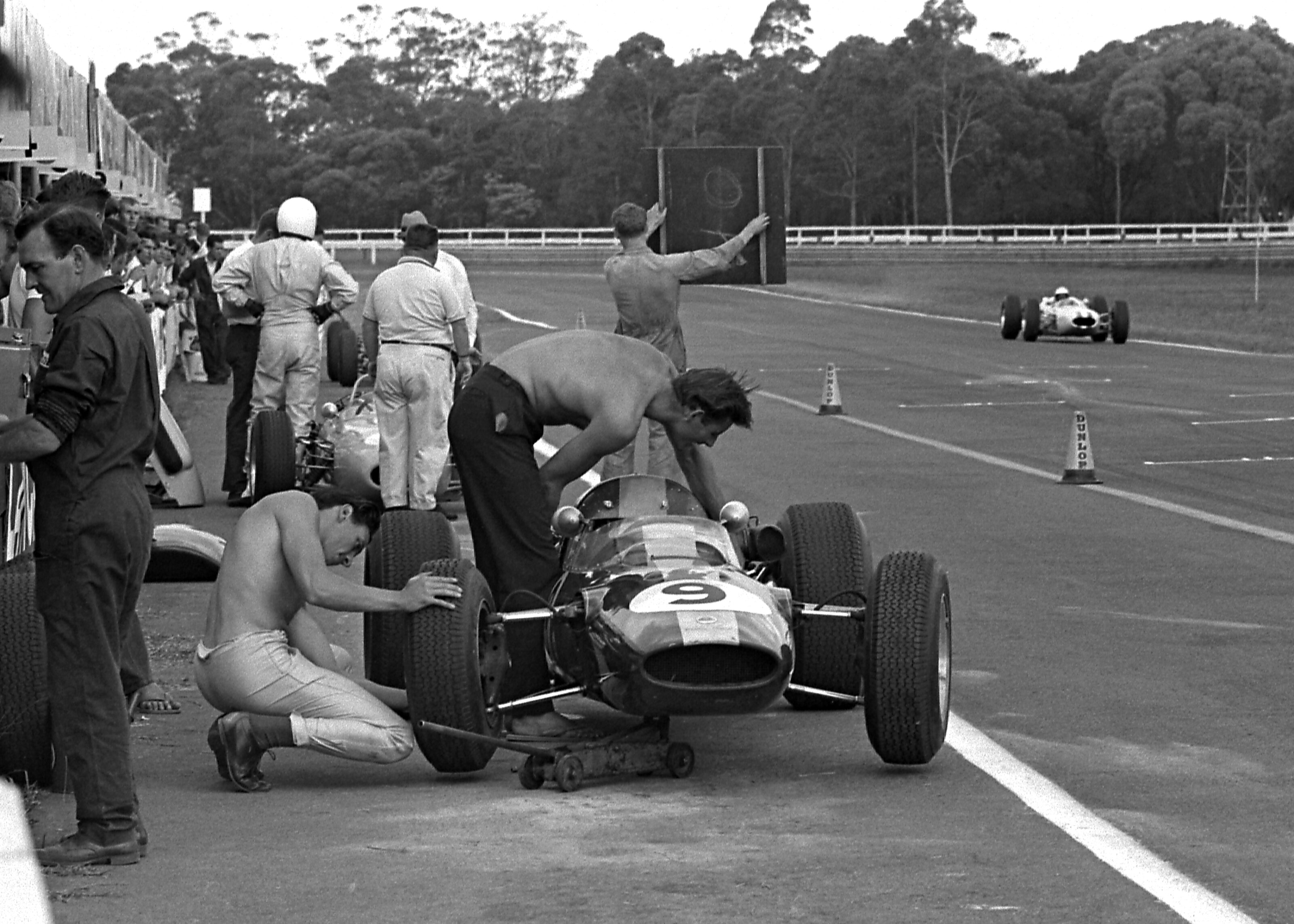
There is a glimmer of hope however. The proposal to trash Adelaide’s motorsport treasure was raised because the track acted as a ‘heat sink’ implying the well-being of Barbara’s withering gladioli on a warm day is more important than a 37-year-old symbol of Australian motorsport. Thankfully the council saw sense and not only prevented the destruction of the tarmac but is considering heritage listing it too.
Sandown’s grandstand was heritage listed in 2019 but the circuit was not and while it’s good to know a part of the historic venue will be preserved, it’s a pity a suburb of soulless townhouses is more important than the cultural value of the track itself.
There are those who would argue that cookie-cutter housing is economically more important than tracks and pits and a part of me would have to agree if it weren’t for a few awkward examples. The McDonalds in Clifton Hill, a rubbish incinerator in Sydney, and a WA Dolphin Discovery Centre built in 1995 are all considered precious enough to be protected with heritage listing. So please don’t try to tell me our automotive heroes don’t deserve the same preservation. In other parts of the world, culture takes the form of 500-year-old churches and thatched-roof pubs, but in Australia a huge chunk of ours is tarmac.
Premium carmakers are increasingly sceptical of investing in models that sell in the sub-€30,000 to €50k-plus segment. But why?
Due to disappointing margins and the prevailing microchip shortage, pricier products typically have a much greater impact on the bottom line. That’s why all key players started shifting priorities, away from A1/A3, 1/2series and A/B-class.
The key to improved profitability is a diligent lifecycle management, which nurses older runout models and ranges lacking contemporary content while simultaneously installing the new parallel electric world order.
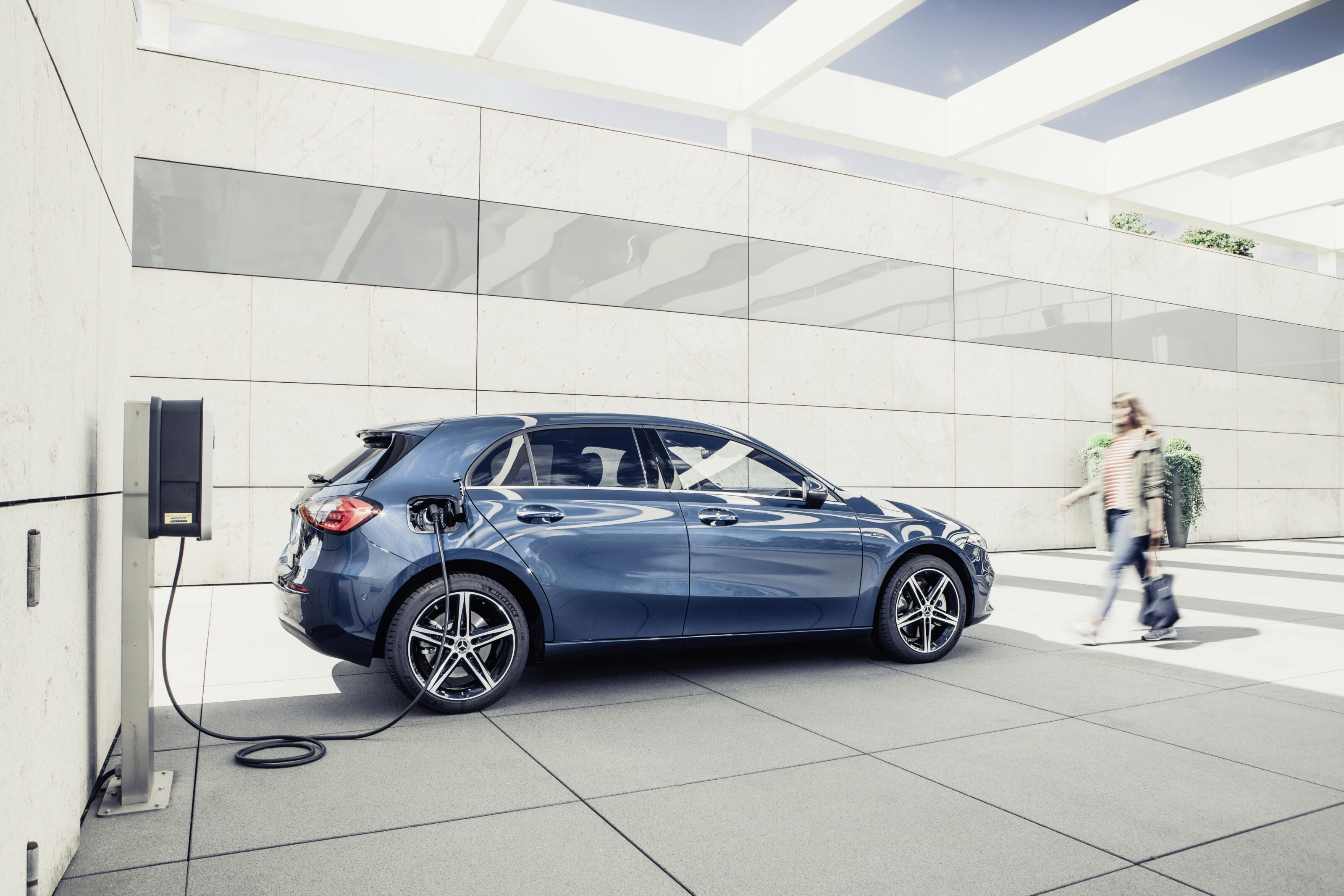
In the latter context, Audi can, in the entry segment, rely on MEB – courtesy of mother Volkswagen. BMW continues to hang on to FAAR, the modular multi-traction FWD equivalent to the CLAR RWD set-up. Meanwhile, Mercedes is readying the totally revamped MMA (Mercedes Modular Architecture), which is merely a stop-gap solution on the long way from electric first to electric only.
Further streamlining moves potentially implemented across all size and price classes include; advanced battery-only applications like SSP (VW group), The New Class (BMW group) and MB.EA (Mercedes).
In the course of this grand reorganisation scheme, Audi decided not to electrify the A1 and Q2. In contrast, BMW intends to replace at least the 1series hatchback and the 2series Gran Coupé with EVs derived from the New Class DNA. The future of the Active Tourer MkII, which has yet to launch in most markets, and the 2series coupé is still undecided.
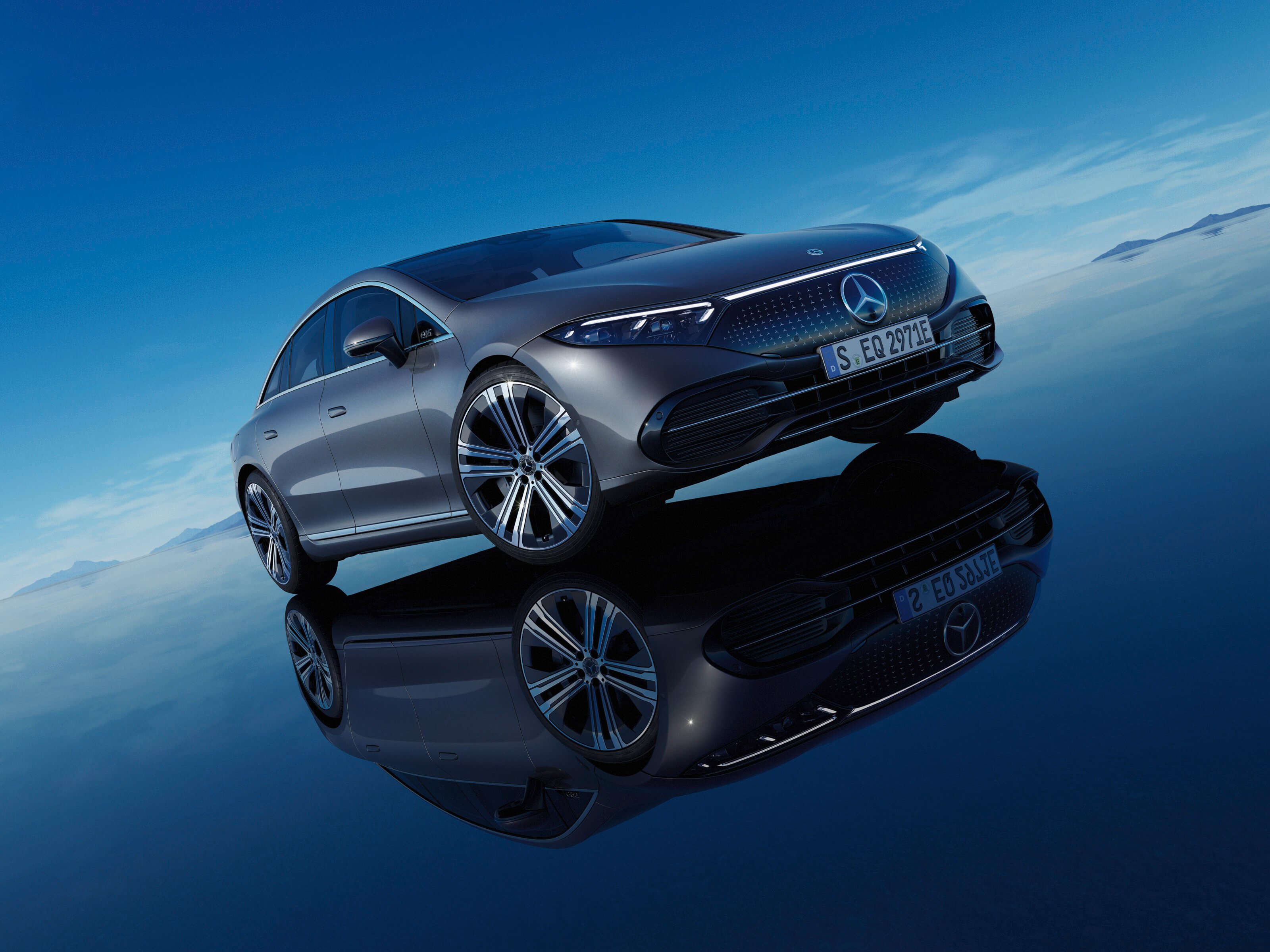
Mercedes went down a different avenue with MMA, which can accommodate both small combustion engines and a wide choice of electric drivetrain configurations.
MMA is the platform of choice for the new compact cars launched in the 2024-2027 timeframe. No longer part of the party are the un-sexy B-class, the slow-selling A-class saloon and the CLA shooting brake – which is only popular in Europe.
The most recent victim of the relentless purge brigade is the polarising SUS (sport utility saloon) design exercise, which tried to craft the All-Terrain off-road pack to a humble three-box bodystyle – think of it as a dramatically downscaled iteration of the Maybach Ultimate Luxury concept (2019).
Based on the long-wheelbase platform of the Chinese A-class, the crossover’s critics described it as vaguely reminiscent of the 2003 Subaru Outback sedan, which was allegedly axed because its packaging almost matched the proposed EQE SUS.
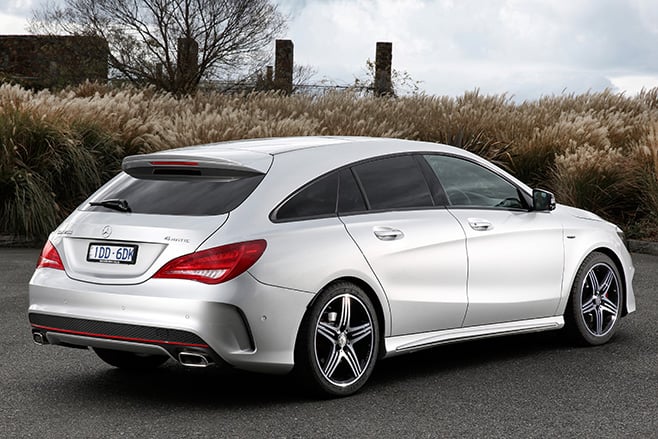
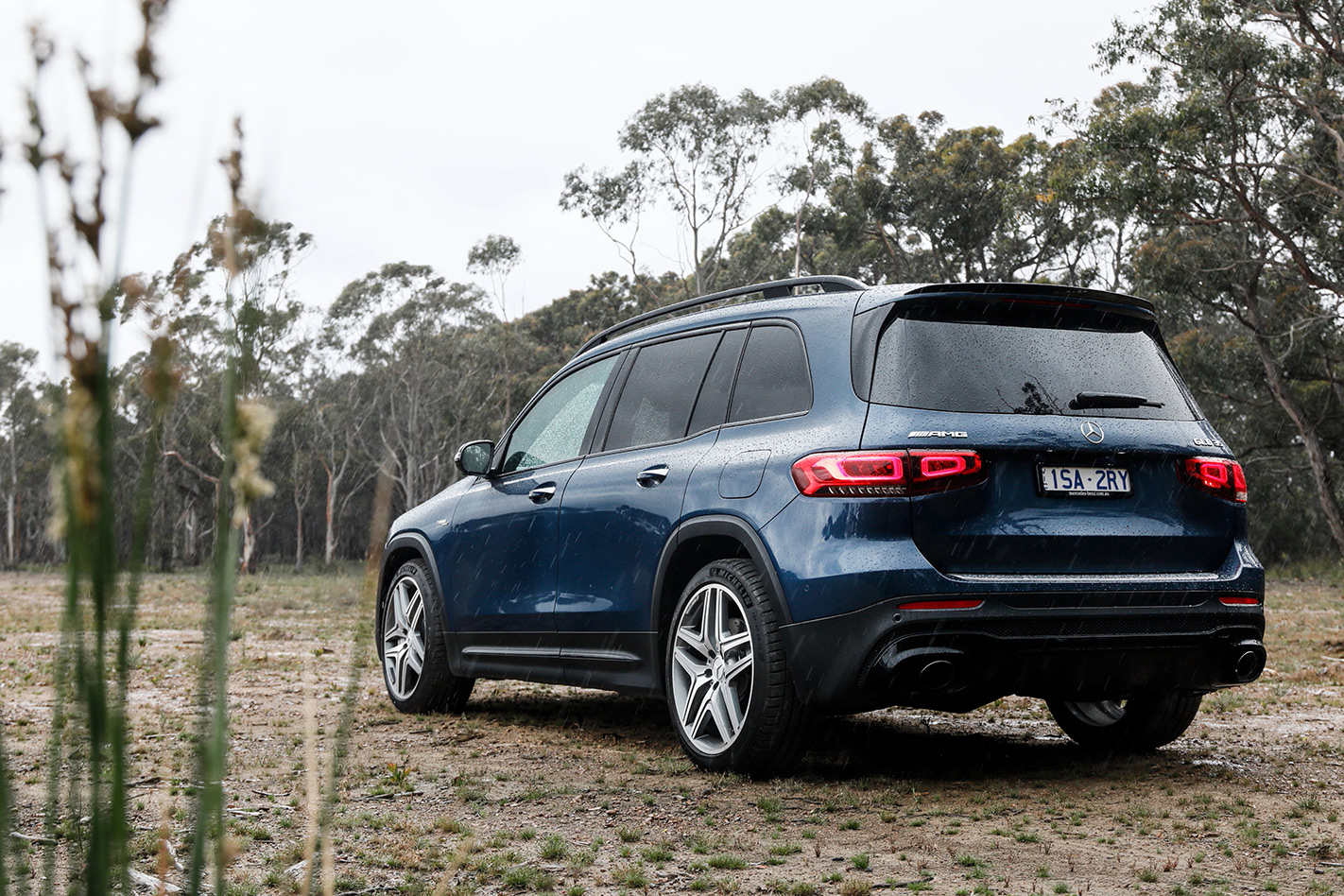
Another China-only model is the future long-wheelbase Mercedes CLA four-door coupé, which may benefit from the pending demise of the CLS. Also taking advantage of the LWB hardware is the next GLB, which moves up-market and will for the first time be offered as high-performance hardcore AMG product, sources say.
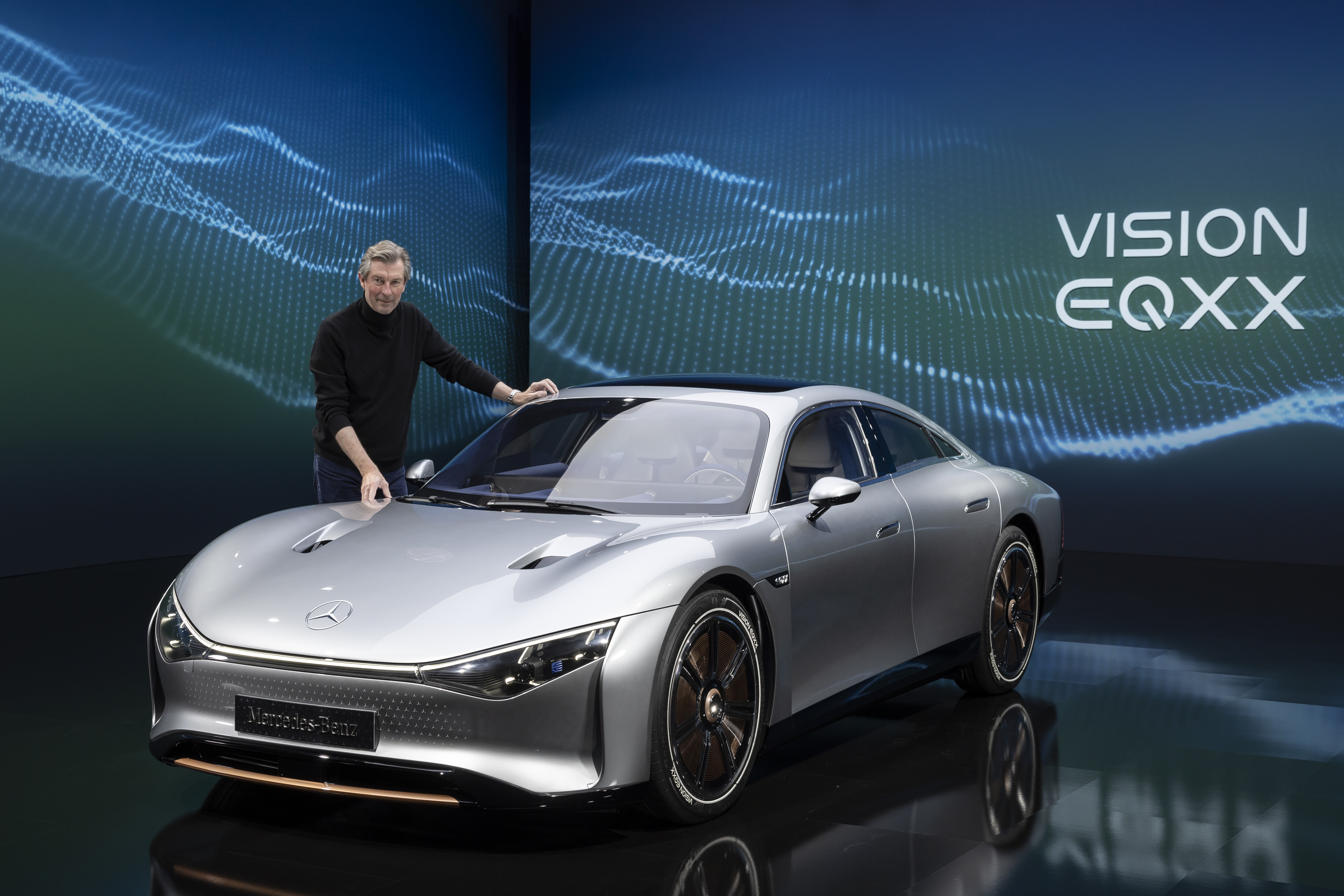
While the CLA shooting brake is officially dead, there are moves afoot to pitch a notably sportier low-drag CLX aeroback, inspired by the record-breaking EQXX prototype. Apparently, the small one-time investment and the expected high yield would make this still to be confirmed range-topper also a desirable brand-shaper.
Except that there is one more surprise debutant waiting in the wings – the GLG. A declared favourite of CEO Ola Kallenius, the GLG reimagines the brick-shaped G-class on a smaller, lighter and, in no way over-engineered, platform. Since the planned fully-electric baby G, which was last year still destined to become the clean-air sister model of the ancient G-class featuring an all-new platform, is no longer an active programme, the GLG is now en route to become the marque’s first emission-free near-hardcore SUV.
The 800 volt MMA layout can package transversely mounted four-cylinder engines, e-motors (front and rear) and a sizeable 250-litre underfloor battery tray.
Although the combustion era is by no means over yet at Mercedes, low drag has shot up the priority list for all MMA derivatives, irrespective of the means of propellant. This strategy almost certainly spells the end for the classic tall upright grille and the boxy rear, which are bound to give way to a lower front, strongly tapered plan view and more streamlined tail section.
Even GLB and GLG must presumably scale back their typical in-your-face SUV proportions and vehicle height will generally come down. Active air flow management, in combination with pre-conditioned battery and inverter cooling or heating, is a new engineering factor to be considered.
The declared goal of these measures is to bring down the average real-life consumption from currently just under 20 to between 12 and 13kWh/100km, while the maximum driving range between plug-in stops is at the same time set to grow from 514 to about 805 miles.
But in this context, we’re no longer talking MMA. To meet such aspiring targets – not to mention the postulated extended 60-145kWh energy span and the wider 150-700kW output bracket – takes an even more advanced formula known as EA.MB and EA.AMG, which is still almost four years away.
Snapshot
- Bubba Wallace is just one of four African-American drivers to race in NASCAR
- The driver drew criticism in 2020 for standing against racial injustice
- Limited series looks at 2020 and 2021 seasons
Netflix seems to have no shortage of motorsport content coming out at the moment, with NASCAR now getting its time in the spotlight.
Off the back of the success for Drive to Survive and Schumacher on the streaming service, its latest limited series gives a behind-the-scenes look at the life of NASCAR’s only active African-American driver – Darrell “Bubba” Wallace.
After working his way up through the junior categories and then taking wins in the lower two tiers of NASCAR competition, Wallace was thrown into the spotlight when he made his first Cup Series start in 2017, driving for Richard Petty Motorsports in the famous #43.
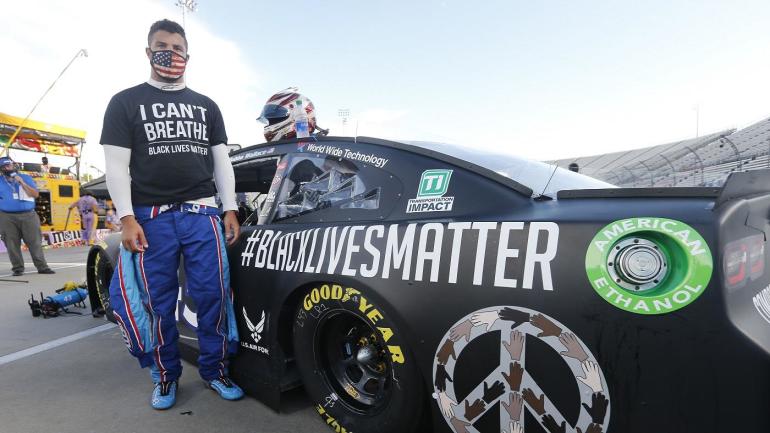
What followed was seasons of rollercoaster results until the global pandemic shut down racing in 2020. On top of the world coming to a halt, escalating race-relating tensions in the United States reached a boiling point, highlighted by the Black Lives Matter movement.
When racing resumed, Wallace used his unique position within the platform of NASCAR to ask for changes, garnering support from those on his side as well as hatred from those against.
From asking for the sport to ban the Confederate flag, to receiving universal support when a noose was allegedly found in his garage – his efforts on and off the track were rewarded in 2021, being signed to a new team owned by one of the greatest athletes of all-time.
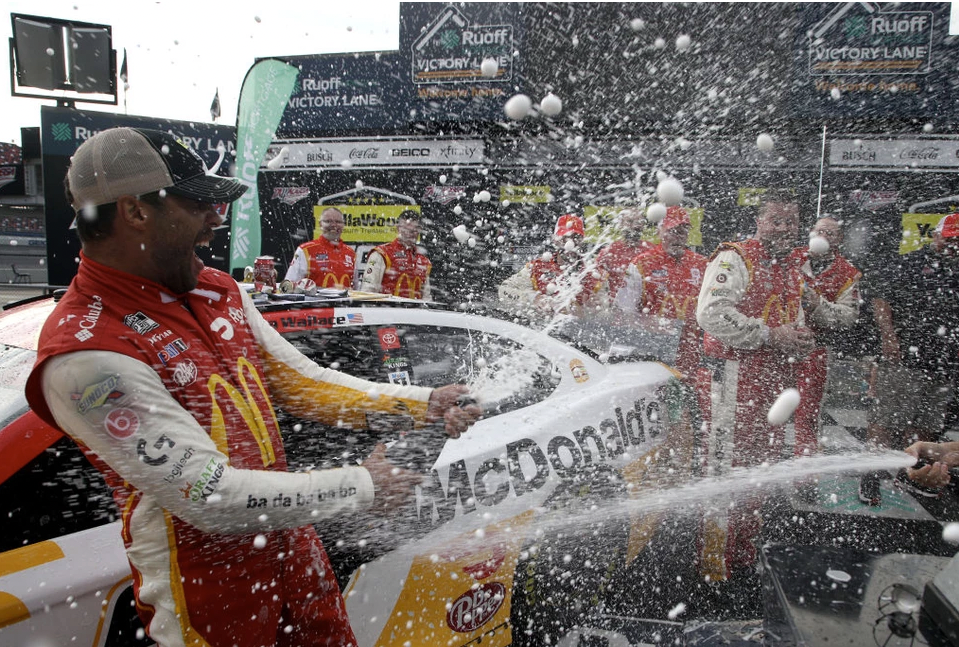
When legendary basketballer Michael Jordan and three-time Daytona 500 winner Denny Hamlin announced they were starting a new outfit named 23XI Racing, there was only one driver in mind – Bubba Wallace.
Following a similar style to ESPN’s highly acclaimed The Last Dance – produced by Jordan, looking at the success of the Chicago Bulls NBA team – RACE: Bubba Wallace pieces together the driver’s history, as well as being there while he creates new storylines within the racing series.
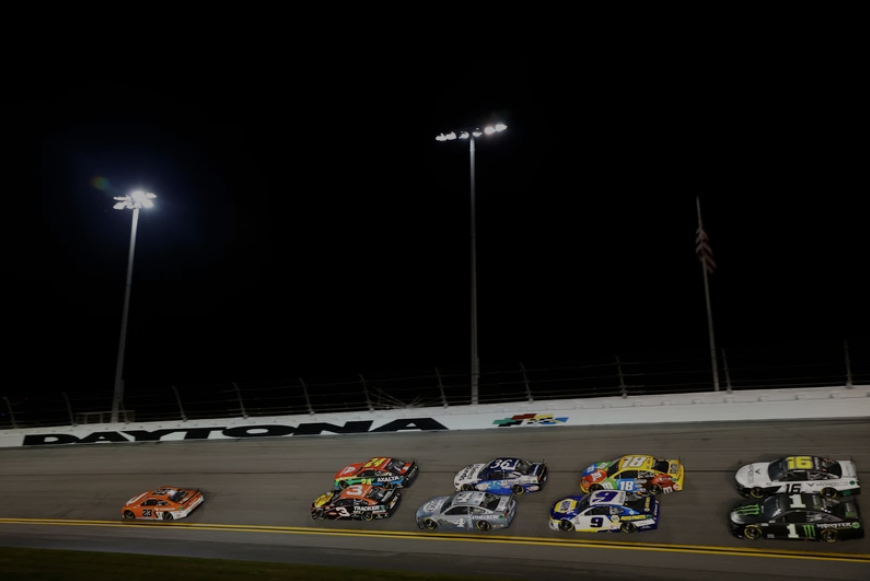
Running across six episodes which last between 44 and 50 minutes, it’s a unique look at a series which is foreign to many – from its moonshine-running forefathers to the Southern roots which have slowly been pulled away.
RACE: Bubba Wallace is available to watch now on Netflix. in up to 4K
Introduction: How Do I Look?
When buying a Ferrari comes with a caveat
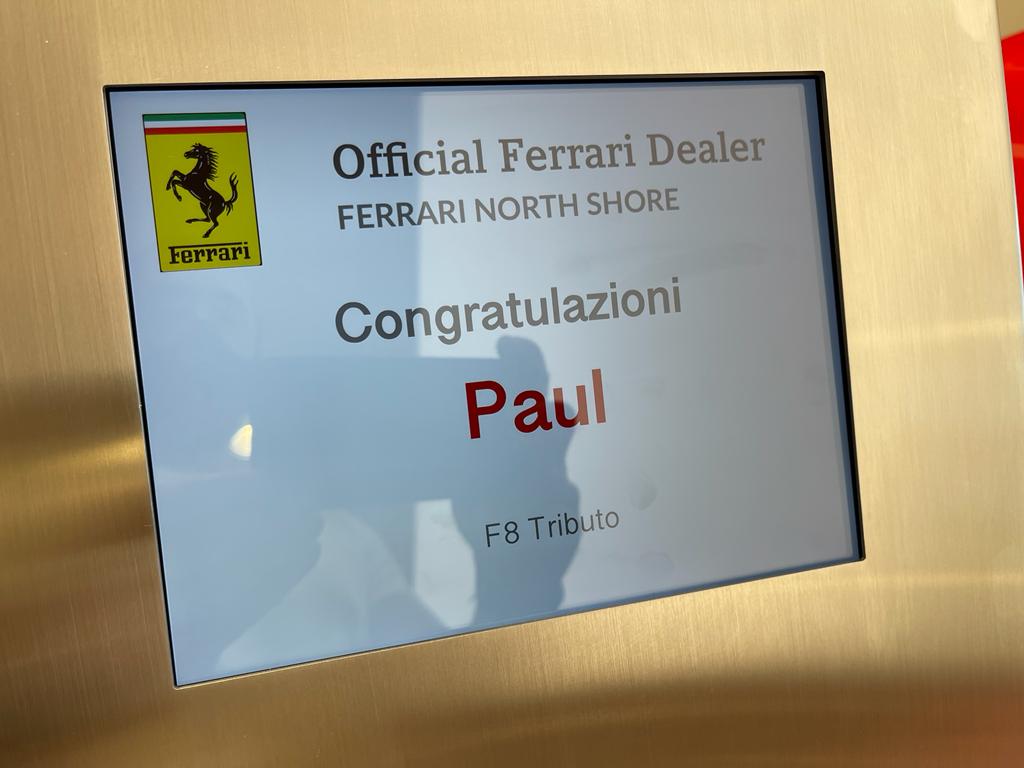
As I reached deeply into my pocket to extract $50k large for a deposit on a new Ferrari F8 Tributo, a fight broke out inside my head.
“Who in their right mind spends close to $600,000 on a car?” I thought. “What are you thinking? What about a 992 GT3? You only live once. Will I regret this? You’ll look like a wanker”.
This last thought was the most powerful and disarming. Driving a Ferrari, Lamborghini or McLaren puts an owner right up high on the wanker hit list. But wanker or not, money exchanged hands, I was promised delivery within eight months and the sales guy was on his way to another commission.
Ferrari was largely to blame for getting me in this position, engaging me as it did in an exercise in Italian seduction by granting a few laps behind a carbon-fibre steering wheel at Sydney Motorsport Park. I had for some time been contemplating putting my original 997 II GT3 CS out to pasture, and I had sampled many beautiful alternatives, but nothing could drag me away from it until this red F8 walked into my life, dressed to impress and pouting extroverted red lipstick.
A Lamborghini Huracan V10 was the only European to have tempted me and after a brief race-track fling I left it grinning like an idiot, convinced that I had to have it simply because of the way the V10 sang and made me feel. As evocative and addictive as it is, I couldn’t quite justify buying it in my mind. Then I was offered another suggestion and it got me thinking.
The other Italian in my life, my Calabrian wife and chief consultant, said I should get the Ferrari and a Lamborghini. Of course, to her everything from Italy is better than everything from anywhere else. She is a perfect example, which is why I married her.
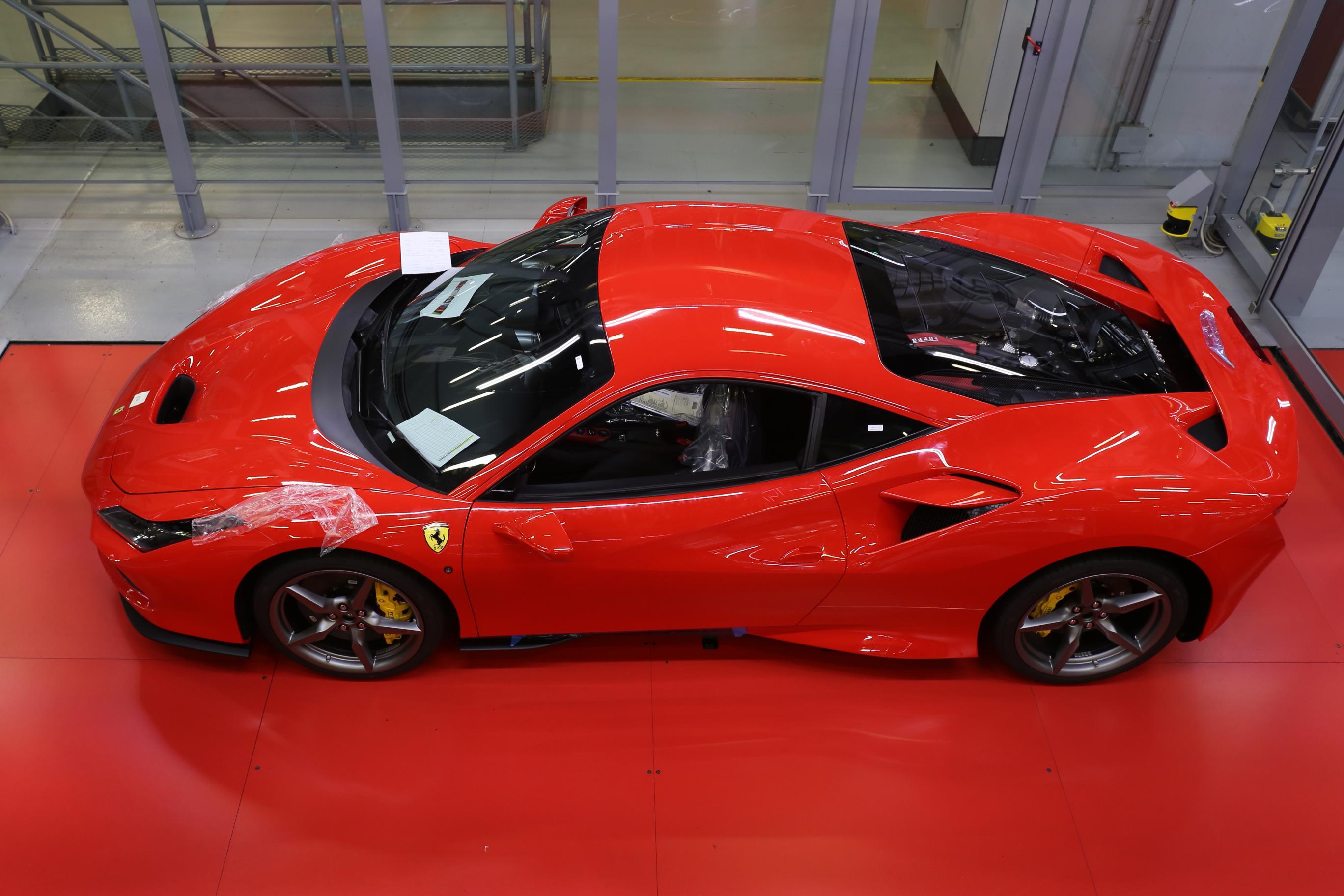
Frankly, I hadn’t given Ferrari much of a thought and I knew little about them, and still don’t. However, before going too far down that rabbit hole I checked out some essential facts.
Topping the GT3’s power by an additional 209kW to 530kW got my attention. Nearly doubling its torque to 770Nm at 3250rpm, 1000rpm before the GT3’s starts to get meaningful, made me wonder how it stays on the road.
Standard carbon brakes were noted, thank goodness, because with a 0-200km/h acceleration time of 8.1 seconds, 260km/h-plus speeds at Sydney Motorsports Park were going to need retardation.
Then I learned about Ferrari’s clever F1-Track and Side Slip Control which employ algorithms to manage all of the car’s dynamic parameters with the sole purpose of trying to ensure you get to see the start/finish line at least a second time. And it worked. Suddenly a $600,000 spend seemed like a good idea…
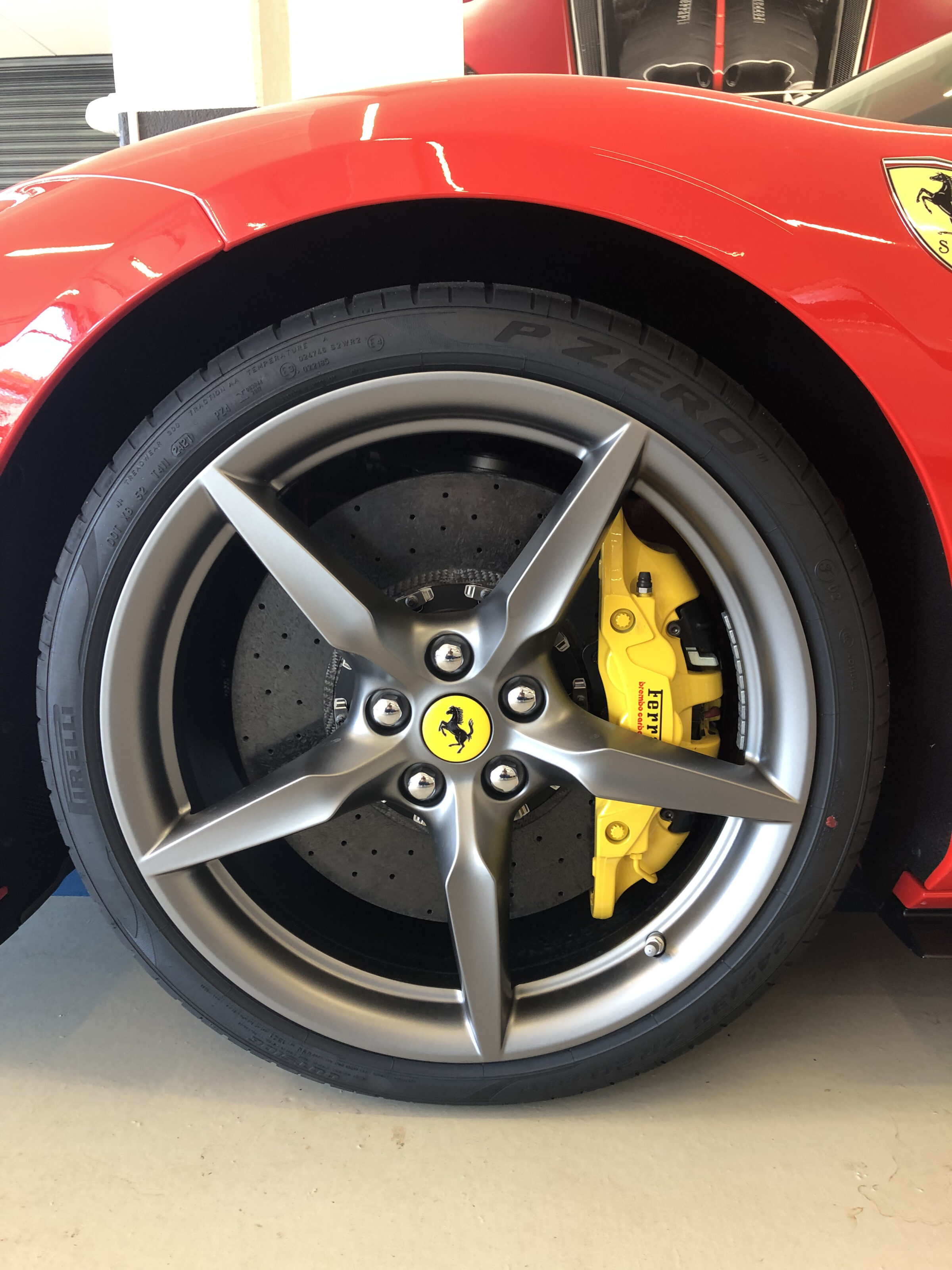
Fast forward 10 months and Gigi, as my wife and I have named it, arrived on our shores two months late and at a time when Covid rules restrict driving to no further than 5km. Dealer delivery has been completed, a $7000 insurance premium paid (with a $6000 excess…), $3000 worth of sleeper dash cams facing front and rear have been installed and it has been trucked to a specialist body wrap expert for $7000 worth of protection from road rash and grazing from race-track rubber.
My first drive is a week away, and so will begin my new life being viewed as a wanker. I’m just going to have to cop it sweet – the Prancing Horse has already bolted. And I can hardly wait. – PAUL LEONARD
Things we love:
- Performance
- Carbon brakes
- Upcoming drives
- Lockdown limits
- Public perception
- It isn’t cheap
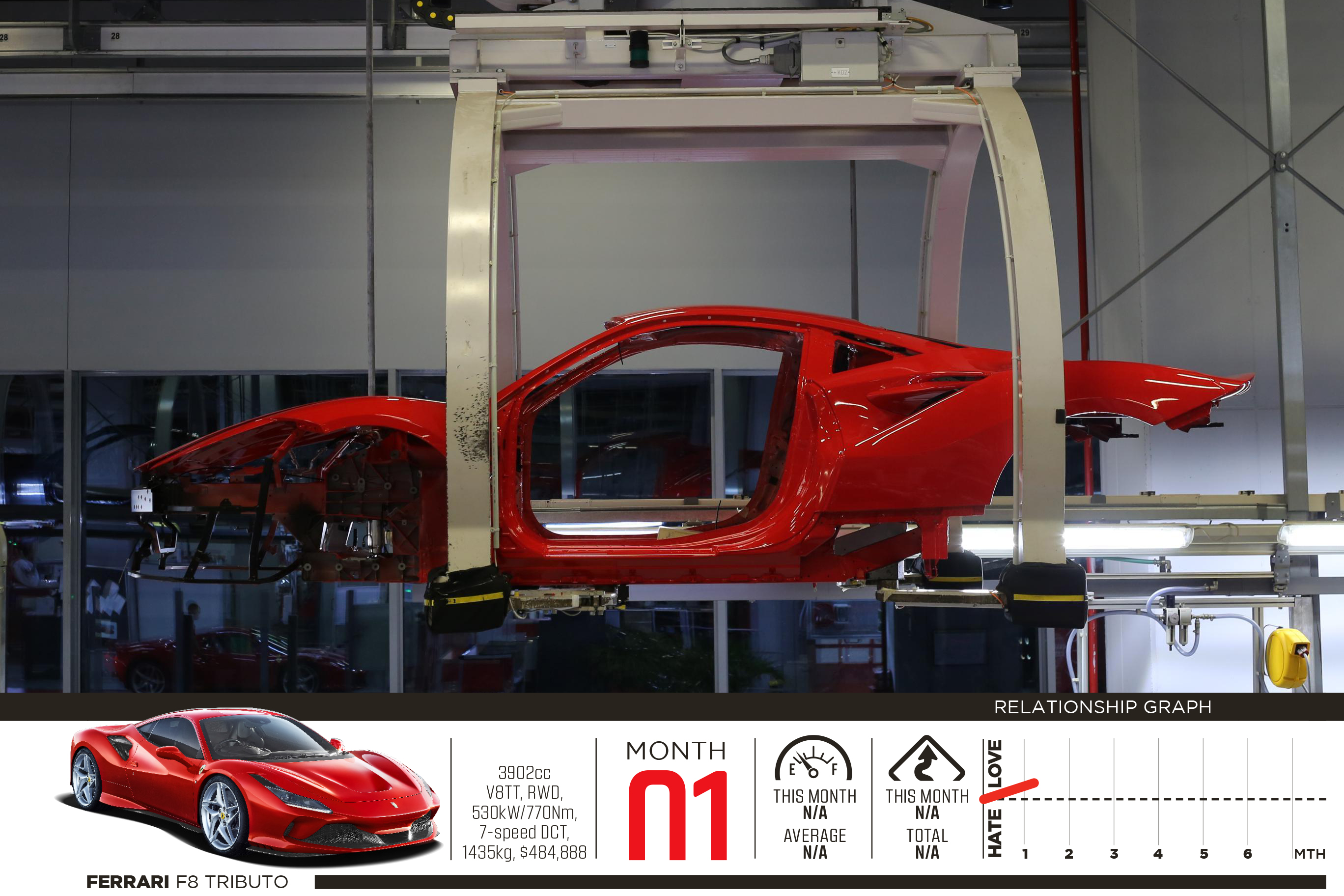
Month Two: I’m A Celebrity
Instant local fame arrives with Ferrari delivery
Having been impressed by the Ferrari F8 Tributo’s thrilling race track performance, real life was bound to intervene at some point. The week before accepting delivery, troubling questions about the car’s everyday liveability began to eat away at me.
Still carrying the scars from a costly one-year marriage to another powerful and exciting Italian, an Alfa Romeo Giulia QV, I feared that this Maranello marauder was going to provoke another temperamental love-hate relationship and again lead to an expensive and bitter divorce. My confidence wasn’t helped by an advanced reading of the owner’s manual which, as much as it told you how things worked, all too often followed it with advice on what to in case they didn’t.
Seeing specific sections on alarm devices for an overheating exhaust system or clutch, engine malfunction and how to do a roadside disassembly of the parking brake didn’t exactly boost my confidence and advice to use engine braking while driving down mountain roads to prevent the massive carbon brakes from overheating was remarkable. If the engine won’t start the owner is advised to look for a flat battery, faulty electrical contacts or ignition system or blown fuel pump fuses, just like we used to in the 1960s. In that regard at least, the Ferrari seemed reassuringly Italian.
The stab in my heart was to read that Ferrari recommended the car for only occasional track use. What on earth had I committed to?
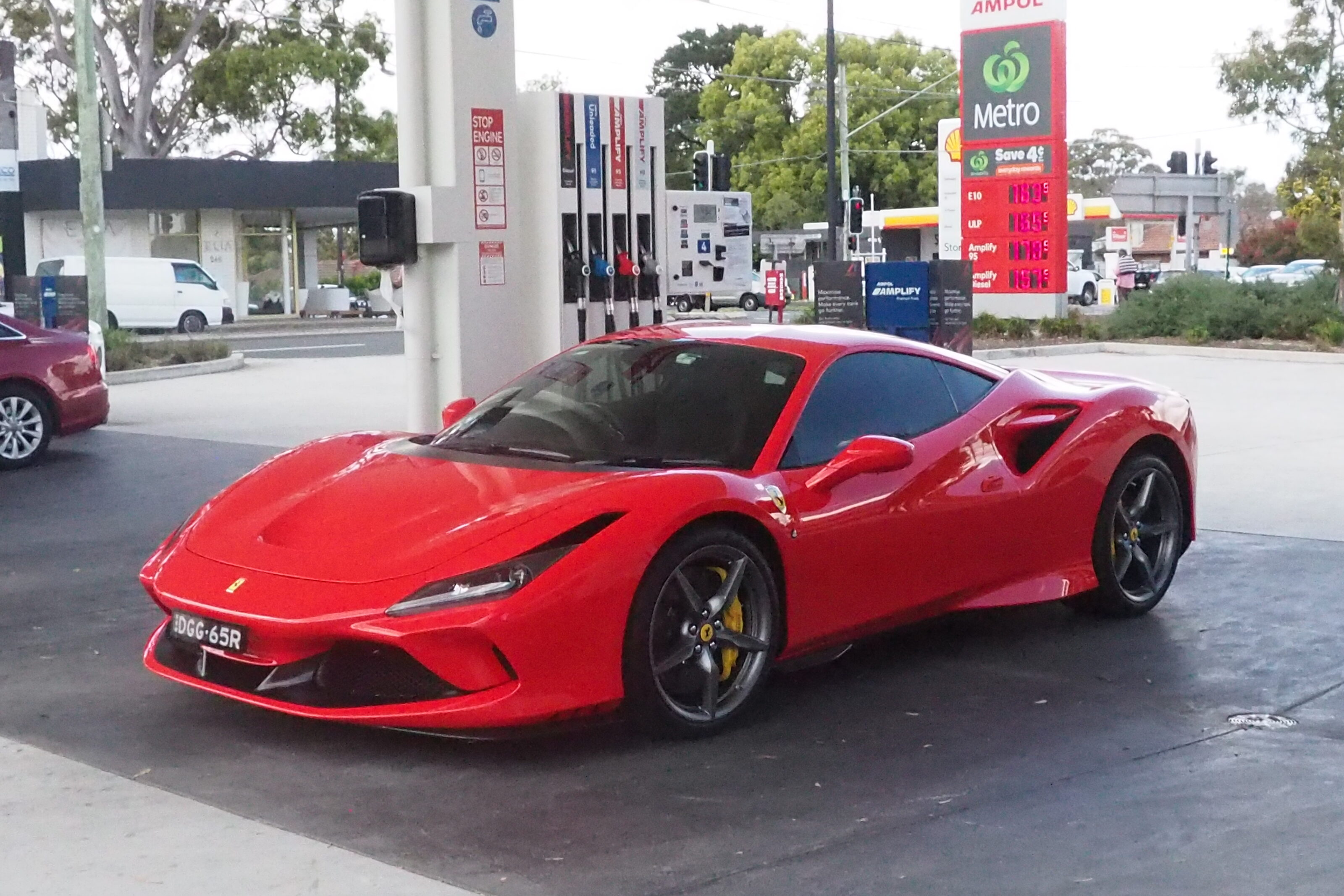
But every fear instantly evaporated and living in the present was all that mattered the moment my wife and I turned onto a public road for the first time. Even with 720 horses behind our ears it was encouraging to discover that initial power delivery was about as intimidating as a Hyundai i30, making the F8 immediately feel road friendly. The suspension was pleasingly compliant, the steering deliciously direct and the brakes beautifully progressive.
Even the enormous width of the car at almost 2 metres – a full 99mm wider than a 991 Porsche GT2 – and 2.261m from mirror to mirror, proved not as initially cumbersome as feared with the pronounced raised front guards providing a reliable guide to the road ahead.
A quick explorative prod of the throttle led to a satisfyingly rapid torque-led rise in speed, but most initial fun was delivered from the front row of traffic lights for a sublimely rapid rush through the gears and equally delicious blips to the throttle under late braking.
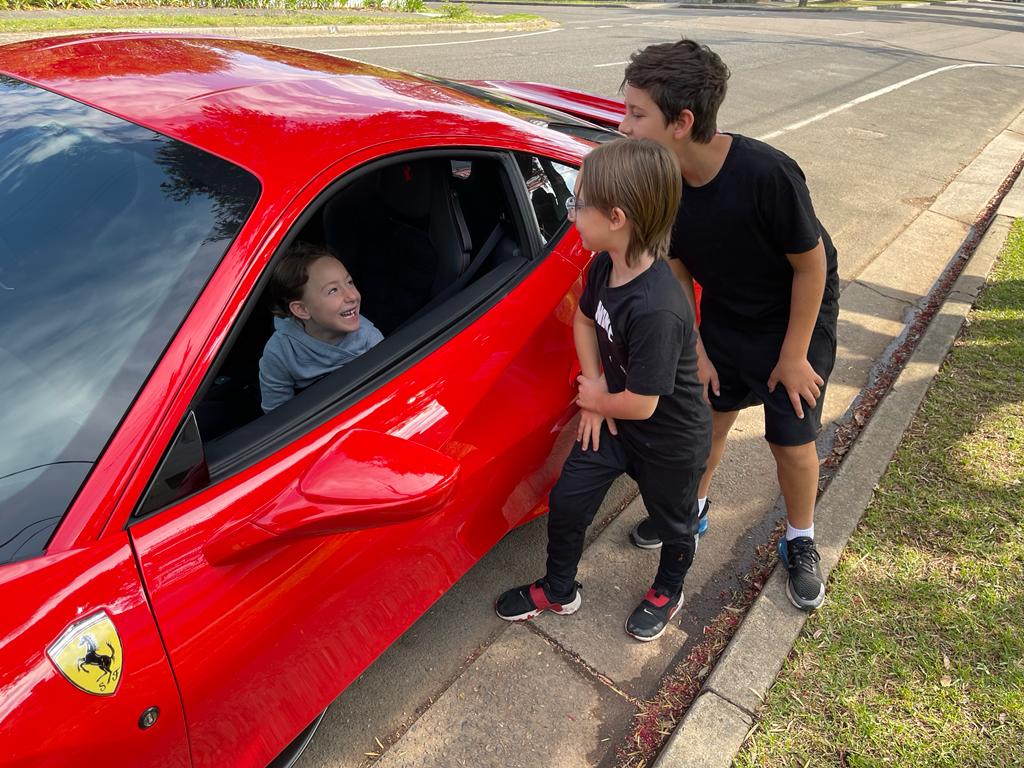
The initial thrill of ownership continued with the instant celebrity the car seemed to bring. The F8 has the draw of a Hollywood A-lister given the lingering and at times stunned looks my wife reported from the passenger seat.
Arriving back at our suburban Sydney home three uninhibited neighbourhood kids spontaneously ran up our driveway to greet us and the car, dragging bemused but beaming parents and the family dog along with them, leading to short demonstration drives to cement their thrill and the start of a long list of neighbours now keen for a ride in the F8. Helping create a new generation of car enthusiasts is one of the heart-warming fringe benefits of Ferrari ownership.
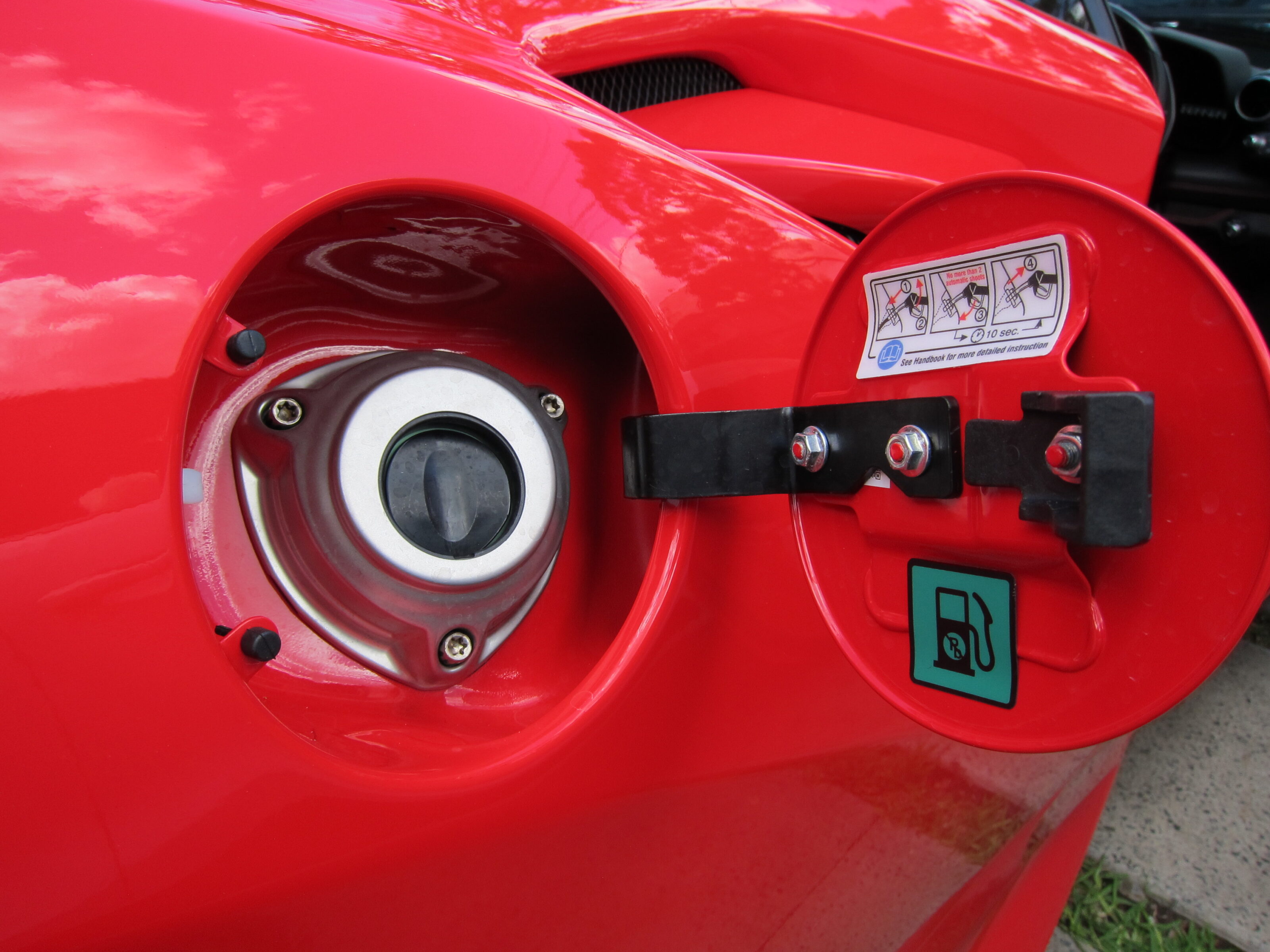
Once in the garage, Rain-X was applied to the windscreen, revealing a mystery stone chip – from Ferrari’s post production test drive? – and GTechniq water repellent coating for the slotted rear Lexan engine cover, hoping it will also help to resist atmospheric fallout.
A pathway out of Covid lockdown brings with it the promise of country roads and race tracks. We’ll see what this Italian supercar reveals about itself along the way but in this environment I expect it to be an abundance of positive passion. – PA
Things we love:
- Presence
- Ease of use
- Kids adore it!
- Scare manual
- Track limitations
- Windscreen ding
Month Three: Bring The Noise
Paul finally gets the chance to loosen the reins on the F8 Tributo
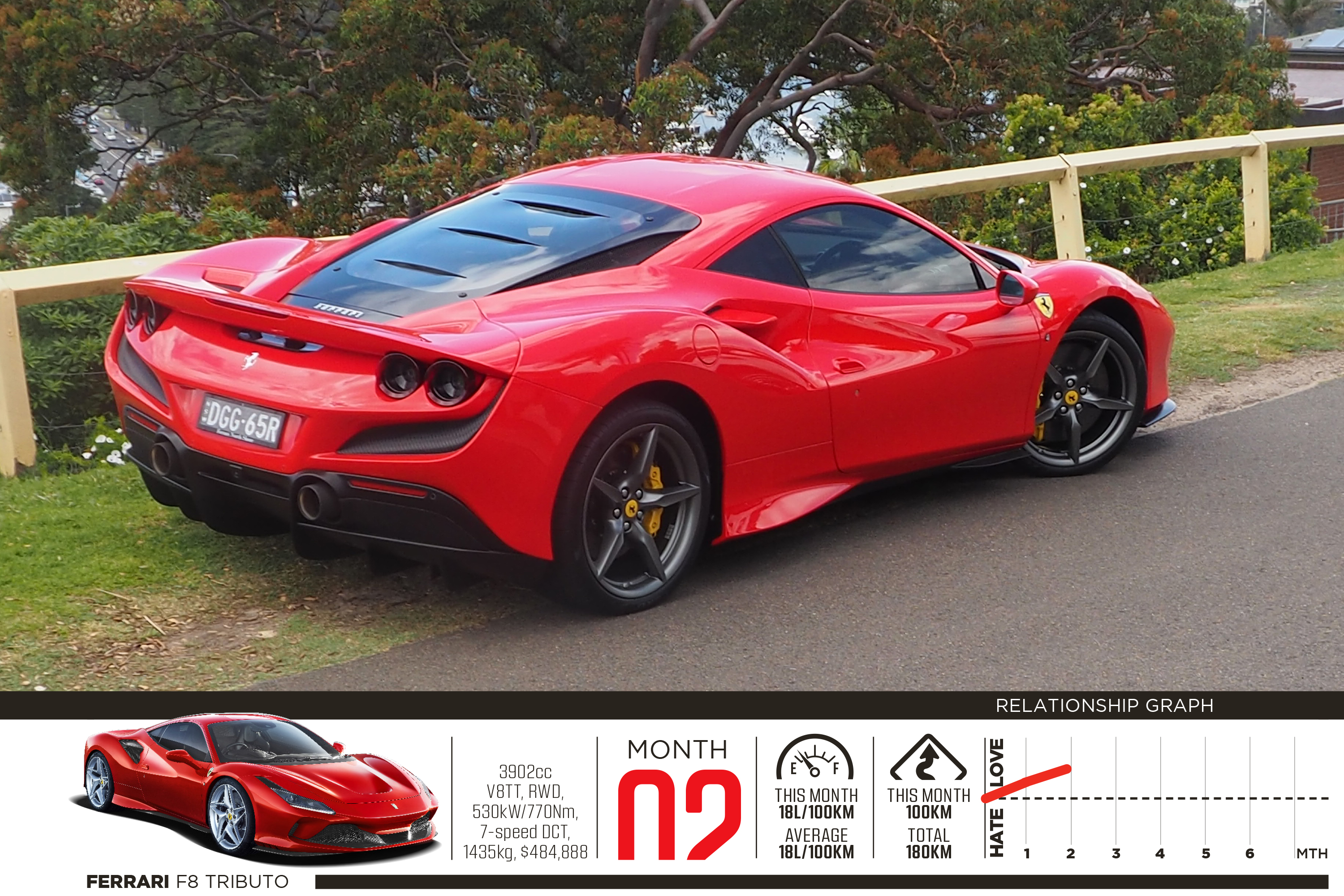
With a barely warmed engine over a miserly 309 Covid-19 restricted kilometres in seven weeks since delivery, the F8 remained a question mark in a sea of obvious exclamations and expected superlatives. A star performer in urban environments, it remained to be seen how accomplished it would be on imperfect open roads.
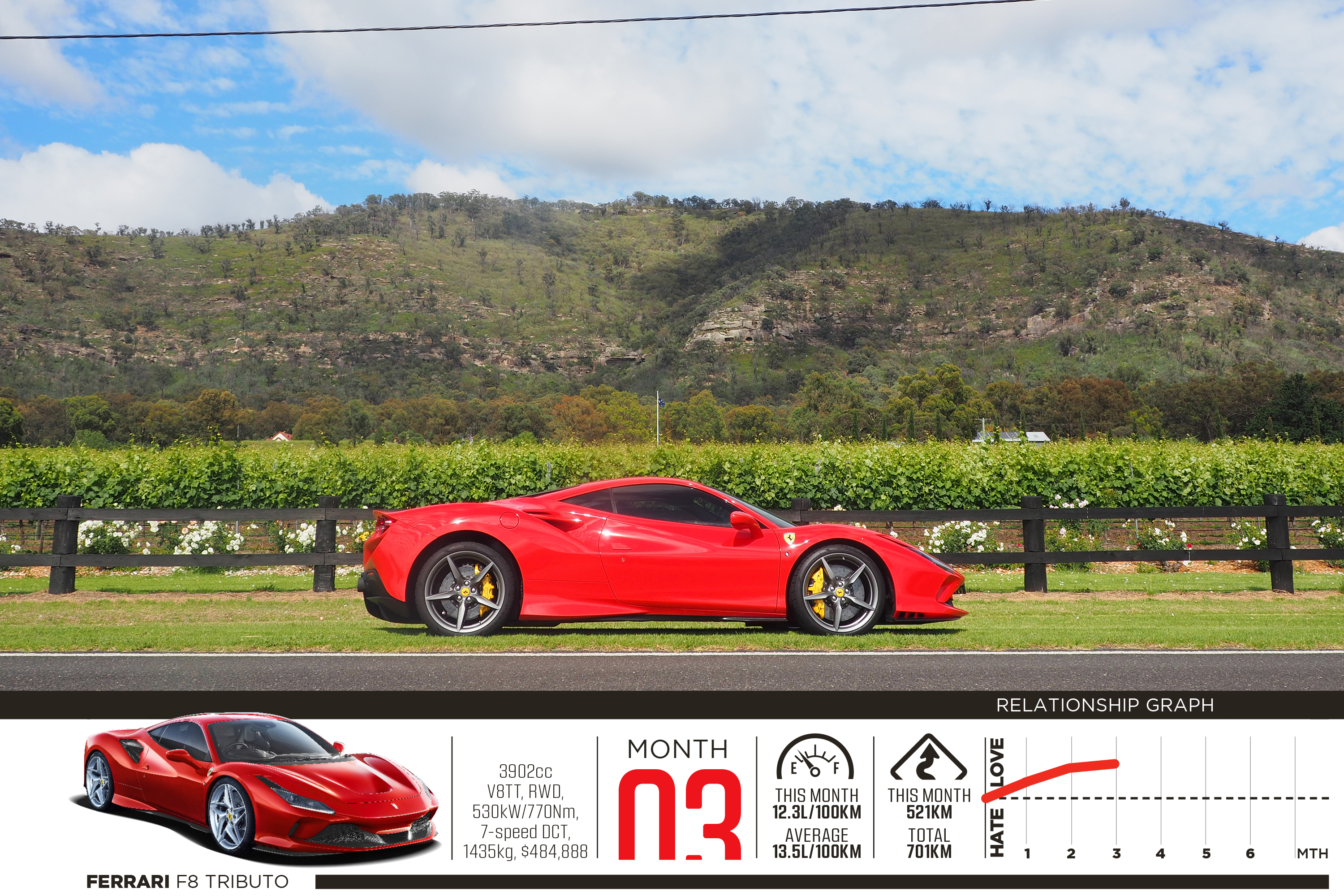
The classic mid-engined silhouette of the Manzoni-fettled bodywork, coupled with the soundtrack of the F154 V8 continue to garner awestruck and admiring responses from people everywhere it deigned to visit, while the savage 530kW twin-turbo powerplant has proven to be surprisingly mannered and refined when required.
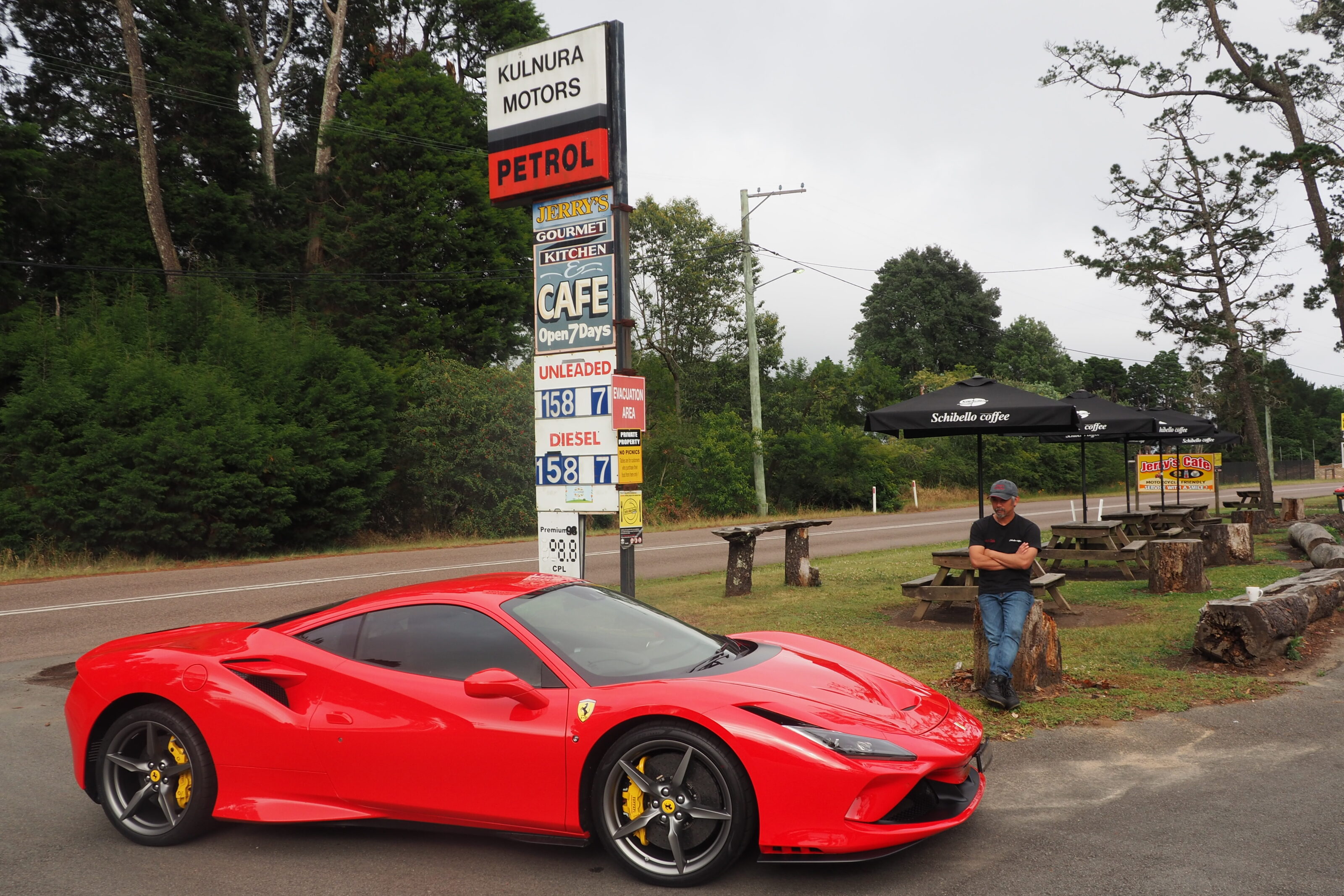
An early frustrating quirk emerged in the information screen which displayed vitals such as fluid temperatures and tyre pressures. Best searched at a standstill, it disappeared every time the car was stationary but was soon remedied by a seemingly unrelated button in the dash below.
The day finally arrives for a long-planned 400km mid-week scenic rollercoaster ride from Sydney through Wollombi, to the picturesque wine country of Broke and back south along the legendary Putty Road. A bristling bark breaks the sleepy 6.00am neighbourhood silence and with nose lifter engaged to clear the driveway threshold, the F8’s sheer grunt and machine gun rapid upshifts thrill even with the manettino set to “Wet” on cold tyres in the initial rain.
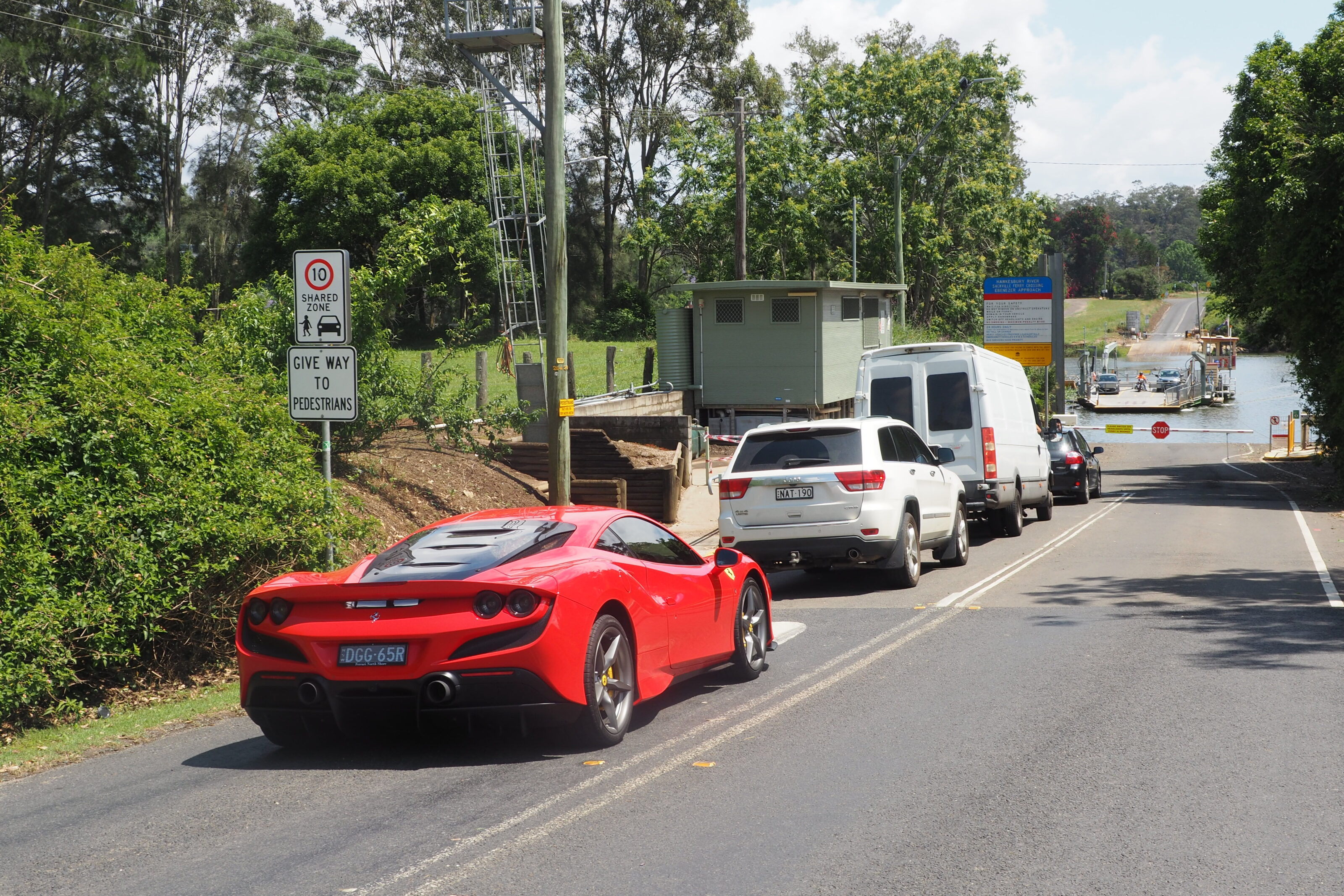
On the motorway the F8 lopes along at 110km/h at a leisurely 2600rpm, keeping 5600rpm in reserve for its claimed 340km/h potential, but all is serene in self-shifting Auto mode, the manettino now on its supple ‘Sport’ setting and the cruise control calmly nuancing its 770Nm urge.
Road and wind noise are notably absent and even on coarse chip surfaces the cabin remains relatively quiet with the hum of the engine at low boost a more obvious and welcome companion.
Onto bumpy, winding and hilly country roads, the sharp steering demands smooth, accurate inputs and focus. Composure and grip are unchallenged at legal road speeds and the 398mm carbon discs provide good feel in most situations. However, in heavier applications they become troublingly wooden, feeling like a separate element instead of part of an integrated and harmonious whole.
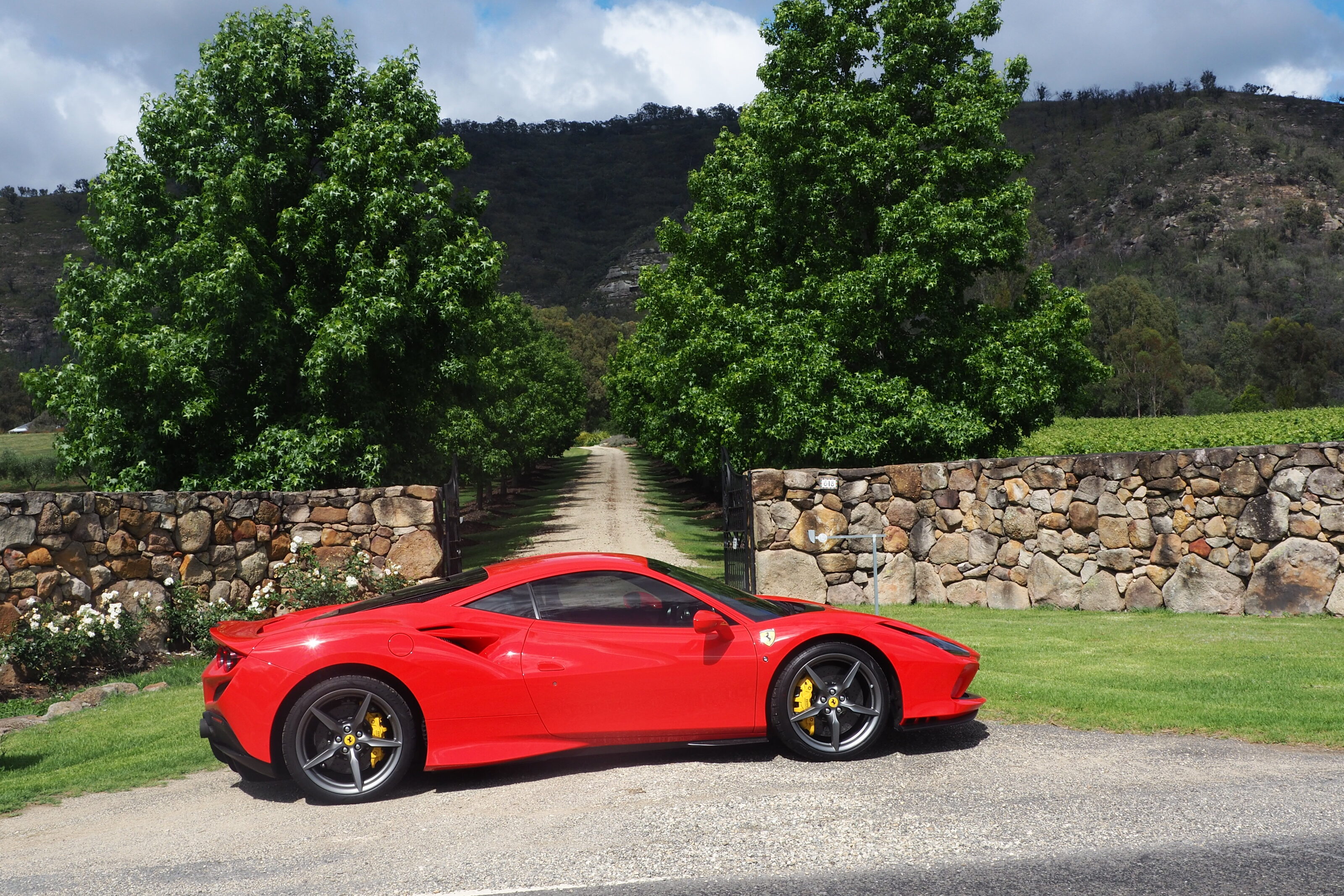
Perhaps road speeds aren’t enough to bring the stoppers into their prime operating window.
Out on the open road otherwise dominated by double lines an overtaking opportunity presents between two corners. A modest throttle application sucks air heavily into the turbos to boost torque-induced shove but urgency demands a deeper press of the throttle, instantly shooting the F8 down several gears and rocketing it from serene to stupid, requiring deliberate braking to haul it back to a normal cruise. Ahem. Savage acceleration duly noted.
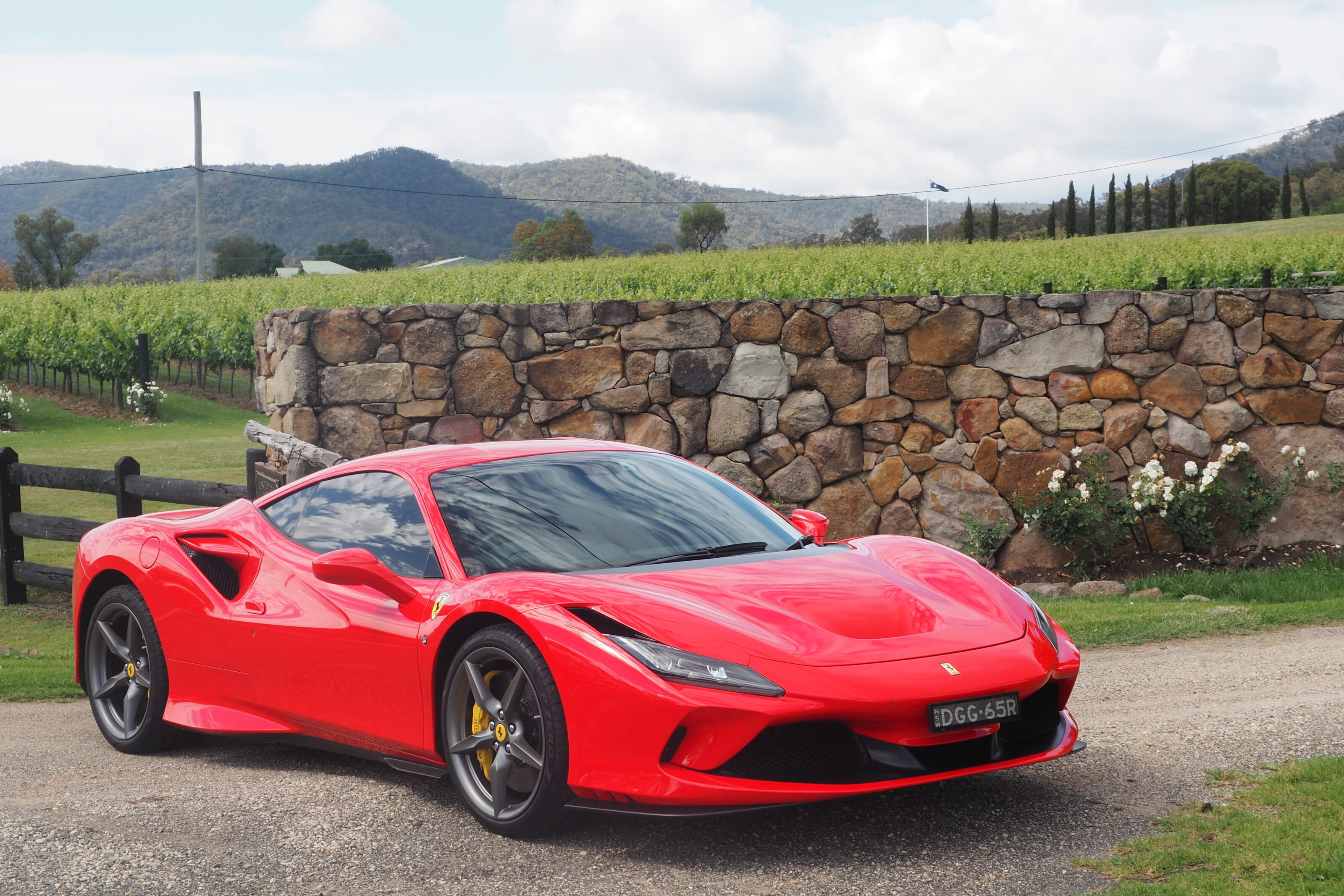
Threading its 2.27m girth through the narrow Armco-lined Galston Gorge, the F8 feels like an A380 trying to land at Bankstown Airport as oncoming traffic whizzes past alarmingly close, and a heart-in-mouth moment presents when someone suddenly transgresses my amply occupied centre lane to make a left turn.
The race track awaits and I suspect that, like a Ducati superbike, the F8’s depth of talent won’t be understood until it is pushed beyond personal levels of comfort. It’s where the discovery is made that you and your machine can achieve something you never before thought possible. But do wooden brakes forebode disappointment? As always, time will tell. – PL
Things we love:
- 530kW on tap
- Sharp steering
- Keen handling
- Wooden brakes
- Sheer width
- Too competent?
Equipment and value
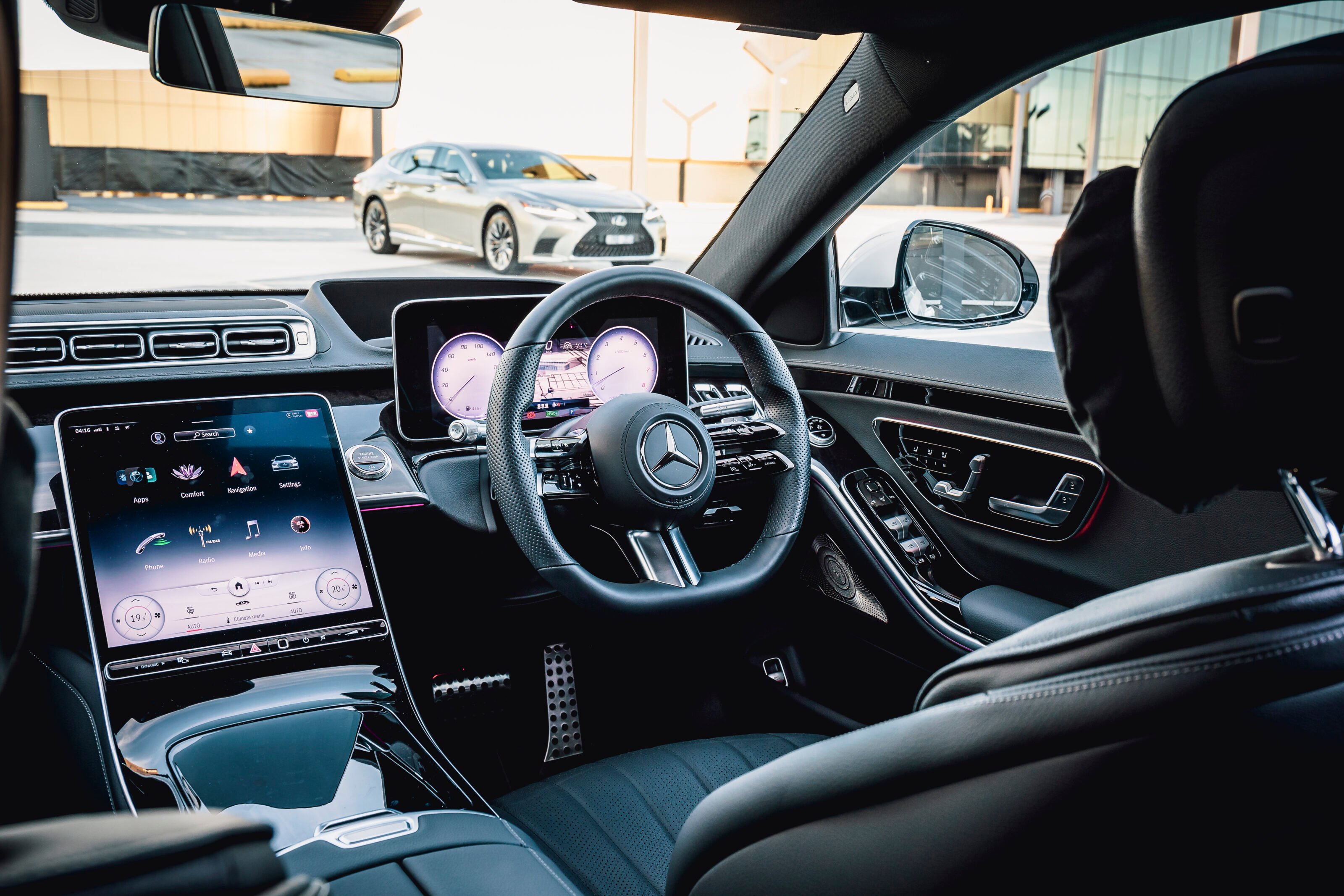
Priced from $240,700, even the entry-level S-Class is a technological showcase with the main exhibit being the latest MBUX infotainment and 12.8-inch portrait-orientated central OLED touchscreen. Eye-tracking technology can recognise the driver and passenger and adjust their preferred settings regardless of where they sit – it also helps create 3D effects on the 12.3-inch digital instrument cluster.
Another useful feature is augmented reality that works with sat-nav to virtually point at your next turn on the central monitor. New safety features include 10 airbags, a display showing surrounding vehicles with distances and stopping times for each, and adaptive cruise control with route-based speed adaption that uses real-time traffic data to prepare it for tackling congestion on the road ahead. Warranty is strong at five years/unlimited kilometres.
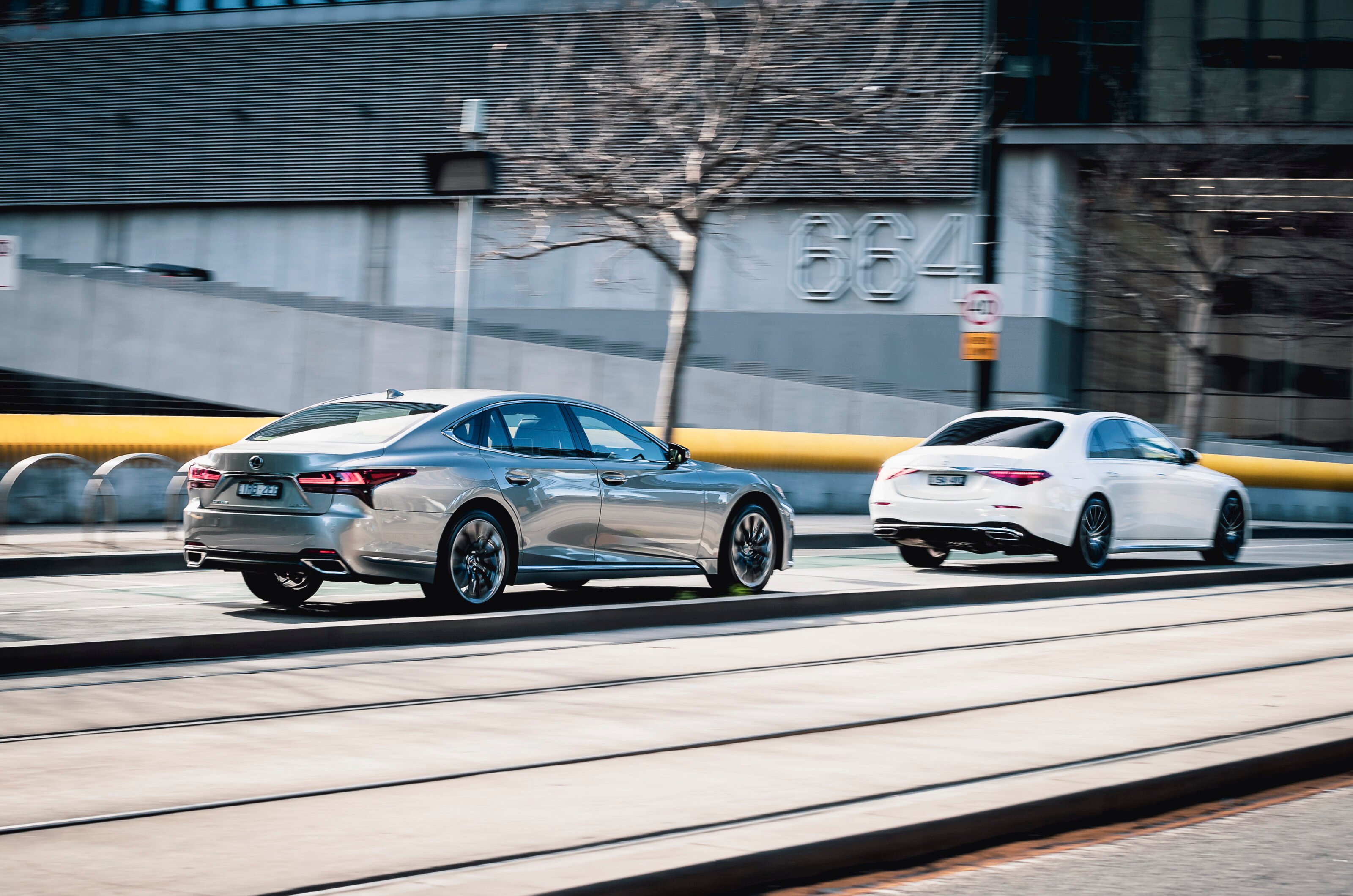
At $200,955, the most luxurious LS 500 is almost $40K cheaper than the Merc. Extensive standard features include two reclining rear seats with massage functions. But the LS 500 is encumbered by a dated infotainment system with drab graphics and a fiddly trackpad, though the 12.3-inch monitor is now a convenient touchscreen. Also dated is the Lexus’s voice control system, which I gave up on when trying to dictate a navigation destination.
It has 10 airbags and is the first Lexus model to feature Intersection Turning Assist, which warns if you’re about to turn across the path of an oncoming vehicle. Adaptive cruise control with speed-sign recognition is also standard, as is lane-keeping assist that slows the vehicle to safely negotiate bends when necessary. The warranty period is finally a match for most in the market, at five years and unlimited kilometres.
Mercedes-Benz S450: 22/25
Lexus LS 500: 21/25
Space and comfort
The short-wheelbase (3106mm) S450 lacks the 200mm-longer S450 L’s ability to provide fancy reclining seats and also misses out on world-first rear front-facing airbags. However the rear pew is very comfortable and spacious, with plenty of leg and headroom and leather upholstery that feels soft and breathable.
The front seats are also ultra luxurious, and include a plush velour pillow that slides up and down the headrest to provide neck support. Other bells and whistles include two-zone climate control, panoramic sunroof, front-seat heating and ventilation, ambient lighting, 710W 15-speaker Burmester premium audio, voice-activated rear-door and rear-window sunshades, power-assisted soft-close doors and acoustic glass. The 550-litre boot is deep and long and can hold four large suitcases.
The LS 500’s 3125mm wheelbase affords enough space to include, as standard, two multi-position reclining heated and ventilated seats with massage functions. The passenger-side seat has an ottoman that allows one to recline with feet raised, business-class style. Rear-seat passengers can control their seat functions with a touchpad located in the centre armrest that also controls the four-zone climate control and media viewed on screens mounted on the front seat-backs.
The front seats are also heated and ventilated and have 23 power settings to facilitate excellent under-thigh, back and hip support. There’s also a wine chiller between the rear seats, active noise cancellation, sunroof, heated steering wheel and 23-speaker Mark Levinson audio system. The 440-litre boot will fit three suitcases.
Mercedes-Benz S450: 22/25
Lexus LS 500: 23/25
Ride and handling
The S450 rides on front and rear multilink suspension with adaptive dampers that stiffen and lower when selecting their respective Sport and Sport+ modes for improved handling. Whichever driving mode you’re in, there’s a satisfying gliding feel to the ride, with road imperfections well contained with next to no secondary bounce, though you do tend to feel the odd clunk through the low-profile 285/35 R20 Pirelli P Zero rubber.
It has the agility on twisty roads of a much smaller car, also helped by 4Matic all-paw traction, and a taut aluminium-hybrid body shell that’s 60 kilograms lighter than its predecessor. The variable-ratio steering is well-weighted and inspires enough confidence through bends to allow you to barely trouble the brake pedal, and firms up agreeably in either of the Sport modes.
The rear-drive LS 500 Sports Luxury lacks the performance-orientated LS 500 F Sport’s rear-wheel steering, wider rear rubber and active anti-roll bars, yet still feels athletic for such a large vehicle. This is a luxury barge, after all, and while it’s an enjoyable big thing in which to hunt apexes, its priority is ride comfort.
Lexus has gone all out to achieve this, modifying the LS 500 Sports Luxury’s adaptive suspension with larger, liquid-filled bushes in the lower control arms and fitting it with 245/45 R20 Bridgestone Turanza rubber. The result is a ride that feels plush and well damped on most surfaces. Its relatively tight 11.4-metre turning circle helps negotiate its 5235mm length through tight inner-city streets and parking spots.
Mercedes-Benz S450: 23/25
Lexus LS 500: 22/25
Performance and economy
The 2133kg S450 is capable of 5.1sec 0-100km/h acceleration that’s as quick as a manual Porsche Cayman. At its heart is the 270kW/500Nm M256 3.0-litre in-line six-cylinder turbocharged engine that’s carried over from the previous model and mated to a silky nine-speed ‘9G-TRONIC’ automatic transmission.
Peak power comes in at 5500rpm, with all of that 500Nm torque peak present from 1600rpm to 4500rpm, resulting in some decent shove, with an additional 16kW and 250Nm on tap for short bursts courtesy of its EQ Boost 48-volt mild-hybrid system. It’s slippery too, with its drag co-efficient cut significantly compared to the previous model, resulting in a Porsche Taycan-matching Cd figure as low as 0.22. This also keeps the S450’s official fuel consumption down to 8.4L/100km.
The Lexus weighs in at 2220kg but, despite the extra heft over the S450, will pip the German to 100km/h from a standing start by 0.1 seconds, on paper at least, by employing brute force through its twin-turbo 350kW/600Nm V6 with a wide 1600rpm-4800rpm peak-torque band. Power is sent to the rear axle through an intelligent 10-speed automatic transmission that feels incredibly refined.
In Sport+ mode it will adapt to the driving conditions to downshift when braking into corners and hold that gear as long as it detects the steering holding that line. The engine lacks the audacious soundtrack of its predecessor’s 4.6-litre V8 but is almost a second quicker. That said, it makes a nice snarl when you put the foot down. Its official combined fuel consumption is 10.0L/100km.
Mercedes-Benz S450: 22/25
Lexus LS 500: 21/25
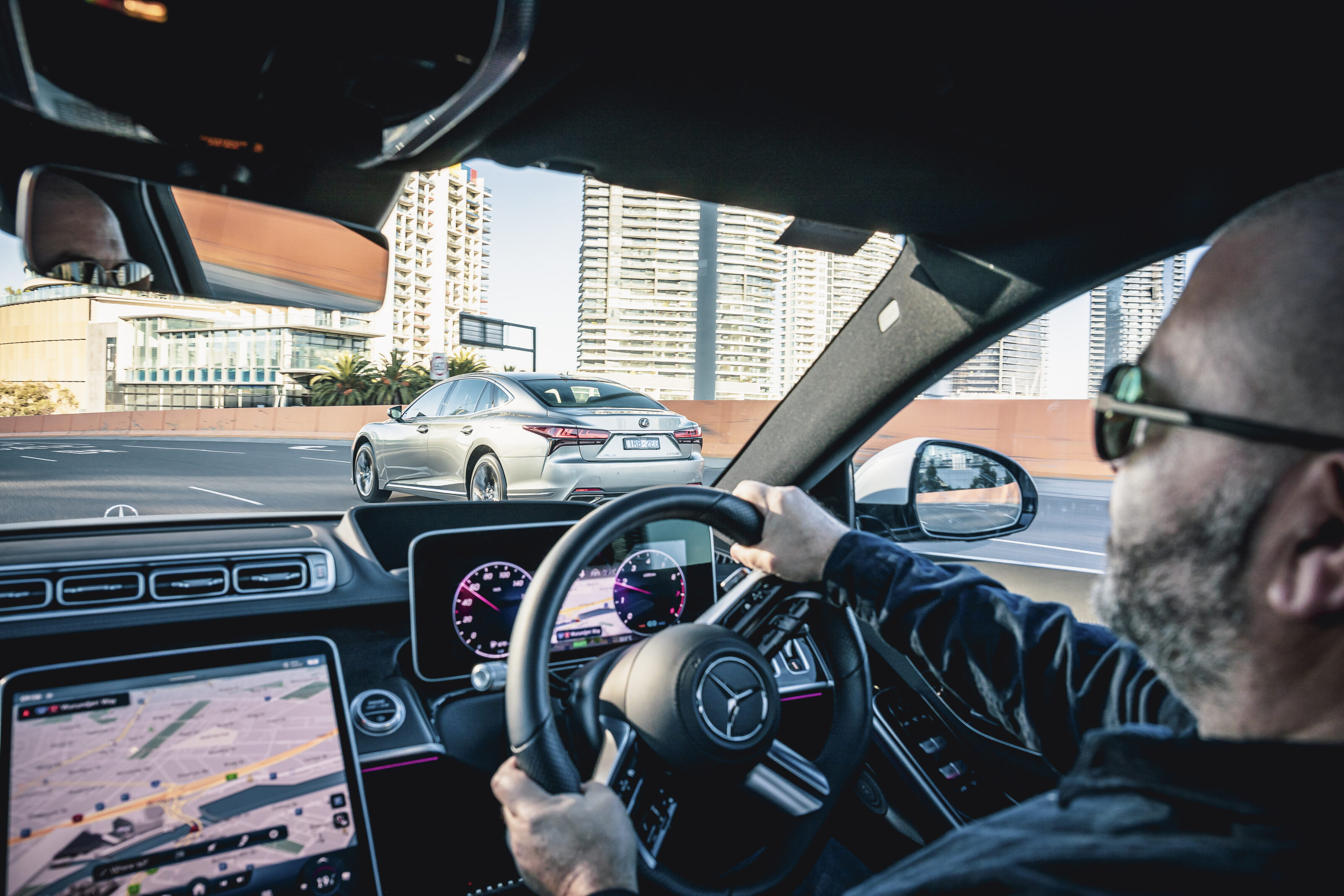
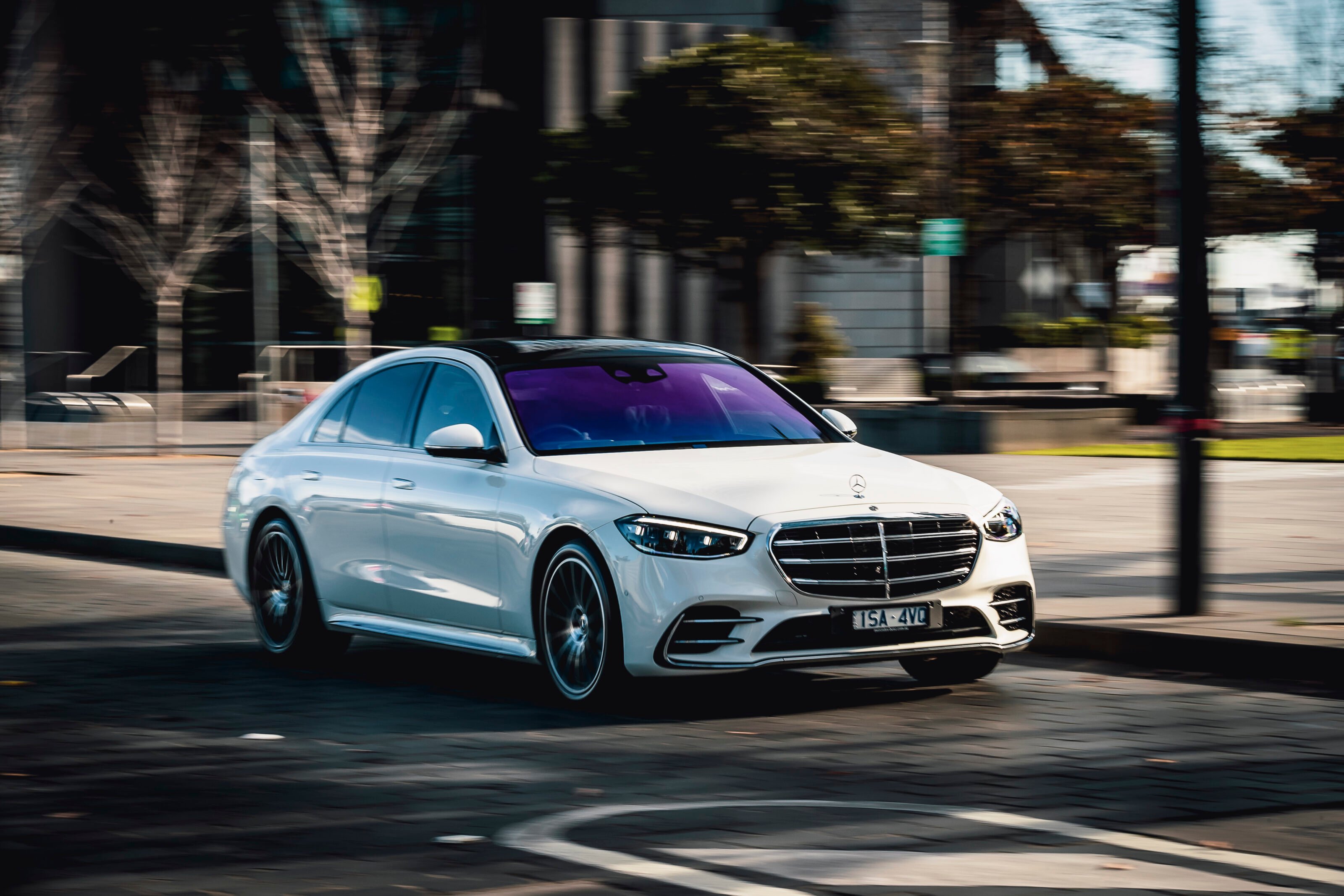
Winner: Mercedes-Benz S450
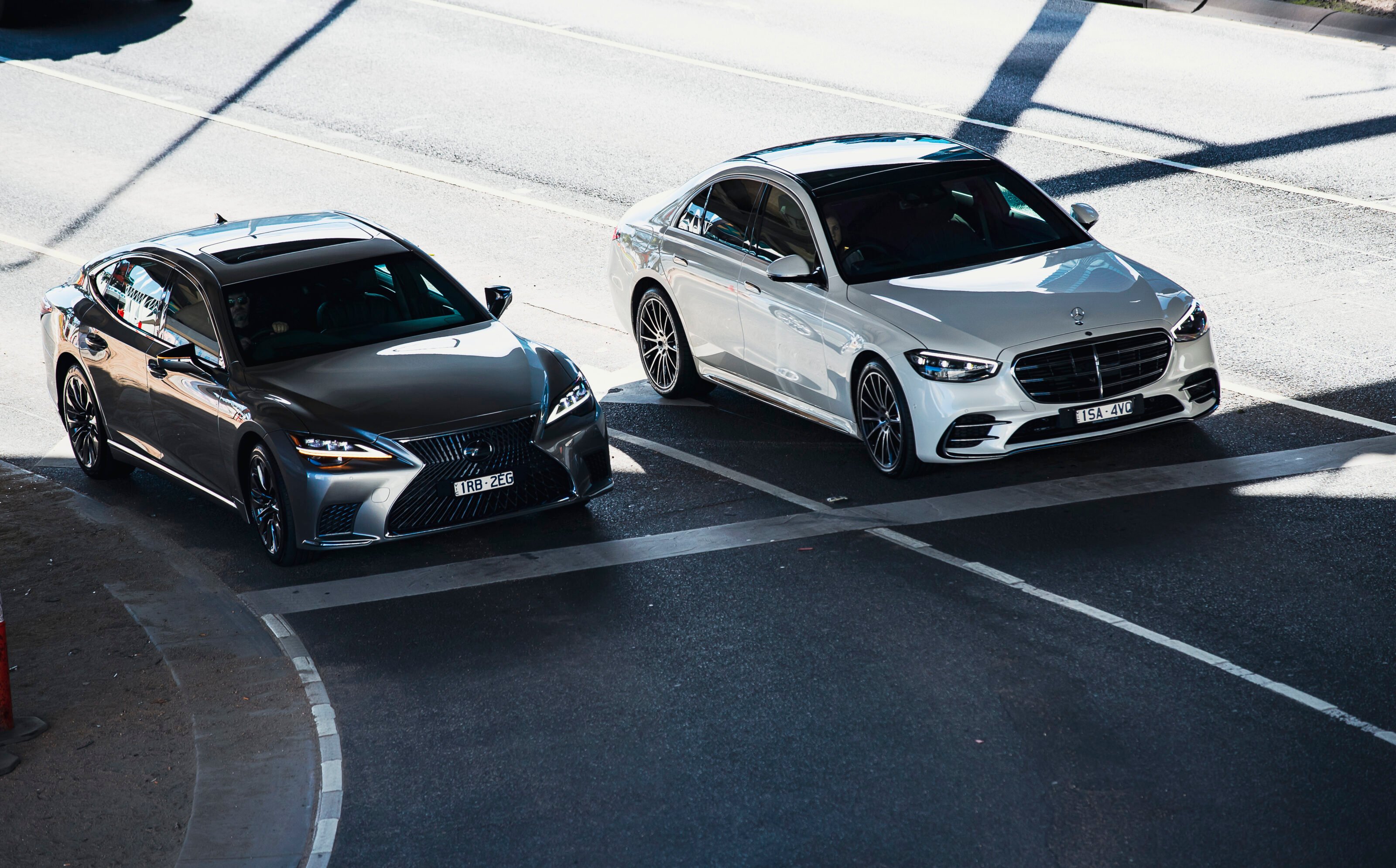
While excellent for driving passengers around in comfort, both of these flagship sedans are fine driver’s cars that provide an excellent balance between performance, comfort and safety. The LS 500 Sports Luxury shines when it comes to value, and those rear seats gave it the edge in the comfort stakes and would be the clear winner for anyone buying it to ride in the back.
This pair are difficult to split when it comes to driveability, but the S-Class’s overall finish, high-resolution digital gadgetry, infotainment and innovative safety gives it a technological edge that makes it the more persuasive package. The more affordable LS 500 punches above its weight, but overall it’s the technically advanced Mercedes-Benz S450 that feels a generation fresher and more intuitive, and while it costs significantly more, it’s not difficult to account for every extra dollar spent.
SCORING
Mercedes-Benz S450: 89/100
Lexus LS 500: 87/100
Snapshot
- Audi updates six-cylinder diesels to include biofuel compatibility
- Currently limited to engines producing 210kW or less
- Next-generation diesel said to reduce C02 emissions by up to 95 per cent, compared to regular diesel
Audi has confirmed a number of its vehicles fitted with a six-cylinder turbo-diesel engine are now compatible with next-generation biofuels.
All six-cylinder diesel Audis producing up to 210kW of power and built from mid-February 2022 onwards are now approved for use with hydrotreated vegetable oil (HVO) – a next-generation diesel fuel claimed to reduce CO2 emissions by between 70 and 95 per cent in comparison to conventional ‘fossil’ diesel.
The luxury marque claims the use of HVO in its diesel vehicles also brings a higher cetane rating, allowing for greater efficiency and a smoother cold start – in addition to producing fewer carbon emissions.
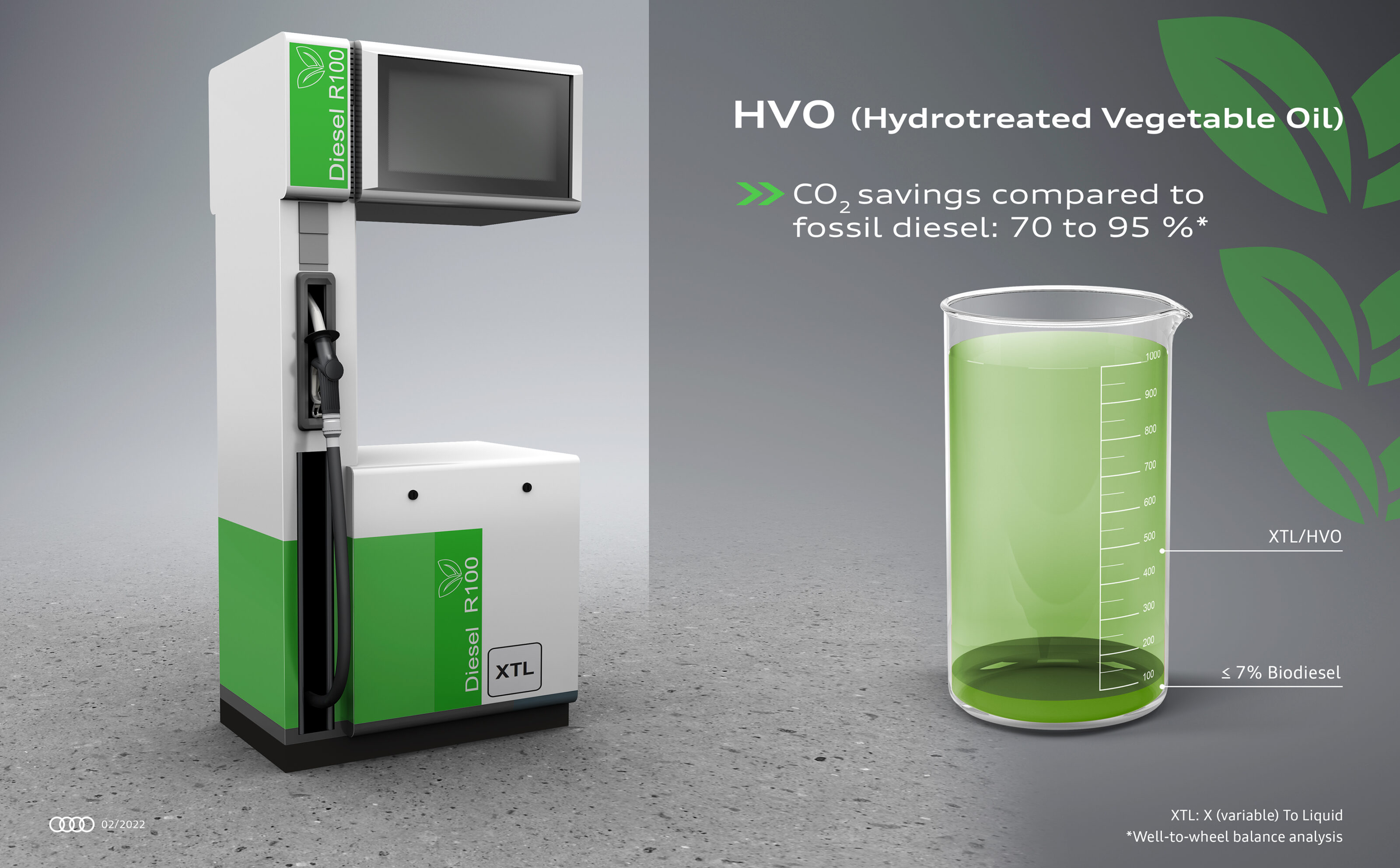
HVO is designed to meet the 2016 European Standard EN15940, which specifies second-generation biofuels and e-diesels made from a Fischer-Tropsch process.
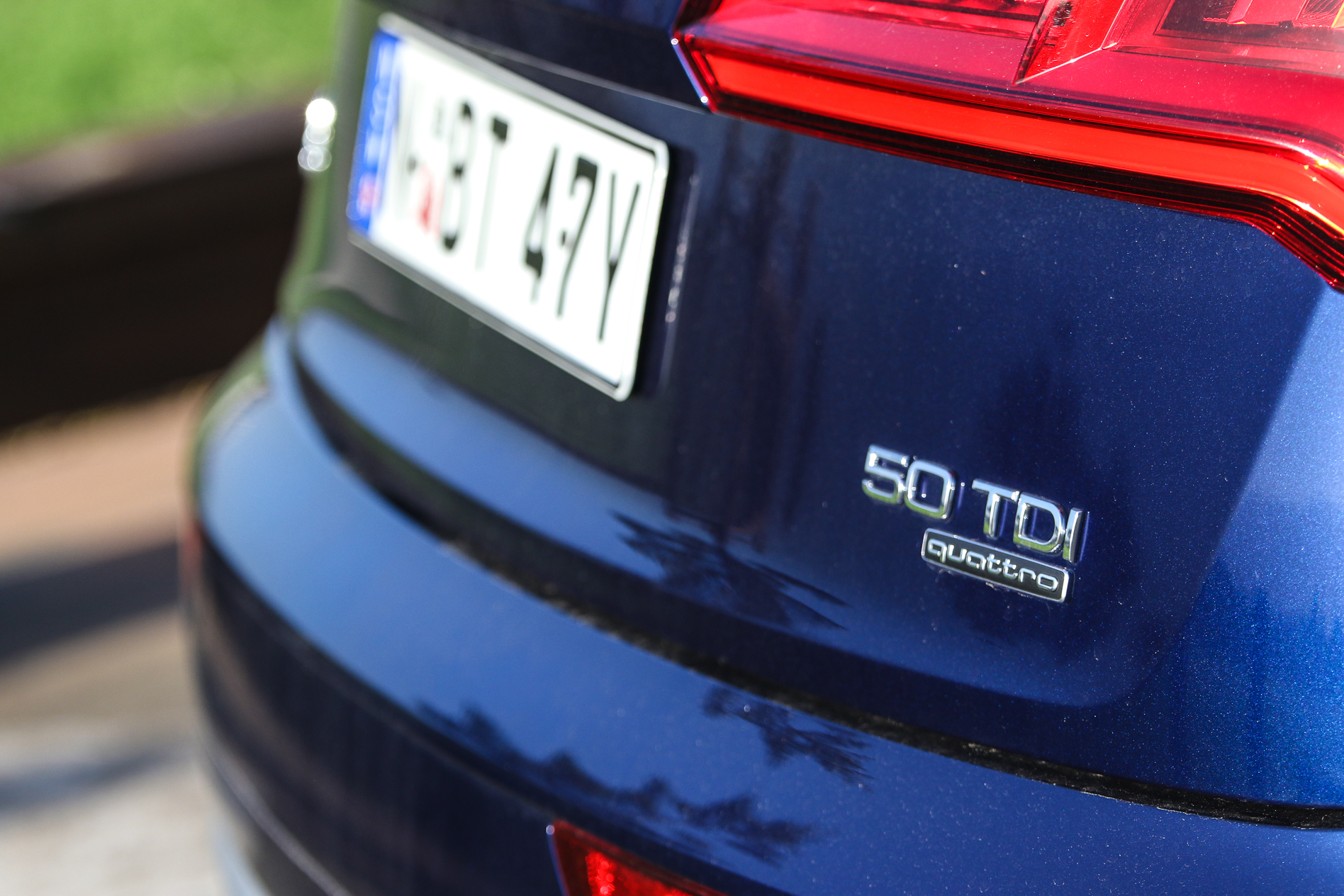
Models now compatible with renewable diesel include; the A4, A5, A6, A7, A8, Q7, and Q8. The Q5 and A6 Allroad will be modified in the coming months, with all vehicles to feature an XTL sticker on the fuel tank cap.
The 3.0-litre diesel Volkswagen Touareg, with shares its engine and MLB Evo platform with the Q7, is also now accordant with HVO diesel.
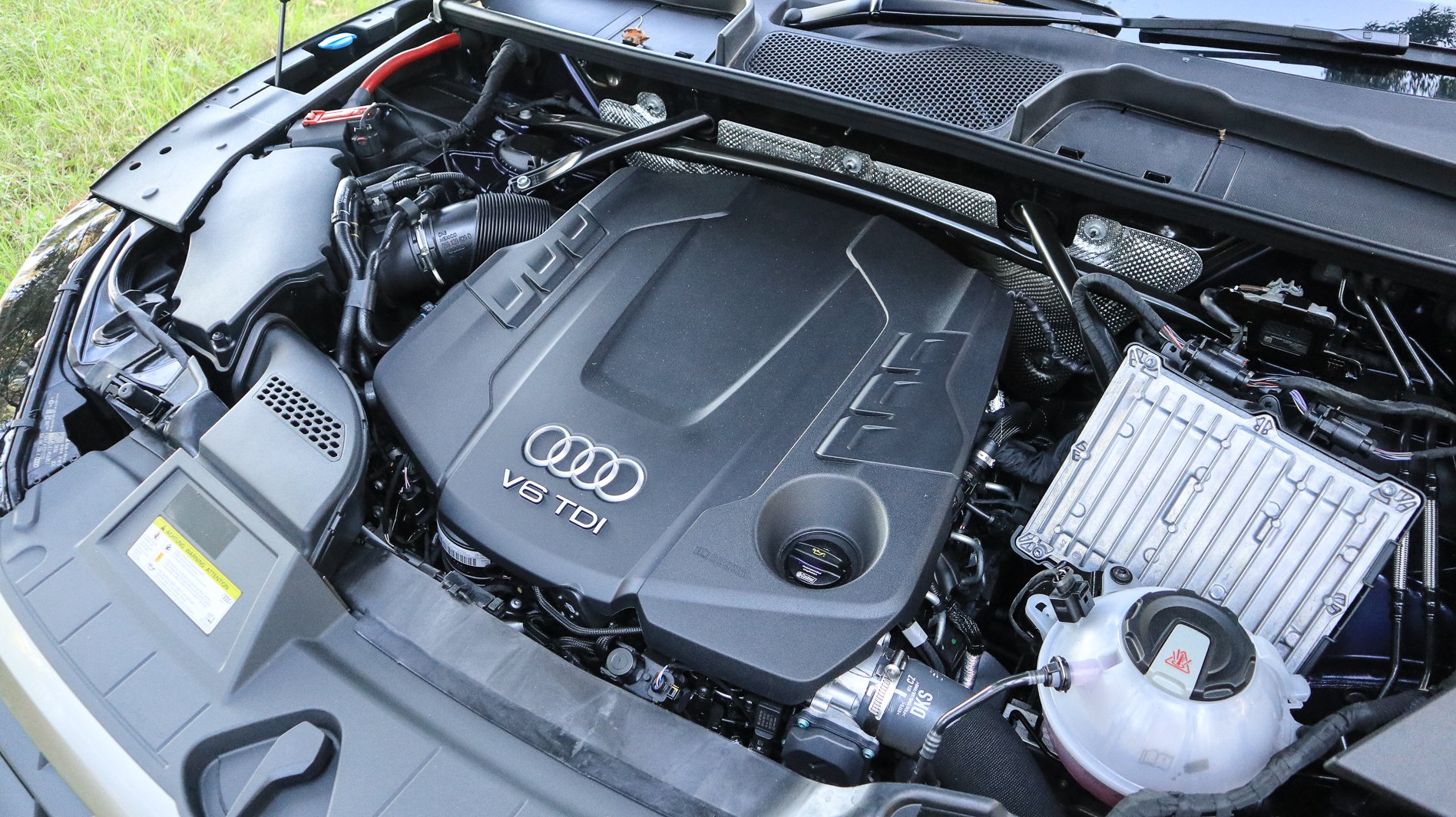
A number of four-cylinder diesel Audi models have also been compatible with the next-generation fuel since mid-2021, albeit only in selected European markets.
However, Audi admits shifting to renewable diesel is only a temporary move as it makes “an essential contribution on the road to carbon-neutral mobility”, ahead of its shift to an electric-only line-up from 2033.
It will launch its final next-generation internal-combustion vehicle in 2025, with all-new models to be full-electric from 2026 onwards.
“With our ‘Vorsprung 2030’ strategy, we’re pursuing the clearly defined goal that all new models we launch worldwide as of 2026 will be all-electric only,” said Audi’s chief development officer, Oliver Hoffmann.
“At the same time, we’re optimising our existing combustion engine portfolio for more efficiency and lower emissions. One way we’re doing this is by creating the requisite technical foundations for the use of sustainable fuels such as HVO.”
In Australia, biomass-derived (plant-based) diesel accounts for as much as five to 20 per cent of the biodiesel sold at bowsers. Audi currently sells a large (but shrinking) number of diesel variants across its local range, including the A4 Allroad, A6 Allroad, A8, Q5, Q7, and Q8.
Snapshot
- BMW M division celebrating 50th anniversary in 2022
- New commercial released to kick-off festivities
- M range expanding to include XM plug-in hybrid SUV and the next-gen M2 Coupe
The high-performance division of BMW is expanding festivities as it celebrates its 50th anniversary, months after it debuted optional retro badging for the 2022 BMW M range.
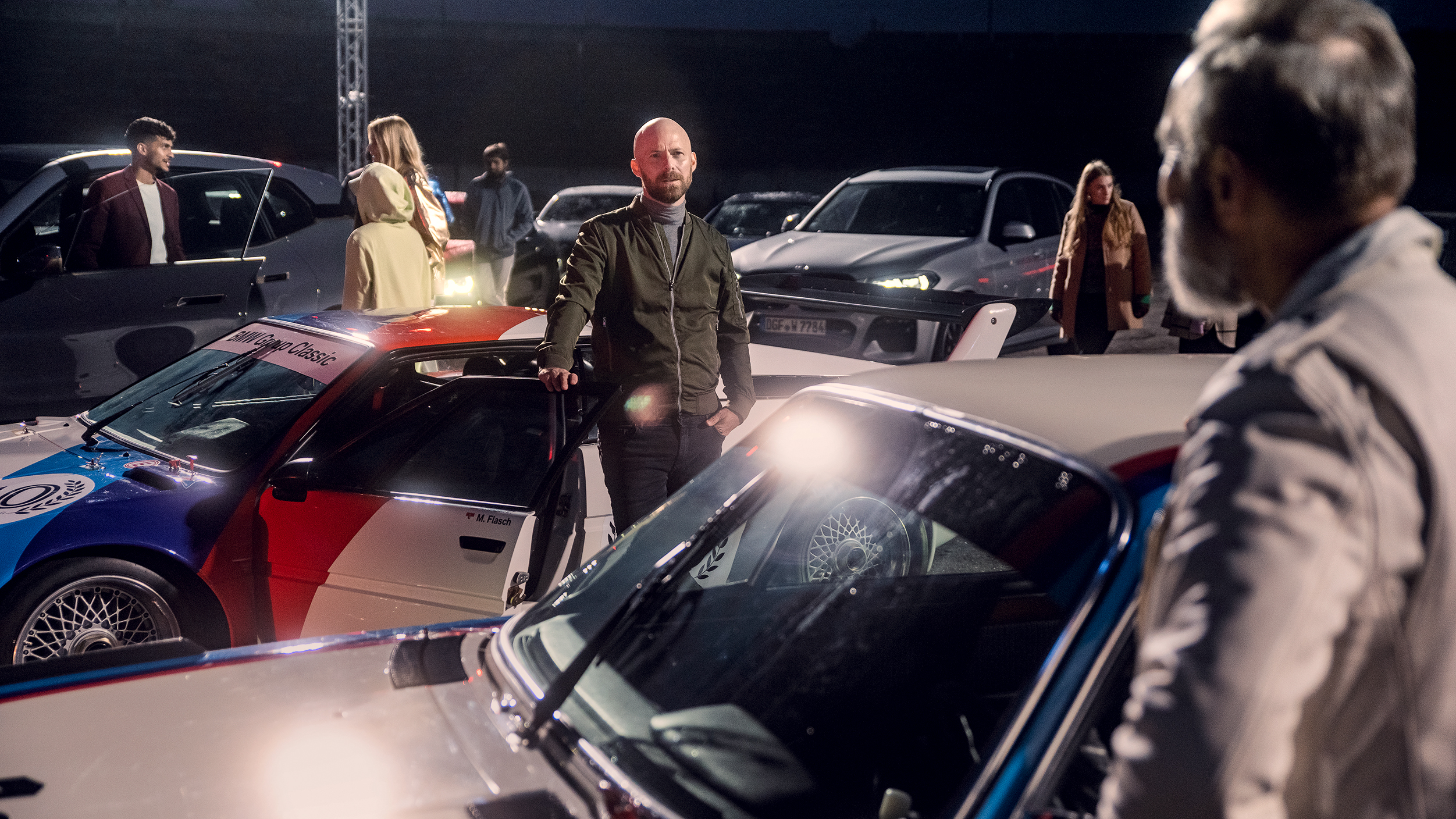
A new commercial released by BMW M, titled ‘Huddle Speech’, harks back to the marque’s past – from the first 3.0 CSL to the iconic M1 – while also celebrating its current line-up and upcoming models, including the XM performance SUV that is set for debut later this year.
Other vehicles featured in the film include; the current M3, M4 Competition, M8 Competition, i4 M50, iX M60, X3 M, X6 M, as well as the F87 M2, M3 CSL, and the V10-powered E60 M5.
“We are proud of the roaring start to our anniversary year [in February],” said Timo Resch, head of consumer, brand and sales at BMW M.
“We want to celebrate with all the fans, with our international community, therefore we have surprises in store for all communication channels, all year round. We are really looking forward to it.”
BMW M plans to host a number of additional events throughout the year to mark the occasion, such as promotional videos, special events, and new product launches – including the XM and the next-generation M2 Coupe.
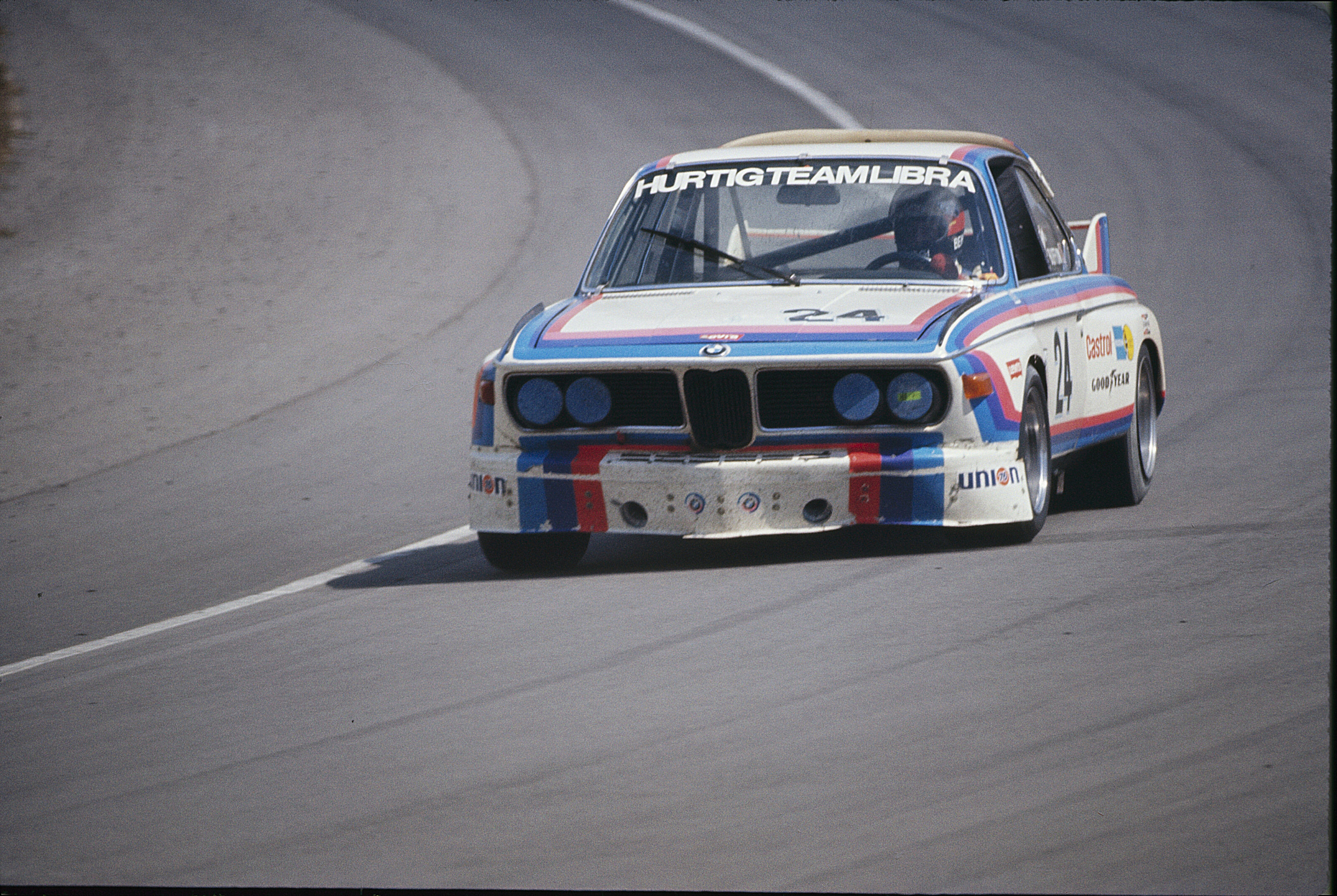
The division was founded in May 1972 to augment the BMW line-up with a number of enhanced models, starting with the 3.0 CSL – which was a homologation special to make the E9 eligible for racing in the European Touring Car Championship.
BMW M’s first unique vehicle, the M1, was showcased at the 1978 Paris Motor Show. Featuring a 3.5-litre straight-six engine producing 204kW of power and 330Nm of torque, the M1 was the first mid-engined vehicle produced by BMW – second only to the i8 plug-in hybrid sports car.
The first proper M car is often considered to be the M550i, a high-performance variant of BMW’s popular 5 Series that is thought of as the predecessor to the E28 M5.

The launch of the M5 and M3 during the 1980s demonstrated sports-luxury performance in a sedan, combining the comfort and refinement of the 5 Series and 3 Series with a high-performance engine and a host of other enhancements.
By 1989, the division had expanded with more than 400 employees, becoming a significant part of BMW’s market presence to compete against the AMG performance packages for Mercedes-Benz vehicles (now factory-owned and known as Mercedes-AMG) and Audi Sport.
The two performance sedans have been a mainstay in the BMW M range, alongside a host of newly-added vehicles – including the ever-popular SUV bodystyle – to now consist of the M2, M3, M4, M5, M8, X3 M, X4 M, X5 M, X6 M, as well as less-potent ‘M Performance’ trims, such as the BMW M550i and iX M60.
