
The Mazda MX-5 is often regarded as one of the best and most involved driver’s cars, and sales data from the manufacturer reflects owners are honouring its traditional intentions.
In a sales breakdown released by Mazda Australia, over half of all MX-5 owners have opted for the three-pedal, six-speed manual gearbox for their vehicles, choosing to row their own over the six-speed automatic on offer.
However, the two choices are split by just eight per cent, as the standard manual ‘box accounts for 58 per cent of the fourth-generation MX-5’s sales while the auto makes up 42 per cent of its delivery volume.
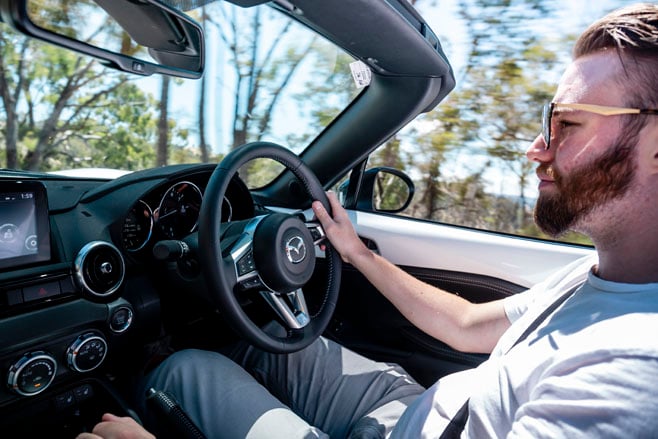
While the manual is fitted as the default transmission across the MX-5 range, the automatic sets buyers back an extra $2000, available in all grades bar the range-topping GT RS.
Introduced at the end of 2020, the GT RS is an Australia-only variant which gains Brembo four-pot front brake calipers, Bilstein dampers and lightweight BBS wheels – starting at $47,320 before on-road costs, a $1000 premium over the standard GT.
The GT RS’s inclusion in the line-up has proven to be a wise move by Mazda, with the flagship variant making up 51 per cent of the MX-5’s 2021 sales – 41 per cent for the hardtop RF and 10 per cent for the traditional Roadster.
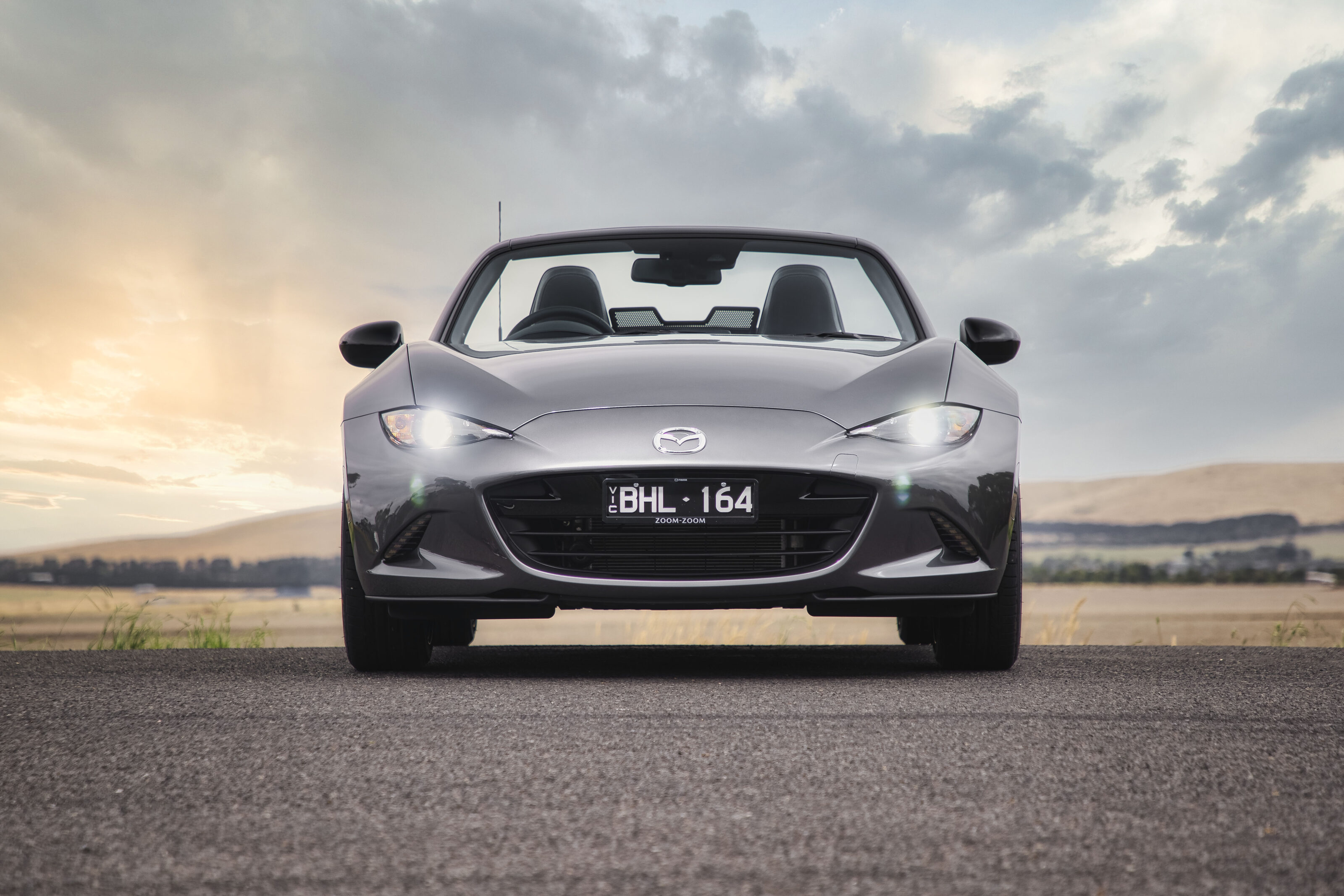
MX-5 sales increased by nearly 63 per cent last year, jumping from 457 units sold in 2020 to 744 throughout 2021, accounting for Mazda’s 18 per cent year-on-year resurgence.
At the end of 2021, Mazda announced it would drop the entry-level 1.5-litre MX-5 from its 2022 line-up thanks to low sales, leaving the 2.0-litre four-cylinder engine as the sole offering.
The 2022 MX-5 will also undergo minor suspension, safety and aesthetic tweaks, with Mazda’s Kinematic Posture Control suspension system now standard across the range, applying varying degrees of braking force to the inner rear wheel while cornering to keep the car stable.
2021 Mazda MX-5 sales breakdown by grade
| Variant | Sales Percentage |
|---|---|
| Roadster | 9% |
| Roadster GT | 17% |
| Roadster GT RS | 10% |
| RF | 9% |
| RF GT | 14% |
| RF GT RS | 41% |
Snapshot
- Teasers preview sedan-shaped electric vehicles
- Nissan targets EV sales to make up 40 per cent of its deliveries by 2030
- Canton, Mississippi plant to be retooled for electric vehicles
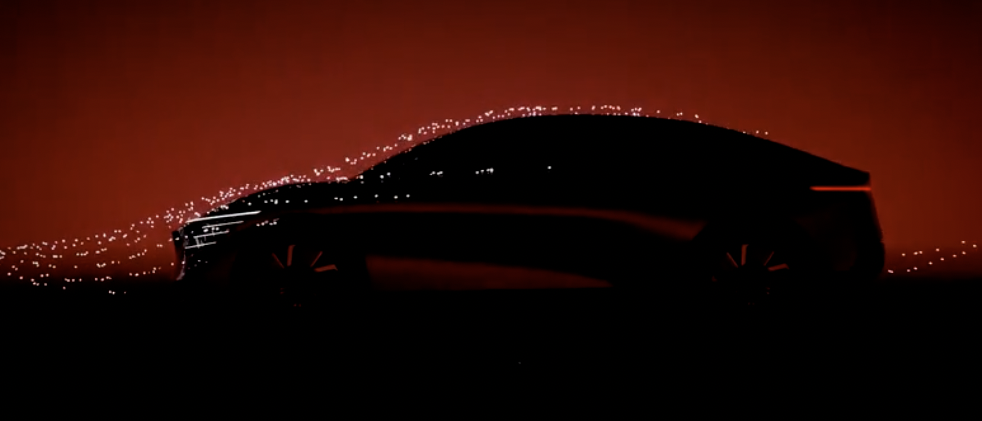
Japanese marque Nissan and its luxury sub-brand Infiniti have teased a pair of electric vehicles, set to be based on the same platform.
From the low-light photos, both cars seem to have a low-slung sedan design, breaking away from traditional mould of Nissan’s most recent EV concepts, all but one of which were high-riding SUVs.
Last month, Nissan and its Alliance partners Renault and Mitsubishi announced a majority of their future electric vehicles would be based on as little as five platforms, with Infiniti likely to offer mild redesigns and rebadging to the Nissan models.
The Japanese manufacturer is striving to launch 15 EVs by 2030, with its American arm targeting fully-electric models to make up 40 per cent of its sales by the same year – something it hopes to achieve after overhauling one of its biggest facilities.
Its plant in Canton, Mississippi is slated to benefit from a US$500 million (AU$696m) upgrade with retooling and upskilling set to take place in preparation for EV production from 2025, as the teased models are expected to be the first to roll off the line.
“Today’s announcement is the first of several new investments that will drive the EV revolution in the United States,” said Nissan CEO, Ashwani Gupta
“Nissan making a strong investment in Canton’s future, bringing the latest technology, training and process to create a truly best-in-class EV manufacturing team.”

The announcement comes less than a year after Nissan announced a $1.8 billion investment for its upcoming ‘EV36Zero’ facility in the United Kingdom, boasting an initial annual capacity of 9GWh with up to 35GWh possible by 2030.
In Australia, Nissan’s sole electric offering remains the Leaf, first introduced in 2012 but set to be joined by the Ariya, although the SUV has been repeatedly delayed due to stronger market conditions in other countries, with an official date for its debut still unconfirmed.
Snapshot
- Consumer Reports ranks Mach-E over Model 3
- Award given due to practicality and road handling
- Mach-E rumoured to come to Australia
Ford’s all-electric Mustang Mach-E has beaten Tesla’s popular Model 3 to be ranked as the top electric vehicle for 2022.
According to American independent product testing organisation Consumer Reports, the Ford Mustang Mach-E has been rated as the best EV on sale this year, based on factors such as road-test scores, predicted reliability, owner satisfaction, and safety.
It’s the first time the Model 3 has lost the award in two years, with the globally popular EV still highly recommended but losing out to the Mustang on practicality, reliability and handling.
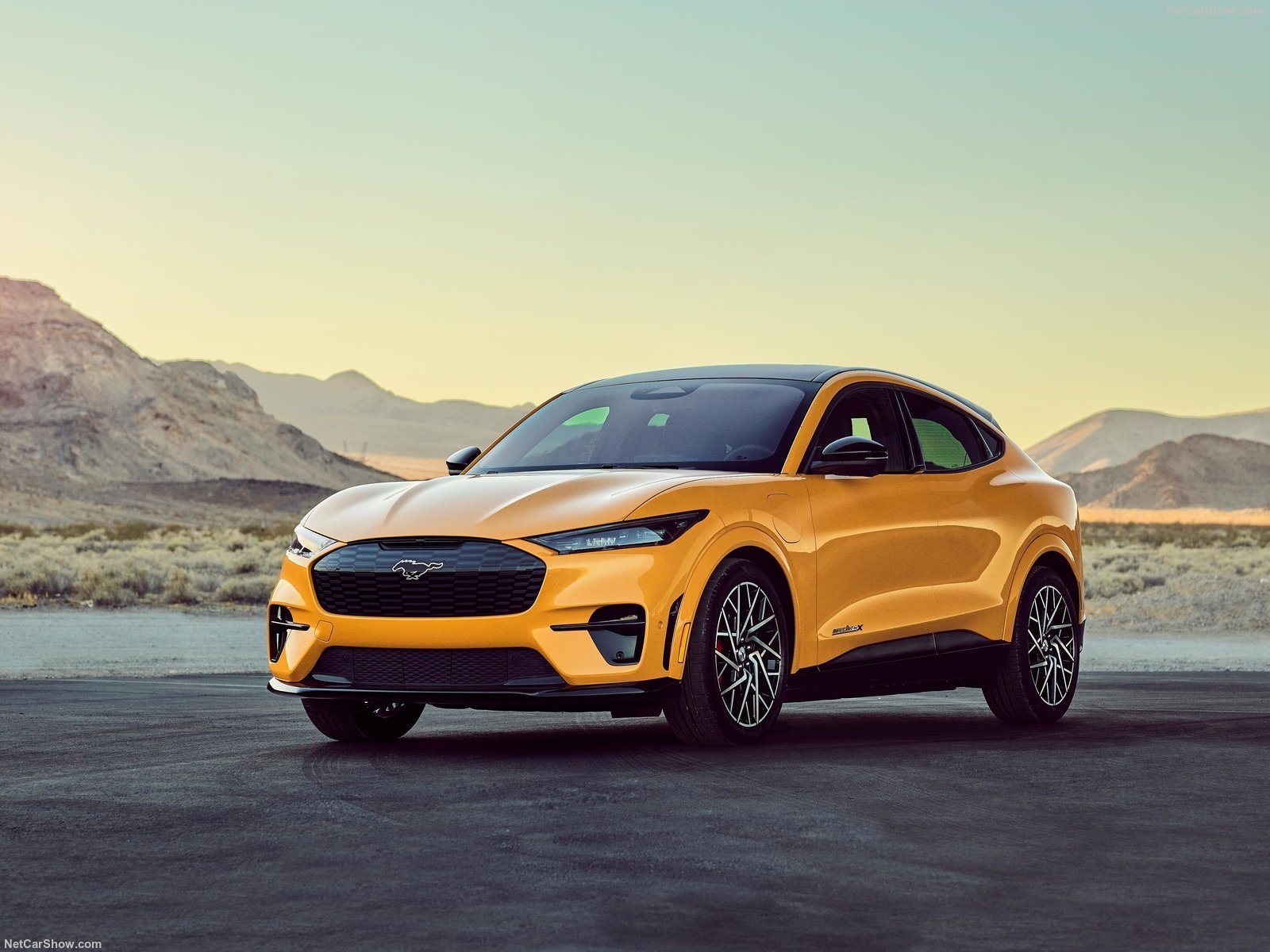
Consumer Reports said the Tesla Model Y was more comparable to the Mach-E than the Model 3, although reliability issues for the SUV kept it away from claiming the top gong.
“Within the Tesla family, the Model Y is more similar to the Mach-E than the Model 3, and it even outscores the Ford in our road tests,” the report said.
“But the Model Y’s reliability has been much worse than average, which has kept it out of our Top Picks. Specifically, owners reported problems with the Model Y concerning paint, body integrity, body hardware, power equipment, and the climate control system.”
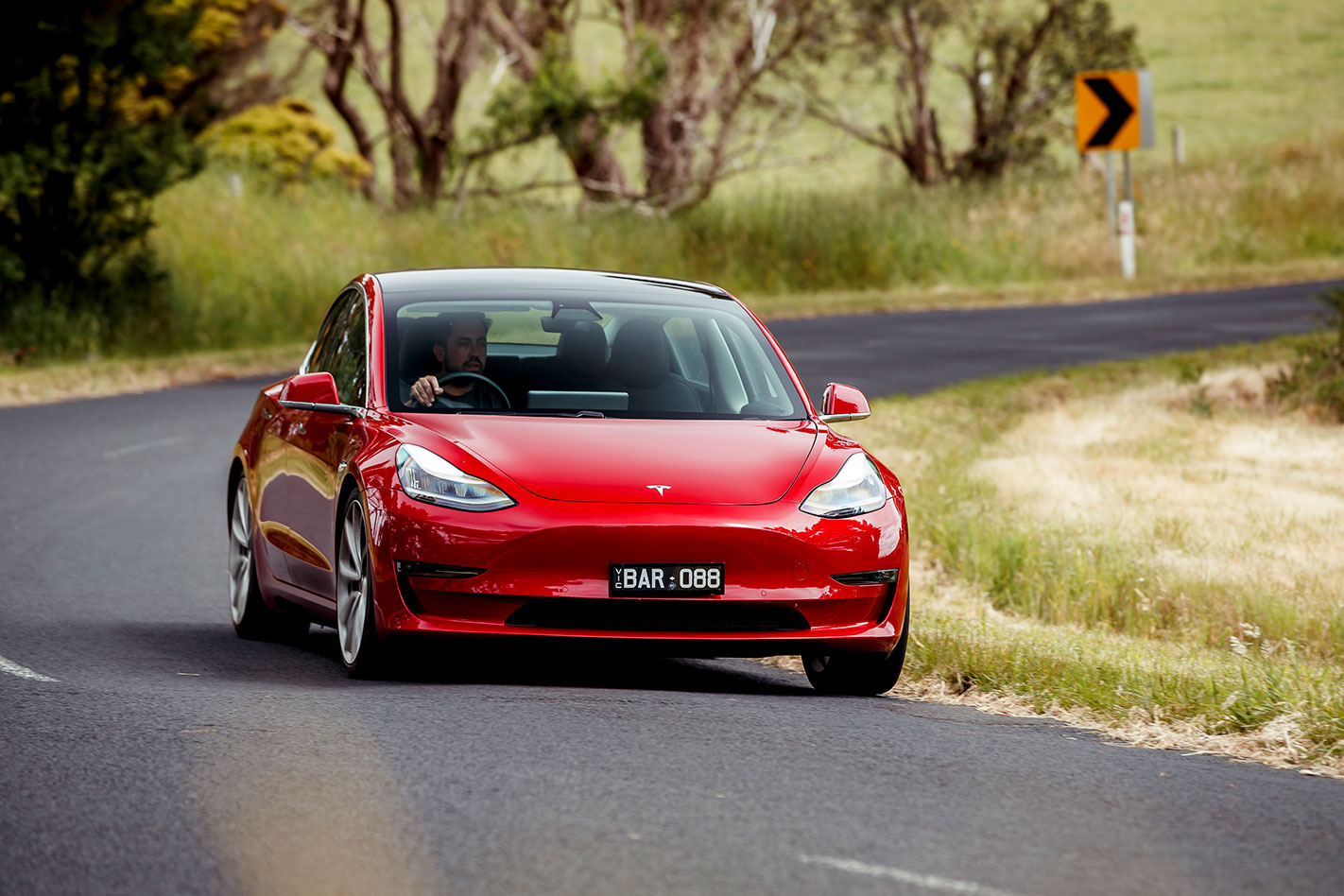
Another strong point of consideration for the Mach-E to be awarded the top pick was its active driving assistance and driver monitoring systems, rated higher than Tesla’s Autopilot program which allows users to continue driving when not paying attention to the road.
“The Ford Mustang Mach-E gains [two] points because its BlueCruise active driving assistance system has an effective driver monitoring system that gives appropriate warnings when the driver’s attention wanders.
“On the other hand, Tesla’s Autopilot system can still be used if the driver is looking away or using a phone, as long as there is at least one hand resting on the steering wheel.”
The Tesla Model 3 is Australia’s most popular EV with 12,094 units sold locally last year – or 6945 examples more than every other manufacturer’s fully-electric sales combined.
Currently sold out globally in right-hand-drive guise, the Mustang Mach-E has been rumoured to join Ford’s Australian line-up, as an uncovered trademark application hints at a local launch potentially coming in the next few years.
I’ve only myself to blame, really. Following a track outing in ‘my’ Ford Mustang 2.3 High Performance long-termer last year, I proudly proclaimed that I believed it the pick of the non-Shelby litter for track use. While I’m not looking to make excuses, the caveat is that this was before the local introduction of the Mach 1, but his Enright-ness rightly called me out on the claim: “Ok Scotty, prove it”. If I must.
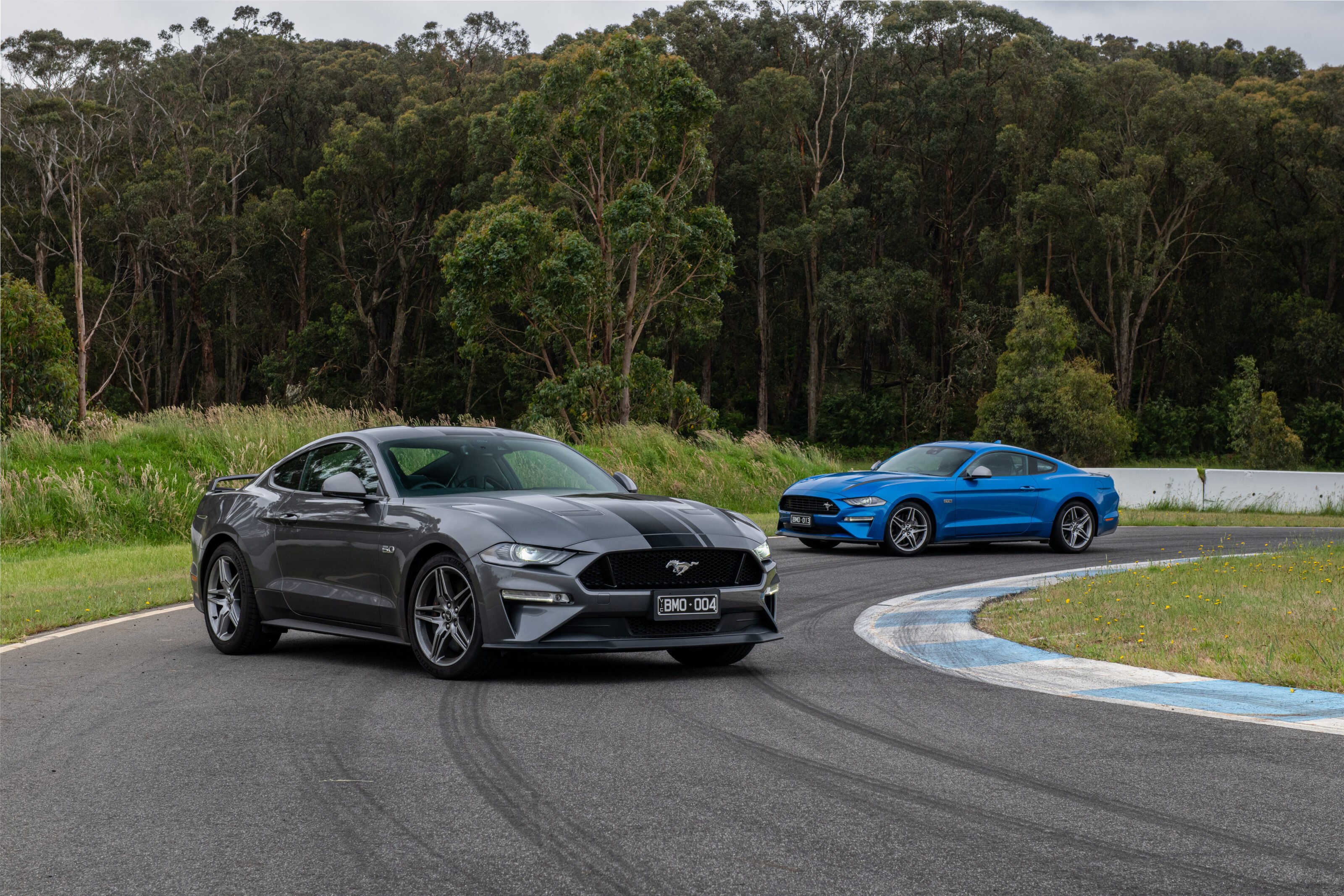
This is how we come to be present at Bryant Park hillclimb circuit with a Ford Mustang 2.3 High Performance, a Mustang V8 GT and a DriftBox with which to record the cold, hard data. But this test isn’t purely about numbers; driving enjoyment is an equally valid way to determine an order of preference. Can the lighter, less powerful four-pot pony make a case for itself?
There are many good things about Bryant Park, but one is the fact that its twisting, undulating layout tends to, if not negate any power advantage, then at least render it less relevant than at a more traditional track. This is important as on paper the V8-powered GT is significantly superior when it comes to under-bonnet urge.

With the upgrades included as part of the MY18 facelift – dual injectors, plasma bore liners, larger intake and exhaust manifolds – outputs leapt to 339kW at 7500rpm and 556Nm at 4600rpm. It’s at its most potent when paired with the optional 10-speed automatic fitted here, though our test car does without the MagneRide adaptive dampers.
What Aussie V8 Mustangs do have is some choice gear from the US Performance package, namely staggered rolling stock – 19.0 x 9.0-inch fronts with 255/40 tyres and 19.0 x 9.5-inch rears with 275/40s – and monster front brakes, the discs 380mm in diameter with six-piston Brembo calipers.
In chassis terms the 2.3 High Performance essentially mirrors the standard US-spec V8 GT. This means 19.0 x 9.0-inch rims all ’round shod with Pirelli P Zeros rather than Michelin Pilot Sport 4 S tyres and 352mm front brake rotors with four-piston calipers. Local cars also score half the optional ‘EcoBoost Handling Package’, which consists of a shorter 3.55:1 diff ratio (matching the V8’s) and thicker anti-roll bars front and rear.
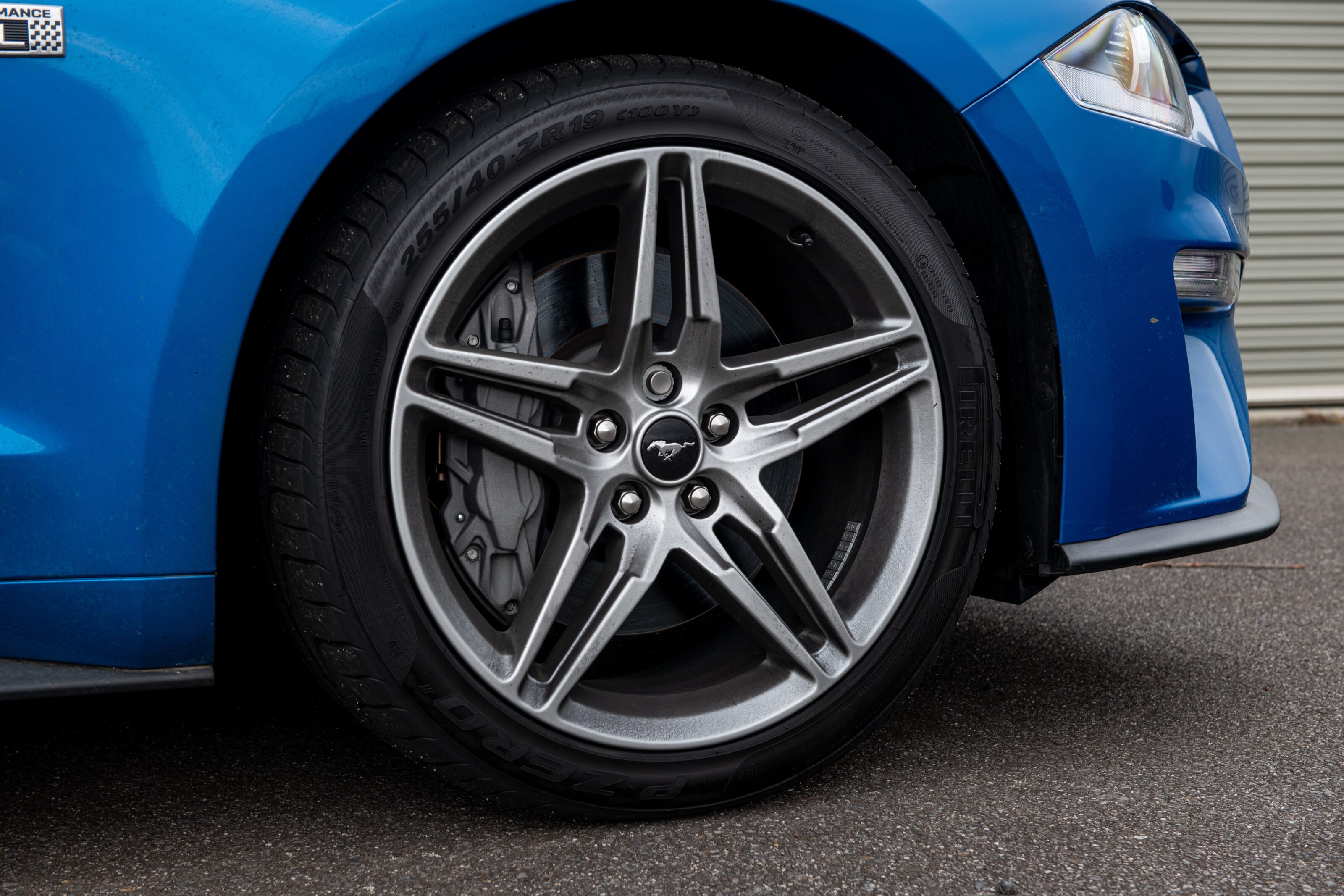
The manual would be our preferred transmission, the ratios in the Getrag ’box working much better in the HP than the GT, but to keep things even our test car is fitted with a 10-speed automatic, though it does have the advantage of MagneRide shocks.
On the spec sheet it looks like Ford’s engineers merely had a quick fiddle with the Mustang EcoBoost’s engine management system to extract an extra 12kW and 7Nm, but the changes run deeper than that. A drop in compression ratio from 9.5 to 9.37:1 allowed the fitment of a 5 per cent larger turbo so while peak outputs aren’t much higher, the power band has been extended in both directions. Maximum power now arrives at 6200rpm instead of 5700rpm and there’s at least 400Nm available from 2500-5300rpm.
The upshot of this is a genuinely entertaining car. The old EcoBoost Mustang could feel a bit like a goldfish in an aquarium on track, with plenty of space in which to roam but with little idea of what to do with it all. It just didn’t have the grunt to feel particularly interesting. However, the High Performance definitely rectifies that. With more torque available more of the time, suddenly the throttle needs some management to prevent the rear end swinging wide.
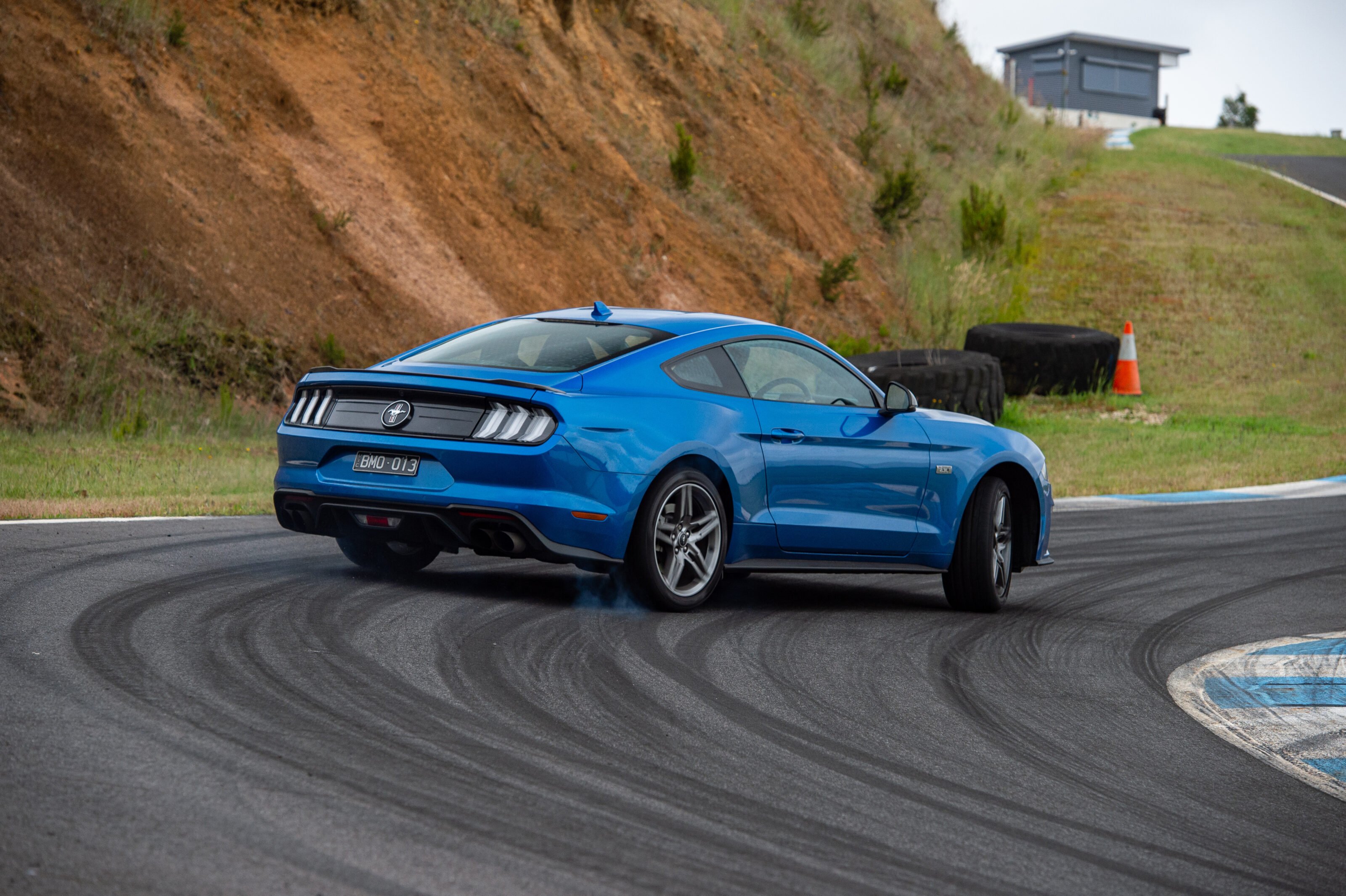
Not that it’s quite that easy. Even in four-cylinder form the Mustang is a heavy old thing at 1705kg (65kg lighter than the V8) and though setting the drive mode selector set to Track stiffens up the adaptive dampers there’s plenty of body movement. It’s not a car that likes to be hustled, feeling clumsy if you attempt to do so, and there is a slight understeer bias to the handling, but there are also plenty of positives.
Grip levels are reasonably high, the steering is accurate if not hugely communicative, the brakes hold up well and the chassis has impressive balance. You can commit to corners with confidence, safe in the knowledge that the worst case scenario is the gentle understeer mentioned a moment ago. The 10-speed automatic isn’t super keen on downshifting into second, but such is the torque available third feels no slower and that’s where it remains for the entire lap.
Subjective assessment is one thing, but the stopwatch never lies (not insinuating that journalists do, of course). Nor does it need to in this instance, as the Mustang 2.3 High Performance is very quick around Bryant Park. It records a best lap of 1min7.8sec, peaking at 120.28km/h on the back straight.
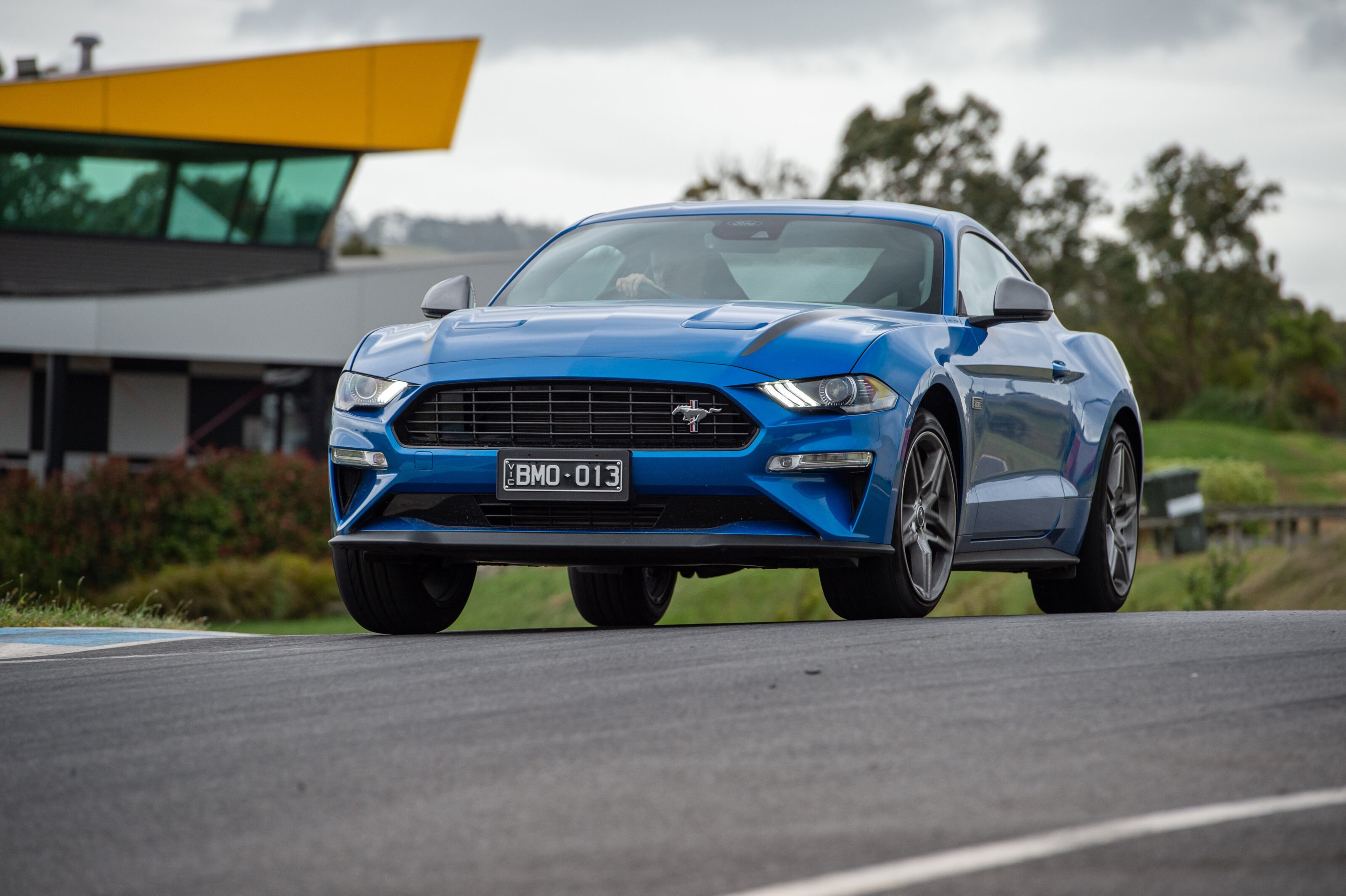
To provide some context, we’ve now run a number of cars on the same figure-eight course layout as part of MOTOR’s Track Series on YouTube (go and check it out!) and this four-cylinder Mustang is a second quicker than the latest i30 N DCT and just a second slower than the likes of the Audi RS5 and Lexus RC F Track Edition. Impressive.
At this point I’m honestly feeling pretty smug. The 2.3 High Performance is plenty enjoyable and given the company it’s in it’s hard to see the V8 GT improving on that lap time by much, if at all. From an experiential standout, however, those four extra cylinders do make a big difference. For all its improvements, the HP’s 2.3-litre turbo four-pot is certainly no musical instrument, whereas you could sell tickets to a Coyote V8 concert.
It’s a fantastic engine and the shorter nature of the Bryant Park circuit, in conjunction with cool ambient temperatures, means that the Mustang’s overheating problem doesn’t rear its head like it does at larger, longer tracks. I say overheating, but that conjures images of the family wagon spraying steam at the side of the road; instead this is more poor temperature control, the mercury quickly rising until the engine’s safeguards kick in, limiting revs and power.
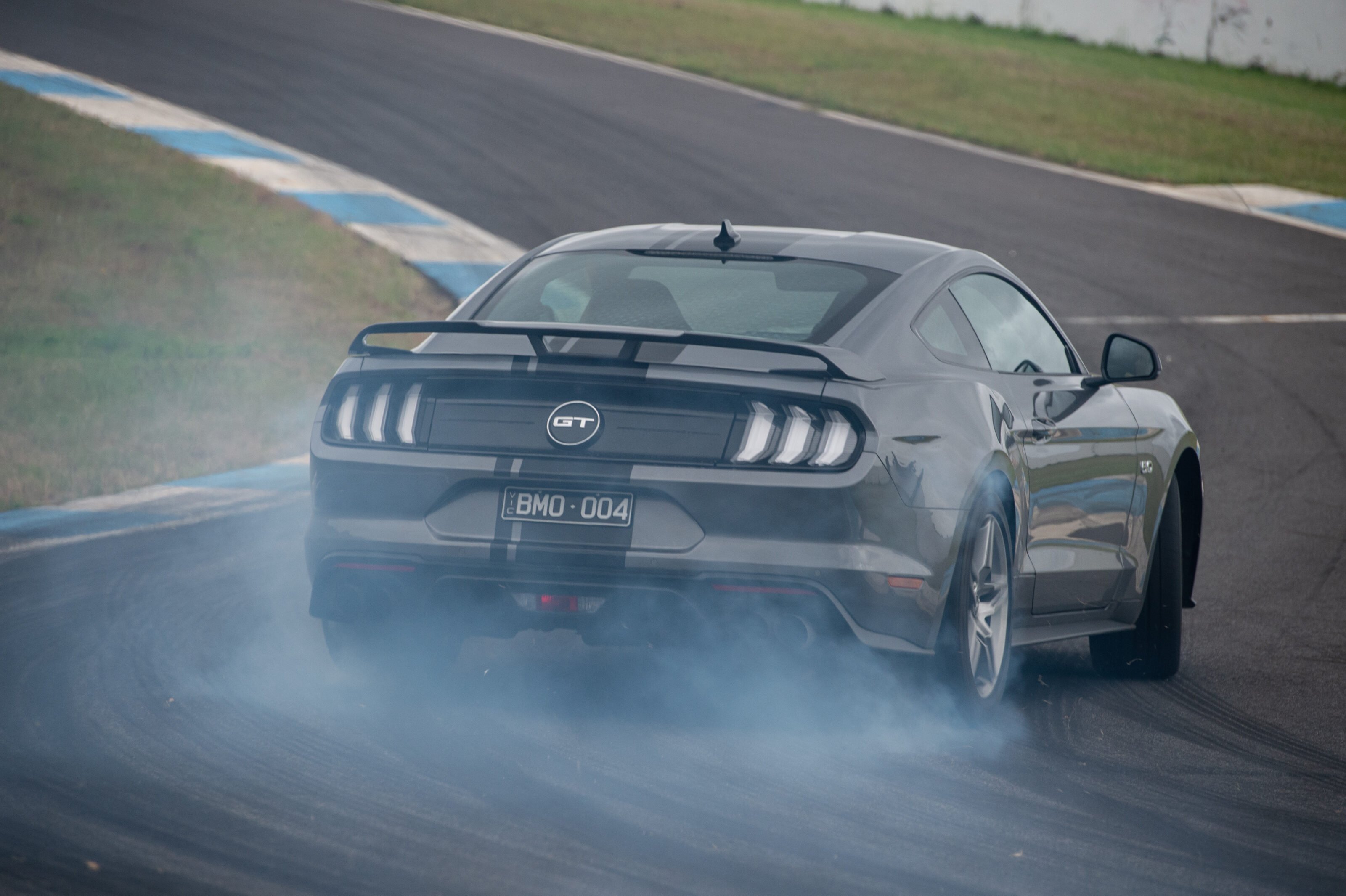
Even with all 339kW available, though, it’s not at all a handful. The passive suspension setup works well, the combination of Michelin rubber and wider rear tyres control the extra power and the engine’s linear power curve makes it a relatively simple process to keep things neat and tidy.
Another help is the Mustang’s excellent Sports ESP setting, common to both cars. While it’s deactivated completely for the timed laps, it’s extremely helpful when you’re learning a circuit or if the conditions turn sour, allowing enough slip to go fast but without unduly slowing you down.
Helmet on and stopwatch activated once again, a second and third glance is needed once we cross the finish line. A 1min5.5sec lap isn’t just 2.3sec quicker than the 2.3 HP, it’s the second quickest car we’ve lapped, just two-tenths slower than the Toyota Supra. It’s a remarkable result for a car that, while talented, isn’t necessarily renowned for its corner carving capabilities.
How did it do it? The data tells all. It would be easy to say that with 103kW/108Nm more of course the V8 would be faster, but it doesn’t tell the whole story. The power advantage certainly helps, the GT carrying an extra 8km/h into T1, 5km/h down the hill into T3, a whopping 9km/h over the crest between T8 and T9 and a huge 13km/h down the back straight. Every time there was an opportunity for the V8 to stretch its legs to gain time it did so, but was able to due to getting out of the preceding corners efficiently.
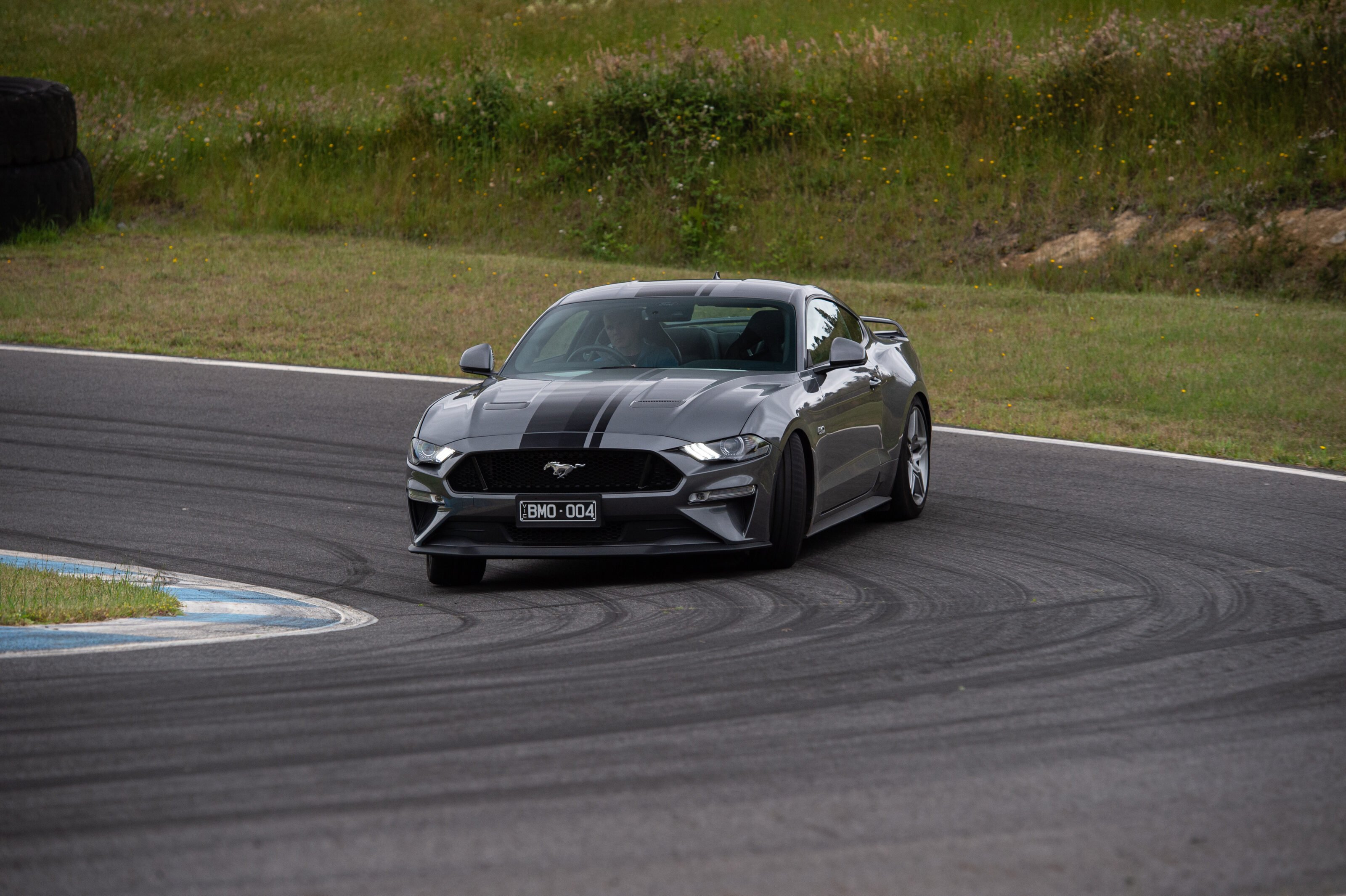
Time was also made in the corners, with the GT in general having higher minimum speeds, particularly in the faster bends at the beginning of the lap. Where the 2.3 HP did outperform its V8 sibling, it did so by a tiny margin, usually less than 1km/h, whereas the GT held a 4km/h advantage in T1, 2km/h in T2 and T5 and 4km/h once again in T6. It’s a pretty simple equation: the V8 is going through the corners just as quickly if not quicker, getting out of them more efficiently and then being quicker down all the straights.
So that’s it, a healthy helping of humble pie for me, then? Sort of. The Mustang GT is undoubtedly the superior performer in terms of raw numbers, but the elephant in the room is that on any regular track – Sandown, Winton, Phillip Island, The Bend – its cooling deficiencies will quickly curtail your enjoyment.
In our experience, the 2.3 HP has no such issues. It’s also still very enjoyable in its own right. If it wore anything other than a Mustang badge, a 236kW/448Nm turbocharged rear-wheel drive Ford coupe would be celebrated – modern-day Capri, anyone?
SCORING
Ford Mustang 2.3 HP
Things we like: Surprising dynamic talent; punchy four-cylinder turbo; ride quality
Not so much: Pairs better with the six-speed manual; it’s ultimately not a V8
VERDICT: 4/5
Ford Mustang GT
Things we like: Evocative soundtrack; isn’t lost at sea on track; deceptively fast
Not so much: Tall gearing in the manual; heat issues remain on longer tracks
VERDICT: 4/5
2022 Ford Mustang 2.3 HP specifications
| BODY: | 2-door, 2+2-seat coupe |
|---|---|
| DRIVE: | rear-wheel |
| ENGINE: | 2300cc inline-4cyl, DOHC, 16v, turbo |
| BORE X STROKE: | 87.6 x 94.0mm |
| COMPRESSION: | 9.4:1 |
| POWER: | 236kW @ 6000rpm |
| TORQUE: | 448Nm @ 3000rpm |
| POWER/WEIGHT: | 138kW/tonne |
| TRANSMISSION: | 10-speed automatic |
| WEIGHT: | 1705kg |
| SUSPENSION: | struts, adaptive dampers, anti-roll bar (f); multi-links, adaptive dampers, anti-roll bar (r) |
| L/W/H: | 4788/1915/1379mm |
| WHEELBASE: | 2720mm |
| TRACKS: | 1585/1654 (f/r) |
| STEERING: | electrically assisted rack-and-pinion |
| BRAKES: | 352mm ventilated discs, 4-piston calipers (f); 330mm ventilated discs, single-piston calipers (r) |
| WHEELS: | 19.0 x 9.0-inch (f/r) |
| TYRES: | 255/40 ZR20 (f/r) Pirelli P Zero |
| PRICE: | $54,490 |
2022 Ford Mustang GT specifications
| BODY: | 2-door, 2+2-seat coupe |
| DRIVE: | rear-wheel |
| ENGINE: | 5038cc V8, DOHC, 32v |
| BORE X STROKE: | 93.0 x 92.7mm |
| COMPRESSION: | 12.0:1 |
| POWER: | 339kW @ 7500rpm |
| TORQUE: | 556Nm @ 4600rpm |
| POWER/WEIGHT: | 191kW/tonne |
| TRANSMISSION: | 10-speed automatic |
| WEIGHT: | 1770kg |
| SUSPENSION: | struts, coil springs, anti-roll bar (f); multi-links, coil springs, anti-roll bar (r) |
| L/W/H: | 4788/1915/1379mm |
| WHEELBASE: | 2720mm |
| TRACKS: | 1585/1654 (f/r) |
| STEERING: | electrically assisted rack-and-pinion |
| BRAKES: | 380mm ventilated discs, 6-piston calipers (f); 320mm ventilated discs, single-piston calipers (r) |
| WHEELS: | 19.0 x 9.0-inch (f); 19.0 x 9.5-inch (r) |
| TYRES: | 255/40 ZR19 (f); 275/40 ZR19 (r) Michelin Pilot Sport 4 S |
| PRICE: | $66,690 |
Lexus isn’t new to electrification, with hybrids making up about 40 per cent of its Australian business including 56 per cent of UX crossover sales, which now include the UX300e, the brand’s first battery-electric vehicle (BEV).
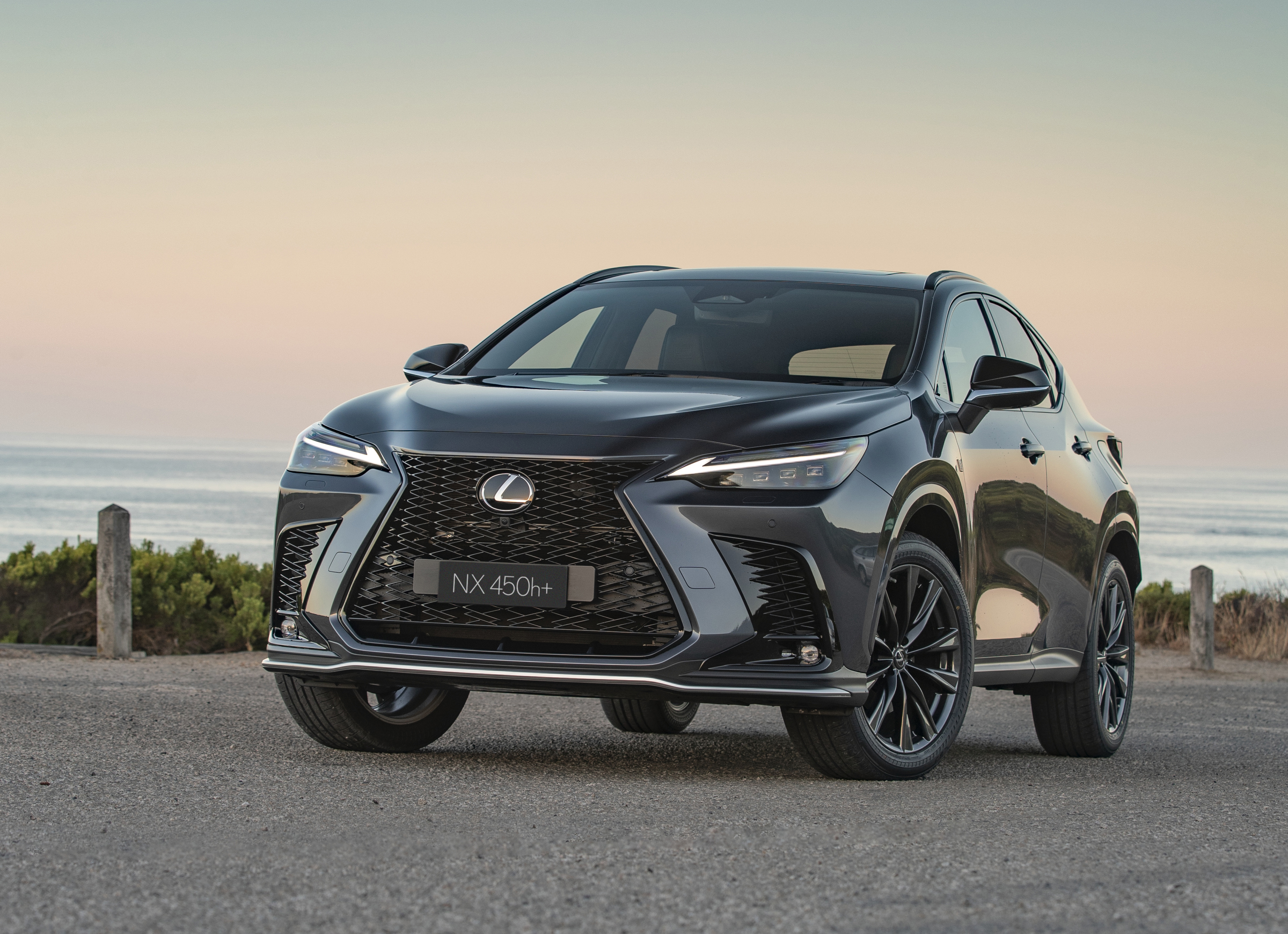
Now the Japanese luxury carmaker has entered the plug-in hybrid (PHEV) market with the 2022 Lexus NX 450h+ that headlines the all-new NX medium-SUV range.
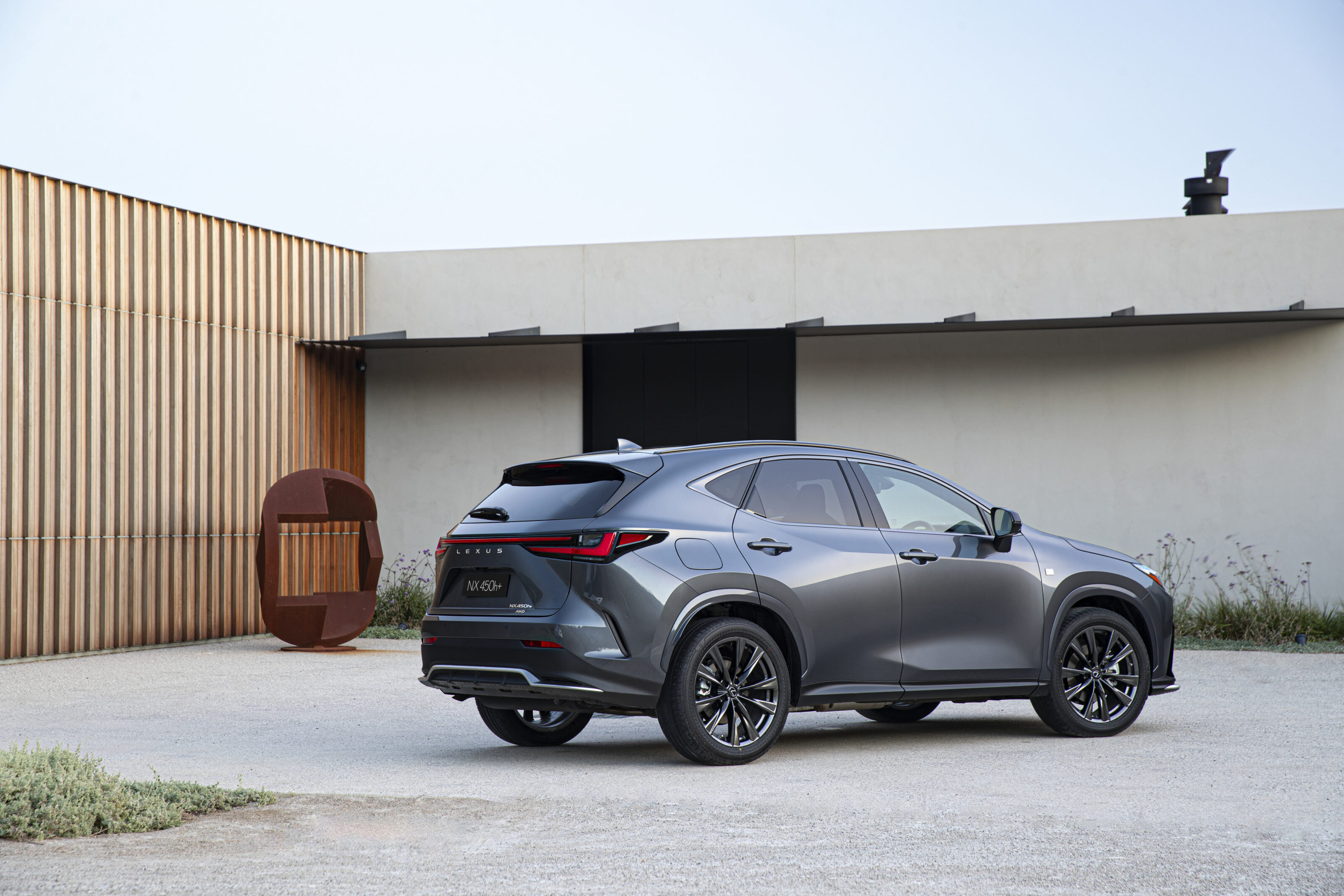
With plug-in hybrids seen by many as a stop-gap measure on the path towards full electrification, this is an interesting move by Lexus. However, it’s not without merit.
Pricing and Features
The Lexus 450h+ is only available in the upper-spec F Sport to trim resulting in a relatively high starting price of $89,900 before on-road costs. That’s some $20,000 more than the entry-level petrol NX250.
A better comparison is against the AWD F Sport variants, the NX350 and NX350h, which are both priced from $77,900 before on-road costs.
Looking outside the Lexus stable, the 450h+ bridges the price gap between mainstream PHEV SUVs and its closest premium rivals, such as the Mercedes-Benz GLC300e and Volvo XC60 Recharge, which are priced from $95,700 and $109,908 respectively.
Like the other F Sport variants, the 450h+ comes with auto-levelling tri-beam LED headlights, leather-appointed upholstery with a choice of colours, eight-way power-adjustable and heated and ventilated front seats, dual-zone climate control, heated self-dimming door mirrors and smart keyless entry/start.
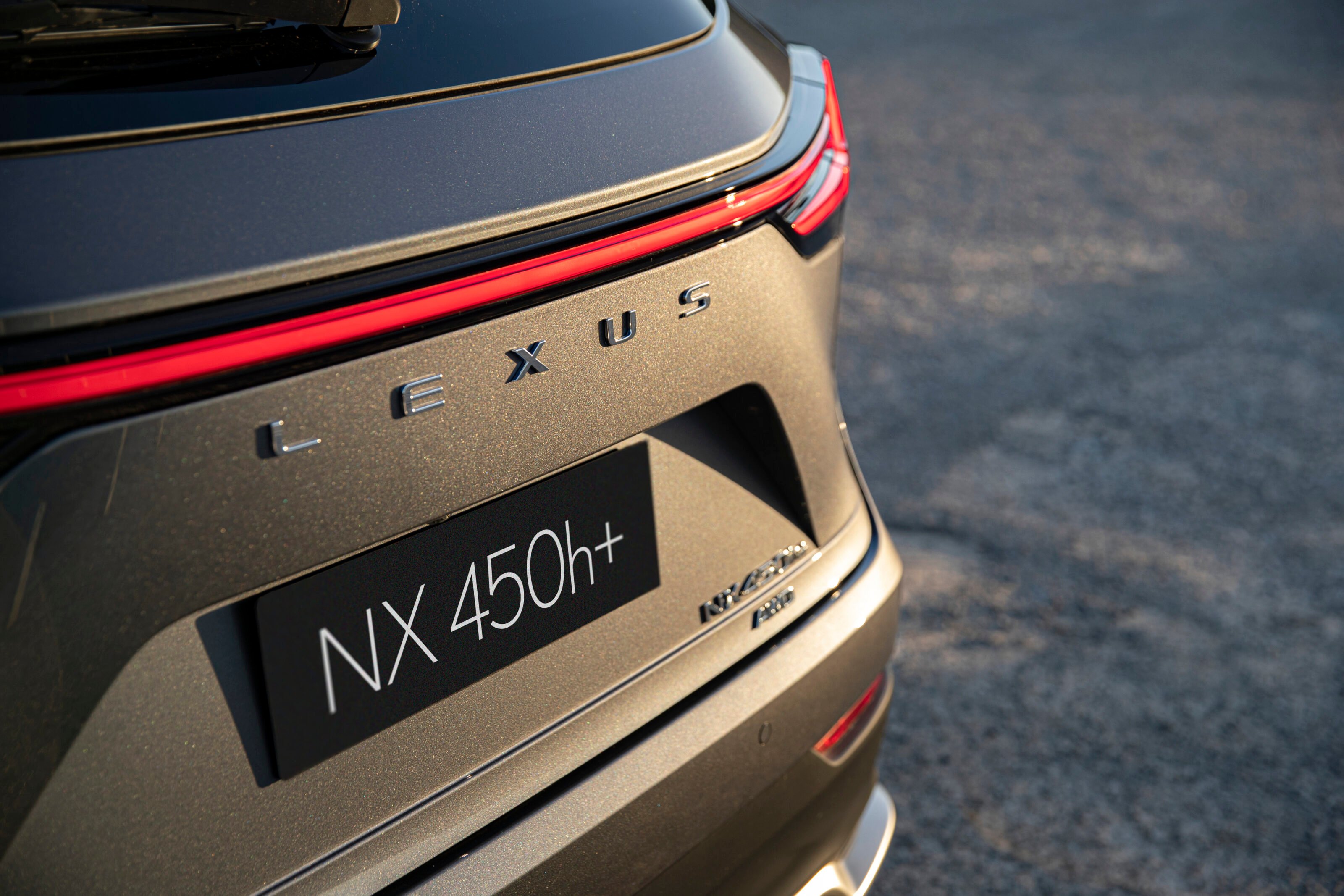
There’s also the new E-Latch electronic door handles, a powered tailgate, Tazuna cockpit driver display with 8.0-inch digital gauge cluster, a 14-inch touchscreen, cloud-based connected satellite navigation, Apple CarPlay/Android Auto, DAB+ digital radio, 10-speaker audio and a drive mode selector offering Eco, Normal and Sport settings.
F Sport-specific kit includes adaptive variable suspension (AVS) and performance dampers, Sport S+ and Custom drive mode settings, 20-inch wheels, and bespoke grille, bumpers, sports seats, pedals, scuff plates, steering wheel and gear selector.
As well as the plug-in hybrid powertrain and associated equipment, the NX450h+ comes with a sunroof, digital rear-view mirror and a heated steering wheel, which are optional extras on the NX350 and NX350h F Sport.
The entire 2022 NX line-up comes with complimentary access to Lexus’ expanded connected services technology including a smartphone app with automatic collision notification, SOS emergency call, stolen vehicle tracking and the ability to remotely operate the door and boot locks, turn the engine off and off, activate the horn, turn on the headlights and hazards and set the climate control.
In addition, NX450h+ buyers get a free 7kW AC home charger with installation and three years of complimentary membership of the Lexus Encore Platinum owner benefits program.
The 2022 Lexus NX450h+ is covered by a five-year, unlimited-kilometre warranty. Service intervals are every 12 months or 15,000km.
Comfort and Space
There isn’t much inside the NX450h that sets it apart from other F Sport variants apart from PHEV-related functions and the quieter ride when driving in EV mode.
Its plug-in powertrain is one of a number of new technologies that are making their Lexus debut in the second-generation NX.
These include the e-latch door openers that use pressure switches instead of mechanical handles, which on the outside work a lot like those on the tailgates of most recent models.
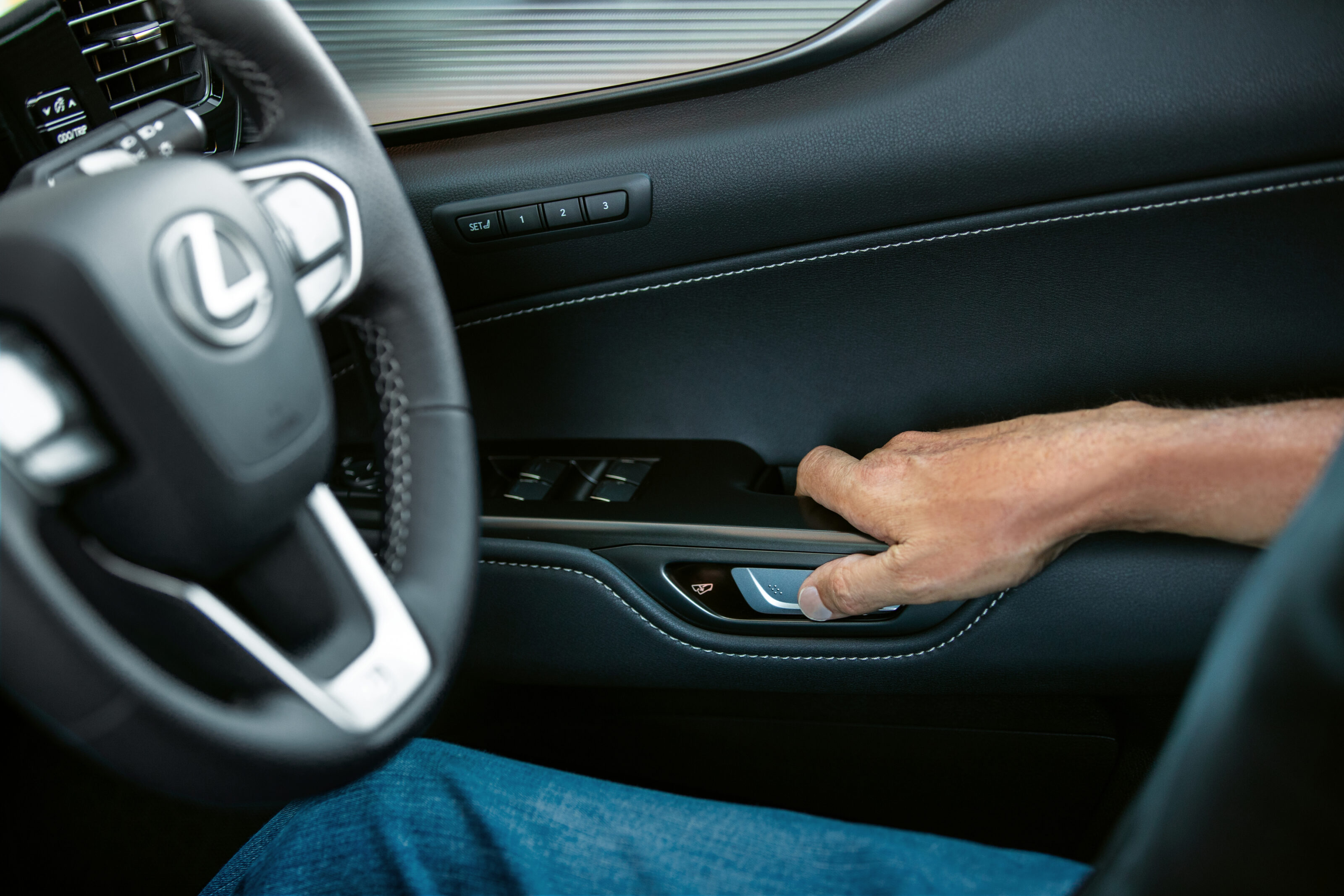
From the inside, opening the door requires a gentle push of the latch. This seems a little gimmicky at first, but the system offers the safety benefit of not operating if it senses you’re about to open the door into the path of another vehicle or cyclist – Lexus calls this Safe Exit Assist.
Everything is well put together, as you’d expect from Lexus, with the F Sport sport seats providing excellent back, hip and bum support.
The new cabin design is a lot less cluttered than before, especially on the centre console that has fewer buttons and dials, with the bulky trackpad infotainment controller thankfully being given the boot.
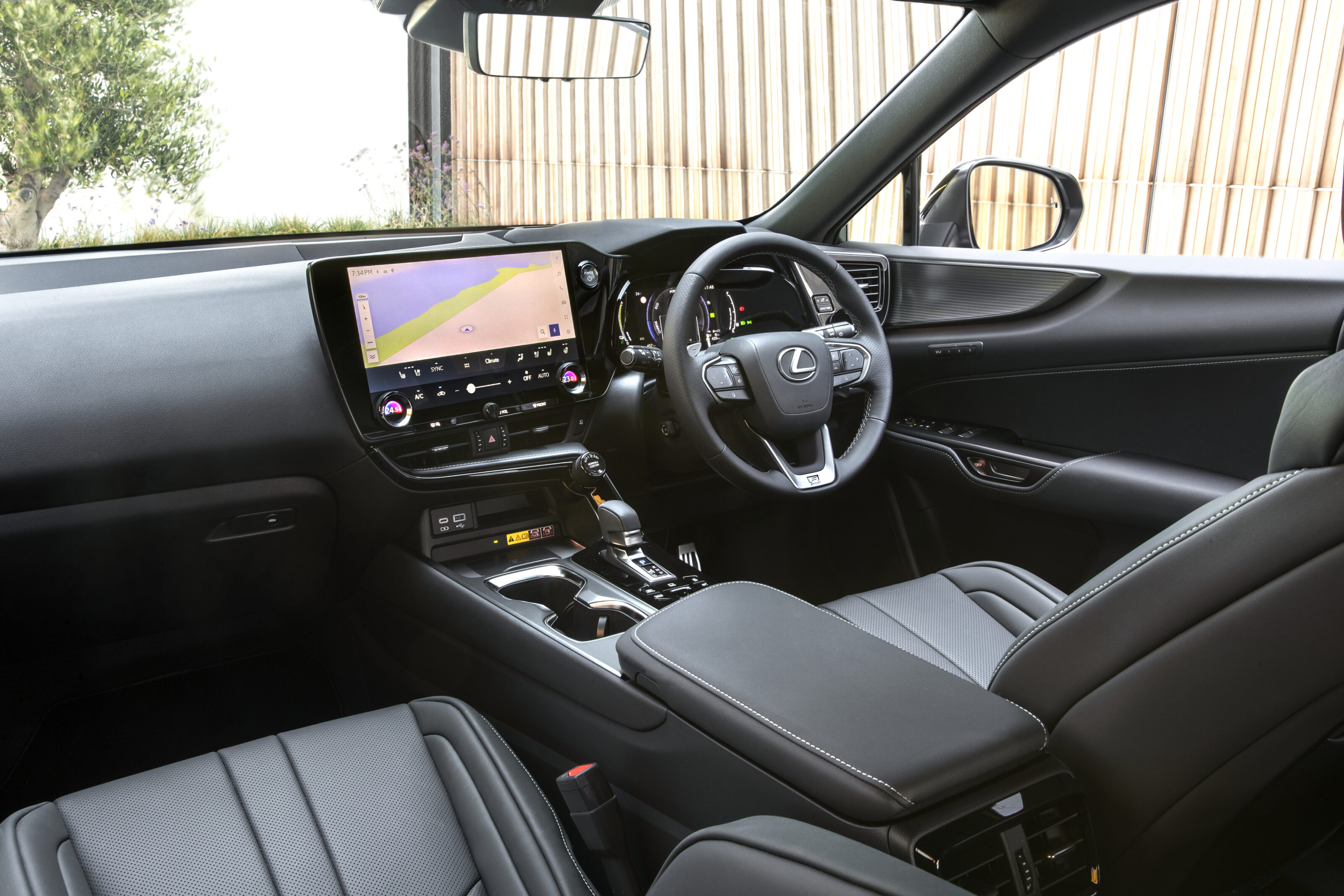
Most functions are now controlled from the touchscreen or the steering wheel, though there are a few physical controls for driving functions near the gear selector. The result is a much cleaner interface, with the touchscreen and HVAC controls floating in front of the dashboard within a piano-black fascia that merges with the digital gauge cluster.
Not surprisingly, Lexus has a name for this – the ‘Tazuna’ cockpit concept, with the moniker derived from a Japanese term that describes the connection between a horse and rider through the reins.
As with most steering wheels on newer cars, this one has buttons to operate active cruise control and lane-keep assist on one side, and other functions such as phone and audio on the other.
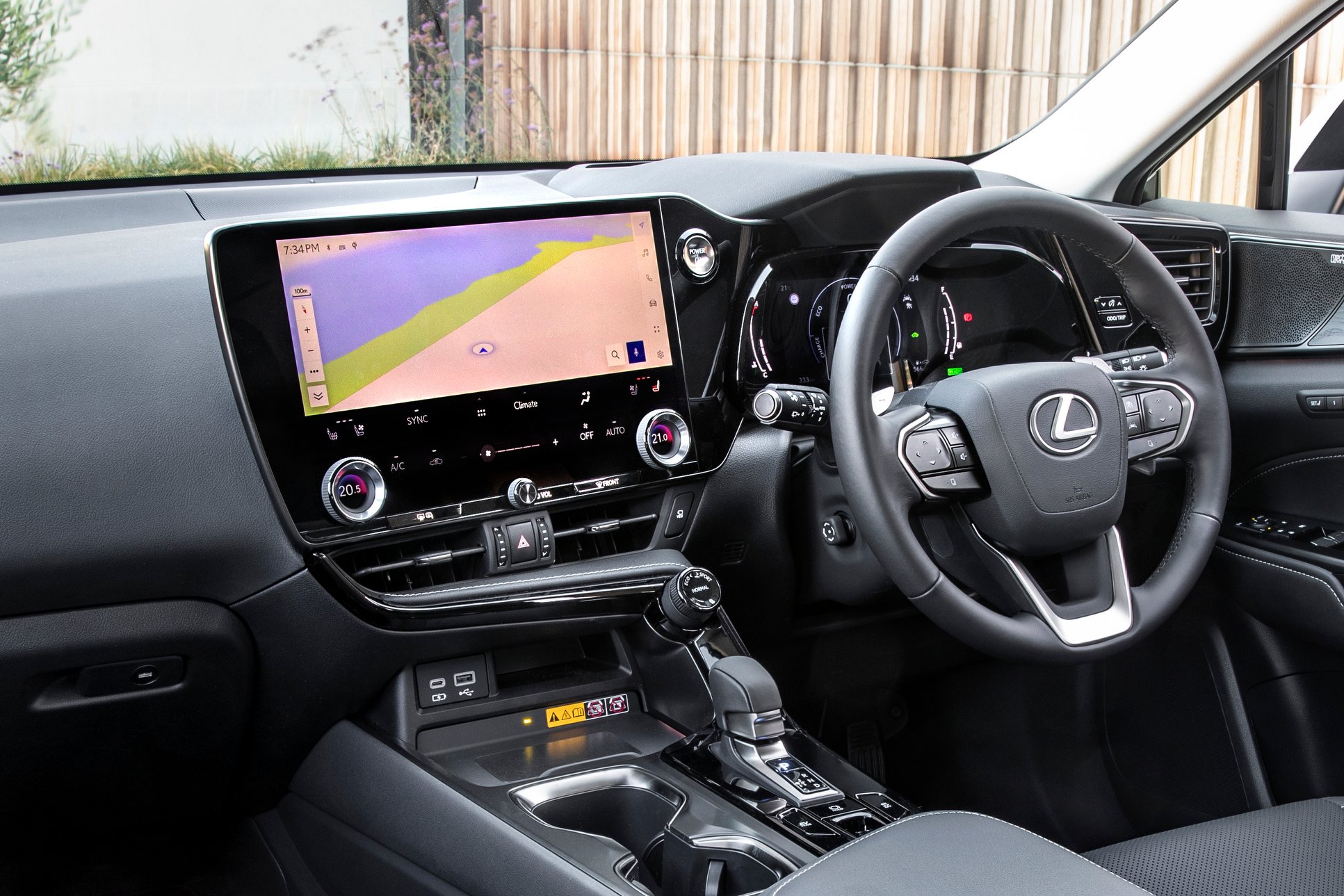
But Lexus has cleverly displayed those functions directly in front of the driver on the head-up display (HUD), so you don’t have to look down at the steering wheel.
It’s a little fiddly at first but once you get used to it it’s quite handy. The buttons respond to gentle touching or swiping but you can set them so they have a more haptic feel.
The Tazuna cockpit also features Lexus’ new-generation multimedia system that in F Sport variants is displayed on a class-leading 14-inch touchscreen.
It’s simple to negotiate and doesn’t require swiping through different screens to find what you need. It has one of the better in-built sat-nav systems too, with an integrated data communication module (DCM) to provide cloud-based navigation info and other information such as live traffic updates and parking locations.
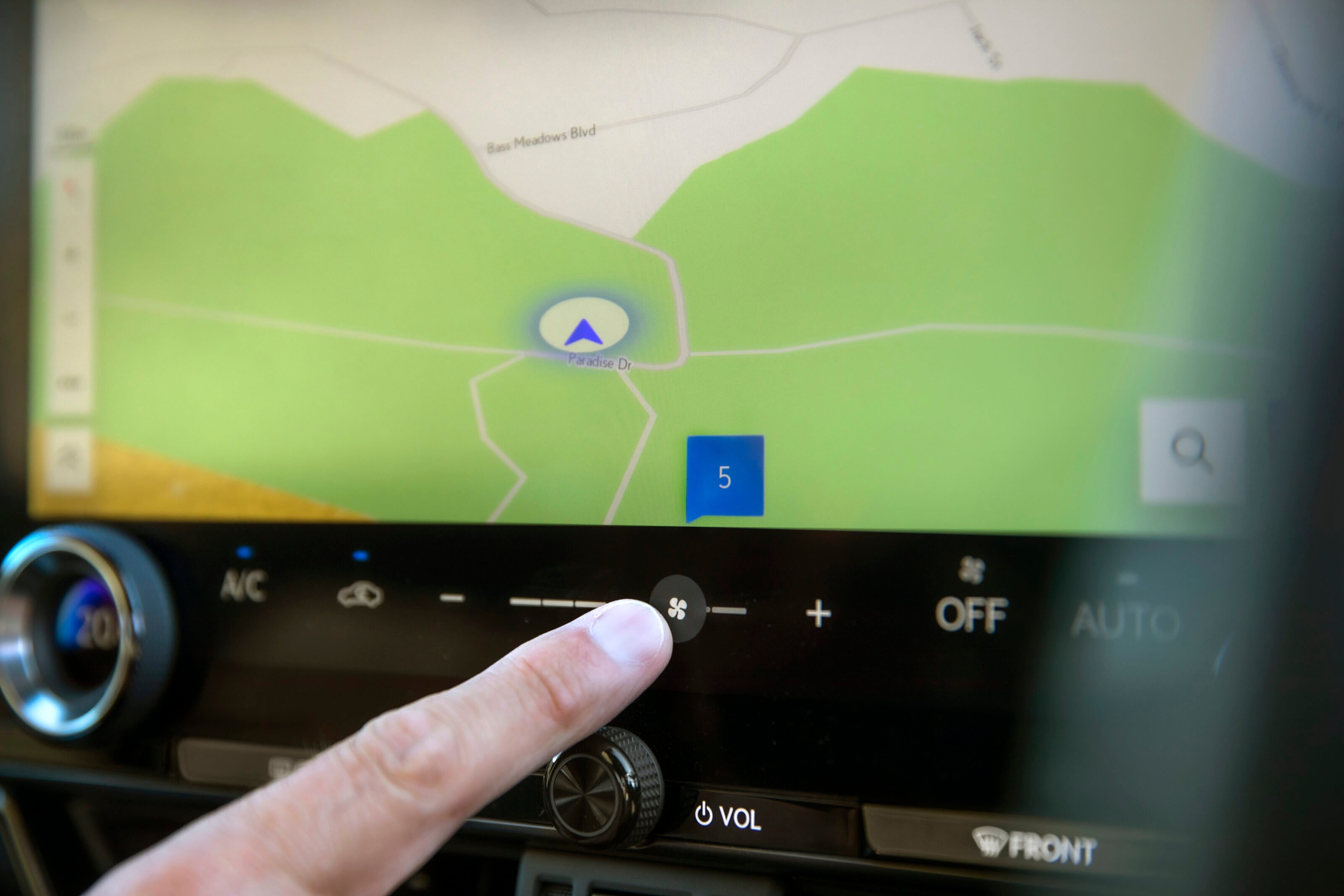
You can use your favourite navigation app via Android Auto or Apple CarPlay, but you don’t get the benefit of directions being displayed at eye level in the HUD.
The touchscreen is also where you’ll find most of the air-conditioning controls as well as the heated/ventilated seat settings. These buttons are always on display so you don’t have to swipe into a menu to find them. Setting the fan speed on a touchscreen can be quite fiddly on the move, but I didn’t have much trouble with this interface.
Pleasingly, Lexus has kept a couple of big dials for the temperature controls along with a volume knob. But if you can’t be bothered with touching anything, the new NX comes with an advanced voice control system called ‘Hey Lexus’ that works very much like its ‘Hey Mercedes’ counterpart to operate navigation, phone, climate control and certain vehicle functions such as opening the windows.
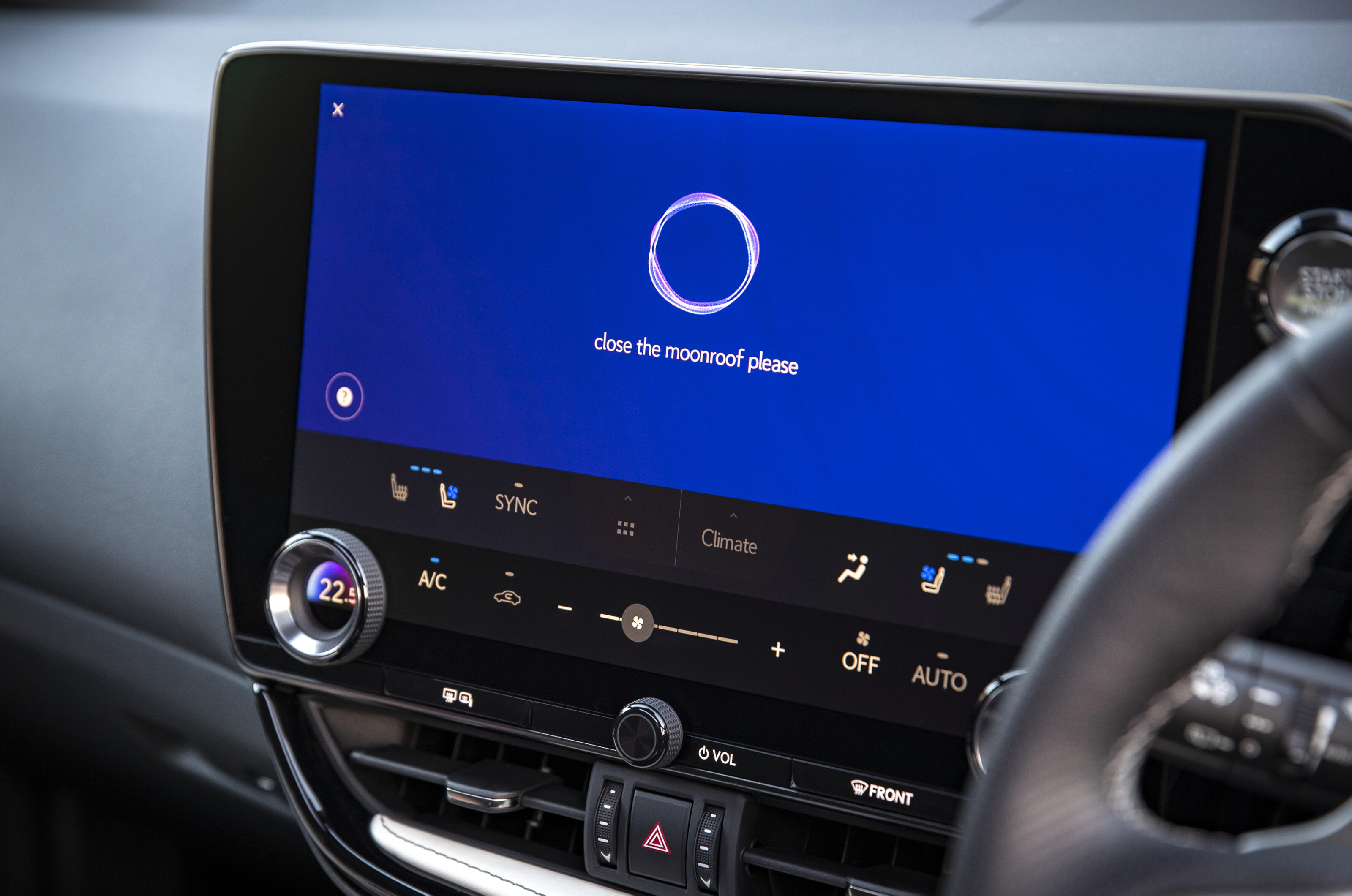
For example, if you want to open your window you say: ‘Hey Lexus, open my window.’ Because the system can tell where your voice is coming from, it will open the driver or passenger-side window depending on where you’re sitting.
Jumping into the back seats, the second-generation NX benefits from a 2690mm wheelbase that’s 30mm longer than its predecessor and affords good legroom for a mid-sized SUV. The seats are comfortable but headroom is compromised a little by the swept-back roofline – particularly when the panoramic sunroof is installed.
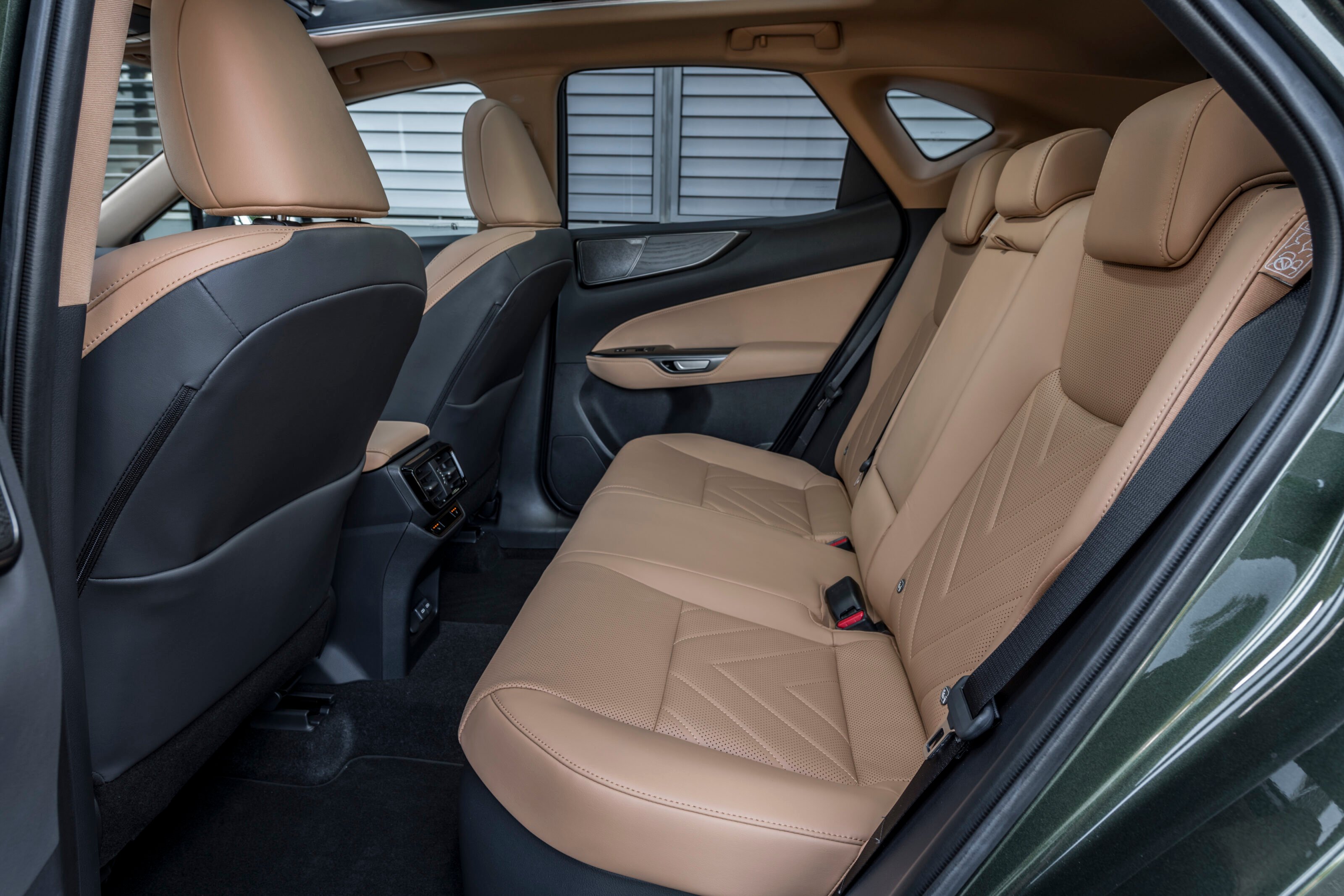
Unlike PHEV versions of some other models, the battery doesn’t hamper boot space, which is 520 litres across the NX range. This is a 45 litres increase over the previous model, partly due to the absence of a spare wheel, with all variants now rolling on run-flat tyres.
I would prefer to see a spare wheel under the boot floor. A space-saver wouldn’t compromise boot space too much and while run-flats are convenient when you get a puncture, they just delay the inconvenience of changing it and cost a lot more to do so.
Folding the second-row seats down extends cargo carrying capacity up to 1141 litres.
If you need to carry more, the NX450h+ has a modest 1000kg braked towing capacity, which is 500kg less than the hybrid but the same as the petrol variants.
On the Road
The NX 450h+ plug-in hybrid powertrain is based on the same 2.5-litre petrol engine of the NX 350h but with a slightly reduced output of 136kW/227Nm. It’s supplemented by two permanent-synchronous motors, a 134kW/270Nm unit at the front axle and a 40kW/121Nm one at the rear, which combine to produce peak power 227kW, making it the most powerful NX variant to date.
Its 18.1kWh lithium-ion battery has one of the bigger capacities found in a plug-in hybrid, with the norm being around 13 to 15kWh. The downside of that is it will take longer to charge; about 2.5 hours at a 7.0kW AC wall box charger, or about nine hours on a standard 240-volt outlet.
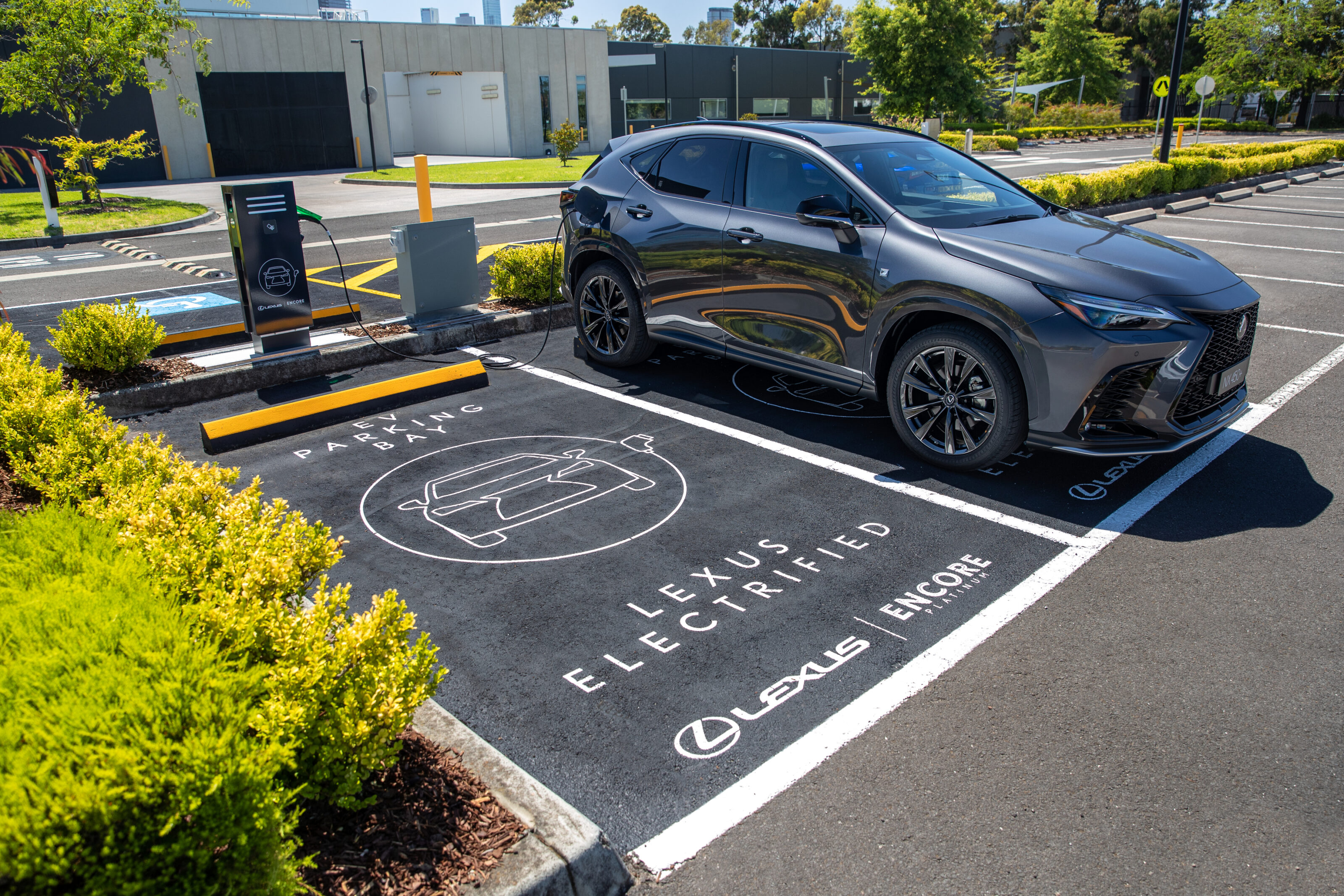
There is no quicker AC charging option than 7.0kW, even if using a 22kW charger, and unlike the Mitsubishi Eclipse Cross PHEV there is no DC fast-charging option that can bring 80 per cent charging time down to about 30 minutes. I reckon if manufacturers are going to start putting bigger batteries in PHEVs they really should offer that as it makes charging on the go a lot more viable.
However, the extra battery power gives the NX450h a decent all-electric range of up to 87km, which in many cases will allow for emissions-free daily driving with enough juice left that it just needs a shortish top-up.
It also allows for a bit of spirited driving. With plenty of instant torque on tap, the NX 450h+ can sprint from 0 to 100km/h in a brisk 6.3 seconds, which is 1.4 seconds quicker than the NX350h AWD.
Despite its 2050kg kerb weight being 180kg more than the NX350h AWD, you can really feel the extra pep whether you’re in all-electric EV-Priority mode, or the Auto EV/HV Mode that takes additional power from the petrol engine when needed, such as for overtaking.
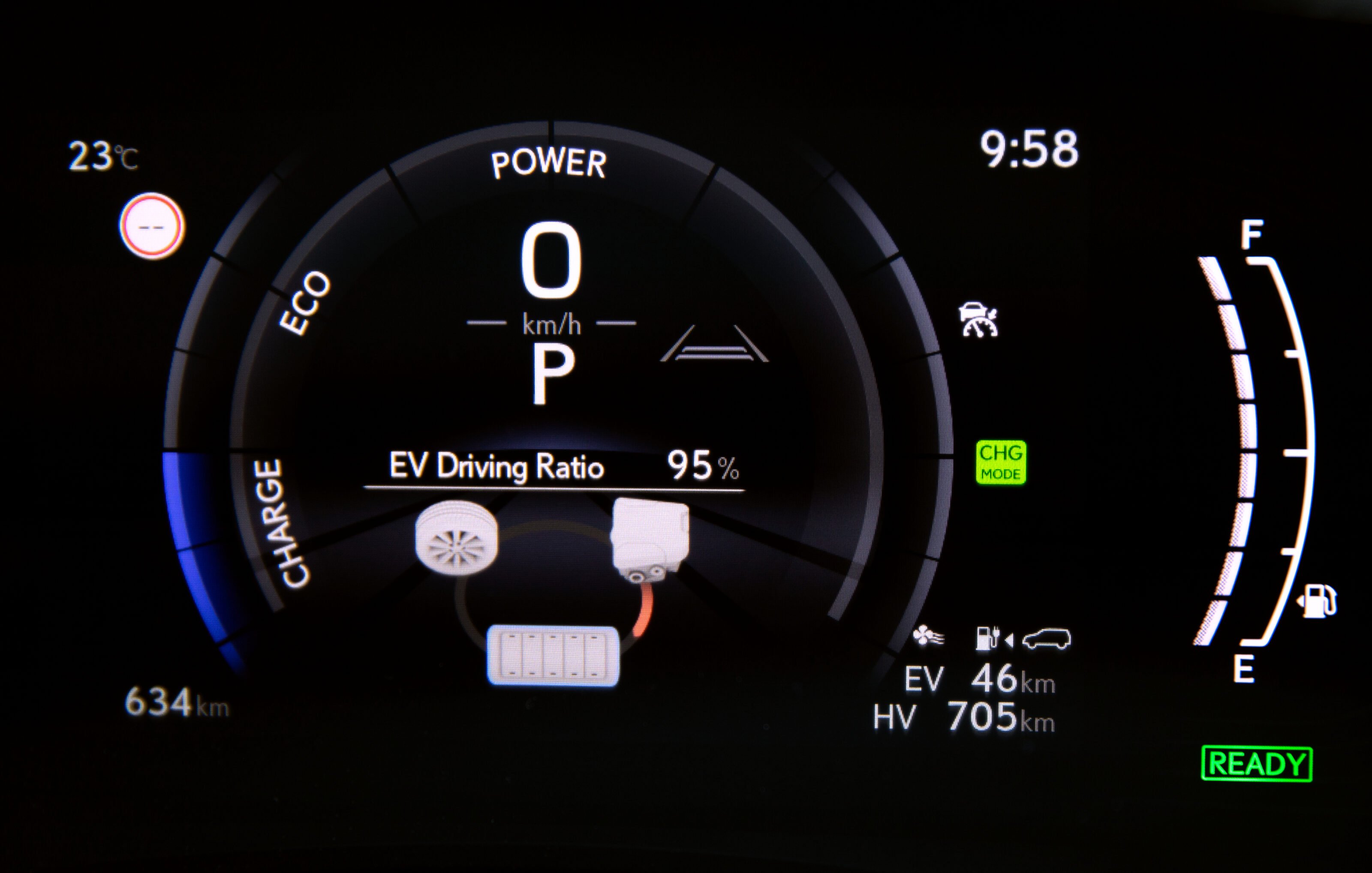
Whichever power mode you’re in, the driving experience is quite delightful, with excellent pedal response backed up by the seamless operation of the electronically controlled continuously variable transmission (eCVT). That said, the 2.5-litre Atkinson cycle engine isn’t the most refined powerplant in the Lexus range and it can sound gruff on those occasions when you do some petrol-fuelled oomph.
You can travel on batteries alone at speeds up to 140km/h, which of course will suck up your range as quickly as your demerit points. If you do run out of electrons the powertrain will automatically revert to HV (hybrid) mode, which operates just like the NX 350h so you won’t be driving on engine power alone.
There is also a Battery Charging mode that uses the engine to both propel the vehicle and charge the battery using the 6.6kW onboard charger. This results in higher fuel consumption and seems counterproductive, but if used on an open highway where fuel consumption is most economical, it could allow you to drive in EV mode again once you’re back on fuel-sapping city roads (or conscious of your contribution to urban air quality).
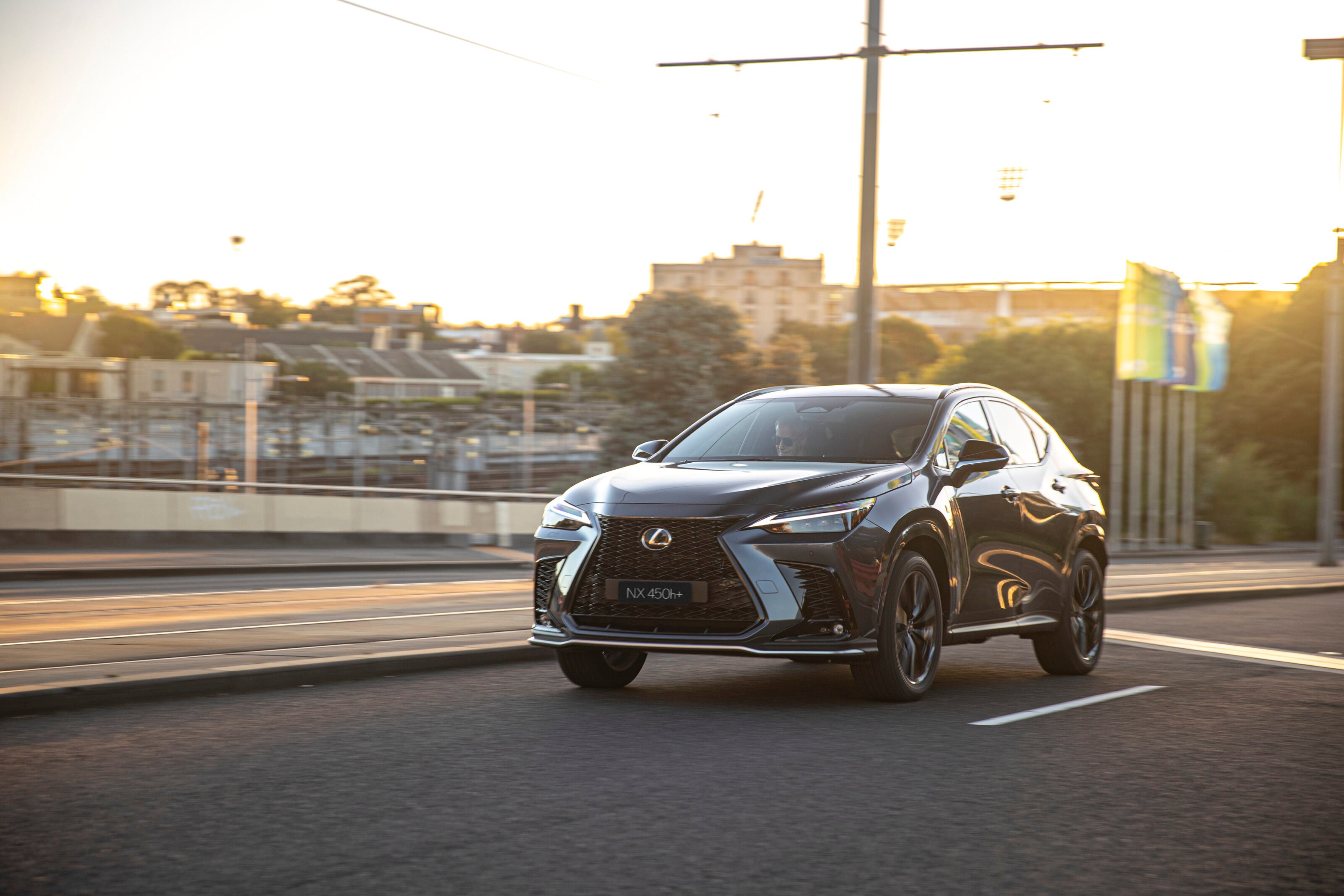
Each mode can be manually selected with buttons located on the centre console below the gear selector.
Unfortunately, my time with the NX450h+ at the launch was all too brief so I was unable to get a handle on fuel economy in the different modes – Lexus only provides a general combined fuel economy of 1.3L/100km, which assumes you’re starting off with a fully charged battery.
The PHEV’s additional heft means it drinks more in hybrid mode than the 350h AWD’s 5.0L/100km, but any driving in EV mode during your trip will help balance things out.
One thing that disappointed me about driving on battery power alone was that it wasn’t exactly a silent experience due to the tyre rumble. This is most likely due to the run-flat tyres, which have hard sidewalls that create a tinny sound. This was less an issue at higher speeds where engine noise would tend to dominate, with wind noise well contained.
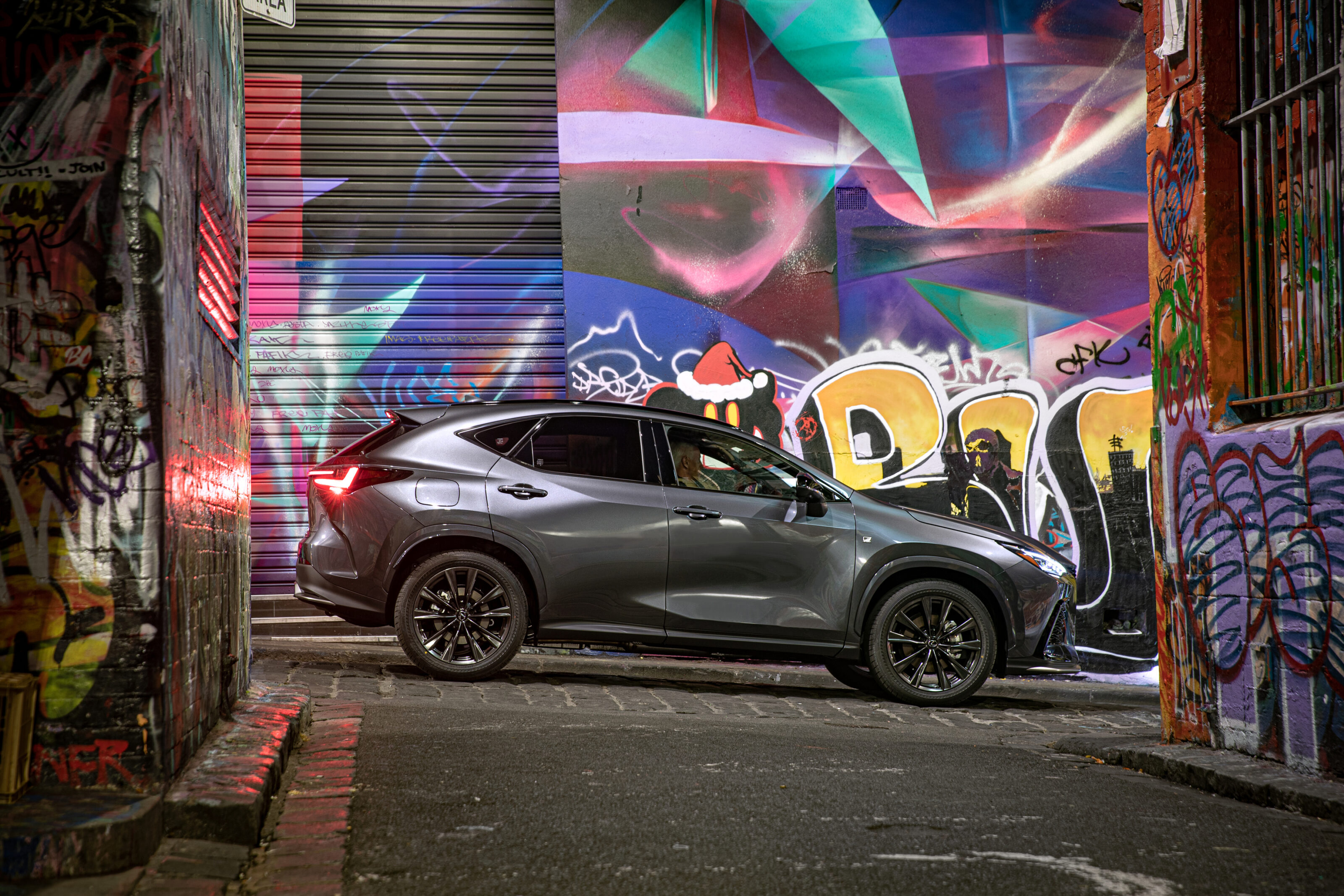
The run-flats also make for a busy ride at slow speeds in some of the other NX variants, but the F Sport comes with adaptive variable suspension (AVS) and performance dampers, which irons out most surfaces.
It has Comfort and Sport S/Sport S+ settings and while the latter stiffens a little for improved handling dynamics it’s still smoother than the ride on the standard suspension, which I experienced in the NX350h Luxury and Sports Luxury variants.
All in all, this offers a decent blend of ride comfort and handling, though the latter can be down is by the steering, which has a nice weight to it but lacks communication through the front wheels to the road, which initially saps confidence.
Safety
The 2022 Lexus NX brims with advanced driver assistance technology across all specification grades. Some of these, such as e-latch, safe exit assist, intersection turn assist (which operates the brakes to avoid a collision while turning) and emergency steering assist, are making their Lexus debut on this car.
Other safety features include Lexus Connected Services with SOS call, automatic collision notification and stolen vehicle tracking, autonomous emergency braking with pedestrian and daytime cyclist detection, auto high beam, parking support braking, blind-spot monitor, adaptive cruise control with traffic jam assist, lane-keep assist, road sign assist and a tyre pressure monitoring system.
The NX is also equipped with eight airbags including driver/passenger front, side, head and knee, front centre, and rear passenger head.
At the time of writing, the 2022 Lexus NX range had yet to receive an ANCAP safety rating.
The Verdict
With an EV driving range of 87km, the NX450h+ is demonstrating what plug-in hybrid vehicles have promised but have not always been able to deliver – a practical compromise between experiencing emissions-free driving and range anxiety.
The caveat of course is you need to be able to regularly charge your battery, preferably overnight at home, and Lexus has done well to throw in a 7kW charger as part of the deal, which installed represents about $2000 of value.
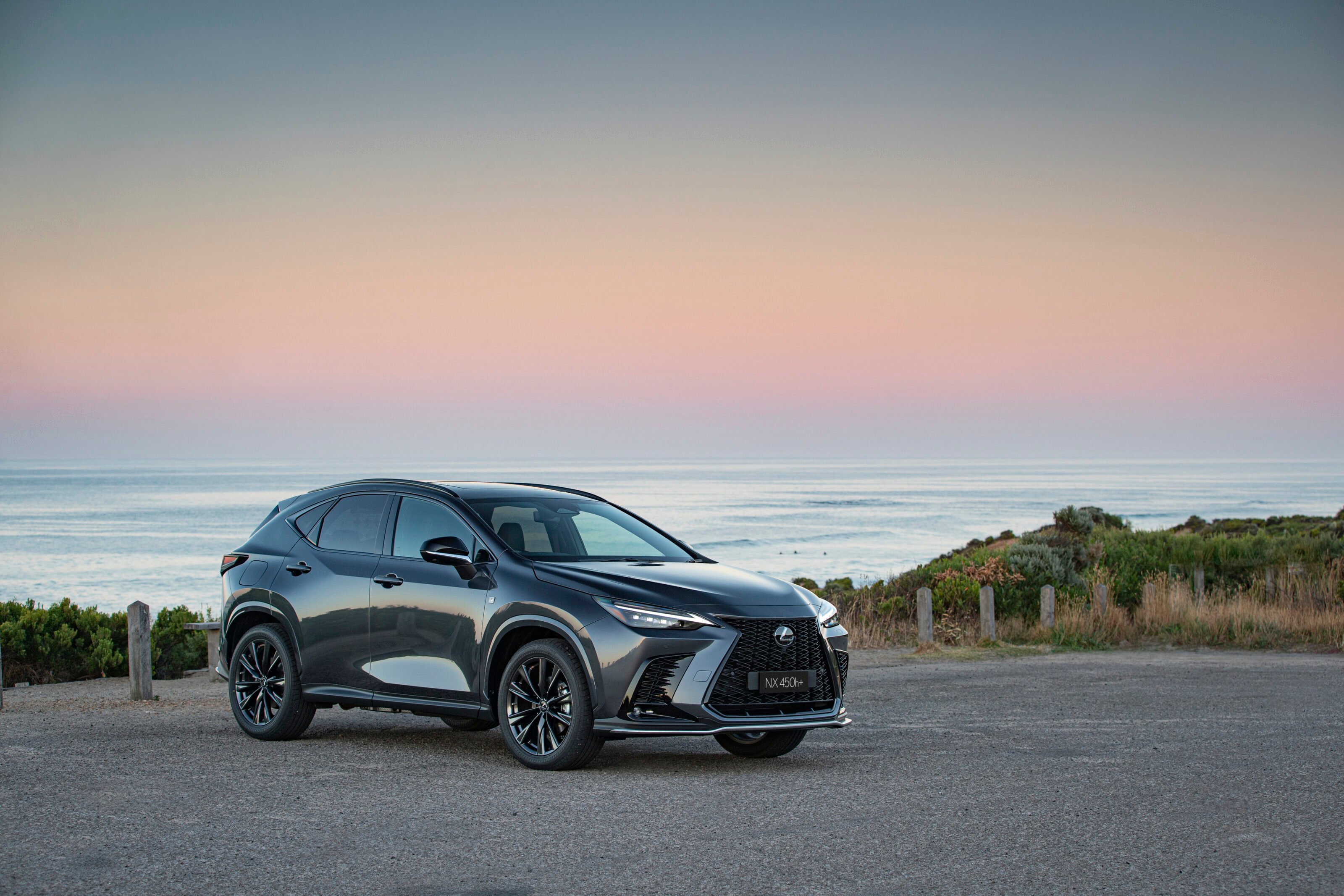
This makes the $9000 difference between this and the similarly equipped NX350h F Sport AWD with the Enhancement Pack 1 more palatable.
Before you push the start button, virtually nothing separates the two, which would make that price difference a little hard to justify when you’re at the showroom.
However, if you can stretch your budget, there is certainly value in spending that much more for the ability to travel around 80km on batteries alone for a fraction of the cost of comparative BEV, such as the BMW iX3, which starts at $114,900 before on-road costs.
Then there’s the fact NX450h+offers superior performance that’s more likely to put a smile on your dial than the regular NX hybrid or NX350 turbo.
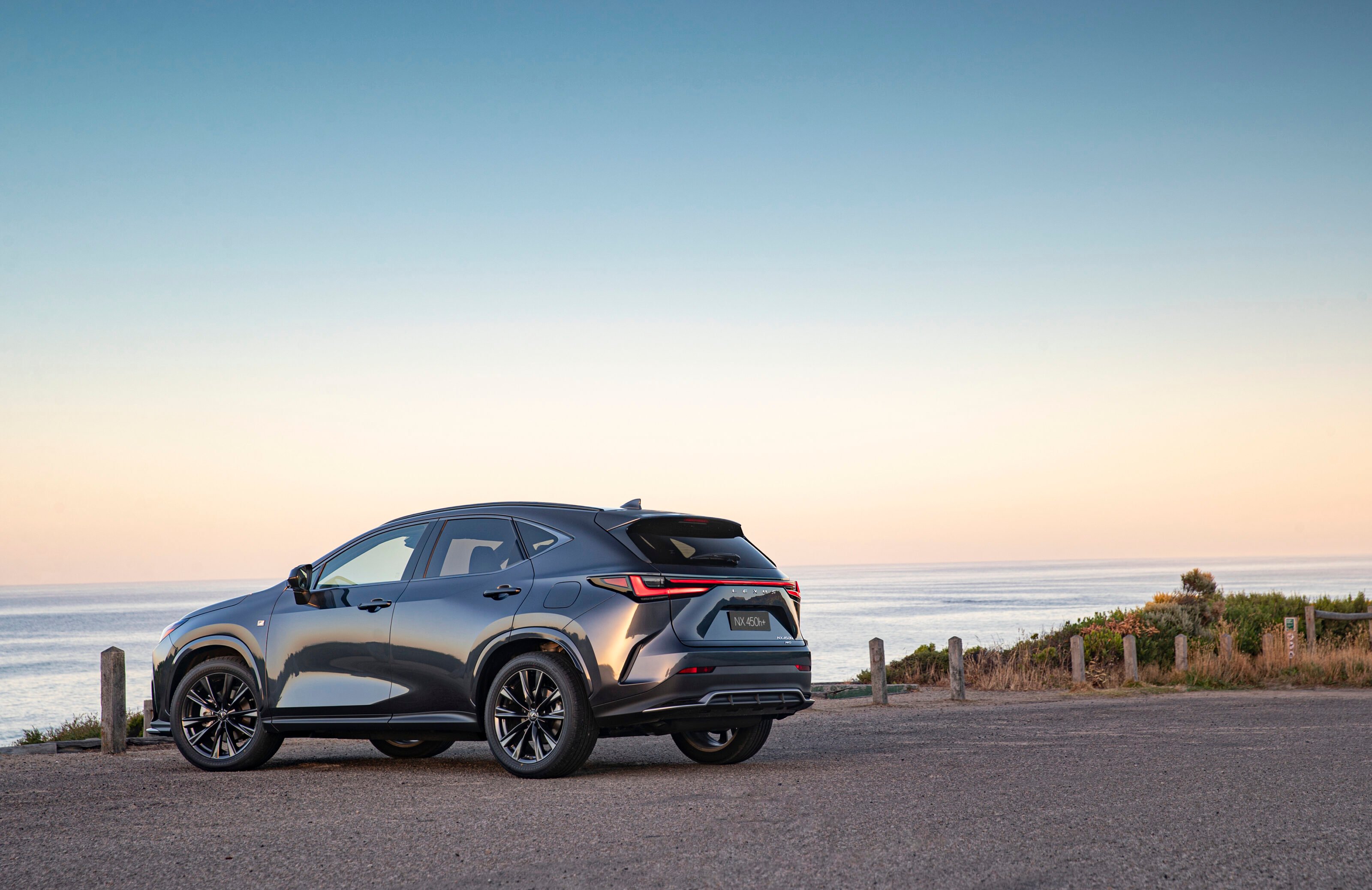
So yeah, while it’s probably not the sweet spot of the range when factoring in pricing, it’s certainly worthy of its flagship title.
As for the second-generation NX in general, despite the crisp new-look interior losing some of that unique Lexus flair, the new technology and attention to detail make for an overall package that exudes everything there is to like about the brand, not least the luxury driving experience.
Lexus NX450h+ F Sport specifications
| Model | Lexus NX400h+ F Sport |
|---|---|
| Engine | 136kW 2487cc 4cyl dohc 16v Atkinson-cycle |
| Drive | all wheel |
| Max engine power | 136kW @ 6000rpm |
| Max engine torque | 239Nm @ 4300-4500rpm |
| Motors | 134kW permanent-magnet synchronous front, 40kW permanent-magnet synchronous rear (AWD) |
| Max combined power | 227kW |
| Battery | 18.1 kWh |
| Bore x stroke | 87.5mm x 103.5mm |
| Compression ratio | 14:00:01 |
| Transmission | eCVT |
| 0-100km/h | 6.3sec |
| Economy | 1.3L/100km |
| Kerb weight | 2050kg |
| Dimensions L/W/H | 4660mm/1865mm/1670mm) |
| Wheelbase | 2690mm |
| Suspension | front MacPherson strut, rear trailing arm type double wishbone with adaptive variable suspension (AVS) and performance dampers |
| Brakes | front 328mm ventilated discs, rear 317mm ventilated discs |
| Wheels | 20.7.5J alloy |
| Tyres | 235/50 R20 runflats |
| Price | from $89,900 before on-road costs |
Snapshot
- BYD to launch Atto 3 electric SUV this weekend
- Price likely to be around the $40k mark
- Marque planning nine vehicles in Australia by 2024
UPDATE, April 5, 2022: We’ve now driven the new electric BYD Atto 3 SUV. Read and watch our review at the link below.
Chinese electric vehicle maker BYD is to launch its first SUV in Australia this weekend.
Hosting an exclusive event at its BYD Experience Centre in Darlinghurst, Sydney, on Saturday, the marque will introduce its Atto 3 electric SUV – previously known as the Yuan Plus.
Most details of pricing and specification for the model are not yet known, and will be revealed at the weekend’s launch, however it is expected to come in at around $40,000 – undercutting its closest rival, the fellow Chinese-made MG ZS EV. Both cars are eligible for $3000 discounts thanks to Victorian and New South Wales government incentives.
Wheels understands the Atto 3 will be capable of driving around 500 kilometres on a single charge, powered by BYD’s ‘Blade Battery’ power pack, and will go on sale immediately following Saturday’s event.
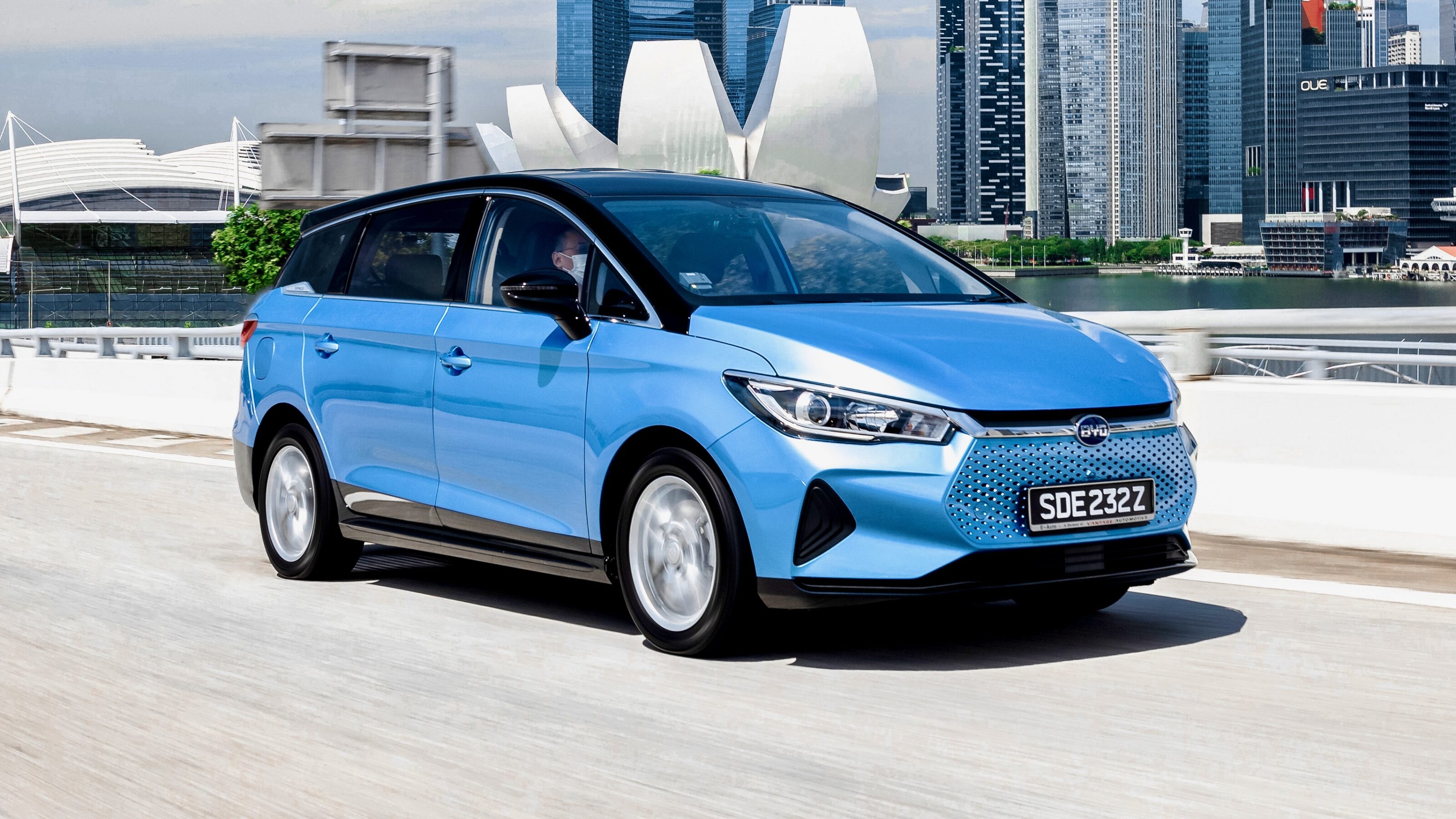
According to the manufacturer, it is to shortly commence production of 15,000 units at its mega factory in China.
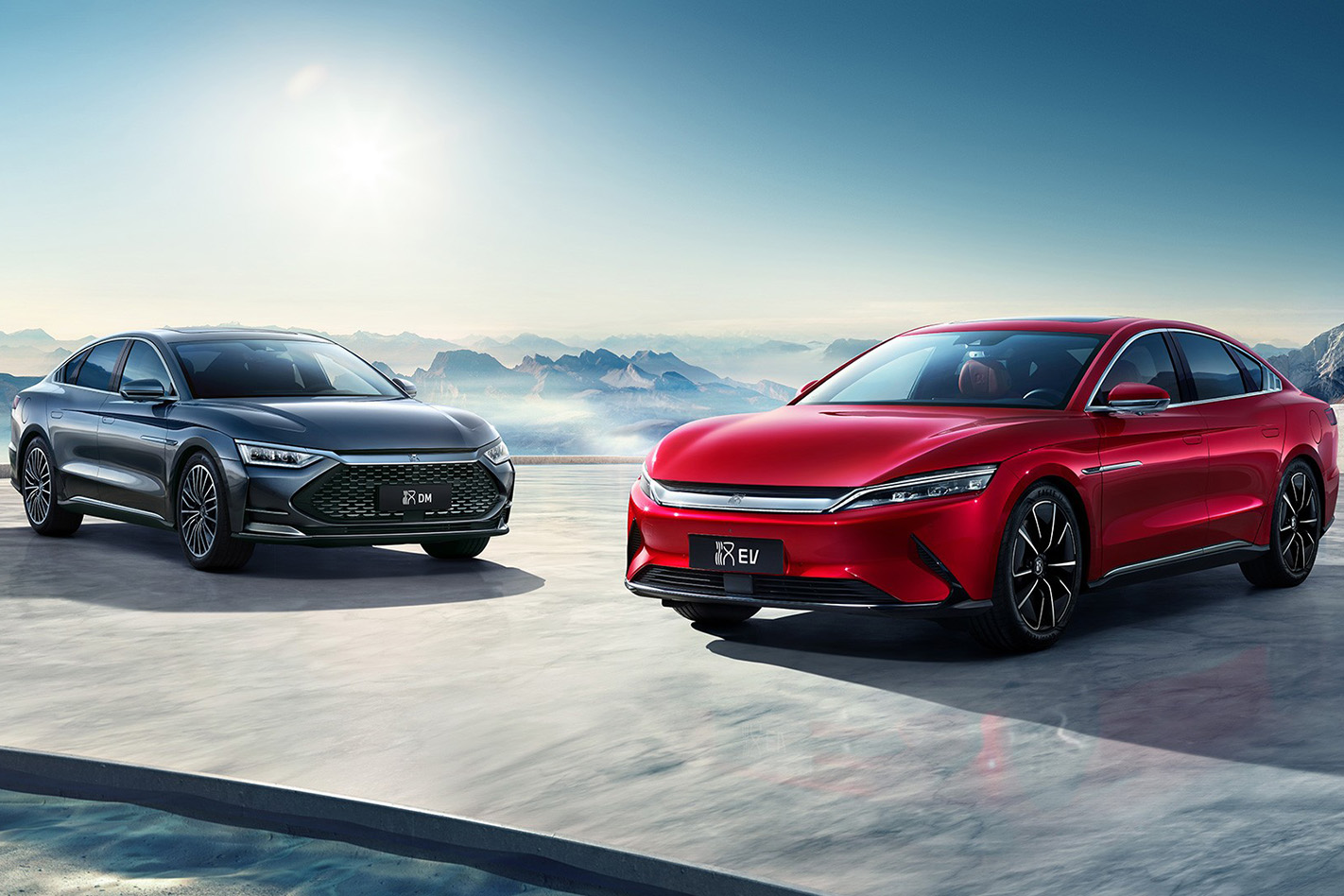
The firm, which has two vehicles for sale Down Under – though it pioneered electric buses here in 2014, distributes through importer Nexport, with transactions handled online via its EVDirect website rather than through bricks and mortar dealerships.BYD currently offers the E6 people-mover with up to 520 kilometres of driving range (WLTP) for $49,990 before on-road costs, while its T3 commercial has a claimed driving range of 300km (WLTP) and is priced from $39,950 before on-road costs. At present both models are completely sold out.The company has confirmed its EA1 small hatch will be offered locally, with industry rumours suggesting it could arrive as the cheapest electric passenger car on the market. The BYD Han sedan is also expected to offer an alternative to the Tesla Model 3, while the Tang SUV model is due to land later this year.Speaking to Wheels ahead of the launch, CEO of EVDirect, Luke Todd, said BYD was looking to disrupt the status quo by bringing price parity between EVs and internal combustion-engined cars and plans to bring nine of its models to Australia by 2024.
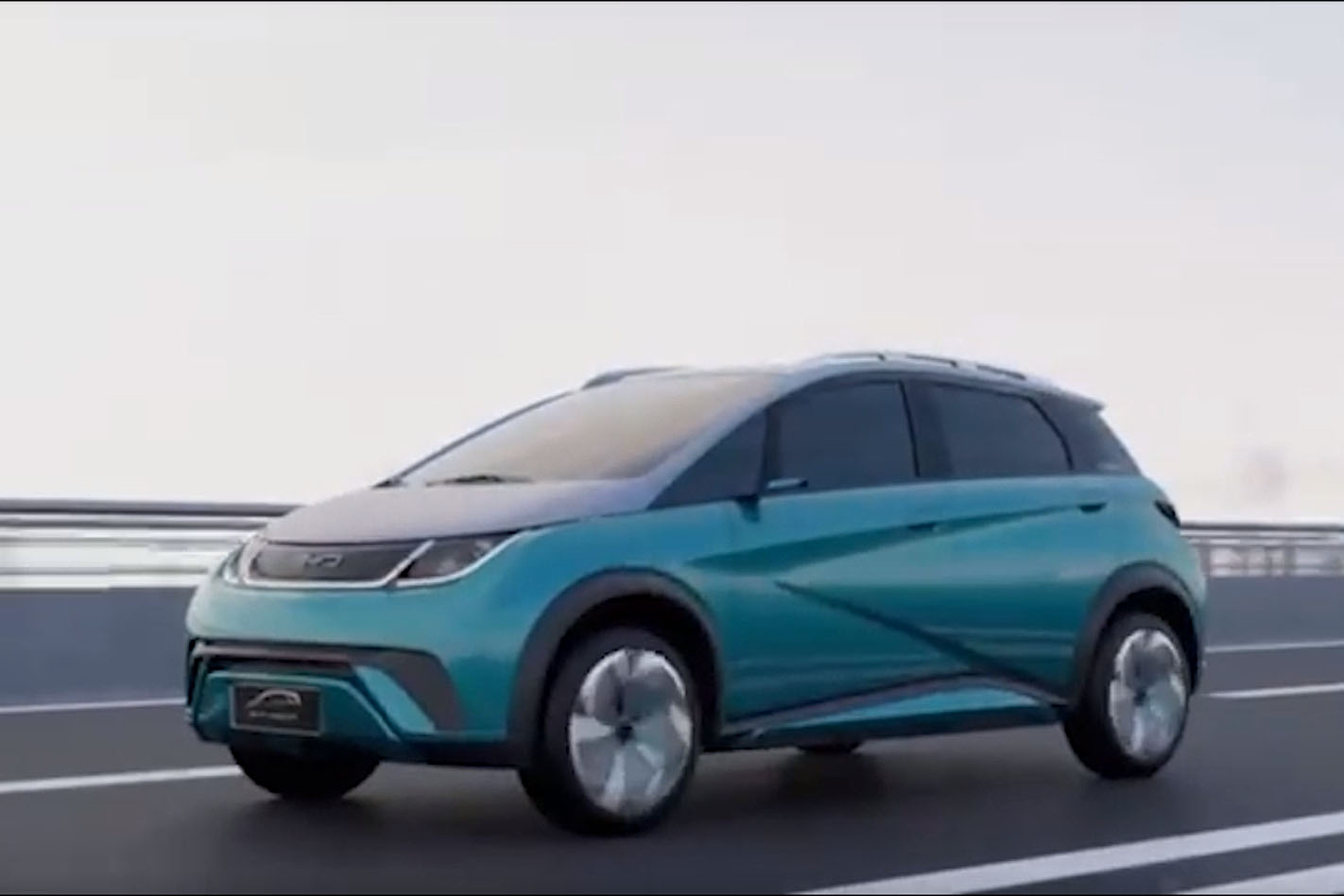
“For the first time in Australia consumers won’t have to make a choice about buying an EV based on price,” he told us. “At the moment if you want to buy a Tesla, for example, you have to make the decision to spend more than you might like to in order to go electric. This is going to be a real game-changer for EVs.”
Todd also hinted that a physical presence for the business on Australian soil could be in the company’s future.
“It won’t be too dissimilar to Tesla, we want a place where our customers can drive our vehicles in addition to our relationship with Mycar.”
BYD announced late last year it had partnered with Mycar service centres to manage new-car deliveries and maintenance for its vehicles across Australia.
The deal gives BYD instant access to a nation-wide network for Mycar workshops – previously branded as Kmart Tyre & Auto – with its first deliveries of the E6 people-mover beginning this month.
Eight Mycar locations will participate in the program initially, with 30 locations to be added from March. Mycar technicians are being trained in the maintenance requirements of BYD models, and a number of workshops will have dedicated bays for the servicing and delivery of its EVs.
“The time is now to buy an EV and the time is now to launch the most exciting EV company in the world – BYD,” Todd said.
“I’ve seen the future of a pollution-free city and its full of quiet BYD EVs reducing noise and improving air quality. BYD is the biggest global company that most people have never heard of. It’s one of the world’s leading advanced battery manufacturers with a significant proportion of mobile phone companies using BYD batteries. This technology, combined with the world’s leading European and global car design teams has now merged into building exciting passenger EVs.”
Snapshot
- Renault set to increase prices across all models
- Megane R.S. goes through $6100 price hike
- Trafic and Master list prices jump by over $1000
French manufacturer Renault is set to increase list prices across its 2022 model range, affecting every Australian offering bar one.
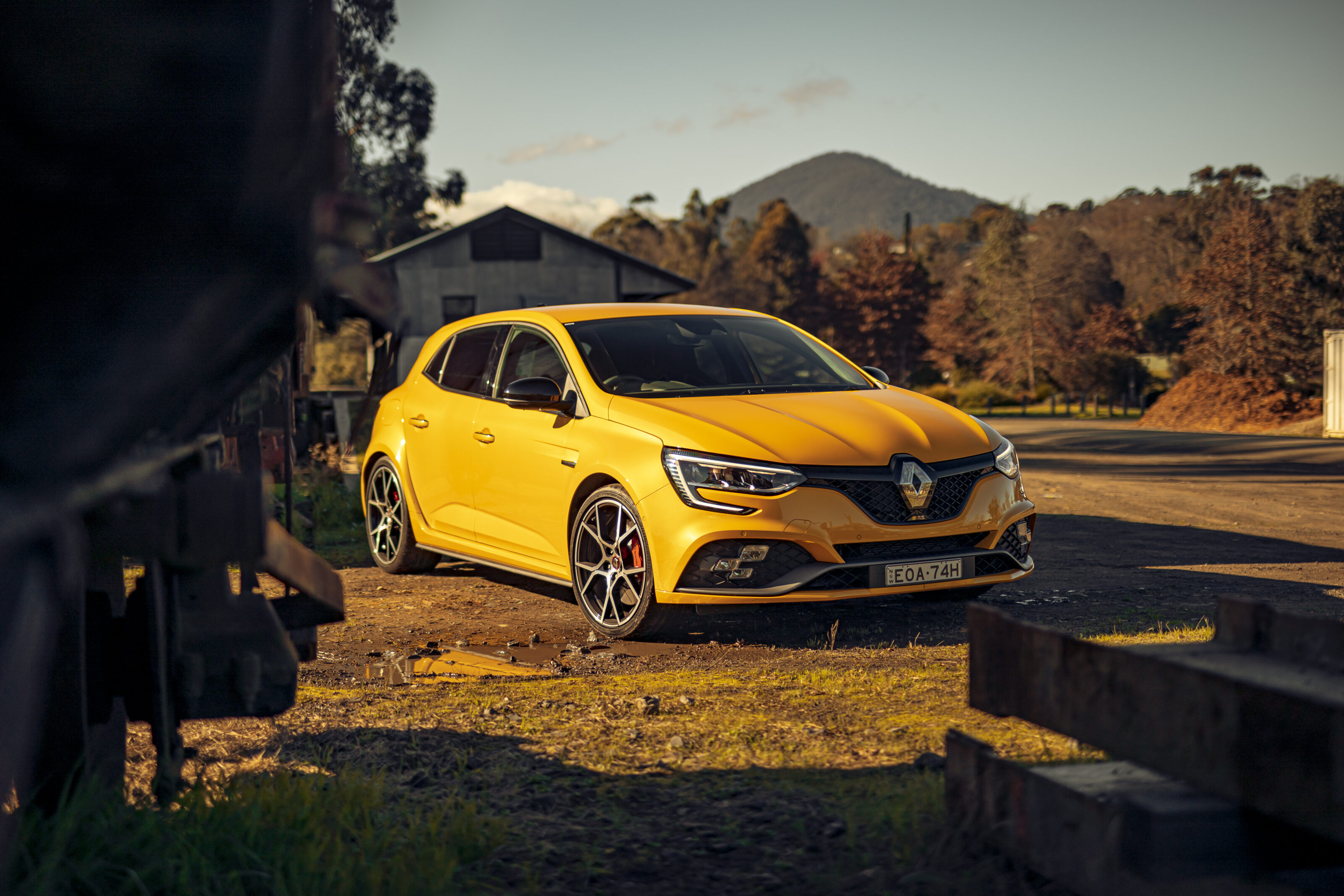
Sparing the Kangoo light commercial vehicle, every other 2022 Renault model will be hit by the price rise come March 1, with the increased costs ranging from as little as $600 in the case of the Koleos to as much as $6100 for the Megane R.S. hot hatch.
Almost a year after being dropped down to importer status through the Ateco Group off the back of fewer sales, 2022 is the first full year for Renault with Ateco – with General Manager Glen Sealey pinning the price hike on increased supply chain costs.
“2022 marks the start of our first full year of stewardship of the Renault brand in Australia,” said Sealey.
“Like many brands in Australia, Renault has had to increase prices due to significant material and shipping cost changes over recent months.
“We know, however, that the Renault range still represents a premium European offering combined with genuine value – thanks to its high-levels of safety, technology and cutting-edge design.
“With strategic additions like the Arkana R.S. Line, we’re broadening the Renault range in preparation for the product offensive coming soon with a refreshed commercial range, the all-new Megane E-Tech in 2023 and much more to come.”
Despite the Australian new car market taking a downturn over the last two years due to the global pandemic, Renault was able to sell 7099 units throughout the year, a three per cent increase over 2020.
Both the Renault Trafic and Master have been given scathing rankings by Australian crash testing authority ANCAP, with each vehicle given the rating of ‘not recommended’ by the safety group.
2022 Renault Captur pricing
Prices exclude on-road costs.
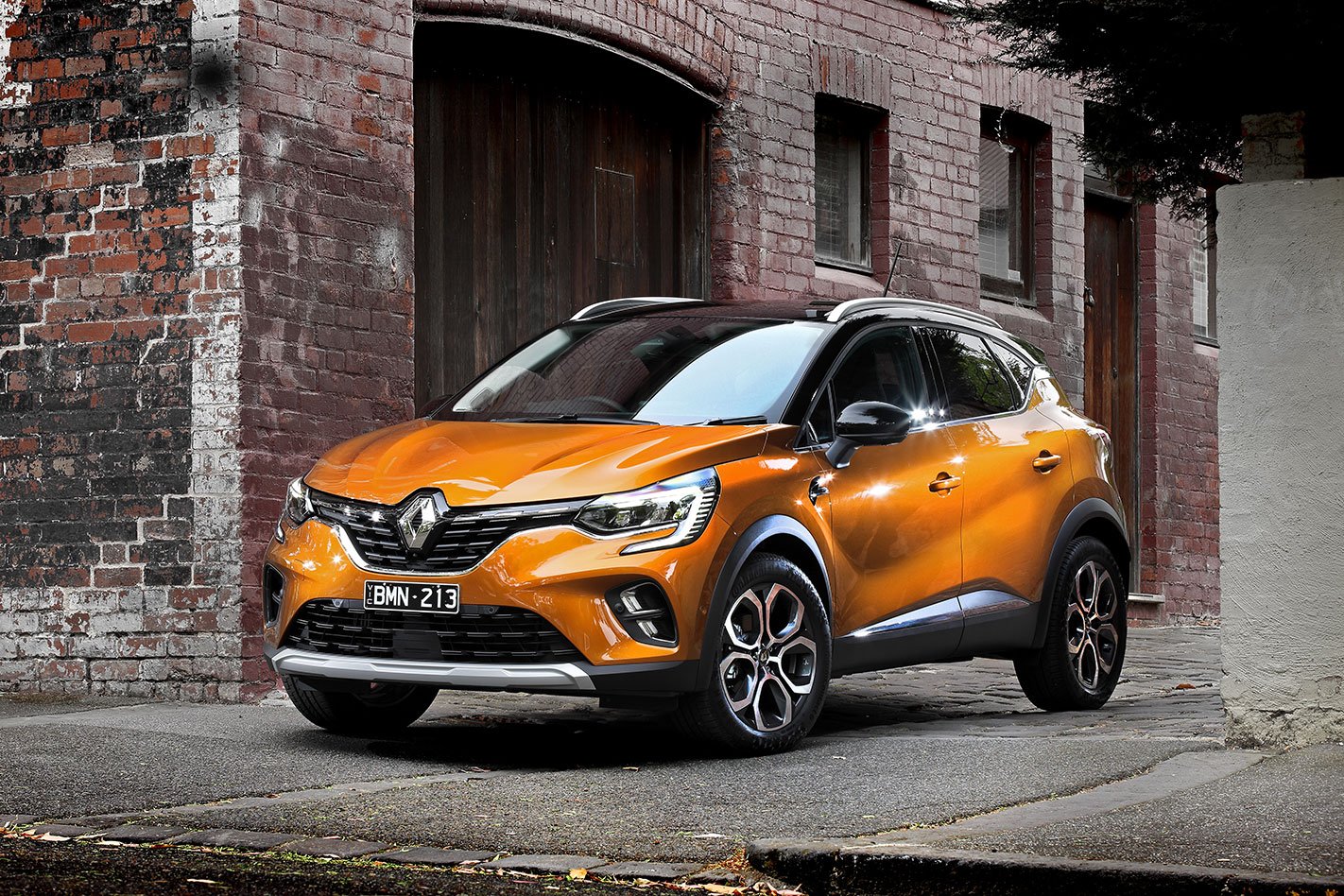
| Model | Price |
|---|---|
| Captur Life | $30,090 (+$1900) |
| Captur Zen | $32,090 (+$1300) |
| Captur Intens | $37,090 (+$1300) |
2022 Renault Koleos pricing
Prices exclude on-road costs.
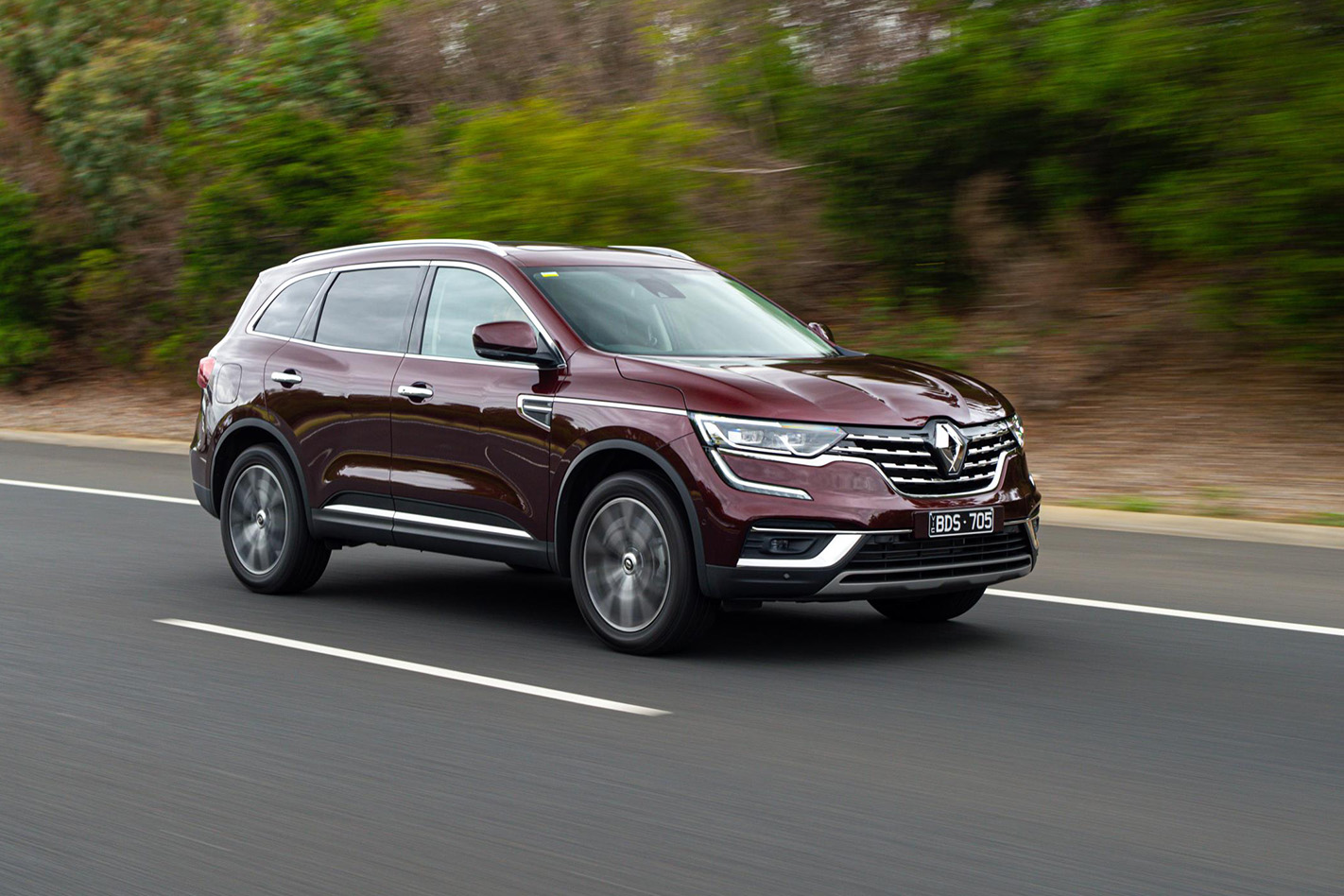
| Model | Price |
|---|---|
| Koleos Life 4×2 | $33,590 (+$600) |
| Koleos Zen 4×2 | $37,390 (+$600) |
| Koleos Intens 4×2 | $43,890 (+$600) |
| Koleos Intens 4×4 | $46,390 (+$600) |
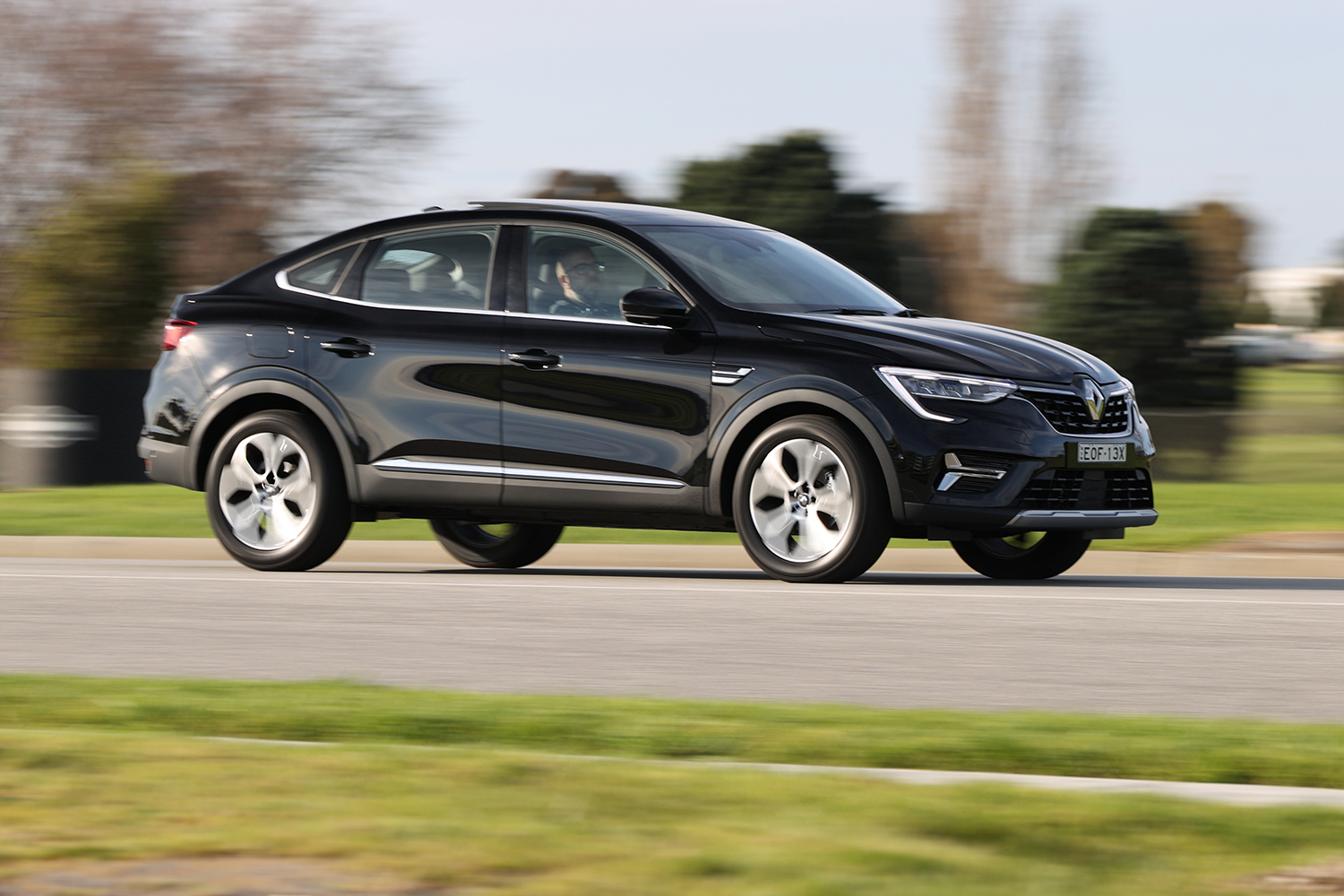
2022 Renault Arkana pricing
Prices exclude on-road costs.
| Model | Price |
|---|---|
| Arkana Zen | $34,590 (+$600) |
| Arkana Intens | $38,590 (+$1100) |
| Arkana R.S. Line | $42,090 (+$2100) |
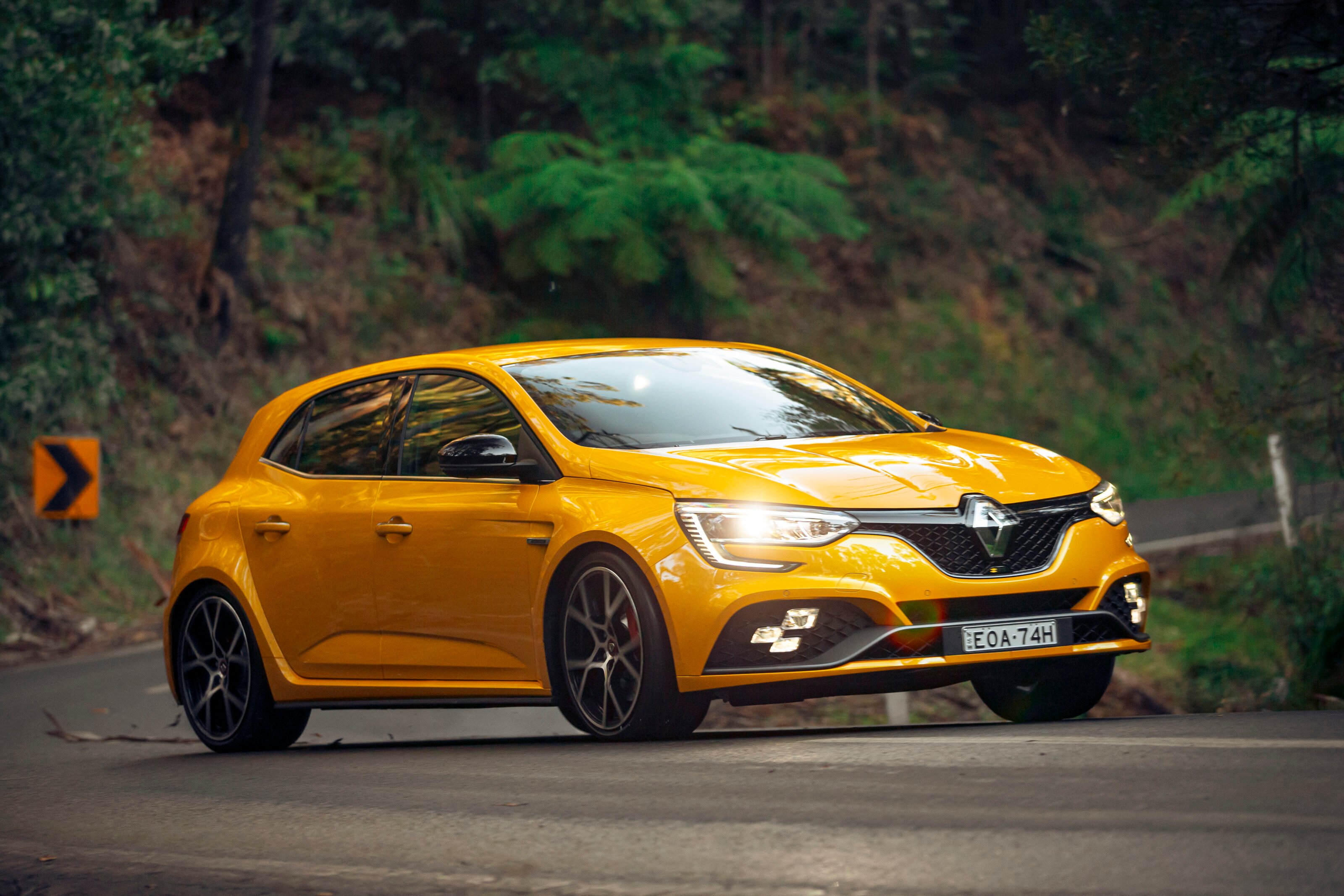
2022 Renault Megane pricing
Prices exclude on-road costs.
| Model | Price |
|---|---|
| Megane R.S. Trophy manual | $60,090 (+$6100) |
| Megane R.S. Trophy automatic | $63,090 (+$6100) |
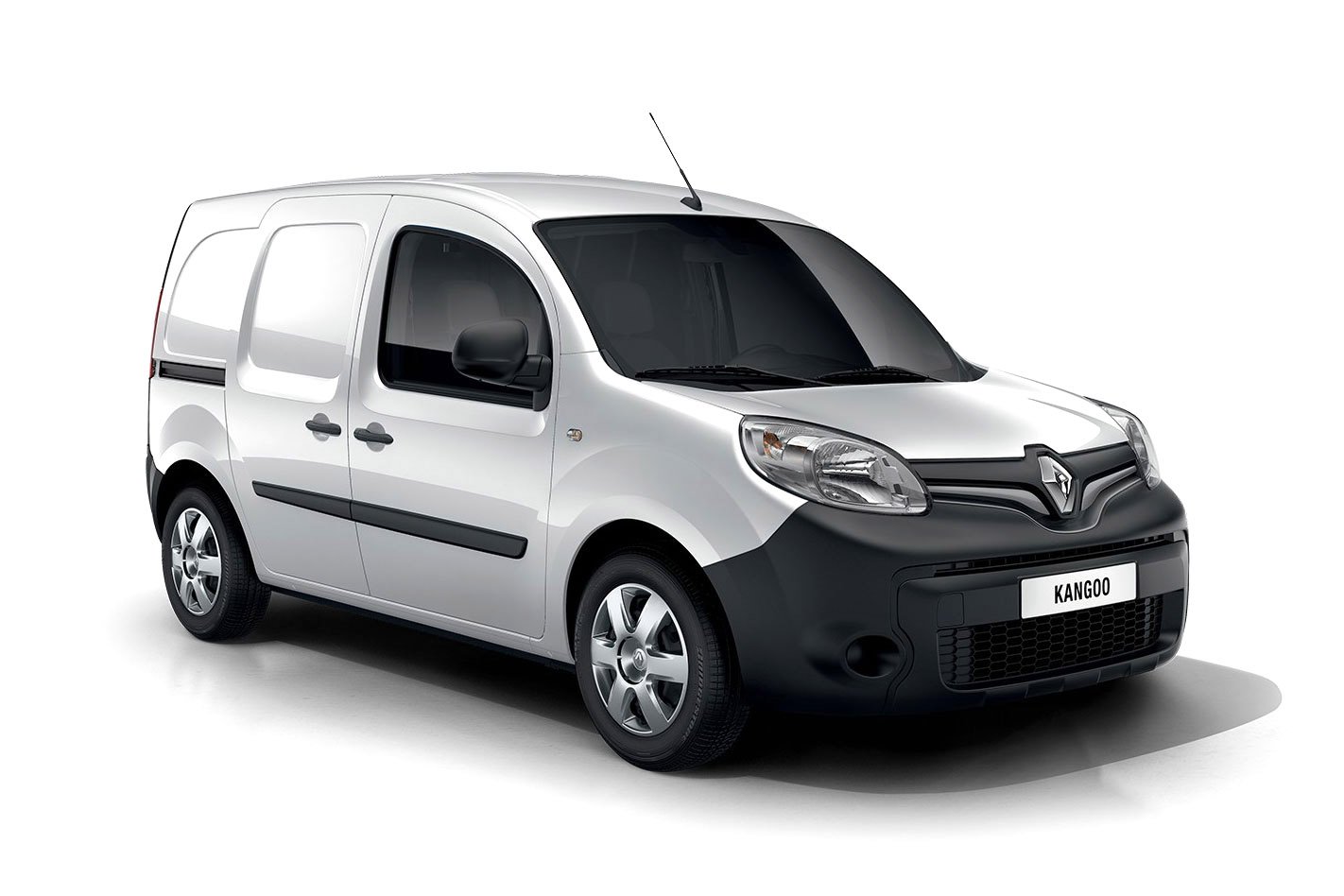
2022 Renault Kangoo pricing
Prices exclude on-road costs.
| Model | Price |
|---|---|
| Kangoo Compact petrol manual | $26,290 |
| Kangoo Compact petrol dual-clutch automatic | $28,790 |
| Kangoo Maxi diesel dual-clutch automatic | $32,490 |
| Kangoo Maxi ZE automatic | $50,290 |
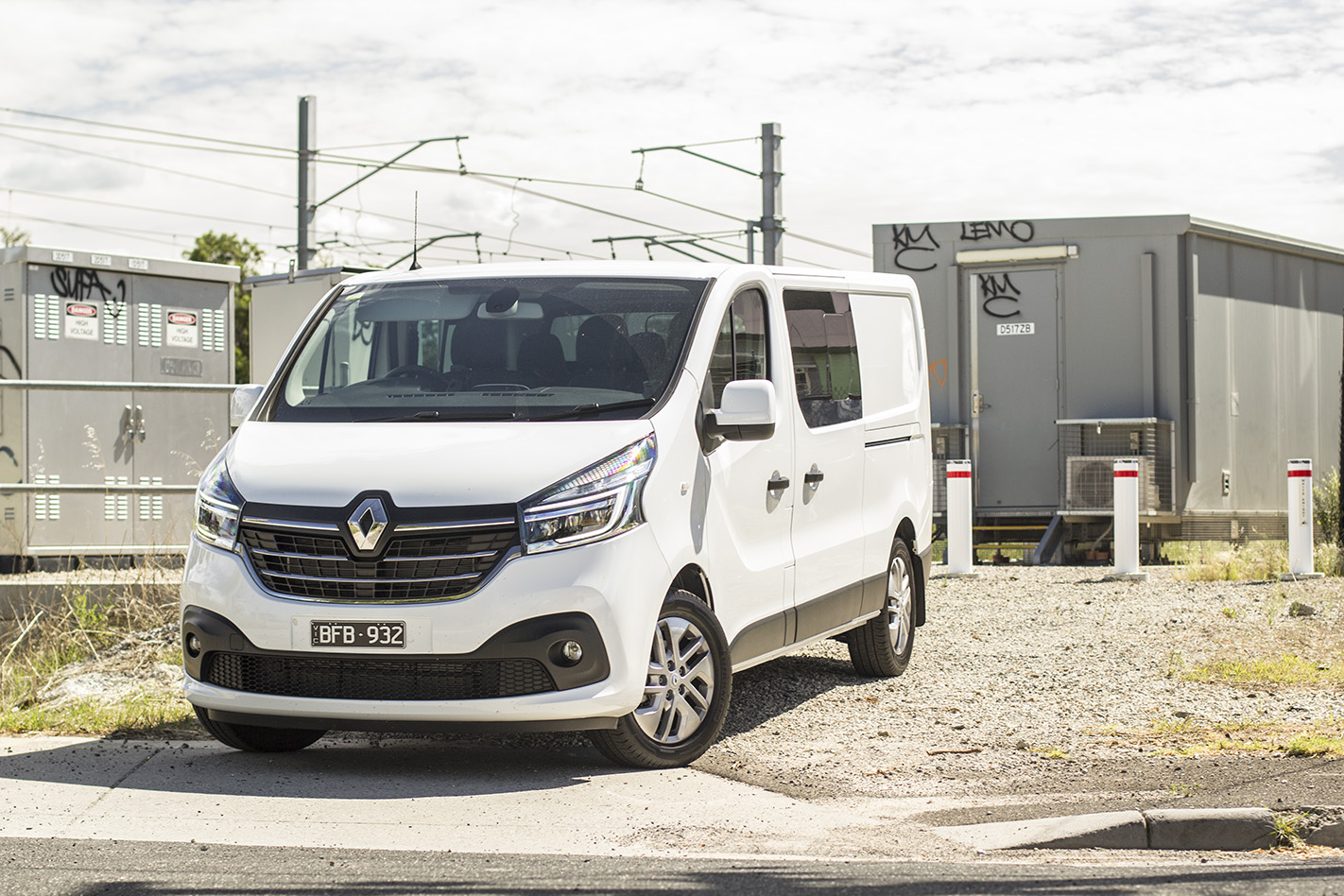
2022 Renault Trafic pricing
Prices exclude on-road costs.
| Model | Price |
|---|---|
| Trafic SWB Pro 1.6L diesel manual | $38,590 (+$1200) |
| Trafic LWB Pro 1.6L diesel manual | $40,590 (+$1200) |
| Trafic SWB Premium 1.6L diesel manual | $42,090 (+$1200) |
| Trafic LWB Premium 1.6L diesel manual | $44,090 (+$1200) |
| Trafic SWB Premium 2.0L diesel dual-clutch automatic | $46,090 (+$1200) |
| Trafic LWB Premium 2.0L diesel dual-clutch automatic | $48,090 (+$1200) |
| Trafic LWB Crew Lifestyle 2.0L diesel dual-clutch automatic | $55,090 (+$1200) |
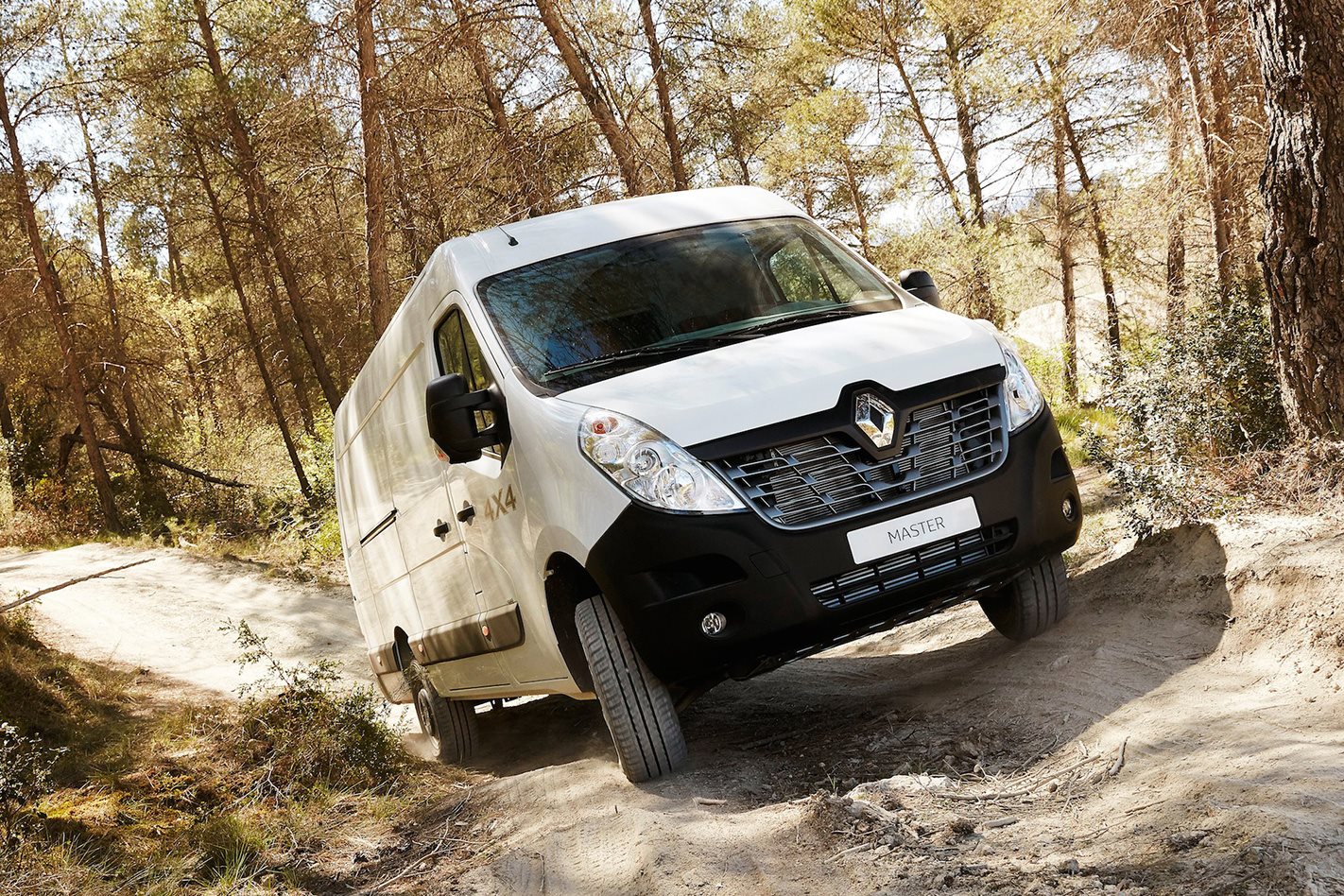
2022 Renault Master pricing
Prices exclude on-road costs.
| Model | Price |
|---|---|
| Master SWB Pro FWD 2.3L diesel manual | $47,090 (+$1100) |
| Master SWB Pro FWD 2.3L diesel automatic | $49,590 (+$1100) |
| Master MWB Pro FWD 2.3L diesel manual | $50,090 (+$1100) |
| Master MWB Pro FWD 2.3L diesel automatic | $52,590 (+$1100) |
| Master LWB Pro FWD 2.3L diesel manual | $52,090 (+$1100) |
| Master LWB Pro FWD 2.3L diesel automatic | $54,590 (+$1100) |
| Master LWB Pro RWD 2.3L diesel manual | $54,590 (+$1100) |
| Master ELWB Pro RWD 2.3L diesel manual | $57,590 (+$1100) |
| Master LWB Bus FWD 2.3L diesel automatic | $65,850 (+$1100) |
Volkswagen Group CEO Herbert Diess has provided hints about his company’s future, with the automotive giant potentially looking to the past to inspire its electric plans.
Having recently faced being ousted from the board of management last year, Diess participated in an Ask Me Anything (AMA) session on Reddit, taking everything from questions from passionate Volkswagen fans about future technologies being implemented, to confirming diesel vehicles are a thing of the past in the United States.
With the next-generation Amarok set to be released in the near future and Ford’s F-150 Lightning pick-up truck proving to be a popular concept, Diess was asked whether Volkswagen would look at introducing its own electric pick-up, replying, “good idea” – potentially tongue-in-cheek.

One commenter pointed out “Herbie” Diess could resurrect the iconic Beetle on the new MEB architecture, although the CEO said the brand’s priorities are with reintroducing the Microbus as the ID Buzz.
“Our most emotional car in our history is definitely the Microbus,” said Diess.
“This was my first priority to bring this icon back to life. But yes, many other emotional cars are possible on our scalable MEB platform.”
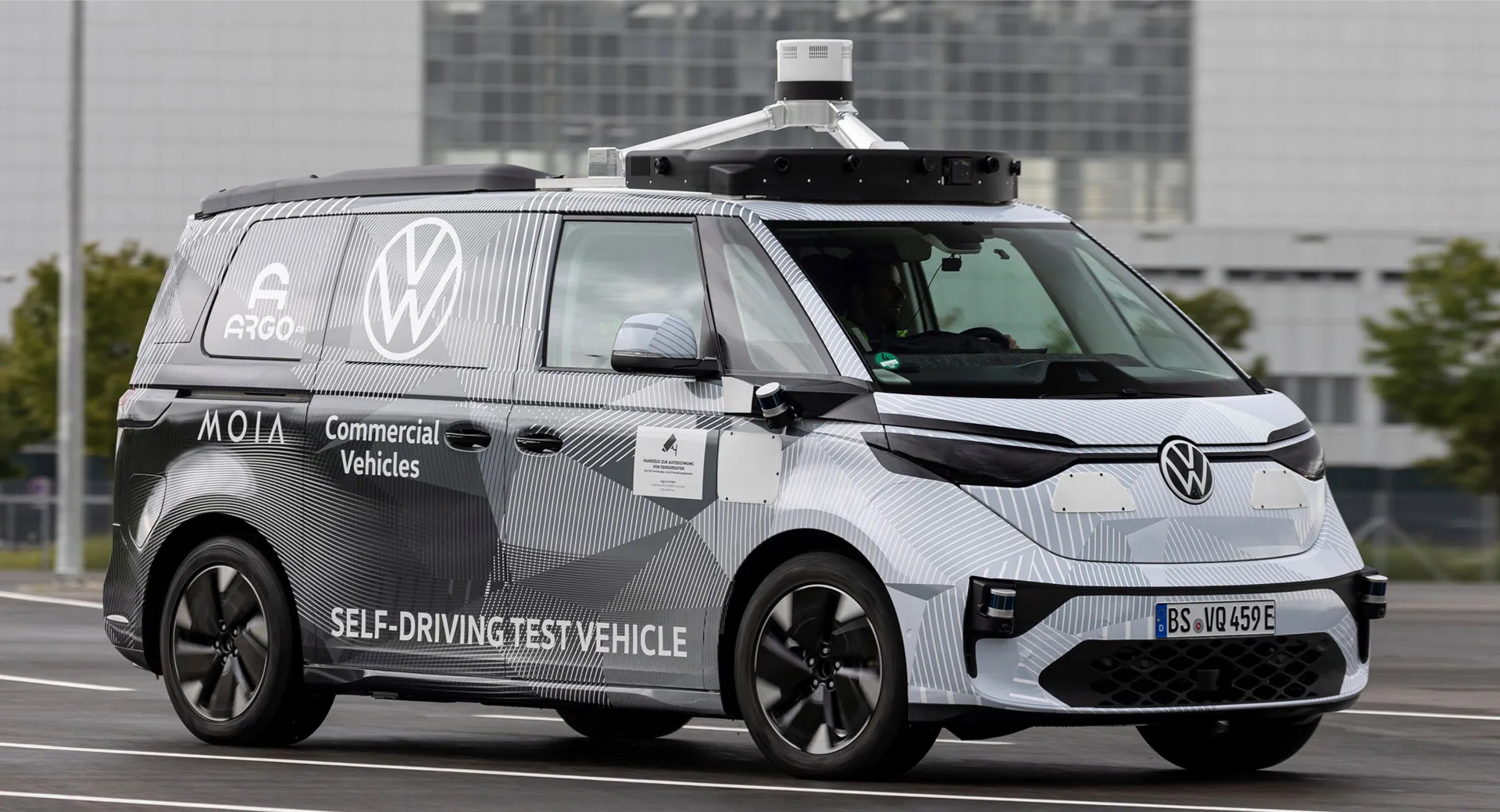
So far the Volkswagen Group’s MEB-based vehicles include the ID.3/4/5/6, Skoda Enyaq, Cupra Born and Audi Q4/Q5 E-Tron, with both the ID. Buzz van and ID Life. crossover slated to go into production before 2025.
Perhaps the most forward-thinking of questions came in the form of asking Diess for his opinion on how much the industry will change over the next quarter of a century, with autonomous driving at the forefront of development.
“Twenty-five years are very difficult to predict,” said Diess.
“Advancements in technology are coming fast. My guess: All cars will be able to drive autonomously, very safe, probably no accidents at all anymore. Emission free, very comfortable – cars will take you where you want to go and when you want to go.
“Still there will be precious brands for different customer preferences, still cars will be the most important means of transport. But totally safe, convenient and sustainable.”
Volkswagen’s introduced its first autonomous production vehicle concept at last year’s IAA mobility show in Munich, with the ID. Buzz AD currently undergoing testing before it is rolled out as a part of a fully-autonomous shuttle service in Hamburg from 2025.
The manufacturer has previously announced it will be ditching internal combustion engine vehicles in Europe by 2035, although its Australian outpost believes the local market isn’t ready for such a move.
Snapshot
- Priced at $44,990 drive-away
- Powered by 1.5-litre turbo-petrol
- Launched with just one grade available
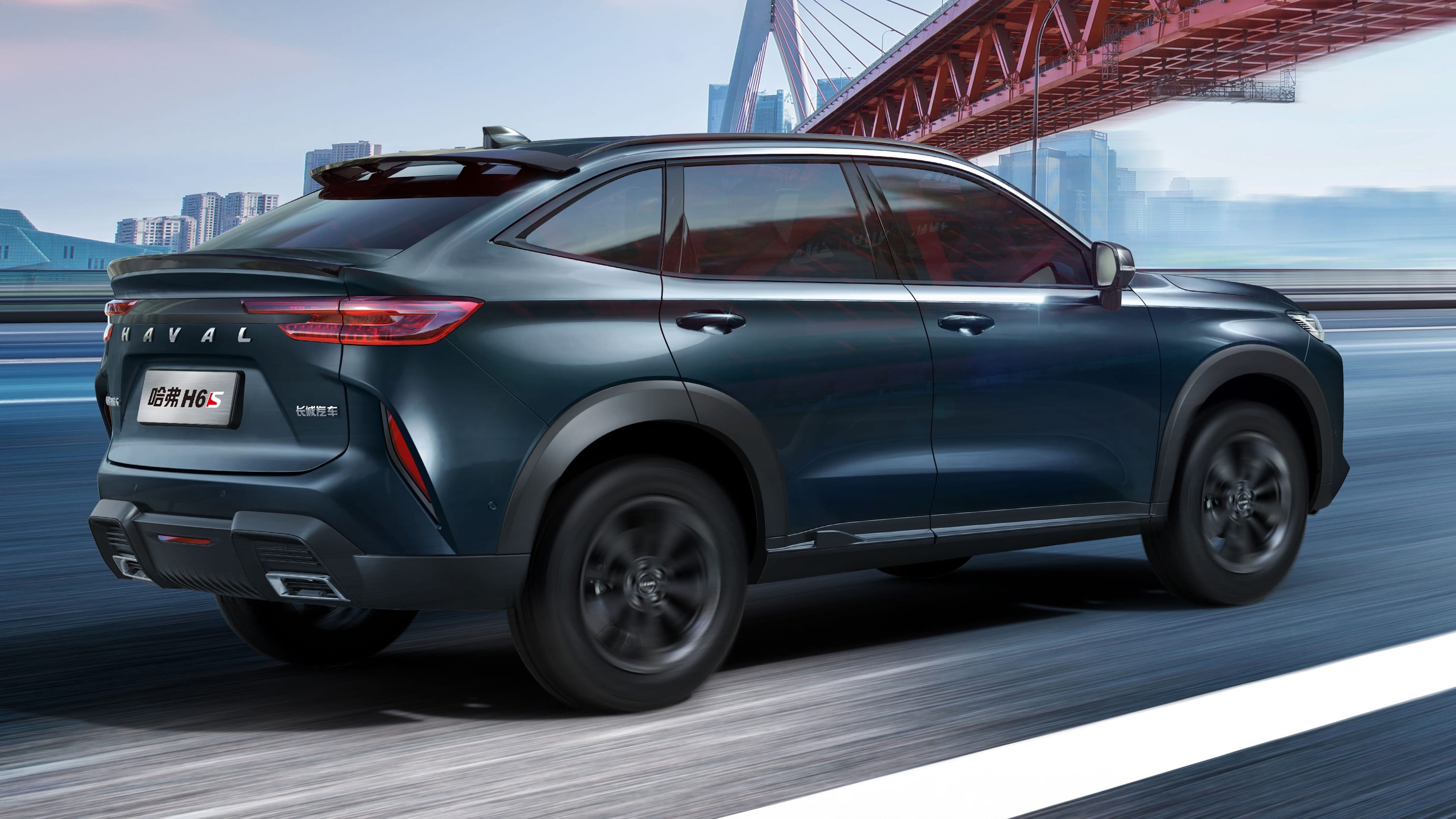
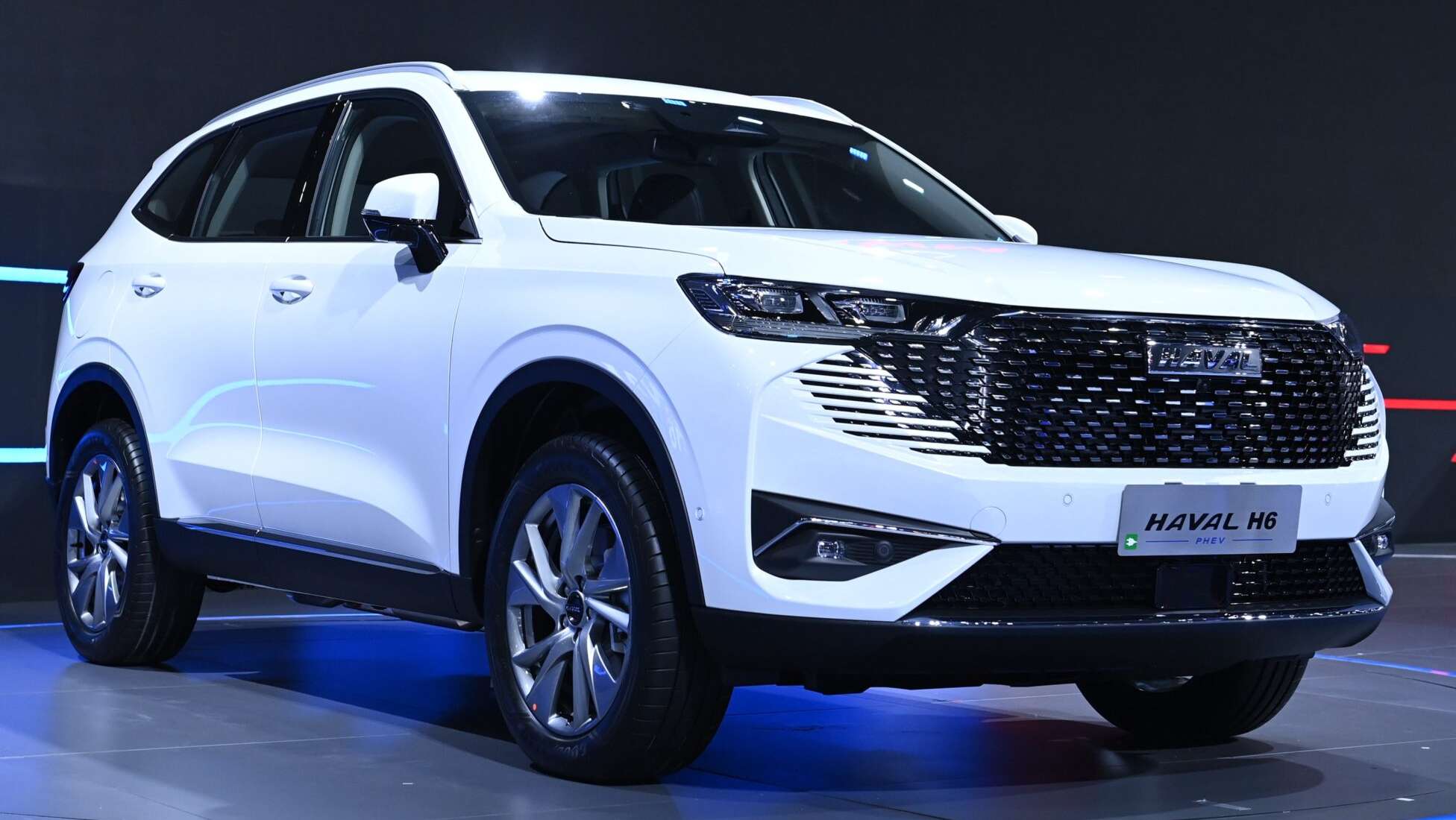
Chinese carmaker Haval has confirmed pricing and features for its H6 Hybrid SUV – set to start at $44,990 drive-away when it arrives in the coming weeks.
Based on the range topping H6 Ultra, the new H6 Hybrid will be made available initially with just one grade – the H6 Hybrid Ultra 4×2.
Pricing
The 2022 Haval H6 Hybrid Ultra 4×2 will be priced at $44,990 drive-away in Australia, making it $6000 dearer than its petrol-powered H6 Ultra counterpart.
Engine, transmission and fuel economy
Powered by a 1.5 litre turbo-petrol engine mated to a two-speed 130kW electric motor driving the front wheels, the Haval H6 Hybrid makes 179kW and 530Nm, with a fuel efficiency rating of 5.2L/100km using regular unleaded fuel.
GWM’s Dedicated Hybrid Transmission (DHT) hybrid system combines a petrol engine and electric motor with an electronically controlled transmission “to offer excellent acceleration and performance at low speeds with increased efficiency and power at higher speeds to deliver a driving experience similar to that of a BEV”.
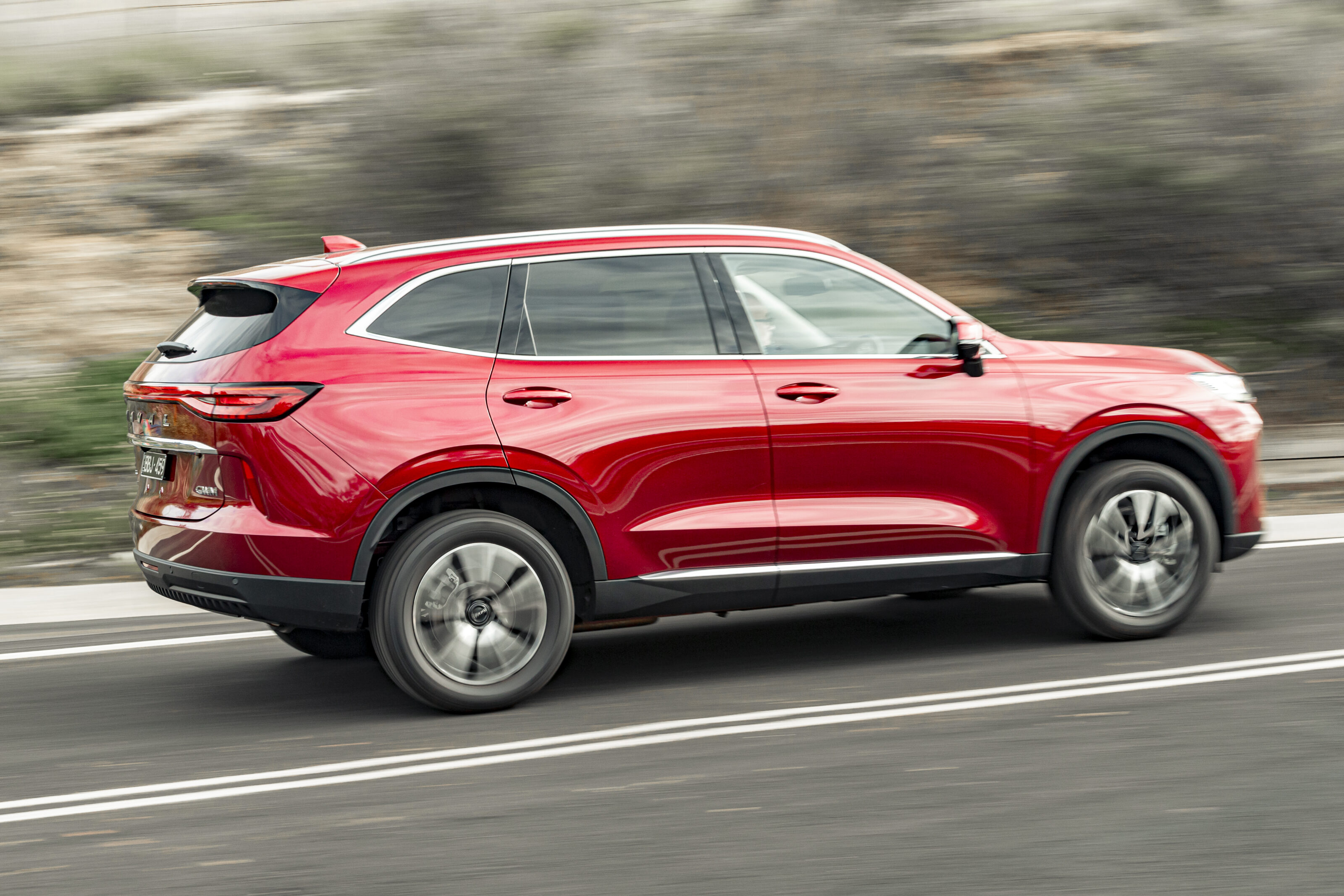
The electrified variant of the H6 comes with four drive modes including EV, Series, Parallel and Regeneration designed to provide maximum efficiency across all speed and load conditions.
Visually, the H6 Hybrid is differentiated from the current H6 with a new front grille, added door trims and rear centre brake lights.
Features
Standard features for the Hybrid include:
| 19- inch alloy wheels |
| Comfortek leather seats with six-way electrically adjustable driver’s seat |
| Heated and ventilated front seats |
| Heated leather steering wheel |
| 10.25-inch colour LED instrument cluster |
| 12.3-inch colour multimedia touchscreen |
| Apple CarPlay and Android Auto |
| Electronic anti-glare rear view mirror |
| Head-up display |
| Wireless phone charging |
| Panoramic sunroof |
| Electric tailgate |
| Autonomous emergency braking (AEB) with pedestrian and bicycle detection |
| Adaptive cruise control (ACC) with stop and go |
| Lane departure warning (LDW) |
| Lane keep assist (LKA) |
| Lane change assist/blind-spot monitoring |
| Traffic sign recognition (TSR) |
| Rear cross traffic alert (RCTA) with brake |
| Driver fatigue monitoring |
| 360-degree camera |
| Fully automatic parking. |
Warranty and servicing
The new Haval H6 Hybrid will be covered by the same seven-year unlimited kilometre warranty as all GWM vehicles, in addition to five years roadside assistance and a five-year capped-price servicing program.
Availability
The 2022 Haval H6 Hybrid will arrive in Australia in a matter of weeks, however prospective buyers can register their interest now on the GWM/Haval website.
Snapshot
- Victorian Government, RMIT commit to electric vehicle research at city campus
- New facility set to open next year, completed by 2025
- State Government aims for EVs to make up half of new car sales by 2030
The Victorian Government’s latest round of electric vehicle funding has come in the form of a research centre for Melbourne’s RMIT University.
Set to be based at RMIT’s city campus, the facility comes courtesy of a $5.2 million funding boost from the State Government, aiming to better integrate electric vehicles into modern society.
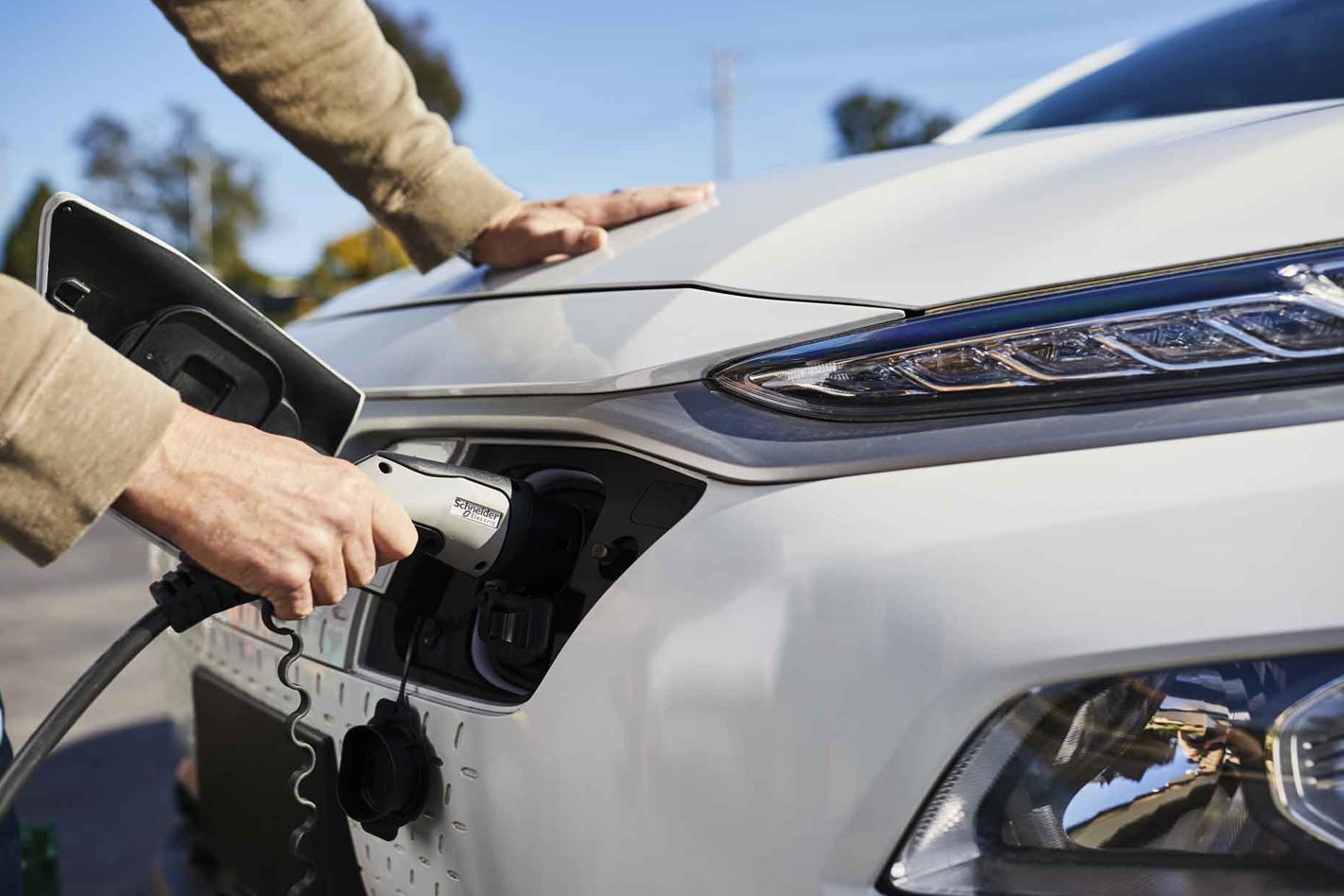
An integral part of the $8.18 million RMIT project will be the new ‘Electric Vehicle Living Lab’, complete with charging stations, a regenerative grid and battery simulators – allowing the state to prepare for increased EV adoption.
With Victoria expecting half of all new car sales to come from EVs by 2030, Minister for Higher Education, Training, and Skills Gayle Tierney, said the facility will help support the future of the industry.
“This is an important project for the future of clean, green transport in Victoria, but also for our plan to meet net zero emissions by 2050 through innovative research and the development of new technology,” said Tierney.
“We know our local universities have a lot to offer, which is why we’re working with them, and industry, to build a bright future – while also creating great study, research and job opportunities for Victorians.”
RMIT’s Vice-President, Professor Calum Drummond, said the research centre can help to future-proof Victoria to cope with an increased demand on its electricity grid due to EVs.
“We’ll be developing cutting-edge battery technology and simulating the impacts of wide scale electric vehicle adoption on electricity grid loading, prices and the broader system,” said Drummond.
“As well as applied technology development, a full-scale applied research project will inform policy towards Victoria’s net zero emission targets in the transport sector, proactively addressing both likely and unforeseen challenges as electric vehicles are adopted at accelerated rates.”
A roadmap from the Victorian State Government has outlined its plans for all new buses to be zero emission by 2025, phasing out its internal combustion engine-powered fleet over the next three years.
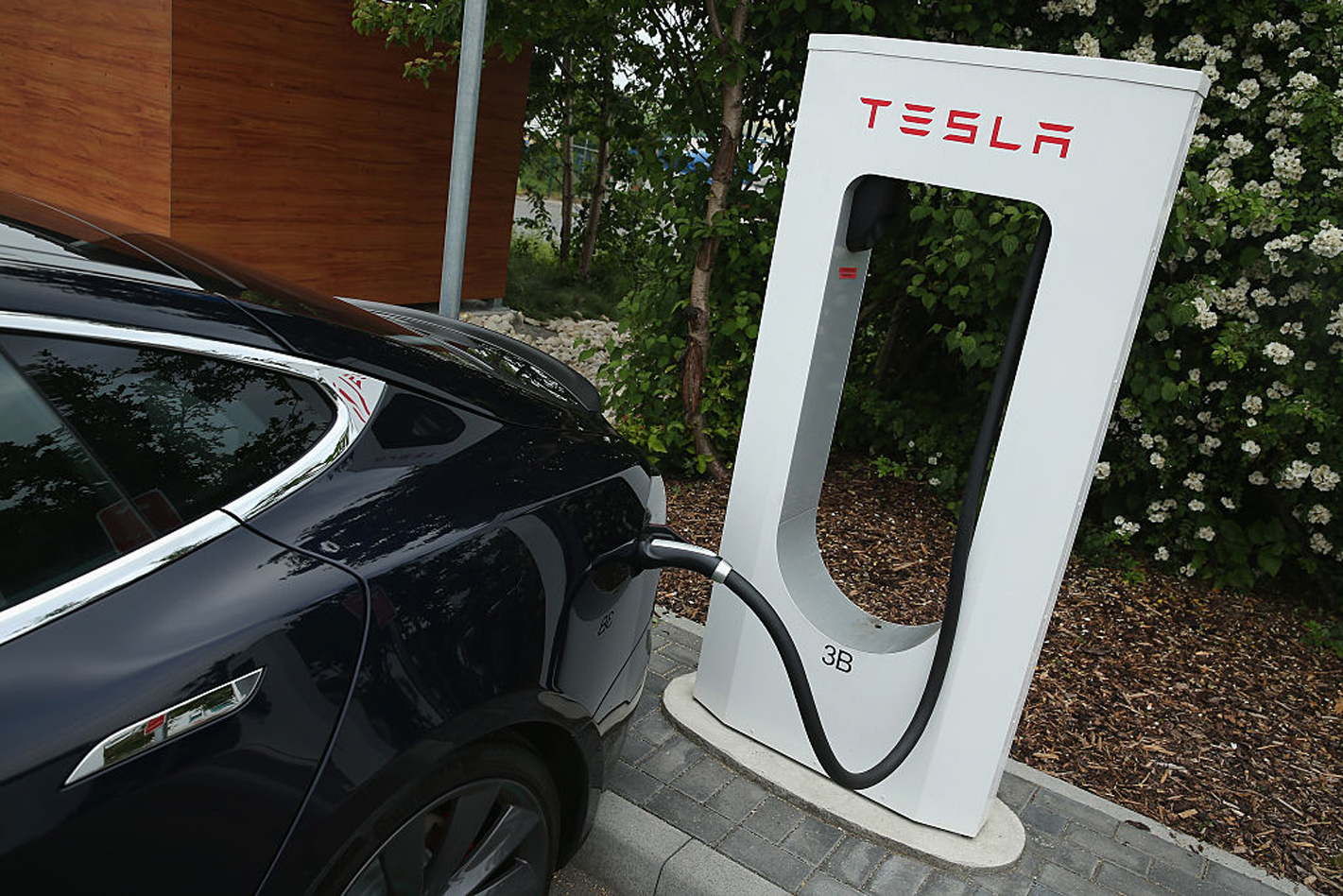
Despite introducing a $3000 subsidy for new EV purchases last year, Victoria has also become the first state to introduce a contentious road user charge, taxing fully-electric vehicles at 2.5 cents per kilometre, while plug-in hybrid electric vehicle owners have to pay two cents per kilometre on top of the federal fuel excise.
