
UPDATE, February 2023: Toyota to accelerate EV plans under new CEO
A year on from the below story, Toyota is now working double-time on its overdue EV revolution, with new CEO Koji Sato promising to “drastically” revamp the Japanese automaker’s EV strategy. Get that story at the link below.
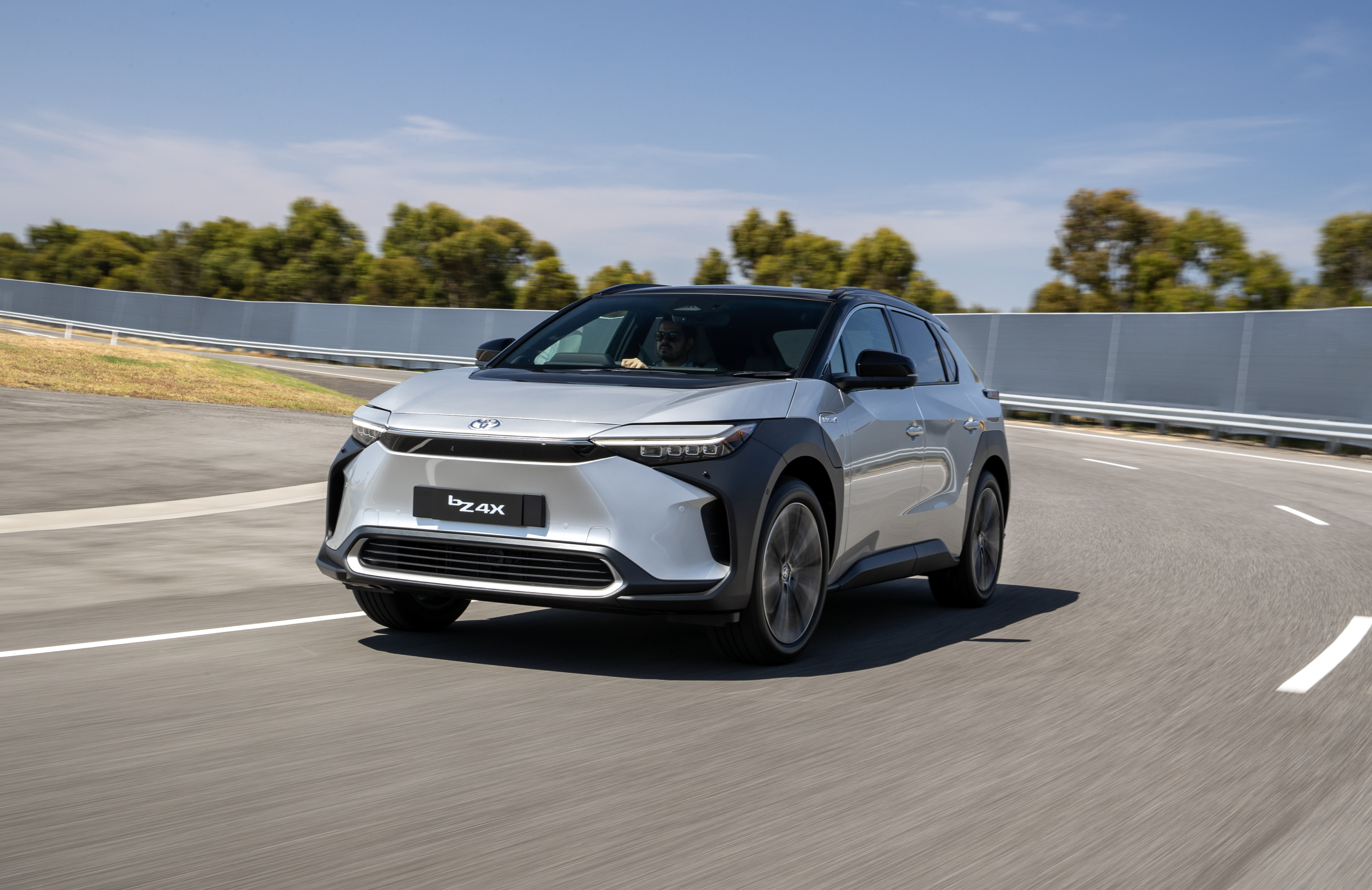
Story continues…
Toyota to introduce 30 BEVs by 2030, Lexus goes all-electric by 2035
Key Points
- Toyota’s 30 BEVs will be passenger and commercial
- All Lexus vehicles available in Europe, the US and China will be EVs by 2030
- Total BEV sales will surpass 3.5 million annually by 2030
Toyota will bring 30 new battery-electric models to the market by 2030, the carmaker has said today.
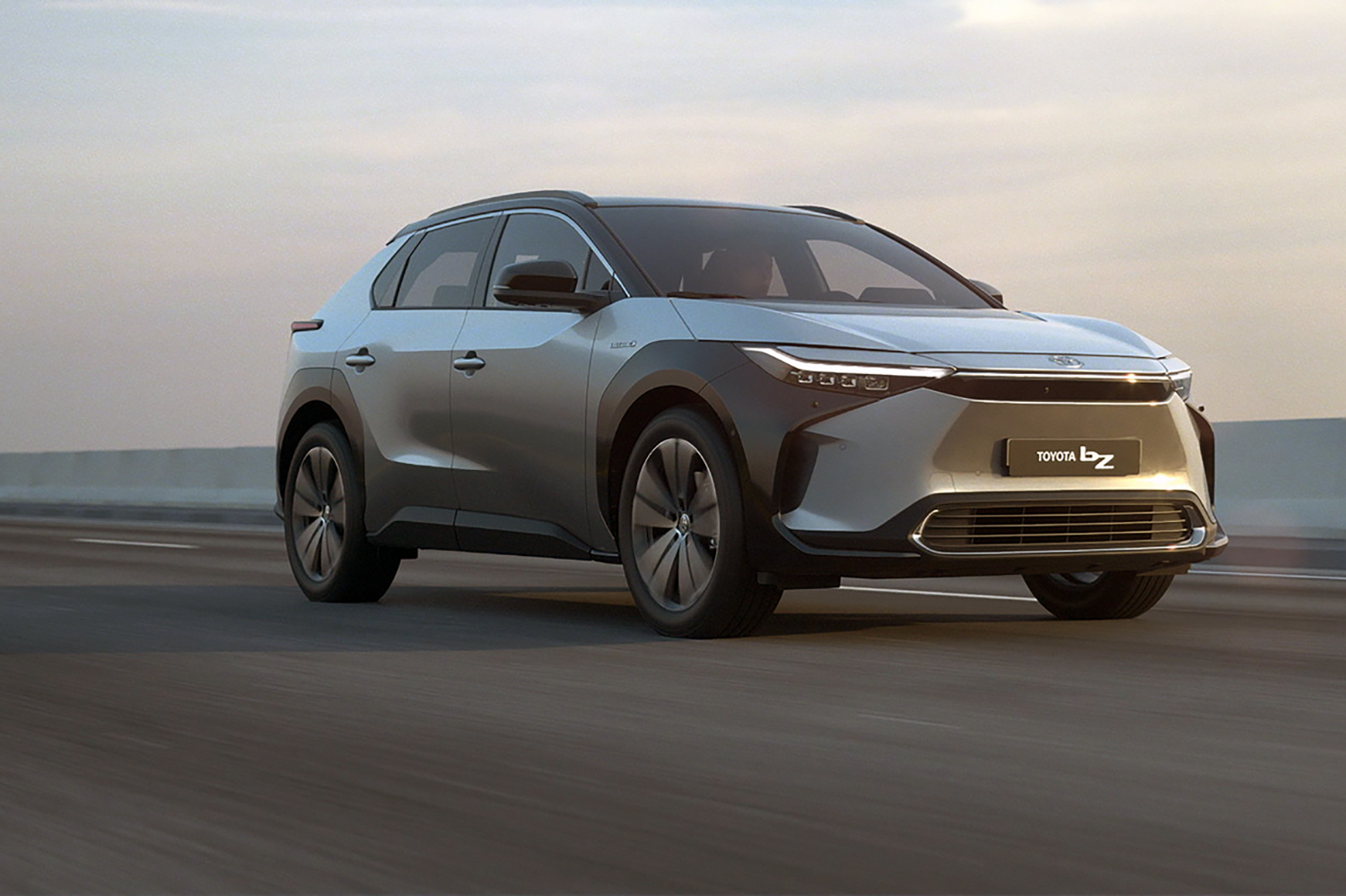
Off the back of releasing the specs of the bZ4x – its first production EV – in October, Toyota is backing battery-electric vehicles for its push towards carbon neutrality, aiming to roll out 30 models over the next eight years.
While not all models will be built on dedicated EV platforms, the bZ (beyond Zero) range will continue to pin itself on an all-electric architecture, expanding to five cars – with a compact SUV, small crossover, sedan and large SUV joining the line-up over the coming years.
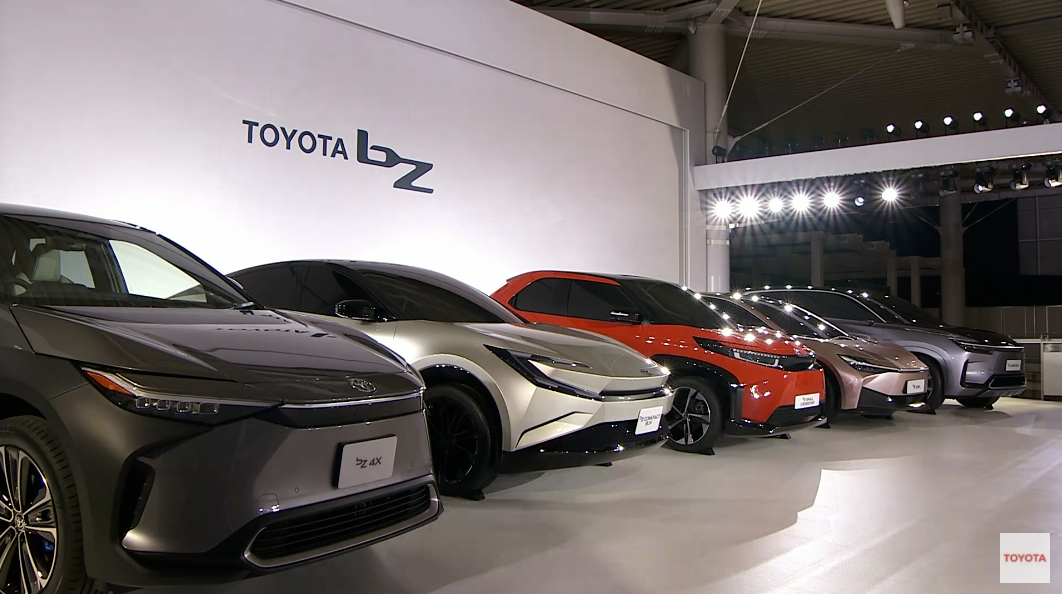
Although CEO Akio Toyoda wouldn’t provide details about the expanded EV line-up, the manufacturer teased a range of familiar vehicles such as an electric Tacoma and FJ Cruiser-inspired Compact Cruiser in its presentation, hinting at its current model range eventually becoming fully electrified.
Different vehicles have been designed with different target markets in mind, such as the city-centric bZ crossover concept, which features a small battery and will be best suited for the European and Japanese markets. Meanwhile, the larger SUV concept includes a third row of seats, allowing more space for a larger battery pack under the floor.
In June this year, local representatives of the marque told WhichCar it had no projections for an electrification strategy beyond its hybrid vehicle range in the near future, however Toyoda has now said his company is targeting a total of 3.5 million BEV sales annually by 2030 – more than half of its current combined output with Lexus.
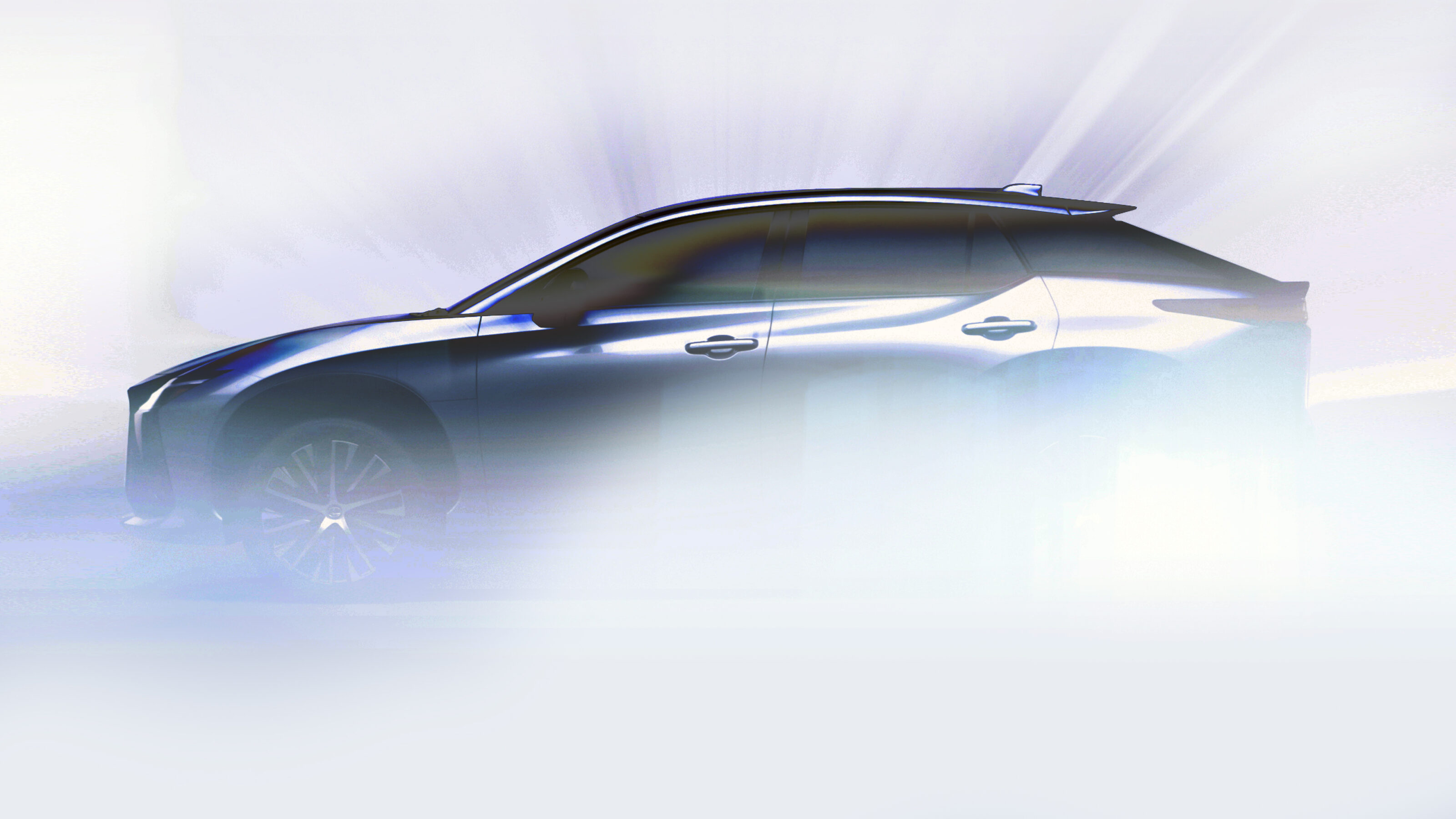
Speaking of the luxury sub-brand, Lexus is set to go all-electric by 2035 with 100 per cent of sales to come from EVs, although its transition will start much sooner as it looks to phase out non-EV sales in Europe, the US and China by 2030.
Starting with the RZ – an EV based on the same e-TNGA platform as the bZ4x and Solterra – Lexus’s charge is to come from dedicated battery-electric models, with a flagship sportscar set to headline its campaign.
Inspired by the LFA supercar, Toyoda said the two-seat coupe will complete the 0-100km/h sprint in the low-two second range and have a driving range of roughly 700 kilometres.
The Lexus brand DNA won’t be lost along with internal combustion engines, as the luxury marque believes EV technology complements its modus operandi.
In addition to the BEV models, it’s expected Toyota will continue to amp up its development of hydrogen fuel-cell vehicles, having recently launched the Mirai in Australia.
Production of the bZ4x is set to begin in the first quarter of 2022 at the Motomachi plant in Yokohama, Japan, although timing and pricing for the EV’s debut in Australia has not yet been confirmed.
Victoria Police have announced a new addition to its fleet – a 2022 BMW M3 Competition.
The M3 joins the BMW 530d, Mercedes-Benz E 400d, and Volkswagen Passat R-Line interceptors currently being used by the Highway Patrol department.
The high-performance BMW is powered by a 3.0-litre twin-turbo inline-six petrol engine, which sends 375kW and 650Nm to the rear wheels through an eight-speed automatic transmission.
It’s enough to propel the slicktop M3 to 100km/h from a standstill in just 3.9 seconds, on the way to an electronically-limited 250km/h top speed.
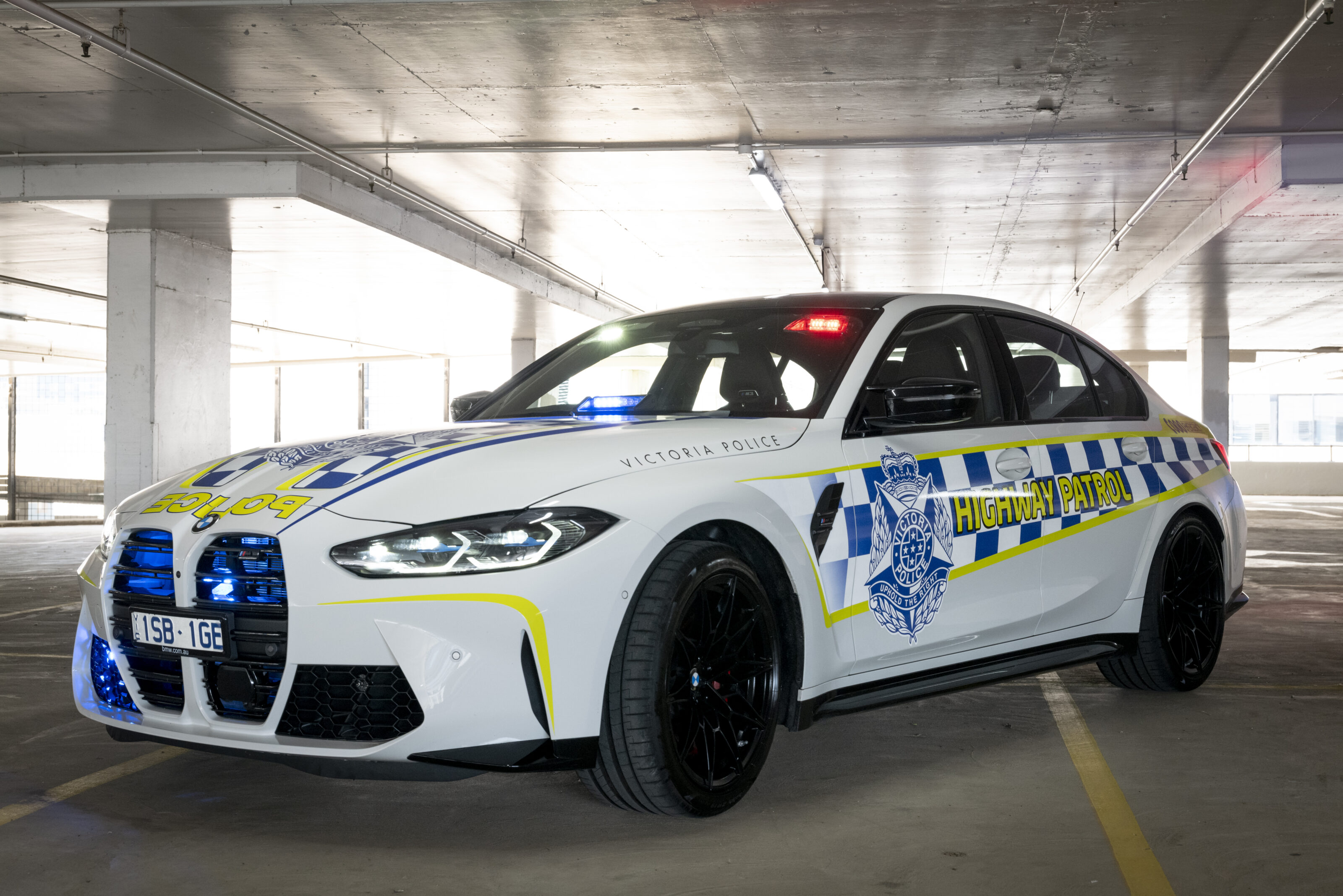
While the retail price starts from $154,471 before on-road costs, taxpayers need not fret, with BMW Australia loaning the M3 to Victoria Police for a short period – as it has done in the past.
In 2019, BMW loaned the police an all-wheel-drive M5 Competition, spitting out 460kW and 750Nm from a 4.4-litre twin-turbo V8, for a 0-100km/h time of 3.3 seconds – making it the most powerful car in the force’s history.
While Australian police are known to also use twin-turbo Kia Stingers and V8-powered Chrysler 300 SRTs, it’s not uncommon for carmakers to loan performance cars to Australian police. The NSW Police Force has used a Lexus RC-F and Honda Civic Type R in the past.
The Australian Federal Police were spotted using an unmarked previous-generation BMW M3 in late 2019, but unusually the vehicle was said to have been optioned with a manual transmission.
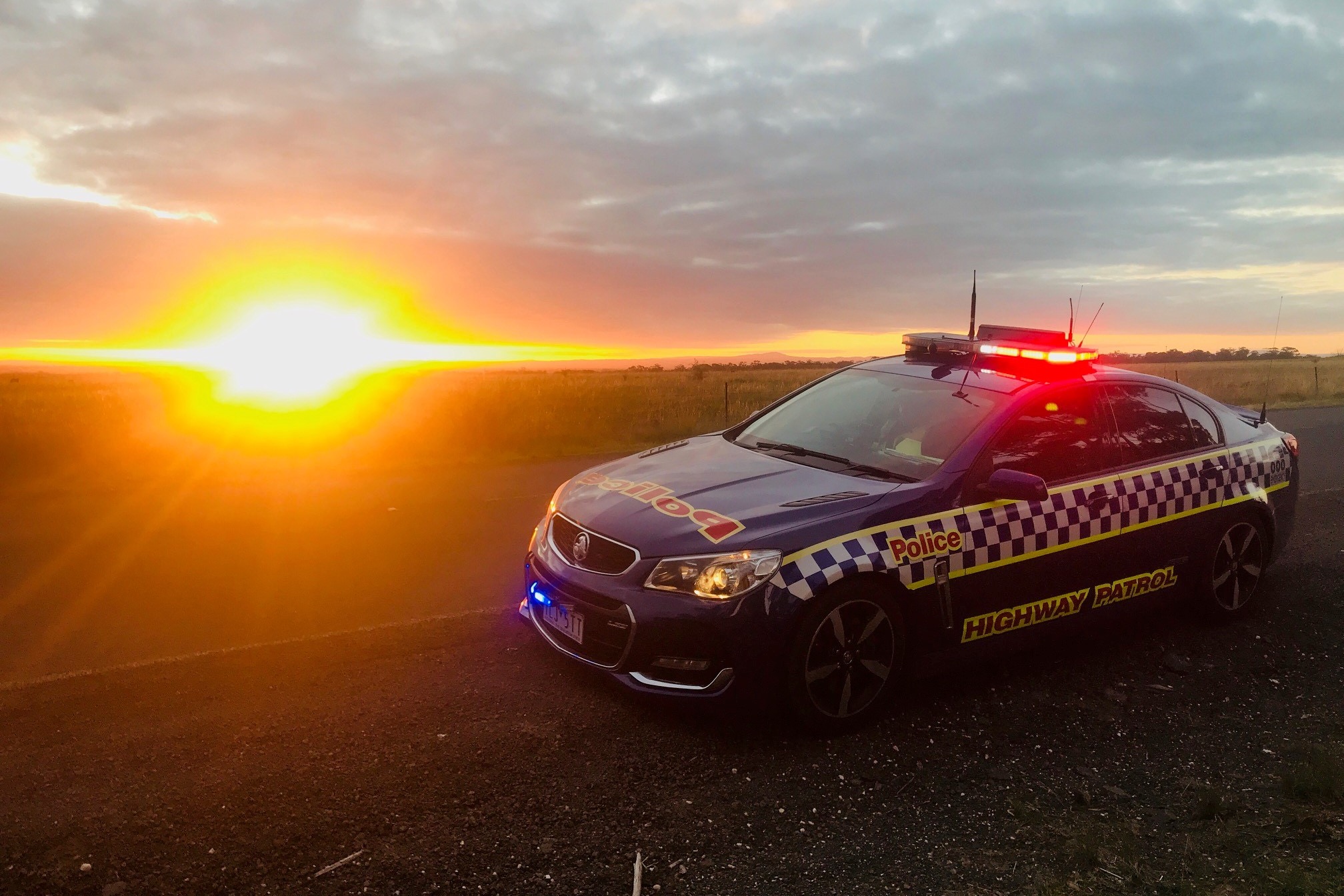
One of the very last V8-powered Holden Commodore SS cars retired from service with VicPol only weeks ago, with the lovingly nicknamed ‘Thomas’ to be replaced by a BMW X5 in the Melton Highway Patrol fleet.
“I’m sure many will be sad to see it go and work will never quite be the same without the roar of the V8 either in the cabin, buzzing the tower, echoing through quiet streets or bleeding through the police radio when you hear your mates going after someone,” one officer wrote in an emotional Facebook post about the Holden in October.
Despite the two-week gap between the Holden finishing and the BMW starting, Victoria Police still have a number of models on duty packing a V8, thanks to the Toyota LandCruiser 200 Series and Ram 1500.
It’s believed Victoria Police has had some kind of V8 car in service since 1962, when the first powder blue Studebaker Larks were brought into the fold.
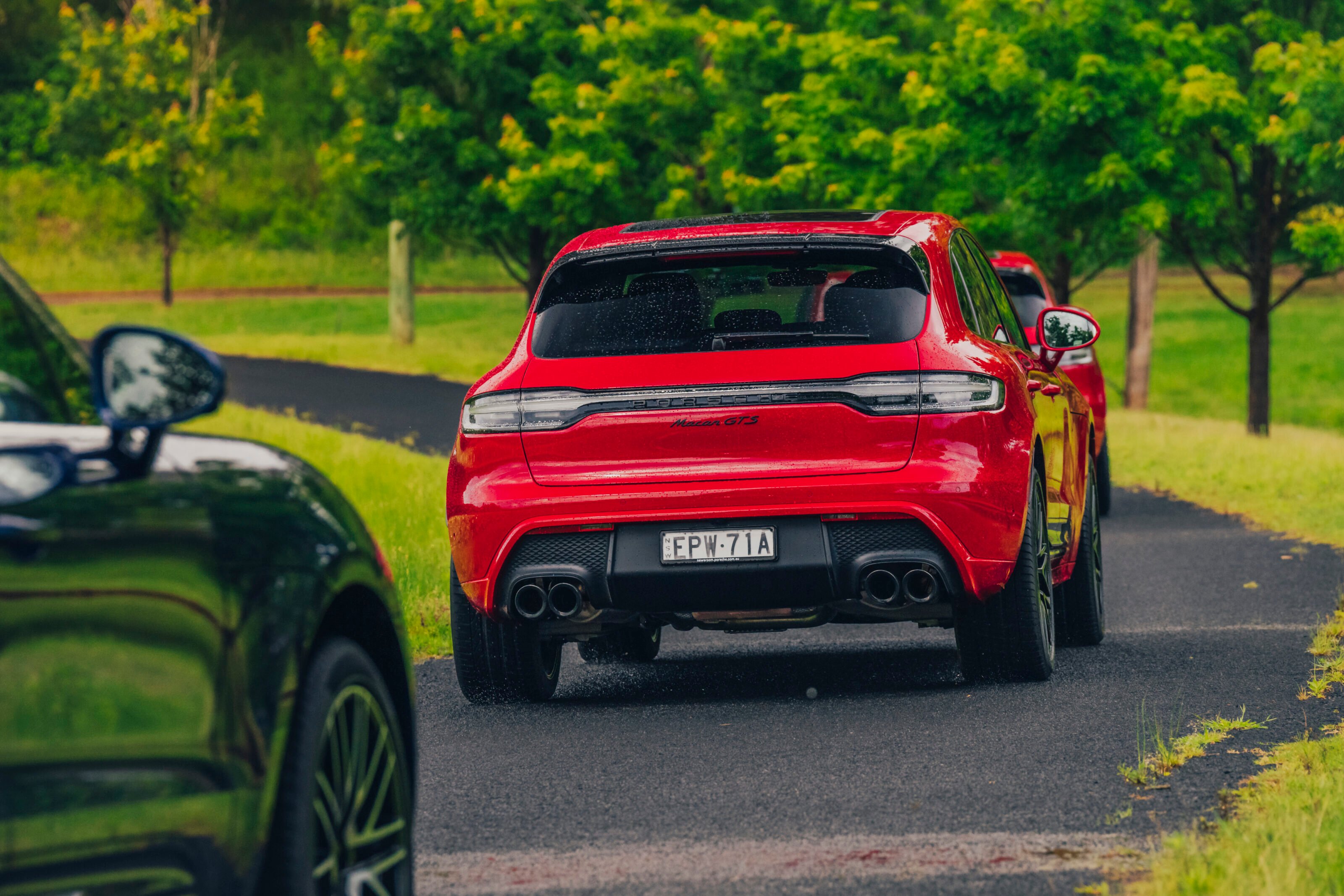
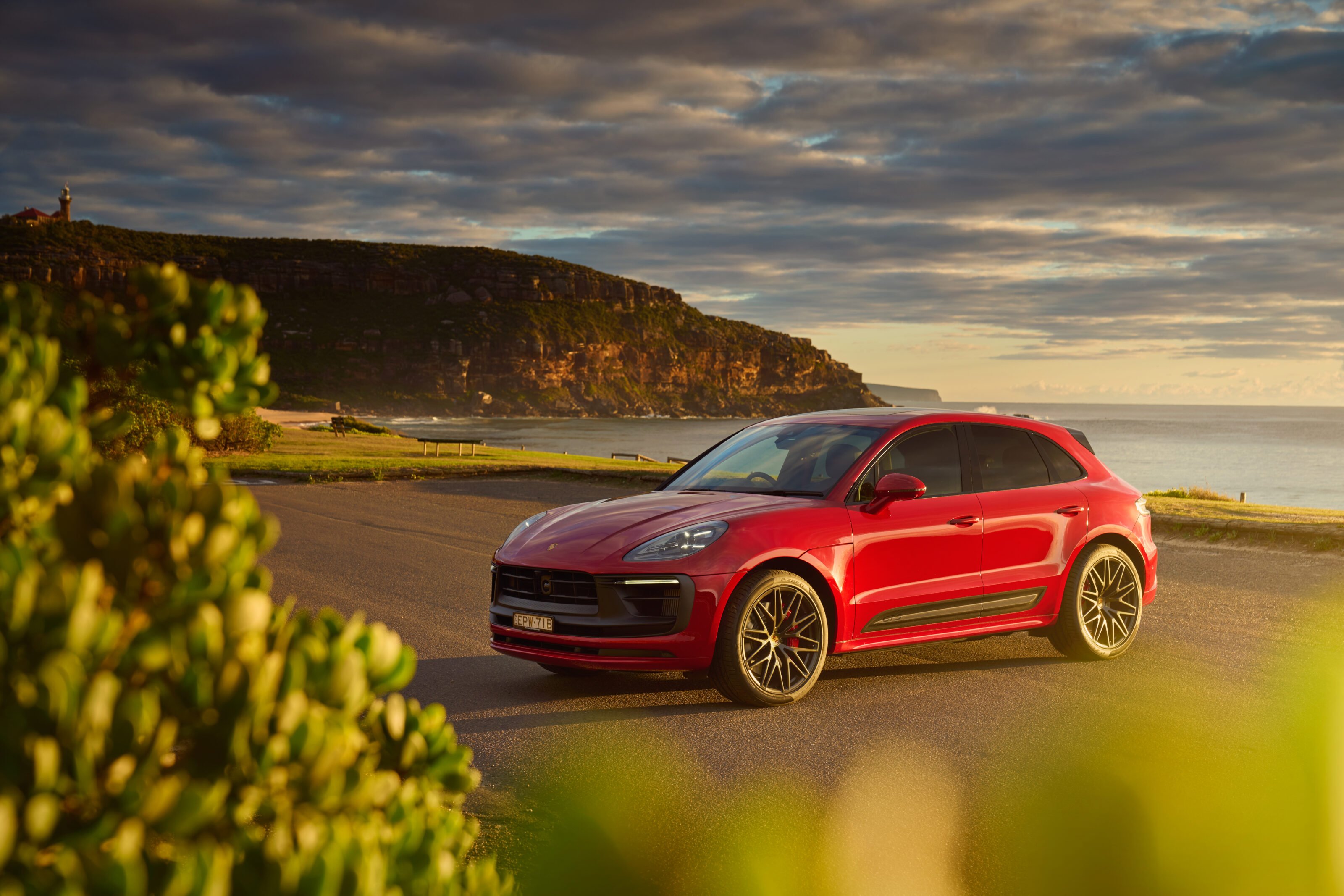
The Porsche Macan SUV has been putting the famous and revered badge on people’s driveways for eight years now. Following on from the bigger Cayenne, the Macan is arguably a bit more of a real Porsche than the big one. Lighter, lithe and with a shorter, sportier wheelbase.
The Porsche look works better on the Macan, too, which is why the 2019 facelift hardly did anything to upset the looks and merely improved on them.
For 2022, the Macan has had a more technical upgrade. The engine count is down to two, spread across three models, each with a mild uplift in features inside and out. Prices are up as well but the entry level still gets you into a Porsche for well under a hundred grand and with more seats than most of them.
It’s still fundamentally the same car from 2014, though, which in car years is a long time ago, irrespective of COVID’s time-bending abilities. The Macan has a lot more competition with which to contend and a much more demanding marketplace.
Pricing and features
The entry-level Macan is just called Macan and starts at $84,800 before on-road costs. The only one of the three powered by a four-cylinder turbo, it comes with such nice things as LED headlights, 19-inch alloys, three-zone climate control, keyless entry and start, a 10-speaker stereo powered by 10.9-inch touchscreen and Apple CarPlay, electric front seats, cruise control, leather, dual-zone climate control, sat-nav, metallic paint and plenty more besides, including a huge optional sunroof.
Step up to the Macan S and you score the twin-turbo V6, 20-inch alloys, active suspension management, 14-speaker Bose stereo and slightly different interior and exterior trim for $105,800 before on-road costs.
The top step of the Macan podium is the GTS. It gets more power from the 2.9-litre twin-turbo V6, 21-inch alloy wheels, the driver memory package and an upgraded Porsche Traction Management system that prioritises power to the rear. It also scores brakes with a tungsten carbide coating on the discs, which means a harder surface and less brake dust.
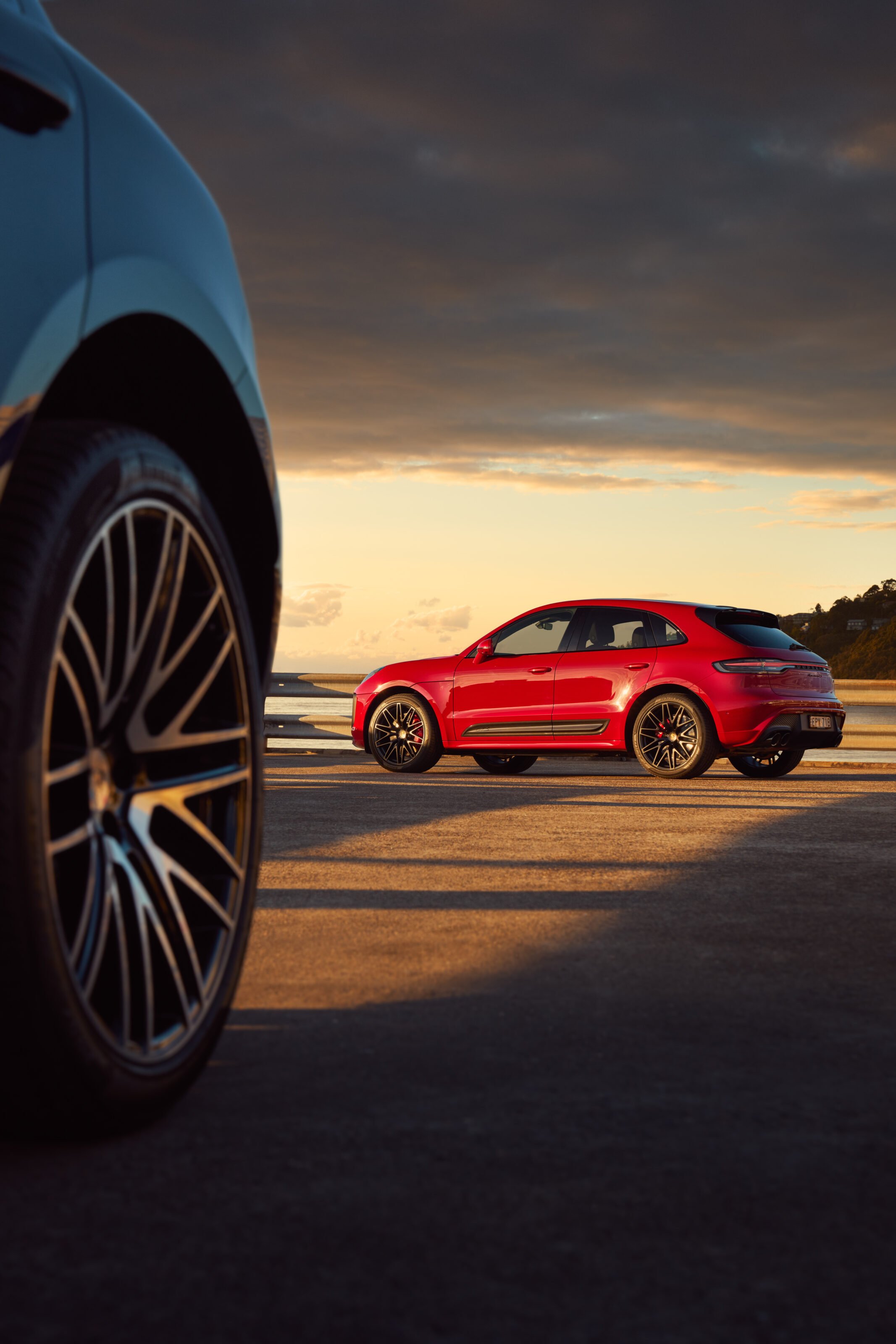
The GTS Sport package swaps the alloys for different black ones, Pirelli P-Zero Corsa tyres, a new diff with torque vectoring, some styling changes inside and out and a heated steering wheel, as well as liberal use of RaceTex, a textile suede. The GTS will set you back $129,800 before on-road costs.
The Sport Chrono Package, which delivers faster 0-100km/h times is available on the Macan and Macan S for $1880 and is standard on the GTS.
The Macan has a curiously short safety list, with eight airbags, ABS, stability and traction control, lane change assist and lane departure warning. Add to that top-tether anchorages and two ISOFIX points and that’s your lot.
If you want auto emergency braking (AEB) – a feature that really should be standard – you’ll need to spec the nearly $2000 Active Cruise Control package. The AEB works from 30-120km/h and also detects pedestrians. There is no reverse cross-traffic alert either.

Comfort and space
If you’re not familiar with the Macan, it’s between the size of an Audi Q3 and Audi Q5. In fact, it shares a lot with its bigger Audi cousin, based as it is on the VW Group’s MLB platform, although it rides on a shorter wheelbase at 2709mm.
The Macan is a low-rider for an SUV and so once you’re in, it doesn’t feel that much higher than a car. Remember normal cars? You also sit low behind the steering wheel, which is now plucked from the 911 and Panamera lines so you get that little bit more ‘proper’ Porsche in your Macan.
All three versions have very comfortable seats but the grippier and slightly grabbier front chairs in the GTS are really excellent. The RaceTex synthetic suede is a little cooler on hot days when you get in and the fabric helps hold you in place.
The biggest change is a new console layout that (mostly) chucks physical buttons and replaces it with what looks like a black panel.

When you fire up the car, all the soft buttons light up underneath, which is quite cool and really cleans up the visual clutter of too many buttons.
There is a little bit of haptic feedback when you press something, but you can’t find the buttons by feel, which isn’t ideal – but I suppose you’ll memorise everything. Thankfully the fan and temperature controls are physical.
The rear seats are a little tighter than others in this class, including the brother-from-another-mother Audi Q5 as the Macan has a more compact wheelbase. It’s still comfortable, with a well-shaped seat, decent headroom even with the sunroof fitted (although for people too far over 180cm in height it will become difficult) and you can get your feet under the front seat.
You also get your own climate zone and the rear air vents to go with it.
As for storage, this is very much an interior that dates back a while. It’s not a bad thing, you do get cup holders front and rear and bottle holders in each door, but there’s nowhere really to put your phone.

A wide slot on the centre console ahead of the cup holders will do but one big braking manoeuvre or fast cornering and it’ll be trapped down between the console and the seat. You know, where the key ends up when it falls out of your pocket.
All Macans have a powered tailgate, opened with a button on the base of the wiper arm, which is rather clever. In the base Macan you have 488 litres to start with and if you put all the seats down, you get a fairly decent 1503 litres.
The S and GTS have slightly less cargo space, with an opening bid of 468 litres and a maximum of 1468 litres. The loading lip isn’t flush with the floor, but it’s only a couple of inches.

On the road
Porsche offers two engines in the Macan range, both of them petrol. I get a lot of questions about the diesel Macan, but it’s a goner and has been since 2018. Porsche is also skipping hybrid for the Macan, with this car to continue alongside the all-electric replacement in 2023.
The 2.0-litre turbo four-cylinder is new according to Porsche. With a new turbocharger, it delivers 195kW and a very handy 400Nm of torque, which is 30Nm more than before. Further improvements include higher fuel pressure (360 bar) and Porsche says it now runs cleaner, too.
The Macan S now has the 2.9-litre twin-turbo V6 spinning out 280kW (up 20kW) and 520Nm (up 40Nm) in the S, both figures being modest but useful increases. The 2.9 replaces the 3.0-litre V6 on the S, which explains the reduction in the number of available engines.
The Macan GTS, which is the top of the line, has the same V6 but with 324kW, an impressive increase of 44kW. Torque has risen by 30Nm to 550Nm.

If you want to earn some nerd points, the turbos are in a hot-side inside installation, which means they’re in the vee of the engine. That means a very short path for the exhaust gases to spin them up, reducing lag.
All Macans are all-wheel drive and have a seven-speed dual-clutch transmission Porsche calls PDK. In the GTS you get an upgraded version of the all-wheel-drive system that is keener to push power to the rear end.
I’ll start with the Macan. On the road, it’s very comfortable and with the still-impressive power outputs of the four will sprint to 100km/h in the mid-six-second range, give or take some tenths depending on whether you have the Sports Chrono Pack (which is standard in the GTS). The 2.0-litre spins very cheerfully and the PDK shifts equally happily in either direction.
The calibration of the automatic mode is very impressive, even more so when you shift into Sport mode which amps up throttle and gearbox response. You can feel that the Macan is lighter but also that the wheels are smaller and therefore higher-sidewall tyres are fitted.

When you’re puddling about town or on the highway, it’s a very comfortable and swift SUV. Quiet, too; you’ll barely notice it even has an engine in Comfort mode and in Sport you just get a very subtle bark on the upshift.
Pushing through the corners, the Macan moves around a bit on its tyres, but the stability systems keep things in check while still letting you have some fun.
Jump up to the GTS and it’s immediately apparent that this is quite a different machine to the base car. The air suspension delivers a very compliant ride in any of the three pre-set modes (selectable on a Manettino-style dial) but from the get-go you know it’s the most purposeful of the three.
And it should be for the money. The 2.9-litre twin-turbo serves up the power very quickly and the all-wheel drive just grips and goes. The brakes are huge and coated in tungsten carbide which Porsche says is ten times harder than grey cast-iron discs. The GTS and S share red-painted six-pot calipers but the GTS’s discs are a full 30mm further across at 390mm.

The GTS feels like a big hot hatch – it’s agile, fun and unlike its rivals from BMW and Mercedes, won’t try and spit you off a bumpy road. The brakes are super strong and the steering is well-weighted, with plenty enough feel to let you know what you need to do next. It’s terrific fun.
The pick of the range, however, is probably the S (unless money is no object). It’s a leap up from the entry-level car, with the twin-turbo V6, bigger wheels and tyres and adaptive damping. Together that delivers plenty of power, grip and a big step up in handling prowess.
Like the GTS, the V6 in the S pulls hard and from low revs and while the ride will run out of answers on a really bumpy road, you’re not that far behind the flagship overall – although it’s worth pointing out that the S I drove was fitted with optional 21-inch wheels and Pirelli P-Zero rubber.
While its limits aren’t as high as the GTS, with more body roll and a less compliant ride, it’s really not that much slower either in a straight line or in the twisties.
I mean, you’d get the GTS, but if you didn’t have the twenty grand, you’re not getting short-changed in the S. The entry-level car isn’t a slouch, but it’s looking for an easier life than the V6 versions.
Ownership
Porsche offers a three-year/unlimited-kilometre warranty which, like BMW’s and Audi’s, is too short for this price level. Servicing is required every 12 months or 15,000km and there isn’t a capped-price regime or pre-paid servicing.
Like the safety package, it could and should be better.
VERDICT
Perhaps the most impressive thing about the Macan is how the depth of engineering of the 2014 original is still delivering today. It’s not like Porsche rested on its laurels – the SUV has evolved on an almost yearly basis as the market has expanded – but nor has it just waved a few bits and pieces at the Macan.
It’s still tremendous, civilised fun. It’s a Porsche the whole family can enjoy and even in GTS form is still very friendly despite near-supercar straight-line performance and a very accomplished chassis. The entry-level car will work for those fans of the brand who just want to get on the ladder and the S will likely satisfy everyone.
It could do with better safety and aftersales package but as you can probably tell, they’re about the only things that haven’t gotten better in the last eight years.
This Macan is going to live on for a while longer too as Porsche will continue to sell it alongside the all-electric next-generation car due in 2022. It should do just fine.
2022 Porsche Macan specifications
| Macan | Macan S | Macan GTS | |
|---|---|---|---|
| Body:u00a0 | Five-door mid-size SUV | Five-door mid-size SUV | Five-door mid-size SUV |
| Drive: | AWD | AWD | AWD |
| Engine: | 2.0-litre turbo four-cylinderu00a0 | 2.9-litre twin-turbo V6 | 2.9-litre twin-turbo V6 |
| Transmission: | Seven-speed twin-clutch | Seven-speed twin-clutch | Seven-speed twin-clutch |
| Power: | 195kW @ rpm | 280kW | 324kW |
| Torque:u00a0 | 400Nm @ 1800-4500rpm | 520Nm @ 1850-5000rpm | 550Nm @ 1900-5600rpm |
| Bore stroke (mm): | 82.5 x 92.8 | 84.5 x 86.0 | 84.5 x 86.0 |
| Compression ratio:u00a0 | 9.6 | 10.5 | 10.5 |
| 0-100km/h:u00a0 | 6.2s (claimed with Sport Chrono package) | 4.6 (claimed with Sport Chrono package) | 4.3s (claimed with Sport Chrono package) |
| Fuel consumption:u00a0 | 9.3L/100km (combined) | 10.2L/100km (combined) | 10.3L/100km (combined) |
| Weight: | 1845kg | 1930kg | 1960kg |
| Suspension: | MacPherson strut front/multi-link rear | MacPherson strut front/multi-link rear | MacPherson strut front/multi-link rear |
| L/W/H:u00a0 | 4726mm/1922mm/1621mm | 4726mm/1927mm/1621mm | 4726mm/1927mm/1606mm |
| Wheelbase: | 2807mm | 2807mm | 2807mm |
| Brakes:u00a0 | 350mm ventilated disc front / 330mm ventilated disc rearFour-piston front calipers | 360mm ventilated disc front / 330mm ventilated disc rearSix-piston front calipers | 390mm ventilated disc front / 356mm ventilated disc rearSix-piston front calipers |
| Tyres:u00a0 | 235/55 R 19 front255/50 R 19 rear | 265/45 R 20 front295/40 R 20 rear | 265/40 R 21 front295/35 R 21 rear |
| Wheels:u00a0 | 19-inch alloy wheels (space-saver spare) | 20-inch alloy wheels (space-saver spare) | 21-inch alloy wheels (space-saver spare) |
| Price:u00a0 | $84,800 + ORC | $105,800 + ORC | $129,800 + ORC |
UPDATE, December 14: Five months after the last price drop, and the cost of the Tesla Model 3 has gone down once more.
While the entry-level Model 3 and the range-topping Performance variant remain at $59,900 and $84,900 before on-road costs respectively, the mid-spec Model 3 Long Range has dropped to $73,200 before on-road costs.
The $200 price reduction comes only weeks after Tesla added extra driving range across the Model 3 line-up – with the opening variant increasing 43 kilometres to 491km, the Long Range increasing by 34km to 614km, and the Performance going up by 37km to 567km.
The story to here
July 12: Tesla has once again dropped the price of its most popular model Down Under – the Model 3’s entry-level variant coming in at $59,900 before on-road costs.
The carmaker has cut the asking price significantly since the model arrived in Australia back in 2019, when its recommended retail price (RRP) was $66,000.
In addition to the Standard Range Plus, the mid-level and range-topping Long Range and Performance variants have also had their costs slashed, now priced at $73,400 and $84,900 respectively.
With the model now on offer at an all time low, both the Standard Range Plus and Long Range fall beneath the current Luxury Car Tax threshold of $79,659, and the Standard Range Plus is also made more affordable with various electric vehicle subsidies and incentives offered by several Australian states.
It was also revealed earlier this year the Model 3 will now be sourced from China rather than the US.
October, 2020: Australia’s favourite Tesla will become even more compelling for the 2021 model year with the Californian EV maker boosting the Model 3’s battery range, cramming in more technology, and slashing up to $11,000 from the asking price.
With its first update, the small sedan gains a number of efficiency boosting updates to make better use of each volt in its lithium ion battery pack, including lower-drag tyres, a power management software update, and the same more efficient heating and cooling system as the new Model Y.
With the modifications, the entry level Standard Plus can travel up to 490km on a single charge, the mid-range Long Range can go up to 657km, while the range-topping Performance has a new maximum range of 628km – that’s 68km further.
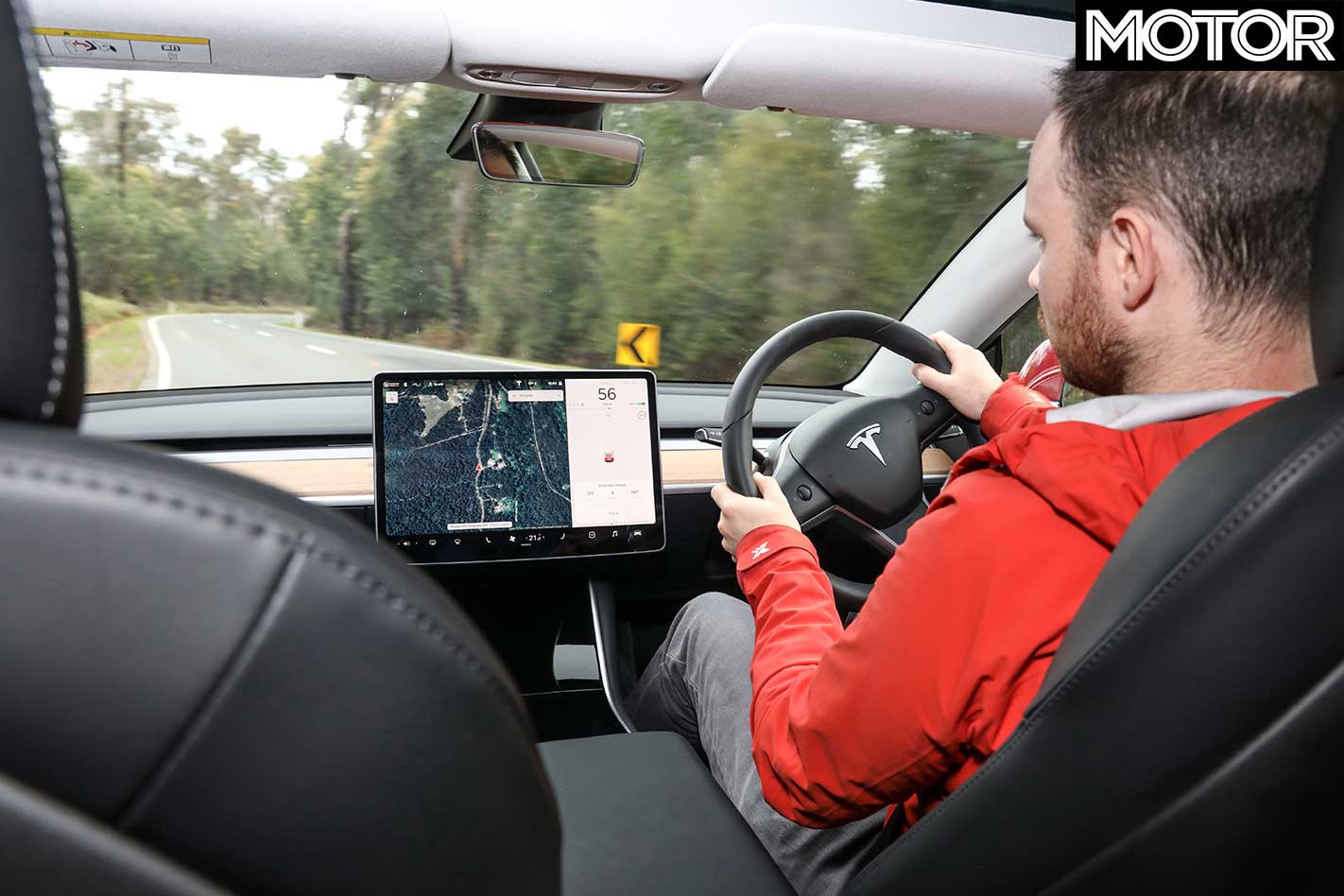
It’s important to note that Tesla still rates its ranges using the NEDC method of testing, while almost all other EV makers have switched to the WLTP system, which often results in a shorter but more realistic projected range.
Despite the extended range for all variants, Tesla has dropped the price across the board. A discount of $7000 takes the base version down to $66,900 before on-road costs, at $81,900 the Long Range is cheaper to the tune of $7900, while the Performance drops below the $100k mark at $90,900 – that’s a significant $11,100 off the previous price.
2021 versions of the Model 3 are identifiable by redesigned 18 and 19-inch wheels as well as the 20-inch versions bolted to the Performance, while the switch from chrome-effect exterior brightwork to satin black is a subtle but effective transformation.
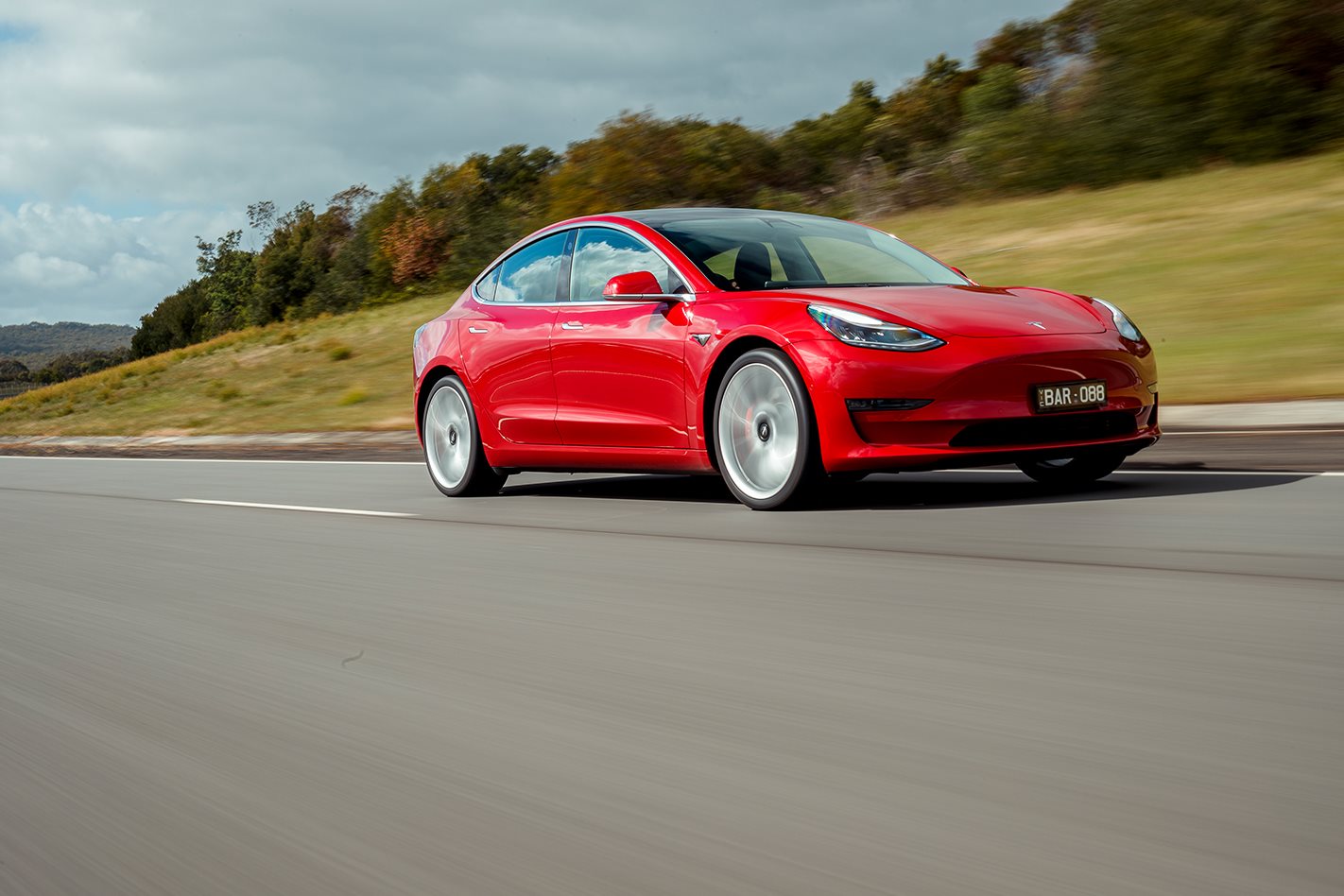
Its boot can now be opened with a button on the lid itself or through the Tesla smartphone application, and there are functional developments inside too.
Sun visors are pinned closed when not in use by magnetic retainers, while the glitchy garage door-style central storage pocket cover now slides.
Wireless charging is upgraded to accommodate two devices, there are two additional USB-C sockets for more high-speed charging options, and a new USB-A socket located in the glove compartment allows the connection of a hard drive for storing dash-cam and Sentry Mode video.
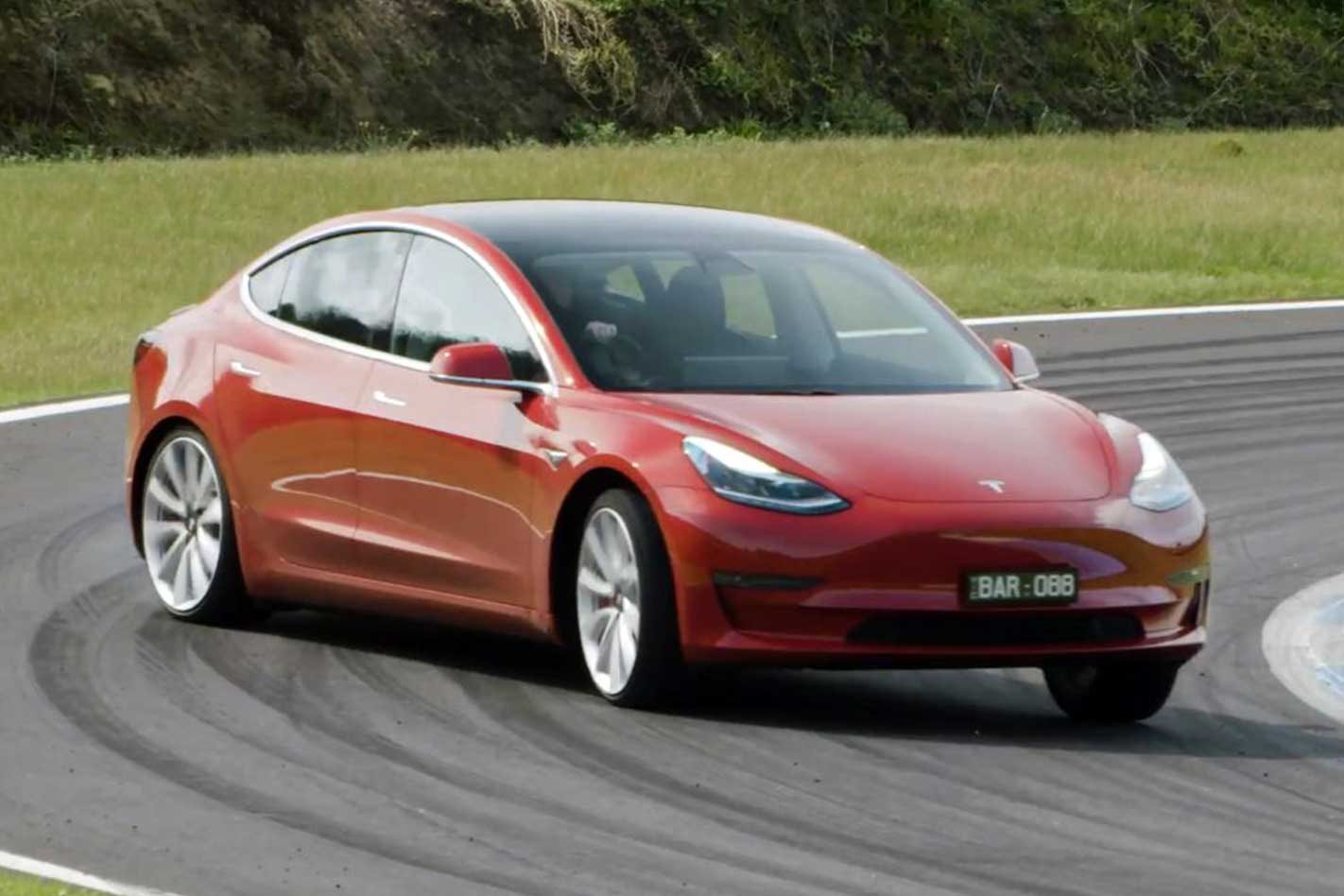
There’s a light revamp of the cabin design as well, with matte black replacing the previous gloss finishes, the same treatment for the side sills, seat controls are a new Graphite finish, while the steering wheel scroll control has been metalised for a higher-quality feel.
The efficiency improvements have not impacted other performance figures including acceleration, with the flagship Performance still capable of hitting the milestone 100km/h from standstill in 3.3 seconds, says Tesla.
It also retains its maximum speed of 261km/h if you can find a road long enough.
The Australian Government is seeking feedback on laws that would mandate lane keeping systems on new cars from 2024 and help curb road fatalities and trauma.
Under the new laws, proposed within Australian Design Rule 107/00, any new model introduced to Australia from March 1, 2024, will need an appropriate lane keeping system.
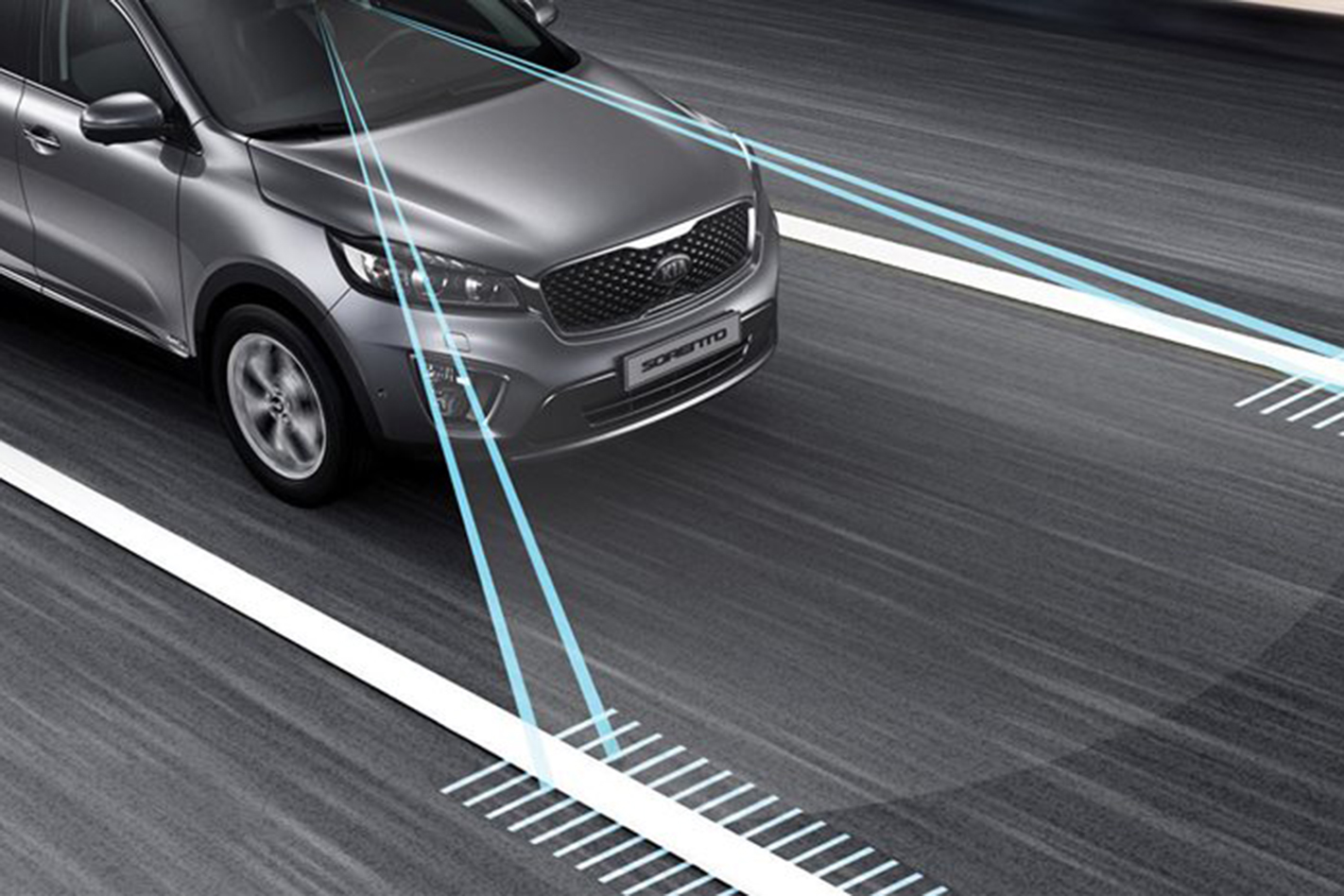
From then, brands have exactly two years to ensure all new light vehicles sold must feature the active safety technology. Currently, it’s reported that 61 per cent of such vehicles are equipped with lane keeping assist – almost two in every three cars.
The Government claims the mandate could reduce the number of deaths in light vehicle crashes by 11.9 per cent over 35 years, saving around 7000 lives and avoiding over 23,600 serious injuries.
Accounting for the indirect consequences of road trauma on the health system and productivity, among other things, the Government estimates the move could also save the national economy $2.44 billion.
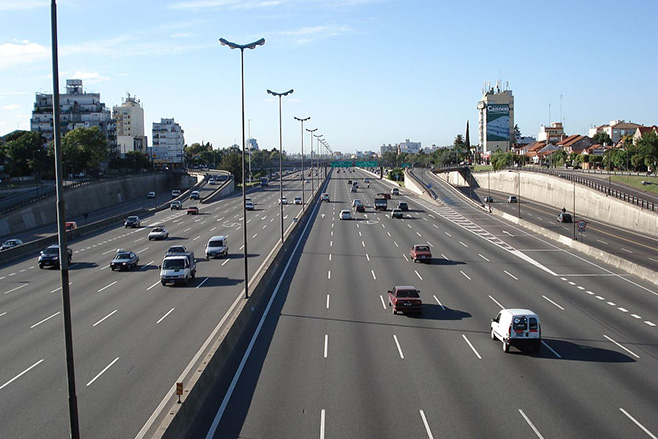
As part of the process, Australians are being welcomed to view draft legislation and submit their feedback by February. Within the documents, ADR 107/00 outlines the lane departure warning system on vehicles will need to operate at least between 65km/h and 130km/h – speeds that pose the highest risk of “dangerous injury”.
Using radar, lane keeping systems are designed to warn drivers when their vehicle is leaving its lane and intervene if needed by autonomously steering back into safety. It stands to reduce head-on collisions, sideswipes and single-car run-off road crashes.
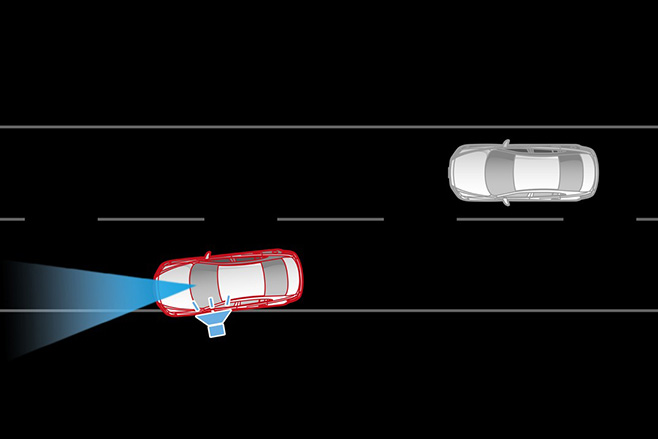
Much like the recently enacted AEB laws, the move to mandate emergency lane keeping systems follows European legislation due to come into effect as of July 2022.
The new regulations will also apply only to light passenger and commercial vehicles, but a spokesperson told Wheels mandating lane departure warning on heavy vehicles is being investigated, with more news promised next year.
Though there are numerous benefits of introducing such technology, the proposals also have the potential to raise the price on vehicles if car brands pass on the cost of fitment – which could, in turn, force low-budget buyers into older second-hand vehicles with lesser safety standards.
Italian carmaker Lancia could make a return to Australia with premium electric models, as the brand looks to carve a place for itself within the newly-formed Stellantis group.
Lancia CEO Luca Napolitano told Reuters the company was forging ahead with a 10-year roadmap to revitalise the brand as an electric vehicle (EV) manufacturer, with Mercedes-Benz being used as a benchmark.
“I don’t mean we want to fight against Mercedes, that would be naive, but that is an example of what we look at,” he said.
Napolitano stressed that Lancia needs to focus on its priorities and build credibility within the premium segment, initially targeting Germany and France – where buyers are adopting EVs at a faster rate – before building a presence in Belgium, Austria, Spain, and the Nordic countries.
“Our aggressive electrification strategy and our focus on market segments, which are very strong in Europe, will help us,” he added.
But while the company’s long-term plan does not outline an expansion beyond Europe, Napolitano left the door open to right-hand-drive markets.
“However, in the coming year, if things go well, why not try to bring [Lancia models with] right-hand-drive also in Japan, South Africa or Australia?” he said.
The carmaker has a new Ypsilon model arriving in 2024, followed by a compact SUV in 2026 – with an all-electric hatchback due in 2028.
As well as a retail expansion across Europe, Napolitano says the company will offer a streamlined buying experience through its website to help reduce the time its customers spend at dealerships, with the aim to improve profitability rather than outright sales volume.
“My target is to make it possible to buy a car with just three clicks,” Napolitano said.
Snapshot
- One trim grade only: VTi-LX
- National drive-away price of $47,200
- Hybrid and hero Type R models due later
I’ve always found it deeply irritating when someone describes themselves as an entrepreneur. The term is not a role or a job description, it is a title that must be demonstrated, earned over time, and then awarded by others. Calling yourself an entrepreneur is like walking into a trophy shop and buying yourself a cup. And in the car world, exactly the same applies to the label ‘premium’.
None of the key players in the current premium new-car market bought their way into the game, and the reputation as a more luxury, high-quality and exclusive option is a medal fought for. And so it goes that any hopeful brand wanting to join the Skodas, Volvos and Land Rovers of the world had better come with a very strong offering. And now Honda is having a crack with its 11th-generation Civic.
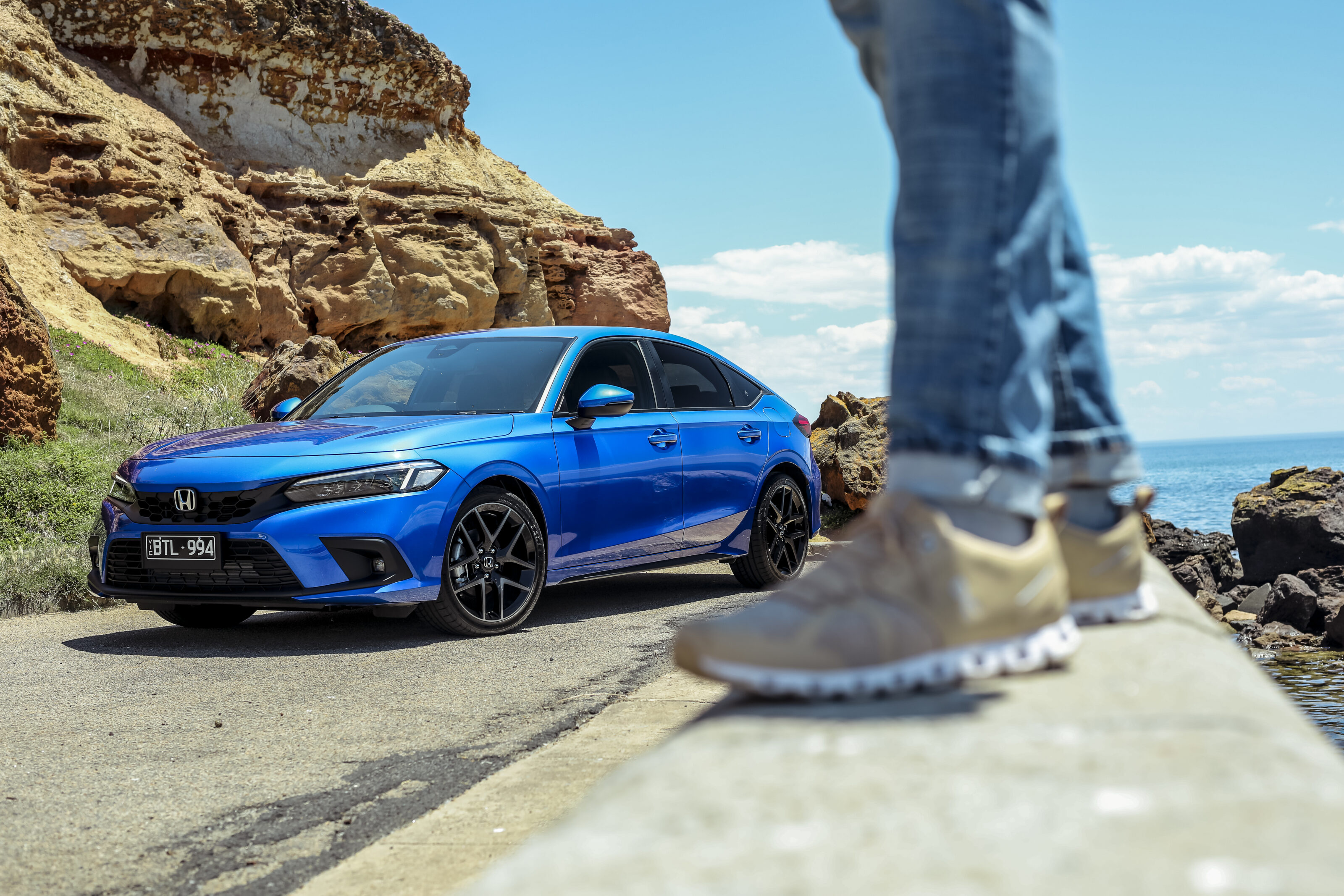
The Japanese brand’s attempt to infiltrate more affluent company is a comprehensive revision of the 50-year old model and arguably the biggest shake up of the Civic formula in a half a century. Styling is said to take most inspiration from my favorite of all the Civics – the 1983 third generation.
The result is a dramatic simplification of the design with all of the previous model’s tacky complexities banished.
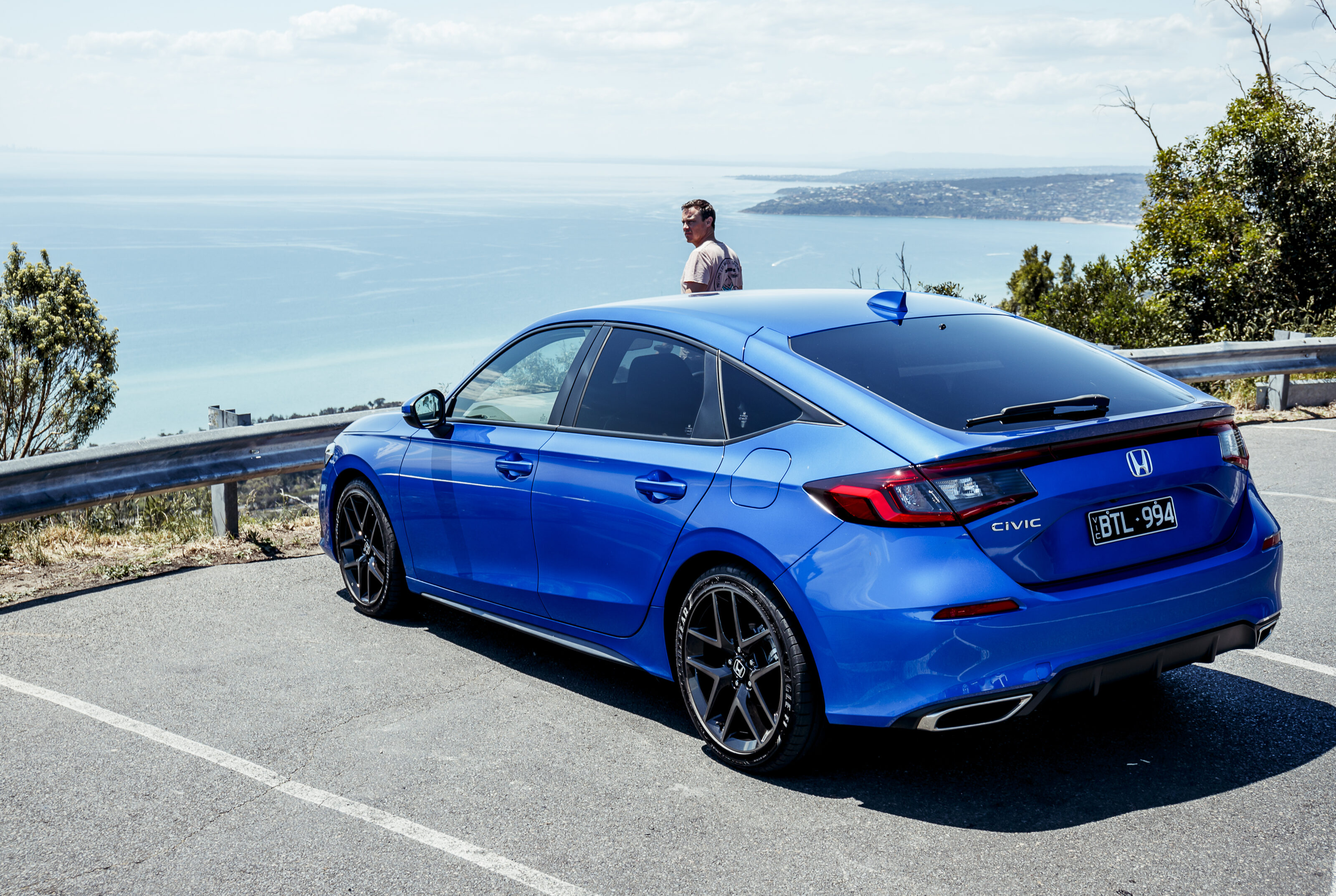
The nose is smoothed and calmed into a milder and more handsome visage, a longer front overhang and shorter rear overhang transforms its stance along with a lower beltline and bonnet, while there are now six side windows in place of the four-plus-one-massive-c-pillar of the outgoing model.
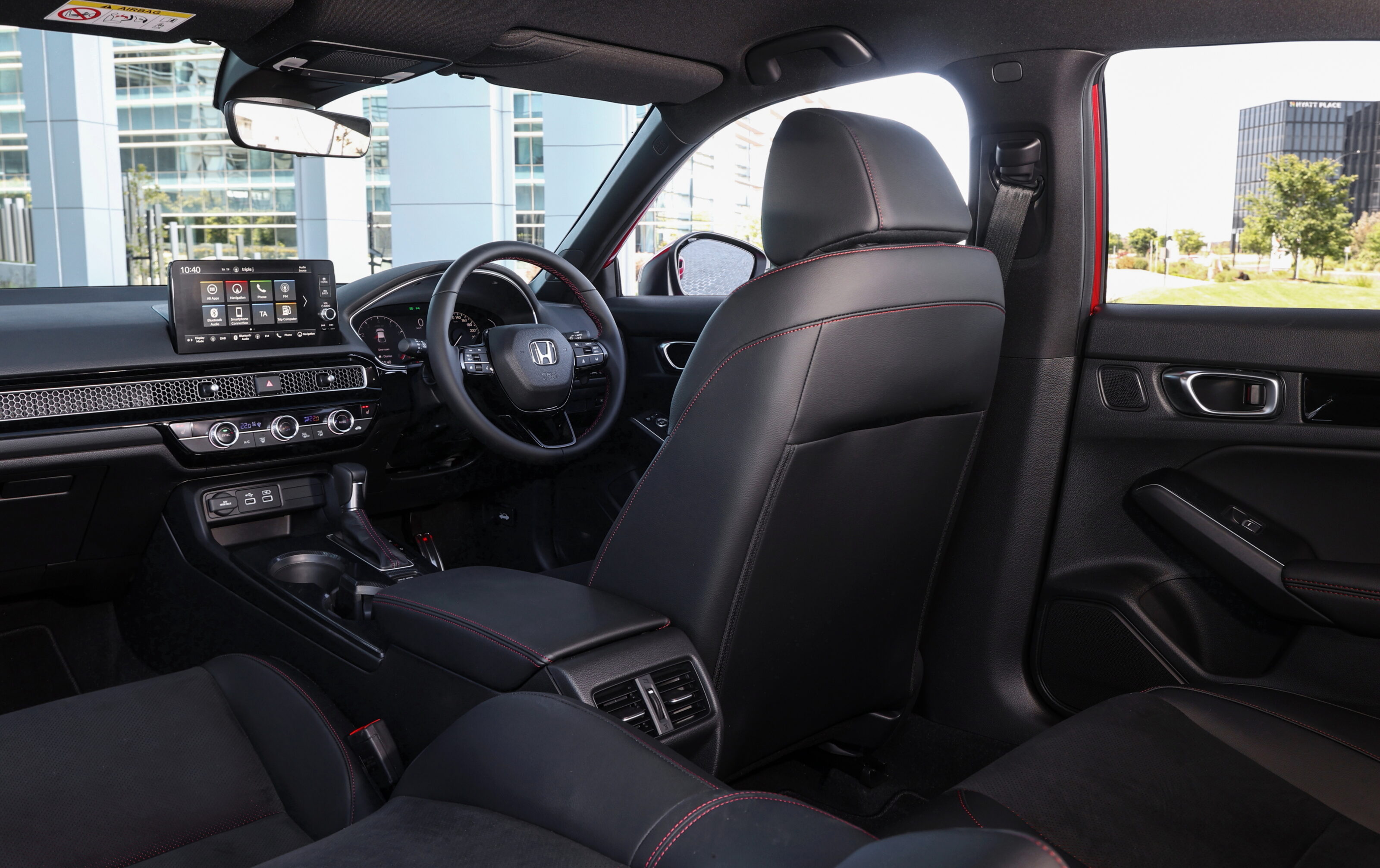
Inside, the transformation is even more striking and pleasing, and the cabin has undergone somewhat of a materials renaissance. Gone are any traces of tacky plastics as well as the needlessly busy layout in favour of high-quality materials including a cool honeycomb mesh covering the air vents, premium leather for the steering wheel and a relaxing simple design for the dash.
There’s a new 9.0-inch touchscreen, which might not sound huge when compared with rivals, but it’s the biggest yet fitted to any Honda.
The driver’s display is divided into traditional analogue speedometer and digital tacho with information display. This is a step up even if the rear-view camera resolution is a bit crappy and the instrument cluster looks like a phone picture taken through a greasy lens.
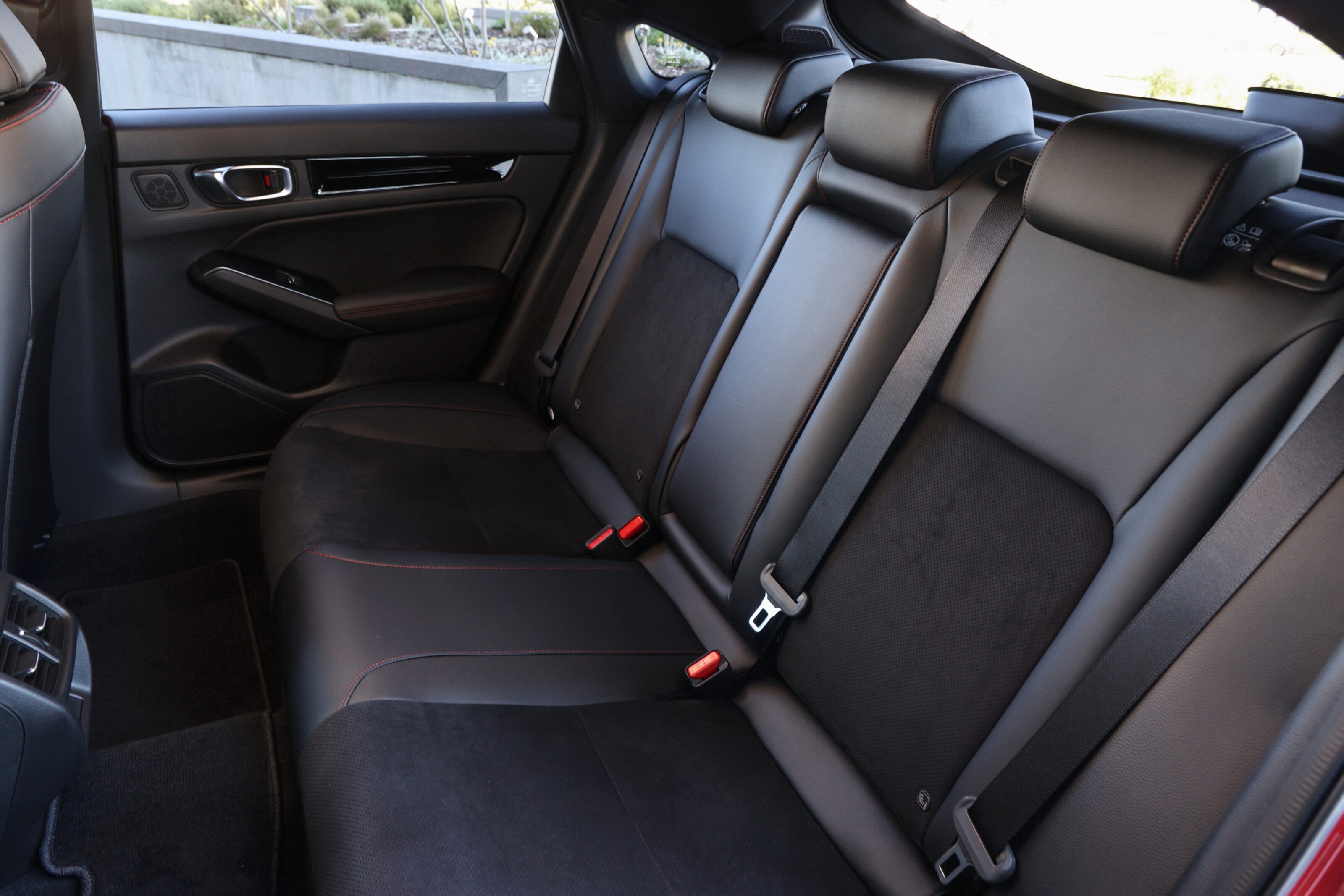
Another downside of the larger screen is that information displayed on the far-left forces the driver to glance a long way from the road, and there’s no head-up display. Notable omissions also include a sunroof and speed sign recognition (although the revised Honda Sensing safety suite is very comprehensive), but you wouldn’t mind if it was a bargain, right..?
The driver’s seat is electrically adjustable, both front seats have heating and the entire cabin is upholstered in a combination of (good) synthetic leather and perforated imitation suede, and it also offers masses of space for tall and portly people in both rows.
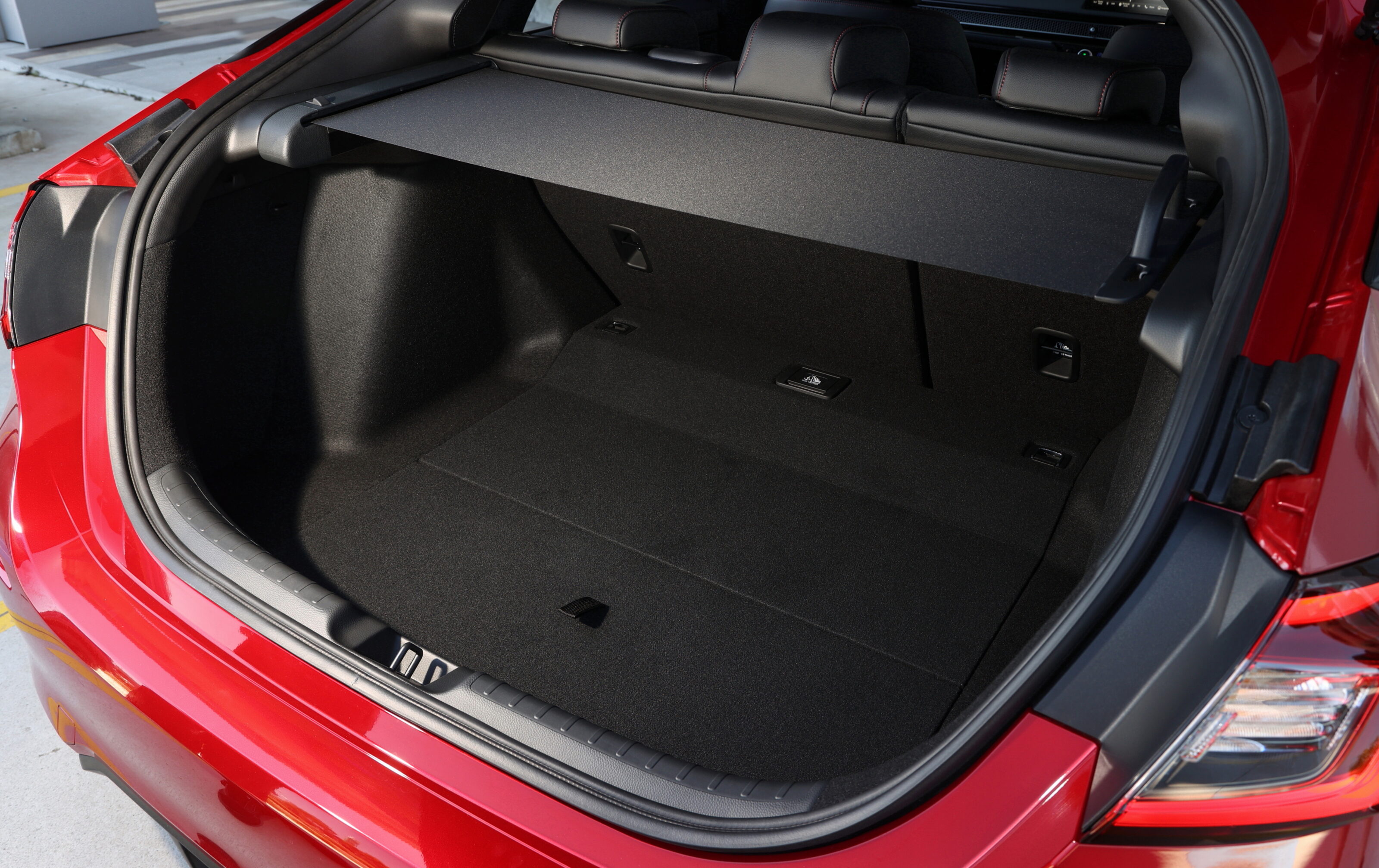
Even if the boot has shrunk from more than 500 litres, it’s still a generous 450L. A 45-litre under-floor bin is very handy, but I’m not forgiving the absence of a spare in favour of the dreaded inflator and can of goo.
Easily the best part of the interior, however, is the view out. Honda’s engineers went to lengths to open up the forward view including hidden wipers, the lower bonnet, a completely uncluttered screen, and door mirrors that are no longer attached to the A-pillar. It is a noticeable improvement, imparts a wonderful sense of confidence and is class-leading.
Under the virtually invisible bonnet is an evolved version of the 1.5-litre turbocharged four-cylinder petrol which has been revised to liberate a paltry 4kW but a more significant 20Nm. This Civic’s 131kW and 240Nm is not Type R territory, but adequate, and the torque boost makes the Civic far more versatile and eager.
The bigger shove is fed to just the front wheels via a revised CVT auto which is snappier and more responsive and offers convincing gear steps when using the paddle shifters. It still has a little of the typical CVT drone and elastic-band feel, but it’s up there with Subaru’s interpretations as one of the best.
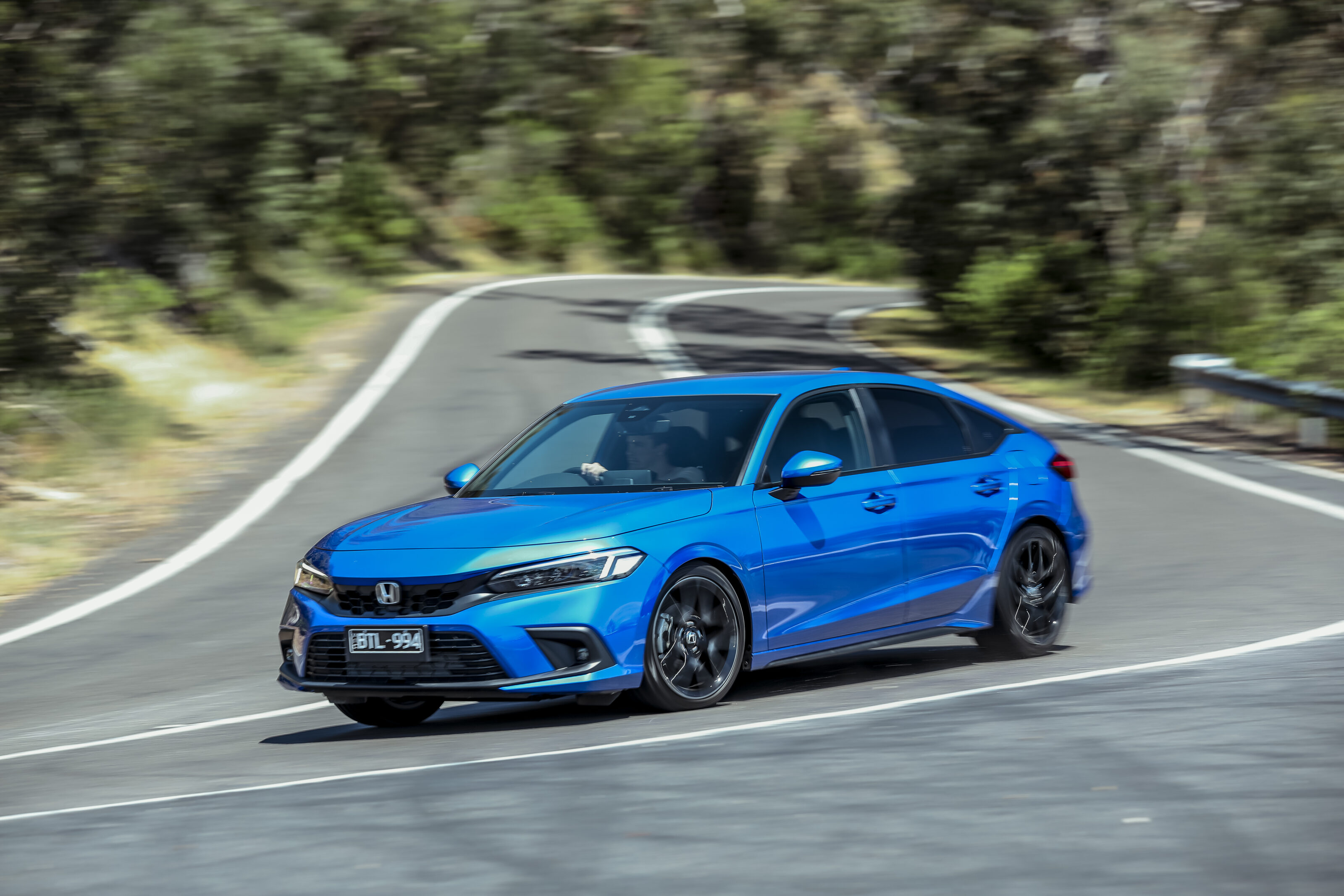
But better than all of this is the new Civic’s chassis. Extensive development to eliminate the sources of noise vibration and harshness combines with a smooth compliant ride for comfortable cruising but when the way ahead turns twisty, the new model is sensational.
Electric power steering is beautifully weighted, sharp and accurate, while the Dunlop Eagle F1 tyres conspire with the new suspension tune for massive grip levels and a front to rear balance that feels 50:50.
The nose turns in with delightful eagerness and bountiful grip, and the body control is confidence-inspiring as the speed builds.
This chassis can handle a lot more power than the decent 1.5-litre and offers a glimpse at the imminent greatness of the next Civic Type R.
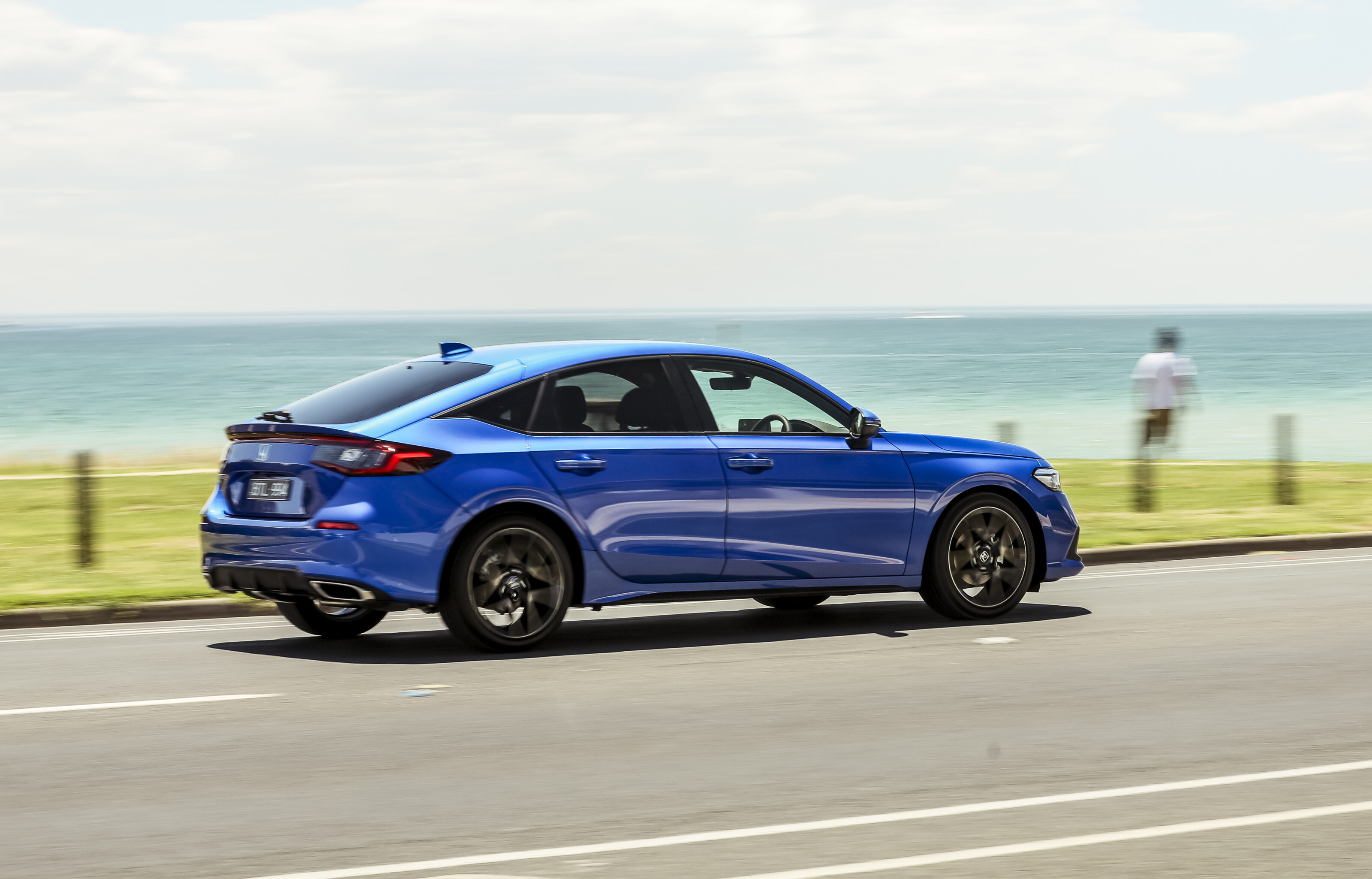
Doubtless then, the new Civic has the credentials to be called posh, but all the premium improvements have come with the premium price tag to match.
Subsequently, its $47,200 asking price overlaps with the BMW 118i, it’s more than the entry Mercedes-Benz A180, and the same cash will get you into a Mini Cooper S five-door.
Compared with the flagship versions of Honda’s more traditional rivals, the Civic doesn’t offer quite the same levels of equipment and in most cases the top-shelf variants are still cheaper. But what really puts it into perspective is the Hyundai i30 N and Ford Focus ST-3 high-performance flagships are also the same money.
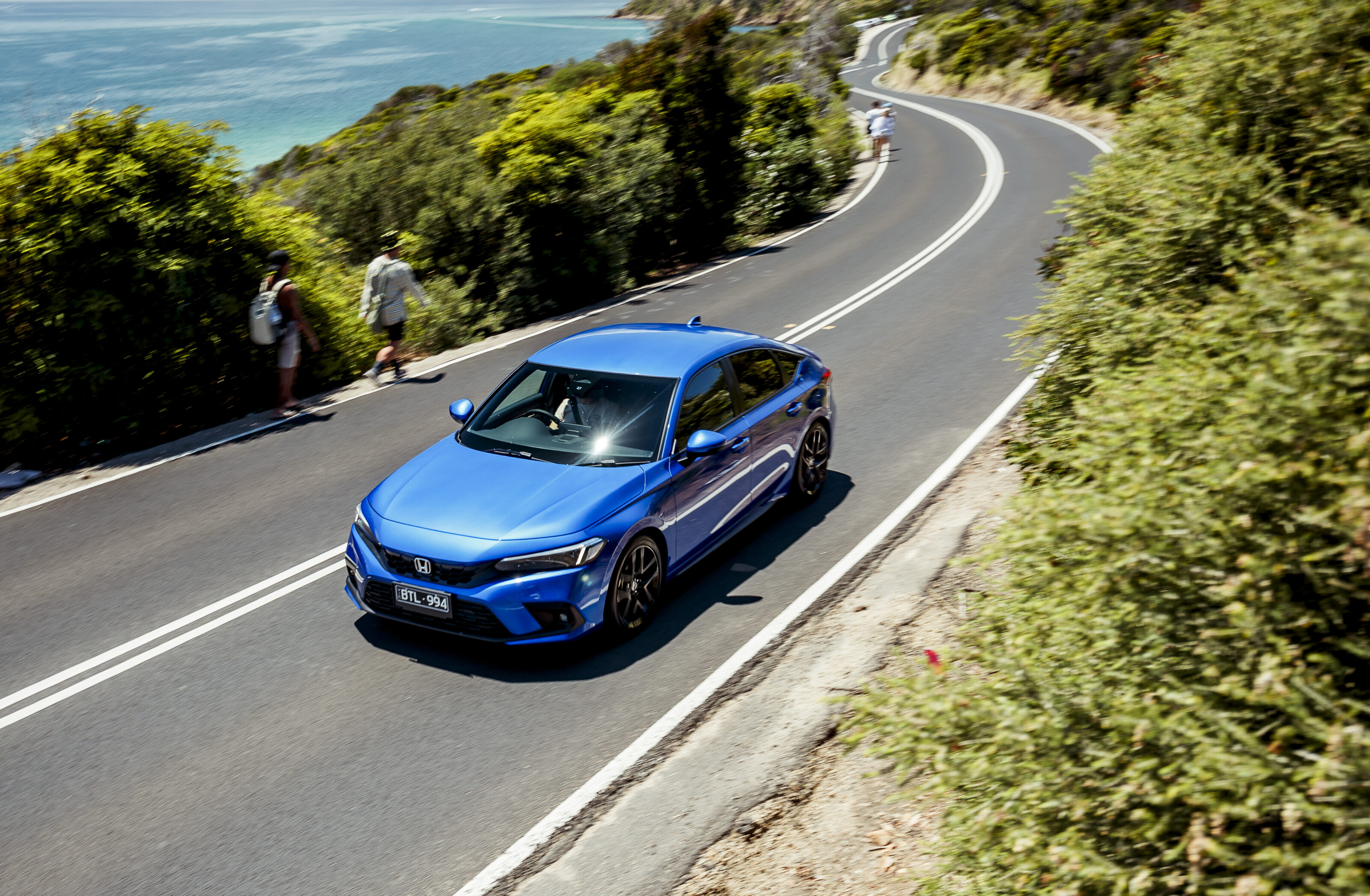
And if you were thinking of haggling for a deal, don’t waste your poker face, because Honda’s new nationwide one-price policy means there’s absolutely no bartering. Nor is there a cheapo entry-level version to lure you into showrooms.
The sole VTi LX will be joined by a hybrid in 2022, and the Type R after that but neither will save you any cash.
Honda certainly gets away with applying the premium label to its new Civic, but this award comes at a significant cost.
Tesla has been forced to recall more than 20,000 units of its Model Y in China, owing to suspension failures for the relatively-new vehicle.
Chinese produced examples of the Tesla Model Y built between February 4, 2021, and October 30, 2021, are affected, covering a total of 21,599 vehicles which rolled off the Shanghai production line.
According to ChinaPEV, the recall has been issued thanks to a number of suspension failures for Model Ys, with numerous examples found to have front and rear steering knuckles, which don’t meet design requirements.

The potentially faulty knuckles could result in a drastic change in suspension geometry while driving, posing an immediate danger to the car’s occupants and anyone around it.
It’s not yet known whether this will increase wait times on the Model Y to Australia, with the new electric SUV initially expected to go on sale locally earlier this year before semiconductor related delays pushed its arrival back to the first quarter of next year.
In August, three Model Ys were found to have arrived on Australian shores, although it’s not known whether these vehicles were imported for homologation, crash testing or educational purposes.
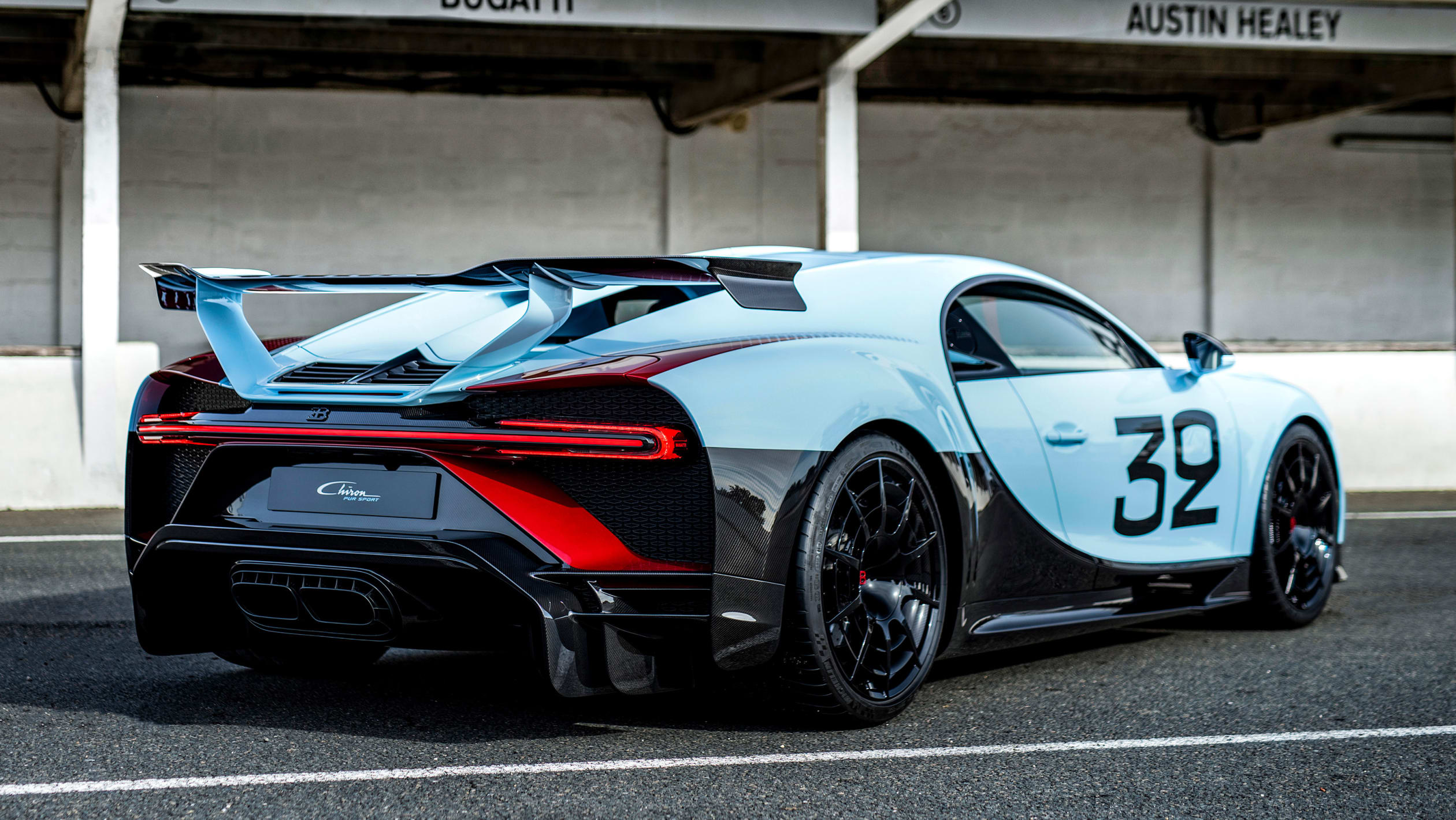
Bugatti has celebrated the opening of its ‘Sur Mesure’ customisation service by revealing its first project, a bespoke version of the Chiron Pur Sport.The Chiron Pur Sport Sur Mesure is inspired by the renowned racing driver after which the hypercar is named: Louis Chiron. The Monégasque driver drove Bugatti’s first racing cars and won the 1931 French Grand Prix.
Like the original racer, this contemporary Chiron features the number 31 on the doors, which of course is hand-painted on, while the underlying blue paint matches the original too.
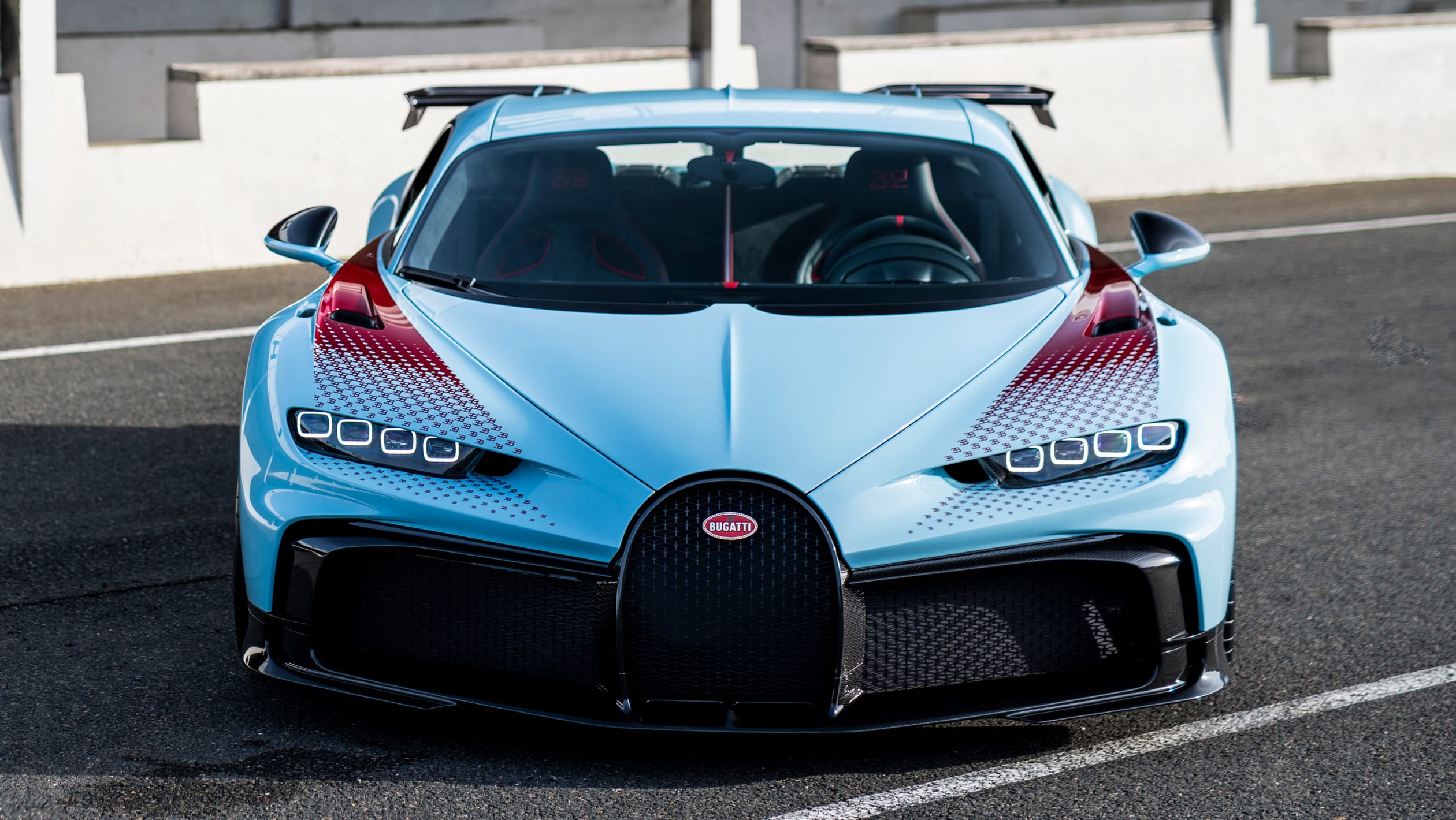
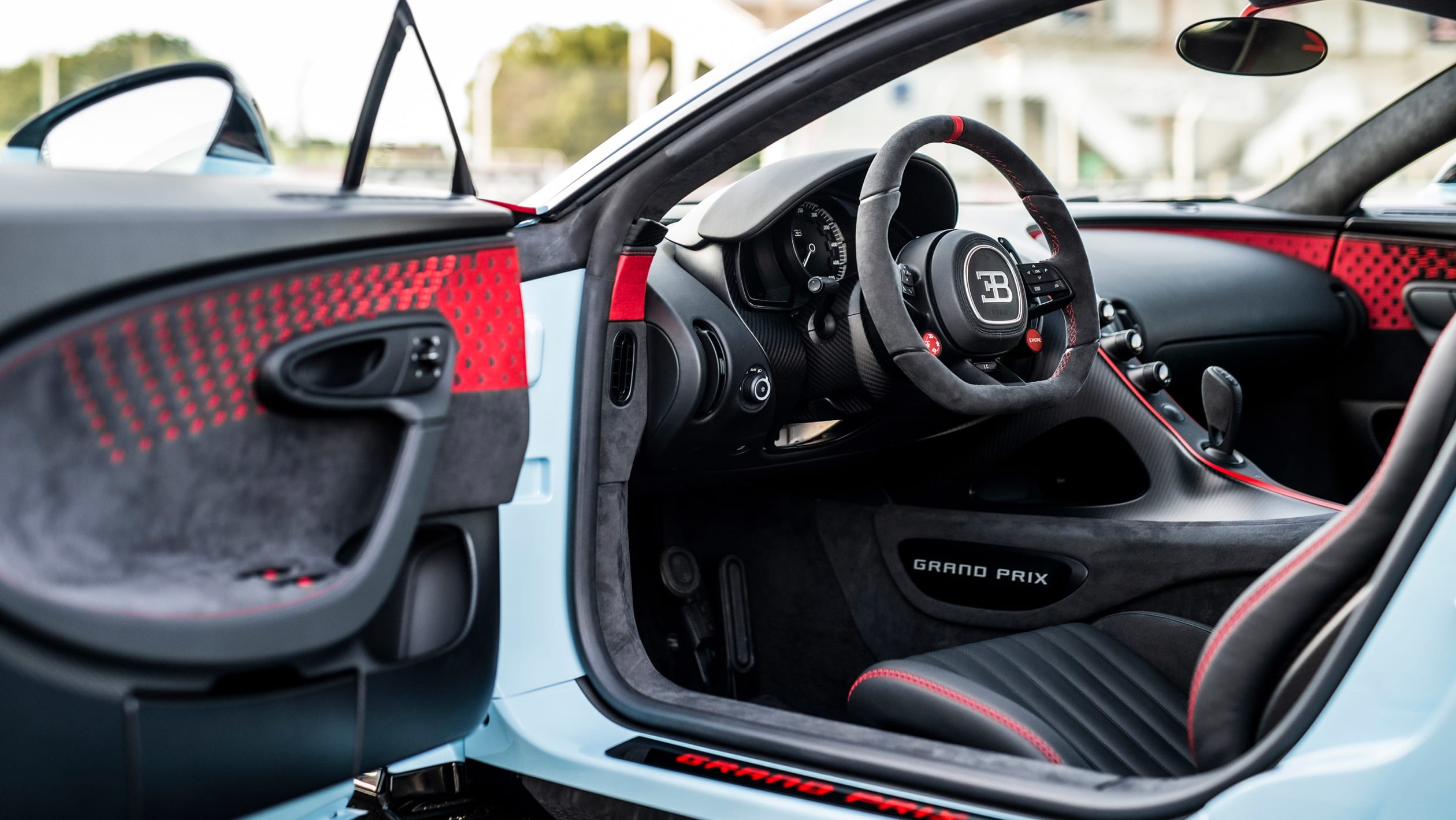
Underneath the metal, Bugatti hasn’t changed the car’s performance. It features the same quad-turbocharged 8.0-litre W16 engine, producing 1103kW and 1600Nm of torque via a seven-speed automatic transmission to all-four wheels.The lightweight components Bugatti engineered for the Pur Sport have remained, meaning its 50 kilograms lighter than a regular Chiron and has slightly closer gear ratios to help it feel more eager on a track. Top speed should be the same at 349km/h.However, inside the cabin there are further inspiration of the original race car, with the ‘32’ race number embroidered on the hypercar’s headrests, while the centre console gets a new ‘Grand Prix’ inlay made from black anodised aluminium.
The door cards are another innovation and feature a complicated ‘EB’ pattern, which required the Sur Mesure department to develop a new stitching technique.“For many years, we have worked with our clients to create their own personal vision of the ultimate hyper sportscar,” said Bugatti’s sales and marketing boss, Hendrik Malinowski.
“It has always been a highly tailored process, but as an ever-increasing number of our clients request detailed and intricate customisation, the launch of Bugatti Sur Mesure will ensure we can cater to their desires with the perfect level of detail required from a Bugatti.“Our clients are often deeply intrigued by Bugatti’s motorsport lineage, and it’s fitting that the first Sur Mesure commission should pay homage to one of our great racing icons. We’re so taken with this creation that we intend to make many of this customer’s ideas available to more of our clients with the Chiron Pur Sport.”
Key Points
- Solitary Nexo now a part of QPol’s fleet
- Joins the five Nexos used by Queensland Government
- Will be powered by Queensland-sourced hydrogen
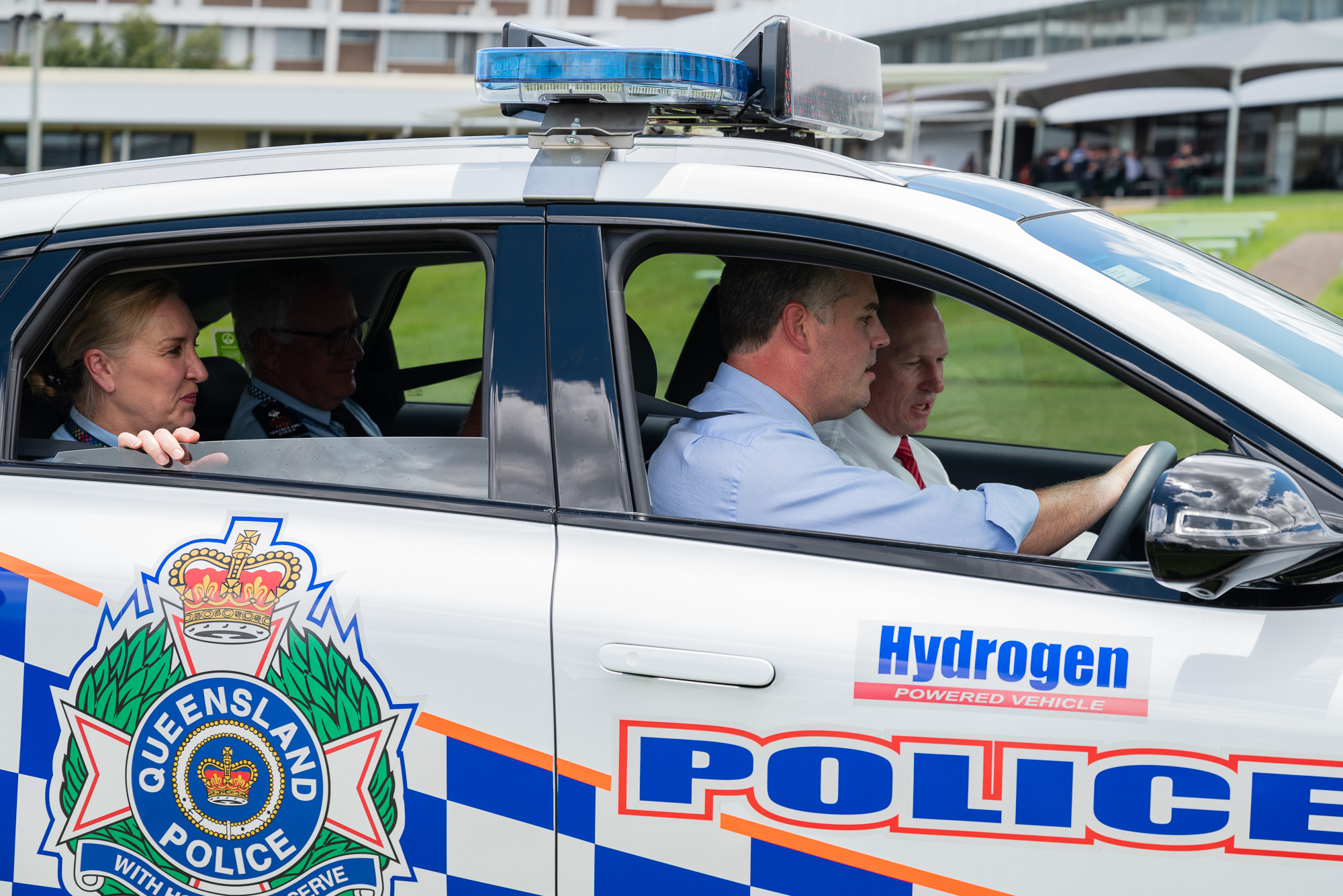
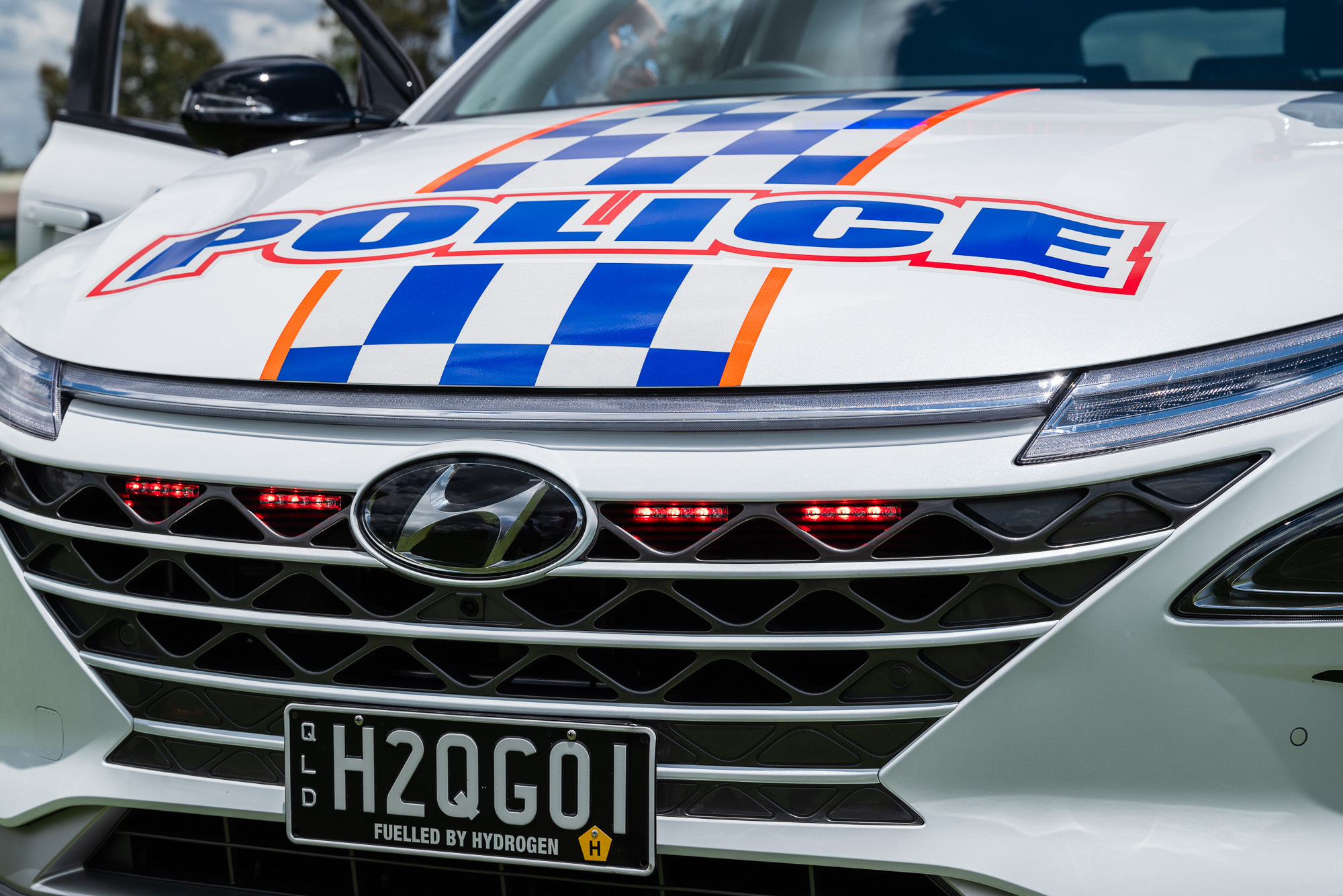
The Queensland Police Service has taken delivery of its first Hyundai Nexo, set to be rolled out for service in the near future.
The fuel-cell vehicle will be the first ever hydrogen-powered vehicle to be used by law enforcement in Australia, or indeed anywhere in the Southern Hemisphere, joining a fleet of five Nexos recently taken on by the Queensland Government.
While the sunshine state currently has limited infrastructure for hydrogen vehicles, the adoption of the Nexo by police and government is a shot in the arm for the local hydrogen industry, with the existing station in Redland Bay also supplying locally produced fuel for the car.
Hyundai Australia CEO Jun Heo said the move will help potential future users to see the firm’s zero-emissions technology in use.
“Deploying Nexo into the Queensland Police Service provides a terrific opportunity for police to experience the unique benefits of our zero-emission hydrogen fuel-cell electric vehicle while showcasing the technology to the public,” said Heo.
With a driving range of 666 kilometres and a refuelling time close to that of a conventional, internal combustion engine-powered vehicle, the Nexo is set to be used by Queensland cops for general policing duties – providing Hyundai with real-world data to improve the breed in its next generation.
The Nexo became Australia’s first hydrogen-powered vehicle certified for sale in March, although it is only available as a special order through Hyundai, offered as an all-inclusive loan programme, covering service and maintenance.
