
Snapshot
- Savic Motorcycles has received grants from the Victorian and Federal governments
- C-Series cafu00e9 racer will be available as three variants
- Over 100 pre-orders have been made
Electric vehicle start-up Savic Motorcycles is aiming to start putting its C-Series into production after cashing in on a series of investments from the Victorian State and Federal governments.
Based in West Melbourne, the electric motorcycle manufacturer has so far raised $1.83 million in capital with the help of private partners, the Victorian Government, and a recent co-investment of $657,000 from the Federal Government’s Advanced Manufacturing Growth Centre (AMGC).
The C-Series is so far Savic’s only bike, a café racer created by Perth designer Dave Hendroff and offered in three separate variants – a 25kW Omega, 40kW Delta and the range-topping 60kW Alpha, the latter of which develops 200Nm of torque to help it accelerate from 0-100km/h in a claimed 3.5 seconds.

With team spread out across the Melbourne region in Carlton, Heatherton, Forest Hill, Berwick and Essendon, the arrival of Savic Motorcycles is a boost for the Victorian manufacturing industry after the closure of Ford’s plant in Broadmeadows and Toyota’s Altona plant in 2016 and 2017 respectively.
Despite lockdowns affecting the team over the past 18 months, its first production prototype was assembled a year ago with the battery and motor arriving earlier this year, just in time for the bike to go on display at Brisbane’s Gallery of Modern Art ‘The Motorcycle’ exhibition in March.

Dennis Savic is the founder of Savic Motorcycles, a former Ford optimisation engineer with a passion for two-wheeled machines, and he believes the government funding will allow his company to start delivering its bikes as early as next year.
“Now that our first production run is funded, we’re aiming to have at least 20 bikes delivered to their owners in the last quarter of 2022, before rapidly scaling up manufacturing in 2023,” said Savic.
“Our initial customers have proved to be incredibly loyal and have shown great faith in us and our bike during the delays we’ve experienced during the lockdowns of the past 18 months.
“We even have a couple of lifelong Harley riders in there, which gives us great delight.”

All C-Series variants are fitted with a 16kWh lithium-ion battery, which can provide between 150km (Omega) and 250km (Alpha) of driving range, with the ability to be charged to 80 per cent in just under four hours.
Rather than a traditional chain and sprocket or even a shaft system, the C-Series utilises a carbon-fibre drive belt, made by Optibelt, to transfer power from the motor to the rear wheel – one of many high-quality components including Wilbers suspension and Brembo brakes.
At the moment, the Savic C-Series’ only competitor is the Harley-Davidson LiveWire, an EV bike built by the iconic American brand. However, while the LiveWire has a ride-away price of $49,995, the C-Series Omega starts at just $12,990 before on-road costs, jumping up to $16,990 for the Delta before the Alpha tops out at $23,990 – less than half the Harley’s cost.

With production set to begin in 2022, Savic is already planning a second run of 200 units to start in 2023 – driven by grants from the AMGC, the Victorian Clean Tech Fund, and a research and development loan from Invest Victoria.
Savic’s announcement comes on the same day Japanese manufacturer Kawasaki confirmed it will be moving to an electric-only strategy by 2035 for major markets, including its native Japan, the United States and Australia.
By 2025, Kawasaki is aiming to introduce at least 10 electric or hybrid motorcycles globally, transitioning from internal combustion engines and potentially developing a hydrogen fuel-cell powered bike.
UPDATE, September 2022: 2023 MG ZS EV driven
The refreshed and upgraded 2023 MG ZS EV is now on sale in Australia, and we’ve driven it. Get the full story at the link below.
The story to here
Snapshot
- 2022 MG ZS EV gets updated looks with LED headlights
- Two variants now available in overseas markets
- New long-range model offers up to 440km of driving from a single charge
The new-look 2022 MG ZS EV has been revealed ahead of the model’s expected debut into Australian showrooms next year – with a boosted driving range to match.
The ZS EV adopts a similar look to the petrol-powered ZS it’s based on, but the fully-electric MG now features a grille-less fascia in the same colour as the body – together with new LED headlights and daytime-running lights.
But the big news is the car’s upgraded electric powertrain. MG has introduced a long-range version of the ZS EV for overseas markets, with the 44kWh battery pack replaced with a 72kWh unit – capable of a claimed 440 kilometres on the WLTP test cycle.
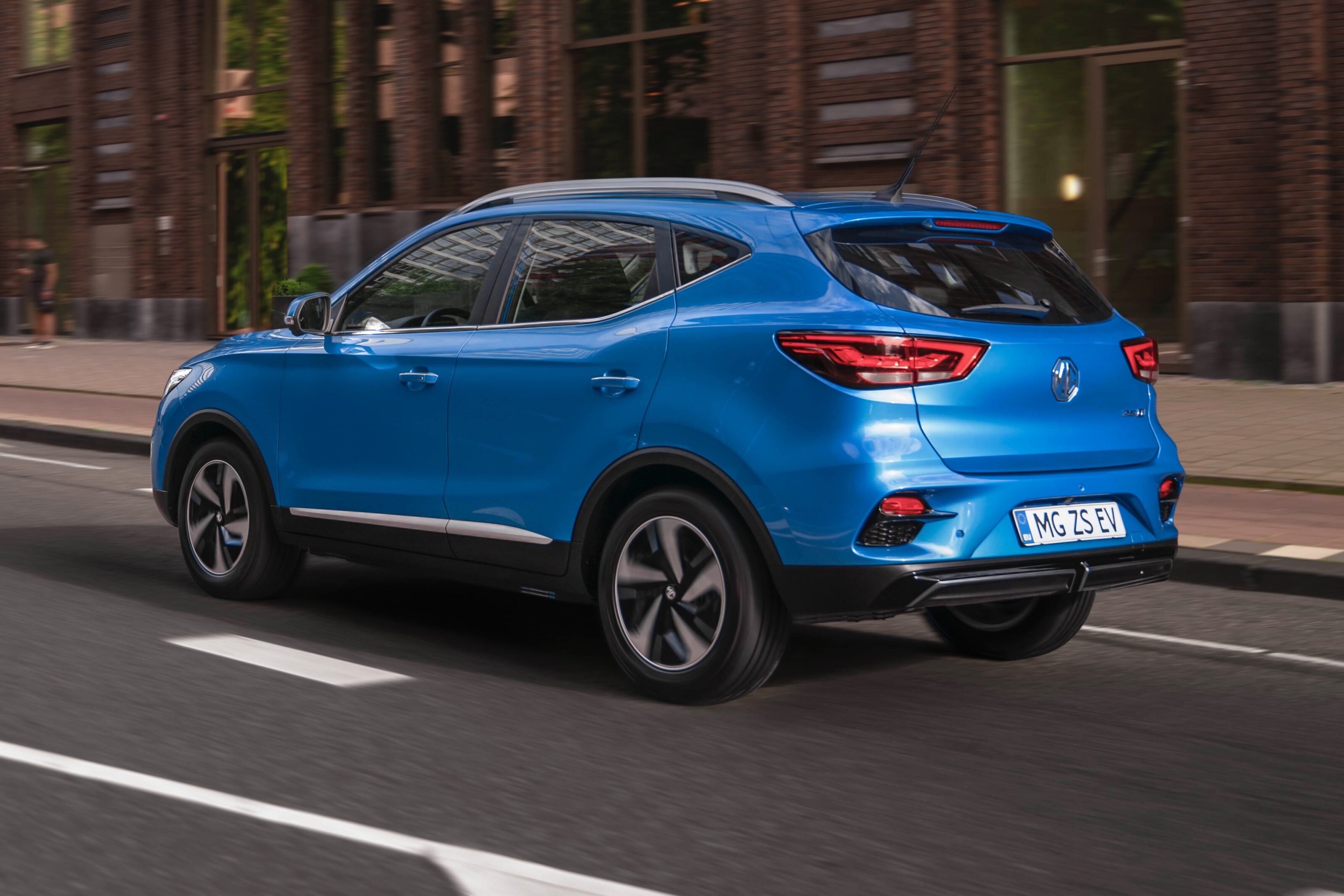
For perspective, the current model on sale in Australia offers a driving range of 263km on a single charge – representing an increase of 67 per cent.
An entry-level version will also go on sale next year using a 51kWh battery pack, and offering a driving range of 320km – a 22 per cent improvement.
MG says the long-range ZS EV can be recharged from zero to 100 per cent in as little as 42 minutes using a 100kW rapid charger, or in less than 11 hours using a standard 7kW unit.
A four-stage LED indicator located inside the port allows for a quick check of the battery status during recharging.
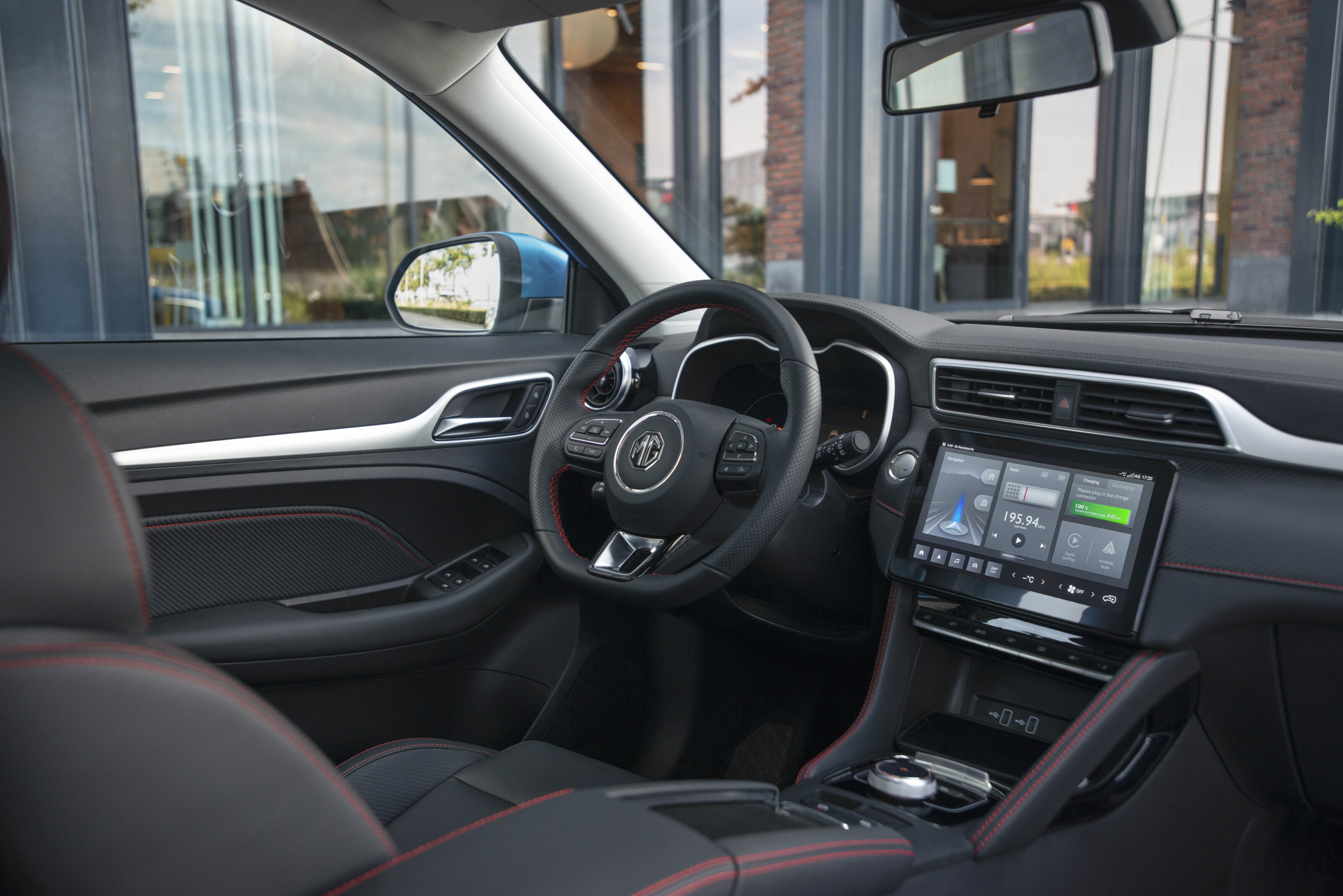
Inside, the 8.0-inch infotainment screen has been upped to 10.1-inches and enjoys improved graphics and functionality, along with a revised instrument cluster and wireless smartphone charging.
The 2021 MG ZS EV is currently on sale in Australia for $44,990 drive-away, but pricing for the facelifted model will be announced in the second quarter of next year (April to June inclusive), with deliveries to begin in the second half of 2022.
Snapshot
- Nissan aims to introduce four revised models in 2022
- Z car to debut in second half of year
- New e-Power powertrain to launch over the next 12 months
UPDATE, May 11, 2022: Australian pricing for the new 2023 Nissan Z has now been announced. Get all the details at the link below.
The story to here
Nissan Australia has confirmed four upgraded models will be arriving on local shores next year.
Headlined by the new Z, now in its seventh-generation, the remaining three models are; the next-generation Qashqai, X-Trail and Pathfinder – all of which have already launched overseas.
With the GT-R entering its final months of service to close out 2021, the Z will be Nissan’s new flagship model, underpinned by a revised version of the Z34 370Z’s chassis – but now featuring a a 3.0-litre twin-turbo V6 producing 298kW and 475Nm, which is already stirring up interest with its manual and automatic transmission options.
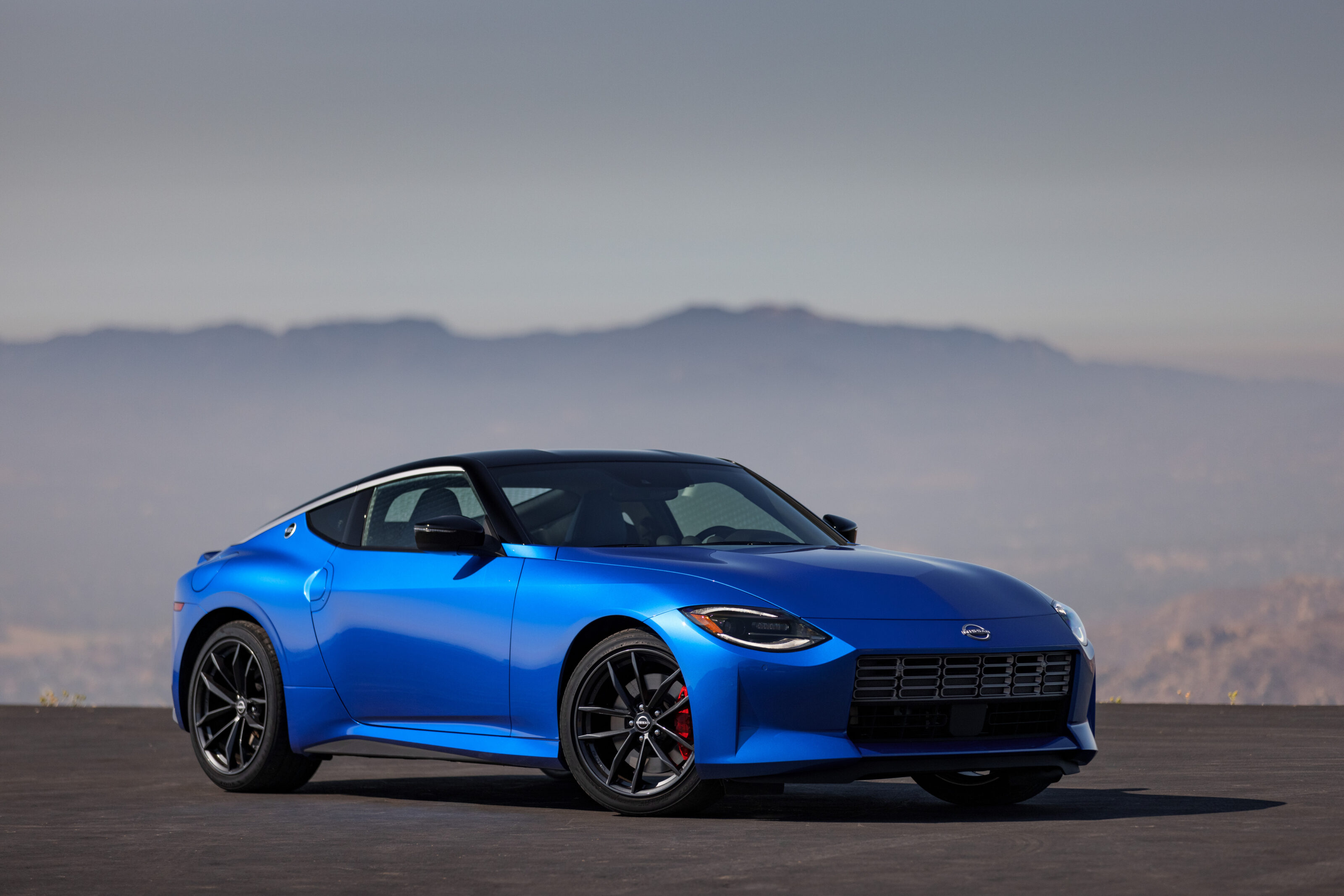
Ahead of its arrival in the second half of 2022, Nissan Australia managing director, Adam Paterson, believes the Z will be a strong contender in the sports car segment.
“The new Z doesn’t just further the story, it rewrites it,” said Paterson. “From power to handling, technology to cabin comfort, this a vehicle designed to delight – and we can’t wait for its Australian fans to get behind the wheel.”
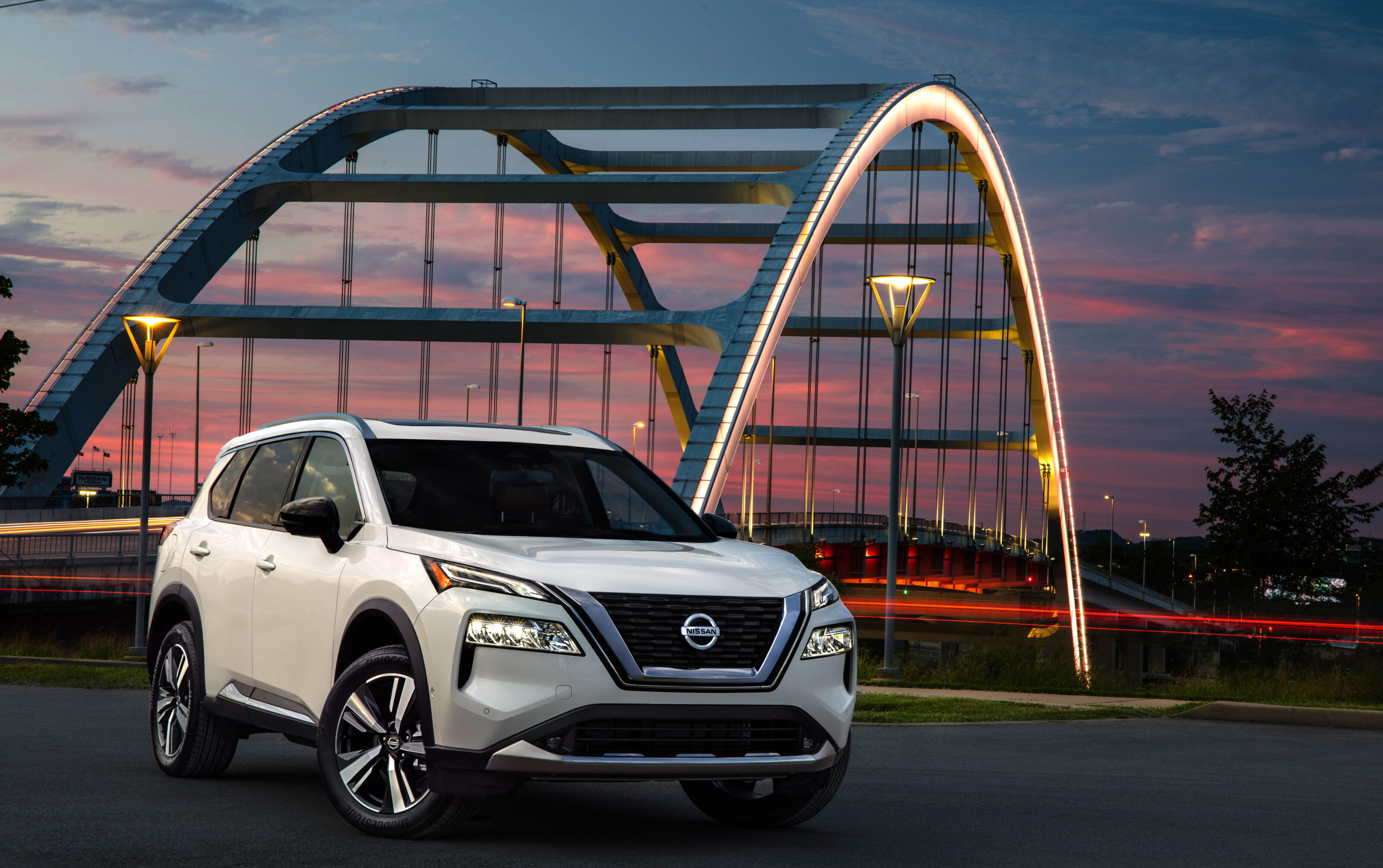
One of the most important cars for Nissan next year will be the fourth-generation X-Trail, as the nameplate is currently the brand’s most successful – accounting for almost a third of all Nissan sales this year.
Now produced in tandem with the North American Rogue, the 2022 X-Trail’s design fits in with the rest of Nissan’s exterior language, which was sparked by the latest-generation Juke, featuring split front lights and thinner units on the rear.
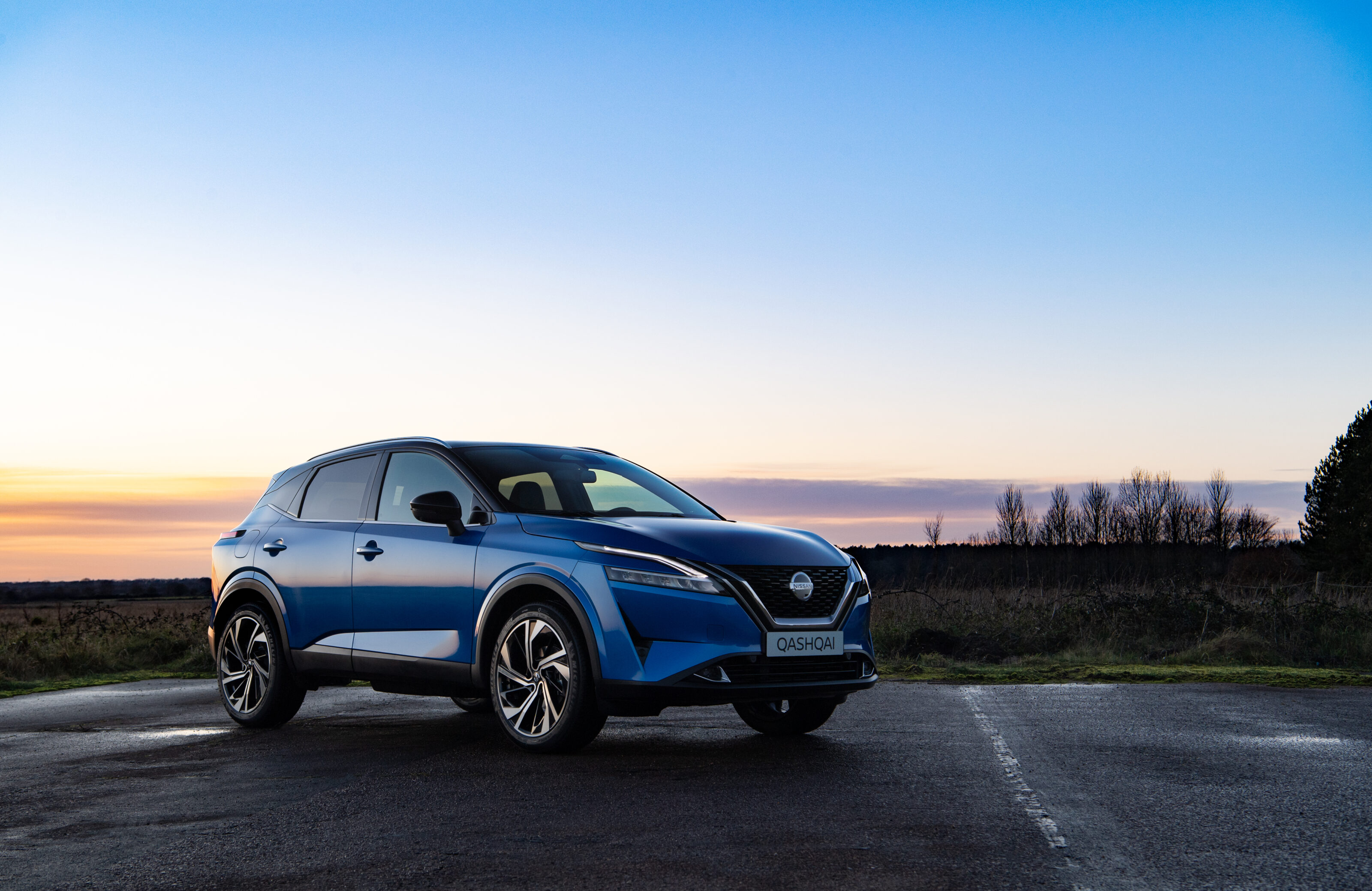
Its little-brother Qashqai will also be turning up on local shores, most likely in the first quarter of the year, bringing with it a 1.3-litre, mild-hybrid assisted petrol motor to become the first electrified variant in the model’s history.
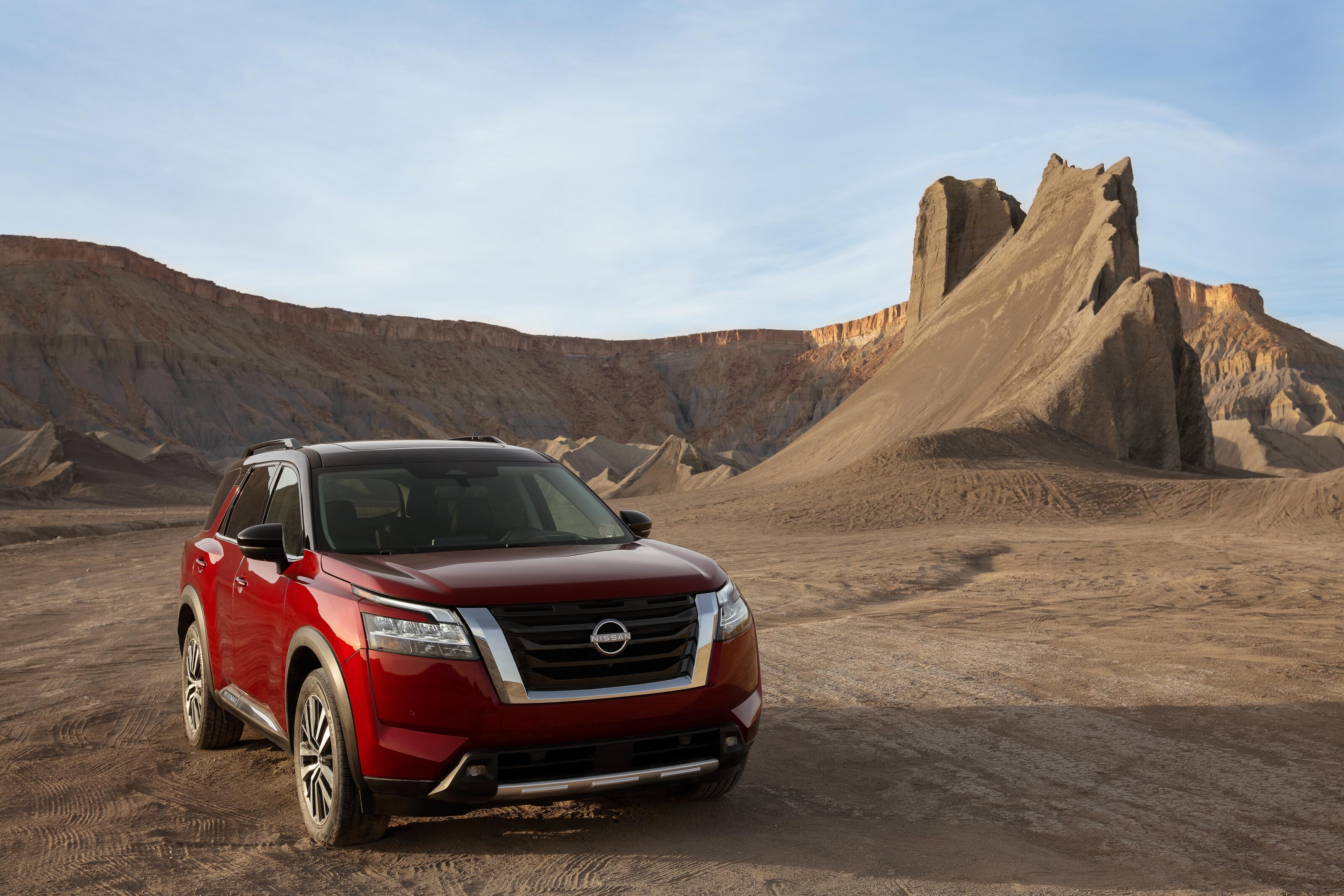
In addition to the smaller SUV, the larger Pathfinder will be looking to climb up the sales charts, with Nissan shifting just under 1000 units from the start of 2020.
Just like the X-Trail, it will feature split headlights and LED rear lights, although it may be surprising to hear the large SUV will not be available with an electrified powertrain – instead retaining its 3.5-litre petrol V6 engine.
On top of its vehicle offerings, Nissan is also looking to debut two new technologies next year. Its new e-Power tech is set to launch in 2022, a hybrid powertrain which doesn’t need to be plugged in – thanks to its onboard petrol-powered range extender.
In addition to this, the ProPILOT driver assistance system will also be rolled out in select models, combining its intelligent cruise control with steering and lane keep assist technologies to provide a semi-autonomous driving experience.
Nissan’s 2022 Australian line-up is coming together
A new scheme aimed at encouraging more women into taking up apprenticeships in the automotive industry has been launched today.
On Thursday, Women in Automotive (WinA) and the Victorian Automotive Chamber of Commerce (VACC) rolled out the new State Government-funded grant program.
With funding from Apprenticeships Victoria, the initiative, entitled Accelerating Women into Automotive, forms part of the Victorian Government’s new $5 million Women in Apprenticeships fund.

It’s hoped the scheme will support getting 615 women into the male-dominated sector at a time of acute skill shortages. Currently only 6.3 per cent of those embarking on an automotive qualification are female.
The five-week program will offer successful applicants specialised training and a work placement – covering everything from mechanics, to engineering, as well as sales and repairs.
“WinA exists to attract, recruit and retain women across all levels and sectors of automotive, so we hope this will encourage more women to join and change the gender perception that has long been associated with the industry,” said VACC’s lead, strategy and policy and WinA manager Dr Imogen Reid.

“At the completion of the program, we hope participants will feel excited to join the industry and undertake their full apprenticeship. By providing the right training and employment opportunities, we aim to increase the completion rates of female apprentices in automotive.
“We know that organisations significantly benefit from improved gender diversity. We’re excited by the opportunity this program presents – effectively breaking down barriers to entry for both women and businesses who would like to employ more [of them].”
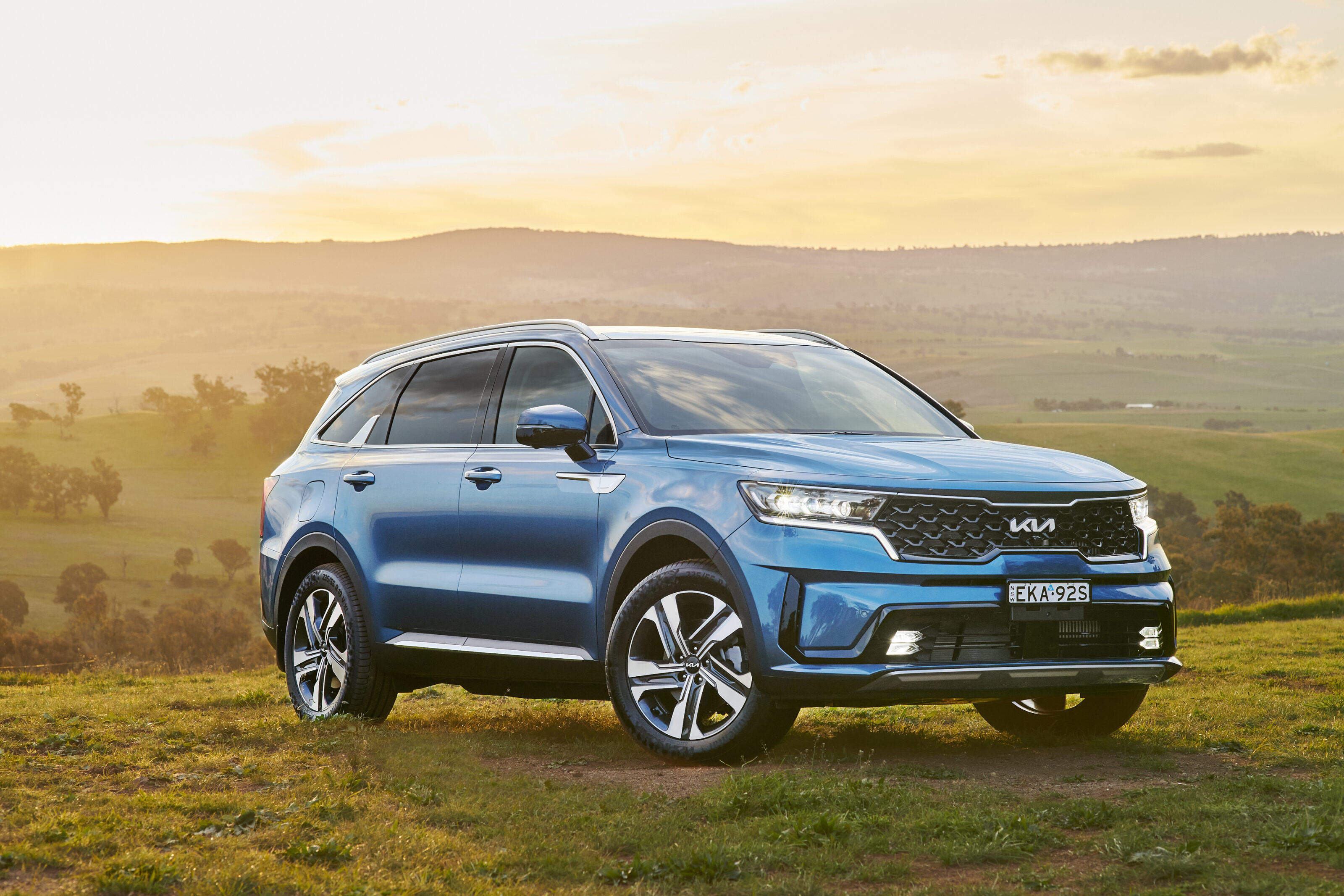
When I reviewed the Kia Sorento Sport+ AWD, I boldly stated that opting for the turbo-diesel over the V6 petrol was a no-brainer, due to its superior fuel economy, superior pulling power and all-wheel-drive traction. But now there is a new petrol option of sorts that’s worth a second look.
Introducing the new plug-in hybrid version of Kia’s flagship seven-seat SUV, featuring a 1.6-litre turbocharged petrol engine and transmission-mounted electric motor that drives all four wheels and, on paper at least, is much more frugal than the diesel.
Unfortunately, there’s a catch. As you’d expect, the electrified powertrain comes at a considerably higher cost and that’s amplified by the fact it is only available in the range-topping GT-Line, resulting in retail pricing that nudges $80,000.
This makes the Kia Sorento GT-Line PHEV the most expensive Kia on the local market. However, and I don’t often say this about plug-in hybrids, there are a few things about it that may well justify the price hike.
What is Kia Sorento GT-Line PHEV like to live with?
The Sorento range features S, Sport, Sport+ and GT-Line variants that are each available with a 3.5-litre V6 petrol engine that drives the front wheels, or a torquey 2.2-litre four-cylinder turbo-diesel with all-wheel drive. Pricing starts at $49,850 before on-road costs for the petrol Sorento S, with the diesel AWD drivetrain attracting a $3000 premium.
At the other end of the scale, the V6 petrol and diesel GT-Line variants retail for $61,070 and $64,070 respectively, with the new GT-Line PHEV coming in at $79,330, (or $81,990 drive-away).
Ideally, there would be PHEV variants across the range, which would see pricing start around $65,000, but supply issues have meant that it will only be available in the range-topping spec for now.
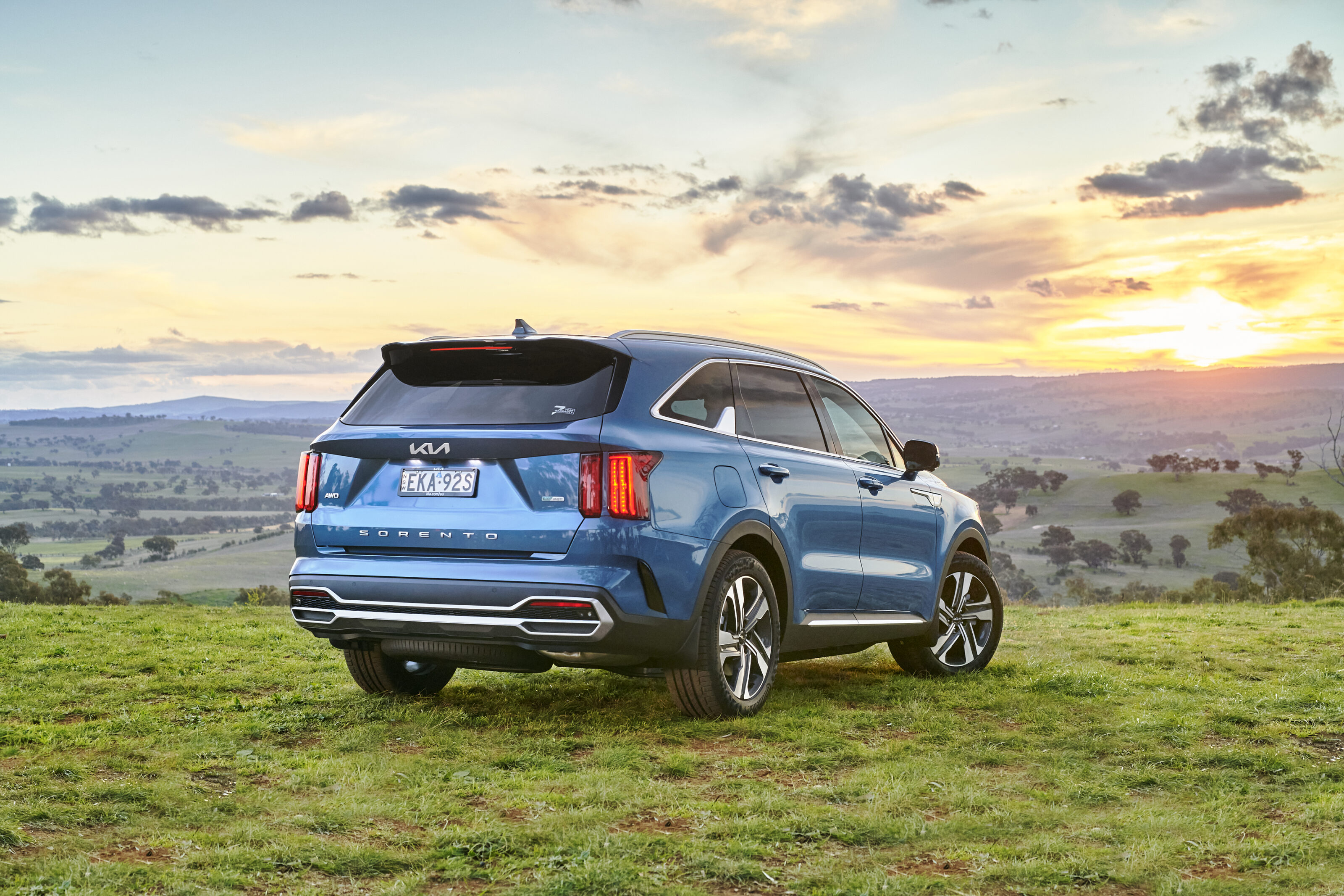
I don’t often say this about plug-in hybrids, there are a few things about this that may well justify the price hike.
As it happens, more than half of private Sorento buyers are opting for the GT-Line versions anyway and demand for the PHEV has already outstripped supply, meaning a six-to-eight month wait.
Being a GT-Line, the newest Sorento variant comes with the full kit and caboodle including stuff that would be extra-cost options in pricier models from premium brands, such as:
- A 12.3-inch high-definition digital dashboard
- 8.0-inch head-up display,
- 10.5-inch panoramic touchscreen
- Satellite navigation
- 360-degree parking camera
- Apple CarPlay/Android Auto
- DAB+ digital radio
- 12-speaker Bose premium sound system
- Quilted Nappa leather trim
- Heated and ventilated power-adjustable front seats
- Heated outboard second-row seats
- Heated leather-trimmed steering wheel
- Rotary gear shifter
- Powered tailgate
- Panoramic sunroof
- Interior mood lighting
- Smart engine remote start
- Fast wireless phone charger
- In-car intercom
- Dual-zone climate control.
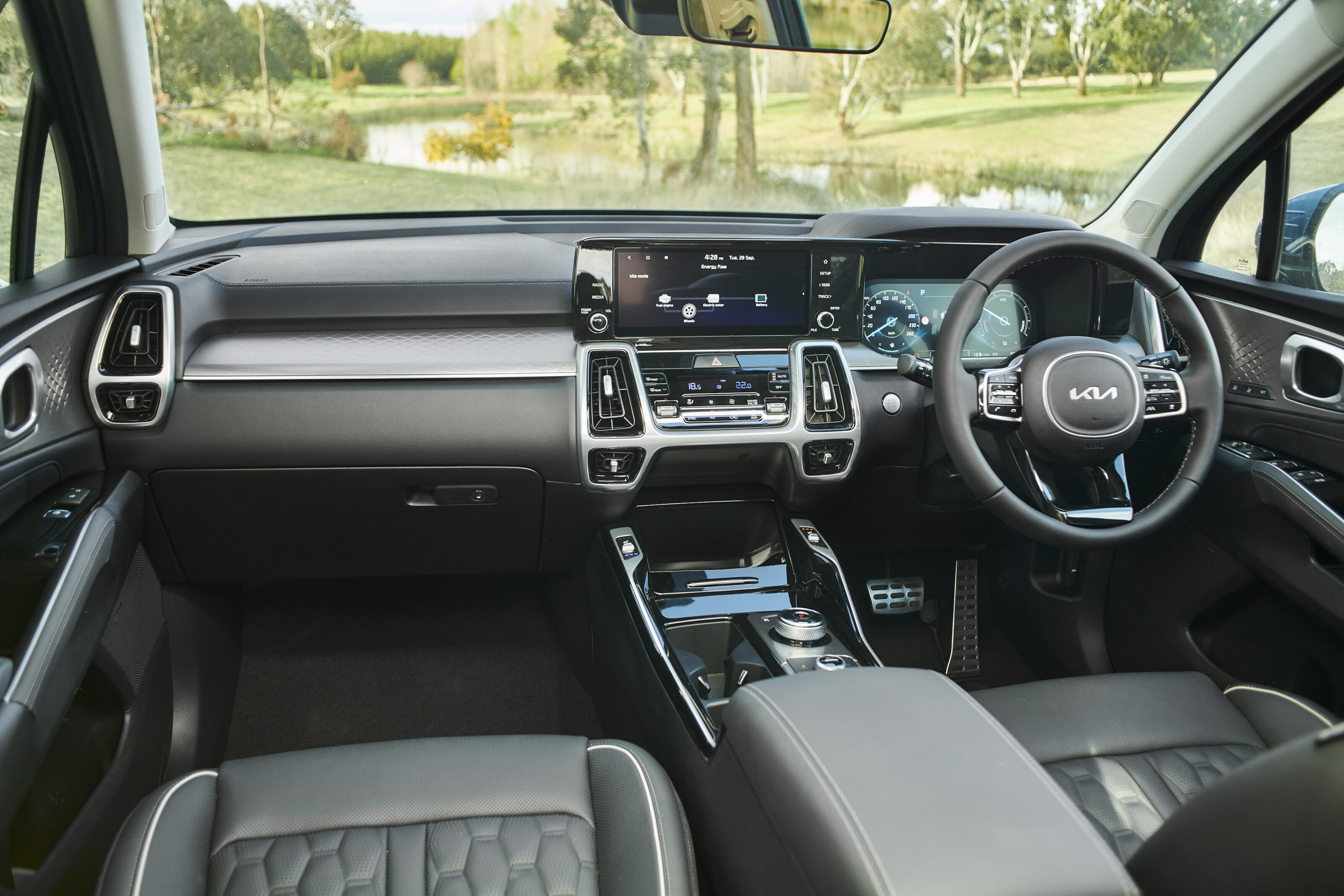
Soft surfaces abound and while you’ll find hard plastics on the doors below the armrests, they don’t feel cheap or brittle.
The batteries don’t seem to impact comfort in the second row, which still offers plenty of leg and headroom. The seats are comfortable and can slide back and forth, while the backrests recline up to about 30 degrees.
Fitting three adults would be a bit of a squeeze, particularly on longer trips, but a low transmission tunnel means even the middle occupant can stretch their legs. There is more than enough space for three children, however, and the wide door opening helps make loading and strapping them in a breeze.

The middle row is serviced with air vents, map pockets behind the front seats, smallish door bins, cup holders cleverly installed in the door armrests, a fold-down centre armrest with additional cup holders, a 12-volt power socket and USB sockets mounted in the side of each front seat for easy reach.
The 60:40 split seats slide forward and fold down to provide third-row access with a single touch of a button, though climbing into the very back isn’t exactly an elegant exercise for anyone older than 12.
Indeed, the third row is best utilised by kids. Legroom is very tight for bigger people, even with the second-row seats pushed forward a couple of inches. There is nowhere to slide your feet and the seat is quite low, meaning taller people will almost have their knees touching their chin.
Another third-row downside is the lack of curtain airbag protection that’s enjoyed by the first and second rows.
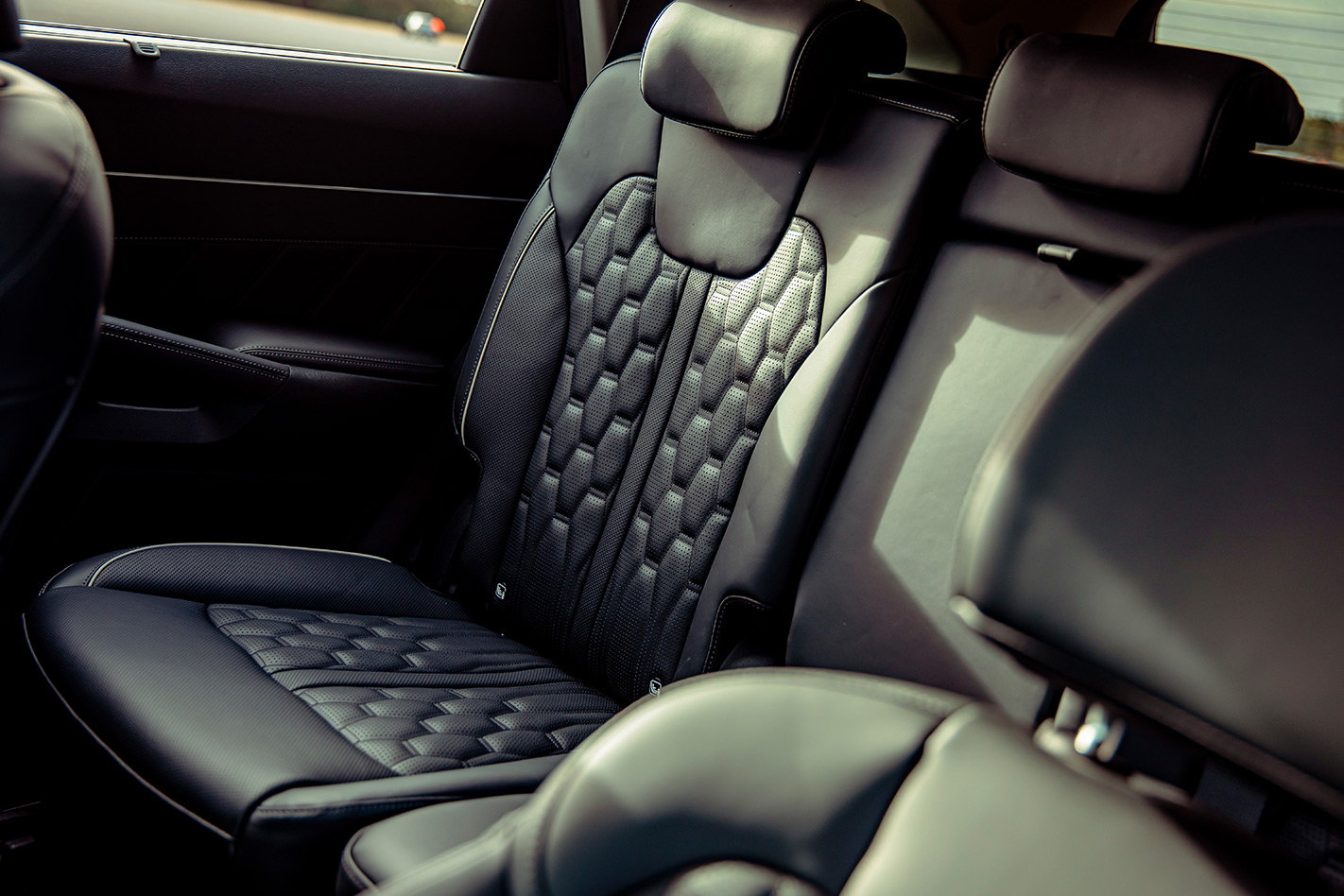
On the plus side, the GT-Line brings third-row passengers USB ports, cup holders, a small storage tub and a dial to control airflow through the rearmost vents.
Like most plug-in hybrid models, the need to fit batteries comes at the cost of luggage capacity, though in the case of the Sorento the difference is marginal.
Boot space with all three rows in use is 175 litres, which is enough to hold a stroller or the weekly shopping, and the third-row seats easily fold flat to bring a big 604-litre boot. In both cases, you’re only sacrificing 12 litres compared to the non-hybrid variants.
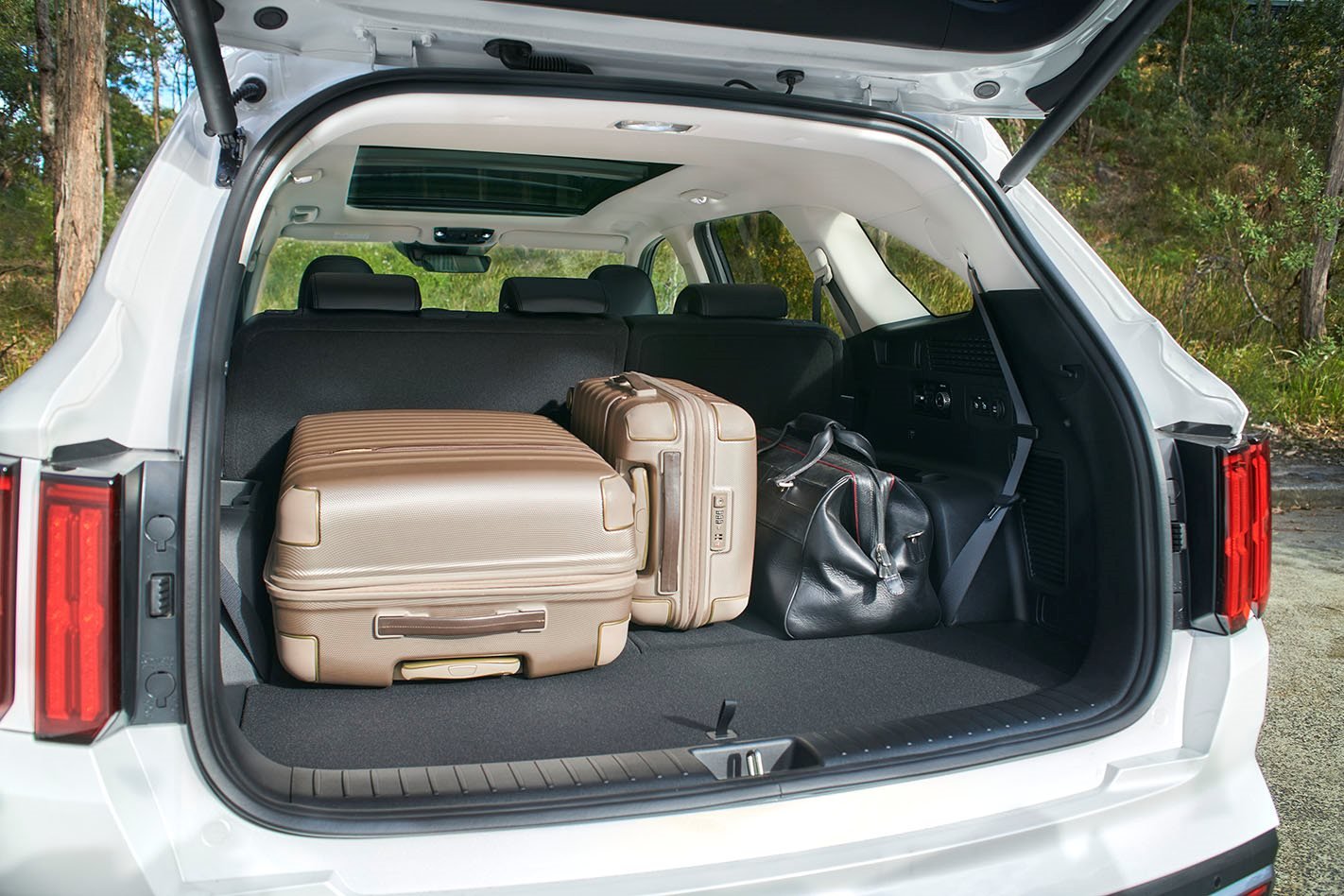
Folding the middle-row seats down allows you to carry up to 1988 litres of stuff, which is a 23-litre reduction. The boot blind and wheel jack are neatly stored under the boot floor, while the full-size spare wheel is stored underneath the Sorento so you can change a wheel without having to unload the kids or baggage – the GT-Line PHEV has 19-inch wheels instead of the 20s rolling under petrol and diesel versions.
Another difference is the braked towing capacity, which is 1350kg for the PHEV compared to 2000kg for the others, though the 750kg unbraked towing capacity is the same.
The Kia Sorento PHEV is covered by a seven-year/unlimited-kilometre warranty, with a separate seven-year/150,000km warranty covering the high-voltage electrical systems such as the battery, onboard charger, motor, and electric power control unit.
What is the Kia Sorento GT-Line PHEV’s powertrain like?
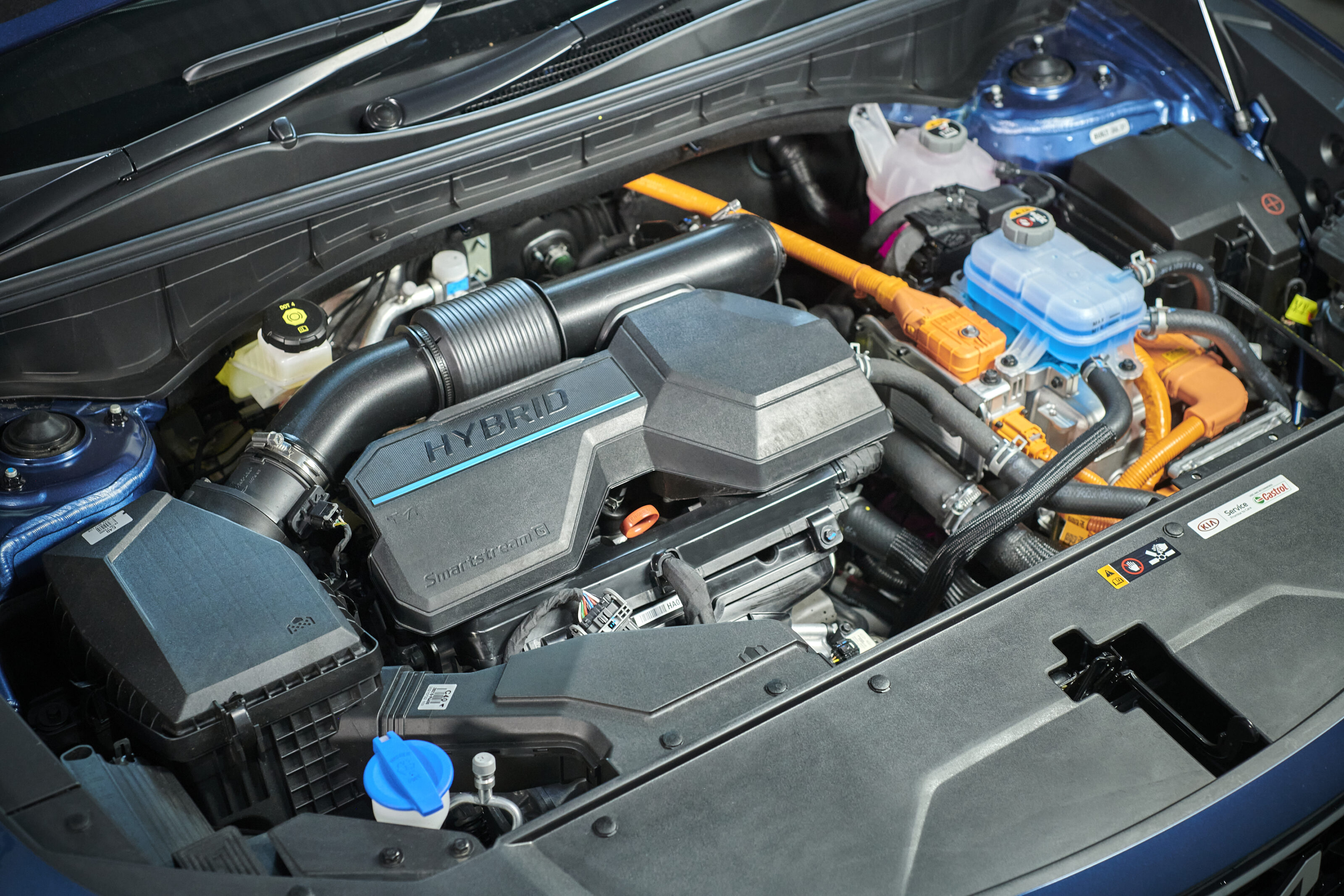
The Sorento PHEV is primarily powered by a 132kW/256Nm 1.6-litre, four-cylinder ‘Smartstream’ GDI petrol engine linked to a 67kW/304Nm electric motor.
The motor is mounted between the engine and six-speed transmission, contributing to a combined output of 195kW/350Nm to be transferred in parallel through the transmission to all four wheels when needed, making it the first petrol Sorento to be offered with AWD in Australia.
Power for the electric motor is drawn from a 14kWh lithium-ion polymer battery pack located under the vehicle floor, which allows the Sorento PHEV to travel up to 68kms (claimed) on electric power alone to help achieve an official combined fuel economy rating of just 1.6L/100km.

It uses the common Type 2 ‘Mennekes’ charging port, which can be connected to a standard 10-amp socket at home to fully charge the battery in six hours.
A dedicated AC charger can get that time down to four hours, or 3.25 hours if topping up from 15 to 95 per cent.
Unfortunately, the fastest rate the battery can be charged is 3.3kW even when using 7kW or 22kW AC chargers, which makes using public charges a little inconvenient unless you have something to do for more than three hours.
On the plus side, the battery is also charged by the engine at a rate of 3.3kW, meaning it never runs out of charge.
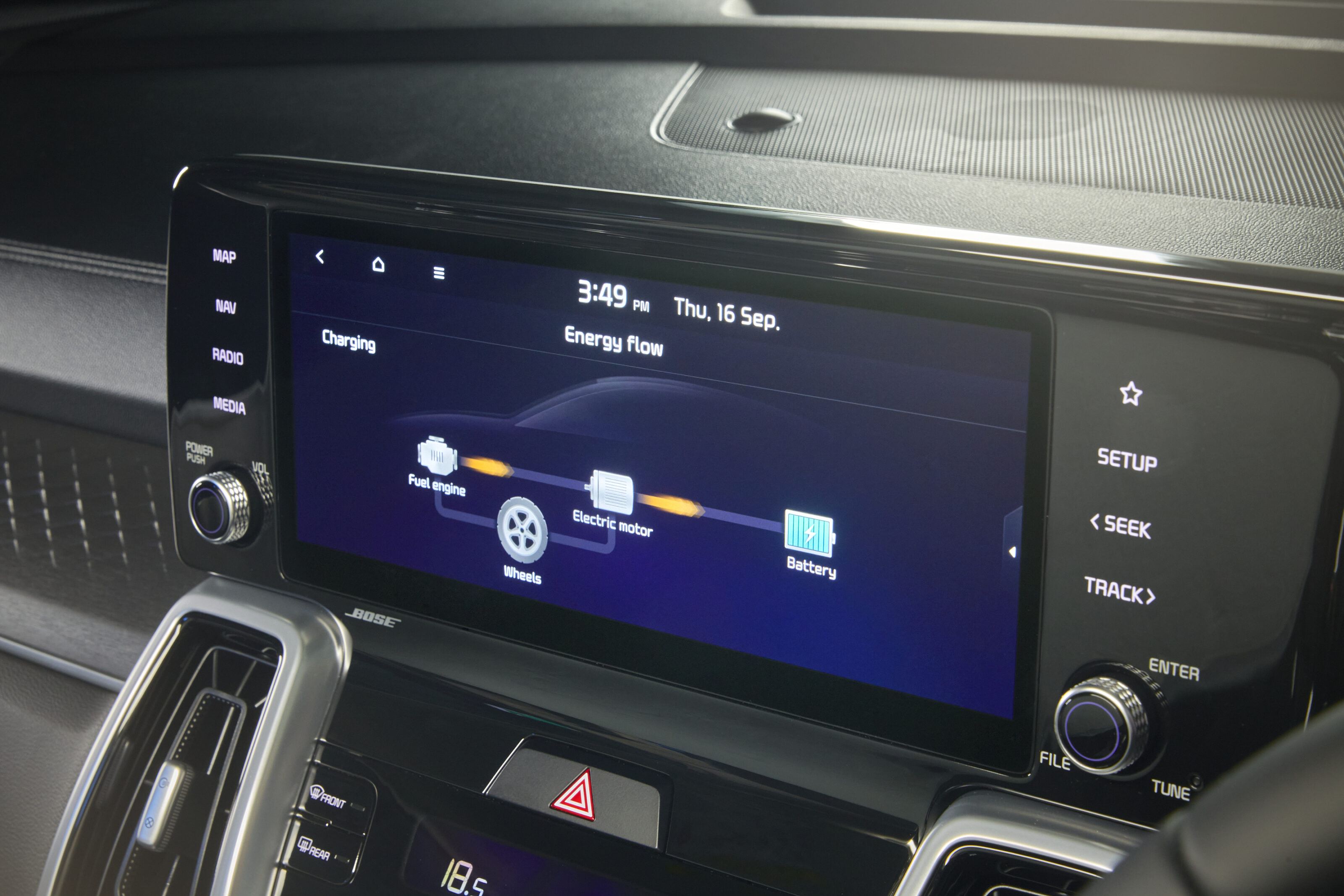
The Sorento PHEV offers different ways to drive efficiently. The best way to do that is in EV mode, which uses battery power alone for up to 68kms for pure emissions-free driving.
Alternatively, you can select HEV, which includes a Smart mode that operates as a normal hybrid vehicle and adapts to different driving conditions. Then there’s Sport mode, which combines engine and electric motor power for extra pep when you need it, albeit at the expense of fuel economy.
Unless you’re doing a relatively short trip it probably makes the most sense to drive in HEV Smart mode, even with a full battery, as it will default to battery power unless the engine is required for quicker driving or negotiating hills.
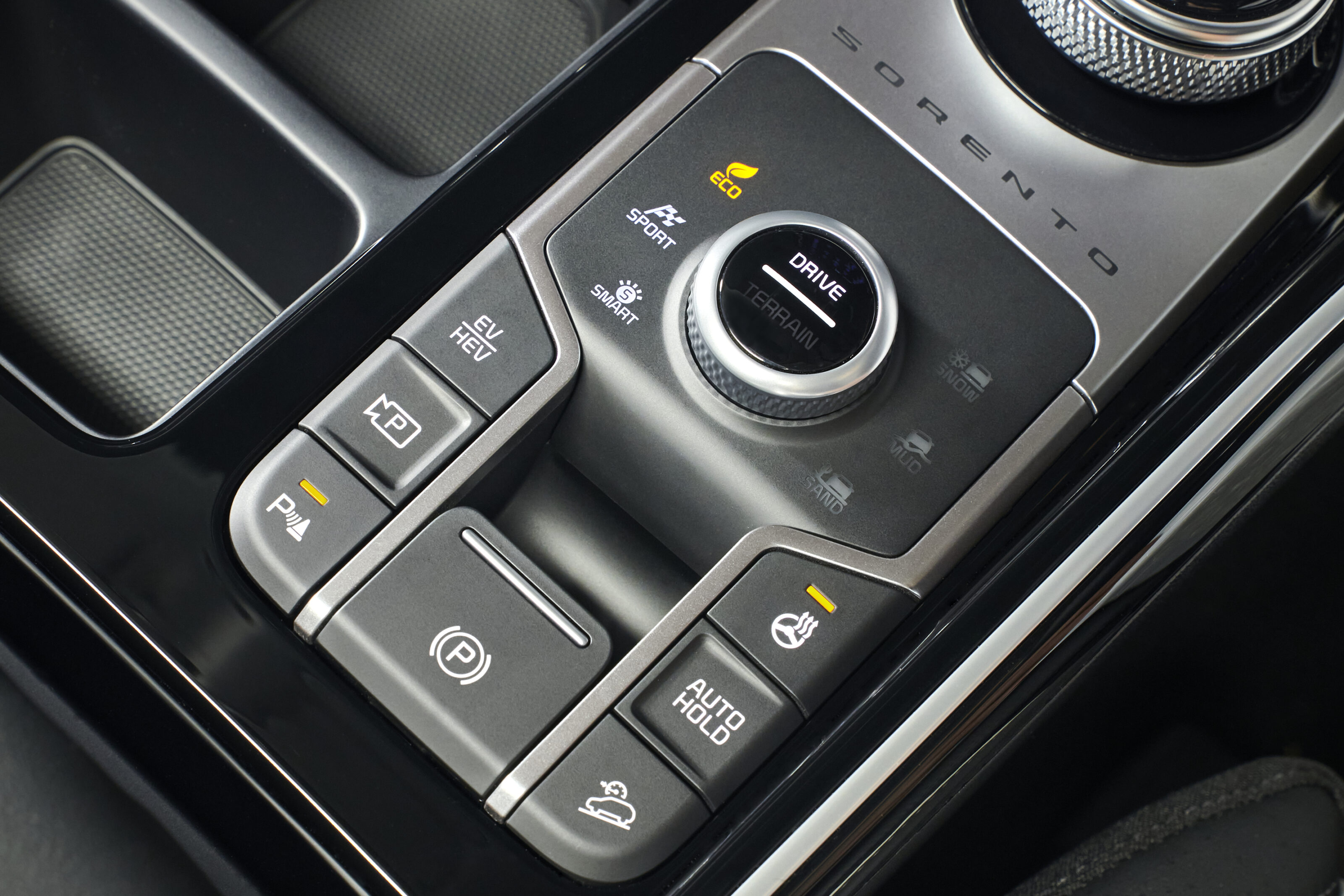
A good thing about Smart mode is it charges the battery while you drive so there is always enough power for the motor to take over in low-load situations such as cruising.
The effectiveness of this was demonstrated on an 85km testing loop I use that includes a freeway drive out to Melbourne’s northwestern outskirts, some semi-rural roads, another freeway hop and then 20km of solid urban driving.
I did this twice, the first time with the battery fully charged and finished with 84.3 kilometres behind me and fuel consumption of just 2.8L/100kms, which is incredible for a 2.0-tonne large SUV.
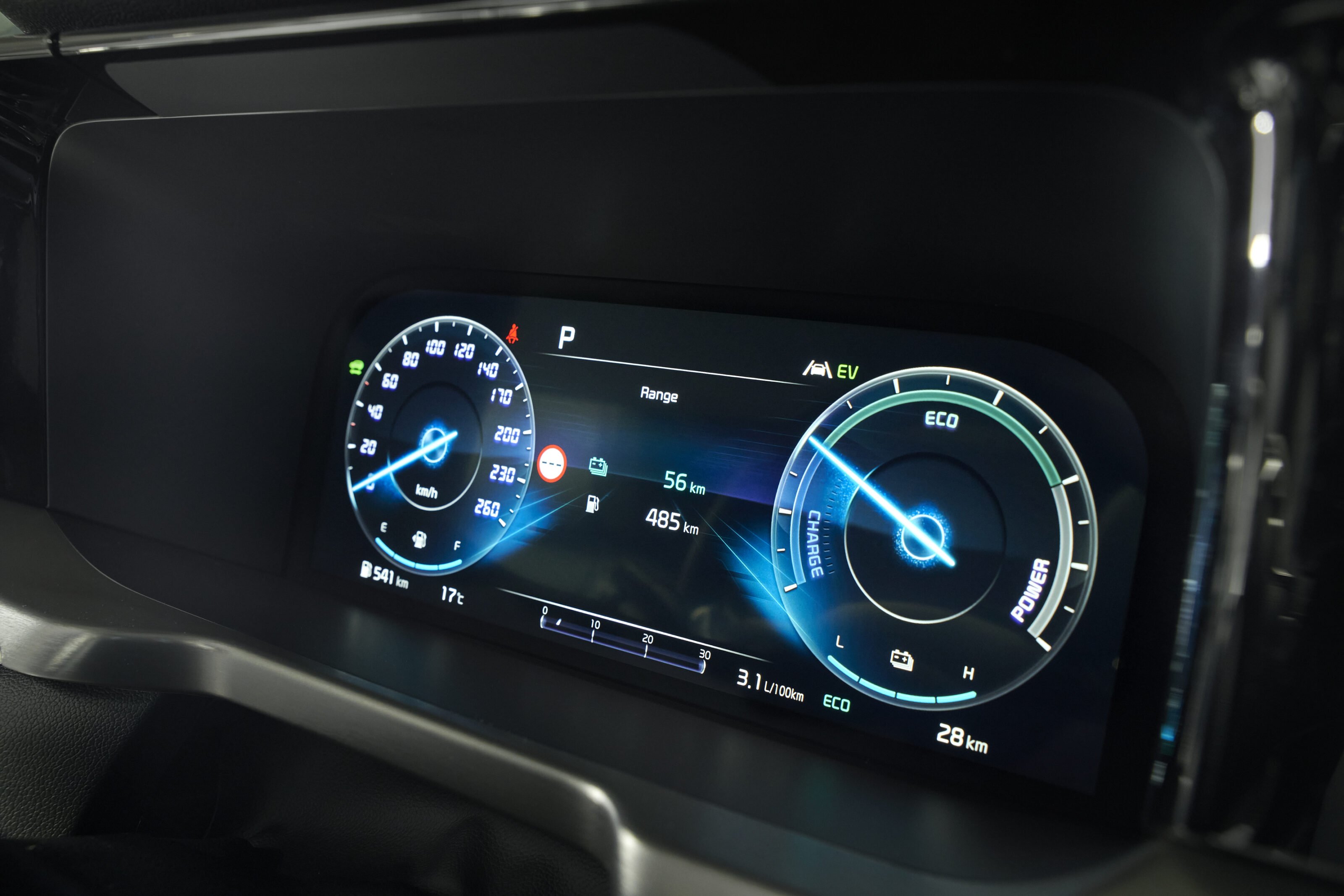
I embarked on the second loop with the minimum battery charge, which meant less EV driving than during the first hop.
Unfortunately, there was a roadblock near Sunbury that meant having to make a detour so by the time I returned home I had done 101.1kms with average fuel consumption of 6.7L/100km, which is almost half the V6 petrol Sorento’s real-world range and just over the ‘no-brainer’ diesel Sorento’s official 6.1L/100km consumption.
At the time of writing this, I had travelled 212.8kms at an average of just 5.8L/100km and with 515km worth of petrol still in the tank. This included some experimentation with Sport mode that at the time saw fuel consumption rise dramatically.
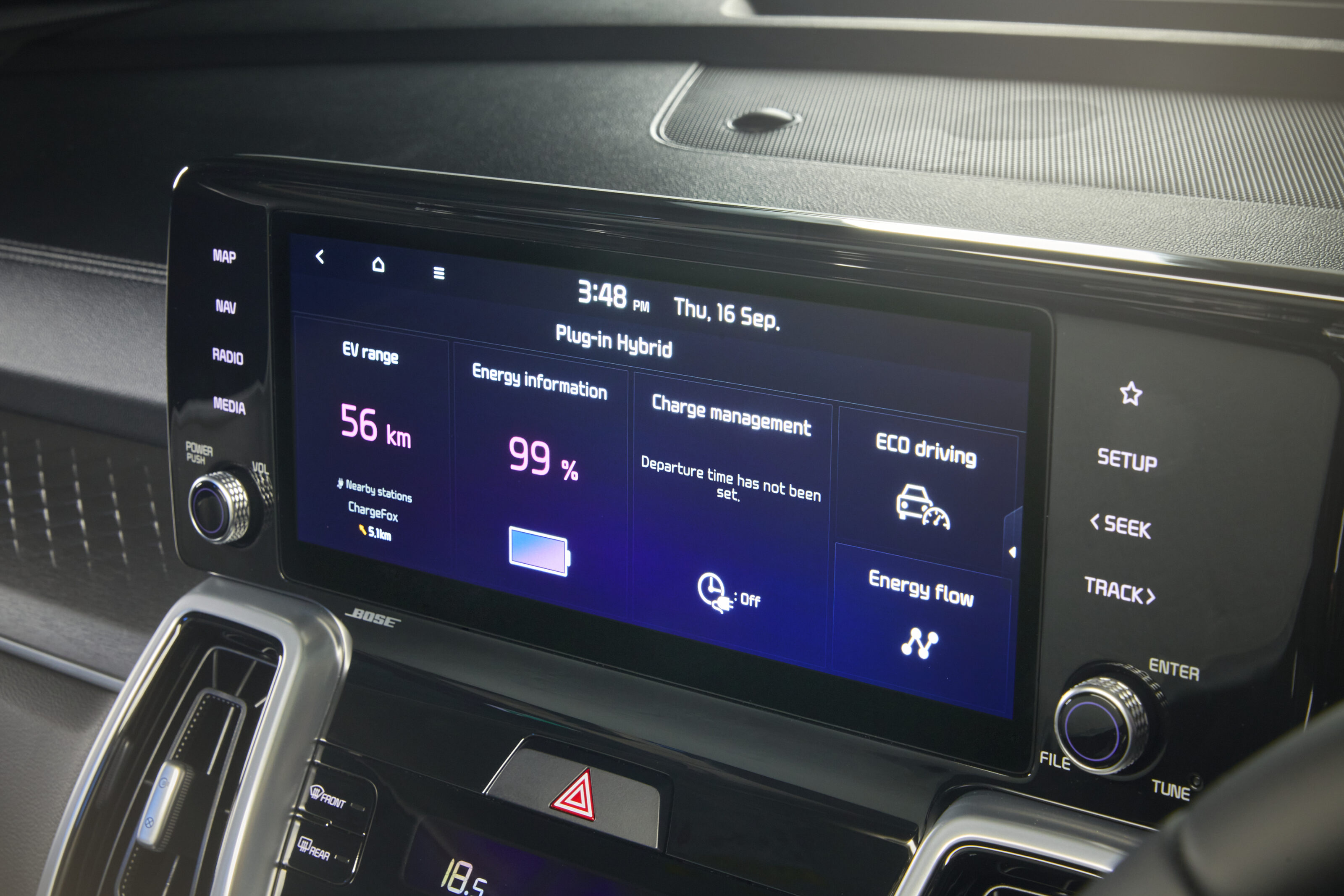
It’s all too easy to obsess about fuel consumption when driving a plug-in hybrid, but once you adopt a pragmatic approach to the fuel you’re saving, rather than what you’re using, you do appreciate the benefits.
What is the Kia Sorento GT-Line PHEV like to drive?
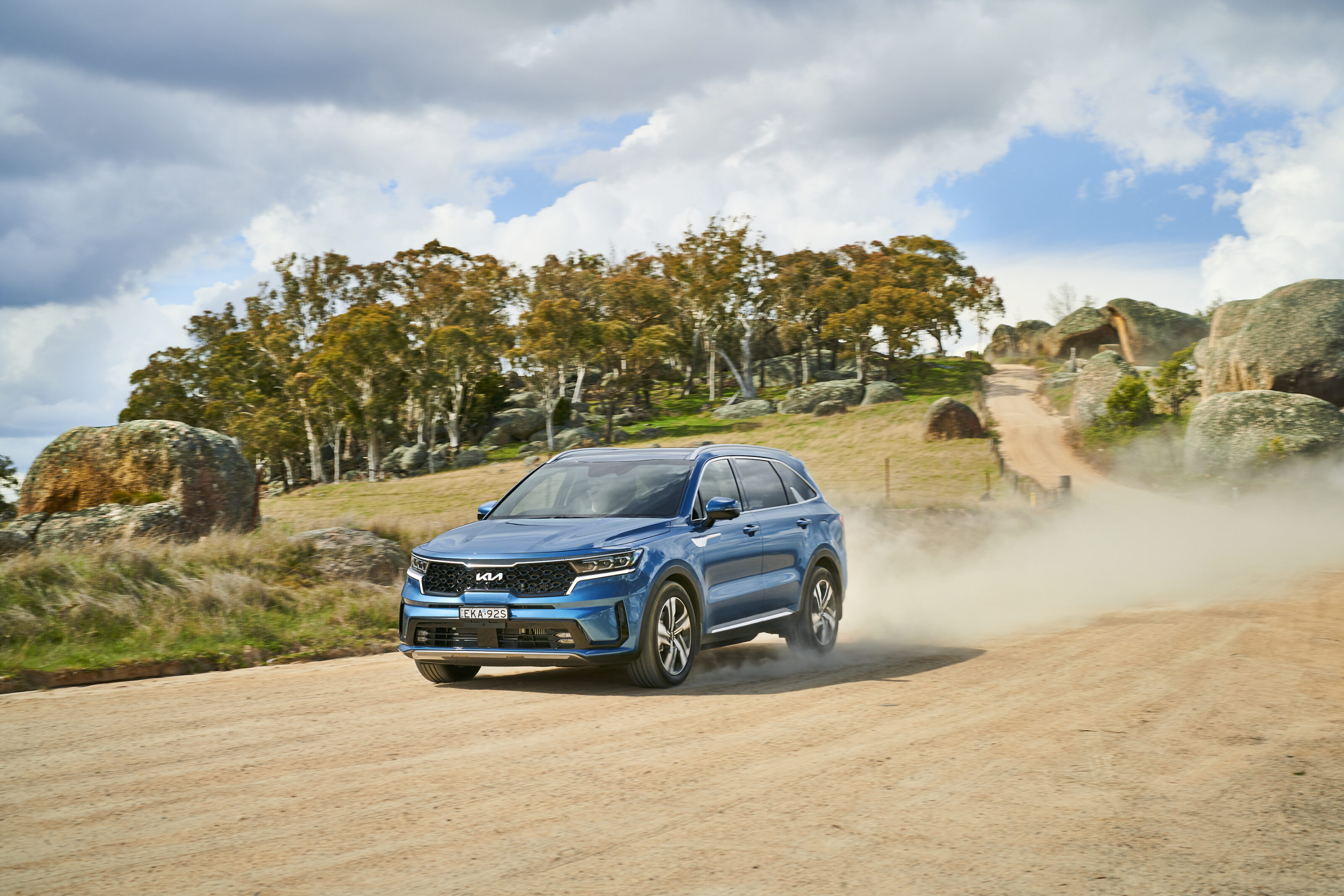
In hybrid mode, it’s not too dissimilar to driving the diesel and while it only weighs 48kg more, you do momentarily feel it when you put the foot down – even in EV mode, you don’t quite get that kick from the electric motor as the powertrain is tuned to prioritise efficiency over performance.
But once it gets going the hybrid powertrain has no problems pulling the Sorento’s heft or ensuring you have enough power for overtaking and the like.
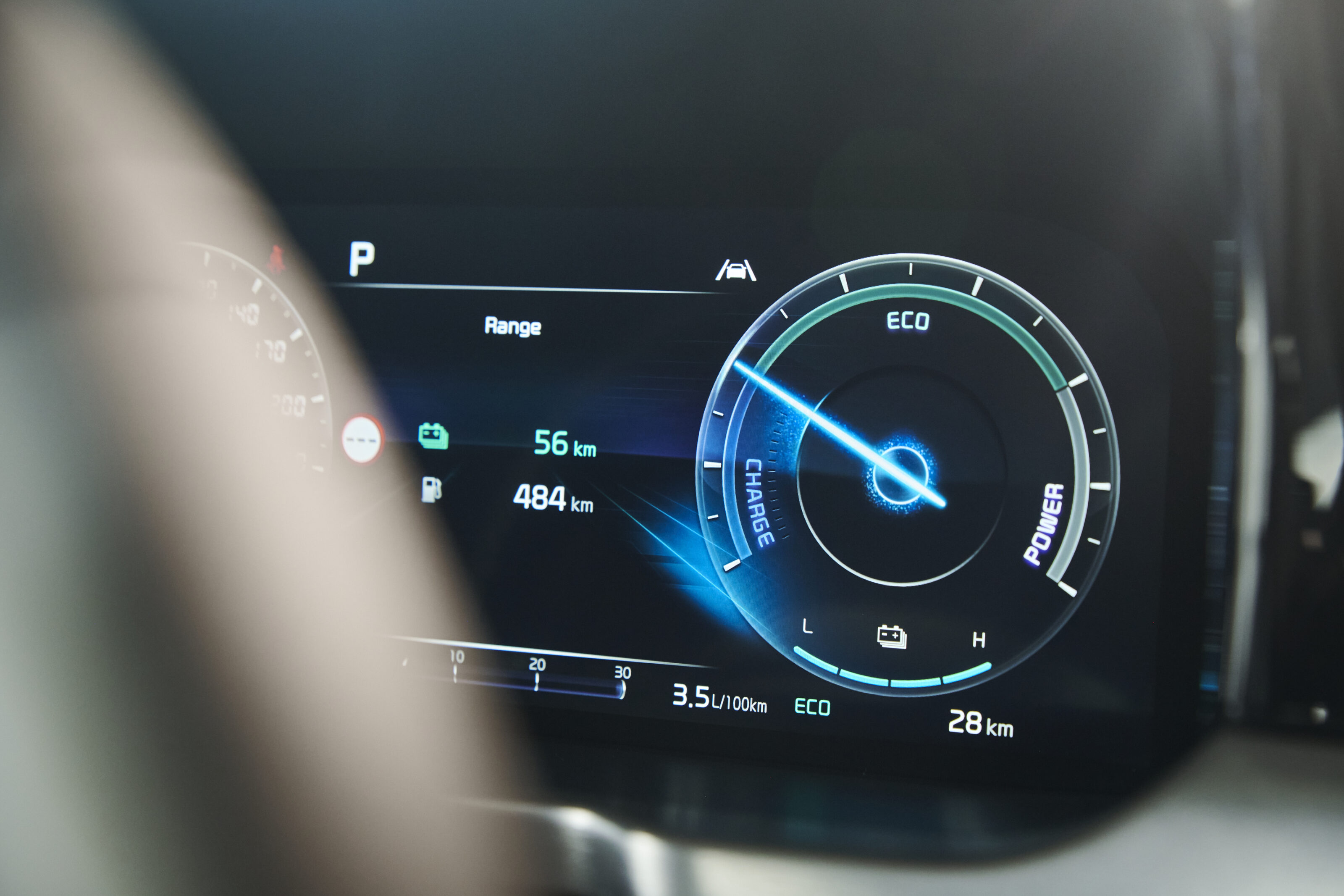
If you need, or feel like, some proper oomph, engaging Sport mode using the small dial on the centre console combines engine and motor power, which suddenly makes you feel like you’re driving an entirely different vehicle.
As well as boosting power, it adds additional weight to the steering for more precise cornering that makes you forget you’re driving a 4.8-metre three-row SUV.
You won’t exactly be saving the planet driving this way, but used sparingly, such as when driving through bendy hillsides, it doesn’t seem to have a significant impact on your overall fuel economy.
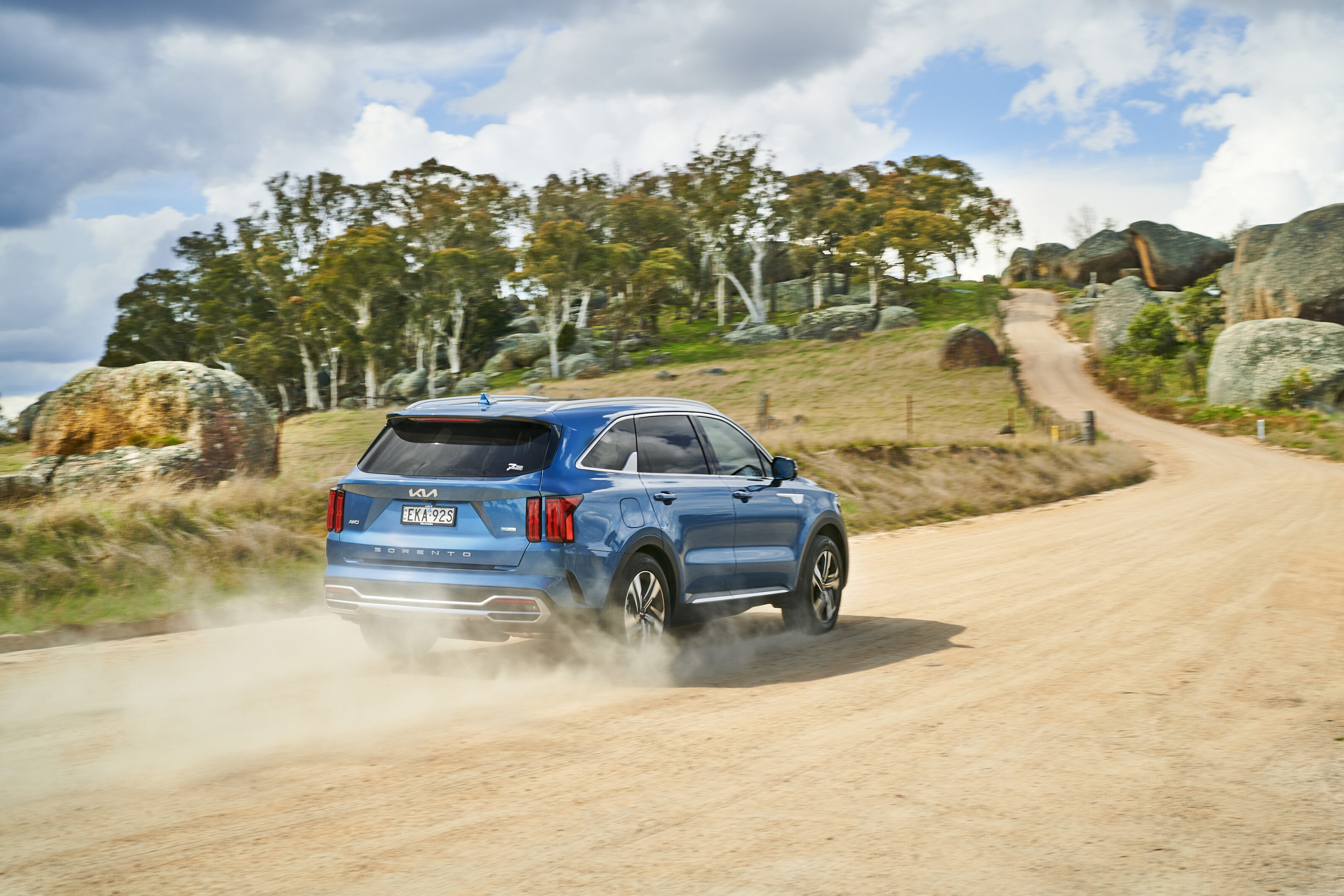
This has a six-speed automatic transmission instead of the excellent eight-speed dual-clutch in other Sorento powertrains, but there was always a seamless transition through gears in any driving mode.
Unlike the other Sorento variants, pandemic restrictions prevented the PHEV’s chassis from being tuned to suit Australian conditions, but this doesn’t seem to be an issue as it negotiates varied road surfaces very well. And despite its weight and size, it handles bends well too, with surprisingly little body roll.
Unlike the other GT-Line versions with 20-inch rims, this rides on 19-inch wheels and glides over smooth roads, with that feeling accentuated during all-electric silent running.
What is the Kia Sorento GT-Line PHEV like for safety?
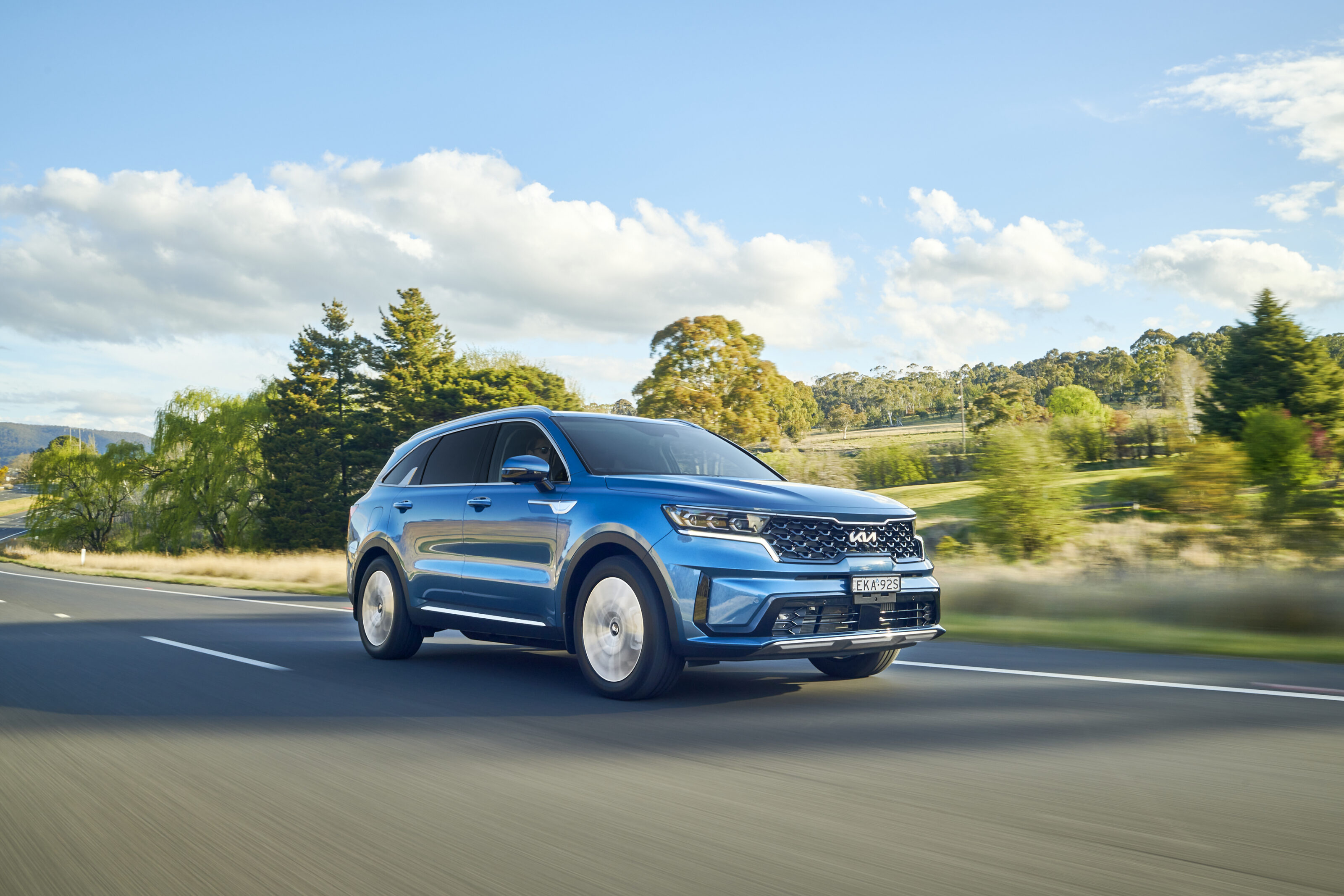
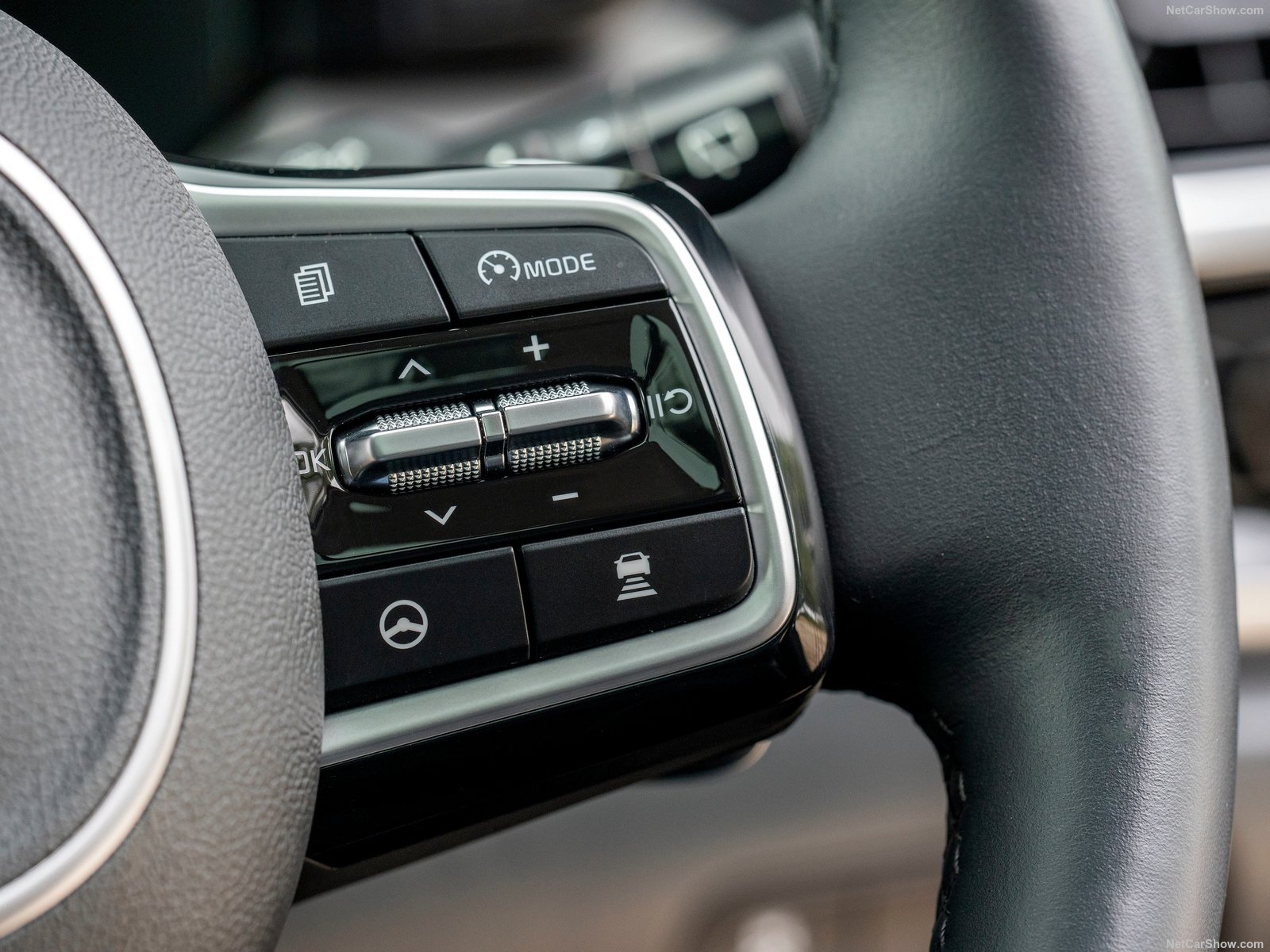
The Sorento’s driving experience is aided by a host of advanced driver assistance features including autonomous emergency braking (AEB) that can detect pedestrians and cyclists. The AEB also has junction detection, which can sense a vehicle entering an intersection from the side and apply the brakes if necessary.
Other advanced driver-assist features include lane-keeping assist, rear cross-traffic alert, driver attention alert, smart adaptive cruise control with stop-and-go function, and speed sign recognition.
The GT-Line spec also takes blind-spot collision avoidance further by flashing up a rearward side view of the vehicle on the digital gauge cluster when you indicate.
Also unique to this spec is the 360-degree parking camera and parking collision avoidance that automatically brakes if you’re about to hit something at low speed, including in reverse.
The Sorento has eight airbags: two directly in front of the driver and front passenger; one alongside each front occupant to protect the upper body and two more that pop up between the front seats to prevent occupants colliding with each other during impact.
As mentioned above, the curtain airbags that protect the heads of those riding in the front two rows do not extend to the third row, which is one of this car’s rare blemishes.
The Sorento PHEV shares the five-star ANCAP safety rating awarded to the rest of the range in July 2020.
The Verdict
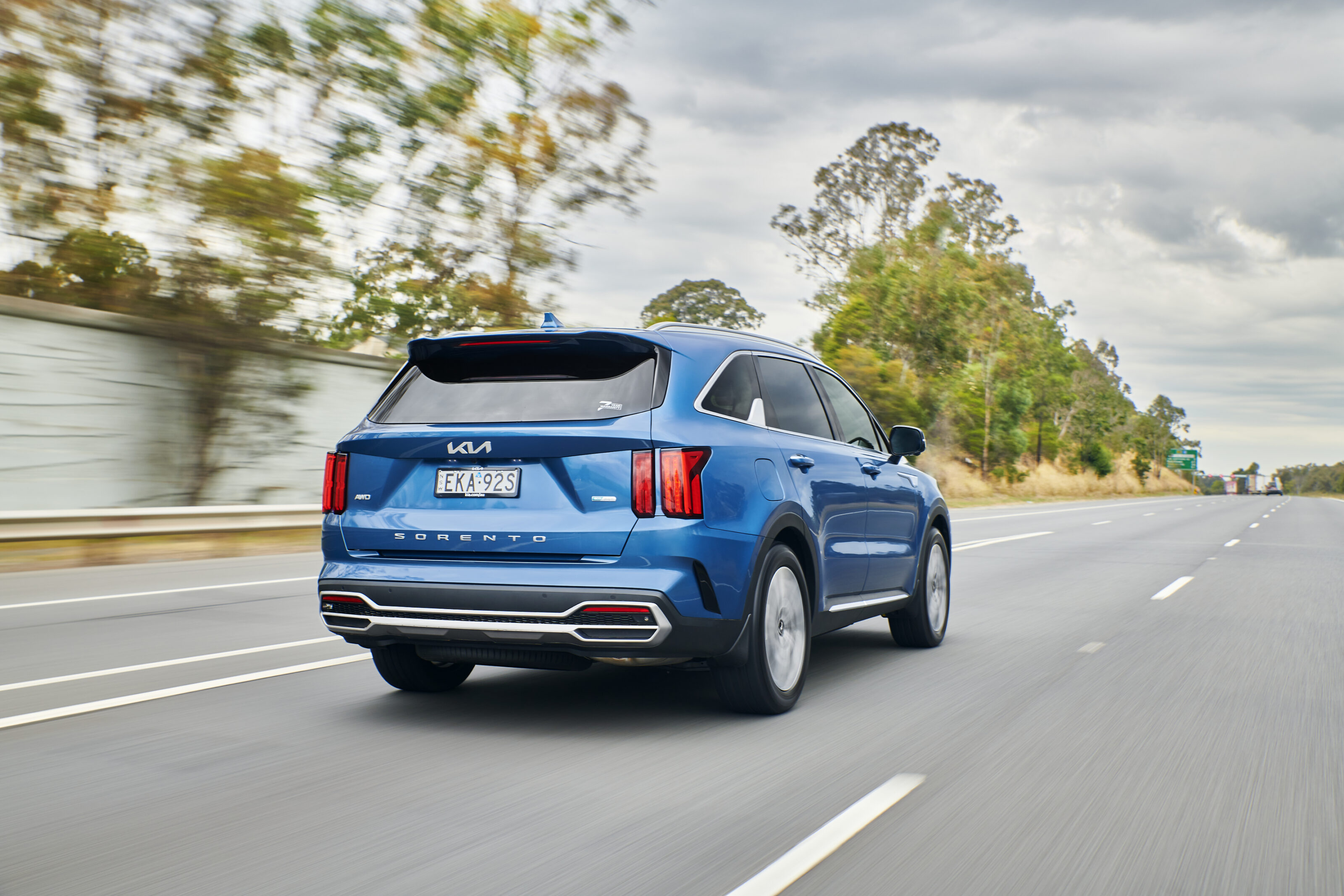
Plug-in hybrid powertrains make a lot of sense in big vehicles like this as the fuel savings are more dramatic.
This is certainly the case of the Sorento PHEV, where its superior efficiency over the petrol and diesel variants will be most keenly felt if do you do plenty of city driving and can charge it overnight.
If that suits your criteria and you can afford it then, unless you need to tow a huge caravan, I reckon this is the new no-brainer Sorento option that makes this very good large SUV even better.
However, its advantage over diesel is a little less dramatic if you’re mostly driving longer distances at highway speeds, which makes it a little more difficult to justify spending the extra $15K.
Another issue is that the 3.3kW maximum charging rate is too slow for convenient charging while on the go.
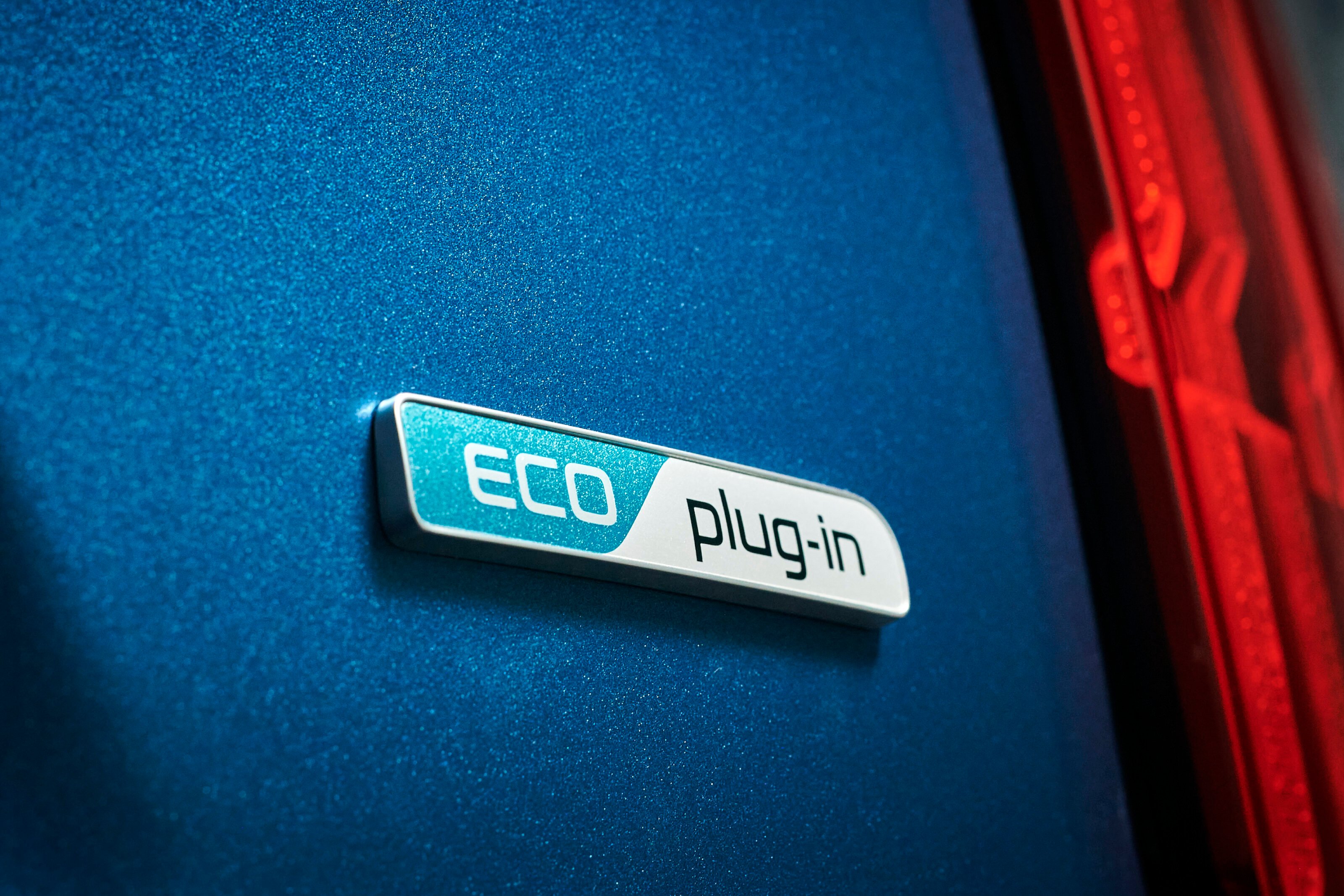
The good news is that a conventional hybrid (HEV) version of the Sorento is due to arrive at the end of November 2021, which is expected to have an official combined fuel economy of 5.4L/100km.
Apart from lacking a charging port, this powertrain is identical to the AWD PHEV’s but unfortunately, it will also share the same supply issues meaning it will only be available in GT-Line spec, and you may have to wait a while for one.
But it should be more affordable. Kia Australia hasn’t provided pricing yet, but if its Niro small SUV range is any guide, expect it to retail for about $71,000 before on-roads, which is a little less than the new Toyota Kluger Grande eFour Hybrid.
Kia Sorento GT-Line PHEV specifications
| Body | Five-door large SUV |
|---|---|
| Drive | All-wheel drive |
| Engine | 1.6-litre four-cylinder turbo plug-in hybrid |
| Transmission | 6-speed auto |
| Power | 132kW @ 5500rpm |
| Torque | 265Nm @ 5500rpm |
| Electric motor | 60kW/304Nm transmission-mounted |
| Combined power/ torque | 195kW/350Nm |
| Battery | Lithium-ion, 360V, 14kWh |
| Bore x Stroke | 75.6 x 89.0 |
| Compression ratio | 10.5:1 |
| 0-100km/h | N/A |
| Fuel consumption | 1.6L/100km |
| Weight | 2056kg (tare mass) |
| Suspension | MacPherson strut (front); Multi-link (rear) |
| L/W/h | 4810/1900/1700mm |
| Wheelbase | 2815mm |
| Brakes | 325mm Ventilated discs (front & rear) |
| Tyres | 235/55 R19 Continental Premium Contact 6 |
| Wheels | 19-inch alloys |
| Price | $79,330 RRP / $81,990 drive-away. |
General Motors’ luxury brand Cadillac has revealed the logo which will adorn its future vehicles, amping up its move to an all-electric line-up.
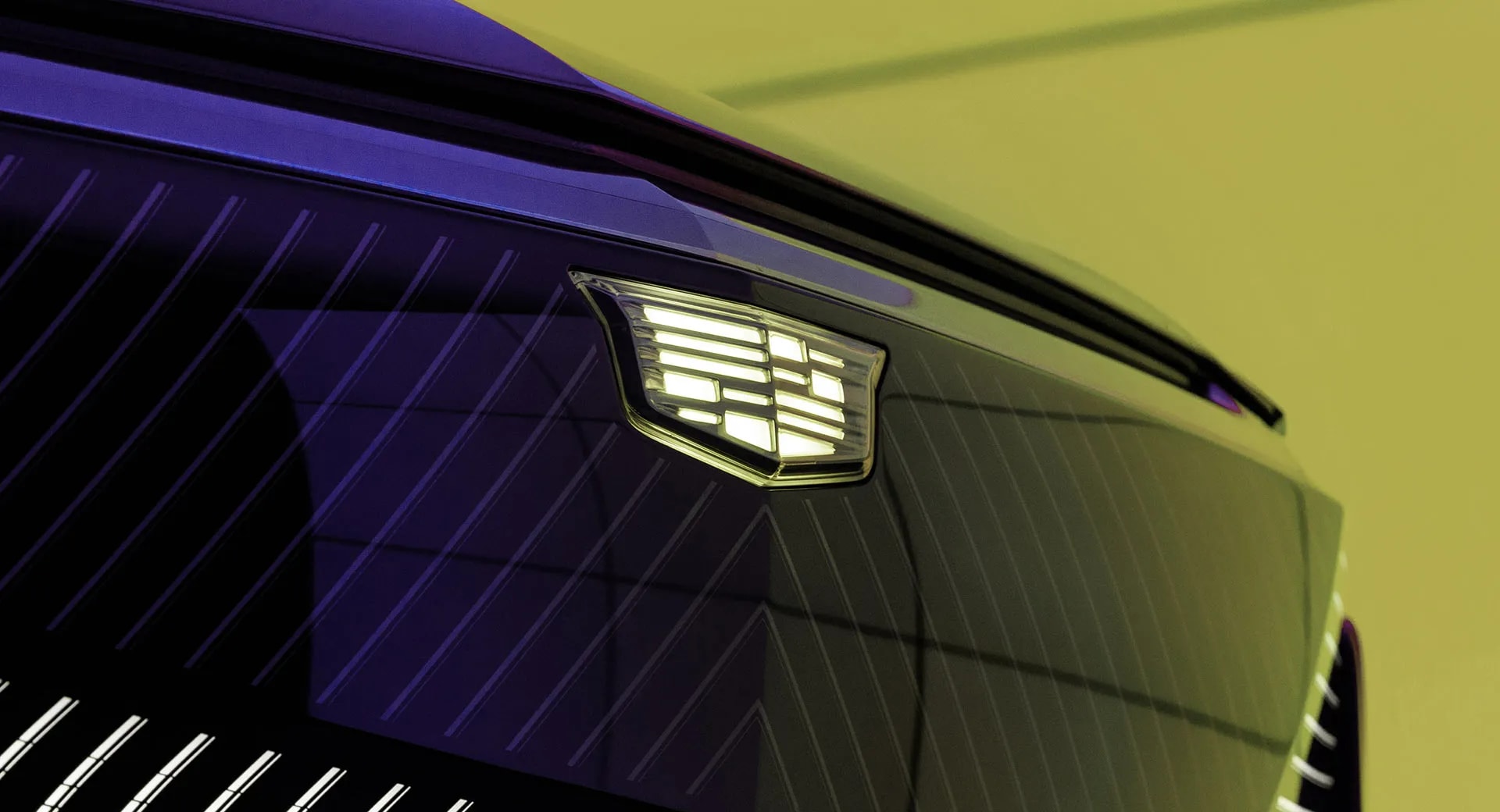
While it retains the same basic design as the iconic crest currently on its range of models, the monochromatic logo ditches colour in line with the adoption of black-and-white logos from Volvo, Volkswagen and Nissan.
Already set to feature on the Lyriq EV, Cadillac confirmed the new backlit badge will only feature on its electric vehicles, leaving the previous coloured crest to be used on its internal combustion engine powered vehicles. Silver and chrome badges are available on existing models, which can be optioned with the Onyx package.
A spokesperson for Cadillac told Fox News the new logo will be a part of the brand’s transition to an all-electric future, aiming to produce only EVs from 2030.
“The new crest, along with our new tagline ‘Be Iconic’, represents Cadillac’s desire to champion each of us to dream big and become the most aspirational version of ourselves,” they said.
Unfortunately, given General Motors canned all plans for right-hand drive vehicle production from 2021 – save for a few high-demand models – it’s unlikely we’ll see any EV Caddys locally in the future.

Snapshot
- Hybrid powertrains only available in GT-Line spec
- Sorento PHEV now in showrooms
- HEV version due at the end of November
The new plug-in hybrid version of the Kia Sorento large SUV is the latest electrified vehicle to face supply issues in Australia resulting from the country’s lax carbon emissions laws.
Kia Australia’s product general manager Roland Rivero said demand is already outstripping supply for the electrified large SUV, which is already subject to waiting periods of at least six months.
The delays are also expected to hit the new hybrid (HEV) variant – now due in late November 2021.
“Demand in Europe, in particular, is quite high and because they’ve got CO2 regulations and obviously there are tax penalties in Europe for that, priority will go to them first and foremost,” Rivero told Wheels on the eve of the Sorento PHEV’s Australian launch.
“If you’re hearing dealers telling you it’s a six-to-eight month wait, they’re not lying.
“We’ve got some challenges ahead, at least in the next two quarters.”
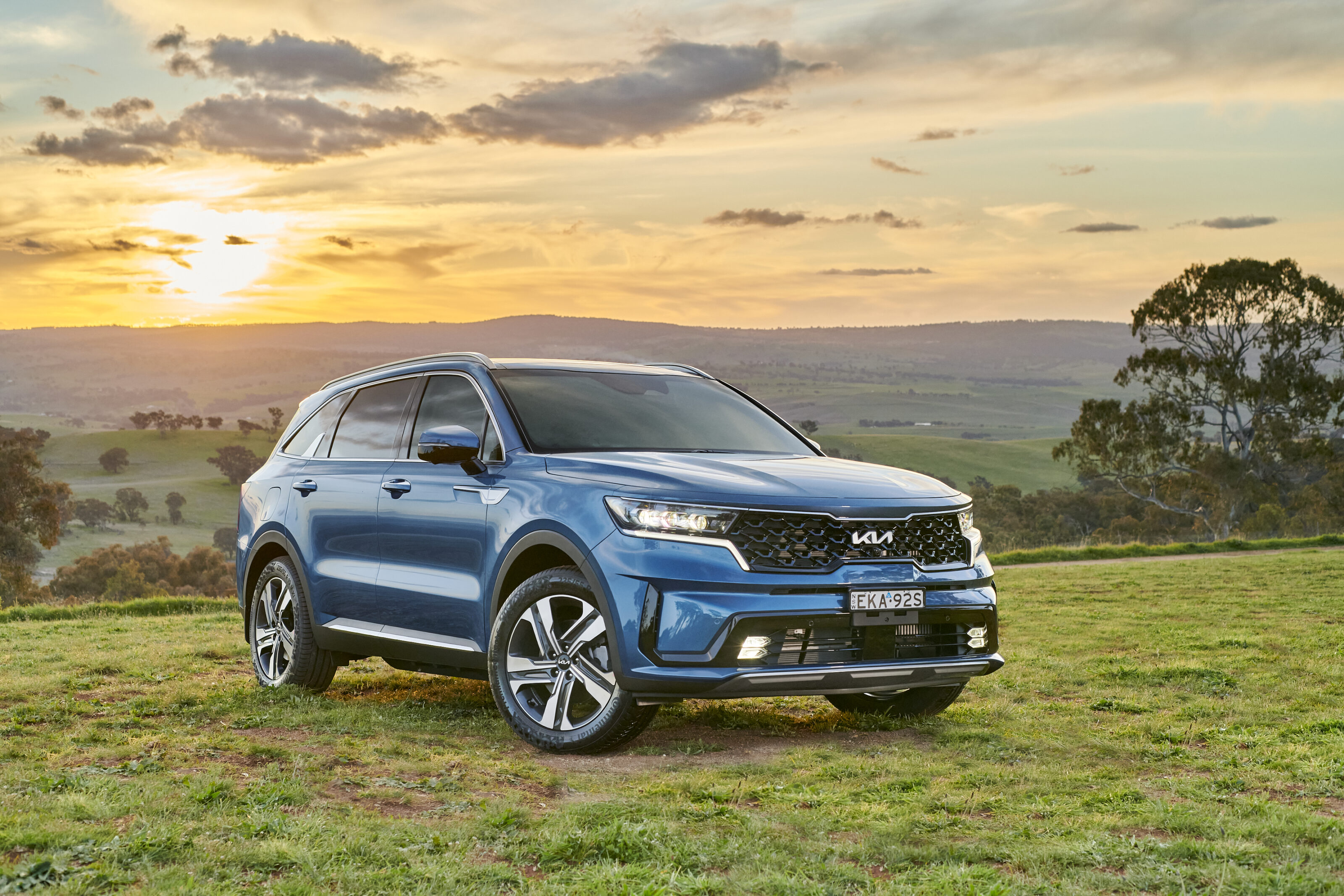
The supply issues also mean the Sorento PHEV and HEV will, for the foreseeable future, only be available in the range-topping GT-Line specification grade.
While this will have an impact on its affordability – the GT-Line PHEV retails for $81,990 – Rivero points out the range-topping spec is the most popular with private buyers.
“In a perfect world where we had more supply we might have looked at more variants just to give customers greater choice, but what’s interesting is 60 per cent of our mix at the moment is looking at GT-Line anyway.
“You can argue that the majority of customers, when they’re looking at a Sorento, are effectively looking at the top of the range – particularly in the private space.”
Priced from $79,330, the Kia Sorento GT-Line PHEV is powered by a 1.6-litre turbocharged engine and transmission-mounted electric motor and is the first petrol Sorento available in Australia with all-wheel-drive.
Snapshot
- Sorento PHEV to launch in Australia later this year
- 1.6-litre four-cylinder engine paired with electric motor
- Prices start from $79,330 before on-road costs
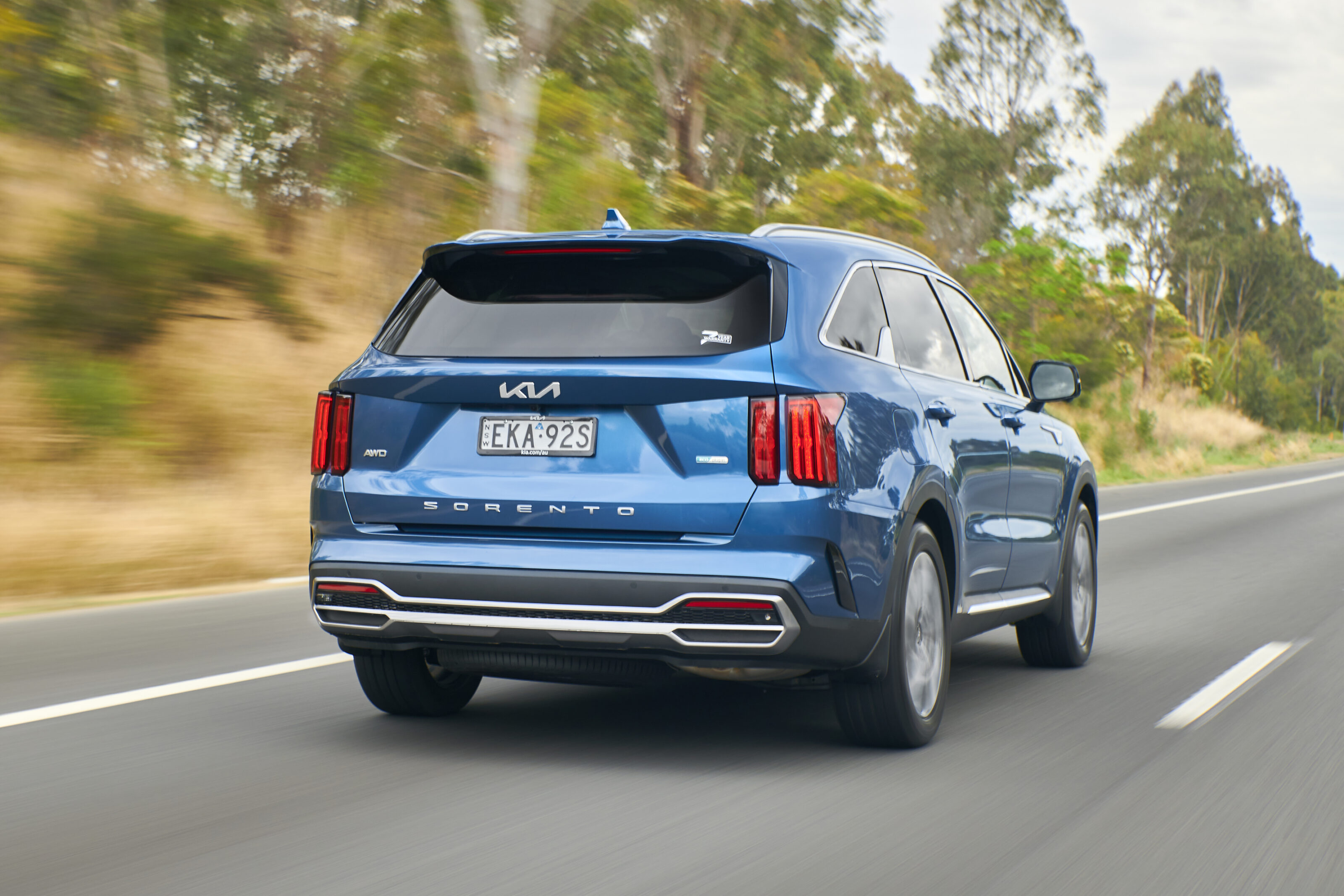
Kia Australia has officially revealed local pricing and features of its 2022 Sorento PHEV, joining the existing SUV range to provide better fuel economy and emissions.
Off the back of the plug-in hybrid model being released in the United States this August, the local arm of the Korean manufacturer has confirmed its new powertrain will only be available in range-topping GT-Line guise at a premium above the existing diesel and petrol options.
Featuring a new ‘Terrain Mode’ and the ability to drive for up to 68 kilometres on electric power only, the Sorento PHEV offers equipment not otherwise available in the SUV’s line-up.
2022 Kia Sorento pricing
Coming in at the top of the Sorento range, the PHEV GT-Line retails for over $15,000 more than the previous Diesel GT-Line.
Prices exclude on-road costs.
| Sorento S 3.5 Petrol | $ 46,850 |
| Sorento S 2.2 Diesel | $ 49,850 |
| Sorento Sport 3.5 Petrol | $ 49,480 |
| Sorento Sport 2.2 Diesel | $ 52,470 |
| Sorento Sport+ 3.5 Petrol | $ 53,850 |
| Sorento Sport+ 2.2 Diesel | $ 56,850 |
| Sorento GT-Line 3.5 Petrol | $ 61,070 |
| Sorento GT-Line 2.2 Diesel | $ 64,070 |
| Sorento GT-Line PHEV | $ 79,330 |
All colours other than the base clear white are sold at a $695 premium, with Aurora black pearl, Snow White pearl, gravity blue, mineral blue, steel grey and silky silver all incurring an extra cost.
Features
| 19-inch machine-finished alloy wheels with full-size spare |
| 12.3-inch digital instrument cluster |
| 10.25-inch infotainment screen |
| Blind-spot view monitor |
| Shift-by-wire knob |
| Quilted Nappa leather appointed seats |
| Interior mood lighting |
| BOSE 12-speaker premium sound system |
| 8-inch head-up display |
| 360-degree camera view |
| Smart remote engine start |
| Parking collision avoidance assist |
| Panoramic sunroof |
| Fast wireless smartphone charger |
| Heated first and second row |
| Ventilated first row seats |
| 14-way power adjustable driver’s seat with memory |
| 10-way power adjustable passenger seat |
| Rear occupant alert |
| Sunshade blinds |
| Driver talk in-car intercom. |
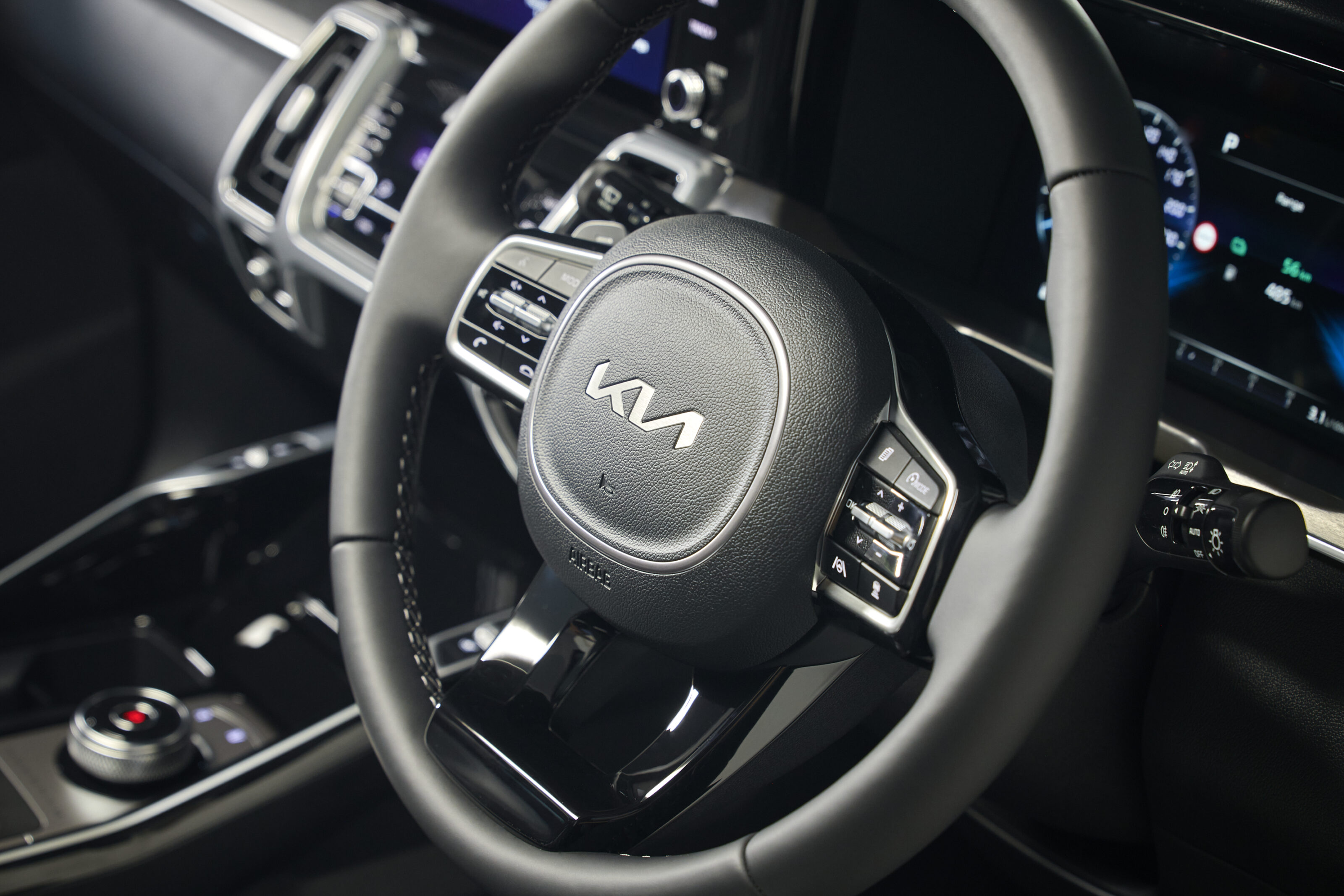
Engine, drivetrain and fuel economy
To be sold alongside the existing 3.5-litre petrol and 2.2-litre turbo diesel options, the PHEV is powered by a 1.6-litre, four-cylinder turbocharged petrol engine mated to an electric motor between the internal combustion engine and gearbox – producing a combined 195kW and 304Nm.
Sending power to all four wheels through a six-speed automatic transmission, the electric motor alone can produce up to 304Nm of torque – while its 14kWh lithium-ion battery allows the Sorento to achieve an electric-only driving range of up to 68km, with a WLTP tested fuel consumption of 1.6L/100km making it one of Kia’s most efficient vehicles.
Just like the 2.2-litre diesel, the Sorento PHEV’s all-wheel drive system allows part-time locking – which can be managed with its new ‘Terrain Mode’, letting the driver choose different driving conditions such as mud, snow and sand, adjusting power delivery to suit.
Equipped with an integrated Type 2 charging socket, the Sorento PHEV can recharge from a three-pin cable (supplied), a Type 2 to Type 2 cable, or any standard public charger.
Warranty and servicing
Off the back of Kia celebrating seven years of its seven-year warranty today, the Sorento PHEV will continue to be covered by the seven-year/unlimited-kilometre deal – as well as falling under Kia’s seven-year/105,000km capped-price service scheme.
Availability
The 2022 Kia Sorento PHEV is now arriving in showrooms, with a GT-Line Hybrid to follow at the end of November 2021. Orders for each model are likely to be affected by supply issues.
It’s an easy trap to fall into when looking at the values thrown around in today’s secondary and collectible car market: to get stuck in the knowledge of what these cars once commanded.
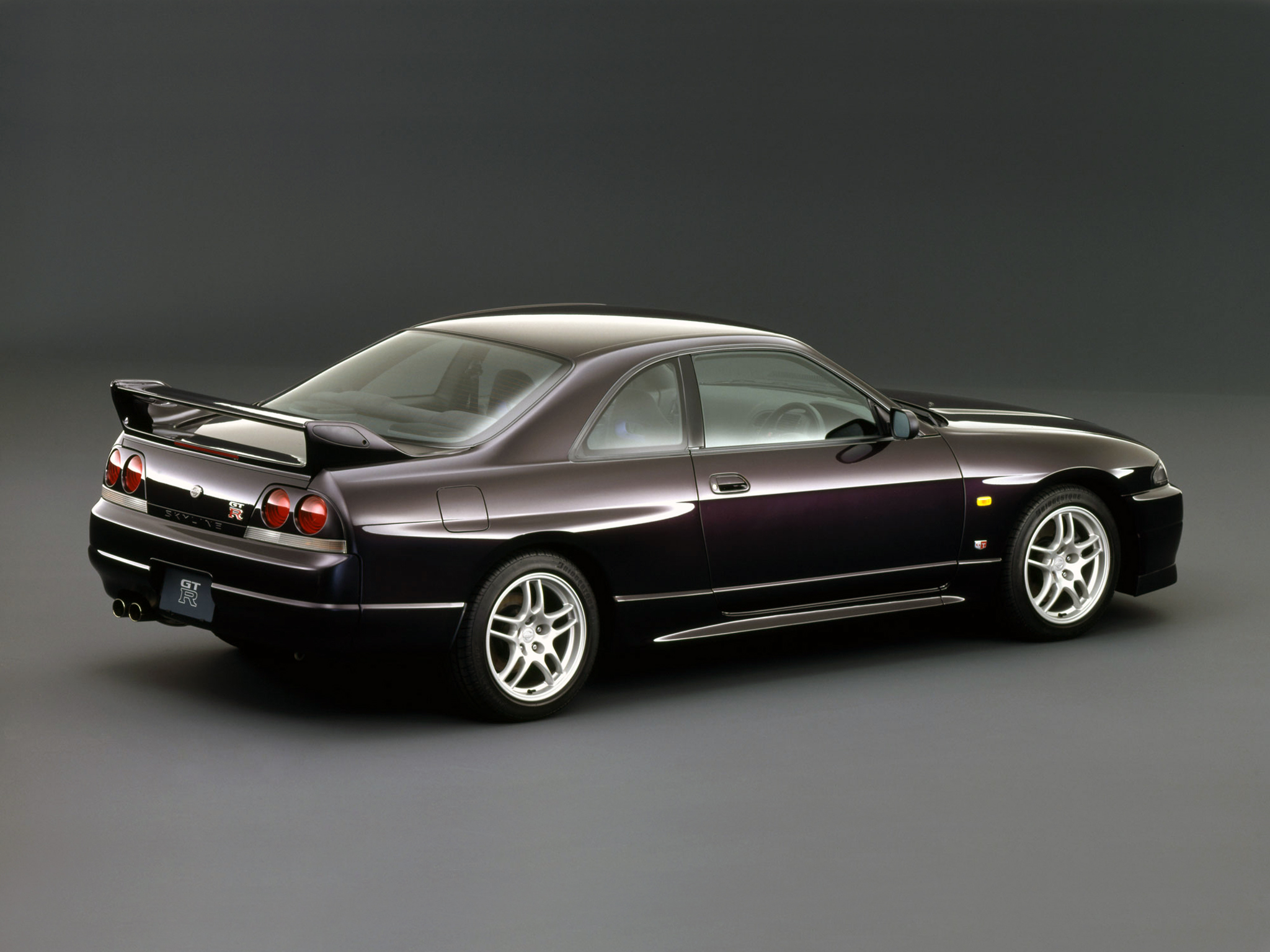
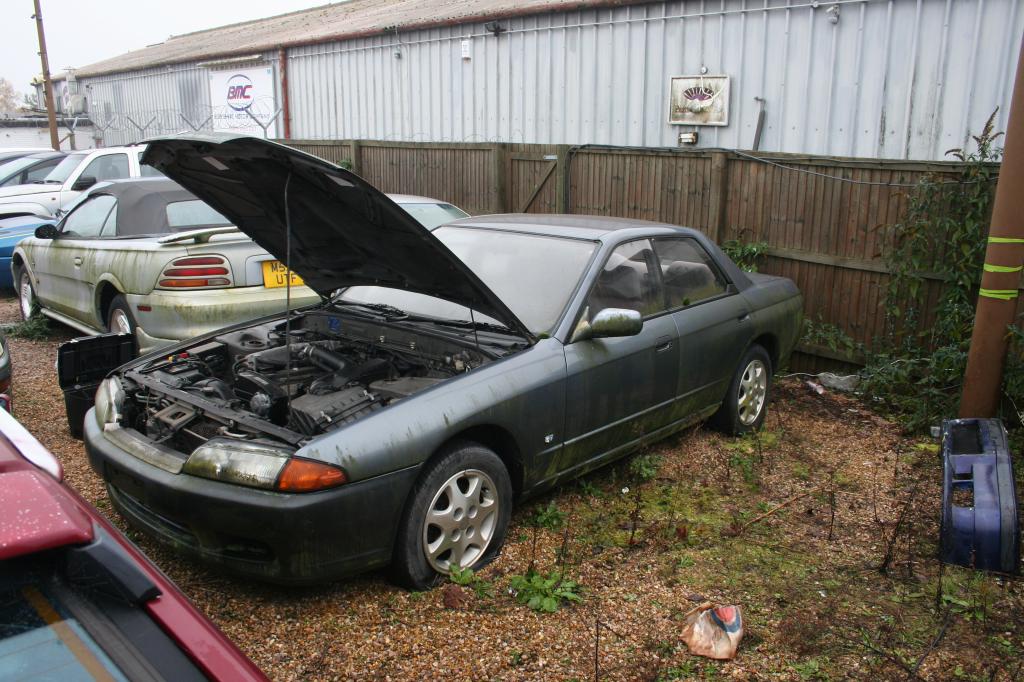
And I’m not above it. I too lament the loss of the once flourishing and affordable enthusiast car market, and struggle to make sense of many asking prices being thrown around. And it’s weird stuff, too, that people have traditionally never paid much attention to that’s going gangbusters. Things like Mitsubishi FTOs, Toyota MR2s and R33 Nissan Skylines – traditional black sheep – are now commanding unprecedented sums of money, often exceeding the values of big hero cars from just a few years ago.
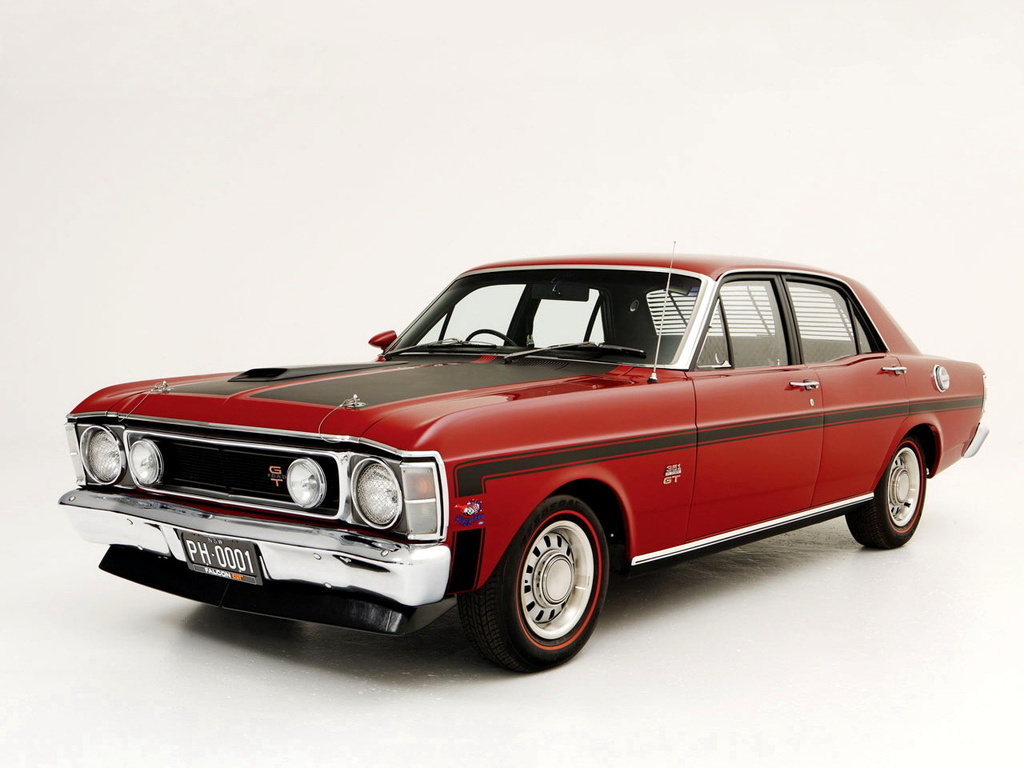
But when I see a tired old GTS-T listed for what was genuine GT-R money, I find I’m increasingly having to quell the urge to rattle off old values. I’m aware that I may be beginning to sound a lot like the old codger on Facebook – yelling at the abyss about how a GT-HO Falcon once cost just $6000.
The harsh truth is a GT-HO Falcon will never be close to a five-digit car again, and I’ve long made peace with the fact that I’ll never see a $35k R34 GT-R again. And with such a heavy financial focus on today’s collector culture, the question then becomes ‘when will the bubble pop’?
We’ve seen bubbles in the collector car market burst before. The turn of the 1990s comes to mind. The world was less globalised back then and the US represented one of the major epicentres for the high-end performance market. The run up was hard and the crash spectacular, with huge amounts of credit being leveraged. Within months, the values of genuine blue-chips like the Ferrari F40 and Carrera RS had halved.
It wasn’t just the top-end that got hit. Even amongst local collectors, US imports were at one point booming with all manner of Mustangs, Chargers and Camaros being brought in by the boatload – until, seemingly one day, they weren’t.
GT-HO Falcons enjoyed their first major blip in values during the late 1980s, with pristine cars fetching up to $100,000, when they looked safer than the bank and the V8 Falcon had gone on hiatus. Similarly, HO values soon halved from the days of their 1989 peak and remained there until the mid-’00s.
There are a lot of similarities between the 1990s collector car bubble and the state of the market we’re seeing today. There are many new players on both sides of the fence. Specialist media coverage and a hot sector means that in some cases, the same vehicles often appear on the market repeatedly.
There are also key differences some 30 years later. There’s still a huge level of speculation at play, perhaps more so than ever. However, the high-end collector segment has morphed into a truly legitimate asset class – more than it ever has been – and is fuelling derivation everywhere.
There will be some market correction, there always is, once macroeconomics shift and the world opens up, or perhaps another revenue bubble opportunity will come along. Today’s collectible mania simply isn’t sustainable. Yet, three decades on, there is one big difference. And it’s tied to the new car industry. We sit at the precipice of arguably the greatest paradigm shift since the advent of the internal-combustion engine. Classic/vintage, or even cars from just a few generations ago, offer a vanishing experience that we simply won’t be able to buy in the near future.
It’s the same appeal and emotion that the gorgeous restomods featured in this issue trade on, although they’re executed to a hyperbolic degree. Look at Mercedes-AMG’s C63e as a case study. The next-generation of go-fast cars will boast unprecedented performance metrics, but some will undoubtedly feel they’re losing something in return.
Therefore, questioning whether something like an R34 Nissan GT-R is truly justified in commanding $200,000 is a fallacy. A younger me would’ve rebelled and said no. However, value is relative. And as the recent surge in restomods show, if it’s done correctly, the internal combustion, analogue experience remains a powerful draw virtually regardless of price.
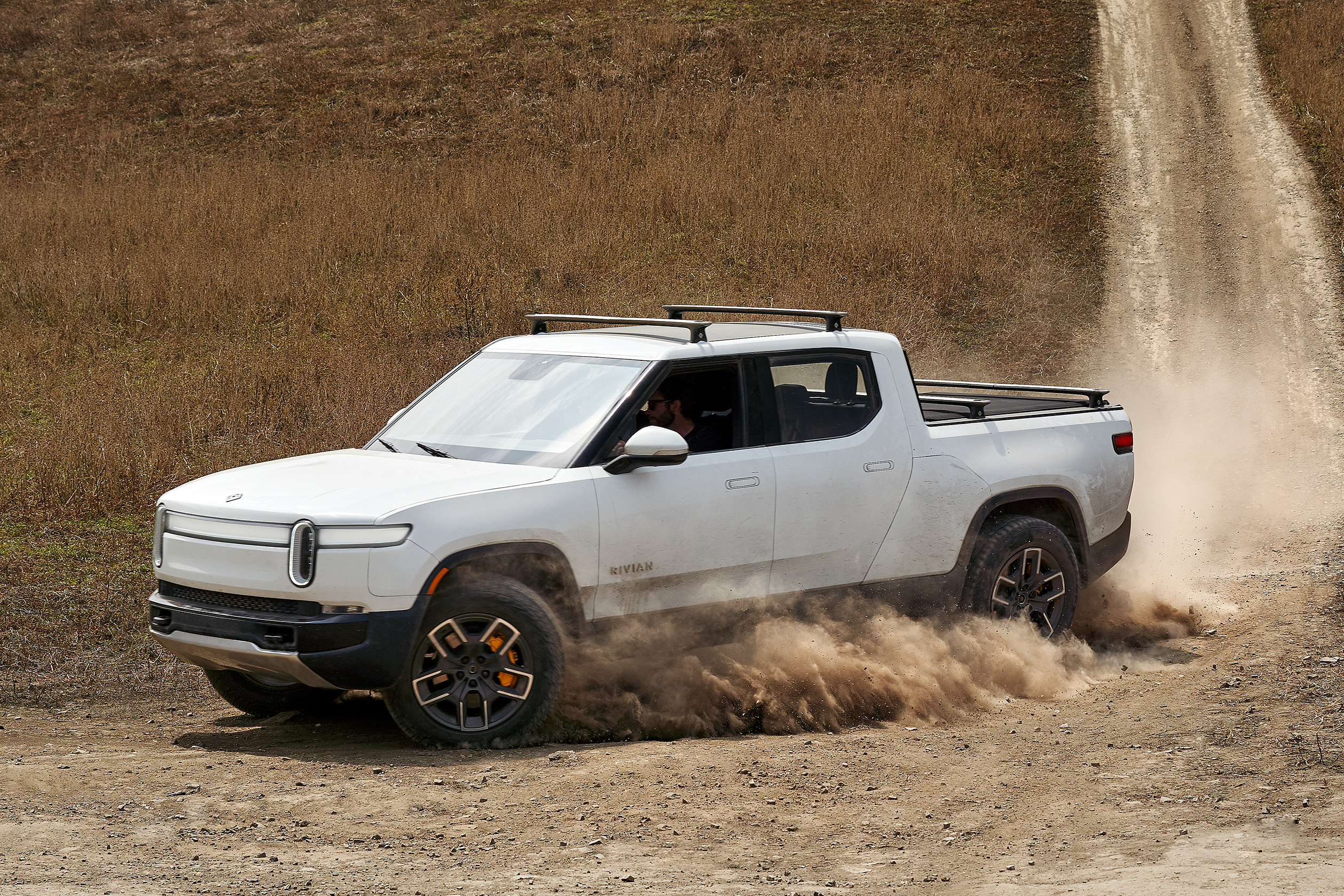
American EV upstart Rivian has revealed pricing for its fully-autonomous system ahead of its R1T production vehicles hitting the road.
Off the back of its first R1T rolling off the production line last month, Rivian’s initial public offering (IPO) was made available ahead of an expected November reveal – detailing a breakdown of life-time revenue categories for the business and its vehicles.
While costs of regular factors such as financing, insurance and servicing are shown, the IPO also lists a US$10,000 (AU$13,730) one-off fee for the R1T truck and R1S SUV’s fully-autonomous systems – the same cost as Tesla’s controversial Full-Self Driving (FSD) tech which went live at the end of September.

On top of this, Rivian will also introduce a US$5500 (AU$7550) subscription fee for “infotainment, connectivity, diagnostics, and other services” which will be spaced out over a 10-year period, potentially across multiple owners if the vehicle changes hands.
To the end of September this year, Rivian has received a total of 48,390 pre-orders across the United States and Canada for the R1T and R1S, all of which were paid with a US$1000 (AU$1370) fully-refundable deposit.
Although two vehicles are currently testing in Australia, Rivian hasn’t fully committed to bringing its vehicle to the local market, with the IPO stating:
“[It has] analyzed [sic] the principal laws in the United States, EU, China, Japan, United Kingdom, and Australia relating to our distribution model and believe we comply with such laws, the laws in this area can be complex, difficult to interpret and may change over time, and thus require ongoing review.”
Rivian has been fortunate to secure these preorders as the company recorded massive losses over the past two years, totalling US$1.426 billion (AU$1.96bn) at the end of 2020, although it is only US$3 million (AU$4.12m) in debt as of July 2021.
Rivian received a major funding boost in 2019 from an Amazon-led consortium, which poured in US$700 million (AU$954m) in February, as well as Ford subsequently taking a US$500m (AU$681m) stake in the company in April of the same year.
