
Settling into the driver’s seat of the new 2022 Lexus NX350h is to arrive at the current core of the Lexus universe. This petrol-electric medium SUV is the brand’s most important model.
The NX accounts for a third of Lexus sales in both Europe and Australia, somewhat less in massive markets like North America and China. And increasingly, pretty much everywhere, Lexus buyers are frequently choosing hybrid power. In the emissions- and efficiency-conscious nations of Western Europe, for example, more than 90 per cent of Lexus models purchased are petrol-electric.
Scheduled to arrive in Australia in January, the slightly larger second-generation NX will replace the original that launched way back in 2014.
While the best seller in the current range is the 300 variant with a turbo four, Lexus Australia expects the 350h hybrid to be the most popular in the new line-up.
Its fourth-generation hybrid tech, again built around a 2.5-litre Atkinson-cycle four, brings big increases in power and performance along with improved fuel efficiency. The NX350h will be sold in three equipment grades – Luxury, F Sport, Sports Luxury – and in both front- and all-wheel-drive forms.
The effective replacement for the existing NX300, the new NX350, packs a brand new turbocharged 2.4-litre four teamed with an eight-speed auto under its bonnet. It’s a little more powerful than the hybrid but consumes much more fuel. The NX350 will be sold only in F Sport trim and with all-wheel drive.
Beneath these two versions will sit the NX250. It will have a non-turbo 2.5-litre four and the same eight-speed auto as the NX350 but will come only as a front-driver with the entry-level Luxury equipment grade.
Though the launch line-up has been mostly finalised, pricing hasn’t. Expect the single-variant 250 to be around $60,000 before on-roads, the top-spec 350h to be in the neighbourhood of $80,000, and everything else to be between these two numbers.
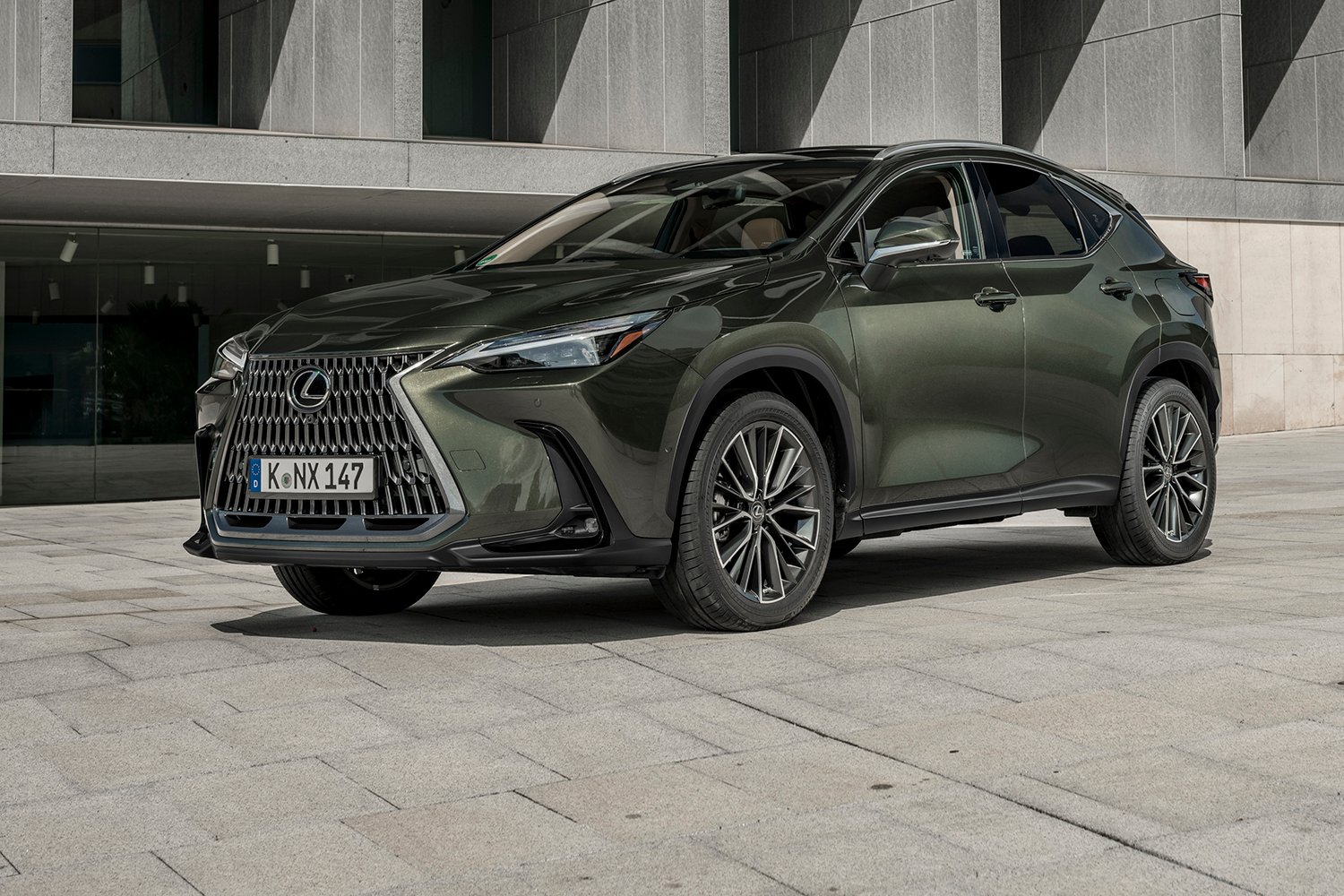
The massive grille, which wouldn’t look out of place on some ocean-dwelling krill-catcher, identifies it instantly as a Lexus.
It’s possible that the first-ever plug-in hybrid from Lexus, the 450h+, will be added to the range by the time of the new NX’s local launch. It uses a slightly altered version of the hybrid powertrain in the 350h and adds a much bigger lithium-ion battery pack for an electric range of around 70km. It comes with the same 40kW rear-axle electric motor as the all-wheel-drive version of the 350h.
With easily the highest combined power output of the new NX range and all-wheel-drive traction, 450h+ is the snappiest performer of them all. If it comes to Australia, and we’re told this is a near certainty, it’ll be the halo model. Accordingly, it’s likely to wear a price tag of around $90,000.
The exterior of the new NX is not bad looking, if you prefer a chunky build to slender elegance. And the massive grille, which wouldn’t look out of place on some ocean-dwelling krill-catcher, identifies it instantly as a Lexus.
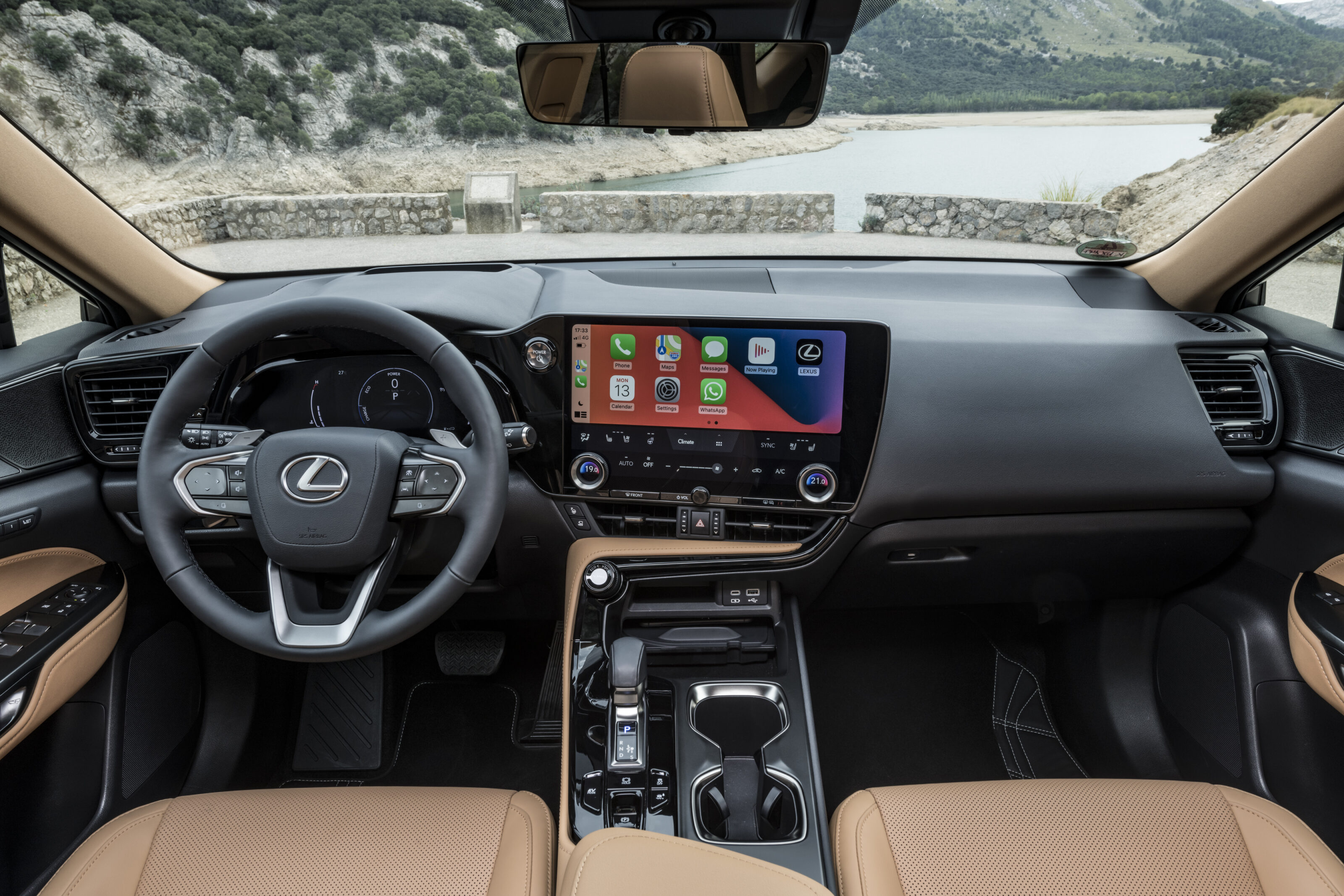
As is often the case with Lexus, the beauty is mostly to be found on the inside and the NX is the first model to adopt the brand’s new cockpit concept. Inevitably, it has a Japanese name: Tazuna. It aims to minimise the movement of hands and eyes while driving.
What this means in practical terms is a new steering wheel design with customisable touchpads on the left and right spokes, a customisable display of essential info in the meter cluster (and the head-up display that’ll be standard in high-grade models in Australia), plus a reduction in the number of physical switches.
The central landscape-oriented touchscreen is angled towards the driver. There’s a 9.8-inch display for the basic grades and a deliciously crisp 14.0-inch high-definition unit for high-spec variants. All versions will come with a voice assistant, DAB+, sat-nav, and Apple CarPlay and Android Auto compatibility.
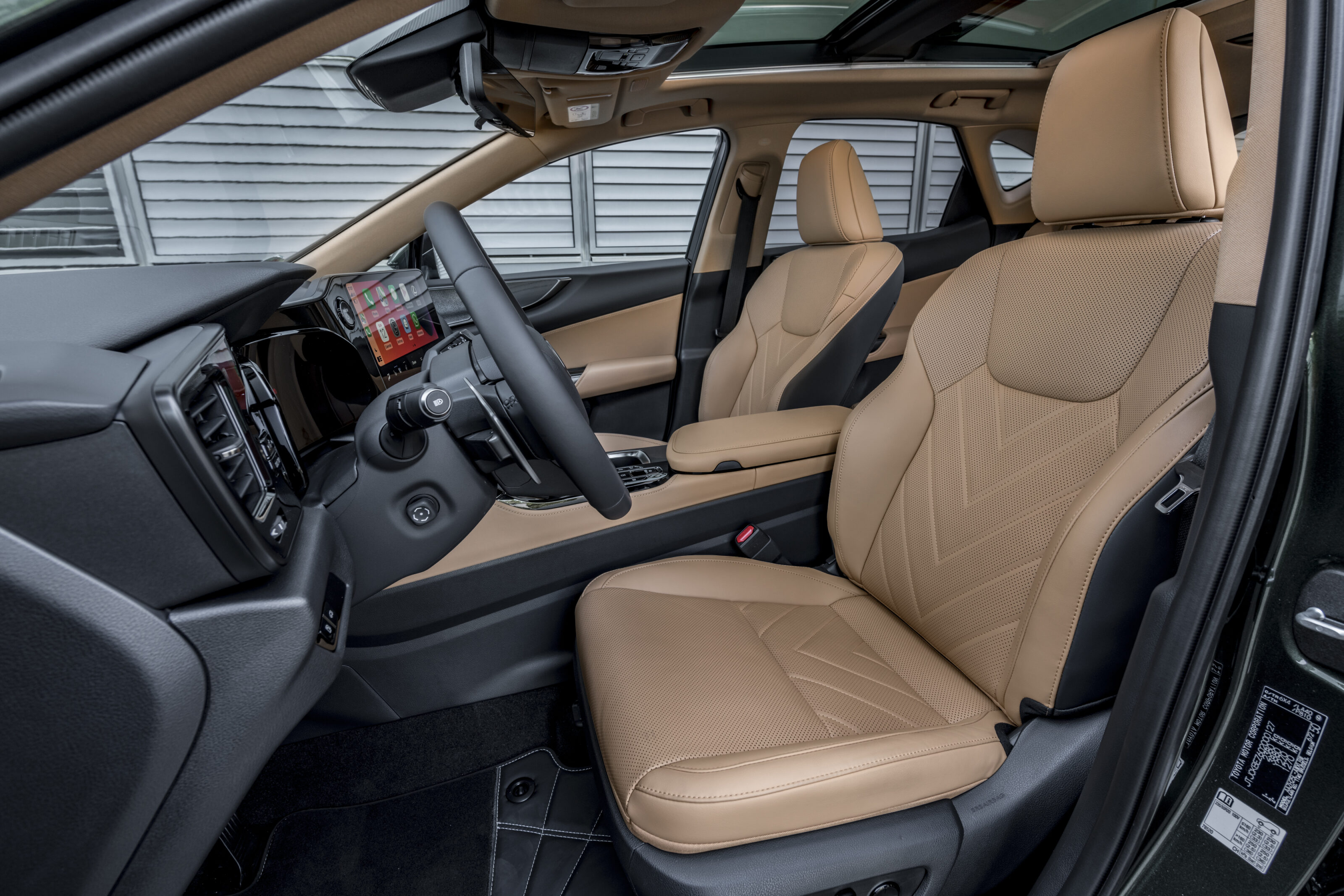
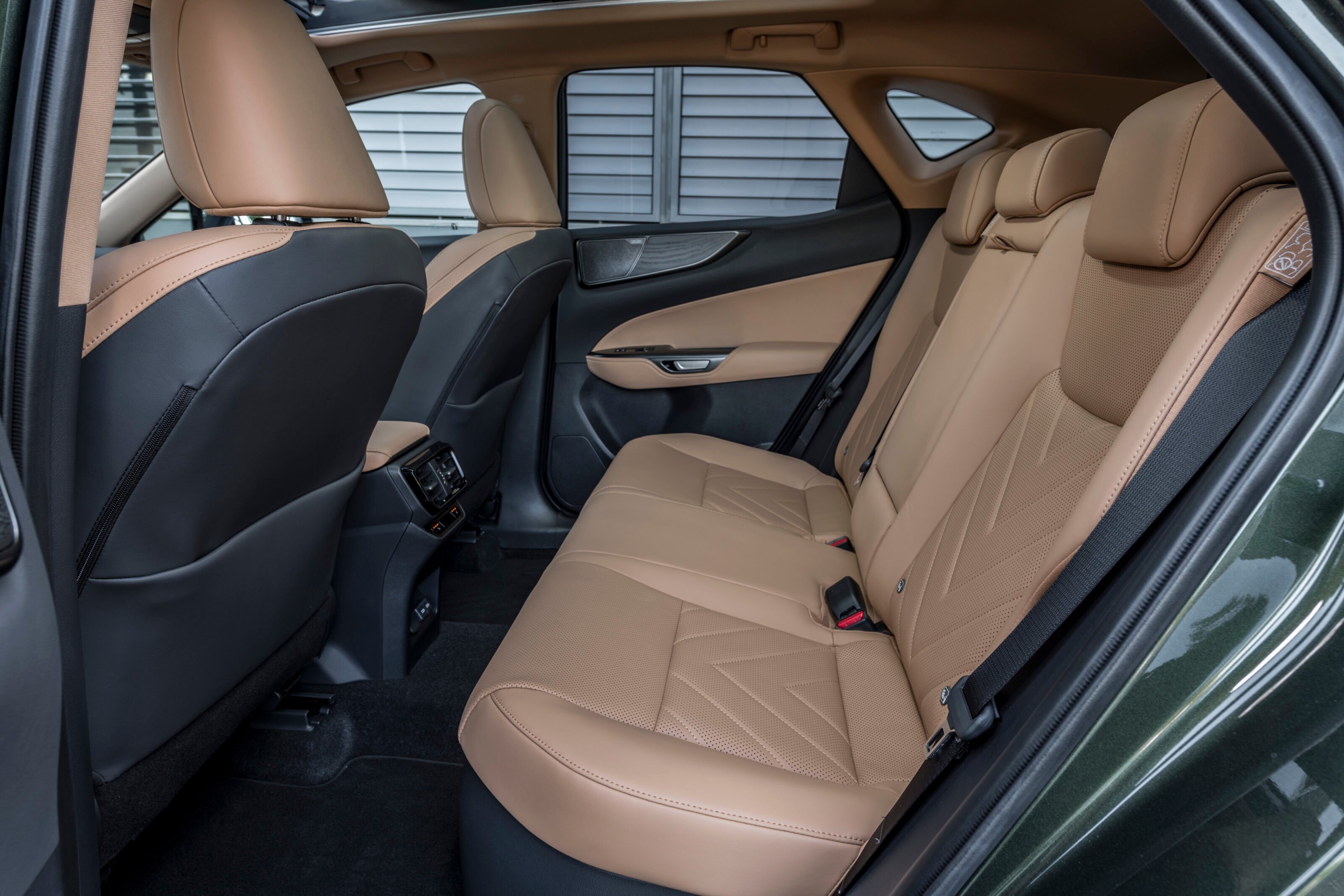
Both cockpit look and layout are excellent. It’s user friendly, and the quality of materials and craftsmanship is pretty much flawless. Front-seat comfort is superb, though really tall drivers may find headroom lacking. The rear seat is spacious and supportive, and the cargo compartment usefully large.
The list of standard safety and driver-assist tech is as lengthy as it should be in something with premium aspirations. And the NX debuts a first-for-Lexus safety system. Using the same sensors as for blind-spot monitoring and new electric door latches, it can prevent door opening when a vehicle or bike rider is approaching. Cyclists of the world rejoice!
Anyone who’s driven a Toyota hybrid in the two decades since the first Prius will find the NX350h sounds and feels familiar. Engine noise is more muted than in the old days – this is a new Lexus, after all – but the faint sound of the 350h’s Atkinson-cycle four remains charmless.
The mysteries of hybrid tech mean that both the front-drive and all-wheel-drive versions of the 350h have the same combined total maximum power output of 179kW. This is 24 per cent more than the current 300h, enough to cut 0-100km/h acceleration times to a claimed 8.7 seconds for the front-driver and 7.7 seconds for the all-wheel drive. (The plug-in NX450h+, by the way, does it in a much snappier 6.3 seconds).
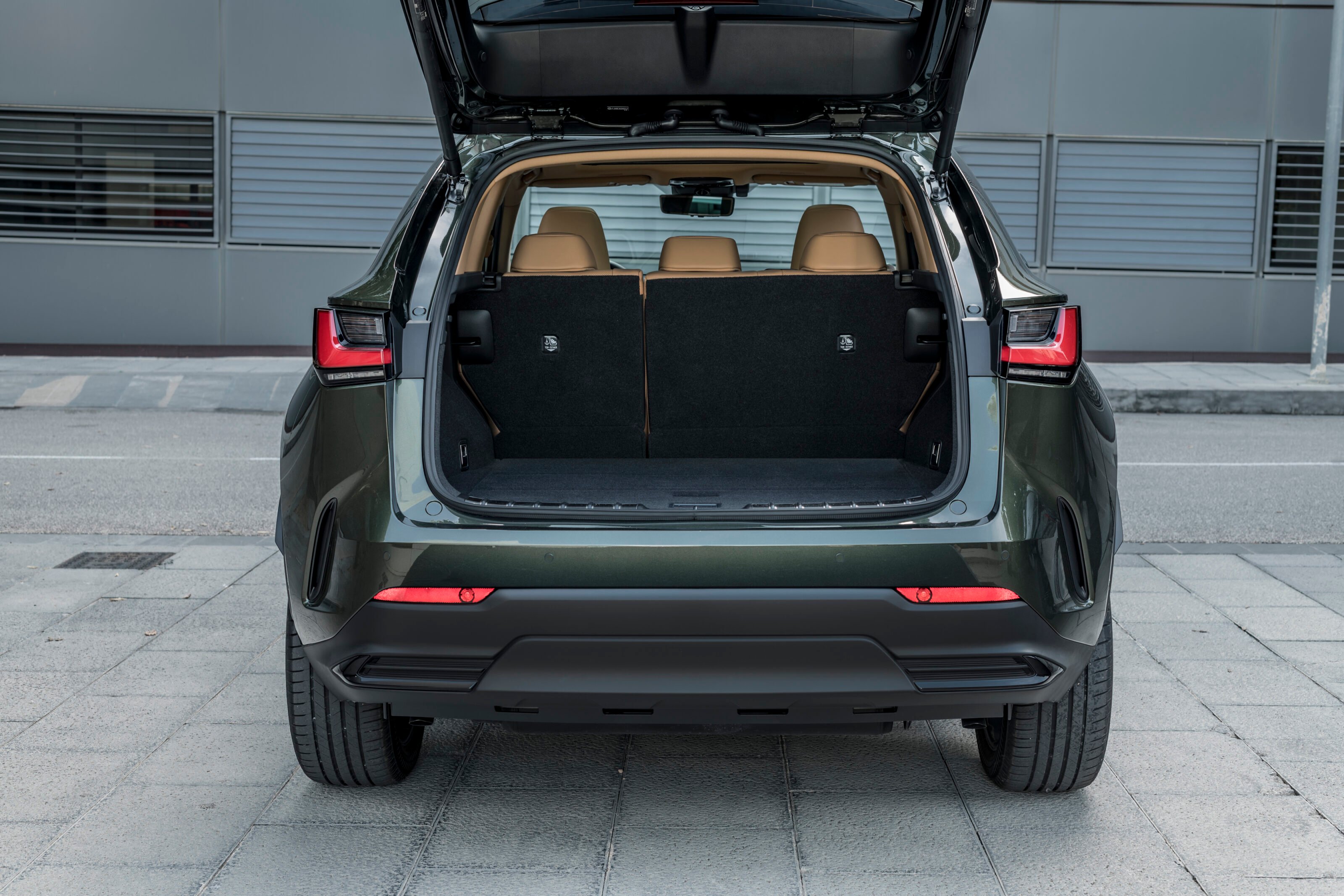
Driving at the recent European press presentation on the Spanish island of Mallorca, the NX350h frequently shut down its ICE to run electrically. Despite being spanked along with enthusiasm, including on some steep and winding roads, the trip computer indicated fuel consumption of only 7.0L/100km.
While undoubtedly very efficient, the 350h never feels especially lively, perhaps because the hybrid tech means there’s no precise relationship between engine noise and acceleration.
Still, the 350h is a smarter choice, at least for comfort lovers, than the 300. Its turbo 2.4-litre four sounds a little like a classy domestic appliance, which isn’t a major problem, but the behaviour of its eight-speed auto is. The transmission is prone to shunty shifting at lower speeds, something the unfailingly smooth eCVT-equipped 350h never does. And though the 350 feels a slightly more lively, it consumes around 30 per cent more fuel than the 350h according to official test figures.
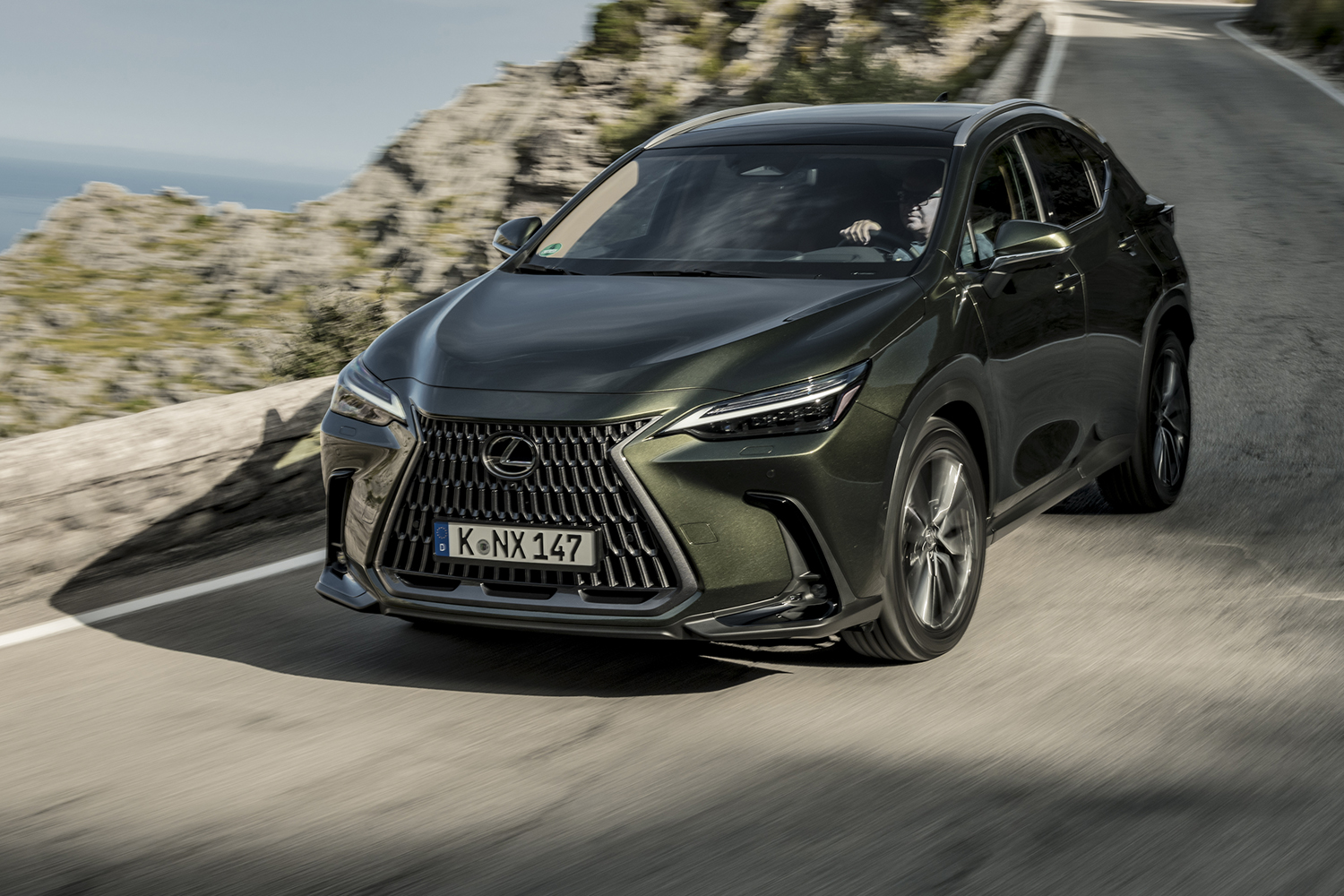
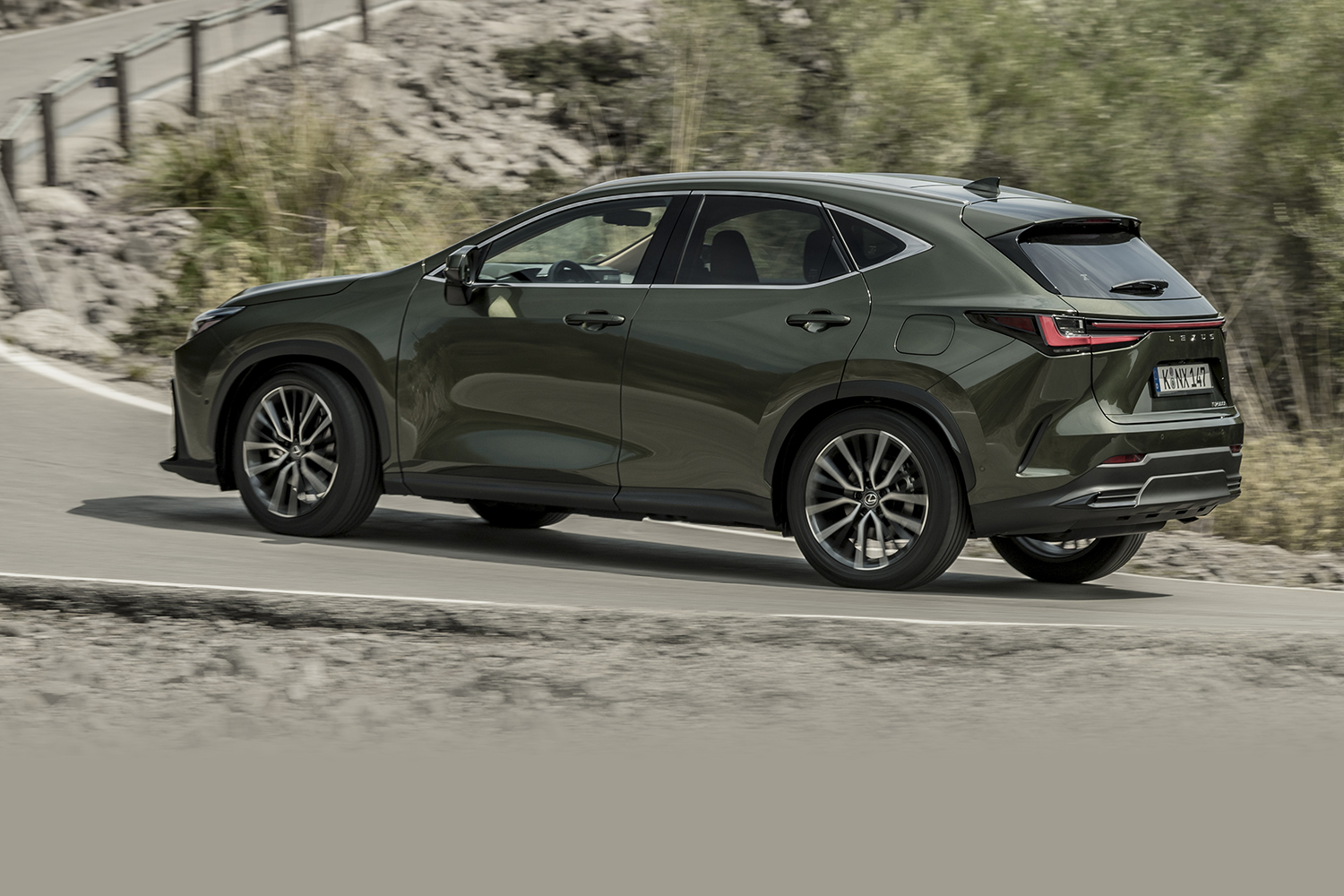
Dynamically, the great asset of the NX350h is its ride. Even on the 20-inch tyres worn by all the vehicles available to test drive in Spain, the suspension of the Lexus delivered a sweet blend of control and comfort. Road rumble on coarse surfaces was the only thing to disturb the straight-road calm.
The hybrid’s handling is competent enough. It understeers when pushed but the numb steering, synthetic-feeling brakes and the chassis’ clear comfort bias don’t do anything at all to encourage ambitious cornering. The E-Four all-wheel-drive system is so seamless that it’s hard to tell what, if anything, it contributes.
Medium SUV is the size and shape all the world today seems to want, which means the new Lexus NX is certain to find an audience among the multitudes who desire a little more luxury and can afford to pay for it.
With its distinctive Japanese flavour, it’s a welcome alternative to obvious European rivals like the BMW X3, Mercedes-Benz GLC, Audi Q5 and Volvo XC60. Where most of these – the Volvo is the exception – shoot for spurious sportiness, the NX instead aims for calmness, comfort and quality. And these are virtues with universal appeal.
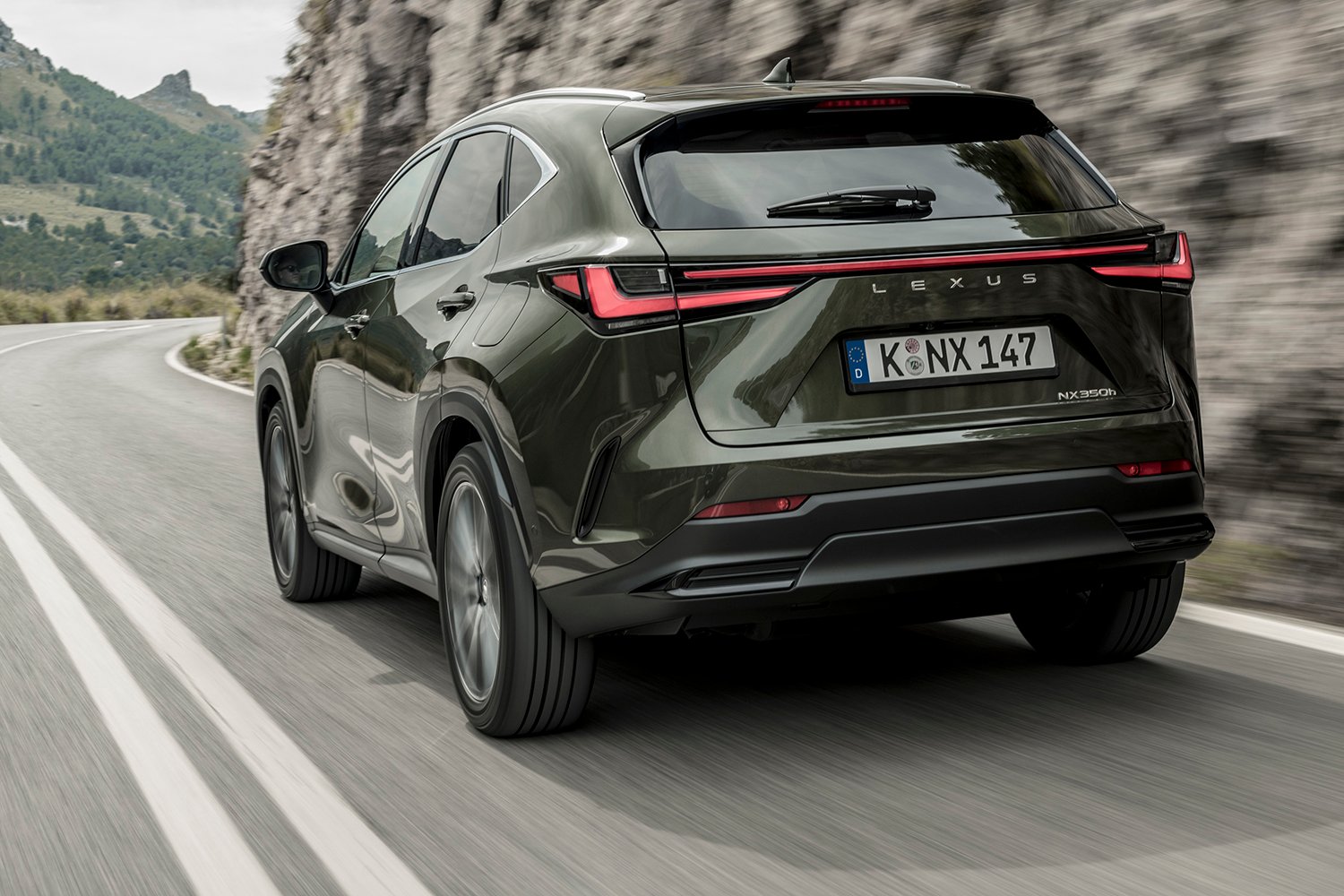
2022 Lexus NX 350h specifications
| Model | Lexus NX350h E-Four AWD |
|---|---|
| Engine | 2487cc 4cyl dohc 16v Atkinson-cycle |
| Motors | 134kW permanent-magnet synchronous front, 40kW permanent-magnet synchronous rear |
| Max system power | 179kW |
| Max engine torque | 239Nm at 4300 to 4500rpm |
| Max motor torques | 270Nm front, 121Nm rear (Lexus doesn’t quote total combined system torque, only power) |
| Transmission | eCVT |
| Weight | 1790 to 1870kg |
| 0-100km/h | 7.7sec |
| Economy | 5.6L/100km (WLTP Low) |
| Price | From $75,000 (estimated) + ORC |
| On sale | January 2022 |
Snapshot
- New Government wants a 25 per cent tax on vehicles over 600,000 Krone
- Proposed tax threshold is almost $20,000 higher than Australian LCT
- Current tax exemption is costing the country’s Government over $3 billion a year
The Norwegian Government is looking to introduce a tax on expensive electric vehicles.
Currently the world leader in EV uptake, Reuters reports 77.5 per cent of all new cars sold in Norway throughout September were fully-electric, up from 61.5 per cent 12 months prior.
While EV buyers are currently exempt from taxes imposed on internal combustion engined vehicles, the country’s new Labour Government – which won last month’s election – is proposing a 25 per cent tax on EVs over 600,000 Krones (AU$96,000).

Similar to the Australian Luxury Car Tax – set at $79,659 for fuel-efficient cars and $69,152 for other vehicles – the Norwegian charge will only apply to the retail value of a vehicle and be added to the cost beyond the threshold.
The Norwegian Labour Party’s tax policy spokesman, Svein Roald Hansen, told Reuters the current exemptions weren’t designed to last forever and will need to be adjusted in the future.
“It is a subsidy. And… the more expensive the car is, the bigger the subsidy,” said Hansen.
“We have in the last couple of years received a lot of new models…there is plenty to choose from for those who still want to buy a car while there is a VAT (value-added tax) exemption.”
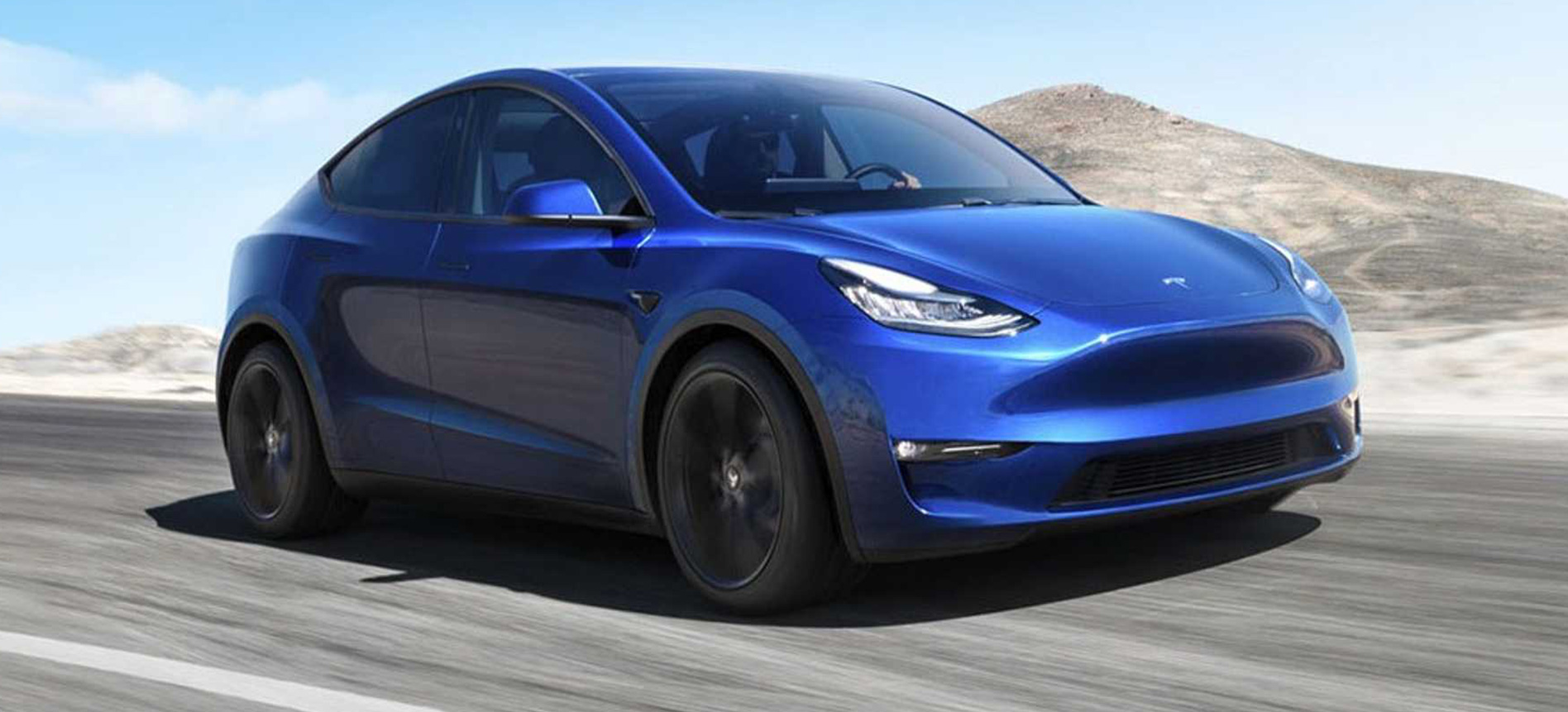
With EVs now making up more than three-quarters of vehicle sales in Norway, it’s the Tesla Model Y which leads the charge with 19.8 per cent of the total new car market, followed by the Model 3 at 12.3 per cent and Skoda’s Enyaq SUV in third, on just 4.4 per cent.
A working paper from the International Monetary Fund earlier this year estimated the exemption was costing the Norwegian Government up to 19.2 billion Krone (AU$3.04bn), an average of around 250,000 Krone (AU$40,000) for every EV sold.
Snapshot
- Mk8 Golf has undergone the smallest increase of $200
- Touareg up by as much as $1800
- Semiconductor supply continues to limit deliveries
Volkswagen Australia has increased the retail prices of multiple models across its range, justifying the extra premium with equipment upgrades.
Affecting six models in its line-up, the changes range from $200 in the case of the Golf, to $1800 for the Touareg 210TDI Elegance – although the Passat, T-Cross, T-Roc and Tiguan have also gone up in price.
The 11 increases across various trim variants works out at an average of $985, with Volkswagen telling Wheels the extra costs come alongside upgrades.
Read on to see the new prices and equipment across the Volkswagen range.
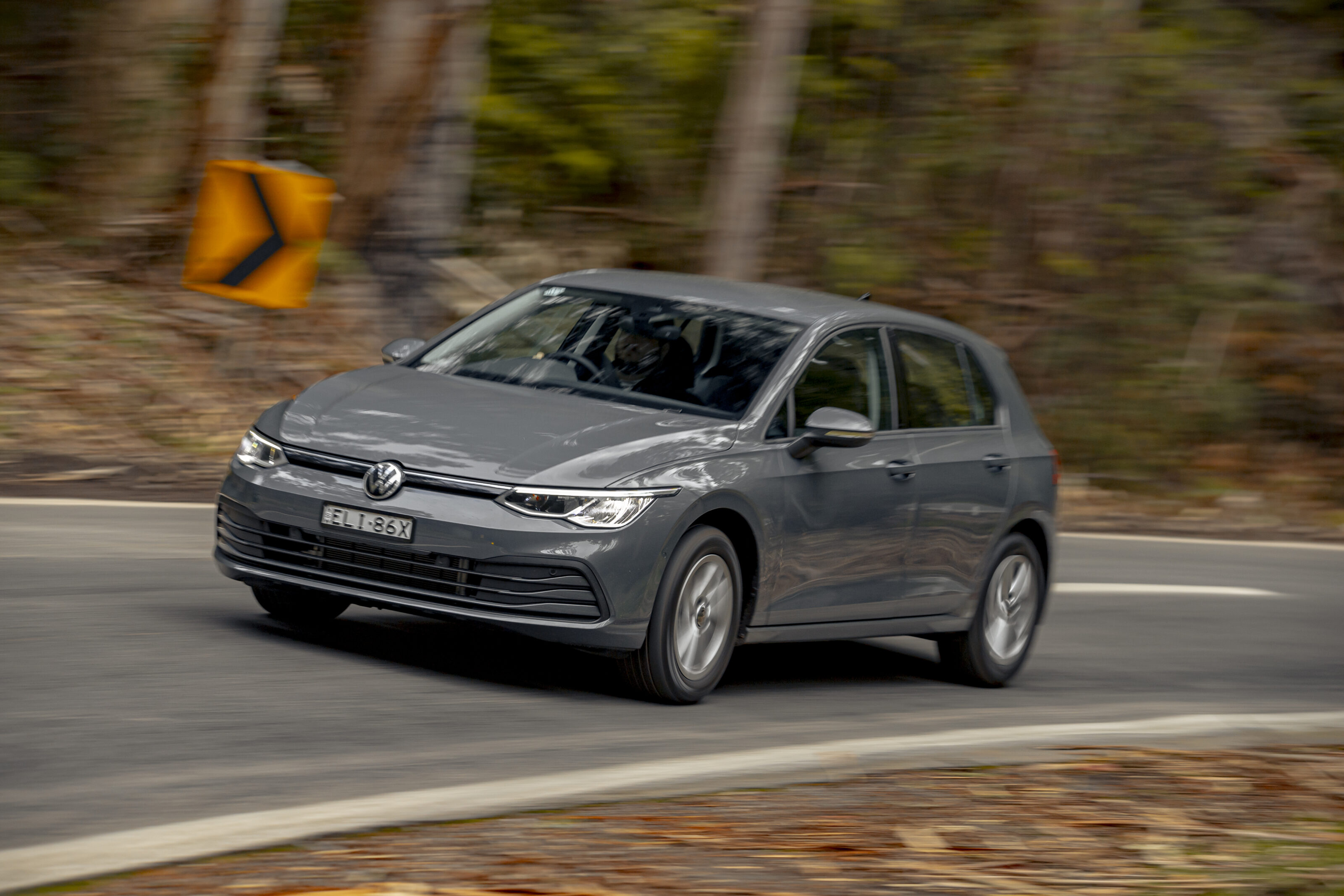
Volkswagen Golf Australian pricing – October 2021
The eighth-generation Golf was released earlier this year and now has a touch control panel for rear zone climate-control air-conditioning as standard, as well as an easy close electric tailgate – which has been added to the Life’s wagon variants.
Prices exclude on-road costs.
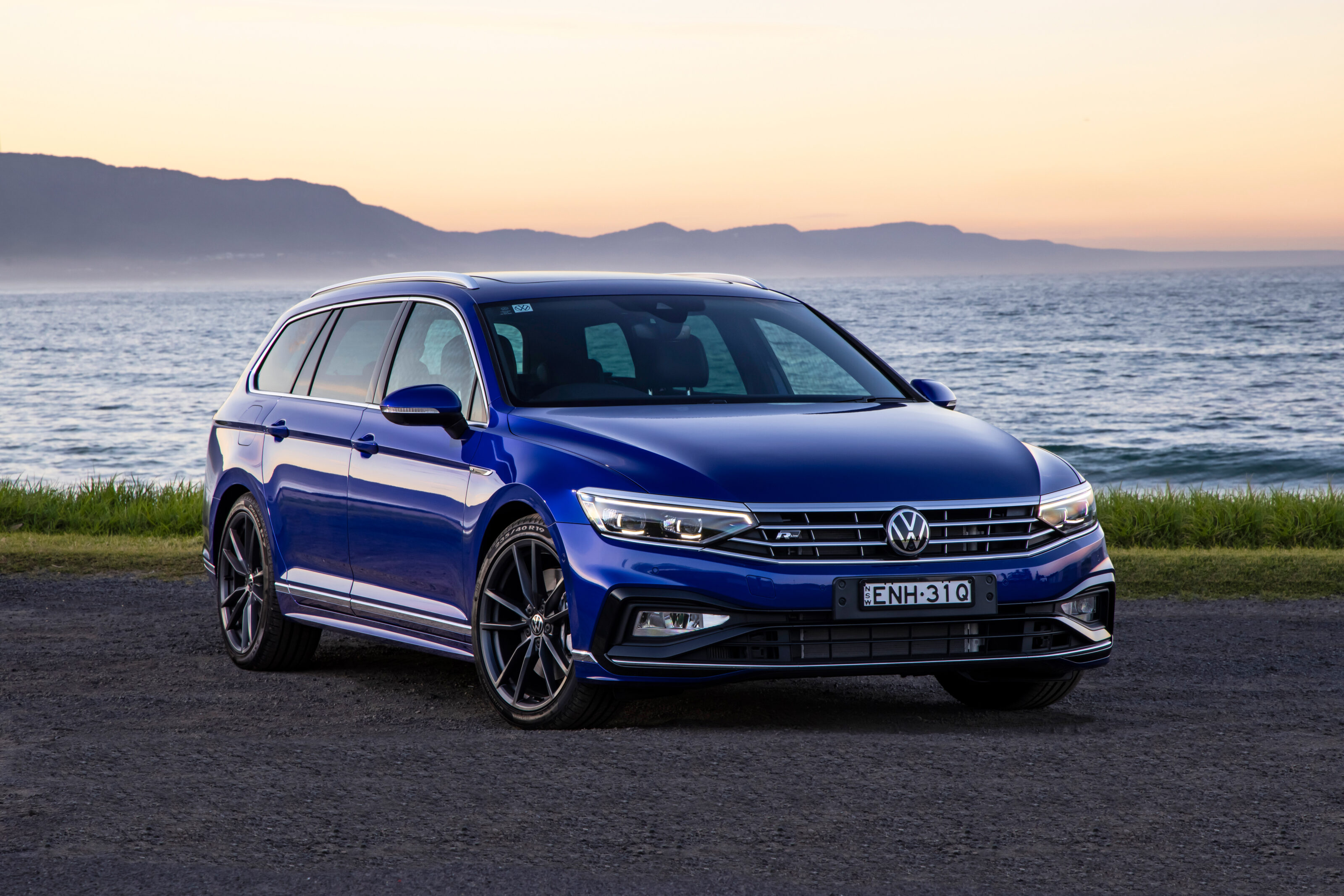
Volkswagen Passat Australian pricing – October 2021
A touch control panel has also been added for the rear zone of climate-control air-conditioning for the Passat.
Prices exclude on-road costs.
| Passat 140TSI Business auto | $47,690 | up $1100 |
| Passat 162TSI Elegance auto | $52,890 | up $1100 |
| Passat 162TSI Elegance wagon auto | $54,890 | up $1100 |
| Passat 206TSI R-Line wagon auto | $64,890 | up $1100 |
| Passat Alltrack 162TSI auto | $48,090 | up $1100 |
| Passat Alltrack 162TSI Premium auto | $59,890 | up $1100 |

Volkswagen T-Cross Australian pricing – October 2021
The entry-level T-Cross Life now benefits from gearshift paddles behind its multi-function steering wheel, plus power folding mirrors, while the Style variant additionally features touch controls rather than hard keys for its dual-zone climate-control system.
Prices exclude on-road costs.
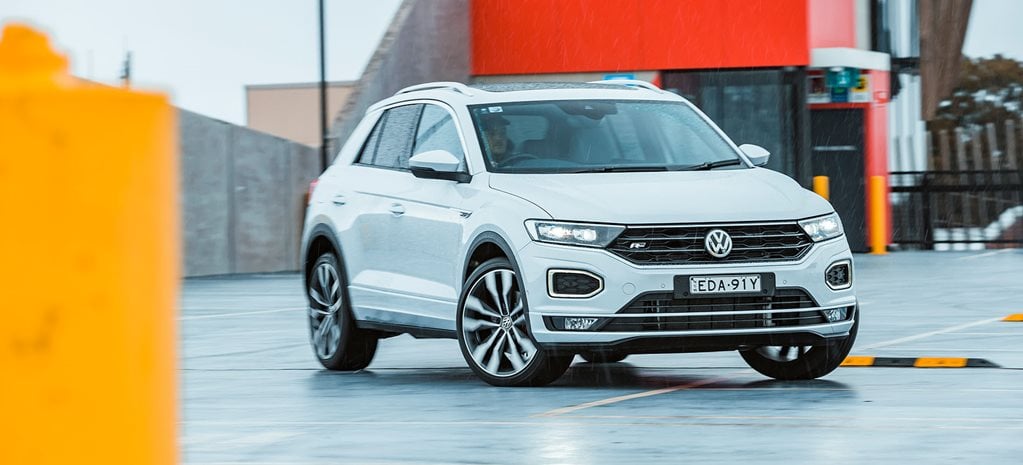
Volkswagen T-Roc Australian pricing – October 2021
Prices exclude on-road costs.
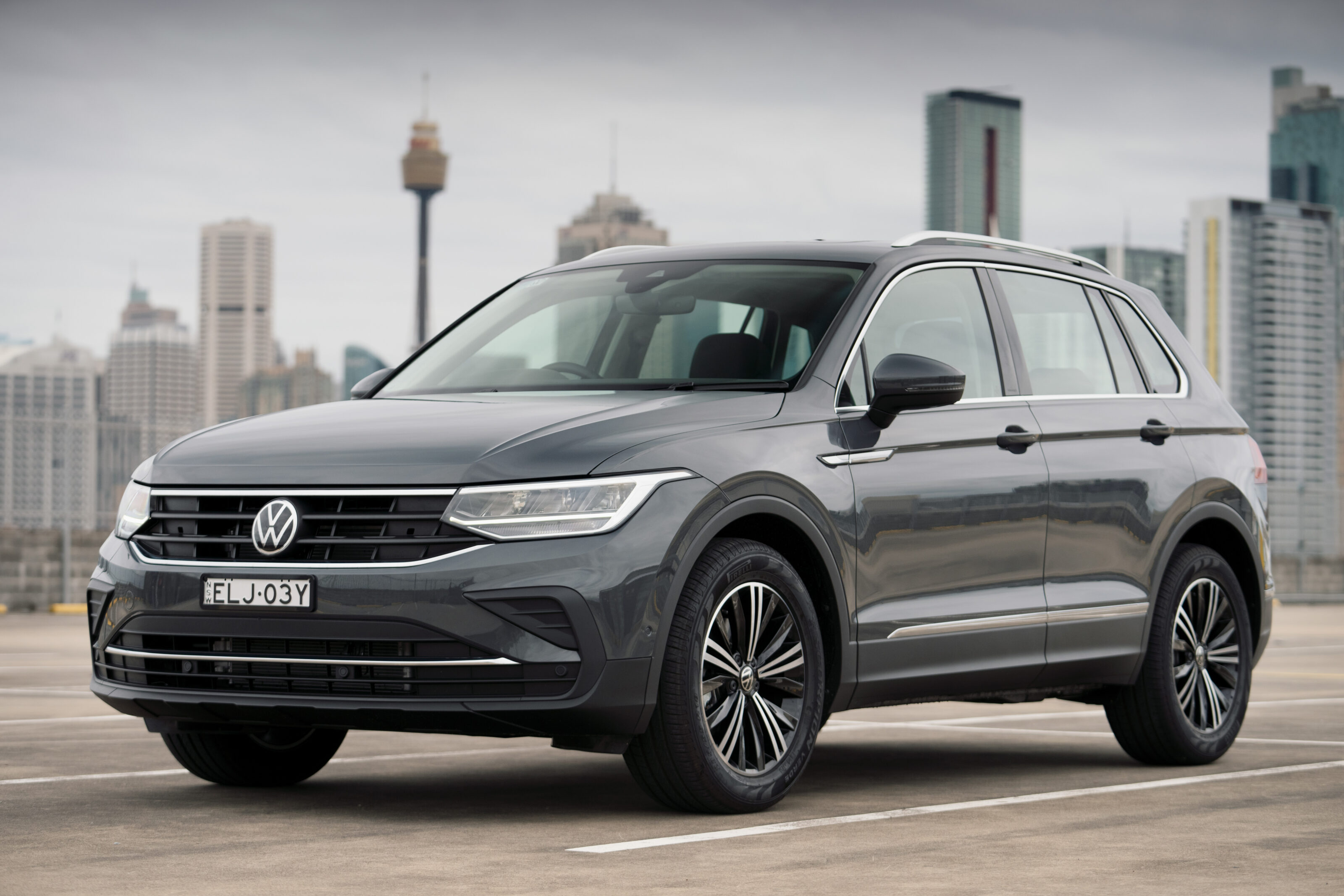
Volkswagen Tiguan Australian pricing – October 2021
Tiguan now benefits from a touch control panel for the rear zone of its climate-control air-conditioning system, in addition to easy open and close functionality being added to the electric tailgate of R-Line variants.
Prices exclude on-road costs.
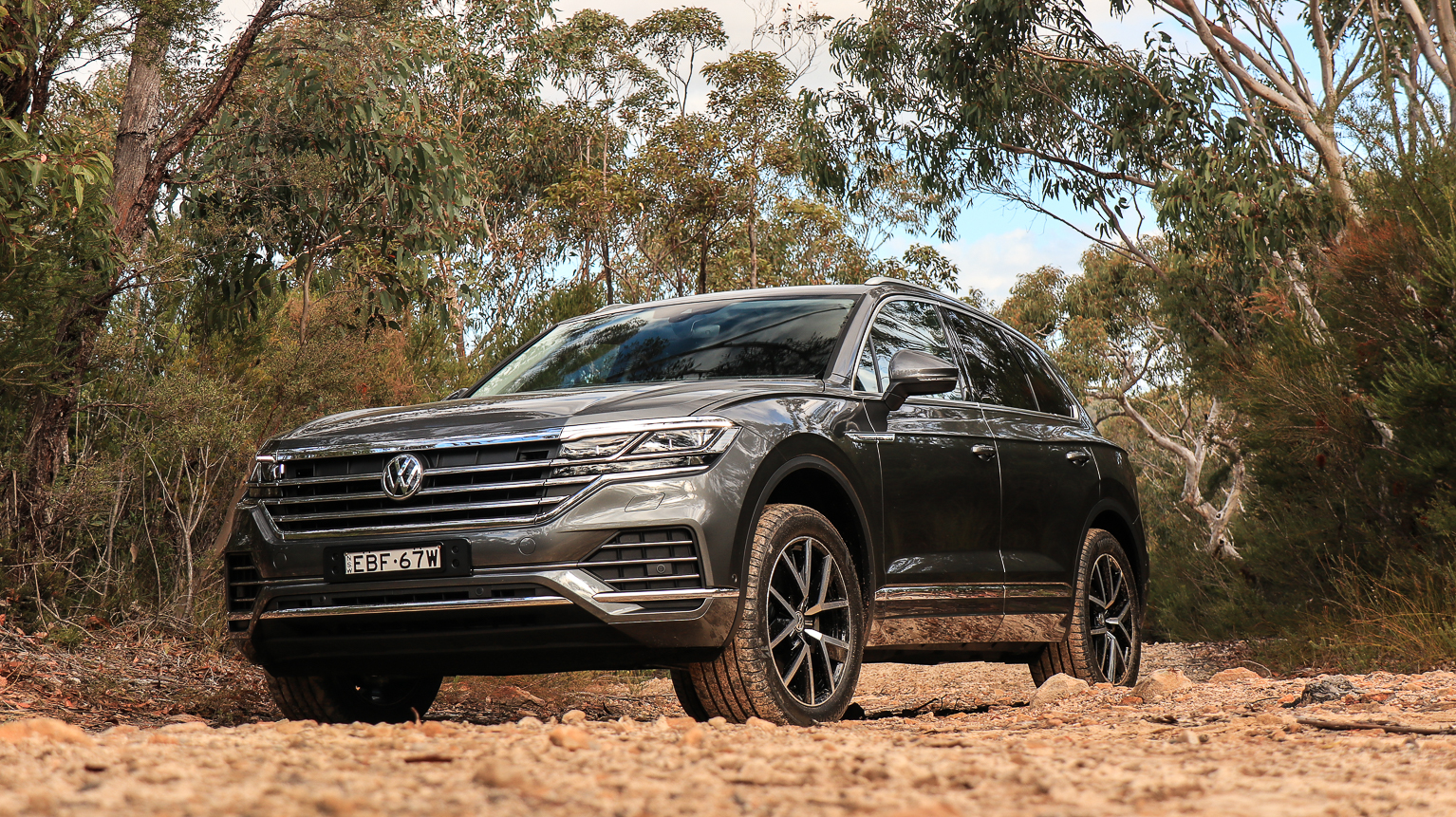
Volkswagen Touareg Australian pricing – October 2021
DAB+ radio is now standard for the Touareg aside from the entry-level 170TDI where it is a part of the optional Innovision package.
Prices exclude on-road costs.
Chevrolet’s first electric pick-up truck will be revealed at the start of 2022.
Set to debut at the 2022 Consumer Electronics Show in Las Vegas on January 5, the all-electric Silverado will compete against Ford’s electric F-150 Lightning – and Ram Trucks, the latter having announced its plans to build an EV truck, but not until 2023.
In its teaser image for the Silverado, Chevrolet showed off its optional fixed-glass roof – which is understood to only be available on non-commercial variants of the truck, as it targets trade-based customers with a stripped-back electric Silverado to fight Ford’s F-150 Lightning Pro.

Based on the same Ultium battery platform as the upcoming Hummer EV and Cadillac Lyriq, GM estimates a driving range of up to 400 miles (640 kilometres) for the Silverado, putting it above the Rivian R1T’s 314 mile (505km) EPA range.
If the Silverado retains the planned power and torque outputs of the Hummer, it could produce up to 619kW and 1350Nm, making it the most powerful variant in the nameplate’s history.
A shift to electric trucks is inevitable for the Big Three American manufacturers, with President Joe Biden asking the trio to sign a non-binding target for EV production aimed at between 40 and 50 per cent of the country’s vehicles being EVs by 2030.
Snapshot
- First competed in 1974 IMSA
- Bought and raced by Escobar in 1980s
- Restoration completed in 2010
A Porsche 911 racer once owned by Colombian drug lord Pablo Escobar is up for auction in the United States.
The 1974 3.0 RSR IROC is one of 15 built for the inaugural International Race of Champions, and was purchased by businessman and racing magnate Roger Penske.
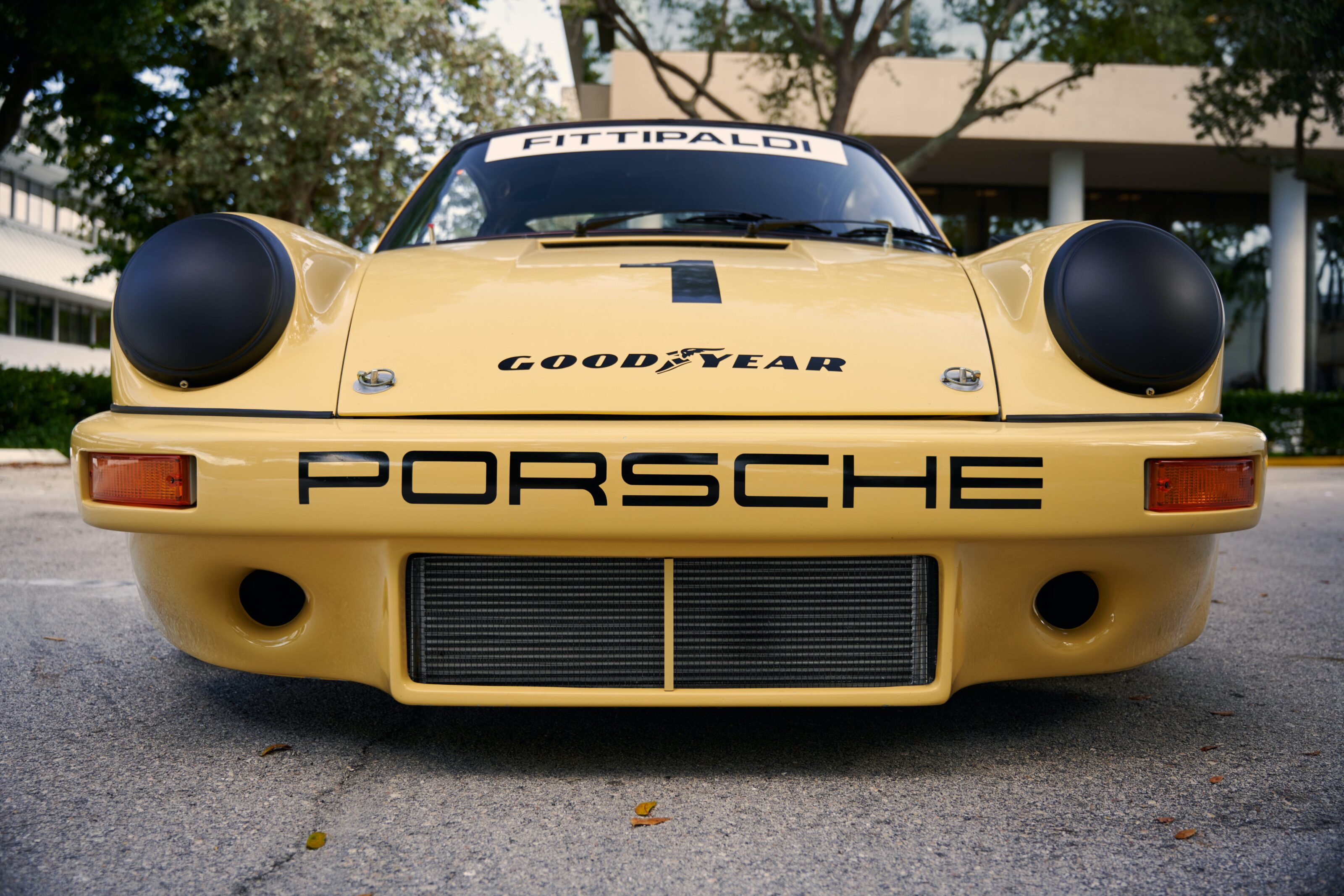
Driving duties were handed to Brazillian Formula 1 hero Emerson Fittipaldi, who steered to pole position against the likes of Bobby Unser, George Follmer and Richard Petty. Fittipaldi finished seventh overall across the four-race series.
The car was then sold to John Tunstall, who campaigned in the 24 Hours of Daytona, the Sebring 12-hour, and several other IMSA meetings.

Tunstall sold the Porsche to Escobar some time later. The late cartel boss owned a number of collectable cars – ranging from an Al Capone-esque Cadillac V8 Town Sedan to a Mercedes S600 Pullman limousine, as well as several Porsche sportscars.
Escobar launched his racing career in a local series called the Copa Renault 4 Championship. He failed to dominate the field, though he is rumoured to have paid off local police to stop faster drivers from reaching the track.

As his finances grew, Escobar graduated to Porsches. He raced the RSR in 935 bodywork, before it was returned to the US in the early 1990s.
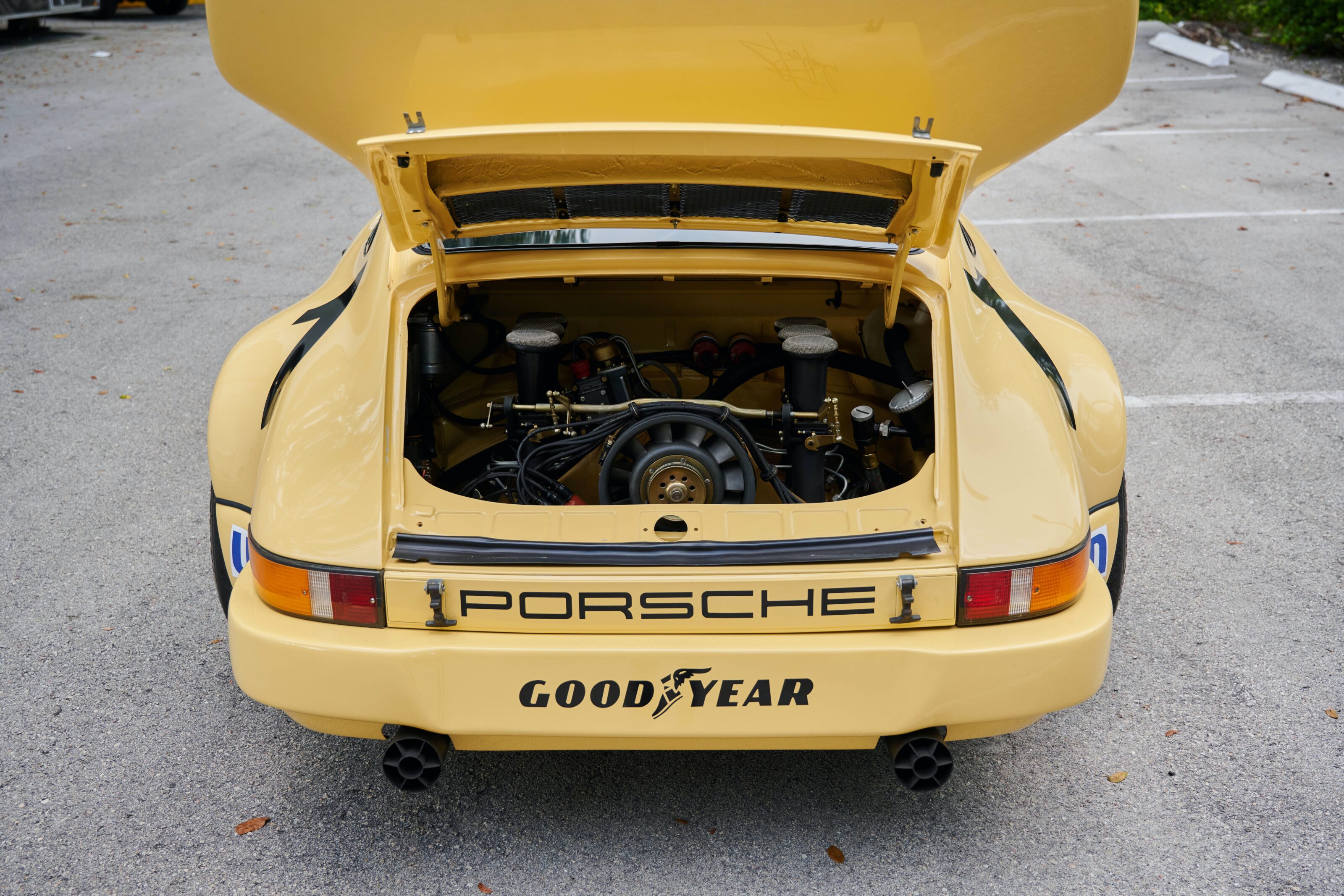
In 2007 a full restoration was launched on the car, with much of the work being completed by North Carolina’s RennGruppe Motorsports. The 911 shell was put back in place, and finished with the original Sahara Beige paint and period livery.
Other IROC touches include a unique decklid spoiler, matte black headlight covers, and quick-release bonnet catches. Perhaps most importantly, the correct three-litre, Type 911/75 flat six is in place – with its characteristic ‘high-butterfly’ throttle body assembly.

Work on the RSR wrapped up in 2010, and the car debuted at Rennsport Reunion IV at Leguna Seca Raceway to a number of accolades.
Collecting Cars describes the racer as being in great shape with “minimal scuffs and scratches” to the exterior finish. The auction house says it “should be eligible for any number of historic races with a few minor safety-related updates”.

According to The Drive, this particular car sold for $US875,000 (AU$1.2million) in 2012. Earlier this year, it was listed by a dealer for US$2.2m (AU$3m).
As of October 6, the auction has drawn 17 bids and sits at US$850,500 (AU$1.1m). Bidding will close on Friday.
The 2023 Mazda 6 will see a dramatic change when the new model is unveiled in the first half of next year.
Mazda is set to move to a rear-driven, inline six-cylinder powertrain, under a new plan to position the Mazda 6 sedan as a more premium offering – with the likes of Lexus and Volkswagen firmly in the carmaker’s sights.
While news of the rear-wheel-drive platform has been known for some time, Japanese publication Spyder7 is reporting the flagship Mazda sedan will finally be revealed next year, as the company debuts its ‘Large Architecture’ platform. It will be the first rear-wheel-drive sedan from Mazda since the mid-1990s.
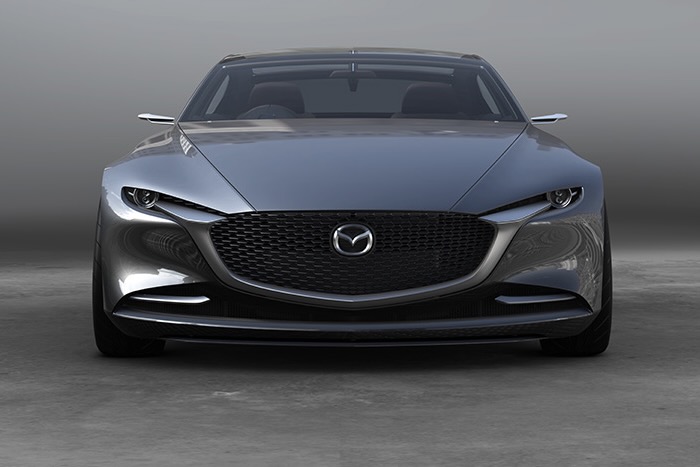
The new Mazda 6 will reportedly take its inspiration from the manufacturer’s 2017 Vision Coupe Concept – a long, sleek four-door coupe incorporating the carmaker’s Kodo design philosophy.
Mazda has confirmed the next-generation CX-8, CX-9, and CX-5 – possibly to be renamed CX-50 – will all be underpinned by the new platform from 2023, with a choice of either six-cylinder petrol or diesel engines, and the option of all-wheel drive.
Between 2022 and 2025, Mazda plans to bring out five hybrid and plug-in hybrid models, along with fully-electric vehicles. A new dedicated electric platform will follow in 2025, and will form the basis of the company’s future battery-powered models.
Snapshot
- Models affected include S60 and S80
- NHTSA reports at least one American death
- Previous recall only affected certain regions
Volvo is understood to be in the process of recalling nearly half a million vehicles worldwide after an airbag fitted on one of its models was attributed to the death of an owner in the United States.
As reported by CNBC, a total of 460,769 units are affected by the recall, with S80s built between 2001-2006 and S60s manufactured between 2001-2009 listed as the two models involved.
According to the United States National Highway Traffic Safety Administration, at least one faulty airbag in a Volvo vehicle has been attributed to the death of an occupant, leading to 259,383 units in the US alone being recalled.
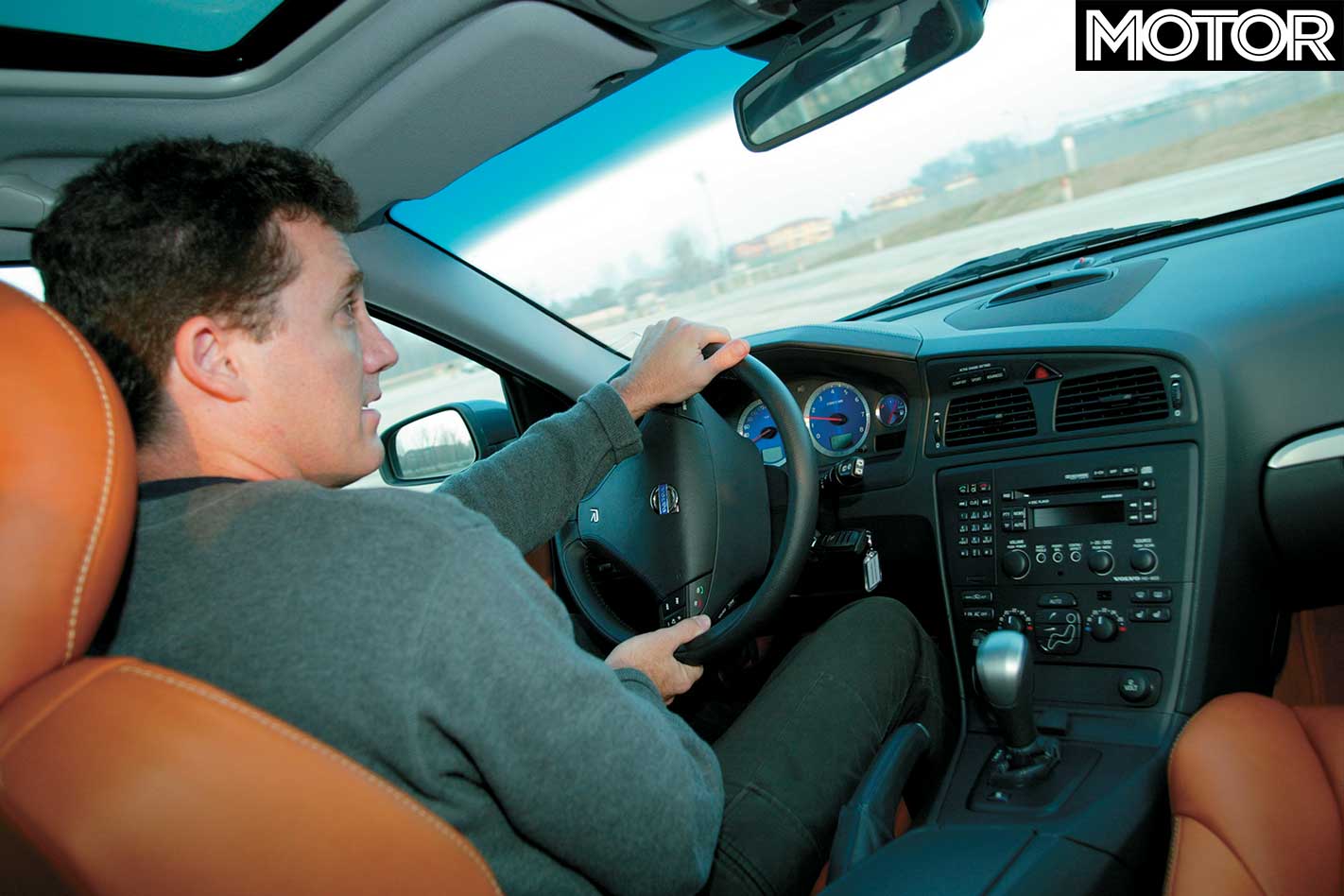
“Volvo has identified [that] if the airbag inflator propellant tablets are subjected to elevated moisture levels and frequent high inflator temperatures, the tablets can start to decay and form dust particles,” the NHTSA statement read.
“This localisation of moisture leads to volumetric changes of the tablets’ surface, creating dust over time. Dust increases burn surface area and thereby burn rate. [This] can result in [increased] combustion chamber pressure and risk of inflator rupture.
“Volvo Cars’ investigations have identified an issue regarding the driver airbag. In the event of a crash where the driver airbag is activated, fragments of the inflator inside it may, in certain cases, project out and in worst case strike you – potentially resulting in serious injury or death.”
NHTSA documents show the airbags were not manufactured by Takata – which is undergoing its own recall of 67 million units – but the Swedish company AutoLiv and German manufacturer ZF.
The Victorian Government has moved its Hazard Perception Test for prospective provisional drivers online.
VicRoads announced the transition as part of a raft of changes aimed at improving its digital offering – including the Learner Permit Test, which also recently became available to take online.
The move has come amidst a series of record-high COVID-19 cases in the state, with the safety of its team and those undertaking the test during the global pandemic undoubtedly a factor.
It’s understood however that the change was already in the works, and has just been brought forward as a result of COVID related restrictions.
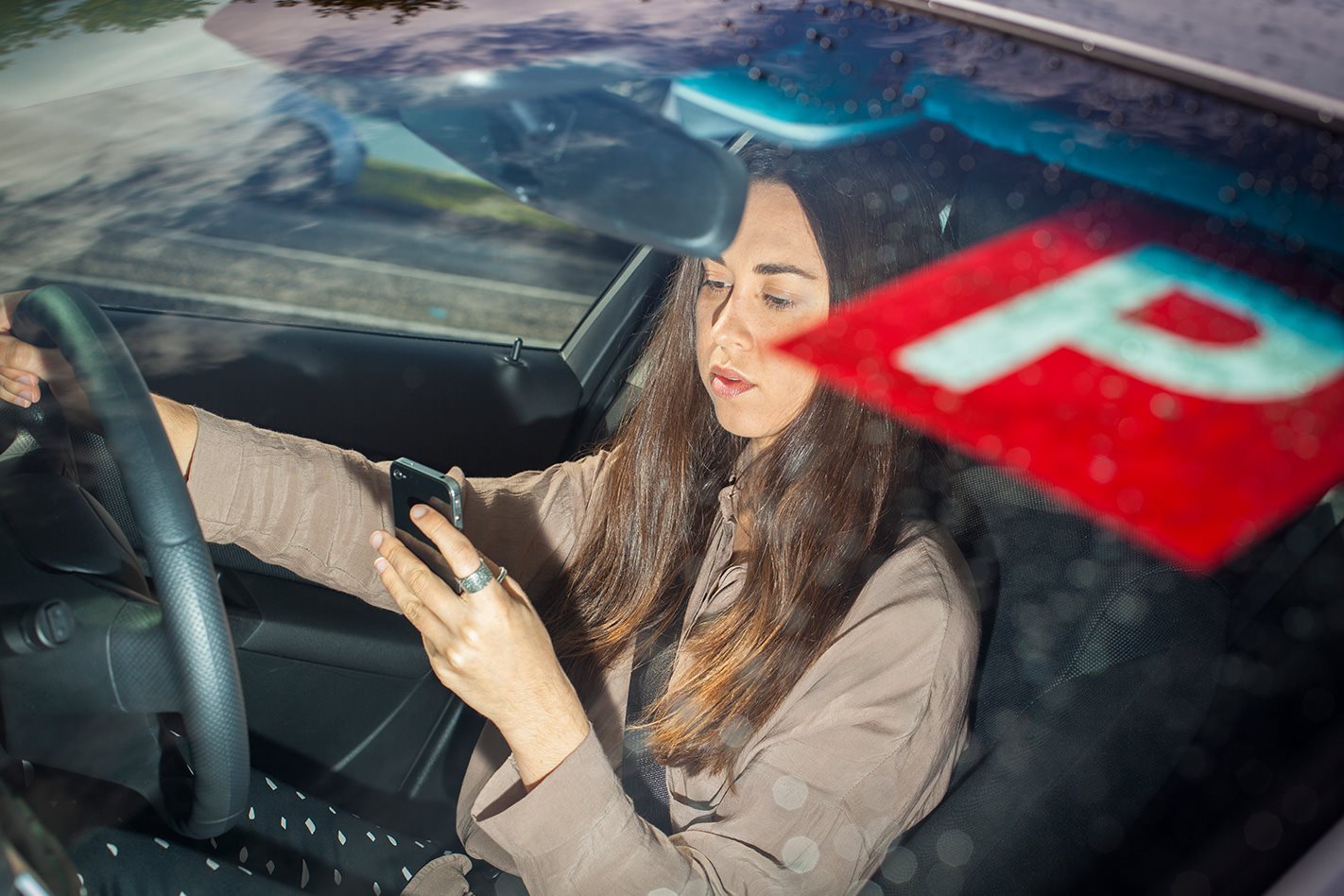
Available through an online portal for learner drivers who are eligible and aged at least 17 years and 11 months old, the HPT is the first step towards being able to drive alone – preceding the driving test itself, which assesses real-world competency.
In the test, 25 driving scenarios are presented to those undertaking it, with 45 minutes given to complete.
The online HPT is just under half the cost of the in-person test at $19.10, saving drivers the $19.20 appointment fee which is usually charged to take the mandatory test.
VicRoads provides a free practice test for learner drivers to understand what will be on the real examination, as a fail in the HPT will require a second payment to re-try the necessary pre-licence component.

A Department of Transport spokesperson told WhichCar the online test was already proving to be a popular alternative.
“We’re making sure all learner drivers know how to identify and respond safely to hazards on the road,” they said.“More than 6000 Victorians have already completed the new Hazard Perception Test online since it launched last week.”
Mitsubishi has had great success around the world with the plug-in hybrid versions of its Outlander medium SUV, and now that technology is available in the smaller Eclipse Cross.
Despite attracting a substantial premium over the conventional petrol versions, the Eclipse Cross PHEV is one of the more affordable electrified SUVs.
We’ve put the mid-spec Eclipse Cross Aspire through its paces and explored its design, features and plug-in hybrid system to see if it represents good value for anyone seeking the benefits of low-emissions driving.
What is the Mitsubishi Eclipse Cross Aspire PHEV like to live with?
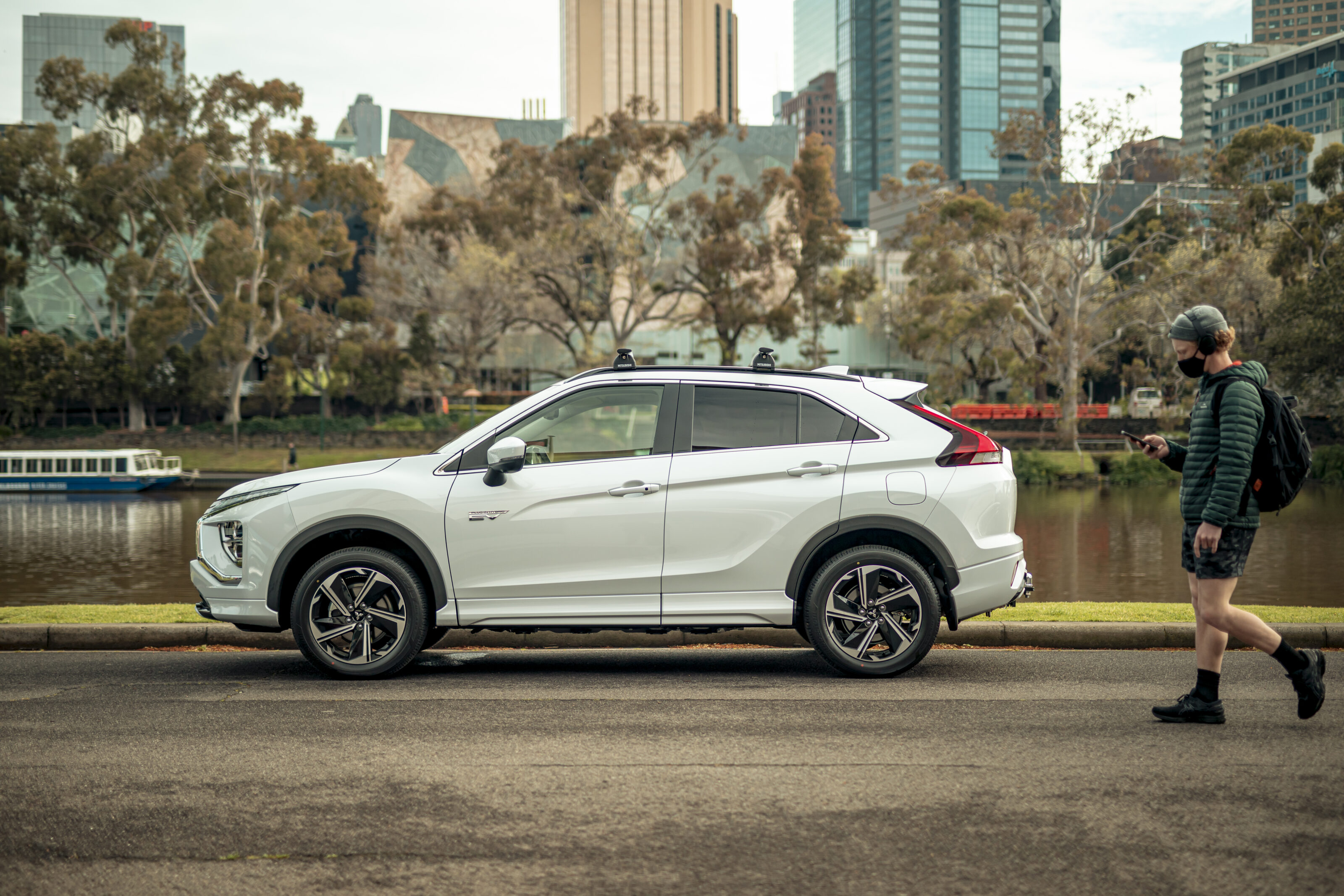
Plug-in hybrid variants of the Eclipse Cross are priced from $46,490 before on-road costs for the entry-level ES, with this mid-spec Aspire retailing for $49,990 + ORC, which is $4000 less than the range-topping Exceed.
This is about $15,000 more than the two-wheel-drive petrol Aspire and, all-wheel-drive hybrid powertrain aside, the two are almost identically equipped.
If you’re not too familiar with the Eclipse Cross, this is the newest model in Mitsubishi’s local line-up and was first introduced here at the end of 2017.
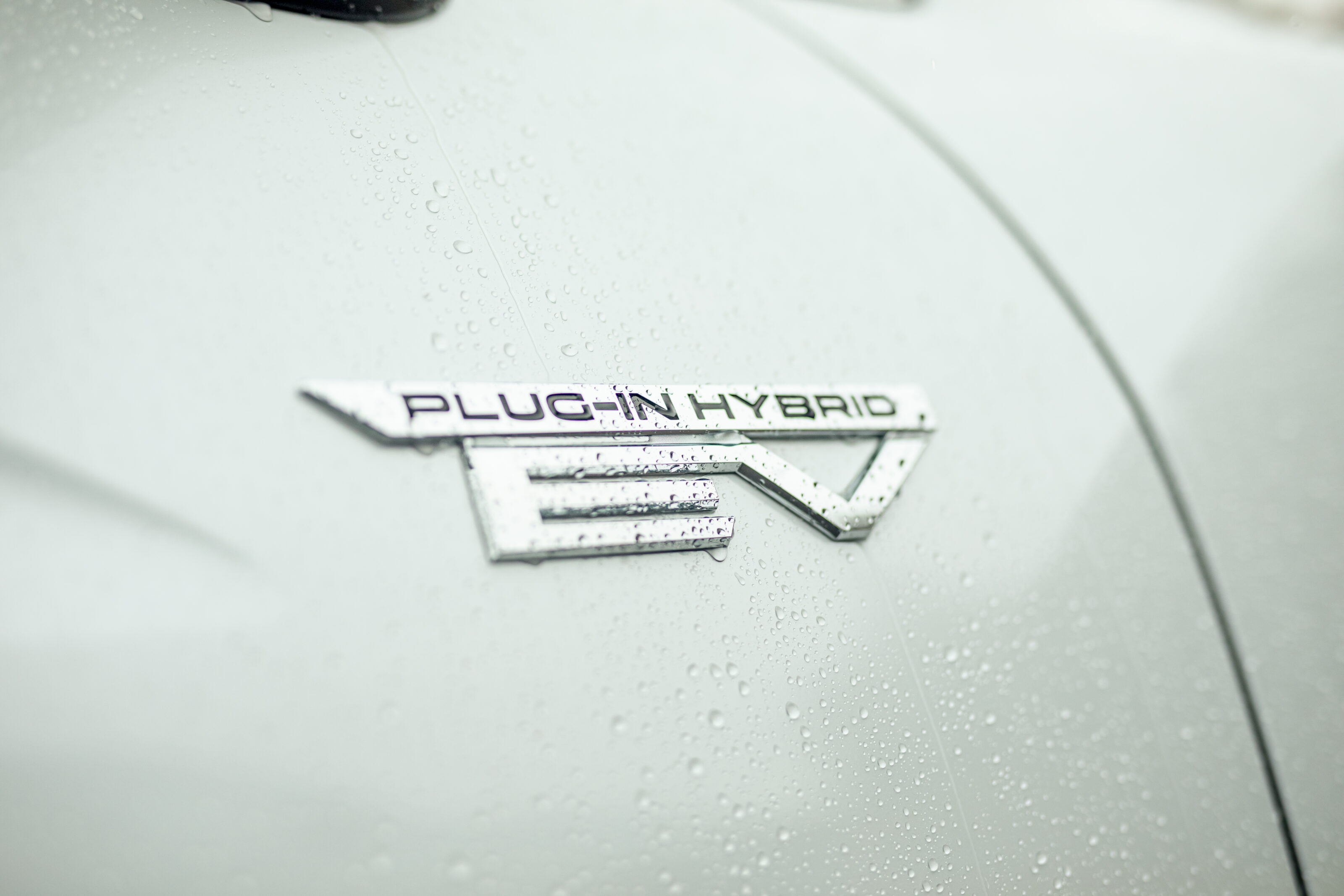
The Eclipse Cross recently underwent a facelift that brought a fresh front end with revised grille treatment and sleeker headlights.
What hasn’t changed is the origami-like styling along the side, including the chiselled rising hipline that I reckon will date pretty quickly.
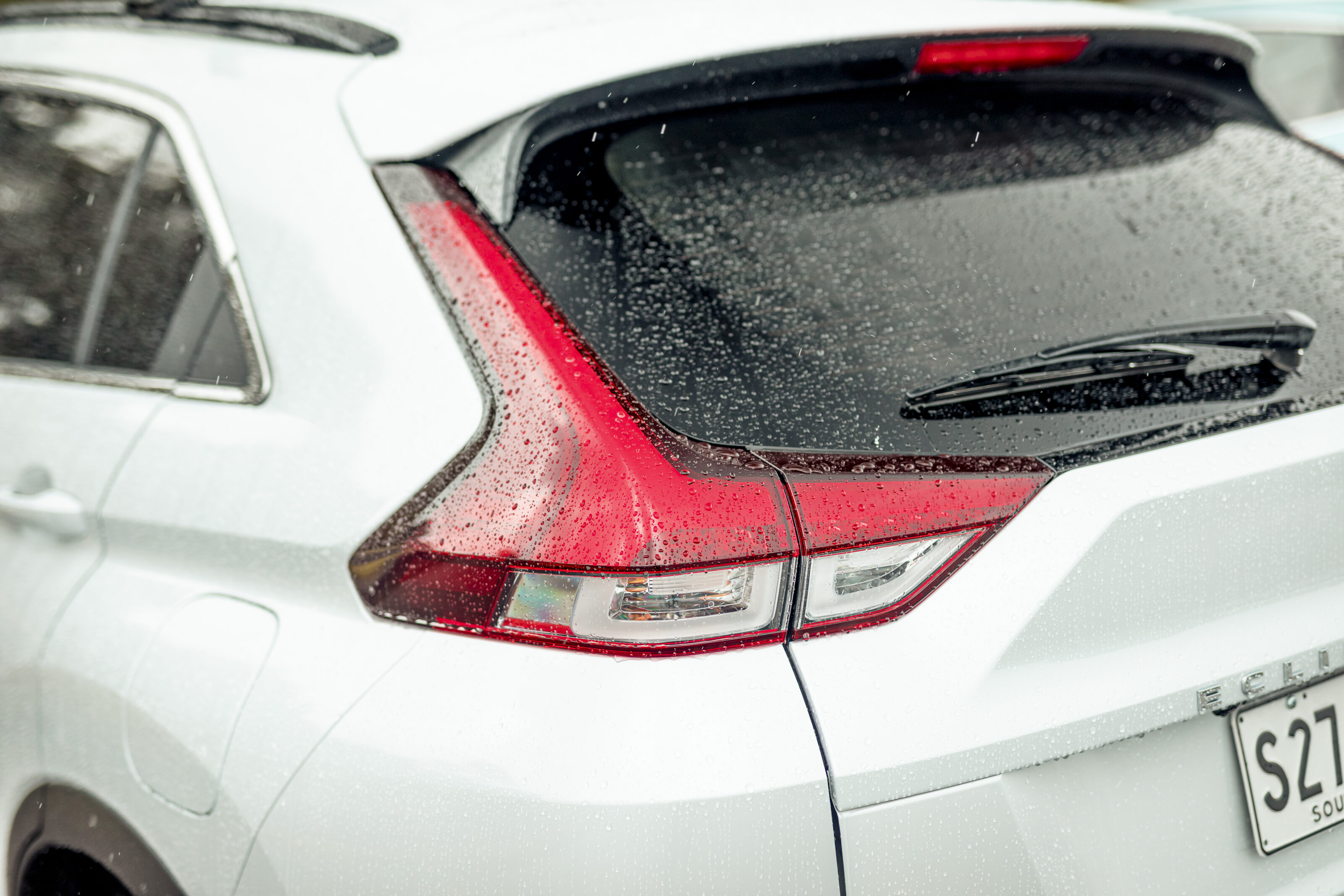
On the plus side, Mitsubishi redesigned the tailgate to look more conventional than the original version that featured a split rear screen with a spoiler going across the middle that looked a little naff and hampered rear vision. This is complemented by new vertical tail-lights that rise up to the roof spoiler.
Another change made during the facelift was extending the body by 14cm and removing the rear seat sliding function as this extra length more or less results in a combination of the pre-update version’s largest boot and maximum legroom settings.
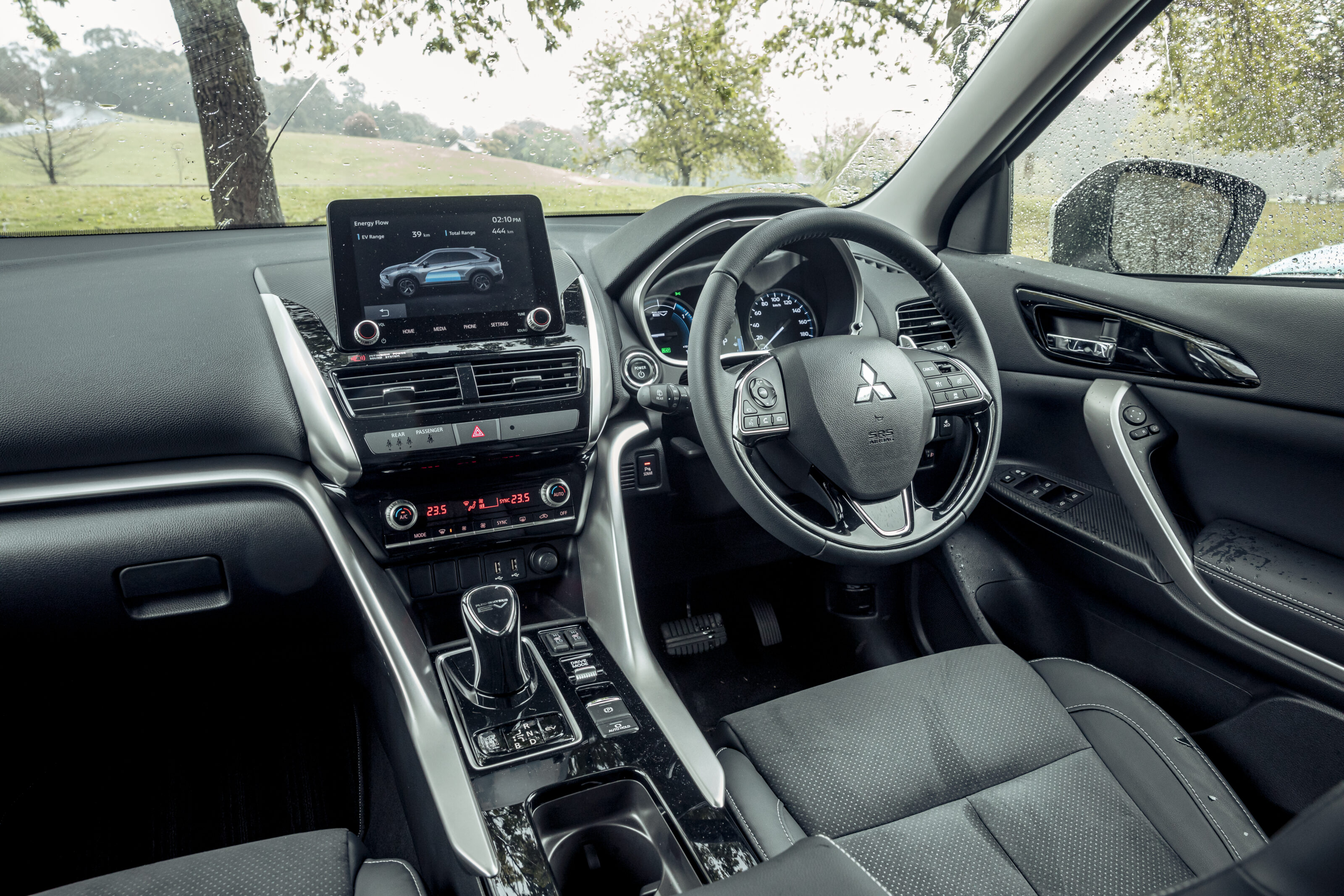
Inside, the updated Eclipse Cross gained a slightly bigger 8.0-inch touchscreen than before, located a little closer to the driver making it easier to operate.
The fiddly touchpad controller was removed in favour of physical volume and tuning knobs, which are easier to use but look kind of cheap – like the caps on mini liquor bottles.
The cabin looks attractive enough, with plenty of faux metal and piano black bright spots. The top of the dashboard and front doors are soft to touch but there are hard plastics everywhere else.
It recently underwent a facelift that hasn’t changed the origami-like styling along the side, including the chiselled rising hipline that I reckon will date pretty quickly.
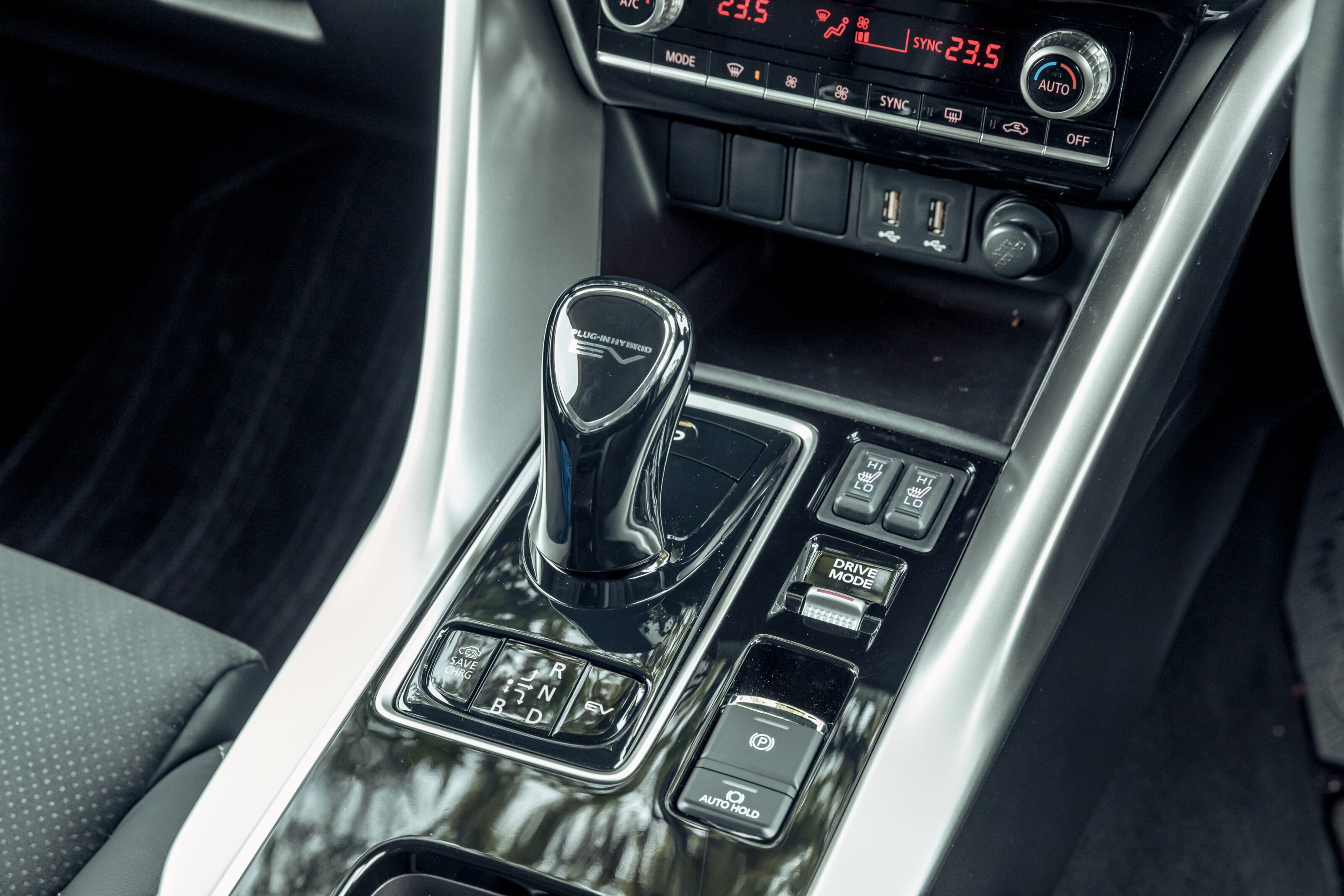
Standard features across the petrol and PHEV variants include Apple CarPlay and Android Auto, DAB+ digital radio, reversing camera, paddleshifters, climate control, two USB ports, LED daytime running lights, and cruise control – the PHEV versions gain additional buttons and displays, while the paddleshifters are used for controlling the regenerative braking rather than gearing.
The Aspire grade adds LED fog-lamps, black roof rails, heated power-folding wing mirrors, microsuede/synthetic leather seat trim, heated front seats, power-adjusted driver’s seat, an eight-speaker sound system (four more than standard), keyless entry and start, dual-zone climate control, 360-degree parking monitor, electronic parking brake, leather-trimmed steering wheel, auto-dimming rear-view mirror and adaptive cruise control.
The leather-trimmed steering wheel feels good while the front seats are comfortable, affording a good driving position and forward vision.
Down back, the seats are comfortable and provide good legroom. The floor of the PHEV has been raised to accommodate the battery, which makes for good front and side vision. However, the swept-back roofline can make headroom a little tight.
Even in the Aspire spec, amenities for back-seat passengers are sparse for a car costing just shy of $50,000. There are no air vents or USB ports back there, but there is a 12-volt socket. Storage is tight too, with just one map pocket, bottle holders in the doors and two cup holders in the fold-down centre armrest.
One compromise you make by choosing the PHEV is reduced boot space, which sees the floor raised by 17mm to accommodate the battery. This results in the total cargo area from 405 litres to hatchback-like 359-litres. Capacity with the rear seats down is also significantly reduced from 1149 litres to just 626.
And unlike the standard Eclipse Cross you don’t get a spare wheel – just a puncture repair kit.

While not cheap to purchase, running costs are quite low. Being a plug-in hybrid, official combined fuel economy is just 1.9L/100km, though of course there are a few caveats to that, which we’ll go into below.
The Eclipse Cross PHEV is covered by Mitsubishi’s Diamond Advantage 10-year/200,000km warranty if you service the vehicle through an authorised Mitsubishi dealer, otherwise the cover lasts five years or 100,000km. The EV drive battery is covered for eight years or 160,000km.
Another sweetener to get your vehicle maintained at a Mitsubishi service centre is capped-pricing for the duration of the warranty, with the 12-month or 15,000km service intervals mostly alternating between $299 and $399 with major services in years six, eight and 10 costing $799.
What is safety like in the Eclipse Cross Aspire PHEV?
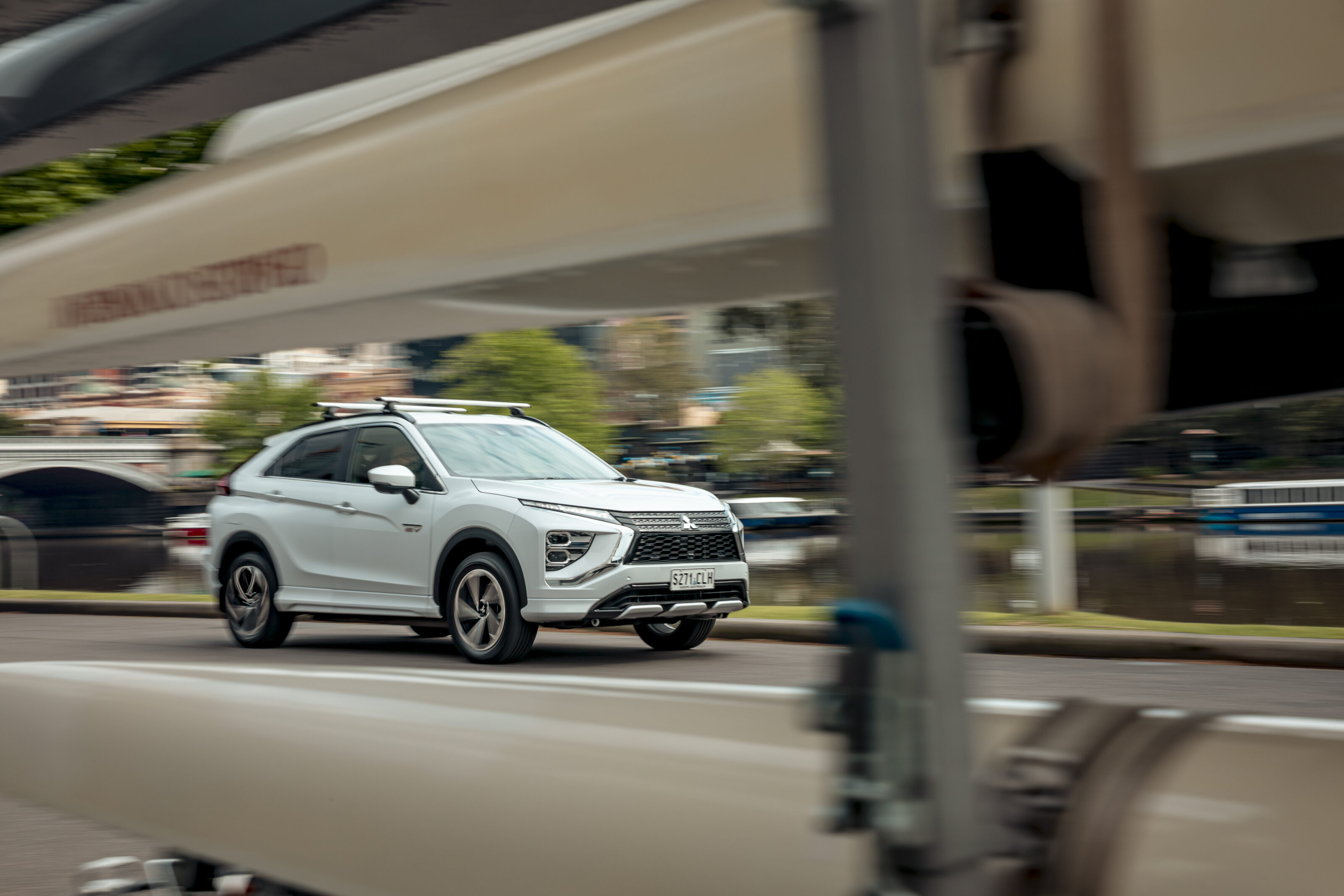
Plug-in hybrid versions of the Eclipse Cross share the five-star ANCAP rating given to petrol variants. Standard safety kit includes seven airbags, rear parking sensors, autonomous emergency braking with pedestrian detection and lane-departure warning.
The Aspire gains additional active safety and driver-assistance tech including adaptive cruise control with ‘stop and go’ function, blind-spot warning, rear cross-traffic alert, automatic high beam, front parking sensors and rain-sensing wipers.
What is the Eclipse Cross plug-in hybrid powertrain like?

Unlike the standard petrol Eclipse Cross that comes with a 110kW/250Nm 1.5-litre four-cylinder turbocharged petrol engine, this PHEV’s electrified powertrain comes with a 94kW/199Nm 2.4-litre four-cylinder Atkinson cycle petrol engine plus 60kW and 70kW electric motors that drive the front and rear axles respectively.
The electric motors are fed by a 300-volt, lithium-ion battery with a 13.8kWh capacity, which provides a claimed 55-kilometre all-electric range.
Charge this at home from a standard 10-amp socket and it will take a little under seven hours to fully charge from flat, and less than half that when using a 7kW wall box charger.
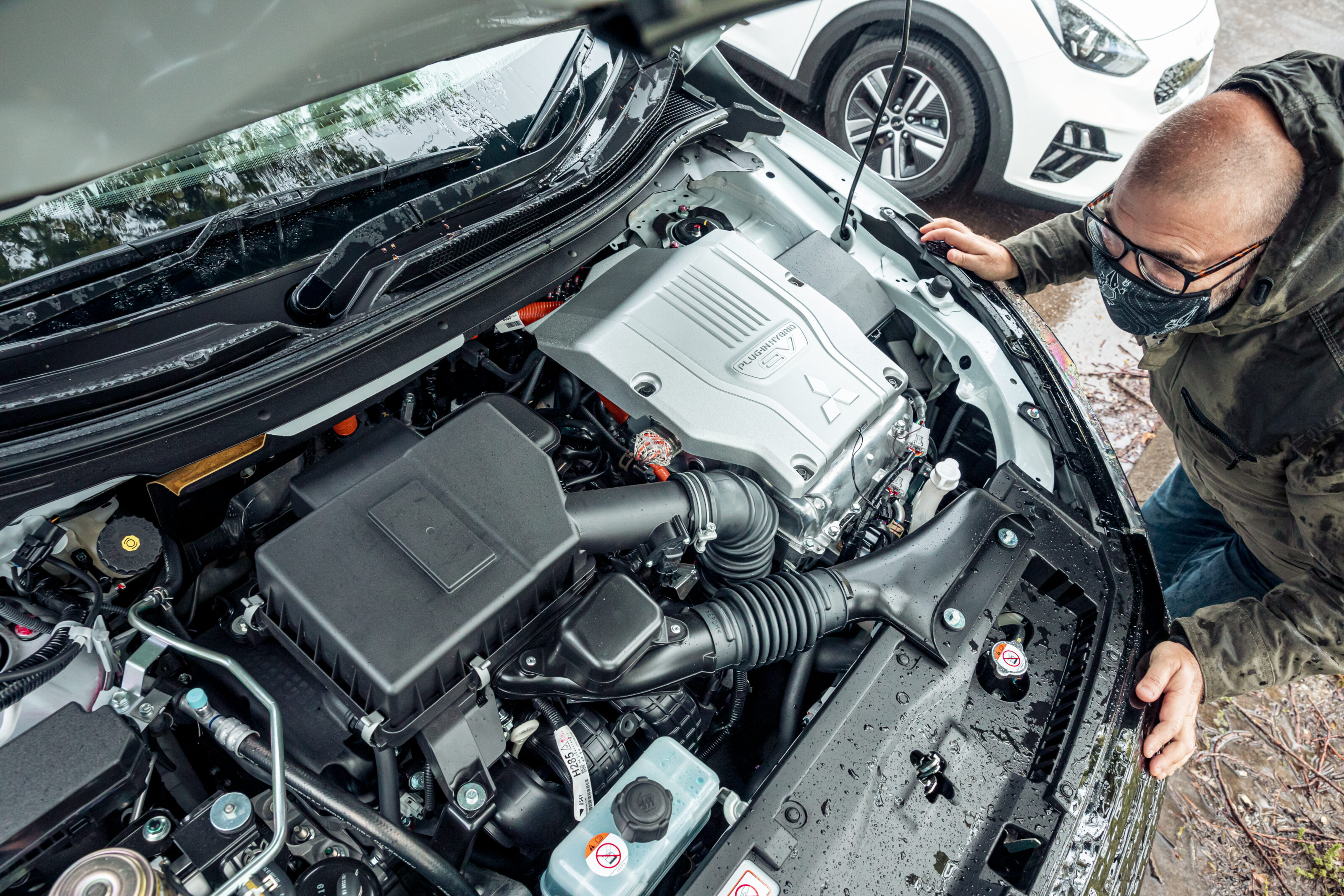
This is also one of the few plug-in hybrids that can be charged by a DC rapid charger, which will top up the battery from flat to 80 per cent in just 25 minutes.
This is a game-changer for anyone who wants to charge their battery and continue saving fuel while on the road. However, you’ll need to find a charger with a CHAdeMO plug, which is becoming increasingly uncommon. On the plus side, Mitsubishi now uses the common Type 2 socket for AC charging instead of the old Type 1 found in previous Outlander models.
Another great party trick is that it has the potential to put electricity back into the grid and even power your home, provided the required infrastructure is available.

It’s around town where you’ll get the most of the plug-in hybrid powertrain’s economic benefits.
One thing I like about Mitsubishi’s hybrid system is how easy it is to understand what the different modes do.
For shorter journeys, including the average urban commute, selecting EV mode means you’re propelled by the front and rear electric drive motors that draw current from the battery, meaning zero fuel consumption. You can travel as fast as 135km/h this way, but the battery charge won’t last very long at that speed.
Another great party trick is that it can put electricity back into the grid and even power your home.

Driving in Normal mode activates Series Hybrid operation (available from 0-70km/h), where the vehicle continues to utilise the battery to power the front and rear motors, while the petrol engine is engaged to run the generator to charge the battery while driving. This mode is also automatically activated when the engine is needed for climbing steep hills or accelerating.
Normal is the best mode to use on longer journeys and while you will use some petrol you feel like you can just let it do its thing without obsessing about fuel economy.
On one trip I drove 52km across Melbourne’s eastern suburbs starting with about 80 per cent charge in Normal mode and by the time I got home I was averaging a very frugal 2.5 litres per 100 kilometres.
A similar journey mostly relying on engine power saw fuel consumption enter double figures due to the PHEV being almost 420kg heavier than its petrol equivalent, which drinks 7.3L/100km of unleaded.
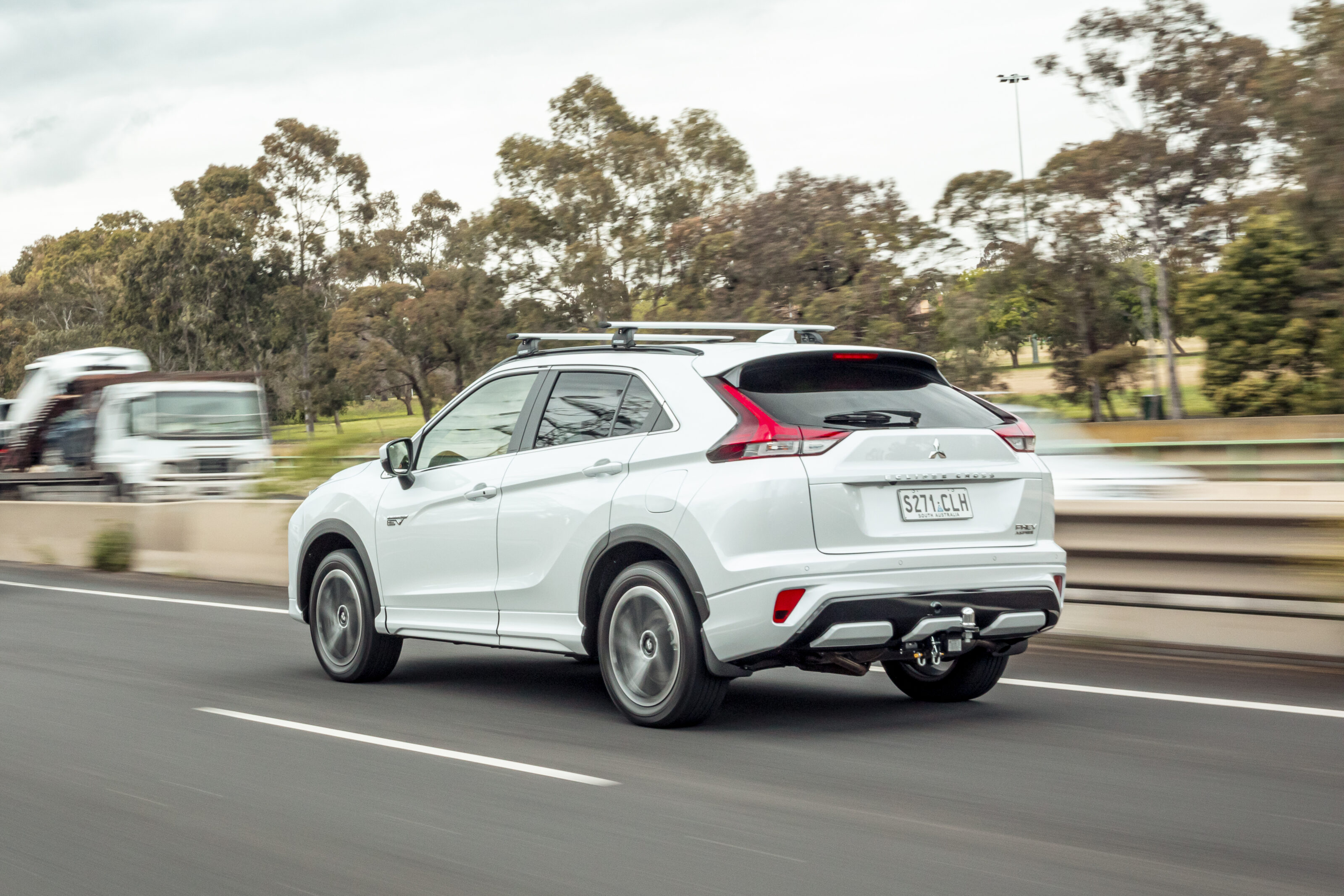
Then there is the Save mode, which maintains the current battery charge by only engaging the electric motors to take over from the engine when coasting, travelling downhill or coming to a stop. Otherwise known as Parallel Hybrid mode (only available above 70km/h) this operates like a traditional hybrid.
Charge mode uses the engine to drive the vehicle and charge the batteries at a rate as high as 80kW and is best used at highway speeds when Normal mode is more likely to engage the petrol engine anyway. This sees fuel consumption leap into double figures but at freeway speeds, you’re getting back about a kilometre of battery range for every kilometre driven, so it can even out should you then need to do some urban driving.
Another way to recoup energy is with regenerative braking, which can be adjusted using the paddleshifters. Unlike full EVs that can almost make the brake pedal redundant, the regen braking here is more subtle even at its highest setting.
What is the Eclipse Cross PHEV like to drive?
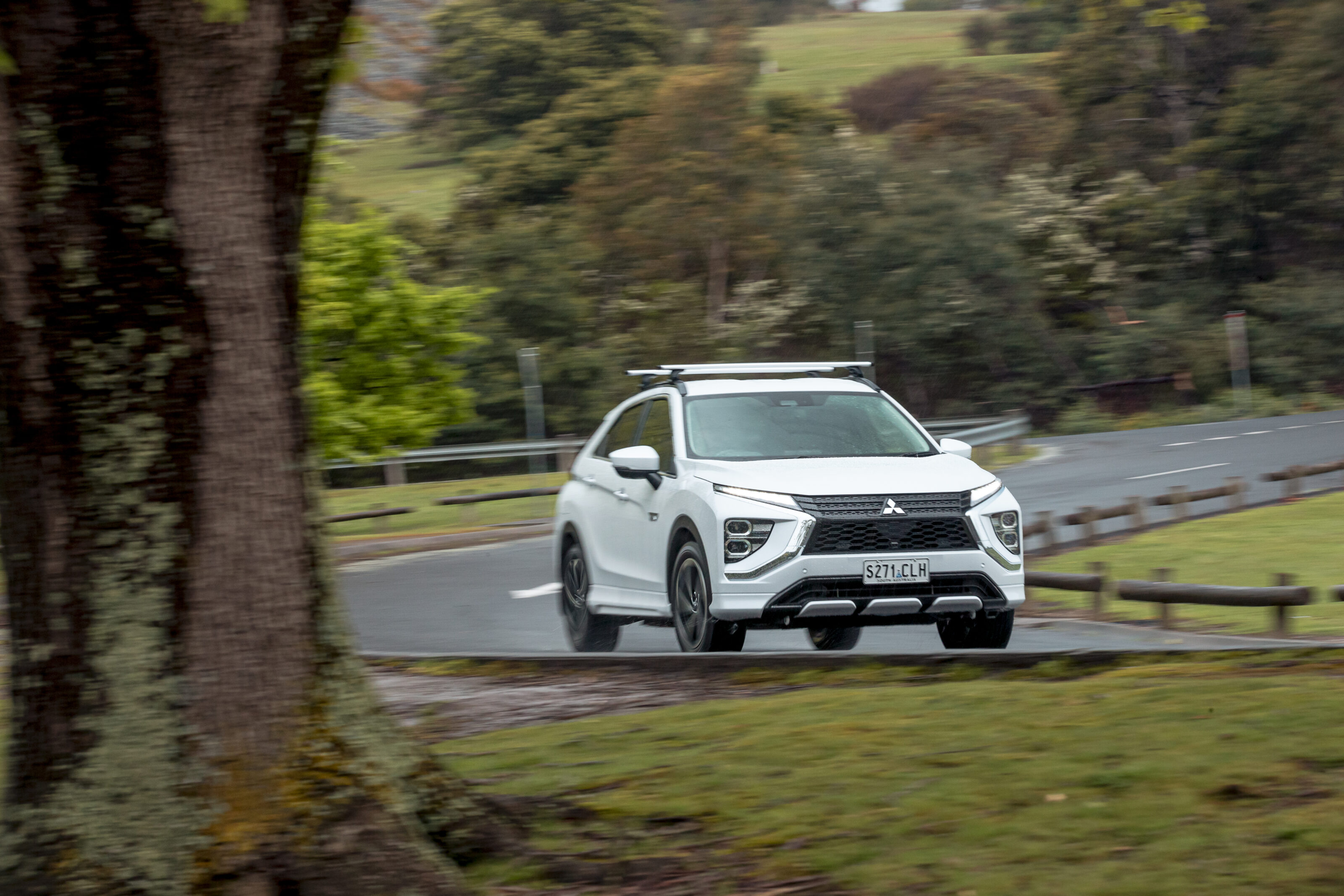
I prefer driving this to the petrol Eclipse Cross for a few reasons, not least the lack of thrashy CVT auto.
This has a single gear that operates smoothly even when driving on the petrol engine alone. Take off is quiet and you barely notice the transition between electric and petrol power.
It’s not exceptionally quick, with similar performance to the petrol version, but the acceleration feels sharper and the drive is generally effortless be it around town or out on the highway.
The suspension is a bit of a city slicker as despite having a multi-link setup at the rear, it can get busy over road imperfections and there doesn’t seem to be much play in the dampers, which often react with a jarring thud over speed humps and the like.

Handling is okay, but I expected better considering the all-wheel-drive traction and active yaw control that balances out the braking forces at the front wheels.
The steering feels light and direct, in line with the Eclipse Cross’s zippy nature, though it does lack a bit of feel.
Another thing I like is the quiet ride. Closing the door shuts out a lot of outside noise and while it’s obviously quiet in EV mode, wind, road and engine noise are well contained.
The steering feels light and direct, in line with the Eclipse Cross’s zippy nature, though it does lack a bit of feel.
VERDICT
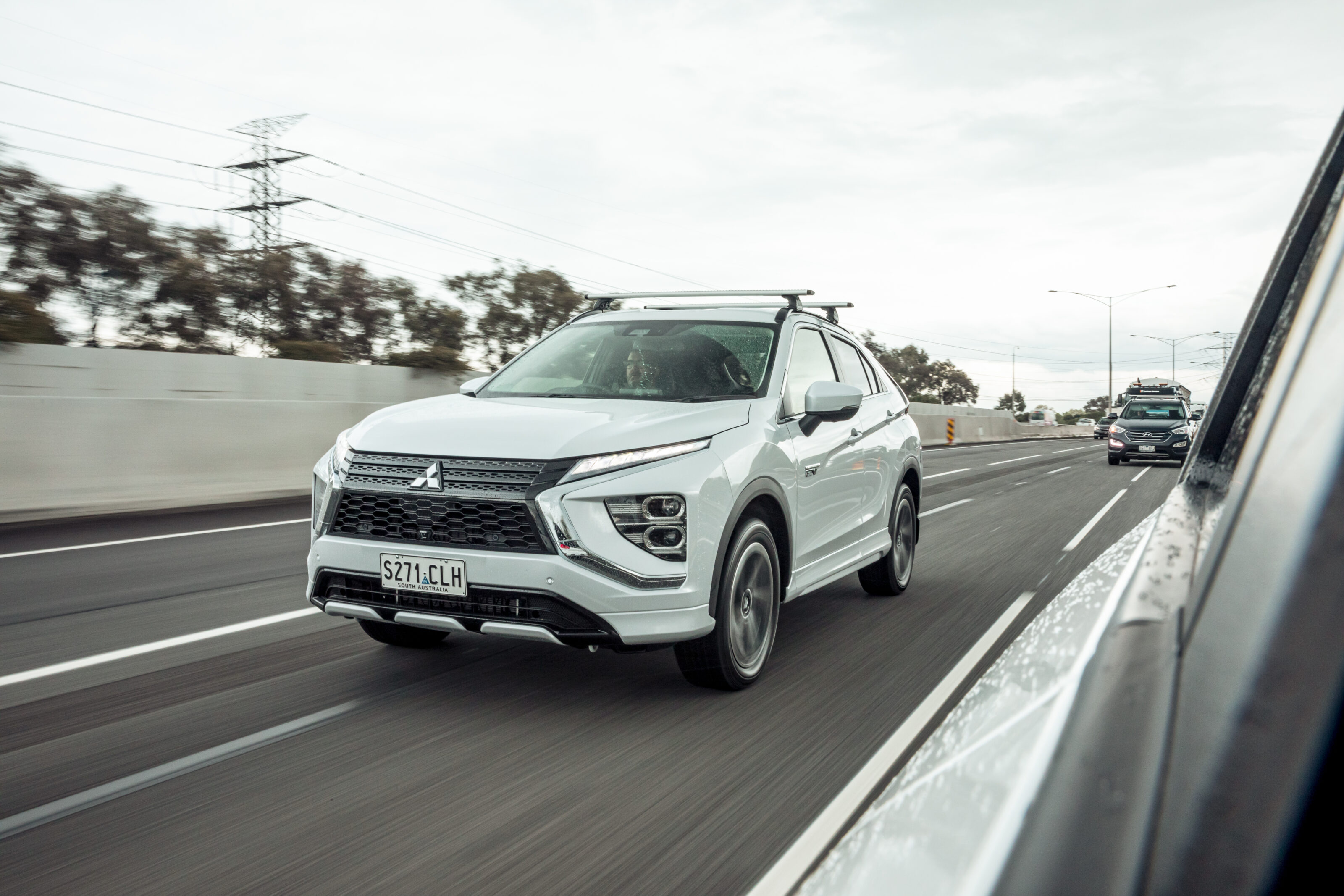
So far the MG ZS EV ($43,990 drive-away) is the only fully electric SUV that costs less than the Eclipse Cross PHEV and probably makes more sense if emissions-free driving is by far your biggest priority.
However, if you mostly drive around town and can keep the battery charged by plugging in at home and elsewhere, then the Eclipse Cross offers very frugal and even emissions-free driving in a fresher and more refined package, with the ability to confidently drive longer distances should you need to.
And while it doesn’t stand out when it comes to practicality and driveability, I’d choose the Eclipse Cross PHEV over plug-in hybrid SUV rivals such as the Kia Niro and MG HS due to its superior hybrid system that offers quicker charging and the potential to return power from the vehicle to the grid (V2G).
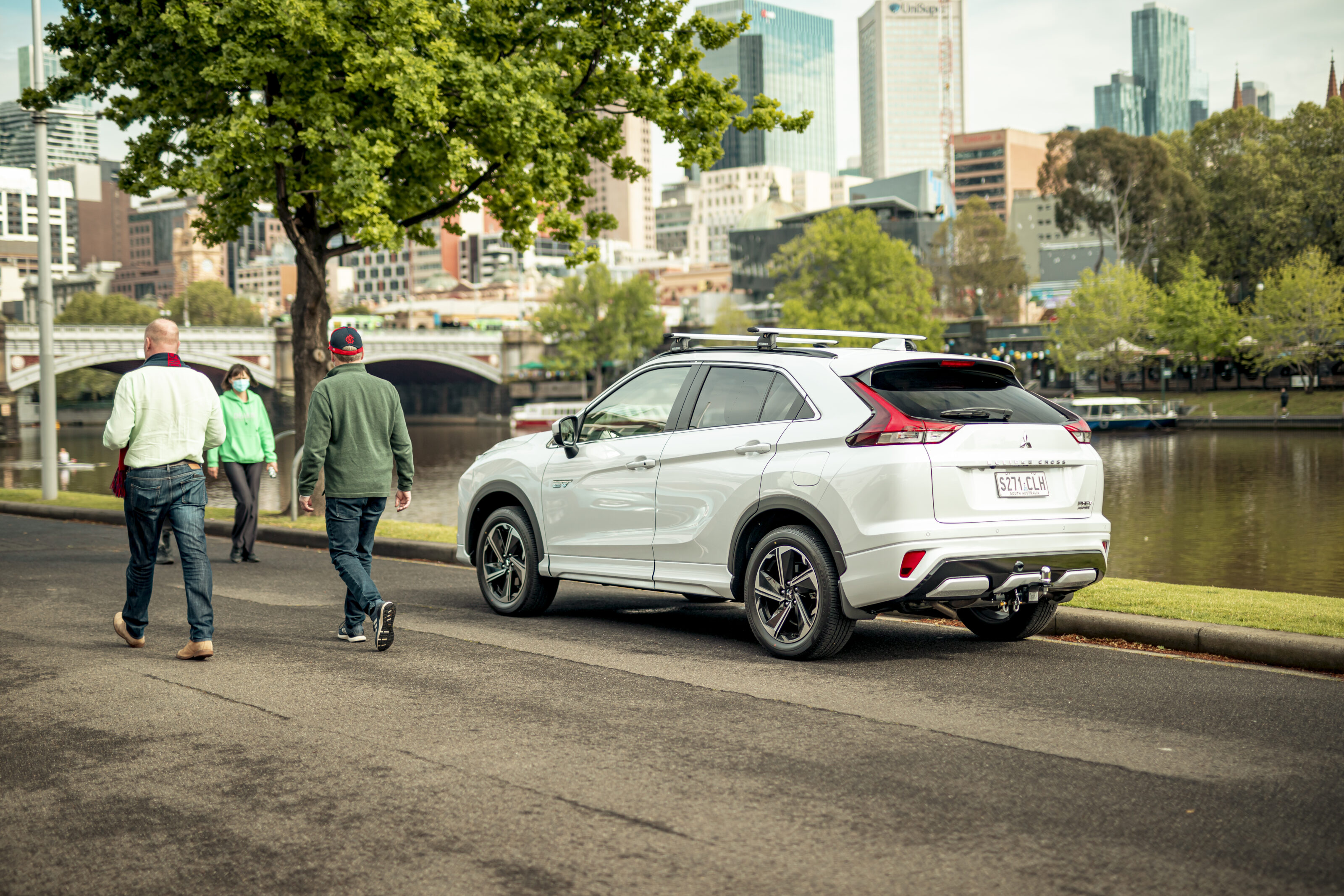
The Aspire is the sweet spot of the range, with the extra $3500 over the ES bringing enough additional safety features and creature comforts to justify the cost.
Still, $49,990 is a lot to pay for a small SUV and until more battery electric vehicles become more affordable, my money would be on an efficient turbocharged petrol or diesel crossover that beings more driver enjoyment with all the trimmings.
2021 Mitsubishi Eclipse Cross PHEV Aspire specifications
| Body | Five-door small SUV |
|---|---|
| Drive | All-wheel drive |
| Engine | 2.4-litre four-cylinder petrol plug-in hybrid |
| Transmission | Fixed single-speed |
| Power | 95kW @ 4500rpm |
| Torque | 199Nm @ 4500rpm |
| Electirc motors | 60kW front axle / 75kW rear axle |
| Battery | Lithium-ion, 300V, 13.8kWh |
| Bore x Stroke | 88.0mm x 97.0mm |
| Compression ratio | 12.0:1 |
| 0-100km/h | N/A |
| Fuel consumption | Fuel consumption |
| Weight | 1913kg (kerb) |
| Suspension | MacPherson strut (front); Multi-link (rear) |
| L/W/h | 4545/1805/1685mm |
| Wheelbase | 2670mm |
| Brakes | Ventilated discs (front); solid discs (rear) |
| Tyres | 225/55 R18 Bridgestone Ecopia |
| Wheels | 18-inch alloys |
| Price | $49,990 plus on-road costs and paint options |
Snapshot
- New Smart SUV concept revealed
- Concept #1 previews new baby SUV
- It’s the biggest Smart car yet
UPDATE, October 6: New images have surfaced showing the Smart SUV concept first seen at last month’s Munich Motor Show is not far from becoming the production model.
The European Union Intellectual Property Office has posted images online of the crossover, showing off what the production car may look like.
Rather than the smooth front of the concept, the SUV now has two fake intakes on either side of the main grille as well as a skid plate under the front bumper.
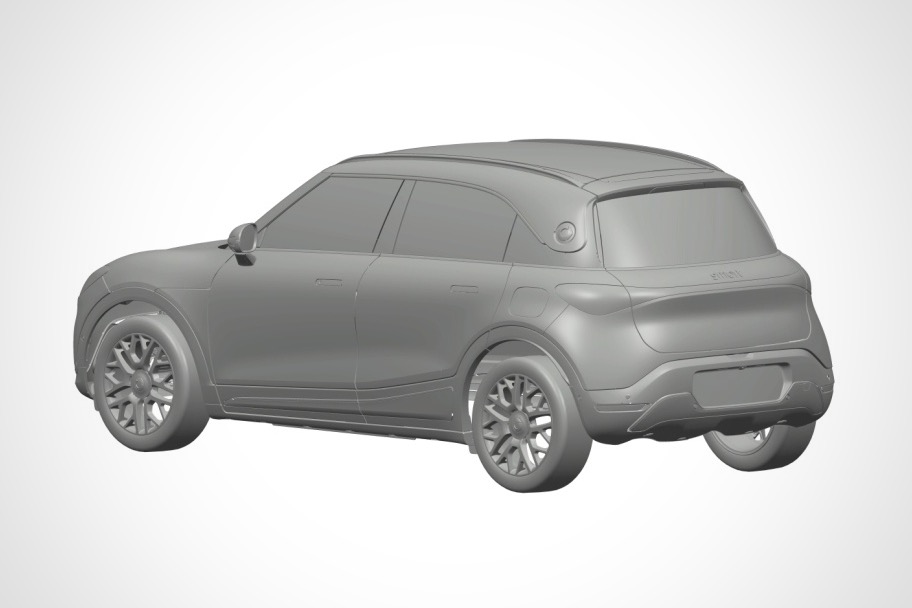
Rather than the concept’s A-pillar mounted side mirrors, the pictures show they have moved to the car’s doors, with flush-mounted door handles also visible – while the concept’s floating roof design remains.
As with the front of the car, the rear has received minor revisions, with the single mid-mounted reflector now split into two on the bumper’s edges – itself a revised design which now features a small diffuser.
The story to here
September 7: Smart, the brand known for its eeny-weeny city cars, is going through a revitalisation.
It’s been quite some time since the Mercedes-Benz-owned Smart brand was last seen in Australia, and we’ve missed out on a number of its newer, more compelling offerings – but with new part-owner Geely in the picture, the brand is making some smart moves.
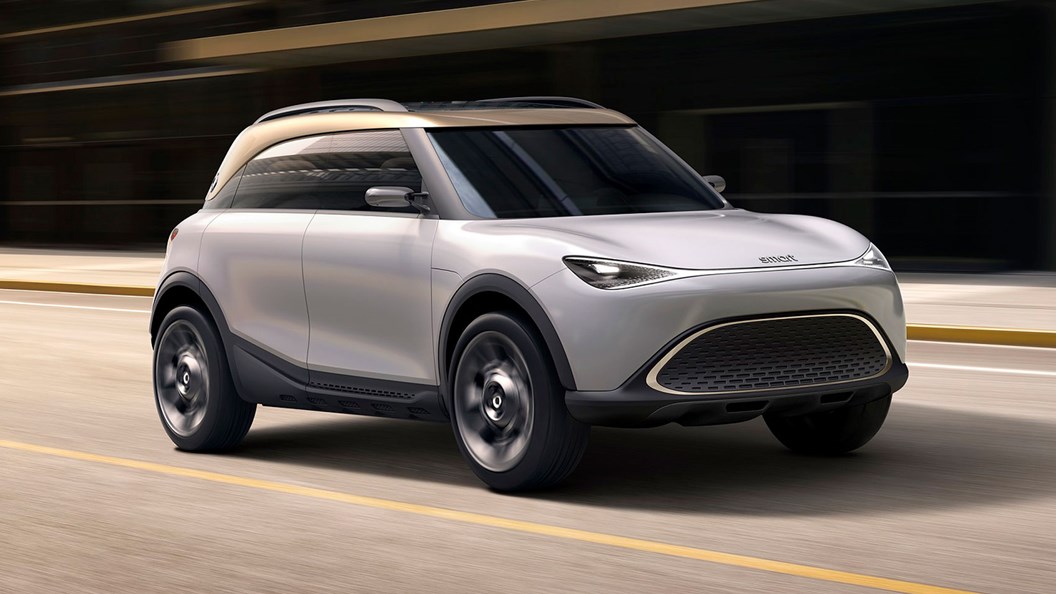
Part of that is an all-new SUV, previewed here by this: the Smart Concept #1.
And it is, for a Smart: 4290mm long, 1910mm wide and 1698mm tall. While those numbers are relatively meaningless in isolation, it essentially highlights that the Concept #1 is around the same size of a B-segment SUV (like the Peugeot 2008, Ford Puma, Vauxhall Mokka etc.).
That’s positively massive for a Smart; it’s around half a metre longer than both generations of the ForFour and even the long-but-low Roadster from the early 2000s, for example
That looks big…
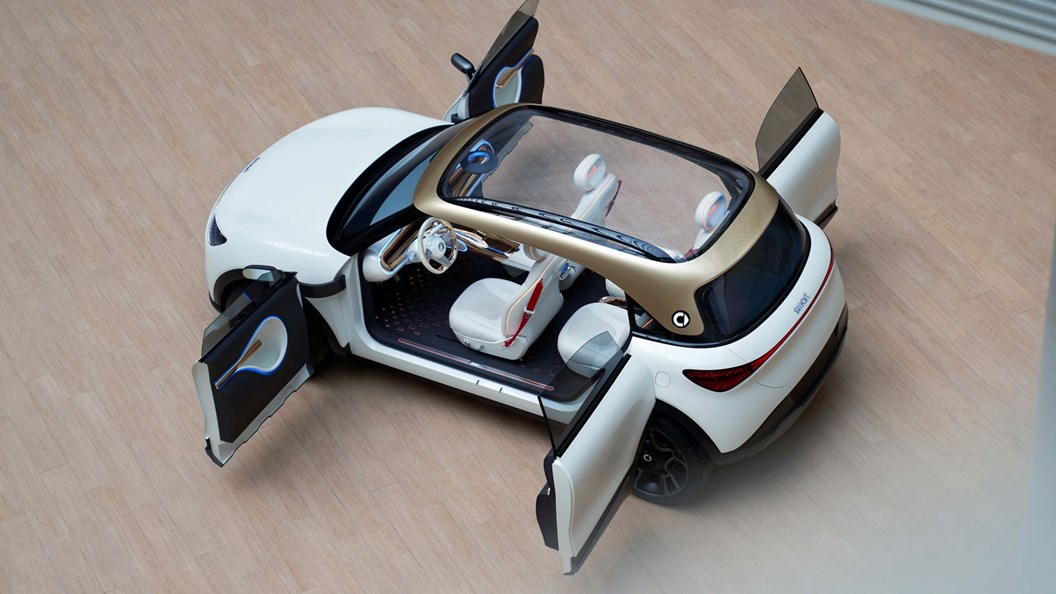
But Smart says that’s intentional, as the brand wants to get into that segment as it makes other car makers so much money.
Given the Smart brand is now part-owned by Geely, it’s expected that the production version will go on sale in China – a region that also doesn’t tend to favour very small cars.
Still, the brand says the space inside is where it counts; that value of maximum interior space for as small a footprint as possible still holds some sway here. And it’s mainly due to the use of a new, purpose-built battery-electric platform.
Specs aren’t known yet, but Smart promises long battery life and fast charging.
So, what’s special about the interior?
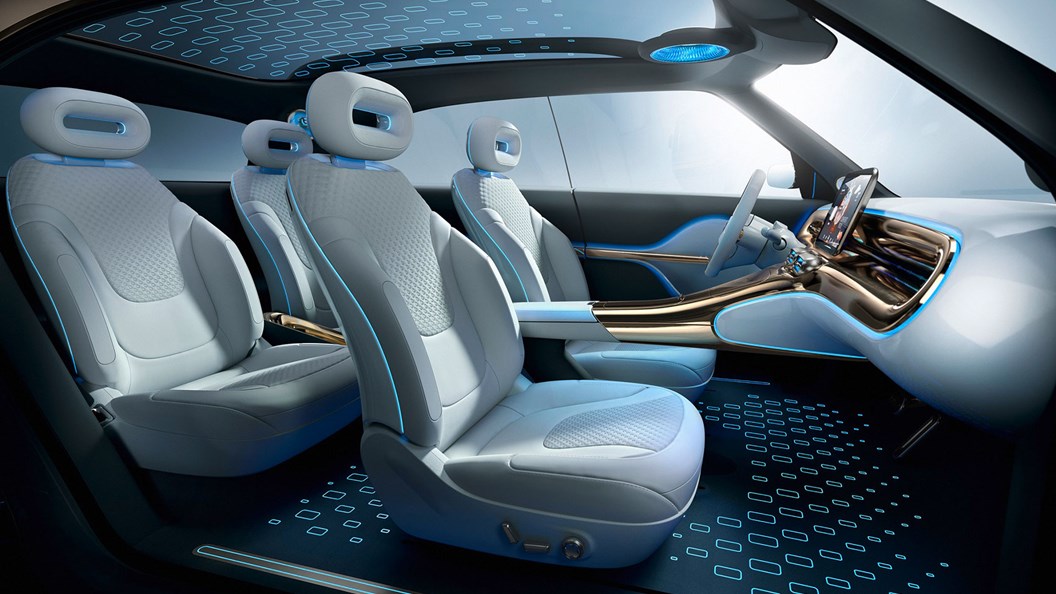
Well, there’s no centre pillar and the rear doors have rear-mounted hinges for excellent entry (though we’re not sure this’ll make production) and a completely flat floor gives a sense of space.
The centre console is mounted in such a way it looks like it’s floating, and comes complete with a ‘3D’ touch panel and 12.8-inch display.
It’s also got Daimler Group’s chief design officer, Gorden Wagener‘s fingerprints all over it: a sweeping dashboard, massive central screen and a light blue/gold/white colour scheme throughout.
Even the seats have piping that lights up. “The new sporty Concept #1 is a redefinition of the smart brand in a very cool grown-up way,” says Wagener, “we have created a completely new design DNA that has the potential to establish smart as the leading design brand.”
When will we see the real version?
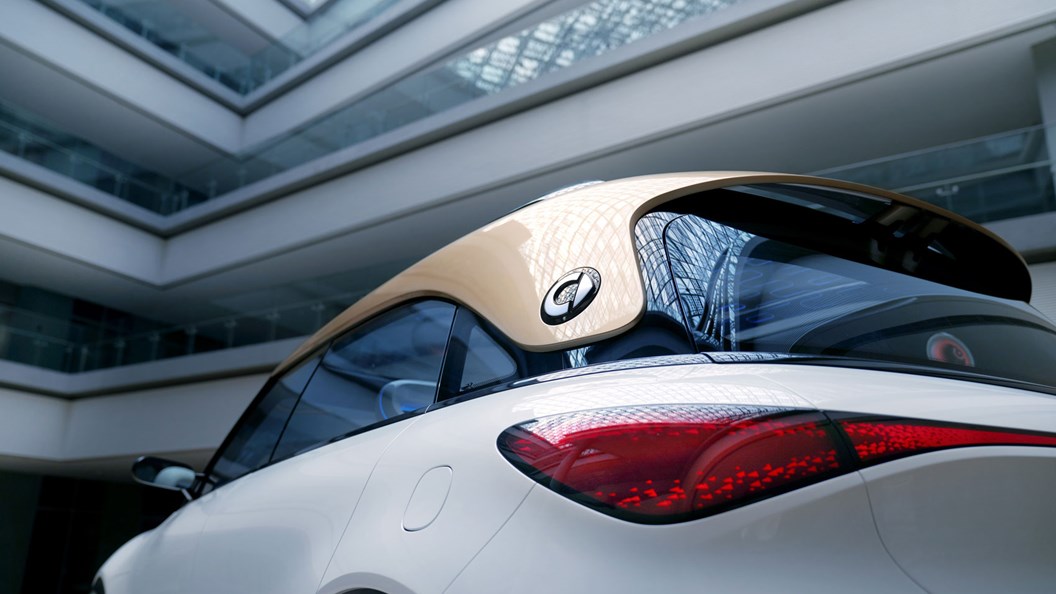
Daniel Lescow, Smart’s global sales and marketing director, told our UK friends at Car to expect a production version of the Concept 1 in the first half of 2022.
We wouldn’t expect to see it in Australia, given the Smart brand was axed here in 2015 – but the automotive landscape is ever evolving and, as we’ve seen with the Volkswagen Group’s Cupra, brands we don’t always expect to see here do occasionally turn up.
A version of this article was first published at Carmagazine.co.uk
