
If you think the Toyota Yaris Cross is just going to be a jacked-up ordinary Yaris hatch – think again.
A lot of effort has gone into making this car’s design feel distinct. Whether or not its looks are your cup of tea, that’s a different matter.
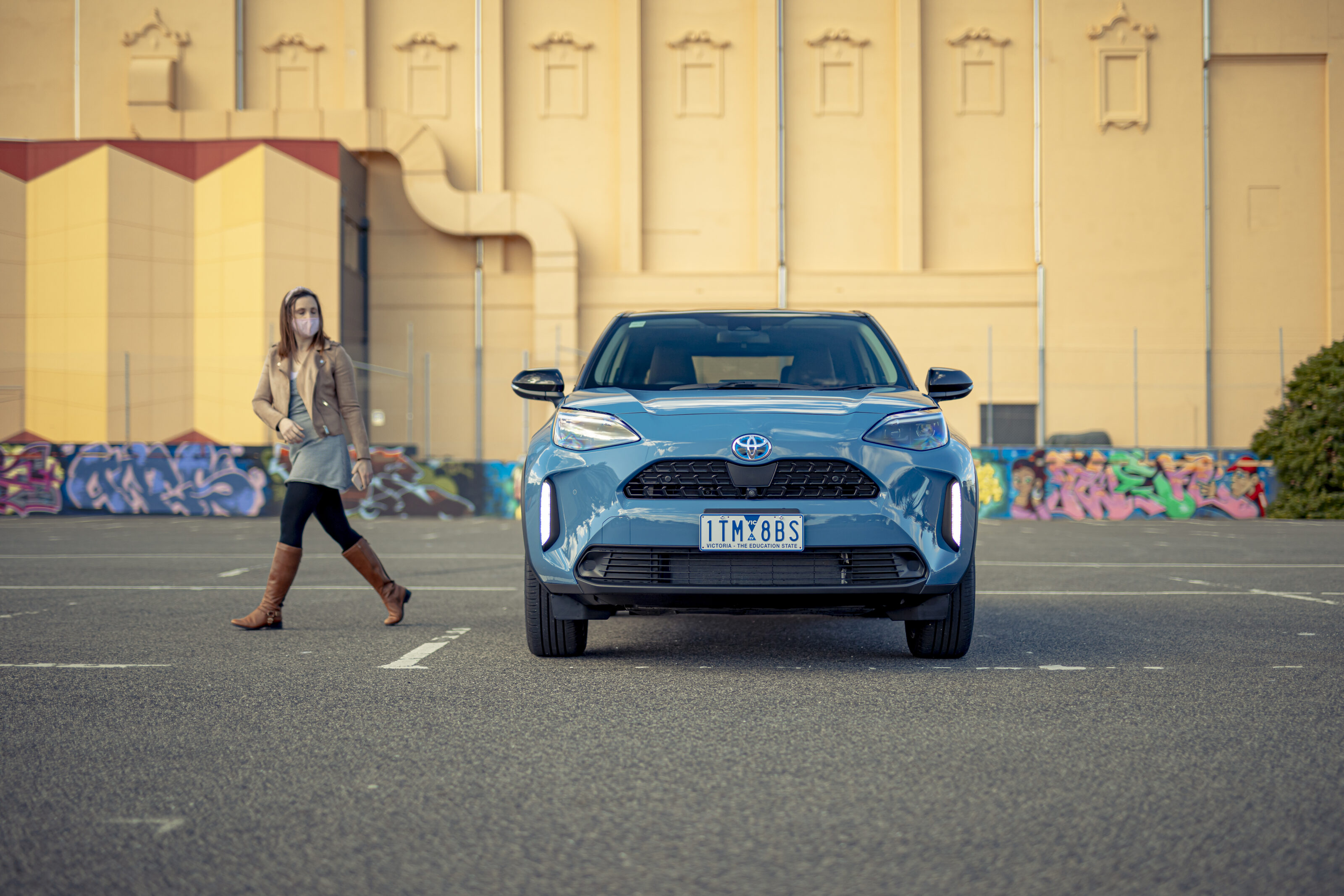
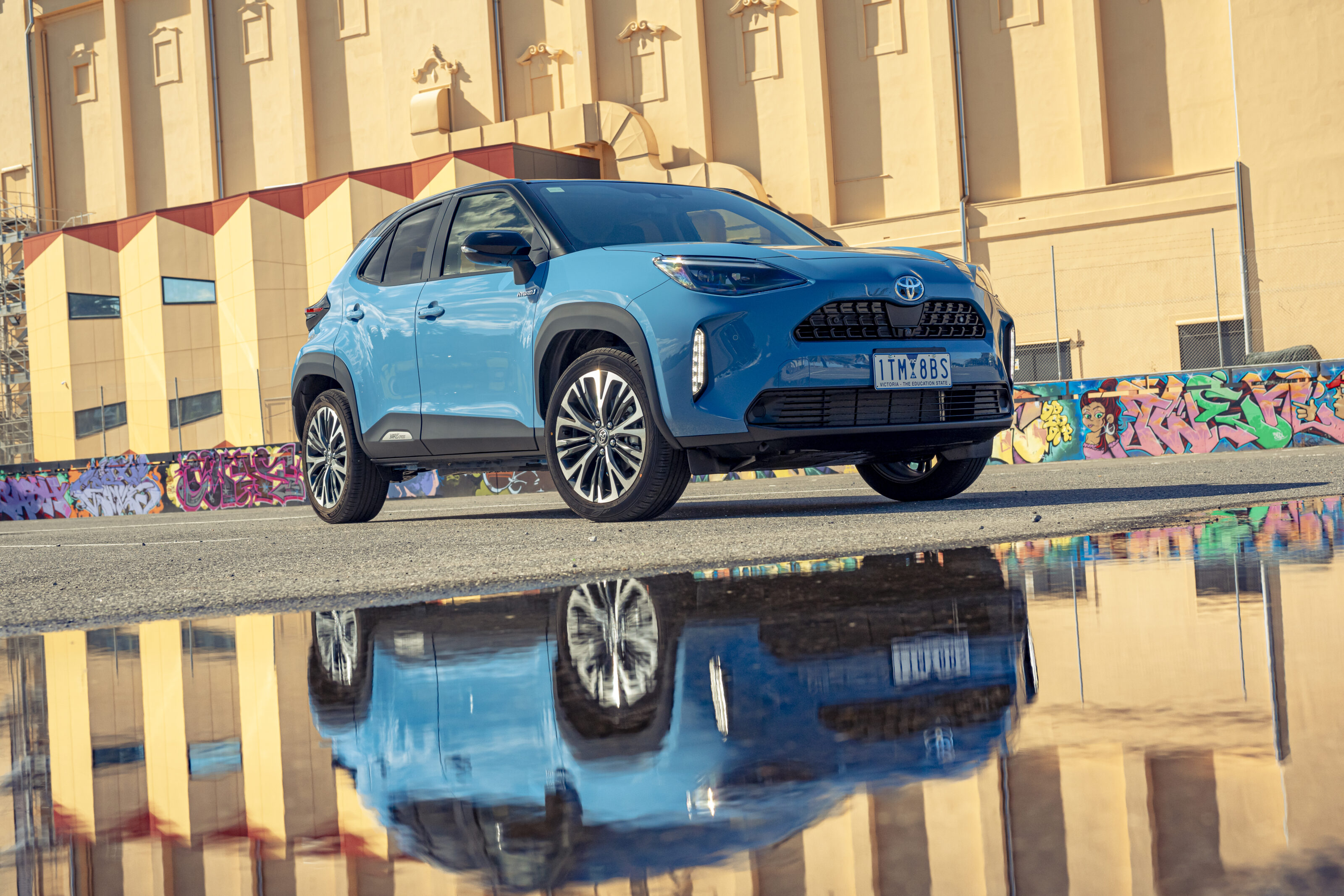
The version that has come to live with us for a little while is the 2WD 1.5-litre petrol hybrid in Urban trim, sporting mineral blue paint and a contrasting black roof.
Pricing
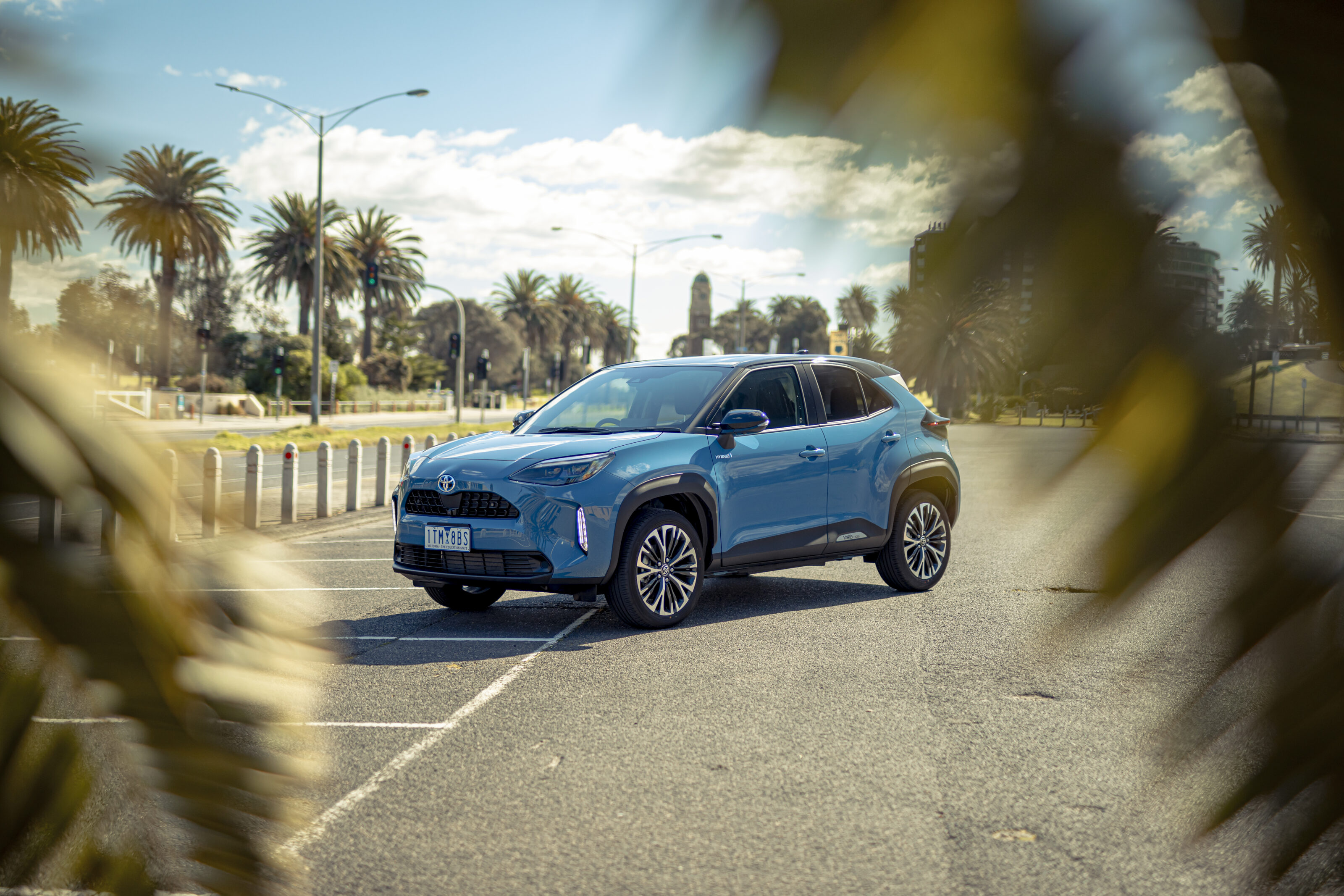
In total there are nine versions of the Yaris Cross, each of the three variants offering a petrol engine or a hybrid with either front- or all-wheel drive, and there are eight metallic, mica-metallic and crystal pearl finishes to choose from. Beyond that, there are no optional extras.
Price wise there’s a pretty big jump between the entry-level GX, mid-range GXL and range-topping Urban. The base spec GX will set you back $26,990 before on-road costs if the standard black paint, two-wheel drive and petrol powertrain are chosen. From there you can only go up.
The Yaris Cross we’ve got on test costs $34,990 before options and on-road costs. But throw in another $500 for the blue paint and an extra $450 on top of that for the two-tone roof, plus a load of taxes and other charges, and the Victorian drive-away price quoted by Toyota quite quickly breaks the $40K mark – coming in at $40,758.
Features
This is the city car that has grown up and bears little resemblance to its counterpart.
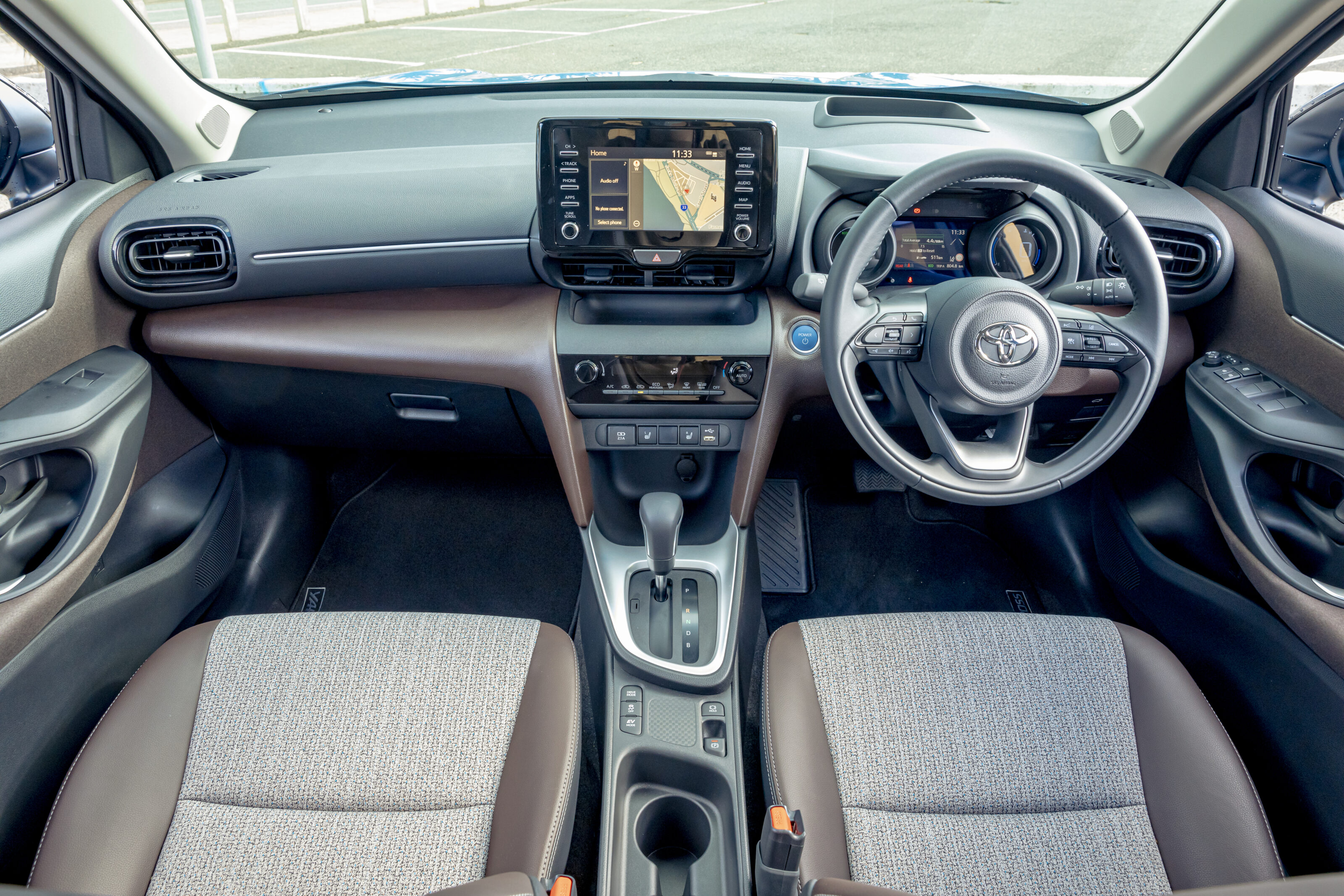
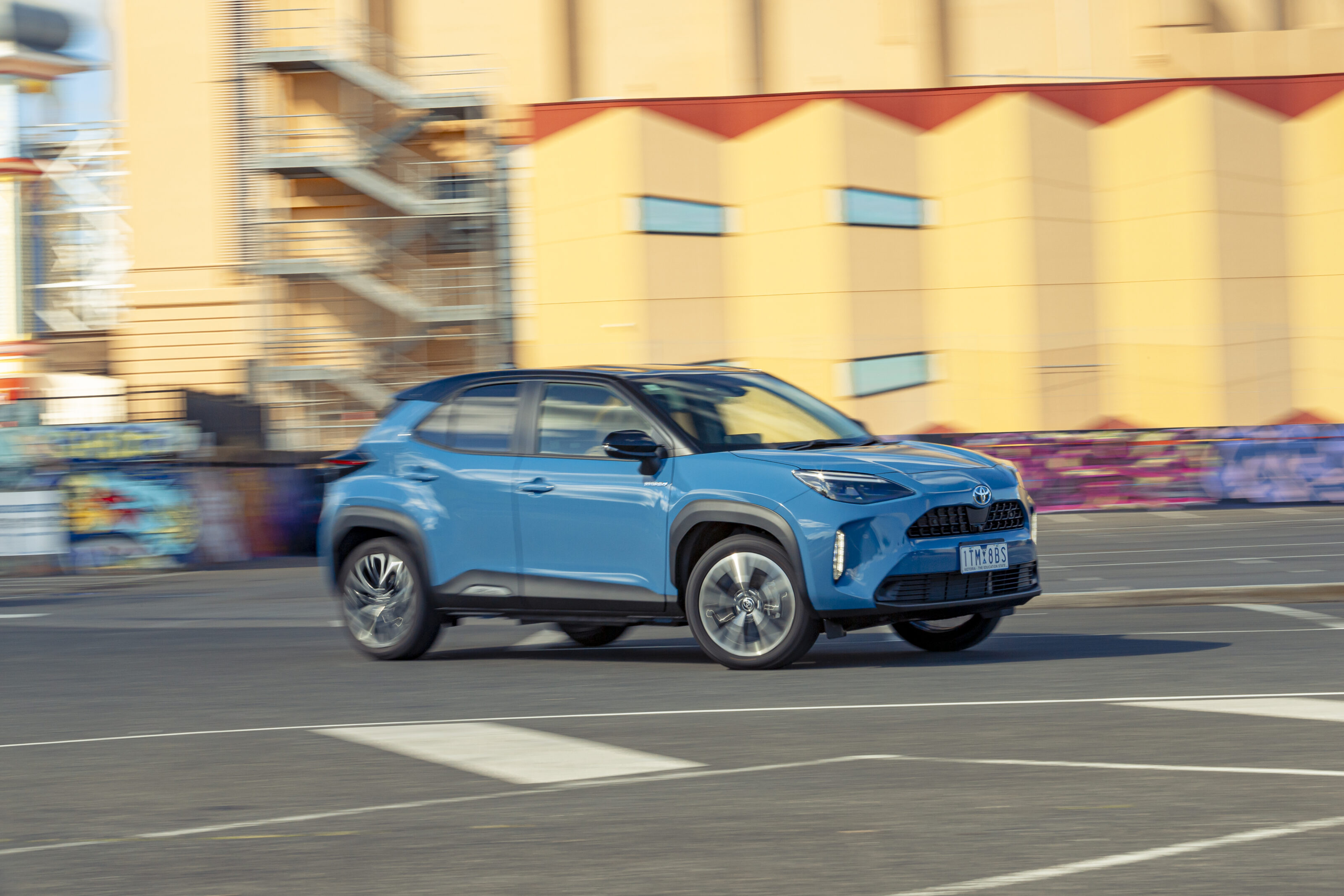
Instead, it has edgier lines, it’s taller (20mm more ground clearance than the hatch for 170mm overall) and it has a chunky, solid presence making it feel like the teenager who is out to prove themself among their peers.
In profile, the exterior now features plastic wheel arches as standard (we don’t love that you can’t get a body-coloured option), while at the front there’s a flatter bonnet and it loses the hatch’s split grille in favour of a wider, longer lower air intake.
The Yaris Cross we’ve got on test costs $34,990. But throw in options plus a load of taxes and other charges, and the Victorian drive-away price quickly breaks the $40K mark – coming it at $40,758.
Those at the sides have also been replaced by LED daytime running lights, which are standard only on the GXL and Urban. The headlights themselves are wider and rounder, which makes the Yaris Cross appear more imposing.
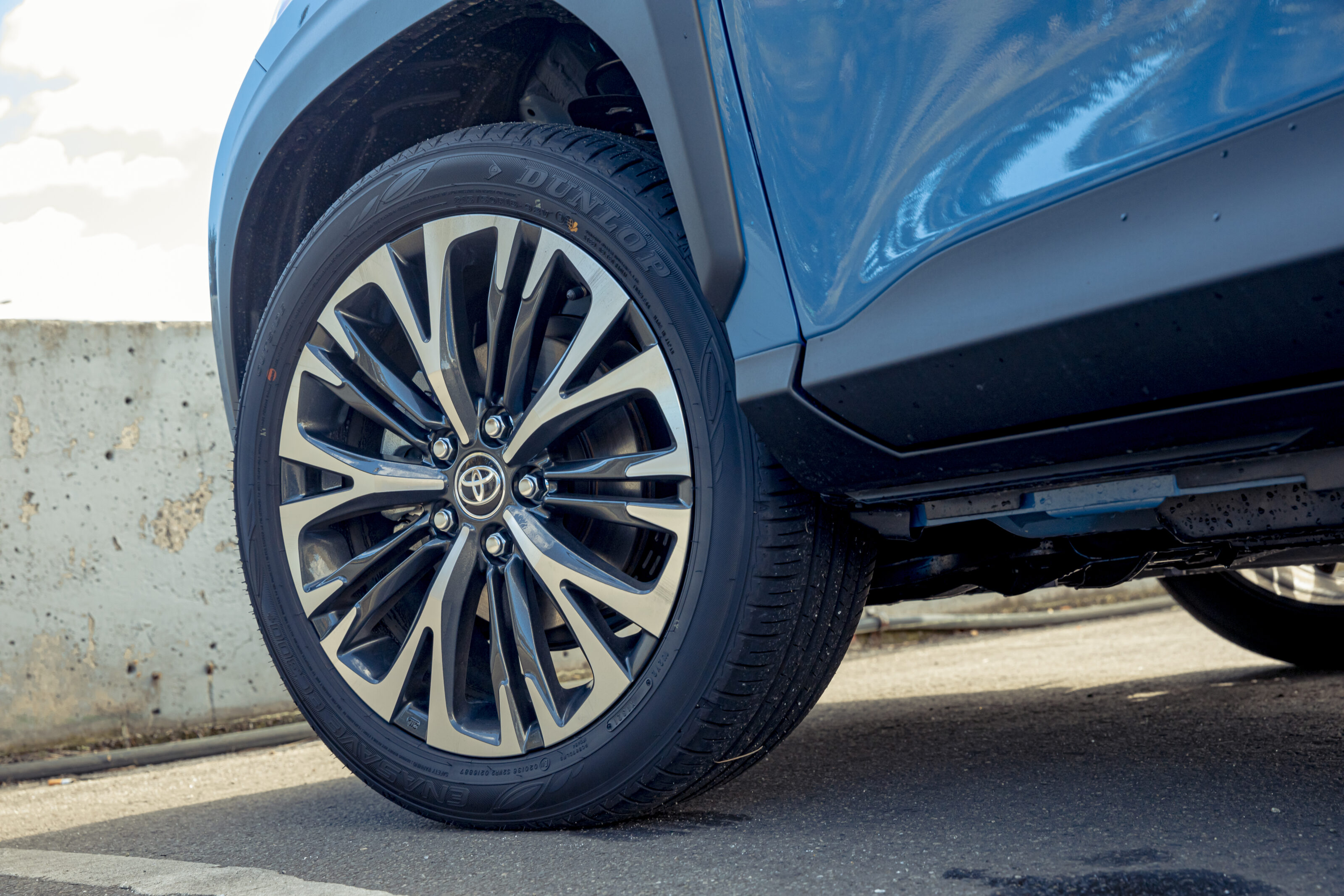
While the Urban rides on 18-inch wheels wrapped in eco tyres, the GX and GXL step down to 16s all round. Interestingly though, there’s no difference in as-tested fuel economy figures despite the smaller wheel size.
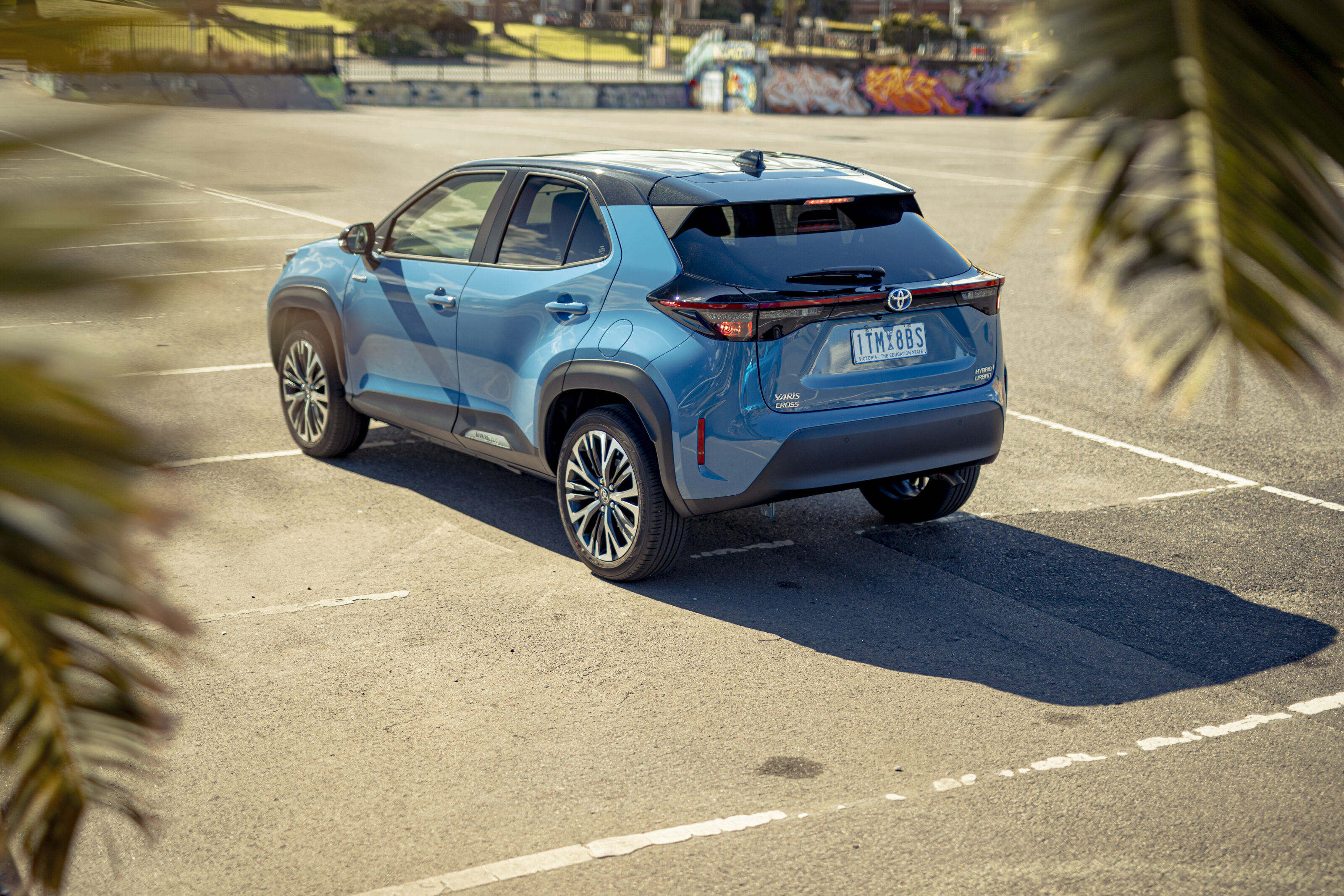
At the rear, the aesthetics are more similar to the Yaris hatch than anywhere else on the car, with the creases and black panel running along the tailgate retained. But that’s pretty much where the parallels end.
Measurement-wise, it’s 4180mm in length, with a width of 1765mm and height of 1590mm – making it 240mm longer, 70mm wider and 85mm taller than the Yaris hatch.
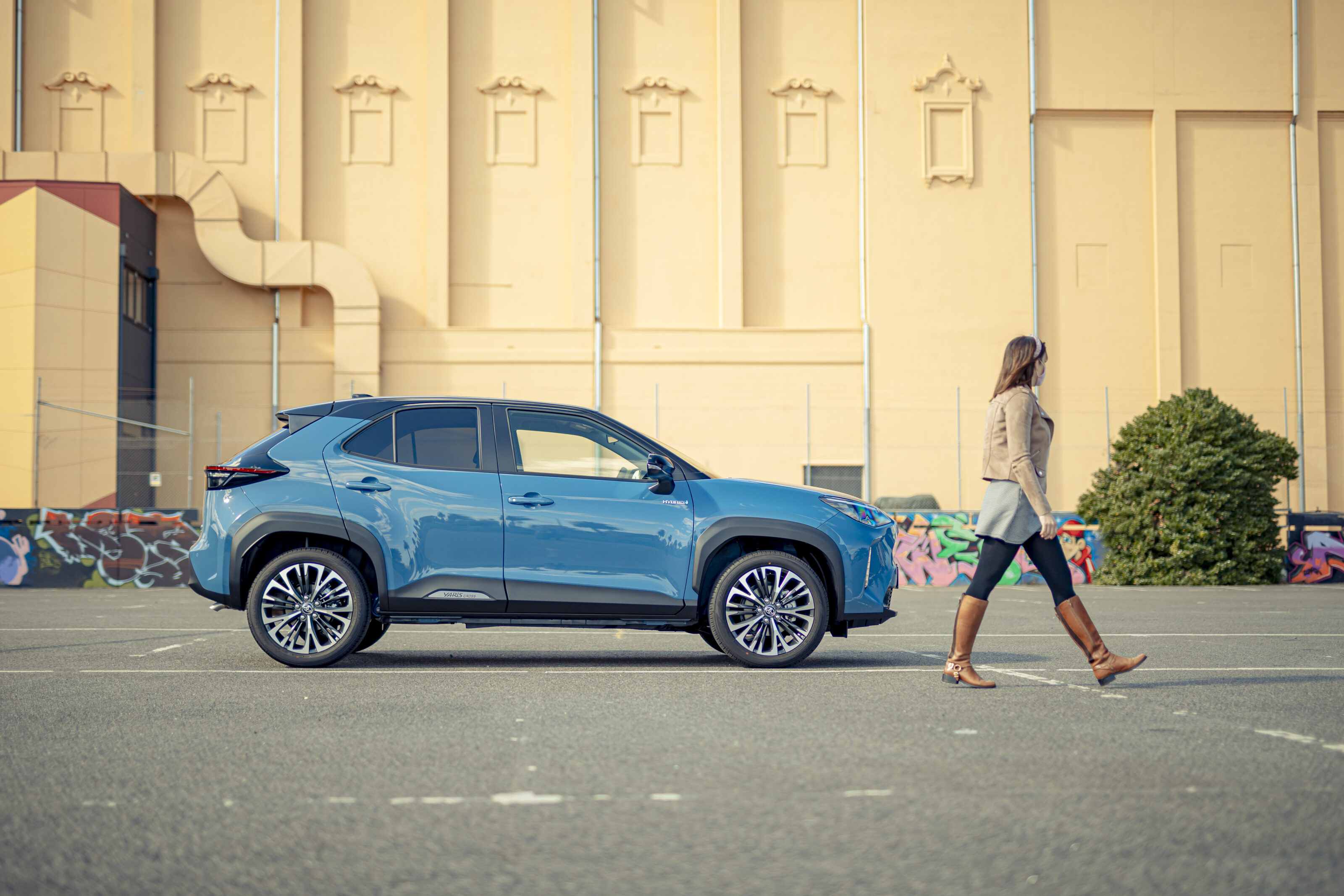
Inside, the appearance is also a little divisive. There’s a lot of plastic on offer and family members’ thoughts on the look and feel of the fabric differ.
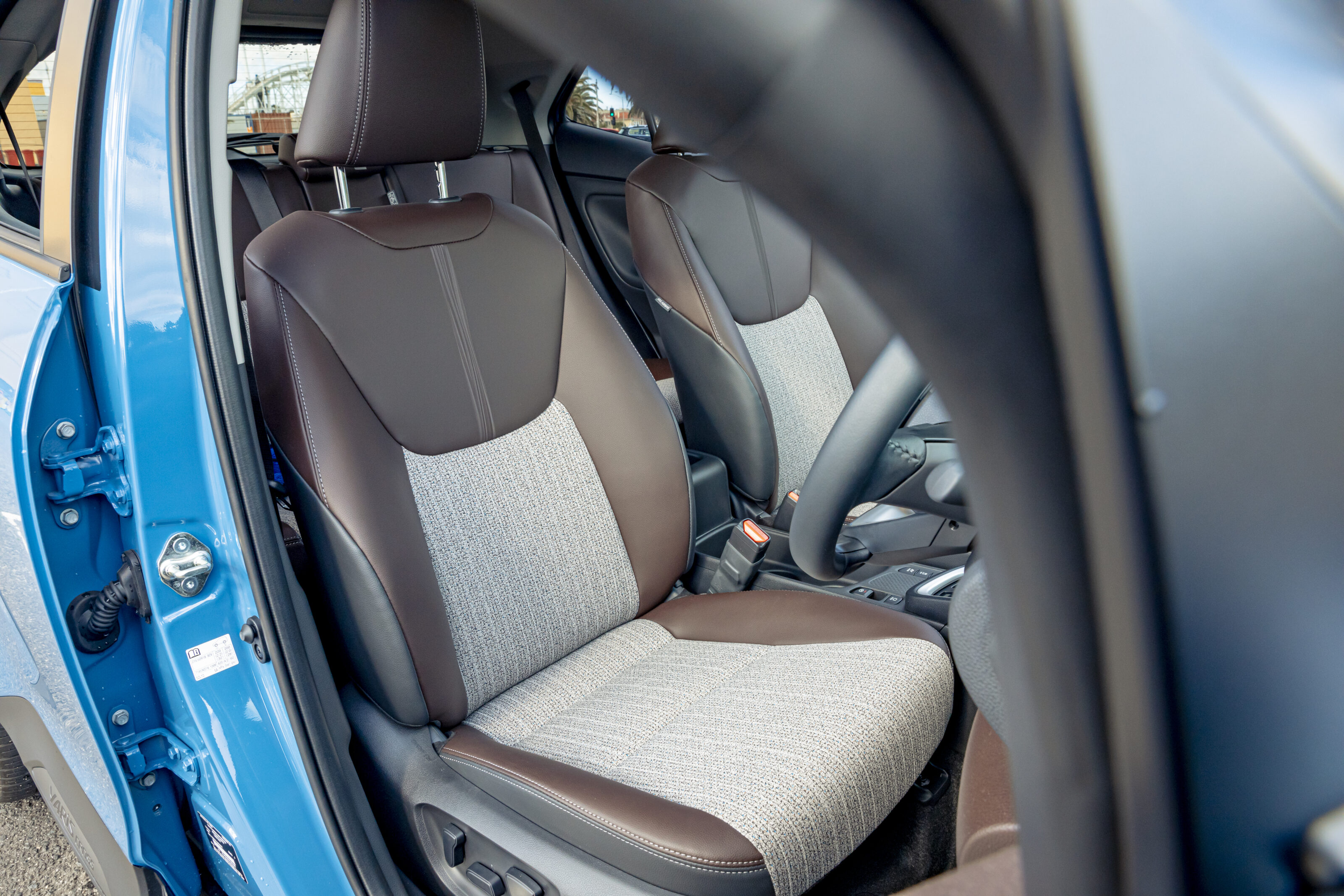
This Urban variant features a tweed-like fabric with dark brown artificial leather accents for the upholstery – which we think wouldn’t look out of place on an English farmer’s flat cap. However, the GXL and GX make do with a more restrained grey fabric.
There’s something about the old-fashioned look of the interior clashing with the jazzy, young and fresh-looking exterior that just doesn’t quite sit right or make sense for us.
Nifty features include heated front seats, electrically adjustable driver’s seat (both of these things are available in Urban guise only) and USB ports for charging.
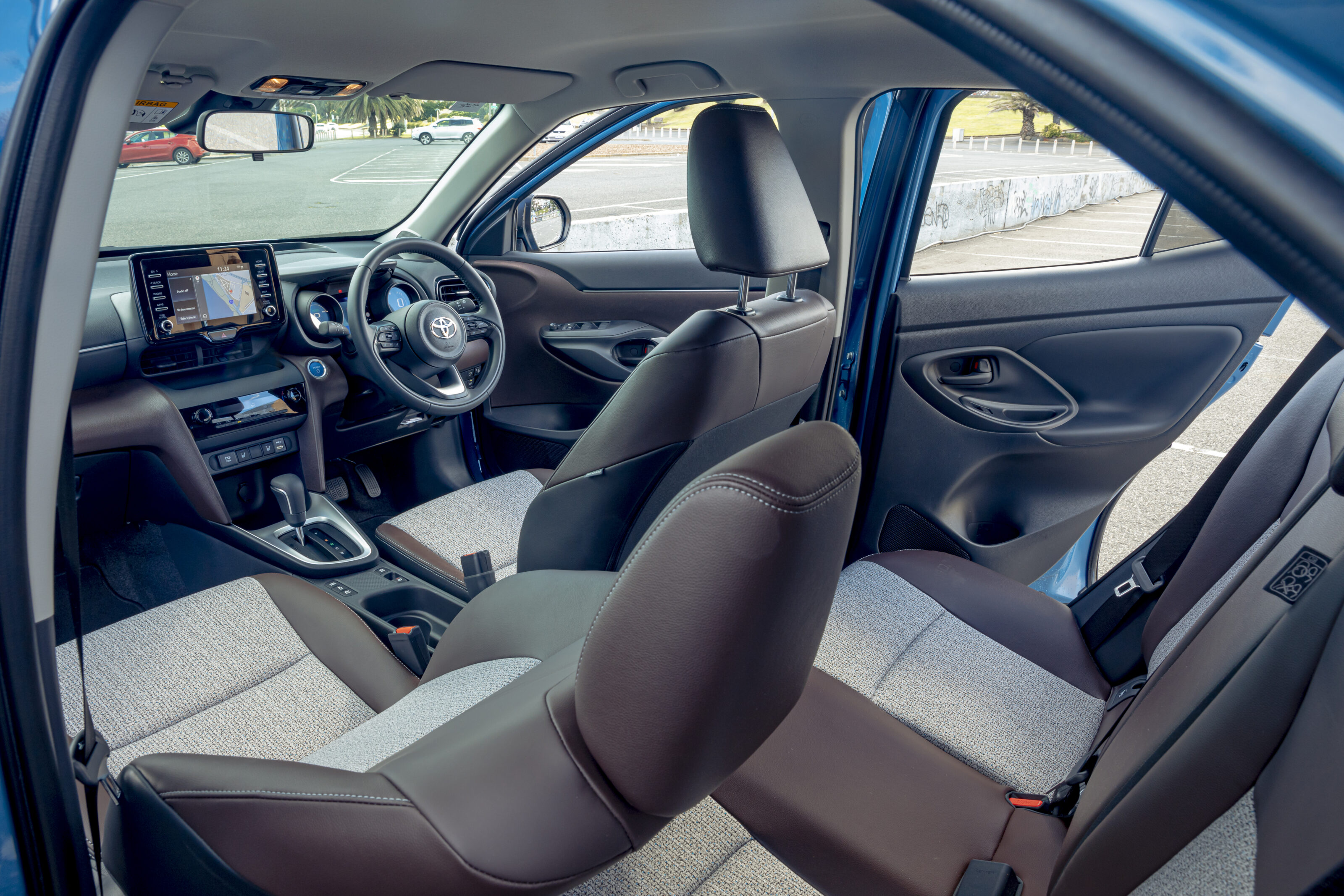
The 7.0-inch touchscreen is relatively simple and easy to use, and comes with Apple CarPlay and Android Auto integration – although the resolution leaves a lot to be desired, especially when using the on-screen parking functions.
We also like the 4.2-inch digital binnacle display that provides straightforward information on the performance and status of the hybrid system. The GXL and Urban also include sat-nav as standard.
Although it appears easy enough to use on the face of it, we’d still always prefer to use other map systems through our smartphones instead, as they tend to be more accurate.

Also useful on the Urban variant is the powered tailgate with a kick sensor for hands-free opening when carrying shopping or other items (your small children for example) and a head-up display – although worth noting that when the sun is particularly strong it can be hard to make out.
Considering that this particular version costs in excess of $40k, and that’s without adding AWD, there are some finishing touches we’d expect to be better for the money.
For instance, there’s no centre armrest, no vanity mirror on the passenger’s side and the traditional parcel shelf has been replaced by a flimsy mesh construction.
In the back too, there’s a distinct lack of amenities. Disappointingly, there are no air vents in the second row, nor are there USB ports or grab handles. For a two-year-old in a car seat, it works just fine though, thanks to the ISOFIX anchors.
Comfort and Space
On first examination, there doesn’t appear to be a lot of space – even if Toyota does call it “airy”.
Compared to its new-kid-on-the-block rival the Ford Puma, it is short on places to put things, and while it can easily manage a trip to the shops or a day out with a pram, putting it to the test for a weekend getaway with more bags, a buggy, travel cot and any other baby/toddler associated kit, it would most likely struggle.
Getting the little ones in and out of the back doors can also be a bit tricky, as they don’t open very wide – a must-have for many with young families.
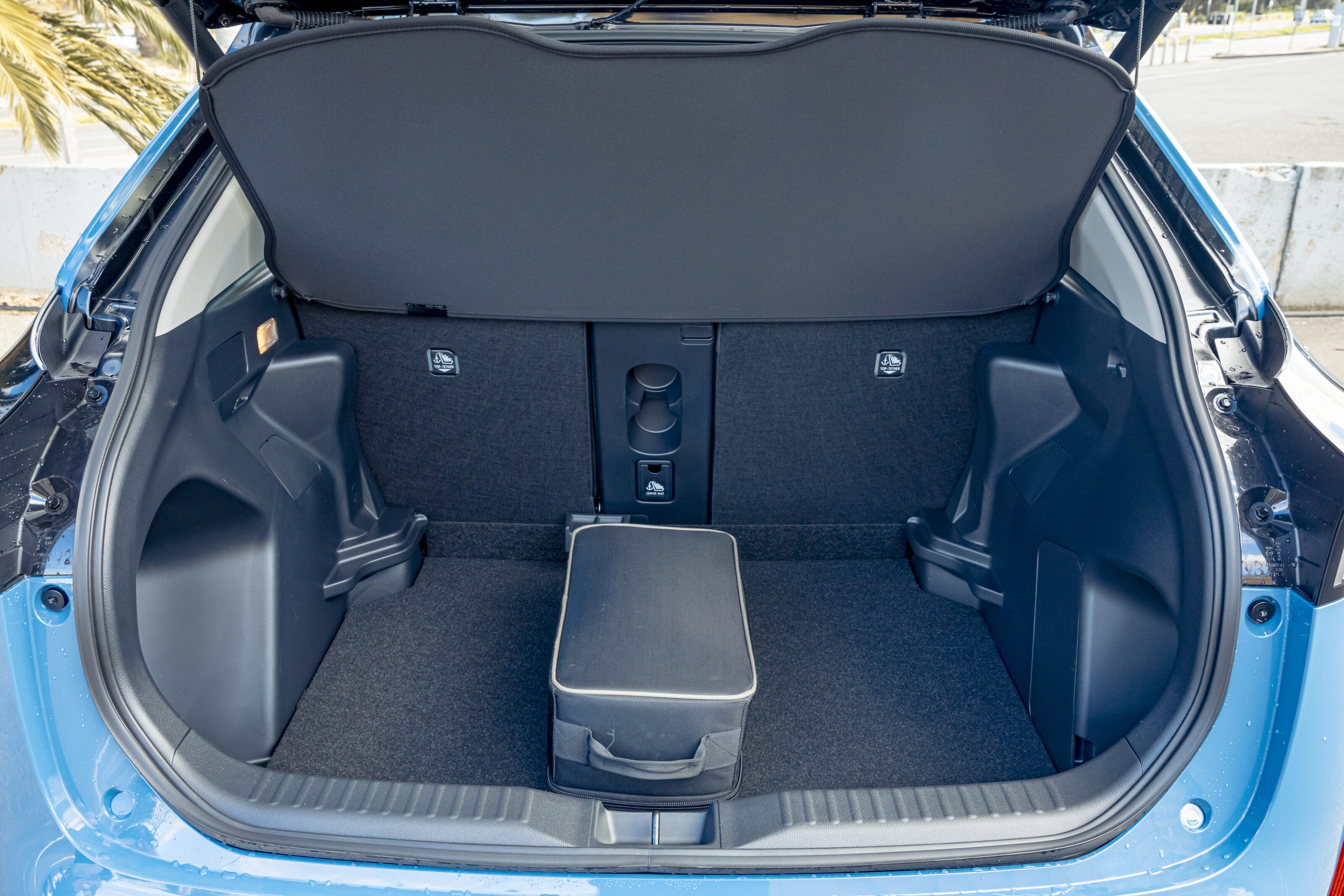
Fitting in more luggage can be achieved by utilising the 40/20/40-split rear seat with each individual section able to be folded flat. The boot itself also has a 60/40-split boot floor on 2WD variants, which makes storage slightly more versatile (on paper at least, we couldn’t quite figure out what the point of this was).
In the lower position, the Yaris Cross’s max cargo capacity is 390L in the 2WD or 314L in the higher level or in the AWD.
As it’s spent most of its life with us in some sort of lockdown though, this Yaris Cross has sadly not had a chance to prove it can shine in long-distance driving and the furthest it has been was on a blast out of Melbourne and down to Victoria’s Mornington Peninsula.
Unfortunately, on longer drives such as this, the front passenger’s space feels a touch confined, and though the back seat offers moderate legroom, space for three people or two with the centre armrest down (lucky them!) – it could be a squeeze for taller folk.
Our two-year-old’s feet were pushing up against the back of the front passenger seat even with it fairly far forward.
Seats all round feel suitably comfy, though only the driver’s is electrically adjustable as mentioned.
On the Road
How do you know it’s still that same Yaris underneath? It’s got the hatch’s 1.5-litre 3-cylinder petrol mated to a continuously variable transmission (CVT), sending 67kW/120Nm to the front wheels – which is upped to 85kW of power when combined with two electric motors in hybrid guise.
The non-hybrid petrol version has slightly higher power and torque outputs of 88kW/145Nm. Choosing the AWD powertrain gains a third motor to drive the rear wheels.
Now this car is truly one of two halves. Serenely quiet and smooth pulling away from the lights in EV mode, the three-cylinder is quite loud when it gets into its stride and there’s no perceptible gear change to break up the monotony owing to the CVT. Having said that, at freeway cruising speed, overall wind and tyre noise is very respectable for a car of its size.
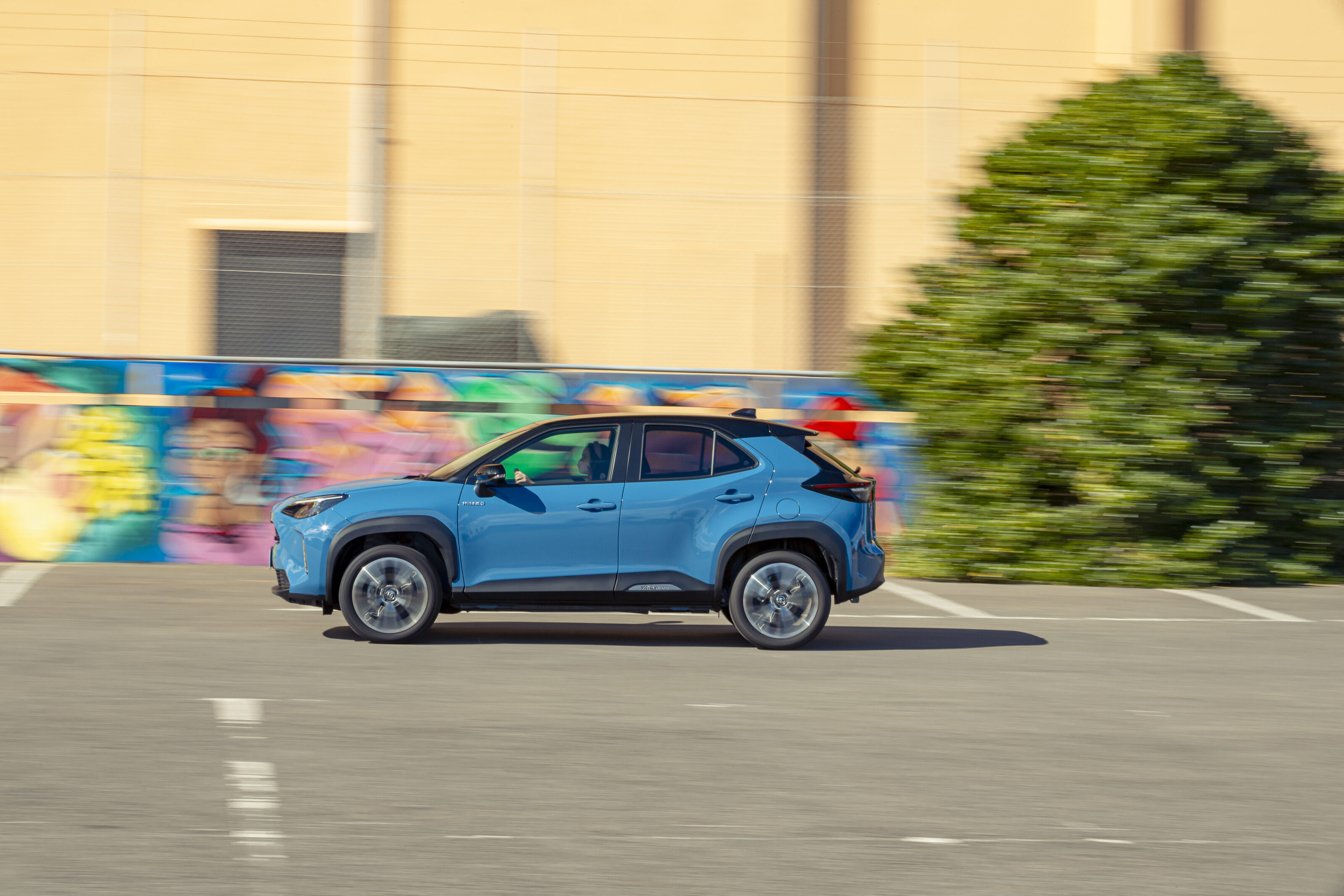
While its low-end response is quite strong for a small unit, put pedal to the metal on the freeway and unsurprisingly, with just 67kW/120Nm to play with, it’s going nowhere fast. At higher speeds the din evens out, making long stints on the Monash that little bit more bearable.
There are three driving modes: EV, Auto and Power – but to be honest we haven’t found all that much difference between the latter two, with no obvious boost in performance.
Around town, where undoubtedly the Yaris Cross will spend most of its time, it’s a solid performer with quick and responsive steering aided by an electrically assisted rack-and-pinion set up – as well as a small steering wheel with decent grip. Cornering and changes in direction are undertaken with ease, no doubt helped by its size.
Ride is smooth and comfortable and it handles itself well over minor bumps on suburban or regional main roads.
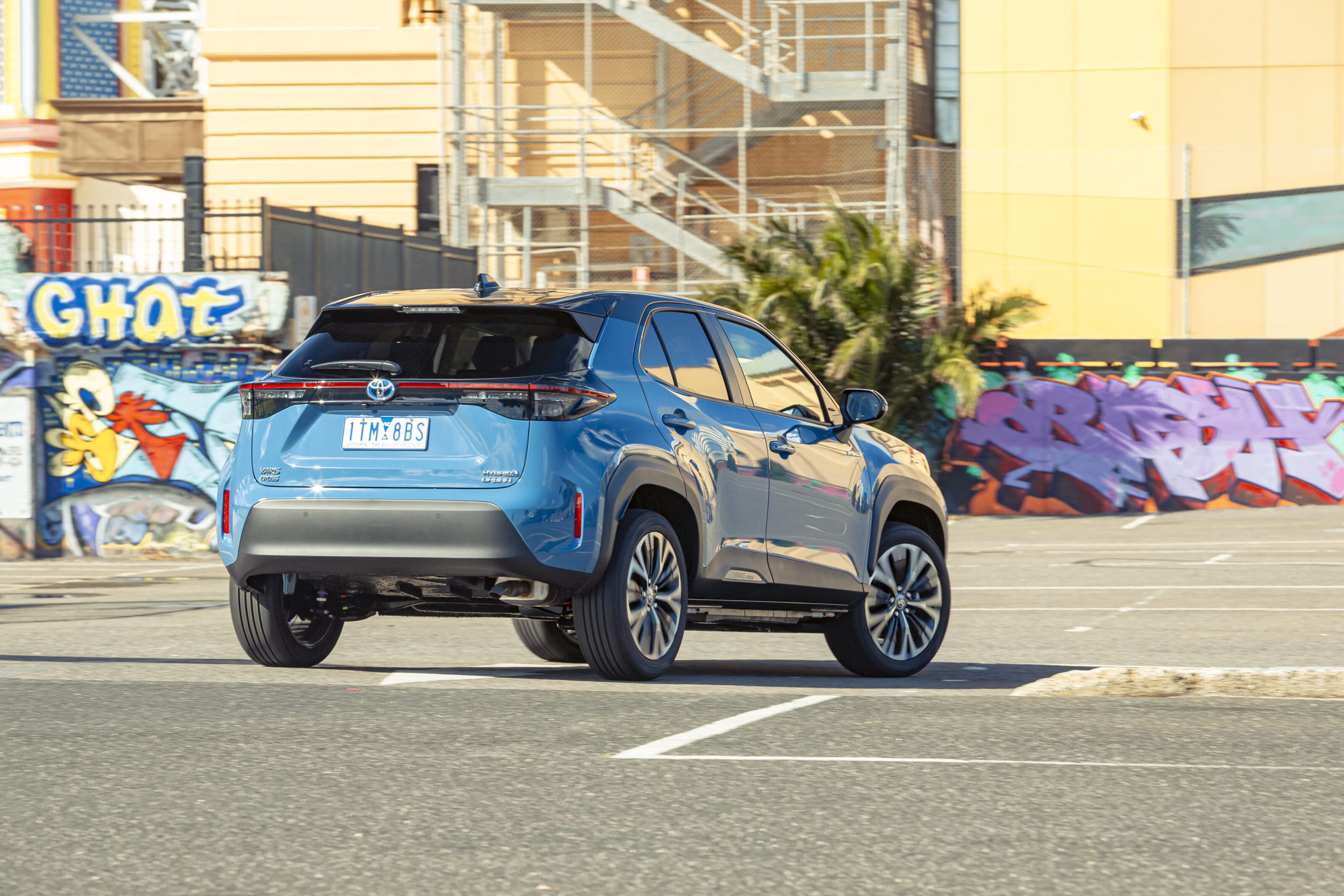
The most interesting thing about the Yaris Cross though is its hybrid system, a big factor for many forward-thinking Aussies and why Toyota’s line-up continues to be so successful month after month.
This is the first ‘self-charging’ hybrid yours truly has had the chance to drive, and we’ve found the electric power to work in two ways.
The first happens under roughly 40km/h or when driving consistently at a higher speed, let’s say in this case 80km/h – you can drive purely on electric with a little green car appearing on the display to let you know you’re not using any fuel. However, with barely a nudge of the accelerator you’re flipped back into using petrol. When you brake, it charges.
The second is to press a little button in the centre console which pops it into EV mode. It differs from the other modes by letting you use purely electric power to travel without the petrol engine cutting in up to a maximum of 47km/h, which makes it ideal for zipping around town.
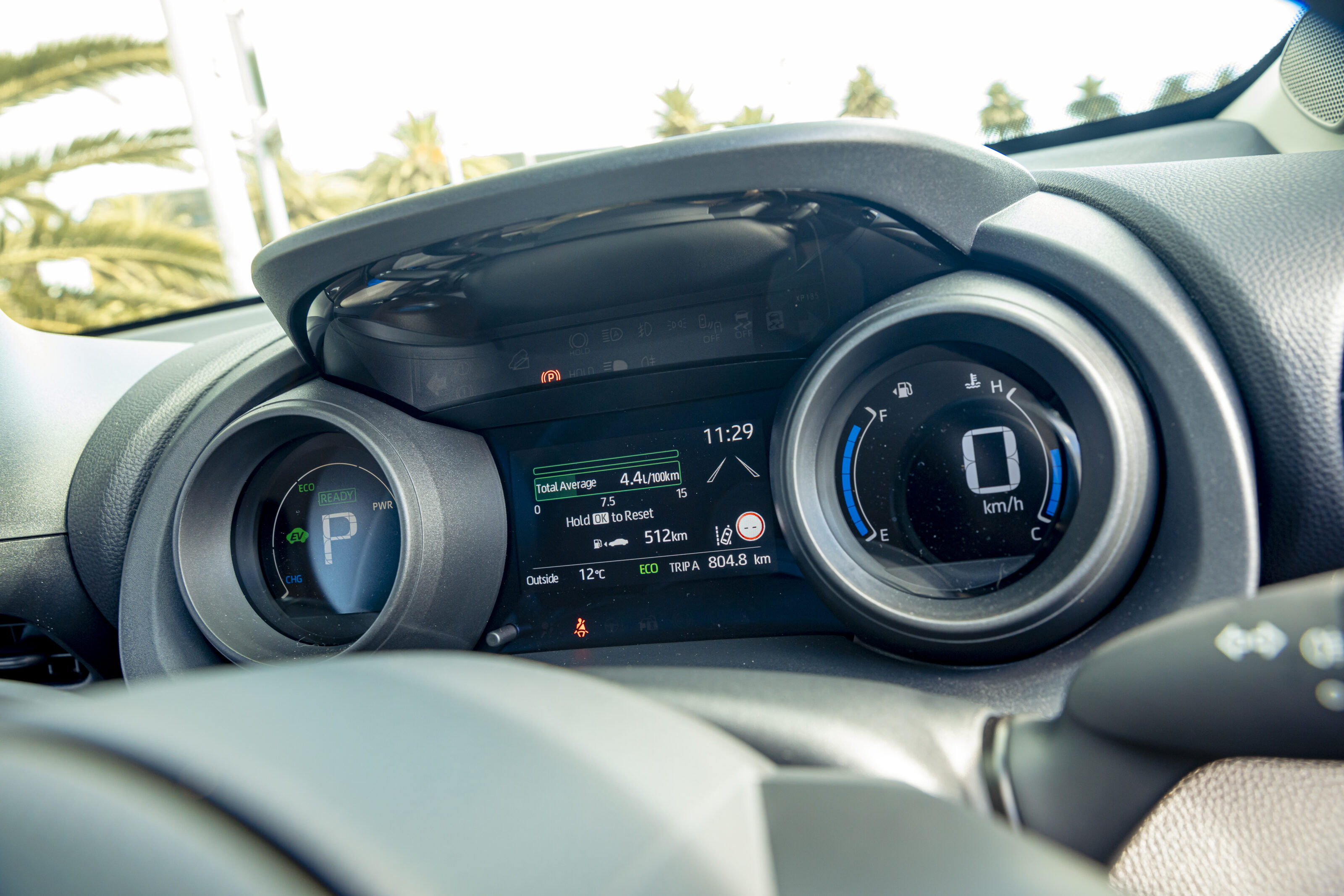
But bearing in mind most of our driving with the Yaris Cross has been during lockdowns, the majority of the time the car has been used for only short trips. Mostly this has involved doing the twice daily kindy run – which hasn’t been enough to charge the hybrid battery to power a single 2km trip on electricity alone.
As a result, just like with any other car powered by a traditional internal combustion engine, fuel economy isn’t as good as it could be. Officially rated at 3.8L/100km, we’ve found the best we could achieve was 4.0L/100km. That’s impressively close for real-world driving, but with COVID-19 restricting our ability to travel, most of the time it has been closer to 5.0L/100km.
Still, a pretty impressive effort, and its official CO2 emissions of 86g/km are enviable compared to its CX-3 and Puma rivals that state 143g/km and 121g/km respectively. Neither are, however, offered with a hybrid drivetrain.
Safety

The Yaris Cross comes with the Toyota Safety Sense package which includes:
| Eight airbags |
| Pre-Collision Safety (PCS) system with day/night pedestrian and day cyclist detection |
| Emergency steering assist |
| Lane trace assist |
| Lane departure alert |
| Steering assist |
| Daytime intersection turn assist |
| Auto high beam |
| Road sign assist |
| Adaptive cruise control |
The mid-range GXL and range-topping Urban grades gain front and rear parking sensors, blind-spot monitoring and rear cross-traffic alert, a panoramic view monitor and parking support brake.
All trims benefit from a reversing camera with back guide monitor.
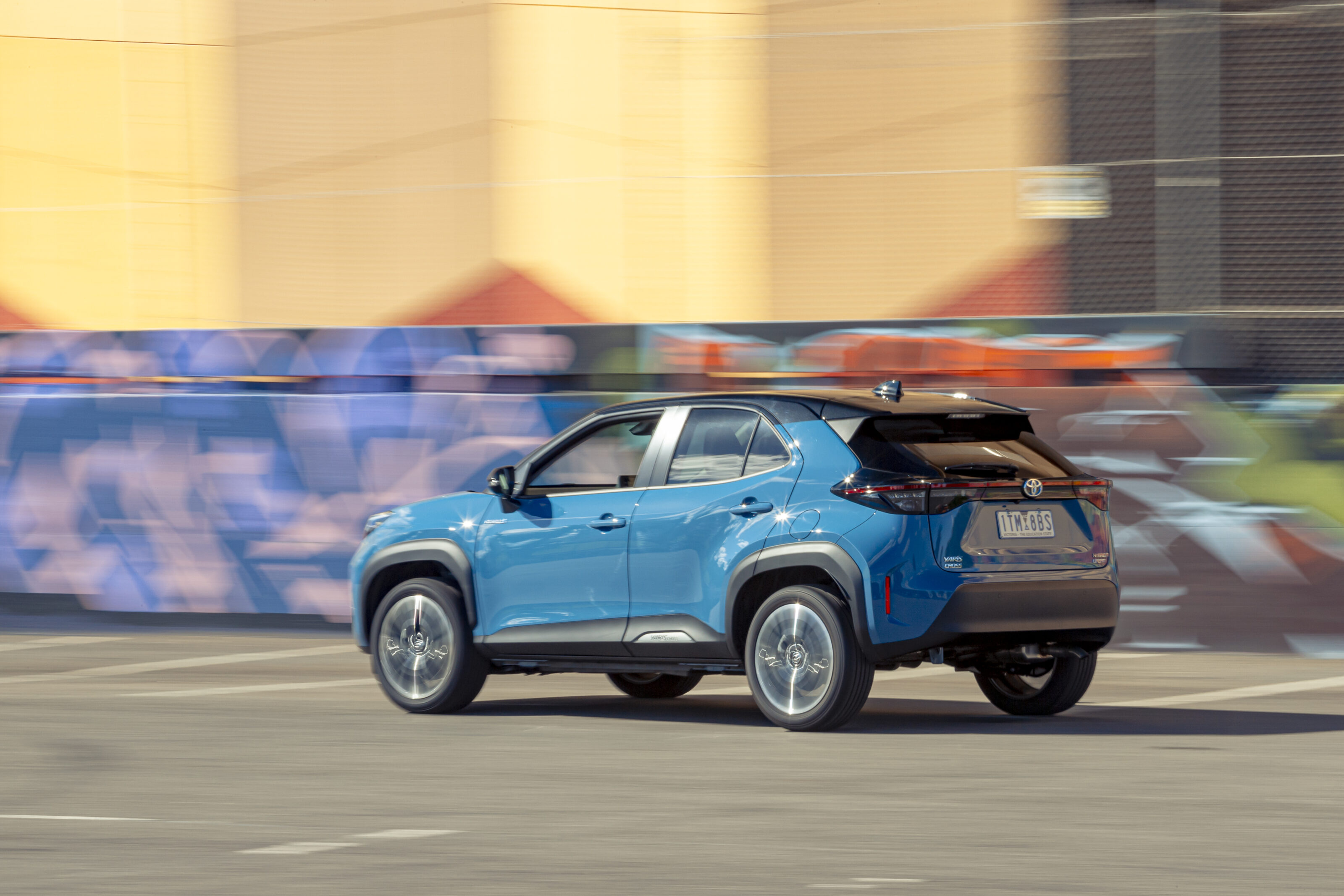
The safety systems have proven themselves useful, especially the lane departure assists – if a little loud and overzealous. While driving down a normal suburban street it panicked at us passing a parked car with a loud noise and BRAKE! warning coming on, even though the only car was on the other side of the road.
If there’s one thing about this car that irks somewhat, it’s all the beeps and noises. There are so many it’s hard to know what to take seriously – like the boy who cried wolf. Undoubtedly some of these can probably be turned off, but should you?
The Yaris Cross has a five-star ANCAP rating awarded in September 2021.
Ownership
Toyota’s first foray into the light SUV segment, the Yaris Cross is performing well already – having sold 4686 since launching in late 2020.
In July this year alone 472 were snapped up, making it the second best-selling model in the class (behind the popular Mazda CX-3) both for that month and year-to-date, despite having some more established competitors such as the Nissan Juke and Volkswagen T-Cross. In comparison, another new rival, the Ford Puma, had just 203/2192 sales for the same respective periods.
All Toyotas come with a five-year/unlimited-kilometre warranty, plus seven years for the engine and 10 for hybrid batteries, with capped-price servicing for the first five intervals of six months/10,000km (whichever comes first) costing $205 each.
Verdict
Toyota pitches the Yaris Cross as meeting the “lifestyle needs of active urban dwellers” and we’d say that sums it up fairly well. As an about-town daily driver, it is more than capable of ferrying around your littlest family members with a modest amount of accompanying kit, or would easily fit the bill as an efficient commuter car.
Out of the three, GX, GXL and Urban variants though we’d go with the mid-range GXL 2WD hybrid option.
While it loses the finer touches of the head-up display, heated seats and blind-spot monitor/rear cross-traffic alert safety features, it comes in at a more palatable $36,643 drive-away and still keeps the LED headlights and an onboard satnav above the entry-level GX.
By comparison, top-of-their-range rivals – the Mazda CX-3 Akari LE Auto and Ford Puma ST-Line, will set you back $38,990 and $39,944 drive-away respectively minus any options. Again, though – neither is offered as a hybrid. The Urban’s drive-away price, without the options we had on this test, is $39,169.
Even though we couldn’t make the best use of the hybrid system in our Yaris Cross, its fuel economy was still a massive bonus and would suit those who are eco-conscious but don’t yet want to make the leap to fully electric.
Toyota pitches the Yaris Cross as meeting the “lifestyle needs of active urban dwellers” and we’d say that sums it up fairly well.
2021 Toyota Yaris Cross Hybrid 2WD specifications
| Body | Five-door light SUV |
| Drive | Front-wheel drive |
| Engine | 1.5-litre three-cylinder petrol hybrid |
| Transmission | CVT |
| Power | 67kW @ 6600rpm |
| Torque | 120Nm @ 3800rpm – 4800rpm |
| Bore x Stroke | 80.5mm x 97.6mm |
| Compression ratio | 14.0:1 |
| 0-100km/h | N/A |
| Fuel consumption | 3.8L/100km |
| Weight | 1235kg (kerb) |
| Suspension | MacPherson strut-type (front); Torsion Beam (rear) |
| L/W/h | 4180/1765/1590mm |
| Wheelbase | 2560mm |
| Brakes | Ventilated discs (front); solid discs (rear) |
| Tyres | 215/50 Dunlop Enasave |
| Wheels | 18-inch alloys |
| Price | $34,990 plus on-road costs and paint options |
Snapshot
- Strong results for adult and child occupant protection
- Safety assist systems also score well
- Eight airbags standard across the range
The Toyota Yaris Cross has scored the full five-star ANCAP safety rating from Australia’s independent safety authority, complimented for both its active and passive features.
Introduced to the local market in the back end of 2020, the Yaris Cross tested well with its adult and child occupant protection levels standing out – each scoring 86 per cent of the points available in each category.
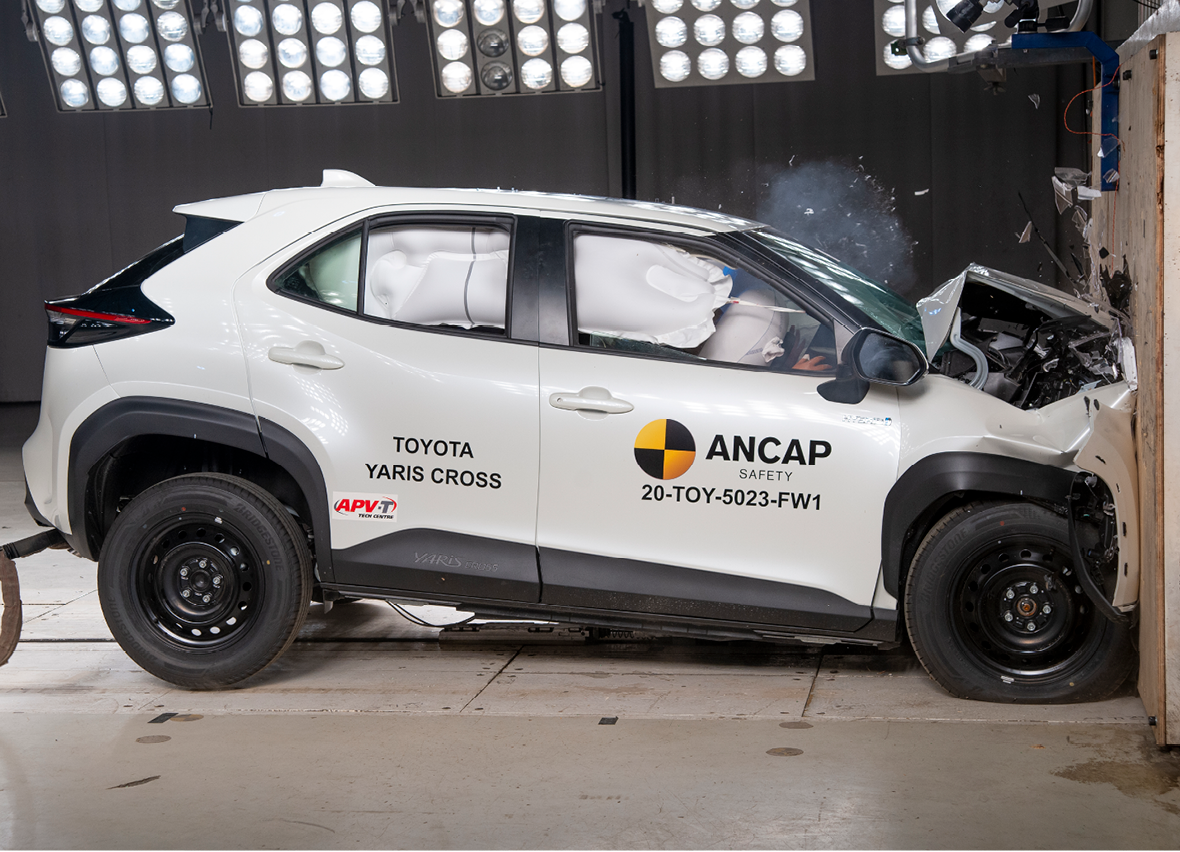
Full marks were given for adult protection in the side impact, oblique pole and whiplash protection tests – as well as rescue and extraction – while the small crossover lost points in the frontal offset crash, only recording 4.27 out of a possible eight points.
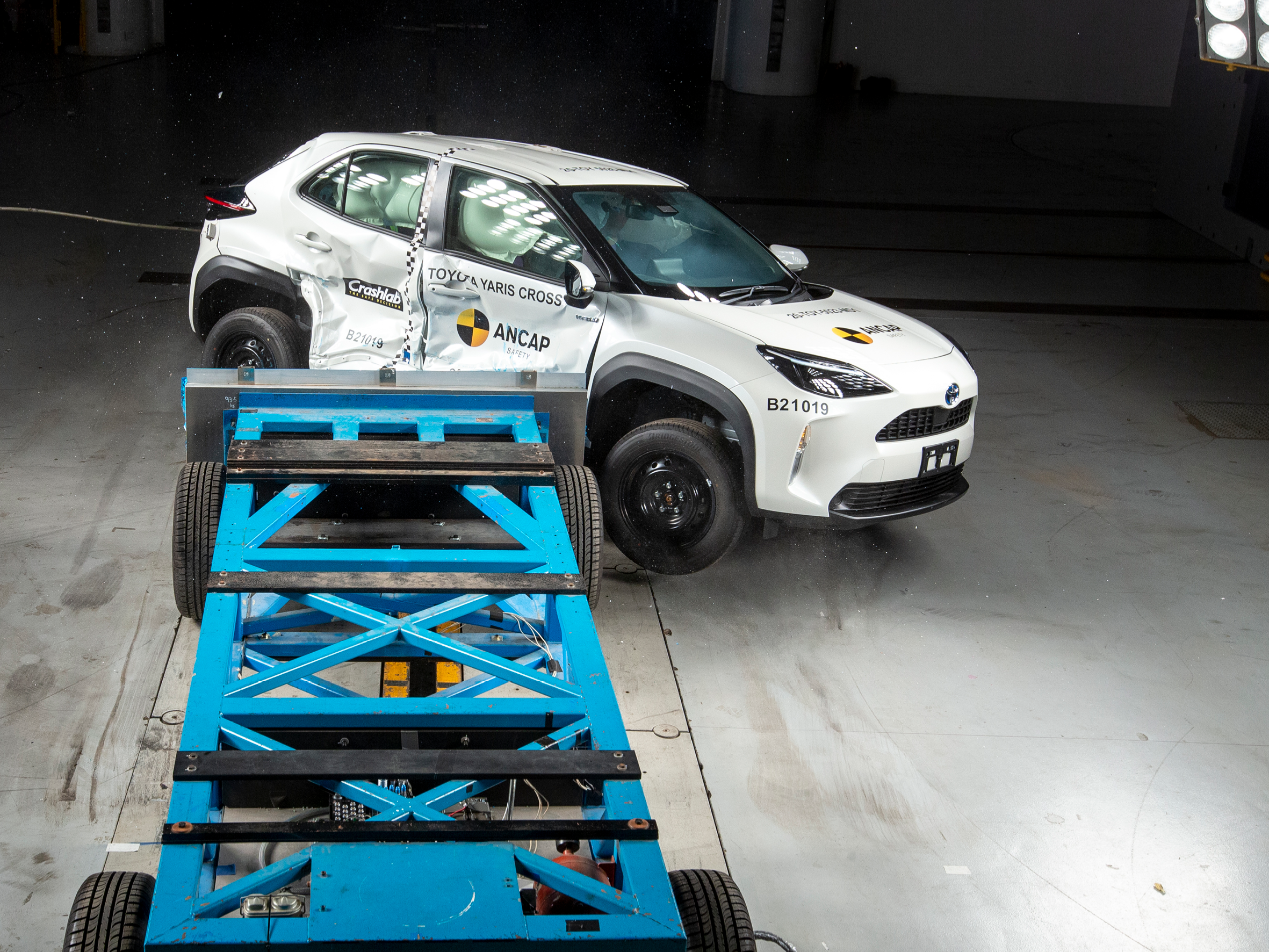
Its pedestrian safety tech was also scored relatively well at 78 per cent, as the Yaris Cross’s minimised impact on a pedestrian’s lower and upper legs was given the full six points available.
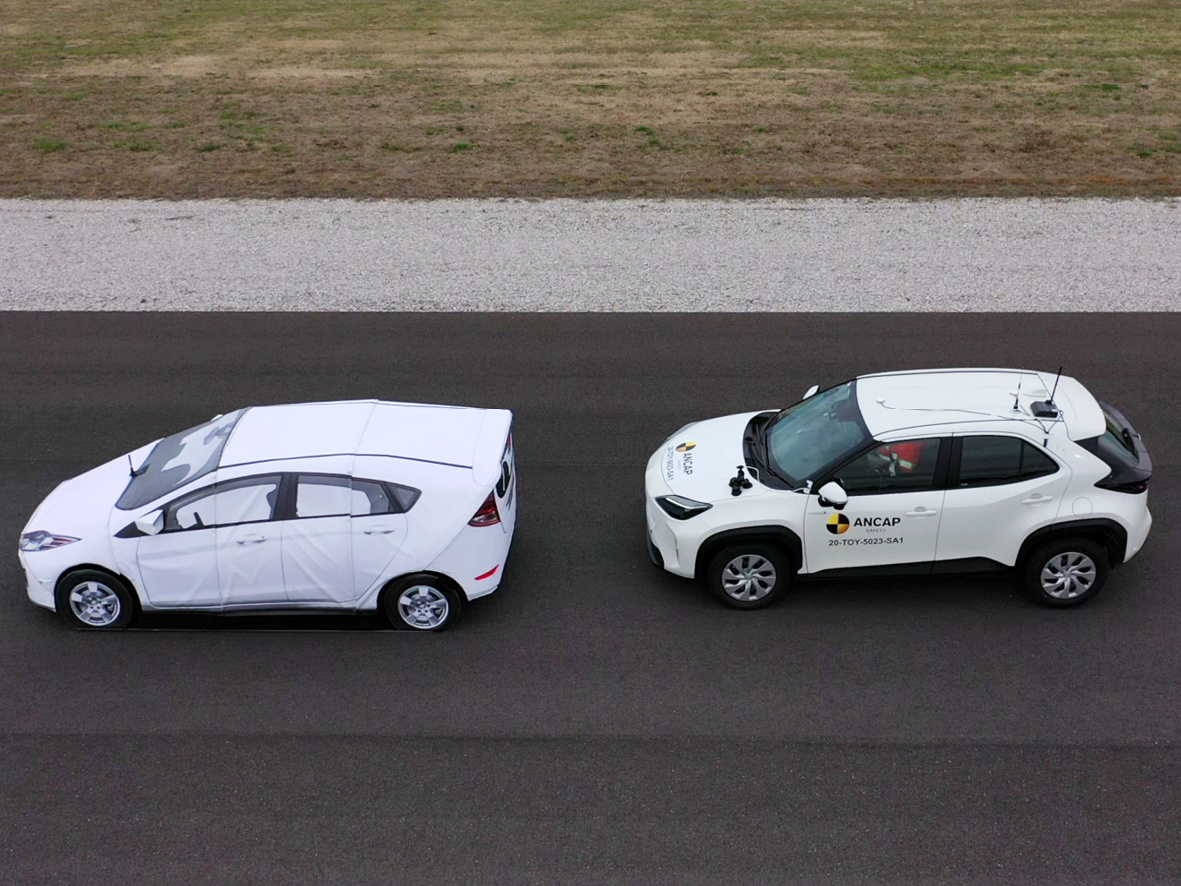
However, a lack of autonomous emergency braking for pedestrians behind the vehicle caused it to lose out on two potential points – although this didn’t affect the safety assist score, which covers a different range of equipment.
For the safety tech category, an overall performance of 82 per cent was given after notching up 13.22 points out of 16, with all six functions scoring more than half the points available.
Starting at $26,990 before on-road costs, the entire Yaris Cross range features eight airbags across the first and second row of seats, providing protection fo all occupants.
Australian Design Regulations are, for the most part, a rather benign collection of legislation that ensures cars which are sold and driven on local roads are appropriate and safe.
However, a recent change to ADRs (as they are more commonly referred to) means a handful of performance car icons will no longer be available to Australian customers by the end of the year.
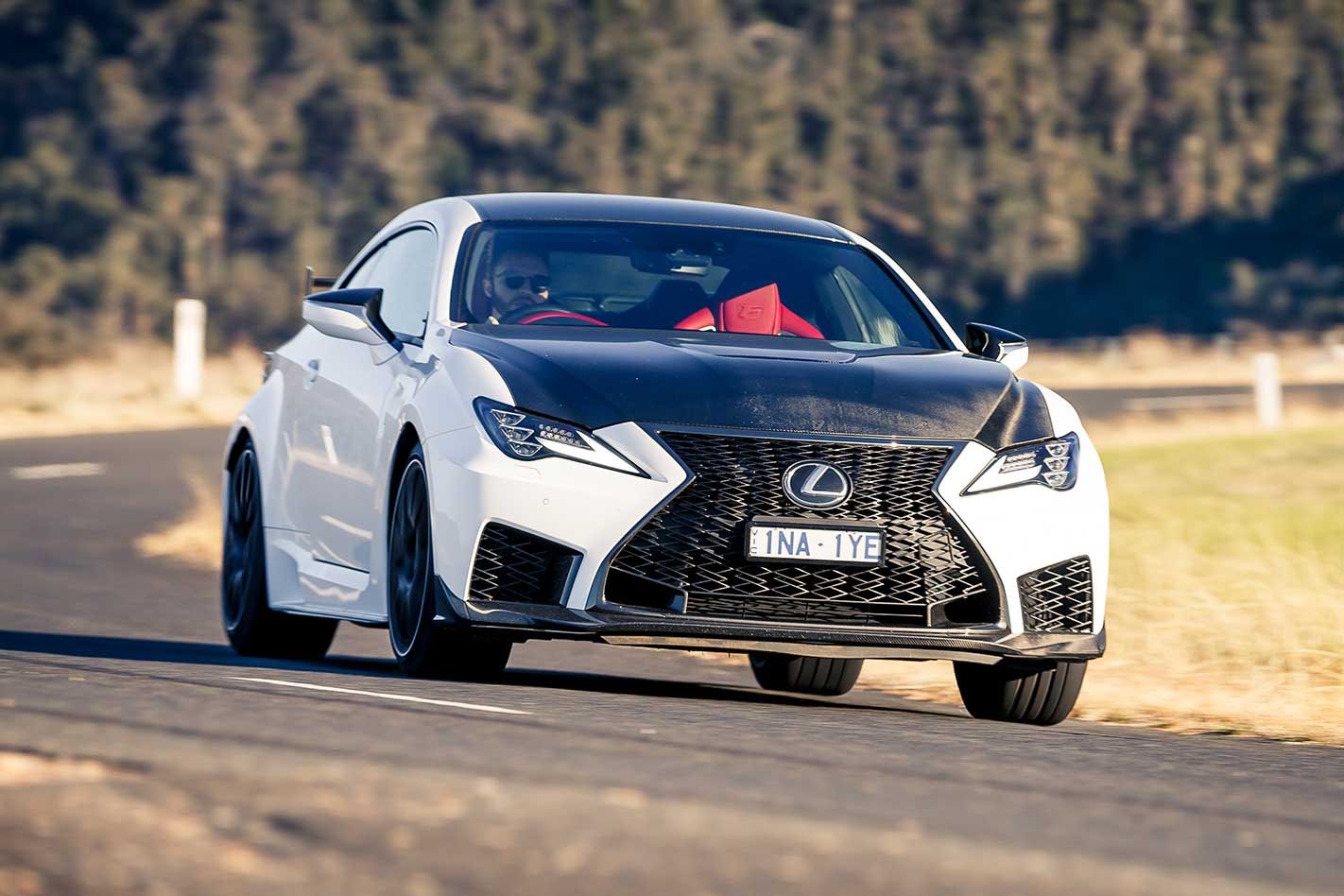
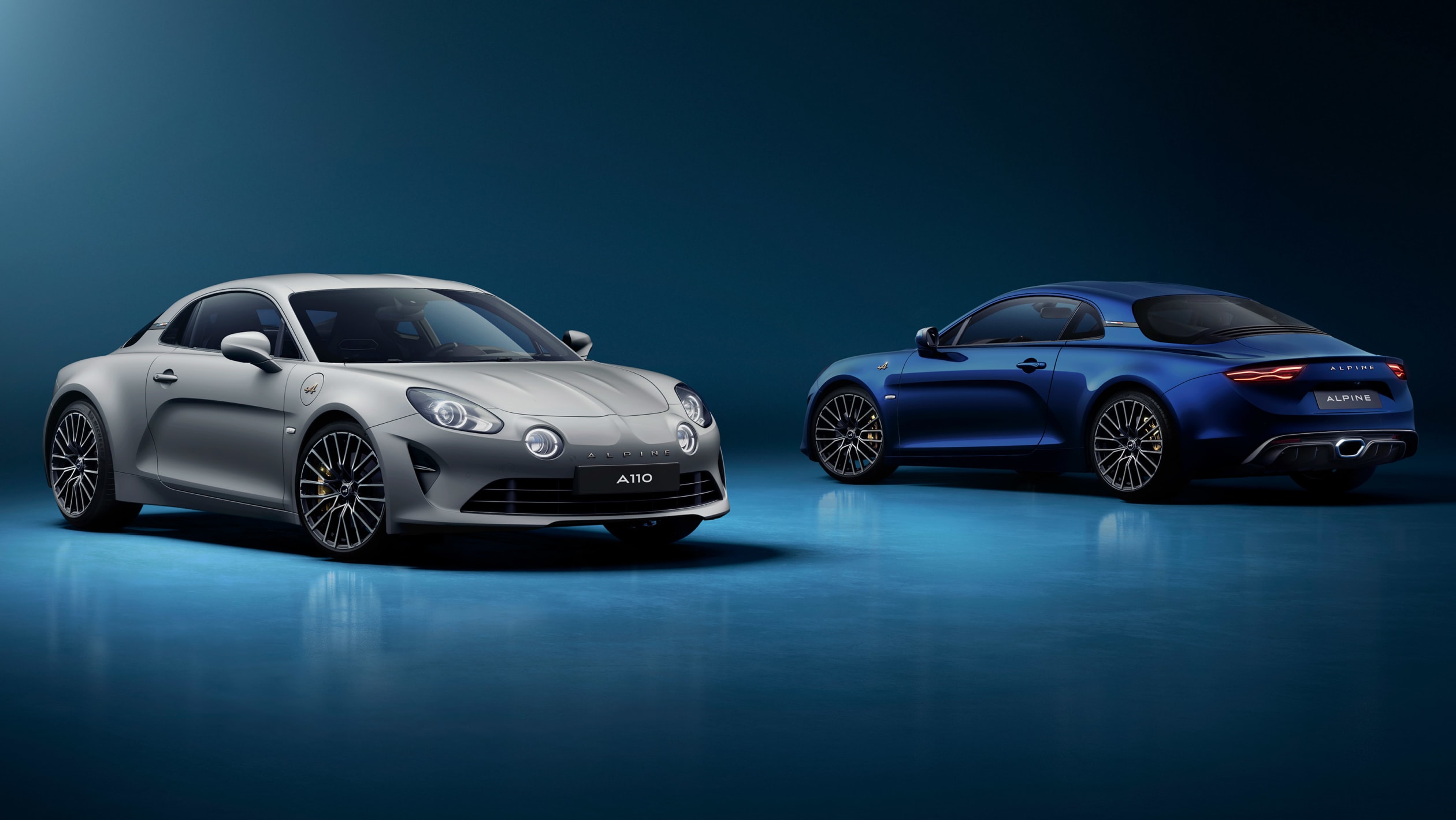
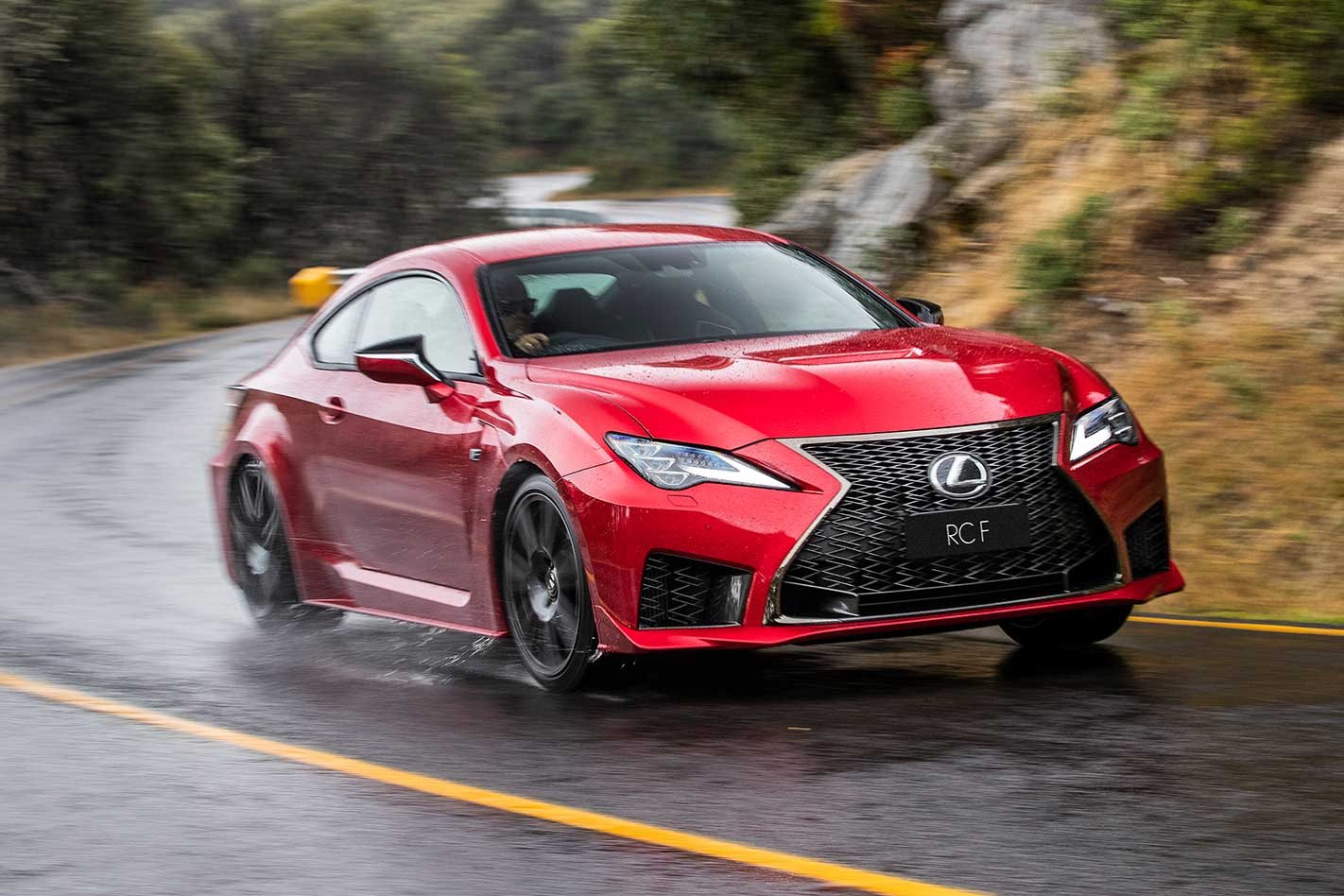
The headline victims of the subtle ADR tweak are the Nissan GT-R, Alpine A110, and Lexus’ IS and RC models – including the 5.0-litre V8-powered RC F.
Other passenger cars are being caught up in the bureaucratic maelstrom – like the Mitsubishi Mirage – but it is the performance heroes that will surely be sad news to MOTOR readers.
So, what is happening? Well, it has to do with something called ‘Australian Design Rule 85/00 – Pole Side Impact Performance’ – or ADR 85 for short.
ADR 85 has a simple and singular focus – reduced serious injuries and fatalities from side-impact crashes using improved passive safety systems. Put simply, lower the danger posed by crashes involving impacts with poles and trees by increasing built-in safety structures.
In fact, ADR 85 isn’t actually all that new in the industry. Manufacturers have been complying with ADR 85 for passenger vehicles since November 2017, so why are cars only being affected now?
Well, when the regulations were first introduced, vehicles that were already homologated were given an exemption. This included the GT-R, which was first introduced to Australia in 2009, as well as the Lexus IS and RC variants.
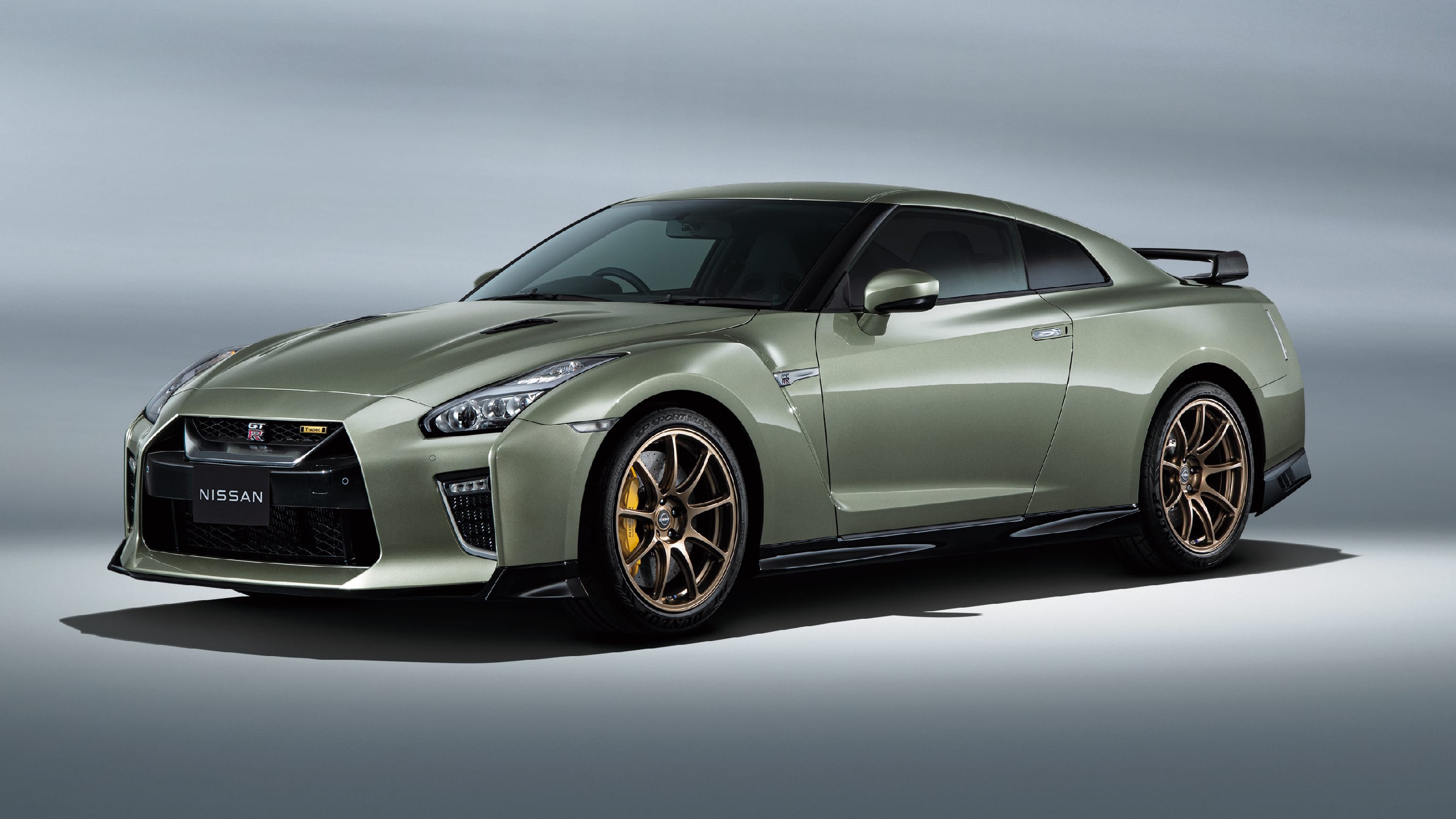
Now, that grandfathering clause is coming to an end and car manufacturers are forced to choose between continuing to sell niche performance products by investing in new crash structures, or stopping their import altogether.
A deadline has been set of November 1. Following that date, all passenger vehicles imported and certified for road use must meet ADR 85. Cars brought into the country before November 1 that don’t meet ADR 85 will need to be registered before July 1 2022.
Unlike the GT-R and Lexus models, the Alpine A110 didn’t go on sale in Australia until late 2018, well after the November 2017 cut-off for ADR 85’s enforcement. However, the French sports car was able to still go on sale by having its paperwork approved and signed-off ahead of the deadline, even if its eventual launch wasn’t for another 10 months.
This is a uniquely Australian problem, and has been in the pipeline for more than a decade. The first draft of what we now call ADR 85 was proposed by Australia at the United Nations’ World Forum for Harmonisation of Vehicle Regulations all the way back in 2010.
Locally there is industry consternation about the fact that Australia is enforcing the rules ahead of global market adoption.
With the Australian car market being a relatively small player internationally, the added complexity of meeting ADR requirements means some manufacturers are opting to stop selling certain vehicles here altogether – rather than sink costs into implementing the necessary changes.
Not is all lost though. While the A110 – as brilliant as it is – will be lost, MOTOR expects the Alpine brand to return to Australia once its future models are revealed.
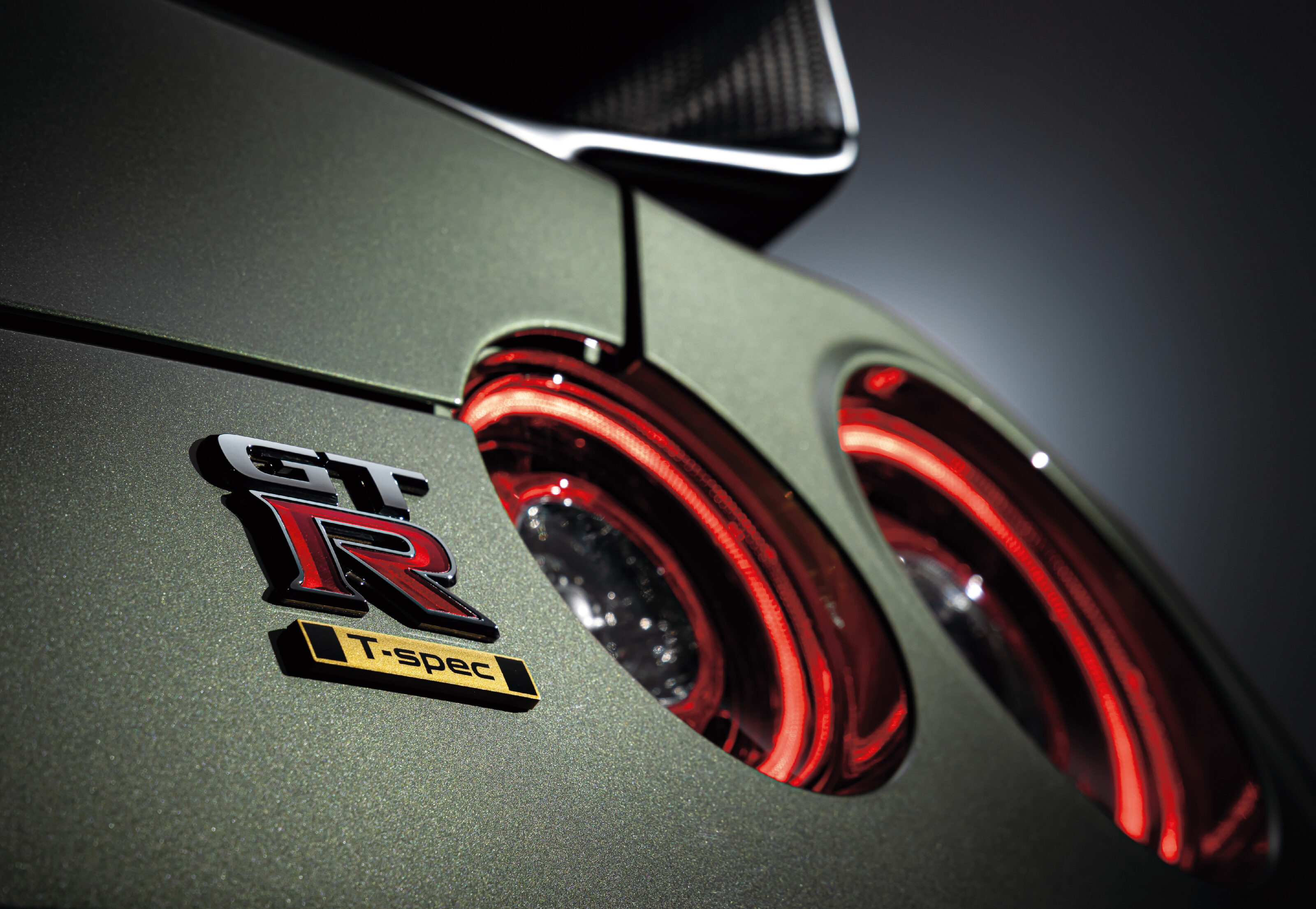
Similarly, while the GT-R will be absent from November onwards, it’s not a permanent farewell.
“This isn’t the end of the GT-R story in Australia, but it will mark the closure of this chapter for this generation vehicle,” Nissan Australia managing director Adam Peterson said.
A heavily updated GT-R is expected to be revealed circa 2026, using the current cars architecture and powertrain but with significant advancements. This will be a stop gap to the true next generation GT-R, which is due to be revealed at the start of the next decade.
Think of the impacts of ADR 85 as a short term hurt for long term gain. While we are losing a handful of icons, their replacements will be safer for performance enthusiasts – and that’s no bad thing.
In 2022, the Australian automotive landscape will gain a new premium European brand with a range of sporty passenger and SUV models carrying the Cupra moniker.
But not only is the intriguing line-up completely new to the nation, its closest relation, SEAT, hasn’t been sold Down Under since a brief tenure in the mid-1990s and the contextual trail has since gone a little cold.
If the Australian new car market was a rental house, then Cupra would be the suspicious tenant that applies without a cover note and lists previous addresses starting with Her Majesty’s…
Except this hopeful newcomer has one very reputable referee to its name – Volkswagen.
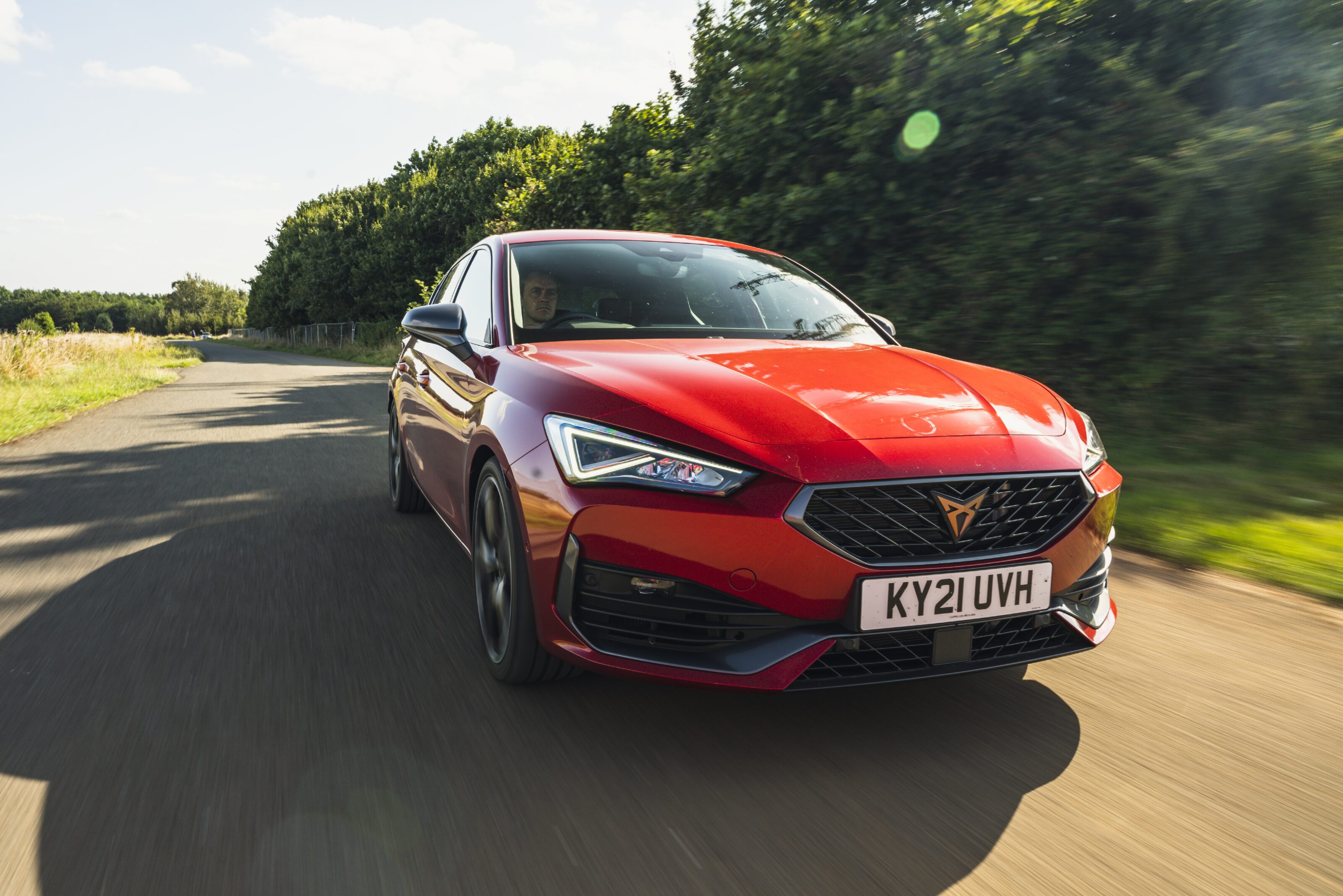
Completely understanding exactly how the Cupra brand will slot into Australia, fronting one of the world’s most pragmatic and demanding audiences, will have to wait until next year. But its strong family DNA and relationship to already high-performing models offers a comprehensive glimpse at the potential.
In the case of the Cupra Leon small hatchback, its underpinnings take the form of the VW Group MQB Evo platform that provides the structure for the current-generation VW Golf, new Skoda Octavia and new Audi A3.
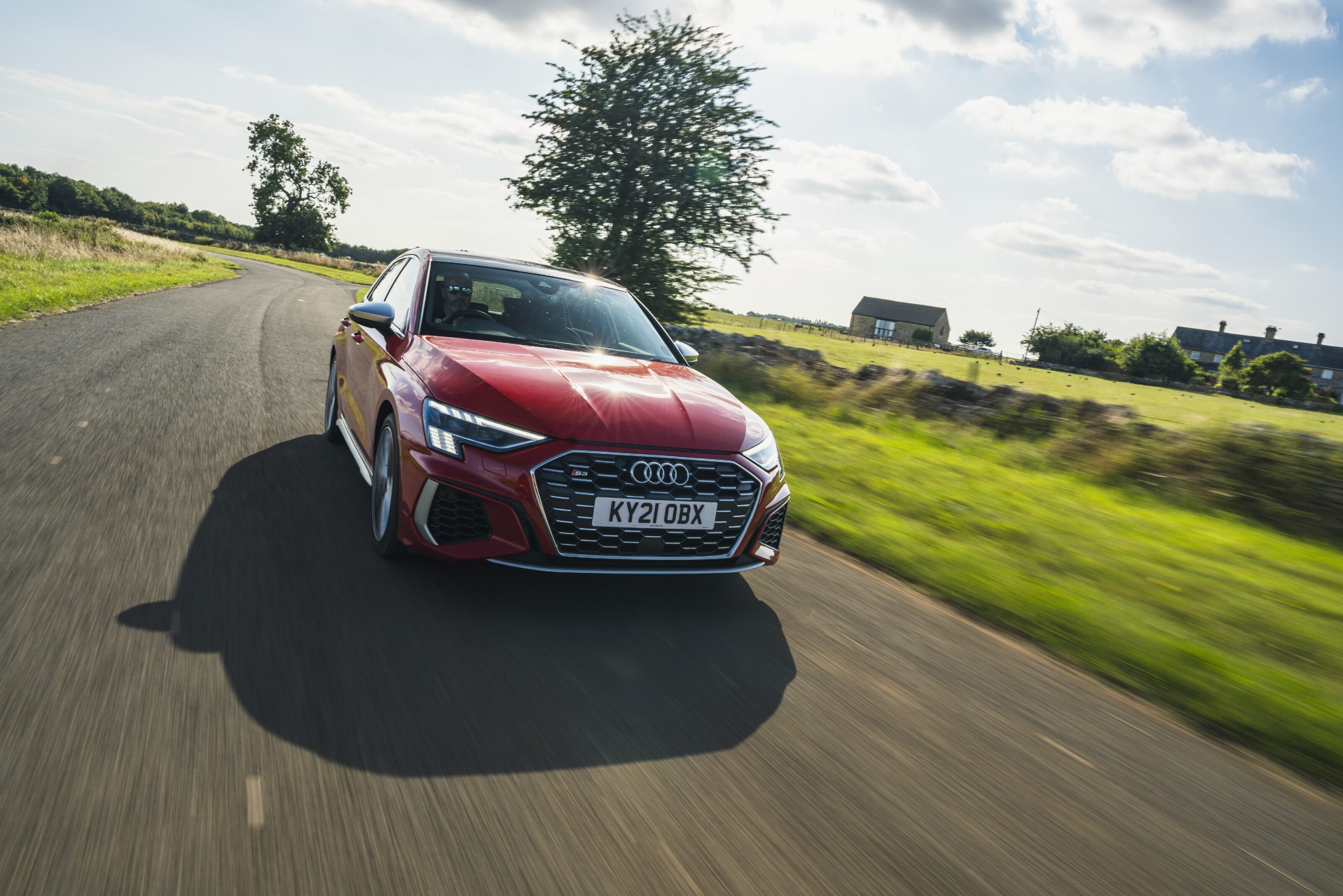
But the car you see here is the high-performance hero 300 version and it shares more in common with the new Golf R and Audi S3. So what better way to preview the latest contender in the hot hatchback arena than pitching it head-to-head with the next-generation Audi S3 that will arrive in showrooms at about the same time?
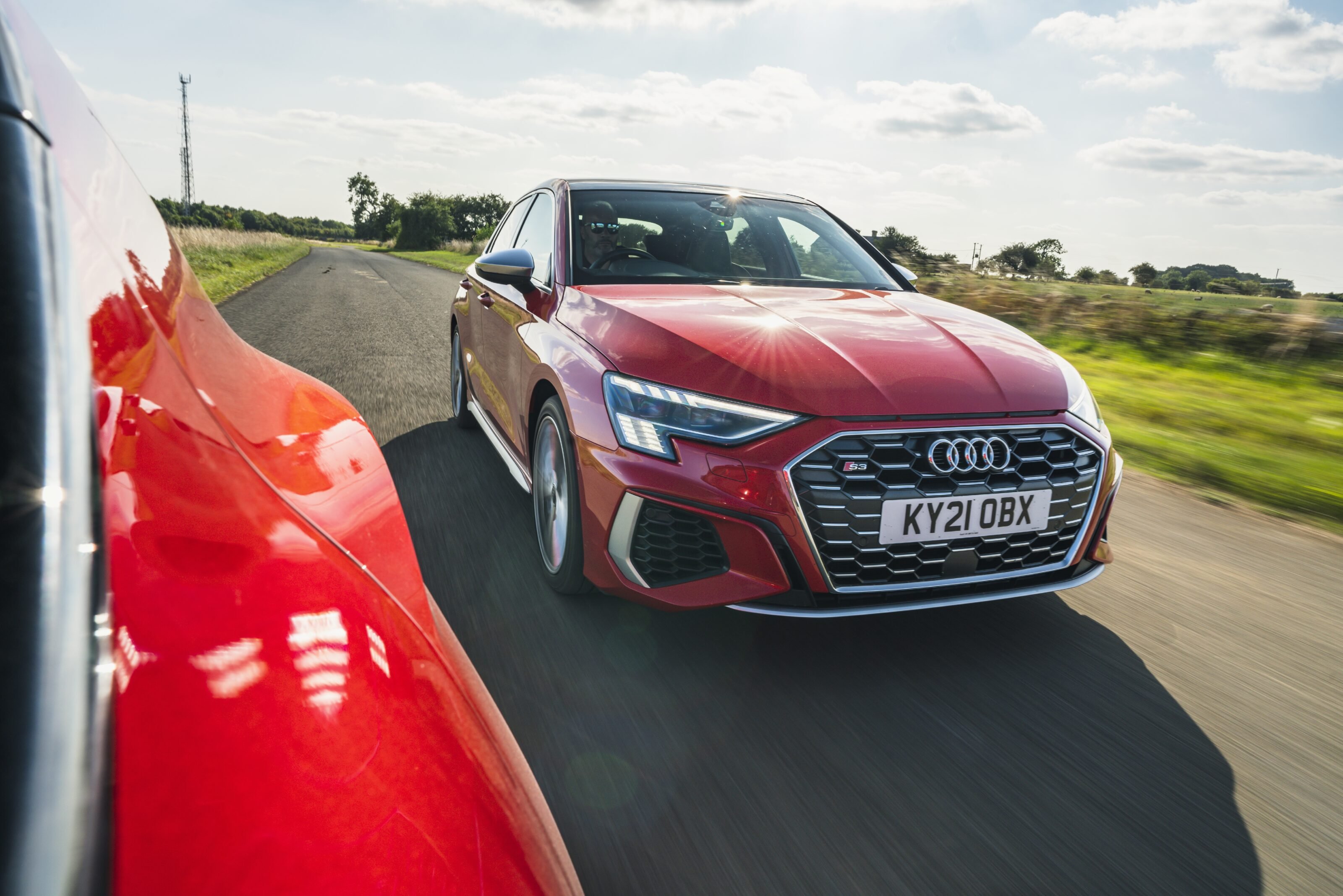
The list of similarities is long. Under each bonnet is the same EA888 turbocharged 2.0-litre four-cylinder petrol that, in this instance, produces 228kW and 400Nm. Unlike the previous S3, the new version (thanks to Volkswagen’s campaign to reclassify Australia’s climate from ‘hot and dusty’ to ‘moderately hot’) will get the same full-fat power output sold in Europe rather than a detuned Down Under donk.
Its output is fed to the wheels via a seven-speed dual-clutch automatic transmission and in each case, the chassis adopts the same multi-link rear suspension, front McPherson struts and electric power steering.
Onboard there’s room for five with bags via five doors. But aside from the obvious difference in design direction and branding, the Cupra and Audi have one key mechanical disparity. While the S3 is offered with the company’s proprietary Quattro all-wheel-drive system, the Leon must make do with front-wheel drive only – but more about that later.
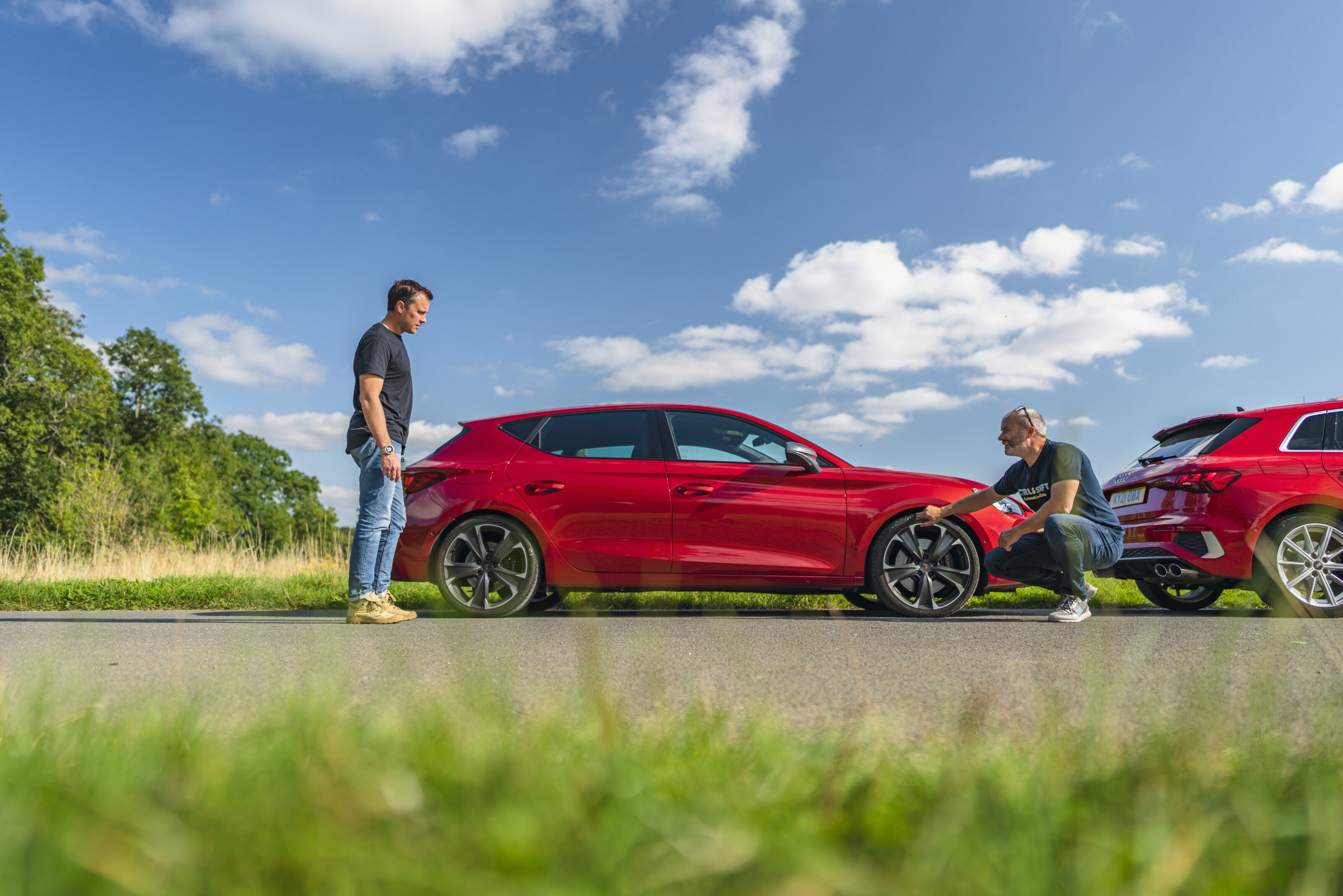
With exact Australian specifications for both models still not yet decided at the time of writing, there’s little point giving UK market standard equipment and features more than a cursory glance. There are a few interesting points to note however.
While Australian S3 customers have only ever been offered one top-shelf option, Audi UK offers a number of S3 variants and the one we have here is the most affordable. It rolls on 18-inch alloy wheels, lacks a head-up display, keyless entry, some driver assistance systems and, while the interior is dressed up in lovely slate-coloured leather, there are examples of scratchy plastics you will likely never see in an Audi Australia showroom.
The list of similarities is long. Under each bonnet is the same EA888 2.0-litre turbocharged petrol that, in this instance, produces 228kW and 400Nm.
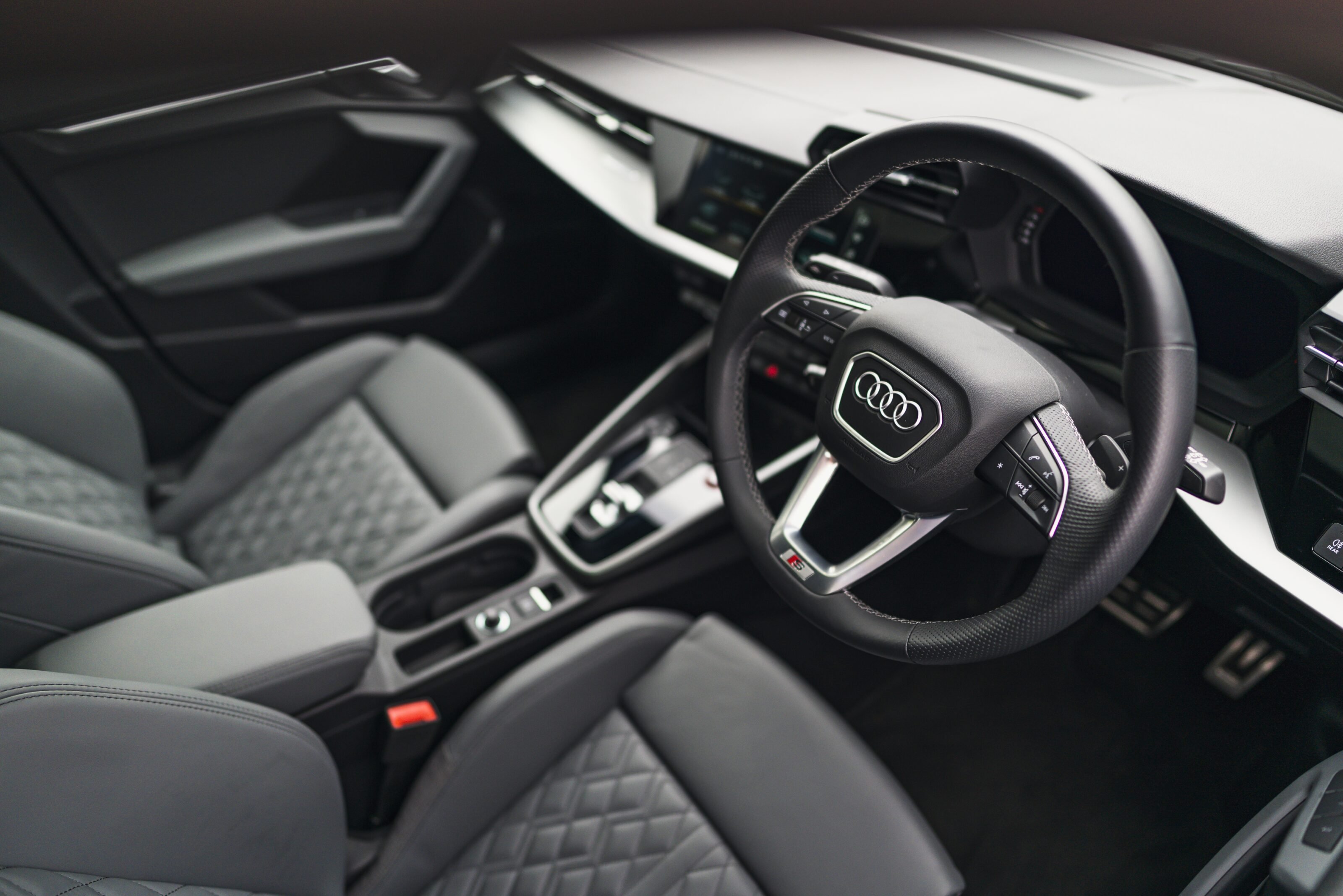
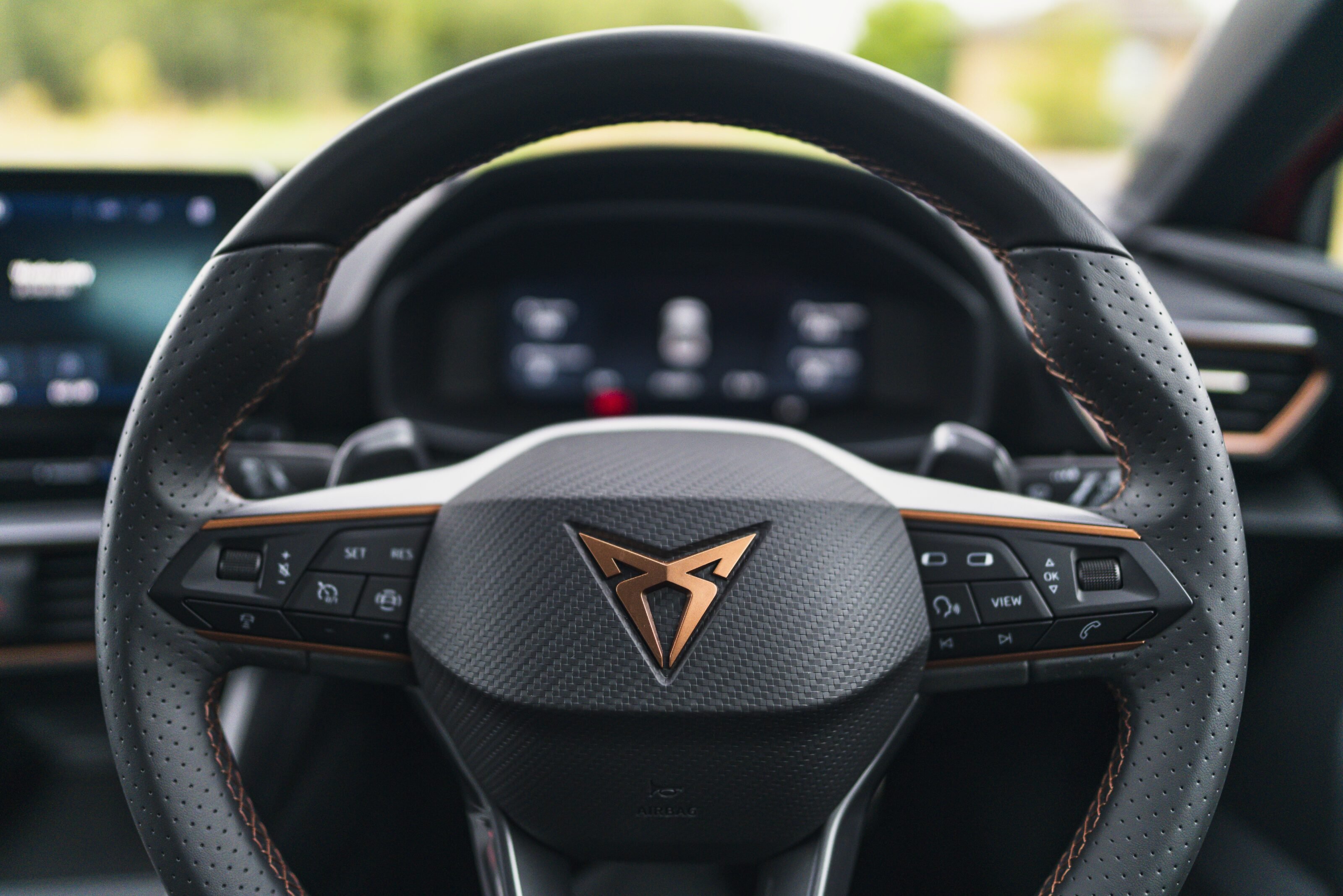
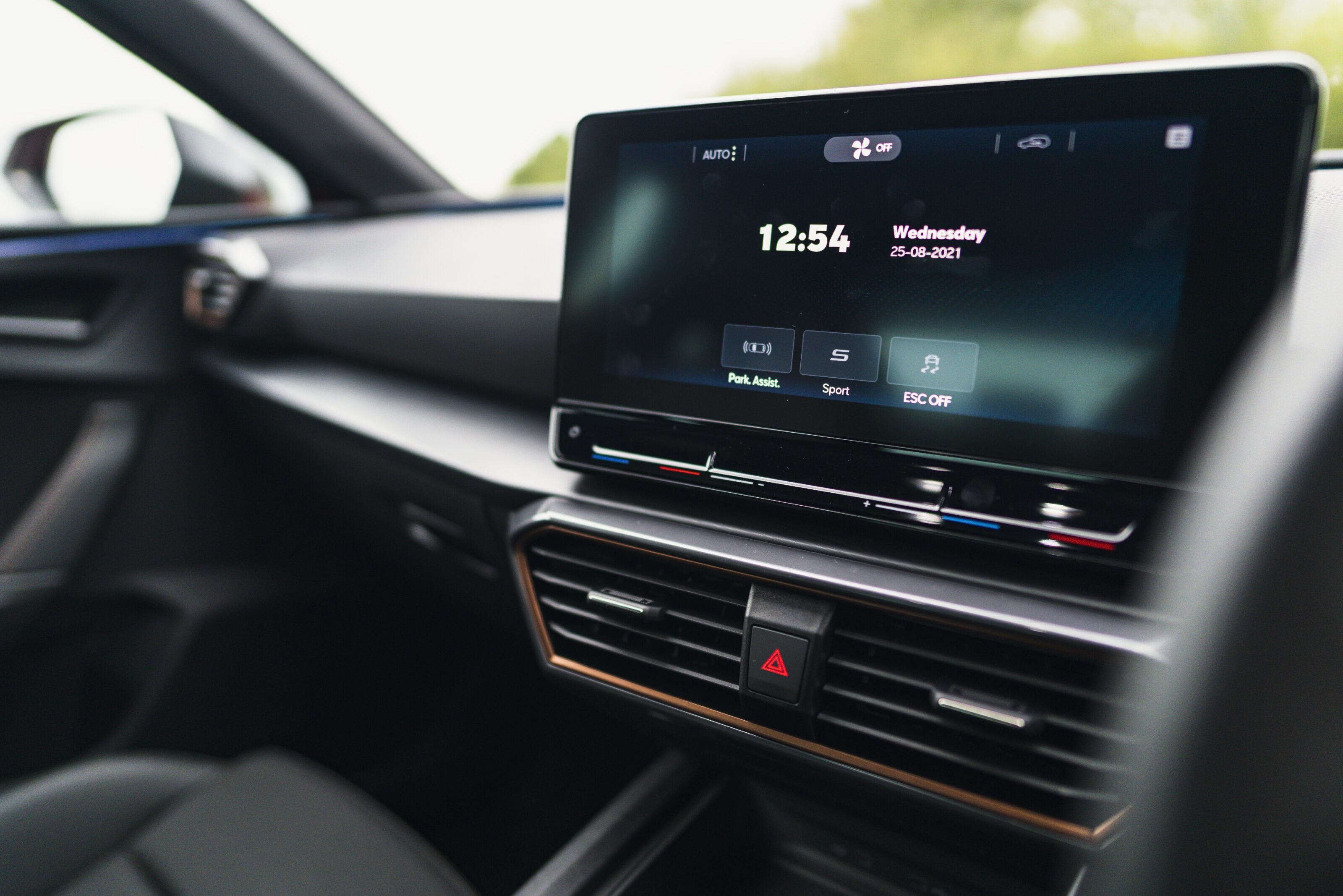
As for the Cupra, it’s presented in mid-range VZ2 trim which leaves out leather and a few trick bits such as the cool steering wheel-mounted start button and drive mode selectors. Expect the Australian version to arrive in something like the premium VZ3 equipment level. While the Audi’s cabin offers a classic sharp and understated design, the Leon employs a more bold and unapologetic look.
If the respective interiors were modeled on laptops, the Audi would be a Space Gray MacBook Air while the Cupra would be a water-cooled Alienware with full RGB accoutrements.
The long continuous pinstripe of mood lighting that continues from door trim to door trim via the dash, copper accents and half-vinyl/half-cloth upholstery are Leon styling highlights, while the Audi stands out with quality finishes and sharp (but apparently unnecessary) dash stitching and materials.
At the risk of exposing this author’s age, the Audi’s accommodation is surely targeting a more equal balance of comfort and sports appeal, while the Cupra leans toward the performance side with more aggressive seating and purposeful ergonomics that will likely appeal to a younger audience.
Practically speaking, with no rear differential to accommodate, the Cupra manages to fit more into its 380-litre boot and even manages to drop in a space-saver spare under the floor.
The Audi (here in Sportback hatch guise) has a smaller 325L luggage compartment and the dreaded puncture repair kit although it wins back points for a 40:20:40 split rear seat compared with the Cupra’s 60:40.
The infotainment systems are likely to divide audiences too.
The Audi’s sharp sophisticated system looks great and works as well, complemented by the virtual cockpit driver’s display. The Cupra also has a large central touchscreen and digital instrument cluster from the same parts bin but its function is weirdly different and would take a little getting used to – as would the bizarre typewriter sound effect that accompanies button taps.
Less ambivalent, though, is the driving experience each car offers and the combination of German mechanical engineering that will arrive in almost unchanged form for Australian customers.
Cruising out onto enticing Cotswolds roads surrounded by the Arcadian vision of English autumn fields in full harvest, I’m carrying a sense of excitement. After all, the Cupra I’m piloting promises, on paper at least, to be a sensation.
But the anticipation turns to nagging disappointment. The 235/35 Hankook Ventus S1 Evo 3 rubber fitted to 19-inch wheels tugs and tramlines around imperfections in the British bitumen, destroying any sense of relaxation. The Audi by comparison can be driven almost hands-off despite the condition of the road, with a stoic fixation on direction.
Add power into the equation and the differences become even starker. With its full 228kW unleashed through just two wheels and without a mechanical limited-slip differential to mediate, the Leon 300 torque-steers like there’s a gale-force wind blowing from the east. The S3 meanwhile cannot be fazed, with all four wheels distributing the same power and torque via a cleverish Haldex system.
The difference in ride quality is similarly polarising, the bespoke Cupra suspension tune conspiring with the low-profile tyres to crash noisily over road scars and tractor damage, in clear contrast to the Audi’s firm but more composed nature.
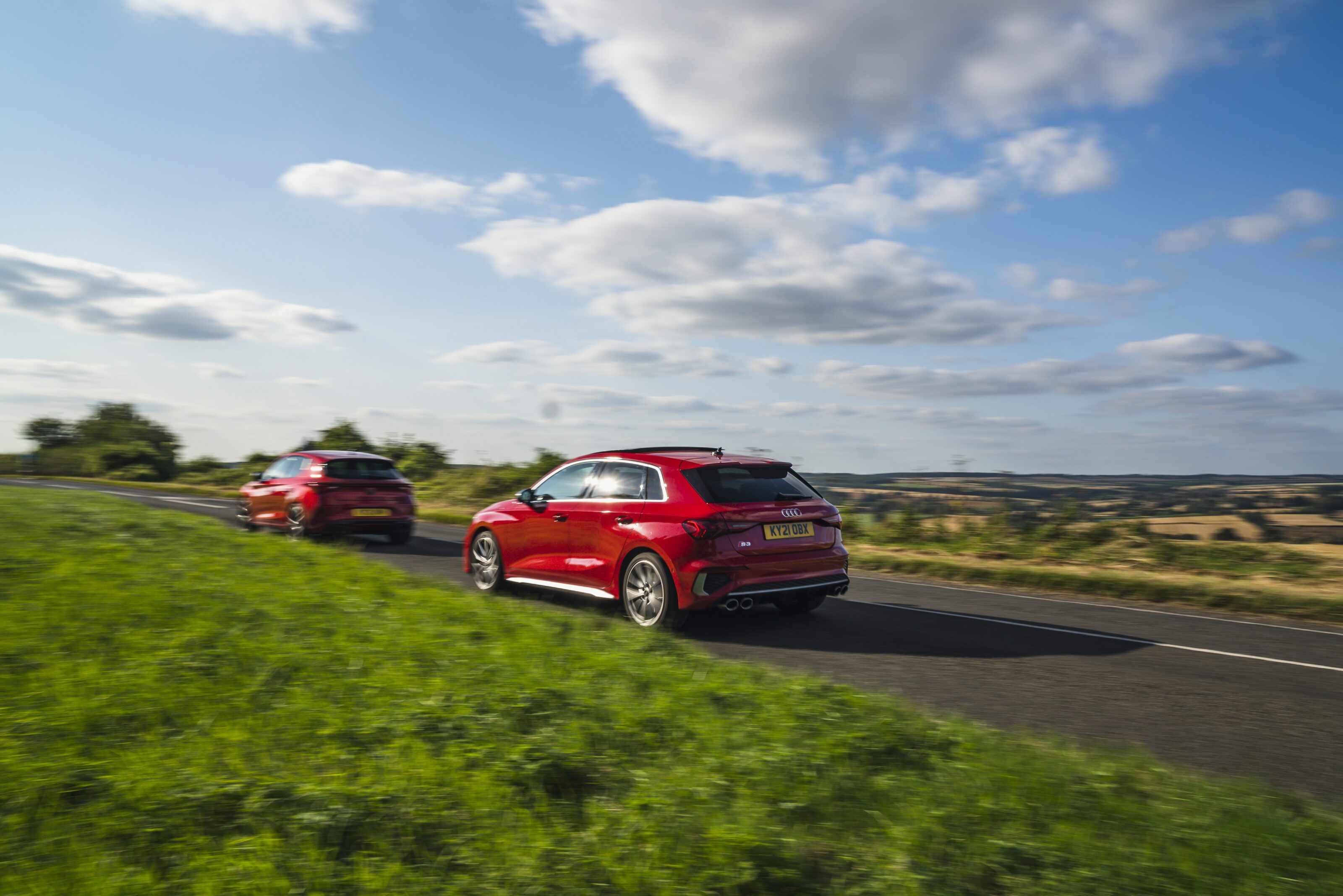
At this point, it’s looking like a resounding victory to the Audi and proof that the German manufacturer has mastered everything the MQB Evo platform has to give. But then the roads turn wiggly.
Throw the Cupra into a corner and it suddenly all makes sense. The visible negative camber on the front axle that lends a fidgety nature on straight sections imparts a wonderful positivity and grip in corners and the crashy suspension when loaded becomes utterly sublime, smoothing mid-corner imperfections without a hint of bump-steer and the traction is excellent if not completely infallible.
Open the taps on the 2.0-litre turbo mid-corner and there’s a rapid production of torque. The front wheels will fight you for a line but in the most agreeable and involving manner. Pull the same stunt in the Audi and it’ll lock onto a course with typical Quattro obedience and will exit any given corner with more speed, but not necessarily more theatre.
Both cars get better the harder they are pushed but in completely different ways, the S3 giving the driver more options to negotiate a given corner, while the driver of the Leon needs a strategy planned before entry.
While the Audi has a clear mechanical grip advantage, the Cupra’s steering is its performance centrepiece and completely brilliant. Its copper-badged ergonomic steering wheel manages to be light in the hand but offers a sensitivity and accuracy that is beaten only by the Honda Civic Type R and winding lock on and off through changing bends is wonderfully visceral. Pointing the Audi at corners is not a thankless task but the feedback is mildly numb by comparison.
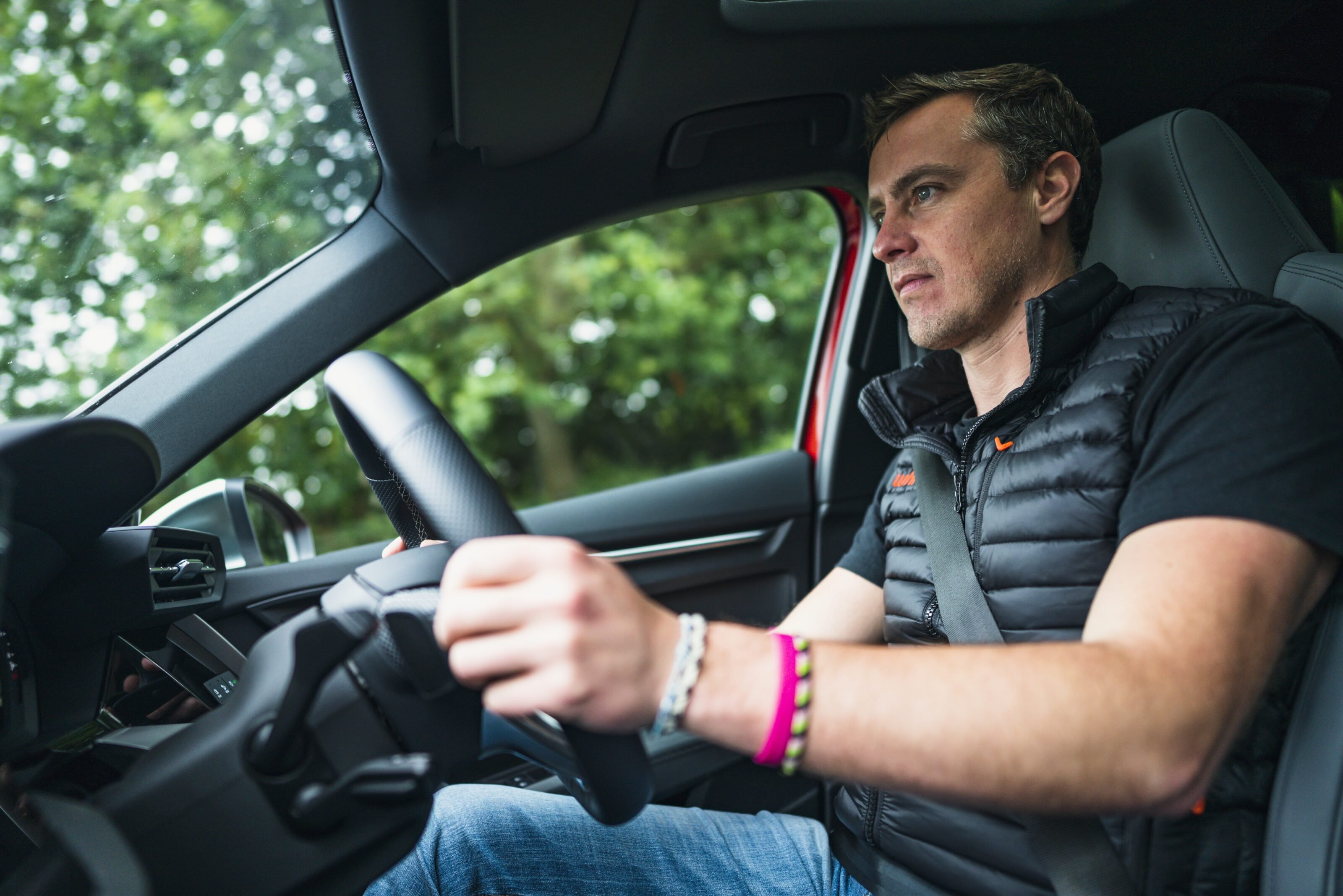
As you might expect, the Audi’s Quattro transmission wins the drag race with its 0-100km/h dash completed in a claimed 4.8sec versus the Cupra’s 5.7sec claim. But with less weight to haul, the Cupra feels fastest when up and rolling. Throttle response is similarly rapid but the inertial advantage of the Leon imparts a greater sense of urgency and willingness to go fast.
And while many manufacturers plumb in synthesised or augmented engine sound through the audio system, the S3’s interpretation is one of the very best. Quite how the engineers make a four-cylinder sound like a five-pot is beyond me but bloody hell, it’s effective.
With the latest generation, Audi has struck the best balance of S3 performance and practicality, for the first time delivering the level of driving dynamics that its S badge has always promised. And as an extra bonus, it is now perfectly positioned in the A3 range to not languish in the shadow of the mighty RS3. If there was one car out of this pairing to live with day-to-day and tackle all driving duties, it’s doubtless the Audi.
But its mechanically similar sibling offers something quite different and equally special for an entirely different set of skills. With only two-wheel drive to get its sizeable chunk of power and torque to the road, the result is not a catastrophe of wheelspin and frustration as expected. On the contrary, the Leon’s combination of heavily performance-focused suspension tuning, spectacular steering feel and body control makes this newcomer the pick when you want to let your hair down.
Ultimately though, it is the Leon 300’s pricing that will be the difference between an expensive exercise in standing out from the crowd and the performance bargain of 2022, but even speculative positioning is difficult. It has as much power and performance as the Golf R and S3 but lacks their all-wheel drive and, as a challenger brand to the Australian market, the Cupra Leon flagship lacks premium badge familiarity so simply cannot command as much as its closest performance peers.
If it comes in at $55,000 it’ll be a shade more than the significantly less powerful but hugely popular Golf GTI and exactly the same cash as the resoundingly excellent Honda Civic Type R, which gets exactly the same power and a clever differential, but seriously controversial looks.
But, as the entry Cupra Leon is expected to cost about $40,000, it’s certain the 300 will cost a fair chunk more than that, which means it’ll be more than Hyundai’s i30 N, one of the hot hatch greats.
Ultimately though, it is the Leon 300’s pricing that will be the difference between an expensive exercise in standing out and 2022’s performance bargain, but even speculative positioning is difficult.
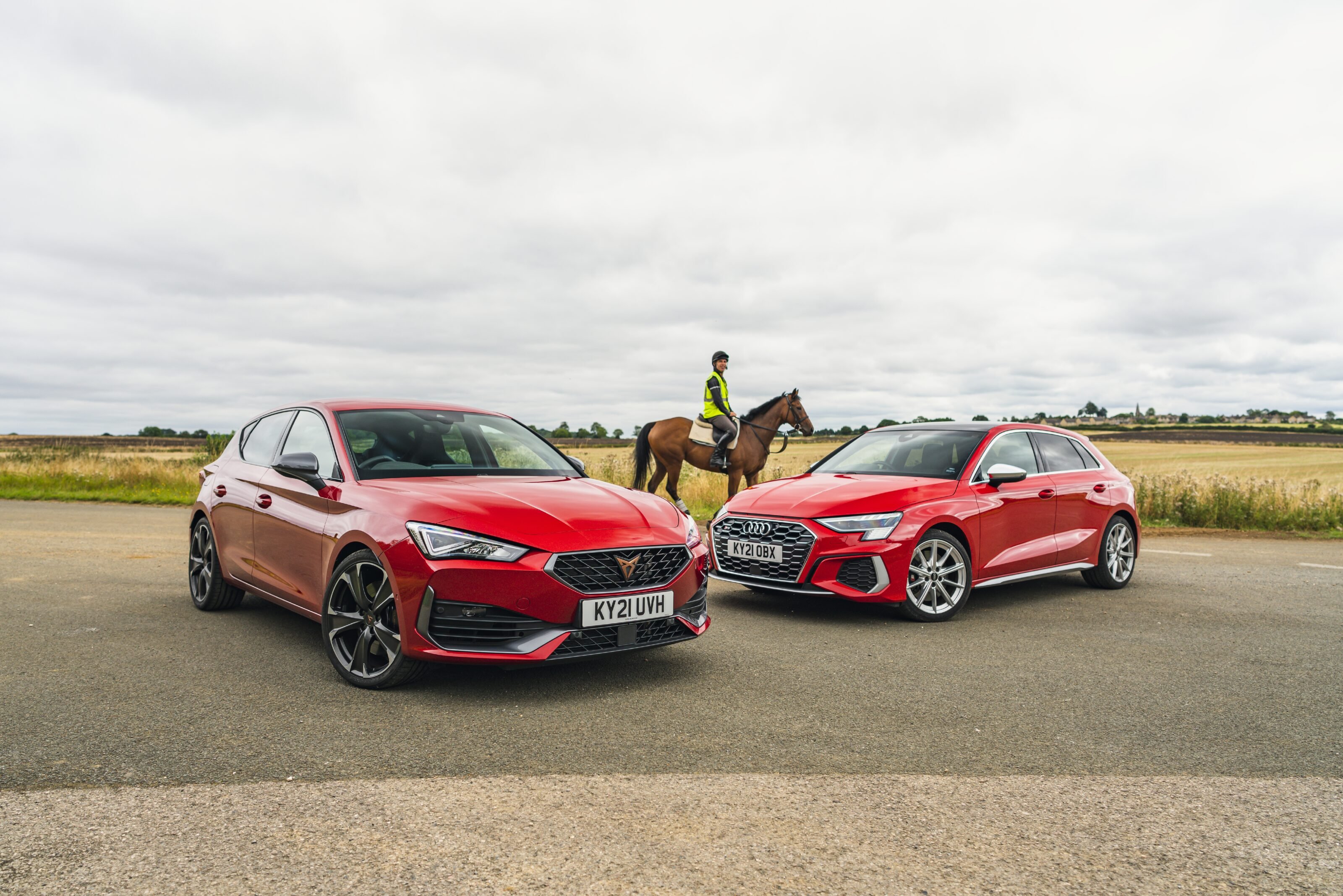
It seems impossible, therefore, that this particular hopeful will take the hot hatch market by storm and win over every last fan of the affordable performance car market overnight. But there’s a poetic significance to Cupra. In ancient Greece, the element copper that lends its name to this disruptor brand was used primarily to make mirrors, and this enlightening two-car battle confirms that the incoming Leon 300 has the credentials to make some seriously competent front-drive performance heroes take a long hard look at themselves.
2021 Audi S3 vs Cupra Leon 300 specifications
| u00a0 | Audi S3 | Cupra Leon 300 |
|---|---|---|
| Body | 5-door, 5-seat hatchback | |
| Drive | all-wheel drive | front-wheel drive |
| Engine | 1984cc 4-cyl, DOHC, 16v turbo | |
| Bore/Stroke | 82.5 x 92.8mm | |
| Compression | 9.3:1 | |
| Power | 228kW @ 5450 u2013 6500 rpm | |
| Torque | 400Nm @ 2000 u2013 5450 rpm | |
| 0-100km/h | 4.8sec (claimed) | 5.7sec (claimed) |
| Fuel consumption | 7.4L/100km (combined/claimed) | 6.7L/100km (combined/claimed) |
| Weight | 1575kg (DIN) | 1415kg (kerb) |
| Power/Weight | 113kW/tonne | 161kW/tonne |
| Transmission | 7-speed dual-clutch auto | |
| Front suspension | McPherson struts, coil springs, anti-roll bar | |
| Rear suspension | Multi-links, coil springs, anti-roll bar | |
| L/W/h | 4351/1816/1438mm | 4398/1799/1442mm |
| Wheelbase | 2630mm | 2683mm |
| Tracks (f/r) | 1545/1519mm | 1554/1520mm |
| Steering | Electrically assisted rack-and-pinion | |
| Front brakes | 345mm ventilated discs, sliding calipers | |
| Rear brakes | 310mm ventilated discs, sliding calipers | |
| Wheels | 18-inch (f/r) | 19-inch (f/r) |
| Tyres | 225/40 R18 (f/r) Goodyear Eagle F1 Supersport | 235/35 R19 (f/r) Hankook Ventus S1 Evo 3 |
| Price | $70,000 (estimate) | $54,000 (estimate) |
Snapshot
- More than 3000 vehicles recalled due to a roof and windscreen issue
- A further 1812 units may have panoramic roof fitment problems
- Recalls are exclusive to Canada only
The Ford Mustang Mach-E has been recalled in Canada, owing to potential problems with the vehicle’s windscreen and panoramic roof panel.
After launching in 2020, the four-door electric crossover has been experiencing issues with certain parts of its body, as the first recall covers 3178 units for the windscreen potentially not being properly attached, leading to a higher risk of it coming loose in the event of an accident.
The second recall was issued for just 1812 vehicles, but presents a more immediate problem – with the glass panel of the panoramic roof potentially not being properly attached.
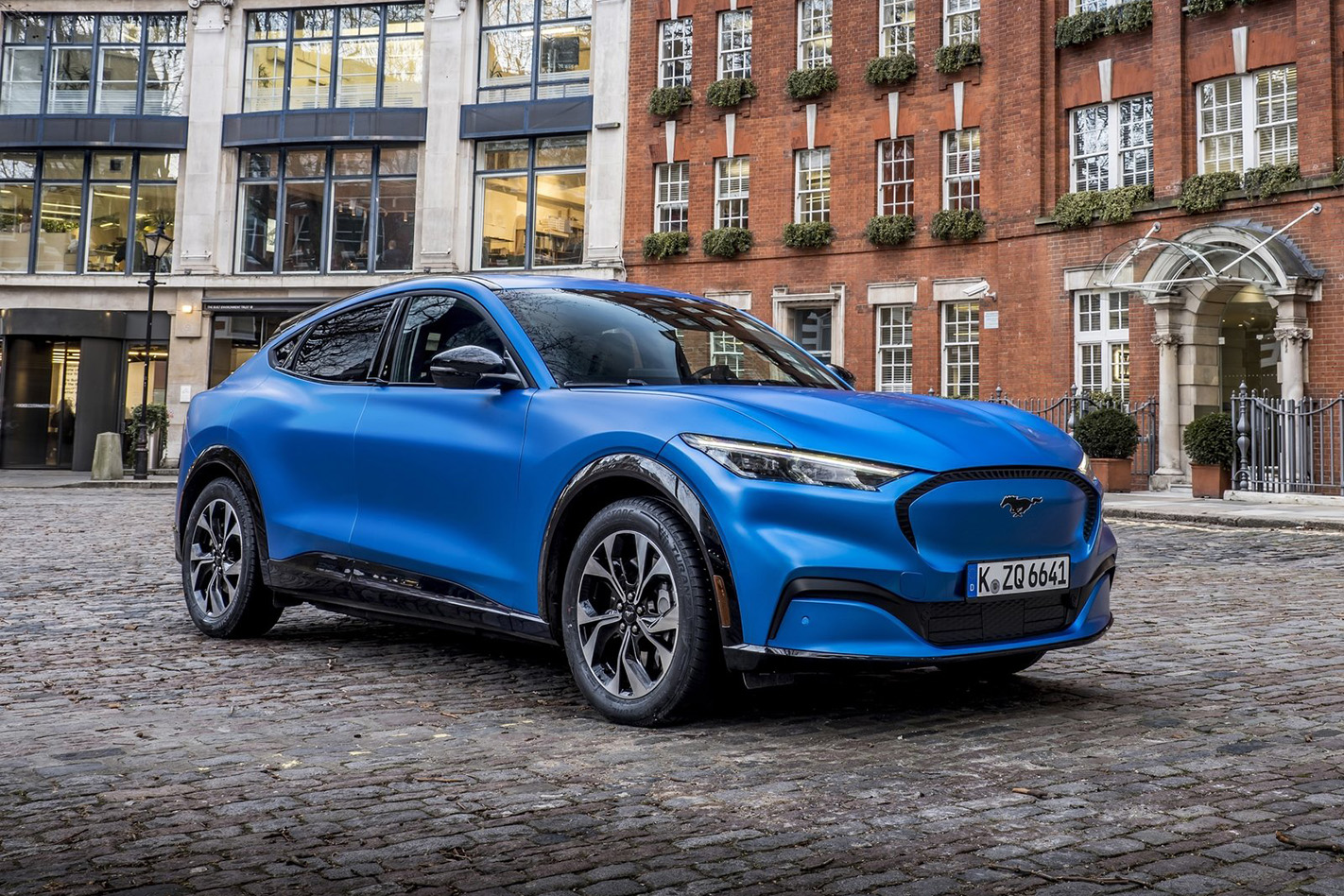
Over time, the glass could come loose and separate from the vehicle while it is moving, becoming a hazard for other road users and pedestrians.
While the recalls are limited to Canada at the moment, it will likely also affect other customers throughout North America, as all vehicles are produced in the same plant in Cuautitlán Izcalli, Mexico.
Electric vehicle manufacturer Tesla has suffered similar issues with its Model Y and Model X, undergoing a recall of over 12,000 units in 2020 – which prompted Ford’s head of EVs Darren Palmer to address any unfavourable comparisons in an interview with Autoblog last year.
“The [Mach-E’s] doors fit properly, the plastics and other materials colour-match, the bumpers don’t fall off, the roof doesn’t come off when you wash it, the door handles don’t get stuck in cold weather,” he told the publication at the time.
According to American news outlet CNBC, Tesla said it was not aware of accidents or injuries associated with the recall and would inspect affected vehicles and adjust as needed.
Snapshot
- Updated S3 packs 228kW
- Both Sportback and Sedan body styles available
- Prices start at $69,900 before on-road costs
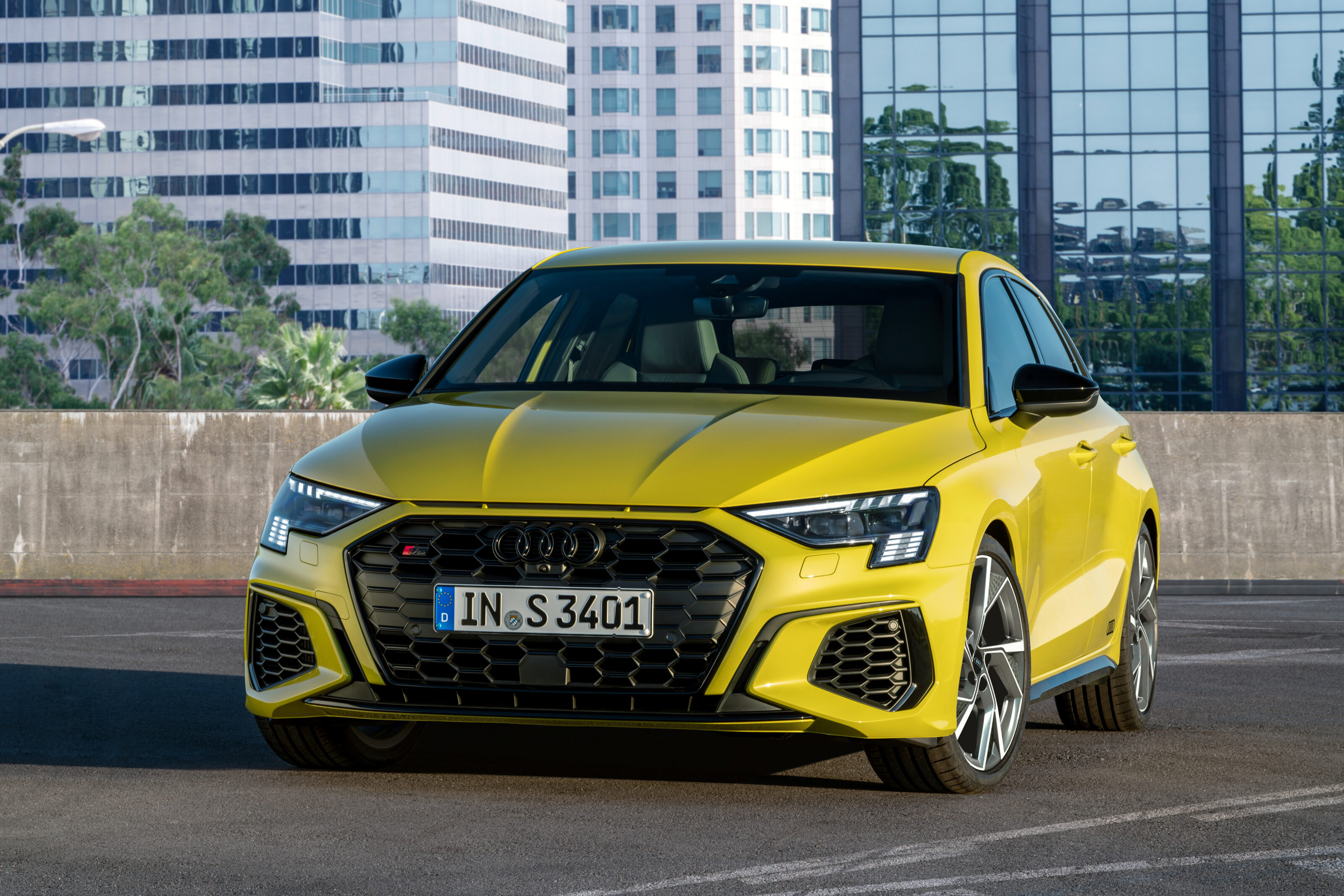
The 2022 Audi S3 has been revealed – set to arrive locally early next year.
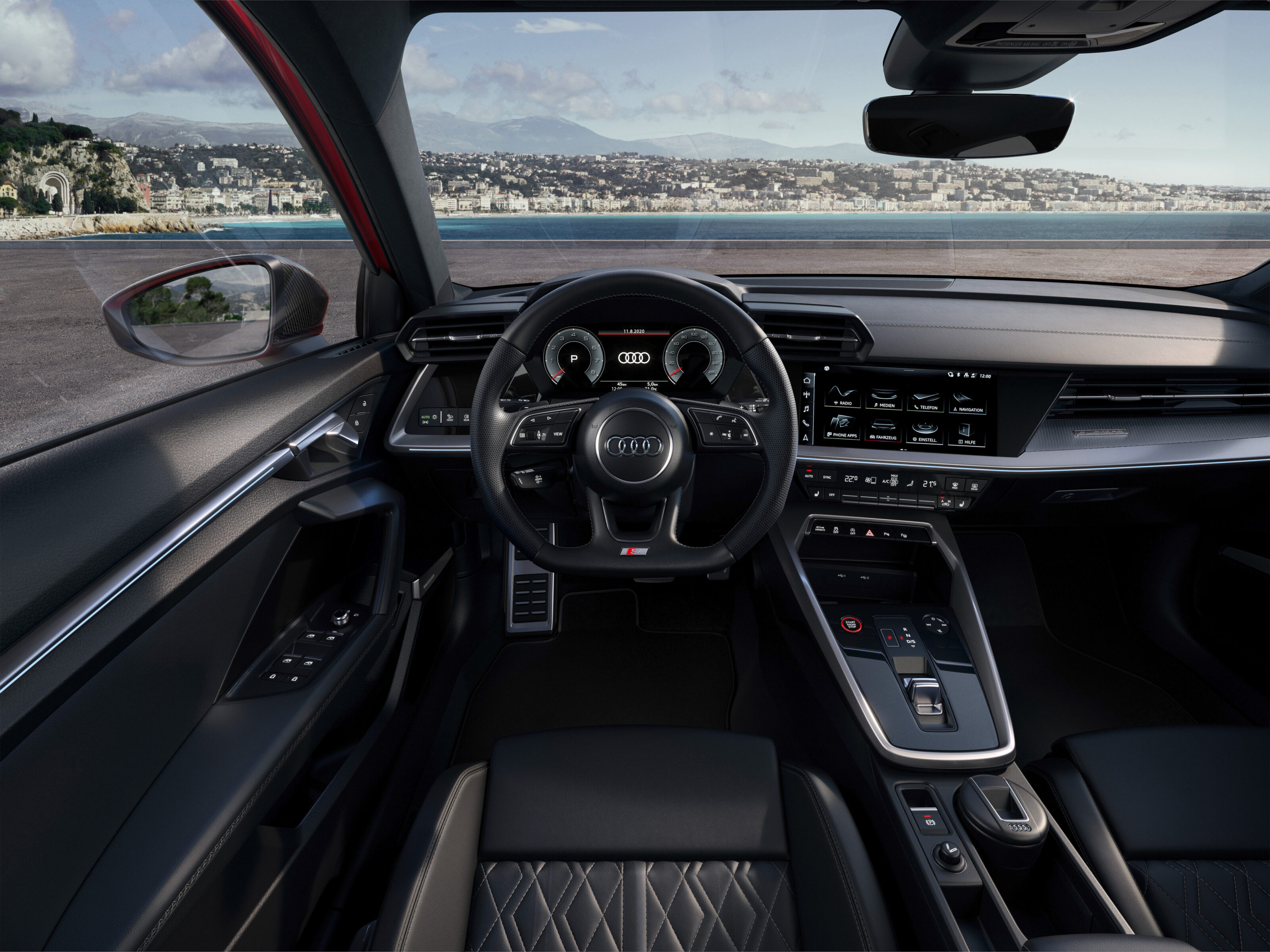
An evolution rather than a revolution from the outgoing 8V S3, which was first introduced in 2013, the 2022 8Y S3 features an updated design inside and out – as well as a more potent punch under the bonnet.
As with the previous model, Audi offers the S3 in either five-door sportback or four-door sedan guise – each packing the same level of equipment for a small difference in list price. However, the convertible has been dropped for the 2022 model year.
UPDATE: Watch our fresh new 2022 Audi S3 v Cupra Leon 300 video here!
2022 Audi S3 pricing
Not only has the S3’s price increased with its update, but so has the gap between the two body styles – with the five-door and four-door now split by $2500 as opposed to $1600.
Prices exclude on-road costs.
| S3 Sportback | $ 69,900 | up $5700 |
| S3 Sedan | $ 72,400 | up $6600 |
Audi will also offer a Premium Plus pack on both S3 body shapes closer to its local release, with pricing yet to be confirmed.
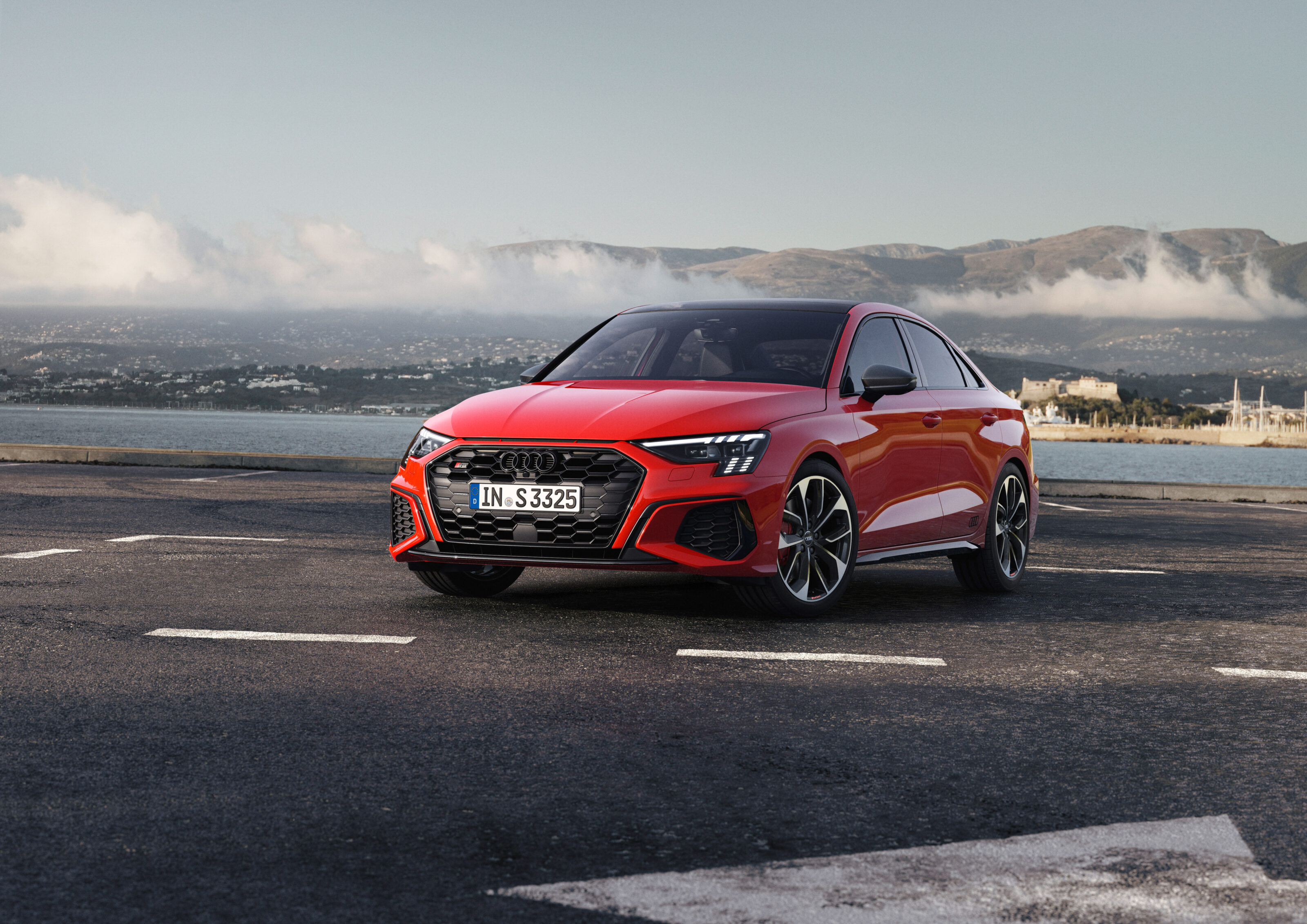
Features
| Matrix LED headlights |
| S Sport suspension with adaptive damper control |
| Audi drive select dynamic handling system |
| 19-inch Audi Sport alloy wheels (five-spoke design in anthracite black available for an extra $300) |
| 340mm front and 312mm rear brakes (with red calipers) |
| Stainless steel pedals |
| Electric and heated front seats |
| S embossing on front seats |
| Contrast stitching on steering wheel |
| Fly-by-wire shifter |
| Ambient lighting |
| 10.1-inch MMI touchscreen with 3D navigation |
| Apple CarPlay and Android Auto |
| DAB+ radio |
| 12.3-inch Audi virtual cockpit |
| Bang & Olufsen Premium Sound System with 15 speakers |
| Dual-zone climate control. |
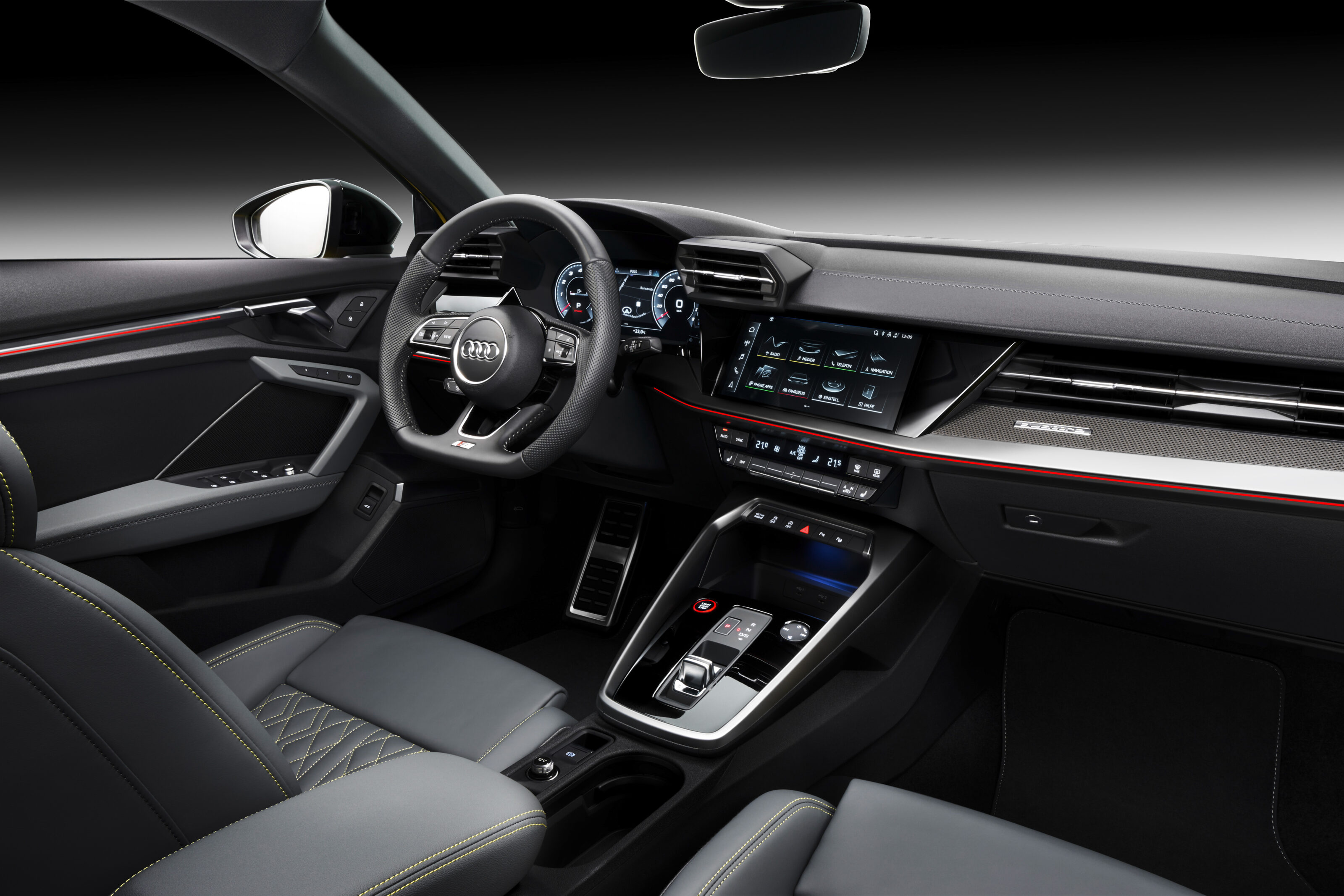
Engine and drivetrain
As with the recently updated Volkswagen Mk8 Golf R, the S3 scores the latest iteration of VW’s EA888 engine, with the 2.0-litre, turbocharged four-cylinder now pushing out 228kW at 6500rpm and 400Nm between 2000-5450rpm.
The increase of 15kW and 20Nm over the outgoing S3’s engine comes thanks to Australia being reclassified as a moderate-hot climate country by Audi, allowing it to map the motor to identical spec as the European market.
With no manual variant on the cards, the S3 will be sold only with a seven-speed dual-clutch automatic transmission sending power to all four wheels through its quattro system – now featuring a hydraulic multi-plate clutch between the front and rear axles, which allows for variable torque distribution.
While its 0-100km/h sprint time is down to a claimed 4.8 seconds from the existing 4.9s, fuel consumption of the sportback and sedan rated at 7.4 and 7.3L/100km (combined) respectively – a 0.7L/100km increase over the 2019 model.
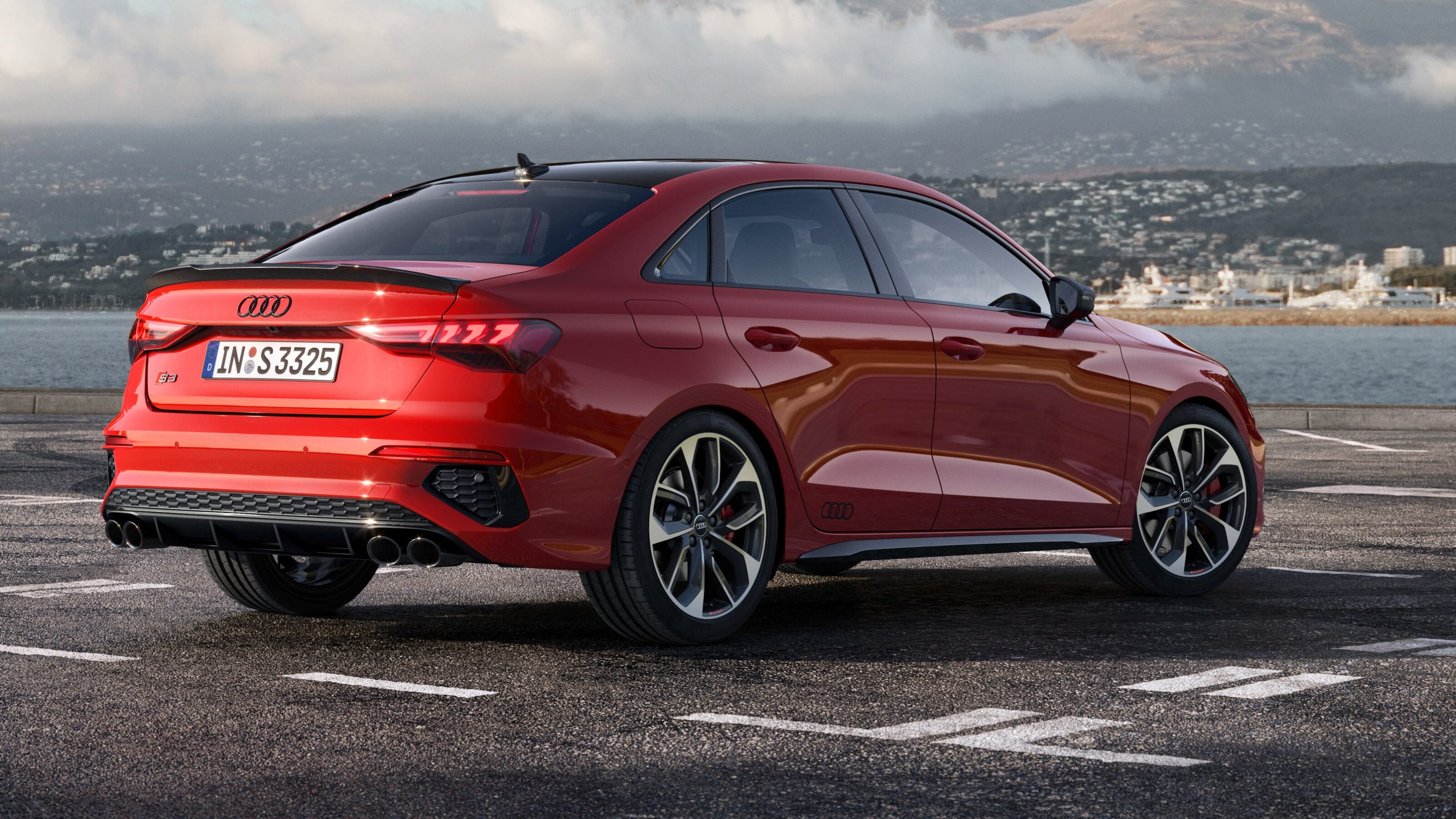
Safety
Hanging on to the previous S3’s five-star ANCAP safety rating, the 2022 model scores a wide range of tech including:
| Collision avoidance assistance |
| Lane departure warning |
| Cross traffic assist alert and rear parking system |
| Audi pre sense front with autonomous emergency braking (AEB) |
| Pedestrian and cyclist detection |
| Adaptive cruise assist with Stop&Go and hands-on detection |
| Traffic jam assist |
| Emergency assist |
| Lane change warning |
| Efficiency assist |
| Exit warning |
| Rear view camera |
| Tyre pressure loss indicator |
| Access to Audi connect plus Security & Assistance services (car finder with remote signal, remote lock and unlock, emergency calls, and online roadside assistance features). |
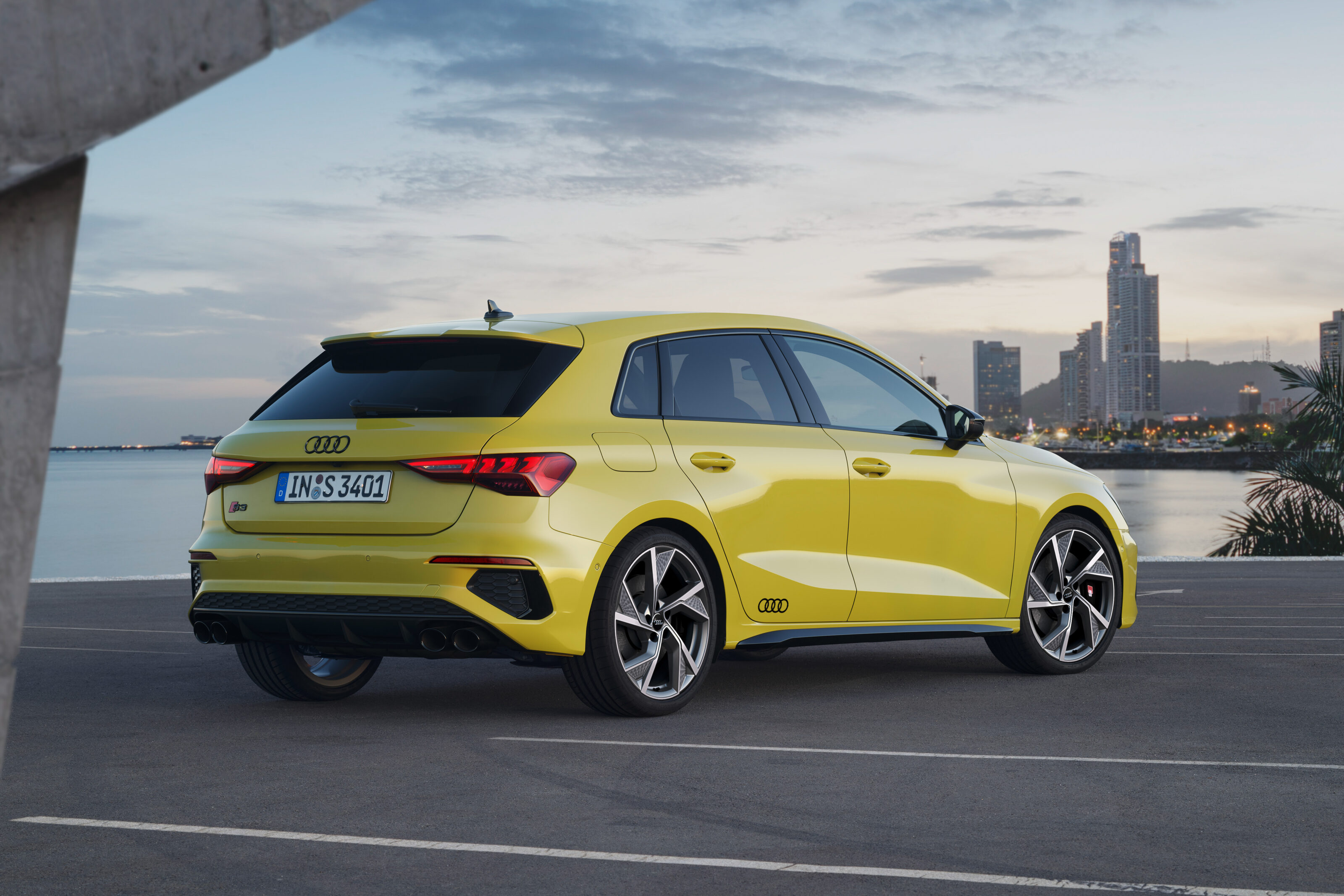
Dimensions
Exterior measurements are unchanged from 8V to 8Y, as the sportback stands at 4322mm in length, 1785mm wide and 1404mm tall, while the sedan retains its 4466mm length, 1796mm width and 1392mm height and both share the same 2631mm wheelbase.
Despite the exterior dimensions staying the same, the sportback’s boot space is reduced from 340 litres to 325 litres with the back seats up, and from 1180 litres to 1145 with the rear seats down.
Audi hasn’t confirmed rear space in the sedan, however the outgoing car featured a maximum space of 390 litres.
Warranty and servicing
Audi offers a three-year/unlimited-kilometre warranty across its entire model range, including the S3.
It will also offer a five-year/75,000 service plan package to new S3 owners for $2580, covering the first five services at 12-month/15,000km intervals.
Availability
The 2022 Audi S3 will go on sale at Australian Audi dealerships and online through the manufacturer’s website from early next year.
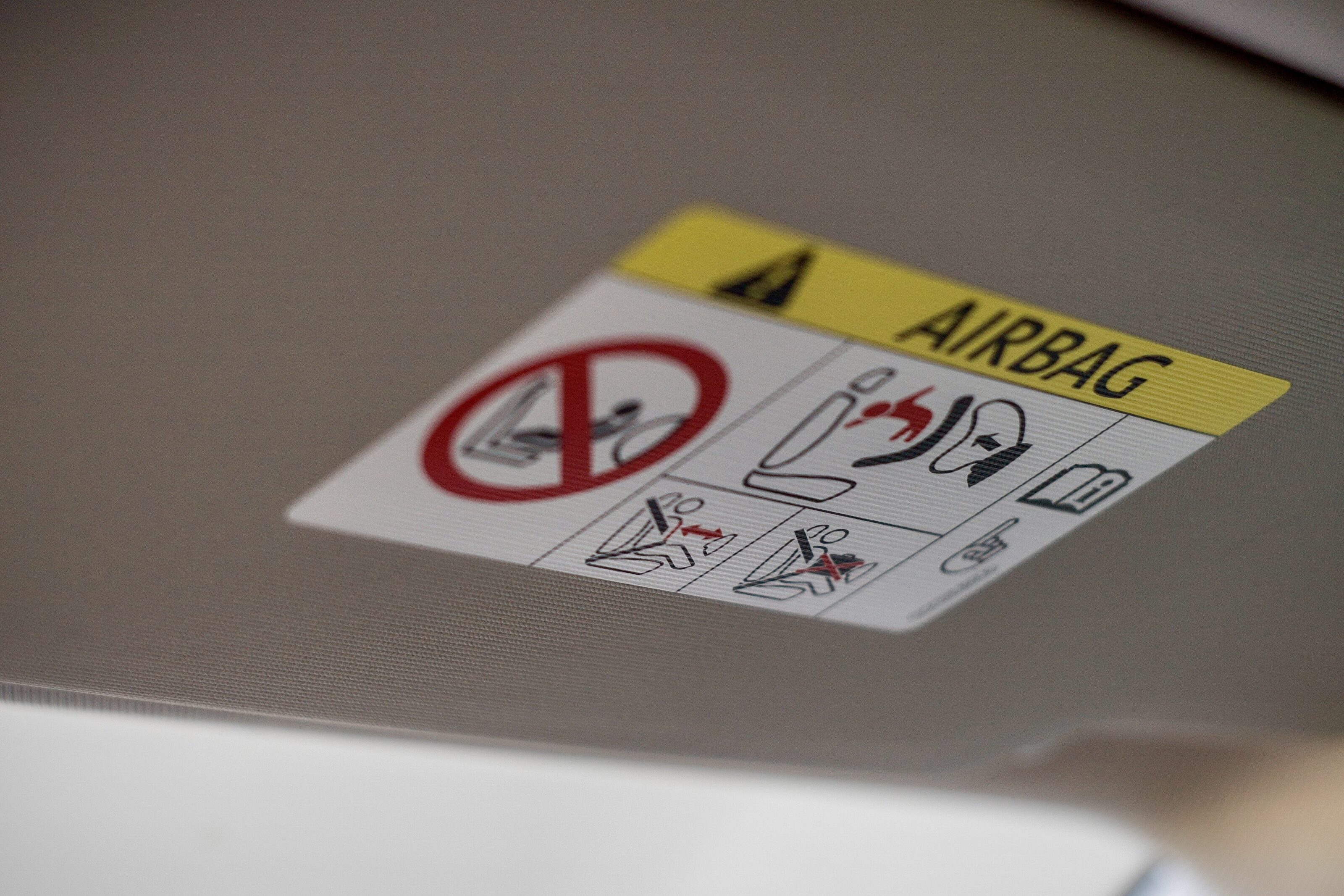
Thirty million vehicles in the United States are being investigated by authorities for potential dangers associated with Takata airbag components.
The latest announcement comes off the back of the largest automotive recall in history – in which more than 100 million Takata airbags were replaced worldwide.
The US National Highway Traffic Authority (NHTSA) has opened a new investigation in recent days, according to Reuters, which encompasses some two dozen carmakers and is in addition to those included in the previous global recall.
It’s understood vehicles manufactured between 2001 and 2019 are the focus of this probe – with the former recall, which is only just concluding, focusing on ‘NADI 5-AT’ airbag inflators fitted to cars built from 1996 to 2000.
According to the Federal Chamber of Automotive Industries, the Takata NADI 5-AT airbags caused 33 deaths worldwide, with more than 350 injuries reported.
“The ACCC is not aware of any deaths or injuries in Australia outside of the compulsory Takata airbag recall or the voluntary recall of vehicles containing Takata NADI 5-AT airbag inflators,” a spokesperson for the Australian Competition and Consumer Commission told WhichCar.
“The ACCC engaged with NHTSA in relation to the compulsory recall and the voluntary NADI 5-AT recall.”
It’s understood the new NHTSA investigation will conduct engineering analysis on inflators fitted to 30 million cars in the US from brands including; BMW, Chrysler, Ferrari, Ford, General Motors, Honda, Jaguar, Land Rover, Mazda, Mercedes-Benz, Nissan, Porsche, Subaru, Tesla, and Toyota.
There is no evidence at this stage to suggest Australian-delivered vehicles from these manufacturers pose any danger to occupants.
Earlier this month, a number of car companies agreed to a $52 million settlement against class-action lawsuits in NSW relating to Takata NADI 5-AT airbags.
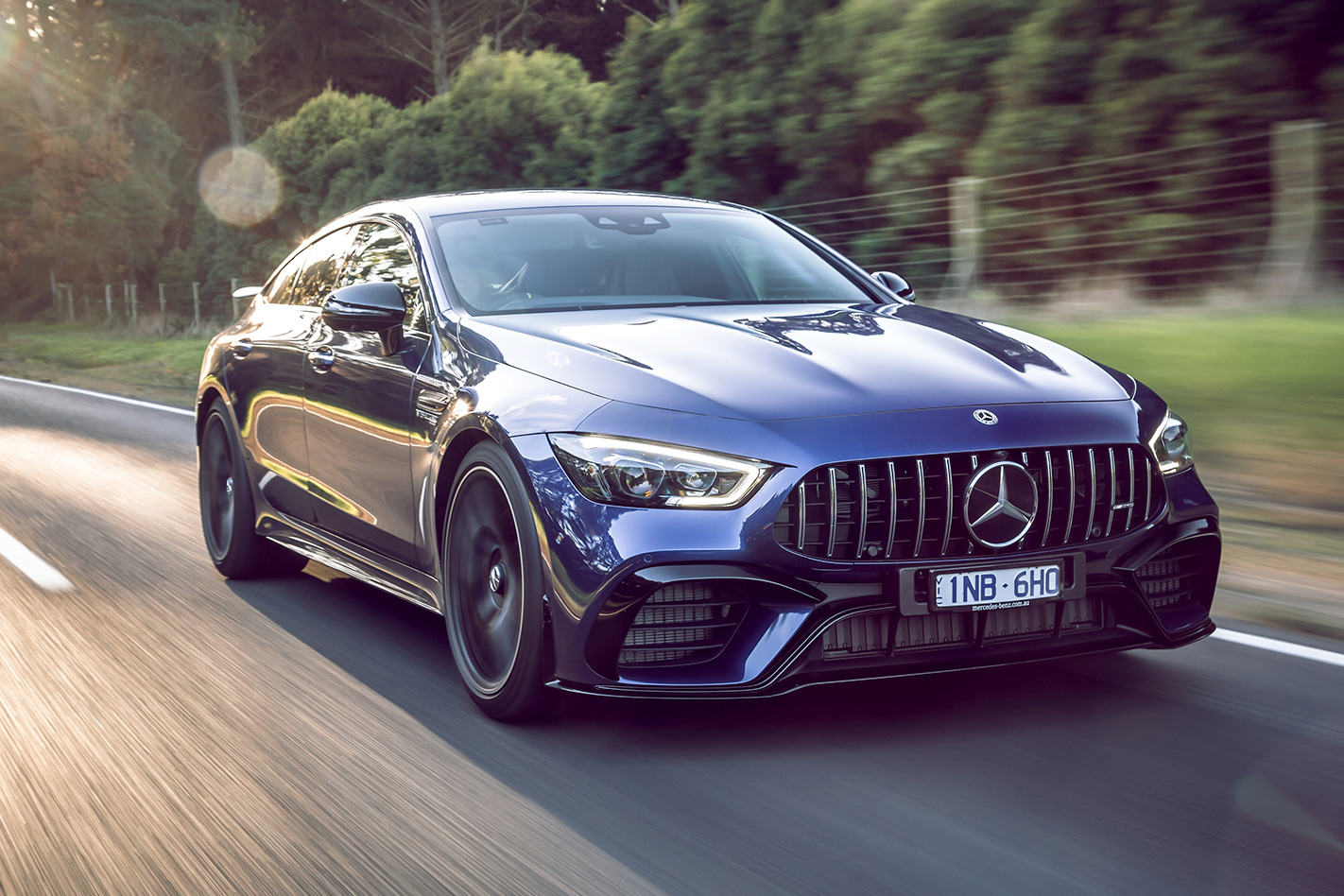
Mercedes-AMG has promised to stick with V8s for the next decade, despite the wider industry rapidly moving towards electrification.
Known for its high-performance models, the German manufacturer is eventually going to follow the lead of Mercedes-Benz by transitioning away from internal combustion engines (ICEs) and into electric vehicles (EVs). The process will begin in 2025 when it releases its final new ICE models.
Speaking to Road & Track, AMG boss Philipp Schiemer said while the performance arm will end the development of its iconic V8 powerplants in the future, it won’t necessarily phase them out straight away – hinting at further hybridisation to increase power and get around emissions regulations.
“I think there will be a future, yes,” said Schiemer.
“I think for the next 10 years we will see the V8, for sure. We have a lot of customers who love their cars and I still think that we will see those people buying the [V8] cars for a long time.”
AMG surprised the American automotive industry recently when it pulled its V8 range from sale, but Schiemer assured this was due to a quality issue rather than demand.
“I cannot provide you with more details. It’s a quality issue. We are updating our vehicles every year, and we are not satisfied with the quality. And for us it’s quality first. So we have to do some retesting and this is the process we are in at the moment.
“So it’s from vehicle to vehicle, from country to country a different kind of situation.”
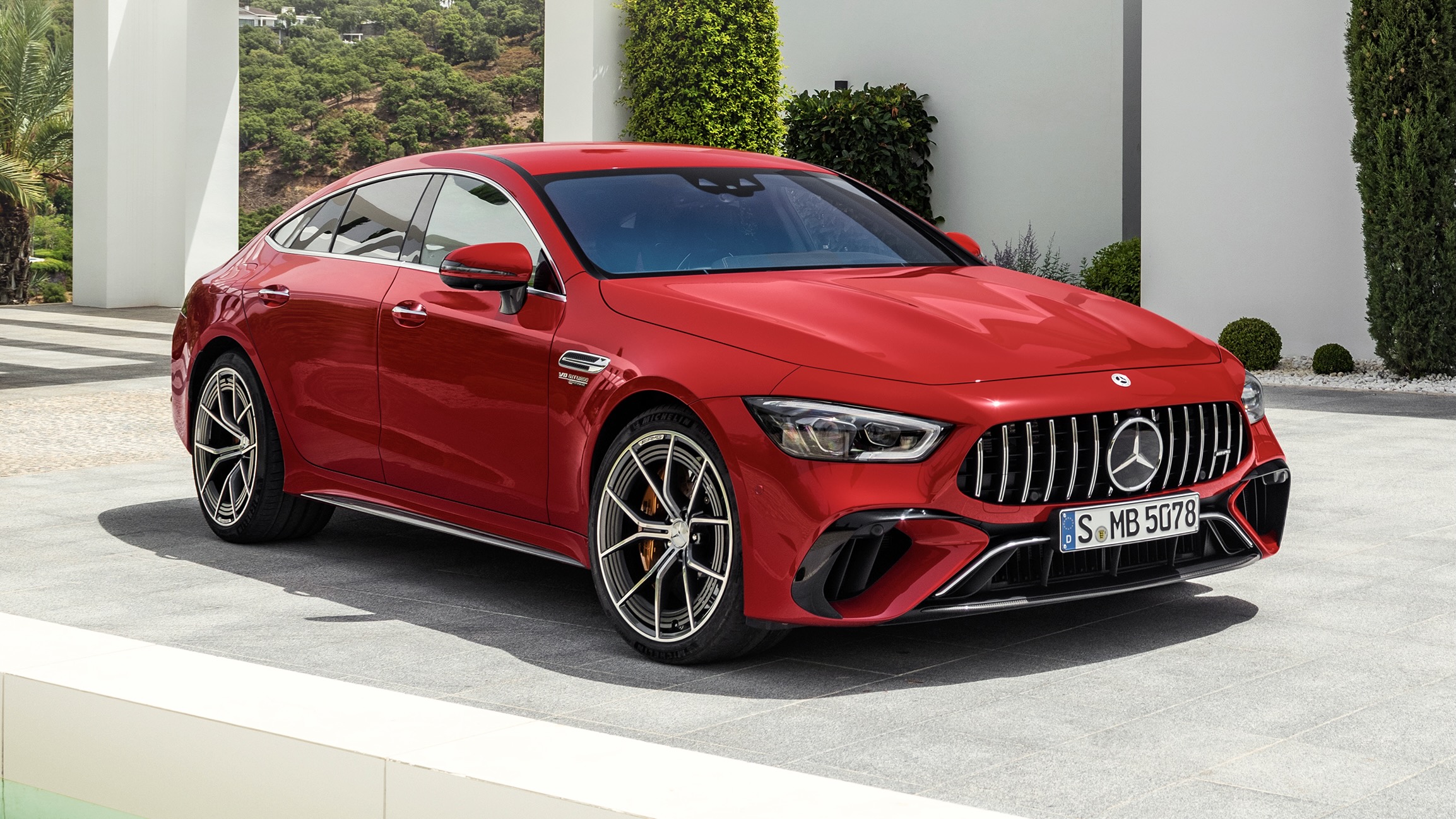
Off the back of AMG unveiling the 620kW/1400Nm GT 63 S E Performance earlier this month, Chief Technical Officer Jochen Hermann referenced the company’s most powerful production car as an example of what V8 engines are capable of with hybrid assistance.
“You have this extra power, like low-end torque which is usually more of an issue for a combustion engine,” said Hermann.
“We get that instant torque, whereas, you know, on a German Autobahn[…] this is where the V8 engine really kicks in.
“So, it’s all these different combinations you can have and all of these driving modes. And once the team starts playing around, they realise, ‘oh, we can do this, we can do that’.
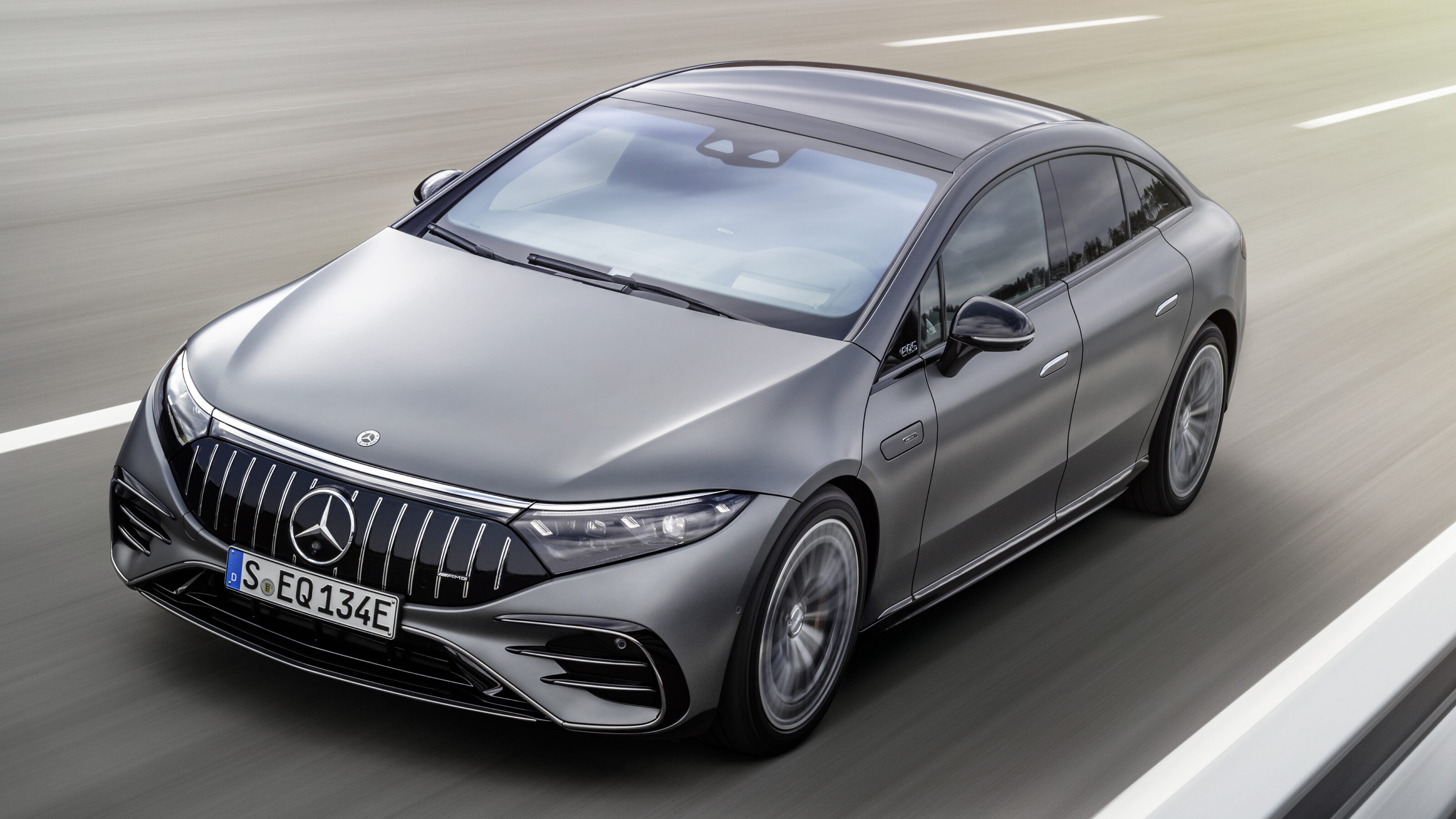
“I think it’s the thrill we have with this new layout. It’s complicated, to be honest. And actually, we had a tough time to get it to a point where we could say, ‘ok, this is where we want it to be.’ And the thing is, now having gone through all this we know there’s so much more that we can do with a powertrain layout like this.”
At this year’s IAA Mobility Show in Munich, Mercedes-AMG revealed its first ever all-electric vehicle, the EQS 53, based on the standard EQS, but with up to 560kW and 1020Nm on tap, making it Daimler’s most powerful EV yet.
Snapshot
- Prices upped for more than 60 Audi models
- Average increase of $1953, or almost two per cent
- Biggest change is $5523 on three vehicles
Australian buyers will be paying more for a new Audi, with the German luxury carmaker increasing prices across its range.
Audi has applied the changes for 61 of its models, ranging from the A1 through to the Q8, by an average of 1.95 per cent.
The greatest rises were a three-way tie between the RS6 wagon, RS7 Sportback, and RS Q8 performance SUV, which all went up by $5523.
Being the least expensive of the marque’s models, the Audi A1 changed by the smallest amount – going up by $450 to $33,200 before on-road costs.
For the 60 models affected, the average difference was +$1953.
“Audi Australia has released its annual pricing guide for the 2022 Model Year. Some adjustments have been in line with increases in specification and features – such as the Audi Q8, which includes over $8000 worth of additional equipment,” a spokesperson for the brand’s local arm told WhichCar.
“Other prices have been adjusted in order to maintain the very high level of features our customers expect in the premium segment, in line with similar [changes] in most years.”
The majority of Audi’s range actually decreased slightly at the beginning of the 2021-2022 Financial Year, thanks to the Luxury Car Tax threshold going up slightly – skewing the average percentage change against Audi to a small degree.
While the Reserve Bank of Australia reported a jump in Consumer Price Inflation to 3.8 per cent in July, the exchange rate between the Australian Dollar and the Euro has barely moved – sitting at €0.62 compared to €0.61 in September 2020, topping out at €0.66 earlier this year.
Note: All figures in this story are quoted before on-road costs and are subject to change at any time. Only models with rises have been listed.
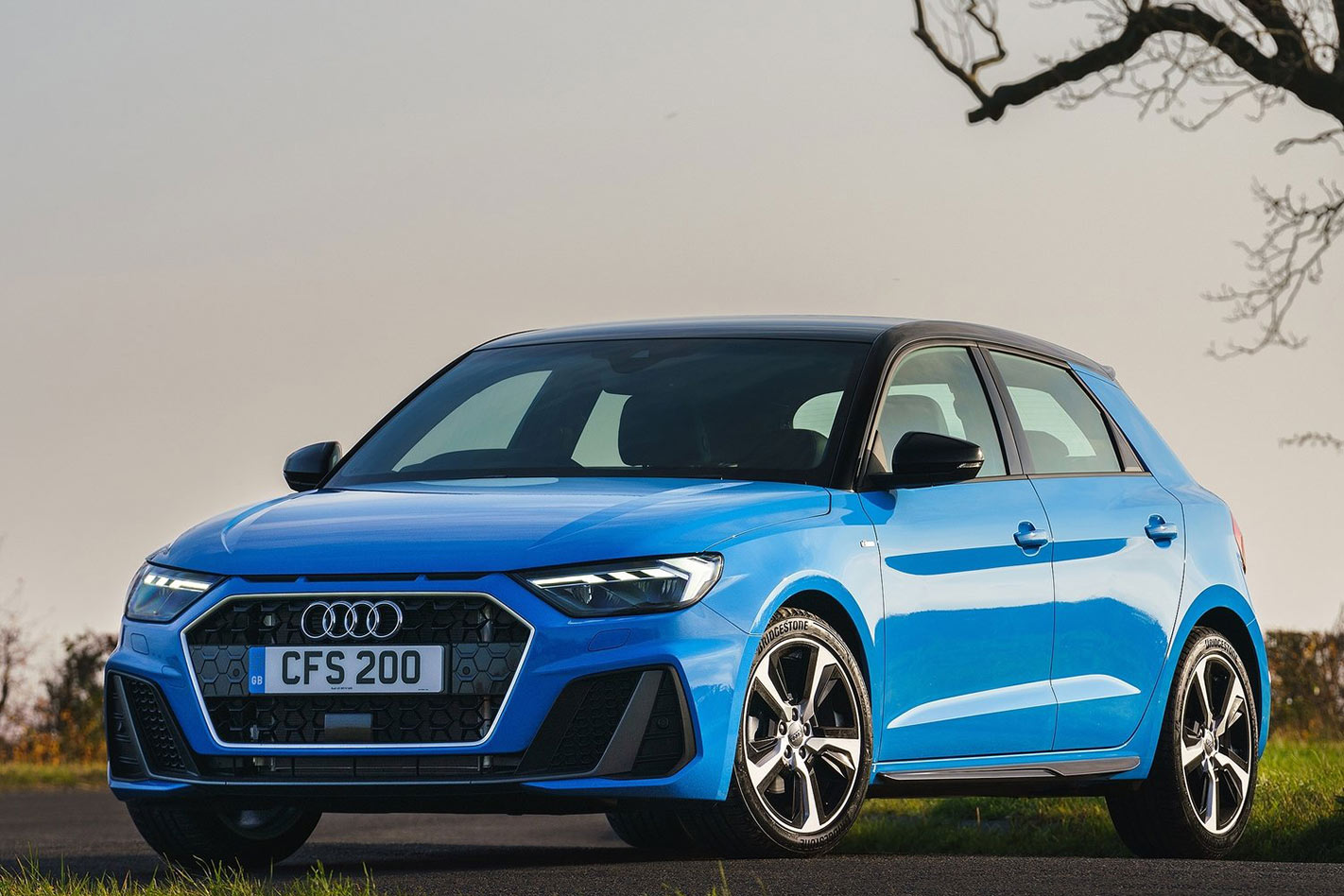
Audi A1 Australian pricing – September 2021
| Audi A1 30 TFSI Sportback | $ 33,200 | up $450 |
| Audi A1 35 TSFI Sportback | $ 35,800 | up $510 |
| Audi A1 40 TFSI S Line Sportback | $ 47,200 | up $750 |
Audi A4 Australian pricing – September 2021
| Audi A4 35 TFSI sedan | $ 55,700 | up $1800 |
| Audi A4 45 TFSI S Line sedan | $ 61,800 | up $1900 |
| Audi A4 45 TFSI Quattro S Line sedan | $ 70,800 | up $2300 |
| Audi A4 40 TDI Quattro Allroad wagon | $ 72,700 | up $2800 |
| Audi A4 45 TFSI Quattro S Line wagon | $ 73,300 | up $2423 |
| Audi A4 45 TFSI Quattro Allroad wagon | $ 74,900 | up $2423 |
| Audi S4 TFSI Quattro sedan | $ 101,500 | up $2123 |
| Audi S4 TFSI Quattro wagon | $ 104,000 | up $2123 |
| Audi RS4 TFSI Quattro wagon | $ 150,900 | up $3123 |
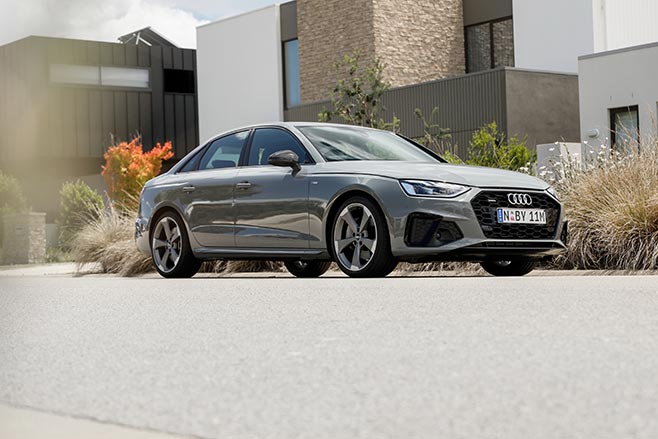
Audi A5 Australian pricing – September 2021
| Audi A5 40 TFSI S Line Sportback | $ 73,500 | up $1600 |
| Audi A5 45 TFSI Quattro S Line Sportback | $ 81,100 | up $1723 |
| Audi A5 45 TFSI Quattro S Line coupe | $ 81,100 | up $1723 |
| Audi A5 45 TFSI Quattro S Line convertible | $ 94,600 | up $1723 |
| Audi S5 TFSI Quattro Sportback | $ 108,700 | up $2323 |
| Audi S5 TFSI Quattro coupe | $ 108,700 | up $2323 |
| Audi S5 TFSI Quattro convertible | $ 122,200 | up $2323 |
| Audi RS5 TFSI Quattro Sportback | $ 153,900 | up $3123 |
| Audi RS5 TFSI Quattro coupe | $ 153,900 | up $3123 |
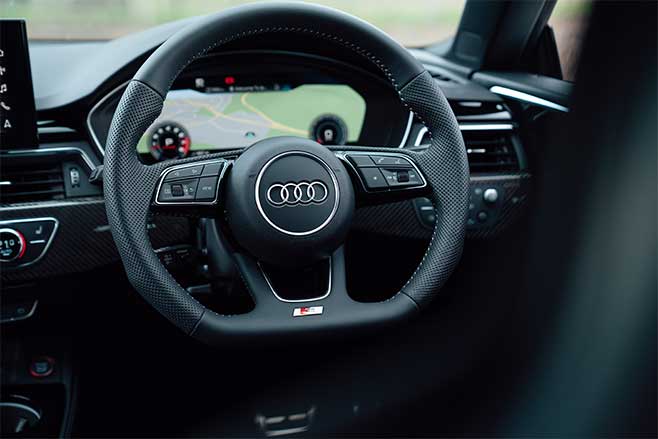
Audi A6 Australian pricing – September 2021
| Audi A6 40 TFSI sedan | $ 86,900 | up $2328 |
| Audi A6 45 TFSI Quattro S Line sedan | $ 108,900 | up $3023 |
| Audi A6 45 TDI Quattro Allroad wagon | $ 112,300 | up $3228 |
| Audi A6 55 TFSI Quattro S Line sedan | $ 118,900 | up $3023 |
| Audi S6 TFSI Quattro sedan | $ 153,000 | up $3223 |
| Audi RS6 TFSI Quattro wagon | $ 221,400 | up $5523 |
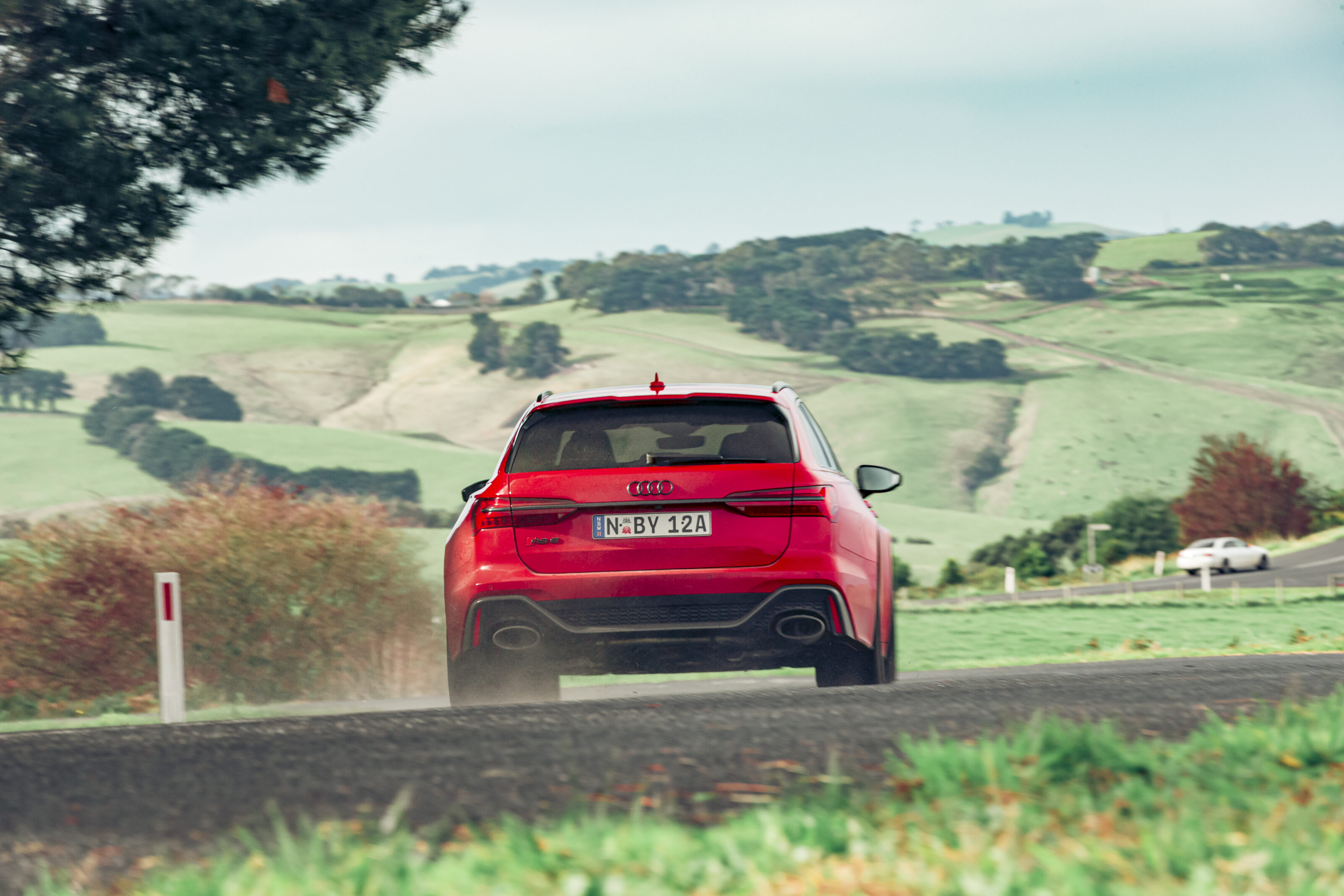
Audi A7 Australian pricing – September 2021
| Audi A7 45 TFSI Quattro Sportback | $ 117,900 | up $2123 |
| Audi A7 55 TFSI Quattro Sportback | $ 135,600 | up $2123 |
| Audi S7 TFSI Quattro Sportback | $ 162,500 | up $3123 |
| Audi RS7 TFSI Quattro Sportback | $ 229,400 | up $5523 |
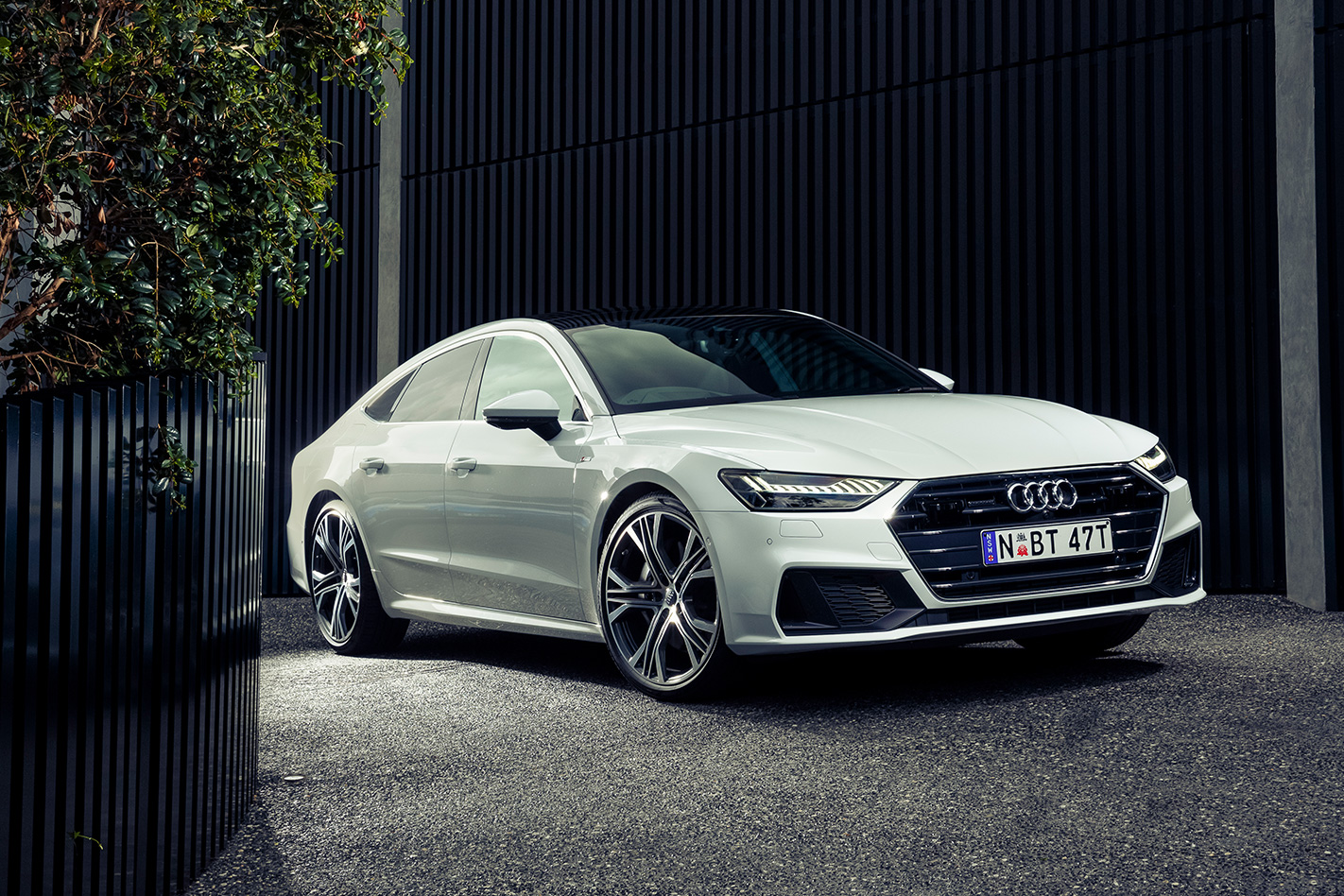
Audi Q2 Australian pricing – September 2021
| Audi Q2 35 TFSI wagon | $ 43,600 | up $700 |
| Audi Q2 40 TFSI Quattro S Line wagon | $ 50,600 | up $700 |
| Audi SQ2 TFSI Quattro wagon | $ 65,300 | up $900 |
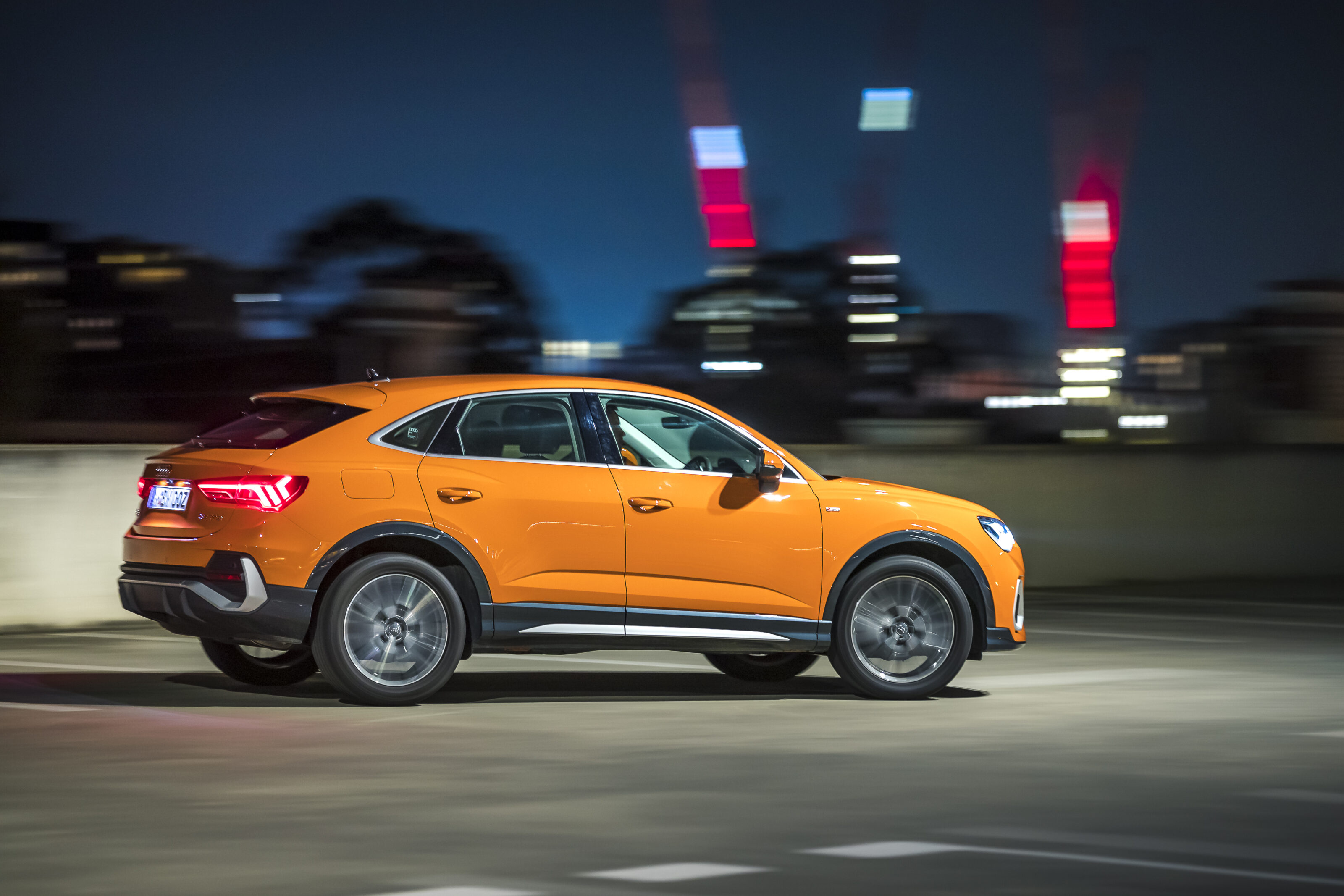
Audi Q3 Australian pricing – September 2021
| Audi Q3 35 TFSI wagon | $ 48,300 | up $700 |
| Audi Q3 35 TFSI Sportback | $ 51,800 | up $700 |
| Audi Q3 40 TFSI Quattro wagon | $ 55,900 | up $700 |
| Audi Q3 40 TFSI Quattro Sportback | $ 64,000 | up $950 |
| Audi Q3 40 TFSI Quattro S Line wagon | $ 61,600 | up $950 |
| Audi RS Q3 TFSI Quattro wagon | $ 92,900 | up $1923 |
| Audi RS Q3 TFSI Quattro Sportback | $ 93,900 | up $1923 |
Audi Q5 Australian pricing – September 2021
| Audi Q5 40 TDI Quattro wagon | $ 69,900 | up $1000 |
| Audi Q5 45 TFSI Quattro wagon | $ 70,600 | up $1123 |
| Audi Q5 40 TDI Quattro Sport wagon | $ 75,900 | up $1000 |
| Audi Q5 45 TFSI Quattro Sport wagon | $ 77,600 | up $1123 |
| Audi Q5 50 TDI Quattro S Line wagon | $ 91,000 | up $2028 |
| Audi SQ5 TDI Quattro wagon | $ 106,500 | up $2228 |
Audi Q7 Australian pricing – September 2021
| Audi Q7 45 TDI Quattro wagon | $ 105,100 | up $1428 |
| Audi Q7 50 TDI Quattro wagon | $ 116,100 | up $1428 |
| Audi Q7 50 TDI Quattro S Line wagon | $ 123,900 | up $1523 |
| Audi Q7 55 TFSI Quattro wagon | $ 123,900 | up $1523 |
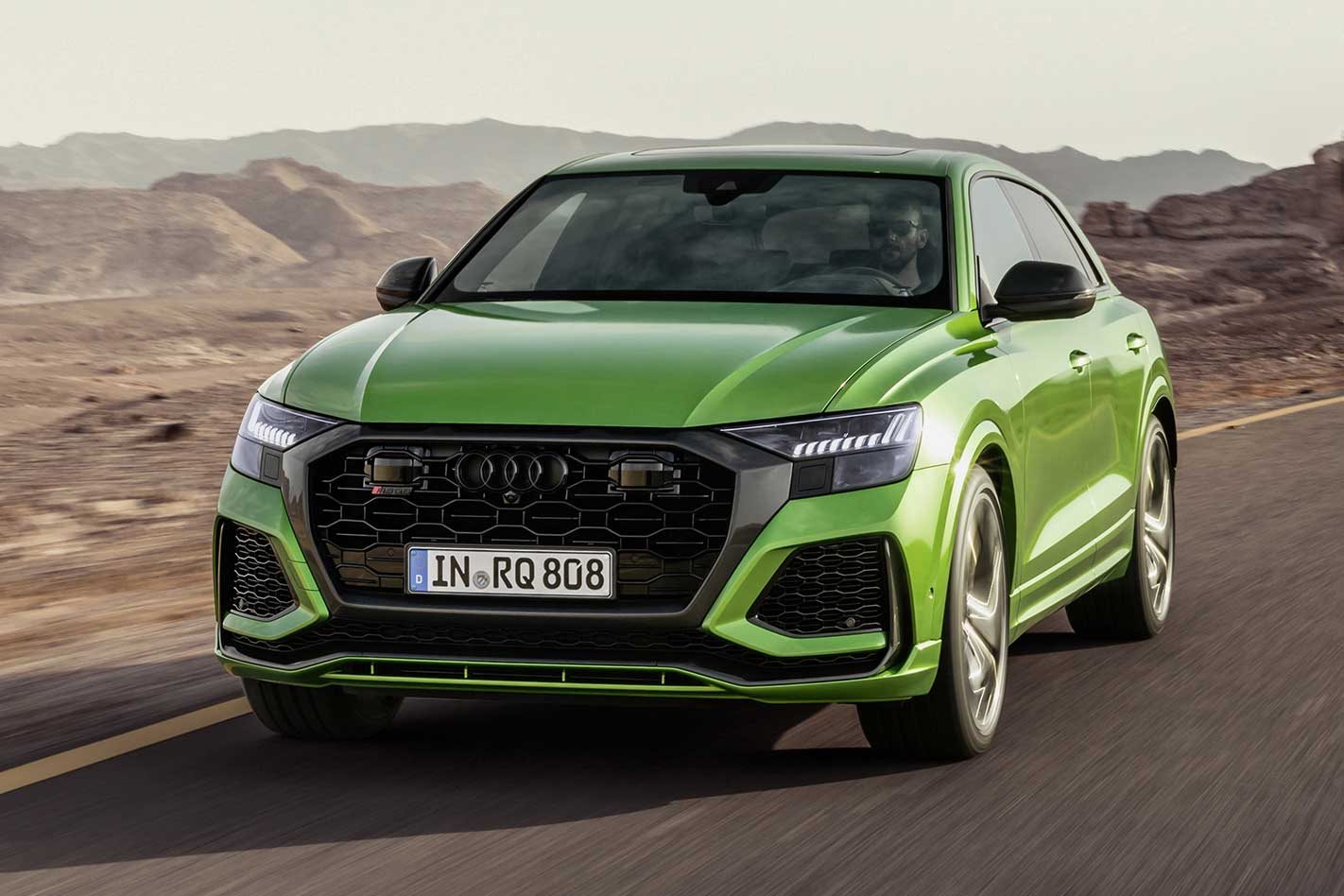
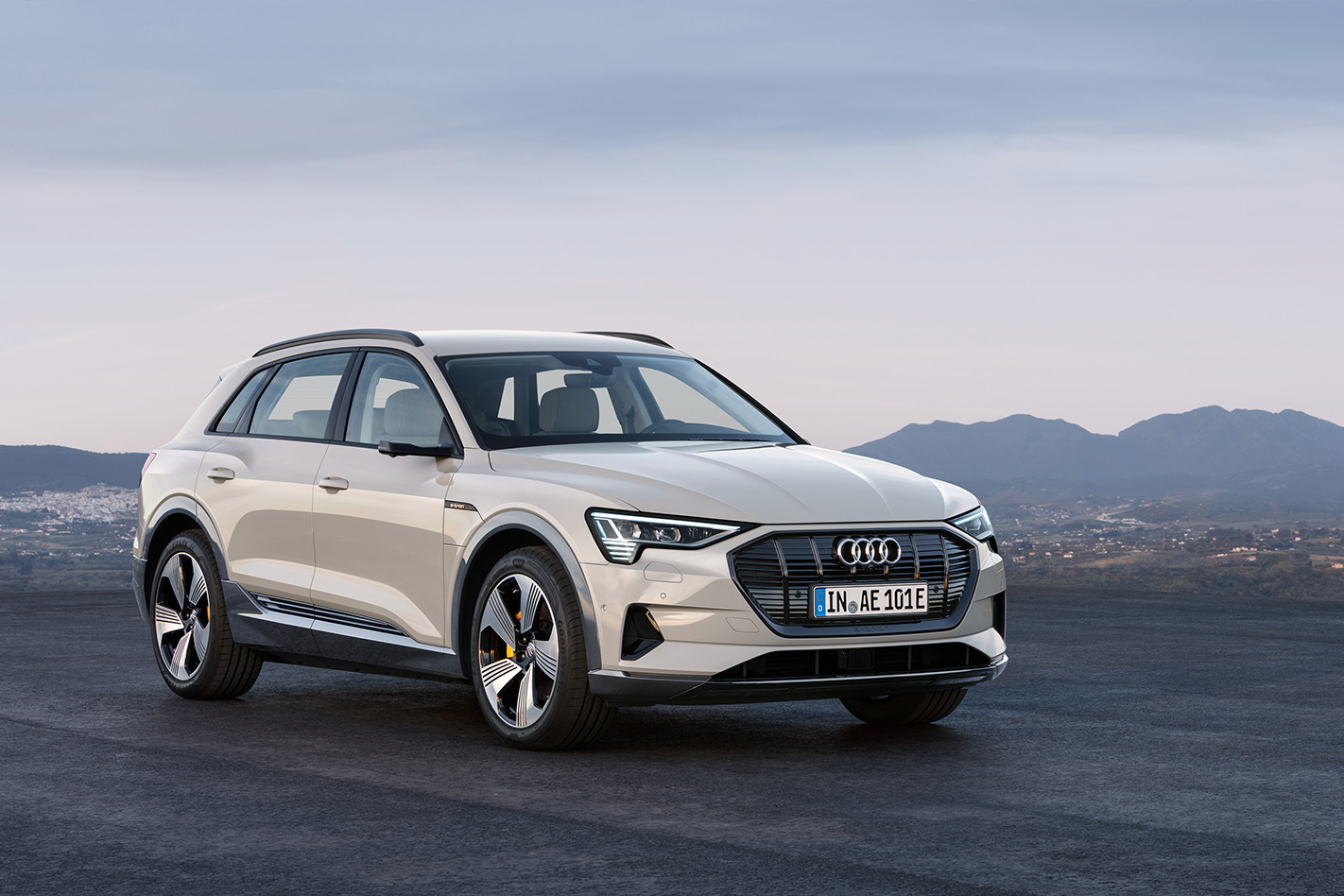
Audi E-Tron Australian pricing – September 2021
| Audi E-Tron 50 Quattro wagon | $ 137,100 | up $628 |
| Audi E-Tron 50 Quattro Sportback | $ 148,100 | up $628 |
| Audi E-Tron 55 Quattro wagon | $ 146,100 | up $628 |
| Audi E-Tron 55 Quattro Sportback | $ 157,100 | up $628 |
Audi Q8 Australian pricing – September 2021
| Audi Q8 50 TDI Quattro wagon | $ 130,400 | up $1428 |
| Audi Q8 55 TFSI Quattro wagon | $ 131,000 | up $923 |
| Audi RS Q8 TFSI Quattro wagon | $ 213,900 | up $5523 |
Snapshot
- BMW increases the list price of certain 3 and 4 Series variants
- Prices hike by between $1000-$2000
- Minor interior tweaks made
BMW Australia has handed out a price increase for certain variants within the 3 Series and 4 Series ranges, with only mild interior updates being implemented.
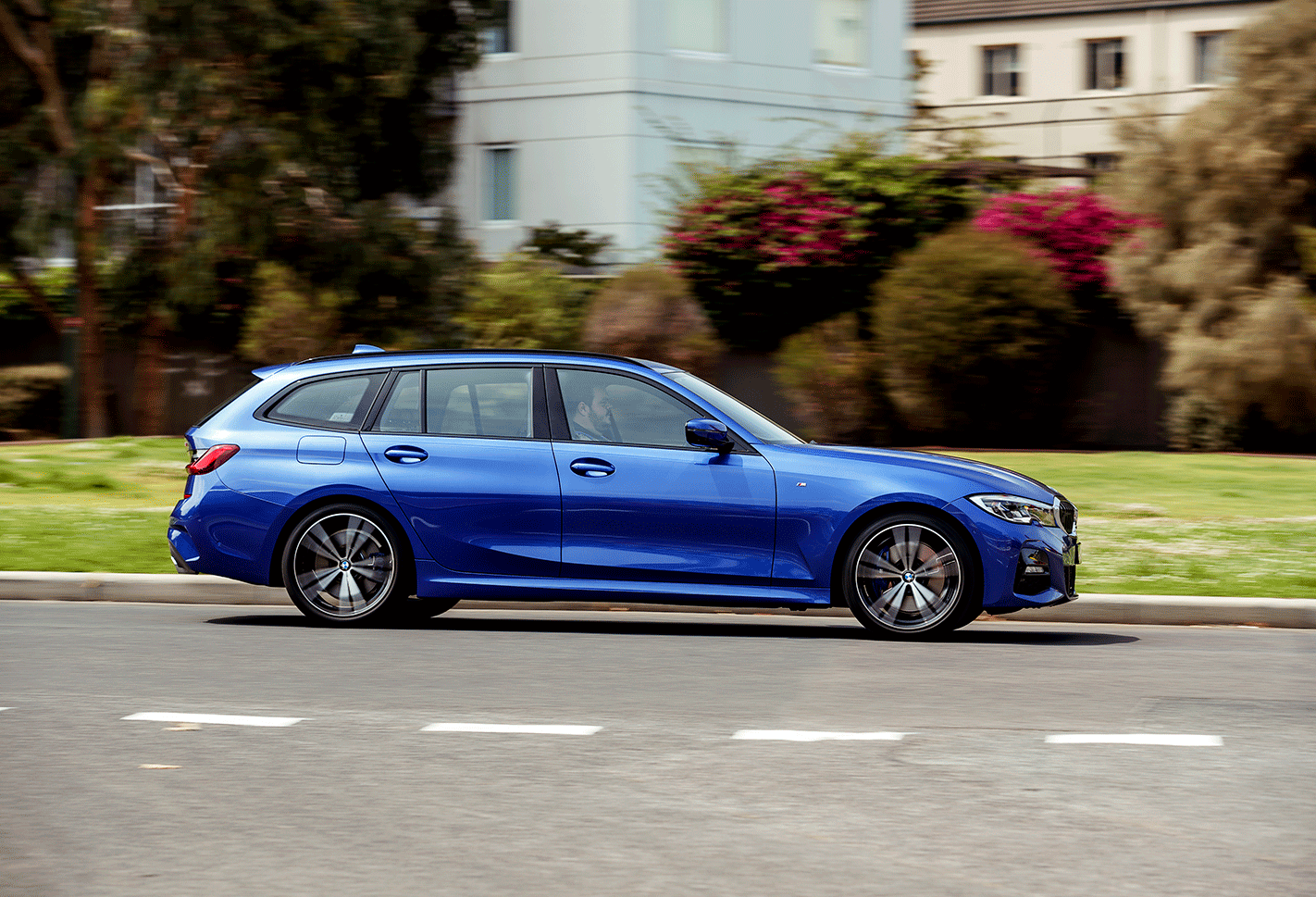
Although not affecting all versions of the 3 Series Sedan, three of the existing seven variants have gone through a hike in list price, as the 3 Series Wagon is given the same treatment as well.
Starting with the 320i, the entry-level 3 Series has gone from $70,900 before on-road costs to $71,900, the smallest bump up out of the range.
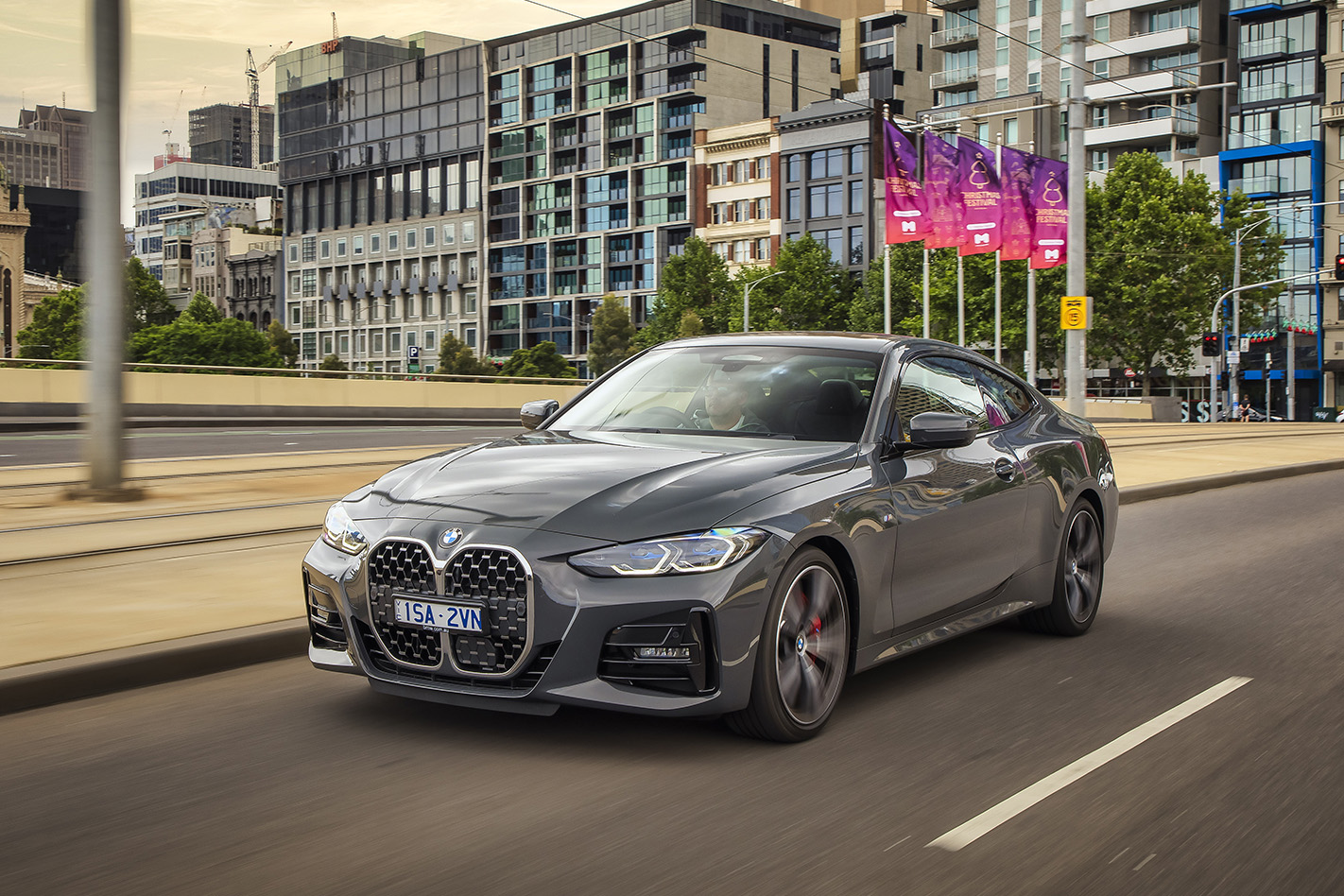
Stepping up from the 320i, the mid-range 330i and 330e’s prices have risen by $2000 each, now sitting at $79,900 and $86,900 respectively, while the 330i Touring now retails for $83,900 – also adding the $2000 premium.
It’s a similar story for the 4 Series, with the 420i Coupe and Convertible receiving a $1000 increase as the 430i variants also face the $2000 rise, now being sold at $72,900, $90,900, $92,900 and $103,900 respectively, before on-road costs.
It’s believed the price tweak across the aforementioned models is due to BMW’s ambient lighting pack and ‘galvanic embellishers’ for the interior controls being added to the cabin’s equipment, features which were already standard on the M40i variants.
Although not an increase, BMW has added the Competition M xDrive packages to its M3 and M4, a $6000 jump from the base vehicle’s cost – which provides the benefit of all-wheel drive.
2021 BMW 3 Series pricing
Prices exclude on-road costs.
| 320i | $ 71,900 | up $1000 |
| 330i | $ 79,900 | up $2000 |
| 330e | $ 86,900 | up $2000 |
| M340i xDrive Pure | $ 101,900 | |
| M340i xDrive | $ 111,900 | |
| M3 Manual | $ 144,900 | |
| M3 Competition | $ 154,900 | |
| M3 Competition M xDrive | $ 160,900 | new |
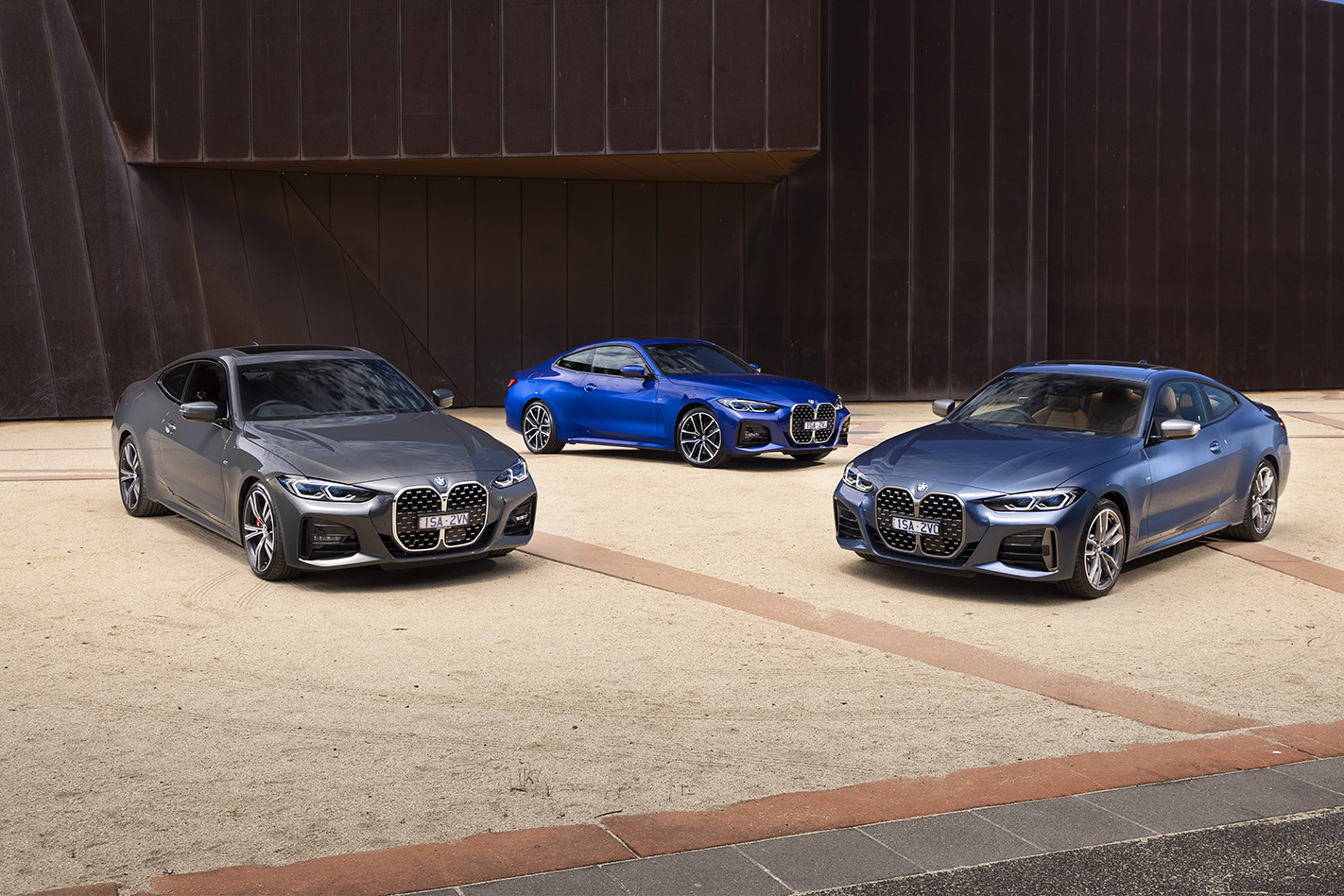
2021 BMW 4 Series pricing
Prices exclude on-road costs.
| 420i Coupe | $ 72,900 | up $1000 |
| 420i Convertible | $ 90,900 | up $1000 |
| 430i Coupe | $ 92,900 | up $2000 |
| 430i Convertible | $ 109,900 | up $2000 |
| M440i xDrive Coupe | $ 118,900 | |
| M440i xDrive Convertible | $ 135,900 | |
| M4 Coupe | $149,900 | |
| M4 Competition Coupe | $ 159,900 | |
| M4 Competition M xDrive Coupe | $ 165,900 | new |
| M4 Competition M xDrive Convertible | $ 176,900 | new |
