
On a recent trip to South Australia I had booked a hire car for collection at the airport – yes I’m aware a motoring journalist paying to use a car is a novel concept. As I’d ticked the box requesting a small hatchback, I was hoping for something like a Hyundai i30 – a car I like very much – to be waiting for me and, thankfully, it was. So imagine my surprise when the attendant at the desk informed me that, for a small additional payment, they could upgrade me to a Mitsubishi ASX. Upgrade?
Compared in rental-company spec, the i30 has a bigger boot, more torque, more power, uses less fuel, offers substantially better ride and handling, more safety features and, subjectively, more pleasing looks than the ASX. And yet, something in the Europcar framework or perhaps general consumer mentality ranks an 11-year old SUV as more desirable than a newer and infinitely more advanced hatchback.
You can probably imagine the look I got when I explained I would gladly pay the extra cash to ensure I didn’t end up in the ASX but, either way, the encounter highlights a massive difference in perceived value of cars and exactly what many people regard as desirable.

Thankfully, the polar opposite end of that spectrum exists. All you need to do is turn up at a pre-arranged venue early in the morning usually on a Sunday for one of the growing numbers of events that call themselves Cars and Coffee.
A group of car enthusiasts gathering in a car park to share a cappuccino is a simple concept but the results can be utterly jaw-dropping with a stunning display of machinery serving as a fascinating barometer into contemporary car culture.
And a very good example is the Highball cars and coffee kindly hosted at the Robert Bosch headquarters in Melbourne’s south east. Staggering doesn’t come close to accurately describing the popularity or prestige of this gathering which, by 8:30am on the Sunday I attended, had reached the 1000 capacity and was turning away 964s like they were Camrys.

But the caravan of denied classics and exotics didn’t go home, instead electing to queue patiently outside or park up as close as they could. Thanks to Melbourne’s discreet army of car nuts, this usually benign industrial suburb had been transformed into a sprawling motoring Mecca. (And it must be said that the same thing happens at similar events around the country.)
Perhaps the most interesting and delightful element of the Highball gathering, however, is not the sheer number of cars in attendance, but the eclectic variety, with representatives of virtually every brand and era turning out. Not even the casino in Monaco can compete, with a vintage this or modified that for every supercar that’s just rolled out of the dealership. And while you’ll certainly find something Australian made and V8-powered the event doesn’t have any predominant theme.
But if you think you’re planning on turning up in something ‘unique’, prepare to be humbled because you’re likely to see another one regardless of what it is. Don’t believe me? Recent examples include two Autozam AZ-1s, three Alfa Romeo SZs lead by an RZ, and two BMW E36 M3-Rs of which only 15 were made! Of course there’s the odd exception which recently took the form of a Renault 5 Turbo 2, Mazda Cosmo and Lamborghini Countach, but there’s certainly no guarantee of having the stage to yourself.
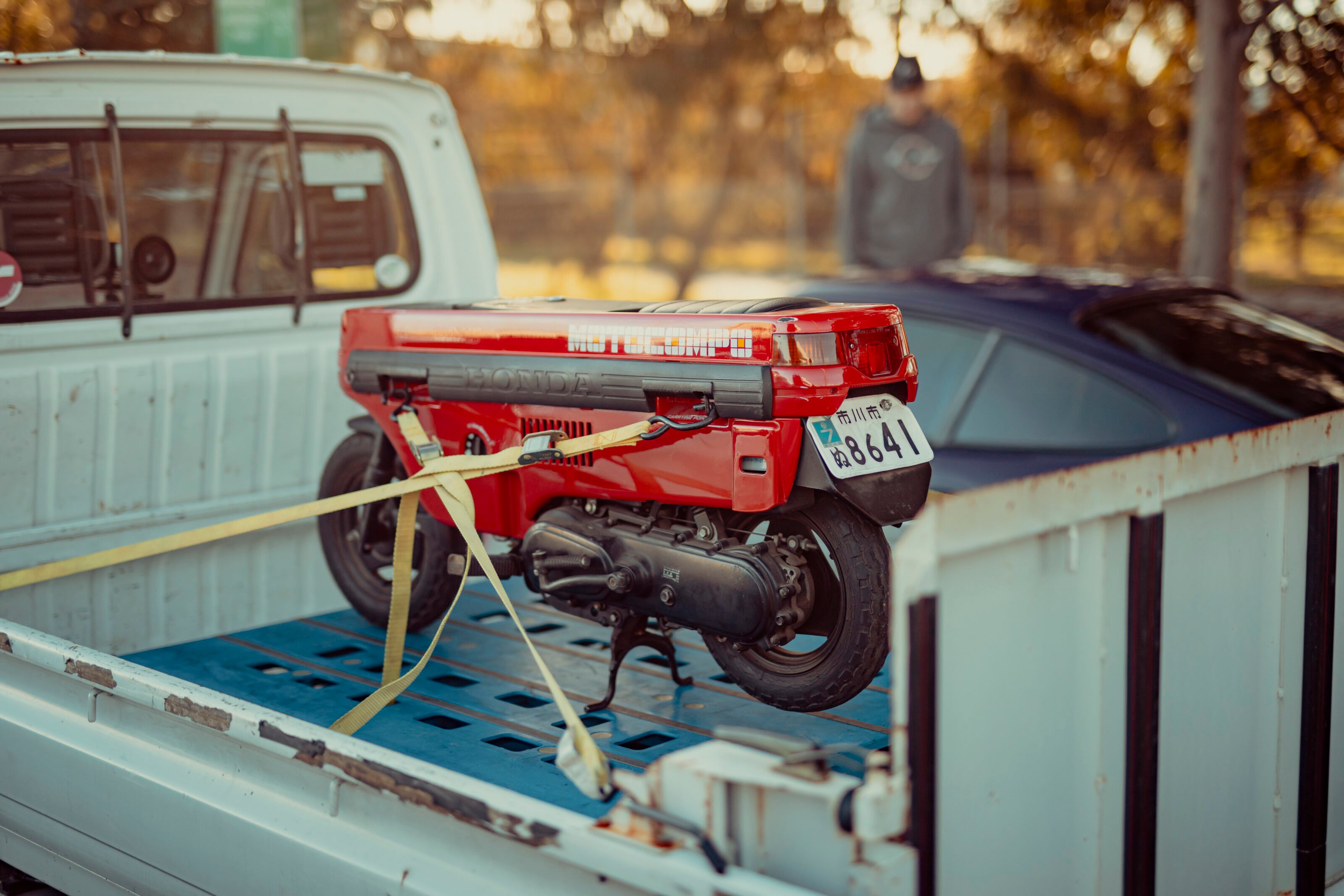
And the cars that were drawing the most attention were not, as you might expect, the most expensive, fastest or newest to show up. Yes a 991 GT2 RS will get a nod of appreciation as it rolls in, but it certainly doesn’t command more respect than the beautifully restomodded matte olive 914 which parked next to it. Dammit, I even bypassed a row of tuned Datsuns to look at a Suzuki Carry with a factory fitted tail lift! Did you see us there, too?
It’s this classless love of cars by those who understand what makes some vehicles truly special that fuels incredible Cars and Coffee events like this, and it’s the reason you’ll always find stories like Lost In Time and Icon Buyer in the pages of MOTOR. And it’s the reason I won’t repeatedly slam my head in the door of an ASX when someone implies it’s relatively premium.
UPDATE, September 27: Since this story was originally published, BMW has issued a statement saying it will continue to develop the ranges offered in its electric vehicle portfolio. The story can be read here.
An earlier version of this article attributed the comments made to BMW i4 project leader David Ferrufino, when in fact they were said by BMW Group electromobility spokesperson, Wieland Bruch. The story has now been updated to reflect this.
The story to here
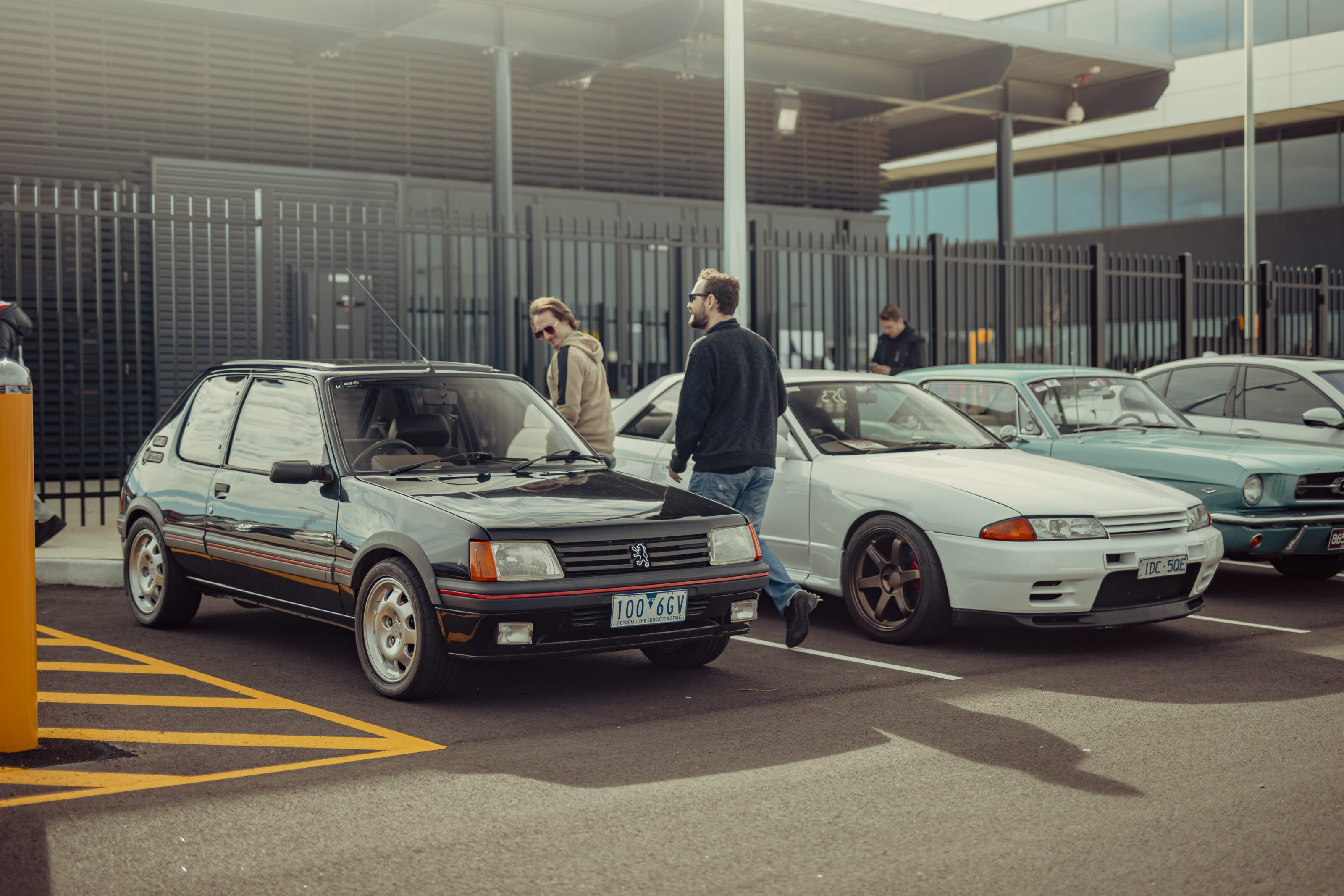
September 17: German luxury carmaker BMW says it is not pursuing a driving range greater than 600 kilometres for its electric vehicles (EVs), forcing Australian drivers to rely on charging infrastructure for long-distance travel.
When asked whether the company was developing EVs with 1000km of driving range, BMW Group electromobility spokesperson Wieland Bruch told WhichCar the company had made the decision to introduce a cap across its electrified line-up.
“One thousand kilometres of range is not a target we have with our fully-electric cars,” Bruch said at a media conference this week.
“We are aiming for 600 kilometres [of driving range] for our fully-electric cars, and 100 kilometres with our plug-in hybrids in everyday driving.”
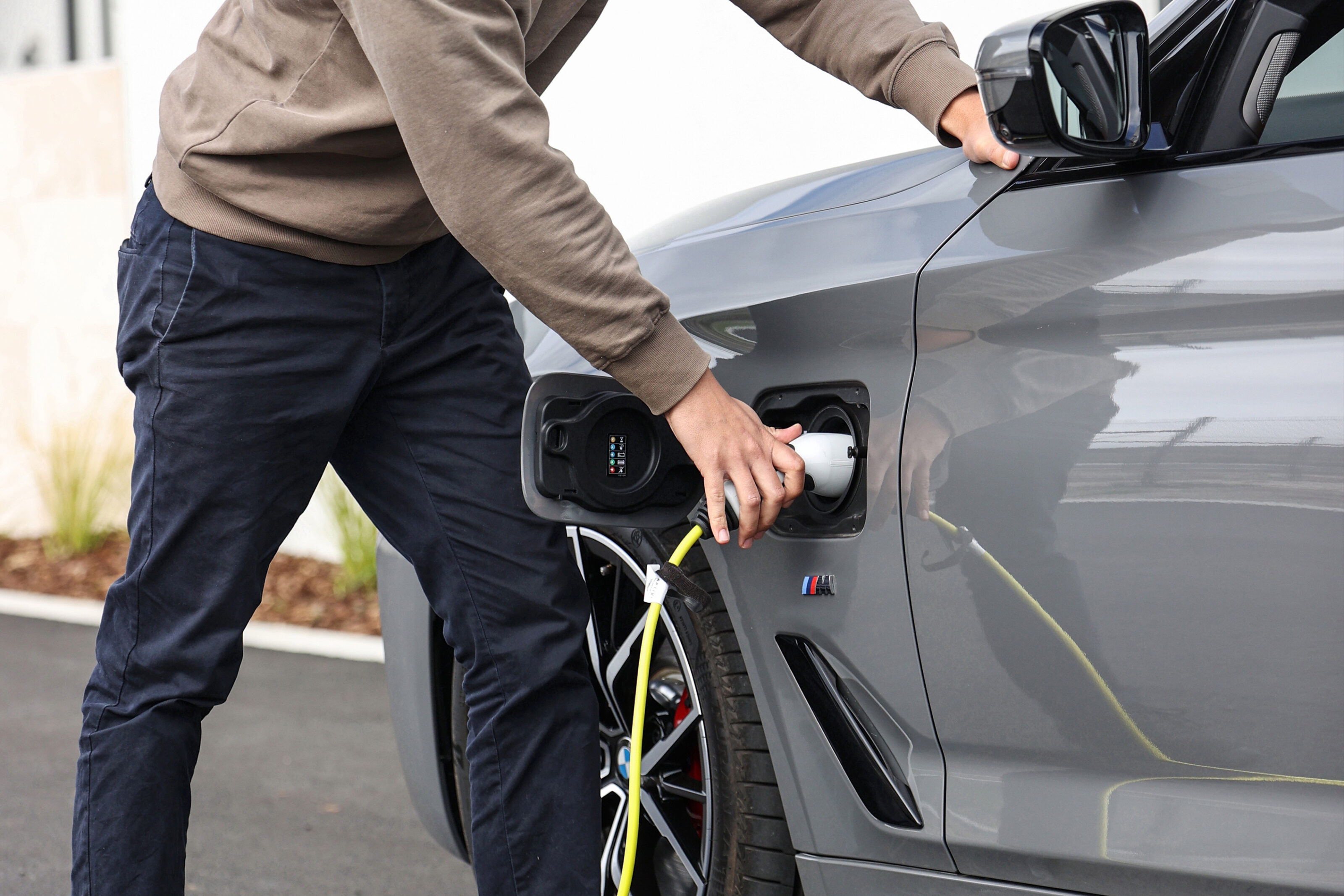
The caps mean only those driving between Sydney and Canberra, or Melbourne and Hobart, will be able to do so on a single charge when driving an all-electric BMW. But the company says developments in technology are making long journeys viable.
“We not only have the advancements in battery technology, we also have the public charging network – which is growing rapidly. Going cross-country in Europe from Norway to Italy is already a joyful experience when you do it in an electric car,” Bruch told WhichCar.
The 2022 BMW i4 offers a driving range of 590km on a single charge, but BMW claims the battery can be topped up from 10 to 80 per cent in 31 minutes using a 200kW DC fast charger – theoretically allowing for a touch over 1000km of range with a single half-hour break.
“The maximum range of the car is dependent on the segment of the vehicle where it is being offered,” Bruch explained.
“For example, we don’t think a range of 600 kilometres will be suitable for a BMW i3 as an urban car, but when it comes to the BMW iX or i4, we think that around 600 kilometres is a very customer-friendly solution,” he said.

“So you have two things: you have the battery making more and more progress, but also charging speed and infrastructure making big steps forward.”
Chinese carmakers have been pursuing 1000km of driving range in order to win buyers over from petrol and diesel vehicles, as it’s the equivalent of travelling between the major cities of Shanghai and Wuhan.
In July 2021, Chinese companies Nio and GAC both claimed to have electric vehicles with 1000km of range about to enter production. If true, the cars would beat the Tesla Model S Long Range – the current title-holder – which lists a top of 652km.
Snapshot
- A total of 675 vehicles affected
- Potential brake assistance pump failure could lead to further damage
- Toyota is currently contacting existing customers
All fifth-generation Toyota Supras sold in Australia have been placed under recall, owing to a potential vacuum pump issue in the car’s braking system.
Affecting 675 vehicles built between 2019 and 2021, the fault stems from the brake booster’s vacuum pump potentially being damaged under specific engine start conditions, triggered by the engine management software.
This could lead to a reduction in braking performance, which increases the risk of an incident – potentially harming occupants and other road users.
Toyota has said it is currently contacting known owners to make an appointment at their nearest Toyota dealer to rectify the problem, free of charge.
Customers can also contact Toyota’s recall assist helpline on 1800 987 366 or email [email protected] for more information.
A list of VINs for affected vehicles can be found here.
The Hyundai iMax had a showroom lifespan as wide as the film screens with which it shares its name – 14 years of longevity that may have reflected the Korean brand’s interest level in the people-mover segment.
Yet its belated replacement, the 2022 Hyundai Staria, has arrived as a futuristically styled 3D van experience that jettisons any notion of apathy into space.
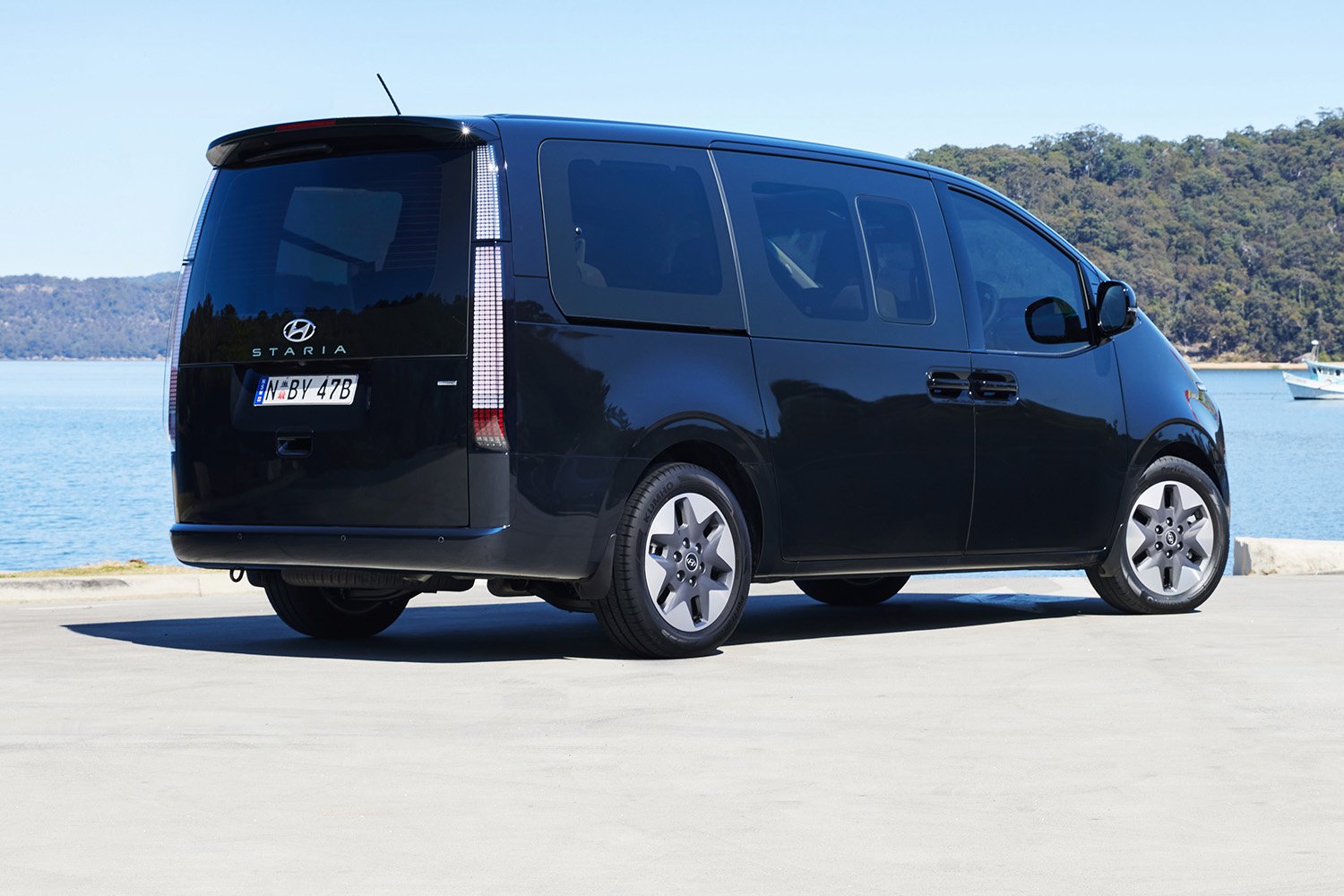
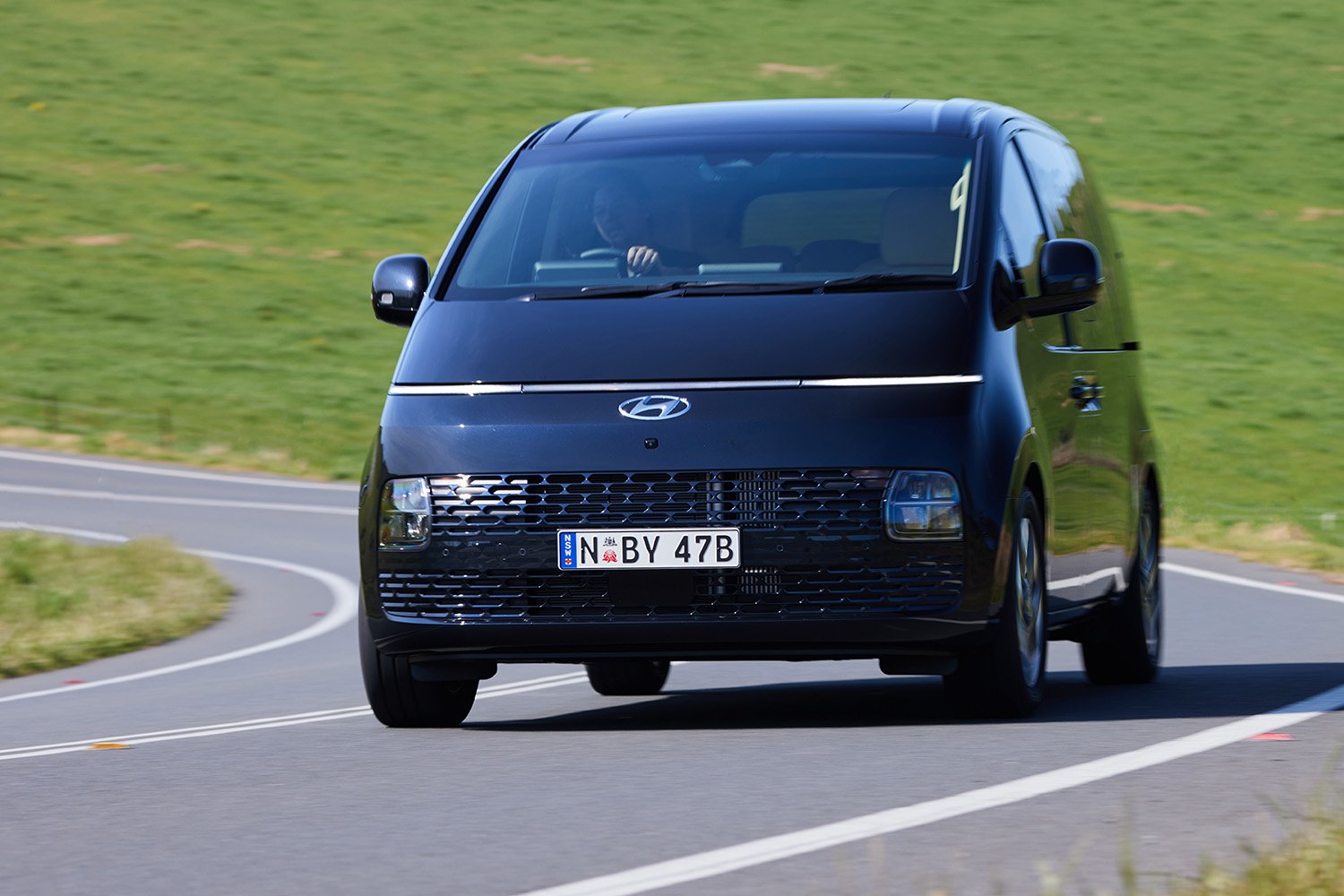
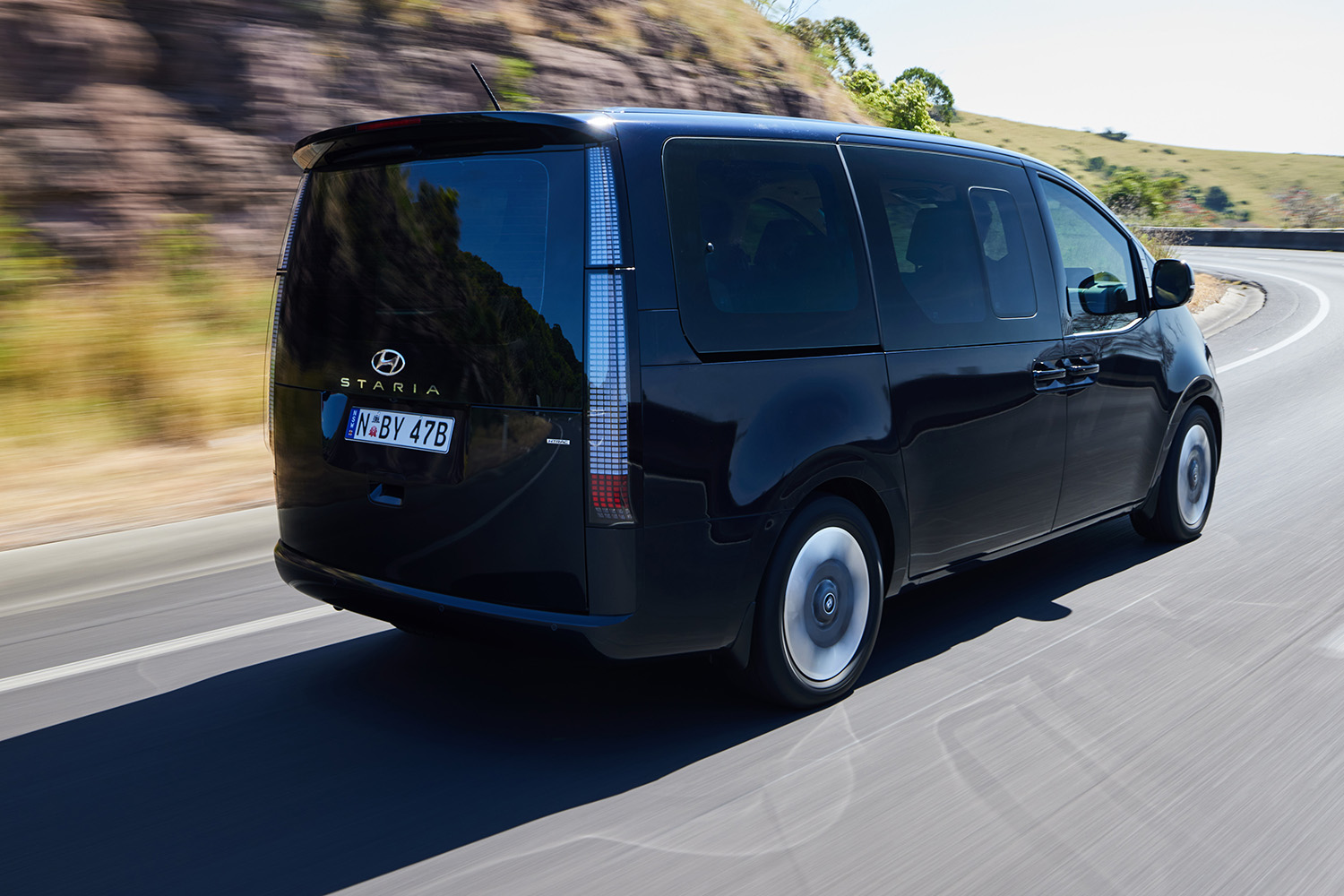
With its dramatic, singular-curve silhouette, deep panoramic windows, horizontal LED front lighting strip and vertical, grid-style LED tail-lights, Hyundai’s human transporter is guaranteed to stand out.
Hyundai’s sales projections aren’t quite as bold. The company is simply aiming to slot in behind the segment-dominant Kia Carnival with which it now shares its platform, though this would still involve overtaking the likes of the Volkswagen Multivan, LDV G10 and Honda Odyssey. (Lucky Hyundai, the Odyssey will be retired in 2022.)
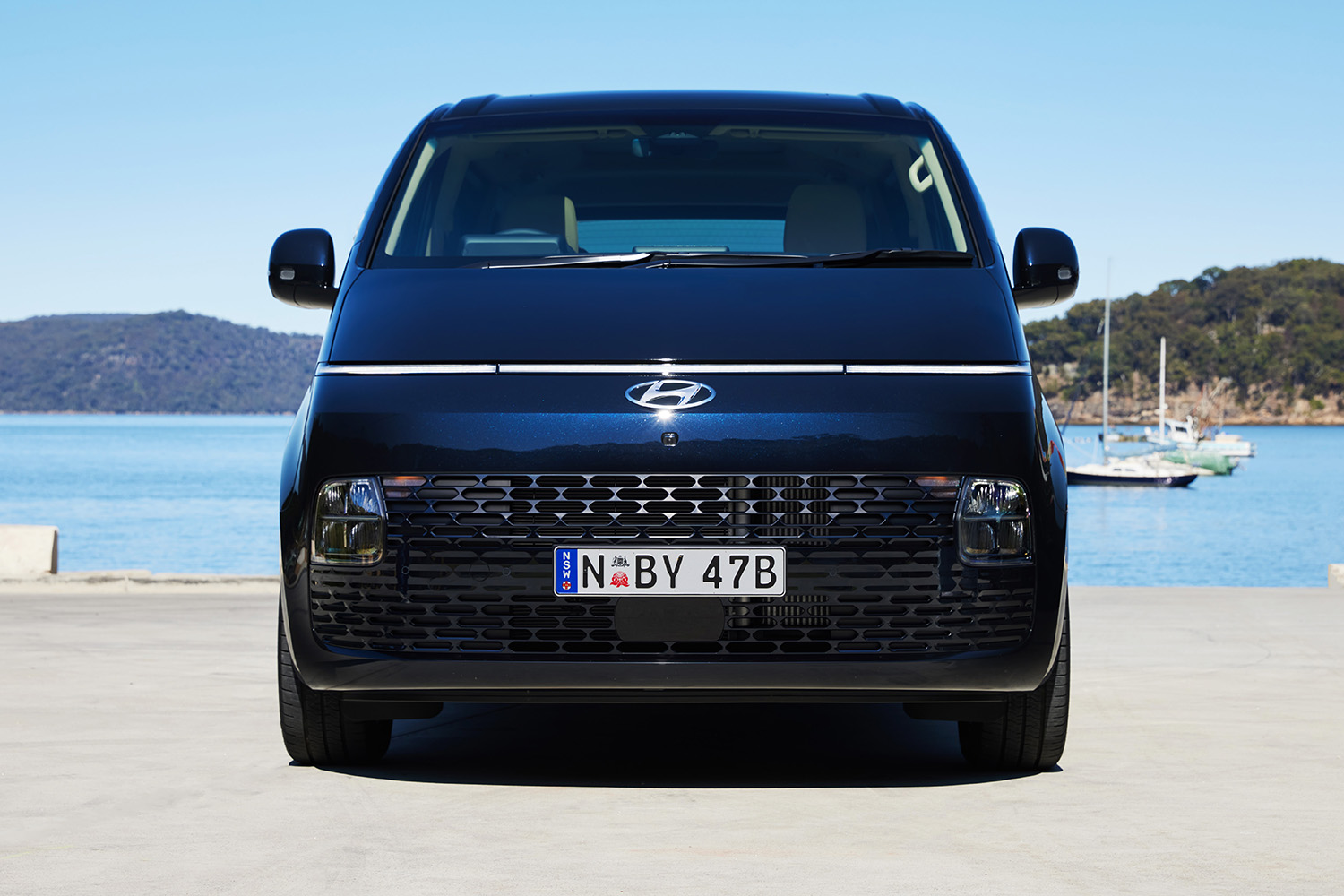
A simple range comprises three trim grades – Staria, Elite and Highlander – which are expected to share the sales spoils. Each is available as a front-drive V6 petrol or, for a $3000 premium, an all-wheel-drive four-cylinder turbo diesel.
Starting from $48,500, prices are slightly higher than the iMax, though a significantly higher level of standard equipment, including far superior safety features, is a generous offset.
The Staria also expands in all measurements. It gains more than 10cm in length (making it almost as long as the 5.3-metre long-wheelbase Multivan), nearly 8cm in width, and adds 6.5cm in height to stand almost two metres tall.
An extra 73mm for the wheelbase promises some extra space for a cabin that retains its three-row, eight-seat layout.
In Elite and Highlander models, electric sliding doors provide access to the rear cabin. All models feature tilt/slide second-row seats that create comfortably wide access to the third row.

The Staria is amply equipped for big trips – whether it’s shuttling people and large suitcases to the airport or ferrying the family around on a week’s holiday.
It’s here where the Staria provides one of its biggest advantages over the Carnival, offering much more headroom plus some extra legroom for rearmost passengers.
Three adults can also sit across with less of a squeeze, while curtain airbags, which didn’t even feature on the iMax, fully extend into the third row.
Smaller kids will love being able to stand up inside the Staria, but they’ll also be left disappointed – as will parents – that they can’t sit in the third row. The Staria lacks both ISOFIX and top-tether points in the back row, as found in the Carnival and Multivan.
Storage, USB ports and (ceiling) vents aren’t neglected, and Elite and Highlander variants add blinds for the passenger rows and a flush sliding window for the second row (it’s a pop-latch set-up for the base model).
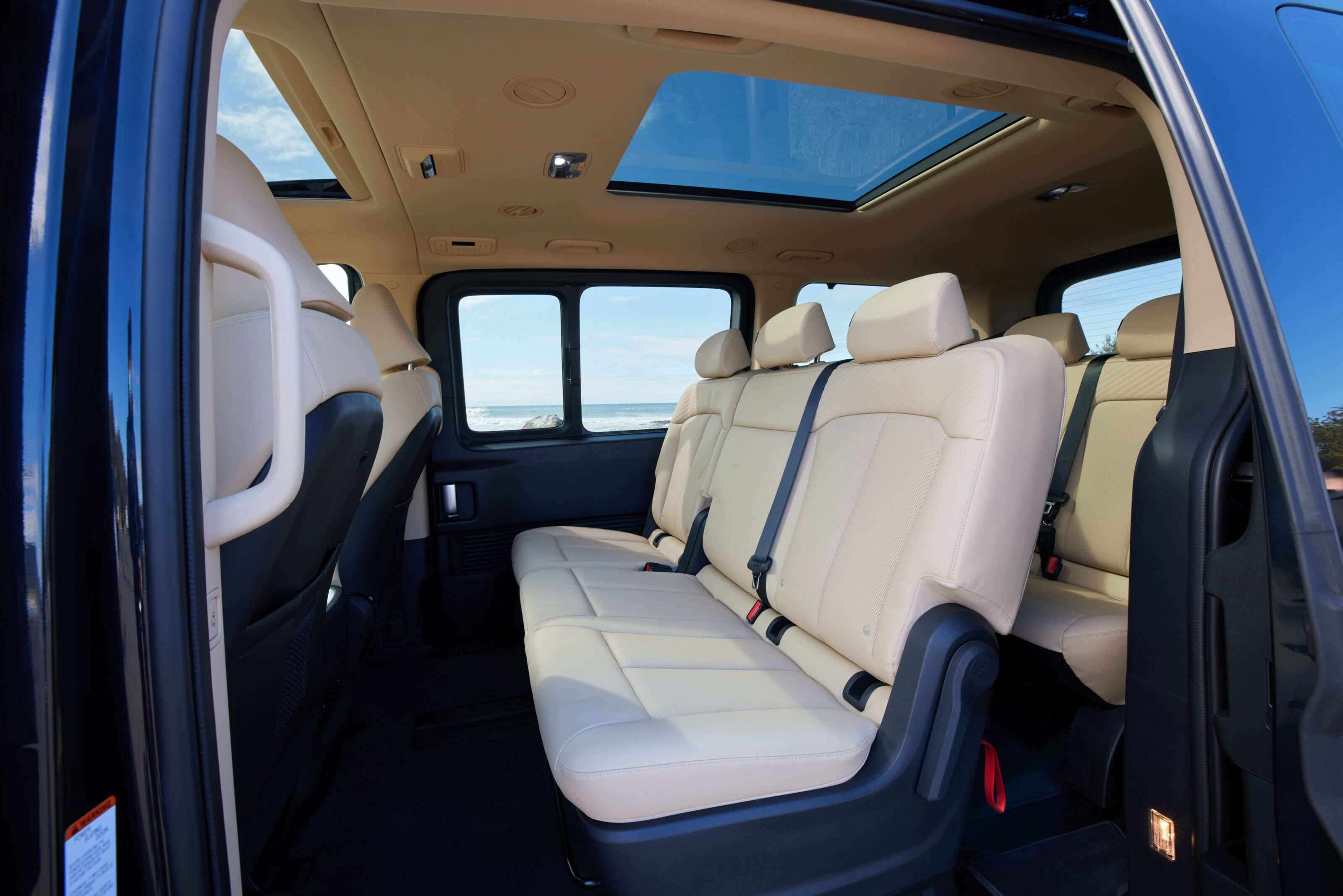
Our test car benefited from the extra light introduced by the Highlander grade’s standard sunroofs – fixed glass with blind for the rear cabin, electric tilt/slide up front.
The 60/40-split second row offers plenty of travel to tailor the balance of legroom between middle and rear cabin areas.
ISOFIX points are integrated into the outboard seats, with top-tethers across all middle seats. Use ISOFIX child seats and it’s still possible to slide the second-row seats forward for access to the rear.
There’s dedicated climate control via a roof panel in all but the base Staria, and there’s abundant storage options.
The front cabin is also a repository paradise – especially in Highlander spec with its extra dash ‘multiboxes’.
All models provide a centre storage box with a sliding lid and generous interior volume as well as two (removable) cupholders.
The doors are particularly ingenious, with four levels of varying storage capability – ranging from a small, shallow tray on the top of the doorcard to a super-wide lower compartment for placing larger items such as tablets, umbrellas or drinks bottles.

The Staria is amply equipped for big trips – whether it’s shuttling people and large suitcases to the airport or ferrying the family around on a week’s holiday.
With its low bumper and high roofline, Hyundai’s people-mover provides a huge, flat boot with a quoted volume of 803 litres that thrashes multi-seater SUVs and even trumps the Carnival.
There are a couple of options for expanding cargo space. Both the middle and third-row seatbacks can be folded flat onto the cushions. Or pull a lever to tip up the third-row bench, then grab a handle to push the seatbacks forward and up against the second-row seatbacks.
Unlike the Multivan, however, the rear seats can’t be removed to create a part-time van for those trips to Bunnings or Ikea.
The Hyundai’s upright driving position has much more in common with the VW and other van-style peers than the SUV-like Carnival.
This is exacerbated by front seats that are too flat and offer limited side support. The cushioning is also on the firm side and there are no fold-down seat armrests as in the likes of the Multivan, or even the old iMax.
Most cabin plastics are of the hard and durable, too, though the Staria’s dash looks more sophisticated than your average commercial vehicle with its square-slabbed infotainment and climate control panel and, in our Highlander model, a fully digital driver display.
Forgoing a conventional instrument binnacle, the display allows a completely unhindered view through the Staria’s vast windscreen. The remarkably deep front side windows, large side mirrors, decently sized rear window, and the penthouse seating position ensure all-round vision is mostly good.
The B-pillar obscures some vision over the driver’s right shoulder, though blind spot monitoring is standard while the Highlander adds a clever video feed in the driver display when the indicators are used.
While the steering is slow at 3.4 turns lock to lock, requiring some extra arm work at times, its lightness otherwise makes the Staria easy to manoeuvre despite the vehicle’s size.

Highlander adds a form of extra comfort with heated/ventilated front seats and a heated steering wheel, though surprisingly misses out on a branded audio system.
Also exclusive to the flagship is a passenger view monitor, which, when selected via the touchscreen, uses a ceiling camera that allows front occupants to keep a check on the kids in the back rows.
The Staria’s suspension can struggle on the bumpiest suburban roads, though improves with some passengers on board and the supple ride is generally agreeable.
Hyundai’s familiar 2.2-litre turbo diesel offers extra torque over the standard 3.5-litre V6 petrol, and the 430Nm delivered between 1500 and 2500rpm serves up more effortless in-gear acceleration that will be only more beneficial the more passengers are on board.
The engine can be a touch laggy at lower revs, however, and the eight-speed auto can be caught out on steep hills.
Although the diesel only starts to get truly raucous under load, extra sound deadening between the engine bay and cabin wouldn’t go amiss. Noise refinement is a stark contrast to the experience of the related (but technically different) 2.2L diesel found in the group’s Genesis GV70 SUV and G80 limo.
Unlike the Staria-Load van, the Staria diesel comes with the bonus of an on-demand all-wheel-drive system, including 4WD Lock. It joins 4Motion versions of the Multivan as an advantageous alternative to the usual breed of front-drive or rear-drive people-movers.
VERDICT
Even in this spec, the Hyundai isn’t quite the complete, ultra-versatile people-mover – owing to its lack of third-row child-seat anchorage and limited seating flexibility. But a strong mix of space, safety and technology – in Highlander form especially – makes the Staria, for families and fleets alike, worthwhile viewing.
The fifth-generation Subaru WRX made waves when it was revealed last week – not least for its styling, which has divided opinion amongst the flat-four faithful.
While Subaru understandably wanted to show off the 2022 model in the best possible light – notably on a race track, off-road and in its orange hero colour – the Japanese manufacturer only revealed the premium grade of its latest model, omitting lower trim levels from the launch.
However, thanks to Alex on Autos, we’ve been given a better look at the car’s interior and the infotainment system, which will feature in the entry-level WRX – forgoing the single touchscreen for two separate displays split by a black plastic bezel.
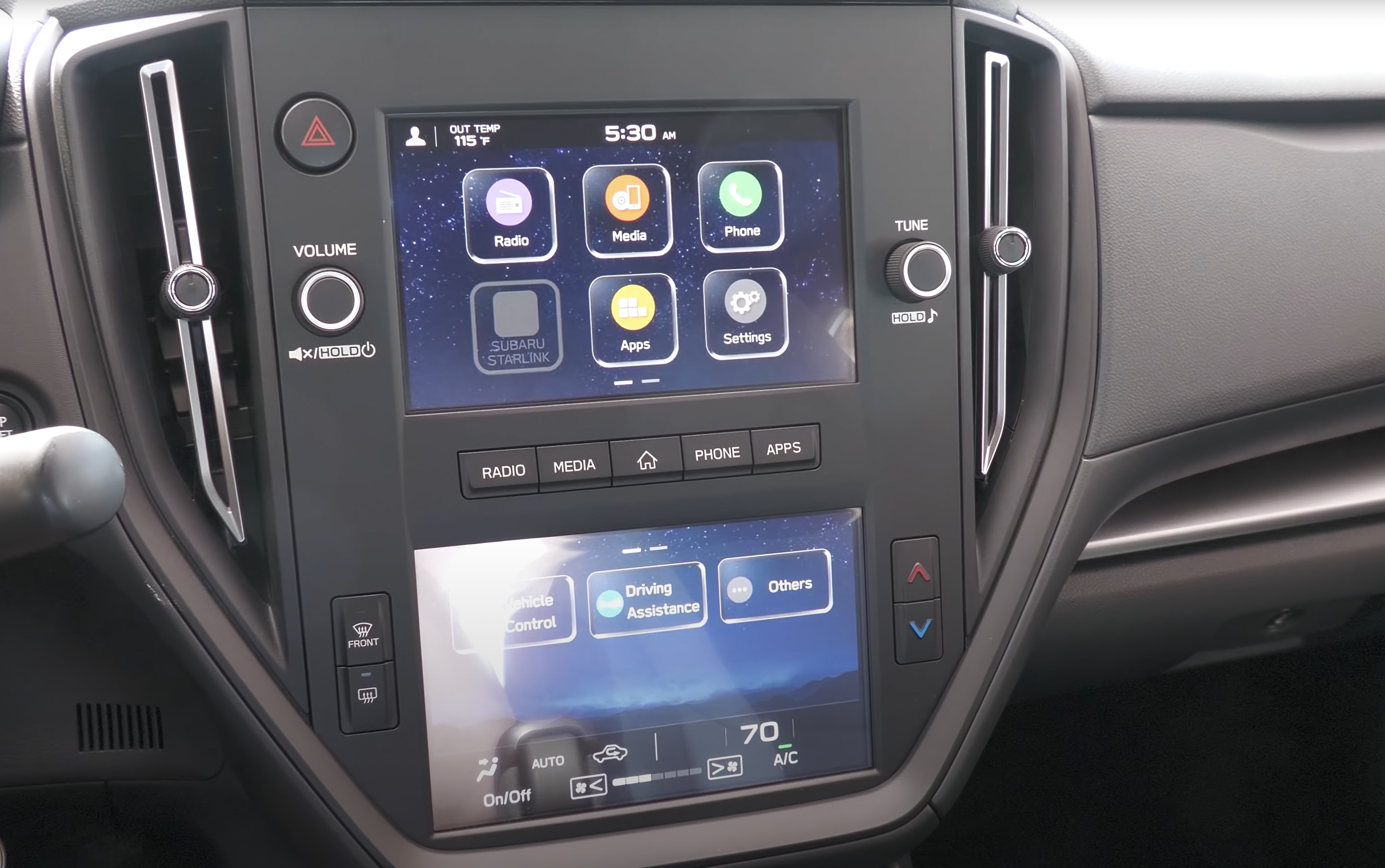
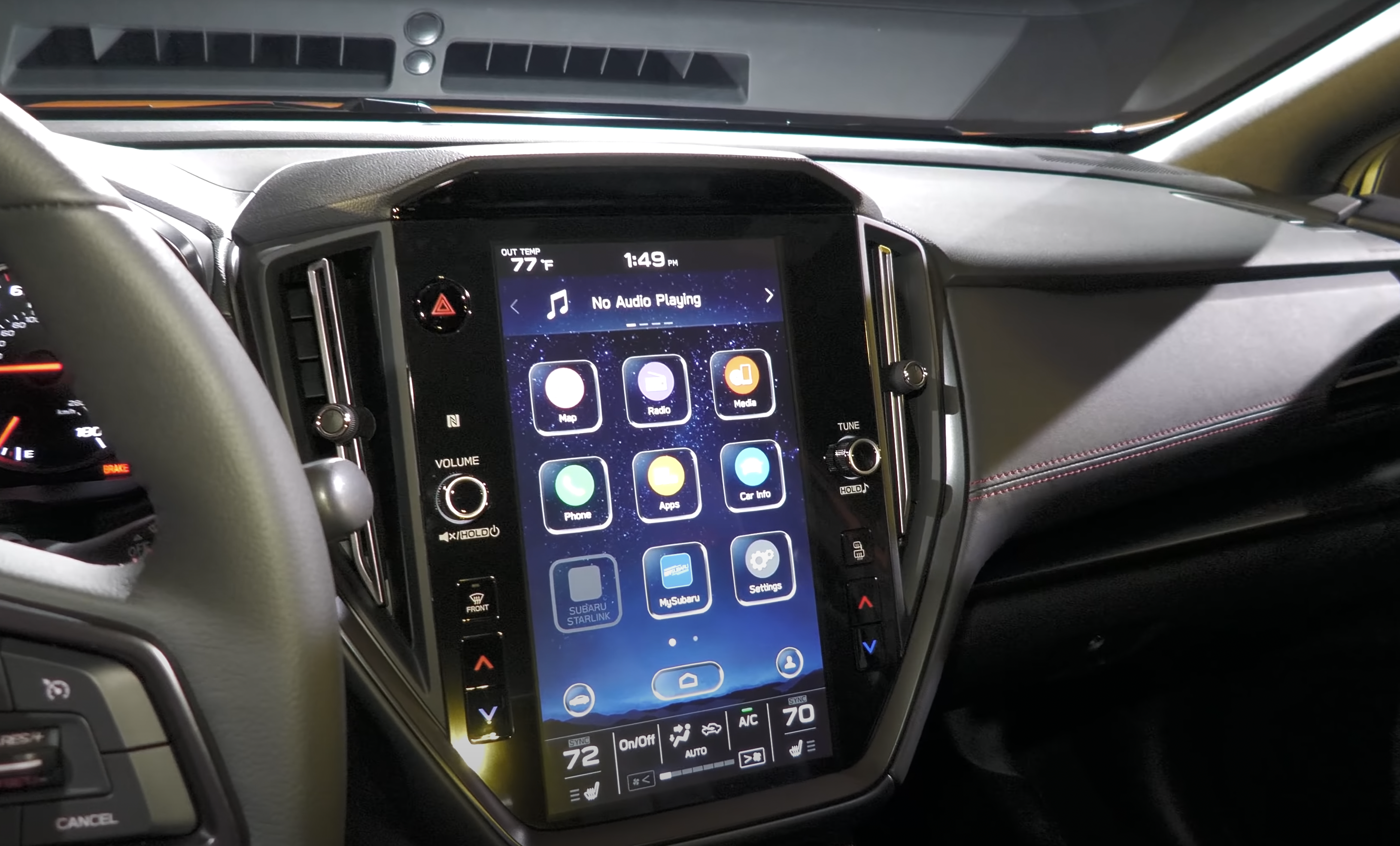
Rather than the 11.3-inch, vertically mounted infotainment screen, which also features on certain variants of the Outback, the base model’s displays are smaller and horizontally-oriented – with the top used for radio, phone and navigation, while the lower screen manages the car’s HVAC systems, controlled by both touch and dedicated buttons.
Some could argue the more basic setup reflects the exterior design of the new WRX, with black cladding surrounding the wheel arches, side skirts and rear bumper – some say it is reminiscent of the MY99 Impreza WRX, others believe it’s a shift towards a more crossover-centric market.
In addition to the larger screen, the cheaper WRX variant misses out on a push-button start, having to make do with an old-fashioned key to fire up the 2.4-litre boxer engine.
Local pricing and features haven’t been revealed for the 2022 WRX as yet, with Australian arrivals expected to begin in April next year.
- Introduction: Incognito
- Month 2: High Road Realisation
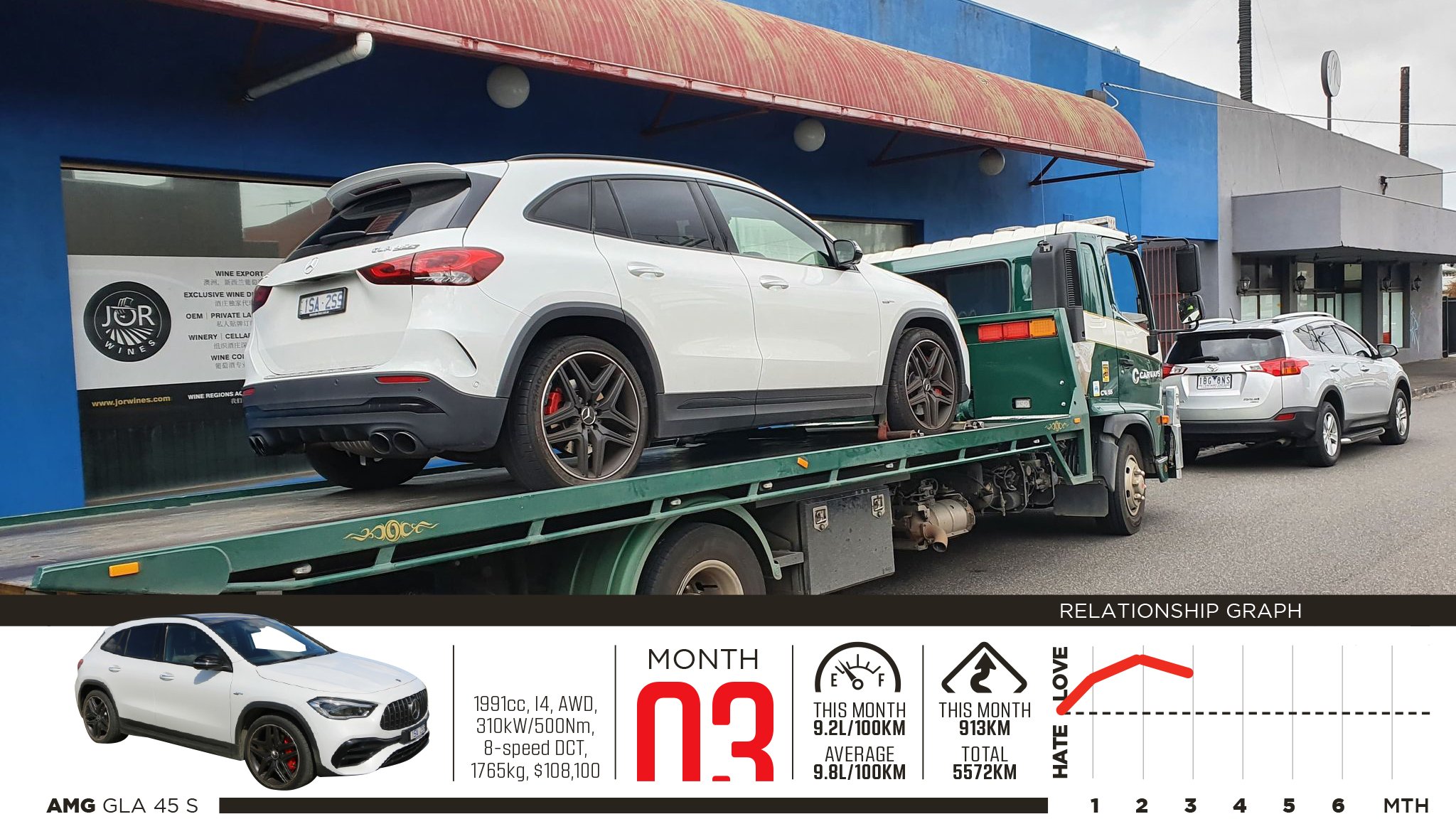
- Month 3: They See Me Rollin’
- Month 4: Three Month Hiatus
- Month 5: Pack and Slide
- Month 6: Farewell – Imperfect Perfection
Introduction: Incognito
Is Mercedes-AMG’s SUV a hot hatch in disguise? Let’s find out
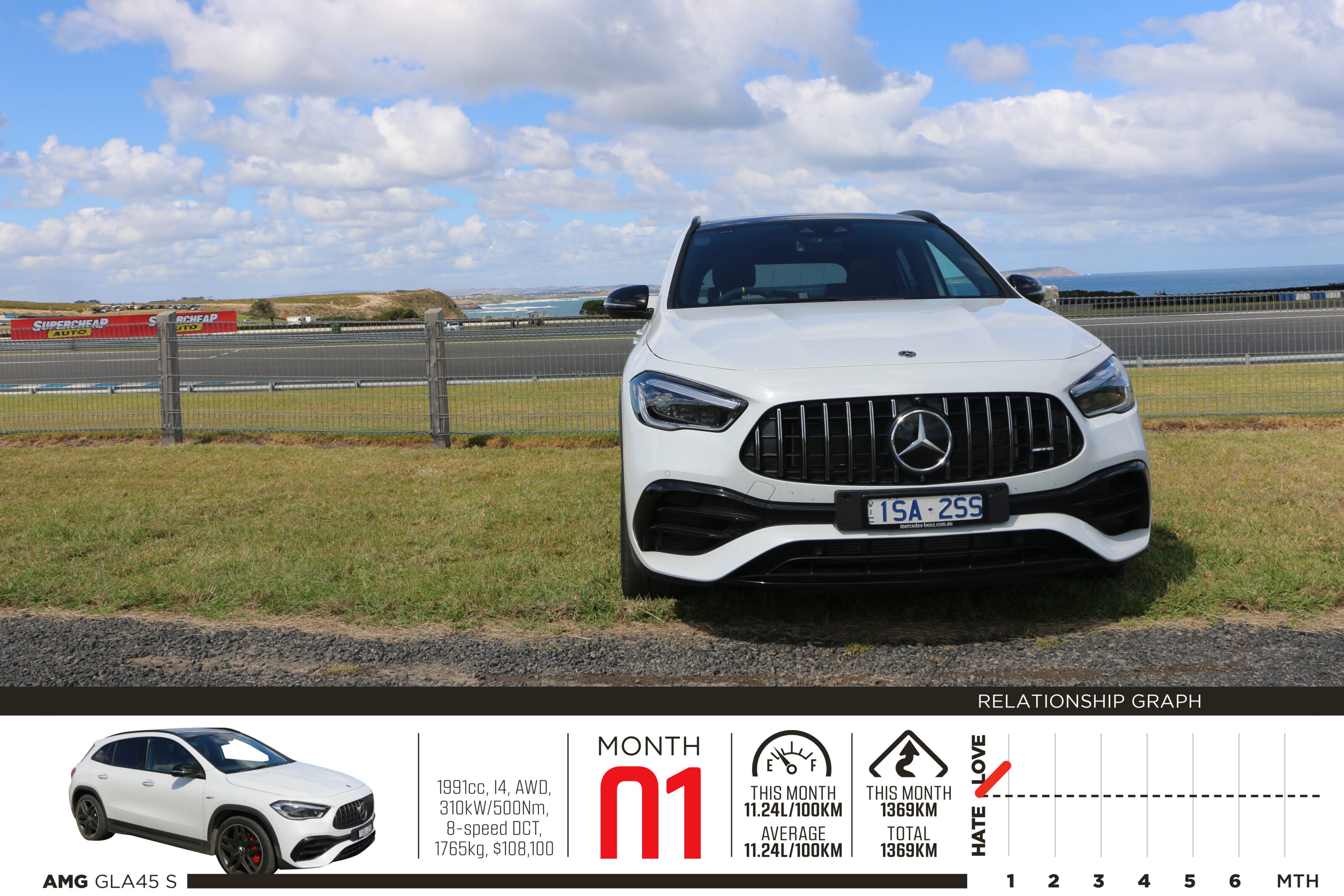
The Mercedes-AMG GLA45 S has both confounded and impressed me during its first month at MOTOR.
On paper, against the context of the potent A45 S hatch which just claimed third at PCOTY, the GLA45 S can seem underwhelming and hard to justify. It’s more expensive, has more divisive styling, is heavier, and is a member of the cursed three-letter-acronym segment – SUVs – bringing with it a whole luggage set of preconceptions about its performance credentials.
And yet, I find myself writing this while members of our video team use it for filming duties, anxious and eager for the key be clasped in my grubby fist once more.
Far from being happy to pass it off to others due to a perceived compromised personality, I want to hoard the GLA45 S like a dragon atop a pile of gold, spitting liquid flame upon anyone who dare take it from me. That’s not just a honeymoon period sheen either. I’ve had plenty of time to get to know the GLA, using it for regular commuting and a full comparison test against its core rival, the Audi RS Q3.
To say it has been a comprehensive introduction would be a severe understatement. So far the niggles have been minor, but incessant. Upon start up you are greeted with a seat belt warning for the rear pews, despite the seats remaining unoccupied.
It’s as if the AMG has decided I’ve adopted a set of ghost triplets. From previous experience with Mercedes’ current generation of infotainment, the GLA’s inbuilt MBUX system was turned off before I had even left the depot at initial pick-up – if I hear another automated voice ask “how can I help you?” before I shuffle off this mortal coil it’ll be too soon.
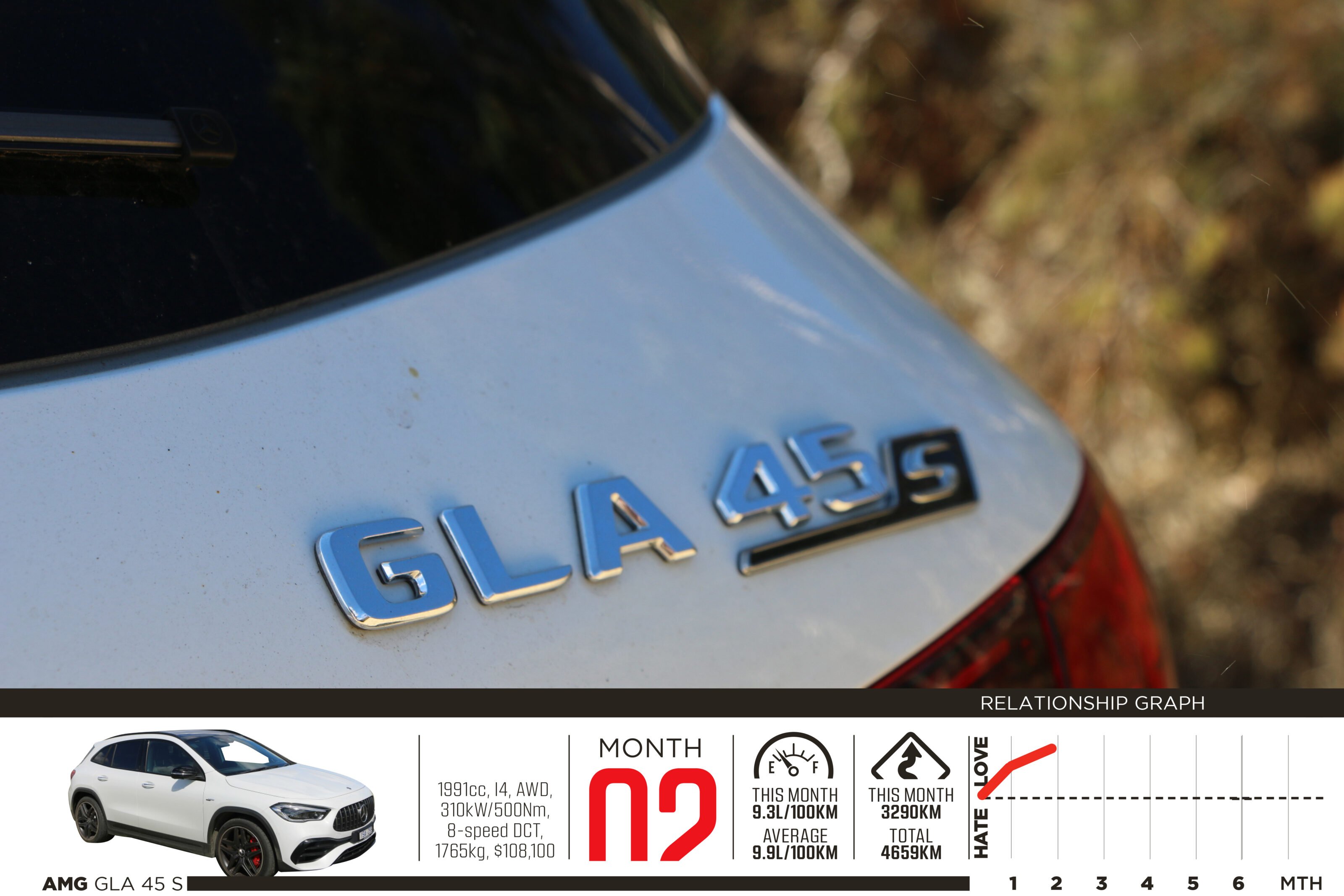
Fuel consumption hasn’t been fantastic. The official combined claim is 9.6L/100km, which I have been unable to come close to matching. This is probably more than slightly influenced by the full-throttle antics the GLA45 S brings out of me at every traffic light. With some longer highway driving slated next month, it’ll be interesting to see if the four-pot’s thirst is abated somewhat.
“Of all the long term test cars I have had come through … I can’t recall another I’ve gelled with as quickly”
The most noticeable change in day-to-day use for the GLA compared to it’s A-Class equivalent is linked to your right foot. Throttle response has been softened in its initial response. This translates on the road like there is an element of turbo lag that has been introduced. However, power hasn’t been adjusted from the responsive A45 S, and switching upwards through the GLA’s drive modes progressively sharpens up response times.
To make the small SUV more palatable to, well, SUV buyers it appears the bottom end of the throttle map has been given a lobotomy.
Despite the haircut down low, the GLA45 S isn’t drastically slower than its more focused A45 S sibling in either a straight line or around a race track. Our independent performance testing shows the GLA is just five tenths slower to 100km/h than the A45 S, and doesn’t fall more than a second behind until you are travelling in excess of 160km/h.
Scott Newman drove the pair around the Haunted Hills hillclimb circuit, and while the A45 S was quicker, the GLA remained within nine tenths over a 62-second lap. This impressive performance indicates that the ‘lag’ on step-off is an artificial characteristic introduced by engineers, and not something baked into the system. You can watch the full video of the AMG 45 siblings tackling Haunted Hills on the MOTOR YouTube channel.
Sure, slower is slower, but a 4.4-second 0-100km/h sprint is still seriously quick, and the GLA isn’t entirely without merits. I’ve already begun to appreciate the improved entry and egress ergonomics, more refined suspension tune, and raised ride height of the SUV bodystyle compared to its hatch sibling.
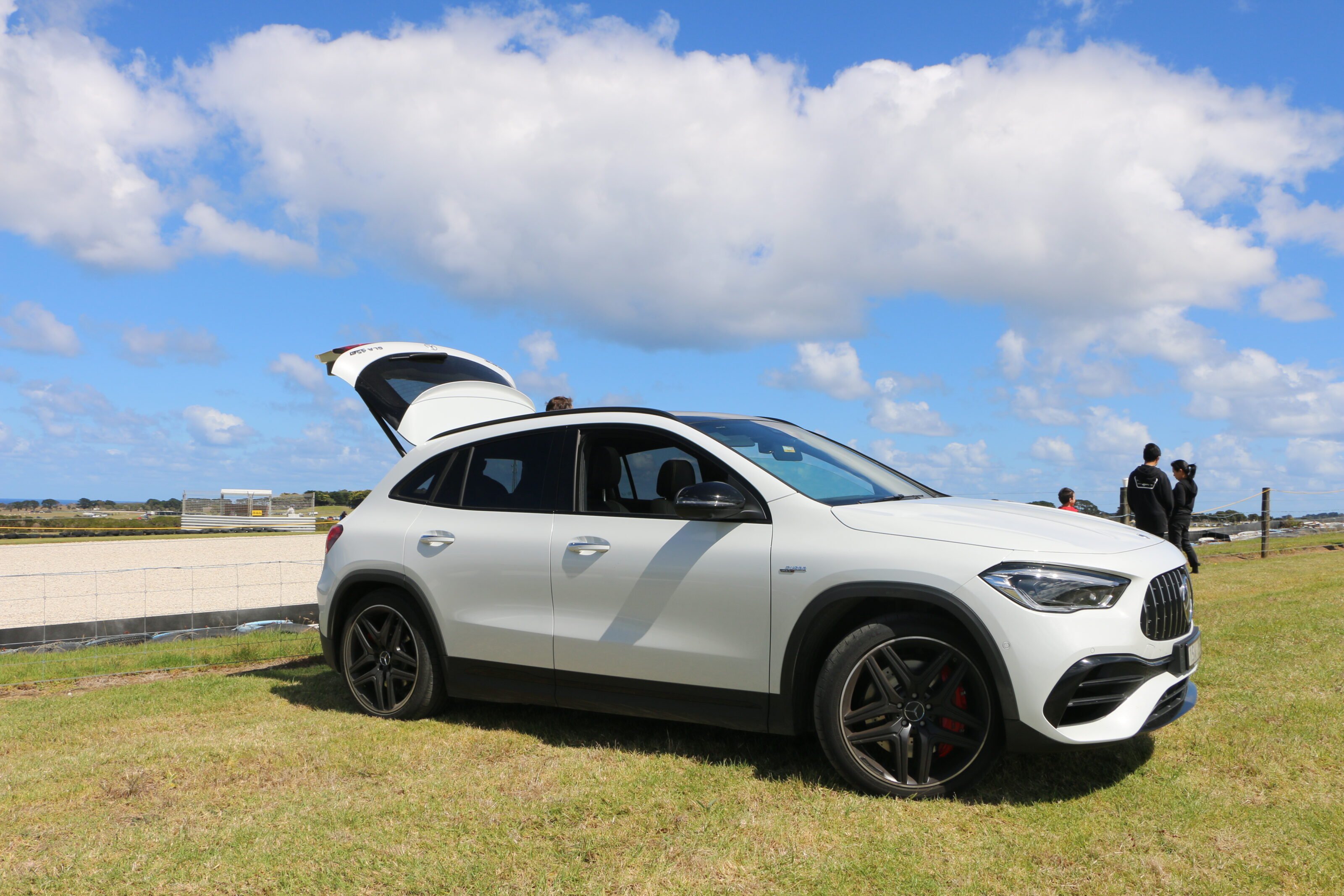
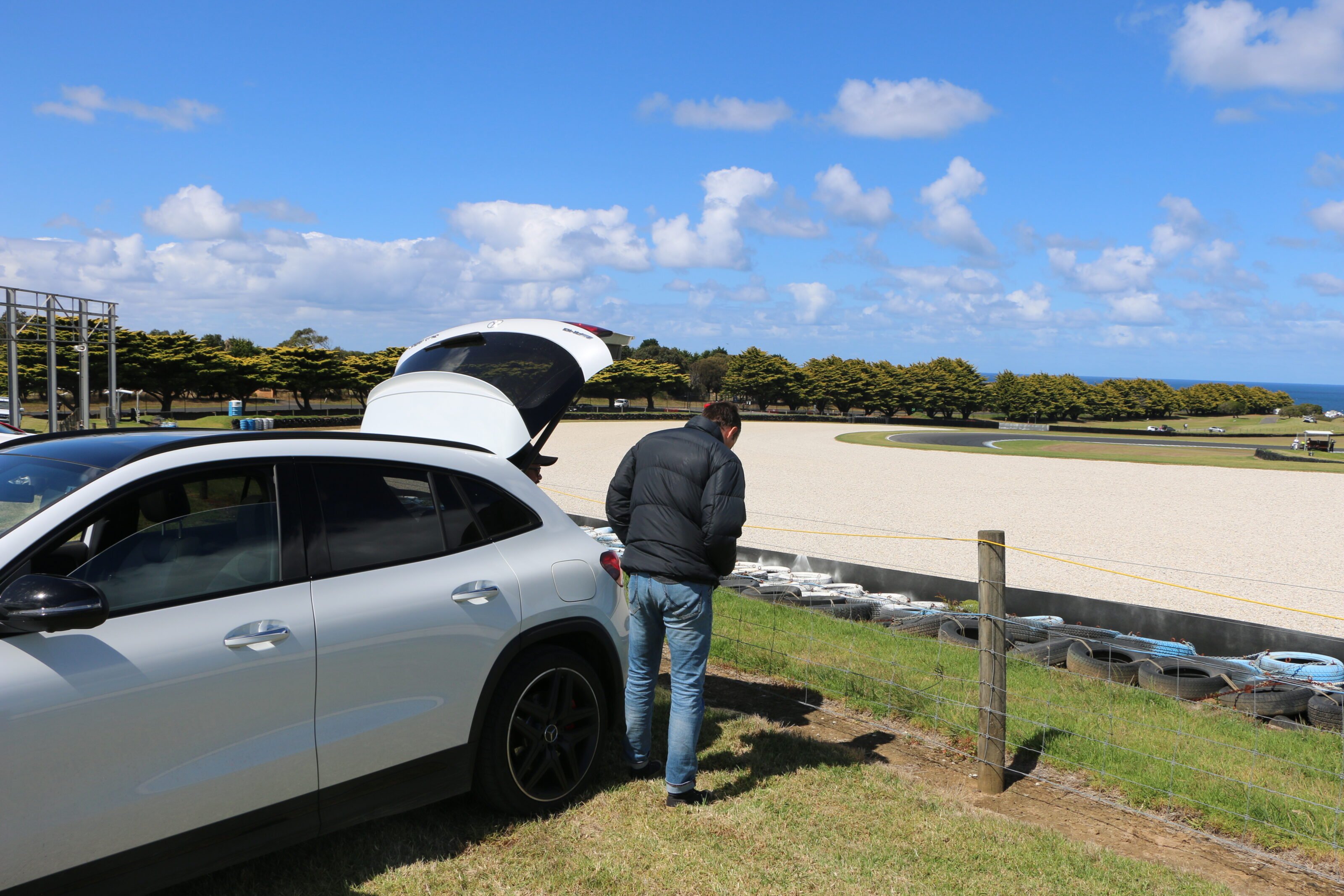
A trip to Phillip Island circuit to watch some race cars extolled these benefits best, with the GLA clambering over gutters, climbing grassy hills, and traversing gravel troughs around the circuit without worrying the front bumper. It’s not hardcore off-roading, but I wouldn’t ever countenance doing the same thing in an A45 S. Combine that with the prodigious performance, and I hope you can begin to see why I dislike sharing the GLA.
It’s early days yet, but of all the long term test cars I have had come through the garage, I can’t recall another I’ve gelled with as quickly. I hope my co-workers can forgive the hissing sounds I’ve been making every time they walk past my desk and look at the keys. – CK
Things we love:
1. Useable grunt 2. Sleeper styling 3. Exhaust theatrics
Things we rue:
1. Low-down lag 2. On the thirsty side 3. Phantom belt error
Update One: High Road Realisation
Our pro snapper snatches the GLA 45 keys for a super sedan shoot
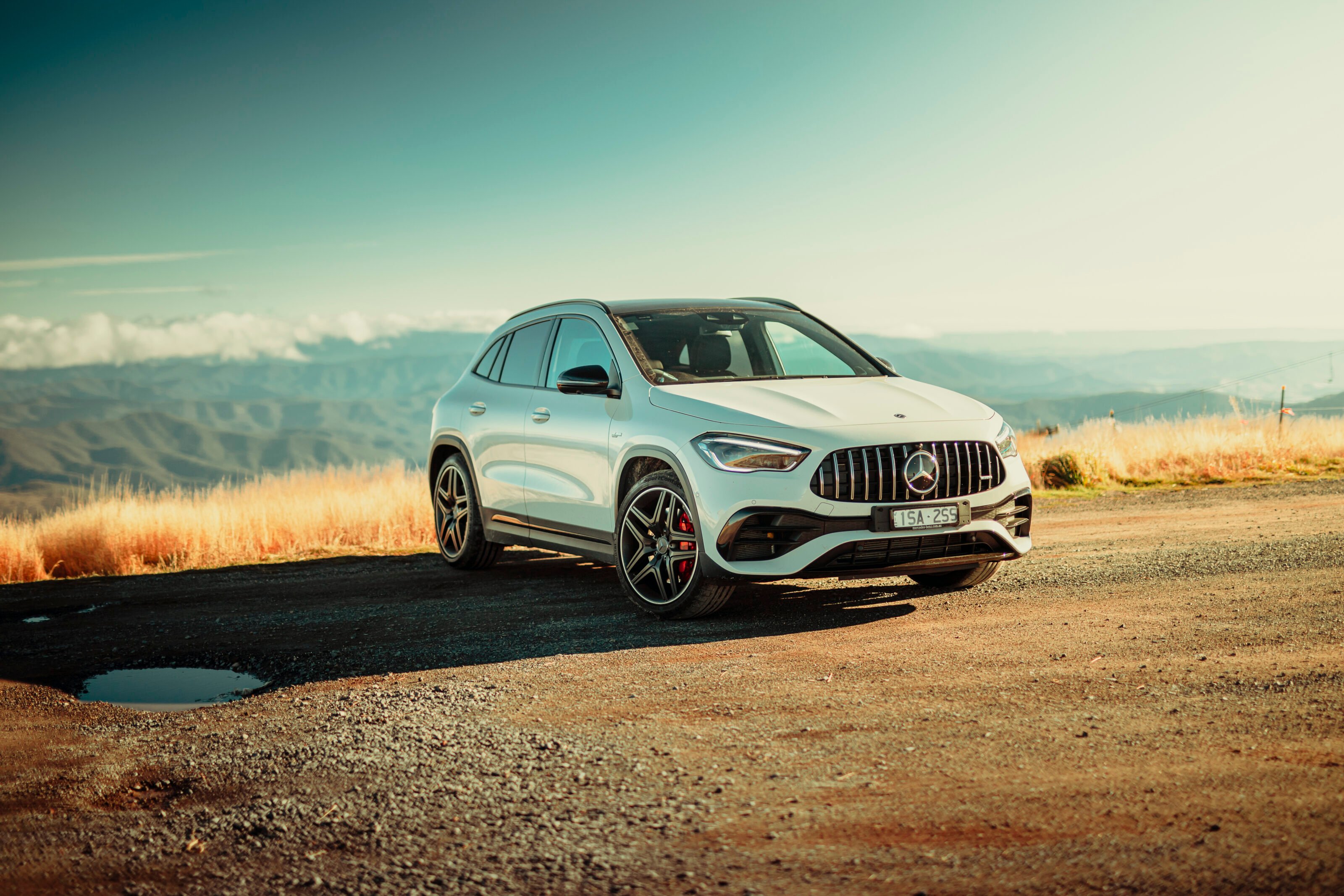
These days, perhaps somewhat cheekily, if a shoot I’m on is too much of a trek out of town, I’ll hold out my hat for the keys of something that’s kicking around the editorial carpark. With the alternative being a French hot hatch with all the long-range road trip manner of a three wheeled skateboard, I hope you’ll forgive me for trying one’s luck. A date with BMW’s new G80 M3 and Alfa Romeo’s updated Giulia Q (which you can read about in the June issue of MOTOR) near one of Victoria’s ski fields warranted one such cry for mercy.
Word returned that Kirby’s Mercedes-AMG GLA 45 S long termer was free. Having briefly helmed this car months prior and formed somewhat cynical opinions on just who exactly a circa-$110K pint-sized SUV with supercar aspirations was conceived for, I was keen for more seat time.
Just the week before, I was chaperoning the GLA’s lower riding and arguably less contradicted sibling, the Mercedes-AMG A45 S, for MOTOR’s tyre test. Personally, I believe the current A45 to be perhaps the most thought-out Affalterbach product in the current catalogue. Or at least I did, until I my dear mother struggled to get in its low-slung cabin while taking the family out for dinner one night. This transgression swiftly took the shine off the hyper hatch’s presence in front of our house. Perhaps a high-riding alternative makes sense after all. Time to get behind the wheel to see if my hypothesis holds true.
Rolling out of the office gate and its immediately apparent that the GLA 45’s ‘everyday’ Comfort mode has less edge than the A45’s comparable demeanour. The ride is still on the firm side, but there’s more forgiveness at slow speeds which is a big tick for everyday liveability. Similarly, so is the gearbox. While Comfort errs too much on the docile side in certain situations, overall the GLA 45 S is the smoother pebble in the stream of stop/start traffic.
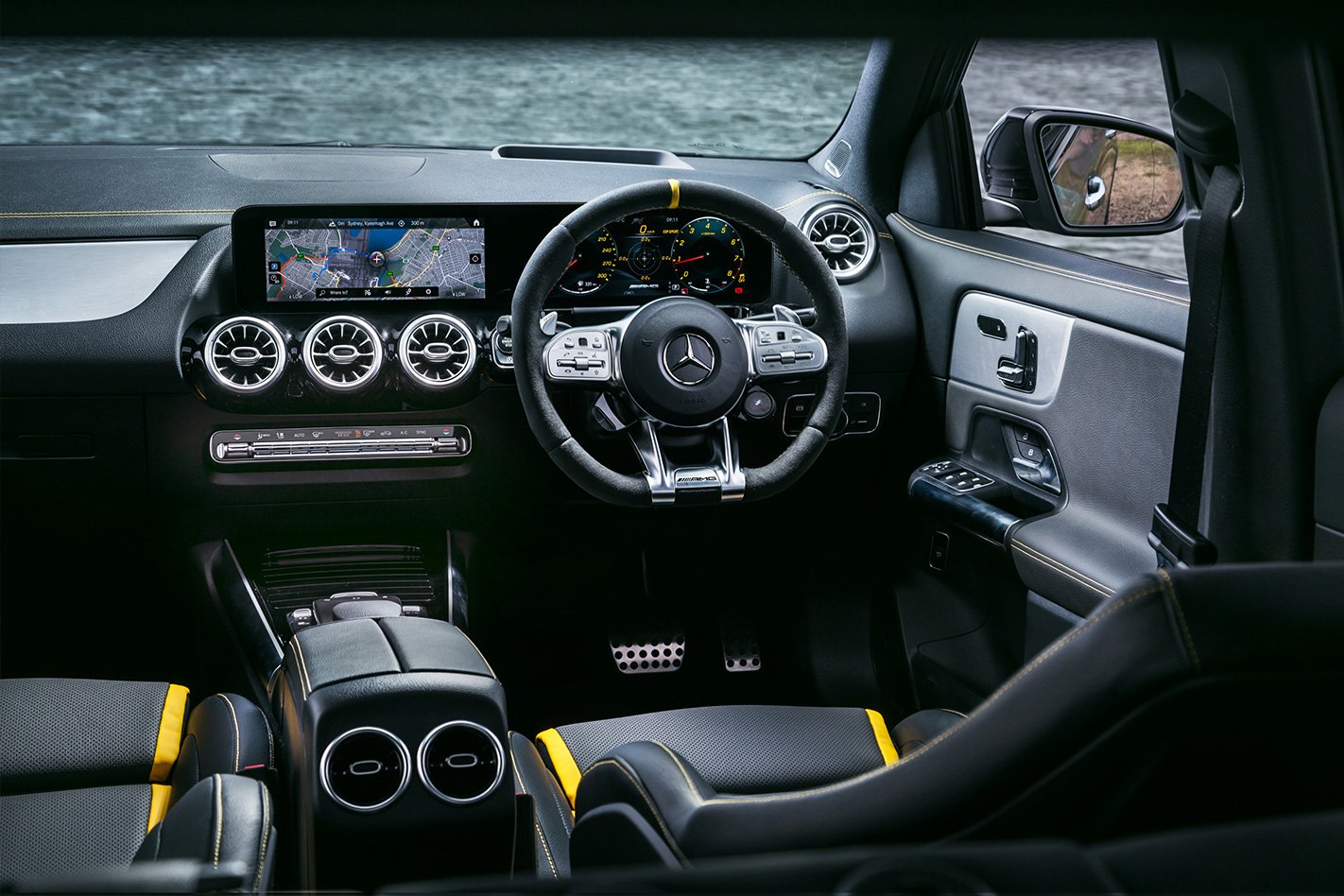
My stint in the GLA started with a night run up the Hume after I’d completed a day’s shoot in the studio, so I was looking forward to finally sitting down and making the most of my time with the tech-heavy cabin. Right off the bat however, I found that no matter the seating position, the outer backlit air vents on the dash reflect off the side windows and directly into my line of sight for the wing mirrors. Much like a HUD, this doesn’t prove too distracting when driving with plenty of light around, but routinely checking mirrors in dark scenarios only served to confirm that the backlit air vents were indeed still there. Thank heavens.
The first opportunity to gauge any dynamic difference comes quite early on, courtesy of a highway on-ramp filter traffic light. With the steering wheel architecture still fresh in my mind, dialling the GLA into ‘unsociable slingshot’ mode takes but a crank of a dial and a prod of a button for full agro and manual control of the gears. Poised and ready, the initial jump at the green for the ‘Form 1 Lane’ sign has all the bravado of a soggy firework, with the GLA 45 taking at least two seconds to deliver any meaningful torque to the wheels. This feels like an eternity when your car has talked itself up by displaying a chequered flag between the dials and raising its idle at a standstill.
Credit where it’s due however, once the car has eased its way off the line, the acceleration is ballistic. Firing through the first few gears takes seemingly less time than it takes to get the thing on song in the first place, and the car comes into its stride in a way that punches far above what its looks suggest (particularly this white non-aero kit example). The ultimate sleeper on sale today? Perhaps.
The GLA’s higher riding package doesn’t really hinder progress in the bends either, with prodigious front-end grip on offer from turn in to power out. It shares a tendency of all the current 45-badged AMGs to have a suggestion of rear-end rotation giving an almost all-wheel-steer feeling, as if the car’s pivot point is somewhere in front of the rear axle. Having the ride in Comfort is all I find necessary on the alpine roads we’re on for the shoot, with impressive body control in the softest setting. Firmer modes up towards Sport and Sport+ are still palatable but only offer marginal dynamic improvements while on public roads.
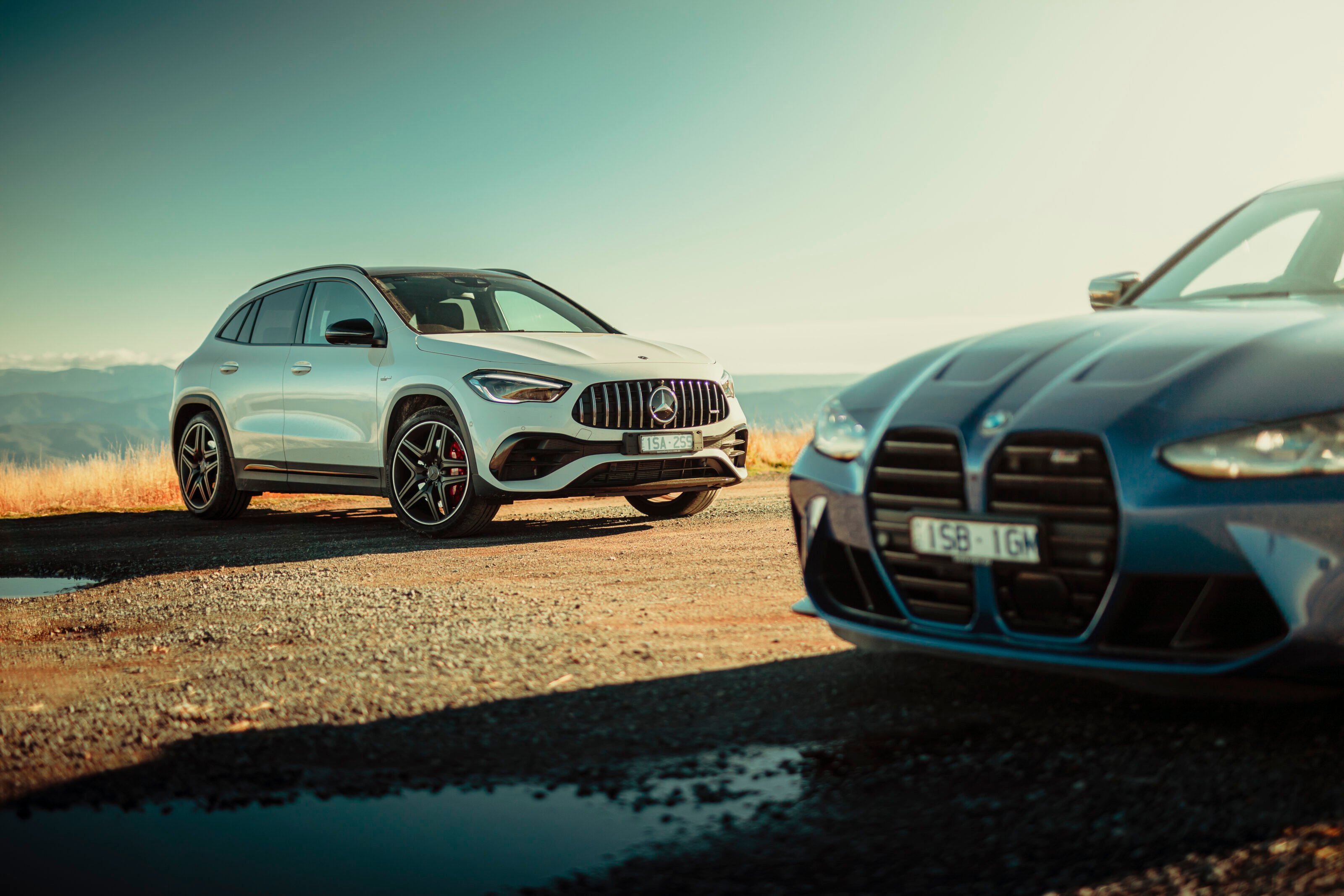
Using the GLA 45 S as a camera car in the company of the new BMW M3 and Alfa Romeo Giulia Q is an interesting one. If the weather was a tad damper it would probably be the quickest point to point missile out of the three, and yet it presents itself with real world ride height, non-gimmicky (if a bit bland) styling and small SUV packaging designed for everyday duties.
However, I’m less reluctant to return the keys than I was with the A45 S the week before. The A45 S comes across as a more focused tool; and the slight resultant compromises are something I’m able to live with – not entirely surprising for someone who’s daily driver is a Renault Clio 182 on coilovers. The GLA is a jack of more trades but ultimately, it’s hard to shake the feeling that while I love what it stands for, it offers way more performance than anyone looking for a GLA is after. That being said, if you’re in the market for the broadest of talents, look no further. – AB
Update Two: They See Me Rollin’
It’s time to find out if they GLA 45 S is more than a city runabout
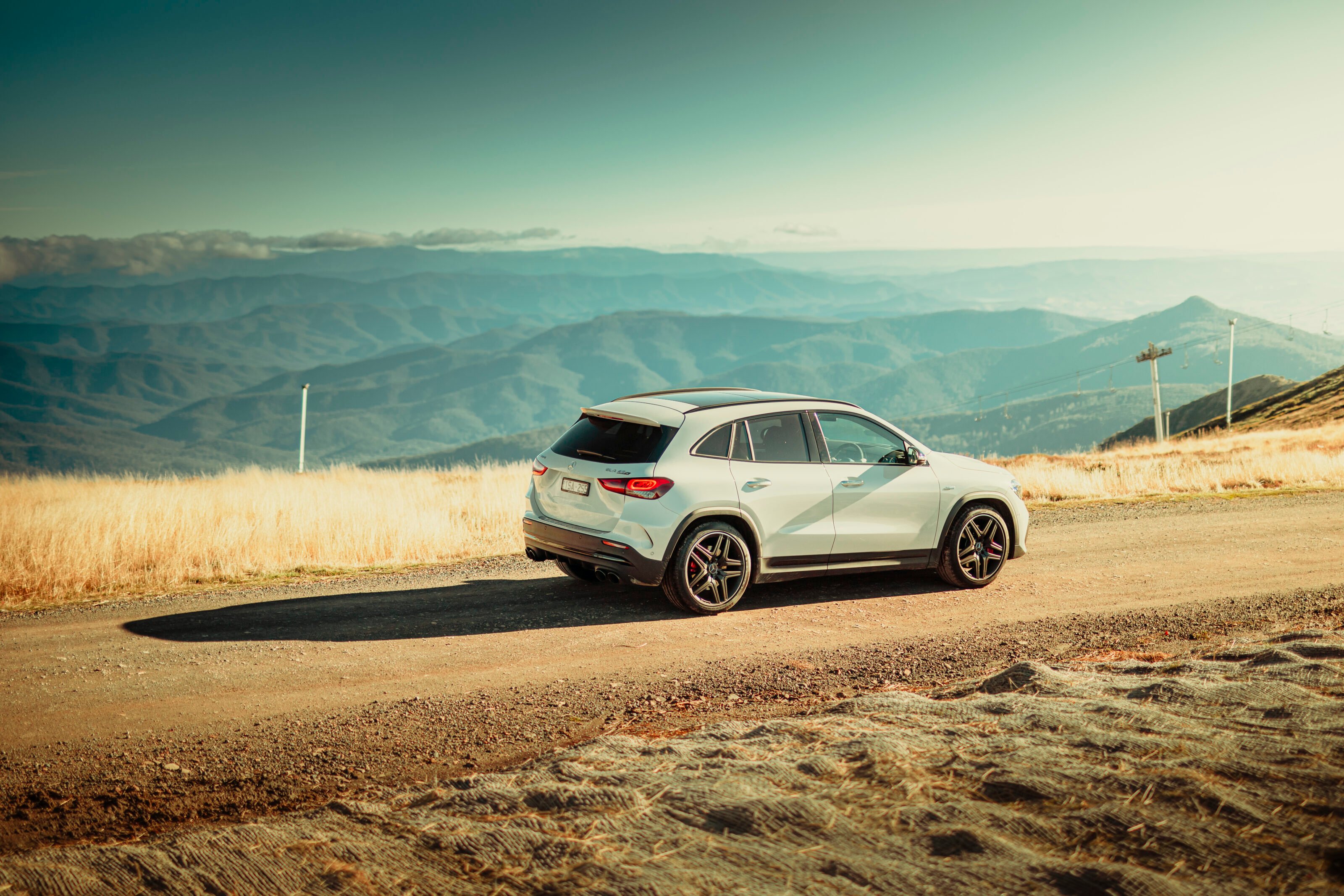
“This isn’t the test I was meant to be doing”, I think to myself as I look through the GLA’s windshield. Winding ahead of me is a dirt road, lined with gumtrees and pockmarked with nasty potholes.
I’d promised Enright a straight-forward assessment of ‘my’ long-termer’s ability on the highway, and yet here I was, well and truly off the beaten path. But, that’s what happens when you have the smallest AMG SUV at your disposal. You end up doing things a little differently, and are all the better for it.
Most of the driving this month was done while I took some well-earned leave, which included my partner and I visiting friends and family. That meant the day before I encountered ‘The Dirt’ I’d put in several hours with the cruise control set in a truly mundane highway schlep. This created an appetite for a bit of excitement and so I went hunting for an appropriately coiled and challenging road in a late-night scour of Google Maps. Note to self: choosing routes sight unseen doesn’t always turn out as planned.
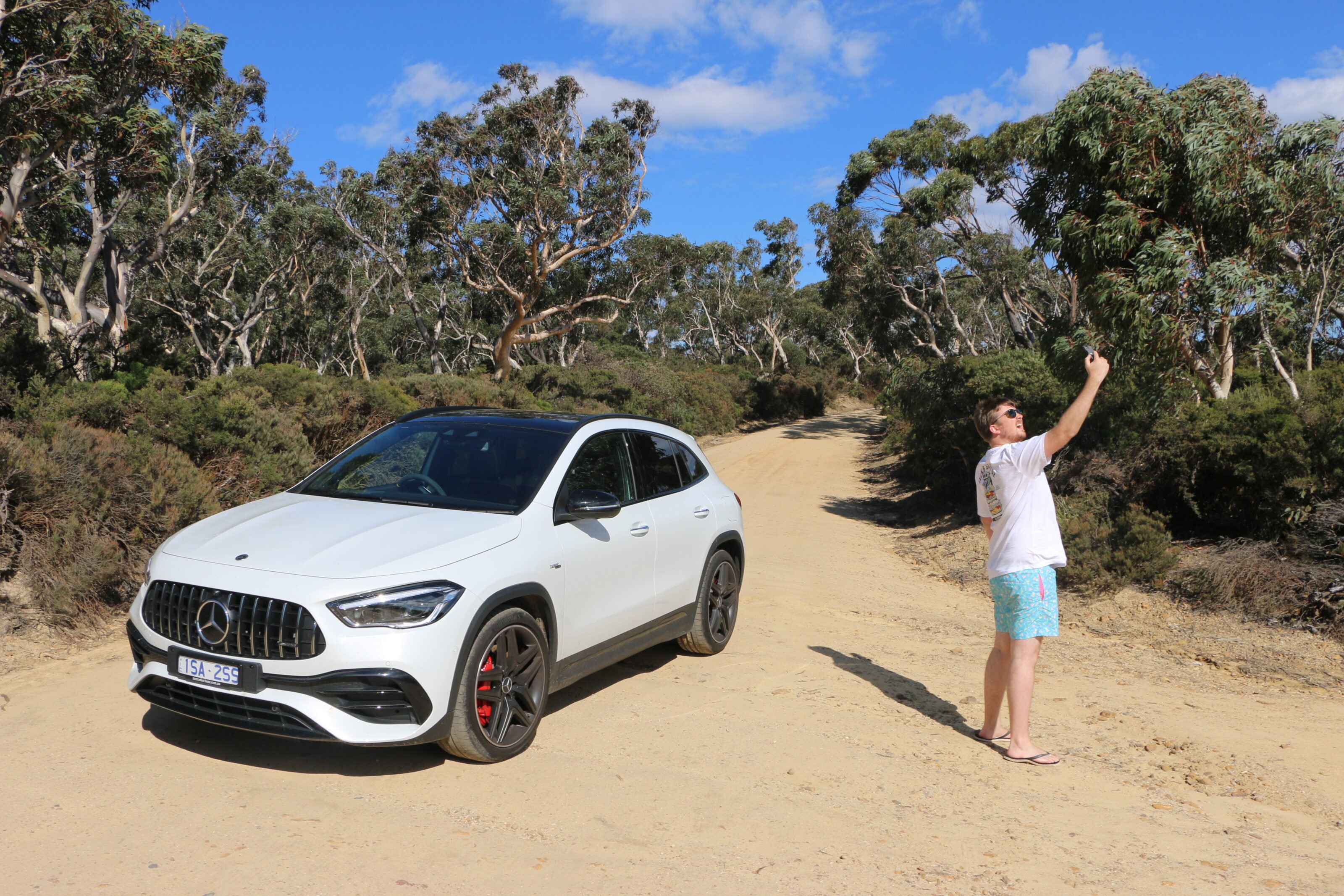
All too quickly the winding bitumen stopped and I was left with the aforementioned, well, track. In a hatch, I would have turned around seething with disappointment in the name of sump preservation. But not in the GLA. Its raised ride height meant I could witness a stunning view at the mountain’s summit.
Tamer driving saw fuel use dip under Mercedes’ claimed combined consumption of 9.6L/100km.
Excuse me while I get all practical for a moment. The GLA’s boot measures 435 litres of volume. It’s not particularly deep, but is wide, and will hold two full-size suitcases plus a couple of day bags with ease. Despite being Mercedes’ smallest SUV, there’s also plenty of room for adults in the rear. I spent several days driving four-up, with the shortest occupant measuring six-foot tall, but there was nary a complaint from the rear pews when it came to legroom.
There were comments on seat comfort, however. With a lack of lateral support on the lower cushion, driving enthusiasts are left short changed, while the firm bolstering all round has full-time passengers similarly irked. In an attempt to please everyone, Merc has missed the mark here.
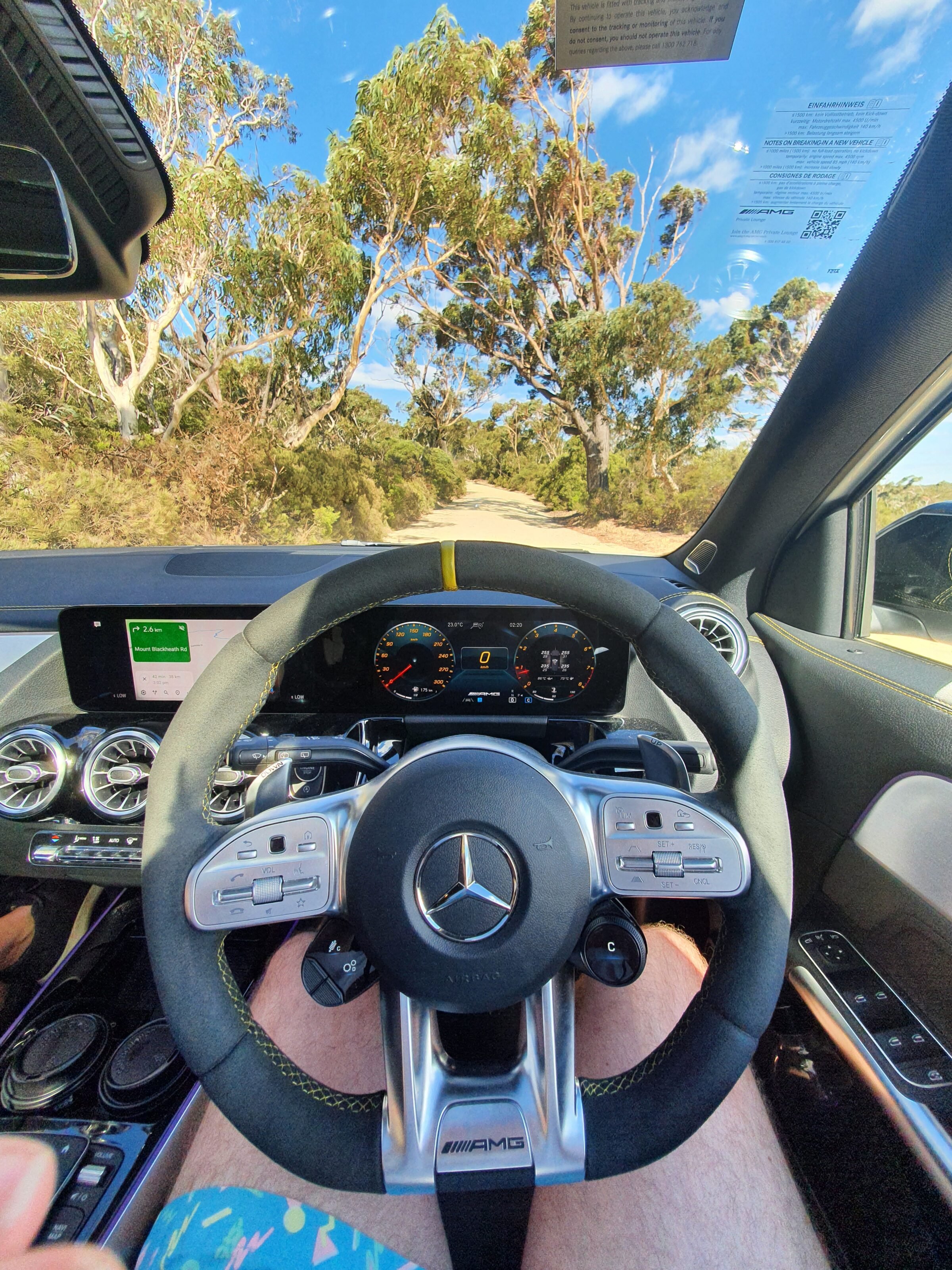
Where the Germans have excelled is the active cruise control system, which is one of the finest on the market. Paired with the active lane keeping it makes long hours in the saddle a relative breeze. Credit also needs to be given to the sizeable and customisable head-up display.
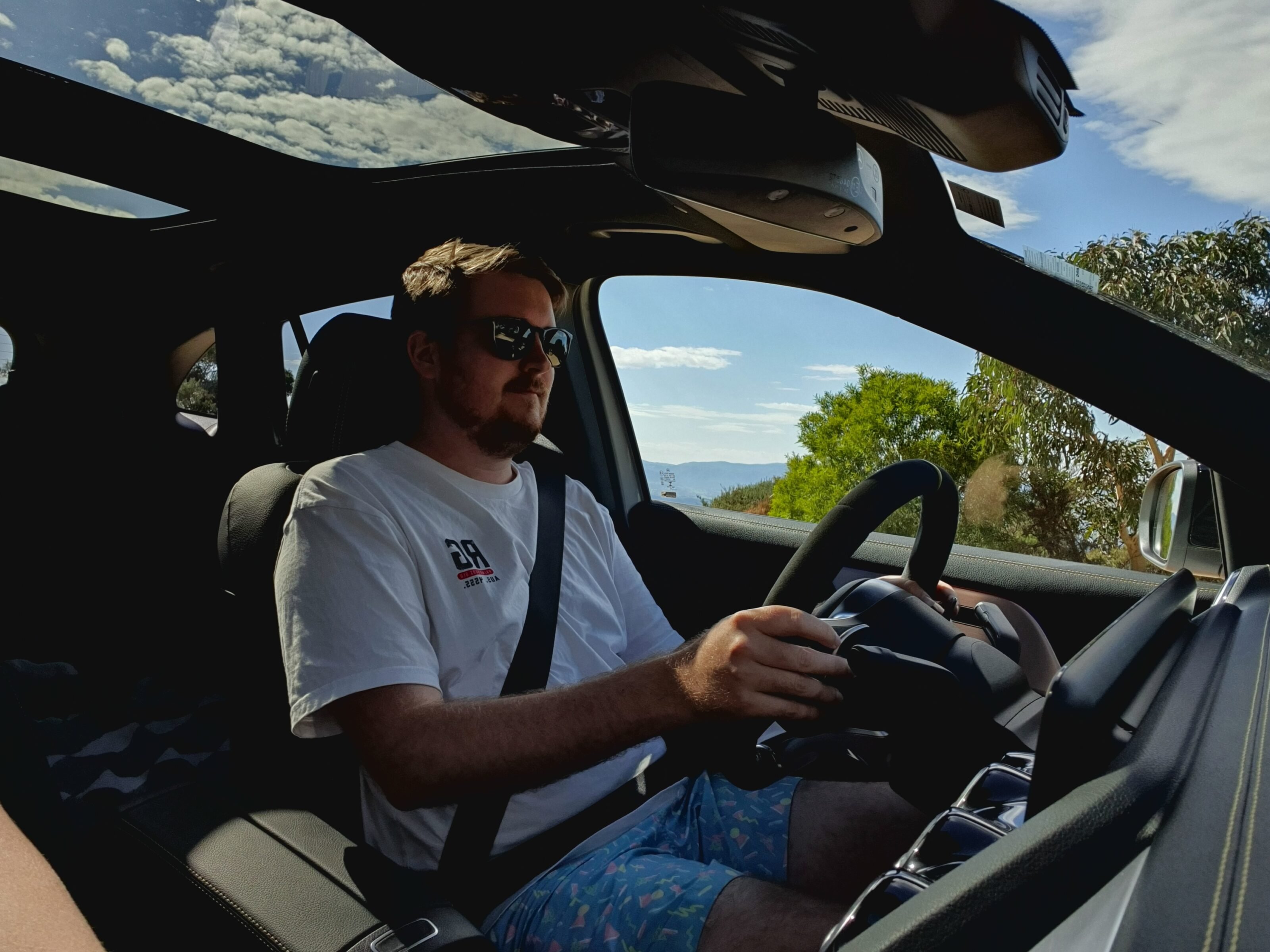
At a true 110km/h, the GLA has eighth gear selected, and is humming along at a neat 1500rpm. On fresh tarmac it’s all rather pleasant, with impressive suppression of wind noise.
However, once you head beyond the sparkling tollways things begin to take a dive. Tyre roar is a constant on coarse-chip bitumen, which is disappointing for a vehicle with this price tag. The Continental SportContact 6 rubber fitted as standard isn’t aggressive enough to forgive this transgression.
With daylight hours shortening I’ve also had an opportunity to spend more driving at night. It’s a dramatic experience, with the interior lit like a nightclub entrance in the colour of your choosing – I went for a particularly acidic green – while the matrix LED headlights do an impressive job of illuminating the way forward.
However, if you leave the headlights in their auto setting, you are also signing up for the automatic high beam function. This wouldn’t be so bad if it didn’t flick between high and low settings at whim, with no rhyme or reason, even on empty country roads with no oncoming traffic or visible road signs. Best to take charge manually.
Even on these mundane trips the GLA still gives you subtle winks and nudges toward what it is capable of. Slowly ply the throttle to build speed for an overtake and there is a clear whistle as the turbo winds up. Lean further and all hell breaks loose. Far from being harsh, the ride is never a gentle waft, with a distinct AMG muscular poise to the way it absorbs bumps on the highway.
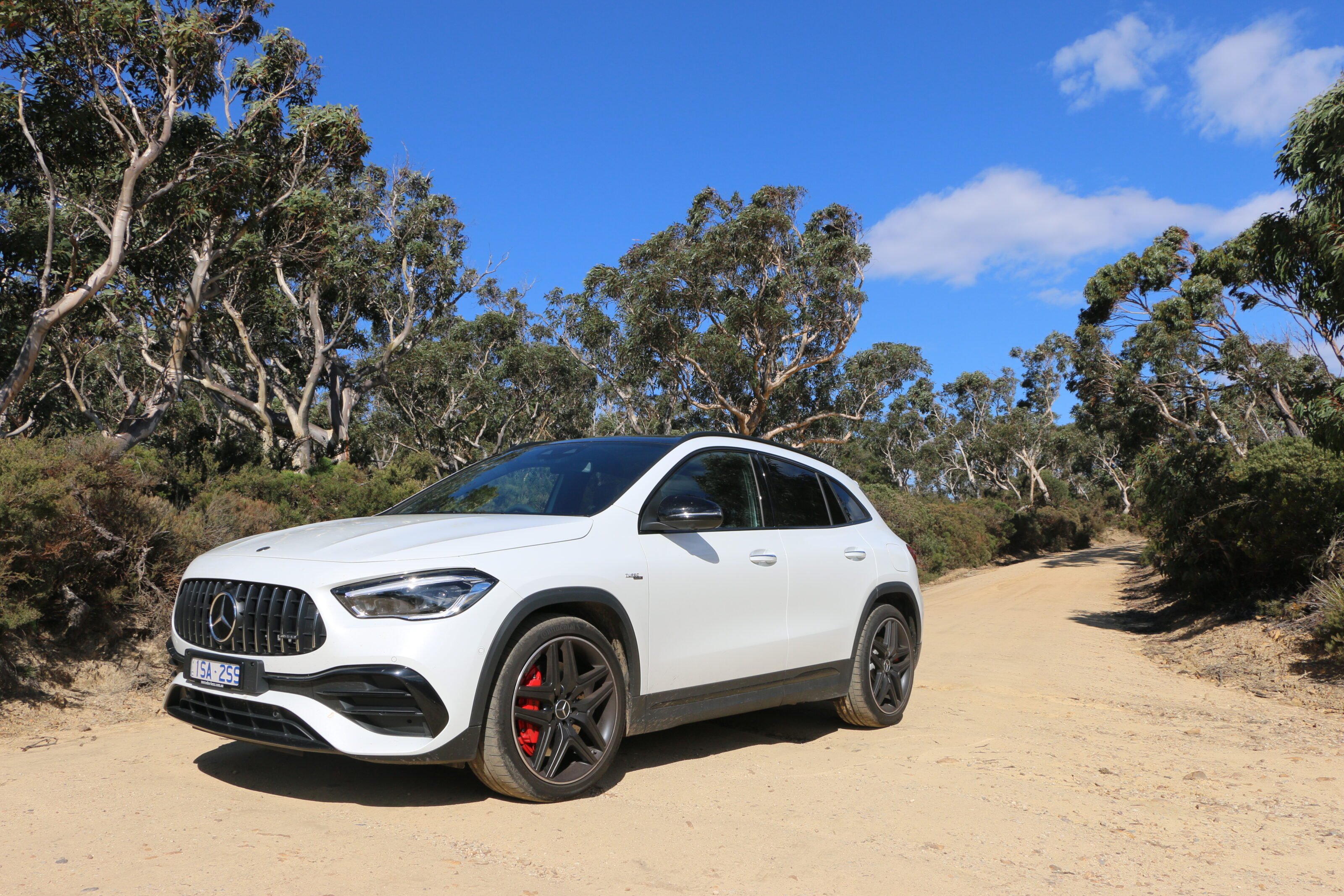
The GLA isn’t going to be at the top of my preferences for future road trips if all I’m doing is schlepping from A to B. However, when you reach your destination you aren’t left without options. Want to head to the lookout via the dirt? A-OK. Keen to try out some new driving roads? Hell yeah! Need to transport friends and family? No stress. It may not be a Master of All, but it’s pretty damn good. – CK
Things we love:
- Versatility
- Boost whistle
- Active cruise
- Coarse-chip noise
- Auto high beam
- Middling seats
Update Four: The Three Month Hiatus
Kirby’s love affair with the baby AMG is put on an unexpected pause
The Mercedes-AMG GLA 45 S has a way of making the mundane exciting. It’s calm and palatable when desired, but with a simple touch of a button it transforms into a sleeper that can get the better of the likes of a tuned VW Golf R, HSV GTSR Maloo, and Porsche Cayman.
On a recent commute all was going splendidly. I was humming along with the active cruise set, tunes on blast, flicking between suspension settings to get a better understanding of the ride compliance (I can confirm the firmest setting is redundant away from the smoothest of bitumen).
Then it happened.
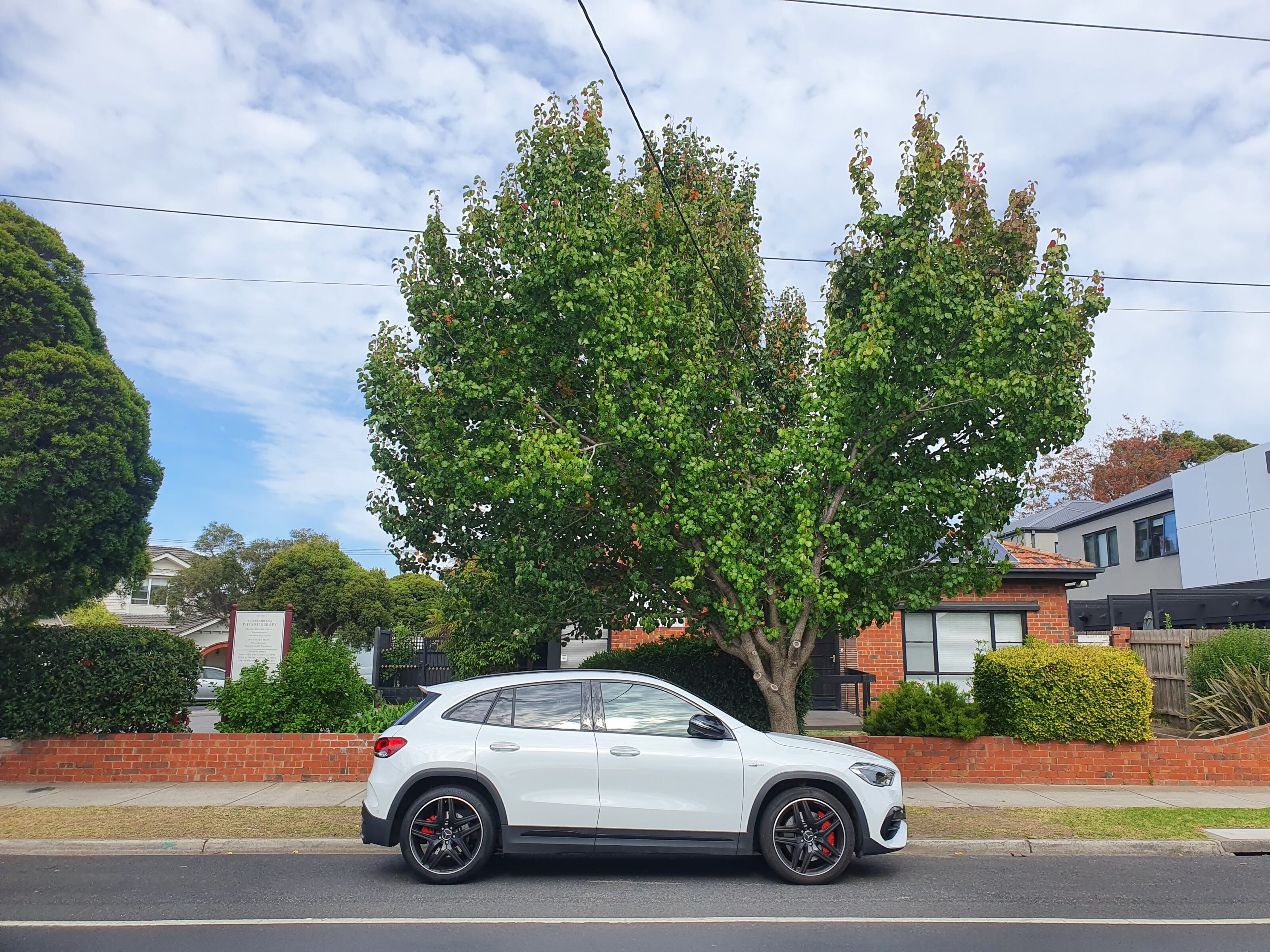
A warning flashed up on the dash, informing me that the right rear tyre had just experienced a sudden and significant loss in tyre pressure. Cue much swearing. Full credit needs to be given to Mercedes’ tyre pressure warning system, which alerted me to the drop in pressure instantly. Without it, I likely wouldn’t have noticed the deflating rubber as quickly, and been able to adjust my driving accordingly. The instant alert allowed me to do some rapid mental calculations on where the nearest off-ramp was, with the slow countdown of remaining PSI allowing me to adjust the plan on the fly.
Thankfully for me, I was able to limp the GLA to our work car park, stored safely until a truck arrived to take it to a tyre shop. This was important, because otherwise I’d be stranded on the side of the road getting frustratingly intimate with the process of using a puncture repair kit. Frustrating, as the item that screwed me over was a bolt of not insignificant size that managed to obliterate the side of a tread block. This was one tyre that couldn’t be resurrected.
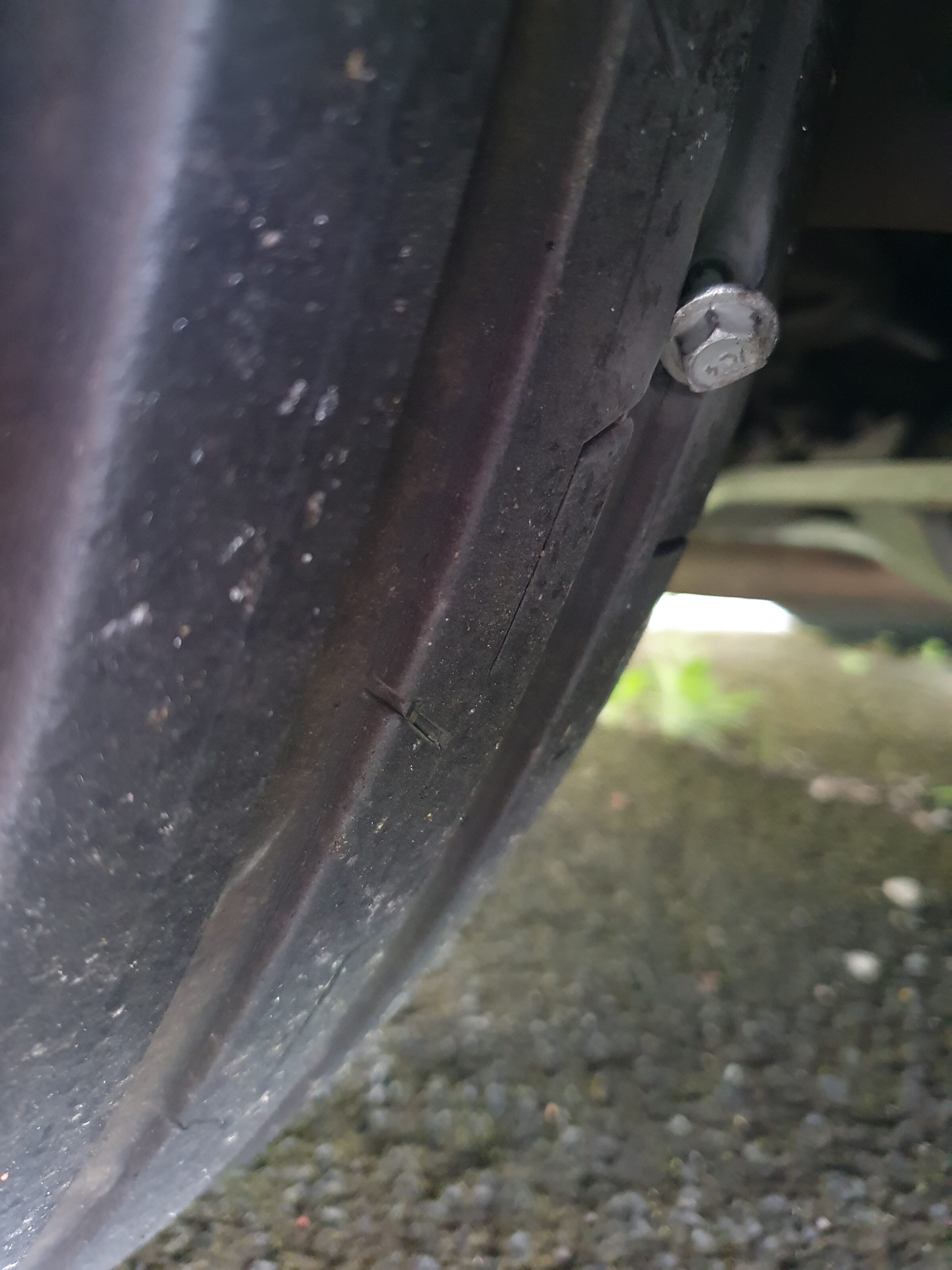
I understand that not every vehicle has space for a full-size spare tyre in the boot. However, it remains a failing of the packaging department that a space-saver isn’t hidden underneath the GLA’s boot floor. I suspect I wouldn’t be alone in being willing to sacrifice some boot space to have the peace of mind a spare tyre would provide.
As for the rubber itself, the GLA 45 S wears Continental SportContact 6 tyres in 255/40/R20 sizes on all four corners. While there are times when I yearn for something more aggressive to really highlight the GLA 45 S’s incredibly potent performance credentials, the Continental hoops do an impressive job taking care of the everyday duties. There is a reason it won our tyre test in 2018, offering impressive performance in both wet and dry conditions, allowing AMG’s 4Matic+ all-wheel drive system to excel.
If you find yourself in a similar situation to me, expect to pay roughly $500 a corner for new boots, depending on the tyre shop. That is, if you can find a tyre to begin with; the new rubber fitted to ‘my’ GLA had to be shipped down from Queensland.
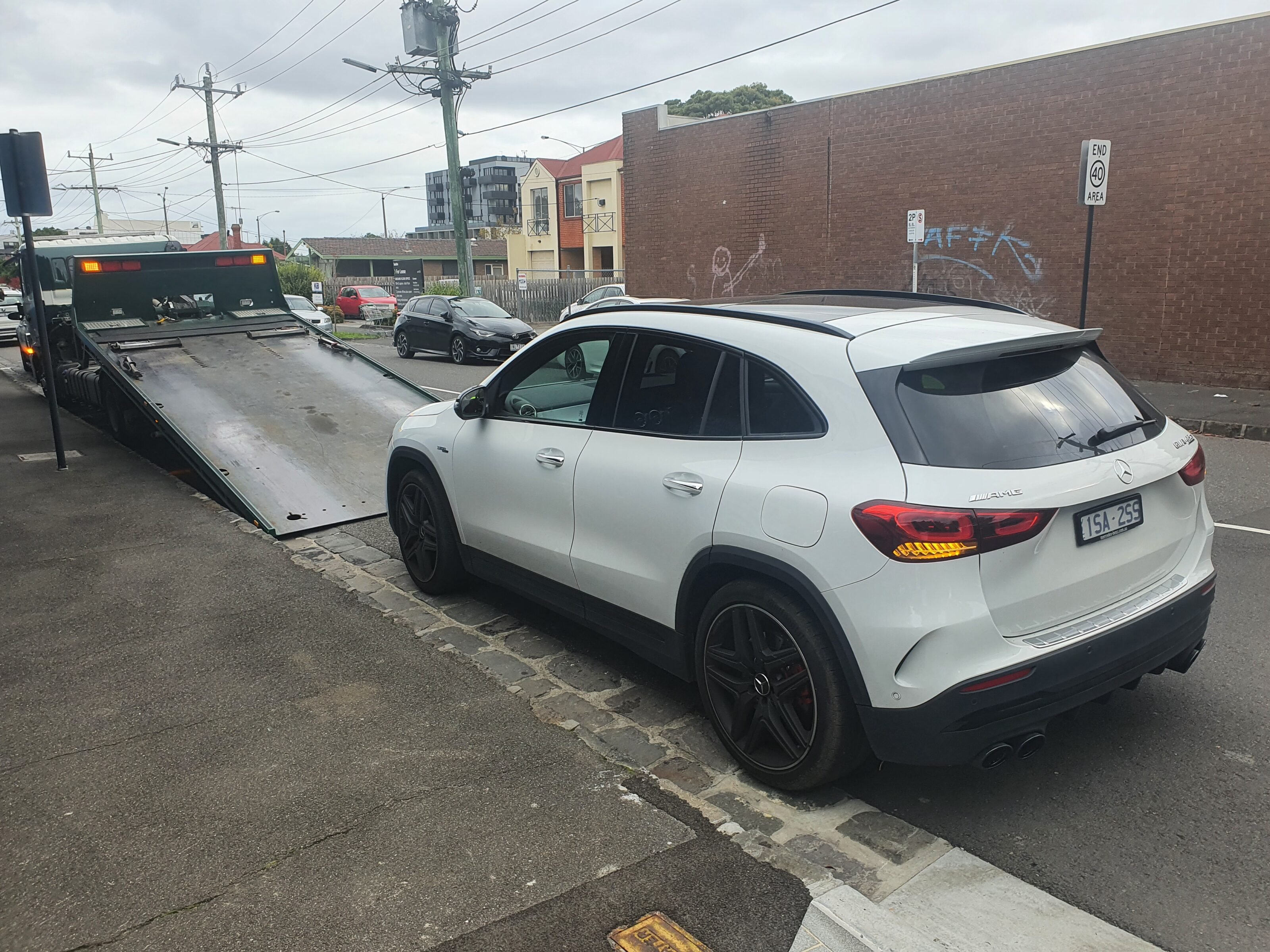
Once fresh rubber was fitted and I had the keys back it became readily apparent that my honeymoon period with the GLA was over. I’ve started to notice that the brakes produce a god awful wail during very light applications at low speed. Heavier inputs are fine, but when being gentle in heavy traffic you’ll be subjecting everyone around you to a deeply unpleasant sound.
Before an errant bolt ruined my commute I had some grand plans for the GLA this month – including a solo drive through some of the Victorian alpine region’s finest stretches of tarmac before winter road closures set in. Can some quality one-on-one time rekindle the passion? That’ll have to wait until next time, dear readers. – CK
Things we love:
- Warning system
- Pumpin’ stereo
- Everyday useability
- No spare
- Rubber availability
- Squealing brakes
Update Five: Pack and Slide
Kirby delves into the duality of the Mercedes-AMG’s character
The moment of oversteer while exiting a typically damp Melbourne intersection caught me by surprise. I was at the wheel of the Ford Mustang Mach 1, which had just stepped the rear out while performing a routine departure and all I could think of was ‘my’ Mercedes-AMG GLA 45 S.
You see, I had no intention of doing any sideways shenanigans when I had hopped into the ’Stang that morning. Rather than be entertained or thrilled, I was actually quite embarrassed at how such a gentle throttle application had resulted in the anti-social display.
Despite the ’Stang being in its ‘Normal’ drive mode and every safety system fully equipped, it still stepped out in a way that could all too easily catch inattentive drivers off guard. A quick reaction applying opposite lock meant the moment was mercifully brief, but it spoke to how the GLA had been subtly modifying my behaviour.
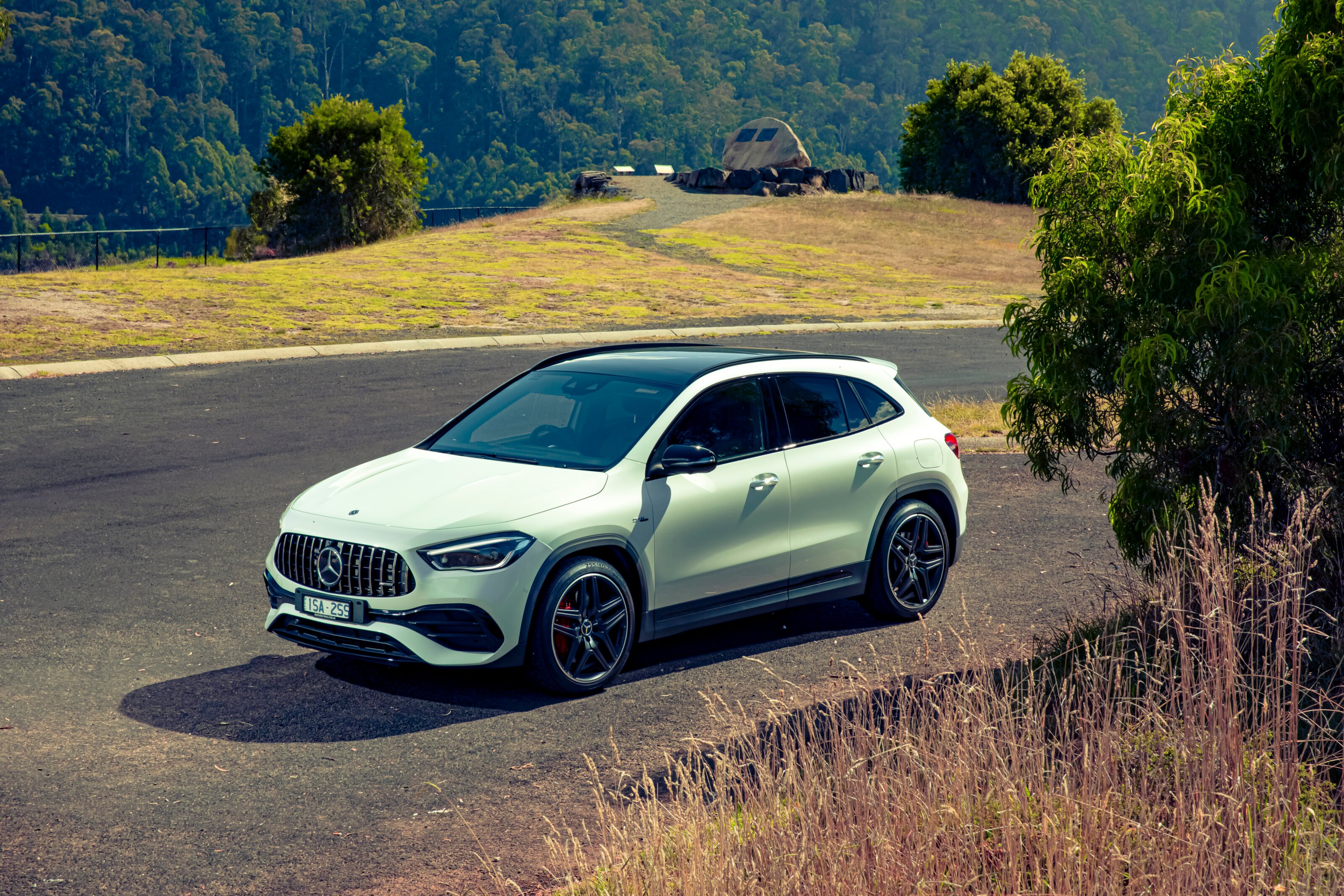
Now four months and more than 5000km into our relationship, I’ve developed a deep affinity and understanding of the small SUV’s intricacies. It’s part of the reason the slide in the ‘Stang was so surprising – in similar conditions with the equivalent settings, the GLA 45 S is entirely unflappable.
That’s not to say it won’t permit any sort of traction-loss, quite the opposite (more on that later). But there is a friendliness built into the GLA that means, despite its 310kW outputs, it is calm and comfortable regardless of the weather conditions. Ultimate daily driver? It’s a strong contender for me.
I’ve previously criticised the Continental tyres for being too loud without providing a significant enough performance reward yet, as the worst of a Victorian winter sets in, I’ve been impressed by their tractive abilities in trying conditions.
Unfortunately another snap lockdown scuppered plans for a proper weekend blast on my favourite driving roads, but it has given me time to refine and perfect the ‘Individual’ driving mode pre-set. After plenty of fiddling and modifying, I’ve landed on my preferred settings which are thus: steering and suspension in Comfort, sports exhaust activated, engine in Race, and ESC set to Master. Motoring journalists, eh. We are an awfully predictable bunch.
I can activate this with the simple press of a button on the steering wheel, which I do for 98 per cent of my journeys sans passengers. The comfort tune for the dampers is all you need in the GLA away from a race track, and there’s plenty of weight and feel baked into the steering system for daily driving in its Normal setting. My justification for the sports exhaust? Well, I’m a big bogan at heart and the pops and bangs are always entertaining.
The Race mode may initially seem like overkill, but it is actually perfectly useable every day.
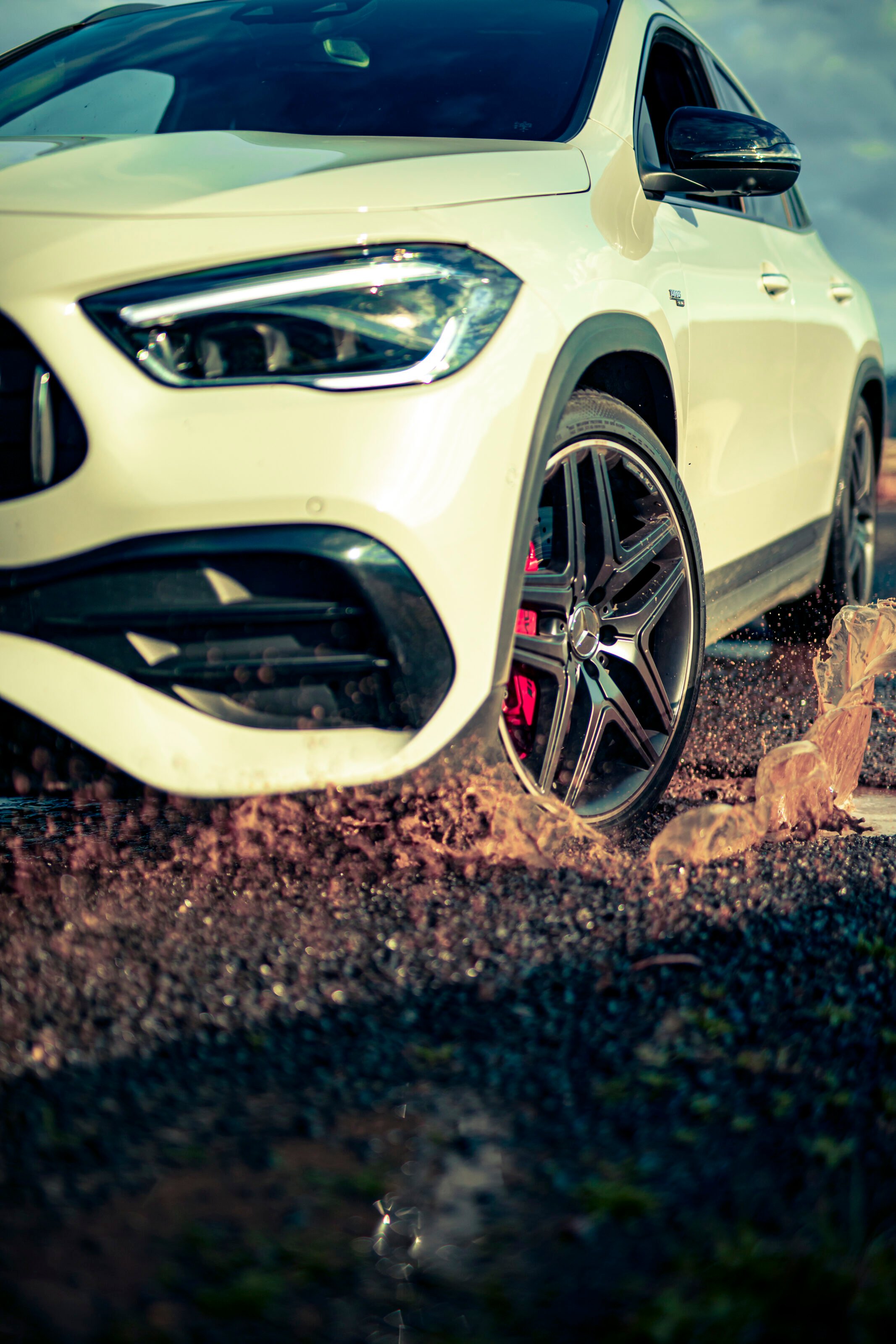
Communication with the driver is a strong suit for the GLA 45 S, and while its normal ESC setting stamps out any antics early (unlike the Mustang mentioned earlier), the Mercedes gives you the confidence to lower the safety net even in damp low-traction settings. The ‘Master’ ESC setting is brilliant for confident drivers. Far from being a safety nanny, the computers place their trust in you to be able to handle any oversteer moments, only intervening if you make a proper mess of things. Getting it wrong takes almost wilful intent, with the GLA’s 4Matic+ system shuffling power predictably; meaning slides are both initiated and corrected smoothly.
Now, excuse me dear reader, while I step away from dynamics and power and discuss the day-to-day practical reality of the GLA. People are likely to opt for the AMG SUV over it’s hatchback A-Class sibling because not only do they want to transport people regularly – but things. By moving to the higher-riding 45 you gain 65 litres of boot space (with a total of 435).
For my practical test I took the GLA to pick up a full sim-rig (including seat, wheel and pedals) which was purchased as an indulgent birthday present to myself. The day prior I had attempted to fit a 49-inch ultra-wide monitor across the rear seats, but it was a few centimetres too long.
No stress I thought, I’ll just lay the seats flat and feed the box in via the boot. The rear pew is convenient enough to flick down, simply pulling a lever near the headrests to unlatch. But, the seat doesn’t go fully flat, instead sitting with a slight incline. It’s not a massive issue, but annoying when transporting longer (precious) items.
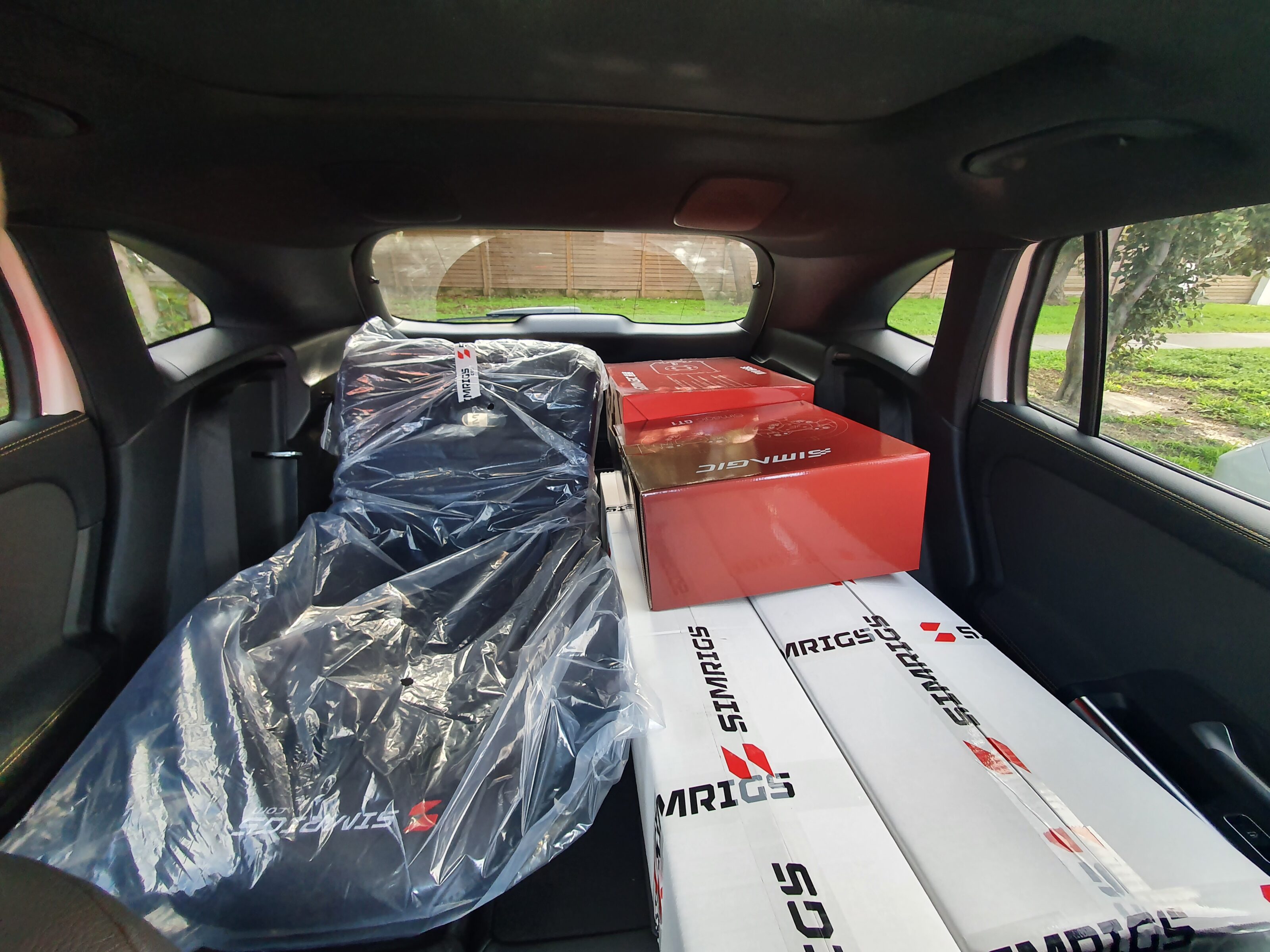
To the GLA’s credit, the rear seats can slide forward and back by 14 centimetres for improved legroom.
My time with the GLA 45 S is drawing to a close, and while my affection for this sleeper SUV is growing, so is the dread at its eventual return. Best I organise something special for the farewell. – CK
Things we love:
- All weather use
- ESC calibration
- Individual mode
- Not-so-flat seats
- Another lockdown
- Nearing the end
Update Six: Farewell – Imperfect Perfection
The GLA’s flaws come under the spotlight before it exits stage left
I have realised I’m in a minority. Not for the regular reasons of gender, religion or sexual orientation – I’m as generic as they come in all of the above. But I’m in the minority in liking the exterior styling of ‘my’ Mercedes-AMG GLA 45 S. When asking onlookers their opinion, reactions have ranged between apathy to antipathy. The most common criticism has been one of anonymity, that the GLA’s smoothed-off edges and subtle exterior treatment do nothing to advertise its talents as a performance car.
The GLA 45 leaves MOTOR’s long term garage this month, so I thought it only right to provide it with a worthy defence. The same anonymity that has been derided by others is the exact trait that I am most enamoured by. There’s an endearing confidence in a car as downright fast as the GLA 45 S that doesn’t feel the need to shout about it with large wings and flared bodywork. Wide arches and aggro aero are cool, but not every model requires it, certainly not a small SUV.
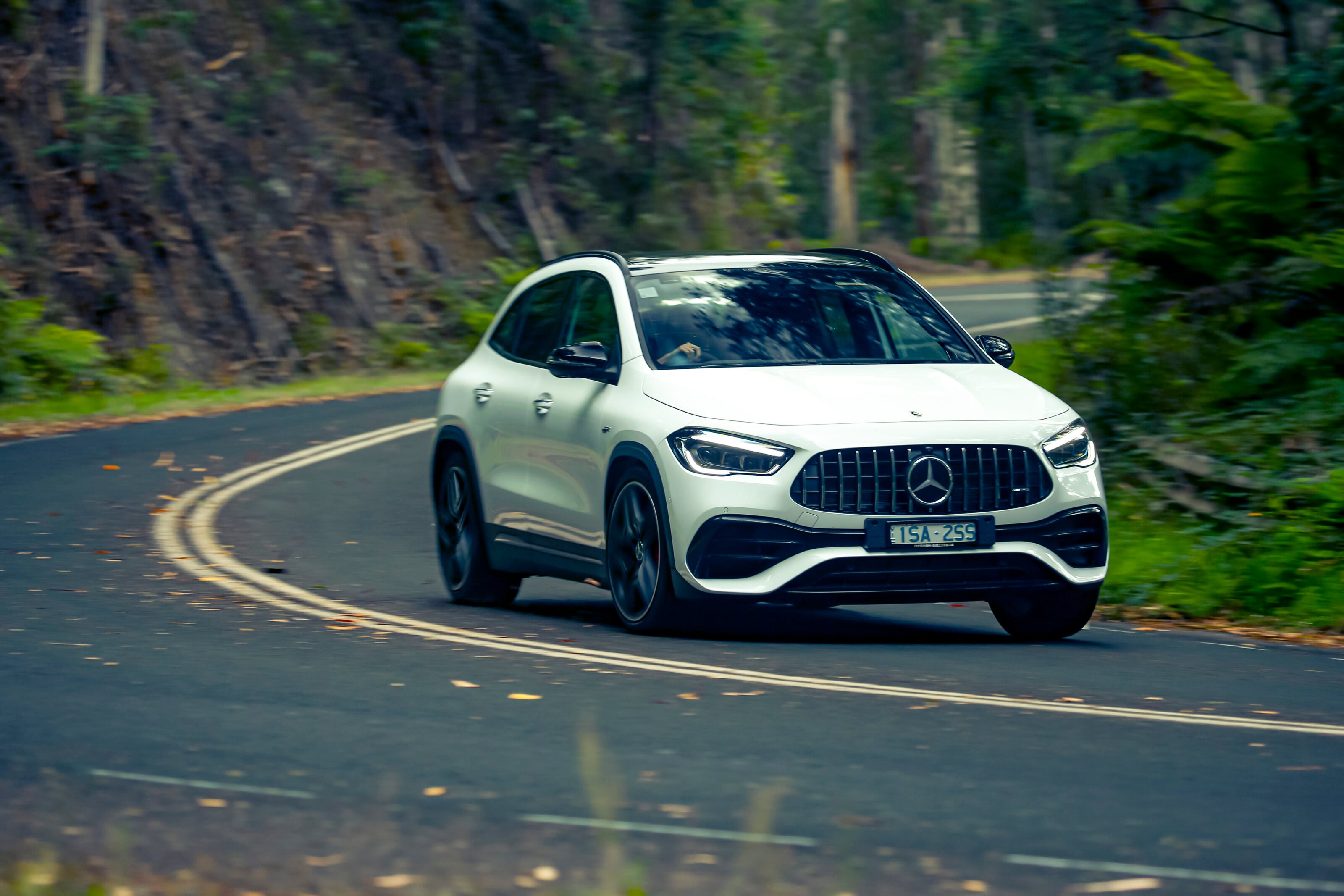
I recently took a friend for a blast in the GLA. With no pre-flight warning, I opted to show instead of tell when it came to the GLA’s capabilities. Having underestimated the little white SUV on looks alone, she was left shocked at its abilities.
Much of that is thanks to what’s hiding under the bonnet. It has been said before, but it’s worth repeating that the 2.0-litre turbo four-cylinder M139 engine under the bonnet of the GLA 45 S is one of the greatest combustion engines ever built. Its power and potency is as laugh-inducing today as it was when I first encountered it.
There’s no denying its place as the headline act in this vehicle. However, a star front man is only as good as his backing band, and the eight-speed dual-clutch transmission in the AMG is a peach.
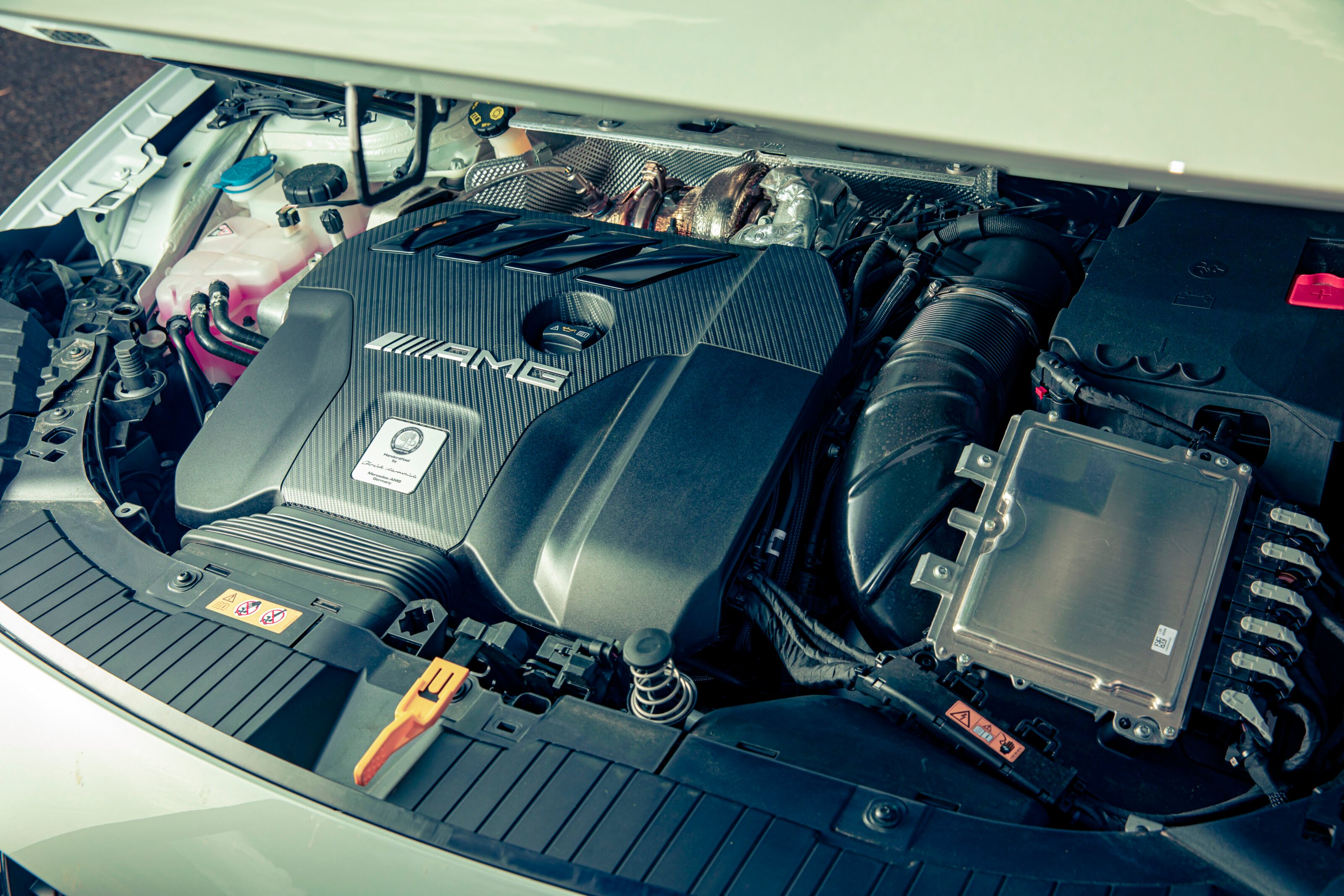
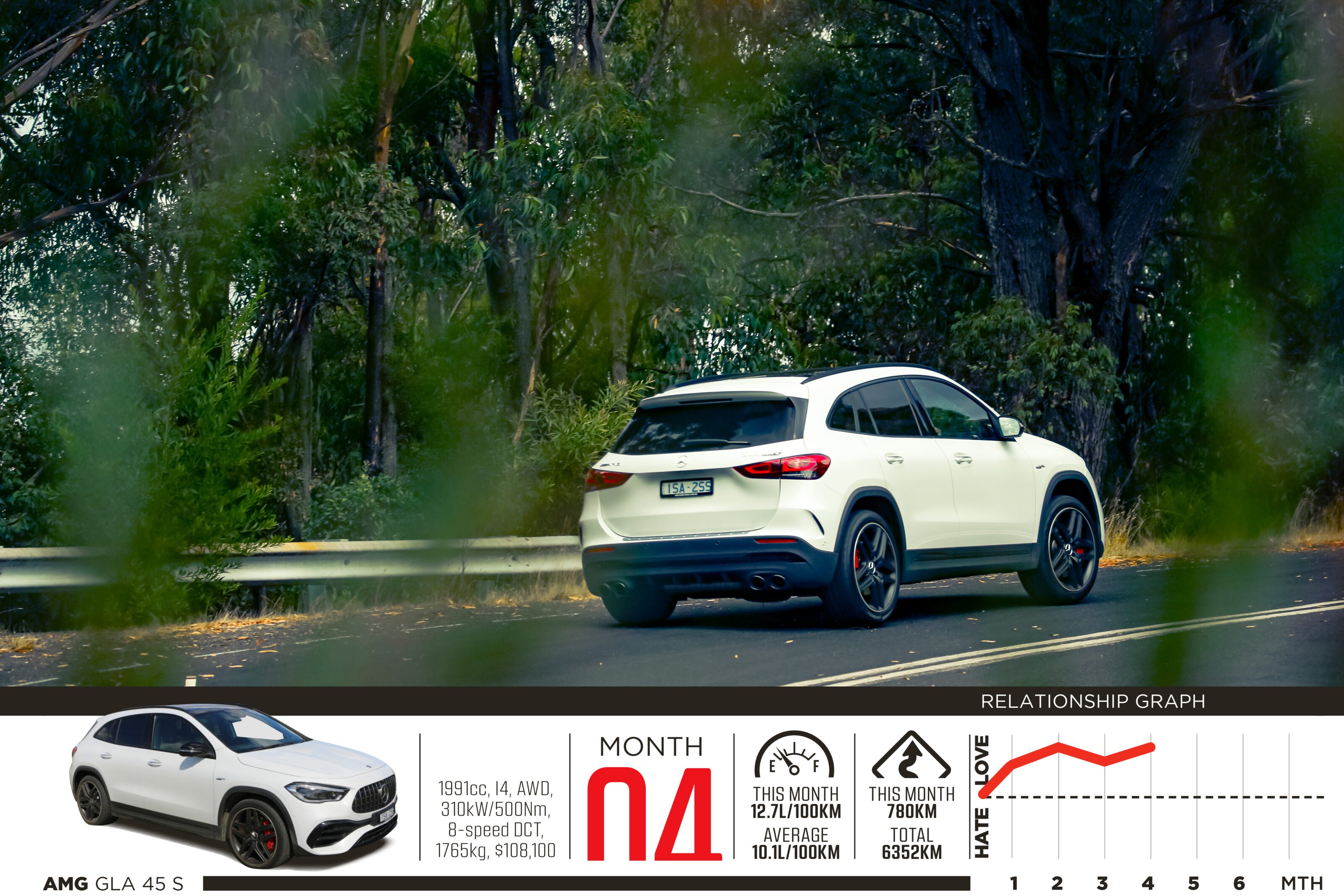
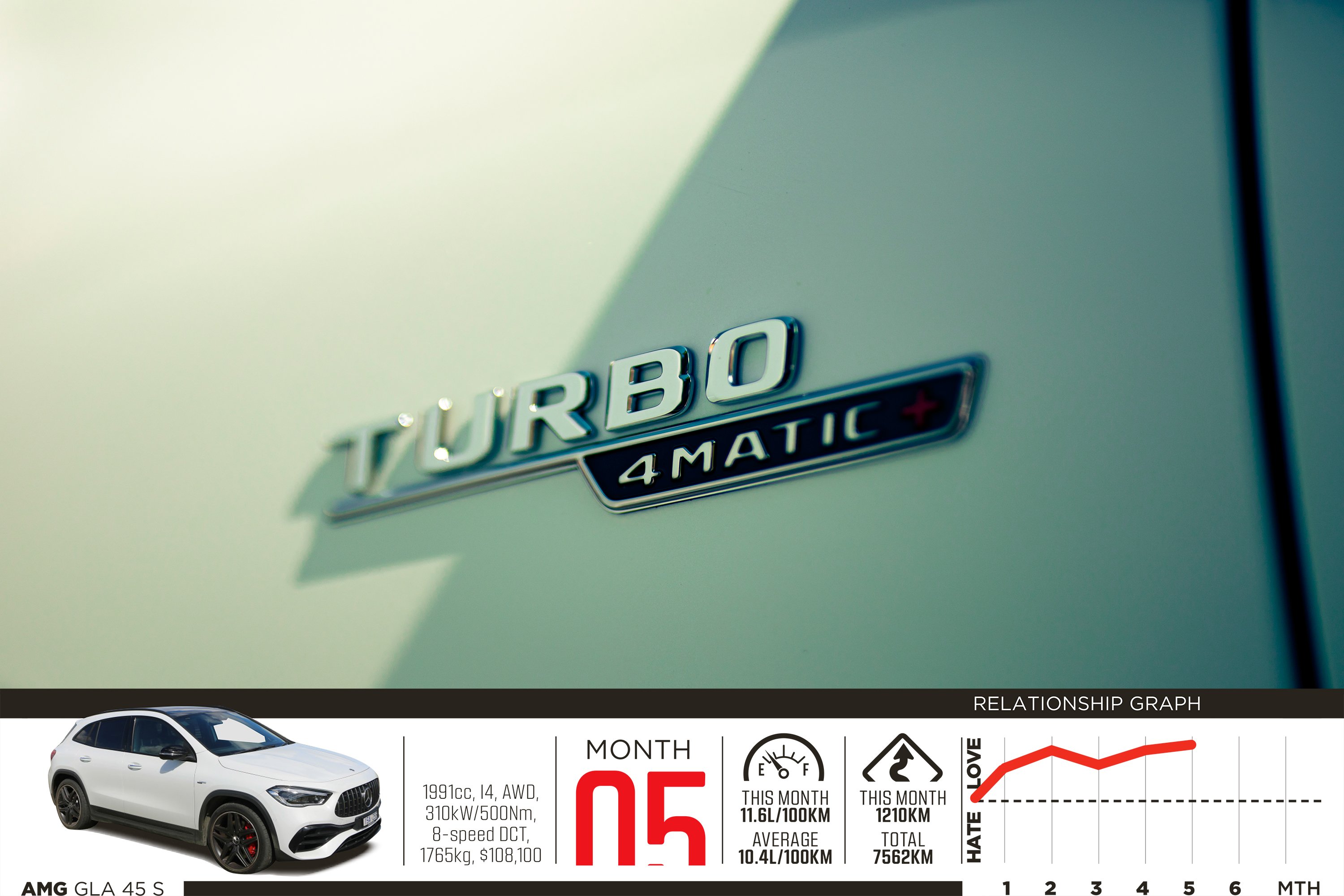
But, to butcher the Peter Parker Principle, with great power, comes great consumption – as attested by the average fuel use after five months. With premium fuel prices at an all-time high, one recent stop at the servo set me back near-enough $100 for a full tank of fuel. Considering I’ve been refuelling on average every 400km, the maths on liquid running costs aren’t pretty. For potential buyers that might not be such an unpalatable issue, given they would have already clambered over the $108,100 entry-price hurdle.
Astute readers may have noticed that I’ve avoided discussing the GLA 45 S’s value proposition – until now. There is no denying the GLA 45 S is an expensive car. The premium that Mercedes demands compared to rivals can be hard to swallow initially.
However, this baby AMG is without peer in its class. In fact, you need to step toward larger mid-size SUVs to find any compelling rivals, and most would still struggle to come close in outright performance. Instead, they offer greater practicality for your dollar.
In the GLA’s favour it doesn’t require any additional box-ticking to be at its best, meaning any optional extras are purely an indulgence for prospective owners instead of a post-purchase fix for lacklustre product planning.
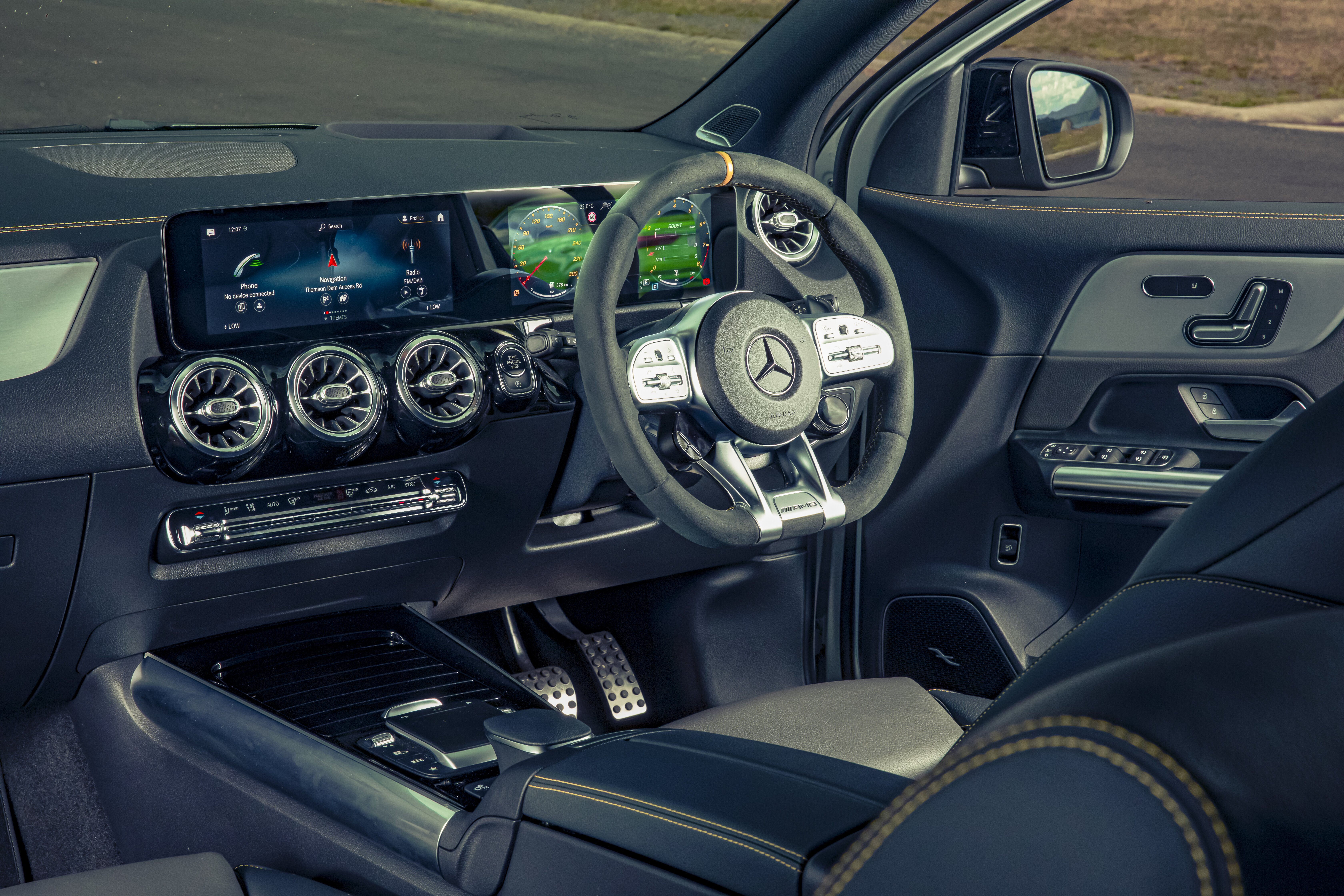
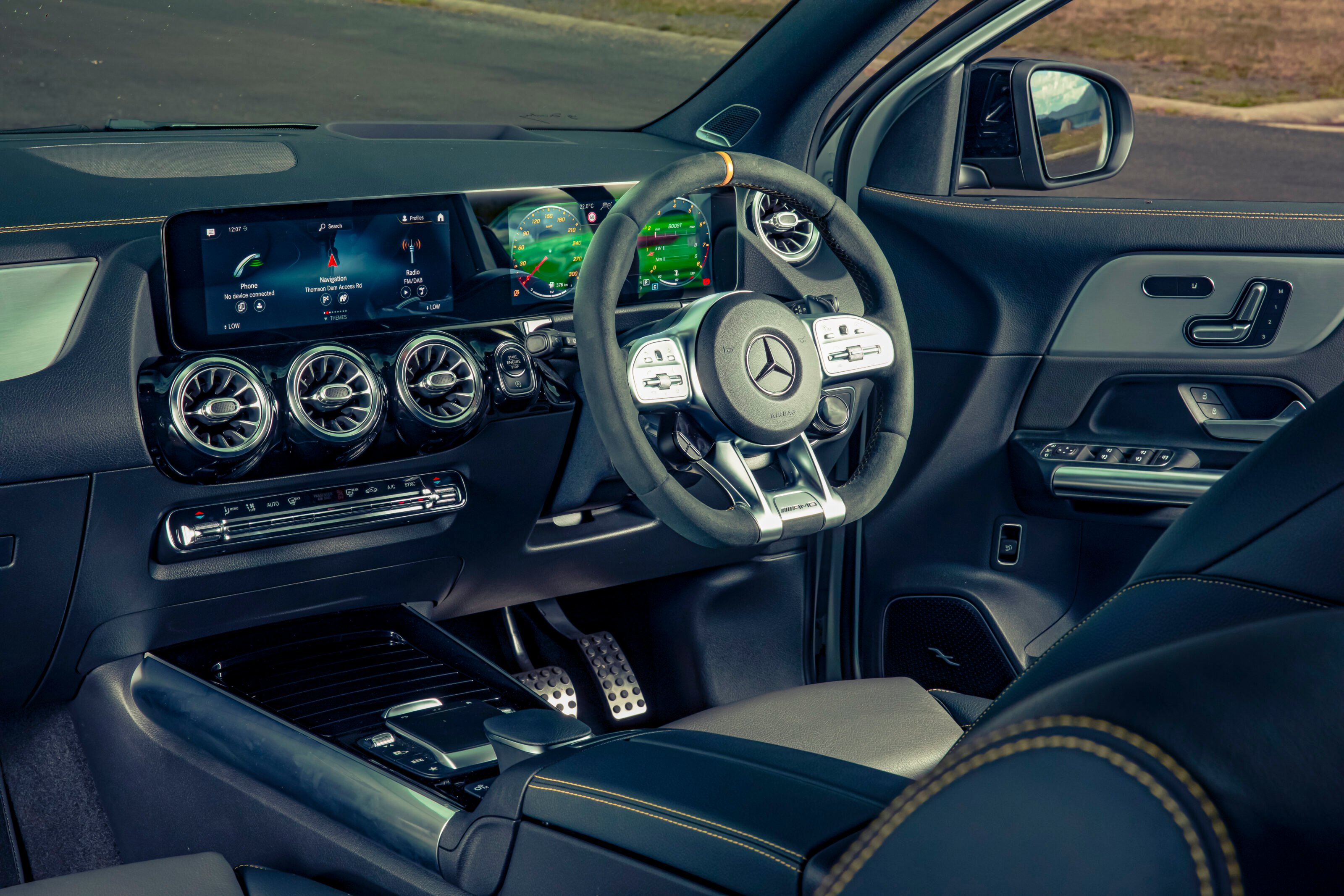
There’s plenty to like about the GLA’s cabin with its slick screens and ultra-cool lighting. But its here that I unearth persistent gripes. The firm seating and intrusive road noise tarnish the 45 S’s long-distance credentials, while the piano black plastic that surrounds the central vents doesn’t match the six-figure price tag Mercedes asks customers to put on the table.
Whatever issues I may have with the quality of materials, no complaints can be made regarding how it is bolted together. During the GLA’s tenure in the MOTOR garage we’ve drag raced it, taken it on several dirt roads, completed a gruelling comparison test, and traversed a total of 7562km – and still no squeaks or rattles have appeared. Which is impressive.
At the end of the day the GLA 45 S is a performance car, so before handing the keys back I went for one last drive. I wanted to reaffirm that my initial experience wasn’t off kilter. What I discovered is that even after months of regular use, the GLA is as shockingly quick as when I first slid behind the microfibre-wrapped steering wheel.
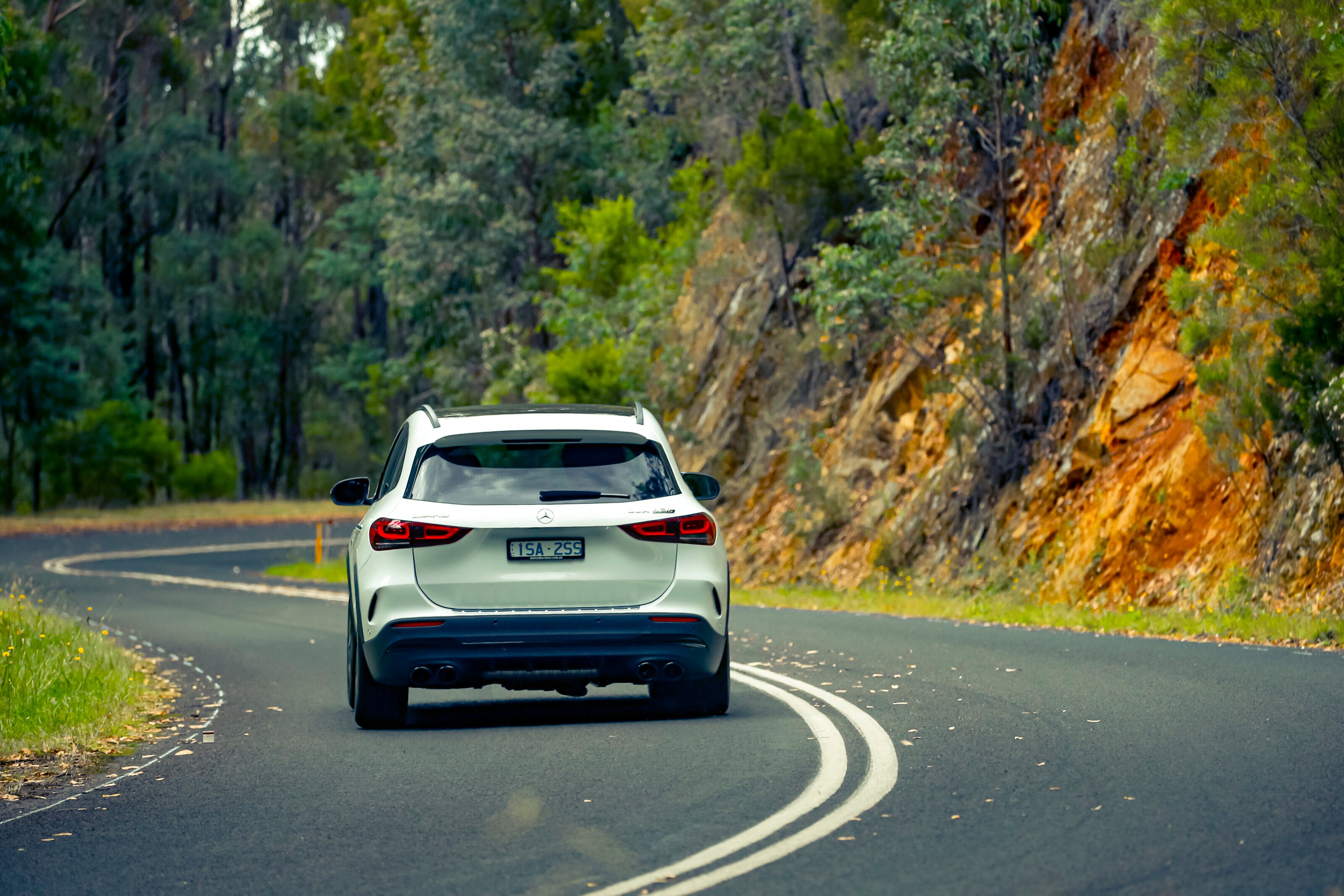
Prodigious grip paired with almighty power is a fearsome combo, but the AMG inspires confidence at every bend. Get comfortable and it’ll become a malleable tool, working alongside you to extract as much fun as possible. And it’s at that point, when you are having such a ridiculous time that you feel like the smile is going to be permanently etched onto your face, that the flaws of the GLA wilt from memory.
Would I recommend the GLA 45 S to anyone considering it? Absolutely. Without any hesitation. It’ll scramble your brain and push your heartbeat to redline on a twisting mountain road, and then punch its ticket on a daily commute day-in, day-out. The consummate everyday performance car is ready and waiting for those lucky enough to be able to afford it. You can look down your nose at the Mercedes-AMG GLA 45 S for being an SUV all you like but doing so is a disservice to yourself. AMG has built an all-time sleeper, and it deserves our respect. – CK
Things we love:
- That engine
- That gearbox
- Sleeper status
- Fuel costs
- Premium price
- End of the road
The upcoming Chevrolet Corvette C8 Z06 has been filmed at the Nürburgring, undertaking valuable development kilometres before its official debut next year.
Although the Z06 name is nothing new – tagged on to performance-focused Corvette variants since the C5 in 2001 – the C8 generation model will be the first in Chevy history to feature a flat-plane crank V8, making it sound more like a European screamer rather than an American bruiser.
Uploaded to YouTube, user Carspotter Jeroen highlighted the difference between the base C8 and the Z06 while testing at the ‘Ring in a comparison video, also allowing us to see some of the Z06’s body modifications.
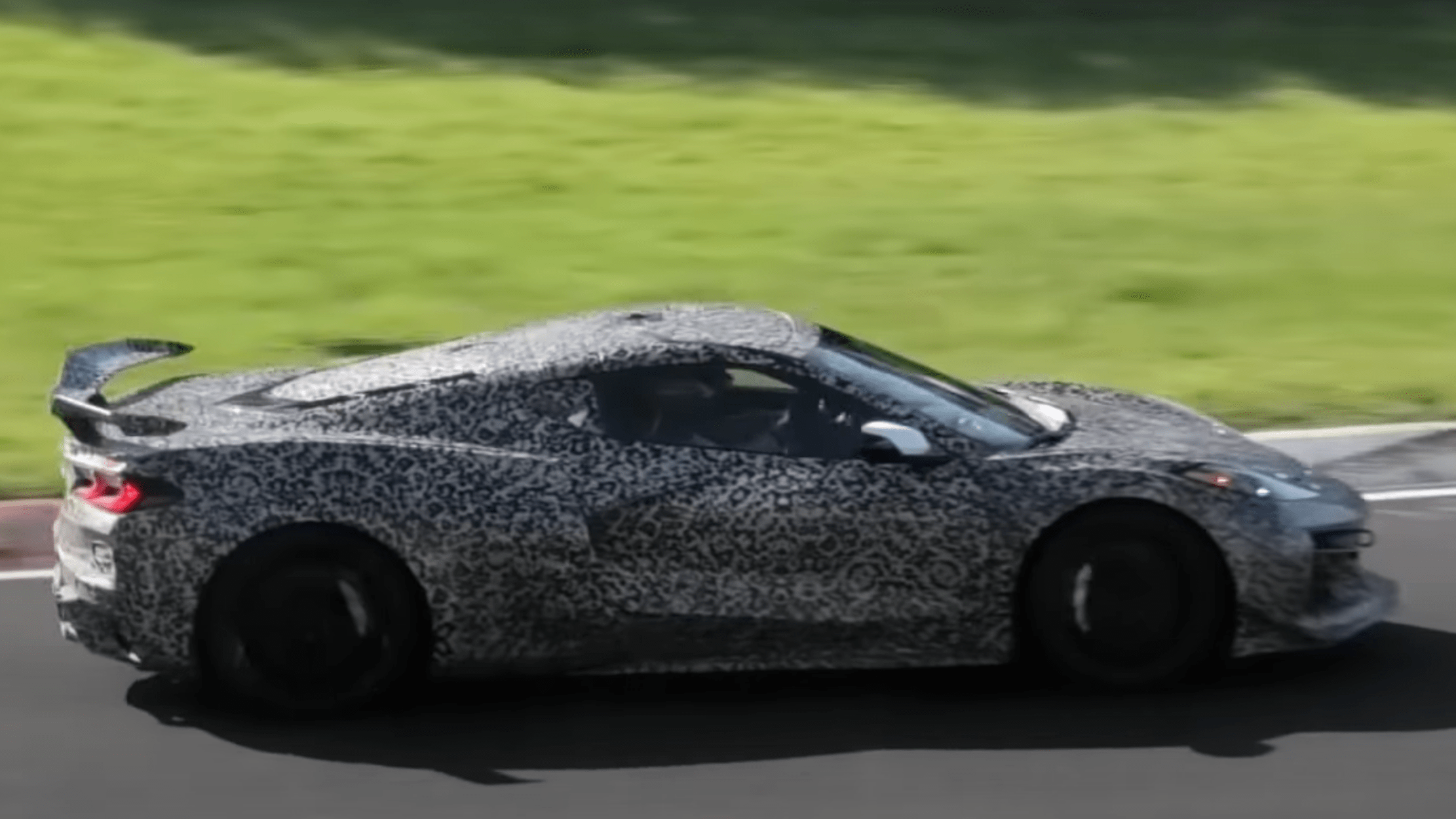
Standing out like a sore thumb is the Z06’s larger rear wing, now featuring endplates which are separated from the main part of the body, also sitting higher than the C8’s standard wing – which contours with the shape of the rear deck.
At the front there’s a sizeable splitter, helping to balance the front and rear downforce, although the aerodynamic modifications aren’t as drastic as the racing-spec C8.R’s front canards and rear diffuser.
While the Z06 hasn’t been officially uncovered in the United States, a trademark application in Australia has hinted at the mid-engined performance car coming to the local market in the future – as the first deliveries of the C8 are expected some time next year.
UPDATE: The 2022 Fiesta ST has now been officially revealed, see our story here.
The 2022 Ford Fiesta ST has leaked ahead of the hot hatch’s official unveiling in the coming days.
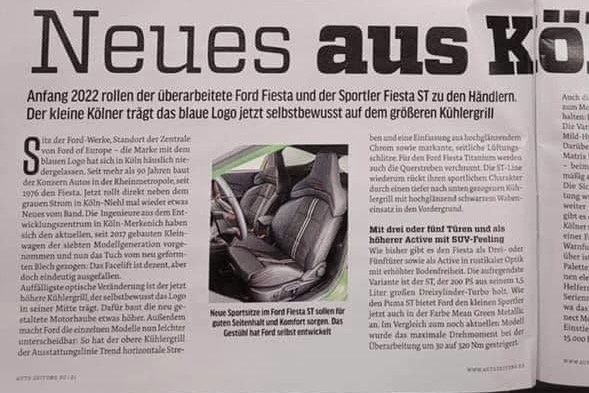
Images published in German magazine Auto Zeitung show the facelifted Fiesta in flagship ST trim, the only variant offered in Australia, while another image posted to Spanish website Cochespias reveals the updated Fiesta Active – Ford’s answer to the Yaris Cross.
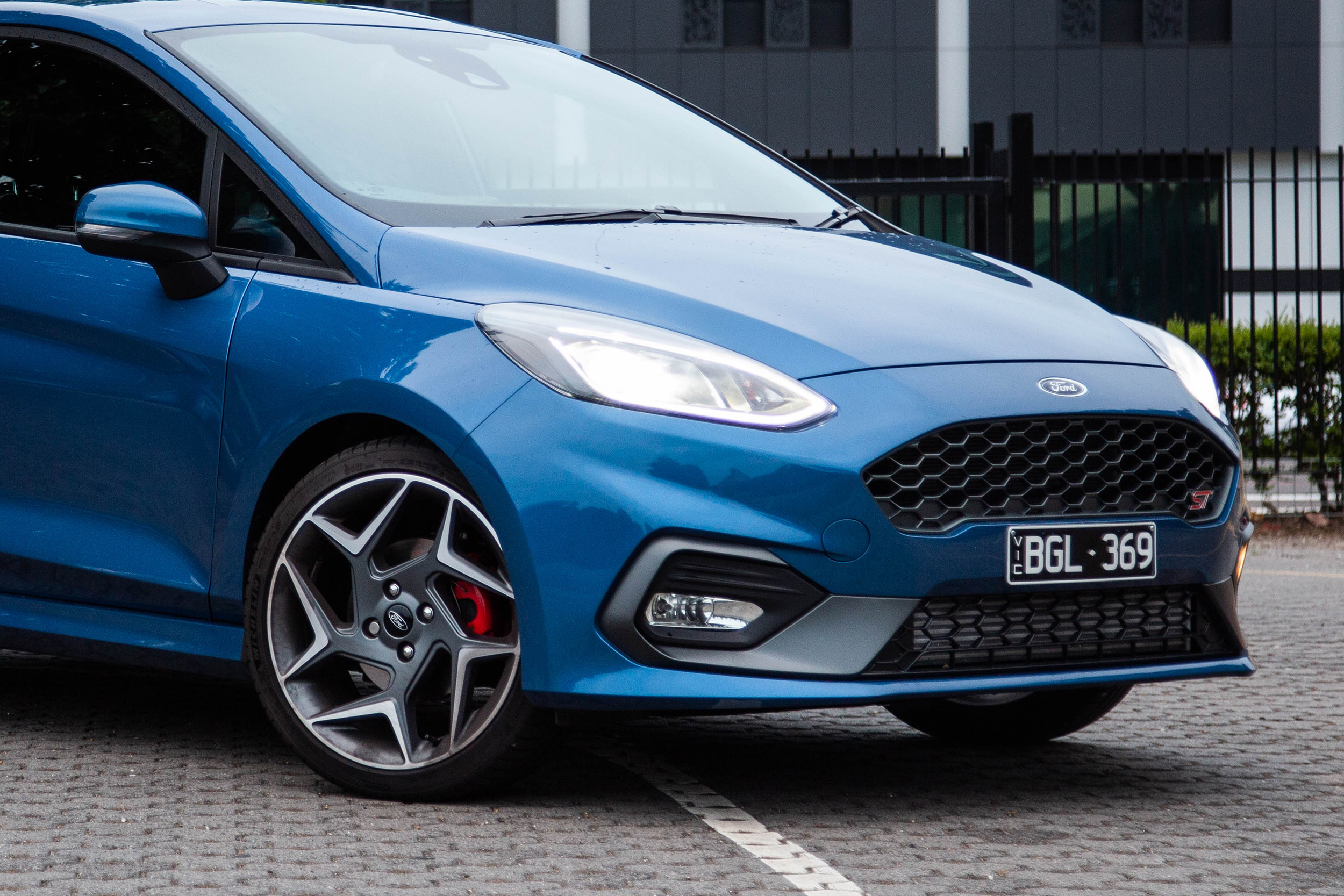
The updated Fiesta gets revised ‘rail spike’ headlights with new daytime-running light signatures, a larger grille, new bonnet lines, and redesigned matte grey alloy wheels. The tail-lights also appear to have received a mild update.
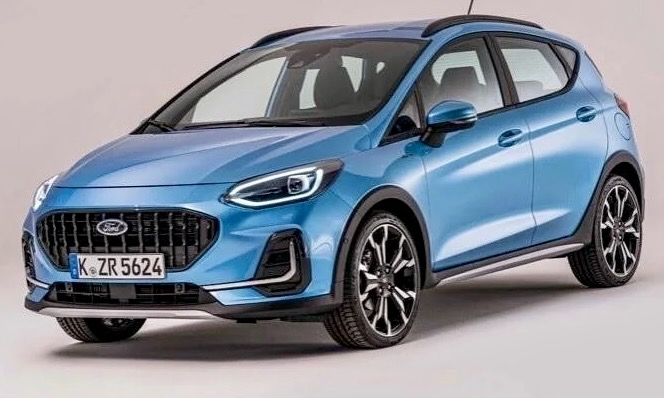
While Ford appears to have removed fog lights from the new front bumper, it’s likely Australian buyers will continue to be offered the highest-specified Fiesta ST, so fog lights should remain.
Inside, a more aggressive set of front sports seats and a digital instrument cluster now feature, but we’ll have to wait for an official announcement from Ford to confirm interior or tech updates.
It’s expected the car’s 1.5-litre turbocharged three-cylinder engine with 147kW and 290Nm will carry over, powering the front wheels exclusively through a six-speed manual transmission and limited-slip differential. The current ST’s claimed 0-100km/h sprint time of 6.5 seconds should also remain unchanged.
The new model is also expected to offer keyless entry and start, heated leather steering wheel, auto headlights, semi-autonomous emergency braking with forward-collision warning, blind-spot monitoring, lane-keep assist, and launch control.
The Fiesta ST is the only variant of the small hatch sold locally, and the model continues to be a popular choice among buyers – to August, sales of the Fiesta more than doubled when compared to the same time last year.
The official unveiling of the 2022 Ford Fiesta ST is coming in the following days, with local pricing and specifications to follow at a later date.
American automotive company Rivian has rolled its debut vehicle off the production line, creating the country’s first fully-electric pick-up truck.
Produced in Normal, Illinois, the Rivian R1T’s birth was delayed due to a parts shortage, but finally came together yesterday – just under three years after the R1T and R1S prototypes were revealed in 2018.
CEO RJ Scaringe was on hand to drive the first customer-bound R1T off the production line – surrounded by his team at the former Mitsubishi facility, which Rivian purchased in 2017.
By completing production of the first R1T, Rivian has beaten all other manufacturers to building the world’s first fully-electric pick-up truck, ahead of the controversial Tesla Cybertruck, Ford’s F-150 Lightning and the Chevrolet Silverado Electric, all of which won’t be ready until next year at the earliest.
Among its wide range of investors, Rivian received a major funding boost in 2019 from an Amazon-led consortium, which poured in US$700 million (AU$954m) in February, and Ford subsequently taking a US$500m (AU$681m) stake in the company in April of the same year.
Earlier this month, the manufacturer confirmed it had sent two prototype EVs to Australia for climate testing, planning to eventually roll out in right-hand drive markets down the track, potentially becoming the only fully-electric pick-up available locally after Ford, Chevrolet and Tesla denied their respective offerings would come to Australia.
Snapshot
- Sugar the secret to lasting battery tech
- Lithium-sulfur promises lower production costs, lighter weight
- Enserv Australia aims to have batteries in production soon
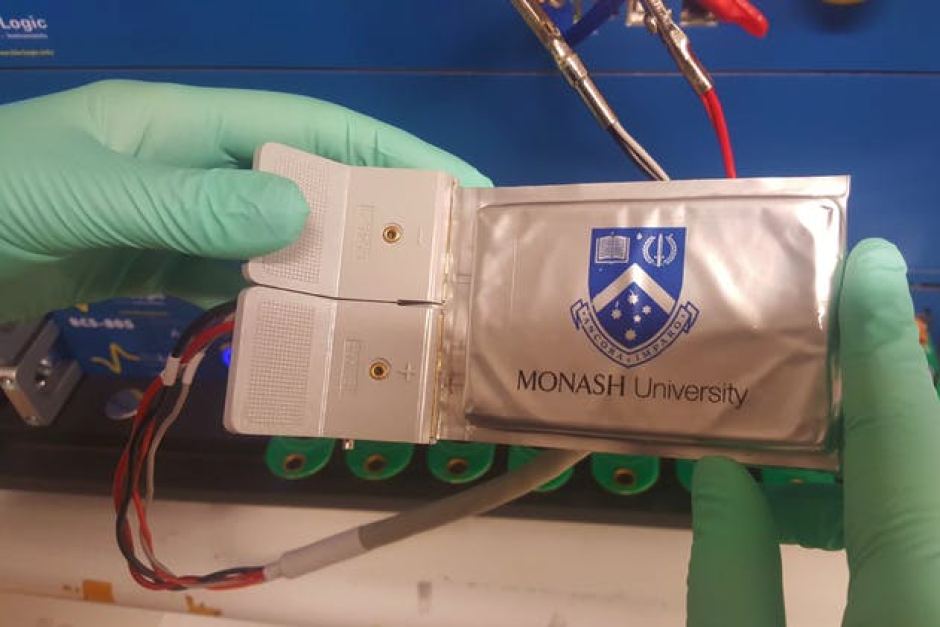
A research team at Monash University has come up with, as they put it, a “saccharide-based binder for efficient polysulfide regulations in Li-S batteries”. For us laypeople, they’re adding sugar to the battery to increase its durability and potentially make lithium-sulfur batteries a contender for transport applications.
Inspired by a 1988 geochemistry report that experimented with mixing glucose and cellulose to resist degradation in sulfur-based mixtures, Professor Mainak Majumder and his team were able to develop robust cathodes (the bit of the battery energy passes through) that can survive at least 1000 charge-discharge cycles (how many times you deplete to 0 per cent then recharge the battery to 100 per cent) and still provide a large amount of energy.
This is a significant milestone to creating a commercially viable lithium-sulfur battery – something that currently does not exist.
LFP (iron) and NMC (nickel manganese cobalt) lithium-based batteries are the main battery technology in electric cars today, but lithium-sulfur-based batteries have shown promise as a rechargeable battery that can be extremely light with a lower manufacturing cost.
Any battery nerd reading this might think 1000 cycles isn’t so impressive – and they’d be right – but until now, lithium-sulfur batteries were largely ignored as a viable alternative because they couldn’t survive more than 50-or-so charge cycles until they no longer provide a usable amount of energy.
Lithium iron phosphate batteries (LFP) can withstand over 3000 charging cycles before capacity is lost. Great stuff, but that durability comes with a major weight penalty.
Theoretically, a lithium-sulfur battery can store 400-600 watt hours of energy per kilogram, a massive increase over the 125-160 watt hours per kilogram found in typical electric car batteries now.
Using a lithium-sulfur battery pack of the same weight and size, an electric car could travel three times as far (or further) when compared to the lithium iron phosphate or lithium nickel manganese cobalt technology used today.
In practice, a Tesla Model 3 Standard Range Plus, which has an approximately 500kg battery that provides 400km of real-world range, could end up with a battery the same size and weight but with a whopping 1200km of range.
Alternatively, Tesla could drop 250kg of weight from the vehicle with a battery half the size, resulting in cost savings, and still provide a very usable 600km of range.
The research carried out by the Monash team means not only could it be possible to develop a lithium-sulfur battery with all the good things they bring – like two or three times the energy for the same size and weight, with a cheaper and more environmentally-friendly manufacturing program – but also with the same charging durability we’ve come to expect from existing electric vehicle batteries.
The Monash team currently has a prototype pouch battery with an energy density of 206 watt hours per kilogram, but Enserv Australia plans to develop the technology further and manufacture lithium-sulfur batteries in Australia within the next five years.
Batteries are one of those areas of research that someone, somewhere, claims to have found a breakthrough with almost daily, so take this one with a grain of salt (or sugar) as to when we’ll see this technology on the road.
The full details of Monash University’s research can be found in the Nature Communications journal.
