New South Wales’s Transport Minister has slammed the Federal Government’s lack of electric vehicle policy – claiming it doesn’t seem to understand the seriousness of their impact on climate change.
Andrew Constance accused some of his federal colleagues of underestimating the impact of global warming on future generations and leaving the states to “go it alone” on reform, reports the Sydney Morning Herald.
The Minister also called on his counterparts in the other states and territories to ensure no government in Australia has a combustion-engined vehicle in its fleet by 2030, and expressed frustration that the Morrison administration failed to outline plans for a national road-user charge before leaving “Australia with a patchwork of policies”.
The latter is a sentiment greatly supported by the Federal Chamber of Automotive Industries (FCAI).
“Canberra should have set a road user charge, instead, now look at it. You wouldn’t end up with these perverse outcomes where there’s a good policy in one state and a horrendous policy in another. We’d be far better off if we were in it together,” Mr Constance told a Committee for Sydney event on Tuesday, according to the newspaper.
“You know I get highly agitated when I hear federal politicians, not understanding how serious this is for our country and our children.
“It irritates me no end that we have these great state-based initiatives and there is nothing that’s been provided from Canberra [at a federal level] to be able to partner with the states in terms of the initiatives that we’re doing.
“I certainly feel at a national level we’ve got this great ability to reset the public discourse in terms of climate change policies. Forget the 2050 target, we can get on with this now to generate jobs, to generate innovation and transport can lead the way.”NSW outlined its own plans to incentivise EV uptake and develop its infrastructure network earlier this year, including a road-user charge coming into play in 2027, or when the number of EVs on state roads hits 30 per cent – whichever comes sooner.
Its offer of a $3000 rebate on new EVs purchased has not yet been passed through Parliament – having been due to come into effect from today – but the authority has confirmed it will backdate the payments once proceedings are able to resume when COVID-19 restrictions are able to lift.
South Australia has an identical plan to tax EV owners, last week announcing it was pushing the implementation back five years from 2022 to 2027/30 per cent uptake.
Victoria however has ploughed ahead with its own charge, controversially bringing it in much sooner – it took effect on July 1 this year.
While only these three states so far have ideas of taxing EVs, all states and territories in Australia have now revealed their policies on the technology as it becomes increasingly more mainstream.
Speaking recently to Wheels, the Federal Government said it is working “collaboratively with state and territory governments to consider the revenue and other implications of increased uptake of low and zero emissions vehicles” – essentially what it is going to do about the loss of fuel excise as EVs gain popularity.
It also claims to be focused on “practical actions” which will enable the private sector to commercially deploy low emissions road transport technologies at scale.
In July, the Australian Government awarded $25 million to five energy companies to roll out more than 400 electric vehicle charging points across the country.
The University of Melbourne has announced it is turning the former Holden site at Fishermans Bend into a new engineering campus.
The land, formerly home to the carmaker’s manufacturing operations, was purchased by the Victorian Government in 2016 and will be the home of a campus for over 1000 engineering and IT students.
Links to the motor industry are more than tenuous. Fishermans Bend will feature technology and resources not available at the Parkville campus, such as wind and water tunnels – as well as electric vehicle and propulsion testing.
As part of the Victorian Government’s wider Fishermans Bend National Employment and Innovation Cluster (NEIC), the area will account for “at least 40,000 jobs and over 20,000 students” by 2050, with the hope of becoming an international powerhouse in the manufacturing, engineering and design industries.
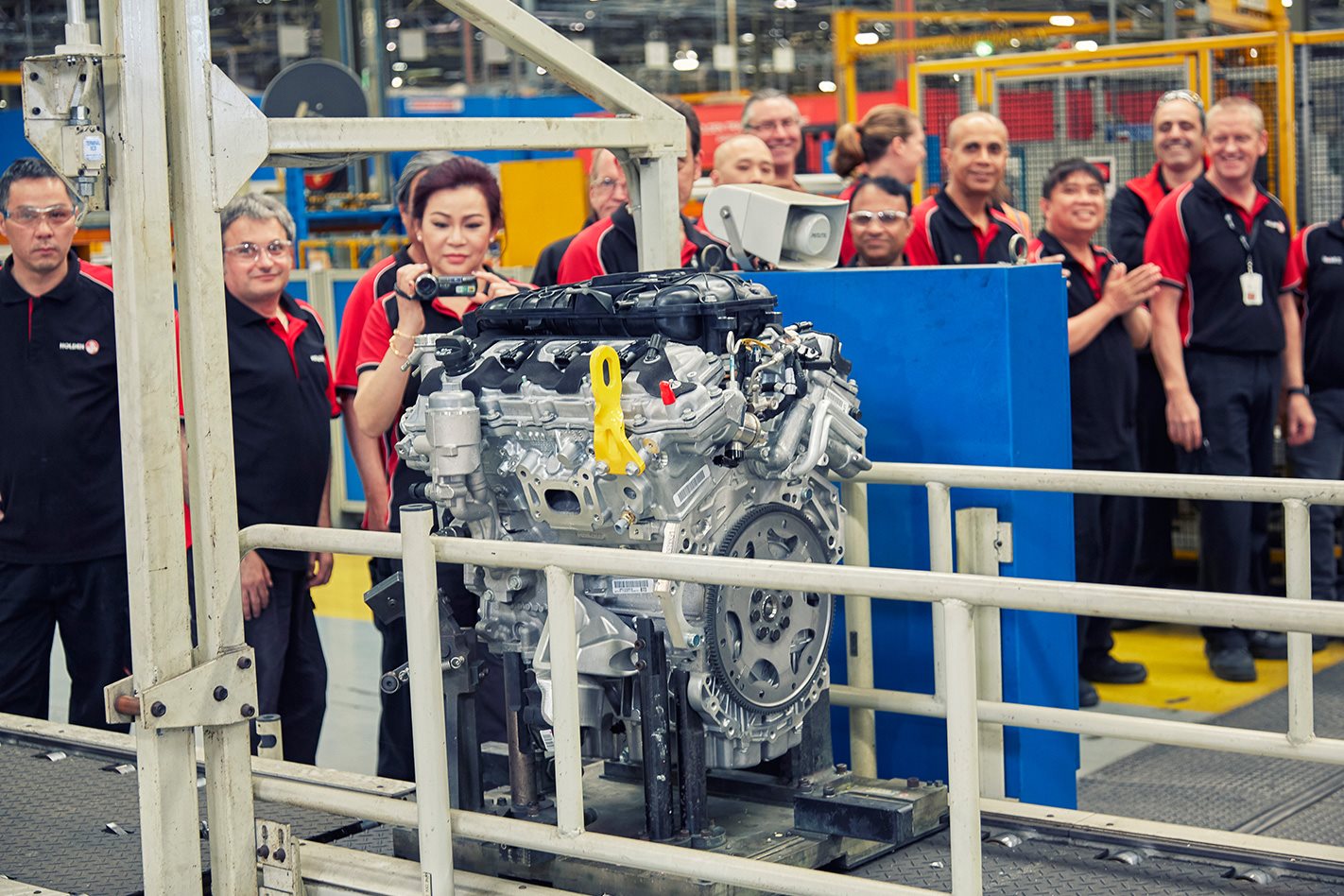
Holden’s manufacturing at Fishermans Bend wrapped up in November 2016, with the final 3.6-litre Alloytec V6 engine coming off the production line.
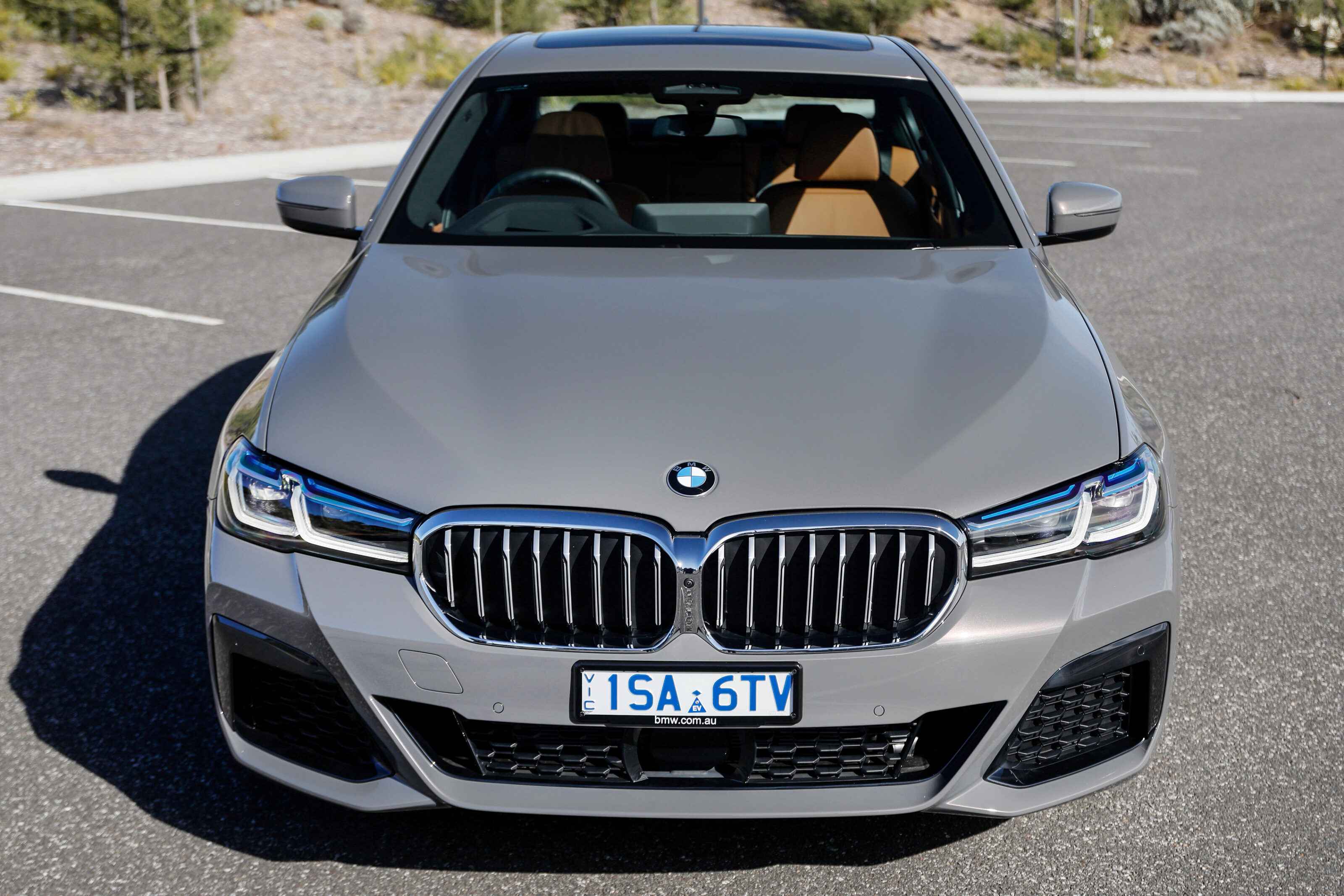
Competition around the BMW 530e is thinning. With Lexus ending the GS sedan and Audi skipping forward to an all-electric A6, the 530e stands as one of two choices for a mid-luxury large sedan with hybrid power.
This is not BMW’s first go, either. It debuted the ActiveHybrid 5 Series in 2011, followed by the 530e iPerformance that has now dropped that name suffix after undergoing a facelift that applies a new front-end with sharper headlights and a more geometric grille.
Its other category rival is the Mercedes-Benz E300e. On paper, the E300e runs the 530e close. BMW sets the 530e at $122,900 before on-road costs and options, just swooping under the Mercedes-Benz E300e at $123,500. They’re even more closely aligned when priced online, with the BMW and Benz respectively costing $133,511 and $131,581 drive-away in Victoria.
You’ll get a three-year warranty with BMW, contrasted against Mercedes-Benz that backs cars for five years. Both warranties cover unlimited distances. BMW, however, claws back points on fixed-price servicing, where it offers a five-year plan for $2800 versus $4800 for the same period on the E-Class.
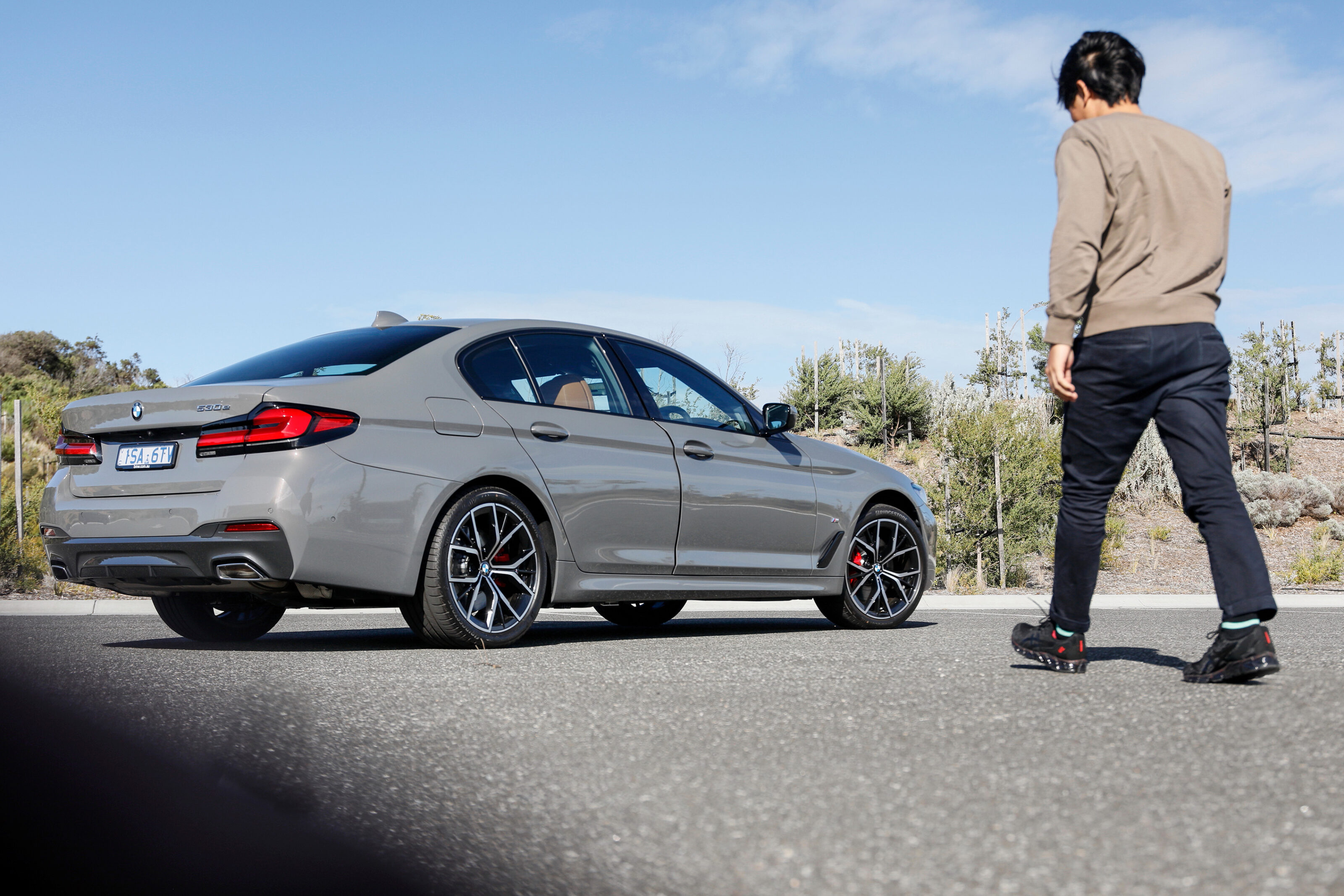
For all its glamour, the 530e gives away few clues to its greener credentials
To concentrate just on the 530e, though, inside you’ll find standard equipment like wireless charging and smartphone mirroring, electrically adjustable front sports seats, auto high-beams, auto wipers, customisable interior lighting and a head-up display. This is leftover specification from the 520i.
The 530e then takes things further with premium Harmon Kardon audio, lumbar support and heating for the front seats, an automatic boot opening/closing, adaptive suspension and M Sport brakes to build upon the 520i’s M aerodynamics package and M Sport suspension.
It’s safe as it is luxurious, as well, since the 5 Series scored a five-star ANCAP rating back in 2017. Active safety systems include adaptive cruise control, lane-keep assist and warning, blind-spot monitoring, stop and go assist, surround-view cameras and cross-traffic alert. Seven airbags are standard.
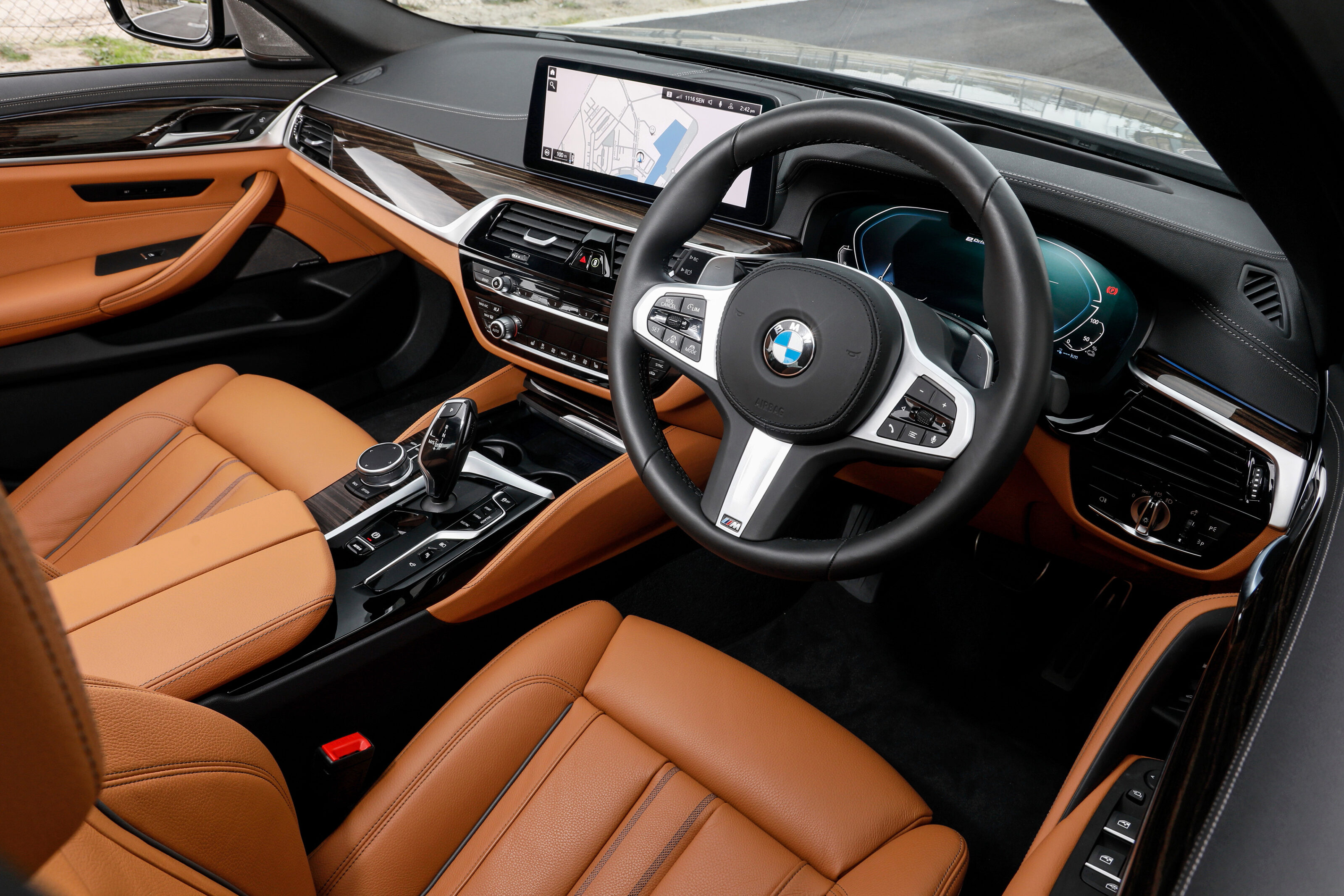
To top things off, our particular 530e features select options to further spruce its specification. An Enhance Package ($5900) throws on premium paint, which in our case is Bernina Grey Amber Effect metallic. It also upgrades from 19 to 20-inch wheels, adds a sunroof and replaces the adaptive LED headlights with laser technology headlights – claimed to illuminate 650m ahead on high beam at 60km/h.
But for all its glamour, the 530e offers only a few clues to its eco-friendlier nature. Among them are a battery charge meter to the right of the instrument cluster screen and a charge-flap on the front right guard.
Perhaps the most obvious indicator is in the boot, where batteries under the rear seat have slashed cargo capacity from 530 litres down to just 410. The boot can still swallow a pair of large suitcases, but a ramped floor means it’ll be trickier loading them into space.
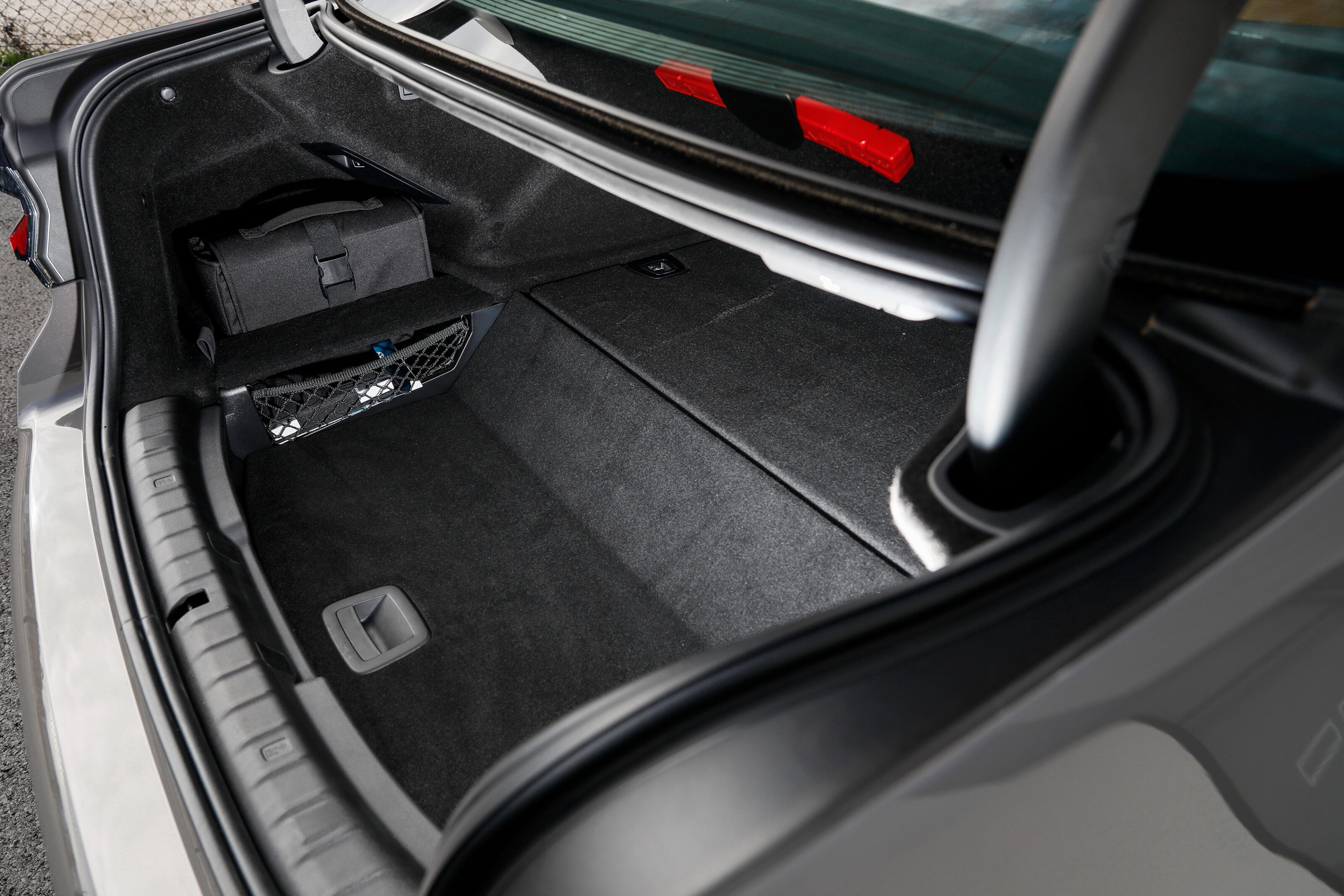
BMW has upgraded the capacity of the lithium-ion battery pack from 9.2kWh to 12kWh, boosting both range and power outputs.
While we’re on batteries, BMW has upgraded the capacity of the 530e’s lithium-ion pack from 9.2kWh to 12kWh, boosting range and outputs. Charging up takes longer, understandably, now claimed to need 3.6 hours (up from 2.9) when plugged into an AC outlet.
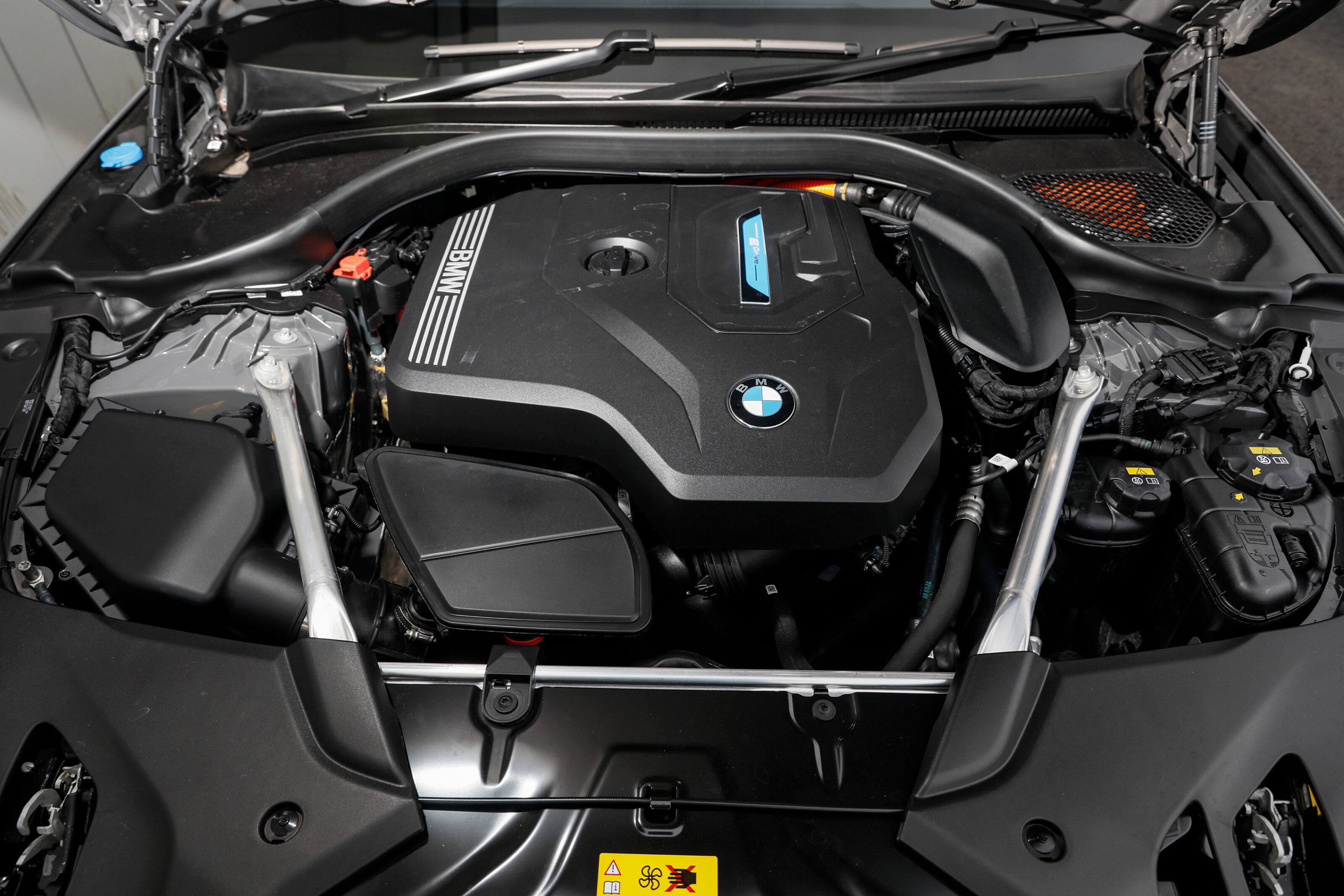
More battery capacity helps the electric motor sustain its maximum 80kW output during the 2.0-litre turbocharged petrol engine’s peak power spread, where it produces 135kW between 5000rpm and 6500rpm. Together, the petrol engine and electric motor can now deploy a total of 215kW during short bursts when Sport and Sport Plus driving modes are activated. That’s 30kW more than before.
The extra battery capacity also fattens the electric motor’s torque rating from 250Nm to 265Nm. However, even though the engine is rated at 300Nm, the combined torque output of the hybrid system remains 420Nm.
Channelling these outputs an eight-speed automatic transmission and BMW claims the rear-drive sedan can now accelerate from rest to 100km/h in 5.9sec, beating the old version by 0.3sec, even though it’s also gained weight across the range.
The 530e now tips the scales at 1835kg, up from 1770kg, the extra 65kg we assume is due to the bigger battery and new equipment like adaptive LED headlights, 19-inch wheels and larger centre screen that are standard across the range.
Astonishingly, these extra kilos have not punished fuel consumption. Its electric-only driving range has increased from 43km to 67km with the extra battery capacity, representing a 35 per cent gain. Meanwhile, the 530e’s claimed fuel consumption on an ADR-approved combined cycle, according to BMW, remains a scarcely believable 2.3L/100km.
We squeezed 45km from the 530e in electric-only mode on Melbourne’s freeways, drawing down the battery’s initial 80 per cent charge to zero. We estimate the 530e could go for another 8km or so if you begin fully juiced, putting its electric-only range at around 53km. That’s short of the 67km claim, but also convincingly up on the old 43km range.
After this, we charged the 530e through a wall socket (it has no fast DC charging capability) for a couple of hours before tackling another test route over more urban roads and eventually winding our way up a mountain. We unplugged the 530e with a 50 per cent charge and took off in Hybrid mode, allowing the powertrain to balance the demands of the motor as it saw fit.
We never considered the 530e would come near its ADR-approved fuel consumption figure, mainly because the test involves running hybrid cars on a dynamometer for 20 minutes twice, to try with the battery fully charged and then without any charge at all. It’s reportedly common for hybrids to finish the first run without any assistance from the engine.
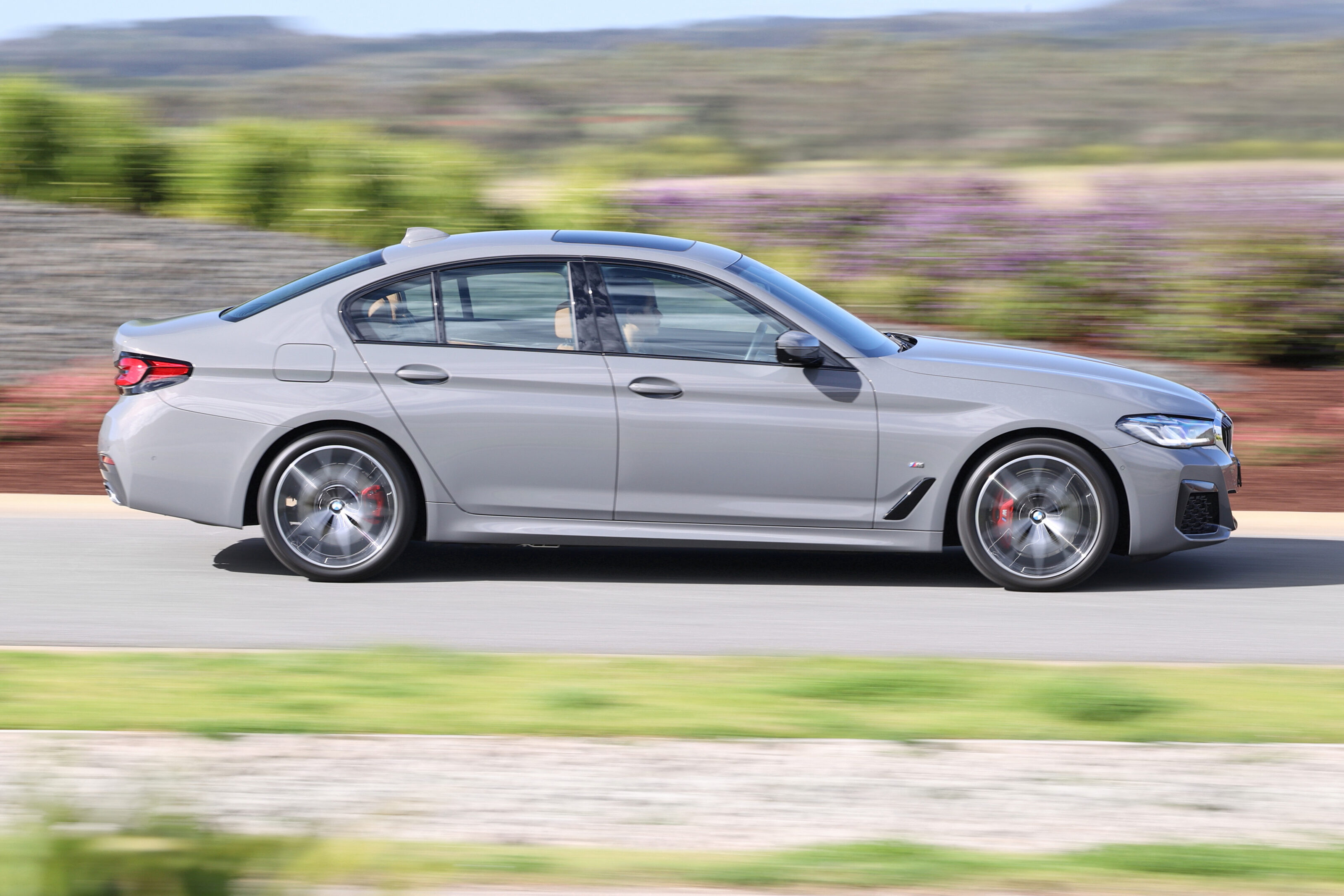
This partly explains why after our second 170km test route, the 530e returned a fuel consumption figure of 7.2L/100km, which is 4.8L/100km thirstier than the official combined consumption claim.
We didn’t hold back, however. We augmented the hybrid drive mode with every appropriate sub-mode, i.e. Sport for the corners, Eco Pro on the highways and Adaptive for around town. What do they do? Adaptive mode employs a high-regenerative braking effect. It’s strong enough to slow the car even when coasting downhill.
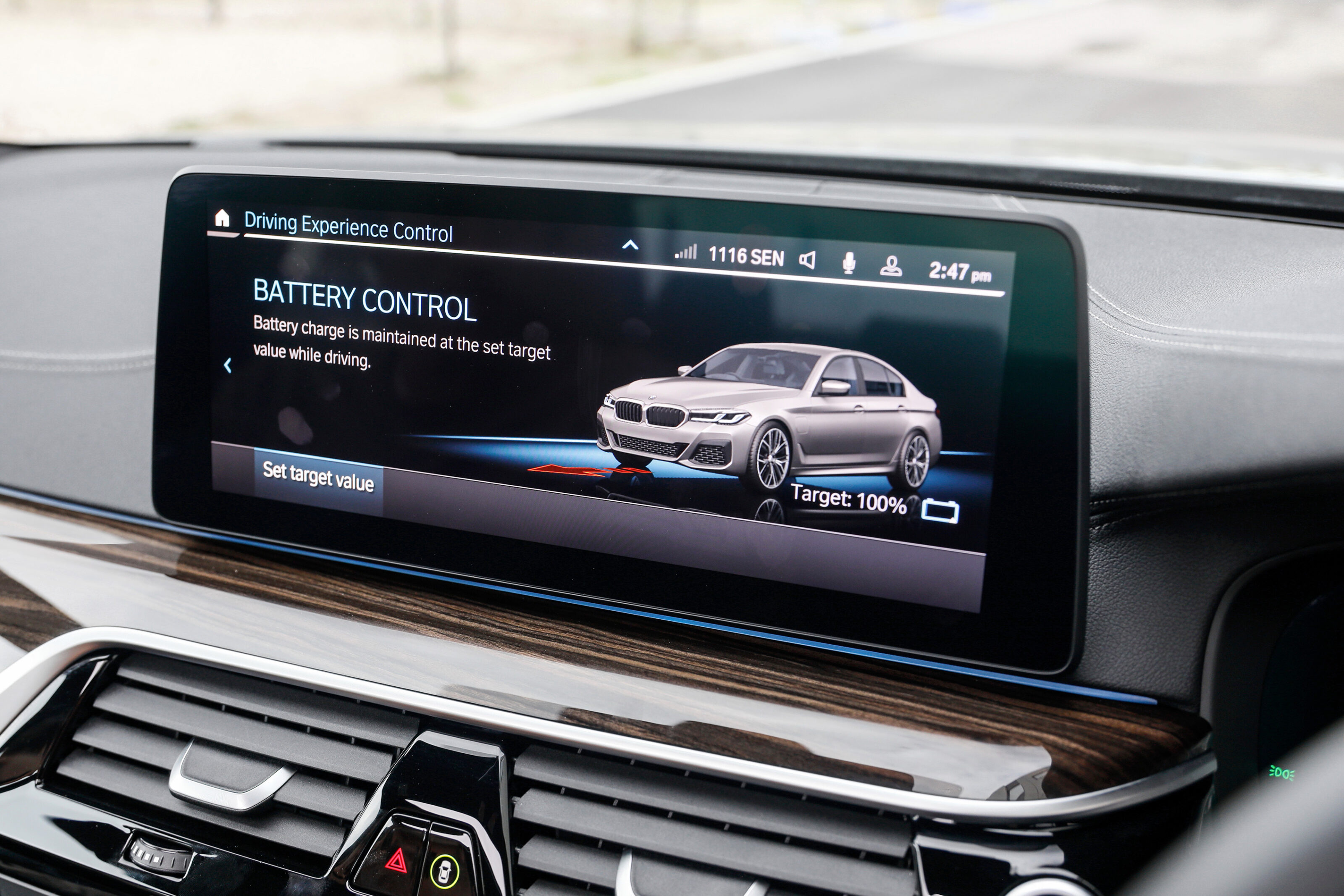
Eco Pro, conversely, regenerates battery only when you’re on the brake or when it detects a car in front, instead opting for long bouts of coasting with the engine off. There’s also a special Battery Control mode that optimises the powertrain for charging the battery, powering it up to a set target.
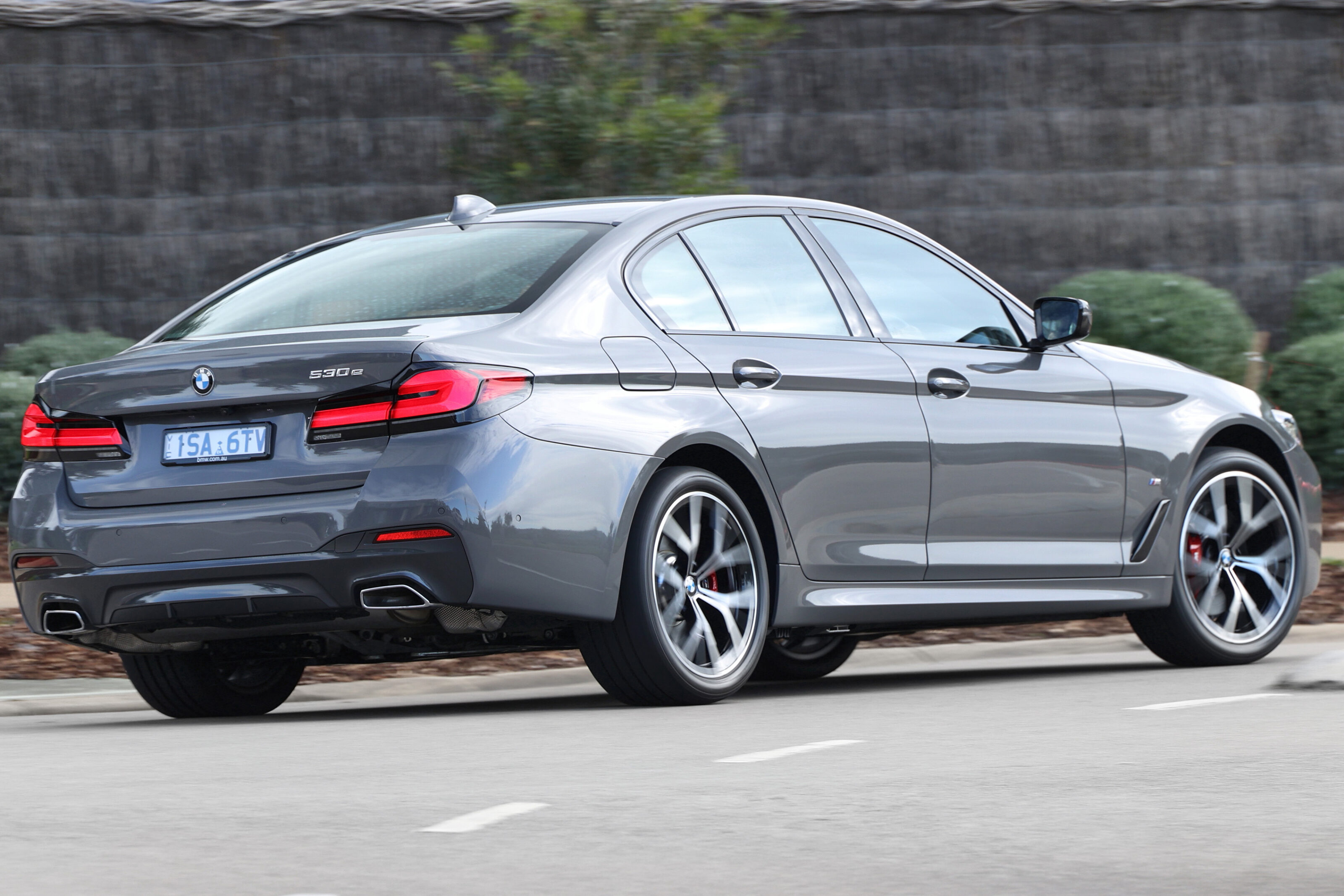
Whatever mode is engaged, the petrol engine and electric motor work seamlessly together.
Whatever mode is engaged, however, it’s worth noting the petrol engine and electric motor work seamlessly together. The engine switches on and off almost imperceptibly, with only a quiet burble to announce its return.
But our favourite mode drive mode is Xtraboost. Turned on through the centre screen in Sport mode, the engine stays on longer to charge the battery, keeping it primed for short bursts of acceleration. And we can verify the extra hit of power makes the turbocharged four-cylinder engine seem like it’s packing an extra pair of cylinders.
Torque hits from down low while acceleration lasts well into the upper rev range. And because the electric boost is activated when you push the throttle halfway, the 530e can easily kick sideways in the wet.
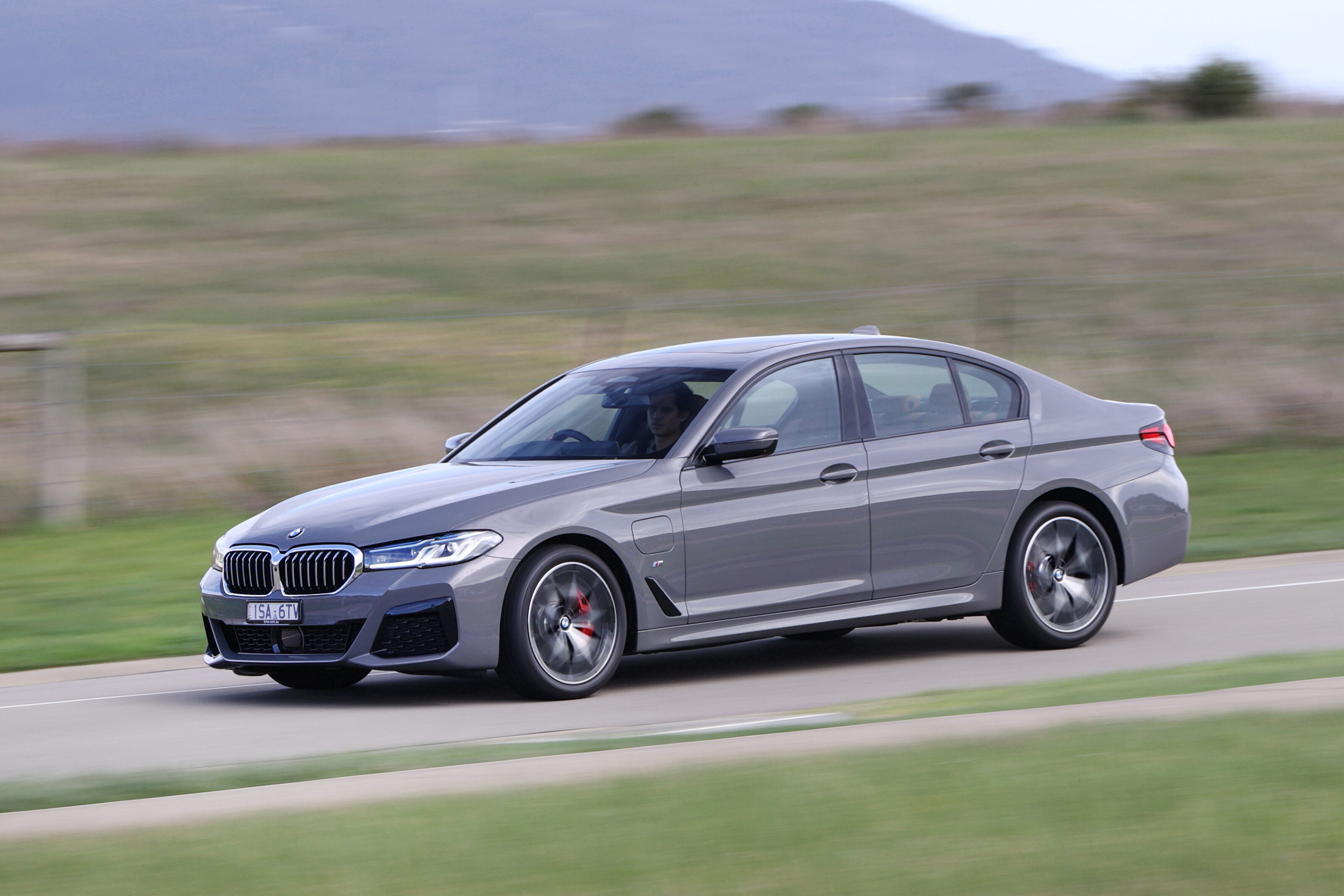
The hybrid system’s extra weight also brings more subtle changes. The batteries move the weight balance, so the 530e tends to sit more on the rear axle through corners, and the front end is a little less responsive.
This might seem academic, however, as few 530e owners would be exploring the limit – even for the short amount of time we did. But the performance is there in the rare circumstances they do.
At the heart of the 530e is a hybrid system that brings extra refinement and emissions-free driving. If you lived within 50km of work, you would rarely fill the 530e’s tank if you could plug it in to charge overnight at home.
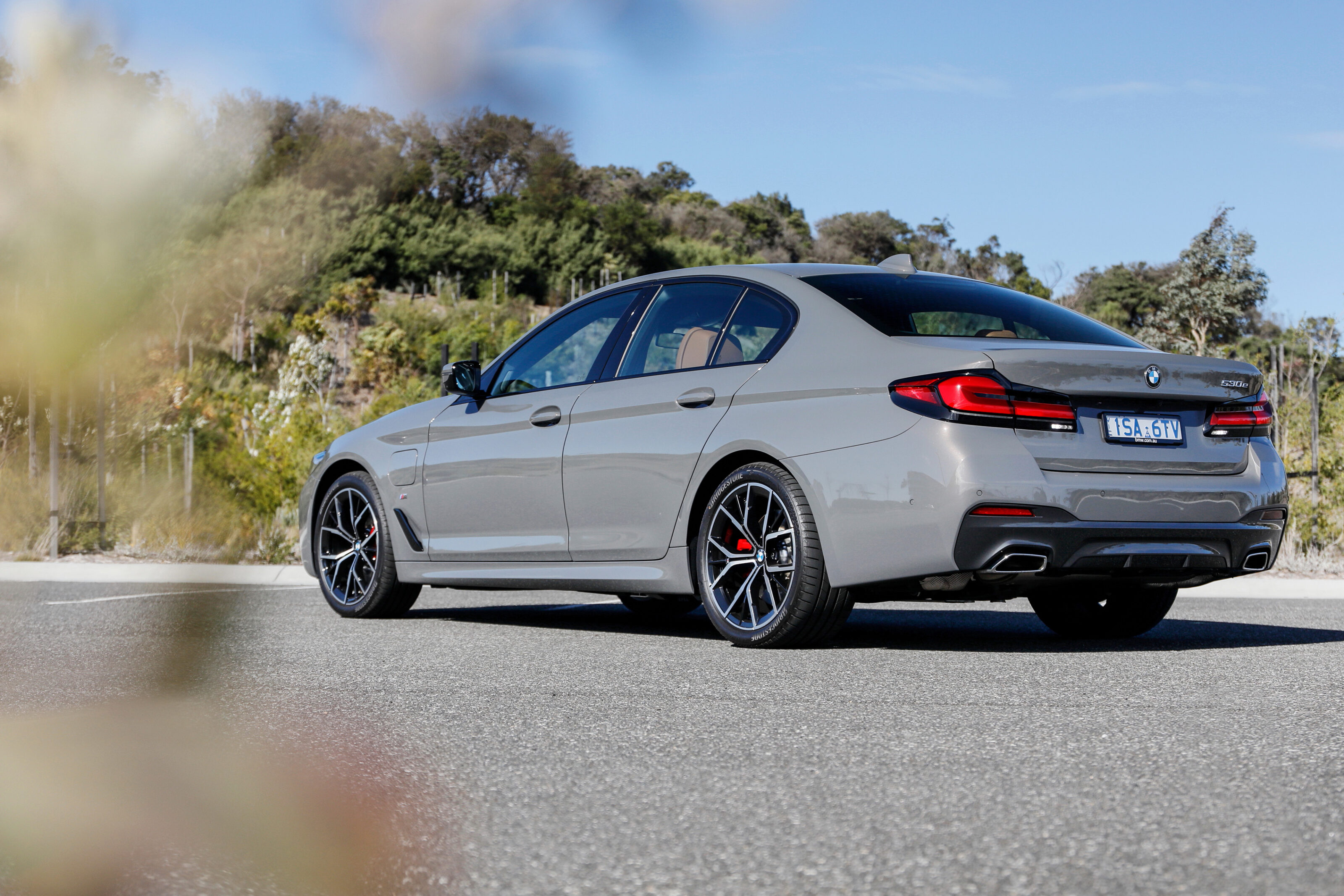
The ‘e’ badge does come at a new premium. Whereas the previous 530e was priced lineball with a 530i, this version adds another $3000. If you wanted to earn back that difference through fuel savings by using electric power alone, you would need to complete about 30,000km of electric driving. Or, 300 commutes on a 100km return trip (assuming fuel costs $1.50 per litre and you charge with a no-cost electricity source such as your own rooftop solar).
At the same time, it’s worth considering BMW covers the battery for six years and 100,000km against defects and more than a 30 per cent capacity loss.
Overall, the electric powertrain helps emphasise the luxury of the 5 Series’ quiet cabin. And between the plush optional comfort seats and adaptive suspension that delivers an absorbent ride on nibbly low-profile 20-inch tyres, the 530e is every bit as luxurious as its range siblings.
It’s also quicker, more refined and just as capable as the 530i, broadening the talents of a petrol four-cylinder 5 Series without the relatively huge price jump normally attached to the six-cylinder 540i, which is no longer available anyway.
And while cross-country travellers would struggle to see the value in the hybrid system without DC fast charging capability, the 530e makes a lot of sense for the eco-conscious city dweller – if you can resist the appeal of a Mercedes or BMW electric SUV.
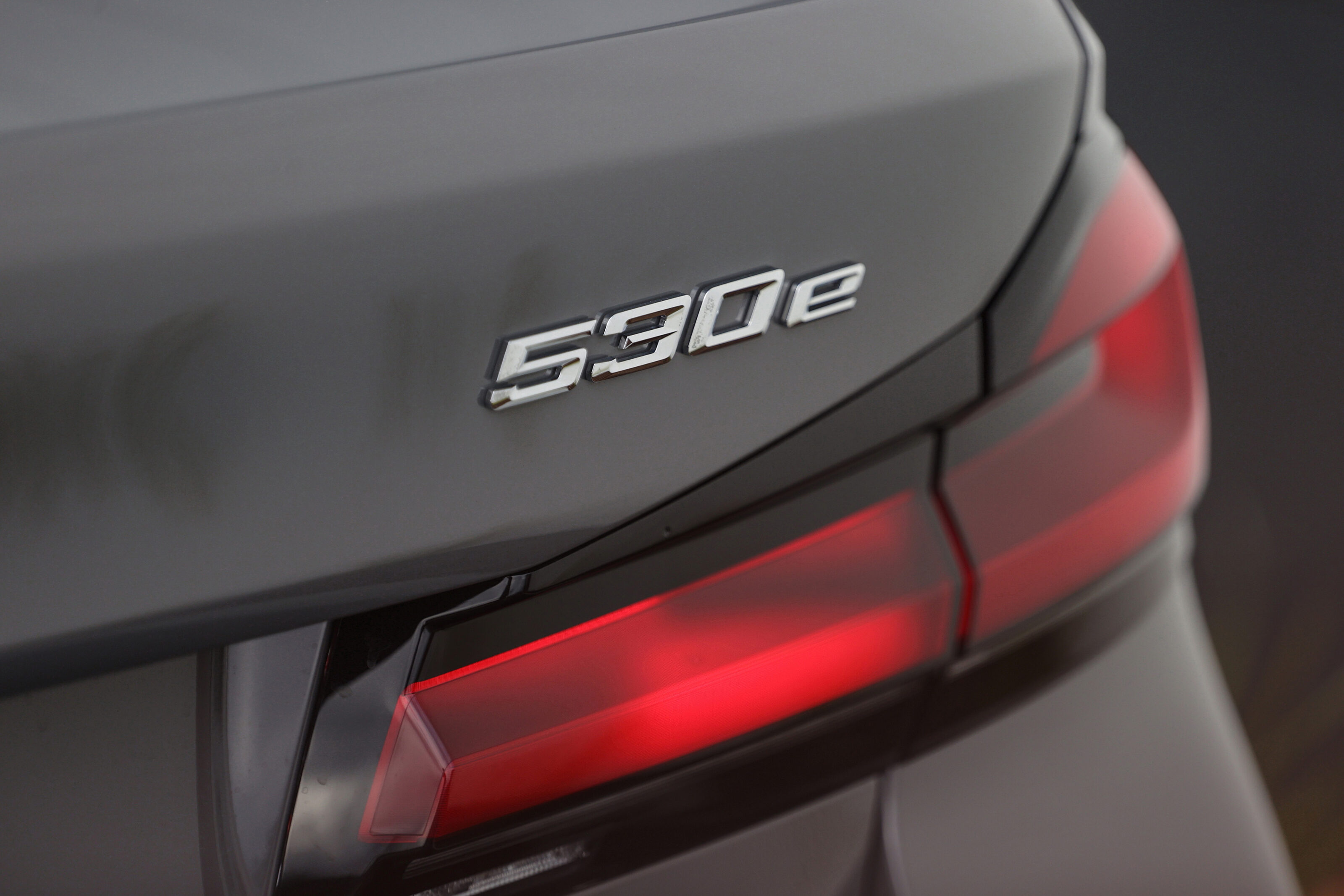
BMW 530e specifications
| Body:u00a0 | 4-door, 5-seat sedan |
|---|---|
| Drive:u00a0 | rear-wheel |
| Engine:u00a0 | 1998cc inline 4cyl, DOHC, 16v, turbou00a0u00a0 |
| Bore/stroke:u00a0 | 82.0mm x 94.6mm |
| Compression:u00a0 | 11.0:1 |
| Power:u00a0 | 135kW @ 5000-6500rpm |
| Torque:u00a0 | 300Nm @ 1350-4000rpm |
| Electric output: | 80kW/265Nm |
| Total output: | 215kW/420Nm |
| Fuel consumption:u00a0 | 2.3L/100km |
| Weight:u00a0 | 1835kgu00a0 |
| Power/weight:u00a0 | 117kW/tonne |
| Transmission:u00a0 | eight-speed automatic |
| Suspension:u00a0u00a0 | struts, adaptive dampers, springs (f); multi links, adaptive dampers, springs (r) |
| L/W/H:u00a0 | 4963mm/1868mm/1483mm |
| Wheelbase:u00a0 | 2975mm |
| Tracks:u00a0 | 1604mm/1631mm |
| Steering:u00a0 | electrically assisted rack and pinion |
| Brakes:u00a0u00a0 | ventilated discs, four piston calipers (f); ventilated discs, single piston floating calipers |
| Price (before on roads and options):u00a0 | $122,900 |
Teaser images released overnight have provided our best glimpse yet at the 2022 Subaru Solterra – the brand’s first all-electric model.
Like the Toyota GR 86 and Subaru BRZ sports coupe, Subaru’s Solterra has been co-developed with Toyota and shares more than a passing resemblance with its bZ4X cousin.
Powertrain details have yet to be announced for the RAV4-sized Solterra, but Subaru has confirmed the model will be sold with all-wheel drive, as with the bZ4X. It also says the new version will be the company’s most technically advanced car yet.
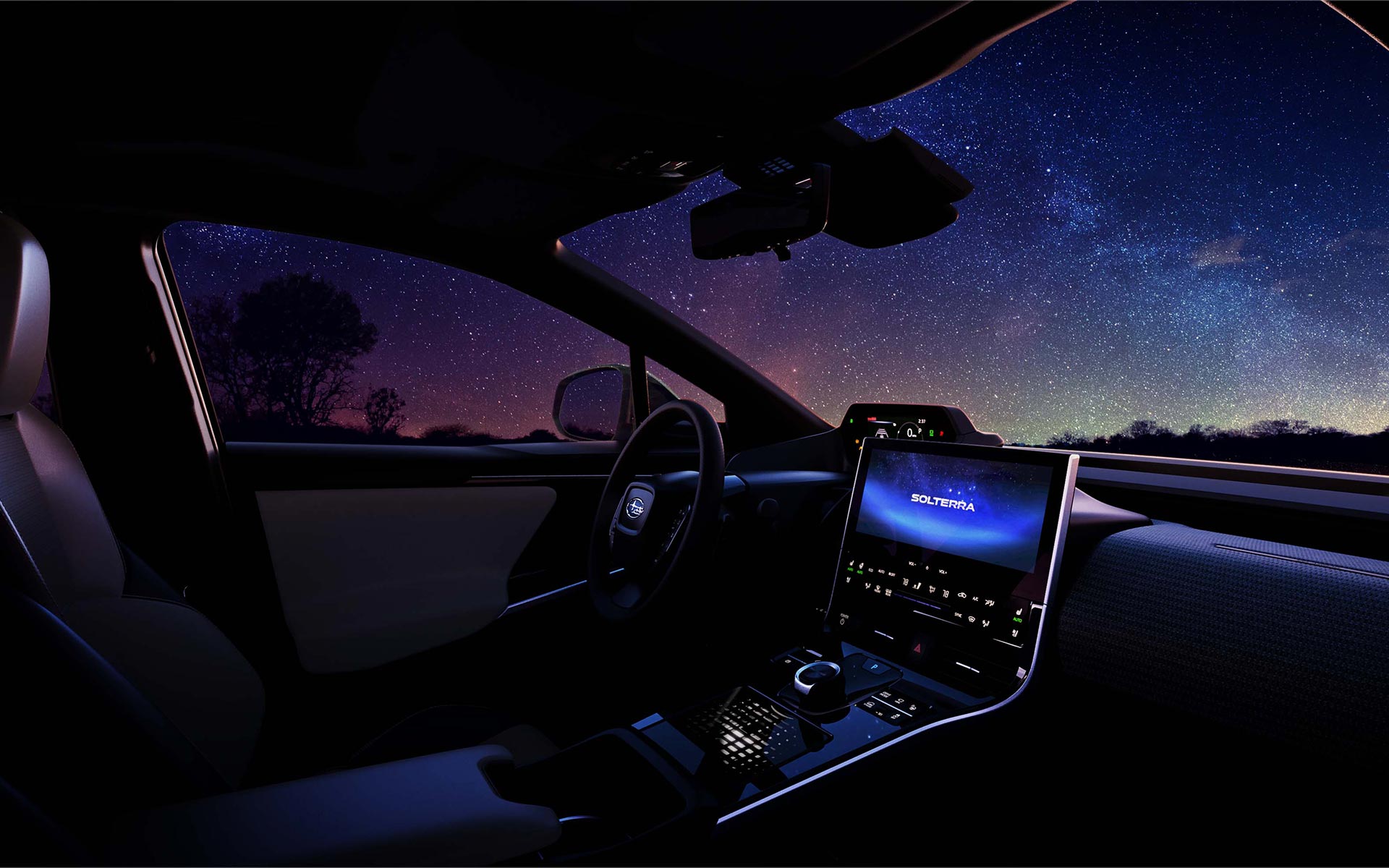
The Solterra will launch in North America, Europe, China, and Japan by the middle of 2022, but Australia was conspicuously missing from the company’s announcement.
A spokesperson for Subaru Australia has confirmed there is no timeline for the Solterra to be introduced locally, but told Wheels: “We are very interested, and future electric projects form part of ongoing dialogue between Subaru Australia and the factory.”
But while the Solterra has yet to be confirmed for Down Under, Toyota has announced plans to bring the bZ4X to our shores at some point in the future.
Snapshot
- Forester Wilderness carries on from Outback Wilderness
- North American release only
- Bigger focus on off-road capabilites
Subaru Canada has inadvertently released photos of the new Forester Wilderness online, before the crossover was due to officially be revealed.
As spotted by Twitter user Jonathan B-Potvin, the off-road oriented Forester appeared on the Canadian Subaru website before being taken down, although not before Carscoops was able to nab some snaps.
Just like the Outback Wilderness – launched in April this year – the beefed-up Forester scores better ground clearance, 17-inch wheels with all-terrain tyres and wheel arch liners, which protect the bodywork underneath when off the beaten track.

Other equipment such as roof racks, skid plates and an anti-glare matte black bonnet stripe feature on the Forester’s exterior, plus a slightly revised front bumper to aid its ground clearance.
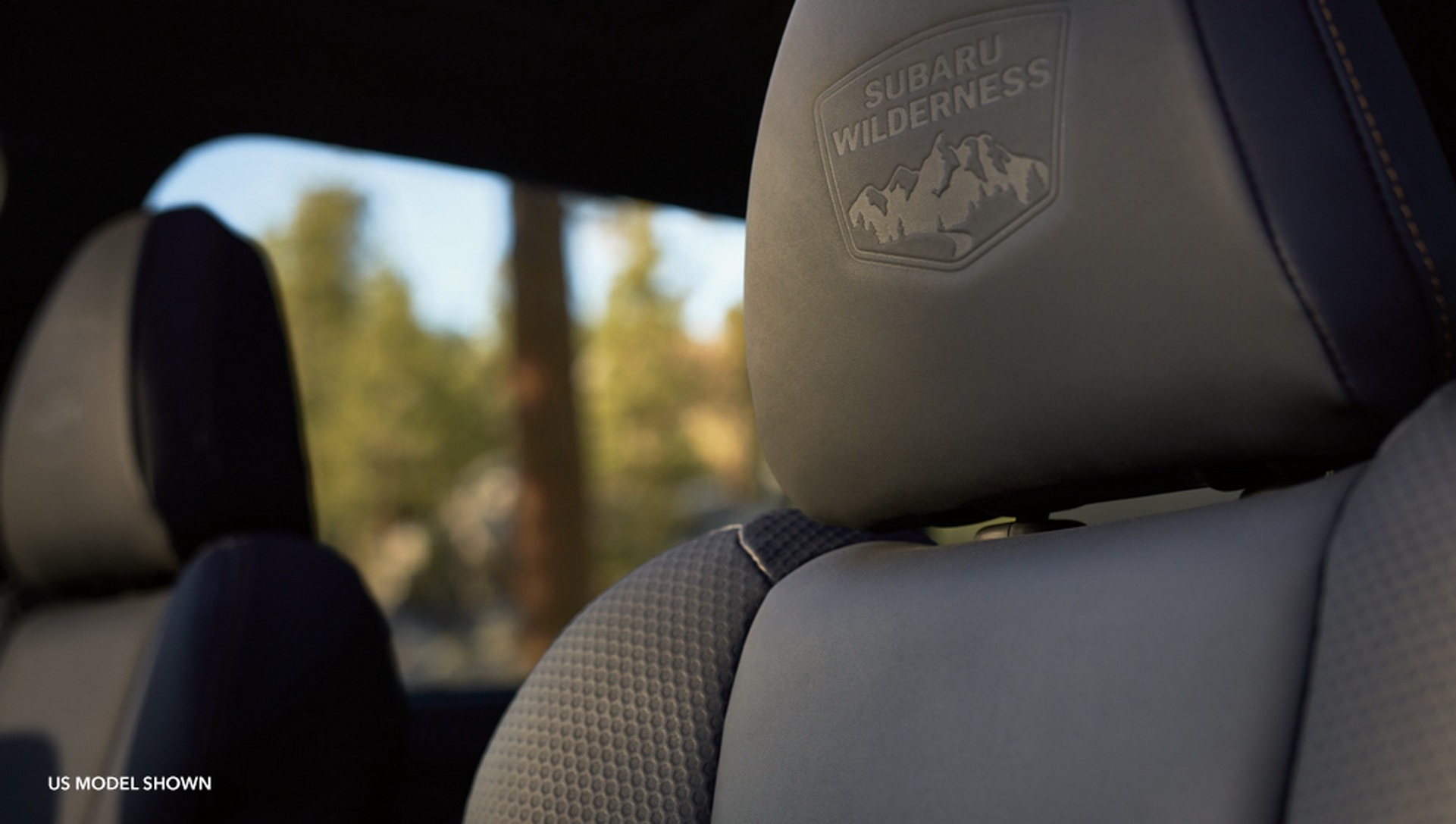
Inside the cabin, not much is changed, as the only hints at this being a special edition are found in the seats – made up of water resistant material with Subaru Wilderness logos embossed in the headrests.
Under the bonnet is a 2.5-litre, flat-four petrol engine producing 135kW and 239Nm – which is mated to a low and standard ratio CVT automatic gearbox, sending power to all four wheels.
Although the Forester Wilderness would be the perfect machine for heading to the Snowy Mountains or through some of Australia’s many national parks – much like the Outback, it won’t be coming here.
Instead, Australians will have to make do with the regular Forester in all its guises, which has just been refreshed for the first time since 2018, set for a local launch at the back end of 2021.
Snapshot
- Four new all-electric models planned by Lotus over five years
- Two Porsche-rivalling SUVs and a four-door coupe to be built at new China plant
- Lotus Technology HQ to open in Wuhan in 2024
UPDATE, March 30, 2022: Lotus has finally unveiled its new electric SUV, the Eletre. Get the full story at the link below.

The story to here
British sports car company Lotus will soon open its new Chinese manufacturing facility, and it’s set to produce two SUVs as part of the company’s all-new electric vehicle (EV) range.
Lotus plans to offer four new fully-electric models by 2026, which will include a medium SUV and a large SUV, both to be produced at the company’s Chinese plant in Wuhan when construction is completed in late 2021.
Only one of the four new EVs will be a sports car – developed in collaboration with Renault’s electric performance arm Alpine – with the final slot to be taken up by a four-door coupe.
All but the Lotus-Alpine sports car will be produced at the new Wuhan facility.
The four vehicles announced are in addition to the electric Evija hypercar and the recently-unveiled Emira – the company’s last petrol-powered model – which will both be produced at its factory in Hethel, UK.

The new ¥8 billion (AU$1.69 billion) Wuhan plant will have the capacity to produce up to 150,000 vehicles annually, and is said to have the world’s first integrated intelligent test track. The circuit will put vehicles through their paces in 16 corners and at speeds of up to 230km/h.
Chinese majority owner Geely is understood to be floating the expansion, with plans to transform Lotus into a direct Porsche competitor.
While the two new Lotus SUV models will be the approximate size of the Porsche Macan and its larger Cayenne sibling, the four-door coupe is expected to challenge the Taycan.
To further drive development of its new EV line-up, the British carmaker has broken ground on its new Lotus Technology headquarters, set to open in 2024 in Wuhan.
Lotus says the new facility will be “responsible for integrating a new generation of lifestyle products, bringing together China’s EV and manufacturing specialisms, the UK’s design and advanced performance centres, and Germany-based [research and development] resources”.
Snapshot
- Civic to arrive final quarter 2021
- HR-V on track for first half of 2022
- Both will have hybrid options, high-spec focus
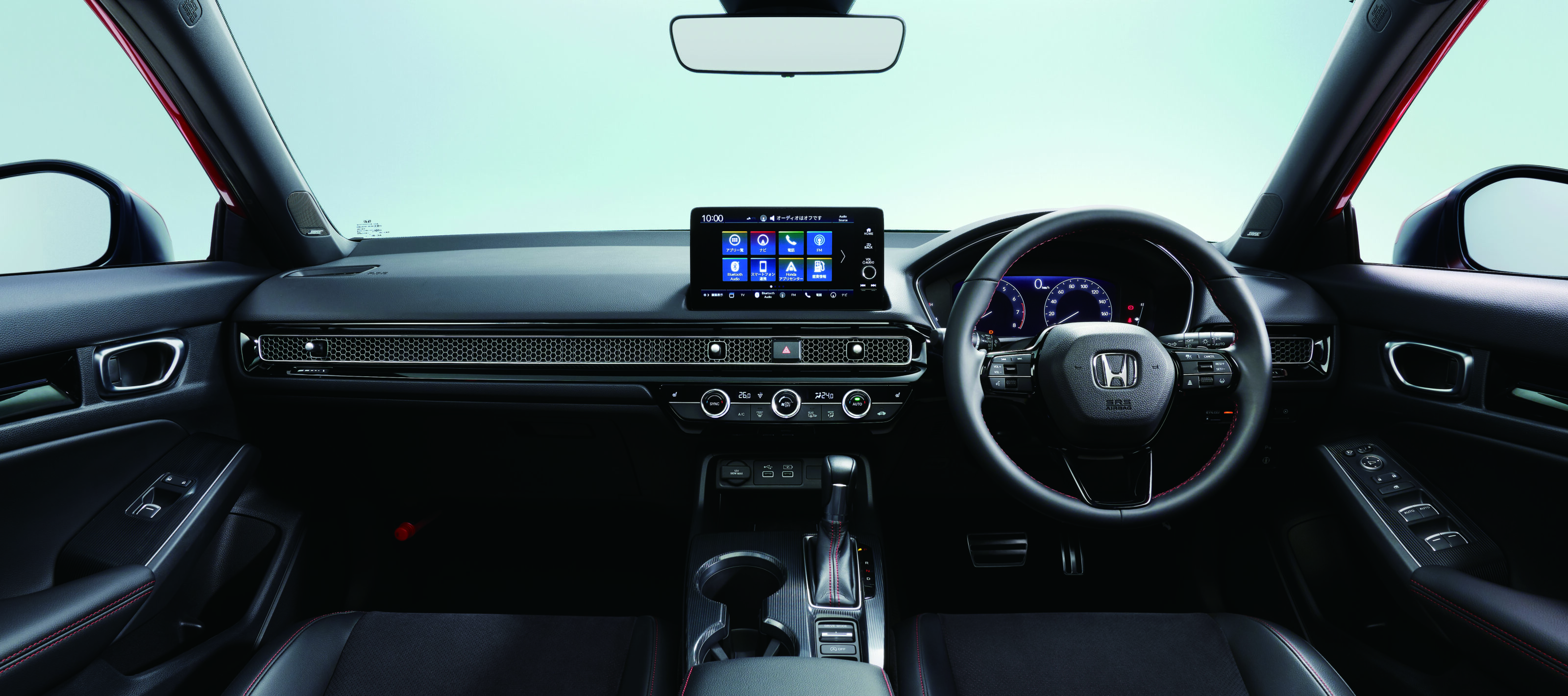
Honda Australia has confirmed it is on track to bring the 11th generation Honda Civic Hatch to Australia before 2021 is up, while the new Honda HR-V will follow it in 2022.
Speaking to Wheels, Honda Australia director Stephen Collins said he was looking forward to the arrival of the two new models as the first to be introduced after the company changed its local sales network to a retail-based fixed price model.
With semi-conductor shortages and the business transformation, as well as lockdowns all having the potential to impact arrival of the new Civic Hatch, Collins says the brand is still on track for a final quarter arrival.
“The first half of the year we were very badly hit by semi-conductor shortages, but are now finding the availability improving – although we’re not quite out of the woods yet,” he told Wheels, later adding that Australia will be drawing more of its units from Japan in future, both for supply and specification.
When the 2022 Civic arrives, its local range will be focused more on medium-high specification cars, Honda not wanting to chase large sales in its bid to position itself as a more ‘premium’ brand.
So too will the 2022 Honda HR-V, which Collins says is on track to launch within the first half of 2022.
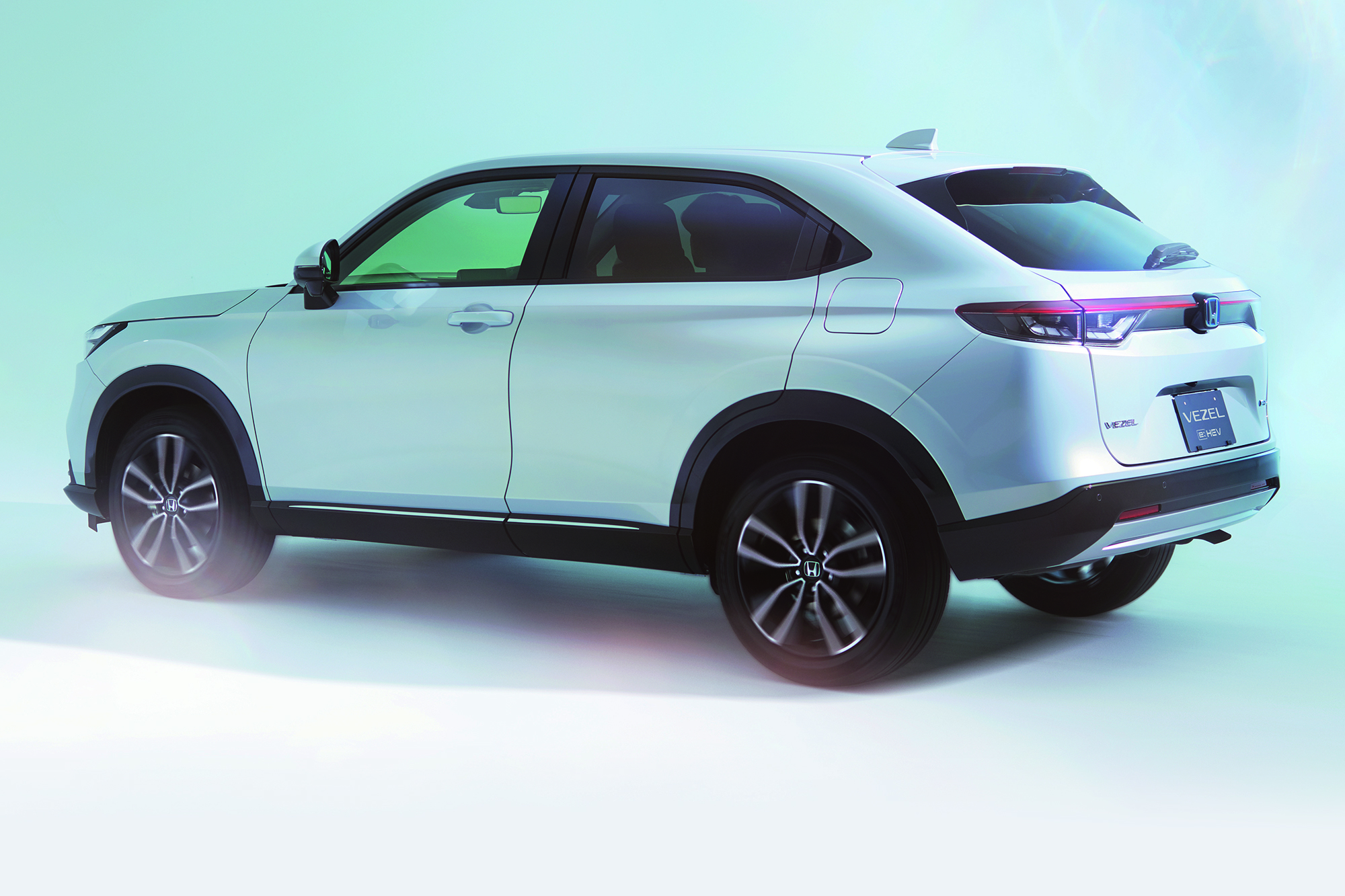
As well as moving upmarket in terms of trim and features on Australian cars, Honda will also offer hybrid versions of each new car arriving in Australia.
A Honda e:HEV version of both the Civic and HR-V are expected to be available at, or close to, the launch of each car.
Mr Collins said he expects the HR-V in particular to remain a popular choice for the model’s “loyal customer base”.
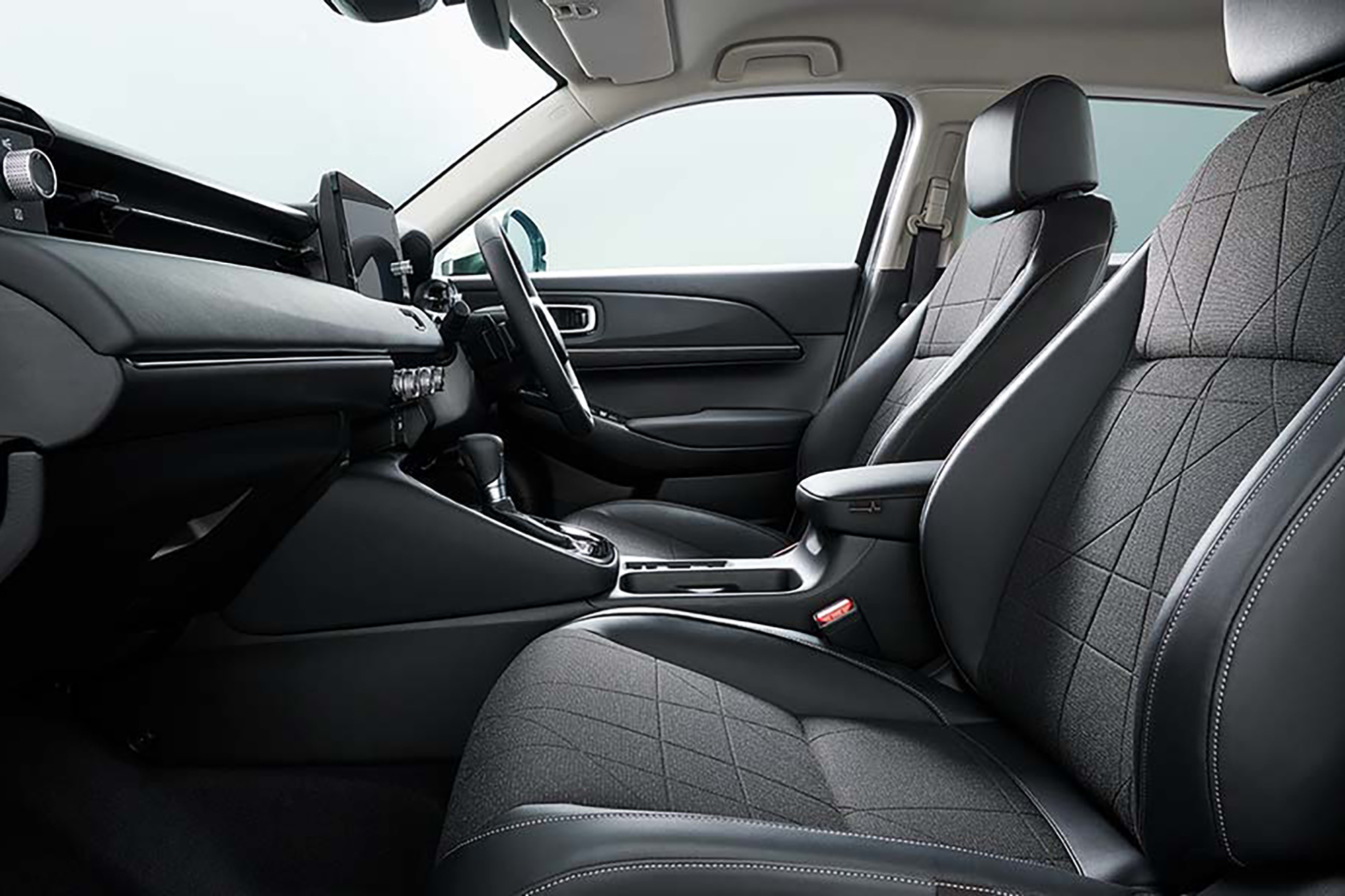
The two models, as well as the CR-V, will form the main bulk of Honda’s sales going forward, which Collins expects to grow to around 20,000 units a year after sales dropped off in the wake of the business model change.
Up to July 2021 it has shifted 11,593 units, down 38.1 per cent compared to a COVID-ravaged 2020 when it sold 18,728 to July.
Snapshot
- Petrol and diesel engines to be offered
- Android Auto as standard
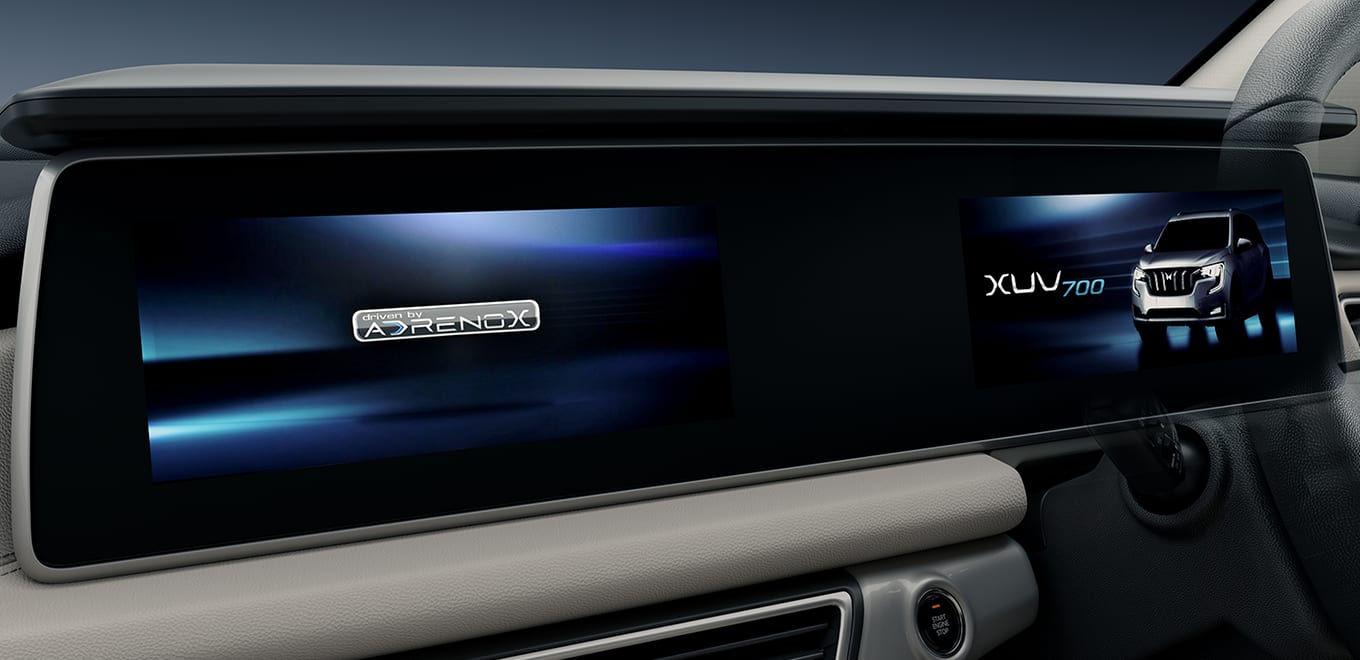
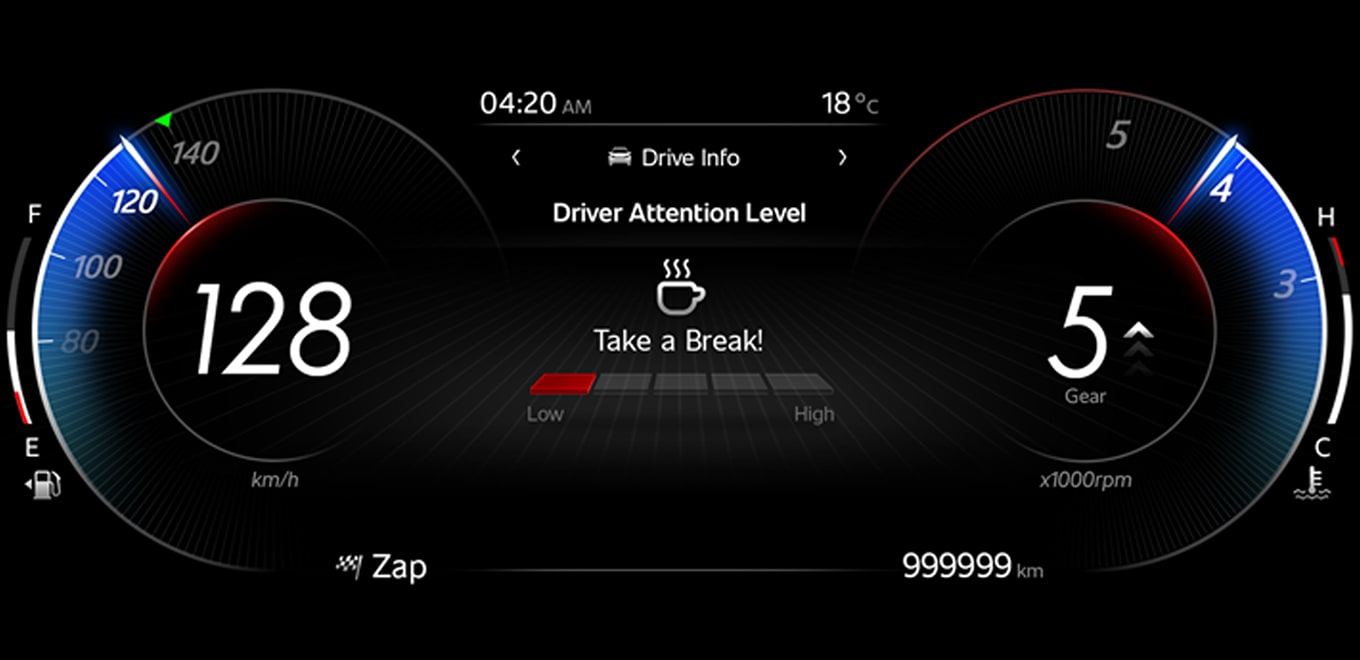
- AdrenoX range gets 10.25-inch digital dash
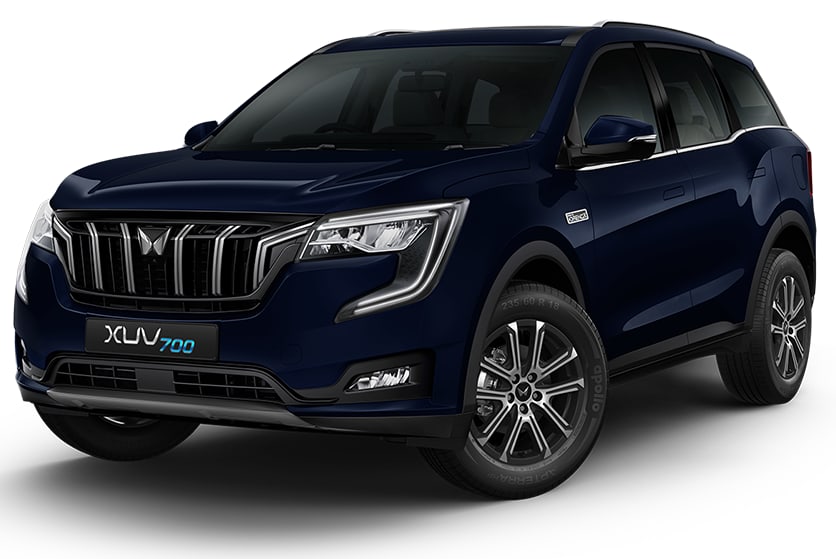
UPDATE, September 1: Indian manufacturer Mahindra has confirmed the new XUV700 is Australia bound, with registrations of interest now open.
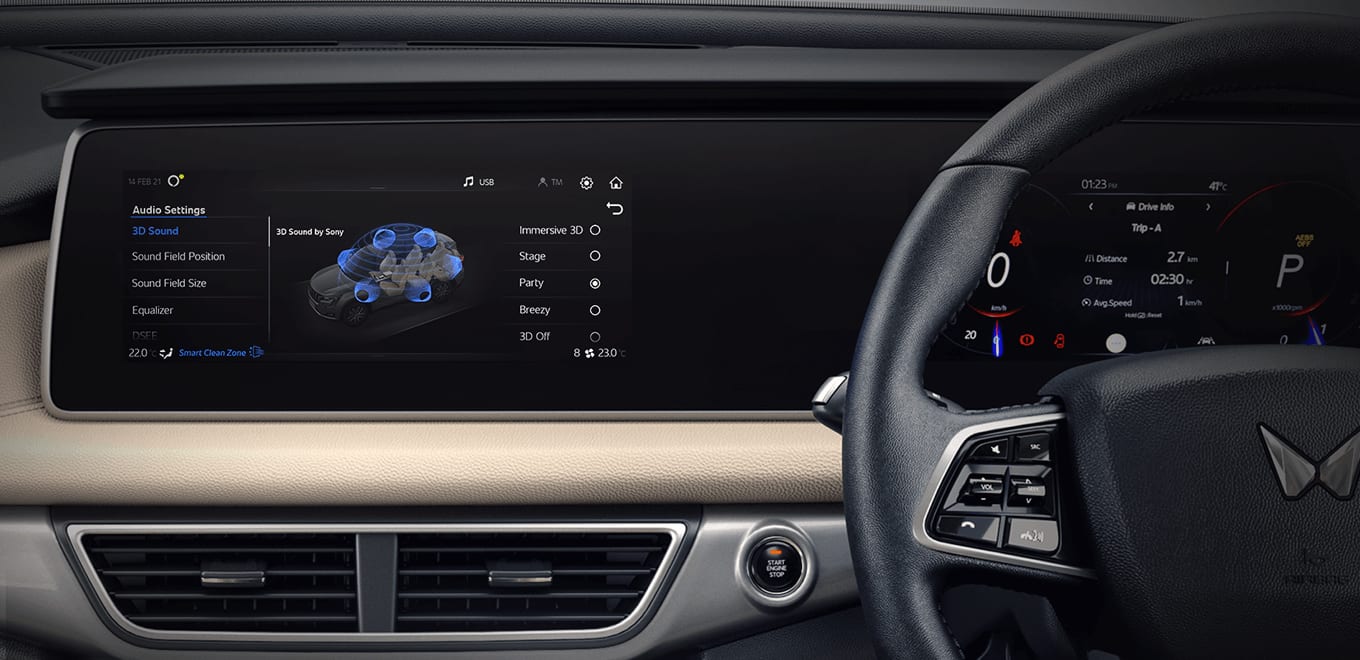
While exact specs of Aussie-delivered models haven’t yet been revealed, it is understood the race will carry over features such as built-in Amazon Alexa, 3D Sound Technology by Sony and cabin purification smart filter technology as standard.
Safety systems including; lane departure warning, lane keep assist, adaptive cruise control, smart pilot assist, traffic sign recognition and high beam assist will also feature in the XUV700 range.
Mahindra Australia has not provided prices for the XUV700 but it is expected to land at a higher cost than the outgoing XUV500, which currently ranges from $27,990 to $34,990 drive-away.
The story to here
August 17: Mahindra’s headquarters in India has revealed its new XUV700 SUV, set to go on sale with the choice of five or seven seats.
Launched as a replacement for the out-going XUV500 – which arrived locally in 2012 – the XUV700 will be available in India as one of four trim levels, each with the choice of a petrol or diesel engine as well as optional four-wheel drive.
The manufacturer’s local arm hasn’t confirmed if and when the XUV700 will be launched in Australia, telling Wheels it will reveal more details next week.
Pricing
Mahindra has only confirmed the prices of two of the four variants, each available as a petrol and diesel.
All prices have been converted from Indian Rupees to Australian Dollars, excluding on-road costs.
| XUV700 MX Petrol | $22,090 |
| XUV700 MX Diesel | $23,010 (manual only) |
| XUV700 AdrenoX AX3 Petrol | $25,775 |
| XUV700 AdrenoX AX3 Diesel | $27,620 |
Features
Of the four available variants, MX is the entry to the range, including equipment such as:
MX
| 8.0-inch infotainment screen |
| 7.0-inch instrument cluster |
| Android Auto |
| Smart door handles |
| LED tail-lights |
| Steering mounted control switches |
| 17-inch steel wheels. |
AdrenoX AX3
On top of the MX, the AdrenoX AX3 gains:
| 10.25-inch infotainment screen |
| 10.25-inch instrument cluster |
| Amazon Alexa |
| Wireless Android Auto and Apple CarPlay |
| AndrenoX Connect with over 60 connected features |
| Six speakers and sound staging |
| LED daytime running lights and fog-lights |
| 17-inch steel wheels with covers. |
AdrenoX AX5
Stepping up to the AX5 means an upgrade of features including:
| Skyroof |
| Curtain airbags |
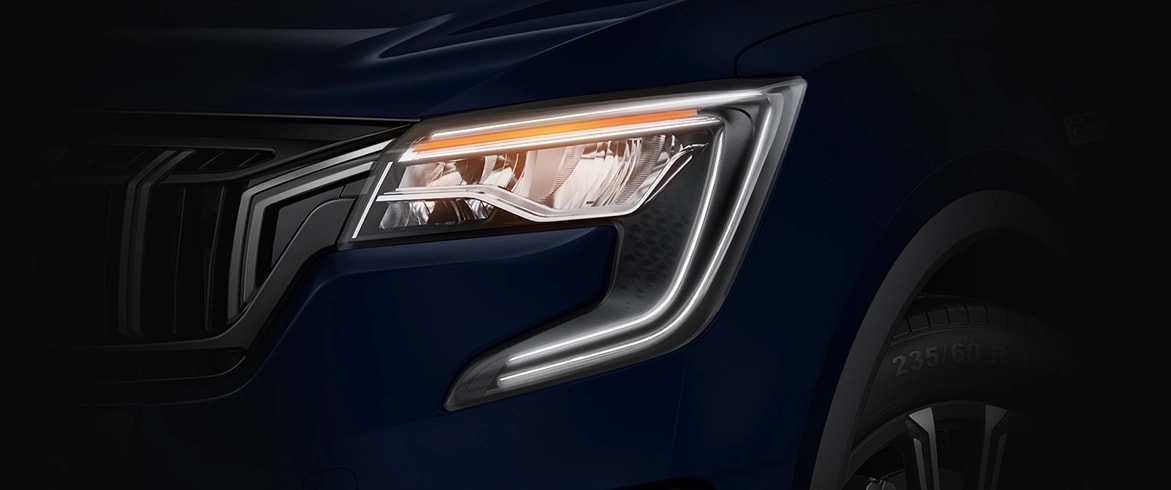
| LED clear-view headlights |
| Sequential indicators |
| Cornering lights |
| 17-inch diamond cut alloy wheels. |
AdrenoX AX7
Finally, the range-topping AX7, kitted out with the most equipment of the four trims:
| Advanced Driver Assistance System |
| Driver drowsiness alert |
| Dual-zone climate control |
| Leatherette seat |
| Leather steering and gear stick |
| Six-way power seat with memory |
| Side airbags |
| 18-inch diamond cut alloy wheels. |
Mahindra will also offer optional packs to add further upgrades across the range, including features such as:
| Immersive 3D sound by Sony |
| Electrically-deployed smart door handles |
| 360-degree surround view |
| Blind-spot monitoring |
| Electronic park brake |
| Wireless charging |
Engines and drivetrain
As mentioned above, a choice of two engines and two transmissions are offered across the XUV700 range. Each petrol and diesel engine can be mated to an automatic or manual gearbox apart from the entry-level MX variant, available as a manual only.
The cheaper of the two engines is the 2.0-litre turbocharged mStallion petrol, developing 147kW of power and 380Nm of torque, available in each of the four variants.
The 2.2-litre turbo diesel engine is offered in three states of tune – MX variants produce 114kW/360Nm while other manual trims are boosted up to 136kW/420Nm. When purchased with the automatic gearbox, torque is increased to 450Nm and power remains the same.
Mahindra has not specified which variants will be offered with all-wheel drive.
Snapshot
- Drop-off in sales expected from change to new agency model
- Brand not chasing volume
- More cars to be sourced from Japan in future
Honda Australia says it is pleased with how its switch to a new fixed-price sales model is going so far, claiming it’s not chasing big numbers after a couple of low volume months.
Although data to prove its success is not yet available, company execs say “we are really pleased with the progress so far and it’s only eight weeks in”.
Starting from July 1, Honda shifted to an ‘agency’ model for its dealerships, whereby the company now offers a fixed price for each model across the country – a move it says is “simpler and more transparent…to remove some of the pressures and anxiety sometimes associated with the sales process”.
However in July sales were down, with the Japanese marque selling just 822 cars compared to 2199 in the same month last year – and not one of those was of its Accord sedan. Its normally popular CR-V was also down, achieving 241 sales versus 832 in July 2020.
However, Honda says it was expecting the sales dip, putting the loss down, in part, to a change in its business model in Australia – as well as impacts attributed to the pandemic.
Speaking to Wheels, Director Stephen Collins said that following the agency model changeover, Honda is “no longer about chasing volume, it is quite different to the past”.
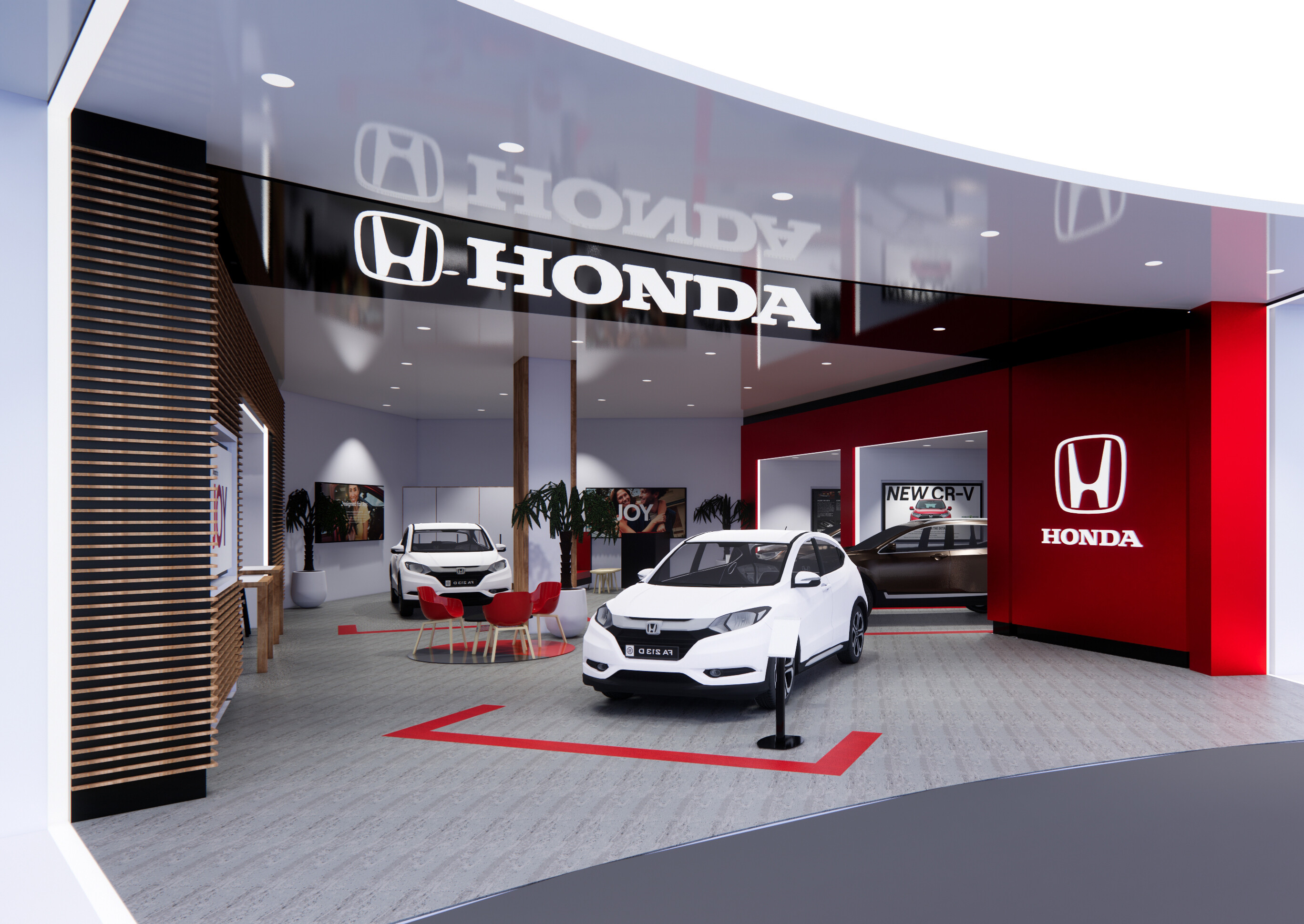
“This change has been 15 months in the planning. Everything went new from July 1, we’ve got all new systems as well as the fixed-price model and servicing,” he said.
“Four or five years ago we were chasing 40,000-50,000 sales a year but this business is now about having a line-up that is really well specced and provides an industry-leading experience on things like purchasing and ownership.”
The boss said the carmaker is now aiming to achieve 20,000 sales annually and believes it is on track to get there by the end of 2021.
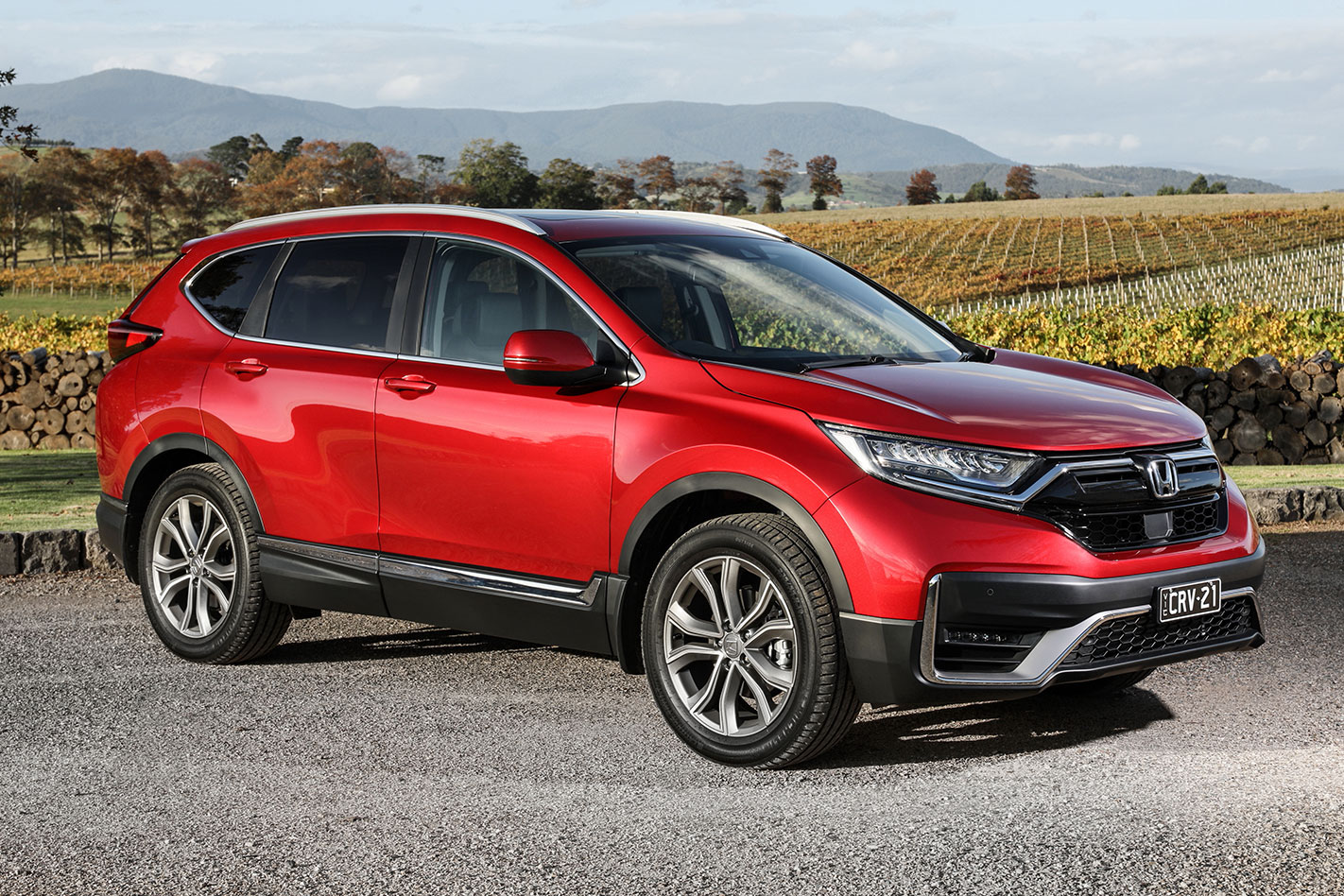
Honda Australia’s sales are down almost 40 per cent year-to-date. So far in 2021 it has shifted 11,593 units, down 38.1 per cent compared to a COVID-hit 2020 when it sold 18,728 year-to-date.
“We’re geared for the future and that means 20,000 sales a year and we’re on track to get there. We’re in a transition period now,” Collins added.
“For us it is about achieving an experience rather than volume, our measure for success isn’t just the sales numbers from VFACTS – whether we’re number one or number two in the charts – our core metric is customer data, which we will have in the months to come.
“Chasing volume through the agency model is not where we want to be as a brand.”
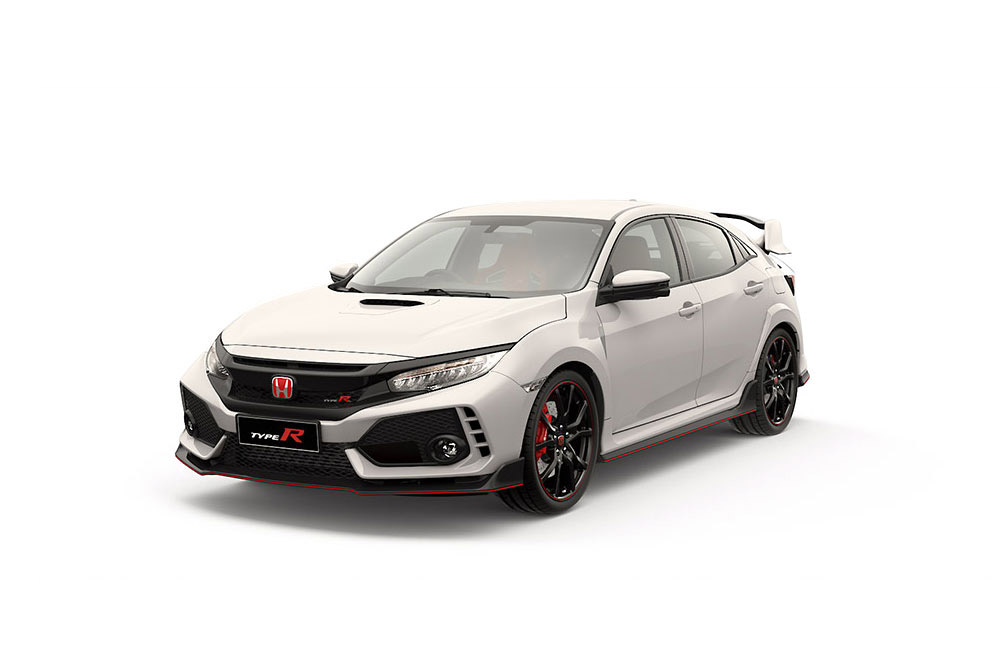
Collins expects August’s figures to reveal another drop, similar to July with around 1000 sales, but is “confident over the next few months we will get back to the pace we want to be at”.
“The first half of the year we were very badly hit by semi-conductor shortages, but are now finding the availability improving – although we’re not quite out of the woods yet,” he said.
“The decision to change to this model was ours in Australia, it was not an order coming down from Japan, we looked at how we could improve buying a car which hasn’t fundamentally changed in many decades, we had two choices, accept the status quo or look at what customers want and do that.”
Further simplification comes in the form of a stripped back product range in Australia, with the Jazz and City gone – making way for focus on the CR-V, HR-V and Civic. The Odyssey, Accord and Civic Type R remain as low-unit models.
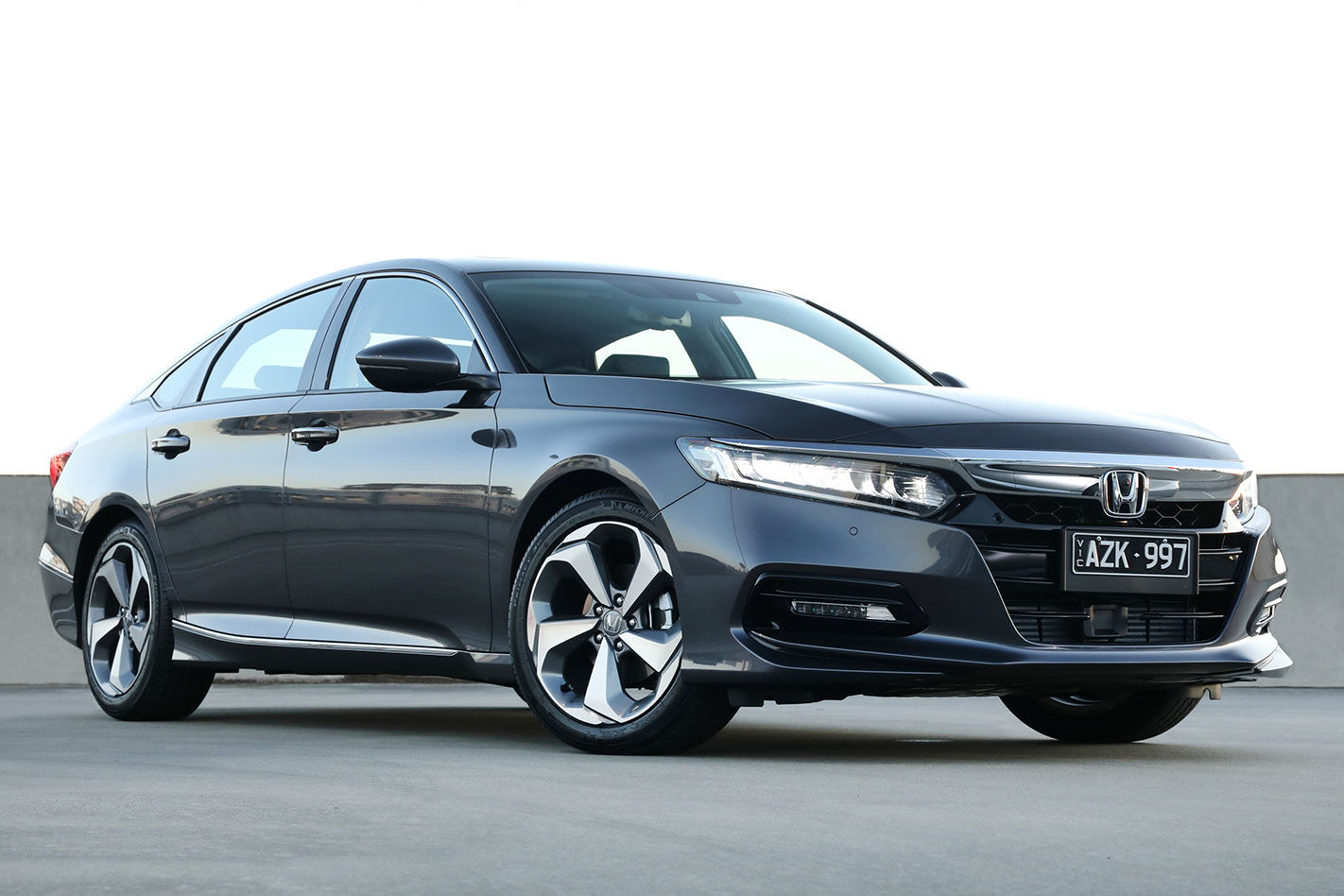
Honda is also now focusing more on higher-spec cars, with some previous base models gone. The majority of these more premium offerings will be increasingly sourced from production in Japan rather than Thailand, as has previously been the case, as the brand looks to go more upmarket.
Additionally the marque has recently announced it will be moving from its current headquarters operating out of Sharps Road in Tullamarine, and will be heading under the same roof as the Campbellfield-based Honda Motorcycles and Power Equipment division at a yet to be revealed location – although it is likely to remain on the north side of the city.
According to Collins, the current large property is at the end of its life and the company has decided to invest in new facilities for the first time in 30 years.
The second of Audi’s three ‘Sphere’ concept vehicles is set to be unveiled in the near future – but not without the German manufacturer first offering a taste of what it may look like.
Set to be the largest of the three Sphere concepts, the Grand Sphere is the flagship of the range, aimed at providing design cues for future vehicles, which will supersede the current A8 and E-Tron GT.
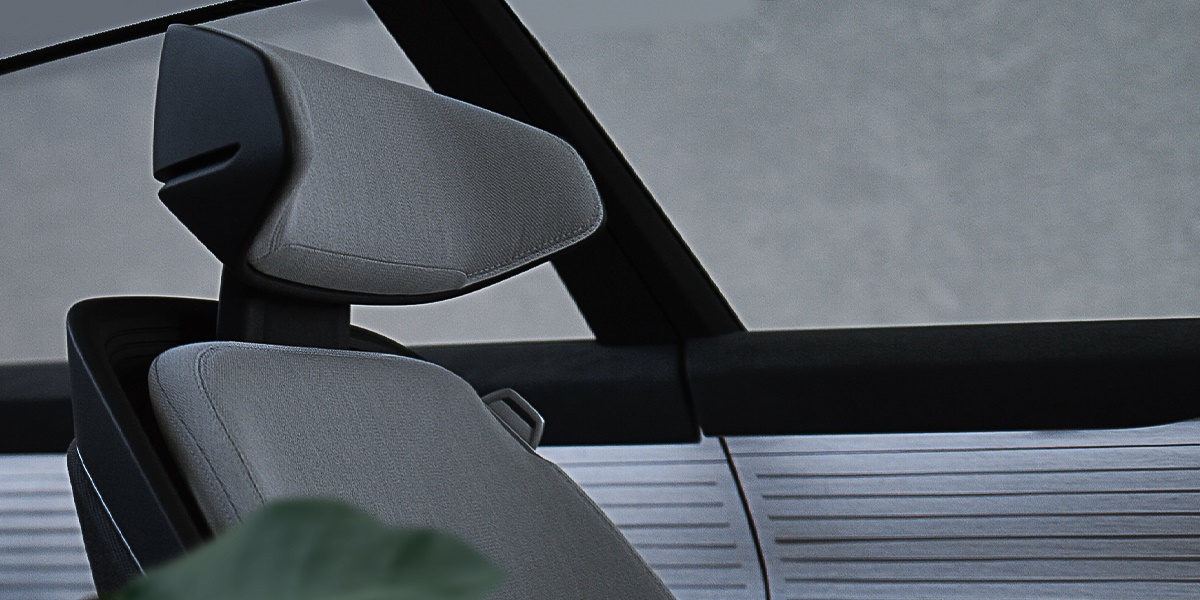
Audi’s design team have already provided an insight as to what kind of technology will feature in the Grand Sphere, from Level 4 autonomous driving capabilities to a fully reclinable first row of seats.
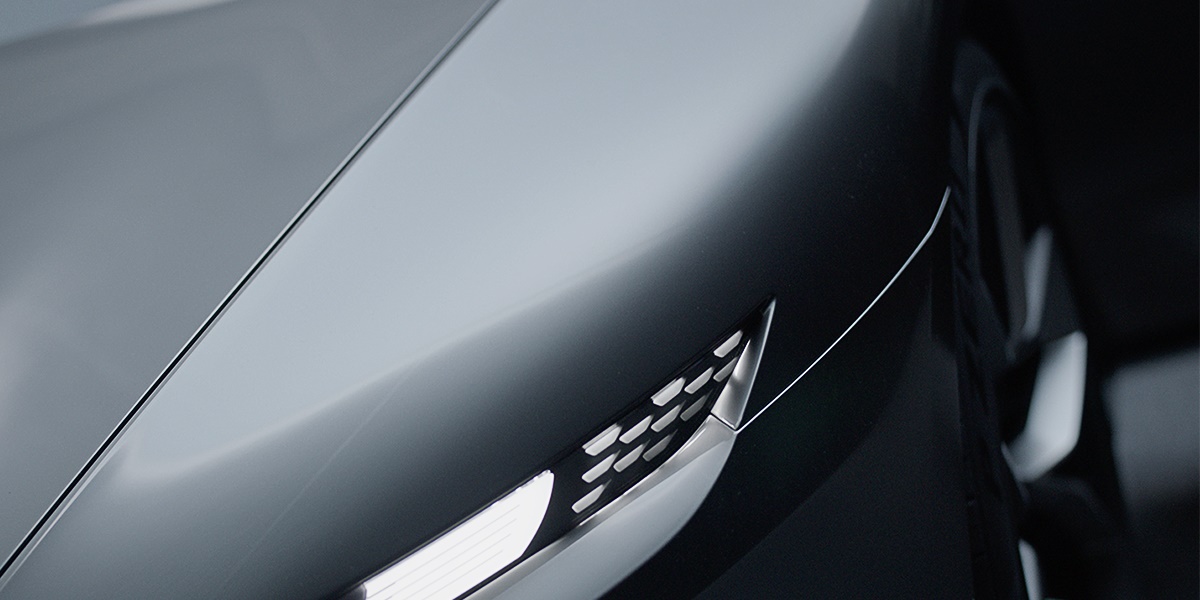
Based on an all-new electric platform – tipped to be the Volkswagen Group’s Scalable Systems Platform (SSP) – the Grand Sphere will make use of the ability to have shorter front and rear overhangs to maximise the space inside its cabin, also helping to create a more aerodynamic shape, which will aid range.
Adopting elements of Audi’s current design language with subtle changes, the teaser photos reveal sharp, angular headlights – as well as long and thin tail-lights, likely to be coupled with a variation of Audi’s iconic single-frame grille.
Sky Sphere was the first of the three vehicles to be launched, with covers coming off the two seat-roadster at this year’s Pebble Beach Concours d’Elegance earlier this month, while the Urban Sphere SUV will be launched later in 2021 at an unspecified date.