
Europe’s ever-tightening net of emissions regulations have led to the demise of the Audi A1 as the German marque admitted it is not planning a successor beyond the current generation model.
Launched in 2010, the A1 joined Audi’s line-up as the smallest car in its range, available as a three-door or five-door hatch with a range of turbocharged petrol and diesel engines powering it, undergoing an update in 2018 to the newer MQB platform and diesel power dropped.
As Audi prepares to wind up internal combustion engine (ICE) production by 2025, its move to electric-only powertrains has signalled the death of the A1, with CEO Markus Duesmann saying there are no plans to bring in a successor, despite earlier speculation around reviving the A2 as an EV.
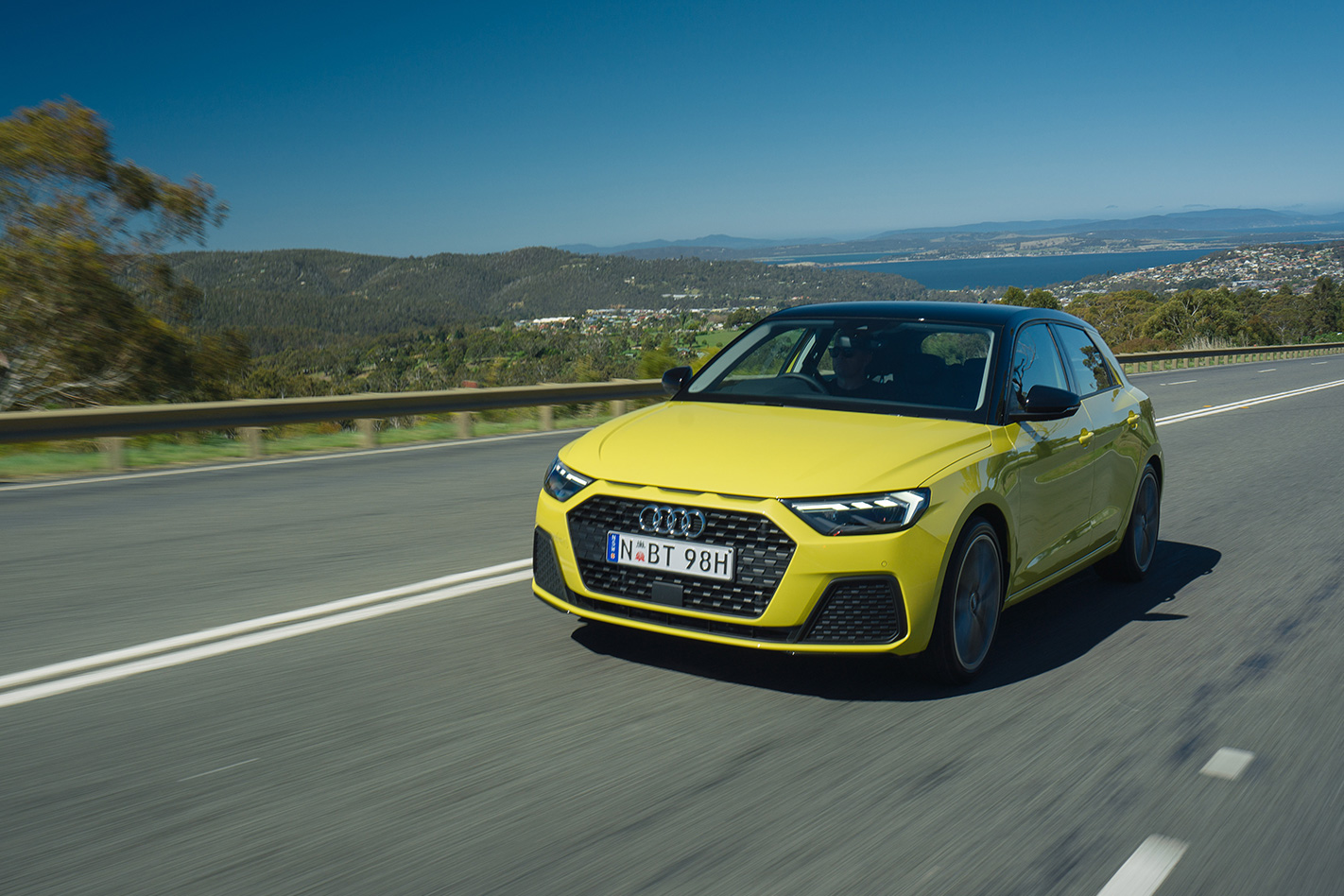
Speaking to Automotive News, Duesmann explained the reasoning behind the A1 being phased out but didn’t give away when it would be dropped from the model line-up.
“A lot will depend on the final Euro 7 (emissions) target,” said Duesmann.
“We know offering combustion engines in the smaller segments in the future will be pretty difficult because the costs will go up. Therefore, we won’t have a successor to the A1.
“If the new Euro 7 rules are not too harsh, it will allow us to invest more in e-mobility.”
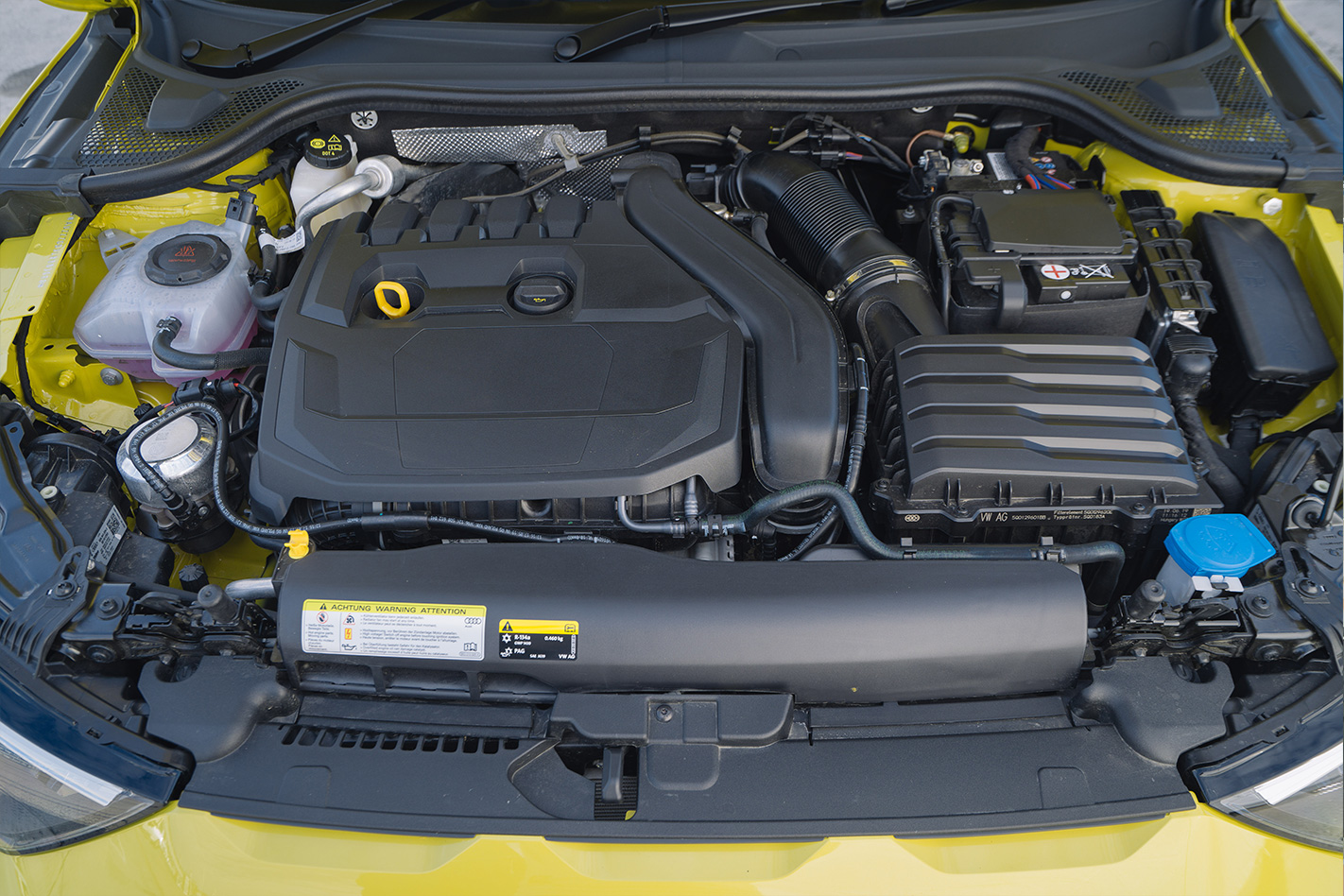
Audi sold just 504 A1s in Australia last year in an overall difficult 12 months for the motor industry, rebounding in the first half of 2021 to post 411 sales to the end of June, a 50 per cent increase over the same point in 2020.
With a move to releasing only EV models from 2026, Audi is set to debut three of its Sphere concept cars in the coming months.
Big SUVs keep coming thick and fast. You only have to blink and there’s a new or updated seven-seater rampaging into a blazing hot market full of buyers keen on hoovering up these five-metre machines.
The Kluger is fresh off the boat, the Sorento is going along very nicely, people are still buying Prados for reasons that continue to escape me and even Lexus is in on the game.
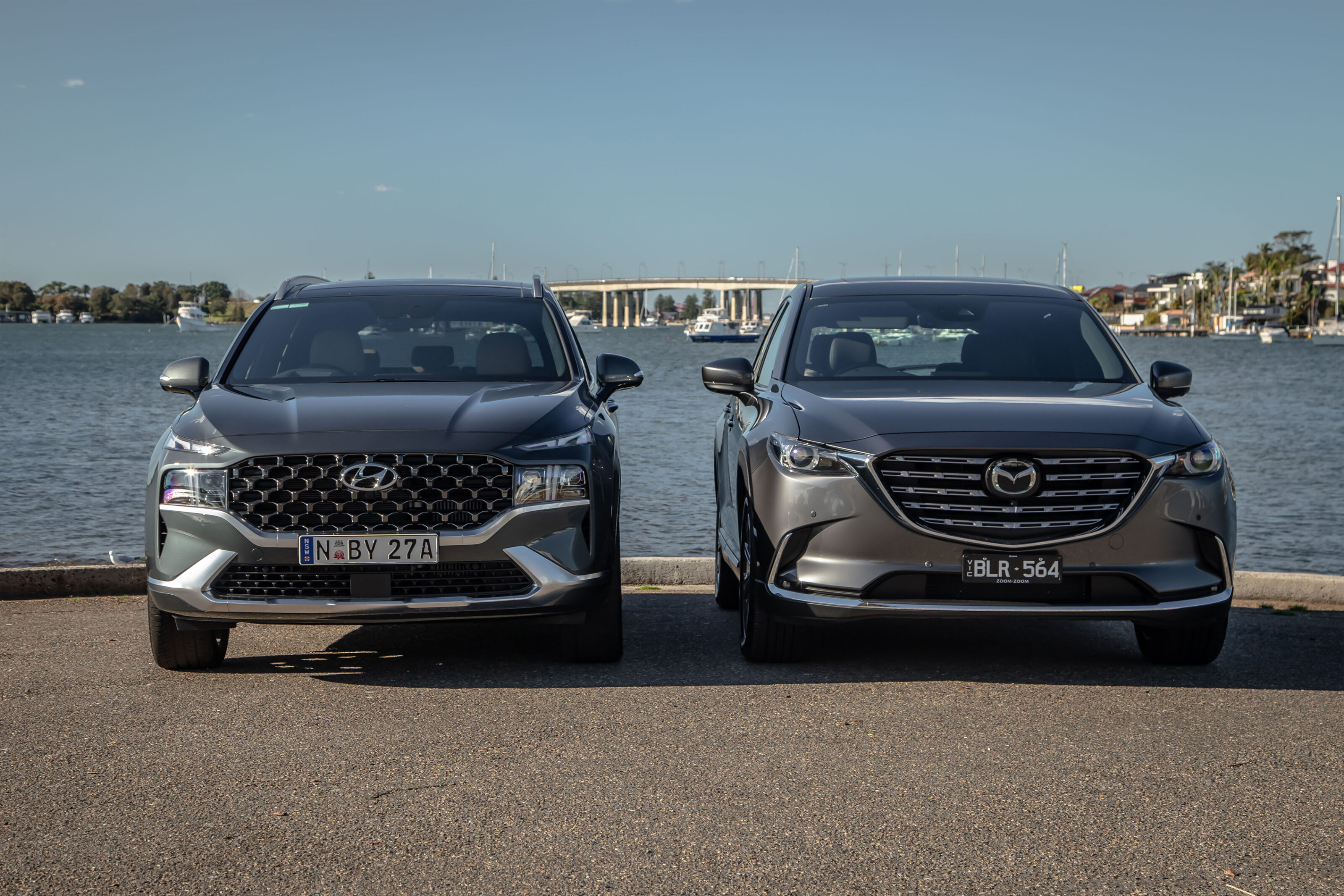
Here we have two large SUVs, both of them grey (giving me a great opportunity to badger my sub-editor to entitle this review “Shades of Grey”) and both of them extremely well-matched both on paper and on the road.
It’s easy to say that they’re much the same, but they’re not. We have one that’s diesel, the other petrol. One with a slick new eight-speed dual-clutch, the other with a soldiering-on six-speed torque converter. Both all-wheel drive, both with seven seats.
Actually, these two particular cars aren’t both seven-seaters. Mazda has tossed a pebble into the pool by adding the Azami LE into the mix with its comfort-focused six-seater cabin, grabbing a bit of attention in the process. Hyundai has bet the farm on a new gearbox and the Palisade’s flying console.
Splitting these two is going to be hard enough, let alone choosing a winner. But, because I love all of you and I’ve taken an oath (not really, but if there was one, I would) to do the hard yards for you, I will.
Pricing and Features
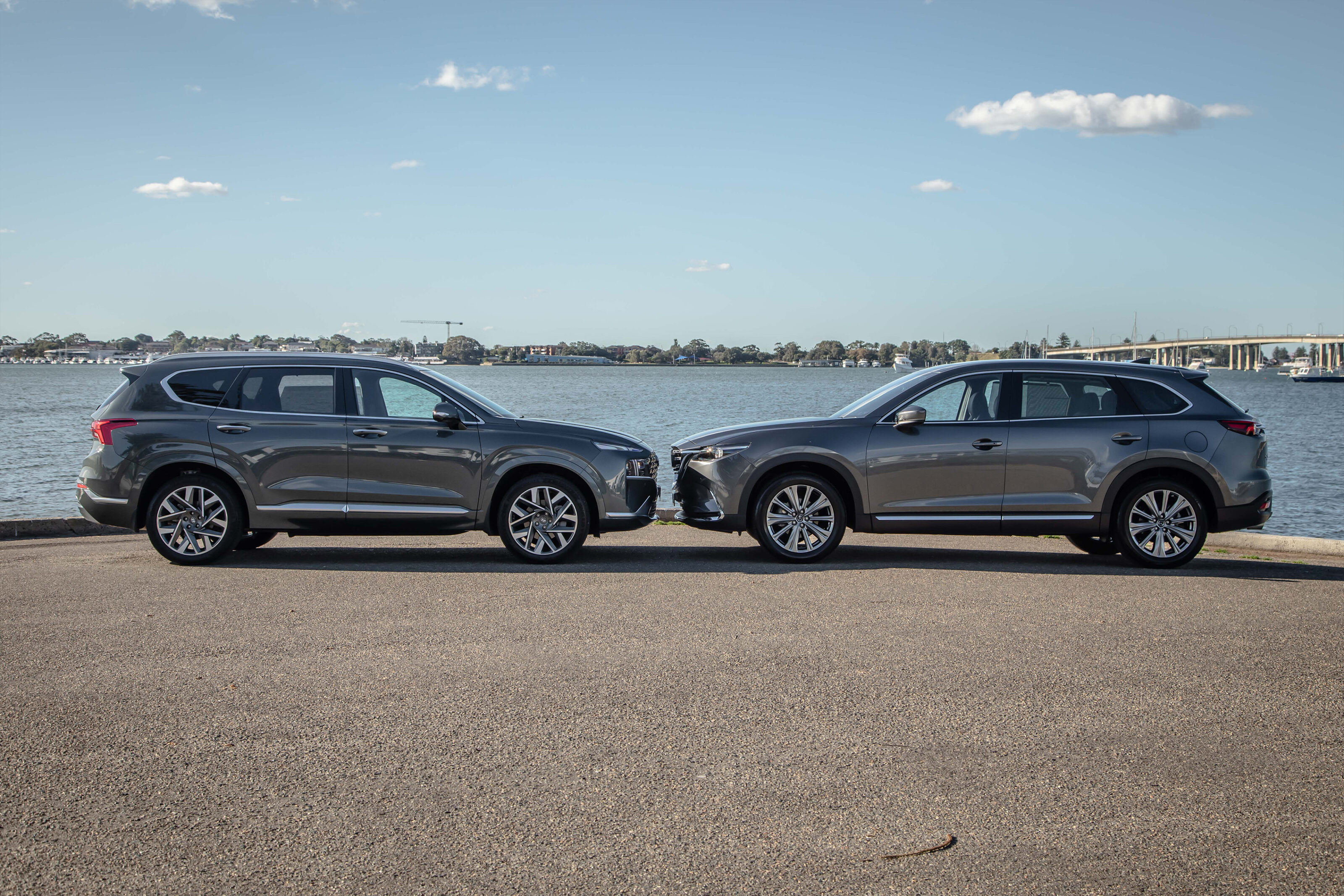
Out of the gate, the CX-9 Azami is $66,190 and it’s flippin’ loaded. Big 20-inch alloys, LED headlights that do everything for you, buckets of safety gear (including a curtain airbag that protects all three rows), a handsome and well-trimmed cabin (if a little dark) and seven seats.
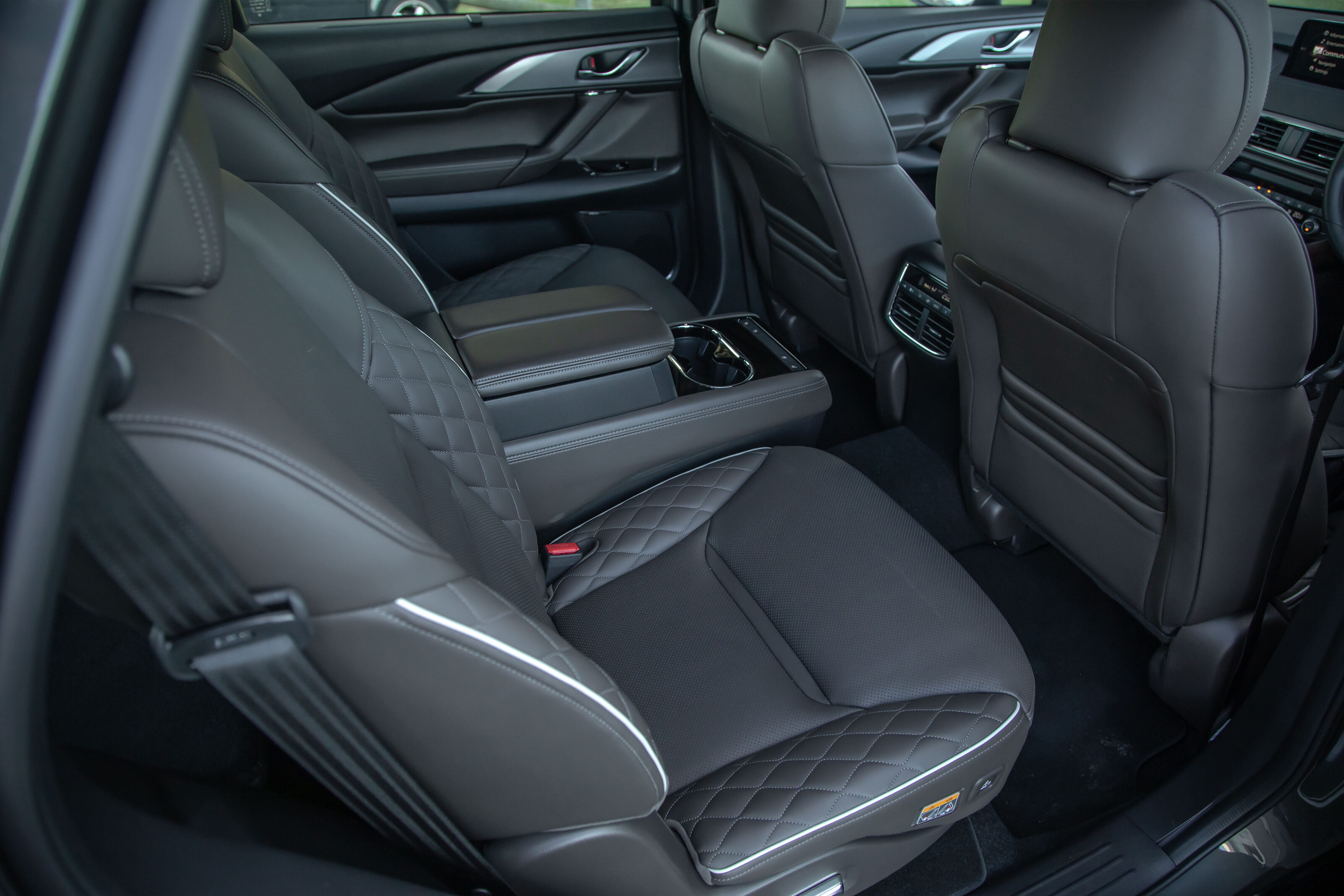
You pay more for all-wheel drive, which I reckon you just have to have. Then another few grand for the LE option, which ditches the three-seat middle row for a vaguely absurd two-seat middle row with captain’s chairs that are ventilated and heated. It brings a touch of Range Rover (if not airline-style) accommodation to the middle row and it’s great fun to ride back there. It goes without ridiculous screens and stuff like, say, the Kluger, but so does the Santa Fe.
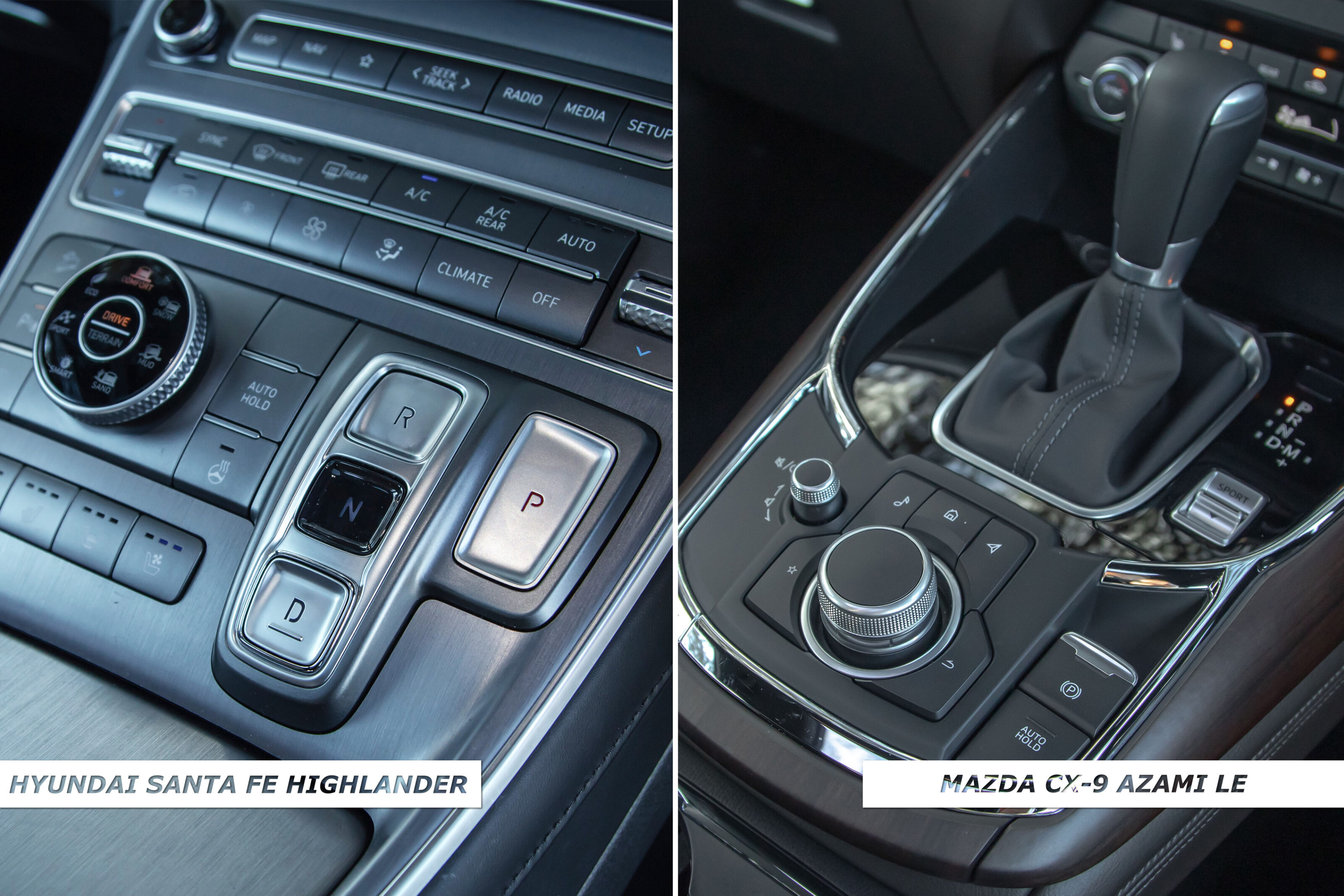
The new Mazda Connect screen is a nice upgrade but loses the touch capability its predecessor had when the car wasn’t moving. The rotary controller on the console is good but it’s really set up to navigate the Mazda menus rather than Apple CarPlay or Android Auto, neither of which are wireless.
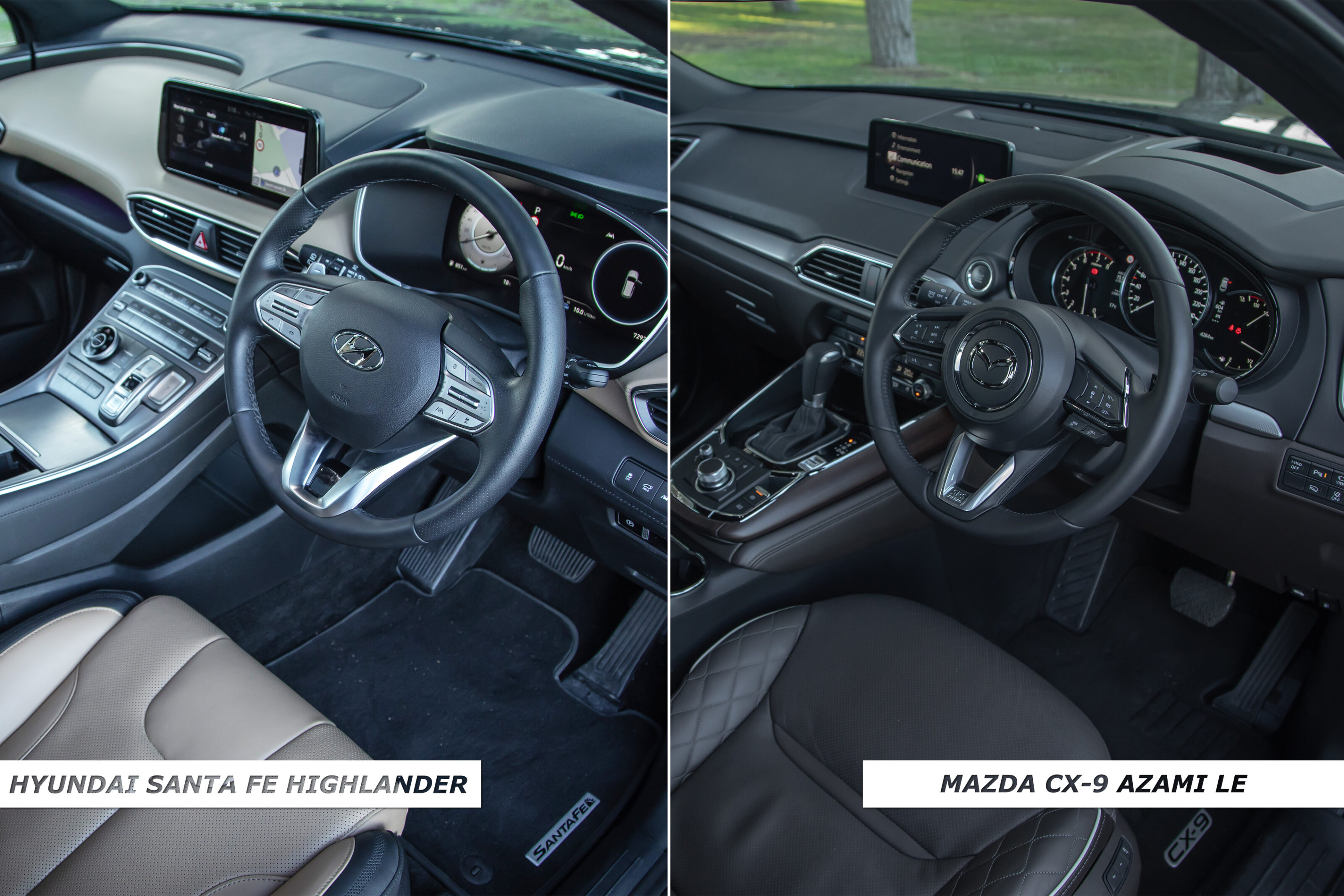
The Santa Fe throws a lot of new technology at you; shift-by-wire button selectors for the new transmission, a big 10.25-inch touchscreen and a 12.3-inch digital dashboard.
While both cars are packed with safety gear, the Hyundai’s curtain airbag doesn’t reach the third row. There is a nifty blind-spot camera system that pops up in the digital dash, though. It’s devilishly clever and reminds me a bit of Honda’s LaneWatch, but with better resolution and on both sides of the car.
Apart from the airbag thing and the blind spot system on the Santa Fe, they’re both very close on safety, with front and rear AEB, forward collision warning, rear cross-traffic alert, lane keep assist and blind-spot monitoring.
Although you can carry four children in seats requiring either ISOFIX or top-tether anchors in the Mazda, the Santa Fe wisely restricts them to the middle row with two ISOFIX and three-top-tether points.
Comfort and Space
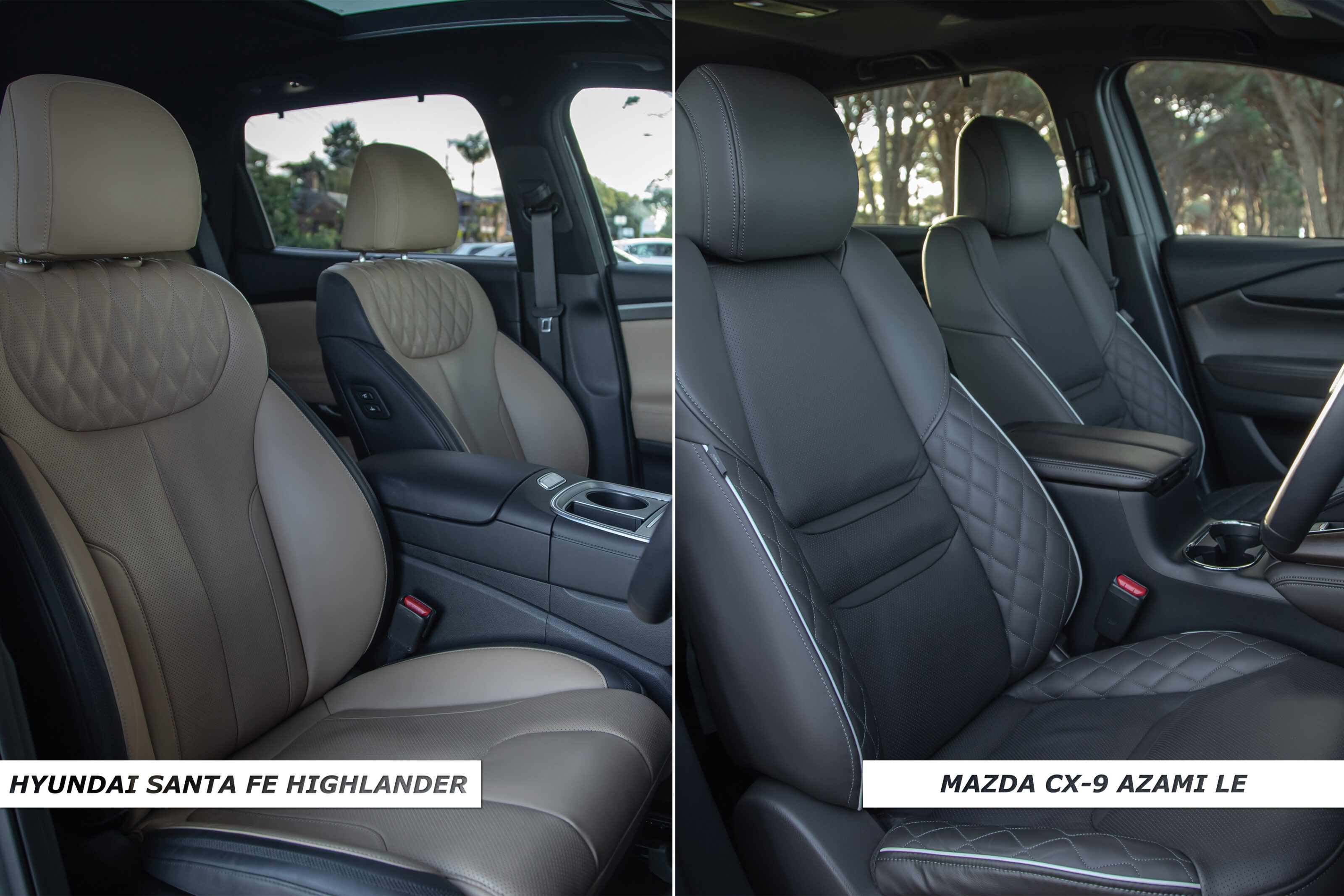
Passenger comfort is pretty high in both, of course, as long as you’re not stuffed into the third row. The Azami LE’s middle row is obviously a clear winner if you only need to drag two people along with you. The heating, the cooling, the big centre console, it will absolutely be a pleasure to ride along.
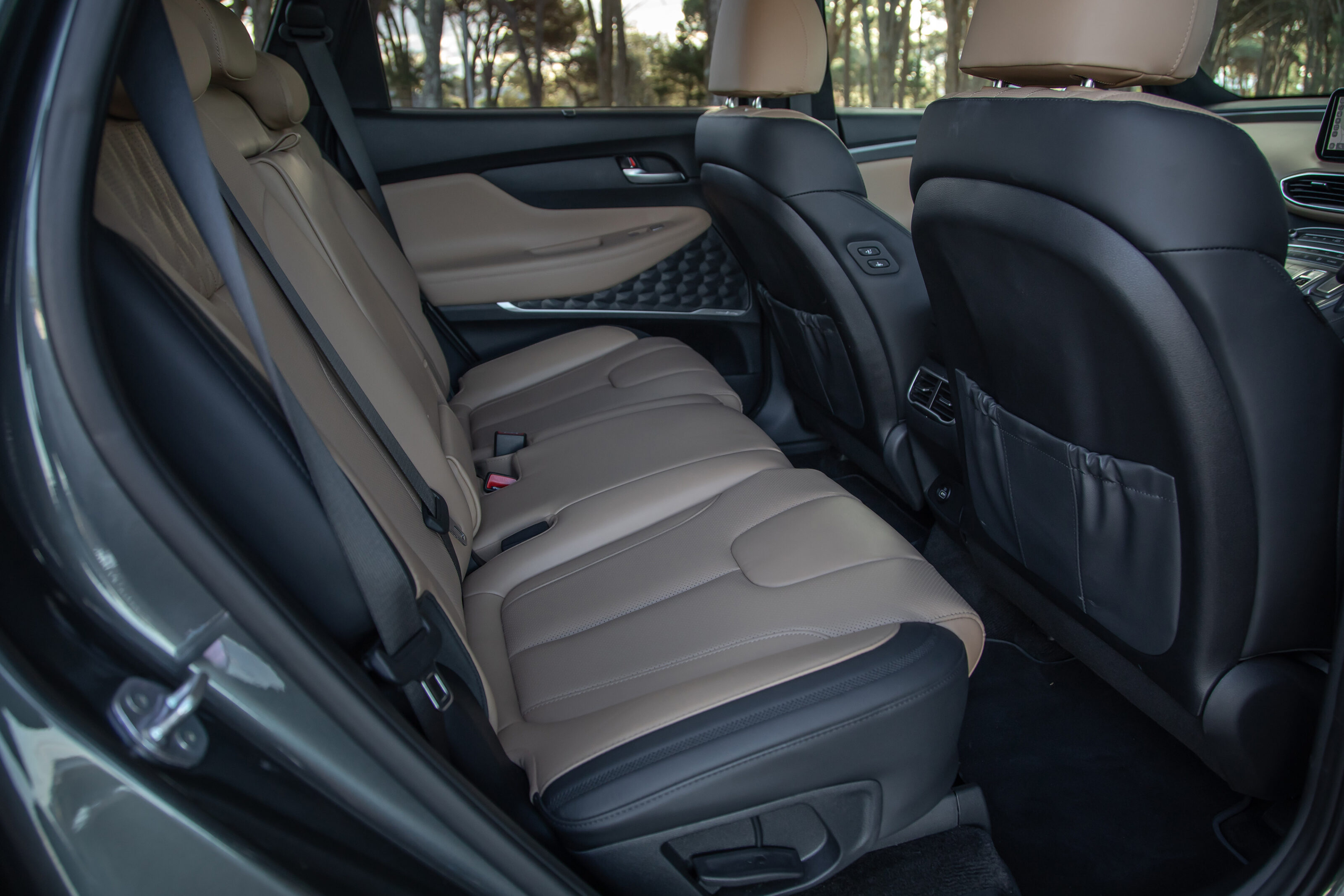
The Santa Fe returns fire with extremely comfortable rear seats with the middle still in place and plenty of room. Without the LE option, the Mazda is probably not quite as comfortable, but rear row access is about the same, which is to say pretty good if needing a bit of heaving and huffing.
The Azami LE has an electrically-operated process that takes forever but won’t tax your arms. The Santa Fe also has a huge panoramic sunroof (and strong air-conditioning) to flood the cabin with light and make it feel even bigger than it really is.
If you’re unlucky enough to ride in the back row, both cars look after you with cupholders, a tray for your stuff (or maybe your feet if you can remove them).
The CX-9 offers two USB-A ports to keep devices charged while the Santa Fe’s are electrically-operated for folding and there’s a temperature control for the air-con.
The poor CX-9 third rowers will have to negotiate with the middle row passengers on the temperature. Oh, the humanity.
Either way, there’s tons of space for four people in both cars, which is pretty much how most SUVs are used as far as I can tell.
I think you’re all mad buying seven seat SUVs for that mythical/occasional need that we somehow managed to deal with back in the old days. When our parents just turfed us kids into the boot of a station wagon (how I’m still alive is anyone’s guess).
The Santa Fe starts off with a smaller boot than the CX-9’s when all the seats are in use. With just 130 litres, everyone will have to keep their luggage to a minimum or you’ll have to tow it. This is because the Santa Fe is significantly shorter than the Mazda, which does deliver benefits elsewhere.
The Mazda’s is much more useful with 230 litres from the start, rising as high as 810 litres with the third row folded. With the same configuration, the Santa Fe will deliver between 571 and 782 litres. Both of those higher figures rely on the middle row being slid all the way forward, which isn’t going to be very comfortable for passengers.
The Mazda stops there, though, as in LE form because the captain’s chairs don’t fold out of the way whereas smug Santa Fe owners can fold it for a huge, flat floor fit for camping in or moving quite a lot of stuff.
Hyundai doesn’t offer a total cargo figure, but it’s going to be huge. The pre-facelift figure was 1625 litres which is, shall we say, a lot.
One important difference between the two is that the Santa Fe’s spare is slung underneath the car rather than under the boot floor, which is handy if your boot is full when you get a puncture.
On the Road
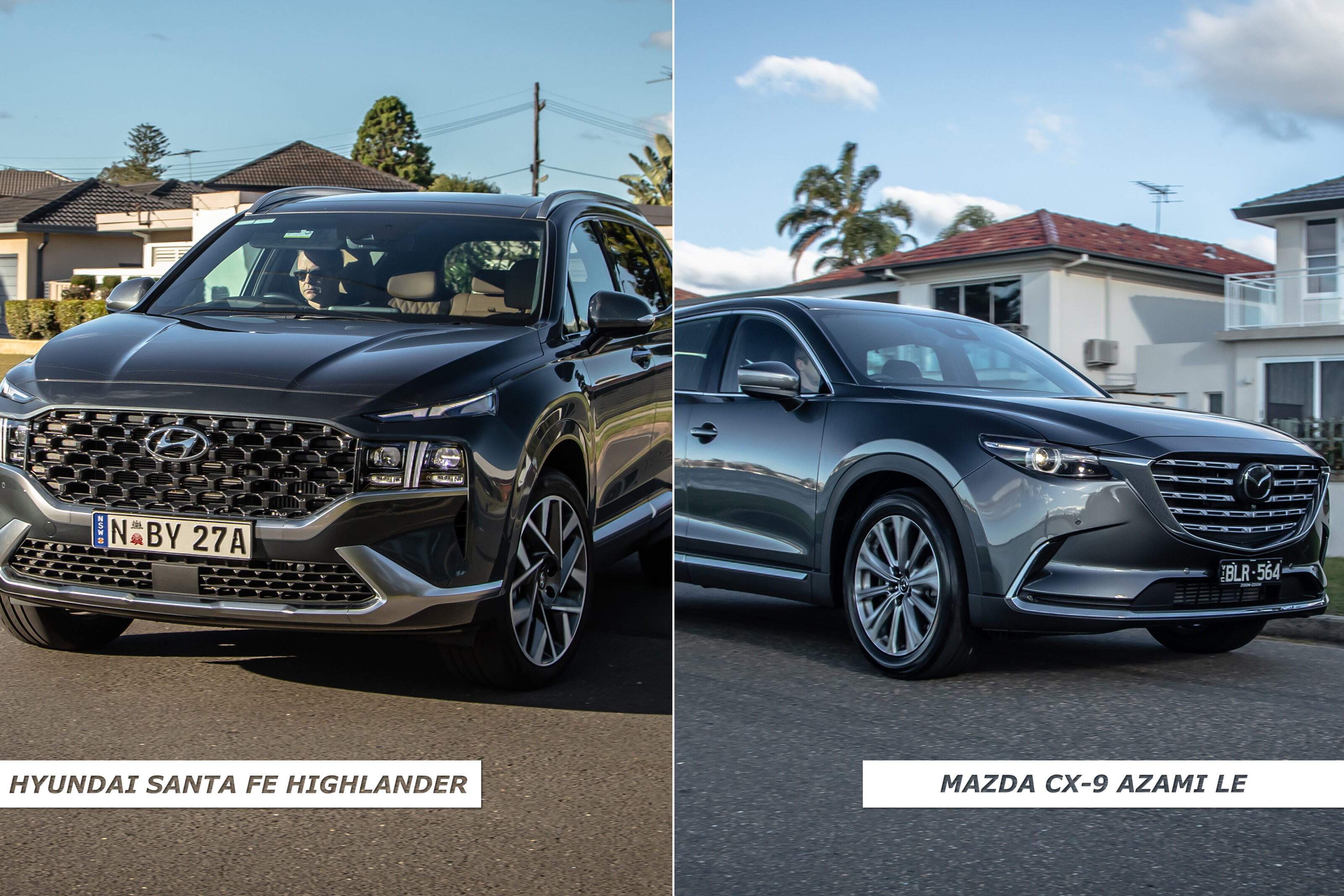
When the 2018 Santa Fe dropped with its all-new everything, it felt a lot more like the CX-9’s balanced chassis, with ever-so-slightly more emphasis on handling than even the Mazda.
The Santa Fe was famously fettled by Hyundai’s storied chassis tuning team – and boy they are good – with the usual sign-off from the Korean HQ.
It was great in the corners and plenty of fun but there were some downsides to that and the ride was perhaps more firm than the market was after.
For its 2021 iteration, the Santa Fe’s suspension comes with a world tune. World tunes are the kind of thing GM do, where different parts of the world had input to the way a car went, stopped and took corners.
Plenty of Hyundai’s global development work is done here in Australia, so while the team still had a say, it was blended into the feedback from the rest of the world.
The result is a more compliant, softer riding car with a slightly less responsive front end. That’s not a terrible thing in a large SUV – and it’s certainly handier than the plush US-spec tune of the Palisade – but it’s worth knowing.
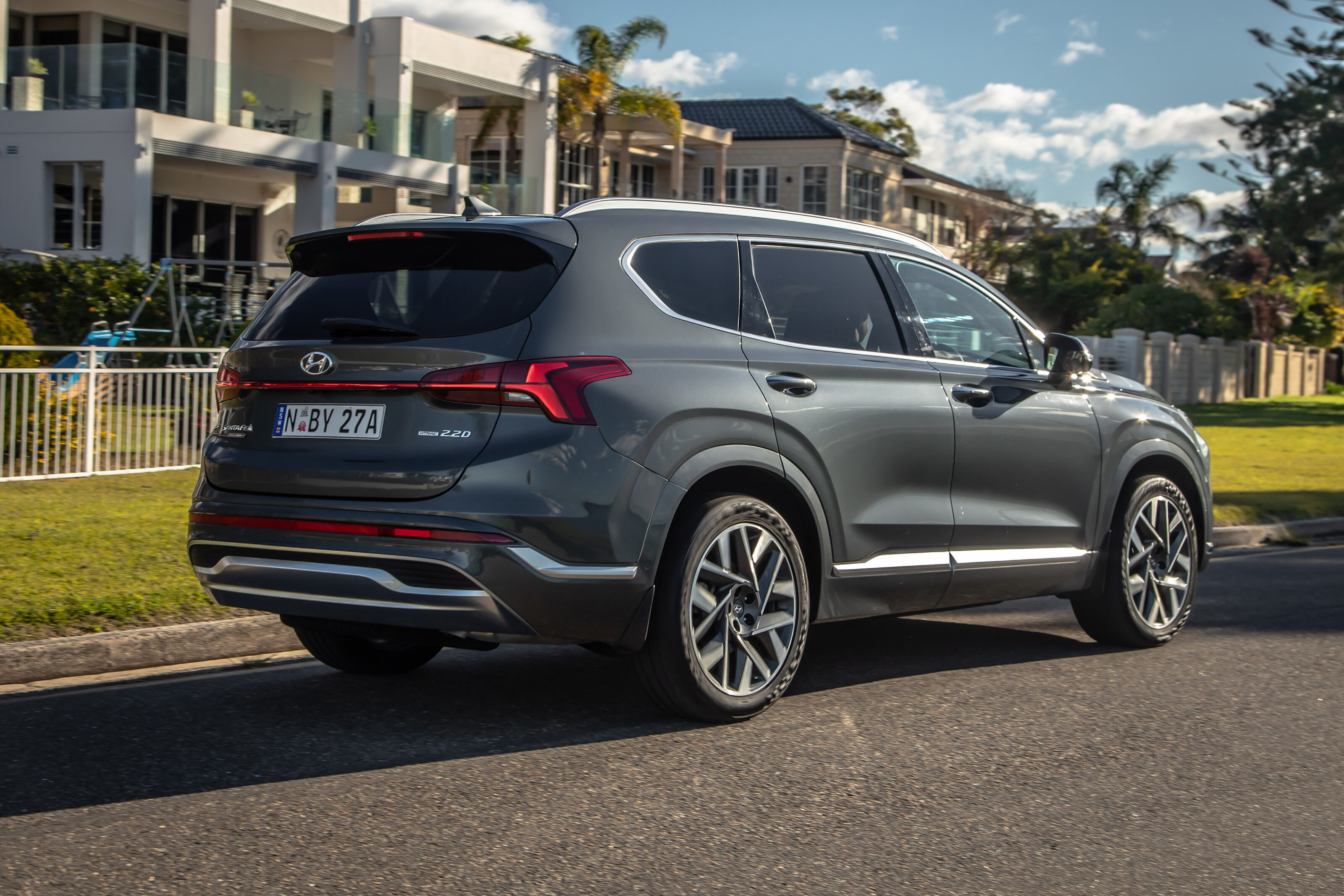
The new 2.2-litre diesel engine and all-wheel drive are a package. If you want petrol, you have to go for the front-wheel-drive V6 that has a lot less torque and isn’t much lighter.
Like the CX-9, a two-wheel driven Santa Fe easily lights up its front tyres but also drinks more fuel while doing it, so it’s not a hard sell to move up to the diesel.
Hyundai says the 2.2-litre diesel is new, delivering 148kW at 3800rpm and a hefty 440Nm that outpunches even the Mazda’s impressive number.
On top of that, you have Hyundai-Kia’s excellent eight-speed dual-clutch auto, the all-new design with the wet clutch setup. The Mazda has a six-speed SkyActiv-branded torque converter automatic.
They’re both very good and are very well matched to their engines, so from a driving perspective, they’re very, very close.
Plenty of Hyundai’s global development work is done here in Australia, so while the team still had a say, it was blended into the feedback from the rest of the world
Neither has a particularly charismatic engine but both are very smooth and with the huge slab of torque on offer, it’s all very relaxed and easygoing. If you had to pick between the two, the Hyundai’s is the calmer, but yeah, it’s close.
With a small flex of the right foot, you’ll find yourself moving pretty quickly in not much time. Both waft along on the torque and neither will bother you on a long cruise with any histrionics. It’s still quite something to think a four-cylinder turbo can push along so much metal with so little fuss.
The two cars’ 0-100km/h times are separated by about a second-and-a-half, with the Mazda coming out on top at just under eight seconds, while the Hyundai is over nine.
The latter is a demon overtaker compared to the Mazda, however, the eight-speed firing down through the gears when you punch it and launching you at a surprising clip.
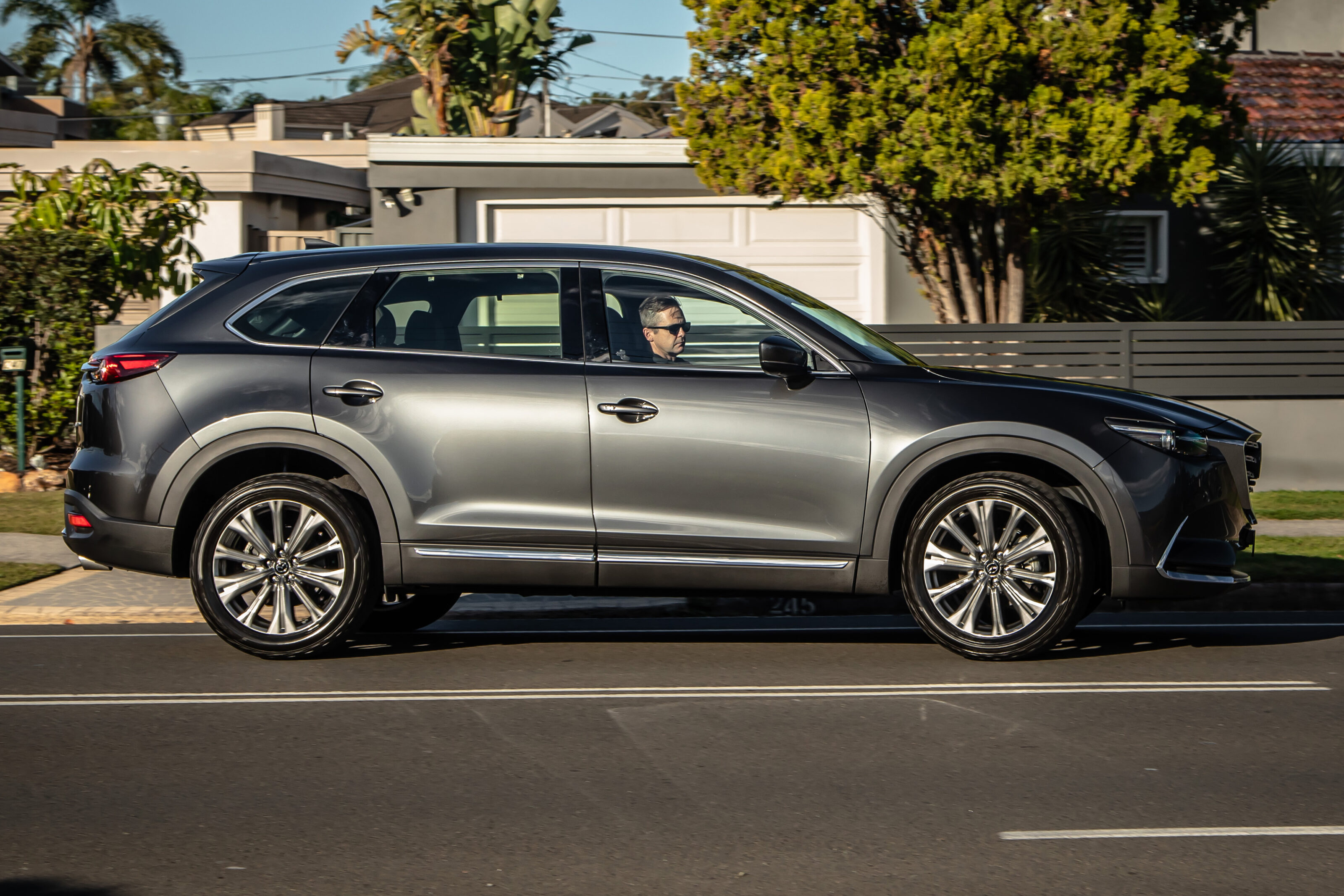
It’s when you get to the actual driving that you’ll notice the bigger differences. The Mazda rides more firmly and the steering is weightier than the Korean’s.
Both are easy to place on the road but the Mazda will chase the apex of a corner, something most owners will never, ever do. Both are terrific in the wet and I guess the point is, the 20-inch wheels are great for the looks and don’t do the ride much, if any harm at all.
The Santa Fe’s lane-keep assist is typically Hyundai in that it’s a bit pesky and wants to either slap you about for not having your hands on the wheel when you do or gently prise it from your hands to show you how to do it better, like a man tugging on a video game controller in his girlfriend’s hand. It’s annoying in town but good on the motorway.
Mazda’s safety gear is a bit less fussy and trusts you a little more.
It’s when you get to the actual driving that you’ll notice the bigger differences. The Mazda rides more firmly and the steering is weightier than the Korean’s.
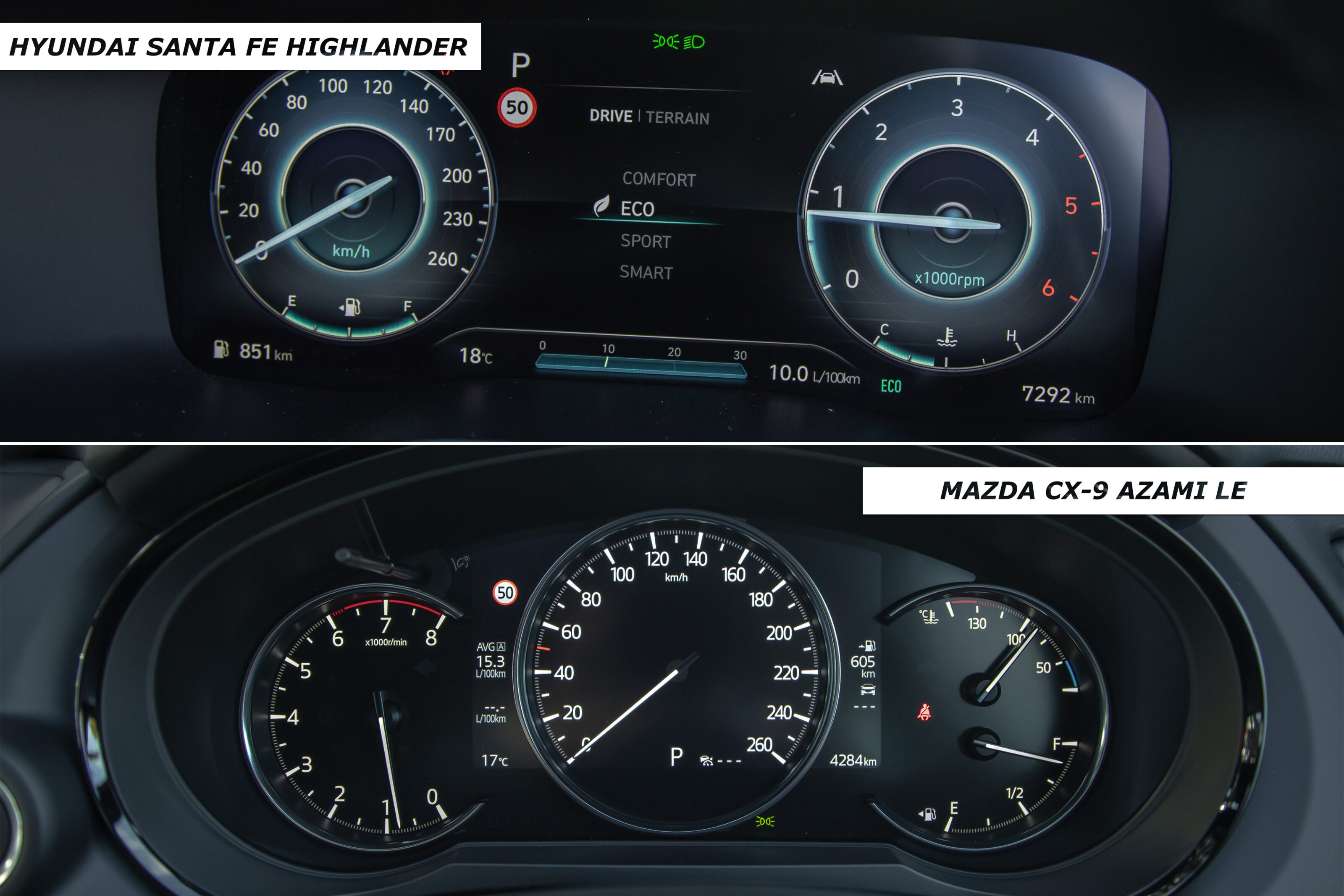
The Mazda doesn’t have much to offer in the way of driving modes, whereas the Hyundai’s drive select offers Eco, Comfort, Sport and Smart as well as terrain selections for the slippery or sandy stuff, and a diff lock. But with 20-inch wheels and Continental Sport Contact tyres, you won’t be getting too far off the beaten track. Good for the snow, though.
Both have excellent head-up displays but the Hyundai’s provides more information and is more expansive.
So the choice here is do you want the Mazda with the sharper drive and the petrol engine or the ever-so-slightly more relaxed but still good handling package, smooth diesel and smoother eight-speed of the Hyundai? Again, super-close.
The Santa Fe’s diesel is predictably more frugal. I got an indicated 7.5L/100km in the week I had it, compared to the 10.3L/100km for the Mazda. The Hyundai’s was a repeat performance, but when I had this exact Azami earlier in 2021, where it spent most of its time in the city, I got a more common 11.4L/100km.
Ownership
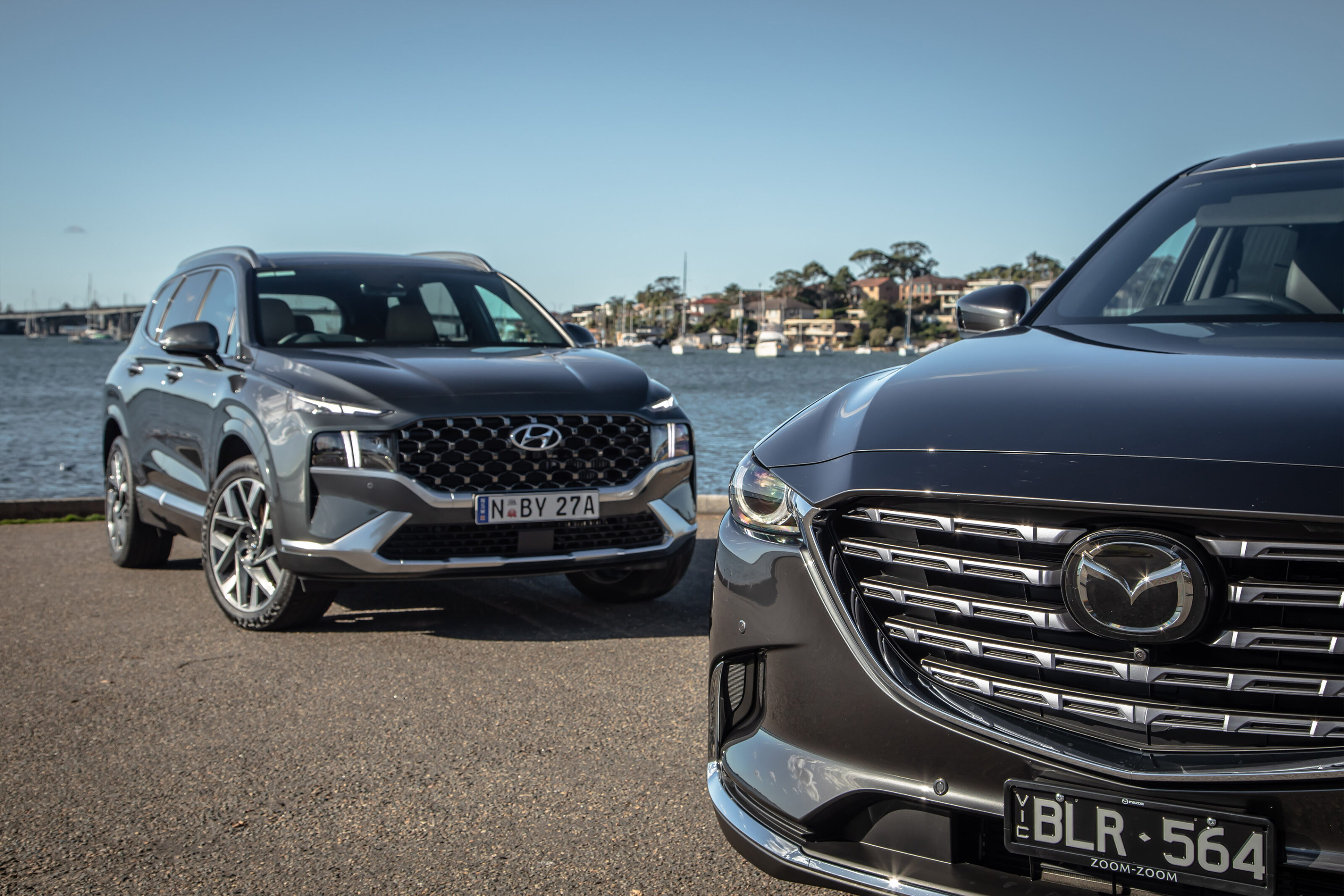
Mazda and Hyundai match each other with five-year, unlimited-kilometre warranties. The Mazda comes with the same duration of roadside assist while the Santa Fe comes with 12 months, but servicing with Hyundai grants you a 12-month extension for up to ten years.
Service pricing is separated by nearly $60 per service for the first five services. If you cover less than 10,000km per year, the Mazda will be slightly cheaper at around $400 per service.
Hyundai’s more generous 15,000km per year allowance comes at a cost of $459 per service, with diesels traditionally more expensive to maintain anyway. But a few extra miles is worthwhile, particularly given many owners will be packing these cars up for road trips.
VERDICT
If it comes down to cost, the Hyundai wins. If you’re after ultimate comfort and a less aggressive-looking car, it’s the Mazda. I can go on for thousands of words like this.
They’re extremely closely matched and for everything that might convince you one way, there’s something on the other car to sway you back.
This is a tough one. A scientific approach is, as I’ve already said, a nightmare unless your garage can’t fit the five-and-a-bit metre Mazda or you have a philosophical objection to diesel.
So I’ll tell you the one I would choose: The Santa Fe. It’s comfortable, roomy and performs well in all conditions. The drivetrain is great, the specification is tech-heavy and the car just feels great.
You can say plenty of those things about the CX-9, but with both of them out front for a week, my wife and I found ourselves grabbing the Santa Fe keys more often than we did the Mazda.
2021 Hyundai Santa Fe and Mazda CX-9 specification comparison
| u00a0 | Hyundai Santa Fe Highlander | Mazda CX-9 Azami LE |
| Body | five-door large SUV | |
| Drive | AWD | |
| Engine | 2.2-litre four-cylinder turbodiesel | 2.5-litre four-cylinder |
| Transmissionu00a0 | eight-speed dual-clutch | six-speed automatic |
| Power | 148kW @ 3800rpm | 170kW @ 5000rpm |
| Torque | 440Nm @ 1750-2750rpm | 420Nm @ 2000rpm |
| Bore/Stroke | 83mm x 99.4mm | 89mm x 100mm |
| Compression ratio | 16.0 : 1.0 | 10.5 : 1.0 |
| 0-100km/h | 9.3 sec (est) | 7.9 sec (est) |
| Fuel consumption | 6.1L/100km (combined) | 9.0L/100km (combined) |
| Weight | 1943kg | 2010kg |
| Suspension | MacPherson strut (front) multi-link (rear) | |
| L/W/h | 4785/1900/1710mm | 5075/1969/1747mm |
| Wheelbase | 2765mm | 2930mm |
| Brakes | 325mm ventilated disc (front) 305mm solid disc (rear) | 320mm ventilated disc (front) 325mm solid disc (rear) |
| Tyres | 255/45 R20 | 255/50 R20 |
| Wheels | 20-inch alloy wheels (full-size alloy spare) | 20-inch alloy wheels (17-inch space-saver spare) |
| Price | $65,200 + ORC | $73,875+ ORC |
Snapshot
- Jeff Shafer will be head of product
- Anoosh Saffari to be head of sales
- Dane Harvey set to take head of network development role
Ahead of its Australian launch next year, Cupra has appointed three top execs to manage operations Down Under.
All three roles, which include head of product, head of sales and head of network development, have been filled from within Volkswagen Group Australia.
Jeff Shafer has been appointed to role of head of product, joining from the Volkswagen Passenger Vehicles brand, where he has led the product marketing team for the past five years.

An industry veteran, Shafer has also held senior positions with other global car brands such as Kia, as well as a tenure at Toyota’s global headquarters in Japan.
Meanwhile, Anoosh Saffari has been appointed as Cupra’s head of sales, coming from Škoda Australia where he was responsible for the Victorian, South Australian and Tasmanian sales regions.
According to Cupra, Saffari has extensive retail experience, having previously set up a number of award-winning dealership groups in the luxury segment.
Finally, Dane Harvey has been appointed as the head of network development, coming from nine years of experience working within the Volkswagen Group; most recently working with Volkswagen’s eastern region dealer network.

Harvey has also held sales positions for the Volkswagen Commercial Vehicles brands and has previous experience in the architecture industry.
Ben Wilks, Cupra Australia’s recently appointed boss, was thrilled with the new appointments.
“Our brand roll-out plans are already in full swing, and it’s great to welcome Jeff, Anoosh and Dane to the growing Cupra tribe,” Wilks said.
“Their experience, knowledge and passion…will be vital to our success in the coming years, and I look forward to working with all of them to bring this exciting brand to life in Australia,” he added.
The trio will commence work with Cupra in the coming weeks, with more key positions to be announced shortly.
The Cupra brand will launch officially in Australia in the middle of 2022, with a starting line-up comprised of the Leon hatch, Ateca SUV, and Formentor cross-over SUV, with a range of performance and plug-in hybrid powertrains.
New Audi RS3
- Same power, more torque
- 0-100km/h in 3.8 seconds, claimed top speed of 290km/h
- Possible six-figure car by the time it launches locally before on-road costs
The curtain has dropped on the newest-generation of the Audi RS3.
Audi Sport’s smallest RS-badged offering packs its biggest punch yet, bringing a host of added tech, focused dynamics and evolved styling to the popular and versatile RS3 sedan and hatchback.
The familiar 2.5-litre turbocharged five-cylinder engine is housed under the bonnet, retaining the same 294kW output (arriving 250rpm sooner, at 5600rpm), bolstered by an improved 500Nm (between 2250rpm and 5600rpm).
UPDATE, August 5, 2022: New RS3 driven in Australia
The new-generation RS3 is finally in Australia. You can read our review here, and watch Inwood’s track and road drive in the video below.
The story to here
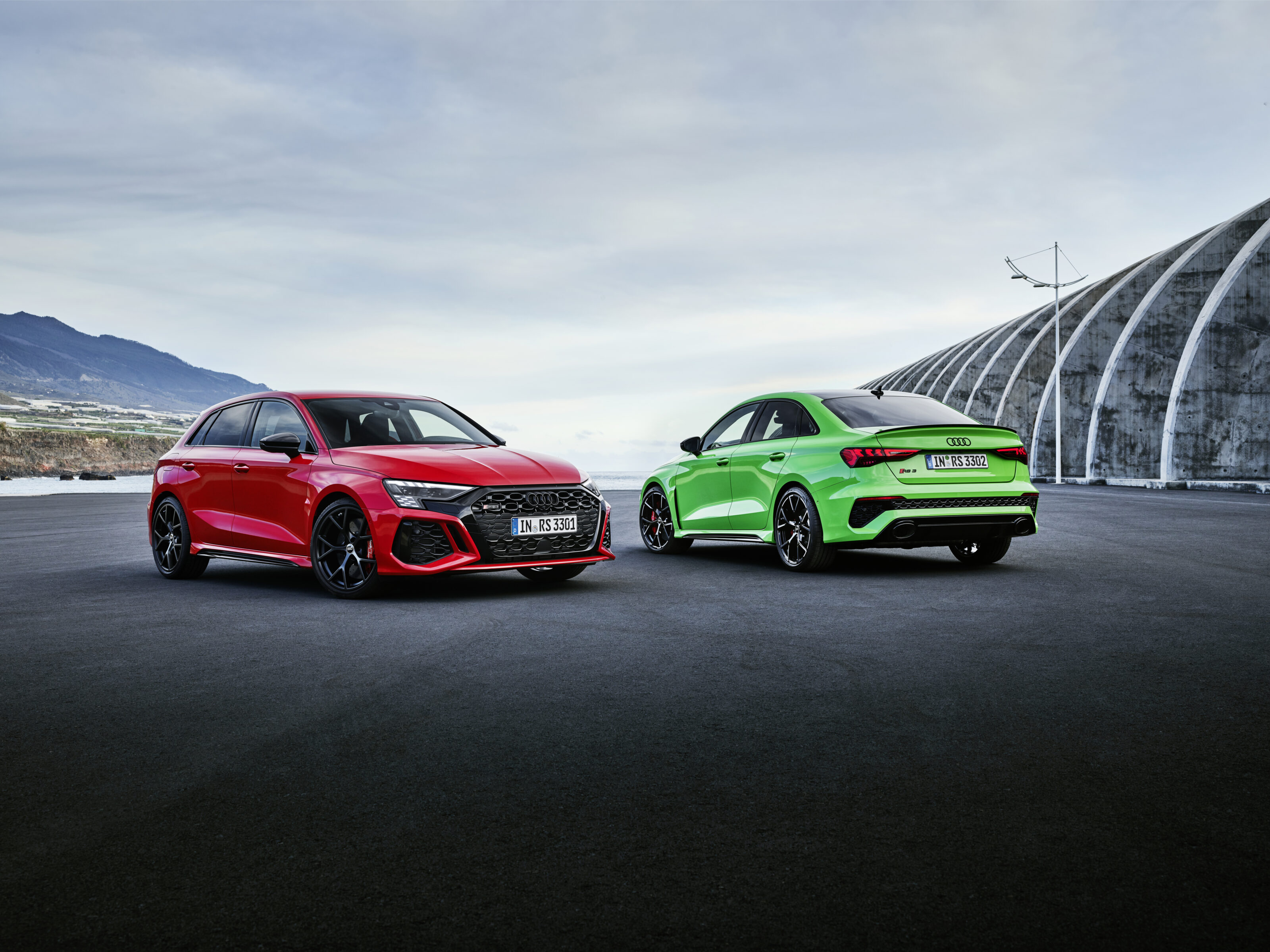
Revised gearing within the seven-speed dual-clutch transmission drops the 0-100km/h time to a claimed 3.8-seconds, with top speed limited to 250km/h in base configuration, or 280km/h as an optional upgrade.
The optional RS Dynamic package, combined with an optional ceramic brake package, further lifts the top speed to a class-leading 290km/h.
The signature five-cylinder soundtrack benefits from a new exhaust system, now featuring fully-variable valves which change in character depending on drive modes – with an optional RS sports exhaust system promising an even more vocal bark.
Arguably the biggest development befitting the new RS3 is the Audi Sport debut of the RS torque splitter; an electronically-controlled rear differential with multiplate-clutches housed on each independent driveshaft.
The new RS torque splitter is able to independently allocate engine torque drive between left or right wheels, in most cases, to minimise under- and oversteer and maximise grip under rapid direction changes and lateral load.
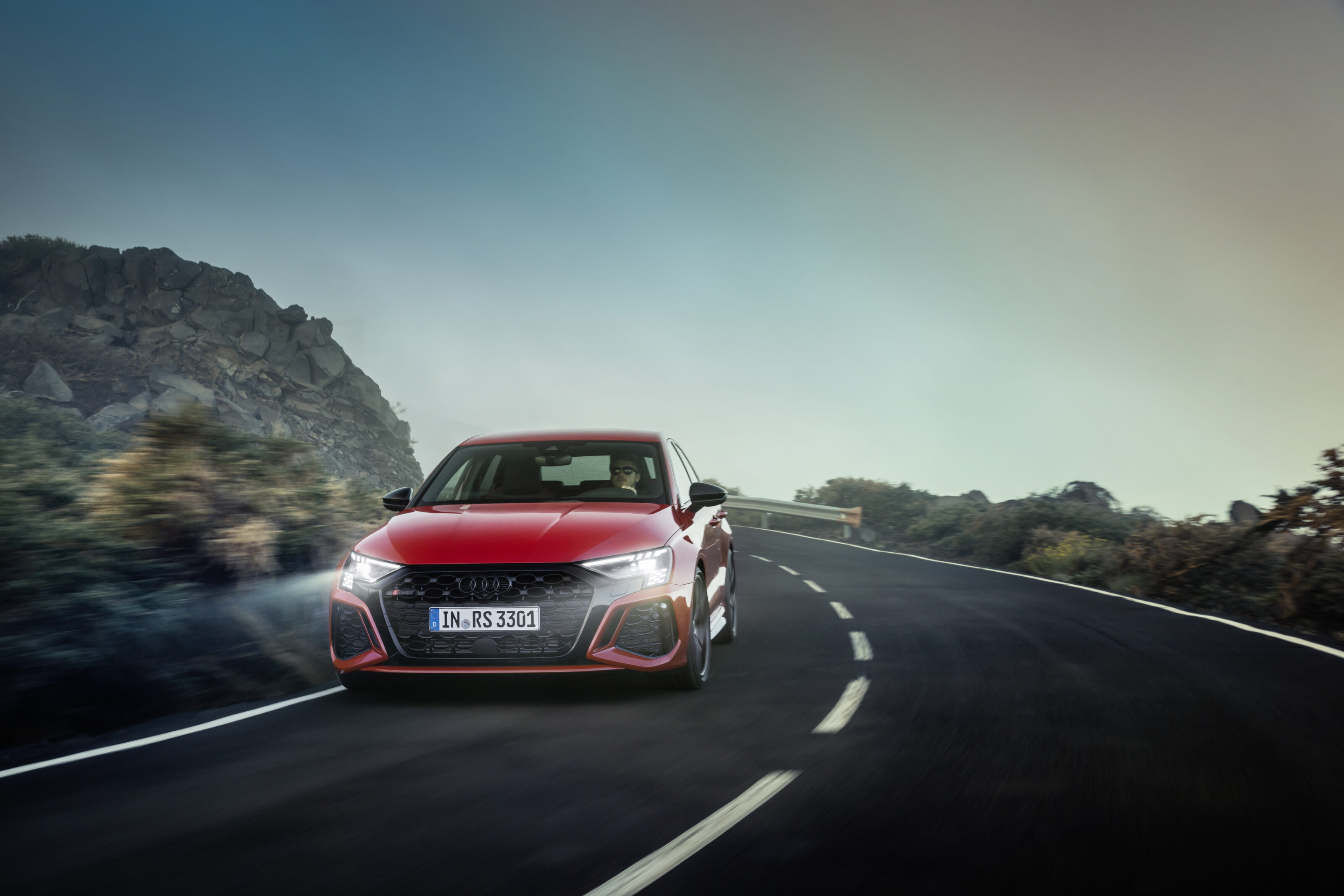
The new torque splitter rear axle also allows for up to 100 per cent of engine drive to be directed to a single rear wheel, with a new ‘RS torque rear’ drive mode debuting as a track-only functional drift mode, for all intents and purposes.
RS performance mode, is the second of two new drive options added to the RS3’s existing comfort, auto, dynamic, individual and efficiency choices.
These features leverage the RS3’s array of vehicle and drivetrain settings into a focused tuning map specifically tailored to the its new factory-option Pirelli P Zero Trofeo R semi-slick tyres; specifically dedicated to setting the fastest lap times possible.
Standard RS Sports suspension gains revised shock absorbers and valving, while optional adaptive dampers bear three distinct tuning curves for comfort, balanced and sport situations.
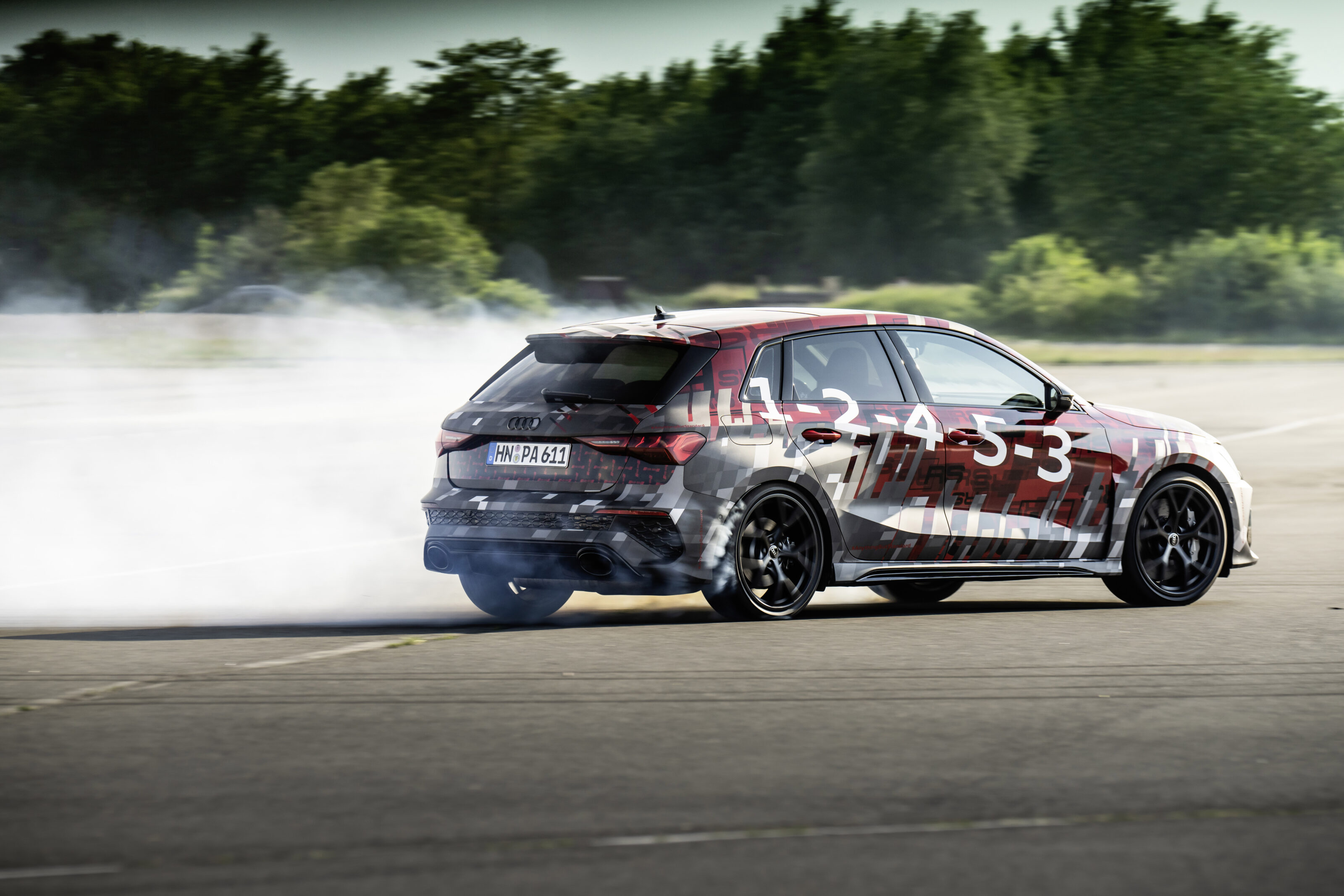
Modified pivot bearings and stiffer bearings, bushings and stabiliser bars yield increased negative camber (almost one degree further at the front, and half a degree further at the rear), aiding turn-in and mid-corner purchase.
The new modular Vehicle Dynamics Controller (mVDC) acts as the ‘brains’ of the car, capturing and synchronising data from all vehicle systems including the torque splitter, wheel-selective torque control, steering and adaptive dampers (if fitted) with millisecond precision.
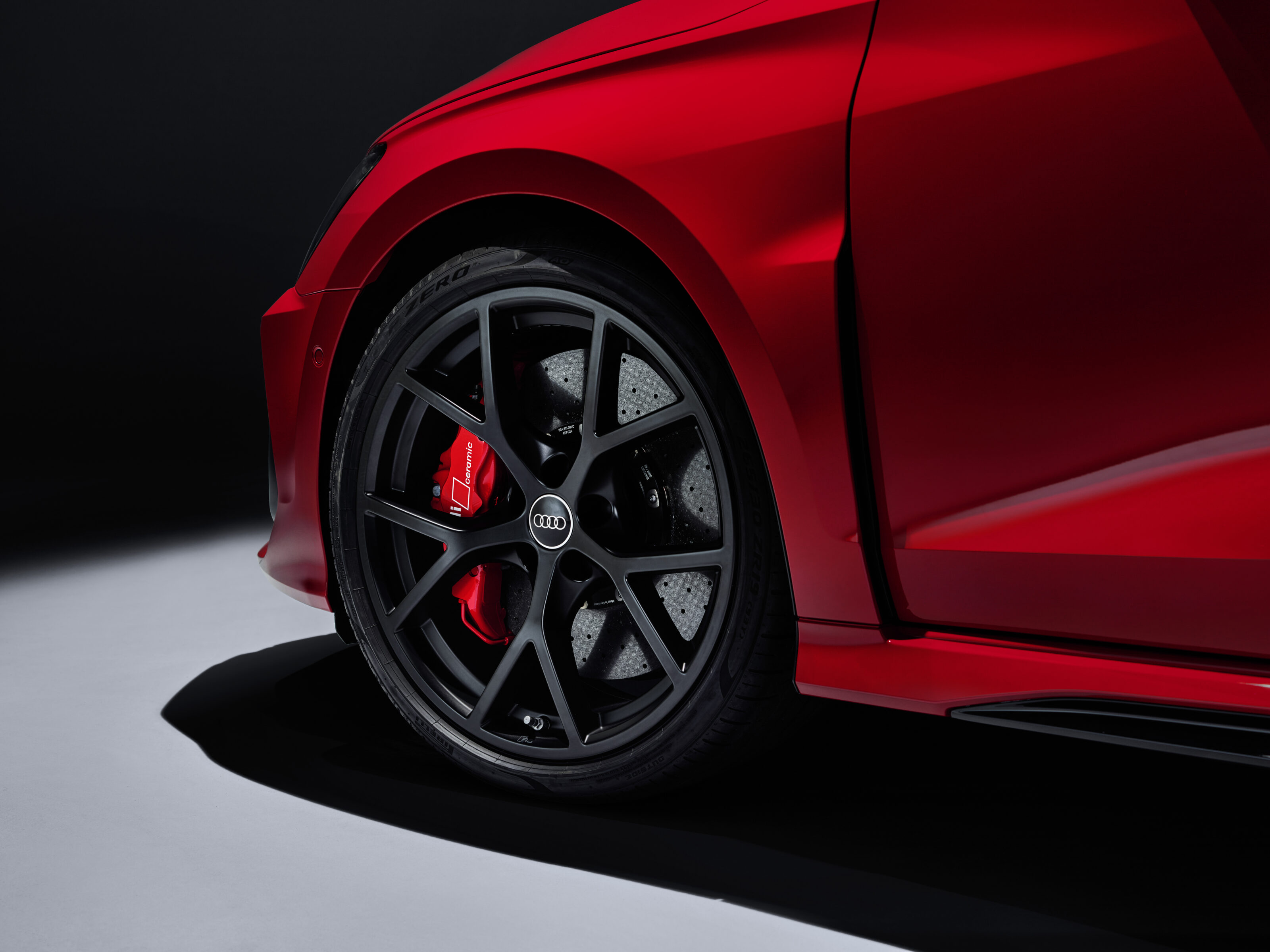
New, larger, six-piston steel brakes come fitted in the new RS3 as standard, measuring 375mm at the front and 310mm at the rear. A pair of carbon-ceramic front brakes are available as an optional extra, once again, measuring 380mm in diameter.
While many of the RS3’s most significant developments appear under the skin, it too debuts a bold new look which mimics the design language prevalent throughout the rest of the RennSport range.
New Y-spoke wheels are housed under heavily blistered fenders, behind which the front track has been increased by 33mm for both body styles, while the hatchback’s rear track also benefits from a 10mm extension.
The front apron is hallmarked by RennSport’s signature hexagonal honeycomb grille, and LED headlights as standard. Matrix headlights will be available as an option, unmistakably distinguished by its RS3 lettering animations.

The RS3’s flanks now house a new (non-functional) air outlet behind the front wheel, with flared rocker panels tying into the redesigned rear bumper, housing a full-width grille, integrated diffuser and signature oval tailpipes.
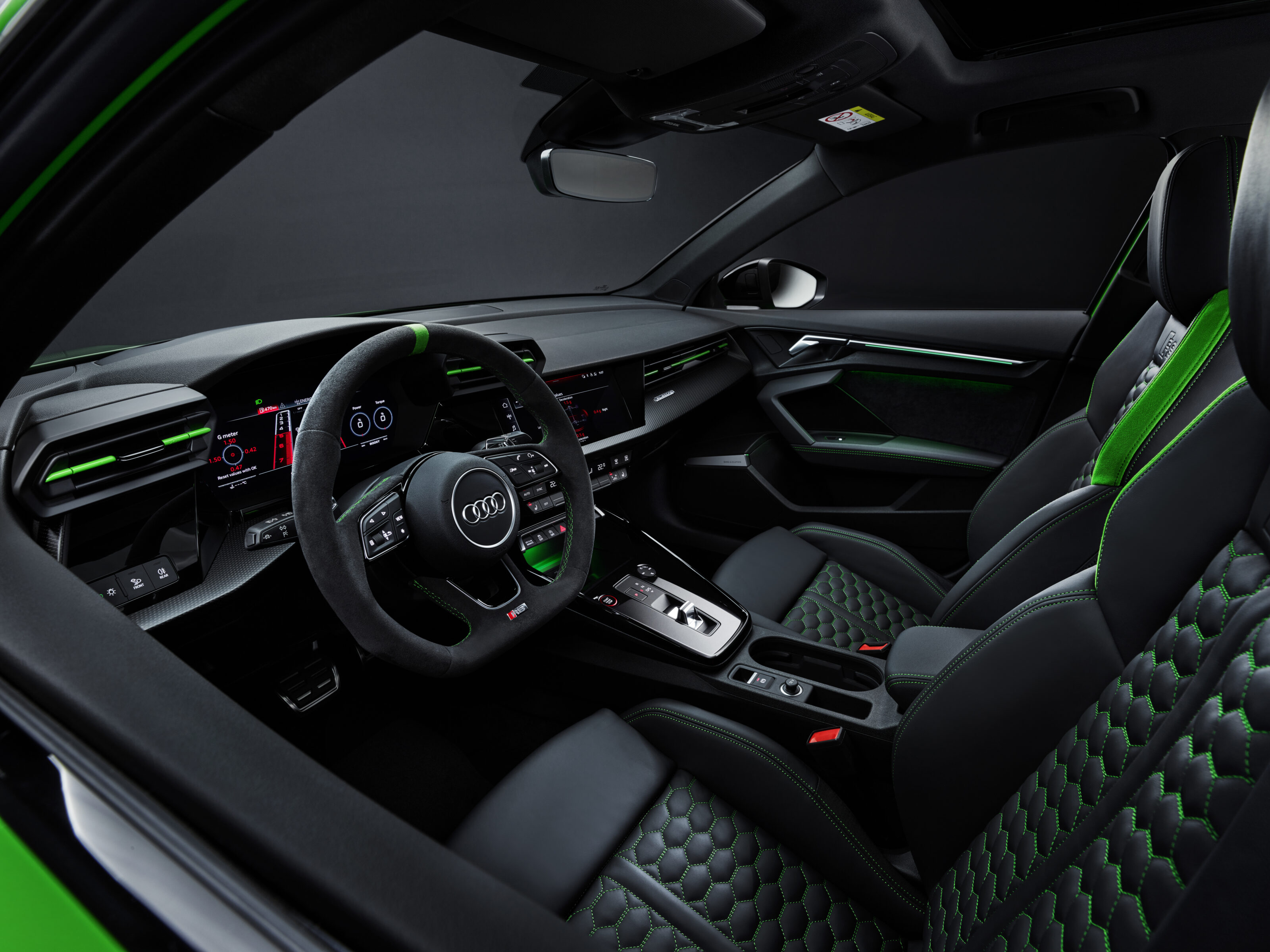
Inside, the RS3 debuts a new 12.3-inch Virtual Cockpit Plus instrument cluster bearing a number of new jet-like graphics, and supplemented by a 10.1-inch central screen, and – finally – a head-up display.
A further RS Design Package adds either red or green accents throughout the cabin, and to the 12 o’clock mark of the new flat-bottomed steering wheel.
When will the 2022 Audi RS3 come to Australia?
Local arrival and pricing have yet to be announced, however Audi says its European order books will be opening from mid-August 2021.
Prices in Europe will begin at €60,000 (AU$95,940) for the RS3 Sportback, and €62,000 (AU$99,138) for the RS3 Sedan.
That’s a significant price increase, and could see on-road prices blow out beyond six-figures by the time the RS3 launches Down Under.
We can expect an Australian launch in 2022 and will update this story as local details come to light. Stay tuned.
A tough 2020 has rebounded into a strong 2021 for Lamborghini, with the Italian manufacturer announcing its had its best ever opening half a year in its history – delivering 4852 cars worldwide until the end of June.
While the beginning of last year was tough on the car industry in general, Lamborghini and other Italian companies were hit particularly hard as the country bore the initial brunt of the Covid-19 pandemic, with factory shutdowns hampering the iconic marque throughout the year.
As such, from January to June, Lamborghini’s deliveries this year are 37 per cent higher than the same point last year, also 6.6 per cent up on its 2019 figures when it last set a company record of 8205 over a 12 month period.
Orders are at an all-time high as well, with the company saying it has enough orders from customers to cover production for the next ten months, taking it through to April 2022.

The Urus SUV is still its most popular model, with 2796 units sold this year (57 per cent of total sales), followed by the Huracán V10 supercar (1532 units, 32 per cent of total sales) and the Aventador V12 supercar (524 units, 11 per cent of sales).
Lamborghini CEO Stephan Winkelmann says the figures are a reflection on the brand’s strength and its plans to electrify its future product range are justified.
“This exceptional result is a double confirmation for us,” said Winkelmann.
“It is proof of the solidity and strength of this brand, which is enjoying growing appeal despite a period of continuous challenges and uncertainty.
“It also endorses the positive reception to our new industrial plan for future electrification of our product range, in which we will invest over €1.5 billion (AU$2.4bn) by 2024.
“Lamborghini’s course is set for a period of great transformation, where technological innovation and sustainability will go hand in hand with a focus on maximum product performance and loyalty to the brand’s DNA.”
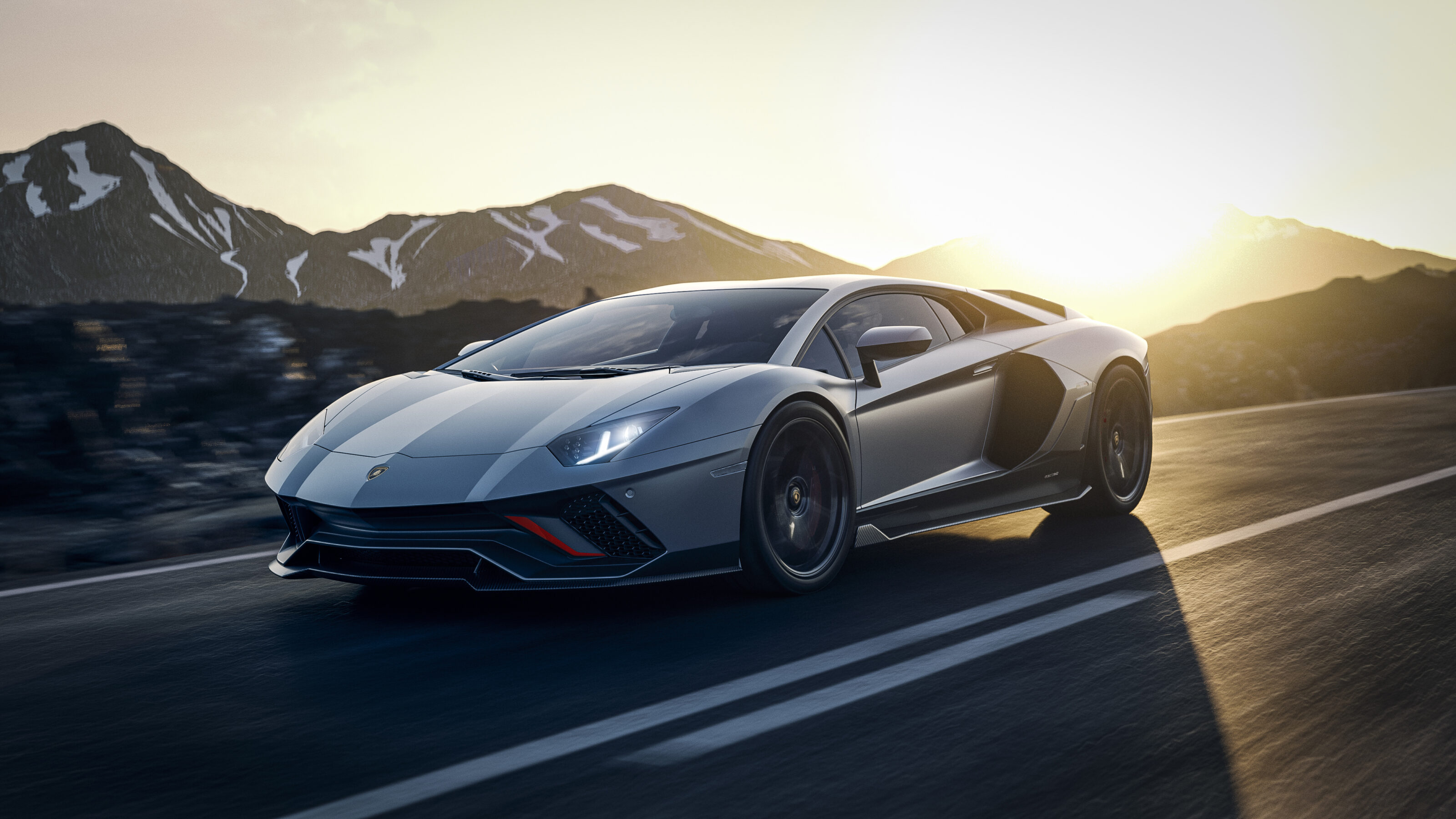
Earlier this month, Lamborghini revealed the Aventador LP 780-4 Ultimae, featuring the final ever naturally-aspirated V12 to come from the Sant’Agata Bolognese factory before its range becomes electrified – potentially signalling the death of the V12 in the raging bull’s cars.
In May this year, the Volkswagen Group – Lamborghini’s owners – rejected an offer of AU$12bn from a consortium of British and Swiss investors to buy the company, with its ultimate plan understood to be geared towards turning the Italian marque into an electric-only vehicle manufacturer.
Across its network of 168 dealers in 51 markets, 1502 of Lamborghini’s sales this year came from the United States, followed by China, Hong Kong and Macau (602), Germany (391), the UK (258) and Japan (258) as the top five countries.
Snapshot
- 740 units to be made to celebrate 60 years of Cooper-tuned Minis
- Unique trim to set variant apart from standard car
- Not coming to Australia
Mini is celebrating a 60-year collaboration with the Cooper family by releasing a limited-run edition of its John Cooper Works hatchback, known as the Anniversary Edition.
Ignited in 1961, when two-time Formula One Constructors Champion John Cooper got his hands on one of Alec Issigonis’s BMW Minis, the Mini Cooper became synonymous with performance in a small package, bumping power up from 25kW to 41kW in a car which weighed just 600kg.
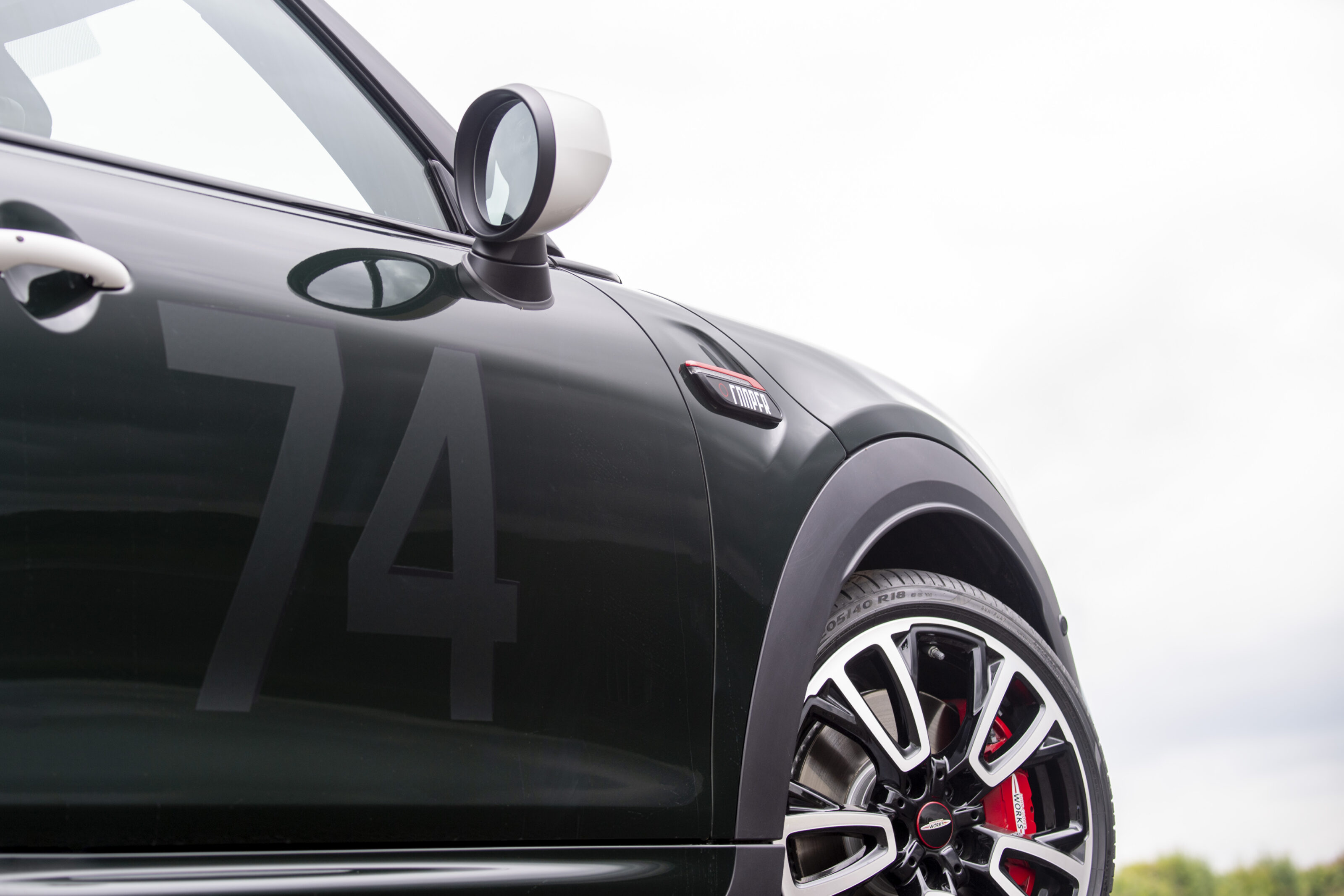
Success on the race track came immediately, winning its first ever race at Snetterton with the number 74, a link to the 740 units of the Anniversary Edition model which will be released worldwide.
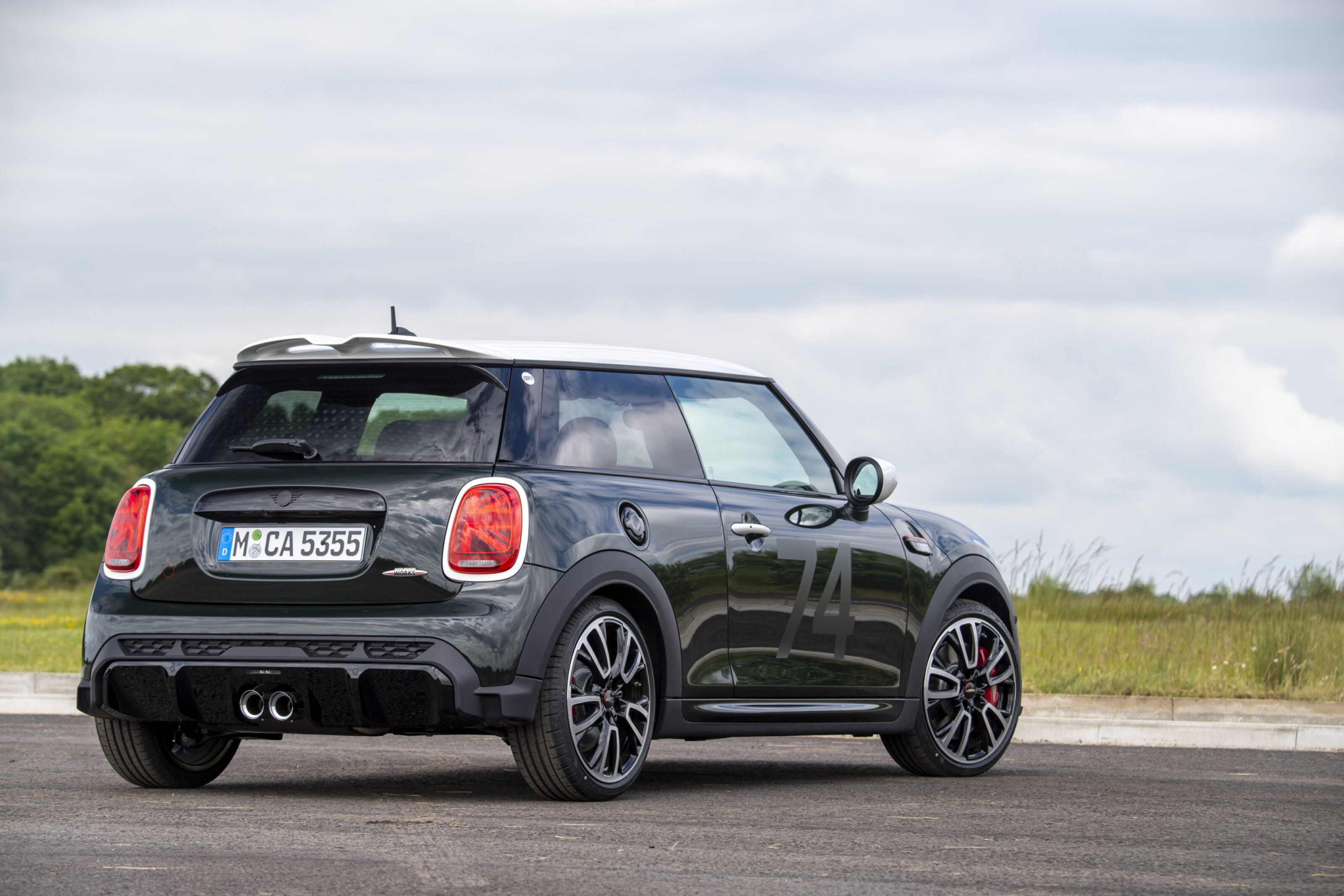
Based on the three-door John Cooper Works Hatch, which recently underwent a mid-life update, the Anniversary Edition is available in British racing green, midnight black and rebel green with a contrasting white roof, door handles, mirror caps, headlight rings and bonnet stripes with a red accent line.
Other visual differences to the standard JCW include the classic Cooper logo on the door trim sills, side scuttles, C-pillars and the lower part of the steering wheel, as well as Anniversary Edition touches in the cabin such as a numbered plaque with “60 Years of Mini Cooper – The Unexpected Underdog”.
Carrying over from the JCW is its 2.0-litre, four-cylinder turbocharged engine – developing 170kW/320Nm – JCW Course Spoke 18-inch wheels as well as a range of interior tech including the Navigation Plus Pack and Comfort Plus Pack.
Prices in the UK start at £33,800 (AU$62,990) for the six-speed manual, while the eight-speed automatic begins at a drive-away price of £35,500 (AU$66,160), a premium of £6685 (AU$12,460) over the base JCW.
Sadly, Mini Australia has confirmed the Anniversary Edition will not be available in Australia.
Snapshot
- Think tank report shows ICE vehicles need to be phased out by 2035
- Target of net zero emissions by 2050 achievable by moving to EVs
- Adoption of climate policy would put Australia in line with other countries
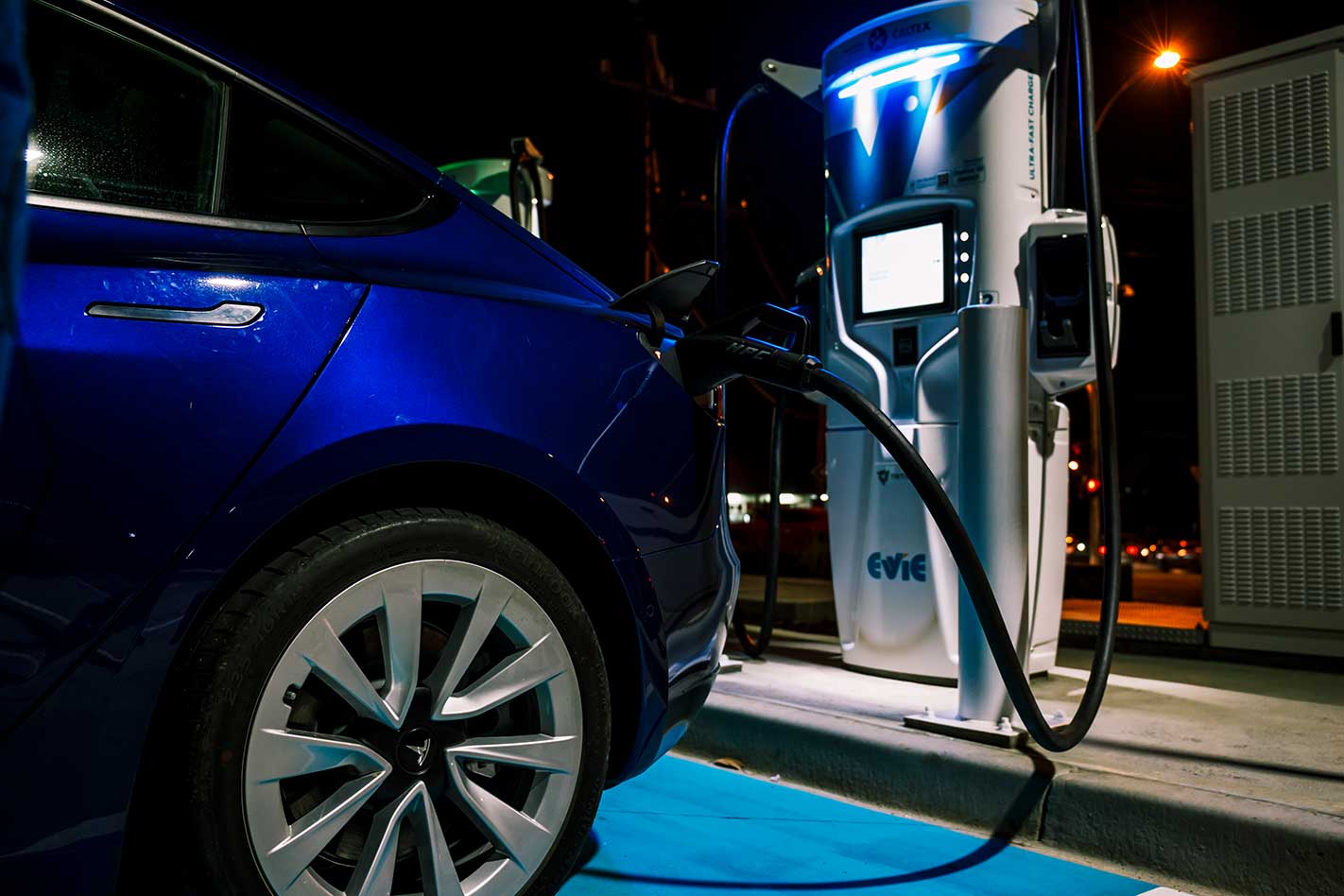
It would be impossible for Australia to reach a goal of net zero carbon emissions by 2050 without phasing out internal combustion engine cars (ICE) by 2035, according to a leading climate change think tank.
The Victoria-based Grattan Institute’s latest report on Australia’s climate change policy – titled Towards net zero: Practical policies to reduce transport emissions – shows drastic change is needed to meet a proposed target of net zero emissions by 2050, something which the Federal Government hasn’t yet committed to despite other countries signing a pledge earlier this year.
Phasing out and ultimately banning the sale of ICE vehicles by 2035 will be the best way to achieve the net zero target, with the Grattan Institute report suggesting Australia needs to fall in line with plans already put forward by the European Union and Canada.
Financial affordability of electric vehicles is often cited as one of the limitations of their success in Australia, with models often being in excess of $10,000 more than their ICE counterparts – even after state government incentives.
The Grattan Institute has called for the Australian Government to reduce the cost of EVs through introducing exemptions for stamp duty, import duty and the Luxury Car Tax (LCT), cutting prices by over 10 per cent in some instances.
The LCT threshold was increased in May to $79,659 for fuel efficient and electric vehicles, seemingly having no effect on a majority of the market which were already above the previous threshold of $77,565.
CEO of the Electric Vehicle Council, Behyad Jafari, told WhichCar he believes the Grattan Institute’s findings show the Government needs to act now and embrace EVs before it’s too late.
“The Grattan Institute is right to point out to reach net zero by 2050, all new car sales will need to be zero emissions no later than 2035,” said Jafari.“Australia is far from on track to achieving this and, as the report points out, we won’t get there without strong Government policy.“We know what needs to be done to get Australia on track. Immediately incentivise electric vehicles to boost sales, set long term targets to provide certainty for investment and in the meantime, don’t do silly things like introducing premature new taxes on EVs.”
Chief Executive of the Federal Chamber of Automotive Industries (FCAI), Tony Weber, said the report reflects FCAI’s belief in Government-led policy to encourage EV ownership in Australia but a ban on ICE vehicles may be detrimental to the local market.
“This report highlights key changes which can be made to increase the take up of electric and hydrogen-powered vehicles, and lower Australia’s emissions more broadly,” said Weber.
“Many of the policy directions outlined in the report align with policies FCAI has maintained for years, including a reduction in car import charges and the scrapping of the Luxury Car Tax.
“Tax reform would reduce the cost of electric vehicles in Australia.
“The automotive industry has released its own Emission Standards and reporting system, which sets out industry and brand CO2 reduction targets. Our aim is to reduce emissions by more than 50 per cent by 2030.
“[However] this approach does not recognise the significant differences in market preferences across Australia, which is unique among the global markets.
“Governments should pick targets, not technologies. Decisions around technology should be left to the experts – the vehicle makers.
“The aim should be to reduce CO2 rather than give preference to one technology over another.”
EV sales have been on the rise in Australia, with sales to the midpoint of 2021 at nearly triple the number as the same time in 2020, however it still remains the least popular fuel source for new cars in Australia, making up just 0.4 per cent of all new vehicle sales in 2021 so far.
This spike coincides with various incentives being rolled out by state and territory governments to get buyers into EVs, with Victoria, Queensland, Tasmania and the Australian Capital Territory having already implemented their schemes.
New South Wales is set to begin its program in September, possibly the most generous in Australia so far with a $3000 rebate available for the first 25,000 buyers alongside a waiving of stamp duty, which can be as much as $3000, both of which could lead to a larger jump in EV uptake.
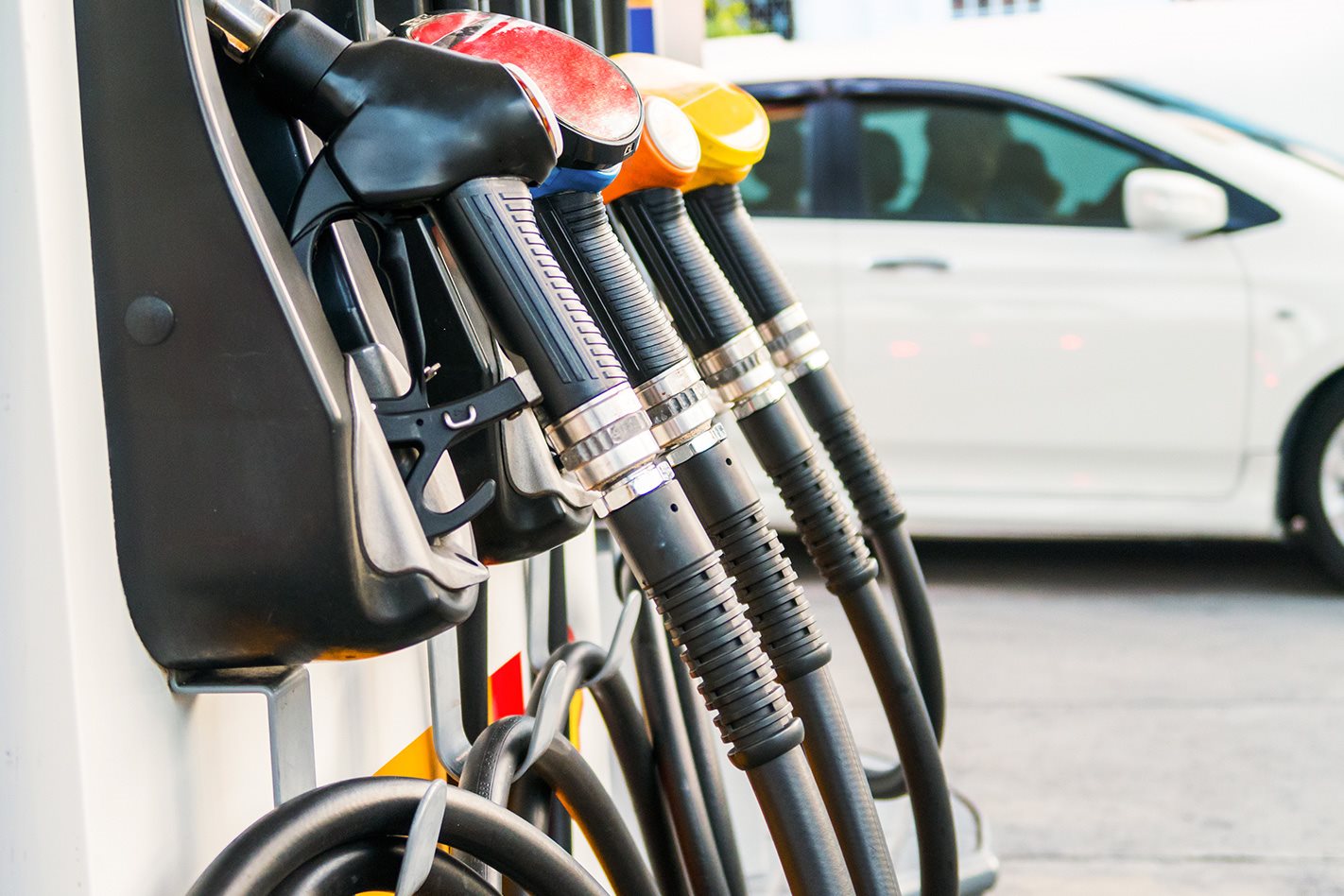
By contrast, 56 per cent of new cars sold this year are powered by a petrol engine while diesel accounts for 32.5 per cent of new vehicle sales, demonstrating the Australian reliance on ICE vehicles by taking up 88.5 per cent of the market.
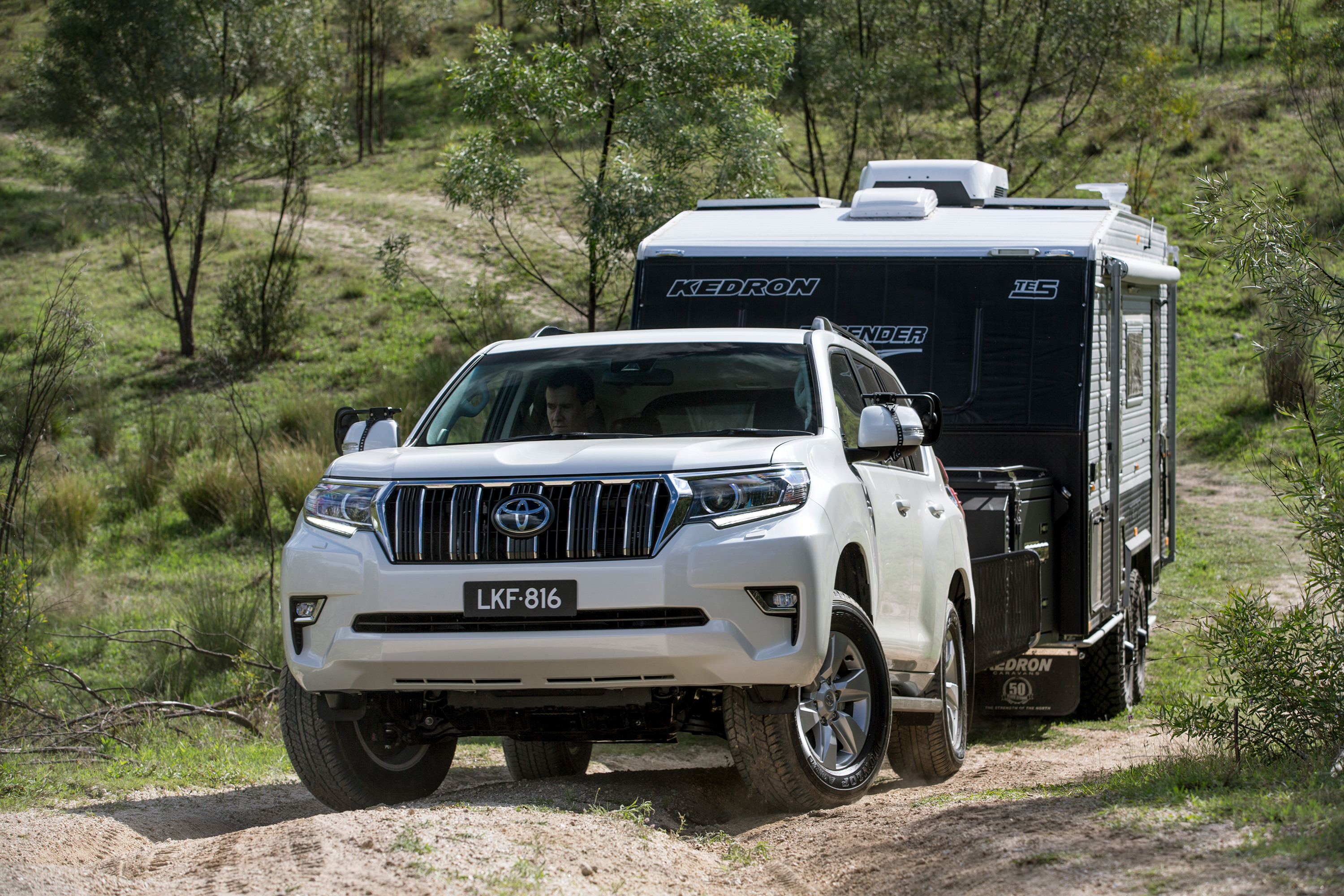
Australia may be forced into adopting new EVs regardless of local policy due to a majority of manufacturers making their own commitments to drop ICEs from model line-ups by 2035, conforming to the planned European regulations to continue selling vehicles in the world’s third-largest new car market.
The Grattan Institute’s report found the best policy would be the introduction of an emissions price but conceded, “we need to accept the regrettable reality that neither side of Australian politics is going to introduce an emissions price any time soon.”
Perhaps I got overexcited in my column last month, as it was only afterwards that I realised – in my haste to rant about the exorbitant prices of once-cheap JDM dream machines – that I never properly introduced myself to you, the MOTOR clan. So here we go: Hi, I’m Alex. And I love track days!
The bug bit me hard many moons ago and, while there’s little logic in spending significant amounts of money and time so you can drive around in circles racing nobody but yourself, I’ve truly found it to be one of life’s greatest pleasures.
The events I primarily take part in are club level sprint days, and grassroots time attack events. But I think there’s a universal attraction in whatever your chosen poison is, be it drag racing, drifting, rallying or autocross.
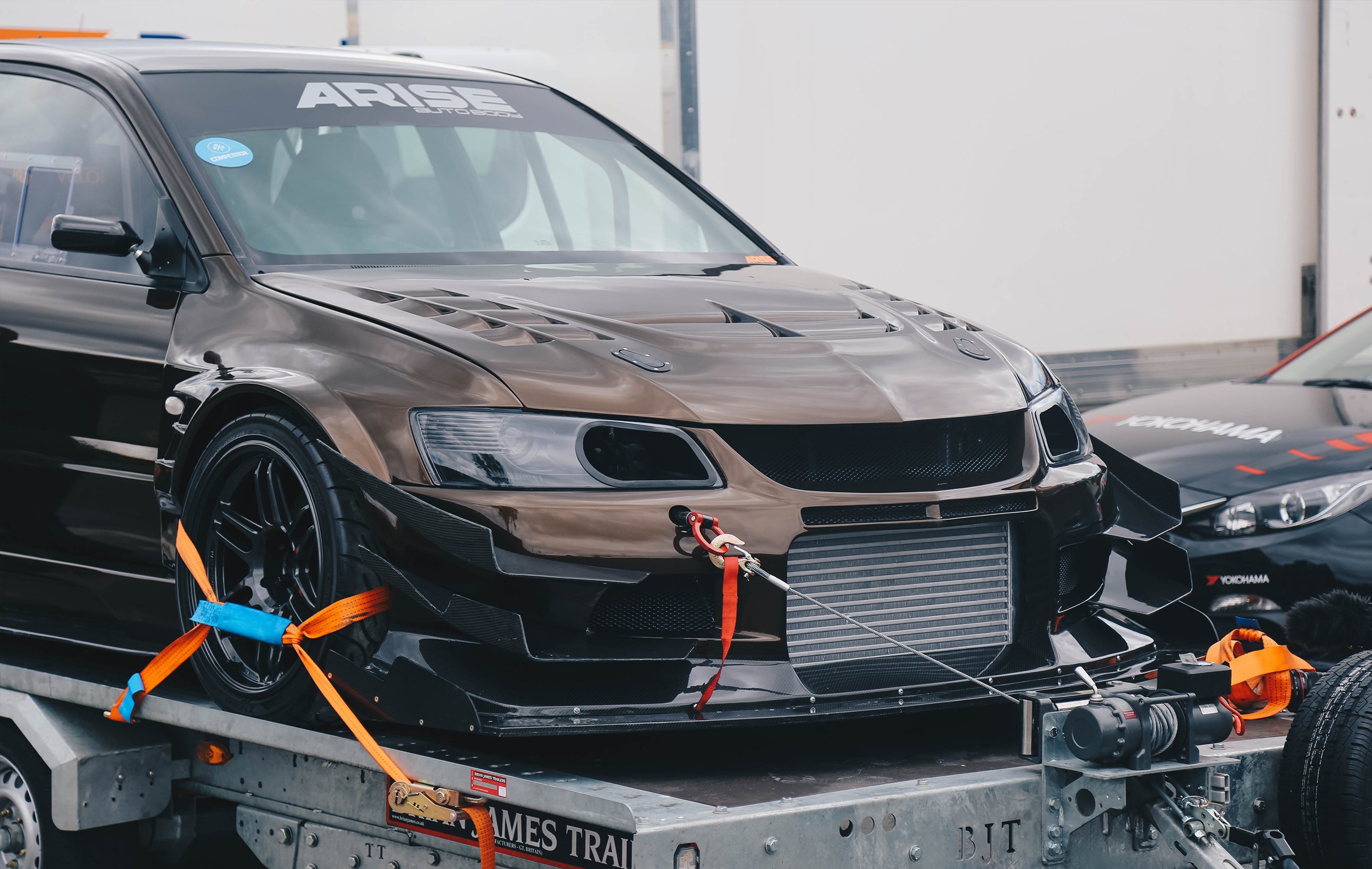
It’s not always smooth sailing, however. The days can be incredibly long and taxing, the car maintenance is never ending, and – even if you never bin or break anything – it’s never what you’d call a ‘cheap’ hobby. But being alone in a car on a race track can be one of the most liberating experiences you can have.
Of course, from the outside, the consequence of speed and risk can seem unnerving, but that quickly fades away once you have an event or two under your belt. A colleague once asked me whether there’s much pressure at these track days, but I’ve found it to be quite the opposite.
In fact, track days to me are one of the few instances in life where there isn’t any pressure. It’s just me and my machine, constantly trying to best my own lap record on a never-ending quest for incremental self-improvement.
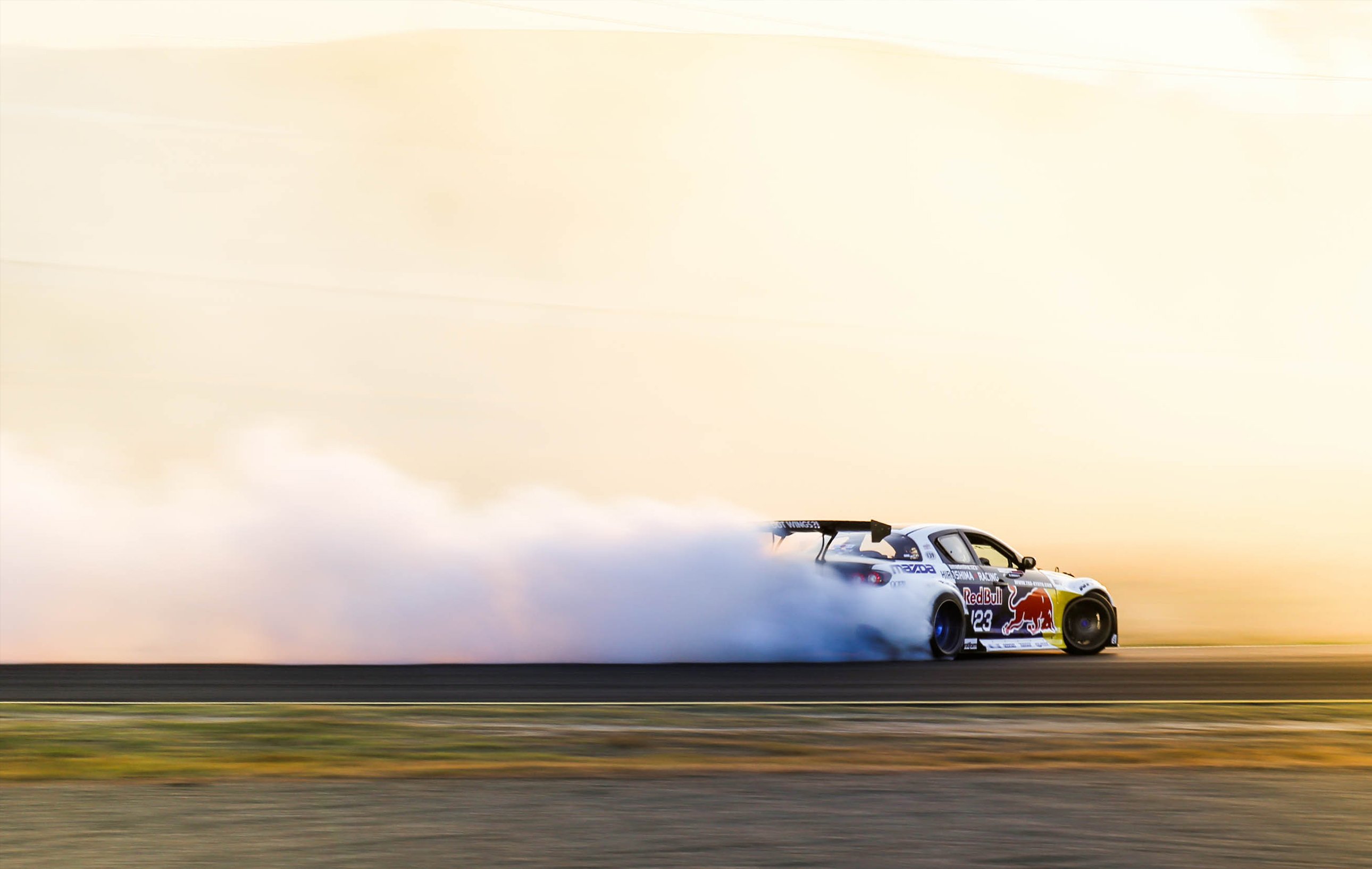
And I do believe it’s a universal appeal. I never ‘understood’ the appeal of drag racing, until the first time I had to performance benchmark a car at Heathcote. It’s that same dopamine hit you get from time attack, that process of making repeatable movements with fine adjustments and trying to get the best result. Except you get that hit every 13 seconds at the drag strip, instead of every minute and 40 seconds at Winton. It’s true what they say, don’t knock it ’til you try it.
The best thing is, though, you’re not thinking about work, or the home life. You’re not trying to be the fastest (believe me, you won’t be). But it will teach you more about driving, and about your car, than you’ll ever learn in the public domain, no matter how flash your vehicle is, or how ‘spirited’ your Sunday morning drives are.
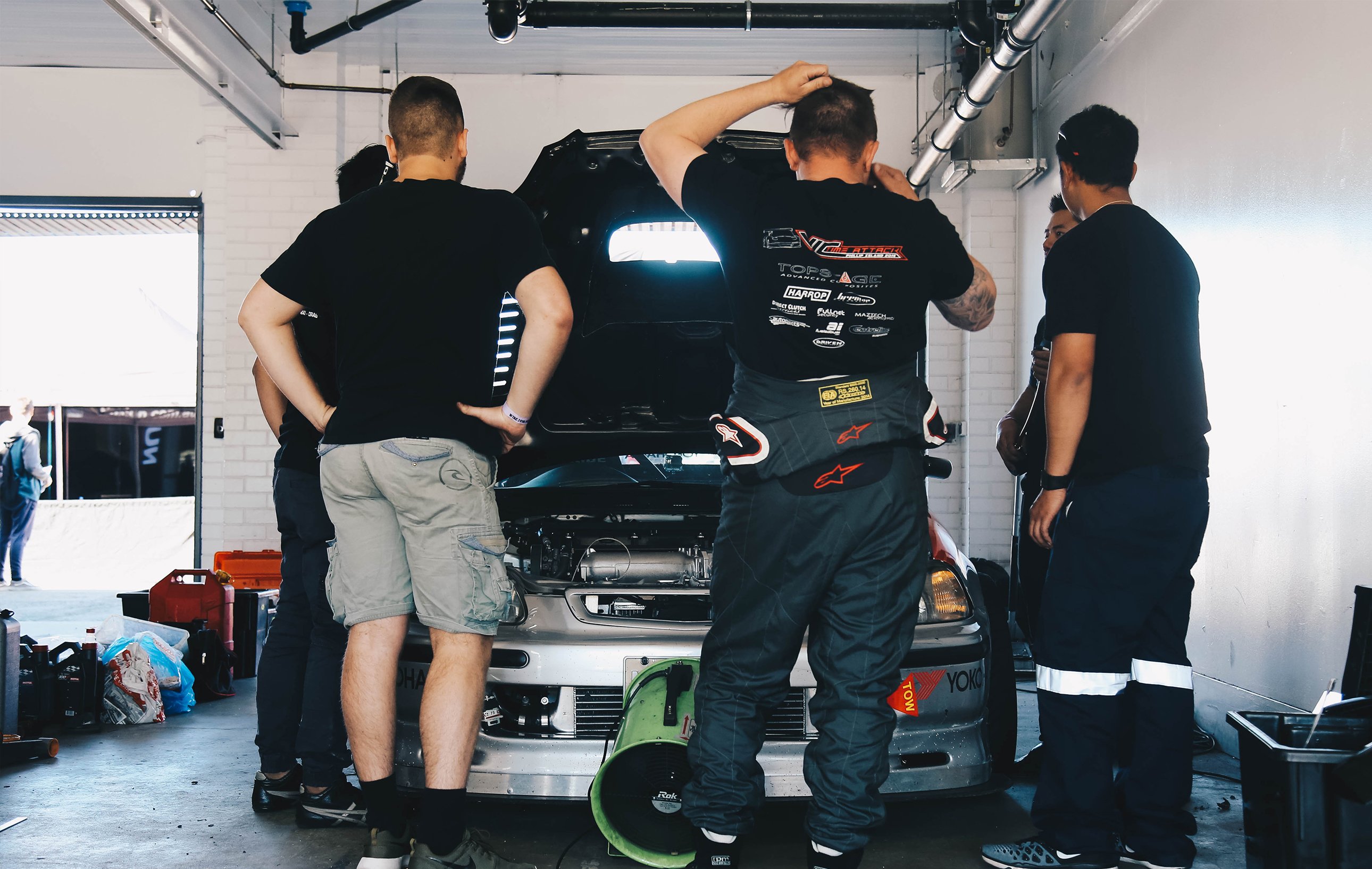
There’s an incredible social aspect at track days, too, with a tight-knit and supportive community that is increasingly absent elsewhere in the car scene these days. Even at competition days: I’ve been in the garages at World Time Attack and have seen competitors lending tools, even pairs of hands, to help their opponents get back out on track.
Of course there are rivalries, but we’re all trying to push each other. And the driver whose lap times you’ve been side-eyeing because you’re both close to setting a PB, will be the first to come up and give you a high-five when you finally break that barrier.
Grassroots motorsports isn’t as inaccessible as many would think. Modern cars need little in the way of prep to stand up to a day at the races, with most needing little more than a fresh service, perhaps some brake pads, and a mounted fire extinguisher.
My friends at Nugget Nationals have been holding a budget time attack league for years, complete with an upper limit cost cap of $5000; which includes cost of vehicle purchase and modification, excluding safety items, with further limits on engine capacity, forced induction and certain modifications.
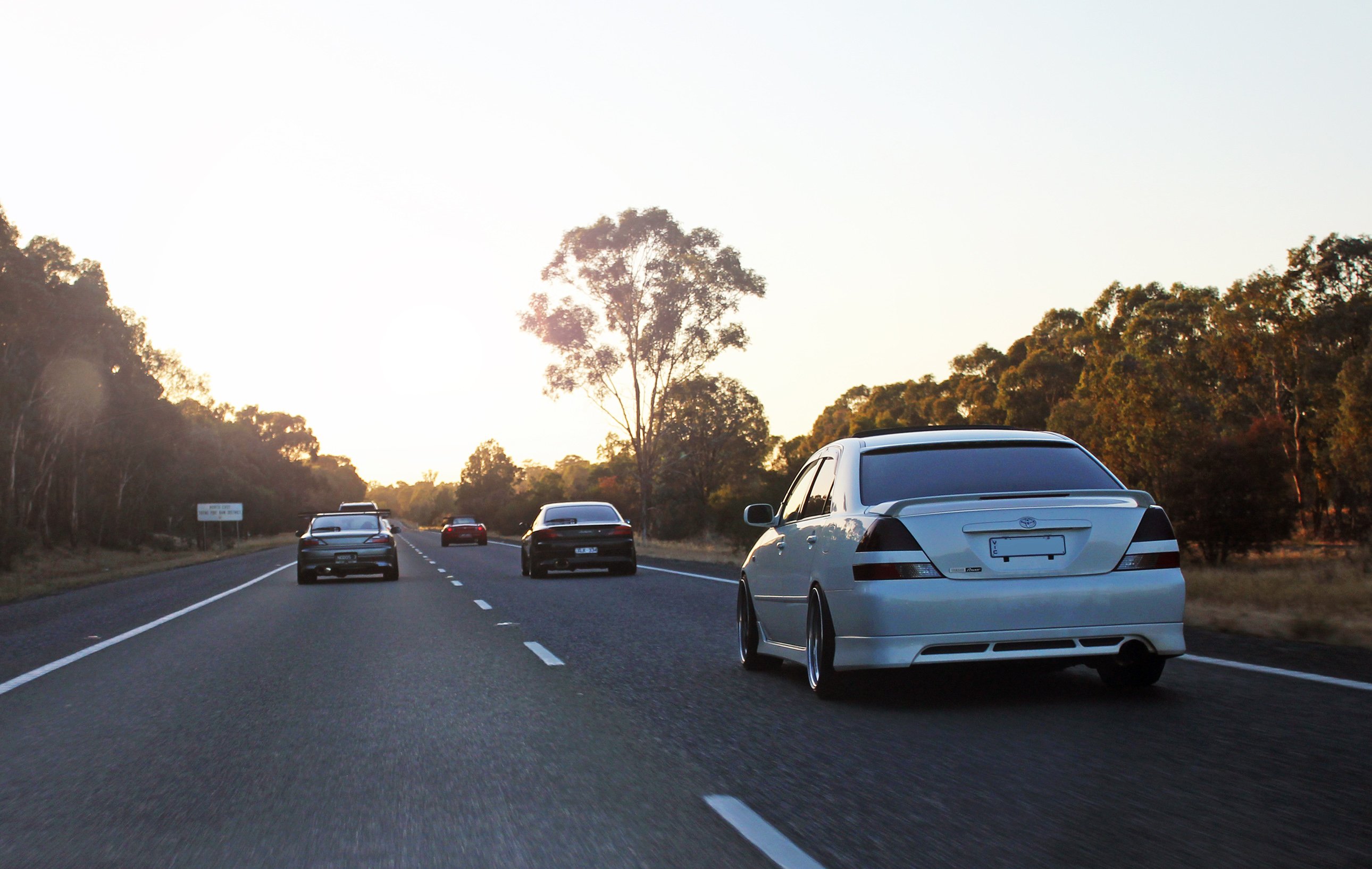
There’s even romance in the pre-dawn slog to Winton. Everyone from Melbourne stops at the Wallan BP for fuel and breakfast.
It’s still dark, but about 30 minutes further along the Hume Highway, the sky begins to turn a deep murky blue, then purple, then pink. And then daylight breaks, and the world turns gold. It’s soul cleansing stuff, like going on a camping trip with your mates – but with race cars instead. What could be better?
Snapshot
- Acura largest jump in luxury segment with 7.1 per cent rise
- Subaru led mainstream brands for third year in a row
- Mazda had biggest year-on-year jump of the mainstream carmakerts
A recent study has found vehicle owners in the United States remained loyal to the car brands they knew best during lockdowns caused by the Covid-19 pandemic.
The J.D. Power 2021 US Automotive Brand Loyalty Study revealed issues such as nationwide lockdowns, the recent semi-conductor chip shortage and pandemic recovery have led to consumers forming a stronger relationship with their existing dealer.
In particular, the study claims the severity of Covid-19 and related lockdowns forced many vehicle shoppers away from dealerships, with many resorting to having vehicles delivered to their homes.
“The bottom line is finding a vehicle required working closely with a dealer and, when presented with obstacles, shoppers turned to the dealer they already knew,” said Tyson Jominy, vice president of data and analytics at J.D. Power.
“As a result, the level of increased loyalty this year is remarkable.”
The study – now in its third year – calculates whether an owner has purchased a vehicle from the same brand as the car being traded in, with the data based on transactions in the United States between June 2020 and May 2021.
The luxury brand with the highest loyalty improvement over 2020 was Acura (up 7.1 per cent). Mazda (up 5.9 per cent) had the largest advance year-on-year in the mainstream segment.
While Mazda may have had the biggest jump in loyalty, Subaru continues to lead the mainstream brands for a third consecutive year with an owner retention rate of 61.8 per cent. It was followed closely by Toyota (61.1 per cent), Honda (59.3 per cent) and Ram (56.8 per cent).
Lexus ranked the highest among luxury brands for the third consecutive year with a loyalty rate of 51.6 per cent, with Porsche (50.2 per cent) and Mercedes-Benz (47.0 per cent) trailing closely behind.
Meanwhile, Jaguar remained at the bottom of the luxury brand ranking for the third consecutive year with a loyalty rate of 17.1 per cent. For the mainstream segment, Chrysler fell to the bottom of the list, seeing just 14.6 per cent of existing owners purchase a new vehicle from the brand.
Snapshot
- Previous roles at Lu2019Oreal, LVMH and Estu00e9e Lauder
- Succeeds Kevin Nicholls who left JLR in April 2020
- Will be responsible for both brands
Jaguar Land Rover Australia has announced Shannon Edwards will take the helm as marketing director more than twelve months after previous head Kevin Nicholls vacated the role.
Edwards is responsible for overseeing all local product marketing, media and communications, and customer experience for both the Jaguar and Land Rover brands in Australia.
In addition, her role expands to include current and future product planning, data strategy, insights, brand and digital experience, customer relationship management and to support the future growth of the manufacturers.
Edwards will report directly to Mark Cameron, managing director at Jaguar Land Rover Australia.
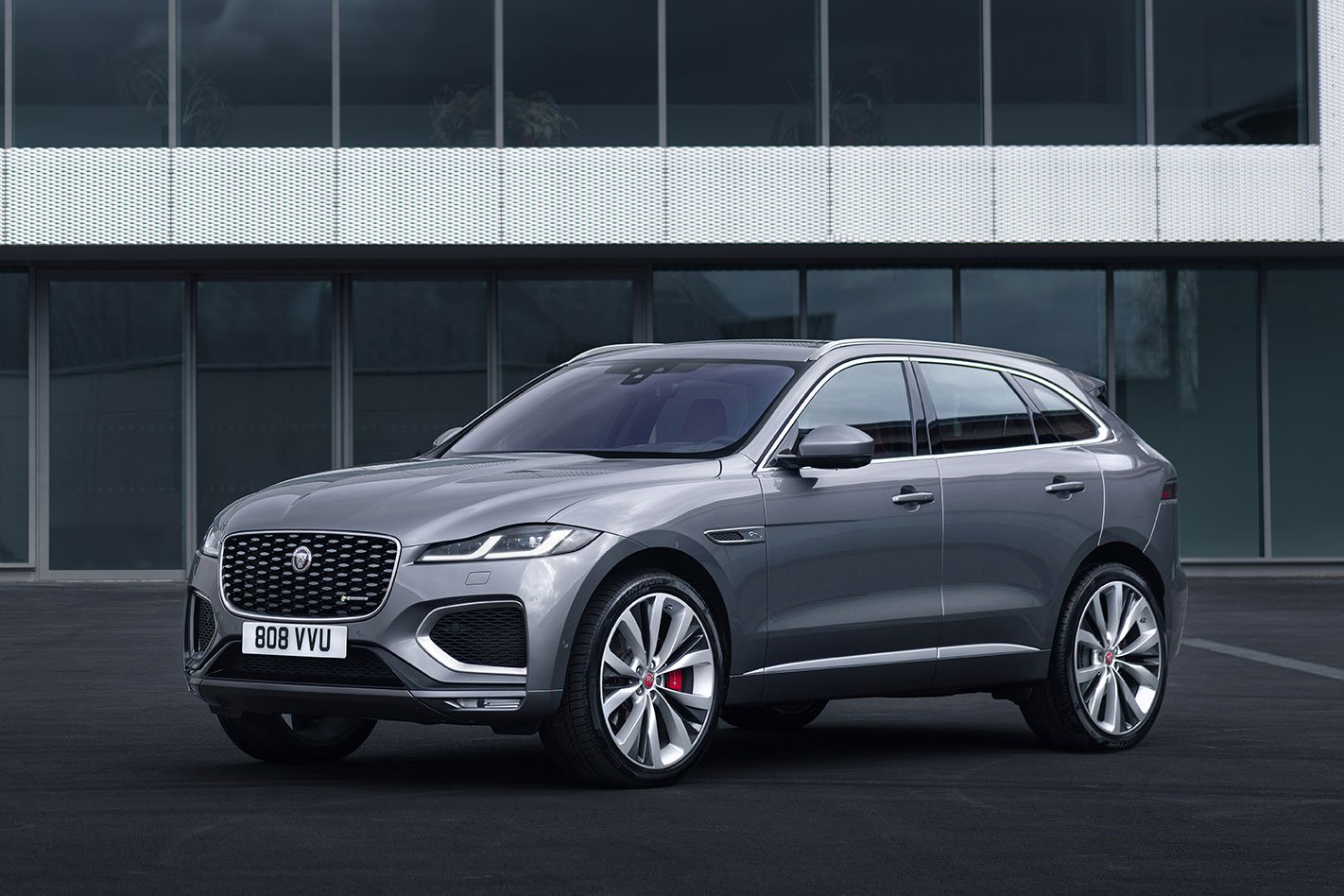
Prior to joining her role at Jaguar Land Rover Australia, Edwards has worked previously in senior marketing positions at other global companies – including L’Oreal, LVMH and The Estée Lauder Companies – for the Australian market.
“As a dynamic, experienced leader in bringing premium global brands to the Australian market, Shannon is an exciting appointment to the Jaguar Land Rover business,” said Cameron in a statement.
“It’s an incredible privilege to join two iconic and innovative marques in Jaguar and Land Rover, making some of the most desirable and distinctive vehicles in the world,” added Edwards.
Previous marketing director Kevin Nicholls had been at Jaguar Land Rover Australia since May 2014 before leaving the company in April 2020.
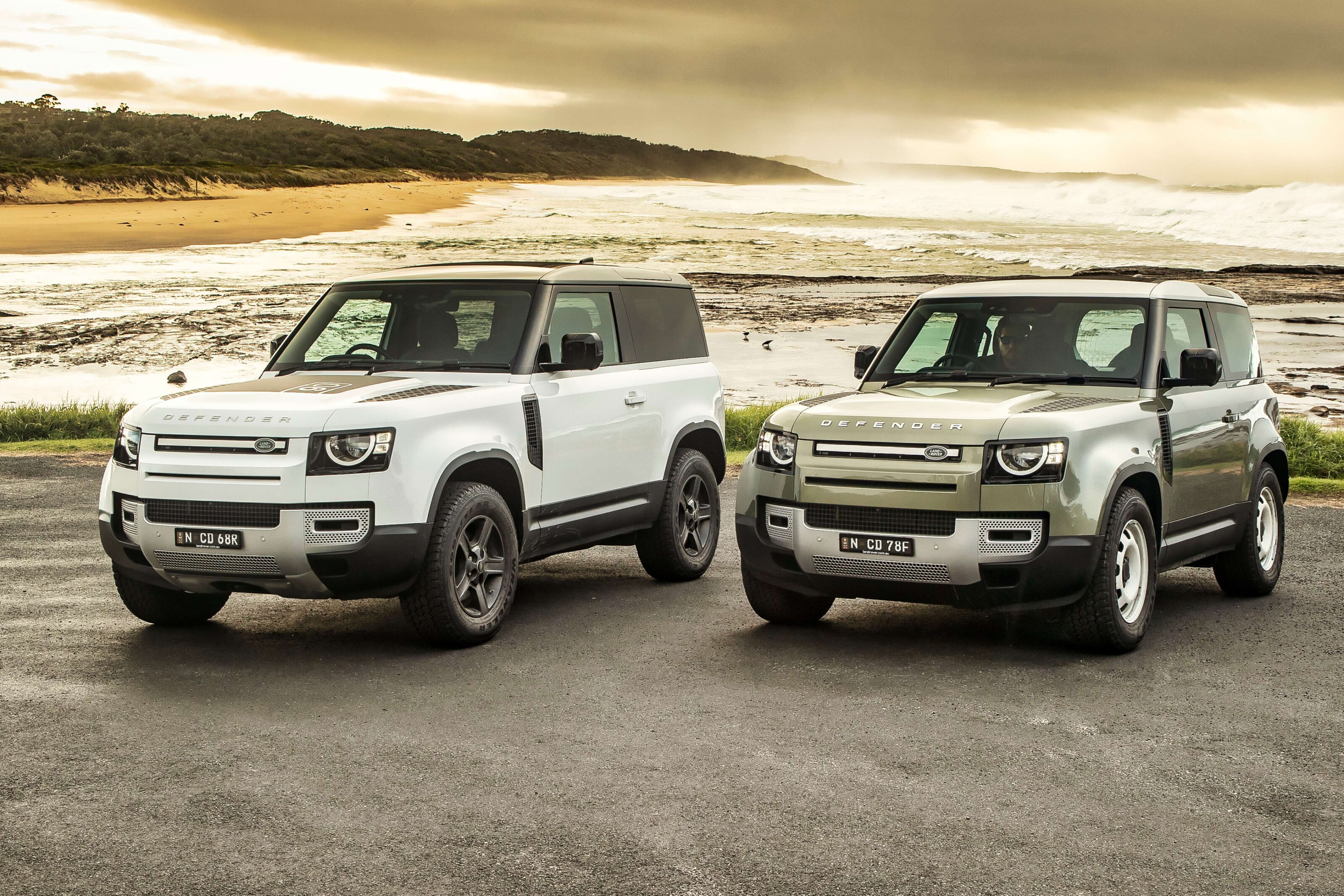
In recent years, JLR’s local division has seen the introduction of its first ever electric vehicle – the Jaguar I-Pace – and the launch of the new generation Land Rover Defender.
VFACTS data shows Jaguar sold 249 vehicles in June 2021, while Land Rover recorded 908 sales for the month. In comparison, main rivals Mercedes-Benz, BMW and Audi moved 3330, 3078 and 1608 vehicles respectively.
Edwards’s appointment comes as the British marque details its new Recharge strategy to help revive the company from financial struggles, claiming every Jaguar and Land Rover model will be offered with an electric powertrain by 2030 – with Jaguar set to go EV-only by 2025.
