
Australian small businesses will be able to deduct the full value of any new work vehicle purchased since last October after the Federal Government announced it is extending its instant asset write-off scheme for another year.
In last night’s 2021 Federal Budget, the Government said there would be a 12-month extension to the ‘temporary full expensing measures’ until June 30, 2023 which industry figures claim will hopefully lead to a boost in new car sales following a record month in April.
The scheme, initially announced as part of the 2020 pandemic-hit budget last year, provides eligible businesses with a turnover of up to $5billion to claim big ticket items such as new vehicles as an expense in one financial year rather than the usual five.
Under the current law, such businesses are entitled to write-off the value of an asset, such as a new work vehicle, purchased after 7.30pm AEDT on October 6, 2020, and first used or installed ready for use by June 30, 2022.
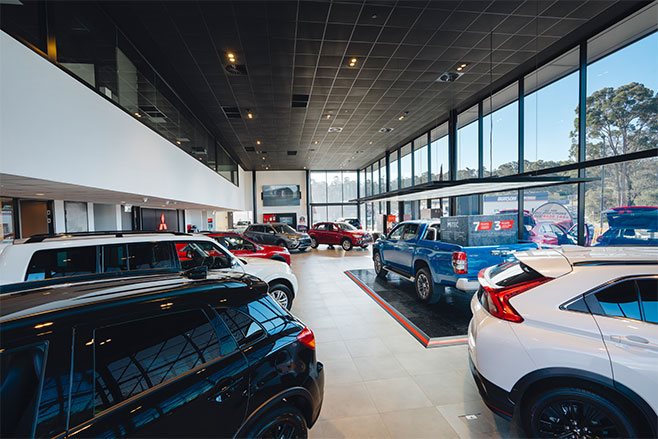
It means eligible buyers who are worried about taking delivery of a new work vehicle due to stock shortages before the original deadline now have an extra 12 months to get them on the road.
The extension also means any losses incurred up to June 2023 can be offset against prior profits made going back to the 2018-19 financial year.
The news has been welcomed by the peak body representing franchised new car dealers, the Australian Automotive Dealer Association (AADA), as a much-needed boost to the auto industry’s recovery as the rule change makes it a good time to buy a new work vehicle.
Prior to the pandemic, the car industry had experienced 31 months in a row of sales decline.
“This budget has confirmed a stunning economic recovery for Australia and many of the measures announced will put the automotive industry in a good position to invest in Australia and employ Australians,” said AADA CEO James Voortman.
“Prior to the pandemic the automotive industry had experienced a sustained period of falling sales and recession-like conditions, but we have since been able to get back on our feet.
“The extension of the full expensing measure until June 30, 2023 will come as welcome news for many in our industry. This will give businesses including Australia’s more than 3,000 dealerships the confidence to invest.

“The significant tax relief provided to many middle and lower-income Australians is welcome news and will no doubt instil consumers with the confidence to spend.”
The instant asset write-off applies to vehicles costing up to $57,581 (2019-2020) and up to $59,136 (2020-2021). Both thresholds are well below the current primary Luxury Car Tax threshold of $68,740.
However, the full purchase price of eligible trades vehicles (new or used for 100 per cent business use and able to carry more than 1 tonne) can be claimed as a work expense in one financial year rather than five under the scheme – if the vehicle costs more than the aforementioned limits, but less than $150,000.
“Australia is coming back,” said Treasurer Josh Frydenberg. “This budget will ensure we come back even stronger, securing Australia’s recovery.”
“[We’re] announcing the extension of these measures for a further year until June 30, 2023, so a tradie can buy a new ute, a farmer a new harvester and a manufacturer expand their production line.”
The tax break is expected to reduce tax revenue by $17.9 billion over the forward estimates and $3.4 billion over the medium term as the measure brings forward deductions that would have been made in future years, according to News.com.au.
Are you thinking of purchasing a new work vehicle because of the rule changes, or already have and the extension will benefit you? Get in touch: [email protected]
Talking points
- BP buys 33.3 per cent stake in Digital Charging Solutions GmbH
- Deal will see the creation of 70,000 new charging stations across the globe by 2030
BMW and Daimler have just sold a 33.3 per cent stake in their jointly owned EV charging company – Digital Charging Solutions GmbH – to British Petroleum (BP) as part of a deal to create 70,000 new charging stations worldwide by 2030.
The news comes as the charging firm announces its plans to expand its network in key markets across the globe.
Currently, Digital Charging Solutions provides charging services for BEV and PHEV BMW, Mercedes-Benz, and Mini customers in 32 countries at 228,000 stations.
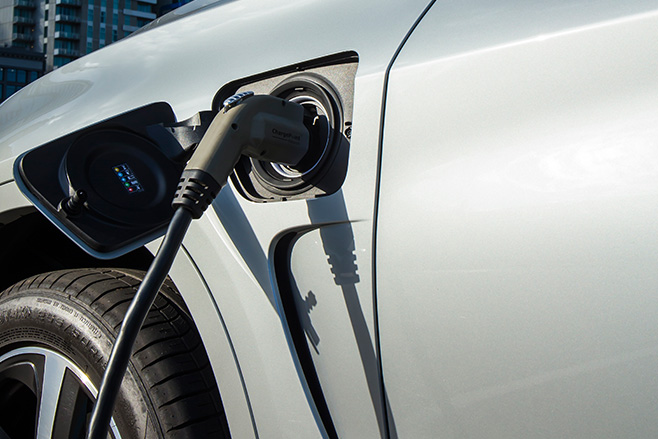
BP may not have that level of infrastructure in its arsenal right now, owning just 8700 charging stations at the time of writing, but the multinational oil and gas company’s electric vehicle charging network is the most popular in the UK.
The push for an increased electric vehicle charging infrastructure isn’t isolated to BMW, Daimler and BP either.
Just last month, Audi New Zealand and Swedish-Swiss multinational ABB announced a partnership to provide high-powered charging solutions for EV owners living in Auckland to help New Zealand achieve its goal of carbon-neutrality by 2050.
Talking points
- Pajero moniker finally retiring after four decades and four generations
- Just 800 Final Edition examples being offered
- Three different variants available u2013 GLX Final Edition, GLS Final Edition, and Exceed Final Edition
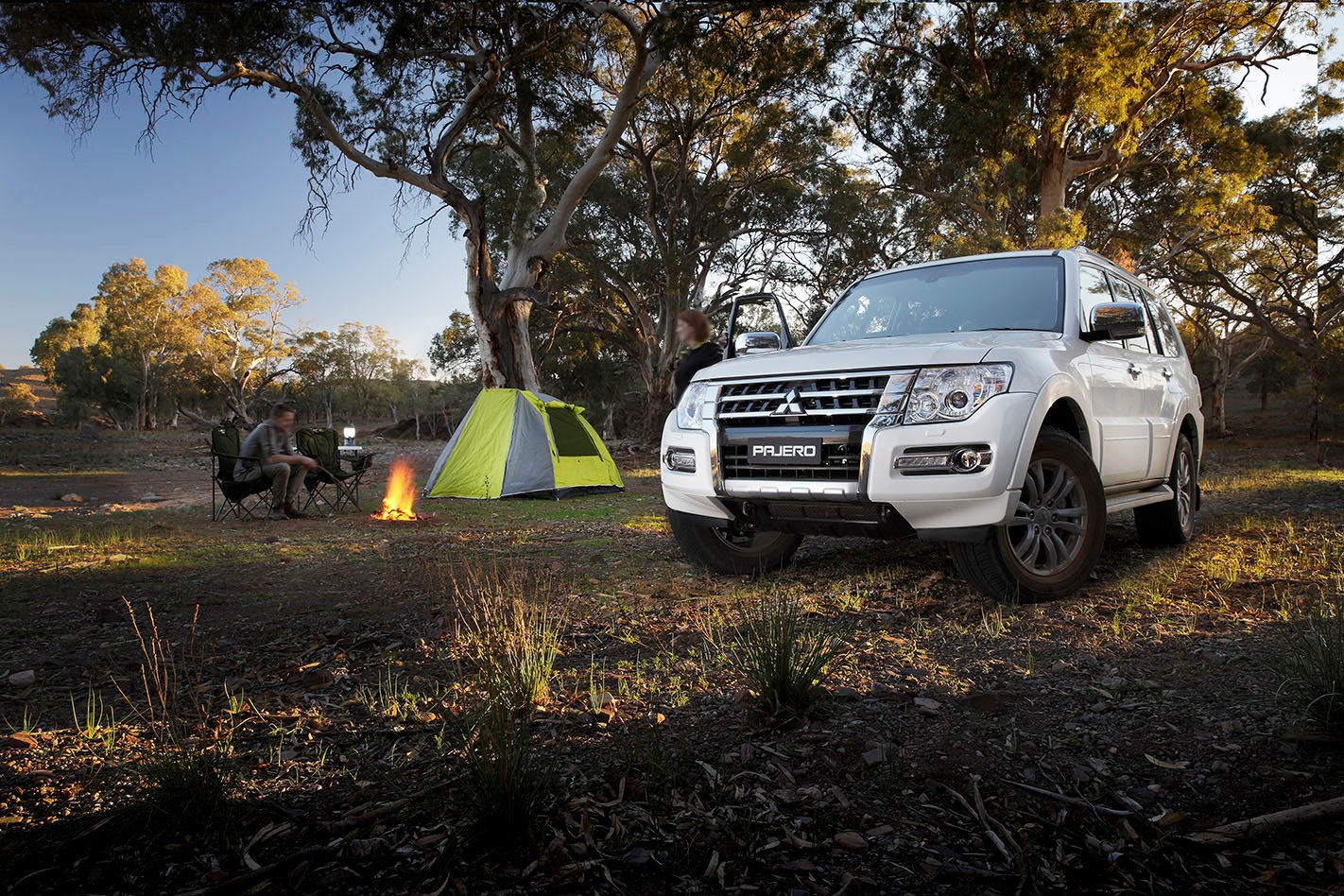
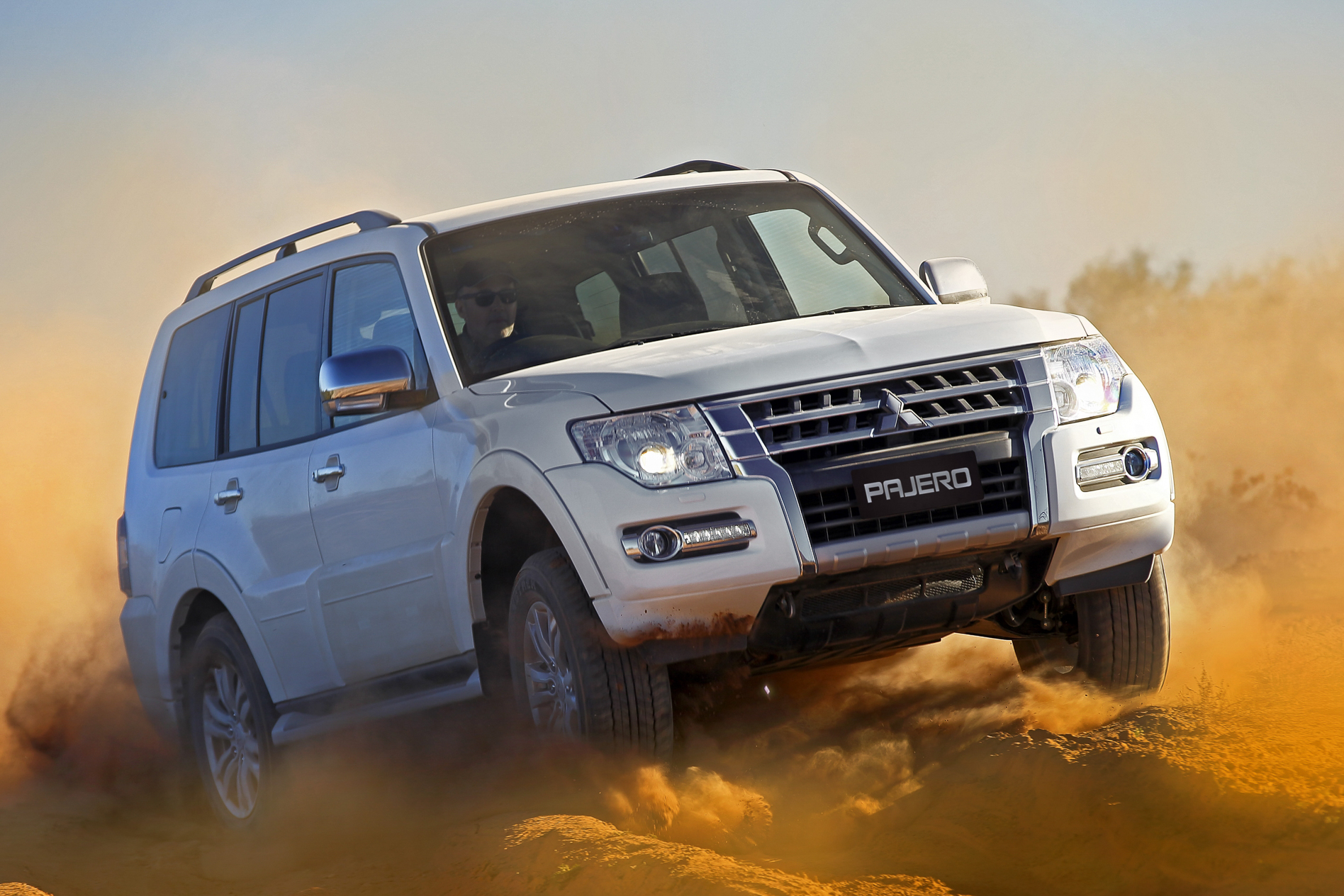
The 2022 Mitsubishi Pajero Final Edition prices and specs have been unveiled, as the Japanese firm bids farewell to its legendary SUV.
The fabled appellation was first revealed at the 1983 running of the Paris Dakar, and the Pajero would go on to win the gruelling event two years later in ‘85.
More than 120,000 examples have been sold in Australia since its ‘83 launch, and despite being discontinued in Japan back in 2019, Aussies are getting one last shot to own a Pajero.
WhichCar will update this story with Final Edition photography when it becomes available.
Availability and pricing
Just 800 examples have been built, and they’re split into three different variants – GLX Final Edition, GLS Final Edition, and the Exceed Final Edition.
The entry-level GLX costs $54,990, while the mid-level GLS will set buyers back $60,490, and the range-topping Exceed costs $63,490.
Drivetrain and fuel economy
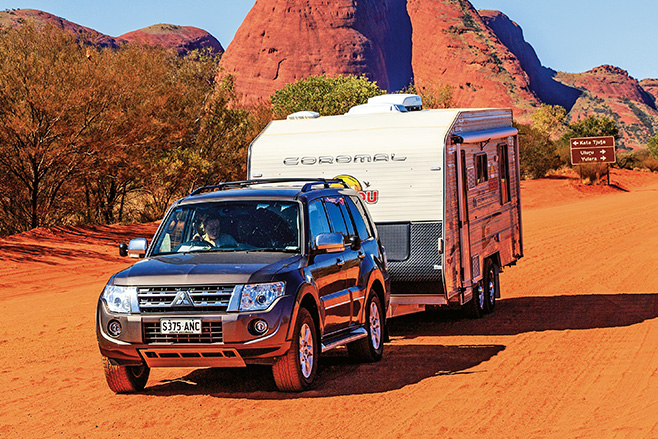
Powering the Final Edition Pajeros is the same 4M41 3.2-litre four-cylinder turbo-diesel engine that’s been found in the Pajero for the past five years.
The motor is rated at 141kW and 441Nm, and sends its power to all four wheels via a five-speed automatic transmission. Braked towing capacity is still rated at 3000 kilograms.
On the ADR-rated combined cycle, the Pajero returns an economy figure of 9.1L/100km, and comes equipped with an 88L fuel tank.
All Final Edition Pajeros also score Mitsubishi’s Super-Select II four-wheel drive system, which enables full-time four-wheel drive mode, low/high-range functions and the ability to lock the centre diff.
Equipment
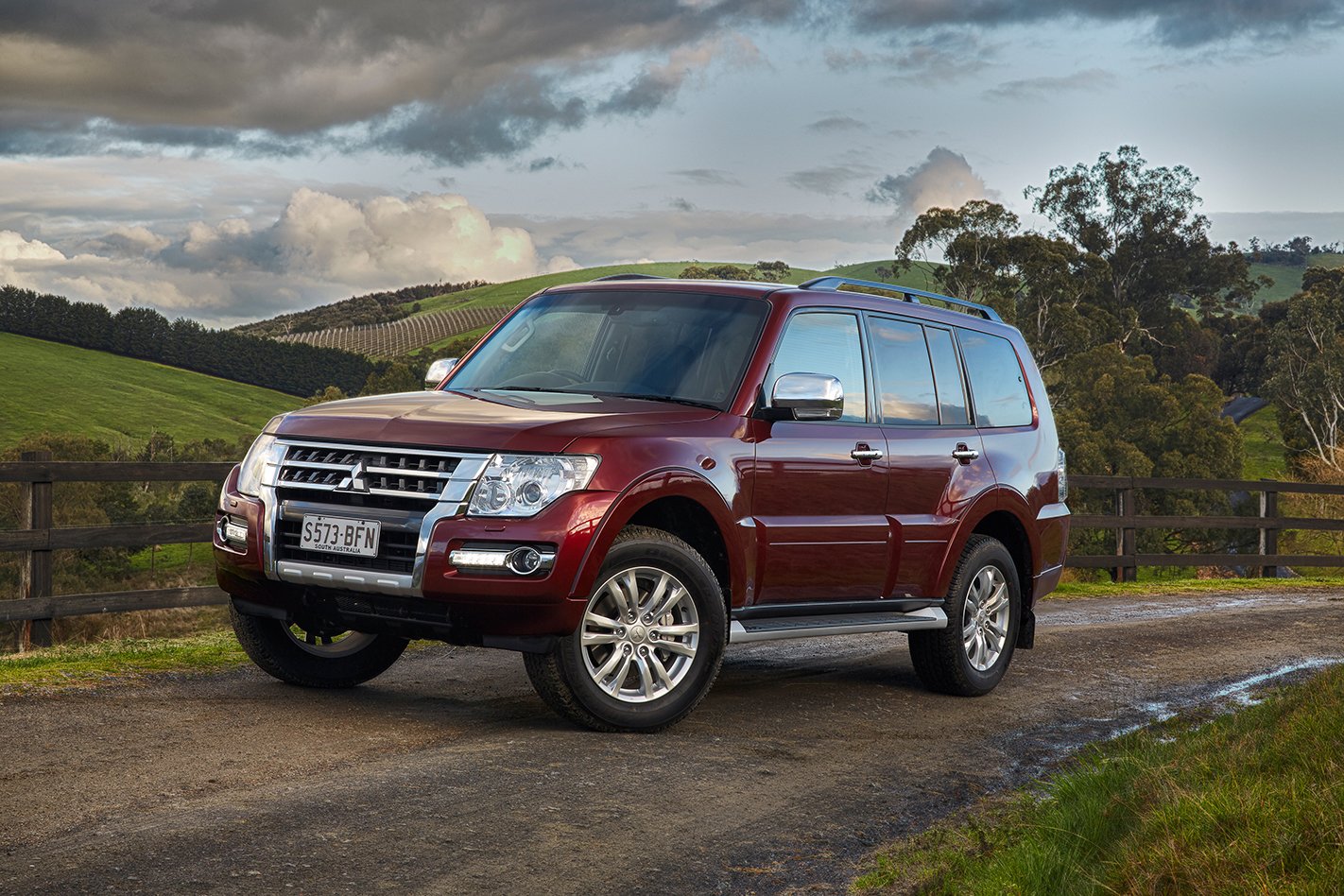
All iterations come equipped with ‘Final Edition’ badging, rubber cargo boot liner, tinted bonnet protector and a leather-bound folder for the servicing books and documentation.
The base GLX Final Edition comes with features such as a 7.0-inch touchscreen infotainment display, plug-in Apple CarPlay and Android Auto, DAB digital radio, single-zone climate control, six-speaker sound system, reversing camera, and a leather-wrapped steering wheel as standard.
The GLS builds on these features, and also adds automatic wipers, automatic headlights, powered and heated front seats, partial leather interior, 12-speaker sound system, rear parking sensors, and privacy glass.
The top-shelf Exceed scores further additional options like a full-leather interior, sunroof, and brushed aluminium pedals.
Safety
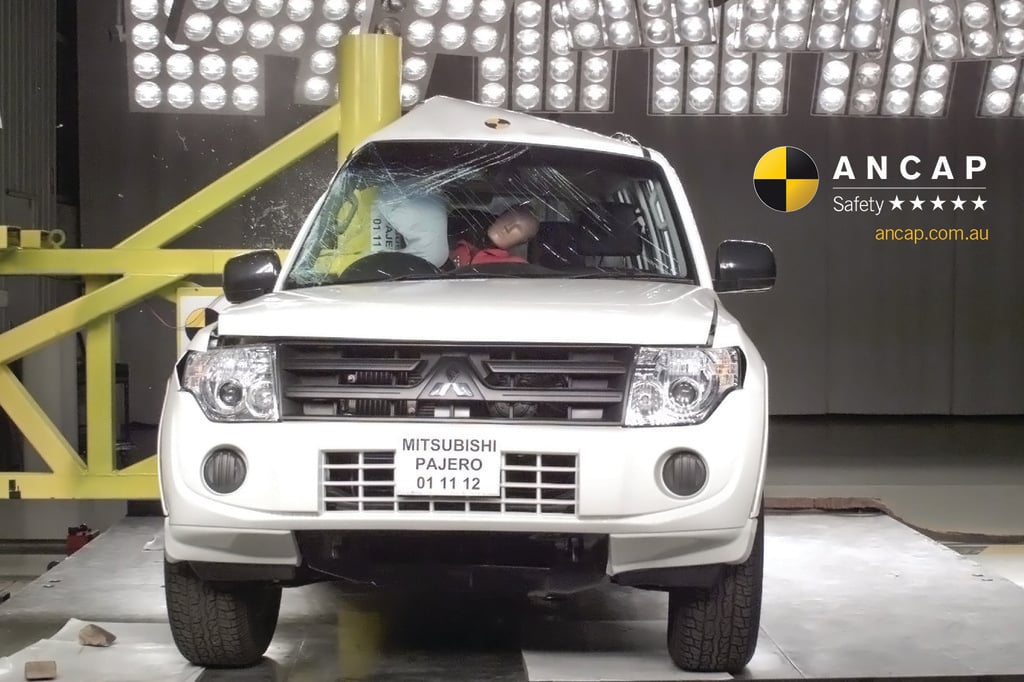
Although it’s getting quite long-in-the-tooth, the four-generation Pajero scored a five-star ANCAP safety rating back in 2011 when it was first tested.
ABS brakes and airbags come as standard, but in terms of other safety features, there’s not much to speak of.
Warranty and servicing
As is the case with all Mitsubishis, the Pajero Final editions come with a 10 year/200,000km new car warranty, and a five year Perforation Corrosion Warranty.
A 10-year capped-price servicing plan is available to purchase from Mitsubishi.
Talking Points
- Alpina’s new 457kW/800Nm flagship
- 0-100km/h 3.4sec, 324km/h top speed
- Priced from $322,900, July arrival
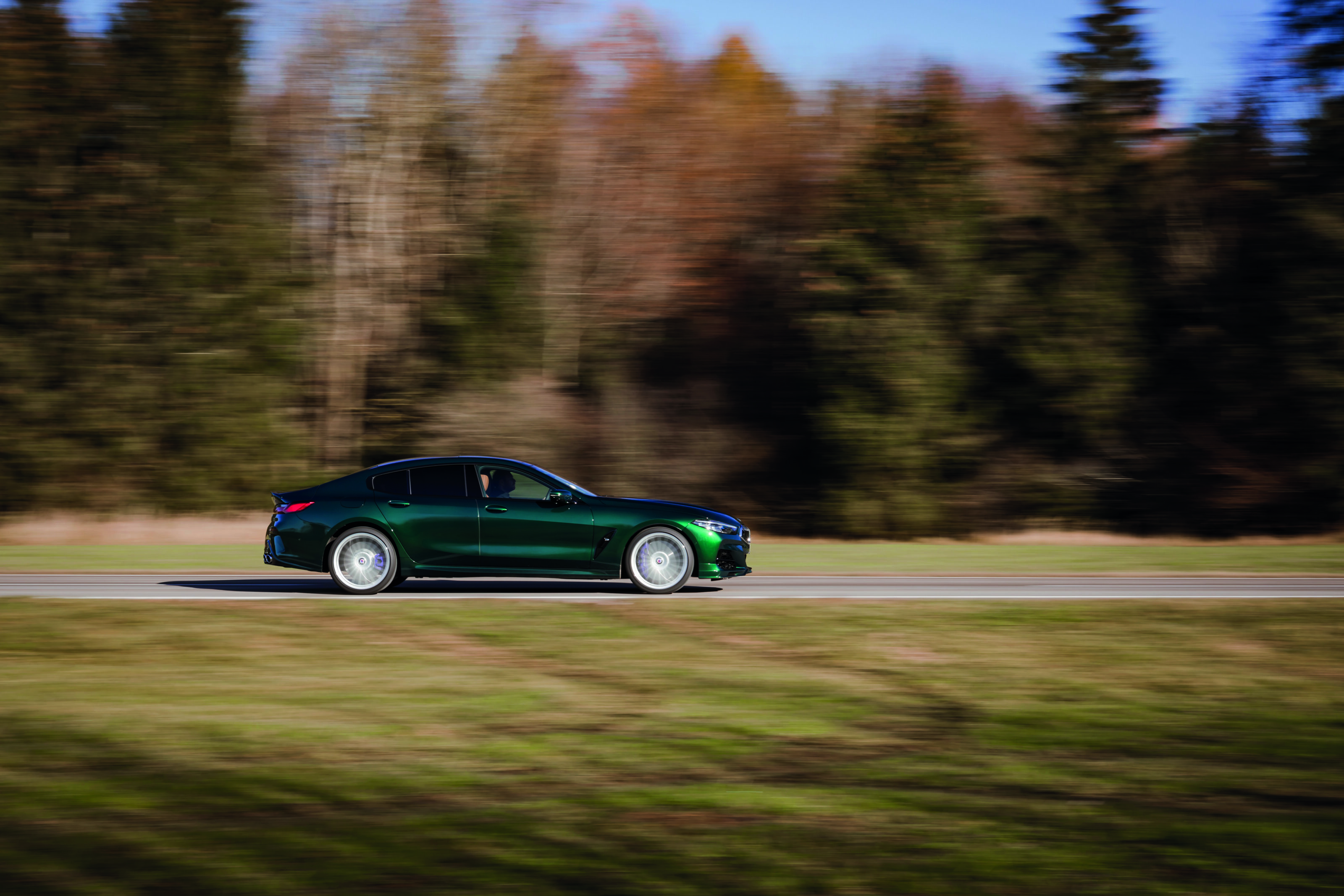
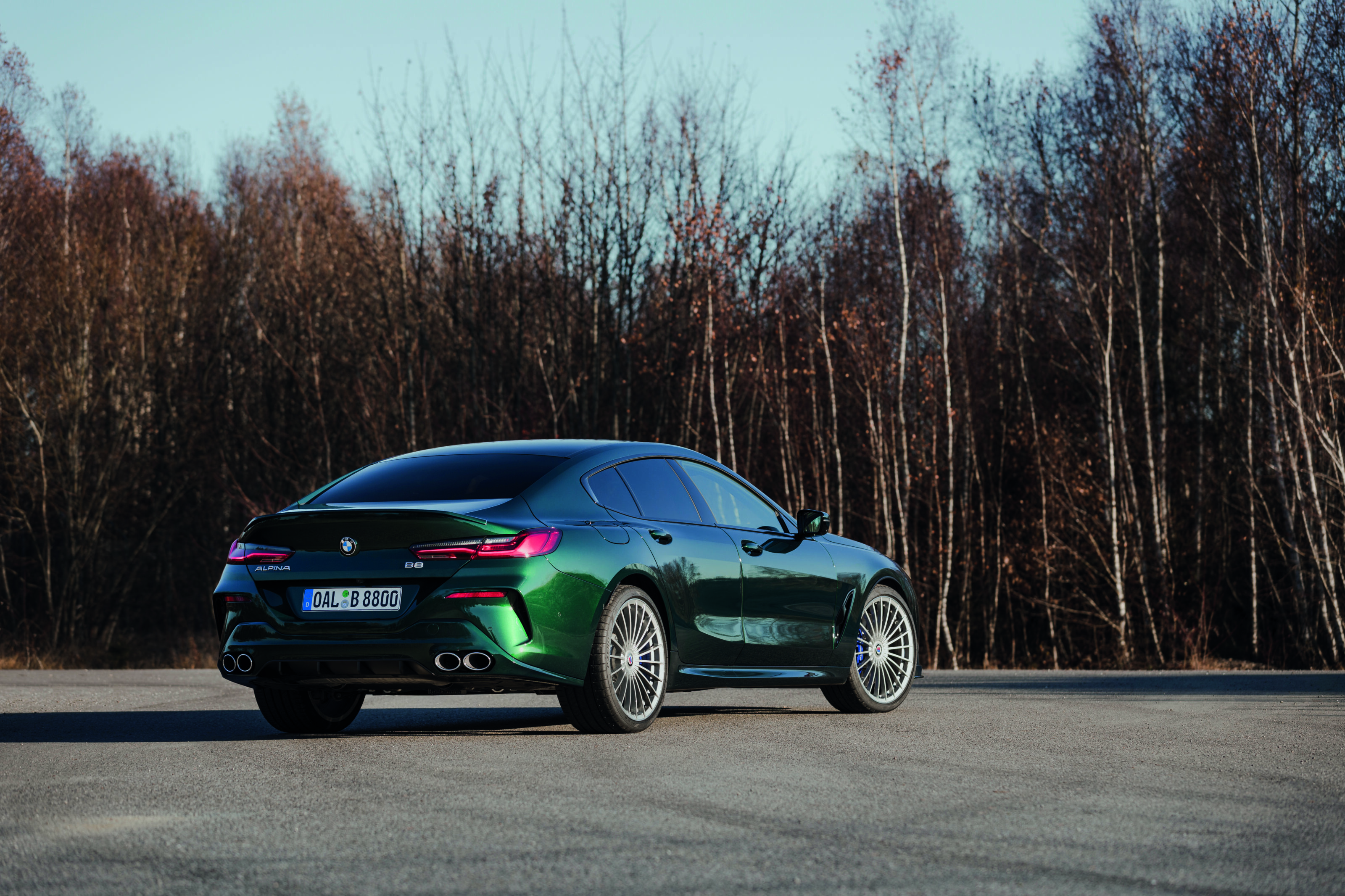
The sleek and hugely powerful Alpina B8 Gran Coupe autobahn crusher is headed to Australia with local pricing and specification confirmed ahead of its July arrival.
Based on the BMW M850i Gran Coupe, the B8 GC increases performance and luxury while incorporating Alpina’s unique ride and handling philosophy.
One of Alpina’s aims is to cover any niche gaps in the BMW range and the B8 GC is priced accordingly. At $322,900, it neatly splits the different between BMW’s $280,900 M850i GC and $354,900 M8 GC.
The B8 GC is covered by a three-year/unlimited-kilometre warranty with complimentary roadside assistance during this period and can be serviced at official BMW dealerships.
In an interview with MOTOR Alpina CEO Andreas Bovensiepen explained the decision to introduce the B8 into the Australian market: “We like to have a presence in the large luxury car segment and our philosophy with very powerful, very torquey cars I think can be very well displayed in these kinds of cars like the B8.
“We like to distinguish from the BMW M brand; we are not the racing car for the road, we are much more philosophy-wise, the British press often say an Alpina is like a Bentley. The customer is a little bit more mature, I know I have a lot of power, I know I have a lot of torque, sometimes I like to accelerate hard [and] go fast but I don’t need to show it every day and everywhere.
“It’s more relaxed driving and a more relaxed kind of person and I think the B8 kind of sums this up very well and this is the reason why we have chosen to have this car in the market.”
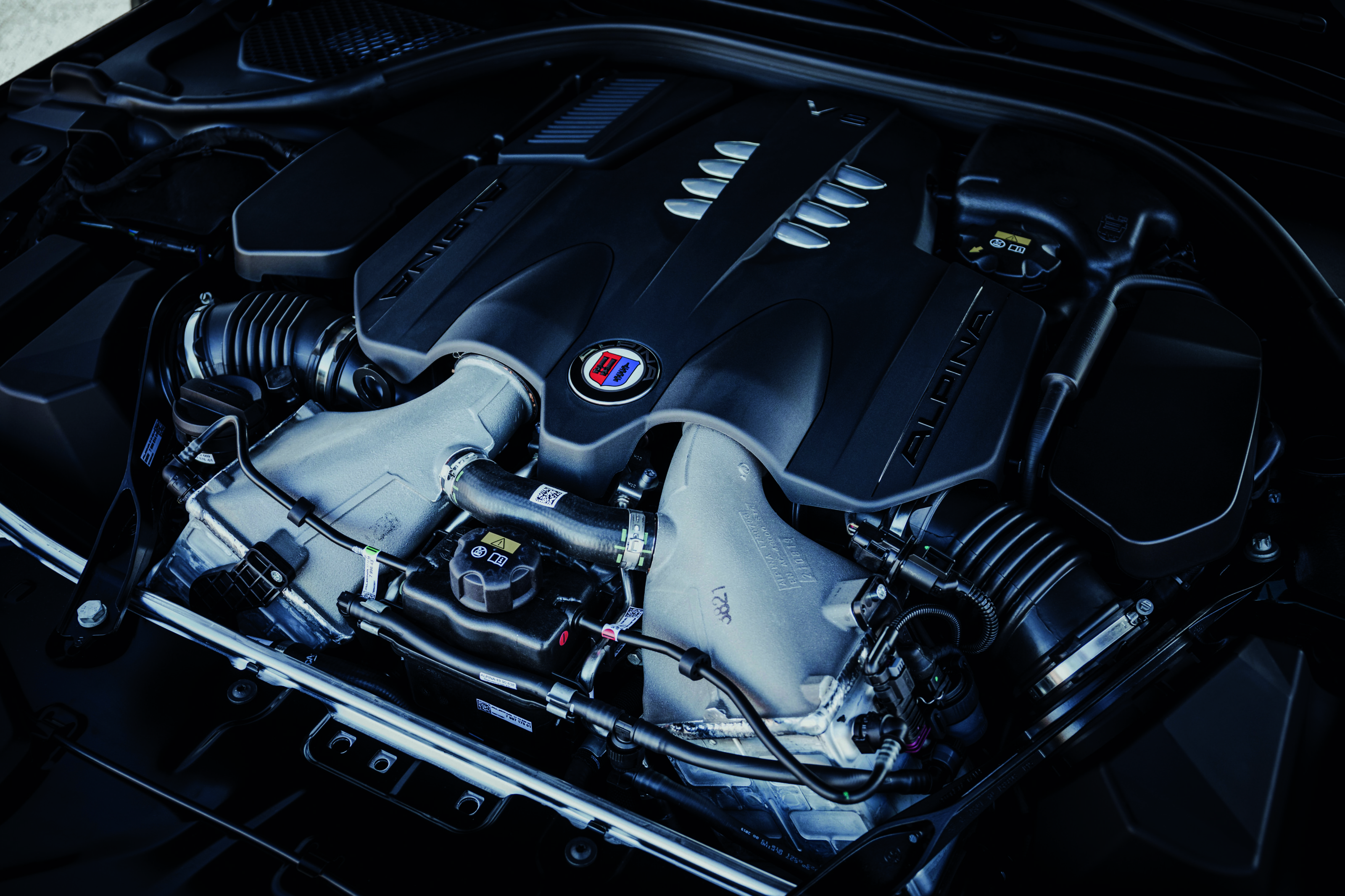
As such, the B8’s performance is an equally convenient fit. A pair of Alpina-specific turbochargers, a new exhaust and cooling system increase outputs to a whopping 457kW from 5500-6500rpm and 800Nm from 2000-5000rpm.
These outputs match or exceed BMW’s M8 but the B8’s 3.4sec 0-100km/h claim is smack bang between the M850i’s 3.7sec claim and the M8’s 3.2sec effort. However, unhindered by electronic speed limiters, the B8 GC thunders its way to a 324km/h top speed.
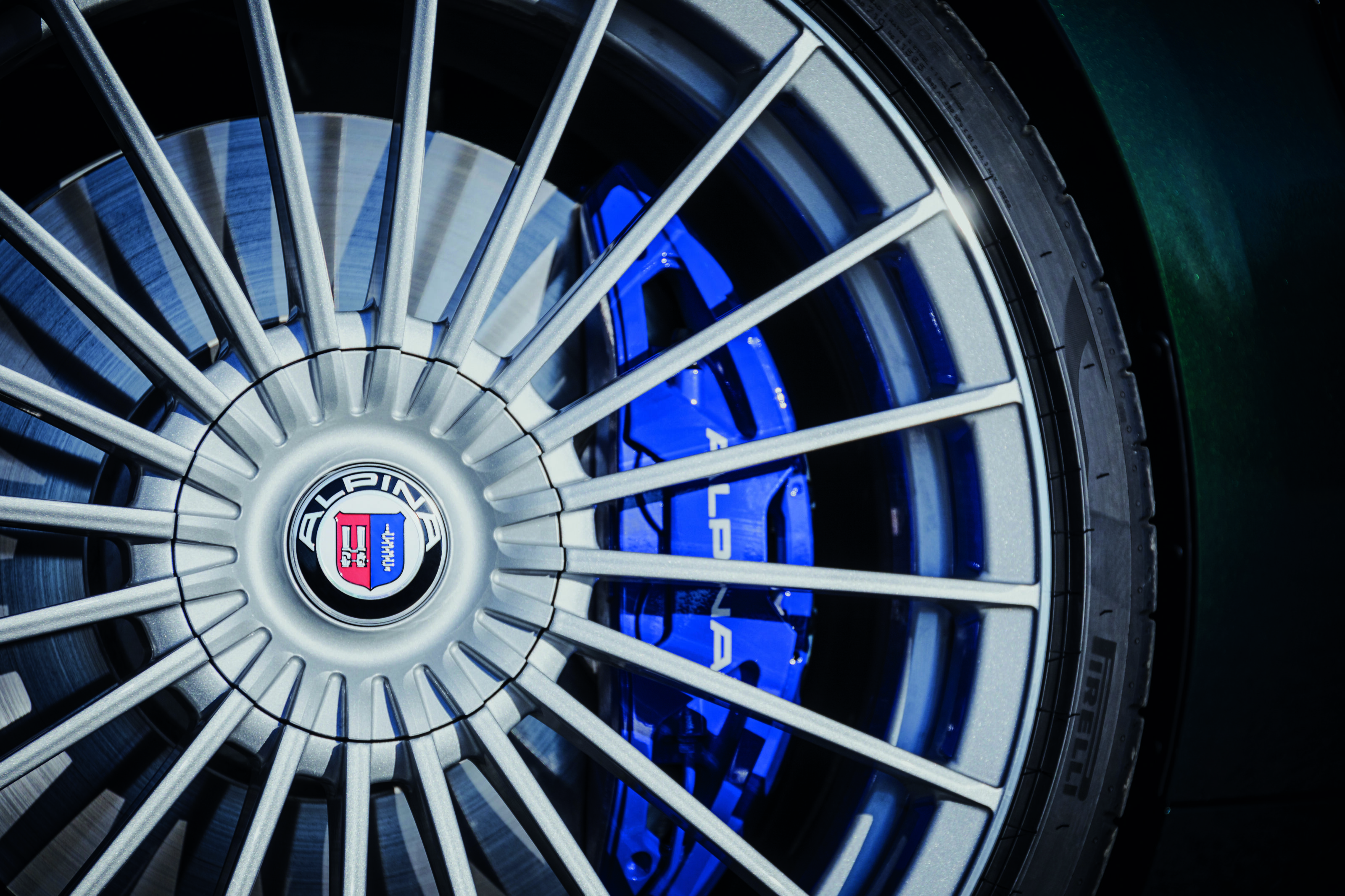
The Alpina’s chassis componentry is a who’s who of Europe’s high performance suppliers. Bilstein provides the adaptive dampers, which are retuned with the addition of an Alpina-specific ‘Comfort+’ mode, Eibach supplies the springs and Brembo the massive brakes, with 395mm front discs and four-piston calipers complemented by 398mm rear discs and single-piston calipers.
Pirelli develops the P Zero ALP tyres specifically for Alpina to fit the huge 21-inch ‘classic’ 20-spoke forged rims, the rubber fitted with Pirelli’s noise cancelling system to reduce road noise. Rear-wheel steering is also fitted to improve low-speed agility and high-speed stability.
As you’d hope with such an expensive, limited-production vehicle, there is plenty of scope for personalisation. As well as the trademark Alpina blue and green (pictured) paint finishes, the following colours are available:
- Alpine White (No-Cost Option)
- Carbon Black metallic (NCO)
- Black Sapphire metallic (NCO)
- Mineral White metallic (NCO)
- Sunset Orange metallic (NCO)
- Bluestone metallic (NCO)
- Barcelona Blue metallic (NCO)
- BMW Individual Dravit Grey metallic
- BMW Individual Tanzanite Blue II metallic
- BMW Individual Aventurine Red II metallic
- BMW Individual Frozen Bluestone metallic
The Alpina decal set for the front spoiler and body sides can be optioned in gold, silver, black or omitted altogether while the wheels are available in either Black or Anthracite finish.
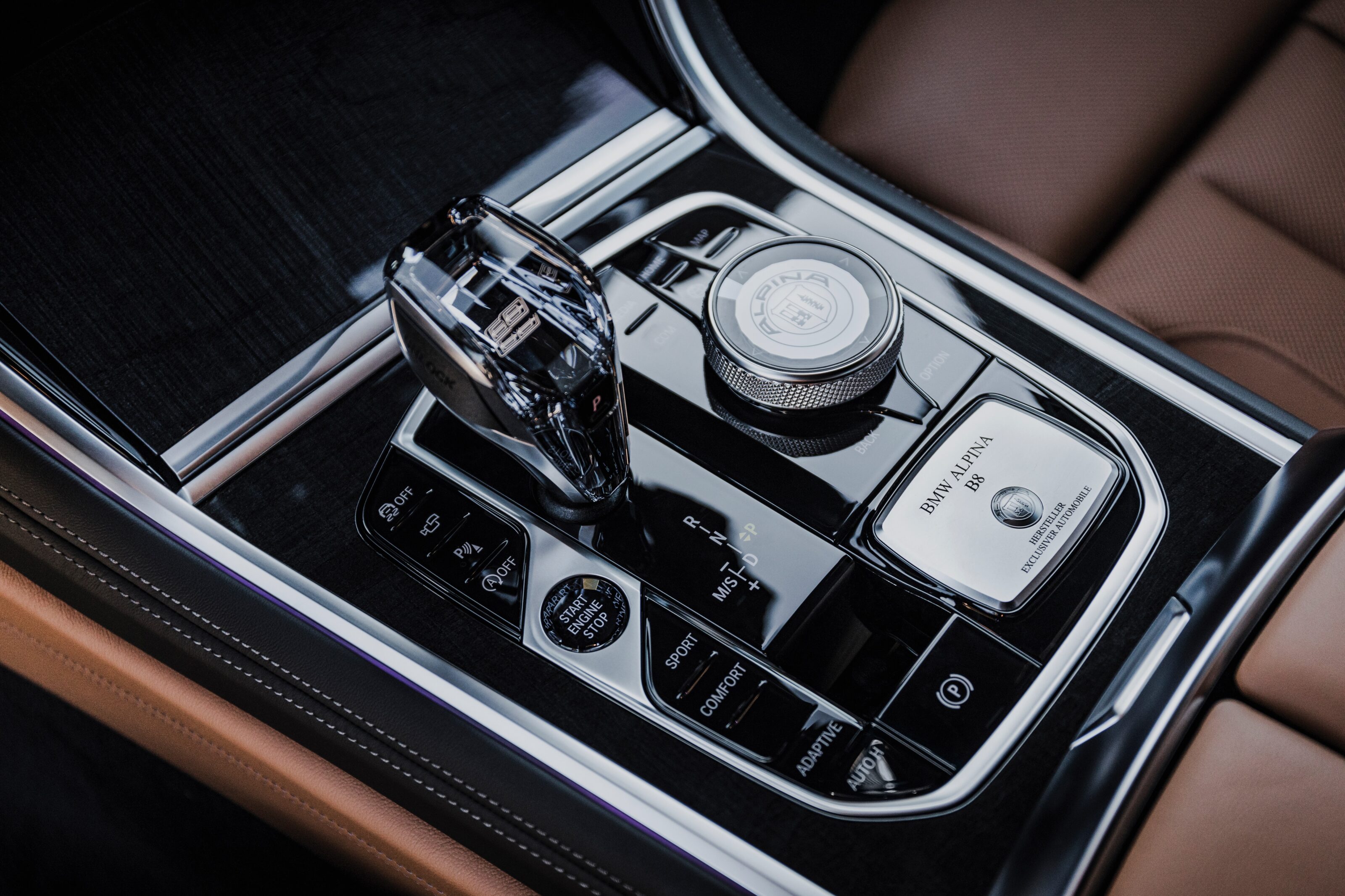
Inside there are Alpina-design treatments for the crystal glass gear selector and iDrive controller as well as the production plaque on the centre console. Walnut Anthracite trim is standard, but carbon fibre, piano black, fine-wood in fineline copper or ash black, ash gran grey or aluminium are optionally available.
There are four colour choices for the extended merino leather upholstery – black, white, cognac or night blue/black – while full merino leather is available at extra cost.
See below for a full list of standard equipment and key options and we’ll bring you a comprehensive drive review of the Alpina B8 Gran Coupe at the first opportunity.
Standard equipment
- Alpina Classic 21-inch forged wheels with Pirelli P Zero ALP tyres
- ALPINA SWITCH-TRONIC 8-speed Sport-Automatic Transmission
- Air conditioning, automatic with four-zone control
- Airbags – front, side and head
- Alarm system
- Ambient lighting
- Auto Start-Stop
- BMW Display key
- BMW Laserlights
- Child seat ISOFIX attachments, rear
- Climate comfort windscreen
- Comfort Access with smart opener
- Connected Package Professional
- DAB tuner
- Door sill finishers ALPINA, illuminated
- Drive Performance Control with Comfort+, Comfort, Sport, Sport+ and Adaptive mode
- Driving Assistant Professional
- Dynamic Safety
- Dynamic Stability Control (DSC) incl. Dynamic Brake Control (DBC) and Dynamic Traction Control (DTC)
- Enhanced Bluetooth with wireless charging
- Exhaust system ALPINA, stainless steel, with double-ended tailpipes
- Exterior mirrors – folding, with anti-dazzle
- Exterior trim, High-gloss Shadowline
- First aid kit and warning triangle
- Floor mats ALPINA
- Front multi-function Sport Seats
- Front spoiler ALPINA
- Glass application ‘Crafted Clarity’ for interior elements in ALPINA Design
- Headlining, Anthracite
- Heat comfort package, front
- Instrument panel, leather
- Intelligent emergency calling
- Interior trim, ALPINA Walnut Anthracite high-gloss
- Live Cockpit Professional in ALPINA Design
- Loudspeaker system – 16-speaker harman/kardon surround sound
- Night vision with pedestrian recognition
- Panoramic glass sunroof
- Parking Assistant Plus
- ALPINA production plaque with production number
- Rear valance ALPINA with two double-ended tailpipes
- Seat heating, front and rear
- Seat ventilation, front
- Soft Close doors
- Sport rear differential
- Sport suspension ALPINA
- Multi-function steering wheel in LAVALINA
- Sunblind – rear windscreen, electric and rear side windows, electric
- Tyre pressure monitoring
Key Options
- BMW Individual paintwork
- Alpina exclusive paintwork
- Deco-Set in Black (front spoiler or front spoiler and sides)
- ALPINA CLASSIC 21-inch forged wheels finished in Black or Himalaya Grey
- ALPINA floor mats with leather piping
- ALPINA luggage compartment mat
- ALPINA luggage compartment mat with leather piping
- Alcantara Anthracite Headlining
- Steering wheel in ALPINA LAVALINA with bespoke stitching
- SWITCH-TRONIC CNC-milled aluminium gearshift paddles
- Full leather Merino upholstery
- LAVALINA leather upholstery
- Bowers & Wilkins Diamond Surround Sound System
- Universal remote control
- BMW Drive Recorder
- TV Function
- High-gloss Shadowline with extended contents
- M Carbon Roof (deletes panoramic sunroof)
- Sun protection glass
- High-performance brake system
Snapshot
- 2022 Allspace due in Australia in quarter one of 2022
- All facelifted Tiguan models come with IQ.DRIVE
- Three model variants from launch u2013u00a0Life, Elegance, and R-Line
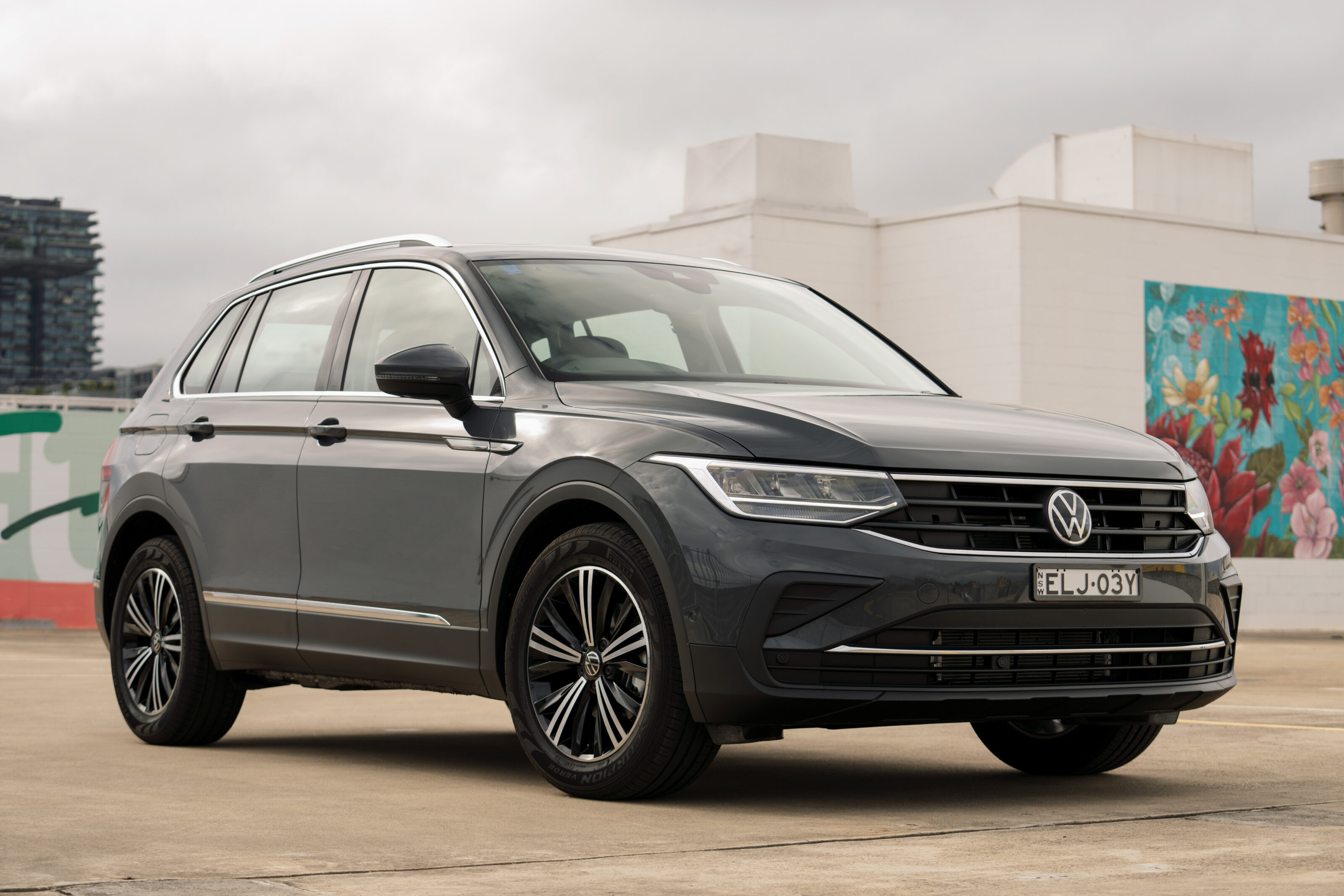
Update, May 12: Volkswagen has taken the covers off its eagerly anticipated seven-seater Tiguan Allspace SUV.
Receiving a raft of updates that bring it into line with the regular Tiguan unveiled back in February (see below), the refreshed Allspace represents an important product for the German carmaker, as 55 per cent of all Tiguans sold globally are the longer wheelbase Allspace variant.
Thanks to a redesigned front end, the facelifted Allspace is 22mm longer than the car it replaces, now measuring 4723 mm. Other dimensions remain the same as its predecessor – 1839mm wide, 1667mm tall, and a wheelbase measuring 2790mm.
Powertrain options are thought to mimic the updated five-seater, which means a choice of a turbocharged 1.4-litre four-cylinder petrol engine, a turbocharged 2.0-litre four-cylinder petrol engine, and a 2.0-litre four-cylinder turbo diesel engine.
The latest SUV will also score the raft of new IQ.DRIVE safety features and Volkswagen’s Travel Assist system, which enables the car to brake, accelerate and centre itself on the highway at speeds up to 210km/h.
The 2022 Volkswagen Tiguan Allspace is expected to arrive in Australia in the first quarter of 2022, with pricing and further specs expected to be unveiled closer to the car’s local launch.
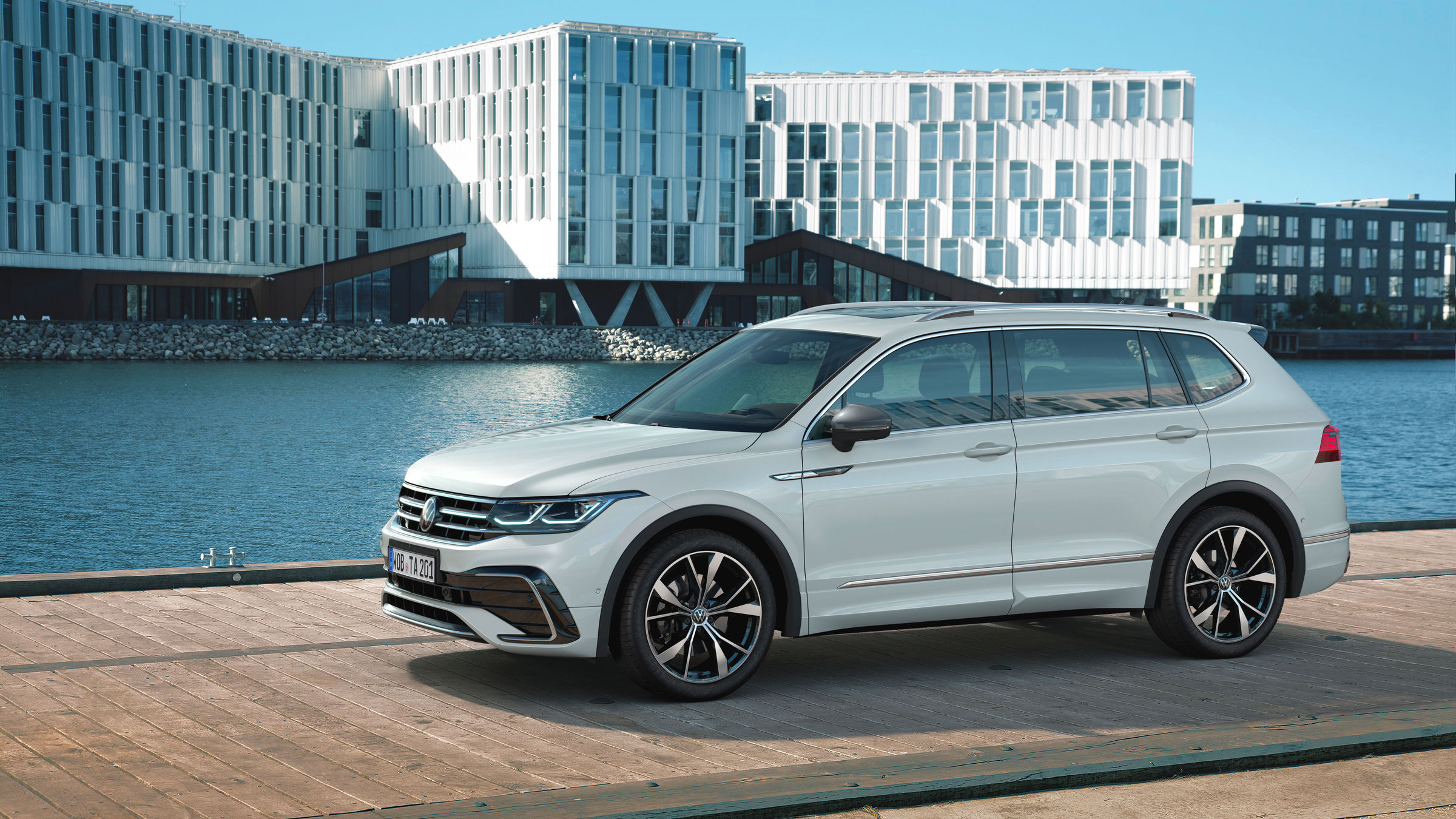
February 8: The 2021 Volkswagen Tiguan has received a raft of visual and tech upgrades as part of the medium-sized SUV’s mid-life update.
The changes should make the Tiguan a more appealing proposition in what is one of the most fiercely contested market segments in the automotive industry, with the VW going toe-to-toe with the likes of Mazda’s CX-5 and Toyota’s RAV4.
The high-riding five-door now comes equipped with the German marque’s IQ.DRIVE suite as standard across the range, which enables adaptive lane guidance and adaptive cruise control to provide a semi-autonomous driving experience.
Other standard features fitted to the updated Tiguan line-up include VW’s 10.25-inch Digital Cockpit Pro, Proactive Occupant Protection, haptic-touch climate control, and for mid and top-spec Elegance and R-Line variants, IQ Light Matrix LED Headlights.
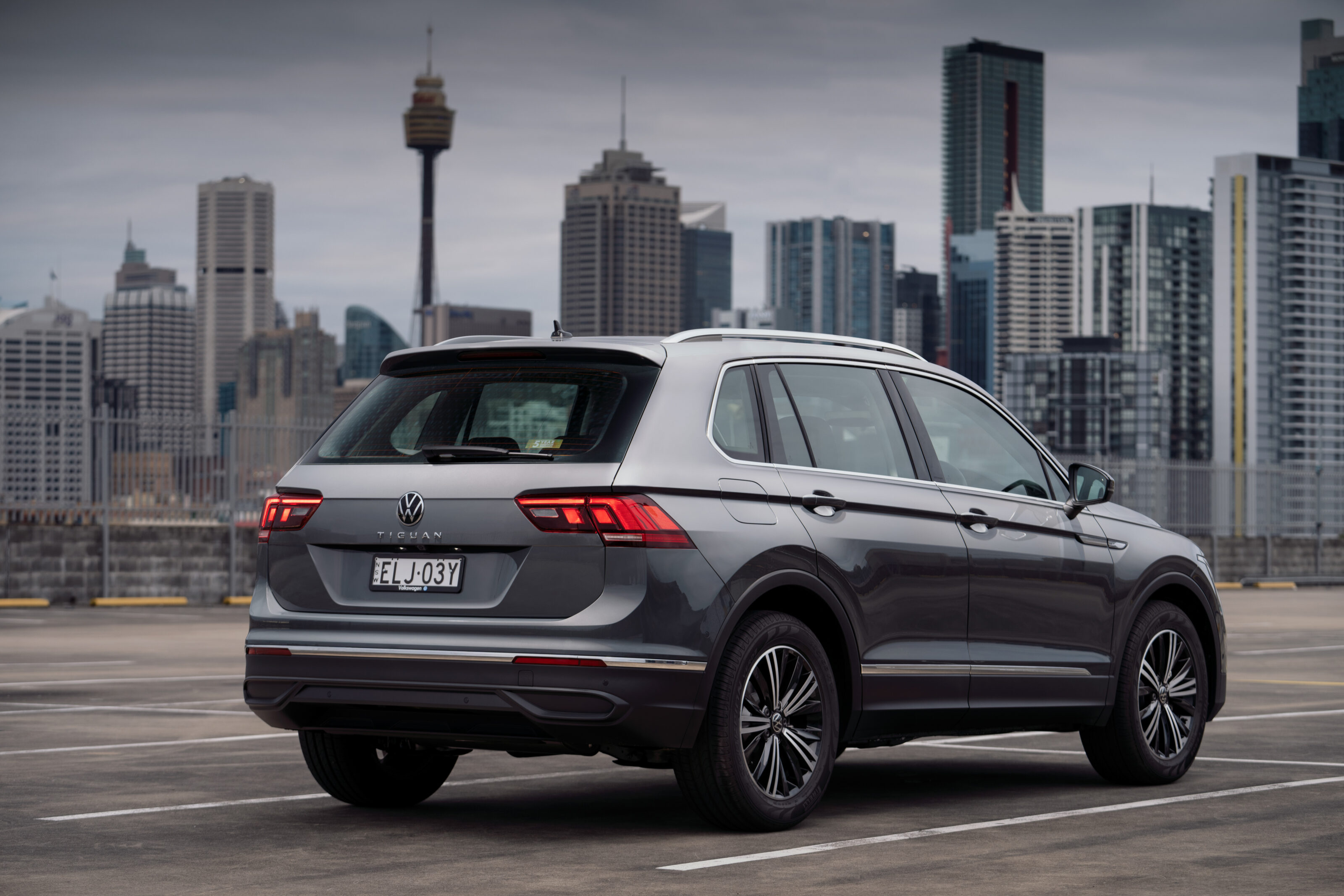
Model range and pricing
There are now six different Volkswagen Tiguan model variants buyers can choose from (all prices exclude on-road costs):
- Tiguan 110TSI Life 6-speed DSG – $39,690
- Tiguan 132TSI Life 7-speed DSG – $43,690
- Tiguan 162TSI Elegance 7-speed DSG – $50,790
- Tiguan 147TDI Elegance 7-speed DSG – $52,290
- Tiguan 162TSI R-Line 7-speed DSG – $53,790
- Tiguan 147TDI R-Line 7-speed DSG – $55,290
- Metallic/Pearlescent paint – $800
- Panoramic Glass Sunroof (Elegance or R-Line) – $2,000
- Luxury Package (Life) – $5,000
- Sound and Vision Package (Elegance or R-Line) – $2,500
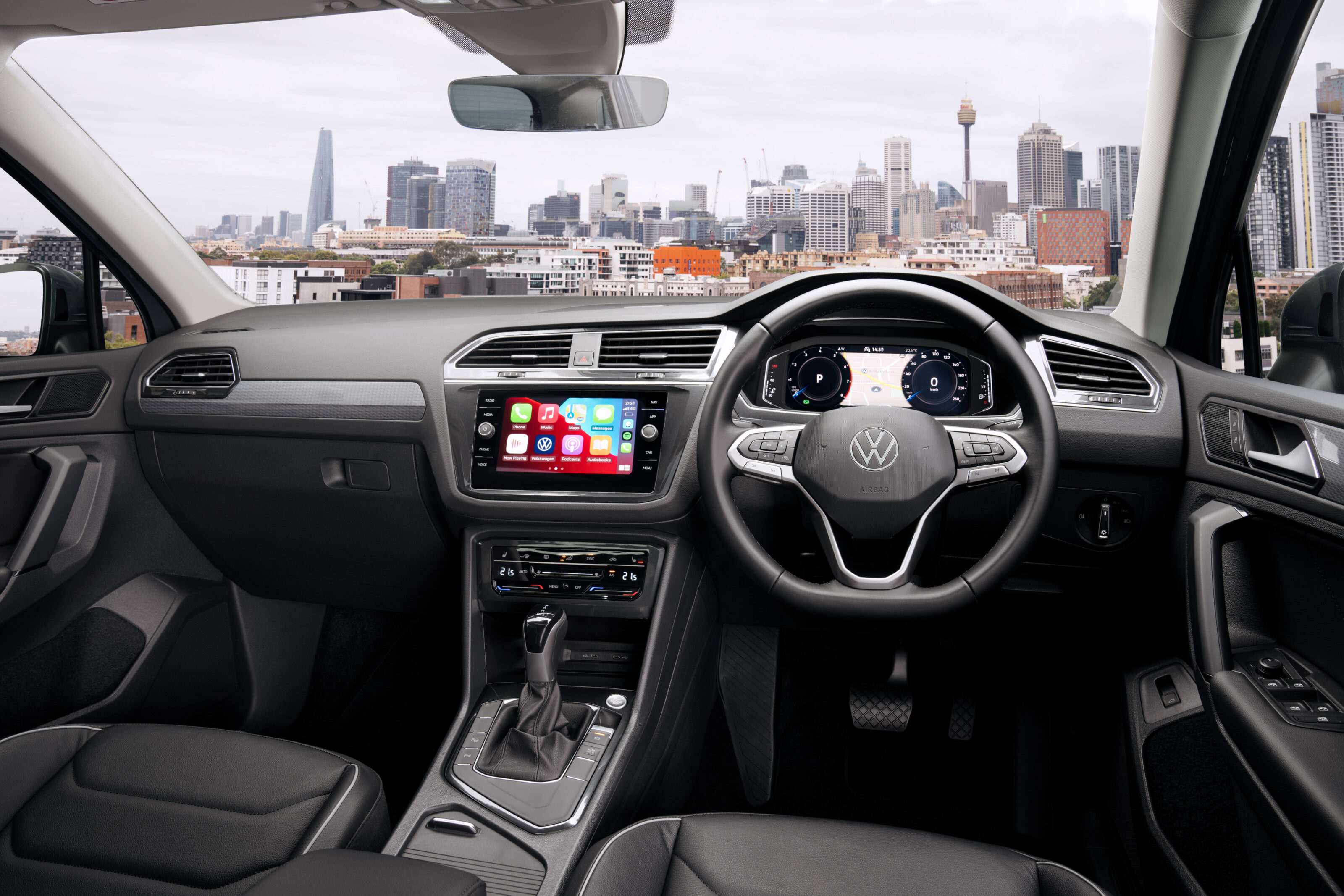
Features
The entry-level Life variants can be had with either a front-wheel drive 110TSI petrol engine configuration or 132TSI petrol engine with 4MOTION all-wheel drive.
As standard, both Life products come with a good amount of equipment as standard, such as:
- LED Headlights with High Beam Assist, LED fog lights and taillights
- 18-inch ‘Nizza’ alloy wheels with space saving spare
- 8-inch infotainment system with voice and gesture control
- Digital Cockpit Pro
- Wired and wireless Apple CarPlay and Android Auto
- Powered tailgate
- Three-zone climate “Touch” control with controls in the rear
- Automatic lights and wipers
- Electric folding mirrors, heated
These variants build on the Life’s solid base of standard equipment, and add:
- Vienna leather trim
- Electric and heated front seats with electric lumbar support, easy entry and memory
- Heated steering wheel
- 19-inch ‘Auckland’ alloy wheels with space saver spare
- Adaptive Chassis Control
- IQ. Light matrix LED headlights and Premium LED tail lights with dynamic indicators
- 9.2-inch infotainment display with voice and gesture control
- Tinted rear windows
- Ambient interior lighting
- Chrome and silver styling elements
R-Line vehicles add a sporty element to the practical five-door SUV, adding extras like:
The R-Line grade comes with the 162TSI or 147TDI engines, both with 4MOTION. Additional spec over the Elegance grade includes:
- 20-inch ‘Misano’ alloy wheels
- R-Line steering wheel with haptic feedback buttons
- R-Line Vienna leather upholstery
- R-Line front and rear bumpers
- R-Line side sills
- R-Line rear spoiler
- R-Line badges on front grill and side spears
- Stainless steel foot pedals
- Black headliner
- Progressive steering
- Automatic electric tailgate
Adding the Luxury Package to the Life-spec Tiguan adds Vienna leather upholstery, heated steering wheel, powered driver seat with memory function, heated front seats and a panoramic electric glass sunroof.
Ticking the option box for the Sound and Vision Package gives the Elegance and R-Line models a head-up display, area view, and a Harman Kardon premium sound system.
Metallic/pearlescent paint and the panoramic electric glass sunroof (for elegance and R-Line models) can also be optioned individually.
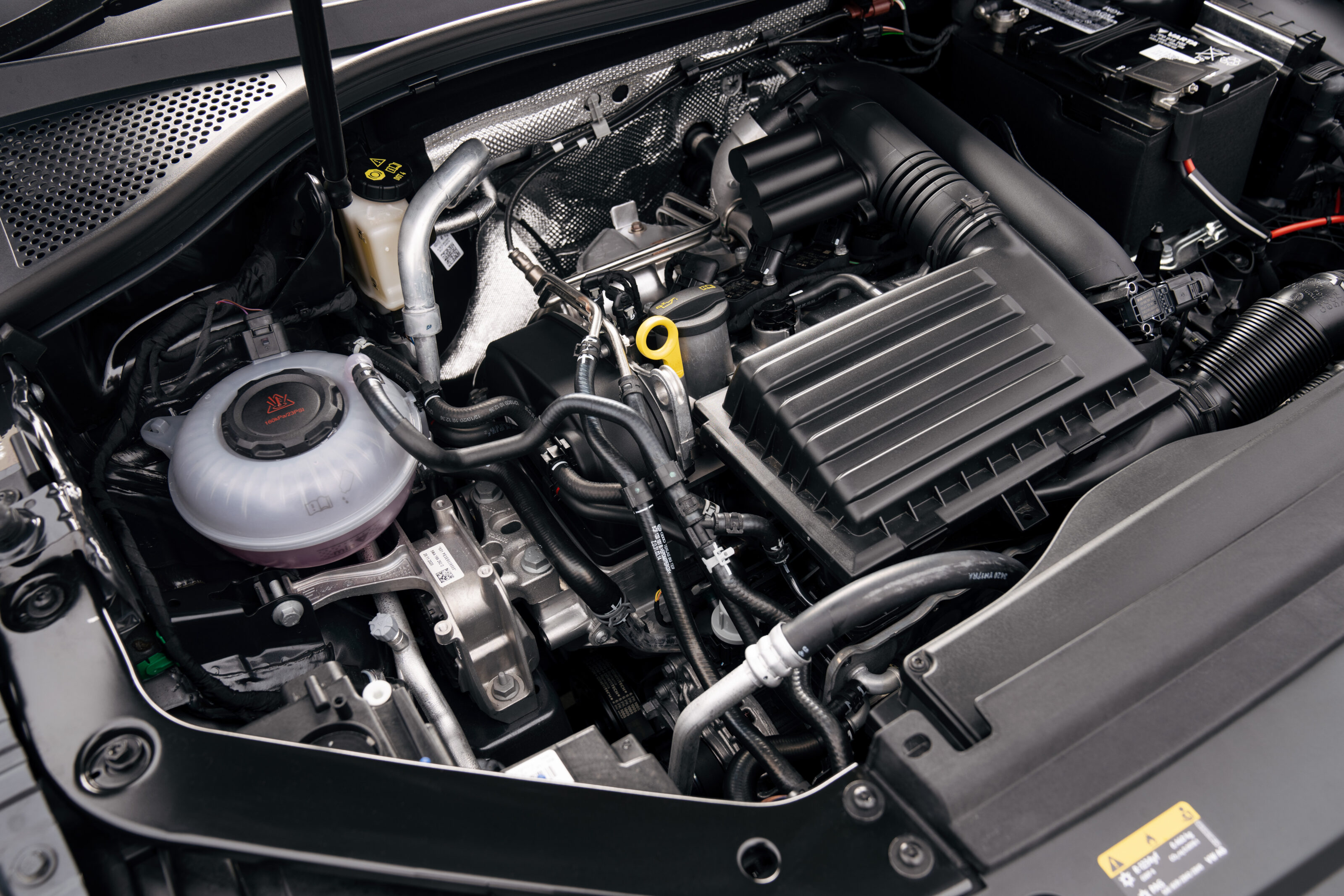
Engines, transmission and fuel economy
Depending on the model variant, the Tiguan is available with three different engine choices – a turbocharged 1.4-litre four-cylinder petrol engine, a turbocharged 2.0-litre four-cylinder petrol engine, and a 2.0-litre four-cylinder turbo diesel engine.
The 1.4-litre turbo four-cylinder, called the 110TSI, produces 110kW and 250Nm and is mated to a six-speed dual-clutch automatic transmission. Fuel economy is rated 7.7L/100km on the combined cycle.
For the 2.0-litre turbo four-cylinder, there are two states of tune available. The first is the 132TSI, which makes 132kW and 320Nm.
It sends its power through a seven-speed dual-clutch transmission and returns a combined fuel economy rating of 7.9L/100km.
The punchier 162TSI tune produces 162kW and 350Nm and is also coupled with the seven-speed dual-clutch auto.
The extra oomph does make for a slightly thirstier experience, with the most powerful petrol engine producing a combined fuel figure of 8.5L/100km.
The 147TDI 2.0-litre four-cylinder turbo diesel is only available in one state of tune, producing 147kW and 400Nm.
Like the 132TSI and 162TSI, the diesel donk utilises the seven-speed dual-clutch, and on the combined cycle, returns a combined fuel economy figure of 6.1L/100km.
Dimensions
All variants of the facelifted Volkswagen Tiguan have the same dimensions – 4509mm long, 1839mm wide, 1684mm tall and with a wheelbase measuring 2681mm.
Safety
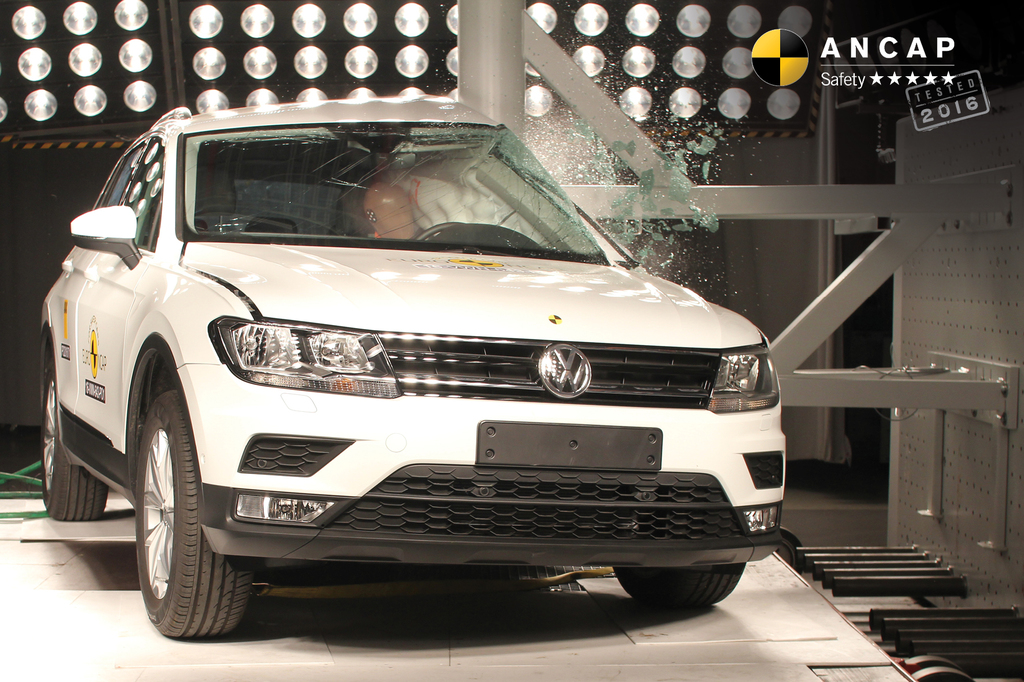
The current generation Volkswagen Tiguan earned a five-star ANCAP safety rating when assessed in 2016, scoring a 96 per cent adult occupant protection rating.
As standard, all Tiguan’s now come equipped with the aforementioned IQ.DRIVE, which includes safety features such as:
- Travel assist
- Autonomous emergency braking with pedestrian monitoring
- Lane keep assist with adaptive lane guidance
- Emergency assist
- Adaptive cruise control
- Side assist
- Rear cross-traffic assist
- Park assist
- Front and rear parking sensors
- Driver fatigue detection
- 360° proactive occupant protection
Warranty and servicing
Like the rest of the Volkswagen range, the facelifted Tiguan comes with a five-year/unlimited-kilometre warranty.
Capped price servicing is also included, and owners can pre-purchase a service plan for three ($1200) or five years ($2400).
Availability
The refreshed Tiguan range is on sale now at authorised dealers across the country, with the 110TSI expected to arrive in mid-March, the 162TSI and 147TDI slotted for delivery in late May, and the 132TSI to follow in June.
Amidst international pressures on emissions, and a rapid industry-wide shift towards electrification, Lamborghini’s road to sustainability is arguably a much tougher path than any other carmaker.
With longstanding buyers drawn to by the brand’s big-capacity naturally aspirated V10s and V12s, Sant’Agata must toe the line between technical advancement whilst navigating increasingly stringent emissions regulations, all without excluding its consumer base.
It’s something that Francesco Scardaoni, who sat down to speak with MOTOR following the recent Huracan STO launch, is acutely aware of.
“We have to be able to transplant our DNA into the new generation of electrification”.
“Of course it’s not easy, with this mega-trend of electrification. There is a constraint on design, on weight and also on emotion”, Scardaoni said.
For a brand that has spent generations forging an identity based on old-school mechanical charm, and thumping free-breathing internal combustion engines; the Sant’Agata supercar maker has every reason for cautious steps as it moves to secure its future.
“We must be sure that when we think about our new products that we still have our DNA 100 per cent represented in our cars: our style, our design, our performance and handling, and of course our emotions”.
The brand has been tentative to reveal its plans for the future, but as Scott Newman explores in his column in the April issue of MOTOR, they may not be able to afford to delay much longer; as emissions regulations around the world continue to tighten as nations rush to face the climate crisis head on.
But as carmakers scramble to throw billions at a rapid-fire uptake of BEVs, Lamborghini may find it has engineered itself into a corner.
Ask yourself whether Lamborghini’s customer base would find a fully electric Raging Bull all that palatable?
Scardaoni doesn’t seem to think so, stating: “as of today, we don’t see that a pure electric powertrain can fit, one-to-one, the DNA of Lamborghini in terms of driving emotion, in terms of handling and in terms of the requirement of our customers”.
“We might think that there is an intermediate solution, that can be hybridisation”.
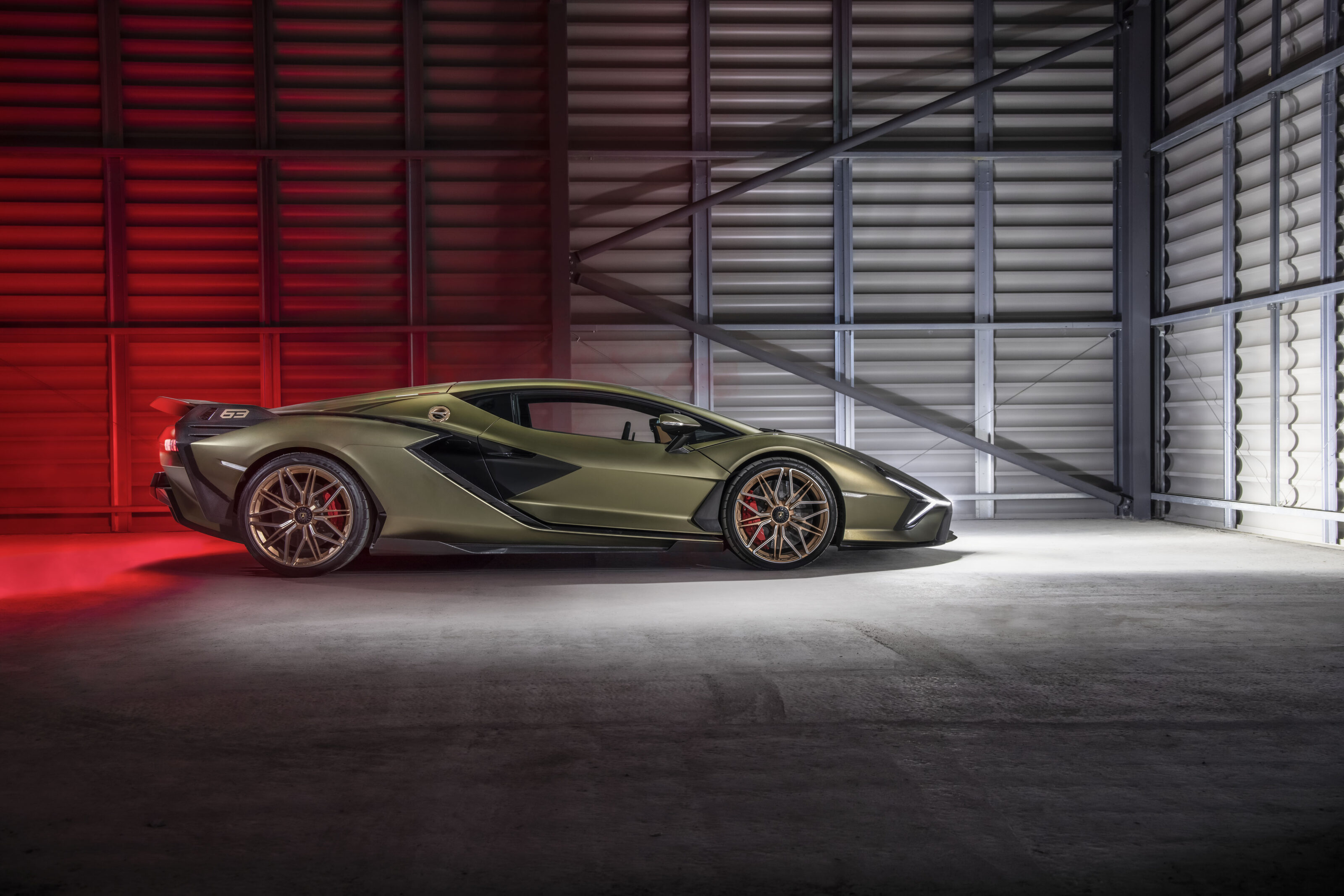
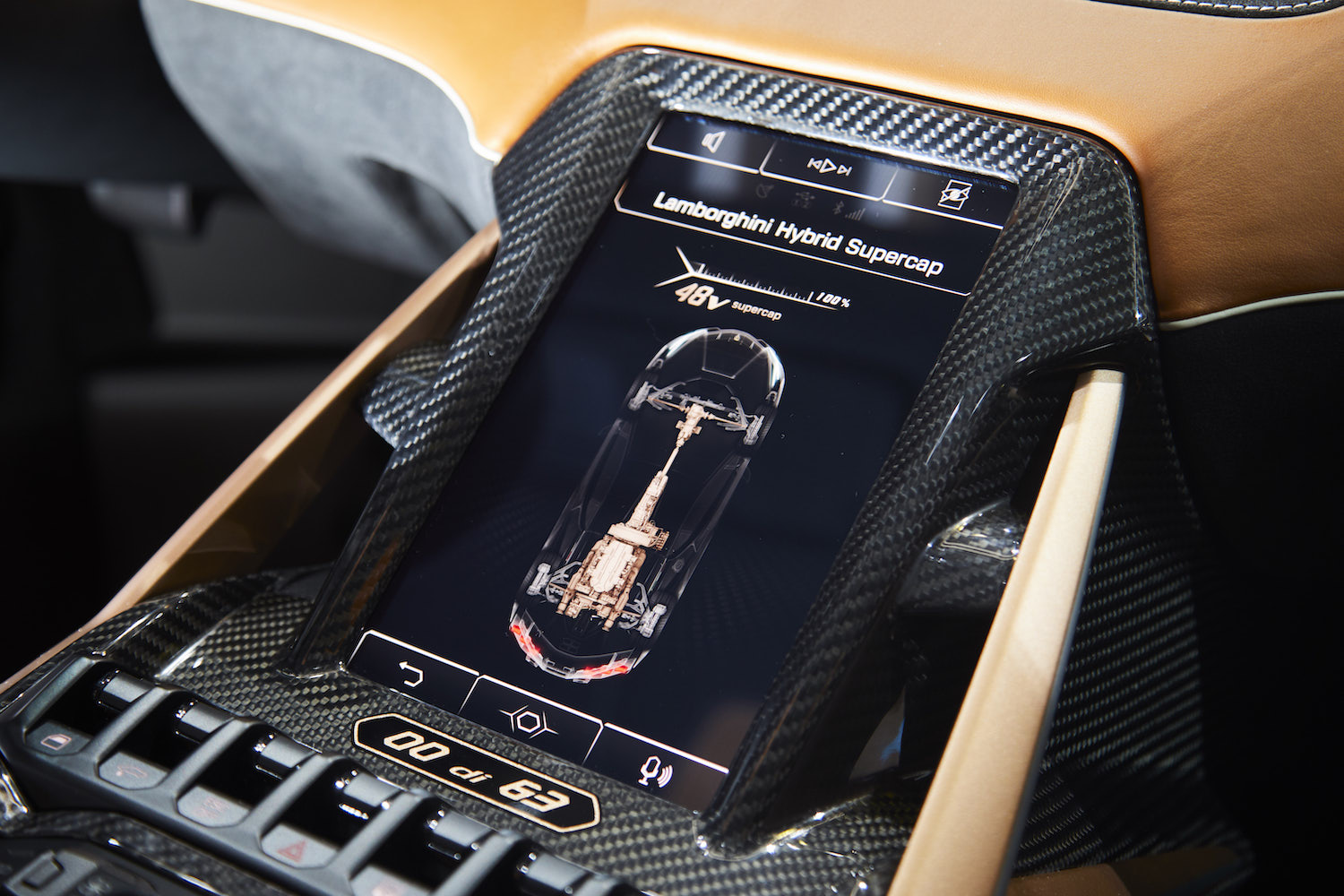
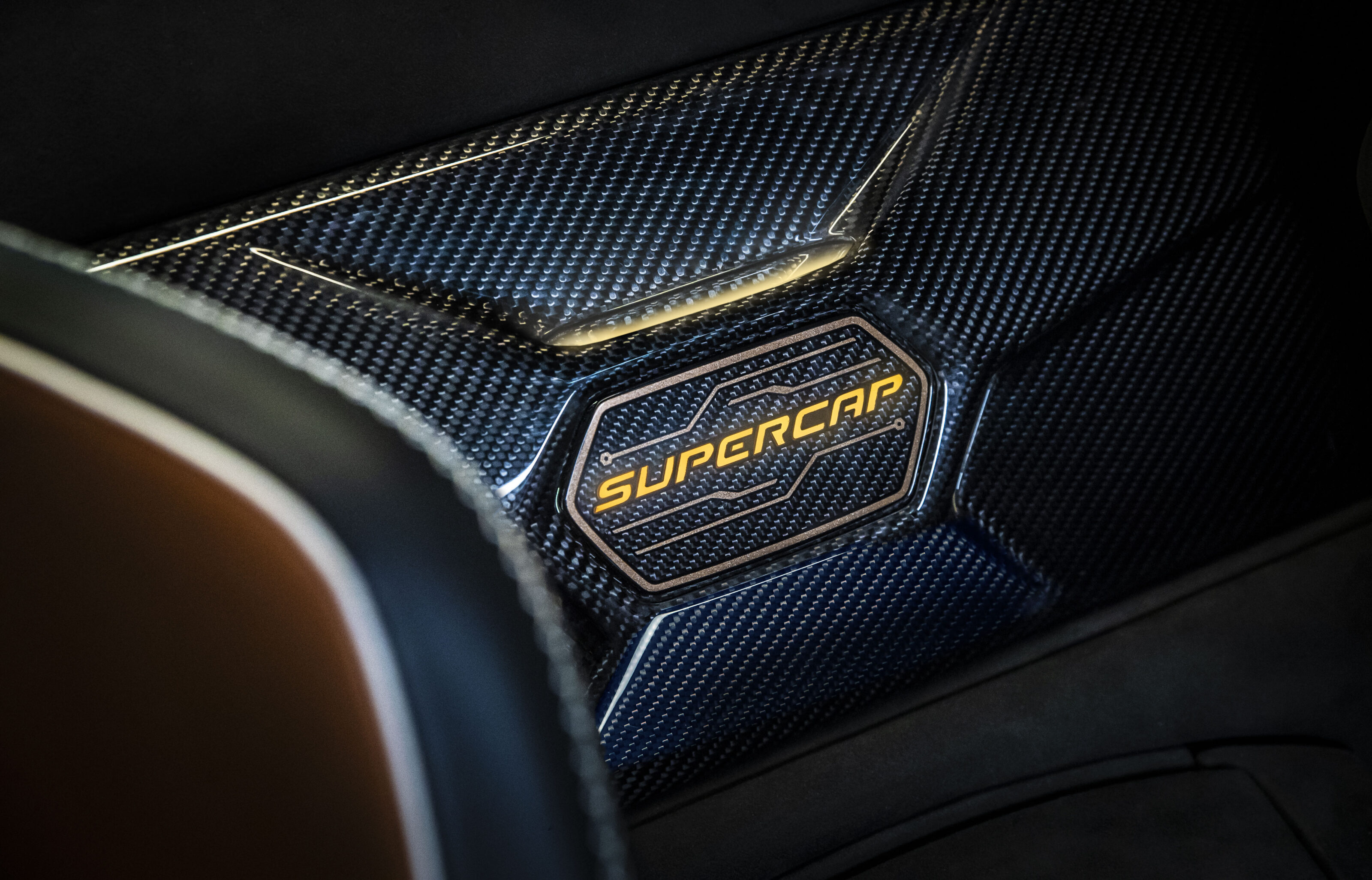
Scardaoni points to the Sian to illustrate: “when we introduced the first hybrid Lamborghini; we introduced a mild hybrid system where the electric motor is plugged into the gearbox with the use of a supercapacitor”.
“So, we have a battery which is lighter compared to the standard lithium battery. This allowed us to have a hybrid unit which is self-carried, so the power-to-weight ratio is one-to-one, so it doesn’t affect the driveability and the handling of the car”.
“This kind of approach, that Lamborghini always follows, is the approach that we also need to follow in terms of future electrification”, Scardaoni said.
But what of Lamborghini’s current crop of much-vaunted powerplants?
Earlier this year, Maurizio Reggiani was resolute in his statement: “The V12 will probably never die, we’ll see the two technologies [ICE and electrification] together”.
However, when quizzed on the future of the Huracan’s V10; Scardaoni couldn’t commit to the same level of decisiveness as his fellow employee.
“In the future, countries will implement even stricter regulation, so we need to be open and invest even more in new technologies”.
“Lamborghini invests a lot in research and development on the powertrain… [we’re] the last manufacturer today to use a naturally aspirated engine”.
“You can imagine it’s not easy as the world is going towards stricter and stricter regulation in terms of emissions”.
“Here in Asia Pacific, China introduced at the end of 2019, the China 6b; this new regulation is one of the stricter [rulesets] in the world. But Lamborghini, with the V10, has been able to comply to these new regulations”.
Scardaoni points to a number of technologies that help Lamborghini prolong its range of internal-combustion powerplants, such as start-and-stop, cylinder-on-demand as well as the continual refinement of the internal-combustion engine.
Lamborghini’s electrification roadmap remains under wraps for now, however, it’s clear that the storied Italian marque believes it must forge its own unique path ahead.
“With new technologies, with new materials, with a new form of electrification… we want to be a trend setter because this is what is written in our DNA”
We may have had our first glance at Lamborghini’s first steps towards electrification with the hugely intriguing Sian. But what’s next?
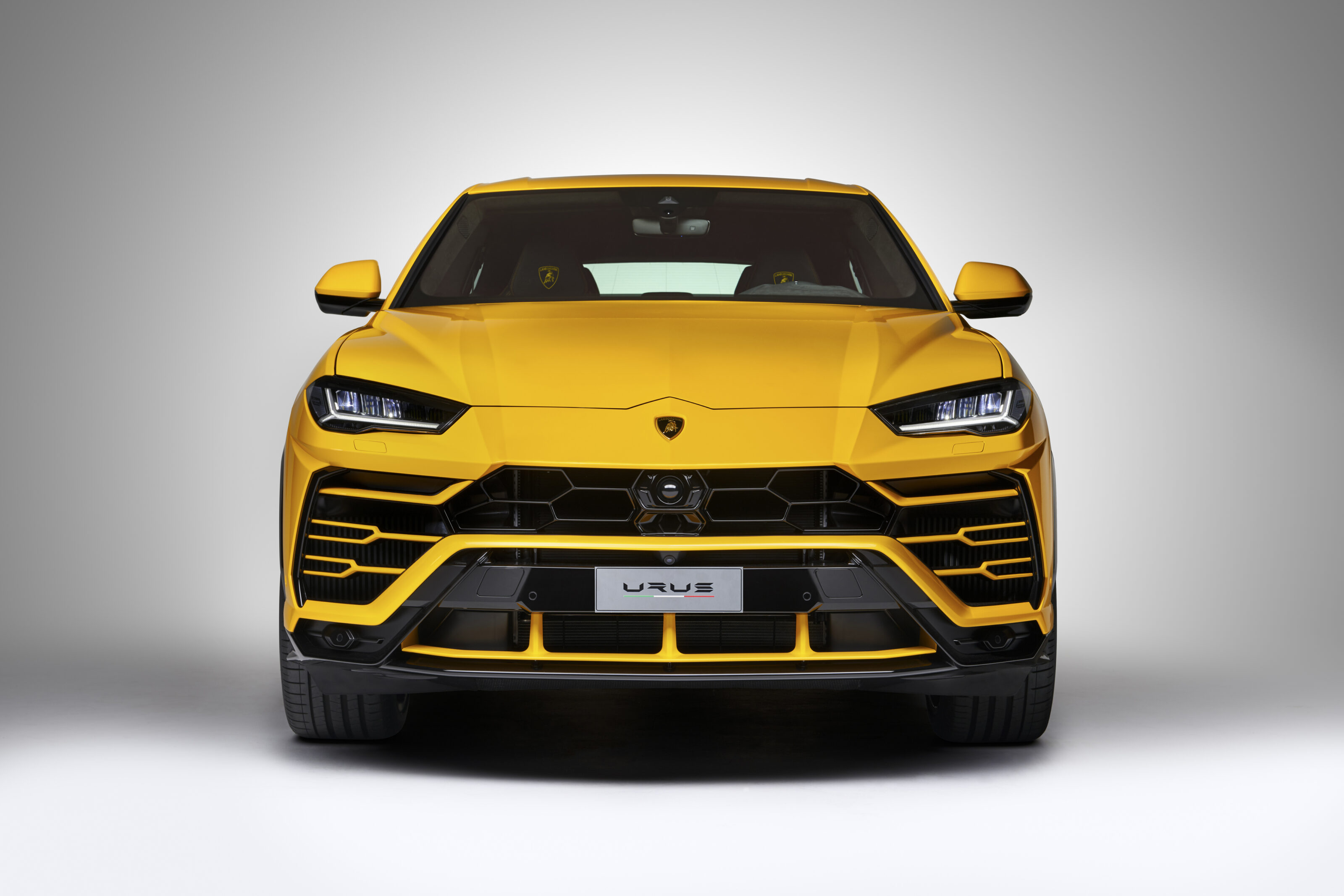
We know Urus has long been earmarked to receive a plug-in hybrid version, and with an update rumoured to be scheduled for 2022 as Ferrari’s own SUV seeks to enter the fray, Scardaoni states “I cannot say that much, I’m sorry for that, but of course yes you should stay tuned. Soon you will understand what we have been able, and what we are able, to do with Urus”.
Divergent paths
We asked Scardaoni at the Huracan STO launch how he sees the landscape of the super sports car shifting in the future, and he pointed to two main consumer trends.
One is electrification, which the Italian exec labels a ‘mega-trend’, but the other trend he singles out seems almost antithetical.
“We have more and more customers that are asking to experience the life of a pro driver” Scardaoni says.
Pointing to the recently launched $576,000 Huracan STO, he indicates that customers are increasingly asking to experience the emotion of a racing car which results in projects like the STO, born of Lamborghini’s Squadra Corse and GT3 programs.
These two development ethos seem to be polar opposites from each other, and illustrate the delicate balancing act that Sant’Agata must maintain to preserve its brand identity into the future.
UPDATE, 12 MAY: Yet another minister has chimed into the electric vehicle (EV) tax debate in New South Wales – this time claiming that Sydney should be rapidly reducing the number of cars on its roads rather than arguing about how they’re powered.
According to the Sydney Morning Herald, in a private members’ statement to State Parliament last Thursday, NSW Planning Minister Rob Stokes said that while he supports the transition to electric vehicles – they still create congestion, and the city should be moving away from relying on cars as the principal form of transport.
He said the State Government needs to convince Sydney residents to move towards public transport, walking and cycling instead by providing better infrastructure across the city. Mr Stokes said too many people drive into the city’s CBD because parking is widely available.
“Although [electric vehicles] are powered by more efficient and sustainable power sources, they are still cars. Painting them green does not change that reality,” Mr Stokes added.
“They still perpetuate physical inactivity and propagate sedentary lifestyles. Of course private vehicles are wonderful servants, but they make terrible masters,” he said. “Changing from a polluting master to a more efficient master does not alter our growing dependence on, some might say enslavement to, private motor vehicles.”
Senior ministers are divided over how best to spur the take-up of electric vehicles while also implementing a sustainable way to tax them.
“While electric vehicles are certainly more efficient than existing vehicles, using vehicles less is even better,” he said.
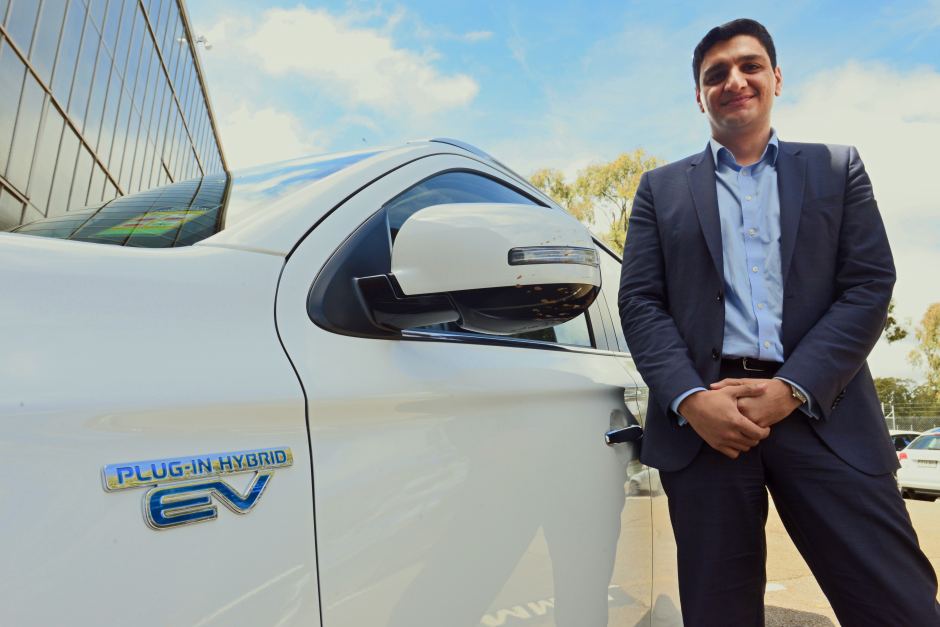
Behyad Jafari, CEO of the Electric Vehicle Council, told WhichCar these latest comments risk muddying the waters of the issue because it “shouldn’t be one or the other” when it comes to encouraging EV uptake and creating more sustainable methods of public transport.
“I agree with parts of what he [Rob Stokes] has said. To also invest in making sure people in big cities can get around on public transport, walk or cycle more is a good thing, but it goes hand in hand with the shift towards EVs – it’s not an either/or situation,” Mr Jafari said.
“When talking about moving away from cars the conversation should be about the six million vehicles registered in NSW, not just the 6000 of those that are electric. It’s not a helpful way of doing things.”
UPDATE, 5 MAY: New South Wales Transport Minister Andrew Constance has said the State Government should not introduce a special EV levy until electric vehicles made up 40 to 50 per cent of the car market.
The Minister has also today proposed introducing incentives such as waiving stamp duty, giving EVs access to transit lanes, and subsidised parking.
Mr Constance told the Sydney Morning Herald that if NSW introduced an EV tax too soon it would “make [us] the laughing-stock of the world”.
“The rest of the world will have moved to full manufacturing of electric vehicles and here we are sort of struggling,” he added.
Taking a different tack to his colleague, NSW Treasurer Dominic Perrottet, who last week said that no new charges will be levied on EV owners until the market has had a chance to “mature”, Mr Constance argued the state should be “four to five years away” from imposing any tax on the technology or risk killing off any large-scale uptake.
He added that by rushing to introduce a tax on EVs, Victoria had been “burned”.
Electric Vehicle Council chief executive Behyad Jafari backed Mr Constance saying “NSW had a historic opportunity”.
“At this point in time the public interest is going to be much better served by rapid electric vehicle uptake than by skimming a little extra tax from the few EVs that are already registered,” Mr Jafari said.
“The transition to electric cars will clean our streets of exhaust and noise, lowering health costs, reducing carbon emissions, and helping break the state’s dependence on foreign oil. This will represent billions of dollars in economic benefit.
“There’s a great opportunity for New South Wales to have it all here. Well-targeted subsidies now, as seen elsewhere across the globe, would create a boom in EV sales.
“Then, once the state starts capturing the benefits from fleet electrification, that would be the perfect time to start introducing smart road user charges.”
29 APRIL: New South Wales has ruled out the state immediately imposing a tax on electric vehicles, unlike the controversial policies currently being proposed in Victoria and South Australia.
According to the Electric Vehicle Council, NSW Treasurer Dominic Perrottet has said that instead, no new charges will be levied on EV owners until the market has had a chance to mature.
The decision is at odds with a report published in 2020 which said the NSW Government was considering the controversial distance-based charge on the table in other states.
Mr Perrottet told the Sydney Morning Herald: “a user charge is where the future lies but what’s important is that we promote, not impede, the take-up of electric vehicles.
“Over time, people who use the roads should pay for the roads, just like they do with fuel excise, but what we don’t want to do is impede innovation and take-up of electric vehicles. We’re working on a holistic package to announce in the budget,” he said.
Electric Vehicle Council chief executive Behyad Jafari has praised the announcement.
“Seizing the abundant benefits of the electric vehicle transition whilst simultaneously identifying new revenue streams for the state is a tough balancing act,” Mr Jafari said.
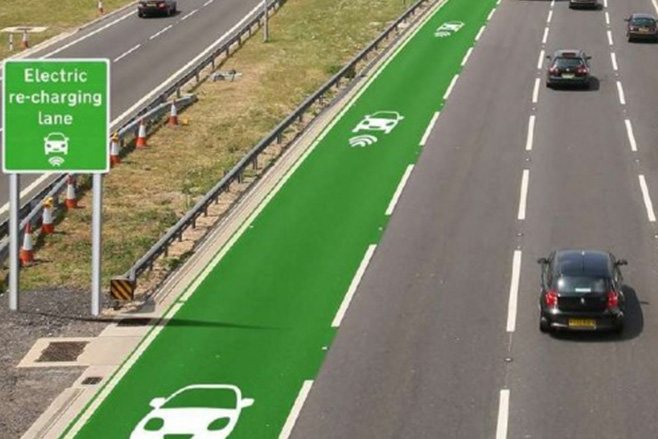
“We don’t expect to agree with everything the Treasurer proposes, but what we do respect is the fact that he is genuinely listening on this complex policy area.”
Taxing EVs has caused widespread controversy across Australia in recent months, with Victoria pursuing a distance-based charge which would apply to zero and low emission vehicles (ZLEVS) if passed by Parliament.
Under the proposed policy, which was announced in the 2020-21 Victorian Budget, a 2.5c/km charge would apply to electric and other zero emission vehicles – including battery-electric and hydrogen vehicles, and a 2.0c/km charge will apply to plug-in hybrid-electric vehicles.
According to the Victorian Government, electric vehicle owners will pay on average an additional $330 a year in distance-based road usage charges and plug-in hybrid-electric vehicles owners will pay an additional $260 a year – though this figure does not seem to take into account the petrol excise that PHEV drivers also pay.
The proposal has gone down like a lead balloon with many across the car industry and environmental groups who believe charging EVs penalises owners for shrinking petrol and diesel tax coffers without rewarding them for helping to reduce carbon emissions.
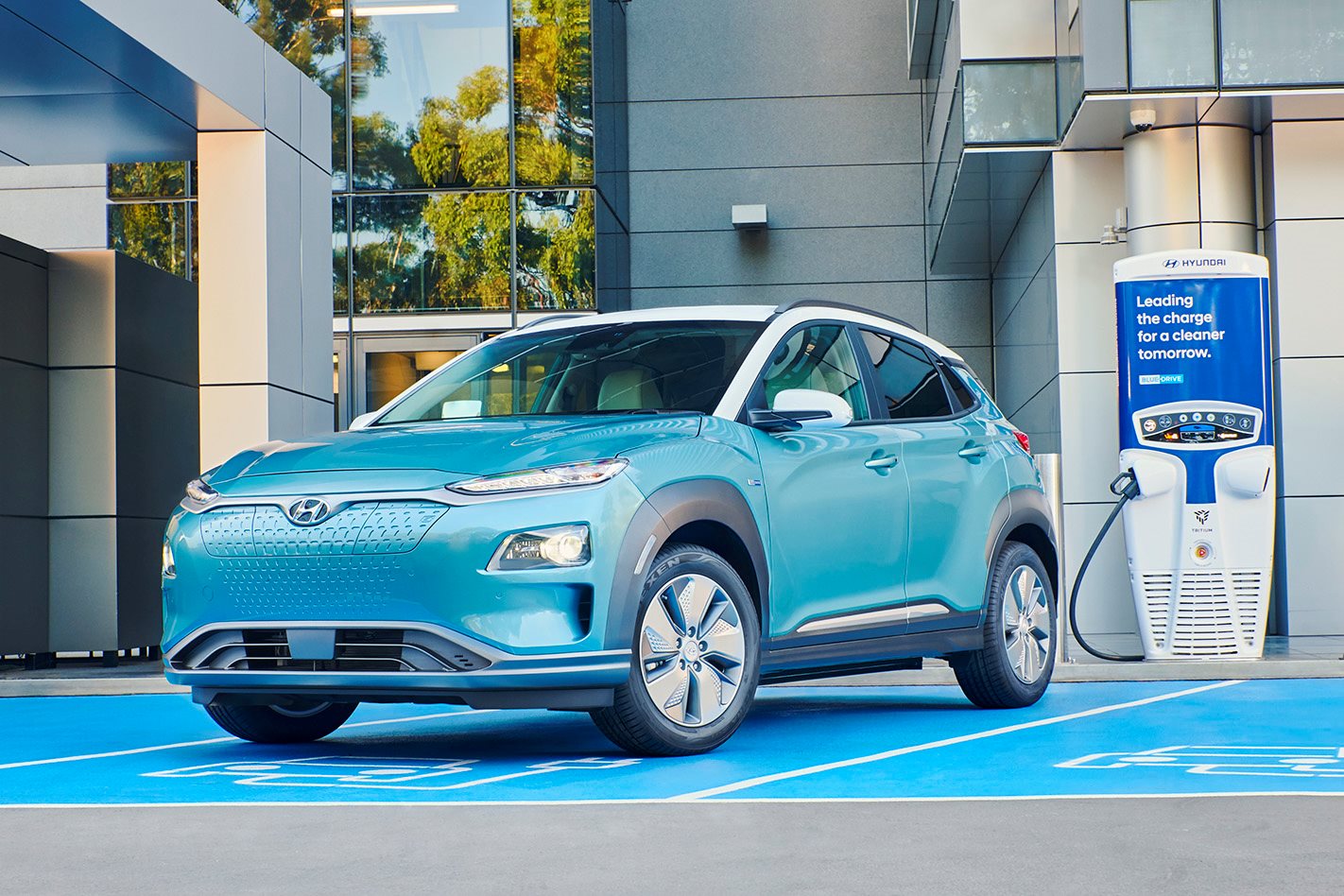
Adding insult to injury, such policies don’t recognise the tax already paid by EV owners to charge their vehicle using electricity at home.
Earlier this month, some of the world’s leading car manufacturers, automotive groups and environmental bodies teamed up to blast the Victorian Government’s proposed tax on electric vehicles calling it – “the worst electric vehicle policy in the world”.
In an open letter they urged crossbench MPs to vote against the bill when it comes before Parliament and claimed the Andrews Government’s proposed tax is the only stand-alone electric vehicle tax in the world, and risks putting Australia even further behind the rest of the world in its uptake of electric cars.
The letter added: “Going it alone will mean Victoria has the worst electric vehicle policy in the world.
“No other jurisdiction has introduced such a targeted levy on the cleanest vehicles on the road without significant incentives to balance it out.
“This new tax means the world’s manufacturers are far less likely to send Victorians their best, most affordable, zero emissions vehicles. That makes things much harder for Victorian families who want to buy and drive electric.”
Victorians aren’t the only ones in the firing line for the controversial tax, South Australia has also previously revealed plans to sting electric vehicle owners with a registration-style road tax.
If approved, the new ongoing charge will offset the loss of fuel excise revenue that will not be gathered by the Government from drivers of zero-emissions cars. This in turn has the potential to dramatically increase the cost of EV use and discourage the adoption of more sustainable transport.
EV Council Chief Mr Jafari added: “Done well, road user charges are a sensible way forward. But they should not be introduced in a way that encourages people to stay in oil-thirsty vehicles. That’s unfortunately what Victoria’s blunt EV tax will do, and it is a trap Mr Perrottet has thankfully avoided for his state.”
WhichCar has contacted the NSW Government for comment.
Talking points
- Key components including Torsen LSD, adaptive cruise control, and audible parking sensors missing
- Mistake may have cost Ford Australia as much as $1,000,000
- Affected owners will be contacted by Ford and told about their free servicing and track day
Ford Australia is offering local Mach 1 buyers free scheduled servicing for three years and a Ford Performance track day experience after it was discovered it had advertised the Mach 1 as having equipment that it didn’t have.
In a statement sent from head office, Ford Australia said: “We recently discovered some content and feature corrections on the Mustang Mach 1 for the Australian market, and are disappointed we didn’t catch this before the first run of brochures and website were published.
“We are especially disappointed that our loyal and engaged Ford customers and Mach 1 owners feel let down.”
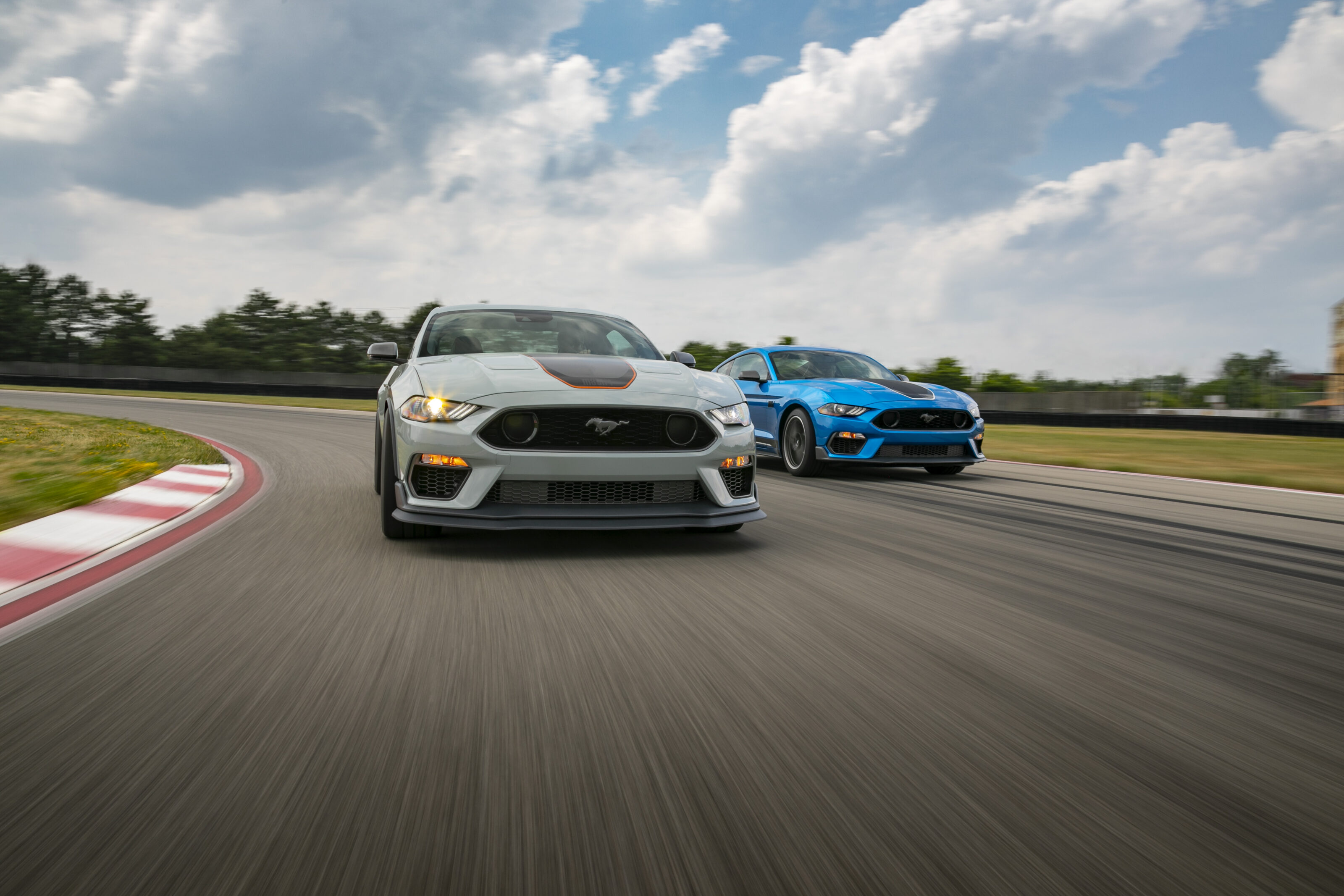
What’s missing from the Aussie Mach 1s? Well, most importantly, the Torsen limited-slip differential.
Speaking to WhichCar, a representative from Ford Australia said all Mach 1 Mustangs homologated for right-hand drive for the Australian, UK or South African markets, were fitted with Ford’s own mechanical limited-slip differential instead of the Torsen job.
They said this is the same LSD found in the Bullitt and GT Mustangs and that, despite the mix up, it still comes equipped with the requisite cooler, meaning there’s no difference in performance.
Other features missing from the Mach 1 advertised include adaptive cruise control and audible rear parking sensors, although the reversing camera remains.
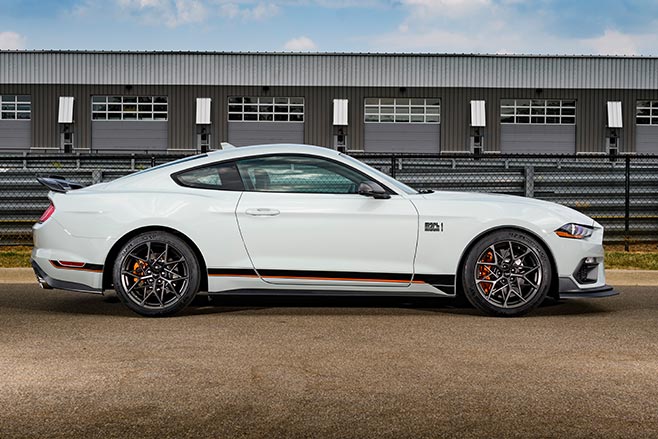
It’s worth noting though that these driver aids weren’t fitted to American Mach 1s either, due to the performance Mustang sporting redesigned, aero-focussed front and rear bumpers which couldn’t accommodate the necessary componentry.
Ford Australia also told WhichCar that the free servicing and track day offer would only apply to customers who purchased their Mach 1 before April 29, as the inaccurate promotional literature was corrected after this date, and dealers have informed subsequent buyers about the missing parts.
Ford Australia will be reaching out to affected buyers in due course.
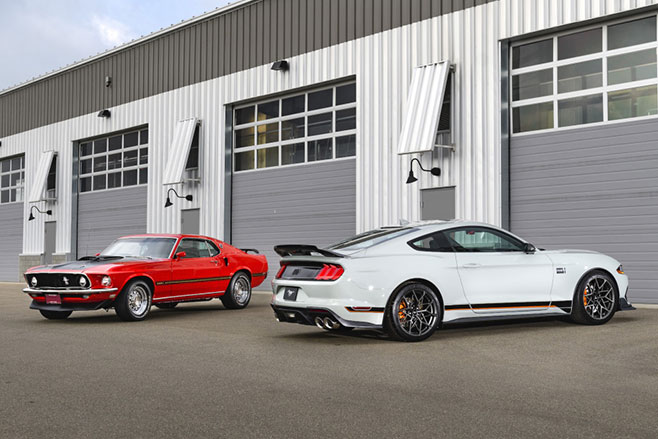
It’s a costly mistake for the Blue Oval, with the servicing package alone being worth a reported $1380.
If all 700 Mach 1s coming to Australia had been sold before April 29, Ford would be hit with a bill north of $1 million.
However, Ford Australia would not comment on how many buyers had purchased their Mach 1 before the cut-off date, and the local representative said the performance Mustang was not yet sold out.
Talking points
- Renault Sport and Renault Sport Racing replaced by Alpine performance brand
- Alpine will be an electric only manufacturer
- Australian market was consistently in the top five for global Renault Sport sales
As of May 1, 2021, Renault Sport, the motorsport and performance arm of the French automaker, no longer exists.
The fabled marque has been retired, consigned to the history books, and in its place, an even older brand takes up the Renault performance mantle – Alpine.
The announcement of Renault Sport’s impending demise came back in January 2021, when the carmaker outlined its ‘Renaulution’ vision for the future.
In it, Renault stated that its Alpine brand would be profitable by 2025 and that both Renault Sport and Renault Sport Racing would fall under its umbrella.
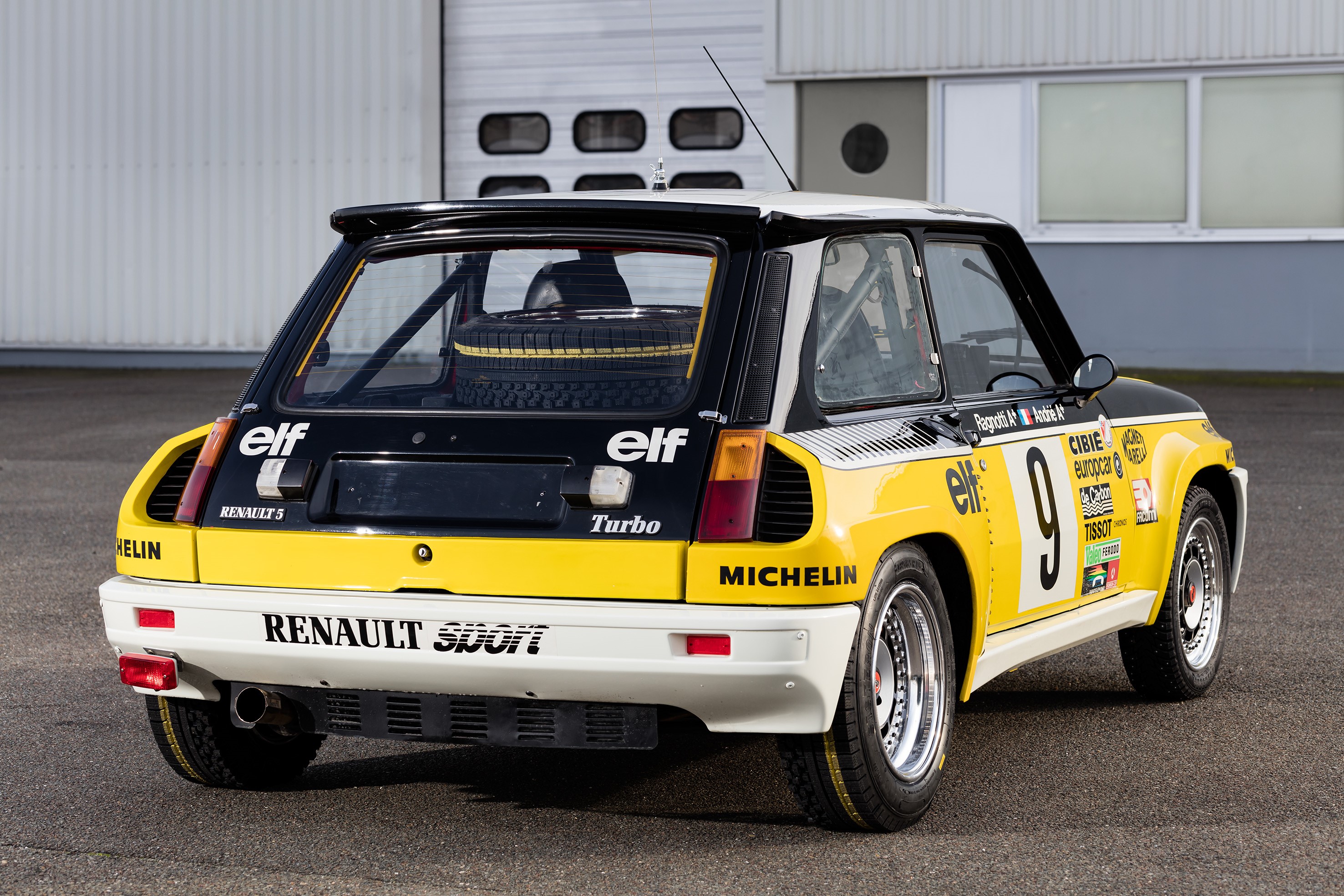
“As part of the reorganization of the Renault Group by brand, it is essential that the various entities that make up the business unit bear the Alpine name and embody the values and ambitions of the brand,” Laurent Rossi, Alpine CEO, said.
“Alpine aims to be a premium sports brand at the forefront of innovation and technology. Alpine Cars with its expertise and experience in sports vehicles is a master card in achieving our goals.”
Of course, for those that are fans of Formula 1, the writing was on the wall even sooner for Renault Sport, when it was announced in September 2020 that the Enstone-based R.S. team would be rebranded as Alpine F1 for the 2021 F1 season.
And yet, the news is still surprising. It’s also a very bitter pill to swallow for driving enthusiasts around the world, as R.S. was considered, since its inception in 1976, to make the best hot hatchbacks ever to grace terra firma.
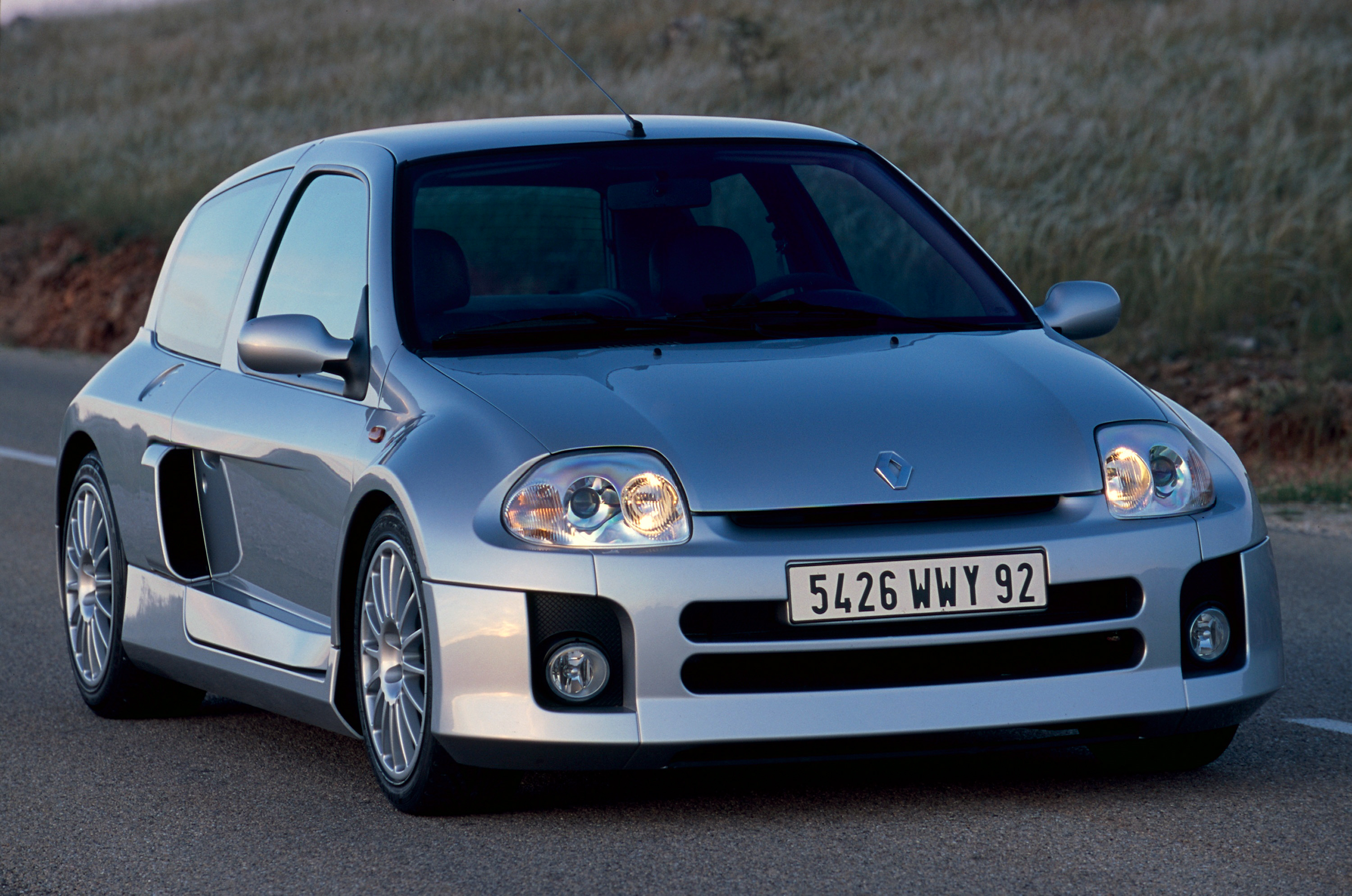
The list of superlative hatchbacks is seemingly endless, but some of the performance arm’s best hits included the 5 Turbo, 5 Turbo 2, Clio Williams, Clio V6, Clio 182 Trophy, Megane R26.R, Clio III RS, Megane 275 Trophy-R, and most recently, the Megane RS Trophy-R – the fastest FWD ever to lap the Nürburgring Nordschleife.
Locally, it must also be frustrating news for Renault dealers across the country, as Aussie buyers were routinely in the top five for global Renault Sport sales.
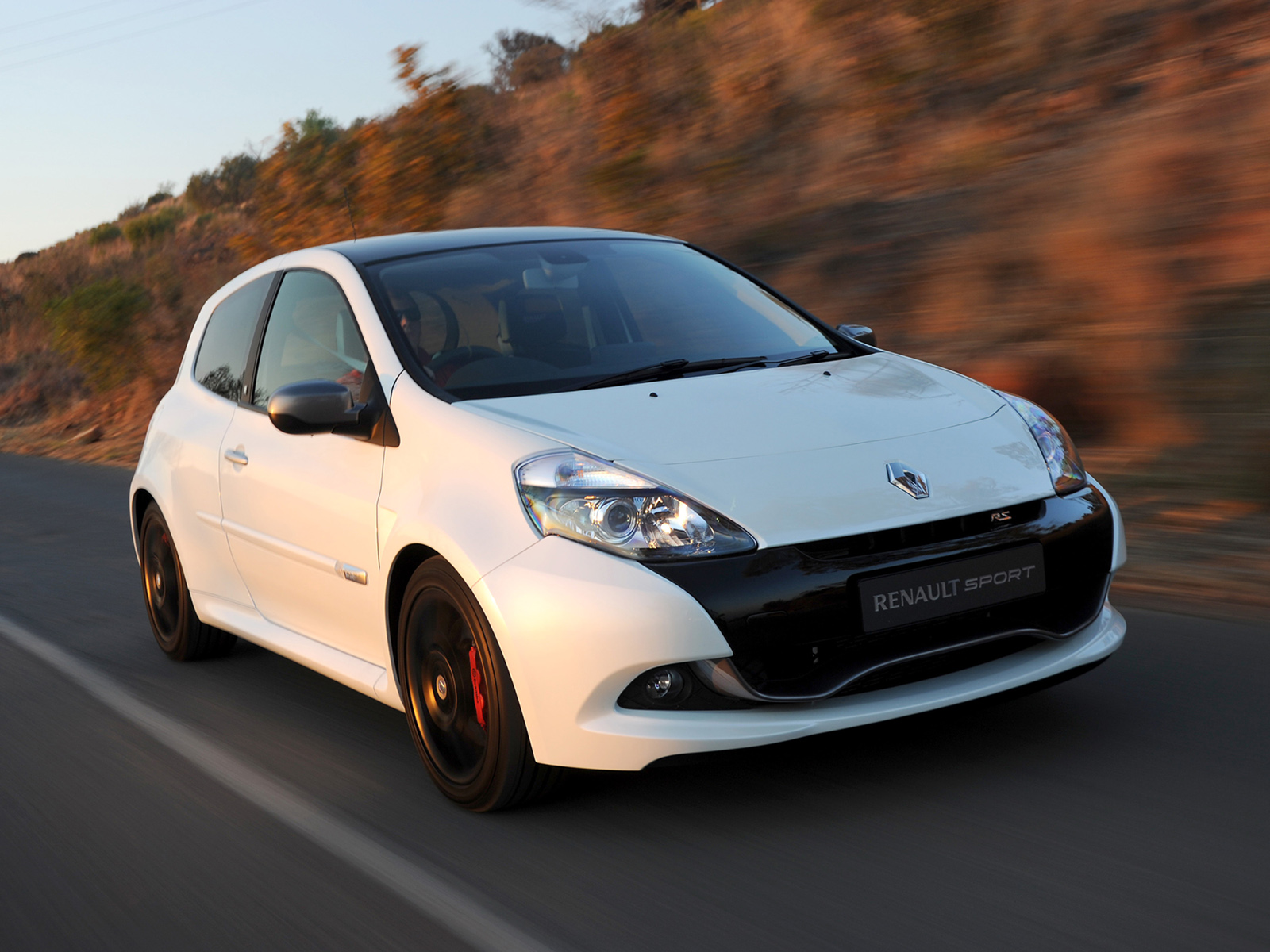
However, considering that Alpine has only sold two cars in the last year in Australia (that’s not a joke – hands up if you’re one of them, we’d love to hear from you!), it would make sense for Renault to give its new sports brand a slightly better product line-up than the excellent but misunderstood A110.
But that may not happen since Alpine is set to become an electric-only performance brand – which to many driving enthusiasts is an oxymoron.
We’ll have to wait until 2025 to see what Alpine and Lotus can come up with for the jointly developed Anglo-French electric creation, but in the interim it will be interesting to see what Alpine can offer Aussie enthusiasts besides a circa-$100,000 sportscar.
Renault Australia has told WhichCar it has no information regarding future Alpine-badged models for the local market and that at the moment, its attention is focussed on what will be Renault Sport’s last performance car – the Megane Trophy, which is still on sale.
The majority of vehicle categories in Australia have clearly established sales leaders that look untouchable in the 2021 showroom race.
Yet there are still plenty of segments where there are tantalising contests that are too close to call.
Now we’re a third of the way into the new year, we look at the six biggest and most intriguing category fights of 2021 so far:
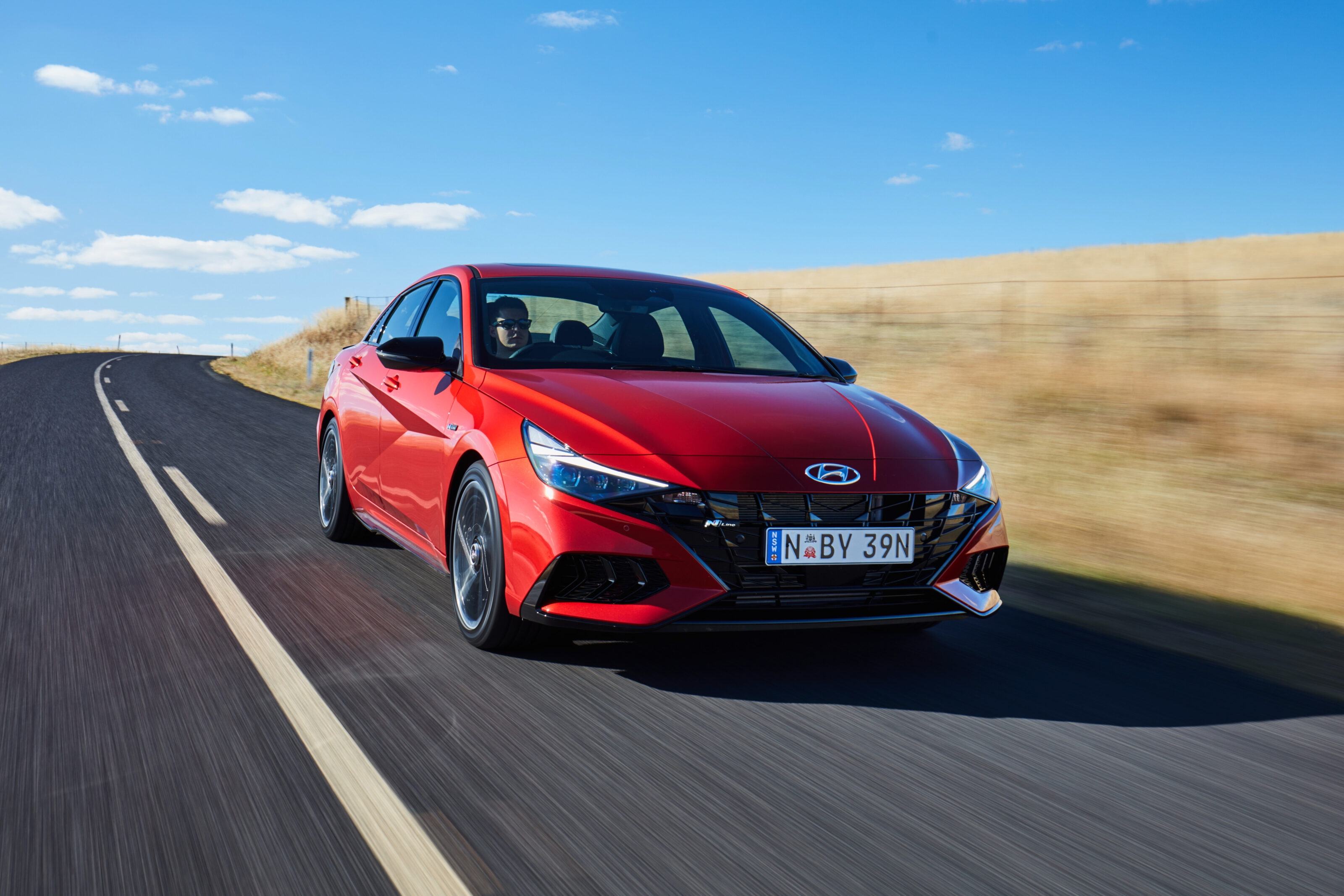
HYUNDAI i30 v TOYOTA COROLLA – SMALL CARS
The small-car segment may have fallen in popularity but the i30 and Corolla remain showroom powerhouses – and incredibly, account for more than half of this sizeable category between them.
Toyota’s veteran nameplate leads the way with 9454 sales and 28 per cent market share so far in 2021, but the Hyundai is closing the gap. There have been 8681 i30 sales after the first four months of the year, equating to a 25 per cent market share.
And where Corolla sales are up six per cent, i30 sales have increased 29 per cent year-on-year – the best growth of any mainstream small car. The i30 range has been helped by the addition of a sedan body style after Hyundai renamed the Elantra that was a four-door i30 in all but name.
Both models are well clear of the third-placed Kia Cerato, which sits at 5993 units year to date – down one per cent. There’s potential for it to be overtaken by the Mazda 3, which is enjoying something of a bounce-back with 24 per cent growth.
The small-car segment is down seven per cent year to date.
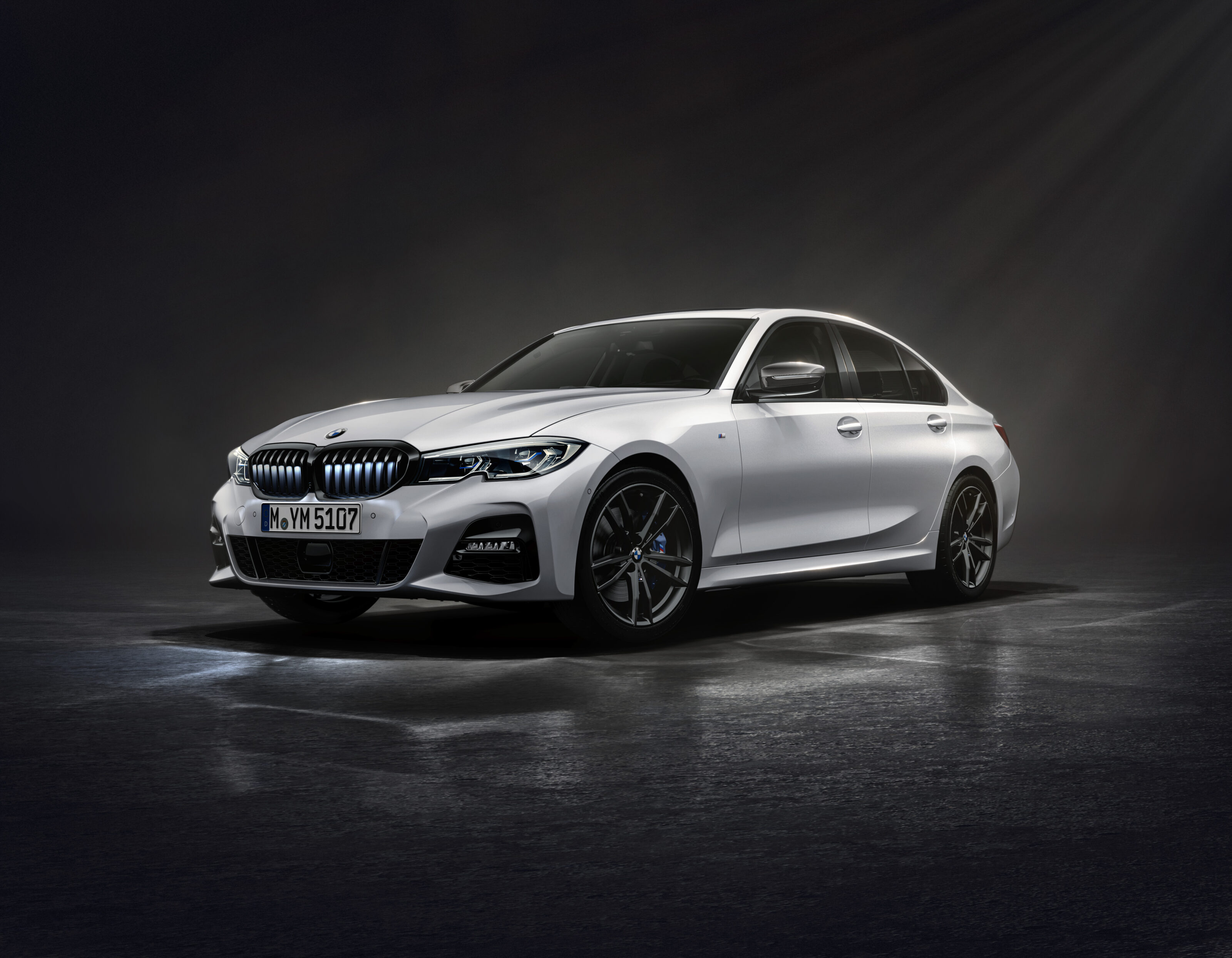
BMw 3 SERIES v MERCEDES-BENZ C-CLASS – MEDIUM LUXURY CARS
The latest-generation BMW 3 Series last year ended several years of segment domination by the Mercedes-Benz C-Class. Yet, despite an all-new C-Class having been unveiled and due here in late 2021, the Mercedes is fighting back.
With 67 per cent growth year to date, the C-Class leads the category with 1394 sales. In contrast, 3 Series sales have increased 26 per cent to leave it on 1203 units so far. The BMW was a convincing winner in April though, so this looks like it could go down to the wire again after just 28 sales split the German duo in 2020 (3406 3 Series v 3378 C-Class).
No other competitor comes close, though the heavily updated Lexus IS has lifted sales by a huge 188 per cent to place it third on 506 sales.
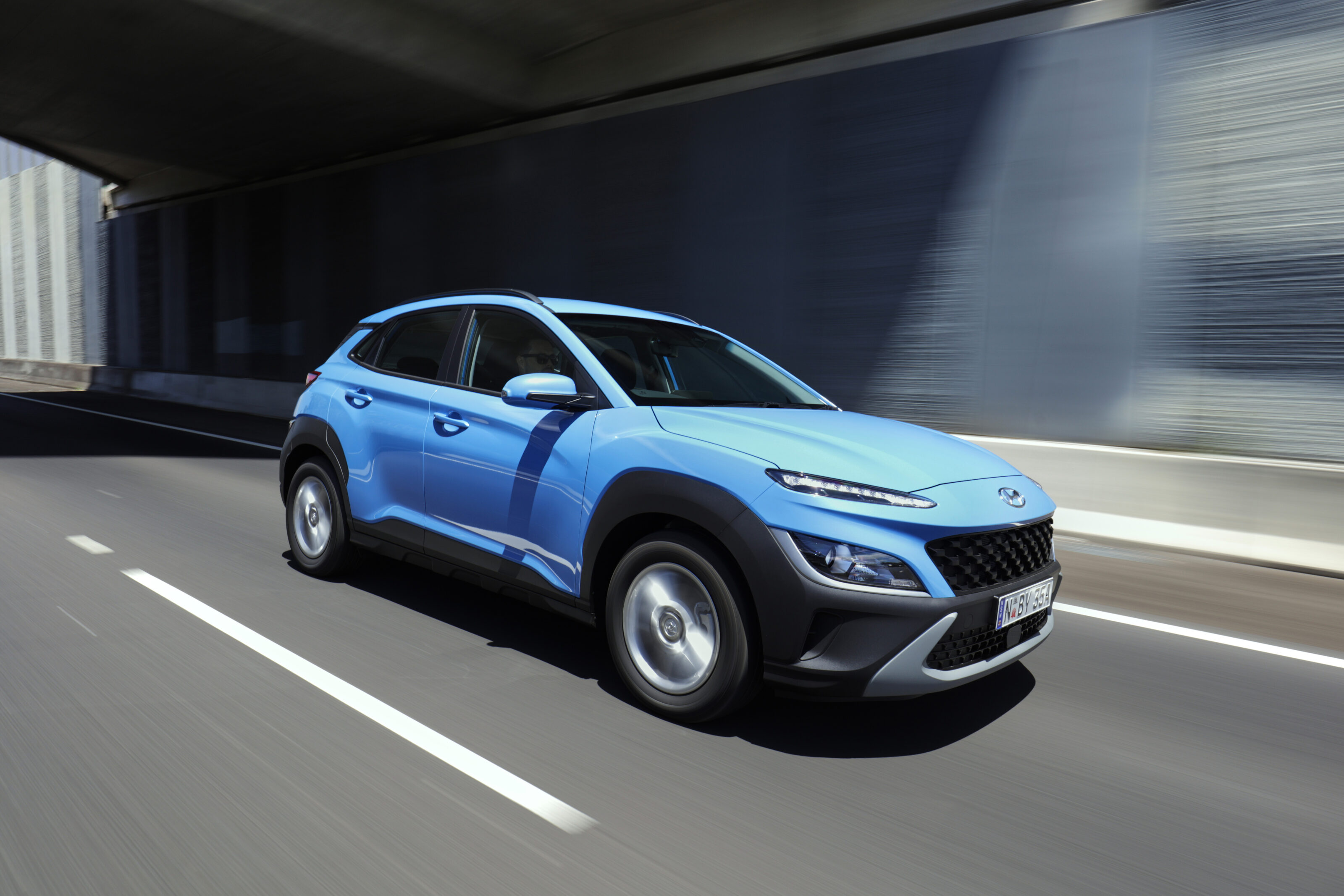
HYUNDAI KONA v MG ZS v MITSUBISHI ASX – SMALL SUVS
The volume small-SUV category is on fire – up 54 per cent year to date, for 43,694 sales. There are several strong players involved but there’s a multinational trio well ahead of the pack.
Korea’s Hyundai Kona, China’s MG ZS and Japan’s Mitsubishi ASX are the only models to exceed 5000 units up to April, and combined account for more than a third of a segment featuring nearly 20 vehicles.
Mitsubishi’s ASX has been around for more than a decade, yet continues to defy its age with front-runner status. It leads with 5630 sales, which equates to a 23 per cent year-to-date increase and 12.9 per cent market share.
MG’s MG3 is already dominating the city car class, though the Chinese brand’s meteoric rise is being spearheaded by its ZS model. Comprising regular variants and more premium-focused ZST variants, the ZS range has grown 383 per cent compared to the same period last year. With 5415 sales, the MG is snapping at the ASX’s heels.
Just 10 units behind, however, is the Kona, which is up 63 per cent year to date and identically matched to the ZS in 12.4 per cent market share.
Next best? The Mazda CX-30, up 81 per cent at 4048 sales.
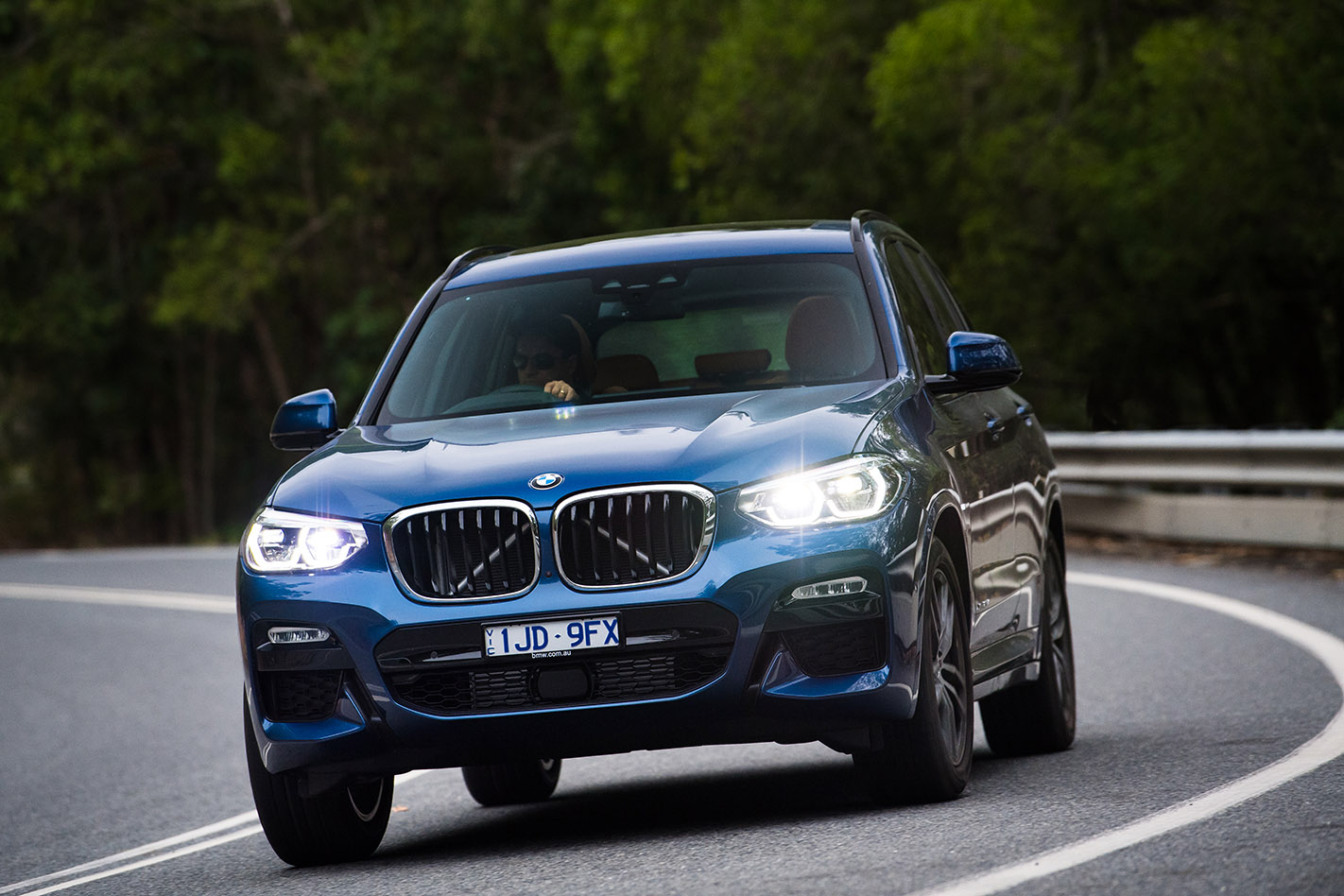
BMW X3 v MERCEDES-BENZ GLB v VOLVO XC60 – MEDIUM LUXURY SUVS
Three models are listed in the headline, though only 317 units separate six contenders in the premium medium SUV segment. The picture can easily change over the next eight months, but for now it’s one of the class’s newest entrants and one of its rare seven-seaters that has a finger on the trophy.
The new Mercedes-Benz GLB, a funkier-looking, five-plus-two version of the GLA compact SUV, has 1437 sales to its credit so far this year. It’s only eight units ahead of the BMW X3, though, which has 1429 sales through 13 per cent growth and victory in the April sales battle.
That growth is nothing, however, compared with the 87 per cent rise for the Volvo XC60, with the Swede in touching distance with 1374 sales year to date. It should also be boosted later this year by an updated model, due in the third quarter.
Audi recently introduced an updated Q5, and it too has promise with 47 per cent growth so far in 2021, at 1210 sales.
Mercedes’s more conventional medium luxury SUV, the GLC wagon, is fifth with 1171 sales but down 13 per cent. The figure doesn’t include 283 sales for the Coupe spin-off variant, which is down 33 per cent and trailing BMW’s equivalent model, the X3-based X4 (307 sales).
The Lexus NX is the other model to have surpassed four figures, sitting on 1120 sales from a 14 per cent increase in sales.
Overall, the premium mid-sized SUV category has passed 10,000 sales (10,121) and is up 29 per cent year to date.
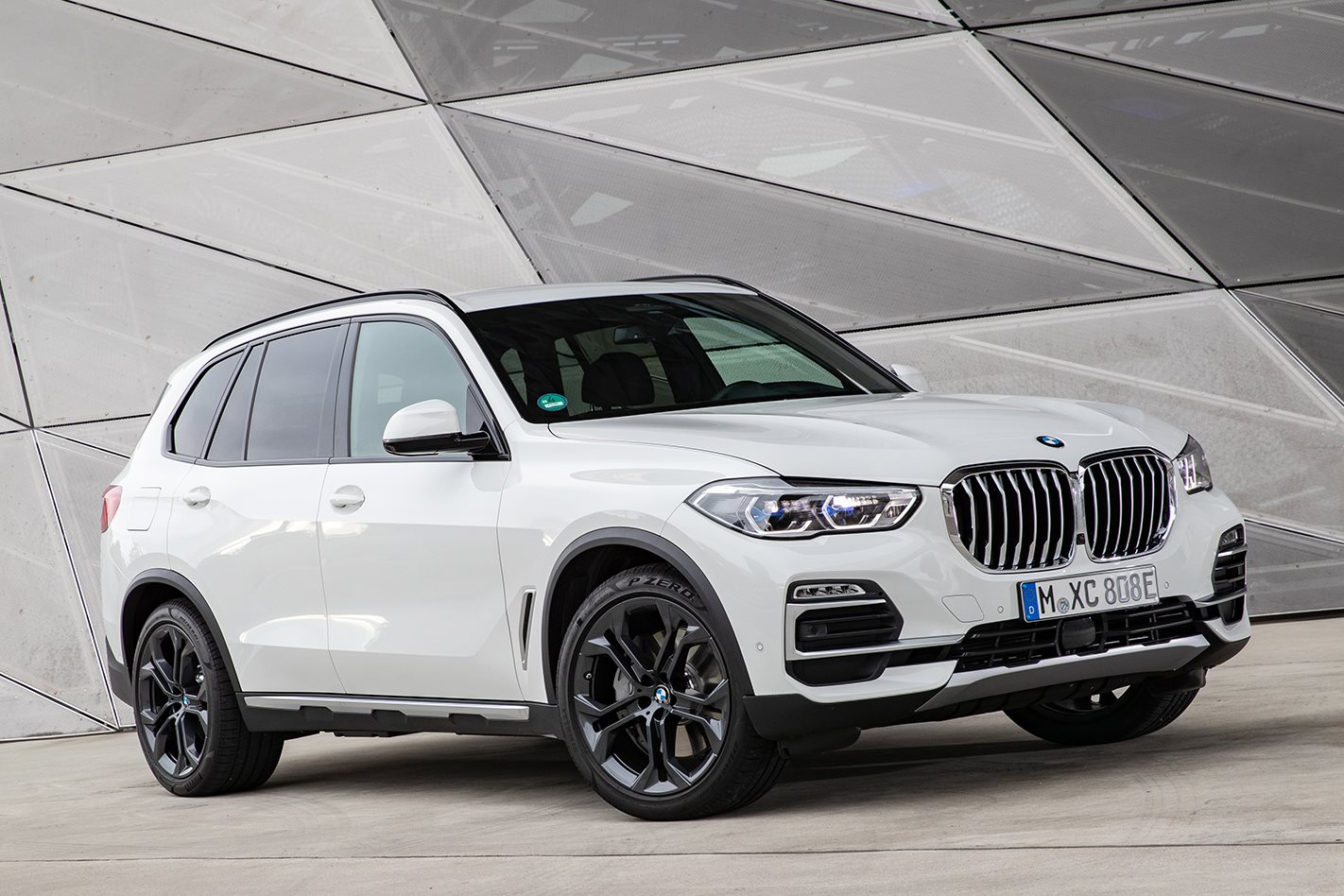
BMW X5 v MERCEDES-BENZ GLE – LARGE LUXURY SUVS
In the next segment up, it’s a simple two-horse race at this stage between two long-time rivals that have been around in different generations since before the turn of the century.
The latest, fourth-generation X5 has the upper hand after the first four months of 2021, with 44 per cent growth taking it to 1160 sales and a chance to replicate its 2020 leadership success.
Mercedes-Benz’s GLE, formerly the ML, isn’t a mile away with 1076 sales, though, even if growth is smaller at eight per cent.
And if you combine the GLE wagon and Coupe siblings, they currently lead sales of the X5 and X6 twins by 1475 to 1338. This turns the tables for now on 2020’s combined results.
The biggest mover of 2021 is the Volvo XC90, which has increased sales year to date by 121 per cent – or up from 258 to 569 units.
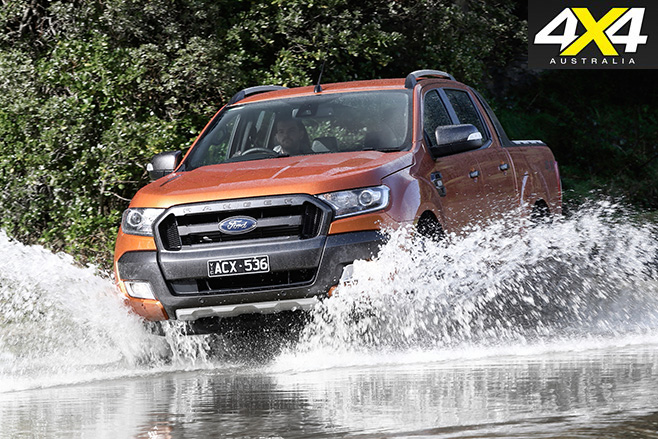
FORD RANGER v TOYOTA HILUX – 4X4 UTES
Sales in the tradie-focused 4×2 ute category continue to give the Toyota HiLux a big edge in overall sales but the work-and-play mix of the 4×4 segment also remains a great stoush between the HiLux and Ford’s Ranger.
The HiLux had a fairly comfortable lead over the Ranger at the end of March, but the Ford thumped its arch-rival by more than 1350 units in April to close the gap significantly – and help make it Australia’s most popular vehicle last month.
Overall, just 405 sales separate the utes with both having similar year-to-date growth – 47 per cent in the case of the HiLux and 41 per cent for the Ranger.
In the Ranger’s favour is a raft of new variants coming in July; working against it is the next-generation Ranger that is set to be unveiled later this year and may prompt some buyers to hold off for the newer version due to go on sale in early 2022.
