
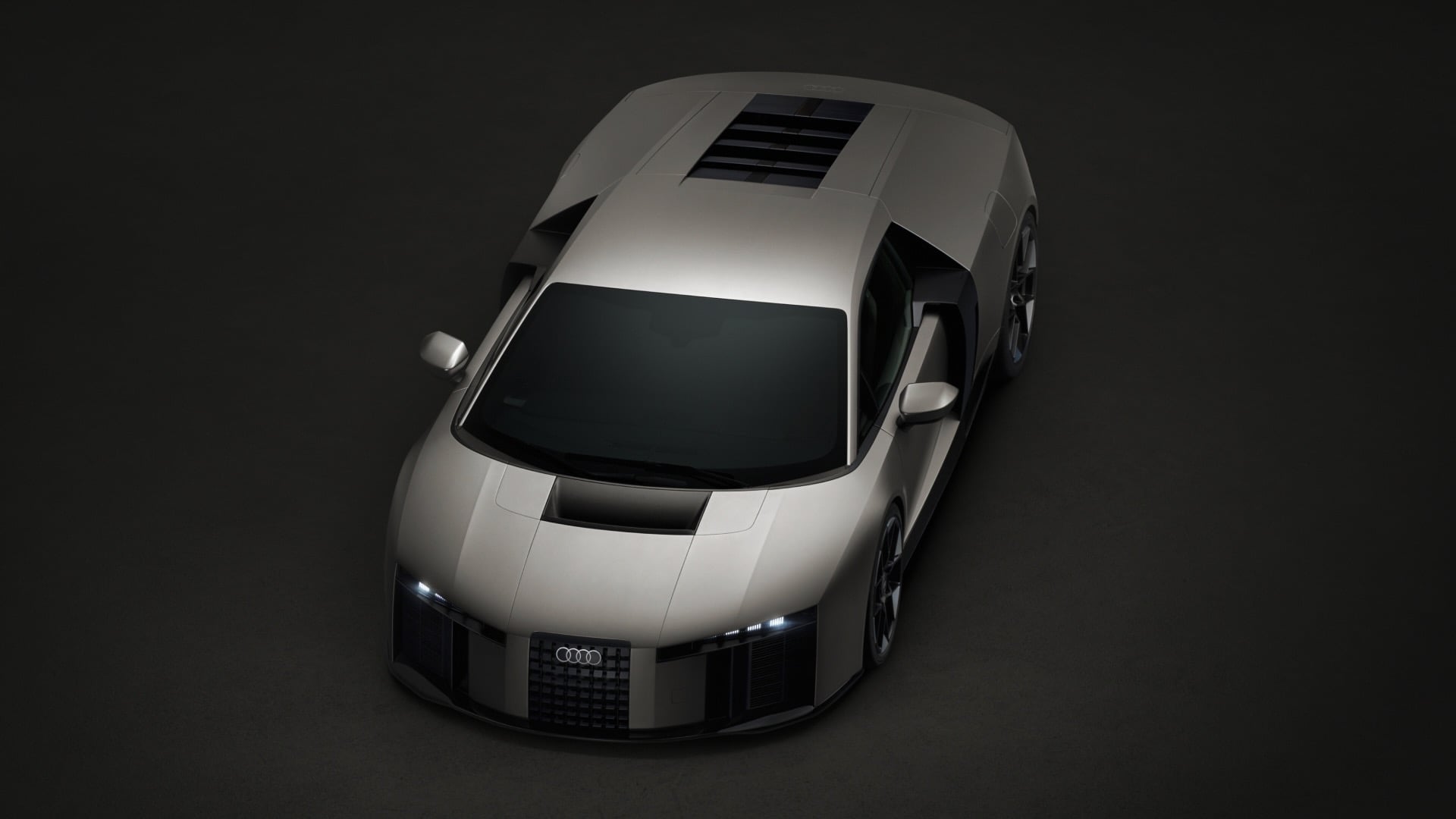
In a surprise move Audi has revealed a new 736kW (that’s 1001hp) hybrid supercar called the Nuvolari, named after driver Tazio Nuvolari, who raced for Auto Union in the 1930s.
The new mid-engined model will act as Audi’s new halo model and while it may look like it, it’s actually not a concept car but a limited-run production model for which European deliveries will commence in the first half of 2027.
Limited to just 499 units globally and costing around £500,000 in the UK (around A$940,000), the Nuvolari won’t be a direct replacement for the beloved Audi R8. Instead, the Nuvolari takes the brand to a higher level of engineering, targeting Ferrari, McLaren and sister brand Lamborghini.
The Nuvolari is the first production car to feature Audi’s new design language, which debuted on the Concept C in September 2025. However, it takes more inspiration from its Formula One motorsport program, with extra openings and vents to help keep the engine cool, and more movable aero parts to help deliver up to 400kg of downforce. The moving rear wing features DRS, there are staggered 20- and 21-inch alloy wheels, and carbon ceramic brakes also feature.
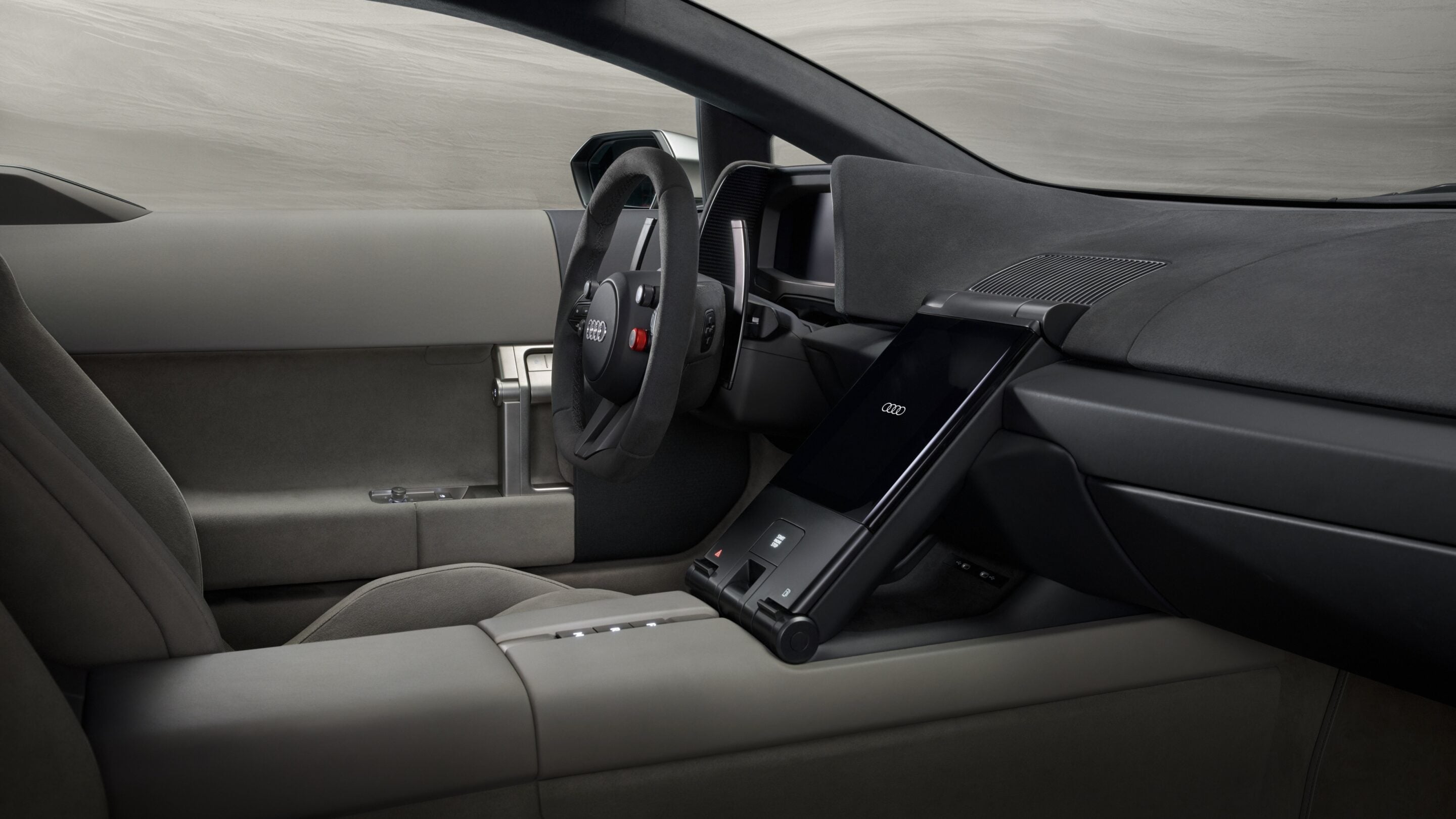
The Nuvolari’s cabin is driver focused, using a modern clean layout with most key functions operated through a portrait-style touchscreen. Material quality looks to be extremely high, with milled and brushed aluminium used for almost all the interior’s hard components.
Centre of Audi’s new aluminium and carbon fibre-bodied mid-engined supercar is a twin-turbocharged 4.0-litre V8 engine, which is paired with three electric motors to help boost the overall maximum power output to 736kW. The engine itself makes 588kW/730Nm outputs and revs to 10,000rpm, while the three electric motors produce 110kW each. The lithium-ion battery has a gross capacity of 7.3 kWh for short all-electric driving capability and to also feed the electric motors.
Thanks to the firepower and lightweight construction, the Nuvolari is quite fast: it completes the 0-100km/h sprint in just 2.6 seconds, 0-200km/h in just 6.8 seconds and the top speed is limited to 350km/h. That makes it comfortably the fastest production Audi ever made, and faster even than the quickest R8, which took 3.1 seconds to reach 100km/h and a top speed of 331km/h.
A new feature in the Nuvolari is called ‘Quattro Predictive Ride’. It’s a powertrain-management system that will read road data from various sensors across the car to actively predict how and where to apply power, reportedly making the Nuvolari even faster. Expect that system to make its way down the Audi line-up in the future.
As with most modern cars, the Nuvolari’s driving characteristics are variable depending on which of the five drive modes is chosen. ‘E-Hybrid’ will run the car in all-electric mode as much as possible. Normal driving will be served by ‘Balanced’, with ‘Dynamic’ and ‘Dynamic +’ all turning the power up slowly in turn. At the top is a ‘Track’ mode, which will deploy full power wherever possible, and allows the driver to finely control the traction control.
The Audi Nuvolari will go on sale in European markets in 2027. Australian plans are yet to be revealed, or if it will even be made in right-hand drive.
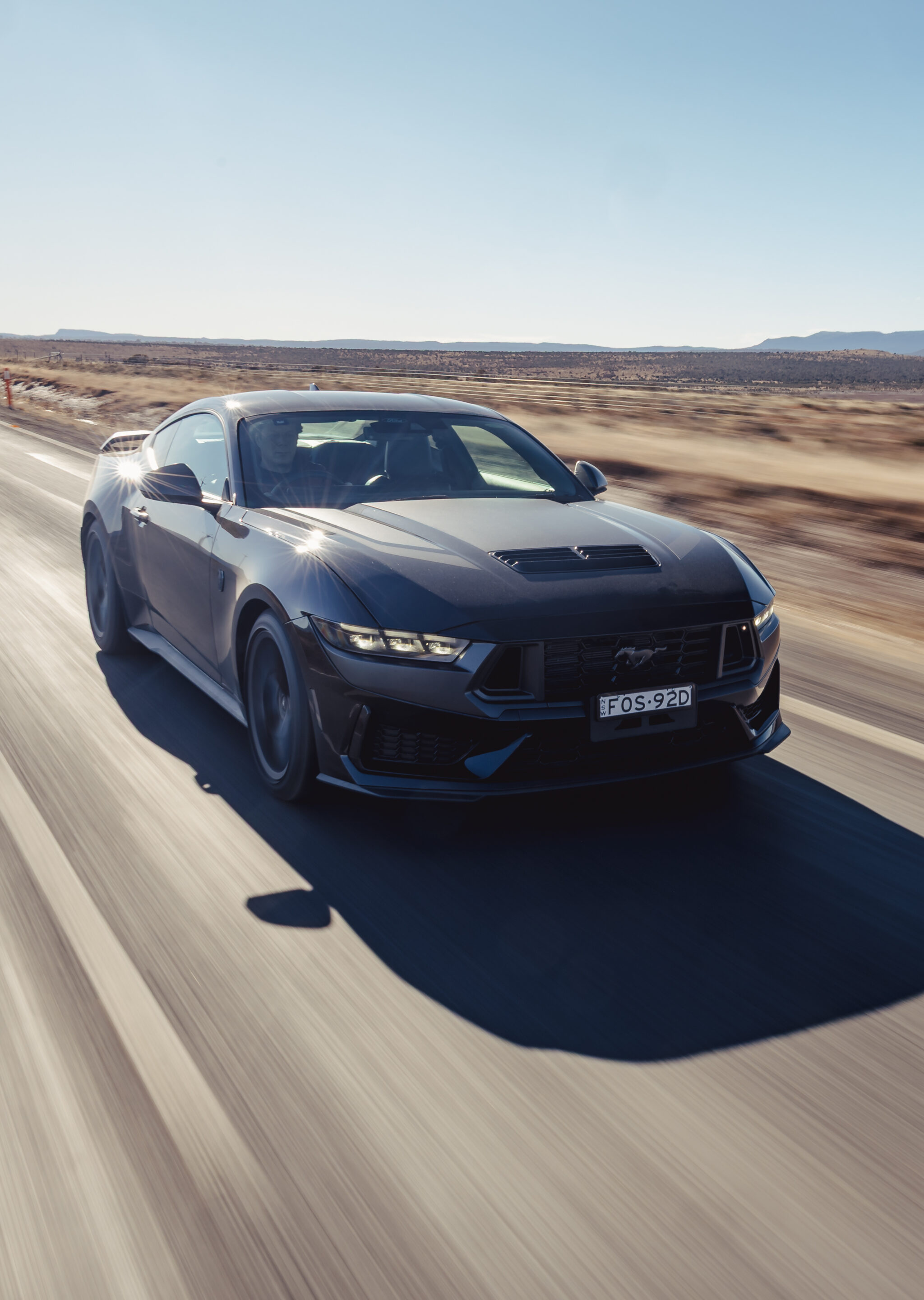
Ford’s rethink of its product strategy sees the brand edging closer to introducing a sedan variant of the Mustang coupe for the first time ever.
The unprecedented model stepped closer to a production reality with a key Ford executive revealing that the company is looking to expand its Mustang group of products. In an interview with Automotive News, Andrew Frick, the head of both Ford’s internal combustion and hybrid vehicle business unit, Ford Blue, and its electric vehicle line, Ford e, singled out the Mustang while discussing the potential for a new sedan.
When asked about comments from Ford’s CEO Jim Farley about the return of a sedan, Frick responded, “We have a really great Mustang that people consider a car. We look to expand on the Mustang family as we move forward.”
Ford’s line-up in the USA has been without a sedan since 2020, with the end of the Fusion model line, essentially the North American version of the Mondeo.
Comments from Ford’s CEO have pointed to a return of traditional passenger cars, and in Europe, the brand has announced that a compact car, sized like the Fiesta, is locked in to fill that gap there.
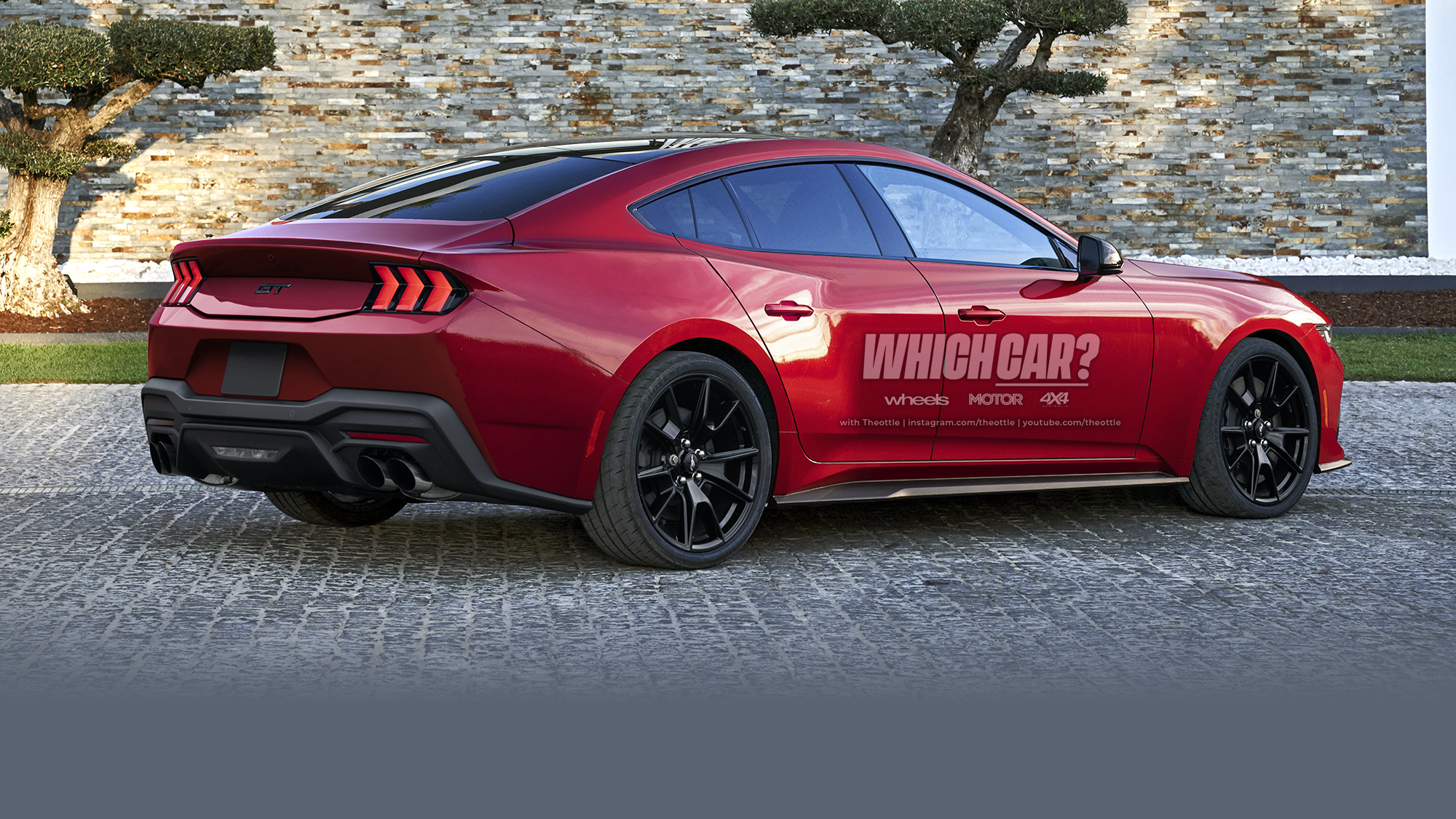
As early as 2022, Ford released official design sketches of a four-door Mustang as part of the development process for the design of the current Mustang coupe and convertible. Later, in a 2024 Autocar interview, Farley was quoted as saying, “Could we do other Mustang body forms – a four-door or whatever? I believe we could.”
WhichCar was even musing about a four-door Mustang in 2022, after the release of the 2023 Ford Mustang, and ran a render by artist Theottle to indicate what it might look like (below).
Frick cautioned that the shrinking sedan market and the ongoing popularity of SUVs mean that balancing development and production costs would play a pivotal role in bringing any new model to market.
“It’s going to have to make sense within our portfolio. It’s going to have to make sense within a family that we may already offer. And it’s going to have to be very cost-effective for us to do it.” Frick said.
A four-door Mustang would also give Ford a competitor to the new Dodge Charger, which is available as both a coupe and sedan, and a potential fighter for a new Chevrolet Camaro, rumoured to return in 2028 as a sedan, rather than a coupe for the first time.
With platform sharing now a major part of the development of new models in the name of cost efficiency, adapting the Mustang’s unique D2C chassis architecture into a higher-volume model could be a way for Ford to amortise the cost of both the Mustang coupe and a potential future sedan.
A sedan model, built alongside the coupe and convertible, could also help Ford utilise production capacity at its Flat Rock, Michigan assembly site.
The CEO of Lotus has made a bold, and seemingly ironic, statement that has set Chinese social media alight.
Feng Qingfeng, the CEO of Lotus Group since 2018, made the divisive statement during a media event in China.
Translated reports from Chinese media vary, but essentially report Qingfeng as saying that any sports car with a weight over 1.8 tonnes is ‘mediocre’, ‘slow’, or, in one instance, ‘a grocery getter’. However, that last interpretation seems least likely.
Chinese social media swooped on the callout, highlighting the fact that of the three cars Lotus currently produces, only one meets Qingfeng’s standards.

The current Lotus lineup includes the Emira sports car (main) and two ‘grand touring’ or luxury cars, the Emeya sedan and Eletre SUV (above). Of those, the Emira weighs between 1446kg and 1457kg according to the brand, while the lightest Emeya starts at 2505kg, and the Eletre starts at 2490kg, based on Australian specifications.
The statement appears to target the brand’s current lineup, which has faced criticism from enthusiasts for shunning the brand’s lightweight ethos in favour of a more luxury-oriented position for four-door models.
Qingfeng’s statement may have had a different intention entirely.
Lotus has recently announced that it was scrapping plans to become an all-electric brand by 2028, and revealed that a plug-in hybrid sports car, equipped with a V8 engine, would join the range by 2028 instead. The targeted callout on weight could be a sign that Lotus is aiming to keep its newest model under 1.8 tonnes.
The move would not be unprecedented, with Ferrari’s similar drivetrain layout – a V8 engine and plug-in hybrid system – tipping the scales at 1735kg in the SF90 Stradale.
A plug-in hybrid version of the Eletre SUV pairs a 2.0-litre four-cylinder with dual electric motors, and offers the ability for the petrol engine to run as a generator, or to connect directly to drive the front wheels.
A similar system is likely for the new model, albeit with rear-wheel drive for the petrol engine owing to its probable mid-engined placement.
It’s not yet known if the upcoming sports car, being developed under the codename Type 135, will use an AMG-supplied engine, as with the four-cylinder Emira, or rely on Horse, an engine supplier owned by Lotus’ parent company, Geely, for its V8 engine.
The original Lexus RZ, released in 2023, wasn’t a bad electric SUV. But it did have its flaws – underpowered, not enough range, slow charging times and a price tag that elevated it way above its competitive set.
But in a case of going back to the drawing board, not only has Lexus heavily updated its flagship EV to address each and every one of those issues but also brought some exciting new technology that it hopes will see the refreshed RZ gain a wider audience.
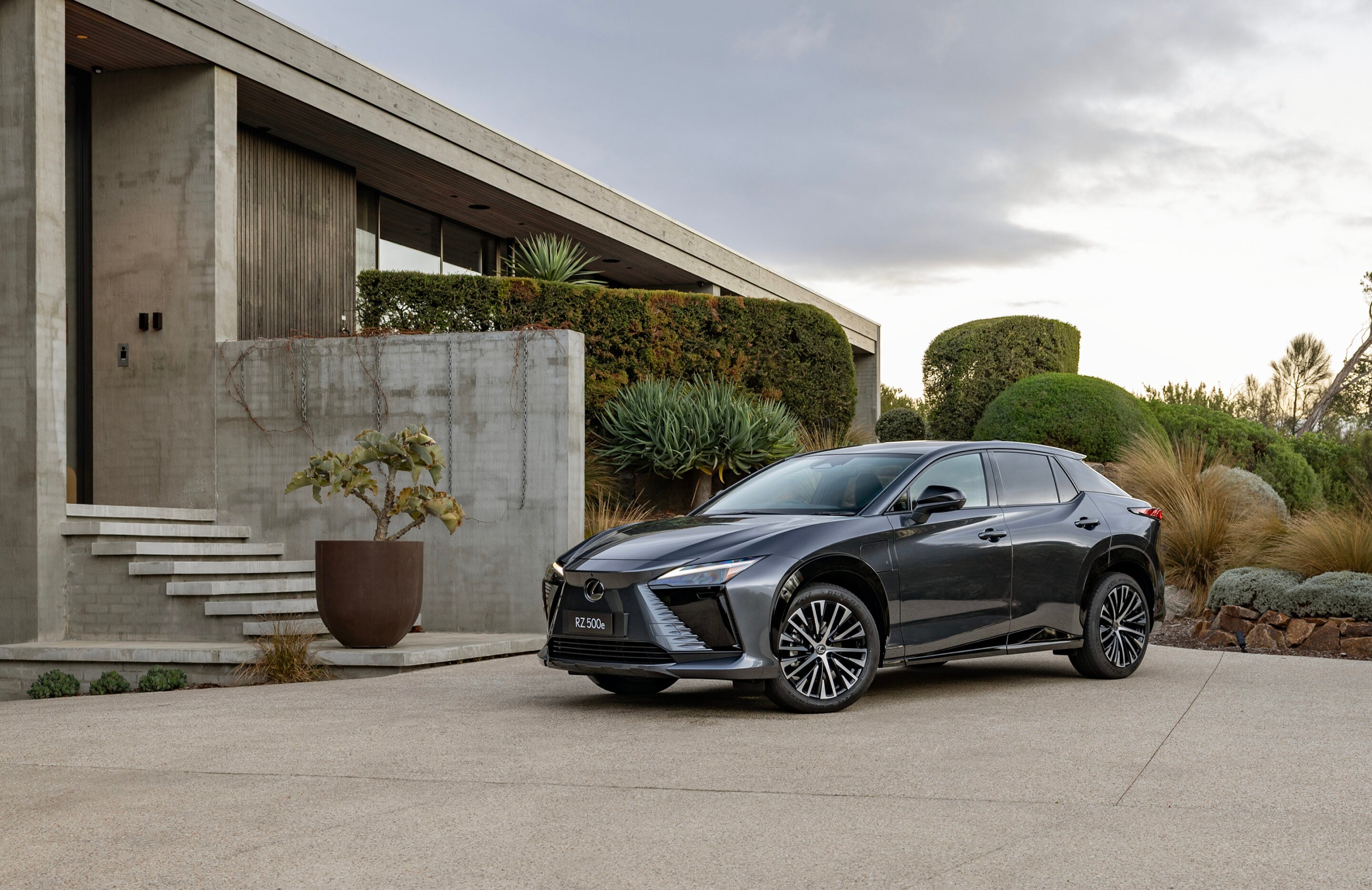
How much is the Lexus RZ?
Lexus has emphatically addressed what was arguably the previous RZ’s biggest flaw – price – the accountants running the razor over the spreadsheet with gusto.
The 2026 Lexus RZ range kicks things off with the $84,500 RZ500e Luxury, a headline-grabbing $36,559 less than the model it replaces.
It’s a similar story for the mid-spec RZ500e Sports Luxury, its new $91,000 sticker price a gob-smacking $42,059 cheaper than the outgoing model.
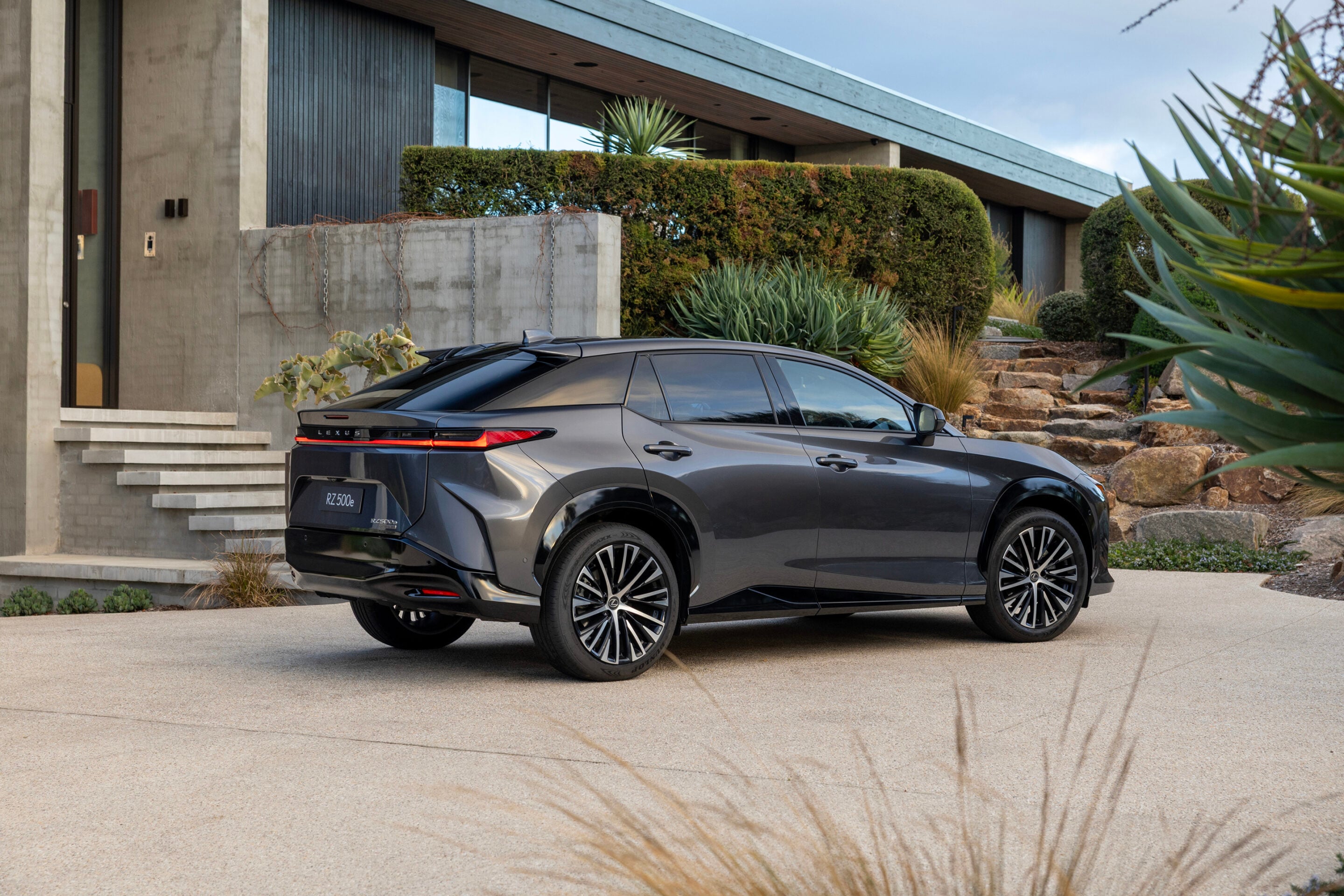
At the top of the RZ tree, the new flagship 550e F Sport asks for $105,000 and it’s here where we see new technologies – a steer-by-wire steering system complete with F1-style steering yoke; and what Lexus calls Interactive Manual Drive, an artificial gearshift system much like that found in Hyundai Ioniq 5 N and 6 N.
All models, no matter the grade, are generously equipped with 20-inch alloys, dual-zone climate control, LED dusk-sensing headlights, electric tailgate, power adjustable heated front seats, 14.0-inch touchscreen with wireless Apple CarPlay and Android Auto connectivity, satellite navigation, and wireless phone charging.
The entry-level RZ 500e Luxury alone features NuLux synthetic leather seat trim and a 10-speaker Panasonic sound system with the mid-spec RZ 500e Sports Luxury and flagship RZ 550e F Sport scoring Ultrasuede upholstery, a premium 13-speaker Mark Levinson sound system. Additionally, the two high grade models bring a panoramic roof, ventilated front seats, heated rear outboard seats, a heated steering wheel, and head-up display.
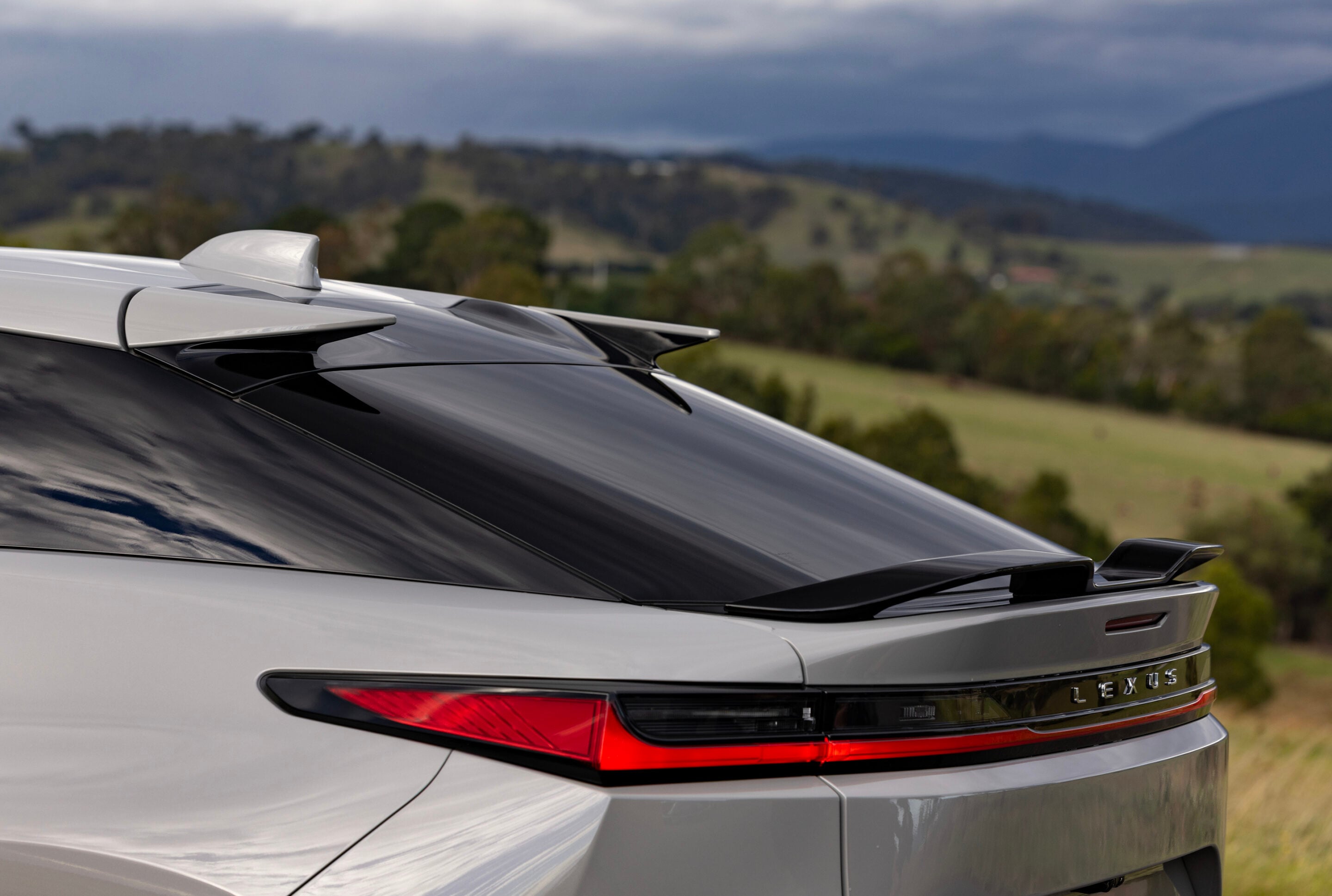
The flagship RZ 550e F Sport, underscoring its sportier demeanour, adds black 20-inch alloy wheels, exterior styling elements including a rear spoiler, steer-by-wire system with F1-style steering yoke, sports seats up front, ‘manual’ drive mode, and aluminium pedals.
How powerful is the Lexus RZ?
Two electric motors provide the shove for all variants. In the two 500e models – Luxury and Sports Luxury – they combine for 280kW, a significant increase of 50kW over the old model.
The new range-topping 550E F Sport features the same twin-electric motor setup, but ups the power ante to 300kW. Those power boosts have improved straight line acceleration, with 0-100km/h claims of 4.6 seconds for 500e models, while the 550e F Sport is marginally quicker at 4.4 seconds.
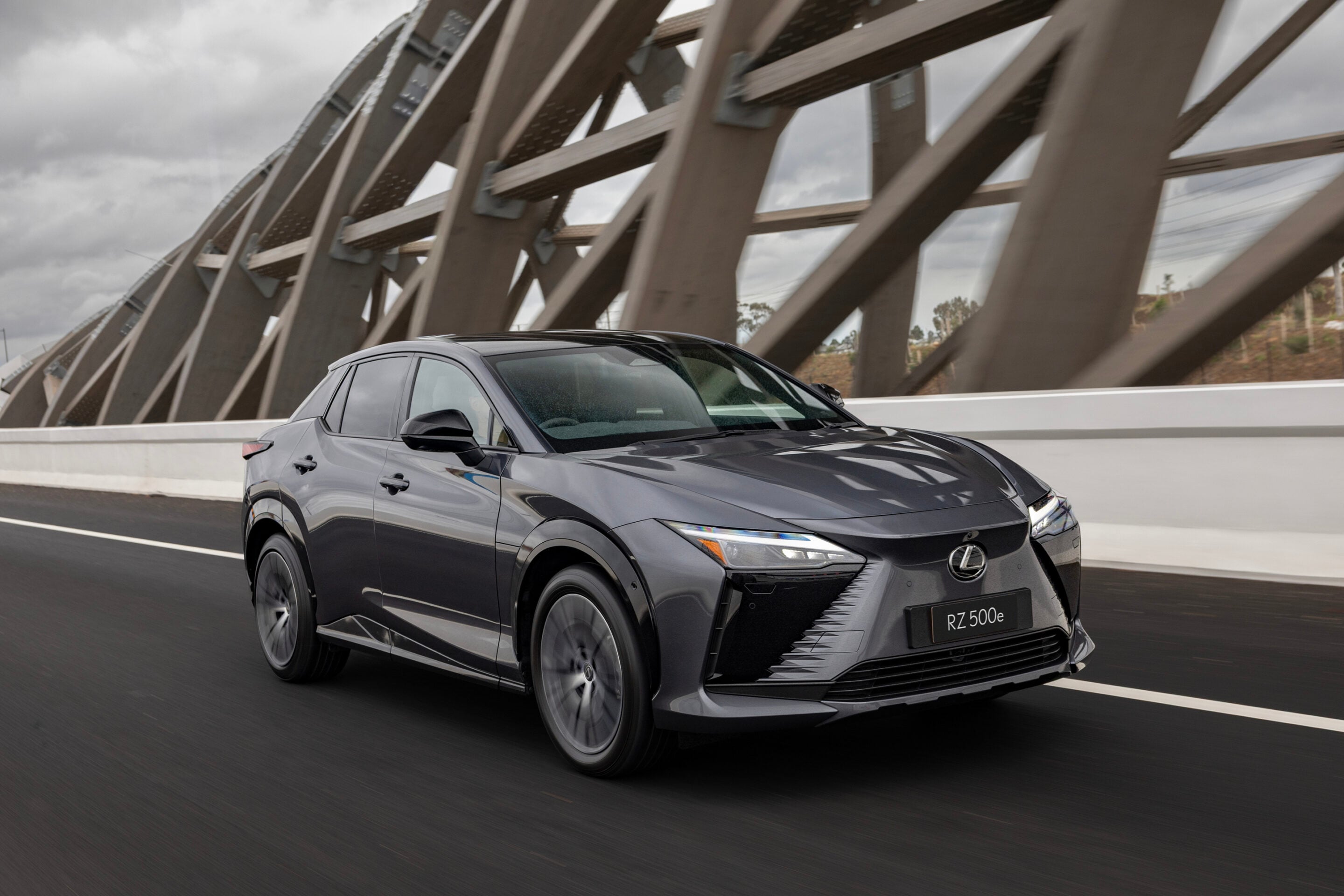
What is the driving range of the Lexus RZ?
The revamped Lexus RZ range has addressed one of the major shortcomings of the outgoing model – driving range.
New battery technology with improved density has resulted in significant gains without wholesale increases to battery size.
Battery size has increased to 74.7kWh in both Sport and Sports Luxury models, boosting the claimed driving range, now pegged at 460km (WLTP) up from the 400km claim of the older model.
The new RZ 550e F Sport is fitted with a slightly larger 77kWh battery, although thanks to its extra juice and weight, its WLTP-quoted range is lower at 437km.
Recharging the battery is now faster too, with the maximum AC rate doubled to 22kW, now taking 3.5 hours from 0-100 per cent. DC fast charging is capped at 150kW bringing a 10-80 per cent top-up time of 28 minutes.
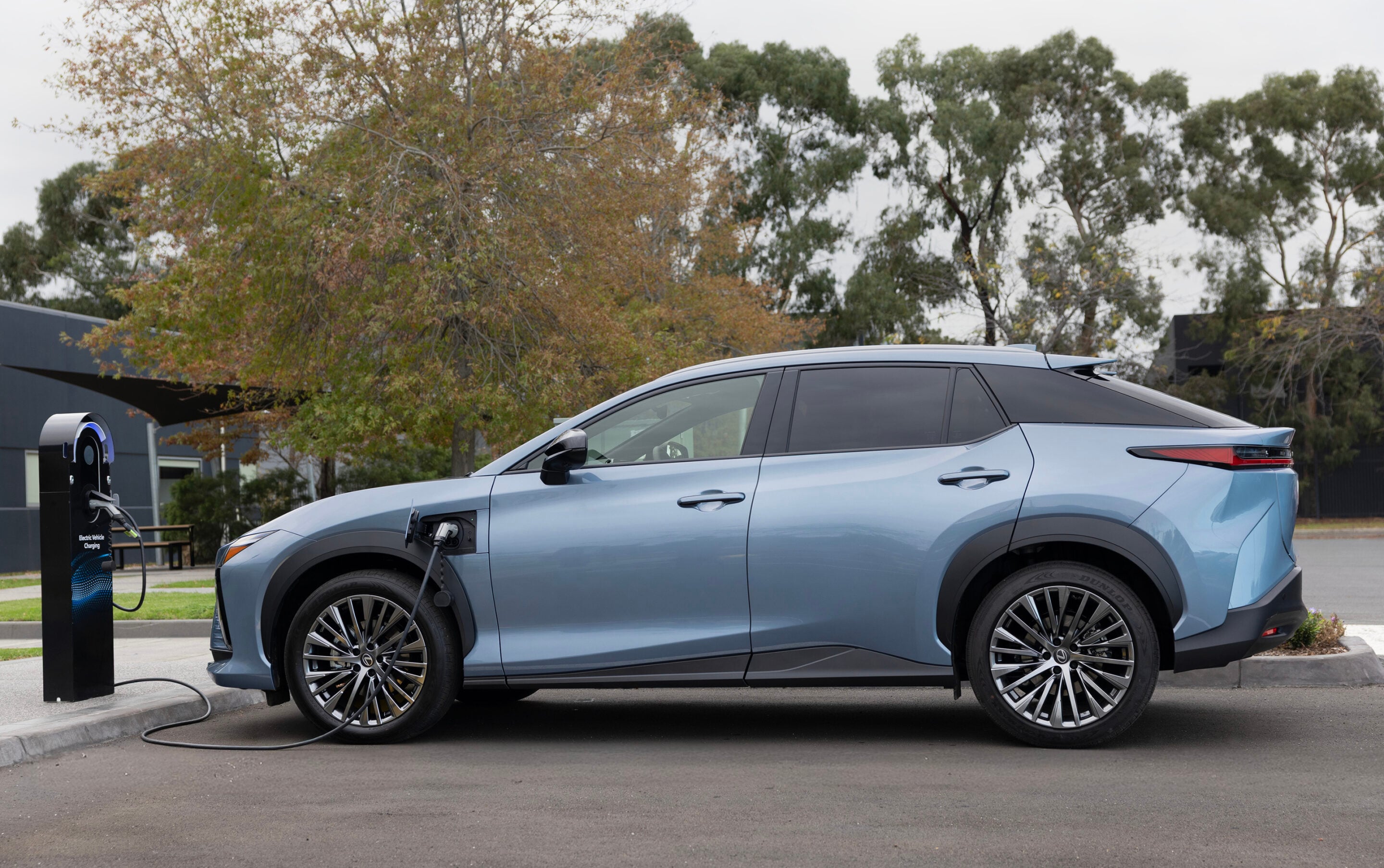
Lexus claims energy efficiency has improved over the outgoing model, now quoted at 18kWh/100km for RZ 500e models, and a slightly higher 18.8kWh/100km for the more powerful (and heavier) RZ 550e F Sport.
Lexus’ launch drive didn’t really provide the canvas for real world energy consumption readings, its blend of long highway stretches and tantalising winding and twisting stretches of tarmac showcasing performance over energy use. We’ll wait until we cycle the various RZ models through the Whichcar by Wheels garage before making a definitive judgment on energy use.
How practical is the Lexus RZ?
Inside, the Lexus RZ treads a familiar path, with thoughtful design, top-notch materials and a fit-and-finish that ranks amongst the best in the segment.
Infotainment comes via a carried-over 14.0-inch touchscreen with the usual suspects – Apple CarPlay, Android Auto, sat-nav, – all accounted for.
Lexus only had Sports Luxury and F Sport models available at launch, so I can’t speak to the cabin treatment of the entry-level 500e Luxury, suffice to say that aside from a few amenities and niceties, and the use of synthetic ‘leather’ on the seats, there’s not a lot to differentiate the trio.
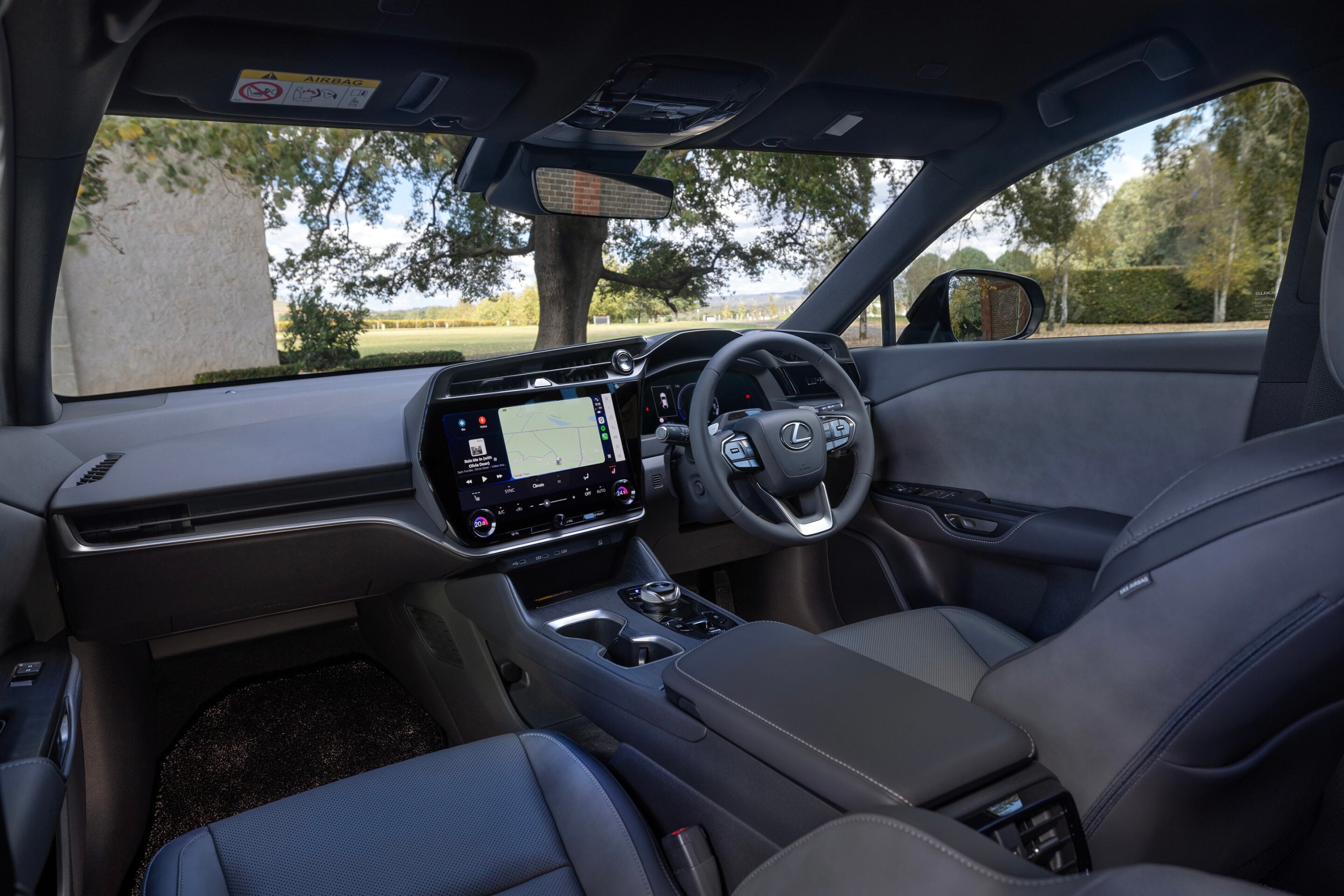
Both Sports Luxury and F Sport variants make good use of their more expensive price points, a highlight the Ultrasuede interior trim that extends to the door cards which have been enhanced by an intricate laser-cut pattern that looks a million bucks.
The sense of space inside is enhanced by the panoramic glass roof, paying dividends in the second row. A completely flat floor frees up vital foot and leg room, adding to the overall feeling of comfort and luxury.
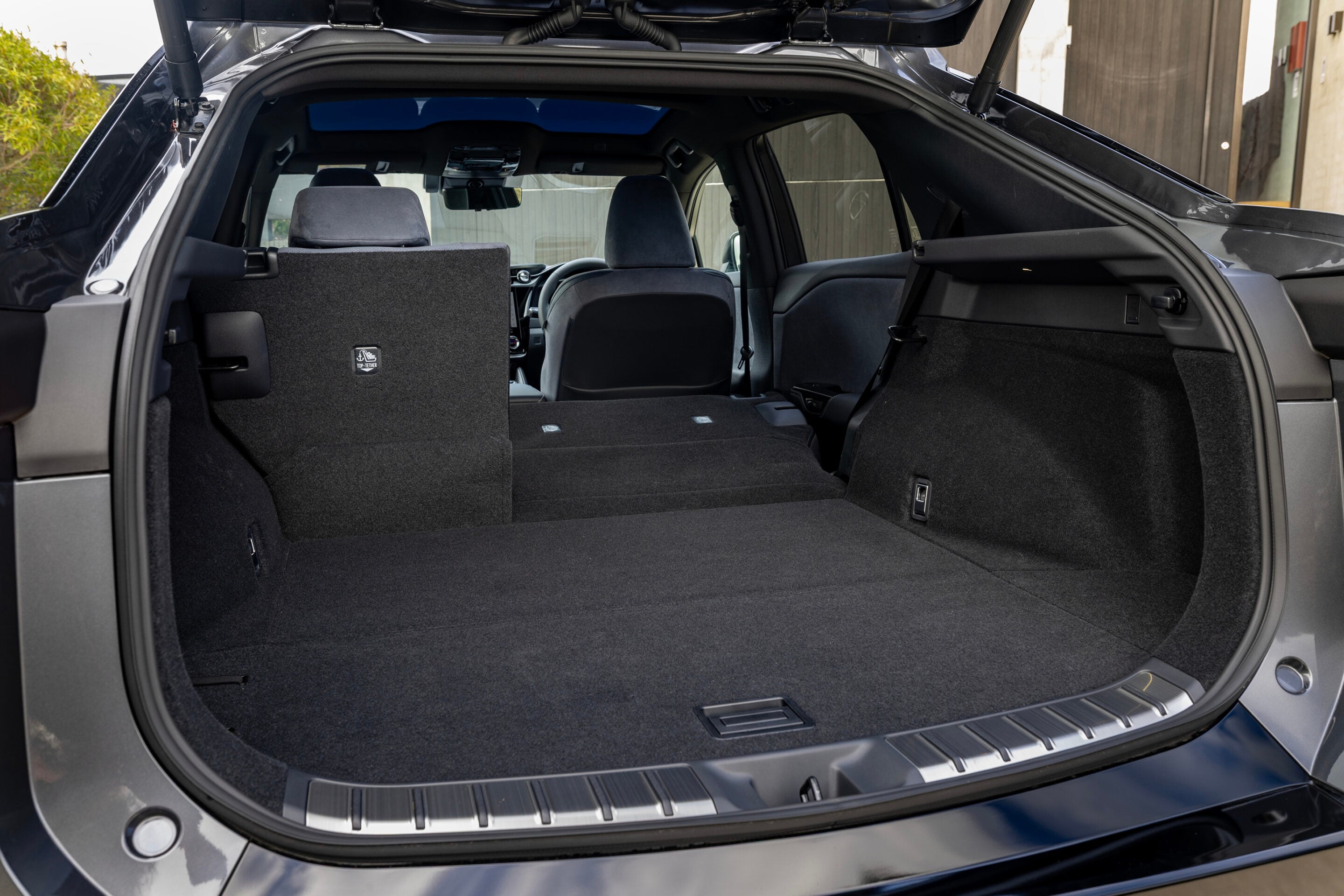
Boot space is carried over from the old model, quoted at 522L (seats up) and 1451L (second row folded). There’s no under-bonnet storage.
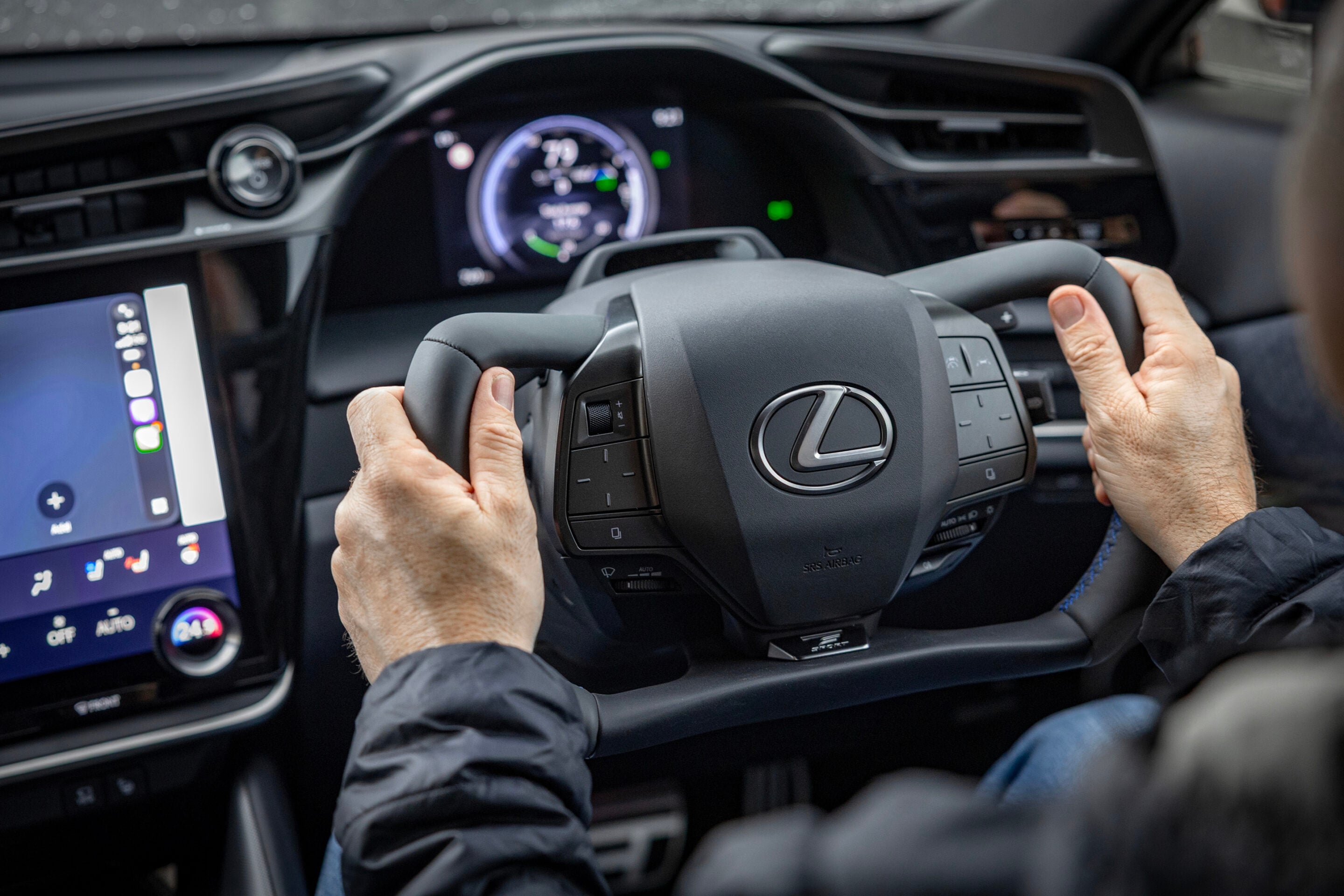
But the headline act of the cabin, at least in RZ 550e F Sport trim, is the F1-style steering yoke, connected to a steer-by-wire system. It’s only available in the flagship F Sport variant and brings not only a sense of theatre, but also fundamental changes to the way the RZ drives.
Beyond its racecar aesthetic (and its trick steer-by-wire system), the yoke serves other practical purposes – thanks to its dimensions, there’s more leg room for the driver while the view through the windscreen and onto the instrument cluster is unhindered by the rim or spokes of a traditional wheel.
What’s the Lexus RZ like to drive?
There’s not much between the 280kW Sports Luxury and 300kW F Sport, certainly not in terms of performance. Yes, the F Sport is, on paper, fractionally quicker in a straight line but the 0.2s difference is so small you don’t feel like you’re being short-changed out on the road if you opt for the more affordable of this pair.
Both variants settle into easy and quiet lopes, never feeling overly-stressed. Ambling along at city speeds is whisper quiet, a hallmark of electric powertrains. So too throttle responsiveness when you step on the ‘gas’, the RZ surging forward with ease in an entirely predictable manner. Like so many EVs of its ilk, the RZ is easy to drive, a relaxed and comfortable medium SUV, whether curling on the highway or trawling the suburbs.
Refinements to the chassis, along with tweaks to the suspension for this update, bring refined road manners. Bump absorption is excellent while everyday road nasties are dispatched with cossetting ease. Body control, during more adventurous cornering, remains nicely in check too.
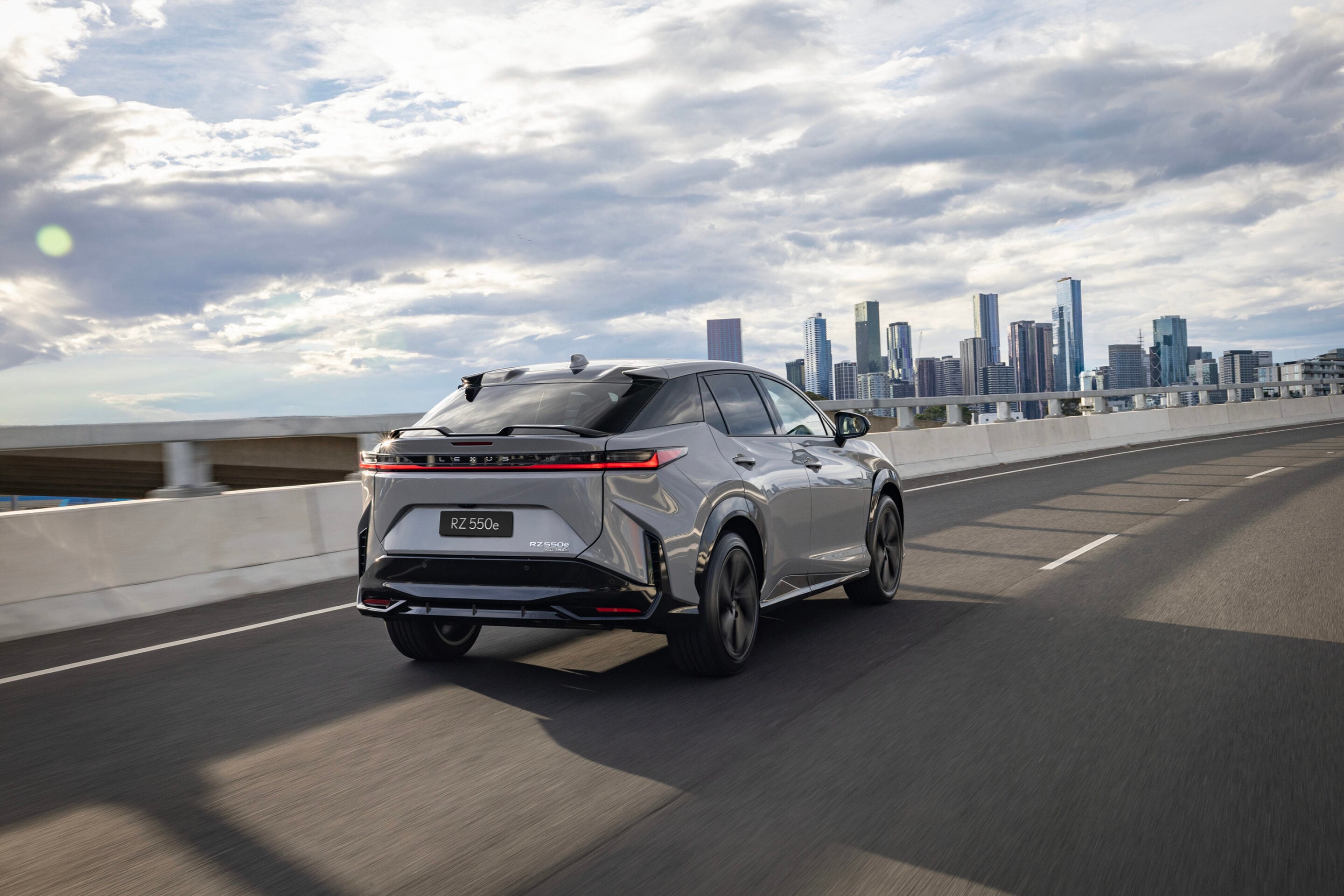
And it’s here where the F Sport’s steer-by-wire system shows its true hand. With just 200-degrees turn end to end – 100 degrees each left and right from centre, doing away with hand-over-hand steering – inputs are much smaller than a conventional setup. It doesn’t take long to get used to, your mind adjusting quickly as you begin to enjoy the sharp accuracy of even the most minor adjustments. It’s a system that rewards precision.
The conventional steering in the Sports Luxury doesn’t suffer by comparison: still accurate, still responsive, just needing more work from the driver.
As for Lexus’ hyped Interactive Manual Drive, activated in the F Sport only by a press on the ‘M’ (presumably for Manual), button? It’s a miss, filling the cabin with an overly-synthesised sounding imitation of a trad engine and gearbox that’s entirely unconvincing. Hyundai does it better.
What safety technology does the Lexus RZ have?
All Lexus RZ variants are equipped with the brand’s Safety Sense suite of advanced driver assist and safety technologies including autonomous emergency braking, lane-keep assist, adaptive cruise control, blind-spot monitoring, rear cross-traffic alert and driver attention monitoring. A complement of 10 airbags covers both rows.
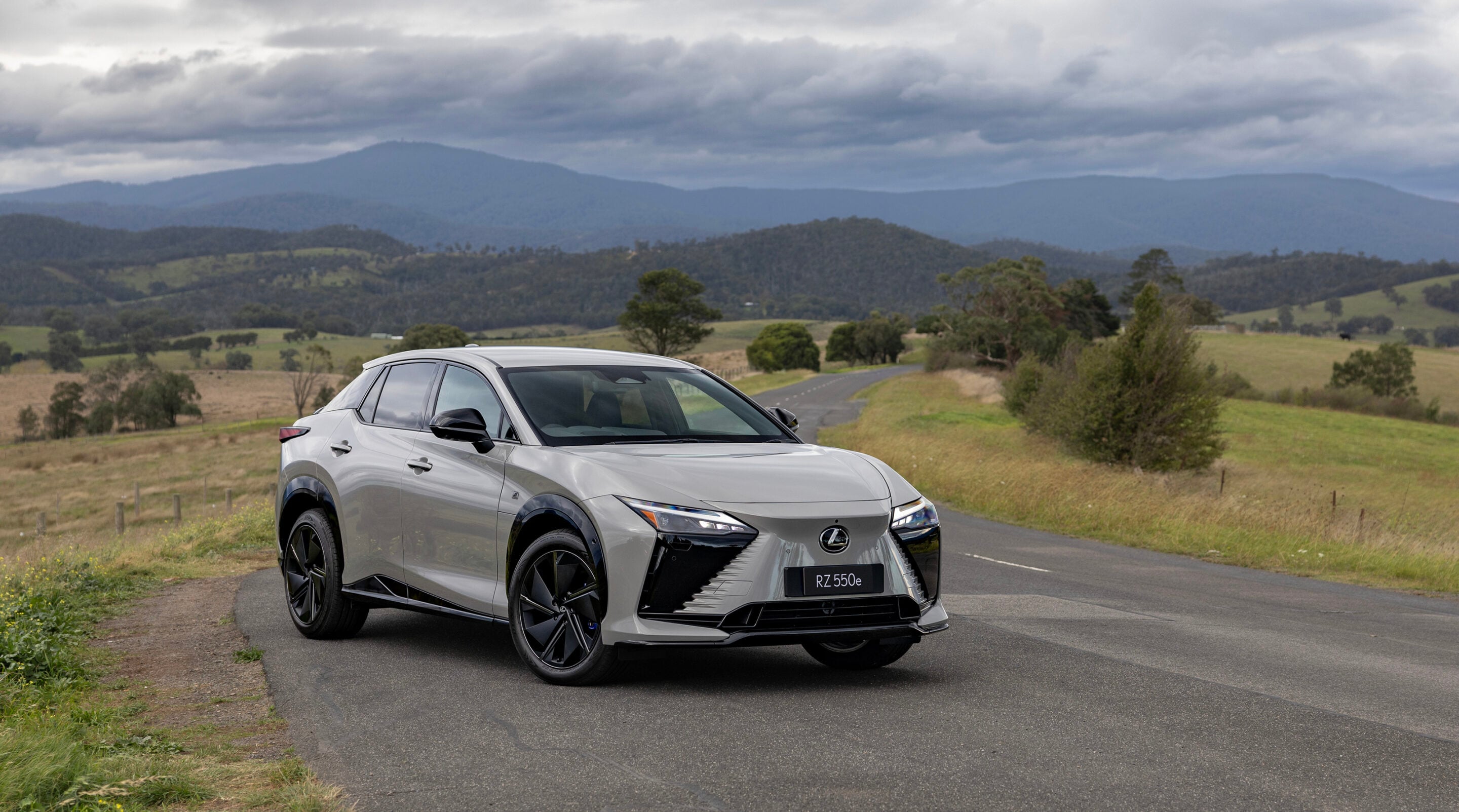
ANCAP awarded the Lexus RZ a five-star safety rating in 2023, a score that should carry over to this 2026 update.
What’s verdict on the Lexus RZ?
Lexus should be applauded for acknowledging the inherent flaws of the original RZ, and then addressing those same flaws just three years after launch.
Improvements across the board have resulted in a measurably better mid-size SUV compared to its predecessor. More range, more power and more on-road refinement are the headliners, with steer-by-wire of the F Sport the supporting act.
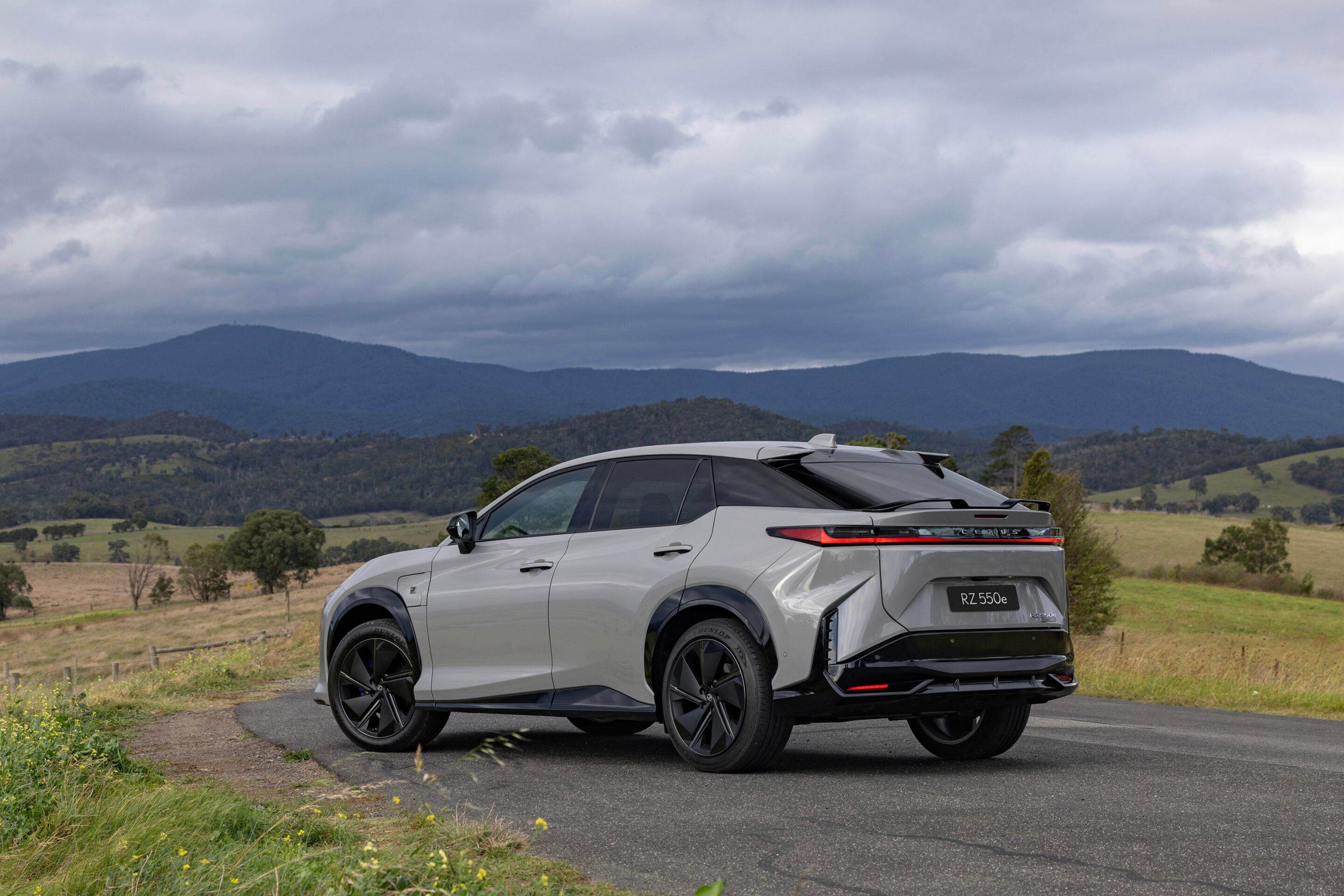
The new RZ isn’t without its flaws still, but they pale into almost nothingness when measured against the model it replaces. The F Sport could have done without the fake gearshifts, which is unconvincing at best, and simply awful at worst, but at least it’s a feature that drivers need to opt-in to, meaning it will lie dormant and unused. And while improved driving range is always welcome, in a segment where 500-plus kilometres is becoming increasingly common, the RZ’s 460km claim at its best feels a little below par.
But, saving the best for last, it’s the RZ’s price realignment that arguably represents the biggest improvement, a realignment that brings the mid-sized SUV much closer to its rivals, which should see Lexus now in the conversation around premium mid-size electric SUVs.
Lexus RZ 500e Luxury standard features
- 20-inch alloy wheels
- Dusk-sensing automatic LED exterior lighting
- Electric tailgate
- ‘NuLux’ synthetic leather upholstery
- 8-way electric front seats with heating
- Power steering wheel adjustment
- Dual-zone automatic climate control
- 7.0-inch digital driver’s display
- 14.0-inch touchscreen
- Satellite navigation
- Wireless Apple CarPlay and Android Auto
- Wireless phone charger
- 10-speaker Panasonic sound system
RZ 500e Sports Luxury adds
- Two-tone alloy wheels
- Semi-autonomous parking functionality
- Upgraded LED headlights with adaptive high beam
- Dimming panoramic glass roof
- Suede upholstery
- Ventilated front seats
- Heated outboard rear seats
- Heated steering wheel
- Head-up display
- 13-speaker Mark Levinson audio
- Digital rear mirror
RZ 550e F Sport adds
- Black alloy wheels
- Sportier exterior styling, including a rear spoiler
- Steer-by-wire
- Yoke steering wheel
- Manual drive mode
- Front sports seats
- Aluminium pedals
Specs
| Model | Lexus RZ |
|---|---|
| Price | From $84,500 before on-road costs |
| Drivetrain | Dual-motor electric, AWD |
| Peak outputs | 280kW (500e) / 300kW (550e) |
| Transmission | Single-speed |
| 0-100km/h (claimed) | 4.6s (500e) / 4.4s (550e) |
| Battery | 74.7kWh (500e) / 77kWh (550e) |
| Claimed WLTP range | 460km (550ee) / 437km (550e) |
| Maximum DC fast charge speed | 150kW |
| Claimed 10-80% charge time | 28 minutes |
| Dimensions (l/w/h/wb) | 4805/1895/1635/2850mm |
| Kerb weight | 2095-2155kg |
| Warranty | 5-year/unlimited km |
| On sale | Now |
The vehicle theft crisis in Victoria continues to worsen, according to the latest crime statistics published by the Insurance Council of Australia, which announced figures for the 2025 calendar year.
Motor vehicle theft across all other states fell, but Victoria’s bill of $243 million across 12,500 claims was higher than the combined total for other states included in the Insurance Statistics Australia (ISA) data. That ISA report covers Queensland, New South Wales, South Australia, and Western Australia, along with the Victorian stats.
Victoria’s metropolitan regions represented 10,400 claims, up 30 per cent by volume. The cost of those claims came to $205 million, a massive 42 per cent higher than in 2024.
Victoria’s over-representation drove national theft figures up by 2.5 per cent, to 29,000 reported thefts nationally. With Victoria’s numbers isolated, the national snapshot shows a 10 per cent reduction in claims and an 8 per cent reduction in value for all other states.
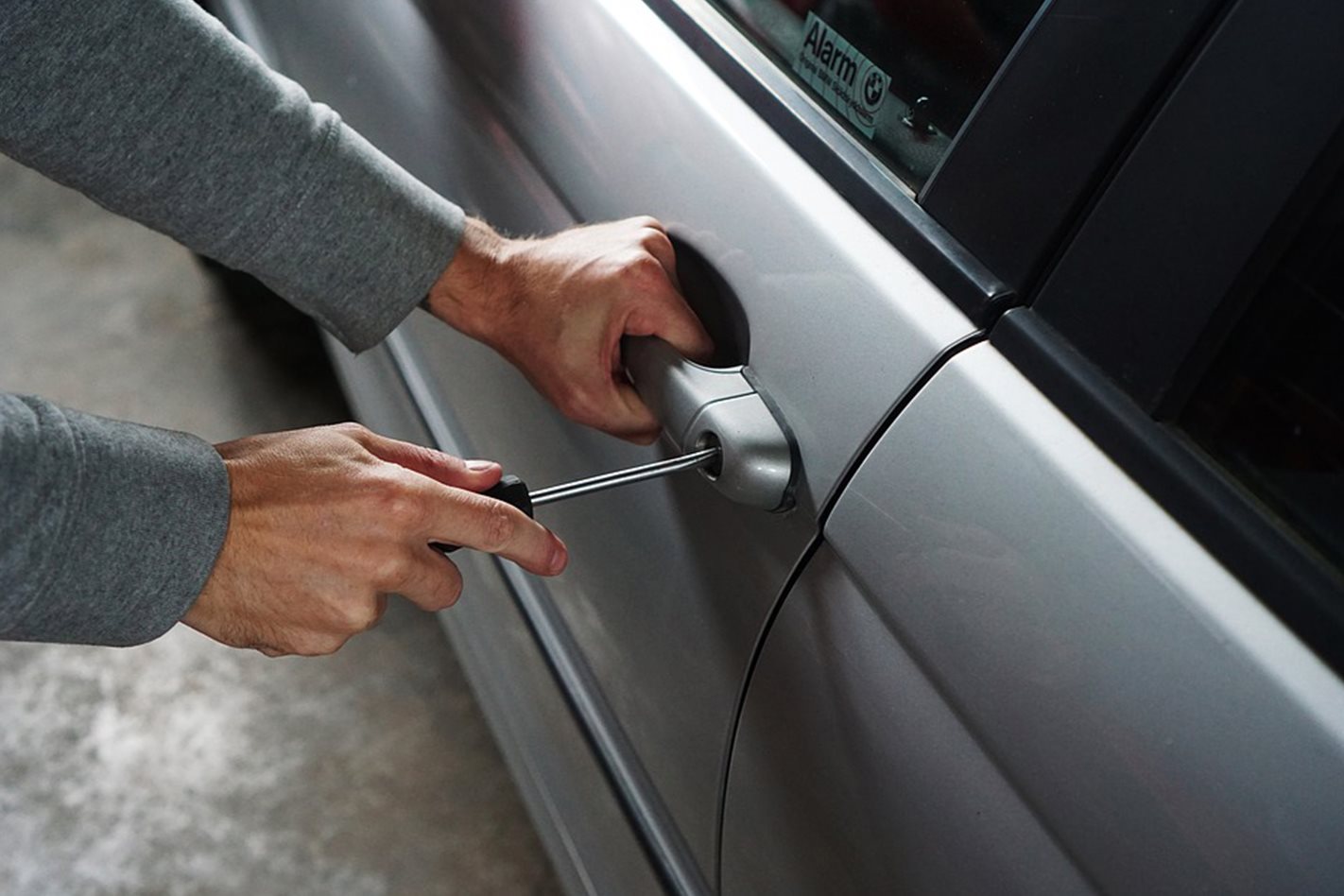
The biggest reductions in motor theft claims were reported in Western Australia, down 15 per cent, South Australia, down 14 per cent, and Queensland, which reported its biggest ever improvement, down 12 per cent.
New South Wales figures also dropped, although the decrease was less pronounced, with vehicle thefts down 1.6 per cent in 2025 compared to 2024’s results.
Data reveals that metropolitan thefts outpaced those in country areas in South Australia, Victoria, and Western Australia. The reverse is true in New South Wales and Queensland, with more thefts in regional zones than in metro areas.
In a statement, Andrew Hall, the CEO of the Insurance Council of Australia, said, “A car is stolen or broken into every 42 minutes in Victoria. This level of crime is not acceptable.
“Each year, Victoria’s numbers stand apart from the rest of the country, and that gap is widening.
“While every other state is effectively reducing car theft, in Victoria the volume of claims and the costs involved remain at unacceptable levels, and that sustained pattern is what’s most concerning.”
Data collected by the Insurance Council of Australia shows that the number of comprehensive insurance policies rose by 2.2 per cent nationally.
Theft frequency, based on the number of thefts as a percentage of policies held, fell in all states except Victoria, where it rose 31 per cent.
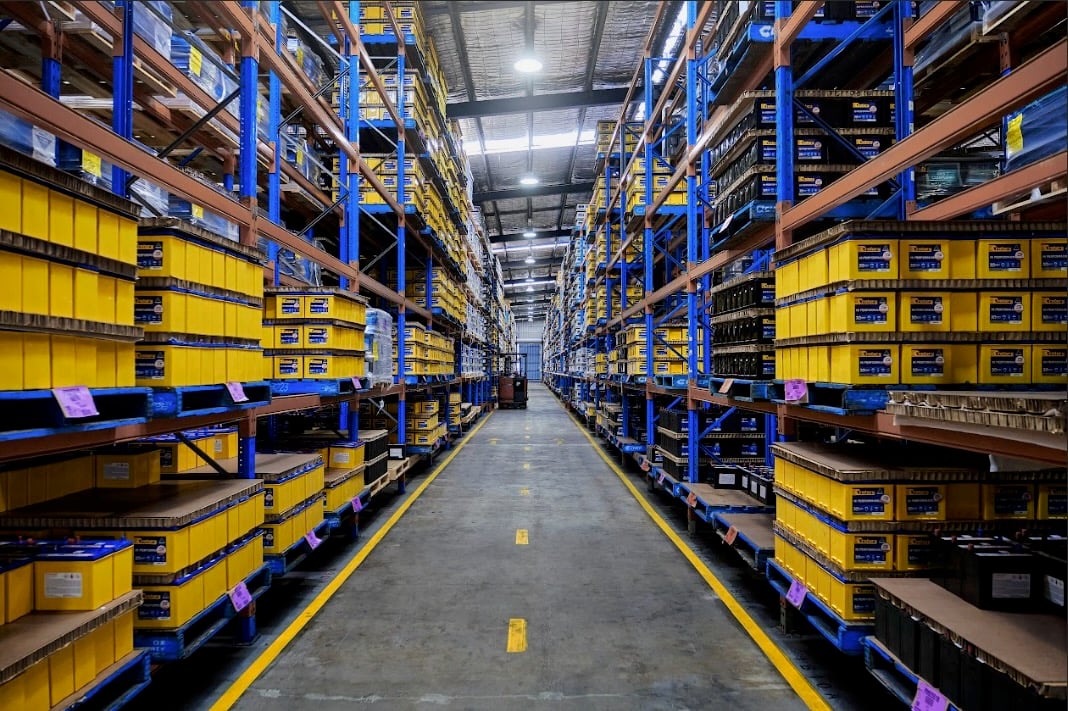
Century Batteries, Australia’s oldest battery manufacturer, has urged Australians to pay closer attention to their car battery as winter sets in across the country, warning that the likelihood of driving less combined with colder weather can significantly increase the risk of failure.
According to the brand, many drivers spend less time behind the wheel during the colder months and that can have an unintended impact on battery health.
Andrew Bottoms, Marketing Manager, Automotive at Century Batteries, said car batteries rely
on regular use to stay charged – and winter can quickly expose underlying issues. “Car batteries don’t perform well when they’re not used regularly,” Mr Bottoms said.
“When a vehicle sits idle, the battery continues to drain due to onboard electronics like alarms and sensors. If you’re only taking short trips, the battery may not have enough time to recover the charge used to start the engine.”
Cold weather further compounds the issue, slowing the internal chemical reactions that allow
batteries to deliver power – at the same time as engines require more energy to start.
To help drivers stay on the road this winter, Century Batteries recommends a few simple steps:
- Keep your battery charged: If a vehicle isn’t being used regularly, recharge the battery with a suitable battery charger to help maintain performance.
- For second vehicles or cars being stored for longer periods, make sure the battery is fully charged before placing the vehicle in the garage and regularly top up the charge while it’s not in use. Recharging the battery approximately once every six weeks is ideal.
- Take the car for a longer drive when you can: Aim for at least one 20–30 minute trip each week to help properly recharge the battery.
- Reduce repeated short trips: Combining errands can minimise the number of cold starts and reduce strain on the battery.
- Keep your battery clean and secure: Dirt, corrosion and loose connections can impact performance over time.
- Be mindful of unused vehicles: If a car isn’t being driven regularly, consider using a maintenance charger.
- Get your battery tested: A quick check can identify early signs of wear before it leads to
failure.
“If your battery is more than three years old, it’s worth having it tested before winter really sets
in,” Mr Bottoms said. “A simple check now could save you from the inconvenience of being stranded later.”
A heavily-camouflaged photo of what appears to be a GAC Hyptec HT has been caught this week by an eagle-eyed Whichcar by Wheels reader, Justin Watts, in Melbourne.
The Chinese-owned Guangzhou Automobile Group (GAC) entered the Australian market late last year with a range of petrol, electric and plug-in hybrid vehicles including the Aion electric hatchback, the petrol-powered Emzoom small SUV, and M8 PHEV people mover.
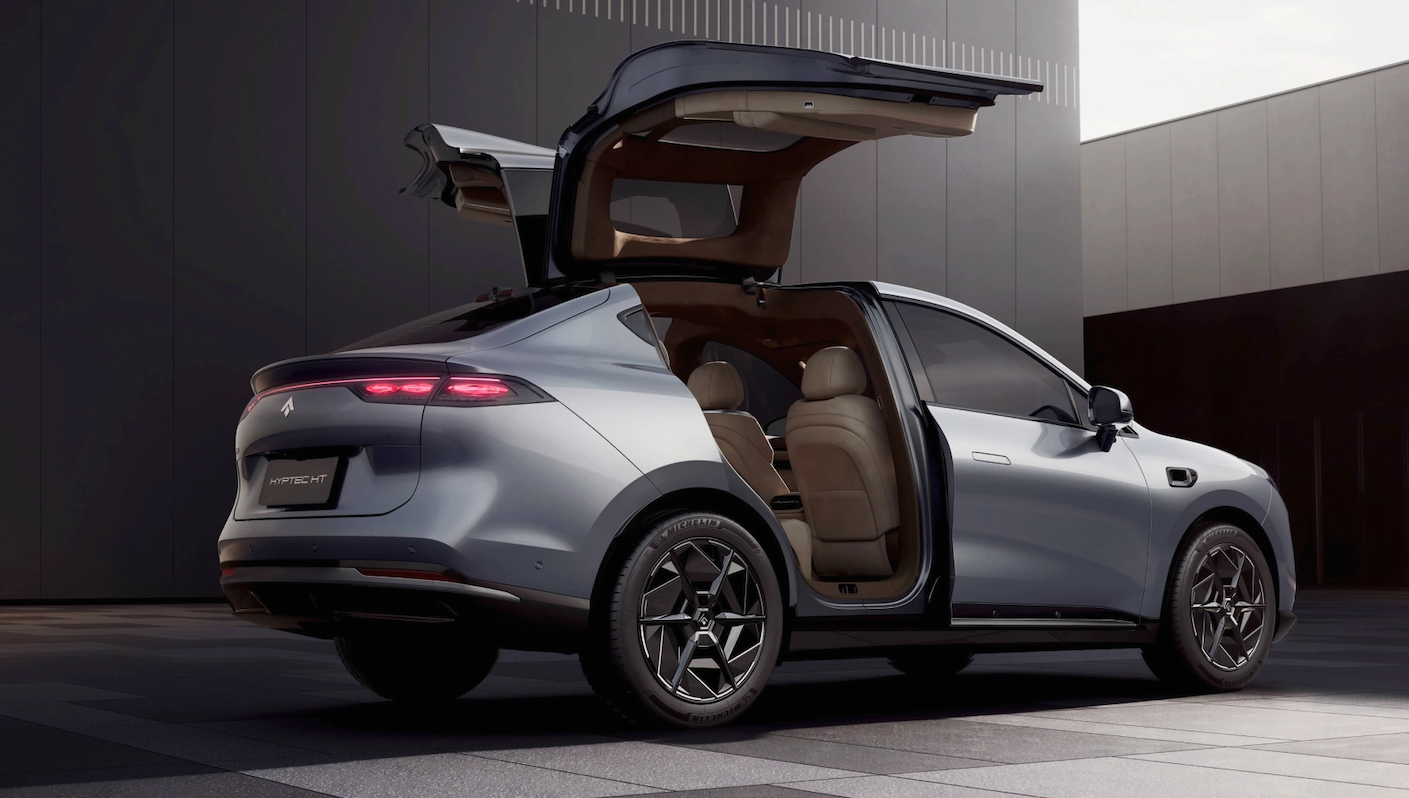
The GAC Hyptec HT, a mid-size electric medium SUV, has been designed for global markets, to go up against the likes of Tesla and BYD in a rapidly-expanding segment. Already available in other right-hand drive markets such as Hong Kong and Singapore, the sleek coupe-like SUV is powered by a rear-mounted 180kW/355Nm electric motor, with a claimed driving range of around 600km. Its stand-out feature are the gullwing rear doors, a la Tesla Model X.
While there has been no confirmation that the Hyptec HT would make its way to Australia, the brand’s local bosses have previously told media it was eyeing rapid expansion, aiming to be a top 10 brand in Australia by 2028.
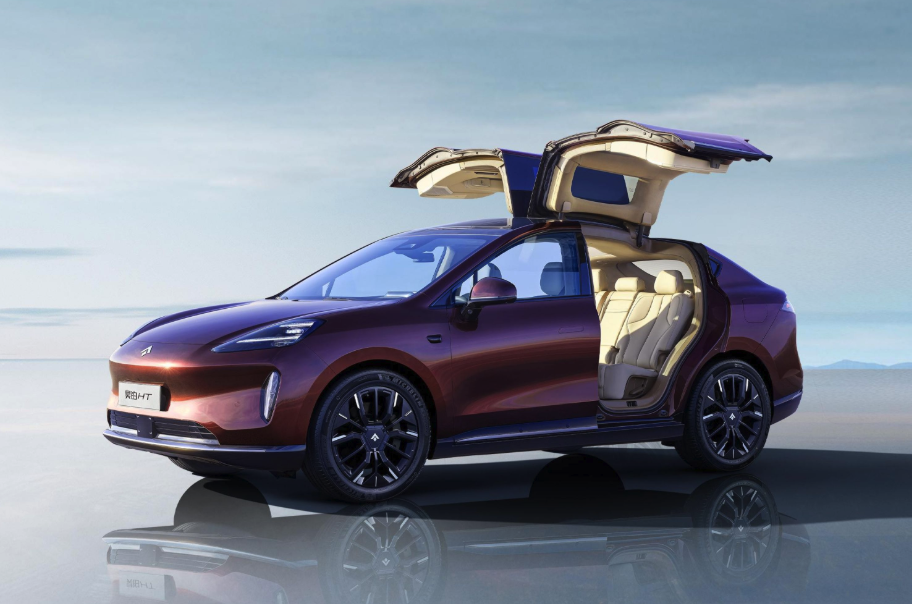
The Hyptec HT has already been seen in Australia, with the brand lifting the veils of the sleek SUV at its brand launch in Sydney late last year. However, the camouflaged model in our spy photo is the clearest indication yet that GAC is considering bringing the mid-size SUV to Australian showrooms.
The New South Wales Government has announced plans to overhaul road laws affecting medicinal cannabis users, paving the way for eligible drivers to avoid losing their licences solely because they test positive to THC (tetrahydrocannabinol).
The proposed changes, which will be introduced to State Parliament, aim to create a new framework for drivers who legally use prescribed medicinal cannabis while maintaining existing penalties for motorists found to be impaired behind the wheel.
Under the current rules, drivers can lose their licence if roadside testing detects THC, regardless of whether they are impaired at the time. The proposed reforms would introduce a three-strike system for registered medicinal cannabis patients.

Drivers enrolled in the scheme would still be required to undergo roadside drug testing and would face an immediate 24-hour driving prohibition if a sample is taken. However, if testing shows THC levels below a prescribed threshold, no further action would be taken.
Drivers who record THC levels above the threshold would receive a warning letter for a first or second detection within a two-year period. A third detection within the same timeframe could result in fines of up to $704 and a minimum three-month licence suspension.
Standard drug-driving penalties would continue to apply where alcohol is detected, multiple drugs are present, or a driver is found to be impaired.
The changes follow years of advocacy from medicinal cannabis patients and supporters who argued existing laws unfairly penalised people using legally prescribed medication.
Independent Sydney MP Alex Greenwich, who has publicly spoken about his own medicinal cannabis use, previously argued that patients were being forced to choose between following medical advice and retaining their ability to drive.
Greens MP Cate Faehrmann welcomed the proposed reforms, describing them as long overdue given medicinal cannabis has been legal in Australia for a decade.
Premier Chris Minns said the government was attempting to balance patient needs with community safety.
To qualify, drivers would need to register with Transport for NSW, provide evidence of a valid medicinal cannabis prescription and complete an online education program focused on cannabis and road safety.
The proposed scheme would apply only to unrestricted licence holders. Learner and provisional drivers, as well as commercial vehicle operators, would remain excluded.
Drivers involved in serious crashes would still be subject to blood and urine testing, and the reforms would be reviewed after their first year of operation.
Nissan and Chery have officially announced that they are investigating contract manufacturing, which would see Chery cars built on Nissan’s UK assembly line.
The announcement details a non-binding Memorandum of Understanding. Essentially, the first stage in a working relationship between the two companies.
Nissan stresses that the Sunderland factory in England’s north-east would remain wholly-owned by Nissan, and that the factory’s employees would remain employed by Nissan, and not by Chery.
Nissan’s restructuring program has seen it close seven production sites around the world, leaving 10 in operation.
In May, Nissan UK revealed that production of the Juke, Leaf, and Qashqai would be consolidated to one of Sunderland’s two production lines. Recent figures reveal that Sunderland is currently operating at roughly half its 500,000 vehicle annual production capacity.
No indication has been given as to which Chery models could be built at the Sunderland site, however the line-up may not be restricted to Chery-badged cars, with the Chinese company also selling its Jaecoo, Omoda, and Lepas brands in the UK.
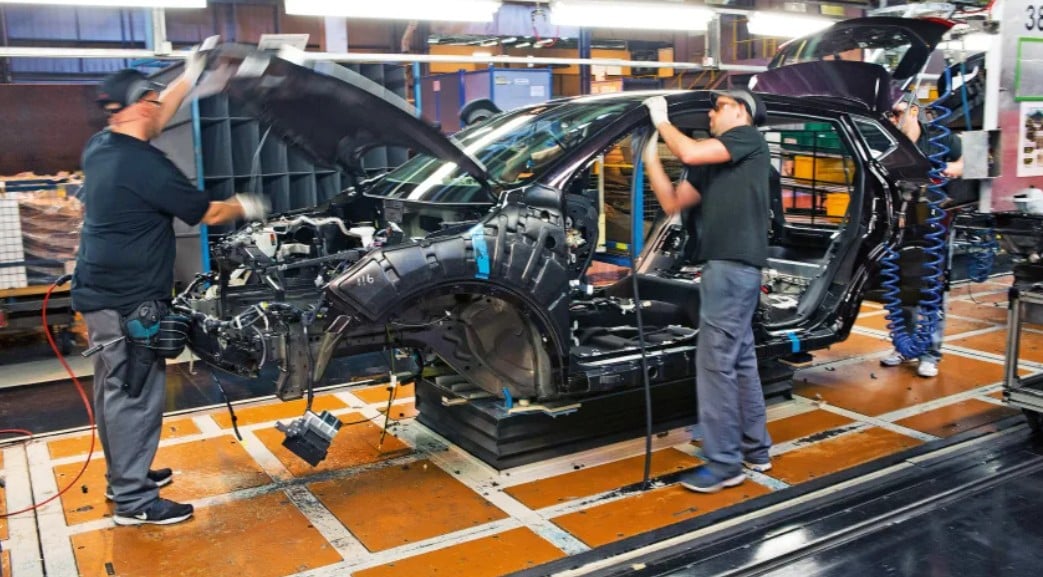
Nissan’s own ambition for Sunderland is to transform the site into a “flagship EV hub” for the brand, including production of the Leaf and new Juke EV, but that doesn’t necessarily limit the contract production potential to EVs only, with Chery production to be isolated to its own production line.
In a statement, Massimiliano Messina, chairperson of Nissan Africa, Middle East, India, Europe and Oceania, said, “This is an important step forward for our operations. We are looking forward to working with Chery International UK in the coming months to finalise a position that is optimal for both companies.”
All Chinese-sourced vehicles sold in the UK are covered by a 10 per cent import levy. UK assembly would avoid this tax, but also open the door to wider European distribution, with UK-built vehicles attracting no additional taxes when sold in the European Union.
The confirmation of talks with Chery also ends speculation that Nissan would offer factory space to its Chinese joint-venture partner, Dongfeng. That partnership remains unchanged and sees Dongfeng produce a number of Chinese-market Nissan models in China.
Nissan has targeted the 2027 financial year for the start of production of Chery vehicles at Sunderland.
Electric vehicles don’t make sense to everyone for every purpose. But, one segment they make absolute sense in, is the city-focused medium SUV segment. With most owners living and driving in the city, a range as long as 530km is more than capable of doing what owners will want their SUV to do. When that SUV delivers on a premium feel with attention to detail, and the asking price is still sub-$50,000, it’s even more noteworthy, considering the popularity of this segment.
How much does the MGS6 EV cost to buy?
With a driveaway price from launch of $49,990, MG is delivering a lot of electric medium SUV for the money, and despite the undeniable appeal of the more expensive AWD, the RWD still stands out.
The AWD model costs $56,990 drive away, with the large glass roof the chief visible difference between the two. Keep in mind, the two competitors firmly in MG’s sights, are the Tesla Model Y and BYD sealion 7, both more expensive than the RWD S6, but the BYD undercuts the AWD S6.
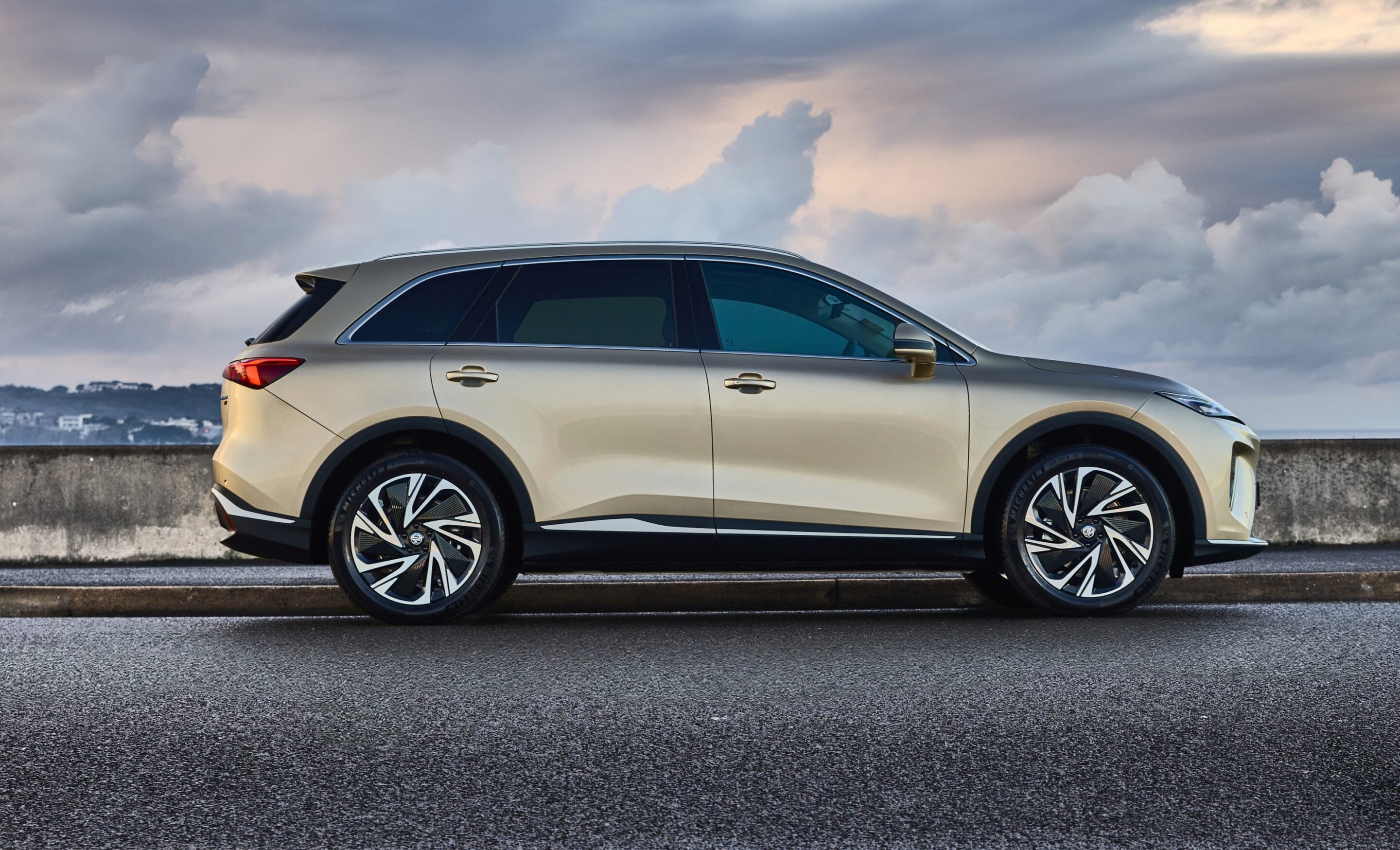
In MG-parlance, Essence is a high trim grade and as such, the S6 features an extensive list of standard equipment. They include: 20-inch alloy wheels, a tyre repair kit, automatic LED headlights, auto high-beam, electric tailgate, heated power-folding exterior mirrors, rain-sensing wipers, Bluetooth key, digital radio, on-board satellite navigation, 11-speakeraudio system, 50W wireless phone charging, heated, leather trimmed steering wheel, one touch up and down power windows, heated and ventilated front seats, heated outboard rear seats, six way electric driver seat and four way electric passenger seat, combination leatherette/suede trim, dual-zone climate control, rear air vents, and two front USB-C outlets and two rear USB-C outlets.
How powerful is the MGS6 EV?
While the AWD S6 has undeniable performance credentials that are hard to ignore – two electric motors and 266kW, 485km WLTP-claimed range, 0-100km/h in 5.1 seconds and average energy consumption of 16kWh/100km – the RWD still stands out.
The RWD generates 180kW and 350Nm from its single electric motor, with RWD and a 0-100km/h run of 7.3 seconds. Using a WLTP-claimed 14.5kWh/100km, it has a claimed range of 530km. Both models can charge from 10-80 percent in 38 minutes at the maximum 144kW DC fast charge rate, with 11kW AC charging also available.
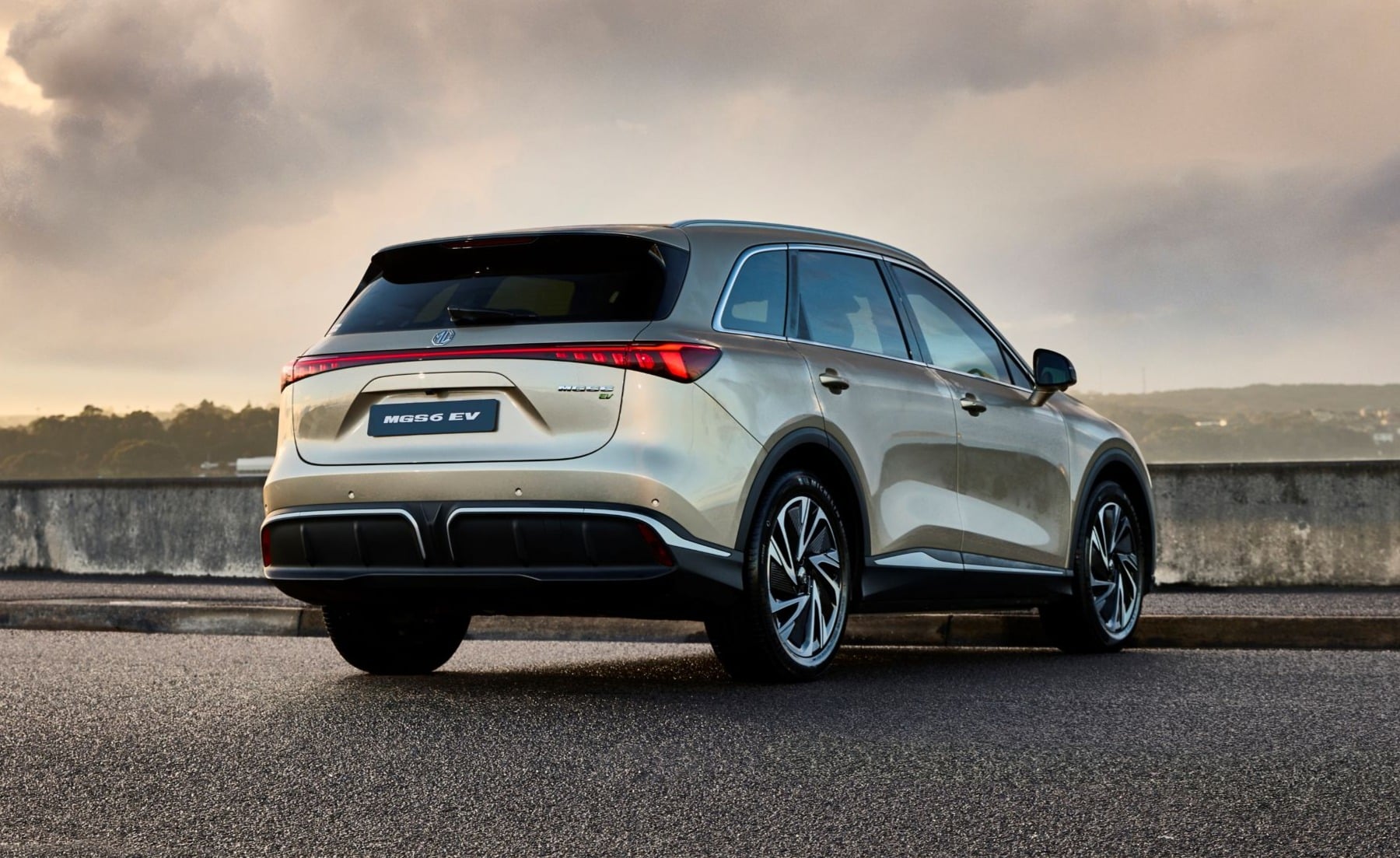
The S6 is enjoyably unfussy to drive. I turned the regenerative braking down to its second lightest setting, and settled on ‘Normal’ driving mode. There’s also ‘Eco’, ‘Sport’, ‘Snow’ and ‘Custom’ to choose from. The ride quality – S6 is on 20-inch rims – is excellent, and even sharp speed humps can’t unsettle the sense of calm inside the cabin. There’s a pleasing lack of wind and tyre noise, even at highway speed.
We’d like the electronic driver aids – like the attention monitor and speed limit warning – to be a little less intrusive in default settings, but that’s a minor gripe. Steering, braking, ride quality and insulation, then, are all exactly where this segment demands they be.
The AWD feels rapid, even in the default Normal driving mode. You certainly don’t need the power and performance it offers for around town running, so if you’re on a tight budget, don’t feel like you’re missing out by opting for the RWD. In fact, the sharp pricing of the RWD model, makes it our pick, and it’s fast enough to still feel sharp on the road. Given the only real difference, drivetrain aside is the glass roof, the RWD retains all the appeal of the AWD, especially in regard to the cabin finishing.
How energy efficient is the MGS6 EV?
Our AWD used 17.5kWh/100km on test, and cranked up to the fastest charge rate when plugged into a 150kW charger. Removed the extended highway run we do for Wheels testing, and you’ll use very close to the WLTP claim. The lightweight chassis, and compact battery design, improve range, but also chassis control and dynamic ability. You do of course also get one-pedal drive mode if you want, as well as vehicle-to-load capability as is becoming the norm.
Is the MGS6 EV practical?
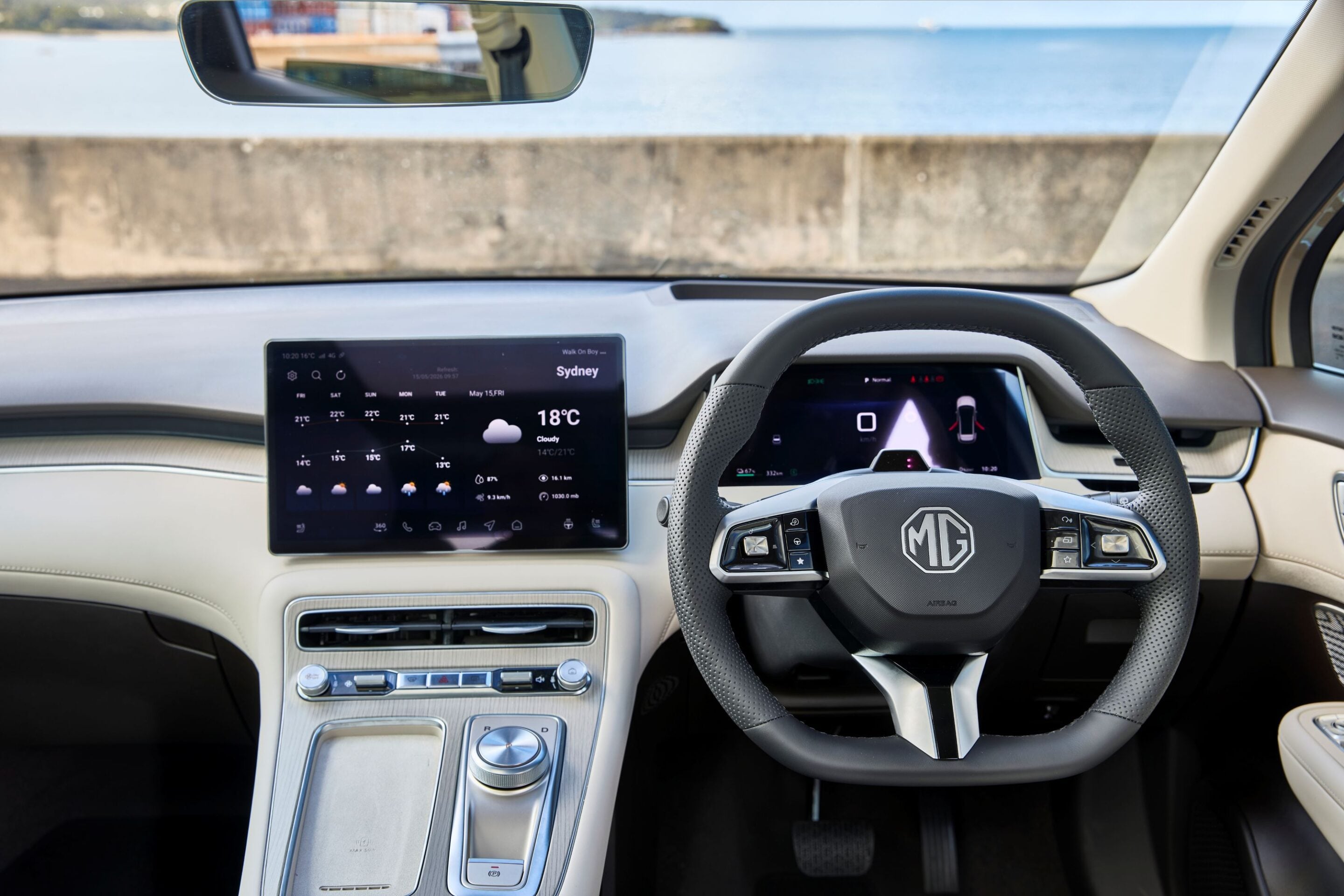
Thanks to the depth of the standard level of equipment, the S6 feels like a premium cabin, with quality materials, solid fit and finish and attention to detail. The controls, whether they be those on the steering wheel, the panel below the 12.8-inch touchscreen or the touchscreen itself – are all easy to decipher and use. We found the screen to be responsive to touch inputs, and while there’s plenty you can control once you start delving into the menu systems, it’s not so complex that you’ll be stuck there for hours working it out.
Two cabin finishes are available, the lighter colour scheme a $500 option, with both appealing for different reasons. I’d go for the dark finish if I had kids for example. Features like heated and vented front seats and heated outboard rear seats, add a touch of luxury.
The digital driver’s display, which is 10.25 inches is enhanced with the excellent head-up display. You can turn it off if you’d prefer, but we found it to be useful in testing. Most importantly, there’s a family-sized space on offer. The RWD gets an 86-litre frunk, while the AWD can store 67 litres. The boot space offers up 581 litres with the second row in use, expanding out to a hefty 1690 litres with the 60:40 split second row folded down. In the second row, the flat floor and sense of space at all points, makes for a comfortable long distance family hauler. MG quotes an ultra thin battery pack (110mm) as not just delivering power, but also adding to the cabin space.
What warranty covers the MGS6 EV?
The S6 is covered by MG’s seven-year/unlimited kilometre warranty, with a service required every 12 months or 10,000km. The cost for the first five years of servicing in total is a competitive $1410.
Should I buy the MGS6 EV?
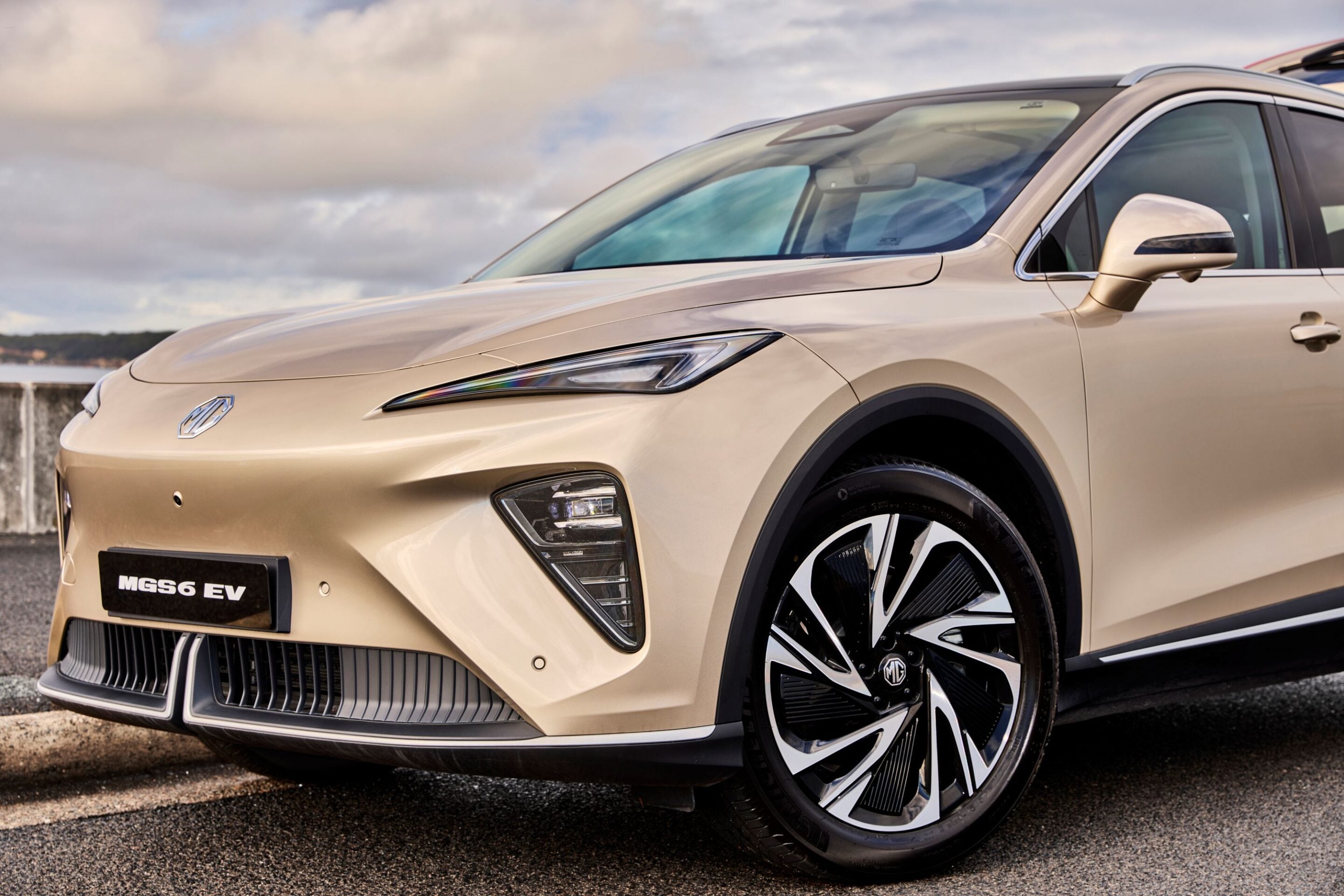
After a week with the MG S6, there’s little doubt this new electric SUV has put a stake in the ground to be in the consideration for Wheels COTY judging later in 2026. The field this year – as it is every year – will be strong and competition will be fierce. MG has illustrated once again though, that with every new model it steps its game up both in design and execution.
We’d like the driver attention aids to be dialled down a little, but there’s previous little else to dislike about what is a well-designed, well-specified and enjoyable to drive medium SUV. Both models feature real-world useful driving range, and oodles of cabin space for the family. Once again, MG’s commitment to the electric vehicle market in this country is in full focus.
MGS6 EV features
- 20-inch alloy wheels
- Dusk-sensing LED headlights with auto high beam
- 12.8-inch infotainment touchscreen with wireless Apple CarPlay and Android Auto,
- AM/FM/DAB radio, satellite navigation, voice control
- 10.25-inch instrument display
- Head-up display
- 50-watt wireless phone charging
- Heated and ventilated front seats
- Synthetic leather-look and suede upholstery
- Six-way driver and four-way front passenger power-adjustable seats
- Heated outboard rear seats with backrest recline
- Leather steering wheel
- Dual-zone climate control
- Power-operated tailgate with kick sensor
- Keyless entry with sit-in-seat, foot-on-brake start
- Ambient interior lighting
- 11-speaker sound system with subwoofer
- Power-folding side mirrors with heating, auto tilt in reverse
- Rear privacy glass
- Auto-dimming rear-view mirror
- Rain-sensing wipers
- Autonomous emergency braking
- Lane-keep assist
- Lane-centring assist
- Blind-spot monitoring
- Adaptive cruise control
- 360-degree camera
- Driver attention warning
- Speed sign recognition
- Seven airbags
- Front and rear parking sensors
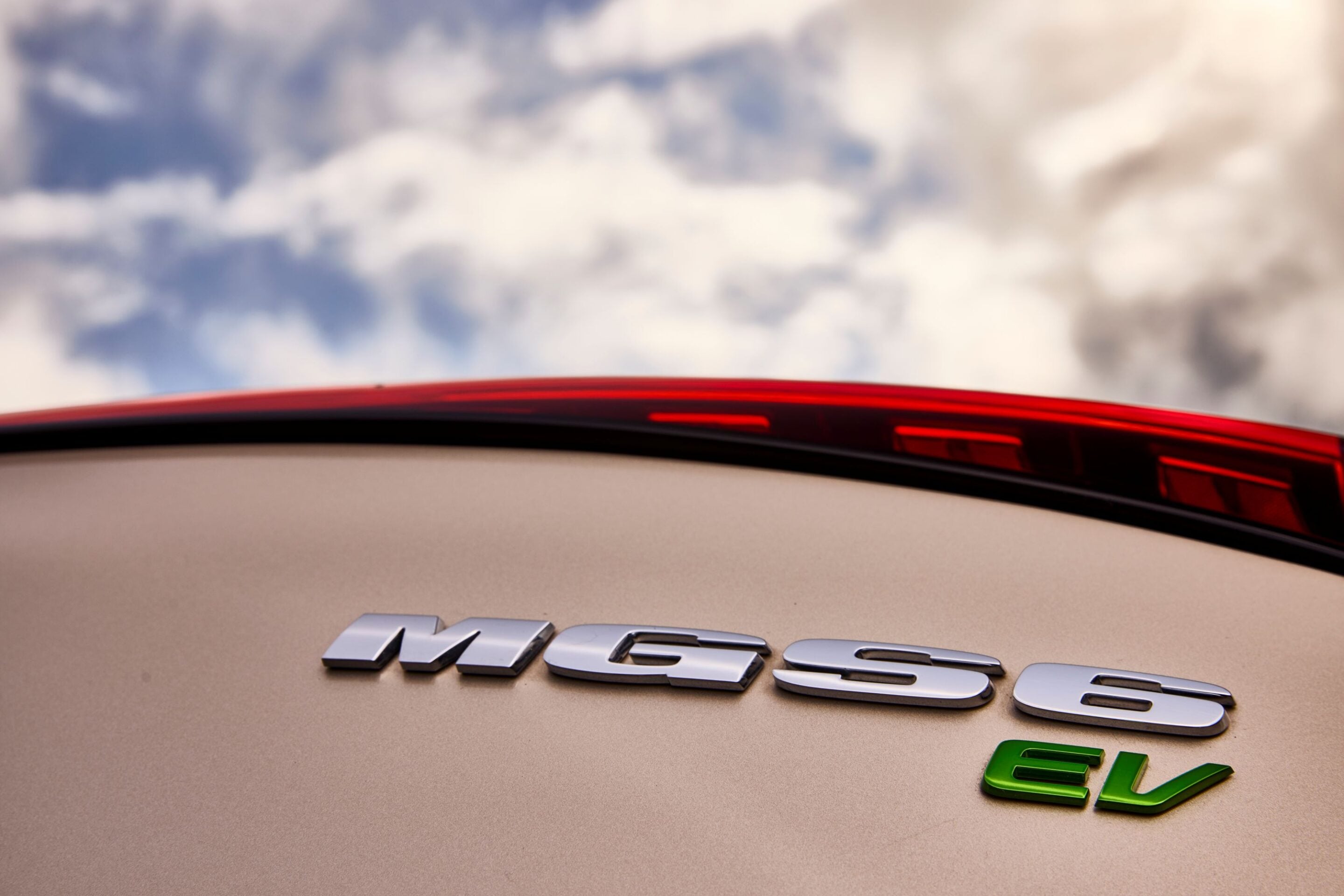
MGS6 EV Essence RWD – Specs
| Price | $49,990 drive away |
|---|---|
| Drivetrain | Single-motor electric, rear-wheel drive |
| Peak outputs | 180kW/350Nm |
| Transmission | Single-speed |
| Claimed 0-100km/h | 7.3 seconds |
| Battery | 77kwh |
| Claimed NEDC range | 530km |
| Maximum DC fast charge speed | 145kW |
| Claimed 10-80% charge time | 38 minutes |
| Dimensions (l/w/h/wb) | 4708mm/1912mm/1664mm/2835mm |
| Kerb weight | 1880kg |
| Warranty | 7-year/unlimited km |
| 5-year service cost | $1410 |
| On sale | Now |
