
Geely has confirmed that its smallest electric model, the EX2 hatchback, will join the brand’s Australian range in the second half of 2026. The move marks Geely’s first entry into the compact city-car segment locally, broadening its EV offering beyond the larger EX5 and Starray hybrid models.
The EX2 sits on Geely’s Global Intelligent Electric Architecture (GEA), the same platform underpinning its other new-energy models. The company says the modular design allows the architecture to scale down effectively for city use while still supporting the safety and tech features of its larger vehicles.
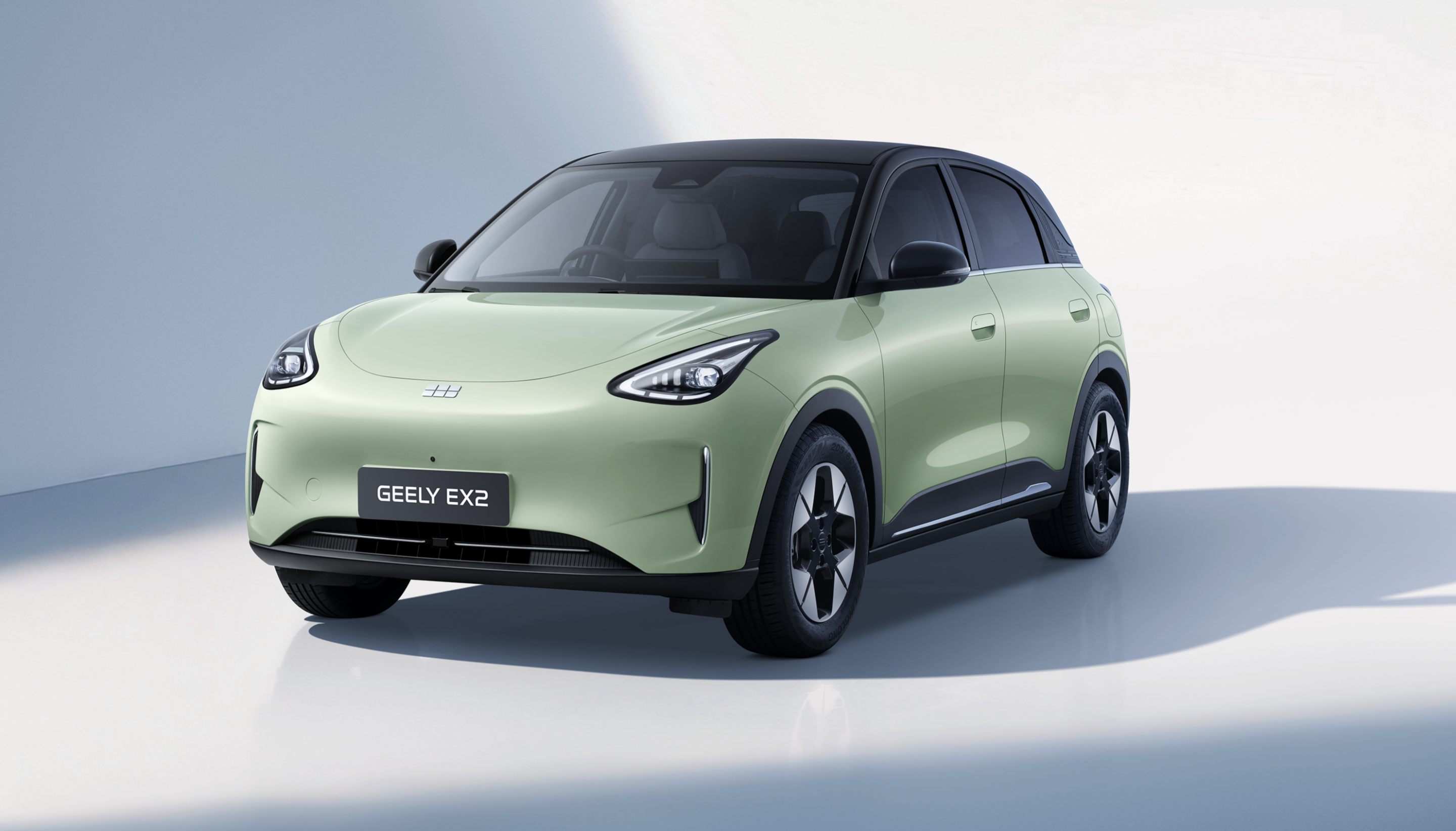
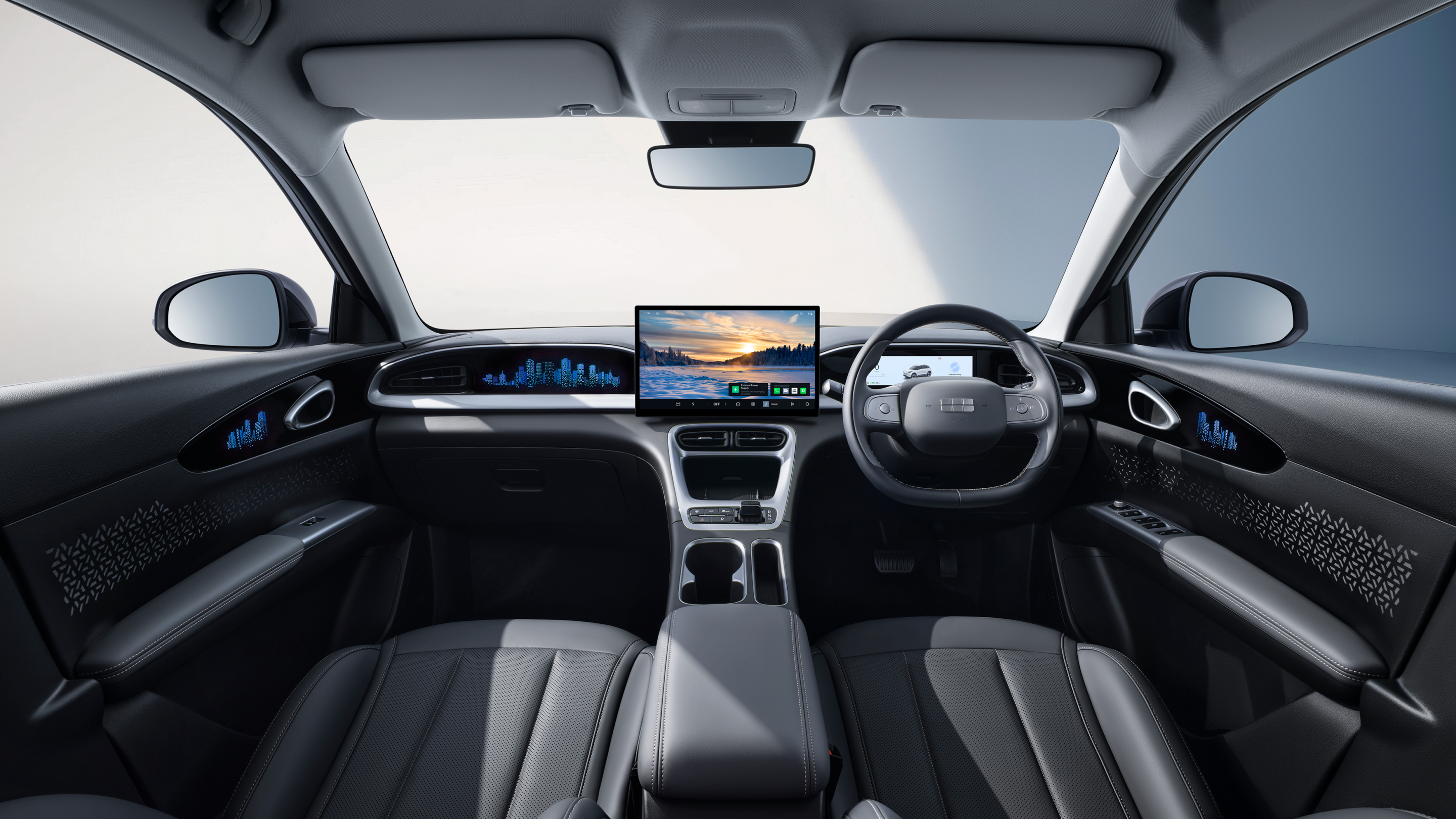
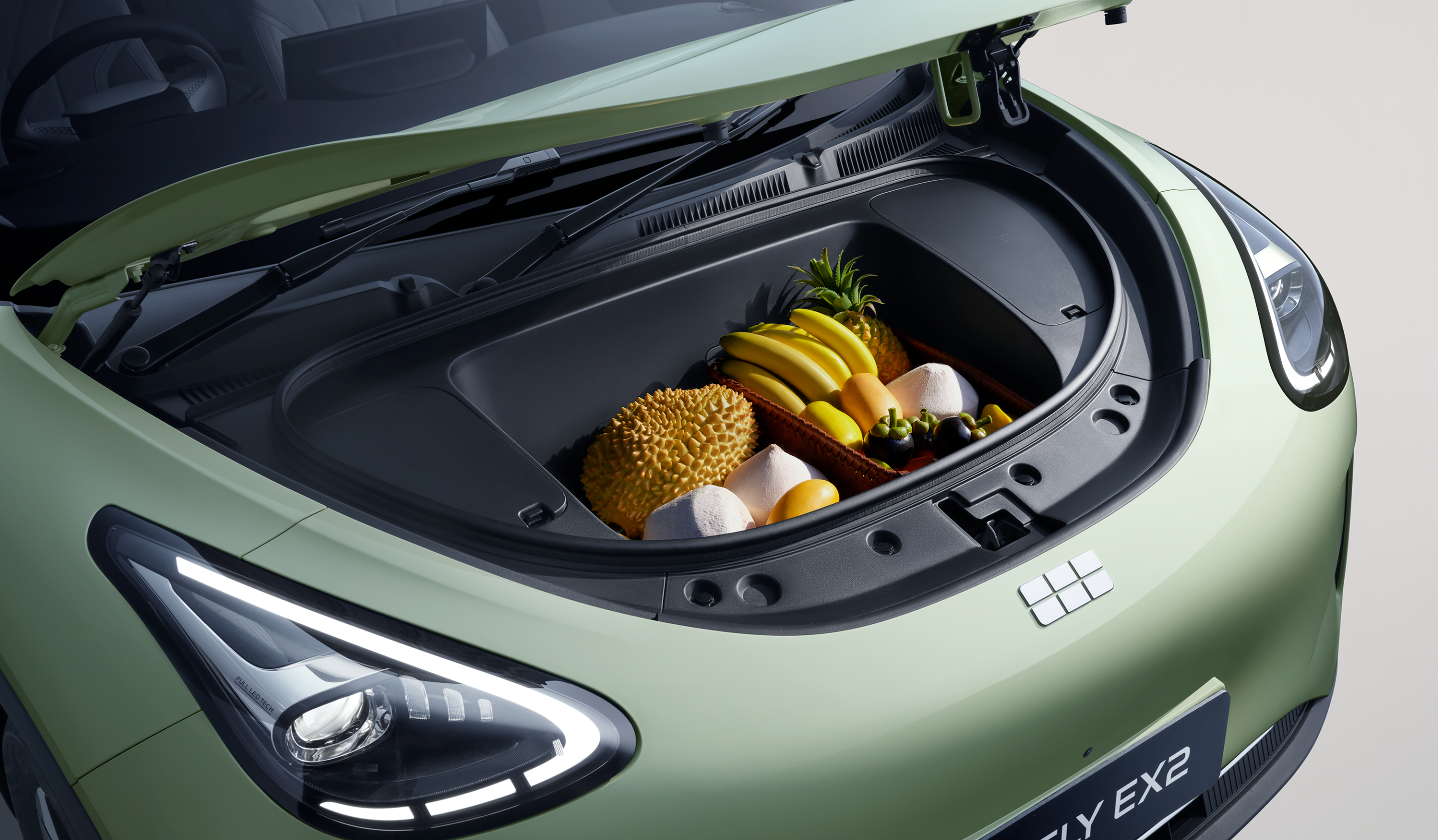
Sized at 41035mm long and 1805mm wide, with a 2,650mm wheelbase, the EX2 is positioned as a space-efficient commuter car. Geely claims the cabin has been engineered to maximise storage, with more than 30 compartments, including a small front boot beneath the bonnet. Inside, the design leans heavily on touchscreen-based controls and connected features, while the driving experience is intended to prioritise manoeuvrability in tight urban environments.
The exterior takes a more playful approach than the brand’s existing Australian offerings, with simple body surfacing and pastel colour choices. A rounded front treatment—described by Geely as its “smile face” design—distinguishes the model from the sharper lines of the EX5 SUV.
In China, where the EX2 is sold as the Xingyuan (“Star Wish”), the car has become a major seller. It was the country’s top-selling vehicle across all categories in 2025, recording more than 400,000 sales in its first year on the market, including 50,000 units in September alone.
Australian specifications, battery range estimates, equipment levels and pricing will be announced closer to launch. With the EX2 set to sit at the base of Geely’s range, it is expected to play a key role in the brand’s push to offer more affordable EV options as competition intensifies in the entry-level segment.
Western Australia’s newly deployed AI-assisted road-safety cameras have detected tens of thousands of offences in their first month of full operation, issuing almost $13 million in fines. The cameras, activated in October after an extended public education phase, flagged 31,855 infringements by November 8 for seatbelt breaches, mobile phone use and speeding.
Mobile phone offences made up the largest share with 12,288 infringements, followed by 10,285 drivers or passengers not wearing seatbelts correctly and 9,282 speeding offences. The figures come after an eight-month awareness period in which the cameras identified more than 380,000 potential breaches and issued 65,000 caution notices rather than fines.
WA Road Safety Minister Reece Whitby said the behaviour captured by the cameras has been “extraordinary and deeply concerning”, noting that the technology is revealing risks that frontline police cannot routinely observe. He stressed that while AI software provides an initial assessment, human reviewers ultimately confirm every infringement.
“If the system thinks an offence has occurred, two separate reviewers look at the images before anything is issued,” Whitby said. “But it is staggering that drivers still put themselves and others at such obvious risk by ignoring basic safety rules.”
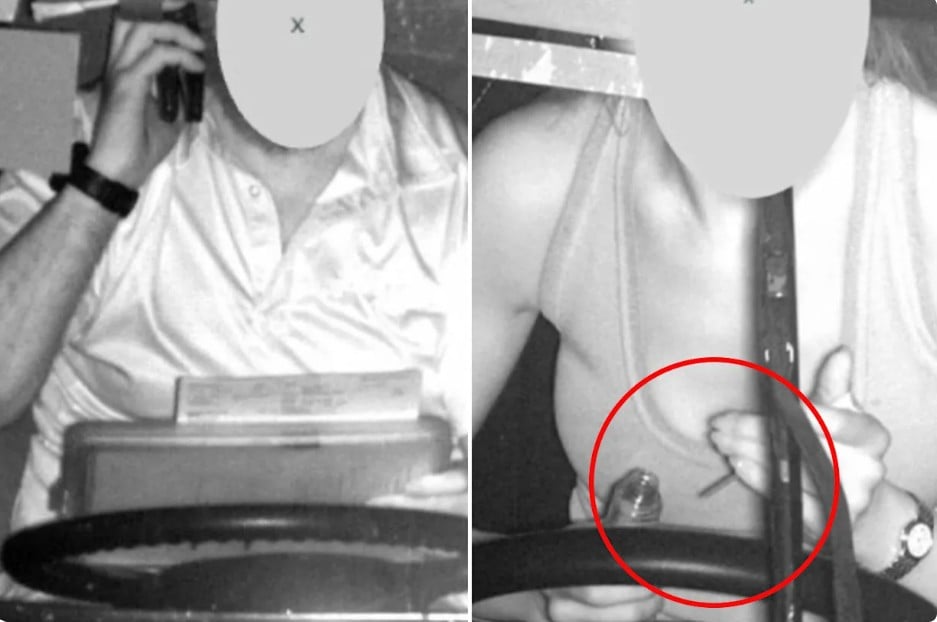
Some incidents documented by the cameras highlight the severity of the problem. In one case, a truck driver travelling at 100km/h on the Mitchell Freeway was allegedly using both a laptop and mobile phone while also unbelted. Another incident involved a front passenger who appeared unrestrained while holding an unrestrained baby. A further detection showed a driver in a school zone allegedly 20km/h over the limit with no hands on the wheel while using a phone.
Jessica Stojkovski, Minister Assisting the Transport Minister, said the new camera network is exposing a wider range of unsafe behaviours than previously detected. “We’re seeing regular evidence of drivers using mobile phones, passengers not correctly belted, and other actions that significantly increase the risk of serious injury,” she said. “The message is simple: the technology is active, and risky behaviour will attract fines and demerits.”
Under WA law, holding or touching a mobile phone while driving triggers a minimum $500 penalty and three demerit points, while incorrect seatbelt use starts at $550 and four demerits.
Revenue generated from camera infringements is directed to the state’s Road Trauma Trust Account, which funds road-safety initiatives across Western Australia.
Jaecoo Australia has announced local specifications for its upcoming J5 EV small electric SUV, which is due on sale in Australia in January 2026. Pricing is yet to be revealed, but the J5 EV will launch in a single Track spec ahead of both petrol and hybrid variants that will launch later in 2026. The J5 EV features a 61.1kWh LFP battery for up to 402km of range (WLTP).
The first electric vehicle (EV) that Jaecoo has launched locally, the J5 EV can be charged from 30 to 80 per cent in a claimed 28 minutes, while Jaecoo Australia claims efficiency of just 14.3kWh/100km. The J5 EV features a 155kW/288Nm front electric motor for a claimed 7.7-second 0-100km/h time.
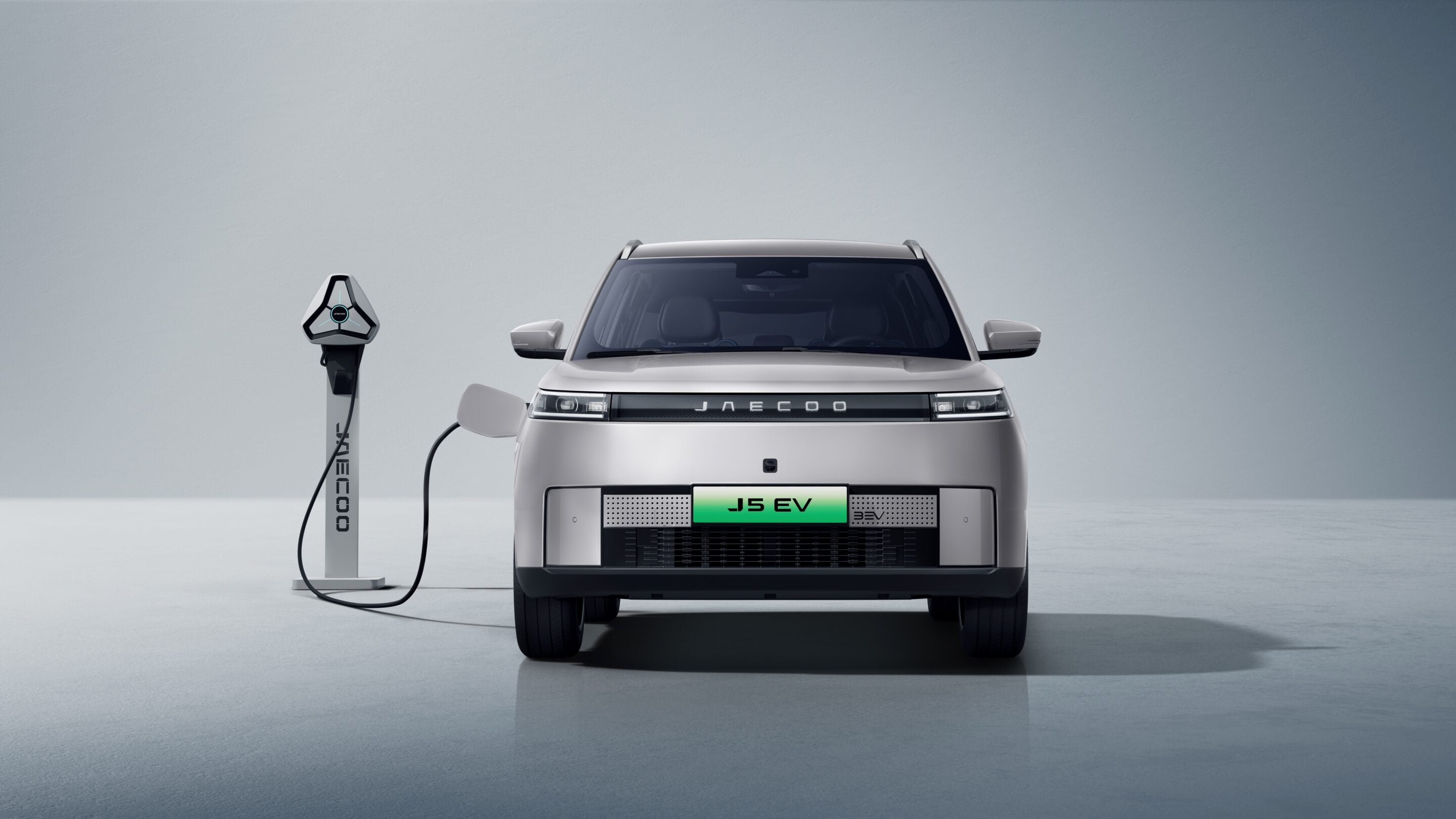
The J5 measures 4380mm long, 1860mm wide and 1650mm tall and rides on a 2620mm-long wheelbase, making it slightly smaller than a Chery C5 but slightly larger than a Hyundai Kona. It can tow up to a 750kg braked trailer.
Features inside the J5 EV include a large 13.2-inch touchscreen with wired and wireless Apple CarPlay and Android Auto smartphone mirroring, an eight-speaker sound system and synthetic leather upholstery that is “pet friendly”, according to Jaecoo.
“We are beyond excited with the arrival of the J5 range in Australia”, said Roy Munoz, Chief Commercial Officer Omoda Jaecoo Aus & NZ. “Kicking off with the BEV variant, it will be a compelling choice in an increasingly competitive EV market. No other vehicle currently offers a pet-friendly interior and a large selection of accessories, which range from a dog carrier to a waterproof cargo mat, and even a karaoke machine.”
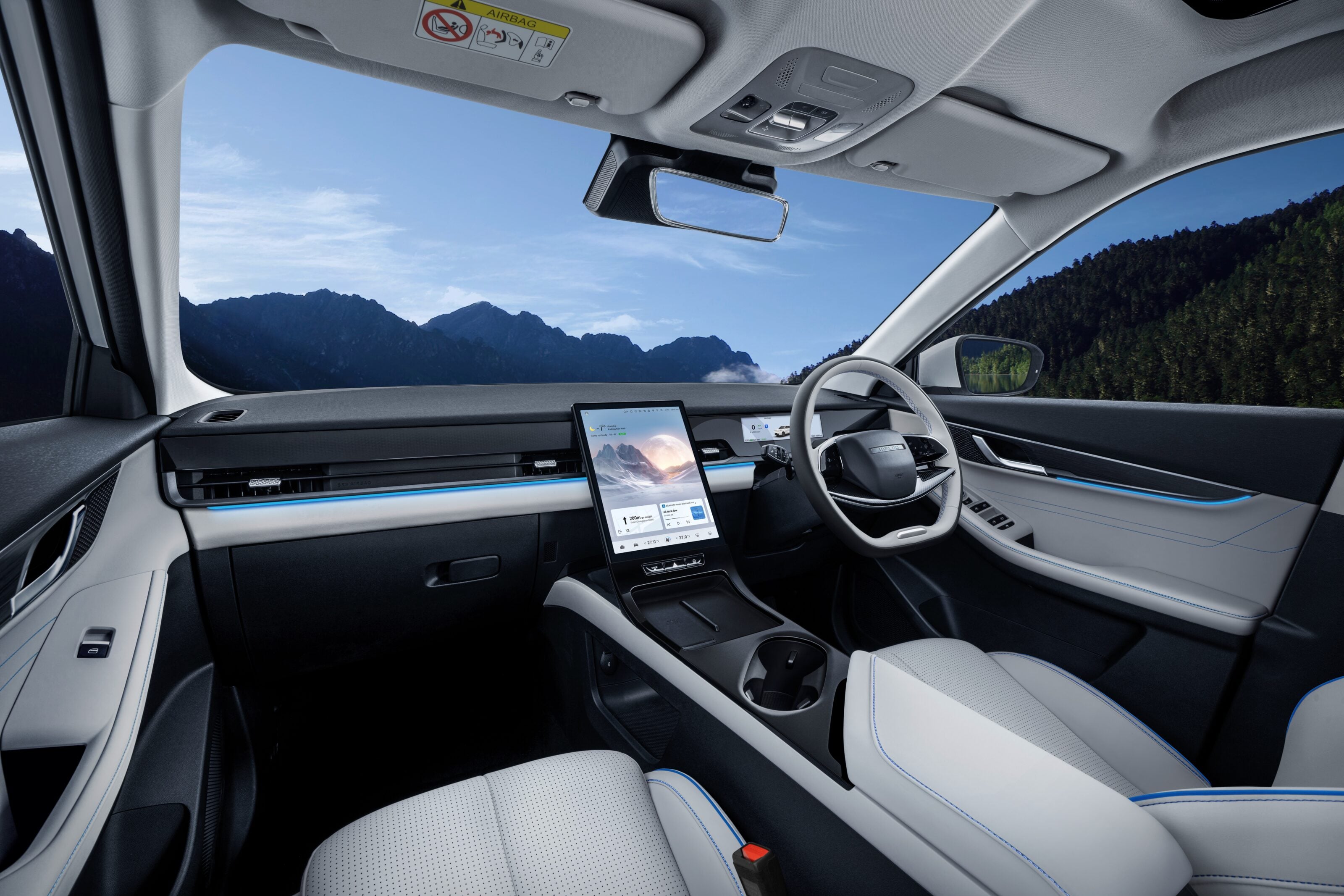
Jaecoo J5 EV standard equipment:
- 18-inch alloy wheels with Continental tyres
- Power tailgate
- V2L (Vehicle-to-Load) functionality
- Keyless entry and push button start with remote start
- LED projector headlights
- LED daytime running lights
- Acoustic front door glass
- Glass Roof with powered sunshade
- Dual-zone climate control
- Synthetic leather upholstery
- Heated and ventilated front seats
- 8.88-inch LCD driver instrument cluster
- 13.2-inch LCD touchscreen
- 8-speaker sound system
- Apple Carplay & Android Auto (Wired + Wireless)
- Voice control (“hello Jaecoo”)
- 50W wireless phone charger
- 360-degree camera
- 7x airbags
- Autonomous emergency braking
- Adaptive cruise control
- Lane keeping assistance
- Adaptive lane guidance
- Blind-spot monitoring
The Jaecoo J5 EV will launch in Australian showrooms in January 2026, with petrol and hybrid J5 variants due to launch later in 2026.
BYD has announced local pricing for its new Sealion 5, introducing one of Australia’s cheapest plug-in hybrid SUVs at $33,990 before on-road costs. The vehicle is available to order immediately, with first arrivals expected next year
The Sealion 5 becomes BYD’s most affordable PHEV yet in Australia and positions the brand to compete with mainstream petrol SUVs on price while offering an electrified option for buyers who aren’t ready to go fully electric. The move follows the launch of the ATTO 1 and ATTO 2, signalling BYD’s broader shift toward expanding its lower-cost new-energy line-up.
| SEALION 5 ESSENTIAL | $33,990 |
|---|---|
| SEALION 5 PREMIUM | $37,990 |
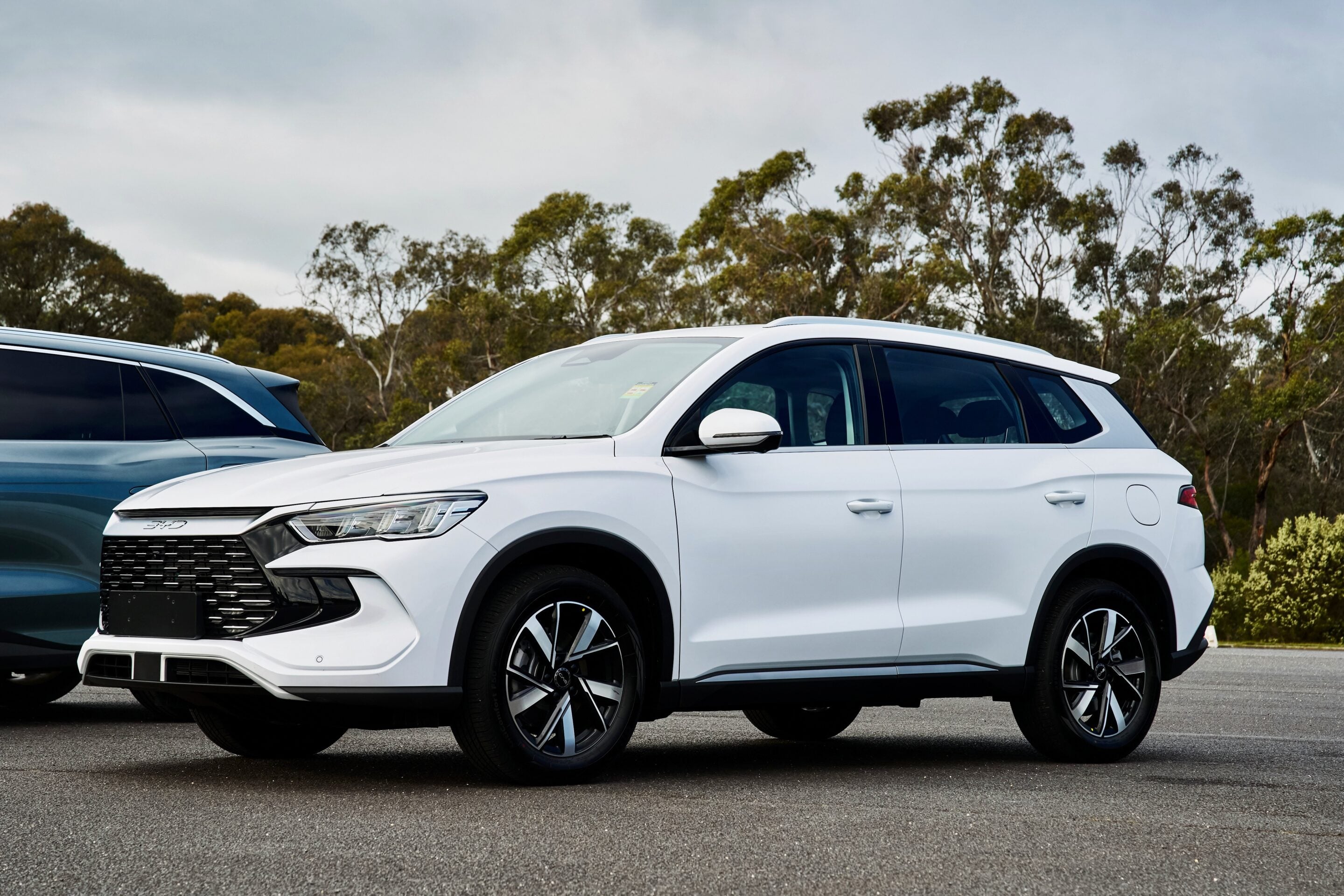
Two model grades will be offered – Essential and Premium – both using BYD’s Blade Battery and the company’s latest DM-i 4.0 plug-in hybrid system. The setup is designed to prioritise electric running for short commutes while relying on the petrol engine for longer distances. BYD cites a pure EV driving range of up to 100km under the NEDC test cycle and a combined range approaching 1000km. Claimed fuel consumption is as low as 1.2L/100km, though real-world figures will depend on charging habits and driving conditions.
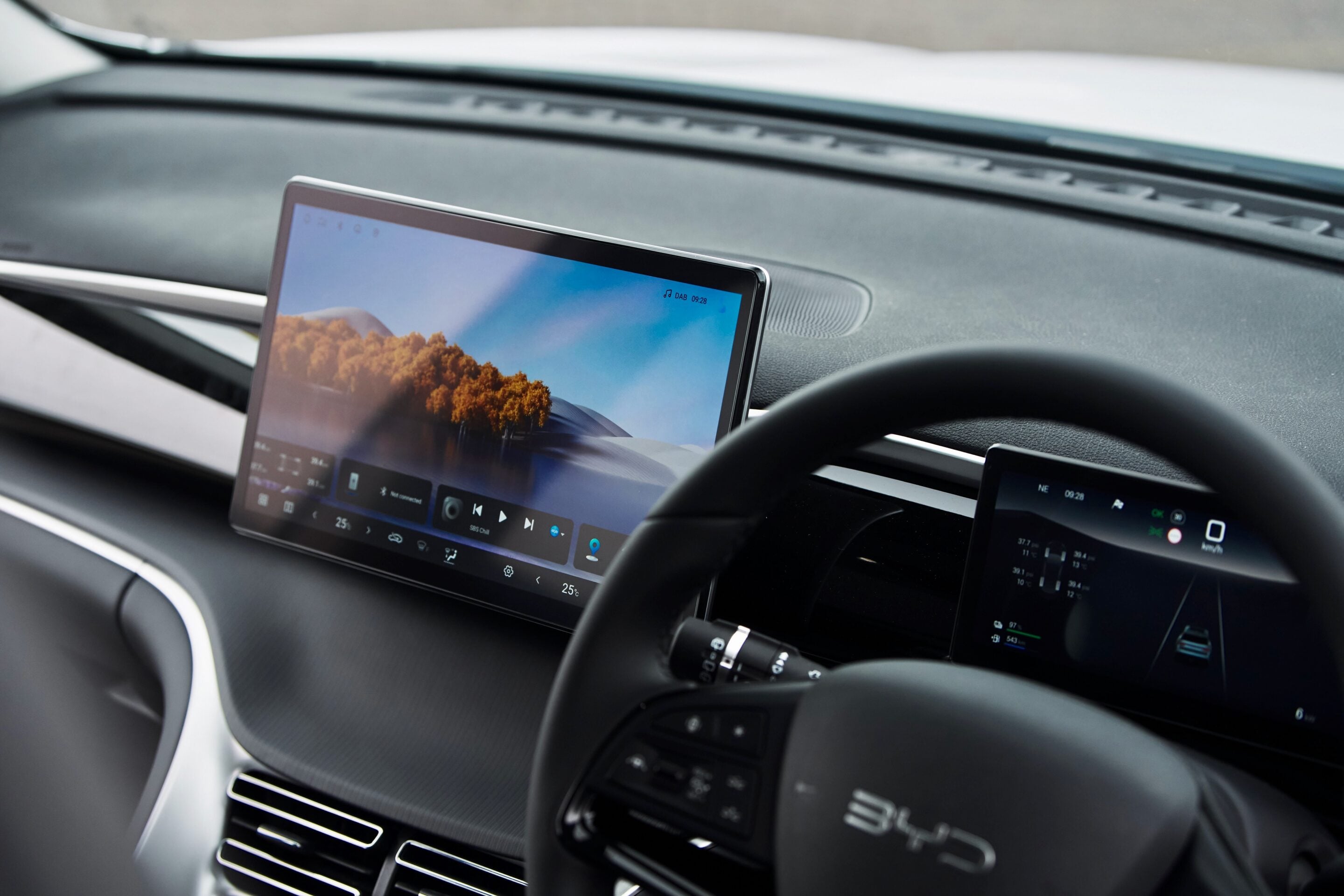
While full equipment details are still to be confirmed, BYD says the model includes the safety and driver-assistance features now expected in the medium SUV segment. The Sealion 5 also runs on BYD’s dedicated electric-first architecture rather than a converted petrol platform, a layout intended to maximise cabin space and efficiency.
Stephen Collins, BYD Australia’s chief operating officer, said the company expects the pricing to broaden appeal beyond early EV adopters. “Australians want real choice when it comes to electric mobility solutions, and the Sealion 5 offers that at a price point that will appeal to Australian families,” he told media.
The Sealion 5 arrives at a time when plug-in hybrids are gaining more attention locally as a middle ground between petrol and electric vehicles. While the technology remains a niche segment compared with hybrids and EVs, several brands plan to expand their PHEV offerings over the next two years.
With order books now open, the Sealion 5 joins a growing list of lower-priced electrified models aimed at cost-conscious buyers. How the newcomer performs in a segment dominated by conventional petrol SUVs – and increasingly competitive EVs – will become clear once deliveries begin.
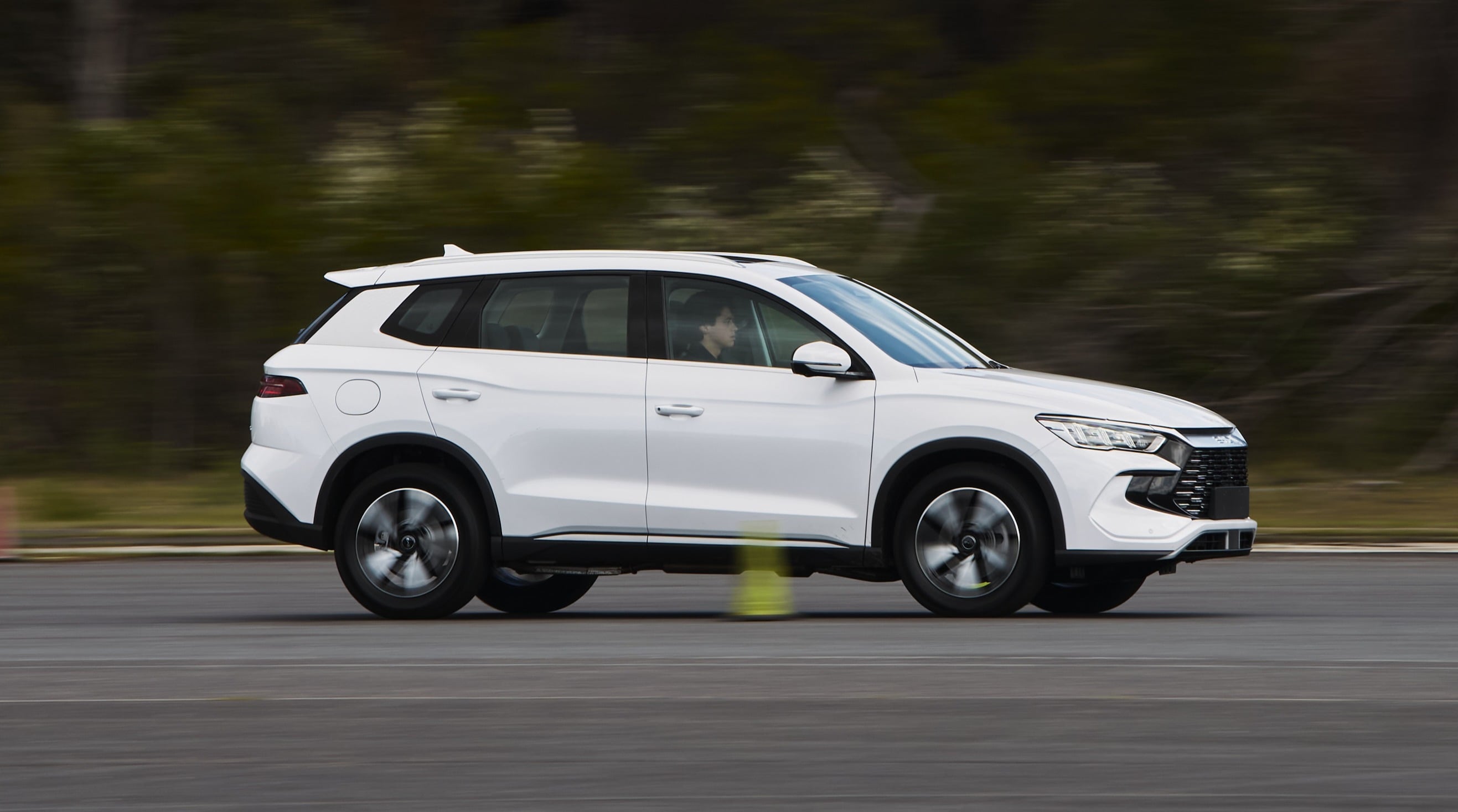
For years now the Toyota HiLux and the Ford Ranger have been fighting a ding-dong battle for local sales supremacy with neither manufacturer willing to give an inch.
This fight will continue in 2026 with the Ranger receiving a substantial update for MY26.5, while the new generation of the venerable HiLux will also hit showrooms.
Before we put the two head-to-head in the metal, here’s how the mid-spec Ford Ranger XLT and Toyota HiLux SR5 measure up on paper.
Pricing and Features
Shock, horror, here we have an updated model that’s actually gone DOWN in price. Ford’s deletion of the 2.0-litre bi-turbo four-cylinder engine means the 3.0-litre V6 turbodiesel is now the default powertrain and the price has been sharpened accordingly, the $67,990 ask representing an $1100 saving despite scoring more equipment, which will be detailed later in this article.
This appears to give the $63,990 HiLux SR5 a decisive price advantage, but it’s not quite that simple. Adding the six-speed automatic transmission to match the Ranger increases the price by $2000 while the Premium Interior Package, which includes leather-accented upholstery, an eight-way power-adjustable driver’s seat and a nine-speaker JBL stereo, is another $2500 for a total of $68,490 plus on-road costs.
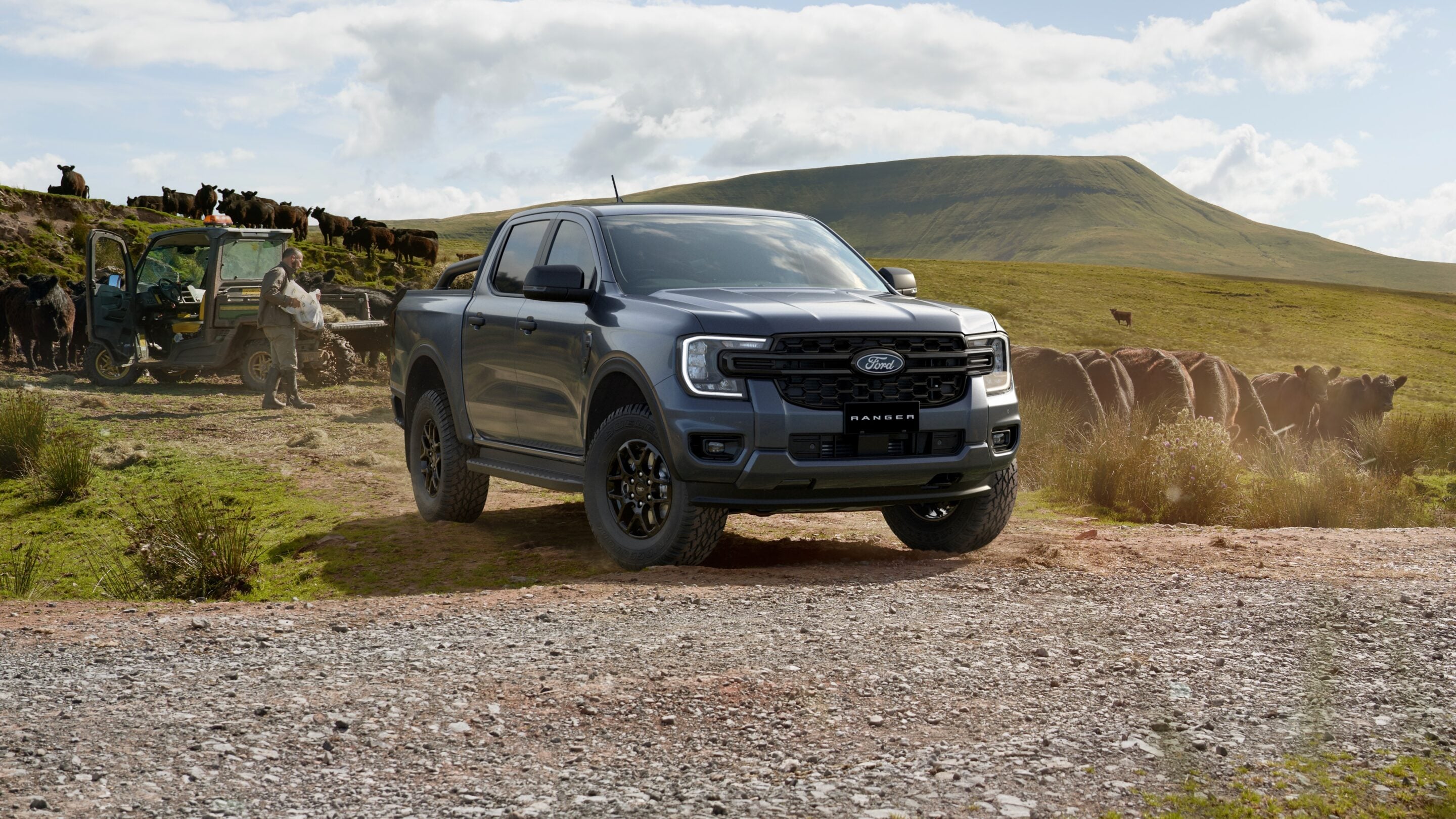
Toyota offers seven paint colours, with solid white being standard and metallic white, silver, grey, black, red and yellow an extra $675. Solid white is also the only standard colour on the Ford, but options are limited to silver, grey, black and blue and they cost $750.
The Ranger can also be specified with a $1500 Touring Pack, which is reasonable value given it adds a cargo management system, auxiliary switch bank, 360-degree camera, puddle lamps, zone lighting and Pro Trailer Back-Up Assist.
Ford offers a five-year/unlimited kilometre warranty and up to seven years of roadside assistance, topped up by 12 months with each service, which are required every 12 months or 15,000km. The first five visits will cost you $1596.
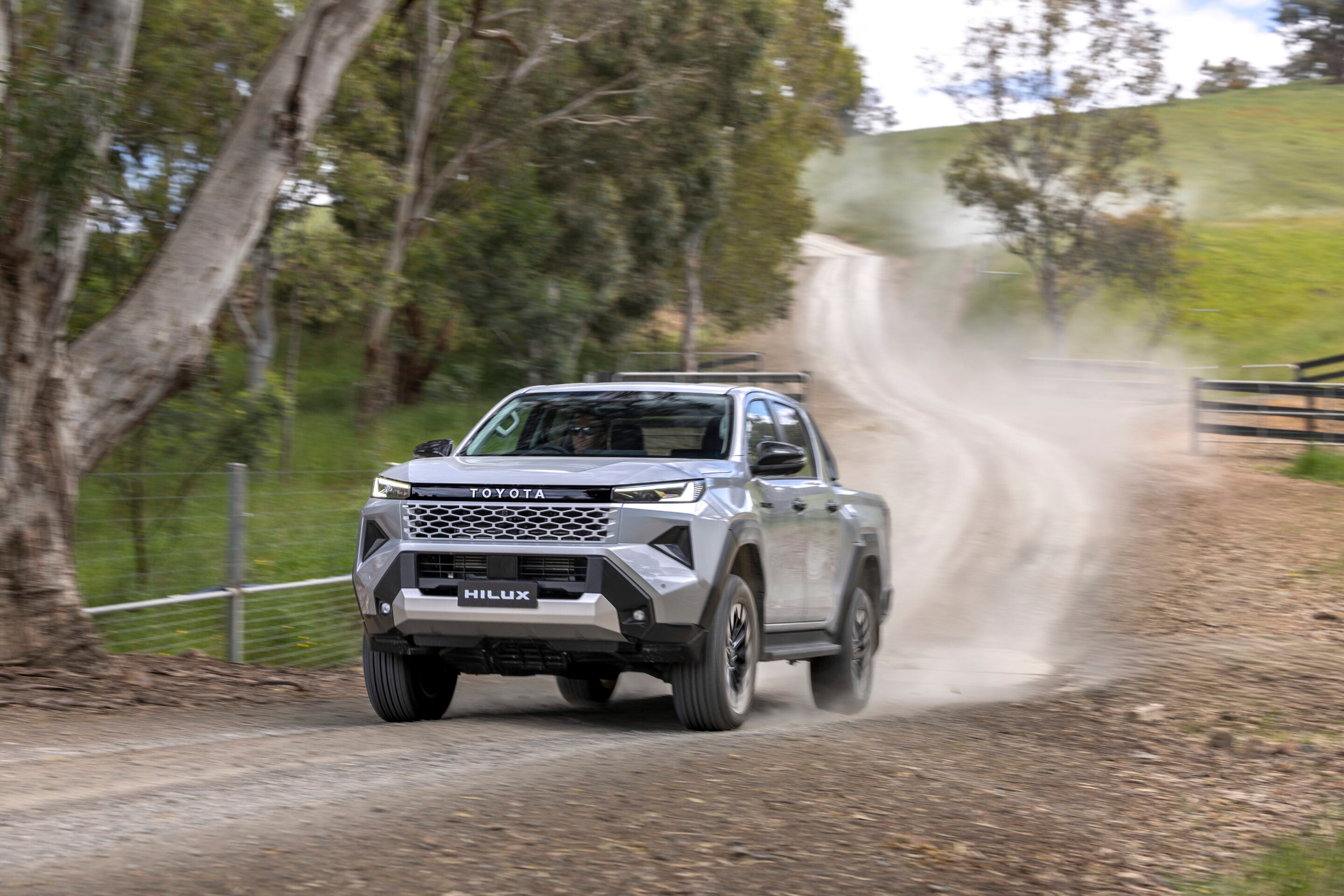
Toyota is sticking with its six-month/10,000km service intervals, so attention is required twice as often as the Ranger with each visit costing $395, which will be $3950 over the first five years.
Its vehicle warranty is the same five years/unlimited kilometres, but service with Toyota and the engine and driveline will receive an extra two years’ coverage. Roadside assistance is available for $99/year for the standard program and $139/year for the premium program.
| Ford Ranger XLT | Toyota HiLux SR5 | |
|---|---|---|
| Wheels | 17-inch alloy | 18-inch alloy |
| Headlights | LED | LED |
| Seat adjustment | Eight-way manual driver; four-way manual passenger | Eight-way powered driver; four-way manual passenger |
| Upholstery | Cloth | Leather accented |
| Heated seats | No | Yes |
| Heated steering wheel | No | Yes |
| Keyless start | Yes | Yes |
| Climate control | Dual-zone | Dual-zone |
| Dual glovebox | No | Yes |
| Cooled glovebox | No | Yes |
| Stereo | Six-speaker | Nine-speaker |
| USB ports | 1 x USB-A, 1 x USB-C | 2 X USB-C front and rear |
| 12v outlets | Two interior | Two interior |
| AC outlet | One in rear, one in tray | One in rear |
| Rear air vents | Yes | Yes |
Dimensions
Given it’s so heavily based on its predecessor, it should be no surprise the new Toyota HiLux is very similar in size, growing 55mm in length and 30mm in width. The wheelbase remains at 3085mm, 185mm shorter than the Ranger and it’s 130mm narrower, too.
Toyota is yet to confirm tray dimensions for the new generation car, but they are believed to be very similar to the previous model, which makes the tub longer and wider than the Ranger’s but not as deep, nor as wide between the wheelarches. The HiLux also lacks any sort of tub liner as standard.
| Vehicle Dimensions | Ford Ranger Wildtrak | Toyota HiLux SR5 |
|---|---|---|
| Length | 5370mm | 5320mm |
| Width | 2015mm | 1885mm |
| Height | 1886mm | 1865mm |
| Wheelbase | 3270mm | 3085mm |
| Tracks (f/r) | 1620/1620mm | 1530/1555mm |
| Tray Dimensions | ||
| Length | 1464mm | 1555mm |
| Width | 1520mm | 1540mm |
| Depth | 525mm | 480mm |
| Width between wheelarches | 1217mm | TBC |
| Bedliner | Yes – drop-in | No |
Powertrains
Unusually, when one of our pairing is a new-generation model, there isn’t much to talk about when it comes to powertrains. With 184kW/600Nm, Ford’s refined and grunty V6 turbodiesel has a clear power advantage over the HiLux’s carryover four-cylinder turbodiesel and its 150kW/500Nm, or 420Nm in manual guise.
Where the tables turn is when it comes to fuel economy. Thanks to not only its smaller engine, but also its lighter weight and mild-hybrid assistance, the auto HiLux claims 7.2L/100km on the combined cycle to the Ford’s 8.4L/100km and that’s going to add up if you do plenty of kilometres.
Given both have 80-litre fuel tanks, it also gives the Toyota a handy touring range advantage, with a maximum of 1176km to the Ford’s 1066km based on their claimed highway consumption numbers.
| Ford Ranger XLT | Toyota HiLux SR5 | |
|---|---|---|
| Engine | 3.0-litre V6 turbo-diesel | 2.8-litre four-cylinder turbo-diesel (auto: mild-hybrid) |
| Power | 184kW @ 3250rpm | 150kW @ 3000-3400rpm |
| Torque | 600Nm @ 1750-2250rpm | 500Nm @ 1600-2800rpm (420Nm manual) |
| Gearbox | 10-speed automatic | Six-speed automatic |
| Fuel consumption* | 8.4L/100km | 7.2L/100km |
| Fuel tank | 80 litres | 80 litres |
Chassis and Towing
There isn’t much to split the 2026 Ford Ranger and Toyota HiLux when it comes to lugging heavy loads. Despite a heavy kerb weight, the Ranger’s impressive Gross Vehicle Mass (GVM) and Gross Combined Mass (GCM) mean it offers more than a tonne of payload capability in XLT guise as well as a decent amount of payload headroom when towing.
The Ranger also continues to offer convenient features like the lighting check and active safety features that can recognise and account for the presence of a trailer, while Pro Trailer Back-Up Assist is an optional extra.
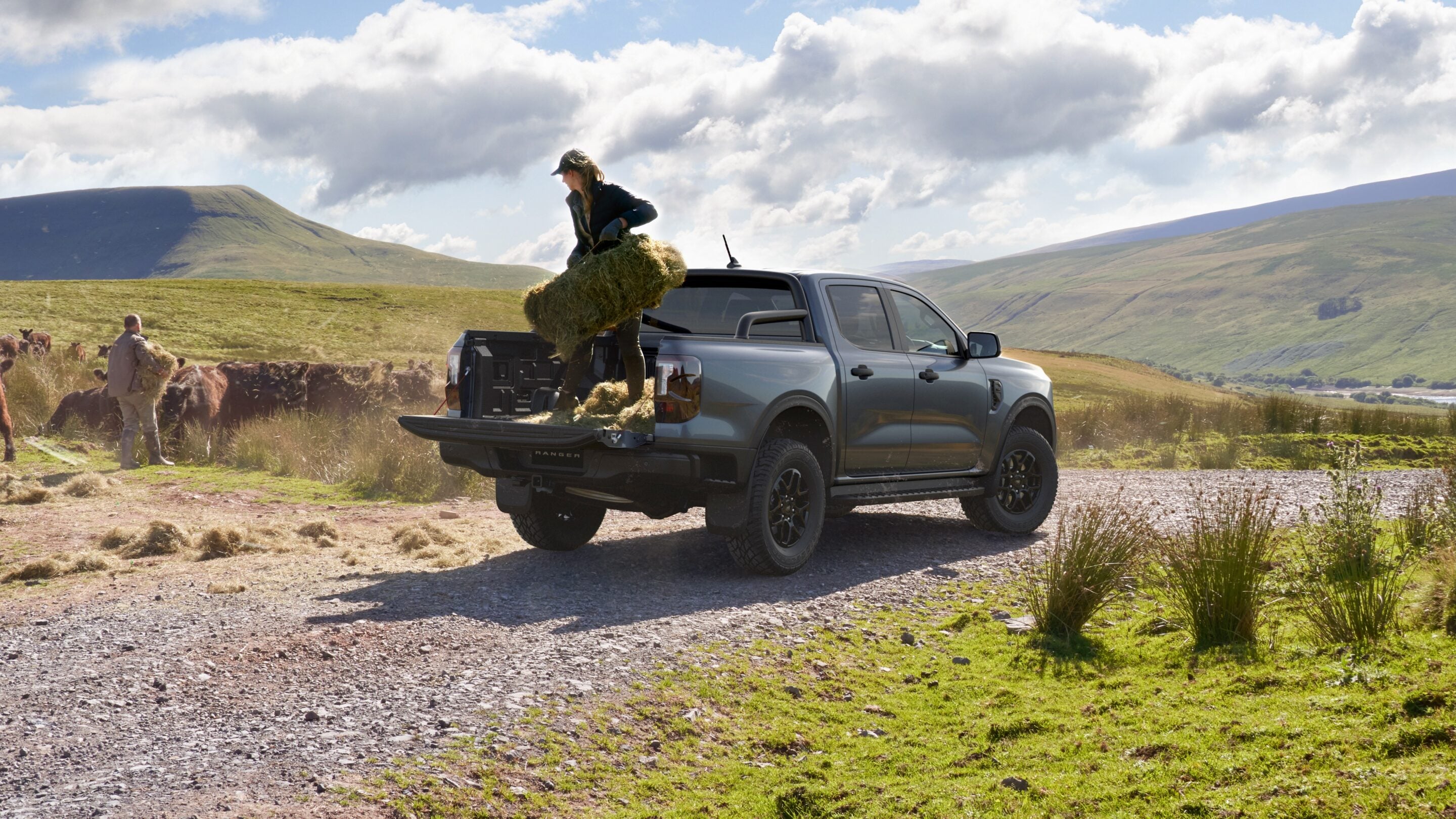
Over in Toyota-land the big news is the HiLux’s increased GCM, up from 5850kg to 6300kg. This gives far greater payload flexibility when towing heavy loads, whereas in some prior variants payload capacity was essentially nonexistent when towing at or near maximum capacity.
| Ford Ranger XLT | Toyota HiLux SR5 | |
|---|---|---|
| Kerb Weight | 2349kg | 2180kg |
| Gross Vehicle Mass | 3280kg | 3120kg |
| Max Payload | 1047kg | 940kg |
| Max Towing | 3500kg | 3500kg |
| Gross Combined Mass | 6400kg | 6300kg |
| Payload at max towing | 551kg | 620kg |
Off Road
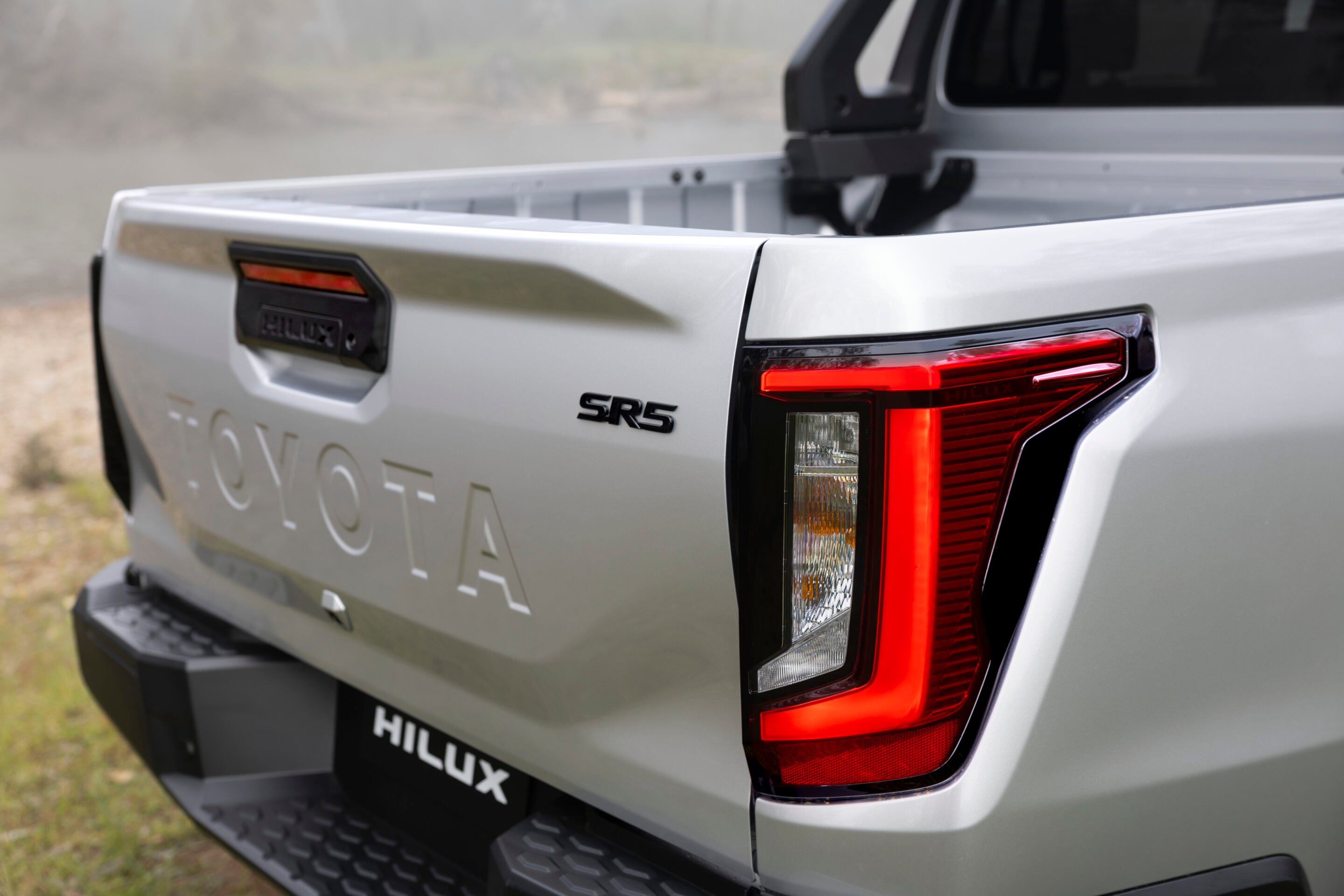
When it comes to capability in the rough stuff, the previous Toyota HiLux and Ford Ranger are two of the best in the business in showroom guise and it’s unlikely the new HiLux will take a step backwards.
Its traction control is first-class and it now benefits from an improved Multi-Terrain Select system with different driving modes for mud, sand, dirt and rocks and a multi-terrain monitor. Its raw stats can’t match the Ranger’s (though there’s little in it), but with an appropriate set of tyres there should be few places the new HiLux can’t go.
What it doesn’t have is any sort of all-wheel drive capability, being limited to 2H, 4H and 4L. V6 Rangers can drive all four wheels even on dry tarmac thanks to the 4A setting and it can be useful in slippery conditions. Both cars have standard locking rear diffs.
| Ford Ranger XLT | Toyota HiLux SR5 | |
|---|---|---|
| Approach angle | 30 degrees | 29 degrees |
| Departure angle | 23 degrees | 26 degrees |
| Rampover angle | 21 degrees | TBC |
| Ground clearance | 234mm | 224mm |
| Wading depth | 800mm | 700mm |
| Underbody protection | Yes | Fuel tank |
Safety
The Ford Ranger set new standards for dual-cab safety when it was launched which is backed up by its five-star ANCAP rating from 2022 with scores of 84 per cent for adult occupant protection, 93 per cent for child occupant protection, 74 per cent for vulnerable road user protection and 83 per cent for safety assist.
ANCAP wasted no time in tested the new Toyota HiLux and has awarded it a five-star rating, with 84 per cent for adult occupant protection, 89 per cent for child occupant protection, 82 per cent for vulnerable road user protection and 82 per cent for safety assist – scores virtually lineball with the Ranger.
It’s similarly lineball in terms of features, the Ford offering an extra airbag, while the HiLux has a surround-view camera as standard, the Ranger requiring the optional $1500 Touring Pack to include it.
| Ford Ranger XLT | Toyota HiLux SR5 | |
|---|---|---|
| Airbags | Nine | Eight |
| Autonomous emergency braking | Yes, with pedestrian and cyclist detection | Yes, with daytime pedestrian and cyclist detection |
| Adaptive cruise control | Yes | Yes |
| Blind-spot monitoring | Yes | Yes |
| Lane keep assist | Yes | Yes |
| Rear cross-traffic alert | Yes | Yes |
| Road sign assist | Yes | Speed signs |
| Parking sensors | Front and rear | Front and rear |
| Surround-view camera | No | Yes |
| ISOFIX | Rear outboard | Rear outboard |
| Tyre pressure monitoring | Yes | Yes |
Technology
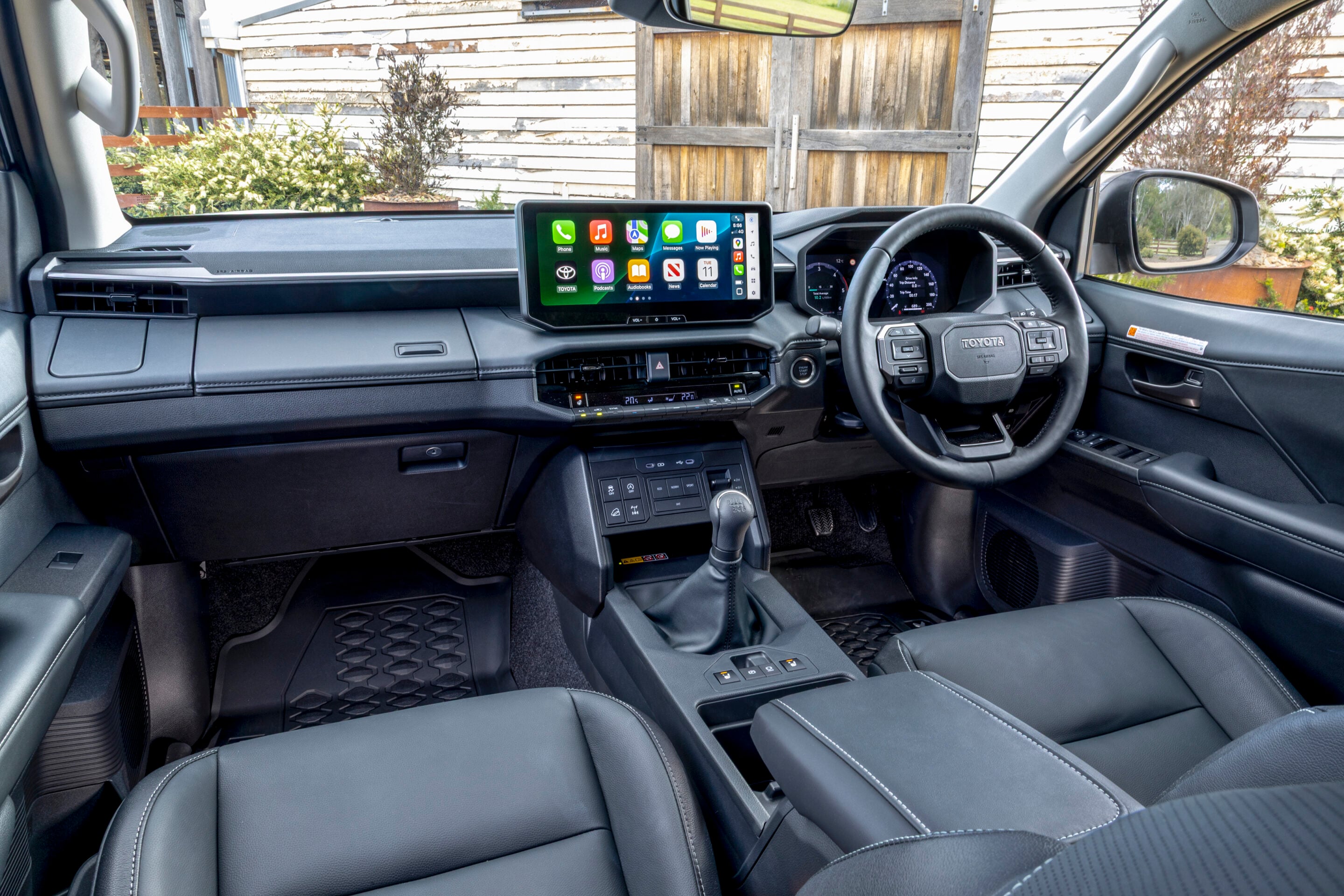
Given its vintage, the previous Toyota HiLux actually had a pretty competitive technology offering, but the new generation has given it the presentation lift it badly needed. There’s now a 12.3-inch widescreen infotainment display with wireless smartphone mirroring, digital radio and app connectivity.
A new 12.3-inch widescreen digital instrument display also replaces the old analogue dials and tiny TFT screen.
Certain Connected Services functions are included for the life of the 4G network, including SOS emergency call, automatic collision notification and vehicle insights, viewable through the Toyota app.
One year’s complimentary access is also provided to stolen vehicle tracking, remote climate control, connected navigation, connected voice assistance and more, after which these become paid services.
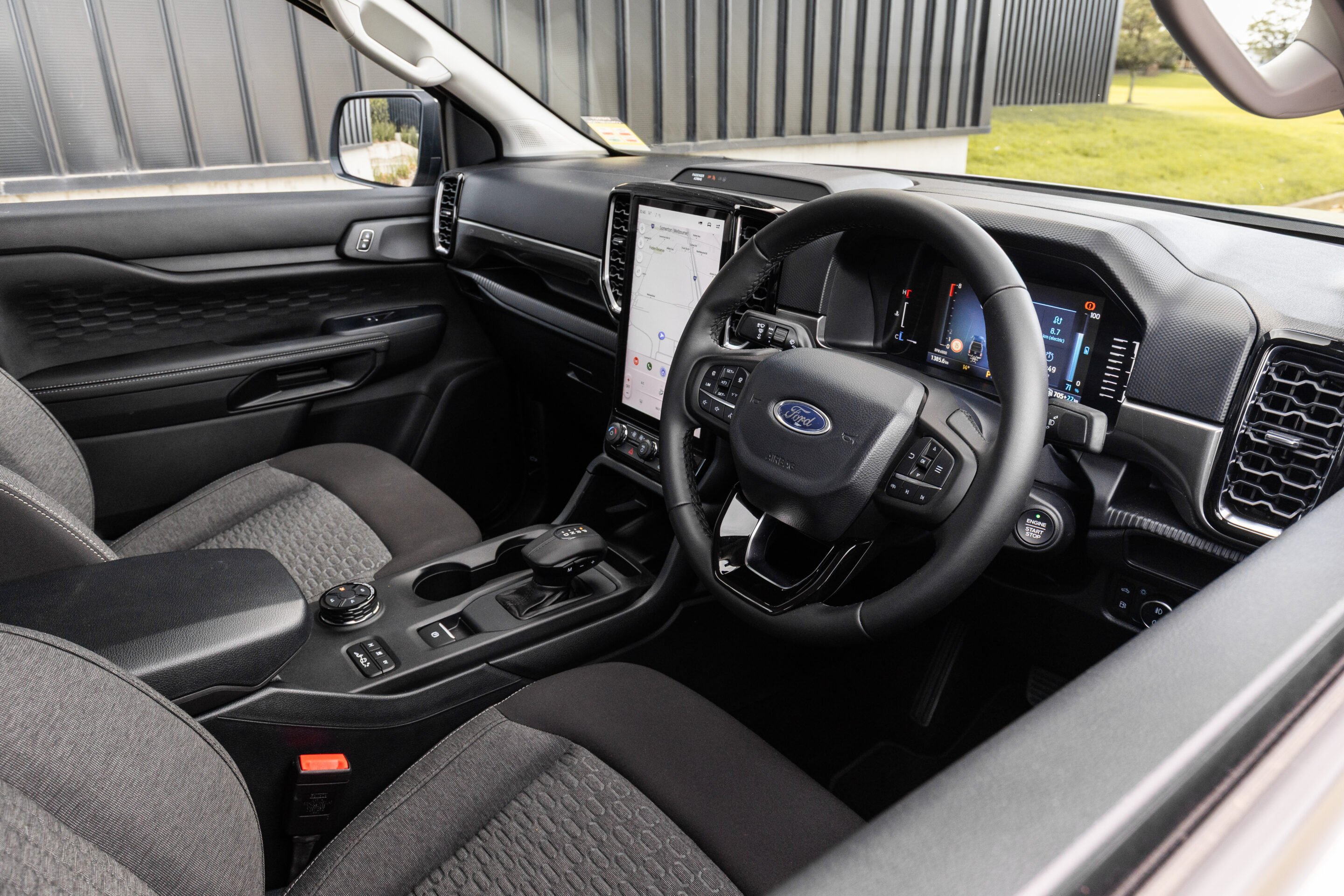
The Ranger XLT now scores the full-size 12.0-inch portrait infotainment screen, which features wireless smartphone mirroring, digital radio, app connectivity with one year of complimentary connected navigation services and an embedded modem, but the digital instrument cluster is the smaller 8.0-inch display.
| Ford Ranger XLT | Toyota HiLux SR5 | |
|---|---|---|
| Screen size | 12.0-inch | 12.3-inch |
| Digital instruments | 8.0-inch | 12.3-inch |
| Apple CarPlay | Wireless | Wireless |
| Android Auto | Wireless | Wireless |
| Digital radio | Yes | Yes |
| Wireless charging | No | Yes |
| App connectivity | Yes | Yes |
Conclusion
These two are close enough on paper that brand allegiance is likely to be the determining factor in any purchase. The price cut and extra equipment for the MY26.5 Ford Ranger XLT only makes it an even more enticing proposition, especially as the powerful and refined V6 turbodiesel is now the default engine.
But don’t discount the Toyota HiLux. It may be copping criticism for not being new enough, but it’s unclear whether many customers were clamouring for revolution. In SR5 guise, it’s better equipped than the equivalent Ranger and the GCM increase will be helpful for those who tow. Only the expensive servicing really stands out as a weakness.
In short, there’s little to suggest the popularity of either will wane, but as for which is best, we’ll have to put them head-to-head on- and off-road.
It’s an odd car market globally at the moment, with many car makers not giving new models the development budget they perhaps deserve thanks to tightening emissions laws and changing buyer preferences.
Toyota, the world’s biggest car maker, has received some criticism from online commenters and some journalists about the latest-generation HiLux for that very reason. To those critics we ask: What if Toyota sold a much newer ute in Australia with one of the hybrid drivetrains that’s so in vogue with Australian new car buyers? Enter the Toyota Tacoma.
Only sold in markets such as North America, the Toyota Tacoma was originally launched in 1995 and was very similar to the N140 generation HiLux. Whereas the HiLux was engineered for third world markets and heavy duty deployment, the Tacoma was more road-focused and more car-like to drive than the HiLux.
The second-generation Tacoma shared parts with the LandCruiser Prado and FJ Cruiser, including their platform and 4.0-litre petrol V6 engine, and was again more road-focused than the HiLux.
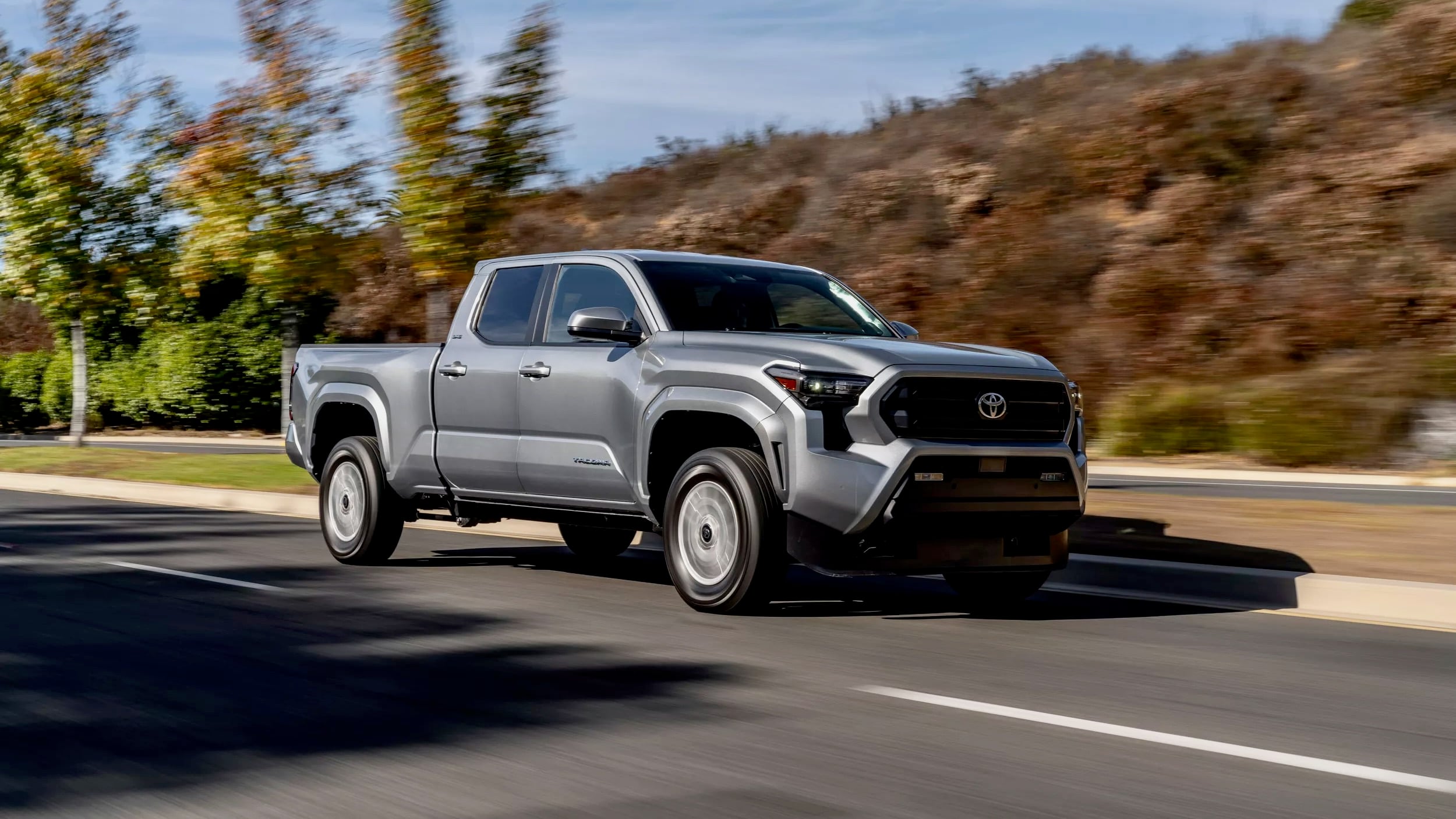
The current fourth-generation Toyota Tacoma was revealed in 2023 and unlike the old or new HiLux, uses the same TNGA-F platform as the latest LandCruiser Prado and 300 Series. In the USA, the Tacoma is available with a 207kW/431Nm turbocharged 2.4-litre four-cylinder petrol engine with a six-speed manual or eight-speed automatic transmissions, as well as a hybridised version called the ‘i-Force Max’ making 243kW/630Nm.
Pricing for the Toyota Tacoma in the US starts at US$32,145 (around A$49,000 at the time of writing) for the base model three-door in SR 4×2 trim, and extends to US$64,350 (A$98,400) for the top-spec dual cab TRD Pro 4×4.
Compared to the HiLux, the Tacoma is bigger in all directions measuring up to 5746mm long, which is 426mm longer than the ‘Lux, as well as 1953mm wide (+68mm), 1898mm tall (+33mm) and sitting on a 3686mm long wheelbase (+601mm).
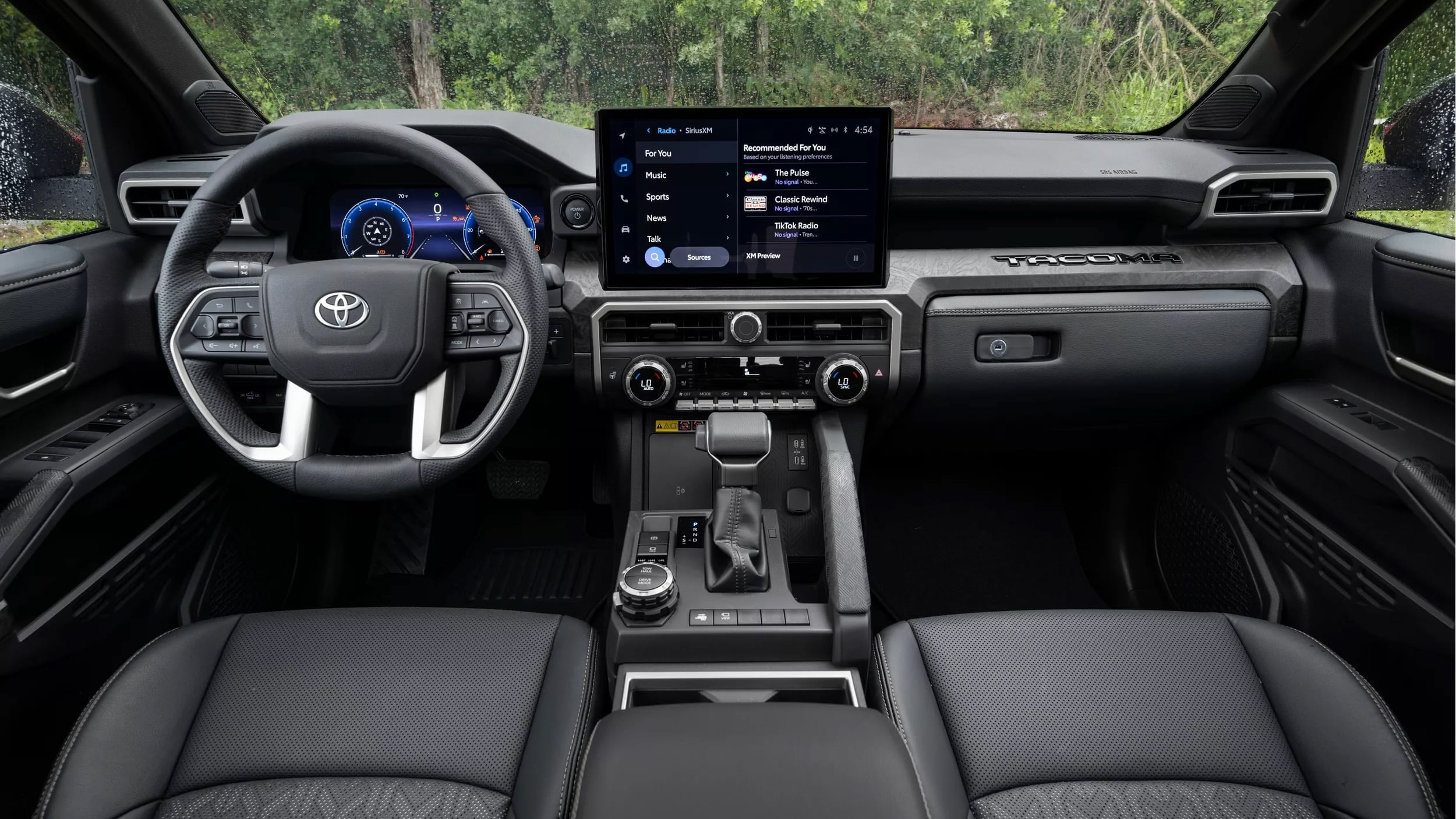
While Toyota Australia has so far kept silent about any possibility that the Tacoma will be sold locally, there’s clearly space for it in the line-up between the smaller HiLux and larger Tundra utes – especially as more of a lifestyle offering that’s not as heavy duty as the ‘Lux.
But against the higher-spec versions of the Ford Ranger and Volkswagen Amarok – utes that sell plenty for comfortably above $80,000 – a high-end Tacoma’s appeal is obvious, especially with the turbo-hybrid drivetrain. We’ll see what happens with Toyota Australia and the Tacoma.
It was typical of the new-gen MG to launch a premium sub brand, IM, into the Australian market in August 2025 – bold and daring.
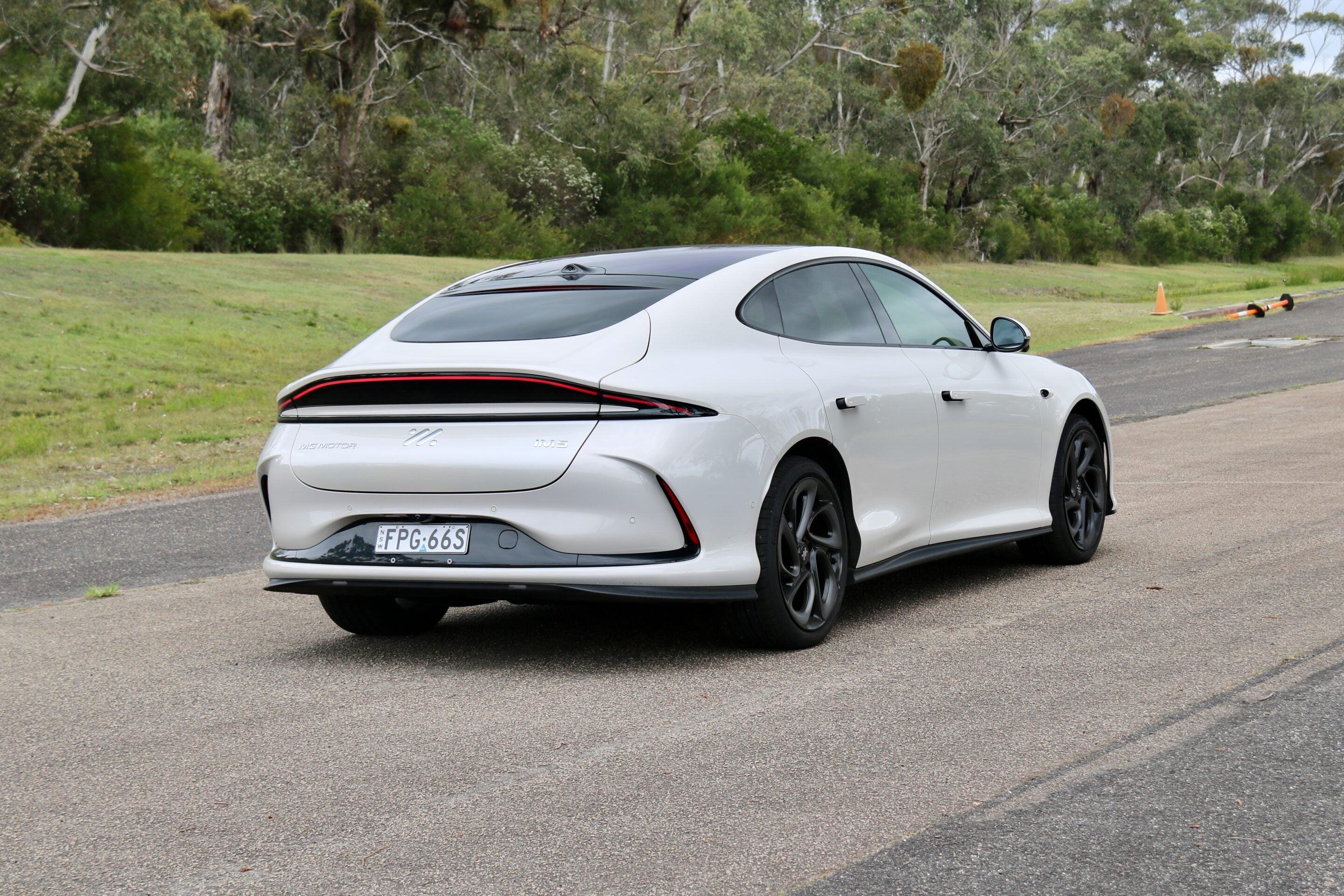
Both models that comprised the initial offering feature impressive technology such as 800-volt architectures for fast charging, four-wheel steering and – in the case of the Performance grade – air suspension. As such, the IM5 Performance is certainly taking its shot at being a Tesla Model 3 killer.
And it’s clear that Tesla is IM’s biggest target with its model line-up – the IM5 liftback competes directly against the Model 3 and the IM6 SUV against the Model Y, the latter of which was one of the world’s best-selling cars in 2024. At the launch of the brand in August plenty of information was provided about how technically advanced the models are – from videos about how quickly it passes a moose test to a test of its cool crab walking and automatic parking functionality. But is there substance beyond the tech?
There are three IM5 variants in Australia: entry-level Premium, mid-spec Platinum and top-spec Performance. Each are richly equipped and offer impressive charging and performance stats, as well as strong value – the Premium’s $60,990 drive away pricing initially looks higher than the equivalent Model 3’s $54,900 price, but the Tesla is around $500 more expensive once on-road costs are included.
As for the Performance variants, the Tesla is about $7000 more expensive and it’s good to see MG’s value push still present in its premium products.
2025 IM5 pricing (drive away):
| Premium | $60,990 |
|---|---|
| Platinum | $69,990 |
| Performance | $80,990 |
IM 5 options:
- Premium paint: $1000
- Beige interior: $990
For your $80,990 (driveaway), the IM5 Performance is extremely well equipped with everything that MG could throw at it – possibly including the kitchen sink, because there is plenty of kit we no doubt missed. The full list is at the bottom of this page, but big items include the adaptive air suspension and four-wheel steering, an 800-volt architecture, 12-way electric front seats, synthetic leather trim everywhere in the cabin, dual touchscreens and even ‘crab walk’ functionality. There’s more in the IM5 Performance than its Tesla rival.
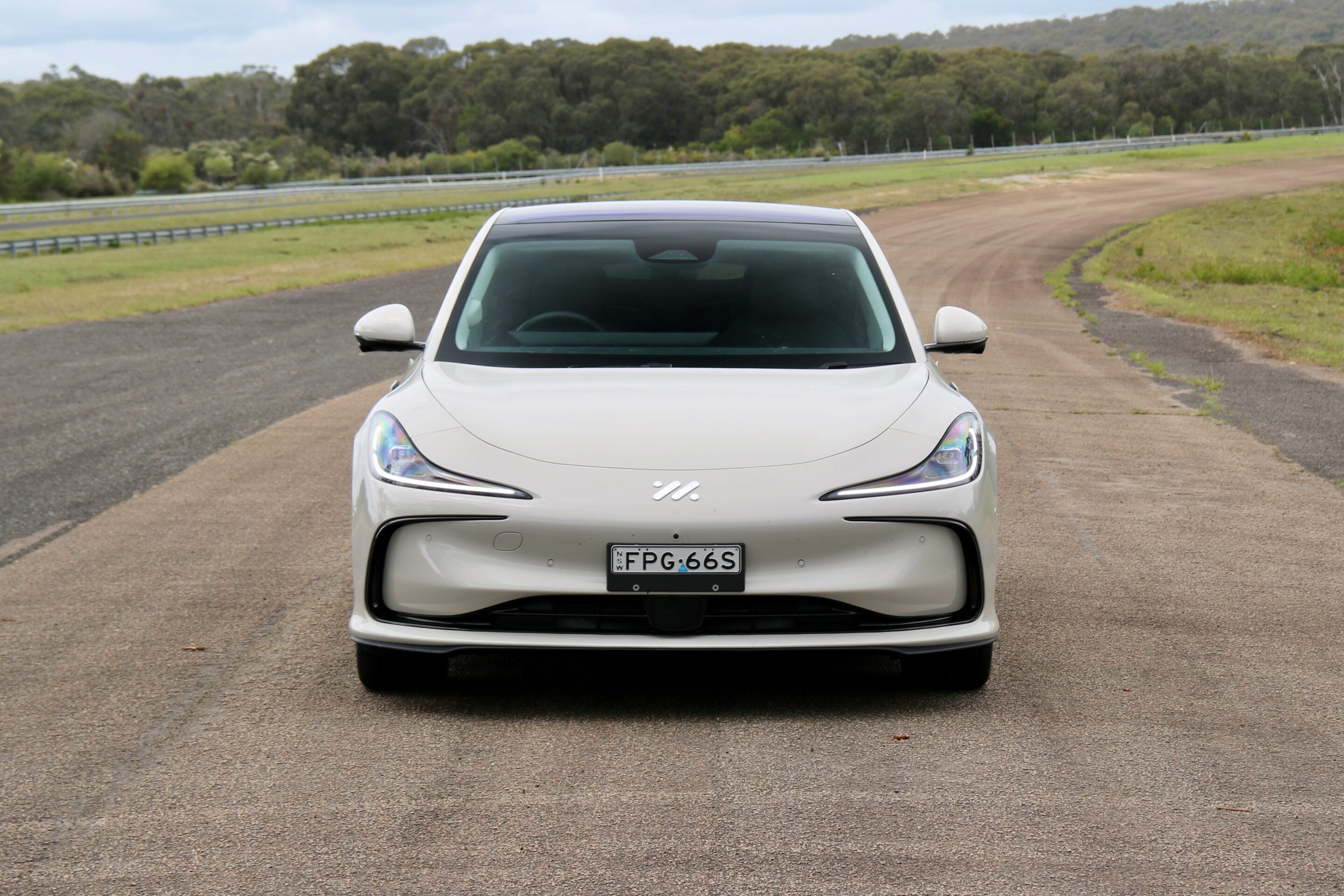
IM5 Platinum and Performance use a 100kW NCM battery with an outstanding 396kW peak charging speed, which is some of the fastest charging available in Australia. A 30 to 80 per cent charge takes just over 15 minutes, while its 575km WLTP range is 4km more than the Model 3 Performance.
And then there’s the actual performance. MG claims outputs of 552kW of power and 802Nm of torque through the dual-motor all-wheel drive system for a claimed 3.2-second 0-100km/h time and 268km/h top speed. Yet it feels even faster than that – something we verified with vomit-inducing 2.9-second runs, which is even quicker than the 3.1-second Model 3 Performance. What makes its performance even more startling is that it launches cleanly and gets to around 60km/h before even more juice is provided to push you back further into the seat. Its top whack is 268km/h.
We all know cars with fierce straight-line speed but fall apart in corners, but – thankfully considering just how much thrust there is – the IM5 Performance is accomplished in the dynamics department. Its handling is accomplished and involving, and it’s terrifically agile thanks to its four-wheel steering and quick steering rack (just 2.3 turns lock to lock). Thanks to the Pirelli P Zero tyres, it grips well too, but it also doesn’t rely on its tyres for grip like so many cars do.
The standard adaptive air suspension also makes the IM5 Performance ride well, but it’s not floaty or underdamped – it’s taut and displays great body control. On the road, it’s also superbly insulated from outside noise, with very little in the way of wind or road noise.
Inside, the IM5 Performance doesn’t fit the premium vibe quite as well as its impressive engineering, but it’s still very comfortable and good quality. Where it falters is in its materials, which feel more like an MGS5 EV that’s priced around $45,000 less than the IM5 Performance. A Model 3 feels more modern, while a Polestar 2 feels more premium. Plus, the puffy look to the materials makes it feel a bit dated, like a 1990s American luxo barge like the Chrysler Concorde.
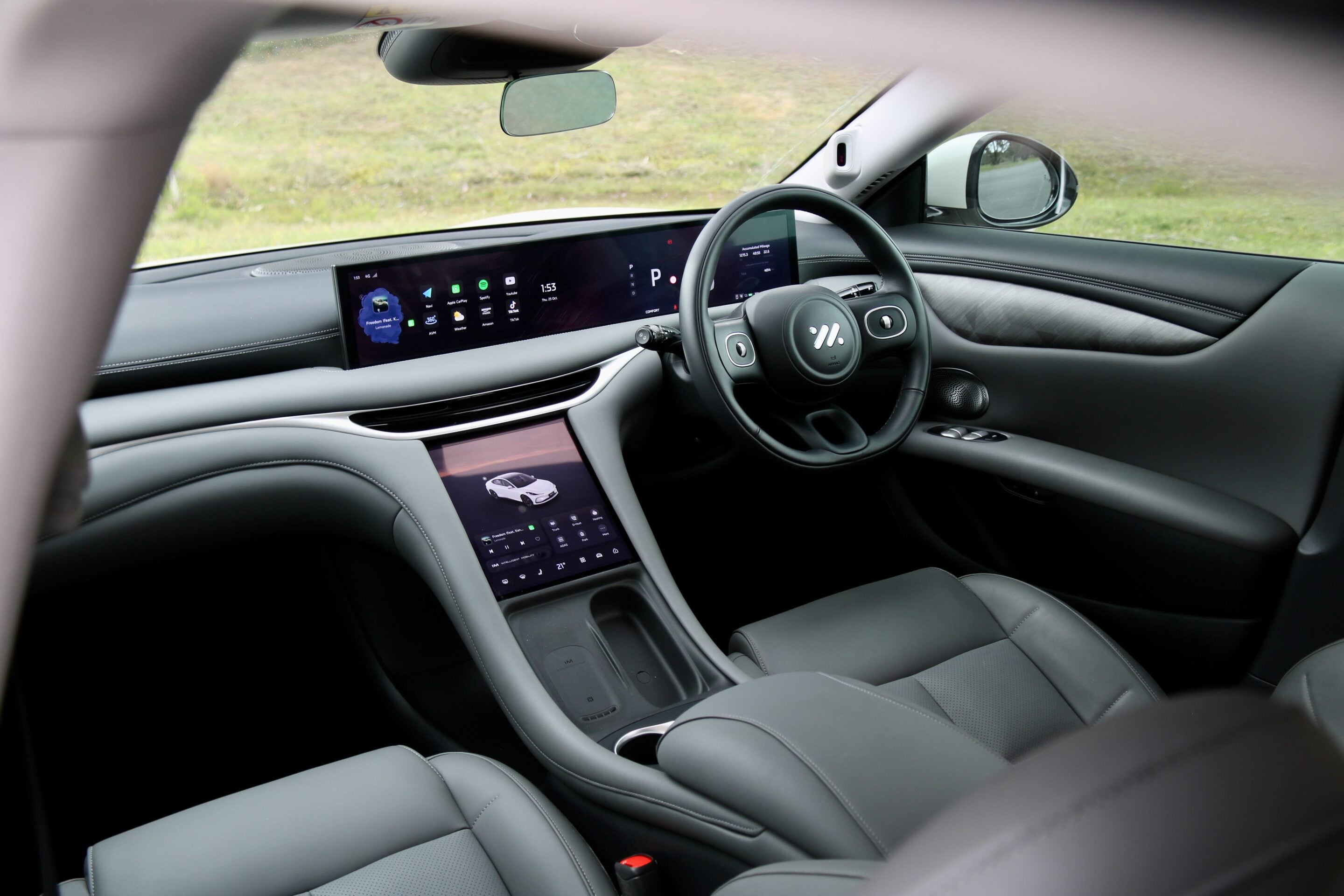
It is far more tech-rich than a ’90s car, however, with a 26.3-inch display that’s supplemented by a second 10.5-inch touchscreen located on the centre console. The top two displays show the cameras, smartphone mirroring, sat-nav and so on, while the bottom screen is used to control the majority of the car’s functionality like the dynamics, settings and ADAS. Like so many modern cars, it’s advisable to sit with the IM5 and learn its functions before getting on the road.
The same puffy vibe also makes it feel a bit claustrophobic inside, and makes the already-tight space feel smaller. Rear legroom is fine for taller adults, but the floor is high and headroom is limited. Overall, a Model 3 feels more spacious. The rear seat is also somewhat spartan with only some air vents, a single USB-C charging port and small door pockets – no third climate zone, no heated seats or display like the Model 3.
The IM5’s 457-litre boot is a good shape but its high floor and lack of clever features such as under-floor storage mean that other cars – like the Model 3 – are more practical. Folding the seats unlocks a healthy 1290 litres of space though, while there’s a small 18-litre front boot as well.
The IM5 Performance is a genuinely curious offering in the market that leaves us wanting more. Those curious about a Chinese-made car have sometimes loved it in the showroom, but the on-road feel is enough to have them running, By contrast, the IM5 Performance is actually outstanding on the road and less so in the showroom. It’s impressively engineered and we hope some of that dynamic sparkle spreads further to MG models.
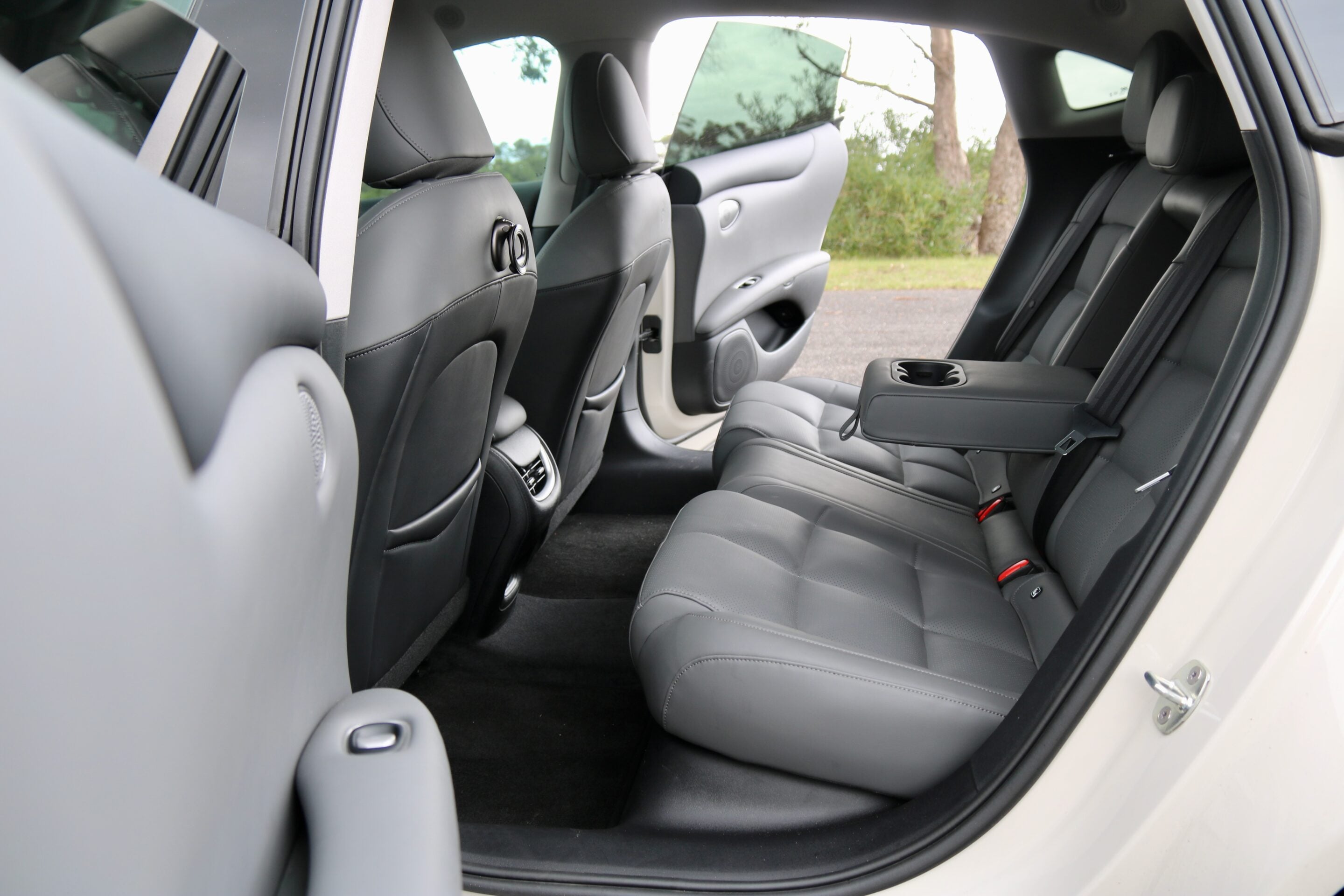
What would improve the IM5’s cabin would be warmer and higher-quality textures, as well as a new layout for the complex and basic-looking touchscreens.
But really, aside from interior quibbles, MG has built a worthy rival to the Tesla Model 3. It’s excellent value for money, veeeeery fast, involving to drive and generally feels far more accomplished on the road than most other Chinese cars. A Tesla-beater? Not quite yet, but it’s not far off.
IM5 Performance Specifications:
| Price | $80,990 drive away |
|---|---|
| Battery | 100kW NMC |
| Claimed WLTP range | 575km |
| Peak charging speed | 396kW |
| Claimed 30 to 80% charge time | 15.2 minutes |
| Drivetrain | 572kW/802Nm dual motor all-wheel drive |
| Claimed 0-100km/h | 3.2 seconds |
| Top speed | 268km/h |
| Dimensions (L/W/H/WB) | 4931/1960/1474/2950mm |
| Boot space | 457 litres (seats up), 1290 litres (seats folded) plus 18 litre frunk |
| Warranty | Five-year/unlimited km (extendable to seven years with dealer servicing), eight-year/160,000km for the drive battery |
| Five-year/100,000km service cost | $1904 ($380 per year) |
| On sale | Now |
IM5 Performance standard equipment:
- 20-inch alloy wheels with Pirelli P-Zero tyres and a tyre repair kit
- Adaptive air suspension
- Four-wheel steering
- Dusk-sensing automatic LED exterior lighting, including front and rear daytime running lights
- Rain-sensing automatic wipers
- Keyless entry and start
- Hands-free electric bootlid
- Heated/auto-folding mirrors that drop in reverse
- Panoramic glass roof
- Laminated glass, rear privacy glass
- Synthetic leather upholstery
- 12-way electric driver’s seat with memory functionality
- Dual-zone automatic climate control with rear vents
- Heated and ventilated front seats, heated outboard rear seats and steering wheel
- 26.3-inch display incorporating the central touchscreen and driver’s display
- 10.5-inch central touchscreen
- Wireless and wired Apple CarPlay and Android Auto
- Satellite navigation
- Live services with MG’s iSmart app
- Wireless phone charger
- 3x USB-C charging ports
- 20-speaker sound system
- FM/DAB+ digital radio
- Selectable driving modes
- Automatic parking (including one touch parking, kerbside, pulling out and reversing the last 100 metres)
- ‘Crab walk’ functionality
- Nap and night driving modes
- 256-colour selectable ambient lighting
IM5 Performance safety features:
- 7x airbags
- Autonomous emergency braking (AEB) with pedestrian, cyclist and intersection assistance
- Adaptive cruise control
- Lane keeping assistance
- Adaptive lane guidance
- Blind-spot monitoring with rear cross-traffic alert (with braking)
- Traffic sign recognition including speed limit information
- Driver attention monitoring
- Door open warning
- Front, side and rear parking sensors
- 360-degree camera
- Tyre pressure monitoring
The IM5 range achieved a five-star ANCAP safety rating earlier this year with scores of 89 per cent for adult occupancy protection, 91 for child occupancy protection, 85 per cent for vulnerable road user protection and 79 per cent for safety assist.
One variant conspicuousness in its absence from the new-generation Toyota HiLux line-up is the GR Sport.
This isn’t necessarily surprising, as no doubt Toyota is keeping some aces up its sleeves to roll out across the ninth-generation HiLux’s lifespan; the GR Sport was only revealed locally in early 2023, almost eight years into the eighth-gen HiLux’s run, though the badge first appeared in Brazil in 2018.
It’s almost certain to return; it’s been too successful not to. In the first 10 months of 2025 Toyota sold 2585 GR Sports, with Toyota Australia’s vice president of sales and marketing Sean Hanley recently telling media that it is an important part of its brand lineup.

So with its return a virtual certainty, what form will it take? Those wishing for a Ranger Raptor-baiting Dakar racer with number plates are likely to be disappointed, as if the new HiLux has taught us anything, it’s that Toyota believes in evolution, not revolution. It also pays to remember that the HiLux is a GR Sport model, rather than a fully-fledged GR product.
One noticeable absence from our render (main pic) is the wider tracks that were such a feature of the previous model. While Toyota executives have hinted they may return, the Rogue has reappeared without them and making the investment for a single variant would be unusual.
Part of the reason they have disappeared from the Rogue is that some of the previous wide-track chassis improvements have been incorporated into the new model, most notably four-wheel disc brakes, but there is still plenty of scope for upgrades.
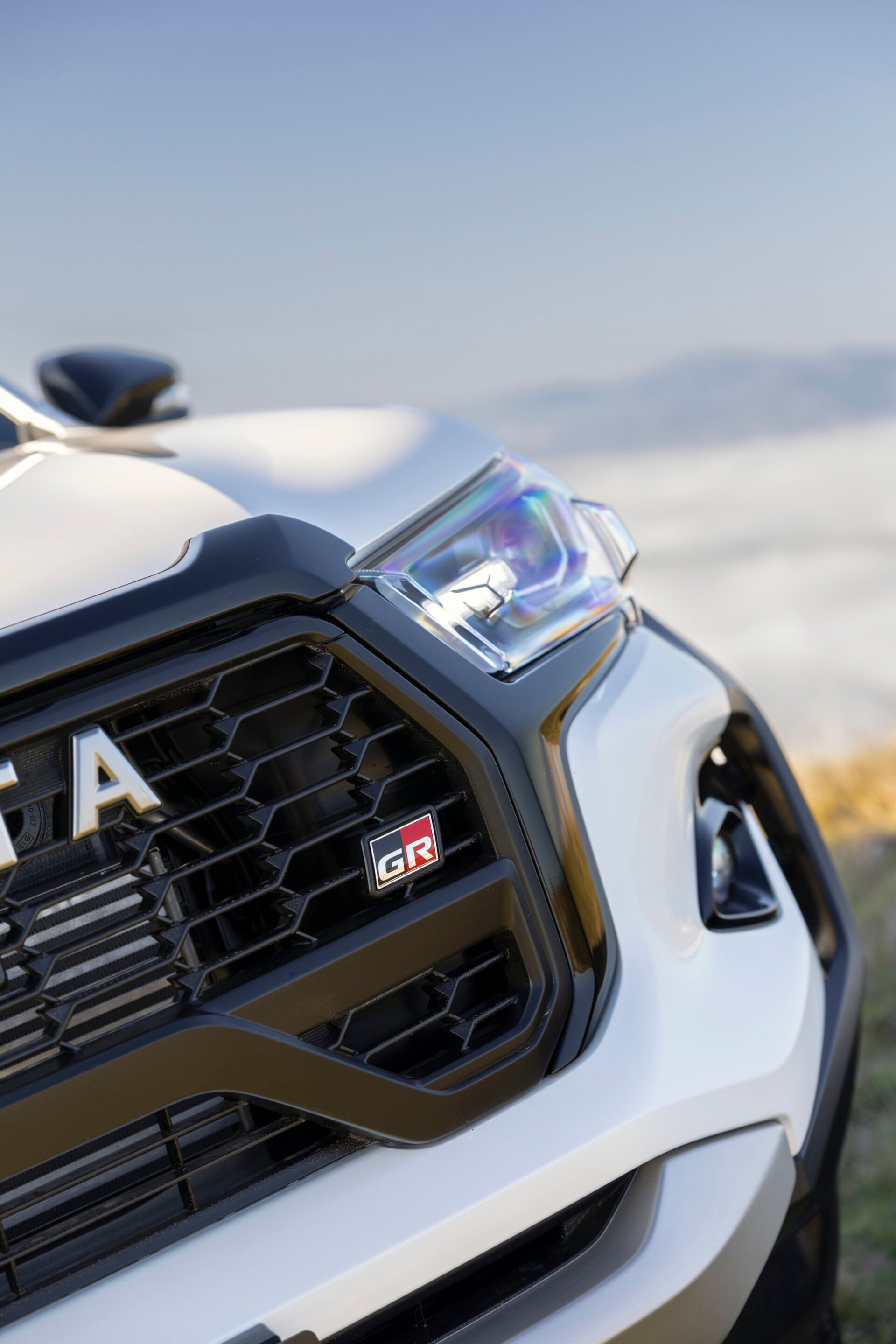
Styling-wise our render features a blacked-out grille with better cooling, more extensive underbody protection and a more aggressive front bar. Without the wider body, it’s left to bigger wheels and off-road rubber to enhance the stance as well as a lift to increase the ground clearance over even the Rogue’s 229mm (the last GR Sport offered 265mm).
Under the bonnet we’d expect the 165kW/550Nm 2.8-litre four-cylinder turbodiesel to remain; Toyota hasn’t altered the base HiLux engine and the upgraded 1GD-FTV is pretty strong as far as the diesel crop goes, though mild-hybrid assistance would be welcome.
Four-wheel disc brakes are now standard, but larger front rotors and calipers would improve braking performance in hard driving or when towing. New monotube shock absorbers and the fitment of a rear anti-roll bar round out the package.
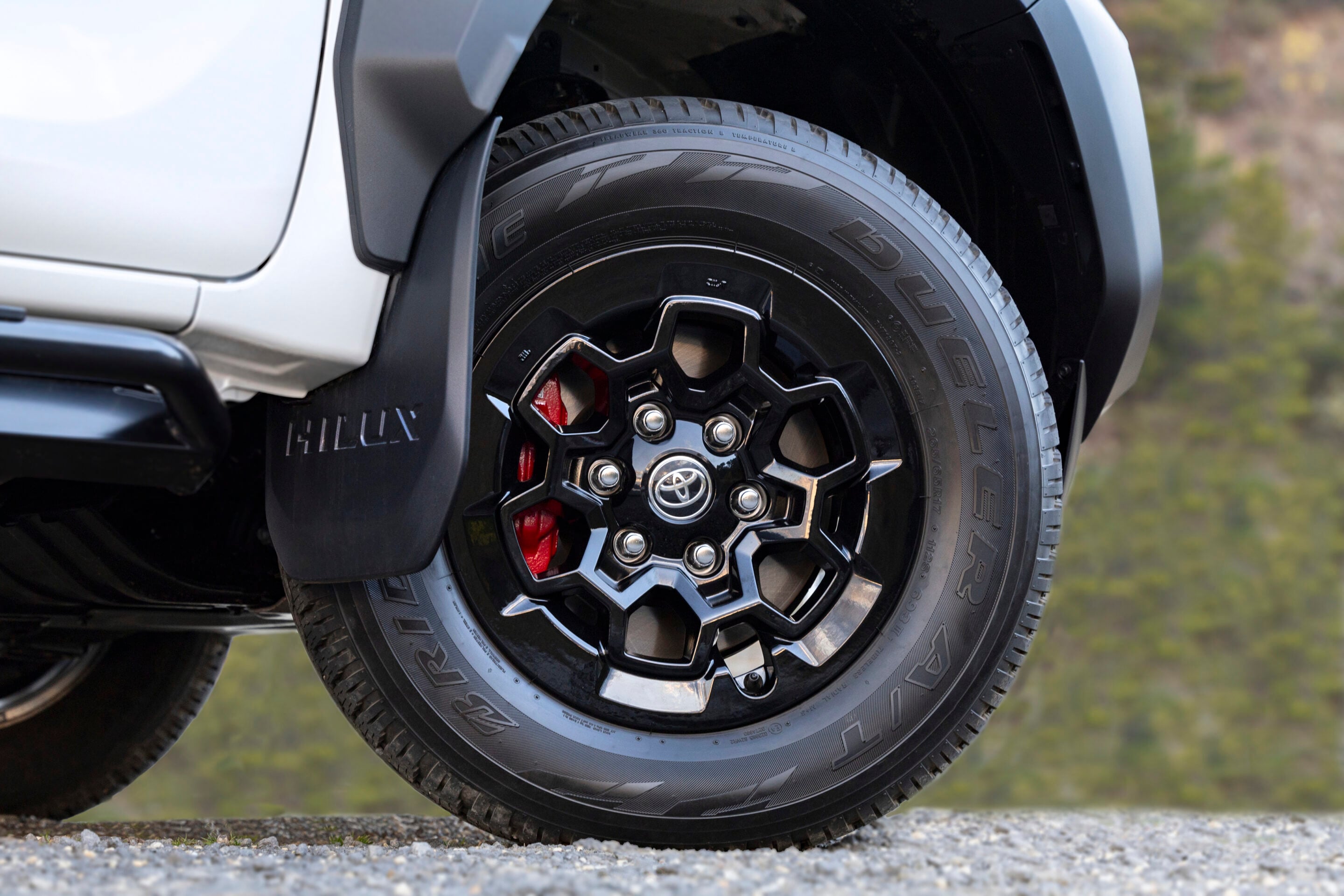
Some might say these are all fairly mild upgrades, but that’s exactly the point. Toyota has taken the view that the HiLux ain’t broke so doesn’t need fixing and there’s no reason to believe it will alter that view for the GR Sport.
This would also keep costs under control and with the new Rogue increasing by just $460 over its predecessor, we’d expect the GR Sport to sit above it and the identically priced Rugged X at around $75,000 plus on-road costs.
It’s a tough time to be a car maker. Buyers’ tastes have shifted, as seen by the rise and rise in popularity of SUVs and dual-cab utes, their combined domination leaving what were once the bread-and-butter of new car sales falling out of favour and struggling to find new owners.
Sales of small cars have been hard hit in Australia with even the evergreen Toyota Corolla suffering major declines. As recently as 2013, Toyota shifted around 44,000 new Corollas. By 2024, that number had dwindled to just 24,000 or so as buyers continued to gravitate towards an ever-increasing range of SUVs.
Thankfully, Korean car maker Kia still sees value in the small car and in early 2025 launched the new K4 sedan, replacing the popular but increasingly outdated Kia Cerato sedan which had been around in its current generation since 2018. Equipment updates kept the Cerato fresh well into the middle of this decade but time eventually caught up with it.
Now, almost a year later, the Kia K4 hatchback has arrived in Australia to fill the hole. So can Kia’s newest hatchback reignite sales of small cars in Australia?
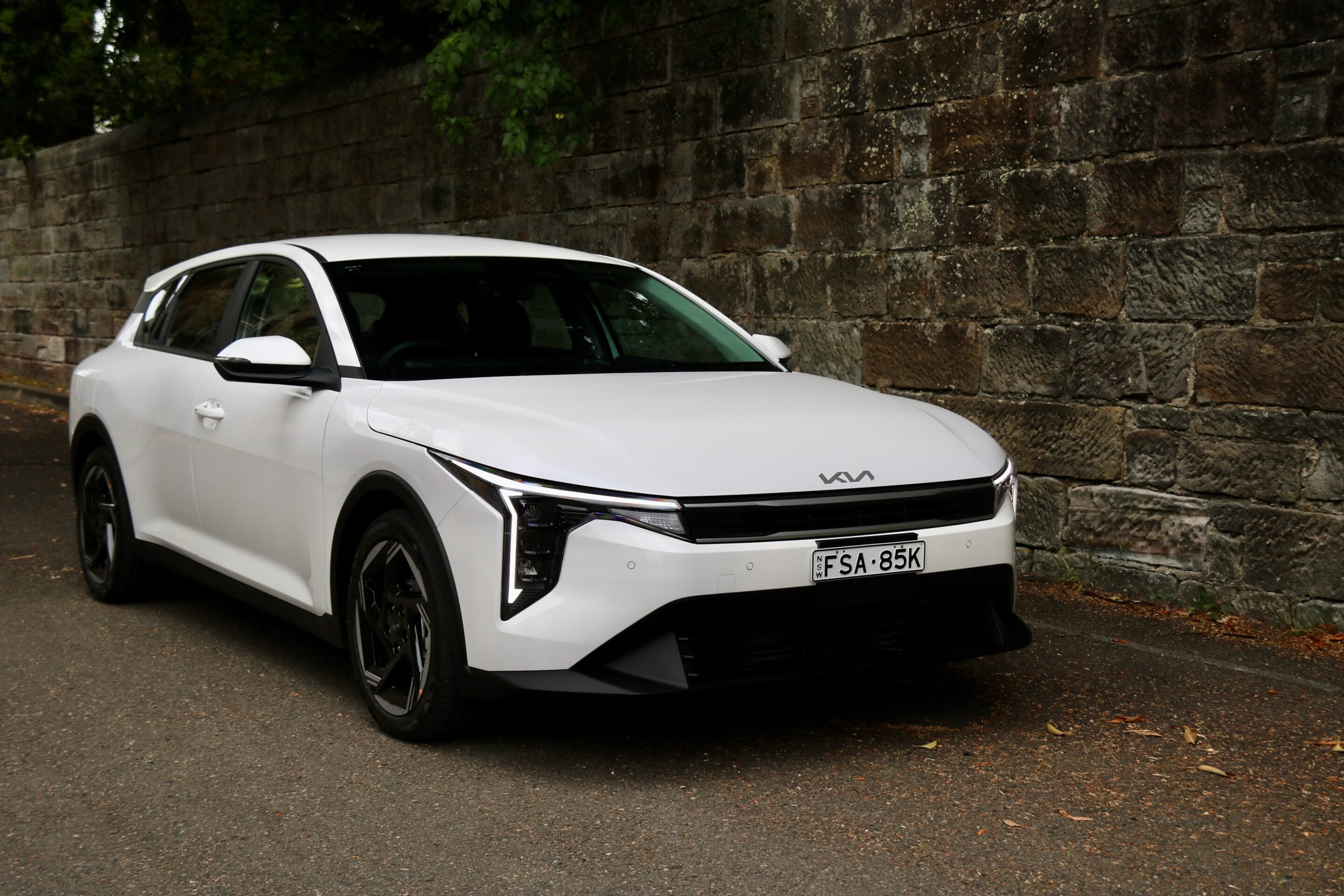
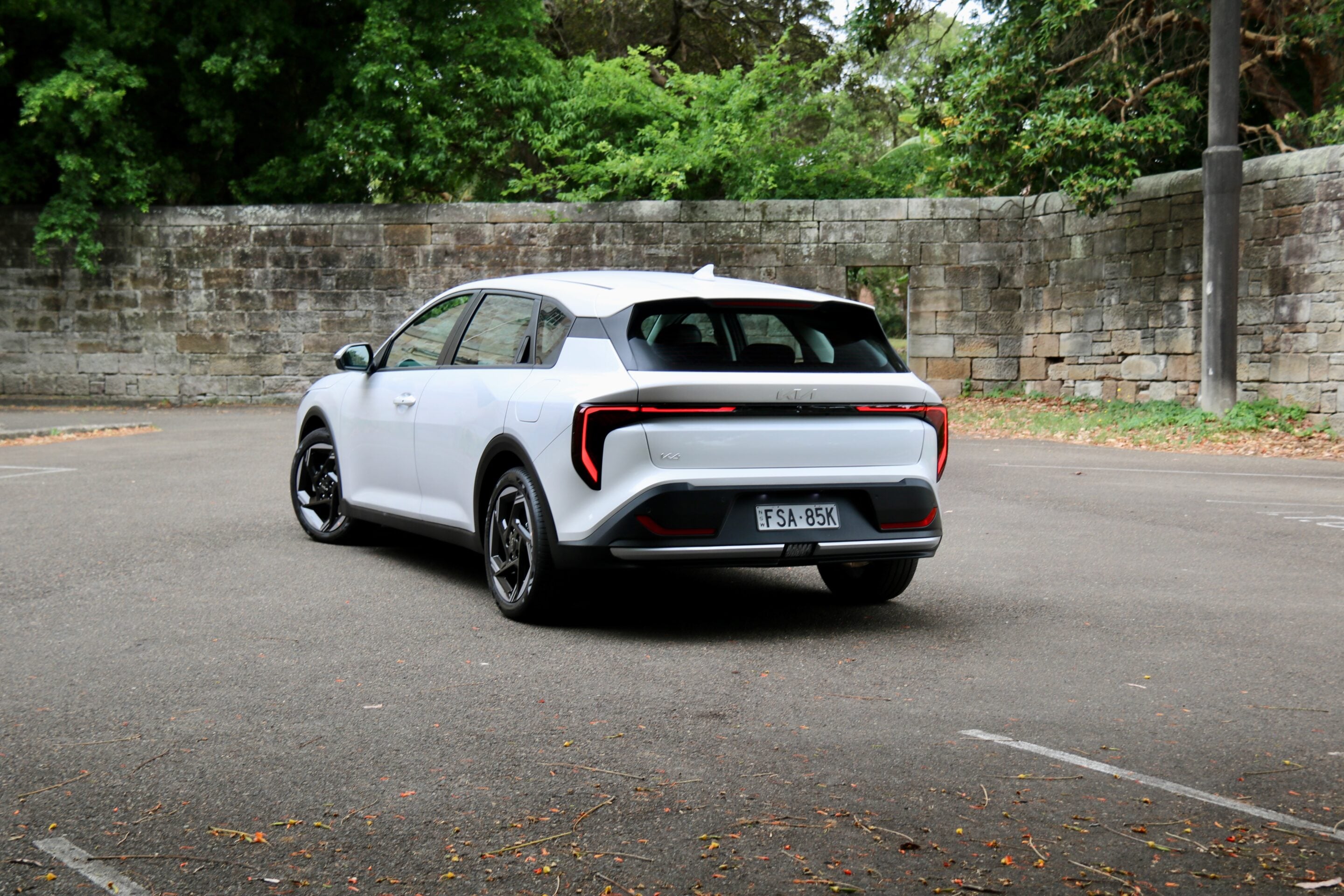
Using Kia’s latest ‘Opposites United’ design language, the K4 hatchback marks a noticeable departure from the Cerato. Compared alongside the K4 sedan, the hatchback is 270mm shorter, though shares the three-box’s long wheelbase. Its stubby rear offers a hint of station wagon, while plastic wheel arches lend it the appearance of a slightly-lifted SUV. If you can’t beat ’em, join ’em. Like the rest of Kia’s current range, the K4 hatch looks fresh and contemporary, and certainly stands out on the road.
Pricing for the 2026 K4 range starts at $32,090 plus on-road costs, which is right in the heart of the small car market. Key rivals like the Toyota Corolla and Mazda3 start a little higher than the K4, though the Kia is larger. And despite being more expensive than the Cerato it replaces, Kia’s strong value proposition remains firmly in place with the K4.
Features on the entry-level K4 S include 16-inch alloys, keyless entry with push-button start and remote start, automatic LED lighting, a 12.3-inch touchscreen, wireless Apple CarPlay and Android Auto, rear air vents along with safety features like seven airbags, autonomous emergency braking, adaptive cruise, lane-keep assist, blind-spot detection, auto high beam, a reversing camera and a speed limit chime that, mercifully, can be muted.
A safety package can be optioned on the K4 S and brings with it a more sophisticated AEB system braking system as well dual-zone climate control with automatic window defogging and a 12.3-inch digital driver’s display. Optioning the Safety Pack also ups the K4’s ANCAP safety rating to five stars. We’d argue it should be standard…
Move up the range to the Sport ($36,690 +ORC) to add larger 17-inch alloys, sat-nav with 10 years of map updates and semi-autonomous highway driving tech, while the Sport+ ($39,090 +ORC) adds synthetic leather, auto wipers, heated front seats and an auto-dimming rear mirror.
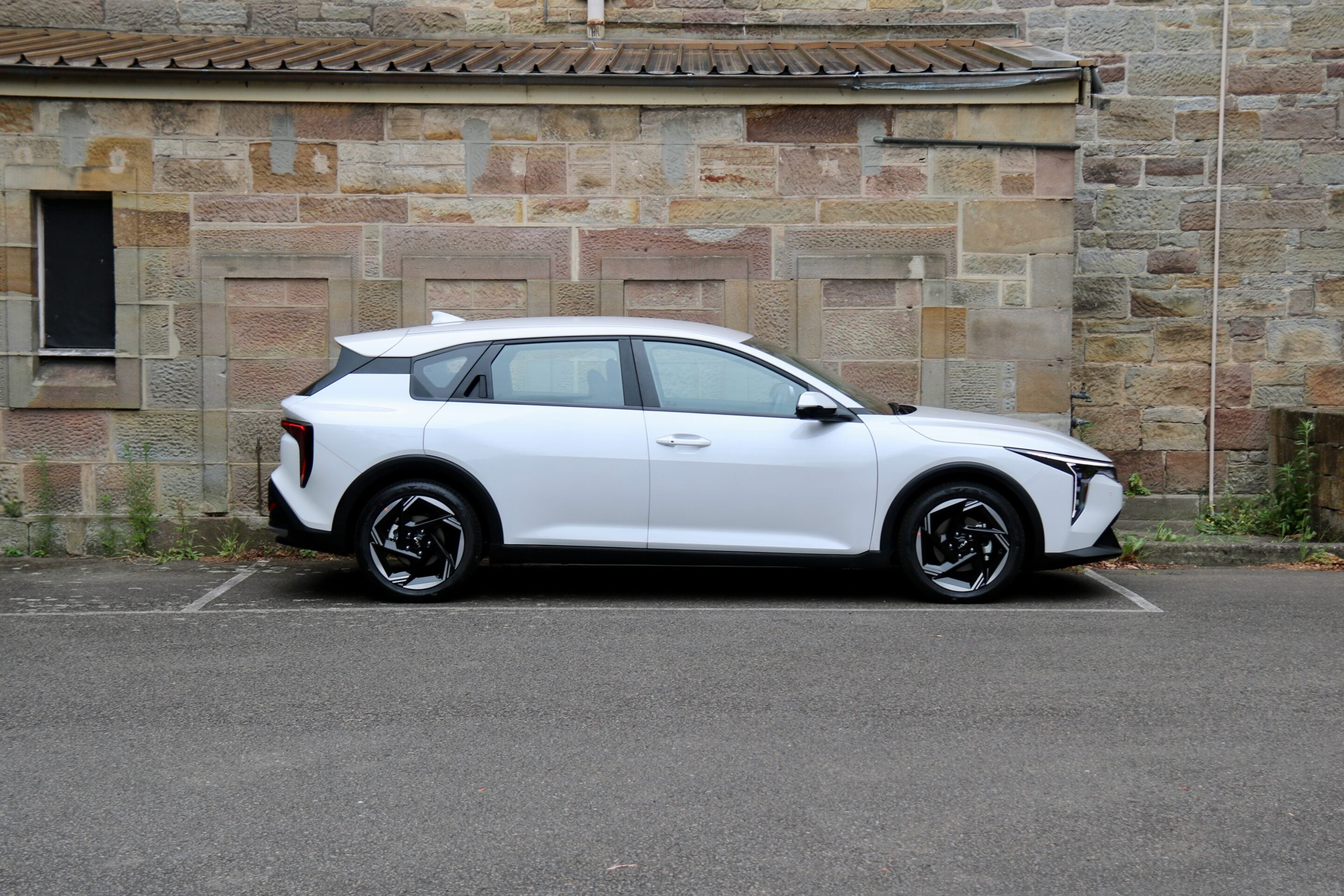
Sitting atop the K4 range, the GT-Line ($43,790 +ORC) swaps out the 2.0-litre atmo four found lower down the range for Kia’s 1.6-litre turbocharged four cylinder. The range-topper also scores multi-link rear suspension, 18-inch alloys, a sunroof, ventilated front seats with 10-way electric adjustment and memory for the driver, a wireless charger, Harman Kardon audio and ambient cabin lighting. The GT-Line is the only K4 to feature a faux-leather-wrapped steering wheel, a bit of a slap in the face to anyone who spent circa $42,000 drive away for the Sport+ next step down in the range only to find a polyurethane steering wheel!
As with the K4 sedan, two four-cylinder petrol engine options are available in the hatchback: either a 110kW/180Nm naturally-aspirated 2.0-litre found in S, Sport and Sport+ variants, or the GT-Line exclusive 142kW/265Nm 1.6-litre turbo. Kia Australia also has its hand up for a future hybrid drivetrain, most likely the 104kW 1.6-litre found in the Hyundai i30 sedan. We expect it to land sometime in 2026.
Those familiar with the 2025 model year K4 sedan will note that it actually uses the same (and older) 2.0-litre engine and six-speed auto from the outgoing Cerato. However, all 2026 K4 2.0-litre models now use the upgraded Atkinson Cycle engine from the Hyundai i30 sedan with big benefits for fuel economy and emissions. The old engine was rated at 7.4L/100km and 167g/km, and now the K4 sedan is listed at just 6.0L/100km and 139g/km.

We spent the majority of our time at the launch in the Sport+ with its 2.0-litre donk and came away impressed. While the engine could be more refined at higher revs, the K4’s CVT automatic is a revelation for the type. To quote another journo on the event, it’s the first CVT that “doesn’t piss me off”, a view that we share thanks to its defined and noticeable steps between artificial gears and generally smooth nature.
It’s no powerhouse but the 2.0L four is perfectly adequate around town and fine at highway speeds as well. It was difficult to ascertain fuel economy for the drive, but highway sections impressively gave under 5L/100km results.
The K4 GT-Line adds a noticeable uptick in performance, with its 142kW/265Nm just outplaying the 2.5-litre Mazda3’s 139kW/252Nm outputs. Peak torque hits at just 1700rpm and the shorter ratios of the eight-speed auto make it feel noticeably punchier than the Mazda3, as well as the 2.0-litre K4. If you’re already looking at the K4 Sport+, the jump to the GT-Line makes a lot of sense.
As we saw with the Cerato, the driving experience of the K4 is generally quite impressive for the small car segment. Thanks to Kia Australia’s local tuning, it rides and handles well and that’s across the range, not just the sporty GT-Line. Those who have experienced the Cerato GT will breathe a sigh of relief too as the GT-Line is far more comfortable than its too-firm predecessor, with a very compliant ride quality. Yet, despite the softer ride, it’s still fun from behind the wheel.
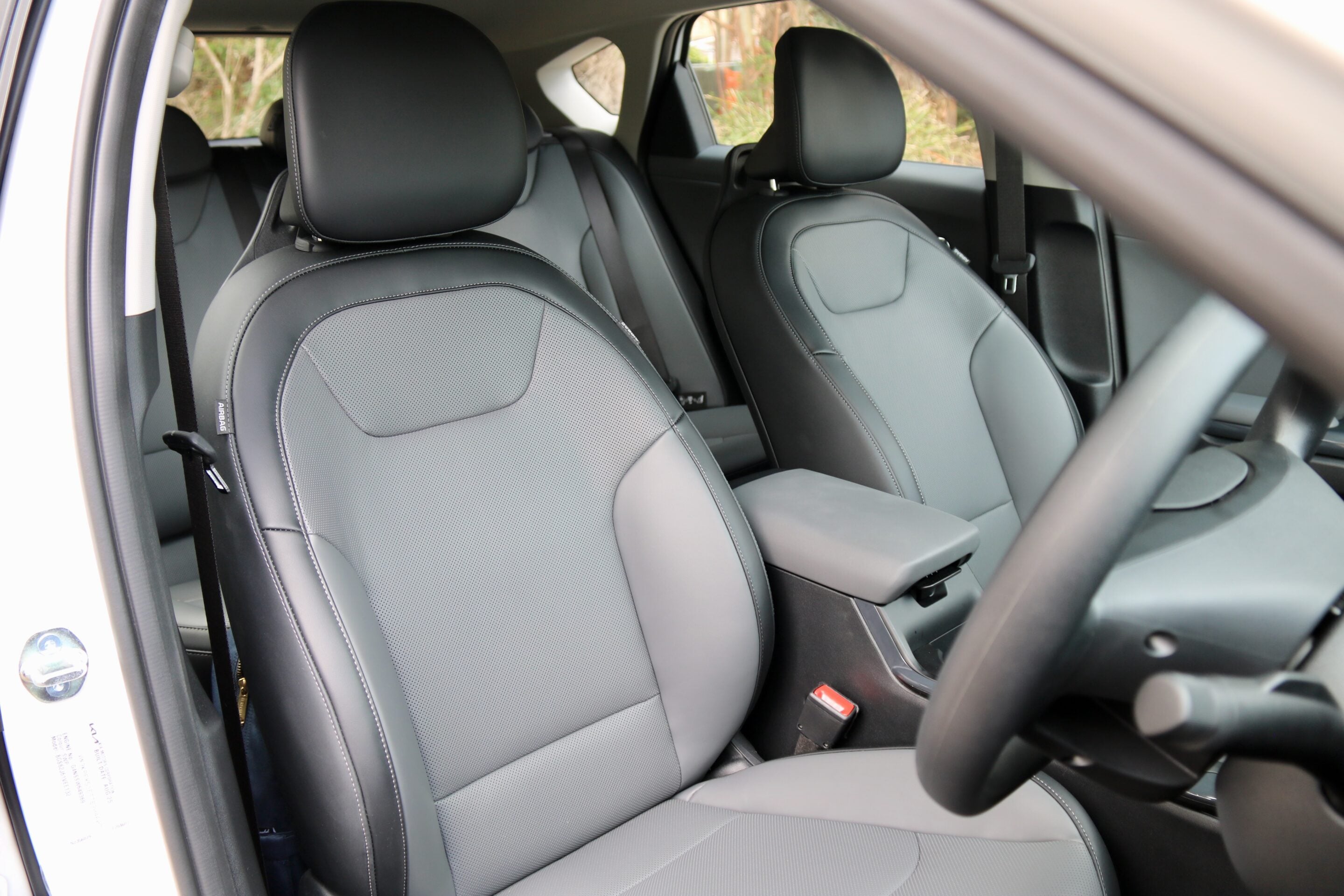
Another big improvement is the K4’s cabin treatment, which is a big step up in design and quality. While it’s not as premium as a Mazda3, it’s now more modern and feels like a higher-end place to be than the Cerato, and far more spacious than the claustrophobic Corolla. All models use a 12.3-inch touchscreen with Kia’s latest ‘ccNC’ software, which is so easy to use and its graphics are sharp. The K4’s cabin is practical too with touches such as open tray storage with large cupholders and big door pockets for life’s trinkets.
Moving rearward, thanks to the long 2720mm long wheelbase, the K4 is one of the most spacious small cars with plentiful legroom and thanks to the low seat base, good headroom for taller folks. Seat comfort is generally quite good as well, while the 438-litre boot is one of the largest in the segment, trailing only the Skoda Scala (467L) but more than doubling the non-ZR Toyota Corolla (217L). Unlike the Corolla, all K4 models feature a space-saver spare wheel.
Our early impressions of the K4 hatchback are good. Kia’s newest small car is a meaningful addition to the segment, especially in a time where passenger car sales are declining. It’s attractive to look at, drives well regardless of model, is spacious and is well equipped across the range.
Compared to the updated Stonic that we also drove on the same launch event, it’s better value, more practical and more satisfying to drive, which is common when comparing small cars to small SUVs. Again we ask, why do SUV sales keep increasing, when plenty of small cars are plainly better? And while the Kia K4 is unlikely to reignite small car sales to match the halcyon days, it is a perfectly good alternative to small SUVs.
Kia K4 hatchback specs:
| Model | Kia K4 hatchback |
|---|---|
| Price | from $32,090 plus on-road costs |
| Drivetrain | 1999cc naturally aspirated or 1598cc turbocharged four-cylinder engines |
| Transmission | CVT (2.0L) or 8-speed automatic (1.6T), FWD |
| Peak power | 110kW (2.0L) – 142kW (1.6T) |
| Peak torque | 180Nm (2.0L) – 265Nm (1.6T) |
| 0-100km/h | 7.5 seconds (est., 1.6T) – 9.5 seconds (est., 2.0L) |
| Claimed combined fuel consumption/CO2 emissions | 6.1-7.4L/100km, 143-169g/km |
| Fuel type/tank size | 91RON regular unleaded, 47 litres |
| Dimensions (length/width/height/wheelbase) | 4440/1850/1435/2720mm |
| Tare mass | 1388-1453kg |
| Boot | 438 litres (rear seats up), 1217 litres (rear seats folded) |
| Warranty | Seven-year/unlimited km with up to eight years of roadside assistance |
| Service intervals/five-year cost | Annually/every 15,000km (2.0L) or 10,000km (1.6T), $2322 (2.0L)-$2459 (1.6T) |
| On sale | Now |
Kia K4 S standard features:
- 16-inch alloys wheels with a space-saver spare
- Keyless entry with push button start
- Remote start
- Dusk-sensing automatic LED headlights
- LED front and rear daytime running lights
- Manual air-conditioning with rear air vents
- Cloth upholstery
- Height-adjustable front seats
- Heated and auto-folding mirrors
- 4.0-inch driver’s display
- 12.3-inch touchscreen with live services and over-the-air updates
- Kia Connect Telematics (eCalling, remote control, vehicle status monitoring, etc. from the Kia Connect smartphone app)
- Wireless Apple CarPlay and Android Auto
- AM/FM/DAB+ digital radio
- Six-speaker sound system
- 4x USB-C ports
Kia K4 S safety features:
- 7x airbags (including a front centre unit)
- Automatic emergency braking with car, pedestrian, cyclist and intersection monitoring
- Adaptive cruise control with stop and go functionality
- Lane keep assist with adaptive lane guidance
- Blind-spot detection (with braking)
- Rear cross-traffic alert (with braking)
- Rear occupant alert
- Safe exit warning
- Traffic sign recognition
- Driver attention monitoring
- Auto high beam
- Front and rear parking sensors
- Reversing camera
- Burglar alarm
K4 S Safety Pack adds:
- More advanced autonomous emergency braking (AEB) system with junction crossing and oncoming lane change detection
- 12.3-inch digital driver’s display
- Dual-zone automatic climate control with a 5.0-inch touchscreen
- Automatic window defogging
K4 Sport adds to S Safety Pack:
- 17-inch alloy wheels
- Satellite navigation with 10 years of live traffic and map updates
- Semi-autonomous highway driving tech with lane change assist
K4 Sport+ adds to Sport:
- Synthetic leather upholstery
- Heated front seats
- Rain-sensing automatic aero blade wipers
- Auto-dimming rear mirror
- Solar glass windscreen
K4 GT-Line adds to Sport+:
- Turbocharged engine with eight-speed automatic transmission
- 18-inch alloy wheels
- Multi-link independent rear suspension
- Sunroof
- Heated synthetic leather steering wheel
- Ventilated front seats
- 10-way electric driver’s seat with memory
- Eight-speaker Harman Kardon sound system
- Ambient cabin lighting
- Wireless phone charger
Small SUVs remain one of the strongest sales segments in Australia meaning that along with their mid-sized siblings, every brand worth its salt must have one in its line-up.
Kia knows this – that’s why it has four of them. The Stonic is the oldest in the range and it’s just been given a massive upgrade to keep it going, scoring new front and rear styling, new technology and more standard features across the line-up.
Compared with the pre-updated Kia Stonic, pricing for the facelifted model now starts $2040 higher for the S, $3000 higher for the Sport and $3260 more for the GT-Line. Considering that some brands like Toyota (the new HiLux is a great example) would call this Stonic facelift a new generation, and that it’s better equipped as well, that’s not a bad trade. But the days of the sub-$30k driveaway Kia SUV are now gone – as they are with competitor brands such as Mazda and Toyota.
2026 Kia Stonic pricing (plus on-road costs):
| S | $28,180 |
|---|---|
| Sport | $32,290 |
| GT-Line | $35,740 |
A full standard equipment list is at the bottom of this page, but highlights for the Kia Stonic S include 16-inch alloy wheels, dusk-sensing automatic halogen headlights, LED front and rear daytime running lights, keyless entry with push button start, an 8.0-inch touchscreen with wireless smartphone mirroring, USB-C charging ports and safety features including autonomous emergency braking, lane keeping assistance, blind-spot monitoring, parking sensors and a reversing camera.
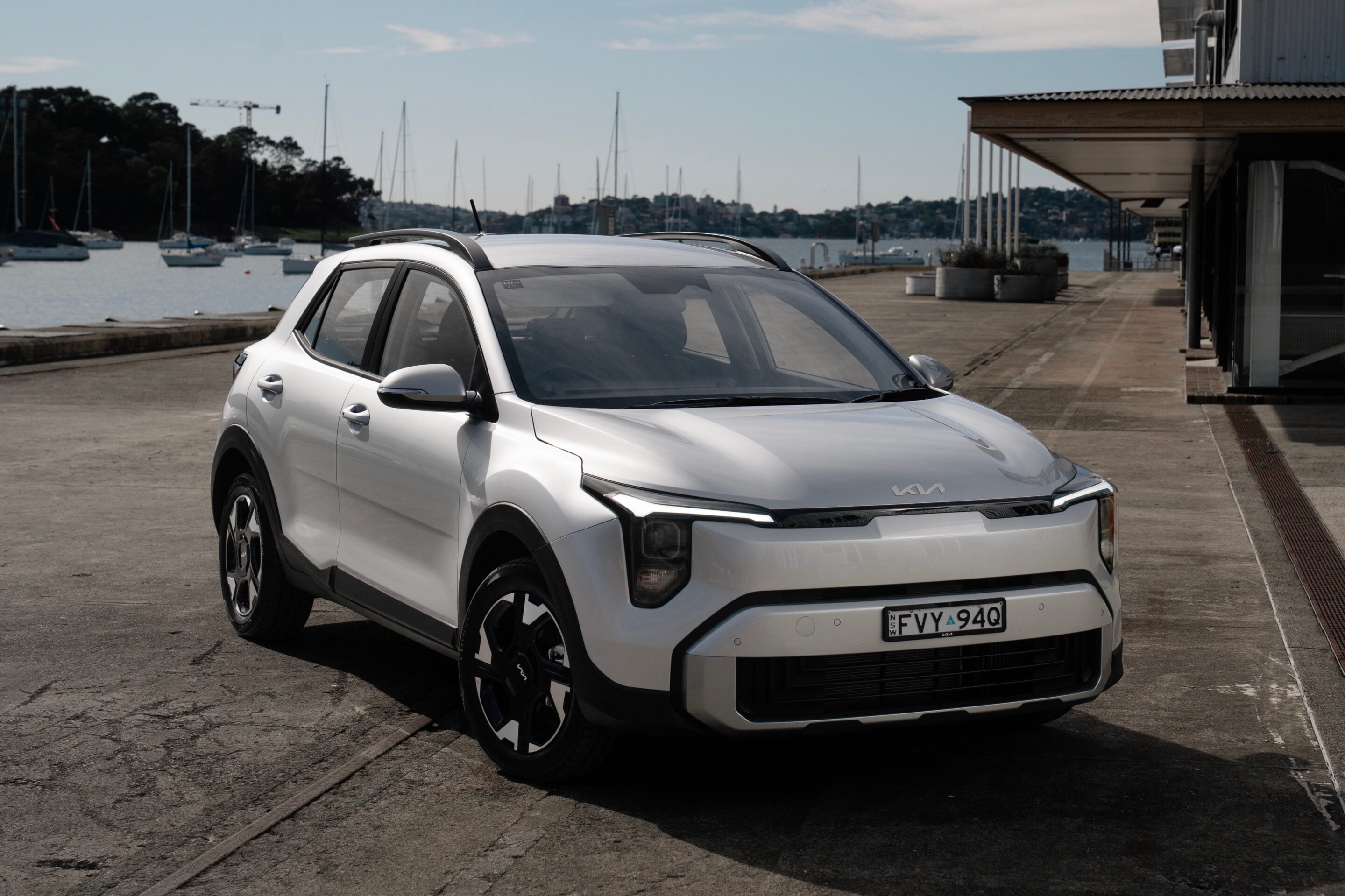
Stonic S
The mid-spec Sport adds larger 17s, rain-sensing automatic wipers, cloth and synthetic leather trim, a synthetic leather steering wheel, a larger 12.3-inch touchscreen with Kia Connect live services and sat-nav, automatic climate control, a more sophisticated AEB system and adaptive cruise control.
Finally, the top of the tree GT-Line gets a sunroof, a 12.3-inch digital driver’s display, heated front seats and steering wheel, cabin ambient lighting and LED exterior lighting. Curiously though, no Stonic model features rear cross-traffic alert or a 360-degree camera, while no LED lighting on the S and Sport is a miss too. Otherwise, it’s quite well equipped across the range.
Kia has set national drive away pricing for the Stonic range too, with the S priced from $30,890, the Sport $34,490 and the GT-Line $37,990. With that in mind, the Sport is the value pick of the range as it adds quite a lot of equipment to justify the extra spend over the S. While pricing has risen, the Stonic remains good value for money, though we’d also consider the slightly larger K4 and Seltos too.
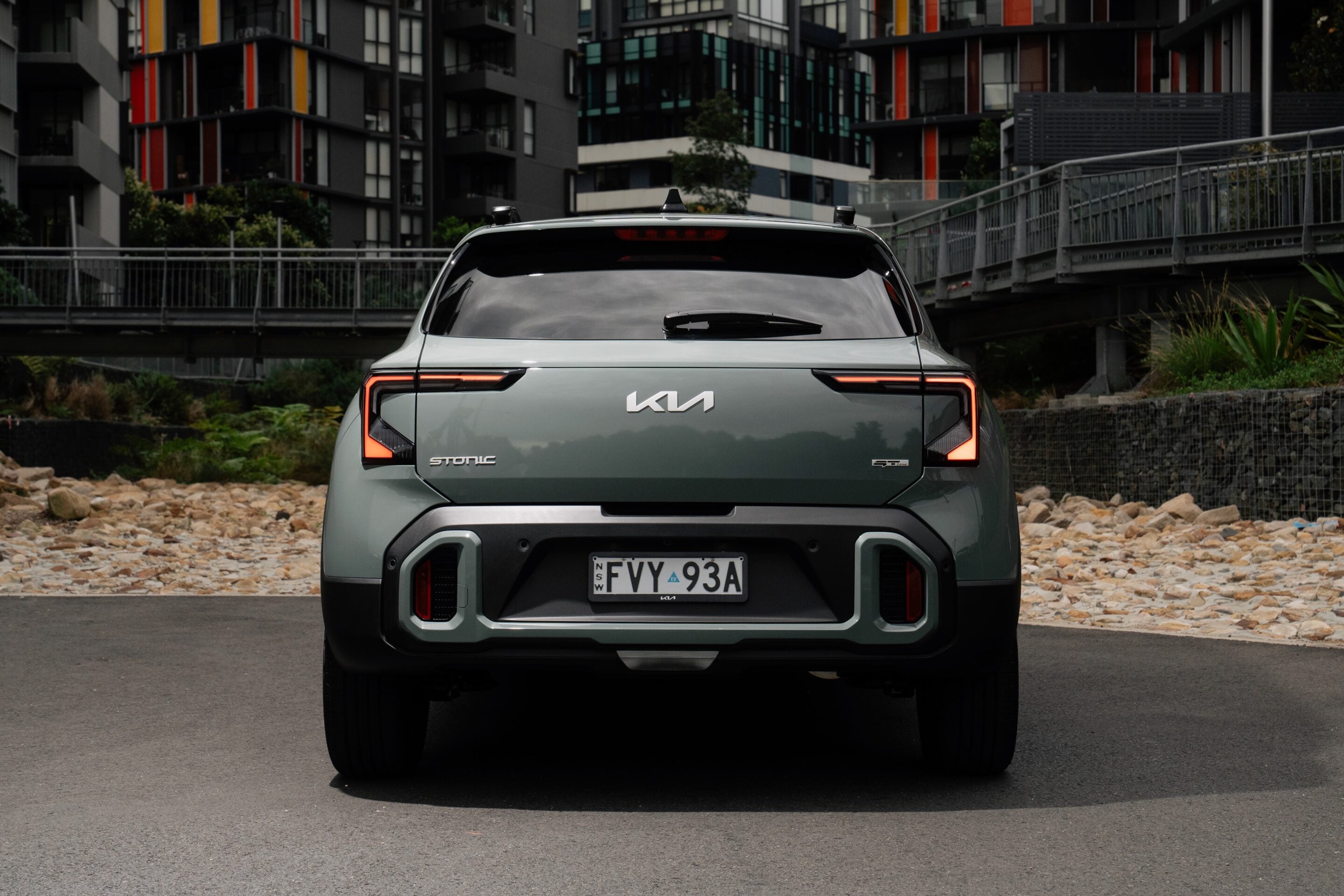
We don’t usually discuss styling as it’s a subjective matter, but the new front and rear design of the updated Kia Stonic is a big upgrade over the current model. It’s far more modern to look at, handsome and fits in well with the rest of the Kia range and that’s despite the Stonic being first released in 2017.
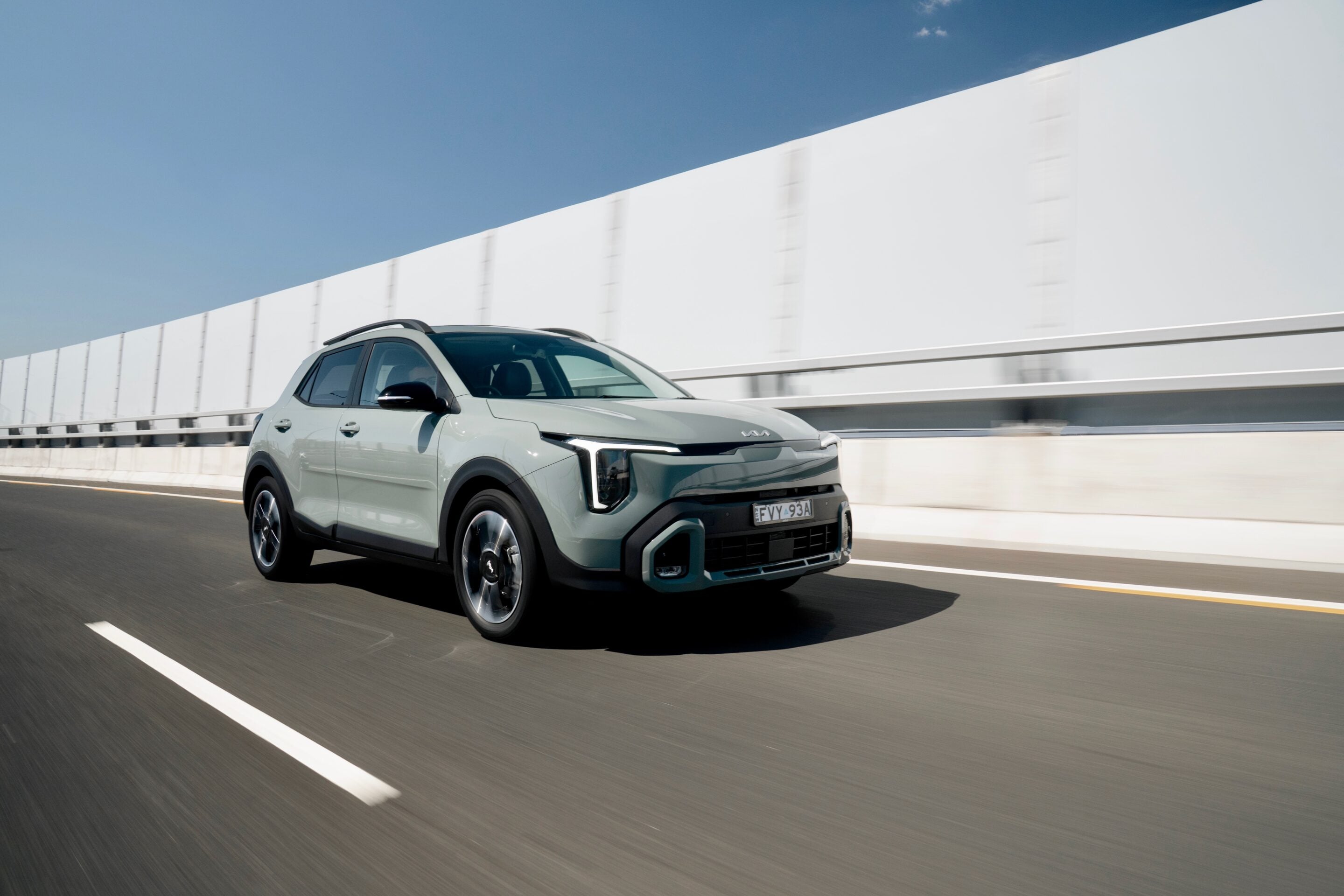
Stonic GT-Line
What’s the interior like?
Inside the Stonic has also seen a big upgrade in the form of an entirely new dashboard that follows larger Kia models such as the Sportage. The new dashboard layout is more horizontal than before and makes the Stonic feel wider than it is, giving an impression of more space than previously. The switchable HVAC/audio controls from the Sportage have also made their way into the Stonic.
Material quality hasn’t improved though, with still mostly hard surfaces, but that’s hardly unique in the small SUV segment. Importantly, the Stonic feels well screwed together and the switchgear feels good quality.
Kia hasn’t fitted its latest ‘ccNc’ infotainment system to the Stonic, instead, it uses the same last-generation software as before but the screens on the Sport and GT-Line are now larger at 12.3-inches. Those screens also now employ Kia Connect live services so buyers can access their car’s location and so on through a smartphone app, while over-the-air updates and 10 years of map updates for the sat-nav also feature on the larger screen to keep it future proofed.
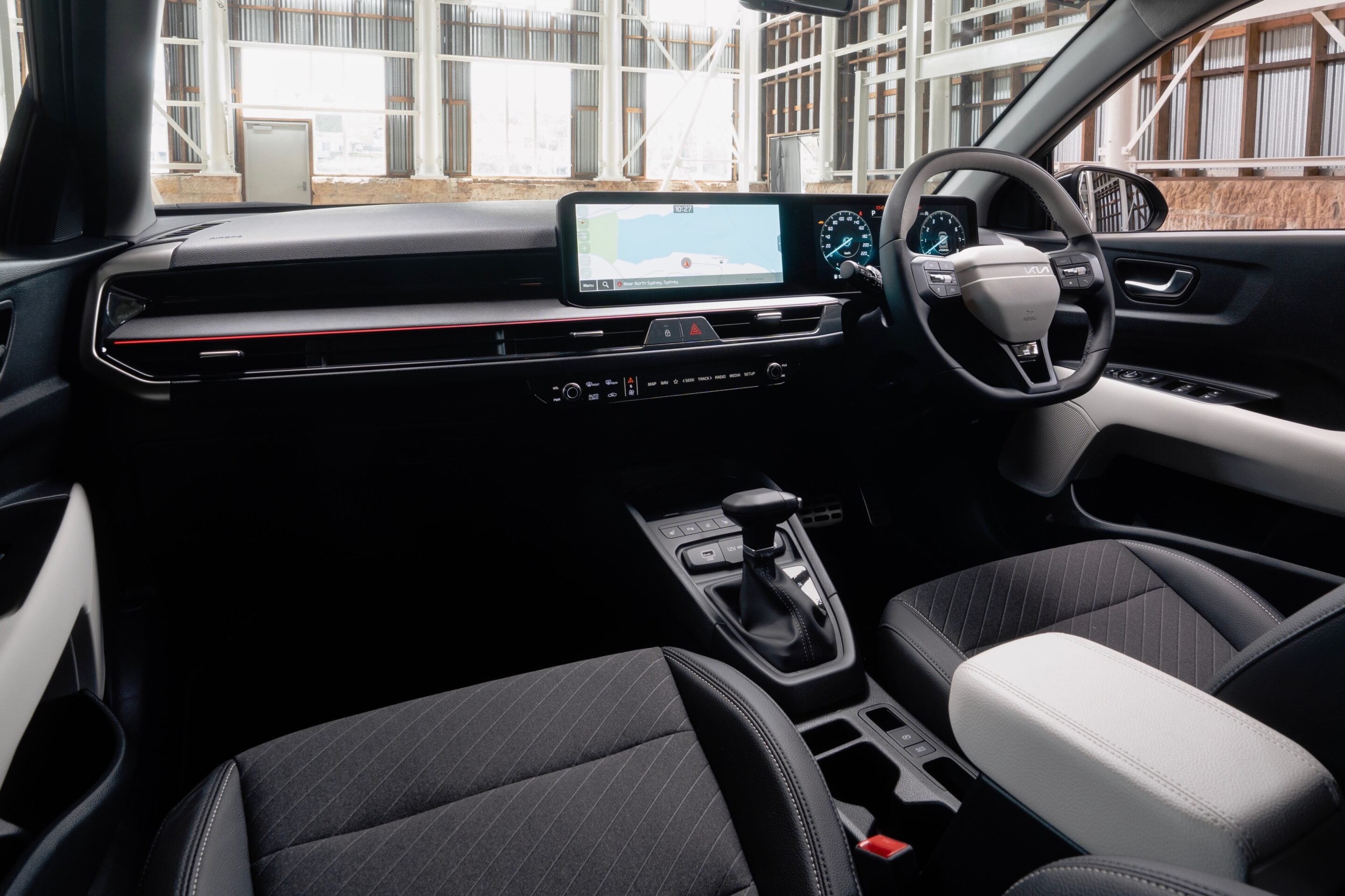
Stonic GT-Line cabin shown
The Stonic S actually still uses the same 8.0-inch touchscreen as the pre-updated model and is still, bizarrely, the only model in the range to feature wireless Apple CarPlay and Android Auto – the Sport and GT-Line’s larger screens are annoyingly wired only. But both systems are a breeze to use, and the 12.3-inch display is sharp too, but the 8.0-inch unit is a touch grainy.
The redesigned centre console is a big win for the Stonic: not only does it look more modern but there’s also more storage thanks to the adoption of an electronic parking brake. Above that is a new gear lever surround with a big open tray (with a wireless charger in the GT-Line), and overall, storage has been improved.
Moving rearward, aside from trim changes and a new USB-C charging port, the Stonic is unchanged. There’s good space for the segment for two adults and kids will be more than happy, though the lack of rear air vents would be frustrating for those sitting there. Aside from the lack of a central armrest, it’s a more appealing space than in the Mazda CX-3 and doesn’t feel anywhere near as claustrophobic.
Bootspace in the Stonic remains as before at 352 litres with the seats up and 1155 with them folded, but the 48V battery now sits in the spare wheel well so there’s disappointingly no longer a spare wheel, just a tyre repair kit. There is, however, a plusher boot floor cover that now launches upwards towards the base of the rear seat for a seamless floor – the pre-updated Stonic featured a big ridge between the boot floor and seat base that made loading longer items more difficult.

What’s the drivetrain like?
Under the bonnet of the new Kia Stonic is the same 1.0-litre turbocharged three-cylinder petrol engine as before, though now it’s mated to a 48-volt mild-hybrid system to aid fuel consumption and give a slight boost to performance. Making 88kW (+ 14kW) of power and the same 172Nm of torque, the three-pot is a winner of a drivetrain thanks to its characterful warble of an engine note, refinement and noticeable increase in grunt compared to the pre-facelifted model.
Kia doesn’t quote a 0-100km/h time, but it feels like a 10-second car, which is more than fine for its target market and far far quicker than the former naturally aspirated 1.4-litre petrol engine that the Stonic used to be available with in Australia. Still, we’d like to see a more powerful version offered as its chassis deserves more grunt.
What’s it like to drive?
We drove the Stonic on the Old Pacific Highway (or “Old Pac” for those who know it) north of Sydney as part of the launch program and it was a surprisingly fun companion. It’s a road known for endless corners in mostly quick succession, making it not a particularly fast road to drive on, which was kind of perfect for the Stonic.
It’s no rocketship, but it’s fun to drive with positive steering weighting with reasonable feel – a sign of its 2017 origins – and the ride and handling balance, which is still locally tuned and unchanged from the last Stonic, is fantastic. Bump absorption is excellent, as is body control, but it’s also not so stiff to rattle your fillings. Because of that, the chassis is tight and it feels nimble. A CX-3 is a bit more fun to drive, but the Stonic is far more comfortable in everyday driving.

The new mild-hybrid drivetrain is interesting and – mostly – effective, based on our launch drive. It’s certainly not capable of launching from a start under electric power, but it will happily coast and even shut the engine off when braking. Compared to the non-MHEV drivetrain from the pre-updated model, fuel consumption has dropped from 5.4L/100km to 5.0L/100km – not massive, but significant. Our harder driving on the launch gave consumption around the 9L/100km mark, but that’s not accurate of what Stonic buyers will be doing with their cars.
Some might be turned off by the price rises for the Kia Stonic range, but that would be doing a disservice to it because not only does it look like a new generation, but importantly, it feels like one as well. The new exterior styling has made it more modern and appealing to look at, while the interior feels new and not its 2017 vintage.
The new mild-hybrid drivetrain is peppier and more efficient than before, and although there’s now no spare wheel, it’s not cheap to service and it’s now more expensive, overall Kia’s baby SUV has been revitalised in its fight for small SUV supremacy – but we’d also be considering the excellent Kia K4 small car, which is larger and better value for money.
Kia Stonic specifications:
| Model | Kia Stonic |
|---|---|
| Price | from $28,180 plus on-road costs |
| Drivetrain | 998cc turbocharged three-cylinder engine, 48V mild-hybrid |
| Transmission | 7-speed dual-clutch automatic |
| Peak power | 88kW (@ 6000rpm) |
| Peak torque | 172Nm (@ 1500rpm – 4000rpm) |
| 0-100km/h | 10 seconds (est.) |
| Claimed combined fuel consumption/CO2 emissions | 5.0L/100km, 116g/km |
| Fuel type/tank size | 91RON regular unleaded, 45 litres |
| Dimensions (length/width/height/wheelbase) | 4165/1760/1500-1520/2580mm |
| Tare mass | 1265kg |
| Boot | 352 litres (rear seats up) – 1155 litres (rear seats folded) |
| Warranty | Seven-year/unlimited km with up to eight years of roadside assistance |
| Service intervals/five-year cost | Annually/every 10,000km, $2464 ($493 per year) |
| On sale | Now |
Kia Stonic S standard features:
- 16-inch alloy wheels with a tyre repair kit
- Dusk-sensing automatic halogen projector headlights
- LED front and rear daytime running lights
- Keyless entry with push button start
- Heated/auto-folding mirrors
- Roof rails
- Cloth upholstery
- Height-adjustable driver’s seat
- Manual air-conditioning
- 4.3-inch driver’s display
- 8.0-inch touchscreen
- Wireless Apple CarPlay and Android Auto
- AM/FM radio
- 1 x USB-A and 2 x USB-C charging ports
- Six-speaker sound system
- Cruise control
Stonic S safety features:
- 6x airbags
- Autonomous emergency braking with car, pedestrian, and cyclist avoidance
- Lane keeping assistance with adaptive lane guidance
- Blind-spot monitoring (with braking)
- Door open warning
- Auto high beam
- Driver attention alert
- Front and rear parking sensors
- Reversing camera
Stonic Sport model adds to S:
- 17-inch alloy wheels
- Rear privacy glass with front solar glass
- LED front fog lights
- Rain-sensing automatic wipers
- Cloth/synthetic leather upholstery
- Synthetic leather steering wheel and gear selector
- Adaptive cruise control with stop and go functionality
- Automatic emergency braking with junction assistance
- 12.3-inch touchscreen with live services and over-the-air updates
- Kia Connect Telematics (eCall and remote control, vehicle status monitoring, etc from smartphone app)
- Satellite navigation
- Wired Apple CarPlay and Android Auto
- DAB+ digital radio
- Single-zone automatic climate control
- Extra USB-C port
Stonic GT-Line model adds to Sport:
- GT-Line exterior styling, including black mirror caps
- All-LED exterior lighting (including indicators and reverse lights) with dynamic welcome lighting
- Heated front seats and steering wheel
- 12.3-inch digital driver’s display
- Sunroof
- Alloy sports pedals
- Ambient mood lighting
- Auto-dimming rear mirror
