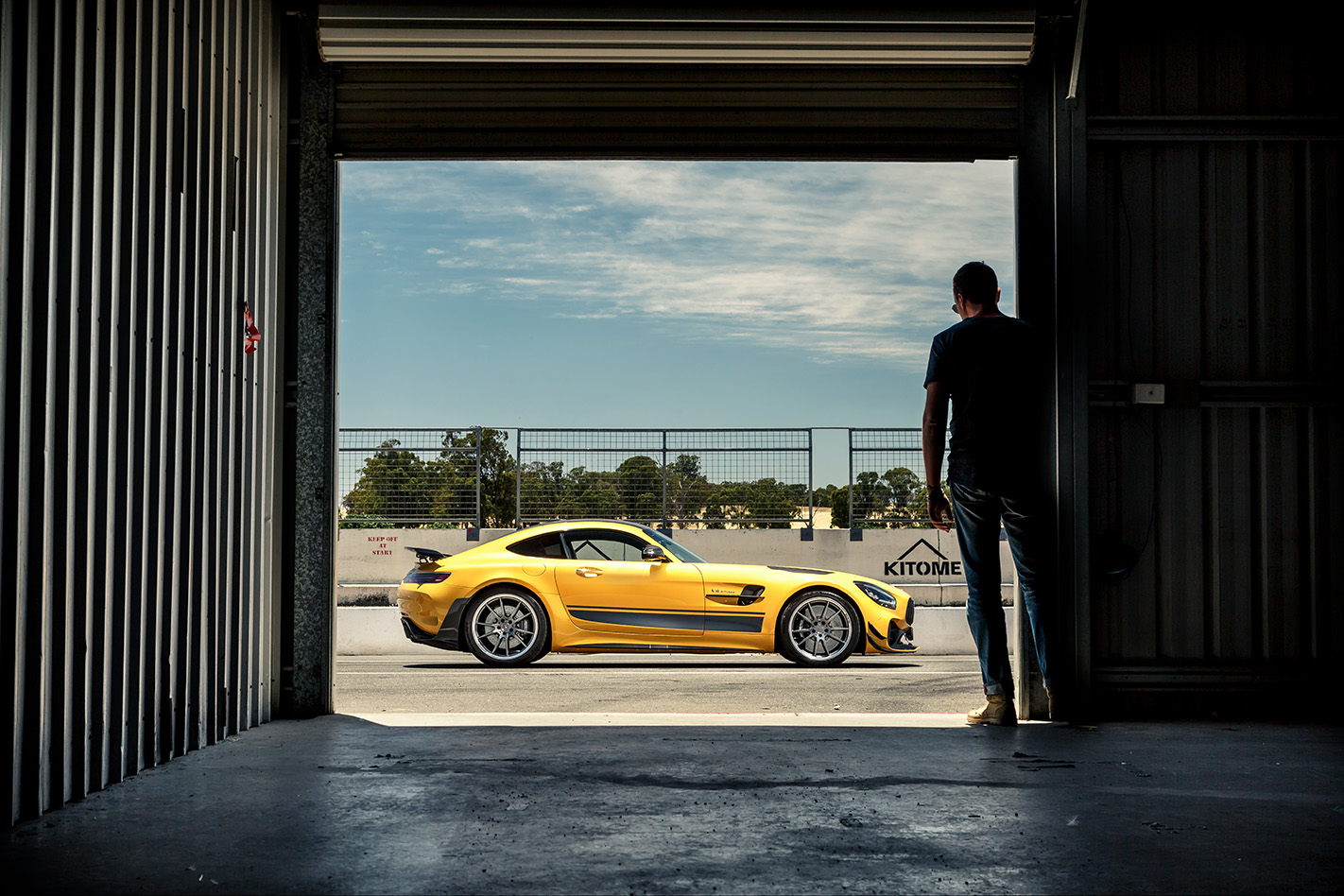
If we had to place bets on only one hot hatch cracking the top-three this year, the odds would have been paying high for the Mercedes-AMG A45 S.
Yes, the hype around the Toyota GR Yaris would be a damning factor, but further doubt comes with the A45 S’s heart-stopping price tag. At $94,200, it towers above excellent hot hatches like the $52,900 Honda Civic Type R – which claimed the win in 2018.
Sure, while price only creeps into mind when positioning a car more broadly for Performance Car Of The Year, it’s reasonable to wonder how the A45 S would find the performance, dynamics and accessibility to justify that figure. But it was Andy Enright who leapt from the driver’s seat after a blast up Mansfield Whitfield road with the first idea of what the A45 S was. “I’d just wait at the bottom of a hill,” he explained between chuckles, “waiting to harass much faster cars.”
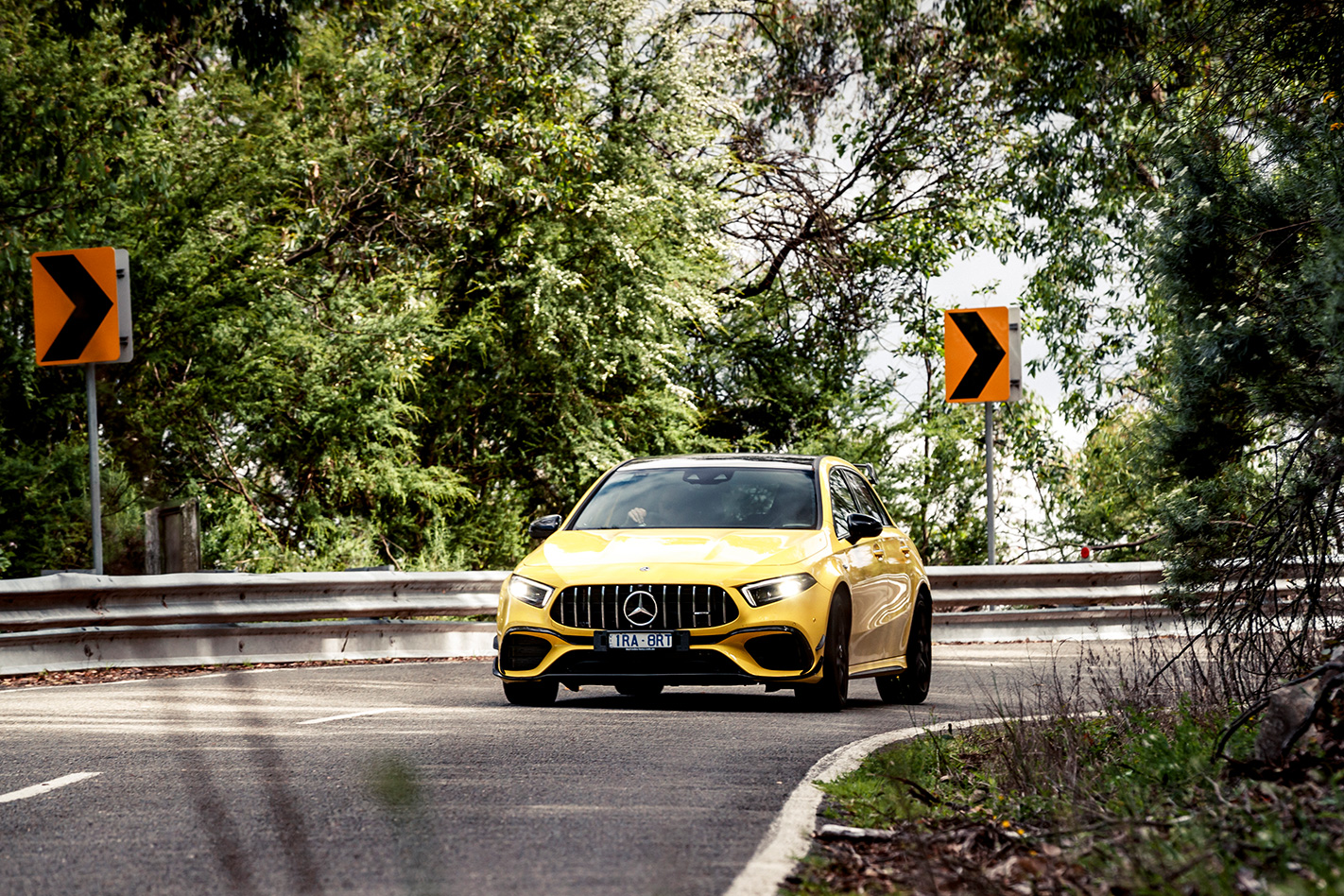
Overhauled for the latest generation A-Class, the new A45 S had to nail three objectives. Delivering the first-generation car’s accessibility and pace, fixing its one-dimensional handling – as well as a brittle ride – and, finally, blowing its competition out of the water.
Ballistic as it is, extracting 310kW from a 2.0-litre engine and then squeezing it through a weapons-grade all-wheel-drive system was what we expected AMG to do. Instead, it uses a limited-slip differential and two multi-plate clutches on the rear axle, so that it can actively divide torque not only between the front and rear axles (with up to 100 per cent rearwards if necessary), but also between the rear wheels.
Whereas the old A45 would activate its rear axle for traction and ultimately neutral-to-push understeer, with only a maximum of 50 per cent of torque going rearwards, the new A45 S is different, deploying an eager front-end that’s ready to call upon the rear to tweak your angle of attack upon demand.
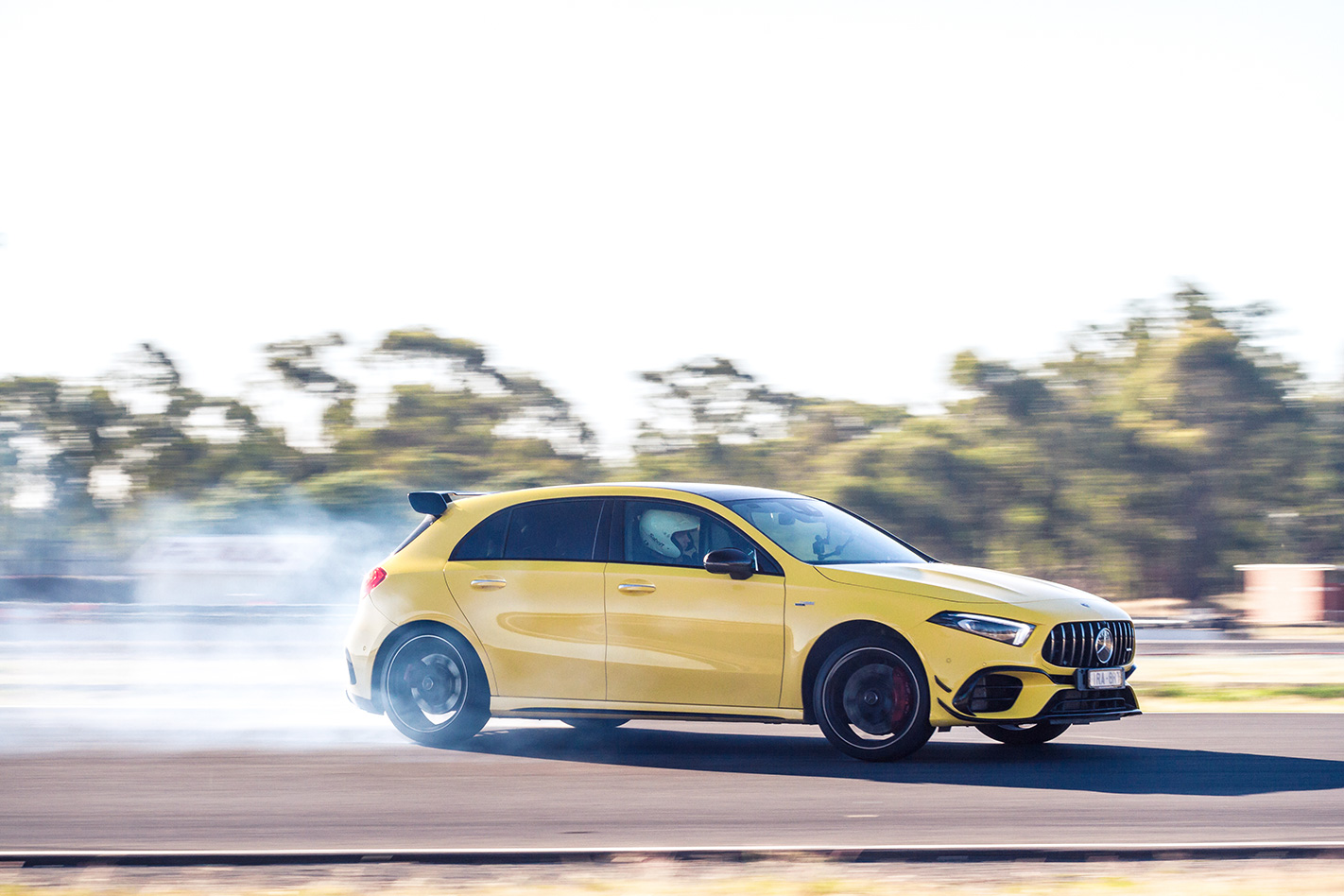
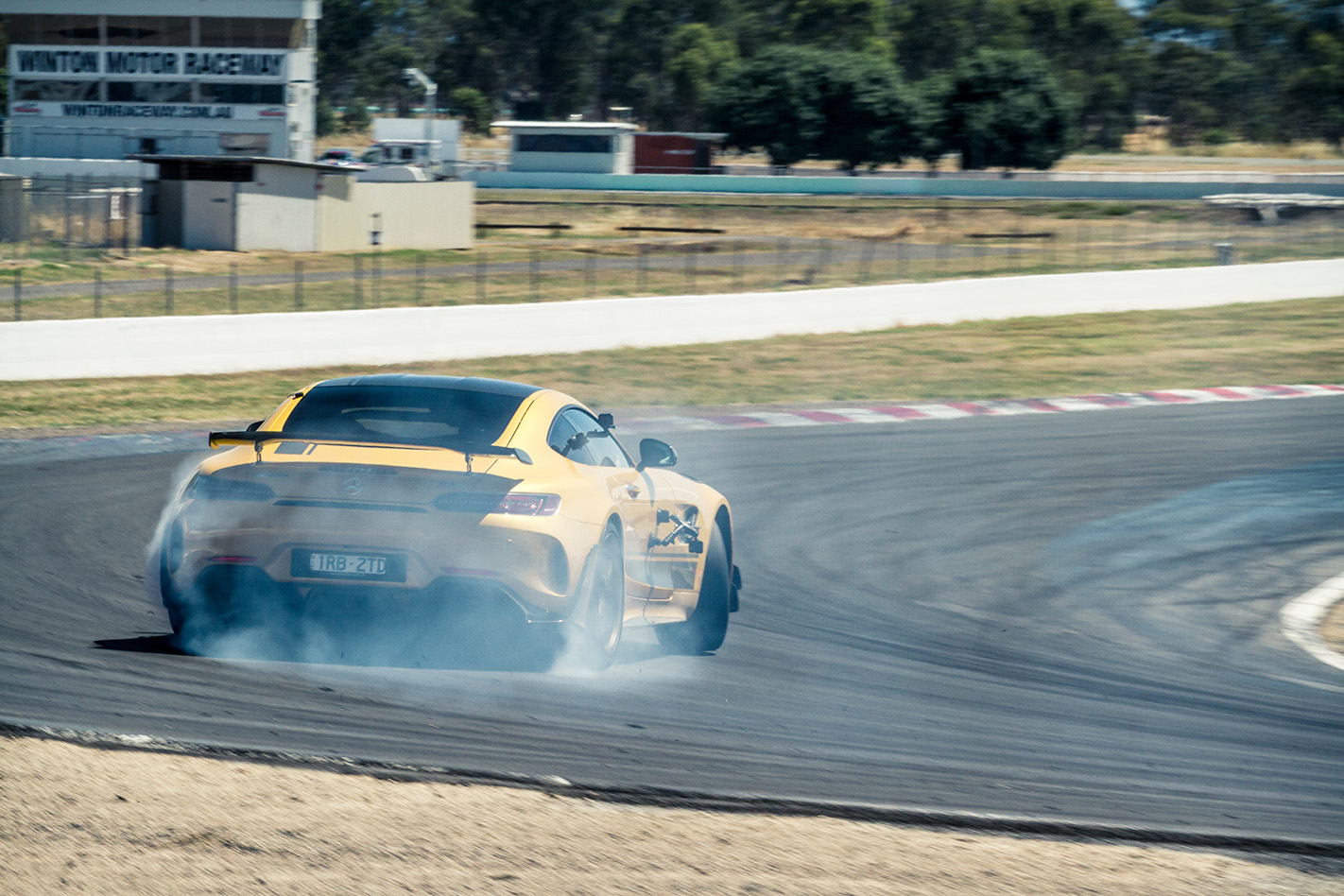
Of course, this also creates the possibility for a Drift Mode, which Newman and Enright were happy to verify works a charm for photography.
It requires commitment, though, and counter-intuitively steering into the slide while smothering the loud pedal. A bit of space, and a dollop of common sense, also help.
Pin-sharp steering dials you into the front-end, but it is worth noting the suspension plays a large part in brightening the A45 S’s handling. Increased rear roll-stiffness tips the A45 S on its toes at corner entry, helping all-wheel-drive break rear traction ever so slightly. Crucially, while AMG could have called it a day on the A45 S’s dynamic repertoire then and there for a very capable hatch, what sets the A45 S apart is genuine compliance to go with its all-paw punch.
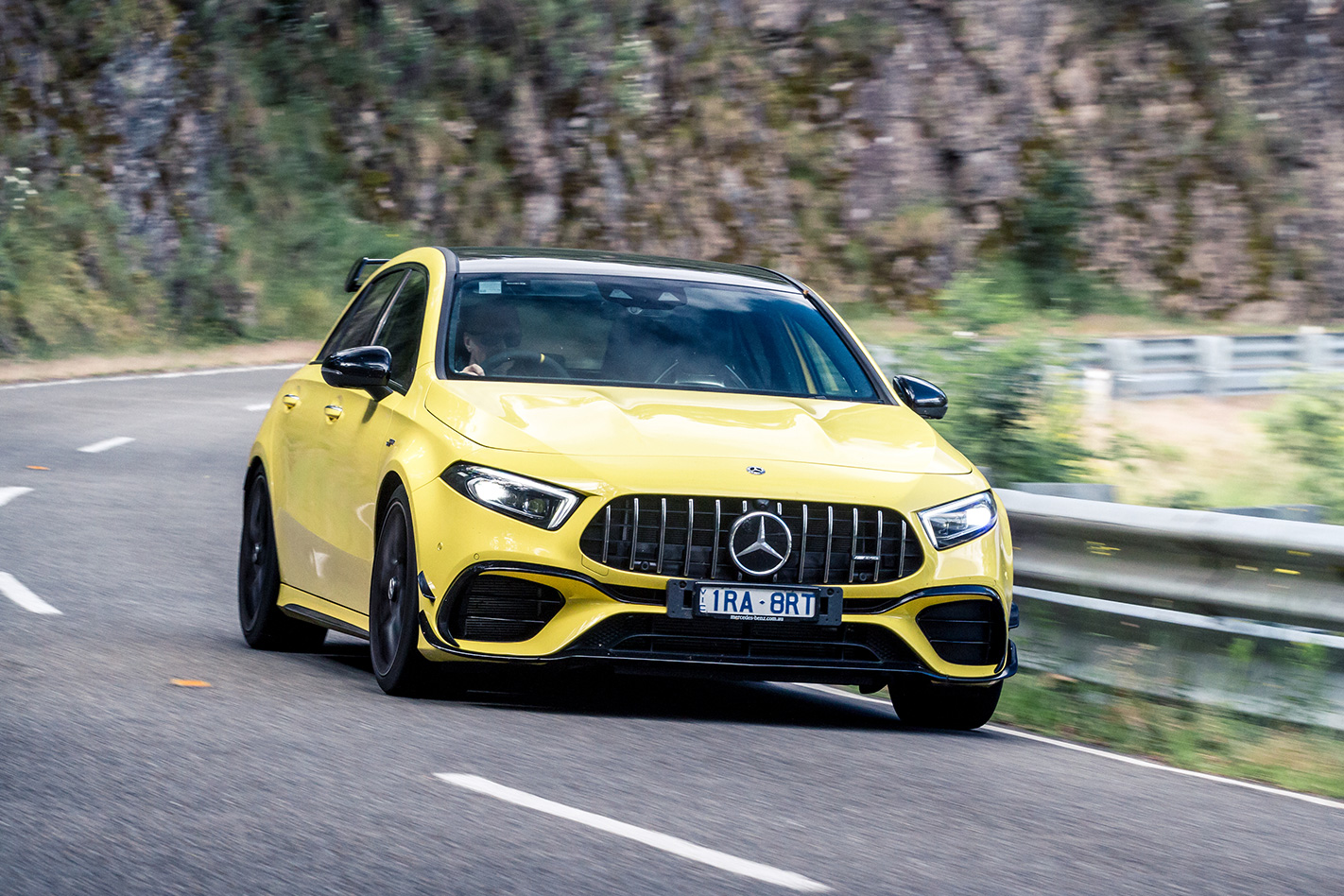
Things like solid mount subframes, along with long-stroke adaptive damping, let you dig in into its chassis while knowing there’s an underlying suppleness to forgive any ham-fisted inputs. However, this does compromise its secondary ride a touch.
The AMG tweaked interior also encourages having a go. The seating position is low for a hatch, while the steering wheel and shift paddles are just as ergonomically sound. The pedals are sturdy and well-sized. Full throttle fills the interior with a likeable rortiness, even if AMG saw the need to offer an amplifier, and the eight-speed dual-clutch ‘box keeps a tight leash on its 500Nm, shifting fast and precisely.
With launch control it’ll keep the 2.0-litre turbo engine on the boil to nail AMG’s 3.9sec 0-100km/h claim, leaving many cars above its price range in its wake.
With all this, it’s no surprise the A45 S is an absolute riot on track. Massive brakes for a hatch showed barely any fatigue. And judge Butler enjoyed the $2500 optional Pirelli P Zero Trofeo Rs we had on at Winton since we feared he would have run the tyres down to their belts on track if the A45 S had a bottomless fuel tank.
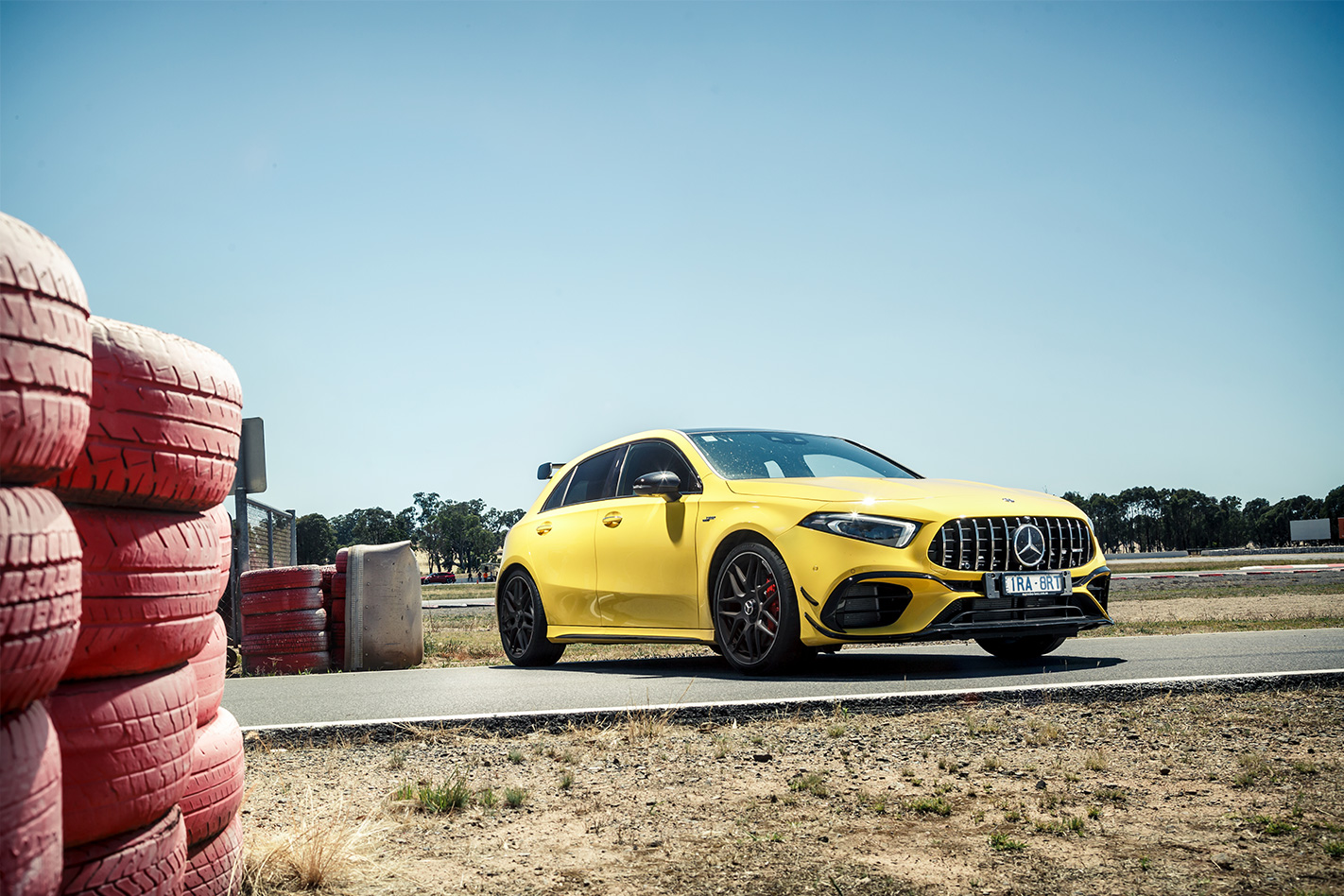
They were enough to help the A45 S thrash half the PCOTY field on a lap time. But after bouncing back from a brief transmission fault light, the car felt more alive, and natural, on its regular Pilot Sport 4 S tyres – at least at lower speeds.
And that’s a trait we’d happily have instead of bragging rights. This breadth of talent replaces any doubt for the A45 S, proving it as not only a successful development on the nameplate’s legacy but a cracking addition to the hot hatch category that can hold its own, whatever its price.
That’s why two of the judges, Newman and Enright, singled it out as the best, or equal best, of this year’s bunch. But it was the rest of the panel who unanimously ranked it fourth. Why? I found its price too hard to reconcile when the Honda Civic Type R still exists.
Most importantly, the third-place underscores one statement in the performance car landscape, to never underestimate the A45 S again. – LC
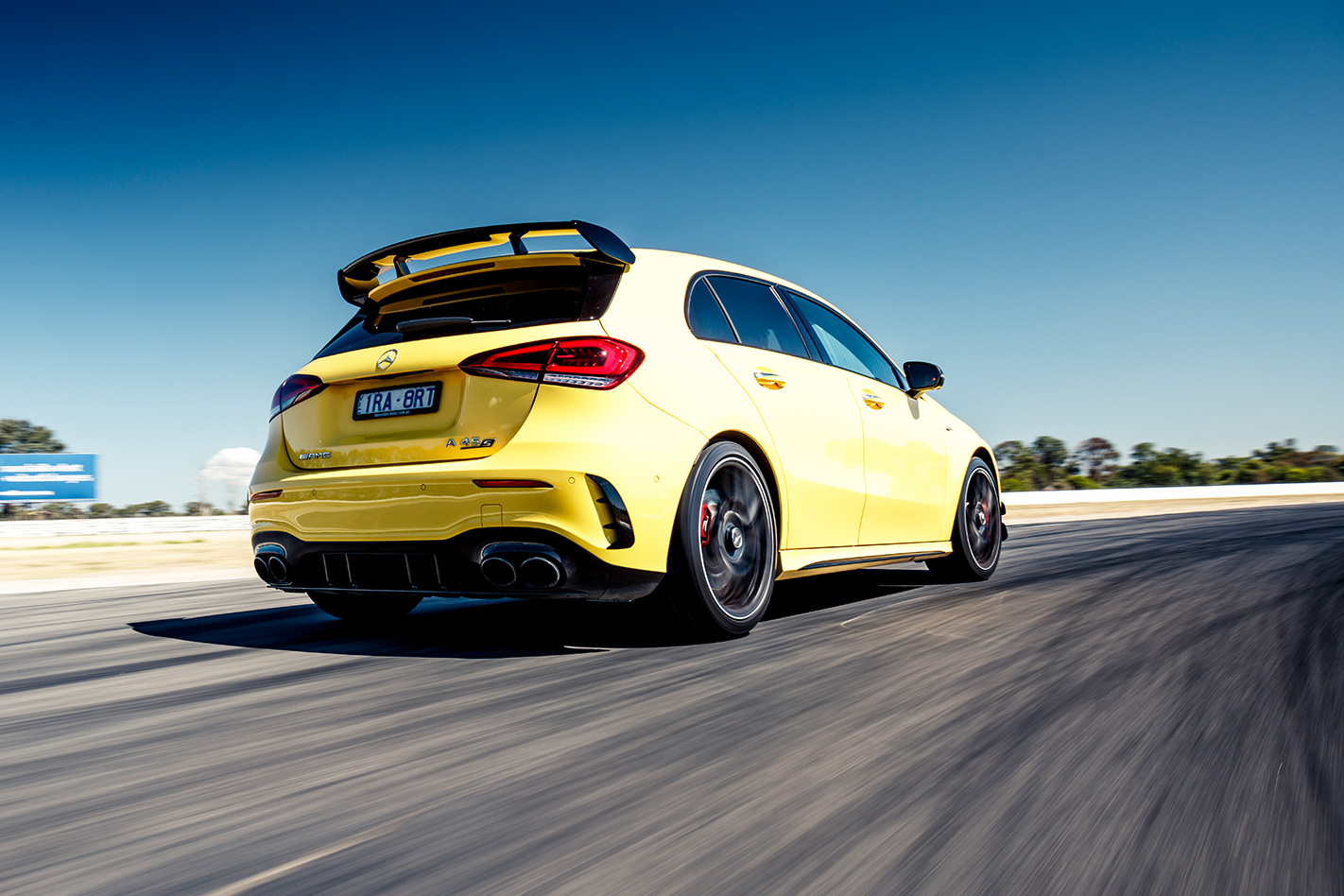
REVERTING TO TYPE?
True, an A45 S is significantly pricier than the last hot hatch to win PCOTY, the Honda Civic Type R. But just chew on this fact. The Honda recorded a 5.68s sprint to 100km/h, the AMG 3.96s. In an niche marked by minuscule degrees, the difference in the sprinting ability of the two best hatches to have ever graced PCOTY is more than 30 per cent. That’s massive.
THE NUMBERS
0-100km/h: 3.96 sec 0-400km/h: 12.09 sec @ 186.53km/h Lap Time: 1:34.9
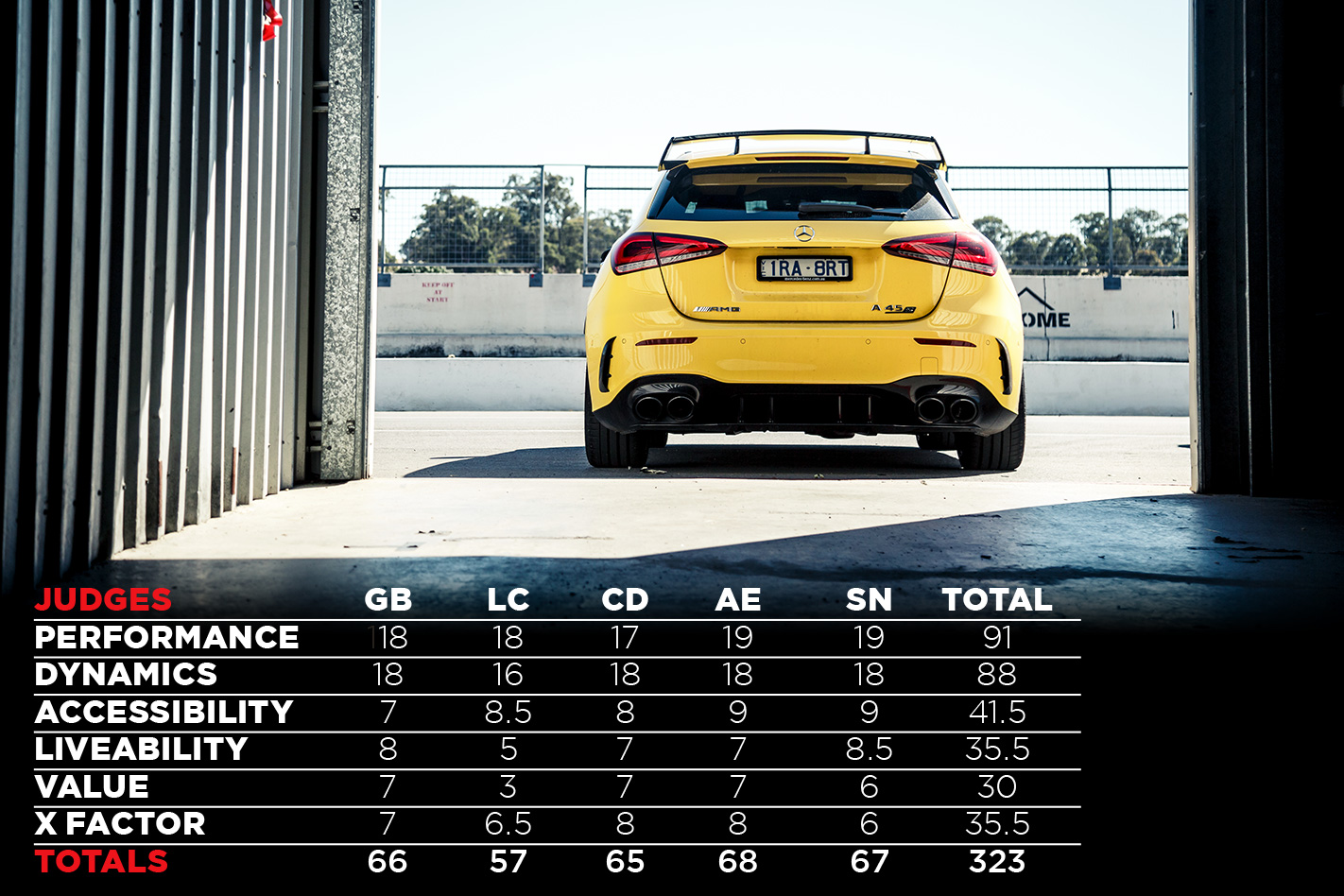
JUDGE’S RANK
Butler 4th A point-n-shooter that also bends the laws of physics in corners
Cordony 4th If you had to tackle Targa Tassie without pace notes and one car…
Dupriez 4th Hot hatch on steroids impresses most in sheer surgical precision. Dynamite on road or track, it’d be a mixed-condition Targa champ
Enright =1ST Still stand by my assertion that this is the best hot hatch ever built. Tell me I’m wrong
Newman 1ST It does everything, as a hot hatch should, and at such a high level
It’s one of our favourite times of the year, as the annual Performance Car of the Year issue goes on sale today!
Of course our 2021 round of PCOTY will go down in history as the event that almost didn’t happen. As testing takes place in the latter months of the previous year, our esteemed annual award was dead in the water as Victoria, and the world, grappled with the Covid pandemic.
But there was light between the clouds, and as Melbourne’s brutal lockdowns retreated, so did we to the hills.
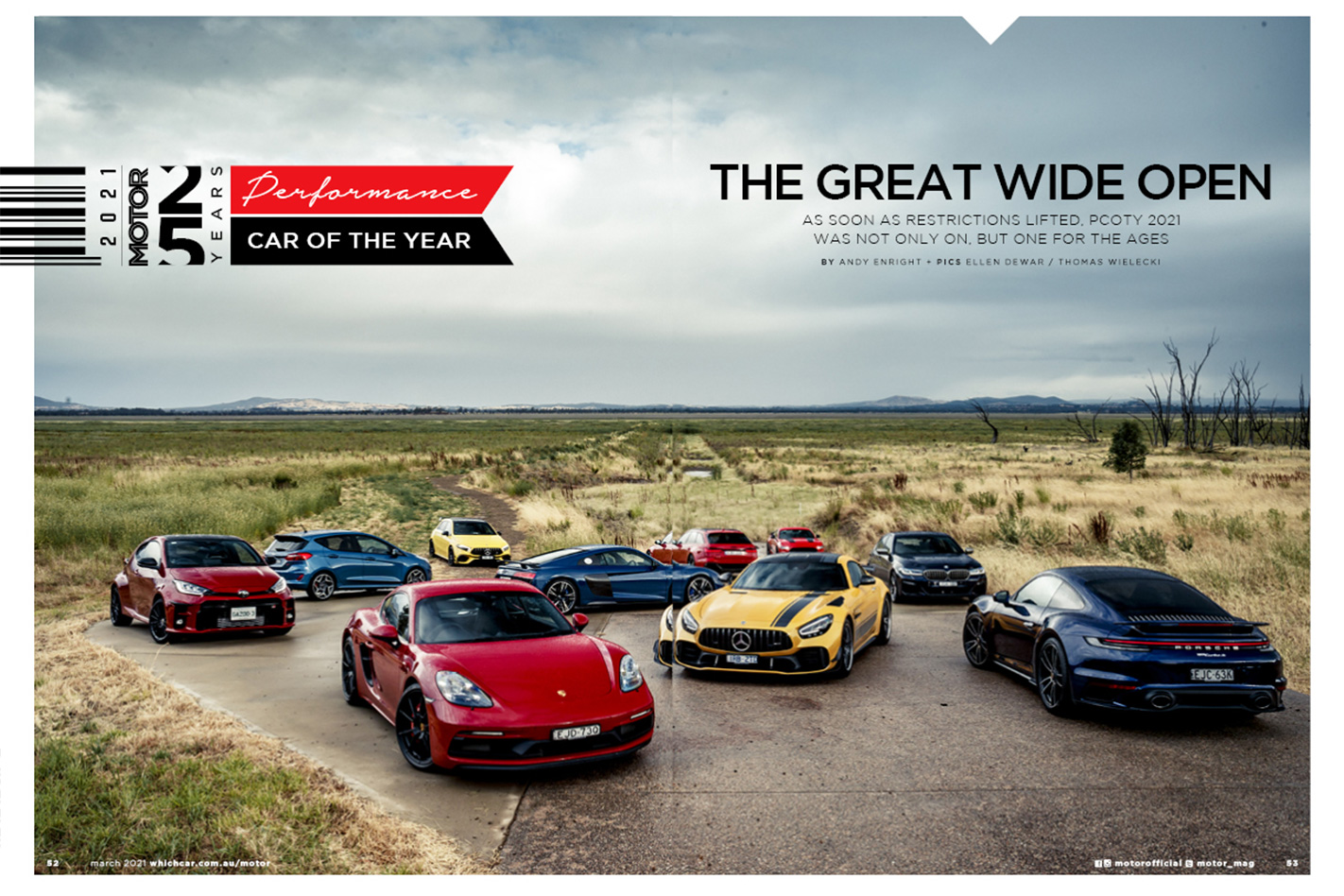
Five days, ten cars, 3709kW and a collective value worth almost $2.2 million dollars: just what the doctor ordered after being locked inside for 112 days. But this wasn’t a holiday, we were there to find out what’s the best performance car money can buy in Australia. It was the toughest-fought contest in years; introducing the most powerful car ever submitted for testing, the fastest car we’d ever strapped timing gear to, and produced a Winton production car lap record in the process.
From dusk ‘til dawn, we put these ten champions of speed through their paces on the winding roads of the Victorian high country, and at the technical 3.0km Winton Raceway. Ex-V8 Supercar driver Karl Reindler was enlisted for timed hot laps, while the judges scored each car upon each of the six PCOTY criteria: Performance, Dynamics, Accessibility, Liveability, Value and X-Factor to form the final rank.
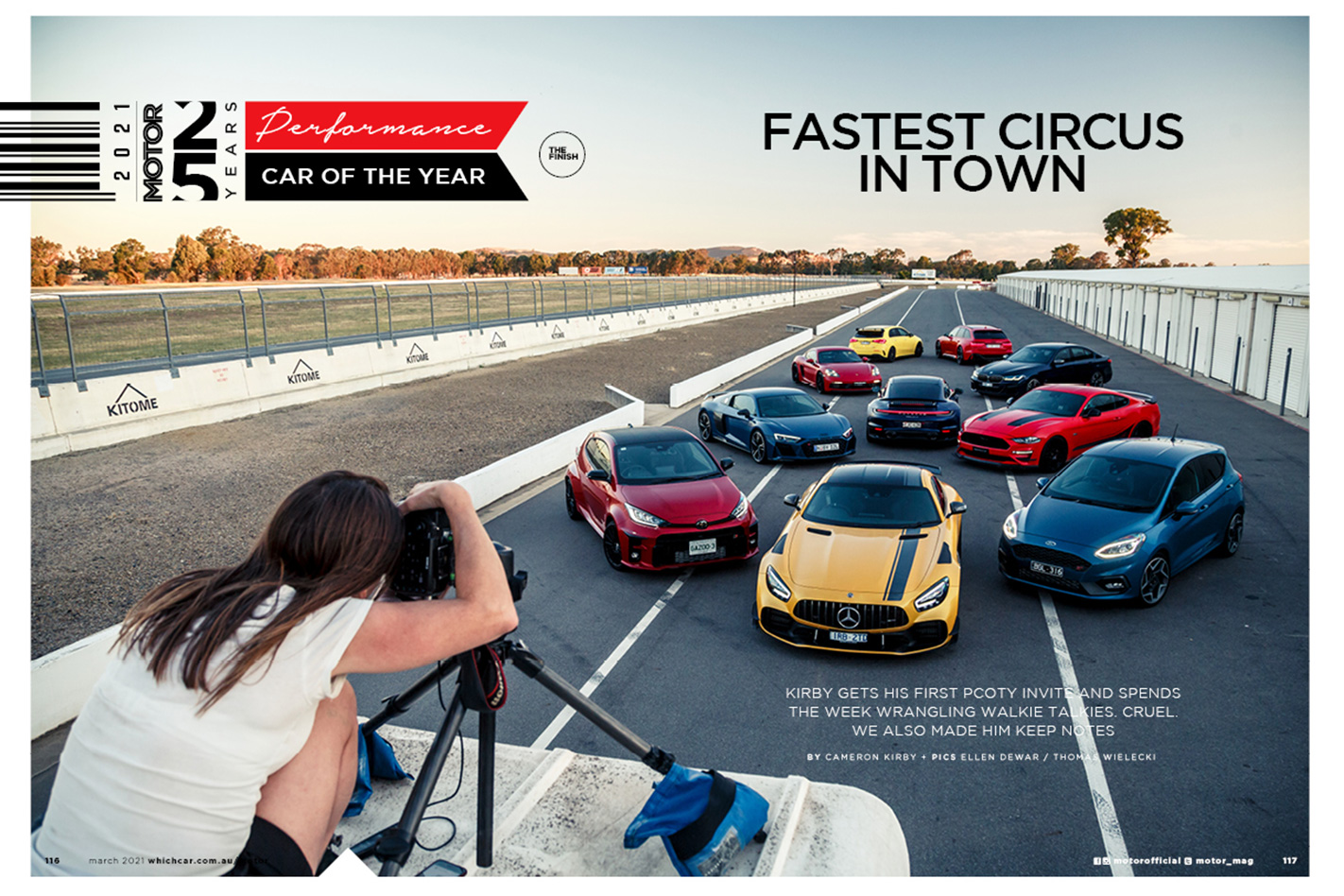
You can read about the full PCOTY testing and culling process, plus a behind the scenes look, in the magazine today!
We also drive the new Aussie V8 SuperUte, the highly-anticipated BMW M2 CS flagship, the updated Mercedes-AMG E63 S and the stunning modern reincarnation of the RUF Yellowbird. Plus all of the usual musings from our regular columnists, extensive long-term tests and news.
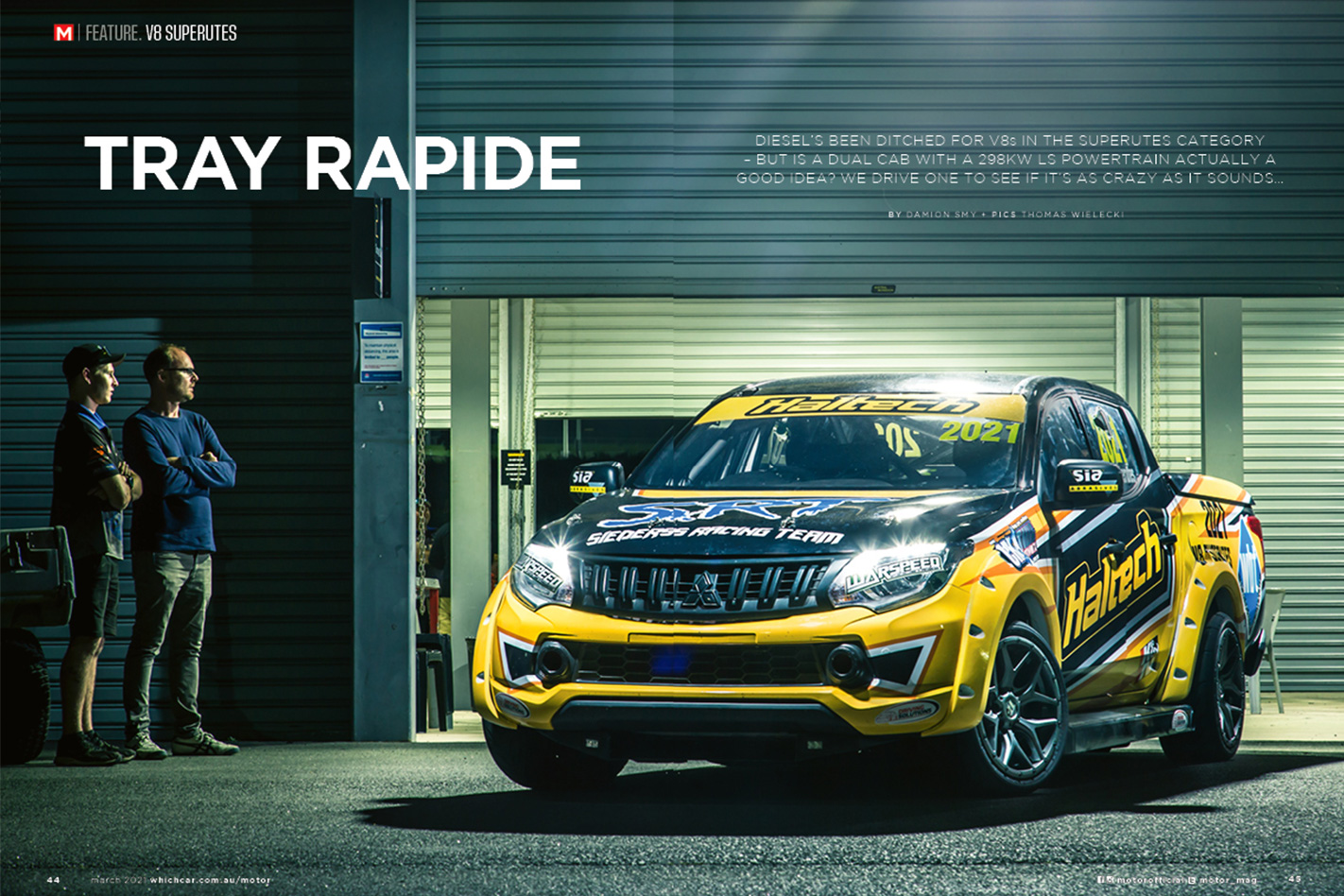
Find the magazine in stores and on shelves now. Valued subscribers, your issue was held back to coincide with the digital announcement however should be well on its way to you now.
If you’re not yet subscribed, you can snag up to 49% off at motor.subscription.com.au
Believe it or not, the grudge match between the Ford Ranger FX4 MAX and Isuzu D-Max X-Terrain – and is way more profound – than most folk realise.
Nearly half a century ago, Holden began importing Isuzu’s preposterously-named Faster to fight Toyota’s (equally ironically badged) HiLux – first as the Chev LUV in 1973 and later the KB, before sticking its own branding on the butt of three subsequent (and highly successful) generations.
That started with the 1981 Rodeo and ended with the 2020 Colorado – and Holden’s demise – last December. And, fun fact, at 48 years, this was GMH’s longest running model line, period, even beating Commodore by half a decade.
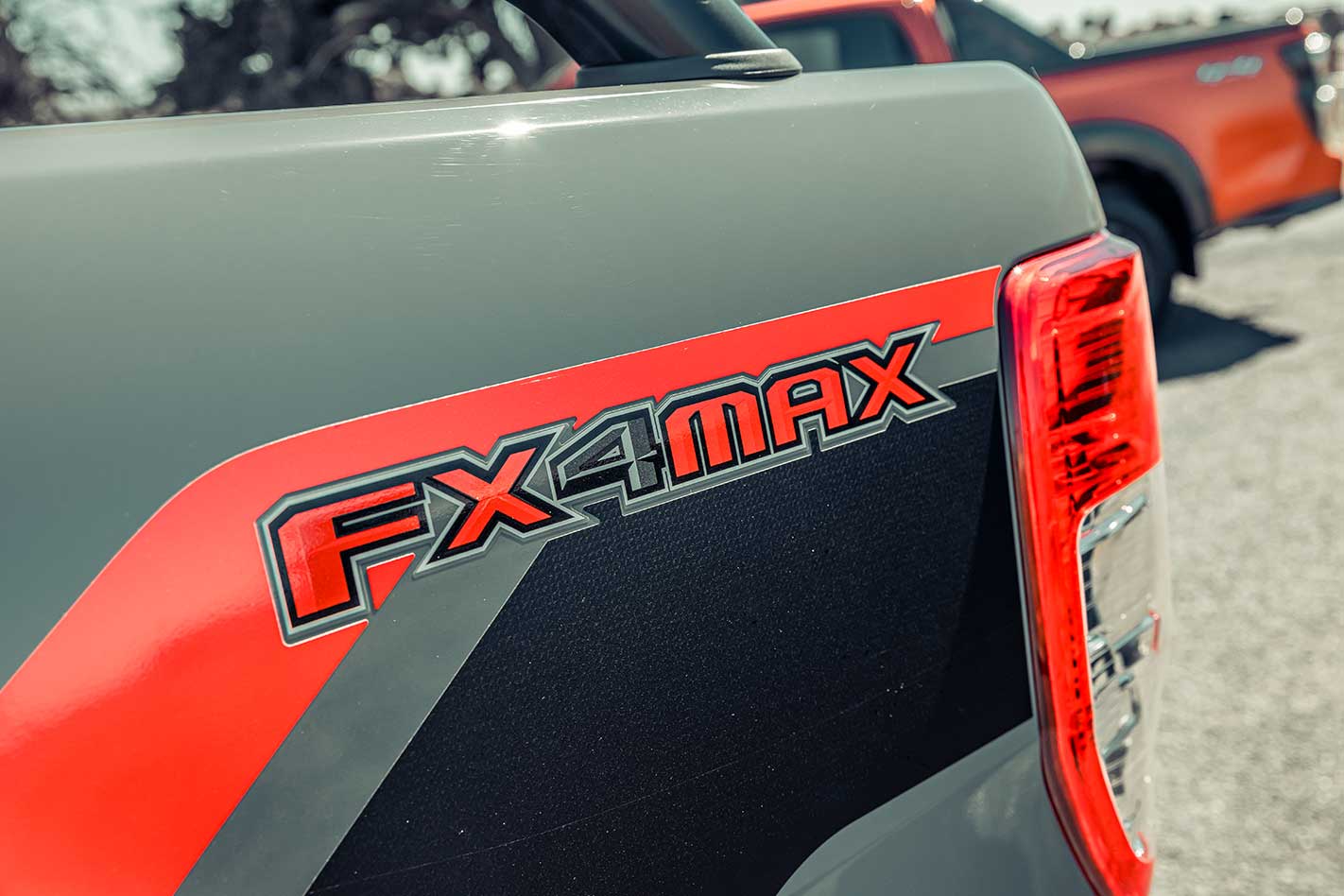
Yep, these truly are the utes and trays of our lives…
Ford, meanwhile, responded with the Mazda B-series truck-based Courier in 1979, eventually renaming it Ranger, but only made real headway with 2011’s locally-designed and engineered T6 (which also sired the superseded Mazda BT-50).
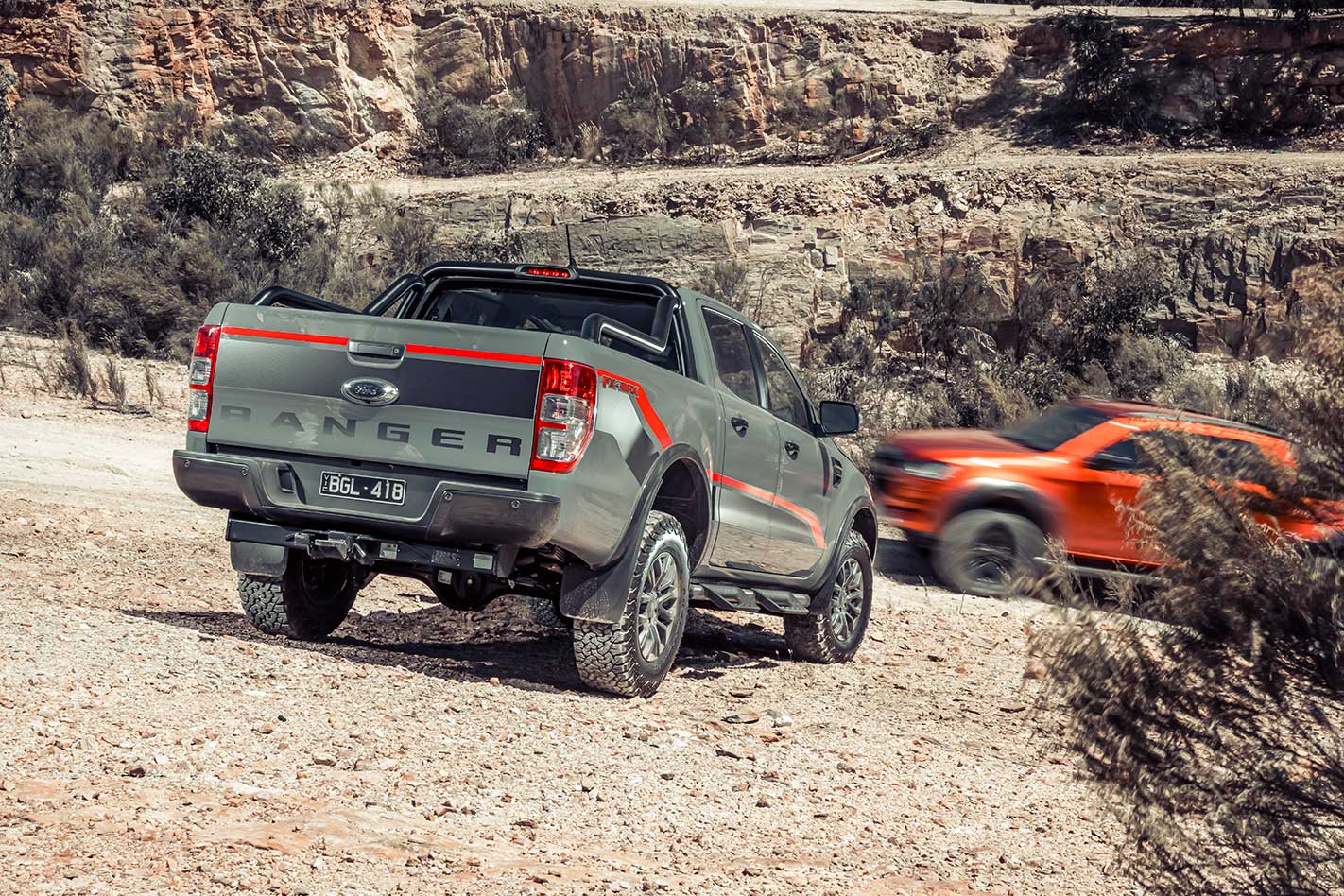
Wheels magazine first pitted the Isuzu-Holden against Ford in an August 1981 four-way, featuring Rodeo, Courier, Datsun 720 and HiLux, with the winning Toyota (the best of a rough bunch) then taking on Holden’s WB ute… and failing.
The same verdict was reached when Rodeo met XF Falcon, Nissan’s Navara and the Mitsubishi Triton in April ’87. Though tough, none troubled the Aussie car-based ute for driveability, comfort or safety.
The only time all three brands – Ford, Isuzu and Holden – have met was in July ’18’s nine-truck comparo, with Ranger beating Colorado and clobbering the last-placed D-Max.
Now Holden’s history, and there’s an all-new Isuzu out to reel the Blue Oval in.
Launched last September, today’s D-Max is the sixth since that original Faster. A ground-up redesign, it’s larger and wider but slightly shorter, stronger yet lighter, substantially safer and technologically far more advanced than its popular predecessor.
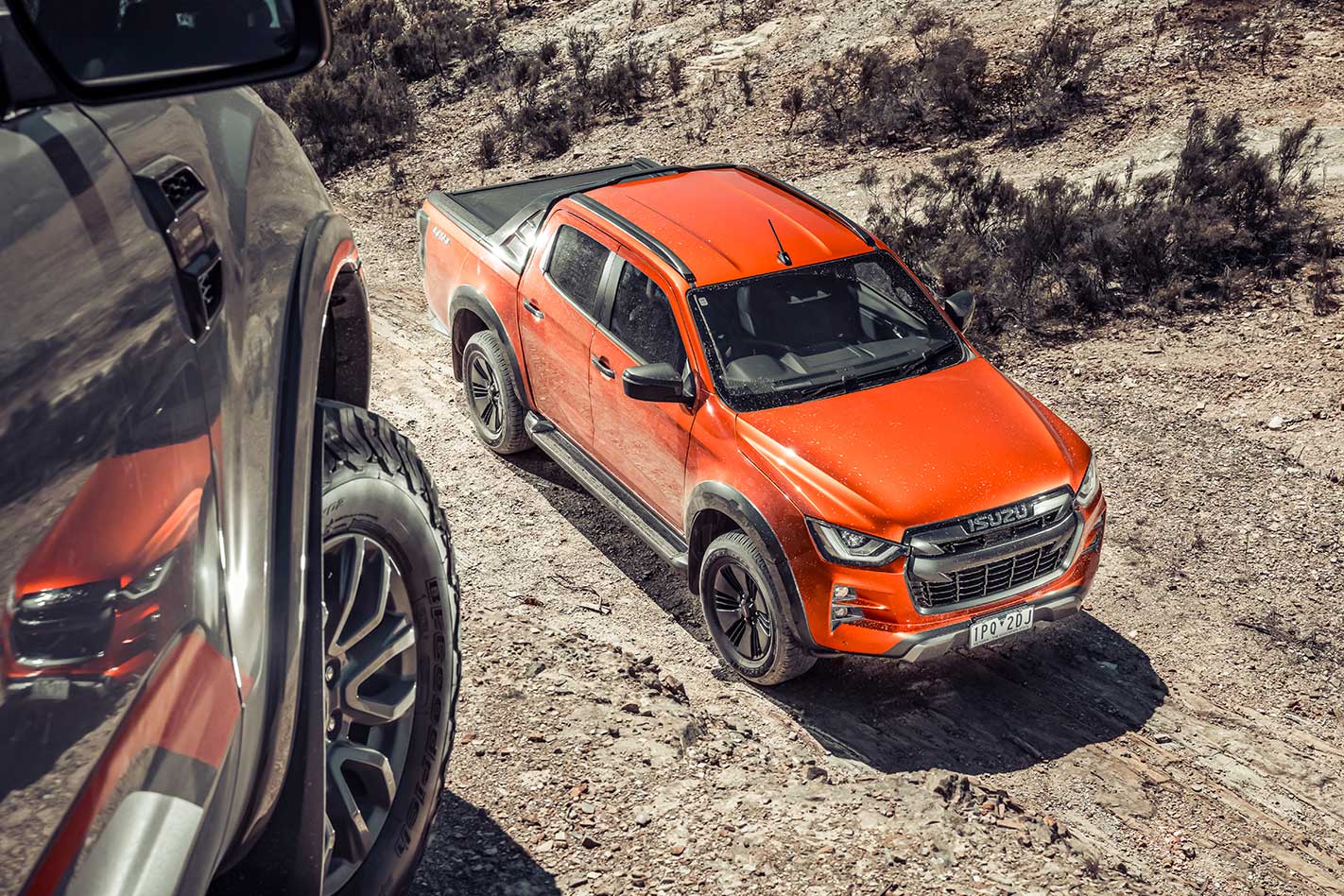
Despite all this, the Isuzu succumbed to the more on-road focussed Ranger Wildtrak in our November 2020 issue, but only just; so, for this year we’re levelling the playing field by pitching it against Ford’s recently released FX4 MAX Max – basically a Ranger with big hiking boots.
This is still a predominantly on-road and gravel-driving assessment given the urban target market for both glamour trucks, but one that doesn’t put the D-Max at a disadvantage.
Like mums who’d choose Meadow Lea, for standardising such driver-assist essentials, Isuzu ought to be congratulated.
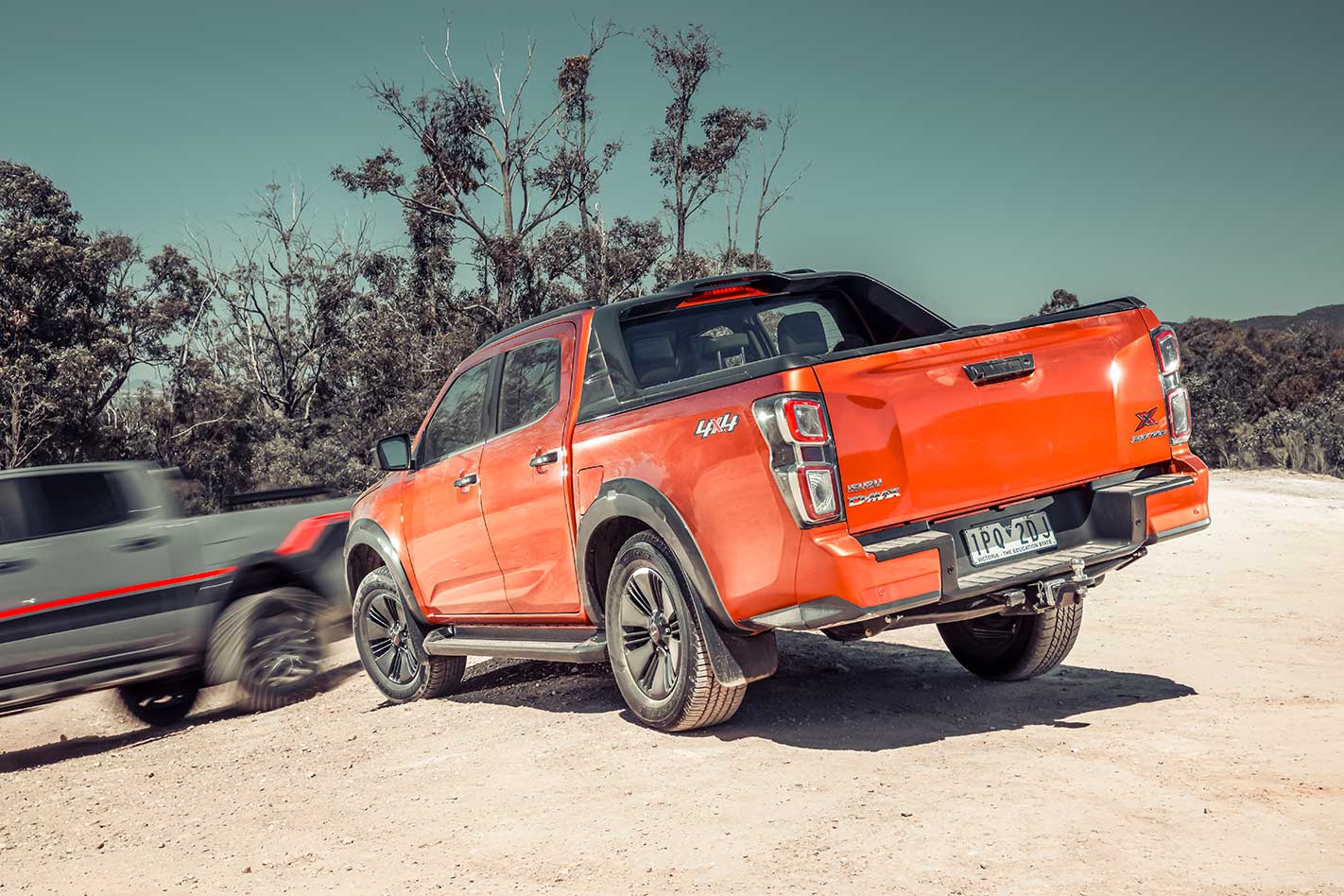
Punters are also likely to respond to the Isuzu flagship’s chunky styling, standard roller tonneau cover, under-rail tub liner, 18-inch alloys and 9.0-inch touchscreen – starring a reverse camera, voice command, wired Android Auto and wireless Apple CarPlay, digital radio and sat-nav.
The PX III Ranger is the era-defining T6’s final year before the 2022 redesign is revealed. The last important update came in late 2018, three years after the big PX II facelift and cabin restyle that also saw myriad engineering updates designed chiefly to improve efficiency and off-road performance.
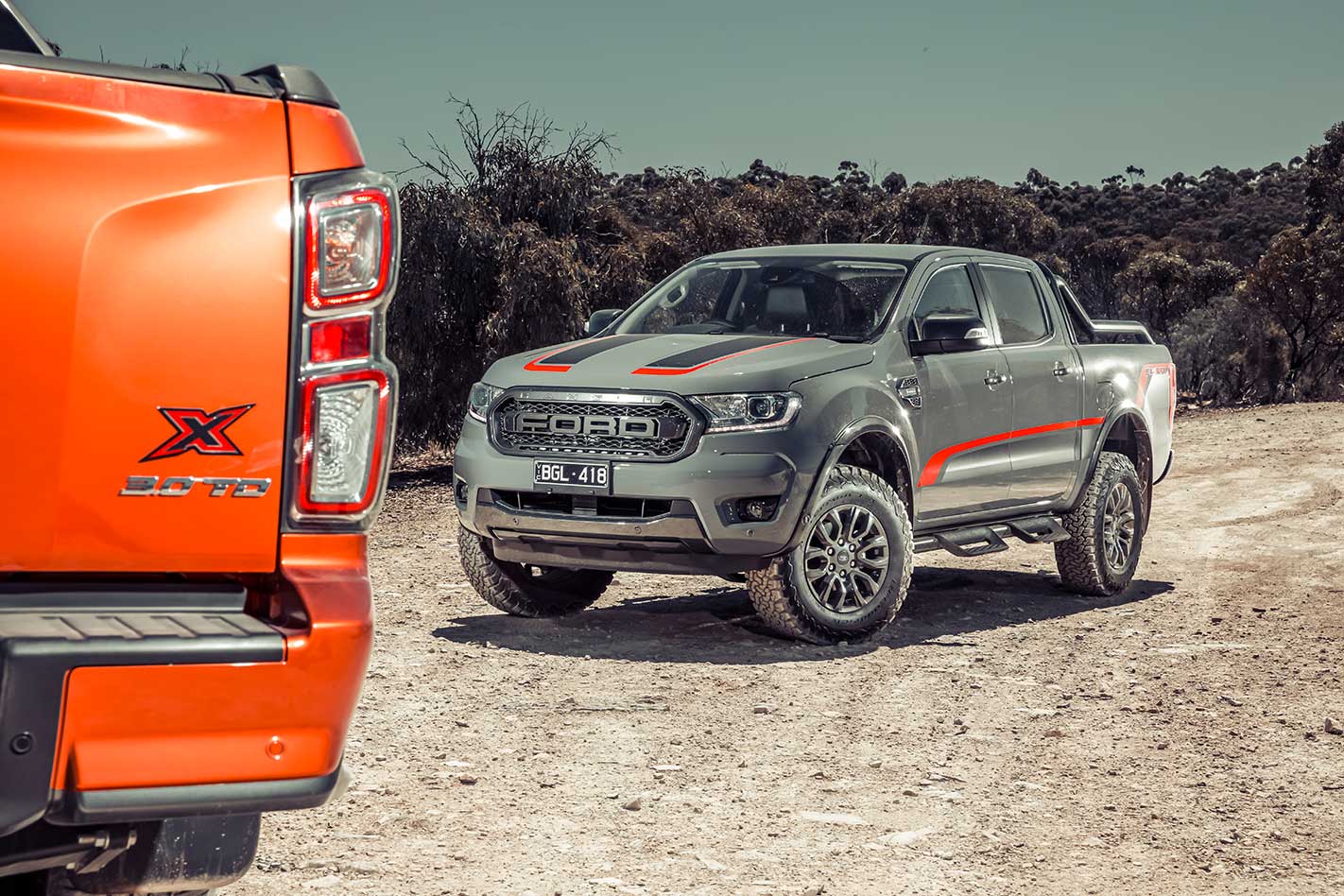
Sadly, though, its 26mm-wider track doesn’t encompass the even-fatter latter’s coil-sprung rear end (leaf springs – albeit revised – continue).
More importantly, priced from $65,940 plus on-road costs, the FX4 MAX is about $5K above the X-Terrain, even before the $850 adaptive cruise option (without the D-Max’s stop/go tech but with Ranger-exclusive auto parking).
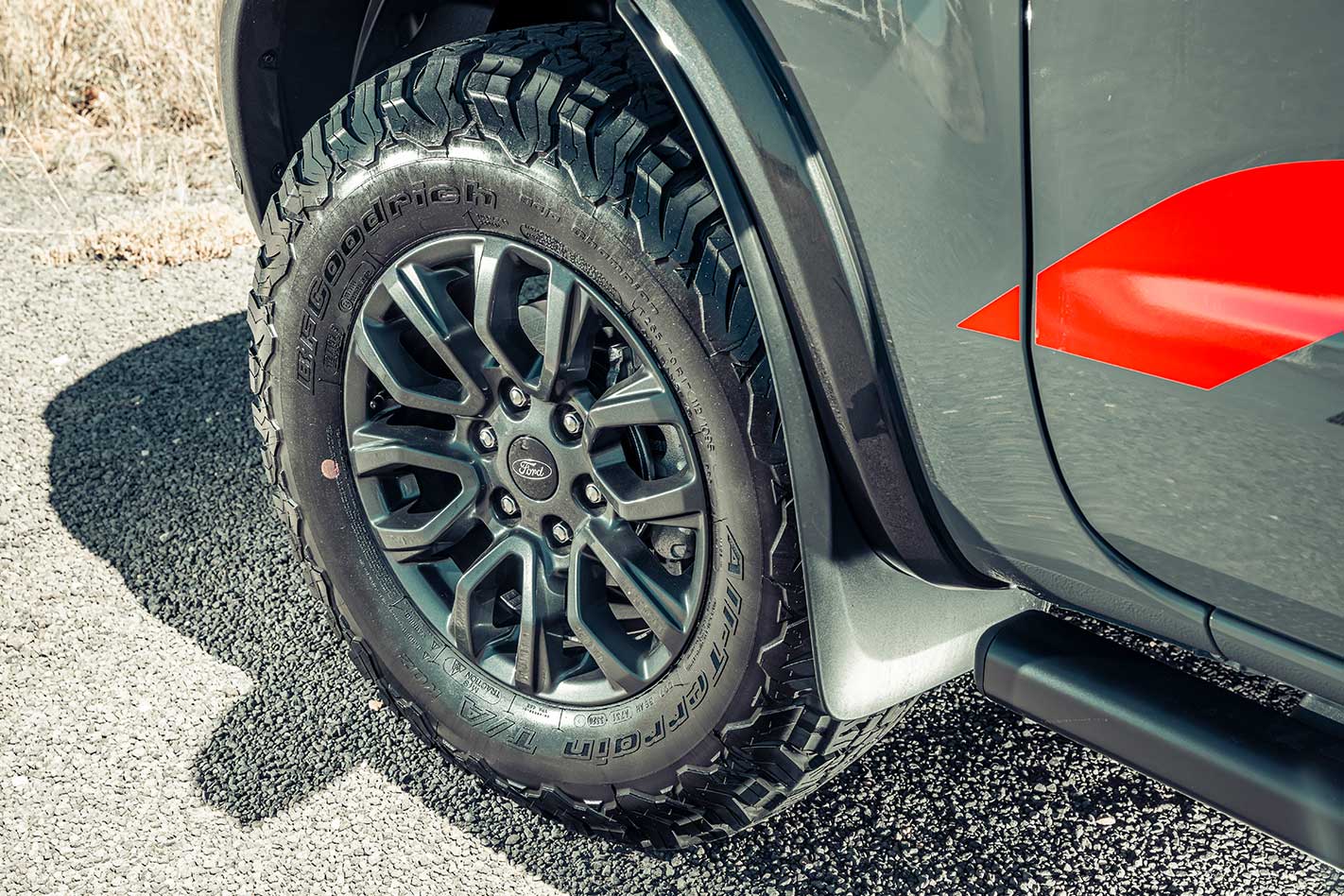
So, the X-Terrain noses ahead on pricing and features, and on the face of it, the news keeps getting worse for the ageing Ranger once you step inside.
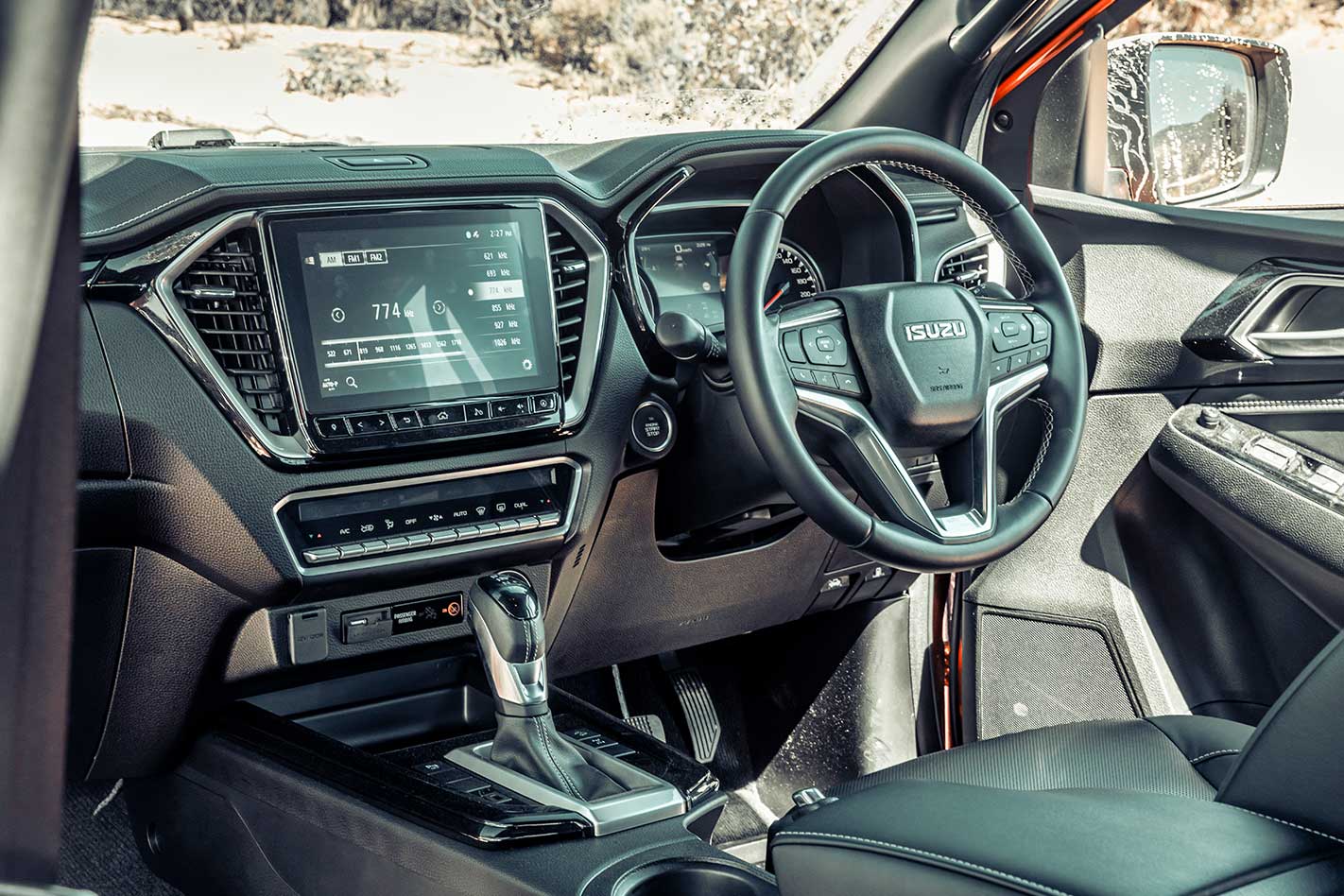
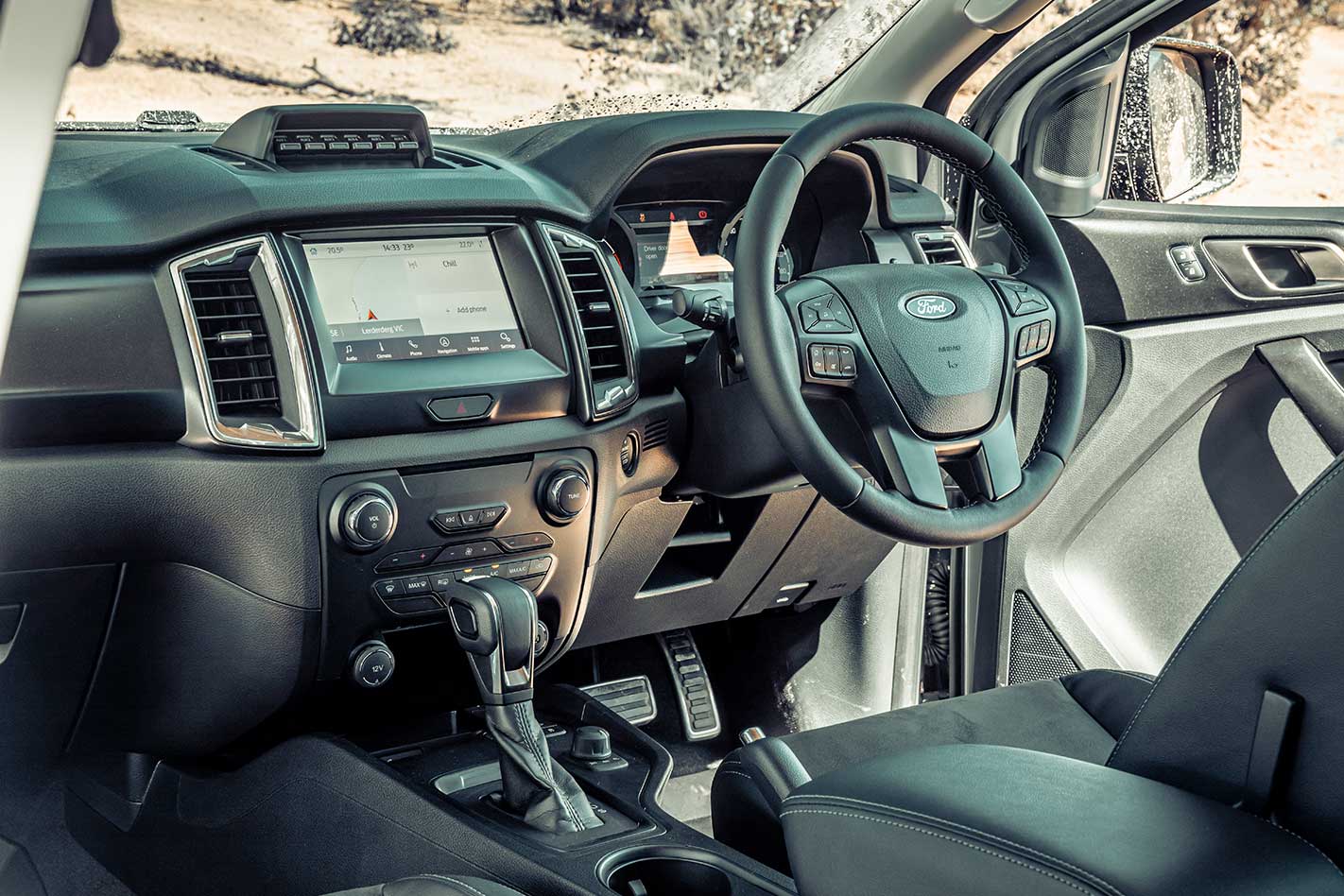
But if you want to see just how far dashboard styling and presentation has come since, then its compare and contrast time – because the Ford’s looks every inch its years (despite the 2015 mid-cycle facelift that brought in that newer fascia) while the Isuzu’s leads the way forward.
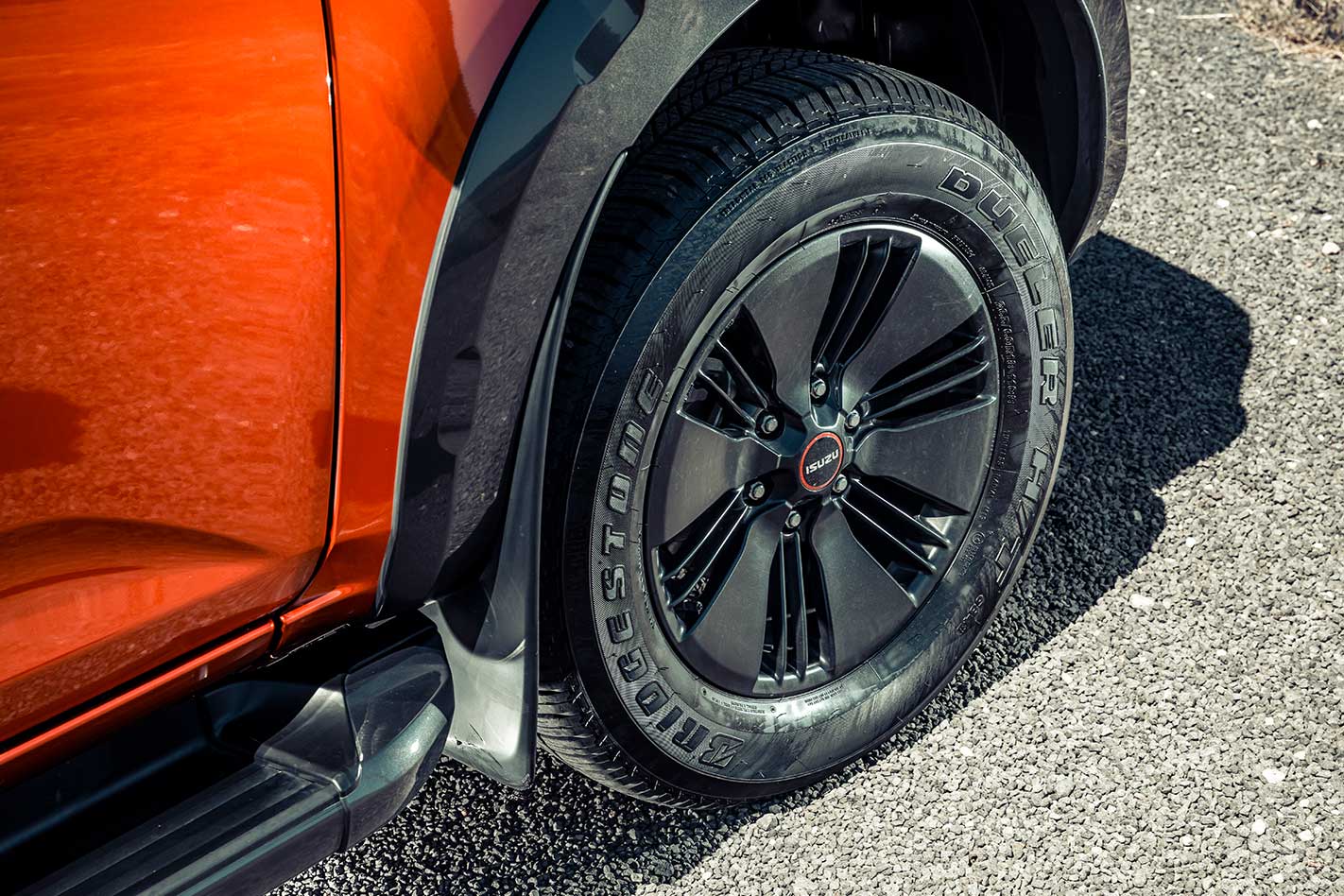
The X-Terrain, then, is more dress-shoe while the FX4 MAX is more mud-plugging sports boot (from TK Maxx at that) in their respective appearances.
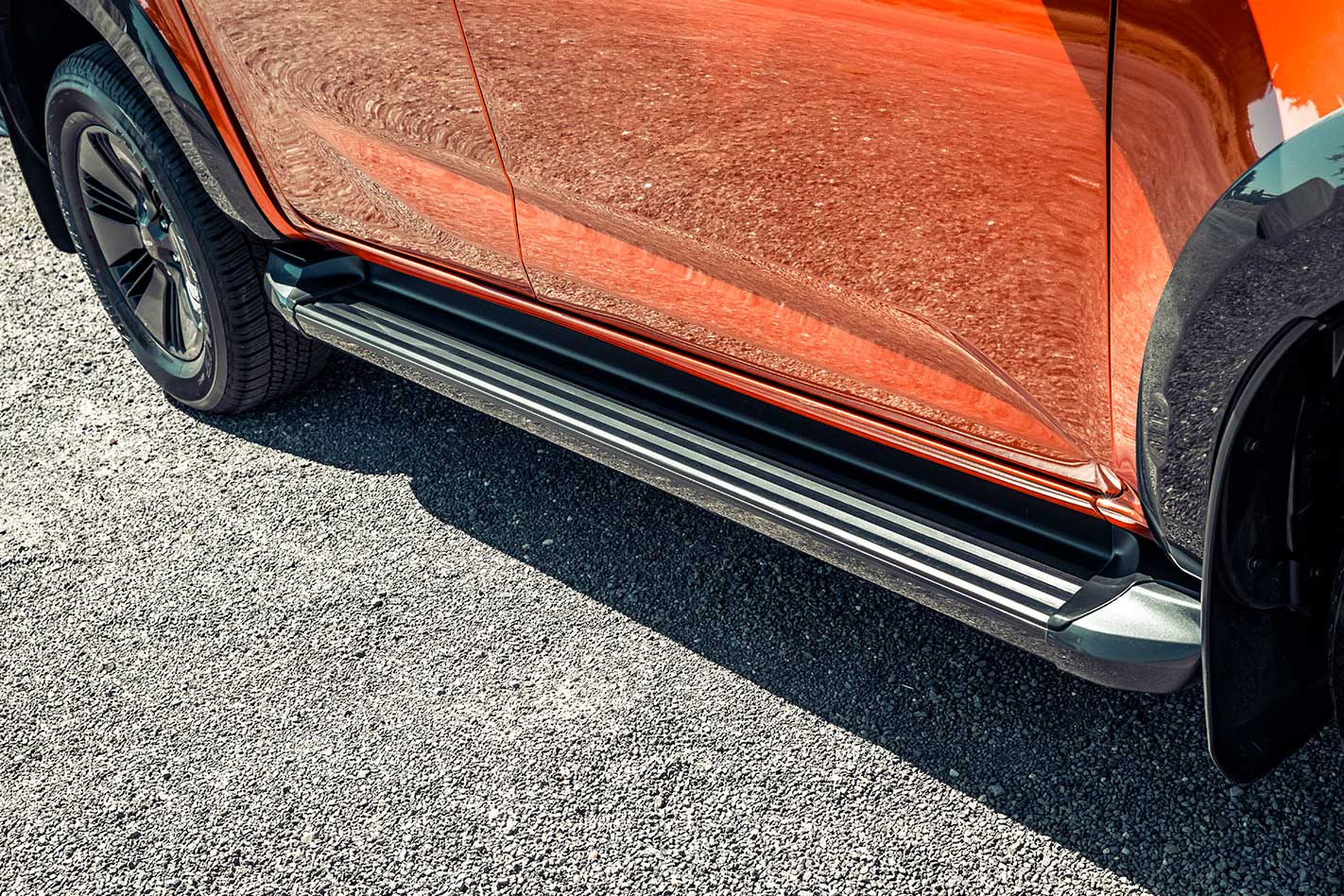
Then there’s the Isuzu’s added functionality absent from the Ford – namely telescopic steering-wheel adjustability, but also the triple hidden dash compartments (though the Ranger’s glovebox, door bins and centre console box are way hungrier), sliding outboard cupholders that chill/heat beverages by dint of being located beneath vast air outlets, and powered driver’s seat. Note neither offers a front passenger seat-height booster.
Getting to the under-seat storage requires two steps because both cushions need to be raised (and secured via very fiddly straps that require a free set of hands to raise the headrests first to latch them on), while the Ford can be lifted in one go and latched with some dextrous knee manipulation.
But once there, there’s somewhat more capacity than in Ranger and the choice of only raising/lowering one (much lighter) seat base. We’re talking minor detail differences here, folks.
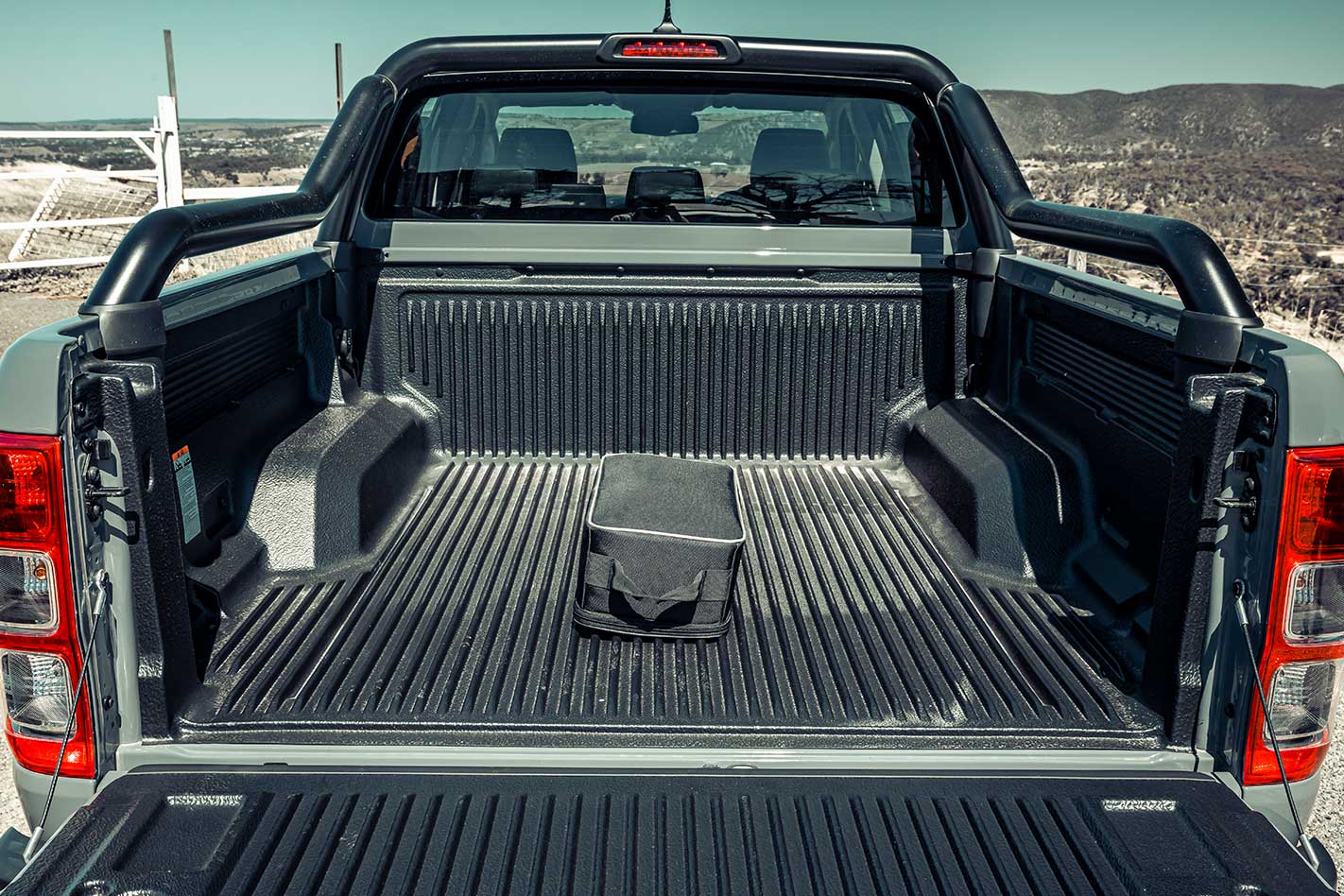
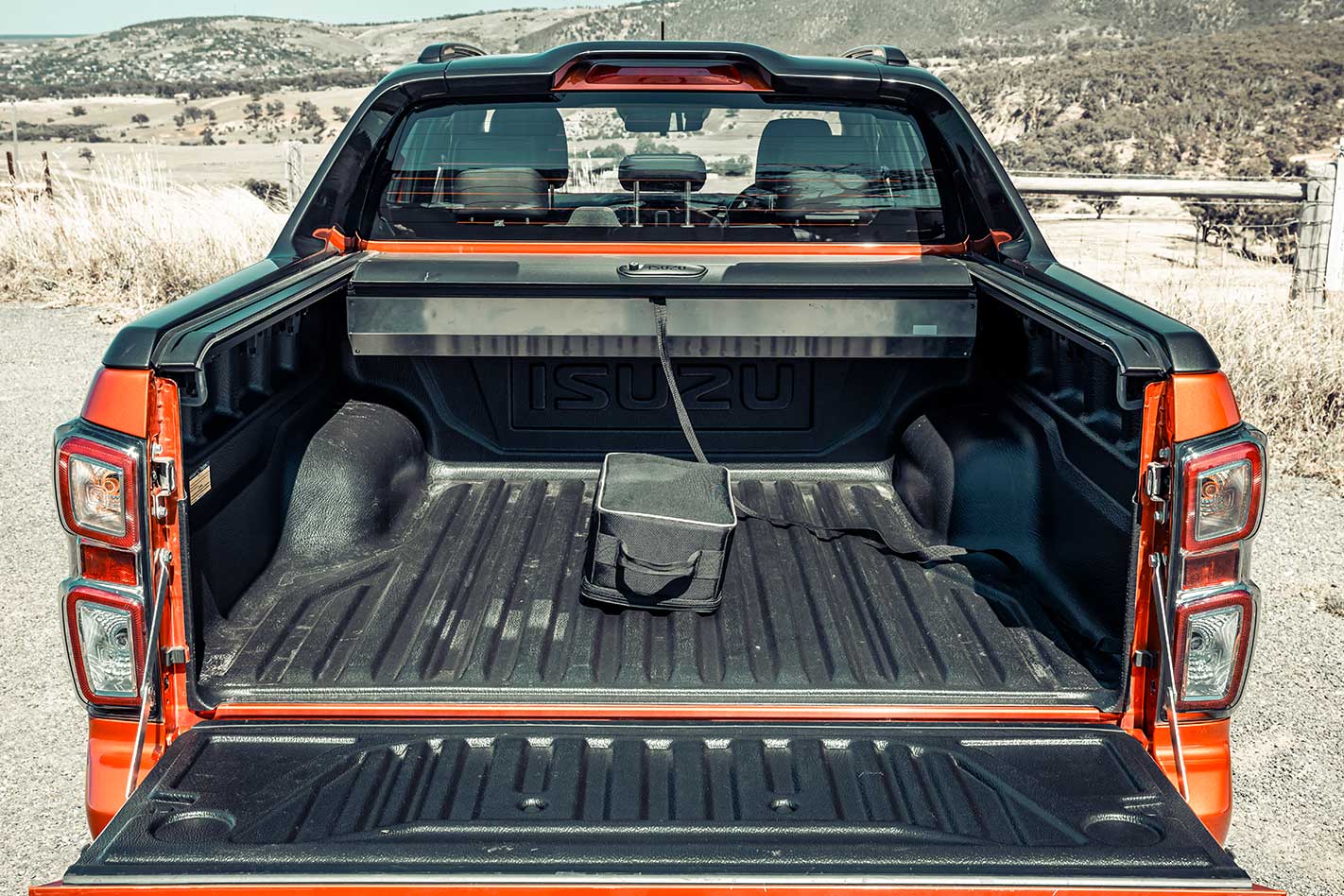
The door bins are bigger too, for bottles and such, there’s a very handy 230V domestic outlet alongside the 12V plug (which can of course be fitted with an inexpensive USB accessory), and the tailgate is nowhere near as heavy to lower and lift up again thanks to spring-loaded hinges. Or some such black magic.
Up front, the FX4 Max also claws back more ground with its easier entry/egress (shin-smashing side steps aside), larger cabin, more cossetting front seats (with lovely suede-like inserts), grippy steering wheel and old-faithful SYNC-3 multimedia functionality that looks dated but is pretty much foolproof.
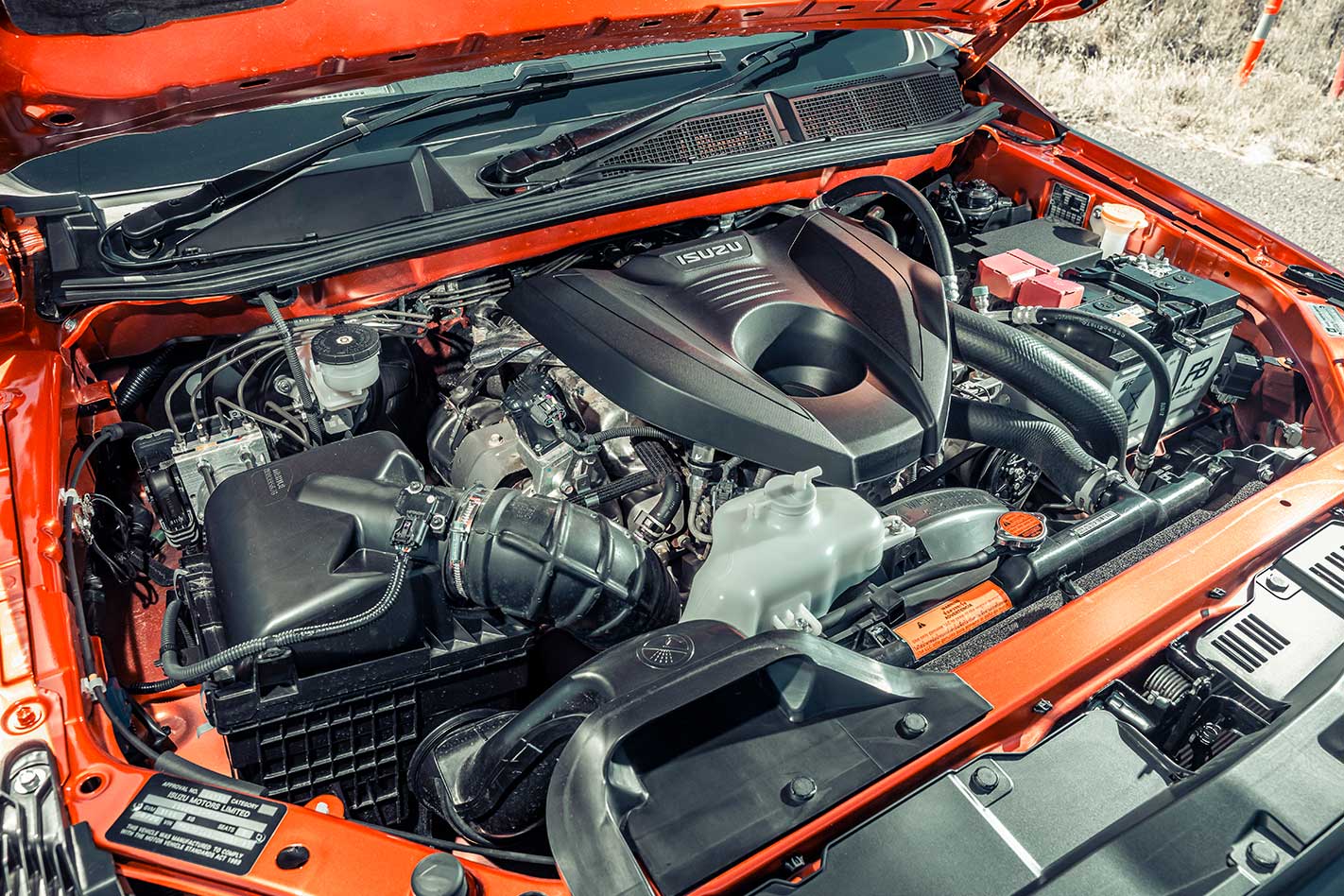
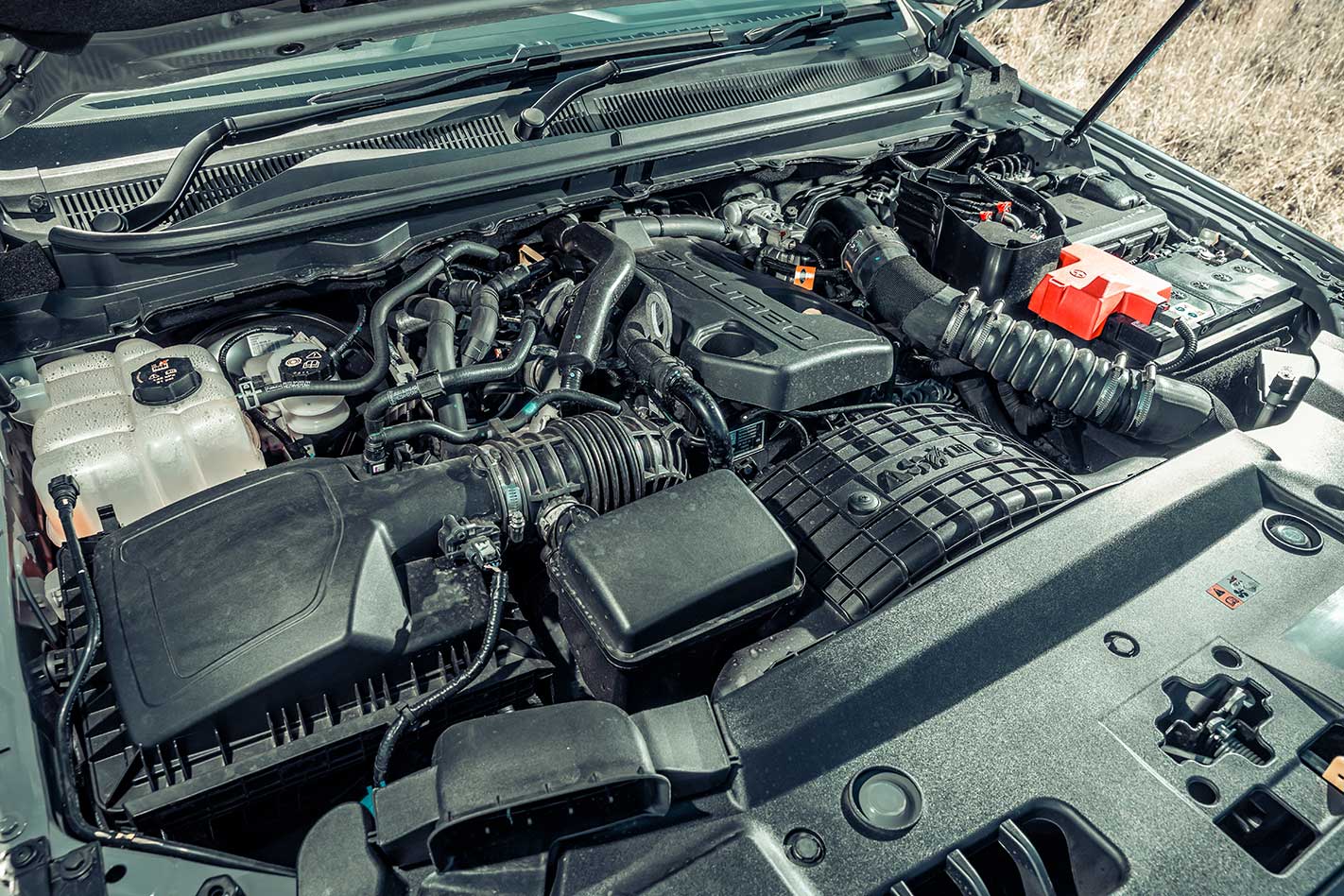
But there’s no escaping this Ranger interior’s dated and downmarket appearance. And that’s before you see the engine specs and realise that the FX4 Max is an entire litre down on the D-Max. Clearly, the time is nigh for that next-generation update, Ford… until you press the start button.
Before we reveal the result, please note that all driving was conducted with either one or two occupants on mostly sealed bitumen or over loose gravel, and without a load out back.
Not the quietest performer, granted, it’s nonetheless pleasingly responsive dicing and dealing with stop/start traffic – while still managing to feel muscular out on the open road. For most users there’s more than sufficient oomph on offer.
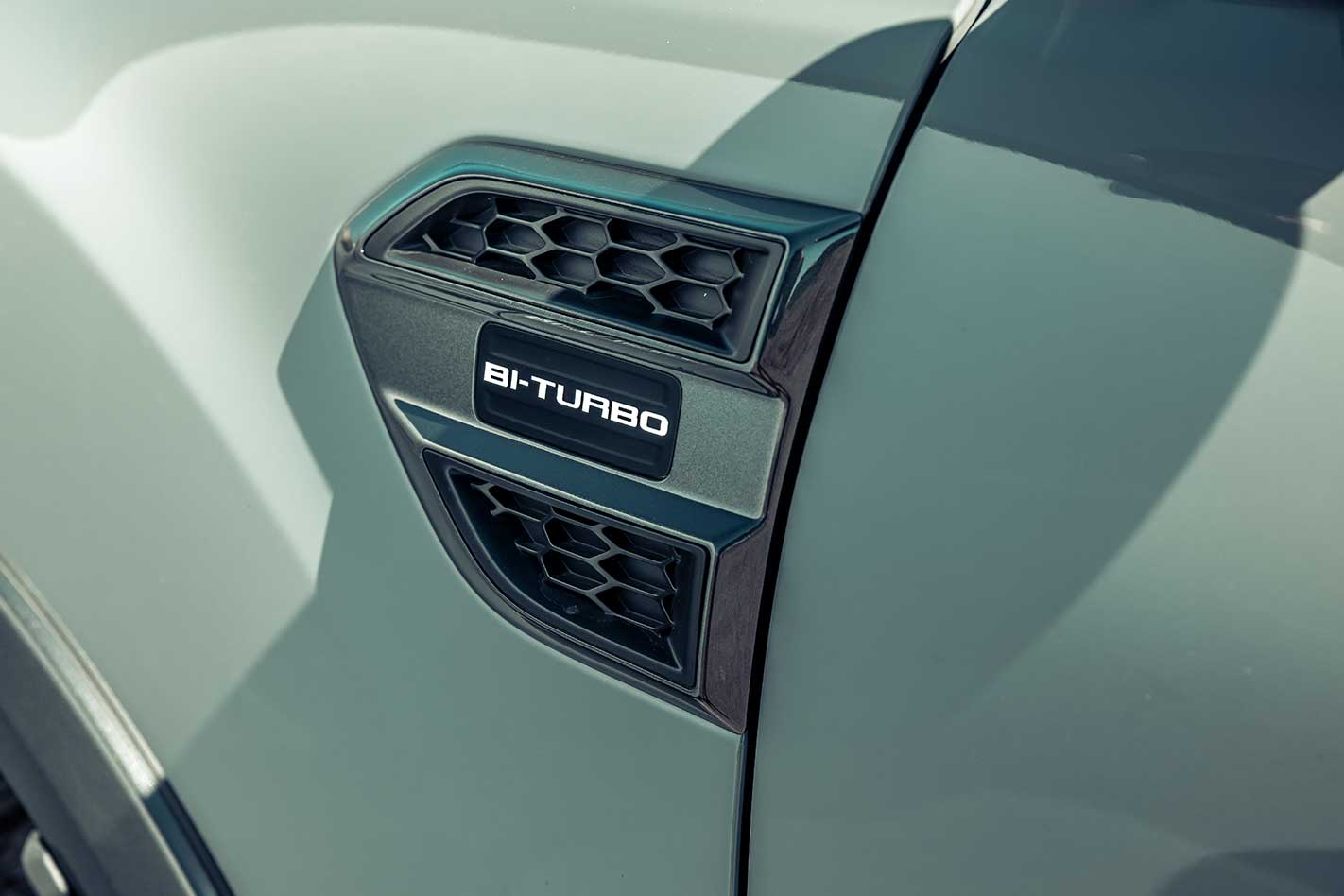
Given its head, however, the Ranger is ultimately the quicker and quieter worker. Despite being one-third smaller in capacity and a middle-aged Aussie male’s worth of kilos heavier, the extra turbo and four more gears work in the Ford’s favour, making it deceptively strong under acceleration, aided by that 10-speed torque-converter auto.
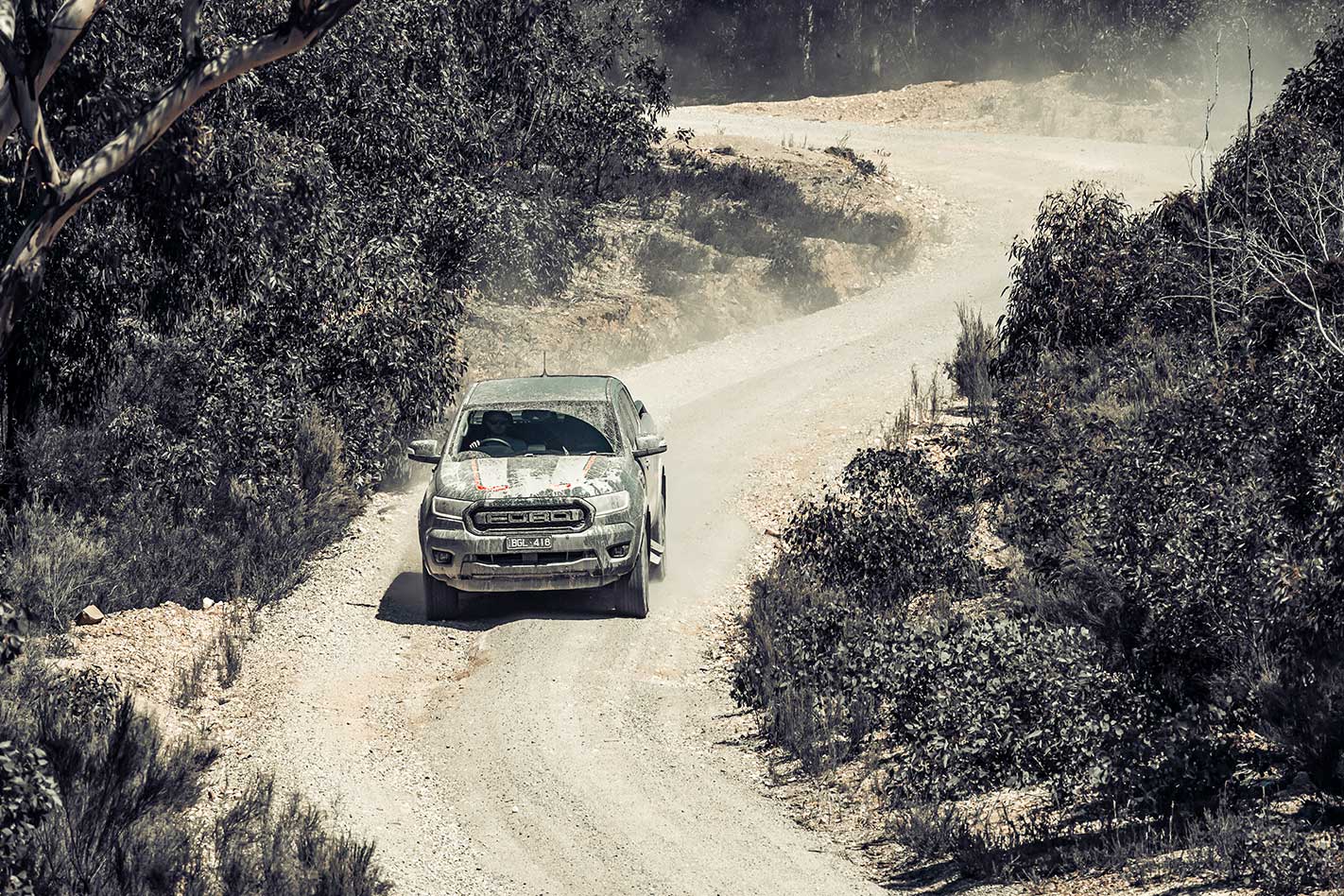
Yet it’s also neither indecisive nor jerky and compared to the 3.2-litre five-pot turbo serving lesser Rangers this powertrain’s refinement is akin to wearing earmuffs.
Shuffling between gears intuitively (making the silly thumb-operated manual shifter mechanism redundant), the FX4 Max feels a little leisurely off the line, trailing the X-Terrain to 60km/h.
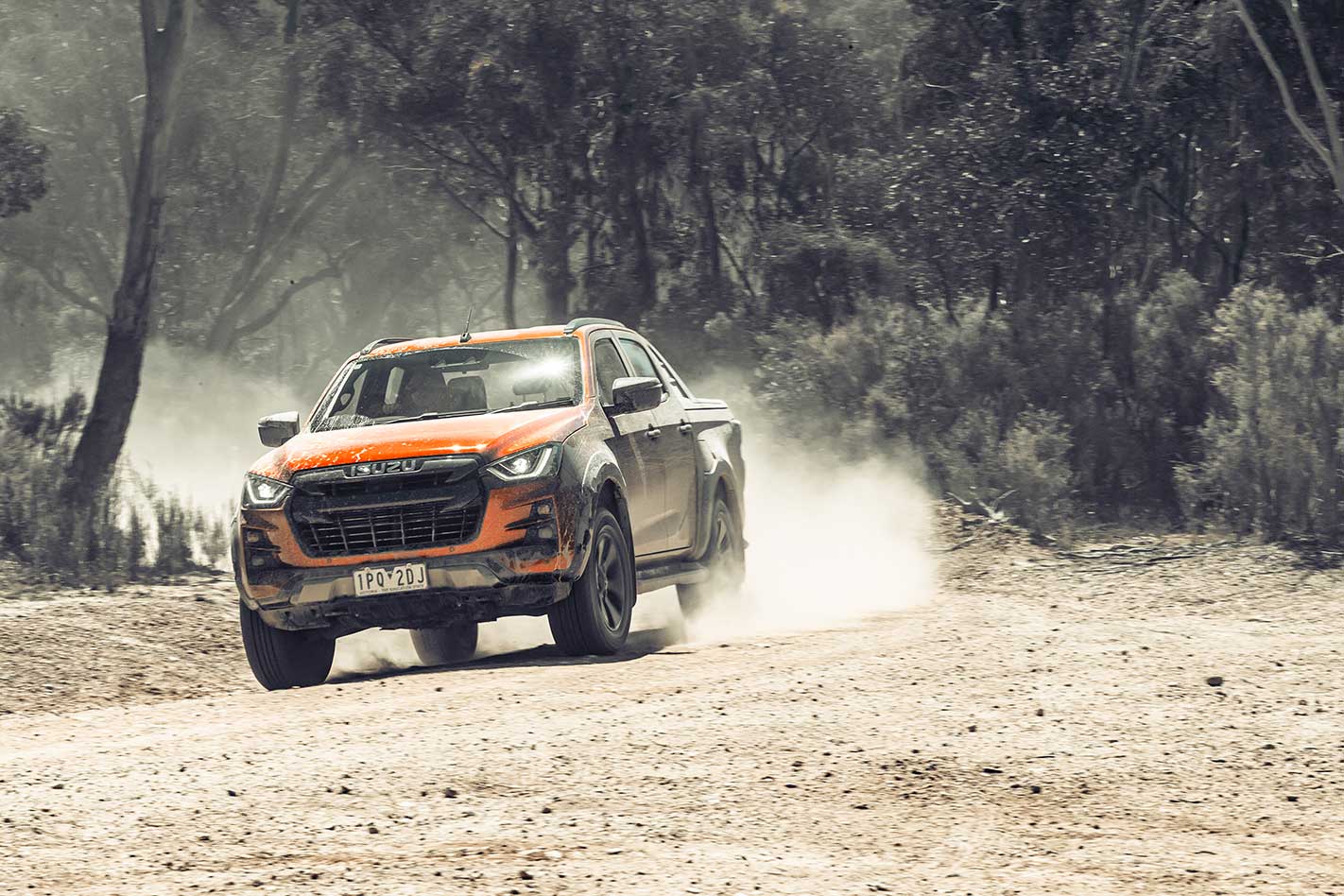
Inevitably, what the Ford’s hard-working 2.0-litre bi-turbo gains in speed it loses in real-world fuel efficiency – 10.8 litres per 100km compared to the Isuzu’s 9.7L/100km, according to our figures.
And that’s with the latter’s (standard) aluminium load cover unfurled for the duration, since the FX4 Max’s tub comes tonneau-less. With it shut we’d expect even better economy. Advantage: D-Max.
Actually, it’s quite profound, with the Ford’s renowned, comparatively fluid steering, surefooted roadholding and supple ride all noticeably blunted.
Yet even with an obviously jigglier ride, looser cornering, squealier tyres and decidedly more muted handling feedback, this Ranger remains the more involving and accomplished drive dynamically just the same, with greater cornering capabilities and more assured control at speed. And that includes on gravel as well as bitumen.
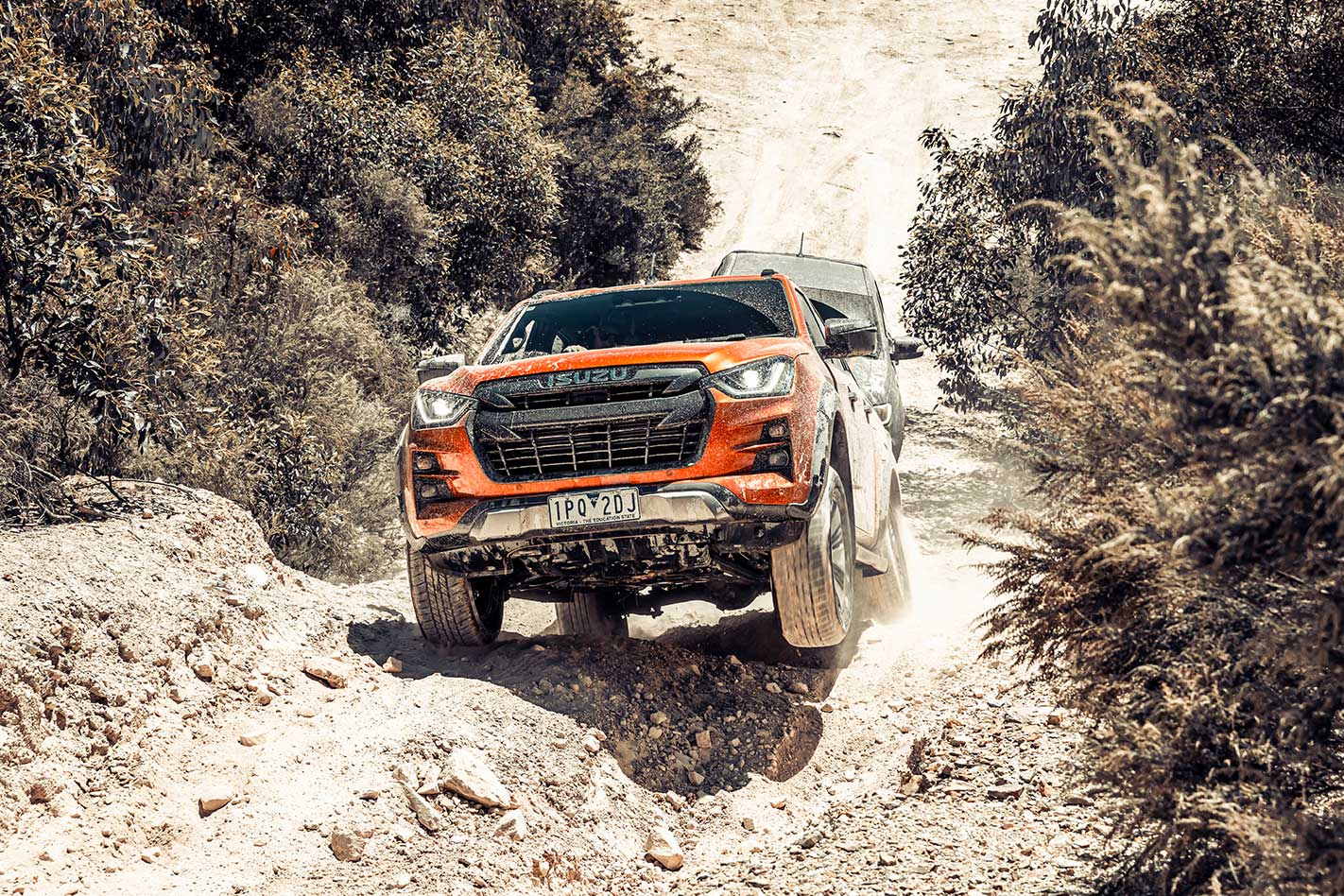
That’s not to say the X-Terrain is flawed – far from it. Aeons ahead of its cruddy predecessor, today’s D-Max treads a benign dynamic path and is all the better for it, ushering in nicely-weighted if remote steering for easy, accurate and safe handling, backed up by ample grip and acceptable road-noise insulation.
Where the X-Terrain rules is in its more-sophisticated driver-assist systems, offering the benefits of noticeably more-nuanced lane-keeping capability as well as full-stop (but not go again) adaptive cruise control functionality; and speaking of stopping, the Isuzu displayed significantly shorter stopping distances – once again betraying the FX4 Max’s choice of rubber.
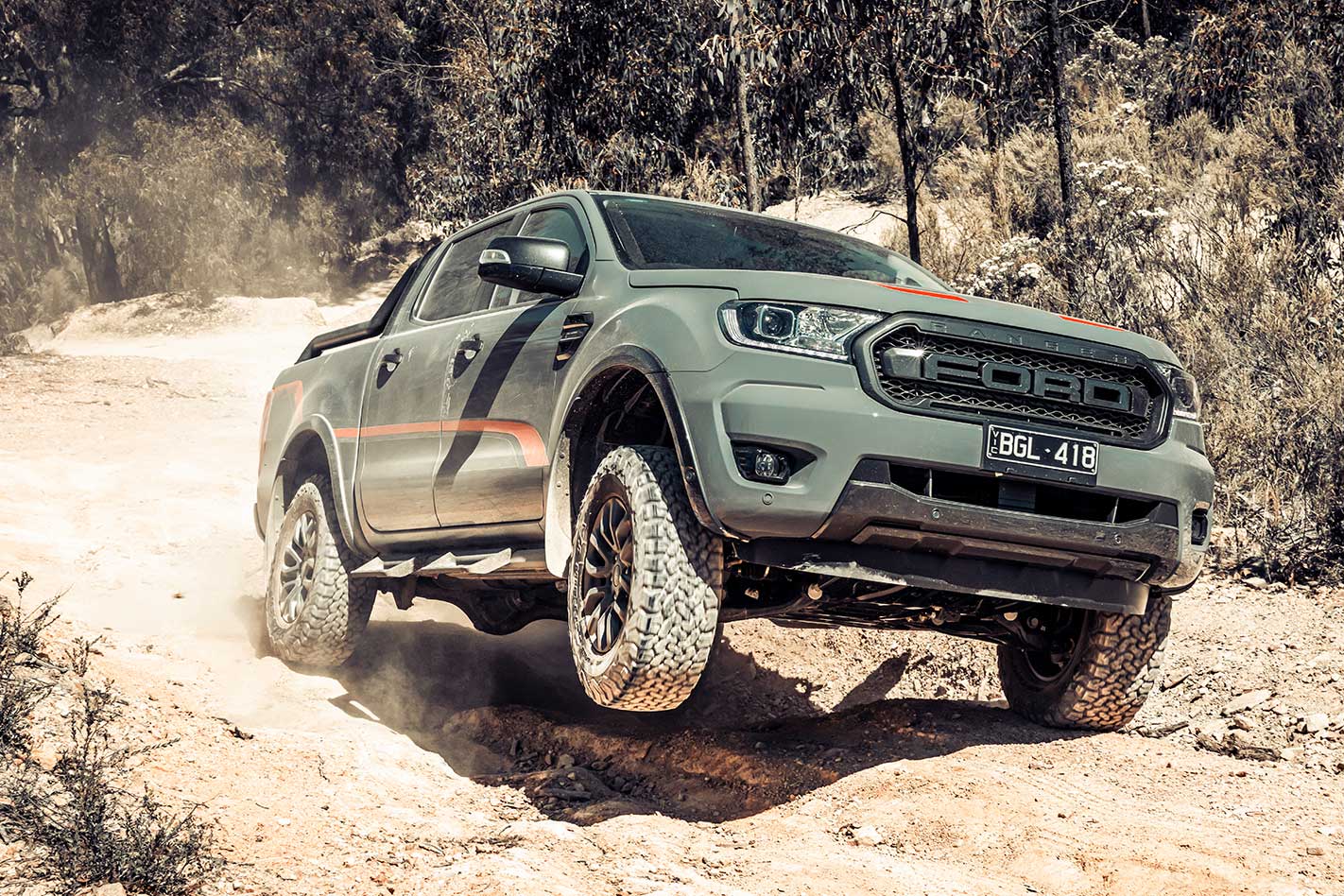
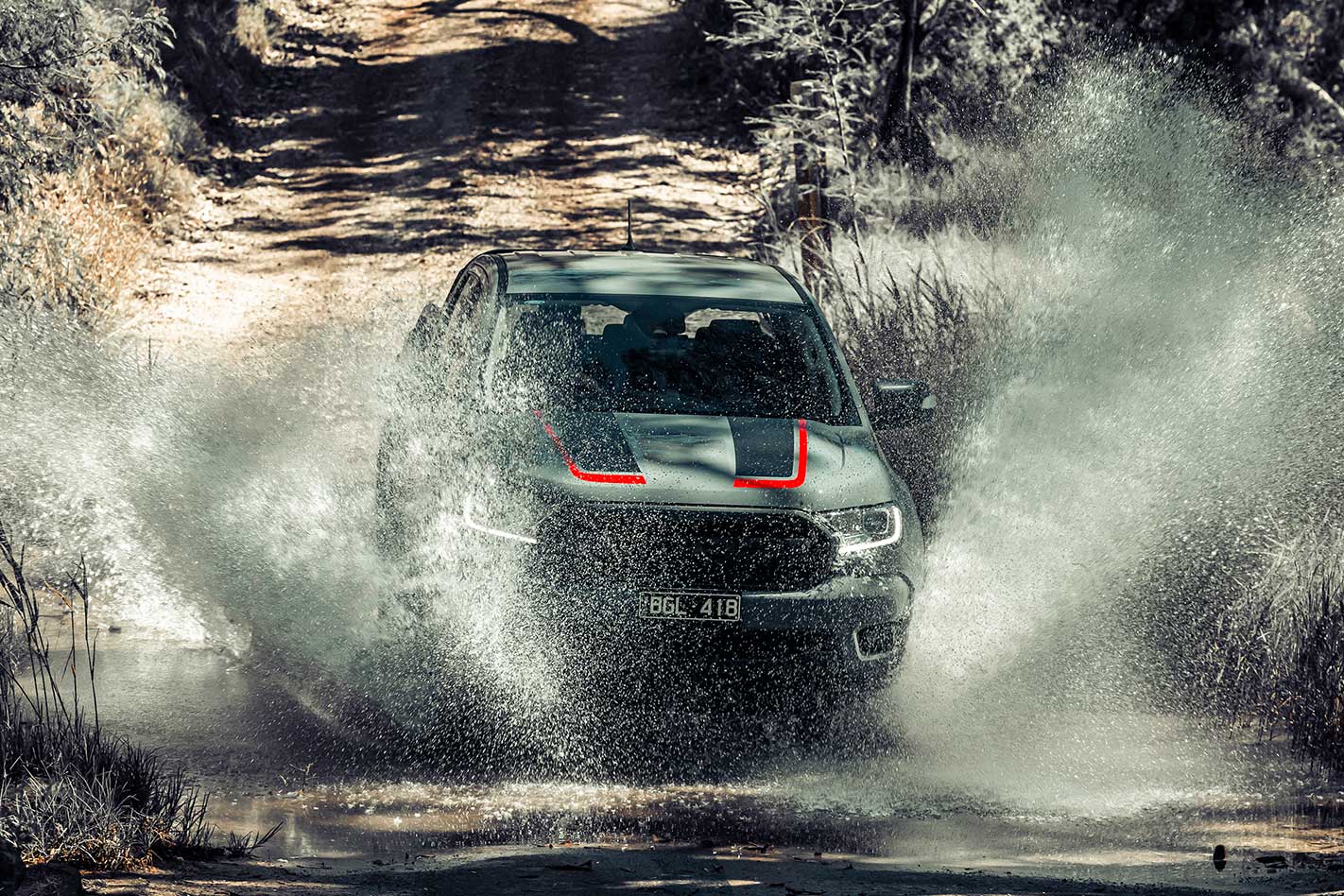
After several days assessing the X-Terrain and FX4 Max, it is clear that the latter is designed to maximise the Ranger’s off-road potential more fully compared to its more road-biased (and overall superior) Wildtrak and Raptor siblings, as well as the new D-Max, which lives between the two extremes. Yet there’s still enough regular-Ranger DNA for it to remain one of the better-driving and riding pick-ups.
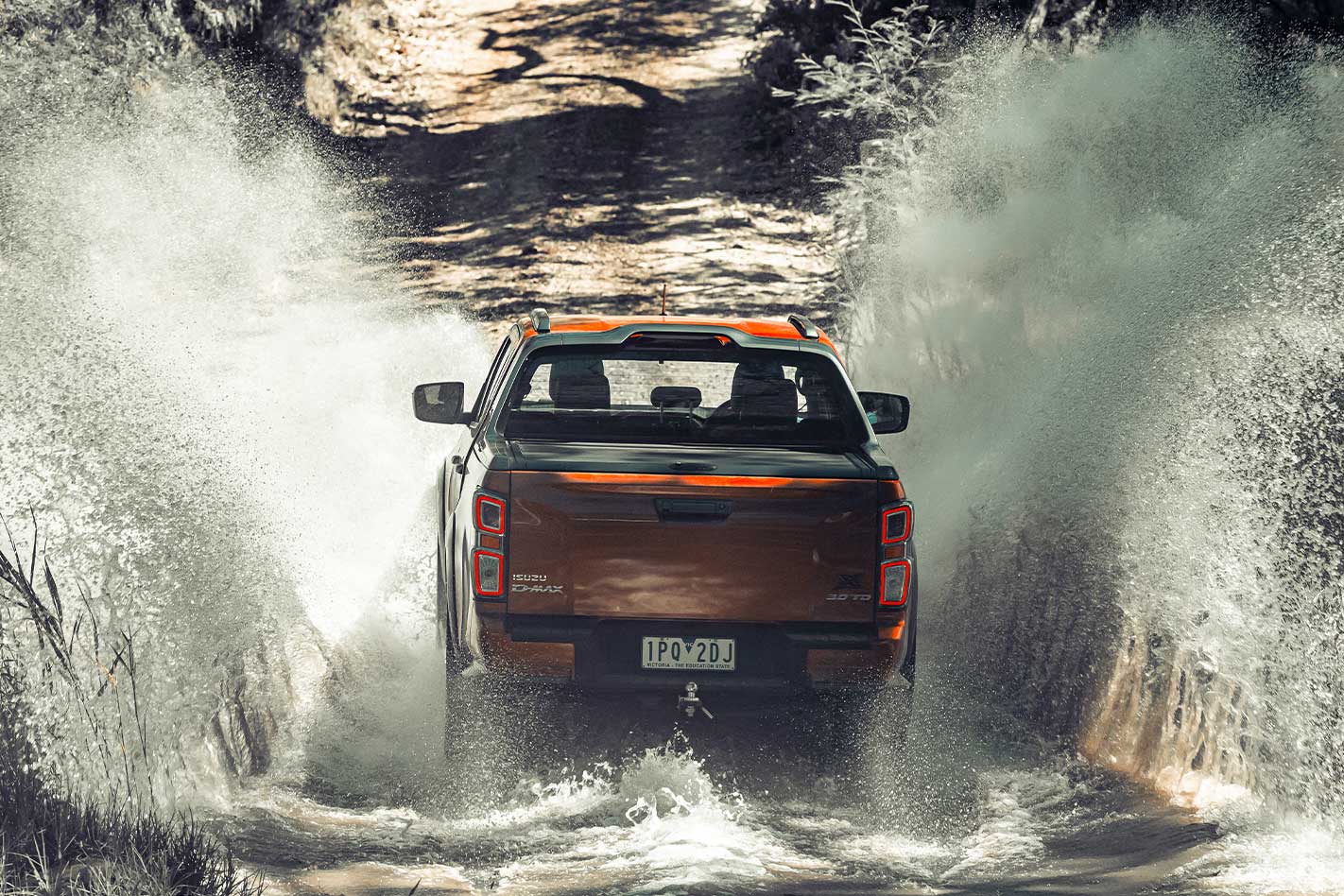
But pricing, equipment, safety, warranty, interior design, economy and resale aren’t among them, meaning that the X-Terrain offers a broader bandwidth of benefits for most consumers seeking the better buy while still having access to brilliant 4×4 ability.
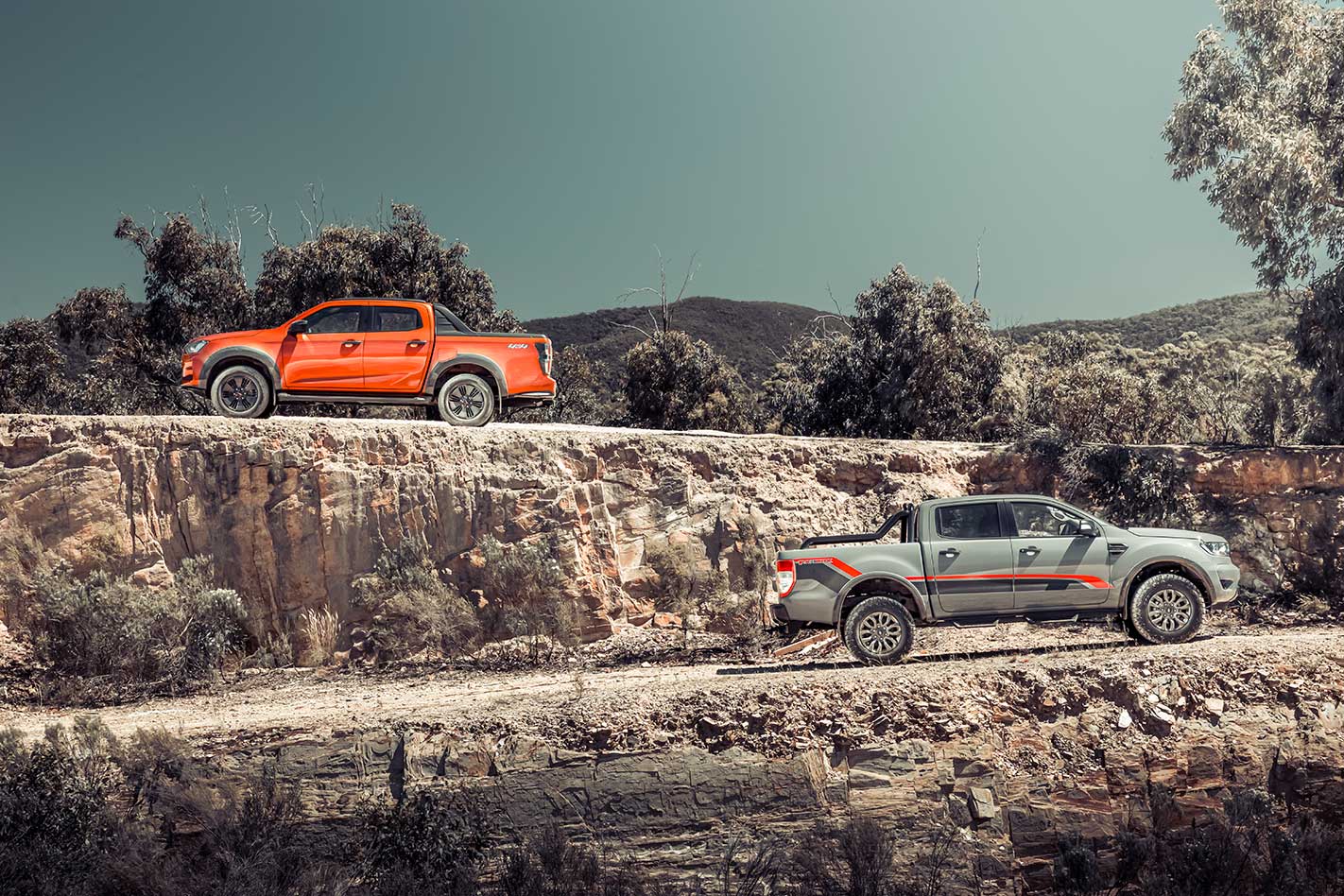
As half a century and six generations of disparately-badged trucks attest, Isuzu has a strong connection with Australians. Considering the D-Max’s direct ancestral ties, it’s fair to say the classic Ford versus Holden fight lives on in more than mere spirit.
Verdict
1st: Isuzu D-Max X-Terrain
- Pros: Fuel economy; car-like interior; unsurpassed driver-assist safety; longer warranty
- Cons: Rear seats need more thigh support; dreary dynamics; firm ride
- 7/10
2nd: Ford Ranger FX4 Max
- Pros: Outstanding off-road; comfy seating; roomy cabin; punchy engine
- Cons: Off-road add-ons diminish on-road capabilities; dated dash; ****ng side steps
- 7/10
Interior deep-dive
Ford Ranger
Function over form defines the Ranger’s dated, low-fi but user-friendly interior, with comfy seating, excellent space utilisation, easy multimedia and storage galore. But pizzazz-free XLT basis (despite the extra suede, metal pedals and other tinsel) doesn’t sit well at FX4 Max price point.
Upfitter auxiliary switch pack brings 250-amp alternator for aftermarket accessories, underlining serious off-road focus. As does 256mm ground clearance, better-than-Wildtrak/Raptor payload of 981kg, while braked towing capacity remains at 3500kg; full-sized spare and tow bar are included.
Isuzu D-Max
Way-more modern and car-like D-Max dash lords it over the rapidly ageing Ford with big (if more complicated) touchscreen, more comprehensive instrumentation, more pleasant finishes, reach-adjustable steering and greater storage.
All underline the Isuzu’s strong value-for-money appeal, while back-seat area presentation is also significantly ahead. But seats aren’t quite as comfy and the rear not as roomy either as longer-wheelbase Ranger. Ground clearance is 240mm, payload is 970kg and braked towing capacity is also 3500kg; spare is full-sized.
Specifications
FORD RANGER FX4 MAX
- Body: 4-door, 5-seat ute
- Drive: rear- and all-wheel
- Engine: 1996cc inline-4cyl diesel, DOHC, 16v, twin-turbo
- Power: 157kW @ 3750rpm
- Torque: 500Nm @ 1750-2000rpm
- Weight: 2219kg
- Power/weight: 71kW/tonne
- Payload: 981kg
- Transmission: 10-speed automatic L/W/H: 5446/1977/1852mm
- Wheelbase: 3220mm
- Tracks: 1586/1586mm (f/r)
- Fuel tank: 80 litres
- Fuel economy: 10.8L/100km (as tested)
- Suspension: struts, A-arms, coil springs, anti-roll bar (f); leaf springs, dampers, anti-roll bar (r)
- Steering: electrically assisted rack-and-pinion
- Turning circle: 12.7m (3.2 turns lock-to-lock)
- Brakes: 310mm ventilated discs (f); 295mm drums (r)
- Tyres: 265/70R17 109S (f/r) BF Goodrich All-Terrain T/A K02
- Price: $65,940/As tested $68,190**
ISUZU D-MAX X-TERRAIN
- Body: 4-door, 5-seat ute
- Drive: rear- and all-wheel
- Engine: 2999cc inline-4cyl diesel, DOHC, 16v, turbo
- Power: 140kW @ 3600rpm
- Torque: 450Nm @ 1600-2600rpm
- Weight: 2130kg
- Power/weight: 66kW/tonne Payload: 970kg
- Transmission: 6-speed automatic L/W/H: 5280/1880/1811mm
- Wheelbase: 3125mm
- Tracks: 1570mm (f/r)
- Fuel tank: 76 litres
- Fuel economy: 9.7L/100km (as tested)
- Suspension: struts, A-arms, coil springs, anti-roll bar (f); leaf springs, dampers, anti-roll bar (r)
- Steering: electrically assisted rack-and-pinion
- Turning circle: 12.5m (3.8 turns lock-to-lock)
- Brakes: 320mm ventilated discs (f); 295mm rear drums (r) Tyres: 265/60 R18 110T (f/r) Bridgestone Dueler H/T 684II
- Price: $62,925 driveaway**
Performance
Ford Ranger FX4 MAX
- 0-10km/h: 0.7sec 0-20km/h: 1.2sec 0-30km/h; 1.8sec 0-40km/h: 2.6sec 0-50km/h: 3.5sec 0-60km/h: 4.5sec 0-70km/h: 5.6sec 0-80km/h: 6.9sec 0-90km/h: 8.2sec 0-100km/h: 9.9sec 0-120km/h: 13.8sec 0-130km/h: 16.1sec 0-140km/h: 19.0sec
- 0-400m: 17.1sec @ 132.4km/h
- 80-120km/h: 6.7s
- 100km/h-0: 43.8m
Isuzu D-Max X-Terrain
- 0-10km/h: 0.6sec 0-20km/h: 1.0sec 0-30km/h: 1.5sec 0-40km/h: 2.3sec 0-50km/h: 3.2sec 0-60km/h: 4.2sec 0-70km/h: 5.5sec 0-80km/h: 6.7sec 0-90km/h: 8.0sec 0-100km/h: 9.9sec 0-110km/h: 11.8sec 0-120km/h: 14.0sec 0-130km/h: 16.5sec 0-140km/h: 20.2sec
- 0-400m: 17.0sec @ 131.7km/h
- 80-120km/h: 7.3s
- 100km/h-0: 41.4m
Jeep has revealed its new-generation Wagoneer and Grand Wagoneer SUVs, destined to enter the brand’s line-up above the new Grand Cherokee range revealed in January.
Let’s get the most important detail out of the way, first: Australian buyers seeking a big Jeep will have to make do with the Grand Cherokee, because both Wagoneer models will be built in left-hand-drive only.
But, for those keen to know about this latest overseas offering kept from our market, read on.
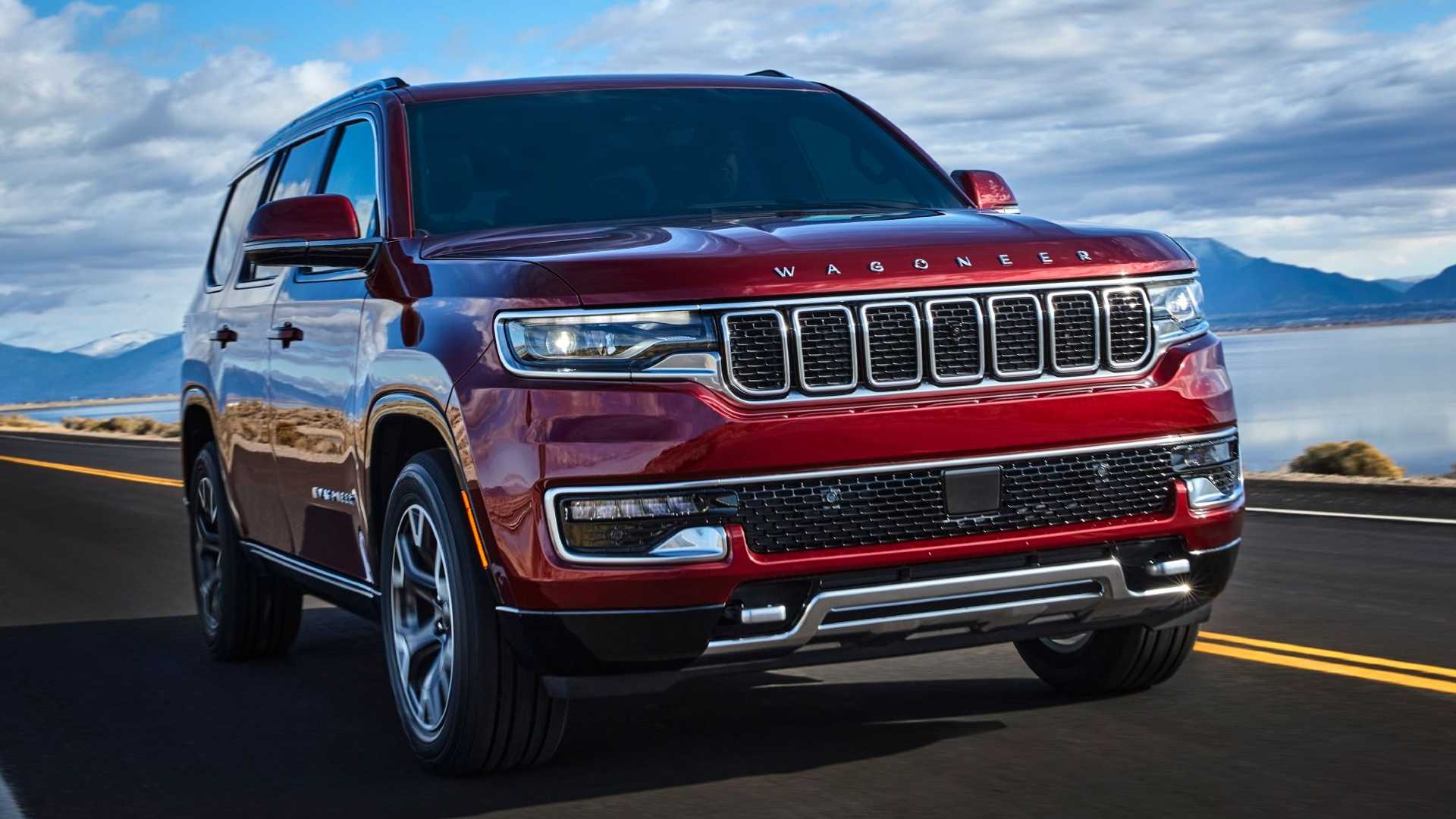
Based on the Grand Wagoneer show-car revealed in COVID-cursed 2020, the showroom-ready Grand Wagoneer and Wagoneer models debut today with a look that proves loyal to that well-received concept.
The big new SUV’s platform is shared with the new-generation ‘DT’ Ram 1500, which goes on sale in Australia soon – courtesy of the ongoing local Walkinshaw conversion program that brought the current DS-series 1500 pickup variants here.
Unlike the mid-sized Cherokee and big Grand Cherokee, the Wagoneer models are built to a largely identical size and style.
This time, ‘Grand’ represents a more luxurious (and powerful) trim of the standard Wagoneer – not too dissimilar to the early ‘80s, when the AMC-owned Jeep renamed the top-spec Wagoneer Limited to Grand Wagoneer.
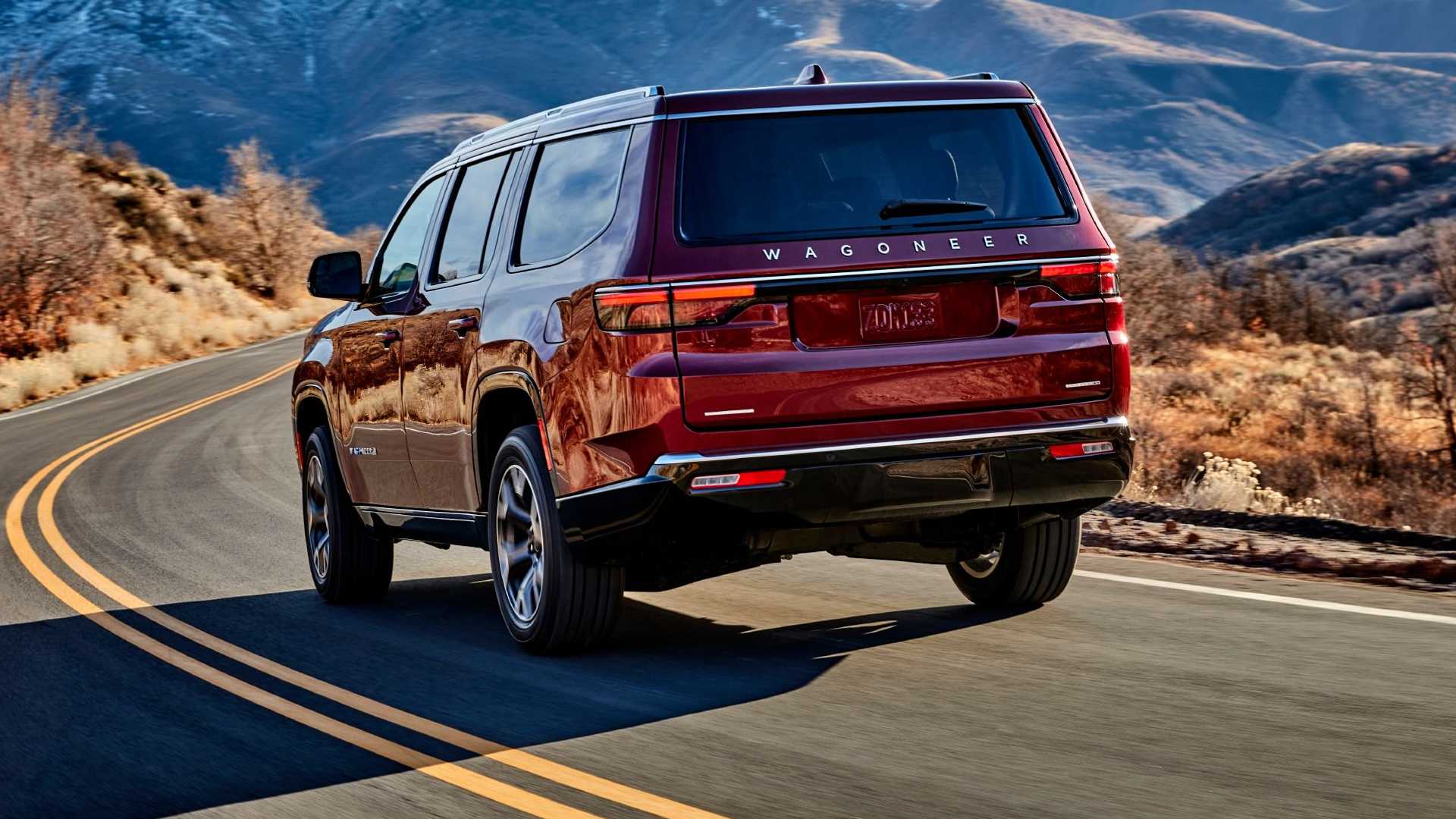
The new seven-seat Wagoneers measure in at 5453mm long, making them a whopping 454mm longer than the standard new Grand Cherokee (4999mm) and a notable 249mm longer than the new Grand Cherokee L (5204mm).
As a point of reference, the now 11-years-old Grand Cherokee currently sold in Australia is 4821mm long. Outside the Jeep range, the incoming new Toyota Kluger is 4950mm long (current model: 4854mm), and the Mazda CX-9 is 5075mm long.
Other key dimensions include a 3124mm wheelbase – compared to 3091mm for the new Grand Cherokee L – and a width of 2123mm, which makes it markedly wider than the 1963mm of both new Grand Cherokee variants.
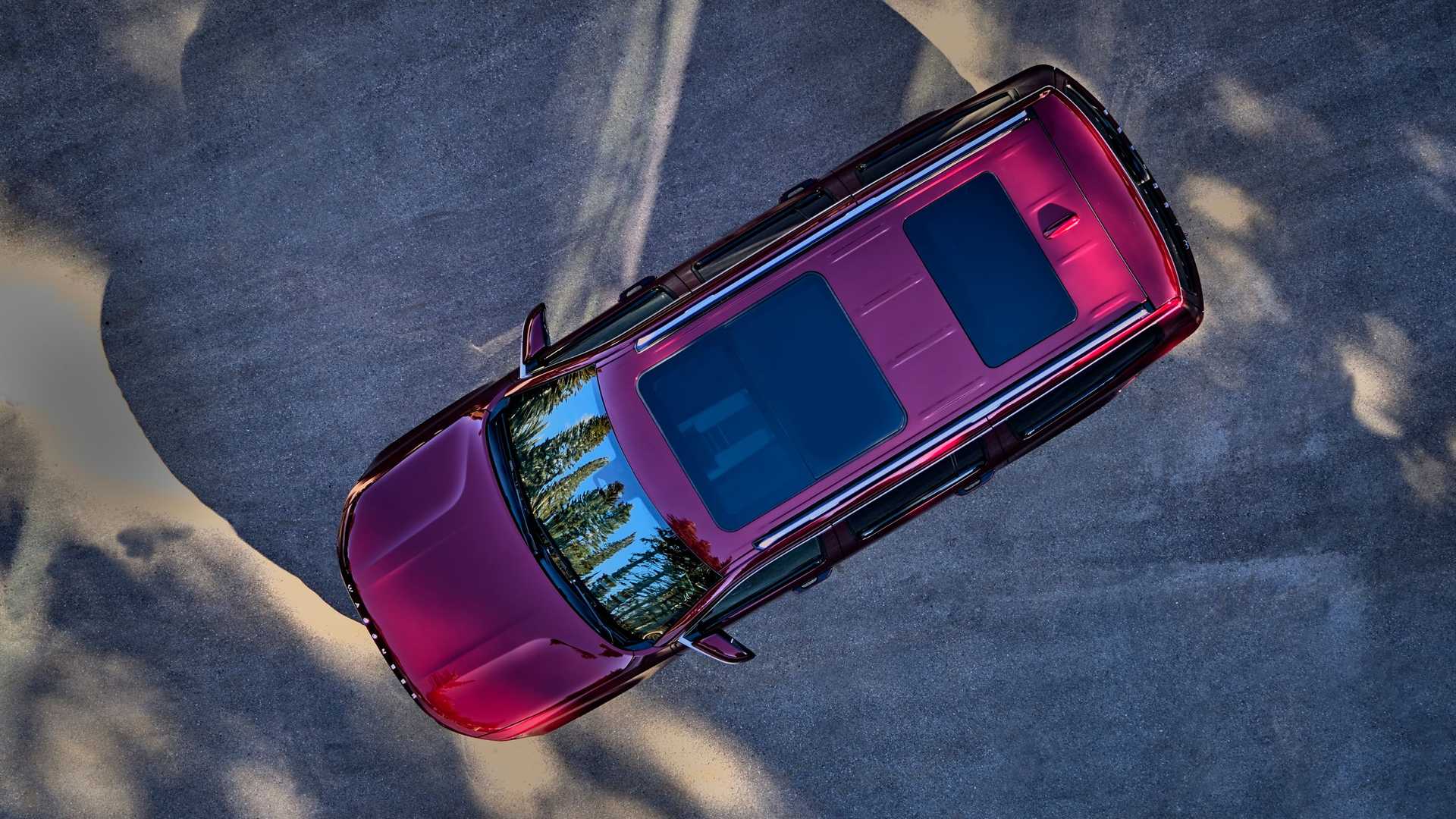
Power in the regular Wagoneer is provided by a naturally-aspirated 5.7-litre ‘Hemi’ V8 that benefits from a mild hybrid system (not detailed, but likely a 48V setup).
The same mill stars in the Ram 1500, with 292kW and 548Nm directed to rear- or Quadra-Trac all-wheel-drive configurations through an eight-speed torque converter automatic.
As a proper Jeep should, those Quadra-Trac systems ensure off-road capability. Quadra-Trac I offers a full-time, single-speed AWD setup, while Quadra-Trac II adds a two-speed transfer case. Step up to Quadra-Drive II and you get the high- and low-speed transfer case with an electronic LSD in place of the standard mechanical setup.
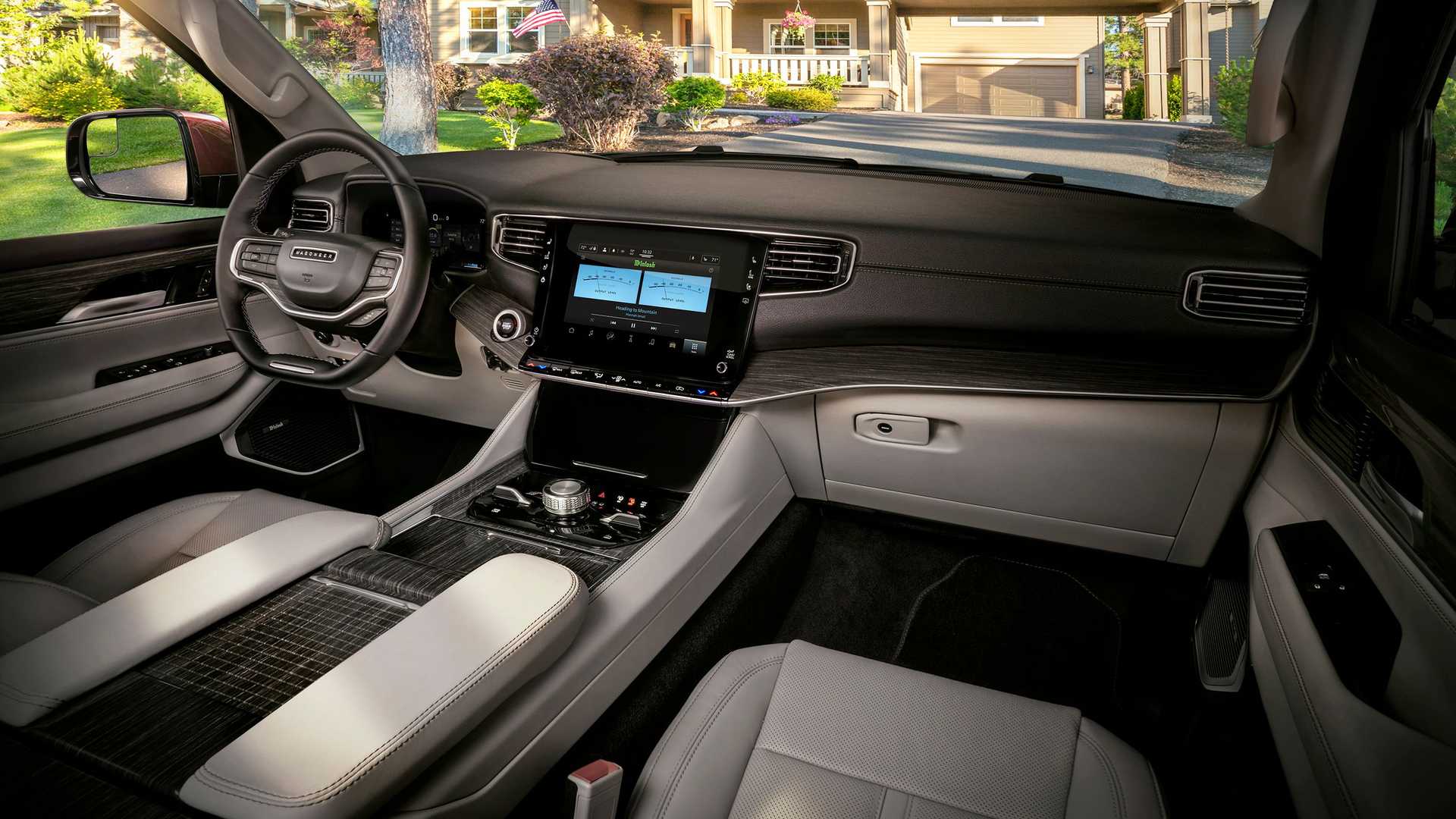
Adding to that kit is the Quadra-Lift air suspension option to replace the standard steel springs, which bumps maximum ground clearance up from 211 to 257mm. (The Range Rover has it beat, though, with 297mm max clearance on air suspension.)
In the Grand Wagoneer, there’s a familiar and mighty 6.4-litre V8 delivering 351kW and 617Nm through that same eight-speed auto to the Quadra-Trac II setup as standard. No RWD on this one.
That’s the main thrust of the Wagoneer story, one that won’t be told here without a monstrously pricey conversion – particularly as they’ll run for around AU$75,000 to AU$110,000 in their home market before any ‘remanufacturing’ is done.
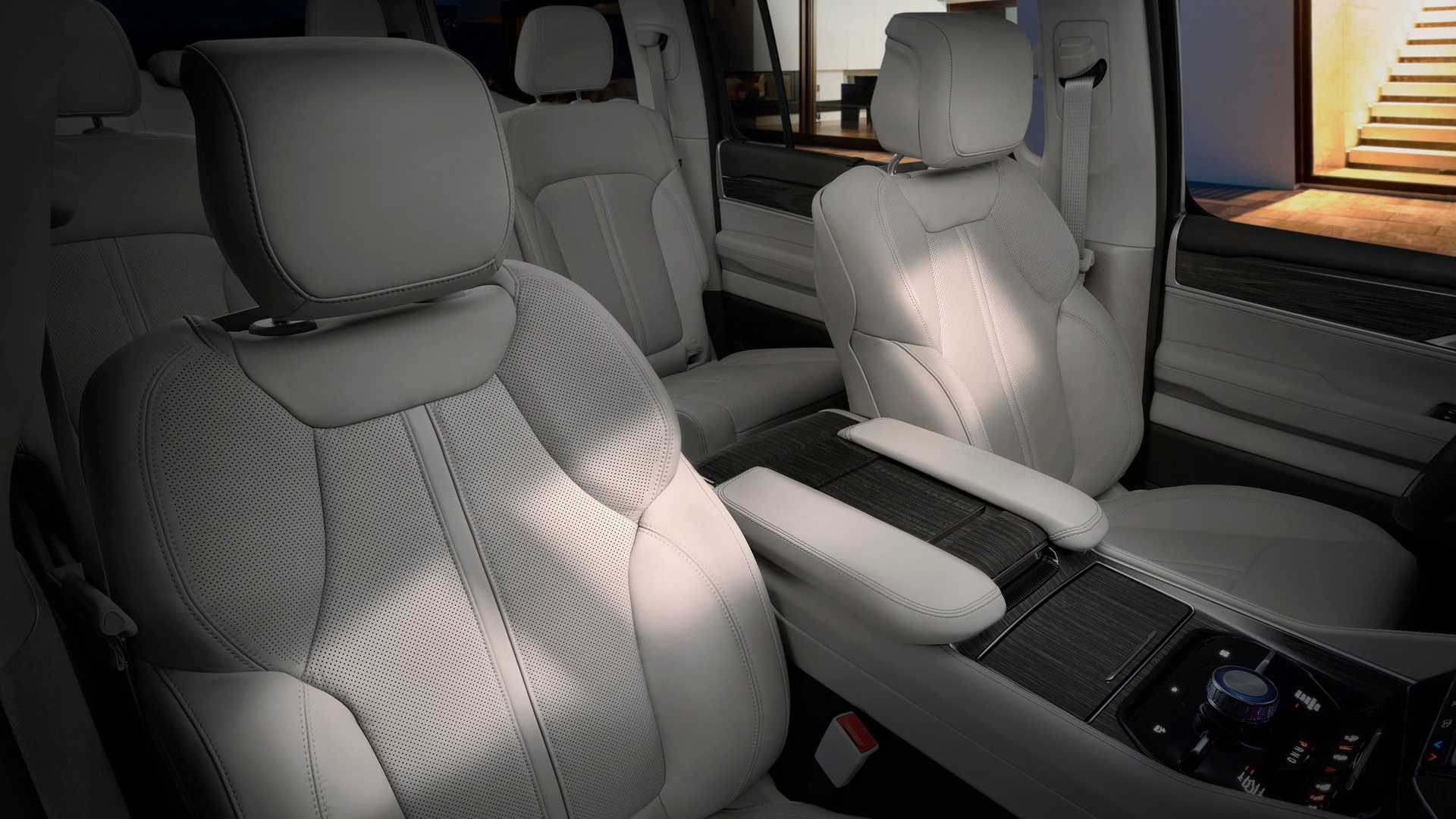
As for the Grand Cherokee models we will get here, you can read about those in our 4X4 Australia story right here.
MORE: Jeep news and reviews
Everyone at Performance Car of the Year 2021 expected the Mercedes-AMG GT R Pro to be fast.
What we didn’t expect, was for it to be the fastest production car to ever lap Winton Raceway’s 3.0km layout.
Driven by ace driver Karl Reindler, the AMG GT R Pro decimated everything else on the MOTOR Shootout leader board.
The time? 1:29.3. Bang.
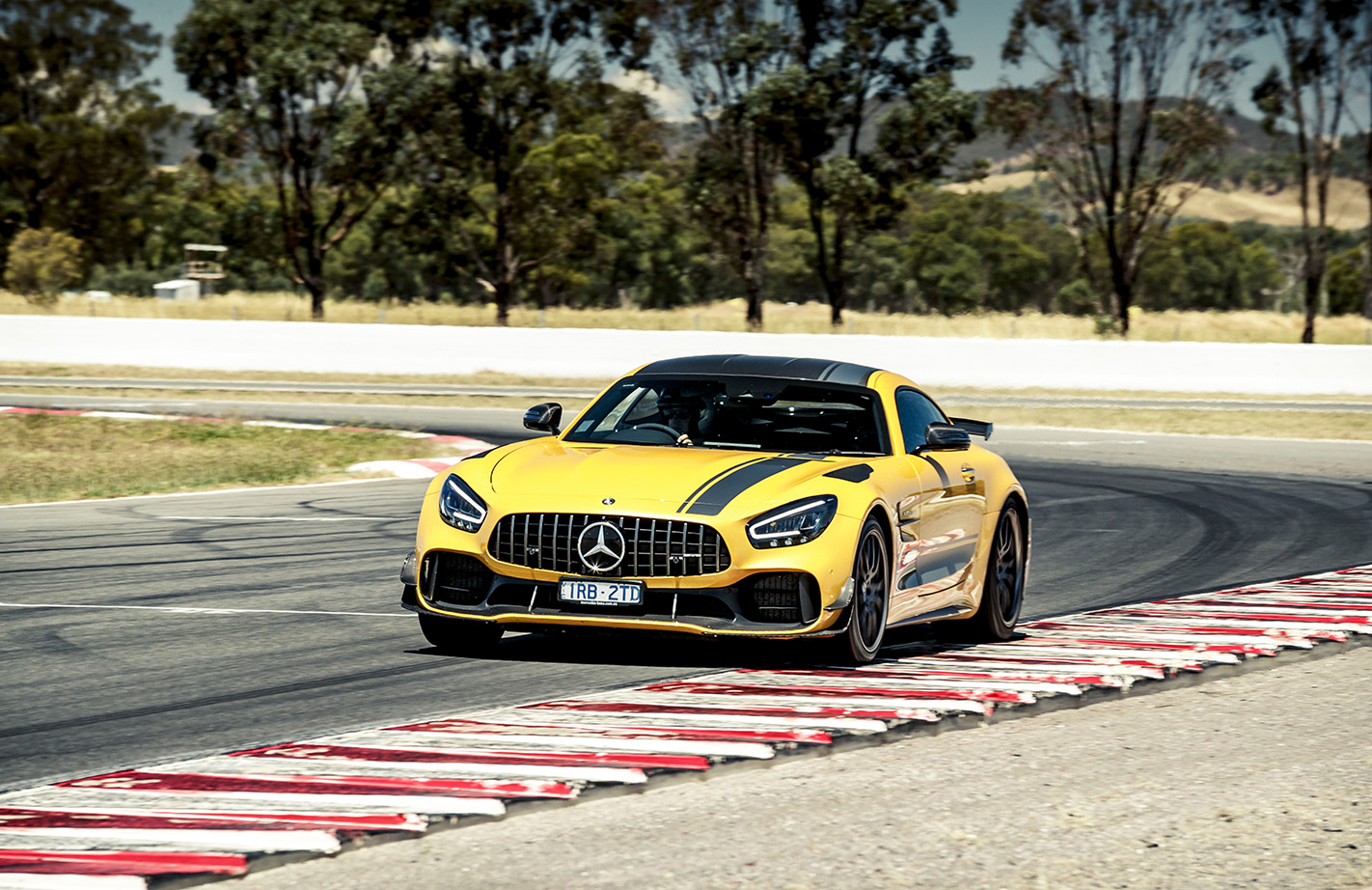
As a result, the Pro is the new leader, dethroning the Audi R8, by more than three seconds. Oh, it also reset the production car lap record for the circuit.
The blistering lap time was achieved without the help of any electronic aids. While the nine-stage traction control is a boon for amateurs, it was unnecessary for Reindler, allowing him to demonstrate the vehicles raw capabilities in isolation.
Prior to this year’s PCOTY, the fastest car MOTOR had timed at Winton was a Nissan GT-R Nismo, driven by David Reynolds at our 2018 event, which put down a 1:30.0 lap.
The Pro was the second-to-last car to complete its timed laps during PCOTY testing, with the judges and crew of helpers eagerly watching as Reindler completed his two hot laps.
Upon hearing the final time the pit lane erupted.
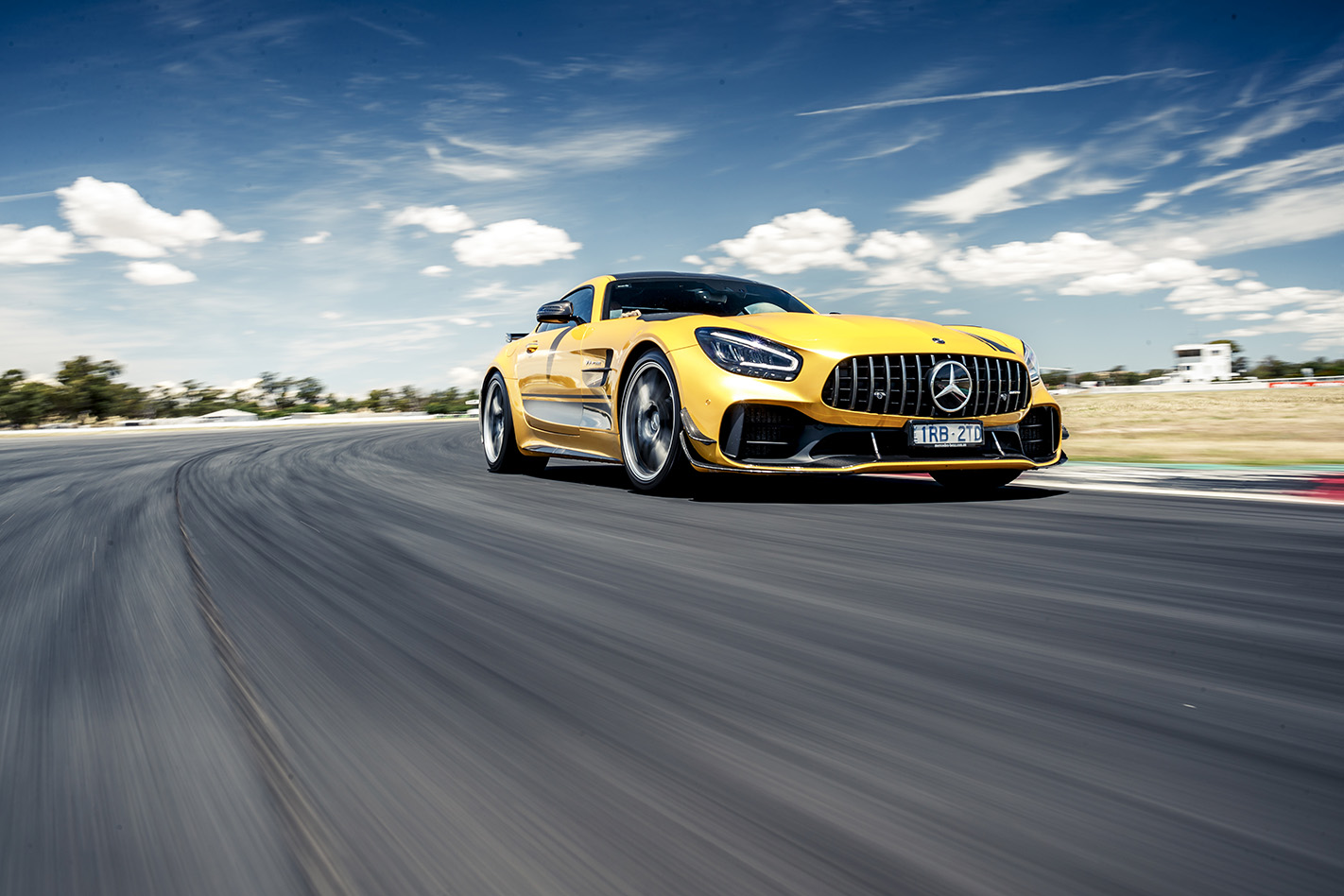
“Let me take a breath, that is some car!” Reindler exclaimed following his record-breaking lap.
“It is barely a road car, the way that it behaves on track, it’s just incredible.
“For the first time today I’m a little lost for words.”
Once he had regained his usually unflappable composure, Reindler explained in finer detail exactly what made the Pro such a compelling – and rewarding – track weapon.
“Everything is so crisp and sharp. You throw the bucket seat into the mix, with the harness, and you just feel so connected to this thing. You become one with the car,” he said.
“The gearbox does everything right. That was everything switched off then as well, no aids, and it’s just so predictable and so forgiving. It just gives you confidence and it’s just begging you to push it harder”
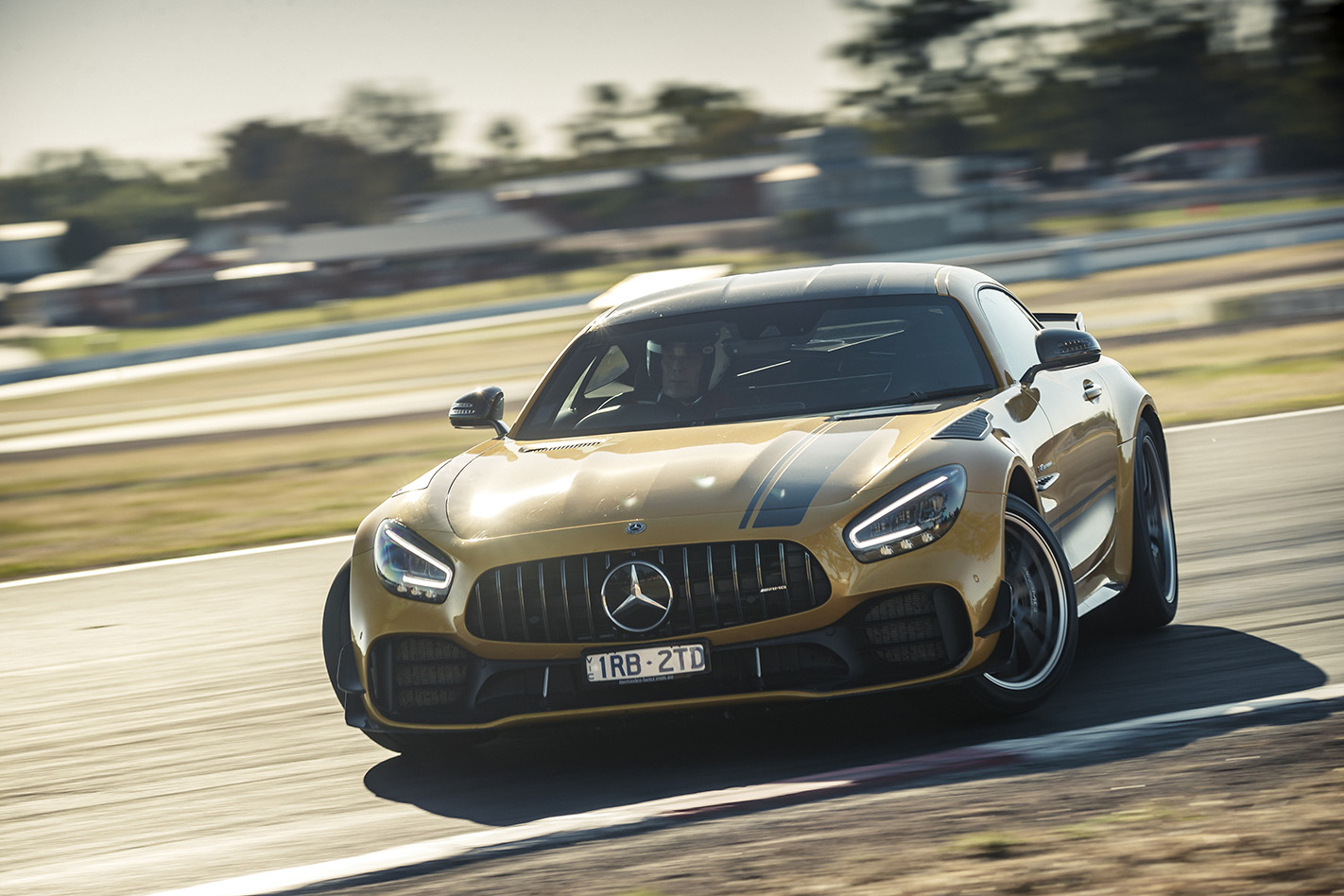
That last point is at the core of what makes the Pro so impressive. You don’t need to be a Karl Reindler professional to be inspired to push harder and faster.
“Even the engine mapping is so refined, you come off the corner nice and progressive and there’s nothing untoward that happens, nothing unpredictable, it just drives off as you want it to,” Reindler added.
“It puts the power down well considering it’s rear-wheel drive, crazy amount of rear traction off the corners”
To contextualise how potent the Pro is on track, we need to talk (briefly) about straight-line performance.
The Pro was the fourth quickest car at PCOTY from both 0-100km/h and over a quarter mile. Not entirely surprising when you consider the power being deployed by other contenders, and not a slight at the Pro at all. What it shows is that outright speed in a straight line isn’t the name of the game.
Interestingly though, the Pro laid claim to the highest terminal velocity during hot laps, exemplifying its ability to not only carry more speed through the bends, but deploy its power earlier and more completely on corner exit.
Make sure to check the MOTOR Shootout leaderboard regularly, as we post a new hot lap video every week!
UPDATE, March 11: Turns out Tesla’s Full Self-Driving Beta may not be as “mature” or groundbreaking as both its name and Tesla CEO, Elon Musk, promised.
In a story first covered by Jalopnik, Tesla’s legal team sent a letter directly to the Californian Department of Motor Vehicles’ head of Autonomous Vehicles, which reads:
“Currently neither Autopilot nor FSD Capability is an autonomous system, and currently no comprising feature, whether singularly or collectively, is autonomous or makes our vehicles autonomous.”
As with regular Tesla Autopilot systems, the FSD Beta is only classed as a Level 2 autonomous system, which means that while operating, the driver of the vehicle must be supervising the operation of the vehicle at all times.
March 10: Tesla is hoping to double the amount of participants taking part in its Full Self-Driving (FSD) beta program.
The surreal driver-assistance system, rolled out in October last year, was initially offered to 1000 Tesla customers and shows promise to drastically change the way Tesla vehicles are driven and interacted with.
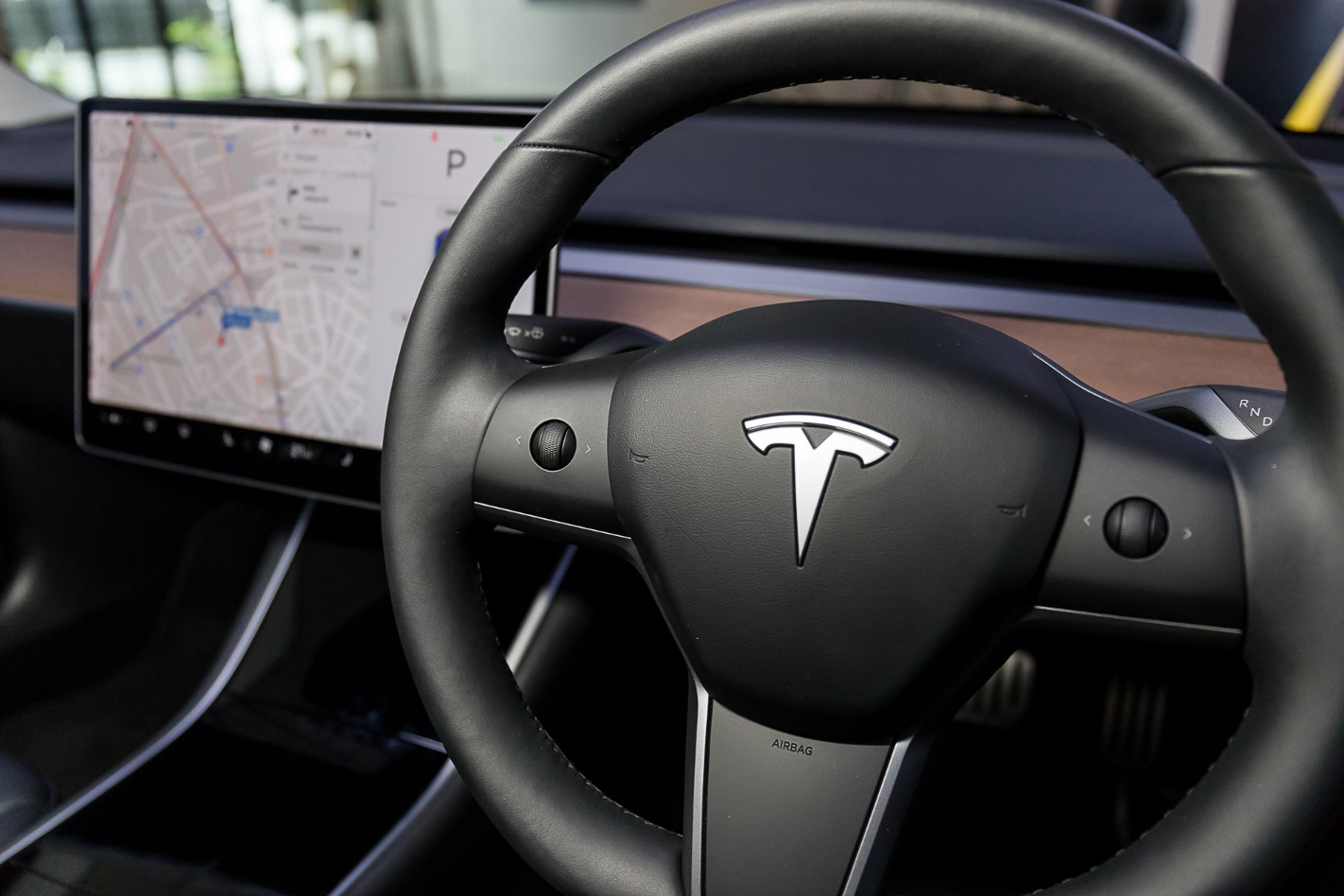
However, although the name of the system suggests otherwise, Tesla strongly recommends that all participants in the beta program keep their hands at ten and two on the steering wheel at all times.
Taking to Twitter to make the announcement, Tesla CEO Elon Musk said, “If you want the Tesla Full Self-Driving Beta downloaded to your car, let us know. Doubling beta program size now with 8.2 & probably 10X size with 8.3. Still be careful, but it’s getting mature.”
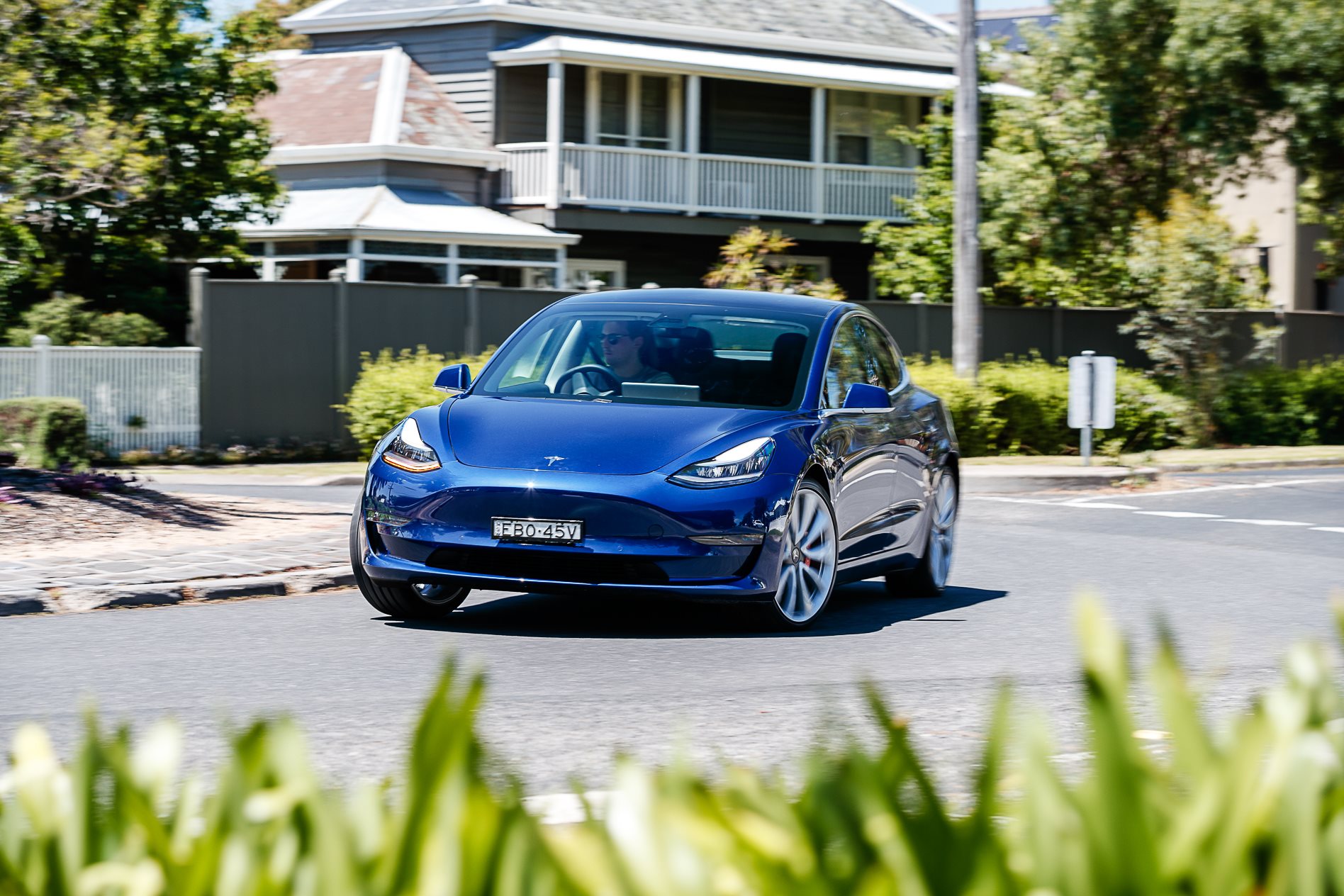
Musk added that due to the popularity of the software, customers will be able to put their hands up for the new tech by simply clicking on a “Download Beta” button in any compatible cars’ infotainment system.
The enigmatic CEO also sought to clarify his company’s interpretation of the word “Beta” in the context of the Full Self-Driving program.
“Note: word “Beta” is used to reduce complacency in usage & set expectations appropriately. All software is first tested internally by Tesla simulation & QA drive teams,” Musk said.
What does this mean for Australian Tesla owners? The availability of the FSD Beta program varies from region to region across the globe, so owners will need to contact Tesla at [email protected] to see whether they are eligible to take part in the trial.
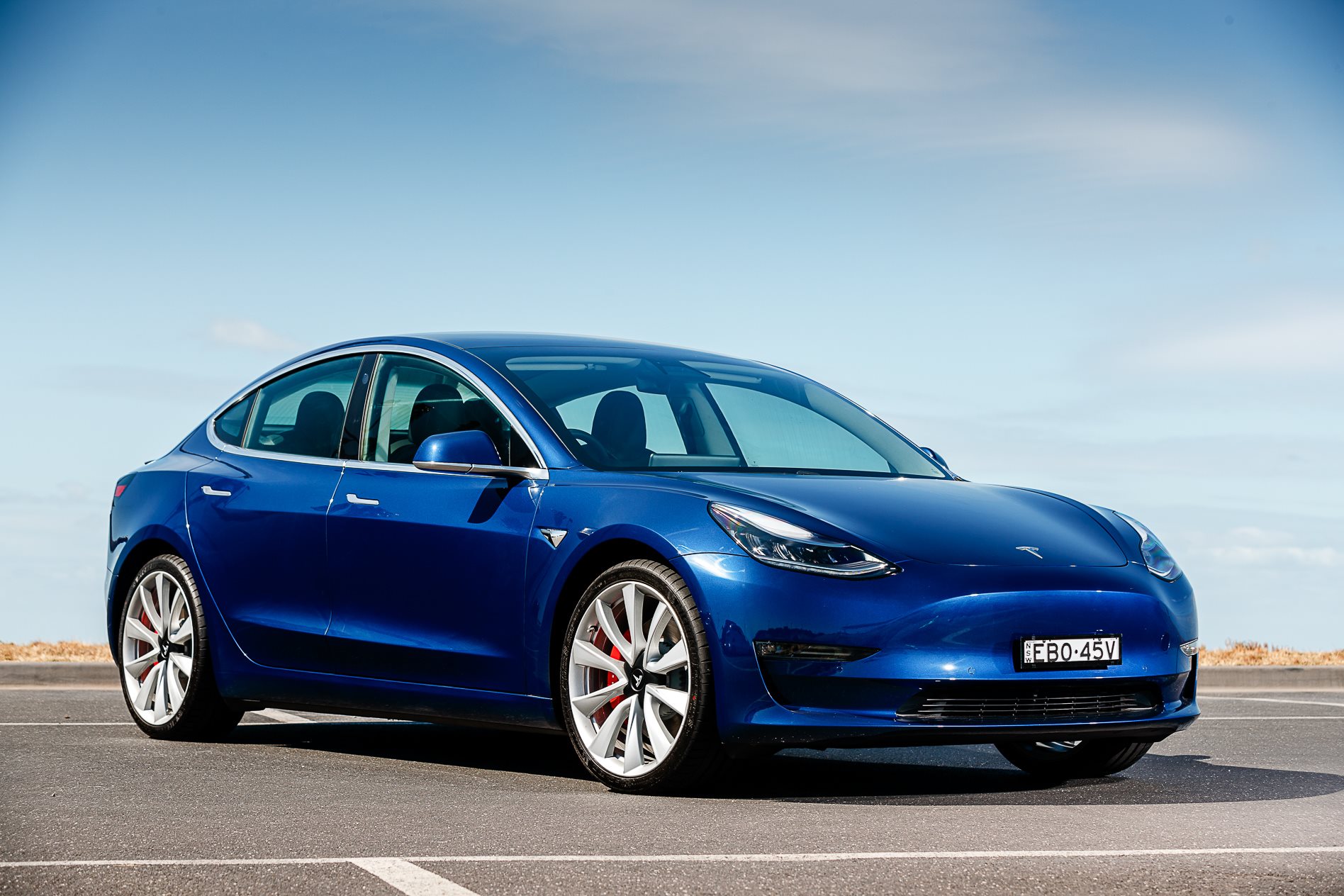
As for the legality of the software Down Under, self-driving tech is still very much a grey area, but the salient takeaway from the current legislation is that anyone operating a vehicle must be in the driver’s seat with their hands on the steering wheel.
There’s a new addition to the sporty micro SUV segment set to arrive in Australia, in the form of the updated 2021 Audi SQ2.
Having been on sale in Europe for some years, the recently refreshed Audi SQ2 is set to land in showrooms in May with pricing starting at $64,400.
It intends to do battle with the likes of Mercedes-AMG’s GLA45, BMW’s X2 M35i, and Jaguar’s E-Pace R-Dynamic.
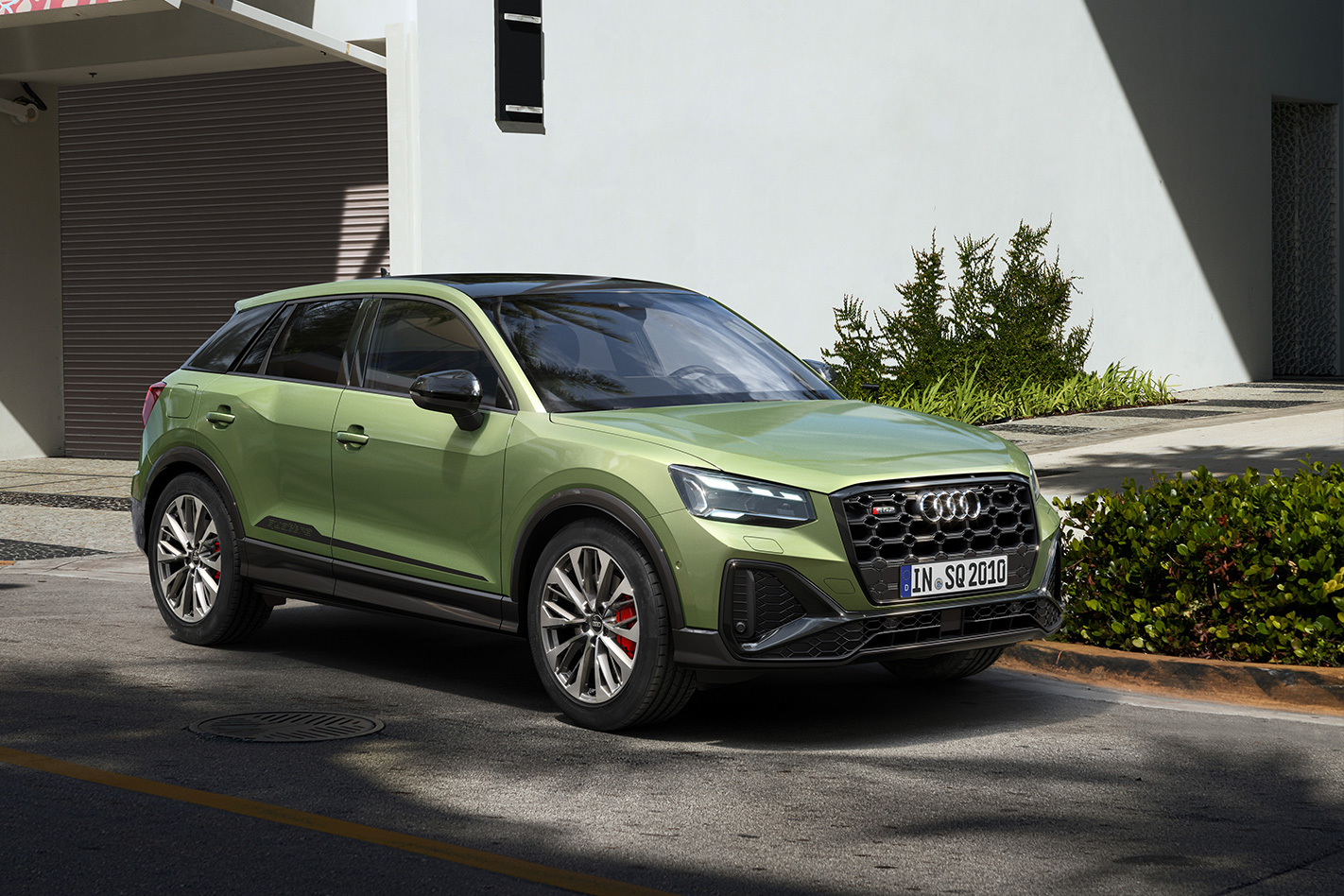
Landing as a single-spec offering with VAG’s familiar 2.0 TFSI 2.0-litre four-cylinder engine under the bonnet, the SQ2 promises 221kW and 400Nm.
Audi claims the SQ2 can perform a 4.9-second sprint to 100km/h, and is backed up by Audi’s seven-speed S Tronic dual-clutch gearbox and the marque’s signature Quattro all-wheel drive system.
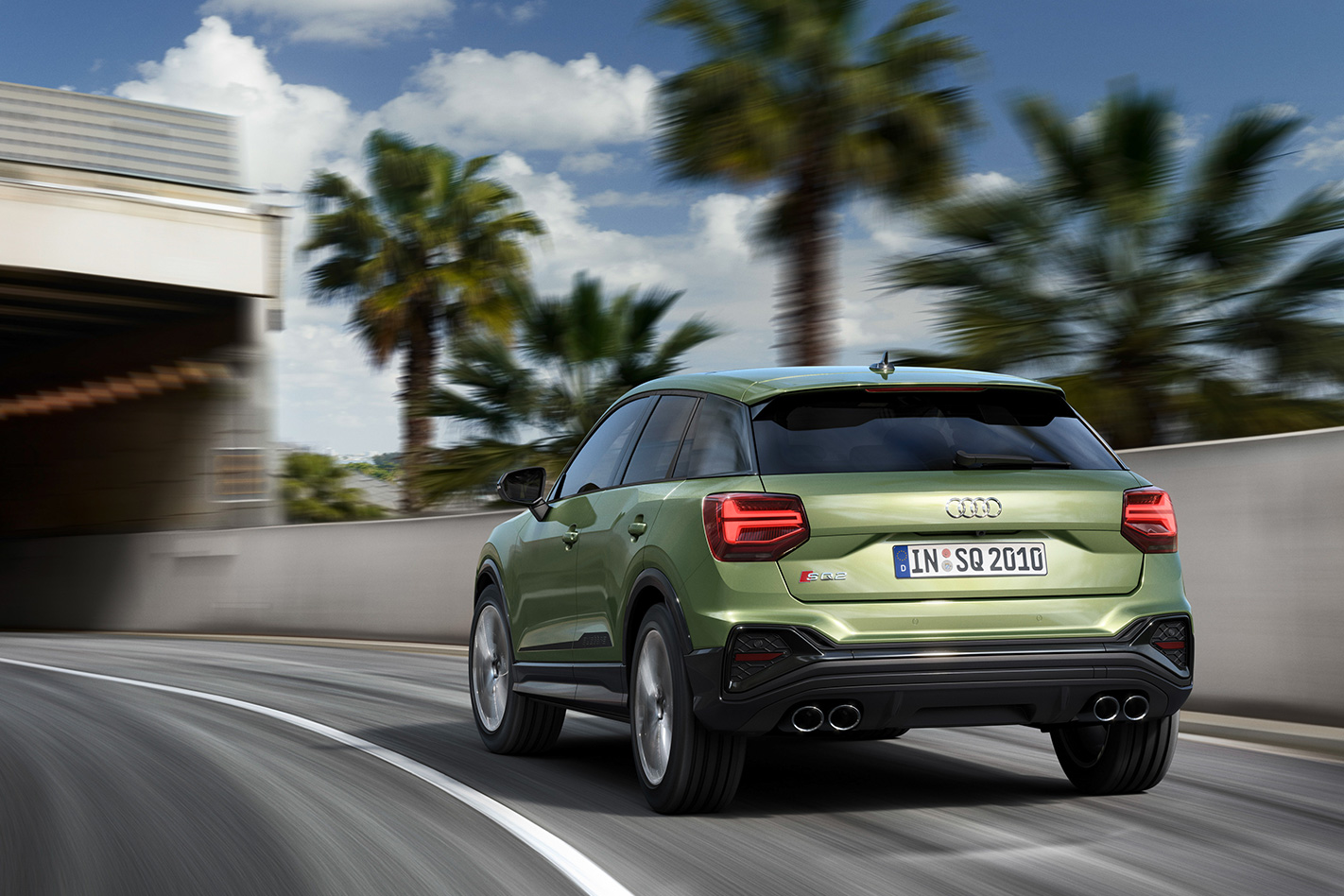
A swathe of included standard kit includes S sport suspension, 19-inch alloy wheels, Matrix LED headlights with dynamic indicators and light sequences, high-beam assist, red brake calipers, quad tailpipes and unique exterior styling.
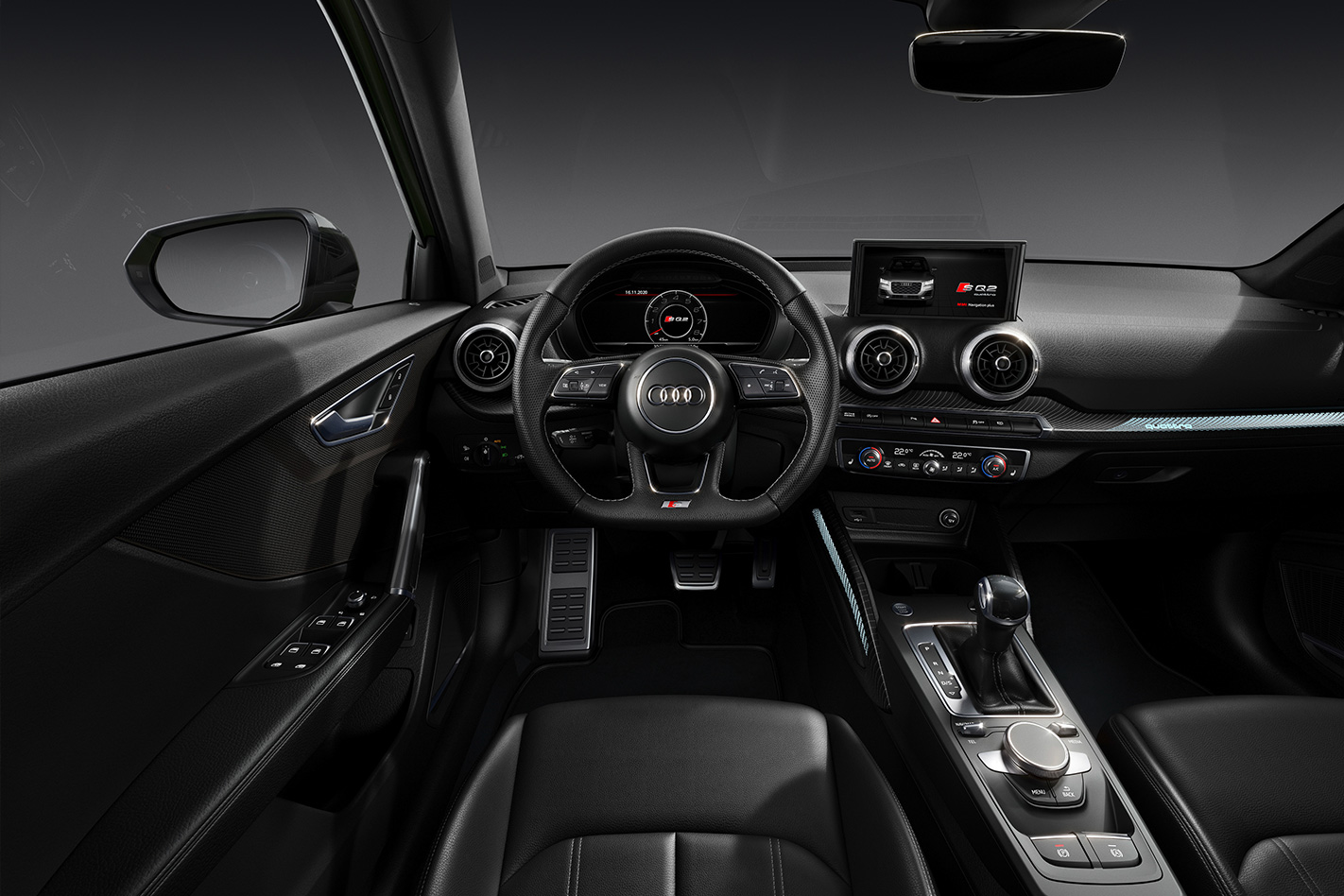
Inside, the front seats are swathed in Nappa leather with diamond pattern stitching, S embossing and contrasting seat colours, S sport leather steering wheel, and various bespoke elements.
Audi’s 12.3-inch virtual cockpit with S-specific display, a 705W Bang & Olufsen premium sound system, and a suite of advanced driver assist systems are included as standard.
The new Audi SQ2 will be available in nine different exterior colours and two interior colour combinations, and is expected to arrive in local showrooms in May.
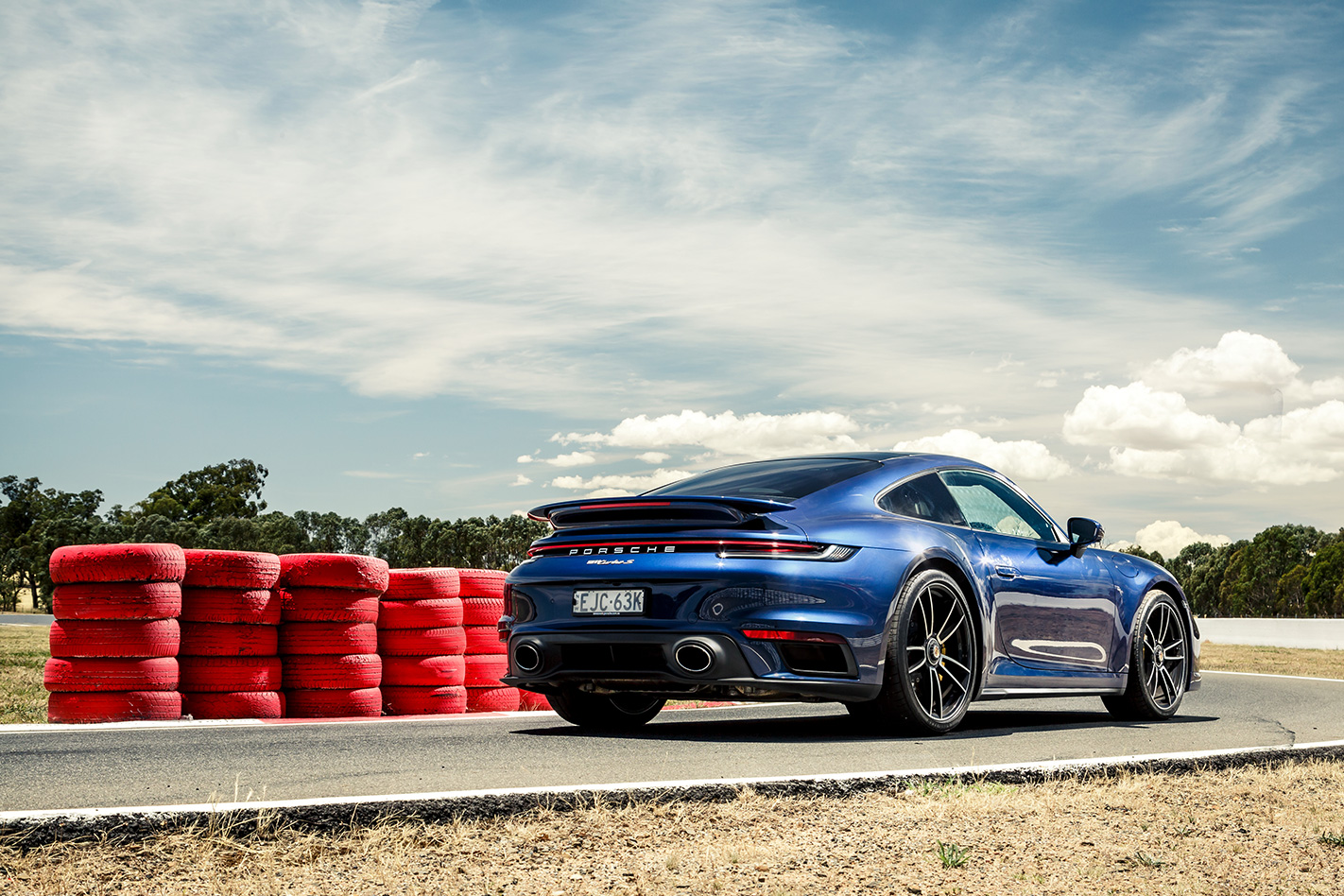
The 992-series Porsche 911 Turbo S is the fastest machine ever to grace PCOTY. And it’s not even close.
We’ve had some fast cars over the years – the Nismo GT-R, Ferrari 488 GTB, the previous PCOTY-winning 911 Turbo S – but the performance figures of Porsche’s latest rocket aren’t just in a different league, they’re in a different division.
For example, when we tested the 488 a few years back, it recorded 0-200km/h in 9.6sec; the Porsche completed the same journey in 8.46sec. Personally, I have never driven a car that accumulates speed like the Turbo. The eight-speed PDK, all-wheel drive and its inherent stability means there are no histrionics, it just seems to skip every second 10km/h increment – it is a licence loser extraordinaire. Nor is it without theatre.
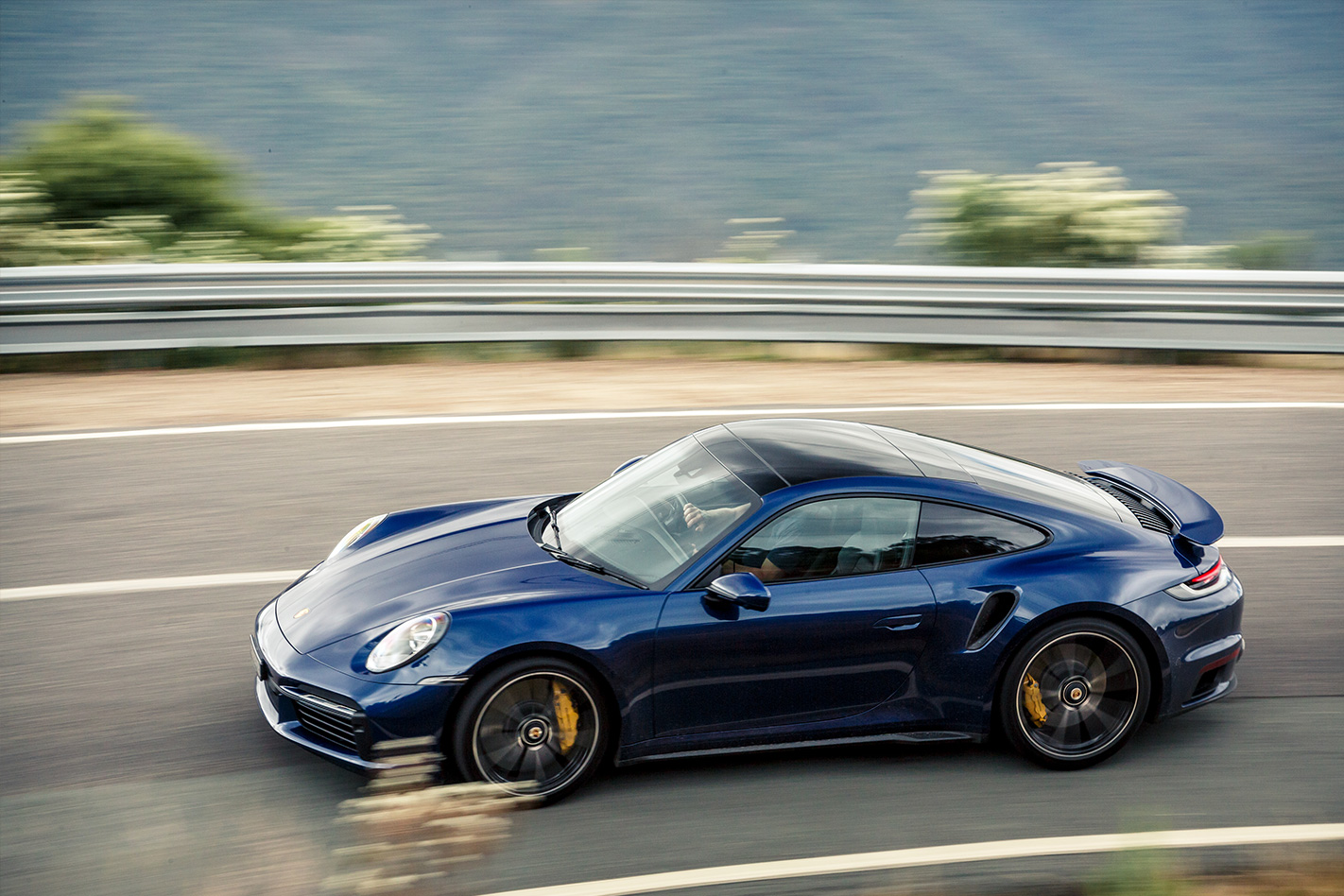
A heavily turbocharged flat-six is never going to win The Voice but it growls and exhales and pops. The power delivery is set up to deliver a massive wallop of mid-range torque that pins you to your seat. Yet it never feels unruly.
The all-wheel-drive system offers brilliant traction yet still entertains, somehow knowing exactly when you want to dial in some opposite lock – or, on a track, drive on the lock stops. It’ll happily step out on a trailed brake – a little or a lot, depending on your aggression – yet catching it is no great drama. More than one driver commented that they felt superhuman behind the wheel of the Turbo S; it’s the automotive equivalent of putting on Tony Stark’s Iron Man suit.
This excellence is the result of painstaking engineering, hours and hours spent refining steering response and brake feel to the point that they don’t require a second thought.
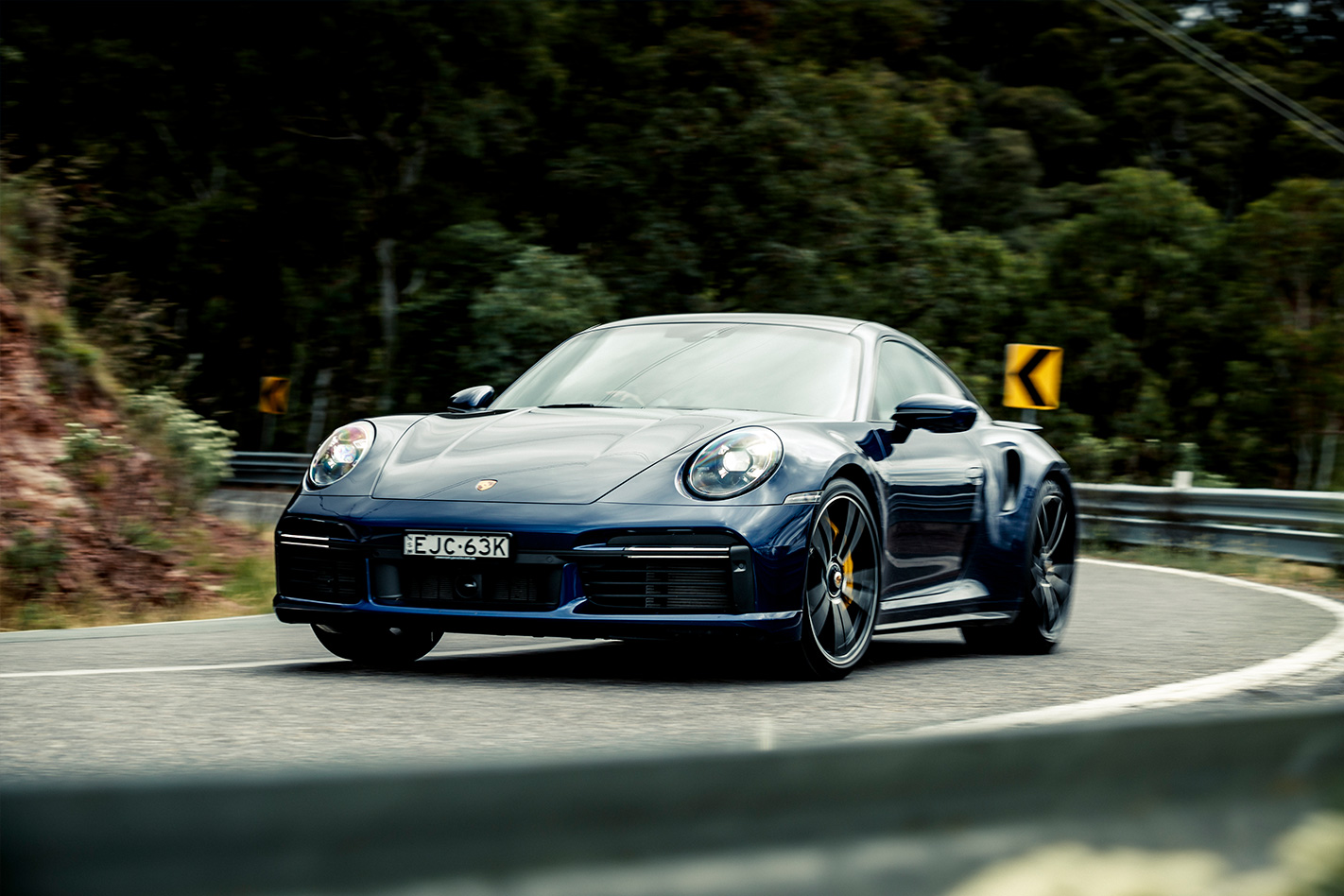
Then there’s the fact that this berserk performance comes in a car with heated and ventilated leather seats, a cracking stereo (helpful in drowning out road noise), a firm but compliant ride and all the latest connectivity via the central infotainment screen. It feels beautifully built, too, and is completely undemanding to drive in daily circumstances, even compared to the affable R8 V10 Performance.
Given this uncontrollable gushing, why does the Turbo S sit on the second step of the podium rather than the first? Essentially it comes down to value. On the one hand, if you want a faster all-weather missile than this you’ll need to stump up around a million dollars for a Ferrari SF90 Stradale, or maybe $5m for a Bugatti Chiron.
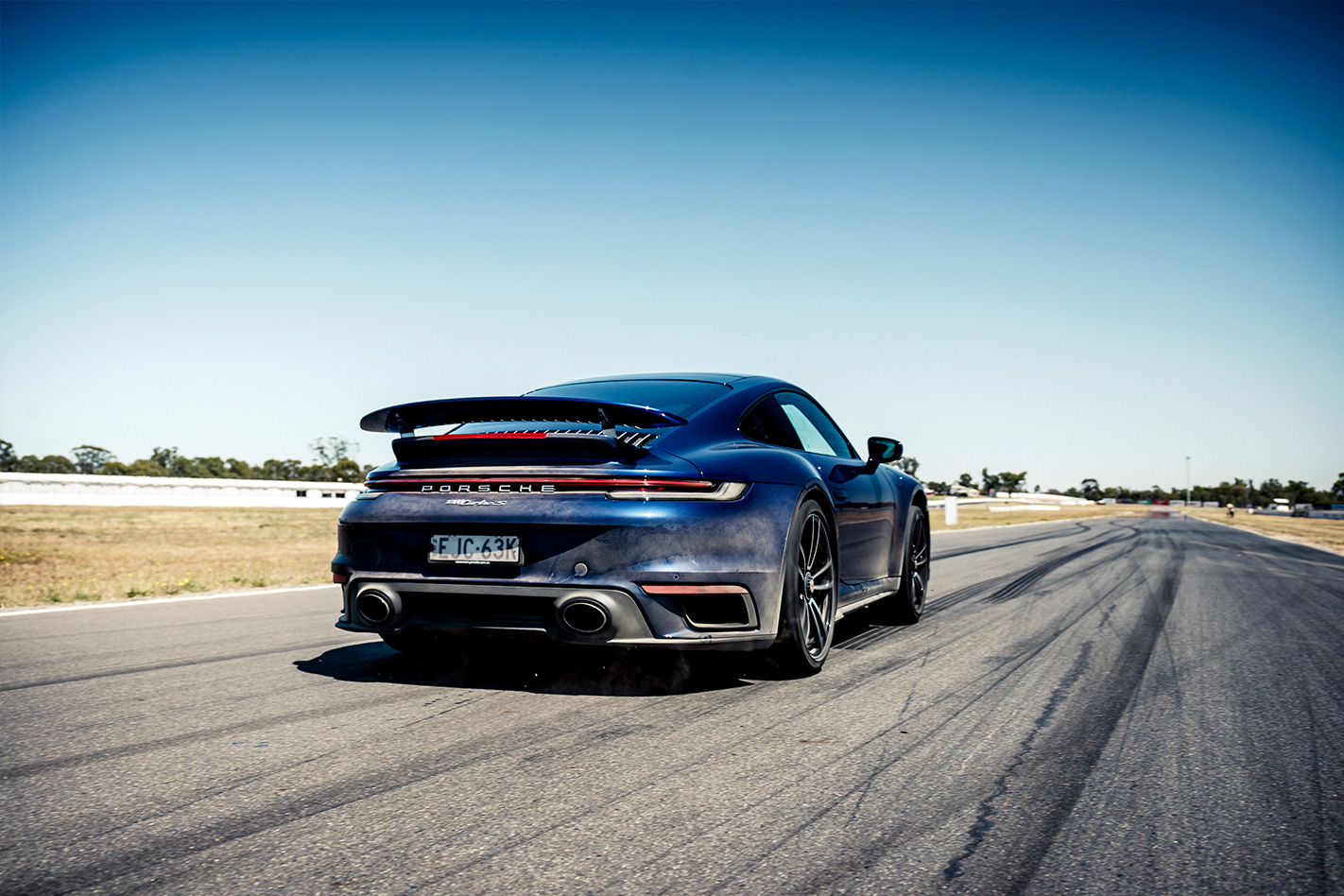
On the other, however, the case for the latest Turbo S is undone by the excellence of more basic 911 models. There is a degree of irrelevance to that comment; 911 Turbo buyers want a 911 Turbo and they won’t be in the least bit disappointed this time around. However, when it came to assess the Turbo S at the end of PCOTY week, while in awe of its ability, the question remained: at any point on road or track would I have enjoyed the (almost $200,000 cheaper) Carrera 4S any less? The answer is no.
In fact, in some instances, less is more. The sledgehammer torque hit of the Turbo is almost unnerving in its violence, but the linear escalation of the Carrera’s 3.0-litre twin-turbo unit is a more pleasant experience. Apart from its loaded equipment levels, there is also nothing to separate the Turbo S’s interior from its cheaper siblings.
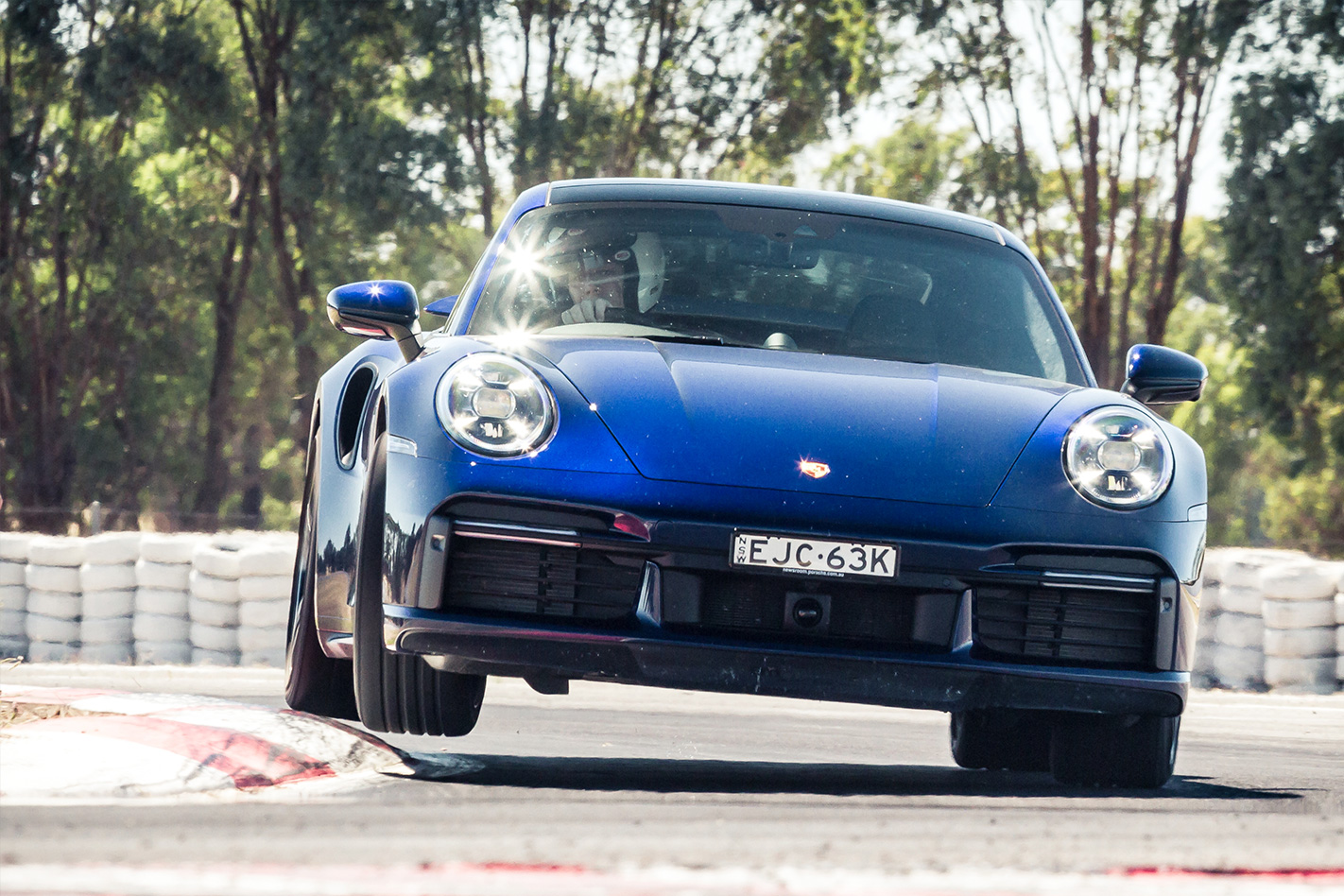
While that means there’s absolute nothing wrong with its cabin, for almost half-a-million dollars should there be a little more differentiation? Of course, these have been questions asked of 911 Turbos for the past few decades, but it’s always been able to answer them with outrageously superior performance.
This remains the case, but when a Carrera 4S is capable of 0-100km/h in 3.4sec and an 11.4sec quarter mile, there is an element of diminishing returns at play. PCOTY isn’t necessarily the place for philosophical arguments, but this desire for more power and more performance has also resulted in a 911 Turbo that’s now a fairly large car, weighs 1640kg before fuel and occupants and has a terrifying thirst when driven hard.
None of this should take away from the brilliance of the latest Turbo S. It’s an almost peerless engineering achievement and phenomenal to drive in all circumstances, but when you’re asking stratospheric money there should be an easy justification for that price tag. Our winner – the Mercedes-AMG GT R Pro – offers that, the Turbo S does not. – SN
WATTS THE GO?
Would the 992 Turbo S have still carried off the acceleration crown at PCOTY ‘21 had Porsche been able to supply a Taycan Turbo S in time? It certainly sparks an interesting debate. Porsche claims 2.7s for the 911 to 100km/h and 2.8s for the top Taycan.
We comfortably beat the factory claim in the 911 and MotorTrend have timed a Taycan Turbo S to 60mph (97km/h) in 2.4s: that’s less than eight car lengths. Sounds like a drag race waiting to happen…
THE NUMBERS
0-100km/h: 2.58 sec 0-400km/h: 10.28 sec @ 217.32km/h Lap Time: 1:30.1
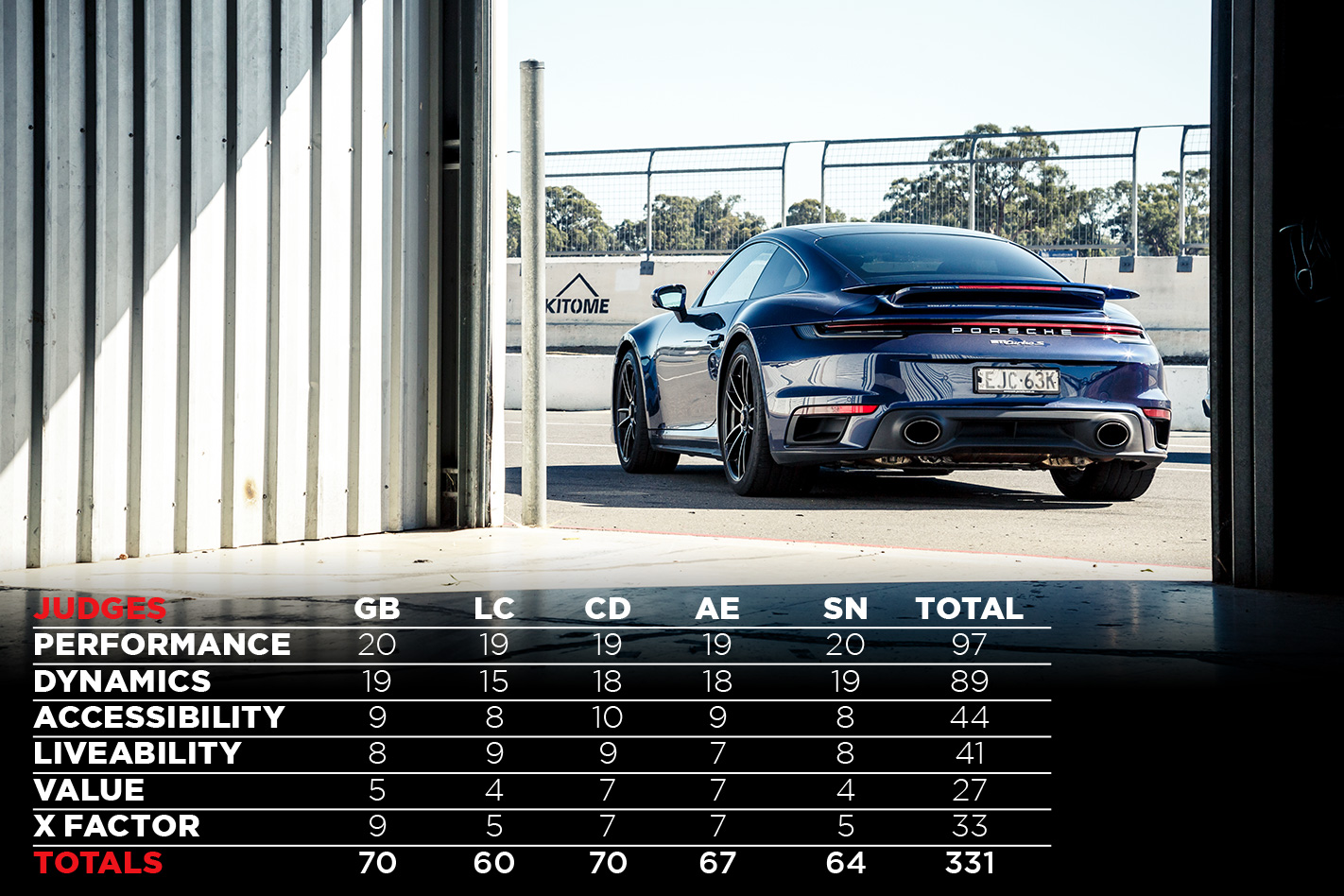
JUDGE’S RANK
Butler 2ND The most expensive car here, but the rush is worth every penny
Cordony 2ND Insert acclamation here. So. Bloody. Fast. A bit short on theatre, though
Dupriez 2ND As the fat luxo 911, the Turbo S’s dynamic competency and driving purity never fails to surprise. Oh so very close…
Enright 3RD Sledgehammer punch aside, is there a whole lot here that the more tactile 992 Carrera can’t offer for half the price?
Newman =4th A stunning engineering achievement, but a Carrera is a more enjoyable drive
Assumptions are fraught with danger. When presented with a one-or-the-other choice, often the option you think is a no-brainer could, in fact, garner the complete opposite response from someone else.
Hence when the updated fourth generation Hyundai Santa Fe launched at the tail end of 2020 sans V6 petrol power, it didn’t present as an issue for some. That’s because, in terms of frugality and driveability at least, the 2.2-litre four-cylinder turbo diesel is the better choice.
However, after conversations with punters looking to buy in this segment, momentum started to build a case against the torque-laden oiler and for the 3.5-litre V6.
And that’s not conducive to a long stint in the country, something the DPF needs regularly to cleanse. Monetary concerns also come into play, with the R Series diesel costing more to initially purchase and service.
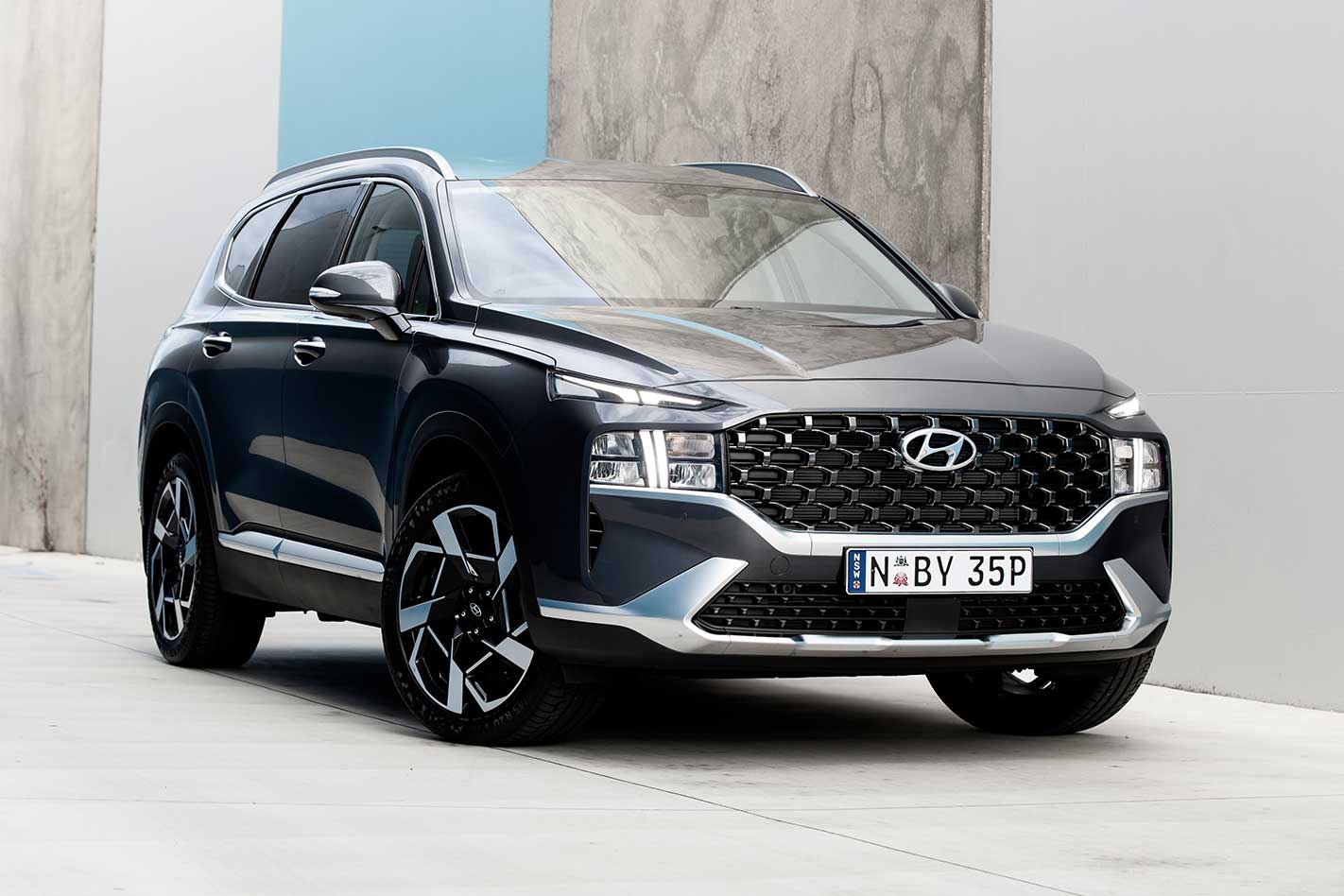
The Santa Fe range comprises four grades including a base model ($44,700), Active ($48,300), Elite tested here ($54,300) and Highlander ($61,000) for the front-wheel drive petrol V6.
The V6 will also accept cheaper 91RON fuel and, at $399 per service for the first five years (12month/15,000km intervals), its $60 less expensive each time you visit your local Hyundai dealer. The brand’s five-year, unlimited-kilometre warranty also applies.
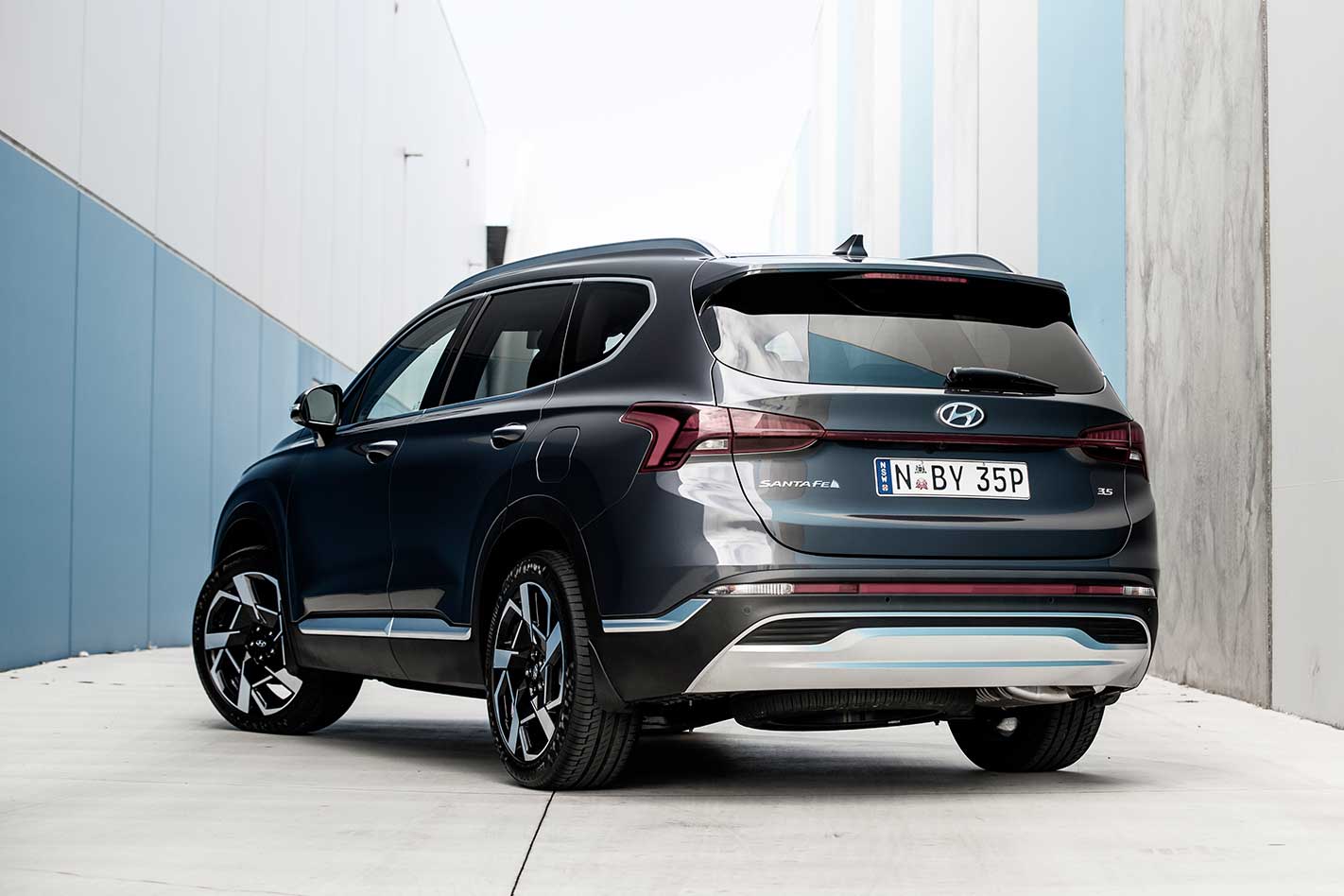
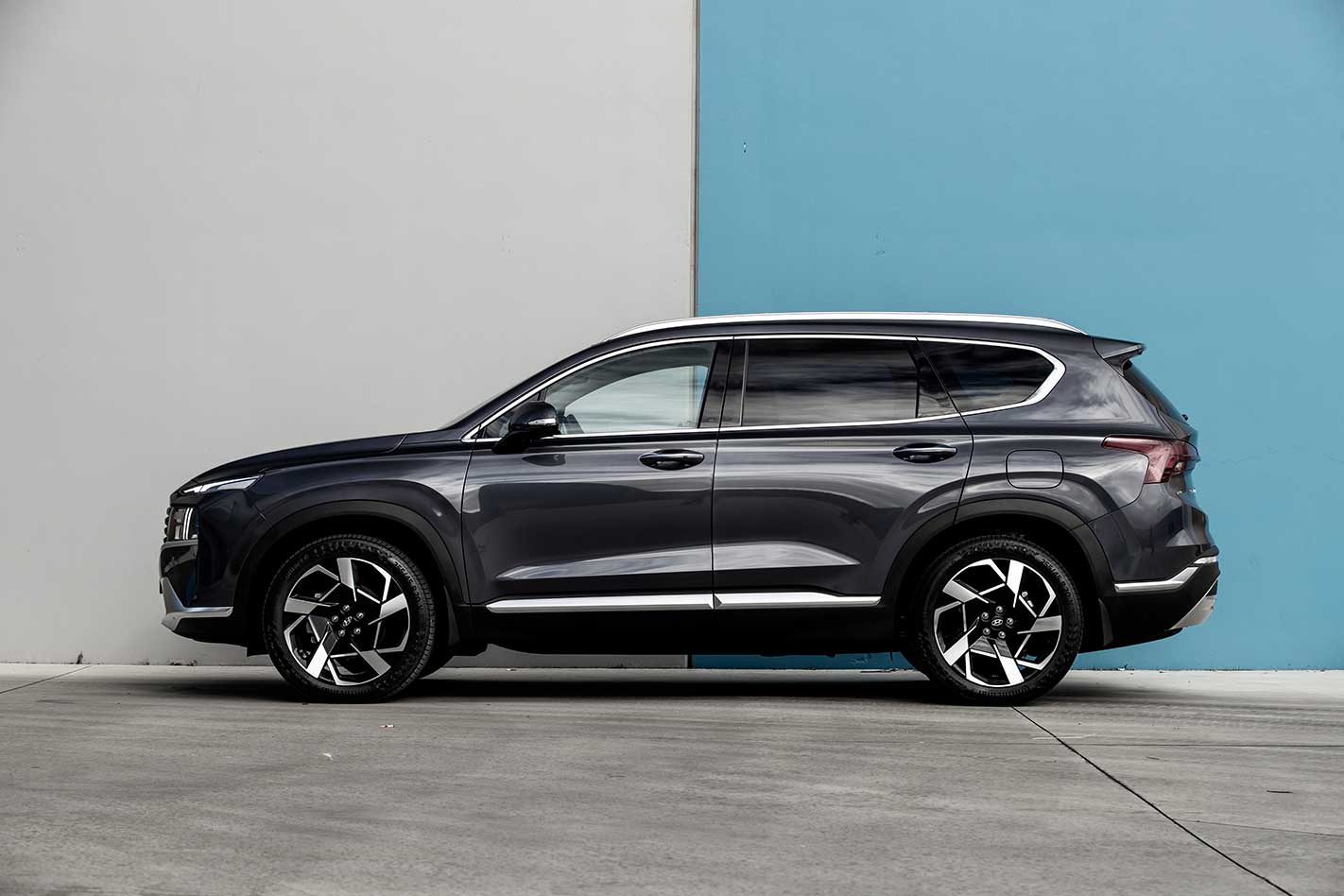
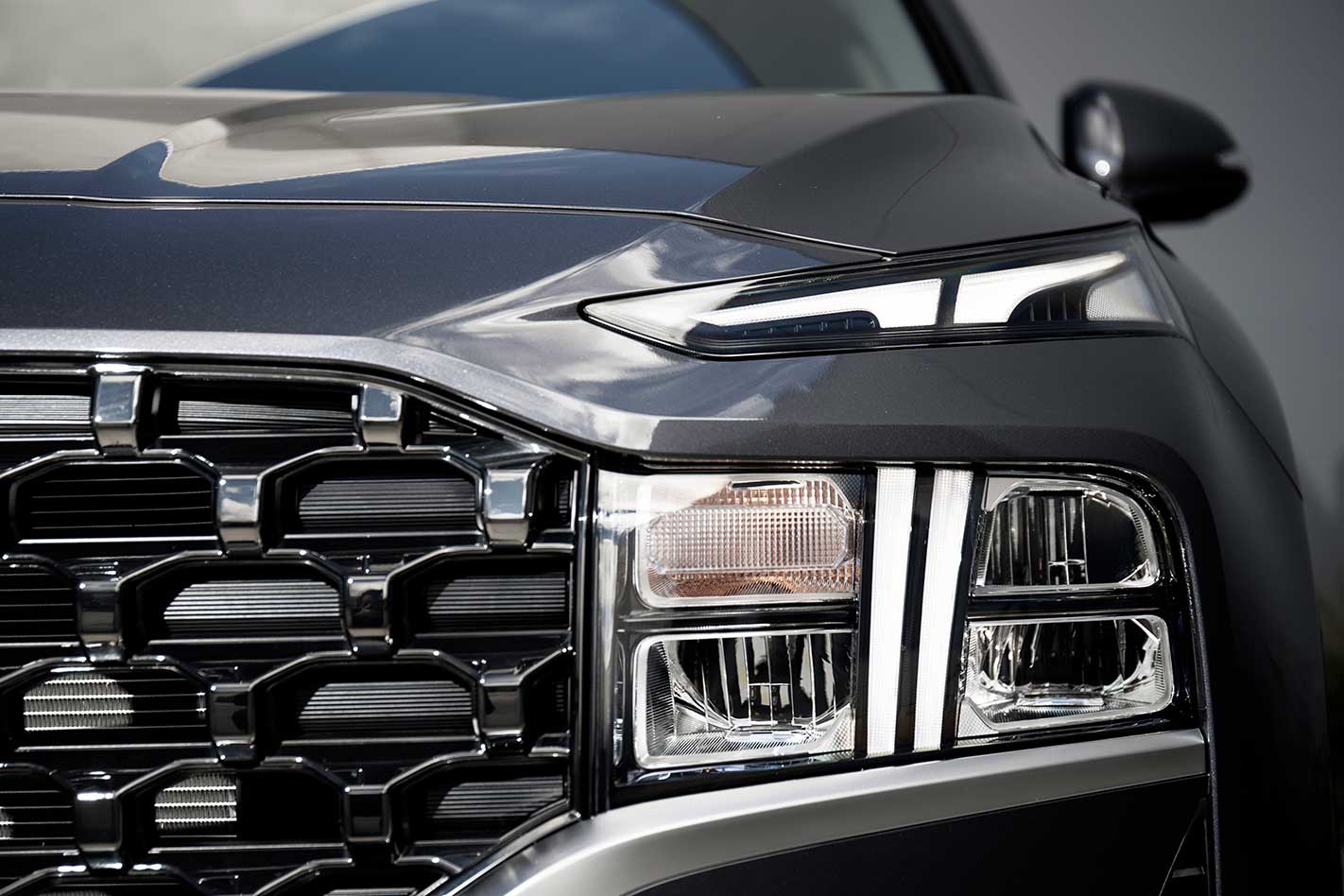
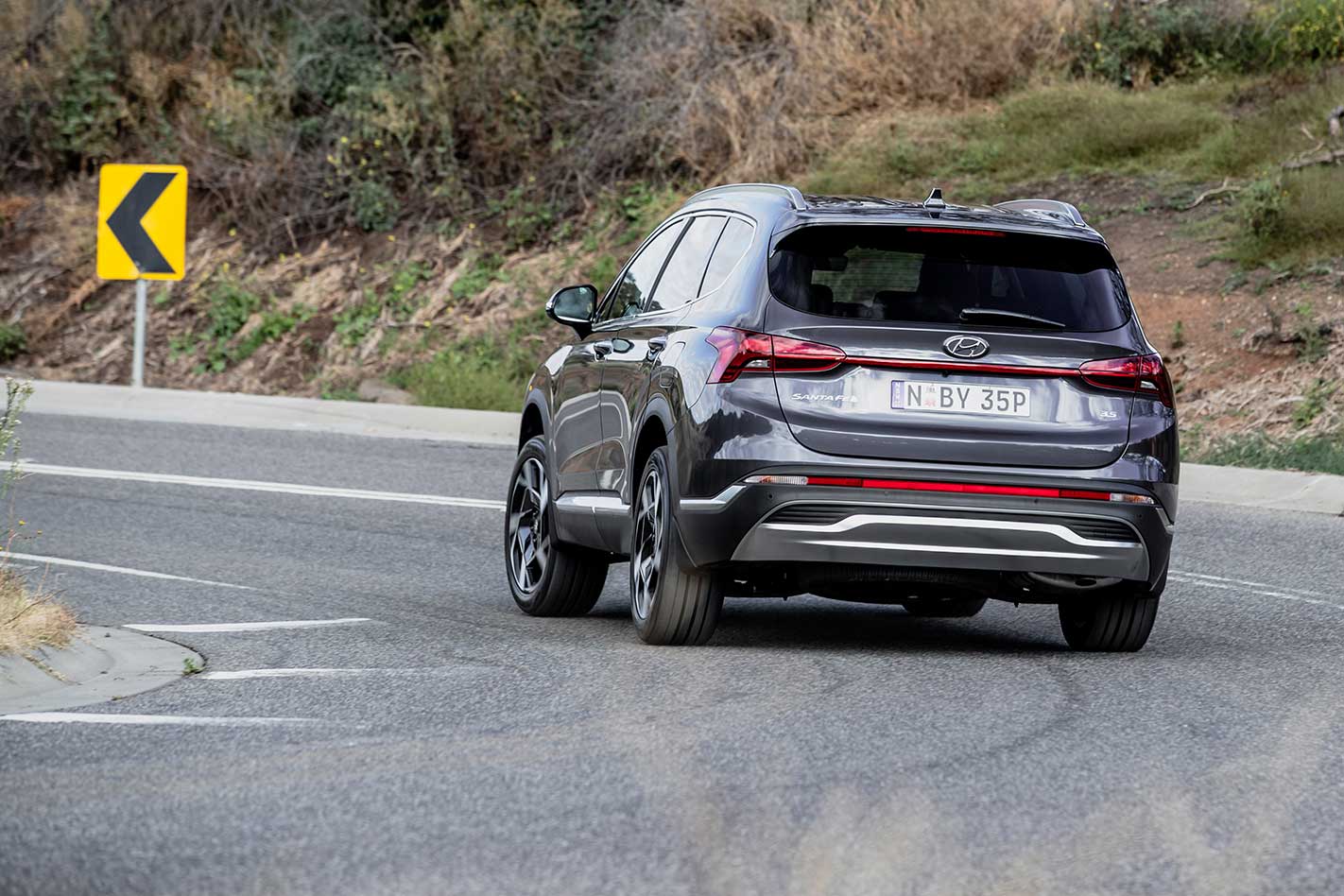
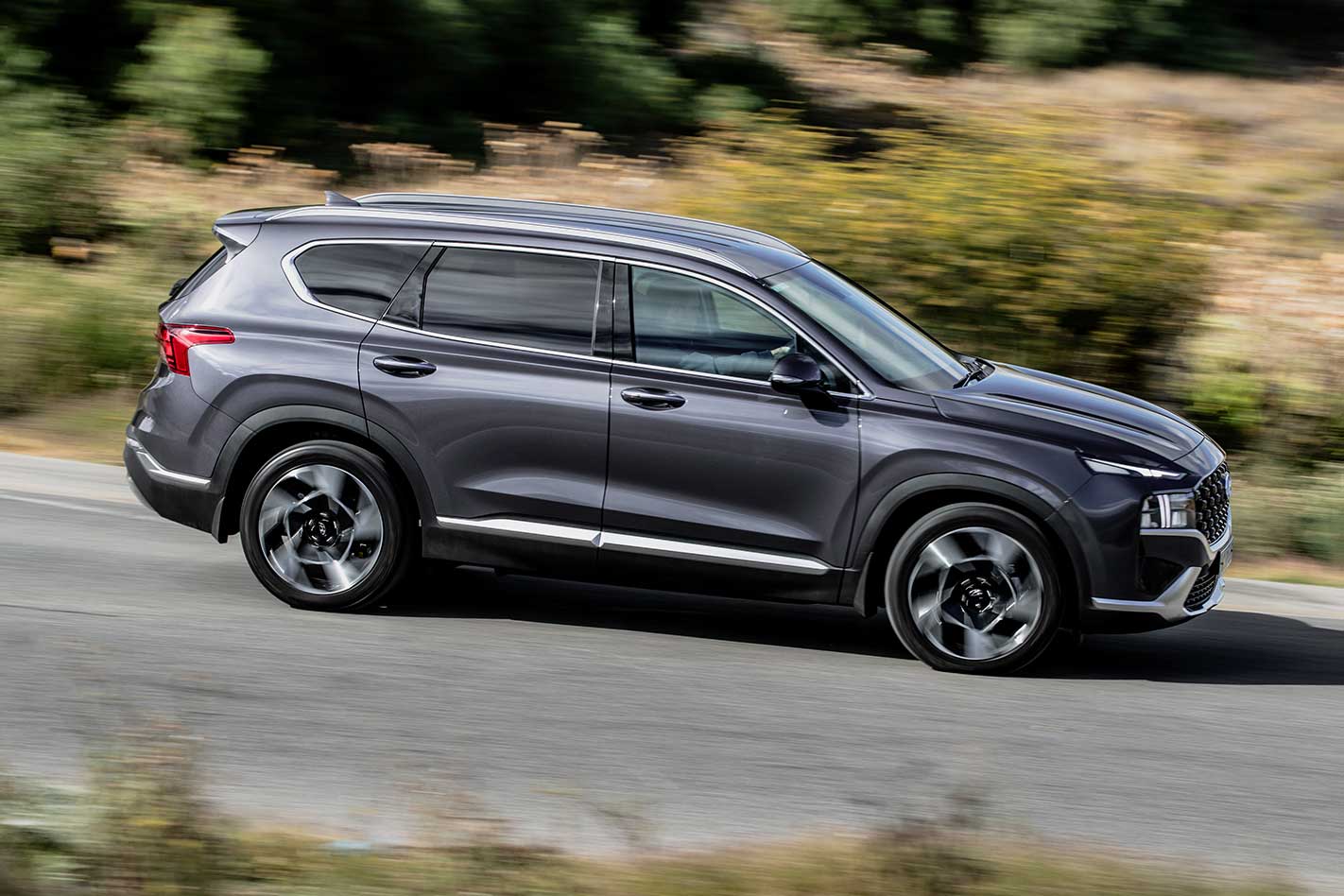
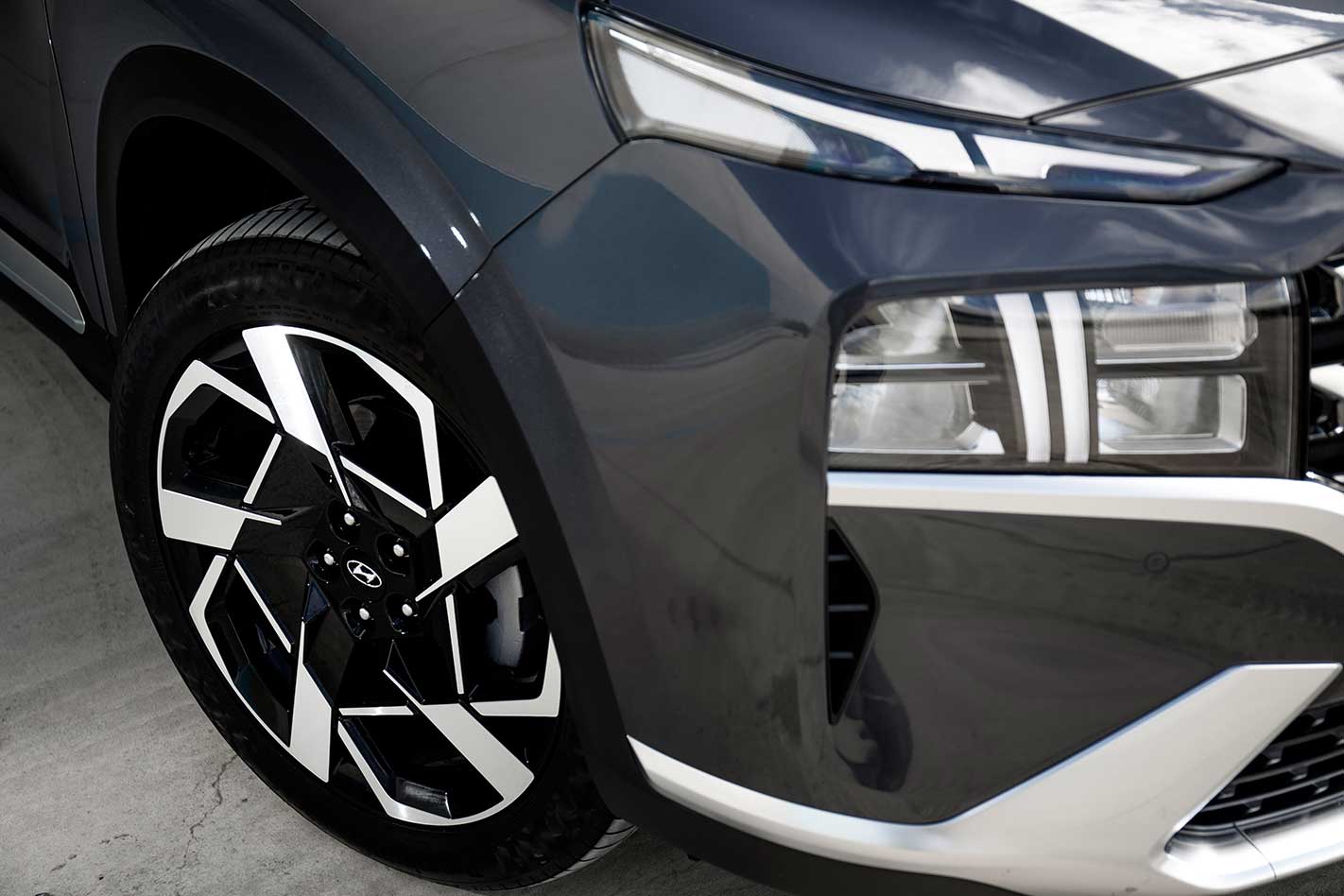
A rather nondescript design has been revamped with striking details, big wheels and a cascading grille flanked by stacked headlights. At the back, an in vogue tail-light bar connects LED brake lights.
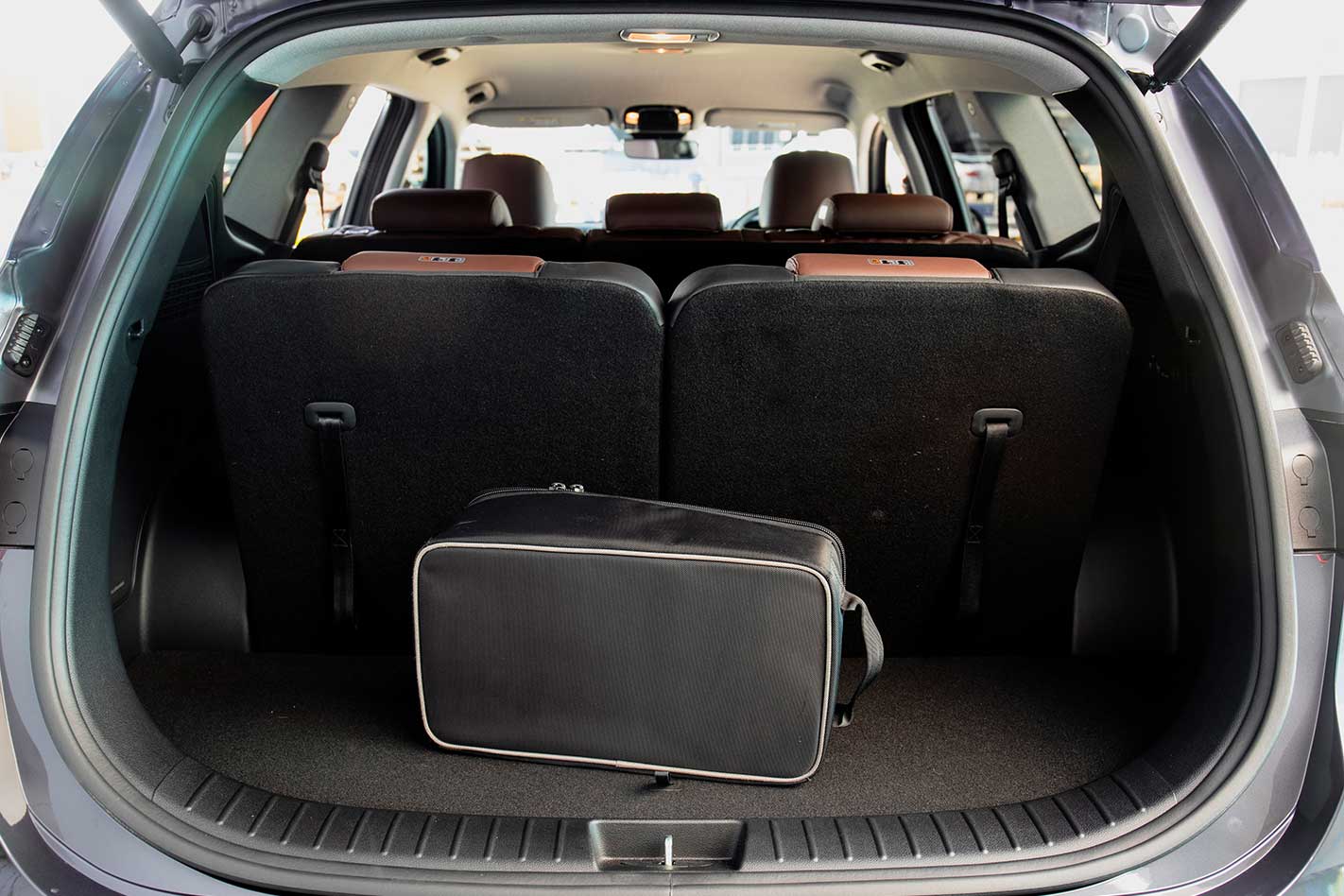
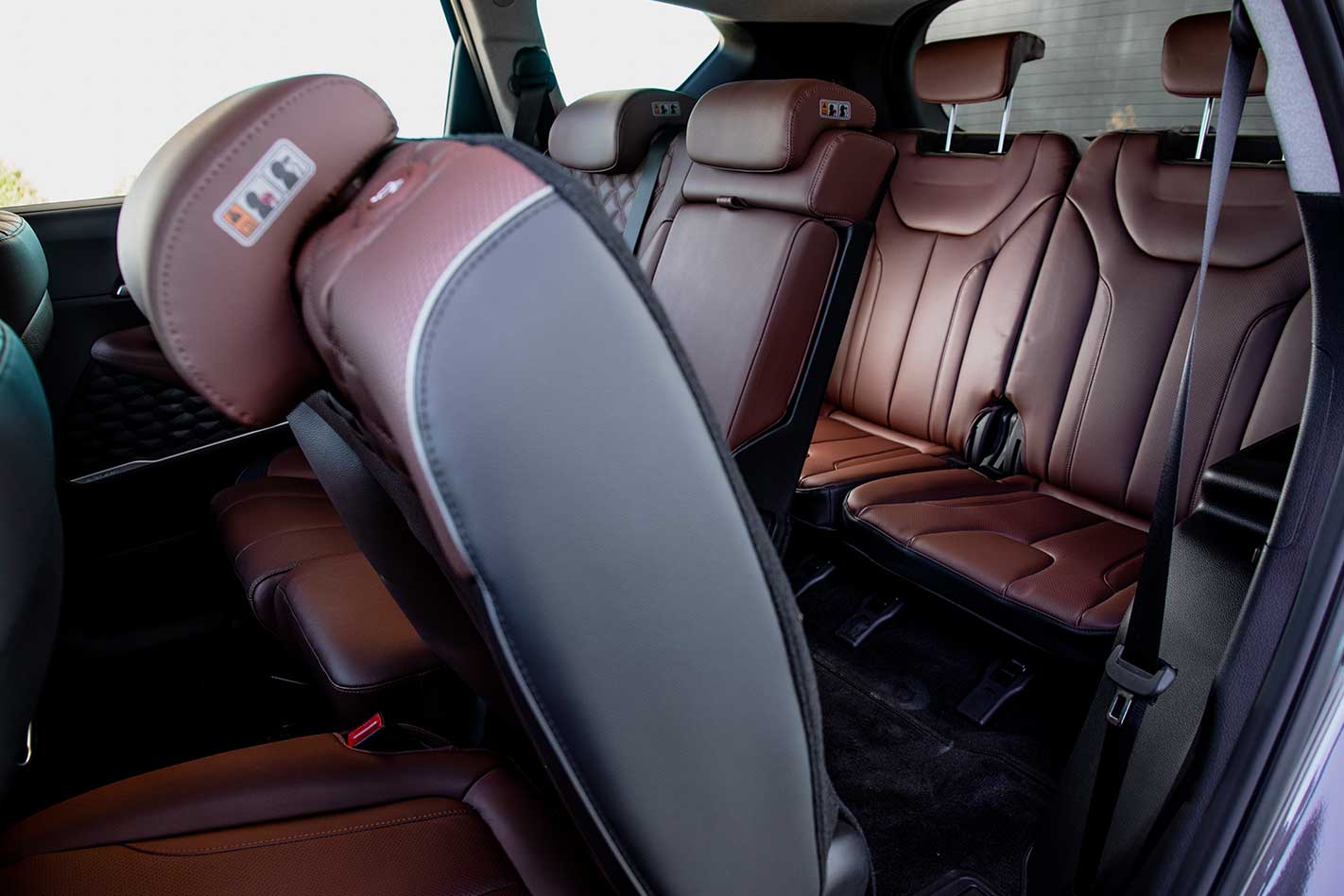
Sounds like music to the ears of family buyers, then, with ample room for heads, shoulders, knees and toes. The sliding middle row gains 39mm of legroom (the backrest can also recline), while both the middle and third rows fold for a flat load area.
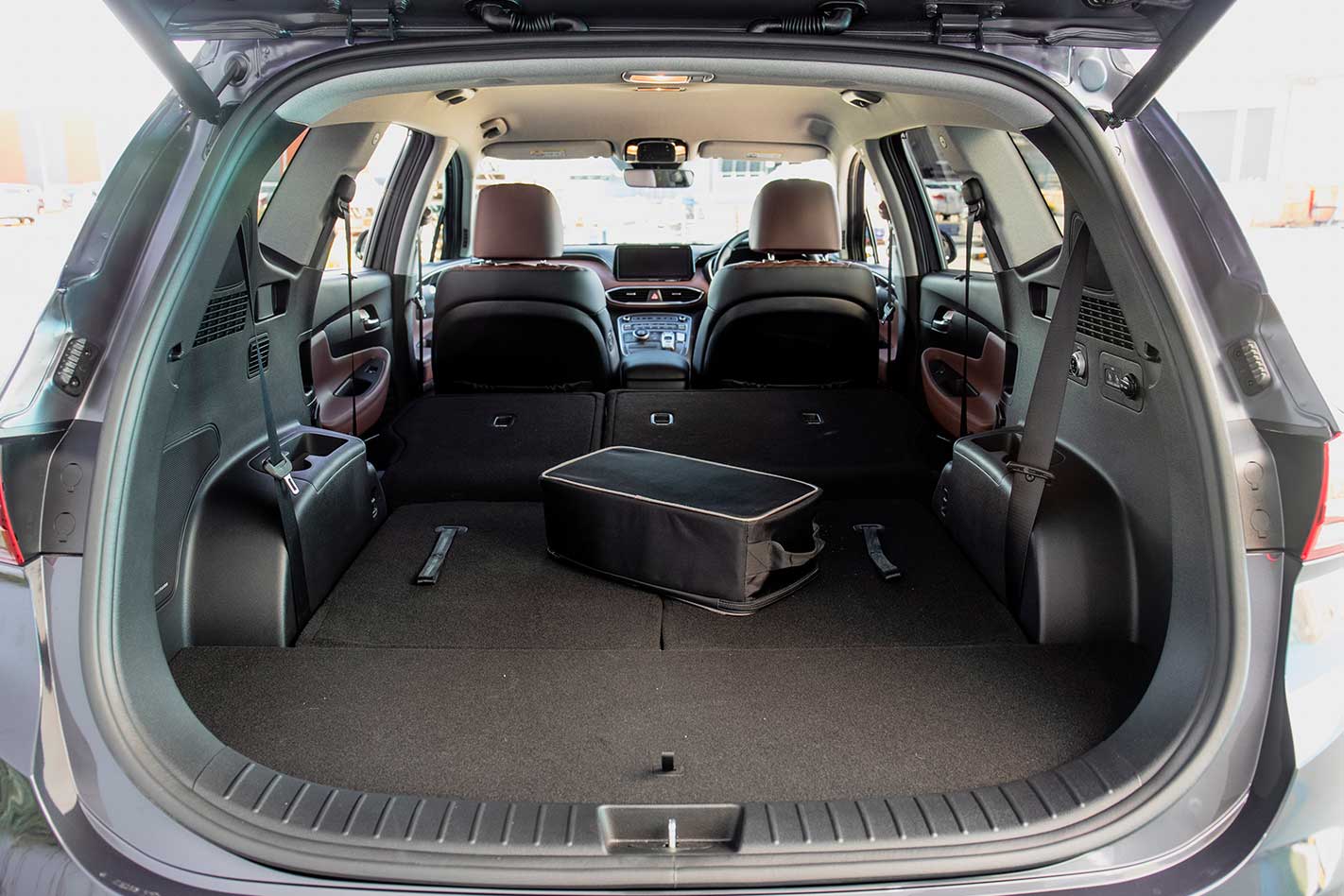
A commodious 1649 litres is available with all but the driver and front passenger’s seat stowed. There’s a provision for the cargo cover beneath the boot floor, while the full-size alloy spare wheel is located under the chassis.
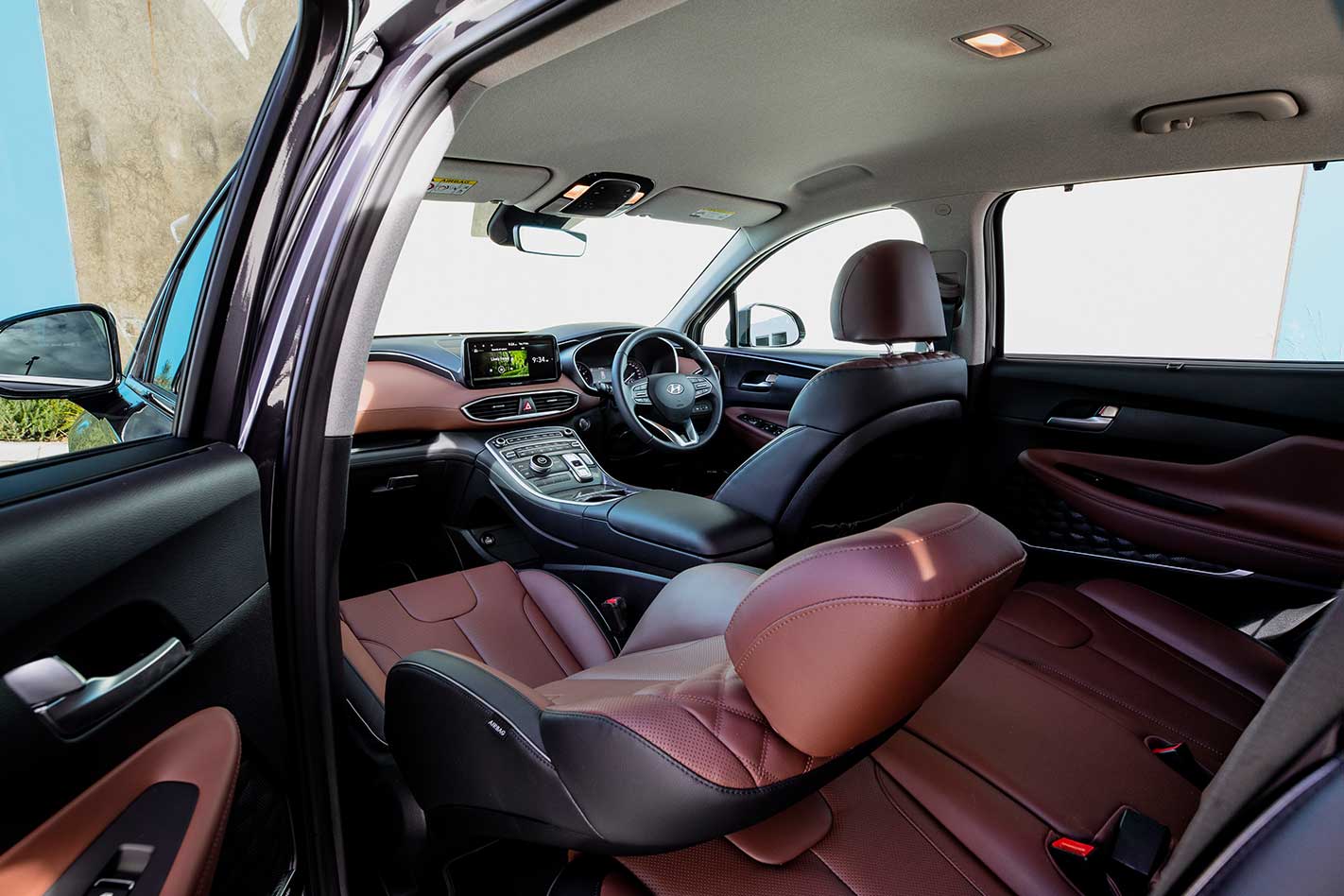
Fit and finish also feels solid and the Cognac Brown leather adds visual appeal to our test car. General ergonomics are well thought out and NVH levels are reasonably low in the insulated cabin.
However, if you don’t want to wake the kiddies in the back, Quiet mode cancels the rear speakers and limits the speaker volume up front to allow passengers some sleep.
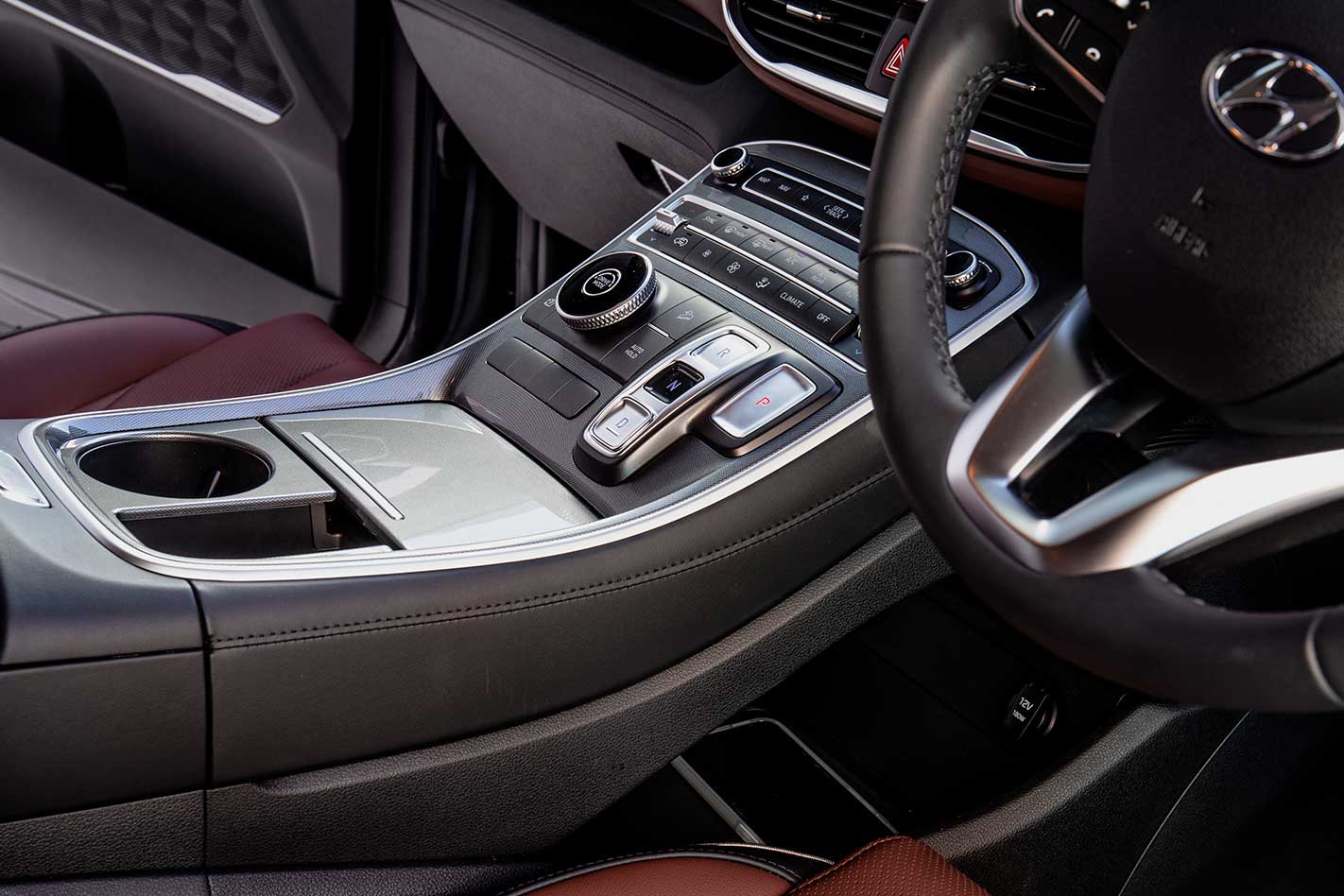
Given how infrequently the selector will be used, especially without much off-road capability, it strikes out as an odd decision.
There are also four blanked-out buttons which are used for the seat heating/cooling controls, but they’re only fitted to the Highlander – as is the cool ambient lighting with 64 different colours to choose from.
It’s an intuitive system with attractive graphics, while the screen quick to react to inputs. Only the Highlander gets the 12.3-inch LCD instrument cluster, which displays the Blind-Spot View Monitor technology and utilises virtual dials in an array of configurations.
The Elite also scores DAB+ digital radio as well as a Hardon Kardon audio system, which delivers high-quality sound.
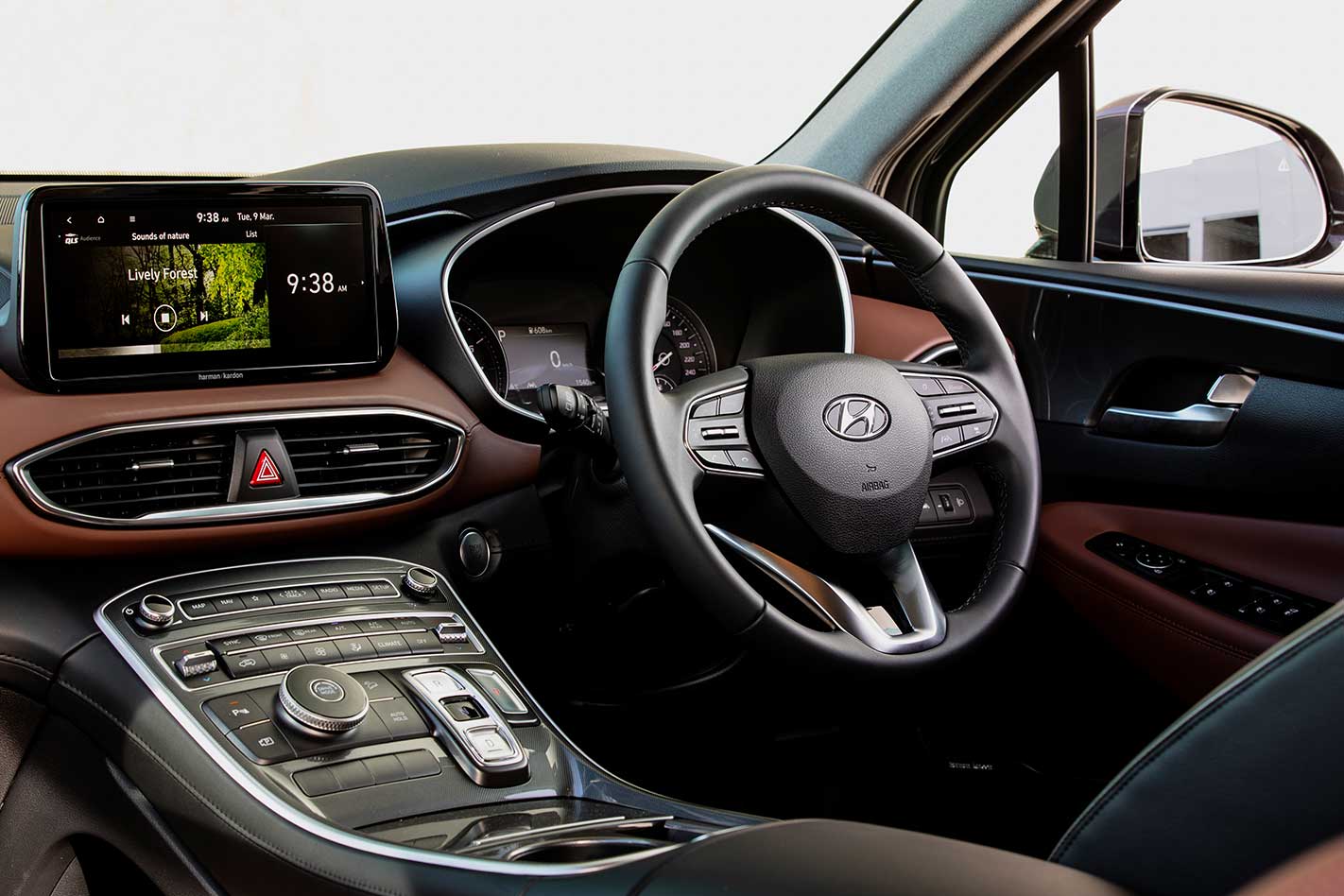
Rather annoyingly, while the smaller 8.0-inch screen offers wireless Apple CarPlay and Android Auto (like the updated i30 and Kona), the larger display fitted to the two range-topping variants does not – it’s wired. Wireless Qi smartphone charging is standard on all Santa Fes.
In terms of safety, the revised Santa Fe achieves a five-star ANCAP rating – which is carried over from the fourth generation.
Other safety features include active cruise control with Stop&Go function, Lane Following Assist and rear Cross-Traffic Collision Avoidance. Full curtain airbags stretch across all three rows.
While the pragmatic qualities of the Santa Fe feature no matter what engine you choose, it’s the updated Lambda II petrol V6 in the spotlight here.
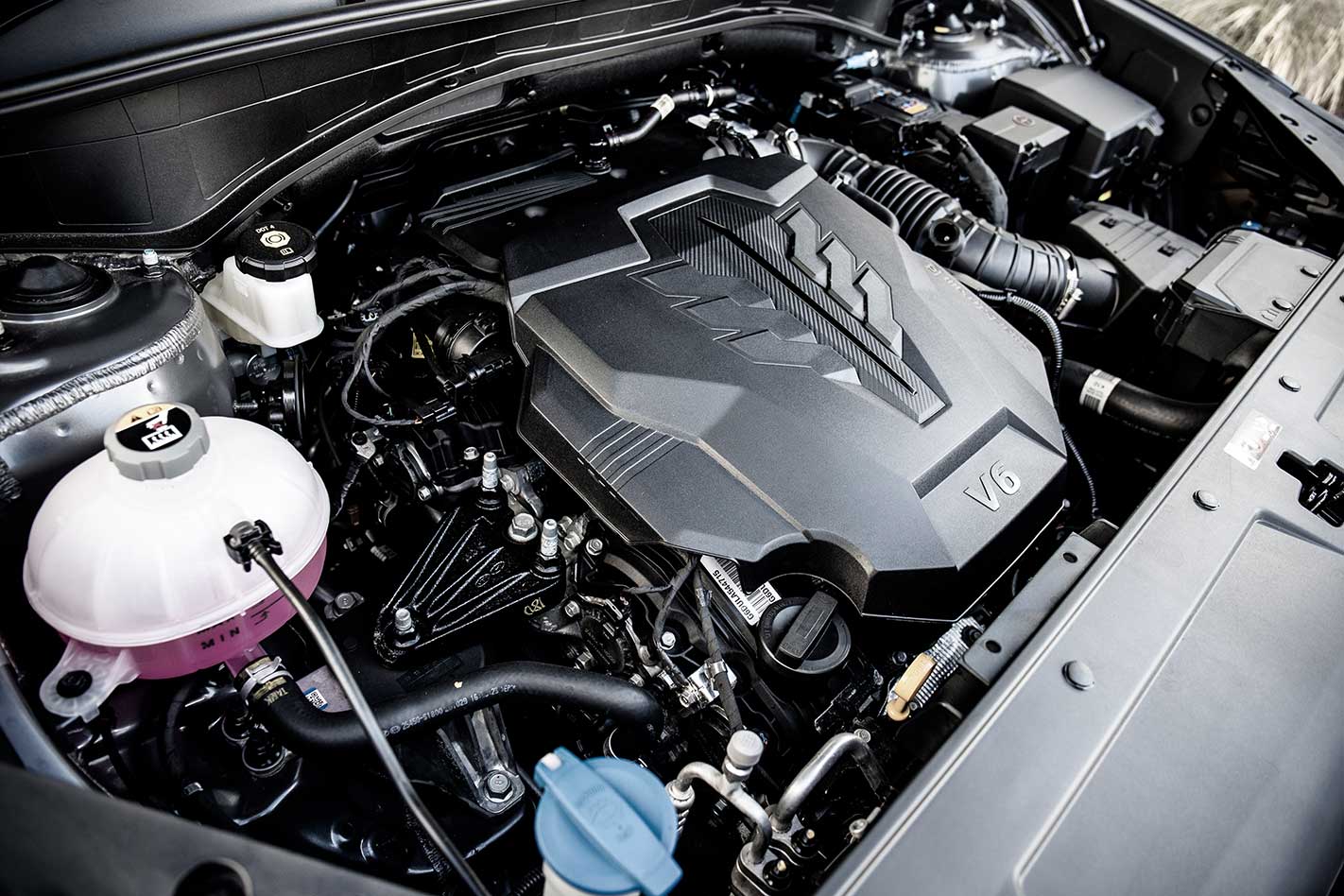
Its 200kW and 331Nm is sent to the front wheels alone via an in-house eight-speed torque-converter automatic (the diesel uses a new eight-speed dual-clutch gearbox).
On paper those figures would suggest spirited performance. However, both peak power and torque are developed high in the rev range, 6400 and 5000rpm respectively, meaning you need a strong prod of the accelerator to gain meaningful progress.
To this end, the diesel makes more sense for CBD driving in both raw figures and performance. While it might produce just 148kW, its 440Nm of torque is delivered in a meaty 1750-2750rpm mid-range and hauls the circa 1800kg mass effortlessly.
Dynamically the Santa Fe V6 Elite acquits itself well with confidence-inspiring handling, thanks largely to the impressive body control (for an SUV) as a result of the monocoque construction.
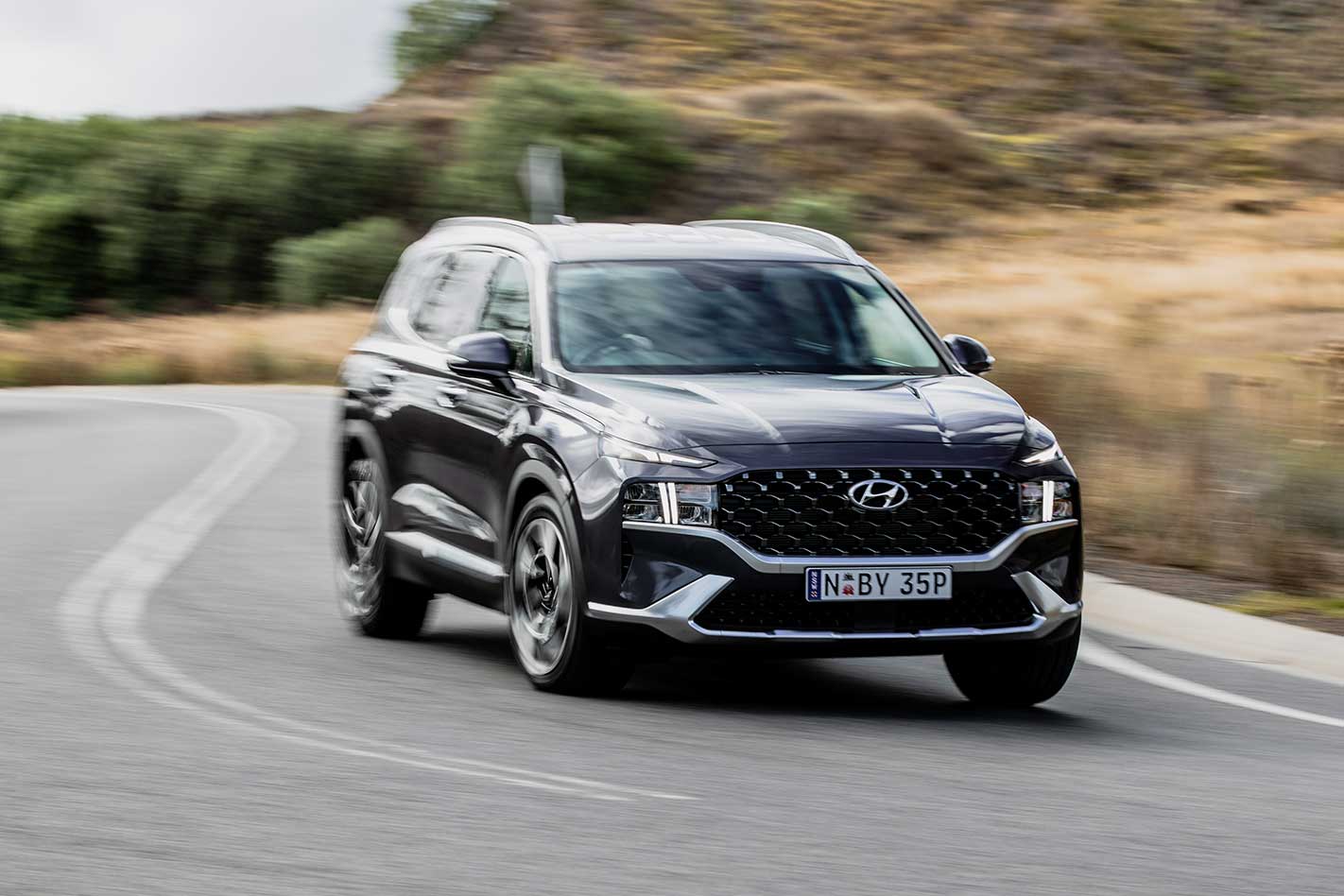
What doesn’t work is the front-wheel-drive layout as the V6 all too easily produces wheelspin off the line and falls foul to torque steer when throttle and lock is applied concurrently.
The new N3 platform, which is shared with the latest Kia Sorento, houses MacPherson struts up front and multi-link suspension at the back.
Paired with passive dampers, the setup delivers commendable control on rebound. The Elite V6 doesn’t bobble after mid-corner bumps and generally remains composed without much head toss despite the tall frame.
Both powertrains are endowed with a 2500kg towing capacity and a maximum of 200kg towball weight.
Ground clearance sits at 176mm, but without all-wheel drive or dedicated off-road modes, a smooth dirt track to camping grounds is about all the Santa Fe V6 Elite will be tasked with – especially given the design of the big wheels, which are wrapped in road-focused 255/45 rubber.
However, there is a third way. A hybrid powertrain is imminent (second half of this year) for the Santa Fe, with a 1.6-litre four-cylinder turbo petrol engine pairing with an electric motor and battery pack – the former powering the front axle and that latter the rear to effectively create all-wheel drive. Combined power and torque is expected to be around 169kW/350Nm.
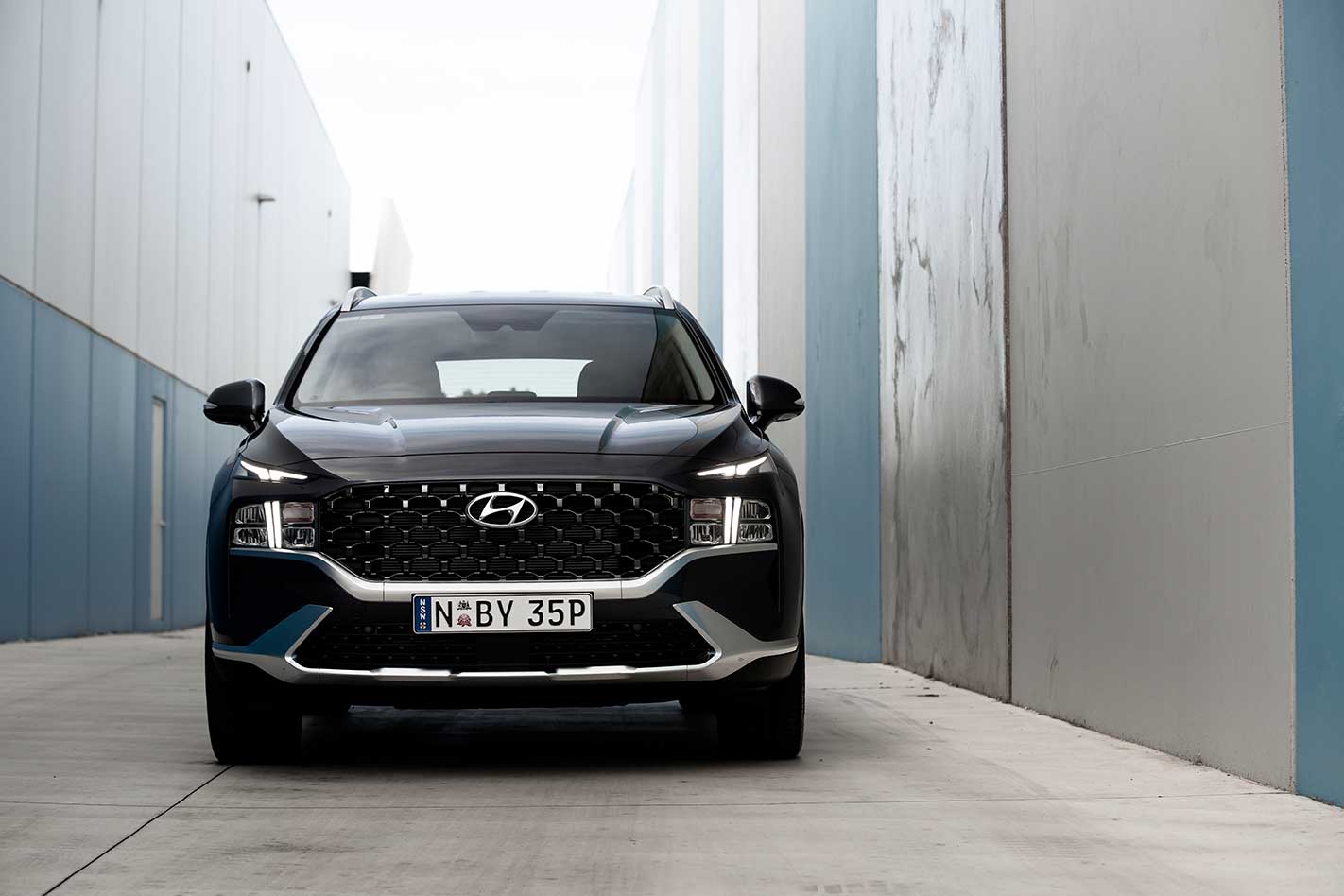
The Elite V6 occupies a happy middle-to-high ground within the lineup where you receive all the design/spec elements you want, paired with the cheaper bent six. It’s safe to assume that this seven-seat SUV should be on all shopping lists.
8/10
Pros: Premium look/feel; seven-seat functionality; standard equipment
Cons: Traction issues; V6 thirst; no wireless smartphone mirroring in Elite
Specifications
Body: 5-door, 7-seat SUV Drive: front-wheel Engine: 3470cc V6, DOHC, 24v Power: 200kW @ 6400rpm Torque: 331Nm @ 5000rpm Transmission: 8-speed automatic Weight: 1735kg Economy: 10.5L/100km (claimed) Price: $54,300 On sale: Now
The TL;DR version of why the Mercedes-AMG GT R Pro won Performance Car of the Year 2021? It aced the judging criteria. It set a lap record for a production car around Winton. It was the most involving car of the bunch. It rode better on road than any AMG GT model before. It was just more. More exciting, more effective, more charismatic than any of us expected.
In many regards, the GT R Pro was the yang to the yin of the Porsche 911 Turbo S, the car that so many expected to dominate this year’s PCOTY. Where the Porsche was blisteringly rapid in a straight line, it never came close to the AMG’s depth of engineering on track. The 911 flagship has also matured into a car that’s so subtly low-key that there’s an argument to be made that last year’s PCOTY champ, the 911 Carrera S, offers a more tactile and compelling proposition for far less.
Yes, the 911 would be easier to live with on a daily basis than the blood and thunder GT R Pro, but the clever damping of the AMG product means that it can be set to a road going mode that’s probably even more cossetting than the Porsche and then clicked into maximum angry for those occasions when you’re going to leap some kerbs on a track day. And you’d only buy the GT R Pro if you were intent on doing this. Buying one and not taking it out on a circuit would be like buying a Toyota Camry Hybrid and not considering a career in the ride-hailing economy.
We’re not ducking the issue that with just 15 cars coming to Australia, the GT R Pro is exceptionally rare. Still, Mercedes-AMG registered 59 AMG GTs last year, so if the Pro can register a quarter of all AMG GT sales, that’s not an insignificant proportion. Performance Car of the Year has never been judged on sales figures. We prefer to let the car stand on its own merits.
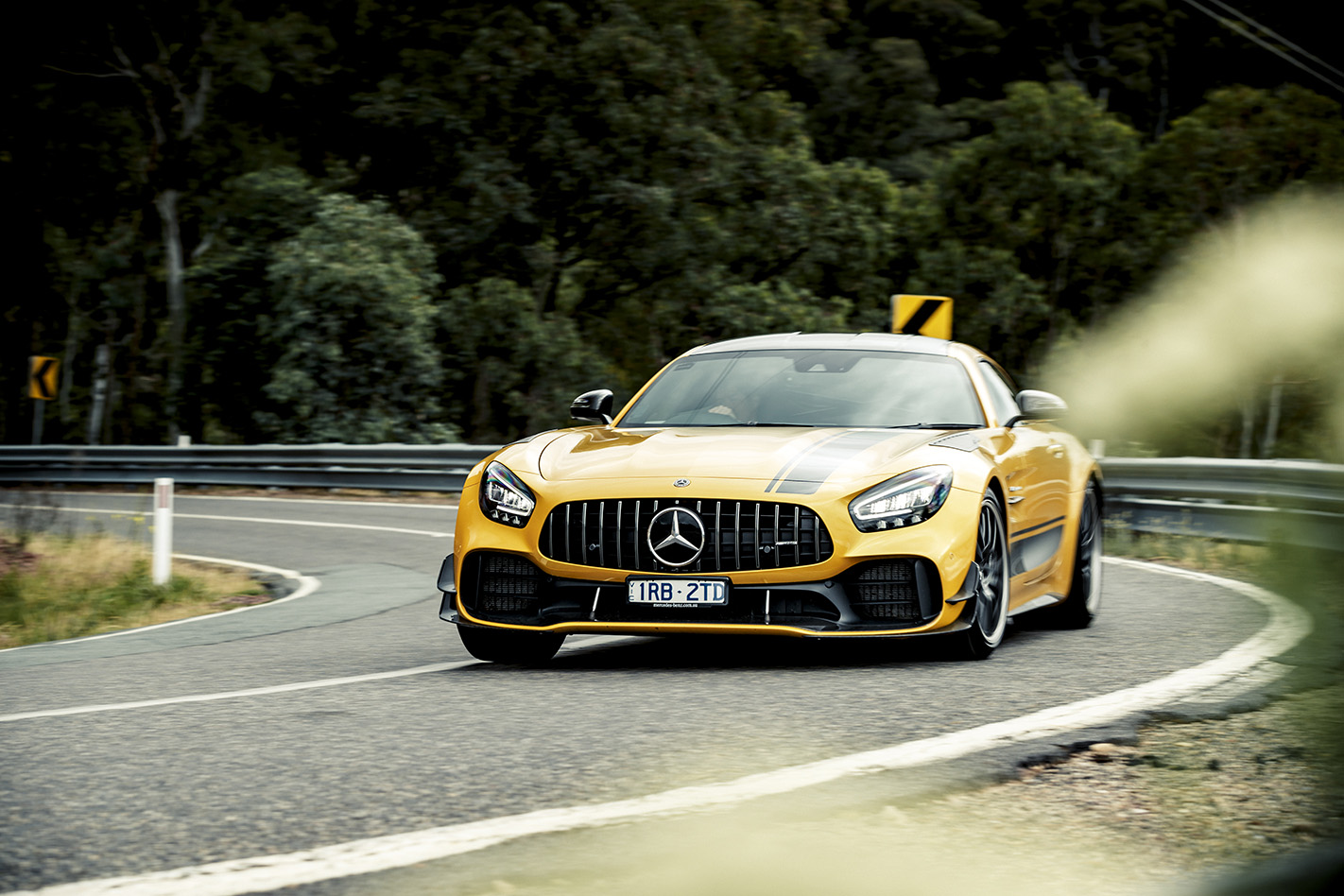
The GT R Pro does that in spades. At Winton it was a more serious proposition than any other vehicle and by quite a margin. The dampers, supplied by KW and fettled by AMG, allow you to tune both primary and secondary ride, while there’s a decent degree of anti-dive built into the suspension geometry without going so far as to create a bump-steering mess. The roll centre of the AMG GT models has been lowered compared to the previous SLS AMG, but this low roll centre and low roll moment is compensated for by quick steering to prevent the normally dull-feeling front end of such a setup.
And it feels fantastic, on both road and track. Prior iterations of AMG GTs have been there or thereabouts, but the Pro is the secret sauce, finally unlocking the potential we knew was lurking within. The ballistic 430kW hot-in-vee V8, the barrel-chested cross-plane acoustics, the phenomenal body control, the fiendishly clever drive assist electronics and the aero that works harder as you do all combine to devastating effect. Compared to the AMG, the 911 Turbo felt soft, compromised and, dare we say, a little mainstream, phenomenal pace notwithstanding. In terms of charisma and theatre there was little comparison.
PCOTY was never just a two-horse race though. The AMG A45 S came top of at least one judge’s scorecard, and if you have a $100k budget and need something with an element of practicality, you’ll struggle to buy better. Likewise the Ford Fiesta ST won the hearts of everybody who drove it and scored solidly.
The Mercedes-AMG GT R Pro nailed each of the criteria it was judged against. Performance and Dynamics speak for themselves. On the Accessibility score – namely reward versus effort – it also scored highly. Liveability was also more than acceptable given its focus, interior quality and ride refinement. It had X-Factor in spades and in terms of its Value score it’s in much the same price bracket as a McLaren 600LT or a Porsche 911 GT3 RS, exemplars of excellence that we can’t take issue with in terms of market positioning. Yes, it is an expensive car, but expensive cars have won PCOTY before and will do so again.
Above all else, the Mercedes-AMG GT R Pro is an excellent performance car. It’s one that ought to appeal to those who truly love the science of performance and yet for all its objective excellence, it’s also deeply imbued with soul. Looking down that long bonnet, hearing that keening twin-turbo V8 and feeling the steering shuck off its caster as it smears into another long slide are moments I know I’ll remember for a very long time. Performance Car of the Year celebrates special cars and in 2021, at the 25th running of the event, we found one to treasure. Chapeau, AMG.