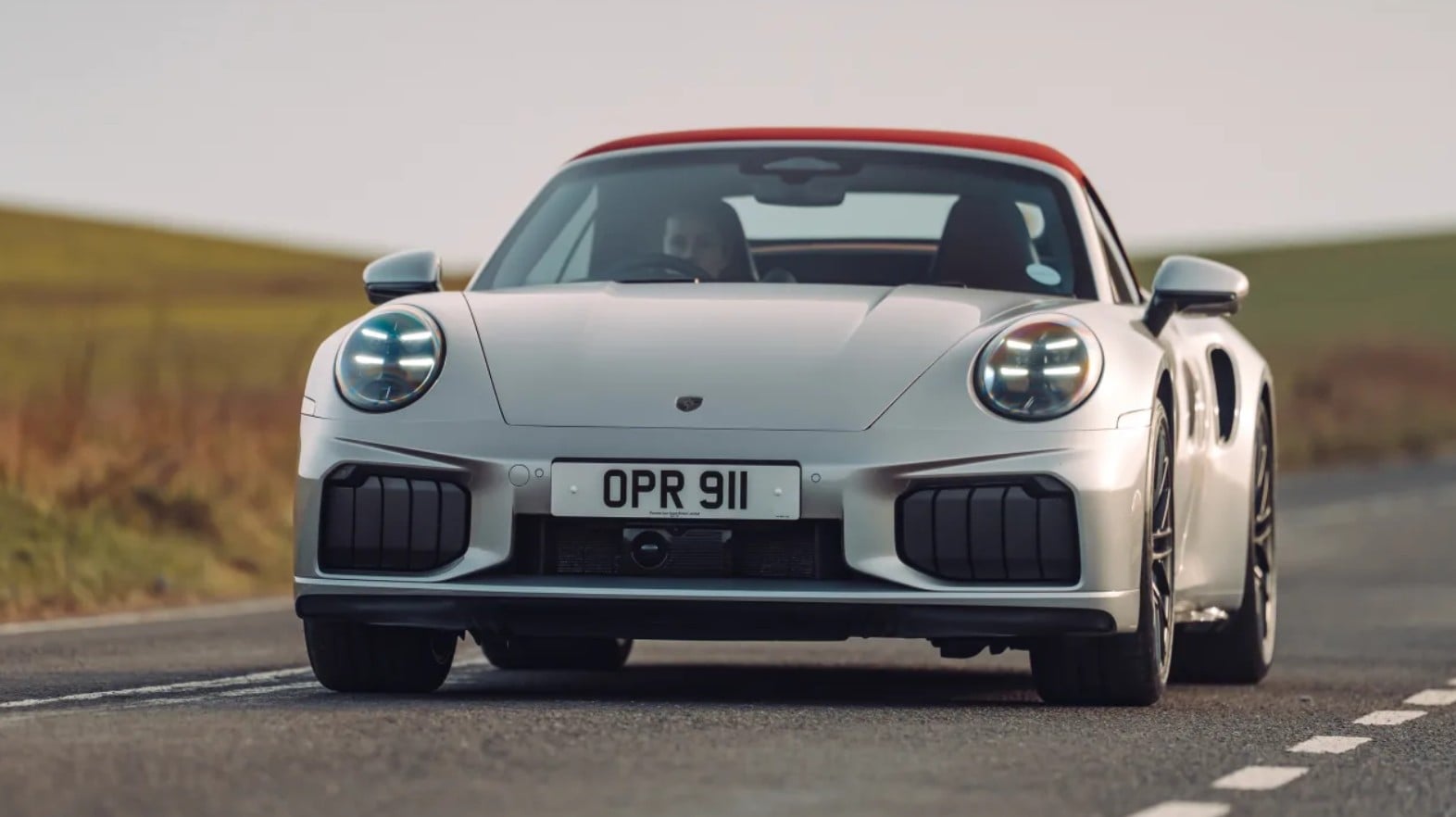
Porsche will cut almost 9000 jobs over the next decade as the German luxury car maker attempts to reduce costs amid falling global sales, a weakening Chinese market and slower-than-expected demand for electric vehicles.
The company has confirmed it will eliminate around 9000 positions by 2035 – equivalent to roughly one in five jobs – as part of a broader restructuring program agreed with employee representatives. The move follows months of negotiations between management and labour unions and comes as parent company Volkswagen undertakes sweeping cost-cutting measures across its brands. Reuters reported the agreement will rely on natural attrition, voluntary redundancies and early retirement schemes rather than compulsory job losses.
Porsche employed around 42,600 people at the end of 2024, meaning the planned reductions represent about 21 per cent of its global workforce.
The latest announcement includes a further 5000 job cuts, adding to 3900 positions already earmarked for removal in early 2025 and another 500 jobs linked to the closure of subsidiaries announced earlier this year.
The restructuring follows a difficult period for the Stuttgart-based manufacturer. Porsche’s sales have fallen sharply in China – once its most profitable market – as local buyers increasingly favour domestic premium brands such as Xiaomi, Yangwang and Nio. At the same time, demand for premium battery-electric vehicles has softened in several key markets, forcing Porsche to rethink the pace of its electrification strategy. Analysts have also pointed to growing pressure from Chinese manufacturers expanding into Europe with increasingly competitive electric vehicles.
According to Reuters, automotive analyst Daniel Schwarz from investment bank Metzler said the scale of the workforce reduction broadly matched Porsche’s decline in sales volumes and reflected expectations that the Chinese market was unlikely to recover to previous highs.
Despite the cuts, Porsche said it would invest €2.1 billion (around A$3.7 billion) in its Zuffenhausen production plant and Weissach research and development centre, while also guaranteeing the future of its German manufacturing sites until at least the end of 2035.
The announcement comes as Volkswagen Group chief executive Oliver Blume, who previously held the top job at Porsche, pushes for deeper reforms across Europe’s largest carmaker. According to reports, Volkswagen is seeking to double planned job reductions across the group to around 100,000 positions, while warning several German factories –including an Audi plant – could face closure after 2030 if competitiveness does not improve.
Porsche’s restructuring mirrors a broader trend across the European automotive industry, with Mercedes-Benz, BMW and Volkswagen all seeking to reduce costs as they contend with slowing EV demand, increased competition from Chinese manufacturers and the impact of tariffs in key export markets.
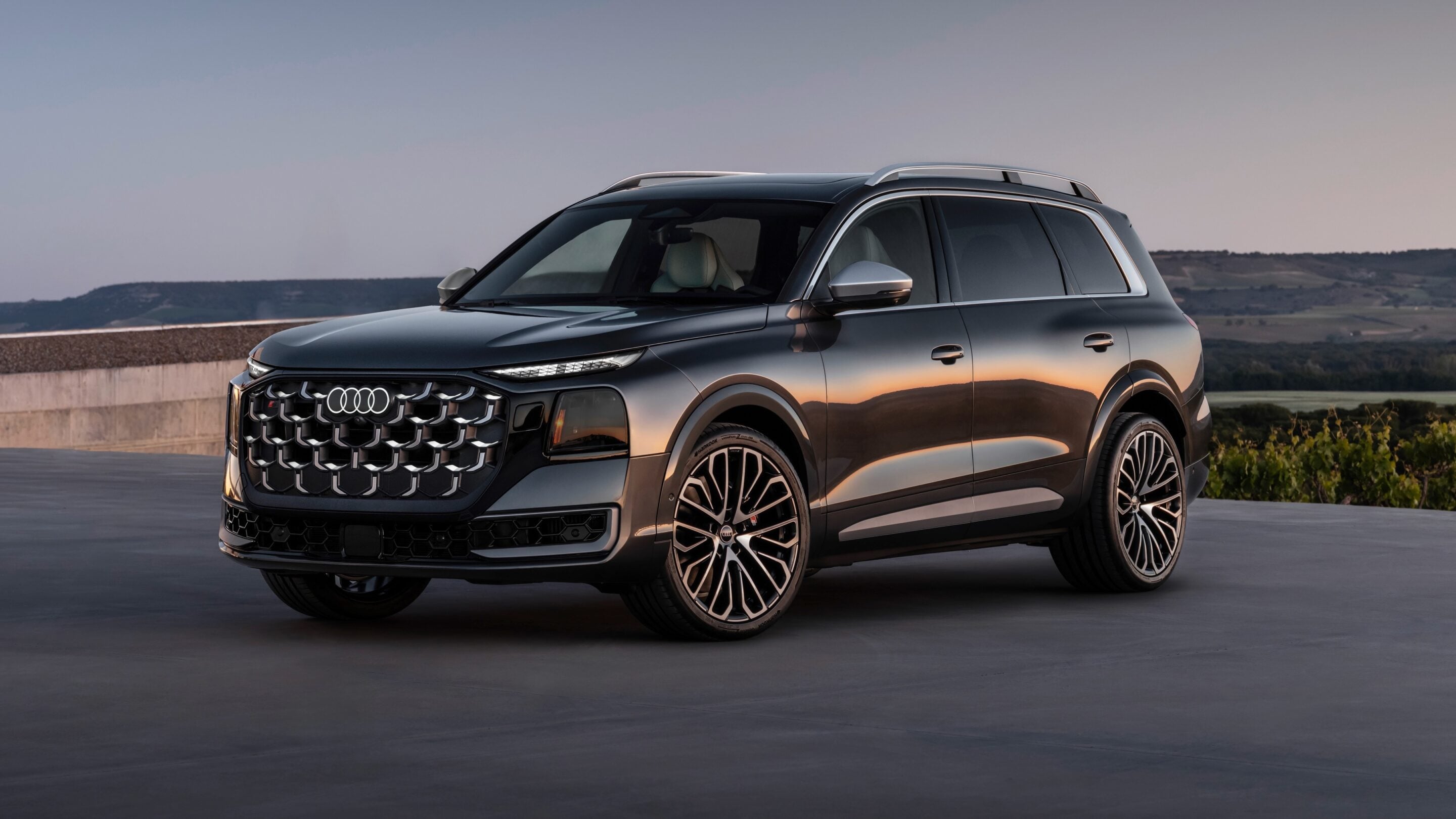
Audi has finally revealed its long-awaited new flagship model, the Q9. Using the same platform but positioned above the existing Q7, the Q9 large SUV will sit atop the Audi range, filling the role of the A8 luxury sedan that will cease production later this year. Both regular Q9 and performance SQ9 models have been revealed, due on sale in Australia sometime in 2027.
If you’re thinking that the Q9 looks like an extra-large version of the Q7, you’d be exactly right, and the two appear similar on the outside. The Q7’s split headlights, large grille and multi-layered tailights largely follow to the Q9, but the Q9 looks even larger than the Q7. Measuring 5310mm long, 2210mm wide and 1810mm tall, the Q9 is even larger than a long wheelbase Range Rover.
The Q9’s segment rivals includes large luxury SUVs such as the BMW X7 and Mercedes-Benz GLS.
Cool features for the Q9’s exterior include automatic opening and closing doors, new curved OLED tailights that display different lighting signatures and warning symbols to other motorists, and new turn signals that display arrows in the direction the car is indicating onto the ground for more visibility to other motorists.
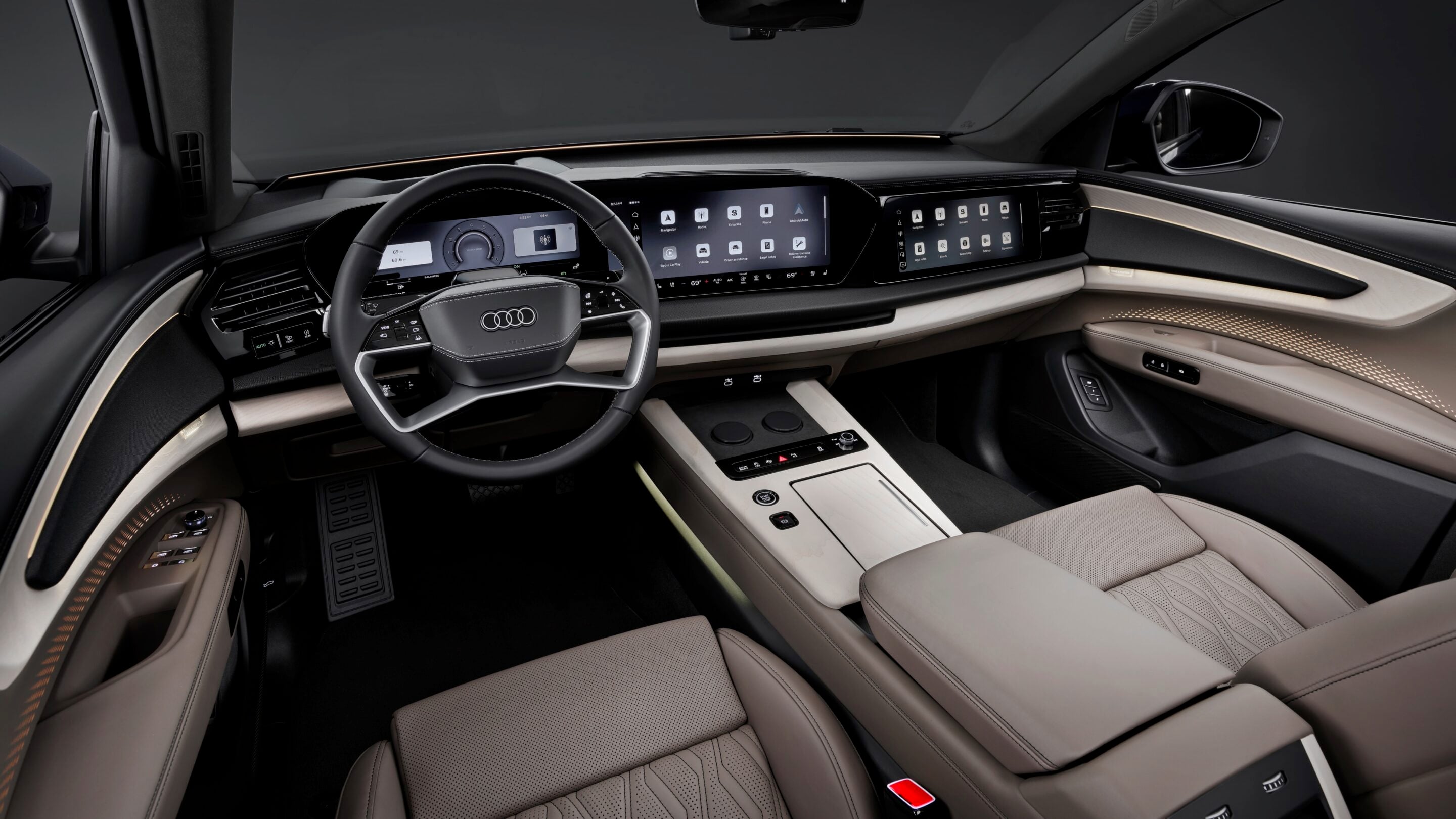
Inside, the Q9 appears to take its positioning as the flagship Audi model seriously thanks to its high-quality materials around the cabin, including stitched genuine leather on the dashboard, door tops and steering wheel centre, as well as open-pore timber and even optional captain’s chairs for the second row.
Like the Q7, the Q9 is a seven-seater as standard, with the captain’s chairs reducing capacity to six, but the Q9 offers more space in each row thanks to its larger dimensions. Audi claims that even taller adults can be carried in the third row in comfort, and all of the rear seats are electrically operated for ease of use.
With the third row erected, there’s 280 litres of storage space, increasing to between 700 and 850 litres (depending on specification) when the third row is folded and folding all the rear seats opens up a huge 2308 litres of cargo space.
Audi has also fitted its largest ever panoramic roof at 1.5 square metres, which can be dimmed with nine opaque sections and its 84 LEDs also display the interior ambient lighting colouring. As for other in-car tech, a 12.3-inch digital driver’s display is accompanied by a 14.5-inch central touchscreen, as well as a 12.3-inch third display for the front passenger to control the entertainment system.
So far, a range of turbocharged V6 engines with mild-hybrid tech have been revealed for the Q9 using both petrol and diesel fuel, and a turbocharged petrol V8 for the SQ9 as well. A 220kW/630Nm 3.0-litre V6 turbo-diesel will be the standard engine in many markets globally, with a 180kW version also due later on. In North America, a 315kW 2.9-litre petrol V6 will also be available, while a plug-in hybrid using that engine is also due later.
In the SQ9, which is yet to be confirmed for Australia but we’d say is likely, uses a 4.0-litre V8 making 440kW/800Nm outputs to compete against hi-po versions of the X7 and GLS. In US specification, the SQ9 hits 60mph (97km/h) in just 3.7 seconds, but it can also tow 3500kg.
The Audi Q9 will go on sale in Australia sometime in 2027, with local pricing and specifications to be announced before then.
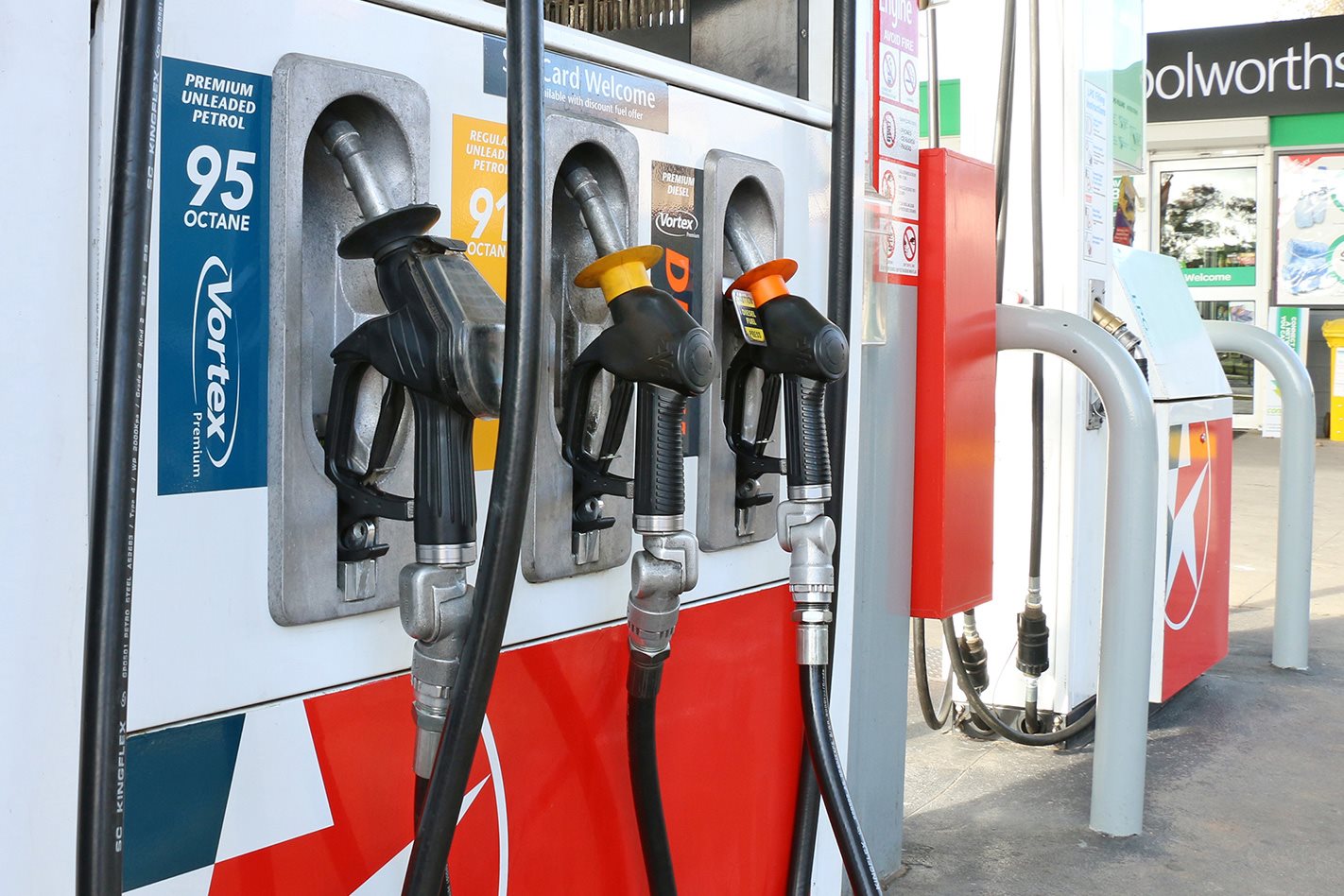
Australian motorists will begin paying more for fuel from next week, with the Federal Government confirming its temporary fuel excise relief will end at midnight on Sunday.
Treasurer Jim Chalmers announced the measure would expire as scheduled shortly after the release of the latest inflation figures, which showed annual inflation at 3.8 per cent in June and underlying inflation continuing to moderate.
The measure, introduced to help offset soaring petrol prices following the outbreak of conflict in the Middle East, reduced the fuel excise by 16 cents per litre before being tapered to half that amount earlier this month. While there had been speculation the government could again extend the discount, Treasurer Jim Chalmers confirmed it will cease as scheduled.
Speaking in Brisbane, Chalmers said the relief had achieved its purpose of easing cost-of-living pressures but was always intended to be temporary.
“That fuel excise relief will end midnight on Sunday and that’s because it has played a really important role helping to take some of the sting out of these cost-of-living pressures,” he said.
“It was never the government’s intention for that to be permanent.”
The government had already extended the measure once, delaying its original June expiry before introducing a month-long transition period with a reduced discount from the start of July.
Comments from Prime Minister Anthony Albanese and Foreign Minister Penny Wong earlier this week had also indicated there would be no further last-minute reprieve.
The end of the discount means the full federal fuel excise will once again apply to petrol and diesel sold across Australia, although the impact on pump prices will depend on wholesale fuel costs, retailer pricing and international oil markets.
The excise relief was introduced after global oil prices spiked amid escalating tensions in the Middle East, with concerns over potential supply disruptions pushing fuel prices sharply higher. Since then, oil prices have eased from their peak, helping to reduce pressure at the bowser.
Motorists are still being encouraged to shop around for the best fuel prices, as differences of more than 20 cents per litre can exist between service stations, particularly in Australia’s capital cities.
The Toyota bZ4X has always been a solid choice for an electric mid-size SUV, but until now has struggled to match the overall value offered by a growing number of segment rivals. Earlier in 2026, Toyota responded with a comprehensive update that brought sharper styling, improved technology and, crucially, a big price cut of more than $10,000 at the entry point. It’s a more compelling proposition than before, but in our fiercely contested populated SUV market, where new challengers seem to arrive almost monthly, is Toyota’s effort enough to put the bZ4X back into contention?
How much does the bZ4X cost to buy?
Pricing for the updated bZ4X range starts from $55,990 plus on-road costs for the entry-level front-drive model, and $67,990 +ORC for the all-wheel drive model tested for this review. Those familiar with the bZ4X will know that entry price is over $10,000 less than the pre-updated model, with the AWD car also enjoying a $6910 price cut.
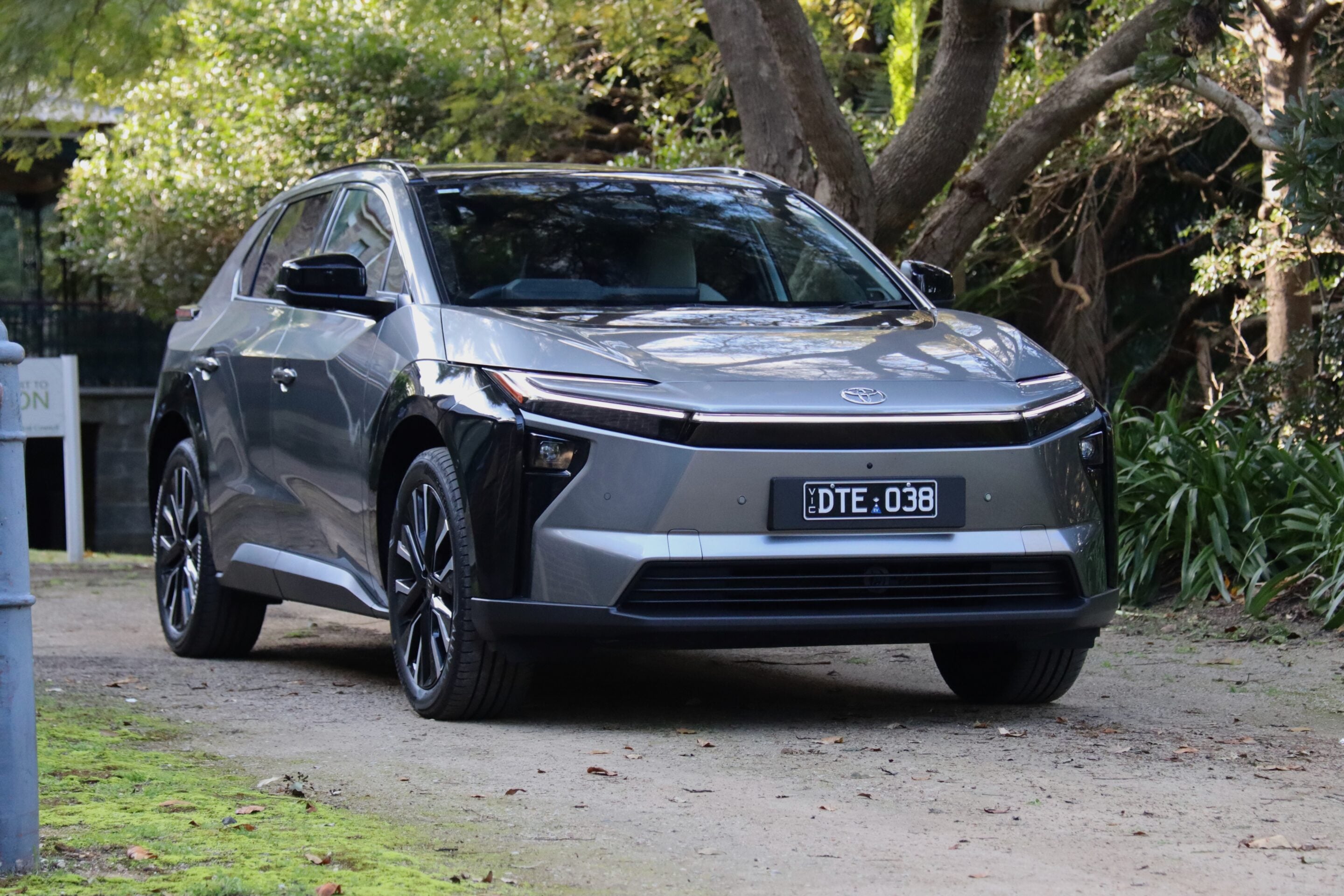
That’s despite the company adding a larger battery, refreshed exterior styling with a new front end, a new centre console layout and a new touchscreen. As a result, the bZ4X is now a lot more competitive with its chief rivals like the Tesla Model Y, BYD Sealion 7 and Zeekr 7X. Heck, its starting price puts it on par with a mid-range hybrid RAV4. Sales have increased dramatically because of that, with 1718 sales under its belt in the first half of 2026 versus 1041 sales for the whole of 2025.
2026 Toyota bZ4X pricing (plus on-road costs):
| FWD | $55,990 |
|---|---|
| AWD | $67,990 |
A full list of standard features is available at the bottom of the page, but the bZ4X AWD is well equipped with kit such as 20-inch alloy wheels, LED exterior lighting, automatic wipers, a panoramic roof, synthetic leather upholstery, heated/ventilated/electrically adjustable front seats, a larger 14-inch touchscreen with sat-nav, wireless Apple CarPlay and Android Auto, nine-speaker JBL audio, two wireless phone chargers and safety features like eight airbags and the usual suite of modern driver assistance tech.
And while the updated bZ4X range is now better positioned in the market for sales success, the AWD model might not be the one to go for. It adds extra equipment to the FWD car like bigger wheels, synthetic leather trim, JBL audio and the extra e-motor but the $12,000 price gap is large, and doesn’t make the bZ4X a dramatically better car. If you don’t need the extra features or performance and grip from the AWD model, we’d stick with the FWD model.
How far can the bZ4X travel on a charge?
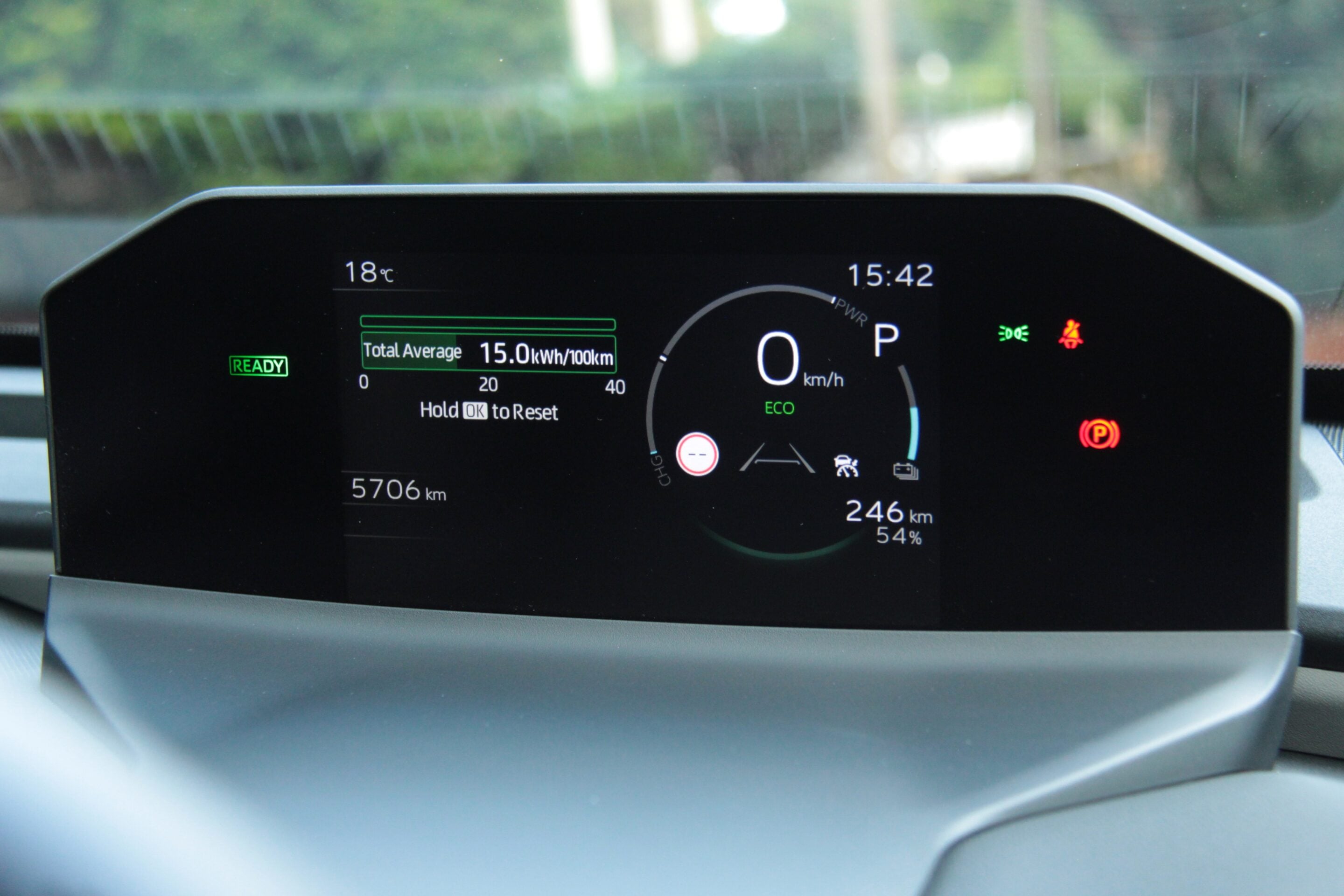
Part of the update to the bZ4X was a larger new 74.7kWh NMC battery, which has not only given it more range but made it more energy efficient. The claimed WLTP range for the AWD model is 517km, which is a huge increase of 106km, and the FWD car is now rated at 591km. As for energy consumption, the bZ4X is officially rated at 16kWh/100km – 2.1kWh/100km less than before – but we found that easy to best, with a rating of 15.1kWh/100km after a week of driving in mixed conditions.
As for charging, the bZ4X range is rated to DC charge at a maximum of 150kW, giving it a claimed 10-80 per cent charge time of as little as 35 minutes. That’s an aspect that hasn’t changed compared with the pre-updated model, and compared with rivals like the super fast-charging Zeekr 7X – which can accept a 450kW maximum for a 10-80 per cent charge time of just 12 minutes – the bZ4X still feels behind. However, it claws back points for those wanting to AC charge it, as it can now be done at up to 22kW, which matches the aforementioned Zeekr and doubles the Sealion 7’s speed.
How is the bZ4X to drive?
Part of the bZ4X’s facelift was an increase in power for both models with the FWD now making 165kW (+15kW) and the AWD car now offering an extra 92kW of grunt, making 252kW in total. That makes it significantly quicker than before, and at just 5.1 seconds to 100km/h, owners will be scaring GR Yaris owners off the lights. It’s got more than enough grunt for all driving situations, but it’s also quite easy to drive as the throttle and brake pedals are easy to modulate, allowing for smooth power delivery from zero. Rear 3/4 visibility isn’t great because of the sloping roof, but the mirrors are large and front visibility is excellent.
On the road, the bZ4X feels largely the same as it did before. The 20-inch wheels of the AWD car give a bit of busyness below 60km/h that could be improved (the smaller 18s on the FWD would likely improve the ride here) but it’s otherwise very comfortable and easy to drive, which is exactly what you’d expect from a Toyota SUV. At highway speeds, it’s feels quite planted, though road noise levels could be improved as it is a bit loud.
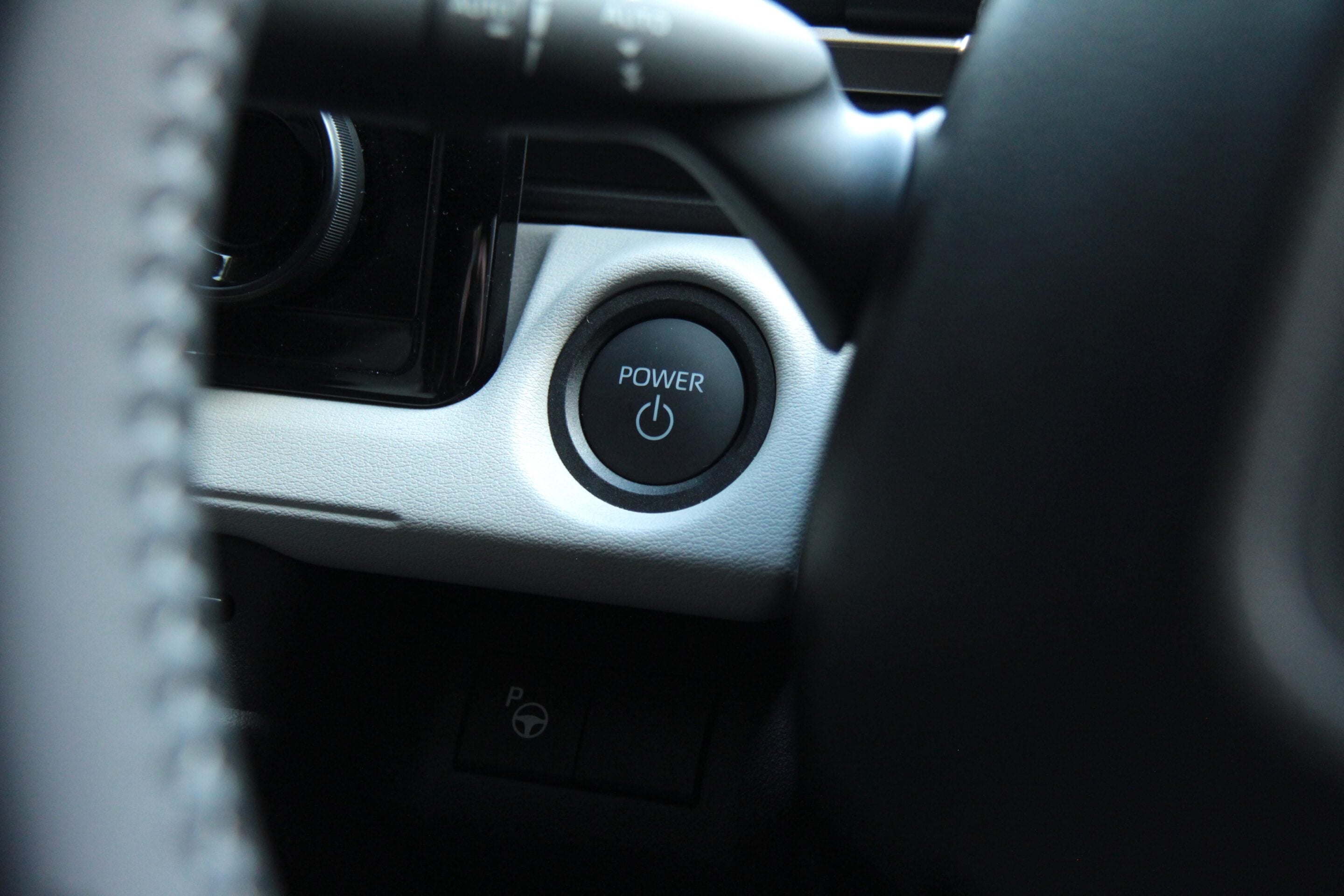
Four regenerative braking settings are part of the update, easily selectable with the paddle shifters on the steering wheel, which range from quite light to almost-one pedal driving. They’re useful, and unlike some Chinese cars, being able to use the paddle shifters to adjust the effects is a godsend. Subaru’s ‘X-Mode’ off-road system – the bZ4X is twinned with the Subaru Solterra and were developed together by both companies – is along for the ride as well, with snow/dirt and snow/mud driving modes for reasonable off-road use.
One area where the bZ4X is noticeably better than some Chinese rivals is its active safety features. The bZ4X is a great example of active safety systems trusting their drivers and only alerting to assist, instead of just taking over the whole experience. One such example is the driver monitoring, which will only ding at you if you glance away from straight ahead for a prolonged time, whereas most Chinese cars will blare at you for even glancing at your mirrors. If even that is too much, it’s an easy two-press process on the touchscreen to deactivate.
Is the bZ4X practical?
Being both a Toyota and a mid-size SUV, of course there is a practical side to the bZ4X. It’s a more than capable of handling four people and their luggage, and a fifth could fit for a while in the rear as well. Having said that, elements of the cabin design and a lack of a front boot mean that much more practical rivals exist. The layout of the bZ4X’s cabin remains largely unchanged compared with the pre-updated model, save for the new centre console design that now features two wireless phone chargers and a new, larger touchscreen area with cool ventilation controls stolen from Lexus.
Despite the changes, the cabin is still a bit unusual, like Toyota wanted to design something futuristic to match other EVs, and that’s seen in the modern Peugeot-like positioning of the steering wheel that sits in your lap with the driver’s display sitting above the steering wheel. The layout works for this writer at six-feet tall, but probably not for shorter folk as the wheel rim would sit in their line of sight for the driver’s display. The display itself is fine and easy to operate, though a bit dated to look at.
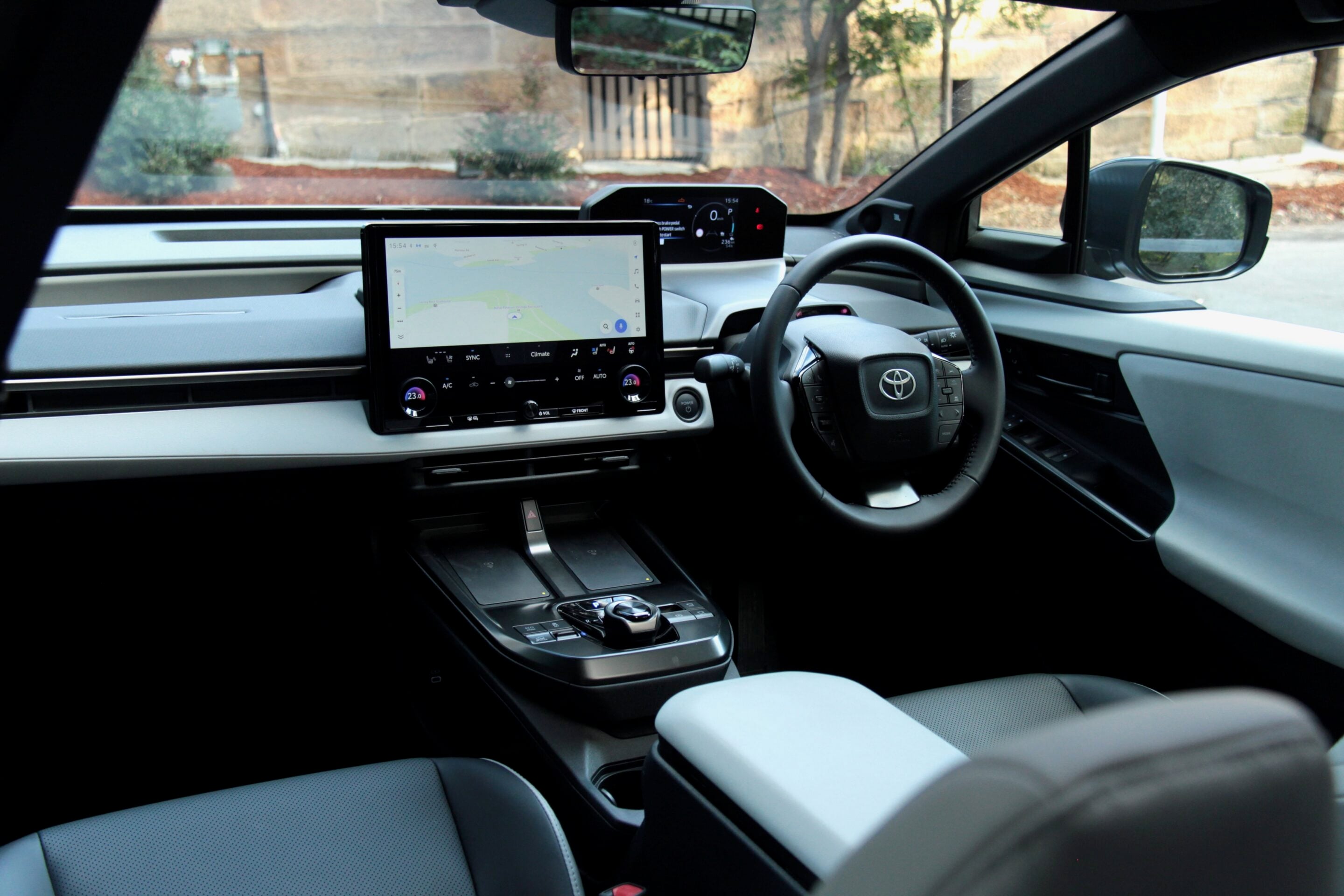
Storage features include reasonable door bins, a tray underneath the centre console, a bin under the centre armrest and medium-sized cup holders – but there’s no glovebox, despite there being space for one. That means that your service books must live in the centre under-tray, making it nigh-on useless to store anything else, making storage options limited.
Material quality is solid, with a good amount of soft touch materials and good quality switchgear throughout the cabin, but it doesn’t feel as premium as something like the Zeekr 7X. We’d love to see an extra layer of finishing – perhaps some metal-like door handles and a more modern driver’s display would go a long way to making it feel more premium inside. One cool touch, however, is the heated panel on the bottom of the steering column that activates with the heated driver’s seat.
The 14-inch touchscreen wins back more points, too, as it’s quick, bright and easy to use. It’s well featured with wireless smartphone mirroring, sat-nav with live traffic, digital radio and live services so that you can check information like charging status and lock the car from the Toyota app, though it’s nowhere near as expansive as Tesla’s touchscreen software, if that’s what you’re after. The nine-speaker JBL audio gives solid, if not amazing, aural quality.
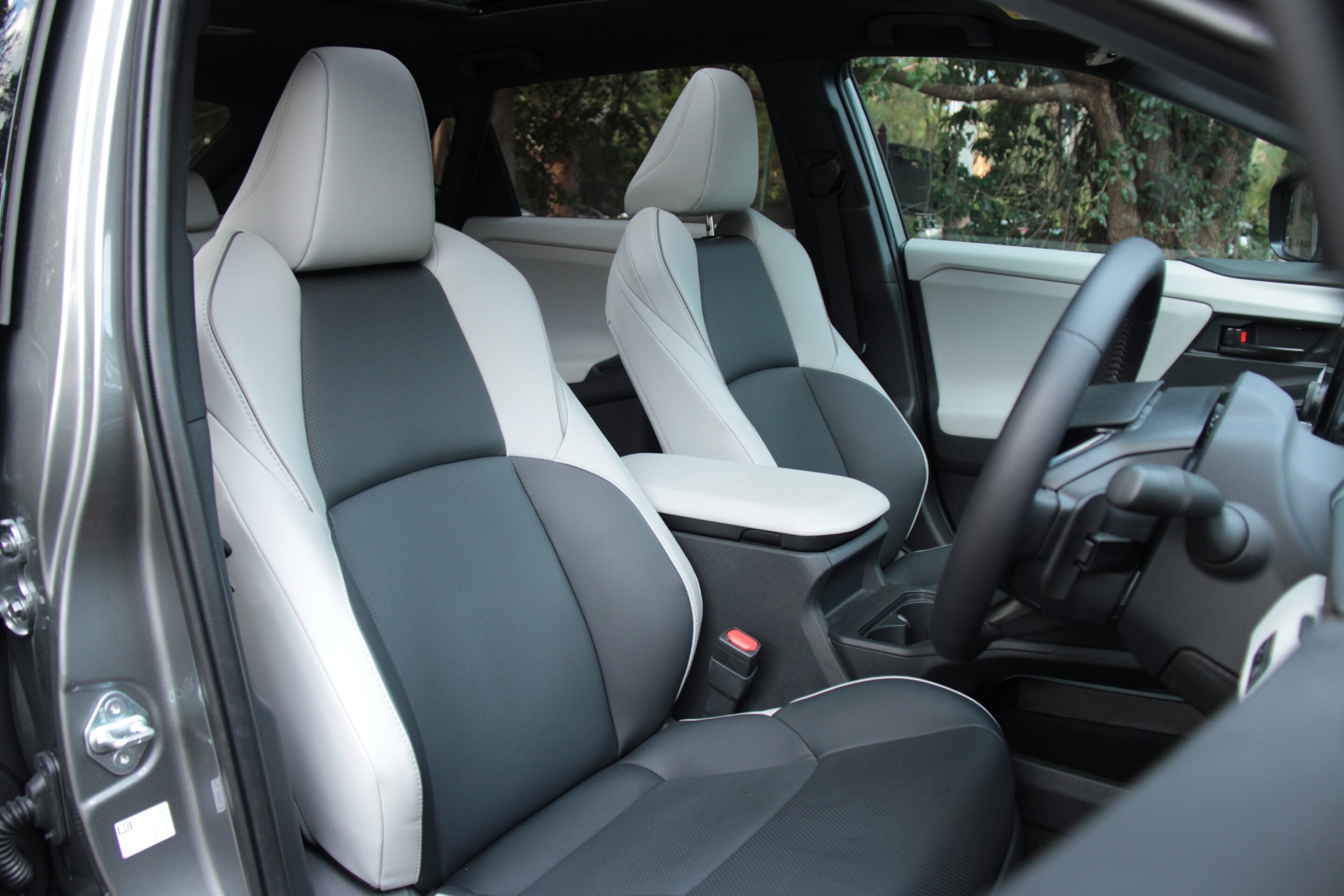
The rear seat of the bZ4X is one of its best attributes as it’s spacious and comfortable, as well as equipped nicely. Two taller adults will be fine there, with a third fitting in a pinch. Dual USB-C ports, heated outboard seats, a central armrest with cup holders, map pockets and bottle holders in the doors tick the amenities box, while the panoramic glass roof adds much needed light to the space. Its electric blind is quite loud, however.
Measuring 452 litres, the bZ4X’s boot is not as large as many rivals – the Sealion 7’s 500L boot is noticeably larger, and it also features a 58L front boot, whereas the bZ4X does not – though it’s still a good space with a low load lip and a few extra features like a second level cubby, a few hooks to hang bags off and in the AWD model, a 220V/1500W vehicle-to-load socket. The rear seats fold almost flat, and while Toyota Australia is yet to confirm a number, overseas reports suggest that it can hold around 1500 litres. If you’re wanting more space, the new wagon-like bZ4X Touring holds 603 litres of cargo.
Is the bZ4X cheap to service?
Like all other new Toyota products, the bZ4X is covered by a five-year/unlimited km warranty with no roadside assistance (it’s a minimum of $99 extra annually through Toyota), though its drive battery is covered up to 10 years with annual checks performed by a dealer.
Its annual service intervals are every 15,000km and five years/75,000km of servicing costs just $950, or $190 annually. That’s more than a Model Y (which doesn’t have any service costs until parts need replacing), but less than rivals such as the Sealion 7 and 7X.
Should I buy a Toyota bZ4X?
Overall, it’s clear that there is a lot of improvement with the updated Toyota bZ4X. It’s now more energy efficient so it travels further on a charge, plus it’s a lot more powerful and to top it all off, it’s now much better value for money, particularly in entry-level FWD form. It’s the car that Toyota should’ve launched with originally as it’s simply a more competitive product than before, even with the plethora of rivals that have launched since the bZ4X first went on sale locally in early 2024.
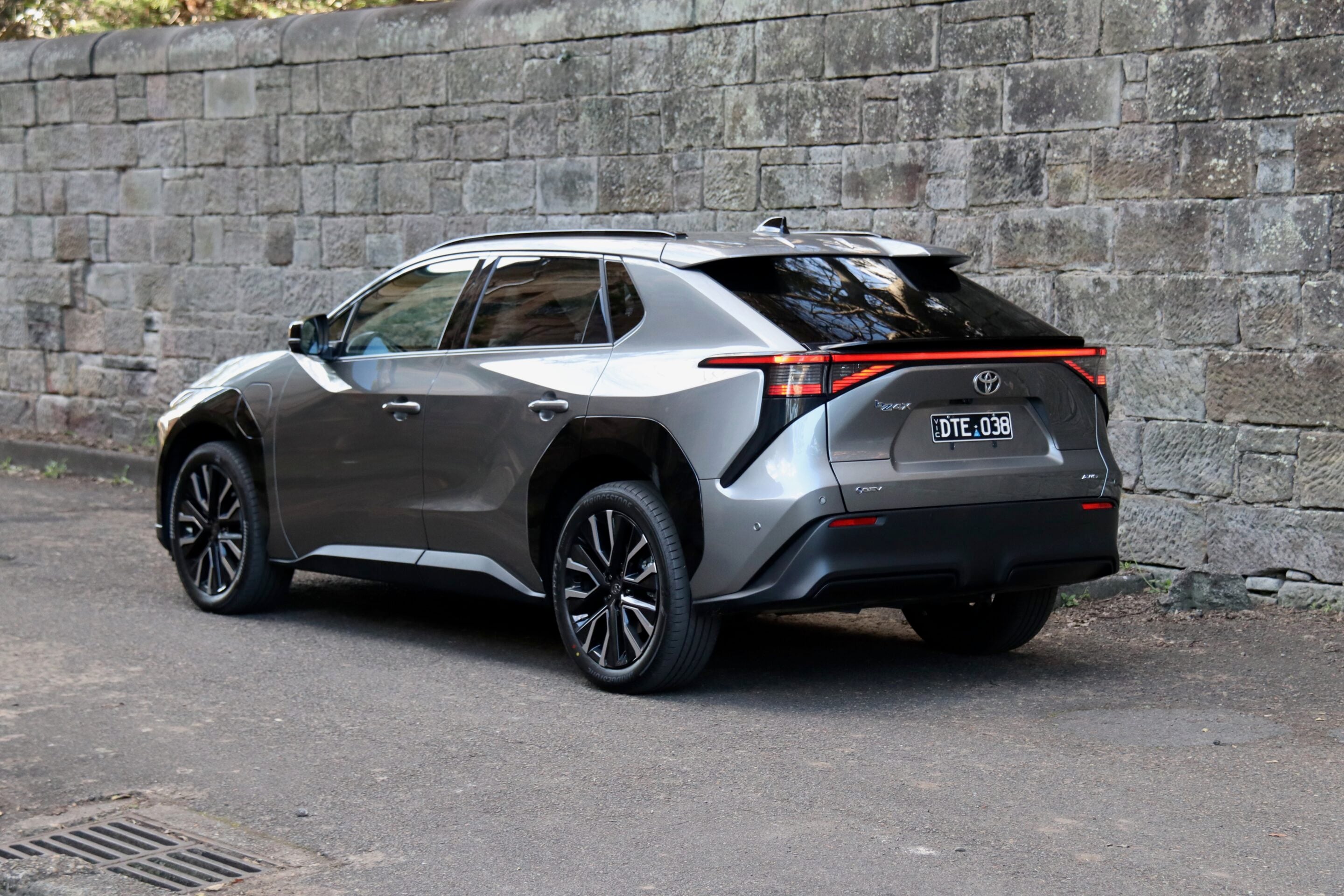
That said, it’s still not perfect. The AWD bZ4X tested is too expensive compared with the FWD model and there are still practicality limitations thanks to its lack of front boot and glovebox and its average boot. Its peak DC fast charging speed is still slow compared with some rivals and the cabin design is still compromised and just a bit weird. Overall, however, Toyota now has a more talented electric SUV on its hands to battle big name rivals and as the sales figures are showing, buyers seem to agree.
bZ4X AWD standard features:
- 20-inch alloy wheels (with a tyre repair kit)
- Dusk-sensing automatic LED exterior lighting
- Rain-sensing automatic wipers
- Roof rails
- Rear privacy glass
- Keyless entry with push button start
- Panoramic sunroof
- Electric tailgate with easy-open functionality
- Heated/auto-folding mirrors with puddle lamps and auto-tilt functionality in reverse gear
- Dual-zone automatic climate control with rear air vents
- Synthetic leather upholstery
- Electric front seat adjustment with driver’s lumbar and memory
- Heated and ventilated front seats
- Heated synthetic leather steering wheel
- Heated outboard rear seats
- 7.0-inch digital driver’s display
- 14-inch touchscreen with live services
- Satellite navigation with live traffic
- Wireless Apple CarPlay and Android Auto
- AM/FM/DAB+ digital radio
- Bluetooth audio and calling
- Nine-speaker JBL sound system
- 2x wireless phone chargers
- 4x USB-C ports
- Eco, normal, snow/dirt and snow/mud driving modes
- Vehicle-to-Load (V2L) 220V/1500W socket in boot
- 8x airbags
- Autonomous emergency braking (with intersection, pedestrian and daylight cyclist detection)
- Adaptive cruise control with traffic jam assist
- Lane keeping assistance with adaptive lane guidance
- Blind-spot monitoring with rear cross-traffic alert
- Driver attention monitoring
- Speed sign recognition
- Safe exit alert
- Matrix adaptive high beam
- Front and rear parking sensors
- Automatic low-speed reverse braking
- 360-degree camera
- Automatic parking functionality
bZ4X AWD specifications:
| Price | $67,990 plus on-road costs |
|---|---|
| Powertrain | Dual electric motor, single-speed transmission, all-wheel drive |
| Battery | 74.7kWh NMC |
| Power | 252kW |
| Torque | 448Nm |
| 0-100km/h (claimed) | 5.1 seconds |
| Range (claimed) | 519km (WLTP) |
| Energy efficiency (claimed versus on test) | 16kWh/100km, 15.1kWh/100km |
| Max DC charging rate | 150kW (approx 10-80% in 35 minutes) |
| Max AC charging rate | 22kW |
| Kerb weight | 2035kg |
| Dimensions (L/W/H/WB) | 4690/1860/1650/2850mm |
| Boot capacity | 452 litres (rear seats up) |
| Warranty | Five-year/unlimited km |
| Five-year service cost | $950 ($190 per year) |
| On sale | Now |
Tesla’s futuristic Cybertruck is being compared with one of the automotive industry’s biggest commercial failures, with critics claiming the electric pick-up is on track to eclipse the Ford Edsel as the most significant flop in modern motoring history.
The comparison centres on the enormous gap between Tesla‘s original sales ambitions and the Cybertruck’s actual performance. When unveiling the stainless-steel electric pick-up, chief executive Elon Musk predicted annual production could eventually reach 250,000 units and described it as Tesla’s “best product ever”. More than one million reservations were reportedly placed before production began.
Instead, demand has fallen sharply after an initially strong launch. Industry analysts note the Cybertruck has sold only a fraction of the volumes originally forecast, prompting comparisons with Ford’s Edsel, a car that has become synonymous with commercial failure since its troubled launch in 1957.
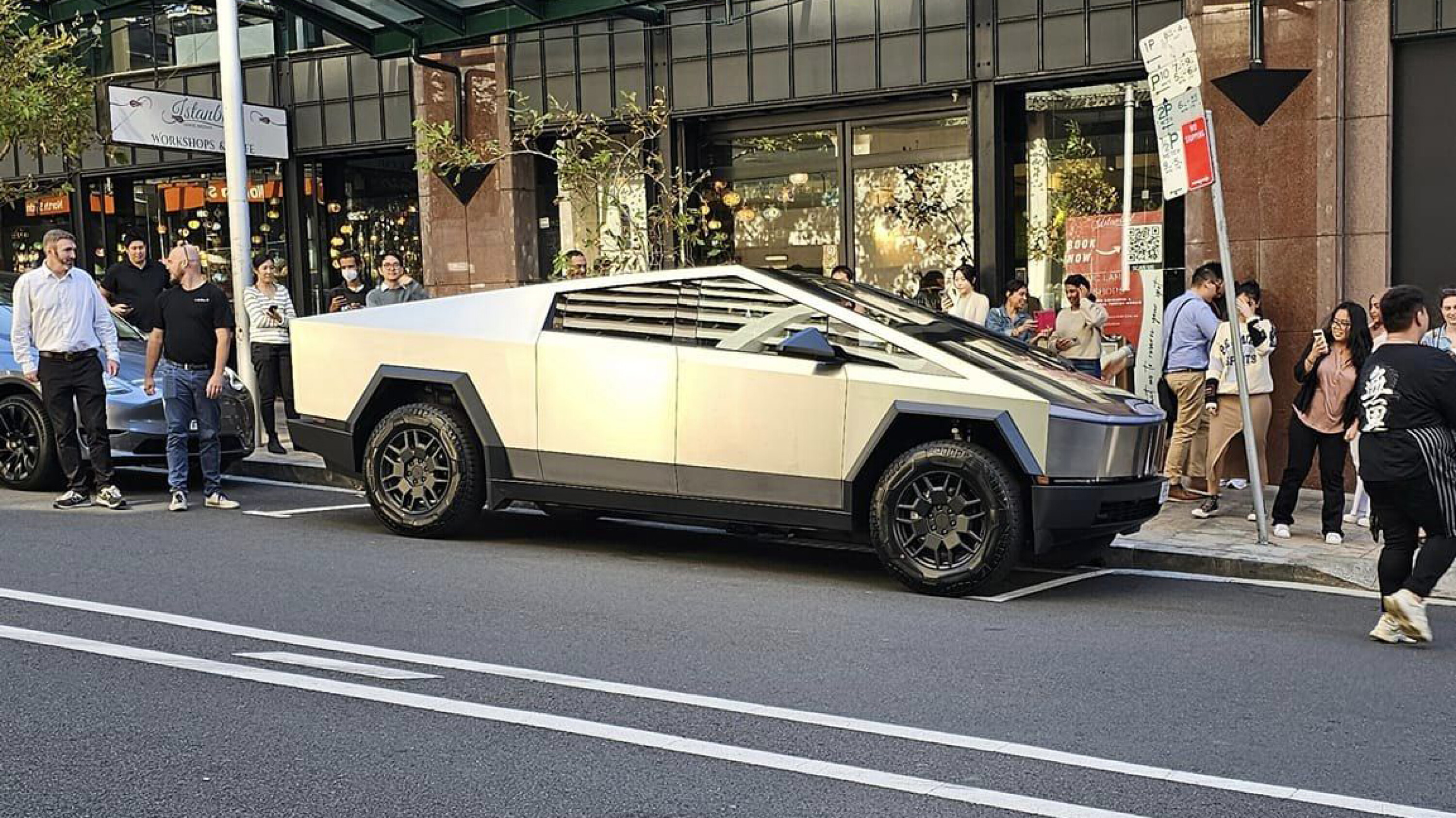
Bloomberg analysis, widely cited by US media, argues that measured against projected sales targets, the Cybertruck has actually underperformed the Edsel, which has long been regarded as the benchmark for automotive commercial failure.
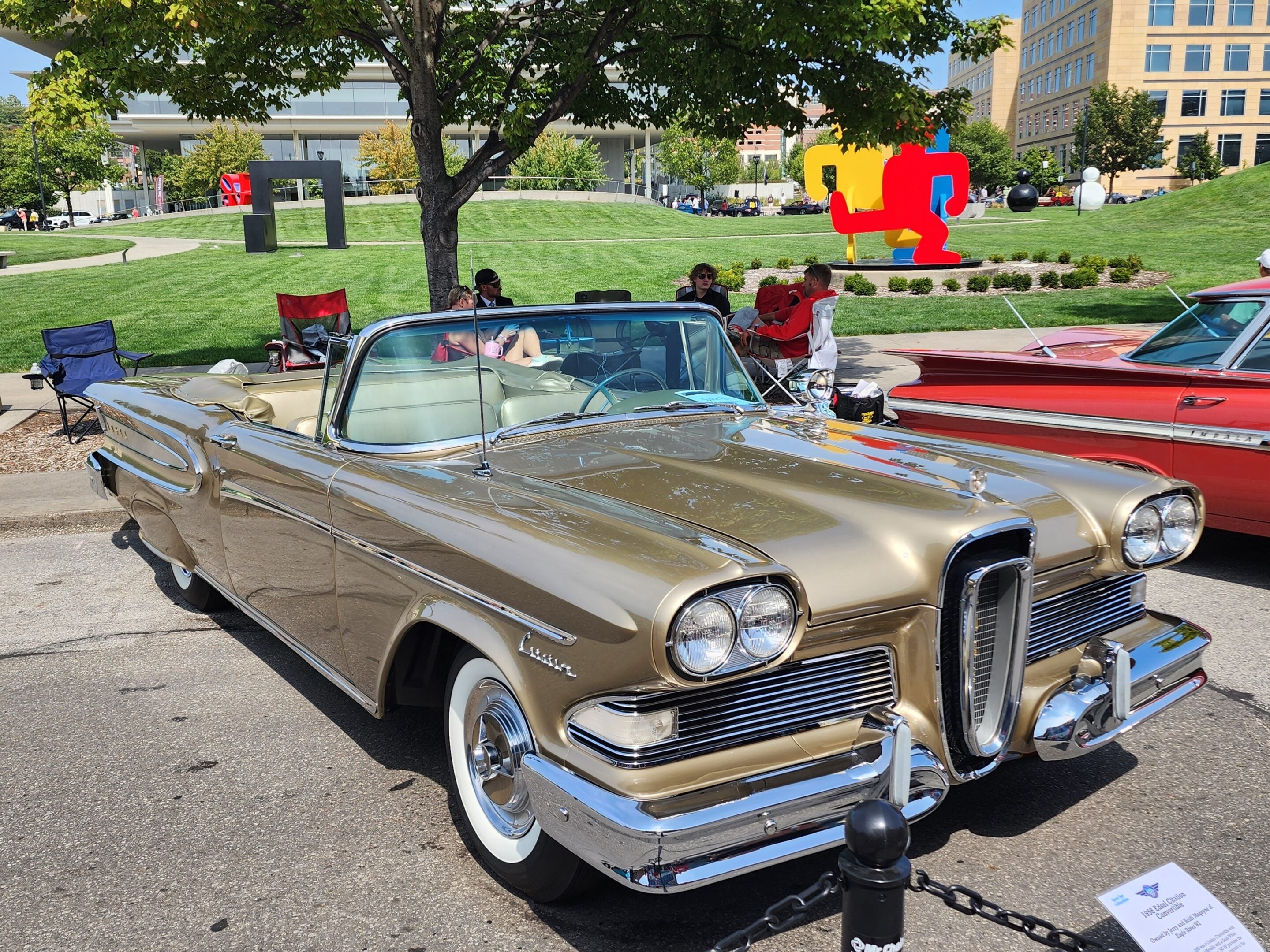
Launched by Ford in September 1957 after a massive marketing campaign and expectations of around 200,000 annual sales, the Edsel (a 1958 Edsel Citation Convertible pictured, below) lasted just three model years before production was axed in November 1959. Ford sold only about 110,000 Edsels in total and is estimated to have lost around US$250 million on the program – an enormous sum at the time. The Cybertruck’s shortfall against Tesla’s own targets is now considered even greater.
Observers point to several factors behind the Cybertruck’s struggles. The production version arrived years later than originally promised and at a significantly higher price than Musk’s initial US$39,900 target. Critics have also cited its unconventional styling, a series of recalls, quality concerns and its limited appeal outside a niche group of buyers.
Despite the criticism, the Cybertruck has introduced several engineering innovations, including its stainless-steel exoskeleton, steer-by-wire system and 800-volt electrical architecture, technologies that could influence future vehicles even if the model itself falls short commercially.
The renewed scrutiny comes as Tesla faces broader financial pressure. The company recently reported another decline in quarterly earnings and revenue as vehicle deliveries softened globally, even as its shares remain heavily influenced by investor expectations surrounding autonomous driving, artificial intelligence and robotics rather than vehicle sales alone.
In Australia, Tesla nevertheless enjoyed a strong June, with the facelifted Model Y becoming the country’s best-selling new vehicle and helping battery-electric vehicles achieve a record share of the new-car market. However, the company reported a sharp fall in quarterly profit, highlighting the contrasting fortunes of its global business and reinforcing the challenge of turning ambitious new products such as the Cybertruck into long-term commercial successes
Melbourne’s roads are home to nine of Australia’s 10 busiest crash hotspots, according to the latest AAMI Crash Index, which analysed almost 400,000 motor insurance claims lodged across the country during 2025.
The annual report, based on more than 394,000 insurance claims between January 1 and December 31, 2025, found Springvale Road in Glen Waverley has overtaken Plenty Road in Bundoora as Australia’s number-one crash hotspot for the first time in eight years. The only road outside Victoria to feature in the national top 10 is Pennant Hills Road at Carlingford in Sydney’s north-west.
According to AAMI, the roads topping the list share similar characteristics, including heavy traffic volumes, busy intersections, shopping precincts and stop-start commuting conditions where rear-end collisions are common. Nose-to-tail crashes remain the most frequent type of accident, followed by drivers failing to give way and collisions with stationary objects.
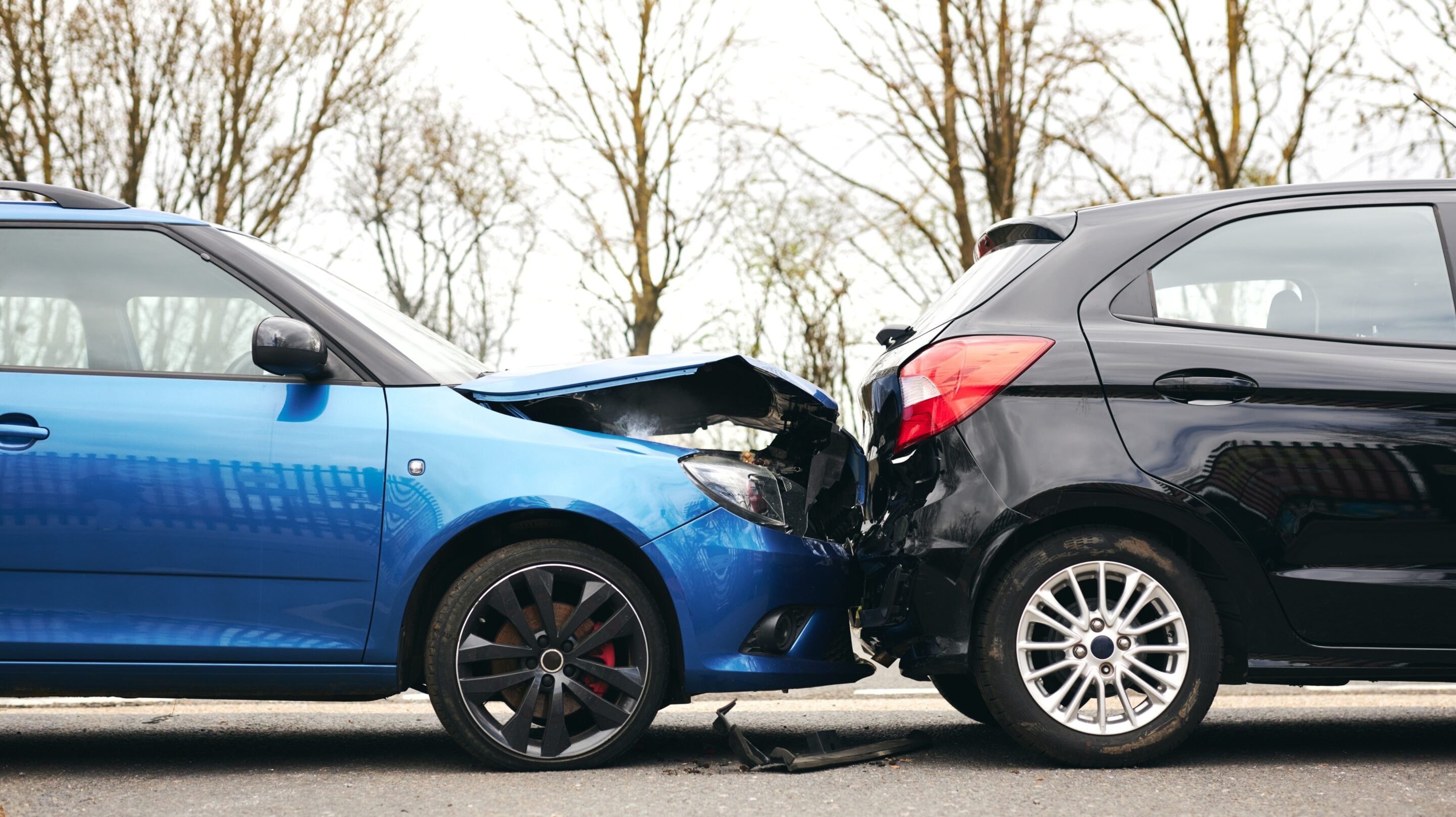
The insurer’s data also identified clear trends in when crashes are most likely to occur. Friday mornings were the busiest period for insurance claims, with congestion and commuter traffic combining to increase the likelihood of low-speed collisions. Older male drivers were involved in the highest number of crashes, while Toyota, Mazda, Hyundai, Ford and Mitsubishi were the makes most commonly involved in insurance claims. White, grey and silver remained the colours most frequently seen in crash data.
While Melbourne dominated the national rankings, every Australian capital had at least one road identified as its local crash hotspot, highlighting that congestion rather than high-speed driving is responsible for many everyday collisions.
| Rank | Road | Suburb | State |
|---|---|---|---|
| 1 | Springvale Road | Glen Waverley | VIC |
| 2 | Plenty Road | Bundoora | VIC |
| 3 | Doncaster Road | Doncaster | VIC |
| 4 | Maroondah Highway | Ringwood | VIC |
| 5 | Sydney Road | Campbellfield | VIC |
| 6 | Bell Street | Preston | VIC |
| 7 | Cooper Street | Epping | VIC |
| 8 | Nepean Highway | Cheltenham | VIC |
| 9 | Pennant Hills Road | Carlingford | NSW |
| 10 | Stud Road | Rowville | VIC |
GWM Australia has revealed crucial performance, fuel economy and other figures for its new 3.0-litre four-cylinder turbo-diesel engine, which will be available in the Cannon Alpha ute and Tank 500 large SUV later in 2026.
Producing 620Nm of torque, the new engine offers the most torque in the ute segment – more even than the Ford Ranger V6. Pricing for both models will be announced closer to launch, and expressions of interest are now open for orders.
Originally announced in 2025, GWM’s new 3.0-litre turbo-diesel is an all-new engine developed as a step up in performance compared to the existing 2.4-litre turbo-diesel used in models like the Cannon Alpha and Tank 500. Producing 170kW of power and 620Nm of torque, the 3.0-litre donk outperforms the smaller engine by 35kW and 140Nm. Like the 2.4-litre engine, the 3.0-litre is mated to a nine-speed automatic transmission as standard.
In addition to the performance figures, GWM Australia has also announced fuel consumption: 7.1L/100km for the Tank 500 and 7.3L/100km for the Cannon Alpha, which is an improvement over the 2.4-litre engine by 1.6L/100km in the latter, despite the extra size and performance on offer. The new 3.0-litre engine marks the first time a diesel-powered Tank 500 will be offered in Australia.
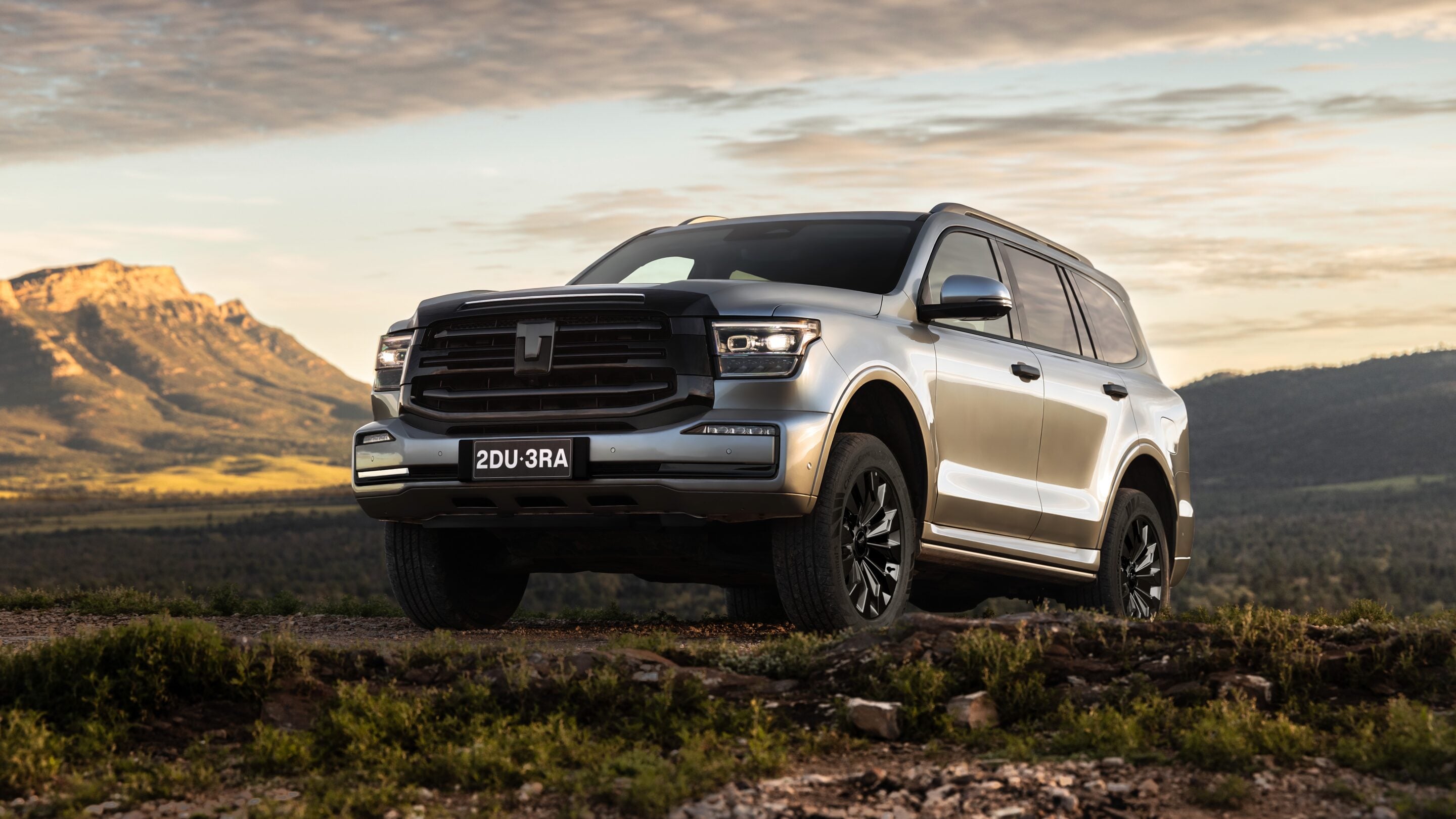
By comparison, the 3.0-litre V6 turbo-diesel in the Ford Ranger and Everest makes 184kW/600Nm while consuming from 8.3L/100km, the 2.8-litre four-cylinder turbo-diesel in the Toyota HiLux and Prado makes 150kW/500Nm, consuming 7.3L/100km, and the 3.0-litre four-cylinder turbo-diesel in the Isuzu D-Max, MU-X and Mazda BT-50 makes 140kW/450Nm and consumes from 7.8L/100km.
According to GWM, the new engine has undergone more than six months of local engineering and validation across Australian conditions, led by tuning wizard Rob Trubiani. “Testing has focused on performance, durability, drivability, towing capability and powertrain calibration, ensuring it delivers the refinement, reliability and confidence Australian customers expect,” according to GWM.
Expressions of interest for the new 3.0-litre turbo-diesel GWM Cannon Alpha and Tank 500 are open now ahead of their debuts in the coming months.
Volkswagen Commercial Vehicles has confirmed Australian pricing for its new Amarok V6 W600, with the locally engineered flagship dual-cab ute set to arrive in showrooms from $91,990 before on-road costs.
Developed in partnership with Walkinshaw Automotive Group, the W600 becomes the most expensive model in the Amarok range and is priced slightly above its closest rival, the Ford Ranger Raptor, which starts from $90,690 before on-road costs. Unlike the off-road-focused Raptor, however, the W600 has been engineered primarily to improve on-road handling and driver engagement while retaining the Amarok’s full towing and payload capabilities.
Rather than chasing outright off-road performance, Walkinshaw’s engineering team focused on how most Australian ute buyers actually use their vehicles, with the majority of driving taking place on sealed roads while commuting, touring or towing.
Key mechanical upgrades include bespoke KONI dampers featuring Frequency Selective Damping technology, Walkinshaw-specific suspension tuning, a new 22mm rear anti-roll bar, 20-inch flow-formed alloy wheels wrapped in Michelin Pilot Sport 4 SUV tyres, and revised steering calibration aimed at improving body control and cornering stability.
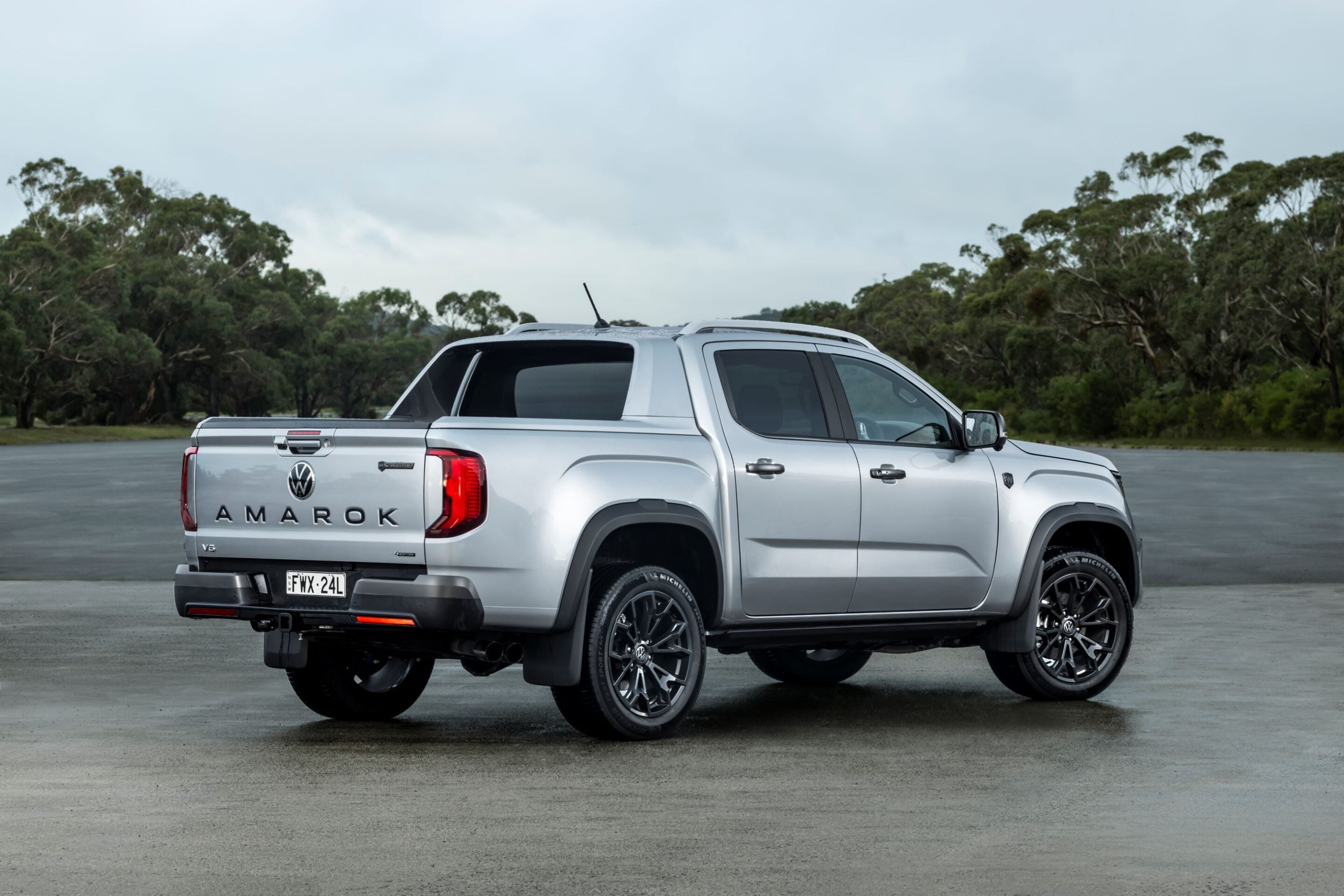
Power continues to come from Volkswagen’s 3.0-litre turbo-diesel V6 producing 184kW and 600Nm, matched to a 10-speed automatic transmission and permanent 4MOTION all-wheel drive system. Despite the suspension and styling changes, the W600 retains a 3500kg braked towing capacity and a payload of 954kg.
Standard equipment includes IQ.LIGHT LED Matrix headlights, Savona leather upholstery, heated and electrically adjustable front seats, a Harman Kardon premium audio system, 360-degree camera, adaptive cruise control with Travel Assist, Trailer Assist and a suite of advanced driver assistance technologies.
Walkinshaw has also given the ute a distinctive appearance with a redesigned front fascia, integrated light bar, wider styling elements, dual side-exit exhaust outlets, electrically deploying side steps and bespoke badging. Inside, embroidered headrests, sports pedals, illuminated puddle lights and unique floor mats differentiate the flagship from the rest of the Amarok line-up.
Buyers can option metallic paint for $1100 and a factory electric roller cover for $3450.
The Amarok W600 is expected to reach Australian dealerships in August as Volkswagen’s new halo model, offering buyers a road-focused alternative in the growing high-performance ute segment.
Coles will install fast electric vehicle charging stations at up to 30 supermarkets across Australia over the next two years, as the retailer looks to capitalise on Australia’s rapidly growing EV market while giving shoppers another reason to visit its stores.
The supermarket chain has partnered with Australian charging provider Evie Networks to roll out the chargers across selected locations in Victoria and Queensland, with the first site now operating at Coles Middle Camberwell in Melbourne’s east. The installation features two Kempower DC fast chargers capable of delivering up to 200kW of charging power across four charging bays.
Additional sites are expected to open before the end of the year at Coles supermarkets in Orana Village, Beveridge, Annerley and Milton Village, with more locations to follow as part of the two-year rollout.
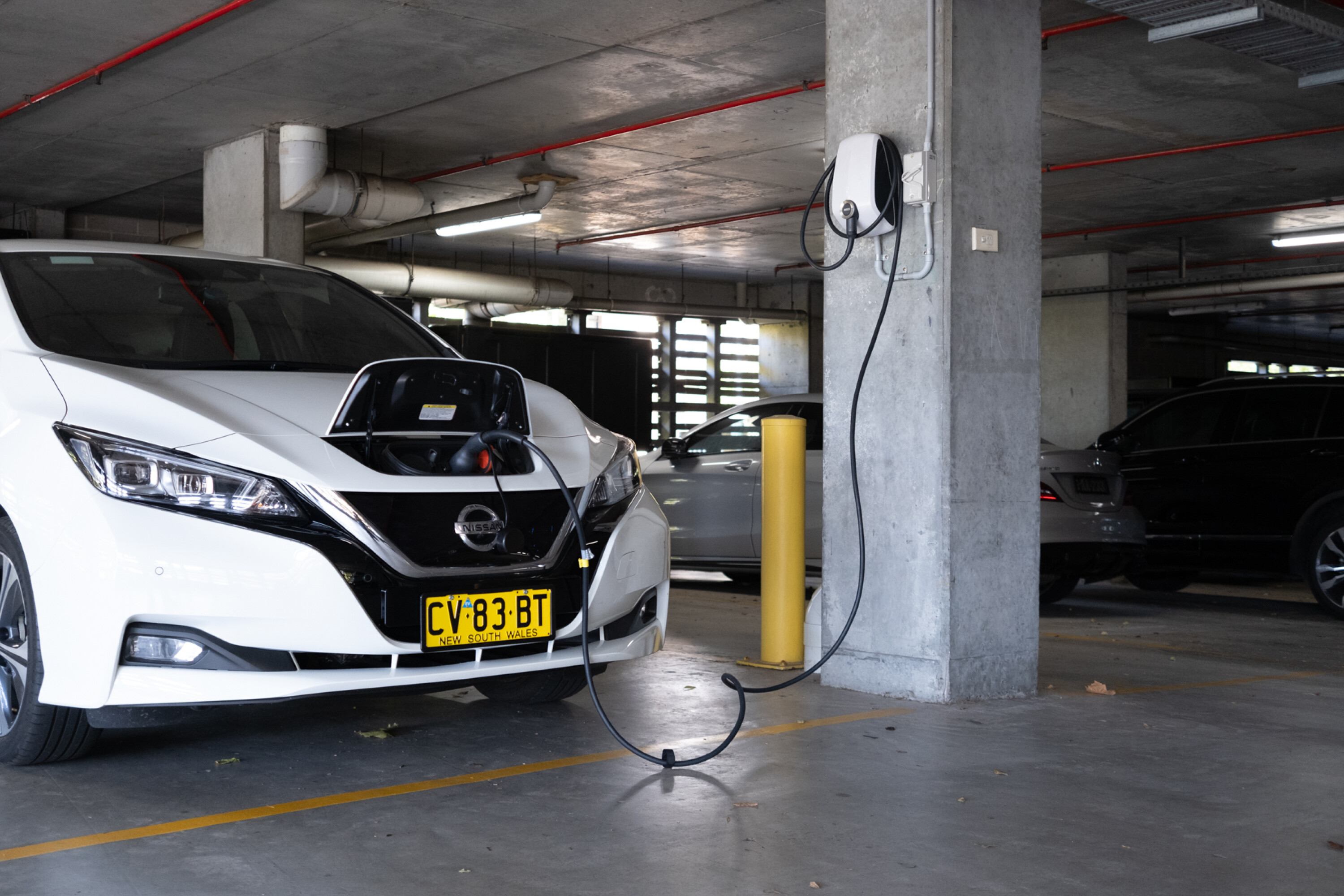
Coles Head of Energy Jane Mansfield said the partnership was designed to make charging fit into customers’ everyday routines.
“We know EV drivers are looking for convenient charging options at destinations they already visit, with charge times that align with the time they spend there,” she said.
Evie Networks chief executive Chris Mills said supermarkets were an ideal destination for public charging because drivers could top up their batteries while completing their weekly shop.
The announcement comes as demand for public charging infrastructure continues to grow alongside rising electric vehicle sales. According to industry figures, battery-electric vehicles accounted for a record 23.5 per cent of Australian new-car sales in June 2026, driven largely by strong demand for Tesla and BYD models.
Australia’s charging network has expanded rapidly in recent years, with Evie now operating one of the country’s largest public DC fast-charging networks, spanning more than 300 locations nationwide.
The move also reflects a broader shift among retailers both in Australia and overseas, where supermarkets, shopping centres and fast-food chains are increasingly installing EV chargers to attract customers and encourage them to spend more time on-site while their vehicles recharge. In Australia, Evie has already partnered with Hungry Jack’s to install chargers at selected restaurants, while other retail destinations have also embraced public charging as EV ownership continues to climb.
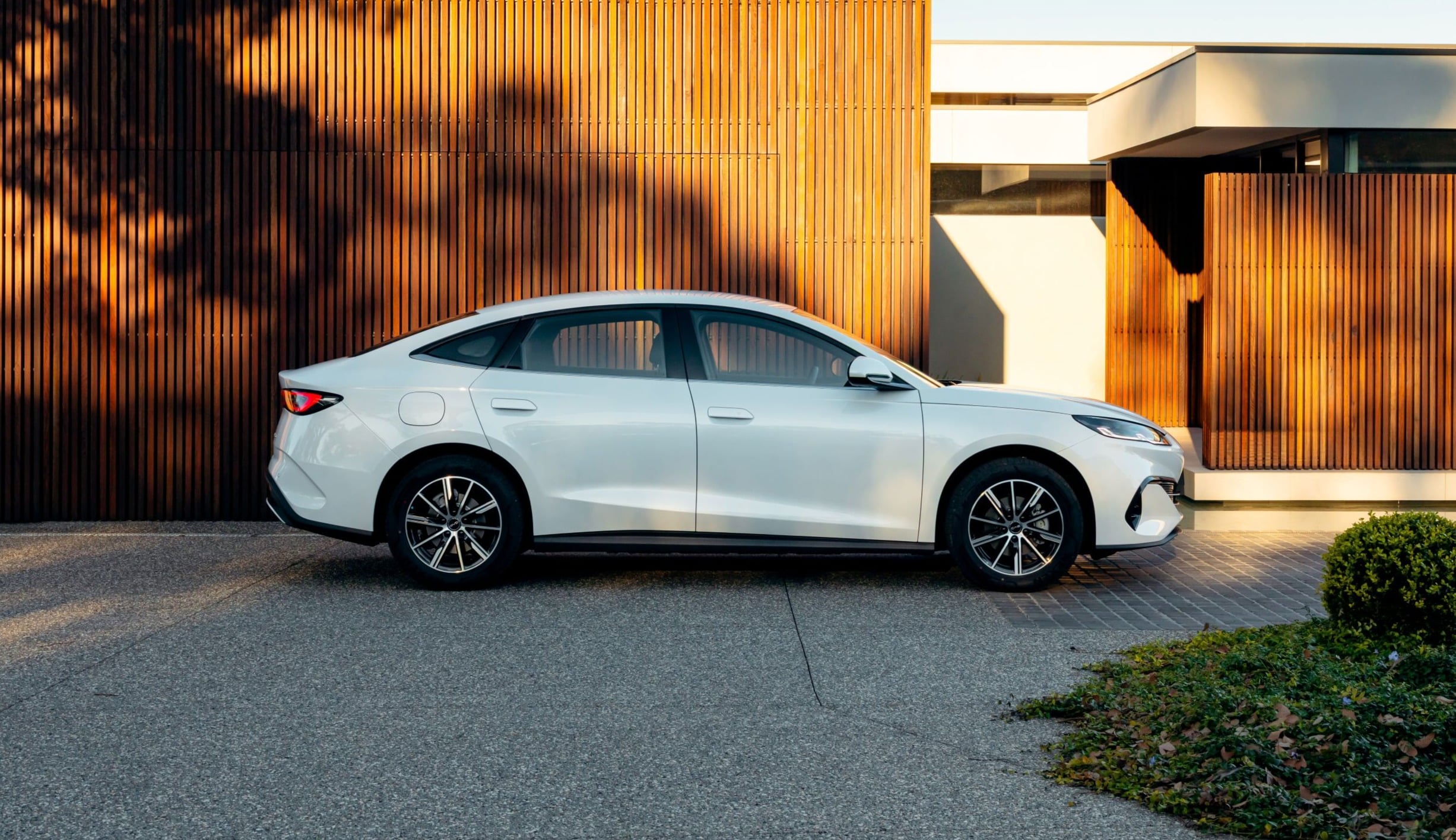
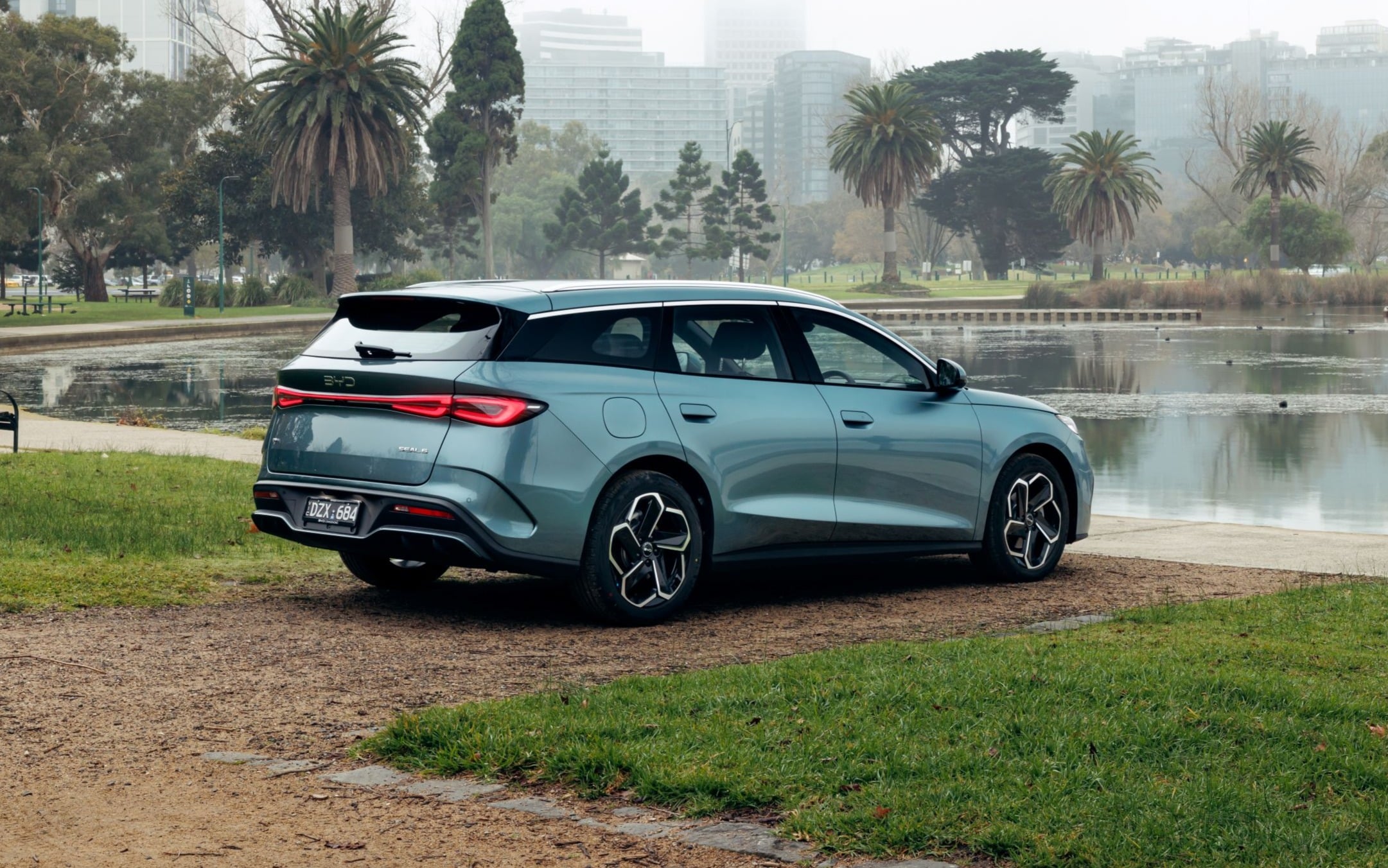
Launched in Australia last week, the BYD Seal 6 plug-in hybrid is available as either a $34,990 Essential sedan or more upmarket $39,990 Premium Touring station wagon.
Both the sedan (bottom) and wagon (below) are powered by a 1.5-litre petrol engine paired with the BYD’s DM 5.0 Super Hybrid technology. BYD claims a combined electric and petrol driving range of around 1400km.
According to the Chinese brand, the Essential sedan’s 10.08kWh battery is good for 55km of electric-only driving range while the Touring’s larger 19kWh battery ups pure EV range to 100km.
BYD Australia’s Director of Public Relations, Paul Ellis, told Whichcar by Wheels that the brand is expecting to sell more Seal 6 station wagons than sedans.
“The Touring will be slightly ahead of the sedan in terms of volume because we will be pushing it quite a lot,” said Ellis. “Somewhere around 60:40 in favour of the Touring.”
BYD Australia believes there is a renewed appetite for station wagons and is targeting private buyers for the Touring.
“Not everyone wants an SUV,” he said. “People that still want space, and flexibility with cargo, don’t necessarily want an SUV, so we think there’s an opportunity there to look at those customers.
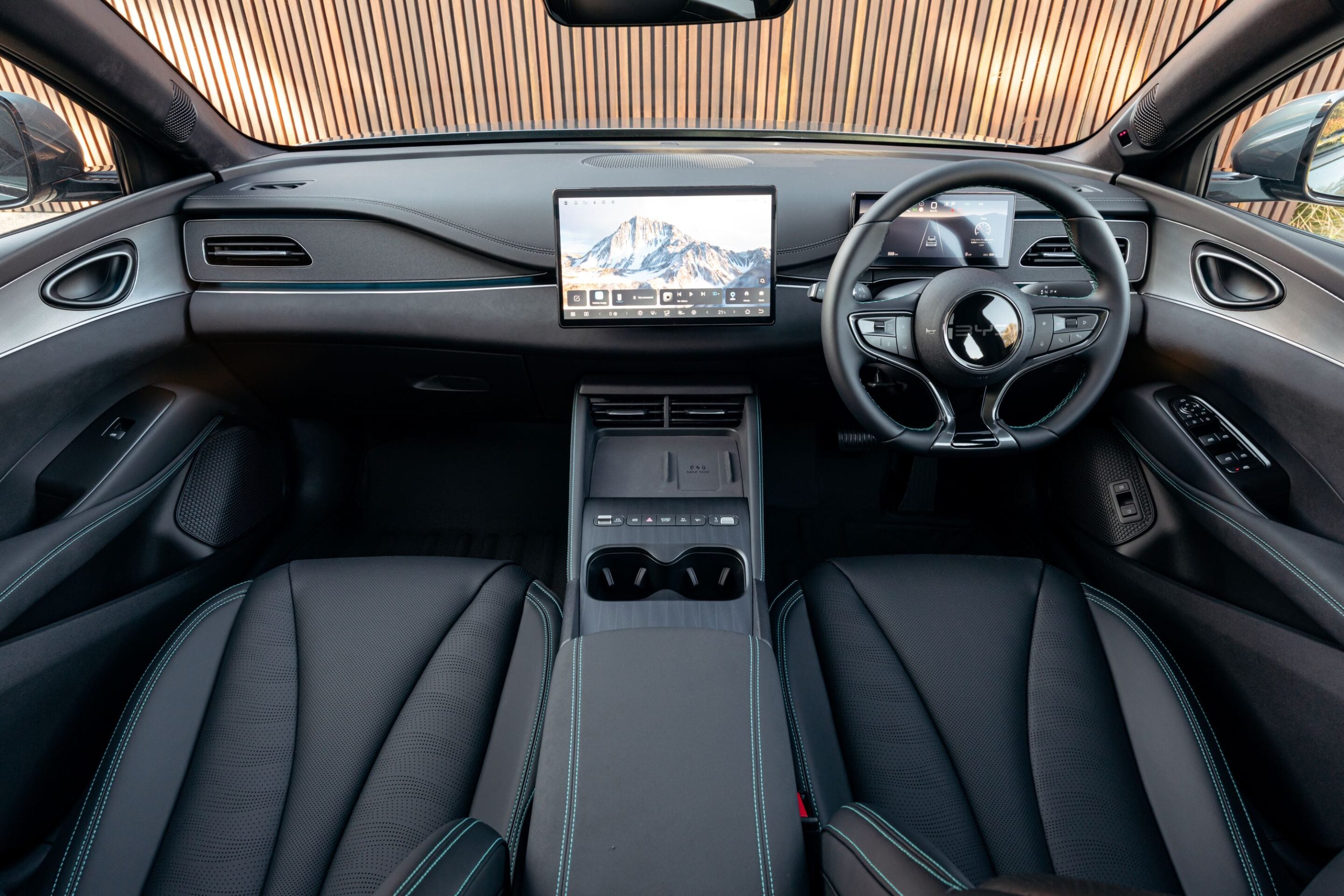
“We’re really going to target the Touring at private customers, families, and maybe even empty-nesters, those who want some flexibility with a car, but not the SUV body style, whereas with the sedan, we see that it’s having a lot of fleet opportunity with ride shares and things like that.”
Ellis confirmed that the Seal 6 Touring would only be available in its current high-spec Premium version, scotching any suggestions that a more affordable Essential variant of the wagon was on the cards for Australia.
“We have Touring in one grade only and that’s the Premium,” said Ellis, adding an emphatic “No” when asked if there was a chance an Essential Touring could join BYD’s local line-up. “The volume [of station wagon sales] doesn’t justify it,” he said.