
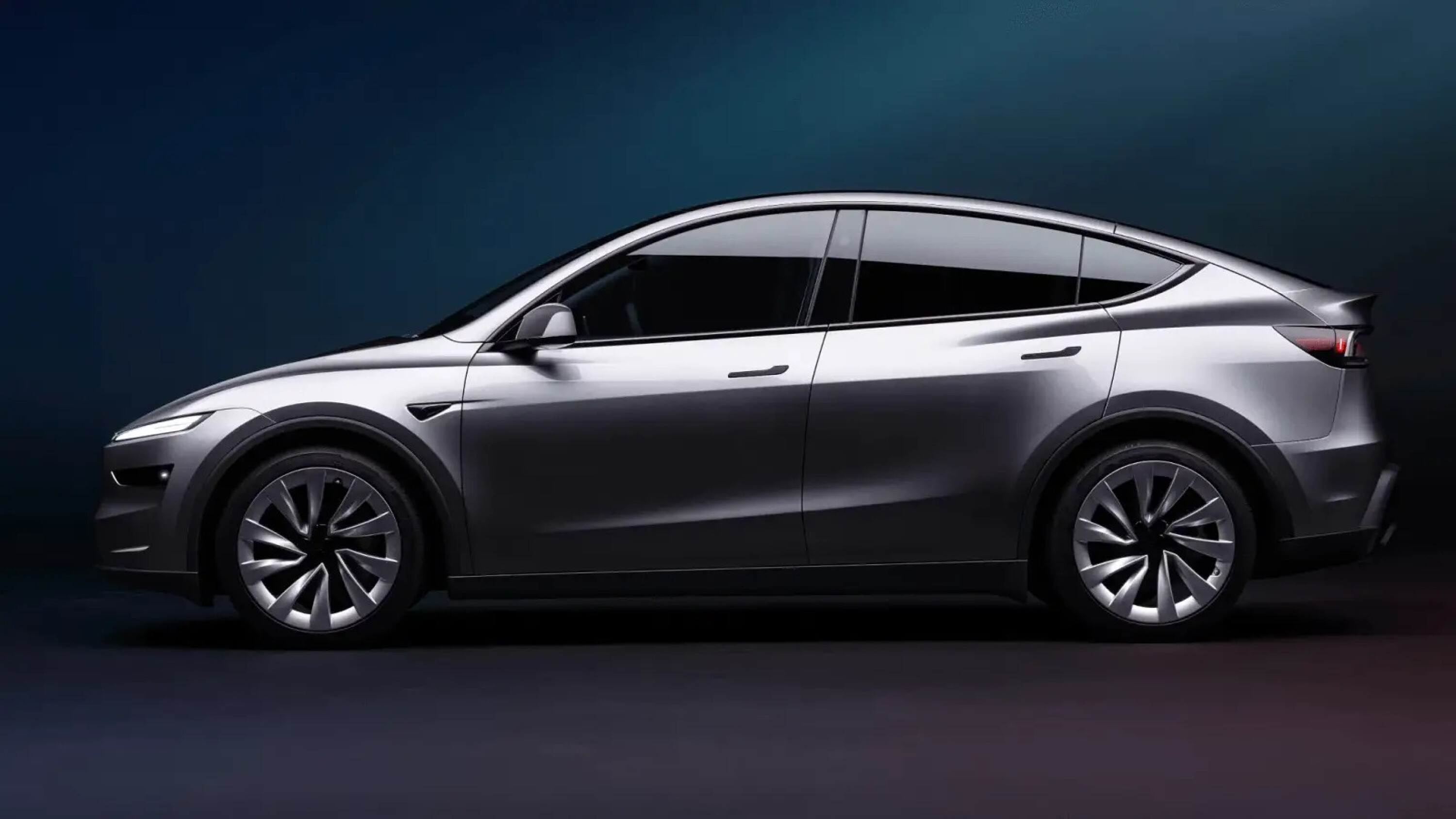
Ahead of a June arrival, or one month after the special new Launch Series, Tesla has revealed pricing of the facelifted Model Y mid-size electric SUV. Priced from $58,900 plus on-road costs, the ‘Juniper’ Model Y is $3,000 more expensive than its predecessor at the entry point to the range – but $4,500 less than the Launch Series.
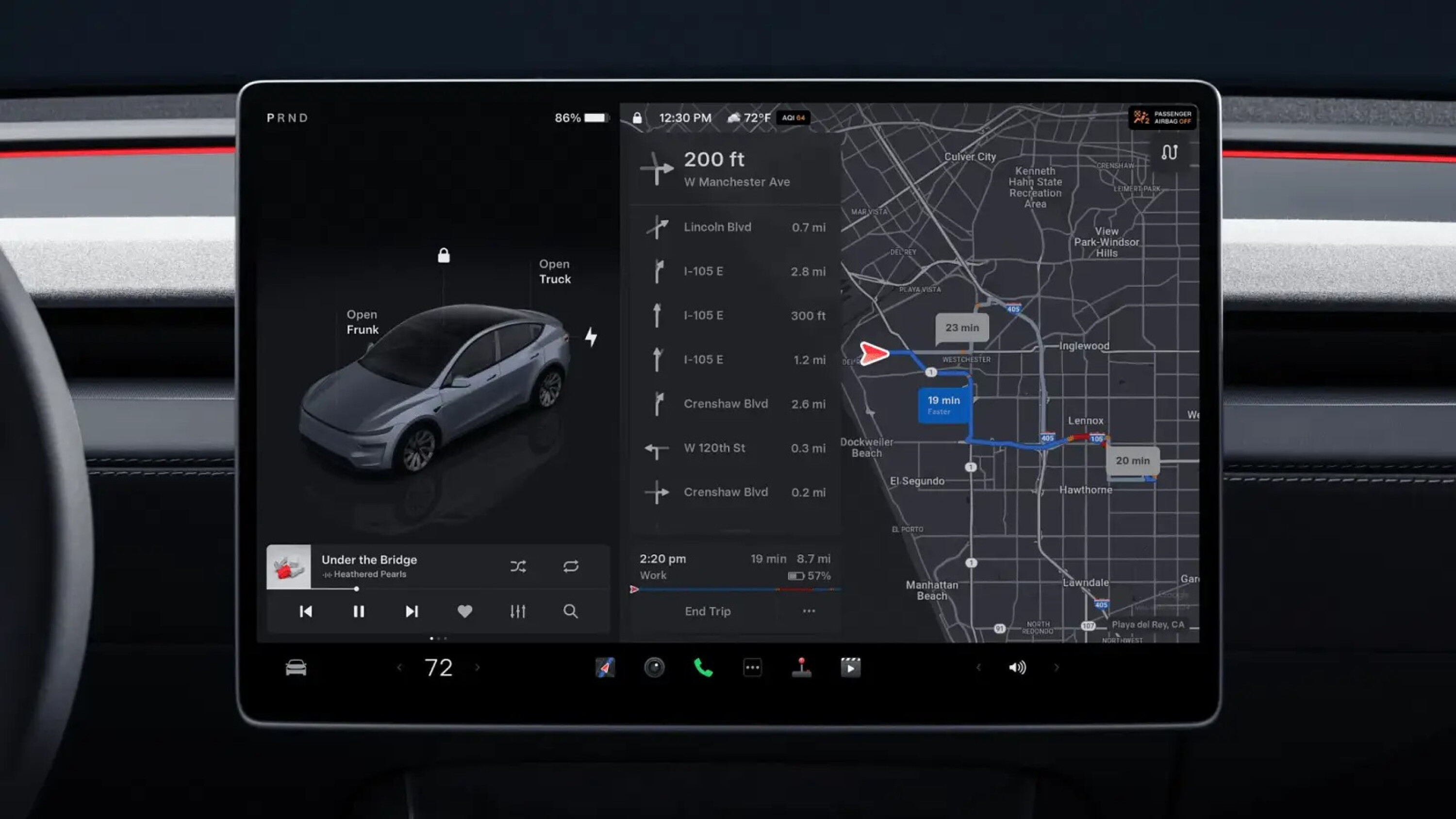
As detailed previously, the updated Model Y introduces new front and rear styling and an overhauled interior with a larger 15.4-inch central touchscreen.
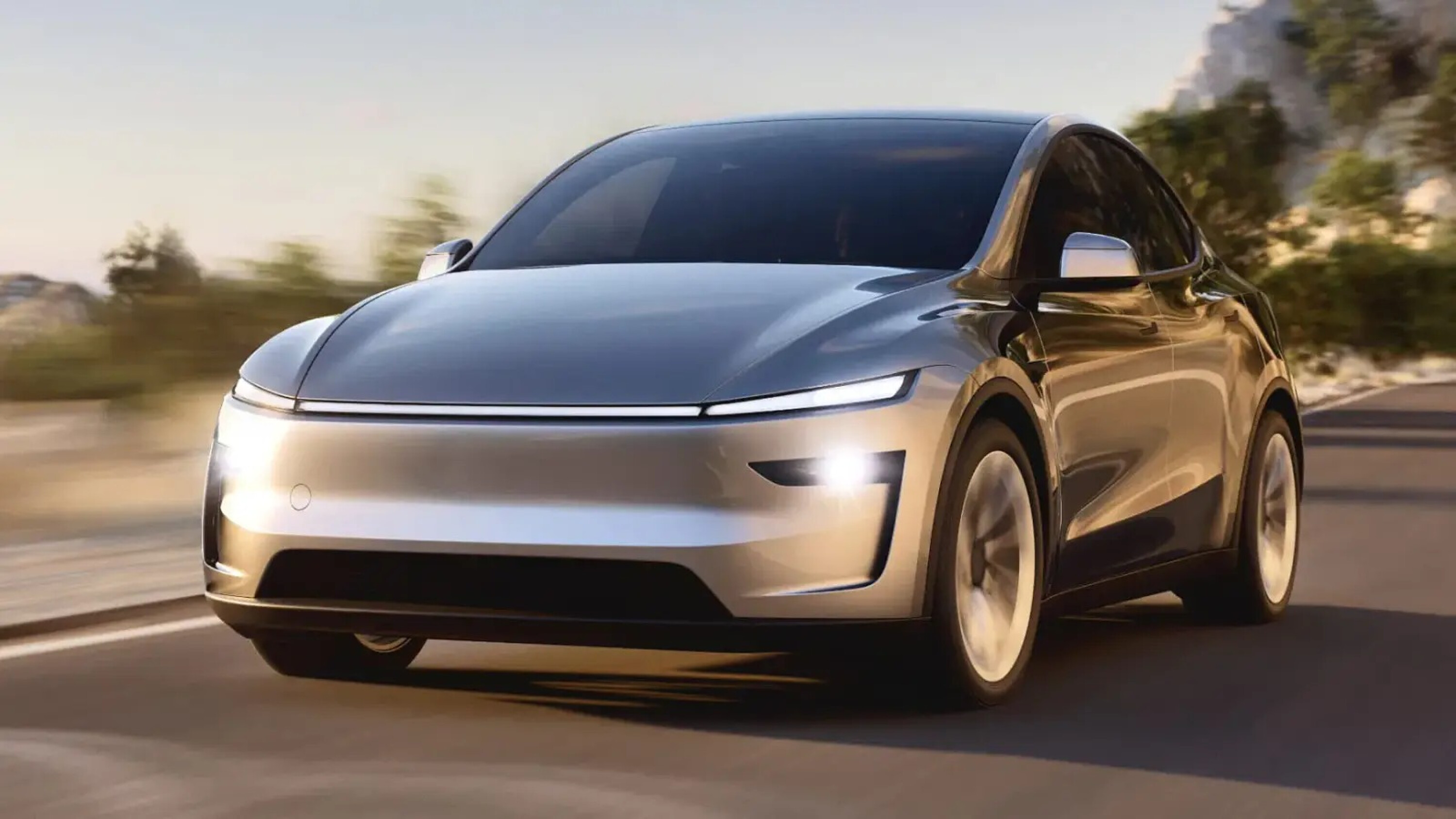
Driving range in the entry-level Model Y RWD has increased by 11km to a WLTP-rated 466km, with the Long Range AWD receiving an 18km increase to 551km. The 220kW RWD sprints to 100km/h in 5.9 seconds, which is a second faster than the pre-updated car, and the 331kW Long Range in just 4.8 seconds (or 4.3 seconds with ‘Acceleration Boost’).
Tesla has also overhauled the suspension, which has reportedly resulted in a 22 per cent reduction in road noise and a 20 per cent reduction in impact and wind noise.
| Tesla Model Y pricing (plus on-road costs): | |
|---|---|
| RWD | $58,900 |
| RWD Launch Series | $63,400 |
| Long Range AWD | $68,900 |
| Long Range AWD Launch Series | $73,400 |
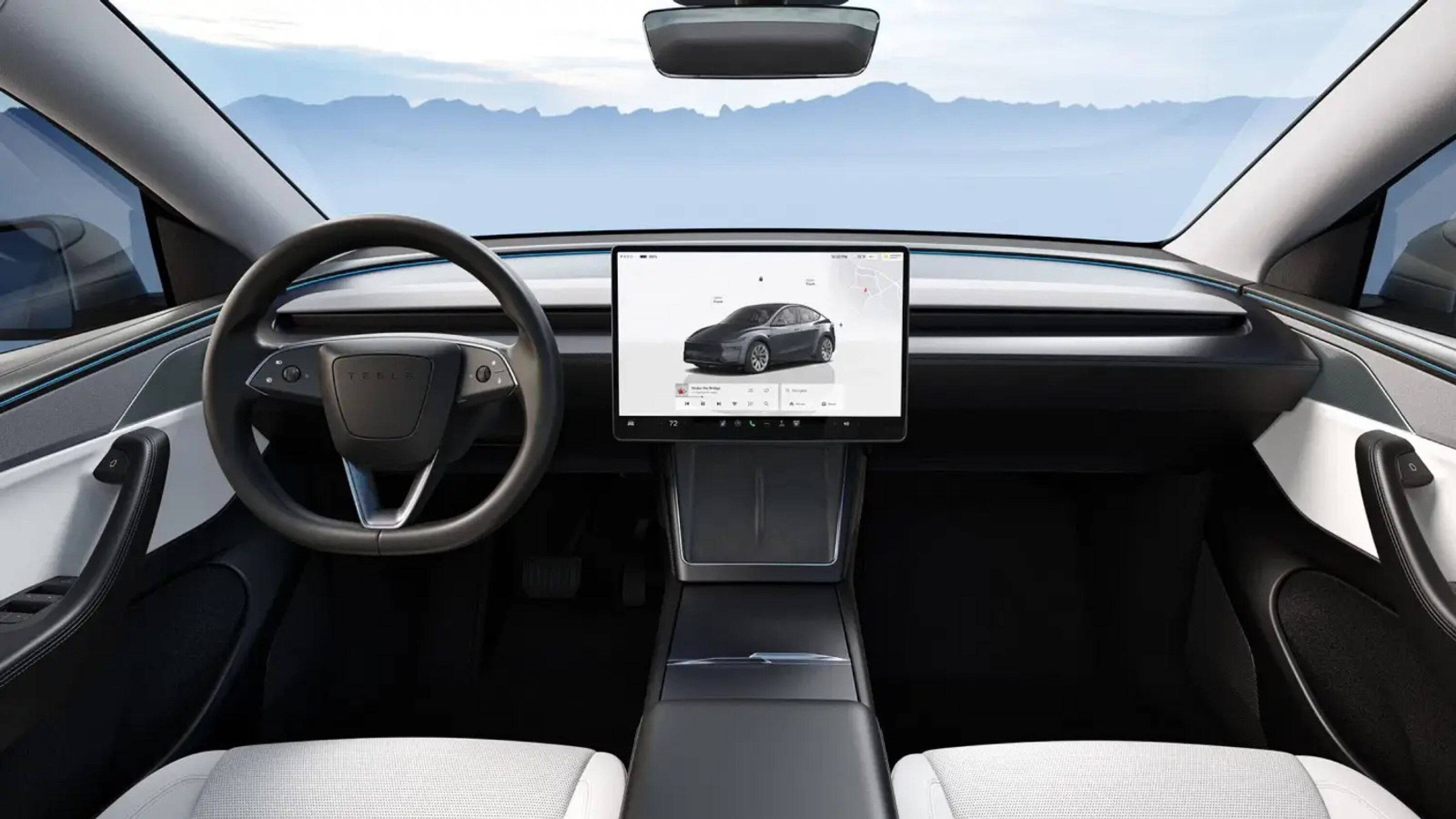
| Tesla Model Y standard equipment: | |
|---|---|
| 19-inch alloy wheels | 8.0-inch rear touchscreen |
| Full-width front and rear LED lighting | Ambient interior lighting |
| Auto-folding/dimming/heated mirrors | Seven airbags |
| Power tailgate | Autonomous emergency braking with pedestrian, cyclist and intersection assist |
| Panoramic glass roof | Blind-spot monitoring |
| Acoustic glass with UV protection | Lane keeping assistance |
| Power-adjustable front seats | Surround cameras |
| Synthetic leather upholstery | Auto high beam |
| Heated and ventilated front seats | Adaptive cruise control |
| Heated rear seats | Tyre pressure monitoring |
| 15.4-inch touchscreen | Intelligent speed limiter |
| Wireless phone chargers | Front and rear parking sensors |
| Nine-speaker sound system | |
| Model Y Long Range adds: |
|---|
| 16-speaker sound system |
| Acceleration boost |
| Launch Series adds: | |
|---|---|
| Boot badge | Charging console script |
| Puddle lighting | Vegan suede trim |
| Door sill plate | |
The updated Tesla Model Y ‘Juniper’ is now on sale in Australia and the first deliveries are due locally in June.
It’s only been on sale locally for 18 months but MG has revealed a replacement to the MG4 electric hatchback in China. While it’s yet to be confirmed for other markets, MG described it as its first global market reveal for 2025.
MG filed a number of names with the Chinese government for the new car, including MG3 EV and MG E5 so it could be called something else in other markets, but has revealed it in China as MG4.
The interior is yet to be shown, but the exterior is softer than the angular current model, and looks less sporty overall.
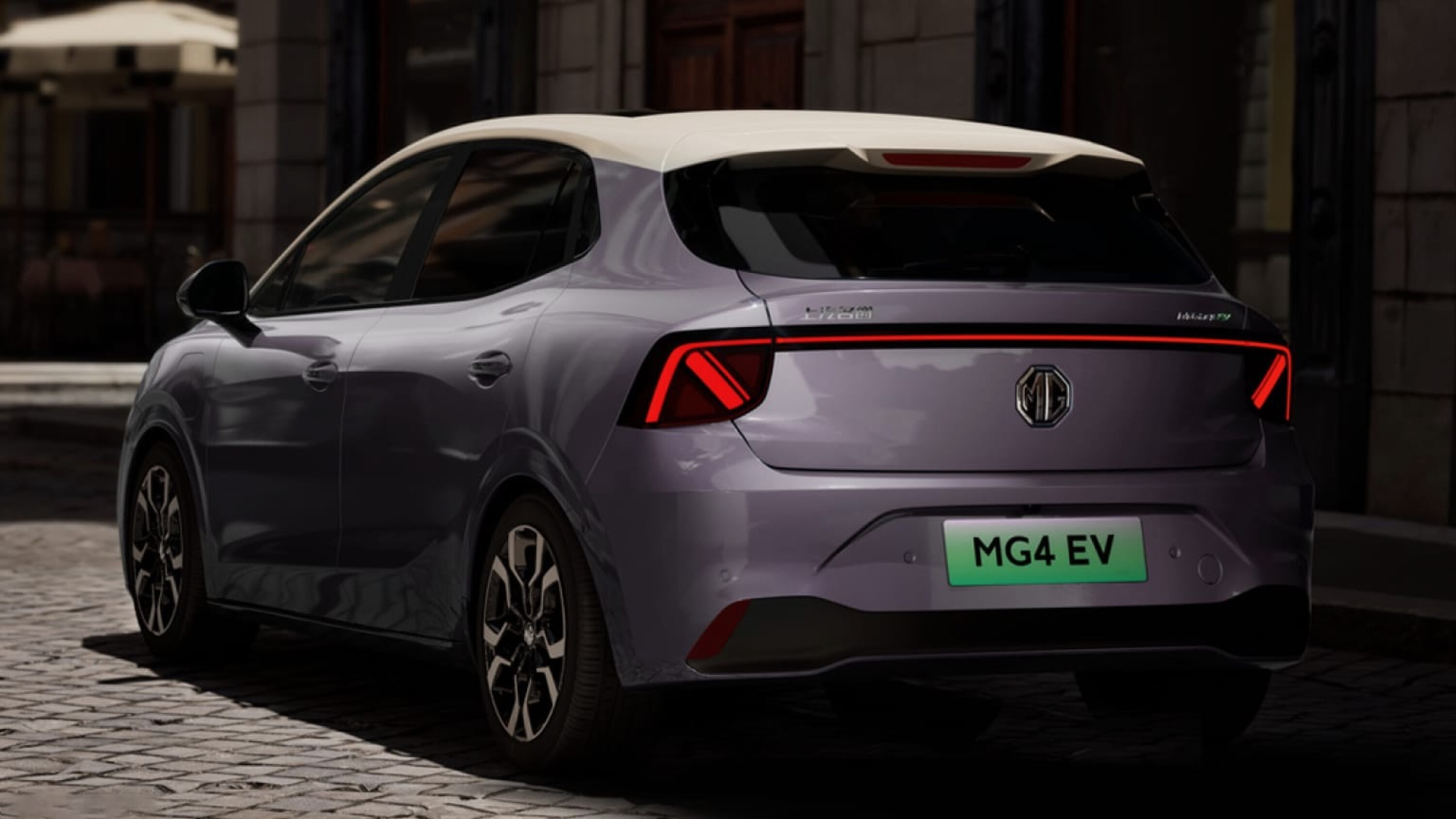
So far, only one variant has been revealed: a single motor powertrain making 120kW with an LFP battery of an unspecified capacity. The new MG4 reportedly weighs 1,485kg, which is around 240kg less than the current model.
Measuring 4,395mm long, 1,842mm wide, 1,551mm tall and riding on a 2,750mm long wheelbase, the new model is 108mm longer, 6mm wider and 47mm taller, plus with a 45mm-longer wheelbase than the current model.
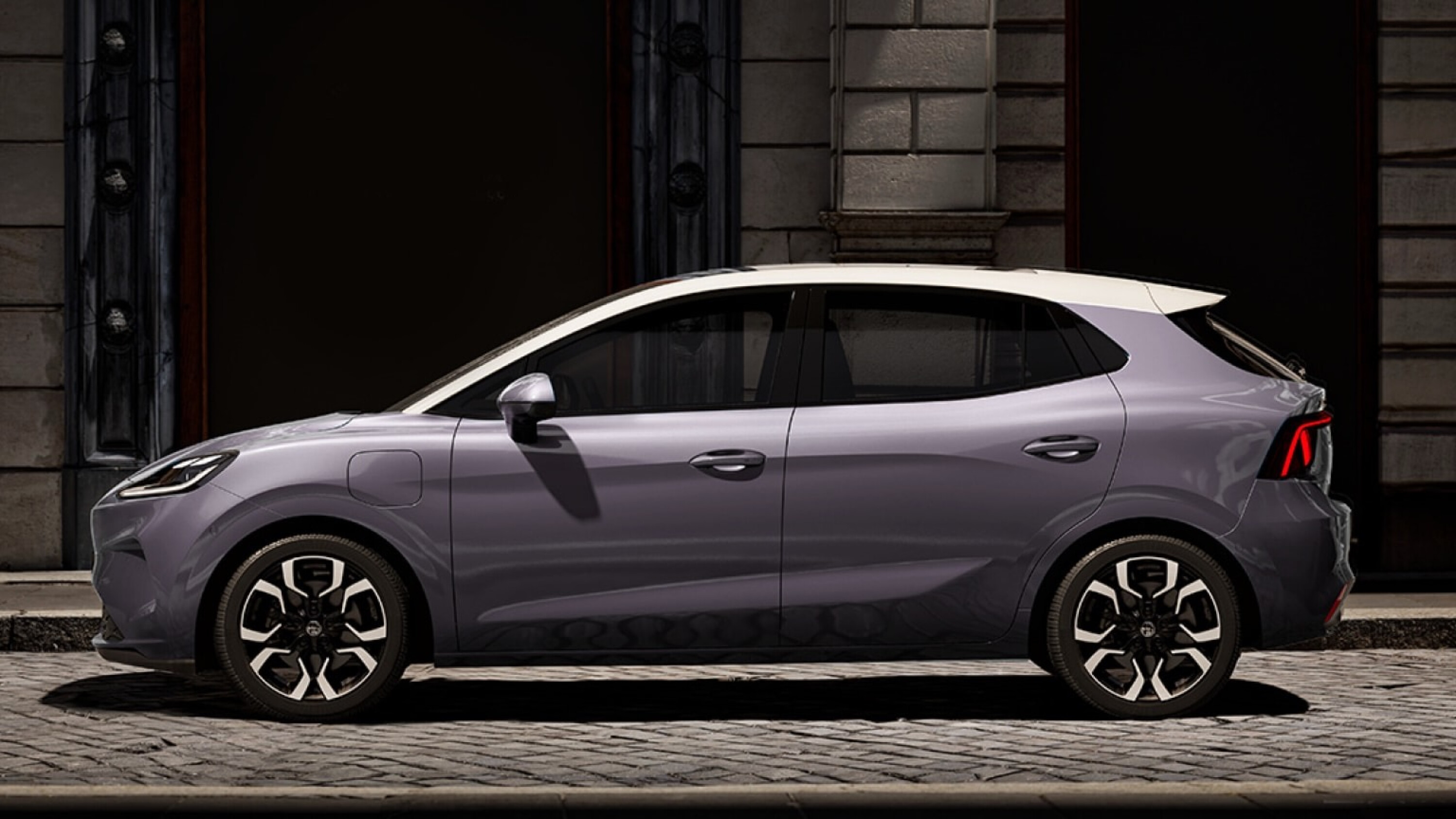
While the MG4 was the third most-popular EV in Australia in 2024 and sells well in markets like Europe, but it’s far less popular in its home market and the update will no doubt have the company hoping for better sales.
MG Motor Australia is yet to confirm local details of the new MG4 though if it goes on sale locally, that will likely happen later in 2025.
MG Motor Australia is reviewing this new model and considering it for the Australian market. It is important to note this model is not built on the same platform as the existing MG4 and will not replace the current model.
March 2025: Fewer than 2000 cars will be offered, anywhere
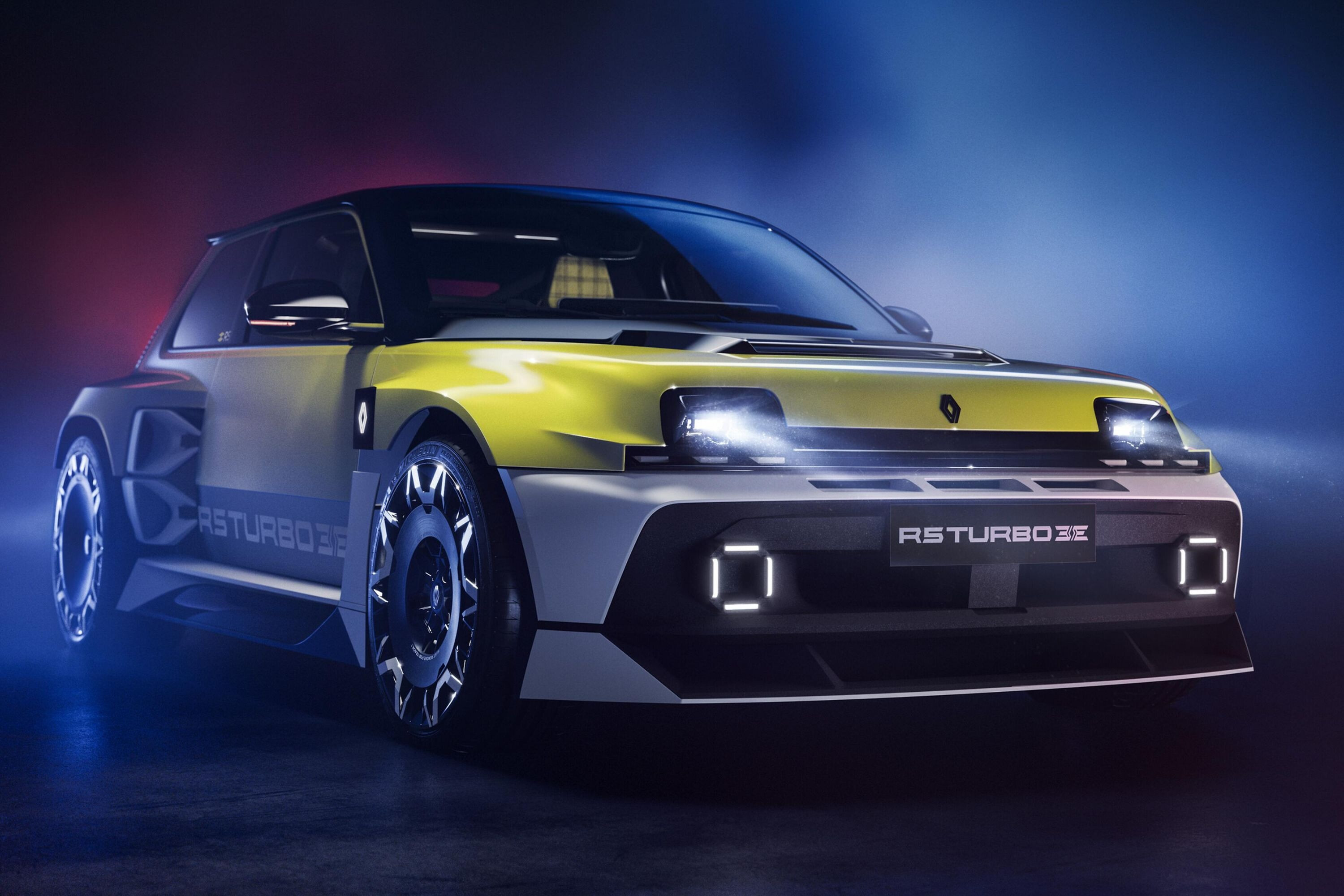
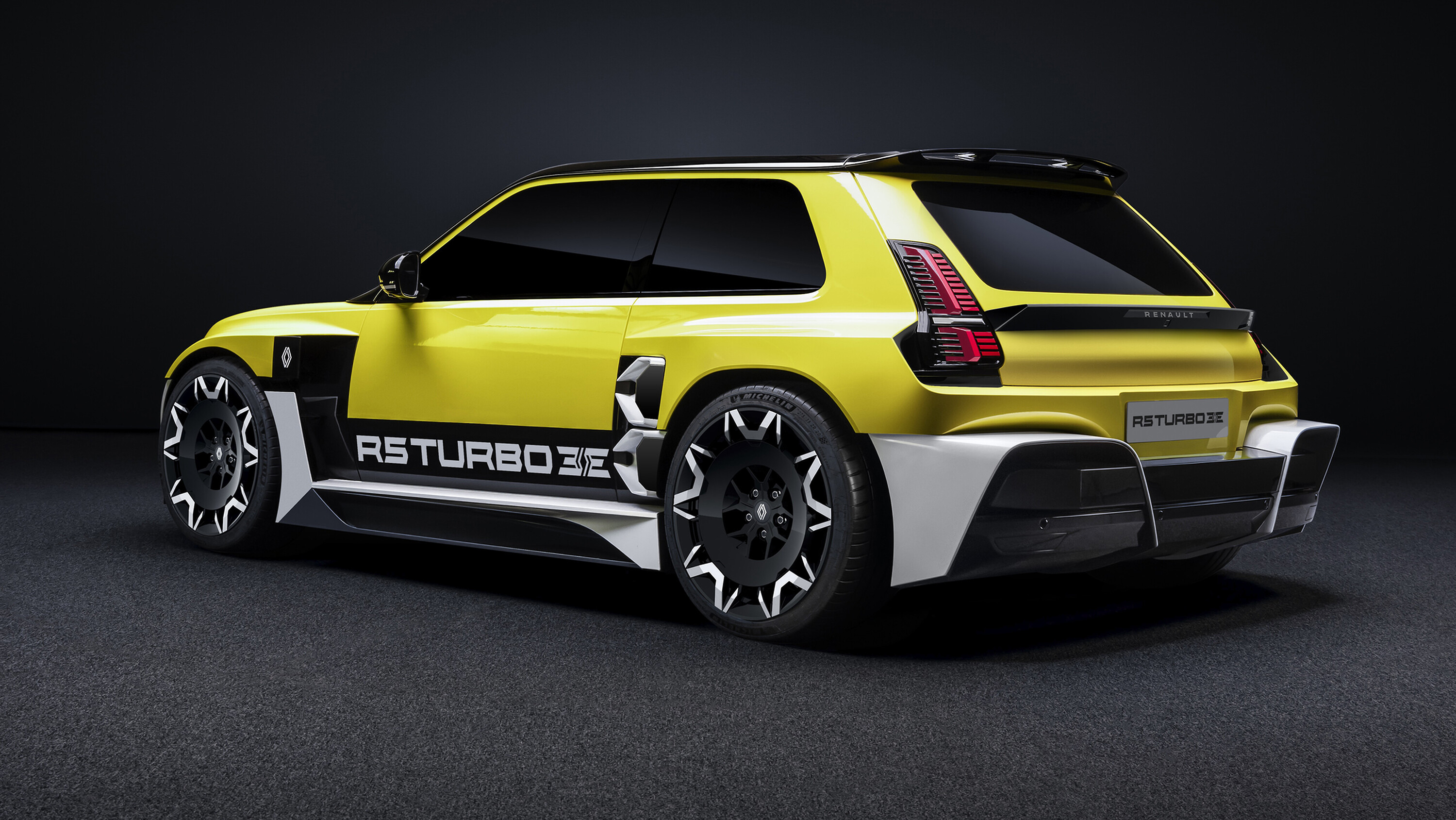
Following last year’s announcement that the hyper Renault 5 Turbo 3E will be sold in Australia, it’s now clear that we might see very few of them.
In an announcement made this week, Renault confirmed it will limit the 3E’s production run to just 1980 numbered examples – ostensibly in honour of the original R5 Turbo’s 1980 debut.
How many will we get?
Given the 3E will be offered in a number of regions, including wealthy performance enthusiast markets like Europe, the Middle East, Japan and (of course) Australia, it’s likely the local scene will be lucky to spot one of these at the occasional fair-weather ‘cars & coffee’, let alone with any regularity.
A broad palette of exterior and interior colour options will be offered, drawing inspiration from the iconic liveries of the Renault 5 Turbo and Turbo 2, including the ‘Rouge Grenade’ and the ‘Tour de Corse 1982’ rally design. More modern colour schemes will also be available.
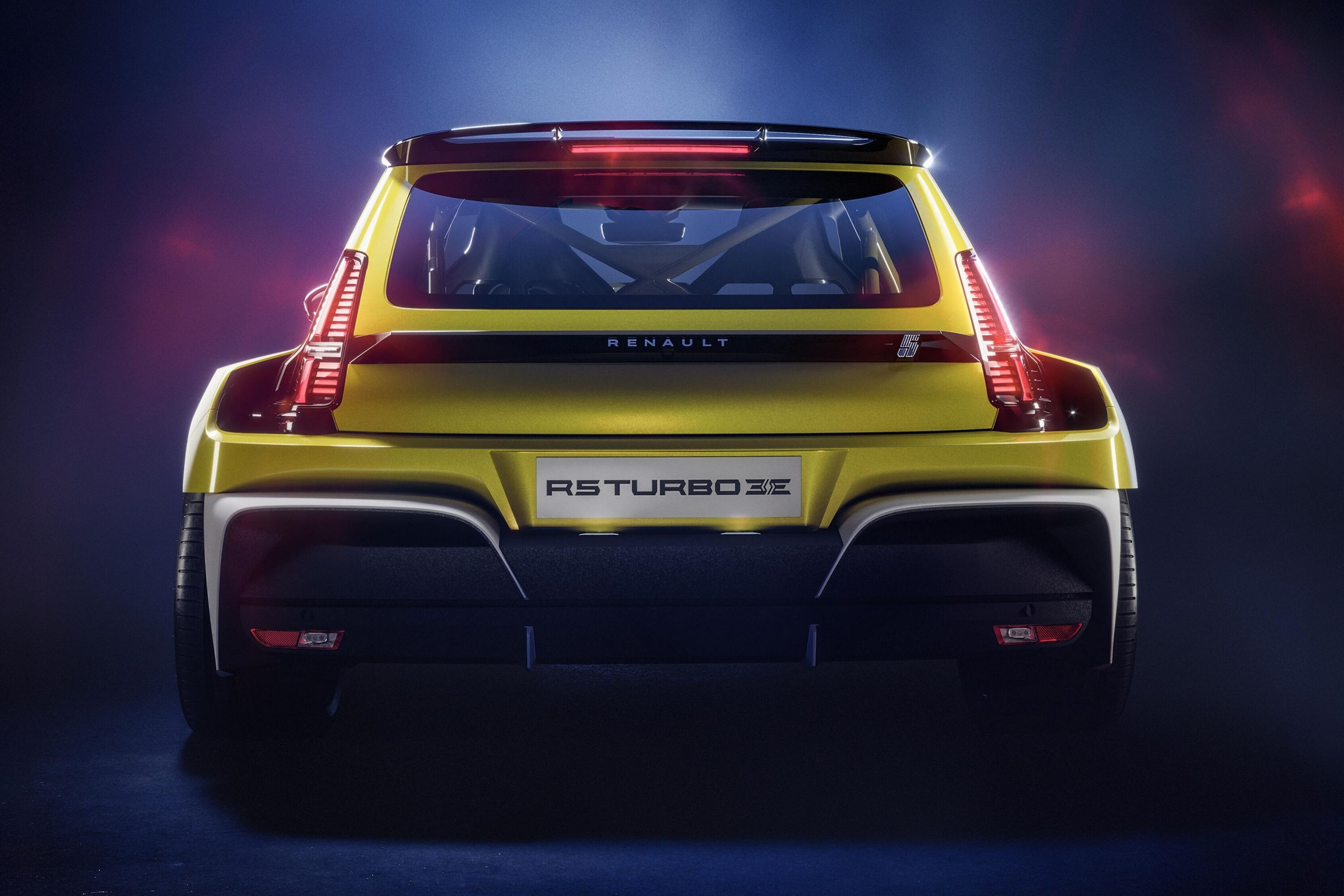
Other options encompass motorsport liveries and interior trim, including seats, dashboard, door panels, and the centre console.
Working with with Renault designers, each buyer can create a unique vehicle configuration – and choose the number of their build, as available.
Reservations will open in the coming weeks and the first deliveries will take place in the course of 2027, although exact Australian timing and pricing is still to be announced.
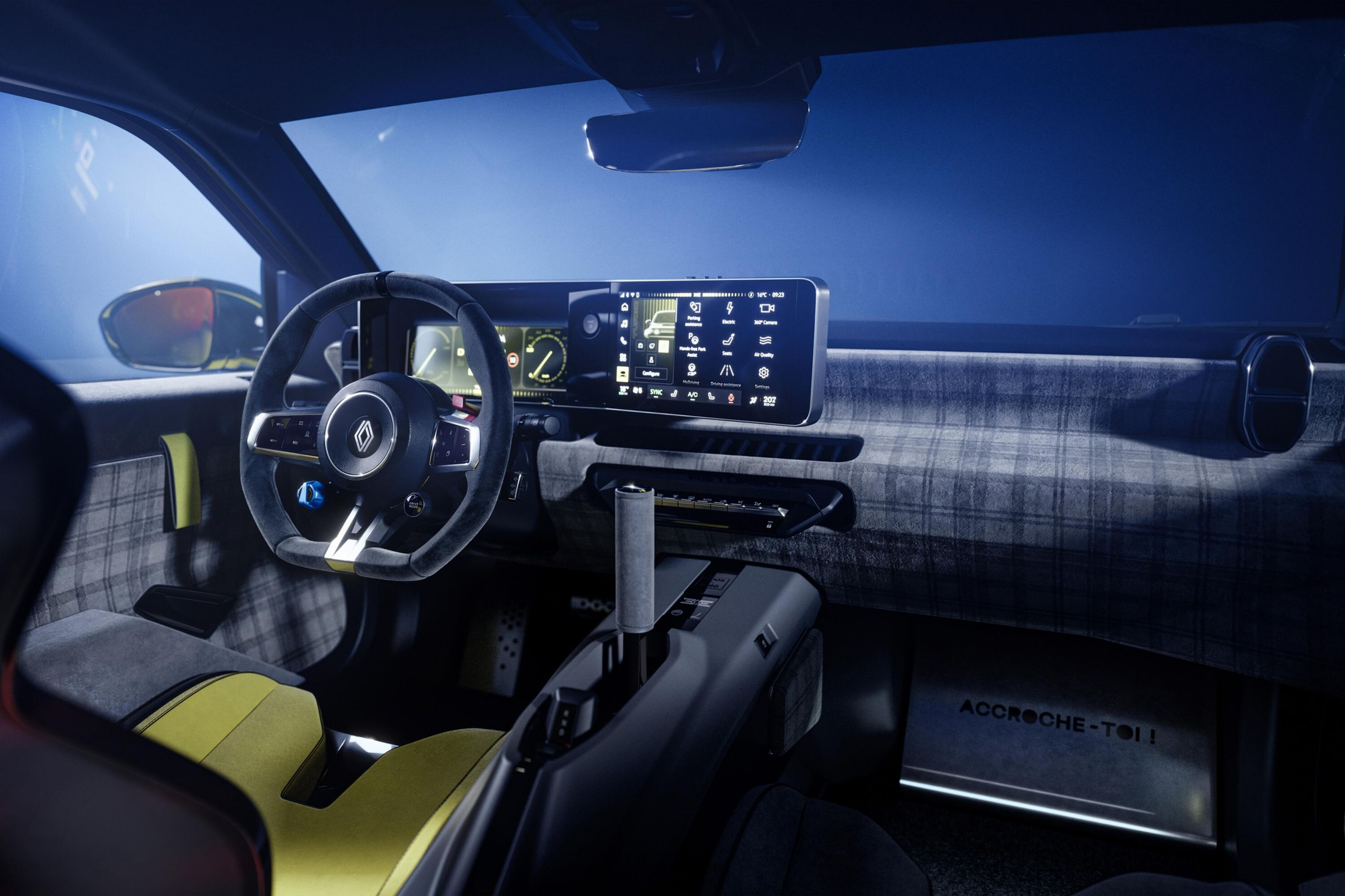
December 30: Regular R5 EV? The news is there’s no news
A Renault Australia spokesperson has confirmed that while the more affordable Renault 5 E-Tech remains of interest, there’s nothing to announce.
Jump ahead for the full comment, or continue reading below for details on the Renault 5 Turbo 3E coming to Australia.
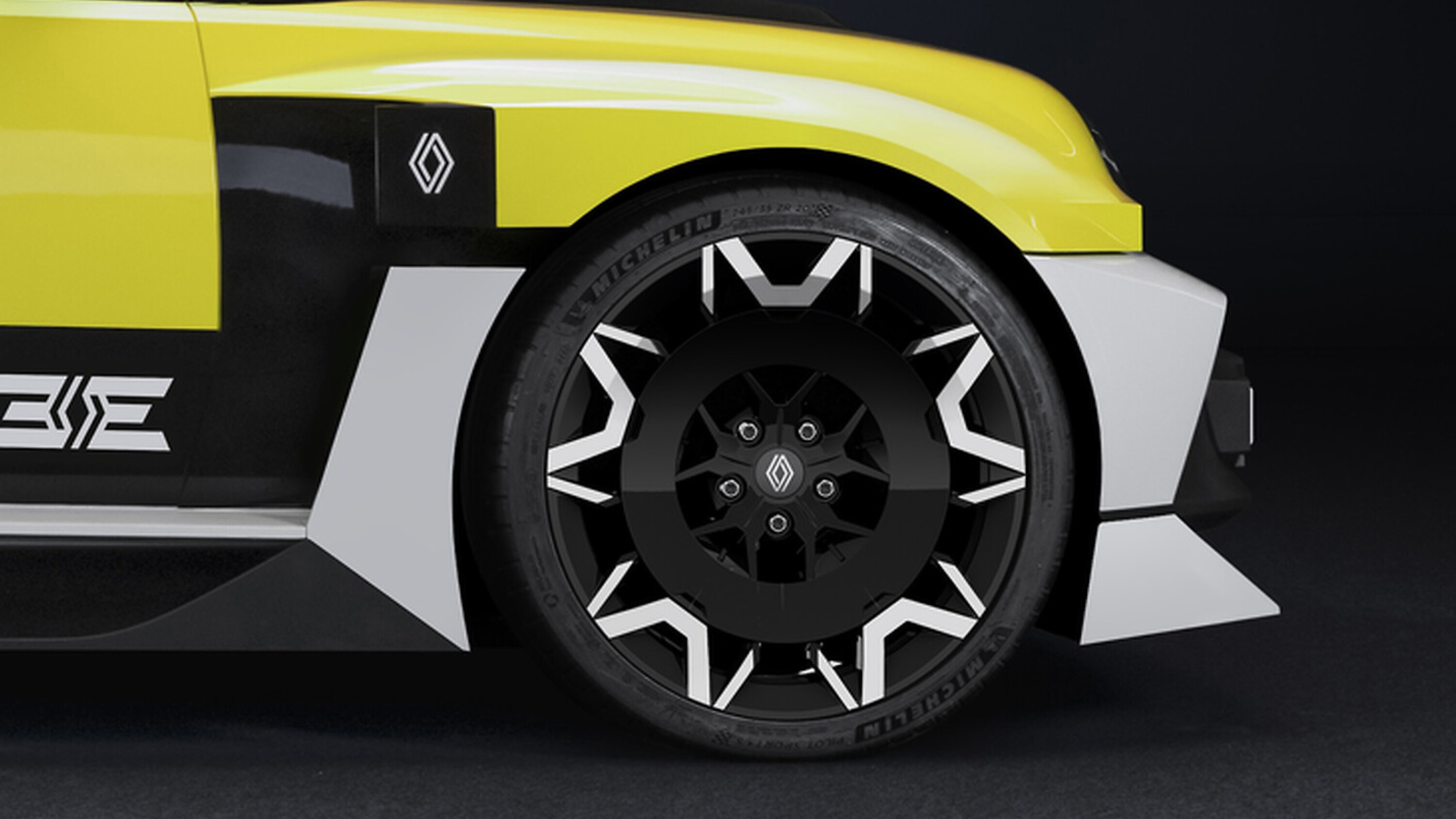
December 24: Renault 5 Turbo 3E coming to Australia!
Renault has confirmed the electric Renault 5 Turbo 3E hot hatch will be available in Australia, announced just in time for Christmas.
Snapshot
- Dual electric motors deliver 373kW, claiming a 3.5sec 0-100 time
- Carbon-fibre superstructure with retro-inspired design and modern digital cabin features
- Pricing, range, and production details to be announced; expressions of interest now open
“We have been working around the clock with head office in France to secure the Renault 5 Turbo 3E for Australia, and we finally locked it in just hours away from the start of the holiday shutdown period,” said Renault Australia boss Glen Sealey.
Of course, while the confirmed 3E is a box-fresh Christmas announcement, we were first teased with its potential by way of a more retro-bodied prototype revealed back in 2022. 👇
Then there was the unofficial and even more retro-styled Renault 5 Turbo 3, revealed that same year.
Developed by an LA-based trio of Frenchmen going by the name Legende Automobile, this restomod boasts a carbon-fibre body styled to match the original, while power comes from a more traditional combustion source. Read more about it at the story linked below. 👇
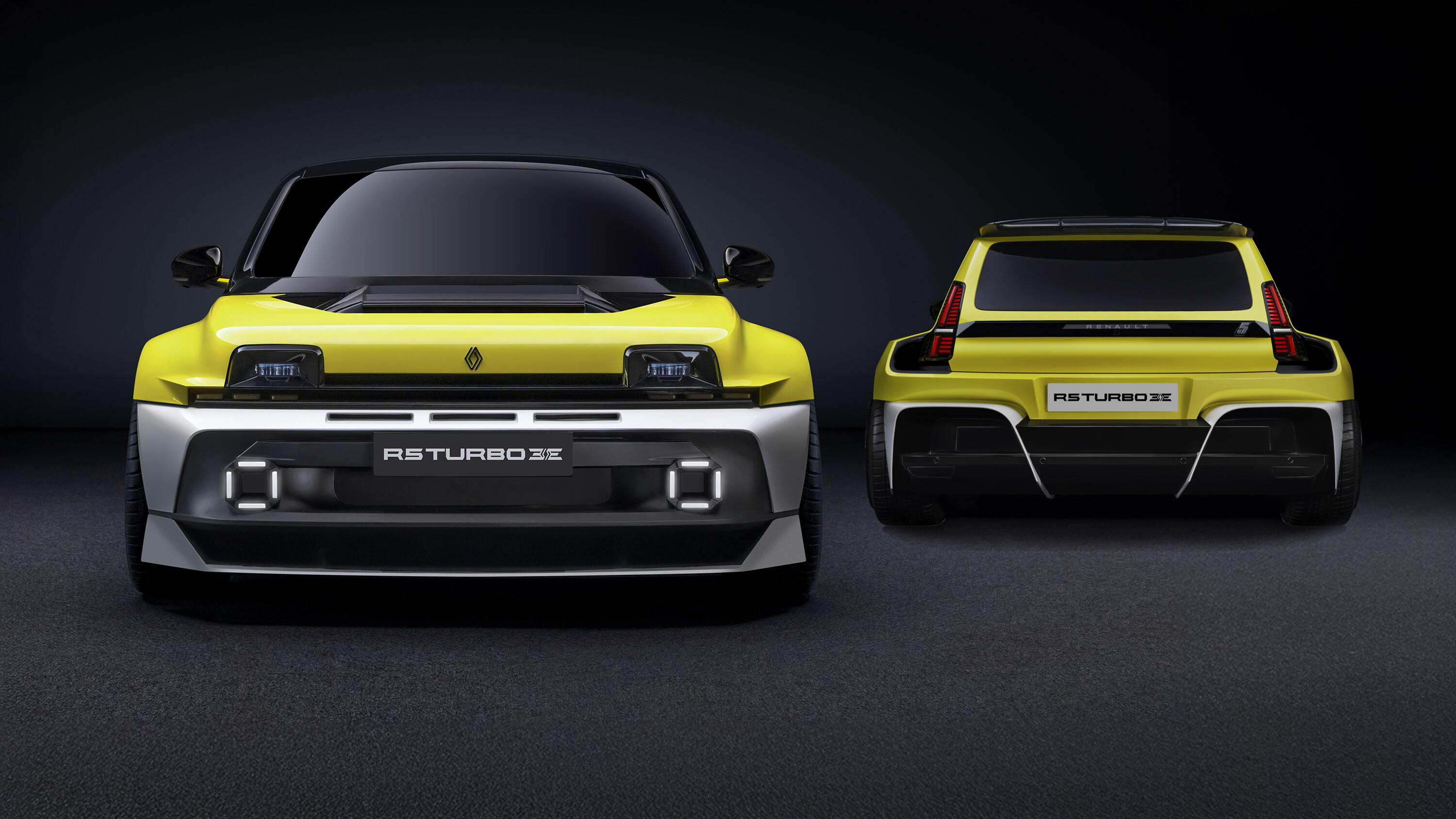
So what does the legit Renault 5 Turbo 3E bring?
This modernised, all-electric evolution of the 1980s Renault 5 Turbo adds high-performance capability to the new Renault 5 E-Tech range – although the two share only superficial ‘throwback’ styling similarities.
For fans already impressed with the regular 5 E-Tech‘s retro styling, this 5 Turbo 3E model is sure to have the ‘take my money’ GIFs playing on repeat.
In the Turbo 3E’s case, its styling is more faithful than ever to its iconic predecessor, with front-end styling and an overall shape that draws much closer to that hero hatch’s styling. And, of course, it’s dropped the back doors to properly emulate the look created by the original car’s rear-engined design.
As for its name – newcomers to the legend might assume the 3E has three motors. Rather, its name represents a continuation of the line, with the last entry being known as the Renault 5 Turbo 2.
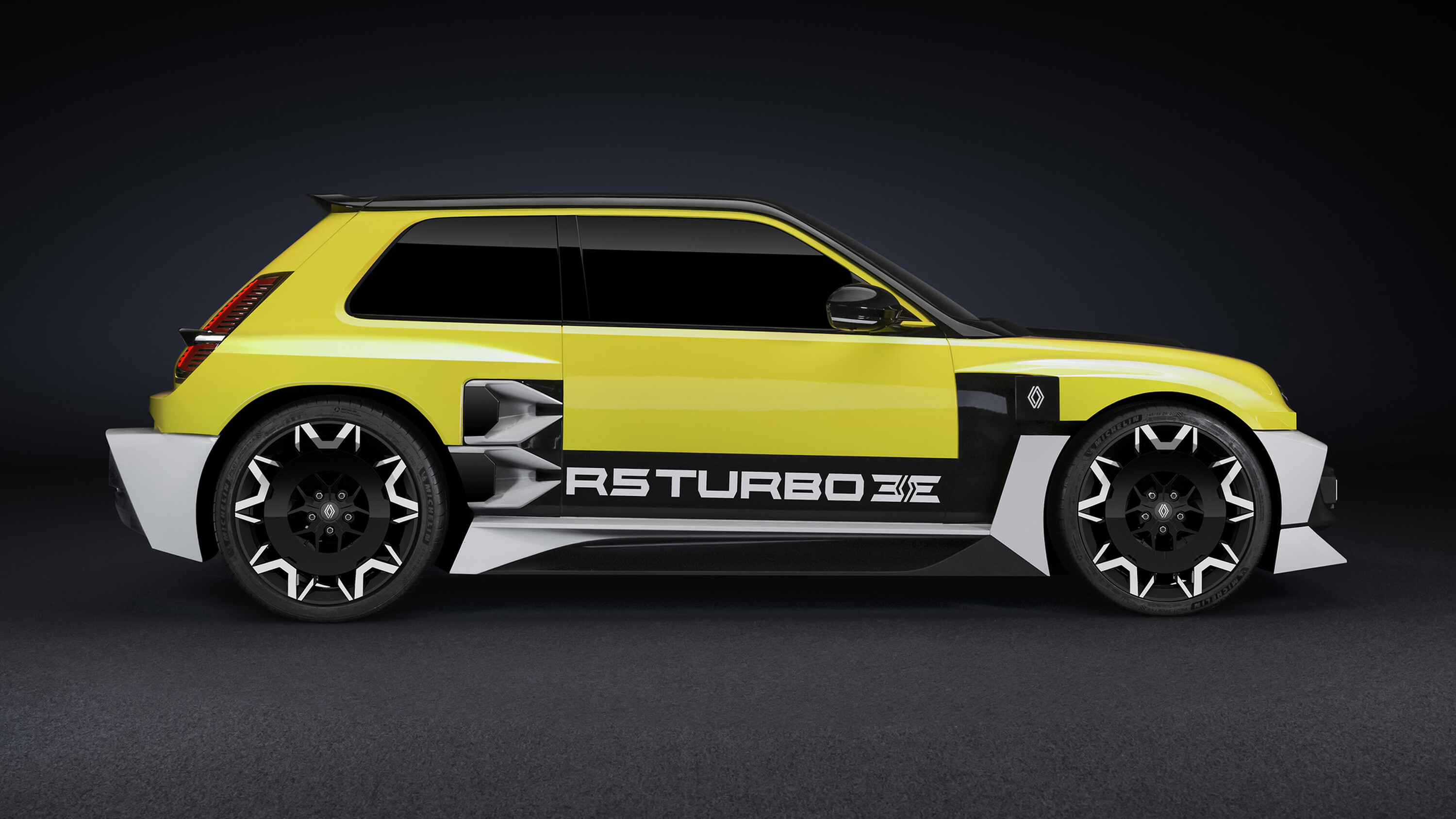
The Renault 5 Turbo 3E upgrades its power game to new dual electric motors at the rear wheels for an exclusively rear-wheel drive layout, to deliver a claimed 500hp (373kW) and a 0-100km/h time of 3.5 seconds.
These numbers make the 5 Turbo 3E the fastest-accelerating production model in the company’s history – if not quite “worthy of even a hypercar” as Renault suggests in its announcement materials.
Built on a carbon-fibre superstructure, the car is designed for high strength and reduced weight, aligning with its performance focus.
For now, further details remain a secret, meaning we’ll have to wait to know more about its battery, driving range and charging times – not to mention production numbers and pricing.
If you don’t mind being in the dark on those deets, Renault Australia has put up an ‘expressions of interest’ page on its local website.
What about the normal Renault 5 E-Tech for Australia?
On that one, there appears to be nothing new to know.
Renault’s Australian arm made no mention of the regular 5 EV in its Turbo 3E announcement, although it has long been open that it is eager to get it here.
Speaking with Wheels in November, a Renault Australia spokesperson said: “we are actively assessing that product for Australia”.
This week, the brand told Wheels: “Securing the R5 Turbo is step one of a number of products coming to Australia from Renault. As more news develops, we’ll keep you informed.”
And so the matter of the Renault 5 E-Tech remains little more than a ‘nothing to say’ situation, but if you want one, making your feelings known to Renault dealers and the brand directly is your best start.
For more on the regular 5, see our story linked below.
Audi Australia has announced initial details for the new A5 and S5 sedan and wagon, which replaces the A4 in the brand’s line-up, ahead of their arrival later this year.
Priced from $79,900 plus on-road costs, just a single variant of the A5 range will be offered at launch initially, and only in a liftback (called sedan by Audi) bodystyle with the S5 sedan and wagon sitting above it.
The former A5 coupe and convertible are no longer offered globally.
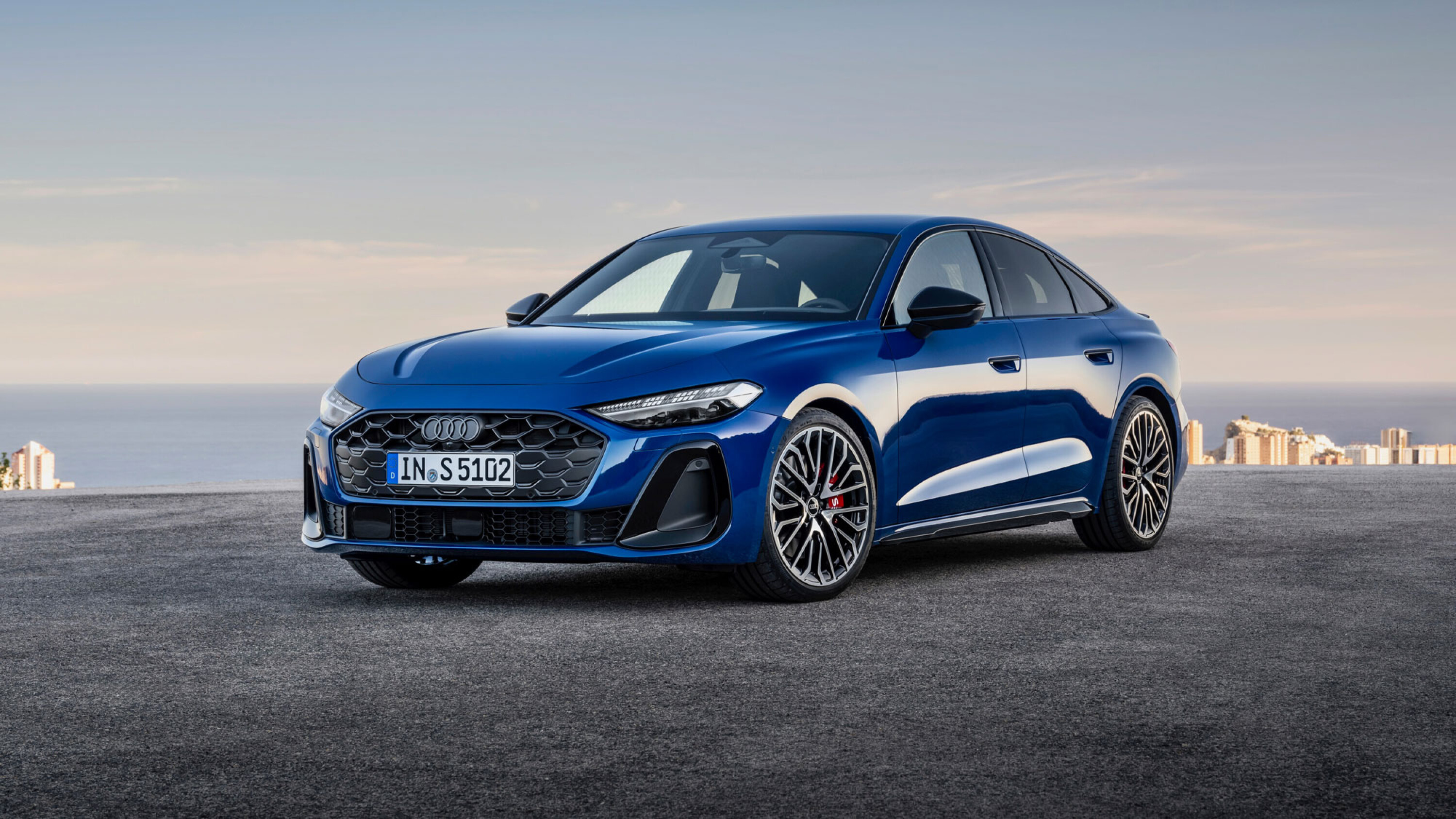
The A5 uses a 2.0-litre turbocharged four-cylinder petrol engine making 150kW of power, while the S5 upgrades that to a larger 3.0-litre turbo V6 making 270kW/550Nm.
Both use a seven-speed dual-clutch automatic transmission, while the S5 benefits from a 48-volt mild-hybrid system (MHEV Plus) that’s can drive the car on electric power alone, at low speeds, for short distances.
Pricing for the S5 is yet to be announced, though Audi Australia has confirmed that special ‘edition one’ variants of both the liftback and wagon will be offered with black trim pieces and unique interior and exterior details.
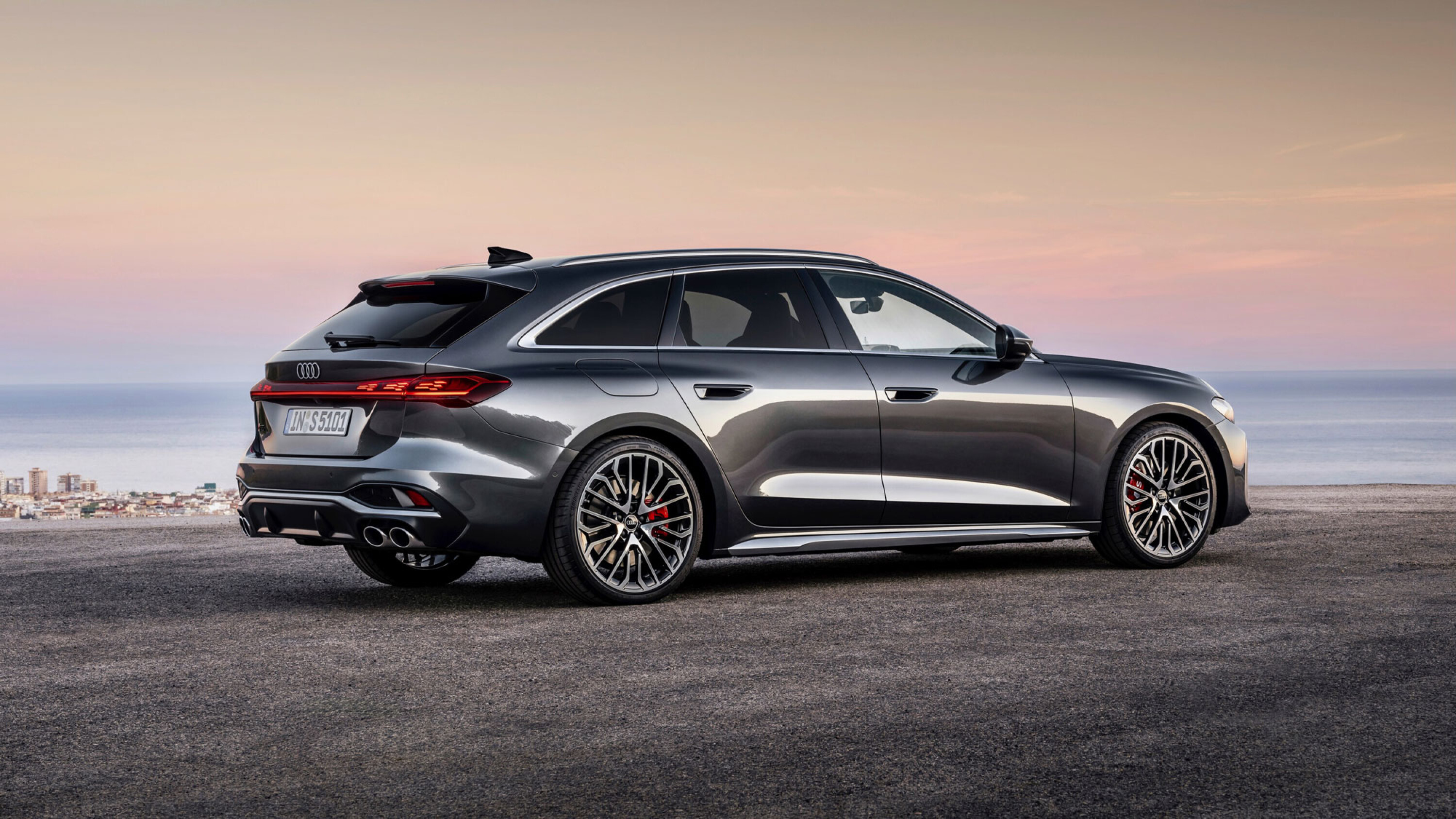
That’s on top of other available features such as a 20-speaker Bang & Olufsen sound system with speakers in the front headrests, a head-up display, Matrix LED headlights, OLED tail-lights, a panoramic sunroof with electrochromatic glass instead of a sunshade and the brand’s latest ‘Digital Stage’ MMI infotainment system, incorporating a 14.5-inch touchscreen and an 11.9-inch digital driver’s display with wireless smartphone mirroring, digital radio and sat-nav.
Overseas, a 110kW version of the 2.0-litre turbo-petrol engine, as well as a 150kW 2.0-litre turbo-diesel, are offered but are yet to be announced for Australia.
Deliveries of the new Audi A5 and S5 will commence later in 2025, with full local details yet to be announced.
Chinese EV giant BYD has launched a new 1,000-volt ‘Super E-Platform’ that’s reportedly capable of charging as fast as it takes to fill an ICE car, with 400km of charge added in just five minutes.
According to BYD, its new platform will end long waits at EV chargers and EVs will become as easy to charge as petrol and diesel vehicles are to fill with fuel.
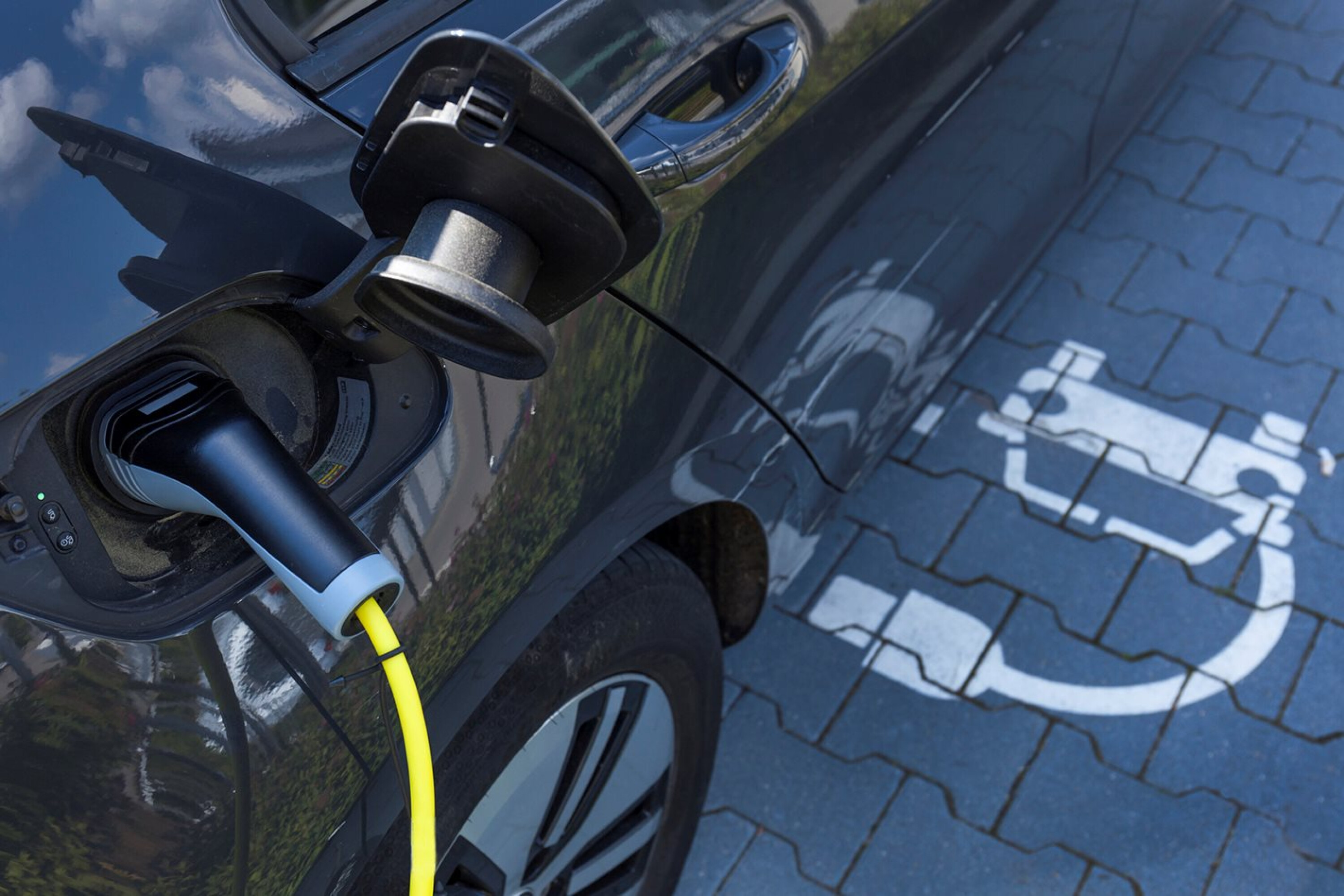
Current leaders in electric vehicle charging such as Hyundai, Kia, Genesis and BYD employ 800-volt architectures, allowing for peak charging speeds of up to around 350kW – around a third of what BYD’s new architecture will be capable of.
Globally, no EV chargers are capable of charging at 1,000kW but BYD says that it will roll out more than 4,000 ultra-fast chargers in China to compliment the new Super E-Platform.
According to BYD, the new charging tech will debut on its new Han L and Tang L EVs, and both are now available to order in China. BYD conducted testing on the Han L and found that a five-minute charge gave the car 470km of range.
The Han L starts at around A$60,000 in China and features a 500kW rear motor and an 83.2kWh LFP battery. The Tang L SUV features the same motors as the Han L but uses a larger 100kWh battery and is priced from around A$62,000.
BYD is yet to make any announcement about the new charging tech spreading to other global markets, but we’d wager it being quite a distance off for local EV stations in Australia. According to charging app PlugShare, there are less than 40 350kW fast chargers for EV owners to charge at.
Were you looking for the place the Autozam AZ-1 – a kei car that would only ever be sold in Japan – was born, Basildon in Essex probably wouldn’t be the first place you’d hit upon. Yet tucked away in a nondescript trading estate in the south-east of England stood the industrial unit of Hawtal Whiting, and if you peered inside in early 1991, you’d have seen a tiny mid-engined coupe being subjected to all manner of torture tests.
Bodies-in-white were subjected to bending and torsion tests. Cars were pounded on a four-post road simulator and running prototypes were sneaked into covered trucks for shakedowns at Millbrook Proving Ground. Datasets were pored over, improvements to the suspension implemented and trim choices finalised. The production car might have been born in Essex, but the prototype story goes back a whole lot further.
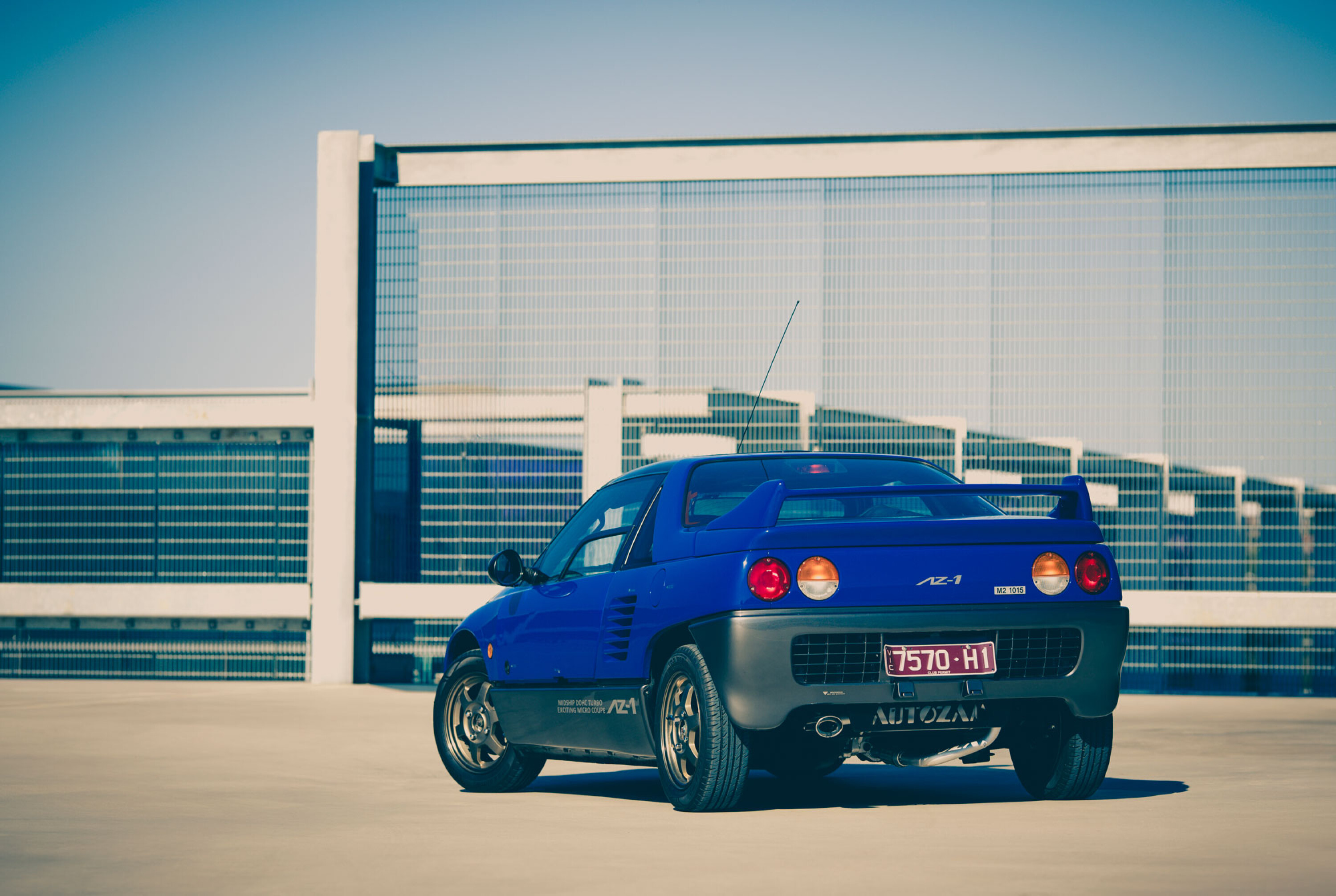
How much further? 1948 is a good start. That’s when the kei car rule set was initially devised. Designed to stimulate both car post-war car ownership and kick-start Japan’s car industry, the rules specified physical size and engine displacement. For four-stroke engines, that displacement was a maximum of 150cc between 1949 and 1950, 300cc from 1950 to 1951, 360cc from 1951 to 1955 and 550cc from 1976 to 1990, when the Autozam AZ-1 was born.
Mazda began working on a kei-car concept in early 1985, creating a one-fifth scale clay model of a design it called the W140. The sharply raked nose left no space even for a tiny 550cc powerplant, which was instead slated to fit behind the driver. Mazda toyed with the idea of a doorless open roadster version but computer simulations showed that body rigidity would be shocking and the baby barchetta plan was dropped. A 1:1 clay model appeared in 1986, and by April of the following year, a running prototype using the engine from a Daihatsu Mira was built. This project was then approved for production feasibility testing, wearing the name AZ-550 Type A.
It probably hasn’t escaped your attention that another compact, mid-engined Japanese sports car with a similar shape had popped up in 1983 as the Toyota SV-3 concept at the Tokyo Auto Show. The very next year, this car would become the production MR2. There’s little doubt that the design of the MR2 influenced the engineering of the smaller W140/AZ-550/AZ-1.
Many web sources state that the Autozam drew its design inspiration from the Suzuki RS/x concepts, but the dates really don’t support this. Suzuki knew nothing of Mazda’s plans for the project until they were approached in 1988 to provide the engine for the vehicle. They agreed, but Mazda was similarly taken by surprise when the Autozam AZ-550 was revealed to the public at the 1989 Tokyo Show, only for Suzuki to be showing their kei car, the Cappuccino. These two models joined the Honda Beat, known as the ABC (Autozam, Beat, Cappuccino) by Japanese journalists.
Three versions of the AZ-550 Concept were revealed. The Type A would eventually morph into the production AZ-1. The type B had a bluffer front end, a less steeply raked windscreen and large, bulbous headlamps. The doors opened conventionally and it featured large rear light clusters. The Type C was the most extreme, drawing its influence from Mazda’s Le Mans-winning 787B. It was shown in blue and white with a bubble canopy, fender mirrors and a wing at the back, wearing the same number 201 on its flanks as the race car.
The purpose of the exercise was to gauge public interest, and more column inches went to the radical miniature race car than the other two combined. Despite this. Mazda came to realise that productionising and selling such a car would present its own unique suite of issues and decided that the Type A concept ought to get the green light. That’s where Basildon came in.
It was inevitable that the AZ-550 would undergo many changes before it became the production AZ-1. Two project leaders came and went before Toshihiko Hirai arrived as Head of Development. The man who oversaw the development of the Mazda MX-5 arrived with a steadier hand on the tiller.
In case you were wondering why the car wore Autozam badges rather than Mazda ones, it was explained by Mazda’s multi-channel sales strategy at the time, where there would be an Autozam kei car line (including the Carol and the Scrum van), the next tier up would be the sporty Eunos cars such as the MX-5 and then the more aspirational Anfini models.
On his first day on the project, Hirai ditched the AZ-550 show car’s pop-up lights, feeling that they were too heavy, costly, gimmicky and out of character for a kei car. He also claimed that the complexity of the motor system would be easily damaged if the front bumper was nudged. “I can’t put that burden on the customer,” said Hirai at the time.
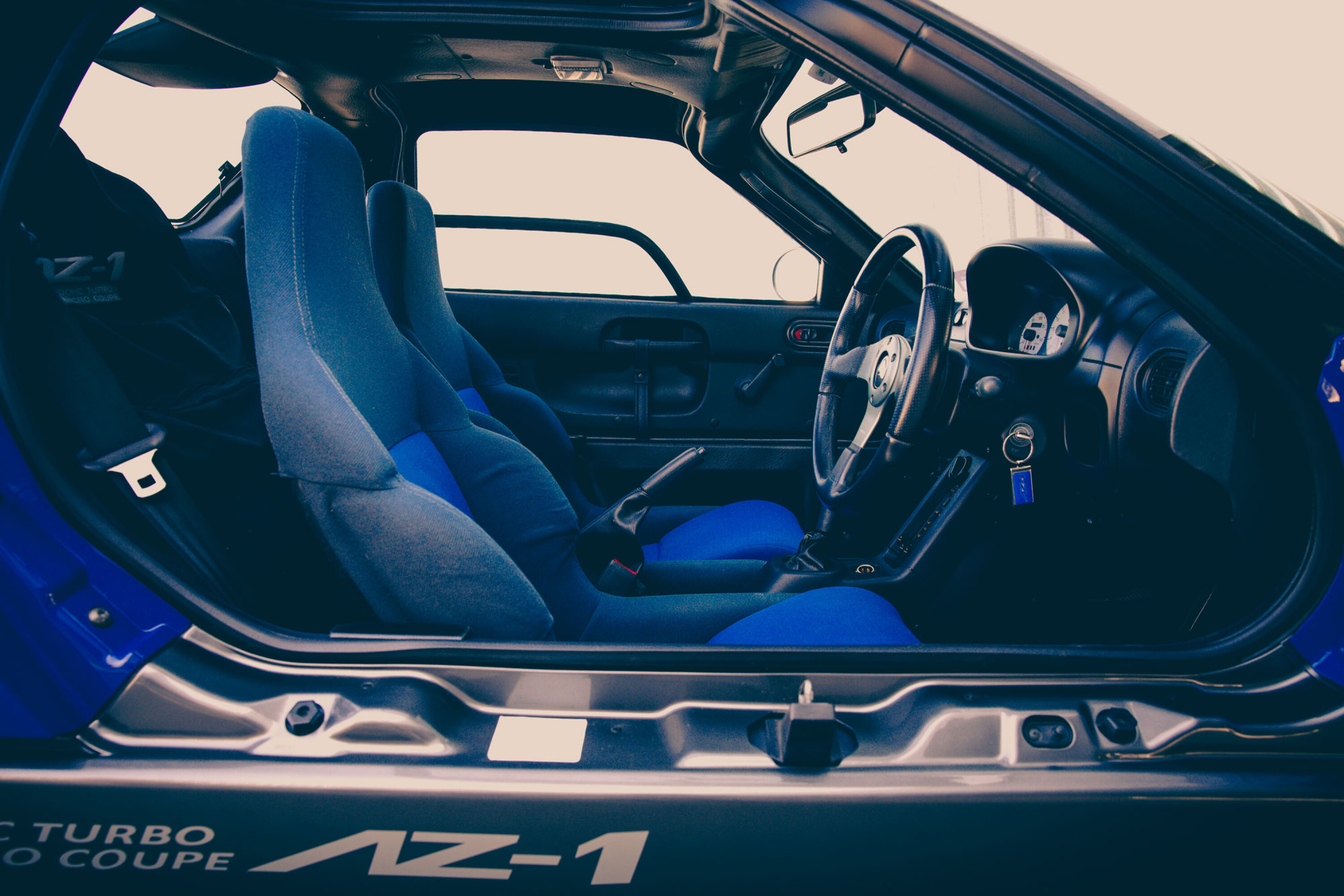
Hirai’s job was made more difficult by the fact that the kei car legislation changed in 1990. Suddenly the maximum engine size had gone up to 660cc and another 10cm of body length was permitted. While it was possible to incorporate the bored-out engine from the Suzuki Alto, Hirai resisted pressure to retain the show car’s vestigial rear seats.
Every centimetre of space was precious and hotly argued over. The spare tyre was originally housed up front, but early in the process it became clear that in the event of an accident it could compromise the firewall and potentially injure passengers. Hirai slotted it behind the seats instead while still finding a way to deliver a little element of recline for the driver’s–seat. While he was undoubtedly a decisive – some might say dictatorial – character, part of Hirai’s genius was being able to lock down the big picture items while allowing specific teams the freedom to tweak the details.
It took three years to bring the AZ-1 to production readiness. The biggest job was changing the show car’s expensive aluminium chassis and replacing it with steel, a move Hirai claimed was necessary on the balance sheet but which he regrets on the basis of weight. The frame was still draped with plastic panels, but the sill width was now a good deal less, making entry and egress easier.
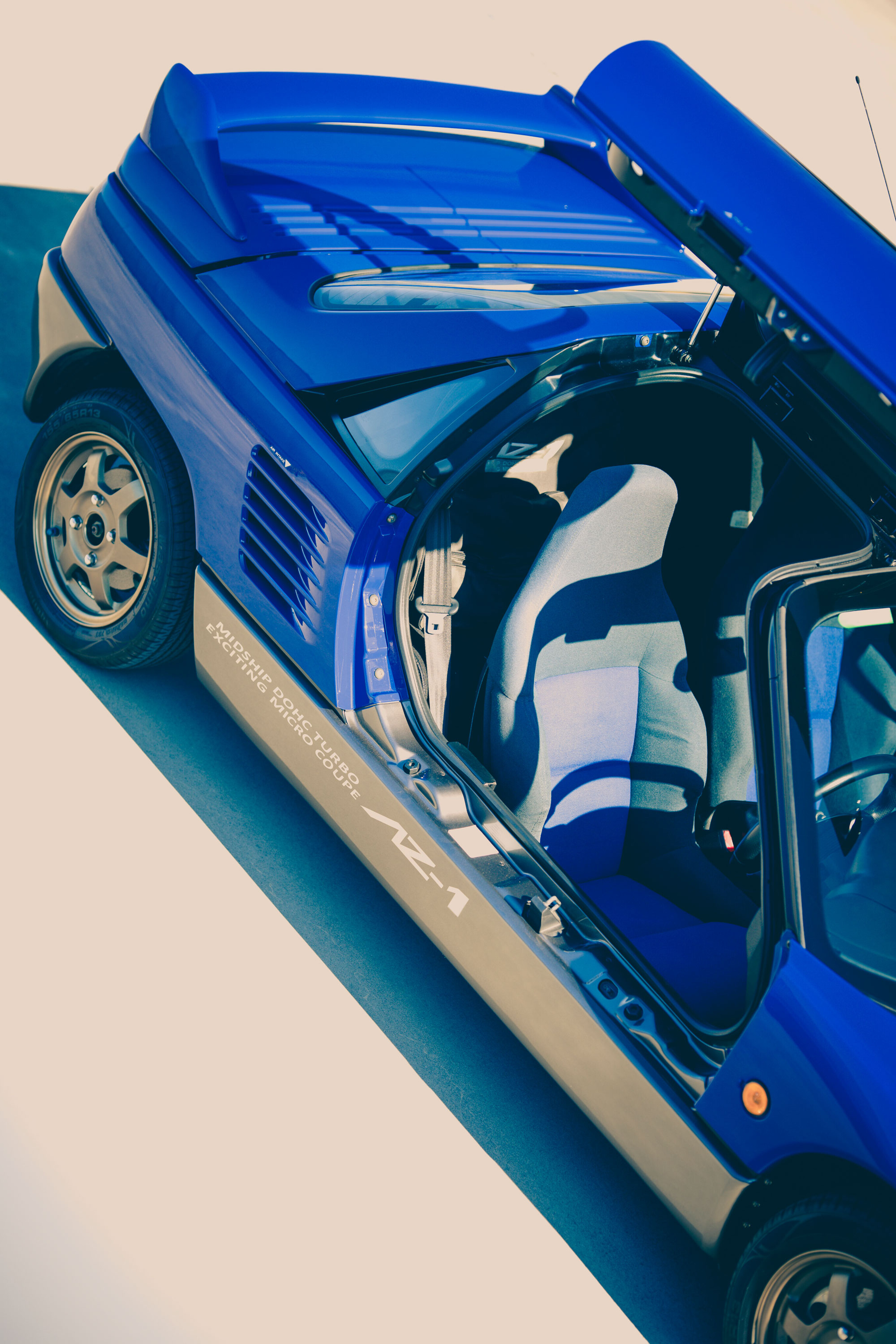
Mazda didn’t build the AZ-1 in-house either. Instead it contracted the services of Kurata Co Ltd. (latterly known as KeyLex), also based in Hiroshima. With a peak theoretical production rate of 1000 vehicles per month, Kurata ticked a lot of boxes. The very first AZ-1 rolled out of the plant on August 8, 1992, the official press launch was September 24 and the very first customer received their car on October 5. Buyers got to choose between two colourways: Siberia Blue paint with two-tone black and blue interior or Classic Red with red and black trim, both being fitted with Venetian Grey lower panels.
The AZ-1 had a major issue though. Mazda couldn’t sell them. The gestation process was so long in productionising the vehicle that by the time it arrived in dealers, the Japanese bubble economy had burst. Two-seat sports coupes with gullwing doors didn’t seem to be at the top of too many shopping lists. A little more expensive than both the Suzuki Cappuccino and the Honda Beat, the AZ-1’s asking price was almost that of an MX-5 and sales came nowhere near Mazda’s target of 800 units per month. Given that this car had been in development, in one stage or another, since 1984, it seems bizarre that it was in production for a little over 12 months. In that period Mazda sold 4392 units, plus 531 being accounted for by the badge-engineered Suzuki Cara sister car. By contrast, Suzuki sold 28,010 Cappuccinos and Honda found customers for 33,600 Beats, easily the weakest product of that particular trio.
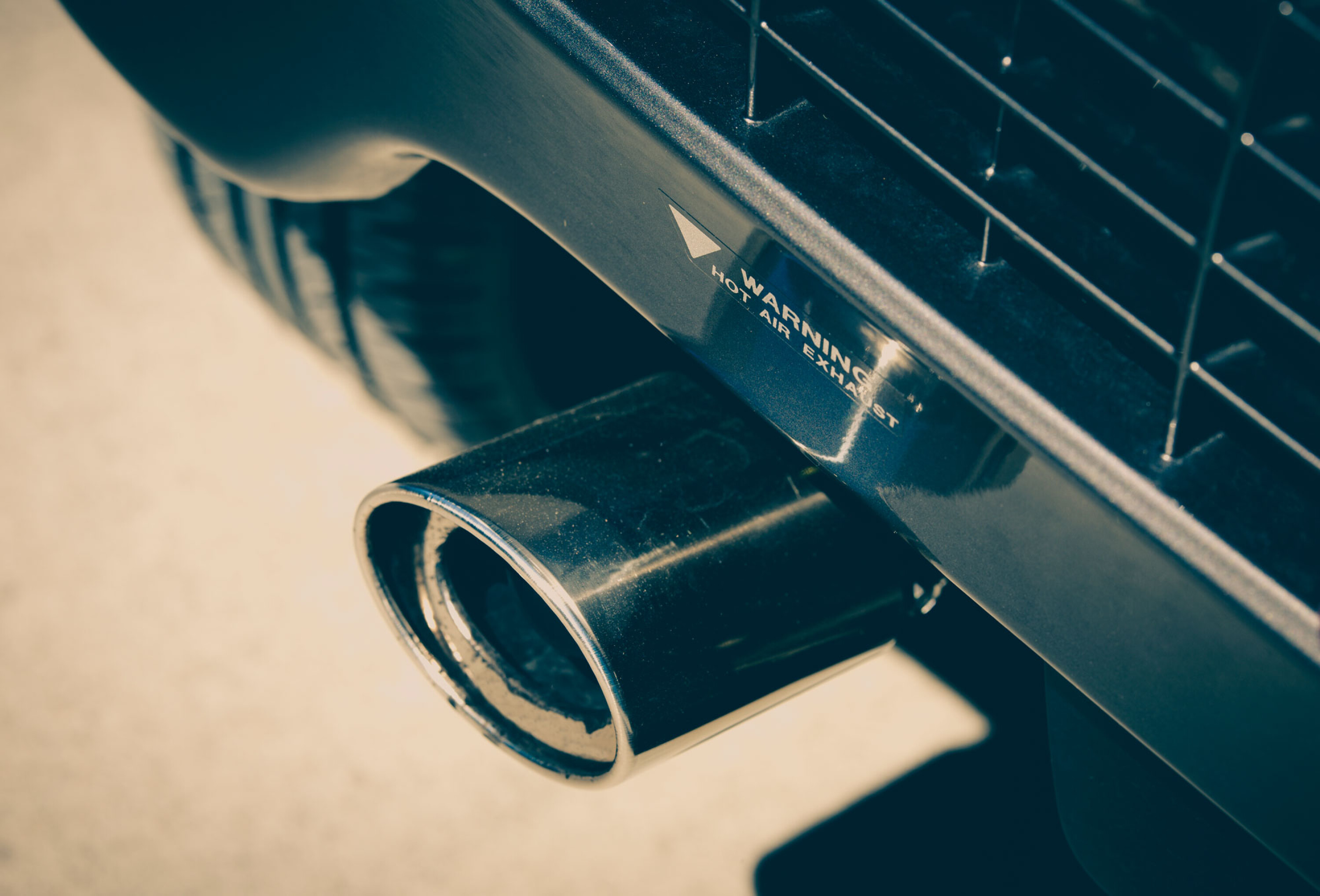
In case you were wondering why production ended in June 1993 and you still see 1994 and 1995 model year cars being advertised, that’s because production easily outstripped demand. Unregistered cars were sitting about the dealer network for the following couple of years. In that period Mazda got a little creative, with special edition “optic” models such as the 1993 Mazdaspeed versions which added a raft of dealer-installed options. These featured solid body colours, with a revised bonnet, front air dam and rear spoiler. Firmer suspension was available, strut bars front and rear, a mechanical LSD, and an exotic ceramic and stainless steel exhaust. Perhaps the most sought-after item are the 13-inch alloy wheels that looked a bit ritzier than the standard car’s steelies. Mazda also launched the TYPE L, which was an audiophile version with a subwoofer in the rear.
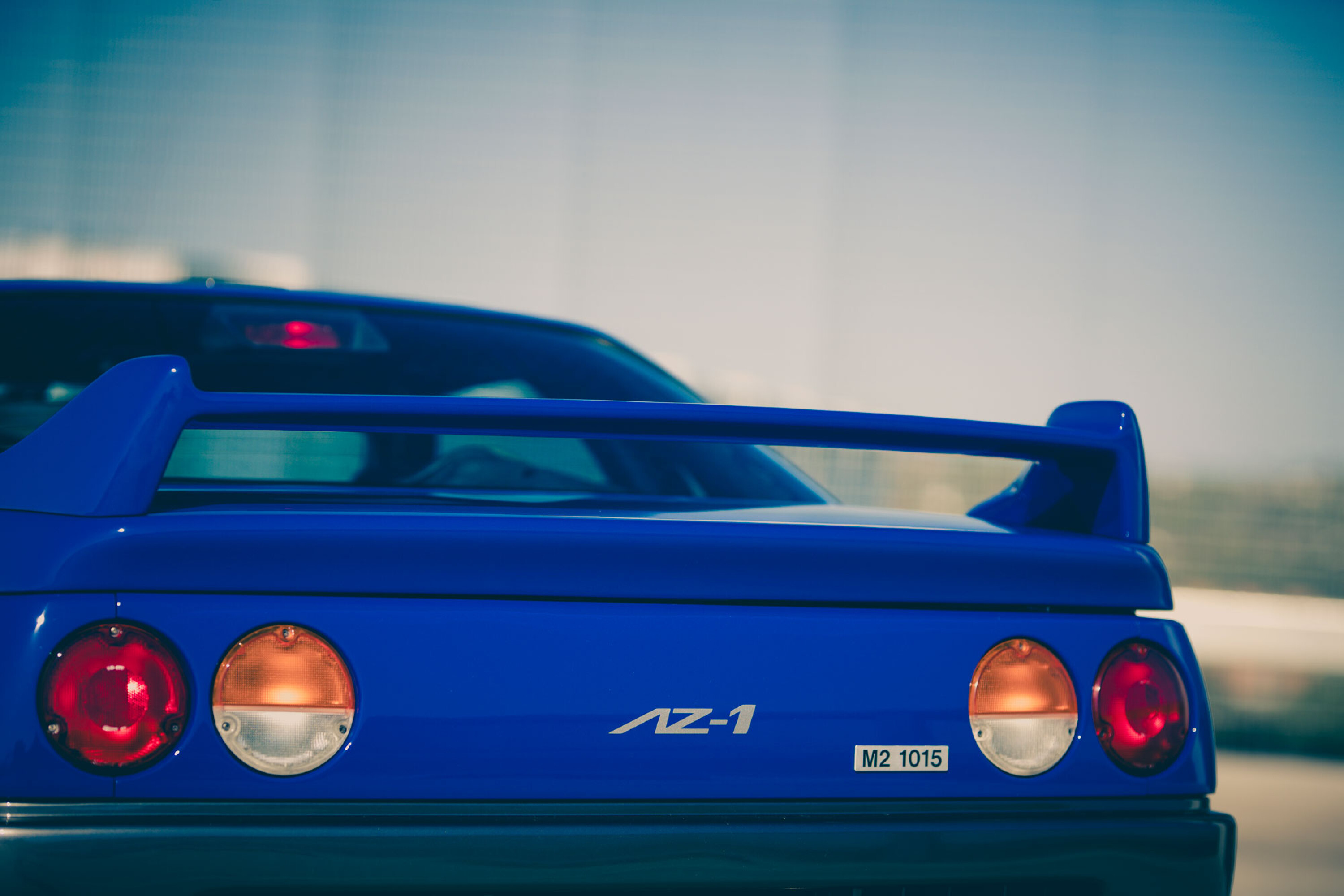
M2 Incorporated, a Mazda subsidiary car atelier that existed between 1991 and 1995, produced some interesting variations on the AZ-1 theme.The M2 1014 of 1993 was a Safari-style off-road concept, while the 1015A was a rally-inspired concept and the 1015B was another concept with detachable plastic roof panels. The M2 1015 was sold to the public from July 1994, with a revised front end with faired-in fog lamps and the choice of black, white and silver paintwork. A mere 50 units were sold, with M2 being given the option for 50 more. All remaining stock was sold by 1995.
Wheels caught up with the AZ-1 back in April of that year, when the Zega automotive group in Melbourne offered us a group test of one alongside the Honda Beat and Suzuki Cappuccino. Writer Bob Hall was impressed by the drama of the Autozam.
“While the engine is the same as the Cappuccino’s and the statistics for power and torque read the same for both cars, they feel poles apart. Handling of the AZ-1 is somewhat sharper than that of the Cappuccino and in general it’s surprisingly even-tempered. In some situations there’s noticeable low-speed understeer but it goes pretty neutral as you press along,” Hall noted.
“The 720kg AZ-1 was coaxed by Car Graphic to a 0-100km/h time of 9.2s, with 16.6s required to cover the standing-start 400m run. Both times were slightly quicker than those of the lighter Cappuccino,” said Hall.
His verdict went to the Suzuki, as it offered superior accommodation, Hall finding the headroom of the Autozam compromised by the gullwing doors and its raucous character and dynamic focus rendered it more of a specialist proposition than the somewhat friendlier Cappuccino. Yet it’s exactly that focus and sense of specialness that has built the AZ-1’s contemporary status.
Suspension is struts all round with a 25mm stabiliser bar up front and a 20mm item aft. With very low unsprung weight, dampers are right-sized, with 70mm of wheel stroke in bump and 80mm in rebound. The brakes are tiny, discs all round, of radius 91mm up front and 96.5mm at the back. Steering is a quickish 2.2 turns lock-to lock. Weight distribution is claimed to be 44:56 front to rear, which sounds about right.
Hirai knew exactly what he was after in terms of dynamics. “The joy of driving is not just about going fast,” he claimed. “Even when going slowly we wanted to create a car that the driver can feel in complete control of. To keep the idea undiluted, it was important to stay simple and clear. Obviously it would be possible to add more equipment. However, lightness is the basis of athletic performance, and those creature comforts come with a weight penalty. It would just not do. We instead poured all of our energy into the fun of driving,” he said in 1993. Those words rang true back then and make even more sense now.
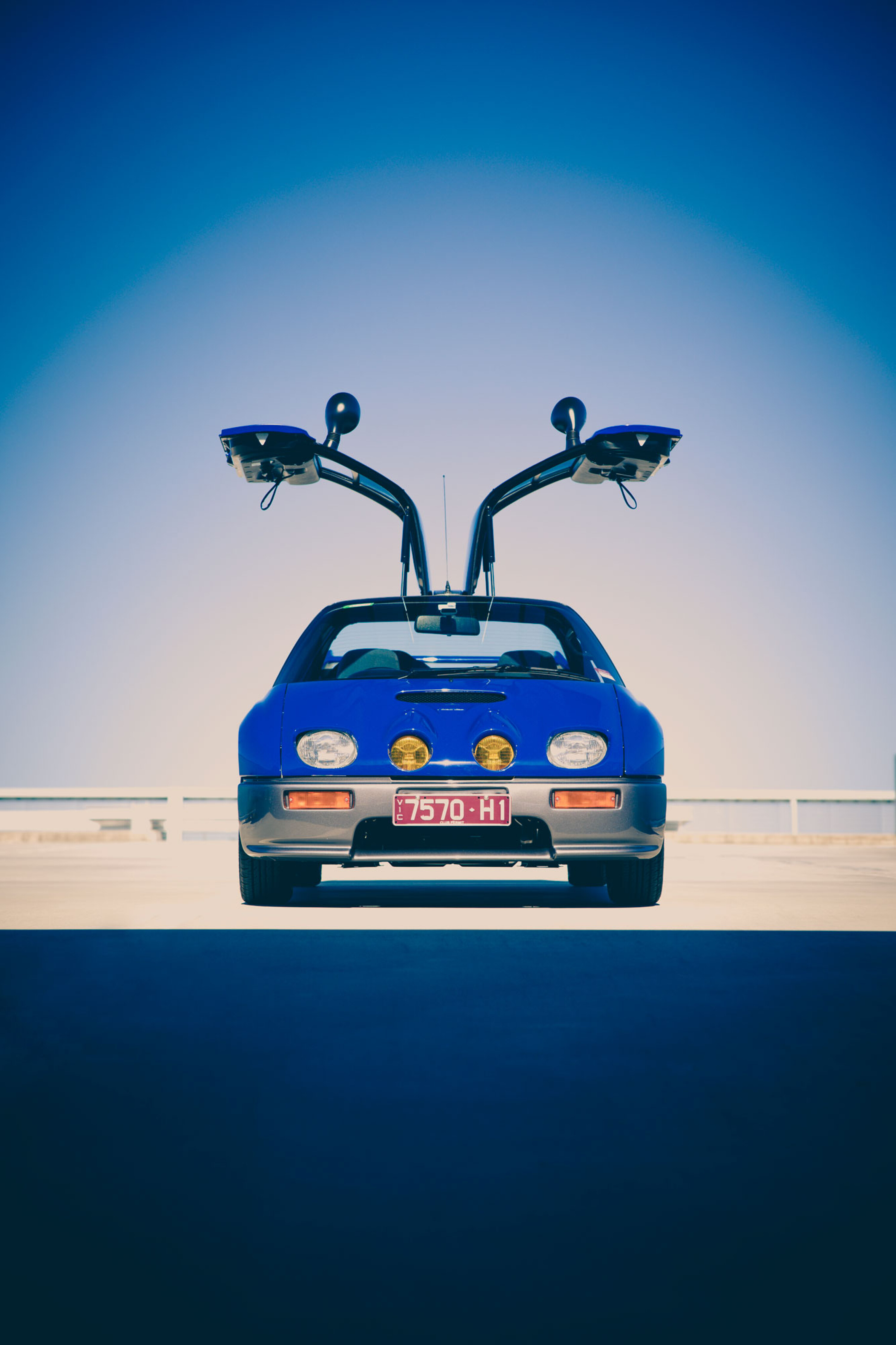
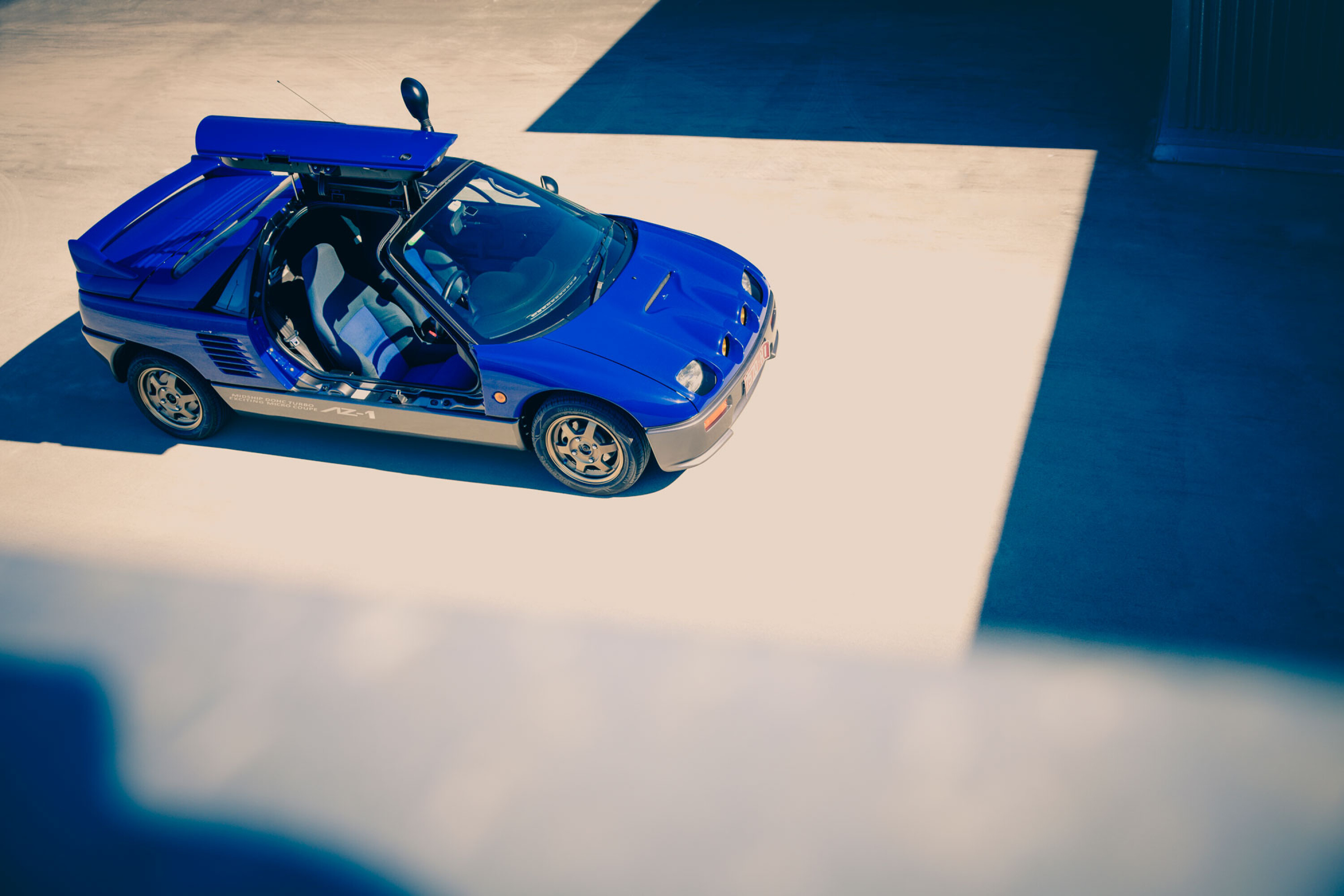
On Australian roads today, where family sedans can tip the scales at two and a half tonnes, an AZ-1 looks hilariously tiny. It’s the width as much as anything – just 1395mm – which looks so alien, this low-slung car fully 90mm narrower than a behemoth such as a Kia Picanto. Getting into one requires a certain amount of suppleness, and you’ll spot the owner because they’ll be able to slide in quickly and then grab the gullwing door’s pull tag before the door’s action has reached the end of its damped travel. It’s a very slick move. Certainly slicker than flailing for it and having to half-climb out in order to shut yourself in or worse, asking for help.
Being so rare, values are notably punchier than those of a Beat or a Cappuccino. A well-looked after car will typically nudge around $40,000, whereas the equivalent Hondas and Suzukis hover at around half that sum. It’s nothing much to do with provenance or ability, more the fact that gullwing doors have always been cool.
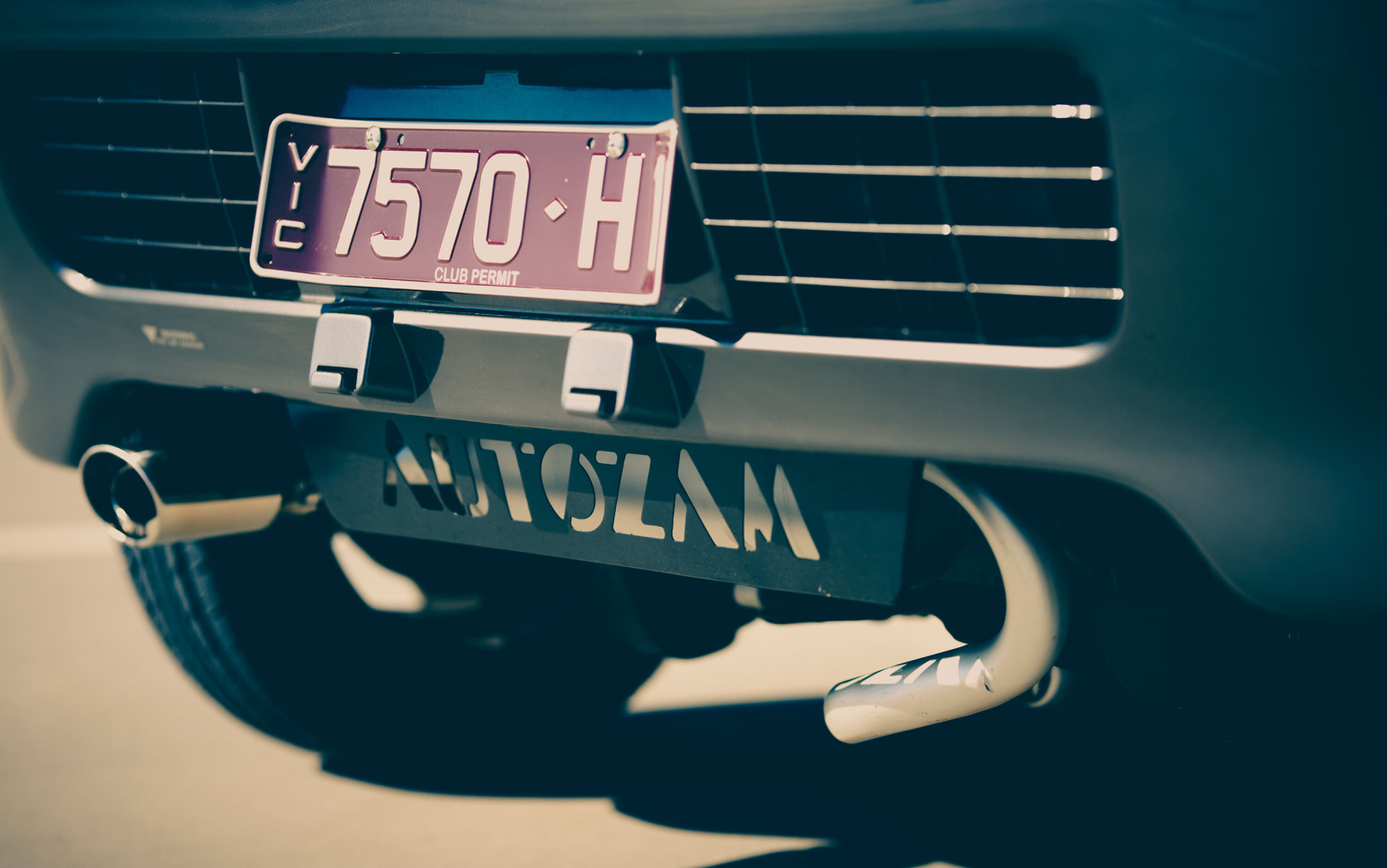
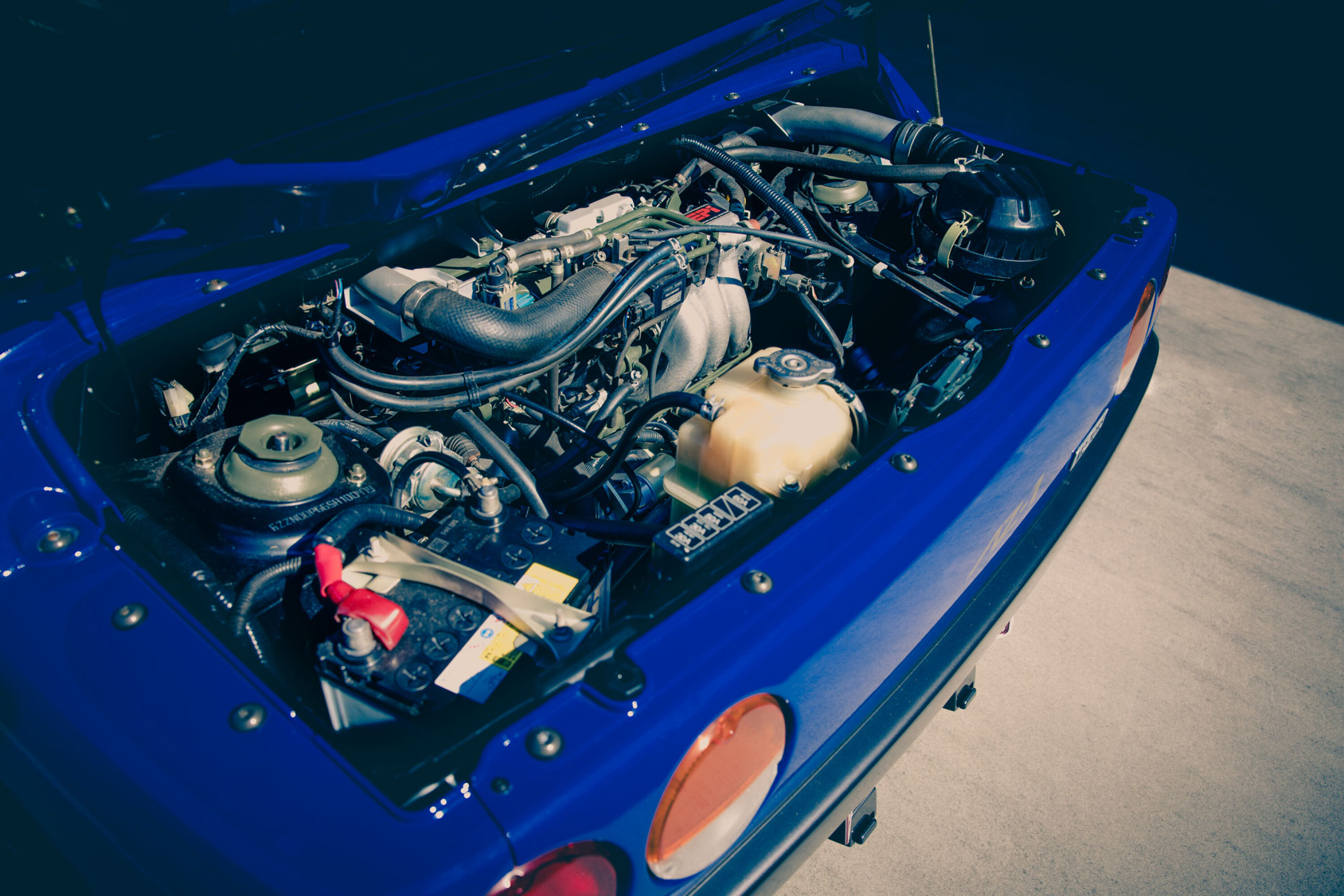
Running an AZ-1 can be a little more involved than you’d think given its fairly proletarian mechanicals. Oil leaks are an issue, especially around the cam housing gaskets and the tiny Hitachi turbo’s oil feed. The gear shifter should feel tight and positive. If it has a flabby action, you’re looking at a new set of shifter bushings. Suspension parts aren’t too hard to get hold of and sway bar bushings can wear. Pattern plastic panels are available, but the exterior parts that are tricky to obtain are windscreens and the finishes around the glass. Getting your hands on decent 155/65/R13 rubber can also be a challenge. For what its worth, Chevy/Daewoo Matiz, Fiat Seicento, Rover 100 and Suzuki Alto/Wagon R all rode on this size tyre.
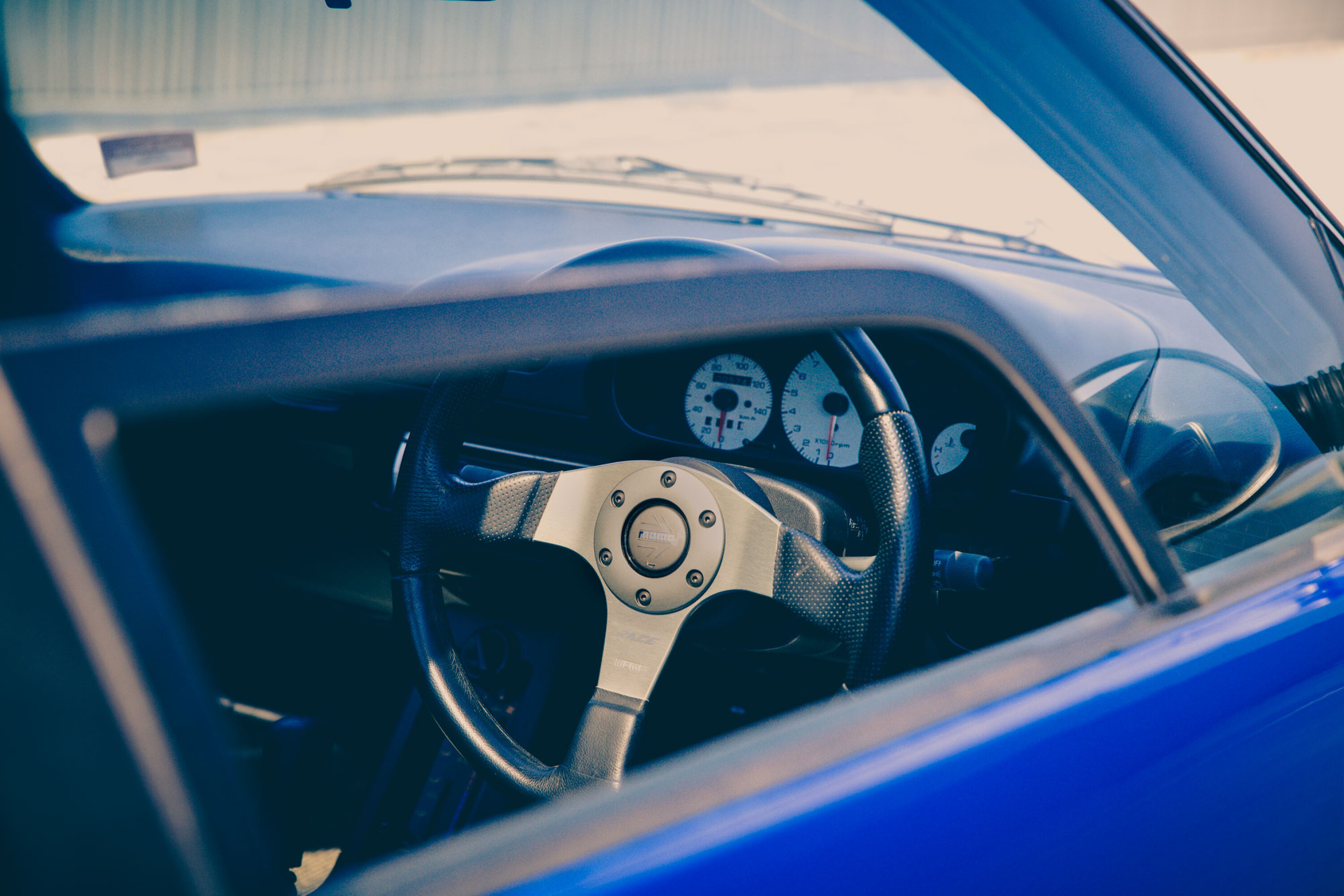
Rust can be an issue and the plastic body panels can hide a few nasty surprises. Lift carpets, poke around beneath the wheel arches and check door frames. Also check for a cracked dash, as the cluster hood is no longer in stock. Desirable features include the ABS option (check for the module in the front boot) and the foglight/defrost button. Dealer-fit options also included a Momo leather steering wheel, a CD autochanger, CIBIE fog lights and 13-inch aluminium wheels.
There’s a small but very knowledgeable cadre of AZ-1 owners online and they’re an enterprising bunch. They have to be as this is a very specialist car that lacks widespread parts support. As a result,a whole series of home hacks have been developed for it which, for many owners, is exactly part of the appeal. They’re the ones dedicated to keeping this intriguing part of Mazda’s history on the road and we salute them.
Toshihiko Hirai looks back on the AZ-1 project with affection. He’s most proud of the MX-5, as you might expect, referring to it as his eldest son. If the iconic MX-5 is the peak of his life’s work as an engineer, then the Autozam might be thought of as an enjoyable wildcard. “The AZ-1 is my second son: a jerky horse who can’t be trained.”
There’s something about live motorsport that keeps us coming back… despite its best efforts.
On the face of it, seeing cars race right in front of you, wheel-to-wheel, at speeds up to 350km/h couldn’t sound sexier – especially if it’s for the first time. Television, you could tell any uninitiated, doesn’t do it justice. Zooming in and out on the cars, and other unknown technical things, seems to visually slow down a spectacle that’s kind of all about, well, speed.
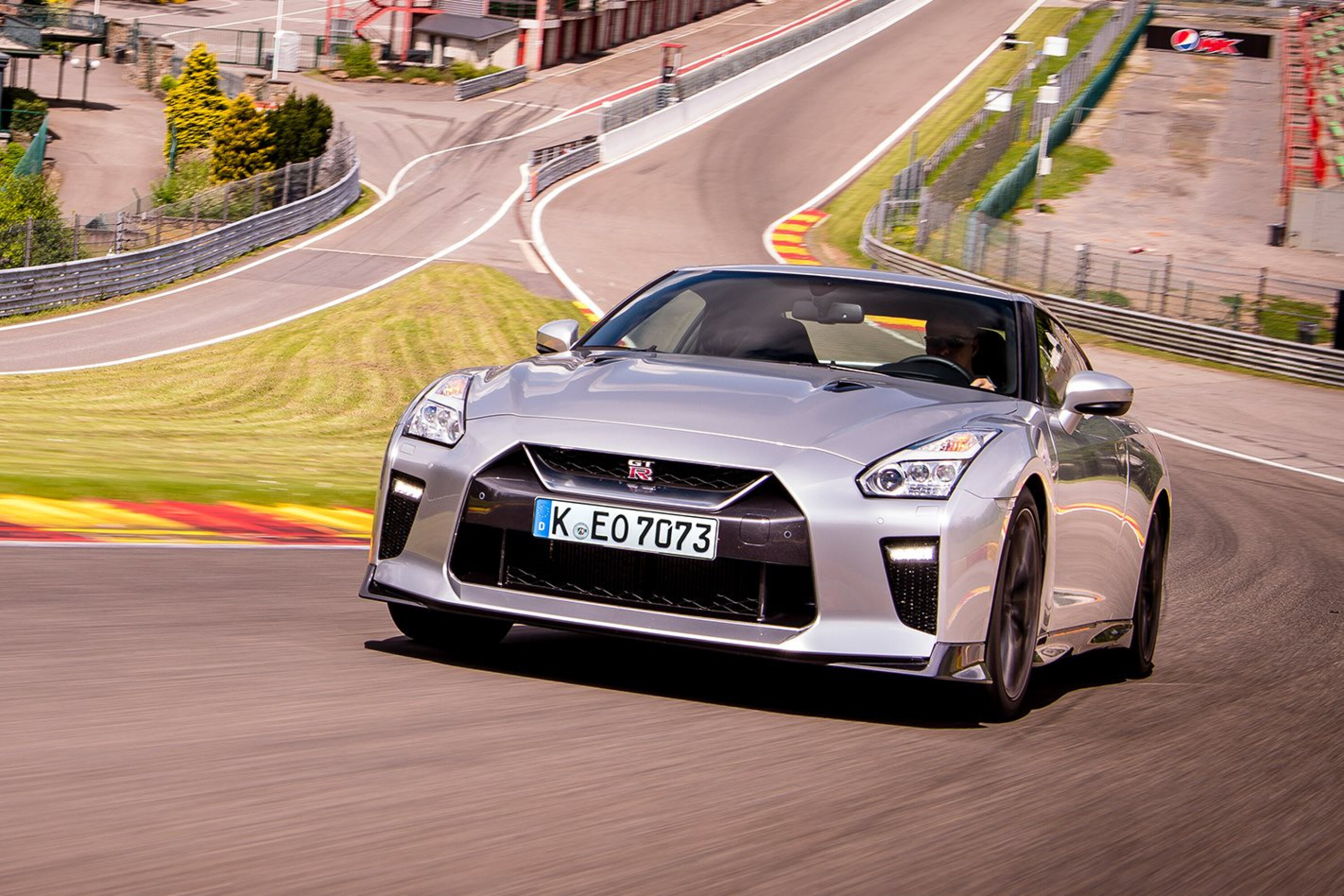
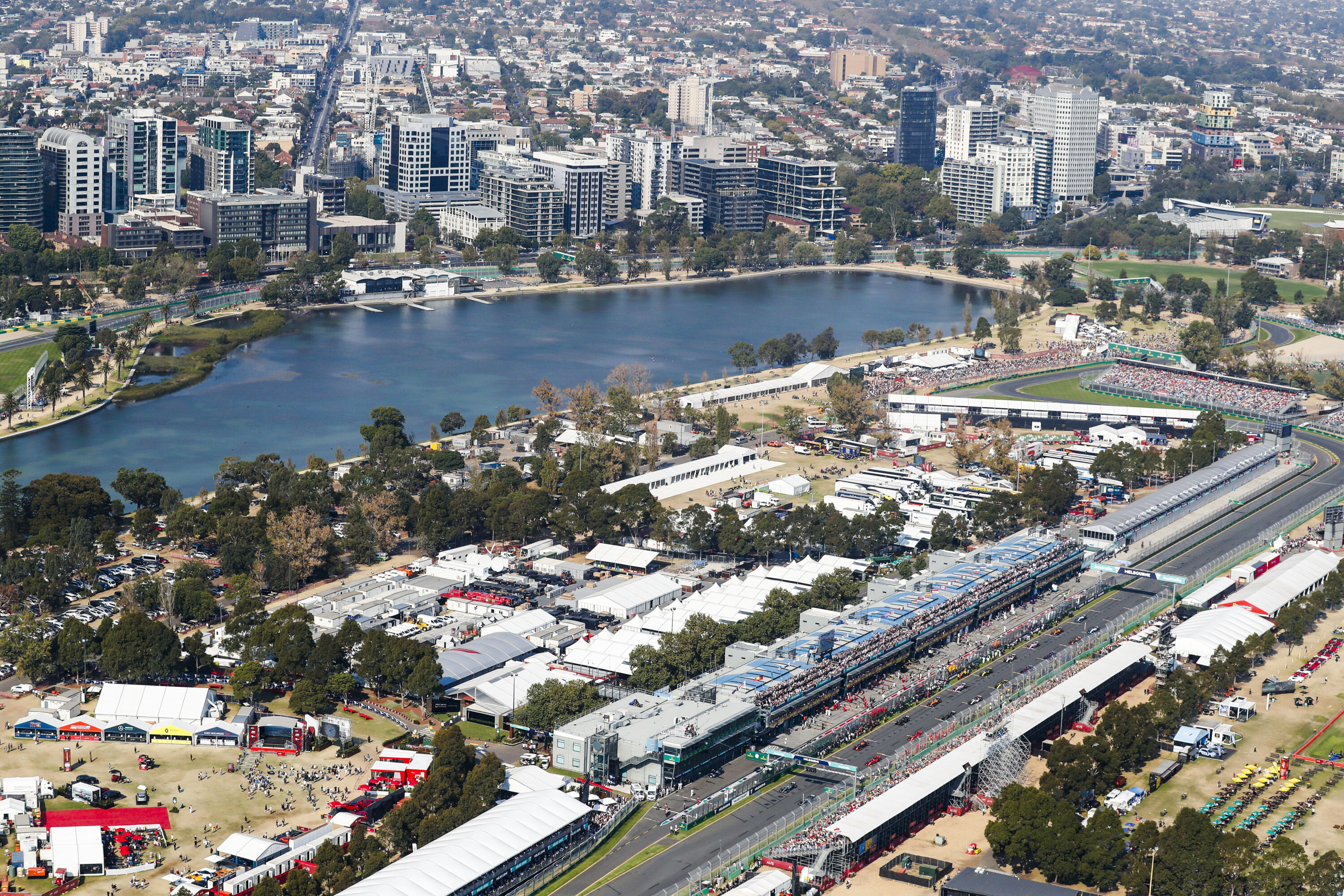
It’s not until you’re standing at Eau Rouge, or even the outside of Turn Nine at Albert Park, and see a racing car come past – especially the ground-hugging fighter jets that are F1 – that you can know for yourself just how surreally fast some motorsport disciplines are.
It’s not just circuit racing, either. Top fuel dragsters are bucket-list worthy – despite the earplugs and earmuffs, and still the lifetime of low-level tinnitus. And you can’t beat the smell of a night at the speedway, being violently peppered with ball bearings of clay.
Of course, for any Drive To Survive watchers in your circles who you’ve managed to rope in for a first-time trip to the track, you might have to explain away a few more endearing things.
Firstly, racetracks are normally hours away from a capital city, that’s correct; and yes, often in a dusty paddock. The food is normally that yellow, and that expensive, and that is indeed the queue for the portaloos.
You’ll need a small loan to buy a team-branded jacket, there’s often a grandstand in the way, and then there’s general confusion of not really knowing what’s going on – which is all totally normal.
Unlike any stadium-based sport where it’s all right there – the live action with a scoreboard and big screen – when you go to a live motorsport event you accept that for much of the experience, it can be tricky to know who’s actually winning. Look confused at a car race and you’ll blend right in.
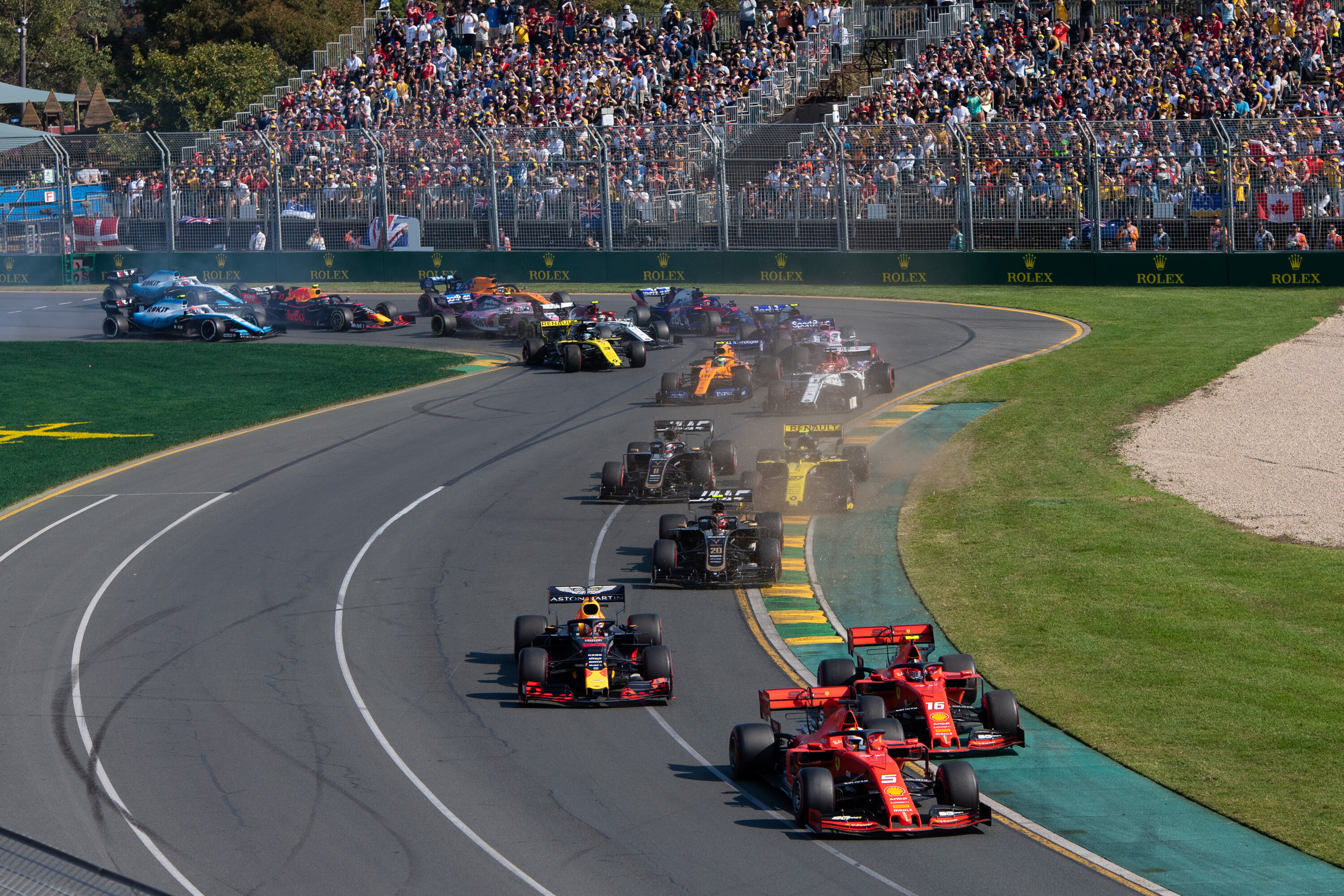
At this year’s Australian Grand Prix, I approached a packed spectator mound to see hundreds of people with their backs to the track, turned instead to watch a big-screen TV, during the most exciting stage of the race.
Then there’s the other way to enjoy live car racing, which is to go and barely be aware that there’s a car race going on at all.
We’re all familiar with the type of motorsport fan who spurns the lap-by-lap specifics and instead remains steadfastly focused on consuming alcohol beside a tent – in such quantities their eyes slowly start pointing in different directions. There’s nothing quite like going to a car race and being able to look forward to watching it on TV. As if you hadn’t seen it at all.
This practice seems popular from Bathurst to the Nürburgring 24 Hour which, when I went, felt like a Berlin rave which just happened to have an endurance motor race going through its middle. Watching people shoot fireworks at the cars, in the middle of the night, is also pretty exciting.
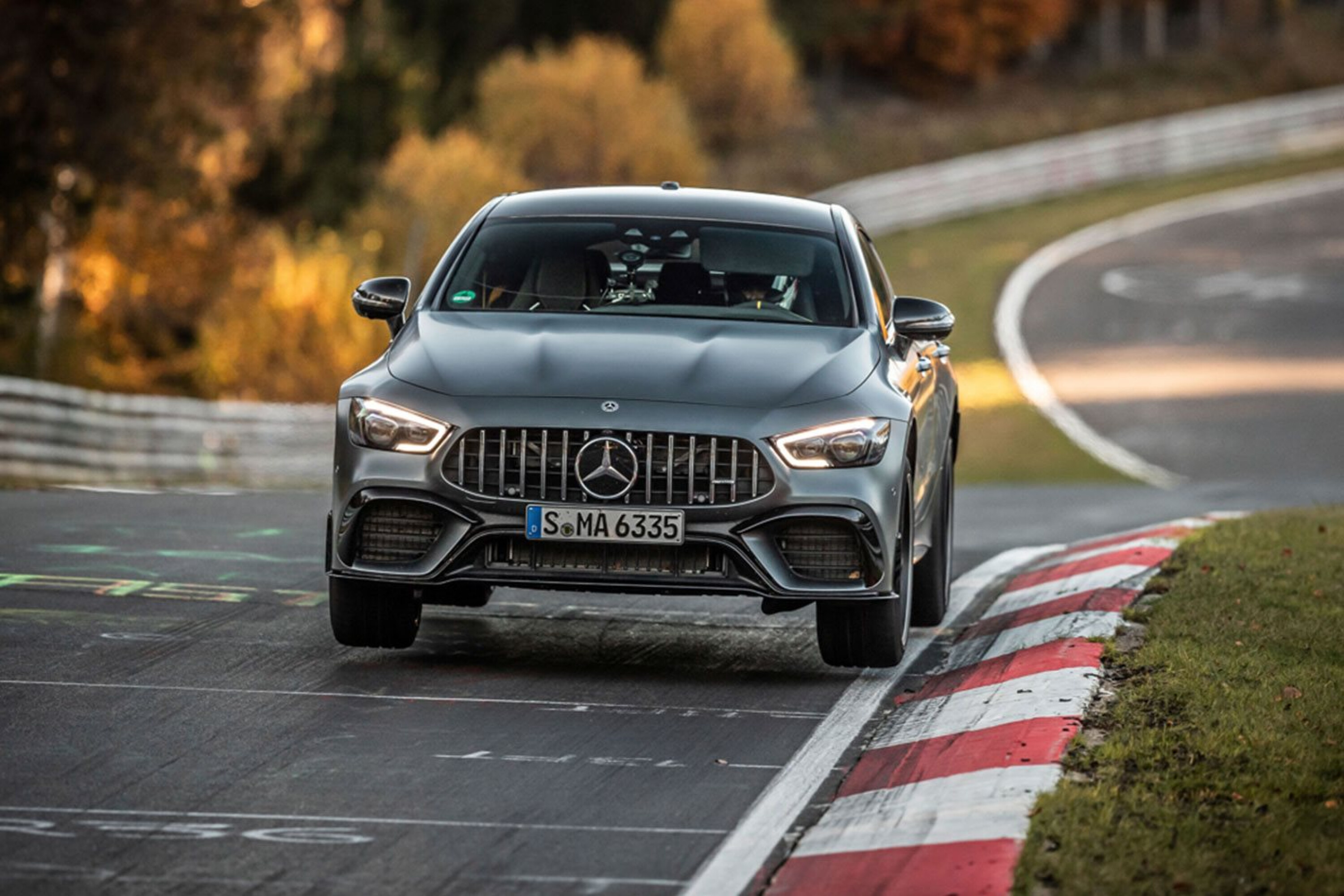
I’m not saying I partook in any such activities, but things are a bit more sensible these days, and for some of my mates, the glamorous sheen has all but worn through.
“I’ll go on Saturday but don’t think I’ll go on Sunday,” read the limp message from one of my buddies as we approached the Australian Grand Prix weekend. “It’s just too much hassle, will watch it from home”.
I totally get it – but the deep-fried mystery meat on a stick doesn’t quite taste the same in your living room.
As design director for MG’s Advanced Design Studio in London, Carl Gotham has a lot on his plate.
It won’t have escaped your attention that the Chinese manufacturer is operating at a frenetic pace, upending the industry’s standard product lifecycles with a rapid and iterative product launch schedule.
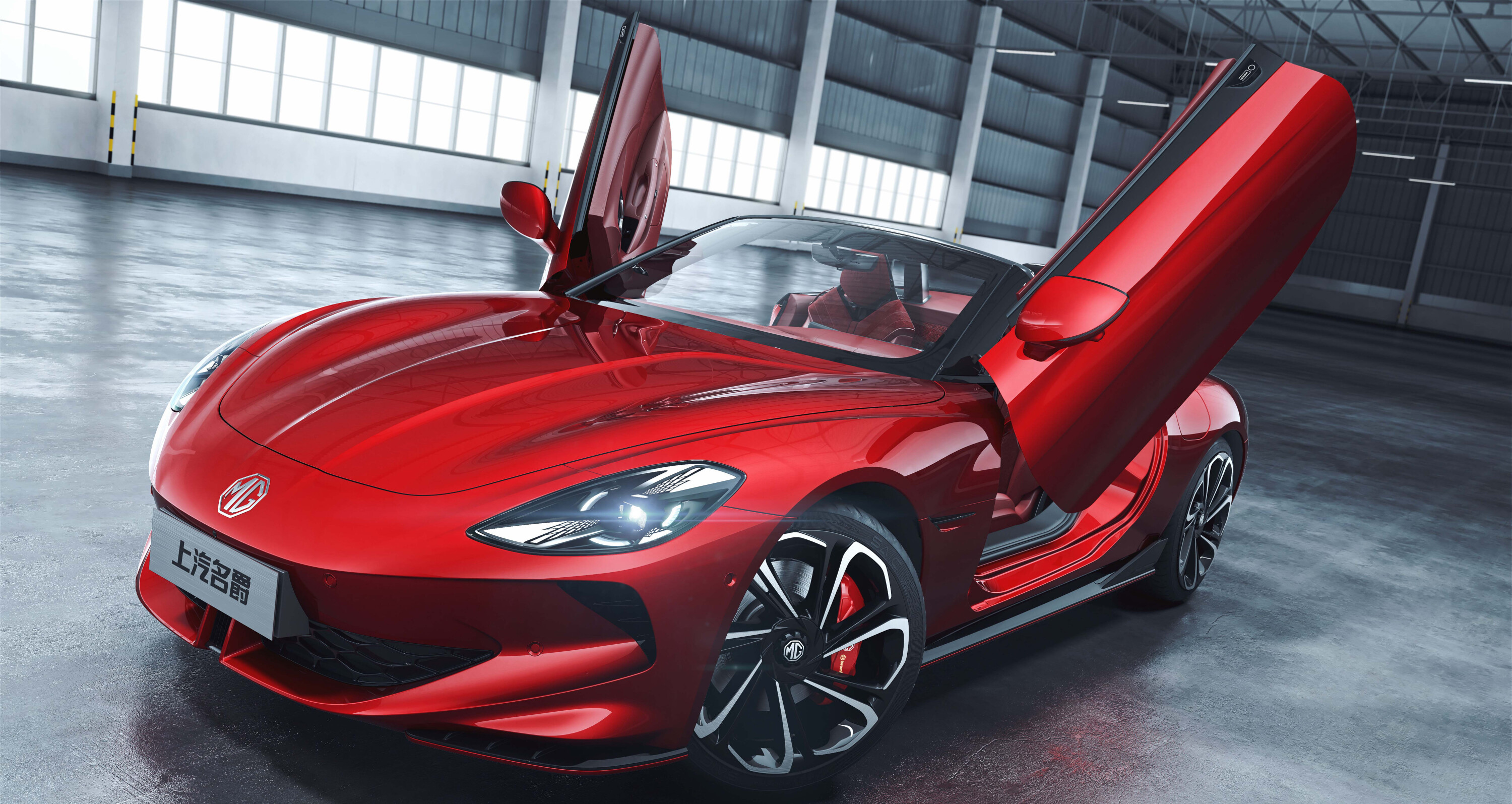
Gotham’s the man behind the look of MG’s most striking product to date, the Cyberster roadster, so we jumped at the chance to have a chat with one of the most forward looking designers in the business.
AE: Thanks for joining us today, Carl. Can you walk us through what the initial design brief was for the Cyberster?
CG: It was a project that, as designers, we’ve been wanting to do for a long time for the brand, just waiting for the right time. And when I took over as the director for the UK team in 2017, we had projects ongoing, but also we created some space to do some advanced projects where we were looking at things where there was no request or brief. The idea of doing a roadster was absolutely top of the list from our perspective.
So we created a little bit of resource in the team and worked outside of the normal working hours to get the project kick-started. We were just exploring what we thought a roadster could be for MG in light of bringing the first all-new car to the public since effectively the TF or the F. And I think very quickly we realised that actually SAIC was very invested in new energy vehicle technology. So actually, that was going to probably be quite a USP for us.
So we started live fairly early on. We knew that this car probably should be electric in some form, either fully electric or hybrid or something. So, yeah, there wasn’t a snappy brief. When the time was right, we put it in front of the right people. That’s how it started.

AE: Was there ever a consideration for an overtly retro design for the roadster?
CG: It’s funny. I have this question quite a lot, particularly recently, because I think we’re seeing a lot of that trend in more recent years. And, yeah, I think it’s fair to say we’ve explored all sorts of things. If we went through the archives of all the sketches we’ve done, there’s obviously lots and lots of iterations. So we have explored all sorts of things.
It’s a brand that’s 100 years old. It’s got a great history and a great back catalogue. And that’s really important. But equally, the brand is re-establishing itself in markets around the world, again, having had a bit of a hiatus.
So we wanted to make sure that it was respecting the past, but very much modern and looking forward in its execution. So it’s a balance of everything. I wouldn’t say it’s overtly retro, but it’s definitely a more classical proportioned sports car.

AE: Given the platform that you’ve got, you’ve done well to create that classic shape of the car.
CG: We still wanted it to speak in an emotive sense to the customer that wants that open-top sports car. And actually still making it feel romantic in that sense.
OK, it hasn’t got an engine, and we explored the different versions of having the windscreen further forward, but it just felt right to keep to that more classic proportioned sports car.
Obviously, it’s bigger because we’ve got an EV platform and safety and also the environment in which we’re living in the roads; lots of SUVs on the road today. So the car needs to be bigger than the old MGAs, MGBs, 50s and 60s. But it wears the proportion well.
AE: How did the car morph from what was a show car to a series production model?
CG: The concept car began to get more serious as we’re moving towards Shanghai Auto Show in 2021. So essentially, the business was looking for a show car in that period [but it] was obviously quite difficult with the pandemic and so forth happening. So we needed something. And we had an answer.
We had this project which we’ve been working on for some time. Once we started to develop it, look at it further, then we obviously had a show car, it was something dramatic.
But it’s a Chinese business and it’s the art of the possible, and anything’s possible there at the moment. That’s the attitude. And they did.

It was pretty much then that the show car was put together and launched. And at that time, they were taking pre-orders for the car when it was shown to gauge reaction. I think essentially the same day as it was unveiled, the chairman gave the green light to the production program.
It’s quite an unusual project in today’s world that we do this skunkworks project in a small studio and then we show it and it gets green-lit because people want it.
But this was really a project borne through a desire and a want and a passion to bring a car like this back to the brand.

AE: The timing couldn’t have been better.
CG: Exactly. It was nice that we managed to do that in time for the 100 years anniversary and just at the time when MG is becoming significant around the globe in several markets. It’s just landed at almost the perfect sweet spot.
And yes, there’s a little combination of foresight, good luck and a bit of judgment. But it’s quite a nice story, I think, in terms of the automotive landscape at the moment. It is.
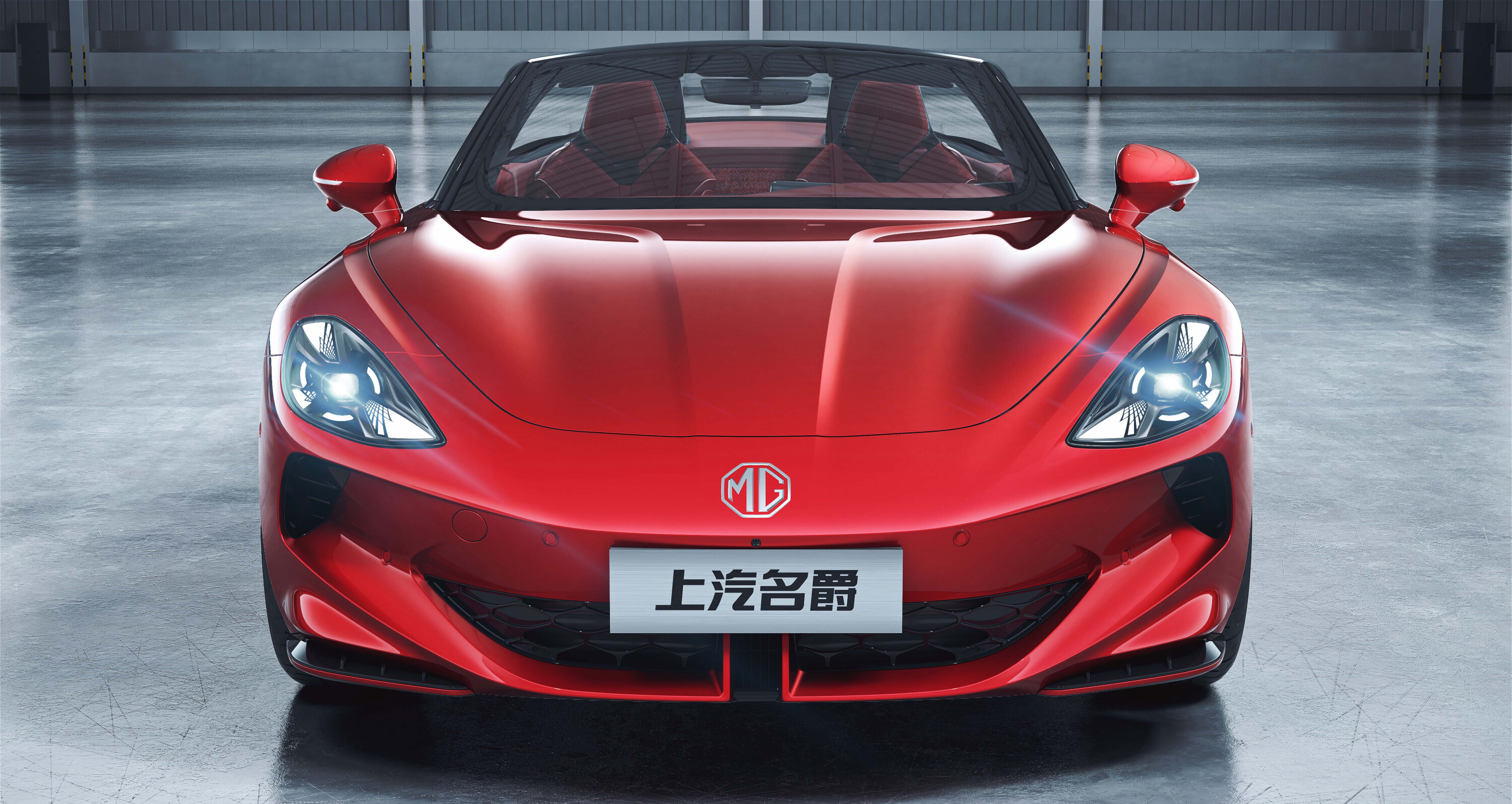
AE: Which design elements of the car are you proudest of?
CG: Proportion is always really important for designers to have the best canvas, if you like, to paint the picture and the detail. So if the proportion is good, then generally, the car is going to look good.
I think the proportion of the car is very well handled, given that it’s an EV convertible. It’s very well balanced. When you see these things in the flesh, they always take on a different characteristic.
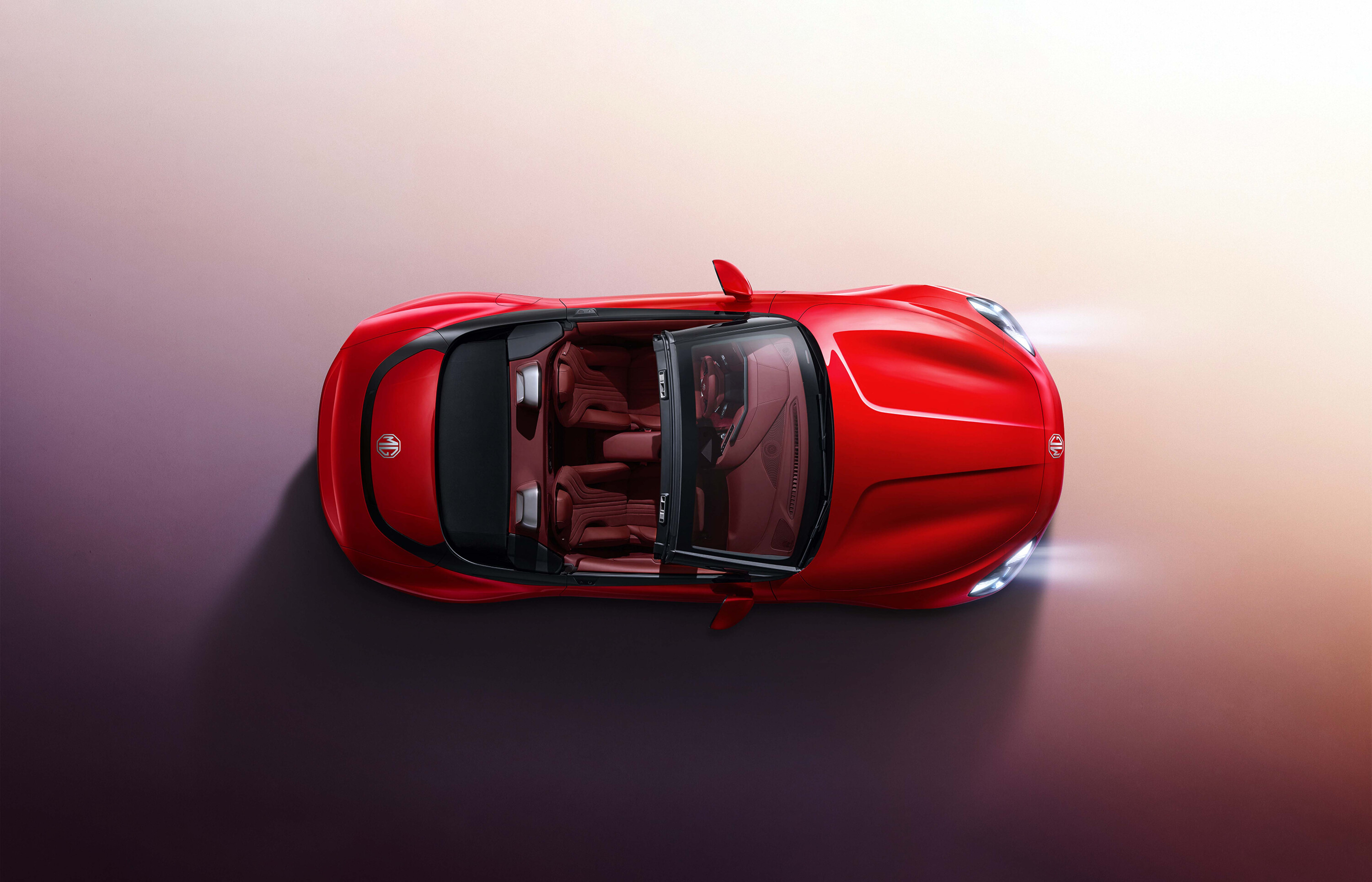
And I think the Cyberster is definitely a great example of a car that in the flesh, it’s just good. There’s very little proportionally that you would say is not correct. It disguises the platform well, with the height. We’ve got this dropping black belt line, which helps to slim the body of the car to make it feel lower and sleeker.
So we’ve managed to achieve that with a black trim running all the way around the cabin from the windscreen through the back of the roof. Yeah, things like that are important. They’re important for the overall effect of the car. They might feel like they’re a bit superfluous, but actually they are a visual aid to the overall effect and proportion of the car.

AE: Which, if any, design elements on the car caused the most arguments among the team?
CG: A project like this is going to draw a lot of attention within the team in terms of opinions. I think we’ve got a few elements that are, obviously… aerodynamics has played a big part in this car.
So the drag coefficient, it’s 0.268, I think. I’d have to double check that! [It’s 0.269 – so close!] But it’s certainly very, very good for the type of vehicle that it is. That’s all thanks to that low nose and the active aero we’ve got on the front end of the car.
We’ve got the air curtains that run through the front bumper to let the air flow out through the front wheels and the active cooling on the front grille, the sweeping bonnet and everything.
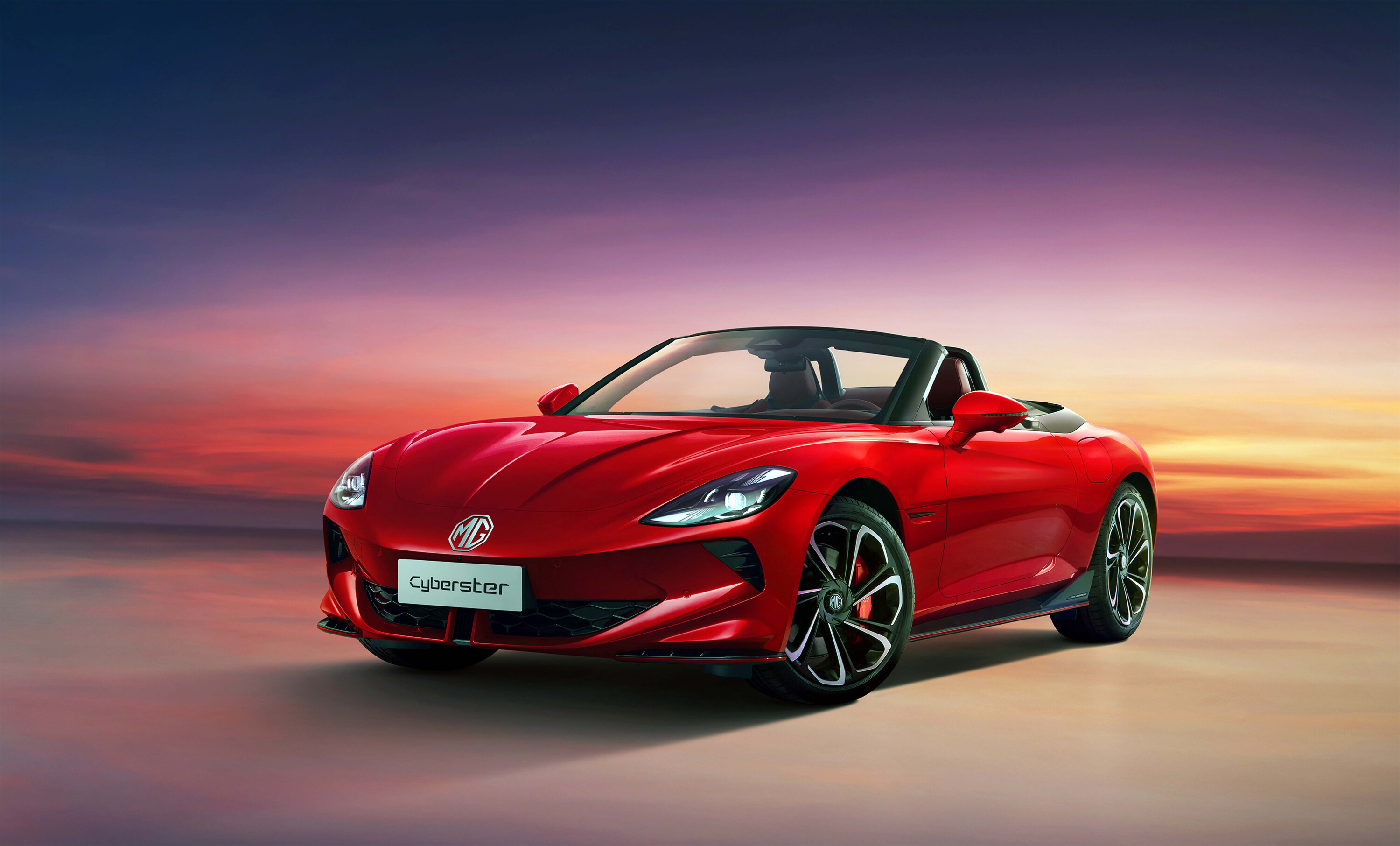
And then the rear Kamm tail, which is more square with the upright corners and the flat deck lid and, obviously, the light graphics.
So I think just handling those elements together and making it feel holistic where you’ve got this soft fluid form, and then you get to the rear and it’s a little bit more technically developed to meet the requirements of the aerodynamics.
Then again, just getting the most out of the platform to make sure that it doesn’t get too tall and too big, and it wears the platform of being an EV well. But, obviously, that’s more of a discussion with the engineers than it is with designers.

AE: Okay. Zooming out a little bit, how would you describe the evolution of MG’s design language?
CG: I’d say it’s quick. If you look back of where we’ve come in quite a short space of time, I think it’s doing a remarkable job. Obviously, we’re going through a period at the moment, quite intensive new model replacement and an introduction and refresh.
So there’s quite a lot happening in these past 12 months and the next 12 months as well. And I think it’s becoming a little bit more organised in terms of language and look and feel of the brand.
We’re in this phase where, let’s say, it’s maturing and it’s becoming a more serious and comprehensive brand with a more consistent look and feel to it. Having things like Cyberster at the halo position on the brand helps to set the tone and agenda for the language of a certain period.

AE: Is it hard to keep up with MG’s pace of change?
CG: I’ve worked for SAIC, let’s say, officially for 15 years so I’m familiar with the pace and the pace of the China market as well. Obviously, that’s such a huge market and growing and maturing all the time and advancing all the time. I have some familiarity with that process and we’ve become very good at being flexible and agile – taking on a challenge and using our experience and judgment to provide an answer relatively quickly.
Having more time is always nice but I think the pace is necessary at the moment to build the brand and be competitive, because obviously the competition is getting more and more fierce, there are more brands coming.
The next few years will tell on that front. We’re still working very hard, there’s still lots to do with the brand, which is one of the reasons why I’ve stayed with it for so long, because the job never feels complete. As a designer, there’s always something else to explore, something creative to think about.

AE: How important is a British design facility for MG?
CG: I’m obviously going to be biased on this, but I think it’s definitely important. Moving as a project, clearly the production end of the projects, that final feasibility phase is done in Shanghai, but I think having a studio in London is not just about the brand.
You talk about where we are at the moment, where we’re going. It’s embracing a little bit more of the heritage. We need to build the brand and build the story of the brand and obviously that’s what we’ve been doing a little bit this year with the 100 years. It’s the perspective that we have from there, from being in a place like London because the culture is obviously so diverse and there’s so much influence from a global perspective. We were able to take a view on lots of cross culture and things are happening: design, art, fashion and technology and whatever that’s so vibrant in a city like London.
It also means we can attract good global talent to come and work for us and work for the brand. It’s fantastic.
Most of the cars we cover in Wheels’ Modern Classic section reach that status through sheer durability. Years of continuous improvement hone something that was rough and ready into a polished gem. Of course, the opposite can happen too.
Cars that burst onto the scene in a blaze of youthful verve often mellow into comfortable middle-aged spread. Once in a while, we get that rarest of things: a hero car that appears and then vanishes almost as quickly as it arrived. For a magnificent case in point, look no further than the Lotus Exige S1.
Its production run lasted but a year. From its introduction at the Brands Hatch round of the Lotus Motorsport Elise race series in April 2000 to the last car coming out of the Hethel plant in mid-2001, 604 cars were assembled, 177 in left-hand drive.
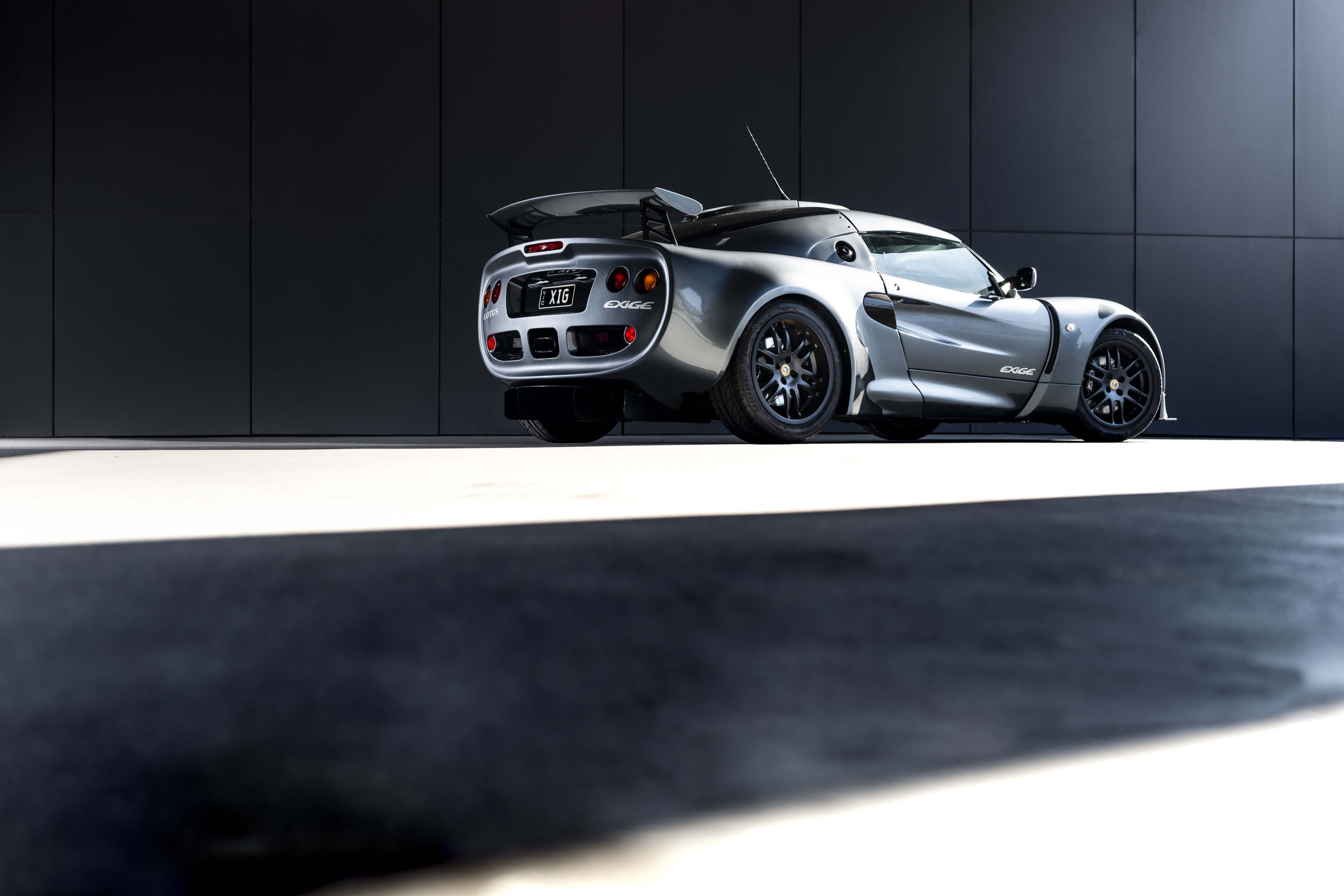
They’re a good deal rarer today. The car you see here is one of only eight that were officially sold to Australian customers from new, of which this is the only matching numbers original left on these shores, so it’s a bit of a unicorn.
To the uninitiated, the Lotus Exige S1 looks like an early Elise with a hardtop and a set of spoilers, and some Elise owners have converted their cars to look like an Exige with replacement glass-fibre body parts. The real thing was a far harder and angrier thing than any Elise extant in 2000.
While the Elise launched with a modest 88kW Rover K-Series lump behind the driver’s head, power crept up amongst the roadgoing cars almost annually. The 108kW Sport 135 special edition came in November 1998, with the series production 107kW variable-valve 111S not long later, in January 1999. The 112kW Sport 160 special debuted just ahead of the Exige, in February 2000.
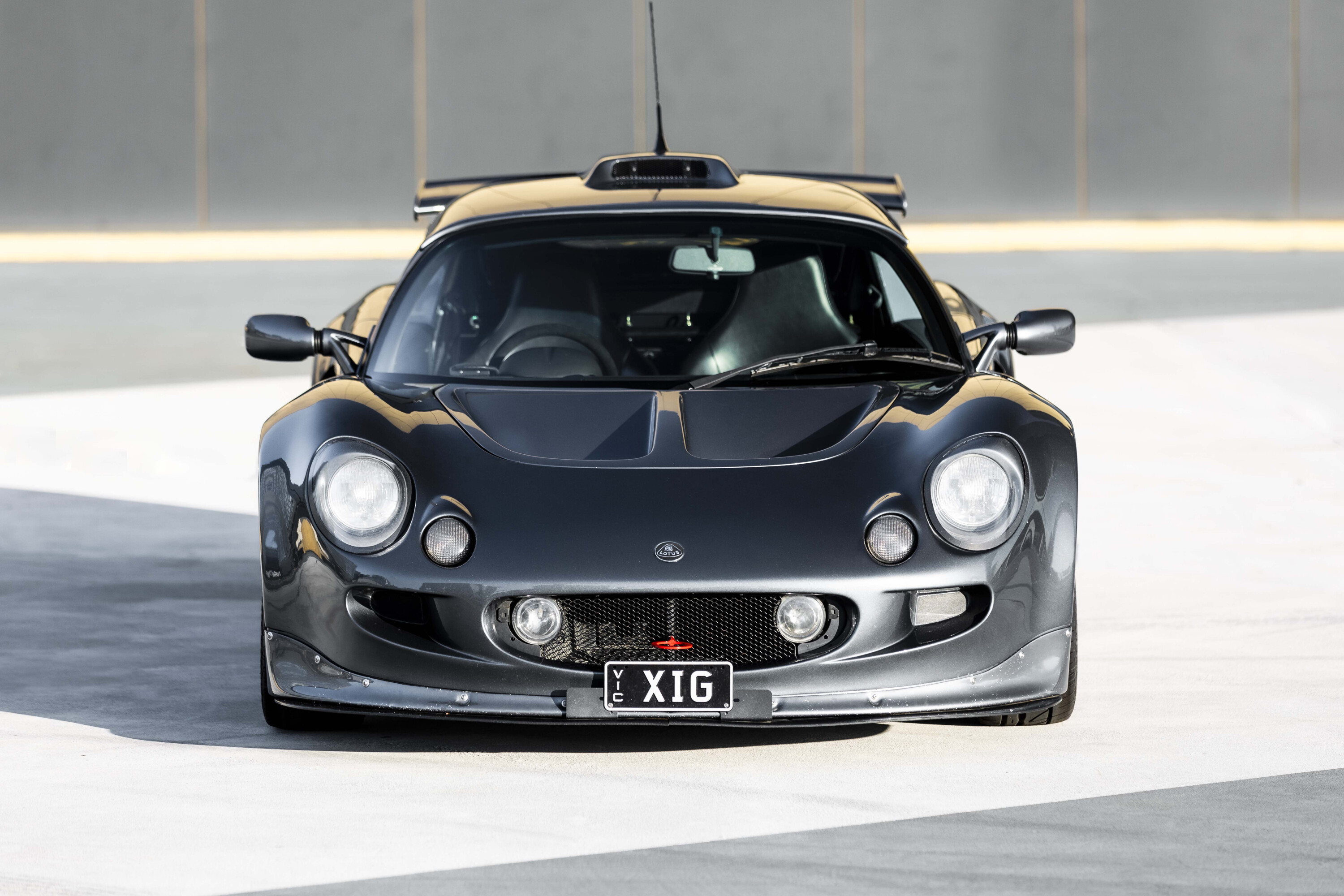
The madcap Elise Sport 190 foreshadowed what we were to see from the Exige. Launched in February 1998 and on sale through to early 2000, this was a factory conversion aimed at hardcore track fiends and delivered 143kW in a package that also featured uprated suspension, brakes, safety equipment, gearbox parts, and more focused wheels and tyres.
It was also eye-wateringly expensive, which goes some way to justifying why only seven were ever sold, but as a proof-of-concept, it was something very special.
At the heart of the Sport 190 was the Very High Performance Derivative (VHPD) of the venerable K-Series 1.8-litre lump. Rattly and truculent at idle, with that great sound of piston slap, it was far from the most melodic powerplant, but it thrived on revs and sounded as if it was trying to tear a hole in spacetime as it approached its redline.
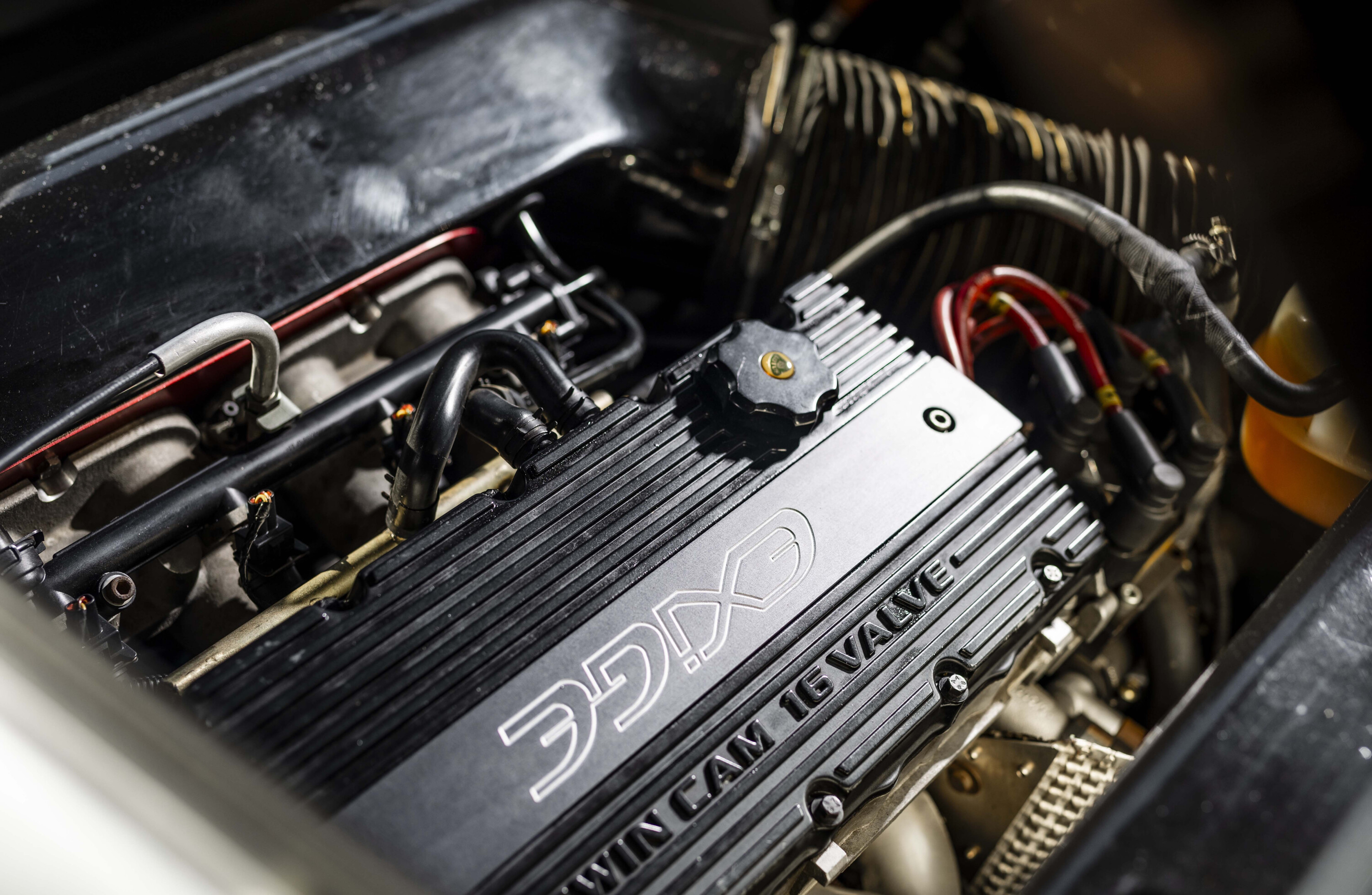
In the Exige, peak power arrived at 7800rpm, and you needed to be quick with the pedals and stick, because it would run into its 8000rpm rev limiter almost immediately thereafter.
As standard, the Exige made 133kW, or 143kW if you opted for the $1800 Track Pack (decat) version. The peak torque is a modest 171Nm at 5000rpm, but that hardly matters when you’re trying to haul a mere 724kg up the road. Of course, some wanted more.
More pace, more refinement, more tuneability and so on, and a surprising proportion of Exiges have been converted to run the Honda K20 engine with some also using Ford or Audi units. Of course, there’s the fact that those early VHPD engines weren’t the very last word in durability.
It seems almost a cliché to start talking about head gasket failures in relation to the K Series engine, but, yes, the Exige S1 was occasionally prone to a bit of mayonnaise under the oil filler cap.
The engines for the Exige S1 were assembled by PTP. For the S2 Sport 190, work was brought in-house to Lotus, with better results. Nevertheless, it was an involved job to get that sort of power from the decade-old atmo K-Series, with the VHPD engine featuring a revised head design, a nirtrided crank, a lighter flywheel, modified throttle bodies, forged pistons and a lot of other detail changes. Many Exige S1 owners will recommend vernier timing pulleys and an Emerald ECU with a decent map for a torque curve with fewer holes.
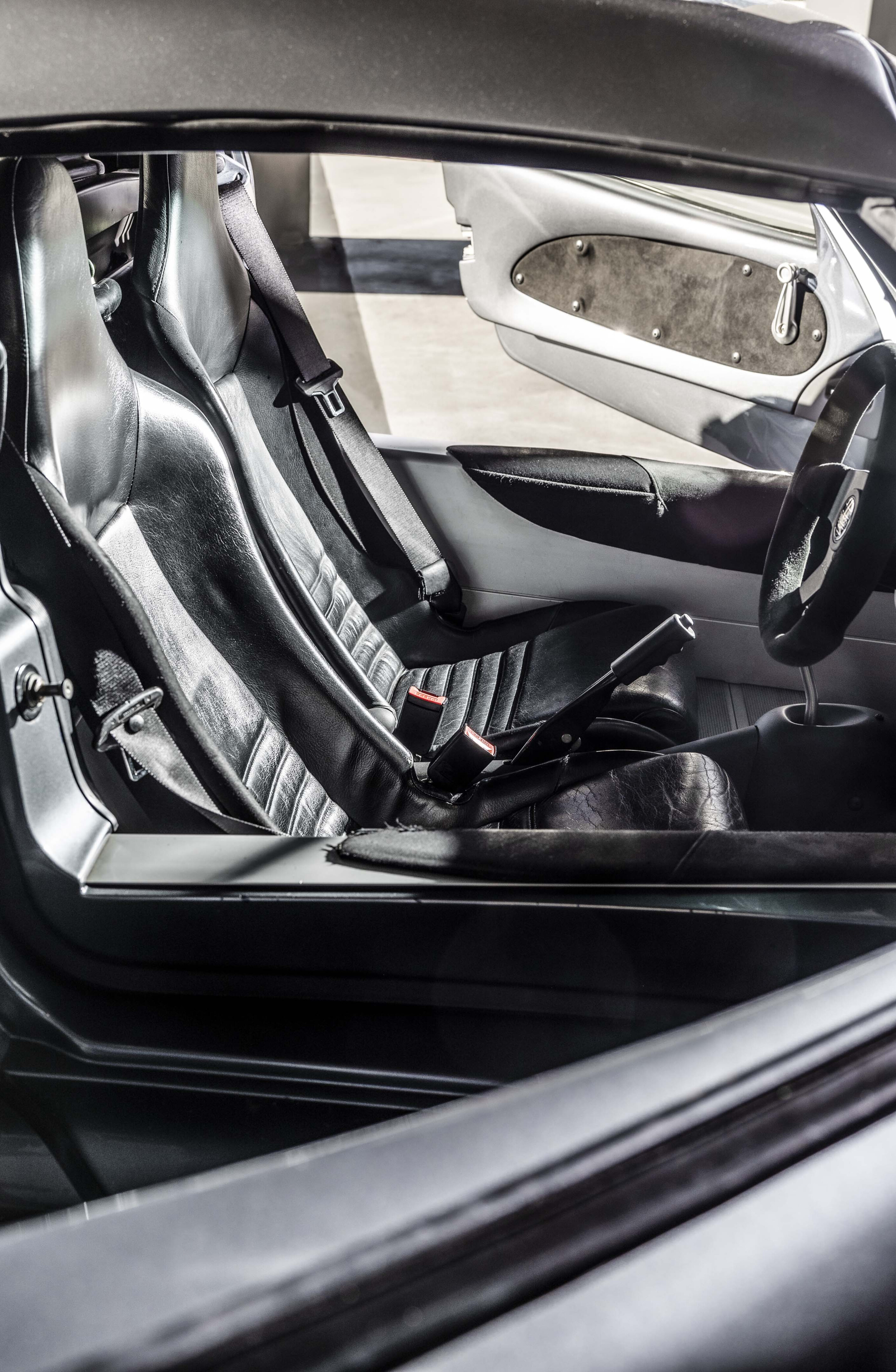
Levering yourself into an Exige S1 to take advantage of the VHPD’s charms isn’t the easiest process. With wide sills and a low roofline, it’s more of an undignified slump into the driver’s seat, especially if you’re fairly tall.
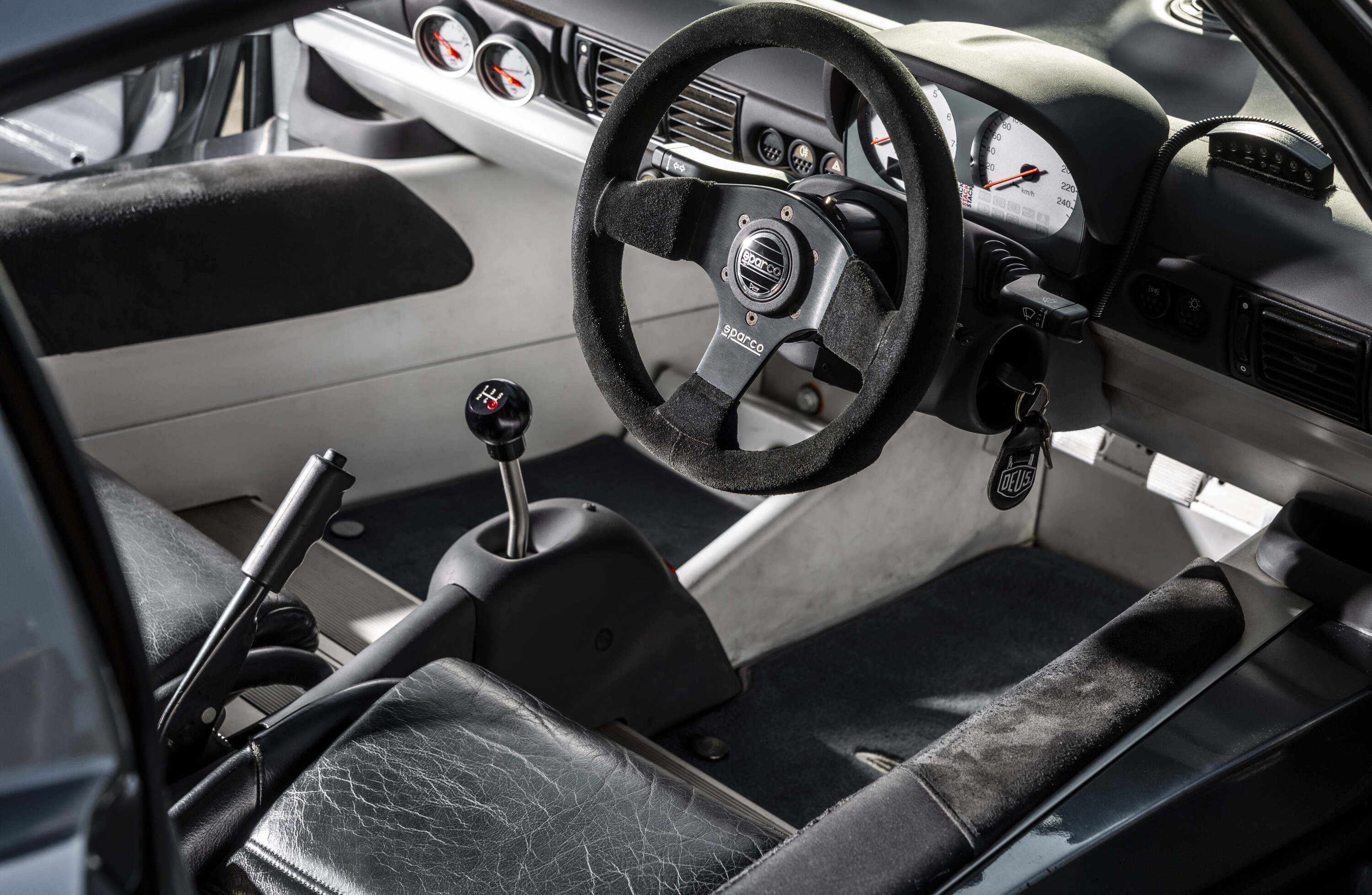
Once you’ve manoeuvred your legs in, accustomed yourself to the faintly acrid smell of GRP and realised that the rear-view mirror is purely ornamental, the baby Lotus is surprisingly comfortable.
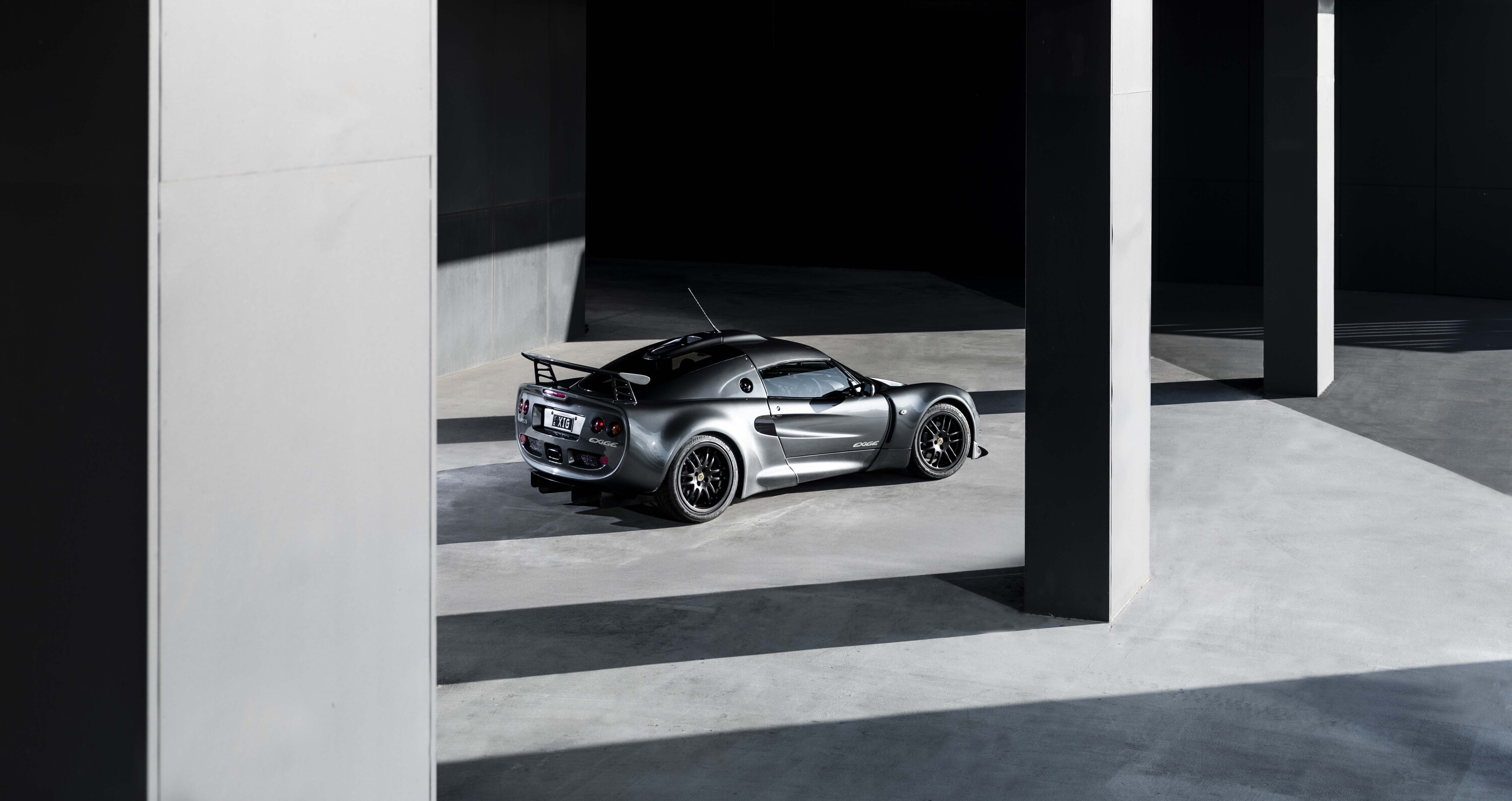
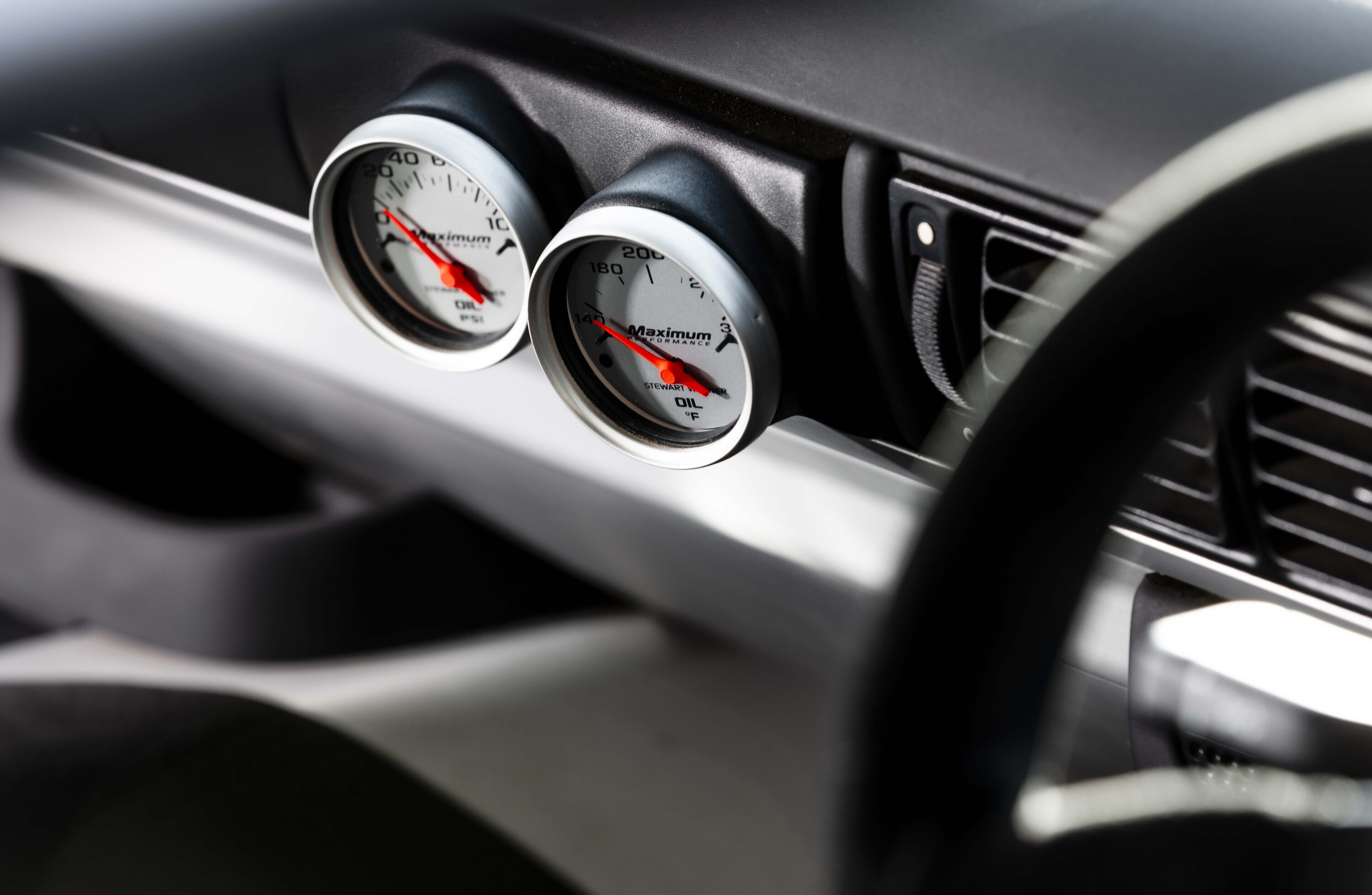
Key the car on, watch the period Stack digital displays flicker into life and select first from the long wand and it all feels a bit underwhelming. The unassisted steering is heavy, the brake pedal feels wooden and the throw of the gear lever ends with a crunchy slot into gear. Then it all begins to make sense.
As the gearbox oil warms, the shift effort reduces. The steering that seemed so obstreperous mere moments ago comes to life, sniffing out cambers and tipping its own way into corners. It’s magical. The brakes – cross-drilled and vented 282mm discs with AP Racing opposed-piston front calipers and floating Brembo single-pot rear calipers aft – deliver more than enough feel and response.
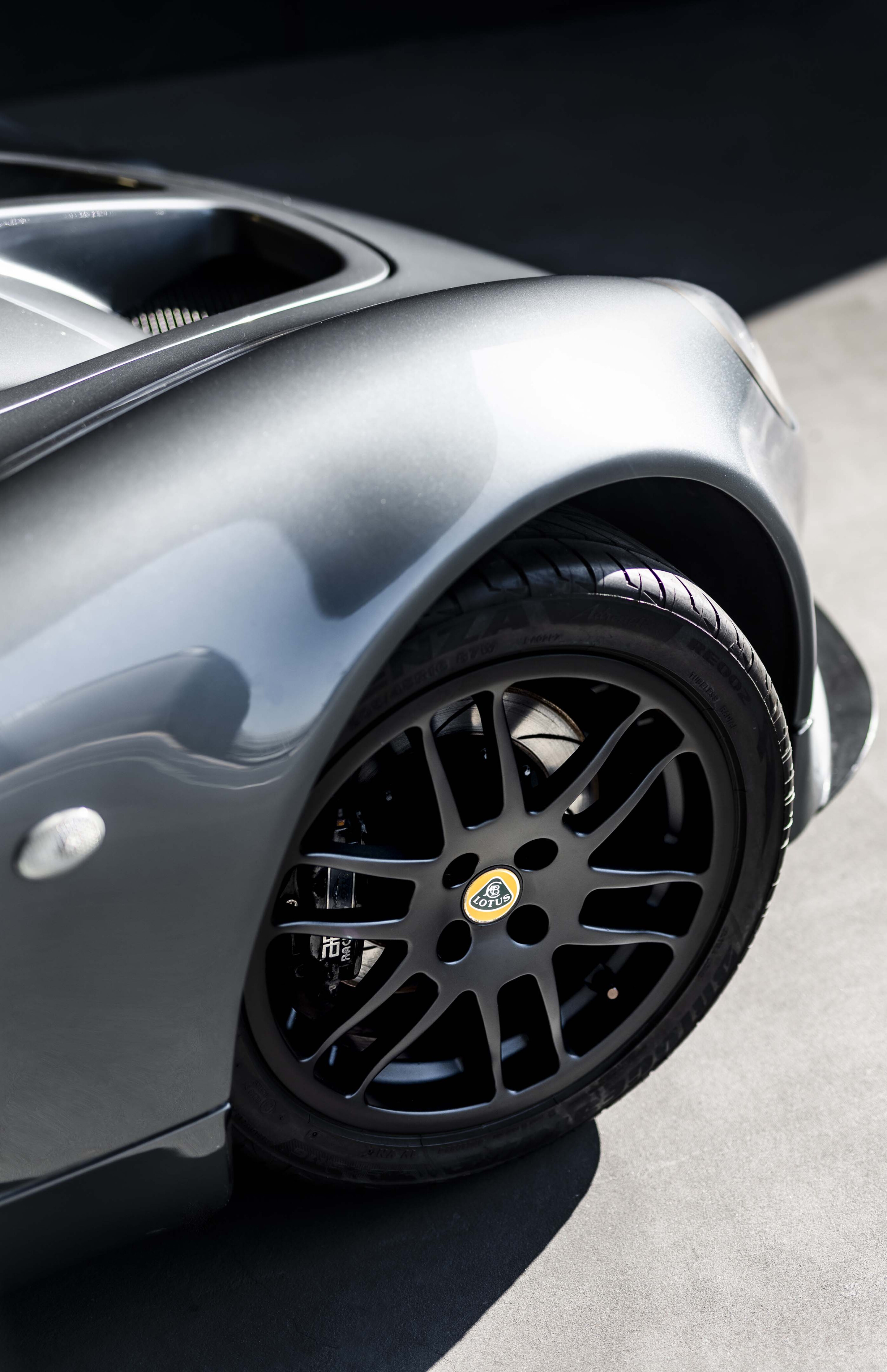
Really punish them and the front pads can warp, which you’ll feel as an indistinct brake pedal that makes heel-and-toeing vague, but there are fixes available for this.
Drive an Exige on a challenging road or circuit and it’s a genuinely thought-provoking experience. Yes, it’s hot and cramped and noisy, but the payoff is massive. The question that coalesces over and over is ‘have we got the whole progress thing wrong?’
Bigger, heavier, more complex and more expensive cars might well be safer and more efficient but, for some of us at least, driving doesn’t get a lot better than the recipe delivered by an Exige S1. It’s mesmerising.
Maybe there’s something to be said for focusing on one thing and doing it really well.
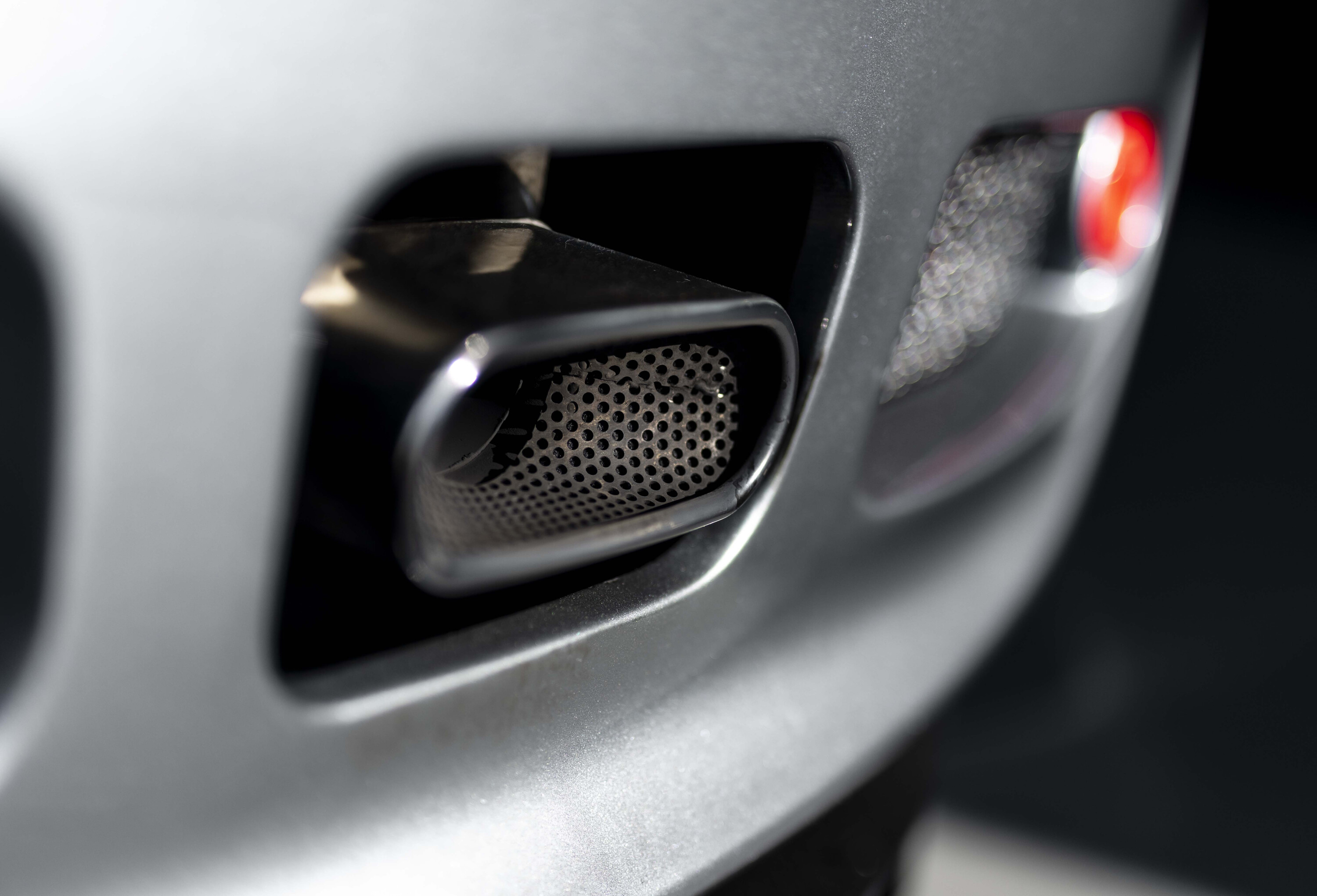
The Exige certainly did that. I learned the Spa race circuit in Belgium by following Lotus chassis engineer Matt Becker for lap after lap as he pedalled the Exige around and I swapped into ostensibly faster vehicles that, one by one, wilted as the little Lotus kept on clipping apexes. It was an object lesson in working smarter rather than harder.
At its core, the bones of the Exige were good. Becker would occasionally chunter about the shift quality or the Koni dampers, but there was a fundamental rightness to the Exige from day one. For its era, the aluminium chassis was incredibly stiff, and the double A-arm suspension had little to go wrong unless, that is, you tinkered unsuccessfully with the spring preload and front anti-roll bar. The advice in that case was always the same. “Put it back to factory setting.”
As was so often the case at Lotus, developing the Exige was an exercise in minutely finessing a bunch of bought-in and often fairly prosaic parts to work in harmony with one another.
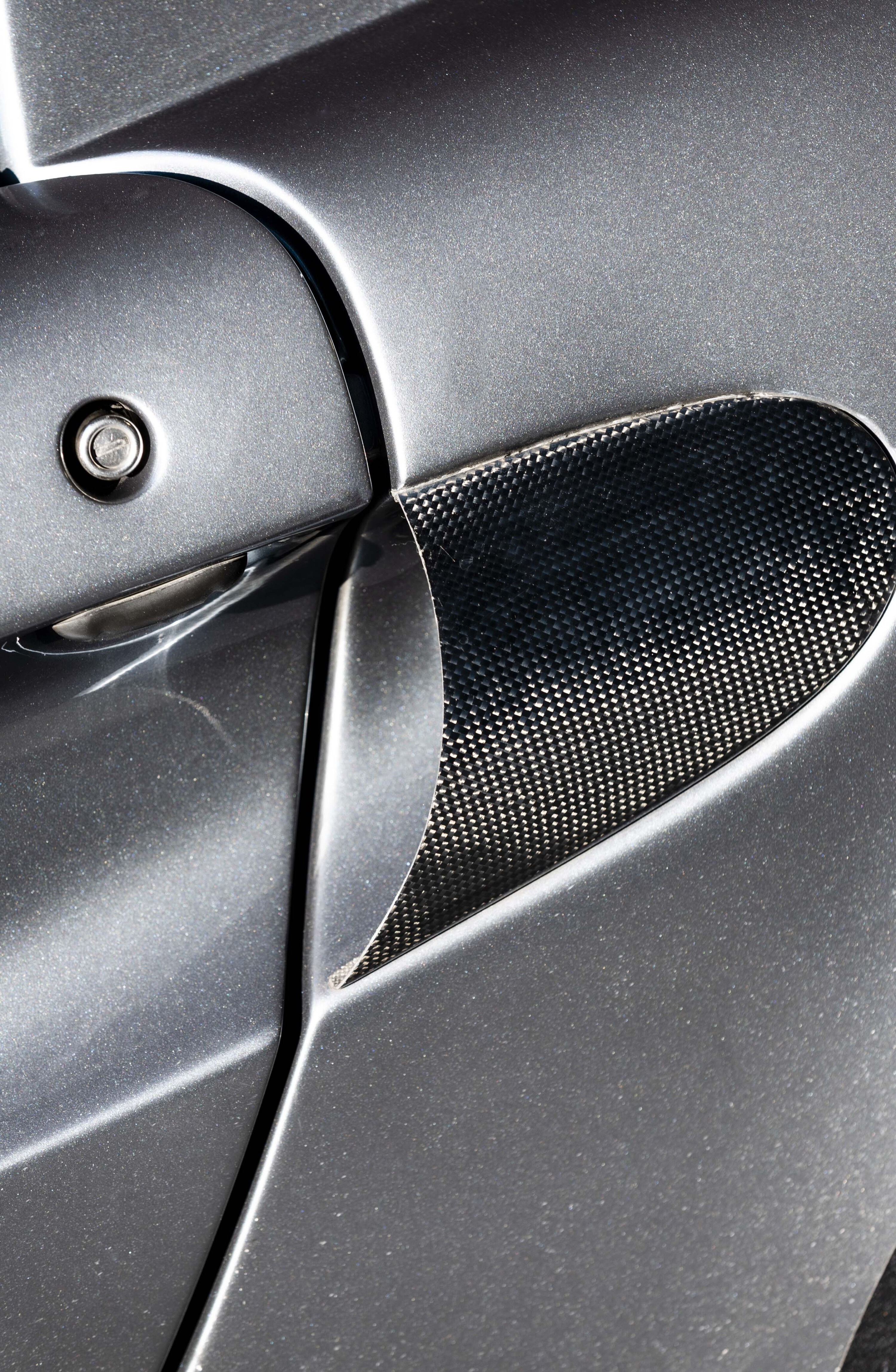
Both Becker and his colleague Gavan Kershaw, would spend hours beating round the lumpy old track at Hethel in order to develop that cohesion. You’d hear them muttering about tyre sidewall hysteresis, moments of yaw gain or front to rear phasing response and realise why these guys were held in such esteem by every other chassis engineer in the car industry.
Wheels’ first experience with the Exige came in October 2001 when Nathan Ponchard grabbed the keys to a Chrome Orange 133kW car and strapped on the timing gear. It’s fair to say he was impressed.
“Despite boasting top-notch power-to-weight potential (183kW per tonne), the Exige feels like it could easily handle another 30kW,” he claimed. “Purely because it’s blessed with exceptional poise and astonishing grip – the Yokohama A039s, specially developed for lightweights like the Exige and mounted on glossy black Rimstock alloys, play a big part here.
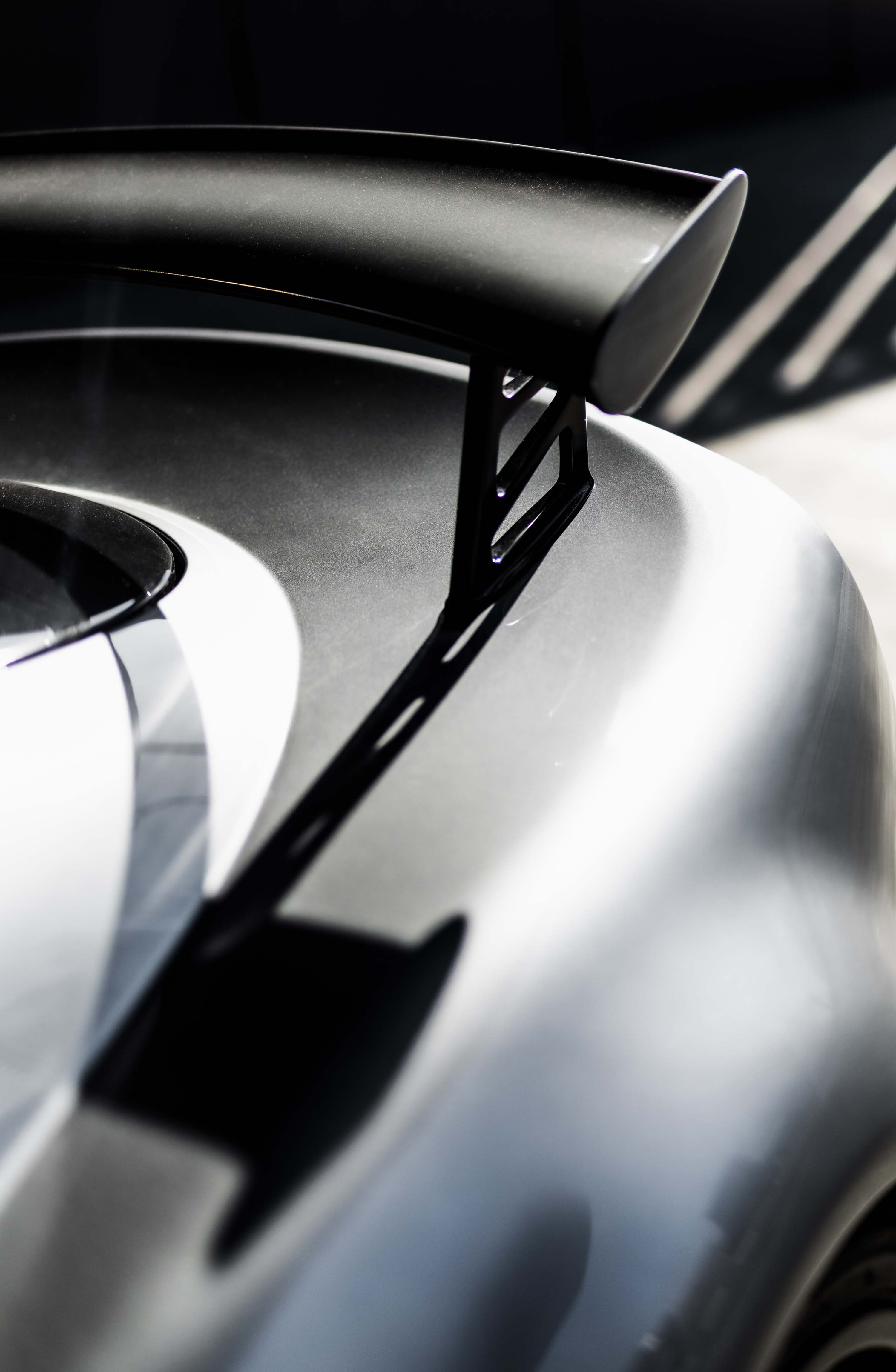
The rear end is amazingly secure and full-throttle, first-gear exits from 15km/h hairpins betray little more than a mild scamper for traction. No smoking wheelspin, show-pony powerslides or scaredy-cat skid control interference. The Exige doesn’t have it, doesn’t want it and doesn’t need it.”
That example lived up to a Lotus stereotype by developing a slight miss at about 5800rpm, which meant that the Correvit data logger wasn’t showing figures that got particularly close to Hethel’s 4.9 second 0-100km/h claim, the tape churning out a 6.8 second showing.
No wonder Ponch felt it could handle another 30kW. Exiges can be tricky to get off the line and the 0-400m time of 14.8 seconds that the crew achieved at Sydney Motorsport Park is about what you might expect from a modern MX-5. In optimum conditions, shave a couple of seconds off that before the Exige’s aerodynamics start conspiring against it.
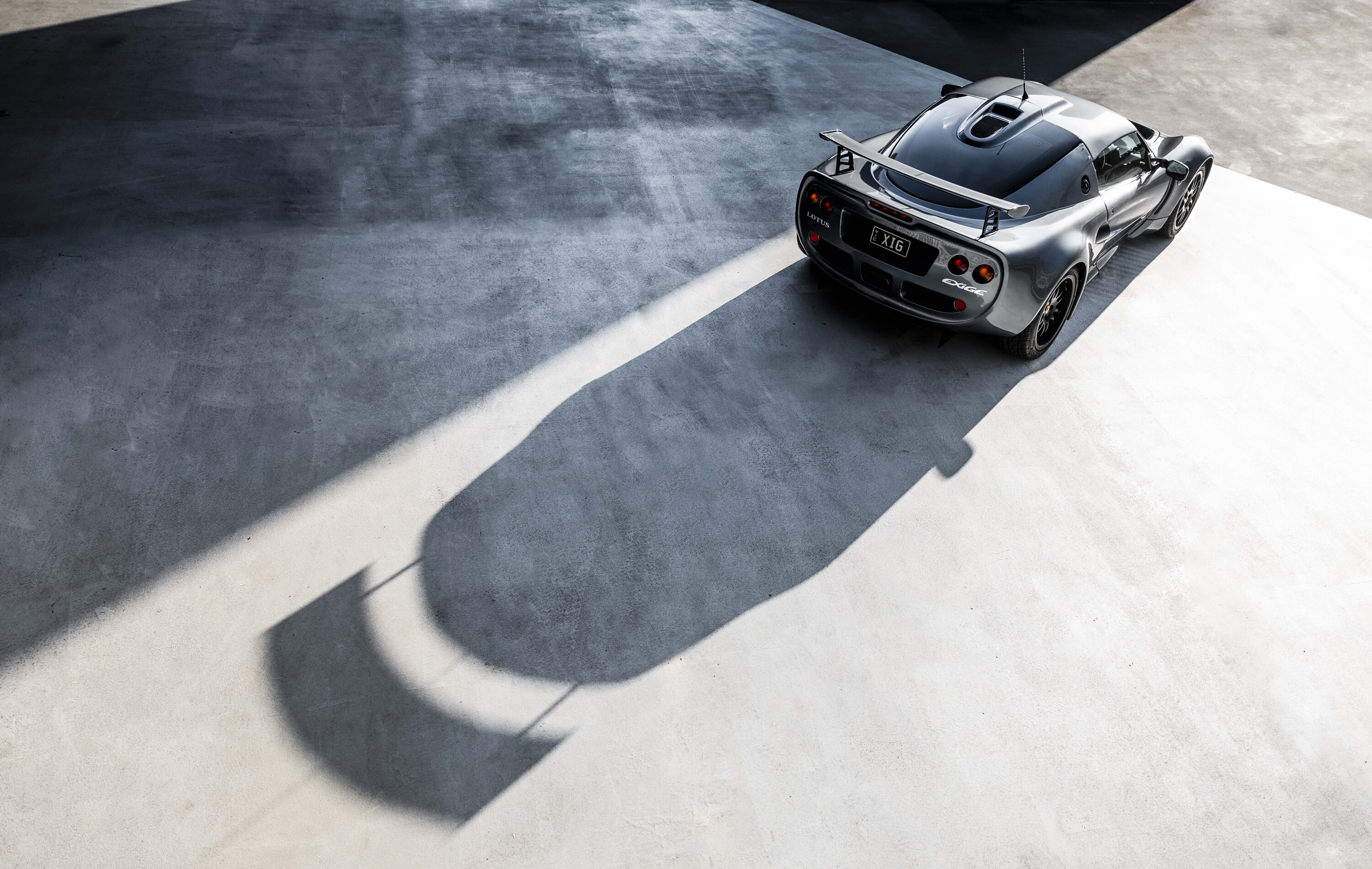
The asking price back in 2001 certainly wasn’t lightweight, with Lotus wanting $130,171 for Aussie cars. Predictably, these were about as stuffed with extras as an Exige could get, with air conditioning, an alarm, Alcantara trim, leather seats and a radio installation kit. On the options list were an Alpine stereo that fought a losing battle against the sound of the K-Series and metallic paint at a hefty $2450.
Now? That’s a tough question because they’re so rare in Australia that they almost fall into the realm of being worth whatever someone’s willing to pay.
The later Toyota-engined Exige variants are more comfortable and more reliable than the S1, and represent a viable alternative as a trackday special to something like a Porsche 911 GT3. They don’t possess the rawness nor that 5/8ths scale Group C emigré look of the original. That’s part of the appeal that keeps fans of the Exige coming back.
You need to be committed in order to run one in its UK home market where there’s a grassroots network of engineering backup when things inevitably go wrong.
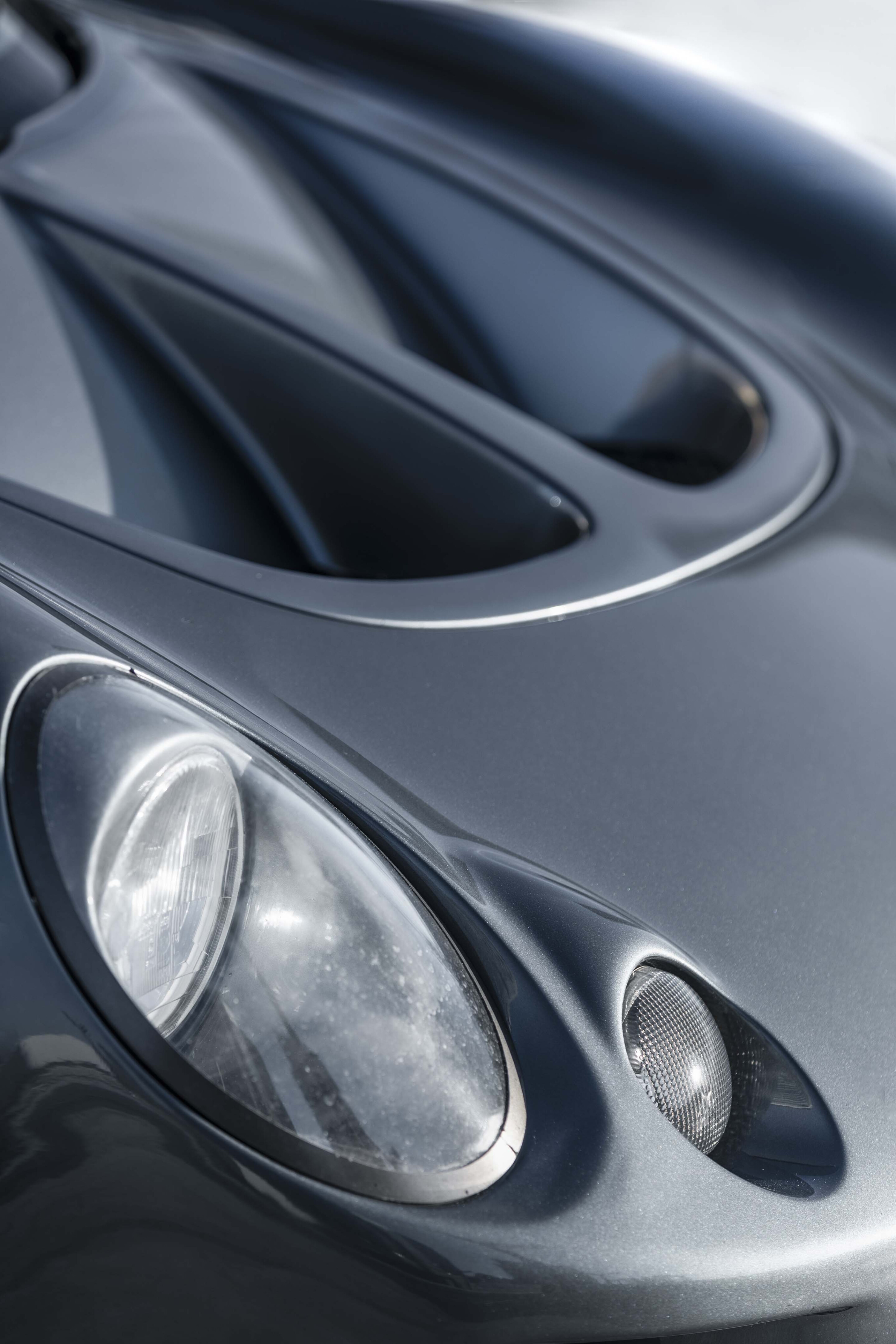
Over here it’s another level of complexity again. The Exige suffers from many of the tedious, snagging issues that the Elise was known for such as failing clam release cables, misting headlights, broken alternators, crazing and cracking glass-fibre, radiator leaks, various clips failing, worn suspension parts, glued trims falling off and such like.
These things tend to define your Lotus ownership experience. Some will dabble, get frustrated by the constant demands of the cars and then return to something like a Porsche, whereas others will actively enjoy overcoming this series of challenges and find a certain camaraderie among those that do likewise.
The parts that were prone to fail, such as the cheap plastic radiator end caps, will have long since been replaced with superior items.
What’s more, even if the worst comes to the worst and a head gasket fails or the cylinder liners wear, the fix is relatively cheap in relation to the total cost of the car. That’s because rarity has made these cars ever more desirable. Couple that with the fact that the Exige S1 is just about to cross the 25-year threshold making it eligible for personal import to the US and you can see why most owners are wearing that “No lowballs, I know what I’ve got” face.
When buying the big things to check for are accident damage and corrosion, the two issues often linked. Punt an Exige into a tyre wall on a track day and it can be very hard indeed to get the tub straight, as the front wheel tends to push the wishbones into the suspension pickups on the chassis, bending or breaking them.
Where the tub is bonded aluminium, the rear subframe and the rear suspension uprights were steel and, as anyone with a passing knowledge of chemistry knows, these two metals don’t really rub along that well, setting up an galvanic reaction which leads to corrosion of the anode, which in this case is the aluminium part. The electrolyte to help the process along is water from the road surface.
Inspecting the tub for accident damage and the suspension pickups for corrosion is absolutely key because, unlike most other cars, you can’t just break out the welder and fix any problems, because aluminium and glue.
Again the prices of Exiges comes into play. A few years ago, this would have represented a vehicle write-off, whereas now, it’s financially viable to procure a $25k replacement chassis and have the rest of the car bolted to it.
The Exige’s payoff always justifies any expense outlaid in maintenance. Cars just aren’t built to feel like this any longer. Even the last of the Series 3 Exiges that ran out in 2021 don’t have the immediacy and the sheer lightweight authenticity of the S1.
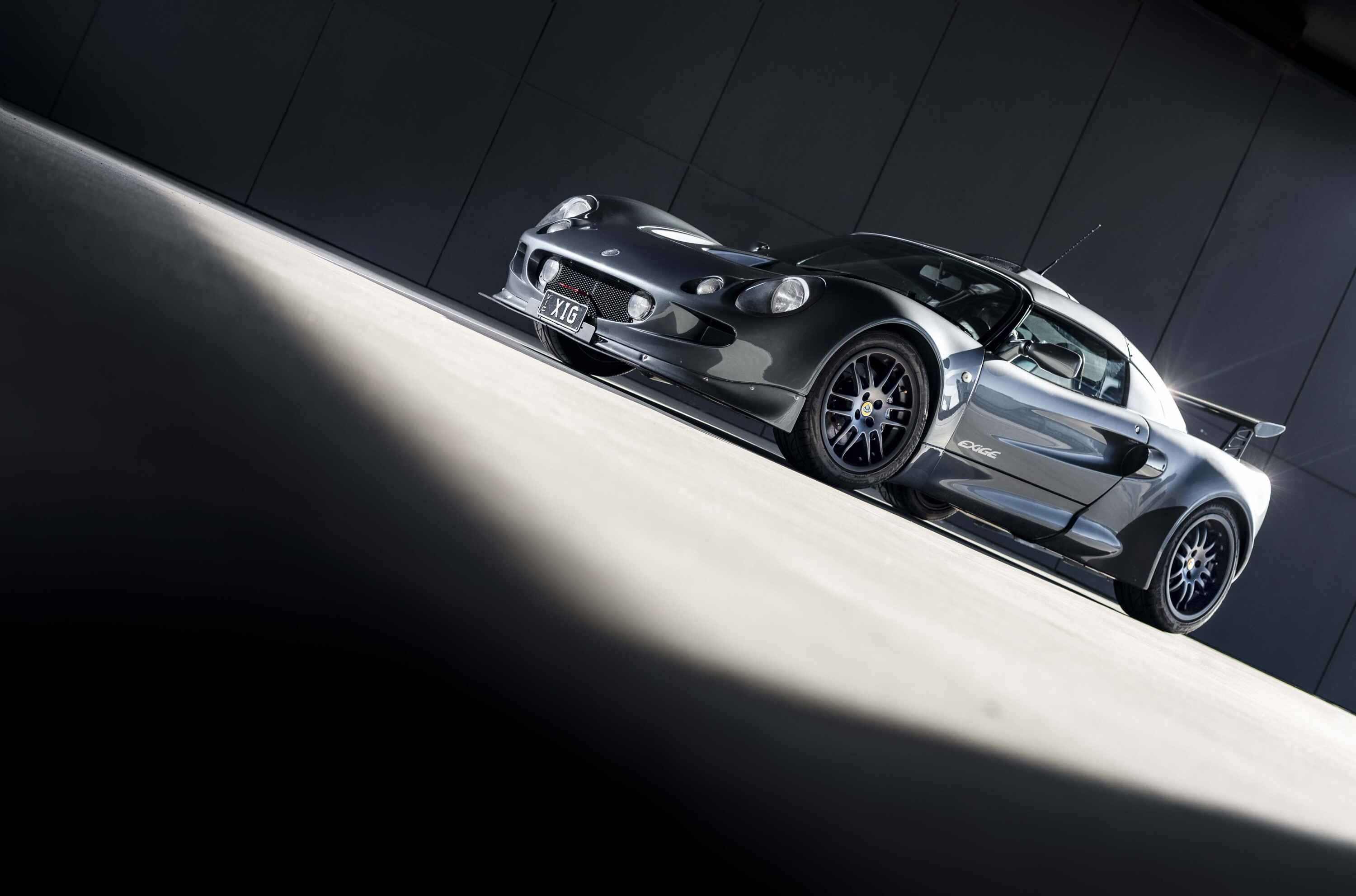
Julian Thompson’s original Elise design may have lost a degree of its aesthetic delicacy in this guise, but gained a curious melange of prettiness and menace that really shouldn’t work but somehow does. It’s a stunning looking car and one that looks ever more alien in a carscape of huge and overweight bloaters.
How can a car this brilliant ever have been so rare? Original cars like the one you see here are rarer again. It’ll be remembered as one of the greatest cars Lotus ever built, and that’s a high bar in and of itself. It may have enjoyed a mayfly-like production run but its legacy endures.
The new and bigger 2026 Mercedes-Benz CLA sedan has been unveiled, following its initial debut as a concept back in September 2023.
In its new, third-generation form, the CLA will be offered in petrol-electric mild hybrid and full-electric forms.
Unlike the brand’s current EV range – such as the EQA, EQB, EQE and so on – the electric CLA models will be known by the mouthful moniker CLA+ with EQ Technology, although ‘CLA EQ’ will likely serve as a nickname of sorts.
Merc’s new-generation EVs are expected to follow suit, with – for example – the EQA likely to be replaced by a new ‘GLA with EQ Technology’.
The new CLA will also be the first model to the company’s new in-house developed Mercedes-Benz Operating System (MB.OS). This system integrates artificial intelligence from both Microsoft and Google in a chatbot-like form for vehicle control and general queries.
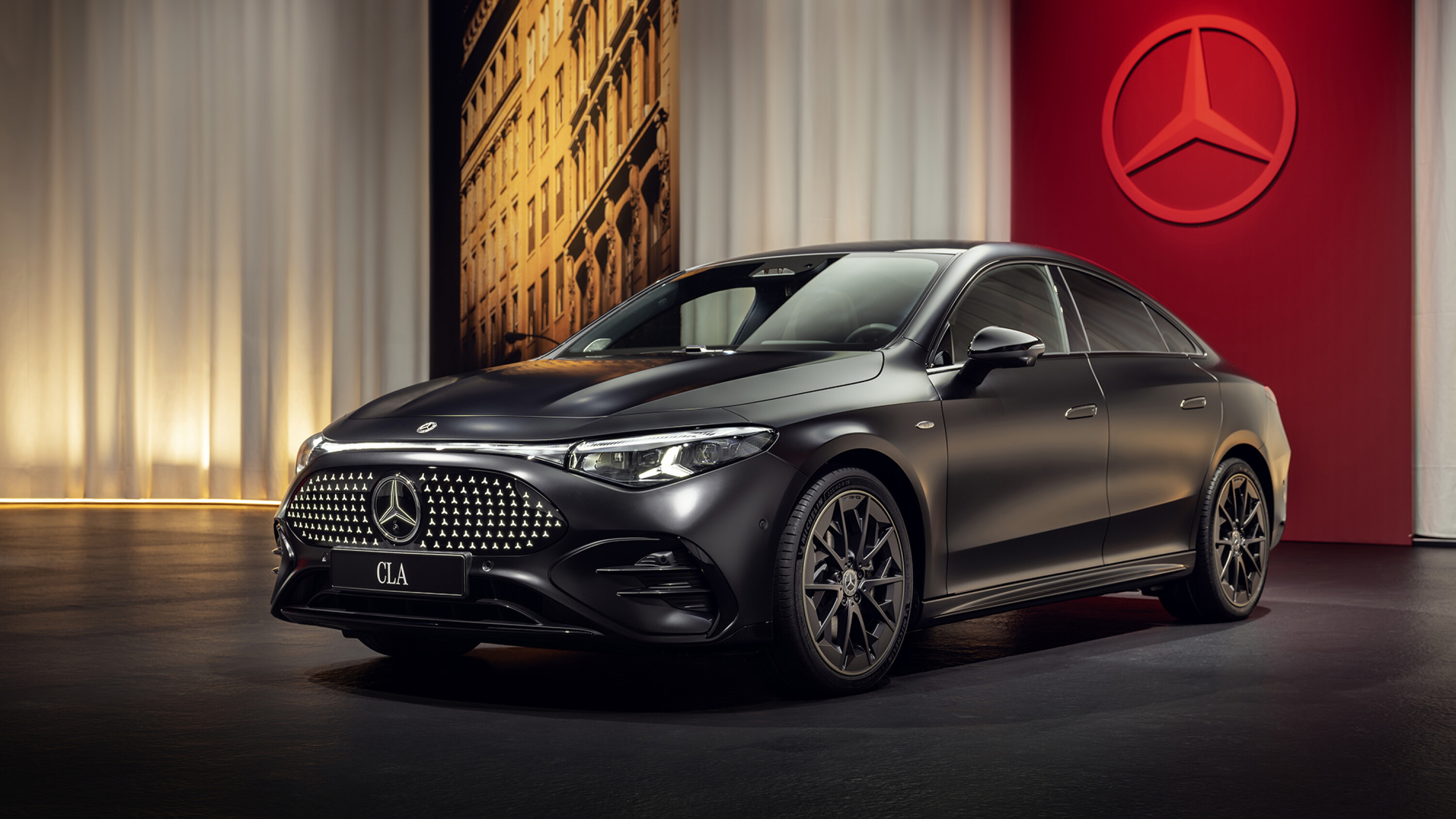
Powertrains, batteries, driving range, and charging speeds
In its all-electric form, the new CLA is built on an 800V electrical system, with ultra-rapid DC charging at up to 320kW. Benz claims its new EV will take enough charge in 10 minutes for a 325km range boost.
These figures make the new CLA competitive with the current best-in-class EVs on paper, although real-world results – especially when it comes to charging systems – can always vary.
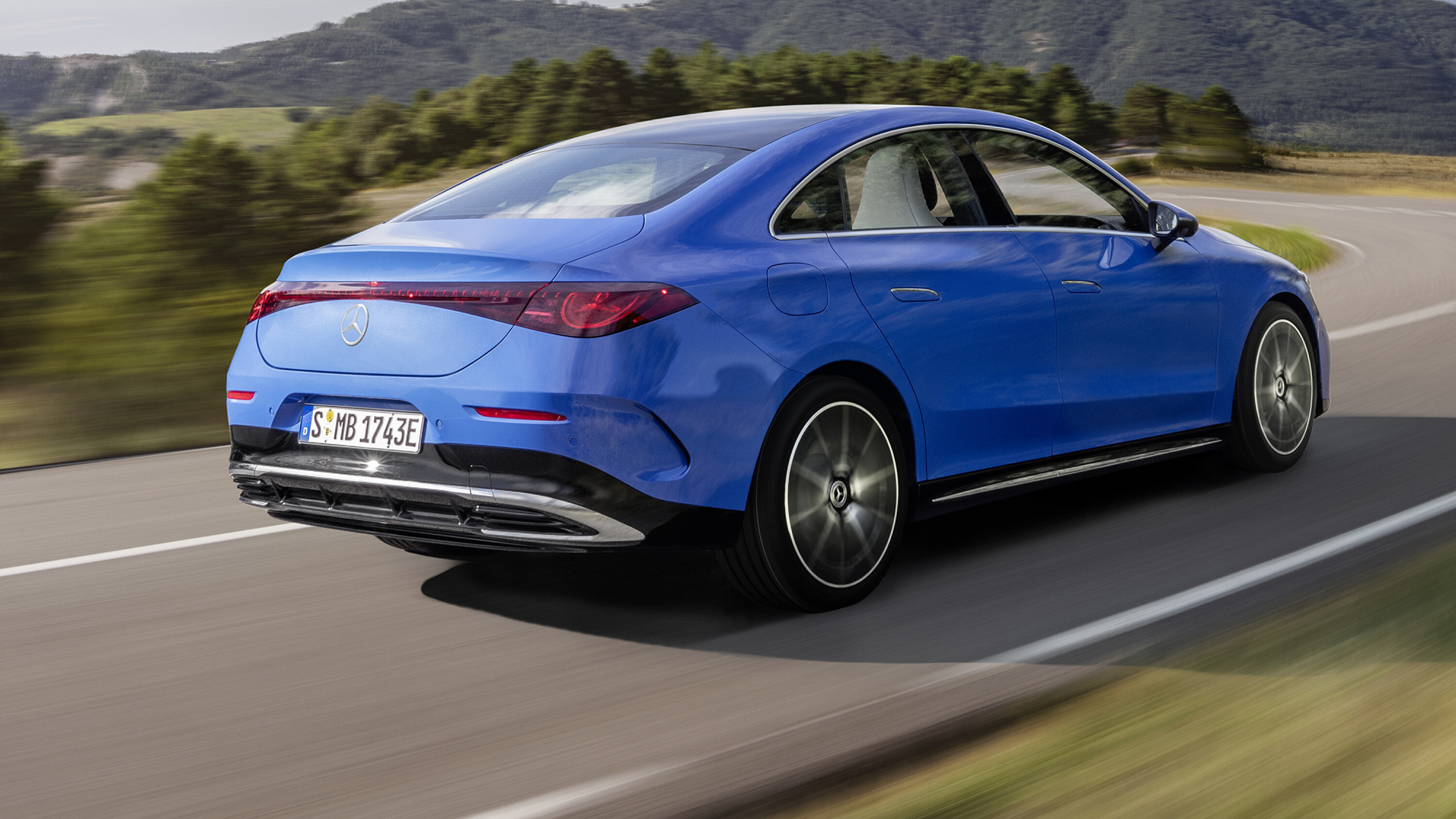
The line-up opens with the CLA 250+ with EQ Technology (or ‘CLA250+ EQ’) in a single-motor configuration with real-wheel drive and an 85kWh Lithium-ion battery pack.
Outputs for the CLA 250+ EQ are listed at 200kW and 335Nm, with a huge claimed (and WLTP-tested) driving range of up to 792 kilometres.
| Mercedes-Benz CLA 250+ with EQ Technology | ||
|---|---|---|
| Drive system and battery | ||
| Drive | Rear-wheel drive | |
| E-motor(s) | Type | Permanently excited synchronous machine (two-speed) |
| Output (peak) | kW | 200 |
| Torque (peak) | Nm | 335 |
| Battery type | Lithium-ion | |
| Max. AC charging capacity | kW | 11 |
| AC charging time, three-phase (11 kW) | h | 9 |
| Max. DC charging capacity | kW | up to 320 |
| DC charging time at fast charging station | min | 22 |
| DC charging: range after 10 minutes (WLTP) | km | 285-325 |
| Dimensions and weights | ||
| Wheelbase | mm | 2,790 |
| Track width front/rear | mm | 1,605 / 1,574 |
| Length/width/height | mm | 4,723/1,855 /1,468 |
| Turning circle | m | 11.21 |
| Boot volume | litres | 405 |
| Frunk volume (liquid) | litres | 101 |
| Kerb weight according to EC | kg | 2,055 |
| Performance; fuel consumption; emissions | ||
| Acceleration 0-100 km/h | seconds | 6.7 |
| Maximum speed | km/h | 210 |
| Combined energy consumption (WLTP) | kWh/100 km | 14.1-12.2 |
| Range (WLTP) | km | 694-792 |
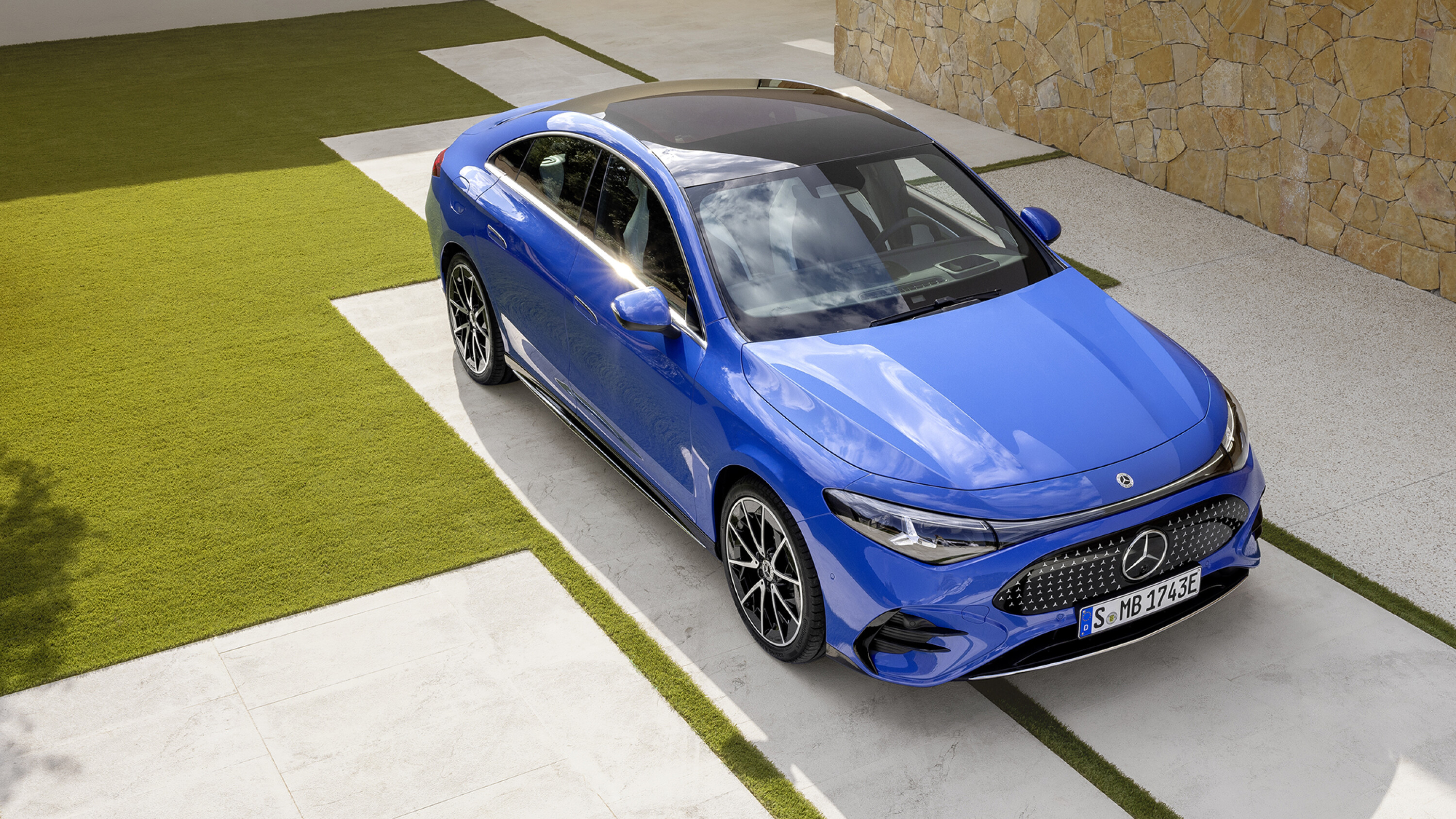
Moving up to the CLA 350+ EQ introduces a dual-motor setup for all-wheel drive, bumping outputs to 260kW and 515Nm.
The 350+ EQ’s driving range is listed at between 672-771km off the same 85kWh battery system.
Efficiency is listed at a remarkably low 14.1-12.2kWh/100 km for the CLA 250+ EQ, and 14.7-12.5 kWh/100 km for the CLA 350+ EQ.
Helping achieve that claim, if it proves realistic, will be the fact that the electric CLA is the first Mercedes-Benz vehicle to incorporate an air-to-air heat pump, utilising waste heat from the vehicle’s systems and ambient air to enhance efficiency.
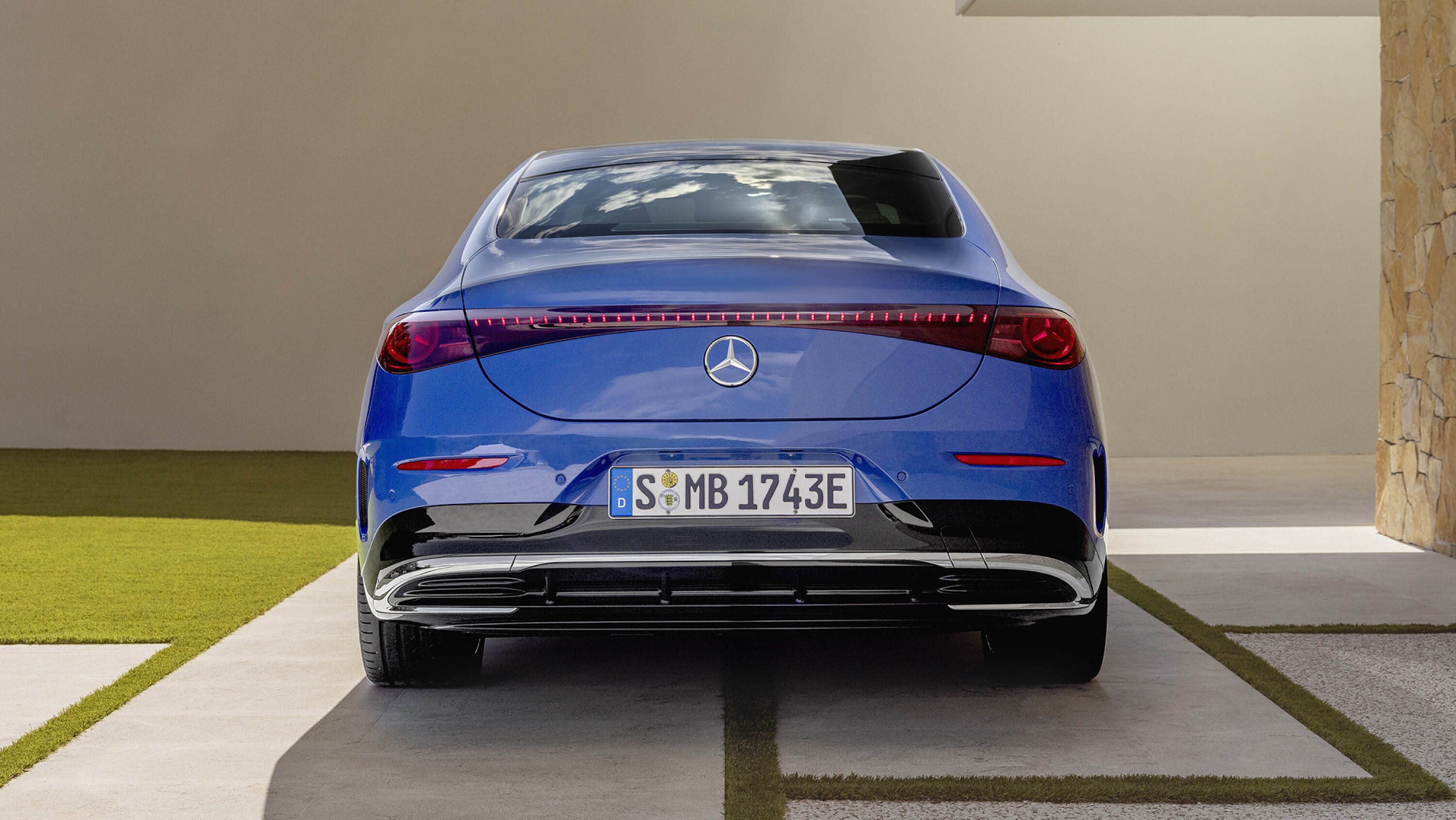
| Mercedes-Benz CLA 350 with EQ Technology | ||
|---|---|---|
| Drive system and battery | ||
| Drive | All-wheel drive | |
| E-motor(s) | Type | Permanently excited synchronous machine (two-speed) |
| Output (peak) | kW | 260 |
| Torque (peak) | Nm | 515 |
| Battery type | Lithium-ion | |
| Max. AC charging capacity | kW | 11 |
| AC charging time, three-phase (11 kW) | h | 9 |
| Max. DC charging capacity | kW | up to 320 |
| DC charging time at fast charging station | min | 22 |
| DC charging: range after 10 minutes (WLTP) | km | 275-315 |
| Weight | ||
| Kerb weight according to EC | kg | 2,135 |
| Performance; fuel consumption; emissions | ||
| Acceleration 0-100 km/h | seconds | 4.9 |
| Maximum speed | km/h | 210 |
| Combined energy consumption (WLTP) | kWh/100 km | 14.7-12.5 |
| Range (WLTP) | km | 672-771 |
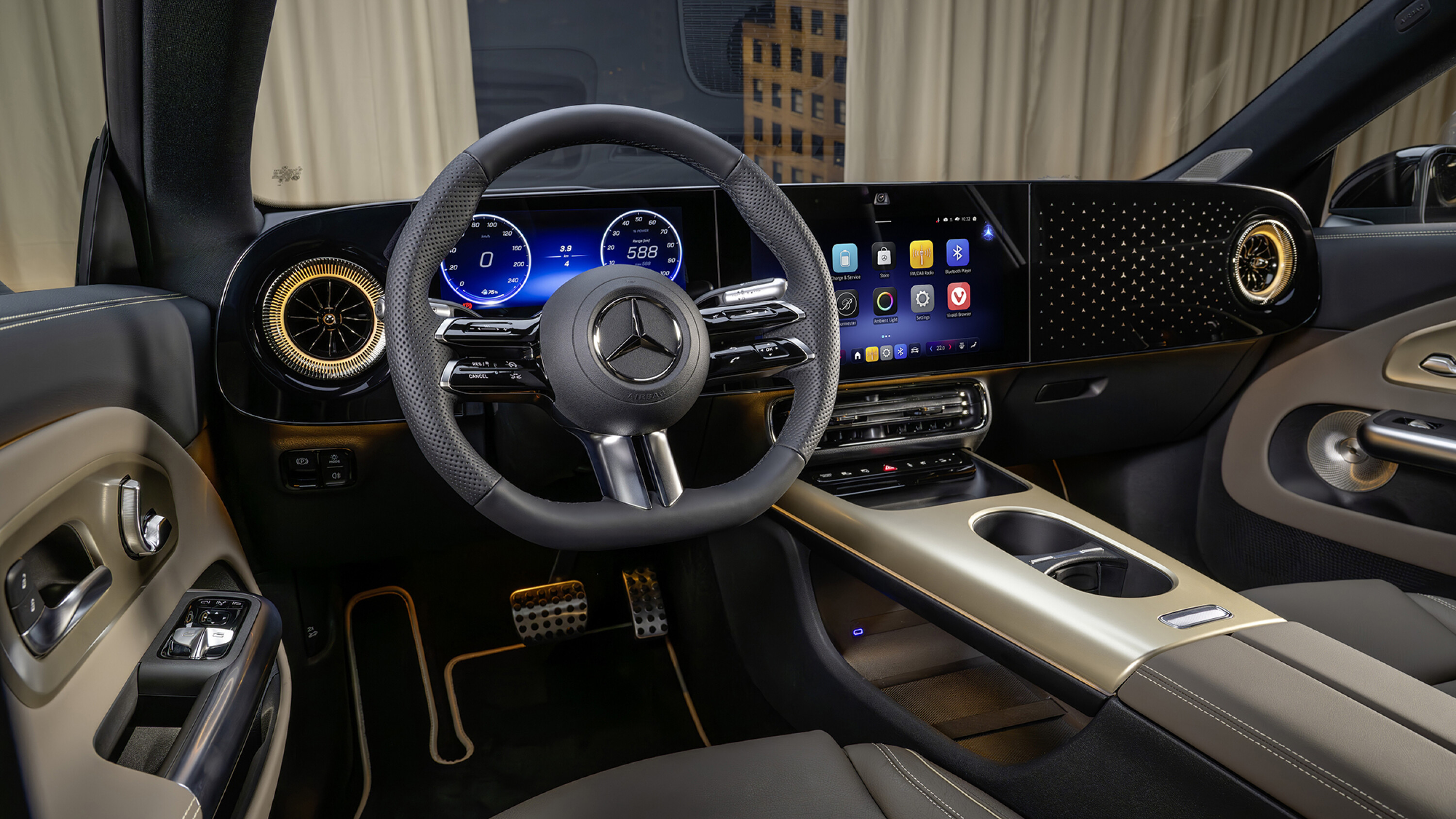
Hybrid
Later in the year, a mild-hybrid version with petrol power and 48V tech with an integrated electric motor will join the range.
The hybrid will be available in three power outputs, with a choice between front-wheel drive and all-wheel drive.
As with the new Audi A5 mild-hybrid range, Mercedes says its hybrid models can operate solely on electric power in urban environments and at speeds up to approximately 100 km/h when power demand is below 20kW.
The combustion engine in the hybrid system can recuperate up to 25kW of energy across all eight gears – but, for now, that’s all the details Mercedes is giving out for the mild-hybrid CLA.
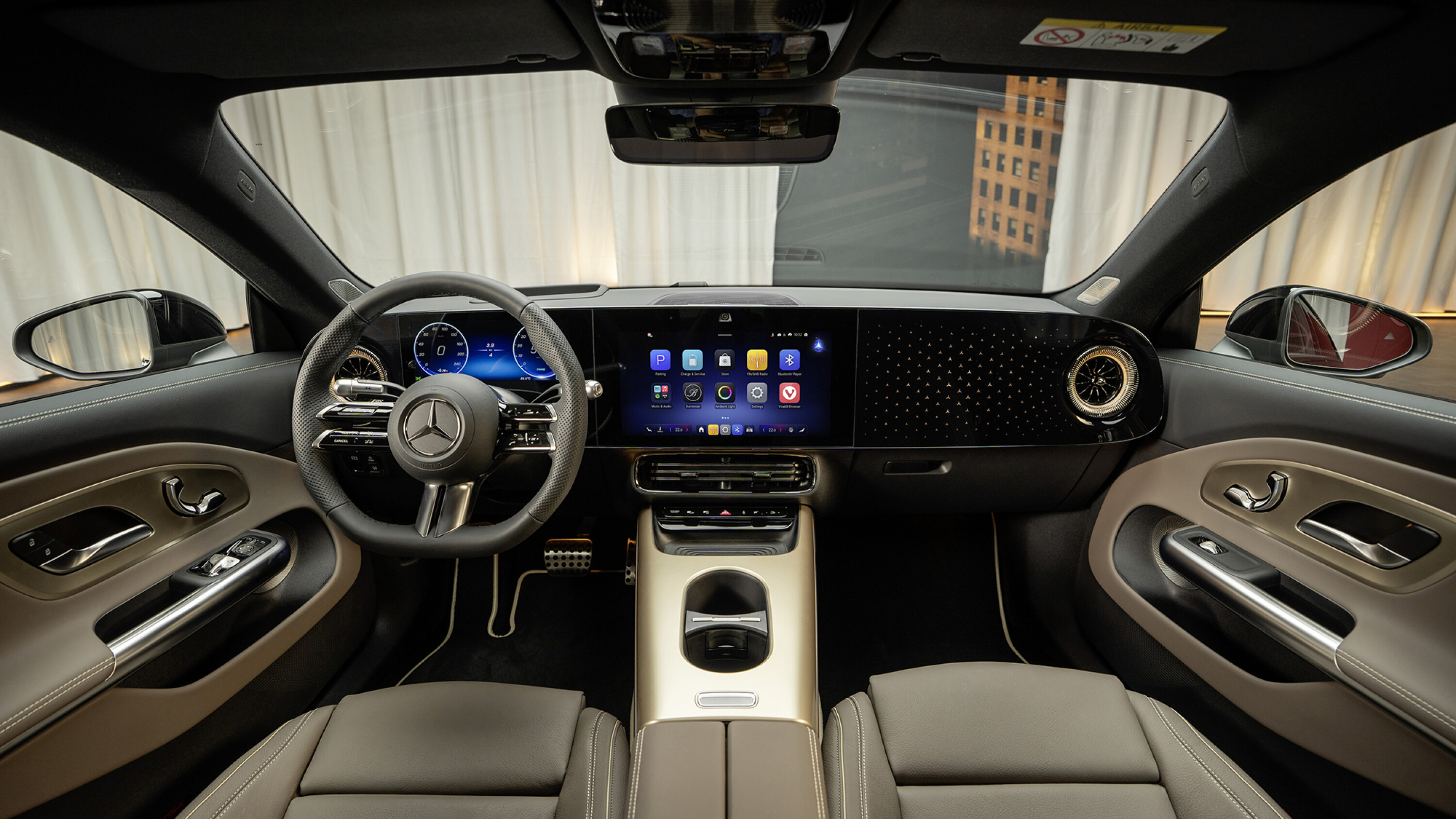
Interior features and infotainment
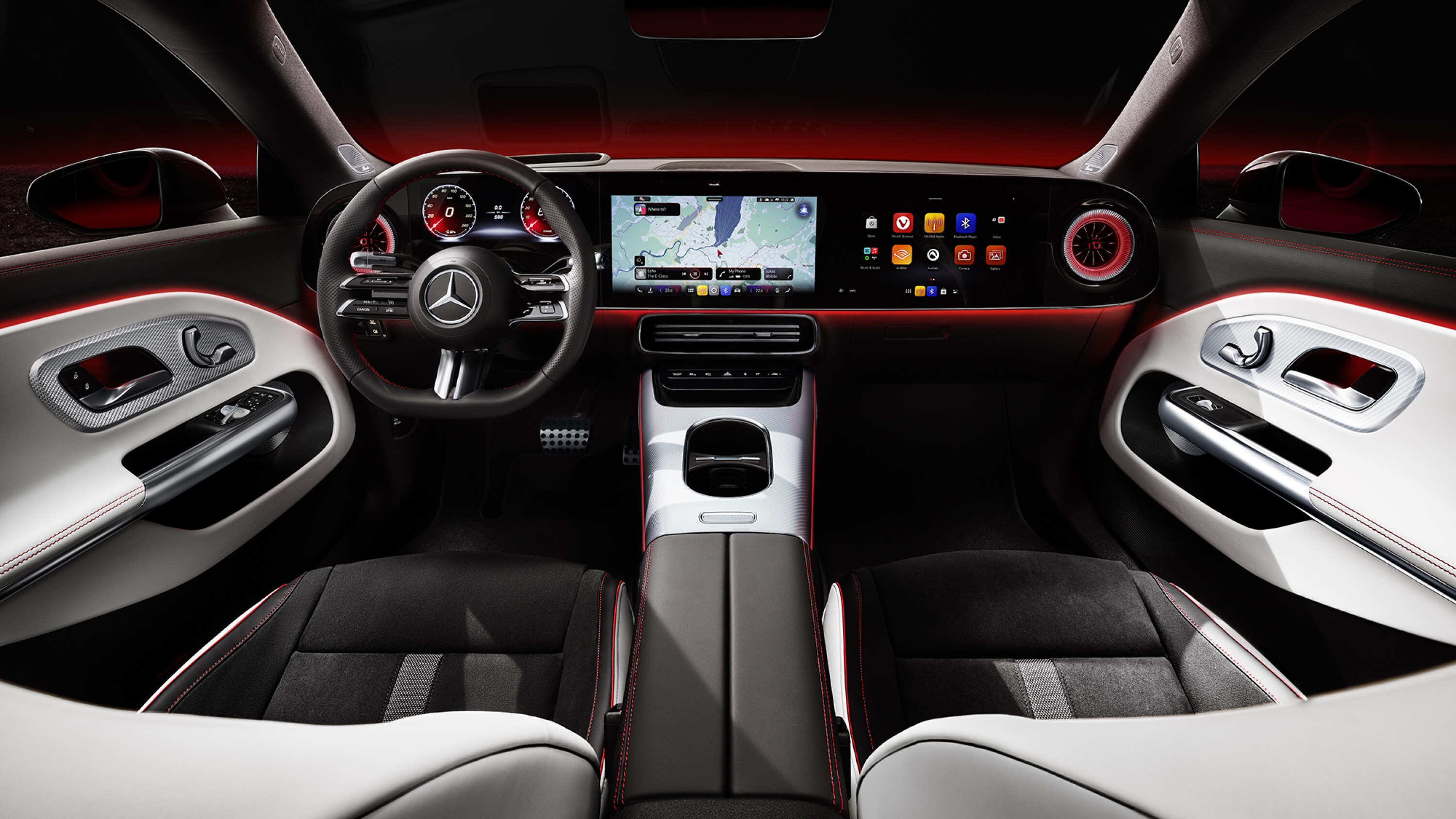
As always with Mercedes, the interior of the CLA prioritises a minimalist look dominated by an optional floating MBUX Superscreen that spans the entire dashboard.
This screen incorporates a 10.25-inch driver display and a 14-inch main display. Mercedes says another 14-inch display, for the front passenger, will become available after the initial market introduction.
The MBUX Virtual Assistant, represented by a “living” avatar, uses AI from Microsoft (ChatGPT and Bing) and Google (Gemini) for enhanced interaction, internet knowledge, and navigation.
| Exterior dimensions | 2026 CLA | Predecessor | Difference | |
|---|---|---|---|---|
| Length | mm | 4,723 | 4,688 | 35 |
| Width | mm | 1,855 | 1,830 | 25 |
| Width including exterior mirrors | mm | 2,021 | 1,999 | 22 |
| Height | mm | 1,468 | 1,439 | 29 |
| Wheelbase | mm | 2,790 | 2,729 | 61 |
| Interior dimensions | ||||
| Max. headroom front | mm | 1.039 | 1.023 | 16 |
| Max. headroom rear | mm | 936 | 906 | 28 |
| Legroom front | mm | 1,073 | 1,062 | 11 |
| Legroom rear | mm | 854 | 861 | -7 |
| Elbow width front | mm | 1,456 | 1,457 | -1 |
| Elbow width rear | mm | 1,431 | 1,454 | -23 |
| Shoulder room front | mm | 1,412 | 1,400 | 12 |
| Shoulder room rear | mm | 1,359 | 1,372 | -13 |
| Boot volume | L | 405 | 460 | -55 |
| Frunk volume (liquid) | L | 101 | – | 101 |
When will the new CLA reach Australia?
Full details on the new CLA’s Australian launch are still to come, but Mercedes has confirmed we can expect an early 2026 debut.
Likewise, pricing won’t be revealed until closer to launch, but we can very likely expect it to sit well above the current line-up, which already starts at just under $75,000.
As a point of reference, the small and now considerably less advanced EQA electric SUV started from around $85K to $90,000 when it was updated in mid 2024.
