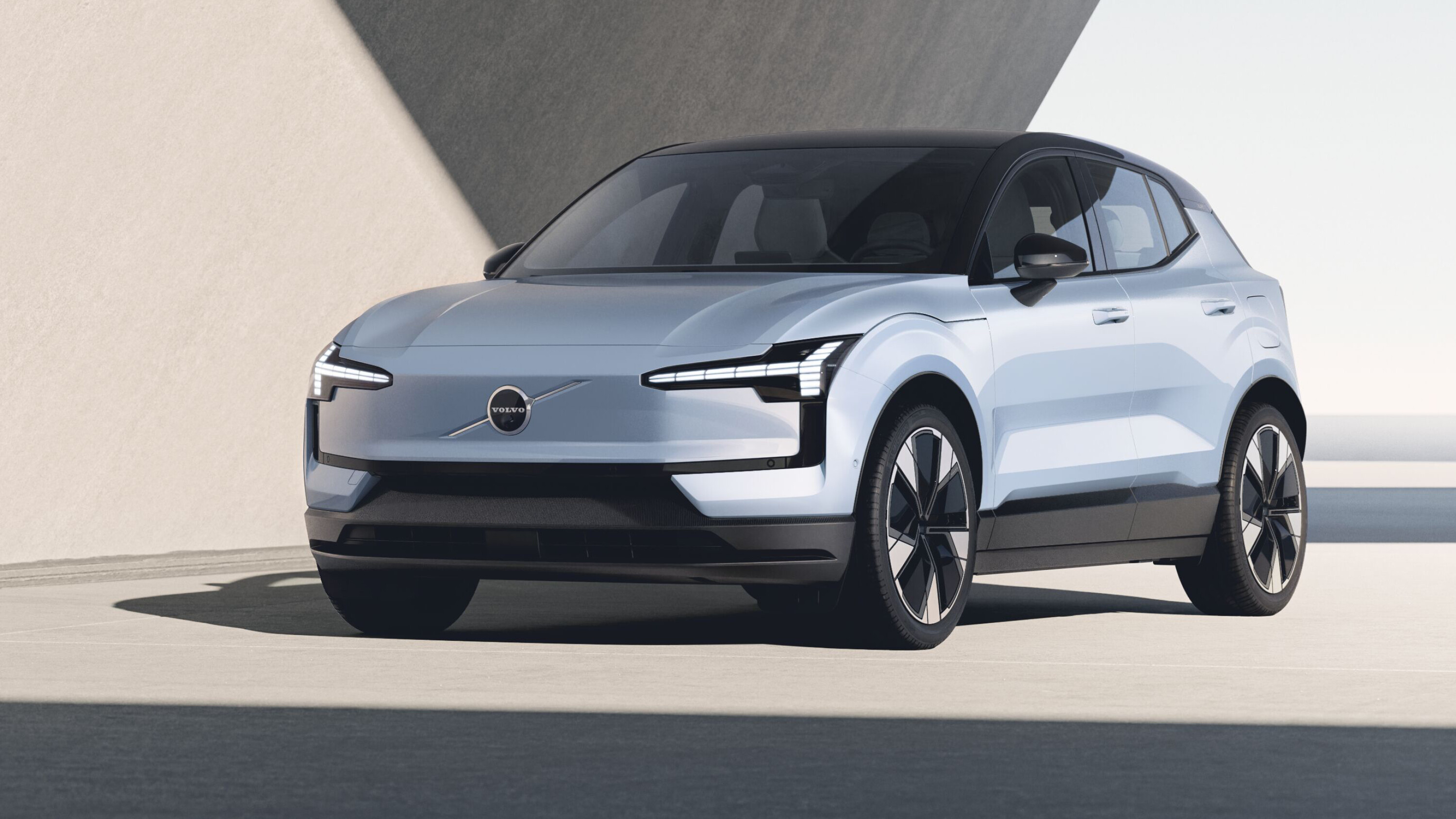
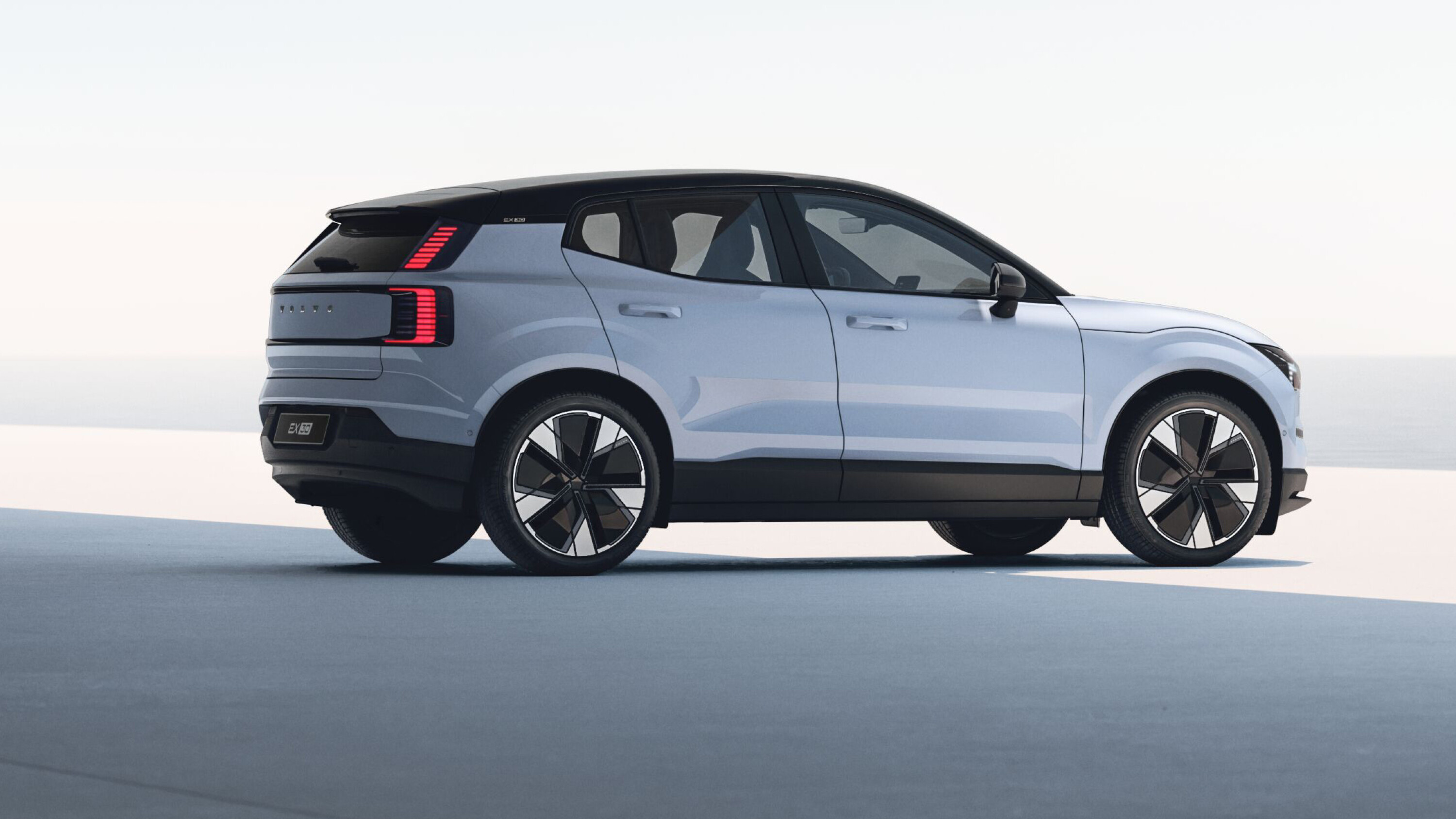
EX30 is Volvo’s smallest vehicle, at just 4.2 metres long
Three models for Australia, priced from $59,990
Performance Ultra is fastest-accelerating Volvo yet u2013u00a00-100km/h in claimed 3.6sec
The Volvo EX30 has gone on sale in Australia as the Swedish brand’s most affordable electric vehicle yet.
Starting from $59,990, Volvo’s smallest vehicle available today is positioned five-grand above the petrol-powered entry-level XC40 but $17,000 below the cheapest electric XC40.
EX30 arrives as a crucial model to Volvo’s plan to go all electric by 2026 in Australia, and by 2030 globally.
Volvo Australia first announced pricing in mid 2023, and while the entry EX30’s price is unchanged there are increases for the other two variants that form a three-model line-up.
The mid-range Extended Ultra moves from $64,990 to $66,290; the flagship Performance Ultra shifts the other side of $70K, also up $$1300 to $71,290.
All three launch models feature a 69kWh nickel-manganese-cobalt (NMC) battery, with the range-topping Performance Ultra adopting an extra electric motor for all-wheel drive where other variants are rear-wheel drive.
The EX30 is produced at Volvo’s Zhangjiakou plant in China and shares its platform with some other models in the portfolio of parent company Geely.
1
How much is the Volvo EX30?
MY25 Volvo EX30 pricing (before on-road costs)
EX30 Single Motor Extended Plus
$59,990
EX30 Single Motor Extended Ultra
$66,290
EX30 Twin Motor Performance Ultra
$71,290
How does the pricing compare?
Volvo’s entry EX30 starts above the company’s current most affordable model, the XC40 B4 petrol, but the 4.2-metre SUV is priced $14,000 below the larger electric XC40.
The world’s most popular EV, the midsize Tesla Model Y SUV, is priced from $69,300 at the time of writing. (Its pricing fluctuates wildly.)
The BYD Atto 3, another popular electric SUV, is priced from $48,000 for its entry-level 320km ‘standard range’ model.
The quick rundown on the EX30 range’s specifications, side-by-side.
EX30 specs & features explained
The rear-drive EX30 models share a 200kW/343Nm electric motor said to deliver a 0-100km/h acceleration time of 5.3 second, and a 480km claimed range.
The all-wheel-drive EX30’s dual motors produce combined outputs 315kW and 543Nm to make it the quickest Volvo ever. The maximum range drops slightly to 460km.
Volvo Australia has teased some initial feature specifications, which points to a strong equipment level from the base model up.
1
The Extended Plus will include a Harman Kardon audio with soundbar speaker system, as well as an auto tailgate, wireless phone charging, and a digital key that follows a Tesla trick – allowing owners to access the car and drive away using just their smartphone.
A long list of safety features is standard across the range and includes a new alert system designed to prevent doors being opened into oncoming bikes, scooters or runners.
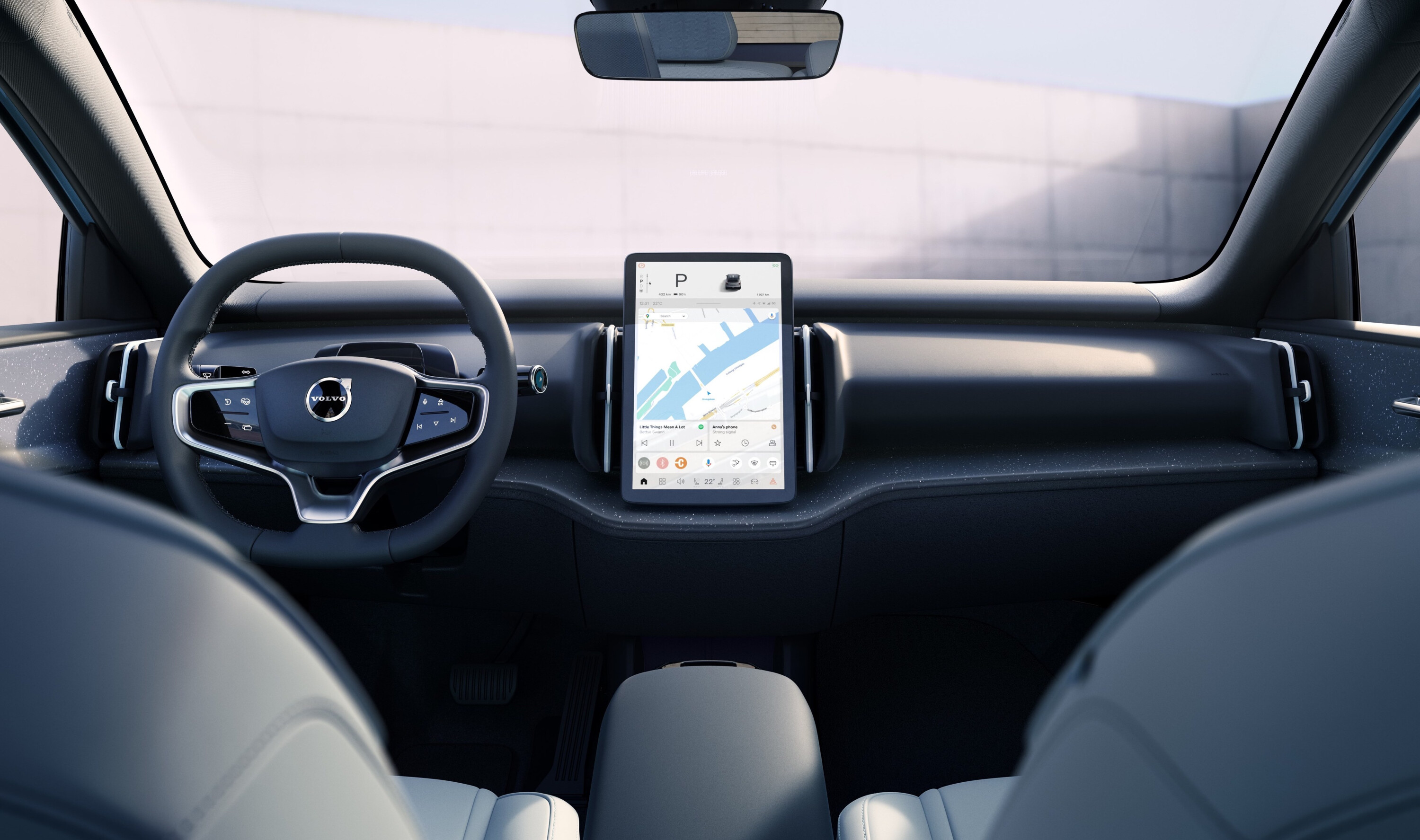
Ultra models gain a new-generation version of Volvo’s Pilot Park Assist, which can now detect a wider range of parking spaces and controls acceleration and braking in addition to the steering. The driver can monitor the distance to surrounding objects, including cars, walls and bollards, via the central touchscreen.
7
To emphasise the EX30’s intended appeal to younger buyers, five exterior colour choices include yellow and pale blue.
The $71,290 flagship EX30 Performance Ultra, while more compact, also undercuts other luxury small electric SUVs, including the BMW iX1 (from $78,900), Lexus UX300e (from $80,720) and Mercedes EQA (from $81,700).
2
1
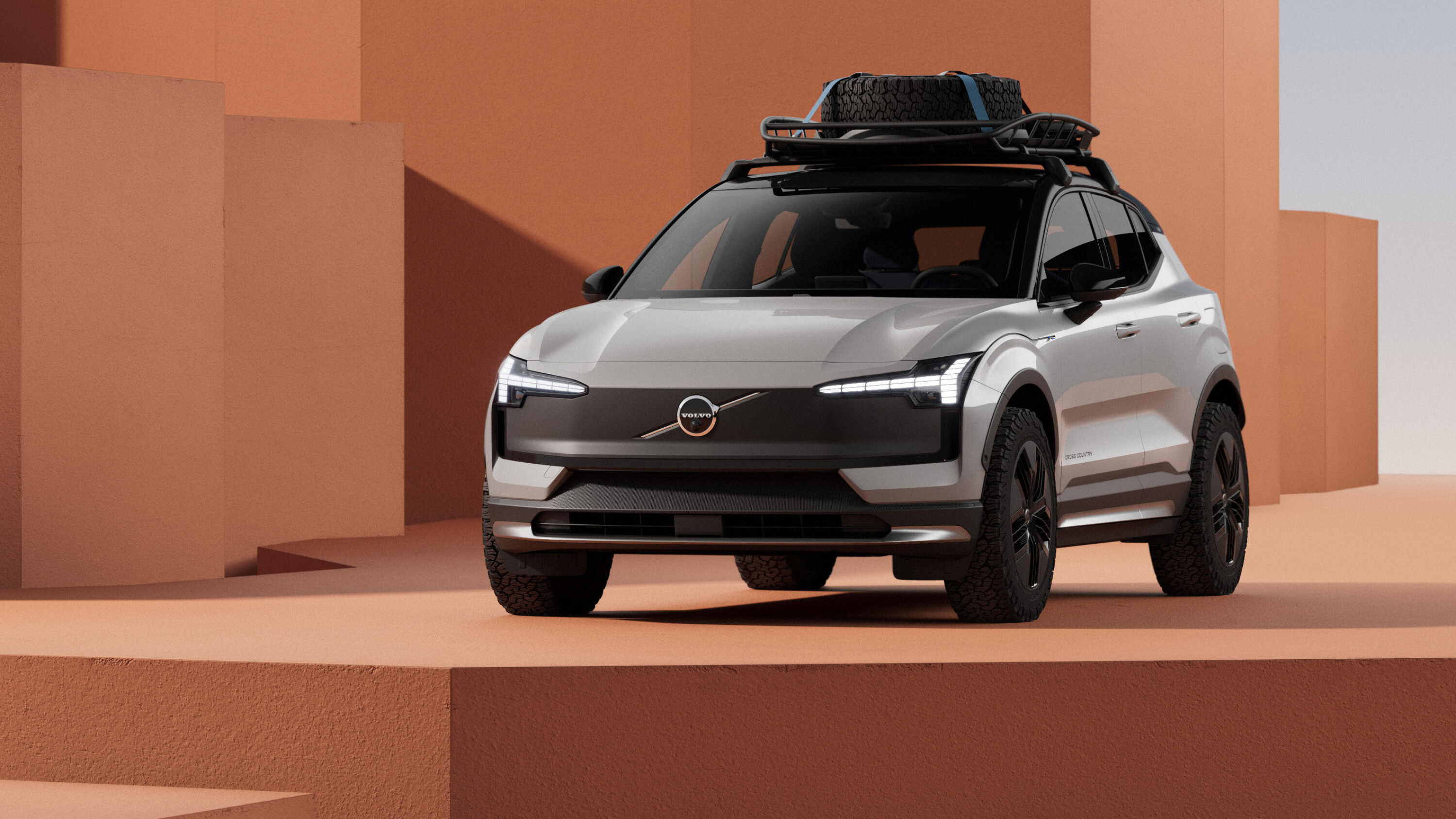
Above: The EX30 Cross Country
The Cross County doesn’t add much in the way of capability, but Volvo says it’ll come with more ground clearance (no numbers offered), 19-inch black wheels and the option of 18-inch wheels with bespoke tyres.
Volvo is yet to commit to this model for Australia.
MINI MATCH-UP: EX30 v XC40 dimensions
In terms of size and space, here’s how the compact new EX30 compares to the XC40 Recharge Pure Electric already available in Australia.
Dimensions
Volvo EX30
Volvo XC40 EV
Length
4233mm
4425mm
Width
1940mm
1863mm
Height
1555mm
1652mm
Wheelbase
2650mm
2702mm
Boot space
318L rear seats up, 904L rear seats down
418L rear seats up, 1373L rear seats down
The Volvo EX30 range in detail
The EX30’s key specs and features are outlined below. A full list of features will be released in the lead-up to the EX30’s fourth-quarter 2023 launch.
Key features announced so far
Two-tone roof
Electric tailgate
Digital key
12.3-inch infotainment display
Wireless smartphone charging
Soundbar speakere
Harmon Kardon audio system
EX30 Single Motor Extended Ultra
Price:
$66,290
Drivetrain:
Single motor, rear-wheel drive
Range:
480km
Battery:
69kWh
Power:
200kW
Torque:
343Nm
0-100km/h (claimed):
5.3 seconds
Key features announced so far
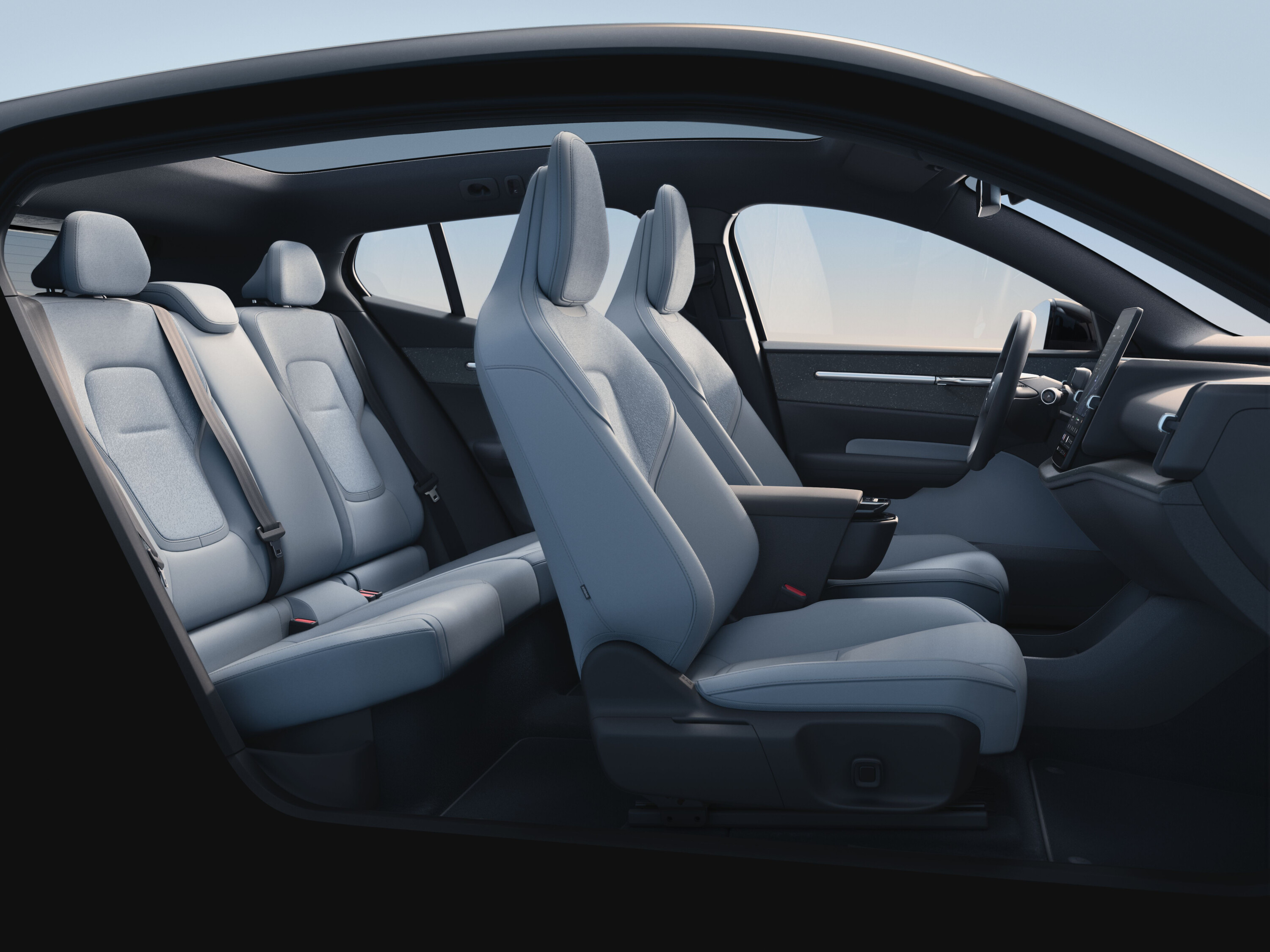
Panoramic sunroof (fixed)
Rear privacy glass
360-degree camera
Heated front seats
Park Assist Pilot
Heated steering wheel
Electric seats with 4-way lumbar support
EX30 Twin Motor Performance Ultra
Price:
$71,290
Drivetrain:
Dual electric motors, all-wheel drive
Battery:
69kWh
Range:
460km
Power:
315kW
Torque:
543Nm
0-100km/h (claimed):
3.6 seconds
Key features announced so far
20-inch wheels
Electric seats with 4-way lumbar support
Panoramic sunroof (fixed)
Rear privacy glass
360-degree camera
Heated front seats
Park Assist Pilot
Heated steering wheel
Safety across the EX30 range
EX30 range: Standard safety features
Lane Keeping Aid
Intersection auto brake
Lane Change Assist
Low-speed rear auto brake
Oncoming Lane Mitigation
Rear cross-traffic alert with auto brake
Vehicle/Cyclist/Pedestrian detection
Front cross-traffic alert with auto brake
Pedestrian/Cyclist/Scooter steering avoidance
Collision avoidance and mitigation by braking and steering
Run-off-road mitigation
Adaptive cruise control with Pilot Assist partial autonomous steering
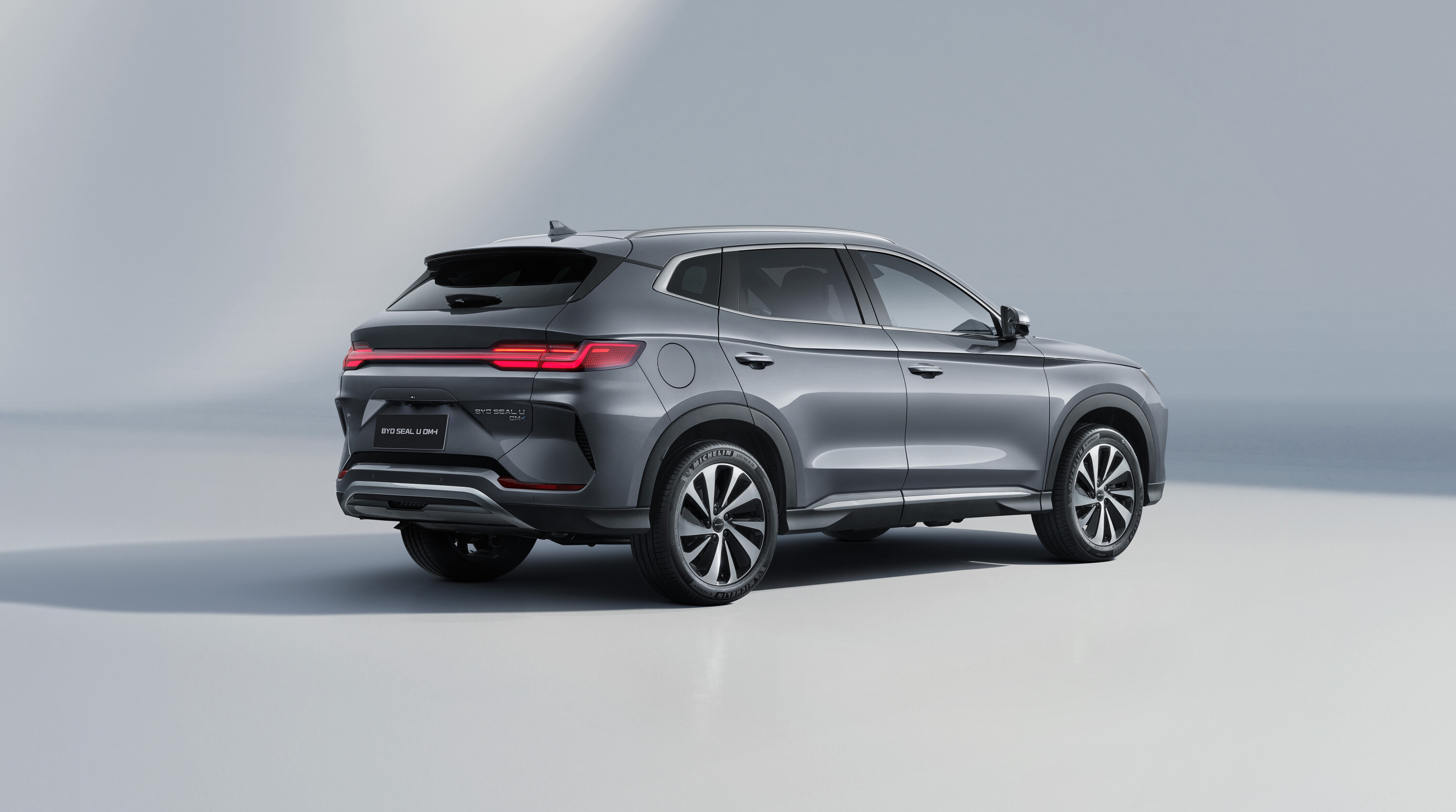
The newly named 2024 BYD Sealion 6 midsize plug-in hybrid SUV has moved closer to its Australian launch.
Details of the new model are under embargo, but its Australian name was confirmed after updated government approval documents appeared online.
Oddly, while the SUV formerly known as the Seal U has likely been renamed here simply to avoid confusion with the existing Seal sedan, an unrelated Sea Lion 7 model (styled as two words rather than the local one word) was unveiled in November last year.
In Europe, the Seal U is sold alongside the Seal sedan as the Seal U DM-I – the DM stands for Dual Mode (petrol-electric), but the purpose of the I is unclear – while Chinese-market buyers know it as the Song Plus.
1
The Australian government documents confirm two grades of the Sealion 6 will be available at launch: Dynamic and Premium.
The front-wheel-drive 2024 BYD Sealion 6 Dynamic will deliver 160kW total system output from a 72kW 1.5-litre non-turbo four-cylinder petrol engine and a 145kW front-mounted electric motor.
The all-wheel-drive 2024 BYD Sealion 6 Premium will swap in a 98kW petrol engine, along with a 150kW front electric motor and a 120kW rear electric motor, for a 238kW total system output.
Under the skin, all versions have an 18.3kWh lithium-iron-phosphate ‘blade’ battery – compared to 20kWh in the Mitsubishi Outlander PHEV, 17.8kWh in the Mazda CX-60 PHEV and 16.6kWh in the MG HS PHEV – allowing for a 30 to 80 per cent top-up in 35 minutes on an 18kW DC fast-charger. It also has vehicle-to-load functionality.
An electric-only driving range or combined fuel consumption figures have not been confirmed for either Sealion 6 variant.
A pure battery-electric version of the Sealion 6 is currently limited to left-hand drive markets, including China and Europe, where it rivals the world’s best-selling EV, the Tesla Model Y.
1
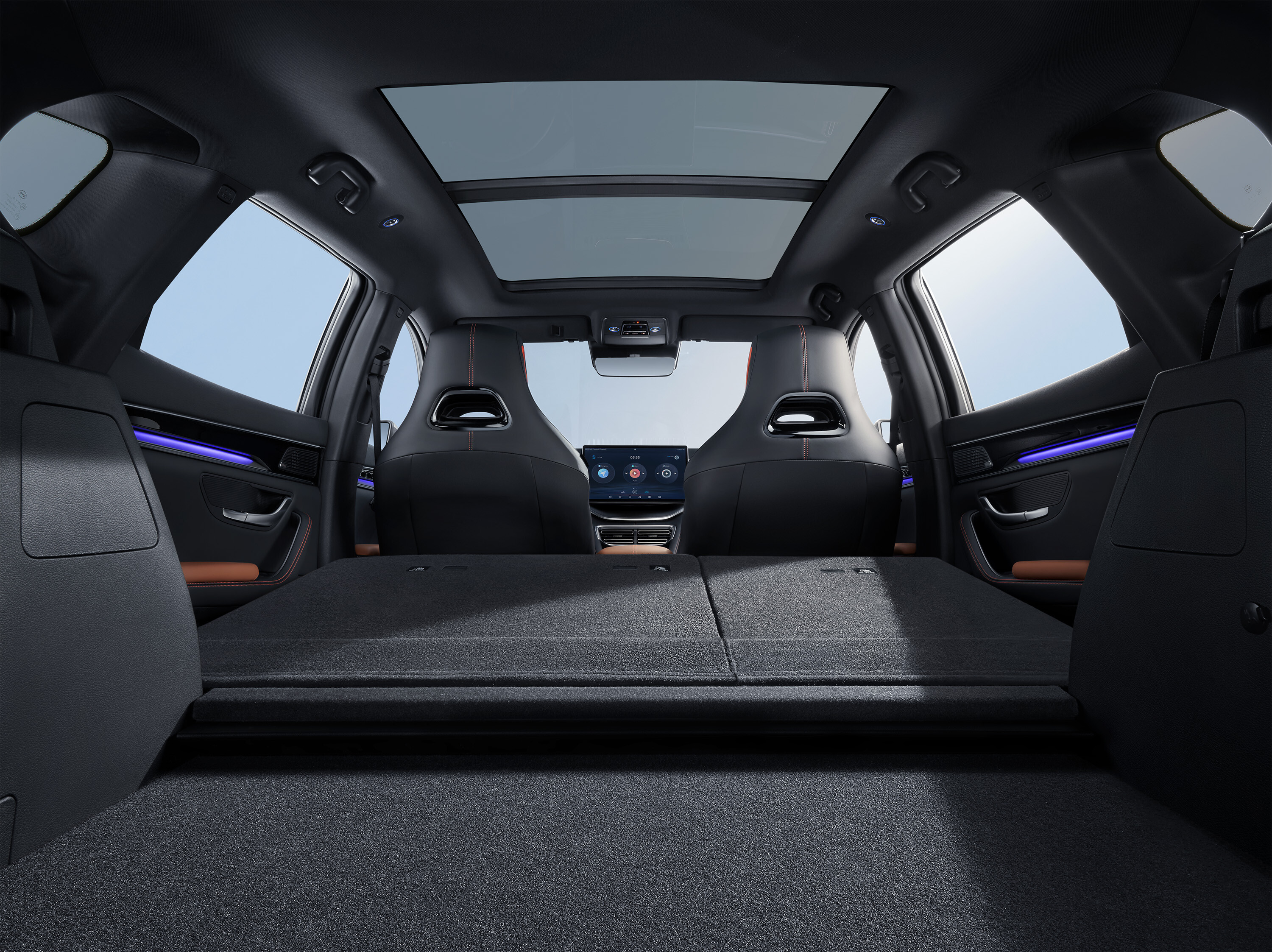
Positioned as a five-seat midsize SUV, the Sealion 6 is similar in size to a plug-in hybrid Mitsubishi Outlander or Mazda CX-60 – and slightly larger than Australia’s top-selling hybrid car, the Toyota RAV4 – at 4775mm long, 1890mm wide and 1670mm tall, with a 2765mm wheelbase.
Boot space is rated at 552 litres with the second-row in place or 1440L with the rear seats folded down.
Features available overseas include 19-inch alloy wheels, LED exterior lighting, leather-accented upholstery, a wireless phone charger, a 15.6-inch rotating infotainment system, over-the-air software updates, and an Infinity audio system.
The Sealion 6 also includes ambient lighting, a 360-degree camera system, and key active safety features such as autonomous emergency braking, blind-spot monitoring, rear cross-traffic alert, safe exit assist, and adaptive cruise control.
Australian details for the 2024 BYD Sealion 6 – including pricing and full specifications – are due to be confirmed on Thursday, May 16.
How much will the Sealion 6 cost in Australia?
The Sealion 6 is likely to be priced above the $43,690 drive-away MG HS PHEV (marketed cheekily as the HS Plus EV), but below the cheapest Mitsubishi Outlander PHEV, which costs around $62,000 drive-away.
The Kia EV3 promises to be the small affordable electric vehicle many buyers have been hoping for.
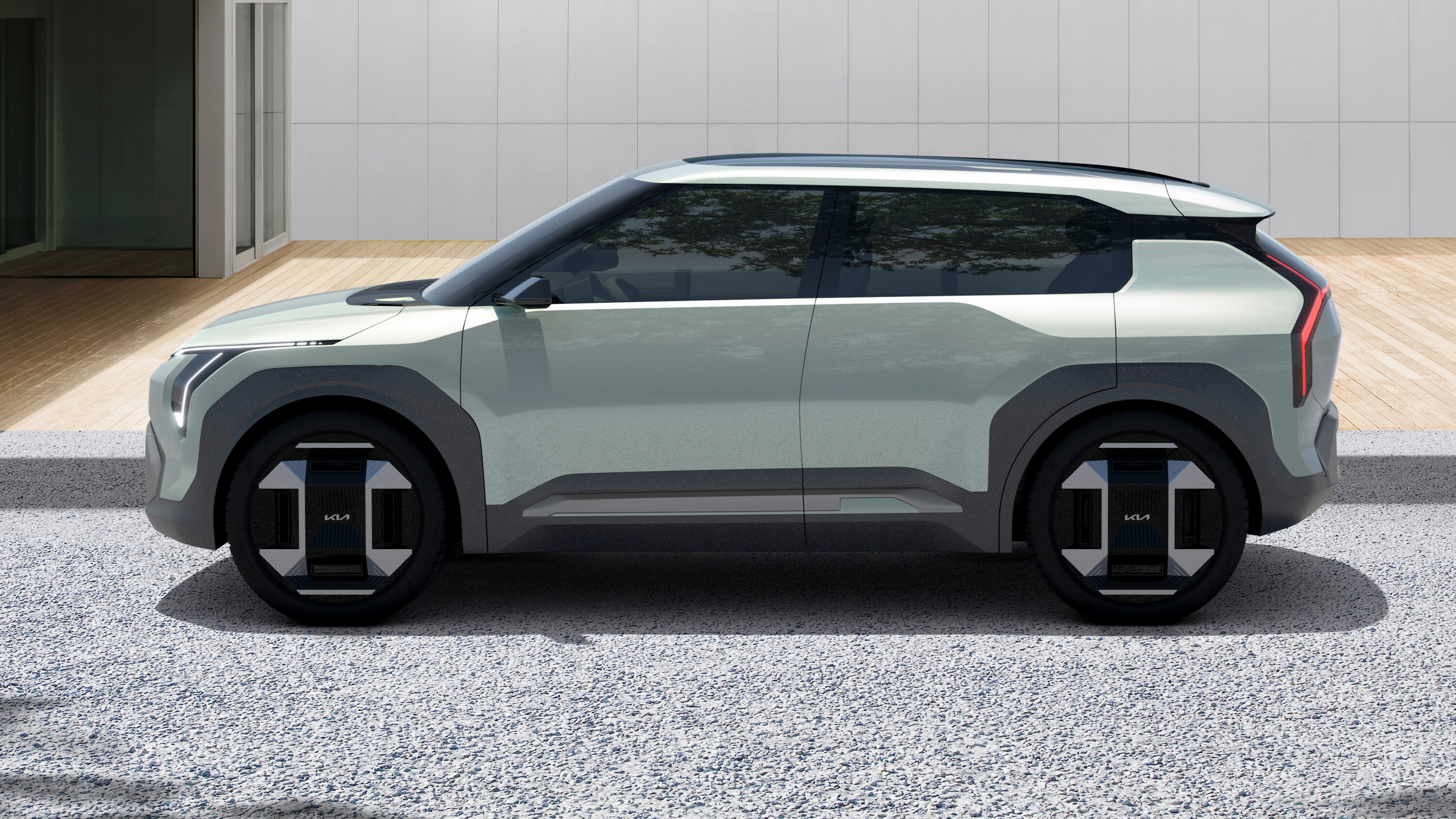
With compact Seltos-like dimensions (thus smaller than the midsize Sportage), the EV3 should offer reasonable interior space for young families, thanks to the long wheelbase offered by all dedicated EVs in the Hyundai Kia group.
Pricing for the EV3 has not yet been revealed, but we’ve been told to expect a number below the existing Kia Niro – although the Niro EV S now starts from a fairly unpalatable $66K, so the EV3 could still prove pricey.
With popular models like the MG 4 and Atto 3 beneath $40K and $50K respectively, Kia would be wise to introduce the EV3 at a similar point.
However, Hyundai’s Kona Electric starts from $54K, and although the EV3 will ride on a new platform, its motors and battery packs are likely to be the same units found in the Kona – so that pricing could provide a clue for the new Kia.
For everything else we know about the EV3, continue reading below!
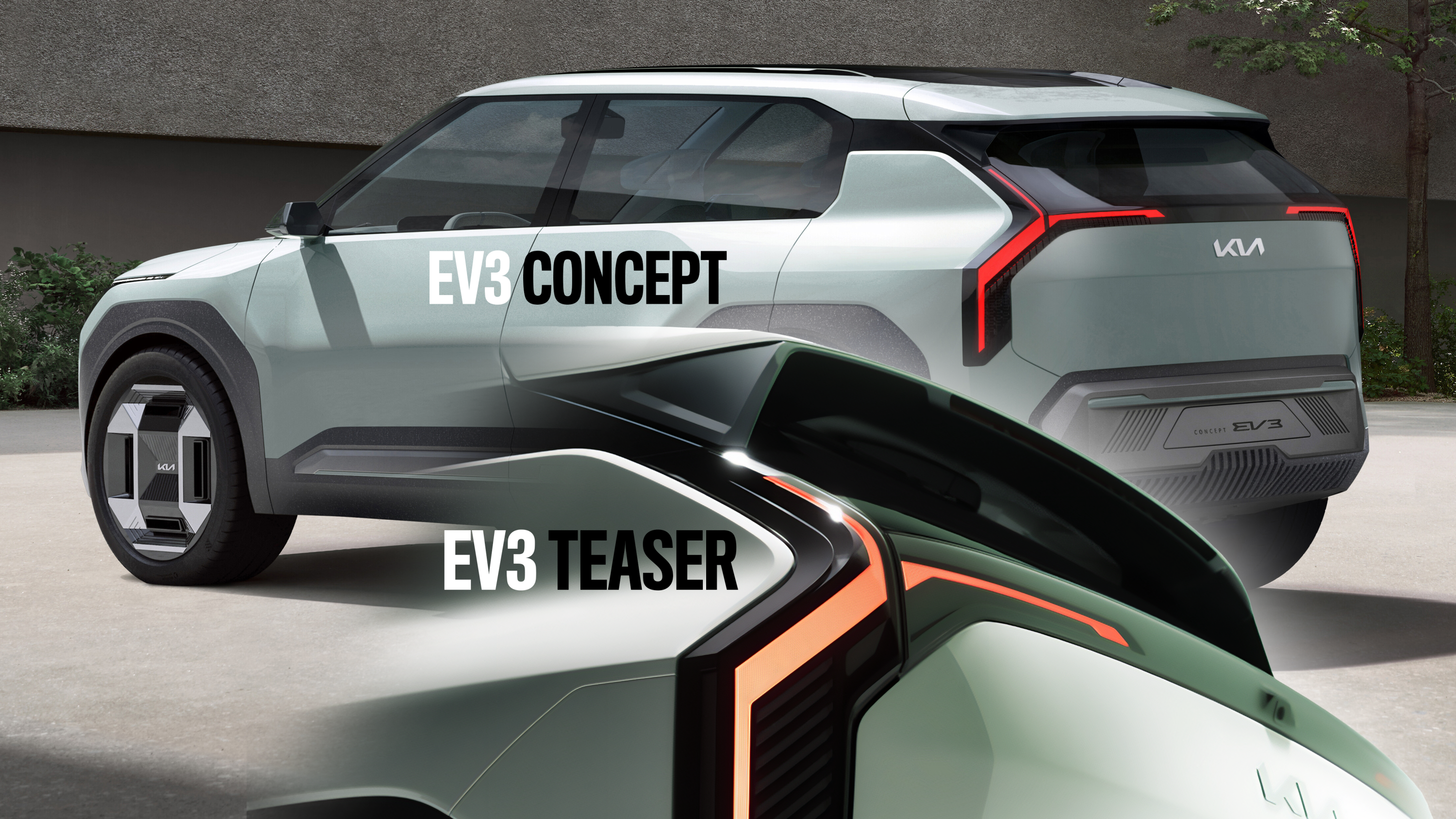
The first teaser images of the upcoming Kia EV3 have been released and, so far, there are few surprises.
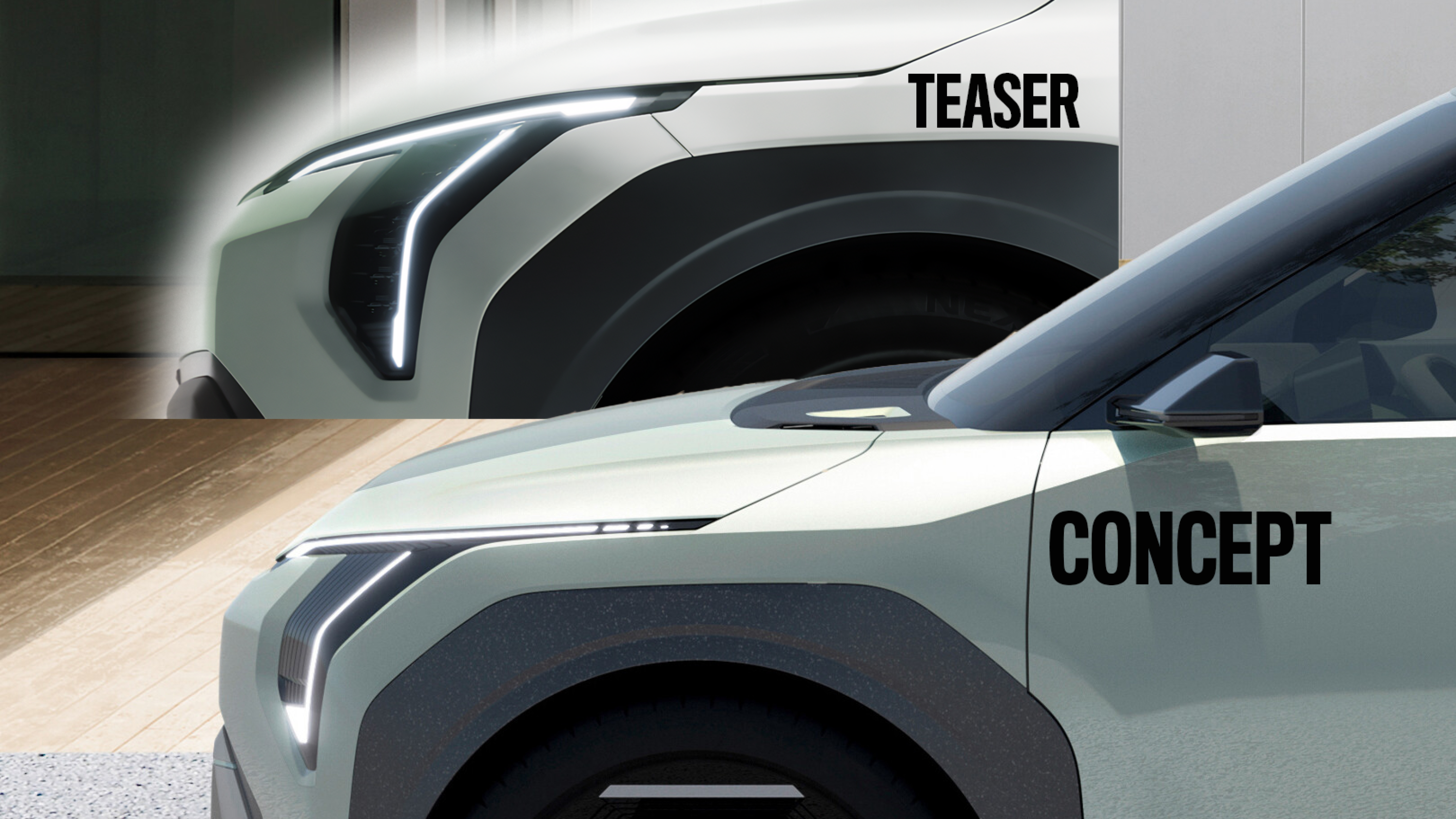
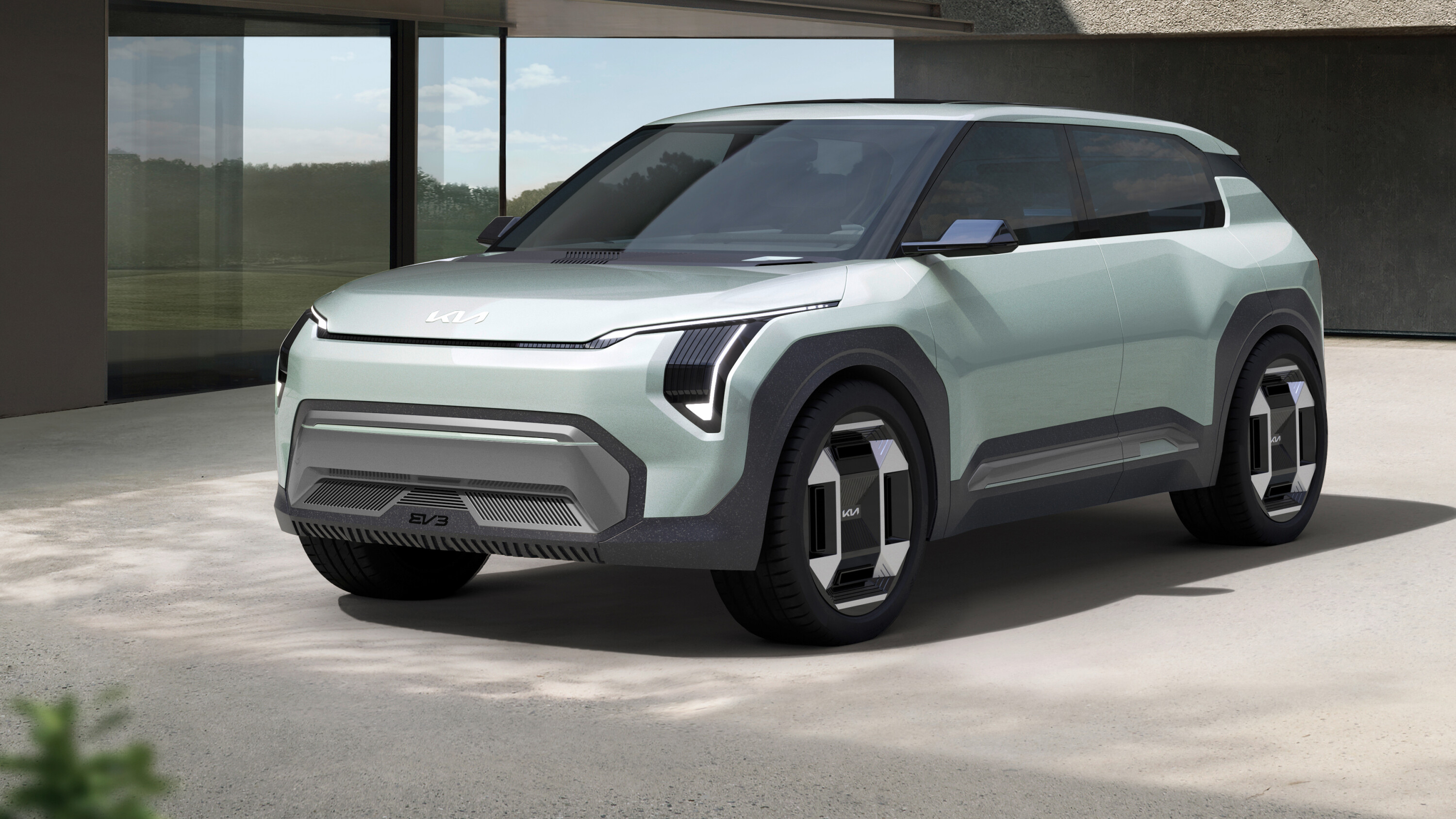
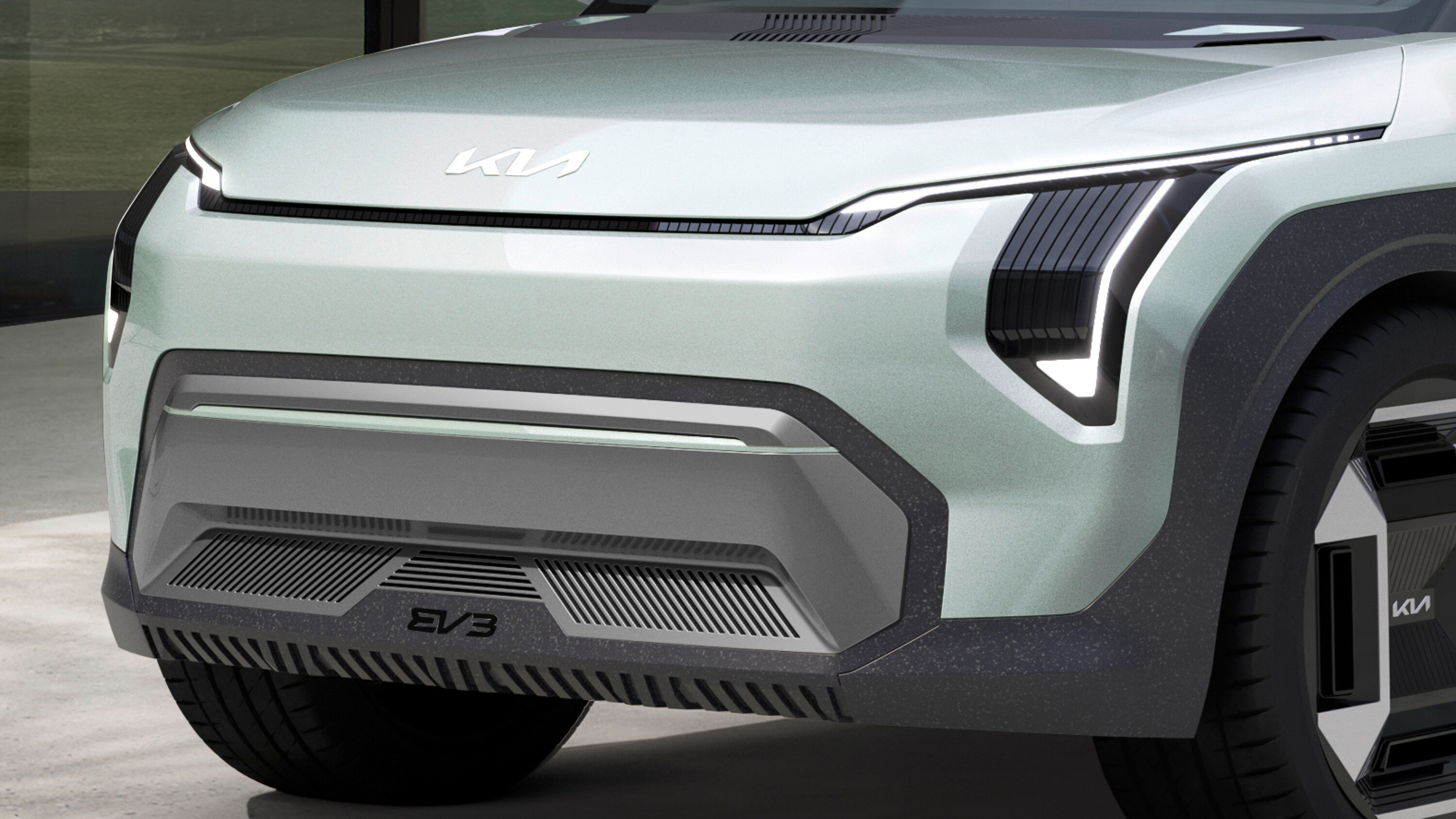
As expected, the tightly cropped teasers confirm the compact Kia EV3 you’ll see in showrooms won’t stray far from the look of last year’s concept, unveiled in October alongside the EV4 concept.
It’s not every day that a futuristic concept design presents an honest look at its future production form, but Kia has set a standard of show cars that very closely preview what’s to come.
1
Today’s trio of teaser images reveal details largely identical to their concept shapes, with only small changes evident – such as the thicker daytime LEDs, now without the little dashes at the end of the front light strip.
The body’s razor-sharp folds have also been rounded off for a more street-friendly appearance, and the speckled wheel arch cladding has (sadly) been replaced with conventional unpainted grey items.
The global world premiere of the new Kia EV3 will be live-streamed on Kia Worldwide YouTube channel on May 23rd at 8PM AEST.
Do you like where the EV3 is heading? Let us know in the comments!
What came before: Award-winning EV9, midsize EV5 and the incoming EV4
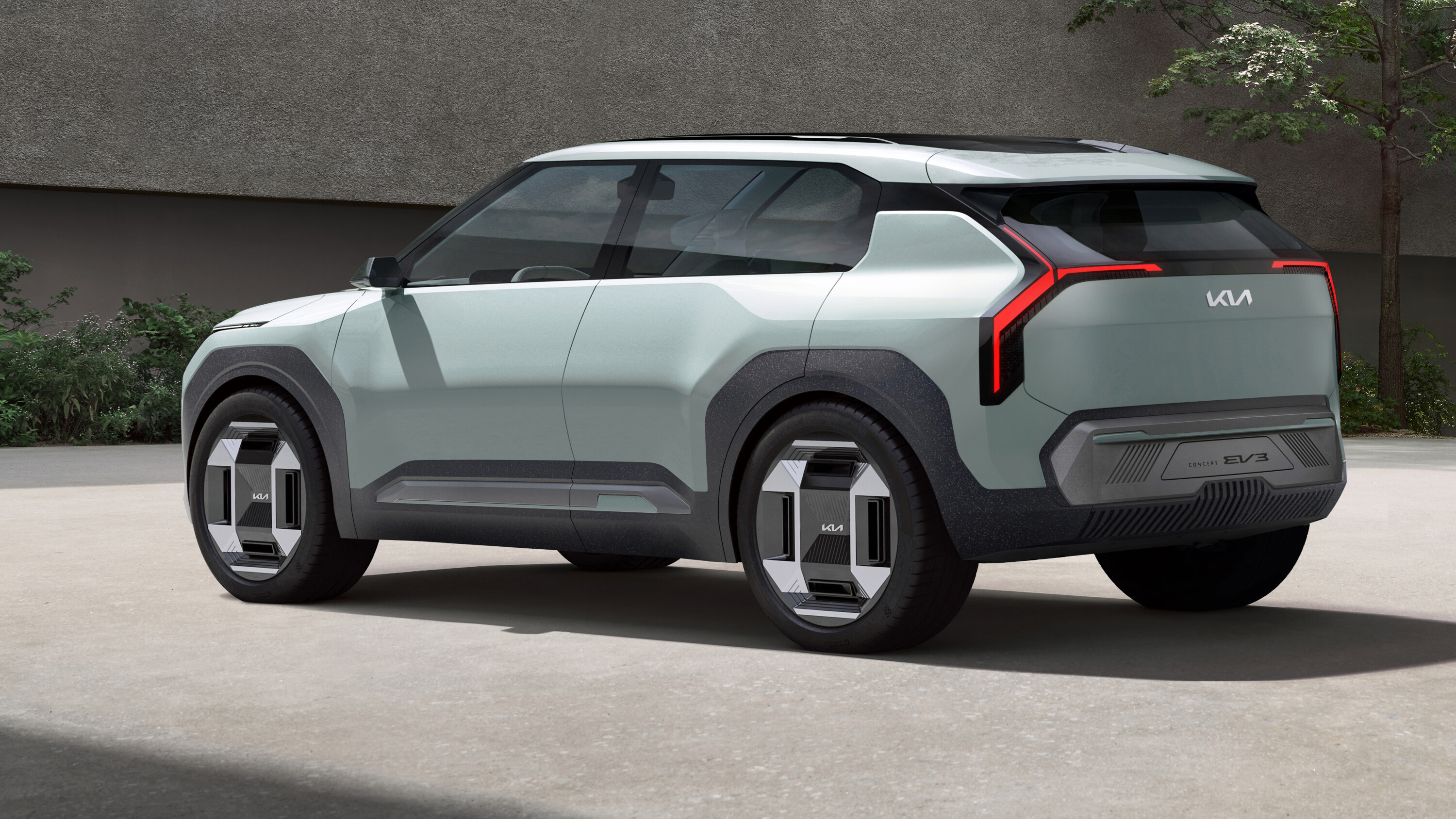
The upcoming new 2024 Kia EV3 small electric SUV has been revealed at last. Well, this is a concept, but it’s bound to look a lot like this.
Snapshot
Small Seltos-sized electric SUV revealed
Technical details and pricing unclear
Australian launch not confirmed, but expected
As we’ve now seen with the big new EV9 and mid-sized EV5, Kia isn’t leaving much to the imagination when it comes to the transition from show car to car showroom.
In both cases, much of their concept styling translated fairly faithfully to their final forms (say that five times fast), with little changed but for some smoothed edges and more functional lighting.
1
When it goes into production next year, the EV3 will join the sedan-like EV4 as Kia’s smallest new-generation electric models – which is an odd thing to say, considering the second-generation Niro EV was only unveiled last year.
There’s also the Kia Soul EV still available overseas, but this will likely be retired when the EV3 debuts.
As their designs suggest, the EV3 will enter the range as a practical offering with exterior dimensions that belie its interior space, while the EV4 will be targeted at buyers looking for style first, practicality second. (Although, like the EV3, we’d expect its interior space to be surprisingly capacious.)
What does the EV3 mean for the Kia Niro?
What the EV3’s launch will mean for the Niro is currently unclear. An early retirement, in some markets if not all? A price repositioning below the EV3? The most likely outcome is that the electric Niro will be dropped, leaving the hybrid and plug-in hybrid EV models to satisfy those segments.
1
1
Details, where are the details?
Nope. For now, Kia would like you to focus on design.
This will make the EV3 and EV4 unique even to the still unreleased EV5, which will be built on the existing the E-GMP platform that debuted in 2020.
Models built on the eM platform are expected to be more budget-focused – as far as affordability goes in the EV world – with a lower-voltage 400V or 500V electrical system, rather than the fast-charging 800V design found in E-GMP models.
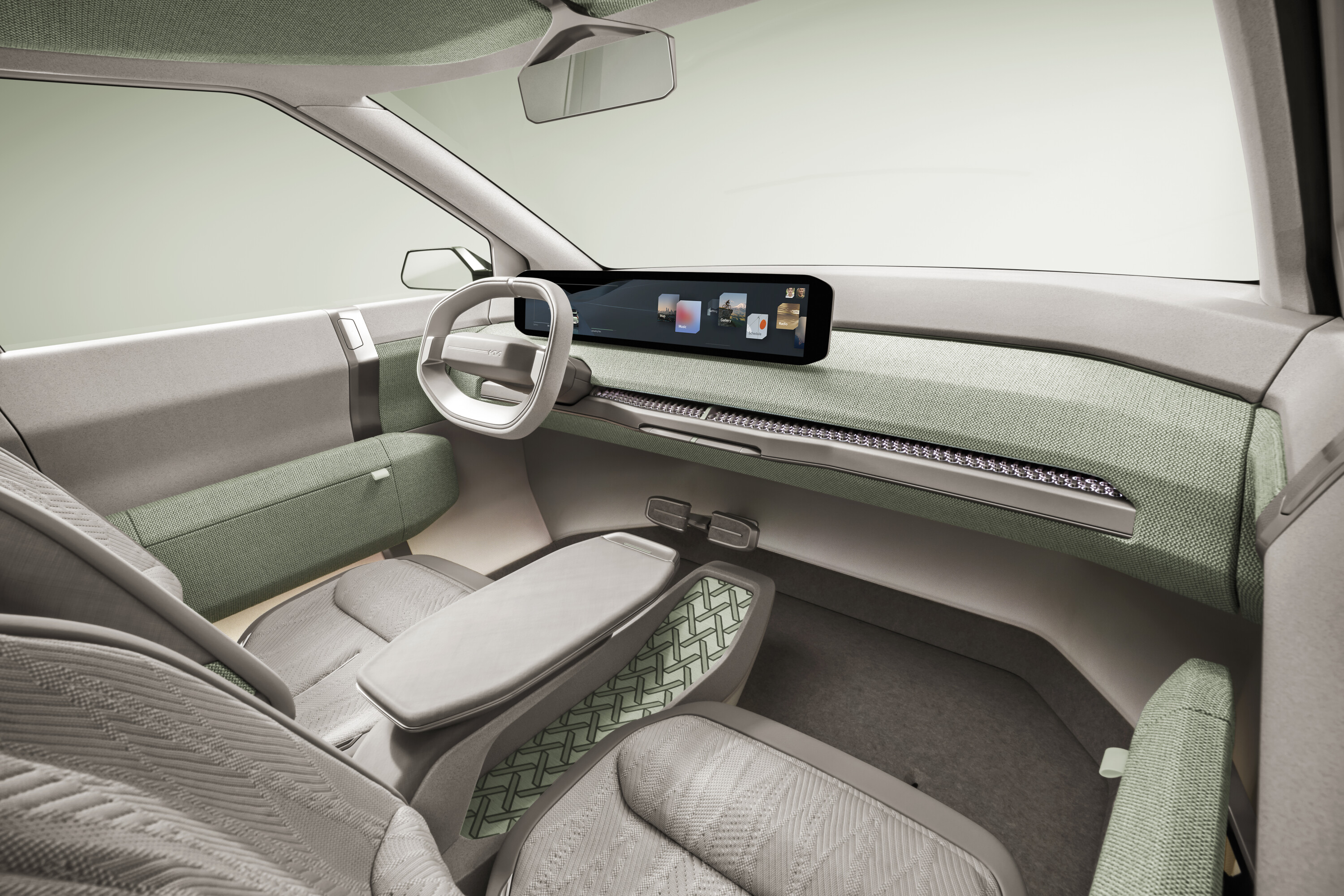
The EV3 will also be the first Kia to launch with an AI-powered voice assistant, available in both the car and in a new app called, wait for it… the Kia App.
Among its features will be a new E-Routing function, offering a Tesla-like ability for monitoring battery status to then suggest best routes and nearest chargers as needed.
Attainable sustainable
The EV3 and EV4 will follow the bigger new EV9 and EV5 models into a more sustainable cabin space, with a number of reclaimed materials used throughout.
The brand hasn’t yet specified how that will play out in the EV3 and EV4, but the debut of the EV9 came with what Kia calls its 10 “must-have sustainable items”, to be applied to all future models.
1
“With this action, we guarantee the implementation of sustainability at scale,” Kia says.
Switching to recycled plastics and ‘bioplastics’ – made from sources like vegetable oils, corn extract, sawdust and sugarcane – will see them replace conventional oil-based plastics in dashboards, consoles, pillars, and trim.
Kia will also phase leather out of its new models, to be replaced with Bio Polyurethane. Likewise, carpets will be made from recycled plastic, including fishing nets.
Where the EV3 will be built is unclear, although Kia has confirmed the bigger new EV5 will come from China. That doesn’t mean the EV3 will as well, but clearly it could.
As for pricing, don’t expect it to start with a 5, let alone a 4. it’s unlikely we’ll see any electric Kia fall below $50,000 – just about all legacy brands have confirmed they’ll leave that space to the Chinese.
1
The incoming new Hyundai Kona EV will likely be priced above $60,000 and we’d bet on the EV3 not being far off that point either.
But! With Hyundai recently announcing a new $64,500 entry variant of the big Ioniq 5, we could conceivably see the Kona EV enter below $60,000 – or perhaps right on $60k, with a higher level of standard trim than the entry Ioniq 5.
We’ll know for sure in the coming weeks, with a fourth-quarter launch confirmed.
Kia might need to do something about its Niro EV in the meantime, too. A few months before Hyundai brought down the price of its entry-level Ioniq 5, Kia increased Niro EV pricing by $1250 to $66,590 plus on-roads. Awkward.
Watch for more on the EV3 to come in the months ahead.
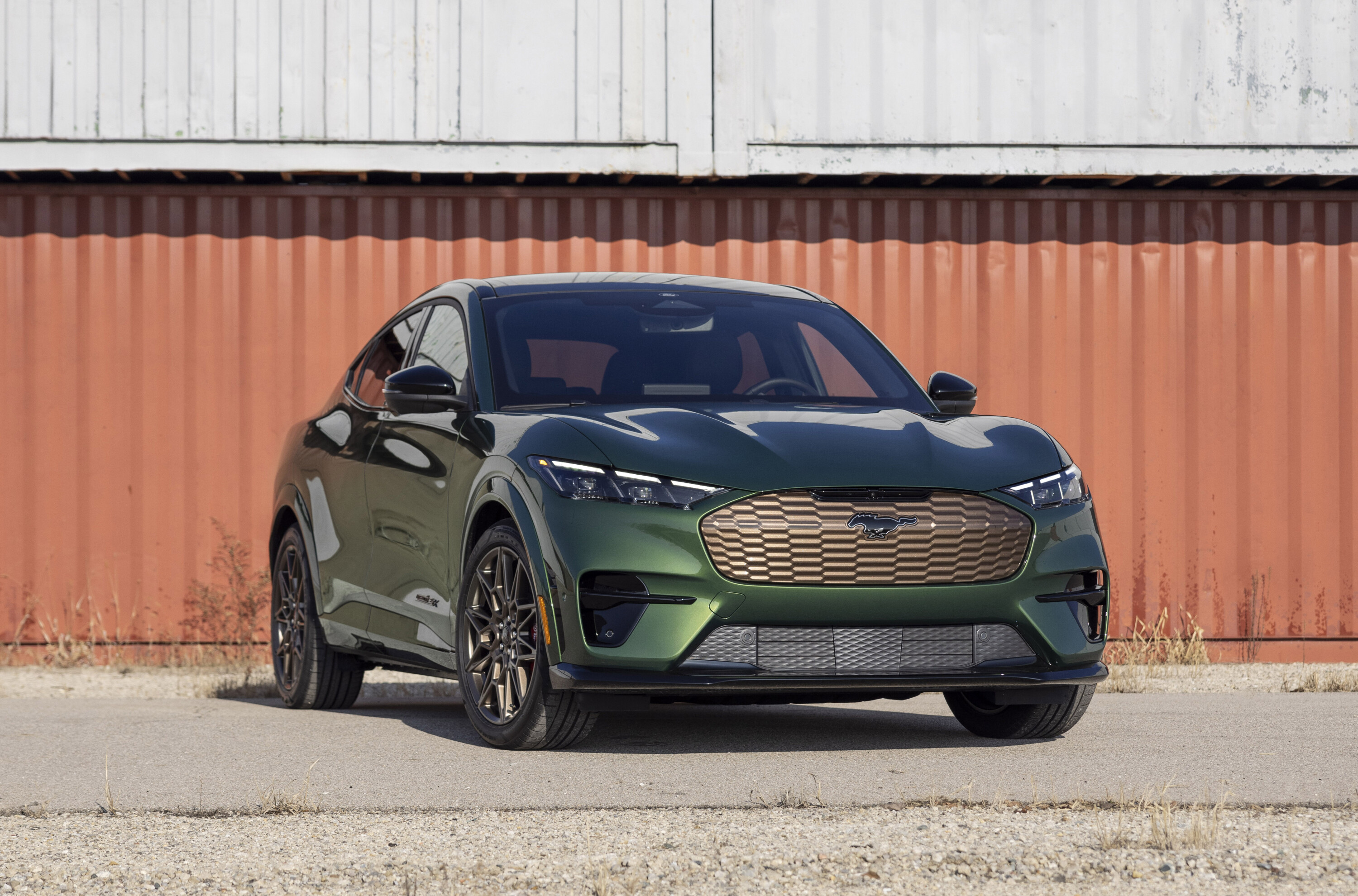
Ford loses $2 billion across the sales of 10,000 EVs.
A planned return to smaller, cost efficient vehicles to aid the financial turmoil.
Hopes for new EV and battery technology to lower pricing and assist with costs.
As the number 2 seller of electric vehicles in the US, Ford might appear to be doing well in the new market segment.
However, for the first 10,000 Ford-badged EVs sold in the first quarter of 2024, the company lost nearly AU$2 billion – equivalent to around $200,000 on each EV delivered.
Ford’s Model E division, responsible for the brand’s electrification efforts, reported a $153 million revenue figure for the period – an 84% drop from the same time last year.
Sales figures also dropped by 20%, compared to the first quarter of 2023. Ford pointed to “pricing pressure” and “slower growth”, as customers have lost their enthusiasm for EV vehicles.
1
Ford Pro, the commercial division responsible for the F-150 Lightning and E-Transit Van models, reported an 86% increase in sales over Q1 2023 – but a 22% drop compared to the previous quarter.
To address its nosedive, the company plans to tighten the purse strings, spending around $12-13 billion rather than the current $15 billion figure planned.
Ford CEO Jim Farley commented “We’ll probably be on the low end of that range, and we’re being very consistent about our discipline on profitability.”
Better times ahead?
Ford also “anticipates new battery chemistry and formats to substantially reduce the cost of batteries for that vehicle.”, including a lithium iron phosphate battery chemistry, offering better durability, faster charging, and more affordability compared to the current offerings.
This technology is being developed with China’s Contemporary Amperex Technology Co., Limited, with Ford planning to own and operate their own outright plant. Initial production is expected to commence in 2026.
Ford’s Silicon Valley-based ‘skunkworks‘ group, led by ex-Tesla executive Alan Clarke, may also be the answer to Ford’s financial woes.
The designers on team are working on smaller and more affordable EVs, which Ford feels will win over urban dwellers at a more efficient price point.
“We believe [the city is] where the adoption of EV will grow the fastest, and we believe we can compete in segments of small cars and vehicles, more affordable vehicles in a unique way that’s Ford.” – Jim Farley, Ford CEO.
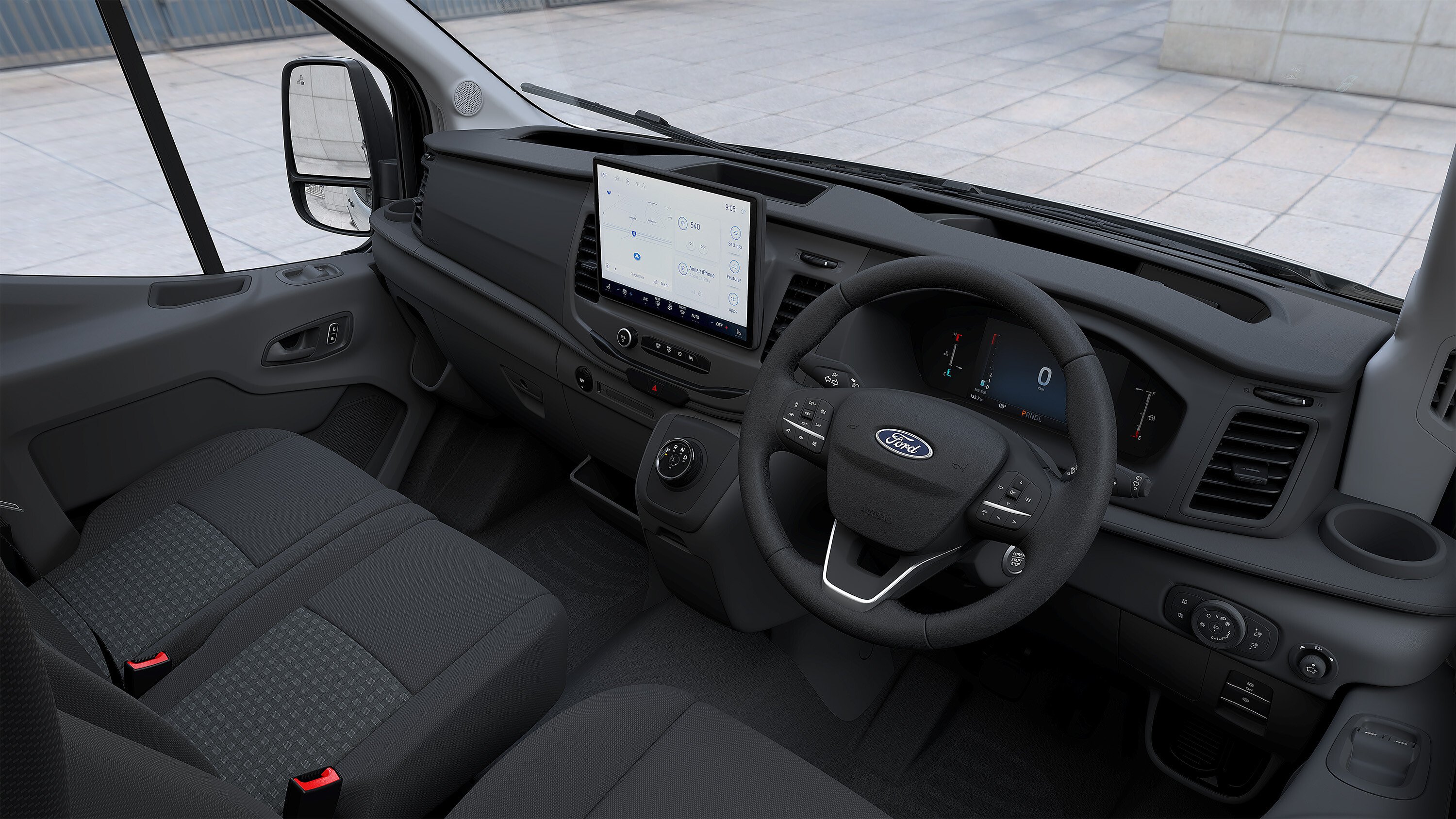
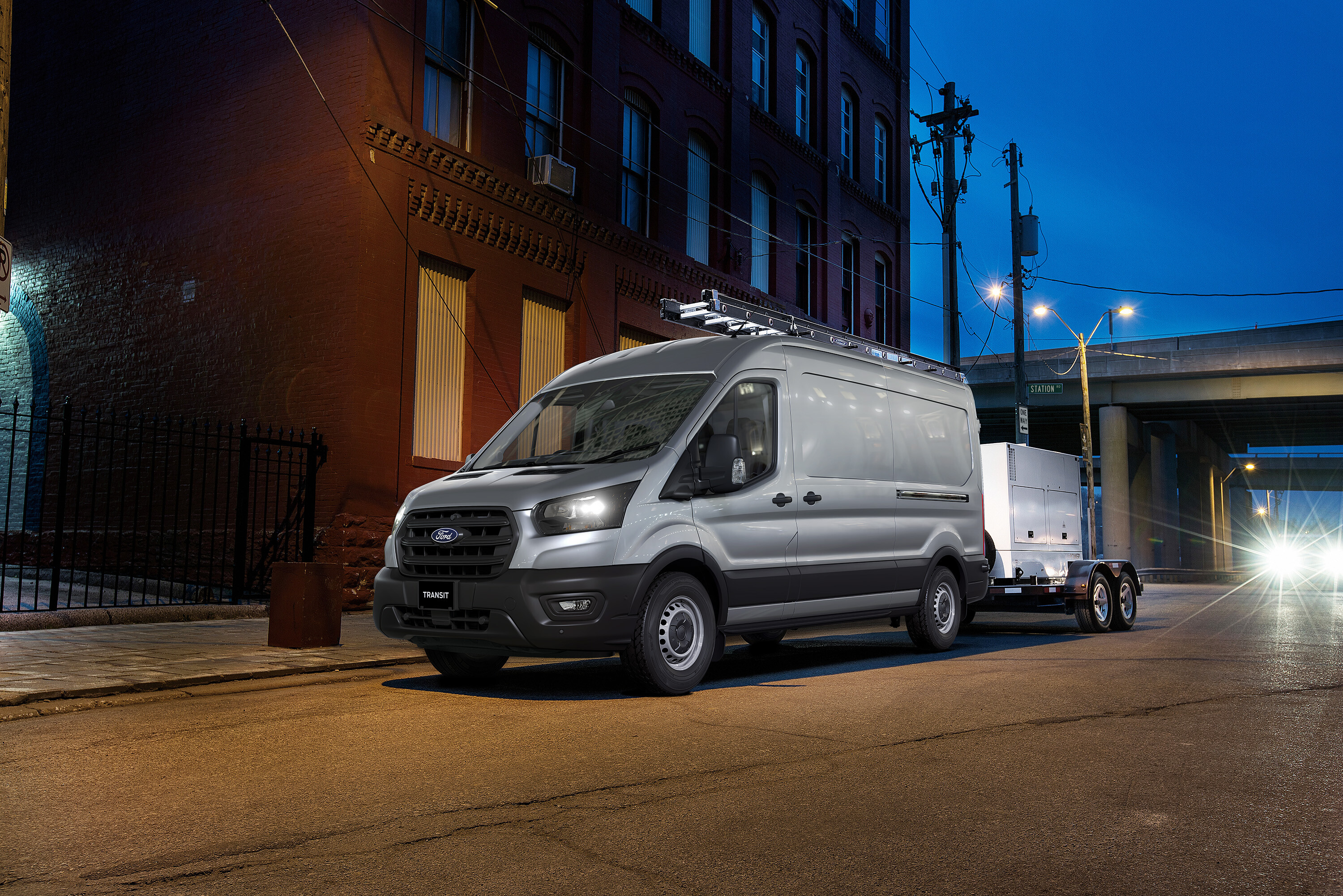
Ford Transit 2024.75 update sees reduced line-up, price rises on diesel variants
New eight-speed transmission on entry-level model, increased payloads and towing on most models
Due in Australian showrooms late in 2024
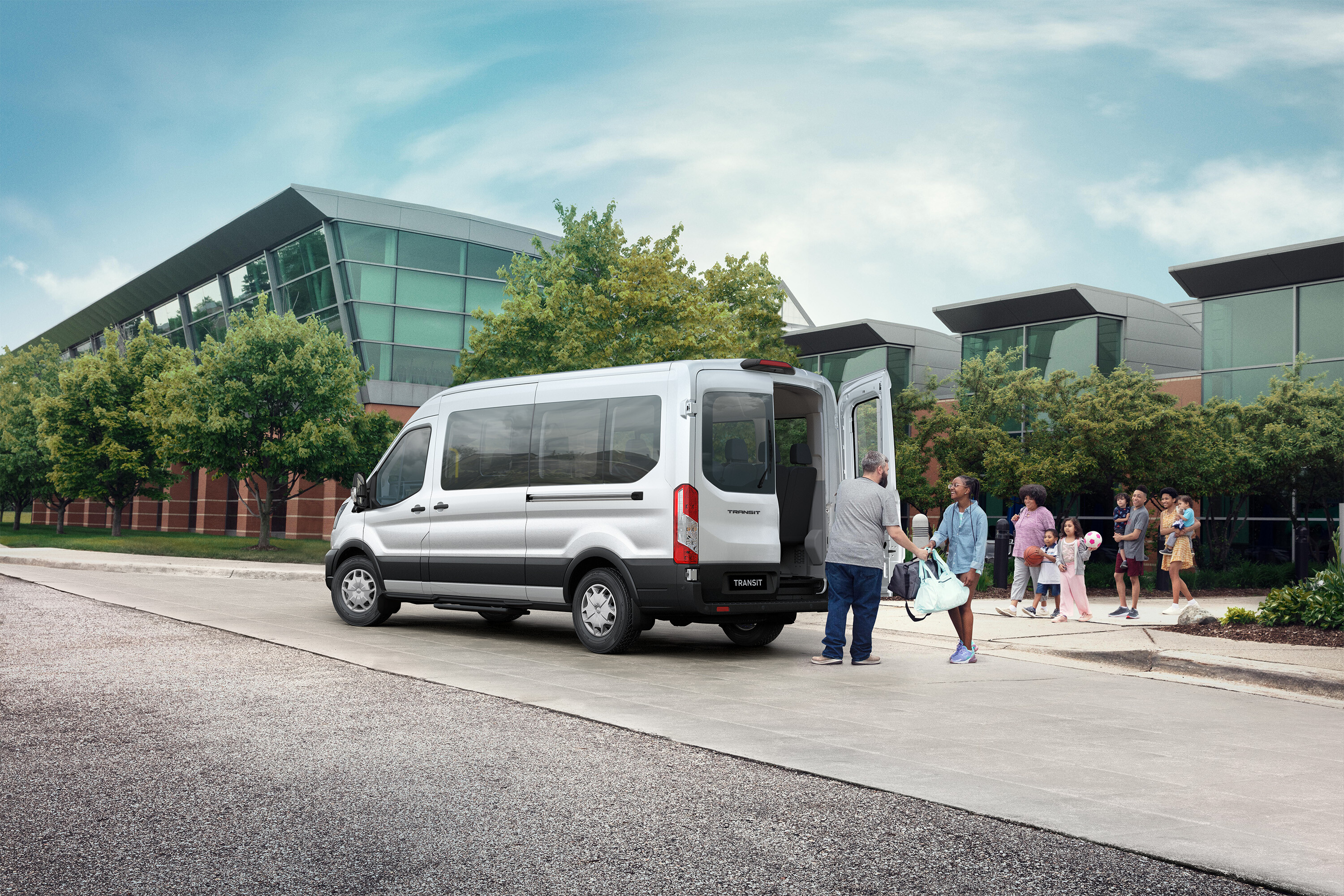
A trimmed-down 2024 Ford Transit line-up is scheduled to arrive in showrooms later this year with yet another price rise.
The three diesel vans and the battery electric E-Transit flagship will be joined by the single-cab cab chassis and the 12-seater bus to make up the Transit line-up going into 2025.
Ford will also take the axe to the manual transmission – currently offered in five variants – and drop the dual-cab chassis model, reducing the number of Transits from eleven to six.
1
Prices are up between $500 and $3000 – following price rises in September 2023 – averaging $1300 across the range.
The $104,000 before on-road costs E-Transit flagship is the only model to fend off a price increase.
The official ‘2024.75’ update will see the entry-level manual Transit 350 dropped – currently the cheapest variant at $56,990 before on-road costs – with the automatic 350L FWD now kicking the range off at $59,990.
1
That’s a price rise of $500 over the existing 350L FWD, but it brings a new eight-speed automatic transmission instead of the current model’s six-speed unit.
Ford says the entry-level will come with a higher 2750-kilogram braked tow rating and 6000kg GCM – increases of 950kg and 1750kg, respectively.
There’s no word from Ford Australia on any improvements to fuel economy – which given the vehicle’s size, does not have an official fuel figure to go off, anyway – the eight-speed may bring the entry-level Transit.
1
All other Transits continue with the current 10-speed automatic transmission and are rear-wheel drive.
These models carry over the 125kW/390Nm four-cylinder turbo-diesel – a relative of the 2.0-litre bi-turbo engine used in the Ford Ranger – introduced in 2017.
The 350L RWD and 430E Transits see 3500kg tow ratings – again, increases of 900kg and 1100kg – with payloads up on all models bar the E-Transit.
1
The 2024.75 update also brings black badging and a revised Ford blue oval, among minor changes on the outside.
Key equipment upgrades include standard push-button start, an 8-inch semi-digital instrument cluster, and tyre-pressure monitoring.
Bus and cab chassis Transit will include a 360-degree camera as standard as part of the update.
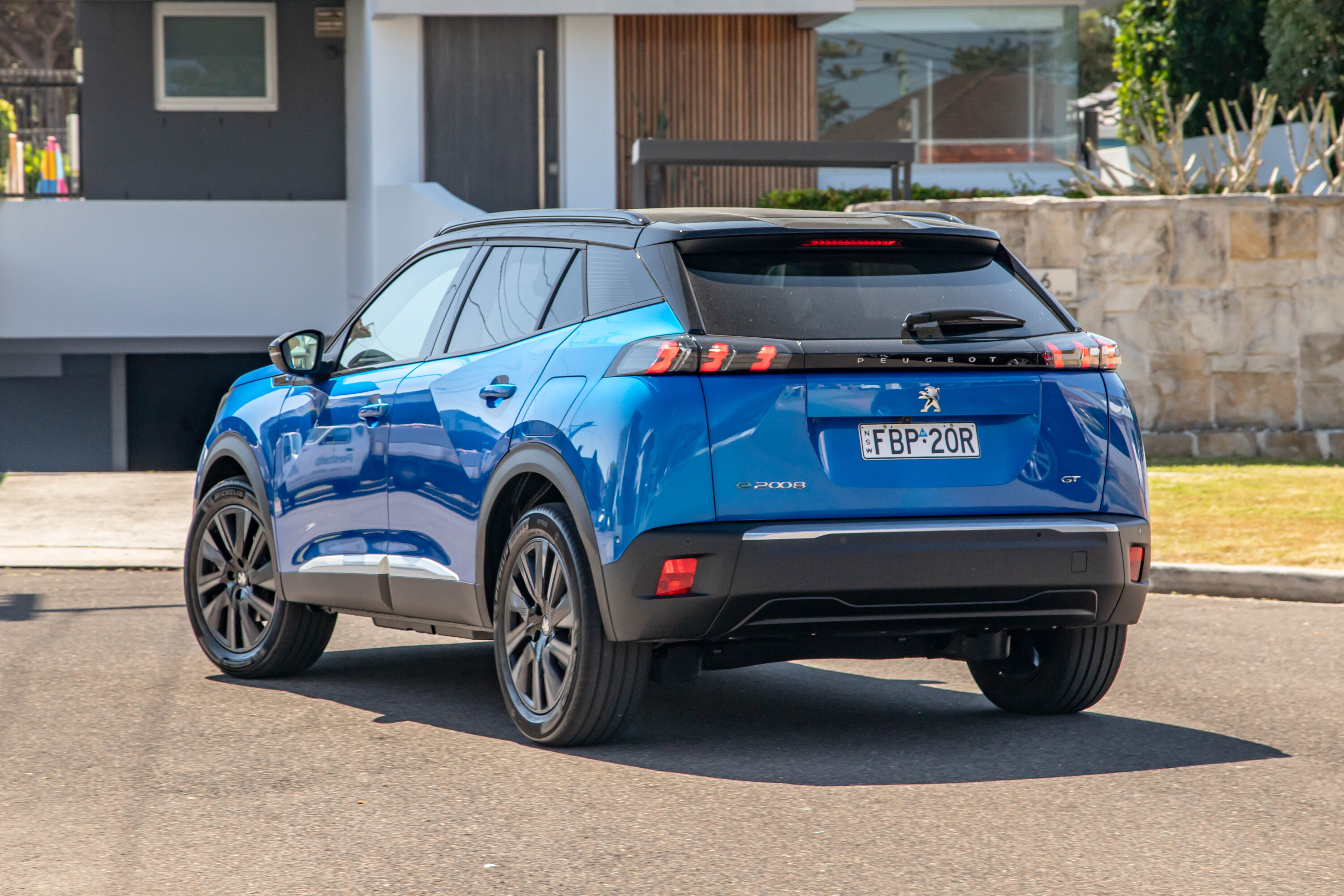
The all-electric 2023 Peugeot E-2008 has had its price reduced by around $25,000 – but only for a limited time.
Peugeot Australia has announced its end-of-financial year offers, with the largest savings applied to 2023-built examples of the E-2008 GT small SUV until June 30, 2024.
Usually priced from $59,990 before on-road costs, the Spanish-built E-2008 is now available at an all-time low for a European electric car: $39,990 drive-away nationwide.
1
This equates to a significant circa-$25,500 saving over its $64,000 to $67,000 drive-away cost in most states and territories when on-road costs are added to its $59,990 recommended retail price.
Brand-new and demonstrator examples of the E-2008 GT are covered under the deal, which started on May 1.
The E-2008 now priced identically to Australia’s cheapest electric SUV, the MG ZS EV, and joins other Chinese-built electric cars priced below $40,000, including the BYD Dolphin, MG4 and GWM Ora.
Fitted with a 45kWh lithium-ion battery pack and a single 100kW/260Nm electric motor powering the front axle, the E-2008 has a WLTP-rated 328-kilometre driving range.
A facelifted version of the Peugeot E-2008 – unveiled in Europe 12 months ago – is due in Australia in the coming months, likely returning to a higher drive-away cost.
Peugeot’s local division – managed by third-party Inchcape – will further expand its electric car line-up in 2024 with the addition of the E-208 light hatch, E-308 small hatch, E-3008 midsize SUV and E-Partner medium van.
1
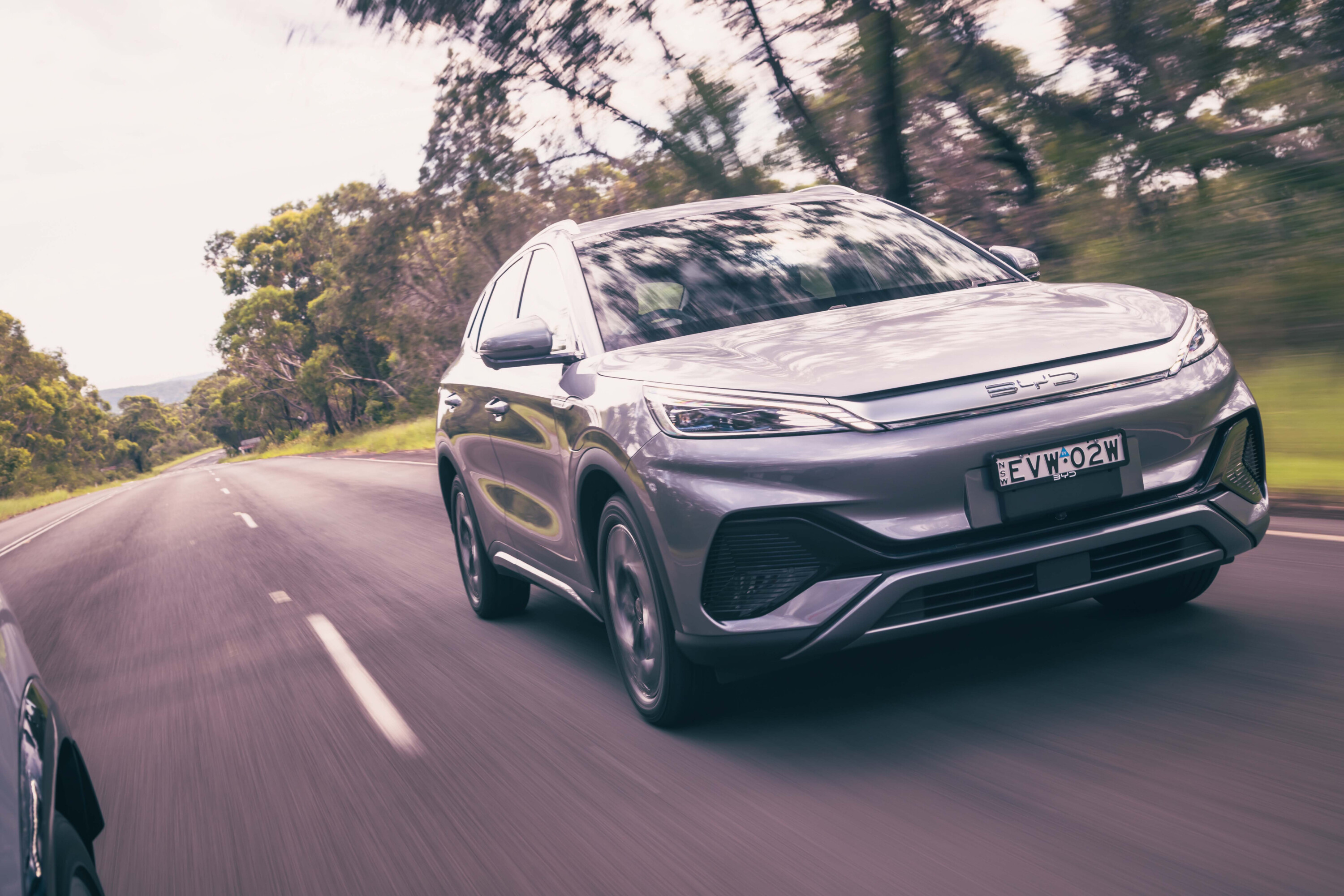
Meanwhile, Chinese brand BYD has introduced a run-out sale for 2023-built examples of its popular Atto 3 ahead of an updated model due in Australia soon.
Demonstrator examples of the 2023 BYD Atto 3 Extended Range are priced from $45,990 drive-away in most states and territories until May 30, 2024 – compared to its usual $51,011 plus on-roads list price.
It costs $47,990 drive-away for buyers in Western Australia.
The drive-away price of an Atto 3 Extended Range is usually between $51,550 and $55,300, depending on the state or territory it is registered in.
The BYD Atto 3 Standard Range continues to be priced from $48,011 before on-road costs – or between $48,550 and $52,000 drive-away.
A minor update for the BYD Atto 3 is due in Australia soon, with new additions likely to include a larger 15.6-inch rotating infotainment system – up from 12.8-inch – and darkened exterior trim.
It is also expected to feature a thicker shade for the panoramic sunroof, Continental Eco Contact 6 tyres, and a new ‘cosmos black’ exterior colour.
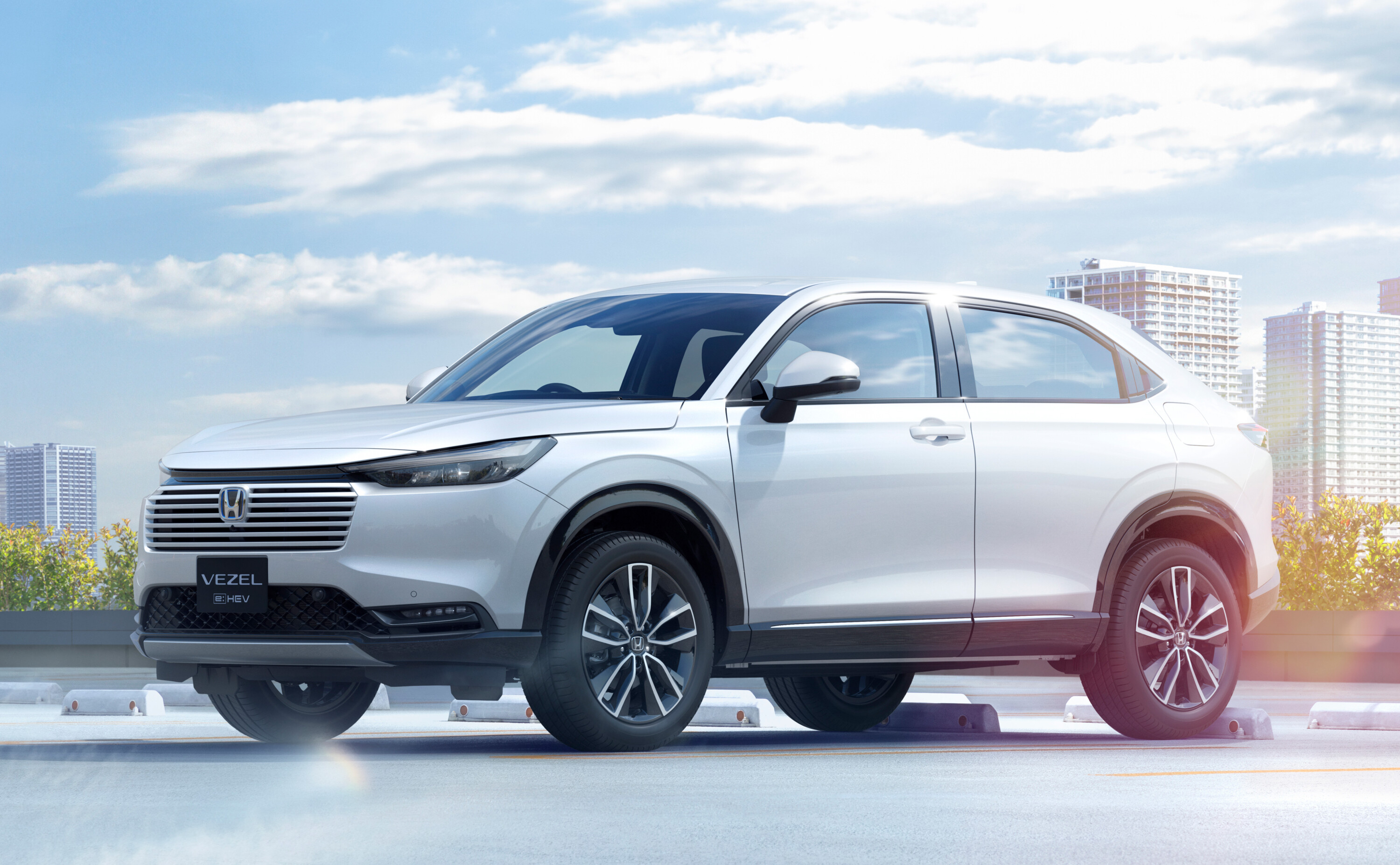
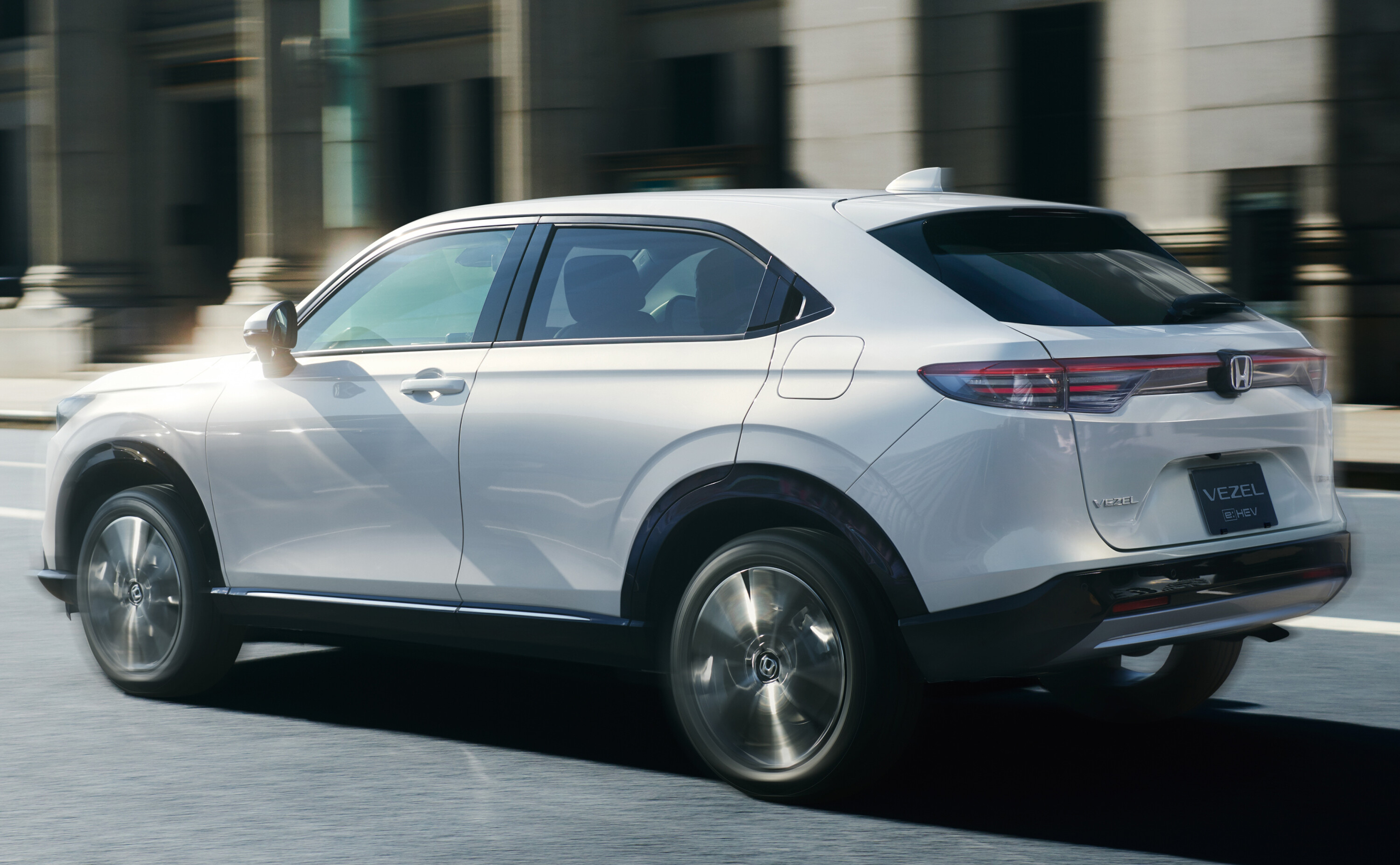
Honda has confirmed it will launch more affordable hybrid vehicles in Australia before the end of 2024.
In 2023, the Japanese brand promised to launch additional petrol-electric hybrid variants in Australia once top-spec E:HEV models had arrived with each new full model launch, starting with the latest HR-V in April 2022.
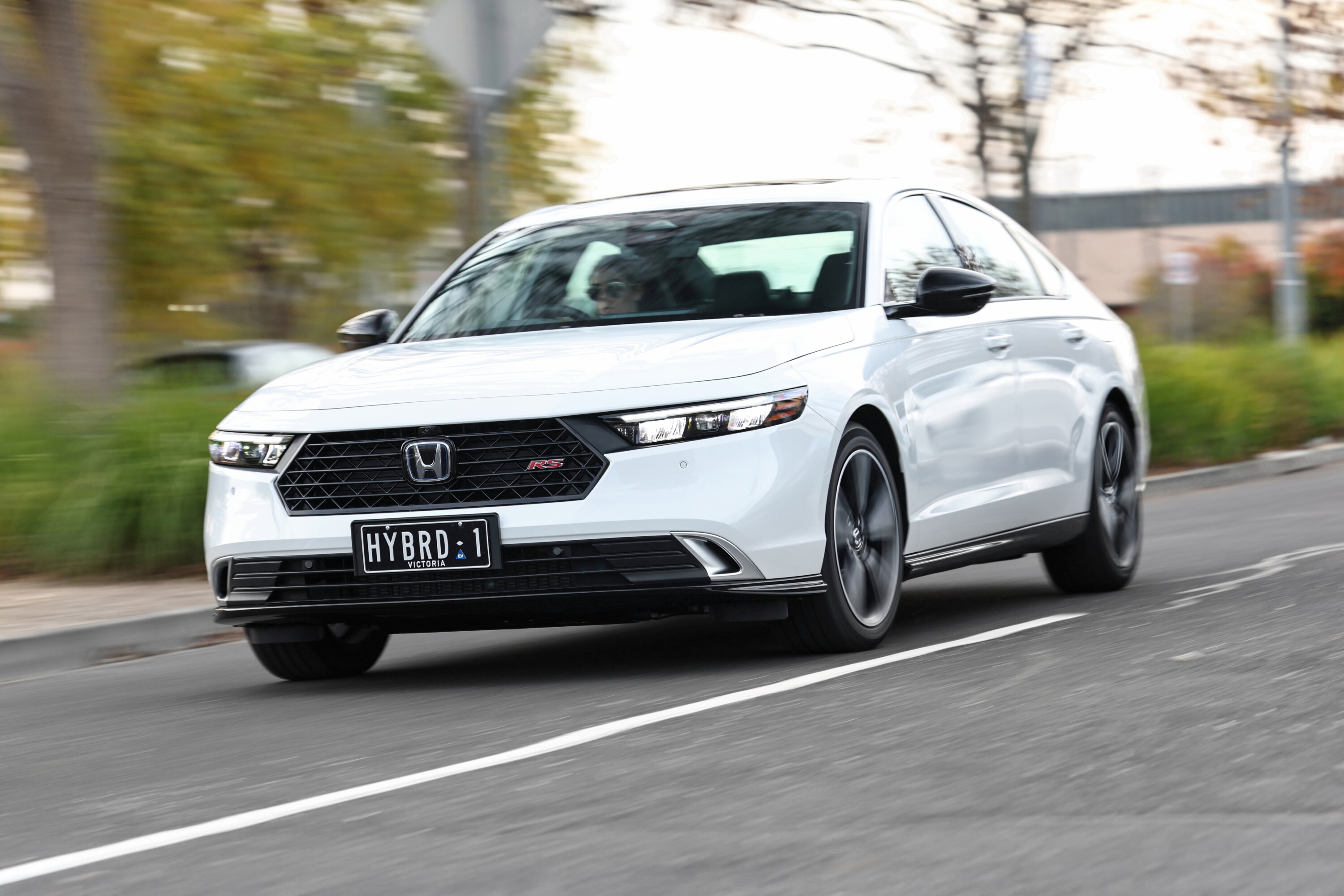
The 11th-generation Accord sedan arrives in Australia this month as the last full model change with an E:HEV hybrid variant, joining electrified flagship versions of the Civic, ZR-V and CR-V also launched in the last 24 months.
Honda Australia director and chief operating officer Carolyn McMahon said the brand had plans to expand its hybrid line-up before Australia’s New Vehicle Efficiency Standard, which requires carmakers to offer more low- and zero-emission cars, was introduced.
“That’s part of our original hybrid expansion strategy. Probably later on this year – essentially now that we’ve launched top variants – you’ll now start to see through different MMCs [minor model changes] or different upgrades [hybrid variants] expanded throughout the range,” said McMahon.
“Our current hybrid take up is around 40 per cent. I think this time last year we said we were expecting around 25 per cent, so we’re actually higher than what we had originally set our goal for. I think industry petrol [sales] is still around 70 per cent; we’re at 60 per cent so we’re quite happy with the take-up [of hybrid].”
McMahon indicated Honda would focus on expanding hybrid options within its SUV range – the HR-V, ZR-V and CR-V – rather than its slower-selling Civic and Accord passenger car line-up.
“We don’t have any plans for a lower-specced Accord,” said McMahon. “Accord is a flagship model – we’ll always use that to introduce the new technology and the new features.”
The facelifted Honda HR-V small SUV – set to be marketed as a Model Year 2025 vehicle – is due in Australia soon, likely as the first vehicle from the brand with an additional hybrid variant.
“It is possible that could make sense. I can’t announce anything today formally, but later on this year is probably the time that we start the expansion,” said McMahon.
While McMahon was unable to announce an expanded HR-V line-up, new government approval documents have all but confirmed this.
1
The documents list two hybrid versions of the updated HR-V, rather than one like the current model.
It is unclear how the two hybrid variants could be differentiated, but Honda would likely use the current entry-level petrol HR-V as a base for a cheaper hybrid variant to slot between the existing Vi X and the E:HEV L.
This would see certain features deleted, such as a leather-wrapped steering wheel and gear shifter, leather-accented upholstery, heated front seats and steering wheel, LED fog lights, and a hands-free electric tailgate.
Improvements for the updated HR-V – which launched in Japan last month – include a revised grille and lower front bumper, full-LED two-tier tail-lights, traffic jam assist, adaptive high-beam headlights, and a mis-acceleration prevention assist.
Hybrid models receive thicker sound insulation in the dashboard, roof and floor to reduce engine startup and road noises.
These variants also have revised damper forces for improved ride comfort, and an updated energy management control to reduce the number of internal-combustion engine startups and shutdowns.
The government documents confirm the HR-V will continue to have four seats to comply with Australian Design Rules for rear top-tether anchor points, as Honda elected not to engineer an anchor point for the rear-middle position that would allow it to be certified as a five-seat vehicle.
The current 2023 Honda HR-V is in run-out with discounted pricing of $34,900 drive-away for the Vi X petrol, down from $36,700, and $43,900 drive-away for the E:HEV, down from $47,000.
1
Current Honda hybrid vehicles in Australia
2024 Honda Civic
E:HEV LX: $55,000 drive-away.
Toyota hybrid rival: Corolla hatch, $32,110 to $39,100 before on-road costs.
2024 Honda Accord
E:HEV RS: $64,900 drive-away.
Toyota hybrid rival: Camry, $37,917 to $51,417 before on-road costs.
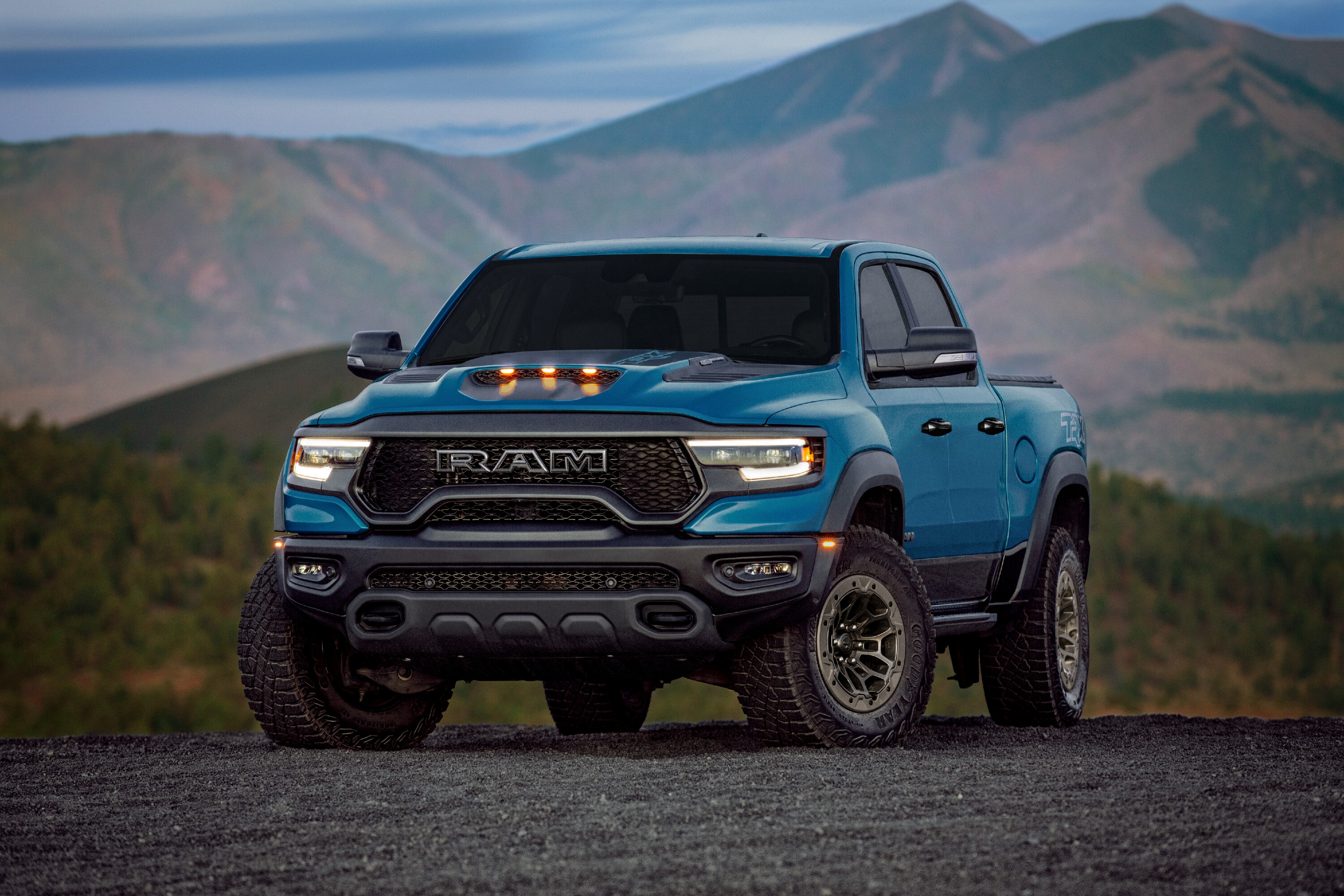
The 30,000th Ram pick-up has rolled off the Melbourne production line
RAM was the best-selling full-size pick up in Australia in 2023
Facelift of current generation due in showrooms later in 2024 as V8 engine phased out
Ram (styled RAM) has delivered its 30,000th full-size pick-up in Australia – a Ram1500 Big Horn, according to local importer Ateco.
The milestone Ram was a Billet Silver Crew Cab completed at the company’s Melbourne site, where the US-made pick-ups have been converted from left-hand to right-hand drive since 2016.
1
Ateco is the only company authorised by Ram – part of the Stellantis conglomerate of automotive brands – to re-manufacture its vehicles to right-hand drive.
“30,000 vehicles is a significant carpark in anyone’s books – that it’s come about in a segment that didn’t exist a few years ago is testament to the hard work of everyone involved,” said Jeff Barber, General Manager of Ram Trucks Australia, in an Ateco statement.
In late 2022, Ram upgraded its Melbourne Manufacturing Facility (MMF) to double production capacity to 20,000 vehicles a year – around 54 a day – with two assembly lines and more than 400 employees.
“From our partners in the US and Melbourne, to our dedicated dealer network in Australia and New Zealand, the RAM Trucks business proves that it’s possible to establish an OEM-level automotive manufacturing capability in Australia despite the closure of local automotive brands.
1
Ram sold 6833 pick-ups in Australia in 2023, led by the Ram 1500, easily outselling the Chevrolet Silverado which sold a total of 3365 locally.
While facing the Chevrolet Silverado – which is converted to right-hand drive in Melbourne by Walkinshaw Performance – Ram has also faced increased competition from the Ford F-150.
The F-150 arrived in local showrooms last October with Ford Australia tipping around 5000 annual sales, with capacity for around 20 conversions to right-hand drive carried out by RMA Automotive in Melbourne.
1
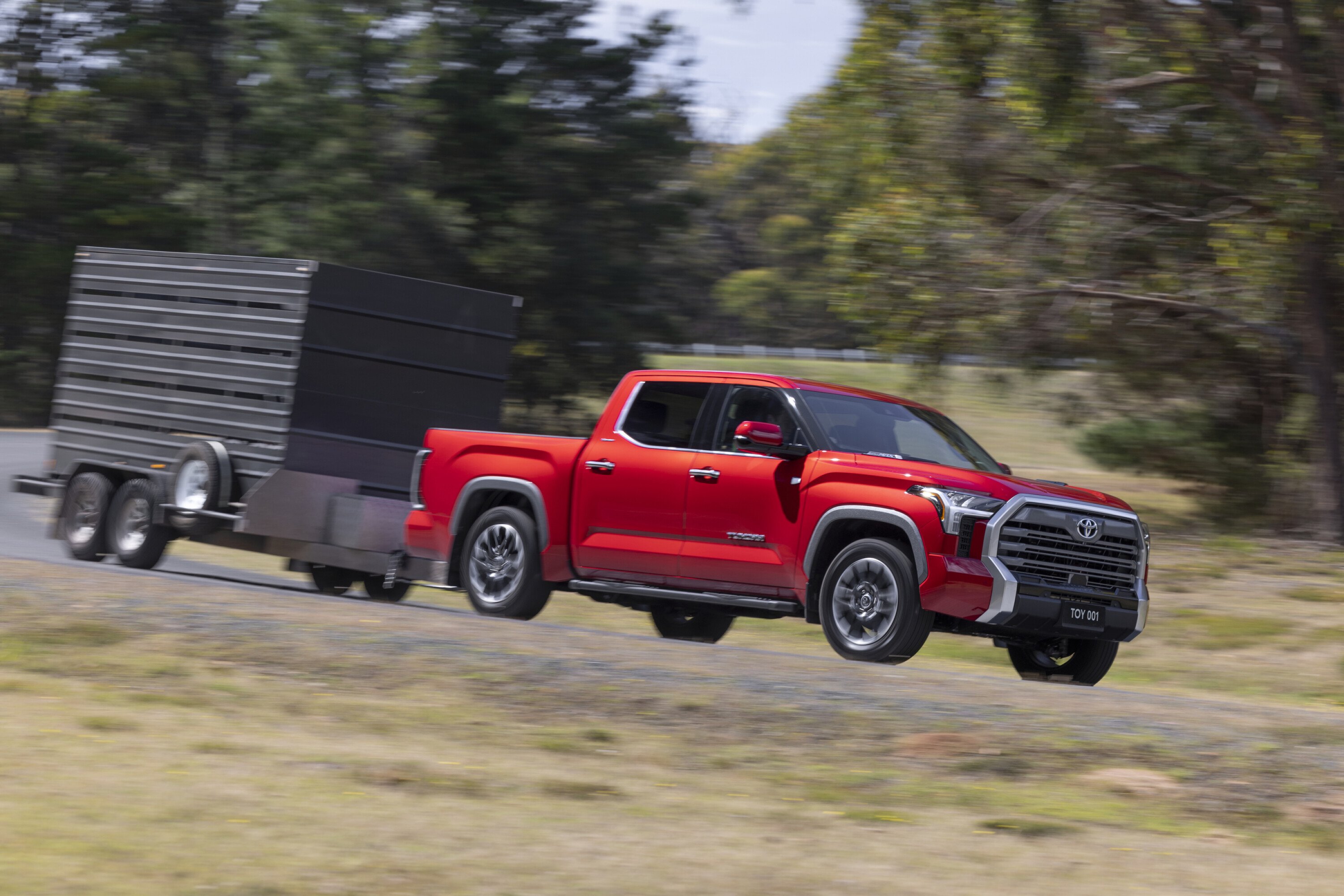
The hybird-powered Toyota Tundra is also on the way to Australia after an evaluation batch of 300 were converted by Walkinshaw Performance.
Production of the current model Ram 1500 wound up at the end of 2023 – including the flagship 1500 TRX powered by a supercharged 6.2L V8 – with its V6-powered ‘RHO’ successor announced in April 2024.
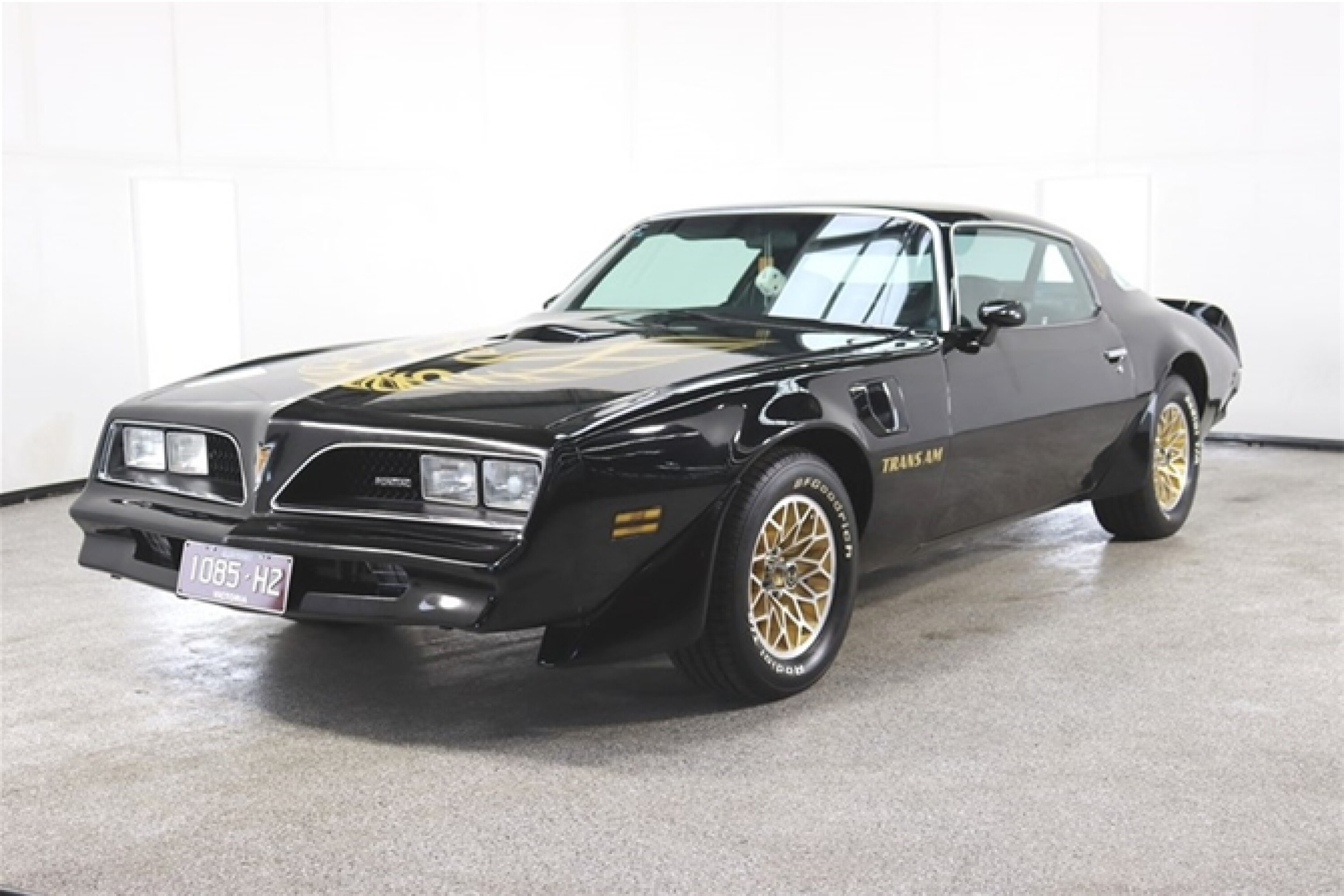
And from the world of motorsport we step over to the other nearby land of American muscle with this Pontiac Trans Am. Another left-hand drive example for the classic enthusiast.
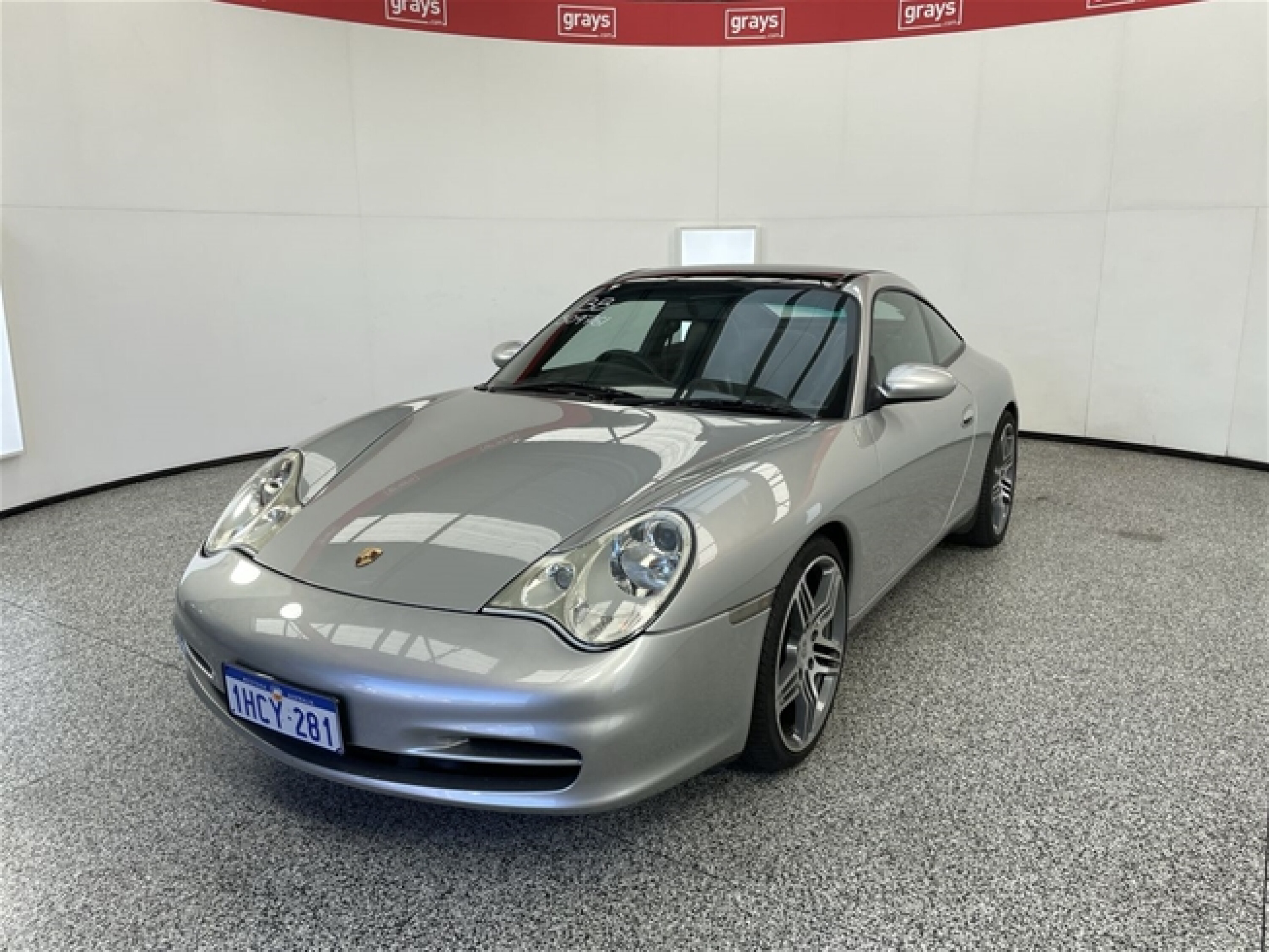
Continuing on with the sports car theme that seems to have dominated this week’s Auction Watch, and we have the 996 Porsche 911 Carrera 4S from 2002: the era that began Porsche’s rebirth as the powerhouse they are today.
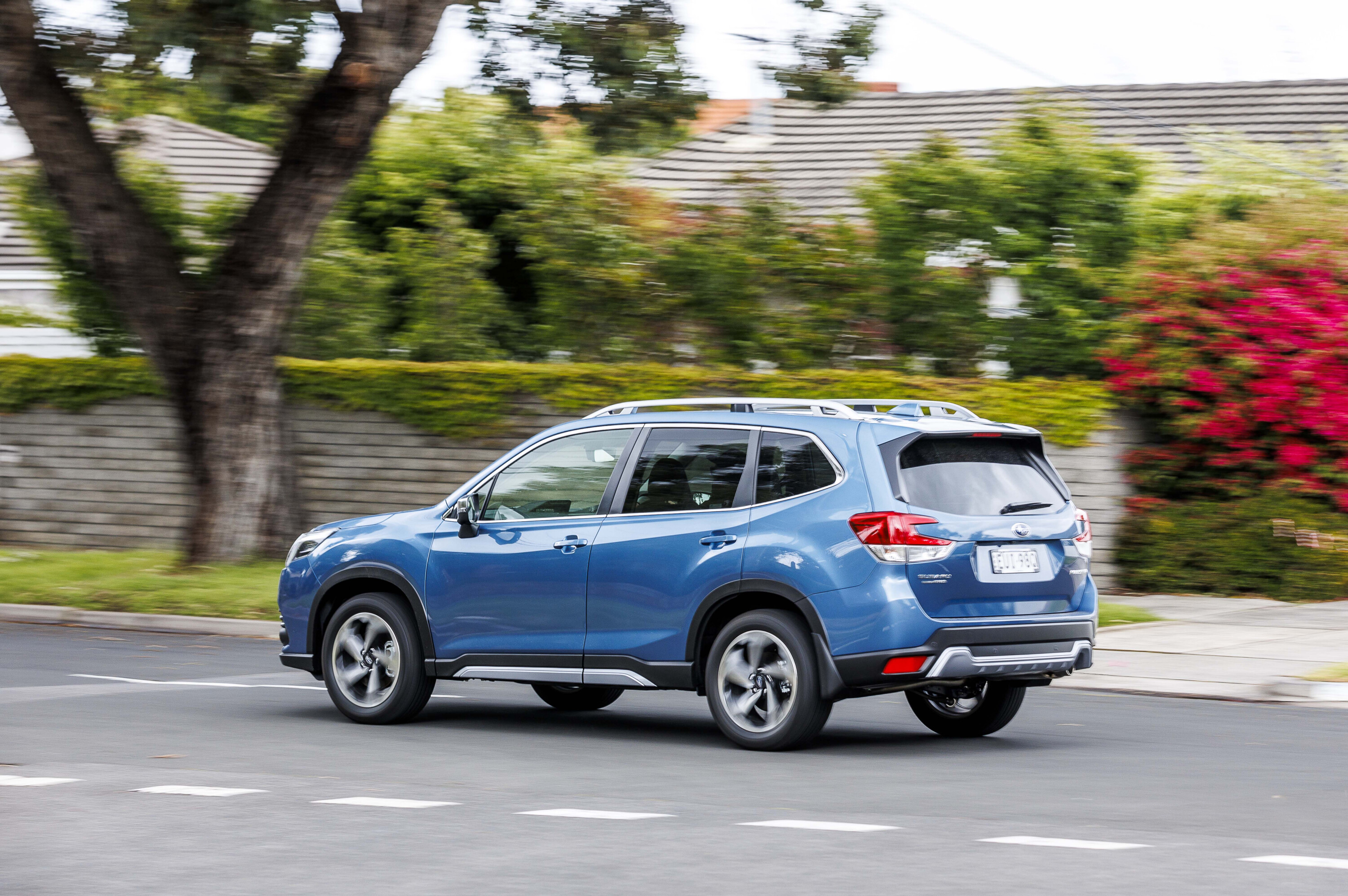
The Subaru Forester has a longstanding history as one of Australia’s family SUVs since it landed almost 30 years ago.
It has developed a strong reputation for reliability and practicality, making it a favourite among families and outdoor enthusiasts.
The Forester’s design smartly integrates comfort and functionality, serving well for daily use and more adventurous activities. It stands out as a compact SUV but offers the spaciousness and driving feel of a larger wagon.
Pricing & Features
The Subaru Forester 2.5i is the entry-level into the line-up, starting at $38,690 before on-road costs.
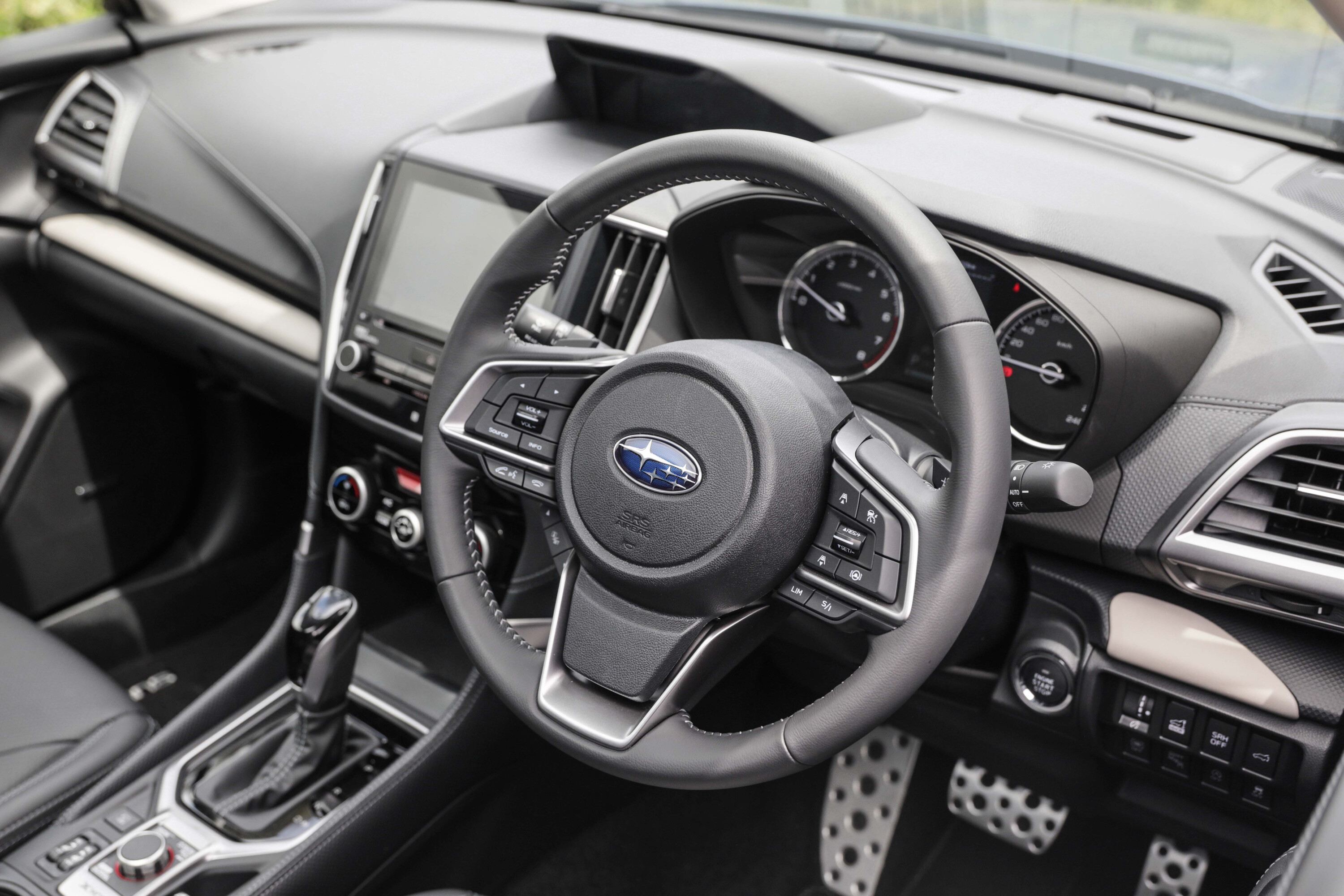
The base model comes standard with 17-inch alloy wheels, an 8-inch touchscreen with wireless Apple CarPlay and wired Android Auto, leather steering wheel and gear shift and cloth trim seats.
1
There are also plenty of practical additions like rain-sensing wipers, LED headlights, black roof rails and a tyre pressure monitoring system.
It houses a 2.5-litre e-Boxer four-cylinder engine, delivering 136kW and 239Nm of torque, paired with a CVT and Subaru’s signature all-wheel drive.
Safety
The 2024 Subaru Forester maintains a five-star ANCAP safety rating, thanks to the Subaru EyeSight Driver Assist technology suite of safety features.
The Forester excels in ANCAP safety metrics, achieving an adult occupant protection score of 94% and a child occupant protection score of 86%.
1
The vehicle comes fully equipped with a wide array of standard safety features, including autonomous emergency braking, blind-spot monitoring, rear cross-traffic alert, driver attention monitoring, lane departure warning and lane-keep assist.
Key Rivals
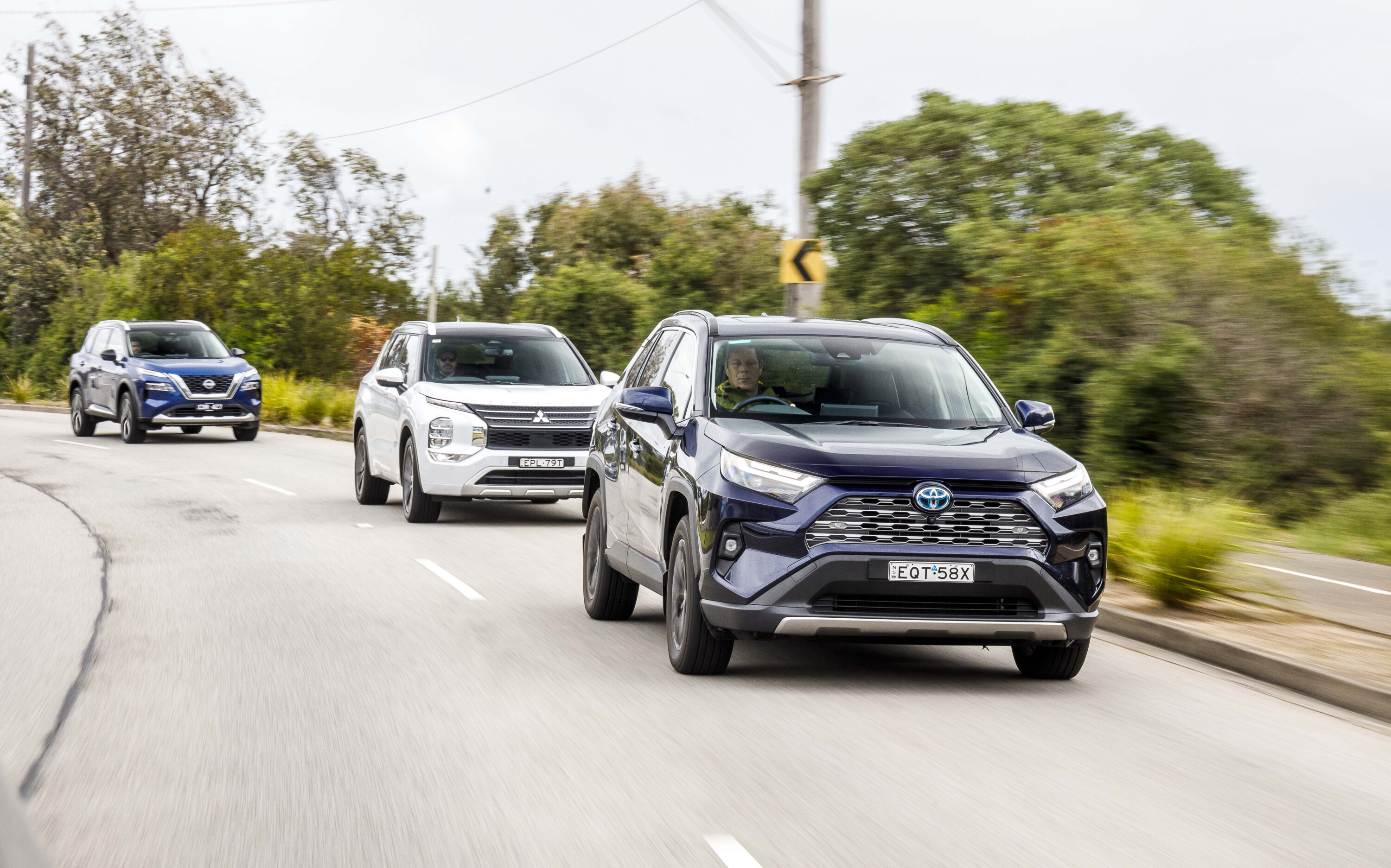
The Subaru Forester faces competition from medium SUVs such as:
Definitely consider the Subaru Forester if you’re looking for a compact SUV that offers a combination of safety, efficiency and off-road capability.
While it has a robust set of features suitable for adventurous lifestyles, it can also cater to those needing a dependable vehicle for everyday driving.
Its practicality is unrivaled in the segment, which explains why this car continues to enjoy widespread popularity.