Tesla has launched an attack on Australia’s Federal Chamber of Automotive Industries – a body that counts Tesla among its membership and board members.
The American carmaker has submitted to the Federal Government its comments on the proposed New Vehicle Efficiency Standard (NVES), attacking the Federal Chamber of Automotive Industries for what it sees as lobbying against and lying about the proposal in an attempt to delay climate change action.
1
Tesla accused the FCAI of running a “concerted public campaign” and repeatedly making “plainly false” claims, including that prices of popular utes would increase by up to $13,000, despite knowing this was not how the scheme would work.
The FCAI, it says, proposes a scheme based on an existing voluntary program that it oversees, with open discussions within the FCAI acknowledging their proposal would not cut emissions before 2030.
Greenhouse gas emissions from vehicles would actually increase 25% between 2024 and 2030 under the FCAI proposal, Tesla estimated.
“The FCAI knew that its targets would actually allow carmakers to increase emissions because of enormous loopholes that create hundreds of thousands of electric vehicles that only exist on paper,” Tesla said in its submission.
The Tesla submissions states that the FCAI:
based its calculations on the most polluting type of each car model only;
misrepresented how an efficiency standard would work (ignoring that penalties would not be applied to individual cars and companies would be expected to increase their range of clean vehicles to offset more polluting models); and
claimed two popular Tesla models would fall in price by about $15,000 next year without checking with the company if this was the case.
Rather than representing all members, Tesla said the FCAI on this issue was “representing only one section of the industry: those companies who would continue to delay action on the climate crisis”.
1
“Tesla is both a member of the FCAI and represented on its board, so it’s important that Tesla makes clear its disagreement with the submission made by the FCAI to this review, and with false claims it has made in the public discussion of vehicle standards.”
The FCAI responded, “The FCAI and its members, which includes manufacturers of vehicles ranging from battery electric through to petrol and diesel engines, want to continue to play their role in combating climate change and providing Australians with the zero and low emission vehicles they can afford, want to drive and … that meet their family, personal, recreation or work needs”.
It stands by its analysis of how vehicles sold in 2025 would be affected if last year’s sales patterns were repeated.
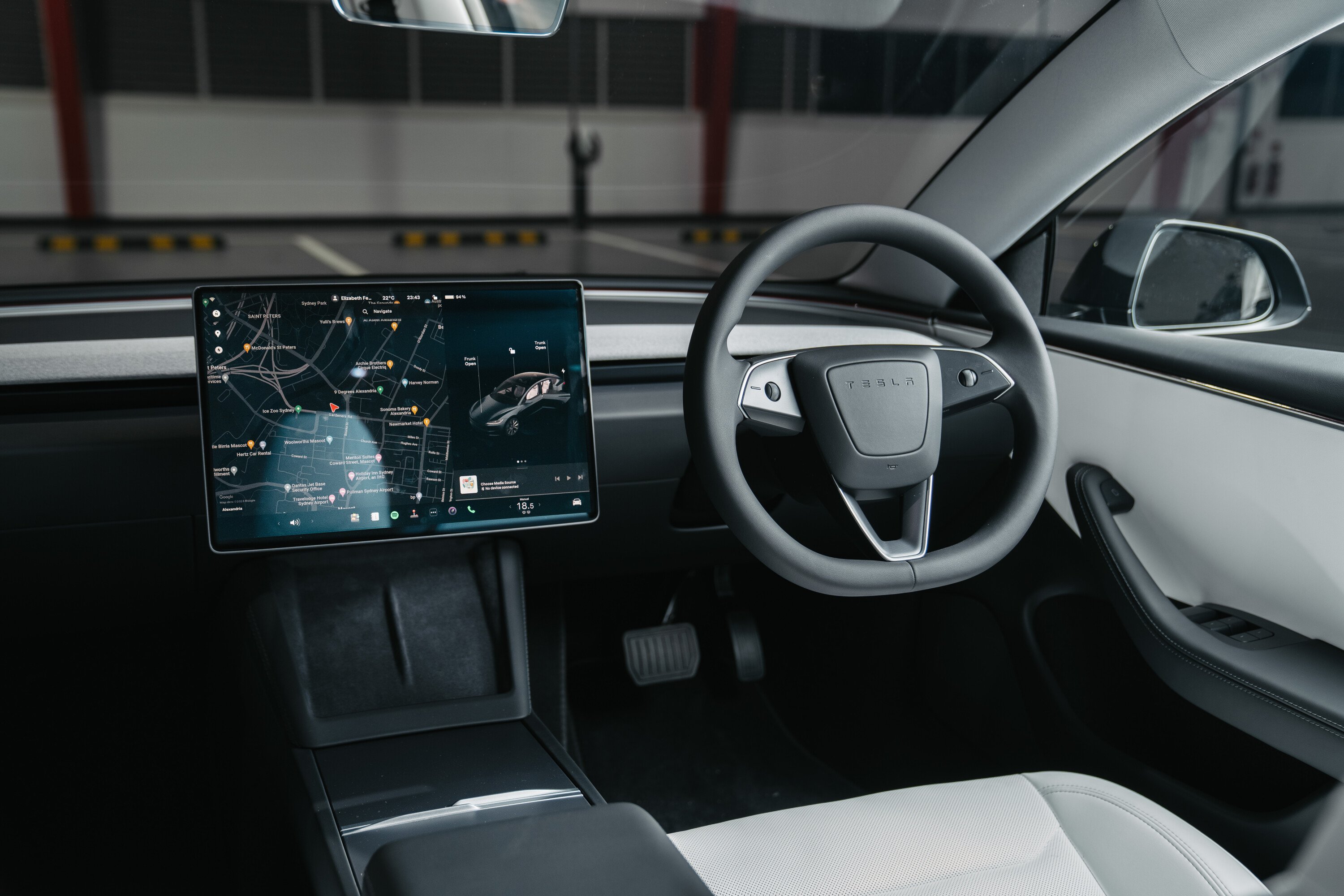
With Euro NCAP to introduce new testing rules in January 2026, car manufacturers will need to provide physical controls for functions such as indicators and wipers –rather than fiddly touchscreens – to achieve a full five-star rating.
As reported by the Times [↗], Euro NCAP [↗] plans to introduce new rules in January 2026, changing the criteria to achieve a top safety rating of five stars, a score that is widely boasted by vehicle manufacturers.
To achieve a full five-star safety rating, vehicles will require physical controls for hazard lights, indicators, windscreen wipers, SOS equipment, and the horn.
1
Modern vehicles have recently become littered with touchscreen displays and complicated interfaces, namely Tesla and Volkswagen models, mainly due to cost and material saving.
Matthew Avery, director of strategic development at Euro NCAP [↗], stated to the Times [↗] that “the overuse of touchscreens (in vehicles) is an industry-wide problem, with almost every vehicle-maker moving key controls onto central touchscreens, obliging drivers to take their eyes off the road and raising the risk of distraction crashes.”
While Euro NCAP testing is voluntary and the guidelines are not a legal requirement, manufacturers and buyers deeply consider the safety ratings, making these new rules prime for consideration. However, according to Matthew Avery, “… we have not yet finalised the evaluation procedure”.
Do you find touchscreens fiddly or prefer physical controls? Let us know below!
March 2024: EU claims evidence of Chinese govt subsidising EV manufacturers
The European Commission has published a document [↗] claiming “sufficient evidence” that Chinese EVs imported into the EU with increasing speed are being subsidised in a fashion it considers unfair and harmful to the European economy.
Government subsidies for domestic manufacturers are a standard piece of any economy, however, the commission says China’s subsidies to its EV makers qualify as countervailable – effectively a subsidy beyond the accepted norm, entitling the destination market to apply tariffs to offset the harm to its own industries.
Such tariffs have historically been described by interested parties as protectionist. This is accurate, in so much as tariffs applied in this way are intended to protect a country’s economy against unfair trade practices.
When the EU’s investigation was first announced in 2023, China’s Ministry of Commerce called it “a naked protectionist act that will seriously disrupt and distort the global automotive industry and supply chain, including the EU, and will have a negative impact on China-EU economic and trade relations.”
The ministry’s comments appear to ignore the circumstances leading to the investigation’s establishment. The European Commission’s report describes “critical circumstances where injury, which is difficult to repair, is caused by massive imports of a subsidised product in a relatively short period”.
China’s Ministry of Commerce claims the rise in imports is merely a result of increasing European demand for EVs.
Ahead of potential tariffs that would apply retroactively, the Commission has directed its customs authorities to register Chinese imports “so that measures may subsequently be applied against those imports from the date of such registration”.
September 2023: EU investigating Chinese EVs over reports of unfair subsidies
The European Commission has launched an investigation to determine whether further import tariffs should be imposed on cut-price Chinese-made electric vehicles.
Snapshot
EU to investigate imposing further import taxes for Chinese-made EVs
Argues Chinese government subsidies have unfairly kept prices low
Seeks to protect local auto industry
In the Commission’s 2023 State of the Union Address, president Ursula von der Leyen said the rapid influx of Chinese-made EVs was concerning for European automakers despite declaring the market ‘open for competition’.
“Global markets are now flooded with cheaper Chinese electric cars. And their price is kept artificially low by huge [Chinese] state subsidies. This is distorting our market,” von der Leyen said.
“We must defend ourselves against unfair practices… But equally, it is vital to keep open lines of communication and dialogue with China. Because there also are topics, where we can and have to cooperate.”
1
Currently, the EU has a 10 per cent import tax for all foreign-made vehicles, but the investigation will seek to determine whether a further tariff should be enforced for Chinese-made EVs only.
These tariffs would not only affect Chinese makers such as BYD and SAIC but also western brands producing EVs in China such as Tesla and the BMW Group.
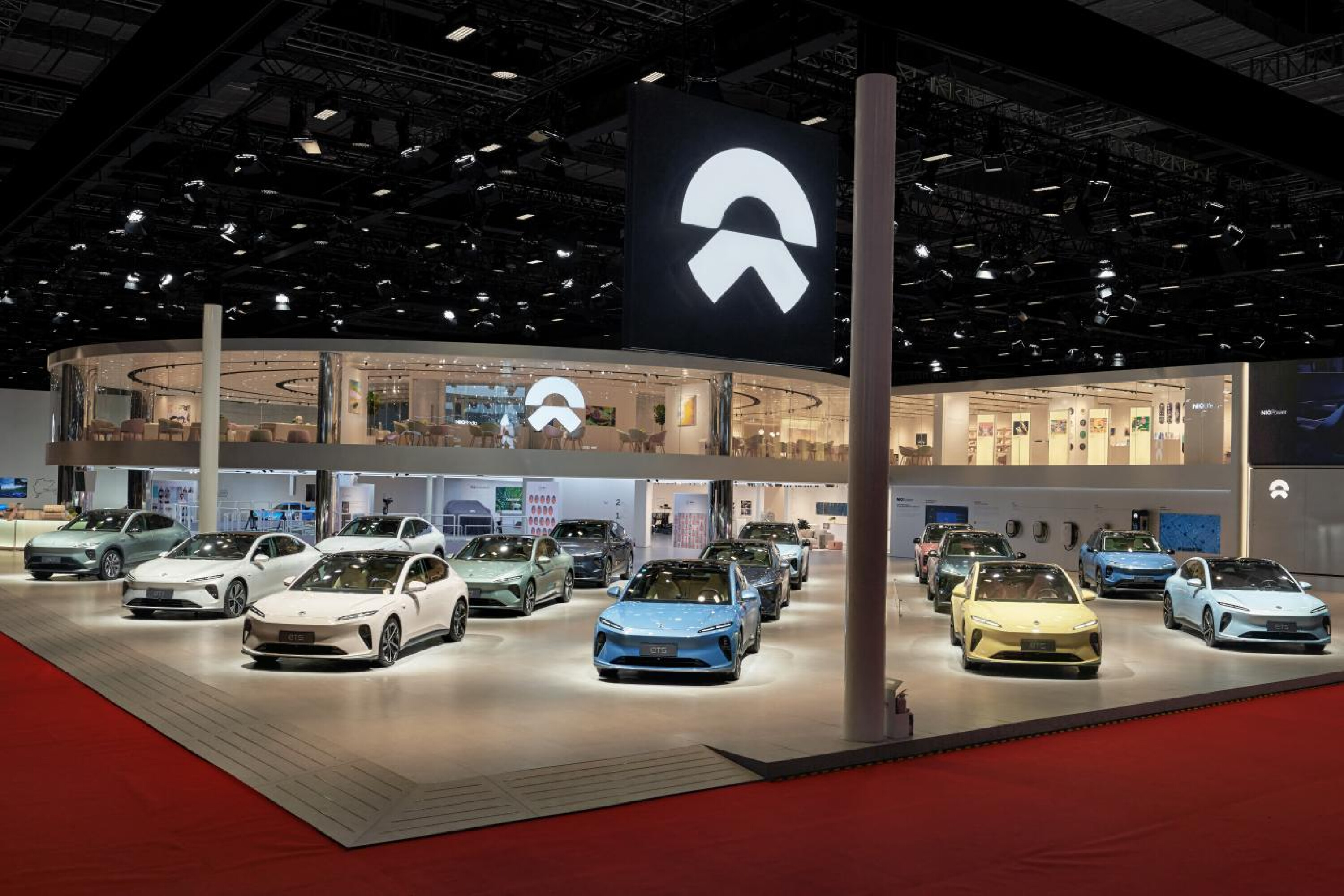
Despite the Commission president’s remarks, the Chinese Chamber of Commerce to the EU claimed to Reuters [↗] that Chinese-made EVs aren’t lower-priced because of government incentives for carmakers. Founder of EV Company Nio, for example, cited China’s stranglehold over raw materials and supply chain accounted for 20 per cent of savings.
It is difficult to deny state incentives playing a part, though, following consulting firm AlixPartners [via Reuters ↗] findings that around AU$88.7 billion in state subsidies were given between 2016 to 2022 for hybrid and electric vehicles.
Global markets are now flooded with cheaper Chinese electric cars
?? In context
In Australia, the top-selling new electric car list is dominated by Chinese-made models, which not only benefit from a short supply chain and lower manufacturing costs but also the China-Australia free-trade agreement. This gives China-made EVs an even larger price benefit in Australia compared to the EU.
A tax to protect Europe’s legacy automakers from competitively-priced Chinese EVs could put further strain on the trading relationship.
European carmakers are already feeling the pinch from China with rapid expansion of new badges such as BYD, Geely, Nio and Xpeng looking capitalise on the booming EV market.
In the past five years, imports of Chinese-made cars to the EU have quadrupled, according to the China Passenger Car Association [via CNN ↗].
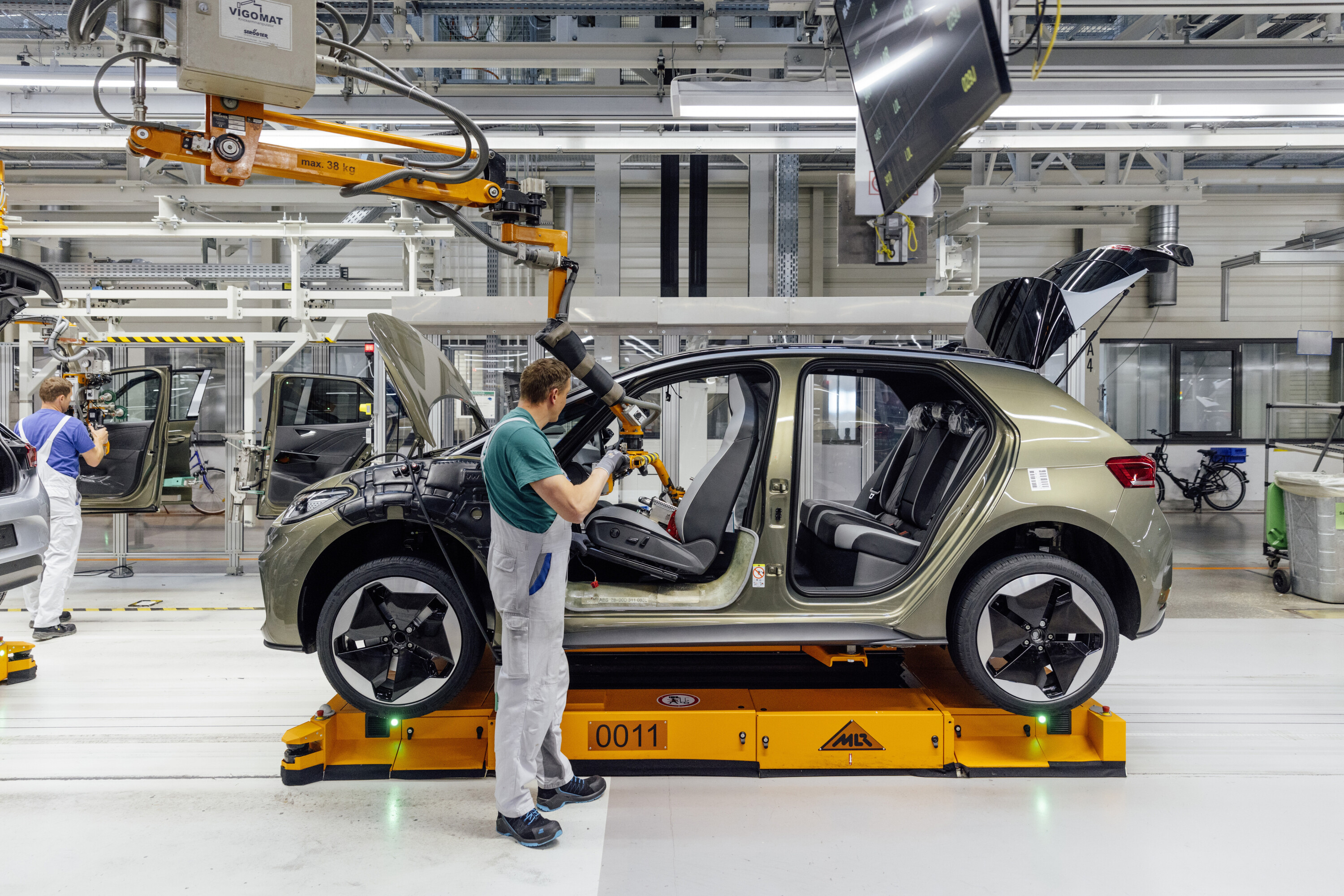
This week, Automotive News Europe [↗] indicated that Volkswagen plans to cut hundreds of jobs at its Zwickau factory in Germany, where it makes the recently facelifted ID.3, ID.4, ID.5, and Cupra Born for Australia. The reason according to the report is lower-than-expected demand for VW’s EVs.
March: Renault confirms 50,000 buyers for R5 E-Tech electric hatch
The Australian distributor for Renault has already confirmed it is eager to offer the new ‘R5’ E-Tech EV – but if the brand’s claims are to be believed, it could struggle to get an allocation.
Speaking with industry journal Automotive News Europe, Renault brand boss Fabrice Cambolive said the company has a list of 50,000 potential buyers waiting on orders to officially open.
“We will open orders in May, and we’ll start to deliver cars in September or October. The problem is not to see if we have the customers – the challenge is to have a smooth ramp-up and to be able to deliver to the first customers by October.”
However, car brands will often talk a big game in the lead-up to a new model’s official on-sale schedule – if only to entice people to rush an order to avoid any extended delivery wait – so it remains to be seen how many of those 50,000 people will follow through.
1
February: 2025 Renault 5 E-Tech EV unveiled
Key Points
40 & 52kWh batteries, up to 400km driving range
500kg towing capacity
Priced in u20ac20,000 to u20ac25,000 range u2013 roughly $30k-$40k AUD
Australian distributor keen
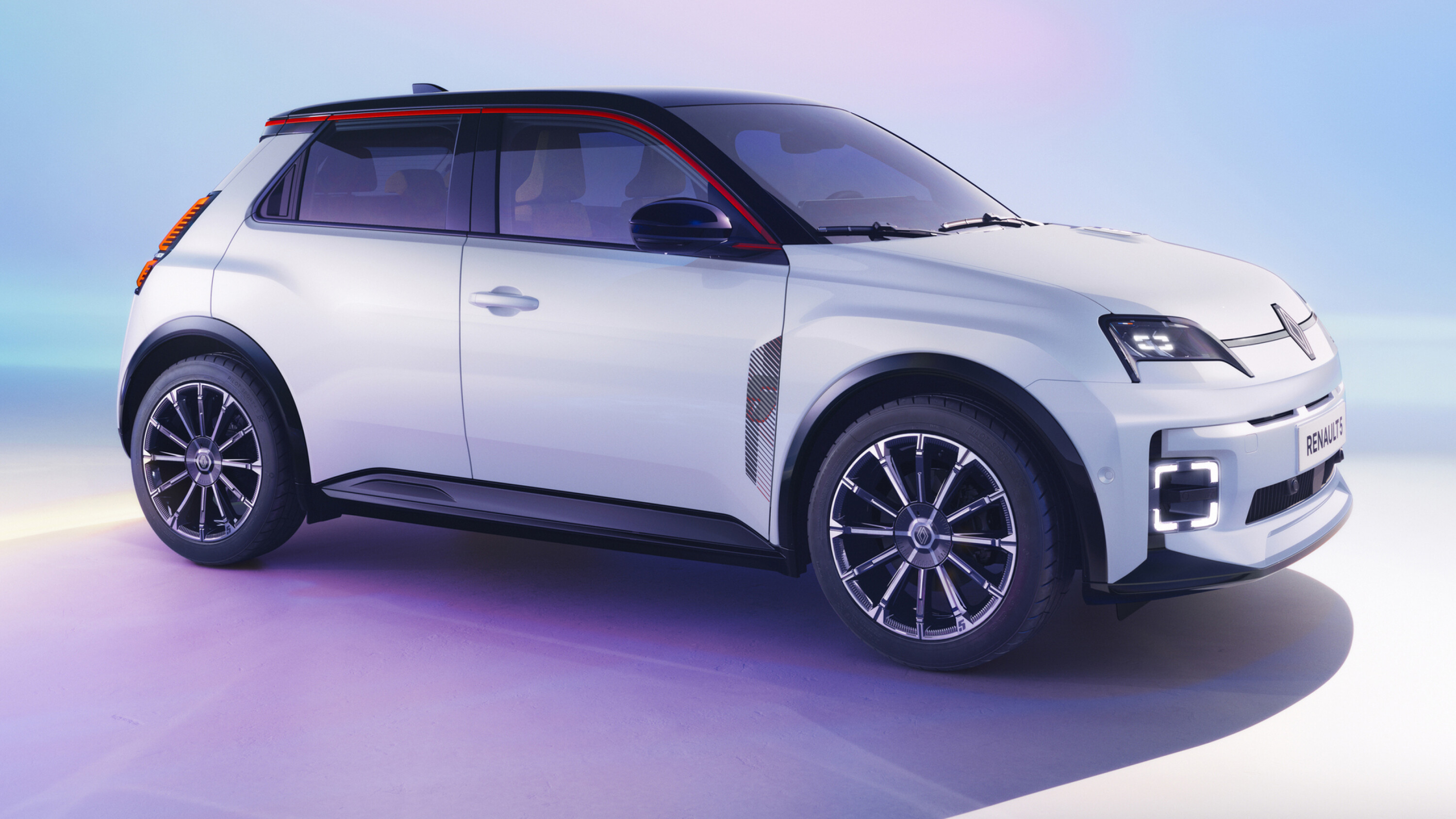
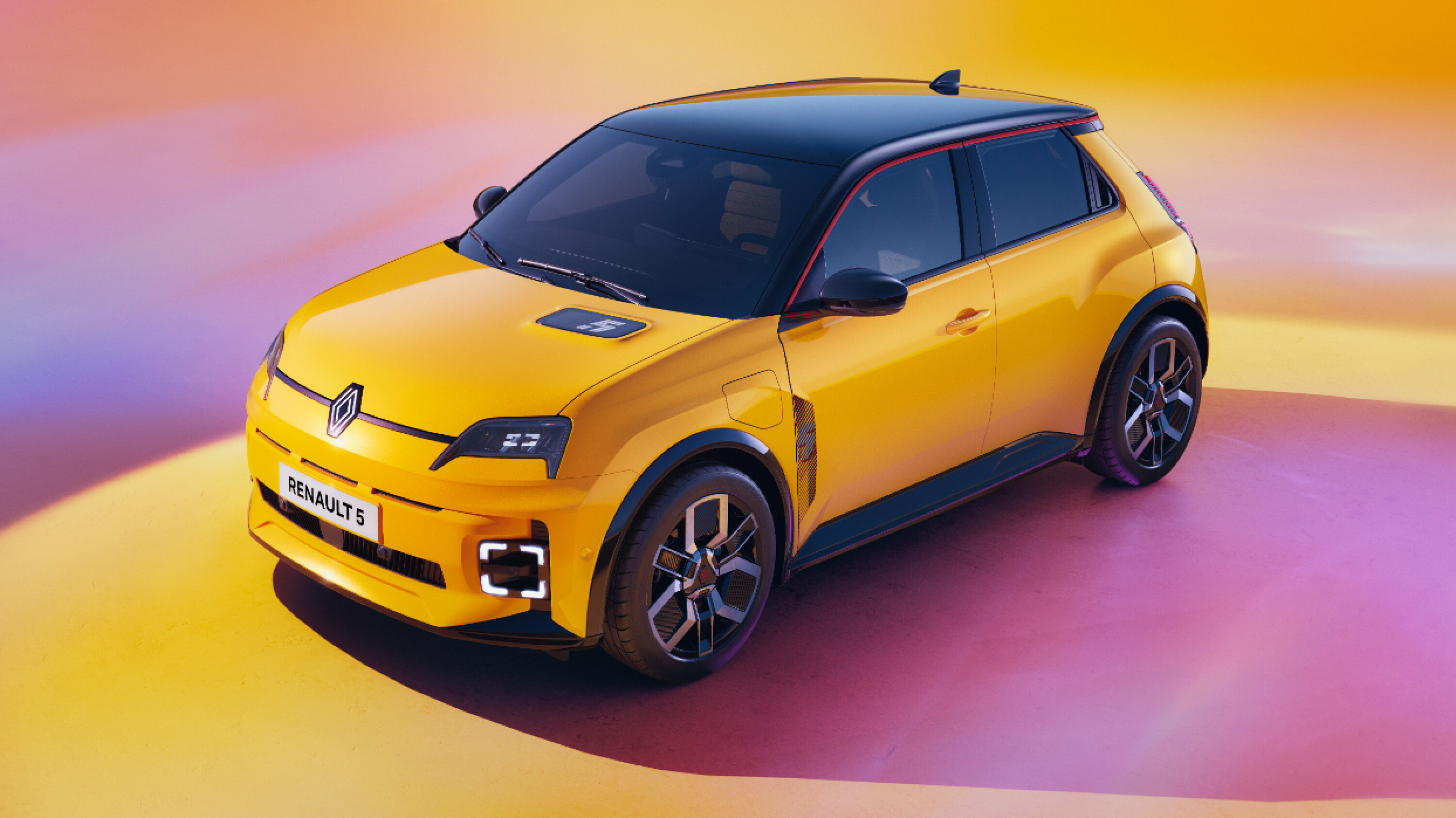
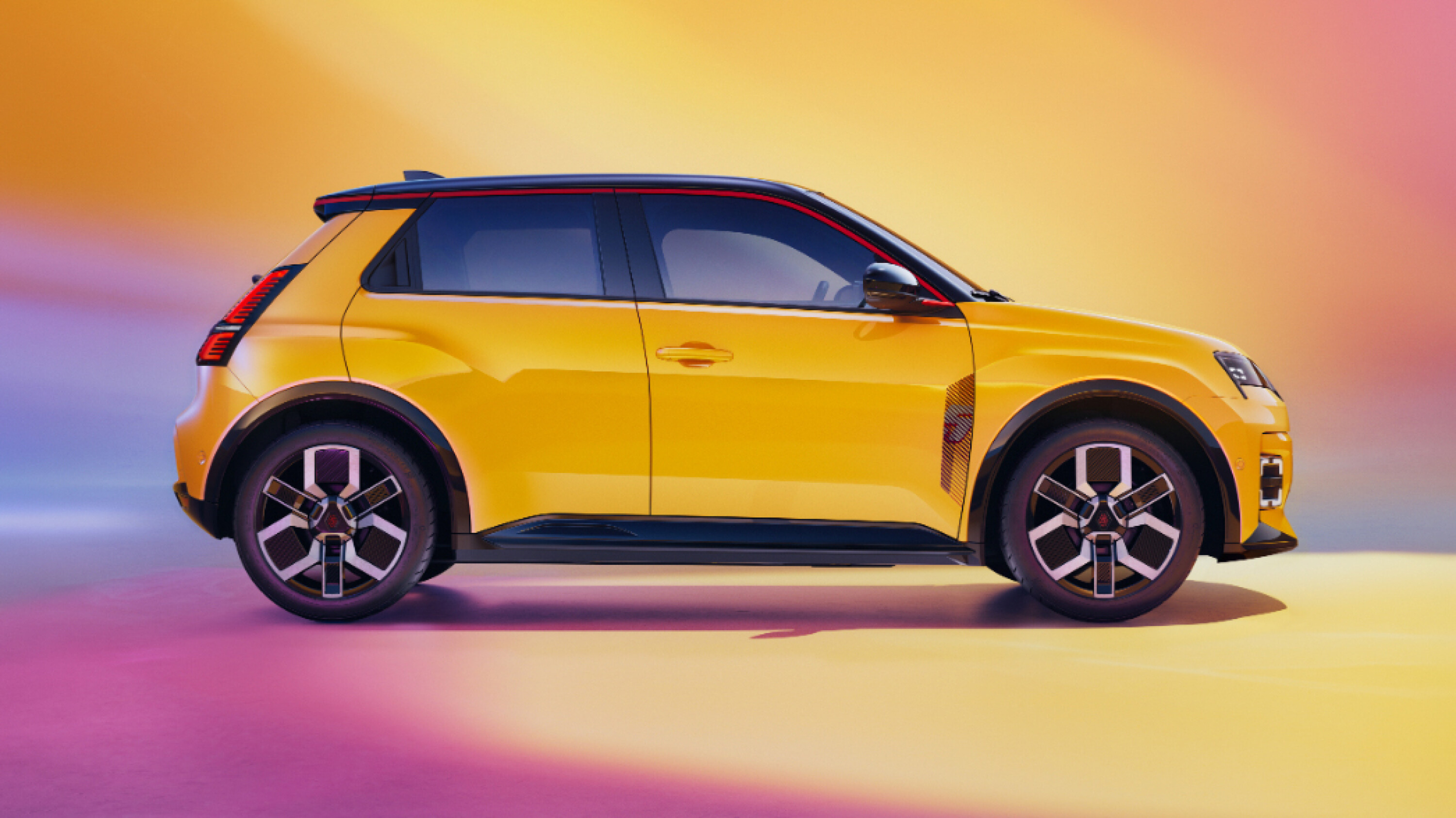
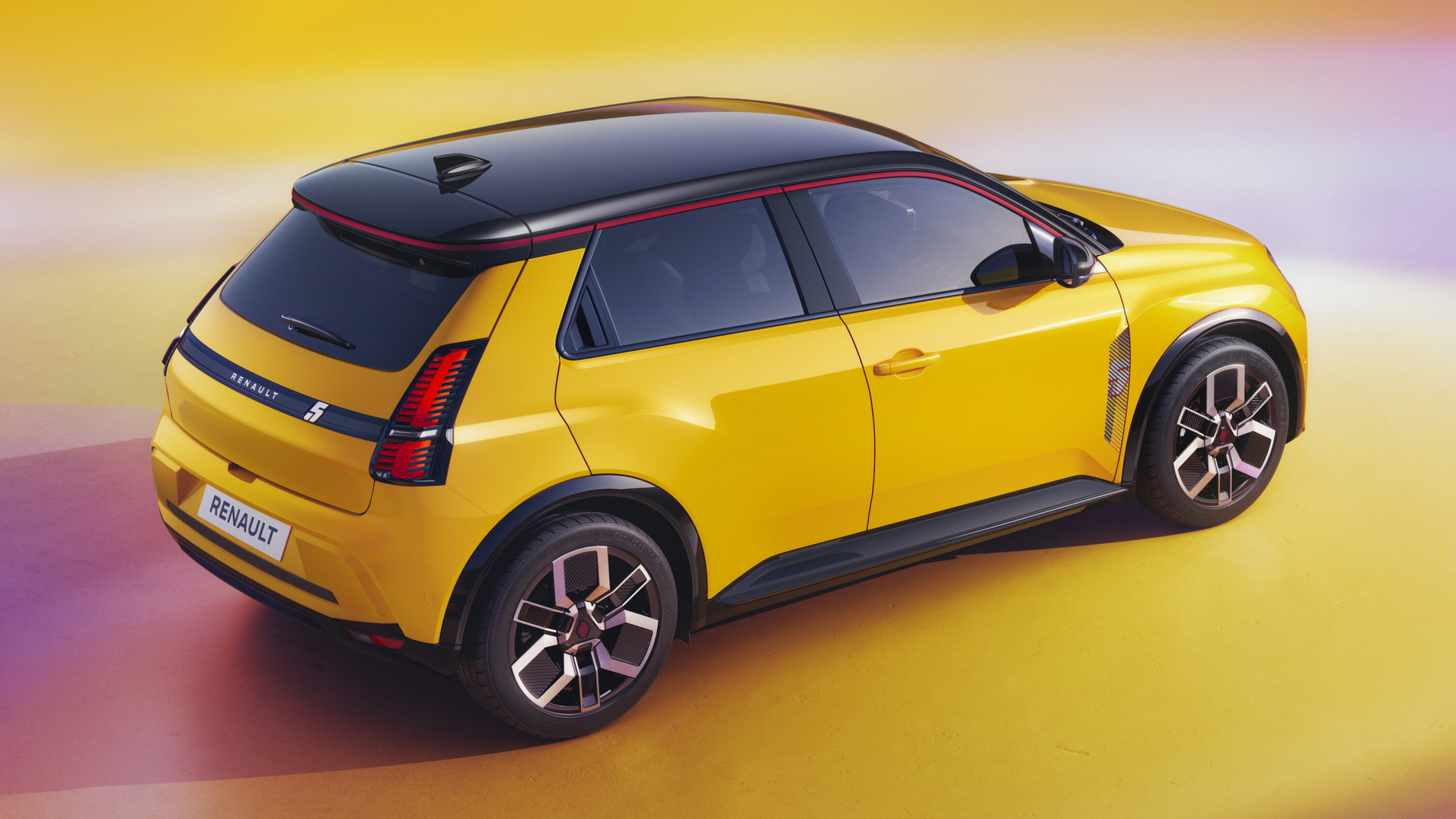
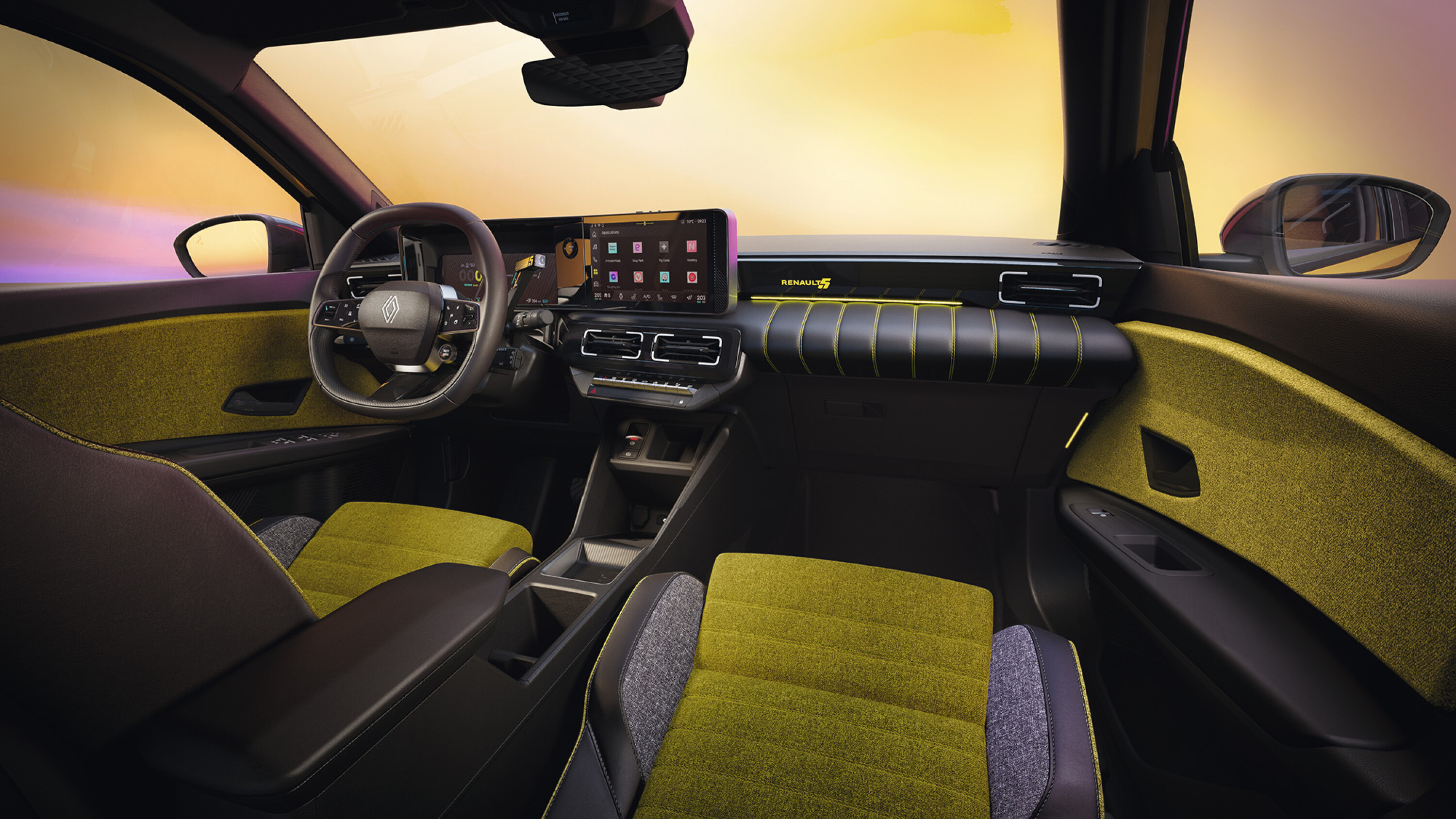
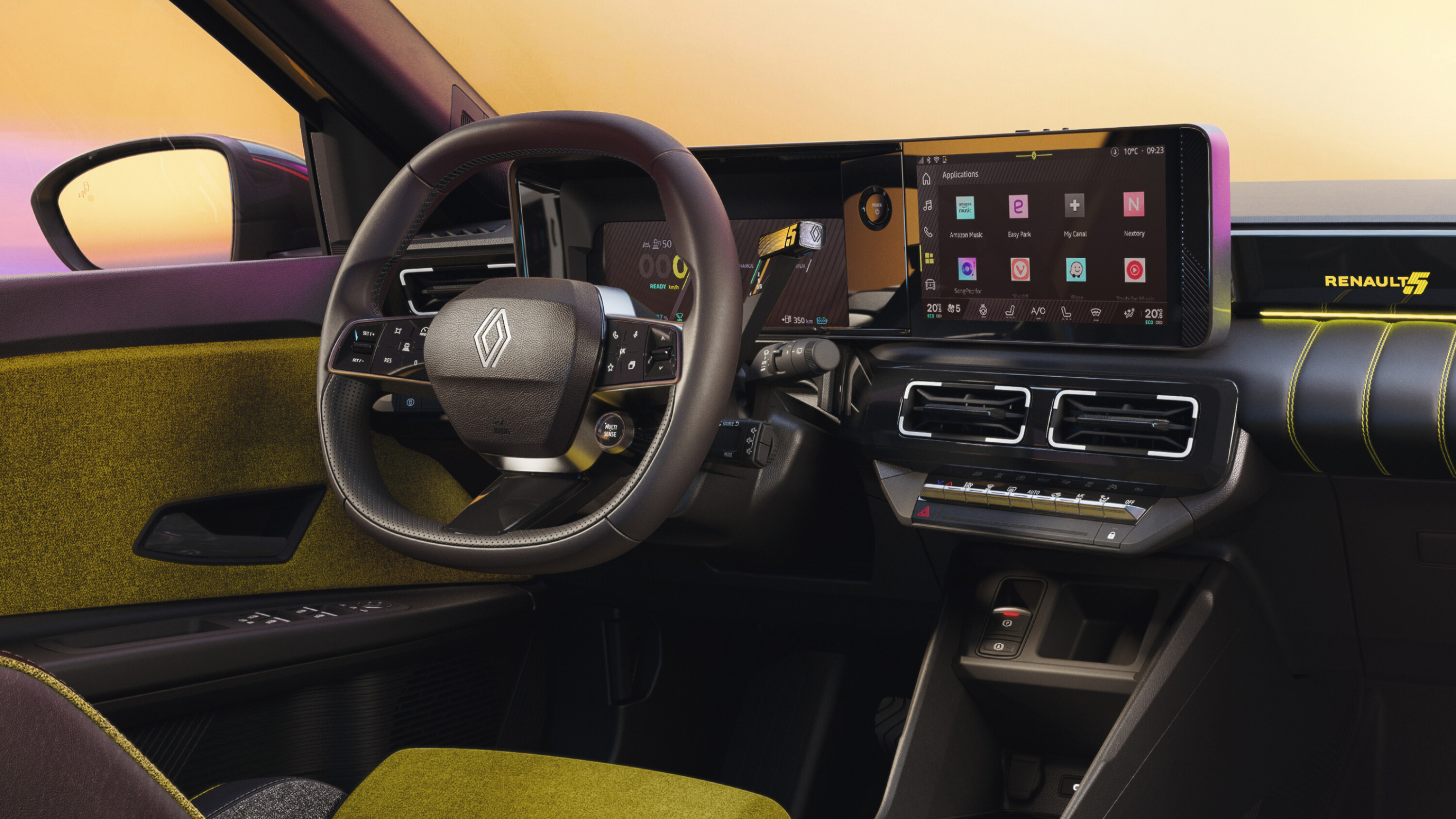
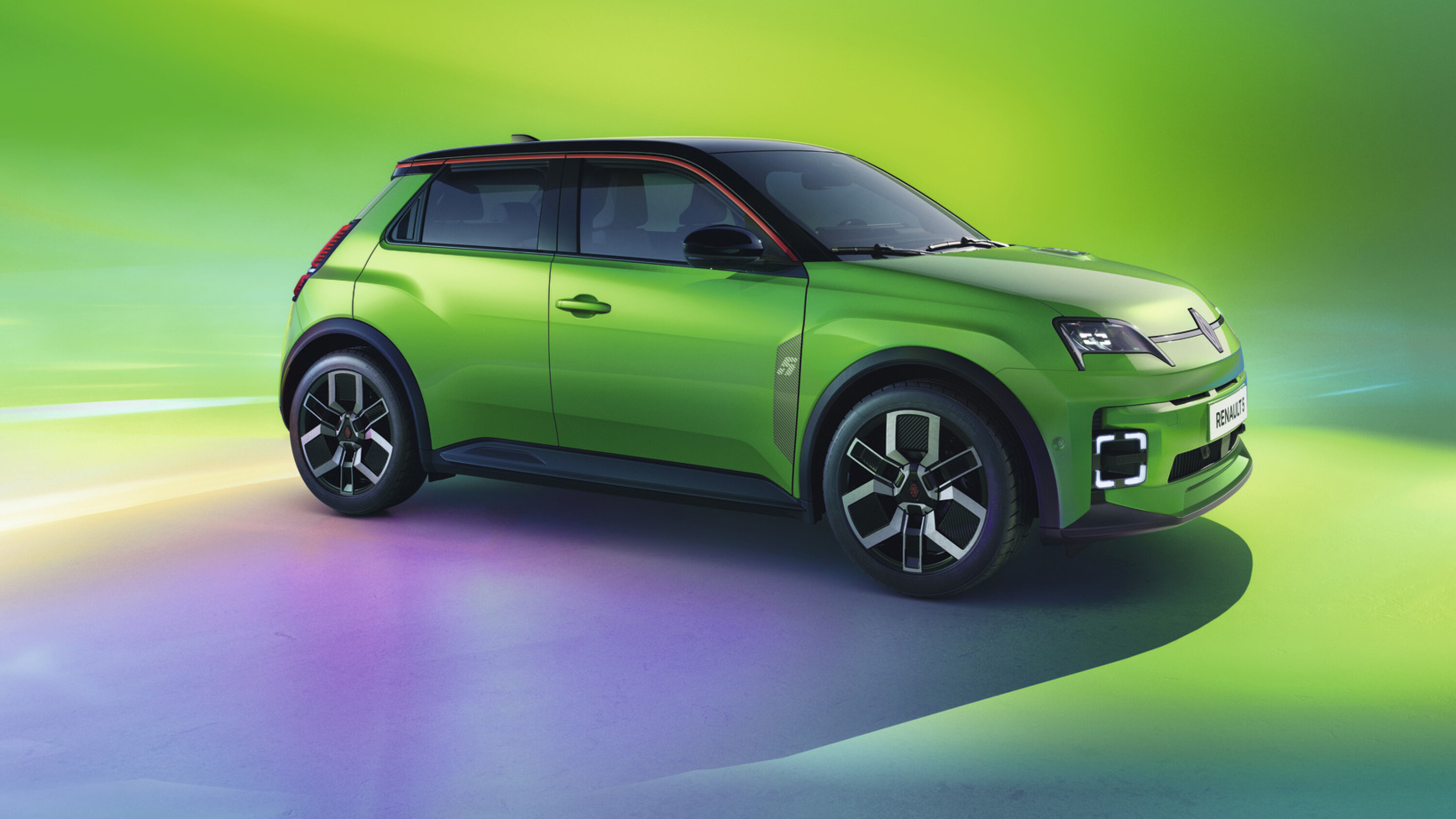
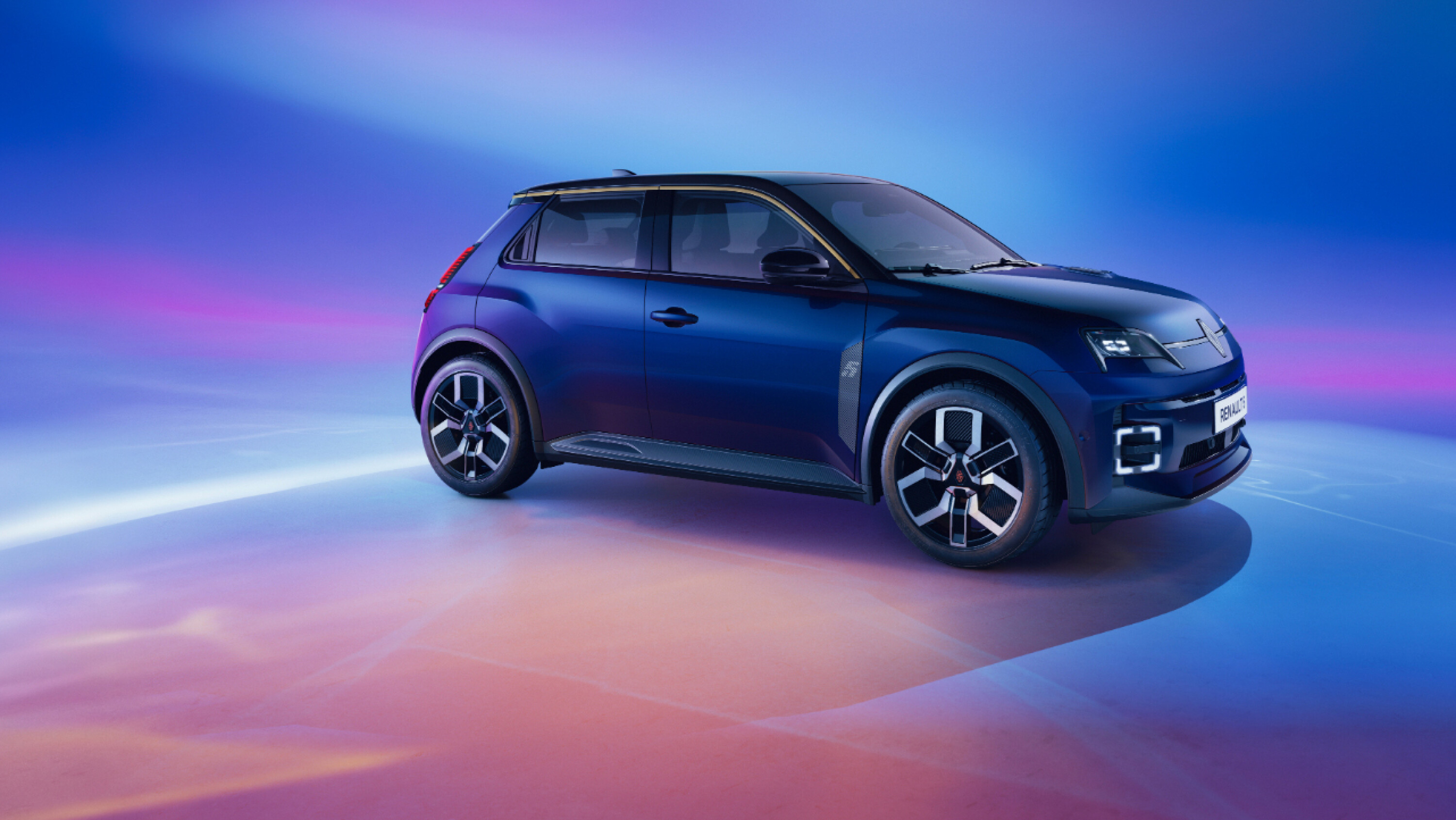
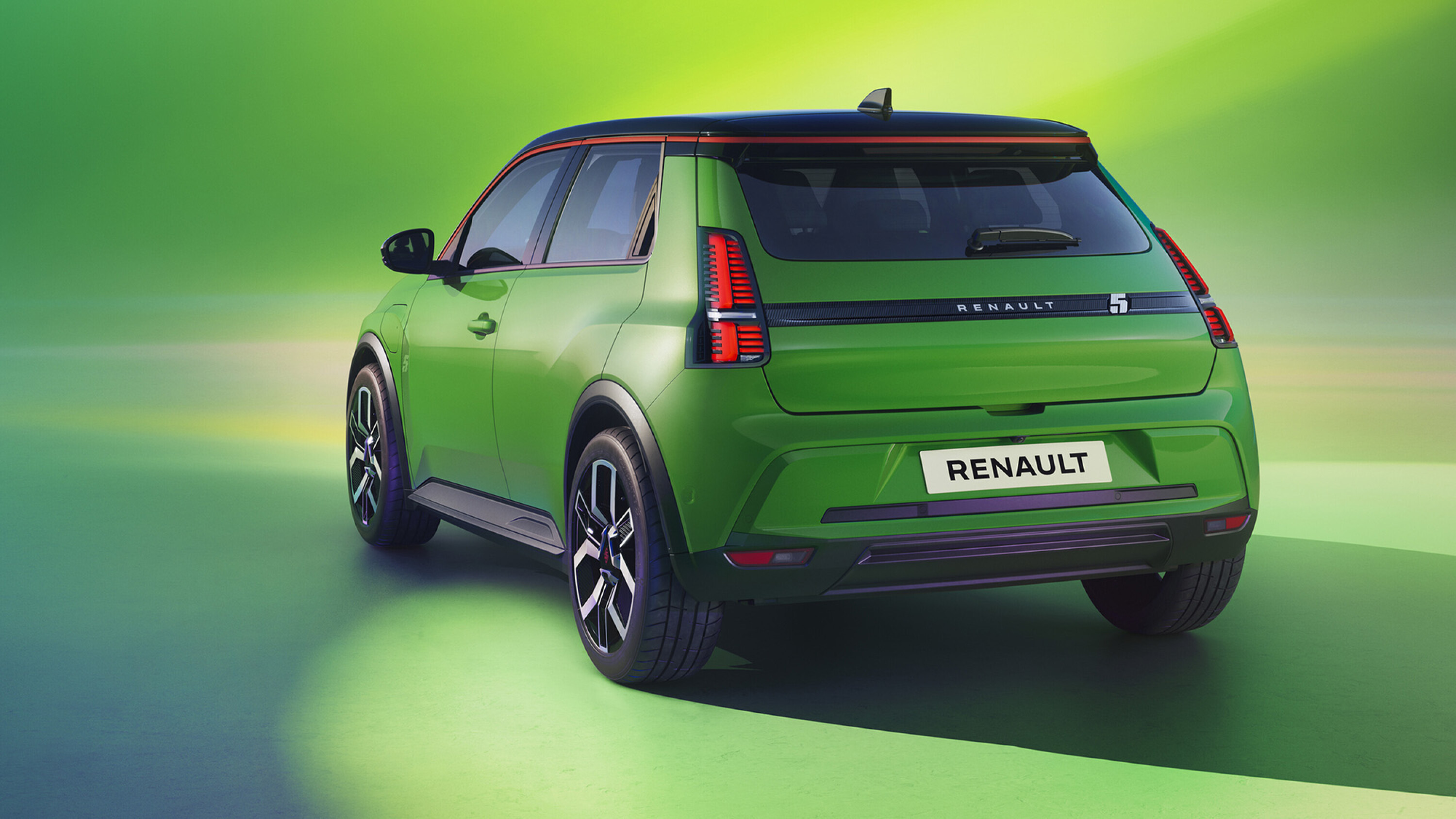
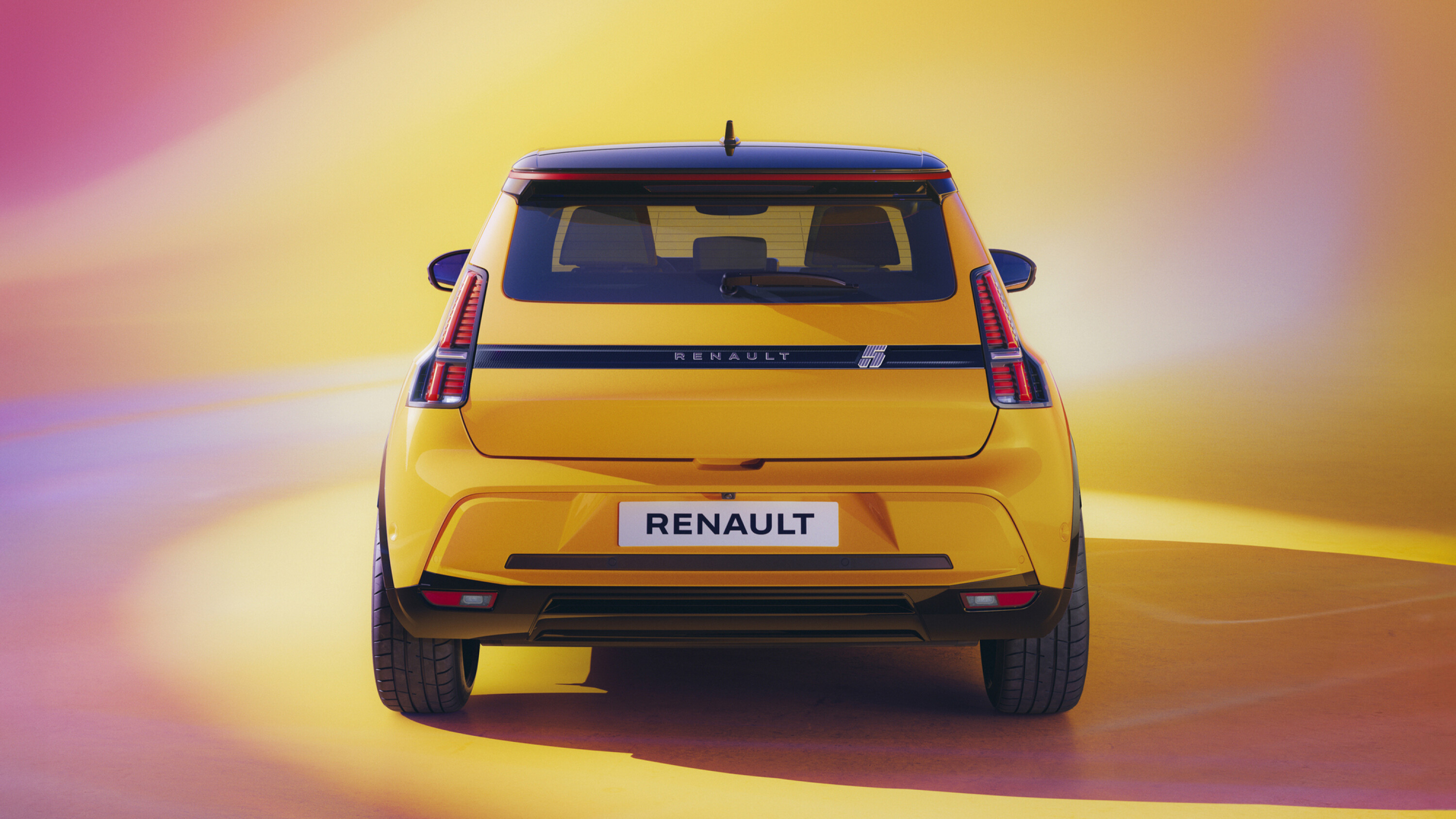
It doesn’t happen often, but we’ve once again been treated to a new model largely identical to its hot concept forebear: the new 2025 Renault 5 E-Tech hatch.
Unveiled at this week’s Geneva motor show, the reborn R5 is not only clearly inspired by the legendary Renault 5 that ran in two generations across the ’70s to the mid ’90s, but it also appears to have changed nothing about the 2021 concept’s styling and proportions.
Renault 5 for Australia?
Renault Australia brand boss Glen Sealey told Wheels in February 2023: “If Renault makes [the 5] in right-hand-drive, we’ll put our hand up. It’s then a case of: will Renault make the additional investment to engineer a car to ADRs for Australia.”
Following this week’s reveal, spokesperson Oliver Peagam has added: “We see great potential for Renault 5 in the Australian market and we see it as an important brand pillar being the product face of Renaulution strategy.
“We are working with Renault on the business case for that model – and others – for the Australian market. In terms of timelines, specification and pricing, these are all obviously contingent on the business case so it would be premature to talk specifics at this stage.”
Styling
“The goal was to deliver a vibrant and energetic ‘pop car’,” said design boss Gilles Vidal in Geneva today. Mission accomplished? Tell us in the comments below.
Fabrice Cambolive, Renault brand boss, says: “We pulled out all the stops for this engaging car, designed and built in France. With its cheerful design and new-generation technologies, it’s out to make electric vehicles more affordable in Europe.”
As expected and extensively teased over the past year, the new R5 carries angular body lines and a compact length with a wide wheelbase.
1
There’s a splitter in the front bumper and a full-width brand bar at the tailgate connecting the vertical tail-lights with a ‘5’ badge offset on the right.
That touch harks back to the post-1984 second-generation Renault 5 hatch, which had the carmaker’s diamond logo towards the left front grille.
As something of a successor to the very popular (in Europe) Zoe EV, the reborn and retro-styled Renault 5 E-Tech hatch joins the brand’s other new EVs: the Megane E-Tech and Scenic E-Tech.
1
Electric system, battery, power and driving range
The 2025 Renault 5 E-Tech has an 11kW AC charger, 80/100kW DC charger, and a choice of 40kWh and 52kWh battery packs with claimed driving ranges of up to 299km and 399km respectively.
Both lithium-ion battery packs use Nickel Manganese Cobalt chemistry.
Power is delivered to the front wheels by an electrically-excited synchronous motor that does away with more expensive and environmentally-unfriendly rare-earth materials.
1
Depending on the trim grade selected, the Renault 5’s electric motor will produce 70kW, 90kW, or 110kW.
In the UK, there’s just the 90kW and 110kW options, the former being paired with the 40kWh battery and the latter with the 52kWh battery.
As you might expect with those sorts of outputs (no torque numbers have been offered), neither of them are rockets. For the 110 kW version, the Renault 5 E-Tech accelerates from zero to 100km/h in “under 8 seconds”.
3
The Renault 5 E-Tech electric is also the first electric Renault with V2G and V2L functionality, joining the likes of Kia and Hyundai as rolling power bricks.
Excitingly for driving enthusiasts, the 5 also has a multi-link rear suspension design “borrowed from top-end market segments” which should help the new hatch to deliver a fun drive. We’ll look forward to testing that someday.
1
Platform
The 5 debuts Renault-Nissan’s AmpR Small platform – previously been known by the less sexy Common Module Family-B EV (CMF-B EV) name.
The AmpR Small architecture is claimed to be 30% cheaper to make than the Zoe’s platform – thanks to sharing around 70% of parts with the combustion-engined CMF-B that underpins the Clio and Captur city cars.
1
As with the newly-launched Megane E-Tech, the 5 features a new battery pack with four large modules for a simpler design, instead of 12 small modules like the older Zoe.
Renault says this setup is 15kg lighter than the Zoe’s battery pack, and more space efficient, while giving the underbody added rigidity for greater safety and cabin noise isolation.
This is all part of an overall more compact architecture than the Zoe, achieved by combining the DC/DC converter (which converts the battery pack’s 400-volts into 12-volts to power electronics), the onboard battery charger, and accessory box (which manages power distribution) into one unit.
1
How small is the Renault 5 E-Tech?
The R5 E-Tech measures 3920mm long and rides on a 2540mm wheelbase – 280mm and 48mm shorter than the Zoe, respectively. Boot space is likewise smaller, at 326 litres to the Zoe’s 338 litres.
The new hatch is also 90mm shorter than the little Clio hatch, but still bigger than the petite Twingo.
Unlike the Zoe, however, the Renault 5 has a bigger brother in the Megane E-Tech, which offers a 2685mm wheelbase and a 440-litre boot – for those who need more rear legroom and cargo space.
Kerb weights are listed at 1450kg for the 52kWh version and 1350kg for the 40kWh version.
1
Will the Renault 5 come to Australia?
The brand’s local distributor is keen, especially now that there’s a right-hand-drive build confirmed.
Renault UK says it will launch the 5 in the first quarter of 2025 – four years since the original concept version was unveiled. With that timing, any Australian launch likely won’t occur until late 2025, if not sometime in 2026.
How much will the Renault 5 E-Tech cost?
In Europe, the 5 will open in the €20,000 to €25,000 range – roughly equivalent to $30,000 to $40,000 in Australia.
It would be quite an achievement if that price range is possible in Australia, given it’s a bracket currently dominated by Chinese EVs, while the similarly compact Fiat 500e is a $52,000 a proposition.
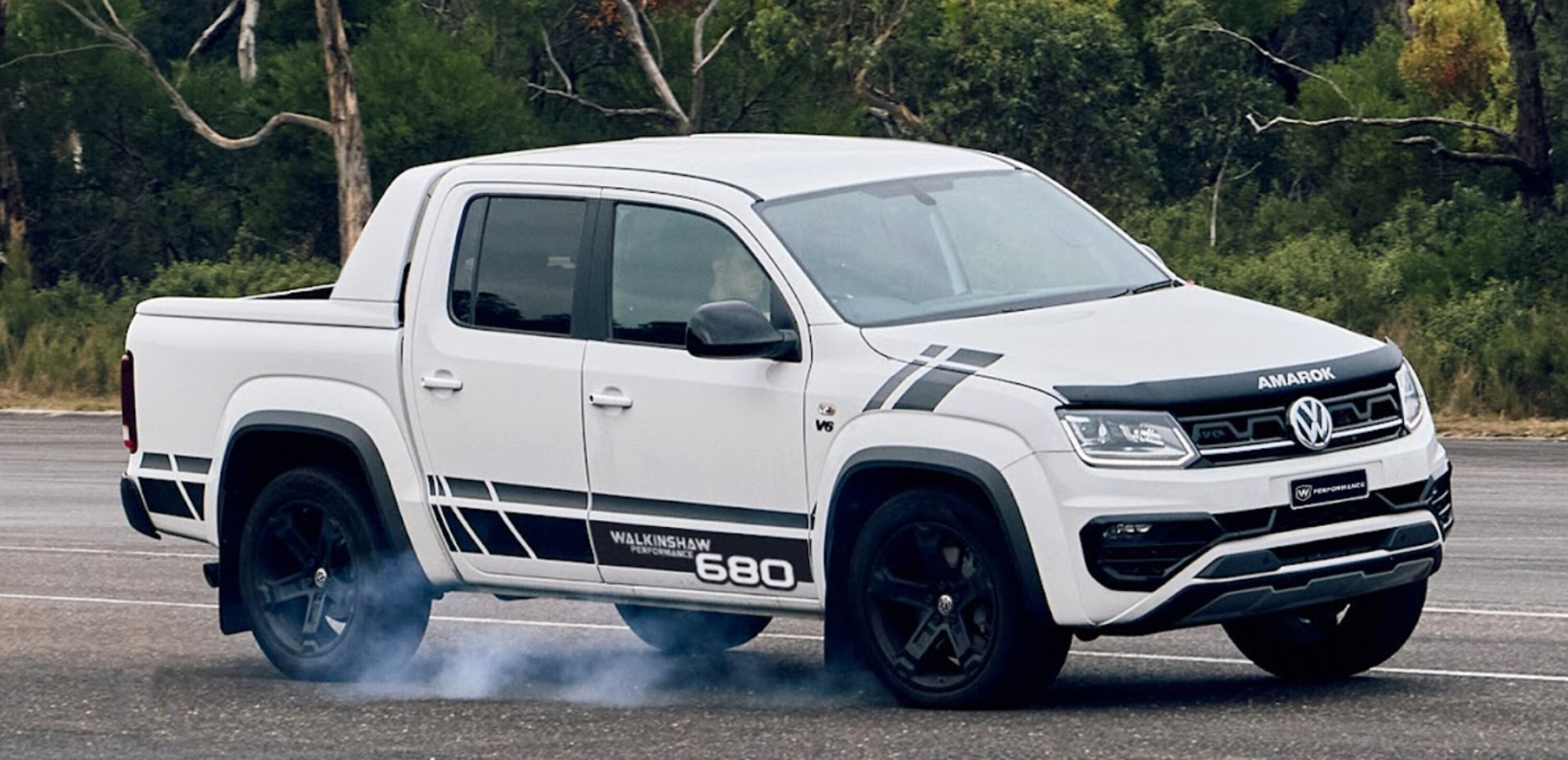
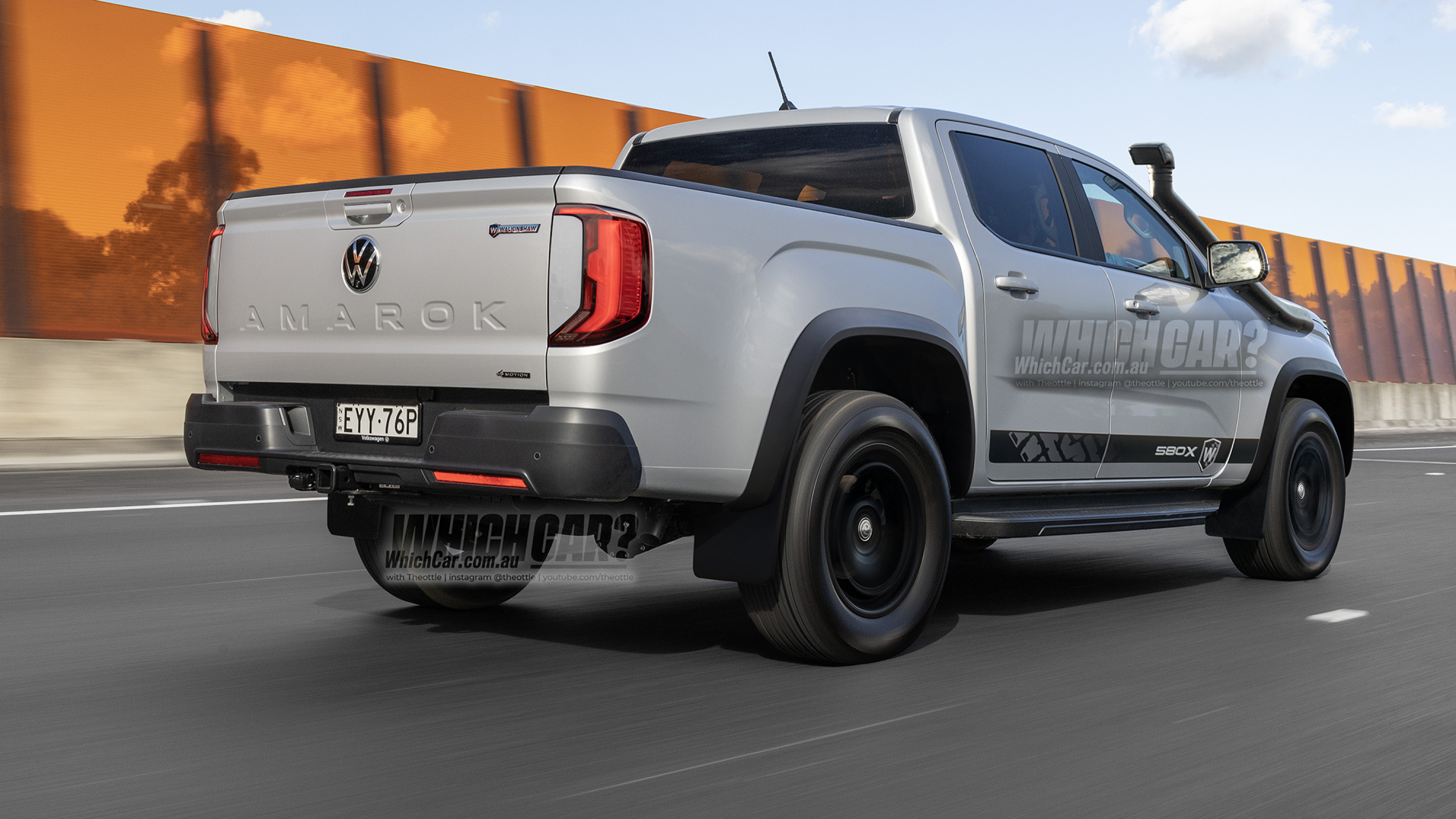
As a testament to Australia’s love for performance, Volkswagen’s local arm partnered with Walkinshaw to produce 2600 examples over a 2021-2022 production run.
An encore based on the all-new 2024 Amarok is surely a shoo-in, then, with the only questions being how will it drive, what will it look like – and when can you have one?
Speaking with Wheels Media recently, a Volkswagen spokesperson said: “Walkinshaw, if you’ve seen the [outgoing Amarok], Walkinshaw – synonymous with HSV and the like – they really get Volkswagen design being more subtle, not lairy. They understand the brand, which is really important. It’s not going to be an over-the-top model.”
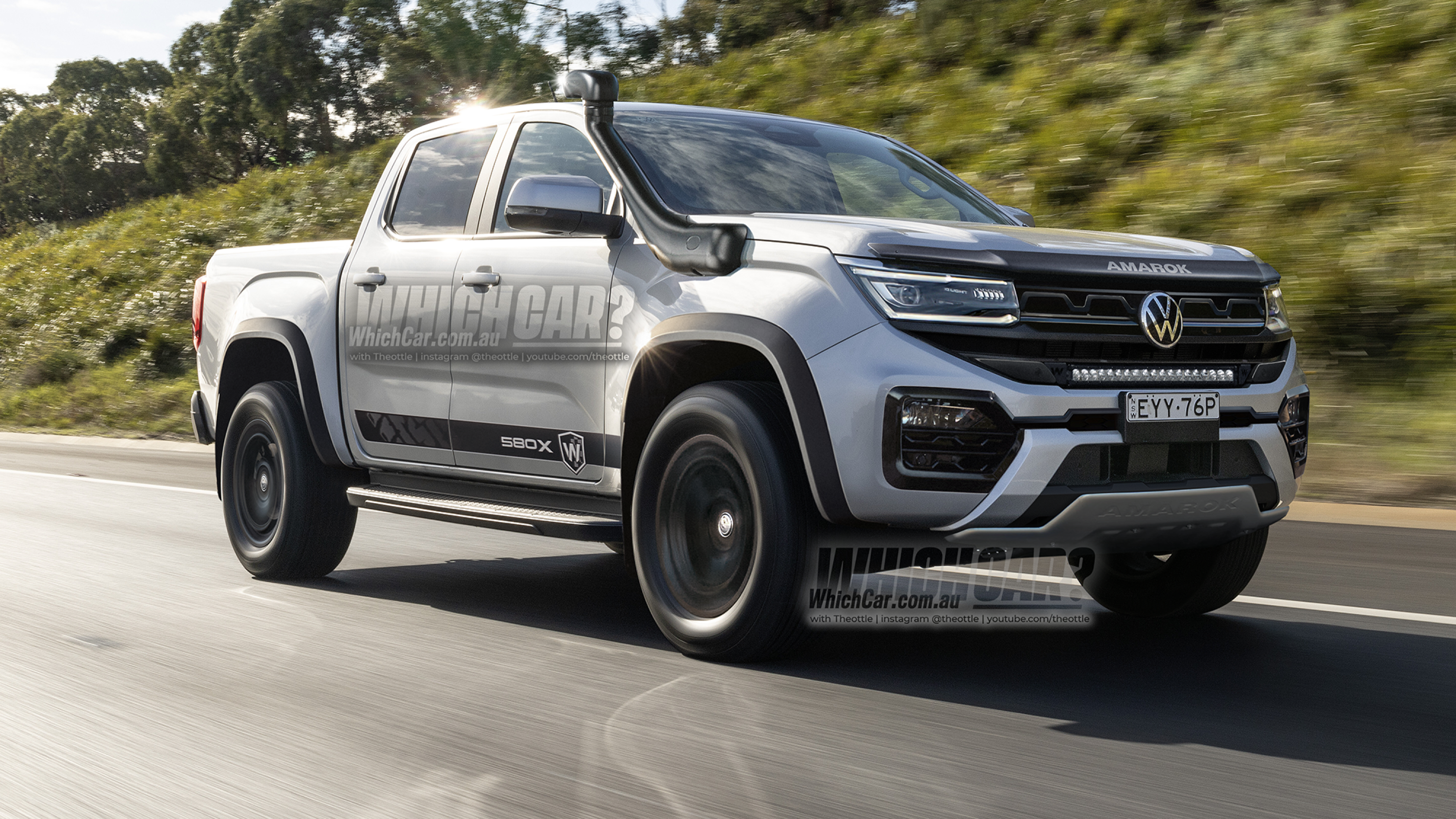
So, don’t expect something looking and sounding like an HSV? Got it. To that end, render-meister Theottle has delivered a new styling concept that could fit the bill.
1
Our concept again channels off- rather than on-road performance
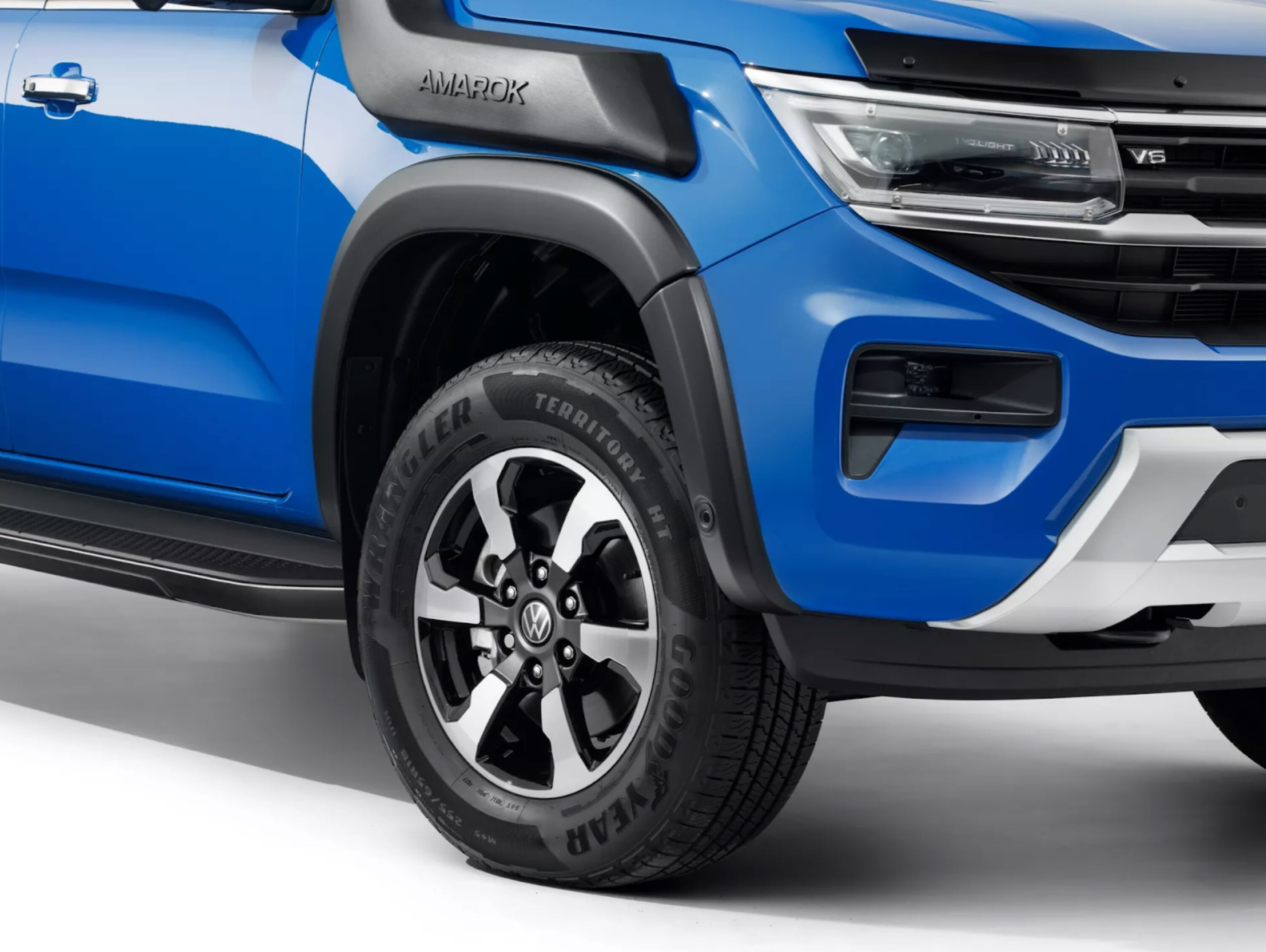
The most obvious change is the fitment of a snorkel, but look closer and there’s bigger driving lights with grilles below, less chrome around a more technical grille (in the same Wolfsburg-tribute parapet style), and fitment of a heavier bonnet protector than that currently on the VW options list.
The increased area of black plastic gives the front a taller, bluffer appearance, while cleaner and slightly more angular one-piece wheel arch flares look bold and refined.
1
Changes at the rear are largely limited to deletion of the cabin/tray bars as seen on the PanAmericana and Aventura, for a cleaner lighter look. A chrome Walkinshaw badge adds a touch of bling.
Volkswagen Australia has not formally announced the new Walkinshaw model, but we expect to see something in the coming months if that late 2024 timeline comes through.
1
As for power, our speculative concept wears a W580X graphic – but a W600 sticker might be more likely this time around, given the 600Nm of torque (and 184kW) its 3.0-litre turbo V6 diesel engine produces.
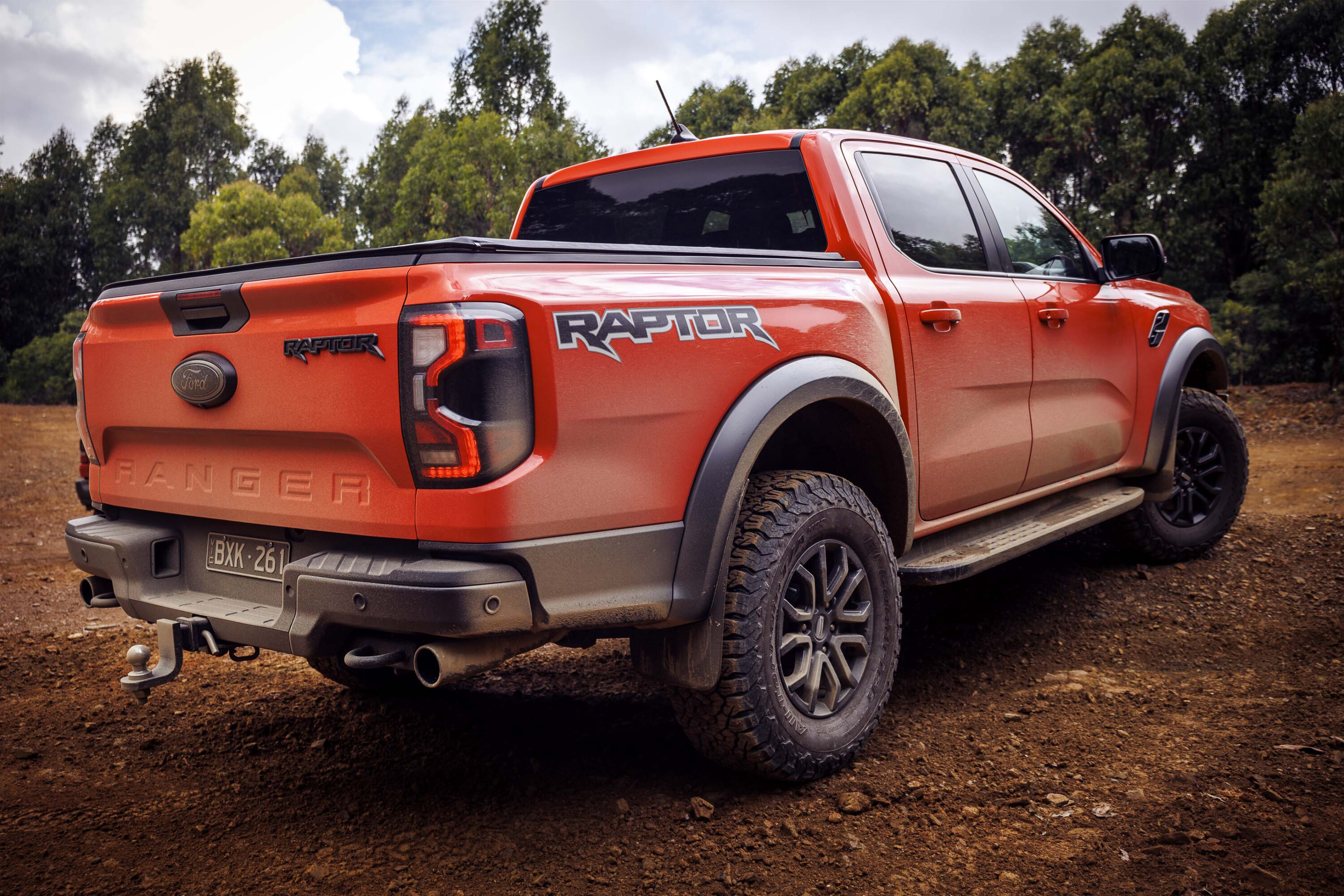
Despite the Amarok’s Ford Ranger relationship, we don’t expect to see the Raptor’s 292kW turbo petrol six offered – with Ford sure to keep that as an exclusive drawcard for its own line-up.
March 7: BYD growing export potential with new carriers
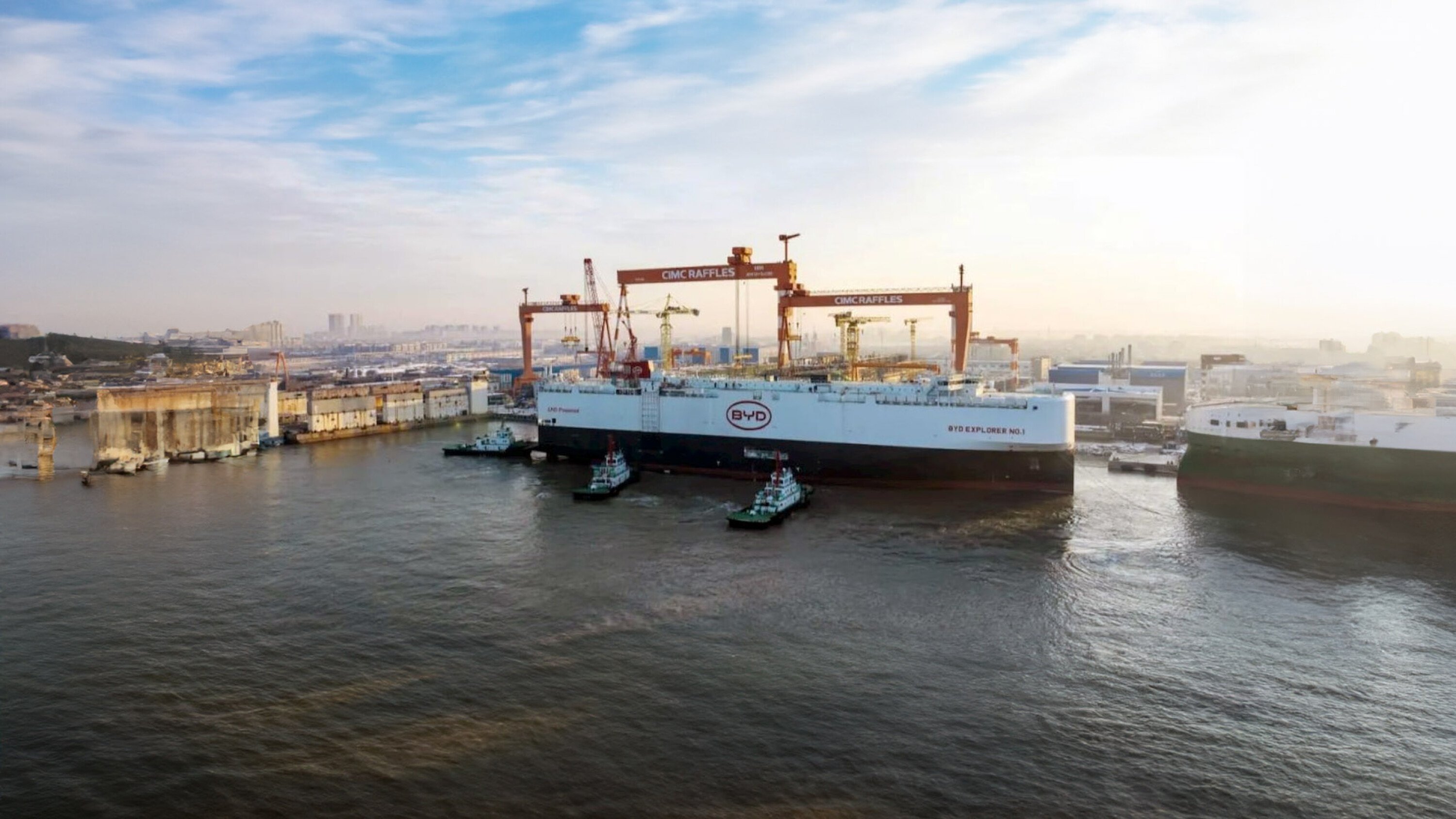
China’s rapidly growing EV brand BYD has confirmed it will launch an additional seven car carriers over the next two years, each capable of carrying 7000 vehicles.
This follows an earlier announcement that 5000 EVs had already started the journey to Europe aboard BYD’s first leased ship, the Explorer No.1 – a name that perhaps should have been considered a hint for today’s news.
1
In context of the market, however, this expansion barely comes close to the capacity of longer-standing car manufacturing countries.
Japan, for example, boasts an international transport capacity of 1.6 million vehicles.
As confirmed in January, BYD’s growing fleet will be joined by SAIC (parent of the MG and LDV brands, among others) with 14 ships ordered – some of which will be able to carry up to 9000 vehicles.
January: BYD has its own ship, starts with 5000 cars bound for Europe
BYD has revealed its latest new model, but it’s a rather unique one: this is the BYD Explorer No.1
A massive shipment of new BYD models have set sail from China to Europe, riding aboard the eponymous BYD Explorer No.1 car-carrier ship – leased exclusively for its own use.
Measuring just a few footsteps under 200 metres long, the Explorer No.1 is touted as the first Chinese-manufactured cargo ship purpose-built to transport EVs.
1
The ship departed from Shenzhen on January 15, with more than 5000 electric vehicles bound for Flushing Port in the Netherlands, and Bremerhaven, Germany.
EV enthusiast site Electrekreports that the ship is owned by Zodiac Maritime, leased to BYD as a first foray into managing its own sea transport fleet, utilising liquefied natural gas as the main fuel. China International Marine Containers Group (CIMC), the vessel manufacturer, states this will “significantly reduce emissions.”
Other Chinese carmakers, including Chery Automobile and SAIC Motor (LDV), have also placed orders for vessels, challenging the rising shipping expenses as exports steadily increase.
Across the various domestic and foreign-partner models built there, China exported over 5.2 million vehicles in 2023 and is estimated to have overtaken Japan as the world’s largest automotive exporter.
BYD alone exported approximately 243,000 of the 3 million vehicles it sold in 2023 – with Australia in the mix of its largest overseas markets, according to information supplied by China Passenger Car Association.
When I heard that Infiniti (Nissan’s luxury brand) was departing Australia back in 2019, I assumed this would ultimately be the case for Genesis – the luxury vehicle division of the South Korean Hyundai Motor Group.
The two brands aren’t related, nor are the products the same, but I didn’t see how Genesis would be able to pull off what others (remember Mazda’s Eunos range?) have tried to execute and failed.
1
You see, the luxury market is largely spoken for with well-established German brands like BMW and Mercedes-Benz.
And when luxury sales aren’t going to them, they’re captured by Audi, Lexus, Volvo or these days even Tesla.
So it feels like, in a situation when most Australians have decided on their favourite luxury brand, why would they pick a relatively new one like Genesis?
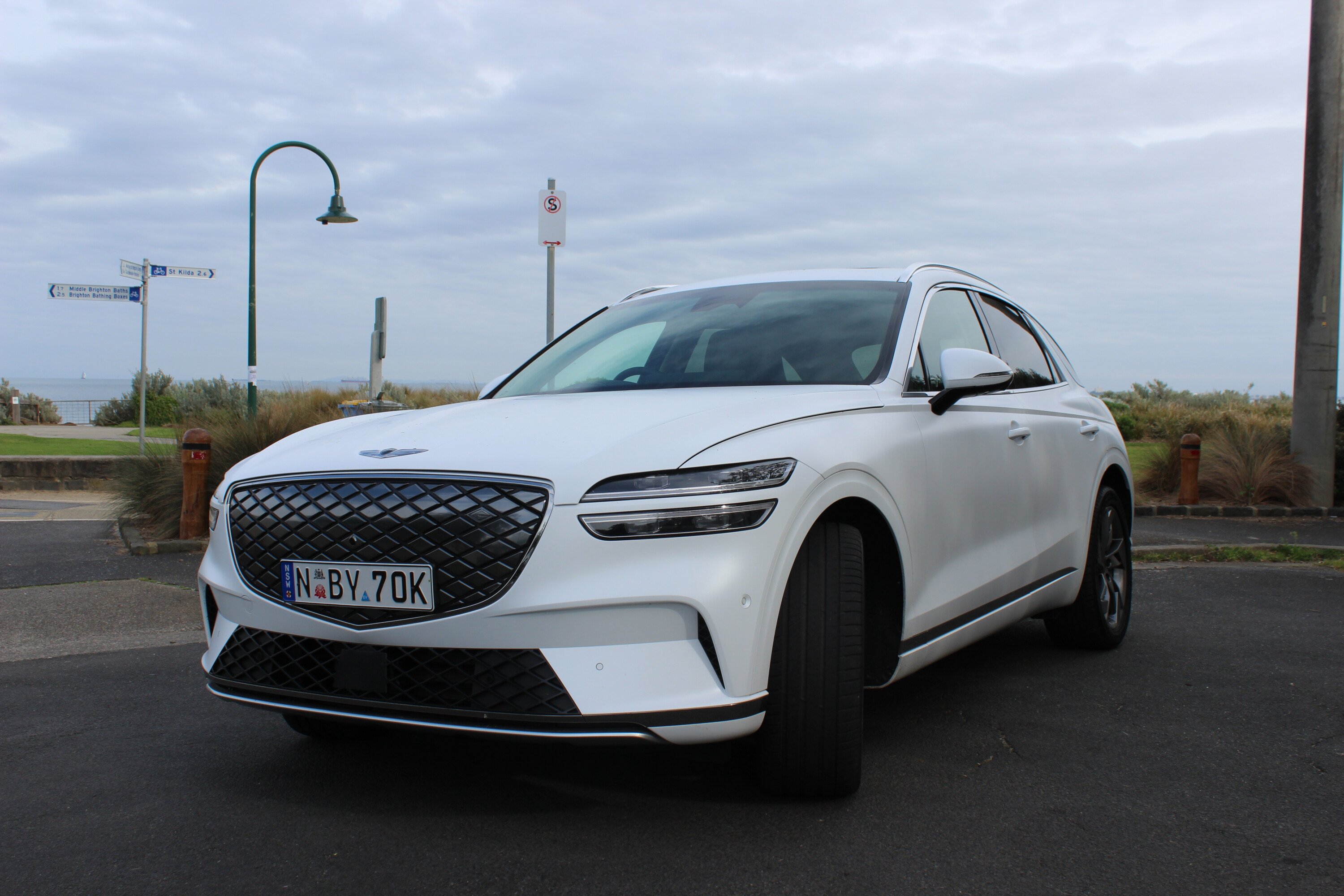
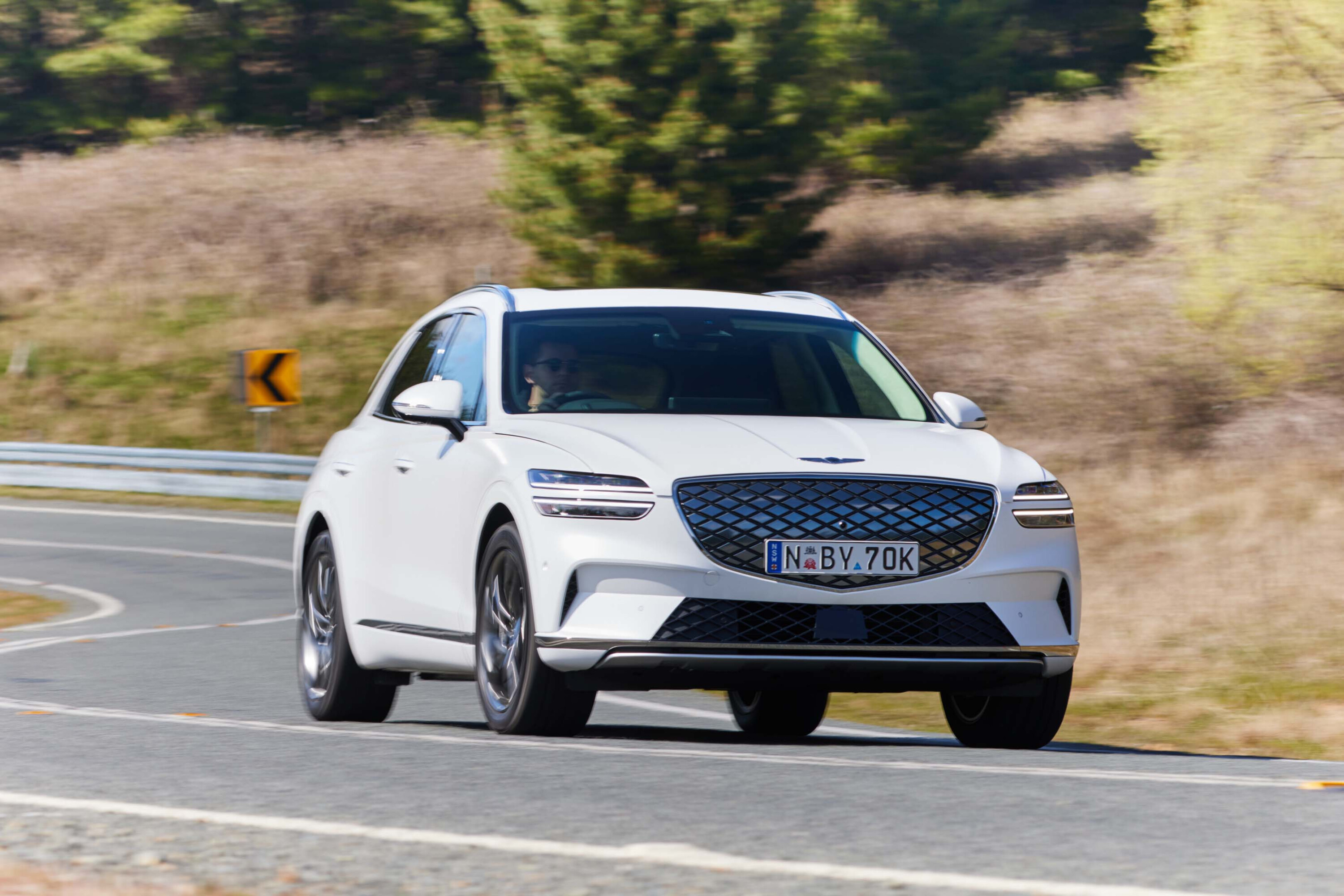
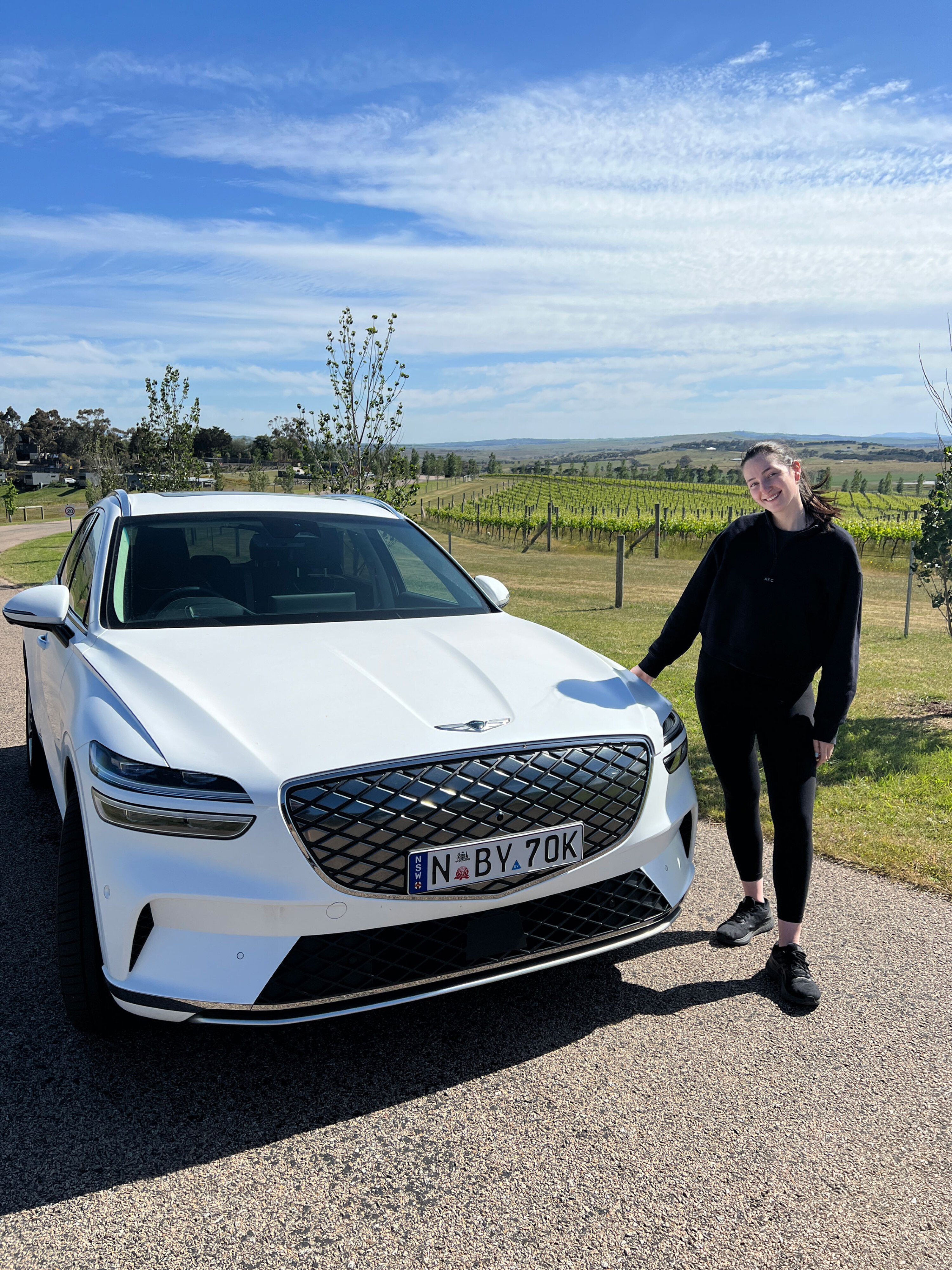
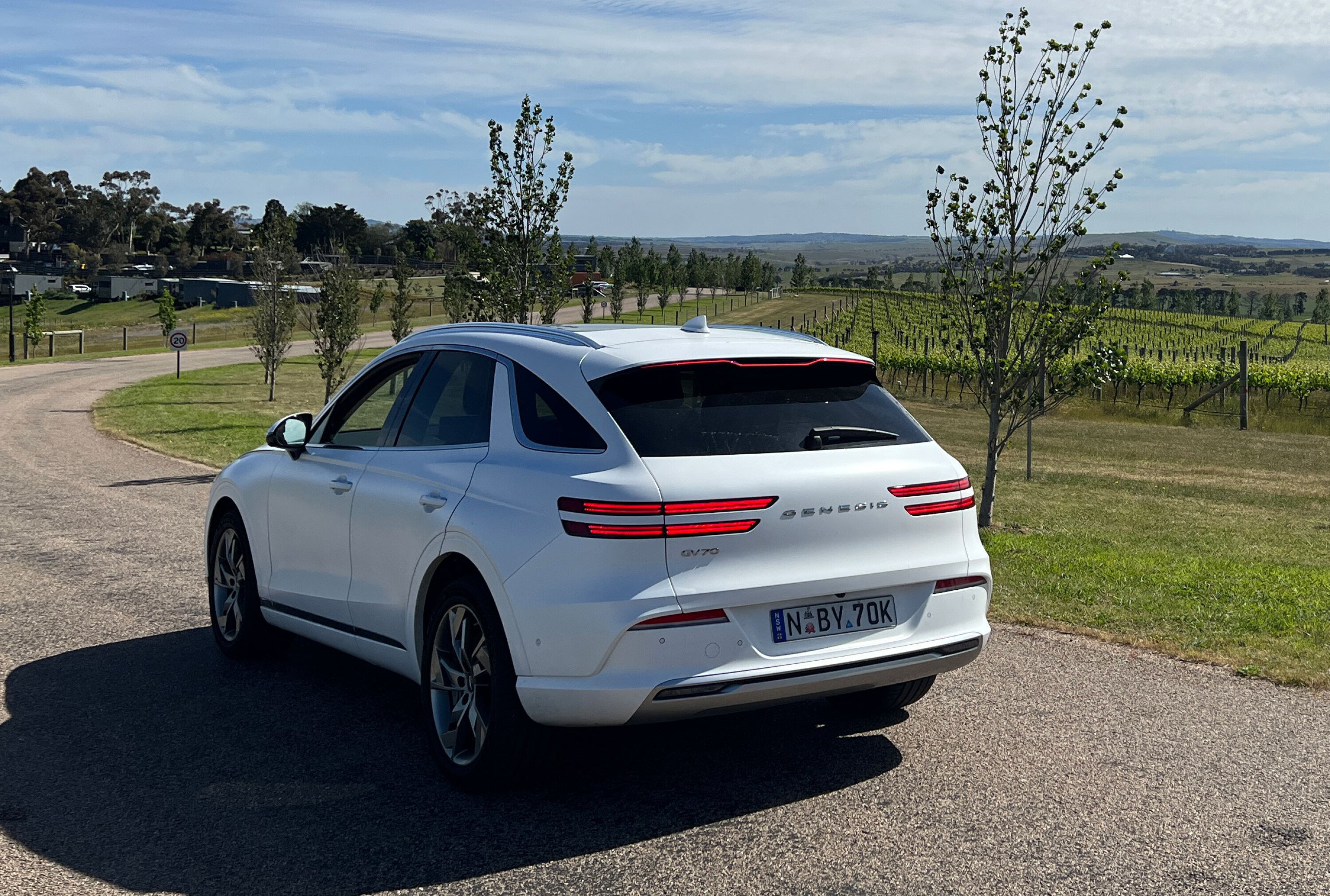
Having just picked up a GV70 EV as a long-termer, I’m already excited by what the brand is offering.
1
First impressions
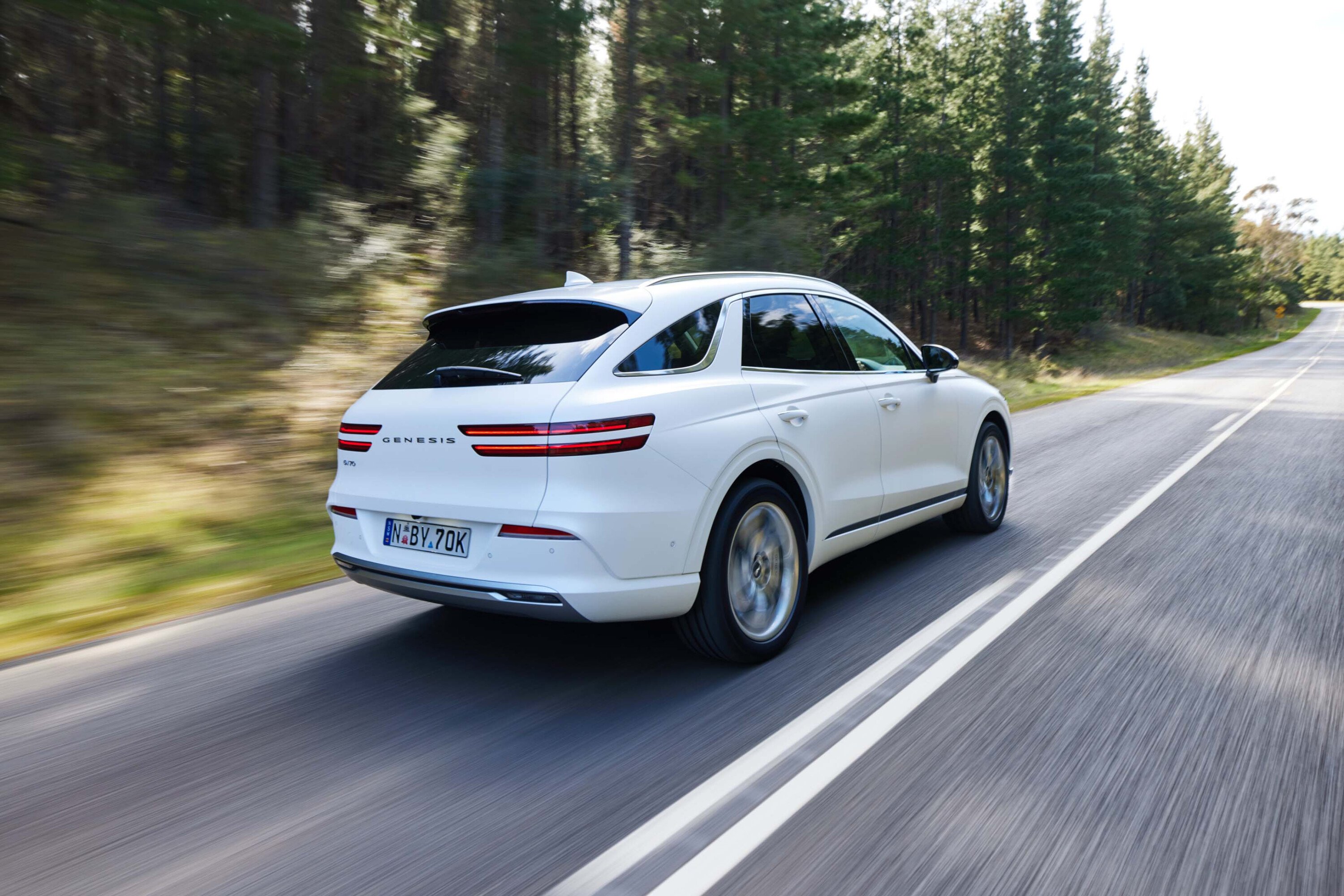
Offered in a single grade, the mid-size GV70 Electrified Performance AWD SUV sits above its top-of-the-range petrol equivalent. That means you’re buying all the features of this car’s ICE counterpart but with an electric powertrain.
The benefit of this is that you’re getting a vehicle that feels immediately familiar. There’s no strange newness and it’s easy to become quickly comfortable, especially if you’ve driven a high-end Hyundai or Kia previously.
Until, that is, you feel the regenerative braking and remember you’re in an electric car.
1
It’s a very easy car to jump into and get moving, as a Goldilocks model within the Genesis SUV range between the GV60 and GV80.
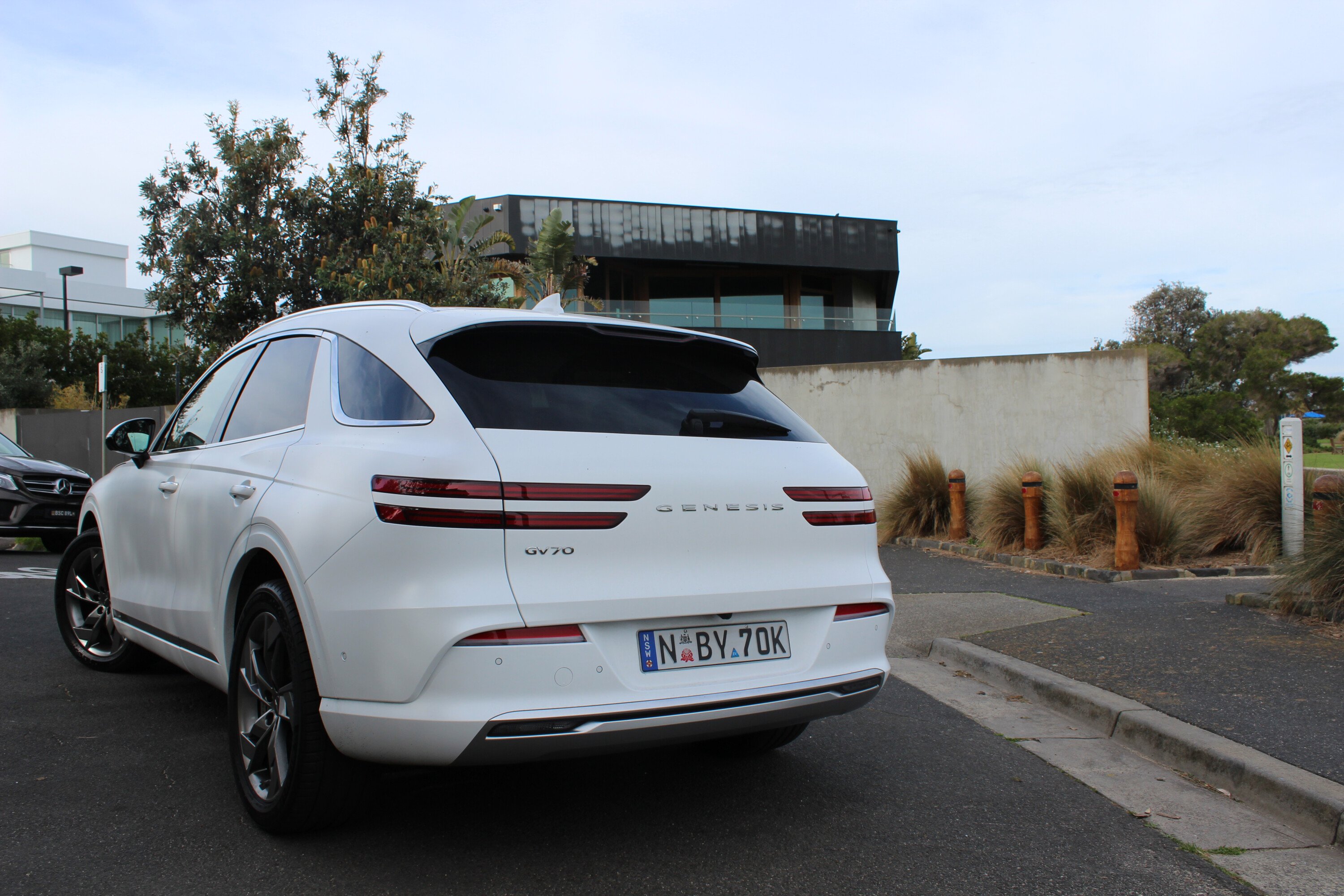
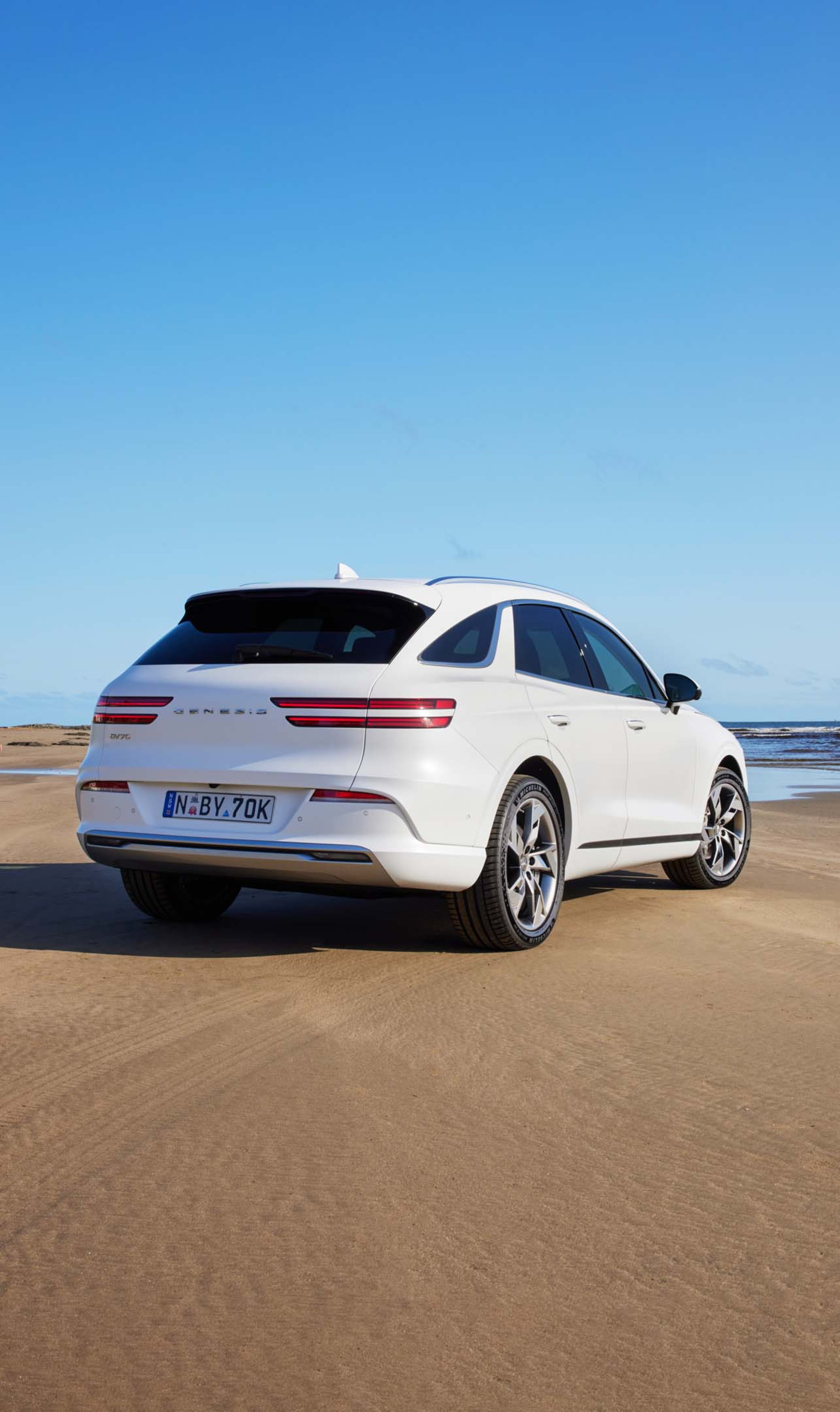
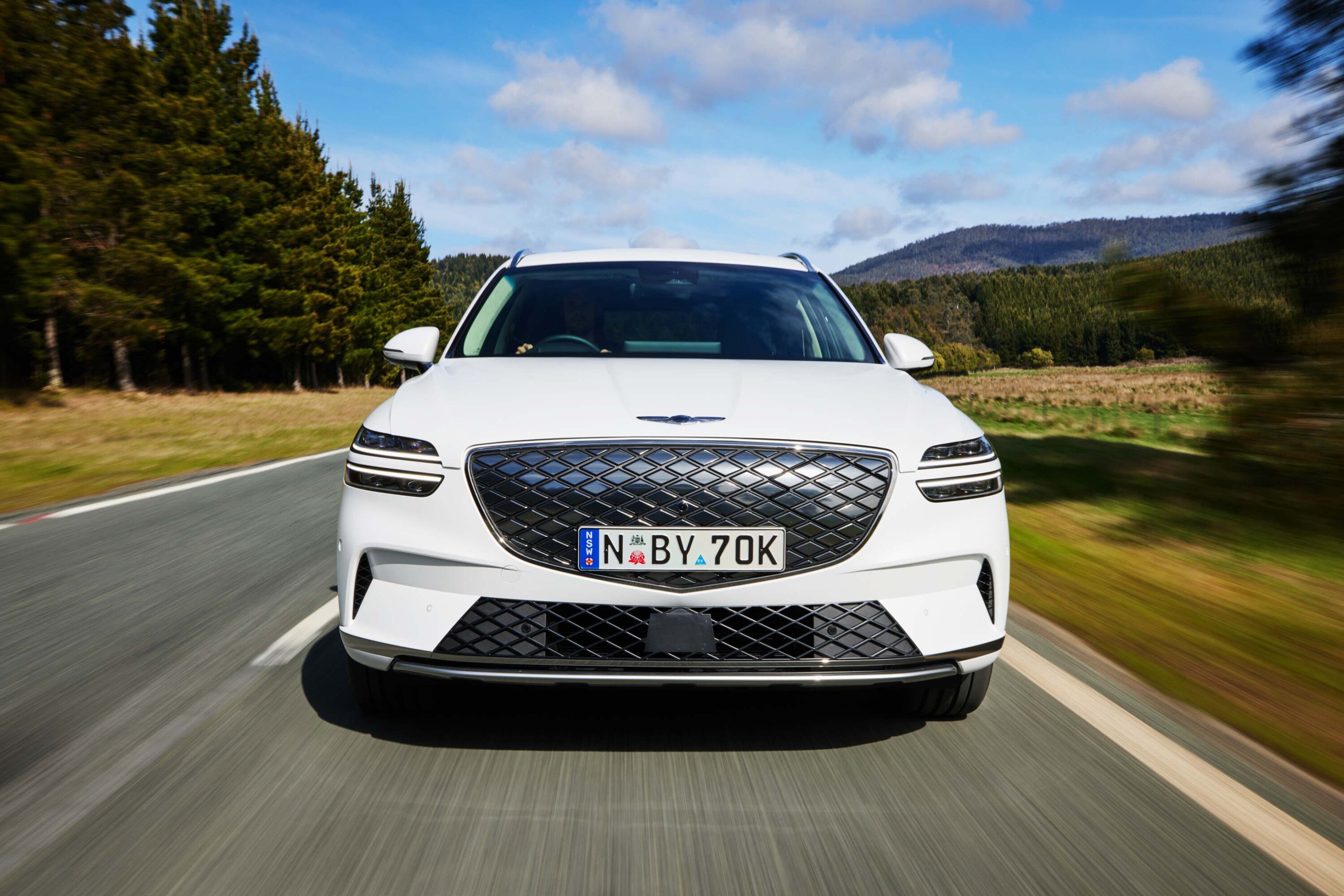
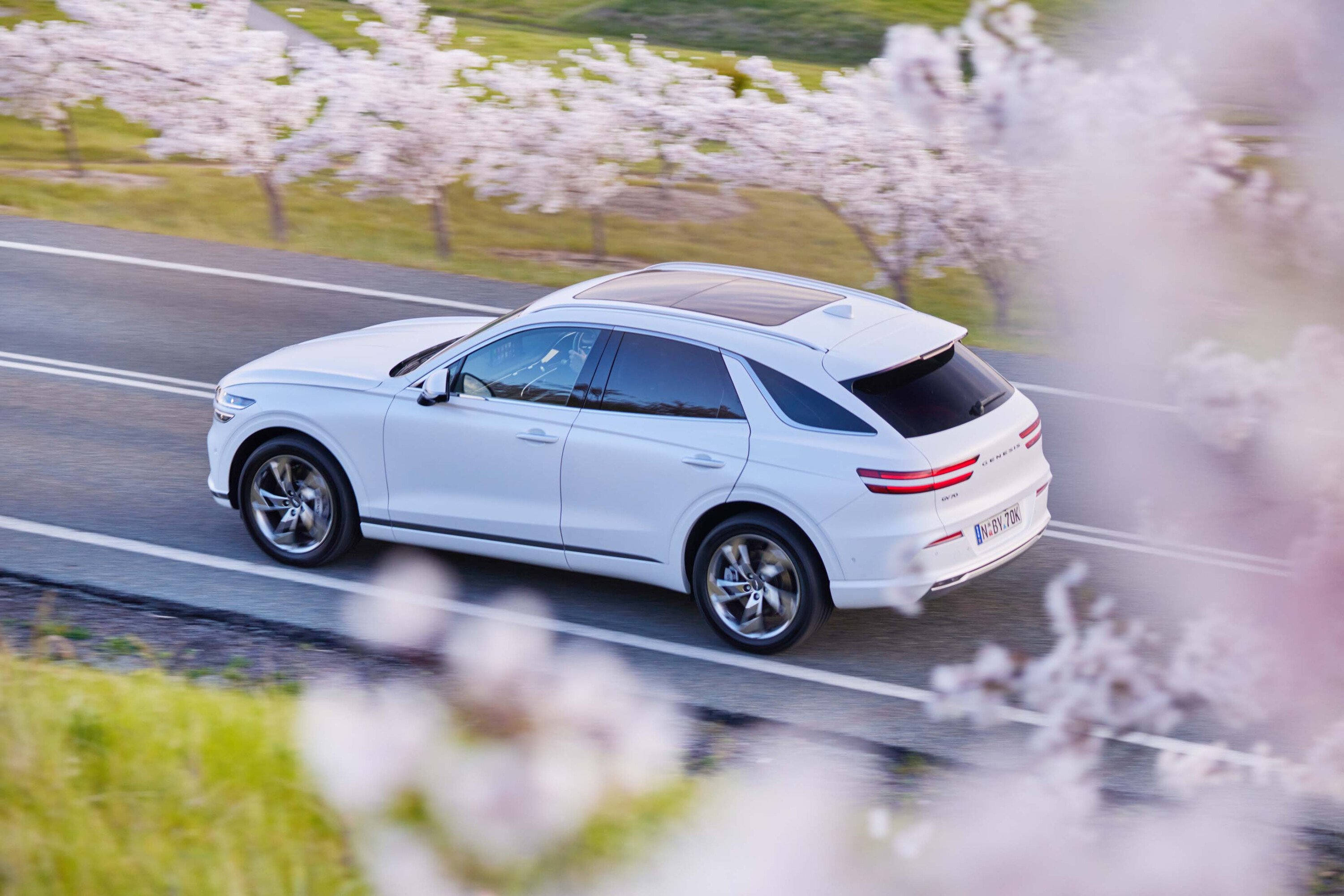
We know that beauty is in the eye of the beholder, but with Genesis’s signature satin white paint it’s hard to dispute its sexy elegance.
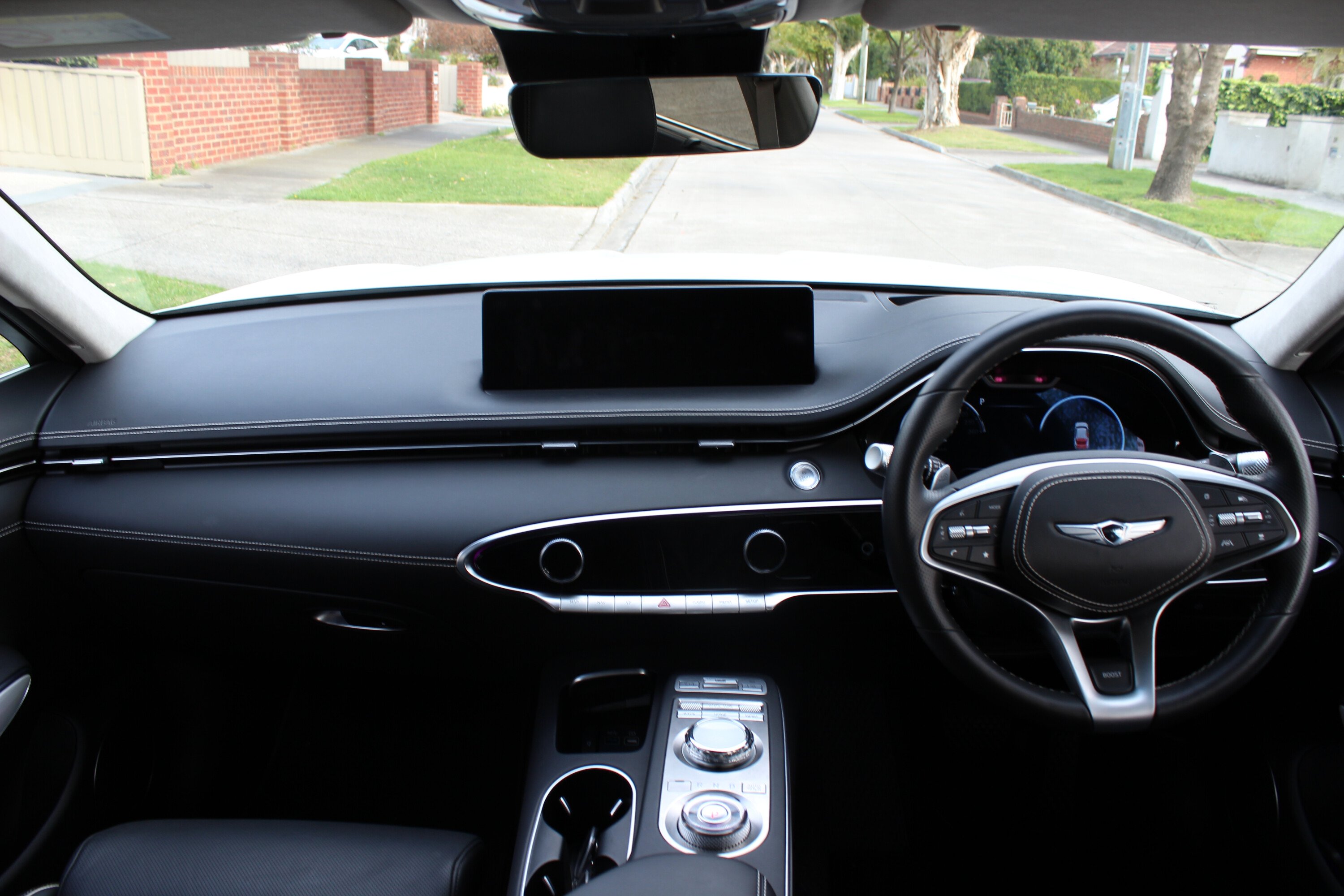
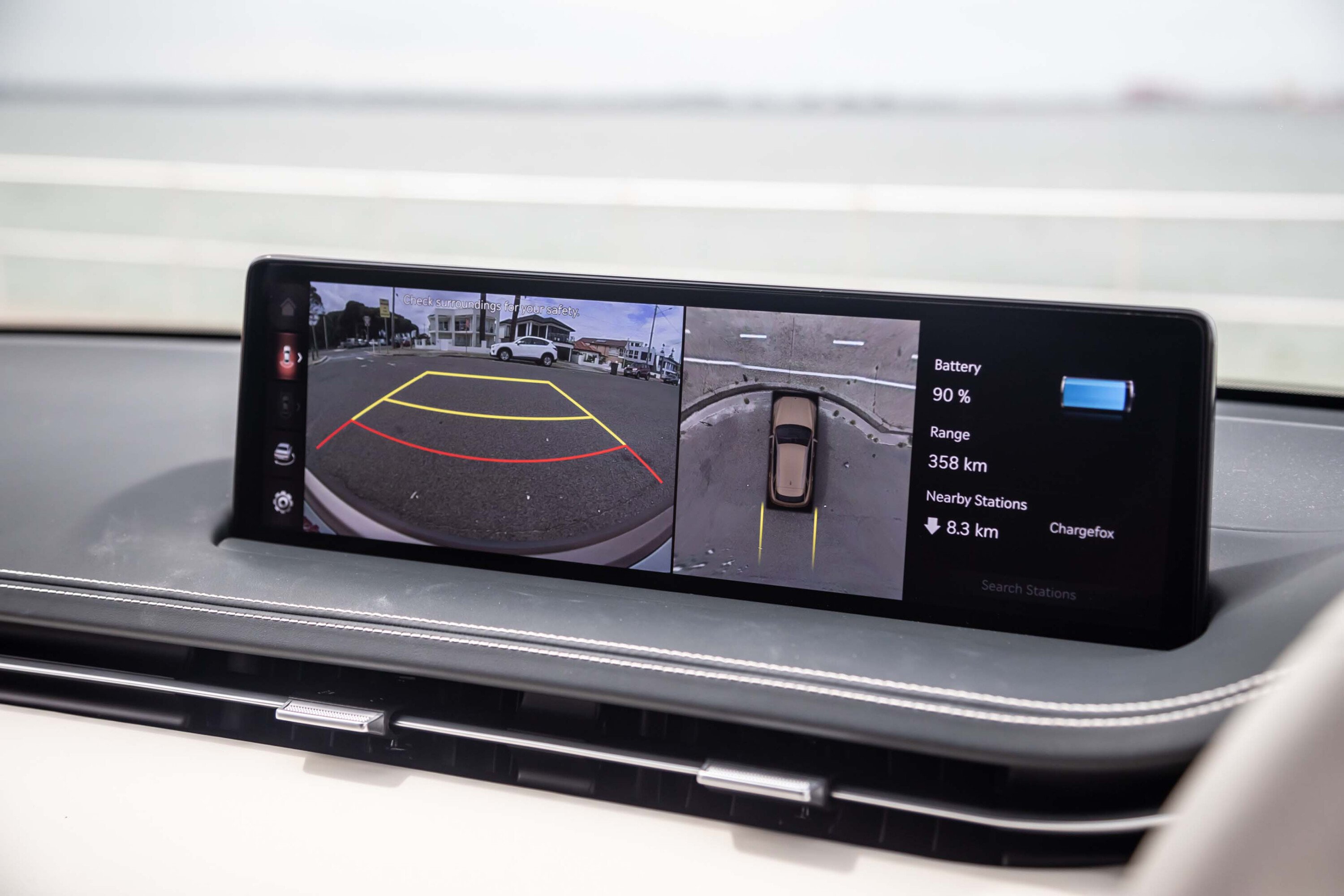
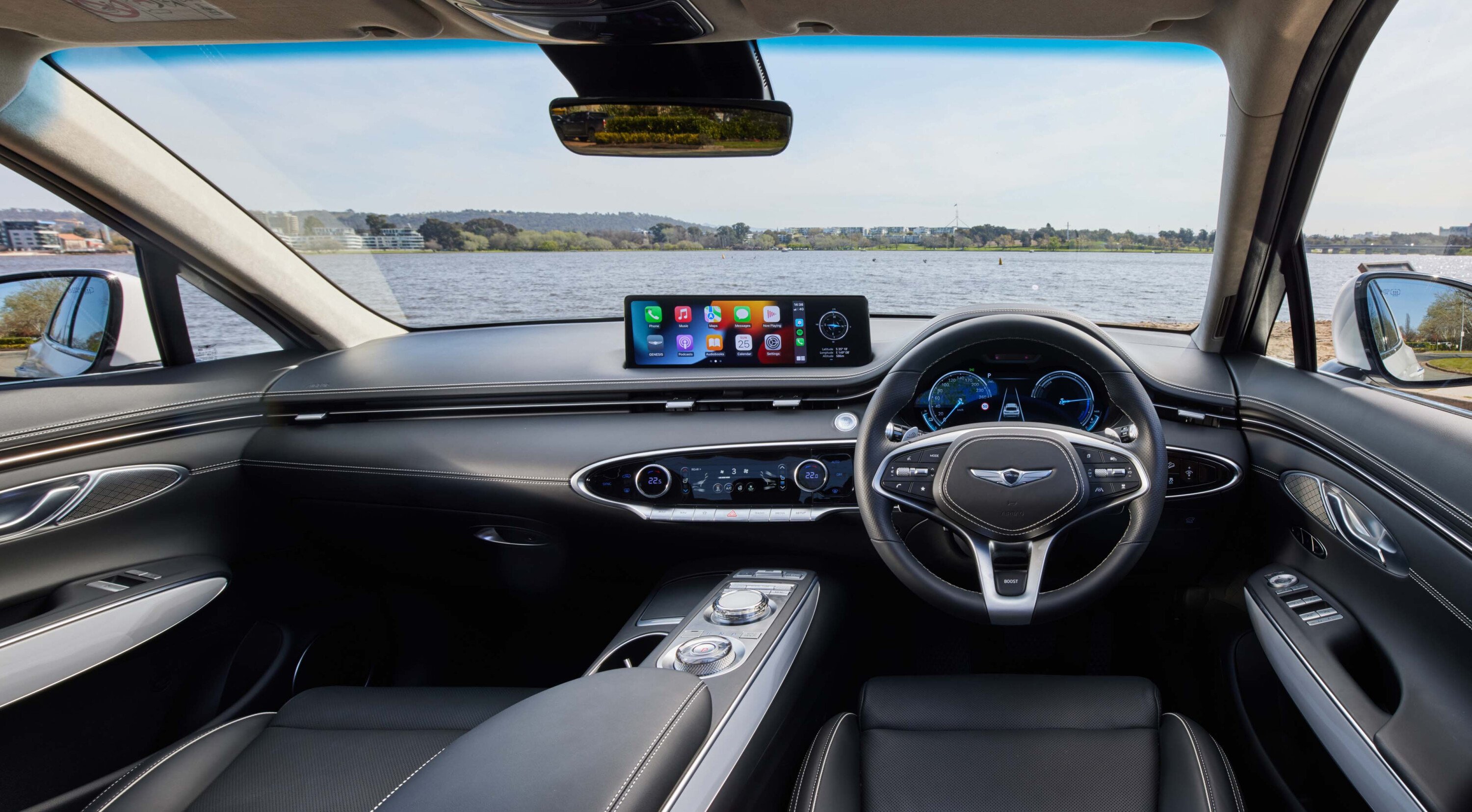
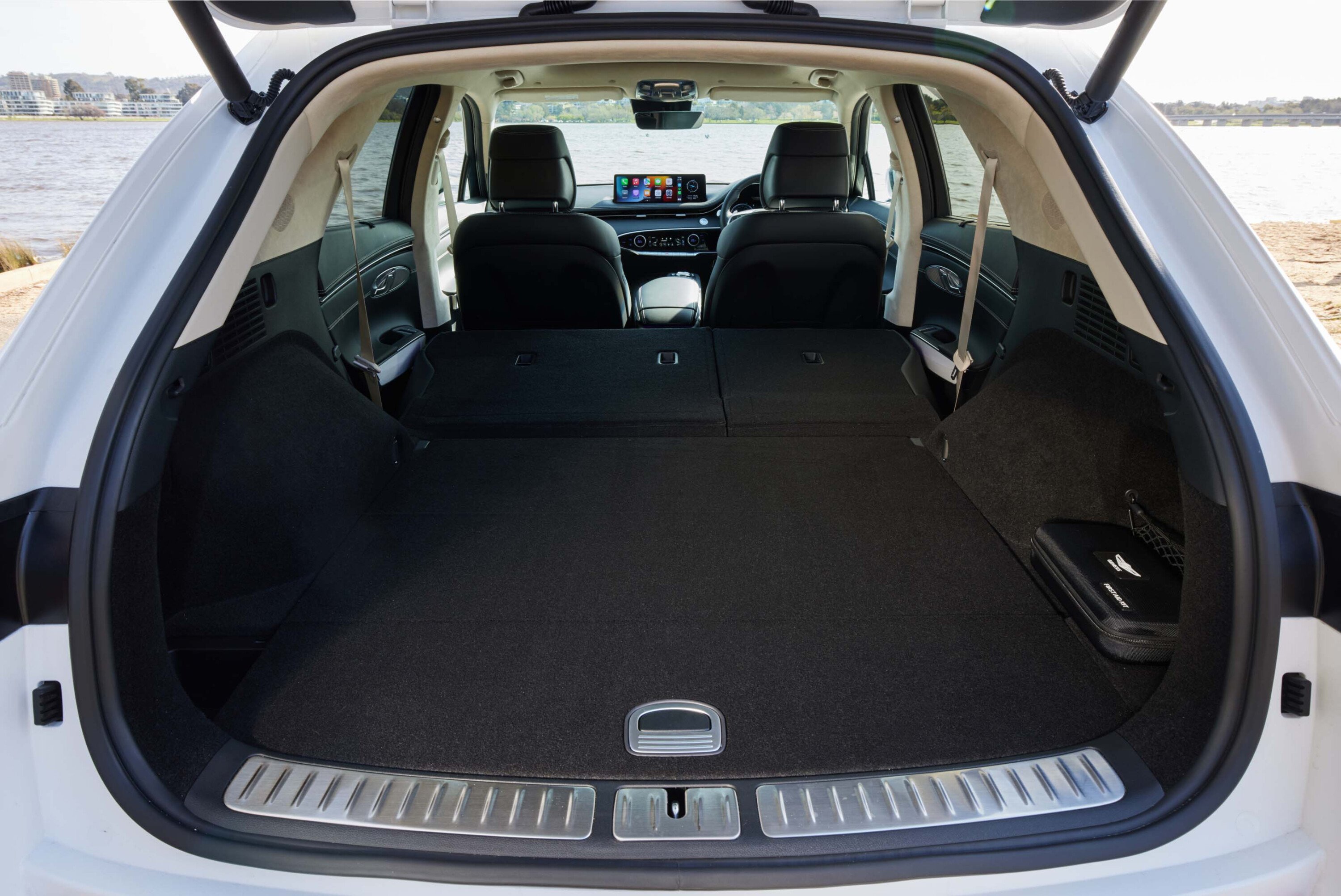
In terms of features, it’s packed with tech and luxury touches that explain why you’ve spent $126,475 before on-road costs. It has all the creature comforts you’d expect such as a panoramic sunroof, a 14.5-inch touchscreen, heated front seats and steering wheel, an array of surround-view cameras, a head-up display and more.
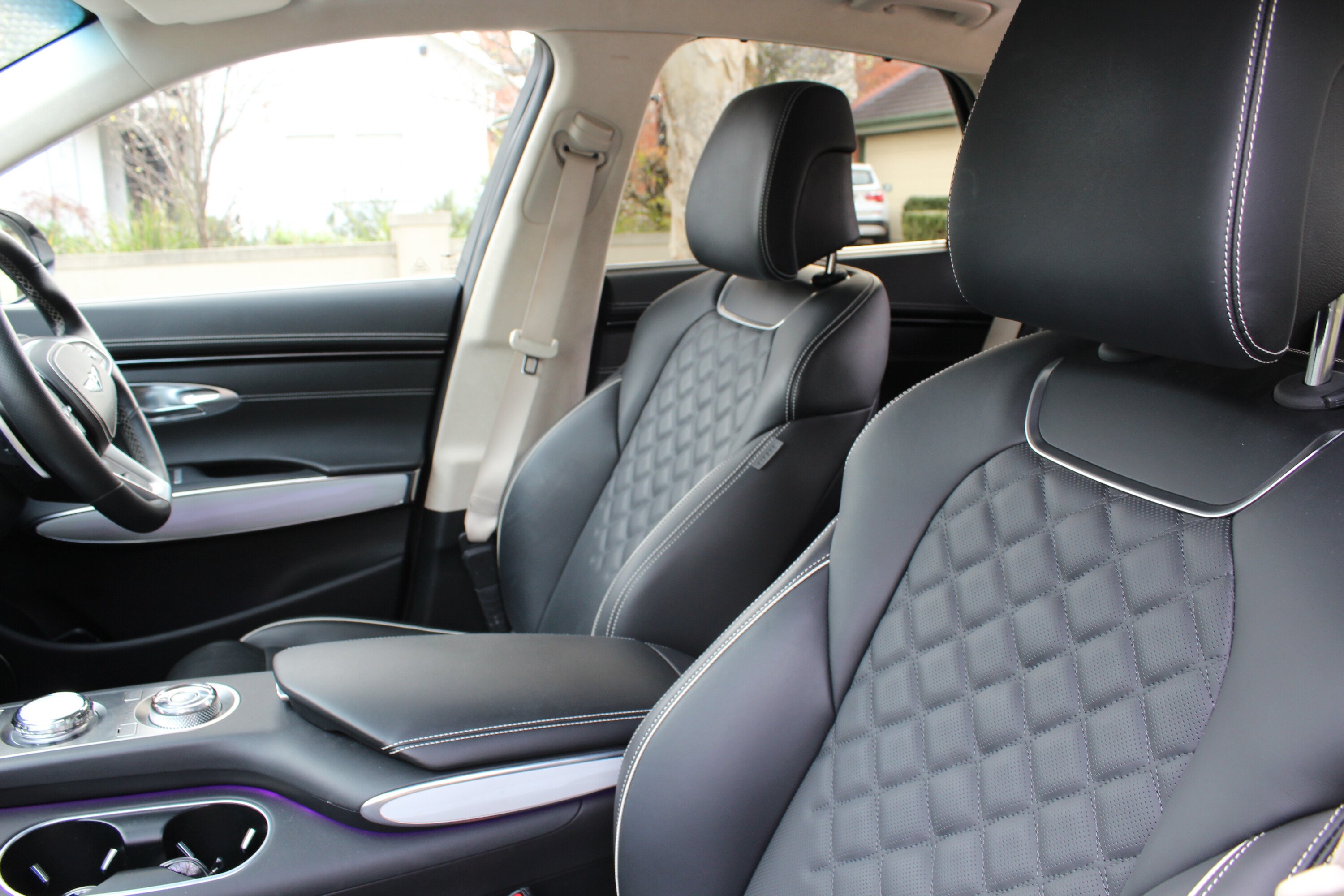
The interior is downright plush, from the Nappa leather seats and stitch detailing across the dash to the customisable ambient cabin lighting throughout the car.
Driving home for the first time, I quickly realised I was about to have a seriously luxurious few months ahead of me.
1
How is it to drive?
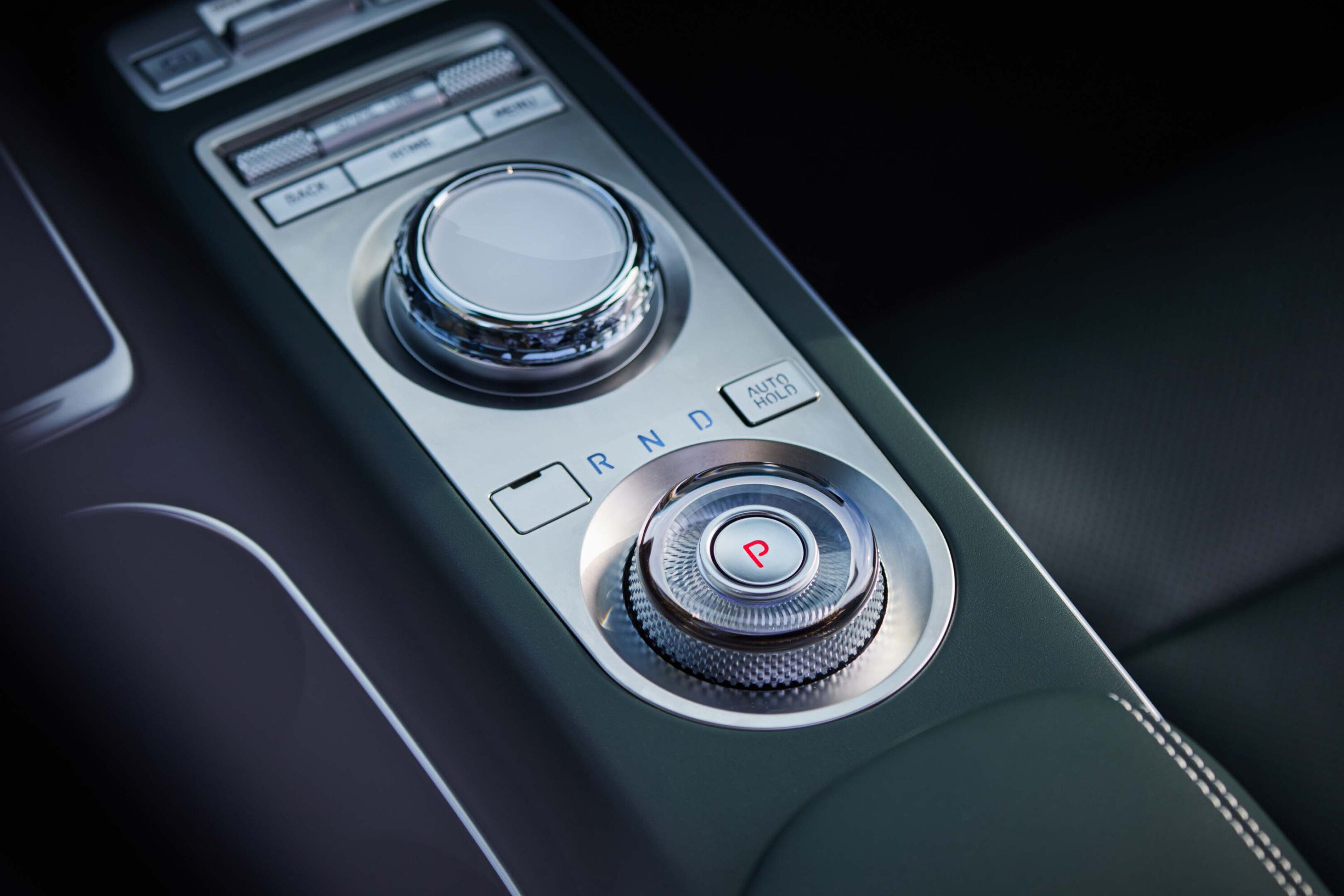
An immediate concern I had after driving the car for about 10 minutes was that the centre console houses two very similar-looking (and feeling) rotary dials.
One is your gear selector and the other – slightly larger – one controls the media system.
With time I’m sure it will become easier to distinguish but as of right now, it’s a mistake I’ve already awkwardly made twice.
1
The first thing I did after driving home was throw the keys to my boyfriend to have a drive. After that, it was his dad.
The next day they were chucked to my nephew, my brother-in-law, and finally my brother (I have a very male-dense family).
Everyone’s feedback overlapped on a single point and that was the harshness of the braking. Naturally, regenerative braking takes some getting used to as with most electric cars, but the sensitivity of the brake pedal is hard to master, even after a few days of driving.
1
This flaw is fast forgotten when you’re going, well, fast. Powered through a 77.4kWh battery the dual motors (along with the Boost button on the steering wheel) will get you 360kW of power and 700Nm of torque.
Albeit a heavy car at 2.8 tonnes, this amount of power helps to make it feel far from sluggish. The little wobble back and forth after hard braking will, however, remind you of this car’s weight and size.
You do get some torque steer through the front wheels when testing out the 0-100km/h time of 3.7 seconds, but in day-to-day driving the car is incredibly comfortable. The quiet ride is made more luxurious due to active noise cancellation in the cabin, courtesy of 14 premium speakers.
Overall, Genesis has mastered luxury where it counts.
1
Range
I make it no secret that I’m not a huge fan of electric cars because I don’t have a charger at home. Sprinkling range into my already prominent anxiety feels like it could be the straw that breaks the nervous camel’s back.
This means I’m tied to the office or local chargers for my refuelling needs. It just requires a bit of forward thinking and planning. Planning that I’m not used to yet.
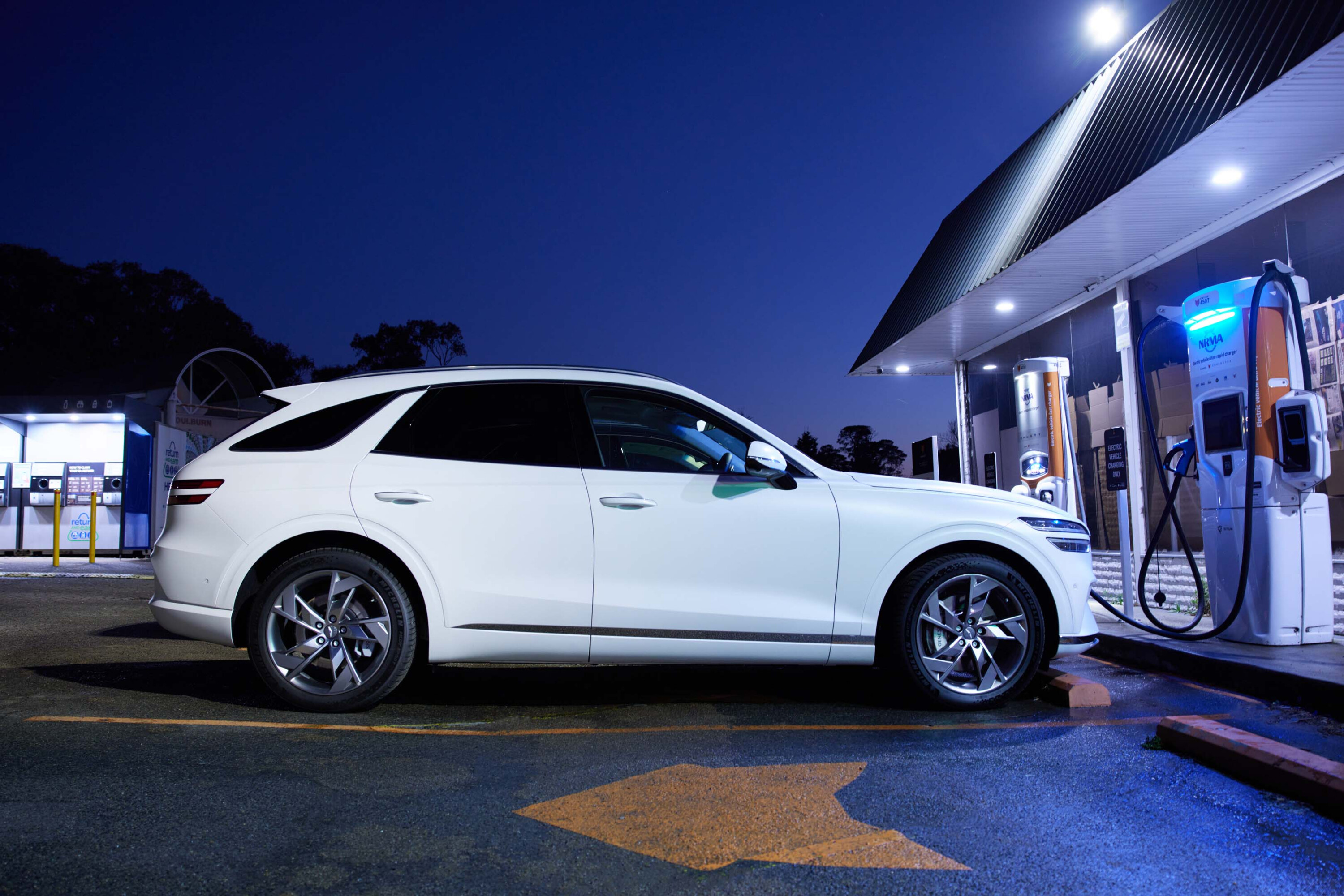
Genesis claims a 20-80 per cent charge can be done in just 18 minutes using a 350kW rapid charger. I’ll test that at some stage in the coming months but currently in the office, with a 10.5kW charger, it takes about 7.5 hours to achieve a full battery.
Charged to 100 per cent, the range sits at around 439km (which we’ll test over the coming months for accuracy), but considering the electric GV70 is priced a whopping $41,375 above the closest petrol model, it’s not an easy gap to justify.
1
Ownership
Genesis makes choosing the GV70 a tempting proposition by offering complimentary charging propositions to suit your lifestyle.
You can choose from either a five-year Chargefox subscription or having a standard charger installed at your home.
You’ll also get free servicing and roadside assistance for five years, which is also the duration of the unlimited-kilometre warranty (130,000km if you use the car for commercial purposes).
If that’s not enough, Genesis will pick up your car, leave you with a loaner and drop off your serviced and cleaned vehicle back to your home, if you live within 70km of your CBD. It’s not a bad aftercare deal at all.
Price as tested: $103,370
This month: 1015km
Overall: 1370km
The road trip is an integral part of Aussie culture. It represents freedom; horizons unexplored. But is that even a possibility in an electric car?
I recently pointed the Genesis GV70’s nose towards Bright in the Victorian High Country; a detsination some 320km from the Zlotin front door.
The idea of travelling to Bright in an electric car initially filled me with hesitation. I even suggested taking my partner’s well-loved and mud-filled 2015 Isuzu MU-X instead. That’s how you know this princess was desperate for an alternative mode of transport. My concerns centred around the uncertainties of electric vehicle charging, especially on what I anticipated to be a busy weekend for road trips.
1
It was also a hot weekend, and I was stressed about the idea of being pulled over on the side of the road with a flat battery.
However, to my surprise our electric journey began promisingly. The GV70 Electrified, fully charged, indicated a range of 439km, close to its quoted WLTP-rated 445km. By the time we set off on Thursday afternoon, we had 400km of range after a couple of errand trips.
Our plan was straightforward: drive to Euroa which is 182km away, charge the car, and then cover the remaining 157km to Bright. I felt even more comfortable knowing that on paper it looked like we had the range to do the drive in one trip if pushed.
Unexpected traffic and air conditioning usage meant our 191km leg consumed more juice than anticipated, roughly 21km more to be precise.
1
Seeing the range dropping faster than distance travelled did add some angst but I was assured by the Chargefox app that at least half of their charging stations at Euroa were functional.
We arrived in Euroa and nabbed a fast-charger straight away. A 20-minute session cost us $17.98 and restored our battery to 80% capacity for the final leg of the trip. More than required, but enough for peace of mind.
The GV70 ate the miles up. It excels in material quality and presentation, effectively insulating us from external noises while on freeways. It’s not perfect though. There’s some significant Helmholtz resonance if you so much as inch open a rear window when the car’s travelling. This can be mitigated by slightly cracking openg another window. Interestingly, the door mirrors prevent this occurring when opening the front windows.
1
The ergo-motion technology which activated massage seats at about 45-minute intervals helped to alleviate some of the tension build up that comes from long sessions of fixating on the state of charge.
In anticipation of the journey home, I visited Bright’s sole electric charger early in the morning, only to find a fully charged Tesla Model X already plugged in with no driver in sight. This experience highlighted the potential frustrations of relying on public EV charging stations.
Another is the amount of time spent waiting. While at charging stations, I observed traditional fuel users quickly filling up and driving off, making me slightly envious of the speed and convenience in which they were in and out.
A memorable aspect of the journey were the engaging conversations I had with fellow EV owners during charging breaks.
However, he ultimately chose to keep the Genesis, a decision he described as one of his best. He told me how it’s the first luxury car he’s owned that he likes everything about, and after driving the GV70 for the last two months I can see what he means.
He candidly spoke about the challenges of longer trips with an EV, such as extended charging times. Yet, he found a silver lining in these moments, using them to enjoy a coffee with his wife and plan the day’s itinerary. This perspective highlighted just how impatient I am, but also, I was born in a generation of instant gratification.
1
There’s not a single person I’ve driven in the Genesis GV70 that hasn’t been impressed by its finesse and luxury.
The matte paint option is great to look at, it’s been tough to keep clean. So much so that Genesis have an eight-page guide for matte paint care with a comprehensive outline of all the ways you shouldn’t wash the car. One of which is taking the car to a commercial car wash.
I read a comment on Facebook recently under a post about a facelifted Genesis– “another product from a brand almost everyone ignores” and I scoffed. There’s not a single person I’ve driven in the Genesis GV70 that hasn’t been impressed by its finesse and luxury.
The GV70 EV excels in so many areas that its few shortcomings are easily overlooked.
1
For instance, I spent an entire week with the passenger seatbelt fastened, even when the seat was unoccupied because it sensed weight and wouldn’t stop chiming, and it didn’t bother me in the slightest.
I simply reminded my passengers to re-buckle at the end of each journey. As a driver, I became so at ease with the vehicle that minor irritations just faded into the background.
In our last installment I’ll talk about the tear I shed when I had to return the car back to Genesis, because I’ve missed it every day since.
Price as tested: $103,370
This month: 1488km @ 19.2kWh/100km
Overall: 2858km @ 19.9kWh/100km
After spending three months with the Electrified Genesis GV70, a Korean marvel, I am thoroughly convinced of Genesis’ potential in the Australian market. It’s time for brand snobs to momentarily set aside their oat cappuccinos and give this automaker a chance to showcase its worth.
One of the most remarkable aspects of the Genesis GV70 is how effortlessly it integrates into daily life. Range anxiety – a constant concern when I first got behind the wheel – gradually faded away. It only resurfaced during longer journeys, reminding me of the transition from fossil fuel to electric power.
Returning to a petrol car was an adjustment, to say the least. The absence of instant torque left me feeling somewhat sluggish, especially when compared to the lightning-fast performance of the GV70.
Genesis vehicles have a classic luxury ambience. Speaking of refinement, it’s worth noting that some newer brands often overlook the finer details, leaving drivers frustrated with out-of-reach controls or settings that constantly reset. Thankfully, these annoying quirks were conspicuously absent in the Genesis, or at least so subtle that they barely registered.
1
However, if a facelift is on the horizon, I would strongly urge Genesis to reconsider the placement of the two nearly identical round dials for multimedia and gearshifting. It can be frustrating when attempting a three-point turn and accidentally zooming out on the satellite map rather than putting the car in reverse.
Genesis’ omission of wireless Apple CarPlay and Android Auto is disappointing, given this car’s price point. Additionally, having solely USB Type-A ports for connectivity in an era dominated by USB-C standards feels a little passé.
Despite these minor hiccups, the GV70 is great to drive, with its impressive refinement – it has proved incredibly relaxing to cover distances in. From a dynamic perspective, the only drawback is a predictable one: weight. This can be felt around corners and when braking, as the car tends to lurch somewhat on its springs after a more aggressive stop. Yes, I’d fail chauffeur school.
However, there’s a bitter pill to swallow for the Electrified GV70, and that’s the price point. Sitting at almost $40,000 above its petrol counterpart, this proposition isn’t one that makes financial sense. But the offer of an at-home charger, or five year Chargefox subscription does try to make the Electrified GV70 slightly more tempting, even if it doesn’t tip the financial scales in favour of the electric version.
1
Overall, my experience with the electrified Genesis GV70 has left a lasting impact – showcasing its potential while also revealing some areas that could be enhanced. This vehicle provides a glimpse into the future of luxury electric SUVs, albeit at a price point that, for the time being at least, is hard to square.
Stepping out of the Electrified Genesis GV70 for the final time, I couldn’t help but shed a tear down my cheek as I walked away, some sombre notes of music softly accompanying the internal monologue.
Stepping out of the Electrified Genesis GV70 for the final time, I couldn’t help but shed a tear down my cheek as I walked away…
Well, perhaps the moment wasn’t anything quite as solemn as that, but there was a genuine sense of sadness felt as I bid farewell to the electric SUV that I had come to know and appreciate. It’s a car that I’ve seen in other driveways since and still get excited about.
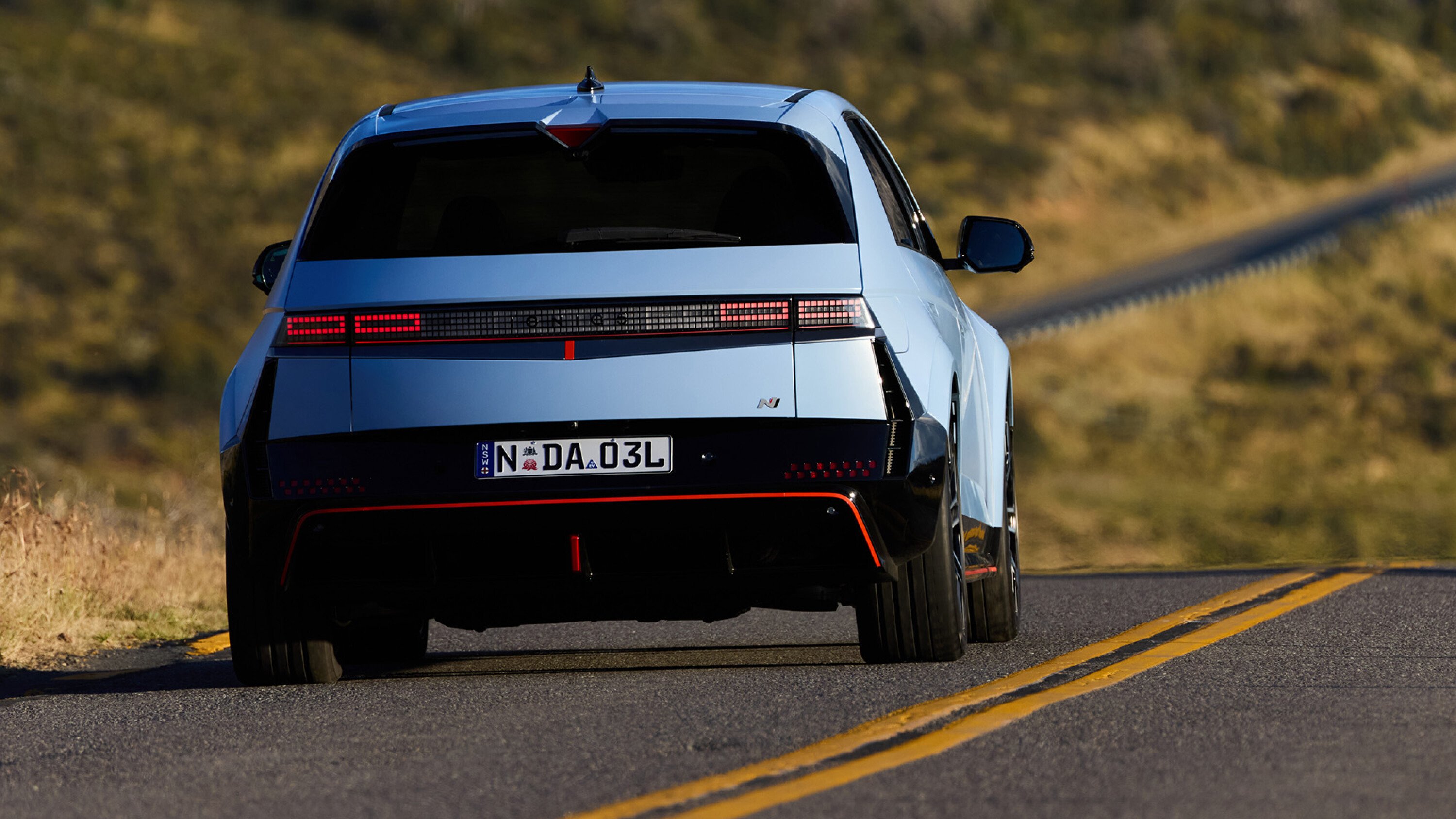
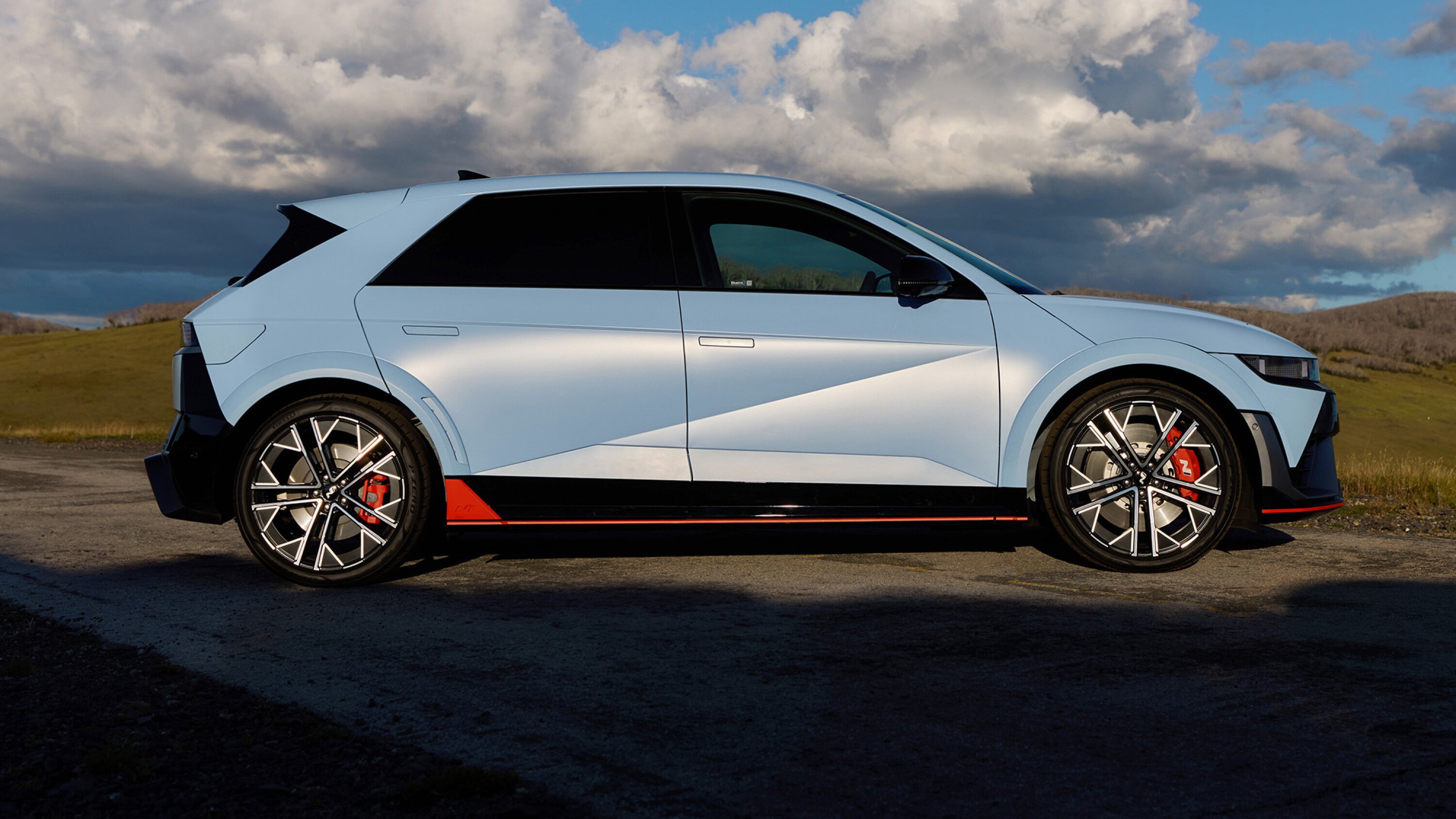
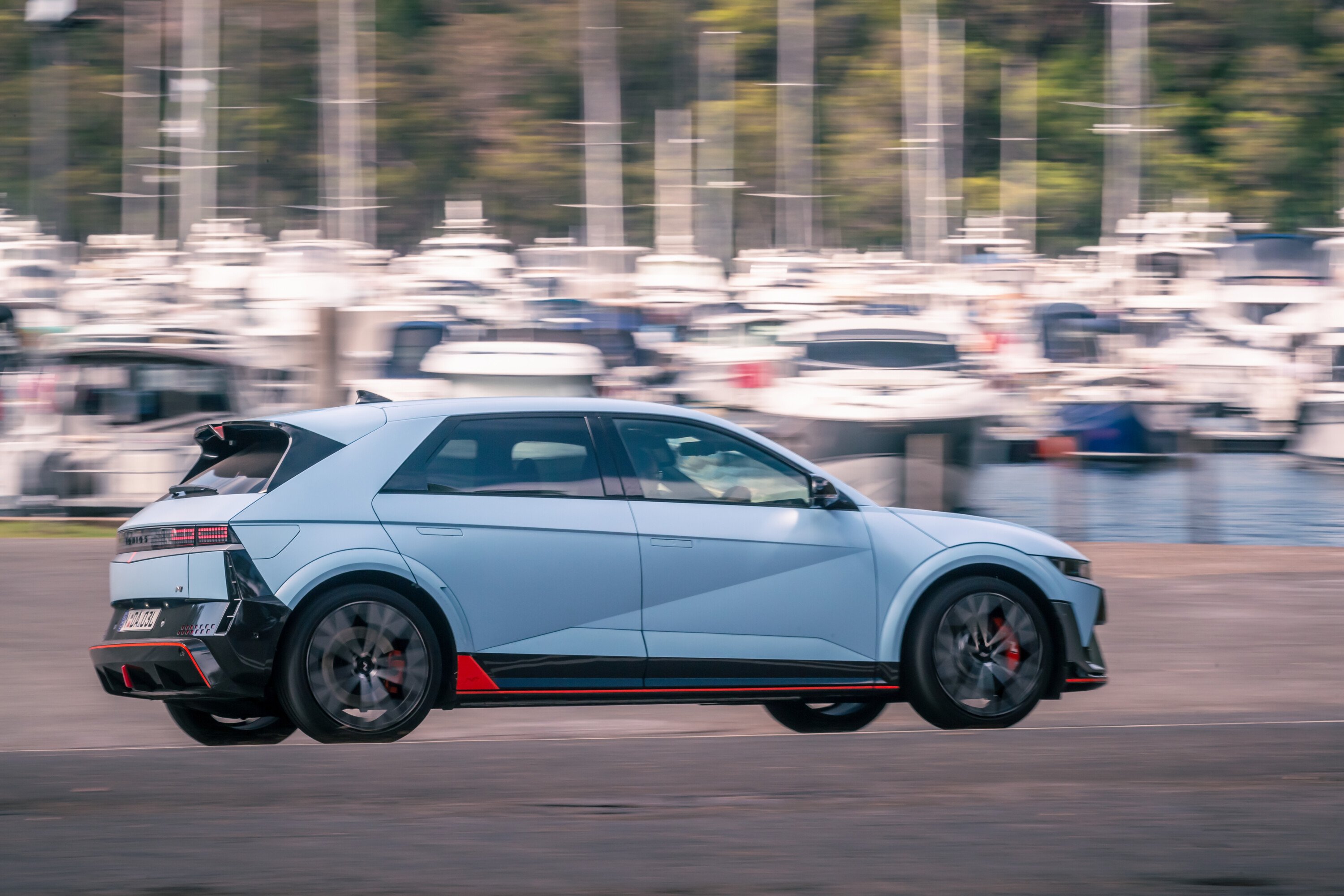
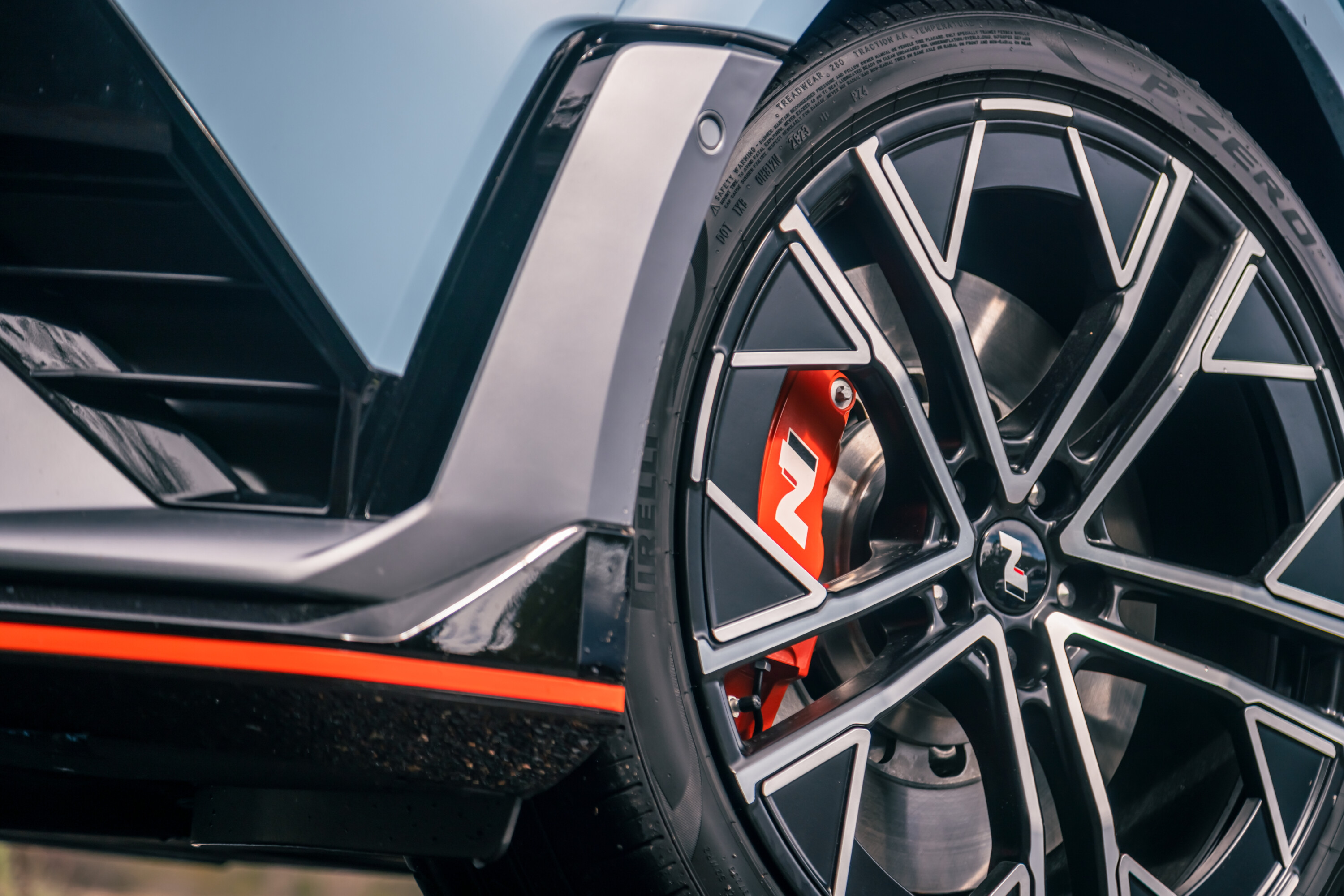
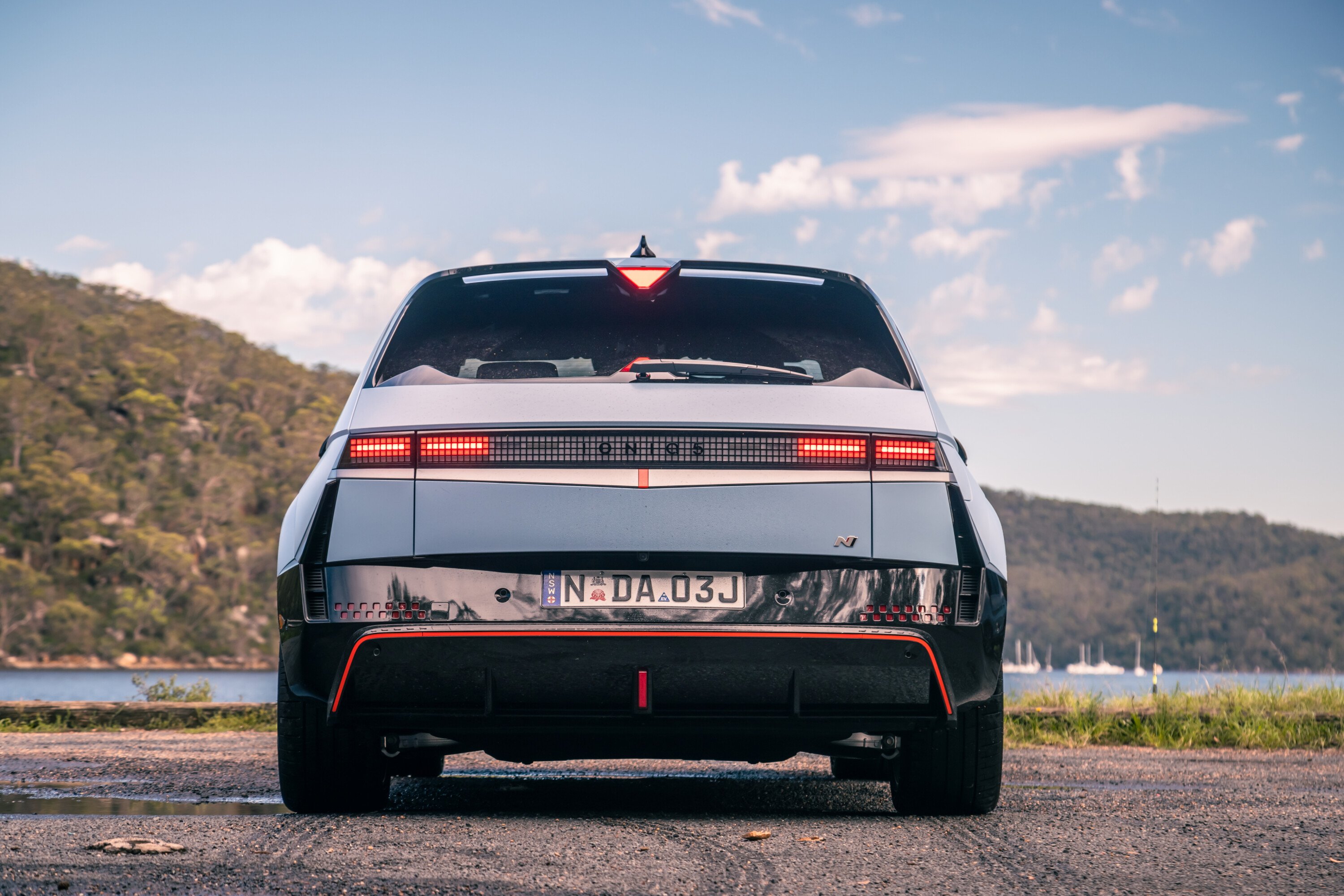
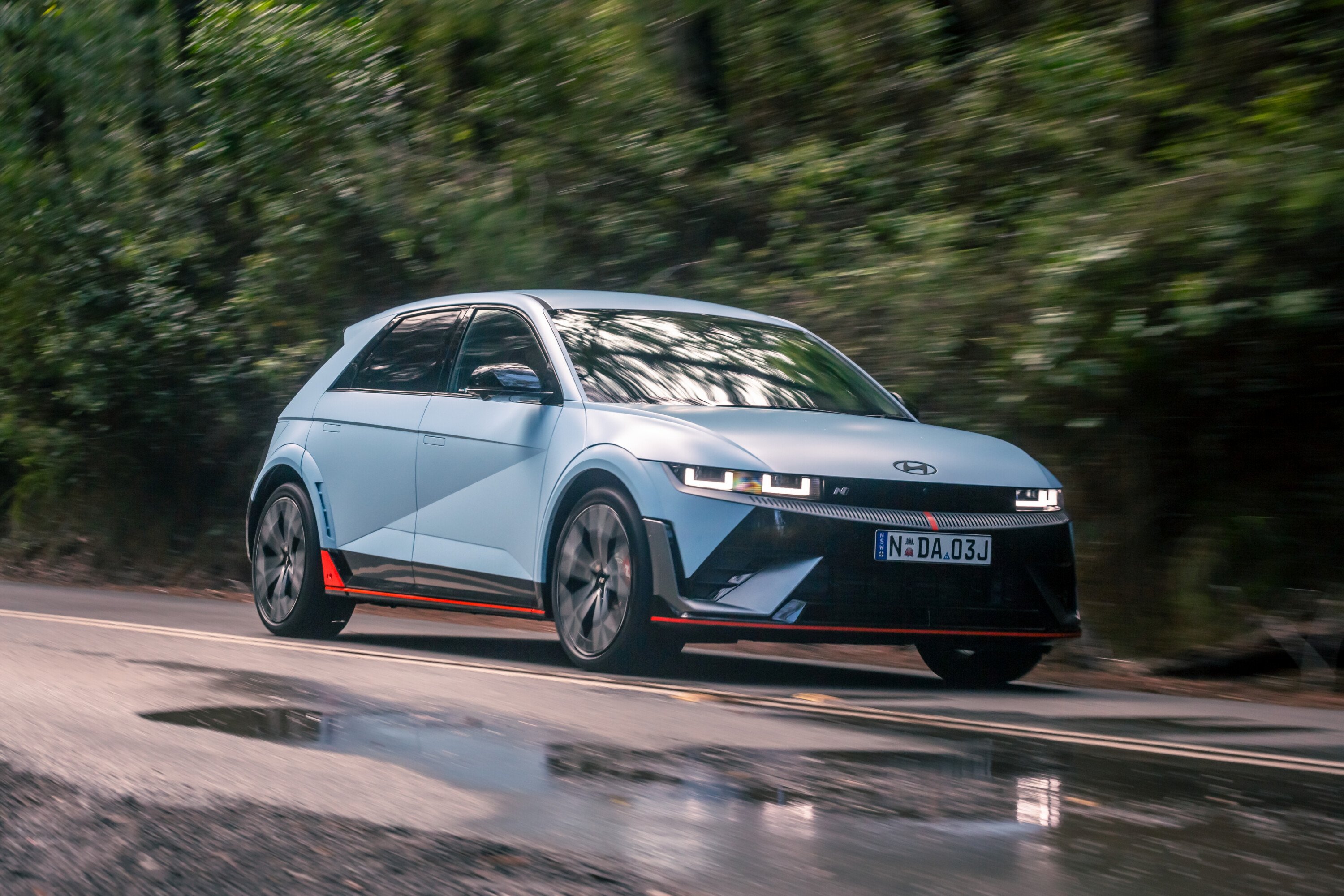
Three words came to embody the development program for the Hyundai Ioniq 5 N, forming a mantra that latterly informed every engineering and calibration decision.
They were originally appended to the end of an email in an exchange between Albert Biermann and a group of engineers, one of whom was becoming frustrated that the project was in danger of drifting from its original goals.
These three words created a sudden and focused course correction.
1
“Driving still matters.”
Biermann’s title today reads Executive Technical Advisor.
You may well have heard some reports that have suggested the German has taken a bit of a back seat with regards to vehicle development at Hyundai, but it’s clear that he’s still deeply involved, more recently with the scope of an even bigger challenge than Ioniq 5 N; an affordable electrified small N car.
He’s in an expansive mood today, dialling in from his home in Munich, keen to talk about the genesis of a sports car that’s quite unlike anything else in the market. He’s under no illusions as to the scale and importance of the initial task.
“For me, Ioniq 5 N was, after i30 N, the most important N car,” he explains. “It was a journey into a whole new era digging really deep into all the challenges and coming from electric powertrain and electric vehicle technology and transforming this into driving fun in a Hyundai N car so also my learnings were really a lot and setting the right challenges. So where should we be?”
1
It’s a good question. In effect, the engineering team at Namyang had nothing to benchmark from.
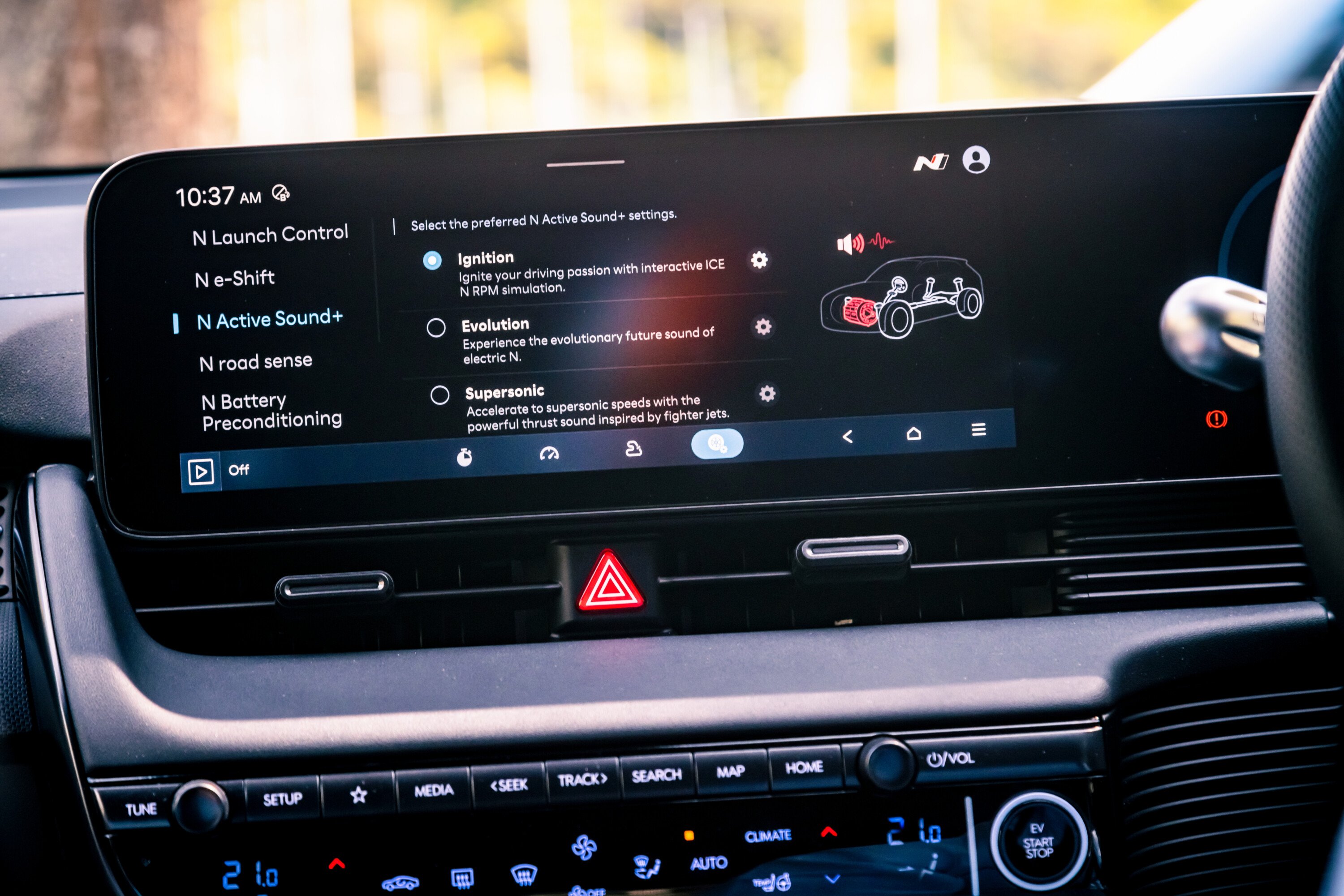
“I remember, almost seven years ago, we built in Ioniq EV concept where we started creating sound, added some vibrations and we played around with that car for quite some time, but my conclusion was [that] this is nice, but this is not enough to make an EV an exciting driving experience.
“For whatever reason I asked this weird question, ‘Why don’t we pretend shifting?’ and they looked at me like I was a little crazy, but I said ‘Yeah, we have only one gear but we can pretend shifting’ and so we started working on this in a pretty relaxed way. There was no Hyundai N car in sight, we had no idea when the first [electric] Hyundai N car would come, but to me it was clear the day would come when we will have to deliver a fun machine to our customers.”
1
I’m intrigued about this decision. To introduce something so brazenly inauthentic at such an early stage of the development cycle requires a huge measure of self confidence.
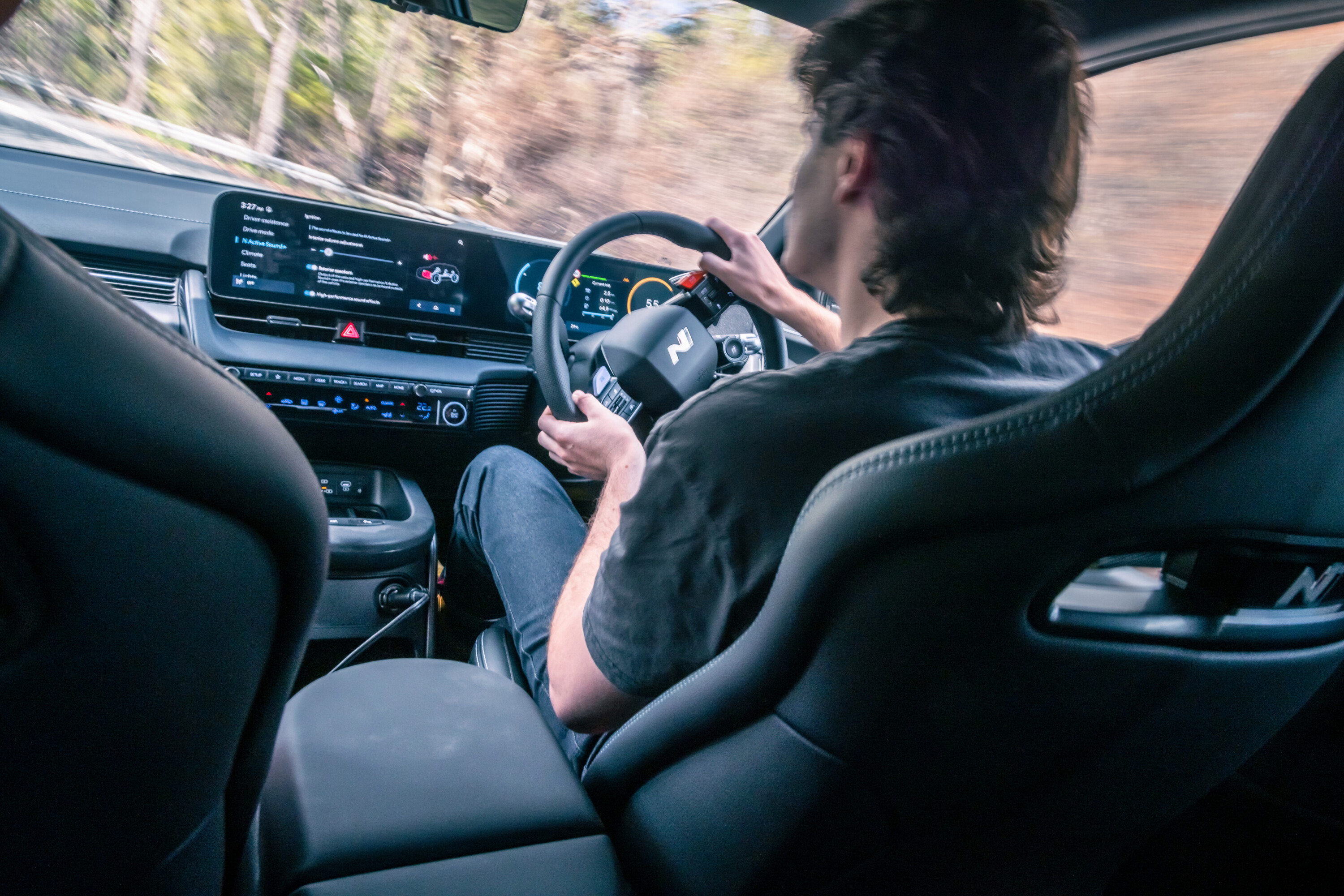
Annoyingly, it works. Driving the 5 N in this mode on a twisty road, tapping downshifts into corners and hearing it crack and pop on the overrun is undeniably good sport. I grudgingly admit this to him.
“Welcome to the club,” Biermann laughs. “There’s already an endless number of people who had the same anticipation to this functionality as you describe and I don’t know any person who had these concerns after driving the Ioniq 5 N. Everybody after driving it says’ I couldn’t believe it’s so damn good’ to be honest.
1
It’s clear that ICE proponents will likely seize on the idea of synthesised manual shifts and suggest that the only way to get an EV to be involving is to fake the responses of an engine and gearbox, that this is somehow a retrograde step that proves that EVs are inherently dull to drive.
I can see that line of logic, but it’s worth being open minded. We’re in a transitional phase in EV sports car development. Biermann is undeniably candid when pushed on how he came up with the solution.
“I had no better idea than going for this,” he chuckles. “I remember that day at Namyang when we had this test session with the Ioniq EV and we fooled around with it already for a year or so, but it was never good enough.
“We are all kind of weird sounds and vibrating seats and vibrating everything right it didn’t bring the fun part that I was still missing a lot of fun and just to discuss with the engineers all of a sudden gave me this weird question why don’t we shift? I don’t know why this came up and I think some thought probably really stupid or crazy enough right. Maybe it was not the only moment they thought that.”
The development of this system too significantly longer than expected. It’s more than just an audio synthesizer.
The car needs to decelerate on downshifts and pull up into a torque band as you run up through the gears and for the longest time, it wasn’t right. Not to Biermann’s satisfaction at least.
The eureka moment came when they recruited the engineer with overall responsibility for dual-clutch transmission to the Ioniq 5 N program.
1
“I think those were for me the kind of biggest challenges, but also the fun part because when when the day comes and there are sound engineers with you in the car, maybe for the tenth time coming out.”
“[In the i30 N’s DCT] we have the almost best benchmark in our own portfolio and let’s just take that benchmark as the target to bring this emotional driving experience to our customers. In the end it It was the right way to go and to meet this kind of emotional involvement.
“Also then the authentic feedback so that you can feel at home easily that you get all the support from the vehicle when it comes to the way the car changes the torque, you can work with the car is downshifts, drag torque and the emotional feedback, the sound feedback that you can easily get an idea similar to the ICE car how to manage track driving or sporty country road drive.
I think those were for me the kind of biggest challenges, but also the fun part because when when the day comes and there are sound engineers with you in the car, maybe for the tenth time coming out. He says ‘I have something new. It’s really better.’ And then he says ‘You know, I have another one but it’s almost too crazy.
1
“I don’t know if I can show this to you.’ I say ‘Come on come on, give it to me.’ So he puts it on and I said “THAT’S IT! This is what I’m waiting for for such a long time” right so then this moment when you’re really think ‘Okay now. Now we are on the spot.”
“But yeah to bring this into a new world for us: all-wheel drive, a first time for N. A vehicle weight of 2.2 tonnes, we had never been in that range before but the biggest challenge was the three pillars for N everyday sports car, corner rascal and then the racetrack capability. In the early stages of the project of course the were discussions and some people say ‘No, we don’t need a racetrack capability for an EV. No EV has a racetrack capability’.
“Sometimes it took me some increasing the volume of my voice to make clear there can be no doubt what an N car is and it doesn’t matter if it’s combustion or EV or hydrogen an N car is an N car and racetrack capability is the core element of an N car and we cannot play around with this.
1
“We have to make this EV the first N EV capable of driving tracks and not just maybe for a few minutes and then we get a horrible rating like several of the existing EVs that are out there and you’ve probably experienced several times.”
Biermann explains how the car had undergone 10,000km of testing on the Nürburgring Nordschleife and, after some refinement, it had hit the target eight-minute lap. He believed it was capable of more.
“So I came up with another target. The eight minutes that can be done even on the Nürburgring are the toughest maybe on this planet because you have this two very long straights right after Bergwerk when you go Kesselchen up to Karussell, it’s a long, long uphill section that really drains the battery like hell and then you have Döttinger Höhe, a very long high speed straight. I would think if we could do two laps, this is like 16 minutes best pace then we can do maybe do almost 20 minutes on normal racetracks.
1
“I came up with yet another target, 20/20/20, which sounds a bit weird but it’s easy to understand. 20/20/20 means 20 minute track time and after there 20 minutes supercharging and then you go back out for 20 minutes track driving.
It’s clear that unravelling the capabilities of EV platforms is something that Biermann clearly enjoys. But he’s keen to bring everybody along for that particular ride.
What of the EV naysayers? He smiles. “We were thinking there’s probably more potential in this technology than things that we need to worry about or to be afraid about.” Biermann knows. There are great things coming and, at Namyang at the very least, driving still matters.
Off-roading in a Porsche hasn’t implied anything remarkable since 2002, when the former sports-car specialist wheeled out its Cayenne SUV.
But in the four decades prior, the company’s signature 911 coupe had been making storied excursions away from the tarmac, dabbling with success in various World Rally Championship rounds, including the Monte Carlo Rally and ultra-tough East African Safari Rally.
Porsche then developed four-wheel-drive 911s – the 953 and 959 – in the mid-1980s and claimed more successes in the Paris-Dakar desert raid. And Wheels famously took a raised 996 Carrera 4 across the Simpson Desert in 1999.
1
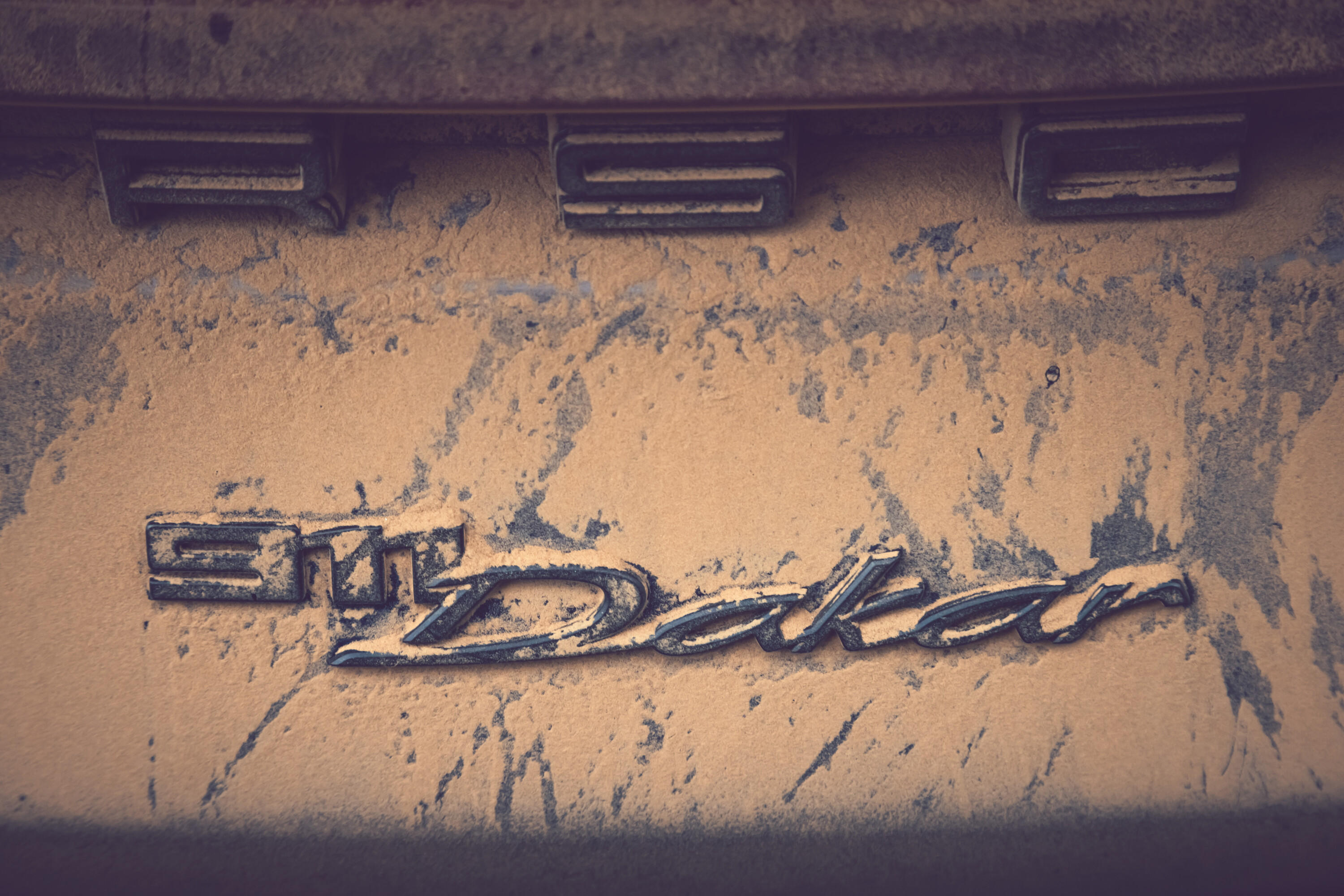
Yet none of those multi-terrain competition 911s were available strictly off the shelf, which makes the new 911 Dakar properly unique in the sports car’s seven-decade lineage.
The name pays homage to the first of those Dakar wins in 1984, when the Rothmans-liveried, 953-series Carrera 3.2 4×4 became the first sports car to win the tortuous, 10,000km desert race.
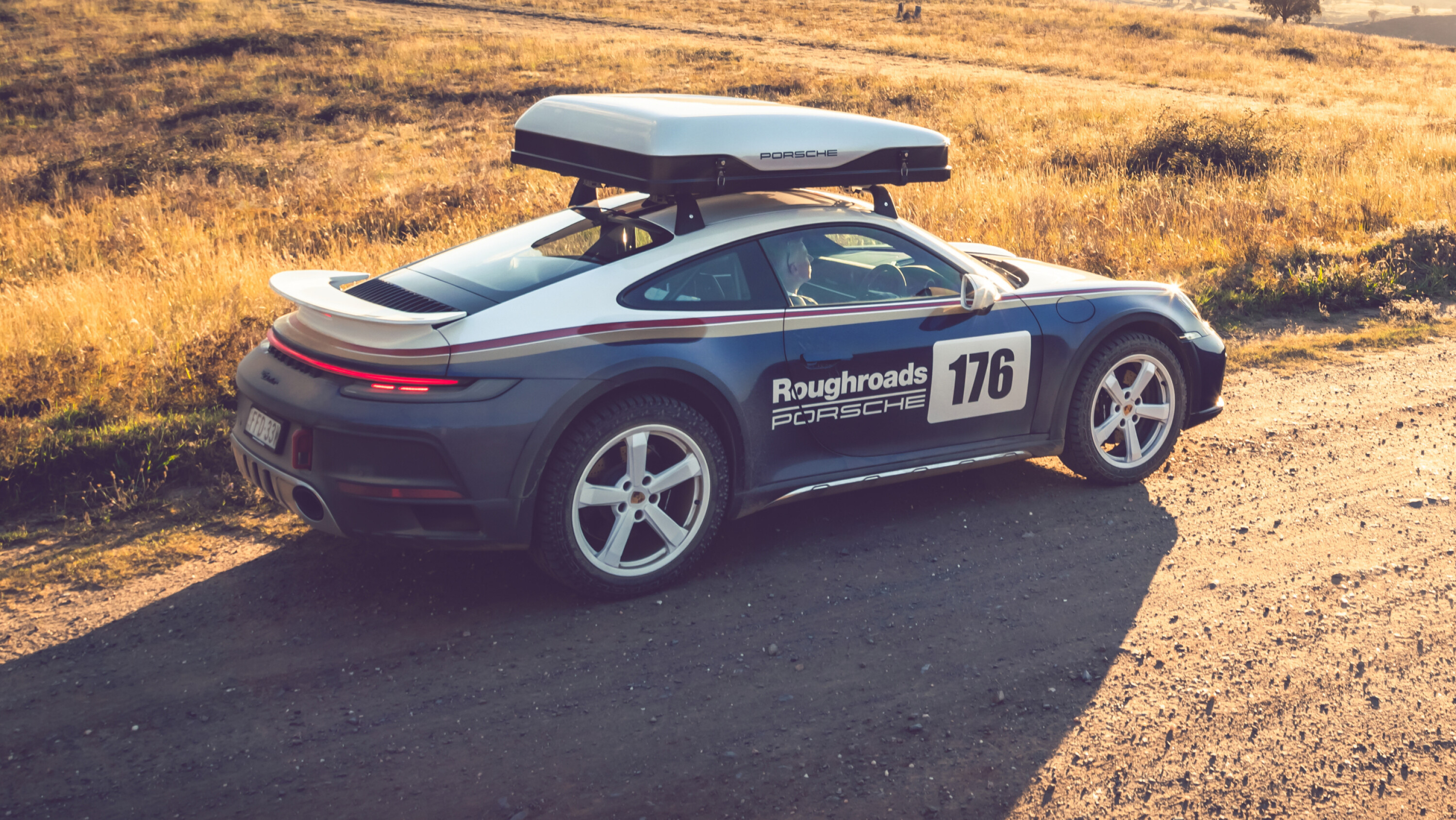
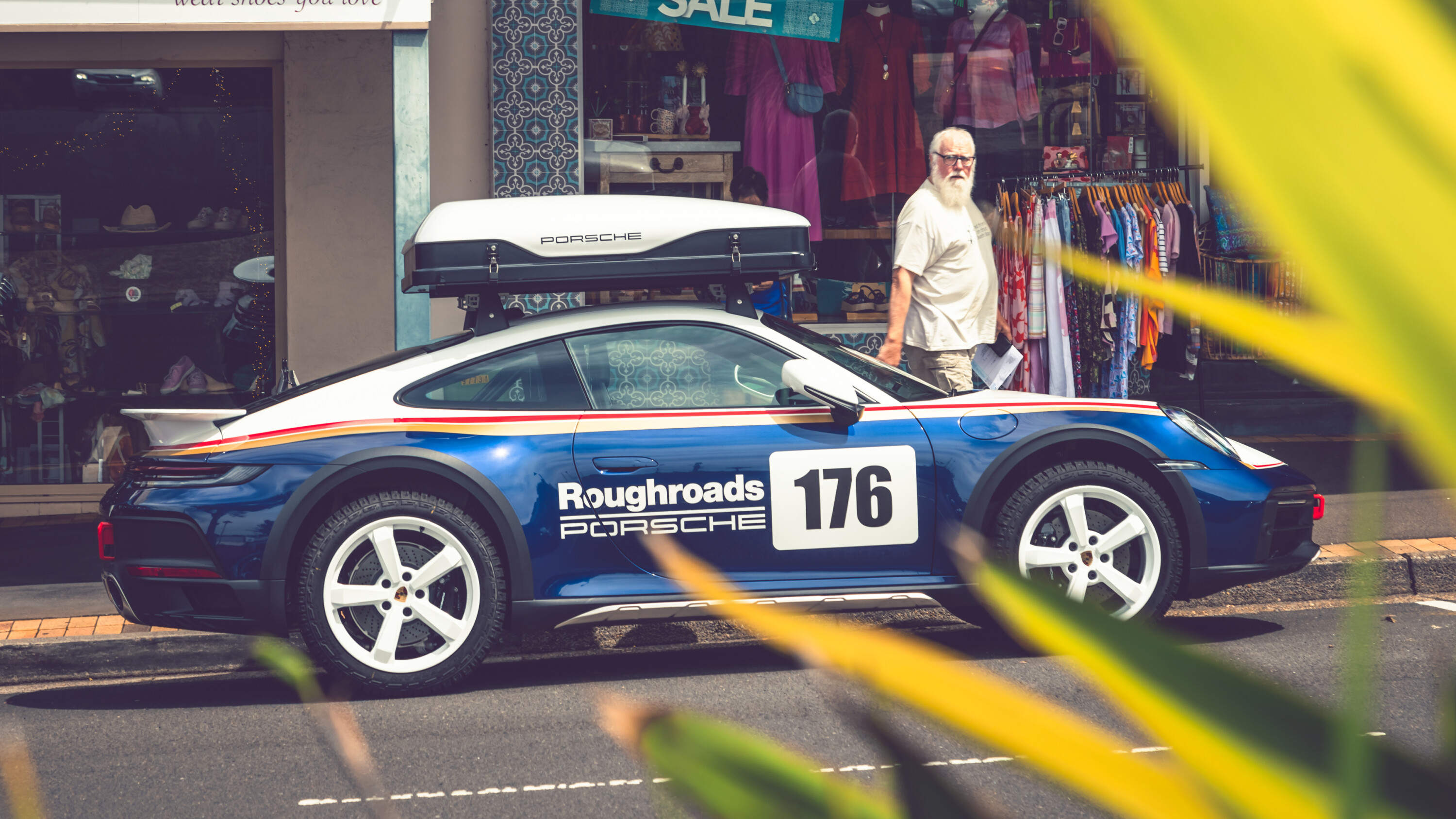
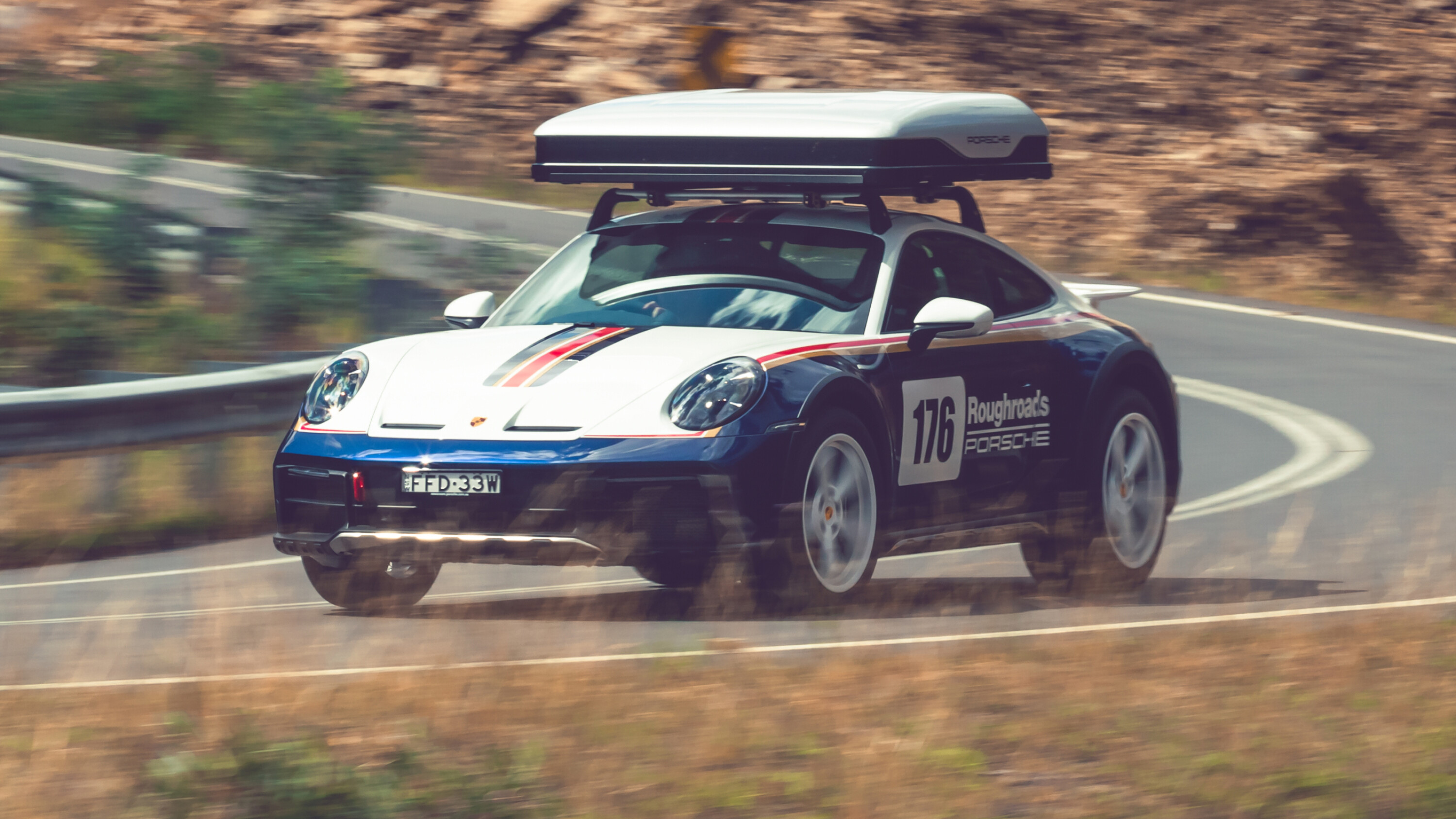
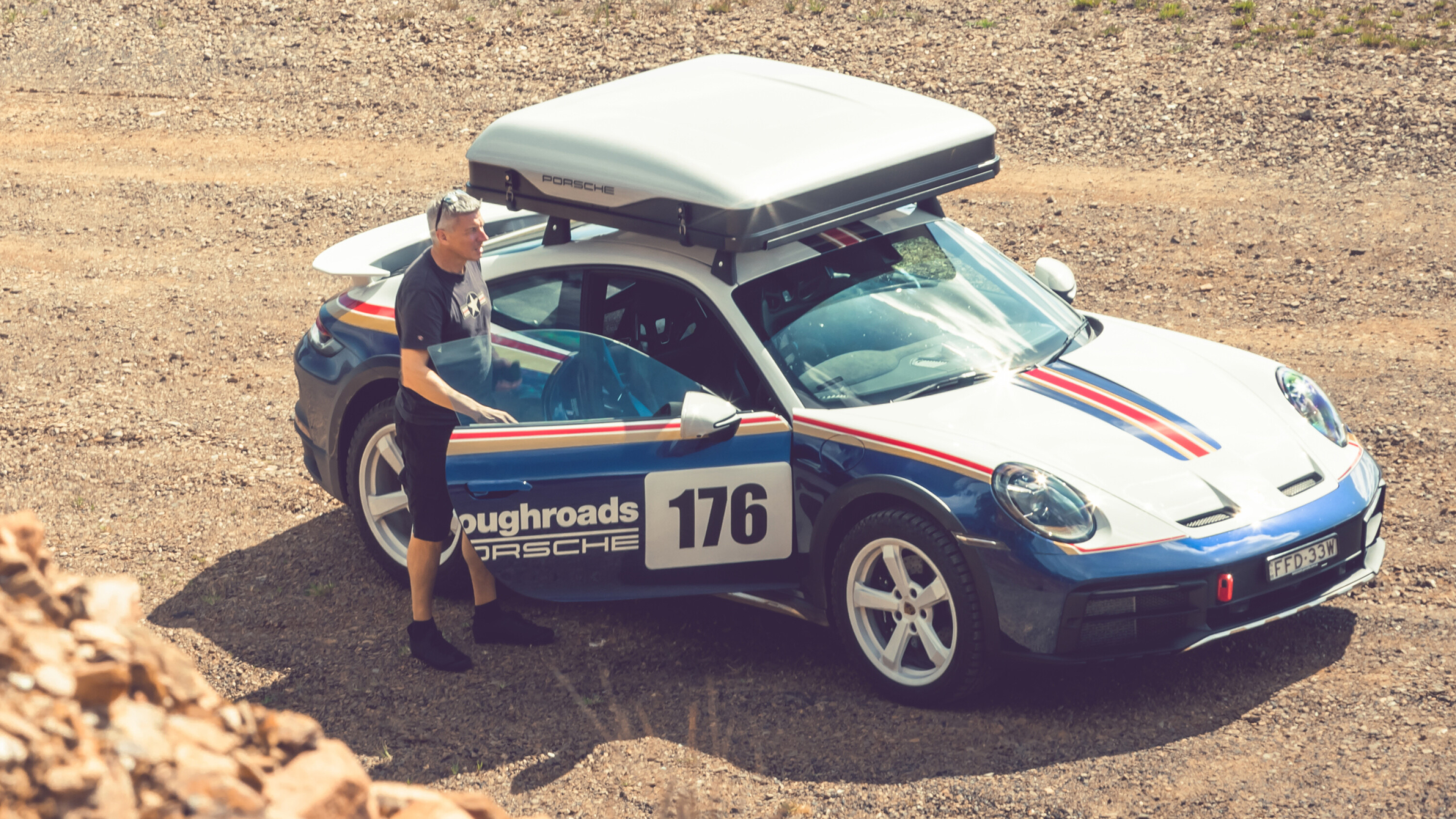
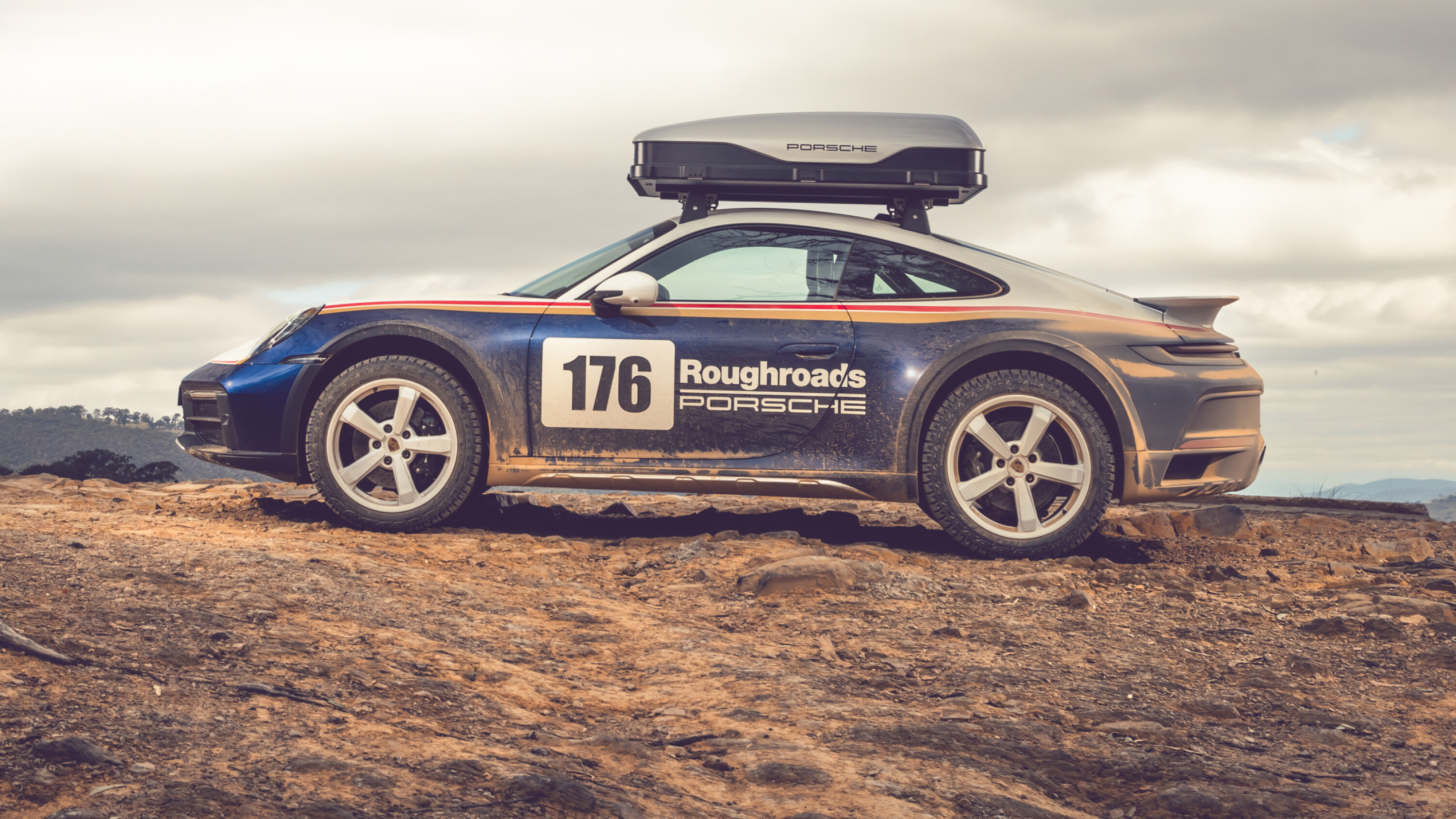
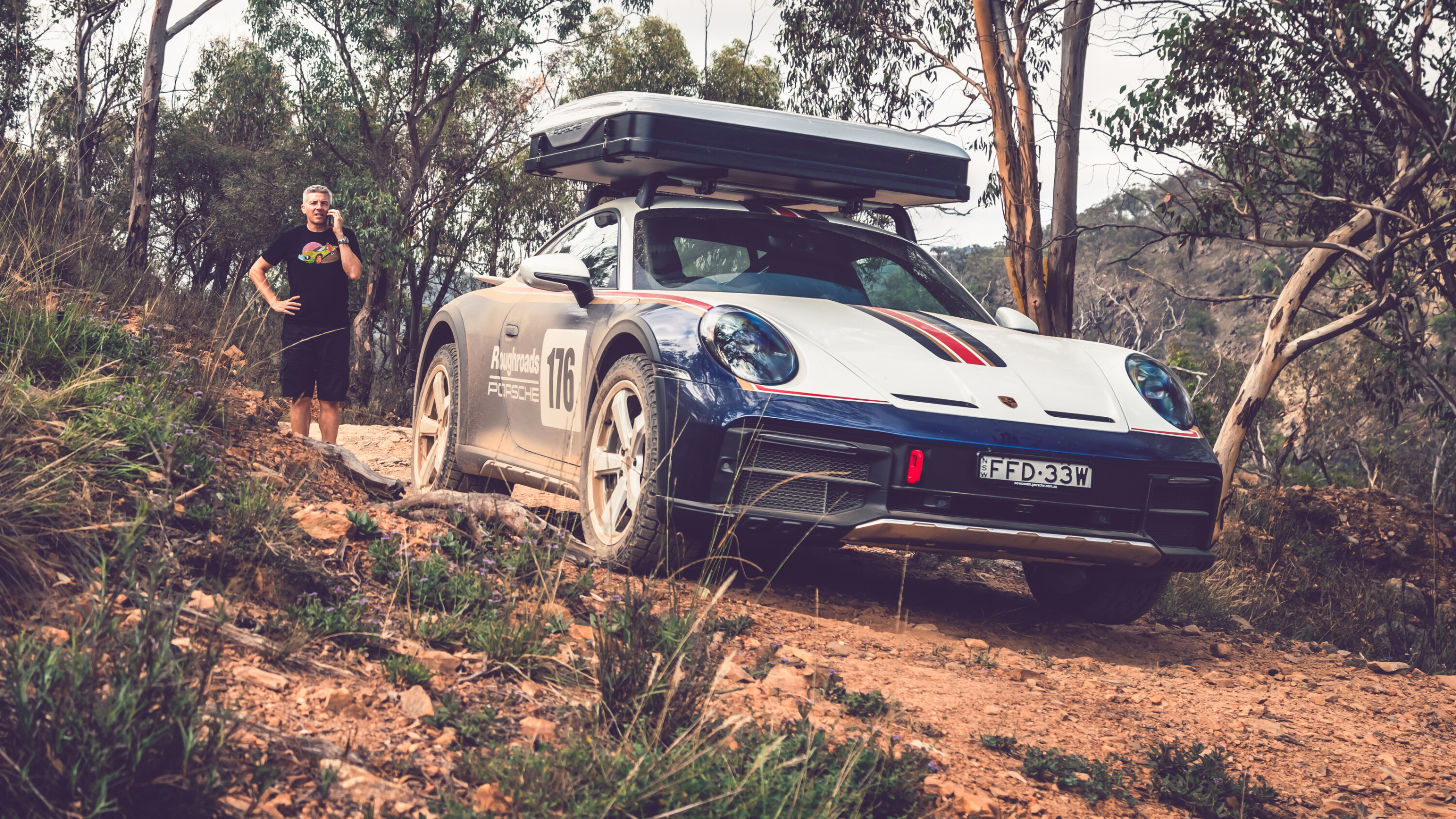
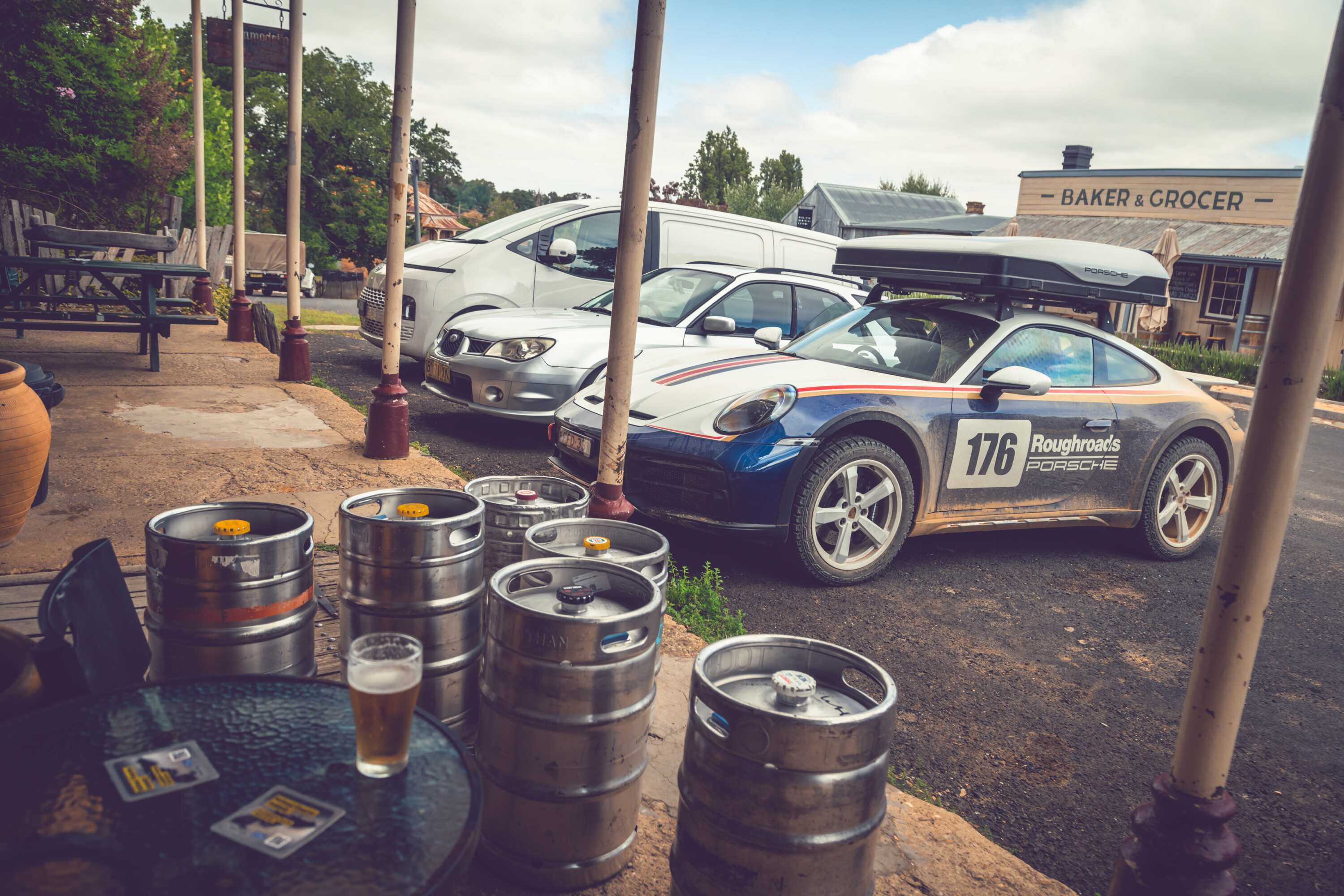
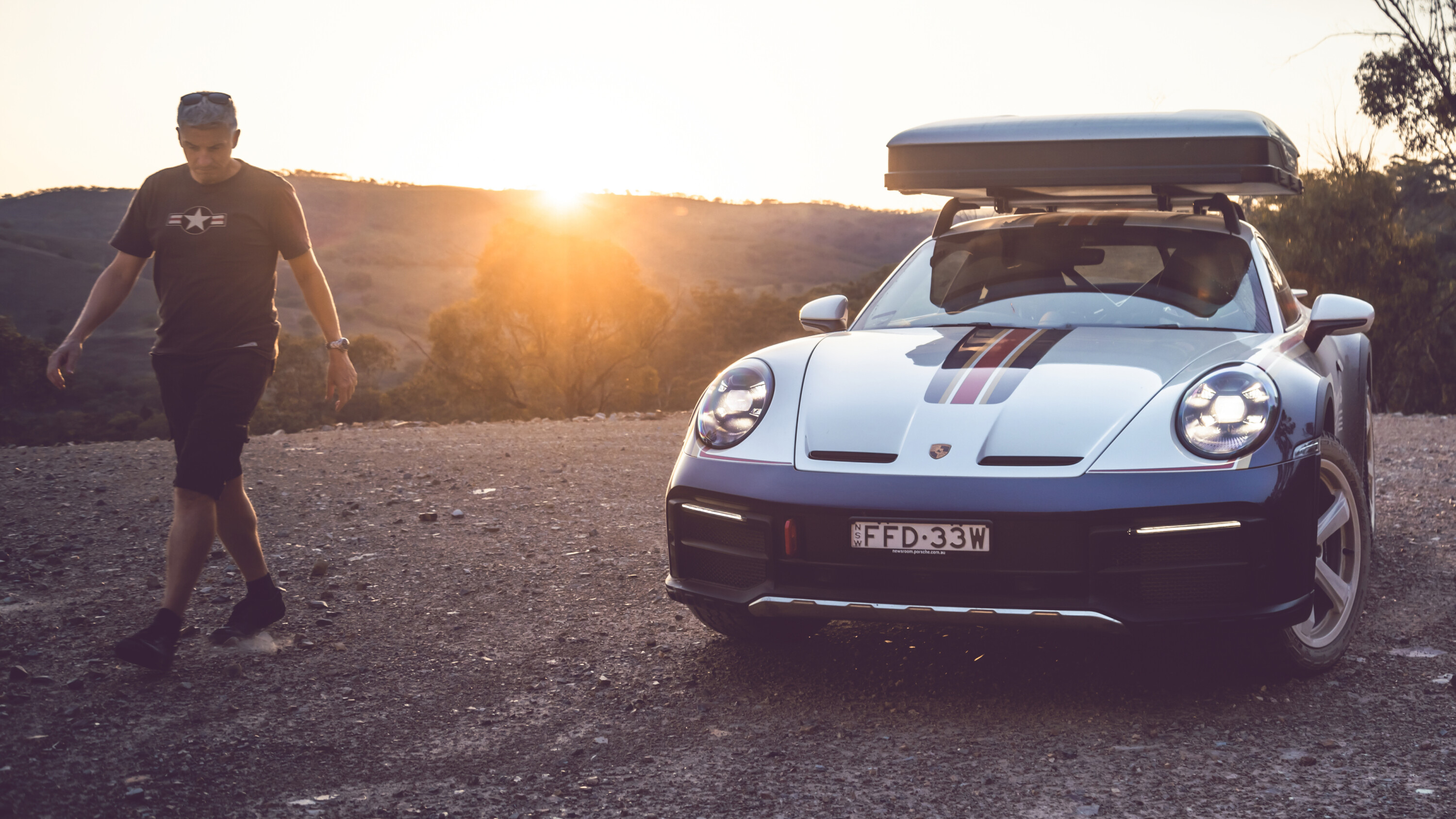
Buyers can take the reverence to the extreme, optioning this Rallye Design Package that mimics the iconic blue-white livery worn by both the 953 and its 1986-winning successor, the 959 – though Porsche smokescreens the original sponsorship branding with ‘Roughroads’ in look-alike lettering.
1
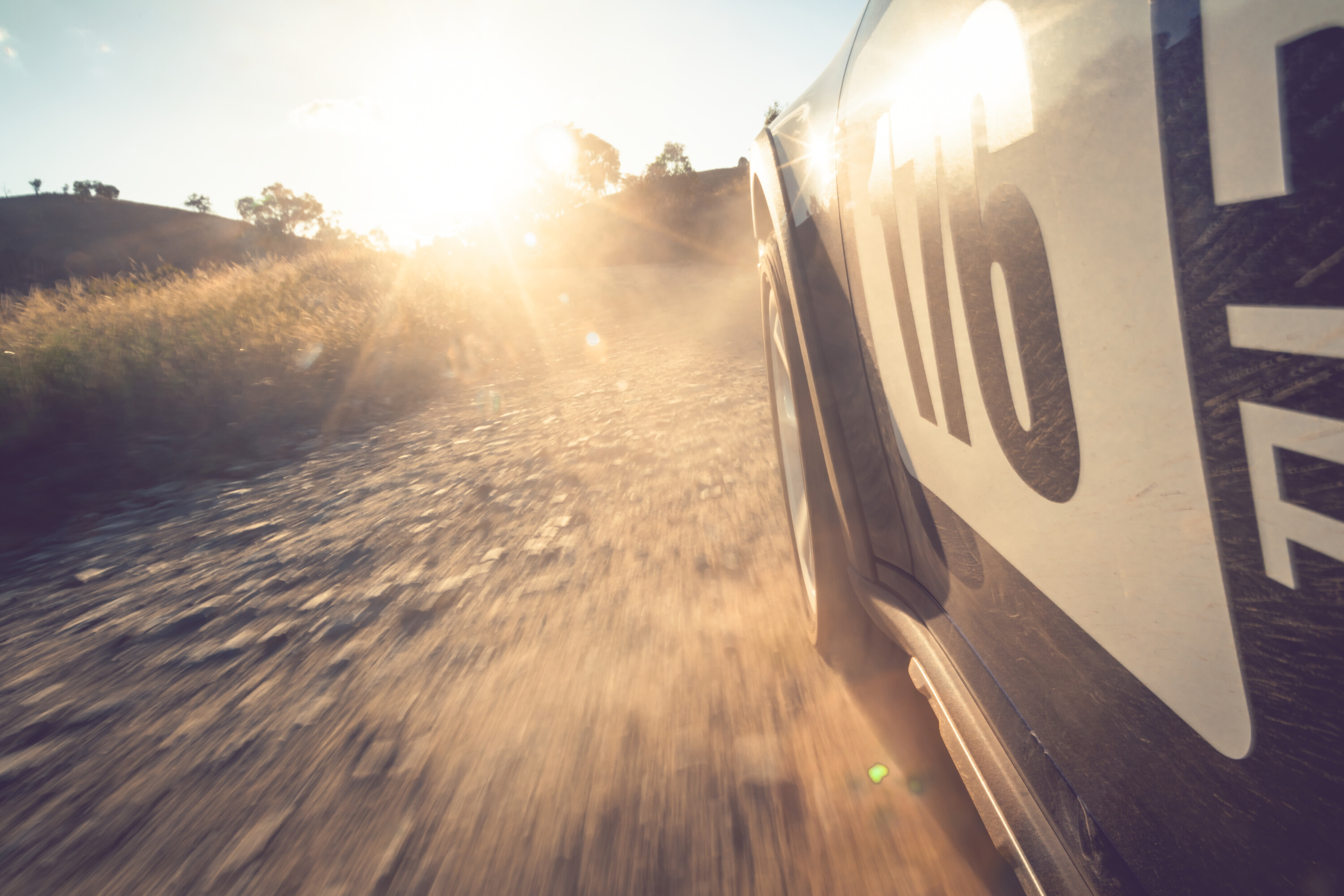
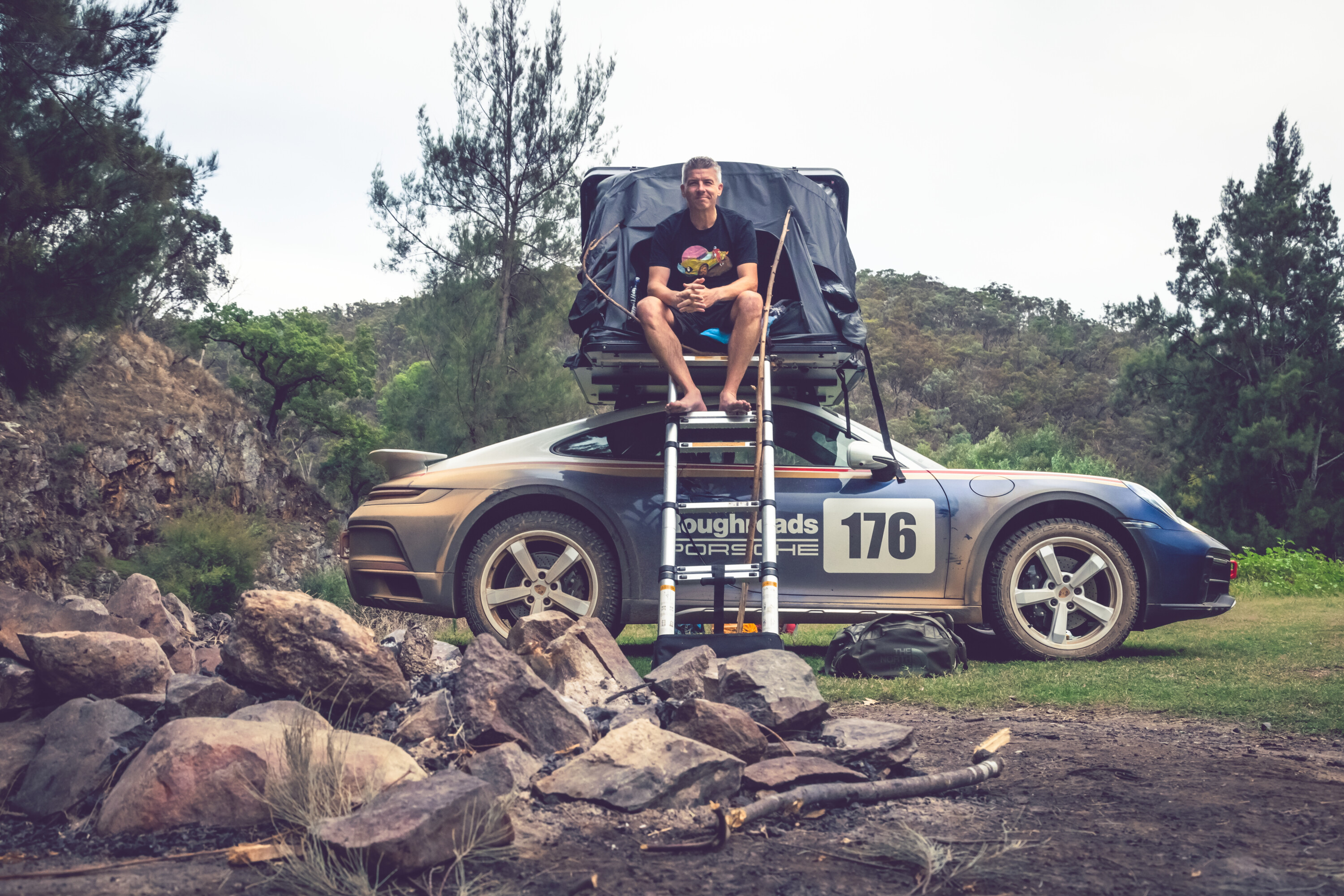
On the 40th anniversary of the 953’s win, our test car fittingly features the same ‘176’ race number carried by René Metge and Dominique Lemoyne.
Buyers can choose any number between 1 and 999. While we like Porsche’s playfulness with all this, we’d choose Shade Green Metallic with black alloys if it were our own half-a-mill on the table.
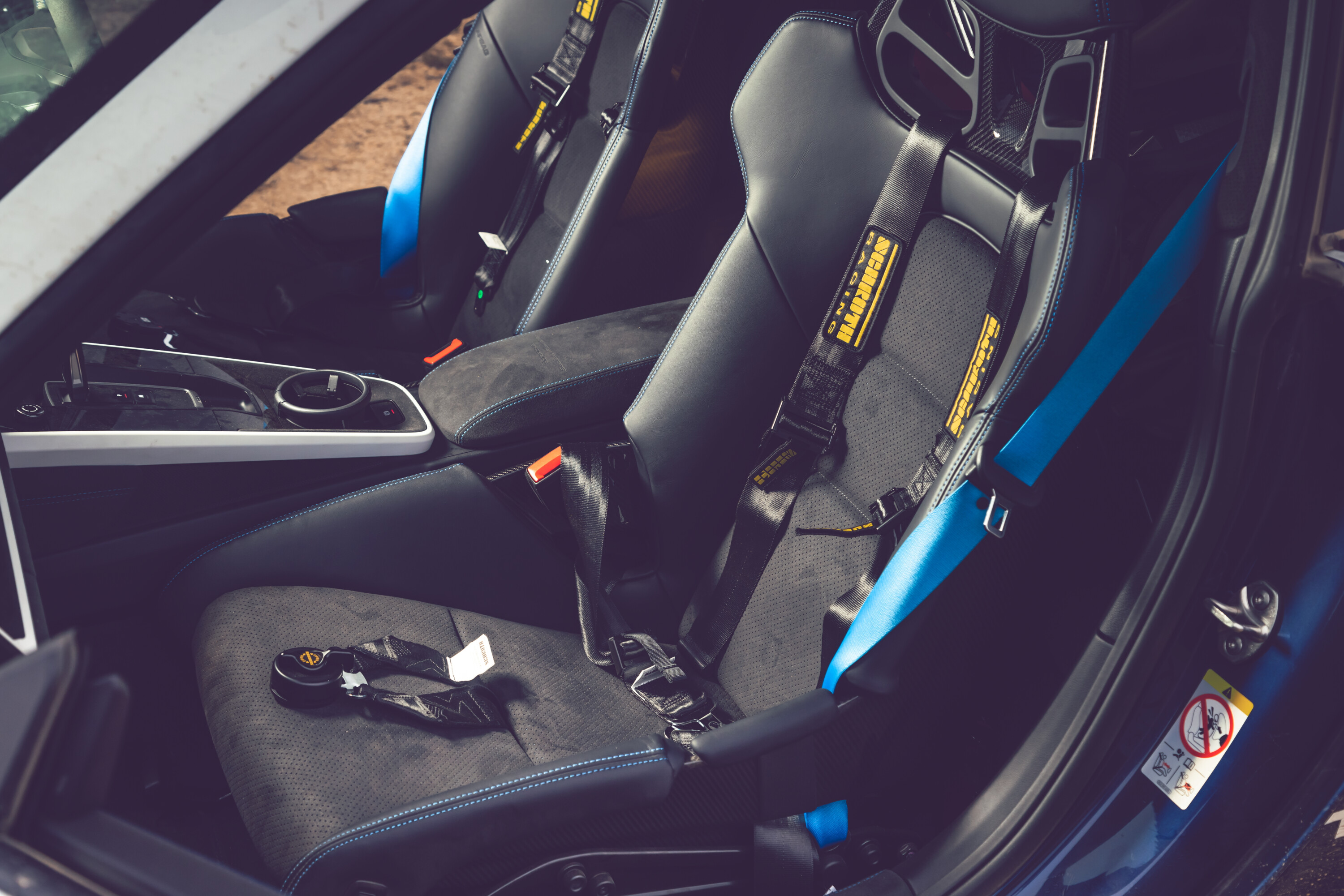
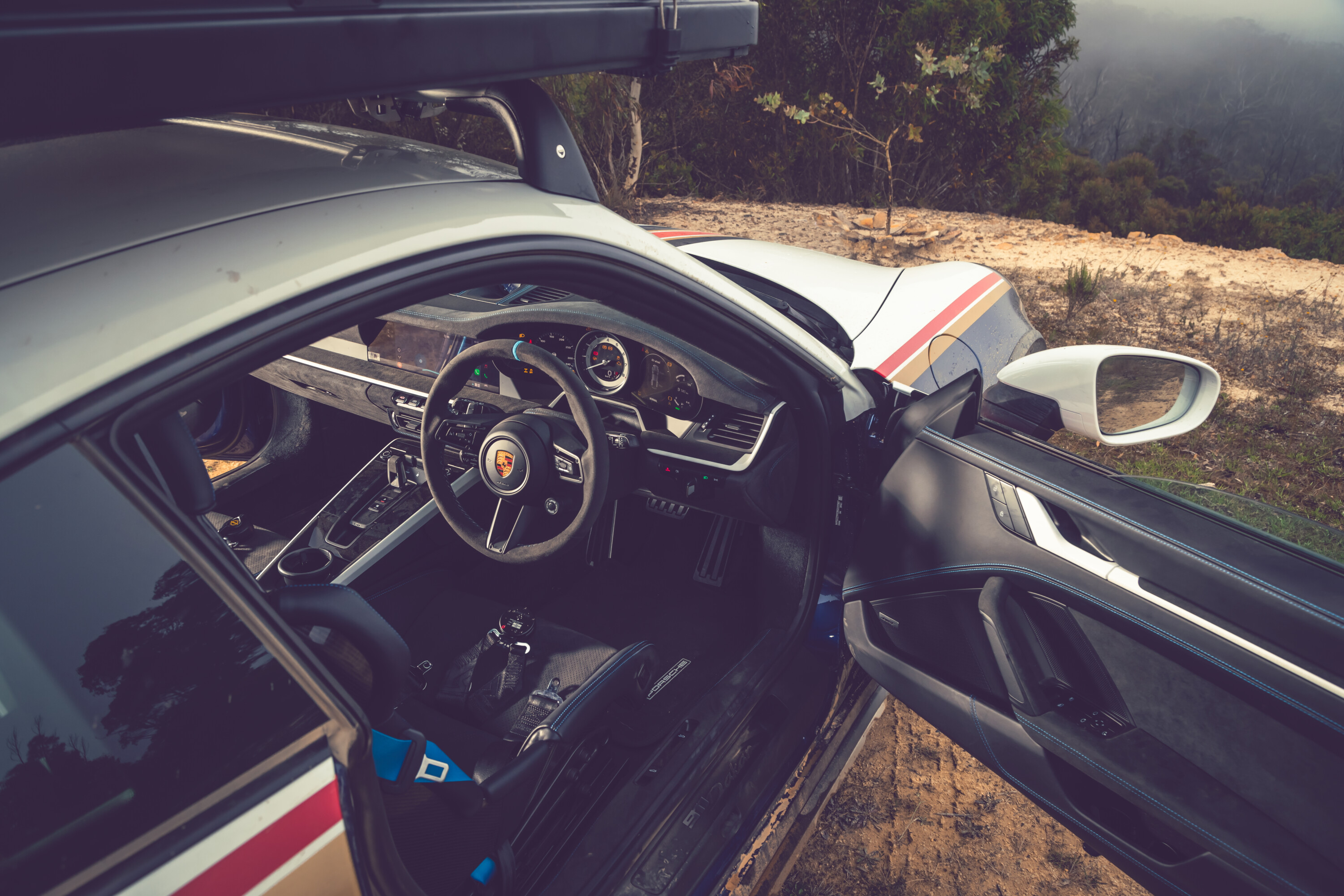
This full rally-raider spec is also a wallet raider. The $489,900 Dakar is already an extra $116,900 over the Carrera 4 GTS on which it’s based. It’s then $55K for the faux-Rothmans Rallye Design Package of two-tone paint and graphics, white wheels, white spoiler, red tail-lights, and an interior combining leather and Race-Tex (Porsche’s pseudo-suede answer to Alcantara), and Shark Blue stitching and seatbelts.
2
The Bridle Track is a route for which proper 4×4 machines are generally the rule
Another $6400 for the Extended Rallye Design Package will trim the cabin vents, rear-view-mirror panel, fuse-box cover and sill guards in leather and Race-Tex. Perhaps more usefully, the $7350 Rallye Sport Package ups the desert-racing vibe with a rear steel roll cage that’s bolted to the bodyshell, six-point racing harnesses, and a fire extinguisher for the passenger footwell.
We thought about taking up smoking while Porsche’s insurance company was weighing up whether to anoint Wheels with a circa-six-hundred-grand sports car to go paddock-bashing.
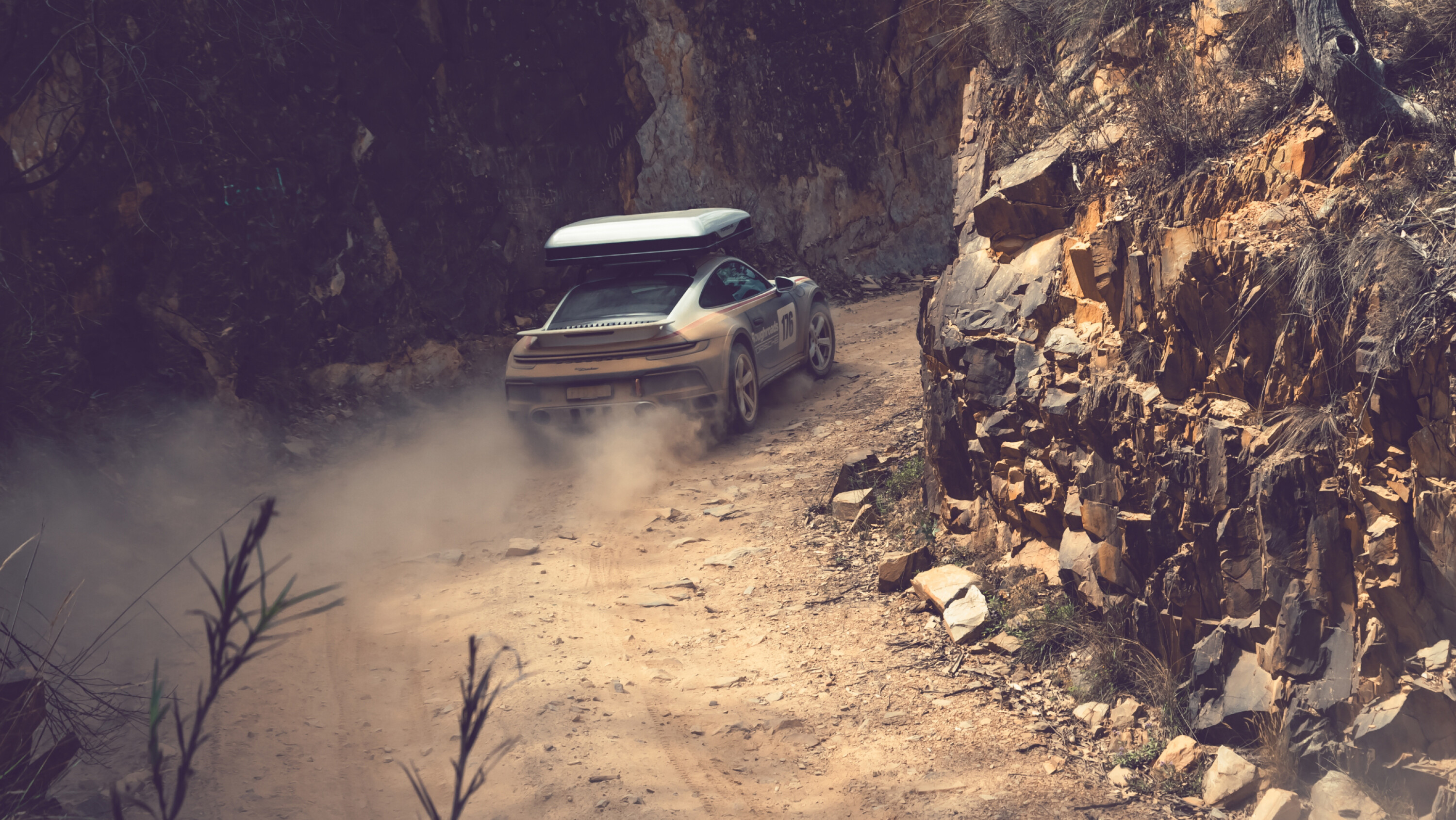
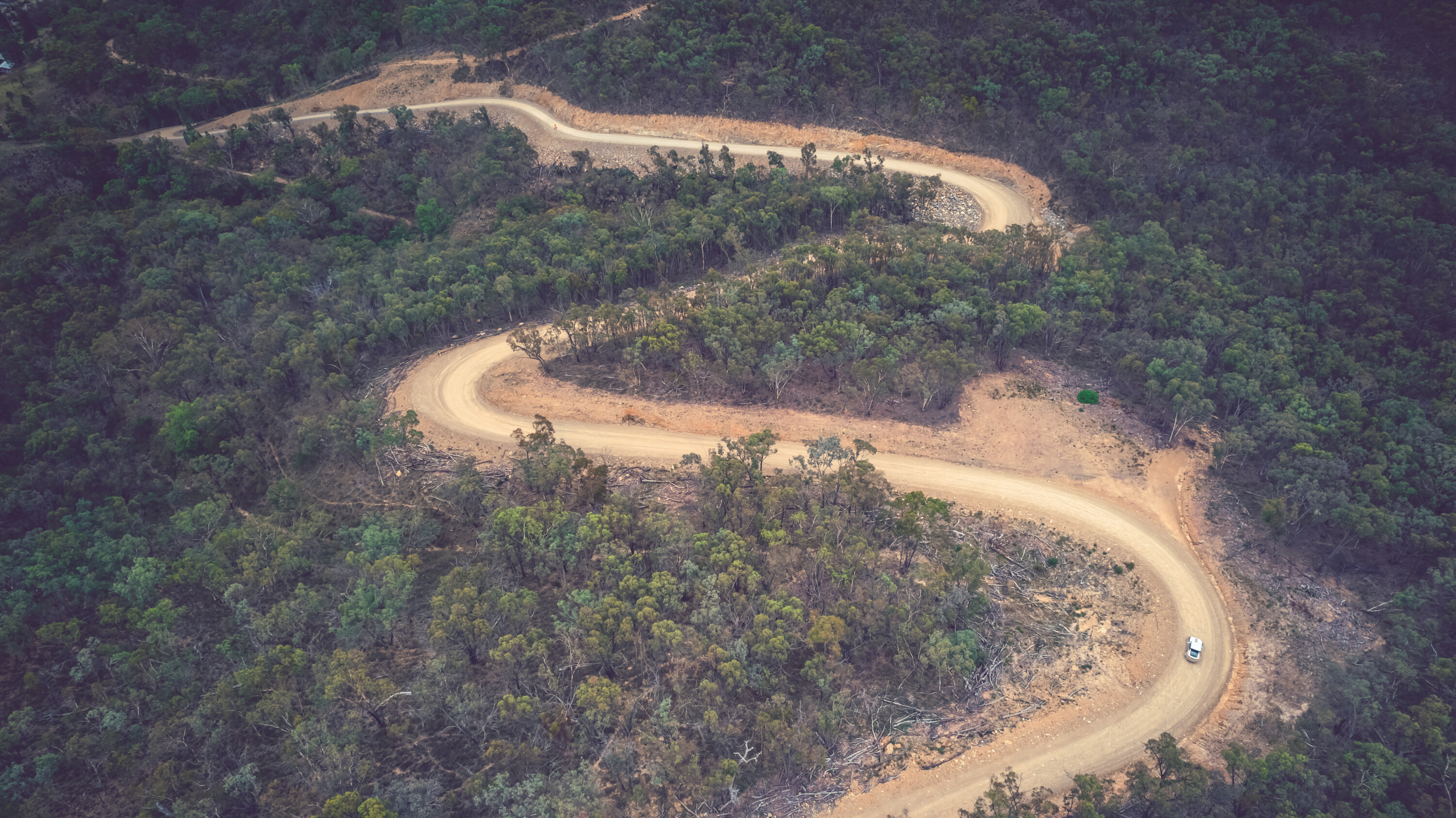
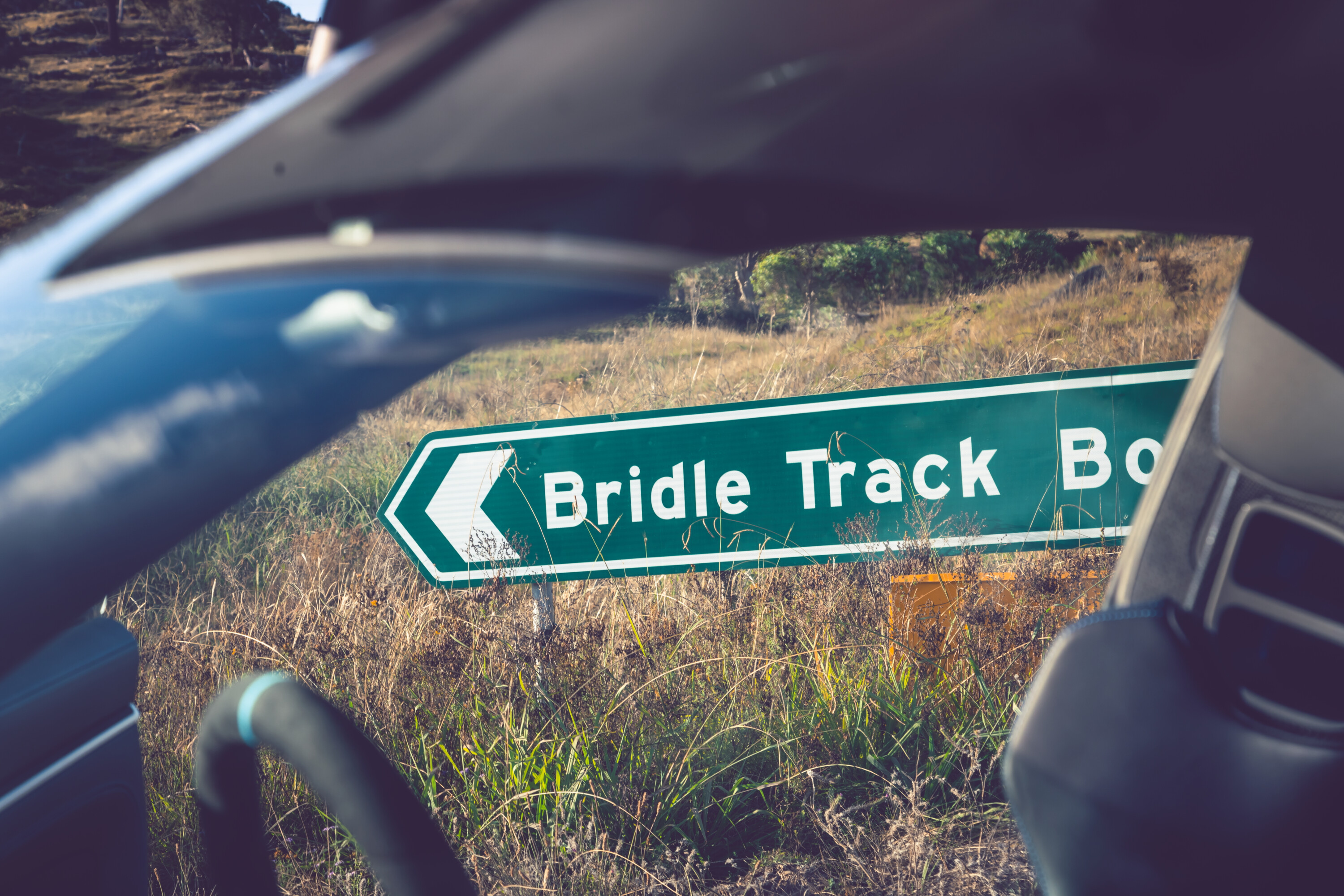
The Bridle Track is a popular 4WD camping and fishing spot just north of Bathurst, in New South Wales. While only about 60km from start to finish, it’s a route for which proper 4×4 machines are generally the rule.
1
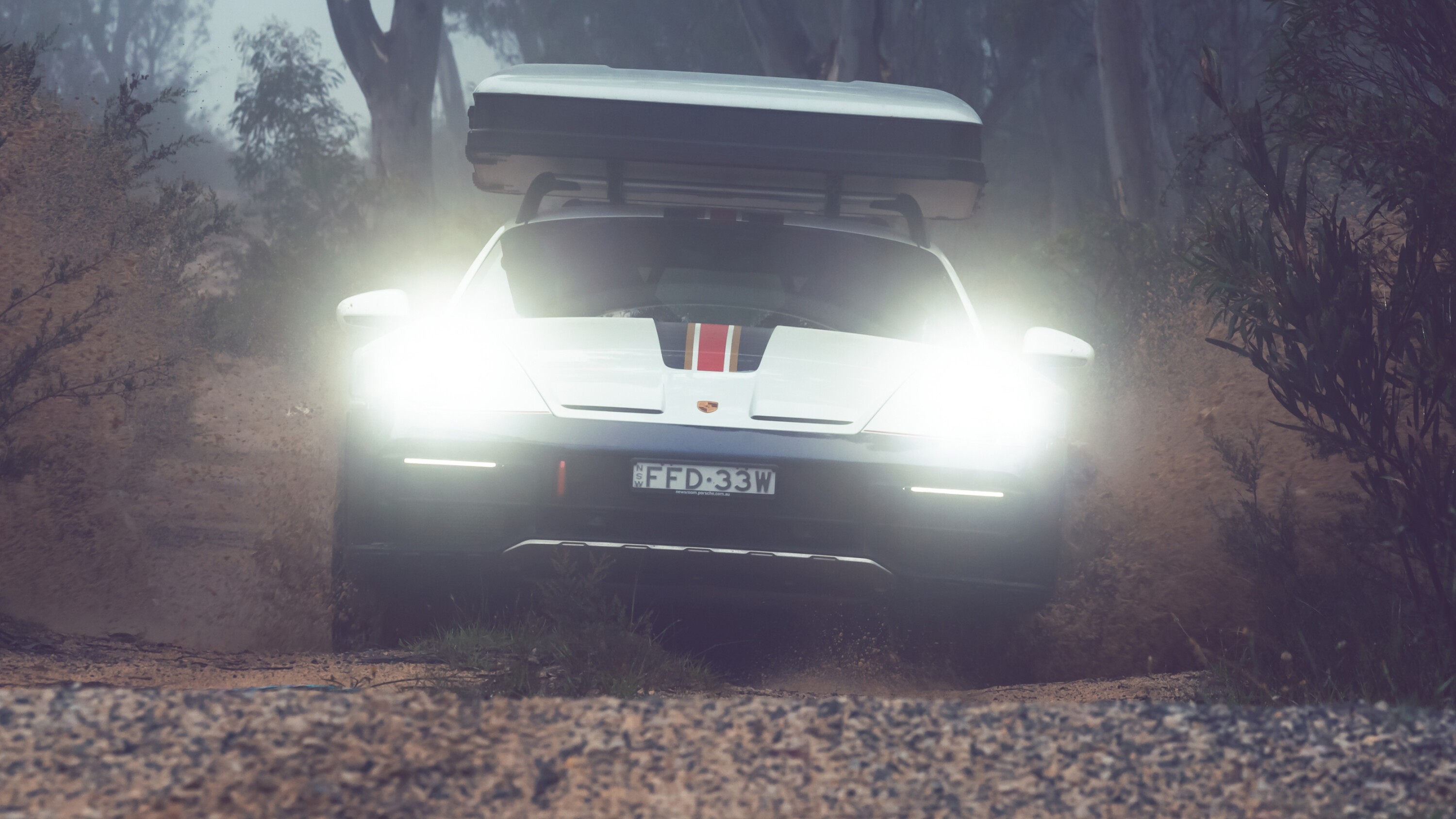
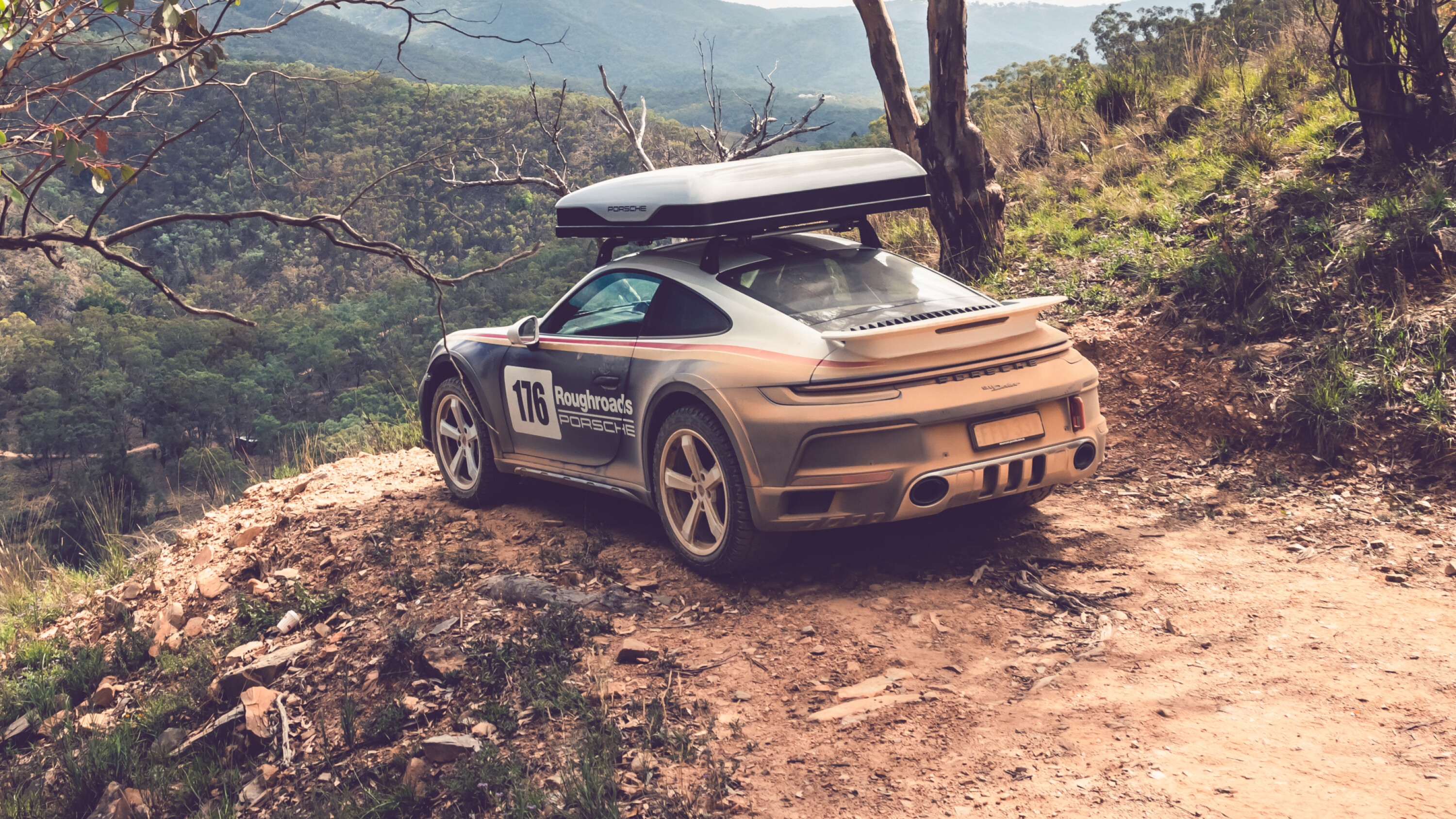
The 911 Dakar can certainly be specced to look the part, with an optional roof basket that features integrated LED auxiliary lights and can be filled with adventure items such as water canisters, Maxtrax recovery boards, folding spades, and duffle bags.
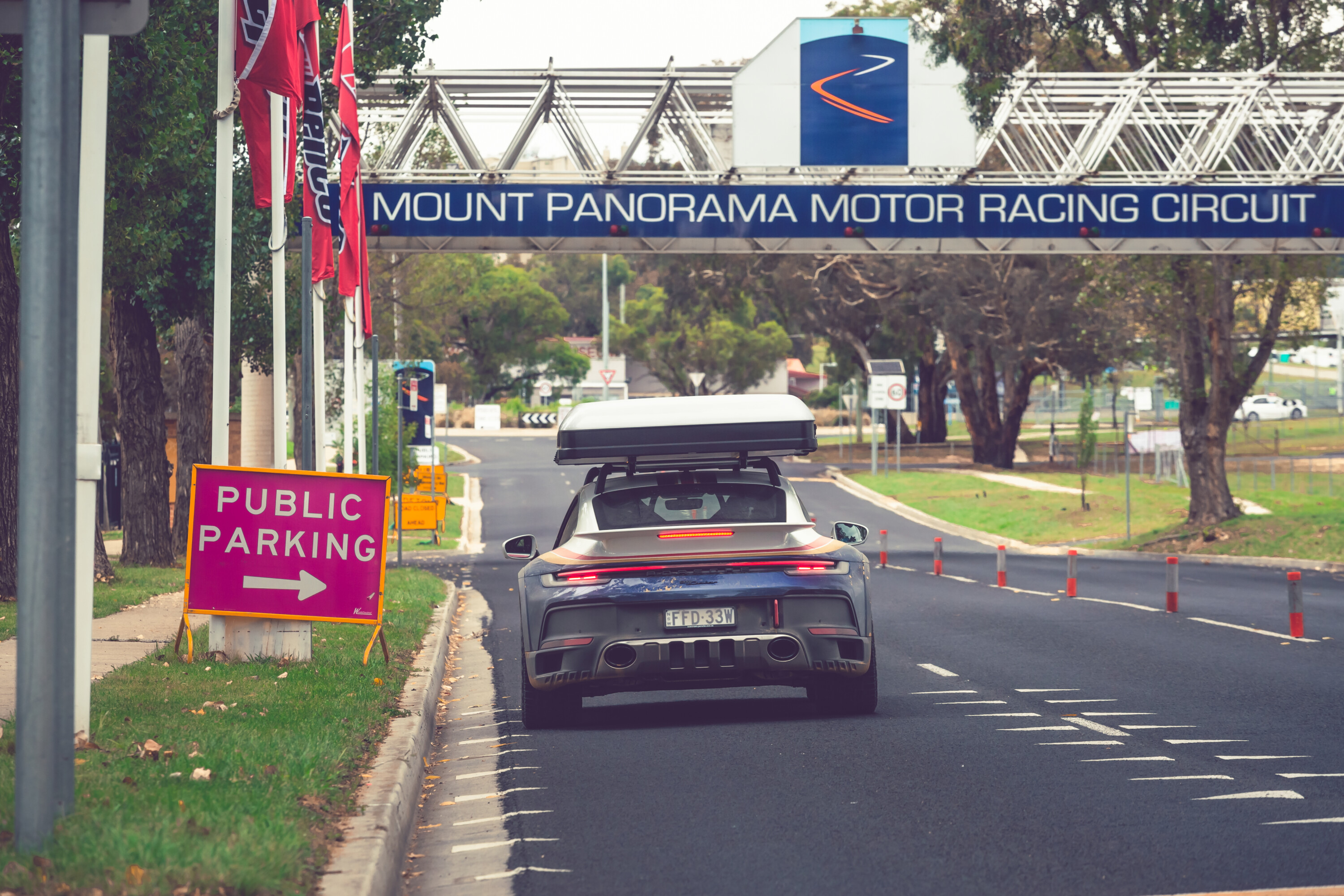
We instead opt for the Porsche Tequipment roof-top tent accessory to transform our Dakar into the complete overlander sports car. (The $8640 bed-in-a-box is available for other 911 coupes, as well as the Taycan, Macan, Cayenne, and Panamera.)
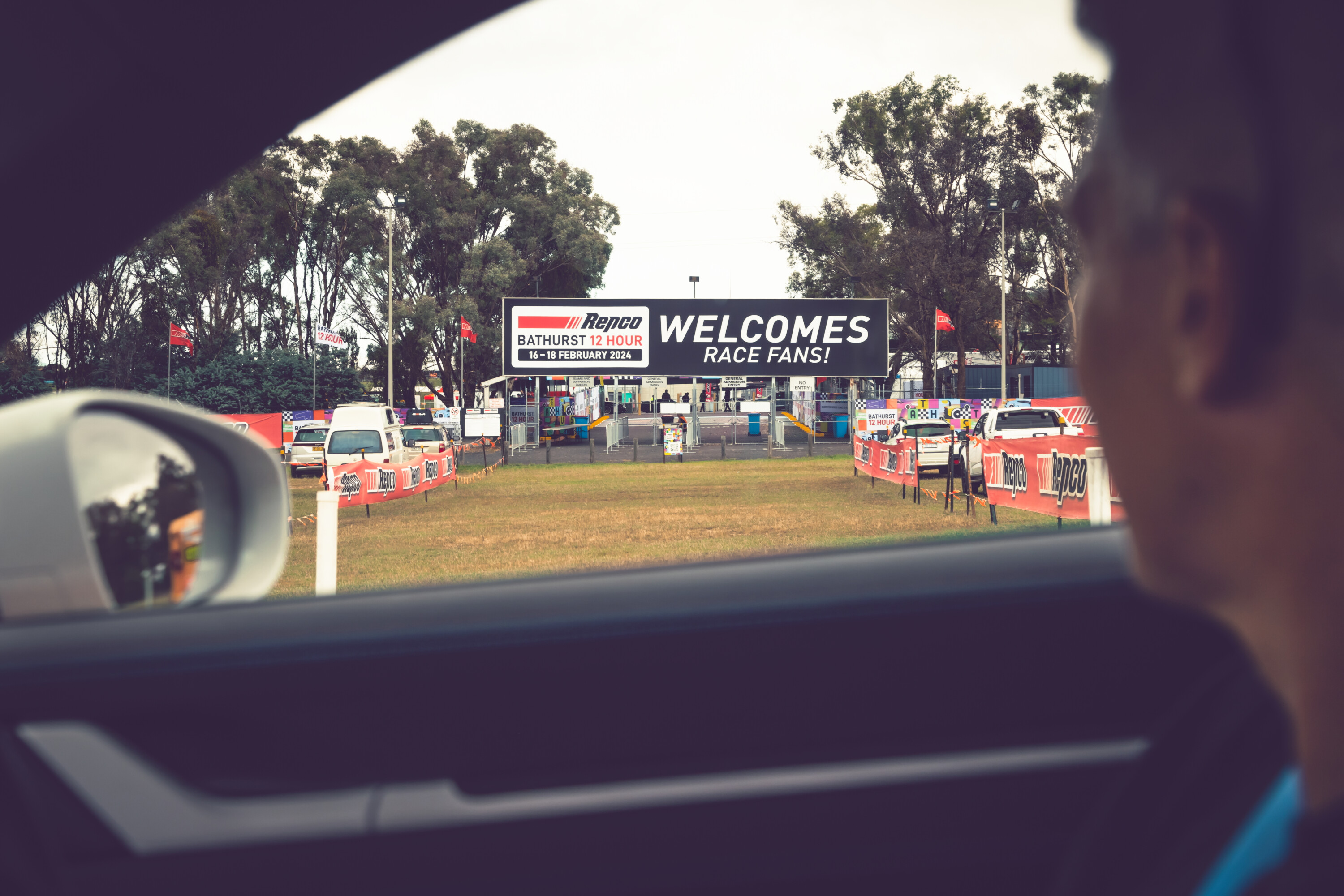
The plan is to stay overnight on the Bridle Track, then continue south to arrive at Mount Panorama in the midst of preparations for the 2024 Bathurst 12-Hour GT race.
1
Stage 1: Sydney to Glenbrook
Ironically, Porsche’s motorsport pedigree frustrated plans by photographer Thomas and me to take camping chairs, our own pillows and other camping comforts.
Our Dakar’s optioned GT3 roll cage, and the limited-movement buckets, made for awkward access to what is otherwise a useful, carpeted space behind the front seats. Even as standard, the Dakar is a two-seater only.
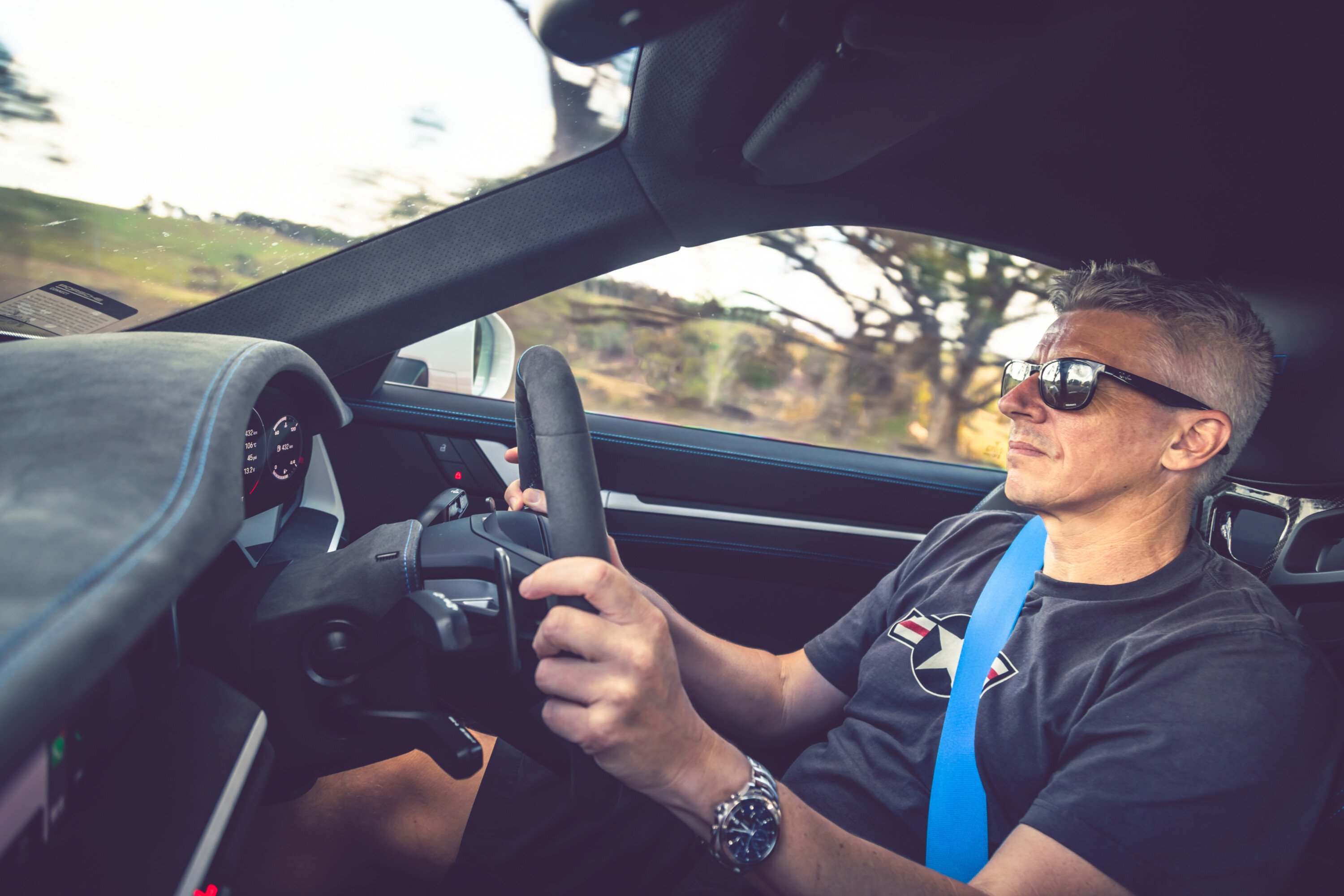
While we managed to wedge various soft bags between the gaps, we were surprised to find that our largest holdall plus camera bags fitted in the spacious compartment under the bonnet. Meanwhile, the six-point harnesses were pushed back through their slots in favour of the electric-blue lap-sash belts we preferred for long-distance touring.
1
We certainly felt how the wind rushes and howls around the hard-shell rooftop box at 110km/h
Taking to the M4 freeway out of Sydney, northwest-bound for the Blue Mountains, there’s an immediate tell-tale that we’re not in a regular, aero-honed 911. And that’s not counting all the stares and gawps from the motorists around us.
We’re not sure how much the hard-shell rooftop box adds to a co-efficient of drag that, at 0.35, is already much higher than the GTS’s 0.31, but we certainly felt how much wind rushes and howls around it at 110km/h.
Road noise is also elevated by the chunkily treaded all-terrain rubber, while the absence of padded rear seats means there’s less filtering of the twin-turbo flat six mounted at the very rear. The latter isn’t necessarily a negative. Likewise for the extra-supple ride borne serendipitously out of the Dakar’s longer suspension travel and spring rates that are 50 percent lower than the GTS’s.
There’s a firmness at lower speeds, but the ground clearance means you’ll never feel more relaxed in a 911 when rolling into angled driveways or travelling over speed humps.
1
Stage 2: Glenbrook to Sofala (to Bathurst)
After a late-morning coffee/breakfast pit-stop at Glenbrook – the eastern gateway to the Blue Mountains – Team Wheels Roughroads Porsche is on its way again.
Not long after Lithgow, Thomas barks one of his “Turn around!” photography requests, this aviation nerd having spotted a twin-engined Cessna slowly decaying in a field.
Left at Ilford, we then cross the Crossley Bridge into the historic gold-mining town of Sofala. Our plan is to start the Bridle Track from the ‘opposite’ end, at Hill End, after action shots on the curving climb of Sofala Road.
1
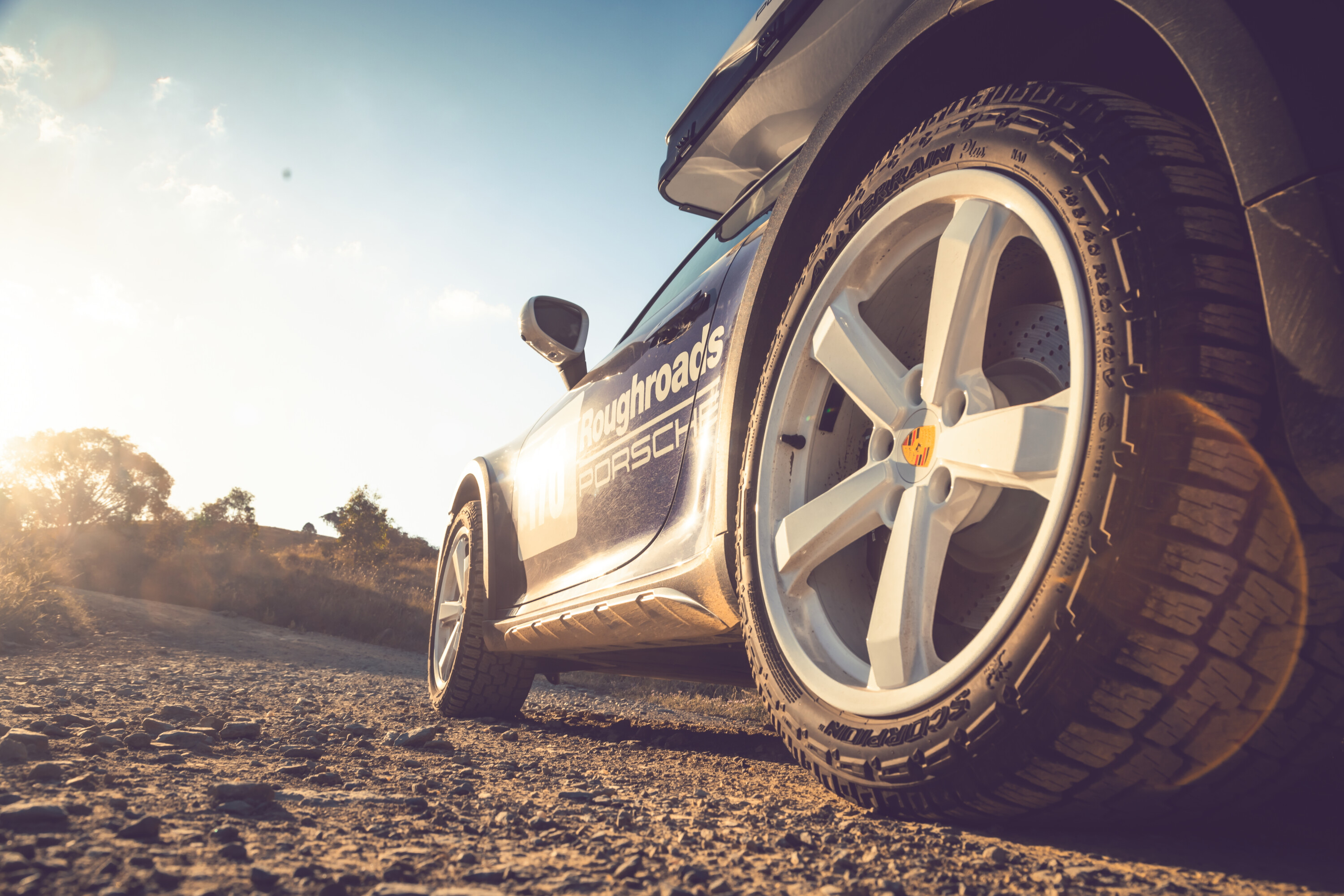
Around the hairpins with intent, the Dakar’s standard Pirelli Scorpion All-Terrain Plus tyres are predictably noisier and squirmier under load than a set of P Zeroes, though not to the degree expected.
Braking performance, too, feels slightly inferior to that of a GTS, without greatly limiting driver confidence.
Despite the rooftop box raising the centre of gravity, the Dakar still corners more like a 911 than a Macan, and there’s certainly not the kind of body lean exhibited by those 911-on-stilts desert-runners of yesteryear. No doubt, they’d have appreciated this Porsche’s active, load-adjusting anti-roll bars.
1
It feels like I’m on a two-way special stage as we do multiple passes for photography, but it drains the fuel tank at the fastest rate yet.
When we turn back towards Sofala, the range-to-empty is reading 207km. It would be closer to 150km by the time we reached Hill End and finding the recommended diet of 98RON in this historic hamlet of about 100 people would be as likely as another gold rush.
Metge and Lemoyne’s victorious 953 had been sensibly equipped with dual fuel tanks – 120 litres up front in the luggage compartment, with another 170-litre tank behind the driver’s seat. The 3.2-litre flat-six was also calibrated with a lower compression ratio to allow for poor fuel quality. Forty years later, 911-Dakar-the-car retains the mere 67-litre tank of the 911 GTS.
With plenty of off-road photography and filming to come, we play the caution card and U-turn to Bathurst, deciding we’ll instead tackle the Bridle Track from its official starting point, travelling south to north.
1
Stage 3: Bridle Track Part 1
Any car could handle the first third of the 60km Bridle Track; it’s bitumen, before we arrive at a T-junction offering a rocky track in either direction.
Taking a left for the Bridle Track, we soon reach the first large warning sign. Or rather 11 warnings, including ‘4WD only’, ‘Steep edges’, ‘Steep inclines’, ‘Falling rocks’, ‘Creek crossings’, ‘Floodways’, ‘Narrow winding road’. And ‘No trailers or caravans’.
An apt time to consider how Porsche has turned a Carrera 4 GTS from tarmac-tamer to bush-basher.
1
It starts underneath with standard flat panelling and an impact-resistant plastic stone guard for the double-wishbone rear axle. The front and rear aprons, as well as the side skirts, also incorporate stainless-steel body armour.
The body’s side panels feature stone-chip-protecting foil; the air filter is nabbed from the 911 Turbo to cope with higher dust intake; the filter and front-side air intakes are guarded by stainless-steel protection to repel flying stones; and reinforced engine mounts are borrowed from the GT3.
The wheelarches are covered in wider black plastic, and to accommodate the chunkier, chubbier multi-terrain tyres, the wheels had to be downsized from the GTS’s 20/21-inchers to 19s front and 20s rear. Tyres can make or break off-road expeditions.
1
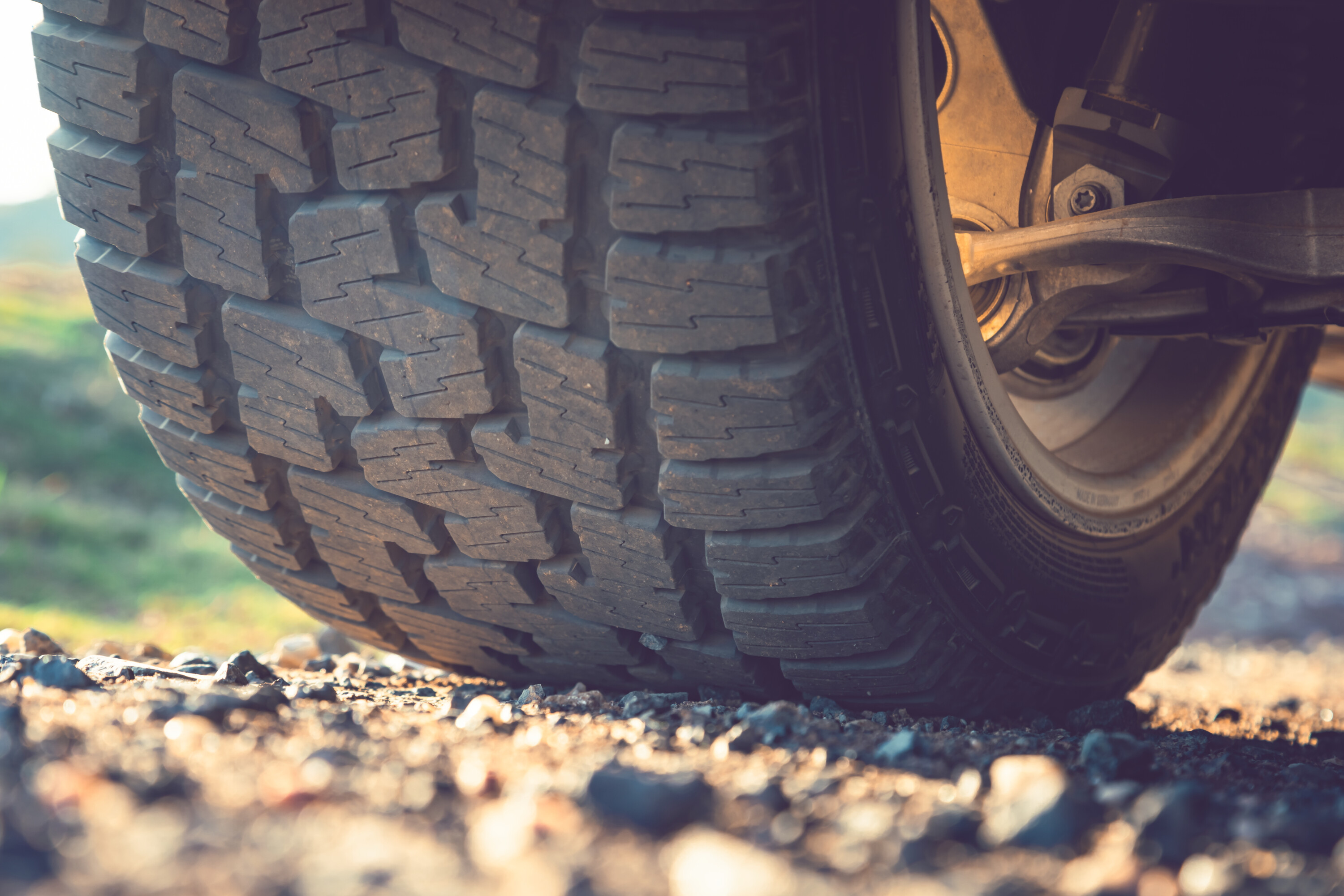
The Pirelli Scorpions provide a good degree of confidence, with their 9mm-deep tread, taller, reinforced sidewalls, and double-ply carcass construction designed to make the rubber impenetrable to the sharpest of rocks.
High-performing but fragile carbon-ceramic brakes are off the options table, and the Dakar also uses smaller rotors than the GTS – 350mm front and rear versus 408/380mm, and with grooved discs for disintegrating or ejecting small stones.
With an extra 46mm of ground clearance that can be lifted a further 30mm, the Dakar obviously brings superior rampover, approach and departure angles to the GTS, and nears those of the Macan and Cayenne, when the SUVs are in certain settings. Maintaining perspective, though, the 911 Dakar’s maximum 191mm ride height is still well below the obstacle clearance of your average dual-purpose Subaru.
1
For all the Dakar’s extra bush-bashing hardware and gubbins (and discounting the 56kg tent-box), Porsche says there’s only an extra 10kg (1605kg) over the GTS, achieved through various weight-saving measures.
A carbonfibre-reinforced-plastic (CFRP) bonnet is another steal from the GT3, the GTS’s auto-deployable rear spoiler gives way to a fixed CFRP spoiler, and lightweight, noise-insulated glass (a $2800 option on the GTS) is standard. A lightweight carbon roof is also available.
One last thing to do before we begin our Bridle Track adventure in earnest: switch the driving mode to Off-Road.
Exclusive to the Dakar in the 911 range, Off-Road mode raises the suspension to its maximum height, distributes torque more evenly between the front and rear axles, and locks the rear diff to enhance traction on the loose stuff.
1
“Stay on the road and keep off the moors,” I jest to Thomas, quoting from 1981’s classic comedy-horror An American Werewolf in London as we drive off, unperturbed by the cluster of warning signs.
The track is already sufficiently abrasive that any other 911, shod with standard summer tyres, would be wise to turn back.
Early paranoia directs my eyes regularly towards the digital tyre-pressure gauge, half expecting a sharp rock to burst both a Pirelli and our 4×4 party bubble.
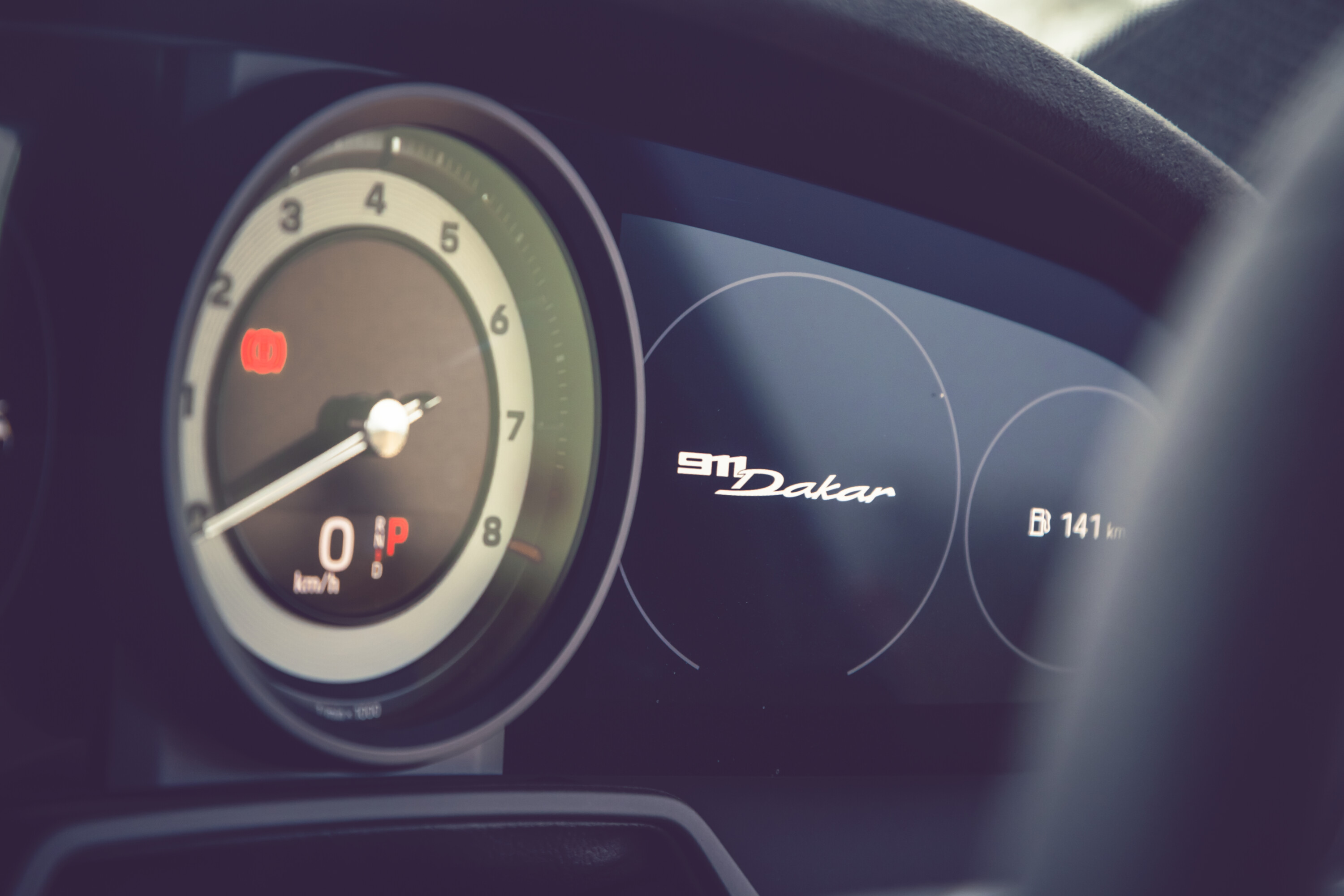
There’s zero reception out here and, unlike the Dakar Rally efforts, no support trucks brimmed with back-up supplies. Our only fix for wounded rubber is tyre sealant and an electric compressor. A warning does soon flash up on the same dial – for an apparent failure of the rear parking sensors. Hardly an expedition-ending problem, and owed to the rear of our 911 being caked in a thick layer of dust.
1
The Dakar to Bathurst plan was initially stymied. Not by the terrain, but by, of all things, range anxiety
After passing the first of a dozen camping reserves that dot the Bridle Track, we reach Monaghans Bluff.
Passage through this area had been blocked for 13 years after a giant boulder crashed down during a 2010 rockslide. In early 2023, a $2million, 12-month NSW Government project was finally completed – opening the full track with a 2km gravel bypass with steep switchbacks. Local government investment contributed various upgrades along the entire track, including toilet facilities.
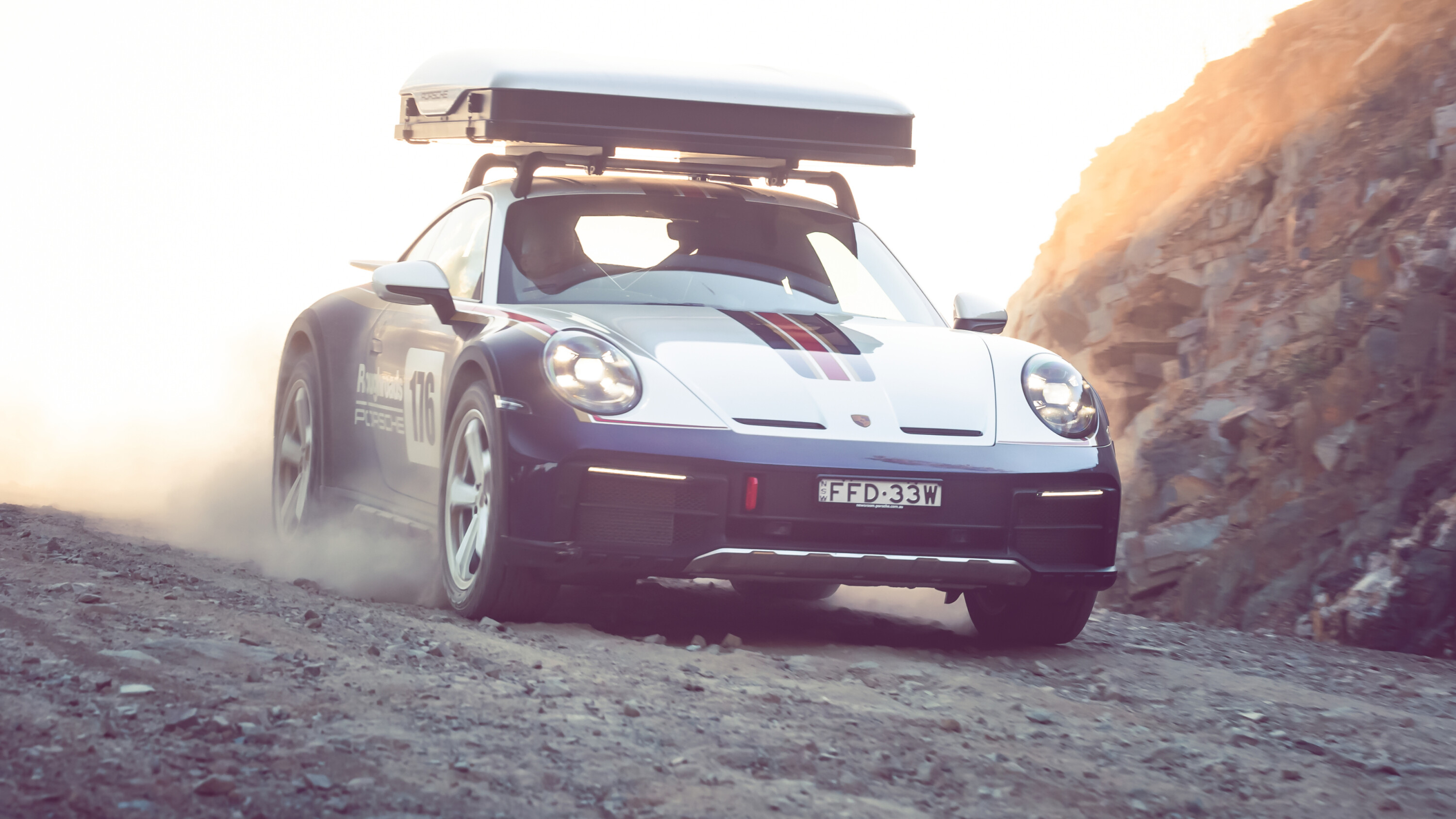
The 911 Dakar ascends the gradient and its loose, rocky surface without the merest hint of wheel slip. In first gear, and repeatedly for the camera. Ascending one of the steepest sections with extra speed, we experience a true Climbdance moment as we emerge from the shade and the setting sun temporarily blinds us.
1
The track is quiet this evening, but the few people already encamped in the reserves all wave enthusiastically as we drive by. One young couple can’t resist leaving their tent site to follow us in their P-plated Mazda B-series ute.
Ed and Vic have travelled from Oberon, just 46km south-east of Bathurst, for a Valentine’s Day overnight picnic. But it’s clear they’re also smitten with the 911 Dakar.
“It’s fucking awesome,” says Ed. “You don’t see Porsches out here, not even Cayennes.” He also has an eye for off-roading detail. “Those tyres look good.”
Thomas enlists the young romantics to help with some photography tracking on the Bluff bypass.
1
As dust and dusk start to merge, it’s time to find our camping spot, rolling down into the Randwick Hole Reserve to pitch up beside the Macquarie River.
My fresh-air-bnb is unquestionably the easiest tent I’ve ever erected. No pegs, no guy lines, no hammers. Simply unlock the two latches on the rooftop box, push the lid up with the aid of gas-pressured dampers, extend the floor outwards, and the integrated cotton-blend walls form a wedge-like shape said to be inspired by the ‘flyline’ sloping roof of a 911.
The fold-out/down integrated telescopic ladder provides both the convenient tent access and essential support for the extended floor. It’s here I discover that some small metal poles required for propping up the tent entry were in a Porsche bag that we’d left at the dealership, thinking it contained only a
car cover.
1
Channelling my inner Bear Grylls, I devise a fix using some branches. The next trick is to throw my sleeping bag and other items into the tent without the millions of flies joining them.
Thomas, meanwhile, has found some more sticks and branches to get a fire going. He patiently cooks a couple of kranskies over the flames, while I choose to stave off hunger faster with some hastily-made ham and cheese rolls.
I’ve known Thomas for more than 20 years, but he’s brought his own compact tent. We’d need to have a different kind of relationship to share the roof tent’s 2.1 x 1.3m floor dimensions that are otherwise perfect for one.
The rooftop tent floor is not only a perfectly flat surface but covered almost entirely by two highly comfortable polyfoam mattresses. Above, there’s even a ‘moon roof’ clear plastic window (which can be zip-covered) for stargazing and some natural light. Most appreciated are the side vents that, once unzipped, make the most of a welcome breeze pushing aside the twilight humidity.
1
Stage 4: Bridle Track Part 2
We have a choice of two exits from the reserve. The easy path is going back out the way we came in; the trickier path is a steep, uneven, double-trough short-cut.
It’s a no-brainer. Or potentially brainless.
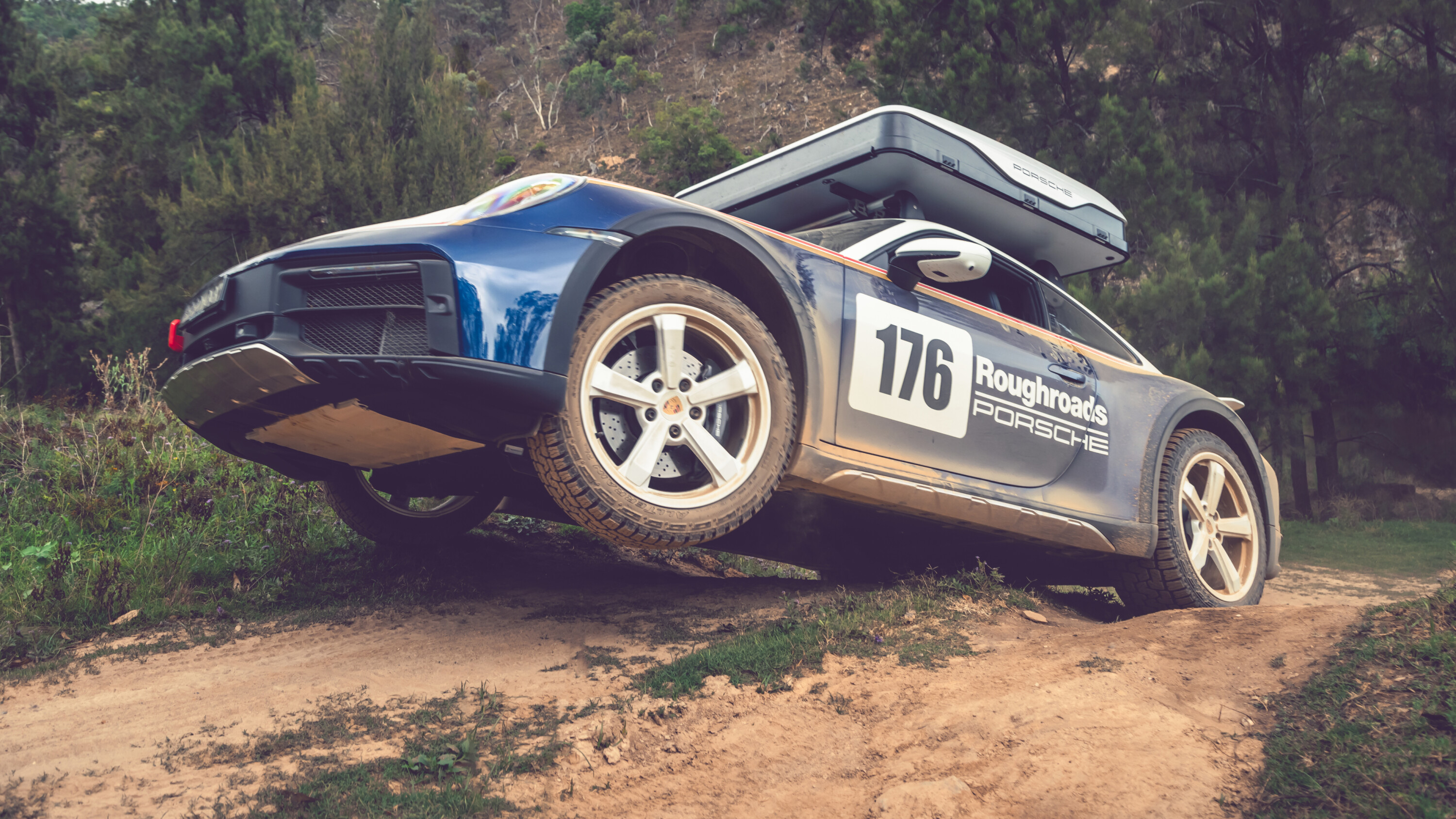
Straddling the ruts, the Dakar twice crawls up the incline and over the trickiest part, the crest. On the third run, I turn into the ‘apex’ at the crest too early, snagging the driver-side sill on a grassy mound, the front-left wheel spinning momentarily a foot off the ground. No damage, just another opportunity for this 911 to showcase its traction talents.
1
I reverse the Dakar down the hill on three wheels, then go forward on the same wheels before the front-left touches down again. Thomas is keen to capture some dust-trail drone shots, so we back-track a few kays to Monaghans Bluff.
Despite caffeine deprivation, the Dakar’s capabilities – and especially its tyres – give me the confidence to switch to its other unique driving mode.
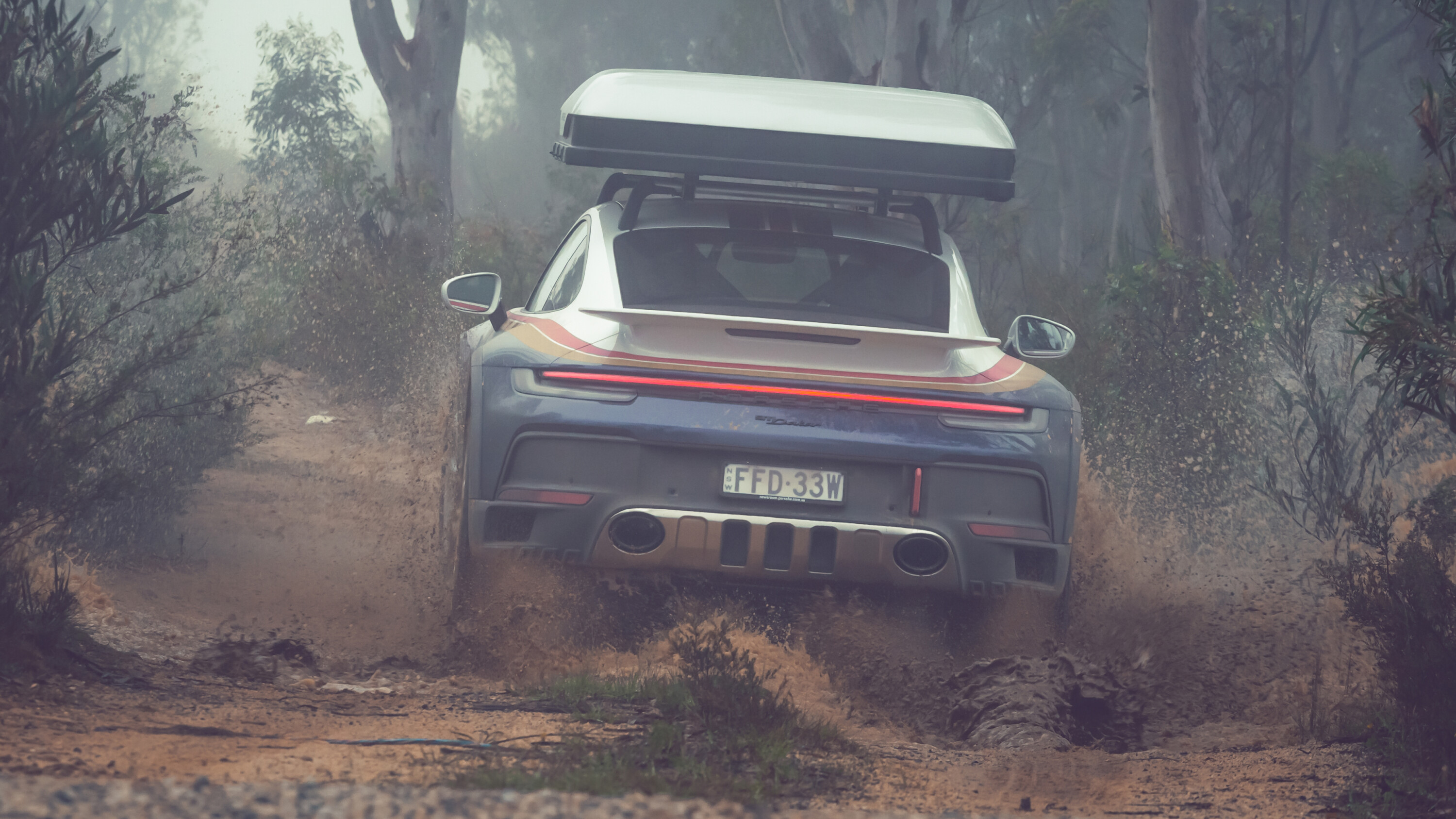
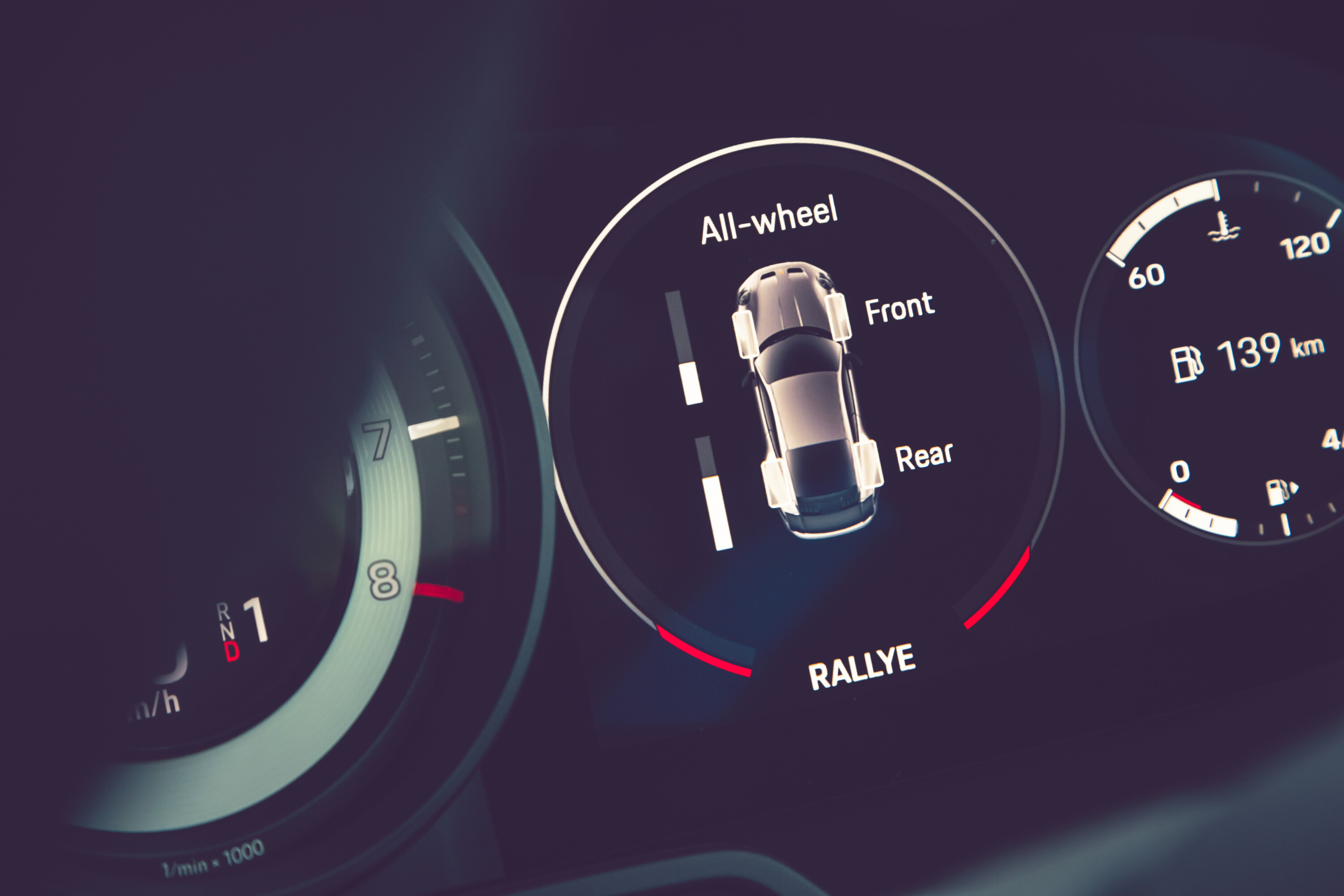
Rallye switches to a dominant rear-drive bias (a 70:30 split, the digital AWD gauge suggests) and allows for greater wheelspin, turning the Dakar into a hugely entertaining drifter on the rocky gravel.
The 911’s relative lightness and nimbleness compared with an SUV or 4WD is also a bonus off road, and standard rear-wheel steering aids both U-turns and rock-avoiding manoeuvres. The excellent brakes don’t discourage higher speeds into the hairpins, and two very sudden wildlife encounters – a pair of goats, followed later by a pair of roos – reveal a hugely impressive ABS calibration for loose surfaces. We also make a note to look out for a large wooden boat.
1
After several glances at the tyre-pressure display confirm all is well with the Dakar’s deeply treaded boots, we continue our advance towards Hill End, again in Off-Road mode.
The Bridle Track is one-vehicle narrow in most places, living up to its name. This first road built between Bathurst and Hill End during the early 19th-century was so tight in places that travellers had to jump off their horses and guide them by
the bridle.
We’re certainly not expecting the Off-Road mode’s reduced top speed of 170km/h to be a factor today.
We encounter our fellow Randwick Hole campers taking a stroll and stop for a chat. Ron and Gloria are a couple from Bathurst who love the Bridle Track so much they have been coming here for about 40 years.
They, too, say it’s extremely rare to see a Porsche out here. Ron kindly offers some tips on what we can expect for the 15km remaining to Hill End. His key advice is to probably give the Root Hog Road river crossing a miss. “It’s likely too deep right now for this car.”
The 911 Dakar features red tow hooks front and rear – again, just like the 1980s 953, if not then made from forged aluminium – although with no snorkel, phone reception, or other 4WDs in sight as we approach it, we take the route marked ‘sensible’.
1
After passing through a cutting, we soon find ourselves at the Turon River crossing
First, we pause at the edge of a cliff that provides a stunningly picturesque valley view, at the point where the Bridle Track splits from running parallel with the Macquarie River to chase the Turon River.
The Dakar’s eight-speed PDK continues to focus on first and second gears mostly, keeping revs above the 2300rpm start point for the engine’s 570Nm maximum torque (which doesn’t end until 5000rpm).
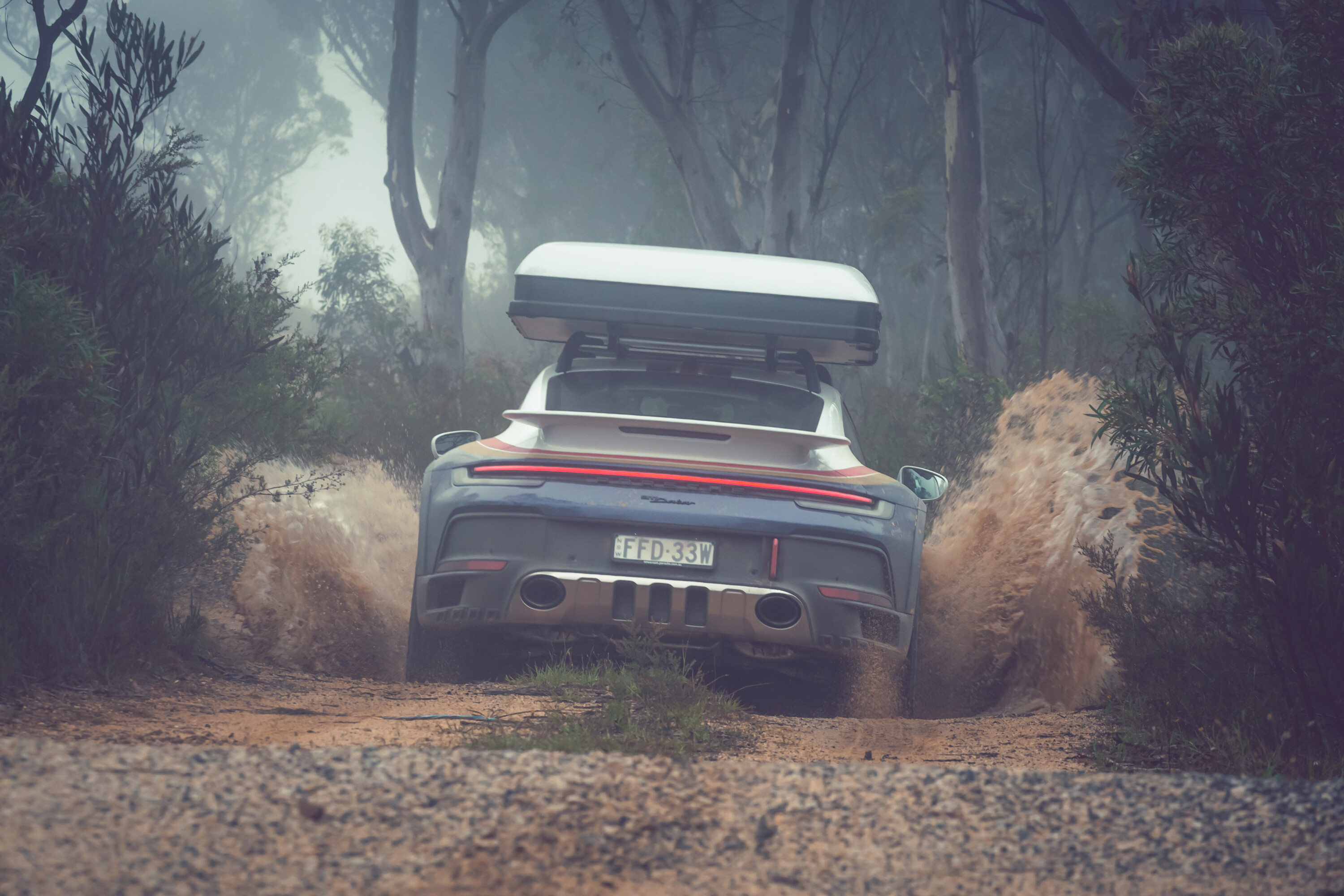
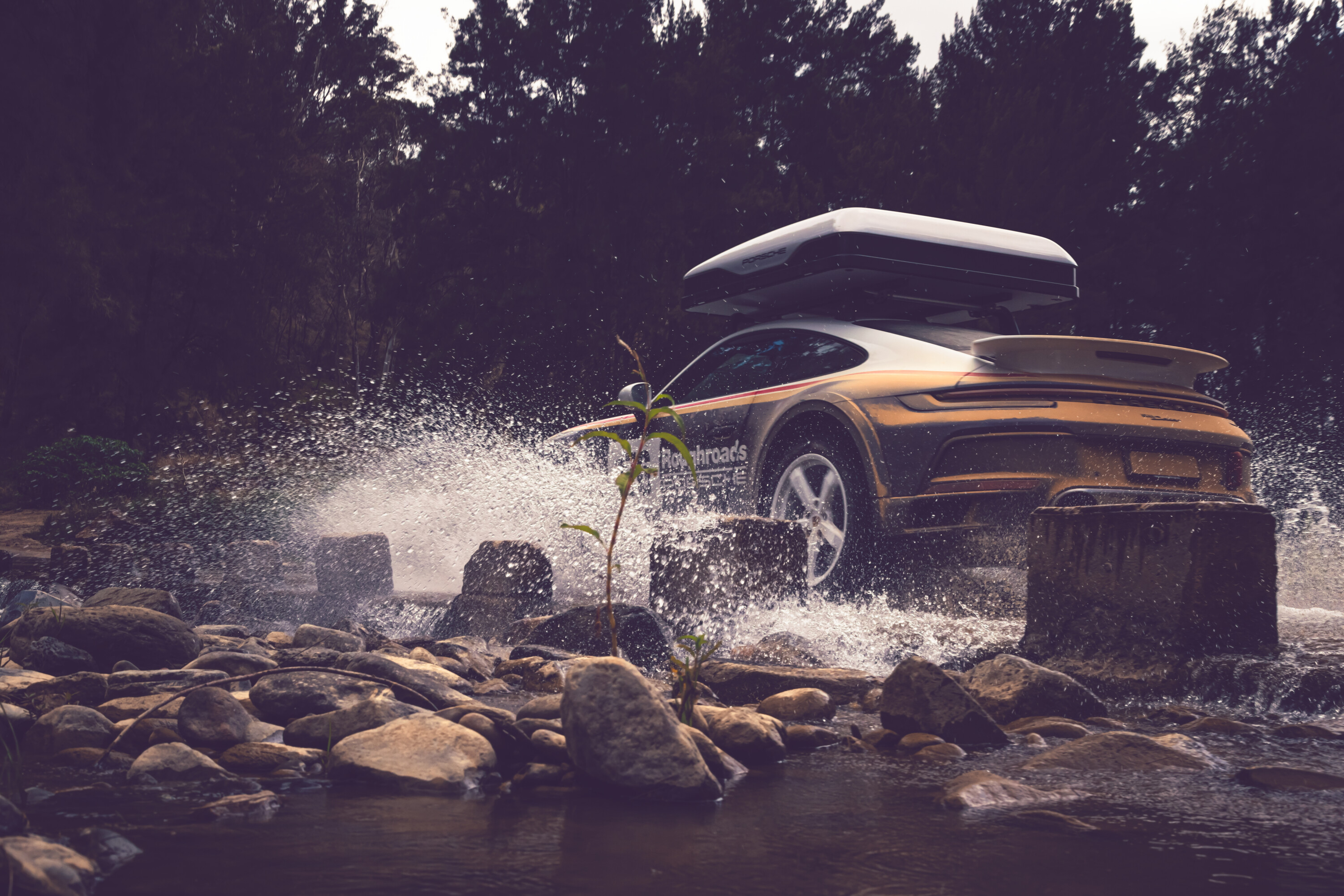
After passing through a rock cutting, we’re soon at the Turon River crossing with its concrete causeway. The Dakar dutifully makes more than one splash for Thomas’s camera.
1
We move aside for a couple of 4WDs passing through, with grins and thumbs-up from the guys in a red, canopied Mercedes X-Class, then a ‘Fucking cool!’ from the front passenger in a Nissan Patrol.
A local angler wades out of the river, much happier to see the Porsche than pesky carp.
The ascent away from the river brings the longest twisty section of the Bridle Track as the 911 Dakar continues to prove it’s no fish out of water in this environment.
It’s also the closest the track gets to Hawkins Hill, where in 1872 the Holtermann Nugget was discovered at the Star of Hope goldmine. The 93.2kg of gold extracted from the very un-nuggety 285kg block would be valued at about $5.2 million in today’s money. Still, that would only buy about 10 911 Dakars.
1
Regular man-made drainage mounds are waiting to give the Dakar a bloody nose if it arrives at ambitious speed
We catch and pass the X-Class as the Dakar’s gearbox finally gets some rare opportunities to climb into third gear. Rocks are still sprinkled heavily across the dirt track, but the robust tyres have by now earned our utmost trust. Scanning ahead is still vital, however. Regular man-made drainage mounds are waiting to give the Dakar a bloodied nose if it arrives at ambitious speed.
No such problems for the motocross rider we let past as he hops and zips happily along.
There’s no chequered flag as the Bridle Track ends – only a nondescript blending of rough dirt into smooth bitumen as dense woodland makes way for the open land of Hill End with its smattering of buildings.
1
Switching to Normal drive mode as we follow directions to the village centre, what’s noticeable is everything that’s not noticeable.
There are no creaks or rattles, no squealing or grating sounds from the brakes. There’s nothing wrong with the 911’s dust-sealing, either; the light dirt on the carpet mats and Race-Tex sills is only from our footwear and clothing.
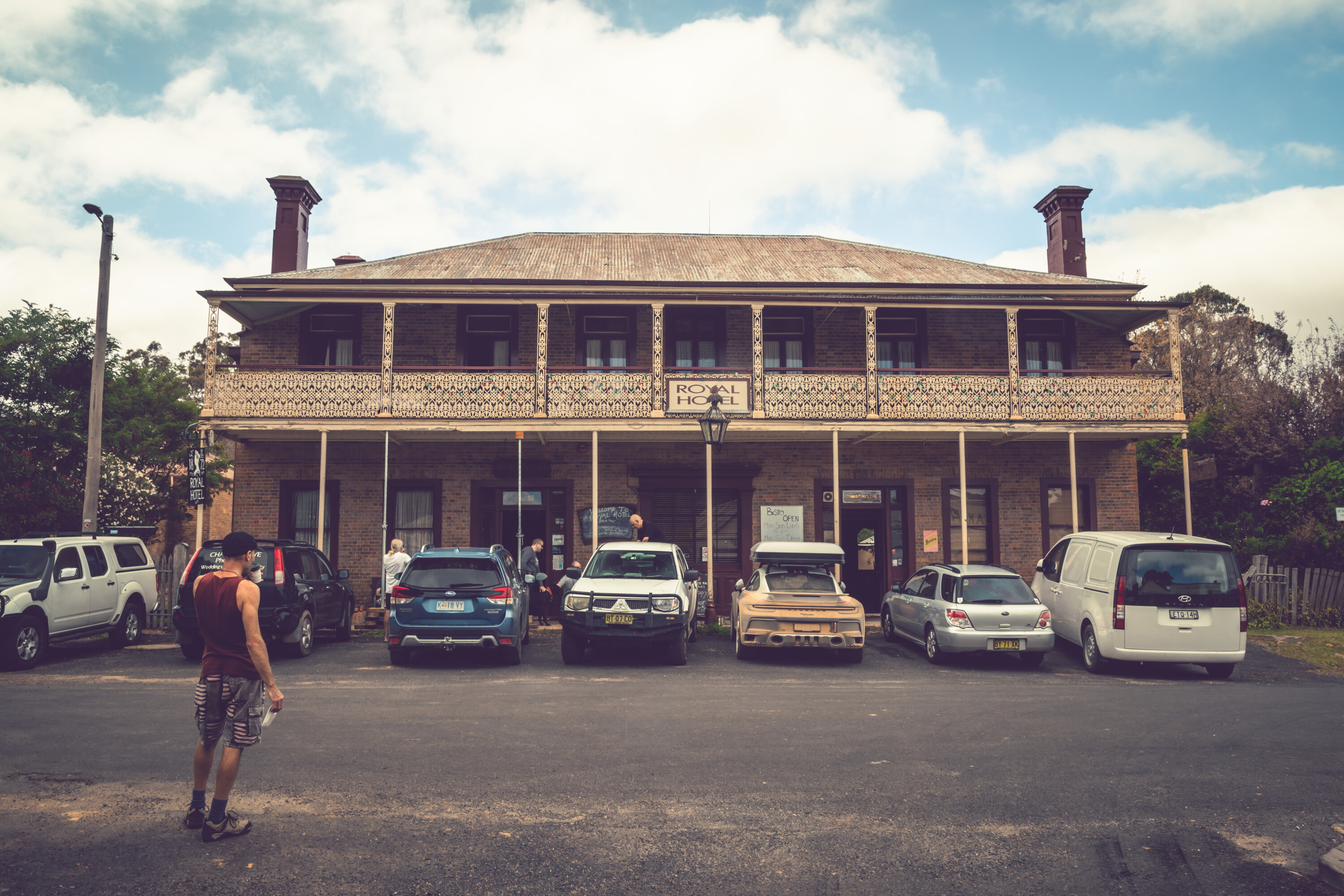
We roll into a parking spot in front of the Royal Hotel, squeezing into a gang of 4WDs, whose loitering owners perform instant double-takes when they spot the 911.
1
The motocross rider is also at the pub, and we learn the young lad helped on the construction of the Monaghan’s Bluff bypass.
He’s also impressed that our sports car navigated the Bridle Track without drama, even if you’re highly unlikely to find it on a list of Australia’s toughest 4WD challenges.
Thomas and I make our excuses, as we’ve eyed the Baker & Grocer store across the road where Gloria earlier told us we could find a good coffee. She wasn’t wrong.
1
Stage 5: Hill End to Mount Panorama
We have a rendezvous with more familiar 911 footing, on a mountain called Panorama.
The Hill End Road, especially the scribbly-line section between Crudine and Sofala, is a road built for all 911s.
Adopting an ‘on-road mode’, we engage Sport via the small, conveniently placed Driving Mode dial on the steering wheel and lower the now-stiffer suspension via the dedicated dash button. The extra touch is to select ‘M’ on the centre console to give us full manual control of the paddleshift levers.
The 353kW 3.0-litre twin-turbo flat six howls and roars as the tacho needle moves from the middle to upper ranges, the throttle pedal and engine response perfectly in sync with the squeezes and lifts of my right foot.
1
I’m not the least bothered by the all-terrain tyres shrinking the Dakar’s top speed to 240km/h, well down on the GTS’s intimidating 309km/h.
The Dakar’s mountain rubber and elevated ride height may slightly blunt this 911’s dynamics, yet the handling is still sharp, the steering still joyously precise and communicative.
Our least preferred driving mode turns out to be Normal, where the engine sounds less inspiring, boomy at times, and the PDK becomes indecisive among its highest gears.
Thomas and I are both agreed on how we’d order a Dakar: no-cost leather electric pews instead of the rally-style buckets, and no roll cage. We’d also stick with the more versatile all-terrain rubber over no-cost regular tyres.
1
An interior with more rally-raider character beyond a token ‘911 Dakar’ dash badge and some Race-Tex trim would have been worthwhile for greater differentiation to other 911s, and adaptive cruise control was missed on the boring freeway stages.
Not that anyone can still order a Dakar now, with all 2500 global units apparently accounted for, including 15 for Oz. A Dakar reprisal is, however, a possibility for the new 992.2 due for a reveal later this year.
When we arrive at the Mount Panorama circuit, it’s been closed a day earlier than we expected, with first practice for the B12 not due until tomorrow. The security guard won’t be swayed by our ‘competition spec’ sports car, so there are no photos to be done on the actual track.
1
However, we skirt the premises and find an unlocked gate, leading to a view that more than lives up to the mountain’s name.
As we contemplate how cool it would be to go flat-out in the 911 Dakar around The Mountain, we ponder something else: in creating a car that could appeal to both 4WD enthusiasts and performance-car lovers alike, has Porsche inadvertently created the ultimate Aussie sports vehicle – a performance car that has the ability to eke the very best out of this wide brown land?
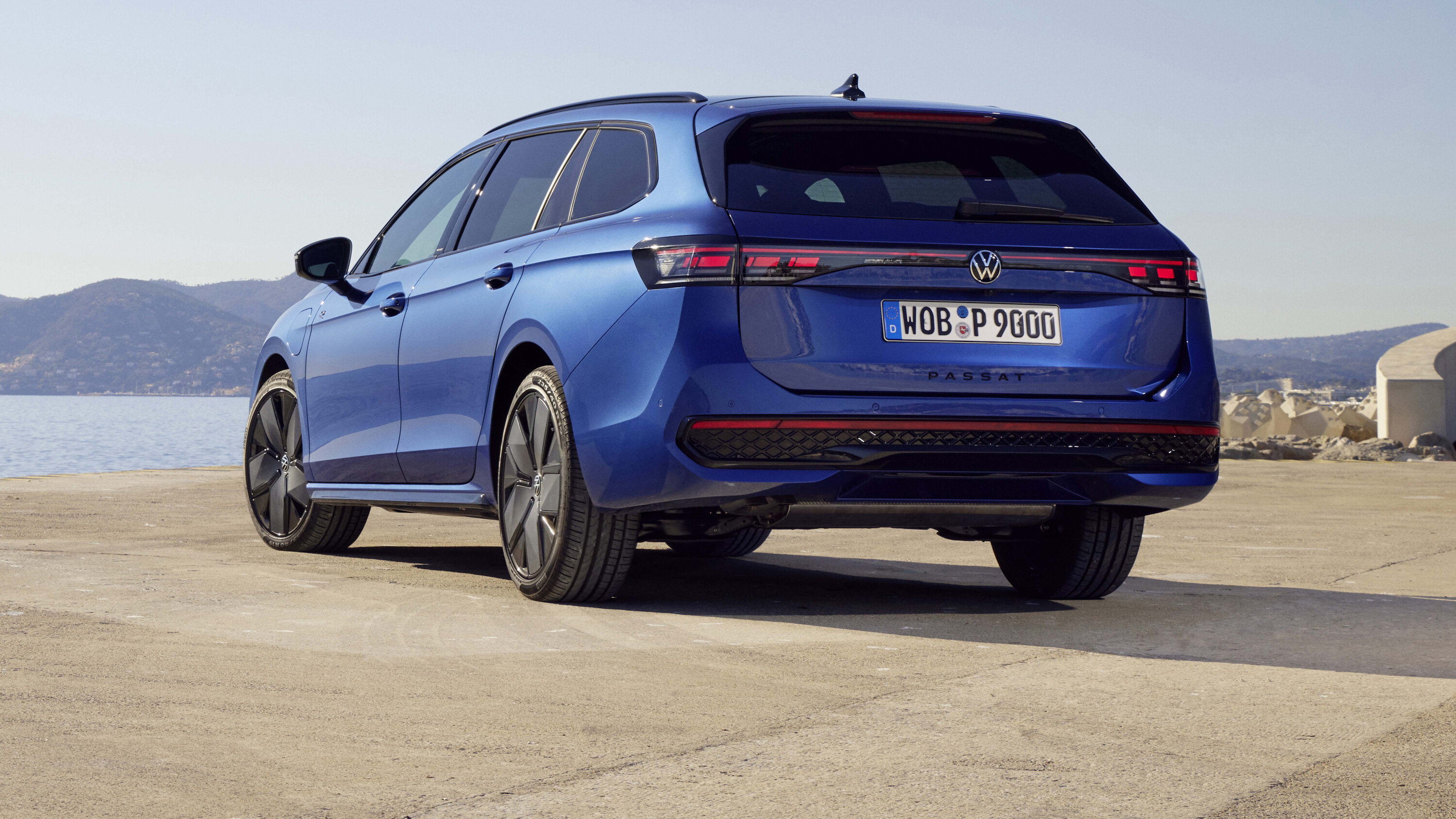
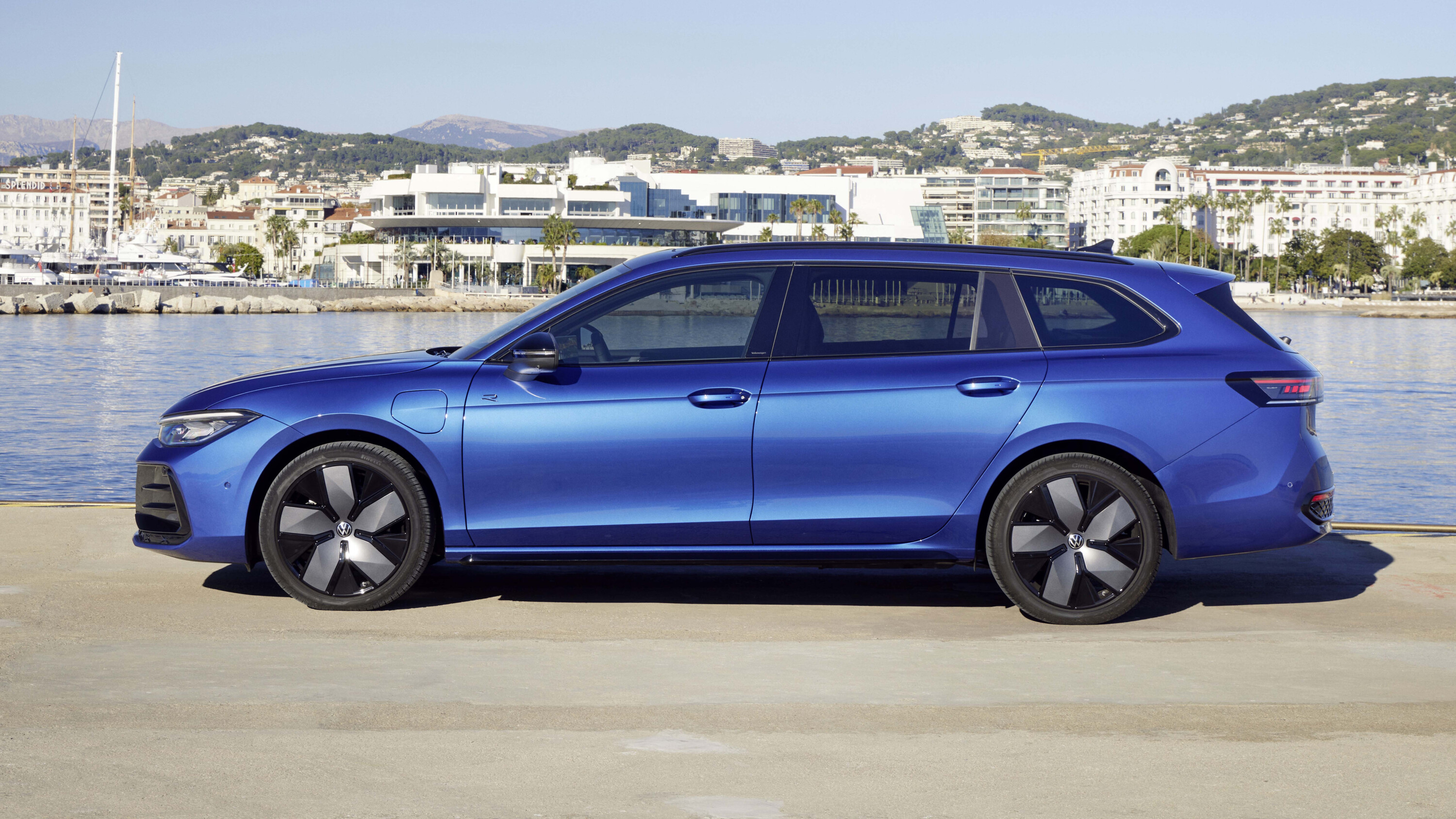
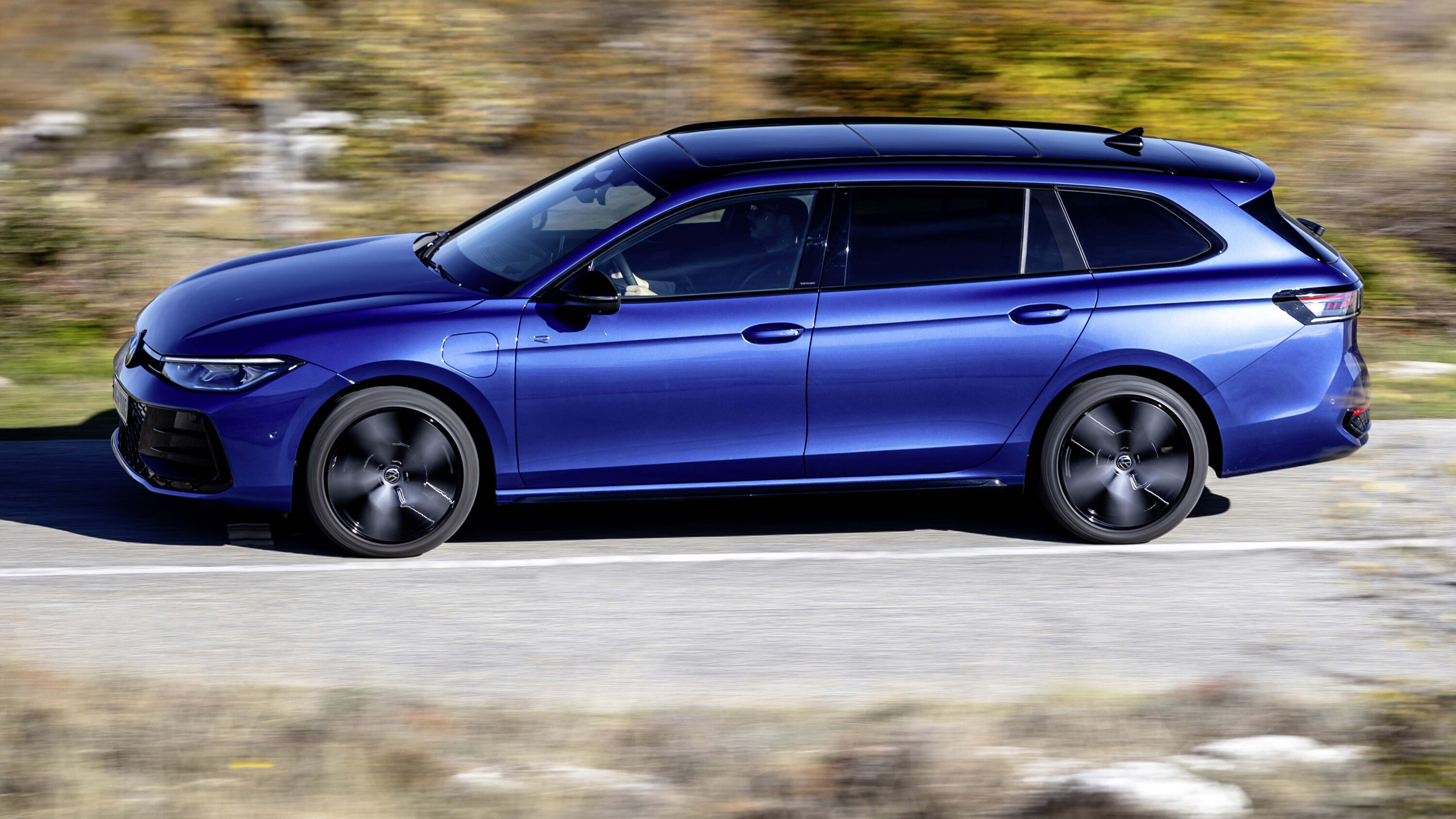
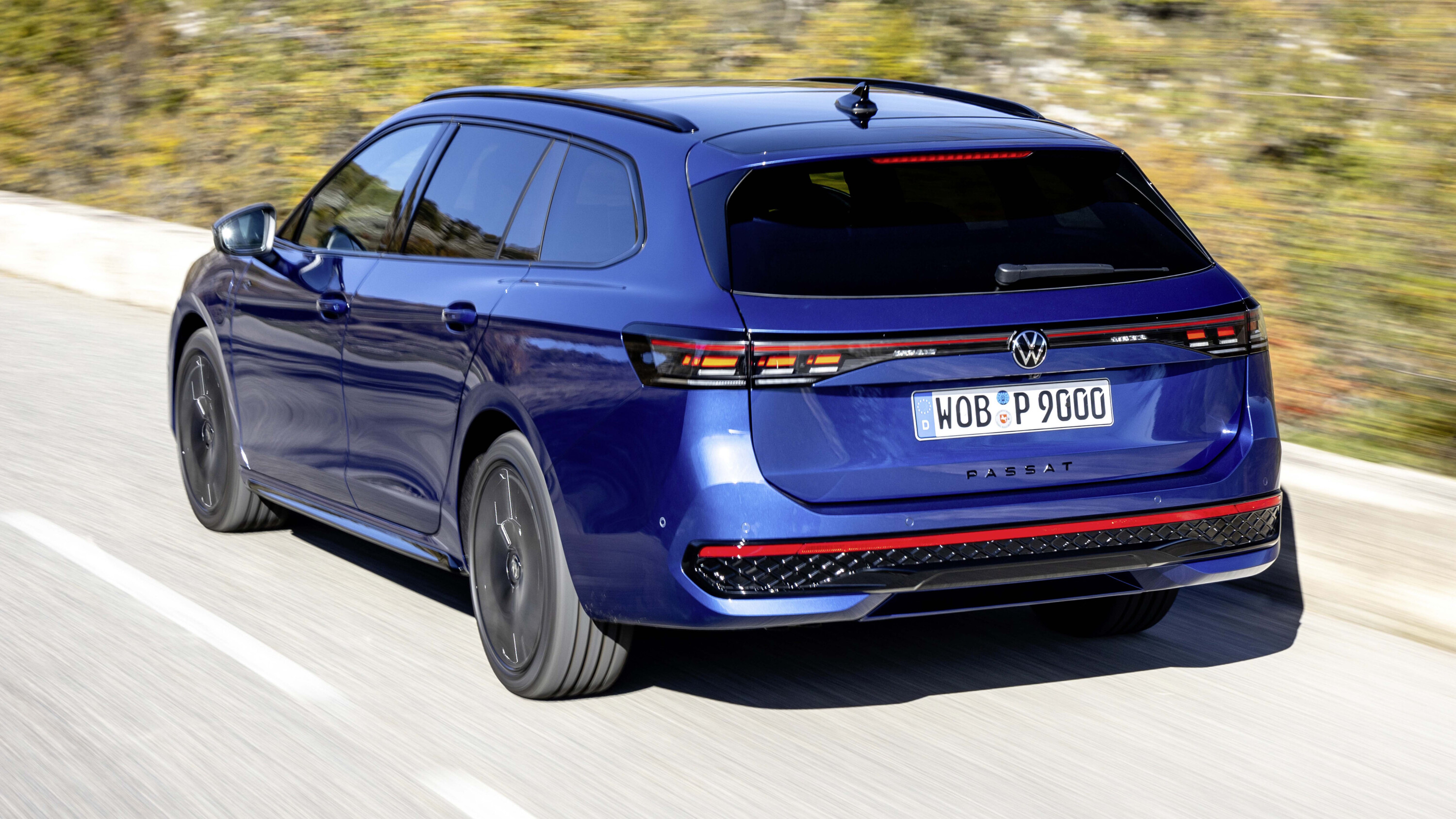
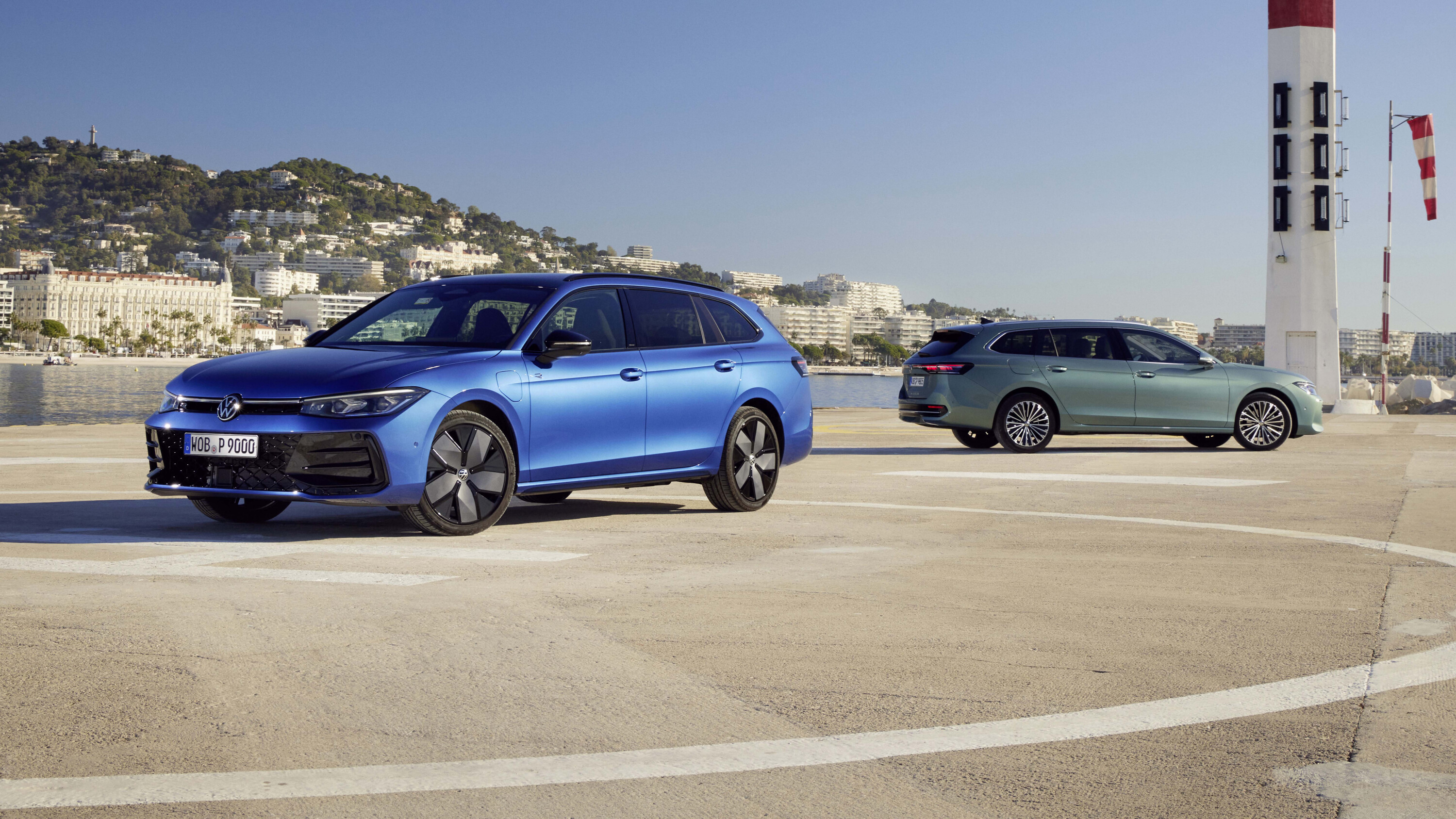
It certainly is, although we wouldn’t blame you for feeling a mite underwhelmed. Where the outgoing, eighth-generation Passat was a chiselled thing – and charmingly rugged in Alltrack spec – this new car lacks visual clout.
The Skoda Superb was always reasonably related to the Passat, but while the latest versions of each again share a platform and powertrains, they now also share much of their bodywork. And that’s robbed this car of some individuality.
Still, its curvier lines have a noble cause; a newly slippery 0.25 drag coefficient whips its predecessor’s 0.31Cd into shape and nudges the humble petrol-powered Passat towards EV territory.
The primary aim here isn’t a gargantuan range figure, but rather optimum hush and refinement inside. Many mainstream rivals have ebbed away, thus the general class standard around it is much more premium. The Passat is smartening up to suit.
Yep, it’s a popular car. The badge has been with us for over 50 years and VW has now shifted more than 33 million examples.
Even if the SUV market is rapidly eating into traditional sedan and wagon sales, the equity of a sub-brand like ‘Passat’ can’t be knocked (although on these shores Volkswagen has so far said we won’t get this model). At least a European drive helps us preview the oh-so-heavily related Superb ahead of its Australian release…
Though the Skoda will arrive in hatchback and wagon variants, VW is offering only the latter. We’d tend to recommend the wagon in most cases anyway, but perhaps it’s worth taking a short moment to mourn the sedans disappearing quietly from our showrooms.
A 1.5-litre TSI turbo-petrol engine comes in both mild and plug-in hybrid forms; the former is 250kg lighter and brings sharper dynamics, while the latter will hoover up a lot of sales thanks to strong fleet car credentials and an ability to cover around 100km purely on electricity or a bulky 900km overall.
The 2.0-litre TSI lives on too, with 110kW or 195kW peaks, the latter similar to that in the front of a Golf GTI and good for a perky 5.6sec sprint to 100km/h. A 2.0-litre TDI offers 90kW, 110kW and 142kW outputs.
For each fuel type, the highest tune brings all-wheel drive for a headline 2200kg towing capacity.
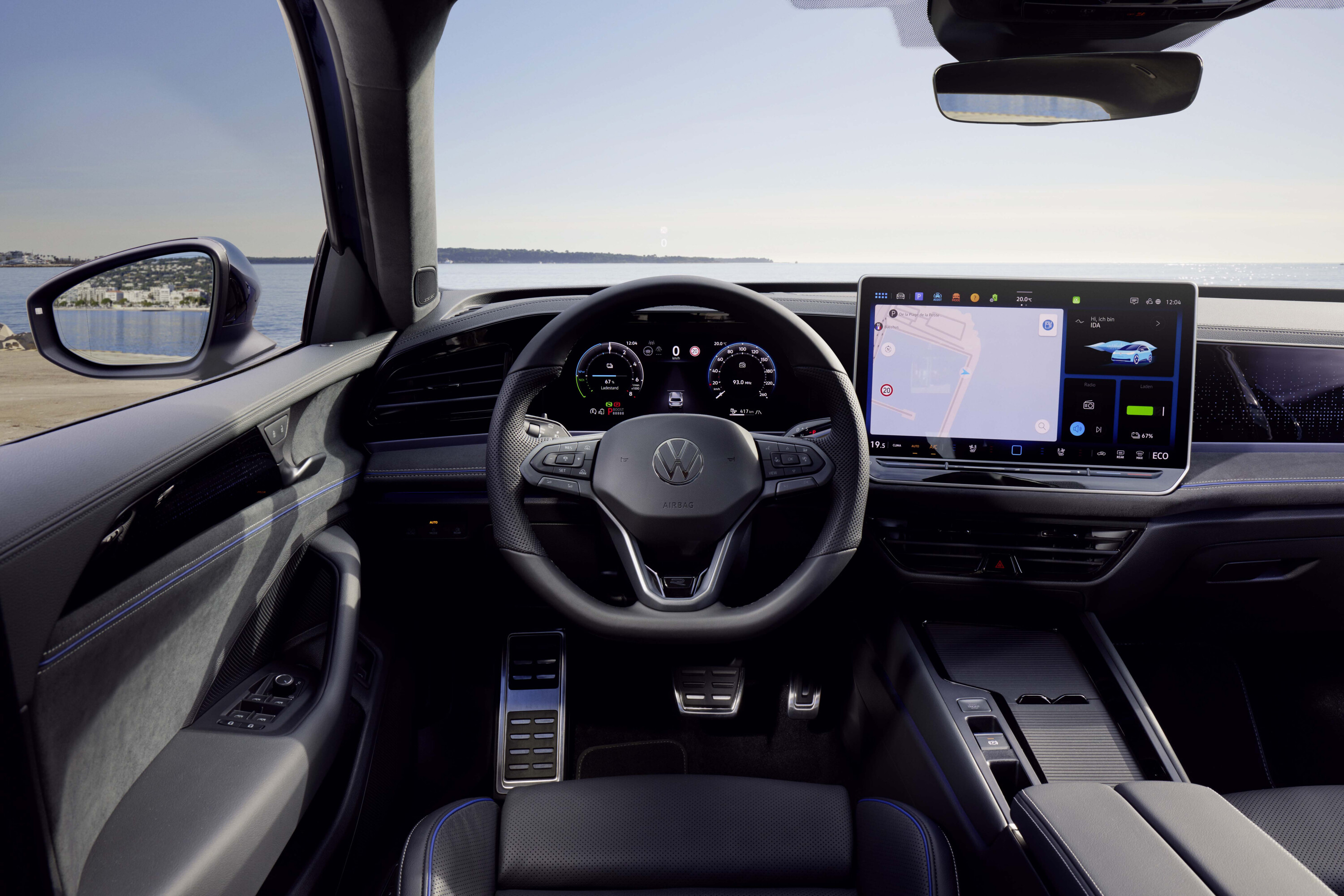
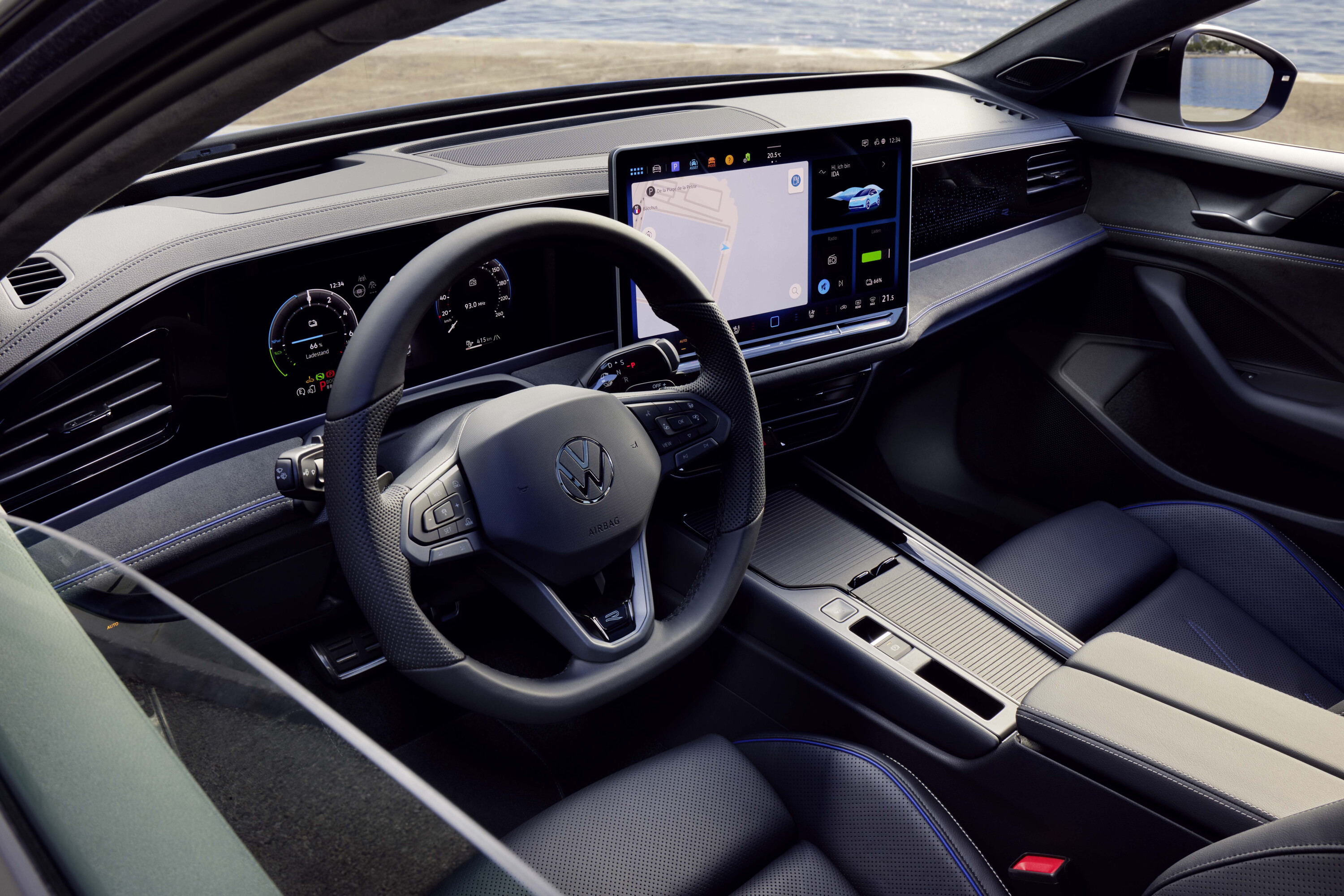
Every single Passat now has a DSG dual-clutch automatic transmission with the design team decluttering the centre console as a result – gear selection moves to the right-hand column stalk with the wipers and indicators incorporated on the left. You still get paddle shifters, thankfully.
Sharing its platform with the latest VW Tiguan – which Australian showrooms will get – the Passat steers, handles and grips well. Its ‘MQB Evo’ platform promises much for the no-doubt countless models that’ll sit atop it, not least the new Superb.
But where the Tiguan crashes abruptly over urban road furniture, the Passat is a comfier place to be. There’s still a firm edge to its suspension, even on meek 18-inch alloys that don’t do its embiggened dimensions justice, but it’s at least better than the SUV (as you’d hope with less mass and a lower centre of gravity).
The 1.5-litre TSI mild hybrid that kicks off the range might just do the trick, especially if you’ll rarely fill every litre of luggage space. It’s the neater car to drive thanks to its 250kg-lower weight and, despite its inability to run on electricity alone, it’s the best proof possible that this new Passat has nailed its refinement brief, being impressively hushed on a motorway cruise.
1
You might learn to love the looks when you know what tricks their aero is weaving.
The top-selling Passat is expected to be a plug-in hybrid, mind. While a 200kW peak output tops the two options, you’ll rarely extract every ounce of performance in either car, not least because the slightly coarse nature of their engines at higher revs discourages it. Better to lean into the car’s efficiency credentials.
It’s got enough to pep in EV mode around town and is pleasant to punt around, even if the whine of the e-motor occasionally cuts through the quiet. But in truth, it’s the larger 2.0-litre petrol and diesel options that, unfashionable as it may be, put this car right in its comfort zone. They pair brilliantly with the DSG ‘box and should make motorway miles a breeze.
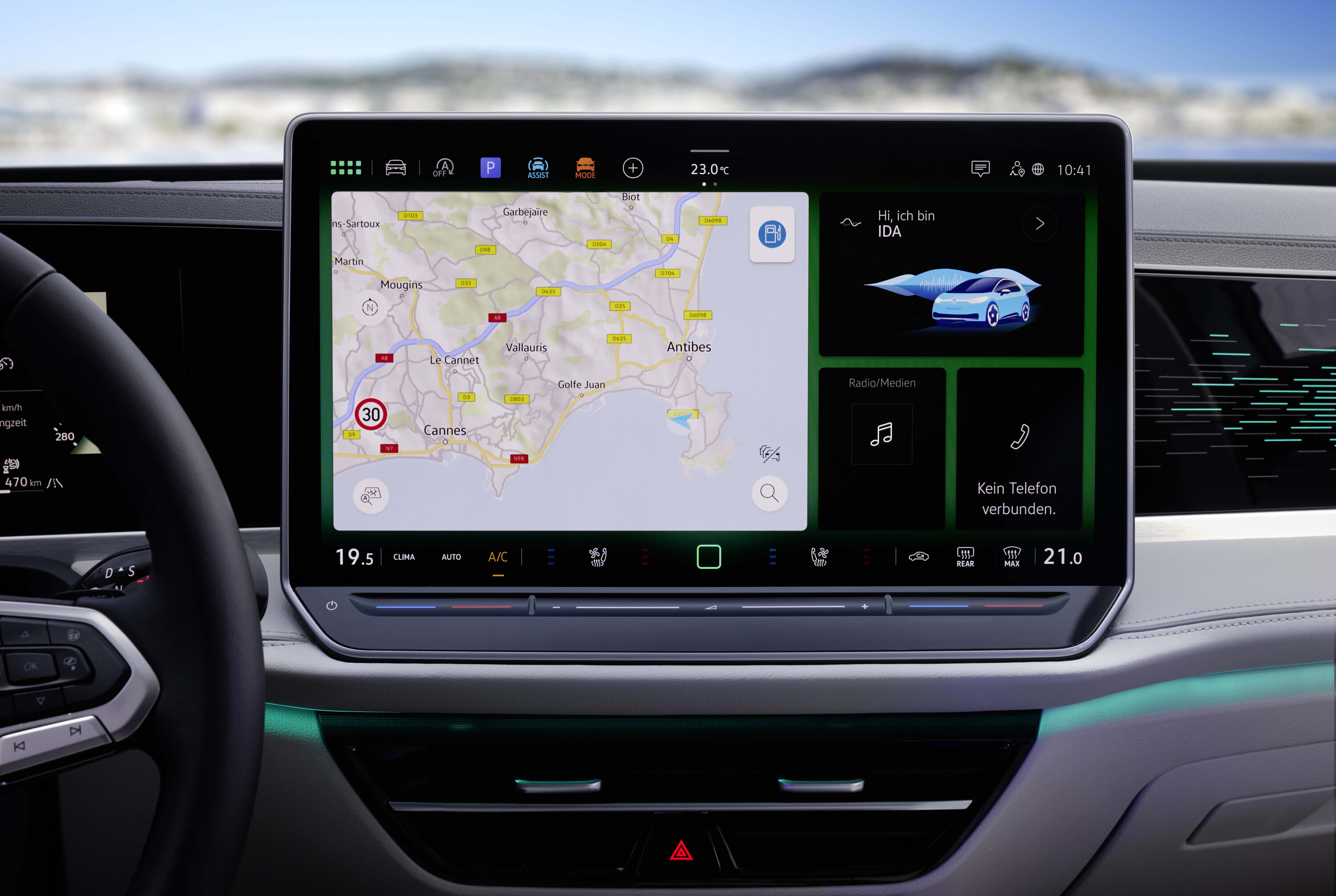
It’s still very touchscreen-led in here. Every Passat gets a 12.9-inch display as standard, though we’ve only tried launch cars with the (roughly $1600) optional 15-incher.
This screen is large enough to fall easily into your field of vision, while a ChatGPT-enabled voice control setup is meant to ease distraction further. Naturally, it feels a bit of a work in progress, handling in-car requests promptly but tripping over itself a tad if you try more obtuse questioning. Updates should bring it up to speed, though.
VW still hasn’t rewound to physical climate controls – though the Superb does offer them – while the quality in here feels top-notch. A subtle step up from the Tiguan, even, to help justify higher pricing in Europe – and perhaps quell some of the dwindling appeal of trad estates like this.
1
Ambient lighting is scattered everywhere, not least for a new artful dashboard display ahead of the passenger, while heated, vented and massaging seats offer an array of options and intensities.
Massage seats in rival Stellantis products hiss and groan as they operate, but the library-like tranquillity of the Passat is never disturbed.
And boy, is there room in here. While sharing so much DNA with the Skoda Superb arguably robs the Passat of some personality, it’s the automotive equivalent of pairing up with the swottiest kid in school for a class project.
1
Adults will feel comfy in the back and the boot is large
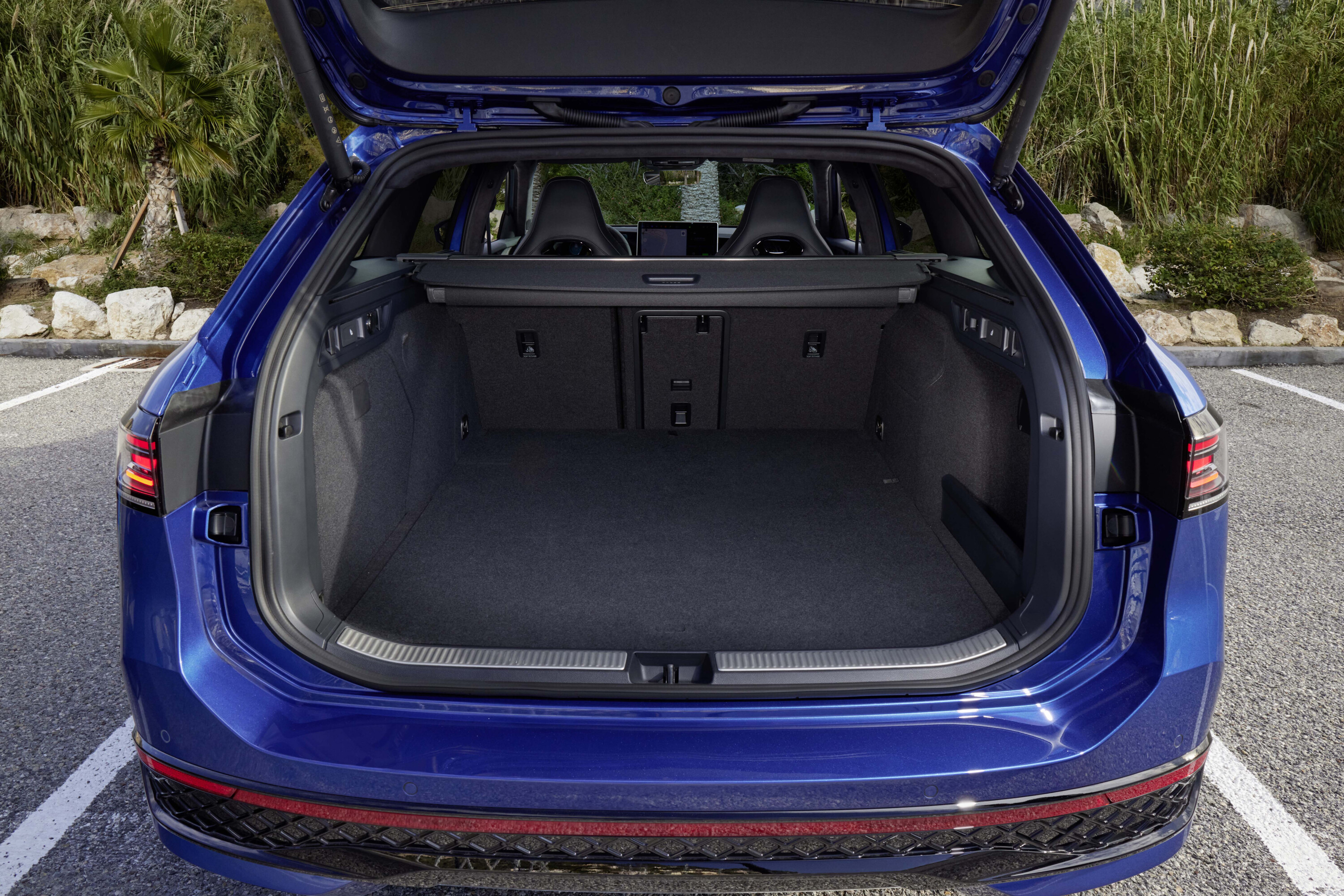
The Passat has gained 50mm of wheelbase, every bit of it boosting rear legroom while the boot capacity now measures 690 litres with the rear seats in place, or 1920 with them flipped – respective improvements of 40 and 140 litres and even more than that of a gargantuan Mercedes-Benz E-Class wagon.
On-paper numbers are merely that, of course, but thankfully the reality is strong, too. Adults will feel comfy in the back and the boot is large, though it’s pertinent to point out that plug-in hybrid Passats offer reduced luggage capacity of 510/1770 litres thanks to their battery.
Well, we’re getting the latest Skoda Superb so we’re not truly missing out on what’s been reviewed here.
Pair the obvious dynamic and refinement strengths of this Passat with the (arguably) sharper looks and more traditional ergonomics of the Skoda and it feels like we’re onto quite a winning package.
Full verdict when we get our hands on the Superb, of course.