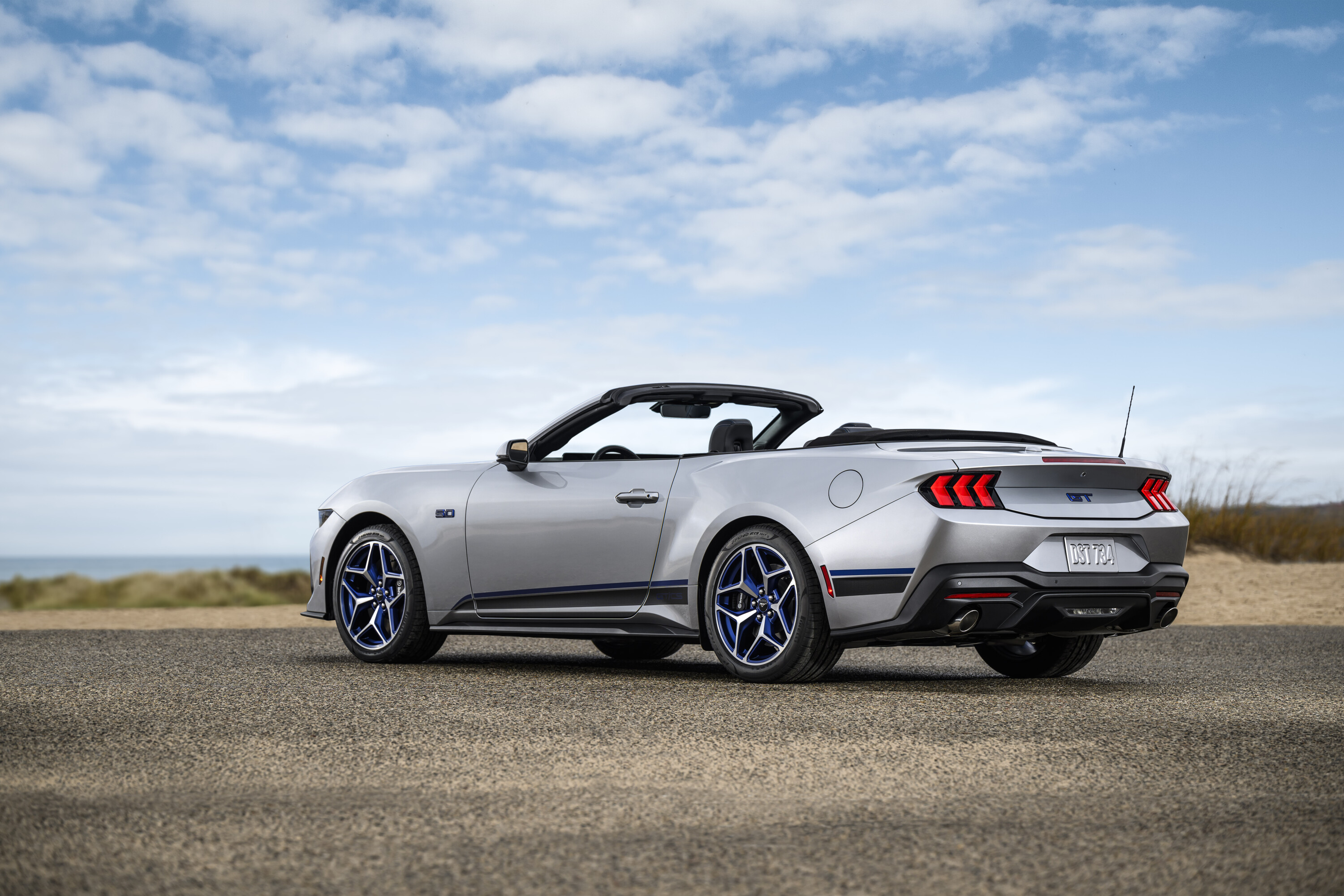
The 2024 Ford Mustang GT California Special package has debuted in the United States.
Available as a US$1995 (AU$3130) option package for the Mustang GT Premium coupe or convertible, the California Special adds ‘rave blue’ exterior trim, a unique horizontal-slat grille, different 19-inch alloy wheels, and black side graphics.
“The original California Special package was geared toward California’s optimistic and carefree driving culture,” said Ford Mustang brand manager Joe Bellino.
1
“We’re refocusing on those elements for the 2024 Mustang GT California Special, which brings vibrant style that looks as at home on Colorado Boulevard as it does on the Pacific Coast Highway.
“Rave Blue is such a distinct and exciting color, it really does make the California Special stand out not only from other Mustang models, but from previous California Special models.”
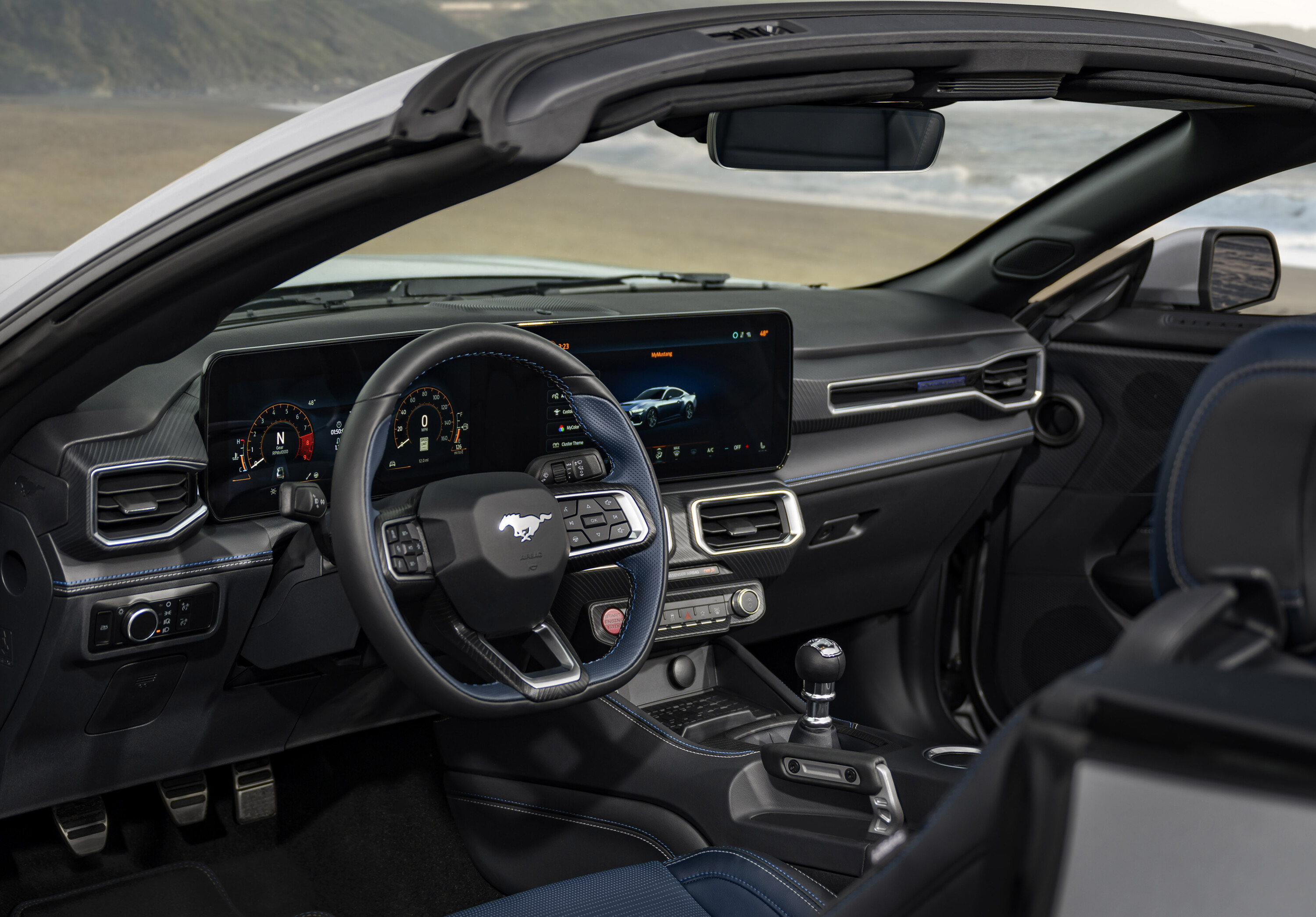
Inside, the Mustang California Special continues the blue theme, featuring perforated navy and black upholstery with dual-colour ‘raptor blue’ and ‘metal grey’ stitching. It also adds a California Special badge and GT/CS floor mats.
“Mustang has a rich well of special edition models to draw from, and we’ll continue to reinvent them for a new audience,” added Bellino.
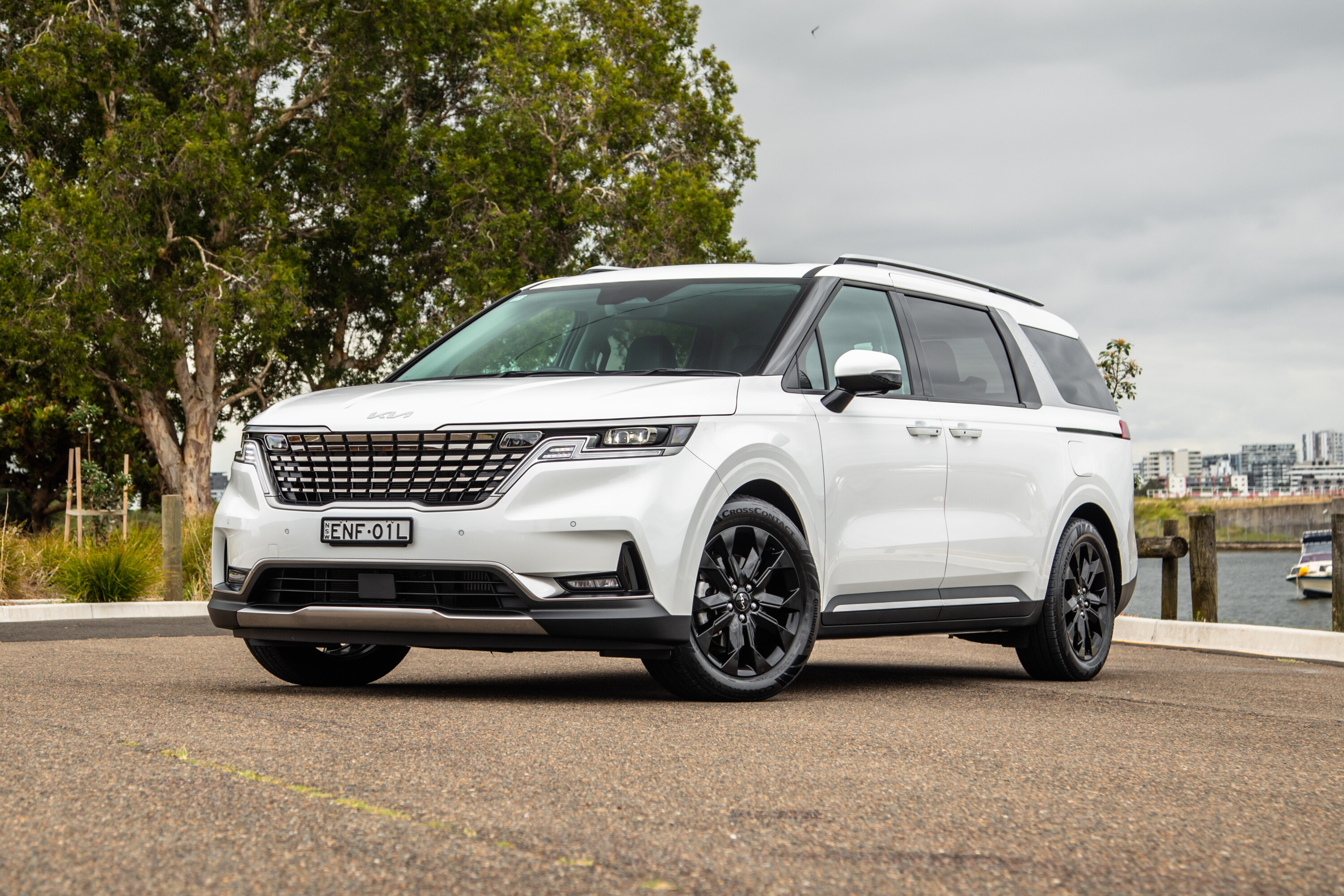
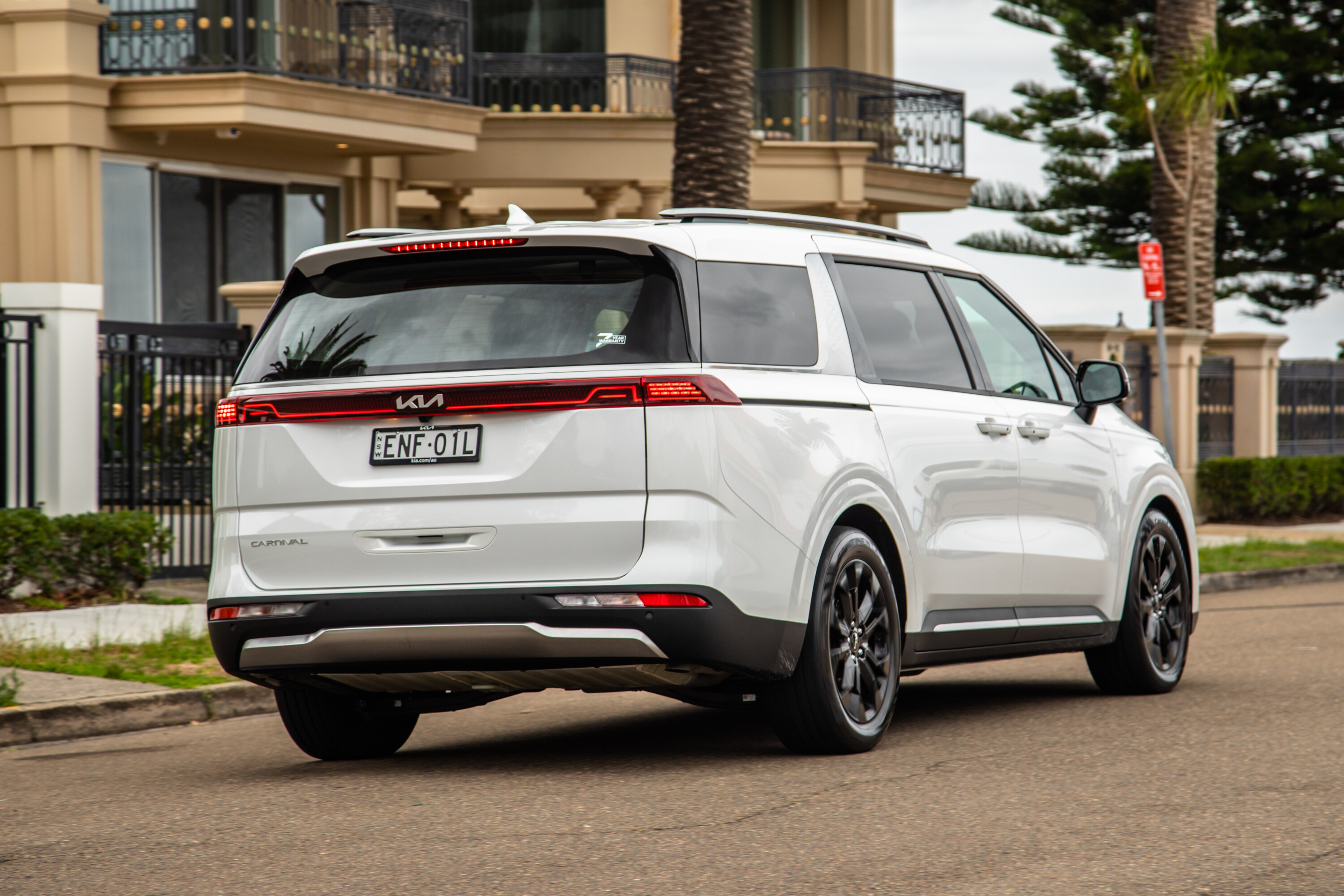
The Kia Carnival has established itself as a leader in the multi-purpose vehicle (MPV) segment, offering families a blend of space, comfort, and versatility.
The Kia Carnival not only boasts a cavernous boot space but also commands a remarkable 80 percent share of the Australian people mover market.
It’s not only a favoured choice among corporate and rental fleets but also a top pick for families seeking more room than your typical large SUV can offer.
Built on the platform used for the Sorento SUV, the Carnival stretches 5.2 meters in length and tips the scales at just over two tonnes.
The 2023 SLi Diesel variant adds a layer of efficiency and performance to the mix. But in a market that’s increasingly shifting towards SUVs, can the Carnival SLi maintain its ongoing appeal?
1
Pricing and features
Situated just about the entry-level grade Carnival, the SLi Diesel is priced between $57,780- $59,780 before on-road costs for the petrol and diesel models respectively.
Underneath, you’ll find a 2.2-litre four-cylinder turbo-diesel, paired to an eight-speed automatic transmission, delivering 148kW and 440Nm.
A 3.5-litre V6 petrol engine was available alongside the diesel however Kia’s Australia announced a temporary suspension of orders for the Kia Carnival people-mover equipped with these V6 petrol engines.
1
This pause in production stems from Kia’s decision to give precedence to the manufacturing of the 3.5-litre engine for international markets.
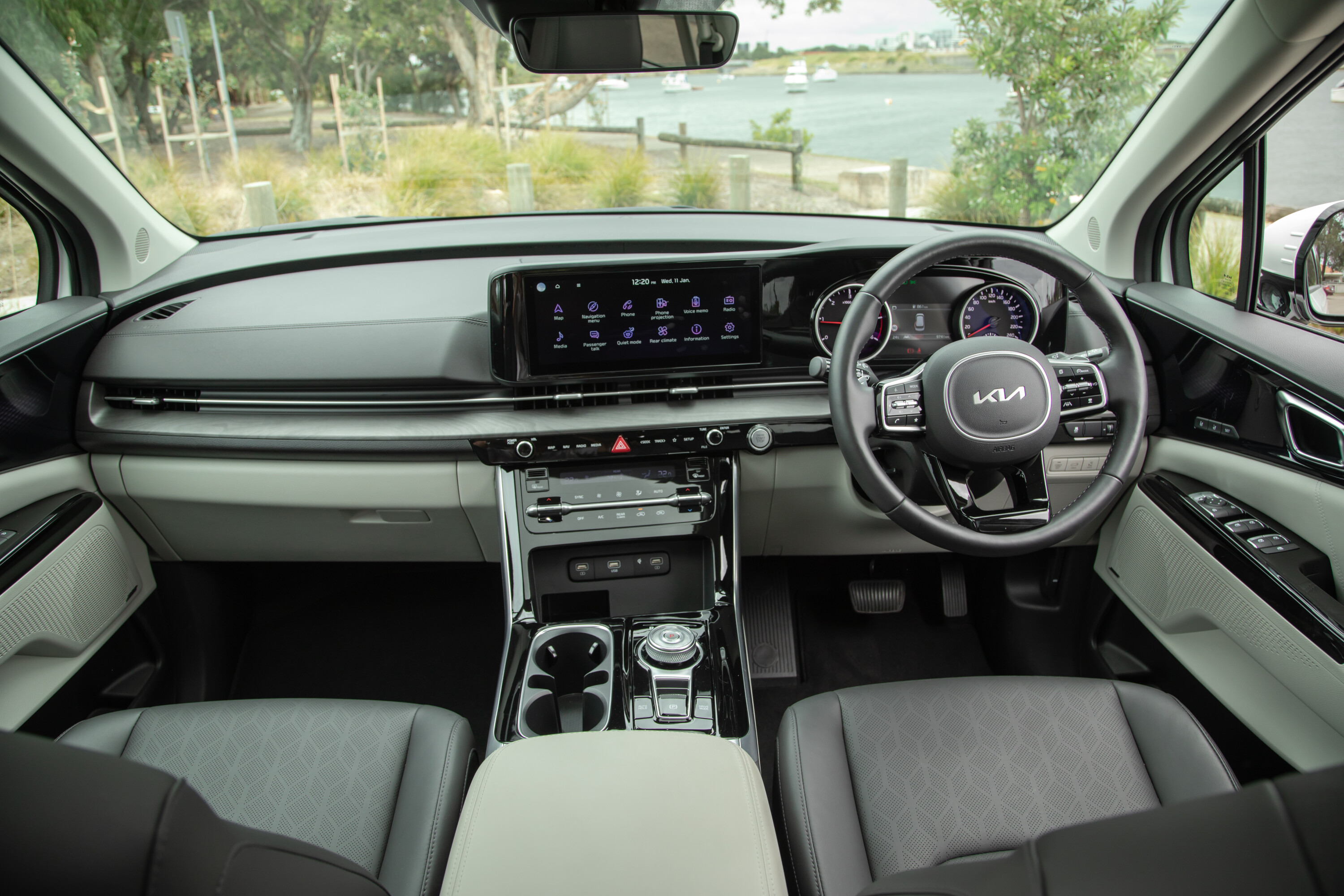
The SLi variants sits in third of the four variant line-up, meaning it’s really well equipped. Annoyingly, wireless Carplay is only available in the entry-level S grade, and not throughout the rest of the range.
Kia Carnival SLi features
10-way power adustable driver’s seat
Front and rear parking sensors
12.3-inch infotainment touchscreen
Hands free powered tailgate
18-inch alloy wheels
LED headlights, fog-lamps and DRLs
360-degree parking monitor
One-touch open sliding doors and tailgate
Adavanced smart cruise control
Power-folding heated door mirrors
Air-conditoning front and rear
Rear privacy glass
Apple CarPlay/Android Auto (wired only)
Reversing camera
Artificial leather seats
Roof rails
Auto folding heated door mirrors
Satellite navigation
Auto-dimming rear-view mirror
Smart key with push button & remote engine start
Digital radio DAB+
Space saver spare wheel
Dual-zone climate control air-conditioning
1
Safety
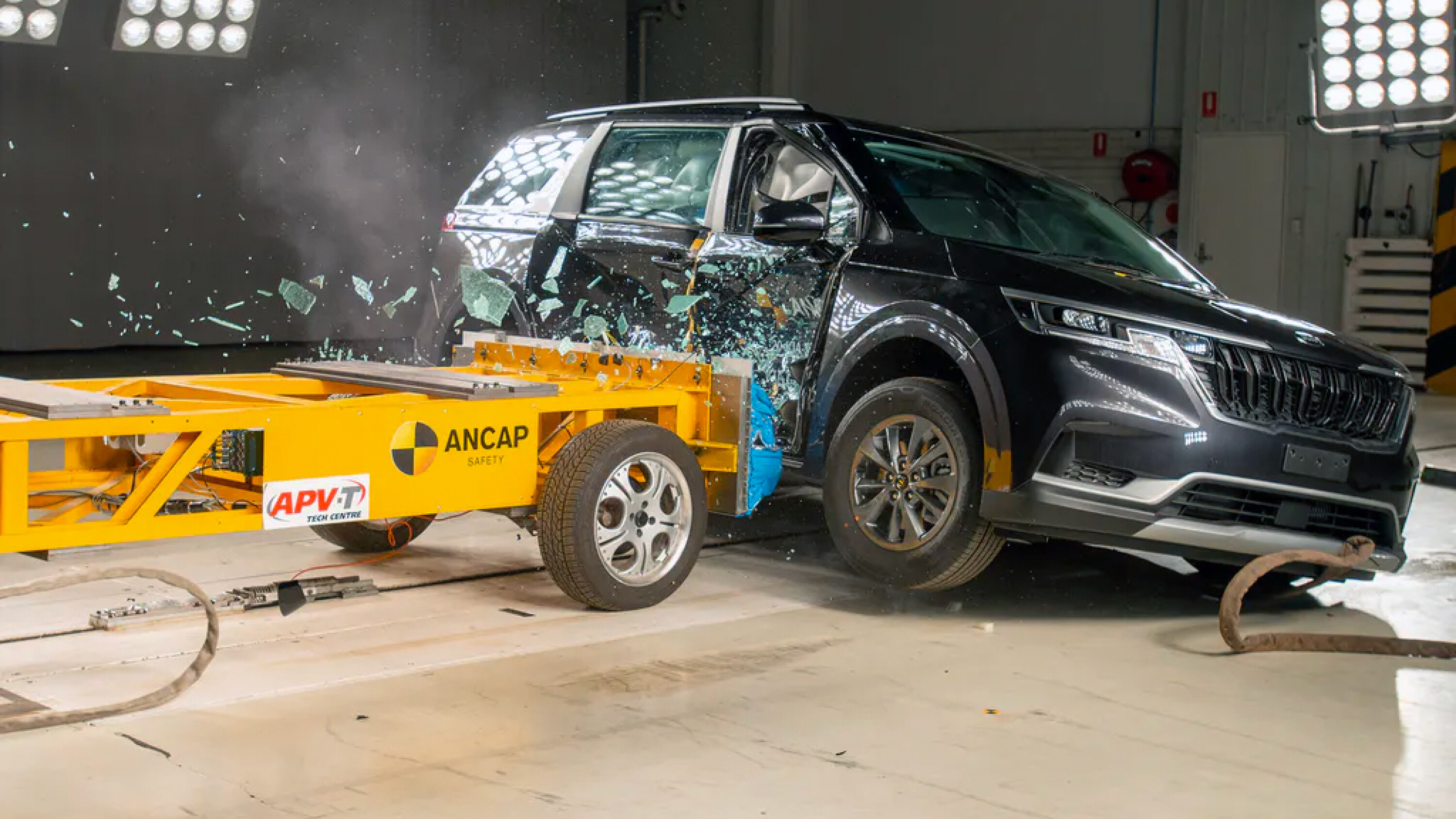
The Carnival boasts a five-star safety rating from ANCAP, achieved in 2021, thanks to a comprehensive array of safety features available throughout the model lineup.
In terms of crash safety, the Carnival has performed exceptionally well, achieving scores of 90 percent for adult occupant protection and 88 percent for child occupant protection.
1
Kia Carnival safety features
7 airbags
ABS
Stability and traction controls
Forward AEB (high and low speed)
Forward collision warning
Reverse cross-traffic alert
Multi-collision braking
Front cross-traffic alert
Lane departure warning
Lane-keep assist
Driver attention detection
Safe exit warning
Blind-spot monitoring
Reversing camera
The Carnival’s advanced auto emergency braking (AEB) system is equipped with detection capabilities for both pedestrians and cyclists.
Additionally, despite its wealth of technology, the Carnival surprisingly lacks rain-sensing wipers, which, although not crucial for safety, are a notable absence.
Key rivals
With the Honda Odyssey, formerly a major competitor is no longer available in Australia. Its exit from the market is a contributing factor to the Carnival’s dominance in the people mover segment.
The 2023 Kia Carnival SLi is a compelling option for those who prioritize space, comfort, and fuel efficiency in a family vehicle.
While its size may be daunting for some, the benefits of its expansive interior and diesel economy (without petrol currently available) make it a standout choice.
If you’re looking for a vehicle that can handle everything from daily commutes to family road trips with ease, the Carnival SLi Diesel is certainly worth considering.
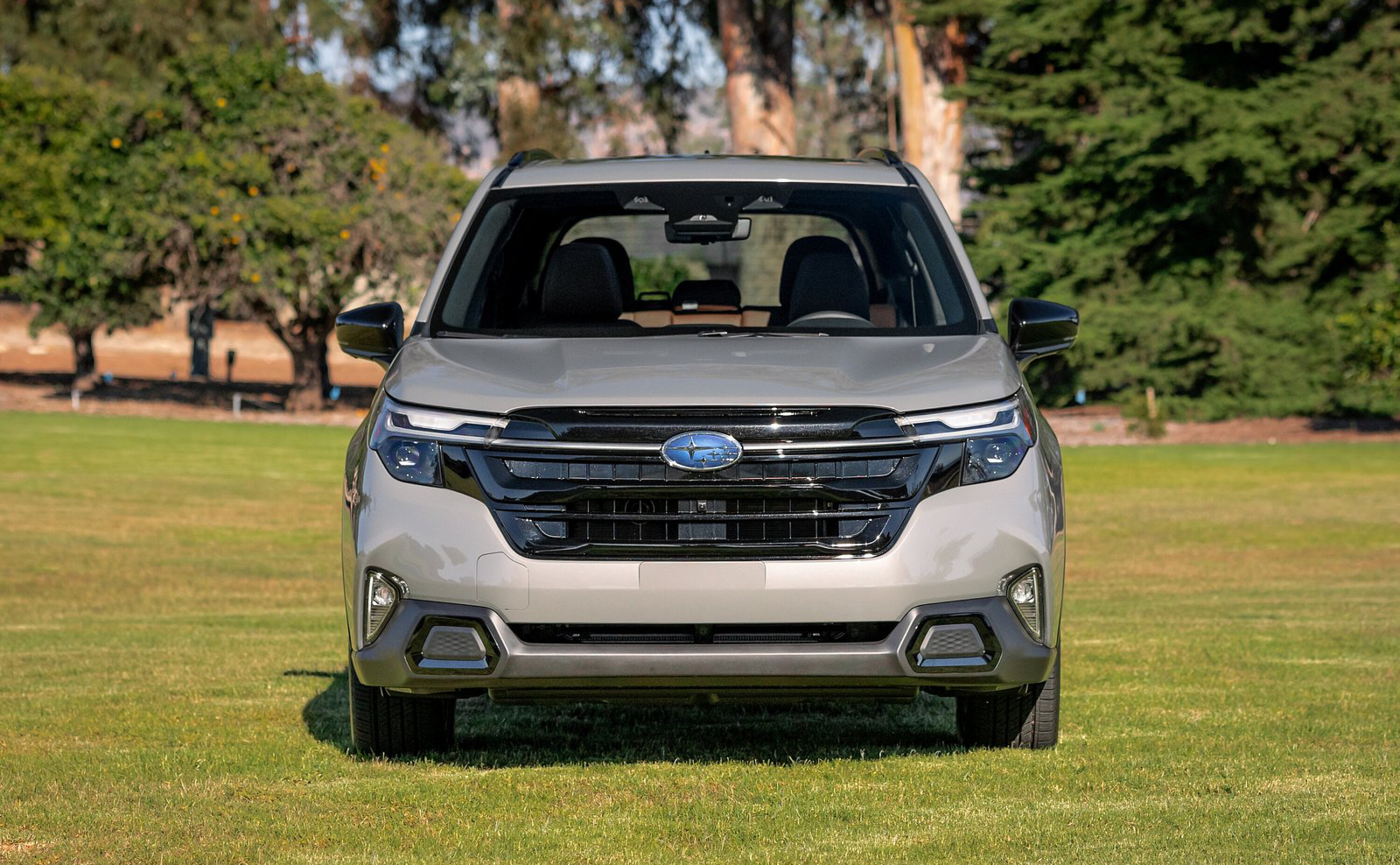
The 2024 Subaru Forester has surfaced online ahead of its November 17 reveal.
Subaru’s surprise was spoilt by the photo gallery, posted to social media site Reddit[↗], confirming the sixth-generation Forester will wear evolutionary styling with cues from the latest WRX, Outback and Crosstrek – as well as previous Foresters.
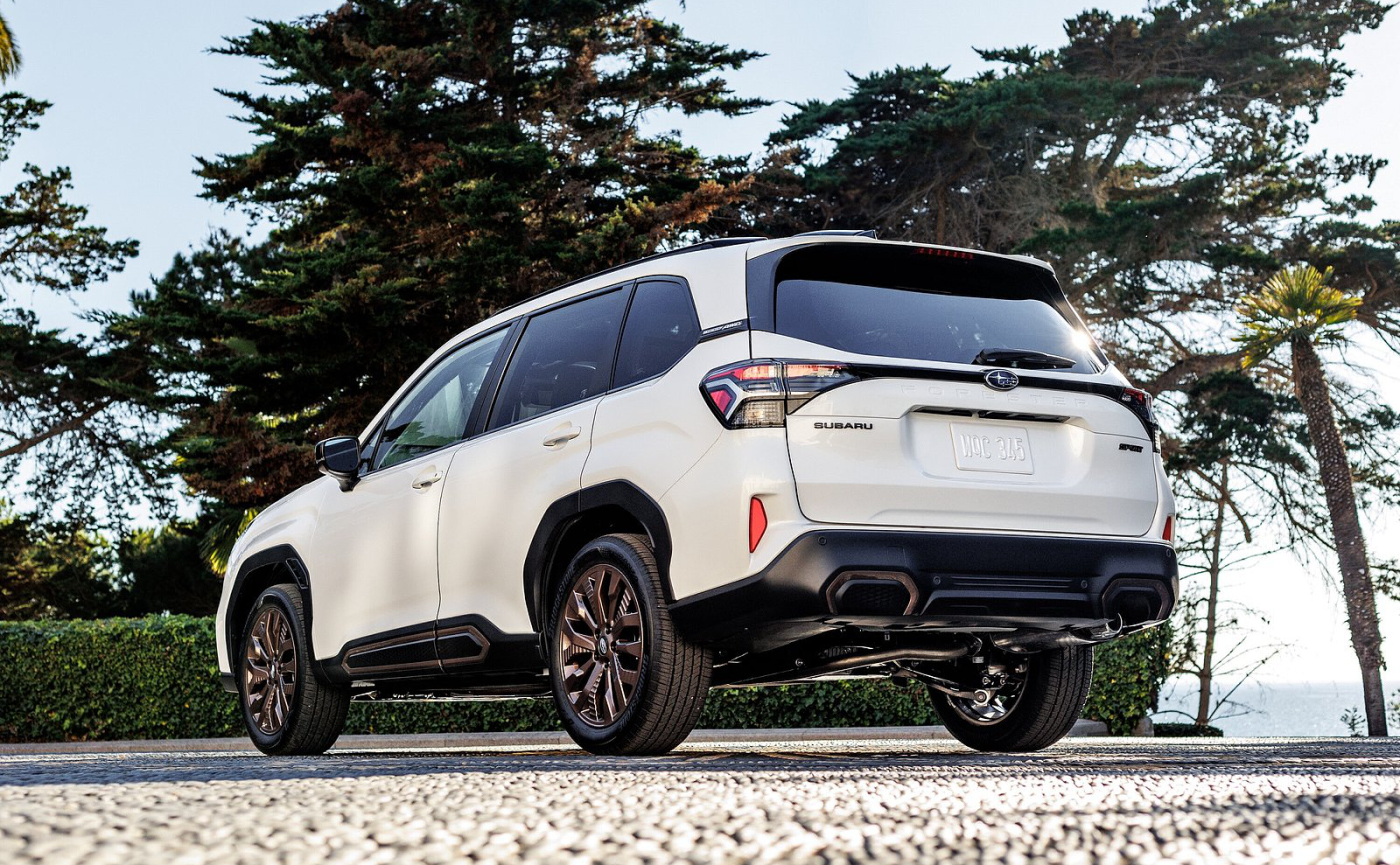
The updated front end sports a wider grille, new headlights with a slimmer DRL signature, more plastic cladding for the lower bumper, and slender triangular fog lamps.
1
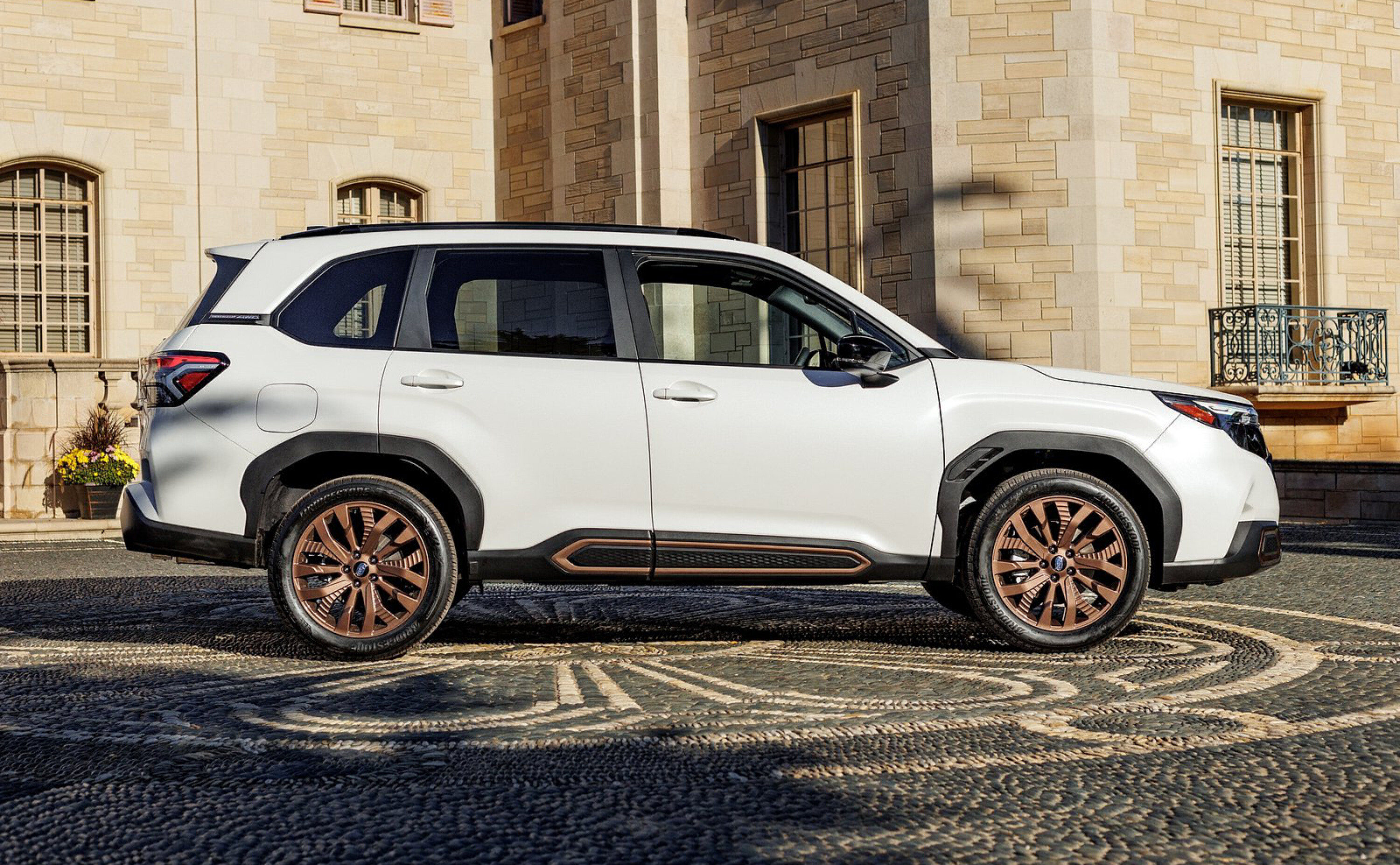
From the side, it appears Subaru was inspired by the third and fourth-gen Foresters, with the ever-so-slightly angular greenhouse of the current model replaced by rectangular, more open space.
It also sports new-look alloy wheels with bronze highlights for the North American Sport variant, body cladding similar to the WRX and Crosstrek, and a prominent D-pillar line with ‘symmetrical AWD’ badging.
The brand’s lobster claw-shaped tail-light design – debuted in the current Forester and spread across the Subaru line-up – has been replaced with a new look, connected by a black strip running across the tailgate.
1
Chunkier plastic cladding also extends to the rear bumper, which continues the trend for fake exhaust outlets – but with a visible cutout for a small exhaust pipe on one side.
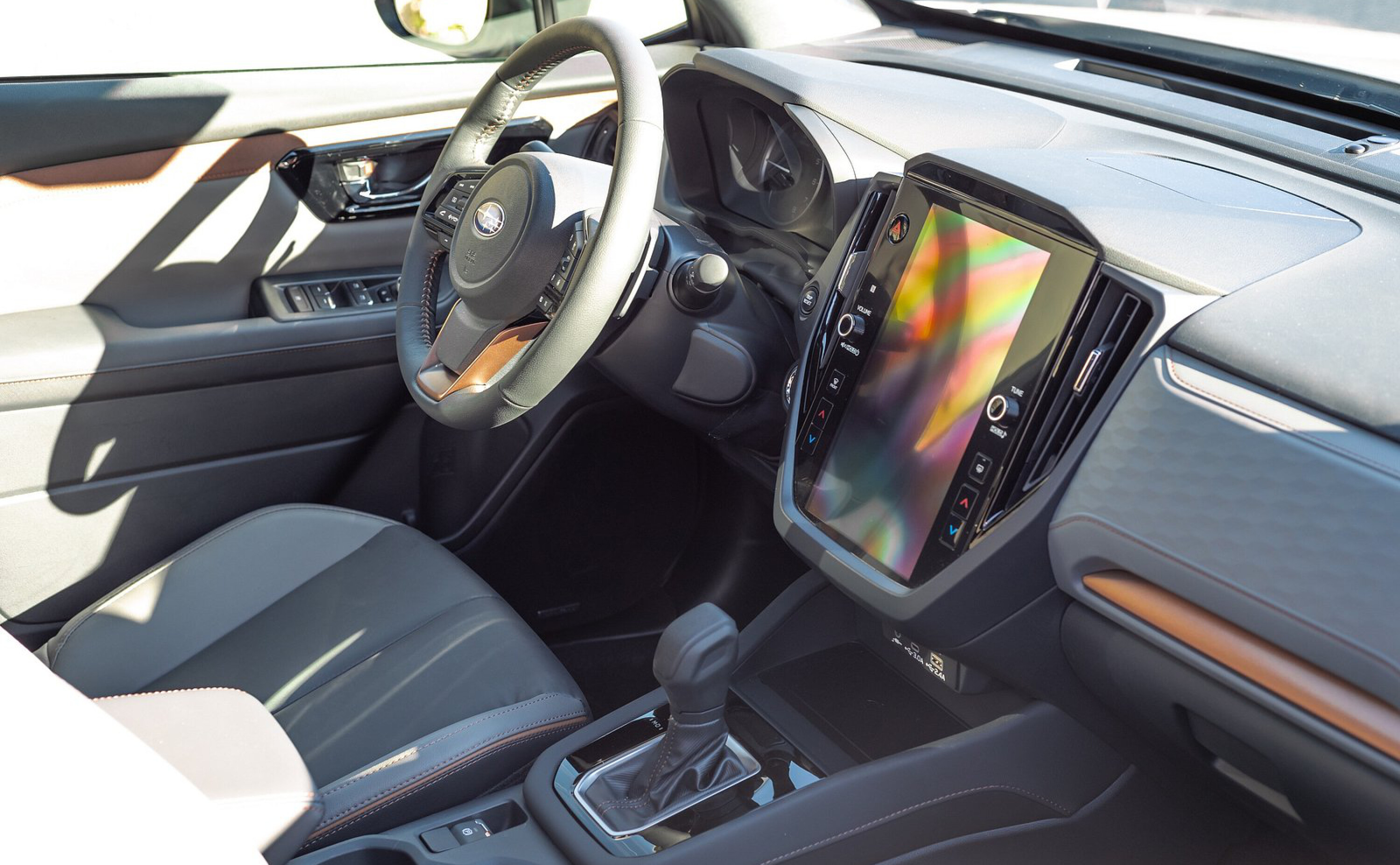
Inside, the new Forester again mimics the Outback, WRX and Crosstrek with a portrait-orientated infotainment system, fewer physical controls, USB-C charge ports, and what appears to be a wireless phone charger.
It is unclear if it will feature a full-digital instrument cluster, with the leaked images revealing a small central driver information display flanked by analogue dials.
1
A teaser released by Subaru last week said the new mid-size SUV is “an all-new fully redesigned vehicle”, though it’s expected to ride on familiar Global Platform underpinnings.
Under the bonnet, the existing 2.5-litre petrol flat-four is expected, along with a “stronger”, more powerful version of the 2.0-litre petrol-hybrid flat-four, hopefully improving acceleration and efficiency.
This will be followed by a turbo-petrol Forester XT – expected to share the Outback’s 183kW/350Nm 2.4-litre turbo – and off-road-focused Forester Wilderness variants.
Earlier this year, Subaru Australia managing director Blair Read said the brand had invested heavily in the sixth-generation Forester and plans to “bring its A-game” with the new model, which is confirmed for an Australian release next year.
“Forester is our number one selling model, and we need to bring our A-game in that segment, to keep Forester’s rightful place. So [our current] focus is [very much] on next-generation Forester,” he said.
The 2024 Subaru Forester will debut on November 17, Australian time, at the Los Angeles auto show.
Prototype HiAce uses u2018hydrogen-to-iceu2019 and is powered by a 3.5-litre twin-turbo V6
The prototype will be evaluated by several Aussie companies in a world first u2018pilot programu2019
u2018Hydrogen-to-iceu2019 is cheaper the fuel-cell EVs to produce and brings no comprises to towing or loading ability, says Toyota
HiLux and LandCruiser could be candidates for the same hydrogen powertrain, says Toyota
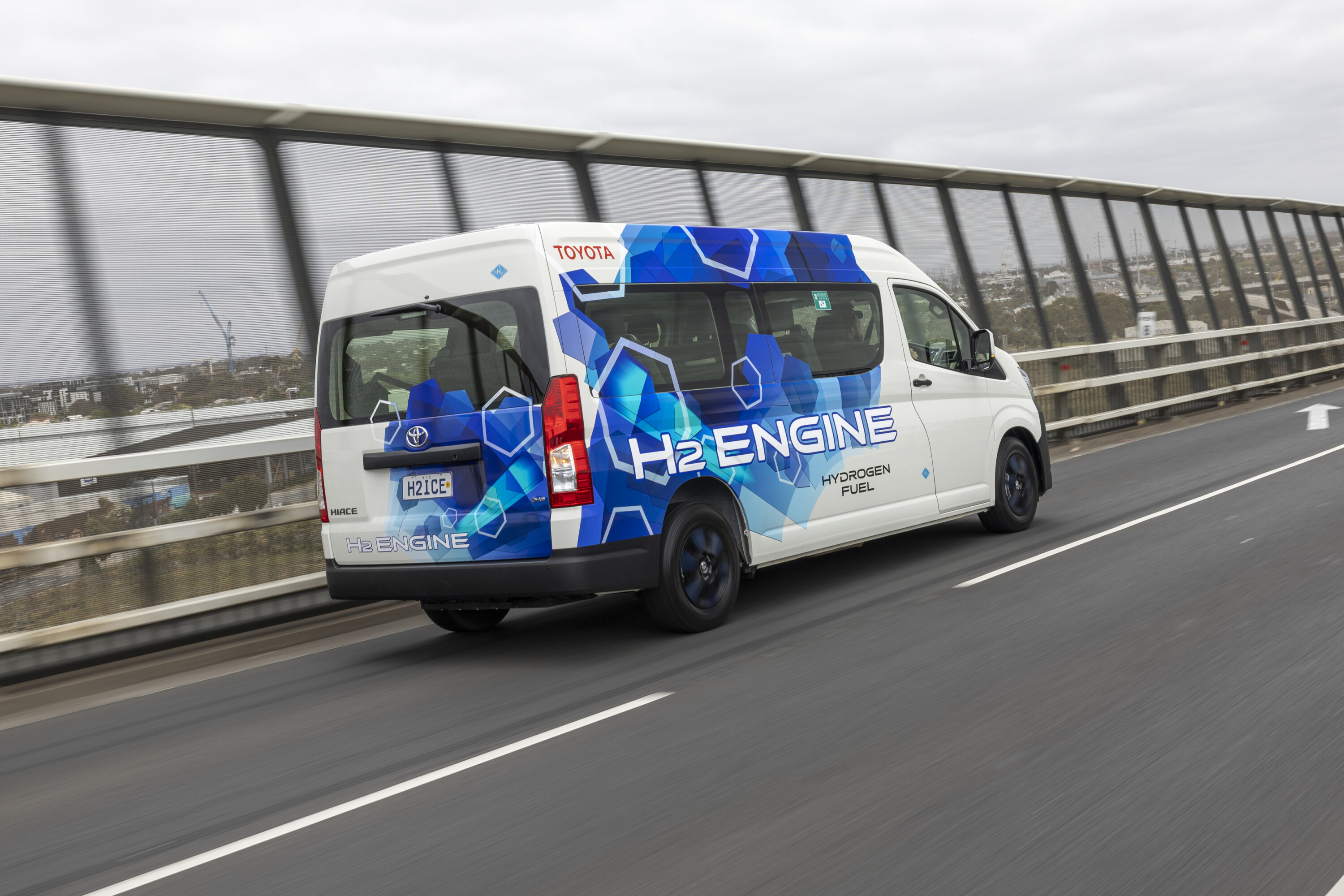
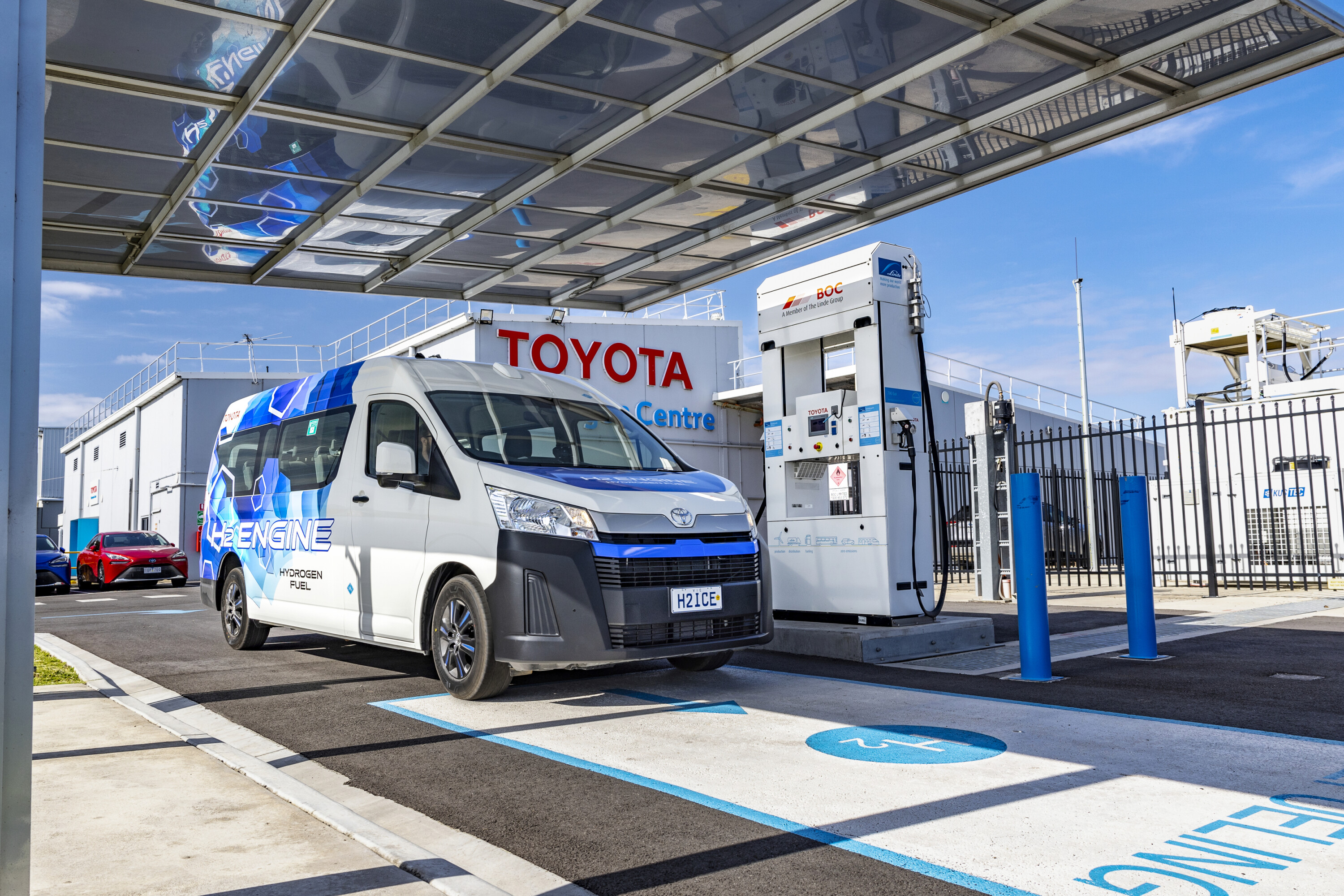
Toyota has revealed a hydrogen-fuelled version of its HiAce van that’s pitched as a more cost-effective way to drive a low-emissions vehicle.
Revealed yesterday at Toyota’s hydrogen facility in Altona, the new prototype is powered by a 3.5-litre twin-turbo V6 that’s fuelled by hydrogen rather than petrol and doesn’t bring any compromises when it comes to towing or packaging.
Toyota also says its ‘hydrogen-to-ice’ tech is a cheaper alternative to existing fuel-cell EVs (FCEV) or battery electric vehicles (BEV) because most of the powertrain is based on existing hardware – the same V6 already powers the Lexus LX600.
1
“Importantly, we have used the proven petrol engine technologies which means we can keep the supply chain we have built up over many years,” said Mitsumasa Yamagata, the president of Toyota’s hydrogen factory.
“This reduces the amount we need to invest, which helps contain the overall development cost.”
The new model is yet to be confirmed for production but Toyota’s vice president of sales and marketing, Sean Hanley, said its price premium over a diesel HiAce van could be similar to Toyota’s current pricing for hybrid models.
“There will be some ‘up spec’ because there’s some development costs, but they’re nowhere near what it would be if you started from scratch to develop a whole fuel cell electric vehicle,” said Hanley. “So it’d be fairly close, you’re talking about 10 percent close. Maybe similar to hybrid right now.”
1
Toyota will use the hydrogen HiAce as part of a world-first ‘pilot program’ where it will be driven by several large Australian companies in order to evaluate the new powertrain tech for wider use in Toyota’s range.
“Yes, there is the possibility to adapt into those large vehicles including LandCruiser,” said Mr Yamagata. “And again the advantage of this technology can be utilised in those vehicles including high towing and high loading.”
1
The prototype HiAce has a range of around 200km, although Toyota’s execs were quick to explain the production version would offer far more range.
“We are already working on much bigger hydrogen tanks and there’s also the possibility of adding our famous hybrid electric technology,” said Yamagata.
“What you see today is not the endgame, it’s the start” added Hanley. “So when you start to develop the technology and realise that you can put the bigger fuel tanks in it you’d be looking at a vehicle that could probably do 500, 600 or 700km on a tank with less than 10 minute refuelling.”
Performance is another potential area due for development. The prototype vehicle makes 120kW/354Nm, which is on par with a diesel HiAce, yet well down on the 305kW/650Nm that the same 3.5-litre twin-turbo V6 engine makes in the Lexus LX600.
1
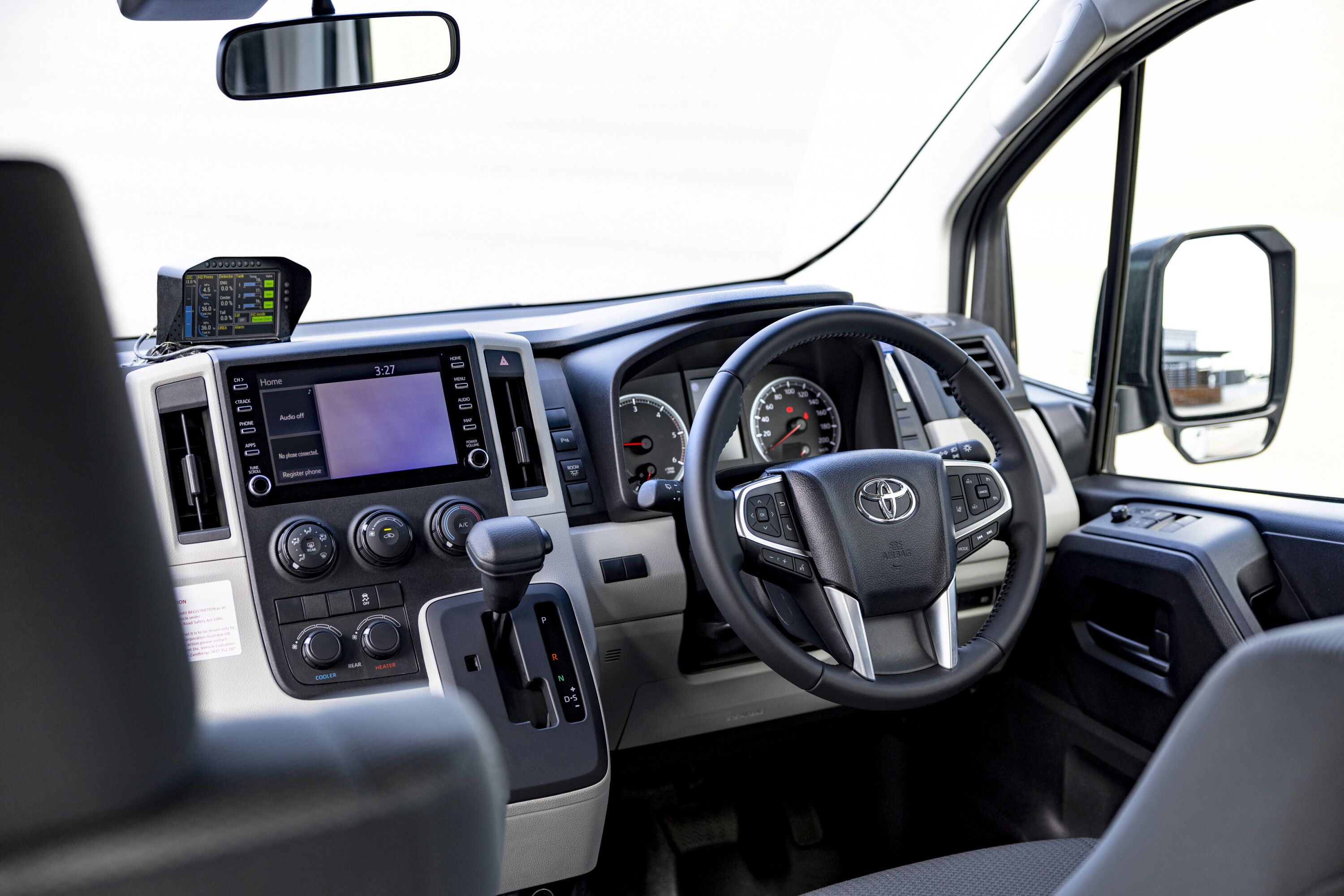
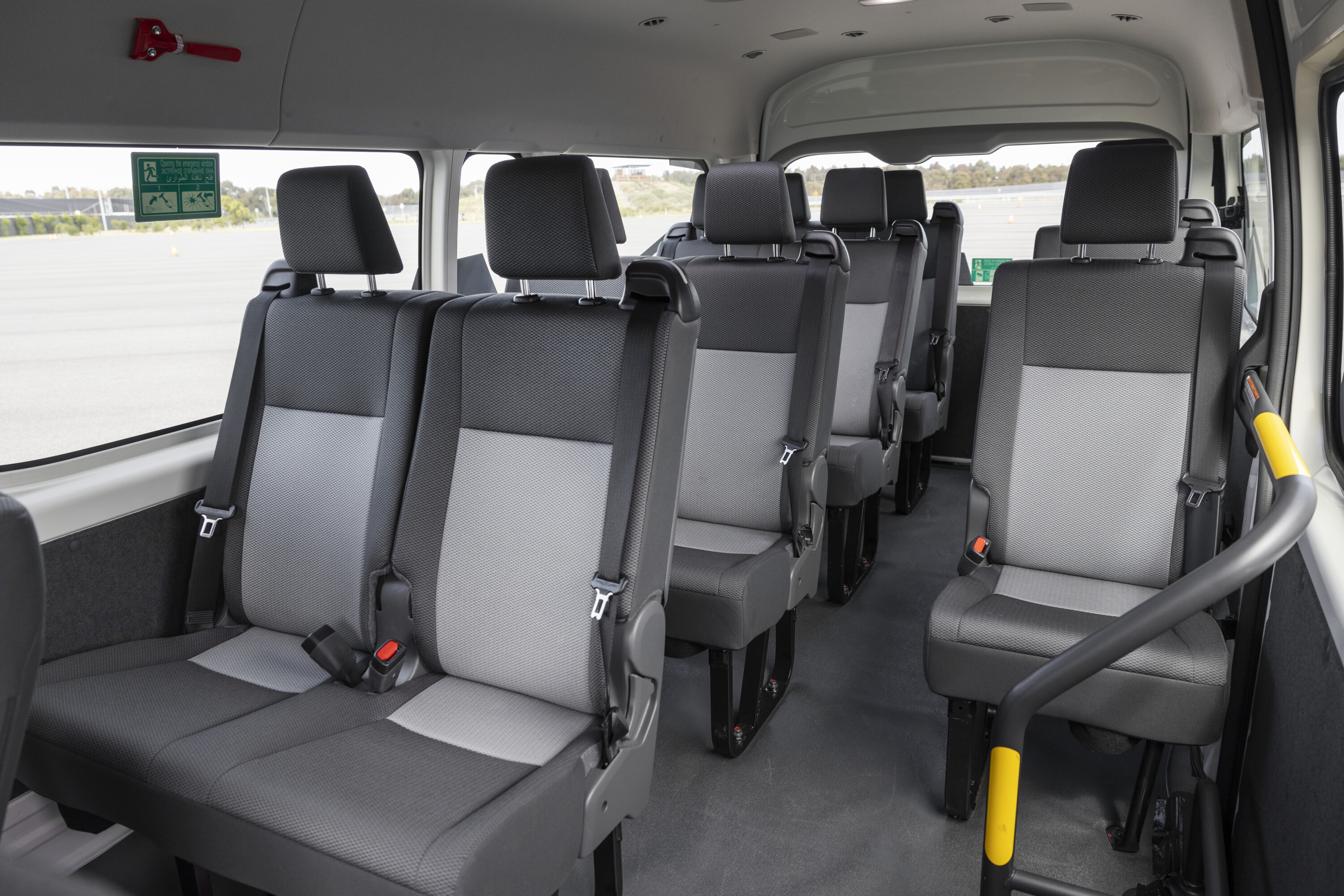
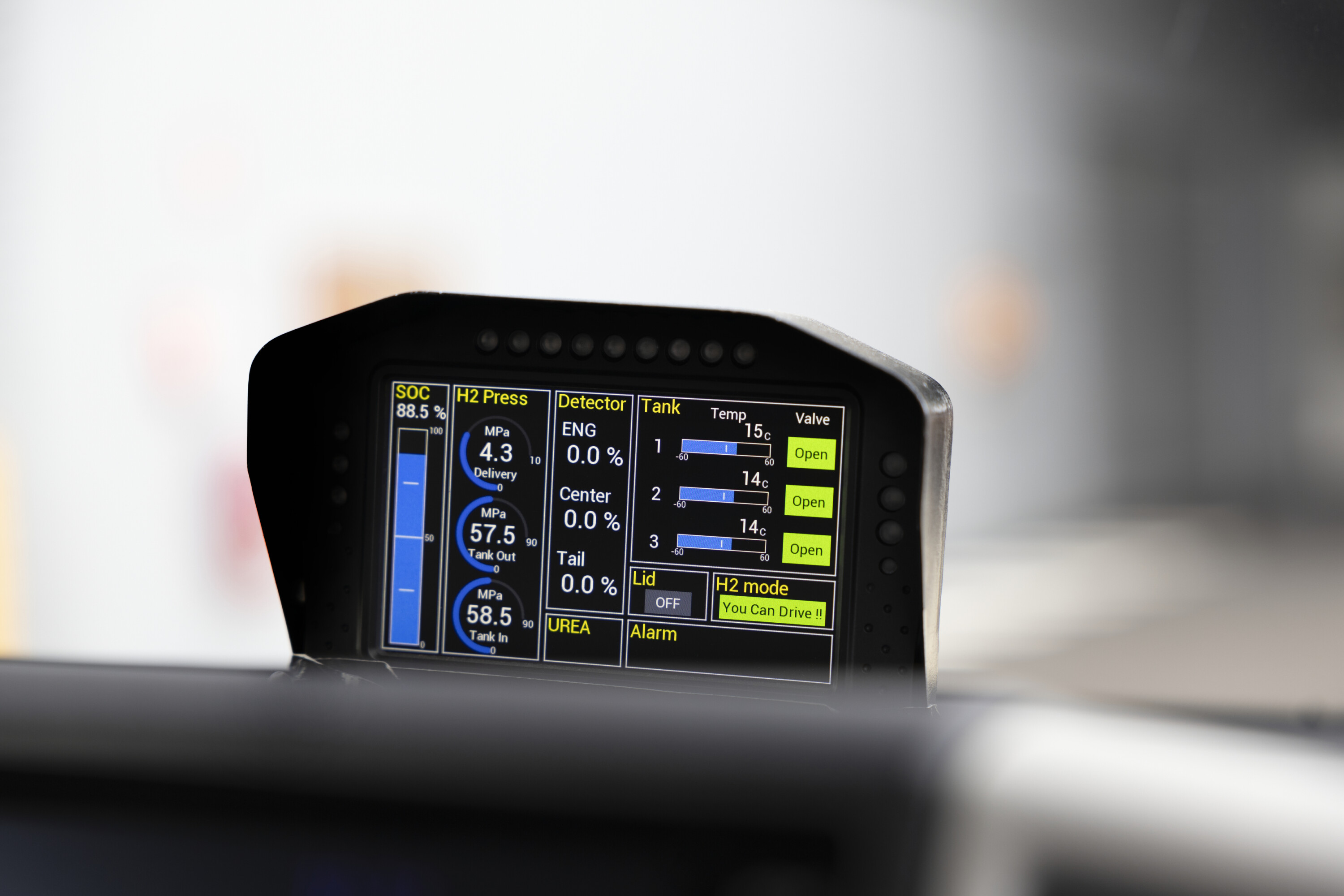
The prototype HiAce uses three hydrogen tanks, similar in layout to the Toyota Mirai FCEV, and it retains the same amount of luggage space and passenger room as a diesel-powered HiAce.
Towing capacity is another advantage of hydrogen-fuelled vehicles, says Toyota, and the prototype has a braked towing capacity of 1500kg.
While the hydrogen prototype has virtually zero C02 tailpipe emissions, it does produce a small amount of nitrogen oxides (NOx) as it still burns oil and needs to ignite the fuel inside the combustion chamber.
The prototype HiAce is the latest step in Toyota’s bid to be a world leader in hydrogen-powered vehicles.
1
A small fleet of Mirai FCEV sedans are currently on long-term leases to several Australian companies and in 2021 Toyota commissioned Victoria’s first hydrogen production, storage and refuelling facility in Altona.
And last month, Toyota and Hyundai signed an agreement with Ampol and Pacific Energy to increase the number of hydrogen refuelling stations in Australia.
Toyota isn’t the first company to explore ‘hydrogen-to-ice’ vehicles. Mazda launched the RX-8 RE in 2004, while the BMW Hydrogen 7, which used a 6.0-litre V12, was built in limited numbers between 2005-2007.
Regular Wheels readers will know there are typically three types of these Driven to Extinction pieces.
There are those that lament a much-loved model that has departed too soon and then there are those that finally farewell a car that’s hung around well past its sell-by date.
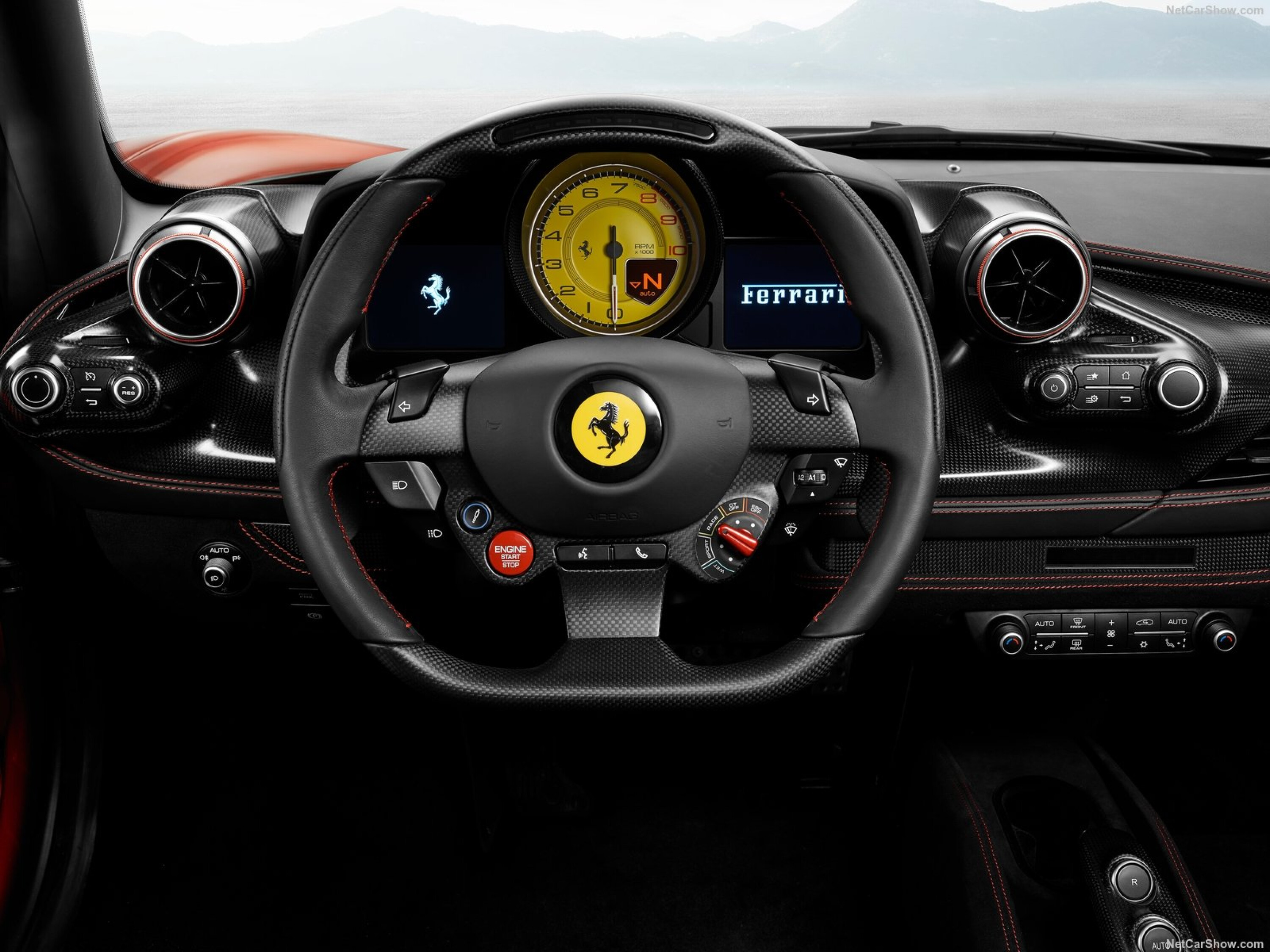
Then there’s the awkward ones into which the Ferrari F8 Tributo falls – that of the car that’s replaced by something so manifestly superior that it can be hard to work up a great deal of heartfelt saudade for it.
So unambiguously does the Ferrari 296 GTB now sit at the top of the supercar tree that the F8 Tributo is almost consigned to one of Maranello’s historical footnotes, which fails to explain quite how good it was.
1
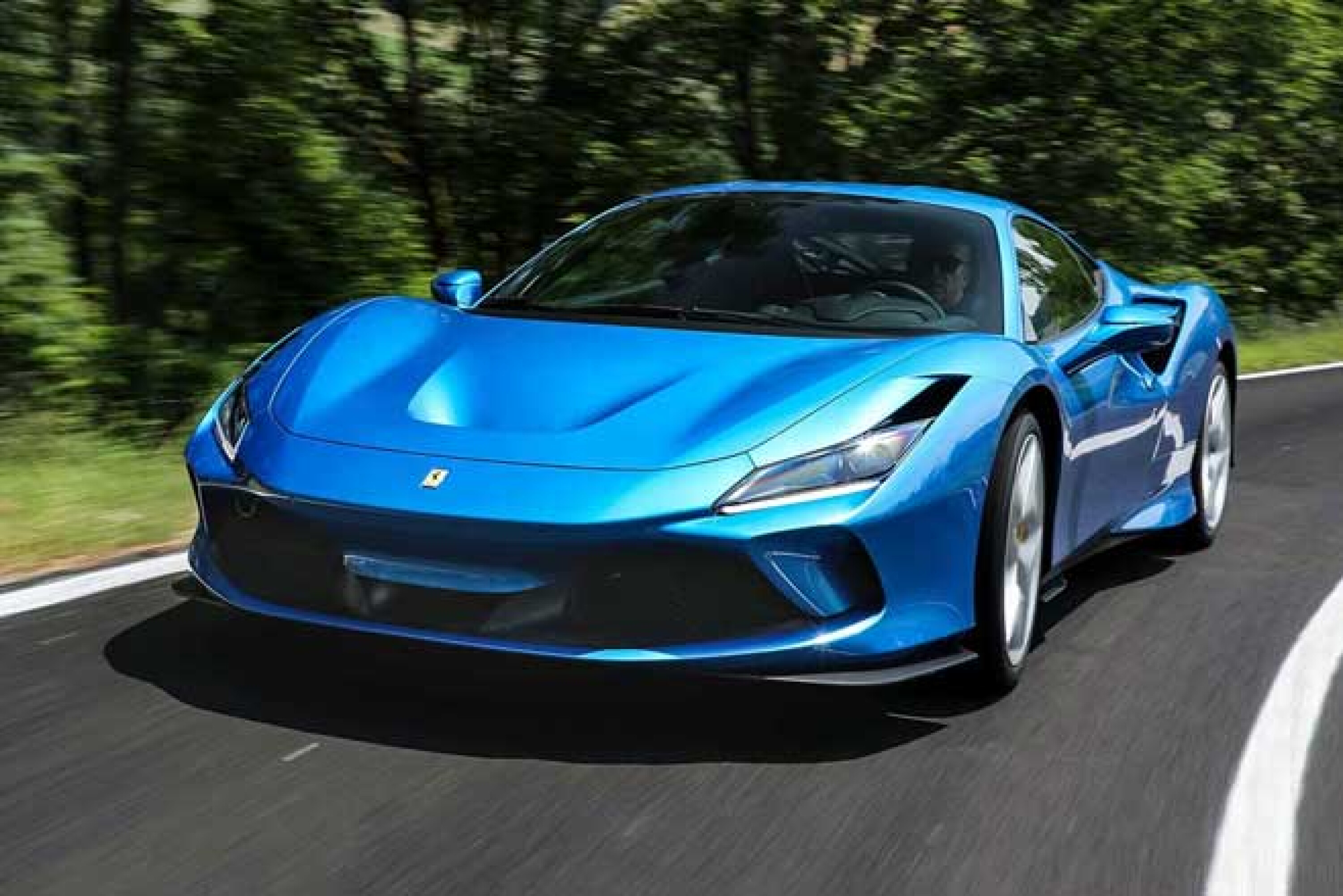
The F8 Tributo was good. Not McLaren 720S good, but not far off, which in the overall scheme of things is pretty damn good.
As well-received as it was, it isn’t a patch on the new 296 GTB and it enjoyed a mayfly-like existence, on sale for less than four years; much the same duration as its 488 GTB predecessor. Both were developments of the 458, a car that enjoyed a six-year build slot.
It’s the 458, particularly in Speciale form, that gets Ferrari fans excited, as it was the last of the atmo mid-engined models. While the turbocharged 488 and F8 were undoubtedly quicker, they didn’t rev as freely and never sounded quite as good as a 458 at full noise.
1
It has almost passed without comment that the F8 Tributo was the last of the non-hybridised Ferrari mid-engined supercars, which speaks of a slight lack of buzz around the model.
But, as we’ve seen in the Modern Classic section of the Wheels November issue (the Lamborghini Murcielago LP670 SV), cars that weren’t particularly well regarded at the time can enjoy a resurgence in popularity when afforded the benefit of hindsight. The F8’s time may well come.
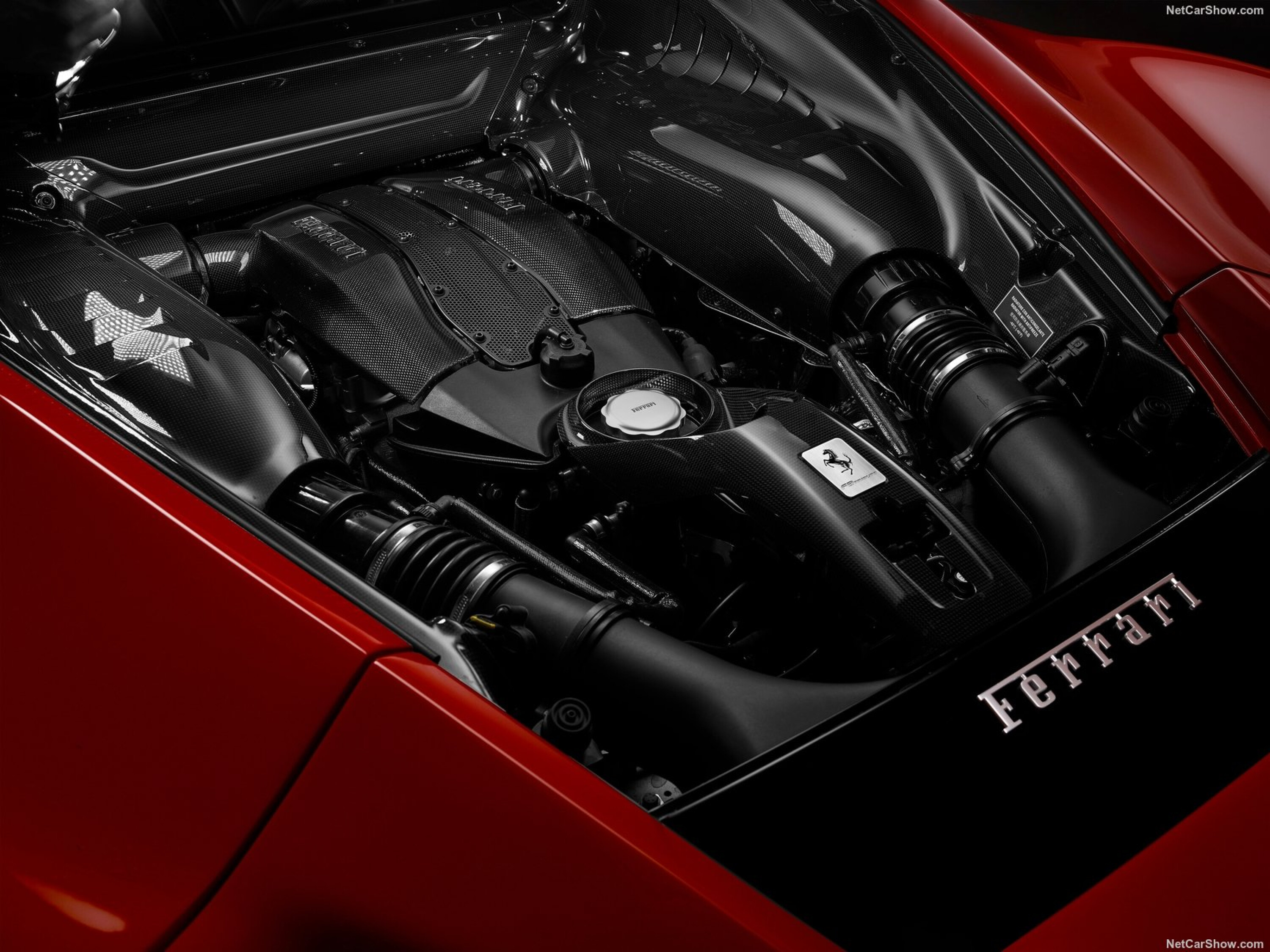
With 530kW/770Nm at its elbow from its 488 Pista-derived F154 V8, the F8 Tributo certainly didn’t short-change its customers in terms of sheer ability, although we’d take the claimed 2.9-second 0-100km/h time with a shovelful of salt given that the same time is claimed for the 296 GTB, which wields an extra 89kW.
Get into a 458 after driving an F8 and it’ll feel as if it’s got about as much torque as an S2000 running on three pots.
Arguably a prettier car than the somewhat lumpen 488, the F8 Tributo is a more aggressive-looking confection than the lithe 296 GTB and, with a kerb weight of just 1435kg, it’s lighter than both its predecessor and successor.
The final pure ICE mid-engined Ferrari and the final V8 ought to cement the F8 Tributo’s place in history. Yes, it’s been superseded by something more talented, but maybe its moment in the limelight is still ahead of it.
1
PISTA perfection?
The F154 engine won a total of 14 awards in the International Engine of the Year competition, claiming an unprecedented four consecutive overall titles between 2016 and 2019.
In CG form in the F8 Tributo and F8 Spider, it delivered exactly the same 530kW/770Nm as the 488 Pista’s CD unit, but married it with a more accommodating suspension set-up to make an indisputably better road car.
The unicorn
In May of 2022, Ferrari built a one-off version of the F8 dubbed the SP48 Unica. This featured a clear F8 silhouette overlaid with a melange of the design language that went into the SF90 and the 296.
It also introduced clever wrapovers and transitions between panels and materials that could well find their way into future production Ferrari models.
Toyota’s venerable mid-size sedan goes hybrid-only in ninth-generation form, due here later in 2024
November 10: 2025 Toyota Camry teased again, November 15 reveal confirmed
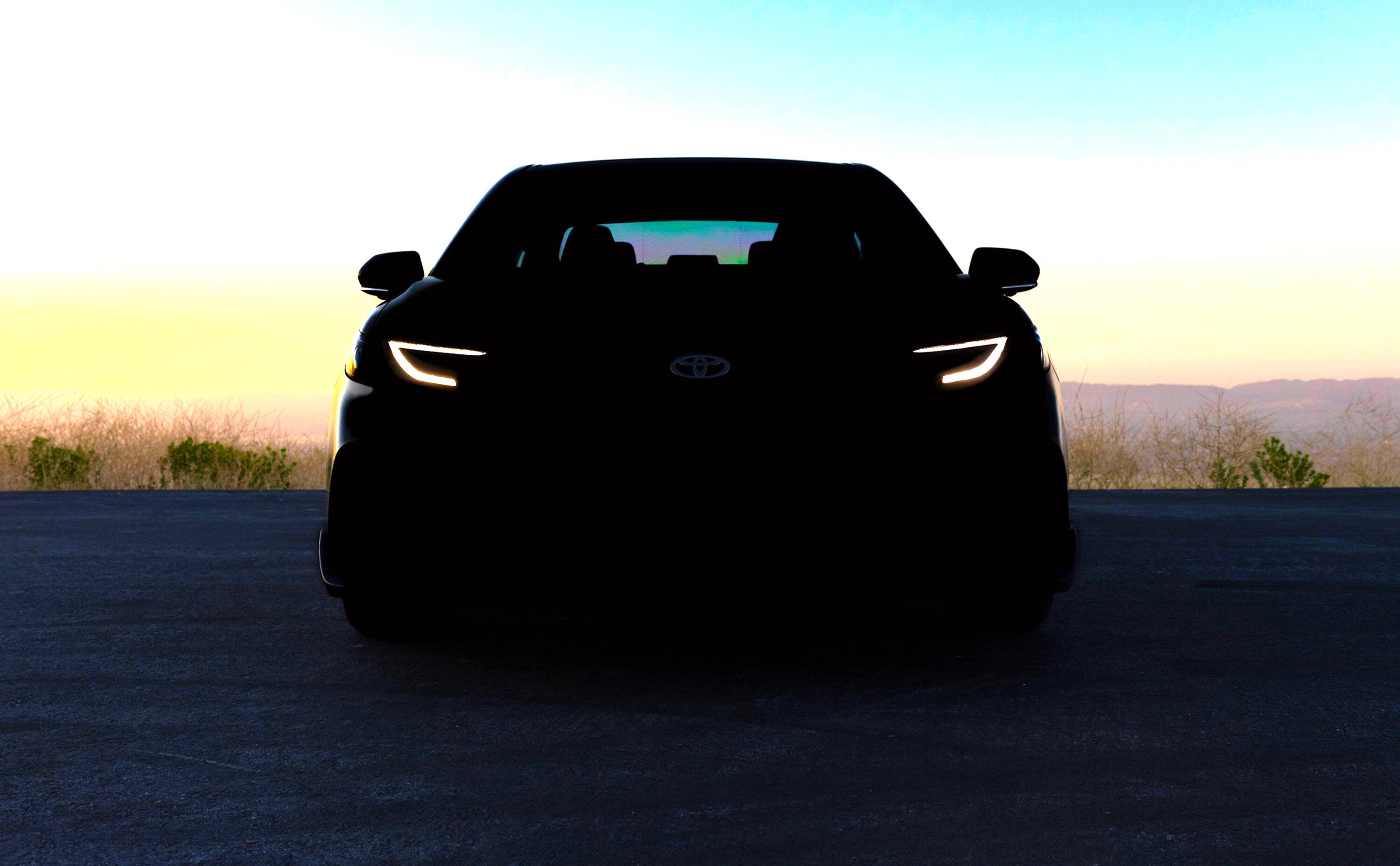
A second teaser for the 2025 Toyota Camry sedan has been released.
Snapshot
2025 Toyota Camry sedan teased
Ninth-gen Camry to have evolutionary design
Debuts on November 15 ahead of the LA auto show
Toyota has confirmed the ninth-generation Camry will debut on November 15 at 2:00pm AEDT, ahead of the Los Angeles auto show next week.
The teaser reveals an ‘AWD’ and ‘HEV’ badge, confirming the Camry will offer electronic all-wheel-drive with a hybrid powertrain – like a RAV4, Kluger or Crown – for the first time.
The 2025 Toyota Camry sedan has been teased ahead of an expected debut next month.
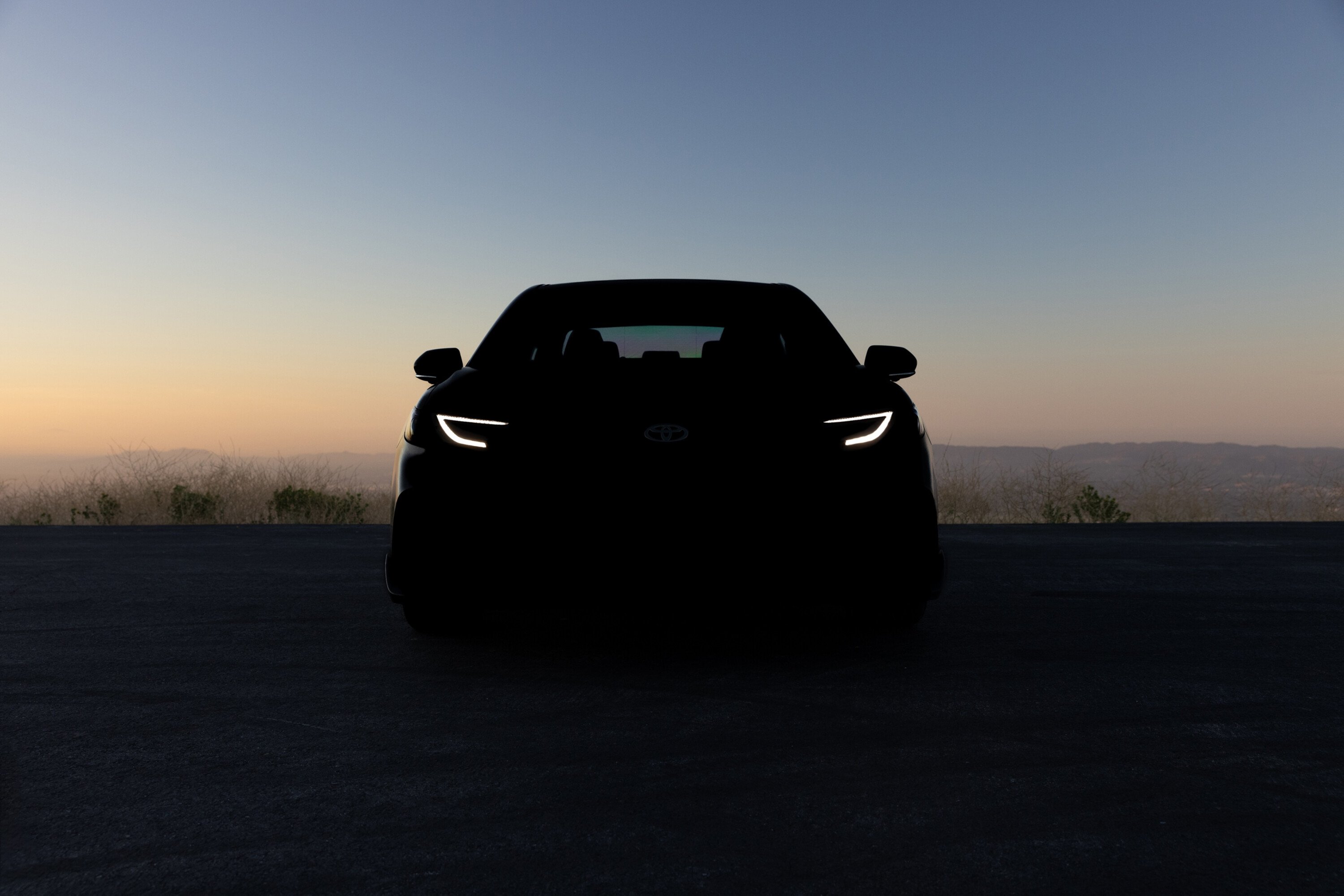
While the new teaser image released by Toyota in North America, captioned ‘A new dawn is coming’, doesn’t explicitly confirm a new Camry, the similarities are clear.
The ninth-generation Camry is expected to be an evolution of the current model that debuted in 2017, not a ground-up overhaul, with an updated design from existing TNGA-K underpinnings.
1
It is tipped to be unveiled at the 2023 Los Angeles Auto Show in late November or as a near-production sports concept at the SEMA show in Las Vegas earlier in the month.
Under the bonnet, the Camry could transition to a hybrid-only offering in Australia, while the 3.5-litre V6 still available in North America is likely to make way for the more efficient 2.4-litre turbo-four from the Kluger.
The teaser confirms an updated C-shaped daytime running light signature similar to the new C-HR, Prius and Crown Sport and a beefier lower bumper that could preview a hotted-up GR Sport variant.
A full-fat GR Camry is less likely, but a GR Sport (or TRD in the USA) could be fitted with the turbo-hybrid powertrain from the Crown and Lexus RX, producing around 270kW and 550Nm with all-wheel-drive.
A plug-in hybrid ‘Camry Prime’ is also possible with components from the RAV4 Prime mid-size SUV, including a 2.5-litre petrol engine and high-output electric motors.
Inside, expect influence from the C-HR, bZ4X and Crown with a larger, new infotainment system, a fully digital instrument cluster, and a smartphone-based digital key.
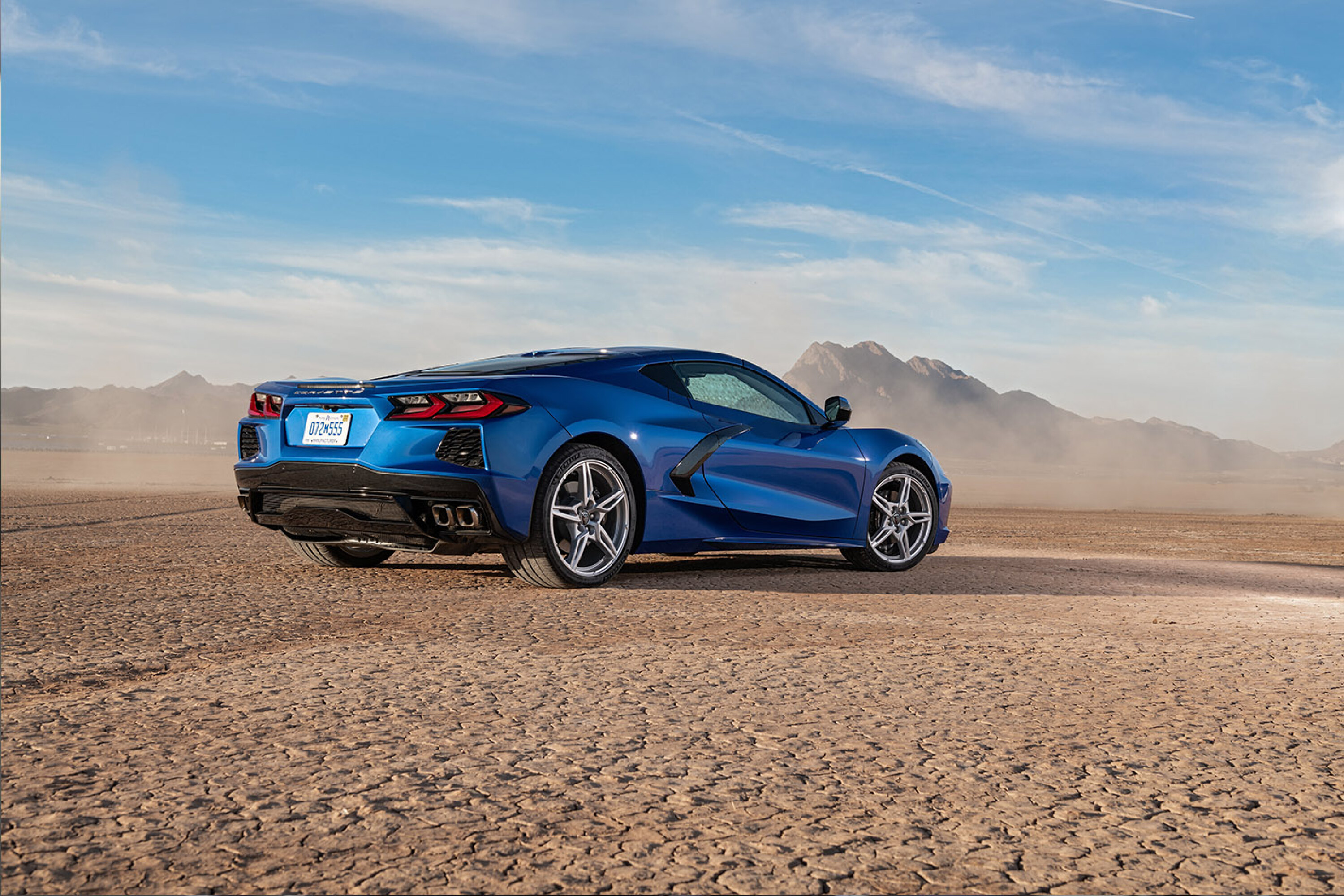
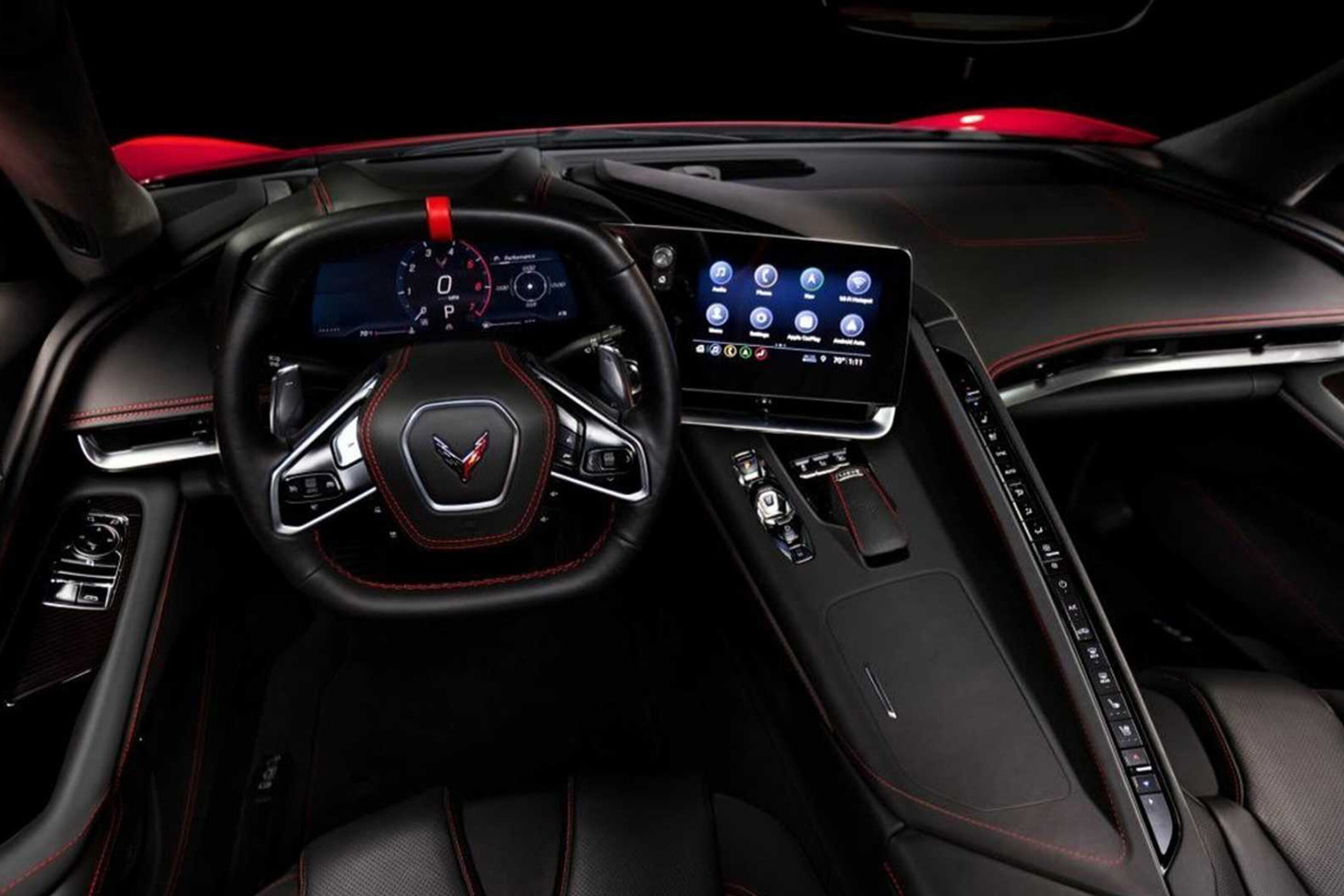
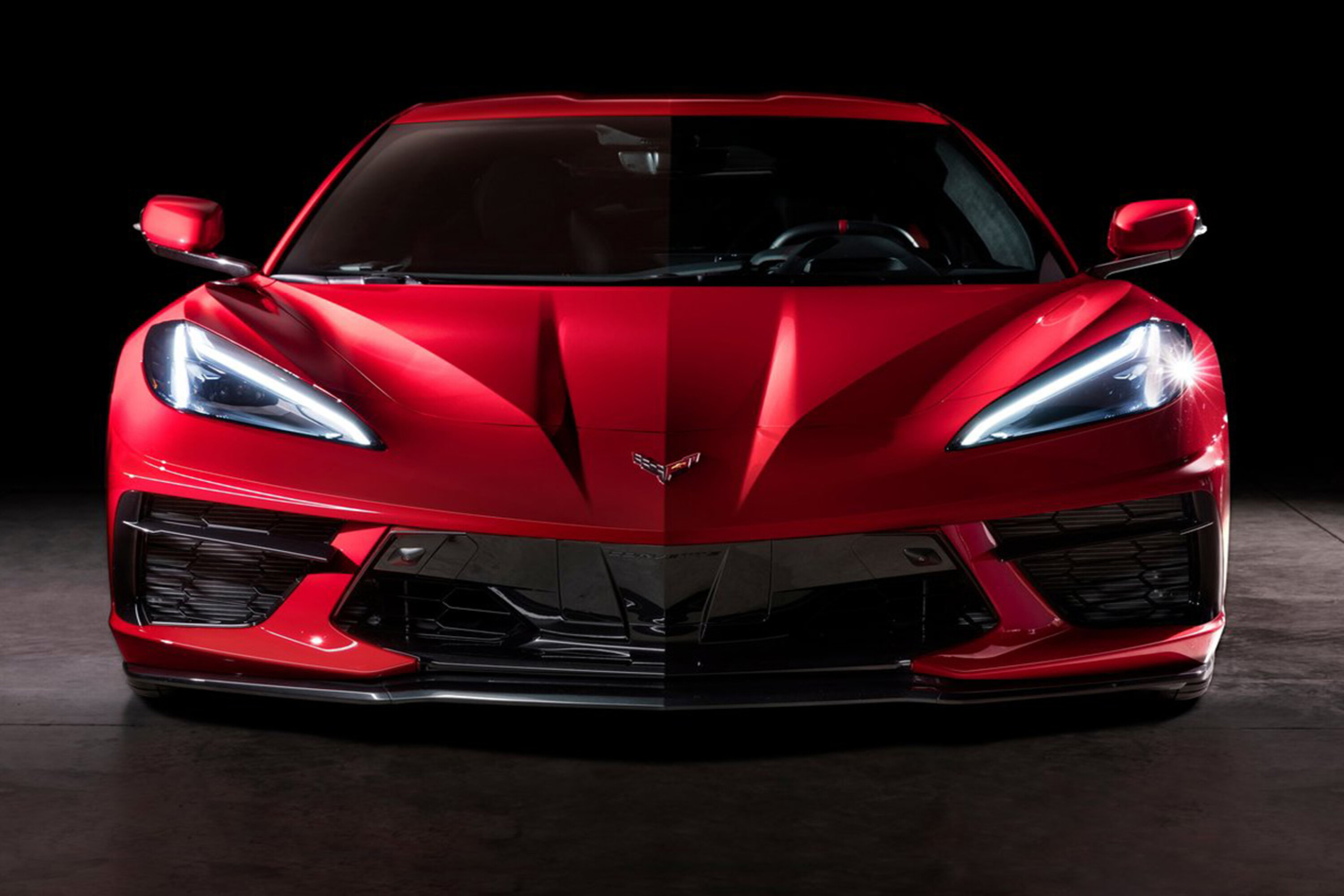
With a 369kW V8 slinging just 1545kg up the road, it’a a potent and accomplished thing. It’s priced keenly too, thanks to its factory right-hand-drive build.
We always knew that the ‘vanilla’ ‘Vette was just the start. The C8 product line had some hugely ambitious plans behind it.
1
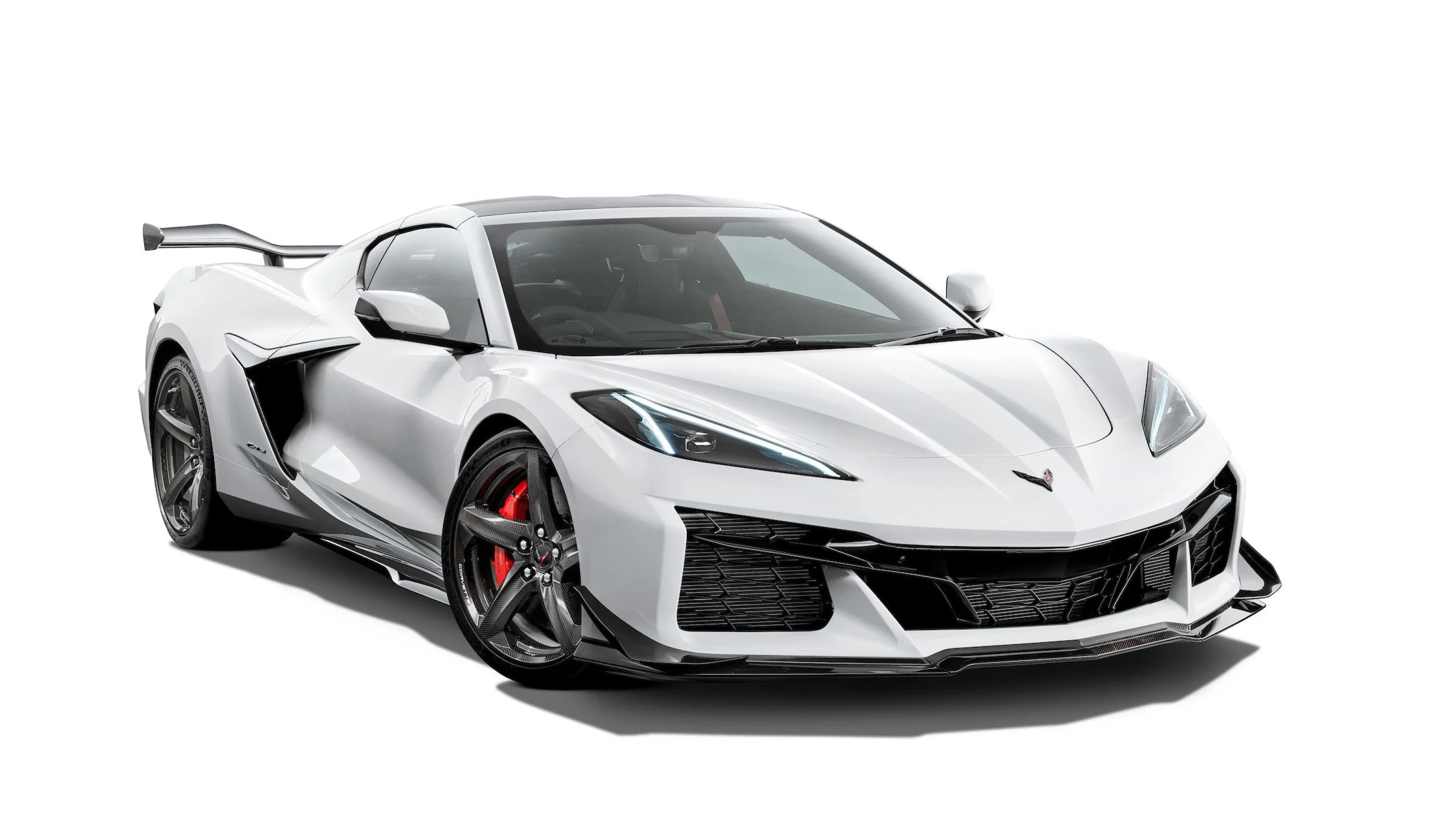
The first of the specials to make landfall in Australia is the Z06, powered by a 5.5-litre atmo V8 with a flat-plane crank and, in Australian tune, develops 475kW and 595Nm.
The first cars are now arriving, and the asking price in the 3LZ coupe (the only version imported) is $336,100.
Also offered is a Z07 Performance Pack, which adds stickier Michelin tyres, carbon-ceramic brakes, retuned suspension, and a carbon-fibre aero pack. If you’re really keen – not to mention suitably skilled at parallel parking – you can also option carbon-fibre wheels built by Geelong-based company Carbon Revolution.
“Due to incredible global demand, the Corvette Z06 is a measured volume proposition. In keeping with its exclusive nature, availability will be very controlled,” General Motors Specialty Vehicles director Greg Rowe noted in a media statement.
1
If 475kW still leaves you merely whelmed, it’s probably best to wait for what is billed as the quickest accelerating Corvette ever: the E-Ray.
As confirmed in January, the Corvette E-Ray is also coming to Australia. With power and performance that reside firmly in the supercar bracket, the first electrically-assisted Corvette features all-wheel drive to launch it to a 2.5-second 0-100km/h time.
The electrical hardware fitted is for performance, not economy or emissions, with a 1.1kWh battery wedged into the car’s transmission tunnel driving a front electric motor that adds a 118kW shot in the arm to the LT2 V8 for a total system output of almost 500kW.
1
“The electrified architecture makes this the most technologically advanced Corvette ever and we are pleased to announce that the MY24 build of the new model is expected to commence mid-next year [2024],” explained Rowe.
Detailed arrival timing and pricing for Australia and New Zealand has not been confirmed, but in the US, the E-Ray retails at $106,595 versus the Z06’s $114,395. That should give you some sort of idea when taking the Z06’s Australian pricing into account.
As tempting as the Z06 and E-Ray are, nothing other than the daddy of the lot, the ZR1, will suffice for some.
This flagship version is still in development and, as spy shots taken at the Nürburgring show, it seems to be following a similar development pathway to the Porsche 911 GT3 RS.
1
A huge fixed rear spoiler has been trialled, as has a bonnet which channels air through a huge duct, at the expense of frunk storage.
Said to be good for 630kW thanks to two turbochargers that augment the 5.5-litre V8, the rear-driven ZR1 is expected to utilise a more traditional cross-plane crank set-up. If that’s not mouthwatering enough, a Zora version is also said to be in the works, which will add hybrid tech for near 750kW. Whether the ZR1 will reach Australia has yet to be confirmed.
In the meantime, right-hook Z06 and E-Ray imports should keep enthusiasts occupied and the Euro blue-blood brands on their mettle.
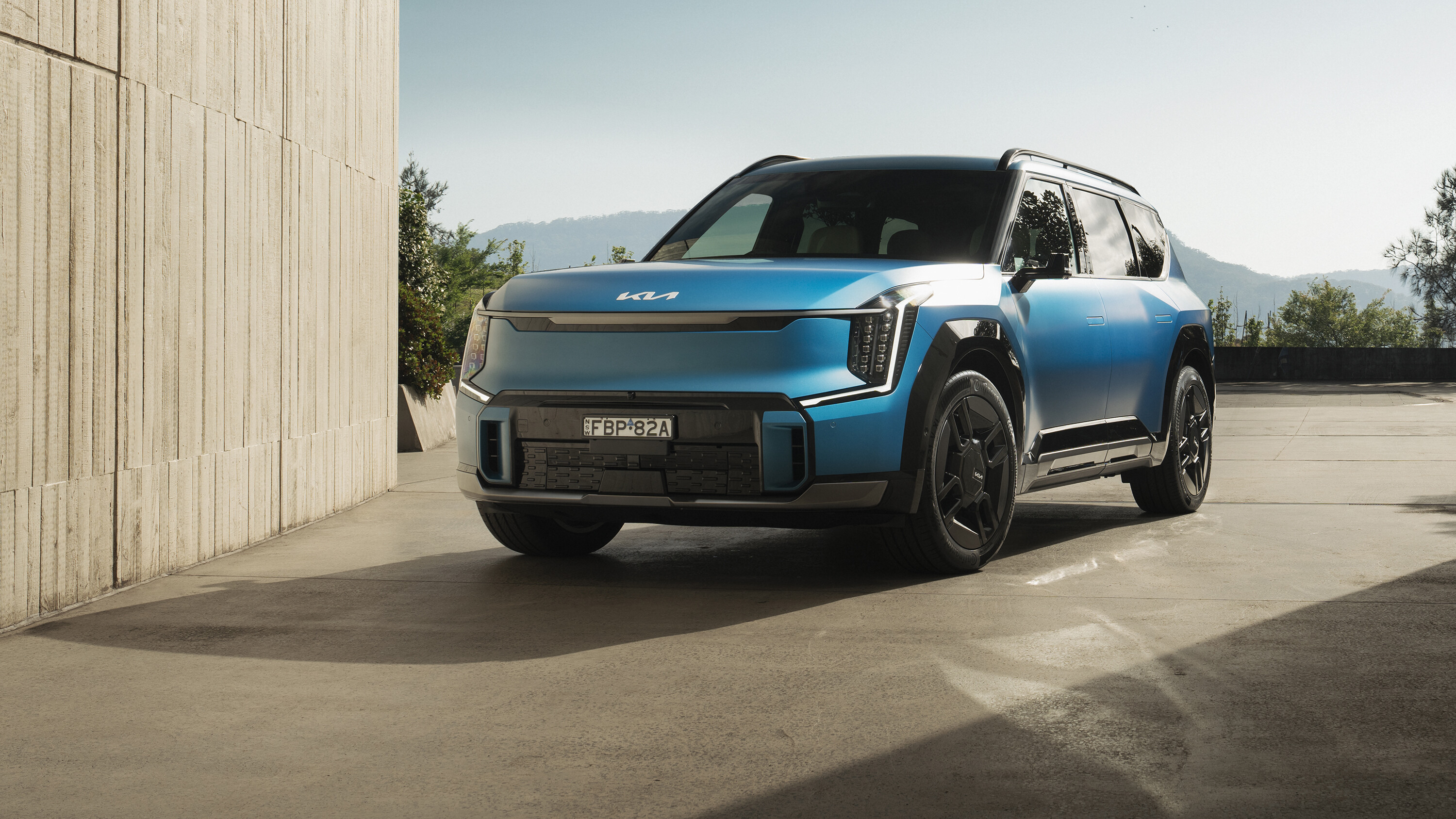
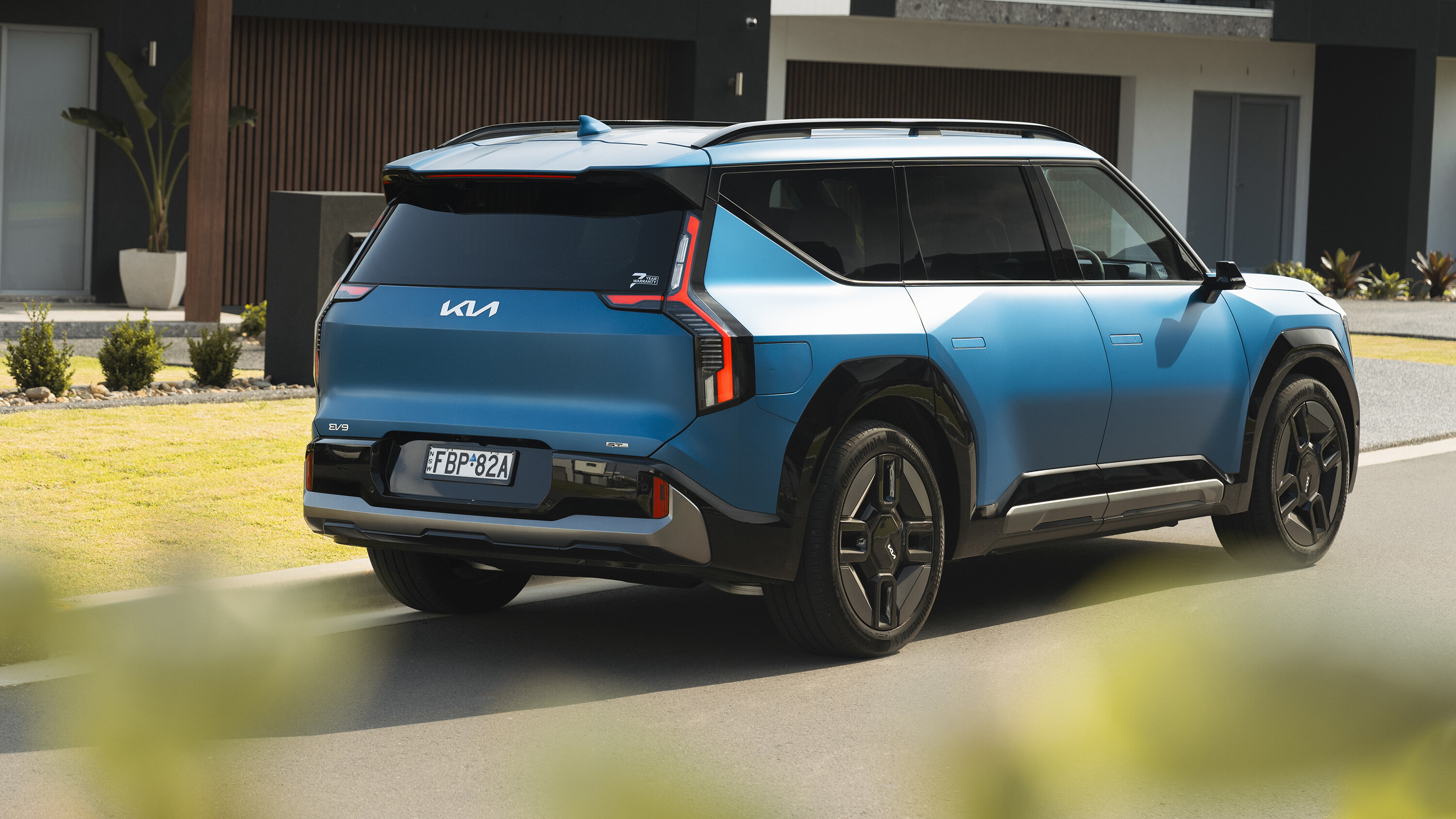
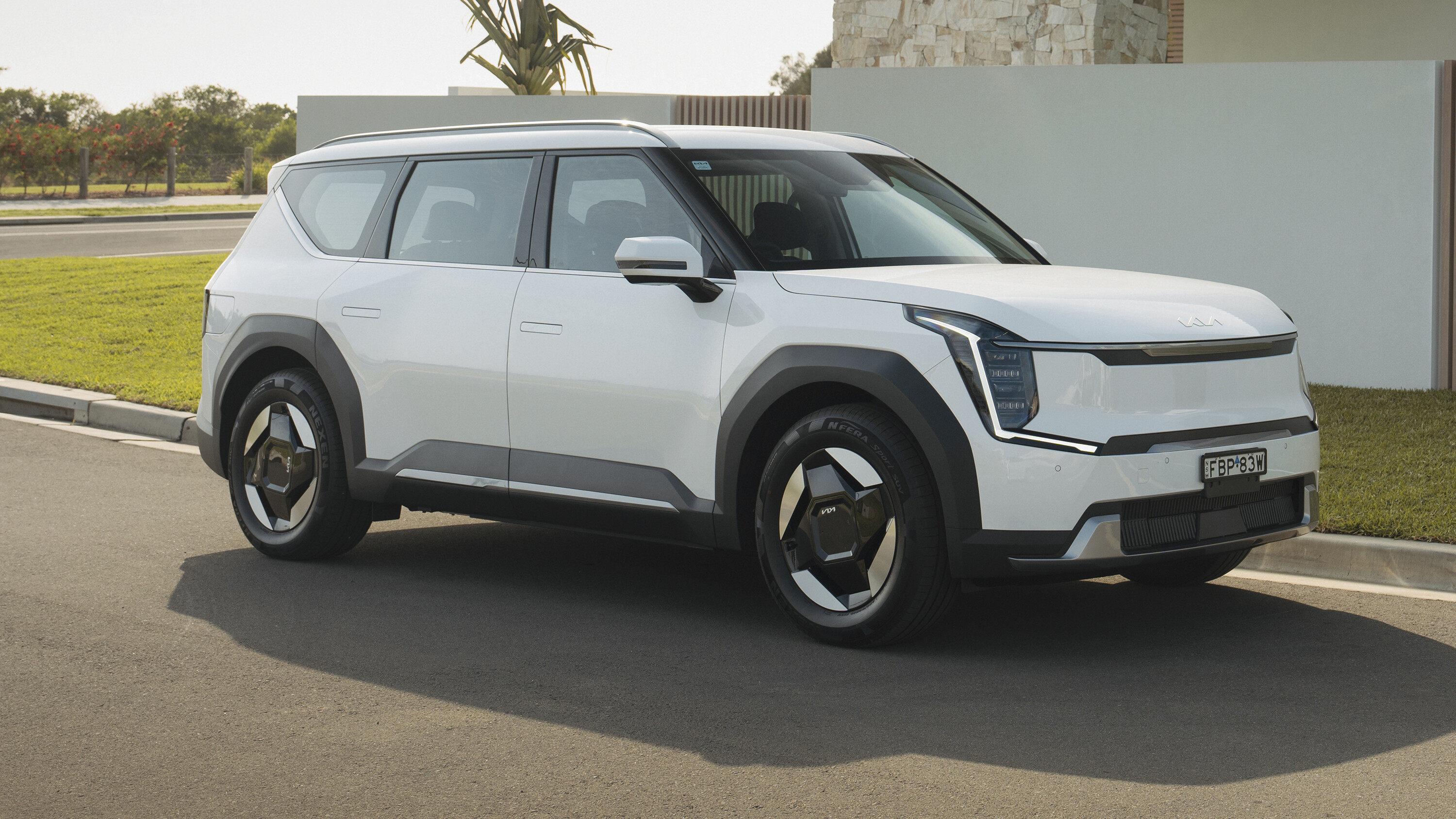
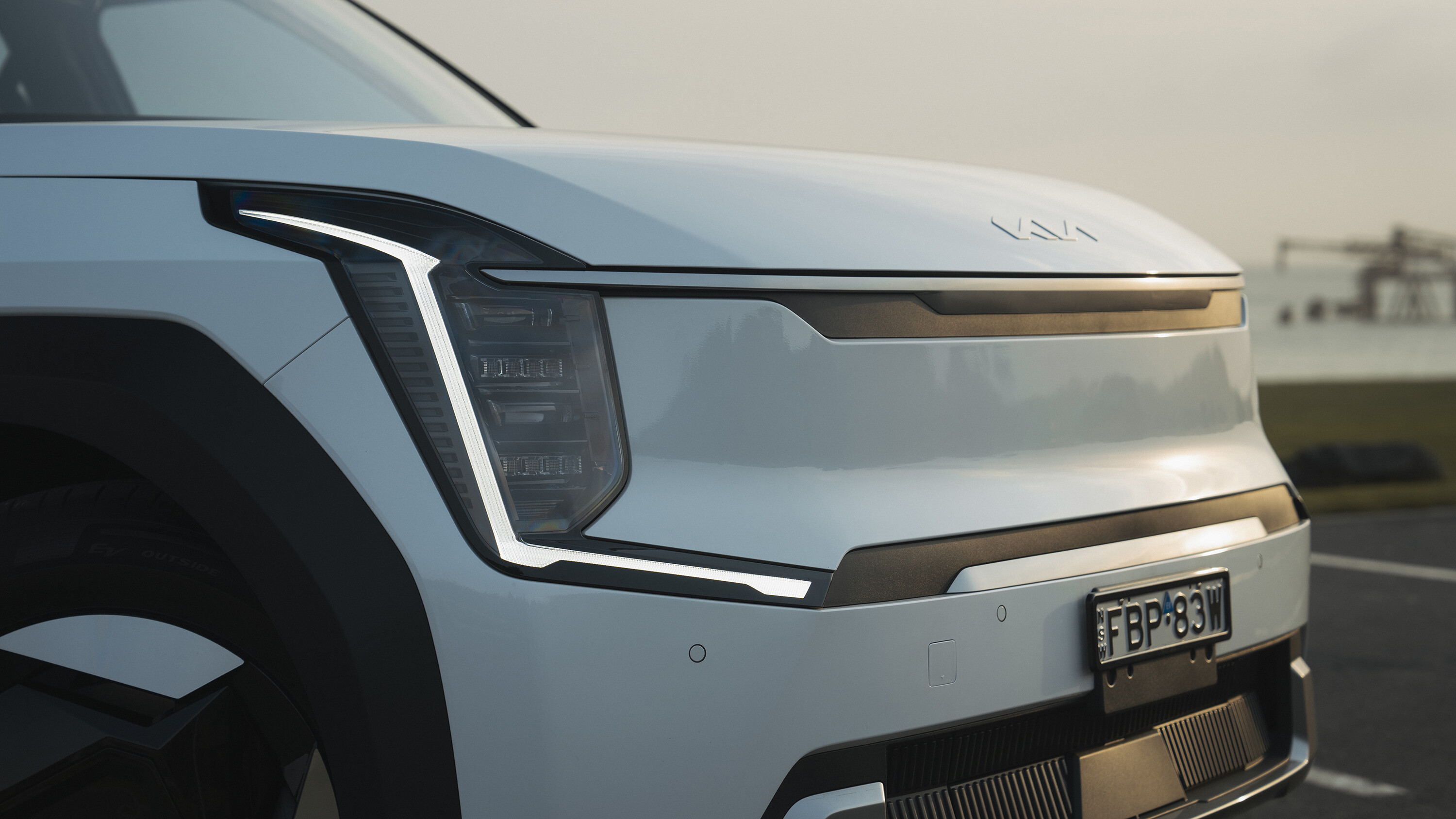
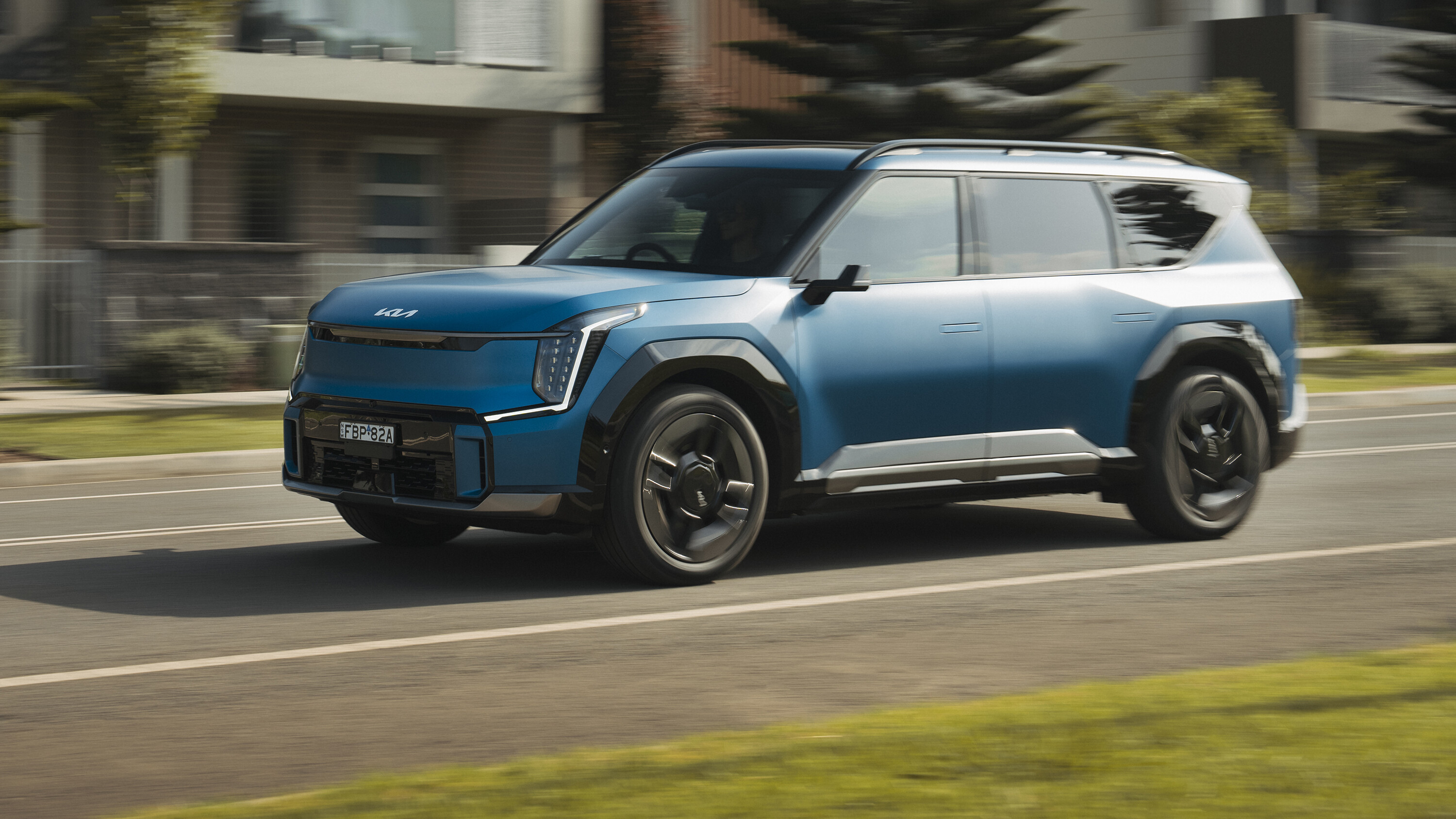
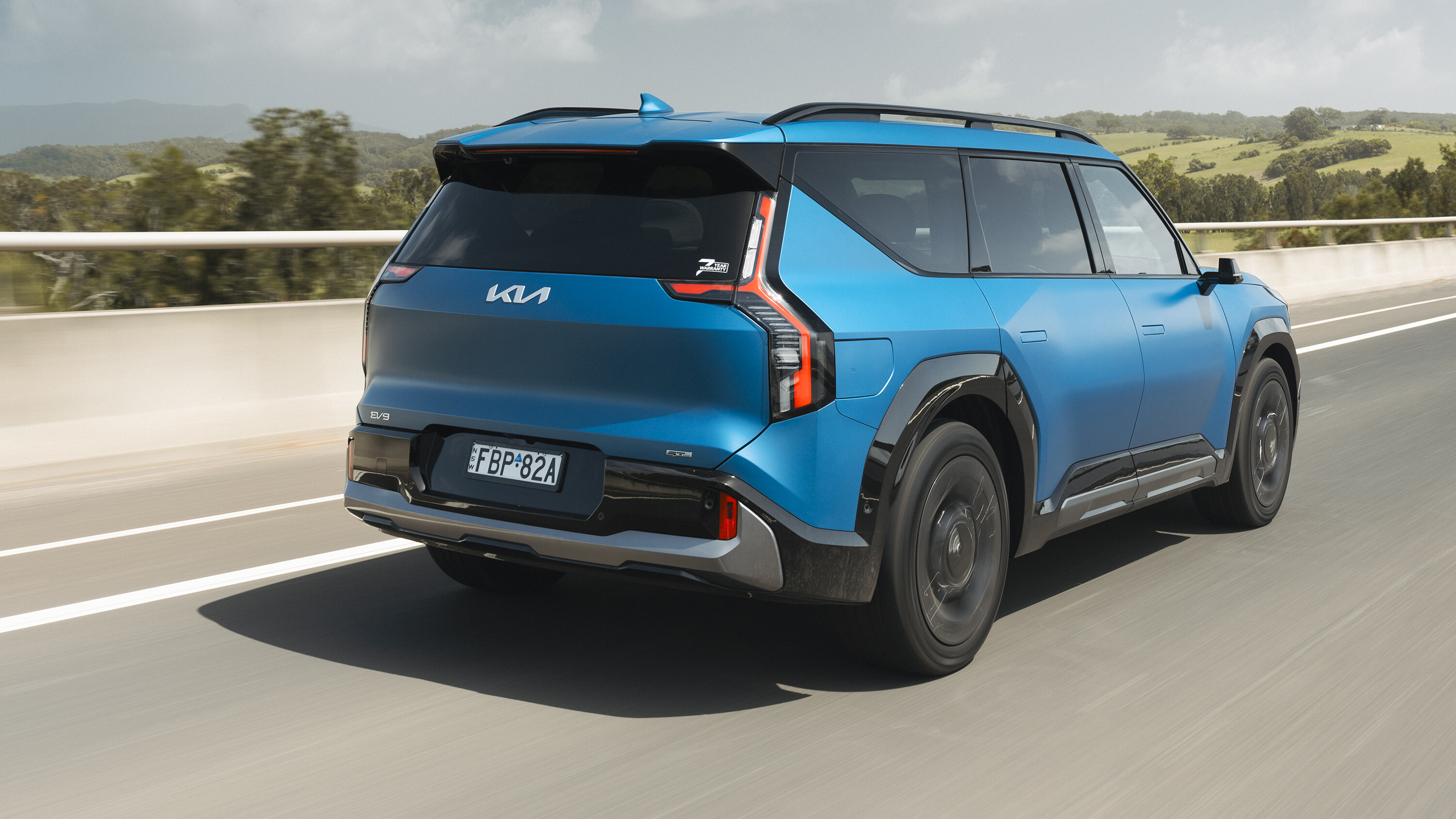
Kia’s got some brass ones these days, because its new EV9 electric SUV is big, bold, and bloody expensive. It’s also unique, for Kia and the market alike, which could result in a surprise success – even at $100k a pop.
It’s here. Arriving in rapid form after its global reveal just nine months ago, Kia’s massive EV9 is now on sale in Australia. And, unlike the smaller EV6 when it launched last year, Kia has enough supply to satisfy all but the most unlikely levels of buyer interest, with an allocation of around 100 cars each month.
1
Whether the EV9 will come close to those sorts of sales numbers remains to be seen, but with something like 7000 ‘expressions of interest’ – which can be anything from a visit to a phone call or a click online) – and dealers “writing orders for a while already”, Kia might be onto a good thing here.
At the time of last week’s Australian media event, Kia’s local arm said it had around 200 EV9s inbound by ship, and it intends for each of its 133 dealers to have a demonstrator on display.
Should you go take a look? The short answer is yes, but let’s get into it.
NEW: Kia’s plan for EVs in Australia
Kia is looking at 2024 as a watershed moment for its electrification plans, with a host of new and updated EVs bound for Australia. Get all the details here.
The EV9 is expensive, have I mentioned that? I feel like I’ve mentioned that.
Snapshot
Australian EV9 line-up opens from $97,000
RWD EV9 Air claims 443km range, AWD Earth & GT-Line over 500km
Strong equipment list, but no head-up or surround view in entry model
Of course, everything is about context, and while the EV9’s size and segment positioning form big pieces of the puzzle, it’s also very well equipped. Through the entire three-model range, in fact.
RWD EV9 Air claims 443km range, AWD Earth & GT-Line over 500km
800V electrical system with a 20-min fill from 10-80% on 350kW chargers
The entry-level model is the rear-wheel-drive EV9 Air, with a 76.1kWh lithium-ion battery pack and a claimed 443-kilometre driving range (WLTP). The Air’s single motor produces 160kW and 350Nm, promising a 0-100km/h time of 8.2 seconds with only the driver on board.
The $106,500 ‘mid-range’ EV9 Earth moves us into dual-motor territory with a 99.8kWh battery pack, boosting outputs to 283kW and 700Nm while adding all-wheel drive, a claimed driving range of 512km, and a much sharper 6.0-second run to 100km/h.
At the top of the range, and our focus here, is the $121,000 EV9 GT-Line. With battery and power numbers identical to the Earth, the GT-Line differs primarily in its equipment list – although it will draw more current to deliver a 0-100km/h time of 5.3 seconds, corresponding to a slightly shorter claimed driving range of 505 kilometres.
1
It’s uncommon for a RWD EV to have the shortest driving range, but Kia says its buyers have shown a preference for AWD – which, in this case, also boosts braked towing capacity from 900kg to 2500kg. But, as always, buyers should note that EVs will lose around half their driving range when towing at their full claimed capability. You should also consider that the rearward position of the charging port means you’ll usually have to unhitch a trailer and back up to the charger.
The EV9 uses the same E-GMP platform that underpins the EV6, upcoming EV5 and Hyundai’s Ioniq models – meaning it also boasts the same 800V electrical system.
Using a 350kW ‘DC+’ fast charger, this system enables a 20-minute charge from 10-80% for the EV9 Air, and 24 minutes for the GT-Line. To preserve their battery cells, most EVs will slow their charge rate after 80%, and the EV9 is no exception.
I said the EV9 is well-equipped, and it is. First impressions count, and when I climbed into the Air, my first impression was that there isn’t much missing. That isn’t quite true, as the tables below make clear, but there’s still a lot going on here.
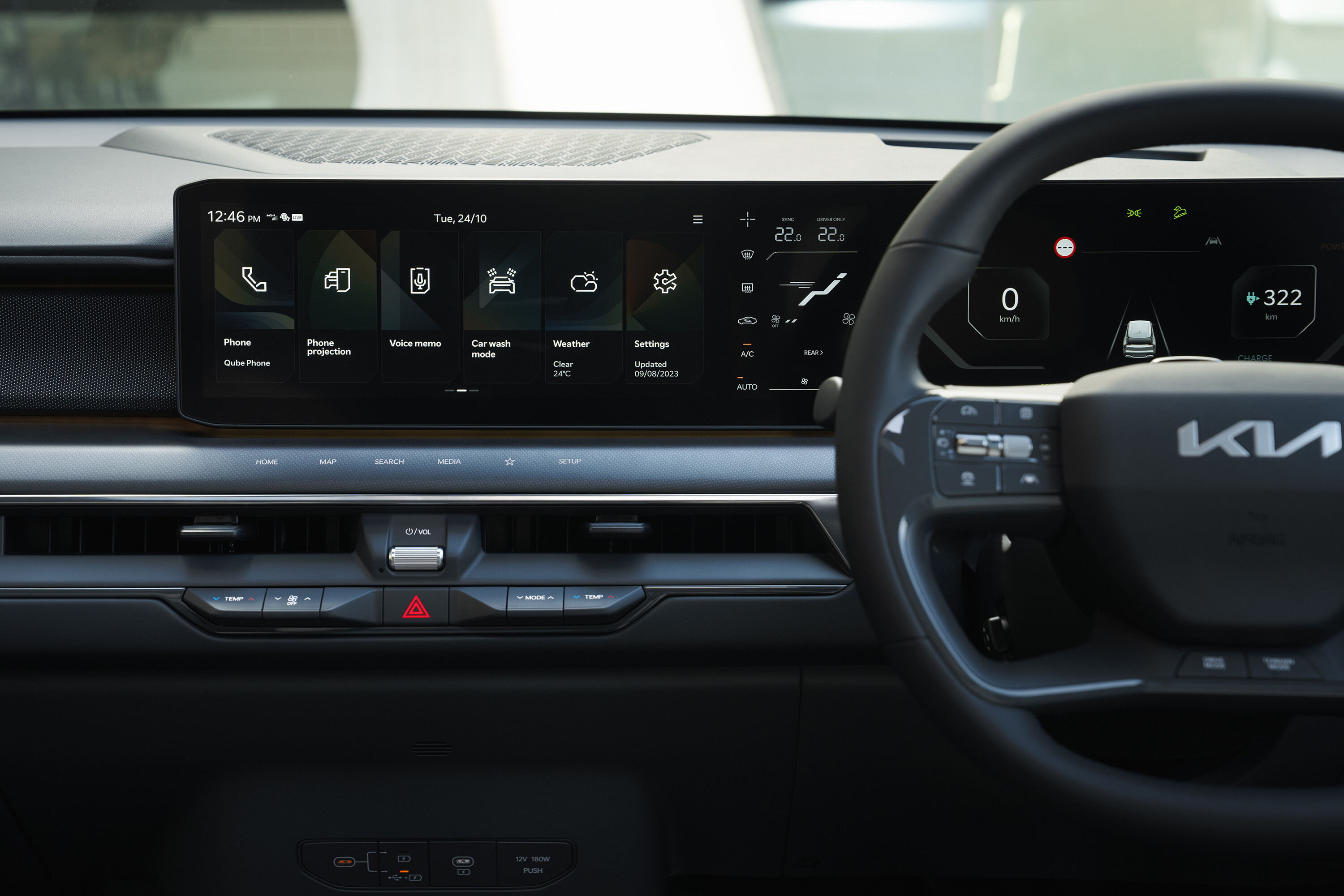
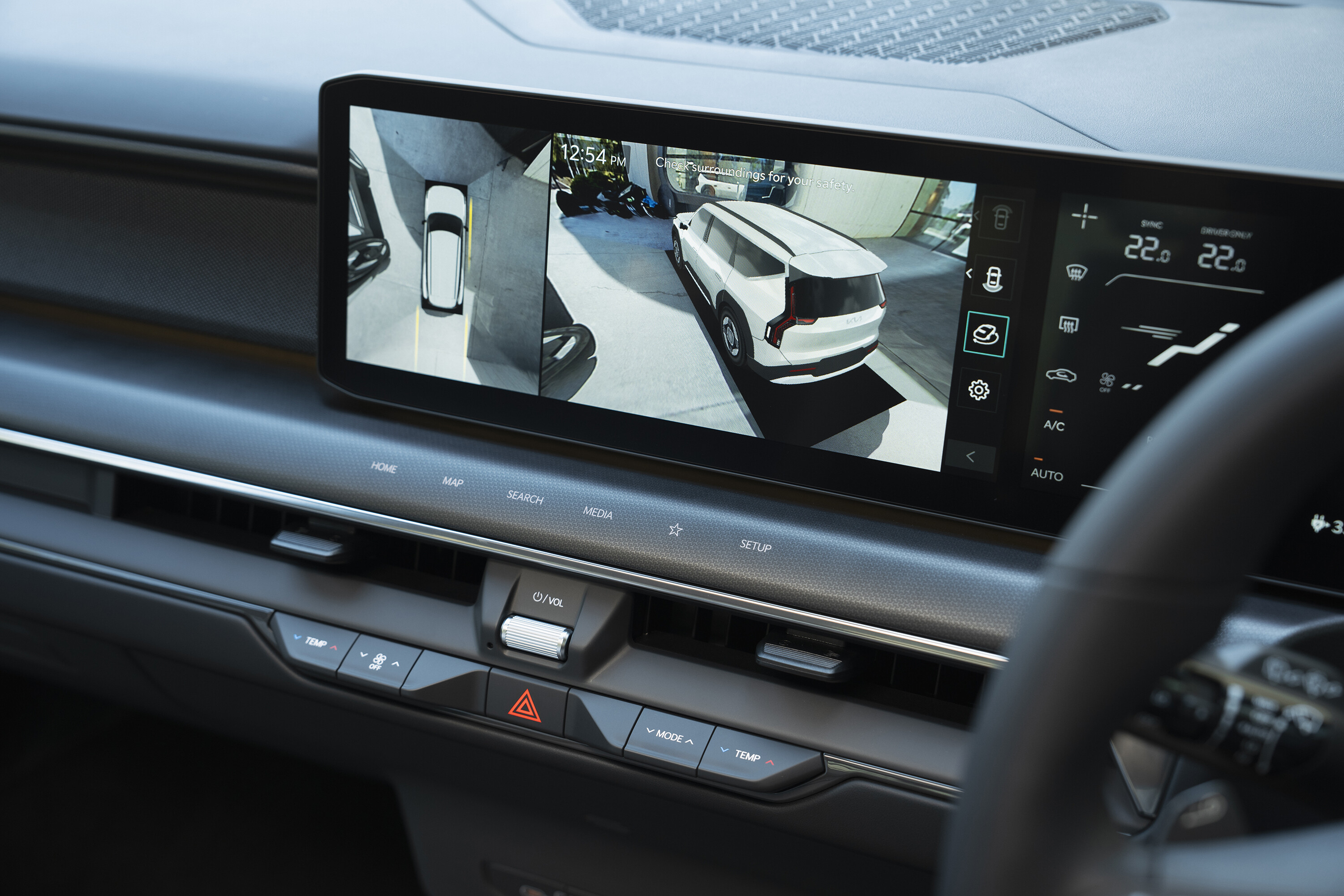
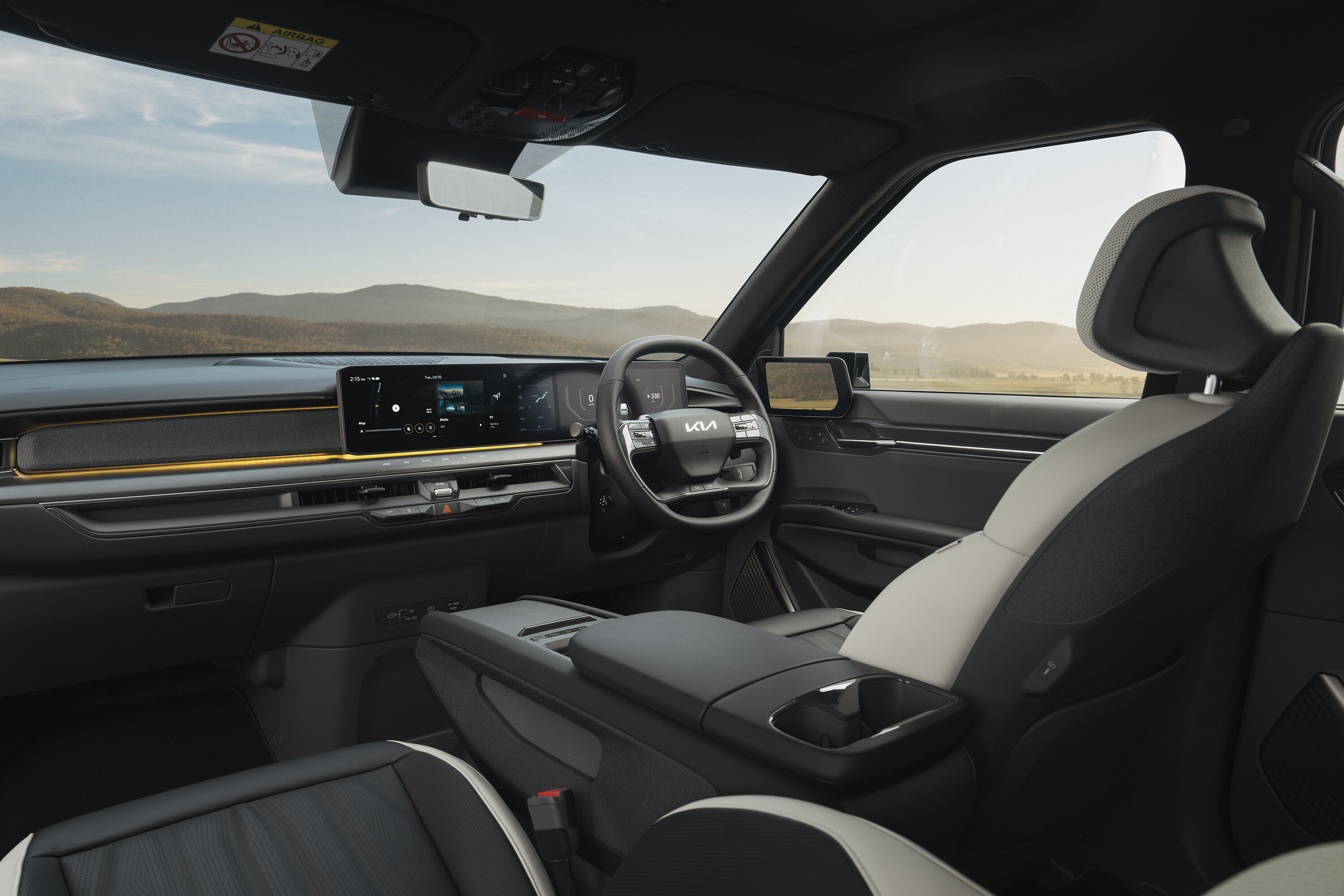
The most noticeable and flashy inclusion at the $97,000 opening end is the dual 12.3-inch displays (those are the huge kind) with a cleverly devised 5-inch climate display sandwiched between them.
Even listing the entry-level EV9 Air’s highlights is a challenge. What to exclude? For me, as a tech nerd, the standouts are the three-zone climate control; six USB-C charge ports (two in each row); powered tailgate; heated, ventilated and eight-way powered front seats; and a heated steering wheel.
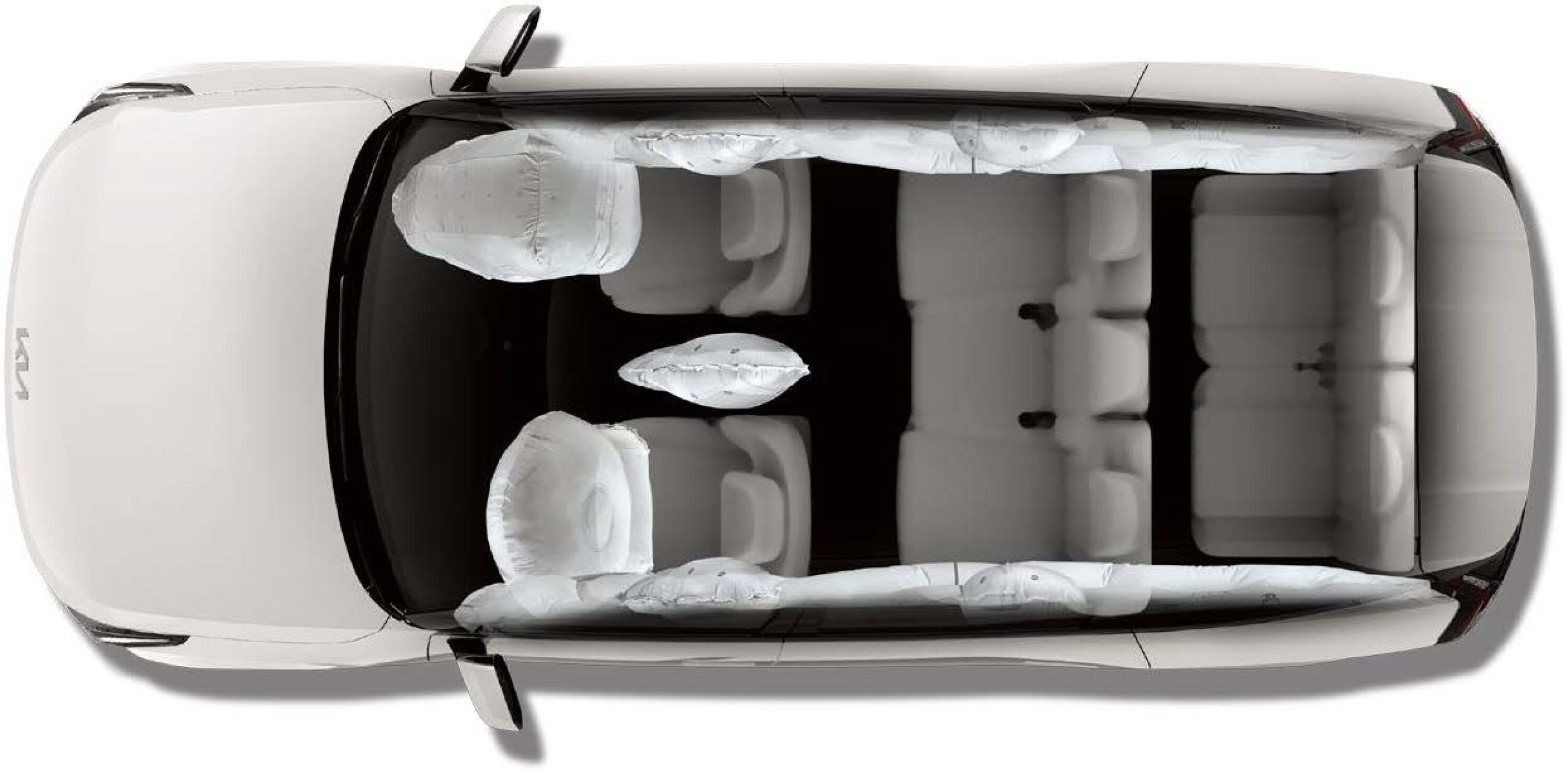
That’s the creature comforts. As a dad – and for it to achieve a top ANCAP safety score under the latest strict requirements – I’m pleased to see that the EV9’s standard safety list is loaded almost to the lid. See the full list below.
1
2024 Kia EV9 Air features
19-inch alloy wheels
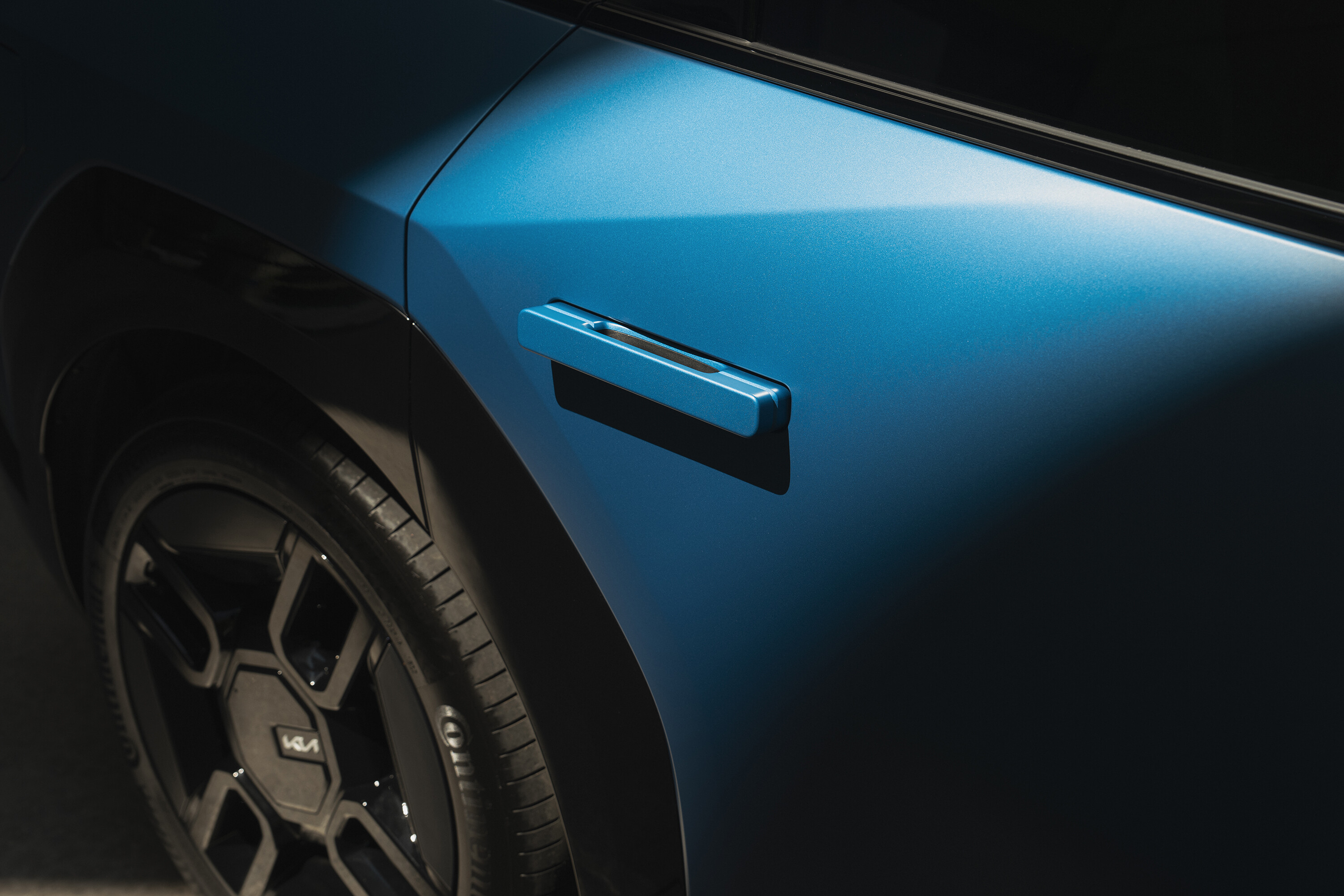
Auto-flush exterior door handles
12.3-inch ccOS infotainment system
Black leather-accented upholstery
Wired Apple CarPlay and Android Auto
Eight-way power-adjustable driver’s seat with two-way lumbar support
Kia Connect
Eight-way power-adjustable passenger seat with two-way lumbar support
Over-the-air software updates
Heated and ventilated front seats
Eight-speaker audio system
Heated steering wheel
Satellite navigation
Rain-sensing wipers
DAB+ digital radio
Remote-folding second-row seats
12.3-inch digital instrument cluster
Fingerprint authentication module
5-inch climate control display
Wireless phone charger
Three-zone climate control
In-cabin driver monitoring camera
Six USB-C charge ports (2x front, rear, side)
LED headlights, tail-lights, and daytime running lamps
Electric tailgate
2024 Kia EV9 Air safety
Driveru2019s front airbag
Tyre pressure monitoring
Passengeru2019s front airbag
Blind-spot alert
Side airbags (1st & 2nd rows)
Rear cross-traffic alert
Curtain airbag
Safe exit assist
Front center side airbag
Front and rear parking sensors
Lead vehicle departure alert
High beam assist
Rear occupant alert
Multi-collision braking
Autonomous emergency braking (vehicle, pedestrian, cyclist, junction, direct oncoming)
Highway Driving Assist 2 ud83dudd3d
Adaptive cruise control
Lane change assist
Lane-keep assist
Lane departure warning
Intelligent speed limit assist
But! Despite this royal flush of active and passive safety features, there are still three omissions at the entry level that should really be included: a top-down 360º surround camera view, blind-spot cameras, and a head-up display. For the first two, you’ll need to step up to the $106,500 Earth, which Kia expects to be the most popular variant. The head-up display is unique to the GT-Line.
Buyers should also know that Intelligent Speed Limit Assist (ISLA) is again featured (as it is in all new Hyundai models), causing a loud beeping when the speed limit is exceeded. This can be made quieter or even deactivated, but as with previous ISLA-equipped models, it must be done each time the vehicle is started. Kia notes, however, that you can now map the ★ button on the steering wheel to go direct to the safety settings screen, shortening the number of steps from about seven to four. Of course, the noise is most easily avoided by not speeding…
Black leather-accented upholstery with stripe stitching
Reverse parking collision avoidance assist
Gloss black body cladding
360-degree camera system
Illuminated Kia steering wheel logo
Blind-spot view monitor
64-colour configurable ambient lighting
1
EV9 GT-Line, in addition to Earth
21-inch alloy wheels
Four-way driver’s seat lumbar support, and power bolster adjustment
14-speaker Meridian audio system
Premium relaxation front seats with two-way power leg rests
Augmented reality head-up display
Two-position driver’s seat memory function
Digital side mirrors
Power-adjustable steering wheel column
Digital rear-view mirror
Dual sunroof
Matrix LED cube projection-type headlights
Rear privacy glass
Beige two-tone leather-accented upholstery
Backlit dashboard controls
Heated and ventilated outer second-row seats
Manual rear sunshade blinds
Remote smart parking assist
Active sound design
Vehicle-to-load (V2L) exterior adaptor
Alloy pedals
Forward and side parking collision avoidance assist
Black headlining
Parabolic glovebox
The $121,000 GT-Line is the focus of this review, and you can see that even though the Air and Earth models are well-equipped, the GT-Line adds its share of comfort, convenience and safety kit.
$15k worth? That’s up to you, and Kia knows the mid-range Earth is where most buyers will land, but the GT-Line should prove compelling for big-budgeted yet pragmatic buyers considering a more expensive and traditionally premium offering – with or without a need for seven seats.
Err, a lot. Let’s start with the phone-like fingerprint authentication pad that means crooks can’t steal your car even if they’ve got one of the key fobs – so long as they don’t also have one of your fingers. It works quickly, and setting up your fingerprints is exactly the same processed you’d use for any phone with a fingerprint scanner.
The second generation of Kia Connect is also featured, pairing your vehicle with your phone through a persistent online connection. The system launched last year with the small Niro, but this latest form adds over-the-air updates and, soon, an online store for features and apps. (We’re not expecting heated seats to become a paid feature.)
Kia says Connect will allow owners to download and install software updates for “almost 60%” of the EV9’s controller systems ‘over the air’, and map updates are also delivered twice yearly through this connection.
Apple Carplay and Android Auto are both standard in a wired form, but an over-the-air update due in the next month-or-so will enable wireless connectivity for new and existing owners.
2
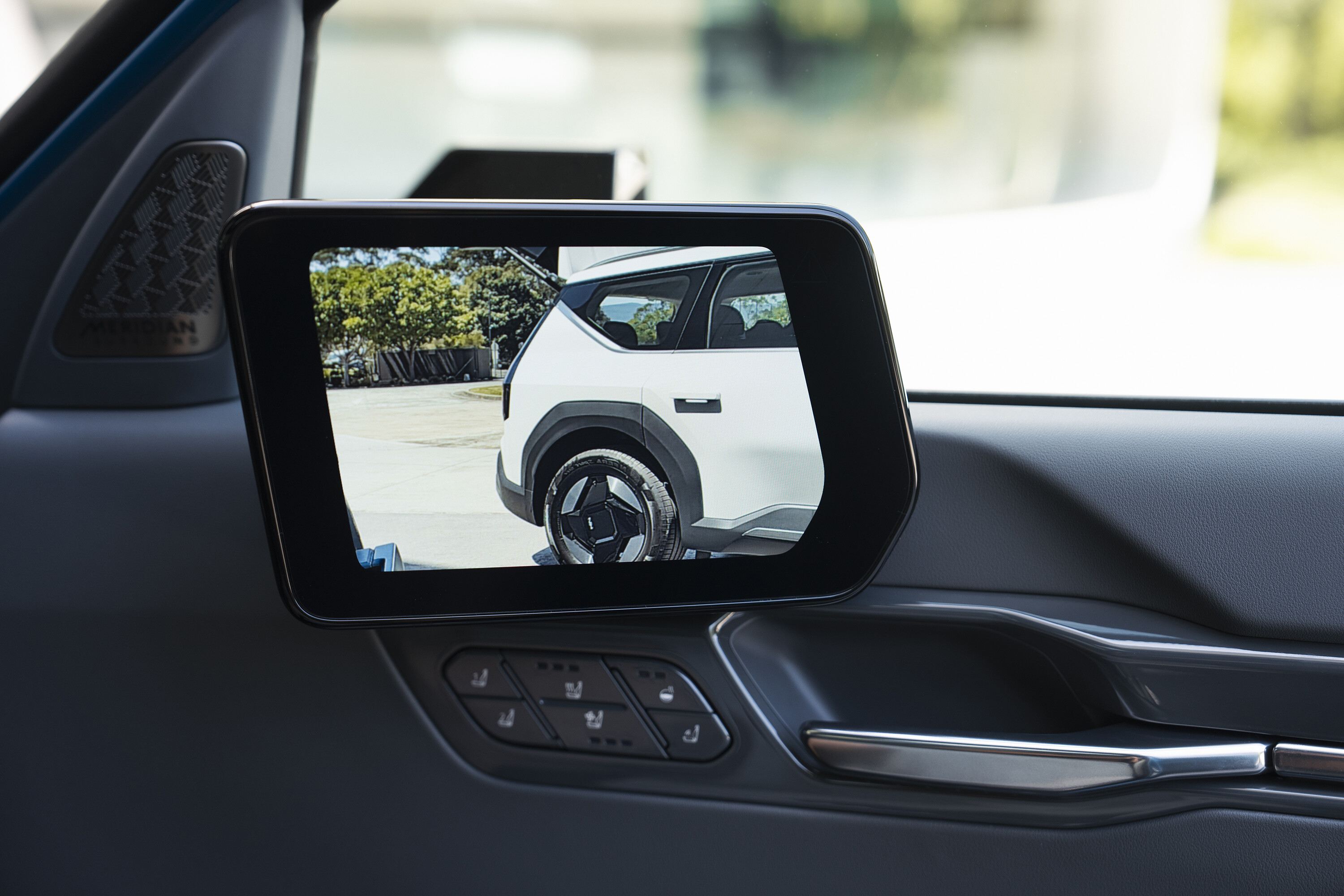
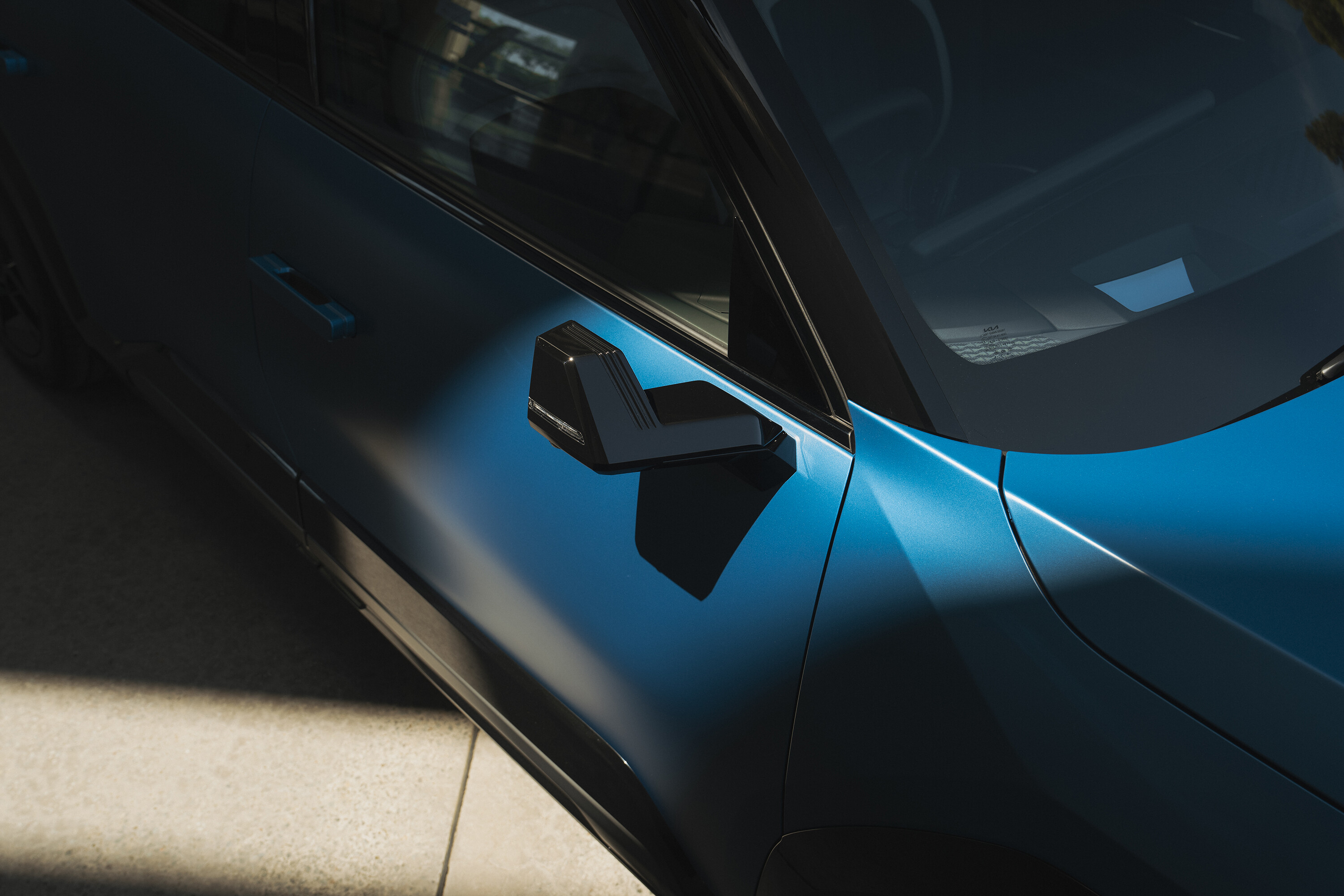
As with a number of other recent electric cars, the EV9 gets digital cameras in GT-Line trim. Yes, we may scoff at the ‘solution looking for a problem’ mirror cameras, but I’ve come around.
Not only do they show a marked improvement in wind noise when compared to the conventional mirrors on the Air and Earth models, but the viewing angle displayed on the door screens is so wide that it largely (but not completely) diminishes the critical importance of performing a head-check.
They’re also a more obvious presence and easier to glance at, improving the driver’s general situational awareness. If these features help to stop less mindful drivers from causing harm or bingles on the road, I welcome them. (Let’s see how long they go before needing an expensive replacement…)
1
There’s also a less controversial camera view in the main rear-view mirror, which can be used as a conventional mirror if preferred (thanks to the mirrored glass of the screen), or quickly flicked to a digital display as needed – such as when passengers’ heads are in the way, or the boot is loaded too high to see out the rear window.
Not only is the digital view wider, but it’s also proved surprisingly entertaining for Miss 5, who gets the exact same view from her seat in the second row, since there are no mirror angles to deal with. “There are so many cars chasing us!” ?
The EV9 also marks the Australian launch of Highway Drive Assist 2.0, which can autonomously manage a lane change on mapped highways – but, since it’s illegal to take your hands off the wheel, the system’s official job is to monitor for potential collisions when you indicate, and then guide you safely through the lane change when the coast is clear.
HDA also brings hands-on detection, stop-and-go cruise control, and lane-following assist to keep you centred in your lane.
For now, the EV9 is Australia’s ‘Goldilocks’ option for seven-seat electric SUVs.
The Mercedes EQB is cheaper but markedly smaller, and the EQS is a little bigger but markedly more expensive – while the EQE is both more expensive and short two seats.
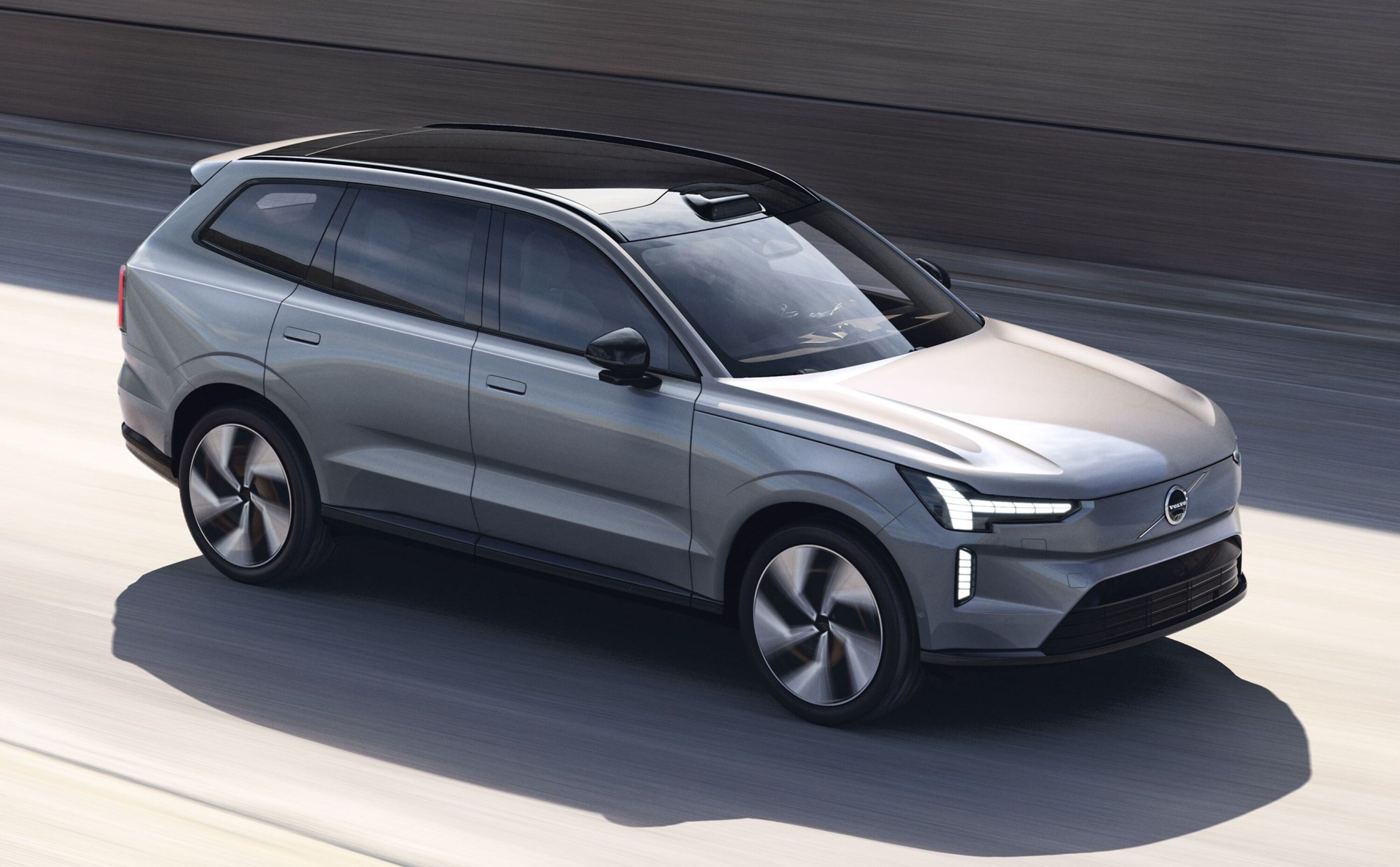
Volvo’s large EX90 is still a year away from its local launch, and will likewise be much more expensive than the EV9.
The most appropriate rival, if it’s space you need, is probably the LDV Mifa 9 electric people mover. It’s more expensive, ranging from $106k to $131k, but you get a comparable feature set and a 440km driving range. However, it charges slower, delivers only 180kW/350Nm front-wheel-drive for the price of Kia’s dual-motor AWD EV9 Earth, and has a shorter warranty.
Comfort, personal space and cargo capacity in the EV9 is just about bang-on, as you should be able to expect from a vehicle of this size.
The EV9’s long 3100mm wheelbase – a huge 285mm longer than that of the Sorento – along with its wide and surprisingly tall cabin, make it a properly spacious thing. Even the space-focused Carnival has a slightly (10mm) shorter wheelbase, although its total length is 145mm longer (5155mm plays 5010mm).
1
Driver and front passenger will have no valid complaints for space, and the synthetic ‘vegan leather’ (not made from vegans, I confirmed) seats provide a well-considered compromise between firm and plush cushions, along with good thigh support and fixed bolstering that feels suitably secure without leaving wider occupants uncomfortable.
In the GT-Line, there’s also smart bolsters that will actively tighten around you under swift acceleration, which is a neat effect.
And, oh, friends… the mesh headrests. The mesh headrests are just lovely. A little Volvo inspired, they’re beautifully supportive and perfect for a nap when you’ve powered your seat back into the relaxation position while charging.
1
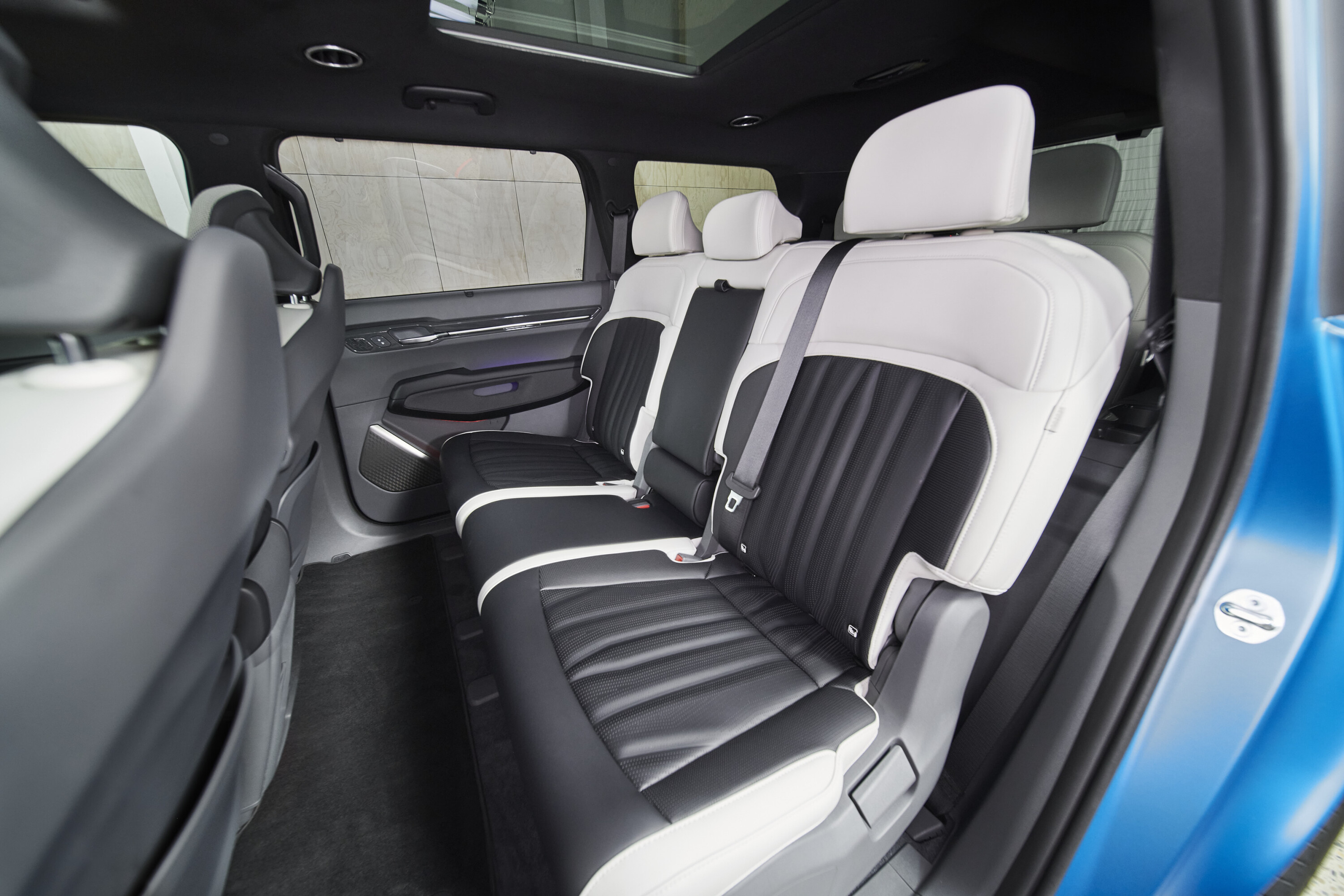
The second row is similarly accommodating, thanks to good toe space beneath the front seats, scalloped seatbacks for knee room, a flat floor, and room enough for three adults to sit fairly comfortably.
Second-row passengers would benefit from more thigh support, however.
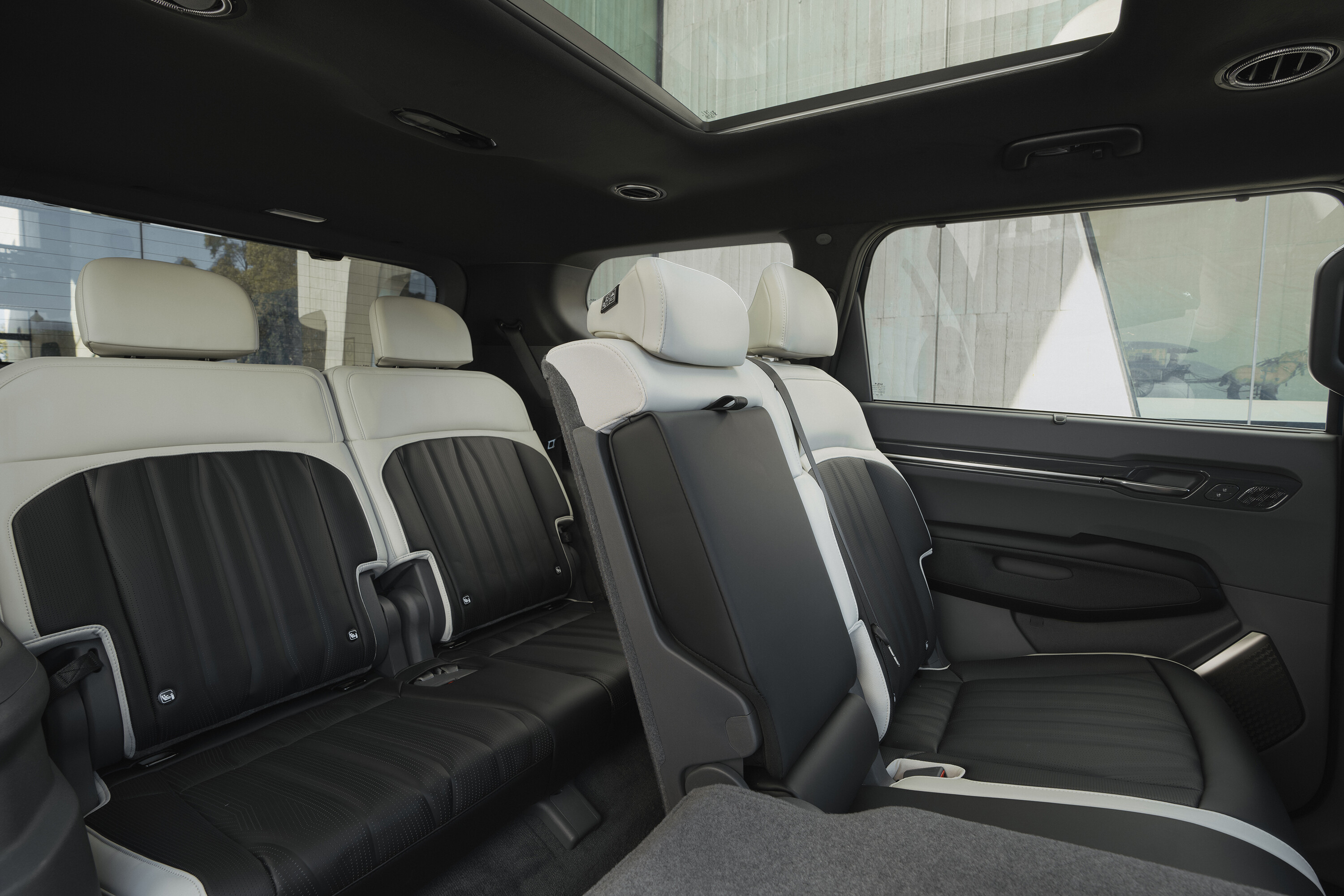
Thanks to the completely flat floor and long wheelbase, most adults will survive a trip in the third row with muscles unharmed, knees intact and hair styles unspoiled, which is saying something for most third rows. Knee room can actually be quite generous, thanks to the sliding second row.
A one-touch sliding function for the second-row seats is also featured, along with the ability to flip them entirely forward – meaning the third row can be accessed even if you have child seats in the outboard positions of the second row. (Perhaps remove your child from the seat first, though.)
1
There are three climate zones – two in front and a shared rear zone with two vents in each of the rear rows, long with two USB-C ports each. As with most EVs, the EV9 can’t cool the cabin well enough on a warm day to simulate an icebox (this furnace-bodied writer’s preference), but the lowest setting of 17º, along with the cooled seats, will keep everybody comfortable.
Materials throughout, along with fit and finish, are comfortably up to the best in the class. The EV9 Air has more exposed hard plastics at touch points than I’d like – especially around the centre console, where your knee will often rest – but this is a minor grievance, especially in mind of how well equipped the Air comes.
The GT-Line, where I spent most of my time on launch and in the week after, is just about sumptuous by comparison. With very convincing leather-like bioplastics for the seats, a surprisingly classy recycled plastic-based fabric on the dash, and a suede/Alcantara-like headliner made from – you guessed it – recycled plastics. If you saw my earlier walkaround video, you might recall I lingered on that detail. It’s a very “what sorcery is this?!” experience.
A word on buttons
This is an increasingly aggravating point for many buyers, as more and more brands work to cut costs – under the guise of streamlined styling and cleverly expanded functionality – by moving familiar physical controls into the big screens that now dominate the dashboards of today’s top sellers.
Thankfully, most of the EV9’s controls are thoughtfully designed, with physical toggles for the main heating and air-conditioning settings, while additional but less critical settings are always accessible on the dedicated climate panel. Seat and steering temperature is controlled via buttons on the door, as is the massaging function where equipped.
The steering wheel features the usual controls, again as physical buttons rather than the single-piece capacitive touch controls some brands have moved to, along with Drive Mode and Terrain buttons in the bottom of the wheel.
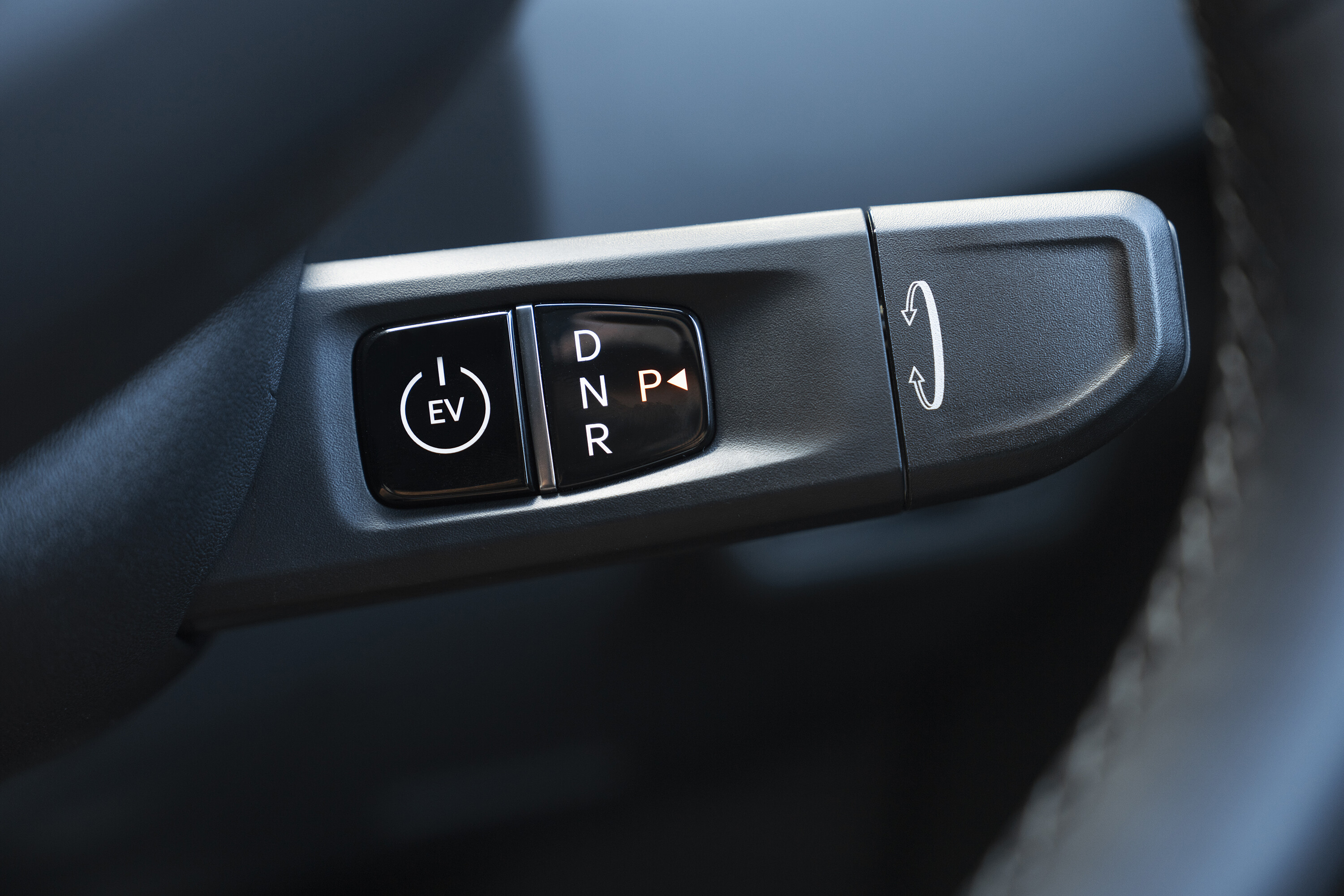
You won’t find any stalk controls or gear selection relocated to screens, either. (So far, only Tesla has taken this leap.) The EV9 wears its indicators and light switches in the usual position, while the gear selector is now a thick stalk on the lower right of the steering column. My only complaint here is that it can take a little while to remember this is also where the power button lives.
You’ll find a row of controls integrated into the surface beneath the main display, which is about as close as the EV9 comes to an unnecessary solution to a problem that doesn’t exist – but none of these are critical, most are duplicated on the screen, and each responds nicely with a haptic vibration when touched.
1
Cabin storage and boot space in the EV9 is impressive overall, with only the door bins standing out as surprisingly tight for anything bigger than a 600ml drink bottom.
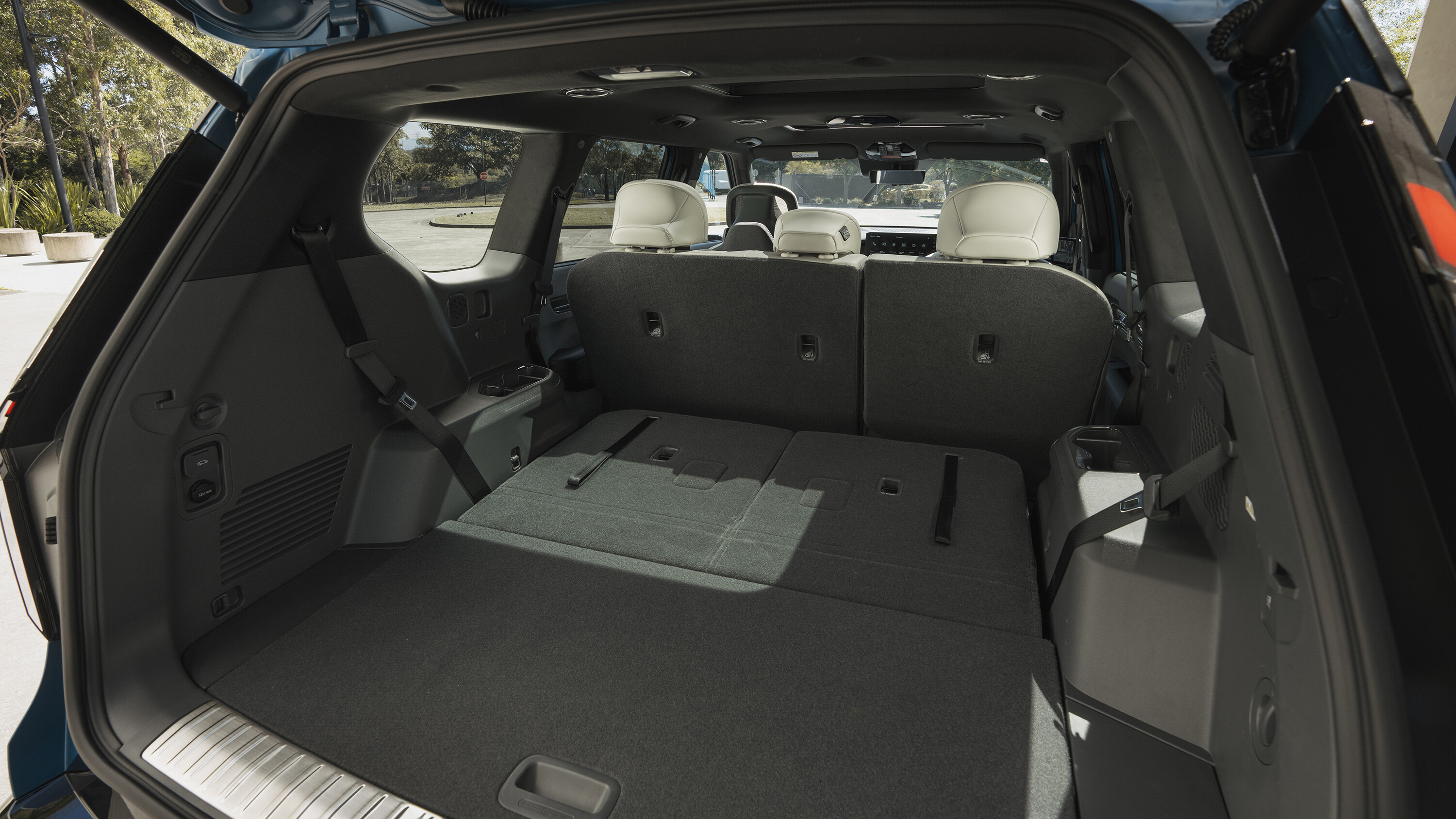
The boot is a real showpiece, however. Kia claims a frankly huge 333 litres with the third row in use and 828 litres when folded flat. This blows out to a “could… could I live in here?”2320 litres if you drop the third and second rows flat. And you’ll do that electrically, by the way, via a set of four buttons in the boot – set alongside a 250V, 16A three-pin power outlet for all manner of conventional appliances. You’ve seen the videos.
Kia lists its storage capacities to the European VDA standard, but for the sake of comparison, it’s also offered a chart to show how the EV9’s rear storage compares to the large seven-seat Range Rover, measured to the SAE standard.
Kia EV9
Diff
Range Rover (7seat)
Behind 1st Row
2,314
-287
2,601
Behind 2nd Row
1,233
172
1,061
Behind 3rd Row
573
261
312
^ SAE, litres
^ SAE, litres
1
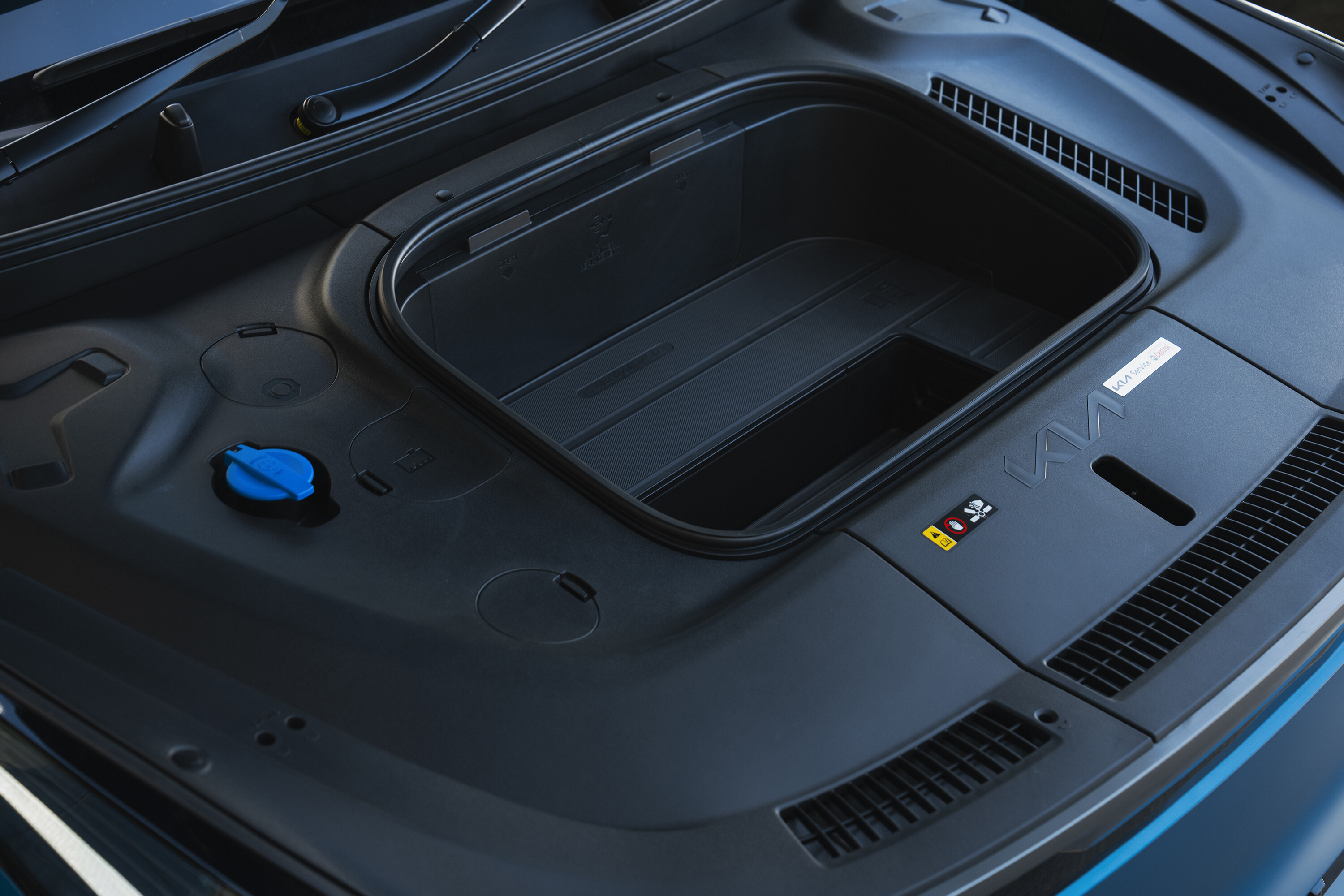
In the front, the RWD EV9 Air has a 90-litre ‘frunk’, while the dual-motor Earth and GT-Line models get a smaller 52-litre space to accommodate the additional motor.
In terms of sheer dimensions, Kia is keen to note that while the EV9 is a fair bigger in all directions than the Sorento, it’s not as overwhelmingly large on the road as a seven-seat Range Rover – which has a 97mm longer wheelbase and measures 238mm longer overall. The big Rangey is also 67mm wider and 90mm taller.
Why does Kia make a point of this? Because it’s proud of the EV9’s packaging, which claims greater legroom in the first and second rows, headroom in the first and third rows, and shoulder room in the first and second row. Land Rover doesn’t quote shoulder room for its third row, so Kia offers no comparison numbers for that very back row.
Category
Sorento
Diff.
EV9
Diff.
Range Rover 7seat
1st row leg
1,052
–
1,052
38
1,014
2nd row leg
1,060
26
1,086
59
1,027
3rd row leg
752
31
783
-81
864
Total
2,864
87
2,951
46
2,905
1st row head
1,024
22
1,046
6
999
2nd row head
994
18
1,012
-20
1,005
3rd row head
935
69
1,004
95
909
1st row shoulder
1,500
64
1,564
19
1,545
2nd row shoulder
1,475
50
1,525
25
1,500
3rd row shoulder
1,345
53
1,398
–
–
6
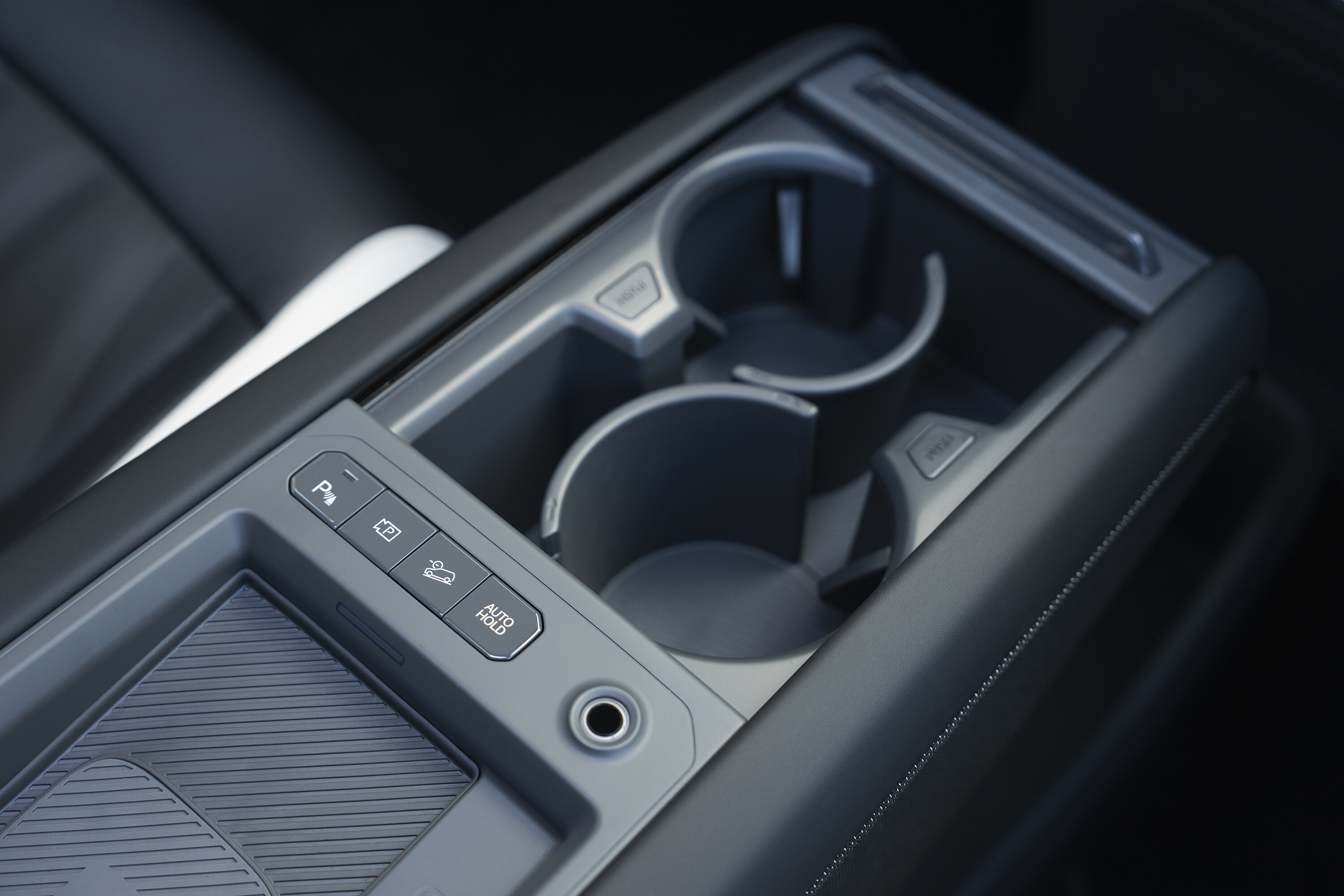
In the front row, there’s a large combination cup-holder and cubby space with a sliding drawer lid, set above a huge lower storage section that makes good use of the EV9 having no conventional transmission to take up that space.
Behind the cup holders is a fairly shallow console bin beneath the arm rest, along with a single wireless phone charging pad. There’s also a large glovebox (9 litres in Air and Earth, 8 litres in GT-Line), and decent – if a little narrow – door pockets.
Passengers in the second row get cup holders in the rear of the centre console, and in the flip-down centre armrest if that seat isn’t in use. There’s also map pockets in the front seatbacks, small but useful door pockets, and – oh yeah – a properly deep cubby in the bottom of the centre console. Storage space democratised!
Way out back in the third row, you’ve got large cup-holders and a small tray next to each that would accommodate an AirPods case at most – but it’s something at least.
Firstly, in case you’ve been living on Mars these past few years, here’s an important point to keep in mind: all EVs are heavy.
Really heavy. The EV9 weighs in at 2960kg in RWD form and breaks the scales at 3240kg for the dual-motor models. A lot of that is in their big battery packs, too, at 463kg and 566kg respectively.
For some perspective, if you swapped those batteries for a 1957 Fiat 500 (fresh out of a hydraulic press), you’d add nothing more to the EV9’s weight. It wouldn’t go anywhere, but still.
All of this is really to say that when I tell you the EV9 handles as neatly as the well-regarded and surprisingly fun Sorento GT-Line, if not better – with weight distribution, long wheelbase, a complimentary centre of gravity and yet more of Graeme Gambold’s exhaustively proven local suspension work in its favour – it should, well, carry some weight.
1
It’s also stronger through the body than, for example, a Tesla Model Y, with eight more hot-stamped parts used as well. Kia says the EV9’s torsional stiffness is 14% greater than the Tesla, while average tensile strength is 9.7% better.
Listen, it’s not a sports car. I find myself saying that a lot – mostly for those readers who can’t comprehend that a modern SUV might corner flatter and shift direction with more composure than many older sports cars – but this is where we are now. If you’re uncommonly inclined to give the EV9 a competent whipping, it won’t go screeching into the first concave guardrail you see. It grips. It’s balanced.
Indeed, it’ll rarely utter a squeal except for at the hands of the most wildly thrill-thirsting drivers, and if you let the i-Pedal brake-regen setting do its thing as you approach a corner – effectively producing a trail-braking sensation when you gently lift off the accelerator – you’ll scoot through. Often with the thought “but how?” rushing into your mind.
Of course, it’s bloody quick, too. All that electric torque is no joke, so if you’d rather just enter corners sensibly and rocket out of them, that’ll work too.
1
In regular driving, the EV9 GT-Line is perfectly competent as a comfortable commuter, even on its large 21-inch wheels – thankfully shod with low rolling-resistance Continental PremiumContact C rubber, developed for a low-noise application.
In touring sections of the New South Wales coast and the Southern Highlands, I encountered little cause for concern when it comes to the EV9’s ride and comfort over pot-holes and broken surfaces, corrugations and unsealed surfaces. Like the smaller EV6, the EV9 is equipped with frequency-selective damper tech and self-levelling rear suspension – all with Australia-specific tuning by Kia’s ride and handling guru, Graeme Gambold.
Road and wind noise are well suppressed, thanks to those tyres but also an abundance of sound-insulating materials and laminations in the body and the windows. It all adds to the vehicle’s weight, of course, but a journey without these elements would not be pleasant.
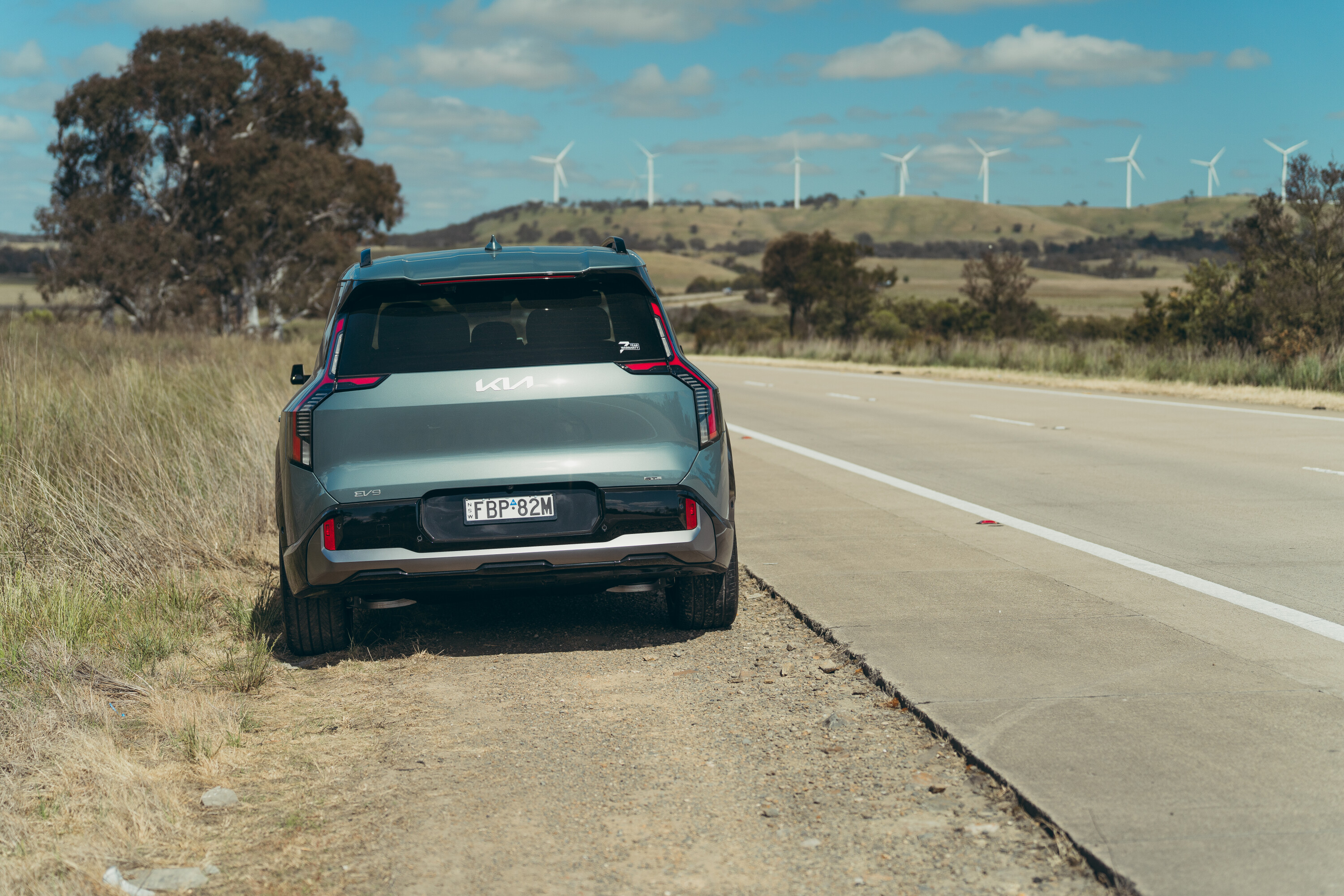
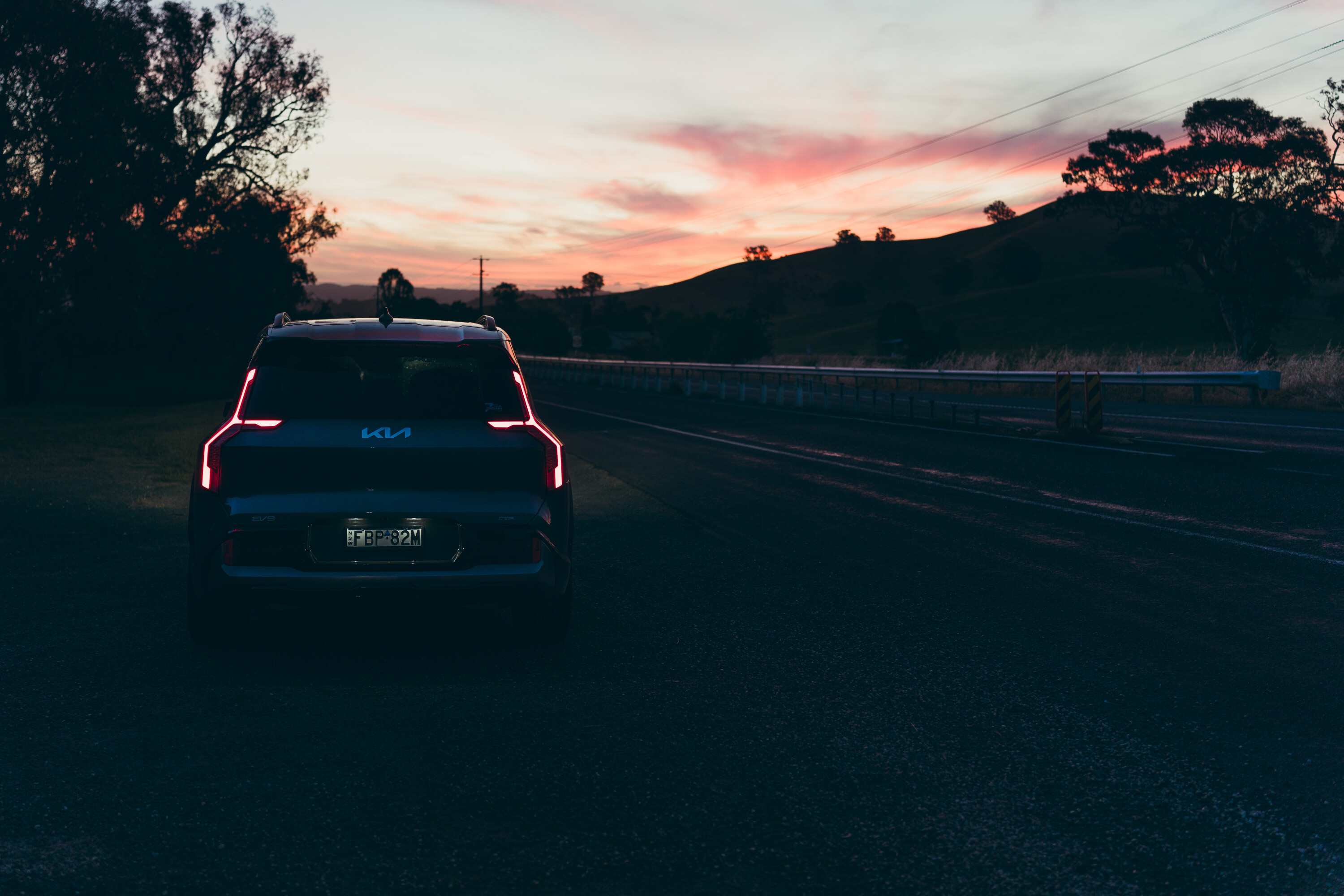
Immediately after the launch event, I drove an EV9 GT-Line from the Southern Highlands to Outer Eastern Melbourne – a journey of more than 700km. I had 490km indicated range when I left.
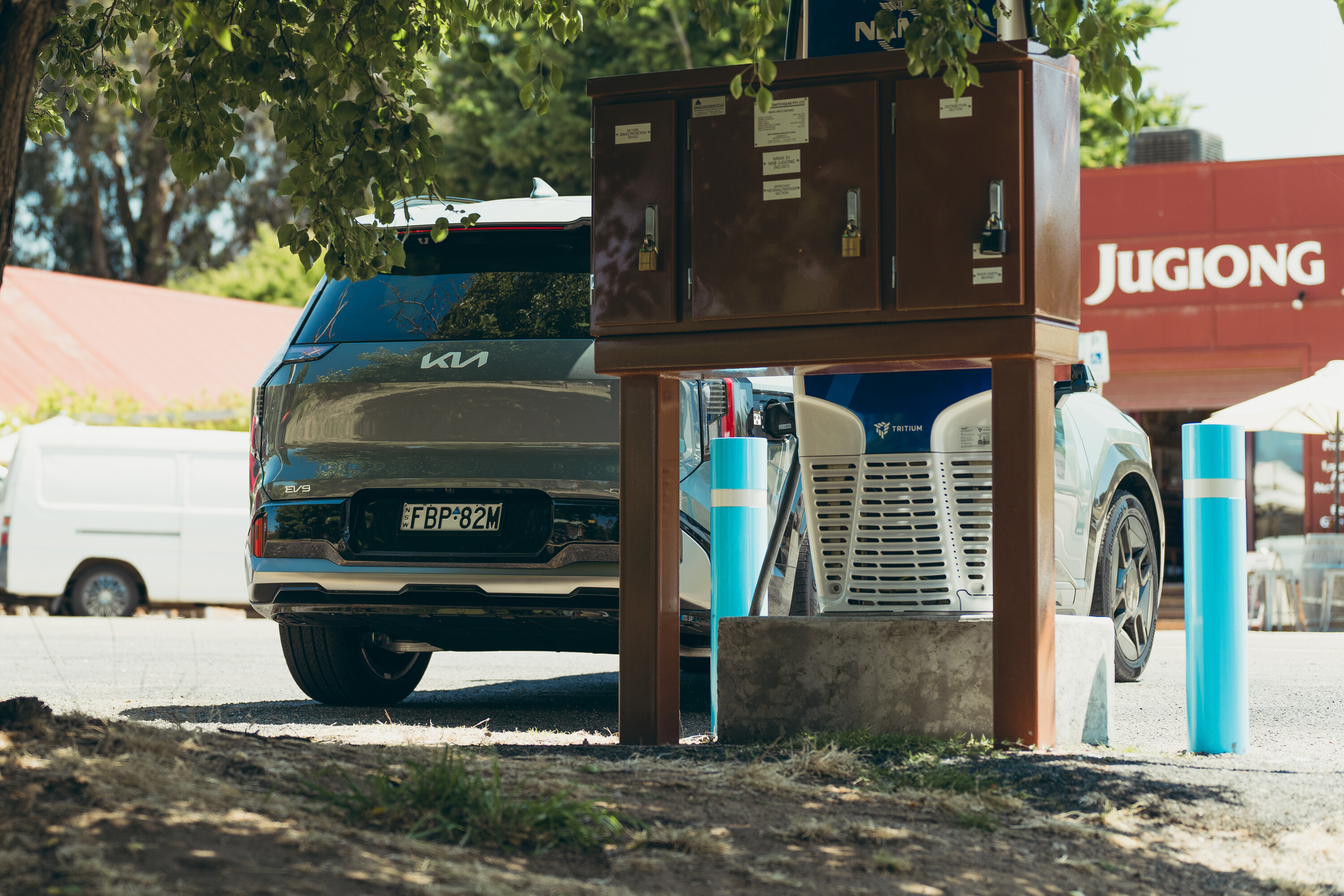
Using the Kia Connect navigation system to identify charging options along the way, I decided to make my stops at Jugiong, 210 kilometres away, and then Barnawartha, a further 240km.
Why didn’t I skip Jugiong and head directly for Barnawartha? I’m no genius, but I’m no fool: EVs do their best work in urban environments where they’ve got less drag to combat and can capitalise on plenty of stop-start traffic to pour braking energy back into the battery.
So, while the EV9 GT-Line’s official WLTP efficiency rating of 22.8kWh/100km is good for its massive 3240kg weight (plus my 120kg and my four-tonne camera bag…), it wouldn’t be doing its best work on the highway.
1
Well, I pulled into Jugiong with 54% battery and 242km range remaining.
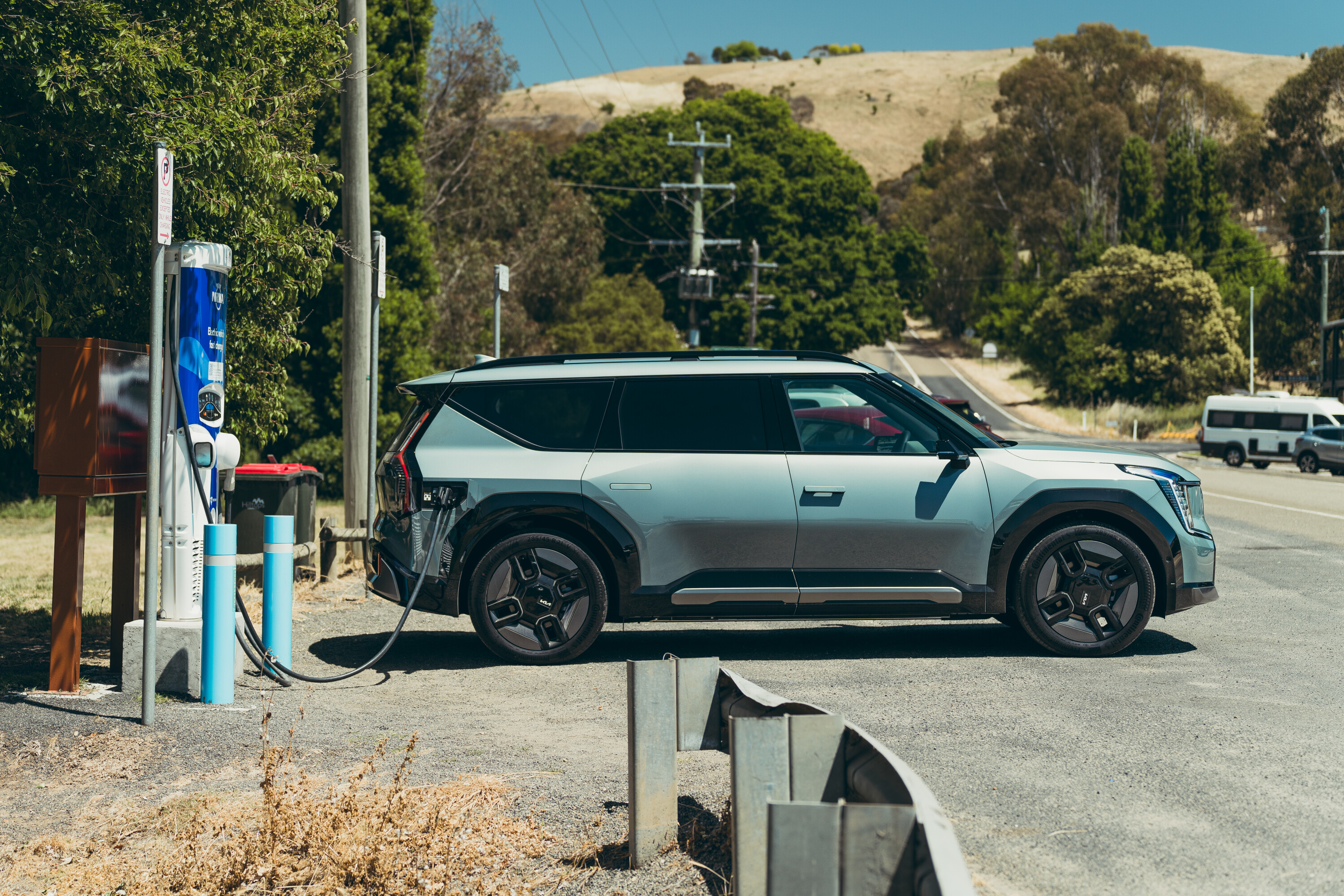
Efficiency? Travelling at 110km/h with no brake regeneration and a number of breaks for photos and toilet stops, varied from the high 20s to – by the time I backed up to Jugiong’s free-for-now 50kW NRMA charger – 21.3kWh/100km. Not bad.
Clearly I had little to worry about, but nonetheless, I was right to not try barrelling on to Barnawartha before topping up.
After a wander around to snap some photos of the car and the local scenery, I returned to 81% charge and 397km indicated range. No sense charging any further, since it had throttled charging speed when it hit 80% – and my next stop was well within range.
Arriving at the RACV Chargefox location in Barnawartha, situated about 80 metres from the Shell servo and food hall whose site it shares, the EV9 showed 23% battery and 102km remaining. Again not bad, given my indicated range from Jugiong suggested I’d hypothetically have 155km remaining at this point. Efficiency had fallen off, however, with the EV9’s big display showing 24.2kWh/100km with 3 hours and 51 minutes of driving behind us.
1
The Barnawartha charging station presents an interesting puzzle for the EV9.
Because this Kia’s charging point is on the driver’s side at the rear, you have to back into your space – which is fine, except that this location has a disabled parking spot at one of its two chargers, and that’s where I’d need to park in order for the charging cable to reach the EV9’s receptacle.
I would’ve if I had to, but thankfully the other 350kW charger’s most appropriate spot was available. But, as I discovered, this charger wasn’t behaving too well. When plugged into the EV9, it wouldn’t progress beyond ‘preparing your session’ – and I tried a few times. Eventually, I phoned Chargefox, who tried confirmed the problem and tried to reset the charger remotely, but it wouldn’t respond.
I suggested we simply try another session while they were on the call, so they asked me to firmly support the cable in the EV9’s charging port, as this can supposedly help deal with any degraded or damaged pins. In the EV9? I don’t believe so, since I’ve since charged at an Evie location with no issues.
Well, this trick worked, so the charging session was off and away. I asked if the charger would be marked for a maintenance visit, and I was told no – it’s not a significant enough fault. It was pretty significant for me…
1
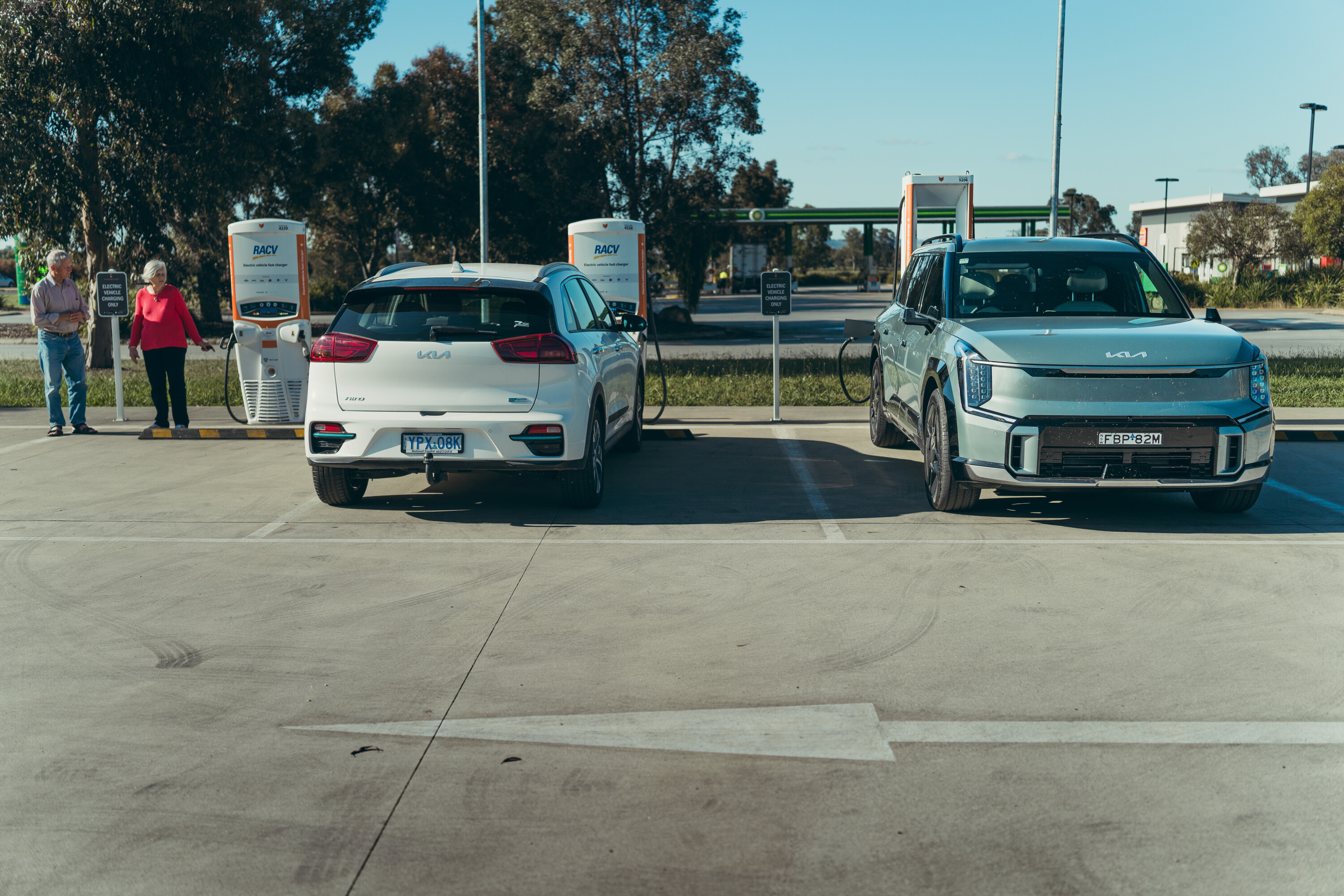
After a chat with an elderly couple in a 2022 first-gen Kia Niro Electric (new badge, old model) who confirmed they absolutely love their Niro but not so much the apparently EV-ignorant and disinterested staff at their local (regional) Kia dealership, I wandered off for a burger. Lunch time!
Burger down, my 35-minute stop had returned the EV9 to 90% charge, feeding 75.4kWh into its 99.8kWh pack. So, with 413km indicated range, I decided to power on home with no further stops. Exiting the Hume towards Mansfield for the scenic and more dynamically interesting route, I had a 305km trip from that last recharge – stopping only briefly in Bonnie Doon to take in the serenity.
With half-a-dozen more stops for photos, and the corresponding accelerations back up to speed, I arrived home with just over 40km of indicated range. Not quite the 108km I “should” have had remaining, but when have you ever met a car with a perfectly accurate prediction of its remaining range? And, friends… I wasn’t exactly babying it.
It’s a good thing, this big, bold, and bloody expensive electric SUV.
The EV9 feels every bit the premium offering Kia wants you to consider it, and while it’s no Bentley… the general fit and finish, through to the materials used, the leaps made in its technology offering, the smarts of its interior packaging and the first-class efficiency of its electric drive system all combine to make the EV9 the sort of product you might mistake for a more prestigious brand’s work in one of those blindfolded taste tests.
I don’t know if Kia will move many at the $100,000 price point it’s decided to kick off from, but if you’re shopping with that budget – or even better, a Mercedes EQS budget – it wouldn’t be the worst idea, or all that disappointing a compromise, if you steered to the EV9 instead. Hell, you could pick yourself up an EV6 with the change. Maybe a couple of EV5s. A few EV3s?
It’s not the sort of cross-shopping most buyers consider, with those German luxury marques carrying so much perceived value and social credit in their badges – but this feels like a good time to start. If only for those mesh headrests…
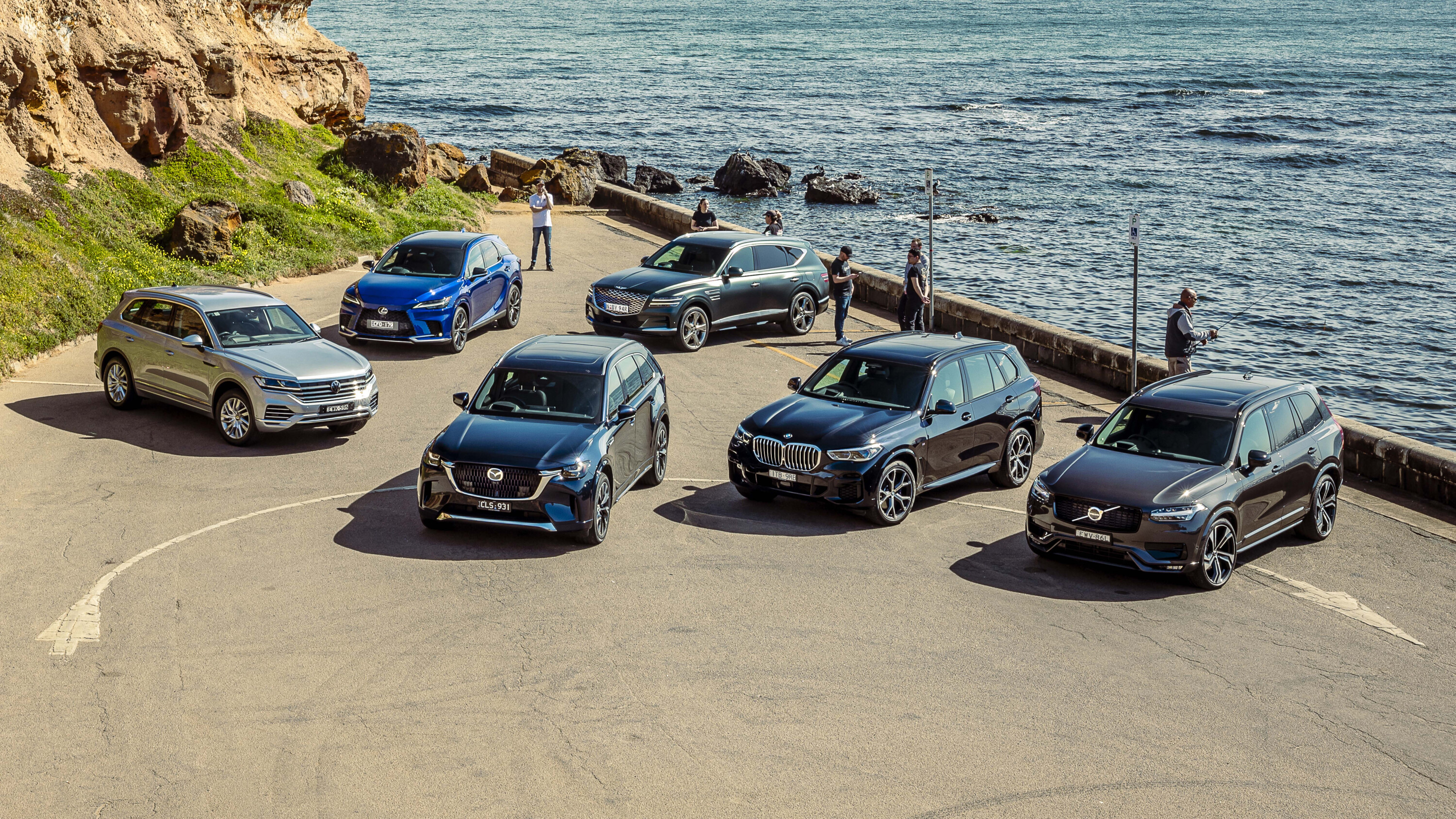
Buyers would be forgiven for feeling bamboozled by the staggering array of options in the Large SUVs category.
In one of Australia’s most popular segments, prices range from below $40,000 to close to $400,000, there are ladder-frame, monocoque and electrified vehicle platforms, and cabin layouts ranging from 5-seater to 7-seaters with 5+2s and even six-seaters in between.
You’ll even find a couple of (high-riding) wagons in our industry’s official classification.
So, if you don’t have your eye on a specific make or model, where do you start? Well, right here, as it happens – with the Wheels Best Large SUVs.
1
Large SUV is the third and latest segment of our Wheels Best series, following Best Small SUVs and Best Utes.
Our Wheels Best series has a simple aim: to comprehensively cover any given vehicle segment with multiple comparisons that can help new-car buyers with varying needs and wants.
It (almost) goes without saying that family practicality is high on the priority list for large-SUV shoppers, and we have several comparisons catering to specific spending budgets – up to $50,000, $60,000, and $80,000.
For buyers focused purely on the budget, we also have Best Value comparisons that crunch the numbers on running costs.
Our Best Large SUVs coverage also extends to off-roading, hybrids, and luxury. Just looking for a consummate all-rounder? We complete our segment picks with an overall winner.
1
With a plethora of SUVs in existence, you may wonder what exactly qualifies as a large SUV.
It’s certainly not based on pricing, but rather size, so we’ve opted for a starting length of 4.7 metres (with medium SUVs considered between 4.5 and 4.7 metres). We didn’t set a maximum length, but only the odd model in our coverage exceeds five metres.
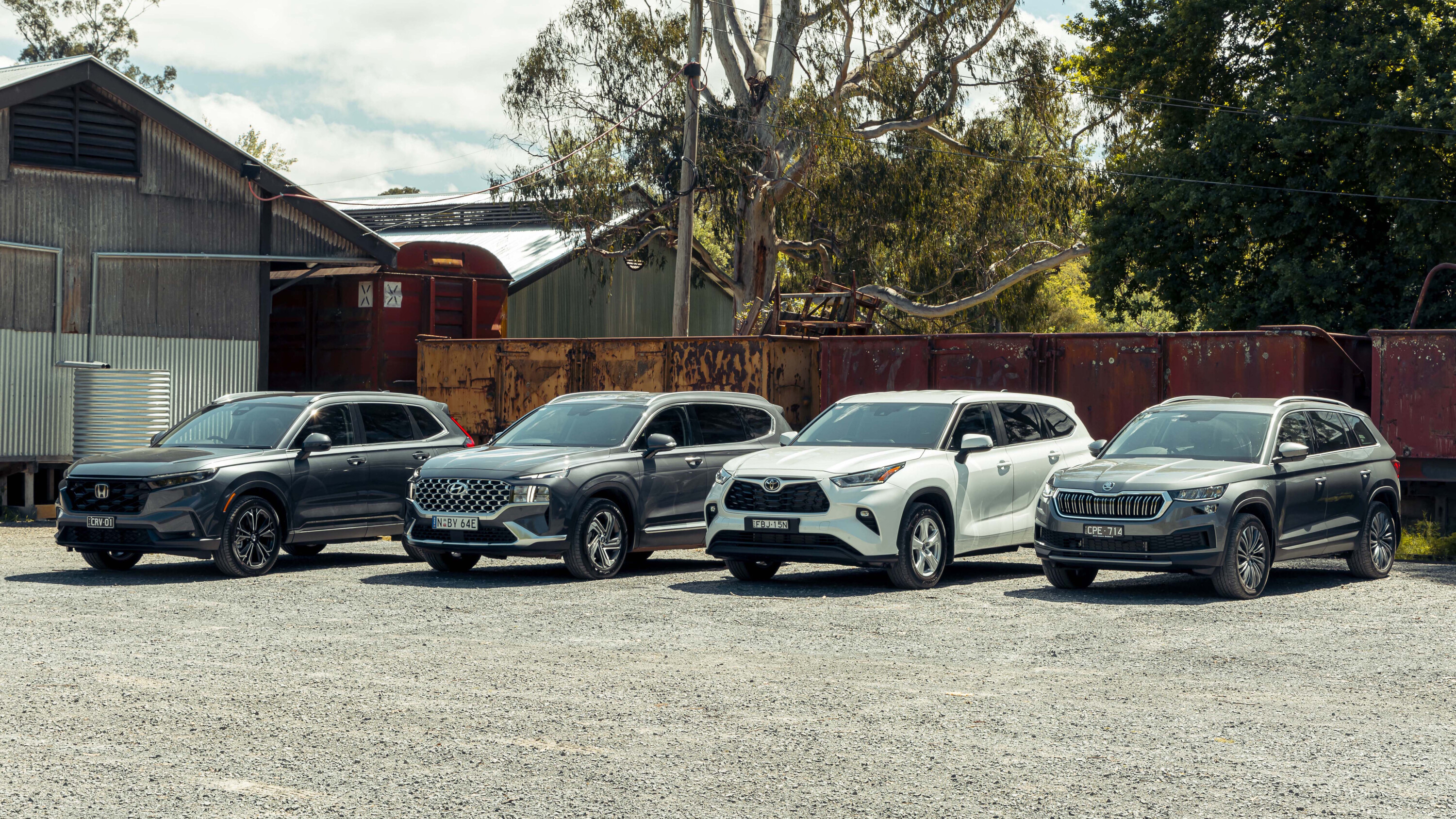
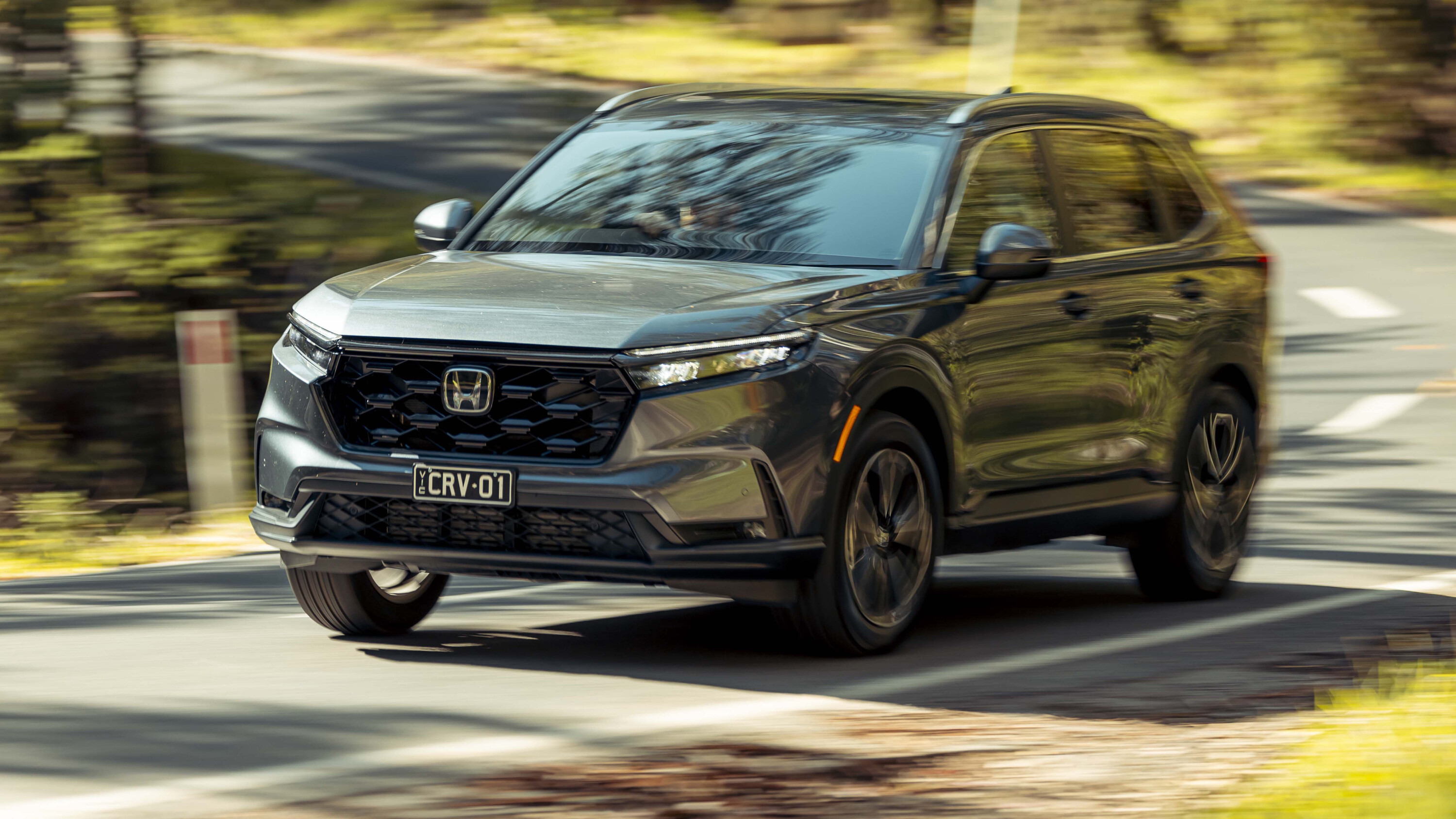
This approach created one interesting scenario: it meant we ignored the official (and hitherto traditional) ‘medium SUV’ classification for the Honda CR-V. With the new, sixth generation growing by 65mm, it pushed it past our Large SUV dimensional criterion by just four millimetres.
1
It also makes some sense within its own line-up, as Honda now has a completely new entry in the medium-SUV segment with the ZR-V.
We also included the Skoda Kodiaq, which falls a single millimetre short of the 4.7m mark but is widely considered a large SUV.
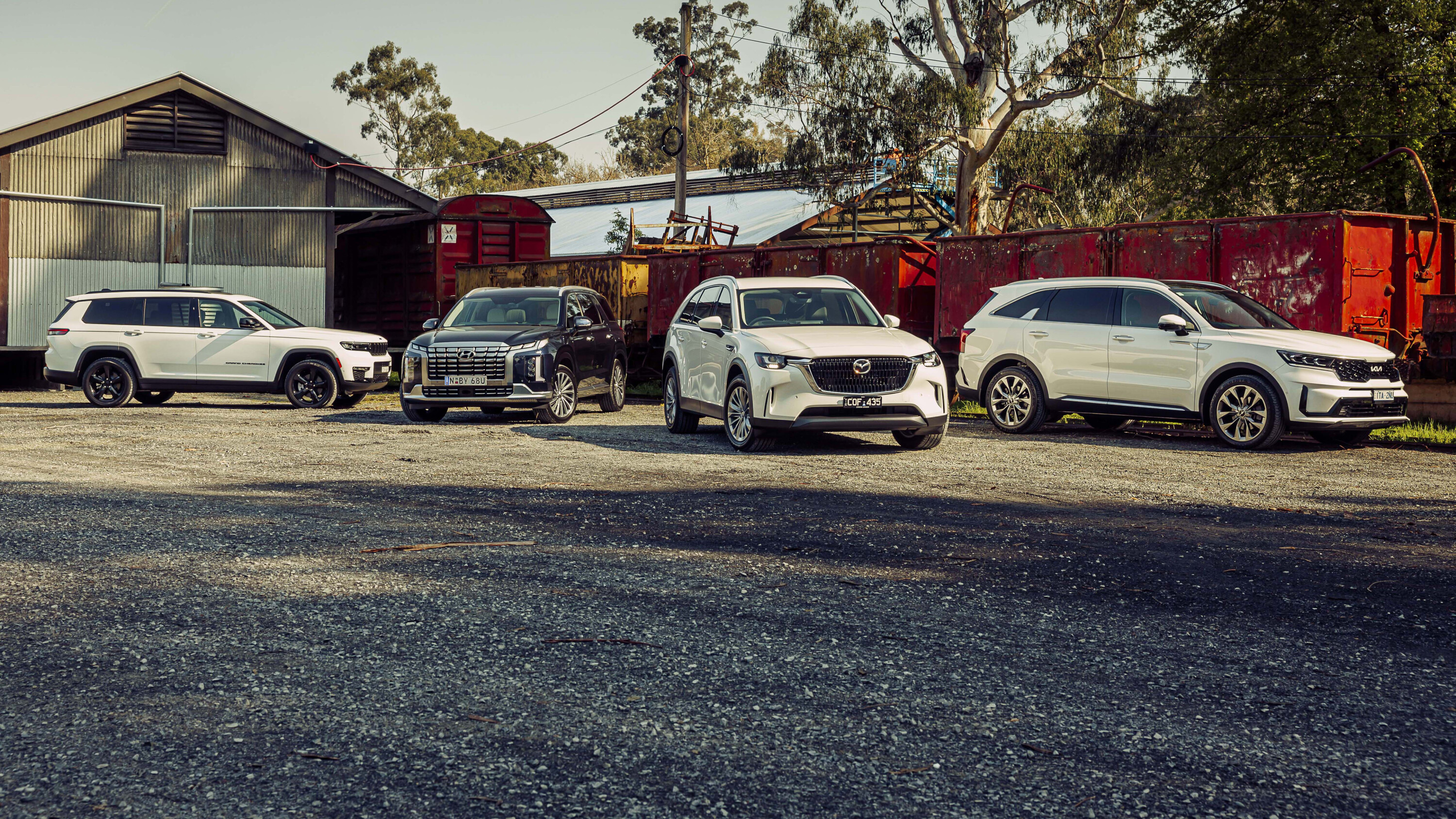
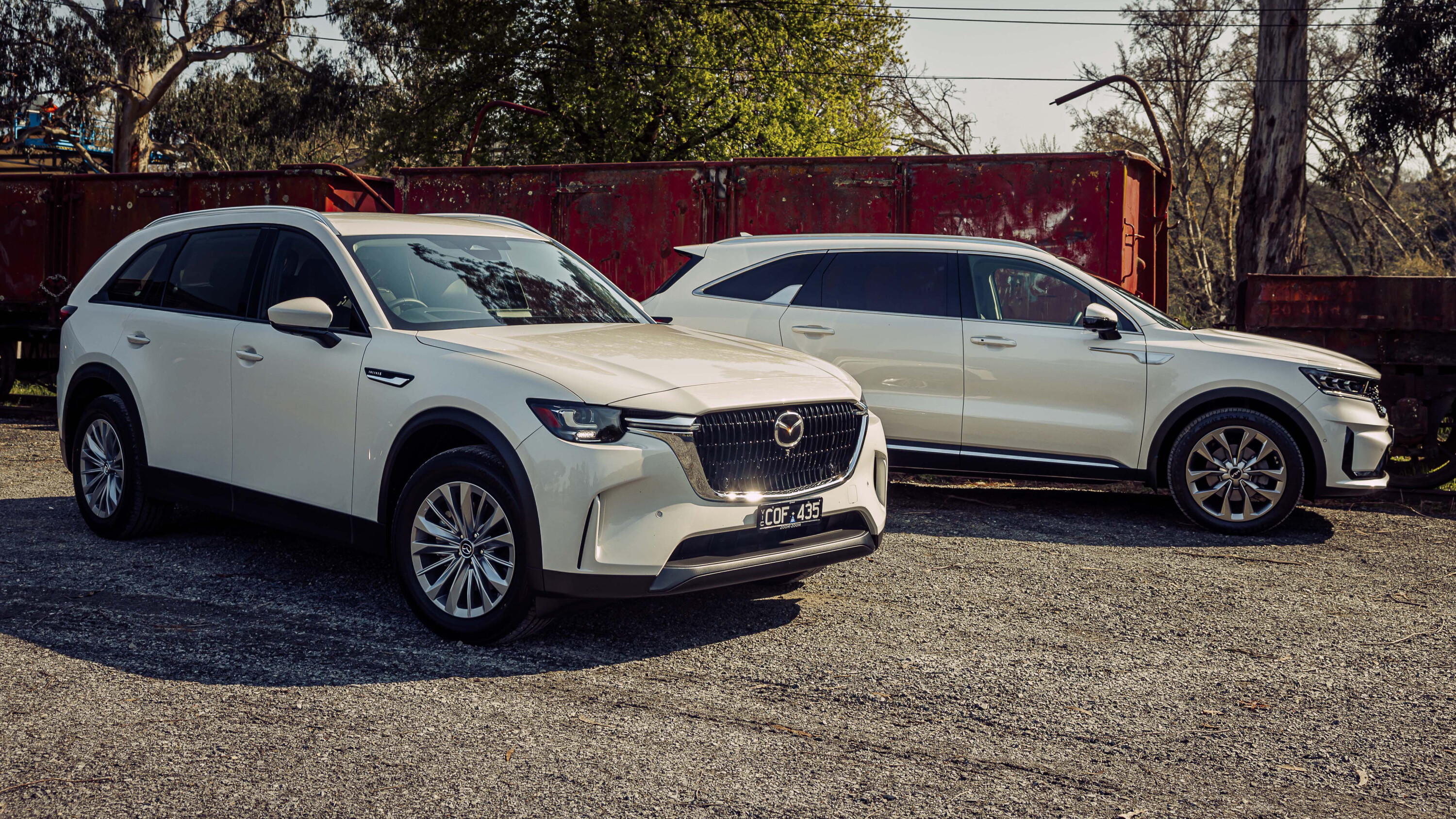
Other fascinating newbies we cover include the Mazda CX-90, the Japanese brand’s new premium large-SUV play. To test both its mainstream and luxury credentials, a base CX-90 was placed in the Best Under $80K sub-category and a flagship grade in the Best Luxury sub-category.
Kia’s first-ever EV9 large electric SUV arrived too late for testing, and a generally limited pool prompted us to hold a Best Electric Large SUV category for 2024.
Some manufacturers have more than one representative: the Kluger and Prado from Toyota, and the Santa Fe and Palisade from Hyundai (as well as the GV80 from its luxury off-shoot Genesis). However, as they serve different purposes and price points, no two models from one maker feature in the same comparison.
1
Our Wheels Best series covers all large SUVs you can buy right now, so how long a car has been on sale is irrelevant. If it’s good enough…
Is there a category that offers more variety and choice for Aussie buyers than the Large SUV segment?
If you’re looking for a family vehicle, this segment offers up a dizzying array of flavours, shapes, and sizes for you to consider.
Whether you’re chasing luxury, performance, hybridised efficiency, off-road ability, or just have a particular budget in mind, there’s nary a question or requirement the Large SUV segment doesn’t have an answer for.
1
Of course, being crammed with so many options means it can be tricky to choose the right SUV for you, which is where our individual category winners come in. They really are the cream of the current crop; our Oscar nominees if you will.
But what if you don’t have a particular requirement in mind? What if you want your Large SUV to make a decent fist of everything? That’s where our overall winner comes in.
Unlike our individual category victors, which focus on a particular variant within a model range, our overall winner takes the entire model range into account.
1
A focus on value, inherently good driving dynamics, and a broad skill set are what we look for. And, impressively, there were a number of strong contenders that offer exactly that.
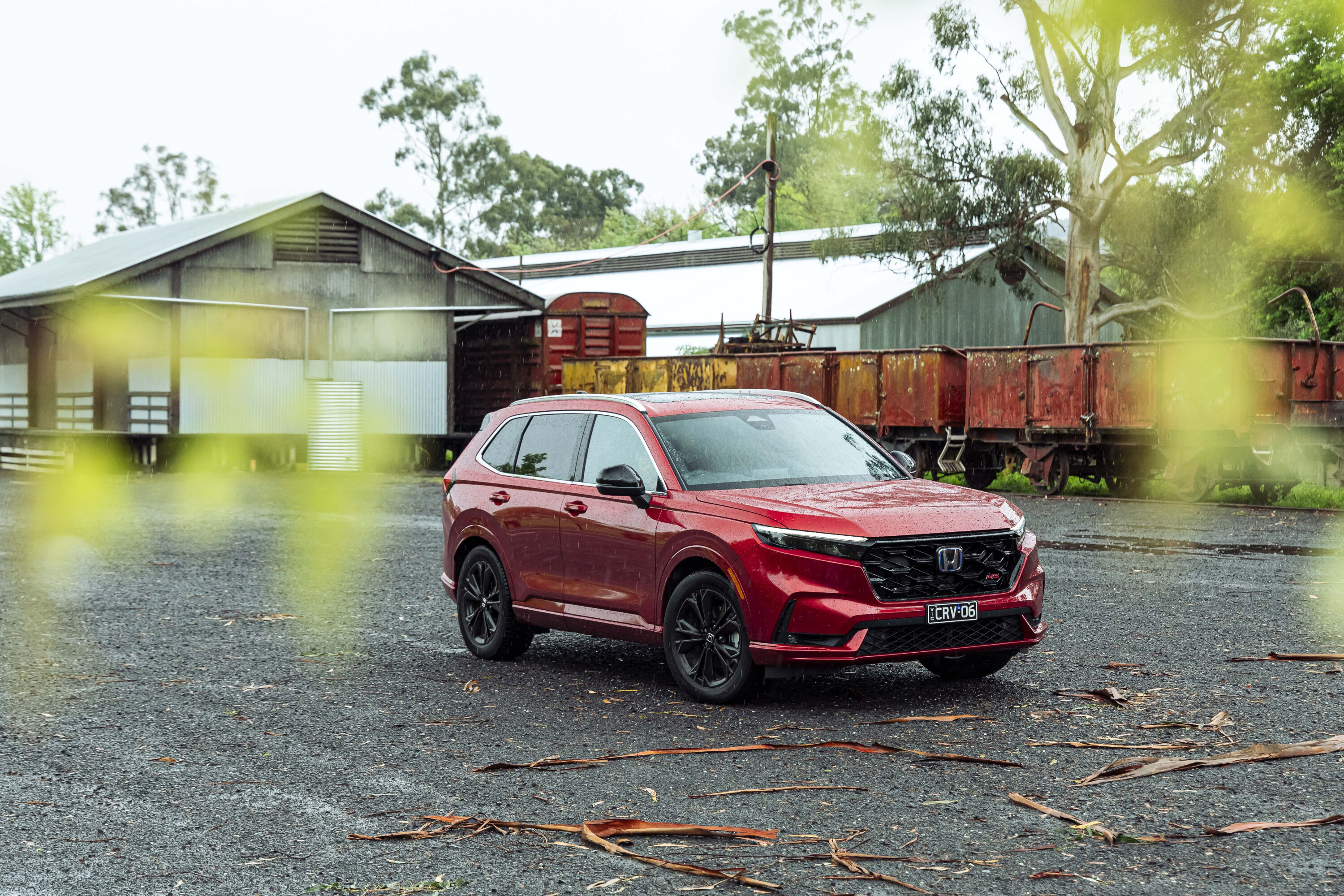
Honda’s box-fresh CR-V is one such candidate. As an SUV that won two categories (Best Hybrid and Best Under $50K), the fifth-generation CR-V impresses with its tidy dynamics, broad model range, miserly hybrid option, and well appointed cabin that includes the flexibility of seven seats in some variants.
But as one of the smaller contenders in the Large SUV class (some may still consider the CR-V a mid-sizer), the Honda is more of a 5+2 than a genuine seven-seater, which is what ultimately scuppered its chances of our overall win.
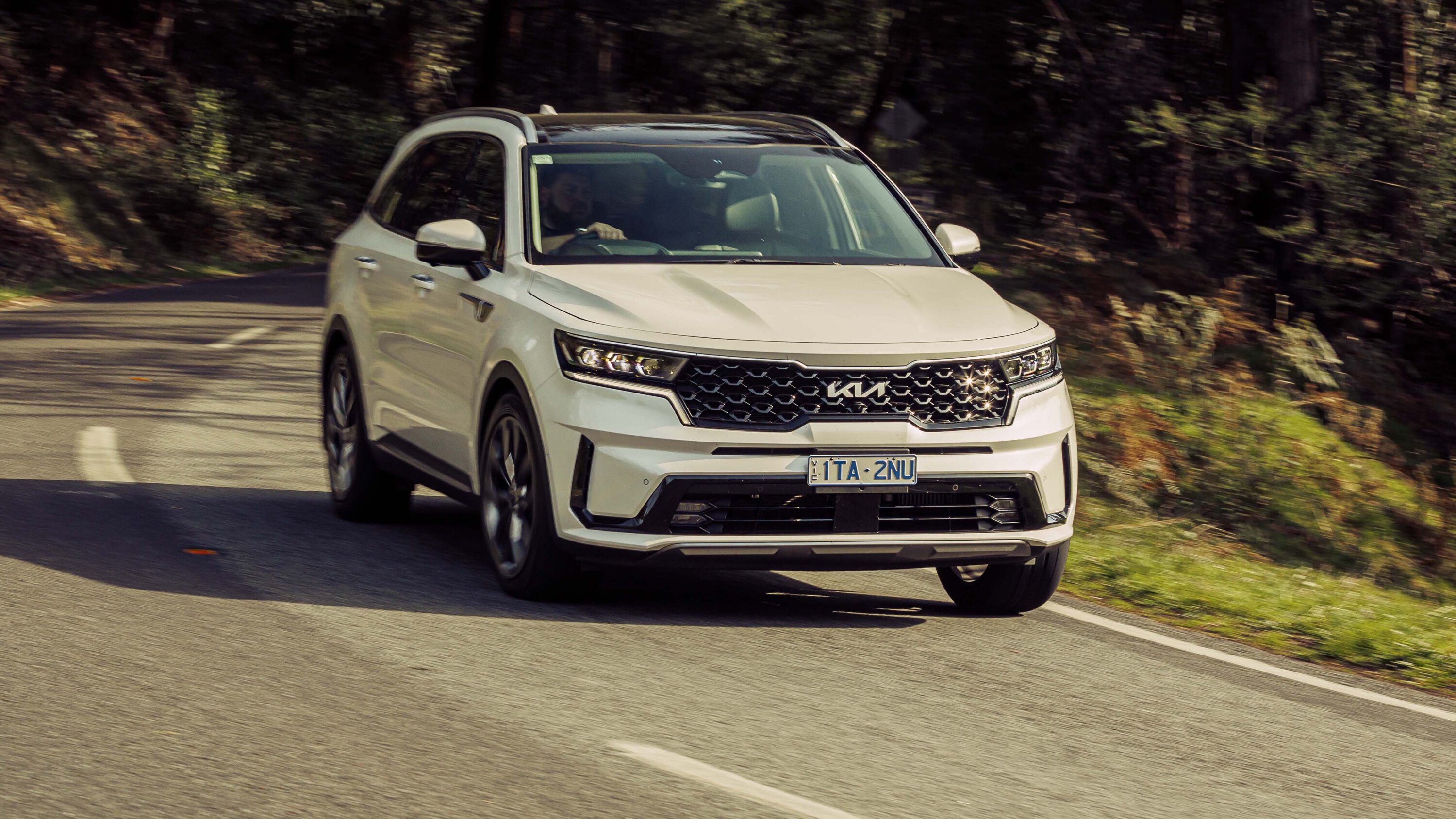
The Kia Sorento stakes a claim in that regard, however. With its roomy cabin and cleverly packaged third row, the Sorento offers the kind of seating flexibility big families demand.
It’s also fantastically light on its feet to drive and its sharp steering, keen front end and well-sorted ride combine to make it the kind of family bus that tempts you to take the twisty way home.
To really shine, though, the Sorento needs the extra glitz and glamour of its top-spec GT-Line model grade. And while it might be great to drive on tarmac, it’s not the kind of SUV you’ll hook a camper trailer up to for a weekend away in the bush…
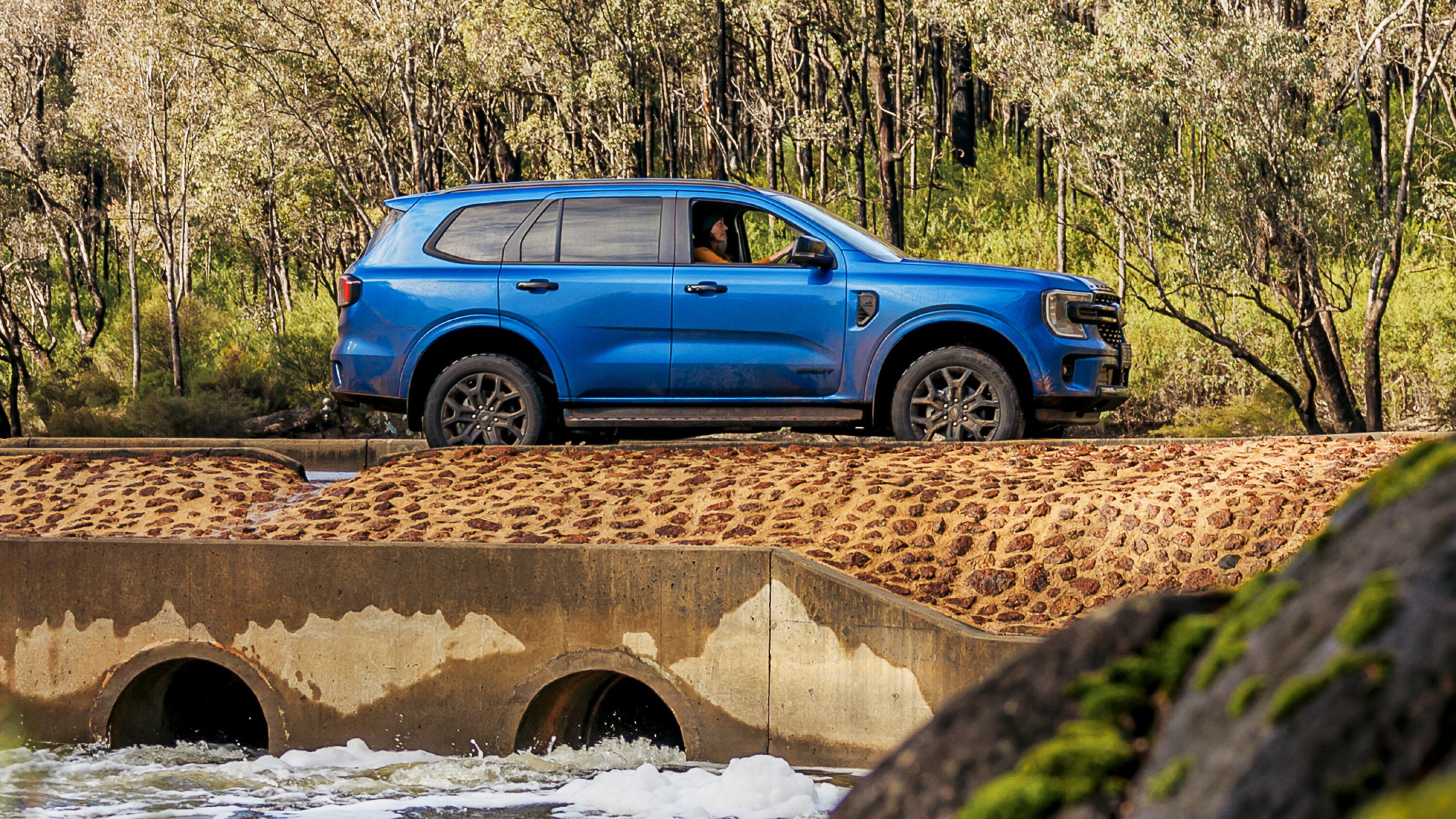
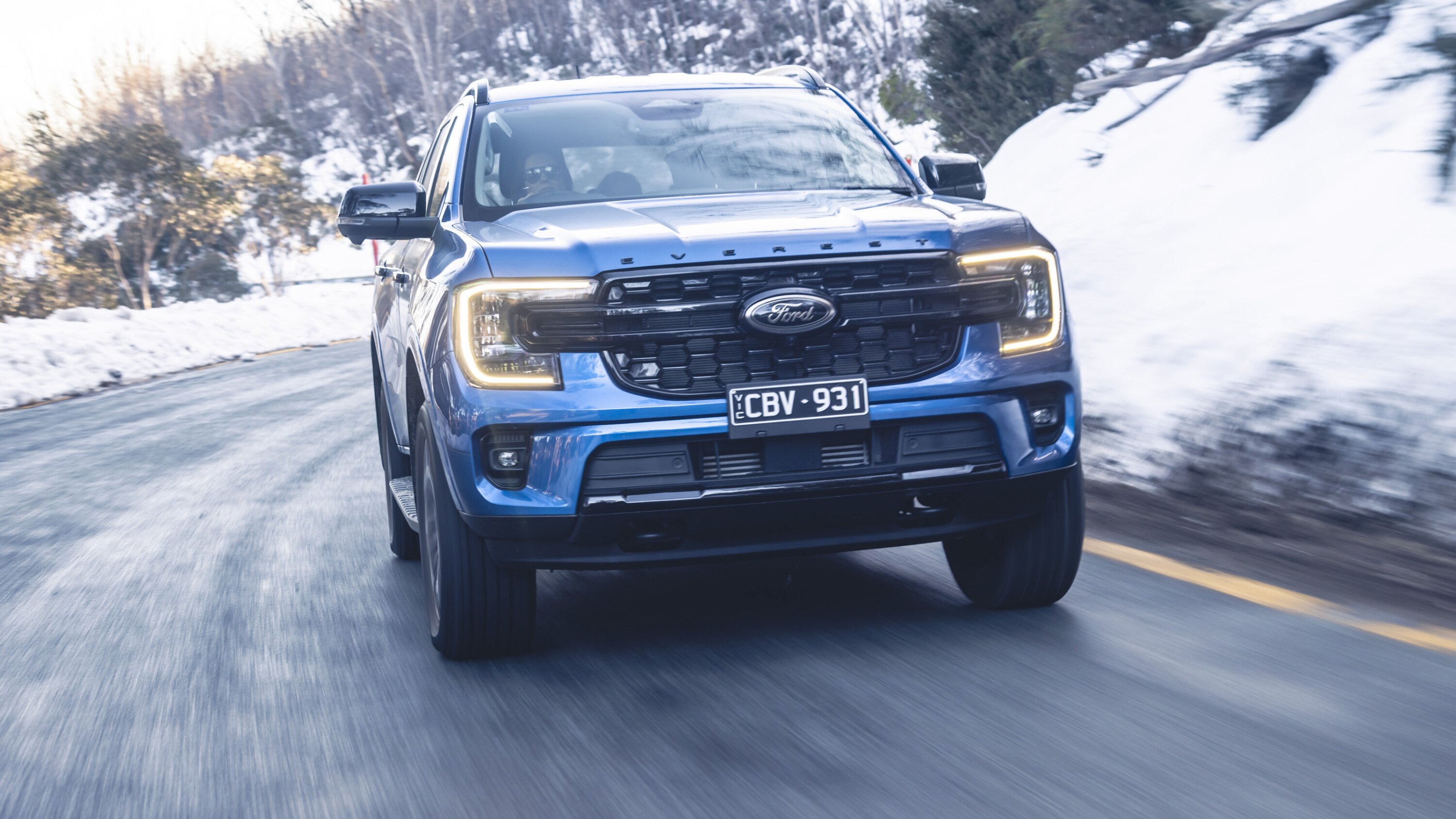
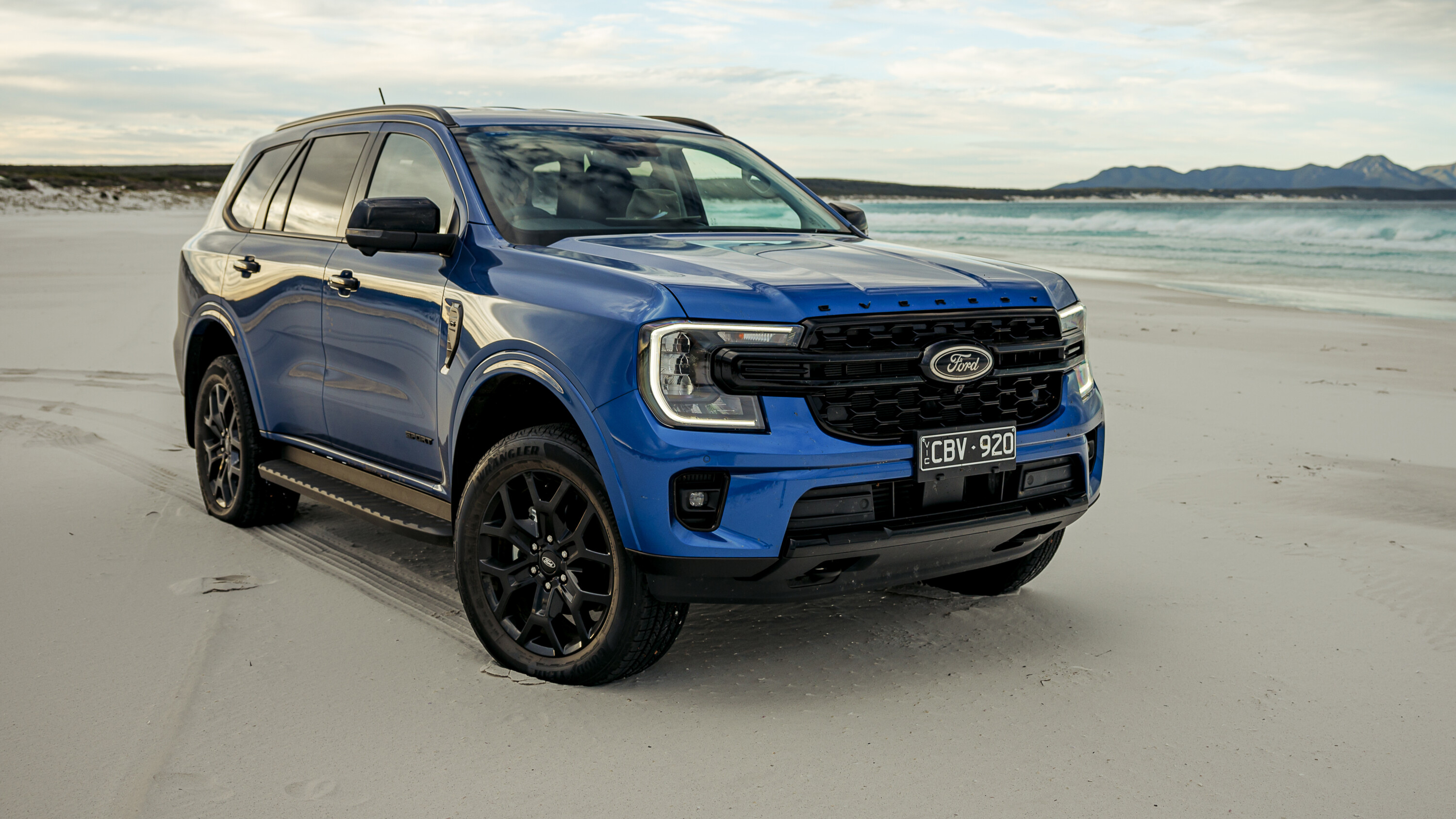
Which is where the Ford Everest comes to the fore.
While it mightn’t offer the same level of luxury, cabin refinement or resolved ride quality as road-biased monocoques like the CR-V, Sorento and Volvo XC90 (the winner of our Luxury category), the Everest has a string to its bow that they don’t: the ability to tow 3500kg and to conquer properly gnarly terrain off-road.
It means that if you’re looking for a genuine seven-seat SUV that offers a roomy and comfortable third row with dedicated air vents and is equally skilled at school drops-off and long-distance cruising as it as at bush bashing and towing your boat or jet ski for a weekend away, then the Aussie-developed Everest is a clear winner.
1
Whether you opt for the $55K 2.0-litre bi-turbo four-cylinder or the $80K 3.0 V6 Platinum, the Everest has a trim level and performance package to suit.
It’s not only miles ahead of its direct rivals – and significantly cheaper than a Land Rover Defender or Discovery – but it’s also impressively capable to drive for what is, essentially, a ladderframe commercial vehicle underneath.
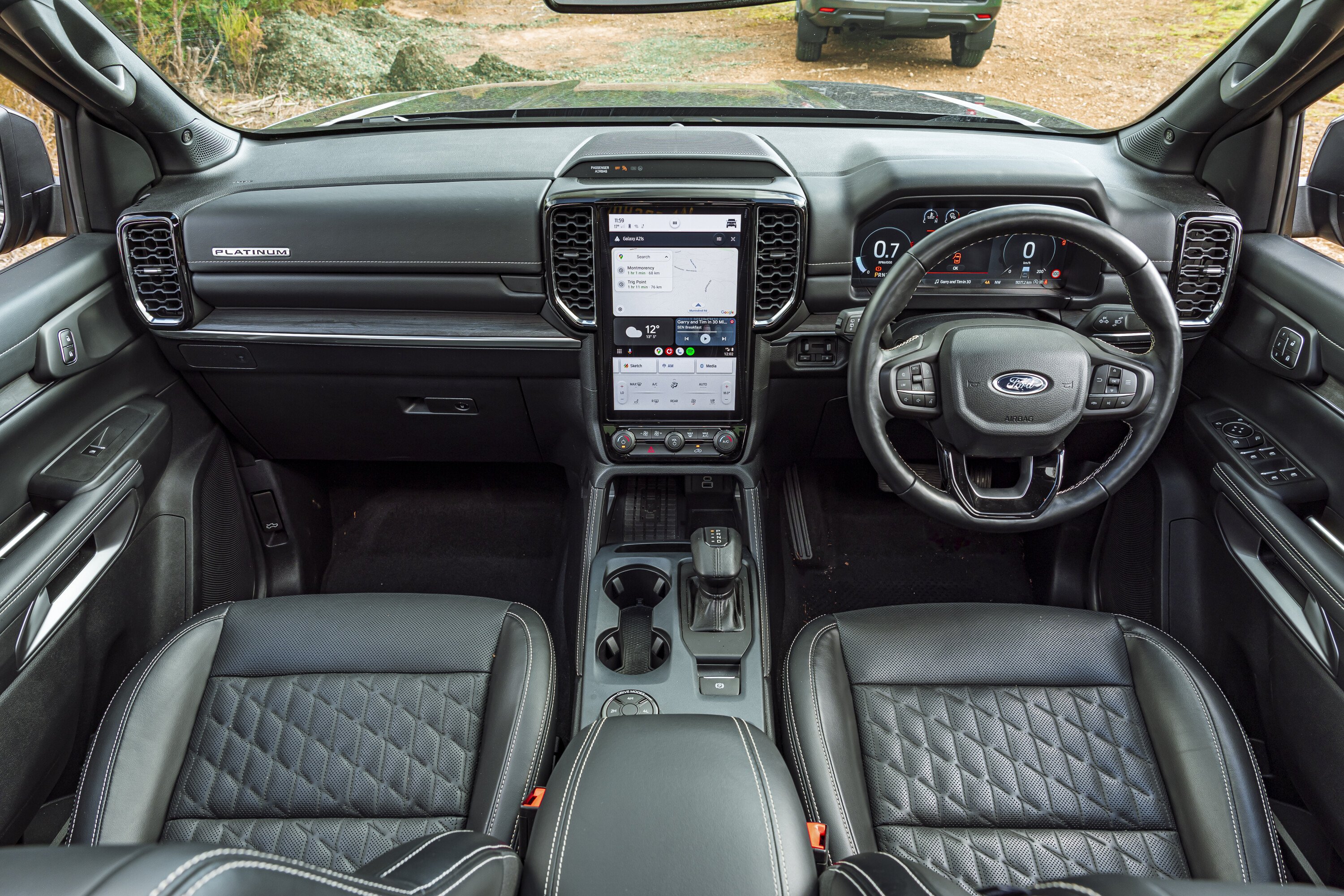
Its cabin also doesn’t put a foot wrong when it comes to space, storage and connectivity (admittedly some of the cabin materials do feel more hardwearing than premium) and there really isn’t a dud in the line-up.
Whether you opt for the $55K 2.0-litre bi-turbo four-cylinder or the $80K 3.0 V6 Platinum, the Everest has a trim level and performance package to suit.
Of course, we’re not naive enough to think the Everest will suit everyone’s particular tastes and needs (in that case check out our broader Large SUV coverage) but simply by virtue of its broad skillset, the big Ford grabs gold.
1
2023 Best Large SUV series
Looking to get into a brand-new large SUV? Our stories below will guide you to the model that best suits your needs!