Reviews


Gallery 1
8.2
/10
Score
Score breakdown
8.5
Safety, value and features
8.5
Comfort and space
8.0
Engine and gearbox
8.0
Ride and handling
8.0
Technology
Things we like
- Clever plug-in hybrid functionality
- On-road refinement
- Sensibly specified and priced
Not so much
- We're still not big fans of Mercedes' column shifter
- Are the piano black cabin materials past their sell-by?
- Brake pedal feel
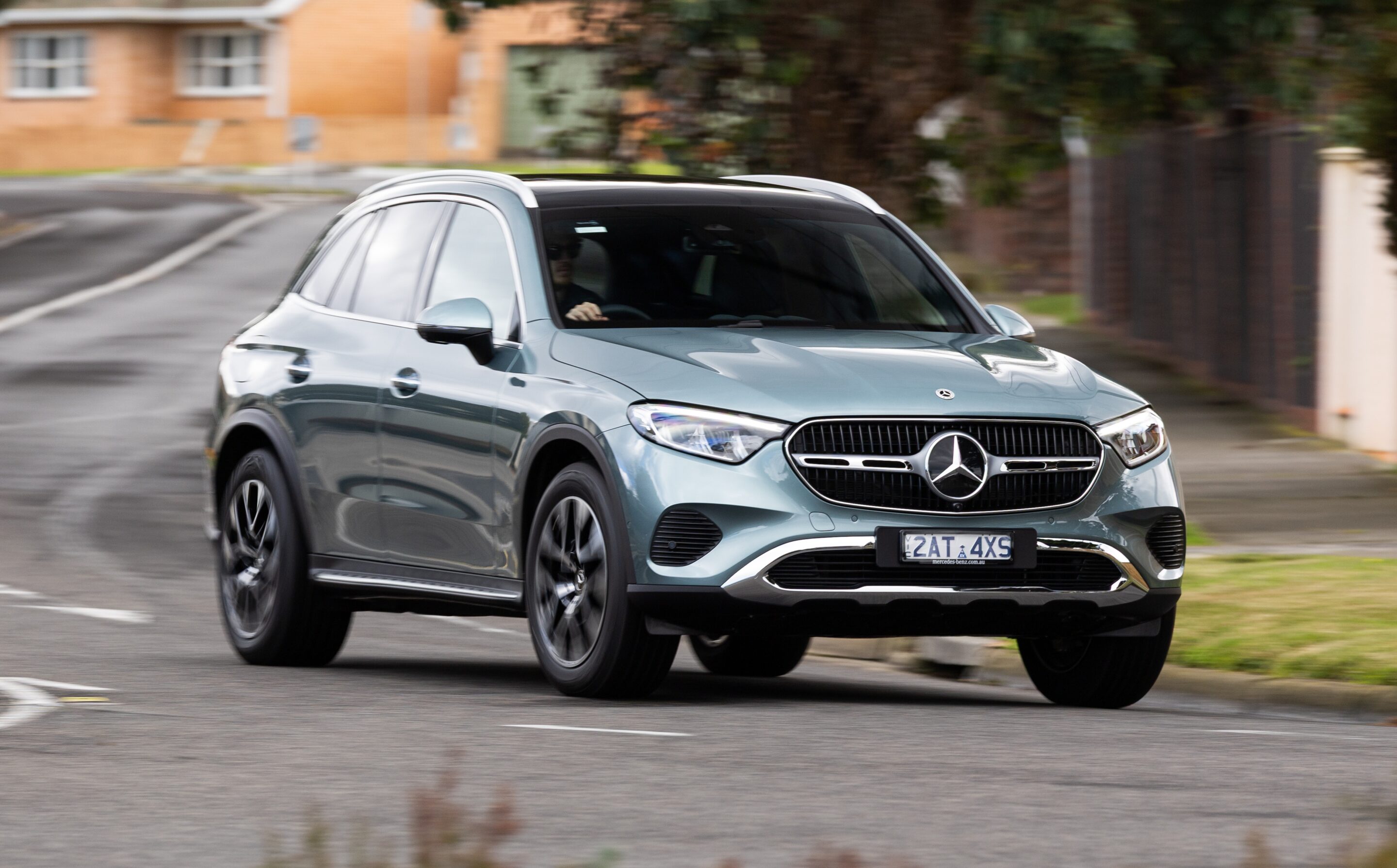
The Mercedes-Benz GLC is the company’s quiet achiever. Its sales are up by 48 per cent year on year, and it’s easily the biggest selling model in the Australian line-up, more than doubling the sales of the A-Class hatch and tripling the registrations of the C-Class sedan. In other words, it’s a vehicle that Mercedes can’t afford to get wrong.
While it’s a strong performer, since the diesel models have been deleted from the range, there’s been one area where you could criticise it. With an all-petrol range, you had to make a very deliberate choice between economy and performance. The only way you could have both was by choosing the $214,000 Mercedes-AMG GLC 63 S with its plug-in hybrid technology, but that was clearly a model beyond the budget of the average GLC customer.
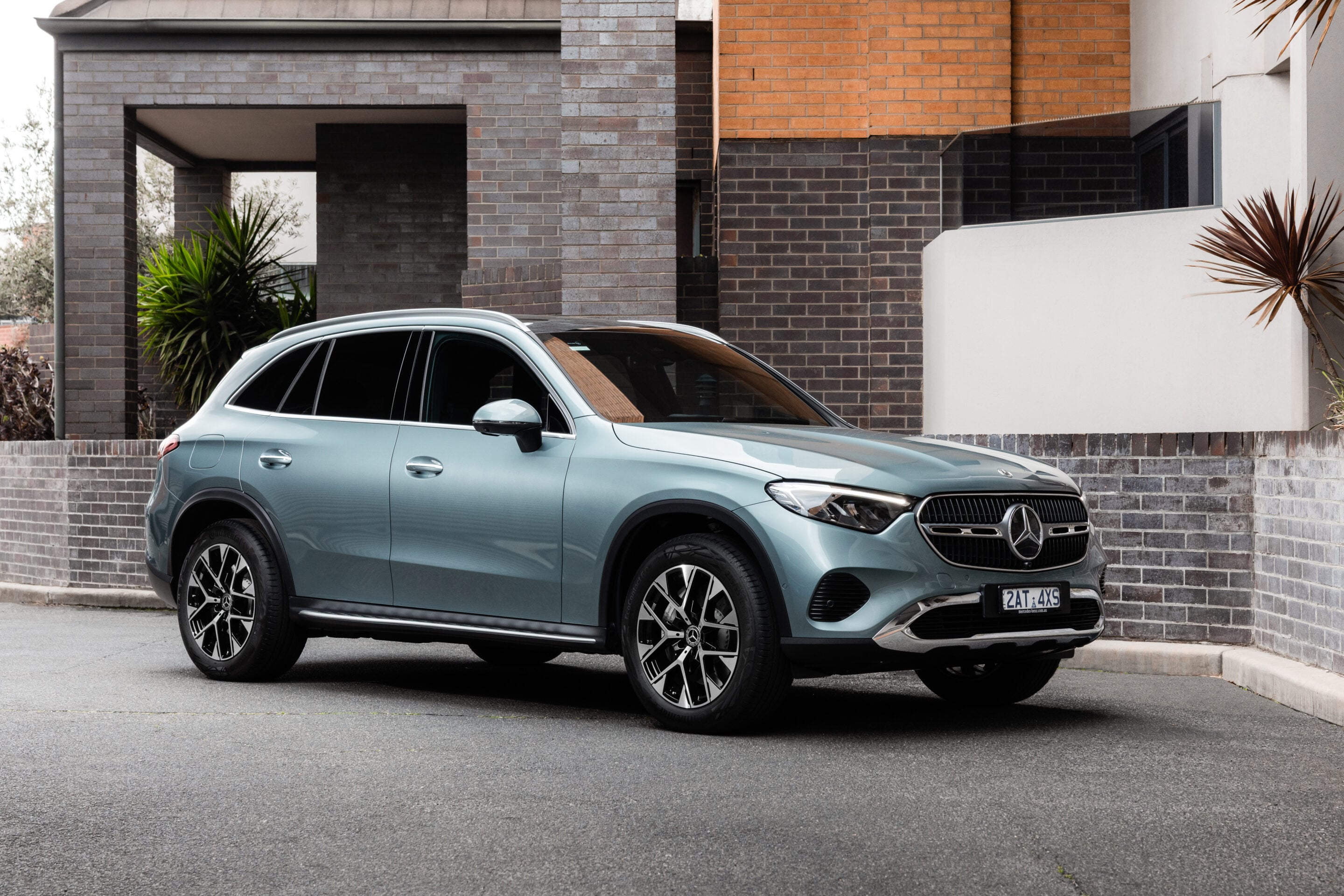
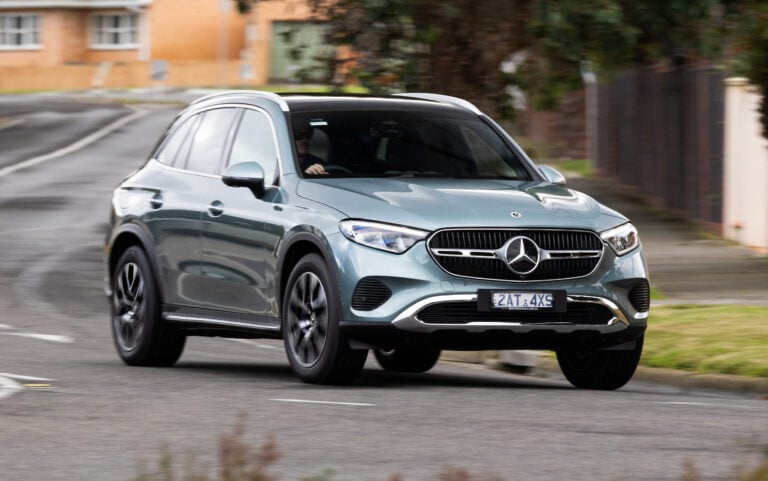
That now changes with the introduction of the GLC 350e plug-in hybrid. Wearing a price tag of $99,900 plus on-roads, it’s less than half the price of the next-most expensive plug-in GLC and yet still packs a decent punch, with a system output of 230 kW and 550 Nm. That compares favourably to the 190kW and 400kW from the current petrol-engined GLC 300, a vehicle that’s around $5000 pricier.
4
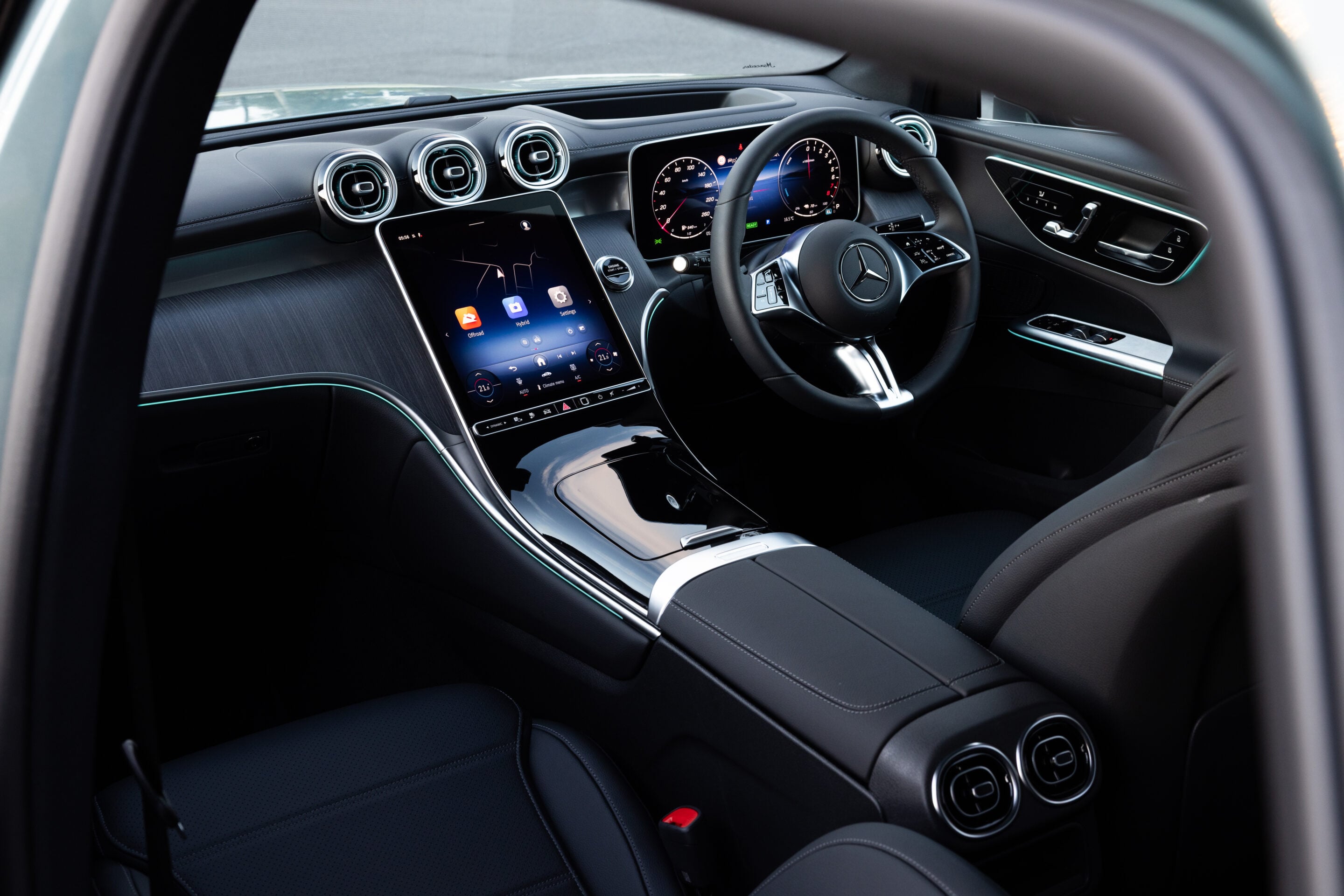
Standard equipment includes the Avantgarde trim pack with chrome pack and polished aluminium roof rails, a head-up display, LED headlights, tow-bar pre-installation, a panoramic sunroof, Artico seat trim, the transparent bonnet manoeuvring aid, digital radio, wireless Apple CarPlay and Android Auto, self-levelling comfort suspension and powered, heated front seats with memory function.
Bringing the GLC 350e in at less than $100,000 (just) is a smart move on Mercedes’ part, and the vehicle feels well equipped for that particular price point. As well as the above equipment, buyers can count on a 12.3-inch driver’s display, an 11.3 inch central display, a wireless phone charger, the Ambient Lighting Plus pack, anthracite timber finish for the dash and self-levelling air suspension at the back. One omission that is sorely missed is the Burmester premium stereo that the C 350e gets as standard.
Mercedes also offers a trio of dress-up packs for the GLC 350e. The $6000 Sport Package adds AMG Line exterior and interior details such as sport seats, multifunction sports steering wheel in nappa leather and wheel arch liners in vehicle colour. This package also adds larger brake discs on the front axle and swaps out the standard 19-inch alloys for larger 20-inch wheels. The Night Package can be added to the Sports Package for another $1300, and this features high-gloss black exterior elements and 20-inch wheels in black finish.
1
Should you really want virtually every box ticked, opt for the $7600 Plus Package which bundles the Driving Assistance Plus Package, Burmester surround sound system, Digital Light package with Adaptive Highbeam Assist Plus, Guard 360° Vehicle Protection Plus, heat and noise-insulating acoustic glass, and MBUX Augmented Reality Navigation.
Charge the 25.28kWh (net) lithium-ion battery to capacity and Mercedes claims you’ll have an NEDC-validated range of 132km before the two-litre petrol engine is forced to whir back into life. On a public DC charger, the GLC 350e will recharge at a maximum rate of 60kW, so a 10-80 per cent juice-up will take 29 minutes. Go for three-phase home AC power at 11kW and 0 to 100 per cent will take 2 hours 45 minutes. Unlike the C 350e sedan sibling with which the GLC 350e shares much of its plug-in tech, the fuel tank is no smaller than its purely petrol-powered brethren, in this case measuring 62 litres.
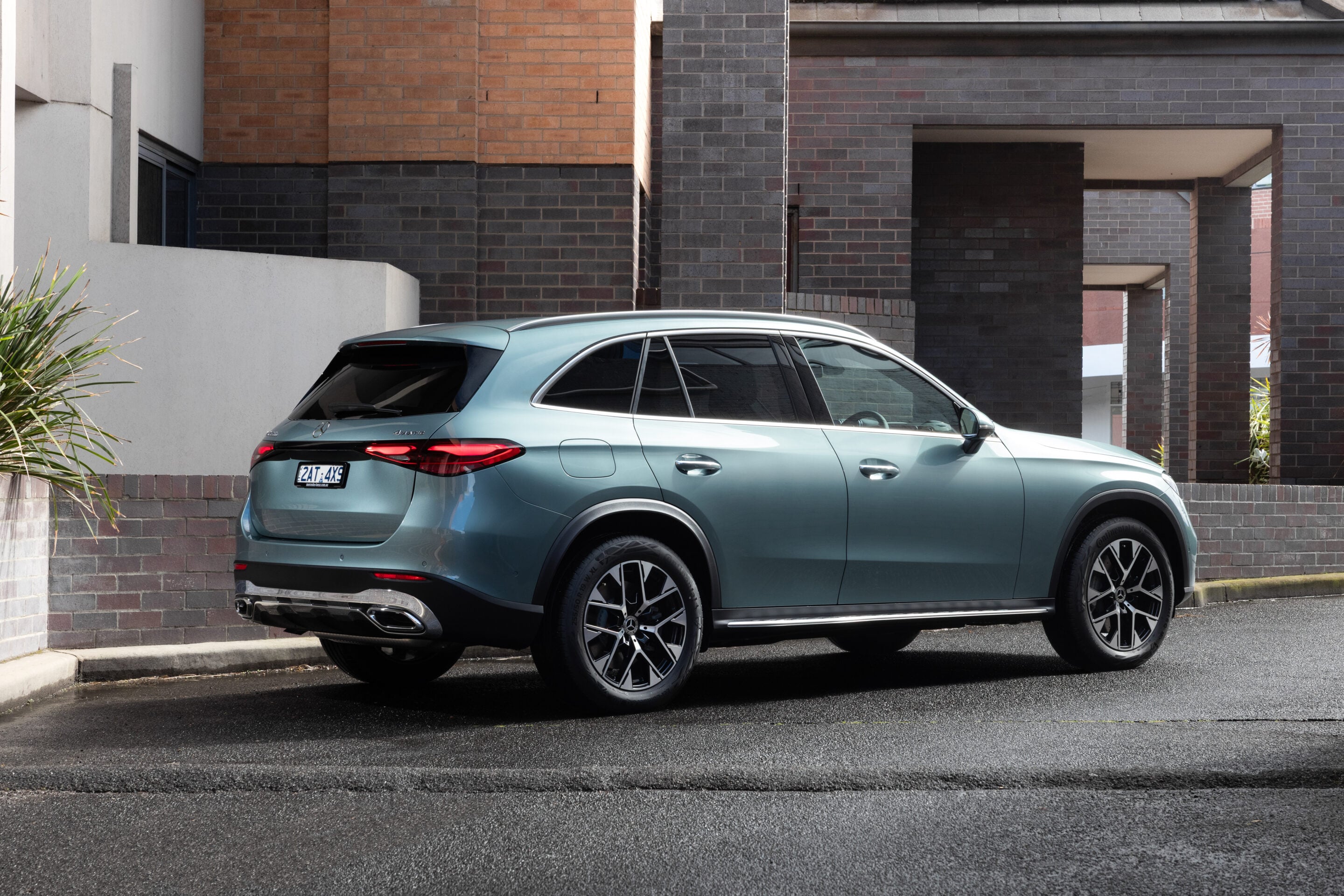
Rather cheekily, Mercedes will charge you a $1500 option price for a DC charging cable, but that’s offset by the fact that none of the six paint colours carry a price premium. In case you were wondering what they were, well Polar White is the standard colour and Graphite Grey Metallic, Obsidian Black Metallic, Verde Silver Metallic, High-Tech Silver Metallic and Spectral Blue Metallic are listed as no-cost options. On the inside, black Artico is the default trim, but two-tone Neve grey and black, and two-tone Sienna brown and black are also no-cost options. It all seems suspiciously generous.
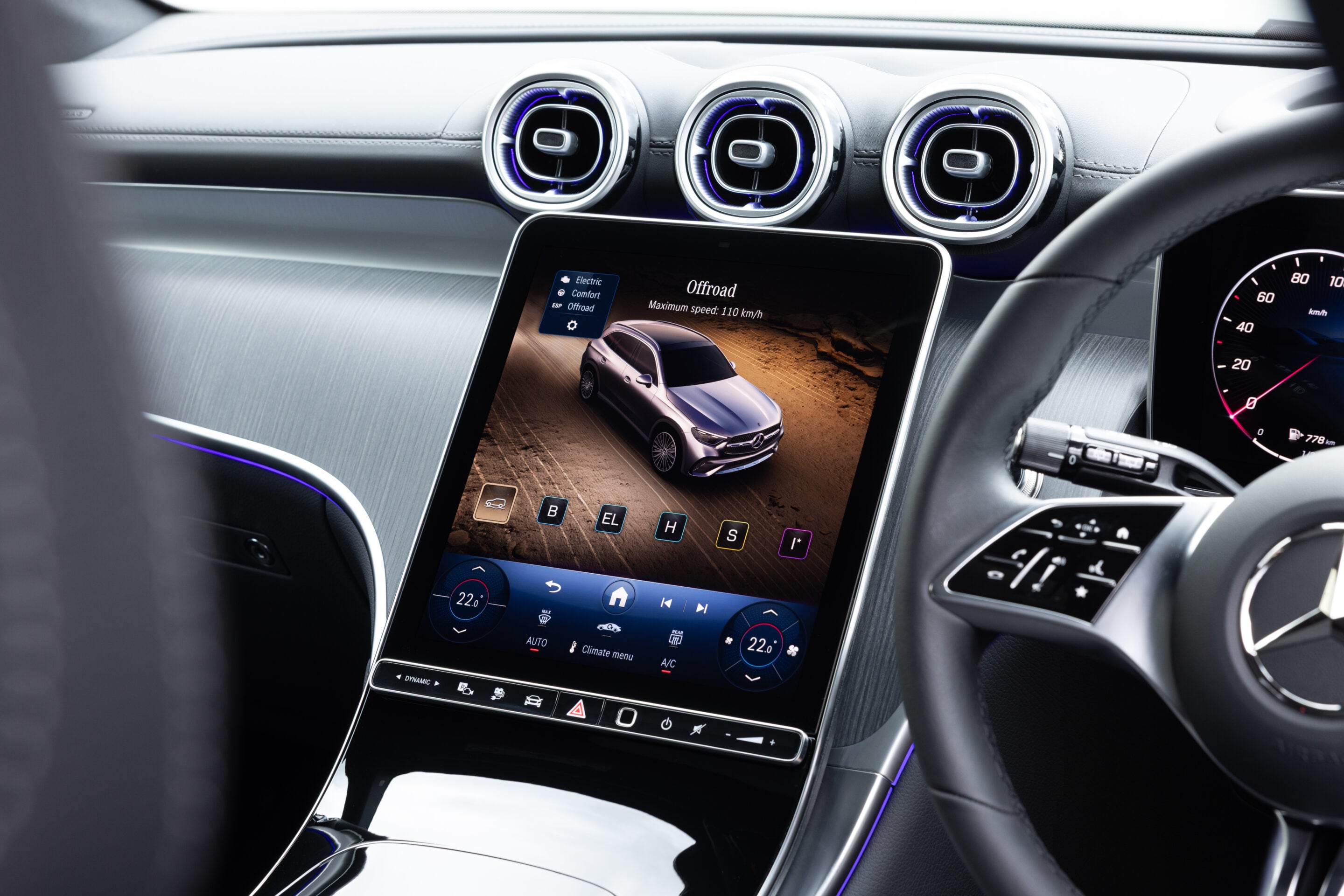
Even with the 19-inch wheels, the 255/50 Continental EcoContact tyres have a generous measure of sidewall, which helps improve ride quality. In order to keep its masses in check, the GLC has tended to ride on the firm side, but this rubber really gives an additional layer of plushness which is most welcome. Only on really poor surfaces does the vehicle start to jostle a little, but it’s nothing at all serious. Body control is otherwise very good indeed, both in pitch and roll. As well as the usual Off Road, Sport and Individual drive modes, the GLC 350e also introduces a trio of hybrid-specific modes: Battery Hold, Electric and Hybrid. Rather curiously, there’s no Charge mode where the battery level can be optimised by using the internal combustion engine as the generator.
2
The GLC 350e can certainly get a hustle on when required. Give the throttle a determined prod and it’ll jet through 100km/h in just 6.7 seconds, which makes it about half a second behind the petrol-engined GLC 300. What’s more surprising is the sound it makes when you open the taps. At first you cynically nod to yourself that the sound is from the speakers, but Mercedes claims there’s no artificial sound symposer fitted to the GLC 350e and that the soundtrack is exhaust sound entering the cabin via a resonator.
Of course, most won’t choose the GLC 350e if they’re certified lead-foots, but most will appreciate the logic and smarts that have gone into finessing this hybrid system. The shift paddles are a case in point. Switch the Dynamic Select mode into Sport and the paddles act as conventional sequential shifters. Any other mode and they switch function, managing the hybrid battery’s energy recuperation instead.
Flick the left paddle and you can engage D- for maximum re-gen, and this functions almost like a one-pedal driving mode. It won’t bring the GLC to an absolute stop, but step off the accelerator and it feels like you’ve driven into molten bitumen. There are two other modes with less retardation and less re-gen, but maybe the most interesting mode is D AUTO which uses not only the sat nav, but also the vehicle’s radar array to interrogate the road ahead and intelligently adjust the re-gen on the fly. For the most part, it’s very subtle but it works well. The paddle configuration is one of those ideas that, after you’ve sampled it, you feel should be the default solution for plug-in hybrids.
2
The way the M254 engine chimes in and out and works in concert with the rear-mounted electric motor is slick. Just about the only part of the system that doesn’t feel 100 per cent resolved is the feel of the brake pedal. When you’ve merely engaged re-gen and not the friction braking system, the brakes can feel a little less than linear in their application. It’s a minor quibble and something that you’d probably get accustomed to quickly, but it’s a rare glitch in the GLC 350e’s dynamic arsenal.
We didn’t get the opportunity on our test route to completely attempt to exhaust the claimed 132km range figure, preferring instead to test the vehicle’s hybrid capability instead. In this mode, the available range figure inched down very slowly on a mix of country and suburban roads. Mercedes claims an overall NEDC fuel consumption figure of 1.2L/100km. In case you’re wondering why that’s better than the lighter and more aerodynamically efficient C350e, it’s because the GLC has a bigger battery pack and so its drive logic tends to resort to firing up the internal combustion engine on fewer occasions.
1
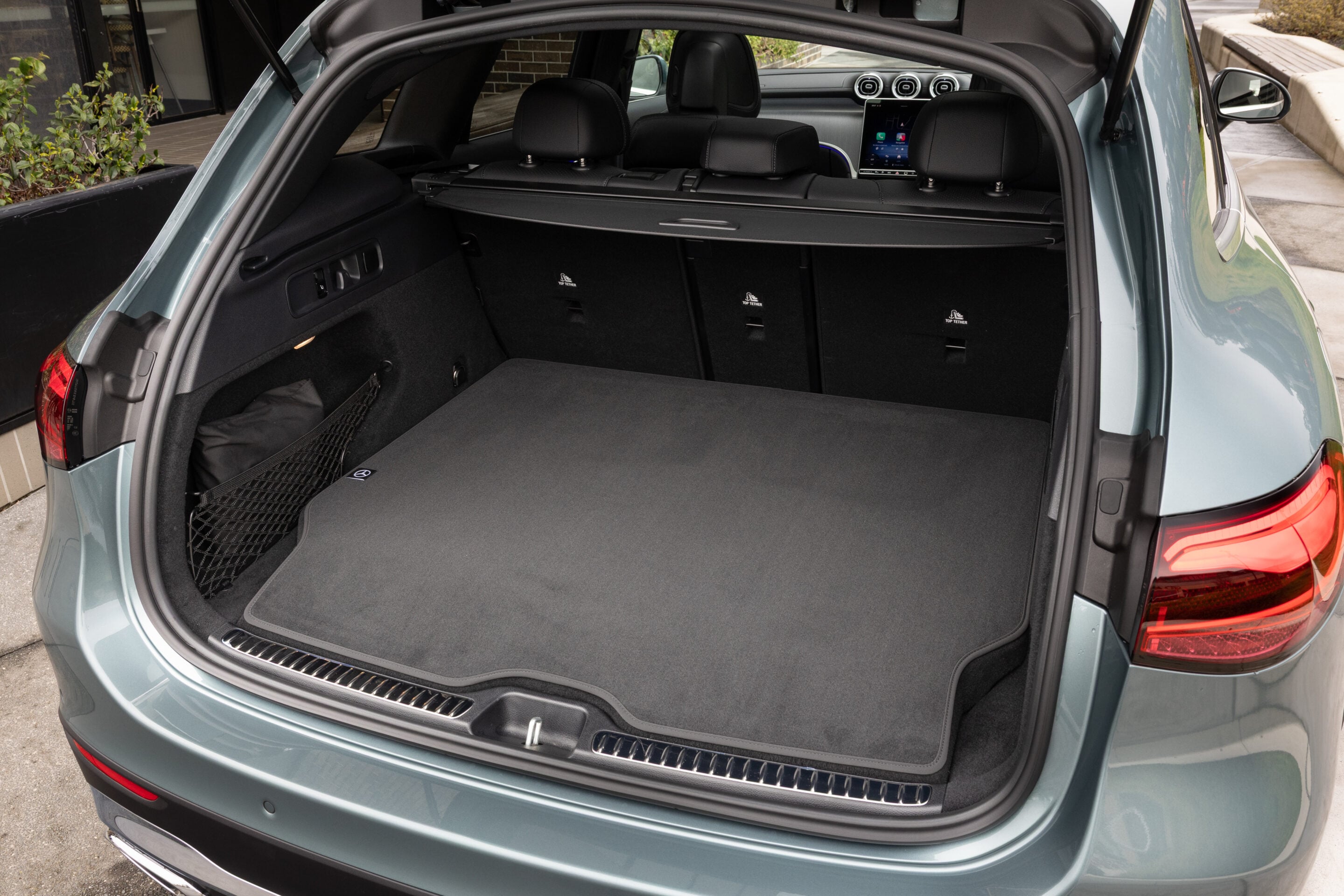
Mercedes has to fit that 96 pouch cell lithium-ion battery somewhere and beneath the boot floor is the chosen solution. This means that there’s no spare wheel packaged with the GLC 350e, the vehicle being supplied with a can of mobility foam and a compressor instead. It also means that buyers lose about 40 litres of luggage space as the boot floor is raised ever so slightly. The GLC has a little trick to claw back 60 litres of space where the rear seats can be moved to a more vertical position.
Other than that, the pluses and minuses of the GLC 350e mirror those of the GLC range as a whole, a vehicle that scores plenty of positives. One piece of very welcome good news is that as this second generation GLC matures, quality control seems to have taken a step up and the interior squeaks and rattles that could be apparent in early cars were notable by their absence.
The Mercedes-Benz GLC 350e feels a mature, well thought through and well positioned product. It’s one of those vehicles that doesn’t shout its talents from the rooftops, so if you want to sample one of the industry’s quiet achievers, you know what to do.
2
Specifications
| Model | Mercedes-Benz GLC 350e |
|---|---|
| Price | $99,900 before on-roads |
| Engine | 1999cc 4-cylinder, DOHC, 16v, turbo, plug-in hybrid |
| Peak power | 230 kW |
| Peak torque | 550 Nm |
| Transmission | Nine-speed automatic |
| 0-100 km/h | 6.7 seconds |
| Battery size | 31.2kWh (gross) 25.28Wh (net) |
| Electric range | 132km (NEDC) |
| Fuel tank: | 62L |
| L/W/H/WB | 4717/1920/1641/2888mm |
| Towing | 2000kg (braked) |
| Warranty | 5yrs/unlimited km |
| Available | Now |
8.2
/10
Score
Score breakdown
8.5
Safety, value and features
8.5
Comfort and space
8.0
Engine and gearbox
8.0
Ride and handling
8.0
Technology
Things we like
- Clever plug-in hybrid functionality
- On-road refinement
- Sensibly specified and priced
Not so much
- We're still not big fans of Mercedes' column shifter
- Are the piano black cabin materials past their sell-by?
- Brake pedal feel
Follow WhichCar/Wheels on Google
Click the button below to make WhichCar by Wheels a preferred source for your news.

We recommend
-
 Best Medium SUVs
Best Medium SUVs 2025: Luxury
Luxury, where the quality of the cabin and the drive experience are as important as day-to-day practicality for what is often the default family vehicle.
-
 News
News2025 Mercedes-Benz GLC 350 e: Mid-size SUV expands the three-pointed star’s plug-in hybrid options
Mid-size SUV offers up to 132 km electric range, advanced tech features and customisable packages.