Reviews

Gallery 1
7.4
/10
Score
Score breakdown
8.0
Safety, value and features
8.0
Comfort and space
7.0
Engine and gearbox
7.0
Ride and handling
7.0
Technology
Things we like
- Reliable eight-speed ZF transmission
- Premium cabin
- Multi-link independent rear suspension
Not so much
- Untested brand in this segment
- Full off-road capability yet to be tested
- Ranger beats it on wading depth and some other stats
As far as announcing yourself to the Aussie market goes in 2025, a dual-cab ute is as big a statement as you can make. Mercedes-Benz tried it. And failed. Volkswagen did it and realised it was so expensive to keep up, that partnering with Ford made more fiscal sense. And now, a BT-50 is a D-Max, and an Amarok is a Ranger, even though a BT-50 used to be a Ranger, such is the convoluted way this segment works.
Medium SUVs aside, there is no harder fight in the Australian new-car market than dual cabs. Opinions are like – well, you know what they’re like – and everyone has an opinion on dual cabs. Mostly, if you don’t own one, anyone who does is an idiot who is buying a vehicle they don’t need. You’re disappearing into a vortex with that argument, though. Where do you draw the line? Ban them? Ban anything larger than a medium SUV?
But justifying a dual cab’s credentials in the current electric-focused climate is a thankless task, that’s for sure. Regardless, Australian buyers love them. Just look at the sales charts.
3
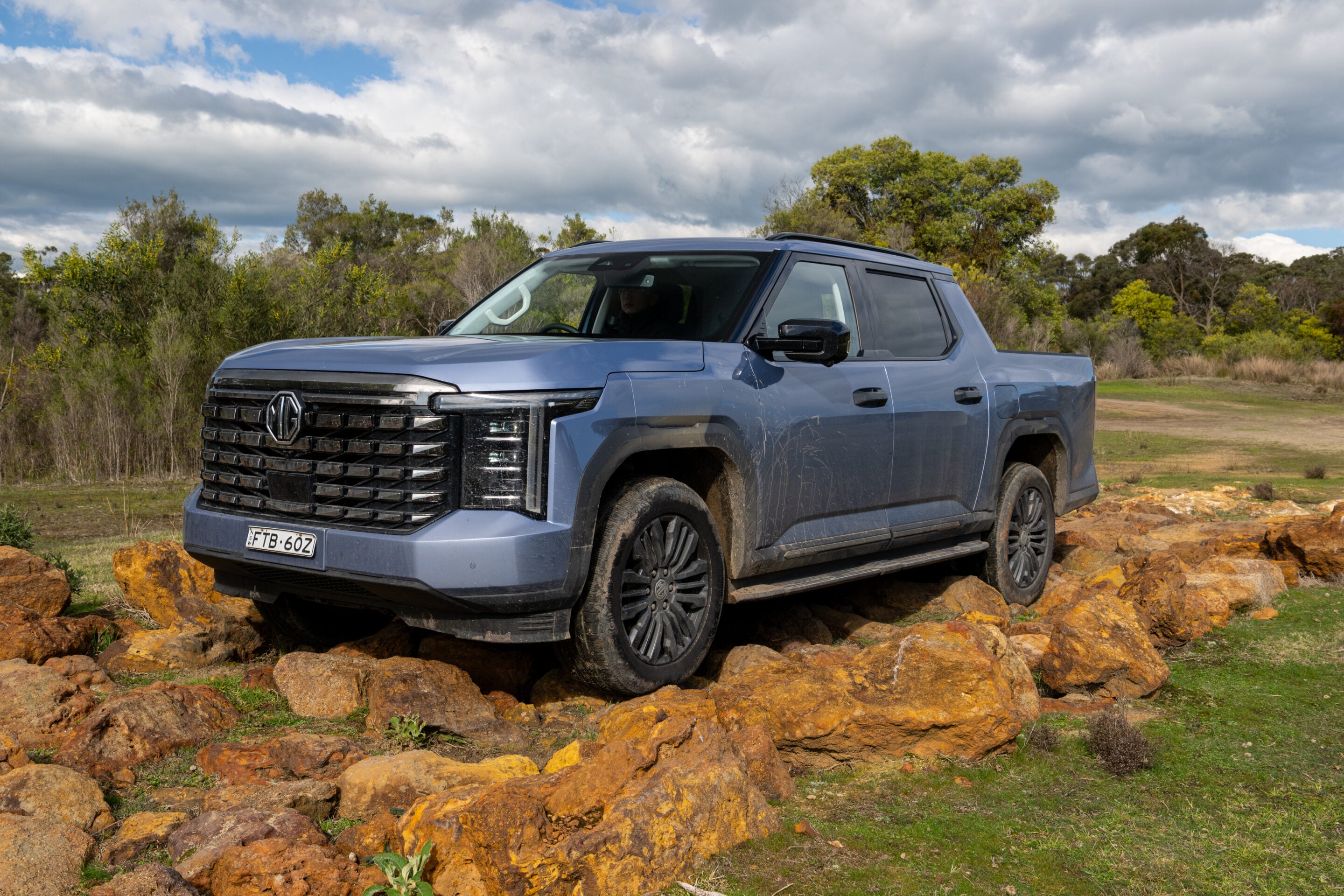
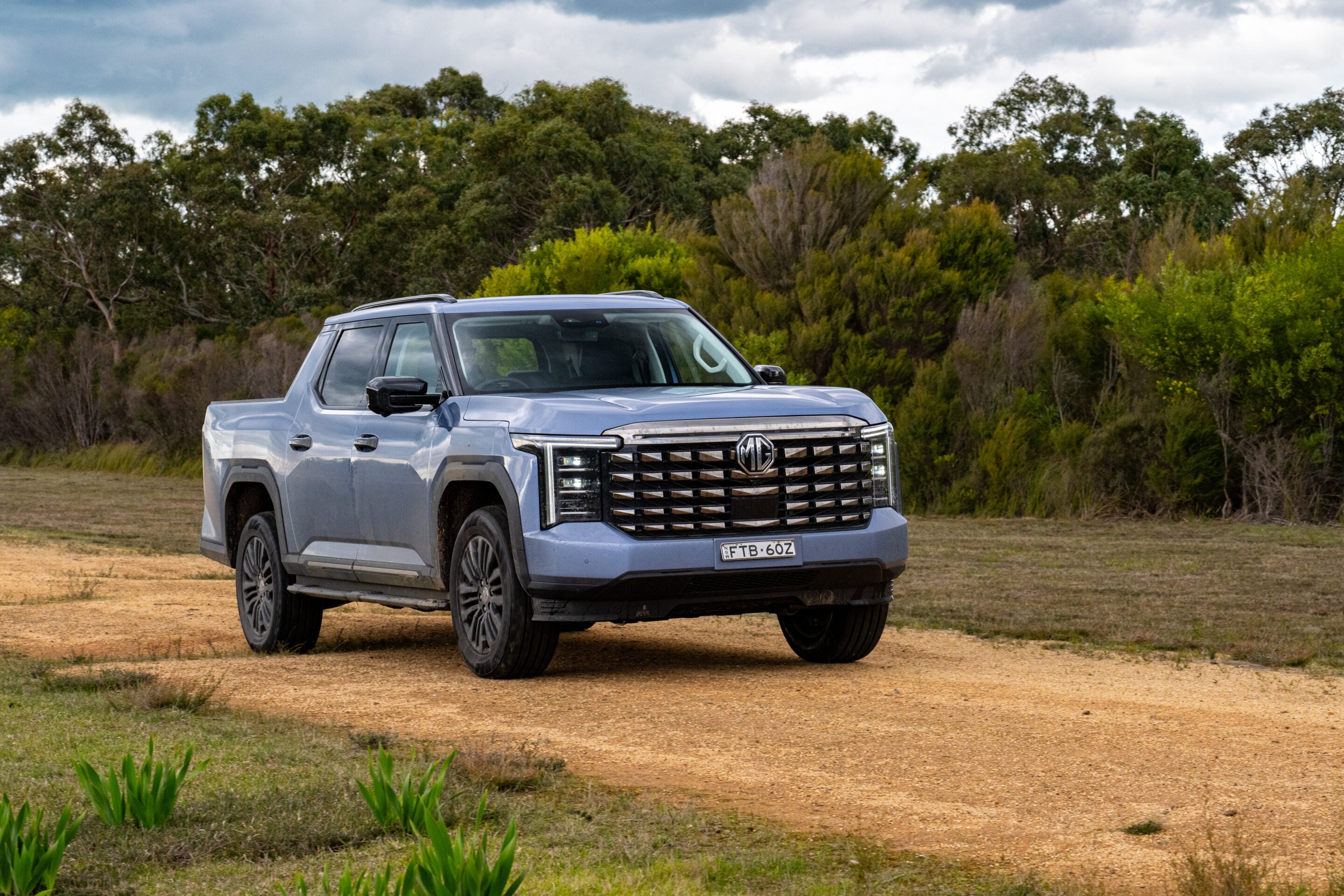
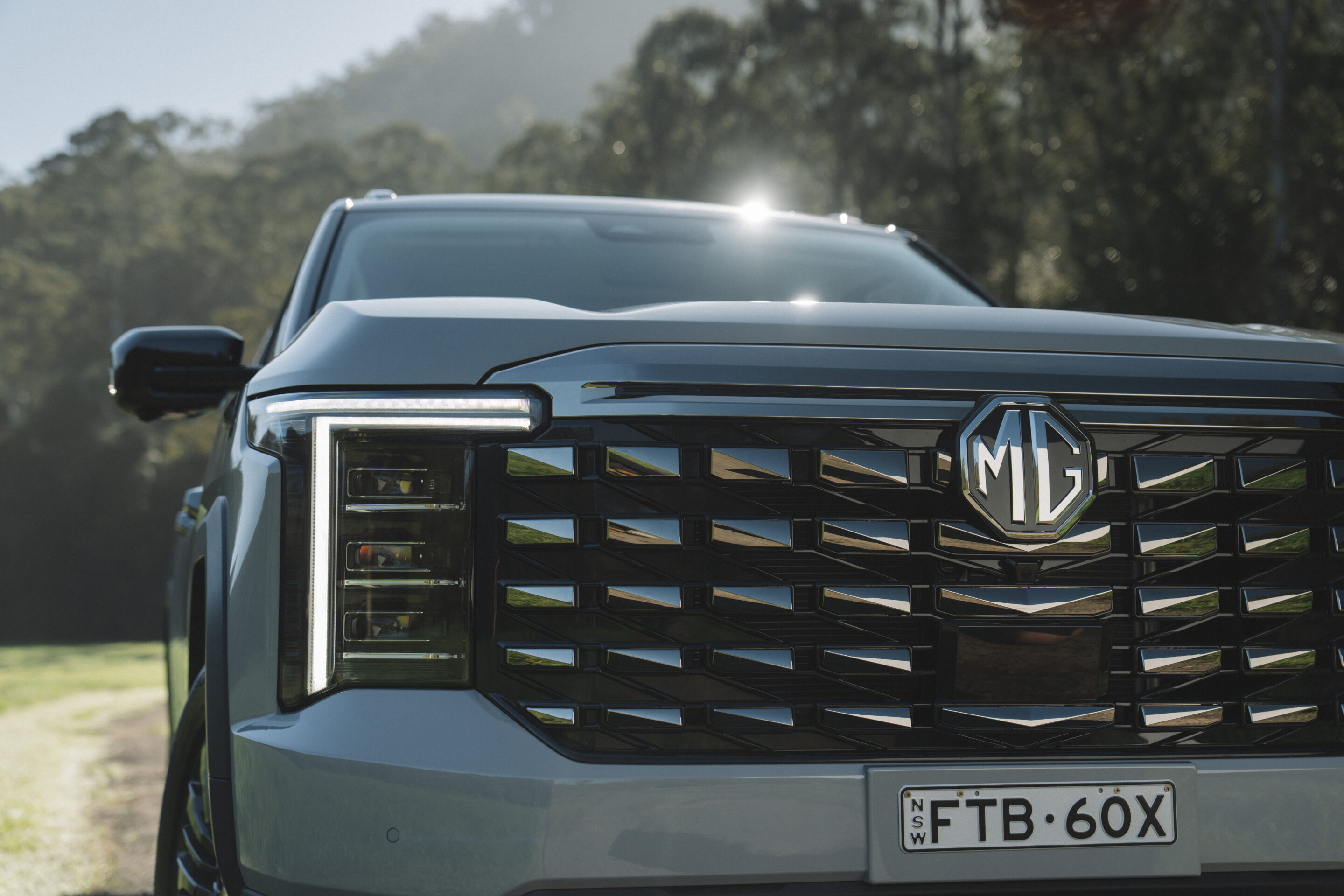
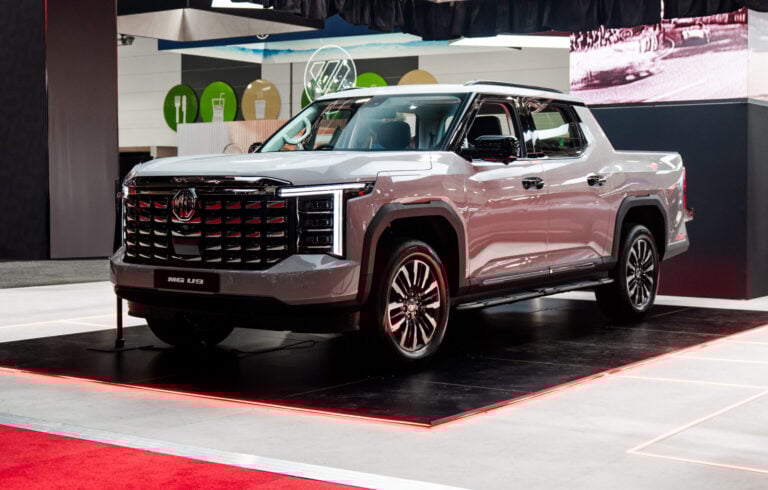
Now, MG has entered this firefight with its U9, a ute that on the spec sheet at least, looks to be packed with all the standard equipment you’d demand of a new entrant. And that was before MG had announced the price. Three models will be available from launch: Explore at $52,990, the Explore X at $55,990 and the Explore Pro at $60,990, all listing with sharp, drive away pricing. We know then, that the U9’s value equation will be compelling and it continues MG’s run of attacking the market with a price point that raises eyebrows.
Will it be enough to convince Aussie buyers to take the punt? The success of GWM, LDV and BYD with their dual cabs suggests conversion won’t be a problem… but time will tell. MG is adamant that it won’t be known as a seller of small, cheap vehicles.
“Many of you have witnessed my journey leading MG from zero to a top 10 brand in Australia and NZ,” MG CEO Peter Ciao told media at the launch of the new U9. “Small and best value cars, cars that help Australians fall in love with our brand. But today that story enters a new chapter, from this moment the era of MG only making small cars is over.”
Strong words from a CEO, who has the sales credentials and success in this market to back them up.
2
Where the U9 steps off on the right foot is its use of high-quality components from known manufacturers. Rather than develop its own transmission for example, MG has opted for the excellent eight-speed ZF we’re familiar with, which has found a home under everything from BMWs to Land Rovers. There’s a Borg Warner 4WD system, and Bosch electronic stability programming. If buying a vehicle from a challenger brand is something of a risk, much of that is mitigated by the inclusion of crucial components from respected companies.
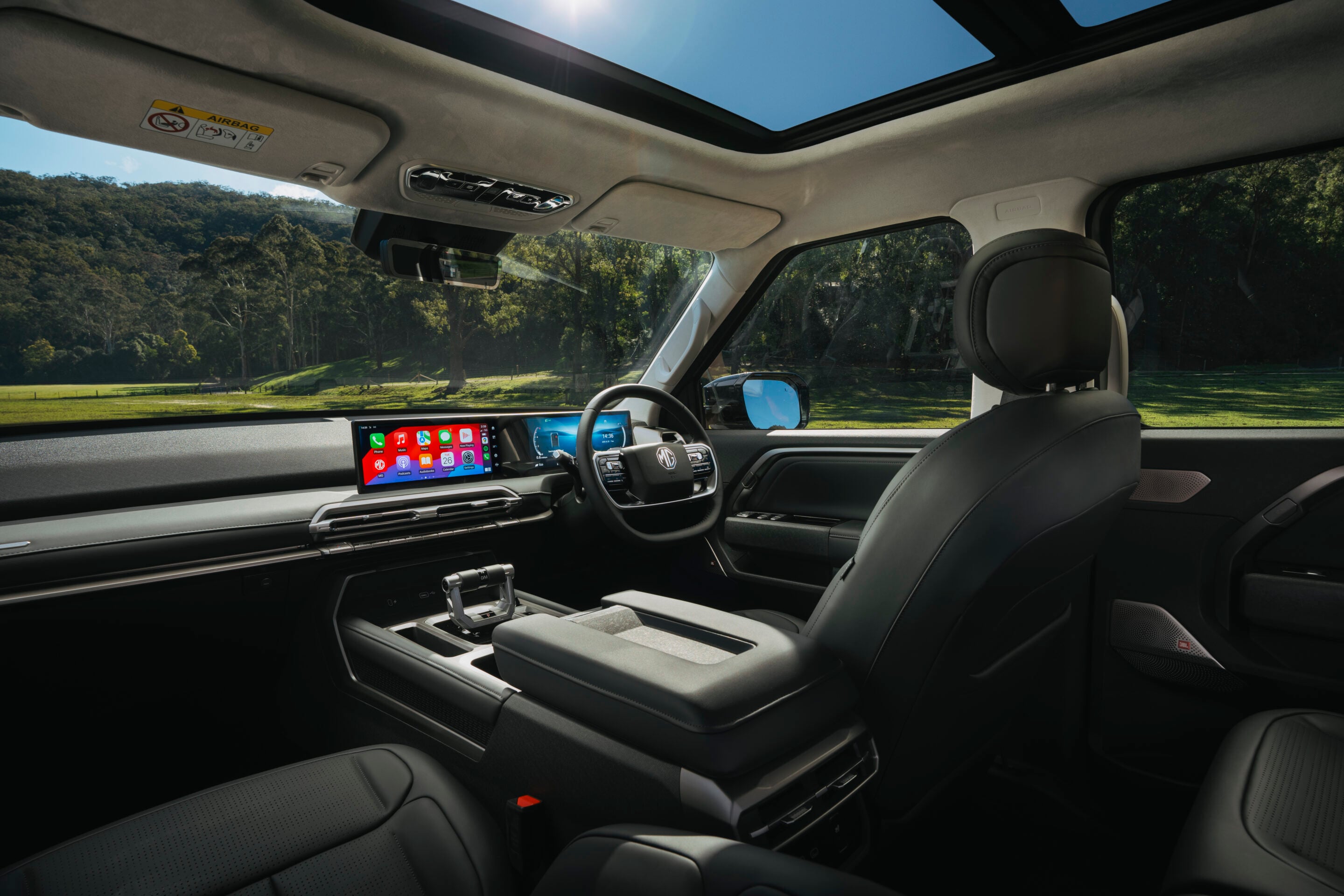
The cabin delivers a premium air, with plenty of high-tech inclusions, big screens and sensible controls mounted where they are easy to access. The 12.3-inch infotainment control screen was responsive to commands during our brief foray and there’s wireless smartphone connectivity and charging. You get high-definition images, along with HD360 degree cameras, premium vegan leather trim, heated seats front and rear and vented seats up front.
Pricing
| MG U9 Explore | $52,990 |
|---|---|
| MG U9 Explore X | $55,990 |
| MG U9 Explore Pro | $60,990 |
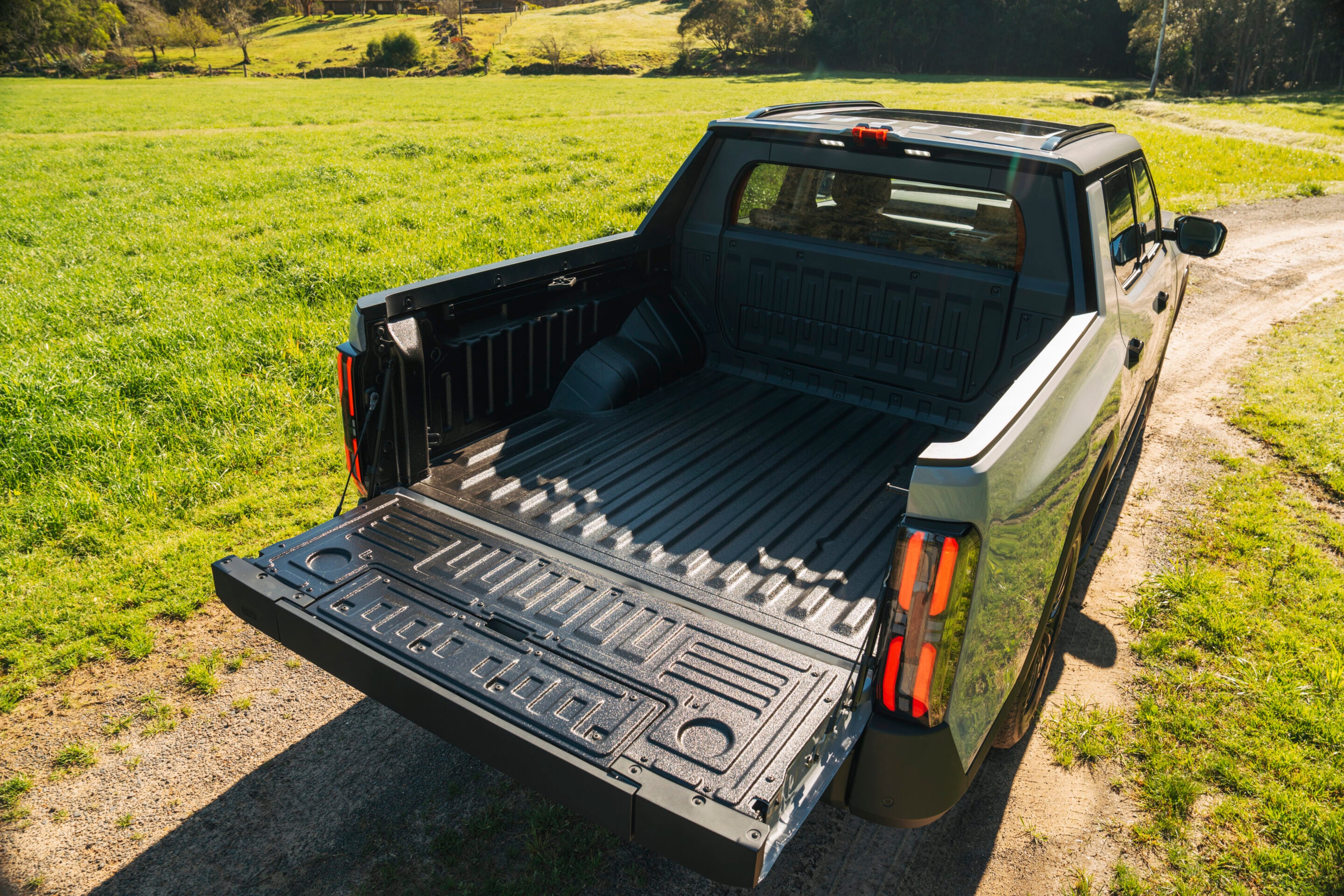
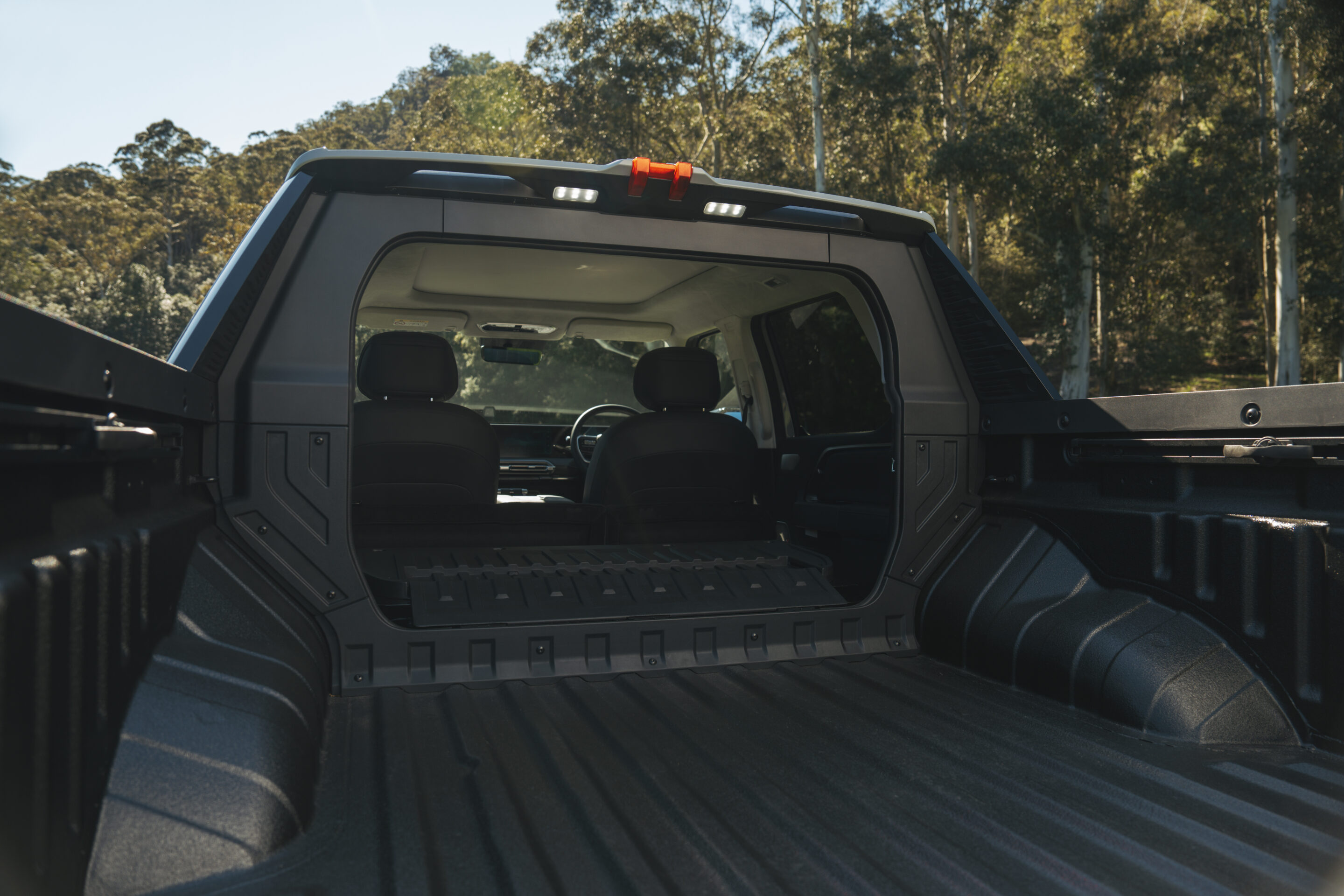
There’s also the – slightly crazy – drop down rear firewall behind the seat back, which will be an option on the range-topping model. Fold the back seat out of the way, hit a switch and the entire rear panel drops down to open the rear of the cab right out to the tray. Like the step-down tailgate that much has been made of, it will be fascinating to see how many buyers take up this option. It’s complex, and I worry about durability, especially if you’ve got kids messing around with it, but it’s a party truck no other dual cab can match.
The balance of the spec sheet ensures the MGU9 counters the segment, certainly on paper. Our launch drive is a short, dirt road affair, with broader sealed road testing to come, but if you look first at the standard features, the U9 appeals. There’s a 2.5-litre, turbo diesel, four-cylinder engine, without the complexity of a hybrid or plug-in hybrid system. That is likely to come, but for the moment, the type of buyer who wants simplicity will be attracted to the U9’s offering.
3
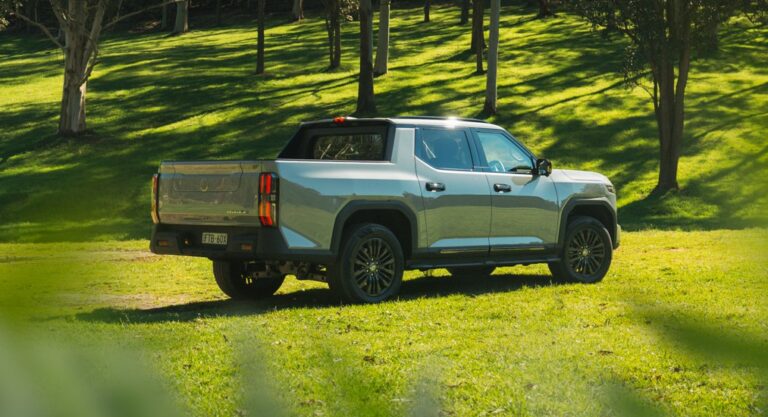
There’s the aforementioned eight-speed automatic, full-time 4WD, low range gearing, an electronic rear diff lock for Explore and Explore X, an electronic front diff lock for Explore Pro, and multi-link independent rear suspension. The latter is a crucial inclusion for those of you driving on sealed roads around town, where unladen ride quality – or the lack of it – is often the bugbear of the established dual-cab brigade.
That ride quality is immediately evident as we head down a rutted dirt road. Even on the steep, loose and rocky uphill climb of the off-road section, the U9’s rear end is stable and balanced. The electronics take care of any unnecessary scrabbling, but the mechanical design of the rear end gives it a fighting chance. On-road though, through our potholed urban road network is where it will shine brightest.
For the off-road climb we switch over to low-range (which you need to shift into neutral to do), and select the rock driving mode. The rear diff stays unlocked, so we can see exactly how the U9 approaches the climb. It’s impressive and there are no issues climbing to the top with very minimal slippage, mainly on the tight switchback sections. It will be interesting to see how the system handles even tougher terrain. Throttle modulation seems to be smooth too, such that you aren’t jerking into and out of it as you regulate the speed up the climb. Not all low-range 4WD systems are created equal, but the U9’s on first touch appears to work well enough. Evaluation has been undertaken in Australia to assess its ability to deal with our conditions, but there was no re-engineering done.
These vehicles are pre-production and fitted with a variety of different tyres, some of them all-terrain rubber, so we don’t yet know what the standard offering will look like, although with the Explore Pro model getting the front and rear diff locks as standard, it’s likely to be the one fitted with more aggressive tyres.
I get behind the wheel of another U9 that has a large, approximately 2600kg caravan hitched up. It’s enough heft that if the chassis is prone to experiencing shunting and the issues associated with weight over the rear, you’ll certainly feel it – even at low speed. The dirt road we use is far from smooth, and yet the MG handles it easily. While I’d like to test it with a caravan on a stretch of 100km/h highway, the way it deals with the weight behind the rear axle is on par with any of the others in the segment.
2
On the higher speed dirt road section, the U9 rumbles along nicely dealing with potholes and washouts with comfort, with the gearbox especially working as smoothly as the ZF is renowned for. We don’t get up to a speed fast enough to judge its loose gravel smarts, but certainly for the type of national park touring plenty of us do, the U9 seems fit for purpose.
Our launch drive, in pre-production U9s, is enough to indicate there’s a lot of promise in this platform. Beyond the price and standard features list, MG has a contender on its hands. I don’t think anyone is expecting it to take on the sales of Ranger and HiLux, but the increasing proliferation of other Chinese-built dual cabs means Australian buyers are more attuned to value than ever before. More comprehensive testing awaits.
Trent Nikolic
2
How does the U9 compare?
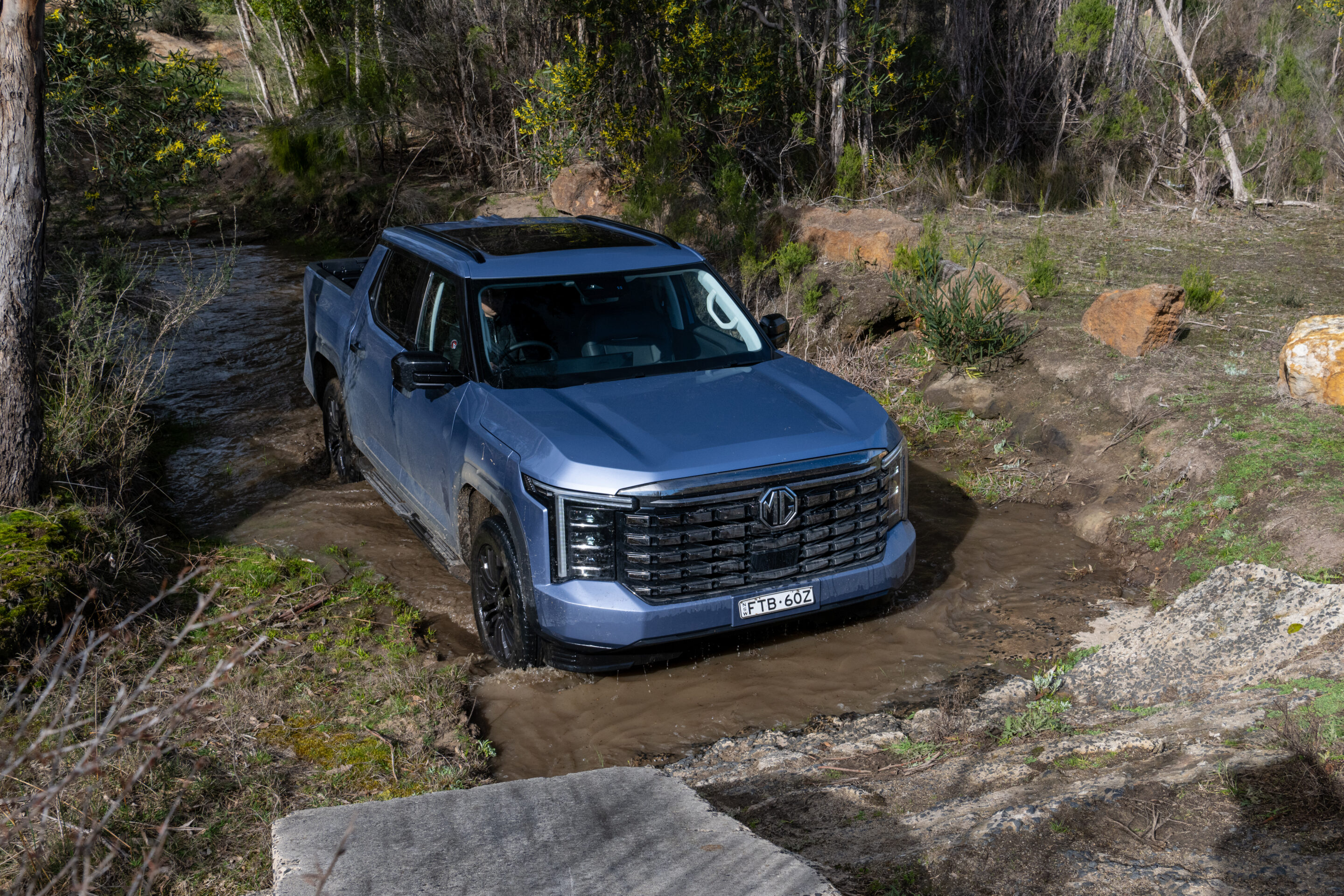
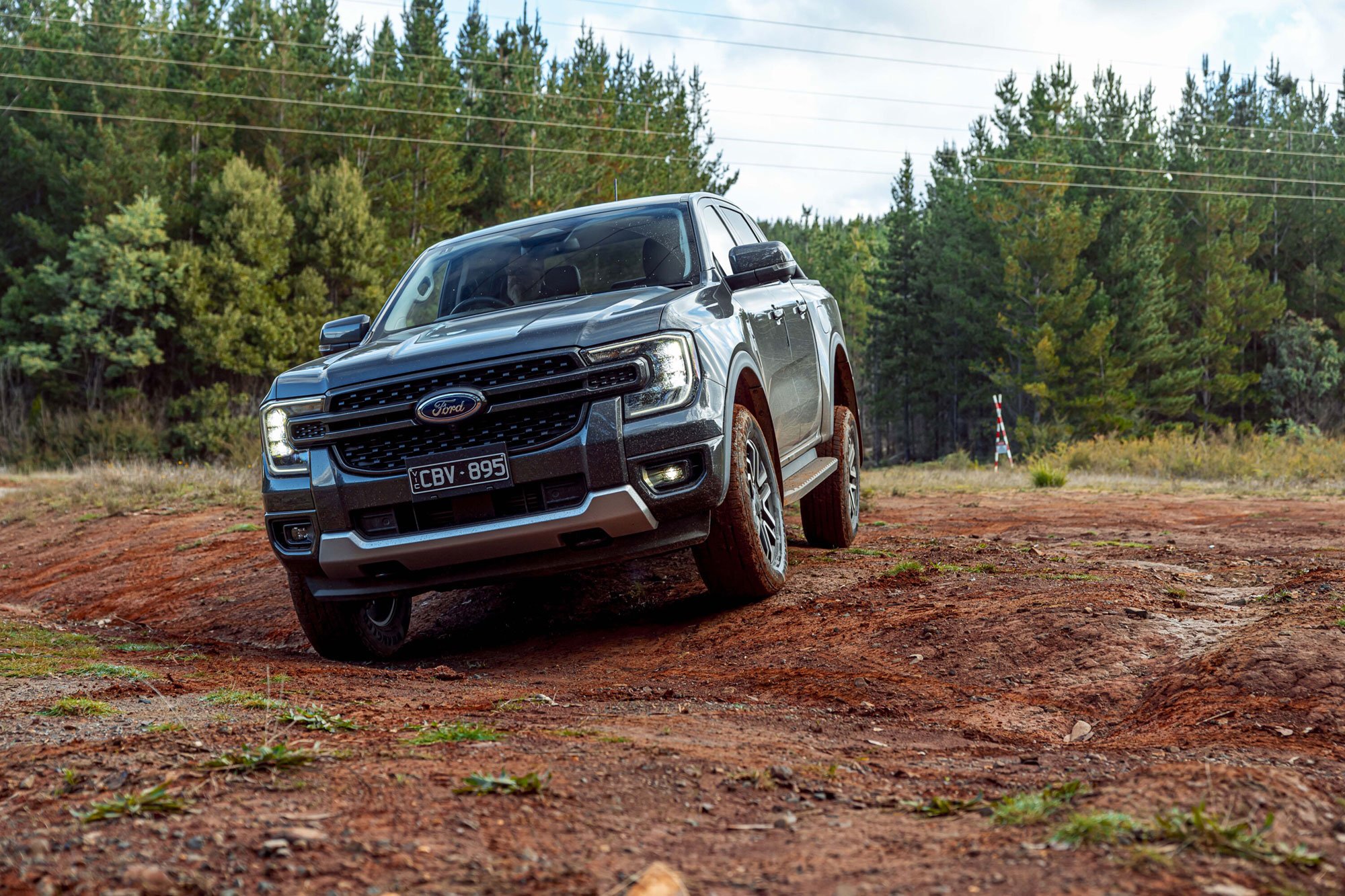
For the purposes of this comparison, let’s take the current segment king, the Ford Ranger, and line the range-topping U9 Explore Pro up against the Ranger Wildtrak 2.0-litre, four-cylinder.
If money is no object, we’re recommending the V6 Ranger, but using the 2.0-litre, four-cylinder at least gives the MG a fighting chance.
Starting with price, the MG costs $60,990 drive away, while the Ranger starts from $69,640 before on-road costs. So, as expected from a challenger brand, there’s a big difference between the two – and there needs to be if MG is to convince regular dual-cab buyers to take a look at the new U9.
1
1
The Ranger’s 3.0-litre V6 is the pick of the segment when it comes to grunt, but the Bi-turbo 2.0-litre, four-cylinder still makes a decent fist of it, generating 154kW and 500Nm. That means the 160kW/520Nm U9 just out punches the Ranger, but only just. Ranger counters U9’s eight-speed auto, with a ten-speed unit but is part-time 4WD only. The Ranger is efficient, too, 7.2L/100km beats MG’s 7.9L/100km.
A key difference on-road will be the U9’s multi-link independent rear end, which side-steps the age-old concept of leaf springs and heads in a much more SUV-oriented direction. Ranger has always been as good as leaf springs get unladen, but coil springs will always perform better devoid of weight in the tray. Max the payload out though, and that equation changes. Both Ford and MG have opted for discs front and rear, the Ranger getting vented rear discs, while the U9 gets solid discs out back.
Ranger’s kerb weight of 2343kg, means it weighs in leaner than even the lightest U9, which tips the scales at 2450kg, while payload for the 2.0 Wildtrak is 937kg, easily beating the top spec U9’s 770kg. Tow rating is the same for both at 3500kg.
Plenty of you will never head off-road, and we know that most of the high-end dual cabs ply their trade in the cut and thrust of the city, but the off-road basics point the way of the Ranger. It’s 800mm wading depth blows the U9 out of the – ahem – water, while ground clearance (234mm) and turning circle of 12.9m are also more tight-track friendly.
The most fascinating thing about the dual cab segment in 2025 is just how much it has diverged from its rudimentary work truck beginnings. Under the skin, these are still trucks – that is a body and tray on a ladder-frame chassis – but the amenity, standard inclusions and driving dynamics are much more SUV-like. Comparing two on a line ball is harder than it’s ever been, but you can see here that for a first effort, MG has certainly given the spec sheet a fair shake. The performance of the U9 on road will be a significant part of whether it can be a success in this market.
Specs
| Model | MGU9 |
|---|---|
| Price | From $52,990 |
| Engine | 2.5-litre turbo diesel four-cylinder |
| Transmission | Eight-Speed ZF automatic |
| Drivetrain | Four-wheel drive |
| Power | 160kW |
| Torque | 520Nm |
| Fuel consumption | 7.9L/100km |
| Front suspension | Double wishbone |
| Rear suspension | Multi link independent |
| Fuel tank | 80 litres |
| Kerb weight | 2450kg to 2550kg |
| Gross combined mass | 6500kg |
| Payload | 770kg to 870kg |
| Braked tow capacity | 3500kg |
| Approach angle | 29 degrees |
| Departure angle | 25 degrees |
| Ground clearance | 220mm |
| Turning circle | 13.3m |
| Wading depth | 550mm |
| Overall rating | 7.3/10 |
7.4
/10
Score
Score breakdown
8.0
Safety, value and features
8.0
Comfort and space
7.0
Engine and gearbox
7.0
Ride and handling
7.0
Technology
Things we like
- Reliable eight-speed ZF transmission
- Premium cabin
- Multi-link independent rear suspension
Not so much
- Untested brand in this segment
- Full off-road capability yet to be tested
- Ranger beats it on wading depth and some other stats
Follow WhichCar/Wheels on Google
Click the button below to make WhichCar by Wheels a preferred source for your news.

We recommend
-
 News
News2025 MGU9: MG unveils Australian-engineered suspension for upcoming new ute
Locally developed multi-link rear system aims to blend workhorse durability with SUV-like comfort.
-
 News
News2025 MGU9 ute: More key features revealed
New entrant promises 3.5-tonne towing, SUV-level comfort and innovative features like an electric opening tailgate.
-
News
MGU9 ute open for orders with introductory offer
MG Motor enters Australia’s fiercely competitive ute market with the MGU9, available now for pre-order with an accessory bonus.