UOTY


Gallery 1
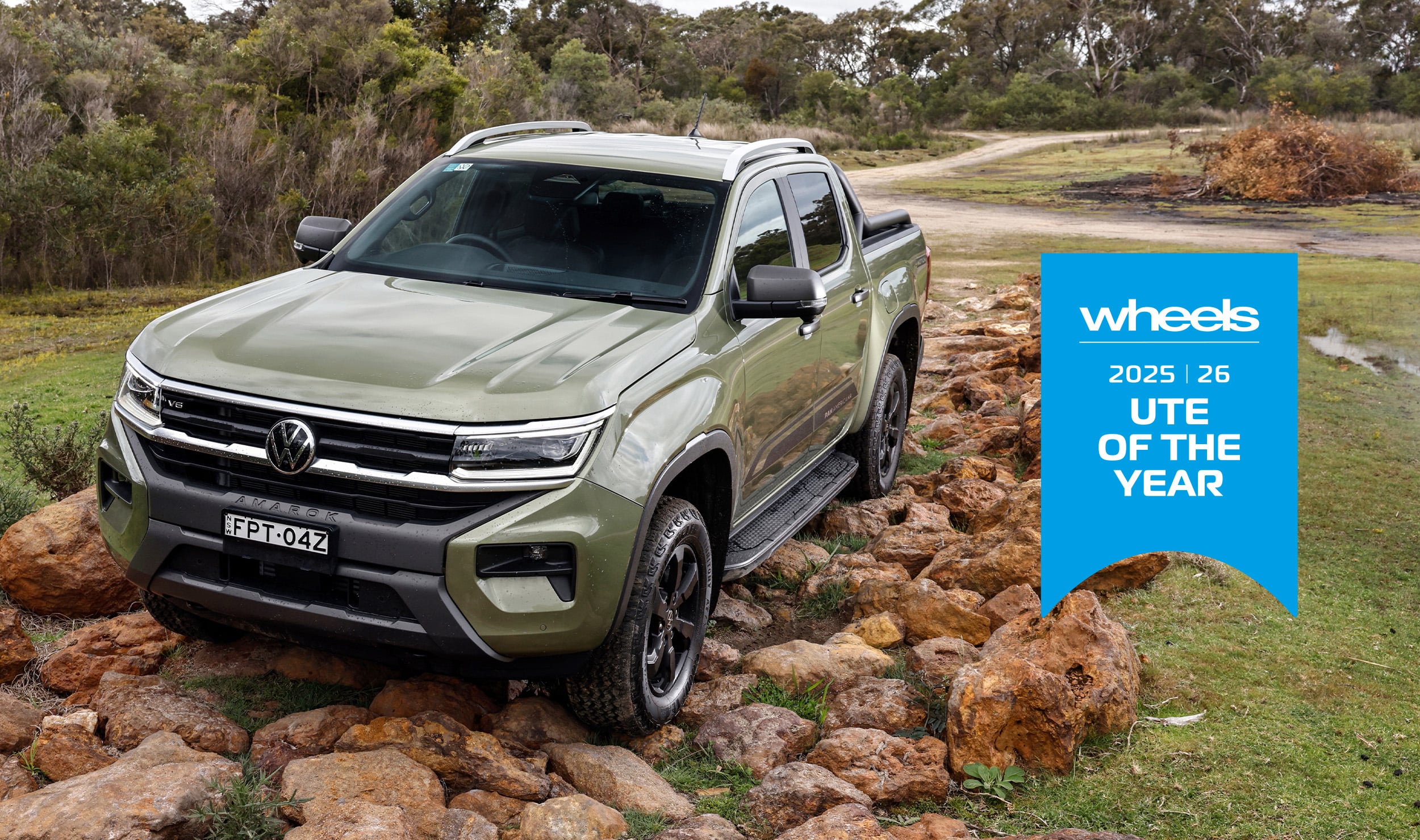
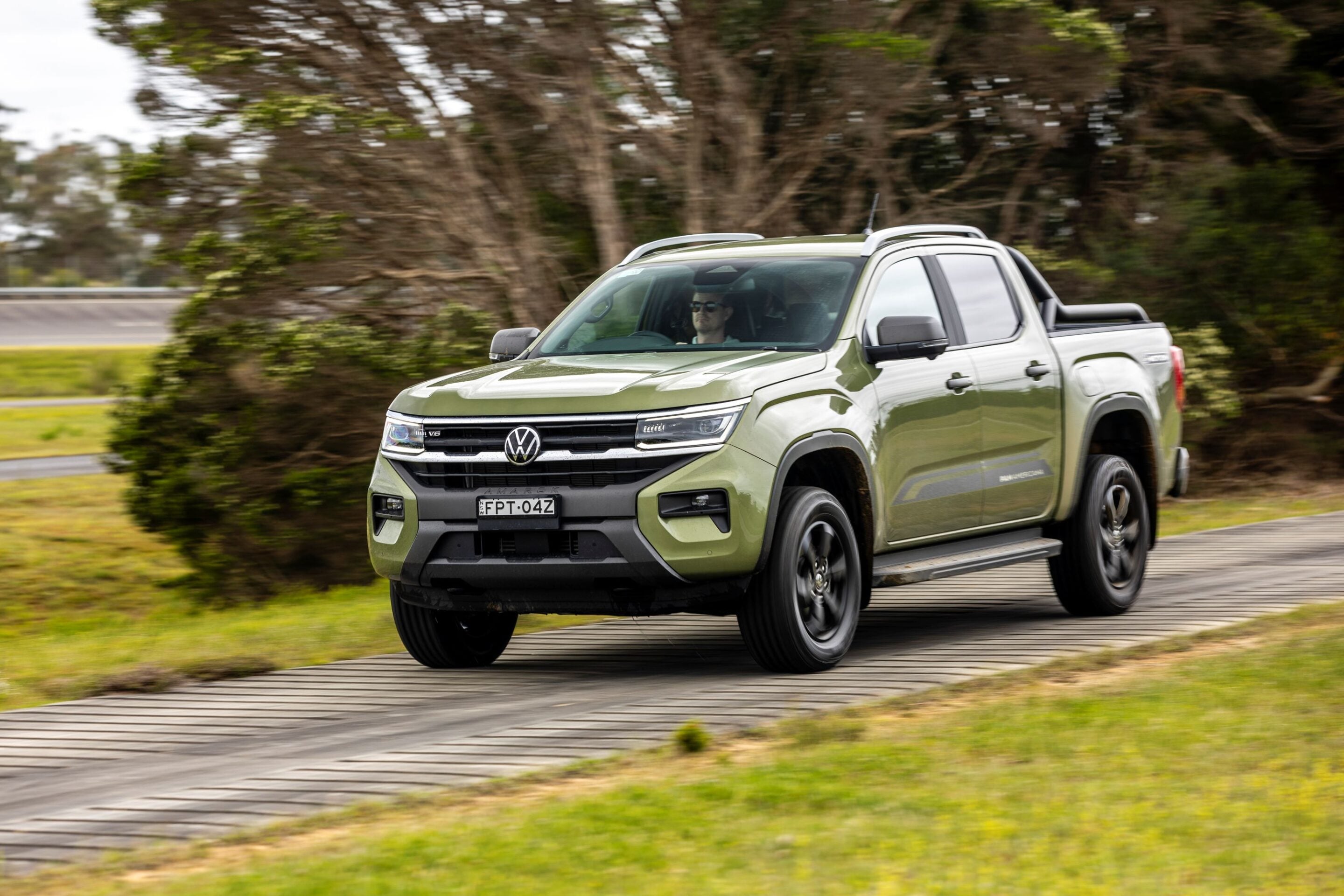
When we reference how much the dual-cab segment has changed, the current Volkswagen Amarok is a case in point.
Presented to the public in early 2010, Amarok was designed, engineered and built by Volkswagen at great expense. On one hand, you could say that it was simply a case of Volkswagen identifying and wanting a slice of the pie that was exploding in popularity. On the other, it could also have been a very expensive case of ‘me too’ automotive accounting.
In Australia, the original Amarok was a solid success. A smooth and efficient 2.0-litre turbodiesel and excellent automatic was available, full-time 4WD, great cabin comfort and ergonomics, and ride quality the envy of every other dual-cab.
3
At the time, a Mazda BT-50 was a Ford Ranger under the skin, and a Holden Colorado was an Isuzu D-Max, and every other dual-cab wished it was as refined as an Amarok. The emergence of the excellent 3.0-litre V6 turbo-diesel moved the game forward even further and stood Amarok alone as the effortless performance alternative.
Fast forward to Wheels’ UOTY testing this year, and the development cost of the Amarok had become so overwhelming, that the German manufacturer decided to partner with Ford for the all-new Amarok. That means the Amarok the judges are testing now is very different, fundamentally, to the original.
It’s why there was so much anticipation when Volkswagen launched the new generation Ford-developed Volkswagen Amarok. Would it be VW enough? Would it feel VW enough? Crucially, would it drive like it was VW enough? And would rusted-on Amarok owners buy a Volkswagen that was, in fact, a Ford under the skin?
1
The initial popularity of the new Amarok would indicate that, yes, it is resonating with the right buyers, even at the price point, which at the top end has marched well past $70,000. It’s worth noting, of course, that you can get into an Amarok from the mid-50s before on-road costs if you’re happy to forgo some of the creature comforts.
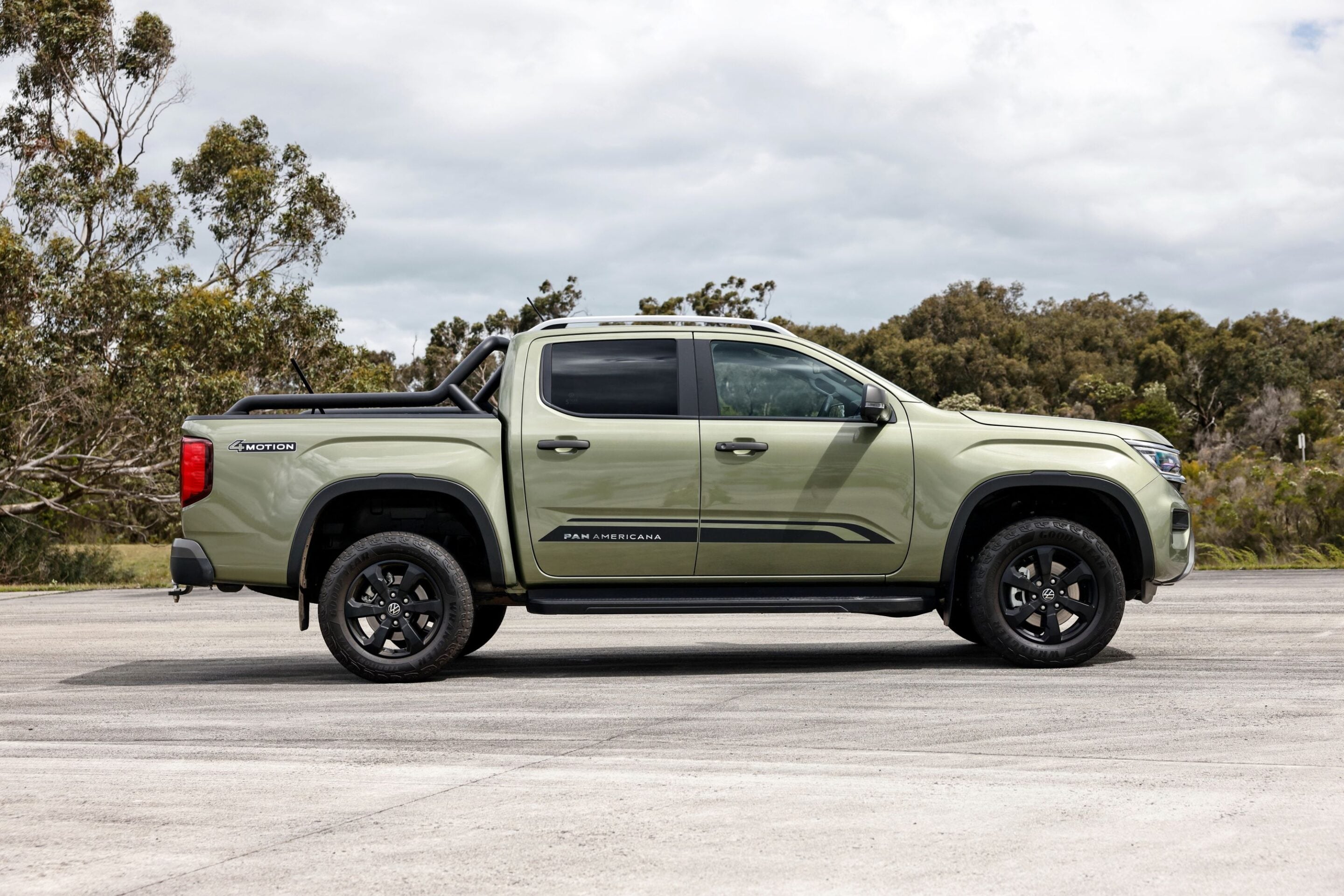
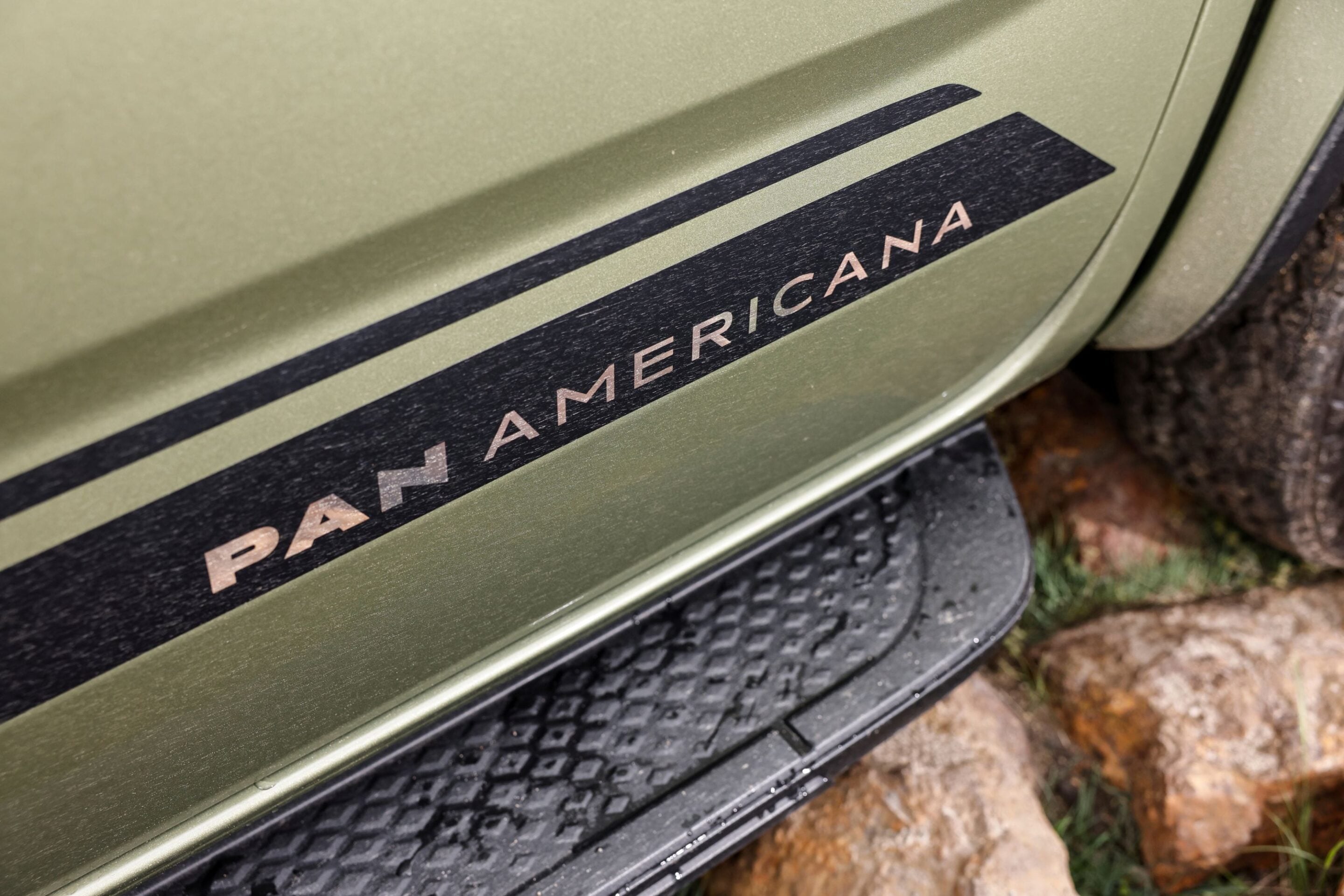
On test for Wheels’ UOTY we have the second from top-of-the-range PanAmericana. In theory, Amarok might have been more competitive, had we been able to access a more affordable Style variant, but PanAmericana was the grade that Volkswagen was able to supply.
At $78,990 it’s difficult to argue the value equation, as it is with much of the segment now. Ford’s Ranger and Isuzu’s D-Max both start beyond $70,000 before on-road costs, and against new brands that aim to deliver sharp pricing, the top end of town is nothing if not expensive.
3
Has that stopped Aussies buying them? Absolutely not, but it does register with the judges in UOTY judging. Beyond the price though, there’s a lot to like about the Amarok, with the 3.0-litre engine delivering 184kW and 600Nm, mated to the same competent 10-speed automatic you’ll find in Ranger, and a combined fuel use figure of 8.4L/100km. During testing, we used an average of 11.0L/100km, which is where the majority of the heavy hitters in this segment sit. There’s a five-year/unlimited kilometre warranty and a five-star ANCAP safety rating. Across five years of servicing, you’ll only have to part with $1801, a smart move by Volkswagen, keeping it in line with the Ranger.
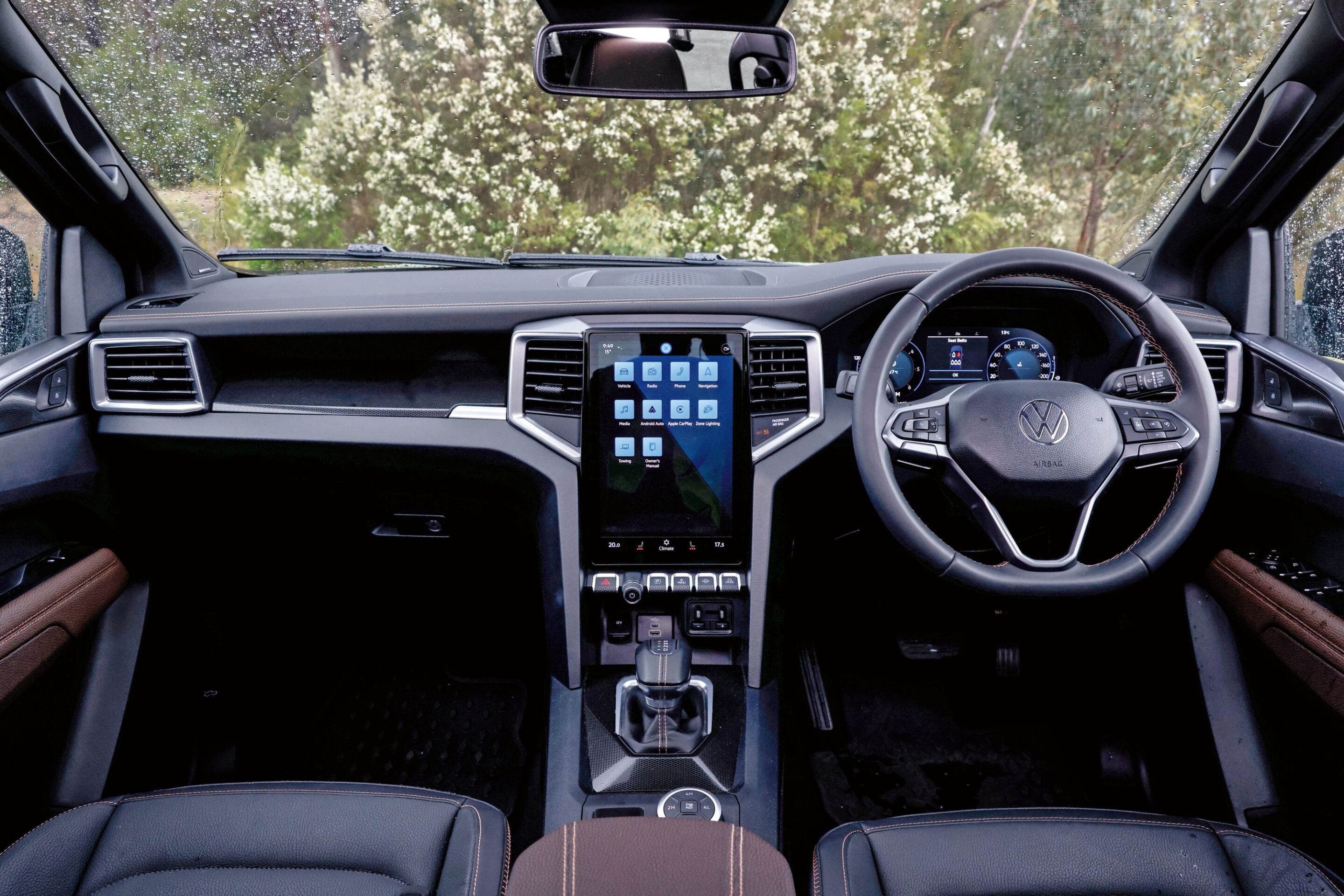
All of the strong points that make the Ranger the enduring best in segment, resonate when you’re behind the wheel of the Volkswagen Amarok – unsurprisingly. The cabin ergonomics and comfort levels remain the best in segment, visibility is excellent, and general drivability – from inside the cabin – is fantastic around town.
The judges agreed that the ride is as good as leaf springs get, but Amarok couldn’t quite match the all-round competence of the Ranger, especially on the bumpy sections of Lang Lang’s ride and handling circuit. PanAmericana as tested here, gets a more off-road focused suspension tune, which softens the overall ride – not so bad at lower speed but means it can feel less composed on higher-speed bumps. There’s also some added body roll that doesn’t add to the around town chops of the Amarok. If off-road work is your thing though, this is the spec to have.
3
While it’s very obviously a Ranger, there is a certain level of quality to the cabin that dips the lid to Volkswagen interiors. The new Amarok can’t feel as Touareg-like as the old one – obviously – but it’s comfortable, quiet and refined. The big step forward from the old platform is safety – the original didn’t even have second-row airbags – and space in the second row. Like Ranger, the new Amarok is genuinely comfortable in the back seat, even on longer trips.
The judges had some minor glitches when connecting Apple devices, but none with Android – something we’ve noted in regular testing since the Ranger was released with the new operating system. That aside, there’s nothing nasty to report from what is an otherwise excellent dual-cab.
As with D-Max and Ranger, the new Amarok is the other one to choose if you like long-distance touring. Its effortless engine and transmission makes for a comfortable long-hauler, and it might have given the top three a run if a slightly more affordable variant was available. However, as we saw with Ranger, it couldn’t quite crack the top two for this specific testing either.
3
Specs
| Price | $78,990 (MSRP) |
|---|---|
| Body | Dual-cab, five-seat ute |
| Drive | Dual-range 4×4, incl. auto mode |
| Drivetrain | 3.0-litre V6 turbodiesel |
| Power | 184kW @ 3250rpm |
| Torque | 600Nm @ 1750-2250rpm |
| Transmission | 10-speed automatic |
| Consumption | 8.4L/100km |
| Kerb weight | 2387kg |
| 0-100km/h | NA |
| L/W/H/W-B | 5350/1910/1886/3270mm |
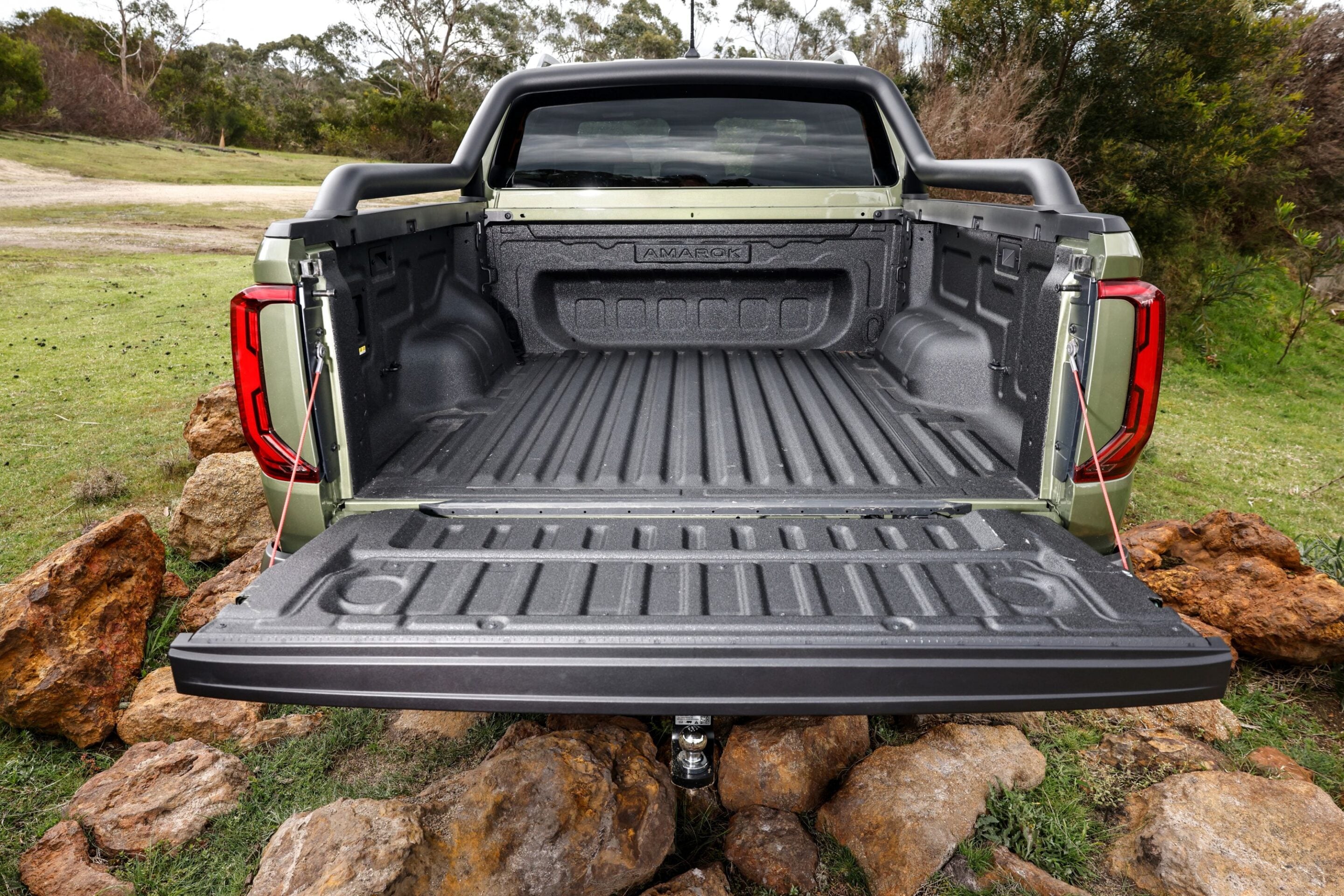
| Payload | 963kg |
| Warranty | 5yr/unlimited km |
| Safety rating | 5 star ANCAP (2022) |
2025-26 Wheels Ute of the Year
Follow WhichCar/Wheels on Google
Click the button below to make WhichCar by Wheels a preferred source for your news.

We recommend
-
 UOTY
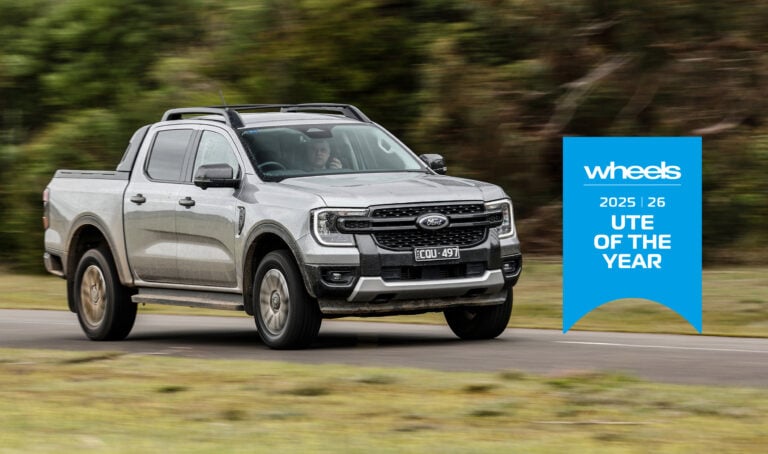
UOTY2025-26 Wheels Ute of the Year, 3rd: Ford Ranger V6 Sport
The Ford Ranger redefined the segment when the latest-gen launched in 2022, establishing itself as the best-selling vehicle of any kind over the last two years.
-
 UOTY
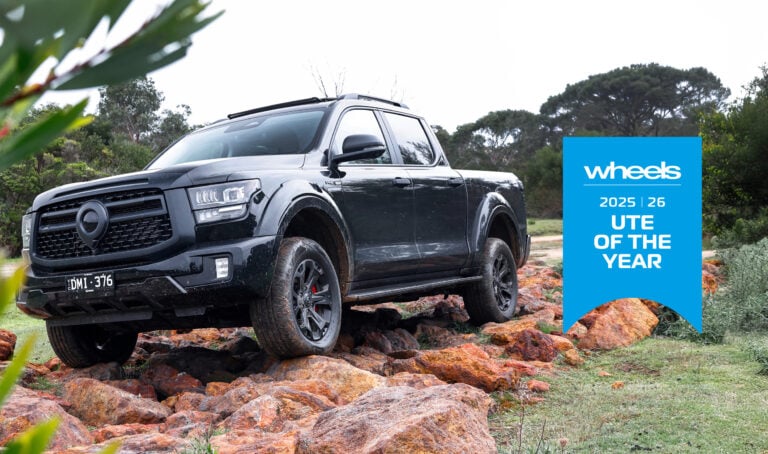
UOTY2025-26 Wheels Ute of the Year, 2nd: GWM Cannon Alpha PHEV
The GWM Cannon Alpha PHEV is disrupting the dual-cab universe with larger overall dimensions and its fuel-sipping plug-in hybrid drivetrain.
-
 UOTY
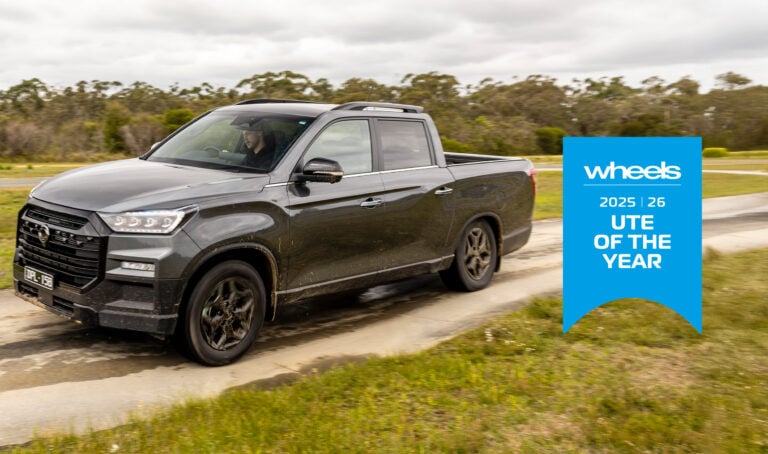
UOTY2025-26 Wheels Ute of the Year, contender: KGM Musso Ultimate Luxury XLV
The ‘other’ challenger brand in this segment is one that some of you might not immediately think of – South Korea’s first dual-cab entrant, the KGM Musso.