Advice

Gallery 1
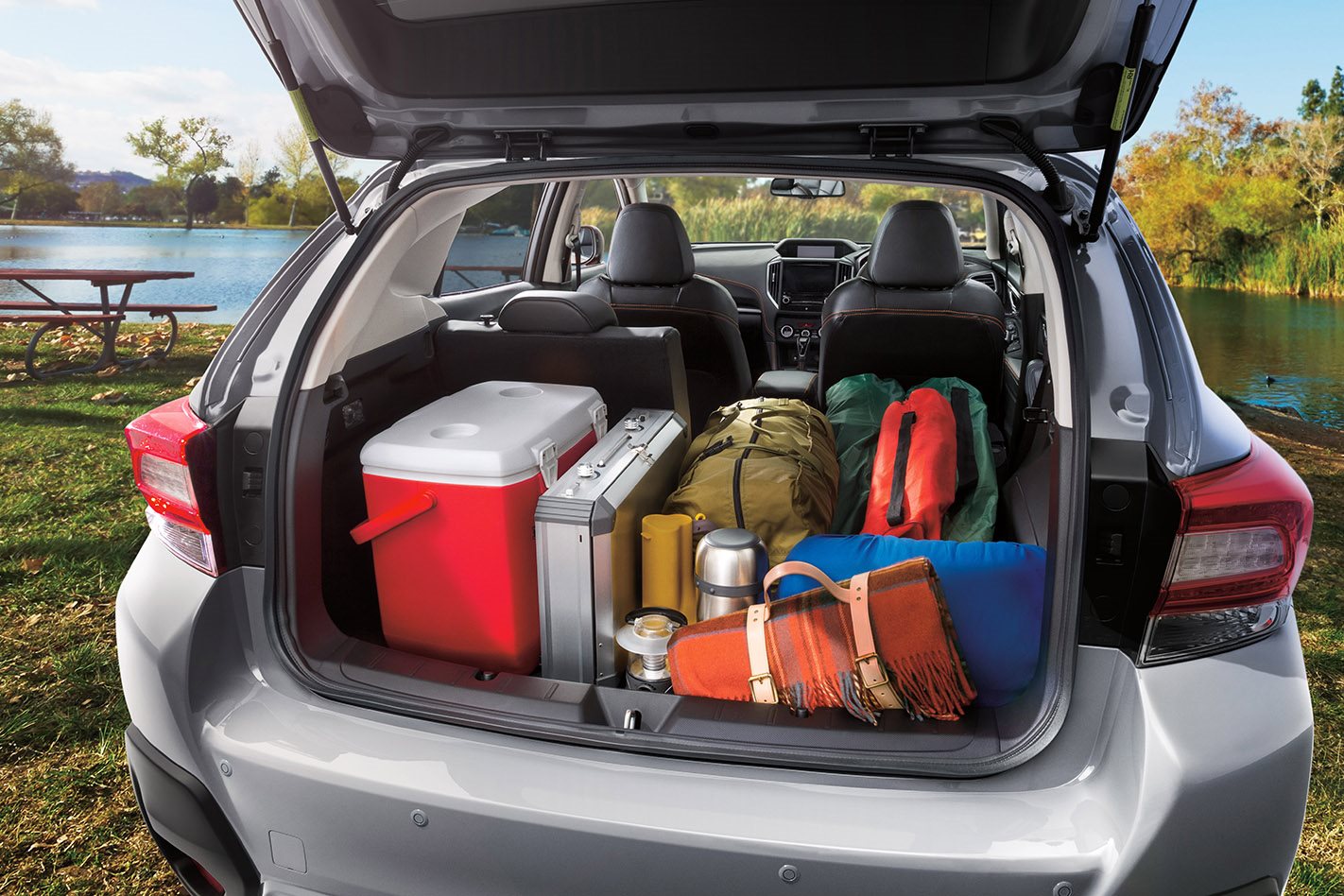
Australia’s obsession with SUVs shows no sign of slowing down, but one question matters more than ever for buyers: how big is the boot? While pricing, in-car tech and running costs all play a role in a new vehicle purchase, cargo capacity remains one of the biggest deciding factors for SUV buyers. In this feature, we’ve ranked the boots of Australia’s best-selling SUVs purely by the numbers to see which is biggest of the top five best-selling models in each segment.
Light SUVs
1. Mazda CX-3
264 litres

8
The CX-3 certainly lives up to its compact SUV tag when it comes to storage space. An excellent car with a dynamic drivetrain, it may be roomy for the human occupants, but its cargo volume is just 264 litres (231 for the G20 Akari). The seats do split-fold to open the area up to 1174 litres, but if you need to carry two kids or a dog with a weekend’s worth of luggage, you may need to invest in roof racks.
2. Suzuki Jimny + Jimny XL
85 litres (Jimny) – 211 litres (Jimny XL)
4
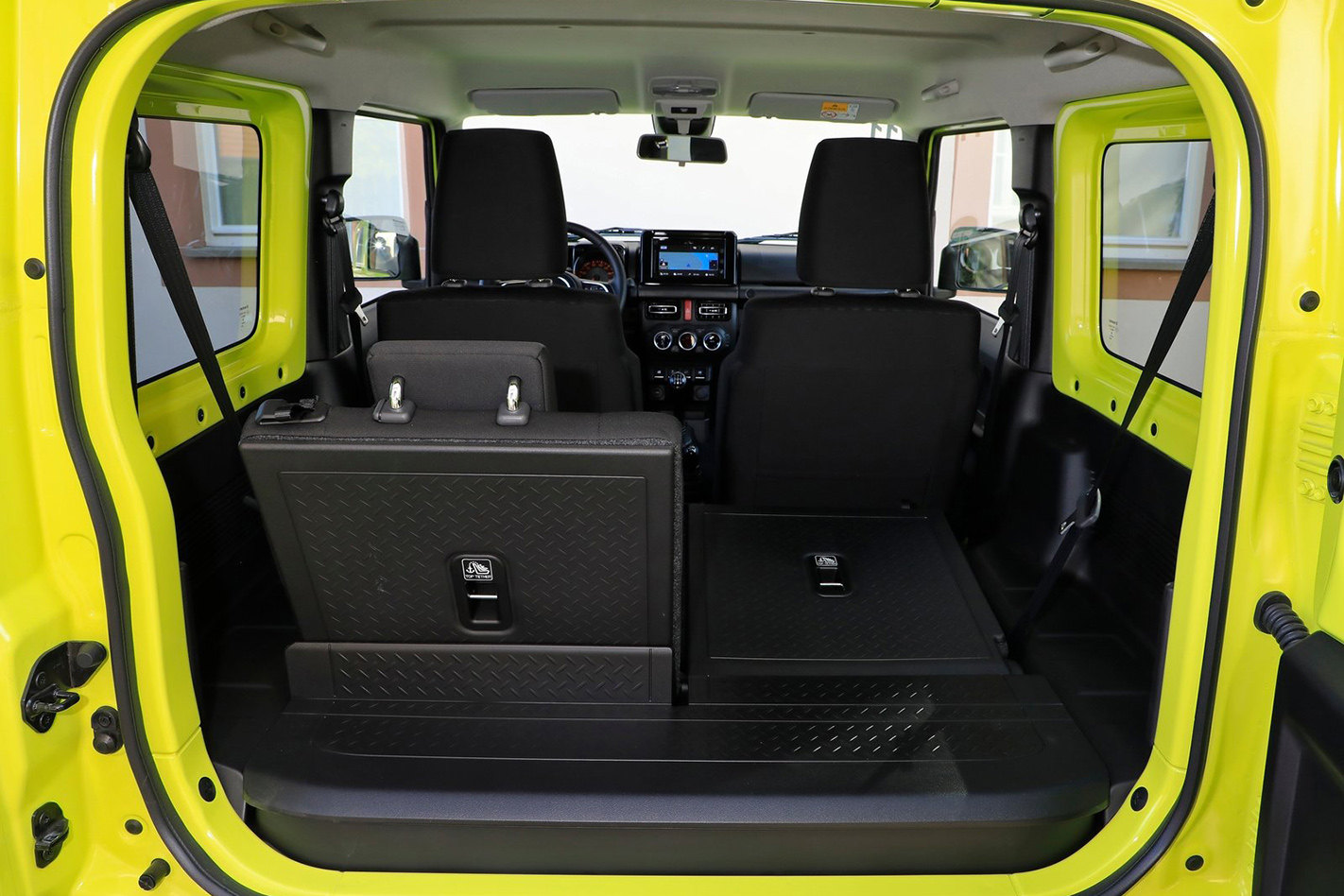
Considering that the Suzuki‘s little off-roader is such a small car, it’s no surprise to see that it offers just 85 litres of space with the rear seats up. Folding them down, as many owners do, opens up a much larger 830 litres and allows for much more carrying capacity. Choosing the larger Jimny XL increases the available bootspace to a healthier (but still small) 211 litres with the rear seats up and 1113 litres with them folded.
3. Toyota Yaris Cross
390 litres (314L in AWD models)
2
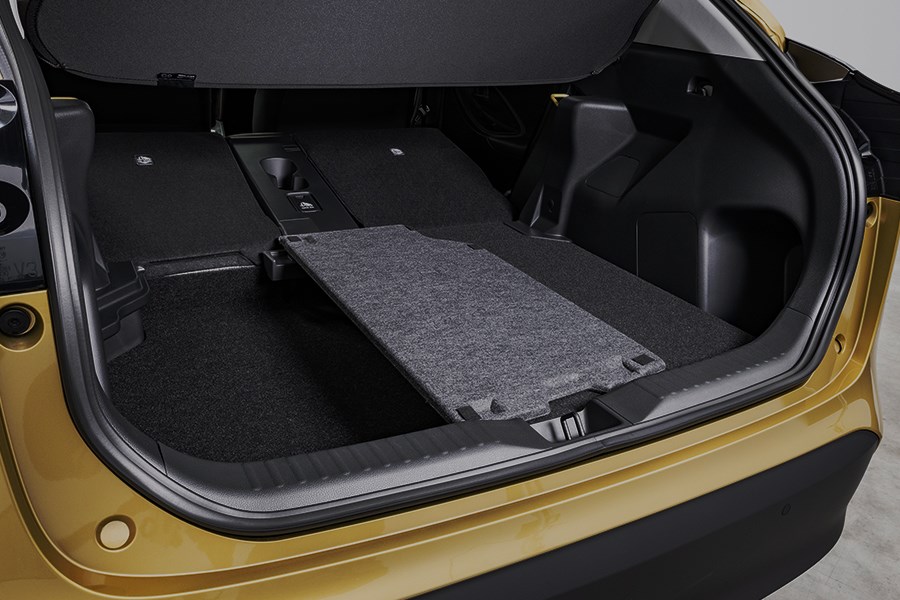
The front-wheel-drive Yaris Cross versions come with a very useful 390-litre boot, while opting for all-wheel-drive traction reduces that to 314 litres. The front-drive models gain the extra space via a 60:40-split false floor that provides more depth and practicality. All versions feature a 40/20/40-split rear seat with each individual section able to be folded flat to increase the rear luggage space up to a total of 1097 litres.
4. Hyundai Venue
355 litres
2
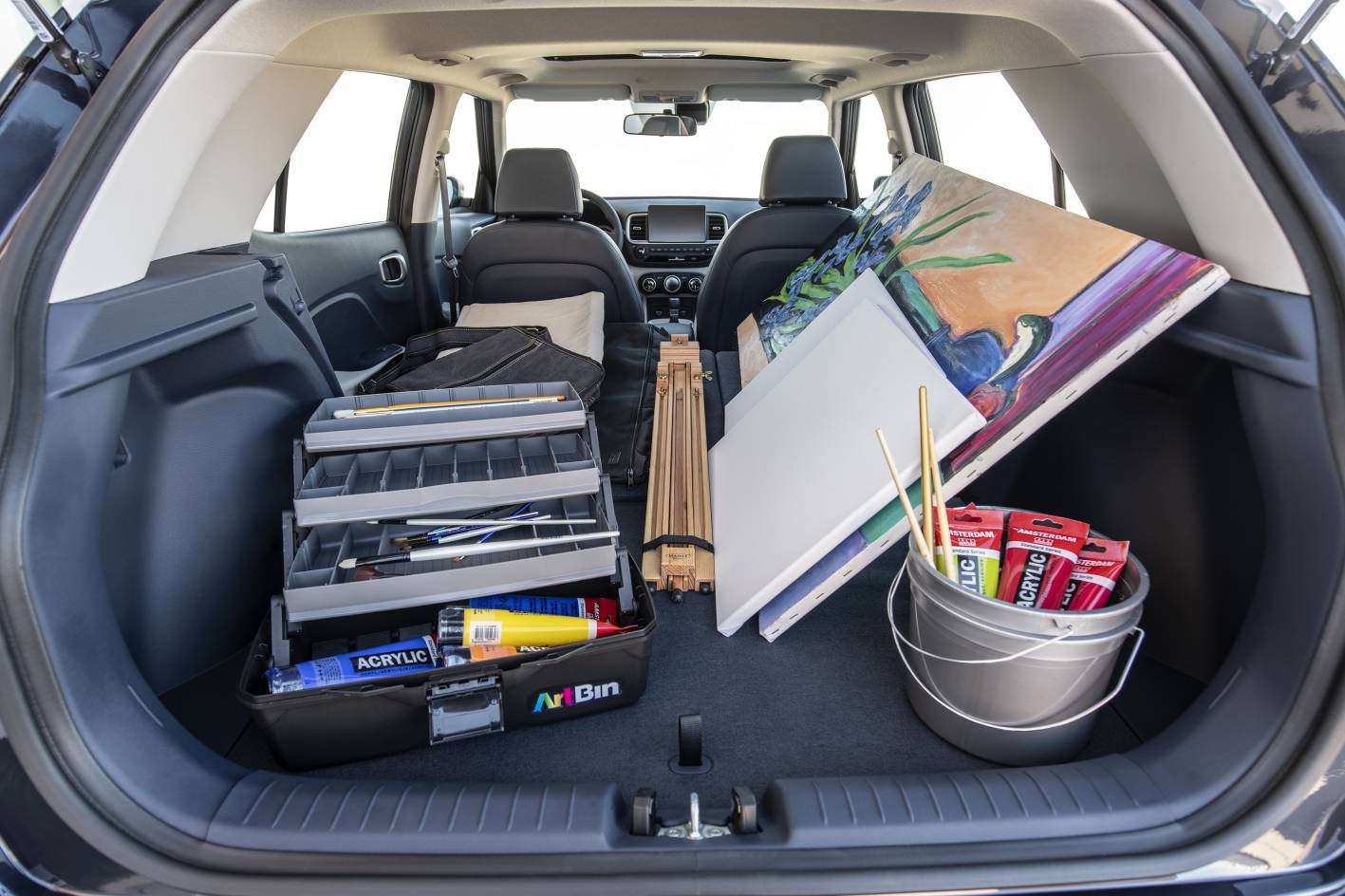
With the second-row seats upright, the Venue’s cargo bay holds 355 litres with cover in place, which is just 52 litres less than its bigger Kona sibling. Boot capacity is helped by the two-stage floor that can be lowered, while the boot’s relative tallness compared with rivals means that it can accommodate taller items with ease. The parcel shelf can be also cleverly tucked away neatly behind the rear seats to accommodate taller items. With the rear seats down, it can carry up 903 litres of stuff.
5. Kia Stonic
352 litres
3
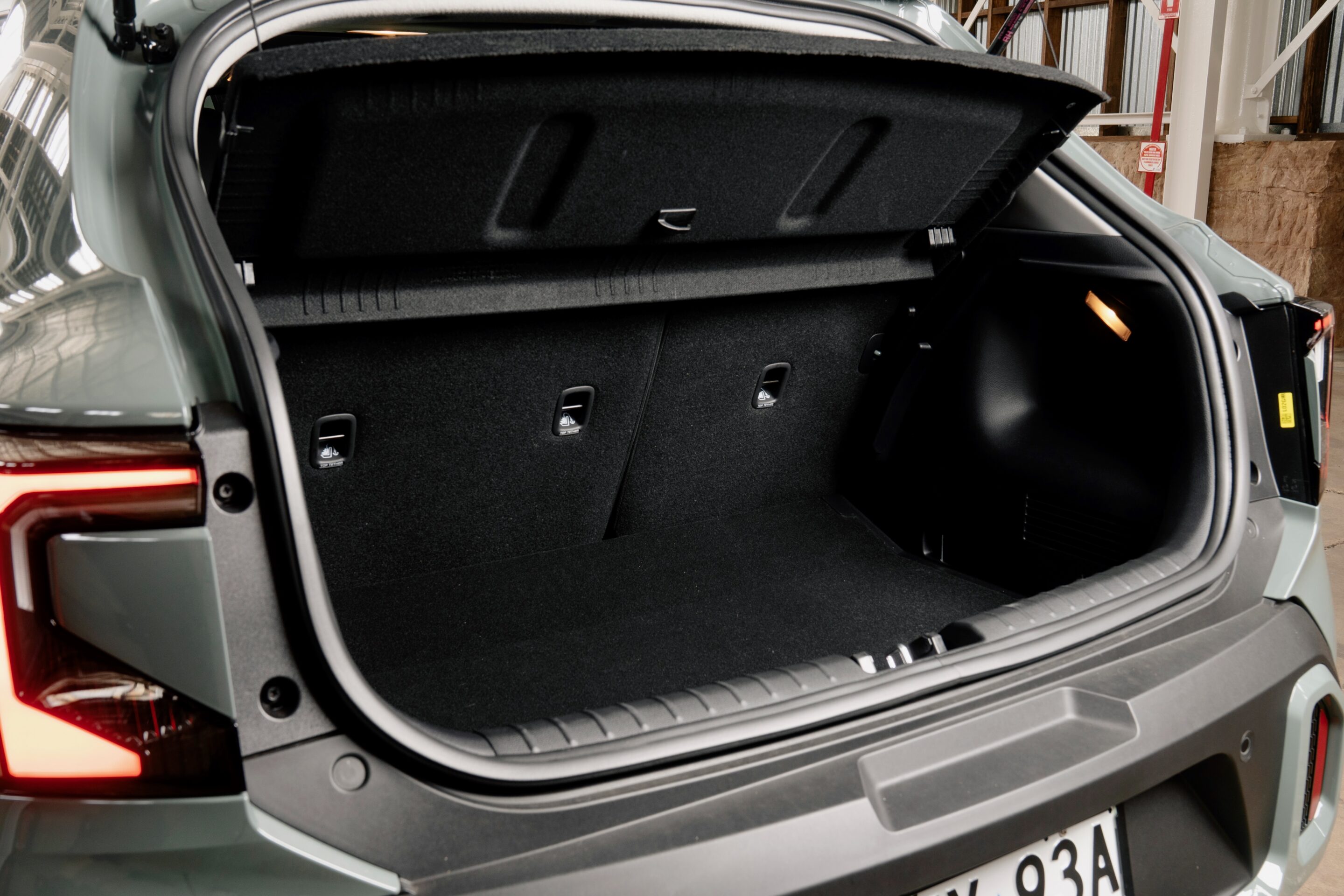
The Stonic offers a practical bootspace in the small SUV segment, with 352 litres with the rear seats up and 1155 litres with them folded. Its recent mid-life update added a mild-hybrid system with the 12-volt battery now located in the spare wheel well – so there’s no longer a spare wheel – but Kia did redesign the boot floor so that it now has a joined lip at the base of the seat for a smooth floor with the seats folded
Small SUVs
1. Chery Tiggo 4
380 litres
3
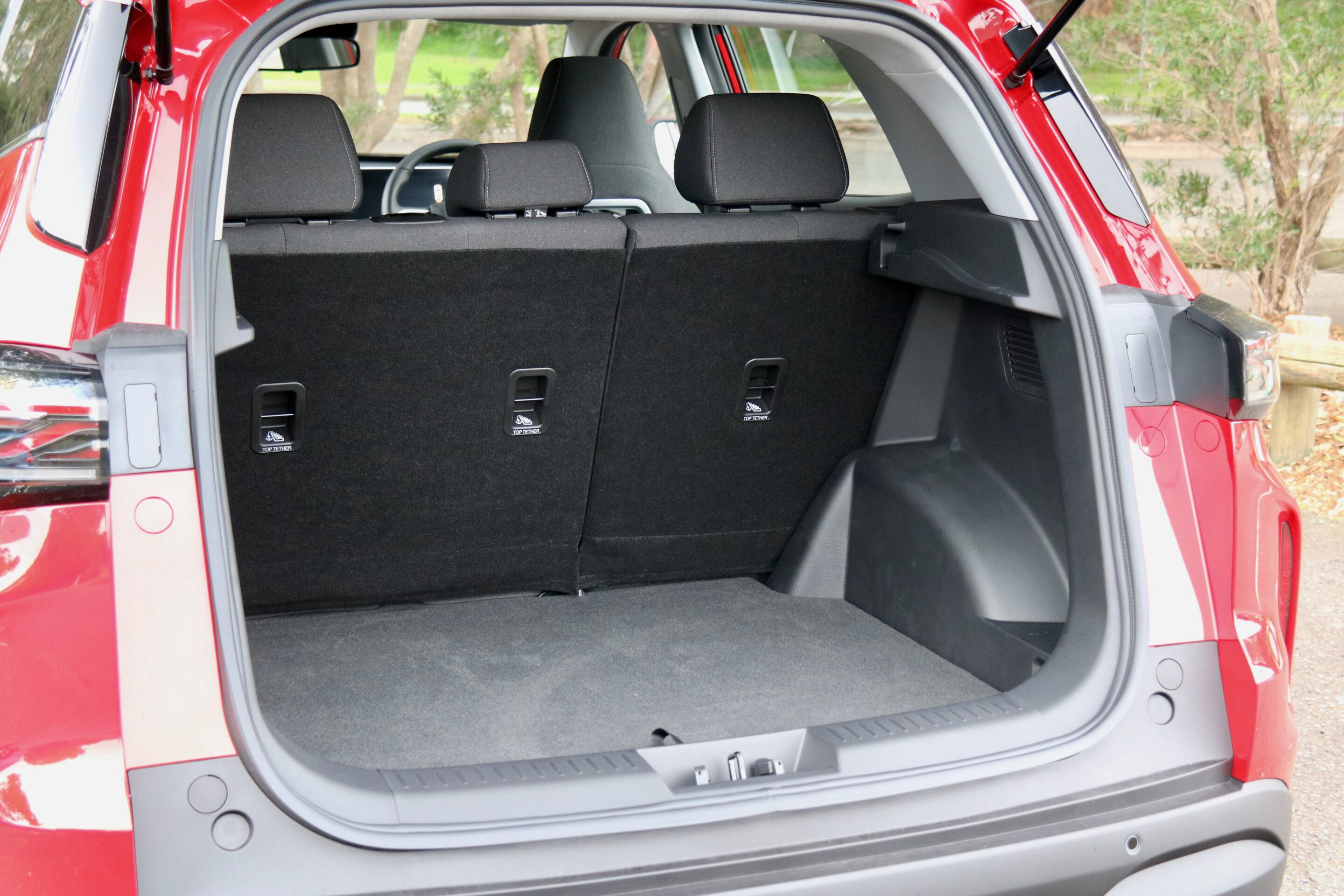
Australia’s best-selling small SUV, the Chery Tiggo 4, offers a reasonable 380-litre space, accessed by a wide opening and a relatively low loading lip. While there is little in the way of extra hooks and tie down points, folding the rear seats down opens up 1225 litres of space, though there’s an annoying lip when the seats are folded. One curiosity for the Tiggo 4 Hybrid’s boot is that the 12-volt battery lives under the boot floor and as a result, an extra hump lies in the boot floor.
2. GWM Haval Jolion
430 litres
2
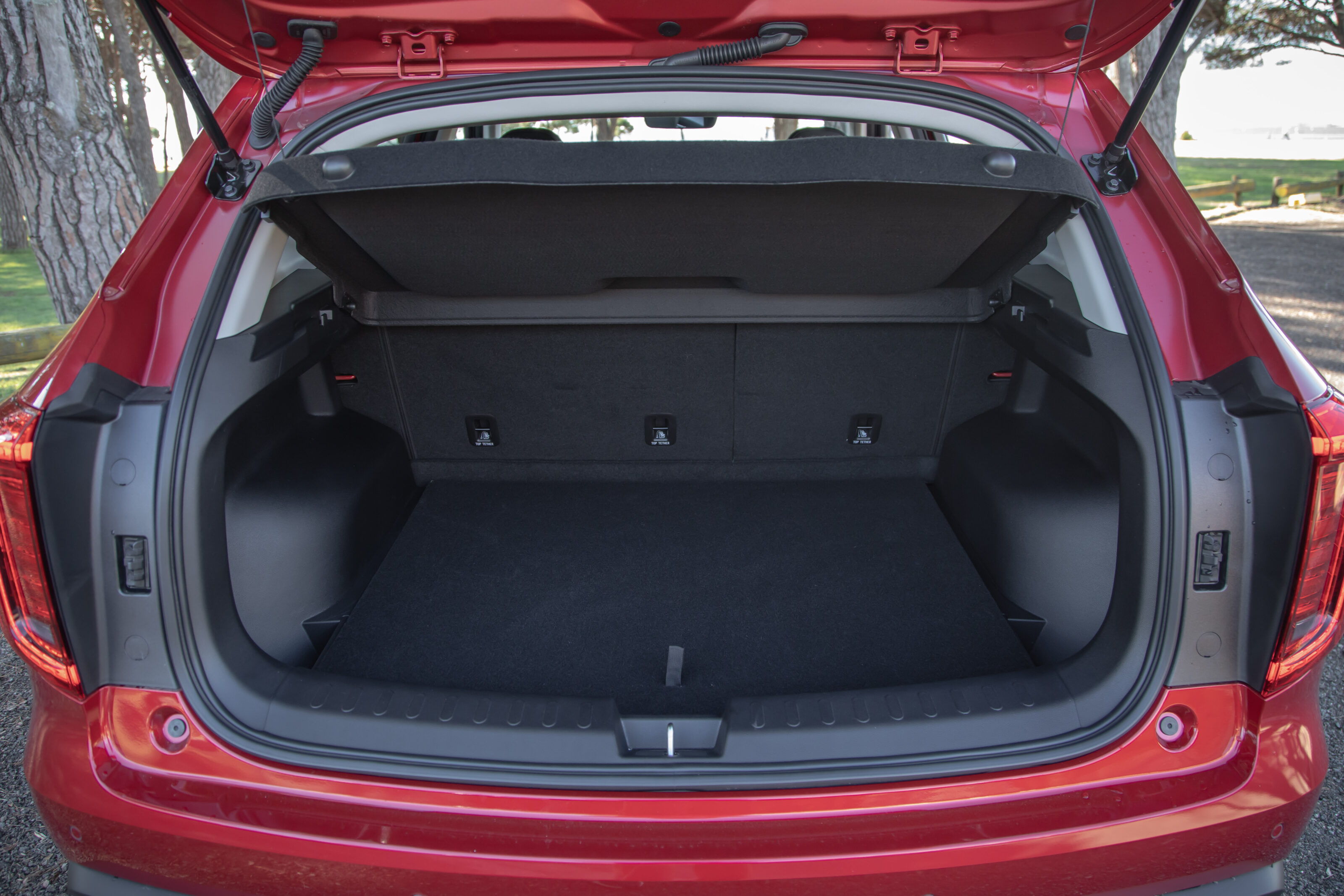
The Jolion is significantly larger than the H2 it replaces, starting with the boot, which offers an impressive 430 litres of capacity on petrol models with the seats in place and 1133 litres with the rear seats folded. Choosing the hybrid variant reduces that to just 291 litres, which is small for the segment, but still offers side storage and a low opening lip.
3. Hyundai Kona
407 litres
3
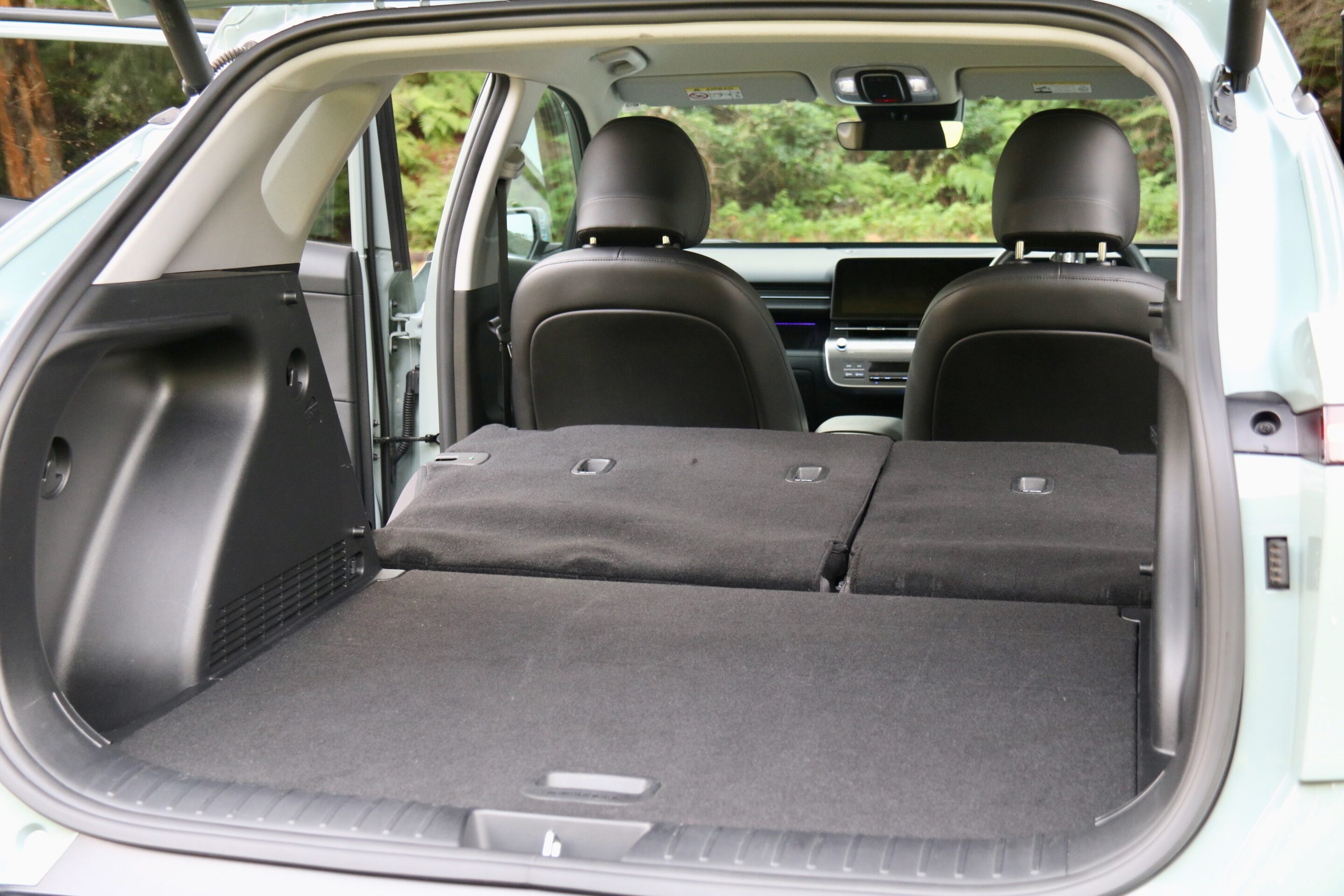
At 407 litres, the Kona offers a large boot for the small SUV segment. Its loading lip is a bit high, but there’s an adjustable boot floor to store extra features, as well as side storage and hooks to hang bags off. With the rear seats folded, the capacity extends to a healthy 1241 litres, and impressively, all new Kona variants feature a spare wheel as standard, even the electric models. Speaking of the Kona Electric, it features an additional 27 litres of cargo area in the front as well.
4. MG ZS
443 litres
2
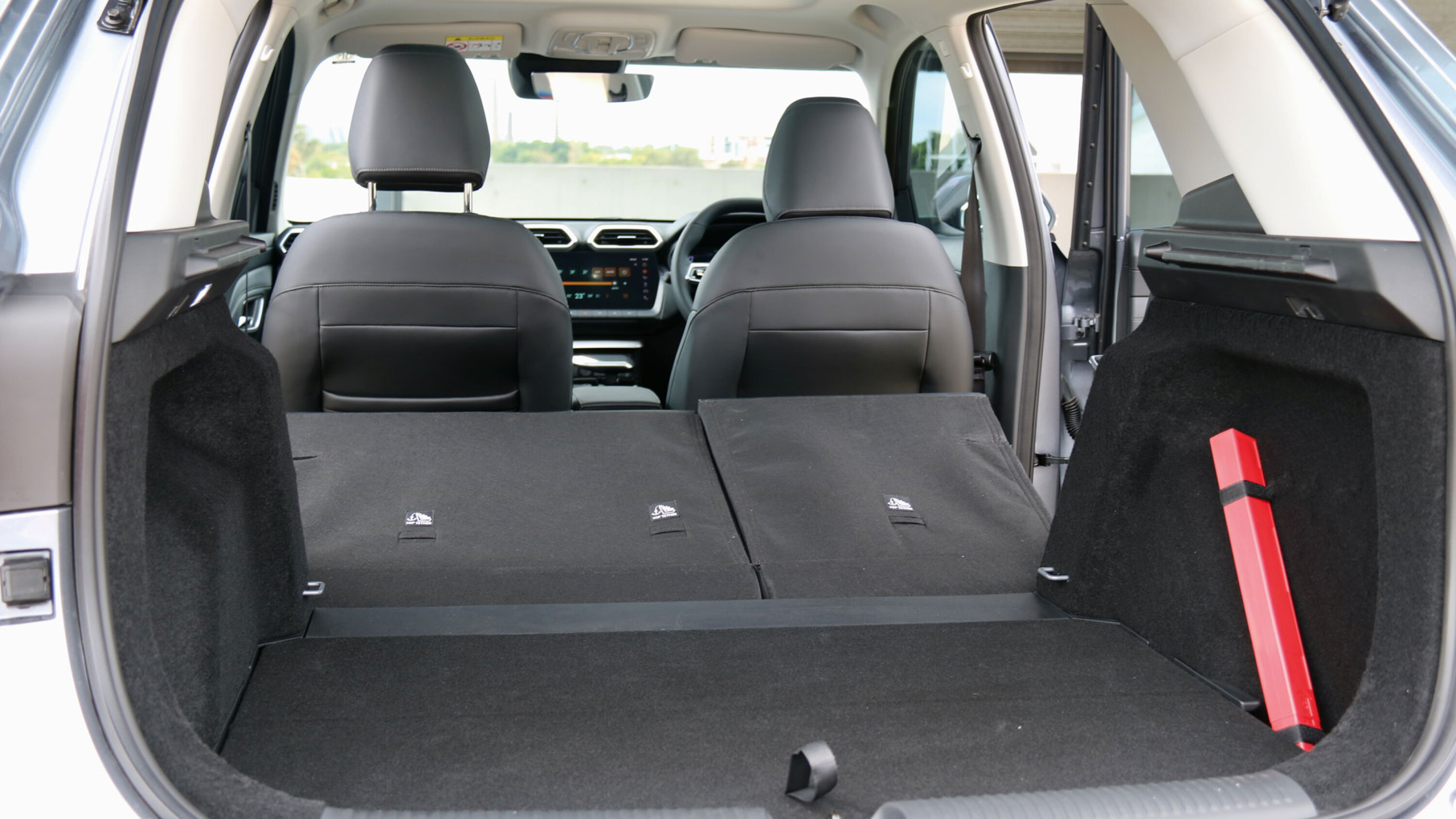
The bootspace in the second-generation MG ZS is a nice improvement on the model it replaced, with 443 litres with the rear seats up and 1457 litres with them folded, the latter of which is more space than some cars in the segment above. There are some clever features like a dual-level boot floor, side storage and hooks to hang bags off, though the floor is far from flat once the rear seats are folded.
5. Toyota Corolla Cross
425 litres
2
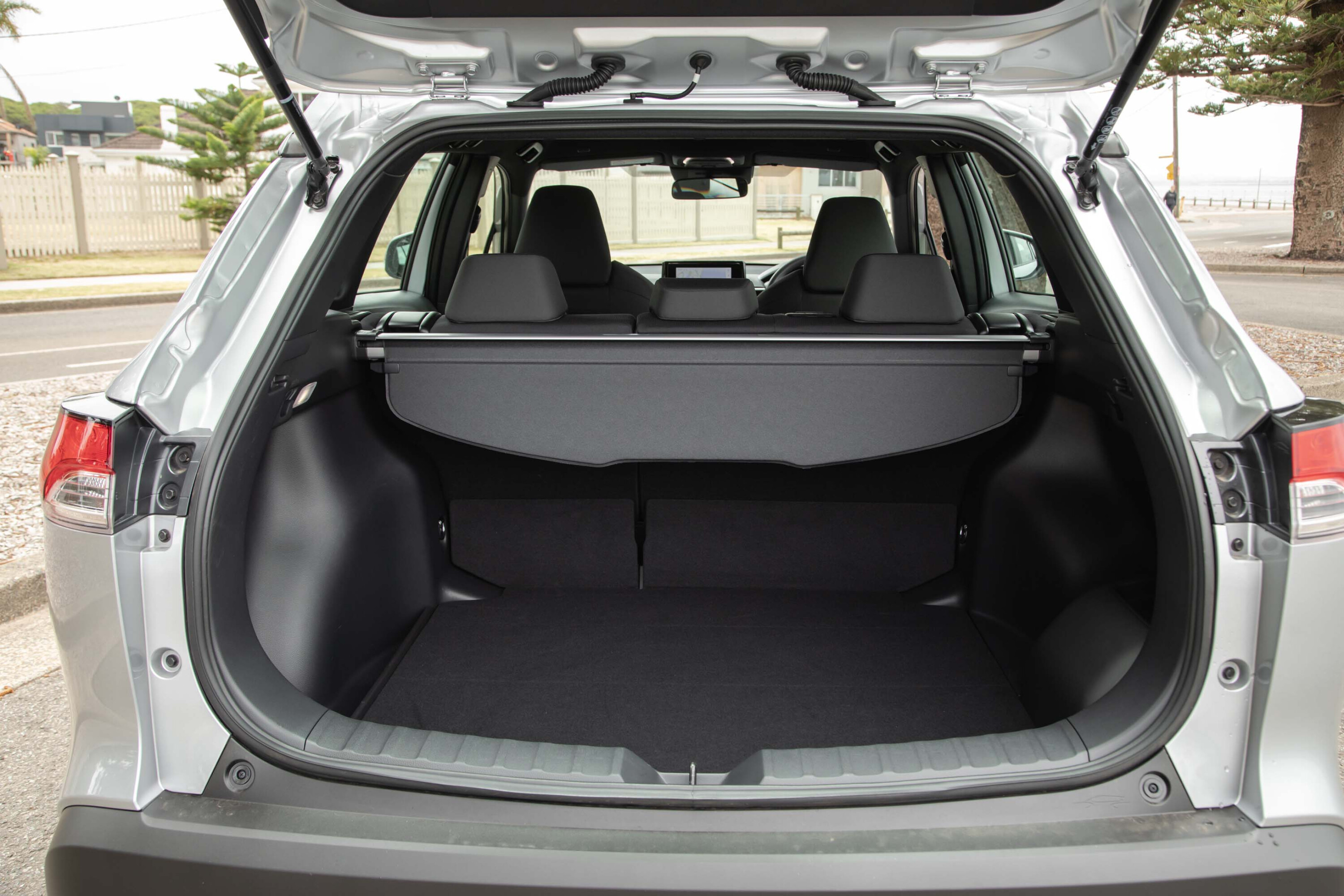
Measuring 4460mm in length and 1825mm in width, the Corolla Cross is one of the larger small SUVs available. The Corolla Cross starts with a cargo capacity of 425 litres, but this is reduced when all-wheel drive and amenities like additional speakers on the Atmos and GR Sport models are selected.
Medium SUVs
1. Mitsubishi Outlander
478 litres

2
The Mitsubishi Outlander is another medium SUV that manages to fit seven seats in the back of some variants, though, unlike the X-Trail, it has a pretty tight 478-litre boot to begin with, which means there are just 163 litres to play with all three rows in use. With the second-row seats folded capacity increases up to 1461 litres. The entry-level ES with five seats has a 485-litre boot.
Toyota RAV4
580 litres
2
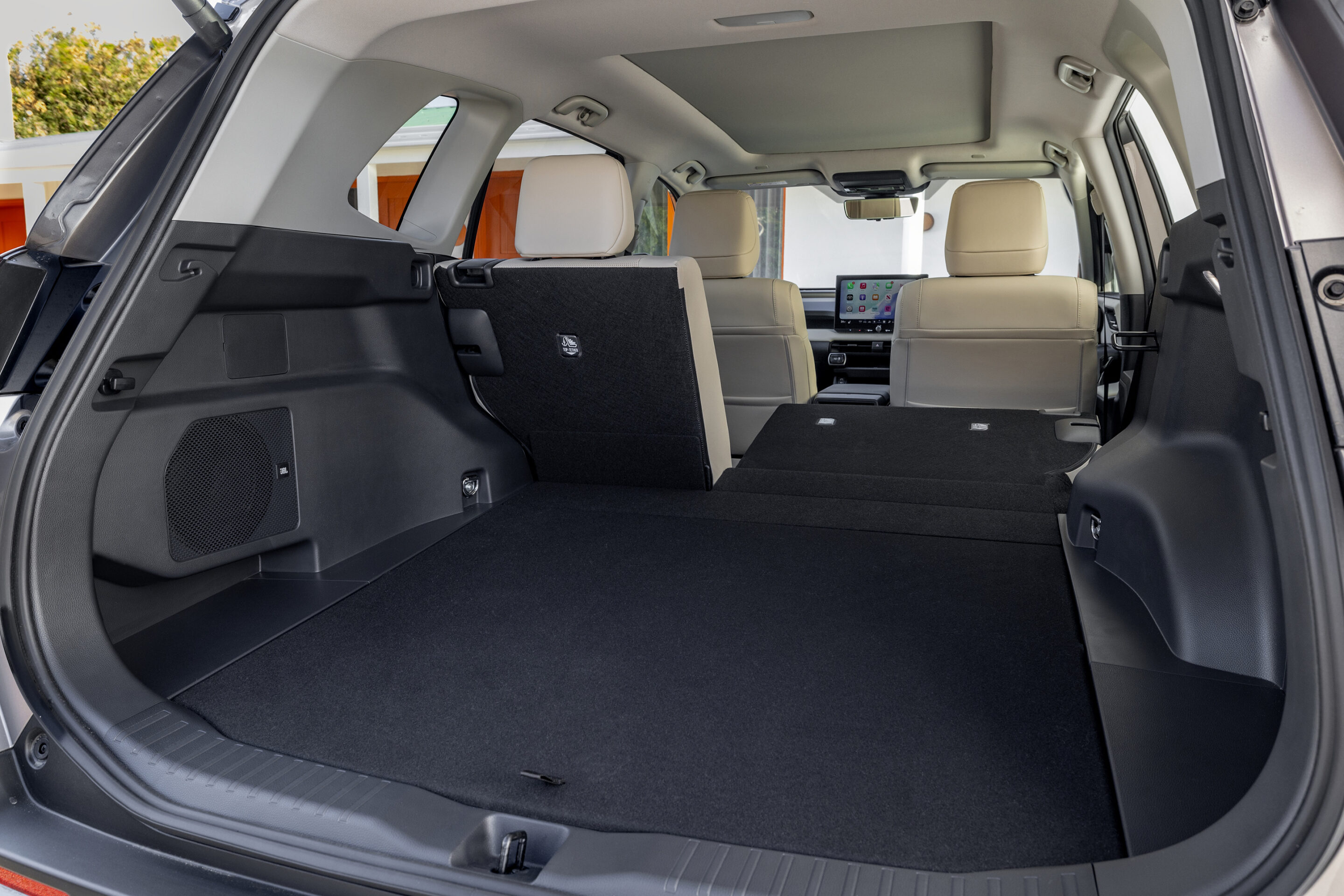
Toyota has always been big on the storage solutions, and the big-selling RAV4 is no exception with its large 580-litre boot, which expands to 705 litres to the roof (a seats folded figure is not available, though it’s likely around 1700 litres). It also offers under-floor storage and a few tie down points, but little in the way of clever storage.
3. Mazda CX-5
466 litres
2
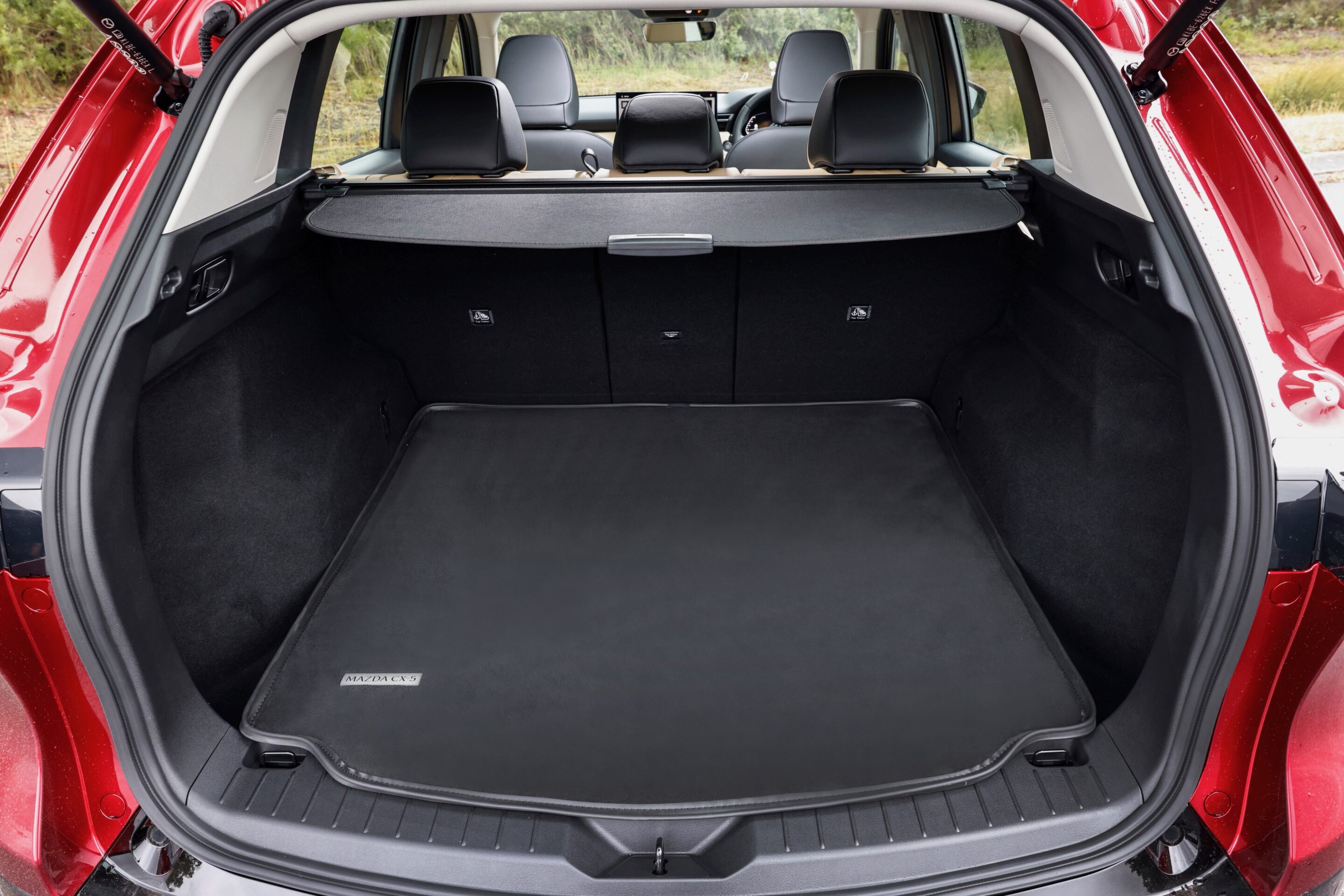
Like most Mazdas, the CX-5 is below the best in the segment compared with its main rivals when it comes to boot space, but the larger third-generation CX-5 is now larger in the boot area with a 466-litre space. That’s still below the best, like the 586-litre Tucson hybrid, but it’s larger than the old model and folding the seats down unlocks 1594 litres. Clever touches include a 40:20:40-split rear seat, side storage, a dual-level boot floor, hooks to hang bags off and remote releases to fold the seats.
4. Hyundai Tucson
582 litres

2
One of the largest boots in the medium SUV segment belongs to the Hyundai Tucson Hybrid, with a large 582 litre space on offer, which expands to a massive 1903 litres with the rear seats folded. Helping its cause further are a low load lip, under-floor storage and remote releases for the rear seats.
Tesla Model Y
582 litres
2
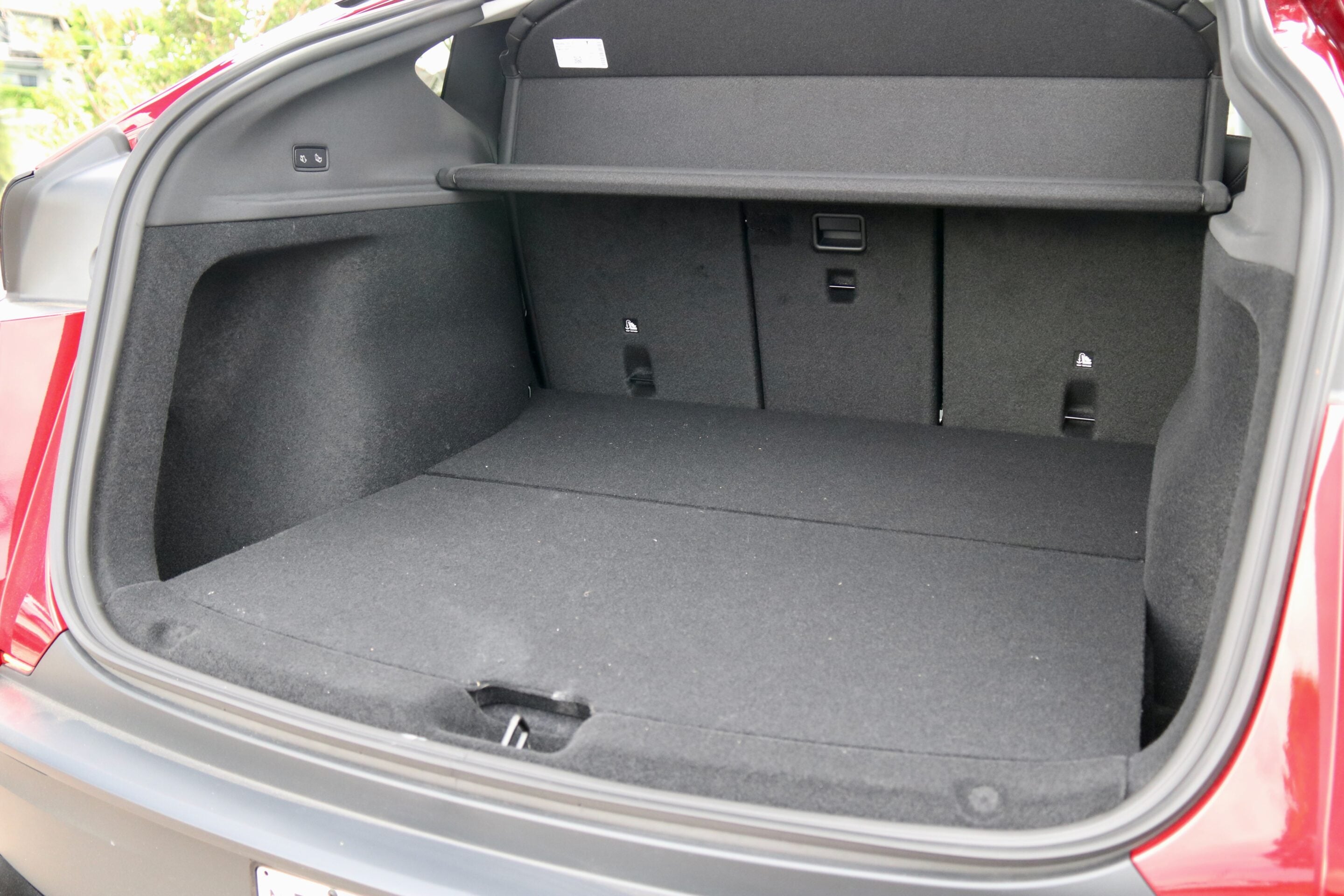
Tesla‘s Model Y is the fifth best-selling medium SUV so far this year and it’s also the most practical with a massive 854-litre bootspace (which includes the huge under-floor section). The rear seats are 40:20:40 split, they lower and raise electrically to unlock 2158 litres of space when folded and in addition, there’s also a large 117-litre front boot for even more space.
Large SUVs
1. Ford Everest
898 litres
2
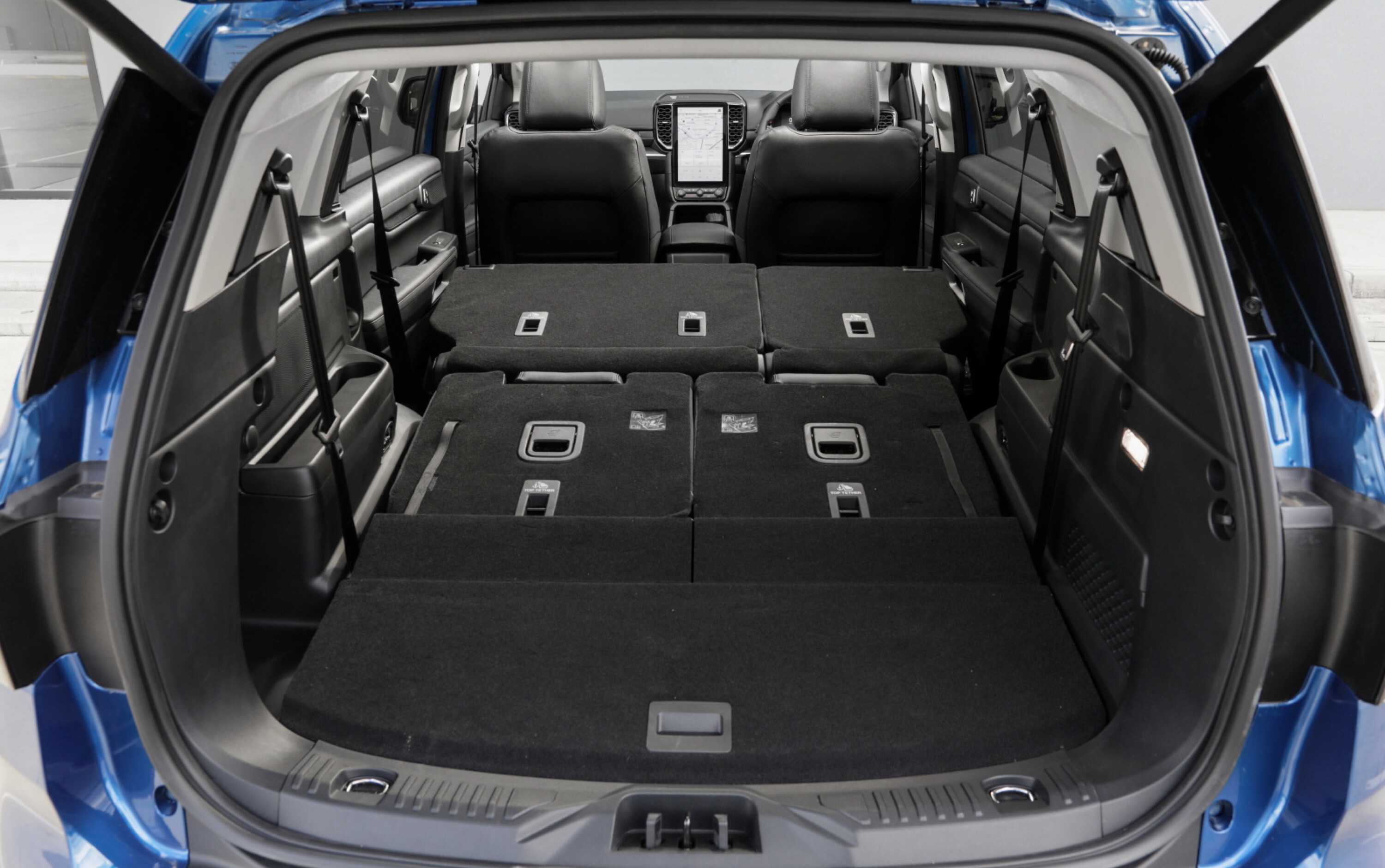
The Ford Everest, which is the best-selling large SUV in Australia, is as practical as you’d expect, offering 259 litres of space behind the third row, 898 litres with the third row folded and a large 1823 litres with all the rear seats folded. Helping practicality further is the easy of folding the rear seats – it’s a one-touch affair – while more storage lies underneath the boot floor.
2. Toyota LandCruiser Prado
954 litres
2
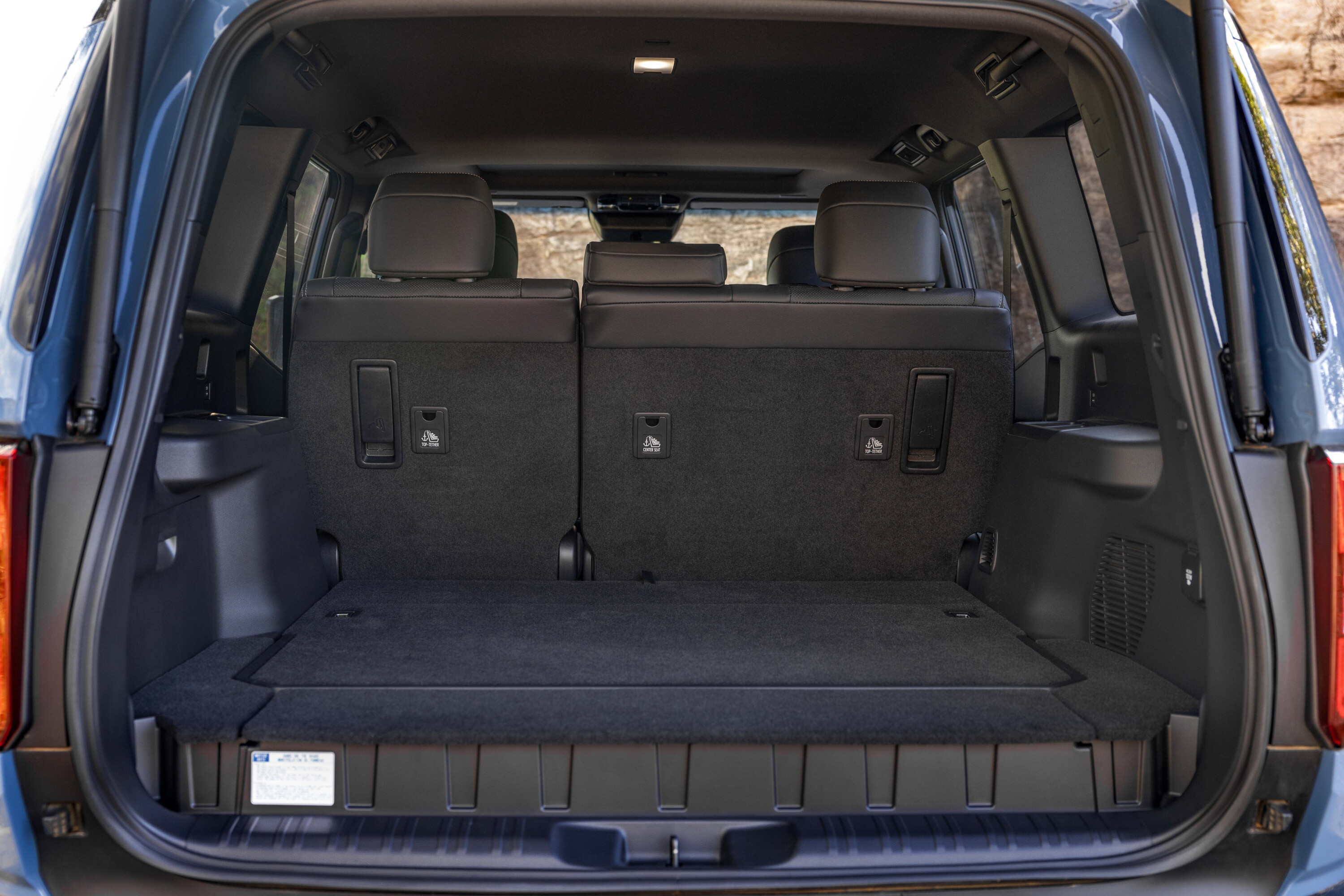
The latest-generation Toyota Prado is quite large in the rear, though the figures actually depend on which model you buy. The five-seater is more capacious with 954 litres of space behind the rear seats and a large 1895 litres with the rear seats folded – choosing a model with seven seats reduces that to 906 litres and 1829 litres respectively. If you choose a seven-seater, behind the third row lies 182 litres of space.
3. Isuzu MU-X
1119 litres
3
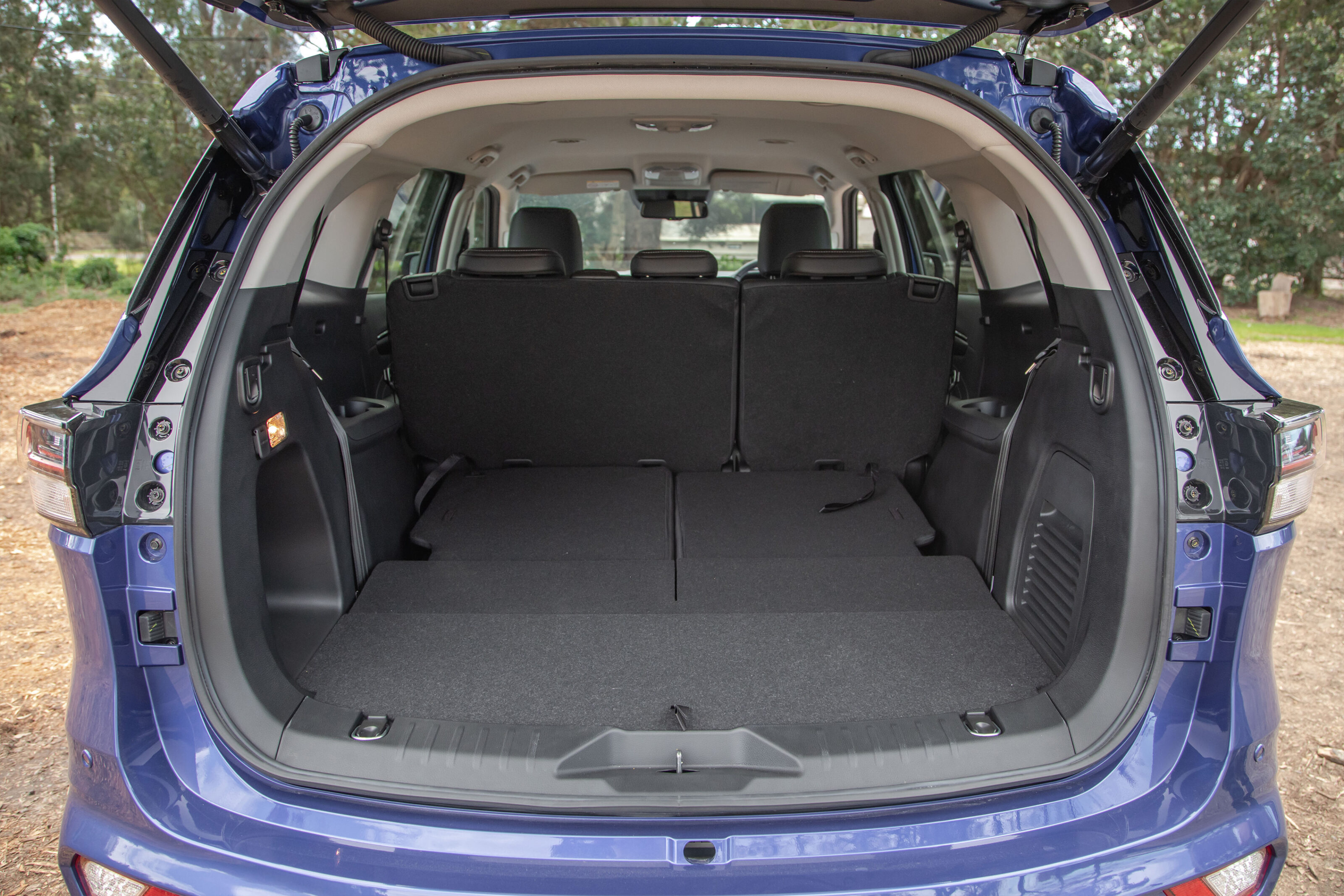
The seven-seat MU-X has a handy 311 litres of boot space behind the third row that expands to a whopping 1119 litres as a five-seater, with a nice flat load space, bag hooks and even under-floor storage. Folding down the middle row brings a van-like 2138 litres, and pleasingly for runs to furniture shops, the seats fold almost completely flat.
4. BYD Sealion 8
960 litres
3
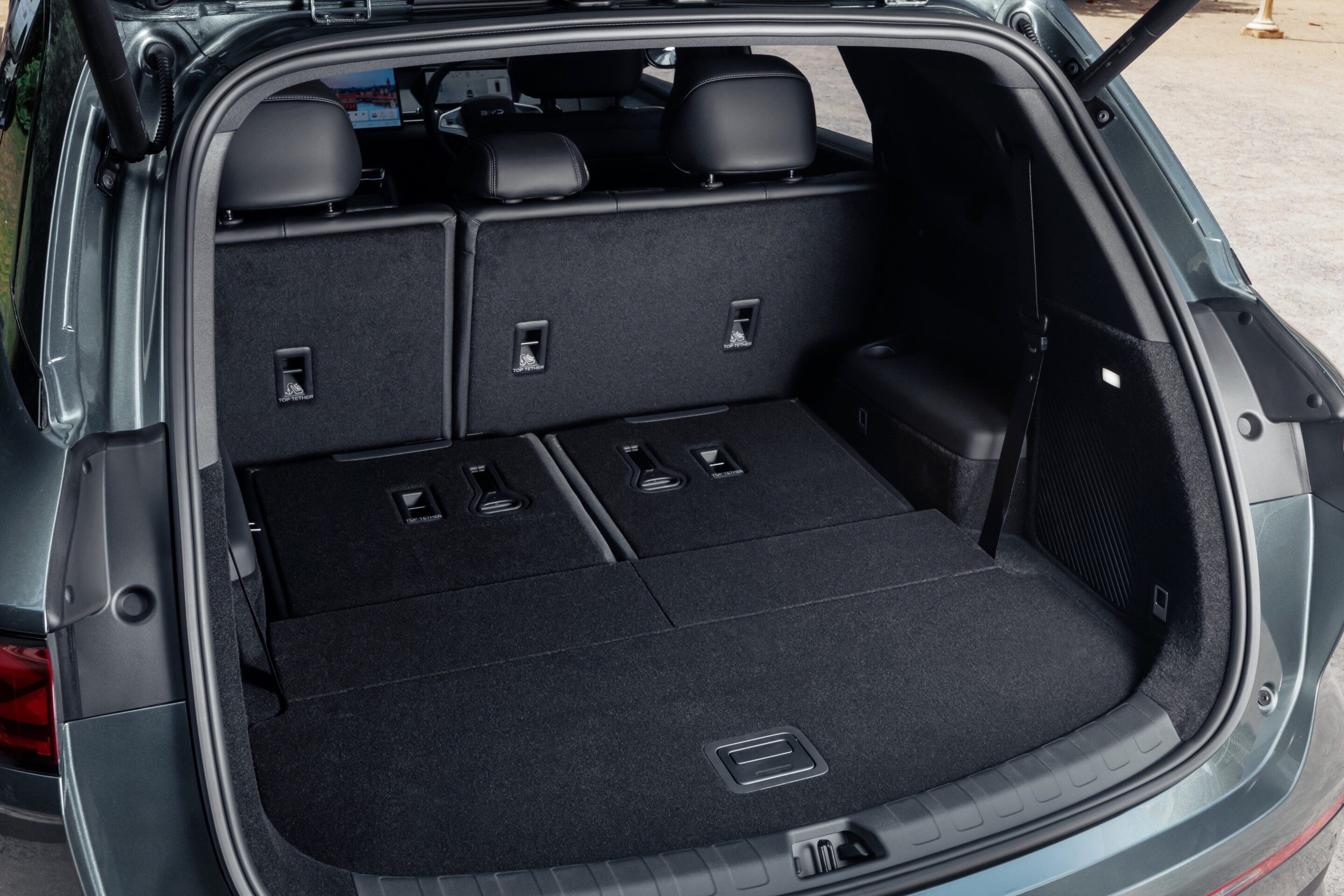
BYD’s Sealion 8 is new to the market but already selling quite well. Part of that is its awesome practicality, with a huge 960-litre bootspace with the third row folded. With the third row up, there’s 270 litres of space, and folding all the rear seats opens up 1960 litres, which is quite large.
5. Hyundai Santa Fe
642 litres
2
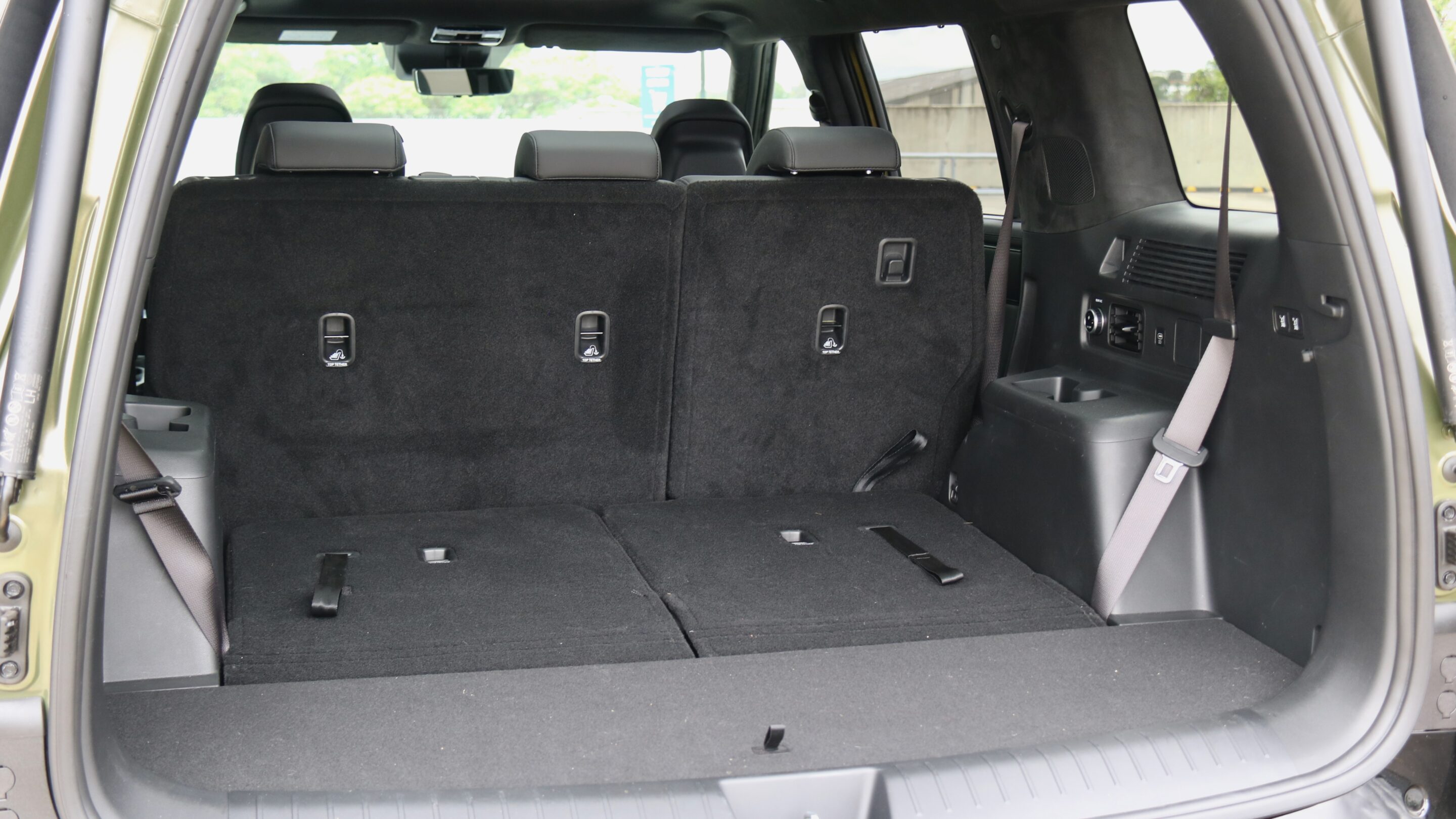
The Hyundai Santa Fe grew and became boxier for its fifth generation, released in 2024, and that was done to eke out as much space from the cabin as possible. The brand doesn’t quote how big the boot is with the third row extended, but it’s a large space with under-floor storage. Folding the third row unlocks a healthy 642 litres (628L for hybrid models), and releasing the second row unlocks 1949 litres.
Follow WhichCar/Wheels on Google
Click the button below to make WhichCar by Wheels a preferred source for your news.

We recommend
-
 Reviews
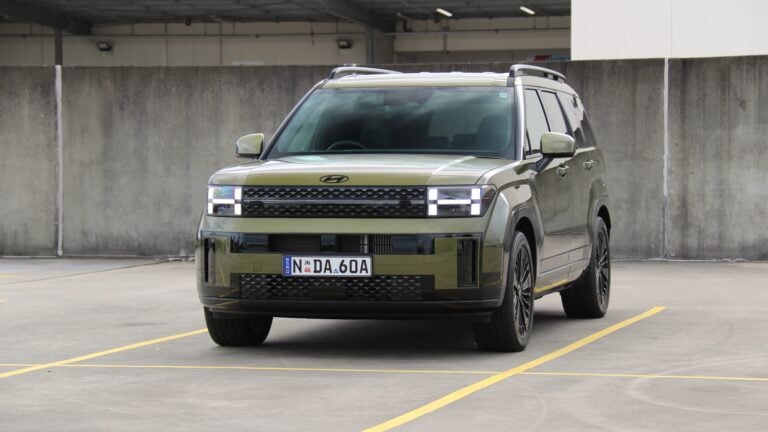
Hyundai Santa Fe Calligraphy Hybrid review: Large SUV option divides on style, wins on features
Almost two years since its Australian release, the fifth-generation Hyundai Santa Fe is selling well locally, so how does it fare against newer competition?
-
 Best Large SUVs
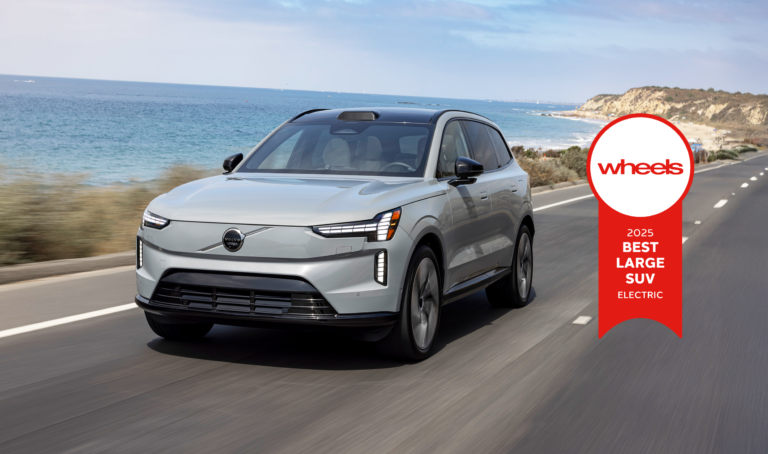
Best Large SUVs 2025: Electric
Fully electric models are growing in the large SUV segment but we thought there was one standout among the current crop.
-
 News
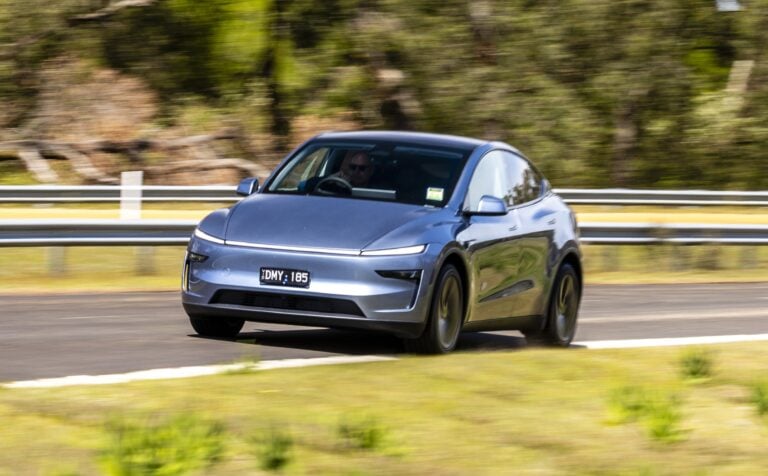
NewsEV sales double in April 2026 with Tesla Model Y leading the way
Strong growth from Tesla and Polestar signals rising demand, with insurance data also pointing to a surge in EV interest.