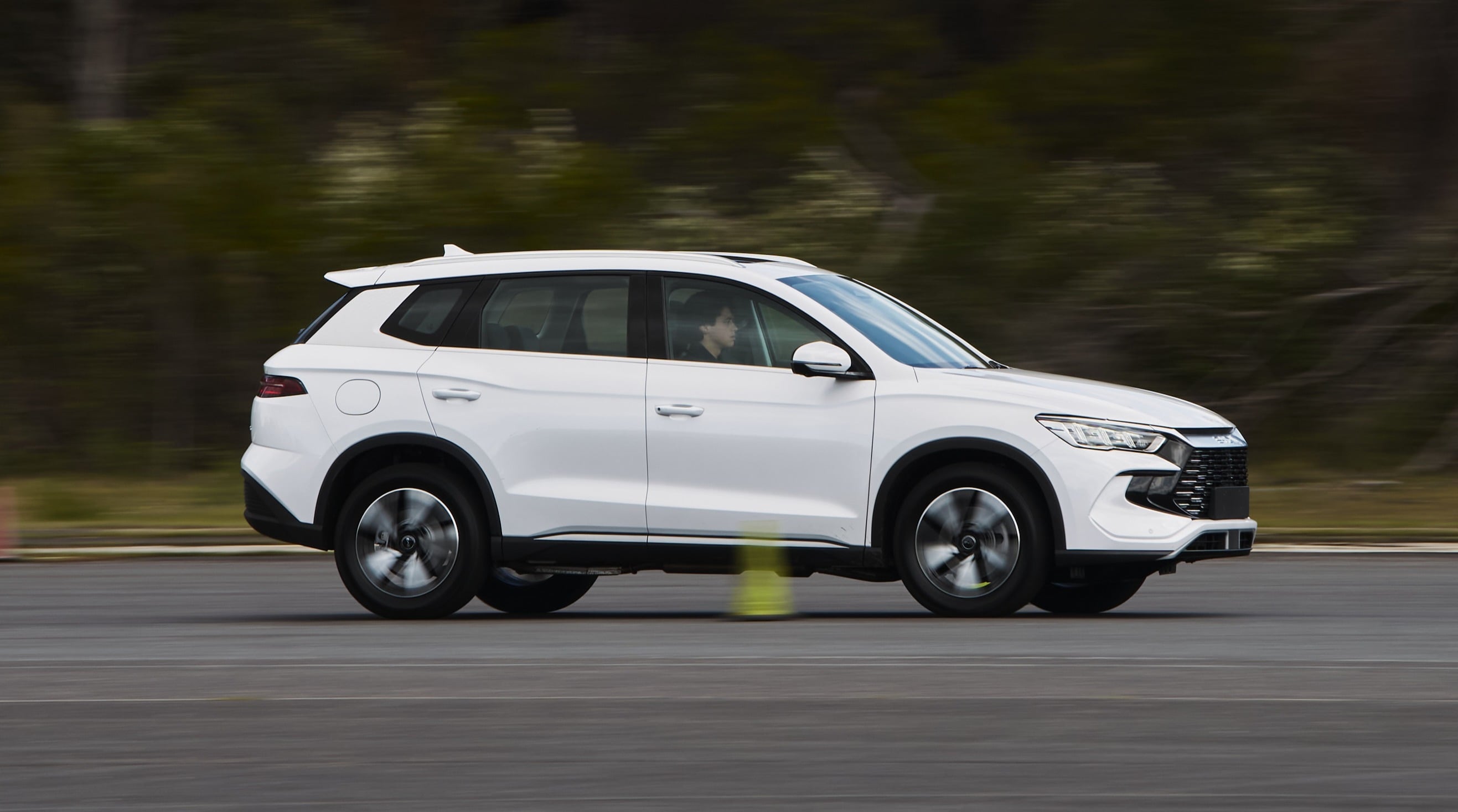
Nothing brightens a Car of the Year contest quite like an Alfa Romeo. The Italian brand has always created cars to make people smile. An Alfa has never claimed a COTY crown, despite the enthusiasm of the Alfisti – the brand’s traditional fans – and the appeal of cars like the classic GTV.
Although this year’s COTY hopeful managed to tap into Alfa’s history for its name, the Junior of 2025 is unrecognisable from the 1960s sporty coupe of the same name.
This one is a compact SUV and its roots are as deeply embedded in the USA as they are in Italy. That’s
because, under the skin, the Alfa Junior is actually a Jeep Avenger. Yes, a Jeep. And the same mechanical package is also used for the latest Fiat 600, perhaps thankfully not sold in Australia.
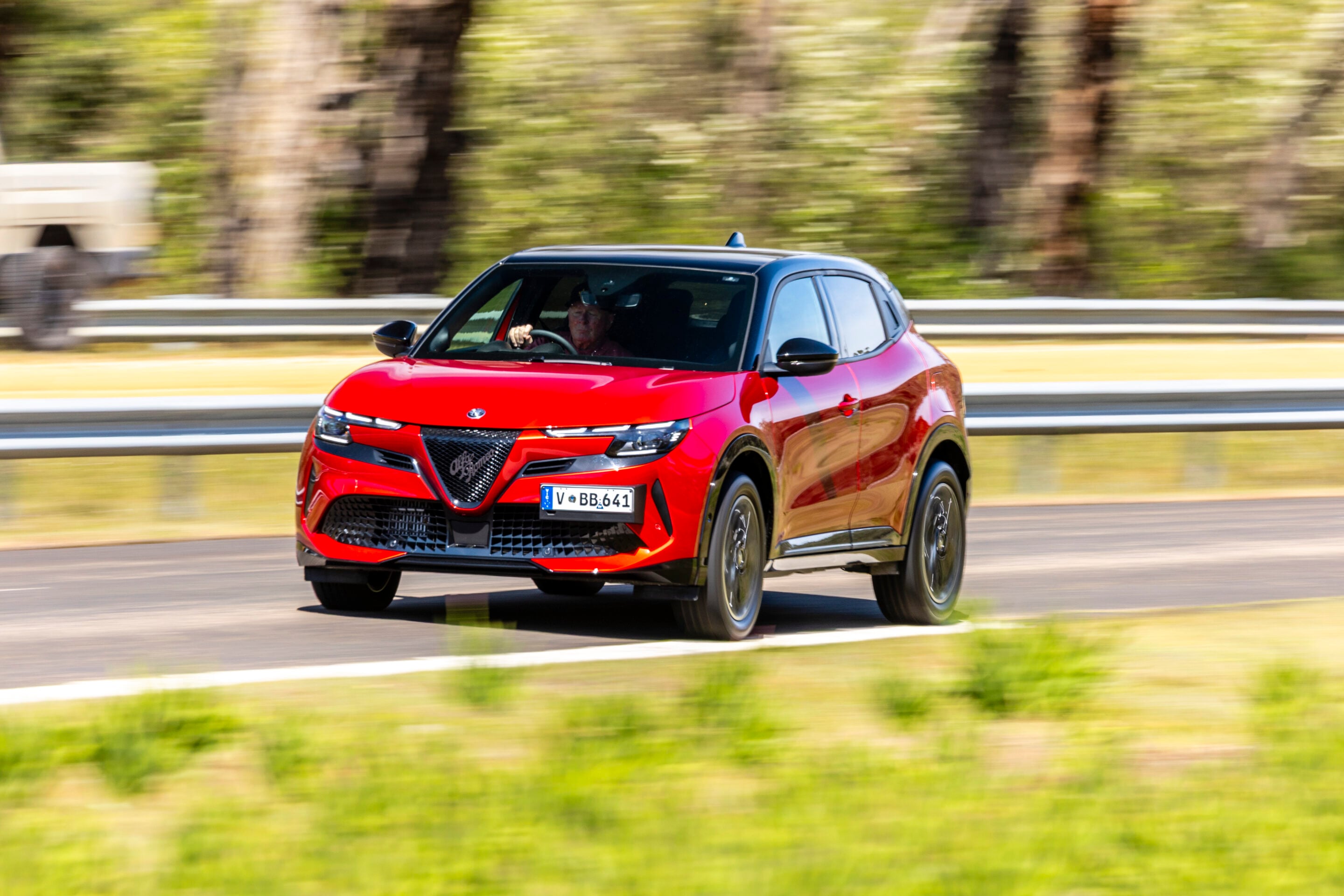
The Alfa Romeo Junior Ibrida – the model name translates as hybrid, or cross-breed – is the third and smallest of the Italian company’s SUV line-up. It joins the Stelvio and Tonale as the brand pivots well away from its go-faster roots towards 21st century families.
Priced from $45,900, the Junior Ibrida is a mild hybrid with a three-cylinder petrol engine and 48-volt starter assistance, claiming impressive economy of just 4.1 litres/100km. But it also has a relatively miserable 107kW of power, with just 230Nm of torque to feed to the front wheels through a six-speed double-clutch gearbox.
What that means is a ‘sprint’ time of 8.9 seconds to 100km/h. Hmmm…
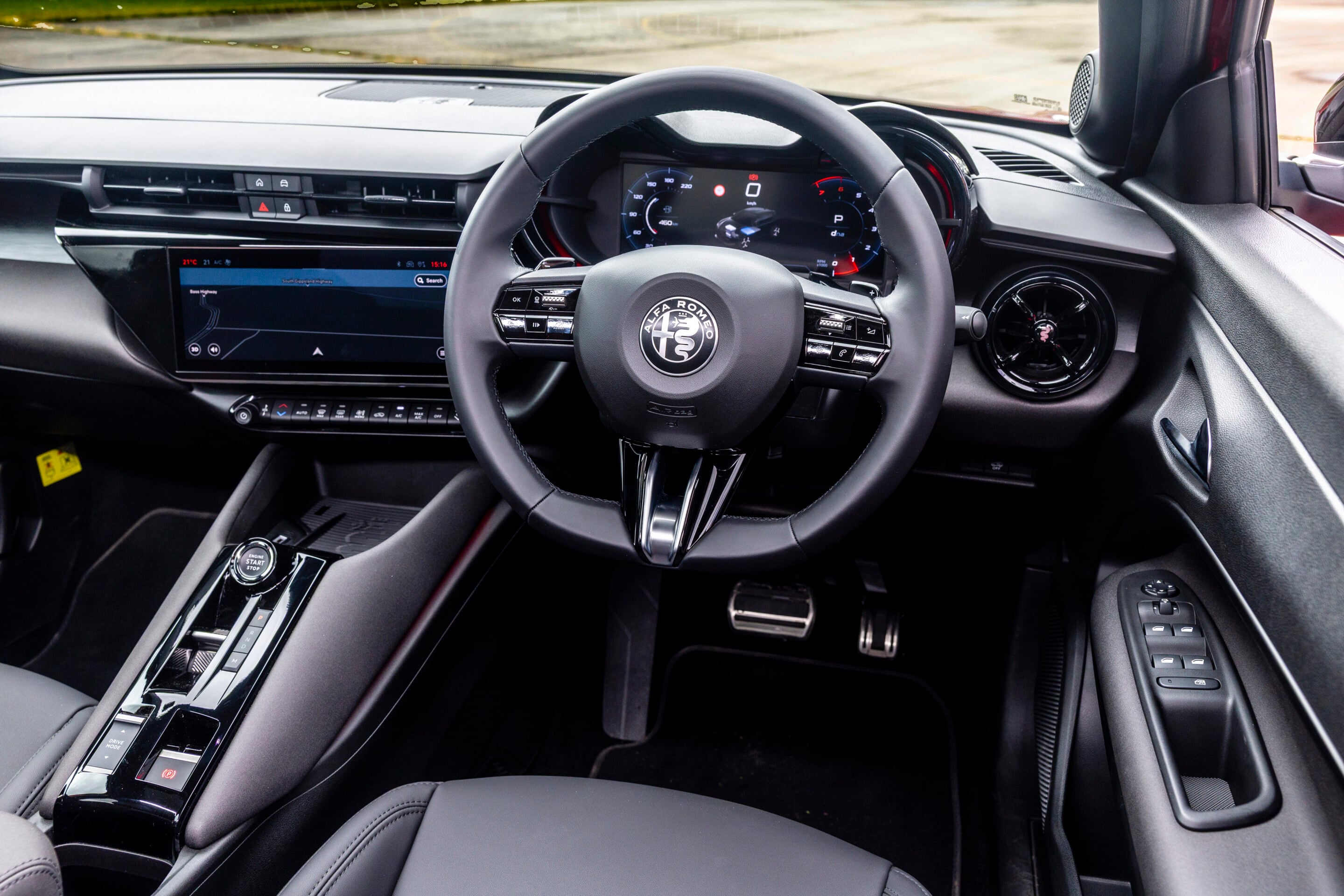
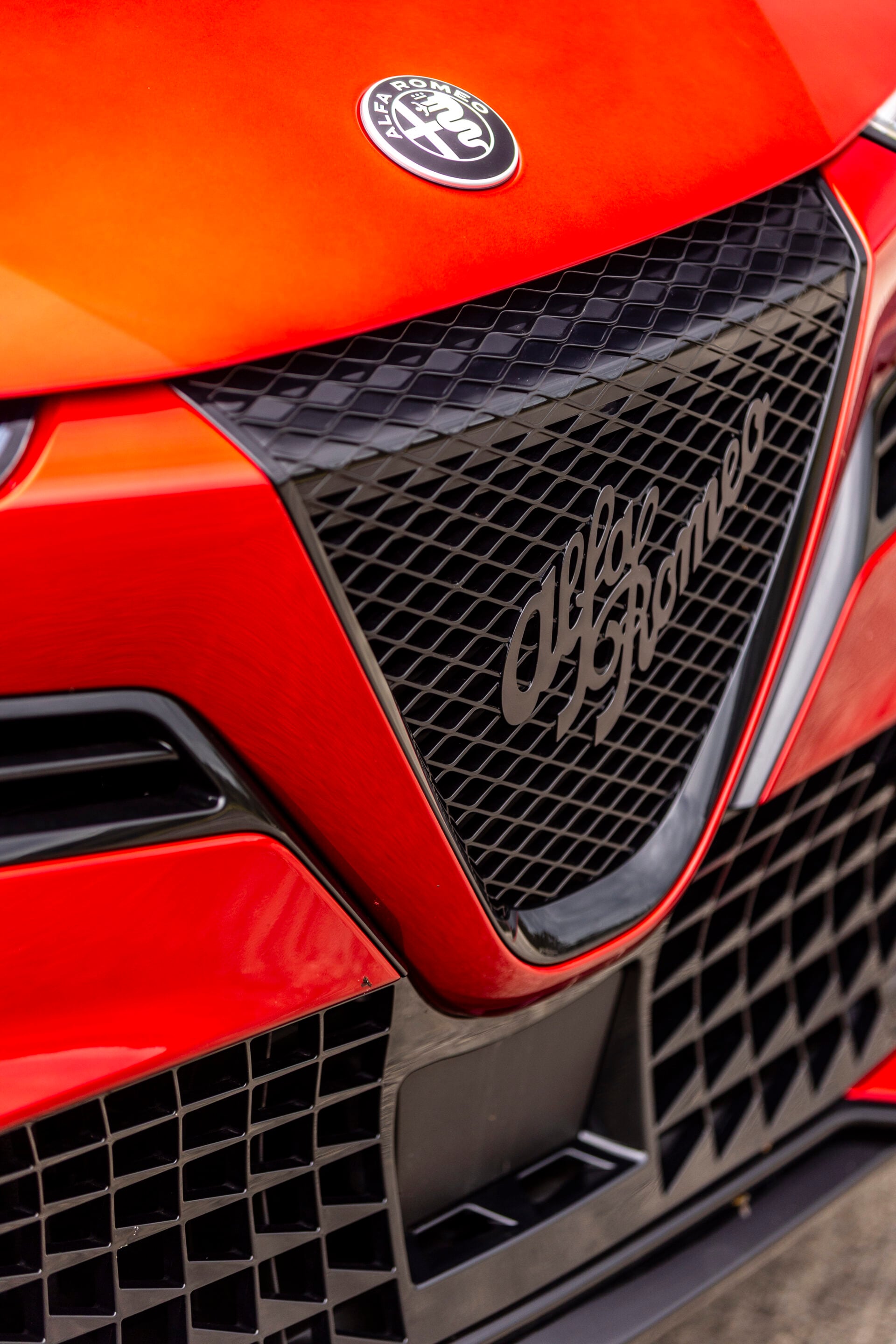
The Junior was a favourite with Peter Robinson from the get-go. It’s an Alfa, after all, and Robbo lived in Italy for close to 20 years. It definitely looked like an Alfa, with traditional design cues on the nose, a dashboard with all the right style despite too much hard plastic, and even racy red paint. The body was compact, with relatively cramped space for adults in the back and not much room in the boot.
If you want to know how far Alfa Romeo has fallen in the age of Stellantis – the global conglomerate trying to blend brands as diverse as Jeep and Peugeot, Vauxhall and RAM – then you only have to dig into the Junior.
It might look like an Alfa Romeo but that’s about it. It is underwhelming in almost every way once you’re underway, even if the price line might look enticing.
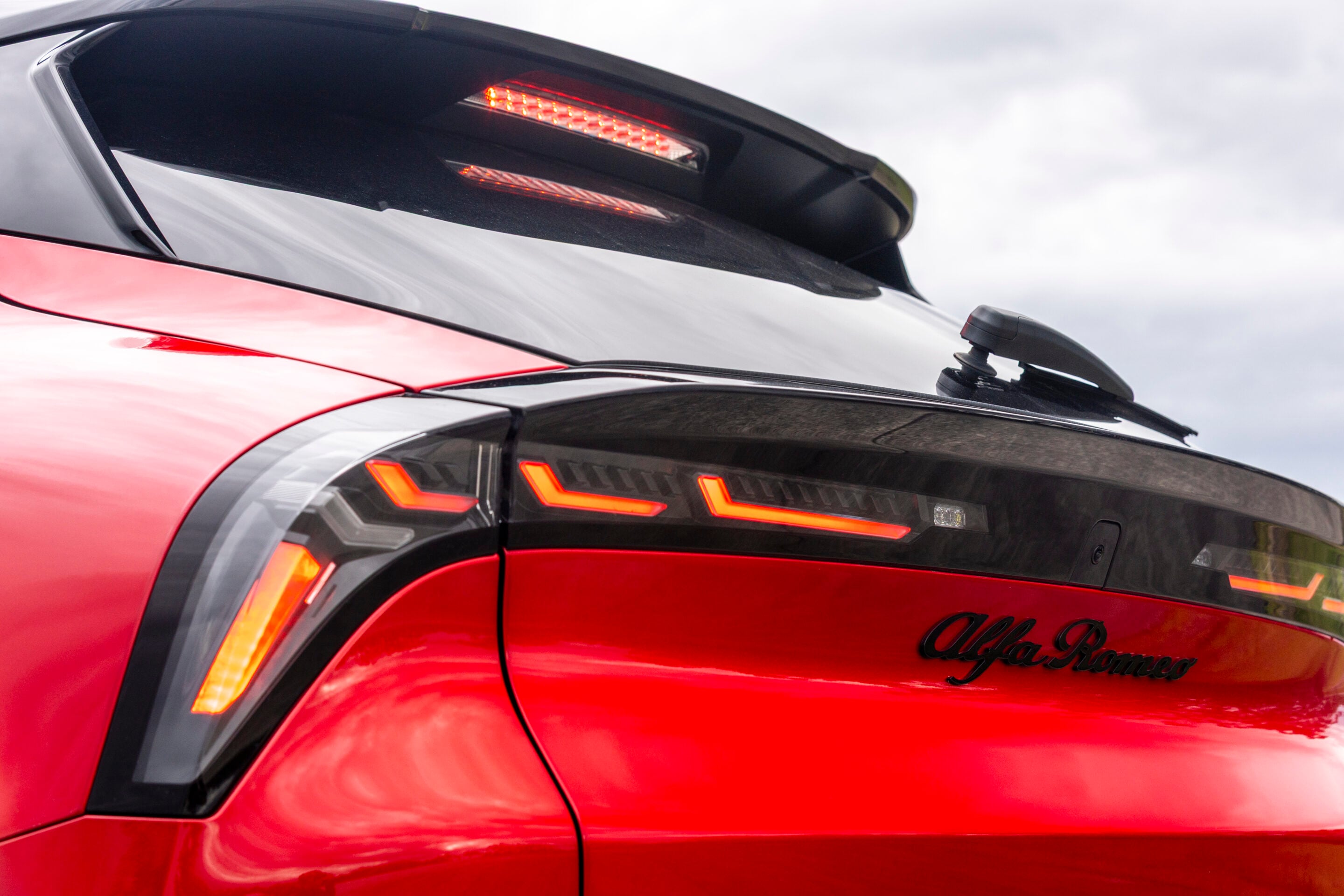
It doesn’t even have an Alfa snarl from the exhaust when it starts. Or the lovely induction roar under full throttle. It’s all about the quietness and efficiency of the hybrid package, and parking prominently outside a cafe for a latte. The same approach was obvious from the driving experience. No passion or enjoyment.
The suspension was under-done in every way, wobbly around corners and bouncy over the bumps. It also felt tippy in direction changes, not rooted to the ground in any way, with a wayward rear end which didn’t want to follow the nose.
Twice it was up for culling in the early rounds, and twice it was saved by Robbo. But then even he had to concede the Junior was a loser, after taking it on a personal exploration on some of the rugged local roads outside the Lang Lang proving ground. It did not do well.
“I’m crestfallen,” Robinson finally admitted.
Specs
| Price | $45,900 (MSRP) |
|---|---|
| Body | Five-door, five-seat SUV |
| Drive | Front-wheel drive |
| Drivetrain | 1.2-litre three-cylinder turbo petrol, 48V mild-hybrid |
| Power | 107kW combined |
| Torque | 230Nm combined |
| Transmission | 6-speed dual-clutch automatic |
| Consumption | 4.1L/100km |
| Kerb weight | 1280kg (tare) |
| 0-100 | 8.9 sec |
| L/W/H/W-B | 4173/1781/1539/2557mm |
| Boot space | 415L |
| Warranty | 5yr/unlimited km |
| Safety rating | Untested |
Only one car needed a new set of tyres after the COTY testing program.
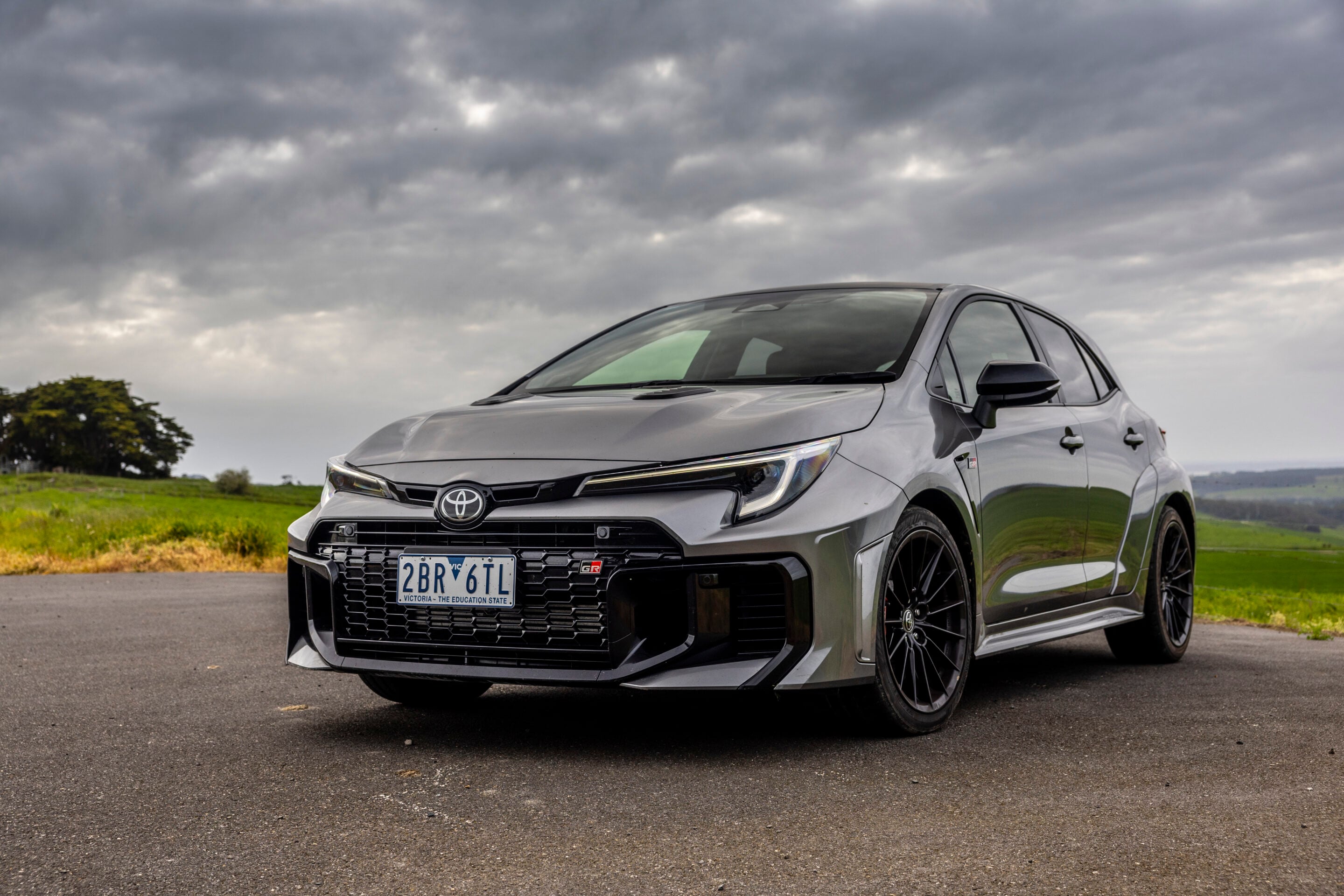
It was also the car with the heaviest fuel use and the one that usually went missing when it was time for the lunch run. It was, of course, the Toyota GR Corolla. At some time, everyone wanted the key for a bit of PDA. That’s a personal display of affection, in this instance. It was usually on the ride-and-handling circuit, one-up without a passenger to critique the drive, and it was a reflection of the unique position of the GR Corolla in the COTY contest.
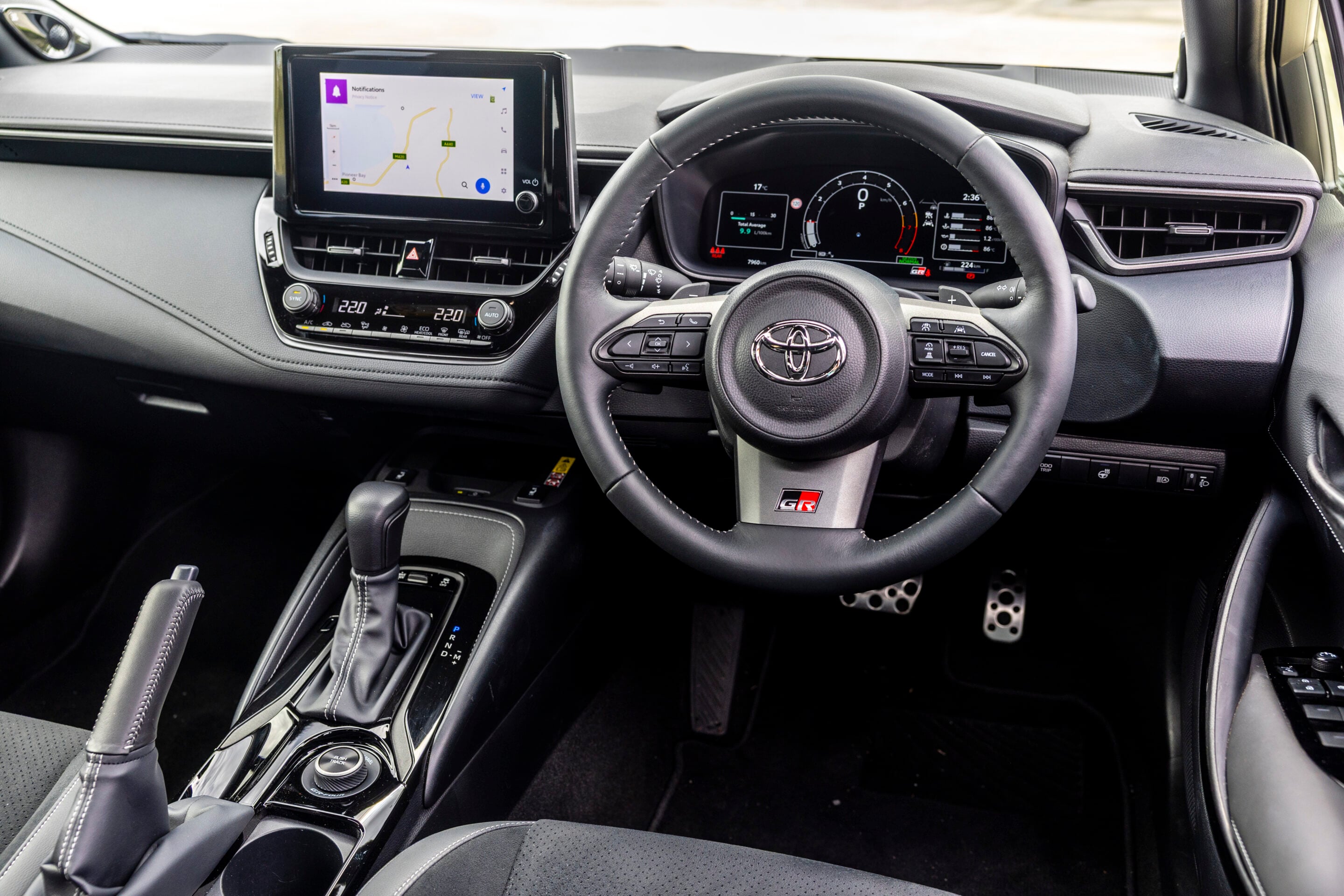
But there were also four-up laps to check the car’s ride quality and composure, and an in-depth check of the engineering work under the pumped-out guards and big wheels. Even the cabin, which is everything you expect of a Toyota with none of the theatrics of a go-faster Audi – or even some ordinary Chinese EVs – to tantalise the driver, was assessed against the basic requirements of a daily driver.
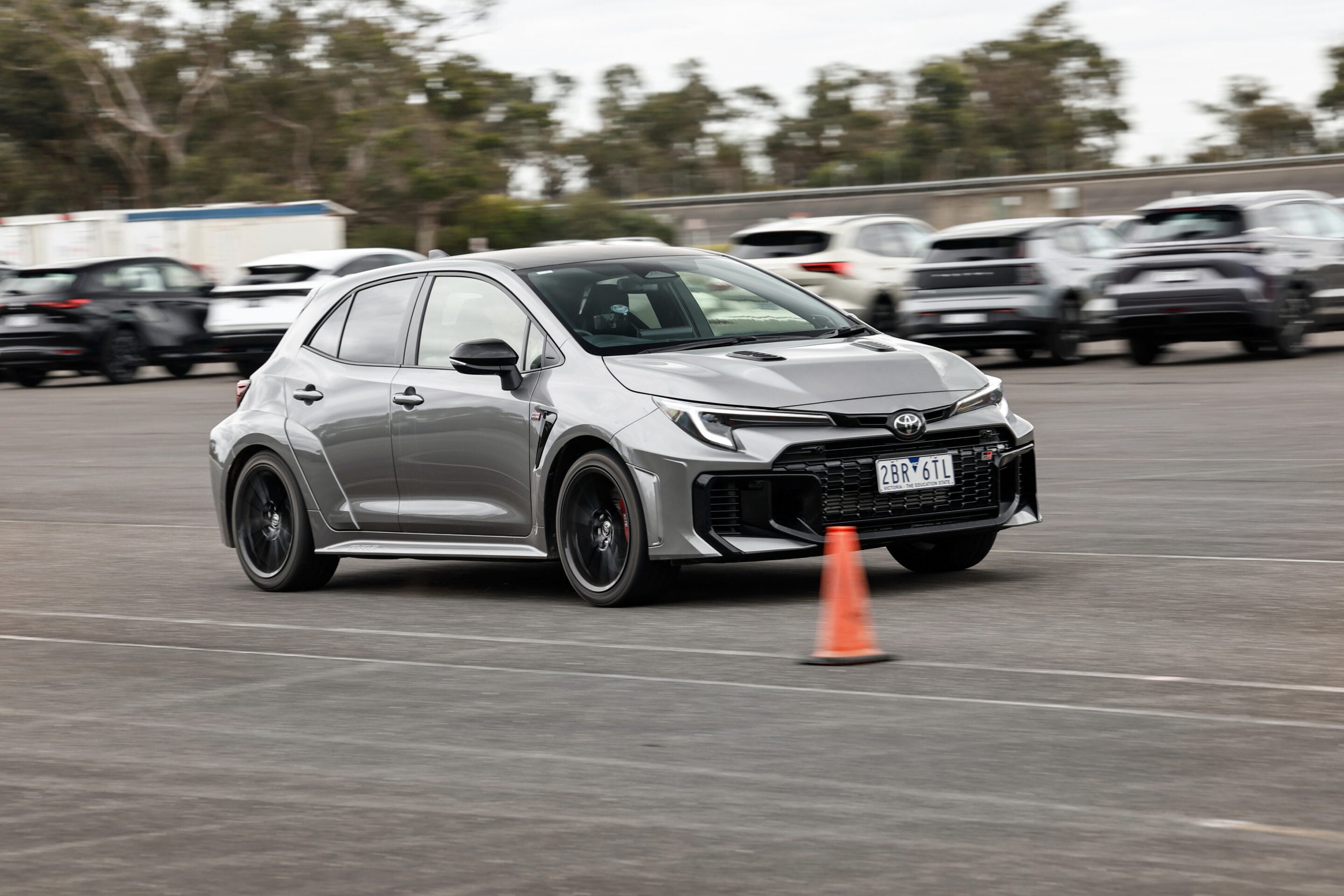
Then it was time for the foot-down fun runs around the Lang Lang torture tracks which exposed the shortcomings of every COTY contender. The GR Corolla?
“It puts a silly grin on your face,” said David Morley.
He was right about a car with a back story that tracks all the way up to the top at Toyota, and company chairman Akio Toyoda. It was Toyoda, who races as ‘Morizo’ and has a private company called Gazoo Racing, who decided that the bland-mobiles from brand T needed an injection of driving enjoyment to help them step above challengers from Korea and China.
The result is the GR family of showroom hotrods and, indirectly, the GR Supra coupe that will compete in Supercars racing in Australia from the start of next season. So, as there were HSV and FPR, and still AMG and M, there is now GR. It’s shorthand for Gazoo Racing and reflects the special sauce applied to turn ordinary – and Toyota knows plenty about ordinary – into extraordinary.
The first real example was the GR Yaris and now the same basic mechanical package – a turbocharged three-cylinder engine, all-wheel drive, with sports suspension and brakes – has been upgraded onto the Corolla.
The GR Yaris was a touch unhinged, like the best special-vehicles cars, which helped it become a sell-out cult figure in the same way as the early Subaru Impreza WRX and Mitsubishi Lancer Evo. The GR Corolla is obviously bigger, but also more balanced and refined. It’s hardly grown up, but it is more grown up than the Yaris.
The driving position is better, the car is more balanced in heavy braking or through a slalom run, and 9.5 litres/100km – a figure not nearly matched at COTY – is reasonable economy. It costs silly money for a Corolla, at $70,490 for the eight-speed automatic on call for COTY, but some people see it as a bargain compared against the latest WRX or a Golf R.
For context, the GR costs more than twice as much as a basic Corolla Ascent and it adds nearly $10,000 to the price-tag of the WRX. But, what a car.
“It is a ridiculously easy car to drive fast,” said Trent Nikolic.
And that’s what the GR Corolla is all about. It is swift but secure. Solid while being slightly silly. You can fit two Aussie adults in the back seat – we know because we did it – and the quality is typically Toyota, but the boot is silly small and everyone who sees the GR-mobile knows it’s a touch anti-social.
“If I’m spending seventy grand on a Corolla, I want everyone to know,” said Morley.
The GR Corolla is brilliant at Lang Lang, and unique too even in a COTY field of achievers. It runs hard and fast in any conditions, and anyone can satisfy their ambitions without destroying their dreams.
It makes a rousing 221kW, but it’s the 400Nm of torque which gives such easy access to the performance. You can grunt out of any corner with serious thrust, all the way up to the silly speeds which must be contained inside the Proving Ground.
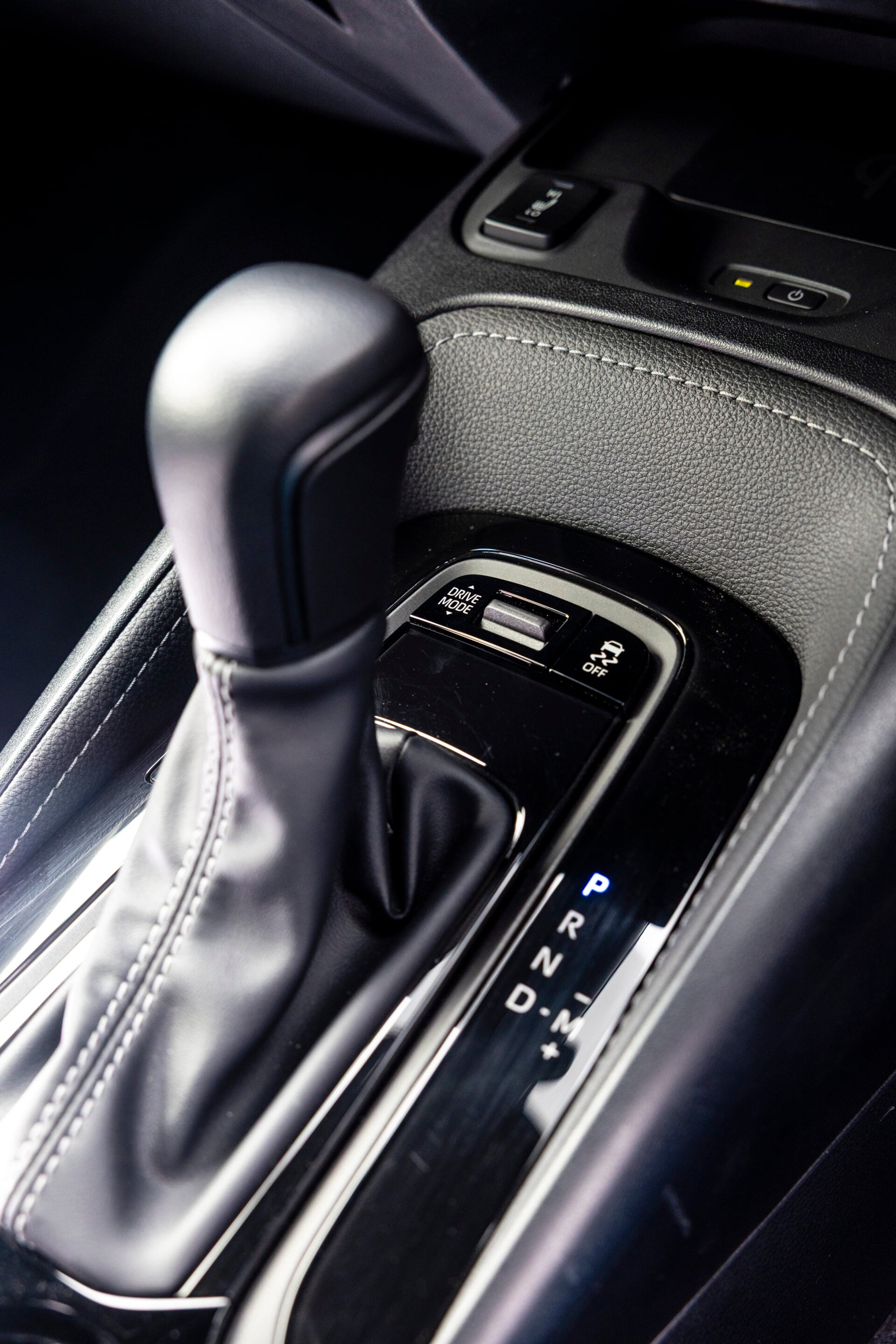
Toyota withholds a 0-100 thrust time, but 5.4 seconds was Karl Reindler’s quickest timing at COTY.
There are driving modes to vary the engine response and torque balance in the transmission, too, with flappy paddles for fun. But it’s just as easy – no, easier – to leave everything set on D for dunce and just go driving.
Push hard and the front end usually washes wide in corners, but in quicker corners the Corolla will move around in the rear just enough to make it feel like a rally car on the loose. It’s a car where the driver will usually give up first.
Although the GR Corolla can look like a one-trick pony, it’s still a Toyota and still a Corolla. The air-conditioning is good, the panel fit is good, and it promises to be reliable and (relatively) cheap to run.
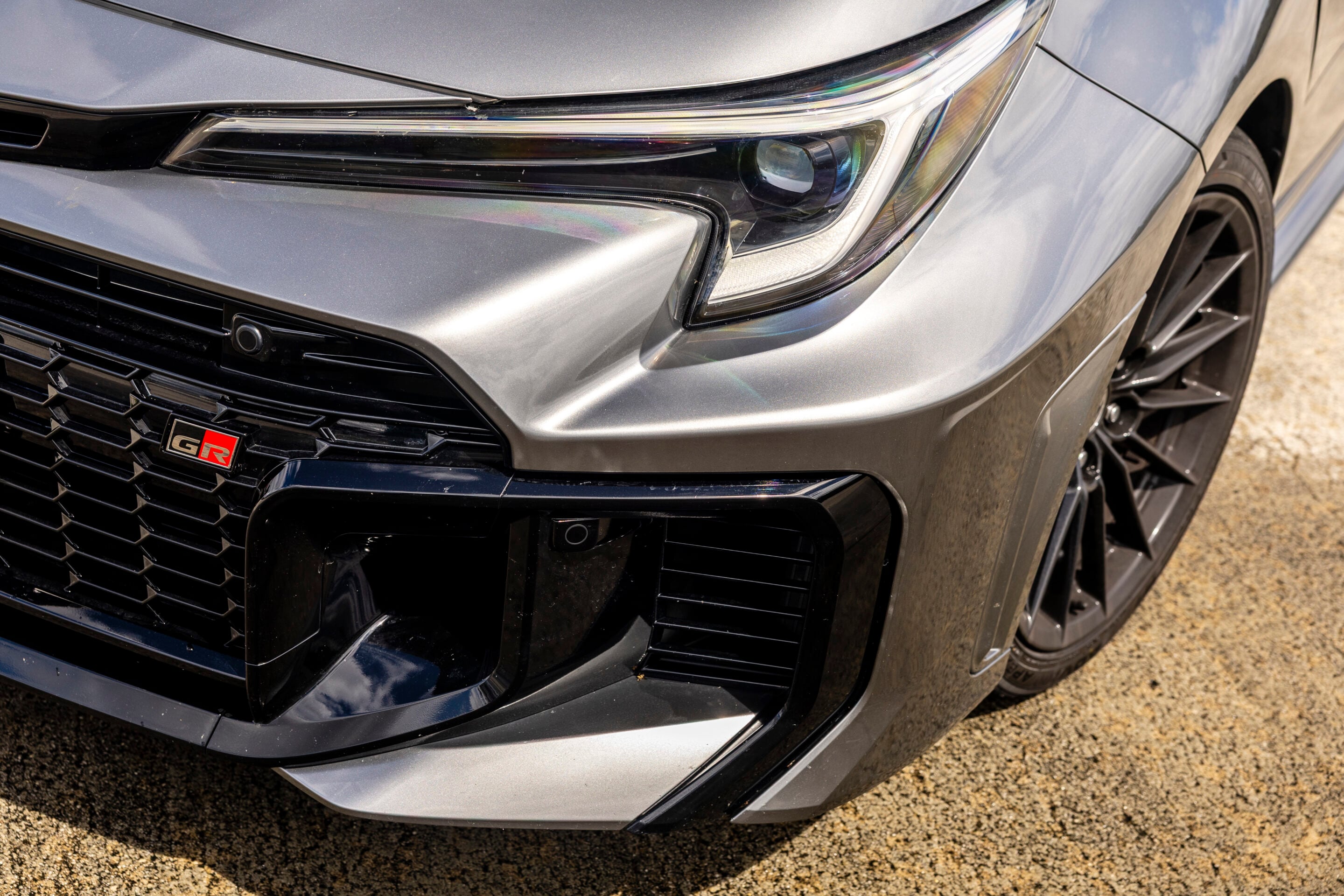
“It’s come right at the end of the life of the current Corolla. Which is a real tribute to Toyota,” said Robinson. “But the boot size is silly.”
“It is silly fun. But I don’t think I’d want to own one,”
I added to the conversation.
So, is too much just enough for a COTY champion?
“Yes, it’s a niche car. Yes, it’s expensive. Yes, it’s a bit of a hoon’s car,” said Nikolic, as he added the GR Corolla to the final COTY vote.
“But we can all rejoice that it’s a car that still exists in 2025.”
Specs
| Price | $70,490 (MSRP) |
|---|---|
| Body | Five-door, five-seat hatch |
| Drive | All-wheel drive (on demand, variable) |
| Drivetrain | 1.6-litre three-cylinder turbo petrol |
| Power | 221kW @ 6500rpm |
| Torque | 400Nm @ 3250-4600rpm |
| Transmission | 8-speed automatic |
| Consumption | 9.5L/100km |
| Kerb weight | 1510kg |
| 0-100 | NA |
| L/W/H/W-B | 4408/1851/1479/2640mm |
| Boot space | 213L/503L |
| Warranty | 5yr/unlimited km (min), 7yr/unlimited km (drivetrain, conditional) |
| Safety rating | Unrated (lasted tested 2018, 5 star) |
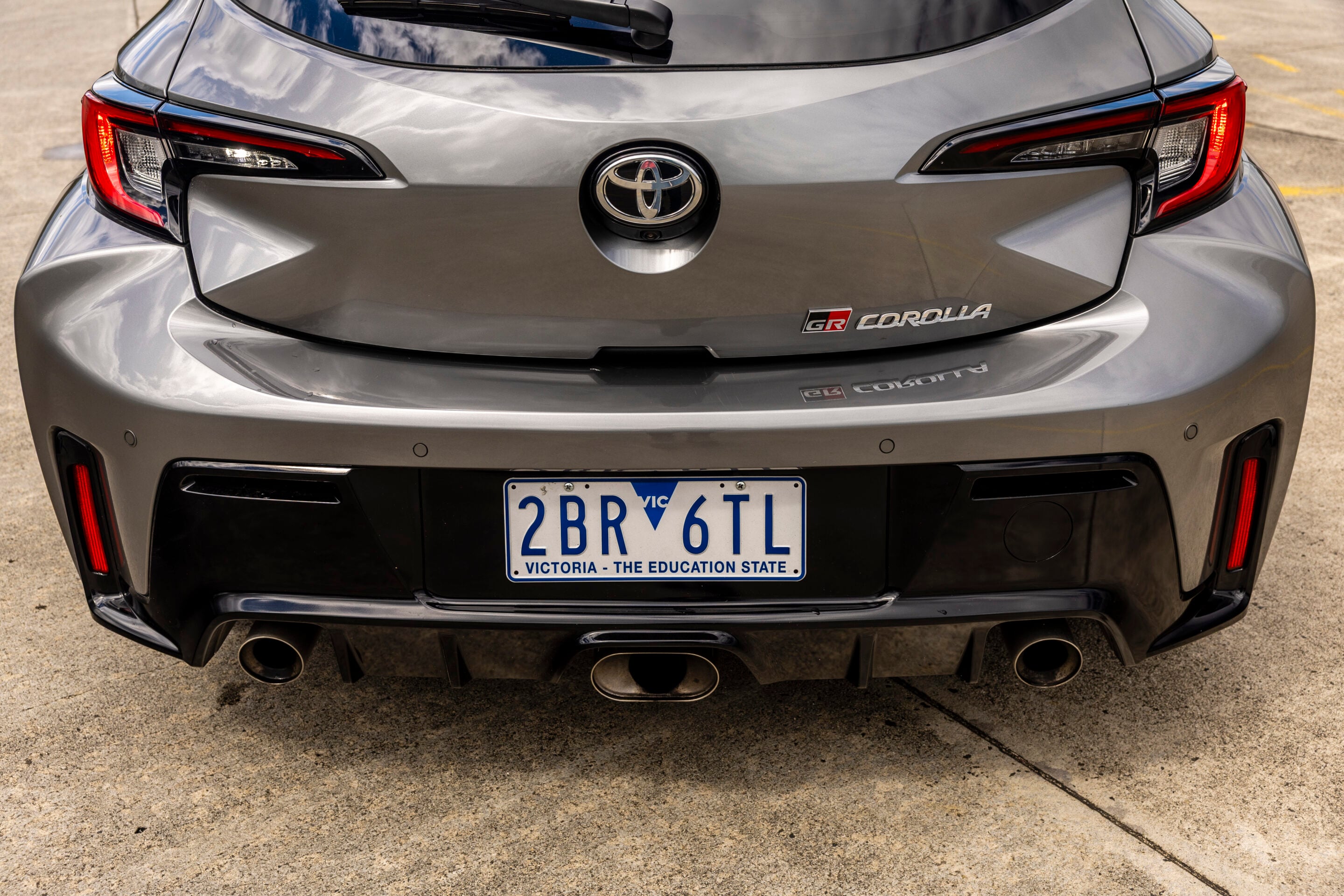
It’s possibly a kind of Pavlovian response thing (without the salivating) but when faced with yet another mid-sized SUV, the default mental programming in my head is to prepare for disappointment.
Not that these things are necessarily bad cars but, as a tribe, they don’t exactly offer too much in the dynamic thrills department. It’s all down, of course, to their devotion to the task of moving people safely, efficiently and at a price-tag that still allows for a driveway to park them in. And that’s often at the expense of any real sparkle. As in: If you’re not looking for much, they offer plenty (thank you, Harper Lee).
But just like Harper Lee’s back catalogue which, for literally decades consisted of the singular To Kill a Mockingbird (and even now stretches to just three titles), scarcity is no barrier to brilliance. Once you’ve found it.
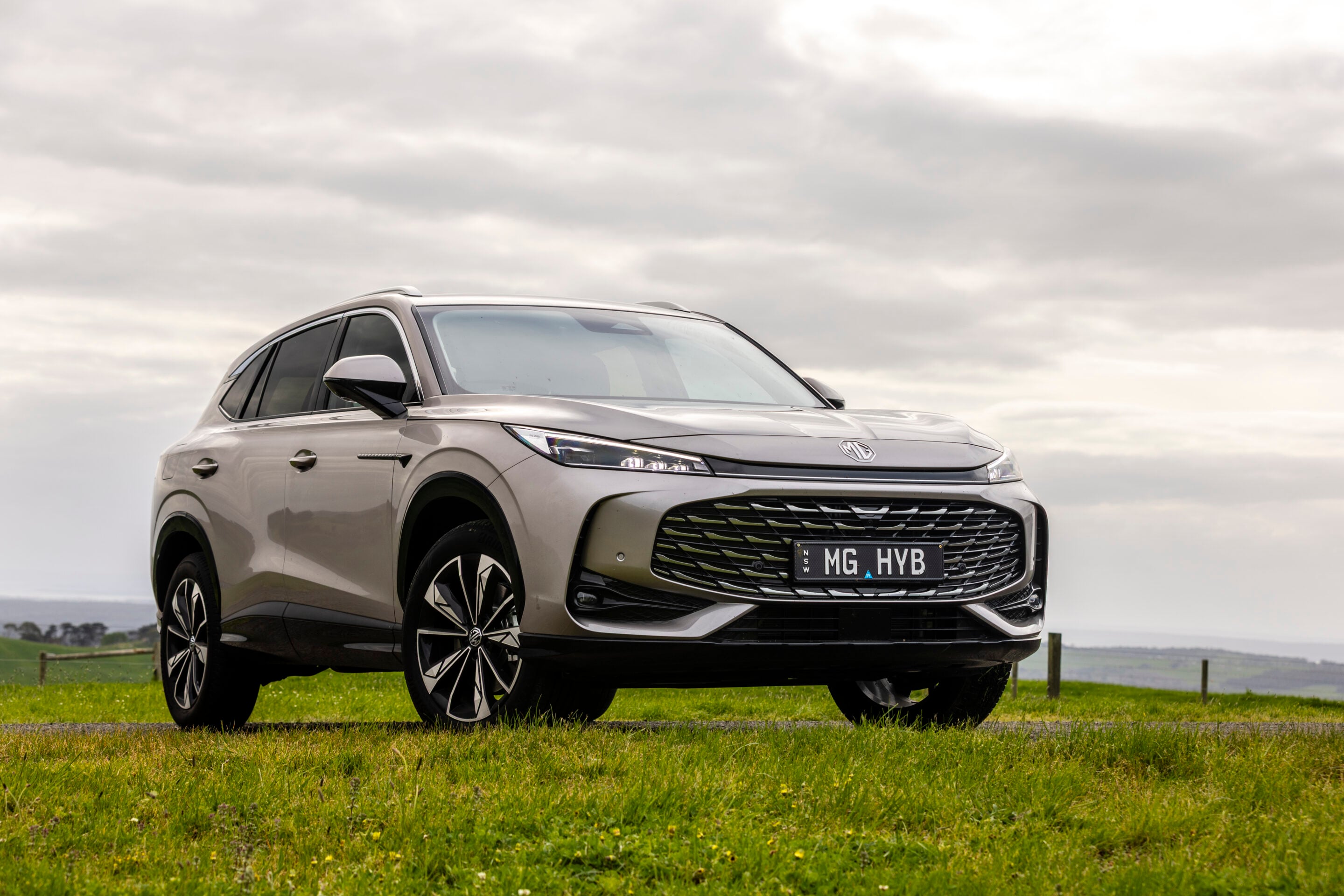
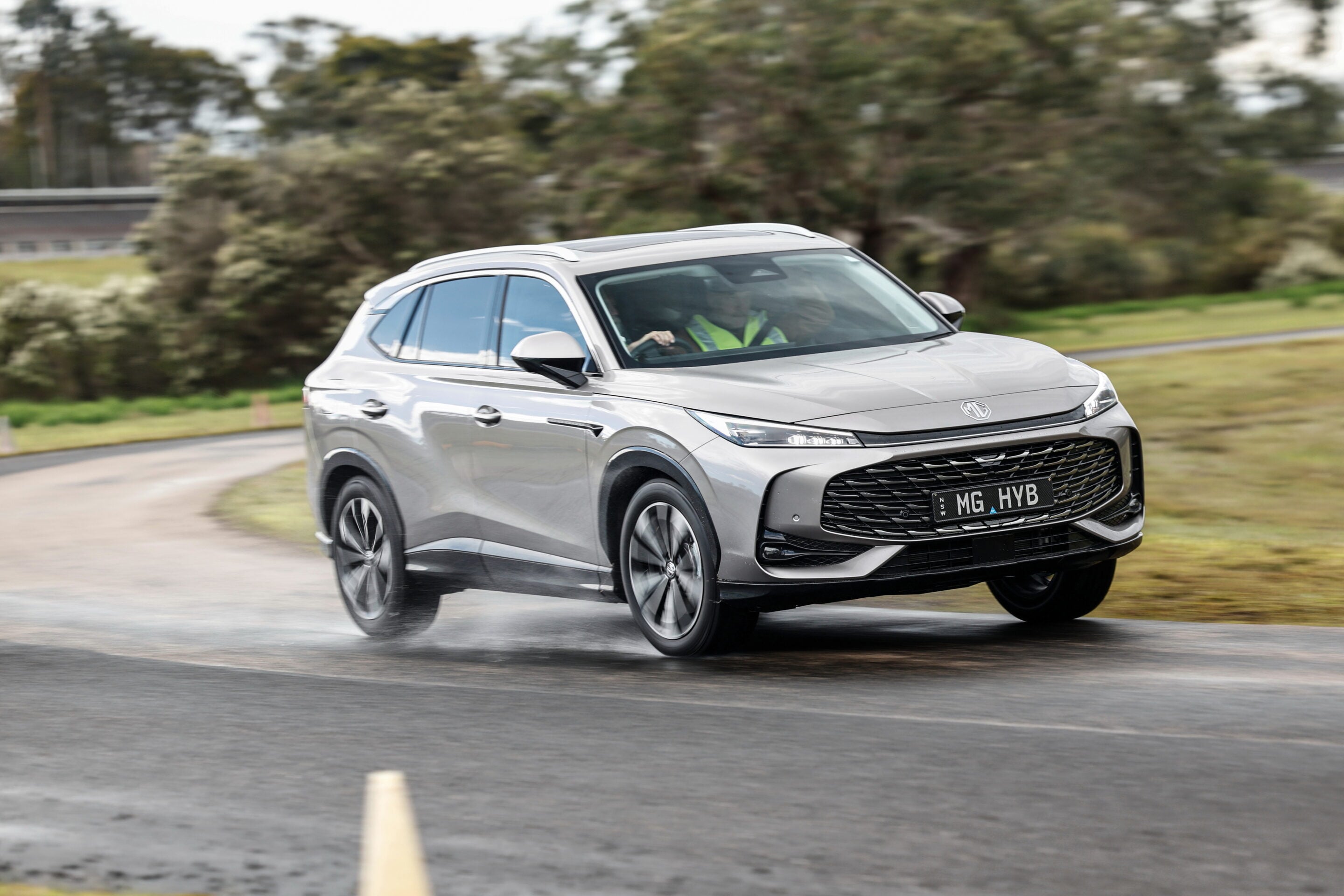
The true rarity of the MG (and largely why it’s a finalist) is that it has somehow managed to overcome the sensation of being at the mercy of that cost-versus-flair equation, and its jacked-up SUV layout. Where the majority of its competitors either roll around in corners or ride like billy-carts (or both), the MG emerges as the exception that gives us hope that maybe, one day, all SUVs will steer and handle properly.
The rainbows start appearing pretty much as soon as you’re rolling, when your backside suddenly over-rides what your brain is expecting. Rather than the busy, jiggling ride you were expecting, the MG glides over bumps and ripples while letting you know what’s going on without shouting about it. In fact, it’s probably that small-amplitude, high-frequency ride quality that most definitively marks the HS out as more than a little bit special.
As speeds rise and cornering forces multiply, the HS begins to revert to type a fraction, but only a fraction. For the most part, the bump absorption is sufficient for that wide, broad bonnet to apparently hover above the road, unaffected too much by what’s going on directly under it. It’s an initial plush factor yet to be seen in anything else in this price-size category, we reckon.
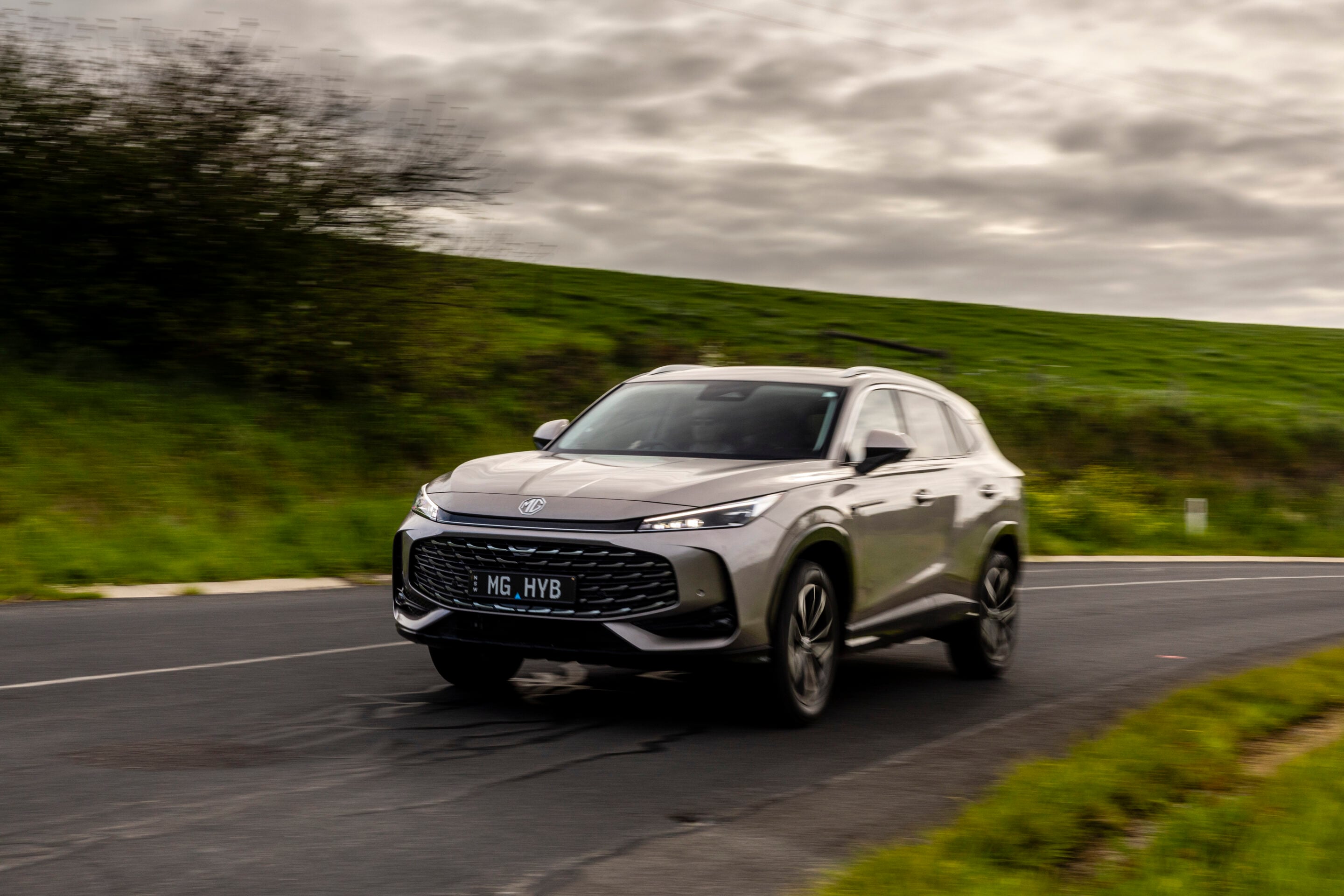
So how has this modern miracle been achieved? Seat of the pants suggests it’s the result of a successful decoupling of the forces produced by steering and suspension. While that sounds like a bad thing, it’s not, because the loads generated by the steering aren’t automatically passed through to the suspension and vice-versa.
So everything can keep doing what it’s supposed to do without a bump-steer pillow-fight going on below the wheel-arches. Maybe.
While MG also offers a similar package with a plug-in hybrid system (and a corresponding price-tag), the non-plug-in variant we have here seems to be the sweet spot (for now, at least). That’s especially so if recent research pans out and a high percentage of owners of plug-ins really do use them as normal hybrids anyway, continuing to put petrol in them just before they stop.
So what you have under the lid is that increasingly ubiquitous 1.5-litre turbocharged petrol engine coupled with a single electric motor. The difference here is that rather than a single-speed transmission, the MG gets a two-speed unit.
Combined, the two power units max out at 165kW and produce 340Nm of torque… which doesn’t sound amazing and, in fact, isn’t. But it doesn’t exactly leave the car wanting, either, and that’s because the MG is not as portly as it might have been. Okay, 1656kg is hardly ballerina stuff, but no plug-in battery and front-wheel-drive means it isn’t banging on for two tonnes like the GWM Haval H6 AWD plug-in, for instance.
Meantime, the power delivery is smooth and supple, in line with many of its competitors whose manufacturers have also recently rediscovered the packaging and refinement joy of a small-capacity four-cylinder petrol engine.
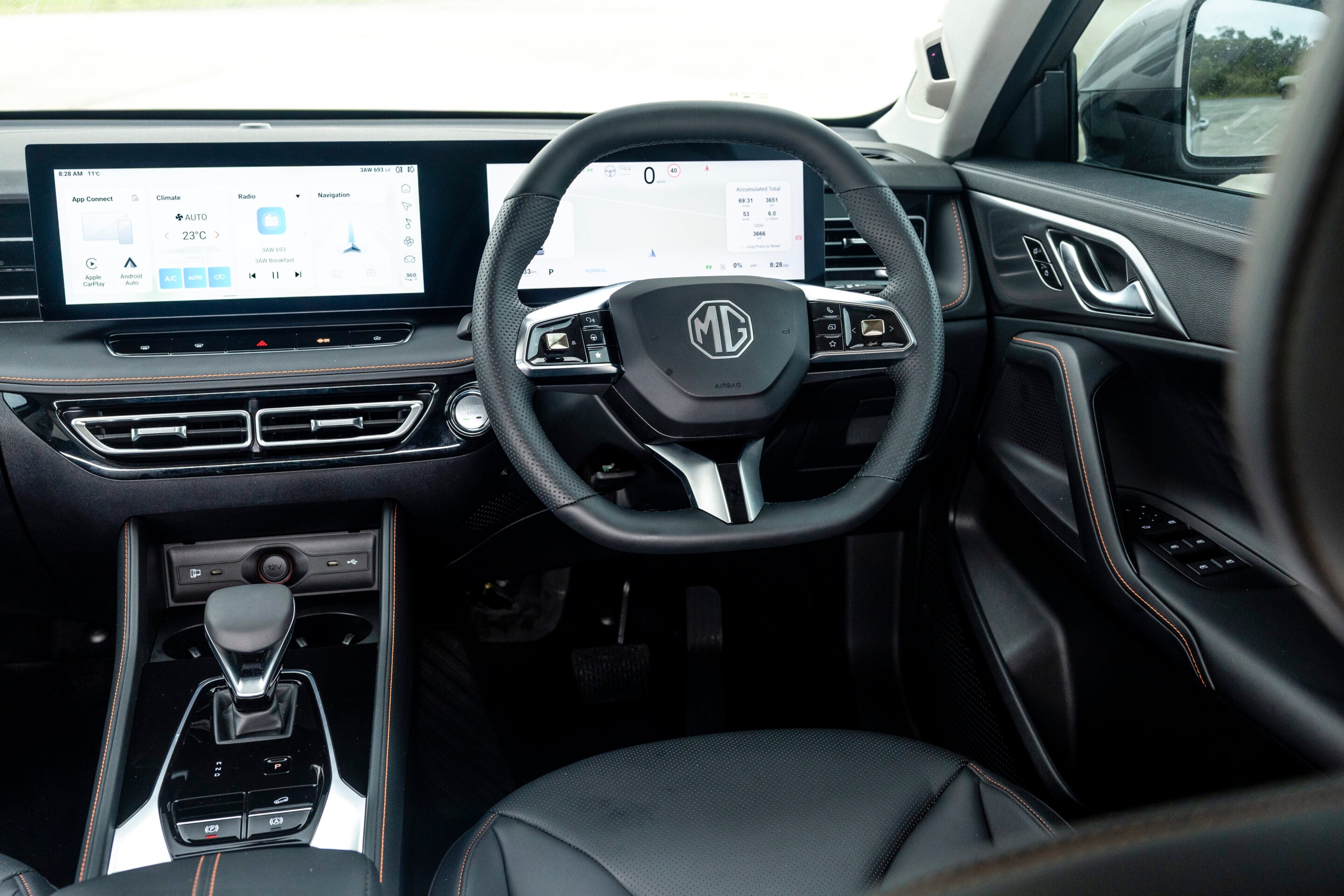
Given the importance of value for money in this segment, MG has gone for broke. Over and above the gear fitted to the entry-level HS Hybrid, the Essence adds a vast panoramic sunroof with a (thin) sun-shade, a hands-free powered tailgate, front fog lights, wireless phone charging, a driver’s seat with four-way lumbar adjustment, heated front seats and exterior mirrors, dual-zone climate and a slightly less faux aunt leather.
As a non-plug-in, of course, there’s no 100km of electric-only range, but the official combined fuel consumption figure of 5.2 litres per 100km suggests the MG won’t be a guzzler.
The HS Hybrid hasn’t been crash tested locally in this form, but it does cash in on the HS’s 2024 ANCAP rating of five stars. That’s down to inclusions of the latest driver-assistance packages including autonomous emergency braking, blind-spot monitoring and rear-cross-traffic alert.
There is also much to keep the family accounts department at peace, too. The $44,990 driveaway pricing is a good start, and there’s a seven-year/unlimited-kilometre warranty to help maintain sleep patterns. Oh, and if you elect to have the vehicle serviced exclusively at an MG dealership (of which there are now roughly 100 across the nation) that basic warranty unfolds to 10 years and 250,000km of cover.
It’s good, then, this new MG. And perhaps the best illustration of that was the wide-eyed look of amazement on the face of every COTY judge as they stepped from the HS after their first drive. And that level of surprise and delight always suggests you’re on to something.
Specs
| Price | $44,990 (driveaway) |
|---|---|
| Body | Five-door, five-seat SUV |
| Drive | Front-wheel drive |
| Drivetrain | 1.5L turbo petrol 4 cylinder, 1.83kWh NCM lithium iron water-cooled battery |
| Power | 165kW |
| Torque | 340Nm |
| Transmission | 2-speed hybrid |
| Consumption | 5.2L/100km, 1000km range (TNFC) |
| Kerb weight | 1656kg |
| 0-100km/h | NA |
| L/W/H/W-B | 4670/1890/1655/2765mm |
| Boot space | 507L/1484L |
| Warranty | 7yr/unlimited km (min), 10yr/250,000km (conditional) |
| Safety rating | Not Tested (5 star ANCAP 2024) |
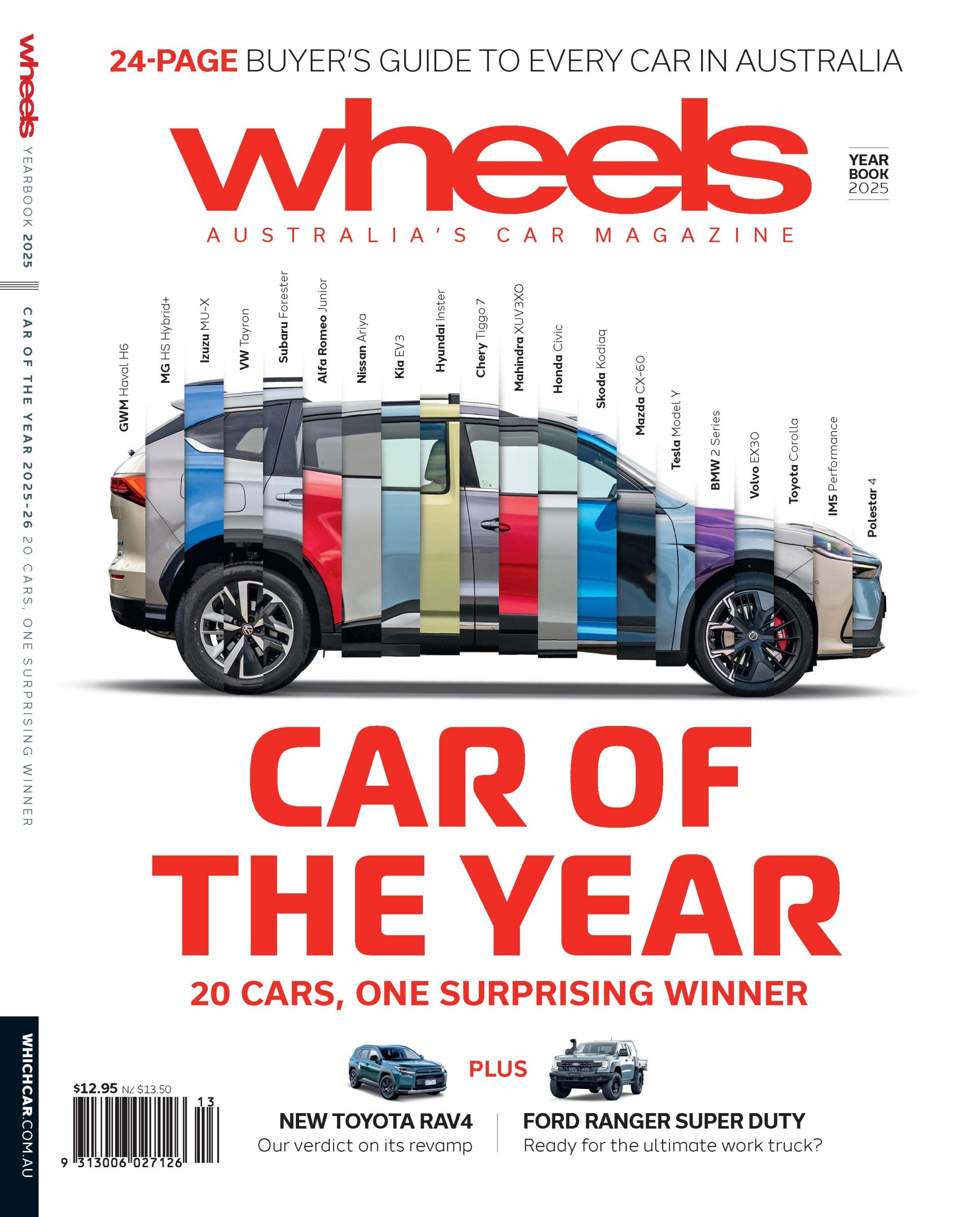
Wheels today announces its 2025–26 Car of the Year, the result of Australia’s most rigorous and longest-running annual car award. The winner – selected from a field of 20 of the most significant new vehicles on sale – is revealed in the 2025–26 Wheels Car of the Year Yearbook, on stands from Monday, December 15.
The Yearbook is the complete, behind-the-scenes chronicle of how this year’s Car of the Year was decided: the cars that made the cut, the judges who tested them, the venue that pushed every contender to its limits, and the process that distilled a wide and diverse field into a deserving champion. Across three rounds of intensive driving and debate, the Wheels judging panel assessed performance, efficiency, safety, value, innovation, usability and real-world appeal – searching for the car that best represents progress for Australian buyers right now.
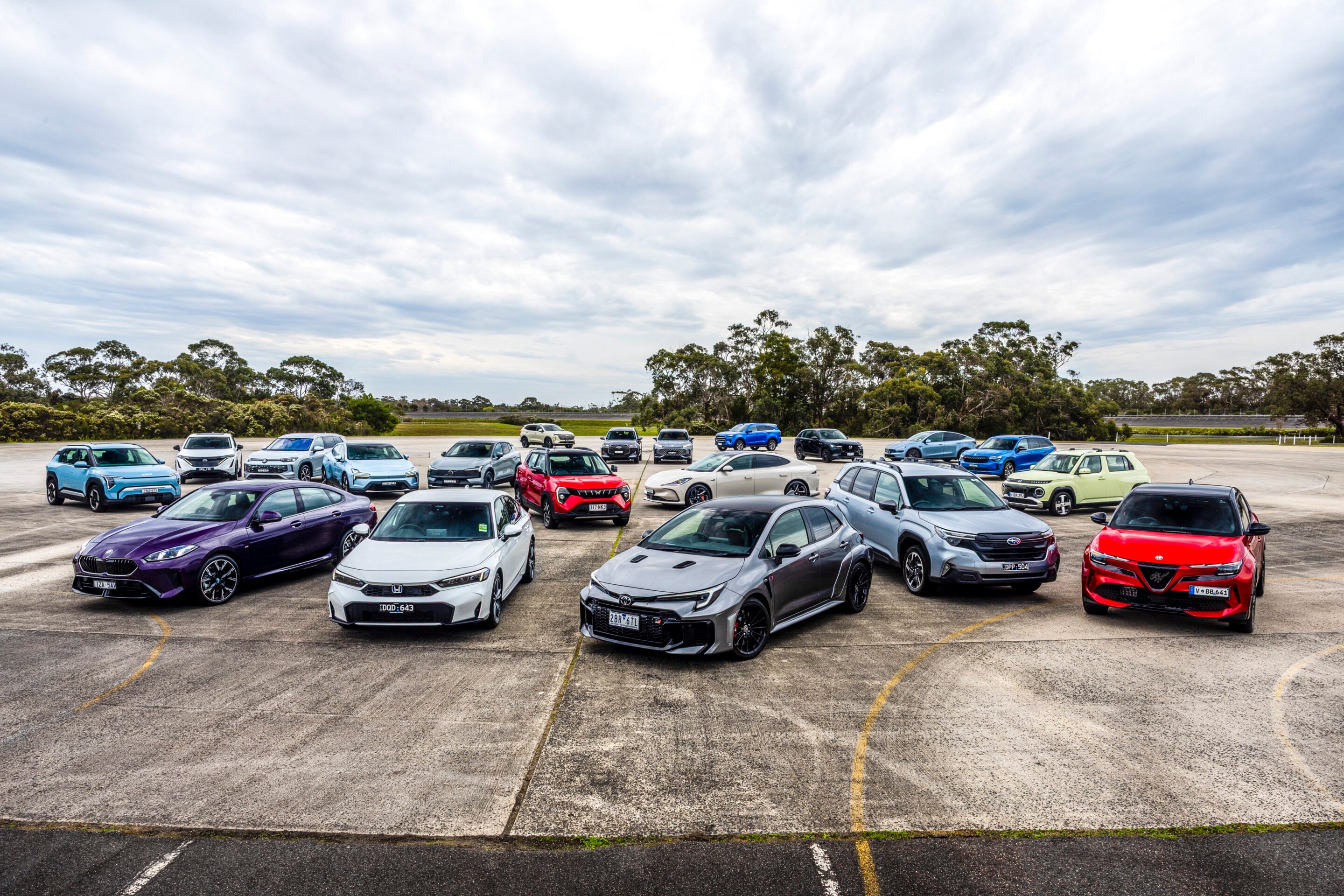
Round One begins with all 20 contenders eligible for the title. After several days of evaluation, the judges determined that a group of cars, while impressive in their own right, did not deliver the overall breadth of ability required to win Car of the Year, reducing the field to eight cars
The Final Round announces the top three, including the 2025–26 Wheels Car of the Year winner. Each finalist surprised the judges during the test days, forcing reassessments, lively debate, and, ultimately, a clear decision. Readers will find the full final-round drive impressions, score breakdowns and the critical moments that separated winner from runner-up.
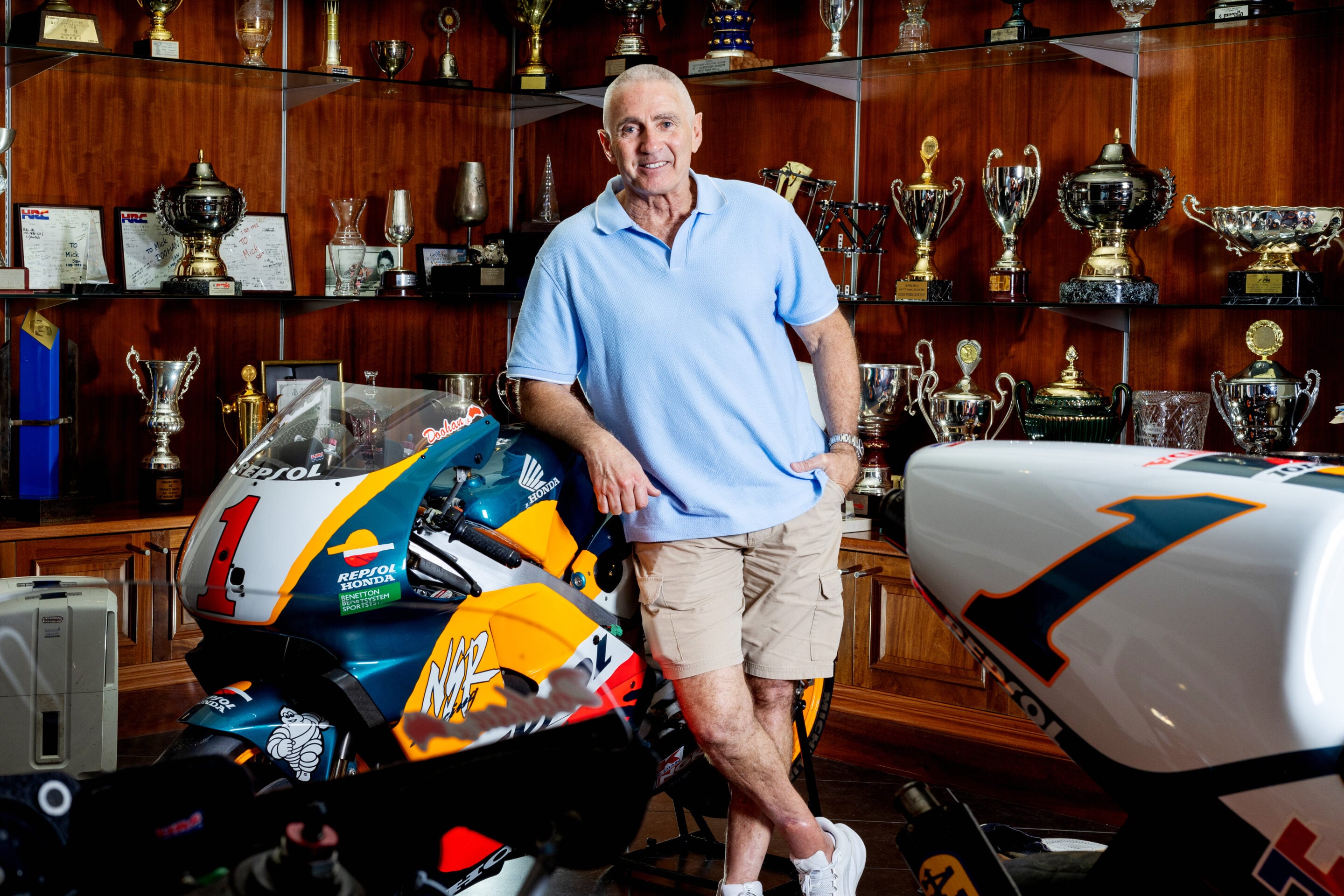
Elsewhere in this jam-packed Yearbook, Paul Gover chats with five-time MotoGP world champion Mick Doohan as he reflects on life after racing and his growing business success as he approaches 60 – as competitive as ever, and busier than most.
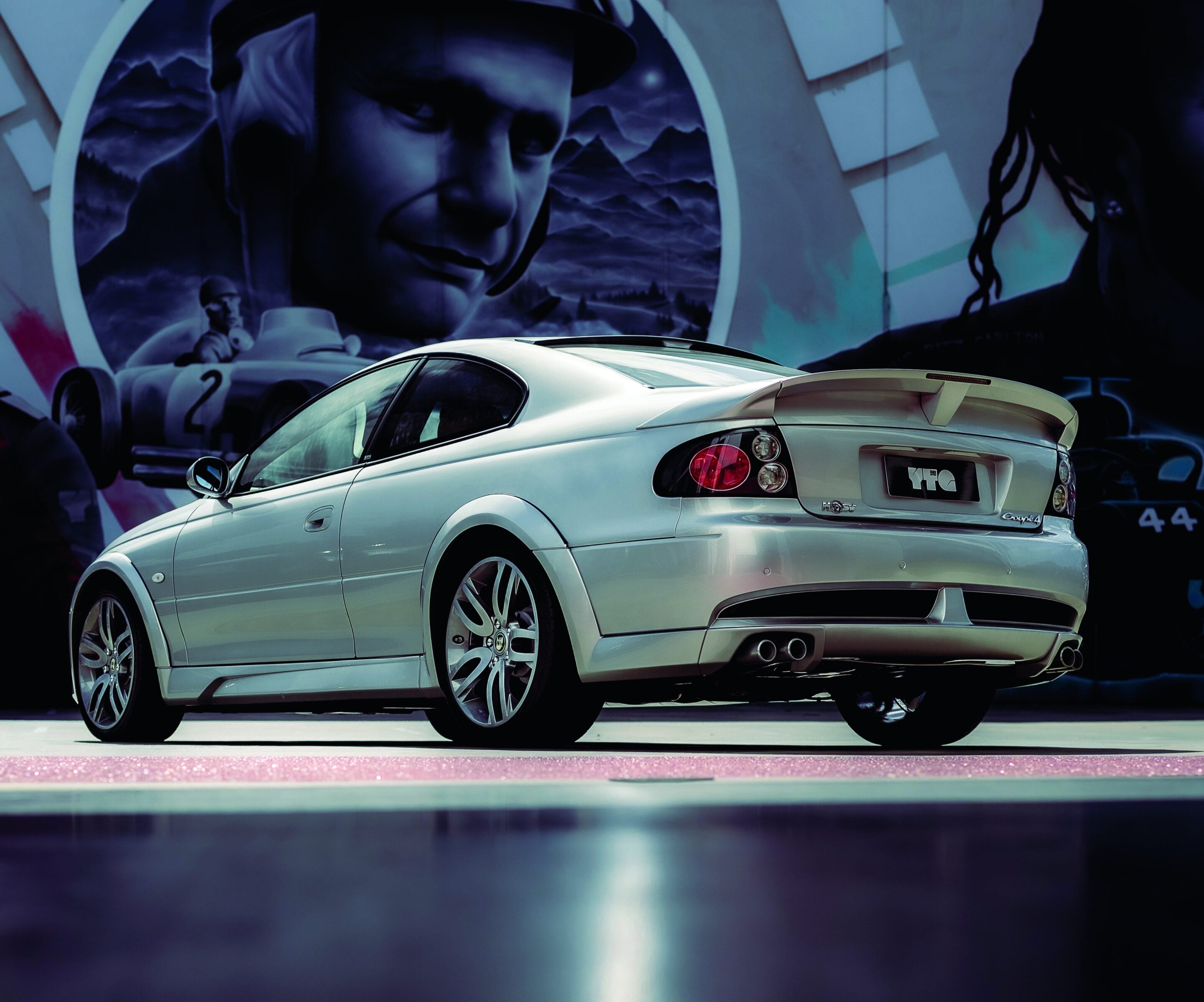
Our Modern Classic feature this issue sees Scott Newman revisit the HSV Coupe 4, a bold and ambitious Holden-era concept that remains one of the most fascinating “what-ifs” in Australian car-making history.
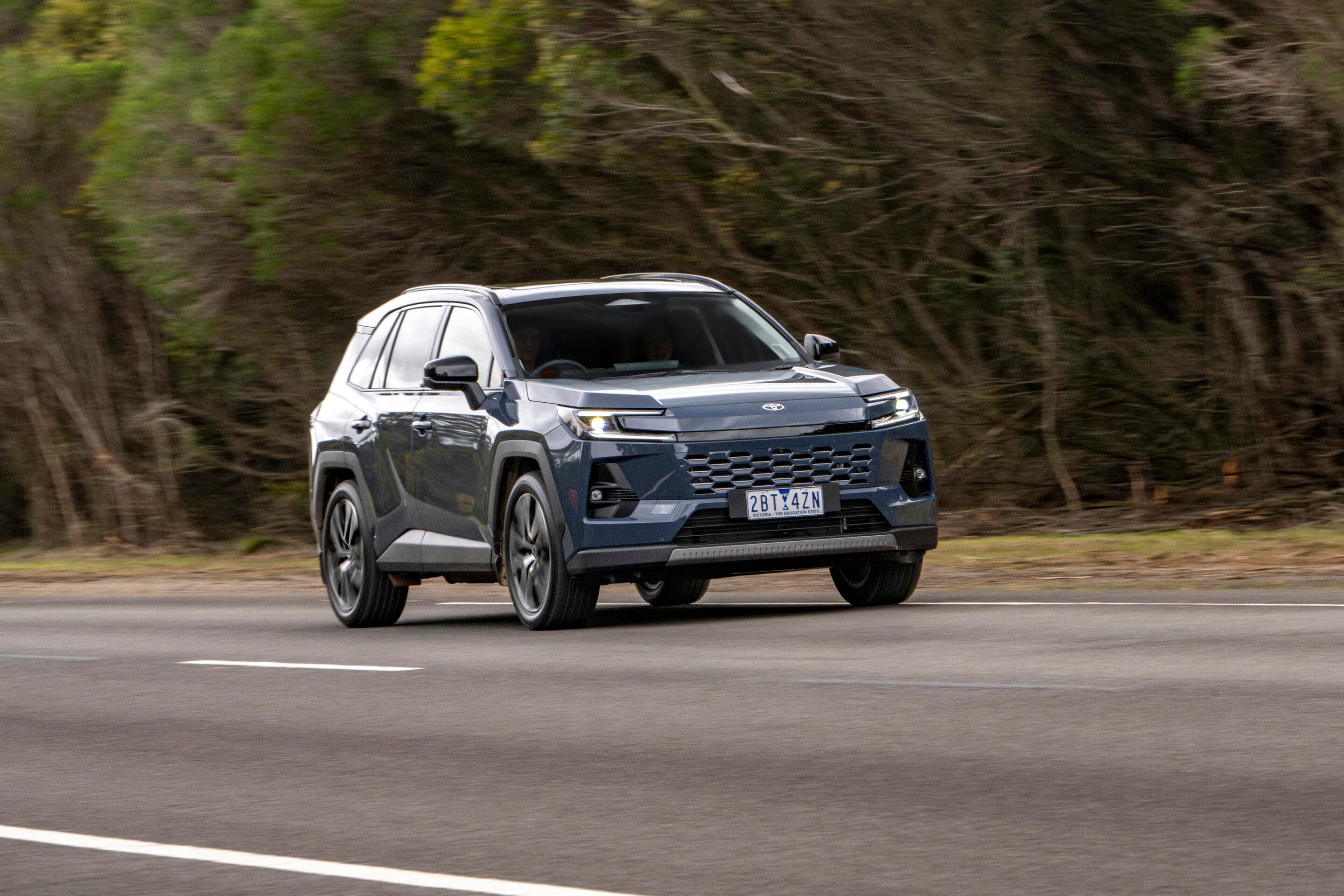
First Drives covers the latest arrivals, including the much-anticipated revamp of the Toyota RAV4 (below) with its redesigned cabin and expanded tech; the new, fully electric Mazda 6e; and Ford’s Ranger Super Duty, a ute engineered for owners who need more than urban comfort.
Marketplace brings the latest October 2025 VFACTs snapshot, alongside the Wheels Buyer’s Guide with more than 1900 vehicle prices, specs and reviews updated monthly. Driven to extinction tracks the end of an era, with Ford’s Focus following the Fiesta and Mondeo out of local line-ups.
The 2025–26 Wheels Car of the Year Yearbook is available Monday, December 15, wherever magazines are sold.
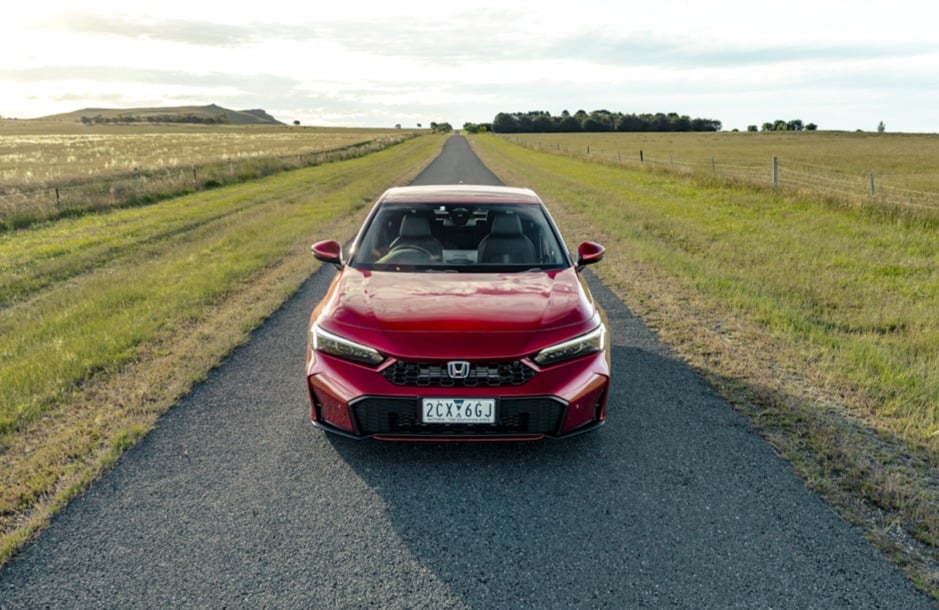
“The Honda Civic is a car you will buy now, and love from the get go,” observes David Morley during testing. “And then, in six or 12 months, you’ll feel even better about your purchase, because it will keep rewarding you.”
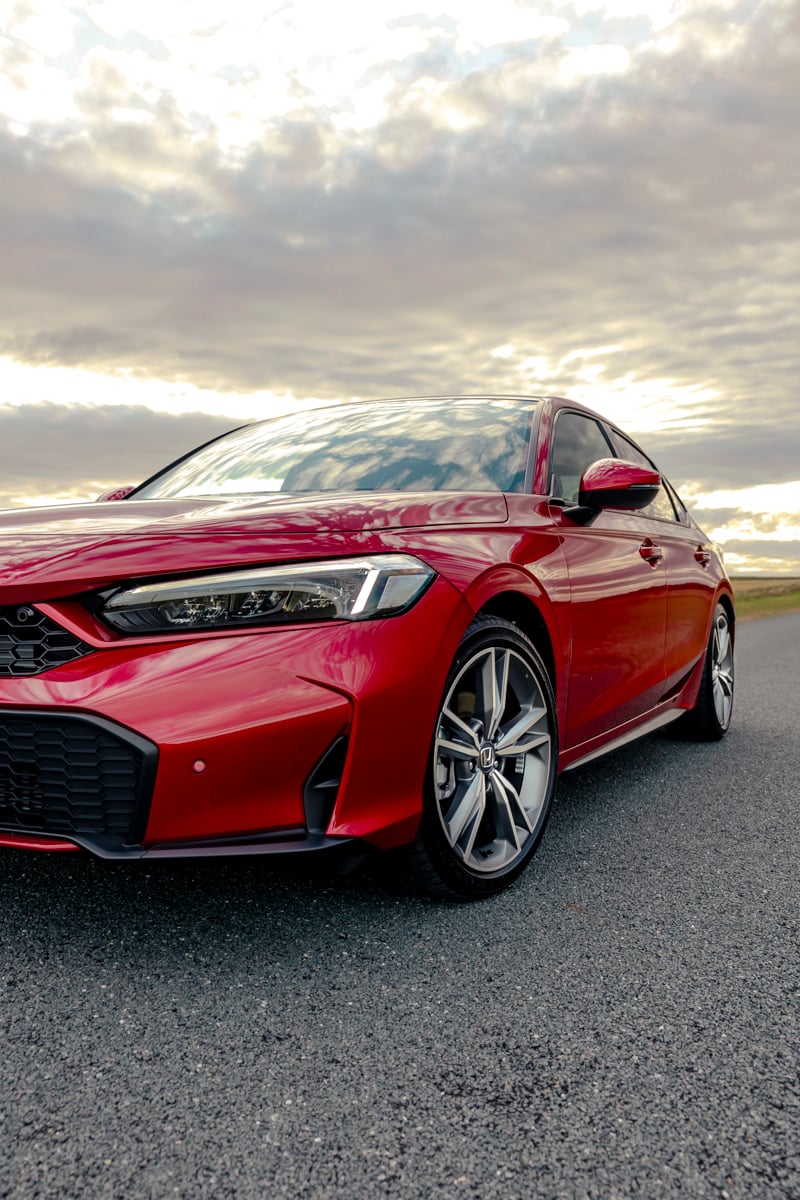
We could sum up the 2025-26 Wheels Car of the Year winner with those words alone and move on to admiring Ellen Dewar’s beautiful photography. However, as is always the case with a great car, the 2025 Honda Civic is much more than the sum of its parts. Perhaps most pleasingly for those of us with a traditional bent, this year’s winner proved that a conventional car can still take the fight right up to – and win against – SUVs thanks to a blend of all-round quality, real-world comfort, space, practicality and driving enjoyment.
First introduced as a much more stylish addition to the Honda range in 2021, and face-lifted for 2025, below is what the other judges had to say about the Honda Civic.
Peter Robinson:
“Hidden away among the last of my notes for the Civic are three significant words: ‘Best car here.’
“Yes, the handsome and refined 11th-generation Civic delivers responsive, hot-hatch-like performance that’s seamlessly helped by an electric motor. This is combined with terrific economy: the combined official figure is 4.2L/100km, though I averaged 3.9L/100km on one road leg.
“Brilliant steering that’s intuitively weighted and 2.2 turns direct, inspires confidence and works perfectly with the Civic’s natural handling balance and fine roadholding. Faults: needs more equipment at the price, no spare wheel and excessive rear seat road noise.”
Paul Gover:
“This smooth operator does what the Civic has always done, even if it’s matured to become more like the Accord. It is a lovely car, refined and enjoyable to drive, practical, and beautifully finished. What a pity about the price, given you can’t haggle. It’s a bit anonymous, and the cabin is a little outdated, but it’d be first pick for an interstate drive.”
David Morley:
“Long after the showroom shine has left the chat, the Civic will still be rewarding you with new things you never knew it could do. With bandwidth to spare, it’s the gift that keeps giving. Like being six months into a fresh relationship and discovering your new girlfriend can TIG weld. And you had no idea.”
The only real chinks in the Civic’s armour were touched on above by judge Gover – the non-negotiable pricing structure favoured by Honda in Australia and the cabin lagging a little in terms of outright modernity. The former is something we’ve disliked at Wheels from the get-go, the latter is something you quickly forget when you realise the tech inclusions are rock solid and work exactly as they should – glitch free. If you want to find just where your personal frustration threshold is though, try to clear the Bluetooth connected devices list… ask the judges how we know.
Across the judging team, there was universal agreement that the Civic was a car that kept getting better the more you drove it. Observing our COTY safety officer and performance tester Karl Reindler during his testing, it was obvious the Civic dealt with the testing criteria with ease.
That feeling of security continued onto the open road, where the judging team thought, “it was a fun car to drive, is really well tied down, and handles significantly better than you might expect”. Add to that the quality of the steering, brakes and ride quality, and you’ve got a compelling package.
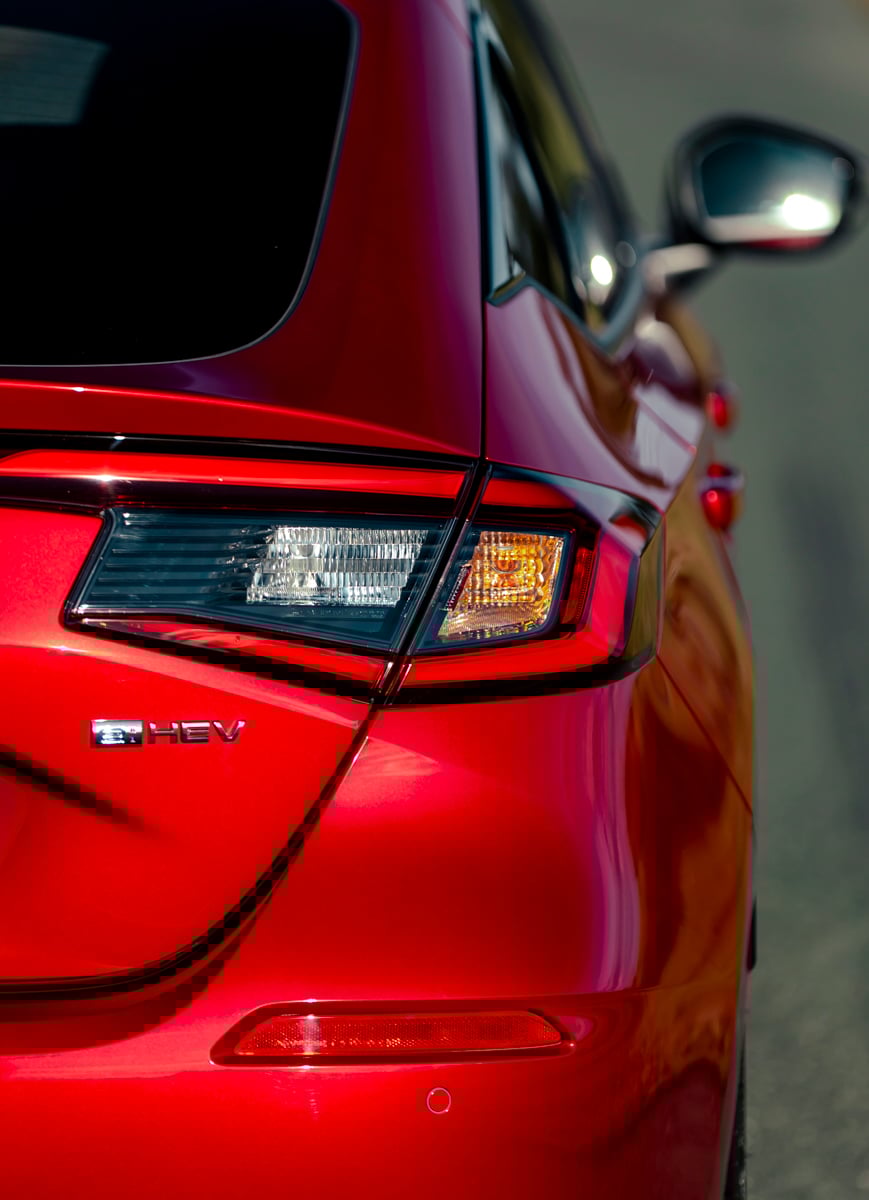
A key point of Civic’s appeal is – Type R aside, of course – the standardisation of hybrid technology across the range. As we saw during testing, it’s a hybrid system with real-world efficiency. Honda claims 4.2L/100km, and across our various testing, Wheels saw an average of 4.3–4.6L/100km without trying to drive efficiently. During easy cruising, you’ll see the live consumption dip into the high 3L/100km range.
Onto price then, and there’s no getting around it, the Civic isn’t exactly cheap. Keep in mind however, that the first five services are capped at just $199 each, required every 12 months or 10,000km. That means it’s cheaper to service than all of its key rivals, and it’s covered by a five-year/unlimited kilometre warranty. Running costs and the quality of the Civic itself are key reasons it still nails the value category despite the entry cost.
Two trim grades are available: the entry point e:HEV L we have for Wheels COTY testing, and the e:HEV LX. Pricing starts from $49,900 for the L and from $55,900 for the LX, both before on-road costs. When you consider Australia’s most popular small car, the Toyota Corolla, can be had in hybrid guise from the mid-$30K region before on-road costs, there’s no denying the step up to Civic in regard to price. Do you feel like you’re getting a premium experience though? The COTY judges say yes.
Safety is also key to COTY judging, as it should be, and the Civic excels here, too. Tested in 2022 by Euro NCAP, that five-star rating translates across to ANCAP in Australia, and with scores of 89 per cent for adult occupant protection, 89 per cent for child occupant protection and 82 per cent for vulnerable road user protection, its executed properly. You can add 83 per cent for safety assist technology to those scores.
While the Civic looks stylish from the outside, it’s the understated, insulated quality of the cabin that sets the tone for Civic ownership. It’s also one of the reasons the judges agree that it will continue to impress long after you’ve signed your life away in the dealership. Given Civic is around 300mm longer than a Corolla, it’s actually on the large side for the small car segment, and as such, the cabin offers space and comfort the rest of the segment can’t match.
The driving position, and indeed the seating position across all four main seats, is low, almost sporty, but it’s not difficult to get in or out of the cabin. Doesn’t matter how tall you are, you’ll be able to get comfortable behind the thin-rimmed steering wheel, heated even in the base model. Visibility from the cockpit is also excellent.
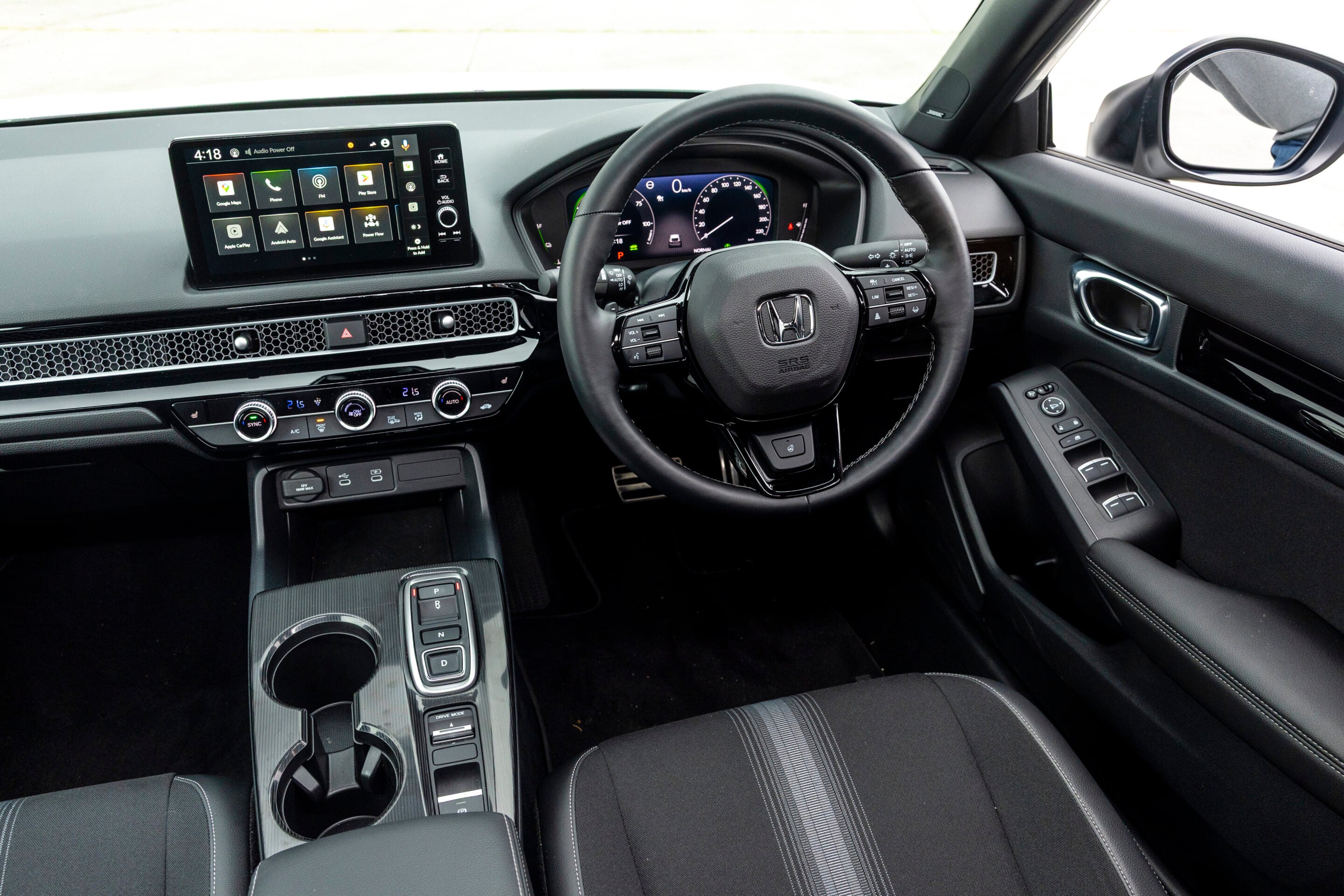
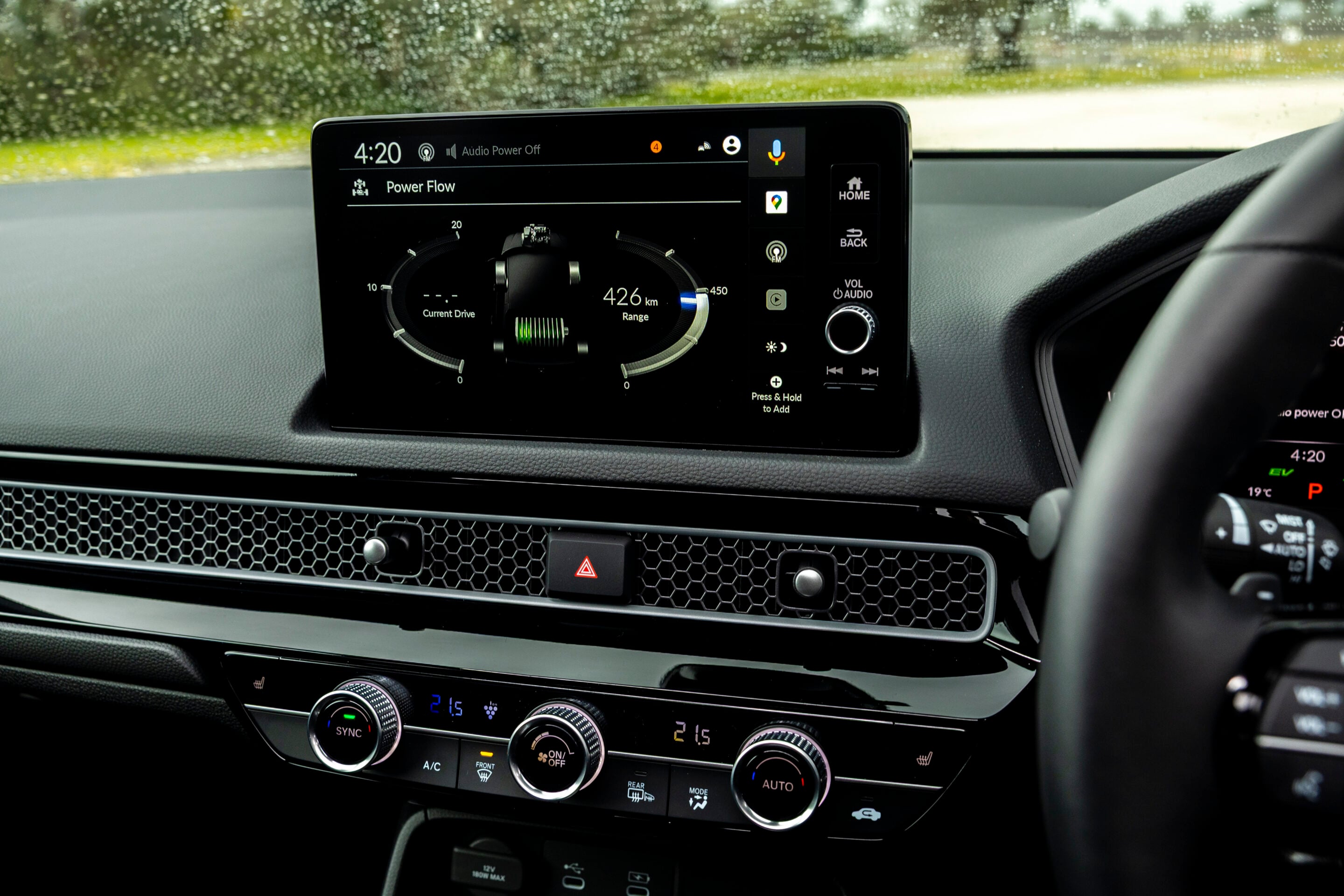
Cabin features include a 9.0-inch infotainment touchscreen, wireless Apple CarPlay, wired Android Auto, proprietary Google apps within the system, a 10.2-inch instrument display, cloth and leather-look seat trim, heated front seats, dual-zone climate control, keyless entry and start, and a 12-speaker Bose audio system. The more expensive variant gets leather trim, electric seat adjustment up front, wireless phone charging capability, a panoramic sunroof and an auto dimming rear-view mirror but as the judges noted, you’re not missing anything of real value here in the base model.
There is a beautiful simplicity and quality throughout, from the choice of controls and switchgear to the general layout inside the cabin. The judges loved the honeycomb air vent design, the way the dials – temperature and volume, for example – worked, and the choice of materials throughout the cabin. It’s undeniably sophisticated, classy, and elegant, and harks back to the glory days, when Honda was a premium, aspirational brand. The boot offers 409L with the second row in use, but if you lift the manual hatchback and fold those seats down, storage space expands out to 1212L.
Would the judges prefer a spare (even a space saver) instead of a tyre repair kit? Unanimously, yes, especially for buyers who love a road trip. Could the seats fold down in a more space-efficient manner? Yes. That’s about it, though.
For the Wheels COTY judging team though, the proof is in the driving, and the Civic is a stark reminder of what we’ve lost in the rabid rush to SUVs and dual cabs. Bloated, heavy and dull, the majority offer no inspiration behind the wheel, and are simply transport for transport’s sake. You need to spend astronomical sums of money to find an SUV that drives anywhere near as enjoyably as an excellent sedan like the Civic.
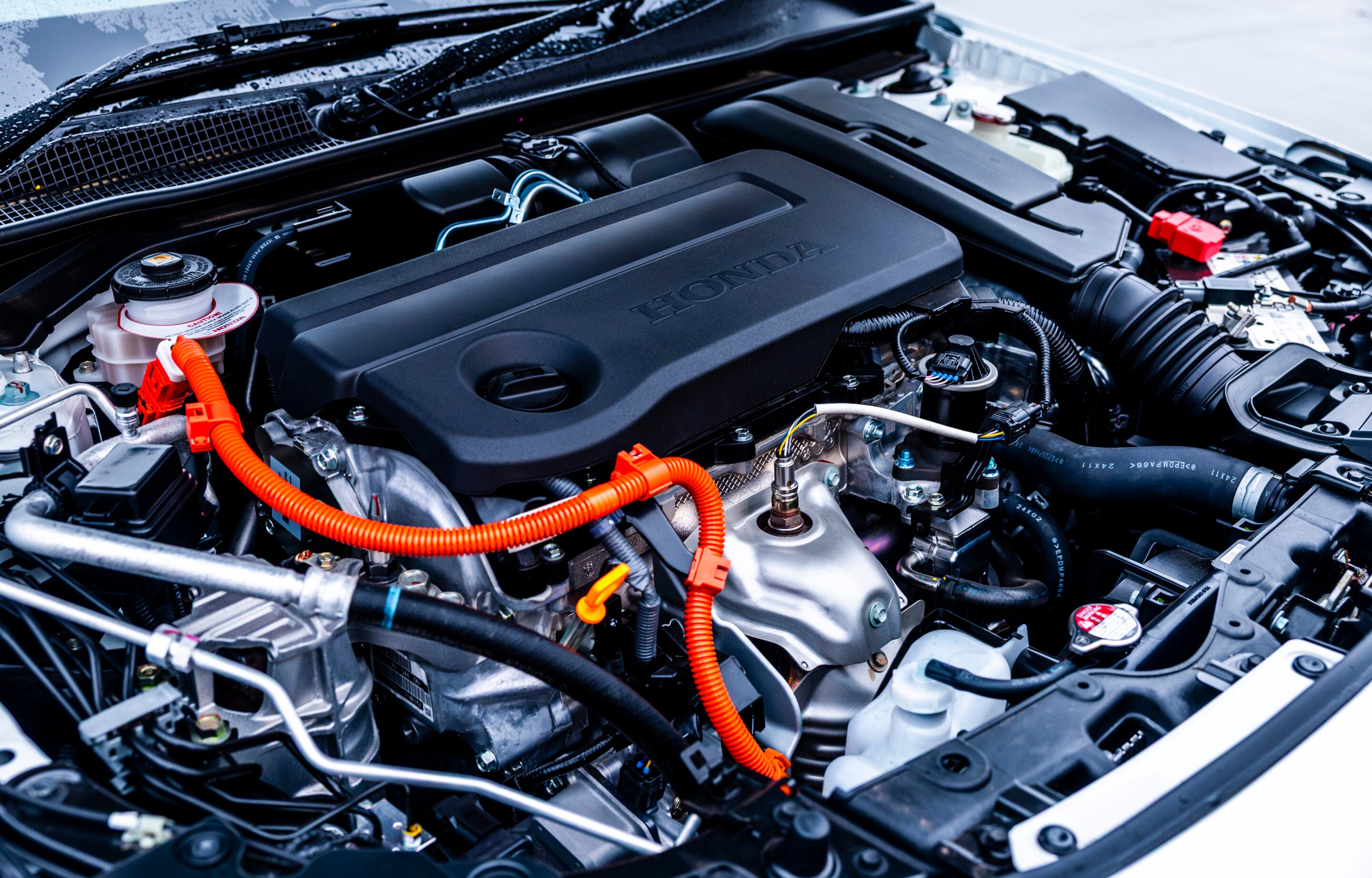
First up, the powertrain. The petrol-electric hybrid system isn’t just efficient. It’s smooth around town and under light throttle applications, but punchy and urgent when you want it to be. The electric motor ensures the Civic fires off the line if you need to, and keeps the petrol engine working only when it needs to. The transition between petrol and electric or vice versa, is so smooth as to be almost imperceptible. With 135kW and 315Nm on offer, the power and torque easily account for the Civic’s rather svelte – in 2025 terms – 1465kg kerb weight.
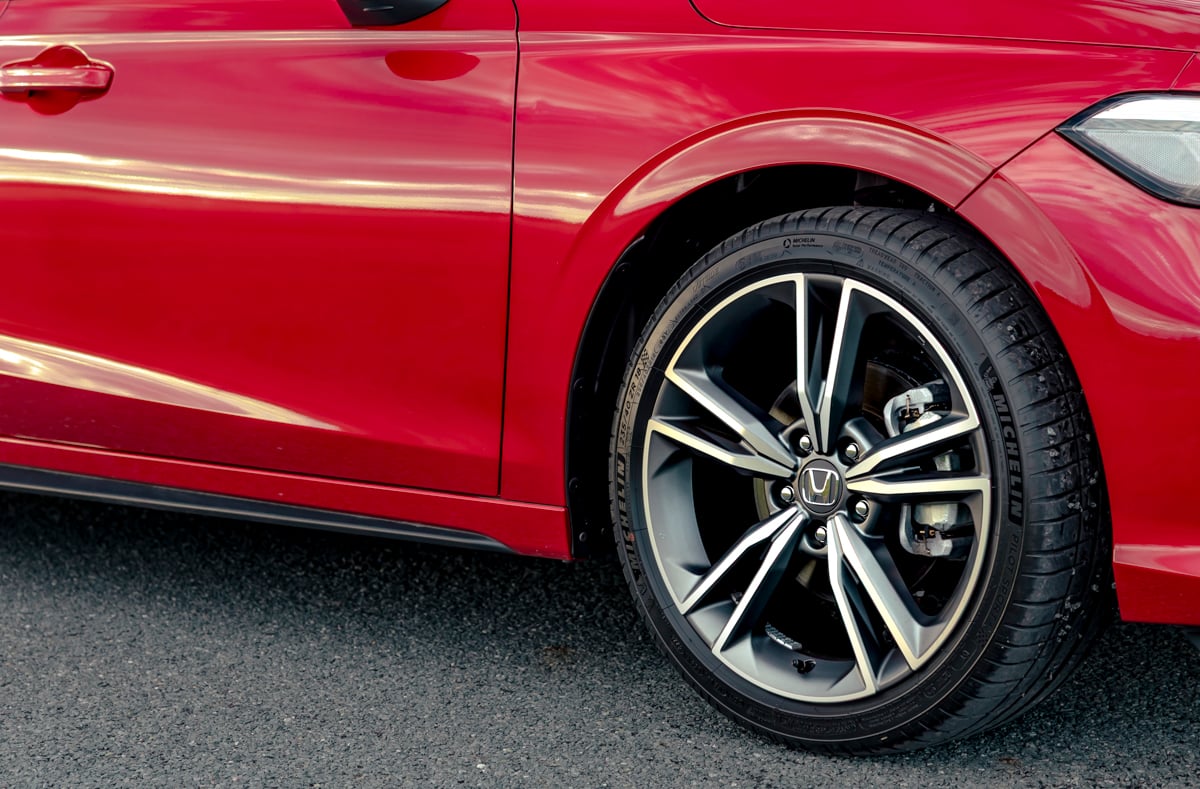
When you nail the throttle, there’s a throaty engine note, which some might think jars with the premium feel of the Civic, but the judges agreed that it’s a reminder of Honda’s sporting past. Even if it is muted by 2025’s environmental expectations. Honda’s zero to 100km/h time of 7.2 seconds indicates the Civic could keep a few hot hatches honest, such is the punch of the hybrid system.
Out on the open road, cavorting along the rutted and washed out surfaces you’ll find in every state of Australia once you leave the urban confines, the sporty nature of the Civic doesn’t translate to a lack of comfort or bump absorption – quite the contrary. There’s stability in the way the Civic handles such surfaces, with even the nastier bumps not translating to a lack of composure in the cabin.
Fire the Civic into a corner at speed, though, and the nature of the chassis, the balance, the steering and the suspension all work together to provide a much more engaging drive than any of the judges expected going in.
By my calculation, the last time a ‘car’ won this esteemed award – not a sports car or SUV – it was the Volkswagen Golf Mk 7 in 2013, another high point for the tradition of exceptional small cars. For the Honda Civic to take the ultimate prize in 2025 is an achievement of some note, and recognition that a truly exceptional car can still compete at the highest level.
In the same way last year’s winner was a celebration of innovation and moved EVs into a different space, the Civic’s win this year is a celebration of tradition, quality and execution. New Civic is a fantastic car in every sense of the word, representing value, delivering safety, driving superbly and presenting a high-quality cabin.
It’s a return to form for a legendary Japanese manufacturer, making the Honda Civic a deserving winner of 2025-26 Wheels Car of the Year.
Specs
| Price | $49.900 (MSRP) |
|---|---|
| Body | Five-door sedan |
| Drive | Front-wheel drive |
| Drivetrain | 2.0-litre four-cylinder petrol hybrid |
| Power | 135kW combined |
| Torque | 315Nm combined |
| Transmission | Electric continuously variable hybrid transmission |
| Consumption | 4.2L/100km |
| Kerb weight | 1465kg |
| 0-100km/h | 7.2 seconds |
| L/W/H/W-B | 4569/1802/1415/2735mm |
| Boot space | 409L |
| Warranty | 5yr/unlimited km |
| Safety rating | 5 star ANCAP (2022) |
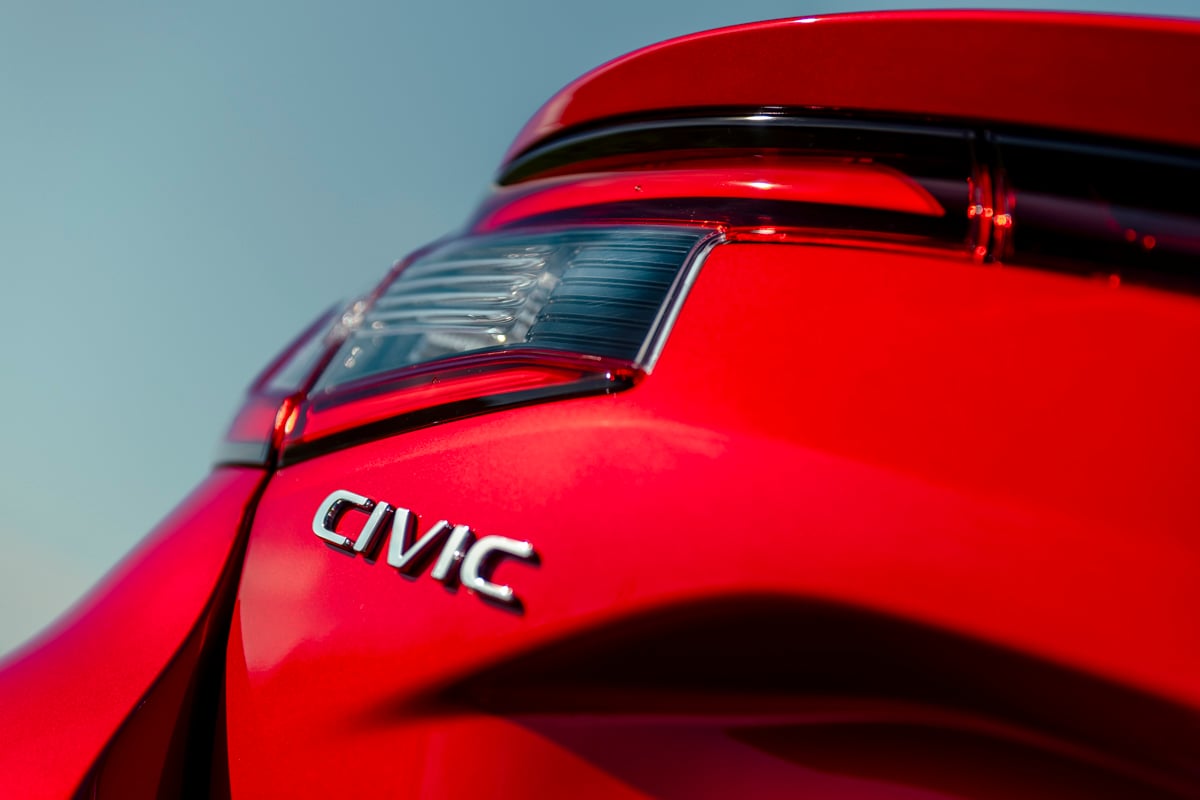
For half a century, the BMW 3 Series has been more than a core model in the German carmaker’s line-up. It has also played a central role in shaping how and where BMW builds its vehicles, acting as a testbed for new manufacturing technologies and a catalyst for the company’s global expansion.
Since production began in 1975, more than 18 million BMW 3 Series vehicles have been built. Assembly has taken place at 18 factories in 13 countries, reflecting the steady growth of BMW’s international manufacturing footprint. Over that period, the model has consistently been used to introduce new production methods aimed at improving efficiency, flexibility and resource use.
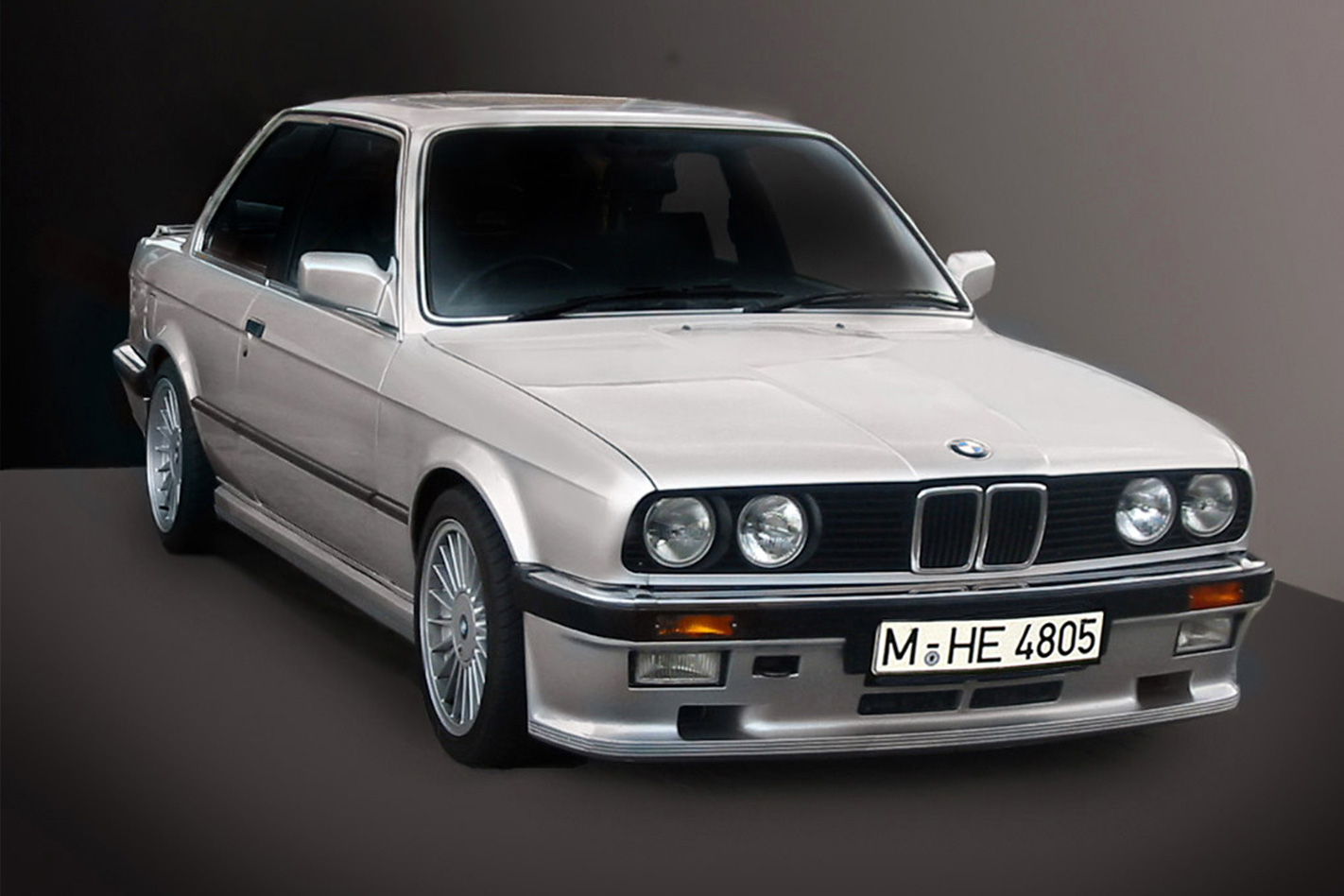
The story begins at BMW Group Plant Munich, where the first 3 Series rolled off the line. From the outset, the factory adopted a flexible approach to manufacturing, using overhead conveyor systems and programmable welding equipment that allowed different variants to be produced side by side. In 1982, with the launch of the second-generation 3 Series, Munich introduced a fully automated body shop. Industrial robots pushed automation levels beyond 90 per cent, a significant step at the time.
Those advances were paired with changes to shift patterns and working-time models, allowing the plant to increase output without major expansion. Over subsequent decades, Munich continued to modernise, introducing new coating processes, computer-controlled engine production and, more recently, digital and AI-supported quality monitoring systems. The 3 Series remained at the centre of these developments, serving as a consistent platform for production innovation.
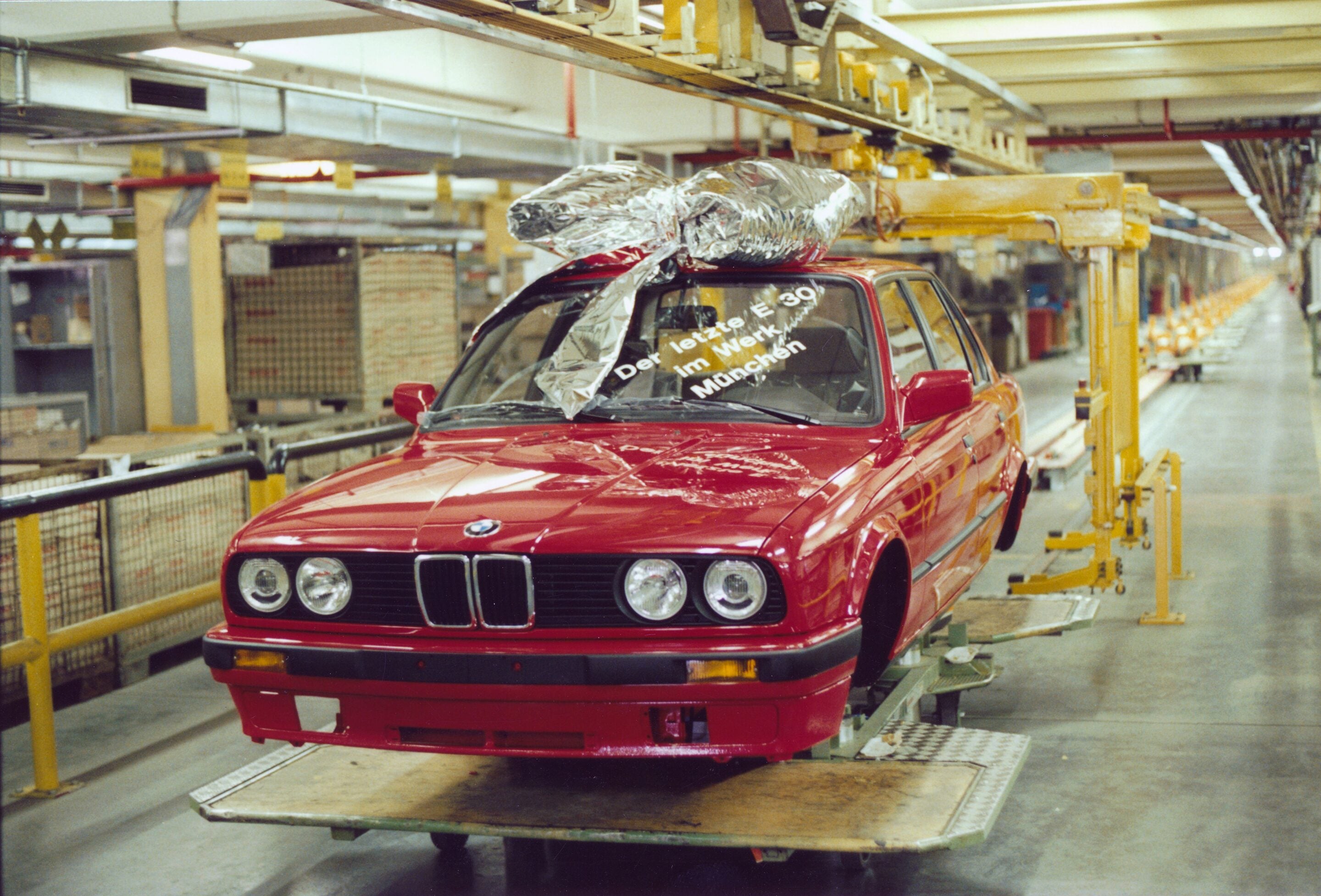
As demand for the model grew, it also drove expansion beyond Munich. In 1980, production was extended to Dingolfing, followed by Regensburg in 1986. The 3 Series soon became a vehicle for BMW’s international ambitions. Manufacturing began in Rosslyn, South Africa, in 1984, marking one of the company’s earliest steps outside Europe. A decade later, the model was part of the ramp-up at Spartanburg in the United States, supporting local supply for the North American market.
This pattern repeated itself over time. With the exception of the new plant in Debrecen, Hungary, every new BMW factory since Regensburg has launched with the 3 Series. Facilities in Leipzig and San Luis Potosí, as well as BMW Brilliance Automotive’s joint venture plants in China, all relied on the model during their early production phases. Its relatively high volumes and broad appeal made it well suited to stabilising new sites.

Across generations, the 3 Series has been built in a wide range of body styles, from sedans and wagons to convertibles and high-performance M variants. These different versions, along with multiple powertrain types, have often been assembled on the same lines. Internal combustion engines, plug-in hybrids and, in some markets, fully electric drivetrains have coexisted within a single production system, underscoring BMW’s emphasis on manufacturing flexibility.
Today, the seventh-generation 3 Series is produced in Munich, Shenyang in China and San Luis Potosí in Mexico, alongside regional plants in India, Thailand and Brazil, and partner facilities in other countries. Production responsibilities are spread to align supply more closely with local markets.
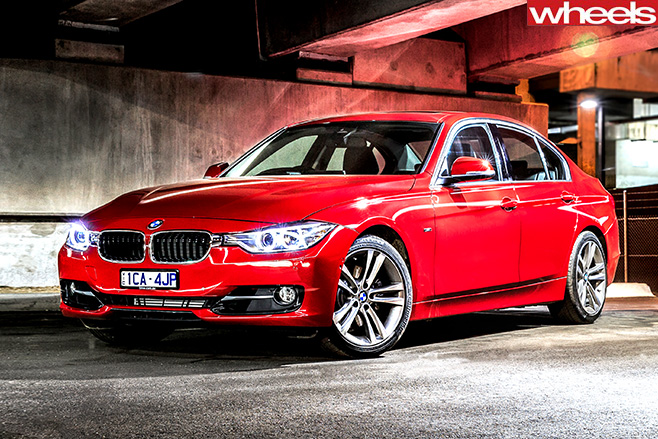
Looking ahead, the model is again set to play a pivotal role. Preparations are under way for the eighth generation, including a fully electric 3 Series that will be built in Munich from the second half of 2026 as part of BMW’s NEUE KLASSE programme. Production is expected to follow in China and Mexico, with plans also in place to return 3 Series manufacturing to Dingolfing.
After 50 years, the BMW 3 Series remains both a commercial mainstay and a practical tool for evolving how the company builds cars — linking its past as a Munich-based manufacturer to its present as a global producer.
| What | Plants | When |
|---|---|---|
| 1st generation 3 SeriesSedan | Munich, Dingolfing | 1975-1983 |
| 2nd generation 3 Series Sedan, Convertible, Touring, M3 (Coupe and Convertible) | Munich, Dingolfing, Regensburg, Rosslyn (South Africa) | 1982-1994 |
| 3rd generation 3 Series Sedan, Coupe, Convertible, Touring, Compact, M3 (Sedan, Coupe, Convertible) | Munich, Dingolfing, Regensburg, Spartanburg (USA), Rosslyn (South Africa) | 1990-2000 |
| 4th generation 3 Series Sedan, Coupe, Convertible, Touring, Compact, M3 (Coupe, Convertible) | Munich, Dingolfing, Regensburg, Rosslyn (South Africa) | 1997-2006 |
| 5th generation 3 Series Sedan, Coupe, Convertible, Touring, M3 (Sedan, Coupe, Convertible) | Munich, Regensburg, Rosslyn (South Africa), Dadong (China), Leipzig | 2004-2013 |
| 6th generation 3 Series Sedan, Touring, Gran Turismo, M3 (Sedan)The Sedan, Touring and Gran Turismo continued to be marketed as the BMW 3 Series, while the Convertible, Coupe and new Gran Coupe formed a separate family for the first time: the BMW 4 Series range. | Munich, Dingolfing, Regensburg, Rosslyn (South Africa), Tiexi (China) | 2011-2021 |
| 7th generation 3 Series Sedan, Touring, M3 (Sedan, Touring), i3 (fully-electric, China only) | Munich, Tiexi (China), San Luis Potosà (Mexico) | since 2018 |
Geely has confirmed that its smallest electric model, the EX2 hatchback, will join the brand’s Australian range in the second half of 2026. The move marks Geely’s first entry into the compact city-car segment locally, broadening its EV offering beyond the larger EX5 and Starray hybrid models.
The EX2 sits on Geely’s Global Intelligent Electric Architecture (GEA), the same platform underpinning its other new-energy models. The company says the modular design allows the architecture to scale down effectively for city use while still supporting the safety and tech features of its larger vehicles.
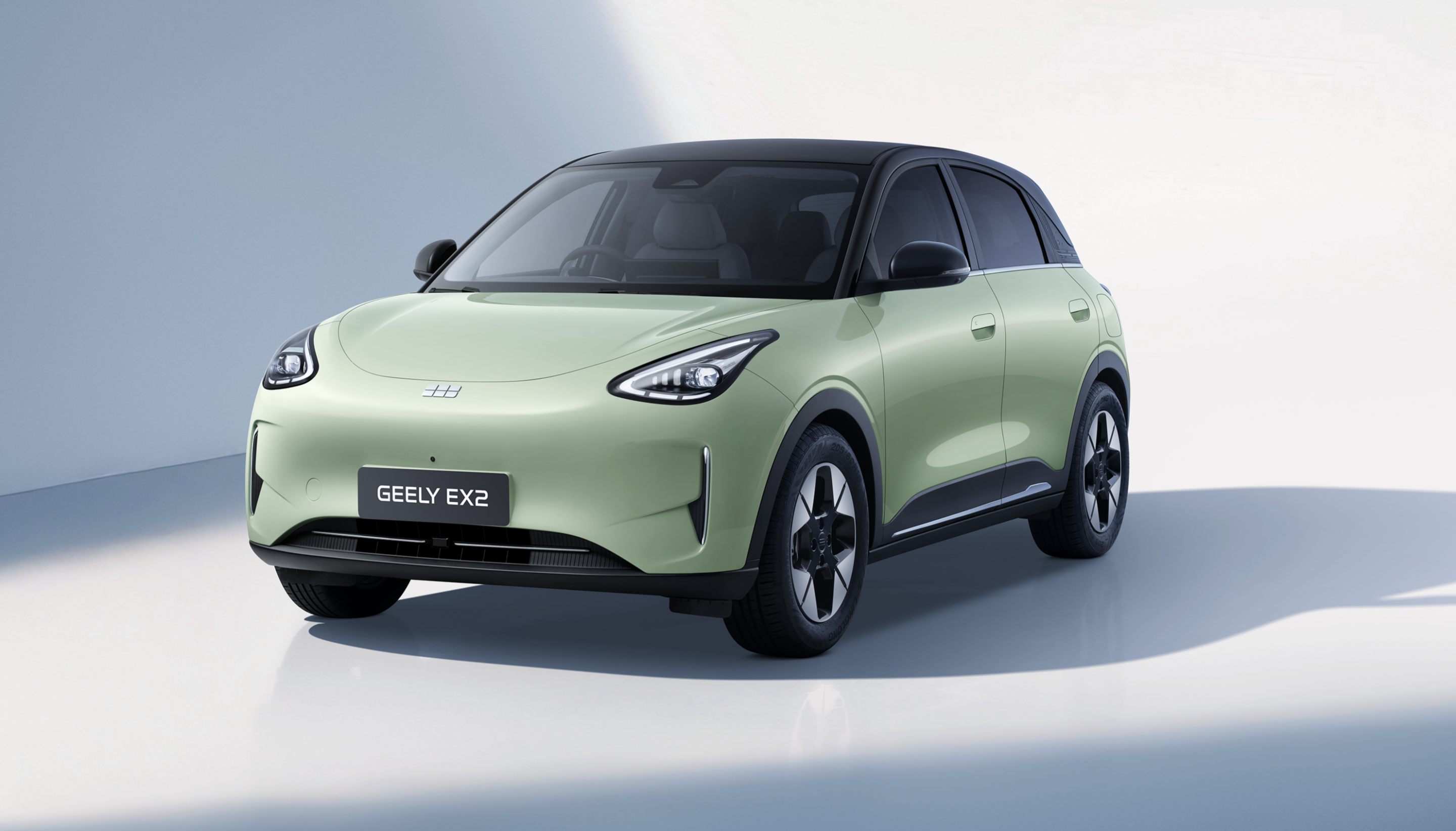
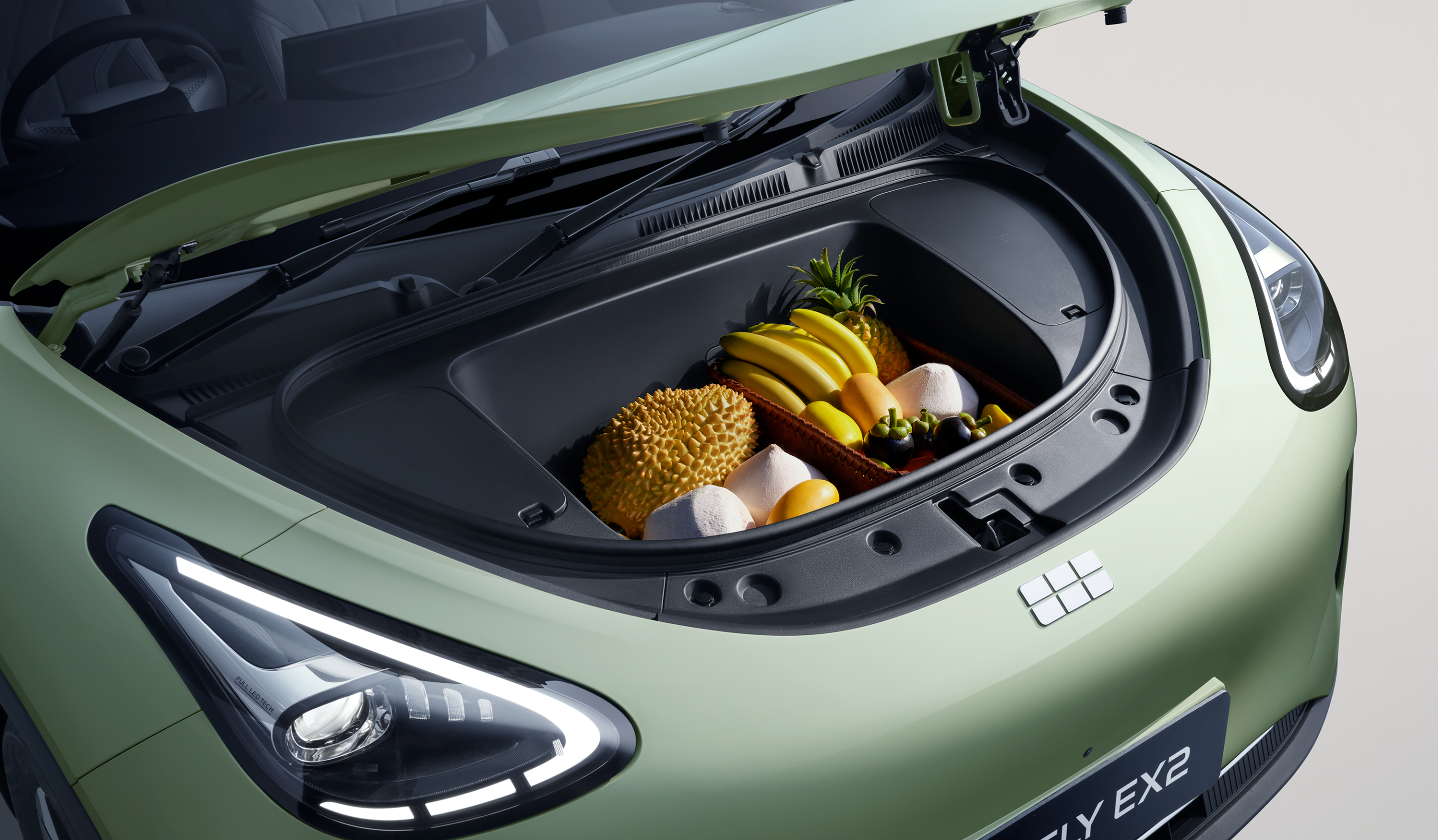
Sized at 41035mm long and 1805mm wide, with a 2,650mm wheelbase, the EX2 is positioned as a space-efficient commuter car. Geely claims the cabin has been engineered to maximise storage, with more than 30 compartments, including a small front boot beneath the bonnet. Inside, the design leans heavily on touchscreen-based controls and connected features, while the driving experience is intended to prioritise manoeuvrability in tight urban environments.
The exterior takes a more playful approach than the brand’s existing Australian offerings, with simple body surfacing and pastel colour choices. A rounded front treatment—described by Geely as its “smile face” design—distinguishes the model from the sharper lines of the EX5 SUV.
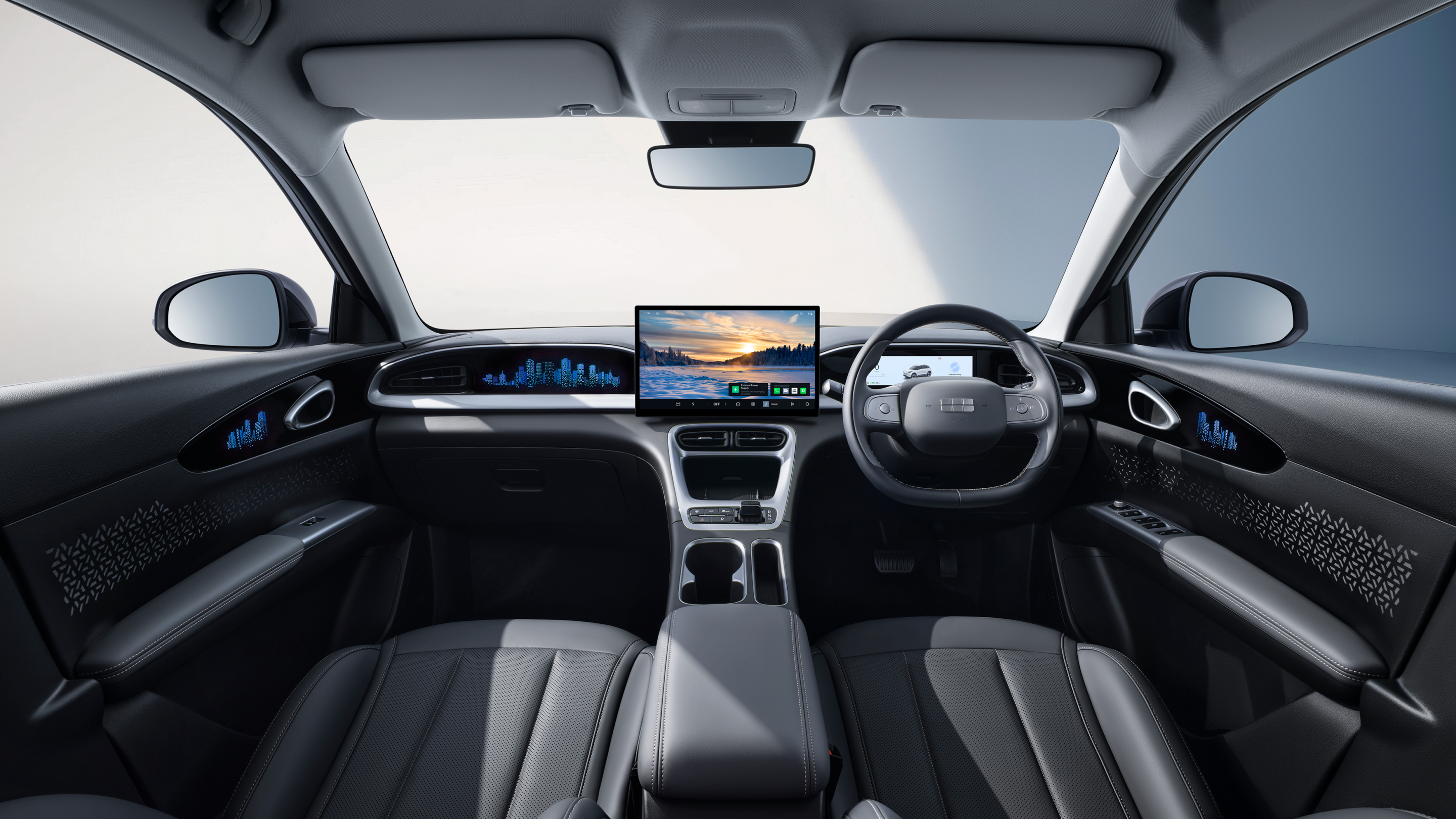
In China, where the EX2 is sold as the Xingyuan (“Star Wish”), the car has become a major seller. It was the country’s top-selling vehicle across all categories in 2025, recording more than 400,000 sales in its first year on the market, including 50,000 units in September alone.
Australian specifications, battery range estimates, equipment levels and pricing will be announced closer to launch. With the EX2 set to sit at the base of Geely’s range, it is expected to play a key role in the brand’s push to offer more affordable EV options as competition intensifies in the entry-level segment.
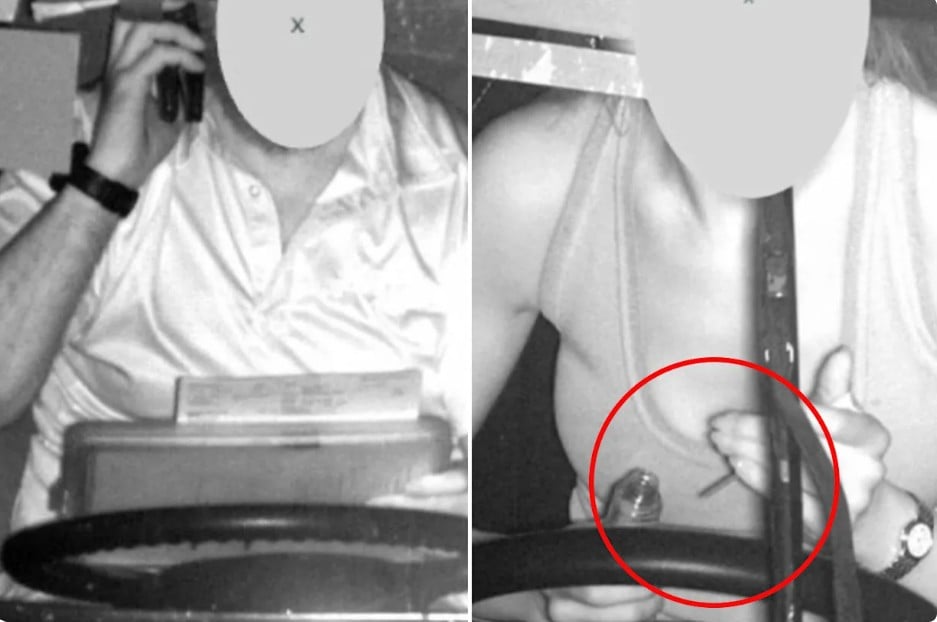
Western Australia’s newly deployed AI-assisted road-safety cameras have detected tens of thousands of offences in their first month of full operation, issuing almost $13 million in fines. The cameras, activated in October after an extended public education phase, flagged 31,855 infringements by November 8 for seatbelt breaches, mobile phone use and speeding.
Mobile phone offences made up the largest share with 12,288 infringements, followed by 10,285 drivers or passengers not wearing seatbelts correctly and 9,282 speeding offences. The figures come after an eight-month awareness period in which the cameras identified more than 380,000 potential breaches and issued 65,000 caution notices rather than fines.
WA Road Safety Minister Reece Whitby said the behaviour captured by the cameras has been “extraordinary and deeply concerning”, noting that the technology is revealing risks that frontline police cannot routinely observe. He stressed that while AI software provides an initial assessment, human reviewers ultimately confirm every infringement.
“If the system thinks an offence has occurred, two separate reviewers look at the images before anything is issued,” Whitby said. “But it is staggering that drivers still put themselves and others at such obvious risk by ignoring basic safety rules.”
Some incidents documented by the cameras highlight the severity of the problem. In one case, a truck driver travelling at 100km/h on the Mitchell Freeway was allegedly using both a laptop and mobile phone while also unbelted. Another incident involved a front passenger who appeared unrestrained while holding an unrestrained baby. A further detection showed a driver in a school zone allegedly 20km/h over the limit with no hands on the wheel while using a phone.
Jessica Stojkovski, Minister Assisting the Transport Minister, said the new camera network is exposing a wider range of unsafe behaviours than previously detected. “We’re seeing regular evidence of drivers using mobile phones, passengers not correctly belted, and other actions that significantly increase the risk of serious injury,” she said. “The message is simple: the technology is active, and risky behaviour will attract fines and demerits.”
Under WA law, holding or touching a mobile phone while driving triggers a minimum $500 penalty and three demerit points, while incorrect seatbelt use starts at $550 and four demerits.
Revenue generated from camera infringements is directed to the state’s Road Trauma Trust Account, which funds road-safety initiatives across Western Australia.
Jaecoo Australia has announced local specifications for its upcoming J5 EV small electric SUV, which is due on sale in Australia in January 2026. Pricing is yet to be revealed, but the J5 EV will launch in a single Track spec ahead of both petrol and hybrid variants that will launch later in 2026. The J5 EV features a 61.1kWh LFP battery for up to 402km of range (WLTP).
The first electric vehicle (EV) that Jaecoo has launched locally, the J5 EV can be charged from 30 to 80 per cent in a claimed 28 minutes, while Jaecoo Australia claims efficiency of just 14.3kWh/100km. The J5 EV features a 155kW/288Nm front electric motor for a claimed 7.7-second 0-100km/h time.
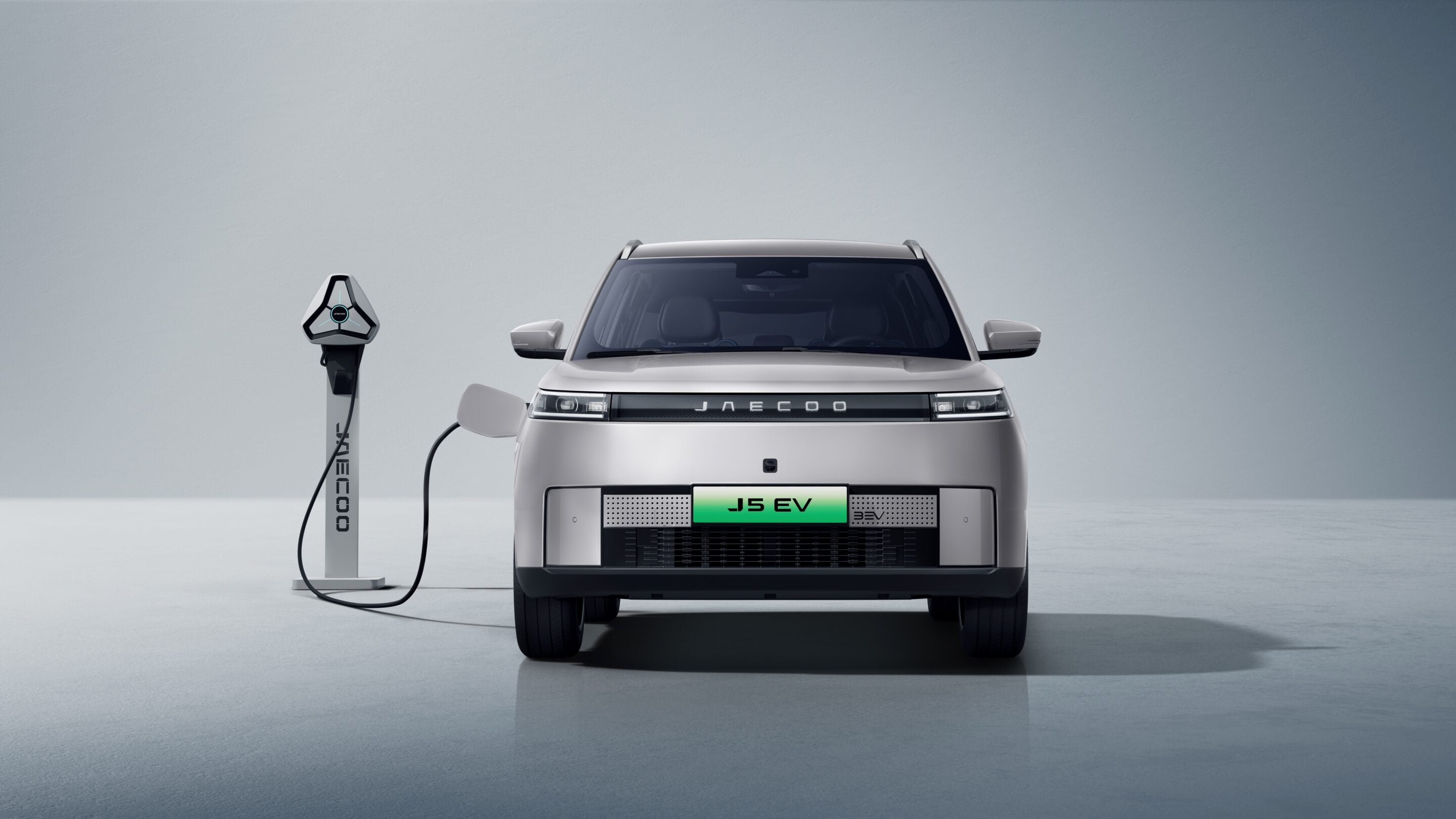
The J5 measures 4380mm long, 1860mm wide and 1650mm tall and rides on a 2620mm-long wheelbase, making it slightly smaller than a Chery C5 but slightly larger than a Hyundai Kona. It can tow up to a 750kg braked trailer.
Features inside the J5 EV include a large 13.2-inch touchscreen with wired and wireless Apple CarPlay and Android Auto smartphone mirroring, an eight-speaker sound system and synthetic leather upholstery that is “pet friendly”, according to Jaecoo.
“We are beyond excited with the arrival of the J5 range in Australia”, said Roy Munoz, Chief Commercial Officer Omoda Jaecoo Aus & NZ. “Kicking off with the BEV variant, it will be a compelling choice in an increasingly competitive EV market. No other vehicle currently offers a pet-friendly interior and a large selection of accessories, which range from a dog carrier to a waterproof cargo mat, and even a karaoke machine.”
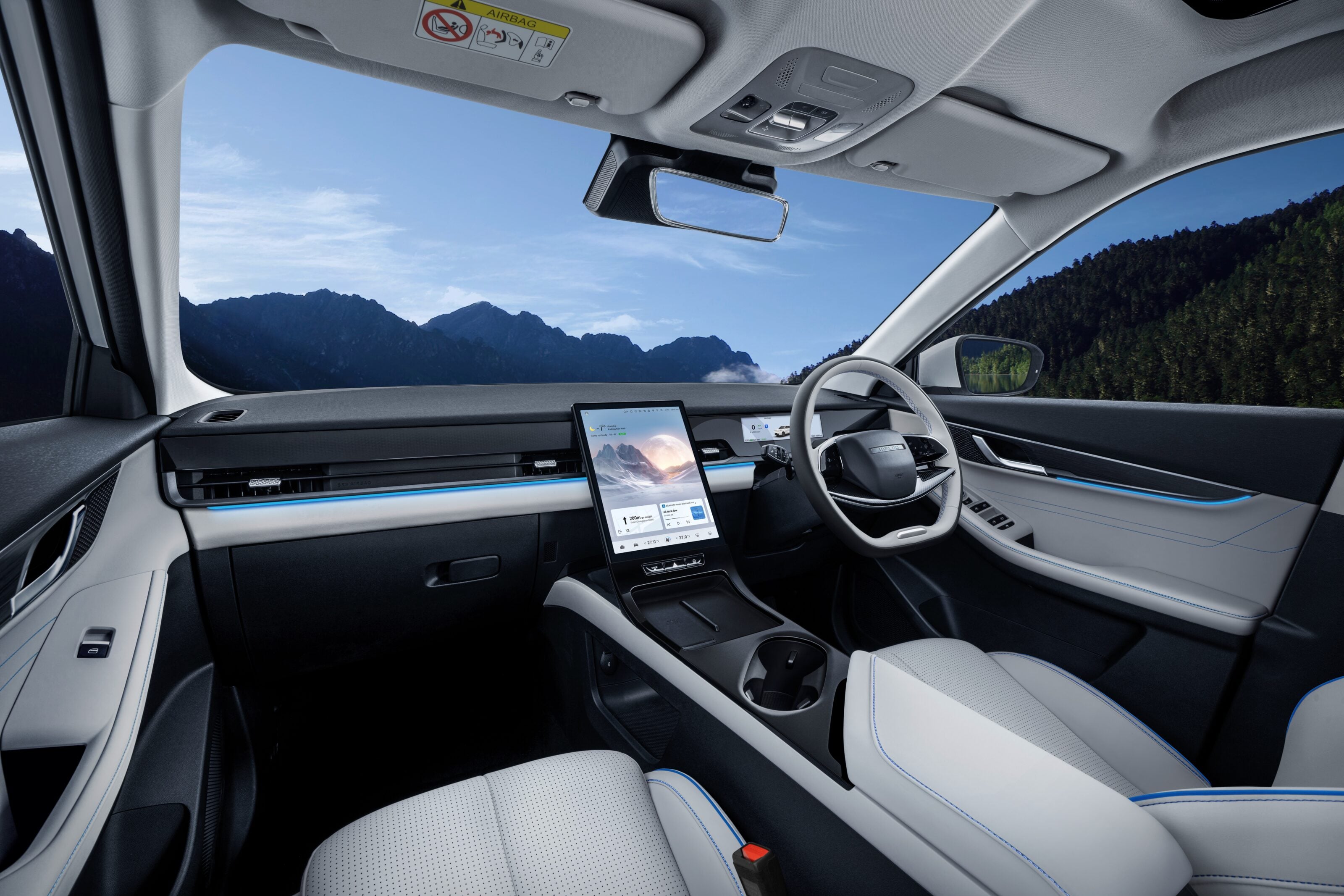
Jaecoo J5 EV standard equipment:
- 18-inch alloy wheels with Continental tyres
- Power tailgate
- V2L (Vehicle-to-Load) functionality
- Keyless entry and push button start with remote start
- LED projector headlights
- LED daytime running lights
- Acoustic front door glass
- Glass Roof with powered sunshade
- Dual-zone climate control
- Synthetic leather upholstery
- Heated and ventilated front seats
- 8.88-inch LCD driver instrument cluster
- 13.2-inch LCD touchscreen
- 8-speaker sound system
- Apple Carplay & Android Auto (Wired + Wireless)
- Voice control (“hello Jaecoo”)
- 50W wireless phone charger
- 360-degree camera
- 7x airbags
- Autonomous emergency braking
- Adaptive cruise control
- Lane keeping assistance
- Adaptive lane guidance
- Blind-spot monitoring
The Jaecoo J5 EV will launch in Australian showrooms in January 2026, with petrol and hybrid J5 variants due to launch later in 2026.
BYD has announced local pricing for its new Sealion 5, introducing one of Australia’s cheapest plug-in hybrid SUVs at $33,990 before on-road costs. The vehicle is available to order immediately, with first arrivals expected next year
The Sealion 5 becomes BYD’s most affordable PHEV yet in Australia and positions the brand to compete with mainstream petrol SUVs on price while offering an electrified option for buyers who aren’t ready to go fully electric. The move follows the launch of the ATTO 1 and ATTO 2, signalling BYD’s broader shift toward expanding its lower-cost new-energy line-up.
| SEALION 5 ESSENTIAL | $33,990 |
|---|---|
| SEALION 5 PREMIUM | $37,990 |
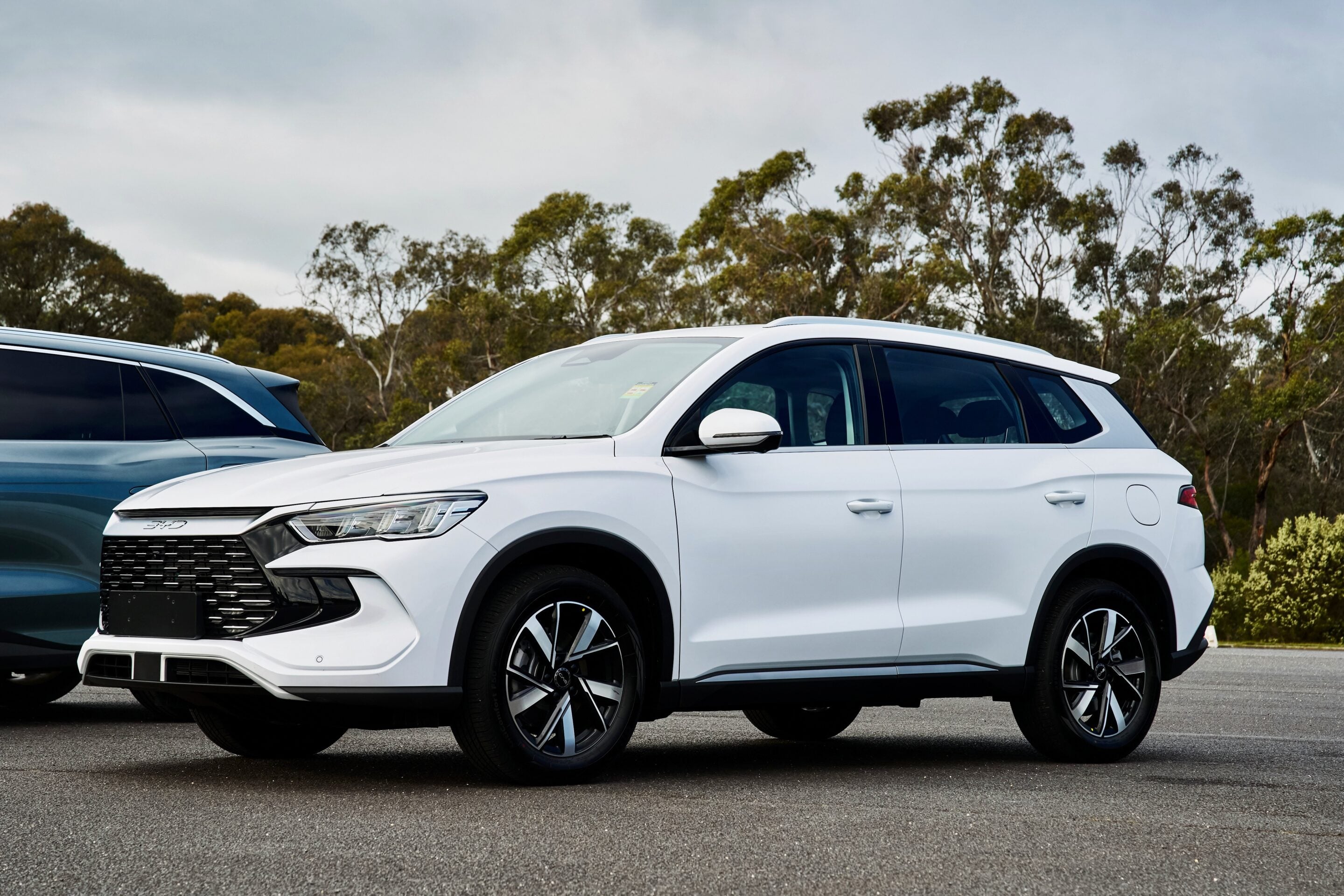
Two model grades will be offered – Essential and Premium – both using BYD’s Blade Battery and the company’s latest DM-i 4.0 plug-in hybrid system. The setup is designed to prioritise electric running for short commutes while relying on the petrol engine for longer distances. BYD cites a pure EV driving range of up to 100km under the NEDC test cycle and a combined range approaching 1000km. Claimed fuel consumption is as low as 1.2L/100km, though real-world figures will depend on charging habits and driving conditions.
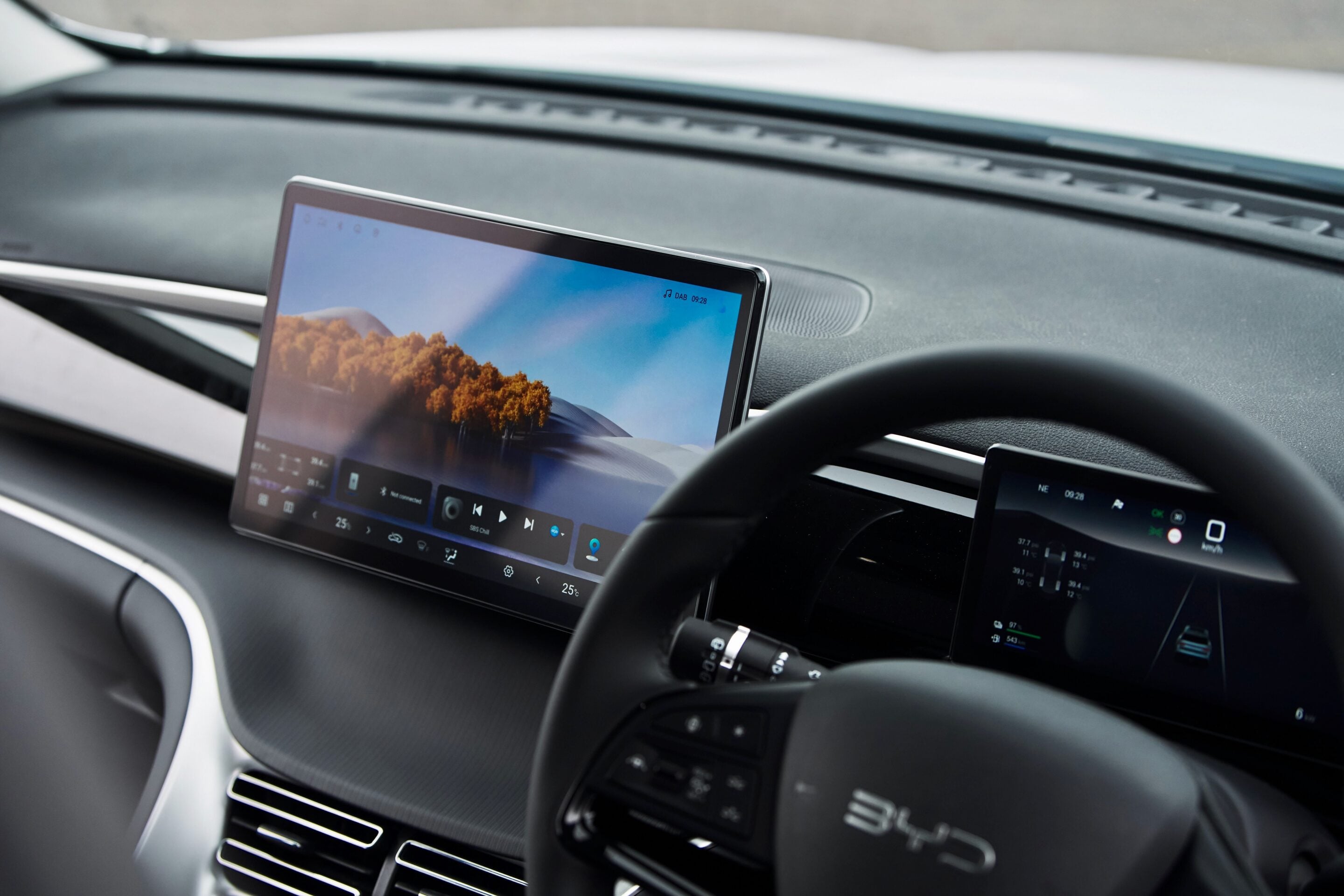
While full equipment details are still to be confirmed, BYD says the model includes the safety and driver-assistance features now expected in the medium SUV segment. The Sealion 5 also runs on BYD’s dedicated electric-first architecture rather than a converted petrol platform, a layout intended to maximise cabin space and efficiency.
Stephen Collins, BYD Australia’s chief operating officer, said the company expects the pricing to broaden appeal beyond early EV adopters. “Australians want real choice when it comes to electric mobility solutions, and the Sealion 5 offers that at a price point that will appeal to Australian families,” he told media.
The Sealion 5 arrives at a time when plug-in hybrids are gaining more attention locally as a middle ground between petrol and electric vehicles. While the technology remains a niche segment compared with hybrids and EVs, several brands plan to expand their PHEV offerings over the next two years.
With order books now open, the Sealion 5 joins a growing list of lower-priced electrified models aimed at cost-conscious buyers. How the newcomer performs in a segment dominated by conventional petrol SUVs – and increasingly competitive EVs – will become clear once deliveries begin.