
What stands out?
The Ford Endura is Ford Australia’s first large soft-road SUV since it stopped producing the Territory. It is powered by a 2.0-litre turbo-diesel that’s both powerful and relatively economical. It is good to steer, with polished cornering manners for a large SUV. There are front-drive and all-wheel-drive versions, and auto-braking is standard.While it first arrived in Australia at the end of 2018, the Ford Endura is a facelifted version of the second-generation Ford Edge, which has been on sale internationally since 2015.
What might bug me?
Reminders that your brand-new Endura is actually a facelifted version of the 2015 Ford Edge, such as the dated dashboard designBeing passed by BMW X3 and Volvo XC60 versions that are cheaper than your Endura Titanium.When you lurch forward a little after turning off the engine and taking your foot off the brake. The electronic handbrake doesn’t automatically engage when you select park.
What body styles are there?
Five-door wagon only. The Endura seats five people and is classed as a large SUV, lower priced.Each Endura variant comes with a choice of front- or all-wheel-drive.
What features do all Endura versions have?
Adaptive cruise control, a reversing camera, and parking sensors front and rear.A sound system with a CD player, AM/FM and digital radio, USB input, and at least six speakers. Bluetooth connectivity, which allows you to wirelessly connect a phone and play music from it.Satellite navigation, displayed on an 8.0-inch colour touchscreen with Ford’s excellent SYNC3 connectivity. SYNC3 allows voice control of the sat-nav, the digital radio, and other audio and phone functions.Support for Apple CarPlay and Android Auto, which lets you display apps from compatible smartphones on the touchscreen and control them from there.Active noise cancellation that uses a signal to electronically reduce cabin noise, much like noise-cancelling headphones.Push button start, and smart keyless entry that unlocks the Endura without the need to take the key fob out of your bag or pocket.10-way power adjustable driver’s seat.Power-folding and heated door mirrors that light up the ground near the front door as you approach and unlock your Endura.Rain-sensing windscreen wipers, LED cornering headlights with auto on-off high beam, LED fog-lamps and daytime running lights.A leather-wrapped steering wheel, with paddle gear shifters, and buttons for operating cruise control, sound system and your phone.Dual-zone air-conditioning (which allows different temperatures on either side of the cabin), and air-conditioning vents dedicated to rear-seat passengers.Electronic stability control, which can help control a skid. All new cars must have this feature.Seven airbags. (For the placement of airbags, and more on Endura safety systems, please open the Safety section below.)Autonomous emergency braking, forward collision warning, lane-keeping assist, and traffic sign recognition.The Escape is covered by a five-year, unlimited kilometre warranty.
Which engine uses least fuel, and why wouldn’t I choose it?
Each Ford Endura version is powered by a 2.0-litre, four-cylinder turbo diesel engine, with a choice of front- or all-wheel drive traction.Both FWD and AWD versions offer excellent fuel economy for a large SUV – 6.7 litres/100km on the official combined test. Driving each version in real world conditions saw that figure creep up about 8.5 litres/100km.All Enduras have an eight-speed automatic transmission that selects gears smoothly and provides more than adequate power. It has a sport mode that allows the engine to rev more before changing gears for when you want to get up to speed a little quicker.Power outputs and all other Ford Endura specifications are available from the Cars Covered menu, under the main image on this page.
What key features do I get if I spend more?
The least costly Endura, the Trend FWD, has cloth seats, rolls on 18-inch alloy wheels, and has the equipment in all Enduras.It only drives the wheels at the front, but spending about $4000 extra gets you an Endura Trend AWD that drives to all four wheels when needed, which brings you more security on slippery surfaces. This option is available across the Endura range.Spending a little more brings you the Endura ST-Line brings a sports-tuned suspension, 20-inch alloy wheels, and sporty exterior design enhancements including an ST-Line bodykit.Inside, the Endura ST-Line features ambient lighting, and sports seats with suede trim with leather accents, with the front passenger seat gaining 10-way power adjustments. Both front seats feature heating and cooling, and the driver’s seat has position memory settings. The steering wheel is trimmed with perforated leather, and there are aluminium pedals and scuff plates.The most expensive Endura, the Titanium, has a luxury focus with most of the features found in the ST-Line, but with plush leather-accented seats.It gains a panoramic sunroof, power-operated steering column adjustment, heated second-row seats, and power-operated tailgate with hands-free operation.Safety tech is also boosted with the addition of blind-spot detection and rear-cross traffic alert, and the Endura will almost park itself with active park assist.OptionsYou can add additional features to the Endura Trend for an additional cost including bigger 19-inch wheels, a panoramic sunroof, DVD screens for rear-seat passengers mounted in the front headrests, and a tow bar.Additional options for the ST-Line include the panoramic sunroof, DVD screens and tow-bar, plus a premium 12-speaker audio system with 180-degree split-view parking camera, and active park assist.Titanium options include the 12-speaker sound system, DVD screens, tow-bar, and micro-perforated leather-accented seat trim.
Does any upgrade have a down side?
The larger, lower profile tyres on the ST-Line and Titanium could cost more to replace and reduce ride comfort slightly (because there is less cushioning air between the wheel and the road).Oxford White is the only standard colour, with the other nine costing extra.
How comfortable is the Endura?
The Endura is excellent for long family drives, with a spacious cabin that offers plenty of leg and elbow room. Headroom is ample too, even with the panoramic sunroof installed.It is easy to get comfortable in the driver’s seat, thanks to the 10-setting power-adjustments, and vision is excellent. The front seats provide good back and side support, even in the more affordable Trend, which helps when driving through bends. And there’s enough padding and support for long trips.The rear seats also provide good support and can partially recline. Putting a third adult in the middle does makes things a little tight though. Children will have no such problems.Despite its size, the Endura feels relatively nimble around town, with light but nicely weighted steering. And it’s manageable in tight parking spots.It’s quiet, too, with good soundproofing that’s enhanced by electronic active noise cancelling technology, which eliminates much of the noise associated with diesel engines.The interior fit and finish is a little plain, even in the most-expensive Endura Titanium, but the overall quality is good.The dashboard is similar to older Ford models, including the Aussie-built Territory, though it’s less cluttered and bulky than the Ford Escape’s.The 8.0-inch infotainment screen is located a little low within the dash, but it does use Ford’s latest Sync3 infotainment system with inbuilt sat-nav and Apple CarPlay/Android Auto smartphone pairing. You also get a CD player, which is becoming increasingly quaint these days.
What about safety in an Endura?
The Endura has anti-lock brakes, stability control, and seven airbags. There is a seatbelt warning system for all five passengers, which is reassuring for parents. A reversing camera and front and rear parking sensors are standard.It’s one of the most advanced Ford models sold in Australia in terms of active safety, with all versions featuring autonomous emergency braking that can detect pedestrians as well as other vehicles.Lane-keeping assist, and traffic sign recognition are also standard, with the more expensive Endura Titanium gaining rear-cross traffic alert and blind-spot monitoring.Adaptive cruise control, which can match your speed to that of a slower car ahead on the highway until you are free to overtake, is also included across the range.All Endura versions also get auto LED headlights that illuminate when it gets dark. In addition, your headlamps switch to low beam automatically for oncoming drivers, and a pressure monitor warns you if a tyre is going flat (perhaps giving you more time to get a slow puncture seen to). And the windscreen wipers can also operate automatically when it rains.The seven airbags are in the usual places: one in front of each front seat occupant; one to protect the driver’s knees; side airbags outside each front seat to protect at chest level from side impacts; and curtain airbags that protect the heads of front and rear occupants from side impacts.The outboard rear seats have ISOFIX child seat anchorage points.The Australasian New Car Assessment Program (ANCAP) awarded the Endura five stars for safety.
I like driving – will I enjoy this car?
Yes. The Endura is one of the better affordable large SUVs to drive. It steers fluidly, and feels poised and precise in bends. That builds confidence. This is especially the case with the ST-Line, which has a sports suspension to improve handling without compromising ride comfort.The 2.0-litre turbo diesel engine feels refined and provides enough grunt for suburban and highway driving with plenty of power in reserve for overtaking.There is a sports mode button in the middle of the rotary gear-selector that partially overcomes turbo lag and allows the eight-speed automatic to rev higher before changing gears for quicker acceleration when needed.All Endura versions provide a comfortable driving position and excellent visibility.All-wheel drive versions can operate on moderate dirt tracks and snow-covered roads.
How is life in the rear seats?
The Endura’s rear seats partially recline, and a central armrest (with two cupholders) makes life more comfortable when there are just two rear passengers.All Enduras have rear air-conditioning vents, plus a 12-volt and 230-volt sockets to plug in devices and phone chargers.With the armrest folded, a central rear passenger sits higher than the outer two. Compensating partly for that is the near-flat shape of the rear floor.Leg room is generous, and overall the rear compartment feels invitingly airy. Headroom is excellent too even with the panoramic sunroof.
How is it the Endura for carrying stuff?
The Endura has a generous 800-litre boot space, which is well above average for large SUVs. That said you might have some trouble fitting taller, bulkier loads because of the raked-forward tailgate glass.The boot floor lifts to reveal a space-saver spare tyre and several storage compartments.The Endura has a braked towing capacity of 2000kg.
Where does Ford manufacture the Endura?
The Ford Endura is manufactured in Canada.
What might I miss that similar cars have?
Perhaps the capacity to seat seven passengers, which is a feature of most large SUVs including the Holden Acadia, Hyundai Santa Fe, Kia Sorento, Mazda CX-8 and CX-9, Nissan Pathfinder, Skoda Kodiaq and Toyota Kluger.A nippy petrol version that’s better suited to urban driving, as available with the Acadia, CX-9, Pathfinder and Kluger.Or you might want a large SUV with better off-road capability such as the Ford Everest, Mitsubishi Pajero Sport, Holden Trailblazer, Isuzu MU-X, Toyota Fortuner or Toyota Prado.Other large SUVs you might contemplate include the Jeep Grand Cherokee and Subaru Outback, while spacious medium SUVs such as the Nissan X-Trail and Honda CR-V (which are both available with seven seats) could also be considered rivals.
Are there plans to update this model soon?
The Ford Endura arrived in Australia at the very end of 2018. While brand new to Australia it is an updated version of the second-generation Ford Edge, which first arrived on the scene in North America in 2015. It is a fresh update though, so don’t expect another update until the at least the end of 2020.
I like this car, but I can’t choose which version. Can you help?
The entry-level Endura Trend AWD offers excellent value, and comes with the same powertrains, performance and many of the features found in the more expensive variants. The AWD traction is better for towing.
One of the most legendary Pikes Peak machines in the world has crashed in NZ this week, as Kiwi motorsport legend Rod Millen rolled his Toyota Celica Pikes Peak hillclimb racer.
The car that allowed Millen to essentially set an unbreakable record at Pikes Peak was seen in an Instagram video attributed to Millen being lifted back onto the track at his property during the running of Leadfoot Festival 2020.
It seems Millen himself is just fine, with no reports of injury, but the Celica has seen better days. Once the car was craned back onto the black stuff, Millen was even able to drive the car away from the scene of the crash.
https://www.instagram.com/p/B8X4HlxI_M-/?utm_source=ig_embed&utm_campaign=loading
Rod’s not calling it a wreck, though, as Millen’s friend and fellow motorsport personality Ray Evernham says “if you can drive it back to the pit it wasn’t a wreck,” according to Millen.
“Rod does not get charged with a wreck. Even though they had [to] use a chainsaw and a crane to get it back on track,” Evernham commented jokingly.
Thankfully Millen’s beats will live to see another day, with the purpose-built tube-frame racer still operational aside from its impact damage.
https://www.instagram.com/p/B8X4dTHI17o/?utm_source=ig_embed&utm_campaign=loading
The car holds a special place in the realm of Pikes Peak history, as it remains the fastest car to run up the Race to the Clouds pre-paved surfaces.
With a time of 10:04.06 on its debut in 1994, Millen and the Celica beat the previous record by almost 40 seconds.
A 630kW+ racing engine (Toyota’s 2.1-litre 3S-GTE turbo four) and aero parts ‘borrowed’ from Dan Gurney’s former All-American Racing F1 team.
The record was beaten years later, in 2007, after the course had been partially paved with tarmac. Here’s hoping we see the Celica back in action for displays again soon.
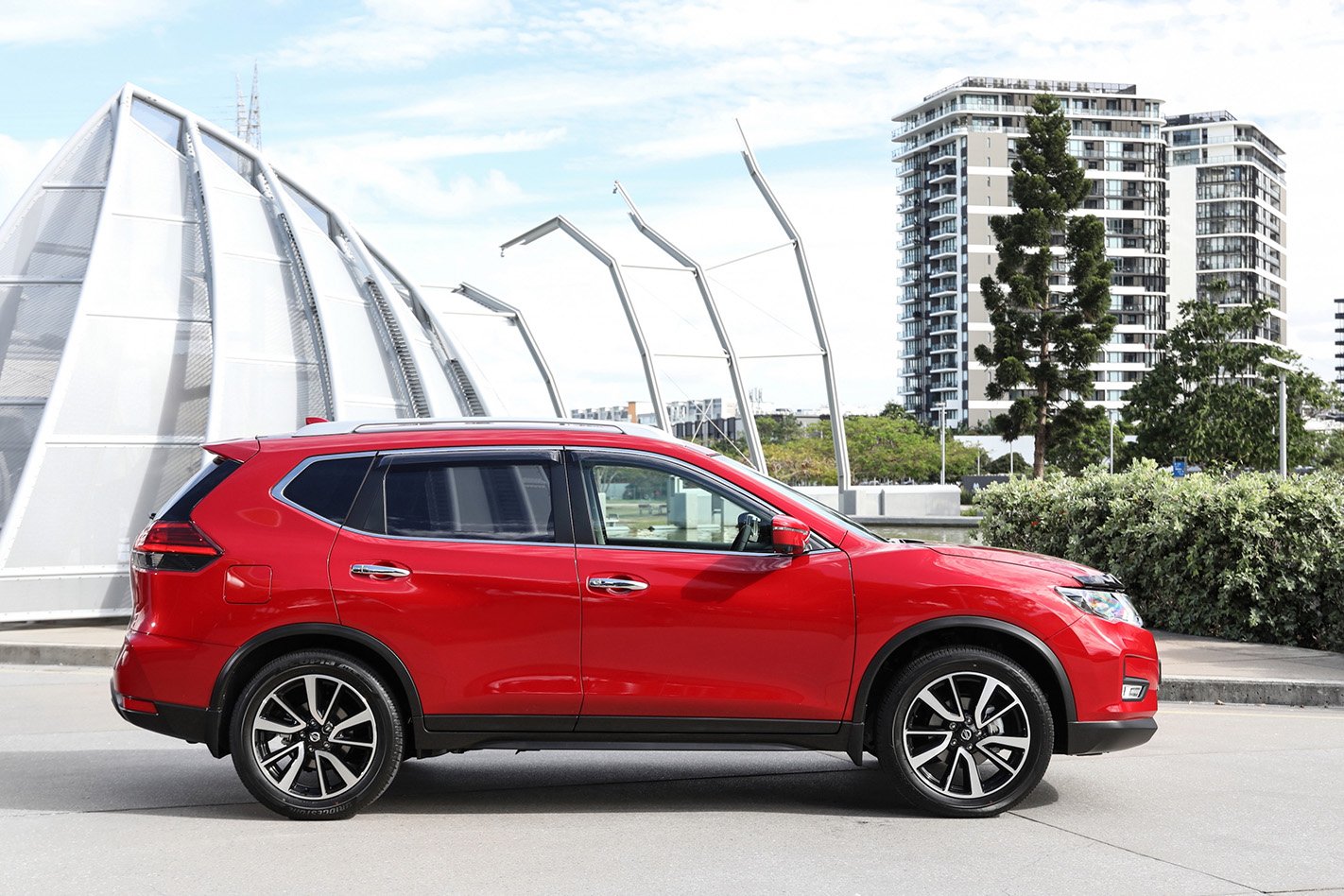
These days it seems you can’t even drive to the corner shop without seeing at least one X-Trail on the way, and as more Australians succumb to the SUV craze, we were interested to see what the new N-Trek variant of one of Australia’s most popular medium SUVs has to offer
What is it?
The Nissan X-Trail is the Japanese automaker’s mid-size SUV and the company’s best-selling vehicle of 2019. Smaller than the veteran Nissan Pathfinder, this family vehicle is available with 5 or 7 seats and in either 2WD or 4WD.
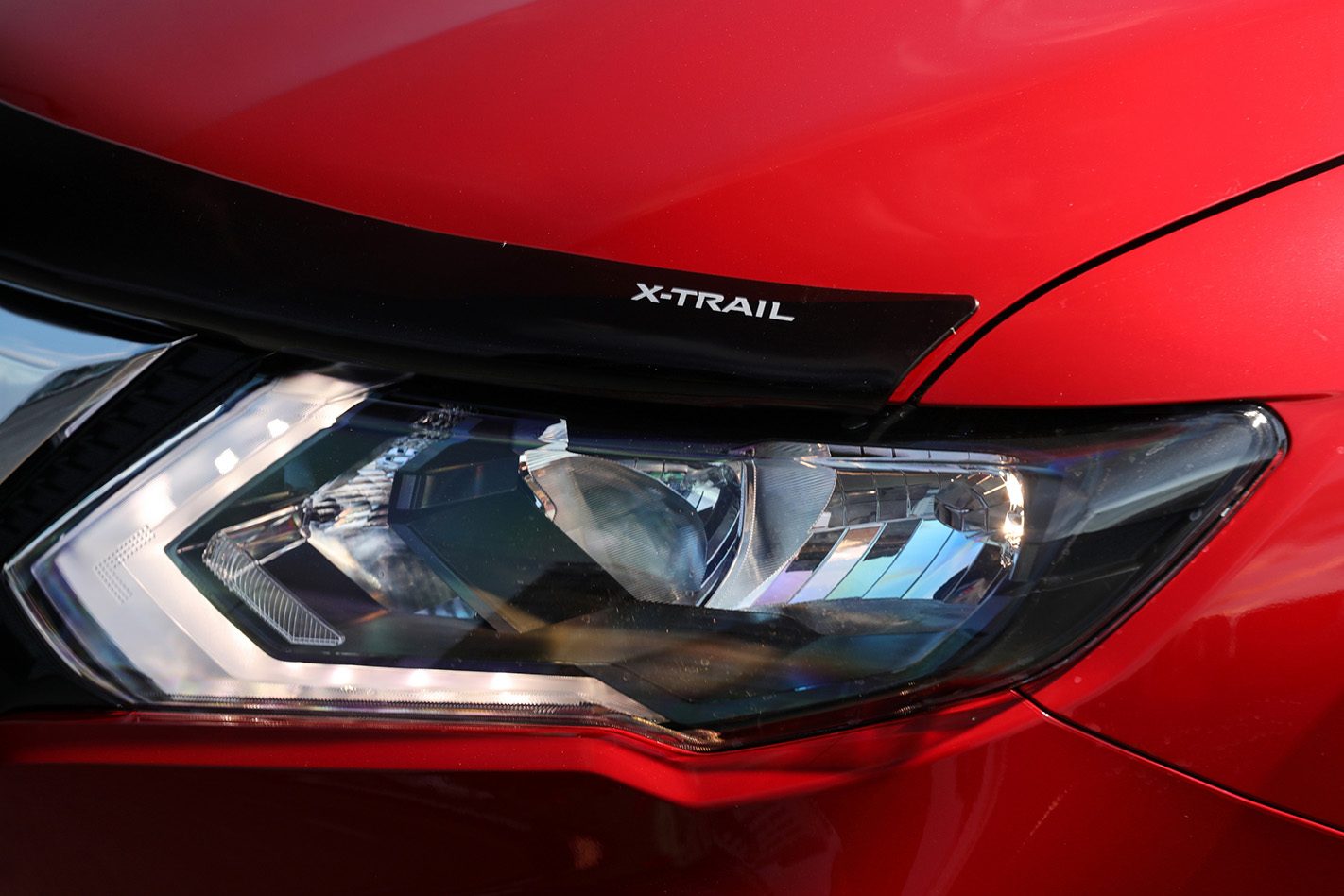
To test, we were provided a middle of the range limited edition 4WD N-Trek, which retails at $40,700 (excluding on road costs). Based off the $39,700 X-Trail ST-L 4WD, this special variant sports additional features like weather shields, a bonnet protector, Bose premium audio system, 19-inch alloy wheels and a smattering of N-Trek badges as standard.
What’s it like to drive?
One word sums up the N-Trek experience – sensible. In N-Trek trim the X-Trail is packed full of safety features including autonomous emergency braking, blind spot monitoring and rear cross-traffic alert, sensible features that help keep you out of trouble.
However for a vehicle that promotes its advanced driving tech, the foot operated park brake seems old and clunky. At least the drive itself is smooth. Pressing down on the accelerator doesn’t coax much in the way of thrust from the 126kW 2.5 litre petrol, further highlighting the sensible-shoe nature of the X-Trail, but its no-nonsense motoring thanks to the smoothness of the CVT automatic.

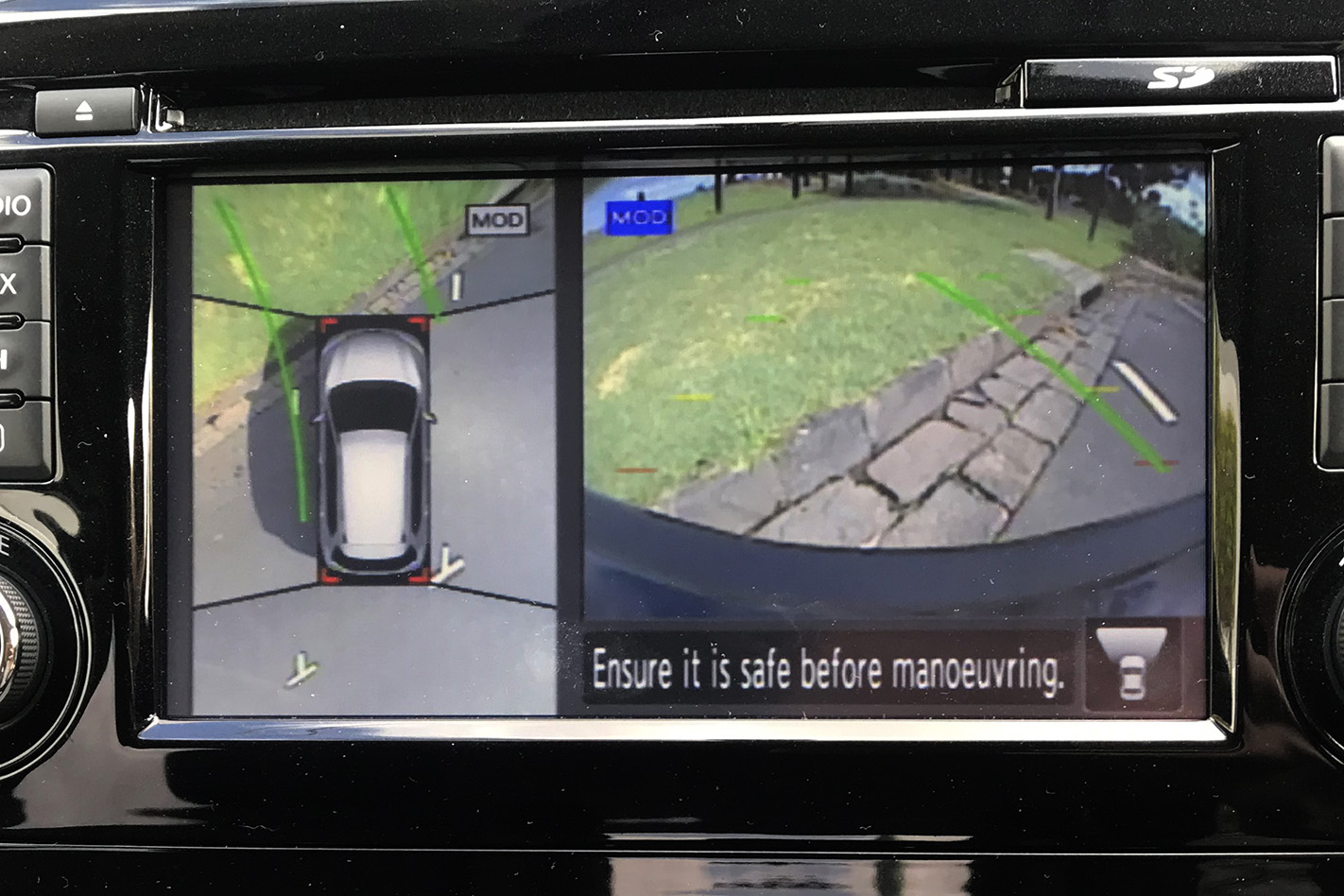
Urban driving is all about tight manoeuvring, and I was genuinely impressed with some of the intelligent driving features such as the split view reverse camera, that not only provides a view of what’s behind, but an entire 360 birds-eye view of the car’s surroundings. Captured using four exterior cameras, the footage is clear and enables you to view all outer corners of the car whilst parking – and thus help keep your paint intact.
What’s it like to live with?
It is evident by design that the Nissan has targeted this model at families – the heartland of the mid-size SUV segment. Big yet not obnoxiously so, the X-Trail 4WD is practical for city errands as well as longer weekend getaways.If you come from a long-limbed family (like me) you will be impressed with the legroom in both the front and rear, especially considering this isn’t a full-size SUV.
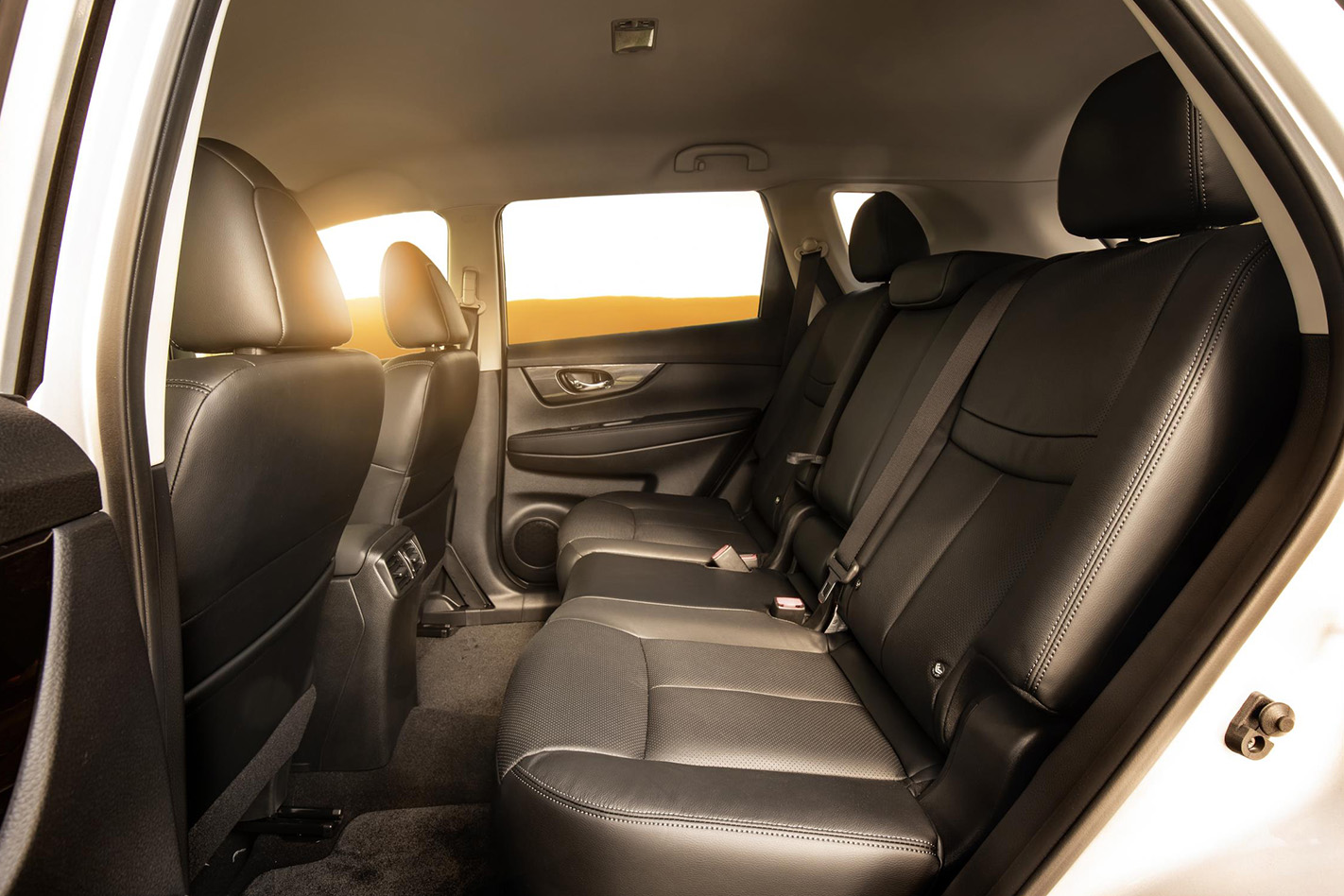
Nissan might be a mainstream brand but the N-Trek’s leather adds a sense of class to the cabin while passengers in the front receive the added luxury of heated seats and dual-zone climate control. The entire second row is elevated and whilst I don’t have any mini-me’s to pack in, the backseat would provide a great view of the road for young kids. On the down side, headspace seems a little limited for taller passengers.
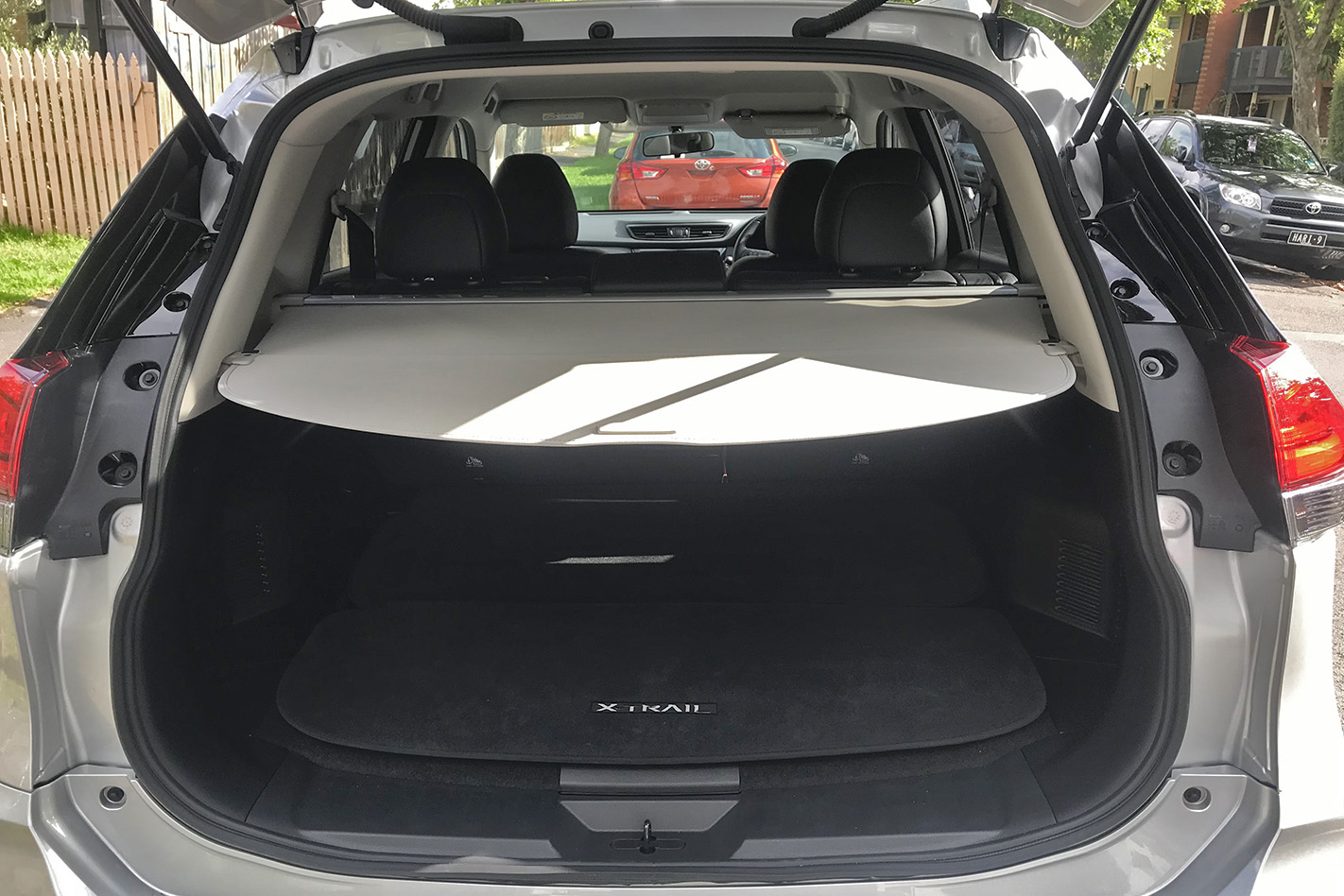
Nissan’s X-Trail comes with a very generous 565L boot capable of fitting bags for the entire family. Unfortunately for the N-Trek a hands-free tailgate is only available in the Ti variant, but smart key entry comes standard across the range.
Connecting your mobile to the Bluetooth is easy, yet the X-Trail lacks some of the modern smart phone mirroring technologies such as Apple CarPlay or Android Auto. The N-Trek comes with built-in satellite navigation, however its graphics and user interface appear a little dated on the 7 inch touch screen – which is also on the small side in this day and age.
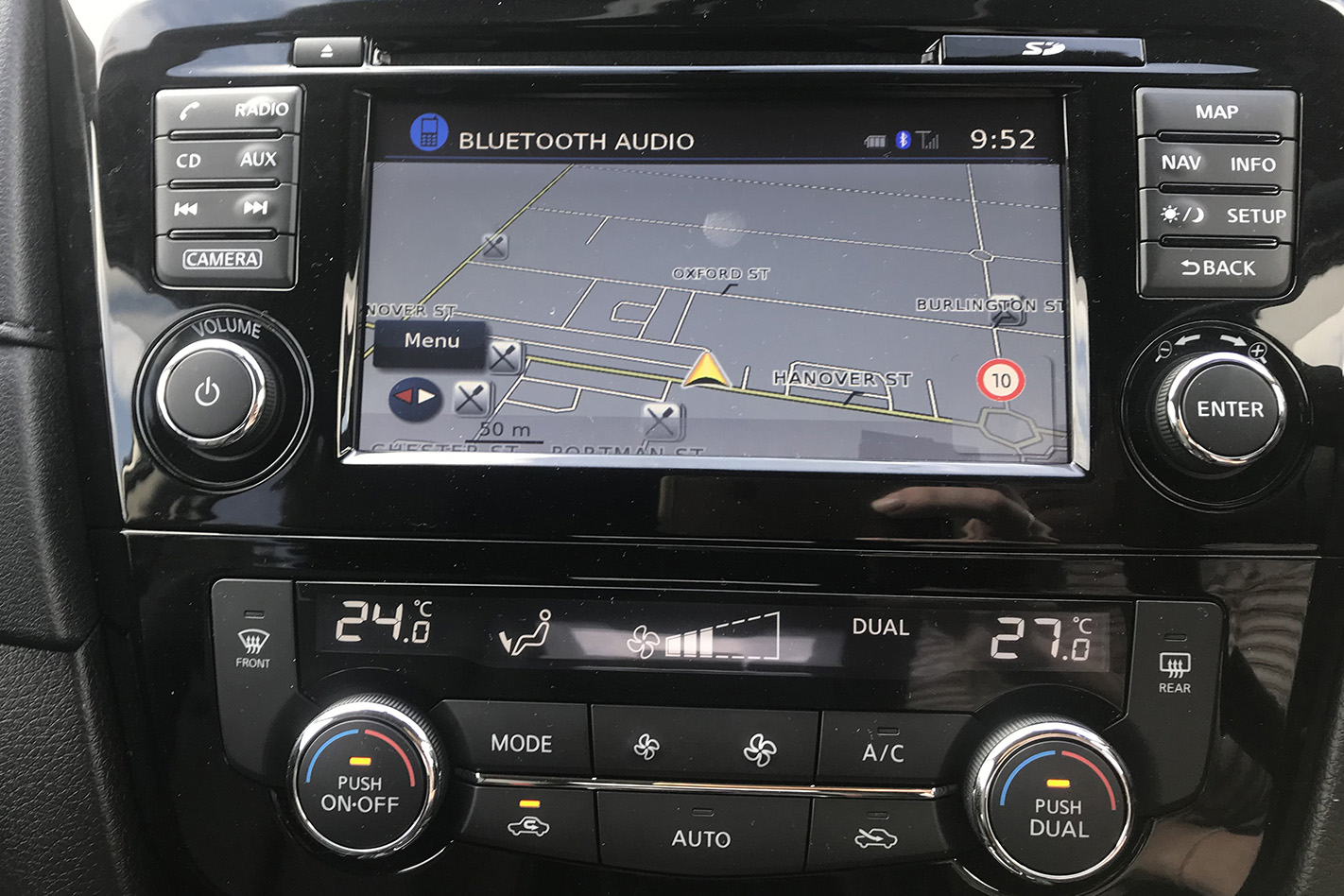
That said, drivers can view turn-by-turn nav instructions on the additional display in the centre of the instrument panel, which is handy if someone else is playing with the radio on the main infotainment screen.
Is it worth the money?
The middle-of-the-range 4WD N-Trek with its $40,700 (excluding on road costs) price tag, is well equipped with safety and intelligent driving features, and as a value-oriented special edition it makes a reasonable case for itself. That said, soft performance from the engine and that antiquated foot parking brake might deter a few buyers.
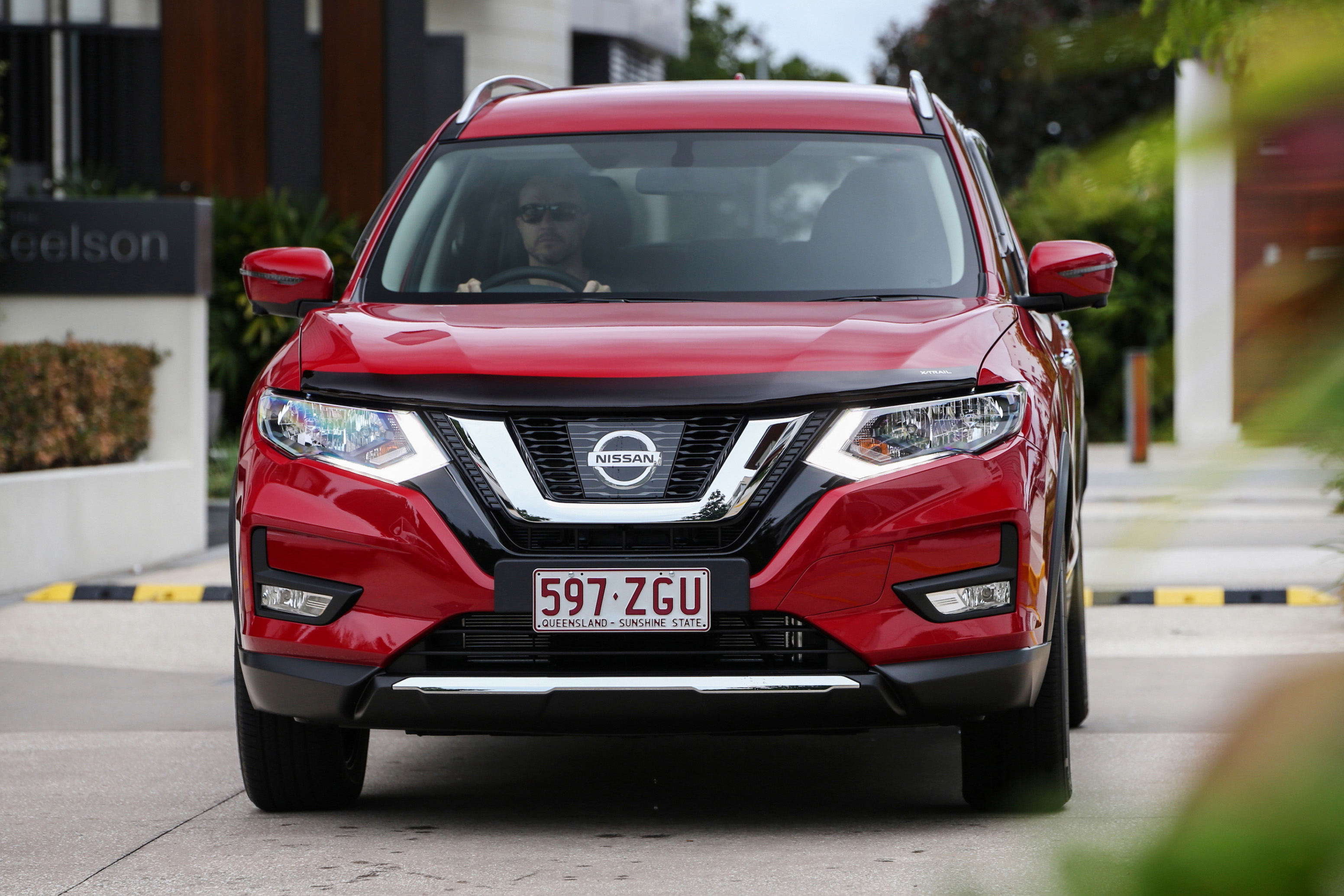
But let’s not ignore the fact the ST-L 4WD the N-Trek is based on is a decent deal in the first place. Personally, I question whether I would notice the superior Bose speakers and aesthetically I feel the X-Trail is better off without the weather shields and bonnet protector, therefore I would probably opt for the marginally cheaper ST-L 4WD and save a full $1000 off the retail sticker in the process. Either way, the X-Trail continues to satisfy those looking for a sensible choice.
Positives: Intelligent driving technology, smart key entry Negatives: Foot parking brake, lack of acceleration, no Apple CarPlay/ Android Auto Rating: 3.5/5 star
An event like GP Ice Race could never exist in Australia. Mainly, because of the distinct lack of snow outside our limited Alpine region, but predominately because Occupational Health and Safety nannies would have an absolute conniption at the mere suggestion.
That’s because one of the main drawcards of GP Ice Race is having skiers towed behind race cars around a snow-covered circuit at frankly ludicrous speeds.
It’s the kind of hare-brained insanity usually dreamt up by a child, before reality crushes the idea into a fine dust.
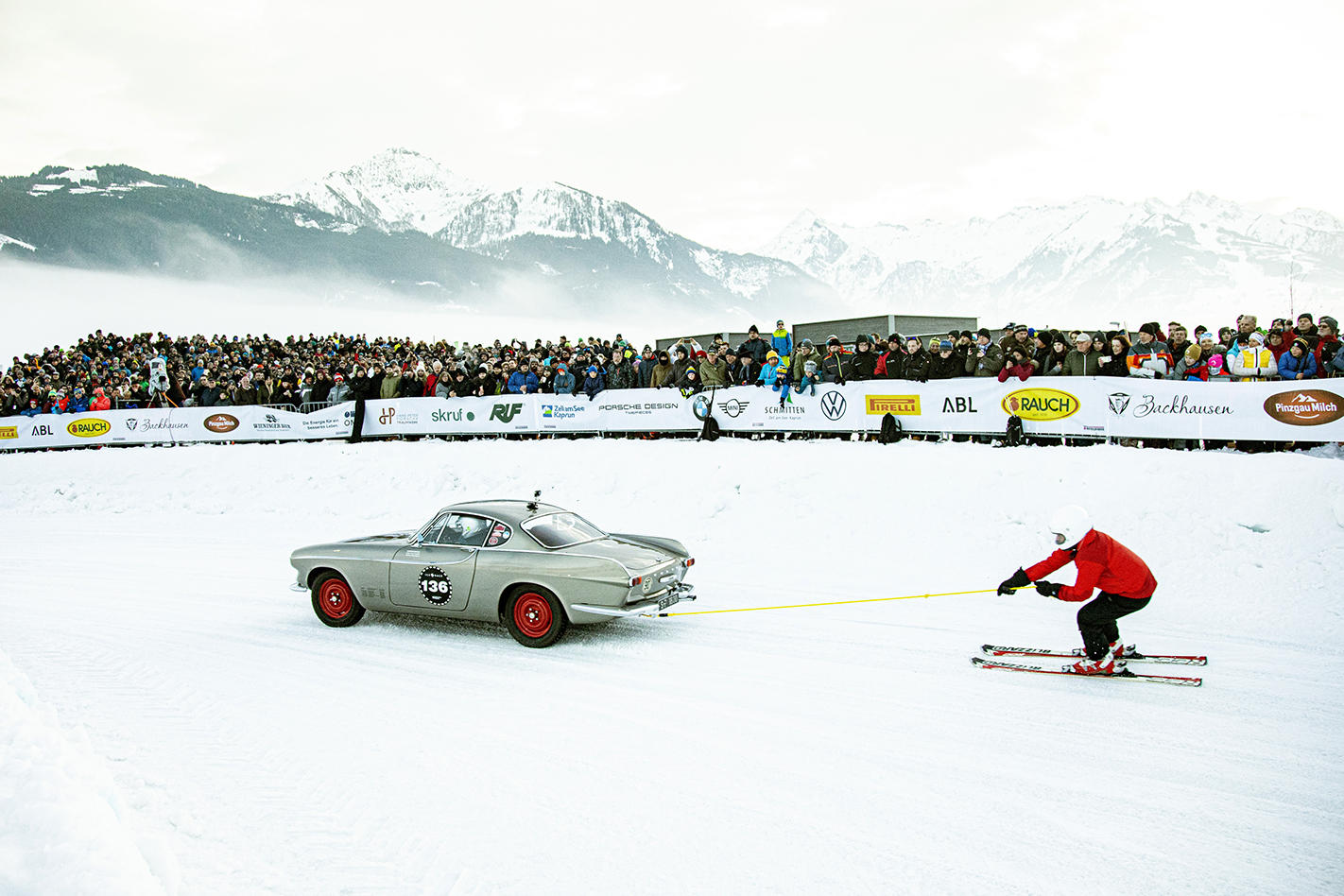
And yet, earlier this month in Austria, GP Ice Race took place as an homage to old-school silliness.
Still in its infancy on a global stage, GP Ice Race is beginning to grow in popularity, and attracting some serious manufacturer interest
Think of the event as the Goodwood Festival of Speed, on ice, with less rules.
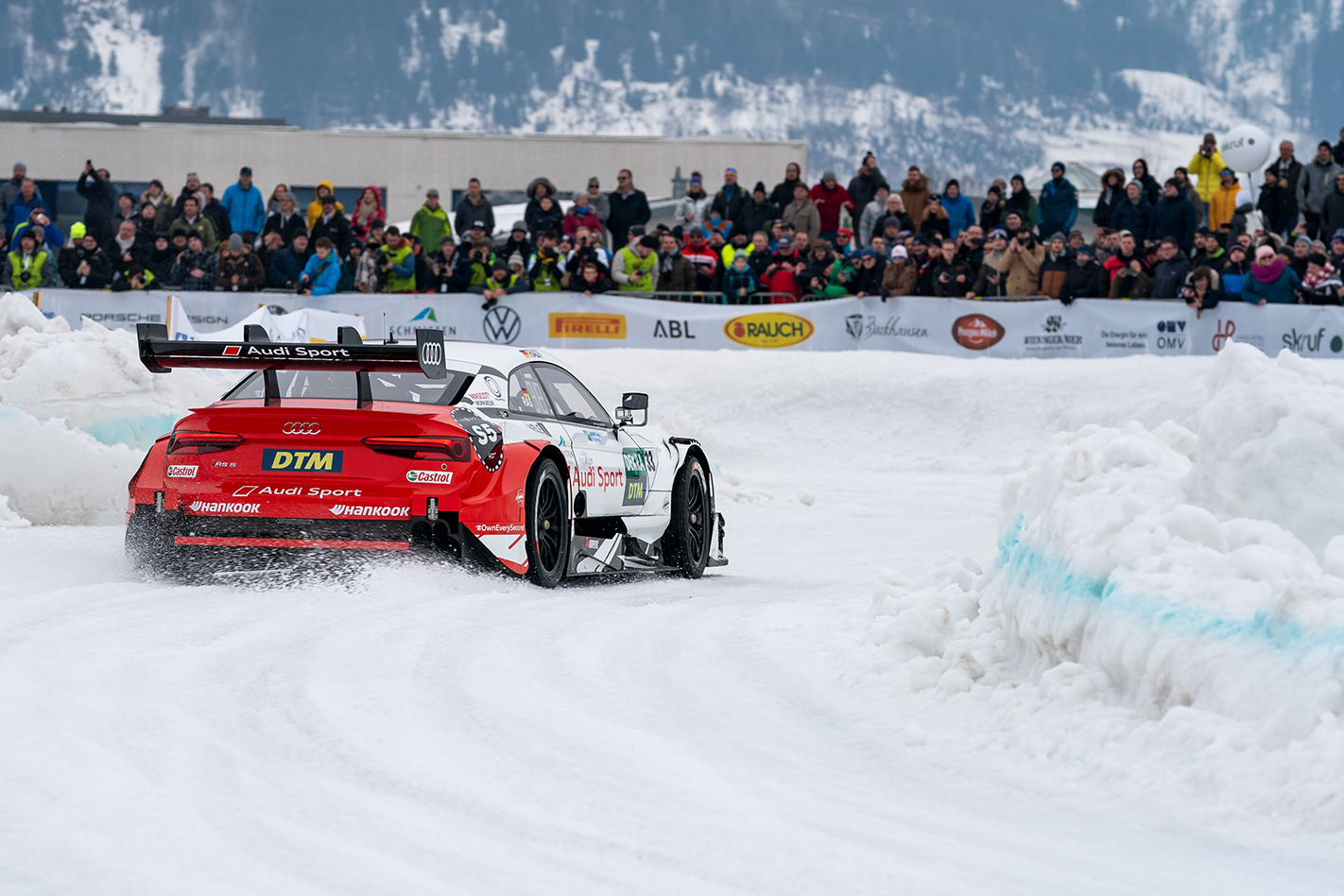
Porsche, BMW, and Volkswagen all rocked up with a fleet of cars for the 2020 event, resulting in the off-the-wall photos in our gallery above.
Want a Formula E car towing a skier? Check. Volkswagen’s ID.R test mule sliding around on snow? Check. It’s proper videogame stuff.
Famed racing driver Hans-Joachim Stuck also got in on the action, driving an old F1 car on studded snow tyres at the event.
Don’t mind us, we’ll just be looking at flights to Europe next February…
Skid marks – huge, snaking elevens into and out of corners, all the way up the hill. Yes, we have arrived on the road down which we’ll be punting our 10-strong, kilowatt-packed convoy, and somebody’s rubbery graffiti indicates as much.
Only a couple hours ago, before coming all this way to the north-east of Adelaide, there was a chance our target road could have been anything but the driving nirvana it seemed on Google Maps. But as we hunt it along the Stott Highway between Angaston and Sedan, ascending to the ridge that looks out across the Mount Lofty Ranges, I let out a sigh. Then a gasp.
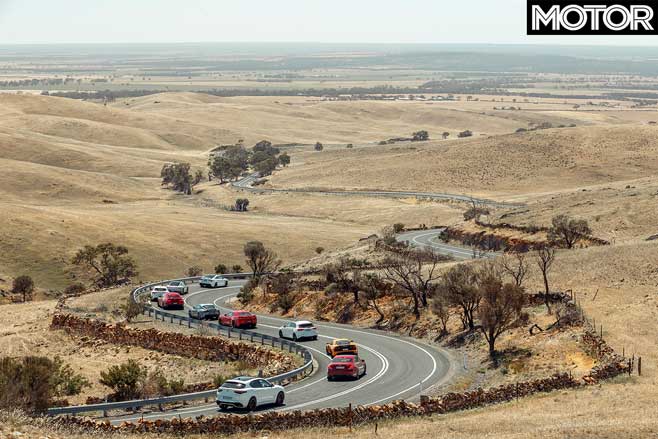
The enormous knuckles of earth lying between us and South Australia’s dusty eastern plains look as if someone had chiselled a slice of the Nürburgring Nordschleife into the side of them. It has delivered on our hopes.
Fast corners whittle down into challenging sections as the road twists and tightens. Then it loops downwards, disappearing around foothills before appearing again and running around another. The surface is superb, mostly, but gnarls for just long enough to ask a car’s chassis the questions you won’t find on a billiard-smooth racetrack.
As we snake down the road in convoy my pulse quickens at the very idea of wrestling our 10 contenders up and down this blacktop. Almost every second corner boasts full sight lines. And after a year where rain plagued every significant MOTOR event leading up to this one, the skies are clear.
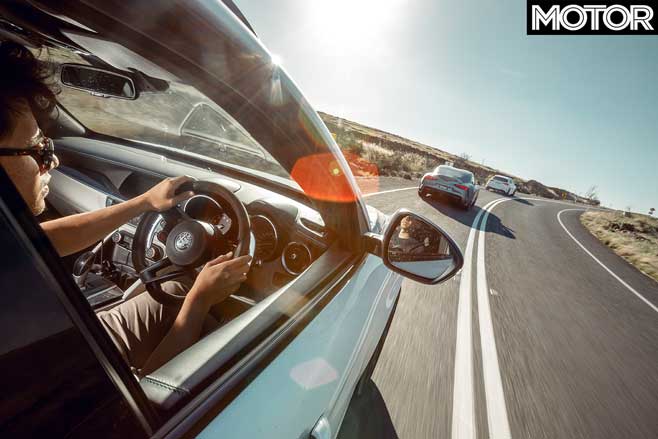
So, rather than tease myself and leave the most anticipated car until last, once we’re all accounted for at the turnaround point I lunge for the 992-gen Porsche 911 Carrera S. The company turbocharged its icon in the second half of the last generation, which should make its acceleration less surprising, but as I pull away it’s bloody obvious turbocharging has stuck a rocket up the new 911’s clacker.
Its twin-turbo flat-six is super flexible, building speed from as low as 2000rpm in high gears but also delivering a heady top-end rush all the way to the 7400rpm redline. And there’s plenty of grunt spread through the rev band, thanks to new cylinder heads and turbocharger layouts helping extract 331kW and 530Nm from three litres.
The Porsche’s effortless urge suits the rest of the car perfectly. From the natural seating position to the imperceptible PDK shifts and brilliant forward vision, it gels with you. The damping is supple yet beautifully controlled, so it feels like it’s gliding up the hill. And it is guided by steering that is as pure as electric systems come for weight, feel and accuracy.
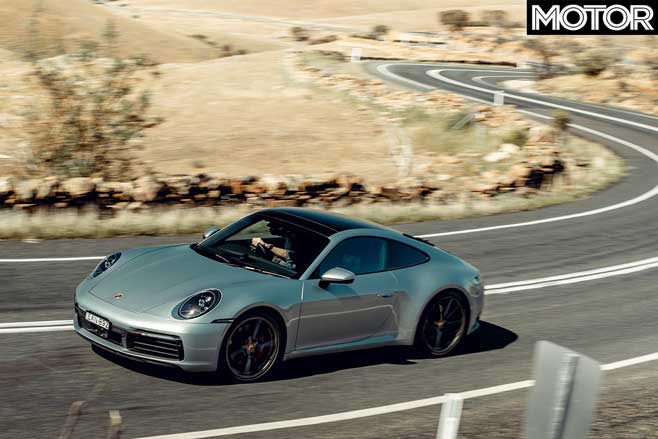
As godly as it is, though, I’m not the only one who thinks a little more trail-braking is needed to turn it in. And the 911 is almost its own worst enemy. Even on humble Goodyear Eagle F1 rubber, the grip levels are so high that scaling the heights of its performance seem a silly idea on these public roads.
When I return to the parked convoy, a white Mercedes-AMG A35 promises a more mortal experience. I slide inside and stomp the throttle to feel its upgraded A250 engine pull in a nice linear fashion, even if it feels a little short on grunt, while the front-biased all-wheel drive system delivers total traction.
If the A35 was a dog, I’d bet on it being a beagle. It does everything you want. The steering is clear and crisp, the damping firm and confident, the brakes bite well and the MBUX-dominated interior is a nice place to sit at this price. But while obedience and predictability are admirable qualities, you’d wish it would yank on the leash and give you a fright once in a while. Or bark a little louder.
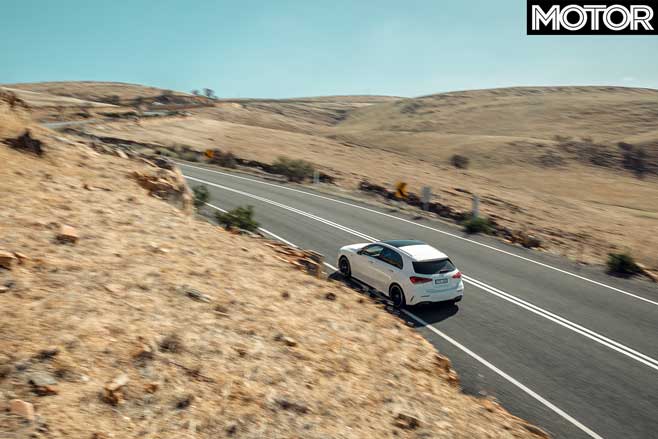
Perhaps its dark side will reveal itself on the track, which is a better place to explore the myriad of drive modes and settings accessed through the excellent C63-spec steering wheel. And while it should not be marked down for being fast, safe and classy, since that’s what AMG wants it to be, we think it deserves just a dash more lunacy.
After all, AMG does lunacy so well. Take the GT63 S. This is a two-tonne-plus four-door with 470kW/900Nm, but it steers so direct, handles with such agility, and its chassis is somehow more impressive than the famed shuttle-launch acceleration.
The GT63 S works each contact patch with balletic finesse.
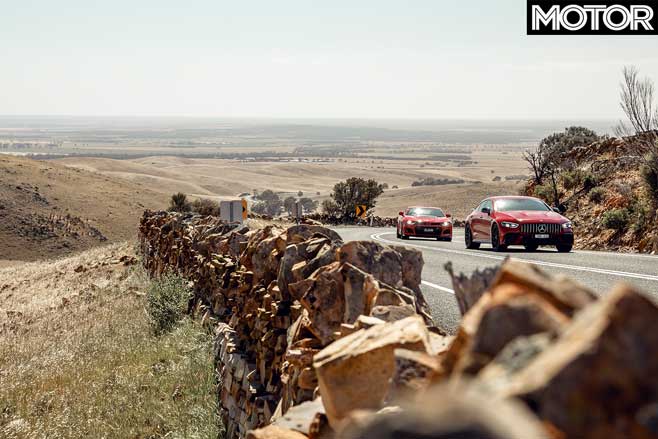
Nudge the steering into a corner and you will feel the inside rear wheel jack to help release the nose. The grip balance is perfectly judged, but there’s still a limit to how hard it can be hustled. Push too far and roll oversteer can unglue even the sticky Michelin Pilot Sport Cup 2s that give it so much bite under braking and traction under acceleration.
AMG thankfully tuned its ESP system to perfection, nipping at the appropriate wheels to keep things tidy just when you realise you’re in trouble. The drive modes also make an obvious difference. Sport and Sport Plus suitably prime the nine-speed auto and air suspension. It’s firm in any mode. But you’ll be going so fast you won’t notice it thudding over road joints. It is brilliant at max attack.
Next is the Lexus RC F Track Edition. I’ll never get over its engine, that’s for sure. That Yamaha-developed 5.0-litre atmo V8 tears away with a loud, hair-raising induction howl, but things aren’t so exciting once the road starts winding.
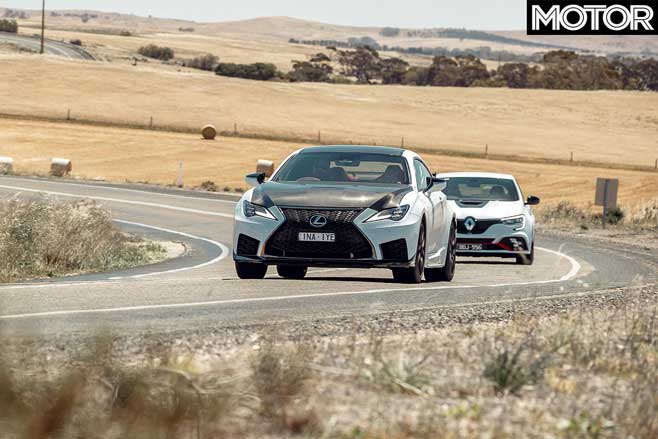
The eight-speed automatic downshifts slowly, and frustrating ratios make it impossible to find a suitable gear for these bends. Second is too short, while third overestimates the V8’s mid-range torque, so I find myself either right on redline or needing more grunt.
New carbon exterior bits haven’t made as much difference to handling as the sticky Michelin Pilot Super Sport tyres and, while others are willing to forgive the RC F’s doughy steering in favour of its sharp and balanced chassis, it never feels cohesive to me. Granted, its new carbon-ceramic brakes are brilliant, with bite, power and modulation in equal measure, but the Track Edition will need to shine where its name suggests.
Speaking of names, the Trophy-R moniker carries a special place in most judges’ hearts alongside memories of the pin-sharp RS275 version from a few years back. But since the Cup-chassis Megane RS struggled at last year’s PCOTY to convince us Renault Sport had again achieved greatness, I didn’t know what to expect from this new range-topper.
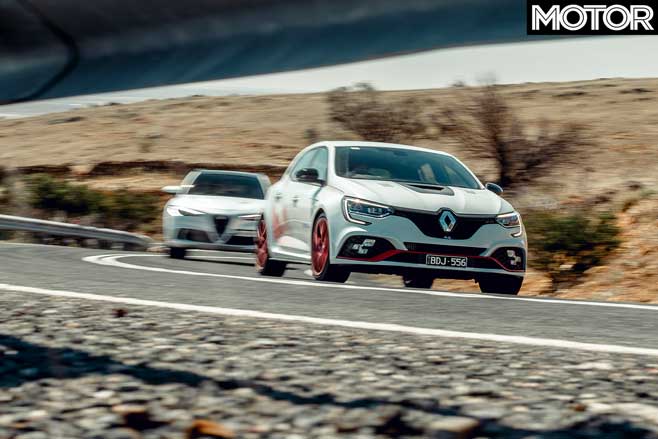
Things start well, as the 1.8-litre engine with its new ceramic ball-bearing turbocharger pulls hard, with a mean rort, and the six-speed manual shifts a lot more smoothly than I remember it operating in the regular RS.
You can also sense the Renault’s barrel-chested confidence before you have even turned the nicely weighted steering wheel, as it sits planted on Ohlins suspension and broad Bridgestone S007 rubber.
As with any track special, it has followed a radical diet. A lighter overall weight helps it change direction with enthusiasm, tackling the road loop like a rally car on a special stage. It’s also immediately obvious the steering has improved since Renault Sport dropped the rear axle’s 4Control system, while the rear end never threatens to step out too far, but rather helps point it into corners.
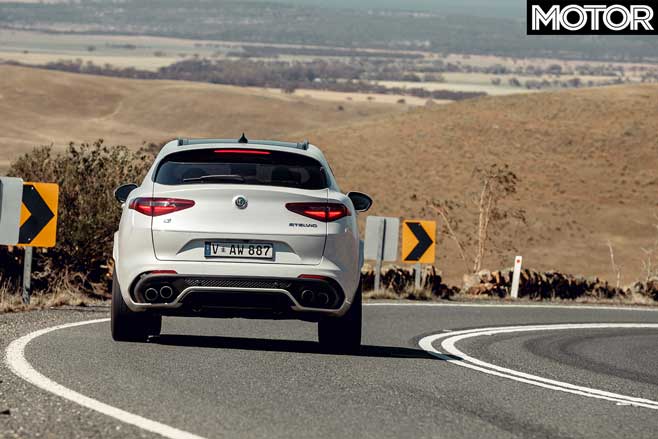
Next, I find myself in the Alfa Romeo Stelvio Q, which is proving divisive for obvious reasons. While its 375kW/600Nm powertrain should make it a bona fide performance car in anyone’s books, a few judges are finding the SUV’s inherent compromises hard to accept.
Still, it acquits itself well for a 1.8-tonne beast. It bolts between corners as fast as anything else and holds on to the road with tenacious grip like an overgrown hot hatch. But there’s something about its fast steering and that centre of gravity that never leaves you comfortable enough to push its limits. It feels fun up to about eight-tenths and I’m just not confident enough to push beyond that here.
It’s almost the same story in the Lotus Exige Sport 410.
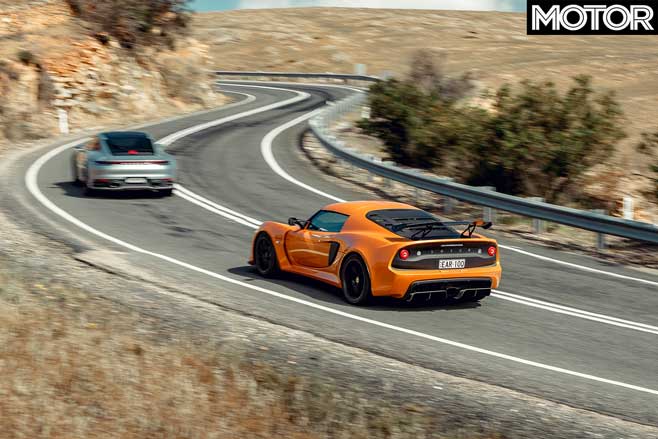
It might share its bones with the Elise, but one glance in the rear mirror’s view, crowded by a hulking supercharger atop a 3.5-litre V6, is all you need to quickly adjust your respect for this shrunken supercar.
Thankfully traction is excellent on Cup 2s when that charged V6 delivers its god-like shove and rings its howl through the cabin, so your brain becomes fixed on chasing that throttle-induced dopamine hit whenever possible.
But it’s the rear-drive chassis, defined by heavy, unassisted steering and stiff, short-travel suspension that warns you the Exige might not be capable of the cornering speeds you might think it is on these roads. The heavy steering jolts in your palms as the front wheels struggle to settle over less-than-smooth surfaces. And the tightly spaced pedals can obstruct the brake when you need it most.
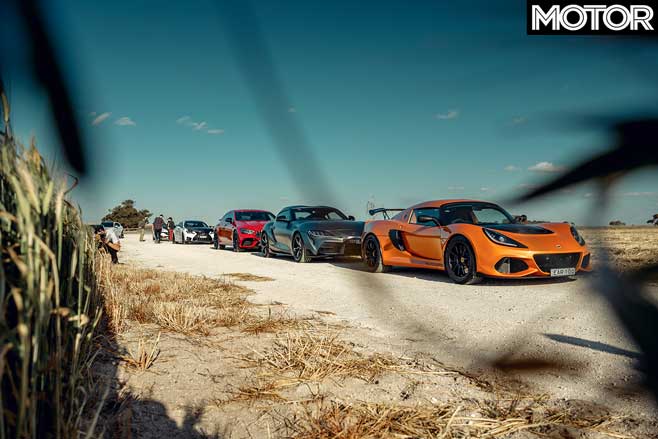
Driving the Exige becomes a battle between heart and head, experiencing its hellish acceleration between corners without overestimating its chassis. So I fall out from it, almost literally, feeling more alive than ever, perhaps because I’ve flirted with death more than I would have liked to enjoy its appeal.
There’s no such crisis in the Toyota Supra GTS, the test’s only other two-seater. Its pedigree might be less pure, since it’s based on the BMW Z4, but it’s obvious on these roads that the car is the result of a superb team effort between brands.
While I’m more than familiar with its turbocharged powertrain and silken power delivery through an obedient eight-speed automatic, since it’s standard grade in any 40-badged BMW, the expertly judged ride and handling come as a massive shock.
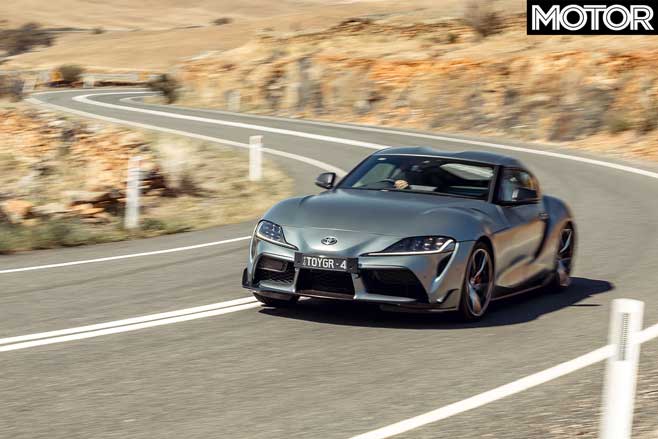
Toyota has developed the Supra’s suspension into a supple yet controlled package that makes it encouraging at its limit. Some won’t like sitting on the rear axle, as you feel one step behind the front-end, but once you get comfortable with the car’s slightly delayed steering it becomes incredibly easy to unleash on a winding road.
But the Supra isn’t the only car to borrow its underpinnings from elsewhere. Genesis relied heavily on the Kia Stinger through parent Hyundai Motor Company in developing the G70. That’s no bad thing, since the 3.3-litre twin-turbo V6’s surge in a straight line immediately underscores the G70’s credentials.
Genesis worked hard to breed dynamic talent into its genes and that might be why the steering is nicely weighted and the brakes deliver good feedback to easily fine-tune its weight balance. Just as well, though, since its natural tendency to push into corners means you will need to trail-brake more than usual.
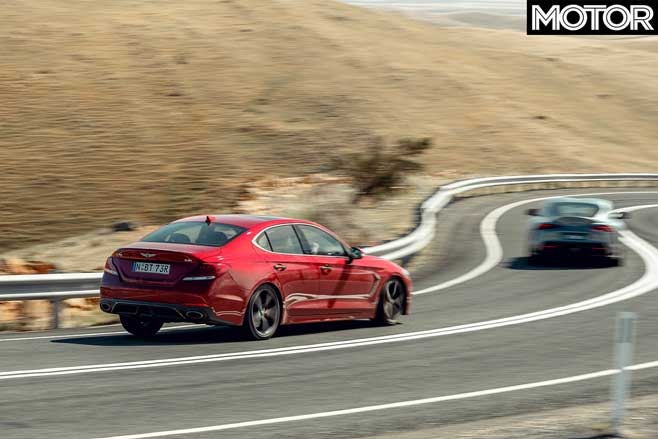
This is not easily fixed with the throttle, either. The G70’s soft rear-end fails to tame the 510Nm that arrives in a big fat turbocharged lump, so it breaks away suddenly and without much warning. The ESP isn’t very consistent either, and the eight-speed auto compounds the problem by reverting to auto mode, but come time for the transport stage and you’ll know that the brilliant ride and accessible grunt will make it highly sought-after.
But right here, on these roads, you need a warrior. Cue the Chevrolet Camaro ZL1. Besides looking more menacing than Darth Vader, and with a heavily blown V8 threatening to atomise its rear Continentals, the ZL1 is surprisingly friendly if you’re being half sensible.
The Camaro’s brakes and steering are meaty, so it demands measured but firm inputs before giving its best. Dig deep, though, because that chassis, bolstered by adaptive dampers at each corner, steers true and does an unbelievable job in taming the 881Nm channelled through its electronic locking rear differential.
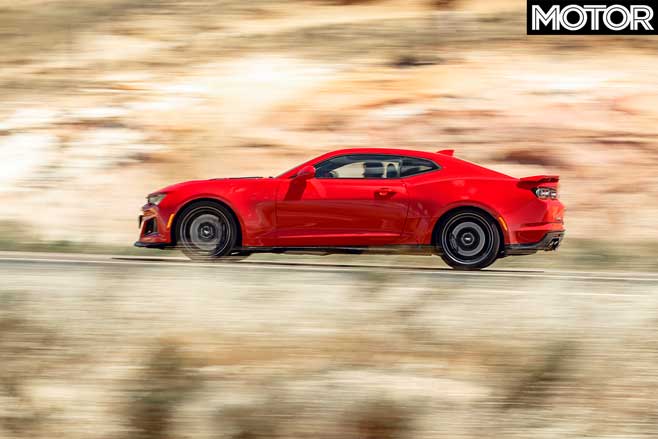
It’s amazing how long the rear Continental hold on. The ZL1’s state-of-the-art electronic safety aids manage grip, but only the brave will wind back their complete assistance. I find myself wanting more time in the ZL1 knowing there’s so much more to extract from it. And that is its charm. It’s easy to enjoy, but hard to master.
Luckily, that’s PCOTY, an event that lets us explore a car in bites, peeling back layers at a time to assess its true nature. With the road section done, we’ve started that process, revealing some early favourites and others that have a fair bit of work cut out for them. But that could all change. So, without further wait, let’s hit the track.
PCOTY 2020 – The Road Route
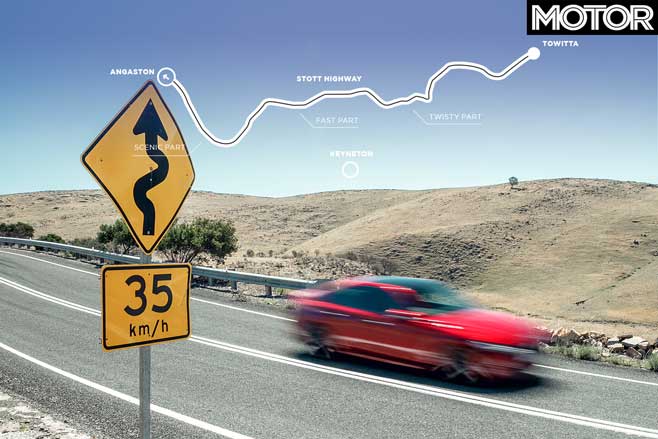
7km of bliss: The Angaston-Swan Reach Road This stretch of the Stott Highway is best approached from Angaston for the most breathtaking view – and to grab a bite at Mount Pleasant. The road starts fast, with a couple of long, flowing corners that tighten as it descends. Then it’s a zig-zag of second- and third-gear bends. It eventually bottoms out with a sweeping right-hander that hooks into a double-apex left, which marks the start of some decreasing-radius corners that finish with a stretch of road ripe for a few full-throttle blasts.
PCOTY 2020 – Fuel notes
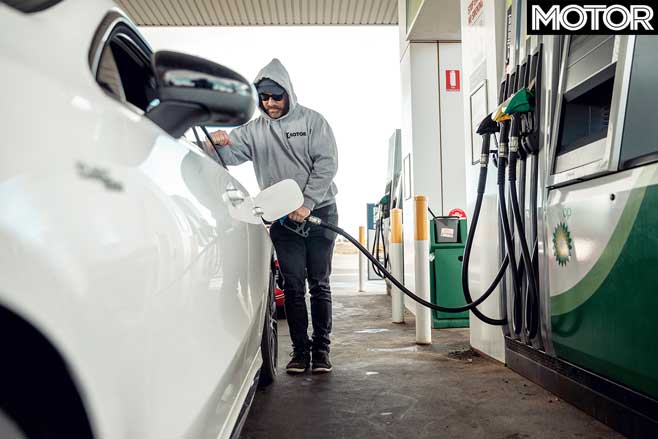
Hey, big drinker! Which car got closest to its claimed consumption?
| Rank | Vehicle | Claimed* | Measured | Difference |
| 1 | Chevrolet Camaro ZL1 | 15.3L/100km | 16.9L/100km | +1.6L |
| 2 | Lotus Exige Sport 410u00a0 | 10.4L/100km | 12.1L/100km | +1.7L |
| 3 | Mercedes-AMG GT63 S | 11.3L/100km | 13.6L/100km | +2.3L |
| 4 | Genesis G70 | 10.2L/100km | 14.3L/100km | +4.1L |
| 5 | Mercedes-AMG A35u00a0 | 7.6L/100km | 12.1L/100km | +4.5L |
| =6 | Lexus RC F Track Editionu00a0 | 11.2L/100km | 15.9L/100km | +4.7L |
| =6 | Toyota GR Supra GTSu00a0 | 7.7L/100km | 12.4L/100km | +4.7L |
| 8 | Porsche 911 Carrera Su00a0 | 9.5L/100km | 14.3L/100km | +4.8L |
| 9 | Renault Megane Trophy-Ru00a0 | 8.0L/100km | 13.2L/100km | +5.2L |
| 10 | Alfa Romeo Stelvio Qu00a0 | 10.2L/100km | 17.2L/100km | +5.0L |
*Combined urban/freeway fuel consumption
What stands out?
The Nissan Pathfinder is a smooth and comfortable seven-seat SUV, with plenty of space and a lot of equipment. You can get it with an excellent petrol V6 engine or as a petrol-electric hybrid that saves fuel in the city. There are front-wheel drive and all-wheel drive versions, and autonomous emergency braking is standard across the range.
What might bug me?
Driving at 80km/h on the space-saver spare until you can fix your full-size flat tyre.Having to explain to anyone who may have to drive your Pathfinder how to release the parking brake. It has a foot operated parking brake, to the left of the brake pedal, which seems antiquated for well-equipped and comfortable large SUV.
What body styles are there?
Five-door wagon only.Some Pathfinders drive only the front wheels, while others drive all four wheels.In an all-wheel-drive Pathfinder, a switch on the centre console lets you select from three drive options: 2WD, Auto and Lock. In 2WD, the Pathfinder drives its front wheels only. In Auto, it automatically sends drive to the rear wheels as well – when that’s helpful. In Lock, it distributes drive evenly between the front and rear axles (this is for use under 40km/h where it’s very slippery).The Pathfinder is classed as a large SUV, lower priced.
What features do all Pathfinders have?
– Adaptive cruise control that can match your speed to that of a slower car ahead on the highway, rear parking sensors and a reversing camera.An MP3 and iPod compatible audio system with a radio, a DVD player, Aux and USB inputs, Bluetooth connectivity for audio streaming, voice control, and at least six speakers.An 8.0-inch colour touchscreen for controlling cabin functions. A leather-wrapped steering wheel that carries buttons for operating the cruise control, the audio system and your phone.Active safety including autonomous emergency braking with forward collision warning, blind spot monitoring, rear cross traffic alert.Three-zone air-conditioning, which allows the driver, front-seat passenger and rear passengers to set temperatures independently. Vents for all three rows of seats.Seven seats, with a power-adjusted driver’s seat. Height and reach adjustment for the steering wheel.Headlights that switch on automatically in low light. LED daytime running lights, which help other drivers see you.Wheels made of an aluminium alloy (which are lighter and more stylish than steel wheels), and a space-saver spare wheel.A tyre pressure monitoring system, which warns when a tyre loses pressure. (This can alert you early to a slow puncture.)Smart key entry, which allows you unlock the car by pressing a button on the door handle (provided the key is nearby in a pocket or bag).Rear Door Alert, which is designed to notify the driver if children are left unattended in the vehicleRoof rails, which make it easier to fit luggage systems.Six airbags, protecting passengers in all seat rows. Electronic stability control, which can help control a skid and is mandatory on all new cars. (For the placement of airbags, and for more on Pathfinder safety systems, please open the Safety section below.)The Pathfinder is covered by a five-year, unlimited-kilometre warranty.
Which engine uses least fuel, and why wouldn’t I choose it?
The petrol-electric hybrid Pathfinders are more fuel-efficient than the petrol alternatives, using as little as 8.4 litres/100km on the official test (city and country combined).The hybrids combine a supercharged, 2.5-litre, four-cylinder petrol engine with an electric motor. The motor gets its power from a battery that recharges when you slow down.In a real-world comparison conducted for the September 2015 edition of Wheels magazine, a Pathfinder ST-L hybrid averaged 12.1 litres/100km, which was less than an accompanying Toyota Kluger but more than three diesel-engined seven-seaters, which consumed about 10 litres 100km.One reason you might not want a hybrid Pathfinder is that they cost more than petrol-only models with the same equipment. The Hybrid also costs more to service. And it needs to be serviced every six months (or 7000km), whereas petrol models can run for 12 months (or 10,000km).Hybrids also tow less: 1650kg, compared with 2700kg.However, Hybrid Pathfinders are just as powerful and responsive as those driven by the alternative engine, a petrol V6.The V6 Pathfinders use about 20 per cent more fuel than the hybrids. The difference will be bigger around town, where there is a lot of stop-start driving, and smaller when cruising on a country road.A V6 Pathfinder ST used 13.6 litres/100km over the course of a real-world comparison for the October 2016 edition of Wheels. Pathfinders on sale since March 2017 use a revised V6 with direct petrol injection that will use slightly less fuel.All Pathfinders have a continuously variable (or CVT) automatic transmission. It doesn’t have fixed gear ratios but instead matches engine speed steplessly to the driver’s demands, which improves response and efficiency. In Pathfinders on sale since March 2017, the CVT can mimic the feel of a conventional auto, using artificial ratio steps.
What key features do I get if I spend more?
The Pathfinder is available at four equipment levels: ST (the least costly), ST+, ST-L and Ti. Each is offered in V6 front-wheel drive, V6 all-wheel drive, and all but the ST+ come with a hybrid version. The hybrid ST is front-wheel drive, while the hybrid ST-L and Ti models are AWD.Therefore, one feature you can get if you spend more is AWD, which provides better traction on slippery surfaces such as wet, snowy or gravel roads. Another is hybrid power. And by spending more again you can have AWD and hybrid power.Pathfinder STs have cloth-covered seating, 18-inch wheels, and the other features found in all Pathfinders.Spending a little more on the ST+ brings a 360-degree parking monitor to help see obstacles around the car, and satellite navigation.Pathfinder ST-Ls add partial leather trim (it’s a mix of real and fake leather), heated front seats, and two sunroofs covering most of the roof. Powered seat-adjustment is added for the front passenger, powered steering-wheel adjustment for the driver, and longer-lasting LED headlights with auto-levelling. The sound system is from audio specialist Bose and has 13 speakers.Coughing up for a Pathfinder Ti gets you (in addition to the ST-L features) a power-opening tailgate. The front-seats can be heated or cooled. Those in the back also get heated seats and can watch movies on two colour screens mounted behind the front headrests, listening in on wireless headsets. A rear door alert notifies you if children are left unattended in the vehicle.And your Pathfinder Ti will have 20-inch wheels, fitted with lower profile tyres for a sportier look.
Does any upgrade have a down side?
All-wheel drive models use slightly more fuel. Hybrid models cost more to service, and need work more often.The 20-inch tyres on Ti Pathfinders will cost more to replace than the 18-inch rubber used on STs and ST-Ls. And they won’t ride quite as smoothly, because their lower profile puts less cushioning air between the wheel and the road.Black and white are the only standard colours; the other five cost extra.
How comfortable is the Pathfinder?
The Pathfinder has broad front seats with good support, making for excellent long-distance comfort.The main controls are well laid out and easy to decipher. The colour touchscreen is complemented by a cluster of related buttons below it – a layout criticised by some reviewers as confusing and mainly unnecessary. The driver’s instrumentation is crisp and clear. There is an additional, digital, speedo on the trip computer screen that separates the two main dials.Steering effort in a Pathfinder is low, but in cars sold prior to March 2017 you needed to turn the wheel further than in most alternative cars. Reviewers’ brief experience of the updated Pathfinder indicates its steering feels more direct – a good thing. Mild kickback through the steering wheel remains if you hit a bump when cornering.The Pathfinder feels comfortable over second-grade roads, riding on soft and cushy suspension, though occasionally you will feel a jolt.The cabin is well shielded from outside noises. Hybrid models have an active noise control system which works well on country roads especially, playing sound through the speakers that is calculated to reduce engine noise and tyre noise (much like noise-cancelling headphones, Nissan says).Performance is effortless in both V6 and hybrid models. While the V6 develops a bit more power if you press your right foot into the floor, the hybrids feel punchier around town and more responsive much of the time.
What about safety in a Nissan Pathfinder?
All Pathfinders have stability control, a reversing camera, auto headlights, LED daytime running lights, and six airbags. Seatbelt reminders work for all seven seats, making it easy for you to monitor belt use.There are two airbags directly in front of the driver and front passenger; one outside each front seat at chest level to protect the driver and front passenger from side impacts; and full-length curtain airbags at head level that protect passengers in all three seat rows from side impacts.The virtual overhead view camera on ST+, ST-L and Ti Pathfinders enhances safety when manoeuvring at low speeds, giving a comprehensive view of what’s outside the car. The camera has incorporated Moving Object Detection, which can alert you to the presence of a person or animal near the car when manoeuvring at slow speed.All Pathfinder versions are equipped with suite of active safety aids that includes auto braking, forward collision alert, blind-spot monitoring and rear cross-traffic alert.Based on radar sensors, the forward collision alert and auto braking – which Nissan calls Intelligent Emergency Braking – work at city and highway speeds. The systems sound a warning and flash a dashboard light to warn you of a likely frontal crash – typically with a car ahead that has slowed suddenly. If you ignore the warnings, the car will brake automatically.Blind-spot warning and Rear cross-traffic alert look behind you. The former alerts you to the presence of other cars near your rear corners, perhaps out of view of your mirrors. The latter works when you are reversing out of a driveway or parking space, telling you that another vehicle is about to cross behind you.Rear Door Alert, which is designed to notify the driver if children are left unattended in the vehicle.The Australasian New Car Assessment Program (ANCAP) rated the Pathfinder’s safety at five stars, its maximum score, in May 2014.
I like driving – will I enjoy this car?
The Pathfinder is more about relaxed touring than rising to the occasion of a challenging road. It is a heavy vehicle, and you notice that more as you drive it faster, but the body roll is well contained.Nevertheless, a firmer suspension that arrived with the update of March 2017 has reduced its formerly pronounced body roll and made the big car more fun in corners.The 20-inch tyres on the Ti model have more cornering grip than those on less costly Pathfinders, and their lower profile makes for a slightly more accurate response to the steering.While V6 Pathfinders have plenty of syrupy grunt and ultimately are quicker than the hybrids, you have to drive them hard to find that extra speed. Hybrid Pathfinders are almost as brisk and in many ways are more enjoyable.Previous iterations of the Pathfinder have been known for their prowess off road. The current generation is focused more on bitumen driving. All-wheel drive versions (which Nissan designates as four-wheel drive or 4WD) are competent in light-duty off-roading only: gravel or muddy tracks and snow-covered roads.
How is life in the rear seats?
The middle row of seats is very welcoming for adults, with excellent head room and a broad seat cushion. The flat floor at the rear ensures plenty of space for feet. The middle seats can slide forward and back, and even in the middle position there is plenty of leg room. Vision out is good for rear passengers, because they sit higher than those in the front.The middle seatbases and backs are quite flat, however, and reviewers have complained of insufficient support under the thighs and for shoulders, allowing passengers to slide around during cornering.USB and micro-USB sockets are fitted for the convenience of middle-row passengers.The Ti offers more second-row creature comforts including colour screens mounted behind the front headrests with audio available through wireless headsets.Third-row passengers have less leg room, but still more than they would have in many other large SUVs. The easy-to-fold middle seats also make it easy to get into the rear seats.Rear passengers can set a different air temperature from those in the front, and there are air vents to both the second and third rows of seats.
How is it for carrying stuff?
The Pathfinder is fantastic for carrying drinks: it has 16 cup holders, which must be close to a record. While almost no family will use all these at once, they also provide storage for other small items.There is a deep centre console with a shelf inside, and other compartments for odds and ends.As with most seven-seaters, luggage space is tight when all seats are in use but still a handy 503 litres which is more than some five-seat medium SUVs.Folding the the third-row seats down for a five-seat configuration expands the cargo area to a whopping 1164 litres, and up to 2004 litres with the 60:40-split middle-row seat backs folded down.The Pathfinder Ti has a powered hands-free tailgate, which opens if you move your foot beneath it while carrying the smart key.V6 versions of the Pathfinder are rated to tow up to 2700kg. Hybrid models may tow only 1650kg.
Where does Nissan make the Pathfinder?
Nissan builds the Pathfinder in Tennessee, USA.
What might I miss that similar cars have?
Possibly middle row seats that split-fold 40/20/40. The Hyundai Santa Fe is one alternative that offers this feature, which allows you to carry long, narrow items while seating two rear passengers comfortably.A diesel engine, to cut fuel use on trips out of town. You can get one in a Santa Fe, Kia Sorento, Mazda CX-8, Skoda Kodiaq, Jeep Grand Cherokee and Ford Endura for example.The convenience of Apple CarPlay/Android Auto smartphone pairing as found in more and more large SUVs including the Sante Fe, Sorento, Ebdura, Kodiaq, Holden Acadia, Mazda CX-9, and Peugeot 5008.If you enjoy driving you might find some other big SUVs bring you more fun. The benchmark here is the Mazda CX-9.Among other cars you might consider is the Toyota Kluger.
Are there plans to update the Pathfinder soon?
The current Pathfinder arrived in Australia late in 2013, with the Hybrid models following in 2014.A facelifted and improved Pathfinder arrived in March 2017, bringing revised nose styling, a more powerful and fuel-efficient V6 engine (using direct petrol injection), sharper handling from firmer suspension, and better steering. The more expensive Pathfinders gained a suite of active driver aids that included autonomous emergency braking.In April 2019 Nissan made active driver aids standard across the range and added the ST+ variant, Rear Door Alert, and more advanced 360-degree parking monitor to the ST spec.In April 2020, Nissan added the full active safety suite available in the Ti to the far more affordable ST+.Special edition N-TREK versions were added to the range in February 2020, which added sporty exterior trim to the V6 petrol ST+ and ST-L versions.Expect an all-new Pathfinder in late 2021.
I like this car, but I can’t choose which version. Can you help?
We’d choose the Pathfinder ST-L 4WD V6 petrol. The ST-L is well equipped, with important safety features such as forward collision warning and autonomous emergency braking. It’s quick, smooth and effortless. The step to an ST-L Hybrid is worthwhile if you do a lot of your driving in the city, but in press-on country driving its economy benefits evaporate.
What? No supercars this year? Nup. But look a little closer: This year’s Performance Car of the Year (PCOTY) field is still 10 deep (literally) with cars you would give your left whatsit to drive, let alone own. There’s something for every budget, and for every personality disorder from Jason Statham-style ‘Transporter’ to track-day lunatic.
So what are we dealing with here? Well, let’s start at the big end of town. The Mercedes-AMG GT63 S is a new concept for the brand – having a four-door bearing the GT badge – but some of the best bits of the GT remain, namely that wonderfully retro grille, twin-turbo V8 powerplant and all-wheel drive.
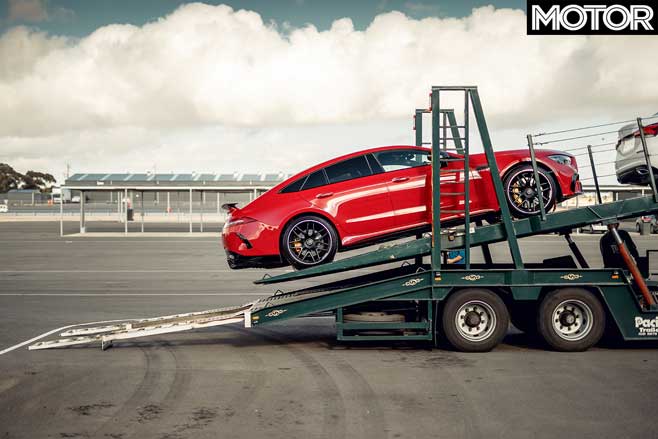
It’s all based on a mutant E-Class platform, but with 470kW and no less than 900Nm, even the two-tonnes-plus weighbridge ticket shouldn’t slow it down. Ever. Mind you, the $351,640 sticker might throw things into reverse for a lot of us. Yes, it’s a big, heavy car, but AMG doesn’t allow that to get in the way of producing a high-end German muscle car.
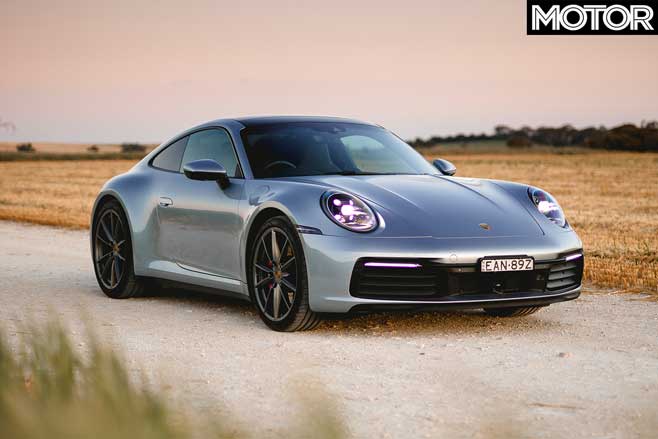
The Porsche 911 is the other uber-pricey contender, and when you’re spending $265,000 you might imagine you’d get something with a GT badge. But no, this is the Carrera S, complete with turbo three-litre flat-six and rear-drive. Output has grown to 331kW and torque is now 530Nm at just 2300rpm; proof that the modern turbo-motor has quite a bit going for it in terms of flexibility. Transmission is now an eight-speed PDK, which is also new for the 911.
Now in 992 guise, the 911 is still a big bugger (about 1.8 metres across the front guards) and the real story is about the upgraded interior over the 991. Porsche has tapped into the retro vibe for the cabin and it kind of works well with an exterior that has always been retro.
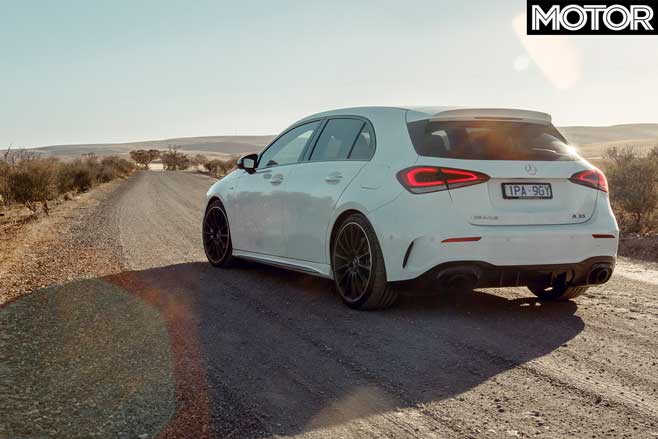
Back to Mercedes-AMG, the A35 also got a guernsey. It represents the hottest A-Class-based gadget for now (until the all-new A45 turns up) and, although it’s more or less an embiggened A250, it still manages to pack a 225kW wallop and all-wheel drive.
Its performance is not likely to be far from the original A45, so there’s plenty going on. It’s also worth remembering that, despite the three-pointed badge, this is actually a hot hatch (one of two in this scrap) and if there’s a concept that has more currency with performance fans right now, we don’t know what it is.
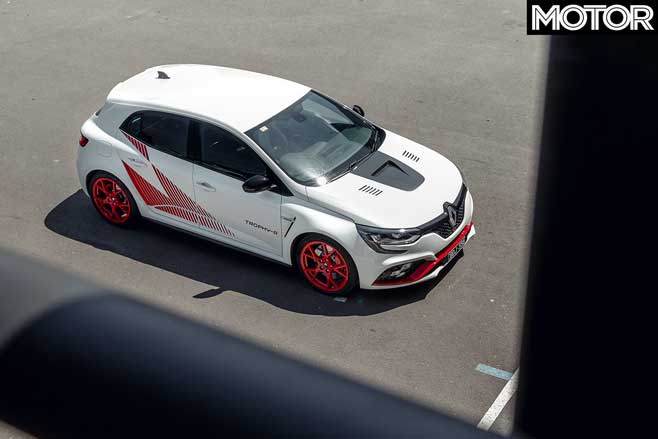
The other mega-hatch is the Renault Megane Trophy-R. I’ll admit that until the Civic Type R came along a couple of years ago the previous Megane Trophy was the best tail-dragger I’d ever driven. And I wasn’t alone. Which means the new one, now based on the four-door body, has mighty big boots to fill.
Mind you, with just 12 examples earmarked for Oz, you’re probably already too late. Cracking second-hand buy though, and with 221kW (up from 205 for the previous car), the Megane’s (successful) tilt at a Nürburgring front-wheel drive record was always going to happen. And so much for clever-clogs dual-clutch trannies – the Megane has a proper six-speed with that rarest of modern fitments, a clutch pedal.
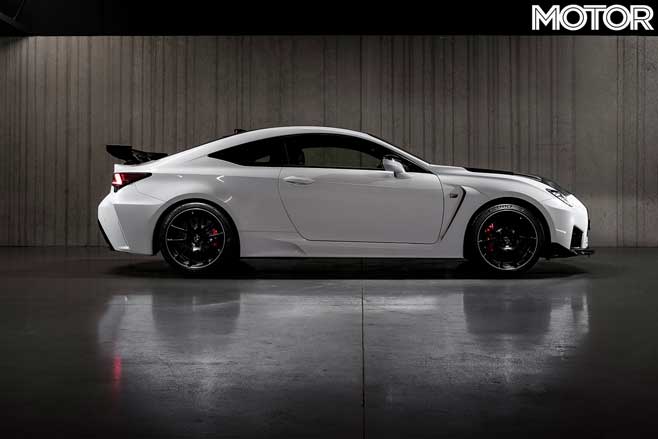
At the other end of the philosophy spectrum is the unashamedly old-school Lexus RC F Track Edition. Yes, we’ve had the RC F at PCOTY before, but the Track Edition builds on what was already a solid platform with a package aimed at track-day fans.
Well, that’s the theory, but is the exterior carbonfibre and red brake calipers enough? Actually, it is, because of what the engineers started with in the first place. Namely, that five-litre V8 with the howling soundtrack and a proper ability to rev sky-high and still make power while it does so. If nothing else, the Lexus deserves to stand out for being the only normally aspirated car here.
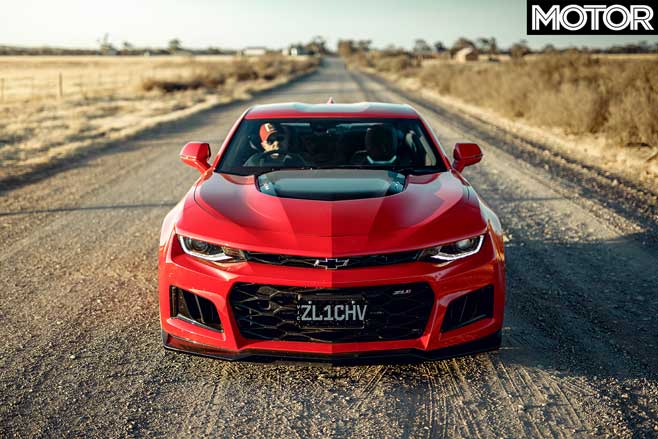
While we haven’t had a locally made car at PCOTY for the last two years, the Chevrolet Camaro ZL1 at least gives us a bit of a history lesson with its distinct flavour. The blown 6.2-litre V8 is ballsy enough to crank out 477kW and 881Nm, so the real question comes down to whether it can harness that without blowing the tyres clean off the thing.
Experience has shown us that the Camaro’s driveline violence is enough to send the rear bags into hiding on any surface found on planet Earth, but it’s what the big fella makes of The Bend that is the first thing we aim to find out. If it’ll hook up, it should be a riot. If not, it could be a very expensive bust. And let’s not forget, PCOTY is also about road smarts, so…
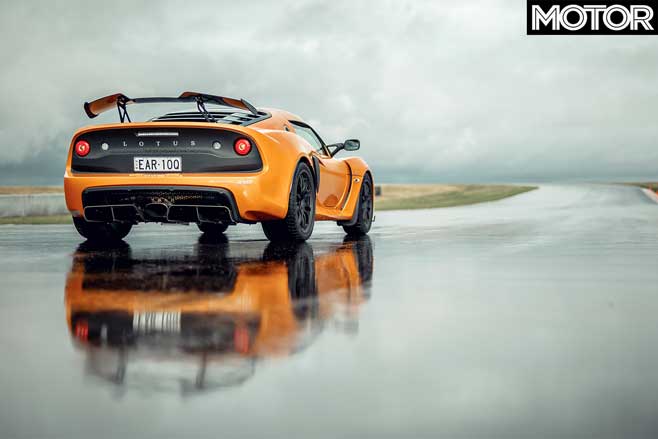
Of course, if you want to talk real old-school sensibilities, then the Lotus Exige Sport 410 has to take centre-stage. It taps into all those emotional triggers by being lightweight and mid-engined, and if the overall look doesn’t take you to somewhere like the Mulsanne Straight you’re not paying attention.
The supercharged V6 makes 306kW and, with just on 1100kg to move, it promises to be both ballistic in a straight line and a true corner-hound. While the sticker might seem a bit sharp, compare it with other mid-engined exotics with anything like the shunt and the Lotus almost starts to look like a value proposition. Never thought we’d be saying that.
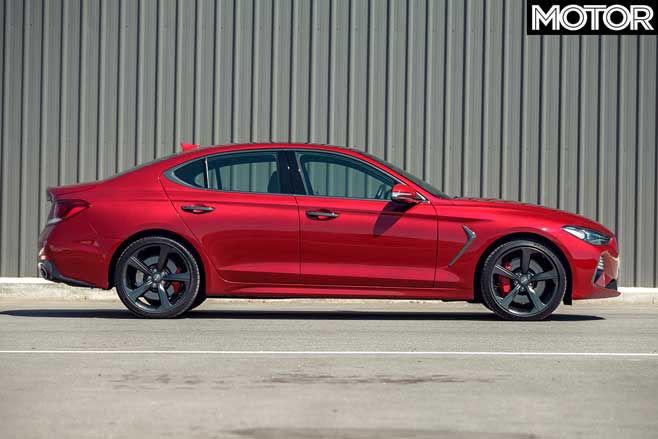
Equally unthinkable just a handful of years ago was the notion that we’d have a Hyundai on PCOTY. But there’s plenty going on here, including the fact that the Genesis G70 is kind of a shortened Kia Stinger. That means it’s equipped with one hell of an engine; the twin-turbo V6 makes 272kW and, more tellingly, more than 500Nm of twist.
It’s still a big, relatively heavy car, but its rear-drive layout will strike the right note for many out there missing home-grown, big-motored, rear-drive sedans. To be fair, the G70 is probably the least track-focused car here (apart from the Stelvio), but given what we already know about the Stinger’s driveline, there’s absolutely no way we could leave it out in the cold.
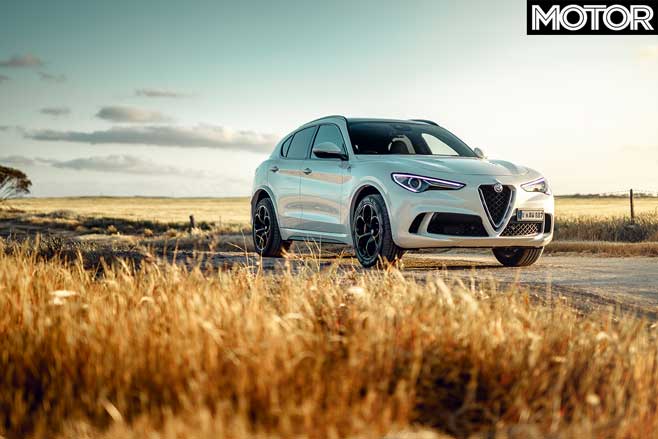
Ah yes, the Alfa Romeo Stelvio. Look, we’ve been down this road before – taking an SUV to PCOTY and watching as the hot-hatches kick its arse. Which is precisely why we’ve given SUVs a wide berth in recent years. But the Stelvio in Q form earned selection by offering up a monstrous V6 engine that, even though it measures less than three litres and is propelling more than 1800kg, is man enough to give the brute a sub-four 0-100 time.
It’s also – despite that SUV thing – possessed of the fastest steering rack this side of a billy-cart and, let’s be honest here, if anybody can build a brat-hauler that can lay rubber, it’ll be those crazy Italians at Alfa.
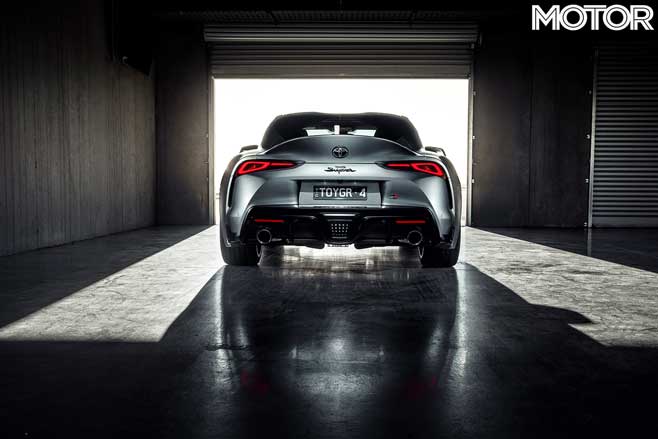
The car you all want to know about, meantime, is the all-new Toyota Supra. Yes, it borrows heavily on BMW tech, including the driveline and interior, but there’s so much more to this car than meets the eye. For instance, it’s actually smaller than a Toyota 86 (in both wheelbase and overall length). And it has a wild bonnet-to-cabin-length ratio. And there’s more.
Throwing the Supra into the rough-and-tumble of PCOTY gives us a great chance to really scope out what the car is about, what its intentions were all along and how well it has met those expectations. Frankly, shutting our ears to the online howls and offering the Supra up to the PCOTY criteria is the best way we can think of to sort the truth from the trolling. So it’s here. And so are we. Send it.
PCOTY 2020 Competitors
Alfa Romeo Stelvio Q
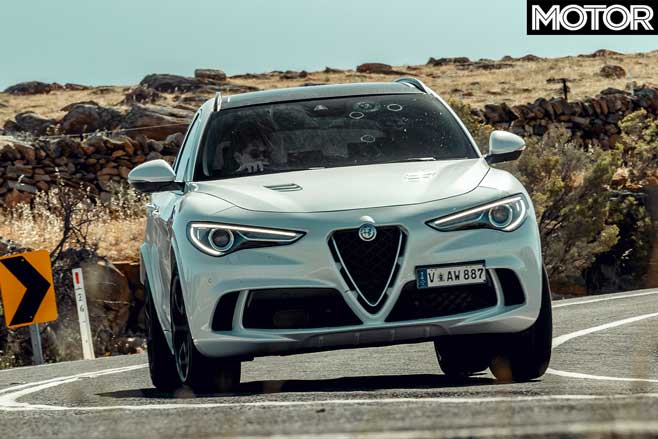
Yes, it’s an SUV, but a Ferrari-derived engine and rear-biased AWD system mean the Alfa can do much more than the school run
SPECS Engine: 2981cc V6, DOHC, 24v, twin-turbo Power: 375kW @ 6500rpm Torque: 600Nm @ 2500-5000rpm Drive: AWD Weight: 1830kg 0-100km/h: 3.8sec (claimed) Price: $149,900
Chevrolet Camaro ZL1
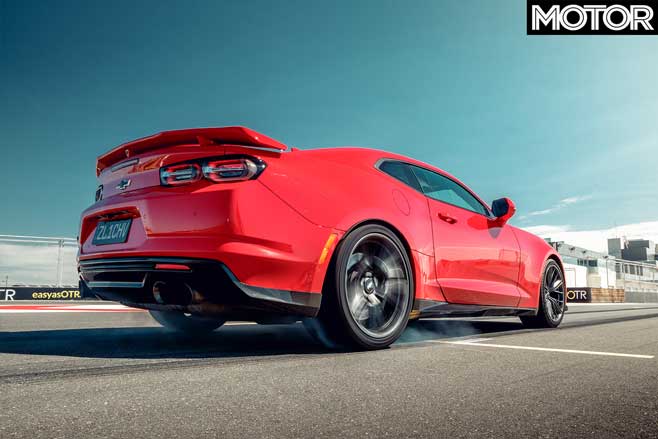
Simply put, the most powerful vehicle in this year’s competition and the one that comes closest to flying an Aussie flag
SPECS Engine: 6162cc V8, OHV, 16v, supercharged Power: 477kW @ 6400rpm Torque: 881Nm @ 3600rpm Drive: RWD Weight: 1807kg 0-100km/h: 4.3sec (tested in 08/2019 issue) Price: $163,100
Genesis G70 3.3T
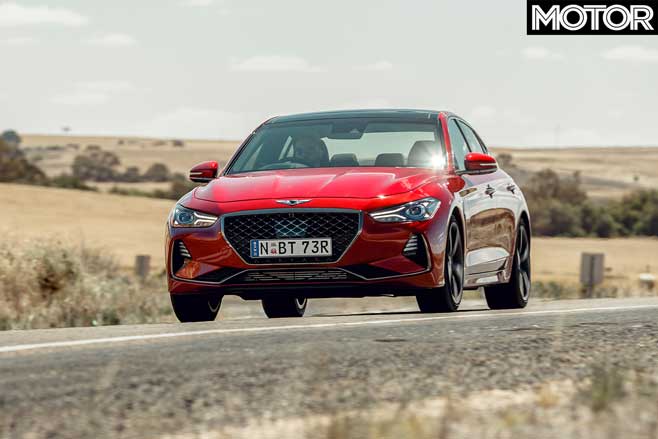
Don’t call it a Hyundai. The Genesis is essentially a Kia Stinger GT that’s been to finishing school and is a lot of car for the money
SPECS Engine: 3342cc twin-turbo V6, DOHC, 24v Power: 272kW @ 6000rpm Torque: 510Nm @ 1300-4500rpm Drive: RWD Weight: 1762kg 0-100km/h: 4.92sec (tested in 08/2019 issue) Price: $79,950
Lexus RC F Track Edition
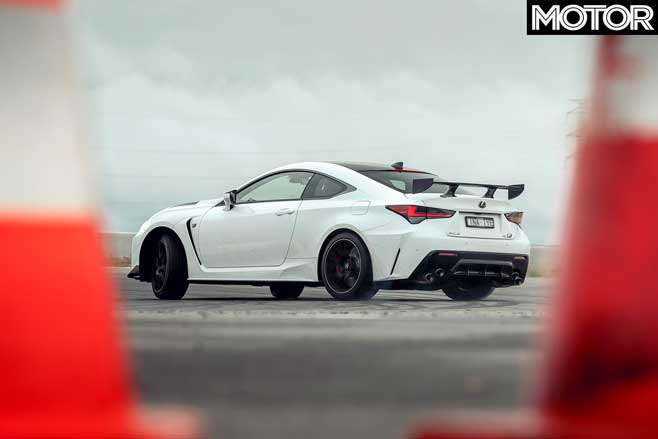
Lexus’s V8 coupe has been to boot camp and returned having shed weight and added some hefty carbon-ceramic stoppers
SPECS Engine: 4969cc V8, DOHC, 32v Power: 351kW @ 7100rpm Torque: 530Nm @ 4800-5600rpm Drive: RWD Weight: 1715kg 0-100km/h: 4.3sec (claimed) Price: $165,690
Lotus Exige Sport 410
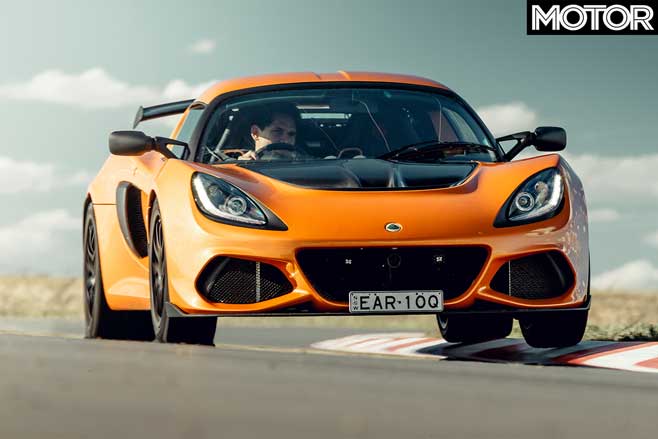
Lotus is back at PCOTY! In Sport 410 guise the Exige is a supercharged screamer focused on pure driving thrills
SPECS Engine: 3456cc V6, DOHC, 24v, supercharged Power: 306kW @ 7000rpm Torque: 420Nm @ 3000-7000rpm Drive: RWD Weight: 1108kg 0-100km/h: 3.72sec (tested in 10/2019 issue) Price: $159,990
Mercedes-AMG A35
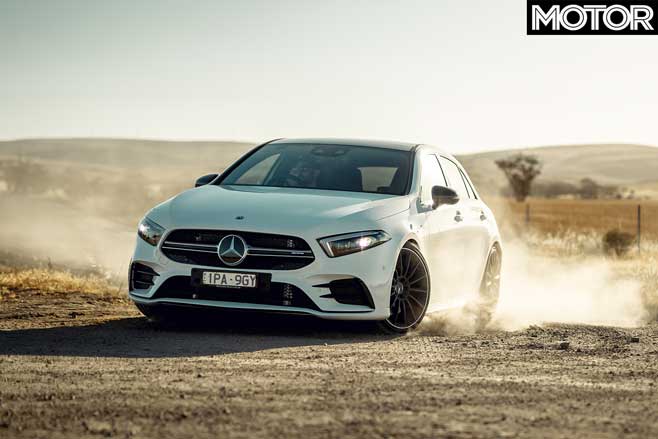
Speaks softly by AMG standards and doesn’t carry that big a stick, but to drive the A35 is more than the sum of its parts
SPECS Engine: 1991cc inline-4cyl, DOHC, 16v, turbo Power: 225kW @ 5800rpm Torque: 400Nm @ 3000-4000rpm Drive: AWD Weight: 1480kg 0-100km/h: 4.7sec (claimed) Price: $67,200
Mercedes-AMG GT63 S
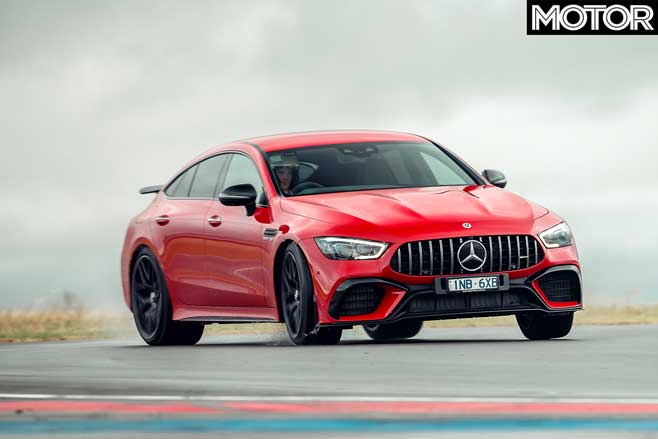
Arnie with wheel, the GT63 rewrites the rulebook on what a luxurious four-door can do, but comes with a price to match
SPECS Engine: 3982cc V8, DOHC, 32v, twin-turbo Power: 470kW @ 5500-6500rpm Torque: 900Nm @ 2500-4500rpm Drive: AWD Weight: 2045kg 0-100km/h: 3.16sec (tested in 08/2019 issue) Price: $349,900
Porsche 911 Carrera S
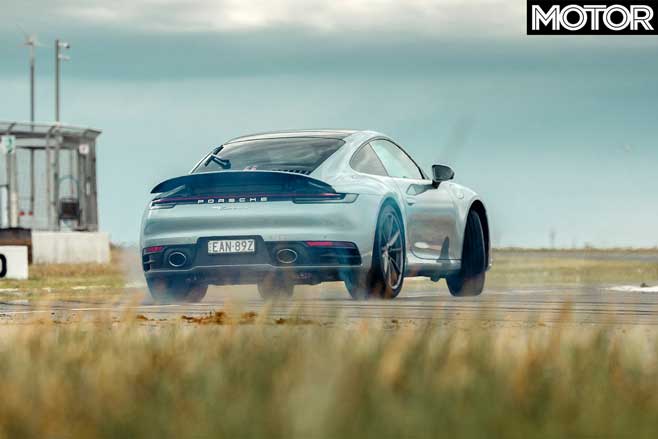
The benchmark. New 911s have an enviable track record at PCOTY and it would be a brave punter who bets against the new 992
SPECS Engine: 2981cc flat-6cyl, DOHC, 24v, twin-turbo Power: 331kW @ 6500rpm Torque: 530Nm @ 2300-5000rpm Drive: RWD Weight: 1515kg 0-100km/h: 3.5sec (claimed) Price: $265,000
Renault Mégane RS Trophy-R
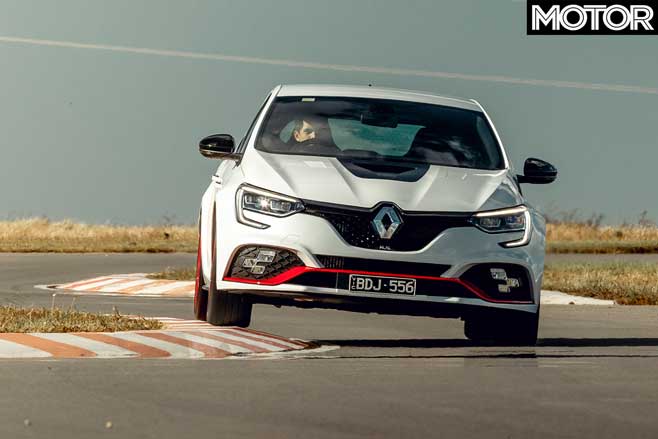
Ultimate front-drive hot hatch and front-drive Nurburgring record holder intent on restoring Gallic pride
SPECS Engine: 1798cc inline-4, DOHC, 16v, turbo Power: 220kW @ 6000rpm Torque: 400Nm @ 3200rpm Drive: FWD Weight: 1281kg 0-100km/h: 5.4sec (claimed) Price: $74,990
Toyota GR Supra GTS
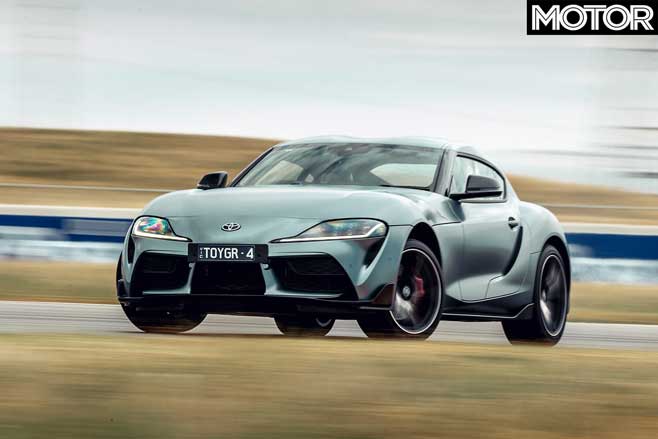
A potent rear-drive sports car with a price tag of fewer than six figures? Sounds like a recipe for PCOTY success
SPECS Engine: 2998cc inline-6cyl, DOHC, 24v, turbo Power: 250kW @ 5000-6500rpm Torque: 500Nm @ 1600-4500rpm Drive: RWD Weight: 1495kg 0-100km/h: 4.3sec (claimed) Price: $94,900
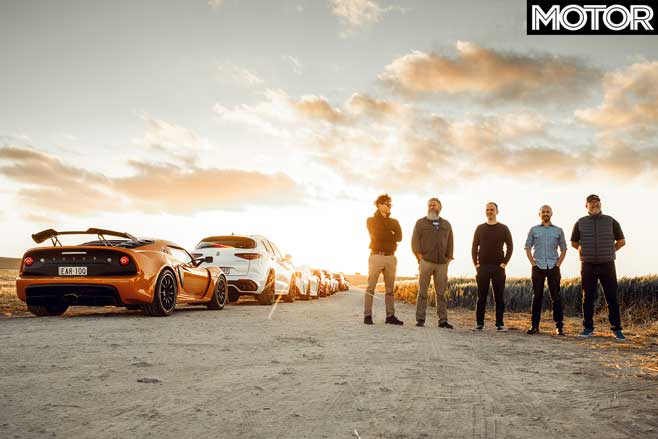
PCOTY 2020 Judging Panel
01 – Dylan Campbell A hugely successful PCOTY for DC, as he managed to avoid grievously injuring himself for once
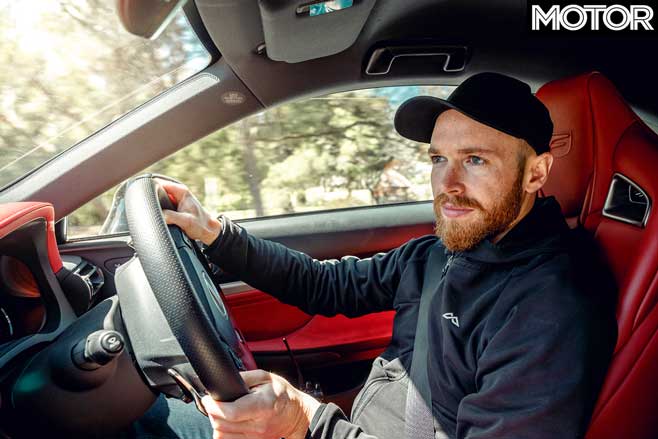
02 – Scott Newman Devilishly handsome, supremely talented, deserves a huge pay rise. May also have written this bit
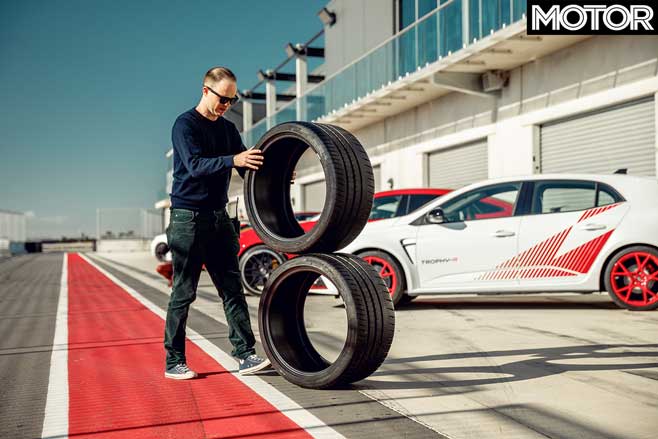
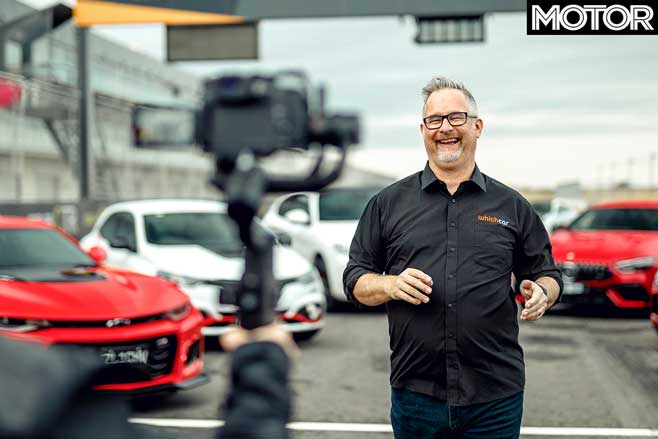
03 – David Morley When he’s not judging PCOTY, Morley enjoys denying kids’ Christmas present requests in his role as Evil Santa
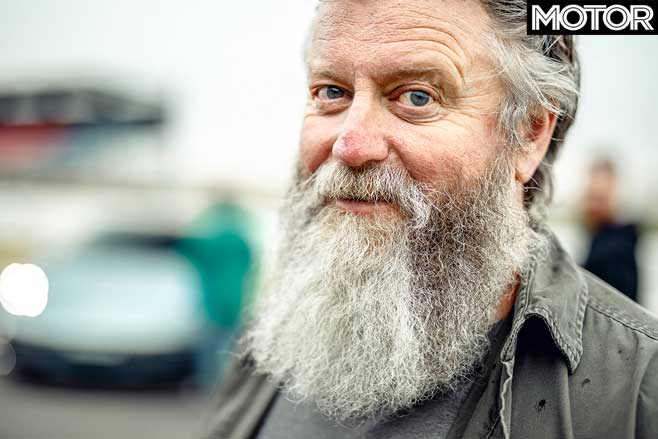
04 – Louis Cordony Ever fashionable, LC turned down the catwalks of Milan and Paris for a role with MOTOR, the silly sod
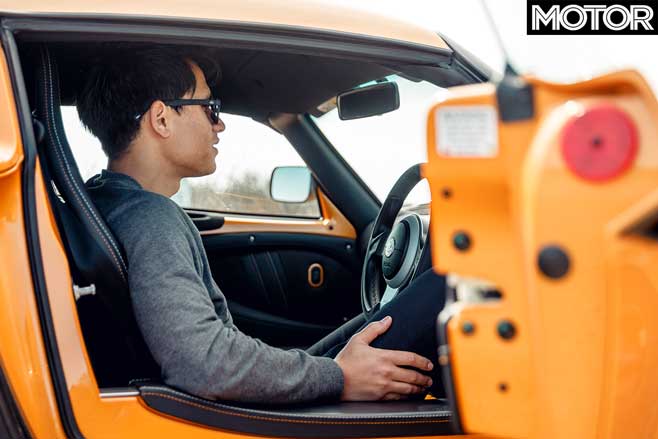
05 – Tim Robson Grumpy exterior hides equally grumpy interior until the words ‘mountain bike’ bring forth an instant smile
PCOTY 2020 Judging Criteria
01 – Performance Raw speed, powertrain response, feel and smoothness
02 – Dynamics Grip, chassis balance, steering response and braking ability
03 – Accessibility Effort versus reward, ESP calibration, feedback levels
04 – Liveability Road noise, ride comfort, ergonomics, visibility, interior
05 – Value Price, cost of options, performance offered
06 – X Factor Styling, exhaust note, how badly you want one in your garage
PCOTY 2020 Missed entrants
Each year PCOTY invites are sent out earlier and earlier in an attempt to ensure the ‘big guns’ have plenty of time to organise a car for our flagship event. Sadly, this year many declined the invitation to compete.
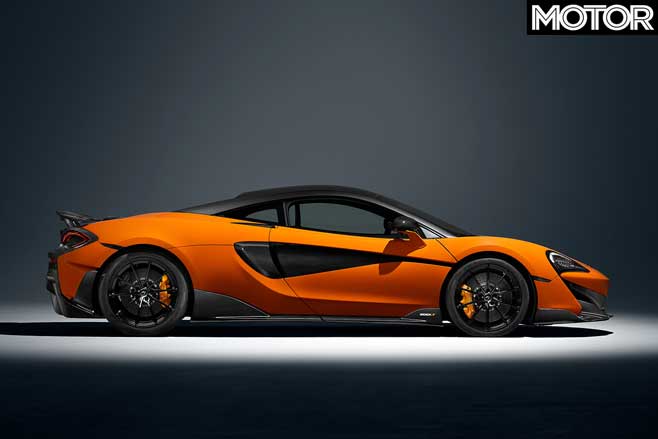
Aston Martin said no to a DBS Superleggera, likewise Lamborghini with the Huracan EVO, Ferrari with the F8 Tributo and Nissan with the MY20 GT-R Nismo. McLaren was keen, but unfortunately found itself “between press cars” with regards to the 600LT and 720S Spider.
Others fell foul of poor timing. The BMW M340i and M135i missed by mere days, while the M8 Competition slipped over to a Q1 2020 launch. In the same boat (possibly literally) were the Mercedes-AMG A45 S and Ford’s Fiesta and Focus ST twins, while the Mustang R-Spec hadn’t begun production. The Tesla Model 3 Performance fell foul of a lack of fast-chargers in South Oz.
Nonetheless, this year’s field wasn’t exactly lacking in quality, and the good news is that PCOTY 2021 is shaping up to be a classic with the likes of the Audi RS6, Porsche 911 Turbo and Taycan, Mini JCW GP and much more!
BMW has released pricing and specification for its newest four-door passenger car, the keenly awaited 2 Series Gran Coupe.
Positioned exactly between its 1 Series and 3 Series siblings for size and price, BMW has high hopes for the 2 Series Gran Coupe, which brings the number of high-roofed four-doors in the BMW range to four.
Pitched as an alternative to the four-door sedan, BMW formally revealed the 2 Series Gran Coupe at the Los Angeles motor show in late 2019.
Locally, it mirrors the 1 Series for spec and content, with the front-wheel-drive 218i kicking off at $47,990 plus on-road costs, while the M235i xDrive will sell for $69,990 before ORCs.
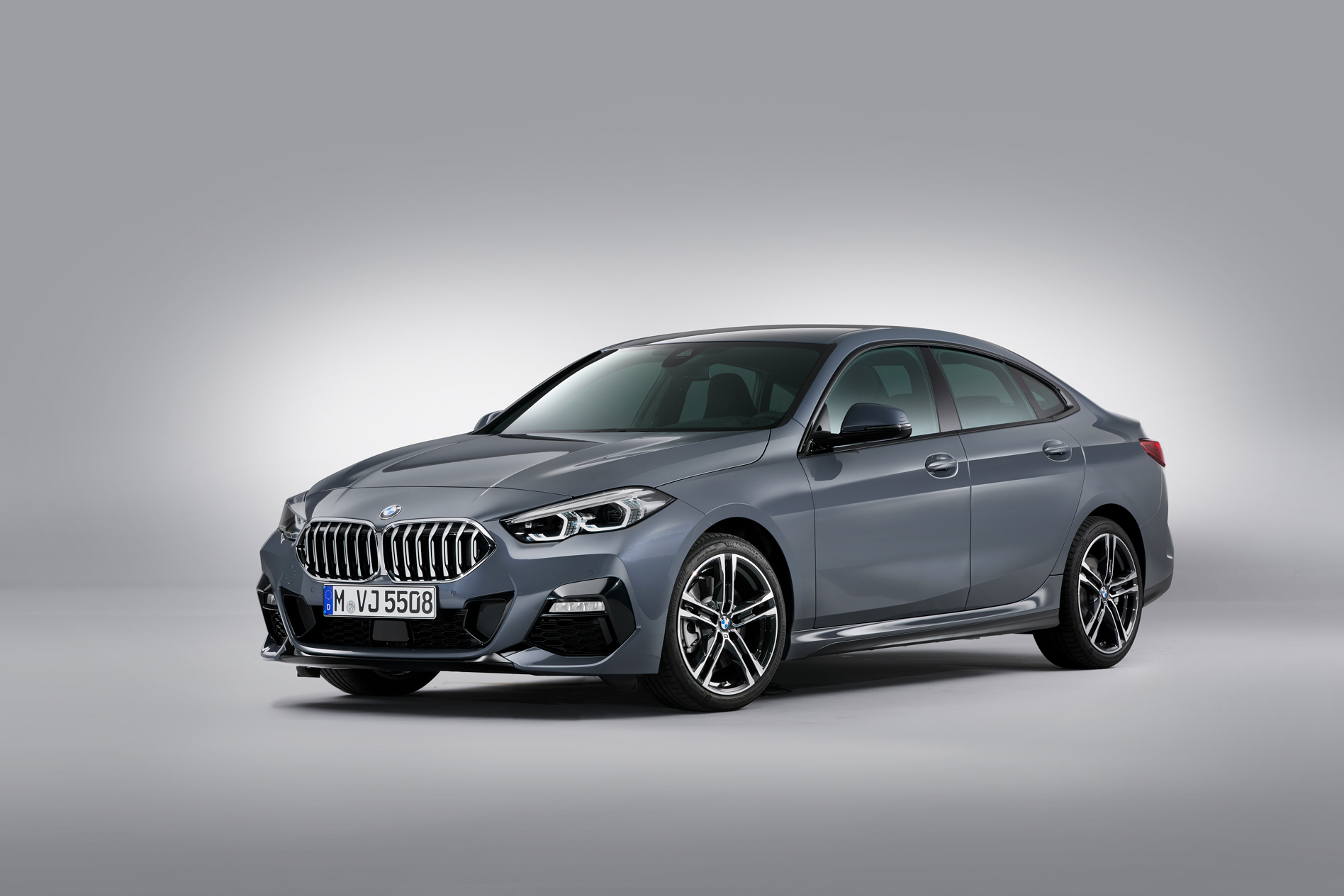
For the 218i (above), this means a three-cylinder turbocharged petrol engine powering the front wheels through a seven-speed dual-clutch gearbox is standard fare. The diminutive engine makes 103kW and 220Nm, and uses a claimed 5.9L/100km of fuel on the combined cycle.
A digital dash cluster, wireless phone charging, cloth trim on sports seats, a leather-wrapped M-Sport steering wheel and rear USB ports are also standard inclusions.
Safety kit includes city-brake AEB, lane departure warning, adaptive cruise control, blind-spot warning, rear cross-traffic alert and rear collision prevention.
Exterior standard items include LED headlights and taillights, 18-inch rims and an M Aerodynamics kit.
The M235i, meanwhile (below), uses a more potent 225kW/450Nm 2.0-litre four-cylinder turbocharged engine that powers all four wheels via an eight-speed automatic transmission.
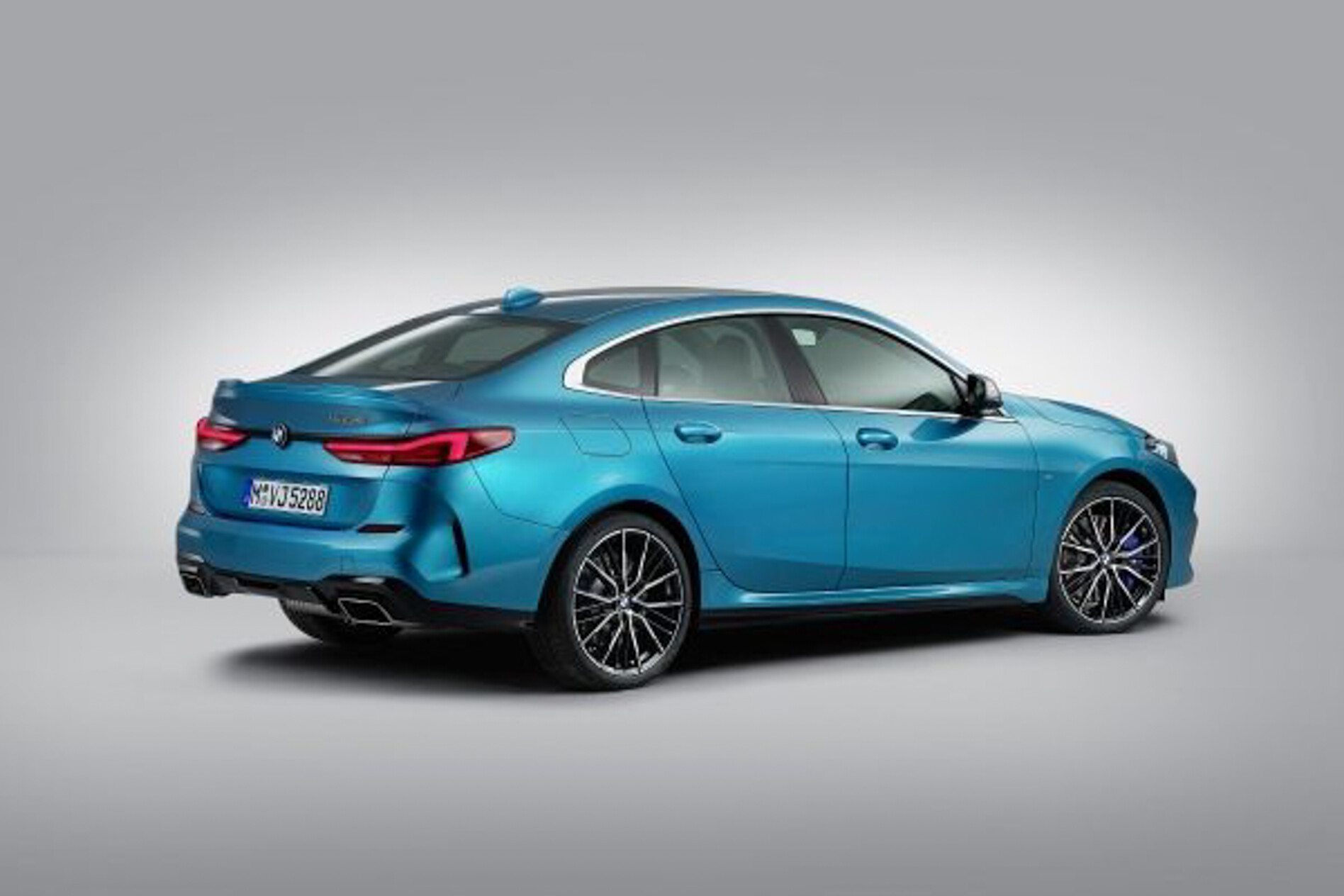
In addition to the 218i specs, the M235i scores M Sport brakes, 19-inch rims, adaptive LED headlights, a year’s subscription to a smartphone key set-up (BMW just loves the whole extraneous subscription thing) and M Sport bits like twin exhaust pipes and side mirrors.
The car is exactly 200mm longer than the 1 Series and 200mm shorter than the 3 Series, and even its luggage area is exactly 50 litres larger than the 1 Series and the same again smaller than the 3 Series.
The only real difference between the 1 and 2 Series machines is the addition of a 40-20-40 split/fold rear seat, according to Brendan Michel, head of product and market planning for BMW Australia.
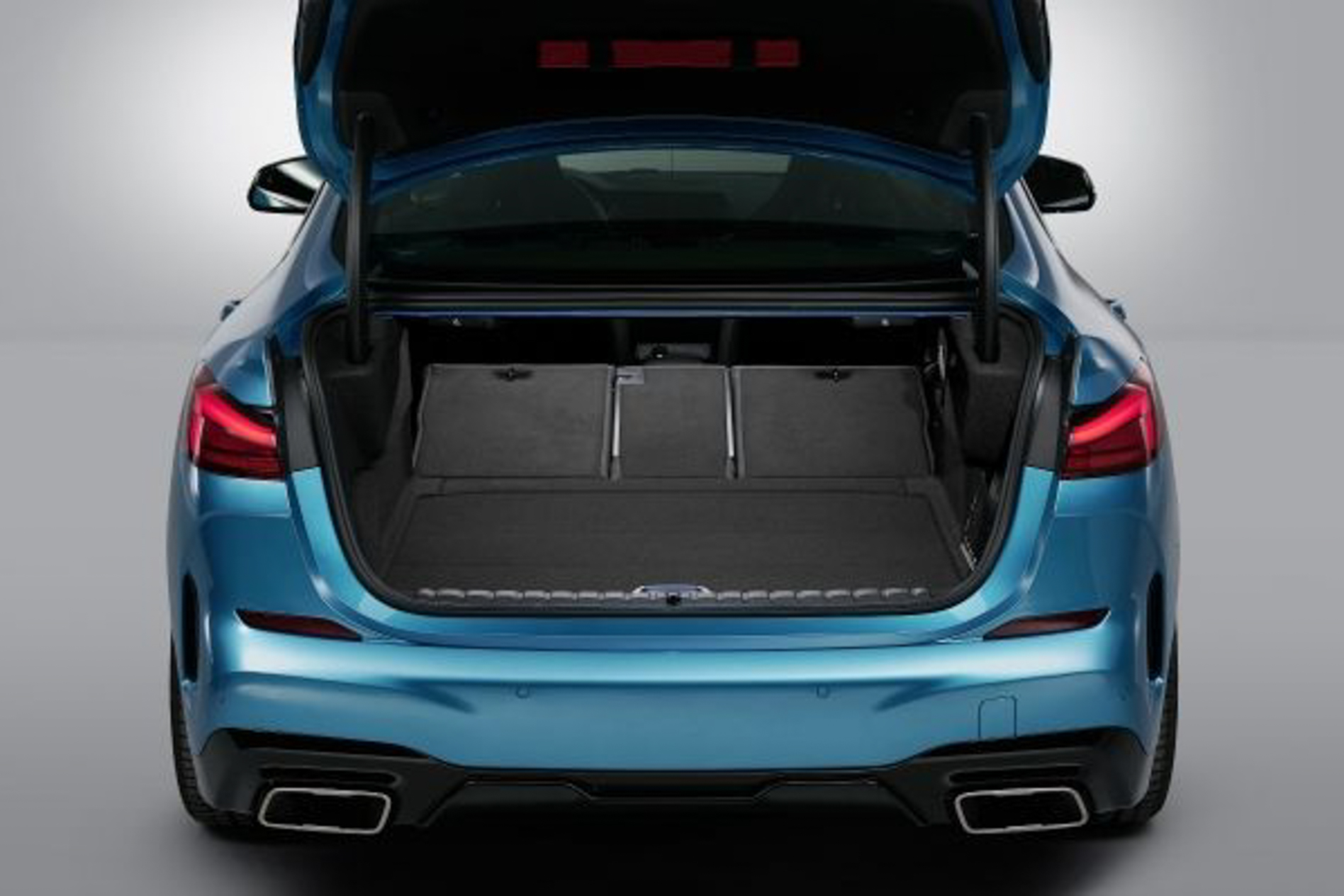
“It’s something we haven’t had in a segment where our competitors have had a presence,” said Michel during a media call in Sydney.” Australians will take to this car very, very well.”
Those competitors include the Mercedes-Benz CLA, which starts at $60,700, and Audi’s A3 sedan, which kicks off at $42,300.
The Wheels Verdict: If driving enjoyment and a talented chassis are your top fast-SUV priorities, then this is the one to buy. Quicker and sharper than any of its rivals, the Macan GTS is still the dynamic benchmark for circa-$100K performance SUVs. Only a few equipment anomalies and a cabin that’s starting to show its age dull its appeal. Oh, and be careful with that options list. Things can get out of control very quickly…
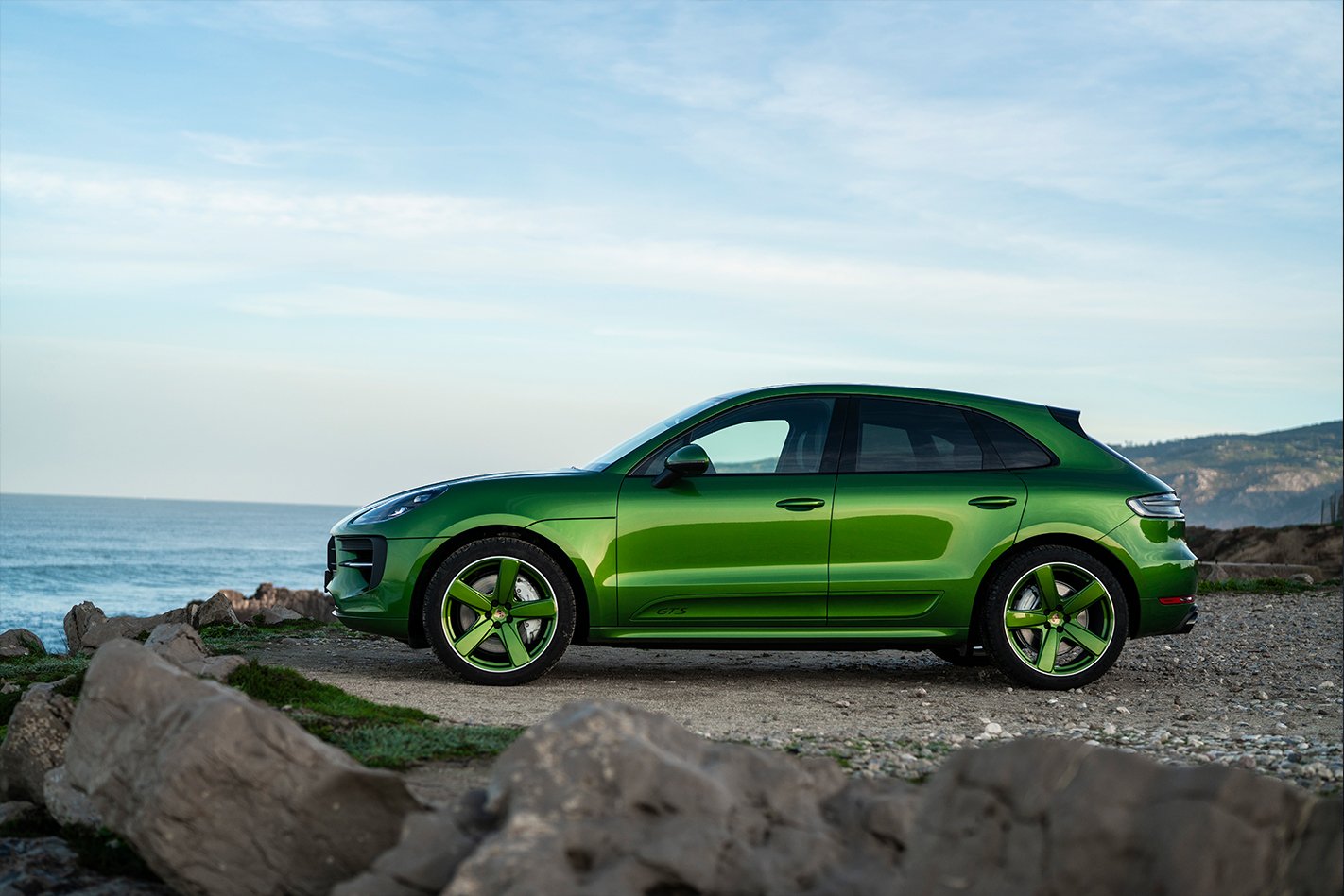
WHAT IS THE PORSCHE MACAN GTS?
This is the sportiest model in the Macan range, meaning sharp handling and driver enjoyment are the primary objectives. Priced at $109,700, it fills the gap between the existing Macan S and the range-topping Macan Turbo.
WHY WE’RE TESTING IT
Things move quickly in the performance world. It’s been two years since Porsche last offered a Macan GTS to Aussie buyers so can this new model still hold its own against newer rivals? And is the GTS still the pick of the Macan range? We flew to Portugal to find out.
REVIEW
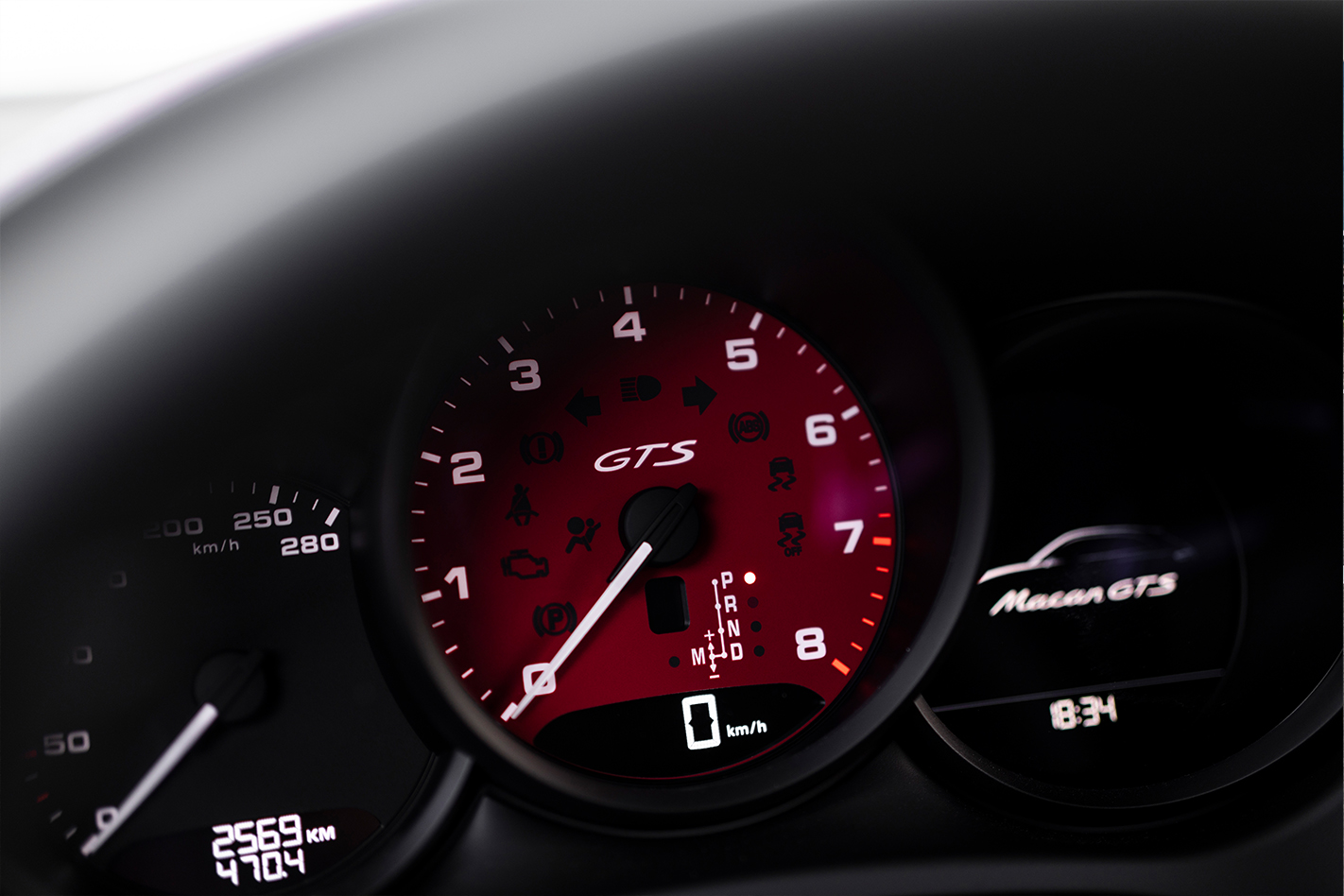
SUBTLE evolution and incremental improvement have long been Porsche’s calling cards, and so it is with the new Macan GTS. A facelift of the original Macan GTS, which first appeared in 2015, this updated version has been honed and fettled to deliver punchier performance and even sharper handling, while also offering a richer interior and a longer list of standard equipment.
Pitched as the “sportiest Macan”, the GTS fills the middle ground between the Macan S and the top-spec Turbo, meaning punchy, if not ferocious performance, and a clear focus on handling. Priced at $109,700, the Macan GTS is a rival for the Mercedes-AMG GLC43 and BMW X3 M40i, but is quicker and better to drive than both.
Thrust is delivered by the same 2.9-litre twin-turbo V6 as the $30K more expensive Macan Turbo, though a lesser ECU tune means outputs are 280kW/520Nm. Still, that represents a 15kW/20Nm increase compared to the old GTS, and the 0-100km/h sprint has been shaved by three tenths to just 4.7sec, if you tick the box for Sport Chrono.
Flatten the throttle and there’s no denying this is a quick SUV. Engine response is impressive (the turbos are mounted inside the vee to reduce lag), the quick-shifting seven-speed dual-clutch gearbox is easily the best transmission in this class, and despite a portly 1910kg kerb weight, full-bore acceleration is forceful enough to push you deep into the backrest of your seat. Sounds good too, thanks to a standard sports exhaust that produces a rorty note and plenty of aural theatrics on the overrun.
Porsche’s primary focus, however, has been the dynamics. Three-way adjustable adaptive damping is standard, as is a sports suspension tune that drops the ride height by 15mm compared to regular Macans. Optional air suspension shaves an extra 10mm from that figure, should you feel compelled to really blur the lines between performance SUVs and wagons, though we’d wager it’d be an indulgence too far. Though perhaps not quite as far as the optional carbon ceramic brakes, which will set you back $16,870. The standard cast iron stoppers, which measure 360mm up front with six-piston monobloc calipers, provide ample stopping power.
Pitch a Macan GTS onto a challenging section of road and it delivers the kind of stellar handling we’ve come to expect from this badge. The chassis is noticeably sharper than a Macan S and thanks to a larger footprint (standard 20-inch wheels are shod with staggered Michelin Latitude rubber measuring 265/45 up front and 295/40 out back) overall grip levels are high. Better yet, despite the chassis’ performance focus, the ride never feels overly firm or harsh.
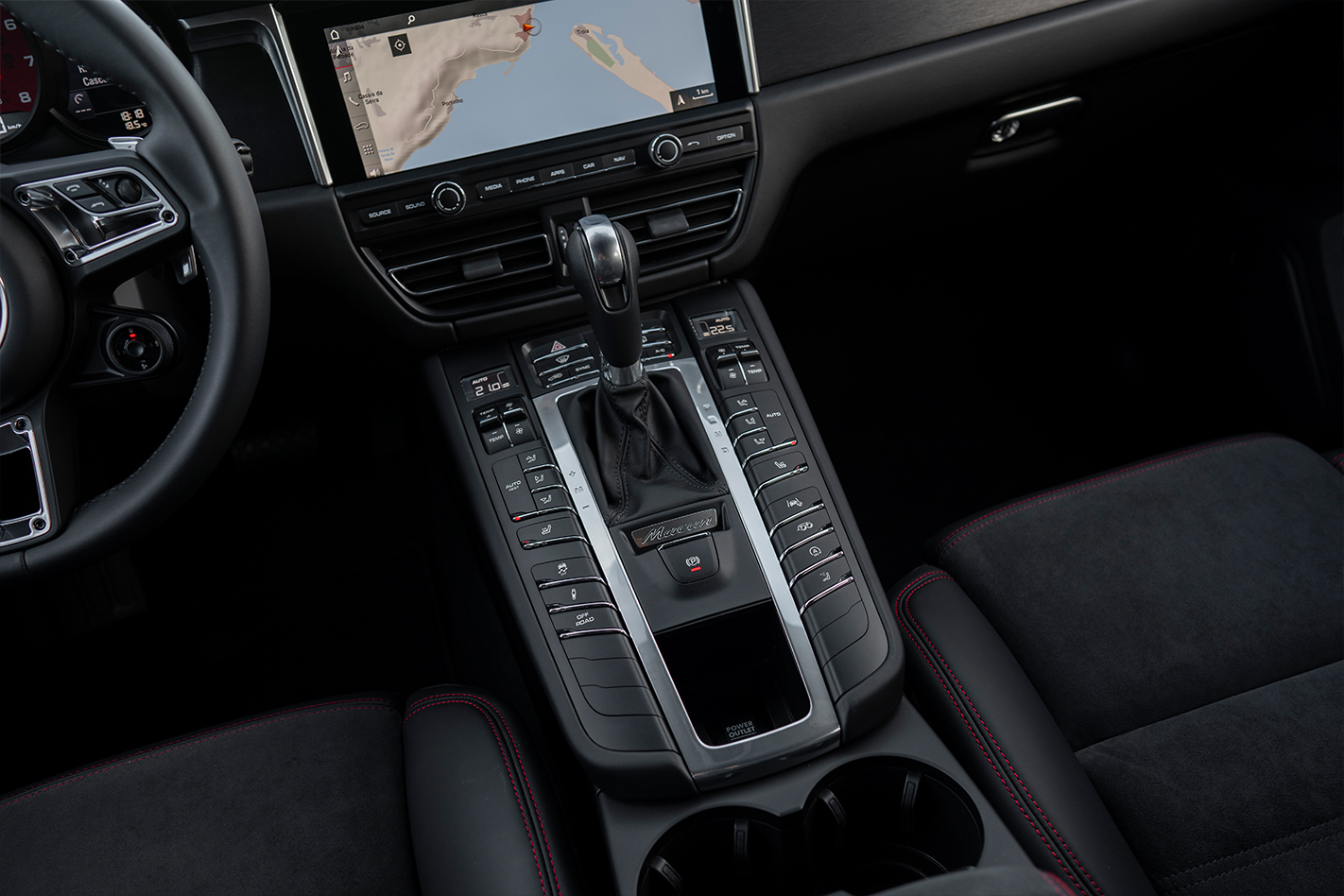
Inside, front-row passengers are ensconced in superb eight-way sports seats and are met with some GTS-specific visual touches such as brushed aluminium kick plates. It’s a richly trimmed and highly equipped place to sit, though the button-heavy centre console is showing its age. The lack of a head-up display, even as an option, is odd too. Cabin storage is also at a premium (the glovebox and central bin are disappointingly small) and while the rear seat offers ample head- and toe-room, and a comfortable rear-cushion with decent under-thigh support, taller passengers may want for knee room.
Yet these are minor niggles in an overall package that offers a convincing blend of performance and everyday useability. There’s some tasteful visual differentiation here too, with GTS models scoring blacked out details, black Spyder design wheels and redesigned front and rear aprons. So is it still the pick of the Macan range? Like anything, it depends on your priorities. If they happen to be driver enjoyment and dynamic excellence, then this remains the SUV to beat.
RIVALS
Audi SQ5 S, Mercedes-AMG GLC43, BMW X3 M40i, Jaguar F-Pace 35t S, Volvo XC60 T8 Polestar
PORSCHE MACAN GTS PRICE AND SPECS
- Model: Porsche Macan GTS
- Engine: 2894cc V6, dohc, 24v, twin-turbo
- Max power: 280kW @ 5200-6700rpm
- Max torque: 520Nm @ 1750-5000rpm
- Transmission: 7-speed dual-clutch
- Weight: 1910kg
- 0-100km/h: 4.7sec (claimed, with Sport Chrono)
- Economy: 9.6L/100km
- Price: $109,700
- On sale: Now
The world got a glimpse of it as information was leaked before its reveal in November, but the BMW M2 CS has since been confirmed, and it’s coming to Australia. In fact, if you want one, you’d better get your wallet and head to a dealer quickly.
The CS is a limited-run variant, though reports of international build limits have yet been unconfirmed by BMW. MOTOR has however confirmed with BMW Australia that pricing for the BMW M2 CS is $139,900.
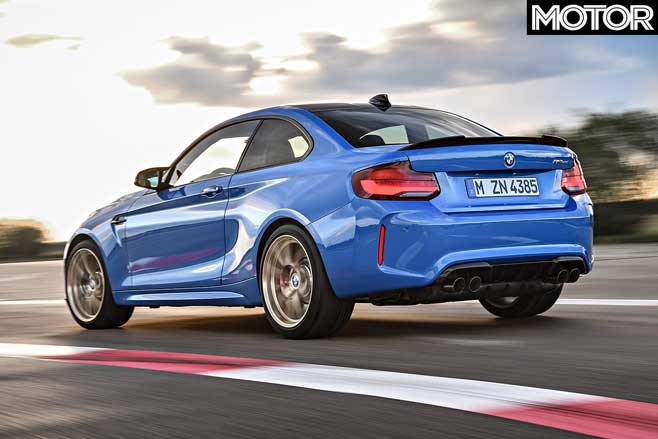
BMW Australia also reports customers have already been placing orders for the M2 CS, with Munich’s local counterpart trying to secure as many units as possible to satisfy M-hungry Aussies. It’s slated to arrive in mid-2020.
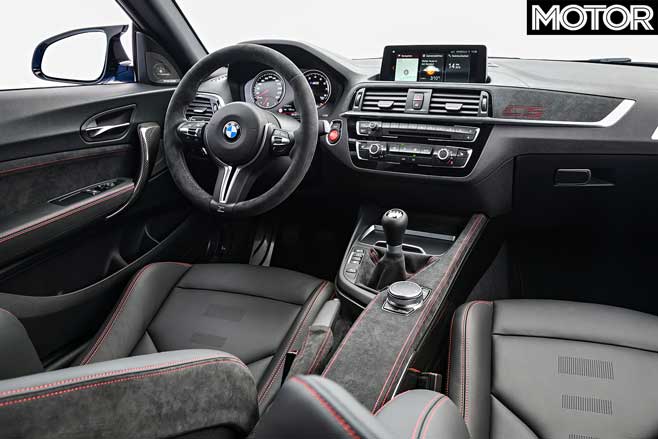
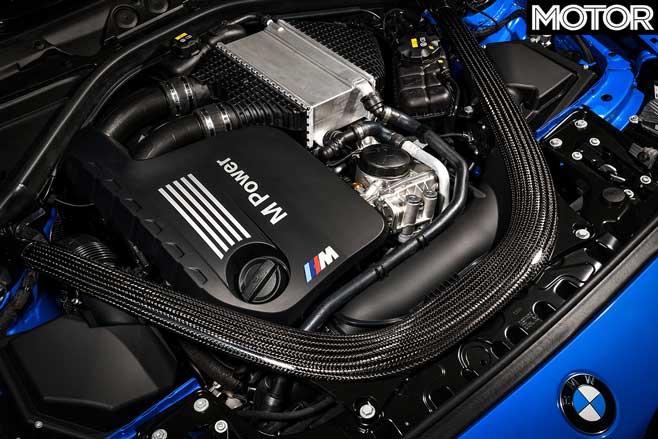
In terms of specification, the most powerful M2 yet is the final recipient of the S55 twin-turbo straight-six engine, which previously powered M3 and M4. In this guise, the engine produces 331kW and 550Nm, and is set to become the first ‘CS’ spec engine to be mated to a manual transmission.
Three-pedal purists may also rejoice in the knowledge that even with a manual shifter, the M2 CS is capable of a sprint to 100km/h in just 4.2 seconds. With the 7-speed DCT gearbox, a straight 4.0 seconds is BMW’s claim.
Not only is the CS to be the sharpest M2 yet, it’s also going to look the part with new aero in the form of a CFRP bonnet and roof, plus a redesigned front splitter, bootlid Gurney flap, and a new rear diffuser.
As reported by MOTOR in May this year, the CS will also gain adaptive dampers, and the addition of an M Driver’s Package will allow the M2 CS to top out at 280km/h.
Pricing for the M2 CS breaks BMW’s previous method of charging $50K more for a CS model in Australia over the car it’s based on – the M4 CS listed at $189,529 while the M4 Pure was $139,529. The M2 CS is only $32,000 more than an M2 Competition.
Stay tuned as we await further details from BMW Australia.
