
SIX GEARS OR 10? That’s the question anyone walking into an HSV showroom for a Chevrolet Camaro will face from here on out.
Local conversion has expanded to include manual transmissions on all models, as Clayton promised when it pulled the wraps off the 2019 version earlier this year, and the 2SS is the first in the range to offer the six-speed manual alongside the 10-speed automatic.
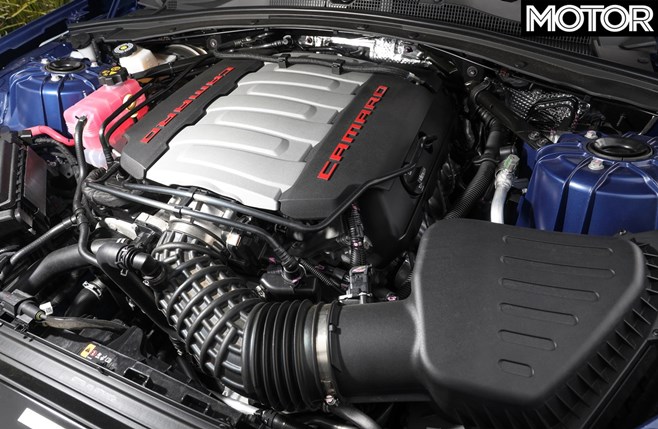
With outputs of 339kW and 617Nm, we’re lucky the aspirated 6.2-litre V8 even gets the choice. It’s at this point some manufacturers would rule out the relevance of a manual, deeming circuit boards a better judge of clutch engagement with so much grunt.
But after Chevrolet proved the potential of the H-pattern by laying down a 7min 16.4sec flying lap at the Nurburgring Nordschleife in the ZL1 1LE, its 477kW track-spec monster, we were salivating over the self-shifting 2SS.
It scores the same Tremec-built 6060 six-speed gearbox as the ZL1 except with a different set of gear ratios, and a lower torque rating (760Nm instead of 880Nm). This is the same ’box as in the outgoing HSV Gen-F2 range, so that might go some way towards helping the 2SS manual feel familiar in hand. Yet we can’t recall a Holden or HSV ever shifting this smoothly.
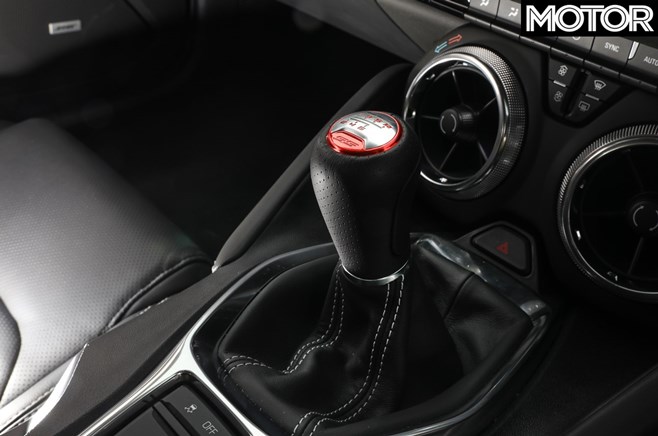
Sliding into the Camaro 2SS while it’s parked and playing around with the shifter reveals a buttery throw between each gate. The lever is thinner than the chunky stub found in HSV’s old Gen F2 models and it’s also more contoured than a Mustang’s ball knob.
The clutch feels special as well. It softly clunks at low speed if you’re slow on the release, but the Camaro’s Active Rev Match can hold revs on slow, lazy upshifts and blip them for downshifts. Yeah, we know only a numpty needs help doing that, but the clutch seems to bite twice on the release stroke and sometimes you fall out of sync. So it’s a welcome feature.
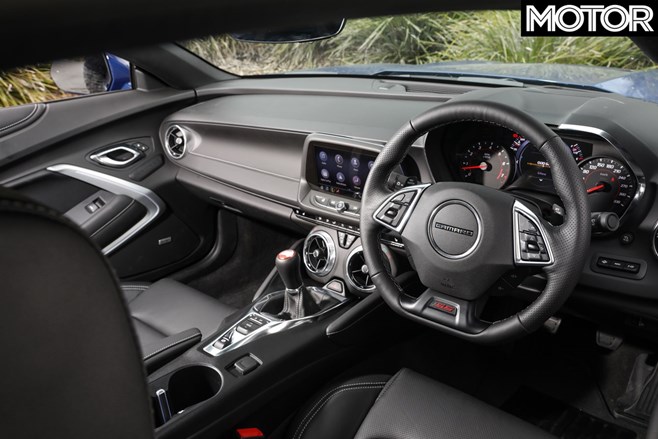
That might also be why there’s an anti-stall that blips the throttle when you’re too slow on the clutch release on a hill, helping subdue the massive forces at play on the rear wheels.
It’s a shame local Camaros miss out on its most entertaining tech. You’ll find instructions for line-lock and launch control in the owner’s manual, the latter of which can vary wheelspin and rpm, but they’re not where they should be found in the car’s digital cluster menu. So it’s all down to your left leg and arm.
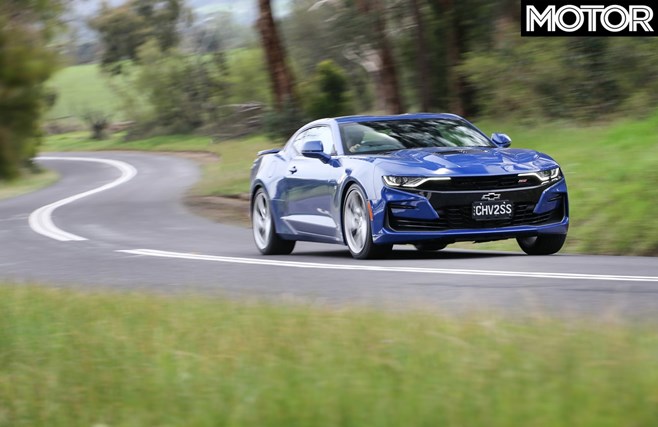
Chevrolet claims manual Camaros accelerate about three-tenths slower than the 10-speed auto to 100km/h and lag two-tenths over the quarter-mile. We’ve proved it’s a little closer than that, with our manual’s best 0-100 time of 4.7sec being only two-tenths behind the 10-speed auto 2SS’s tested 4.57sec. It’s the same over the quarter-mile, where the manual’s 12.8sec trails the auto’s 12.59sec.
The manual’s longer spread between ratios feel better suited to the engine’s meaty torque band on the drag strip and in the corners than the auto. Cruising around town is nicer too, as you can keep revs in the mid-range and enjoy the delicious off-throttle crackle of the bi-modal exhaust.
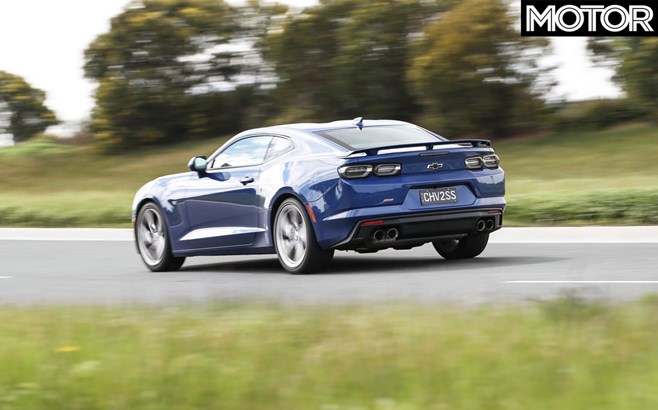
On the subject of noise, we also love hearing the throttle-plate suck a gob full of air when you stab the right pedal, like it’s a race engine.
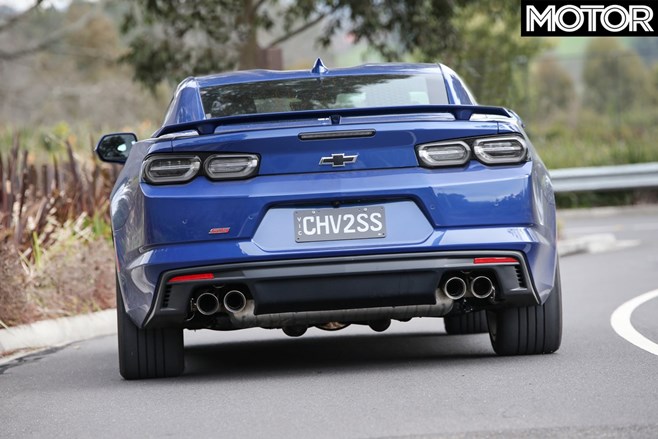
Icing on the cake is that HSV recognises the manual ’box as a simpler mechanical device and charges less for it. At $86,990, it’s $2200 cheaper than the 10-speed.
There are still some flaws in the 2SS whatever transmission you choose, like its firm ride and gluggy steering weight, but the manual helps the car feel more cohesive and authentic.
So, to answer the original question, we’ll take six. Thanks.
2019 CHEVROLET CAMARO SS MANUAL SPECS
Engine: 6162cc V8, OHV, 16v Power: 339kW @ 6000rpm Torque: 617Nm @ 4400rpm Weight: 1728kg 0-100km/h: 4.7sec (tested) Price: $86,990
The Strip
| Chevrolet Camaro SS | |
| 0-10km/h | 0.4sec |
| 0-20km/h | 0.9sec |
| 0-30km/h | 1.3sec |
| 0-40km/h | 1.7sec |
| 0-50km/h | 2.1sec |
| 0-60km/h | 2.5sec |
| 0-70km/h | 2.9sec |
| 0-80km/h | 3.7sec |
| 0-90km/h | 4.1sec |
| 0-100km/h | 4.7sec |
| 0-110km/h | 5.4sec |
| 0-120km/h | 6.3sec |
| 0-130km/h | 7.1sec |
| 0-140km/h | 7.9sec |
| 0-150km/h | 8.9sec |
| 0-160km/h | 10.1sec |
| 0-170km/h | 11.2sec |
| 0-180km/h | 12.5sec |
| 0-400m | 12.8secu00a0@ 182.1km/h |
| 80-120km/hu00a0 (3rd-6th)u00a0 | 3.4/4.3/6.7/11.8sec |
| 100-0km/hu00a0 (3rd-6th)u00a0 | 33.9m |
| Speed in gears | |
| 1st | 87km/h @ 6500rpm |
| 2nd | 129km/h @ 6500rpm |
| 3rd | 177km/h @ 6500rpm |
| 4th | 230km/h @ 6500rpm* |
| 5th | 290km/h @ 6060rpm* |
| 6th | 290km/h @ 4095rpm* |
Heathcote Dragway, 23˚C, dry. No rollout applied. Driver: Scott Newman *Manufacturer’s claim
UPDATE, November 2022: 2023 Kia Seltos on sale in Australia
The Kia Seltos has come in for its midlife update, gaining new looks, new tech, and an eight-speed automatic to replace the 1.6 turbo petrol model’s seven-speed dual-clutch automatic. Get all the details at the link below.
Story continues…
The target audience is clear: The TV advertisement for the all-new Kia Seltos is accompanied by It-teen Billie Eilish’s Bad Guy, with Kia confirming its small-SUV is aimed at young, tech-savvy buyers,
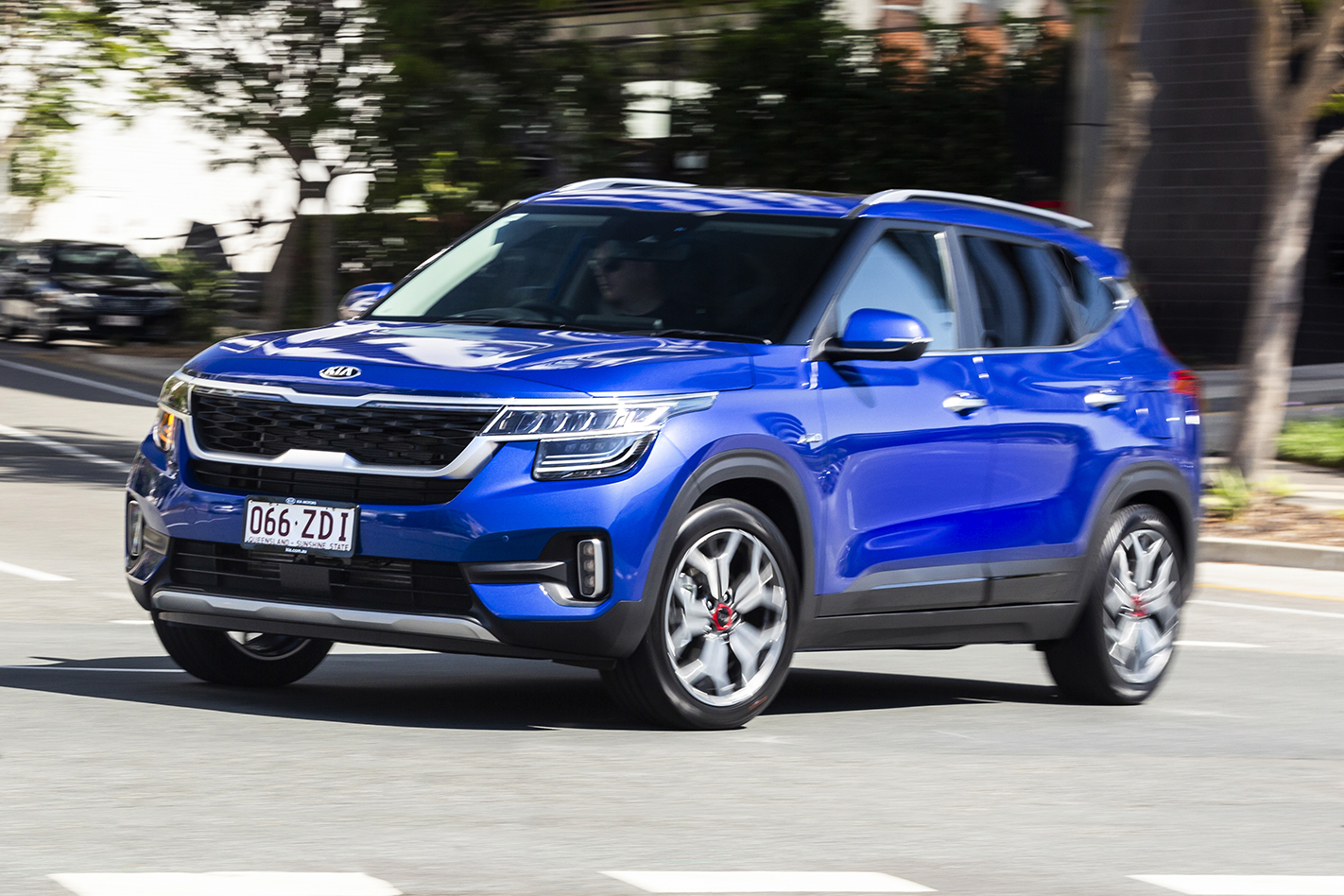
But you don’t have to be young and hip to enjoy some of the cool features in this car, which include:
- The dazzling colours. No boring palette here. Seven “fashionable” shades are on offer including Mars Orange, Neptune Blue and Gravity Grey for an extra $520. The standard (free) shade is a blinding — and so hot right now —Starbright Yellow.
- The generous 10.25-inch touch screen which is easy to use and allows multi-tasking. Available in all models except the entry level S.
- The wild Sound Mood Lighting in the doors and dashboard which pulses to the beat of the music pumping out of a BOSE Premium Sound System. Very Millennial. KIA hopes this will appeal to “night-clubbers with minimal responsibilities”. Available in the top spec GT Line only.
- Even though this is a small SUV, the cabin is roomy and cargo space is an impressive 433-litres.
- Heated and – a new favourite of mine – ventilated front seats. Trust me, this is a little luxury you’ll want once that scorching summer hits. It’s only available in the GT Line. Bluetooth that can sync two phones at once so you can listen to music from one and take calls from another. A good way to keep the kids entertained.
- New active safety features including Rear Cross-Traffic Avoidance Assist that stops the Seltos if you’re in danger of hitting a passing car while reversing; Safe Exit Assist, which warns occupants of traffic (including bicycles and motorcycles) before they open their door into the road; and Lane Following Assist that can track vehicles and road markings ahead to keep the car in-lane and a safe distance from any cars in front.
- The Aussie suspension tuning program that has made the Seltos surprisingly enjoyable to drive on bendy country roads. Kia strengthened the rear suspension bars and tweaked the electronic power steering to give it sporty-like ride and handling.
The NSW government has spent $88 million on stealth cameras to stop people texting while driving. They could have achieved the same thing in a more fun way by making manual transmissions mandatory.
Here’s the thing, though – my phone can tell everything about me. It knows when I’m sleeping, it knows when I’m awake. It knows when I’ve been bad or good. Basically, my phone is Santa Claus.

So why not deal with the phone problem at the phone level? No texting once the phone detects that its owner is driving a car. I know it must be difficult for a phone to tell the difference between driving a car and riding in one. But then it must be difficult for a phone to morph my face into Donald Trump’s in real time, so that I can prank-call Scott Morrison and get him to sing God Is In the House in a falsetto, and they manage to do that.
Conspiracy theory time: I don’t think the phone-deterring cameras are actually there to deter phone use. Look at the angle – looking straight down into your car.
“Oh, they have to be at that angle to spot people texting with their phones in their laps,” scoff the easily duped, before getting back to thinking that the lines on Boris Johnson’s throat are definitely just human stretch marks, and not the tell-tale gills of a lizard-person. (Wake up, people!)
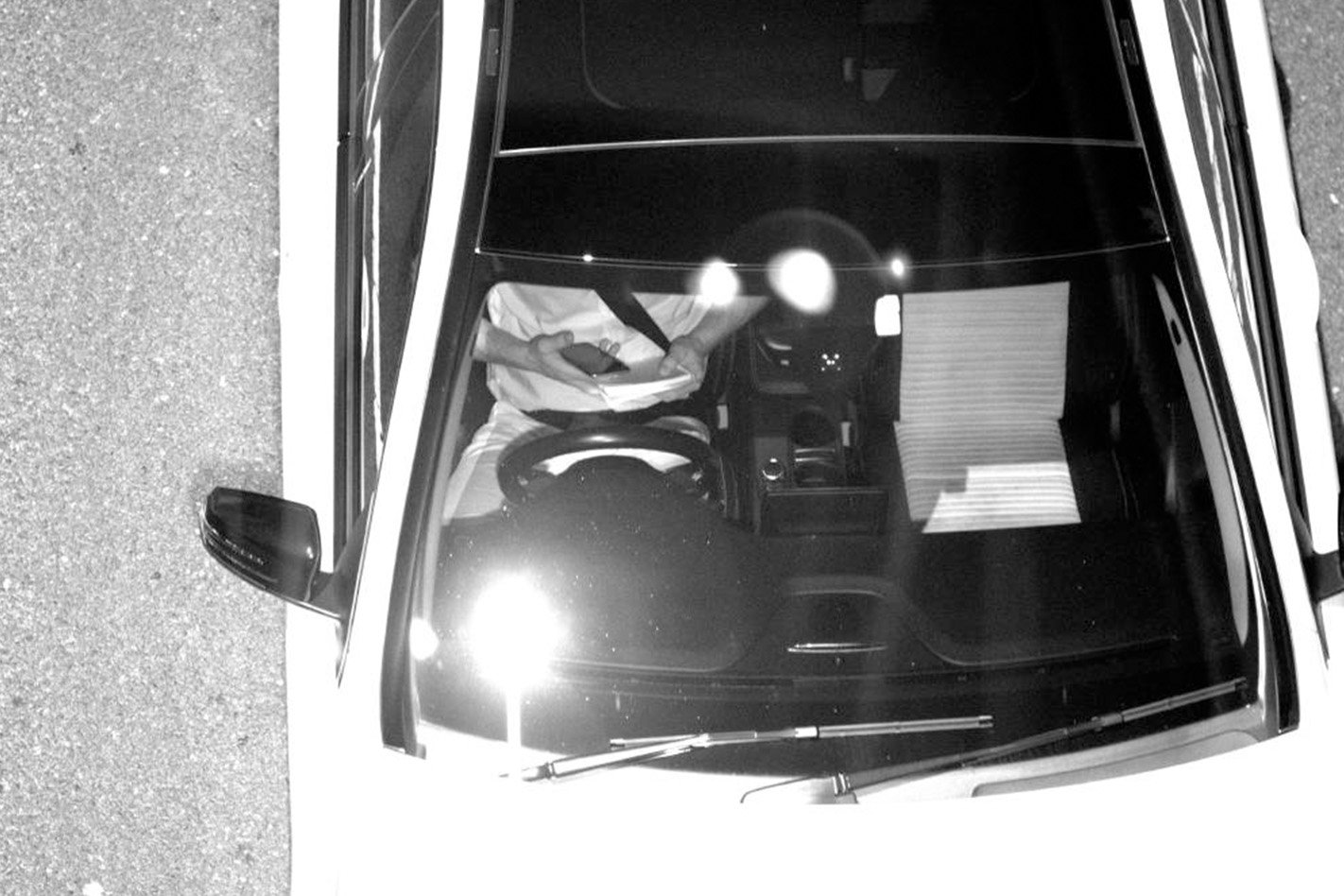
But you know they have to be using multiple angles, not just the steep downward angle, because you know what that angle doesn’t catch? Your number plate – so how are they gonna send you the fine? So there must be at least one more camera to catch that. And the camera angle to catch someone texting in a Camry is different from the camera angle to catch someone texting in a semi, so you can bet there are different cameras with multiple angles to capture that.
In fact, they have to be shooting from so many different angles, using so many different cameras, that they can capture pretty much everything and everyone inside every car.
Which is kinda inevitable in this age of high-tech policing and national security paranoia – a state-wide net of high-definition cameras, shooting 24 hours a day from multiple angles in all weather conditions, to identify not just who is in the car, but what they’re carrying.

Pretty much what you’d get if you gave $88 million to the Special Tactics guys, which are the police who use the unmarked entrance in the back lane and always seem to have traces of black face-paint in their whiskers.
But if you told the general population that the police and ASIO and who-knows-who-else were going to take a peek inside your car every time you left the garage, everyone would lose their minds. “My privacy! My precious privacy!” we’d all shriek, the same way we do when social media corporations use our data the way they told us they would in the terms and conditions, which we all agree to without reading but blame the corporations anyway.
Instead, the NSW government says the cameras are there to catch people texting, which certainly seems like a prime use for $88 million. (Sceptical face emoji.)
They won’t even tell anyone where the cameras are. “We have to use the element of surprise to get people to think, ‘I could get caught at any time’,” the NSW Minister for Roads says. Which makes sense, but it also makes sense for speed cameras, and they tell you where those are going to be.
So the cameras are there to, what, catch terrorists or drug dealers or something? Maybe. But I can’t help noticing that the steep downward angle might be okay for catching someone texting – though it’s absolutely ideal for catching someone giving a cheeky road-job from the shotgun seat.
I say that someone high-placed in the NSW government suspects that his wife is giving hummers to a co-worker on the carpool home and has wrangled $88 million-worth of hidden cameras to catch her in the act. How? Probably by calling Scott Morrison with his face deep-faked as Donald Trump. Works every time.
Just one-tenth of a second separated Sydneysider Barton Mawer from nabbing the fastest ever time recorded at Sydney Motorsport Park at this weekend’s World Time Attack Challenge.
Aboard the most ridiculous Porsche 968 the world has ever seen, Mawer won the sprint event that pits the world’s fastest single-lap machines in a two-day winner-take-all speed fest.
Mawer’s time of 1min 19.2sec fell an agonising tenth of a second short of German F1 racer Nico Hulkenberg’s 2007 record, set aboard an A1GP open-wheel, slick-shod racer.
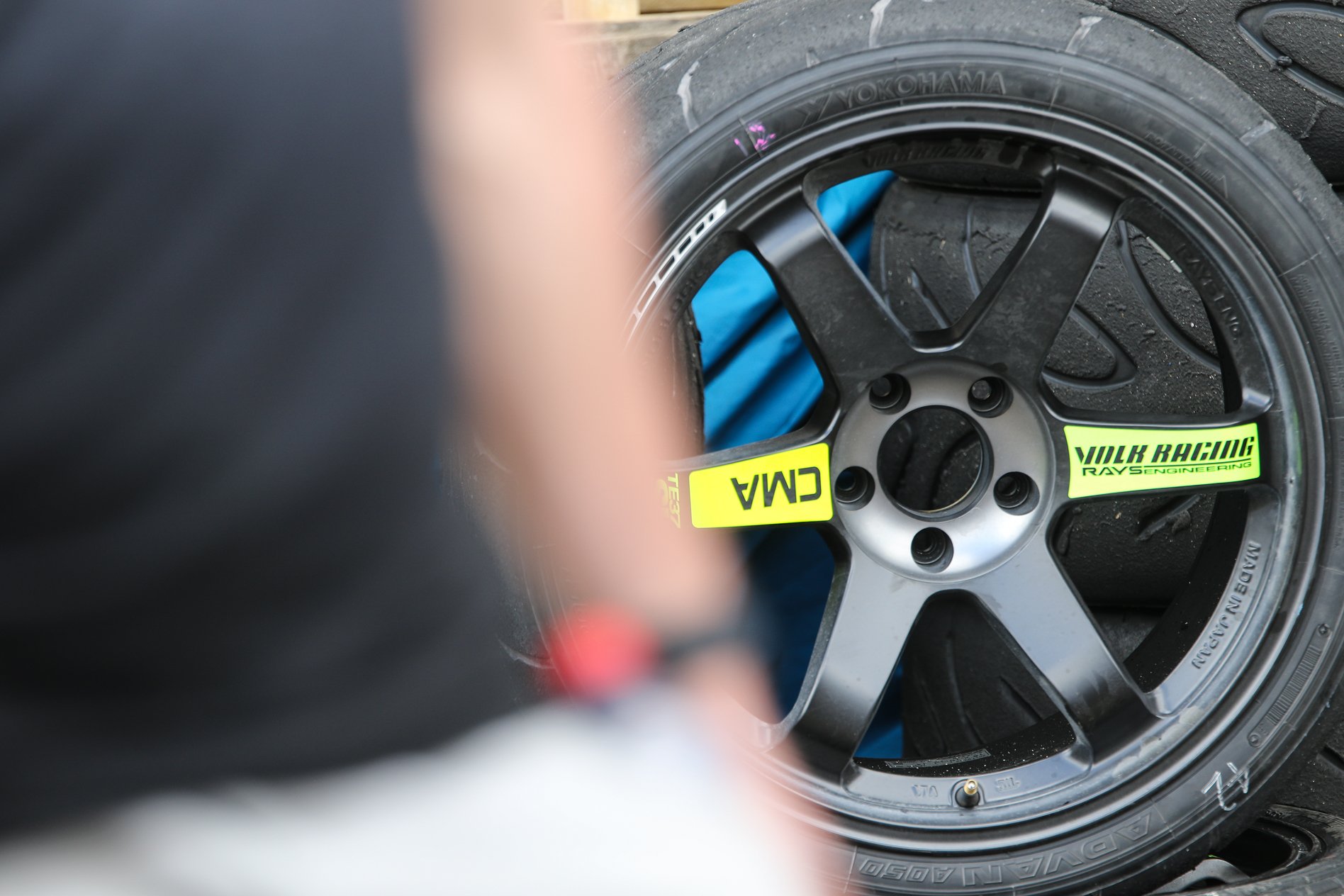
While the car – owned by Sydney Porsche expert Rob Pobestek – is certainly a long way from standard, WTAC rules dictate that competitors use a grooved Yokohama tyre, which makes the feat even more remarkable.
The 968 is powered by a custom-billet 4.0-litre four-cylinder engine that’s fed by a turbo large enough to house a high school band.
A complete rebuild between last year’s win and this year’s title tilt added high-tech stuff like car-to-pit live-time telemetry and a titanium exhaust that exits straight through the passenger door.
Mawer’s day wasn’t perfect, but an early morning run on Saturday ahead of blustery hot conditions late in the day locked away the team’s second title on the trot.
“I was finally flat through turn one, so I was certainly hoping to go quicker [in the afternoon], we wound up everything to do it, but the conditions weren’t really there,” said Bawer on the podium. “Still, we’re very happy to win!”
The event also played host to a massive show n’ shine car show, as well as an intercontinental drift show which kept the huge crowd entertained well into Saturday night.
Check out our huge gallery for all the people and sights from the 2019 World Time Attack.
So, yeah, by the time you read this, I’ll be unemployed. Again.
Oh, it’s okay – for most of my life I’ve worked for myself, which has been great (well, apart from that sticky business of the sexual harassment suit I brought against myself … #MeOne). It may come as a surprise to some, but yes, I do other publishy-type things besides Wheels.
For the past three years I’ve been editor-in-chief of the newly launched Australian edition of a well-known international luxury magazine. It felt like a role I was designed for because, probably like you, my fascination with cars naturally leads me to an appreciation of watches, motorcycles, aeroplanes, boats – in fact, learning about anything that’s got a ton of talent, design, engineering and brand heritage behind it. Typical dream job.
One quirk of that magazine’s demographic is that for the past three years I’ve hardly driven any new car worth less than six figures, and one or two worth seven (most recently, a gorgeous Ferrari 812 Superfast with around $400K-worth of Tailor Made treatment, including hand-painted Ferrari shields … the way they did it in the old days).
A big part of my fascination with cars has always lain in the huge variety of solutions for a common theme. Let’s say 100 years ago, you sketch out the notion of a motorised vehicle with four wheels. You introduce that concept to each of Germany, America, Italy, Czechoslovakia, England, Sweden, Australia, Russia – to pretty much any country in the world, besides all the useless ones – and just marvel at the way in which cultures, societies and ingenious individuals contribute to a beautiful, global garden of interpretations. The same is still true in car making, though it seems to me, increasingly so only at the very top end of the market.
Back when I started writing for Wheels, a smallish and affordable car might have been front, rear or all-wheel drive, had an in-line, transverse, flat-four or even a small V6 engine, been naturally aspirated or turbocharged, a sedan or hatch or booted fastback, hailed from Japan, Germany, Italy or …
Okay, maybe a lot of those boxes are still ticked, but I just don’t see the variety that there was back then among, say, a Suzuki Swift GTi, Volvo 360 GLT, Alfa Romeo 33, Subaru Leone, Renault Fuego, Toyota Corolla twin cam, Holden Piazza turbo, Holden Camira, Fiat Regata … Some of them were utterly dreadful, of course, but at least only one of those is a front-drive, transverse four-cylinder, five-door hatchback.
The automotive designer’s art still intrigues, but safety and fuel/emissions legislation is more strictly constraining the template. I suspect that as we move to electric vehicles, the same will be even more true, possibly even approaching uniformity among platforms, batteries, motors and software. Like fridges. Or Formula E.
No doubt those who vote for big government and vampiric initiatives like the EU’s speed limiters will be easily convinced that, really, the state knows best when it comes to building cars. Trabant or Lada, sir? Take a ticket.
My early days at Wheels were also the time of the Button plan, and the Toyota Lexcen, Ford Corsair, Holden Apollo, Nissan ute… Badge engineering highlighted the fact that these mainstream-brand badges offer no compelling reason to buy one over the other.
But it seems to me that there’s an ever widening gulf between the truly top-end brands, and everybody else. Think about supercar marques like McLaren, Ferrari, Aston Martin, to name a few, and recent disruptors like Koenigsegg, Rimac or Brabham. A goodly proportion of their future models are destined for racetracks of the rich and famous, potentially evading whatever Orwellian scenario is playing out on our roads – and thus continuing to foster engineering creativity and individuality.
And aside from supercars, ultra-luxury brands like Rolls-Royce are already enhancing their one-off build capabilities, many of their customers being, as it were, more equal than others, and immune to the apparent homogenisation intended for the rest of us.
Meanwhile, I do wonder about the mainstream brands, and what size knives each could carry into a gun fight between automotive engineering and social engineering.
Out of the corner of his eye he caught a glimpse of the power poles going off to the left and away from the road. It would have been warning enough but the little car was totally committed to the corner now, so the knowledge that the corner followed a decreasing radius counted hardly at all. If the car was good enough, they were safe.
Until now the blacktop had been predictable, a fast, open ribbon of road. The tiny green hatchback had been perfection, its engine hard, responding instantly to the driver’s commands, and with its superb close-ratio gearbox, never dropping below 5000rpm. How smooth it felt, how sweet. The steering had responded in kind. There was no slack, no sponge, just a direct connection between the tiny soft-rimmed wheel and the squat Michelins. Every tiny input was passed through to the road, every apex judged down to the finest degree, such was the accuracy and precision. Was it not inspiring, did it not build confidence? To be sure, and that was the danger, that was the reason this recommended 65km/h corner had been entered at over twice this speed.
The car turned in beautifully, as always, but that was before the driver realised this corner was different. Now it was off the throttle quickly and sharply; the tail flicked out ever so slightly, yet no more than to require a roll of the wrists in reply, then down to third and flat again, the tyres scrambling for traction, clawing at the coarse surface, the driver aware through the steering wheel that he had used up all that reserve of tenacious grip. Then it was through and gone, the poise and balance had won, and he knew this was no Japanese pretender.
Peter Robinson, Wheels, December 1985
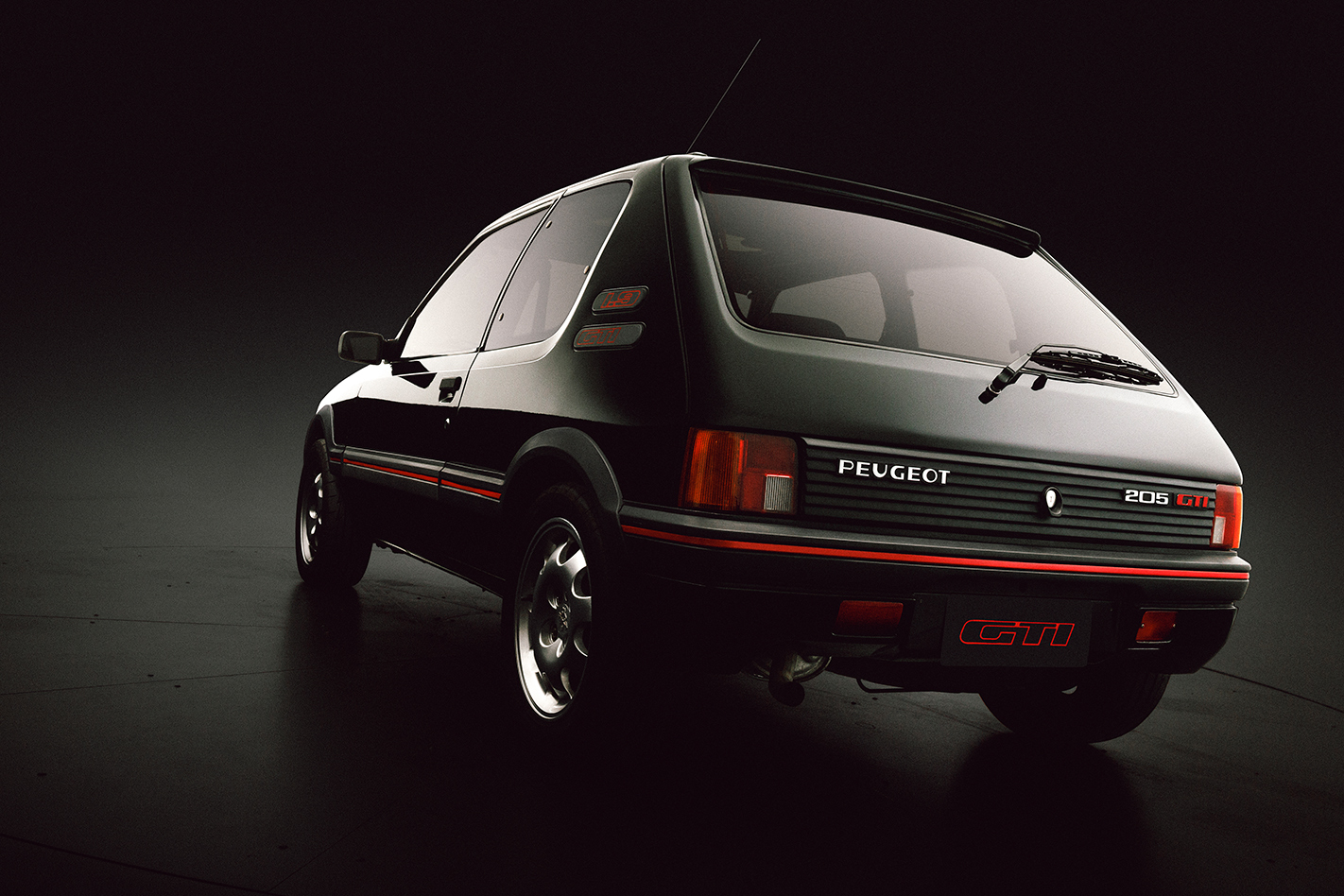
Has any passage of prose better summed up the appeal of the Peugeot 205 GTi than Robinson’s road test for this publication back in 1985? This 205 GTi was always a car best enjoyed at ten-tenths, teasing at that part of the dynamic envelope beyond the ken of its peers. Yet even for those who never possessed anything like Robinson’s skill behind the wheel, the 205 GTi’s reputation alone endowed it with an irresistible X-factor, usurping the Golf to become the most revered hot hatch of the 1980s. In truth, the ethos of the 205 GTi was actually closer to featherweights like the Fiat Uno Turbo and Renault 5 GT Turbo, and latterly the Clio Williams, than the doughty Golf GTI MkII, but such was the shadow cast by the VW that it became the inevitable yardstick.
Designer Gérard Welter’s production car palmarès also includes the 304 and 305, the 405 and 406, the 604 and the RCZ. His competition-car resume was possibly even more spectacular, and included the WM-Peugeot 88 sports racing cars which set a speed record at Le Mans of 407km/h that stands to this day, as well as the most successful rally car of the Group B era, the Peugeot 205 T16. Add to that the Paris-Dakar-winning 205 and 405 Coupes and the Pikes Peak 405 Coupe made famous at the hands of Ari Vatanen in the 1988 film Climb Dance. Welter passed away last year, having served 47 years with Peugeot. He was undoubtedly one of the great styling domestiques.
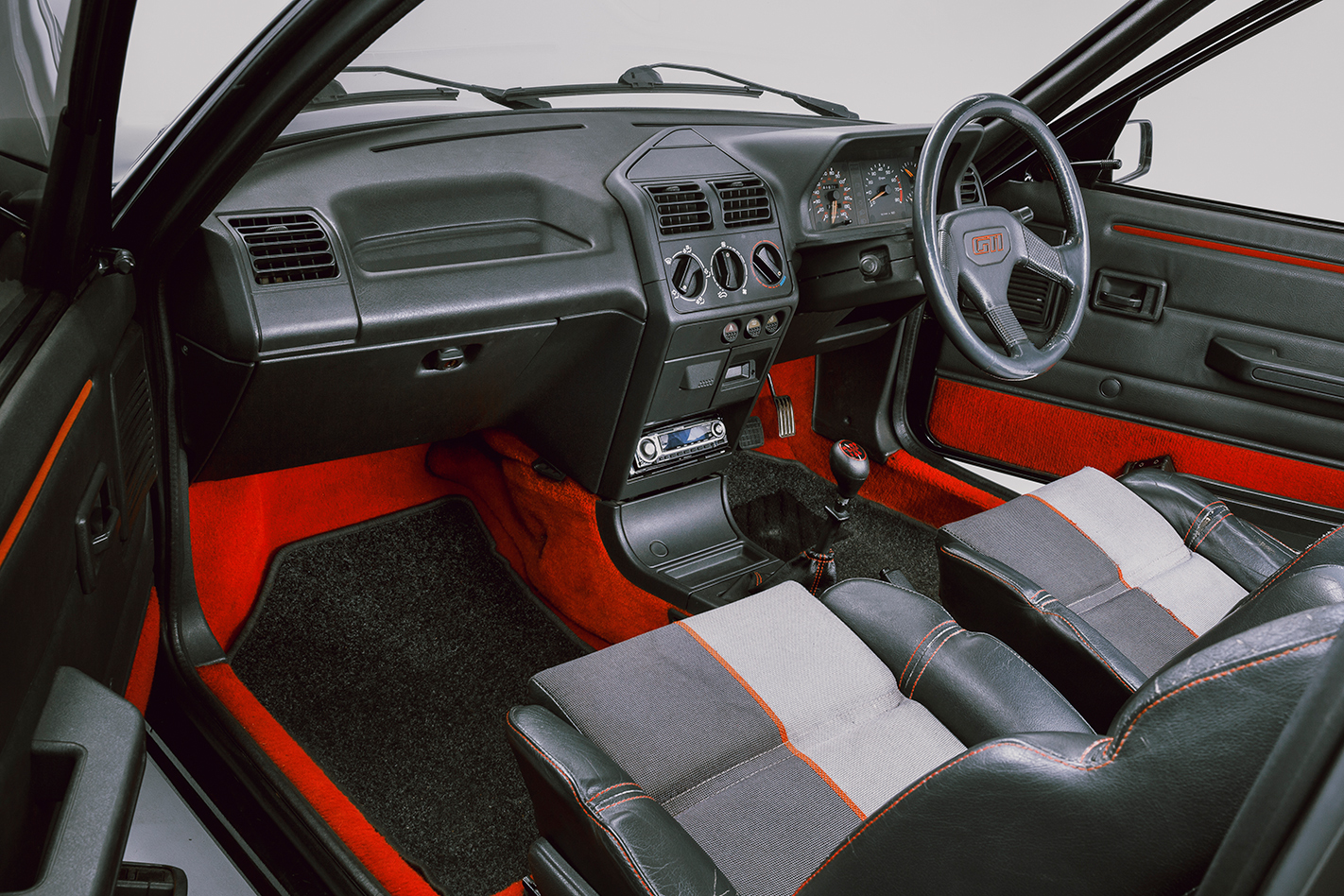
The interior of the 205 was styled by a far more illustrious name. Paul Bracq, a Frenchman who penned classics like the Mercedes-Benz SL ’Pagoda’, and the entire BMW road car range (3, 5, 6 and 7 Series) of the 1970s, not to mention the high-speed TGV train. His interior treatment for the 205 featured a modular arrangement, allowing for the fitment of different binnacles for the various 205 models. He himself would own a 205 GTi as a daily driver for better than two decades.
‘Projet M24’, the 205 development cycle, commenced in 1977 with two competing designs. Welter’s proposal advocated a softer, more rounded aesthetic but he was up against the power of Pininfarina, who envisaged a sharper-edged hatch, extending the aesthetic of the earlier 104. The Torinese design house felt the run-off to be a no-contest and was astonished when its proposal was rejected for being too conservative. In January 1980, Welter’s final design was signed off.
Its importance for PSA couldn’t be overestimated. Peugeot’s design language was aged and investments in Citroen and Chrysler/Simca weren’t returning meaningful dividends. The company had bet the house on the 205. The design criteria called for a modern hatch with a kerb weight of 735kg for entry-level cars, fuel economy around 15 percent better than the 104, overall length set at 3680mm and width restricted to 1550mm.
After the Sochaux team’s design was selected, events moved quickly. They had to. At the beginning of 1981, the first rolling prototype was built at Garenne-Colombes, and by summer 1982, some 360 pre-production cars were produced at the Mulhouse Production Centre. Production cars were built in November, and on January 20, 1983, Peugeot dealers were invited to the Loews Hotel in Monaco for the preview of the new 205 ahead of its official unveiling in February of that year.
The 77kW 205 GTi 1.6 would have to wait until June ’83 for its debut ahead of a 1984 on-sale date. Springs, dampers and rear anti-roll bar were all hugely beefed up, while the front anti-roll bar was softened. No wonder the car earned a reputation for off-throttle adjustability, for better or for worse. The 1.9-litre GTi with 96kW XU9JA engine appeared in 1986, and the following year, the 1.6-litre GTi’s XU5J engine got the same big-valve cylinder head as its more powerful sibling, but the 85kW 1.6-litre XU5JA unit never officially came to these shores. We got the 1.9-litre car, which arrived in October 1987 wearing a $29,500 price tag. Sounds a lot, but remember that back in ’88, a Citroen XM would set you back $84,950. That one didn’t so much as fall out of bed pricewise, it crashed through the floorboards and disappeared down an abandoned mineshaft.
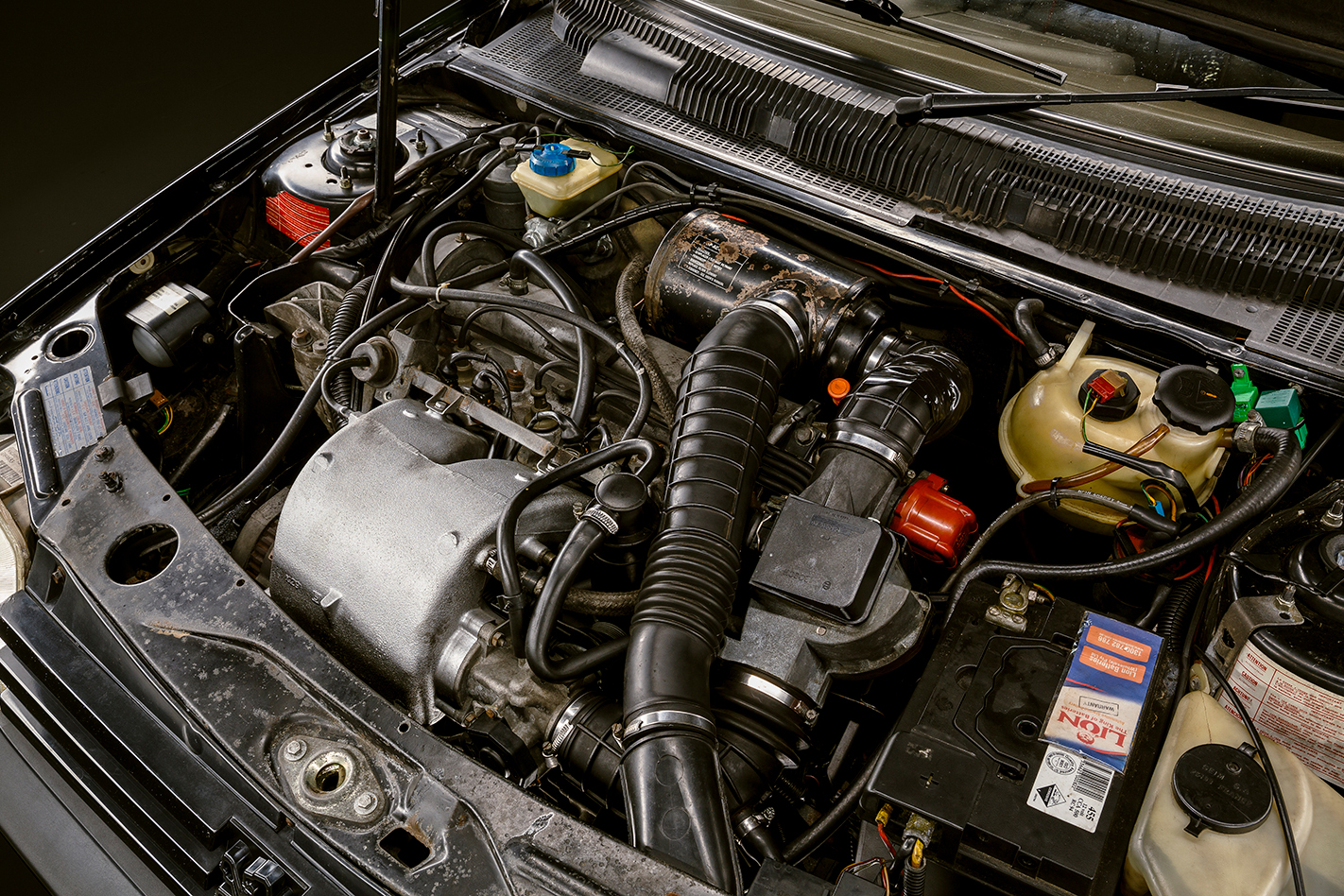
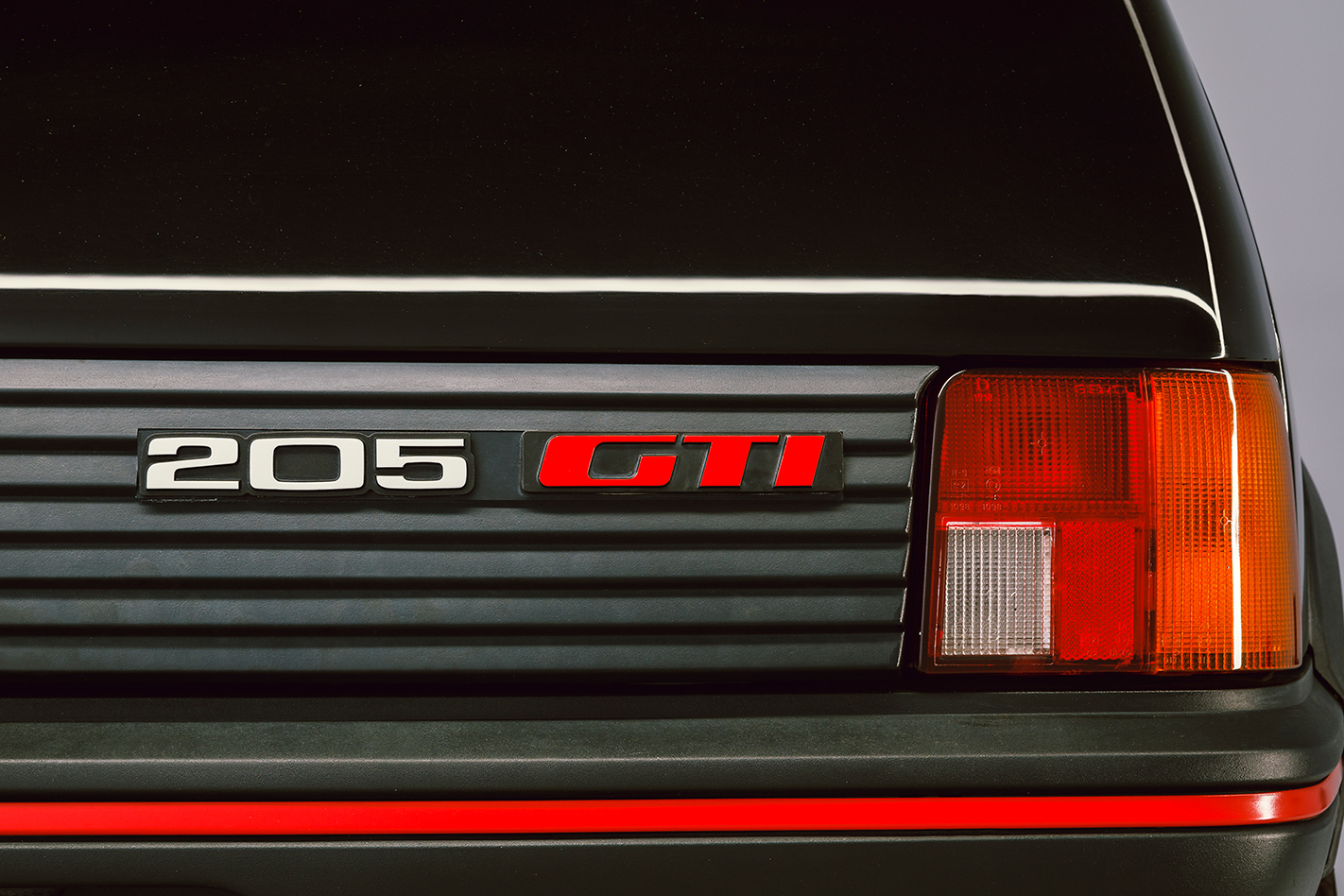
Buyers had the choice of air-conditioning or power steering but not both, as these competed for right-hook under-bonnet real estate. Power was initially a feeble 75kW and torque rated at 142Nm, courtesy of Australian emissions laws that arrived with unleaded petrol in 1986, resulting in a lacklustre 0-100km/h time of 8.9 seconds. One solitary 1.6-litre GTi was brought into Australia by Peugeot for evaluation and is still around today. Facelift cars arrived in 1991 with a still-catalysed but notably heartier 90kW lump, the other benefit being that the revision finally overcame the air-con/power steering conundrum. When finally withdrawn from sale in 1994, the 205 GTi 1.9 was priced at $33,730, and it’s these ‘91-’94 cars that are most sought after by Aussie collectors.
Although most would posit the 205 GTi is made of metal so insubstantial that you could wrap a baked potato with it, they are extensively galvanised. Nevertheless they can and do rust, being particularly susceptible to water ingress in the quarter-panel ahead of the rear wheel arch. The reason? There’s usually a hole where the rear suspension bump stops fall out. Be especially diligent checking UK imports. Just behind the front wheelarch is what looks like a jacking point but isn’t. If it’s been jacked it can chip and cause rust. The floorpan ahead of the fuel tank where the brake pipes run and the rear bumper mounts are also rust-prone.
Rear radius arm bearings are a weak point, as are front suspension bushes. Worn drop links are another contributor to chattering and clunky suspension. The alloy 1.9-litre engine isn’t particularly tolerant of abuse. Valve guides wear and head gaskets can fail due to corrosion through a lack of anti-freeze. Oil can leak into the distributor via failed O-rings but the big issue with oil is a failed rear main seal behind the transmission which will necessitate a gearbox-out fix. The multipoint injection system can easily fall out of tune. Lumpy idling and rough running will need somebody who knows what a wideband lambda sensor is, but first check for blocked and leaking breather hoses. One tip for owners? Disconnect the central locking. It is always more trouble than it’s worth.
Peter Robinson’s original review of the GTi ended with a word of warning. “This is a car for driving, after all,” he noted. “And as such it is exciting, thoroughly satisfying and yet practical and economical. If only it were affordable.” More than three decades on, the 205 GTi remains charming and fun, and yes, keeping one in top fettle could still render you penniless. Speak to owners and they’ll put you straight in no uncertain terms. The ends more than justify the means.
Do you own a cool Modern Classic? We want to know about it
Fast Facts
Surprisingly, the Peugeot 205 never won European Car of the Year, being pipped to the crown in 1984 by the Fiat Uno, a car that easily outsold the 205 range 8.8 versus 5.3 million. The 205 also sold only half the total of its successor, the 206, a model that many identify as the car that deterred millions from ever buying a Peugeot again.
What’s it like to own?
“I was curious as to how good the 205 GTi really was ever since I first learnt about it. Being a UK import, it’s slightly quicker than locally delivered versions, but there was some rust in the rear arches that wasn’t disclosed upon purchase. There was some choice restorative mechanical work carried out at the front end, so it drives quite well, and modern tyres help quell the lift-off oversteer. The rust is now sorted and the plan is to just drive it and enjoy it, with the value being in how original it is. It’s still such a rewarding drive.”
Alastair Brook – St Kilda East, Vic
Specs
Model: Peugeot 205 GTi
Engine: 1905cc 4cyl, dohc, 16v
Max power: 90kW @ 6050rpm
Max torque: 152Nm @ 4750rpm
Transmission: 5-speed manual
Weight: 880kg
0-100km/h: 8.2sec
Fuel economy: 9.1L/100km
Price: $20,000 (good condition today)
Victorian speed cameras have netted the state government millions of dollars in extra fines thanks to a technological upgrade of the state’s speed and red light cameras.
Painting a stark difference between old wet film camera technology and recently updated digital cameras, 10 film cameras around Victoria earned $250,000 from 660 infringement notices for the financial year 2015-16.
After being changed to digital, the same cameras earned $12.65 million from 51,000 fines for the 2017-18 financial year.
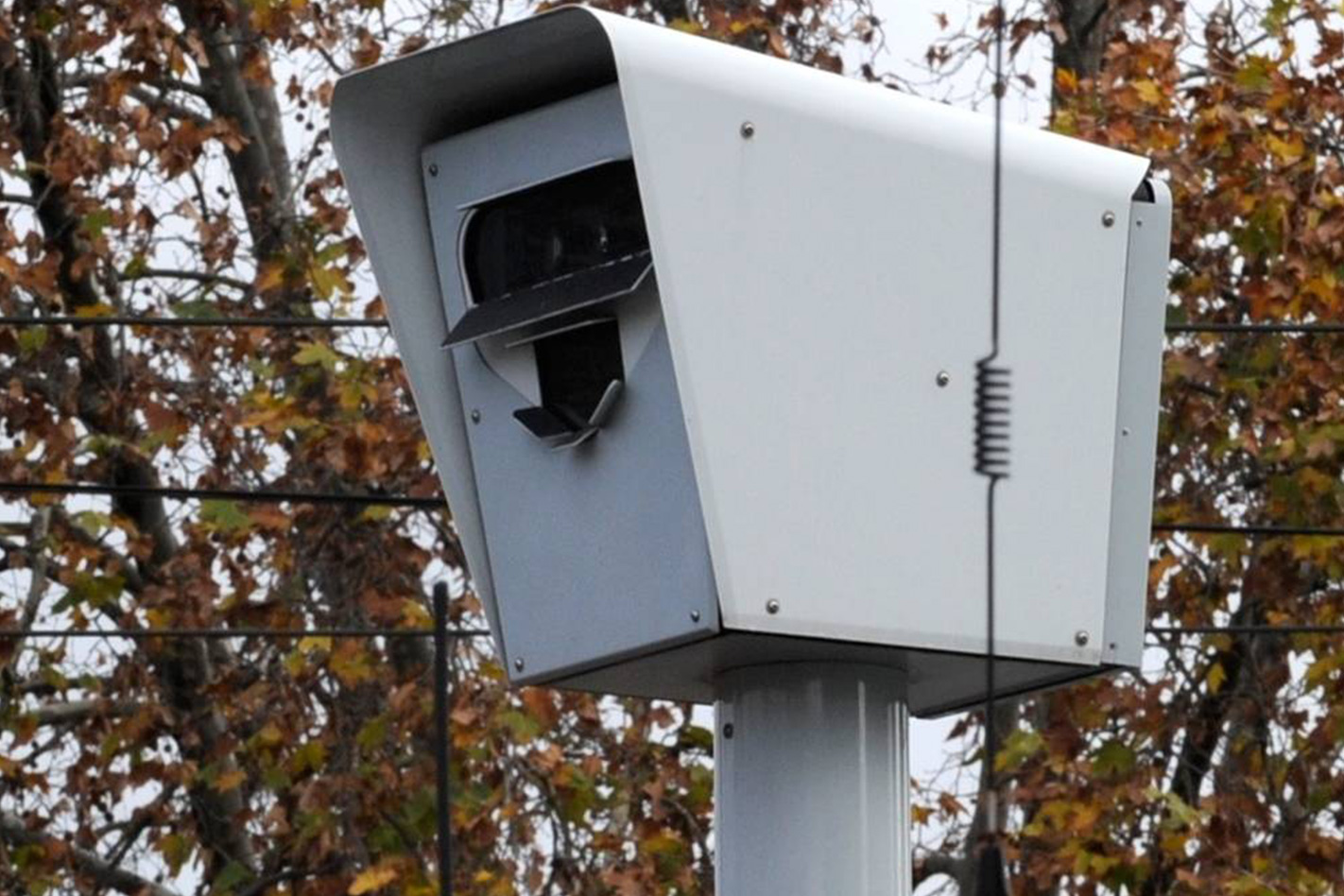
One specific camera located on the corner of North Road and Clayton Road in Melbourne’s south-east issued 16,872 fines, amounting to $4.1 million, over a 12 month period.
Comparatively, it earned $9,854 from just 24 fines over the 2015-16 financial year period.
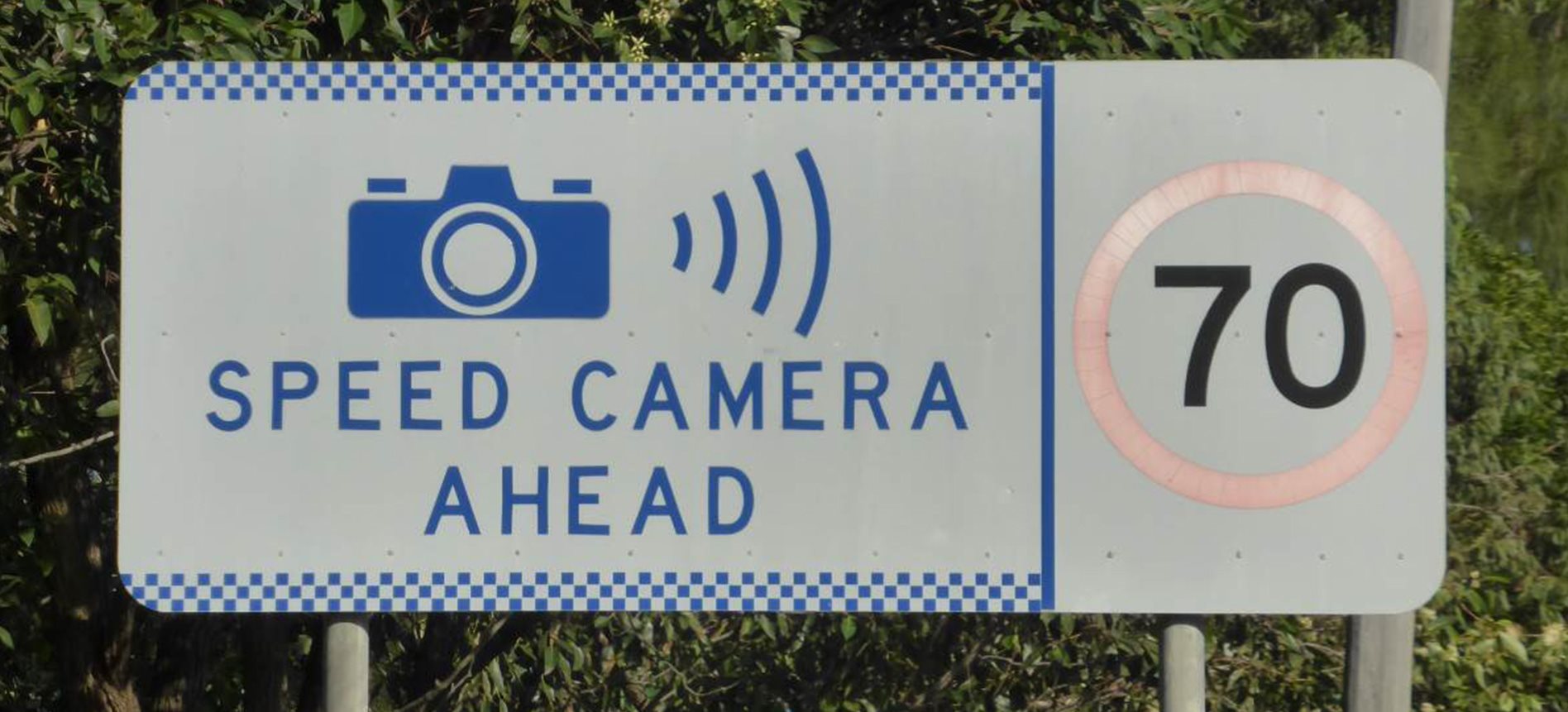
In the Office of the Road Safety Camera Commissioner’s annual report, John Voyage stated that “the improved camera systems have played a role in detecting much larger numbers of infringing drivers than their predecessors.
“The road safety consequences are that more drivers have received a reminder that speeding is unacceptable.”
Questions over the “efficiency” of wet film cameras prompted the replacement of the outdated camera technology. The move to digital also allows detection of speed-related offences, rather than solely red light infringements with the old wet film cameras.
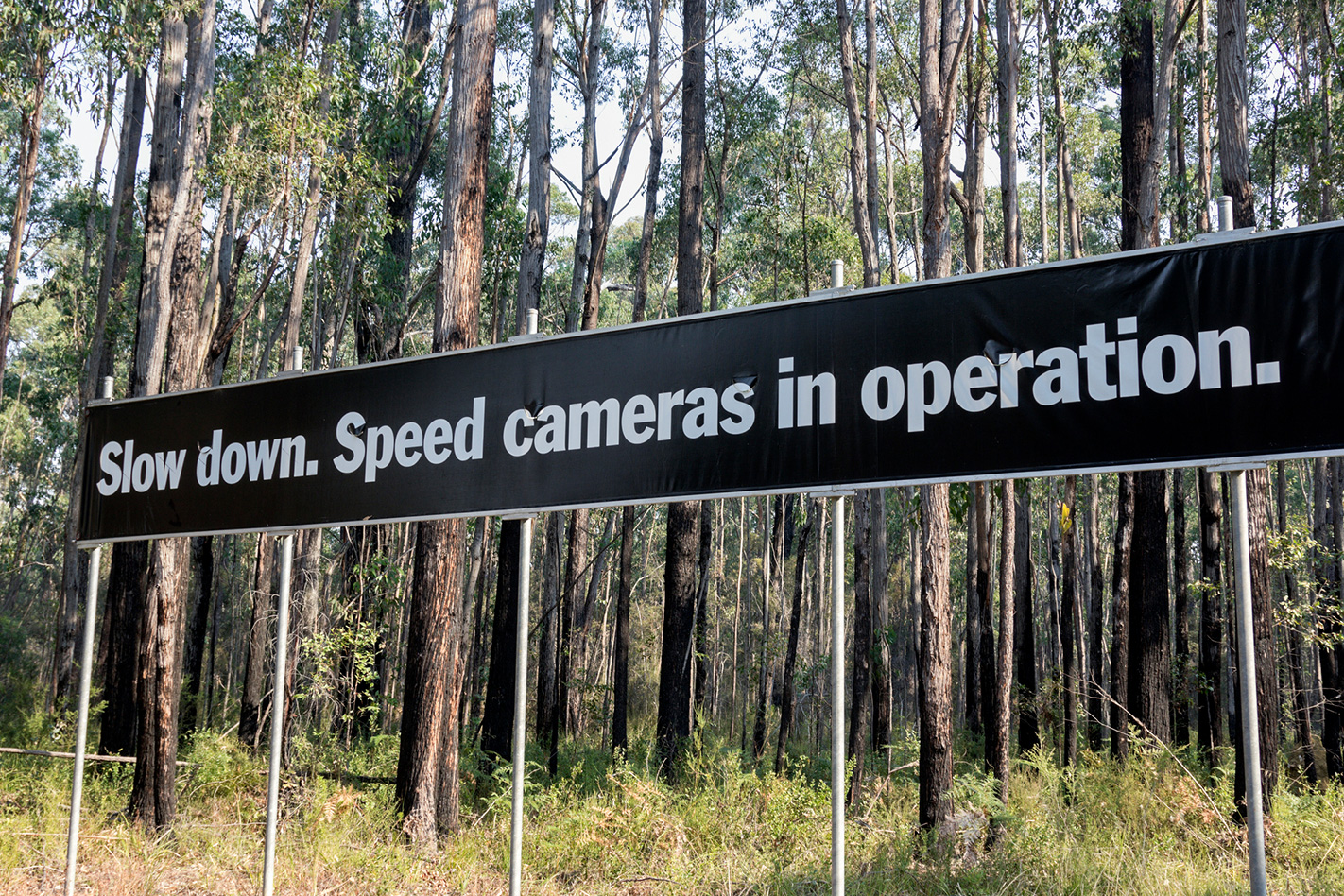
The second highest-performing camera is located at the Brighton Road and Glen Eira Road intersection in St Kilda, which skyrocketed from $35,626 in 2015-16 to $3.2 million in 2017-18.
This news comes at a time when Victoria’s road toll is skyrocketing, which poses obvious questions around the efficacy of speed cameras.
Jaguar’s F-Pace SVR looks unmistakable among the hundreds of cars stored in JLR’s Melbourne holding facility.
Nosed against a wall, the light gleams off its polished exhaust tips like rifle scopes. It is aggro, bulky and sophisticated, like a steroidal James Bond who barely squeezes into a suit.
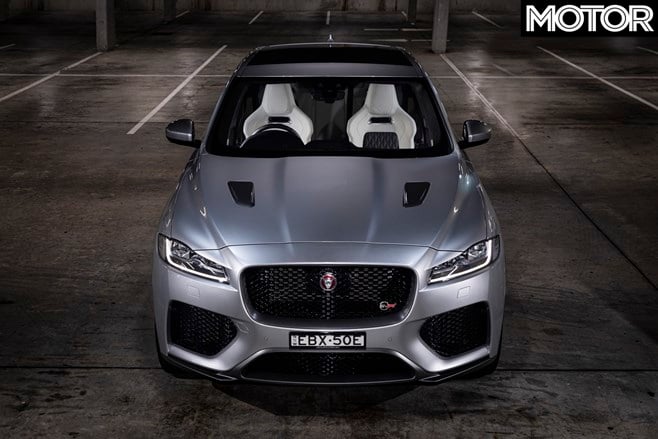
Those rear pipes – four each side – play the song of a 5.0-litre supercharged V8, lifted from the F-Type V8 R, that puts out 405kW and 680Nm. Equipped with an eight-speed transmission and electronically controlled rear locking differential, the F-Pace SVR is claimed to fire to 100km/h from rest in a beastly 4.3sec.
As the third Jaguar to emerge from Special Vehicle Operations, after the XE Project 8 and F-Type Project 7, it’s been developed for more than just fearsome acceleration.
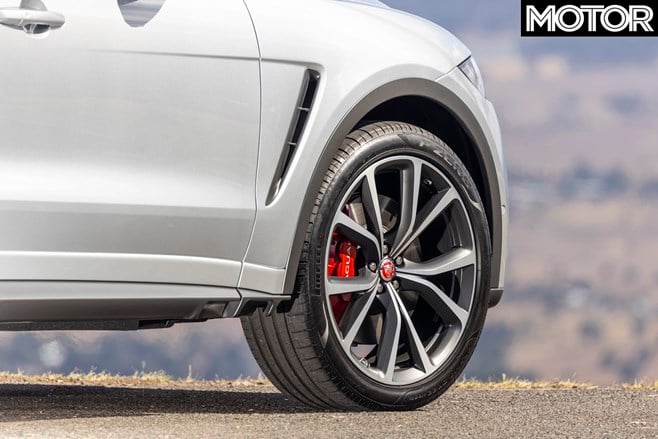
Its aerodynamics are honed with vents in the front arches, a rear roof spoiler and aerodynamic channels behind each wheel to help cleave its way to 283km/h. And its wheelarches flare out to accommodate huge 295mm and 265mm-wide Pirelli P Zero tyres. Those huge 22-inch wheels hide 395mm/396mm brakes in charge of arresting its 2030kg.
They’re assisted by tuned dampers and stiffer springs to control the herculean physics at play, so that with revised anti-roll bars the SVR is claimed to corner five per cent flatter than a regular F-Pace.
The SVR’s presence is not as dramatic inside, but the slimline front bucket seats set the tone for the driving experience, as does the noise when you prod the starter.
A snarl of revs settles into a perfectly judged exhaust note that burbles away, warning you of the supercharged colossus under the bonnet. In Normal, there’s the slightest boom, and the transmission is a bit sleepy when kicked down, so Dynamic crisps its shifts, sharpens throttle response and hardens the sound.

The steering is creamily weighted and turns in well off centre. Drive it smoothly and the SVR has the corner-to-corner pace to shadow some of yesteryear’s best hot hatches.
There’s a limit to its powers, though. For instance, it doesn’t like being hustled; you still need to manage its massive weight, and any twitch of the throttle can push its nose wide.
And soon you’ll realise, as it pulls harder in each gear approaching the 6800rpm redline, that its brakes might be undersized for the pace on offer. They need a firmer-than-expected squeeze to haul it up in time.
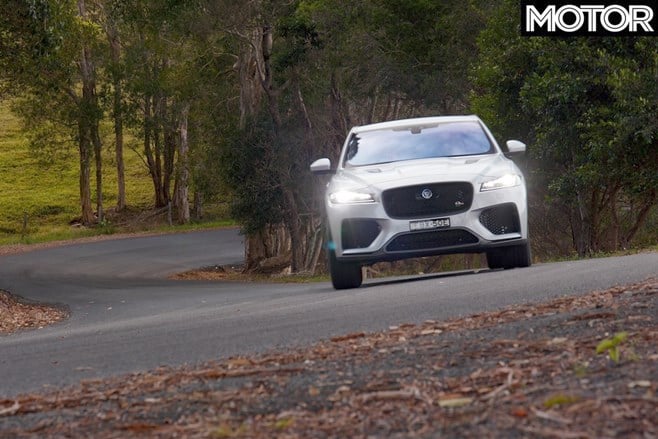
Even though it is as fast as an asteroid and drinks like a Russian on holiday in Bali, you can easily tune down its hooligan tendencies for a more serene driving experience – one that isn’t compromised by a wishful ‘race bred’ suspension tune.
A slightly firm ride at low speeds softens up when you’re cruising, while the new digital cluster and updated infotainment make interacting with its tech easy.
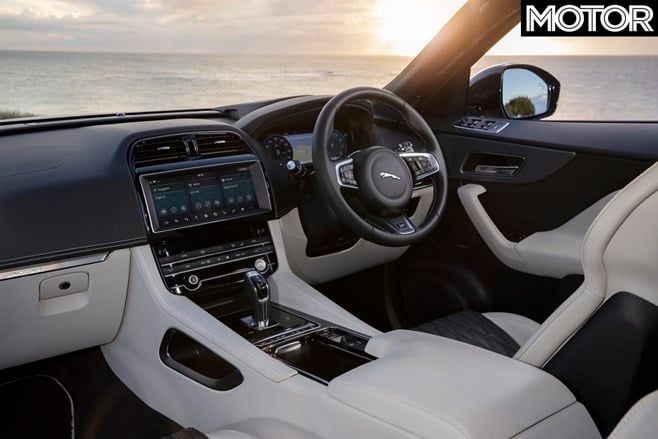
Jaguar’s seemingly cruel decision to give the F-Type V8 R engine a full production run in a high-performance two-tonne rhino ahead of the XE sedan is softened by the fact the F-Pace SVR costs $140,000, making it the cheapest 400kW-plus luxury car on sale. And after our drive, we’re big fans, but we will wait until it meets its rivals before blasting its praises from four fat exhaust pipes.
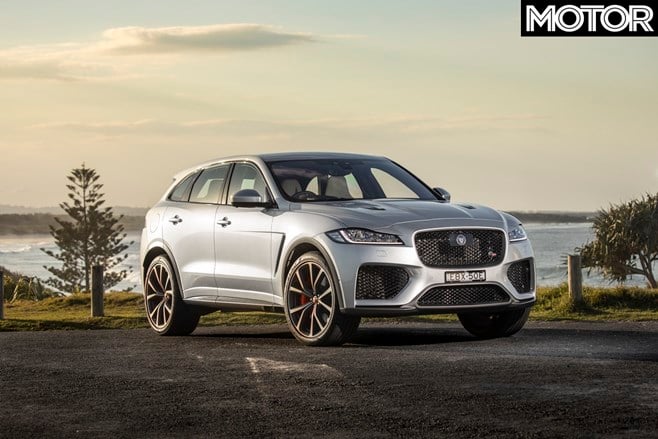
JAGUAR F-PACE SVR SPECS
Engine: 5000cc V8, DOHC, 32v,supercharger Power: 405kW @ 6000-6500rpm Torque: 680Nm @ 2500-5500rpm Weight: 2030kg 0-100km/h: 4.3sec (claimed) Price: $140,000
“No, my good man, I do not wish to buy window tint. Nor do I want the carpet mats at $200.”
“Okay, what about rust proofing?” “If you can’t sell me a car that won’t rust in the warranty period, I fear we are wasting each other’s time.”
“Stain-guard for the seats?” “Don’t think so.”
Fair dinkum, buying a car can be a tough gig. Truth is, I’ve only ever bought a couple of brand-newies, both functional little hatchbacks for The Speaker. But each time, I’ve walked away wondering why the hell the process needs to be so difficult.
Thing is, if the whole shebang was made a bit easier, a bit less of an insult to one’s intelligence, the dorsal-fin-in-a-suit might make his or her monthly target a bit more often.
Hell, even if they just had the people skills to weigh me up and figure that 100kg of experience and cynicism was unlikely to fall for the paint-protection-treatment scam, we’d all benefit. Trust me.
But while I was once content to put car-sales folk in a category of their own, a recent whitegoods-buying excursion has made me wonder if all sales staff aren’t cut from the same loopy cloth.
I needed a new bar fridge for the Melbourne Bloke Centre. But I wanted one with a decent-sized freezer because I often have a bit of bait left over after a hunter-gatherer (fish-killing) mission and want to use it next time.
So I found a store that had the make and model of fridge that would keep beer cold and bait frozen, and set off in the Bat-Ute with a pocket full of fifties and a new-fridge song in my heart. Naturally, it went badly.
I wandered into the shop and headed for the bar-fridge corner, where I soon found the beer/bait-preservation unit in question. I managed to attract the attention of a staff member and stated my case as simply as possible. To wit: I’ll have that white one, thanks.
“I’ll have to check“, she says. “Check what?” “That we’ve got one in stock.” “Um, okay.”
“Hmmm“, she says after a minute or so of randomly punching the keyboard, looks like we’re out of stock. “Okay, I’ll just take this one right here.”
“Well, um, I can’t sell you that one; it’s our display unit.” “I don’t mind if people have looked at it, I’m sure it’ll still work fine.” “Yes, but if I sell you that one, we’ll have none in stock.” “Isn’t that the end-game in retail?” “Yes, but this is our display unit.“
“But why do you need a display unit of something you’re not selling?” “Well, we might get more stock in.” “So take one of the new ones when they come in and make that your new display unit.” “Oh no, that’s not store policy.“
“O-k-a-y. Lemme get this right – you won’t sell me this fridge because it’s store policy for customers to be able to see exactly what they can’t buy?” “Well, I’m not sure it’s that simple.” “You bet your name-tag it is, Delores.” “I could check with head office to see when we might be getting more stock in.” “Nah, don’t bother, I really only wanted an ex-display unit. Toodles.”
Now, I’m not picking on Delores, and clearly it wasn’t her call, but somebody really should talk to head office and let them know their in-store policy is on the bugle. In fact, the only thing that smells worse is my now very second-hand bait. And my bloody beer is warm.
Maybe I should have gone with the window tint.
WORLD Time Attack, held each October at Sydney Motorsport Park is one of our favourite events on the motorsport calendar. Time Attack is one of the last bastions of truly creative engineering in motorsport, largely free of rulebook constraints.
This made it the perfect place for Hyundai Australia to debut their just-for-fun iMax N Drift Bus. The 2.2- tonne beast isn’t just sitting there either; she’s competing in sprint, drift and top speed events today and tomorrow.
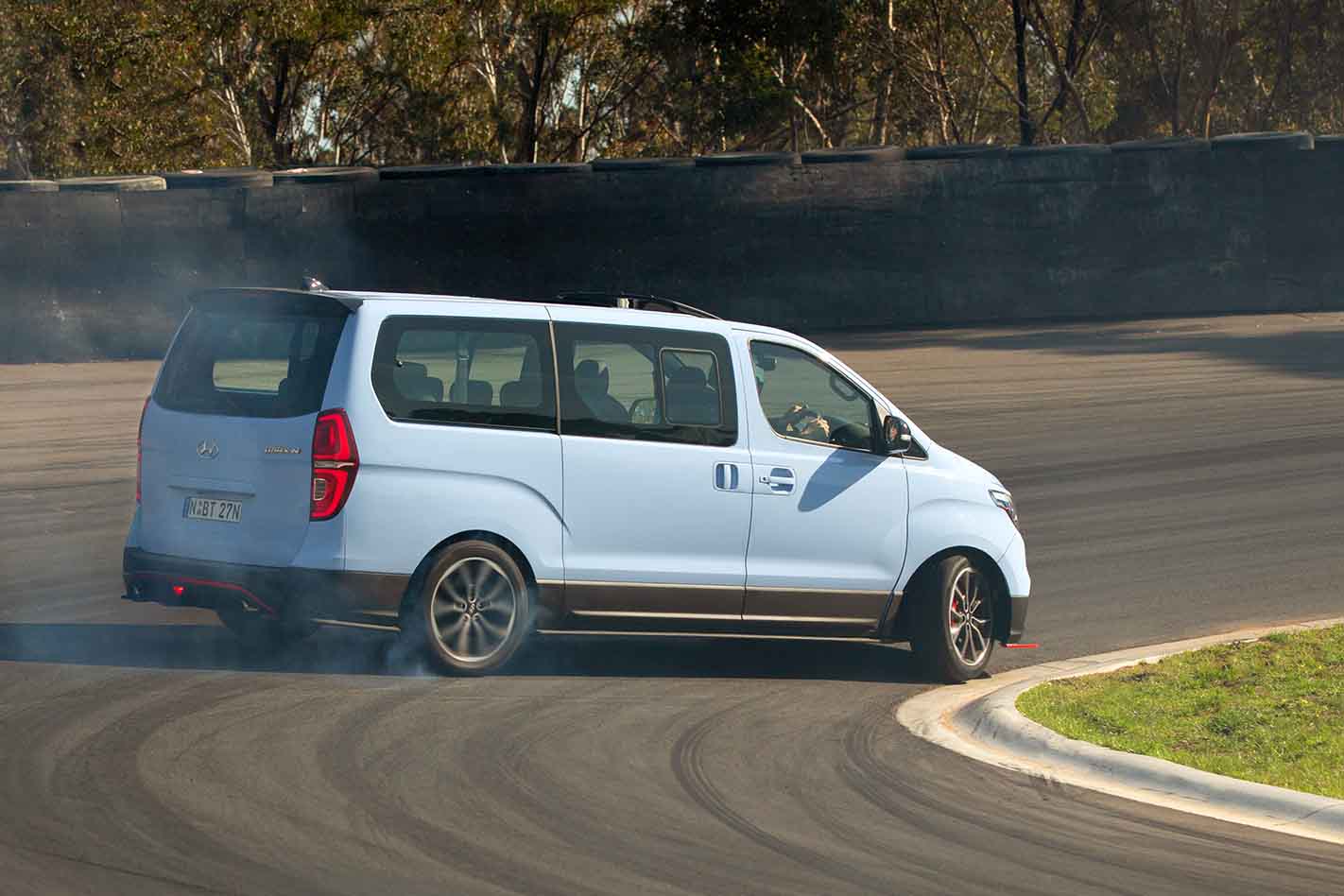
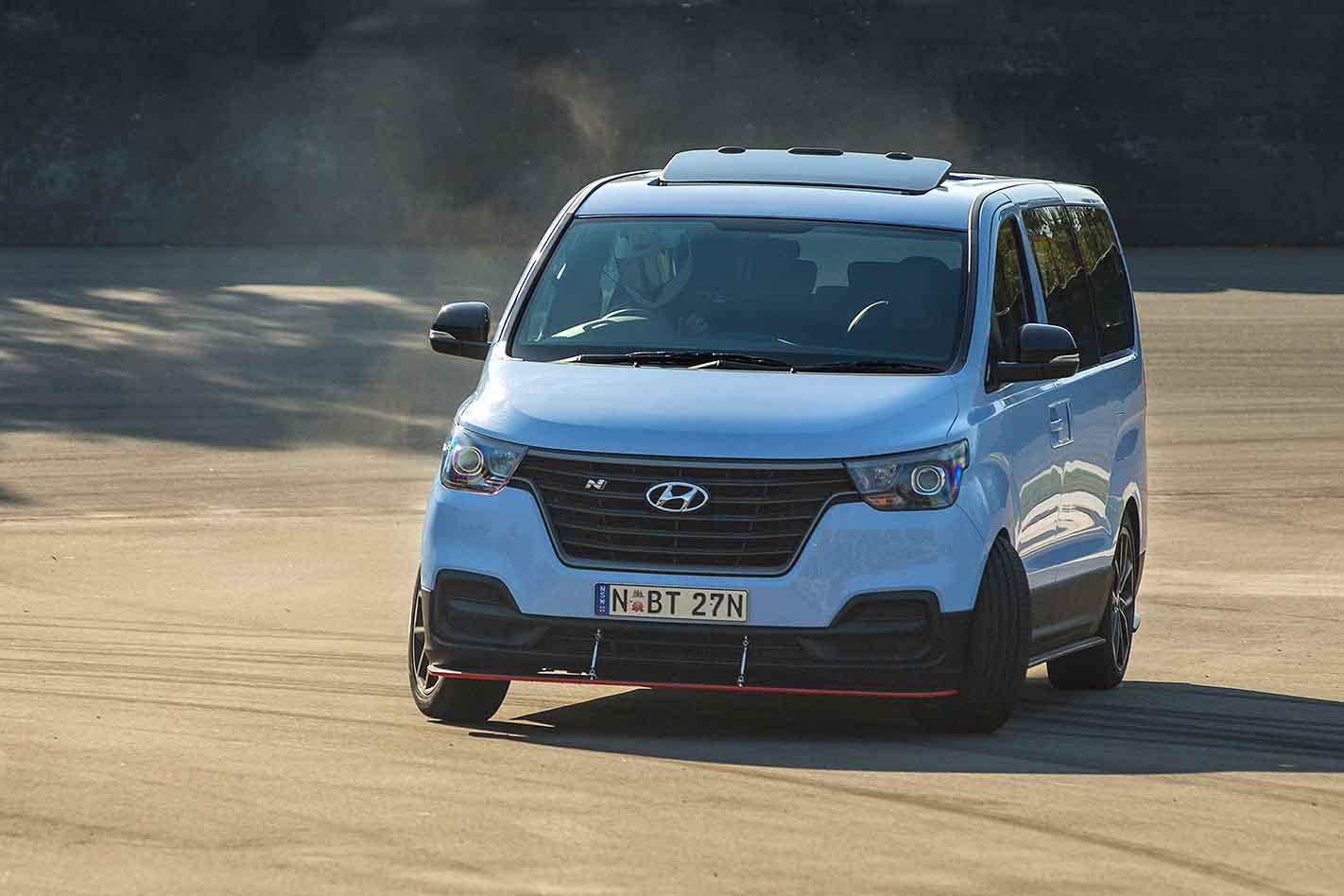
The best part? There is room for a further six passengers in the rear, which produces a perfect 50:50 weight distribution when fully loaded.
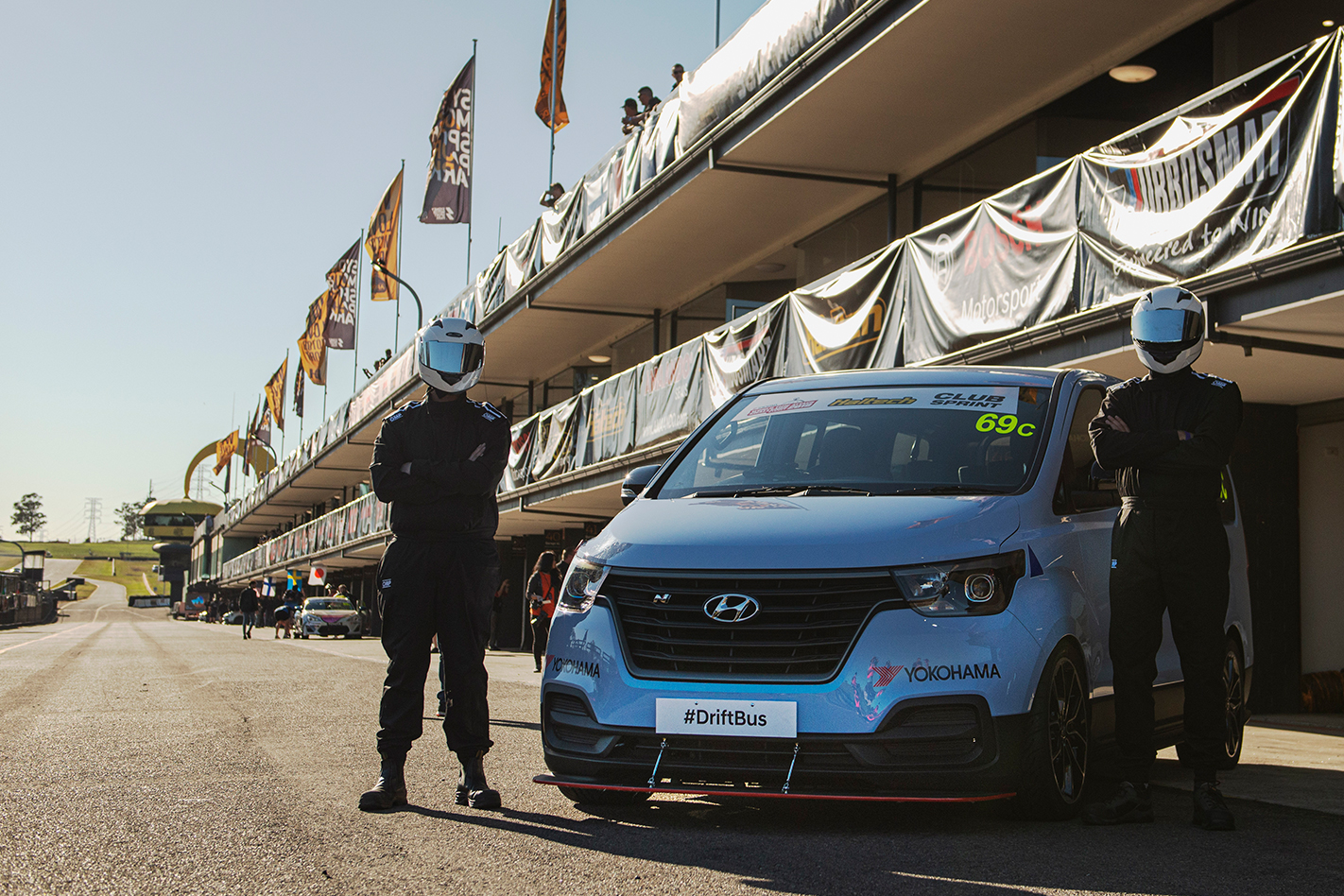
The van recorded a best of 150km/h in the Turbosmart Flying 500 event on day one. Sadly, the Hyundai team were unable to take passengers at Time Attack, but we look forward to a drive soon!

