
It is not every day you’d find a Zonda up for sale, and according to auction house RM Sotheby’s, this one-off Pagani Zonda Aether is the first Zonda to head to auction in nearly seven years.
Headlining RM Sotheby’s first-ever Middle East auction, the Aether roadster’s auction is set for November 30, right on the eve of the final race of the Formula 1 2019 season at Abu Dhabi’s Yas Marina circuit.
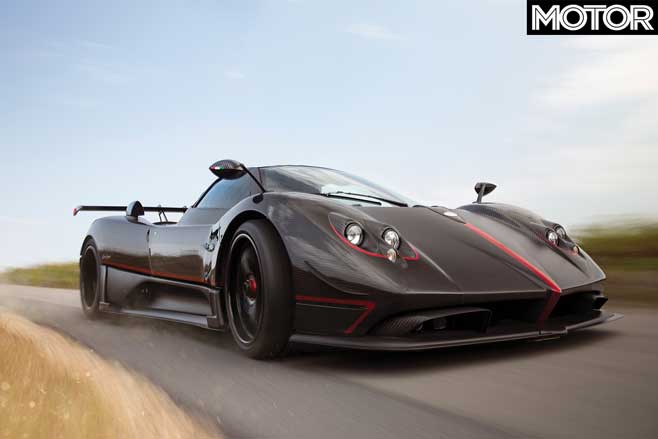
According to the auctioneers, the Aether is expected to fetch around USD$5.5 million (AUD$8.2 million), which is nearly a cool AUD$3 million more than a new Huayra Roadster – once considered the most expensive new car on sale in Australia upon its launch.
Built in 2017, five years after the official discontinuation of the Zonda series, the Aether roadster sports similar styling elements to the Zonda Cinque roadster, such as its rear arch air intakes, swooping overhead roof scoop, and rear wing.
Beneath sinister looking exposed carbon-fibre and red accented exterior, the Aether packs Pagani’s “760” specification engine – the 559kW tuned version of the Zonda’s 7.3-litre AMG-sourced naturally-aspirated V12 – which is mated to a traditional six-speed manual transmission.
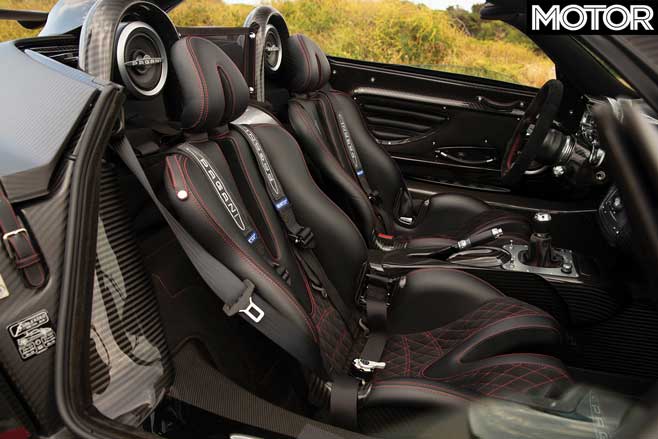
Other unique appointments to the Aether include the fitment of door straps and a green starter button that were lifted from the track-only Zonda R.
According to online reports, the Zonda Aether was commissioned and owned by Swiss luxury car dealer Ronnie Kessel, the same individual who commissioned the one-off Ferrari SP38 from the Maranello car maker’s ultra-exclusive Atelier programme.
While we cannot confirm those reports, we certainly get that impression from Kessel’s own Instagram account.
https://www.instagram.com/p/Bk3BX-sAaup/?utm_source=ig_embed&utm_campaign=loading
RM Sotheby’s confirms that the Zonda Aether is offered straight from the original owner’s collection, and will be part of an auction line-up comprising of more than 30 racing, sports, and supercars.
We knew the new Alfa Romeo Tonale was going to be a bit of a looker. The prototype that Alfa quietly shuffled into the Geneva show this year arrived with zero fanfare and plenty of people missed it. That’s a shame, because it was one of the better-resolved pieces of design on display at Palexpo.
But, as we know, Alfa Romeo doesn’t have an unblemished track record of translating show stunners into production form. The Brera was a beetle-winged V8; a low and lithe stunner on the turntable and then turned into a bit of a lumpen clod for production.
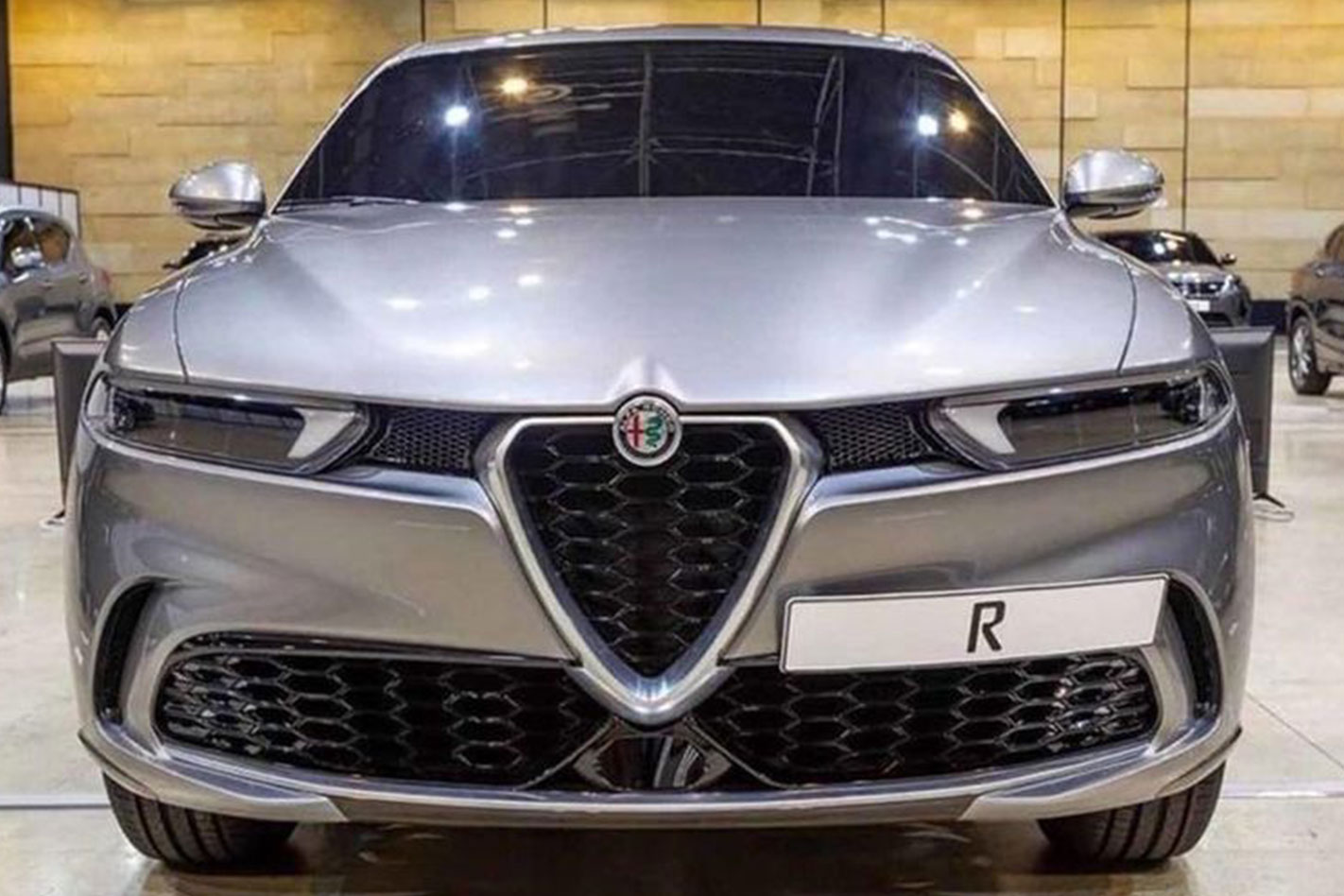
In recent years, the Italians have brought us the 4C, Giulia and Stelvio, all models that have translated well from concept to production reality. To that, we can add the Tonale, if leaked photos out of Italy are anything to go by. The lights and big wheels are obviously toned down for production, as are the glitzy doorhandles of the show car, but the proportioning is nigh on identical.
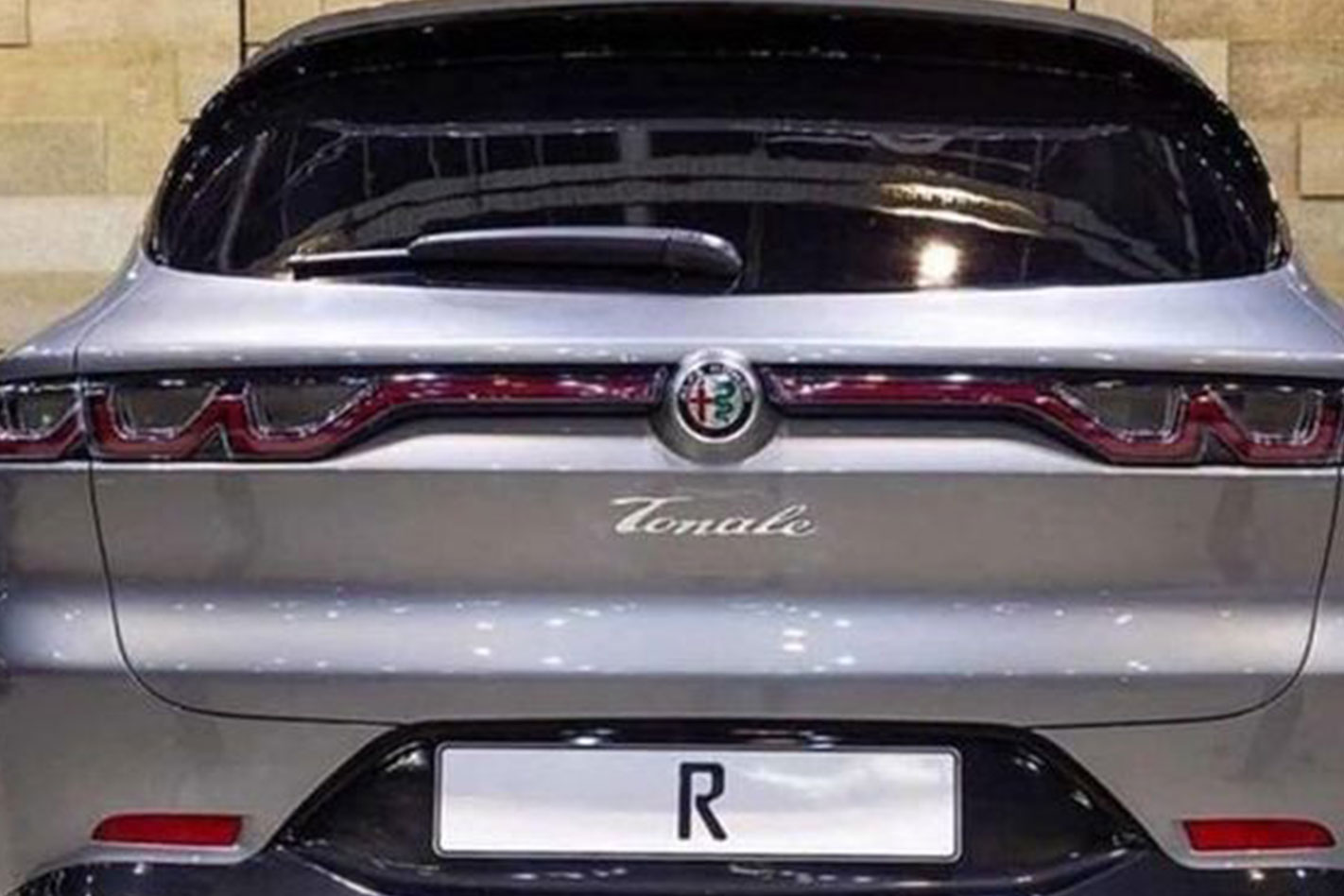
Named after the Passo Tonale in the Italian Alps, the Tonale will line up against rivals such as the BMW X1/X2, Audi Q3, and Volvo XC40. Alfa Romeo is set to offer the compact SUV with a hybrid powertrain, but most will be powered by a turbocharged 2.0-litre four, with the option of all-wheel drive.
Pictures of the car popped up on an Italian forum, Autopareri.com, and were then quickly removed, but by then it was too late. The cat was out of the bag. Allcarnews also posted an image that it claims is the production Tonale’s cabin to its Instagram account.
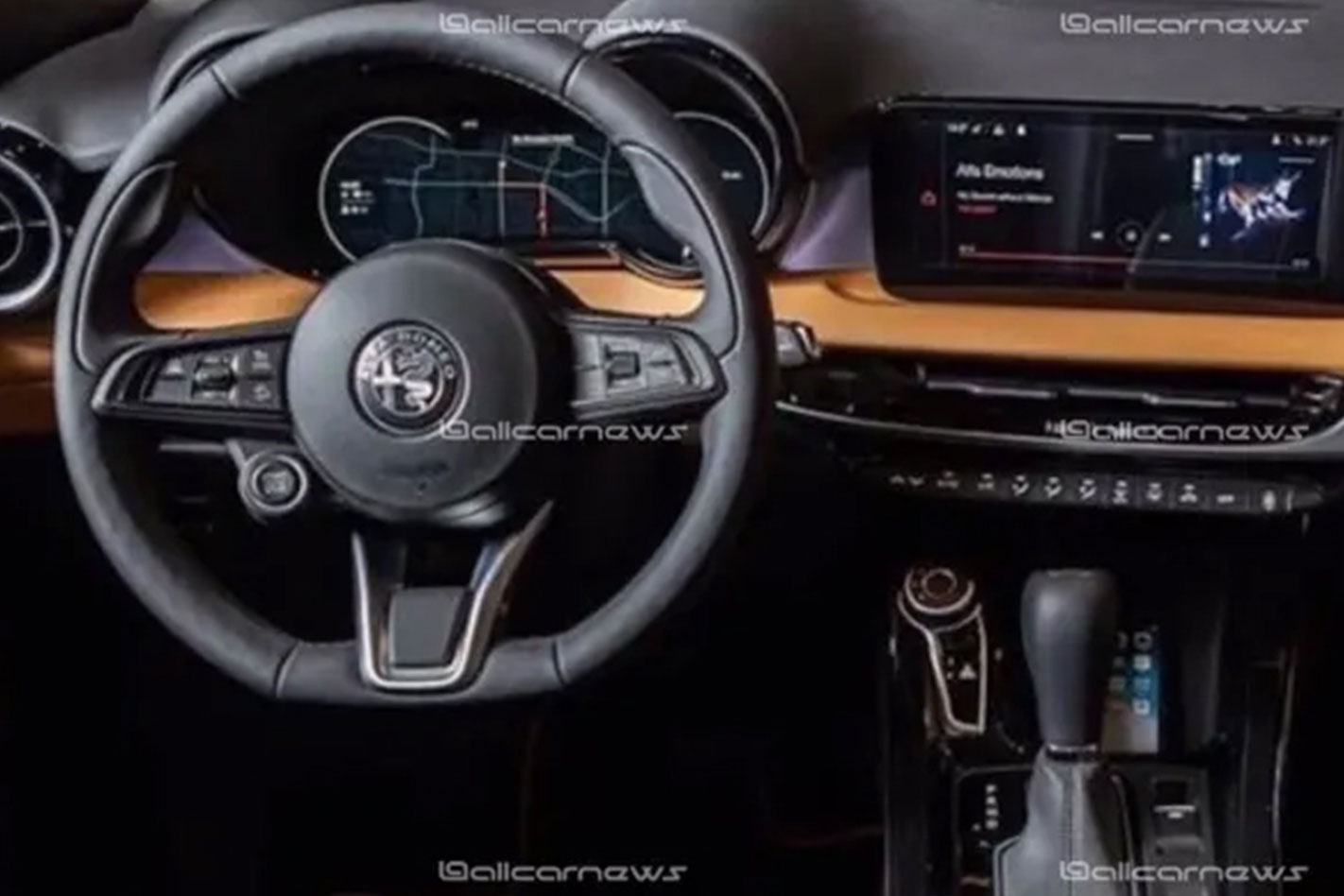
So what do you think? Would the Tonale merit a place on your shortlist? It’s not due here before 2021, so you may well have time for it to become a little more familiar.
What’s in the garage?
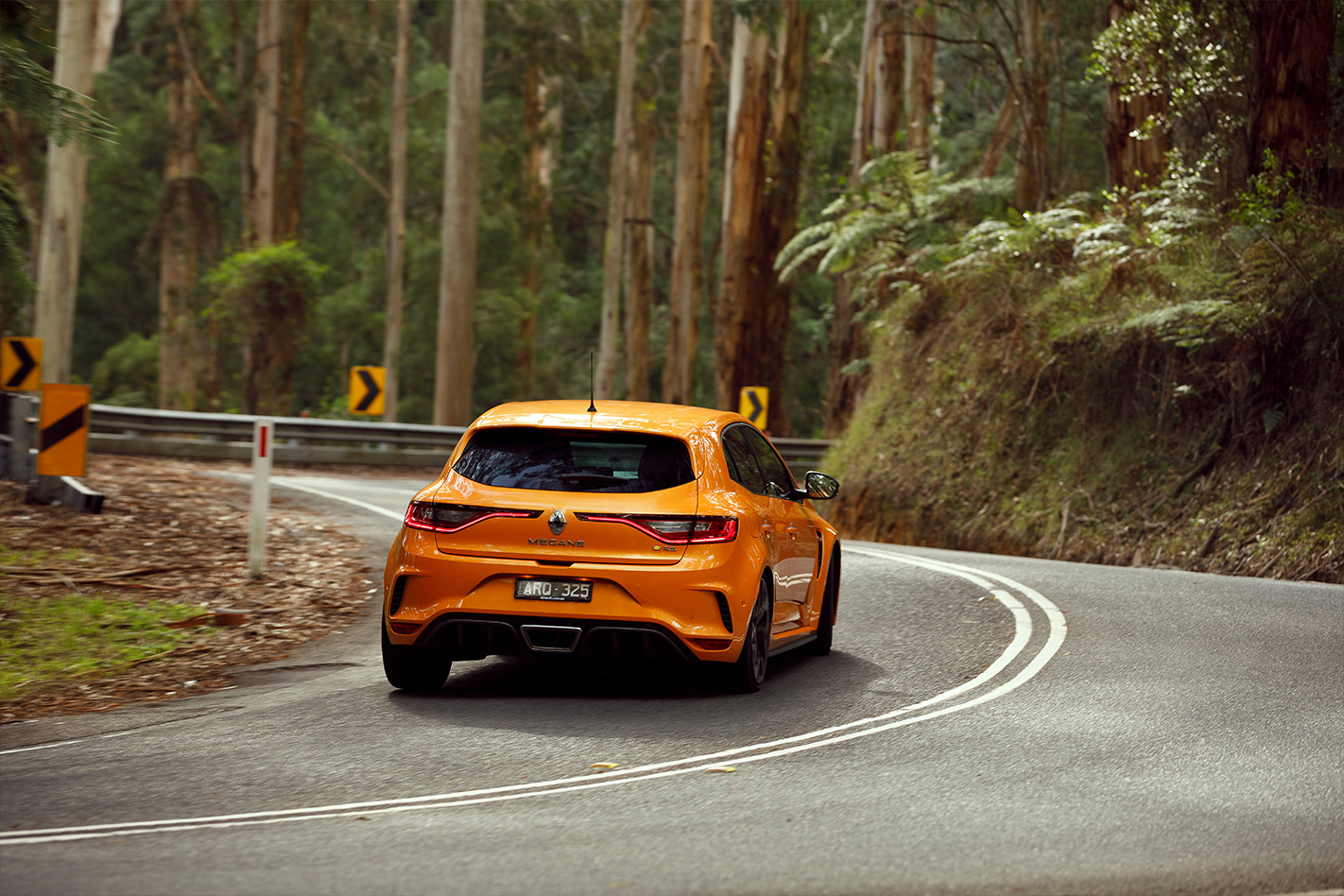
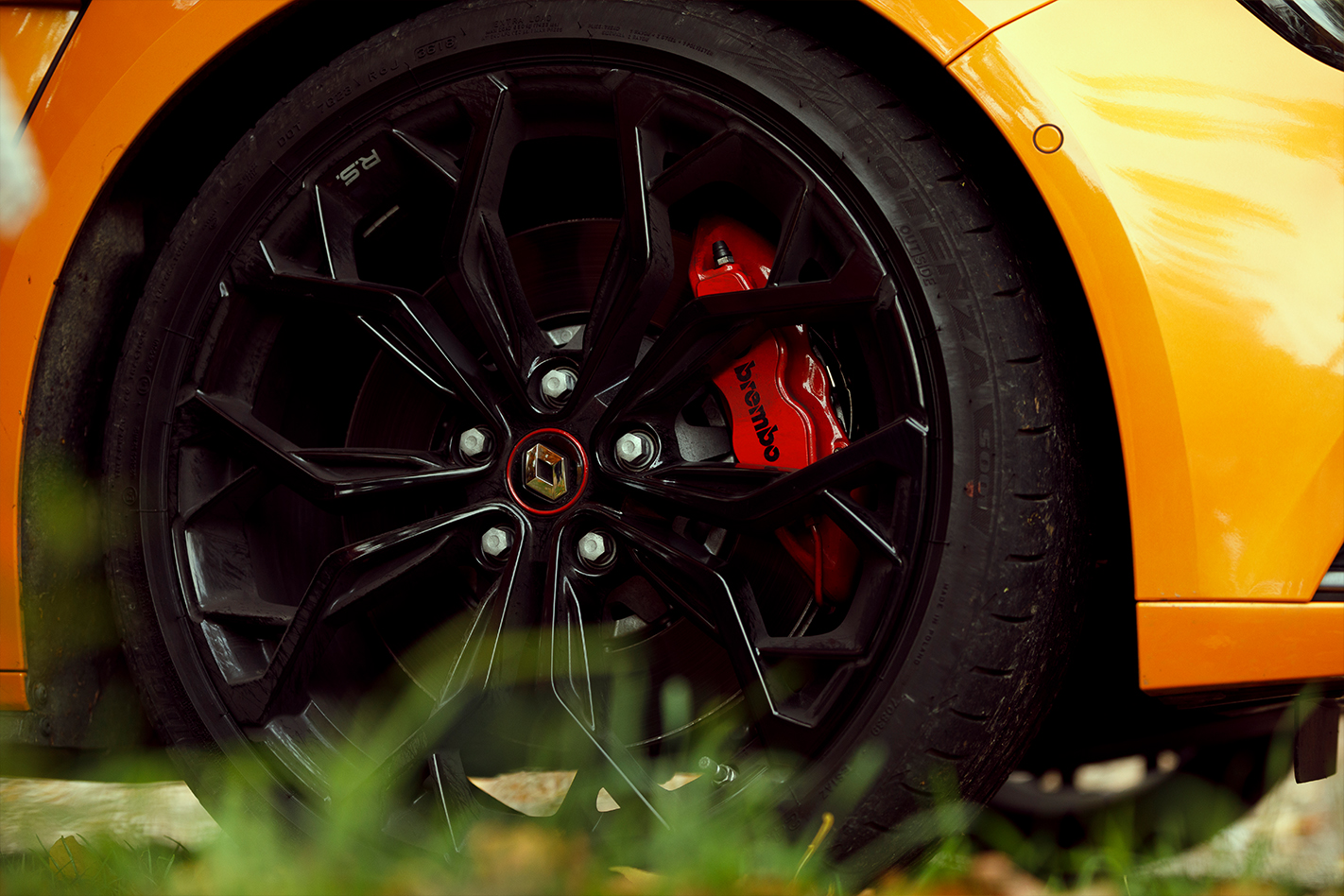
Get the roller door clanking up at the Wheels garage this week and you’ll find an orange Megane RS280 with Cup chassis. There’s not too much that Renaultsport doesn’t know about building a great hot hatch, but the French don’t have a clear run at the market. In recent years we’ve seen a new generation of front-drive tearaways that have arrived to rewrite the rules. The Honda Civic Type R is one, the Hyundai i30N another. In order to face these two down, Renault’s latest Megane needs to be something very special indeed. Does it have the herbs to be our pick of the bunch?
These hot Meganes open at $45,990 for the Sport chassis with manual gearbox. A Sport chassis with the EDC twin-clutch ‘box retails for $50,490. Alternatively there’s the even harder-edged Cup chassis that we’re driving, which kicks off at $48,990 in manual guise or $51,990 if you plump for the EDC version.
What we reckon

Cameron Kirby
Staff Journalist
While the Megane RS Cup is great when you push it, I struggle to forgive its shortfalls when performing day-to-day duties. To me, a hot hatch should be able to be a ‘best of both worlds’ compromise, and the Cup missed the mark in that respect. Its biggest shortcoming in this respect is an inability to put any of its power down without breaking into axle-tramping wheel spin. To pull away from a standstill without the tyres screeching and spinning requires a very delicate touch. Keep it for the weekend, not the commute.

Trent Giunco
Staff Journalist
The first time I saw the Megane RS in the Wheels car park I pored over it like I was observing the lines of a new supercar. To me, it is the best looking hot hatch you can buy – period. I couldn’t wait to get behind the wheel. However, when I actually did, my thoughts soured. The rear steering takes time to acclimatise to, the pedal positioning is awkward for me and the gear change… well, that’s another story. It’s a hard car to drive quickly, ahem, quickly. It requires time to build up to its high limits and to create a mutually beneficial relationship. It’s unquestionably rapid and rewarding at ten-tenths, but getting there requires bravery. And probably a race track. I’d also opt for the EDC.
Review
Power and Performance
Any hatch with 205kW under the bonnet isn’t going to feel tame and the Cup is a pretty wild ride. Sometimes it feels a bit too coltish for its own good. Depending on the available grip, should you give the Megane the goods off the line you’ll either get banging axle tramp or zizzing wheelspin. The traction control system never seems quite up to the task of measuring out exactly the amount of torque the front boots can handle.
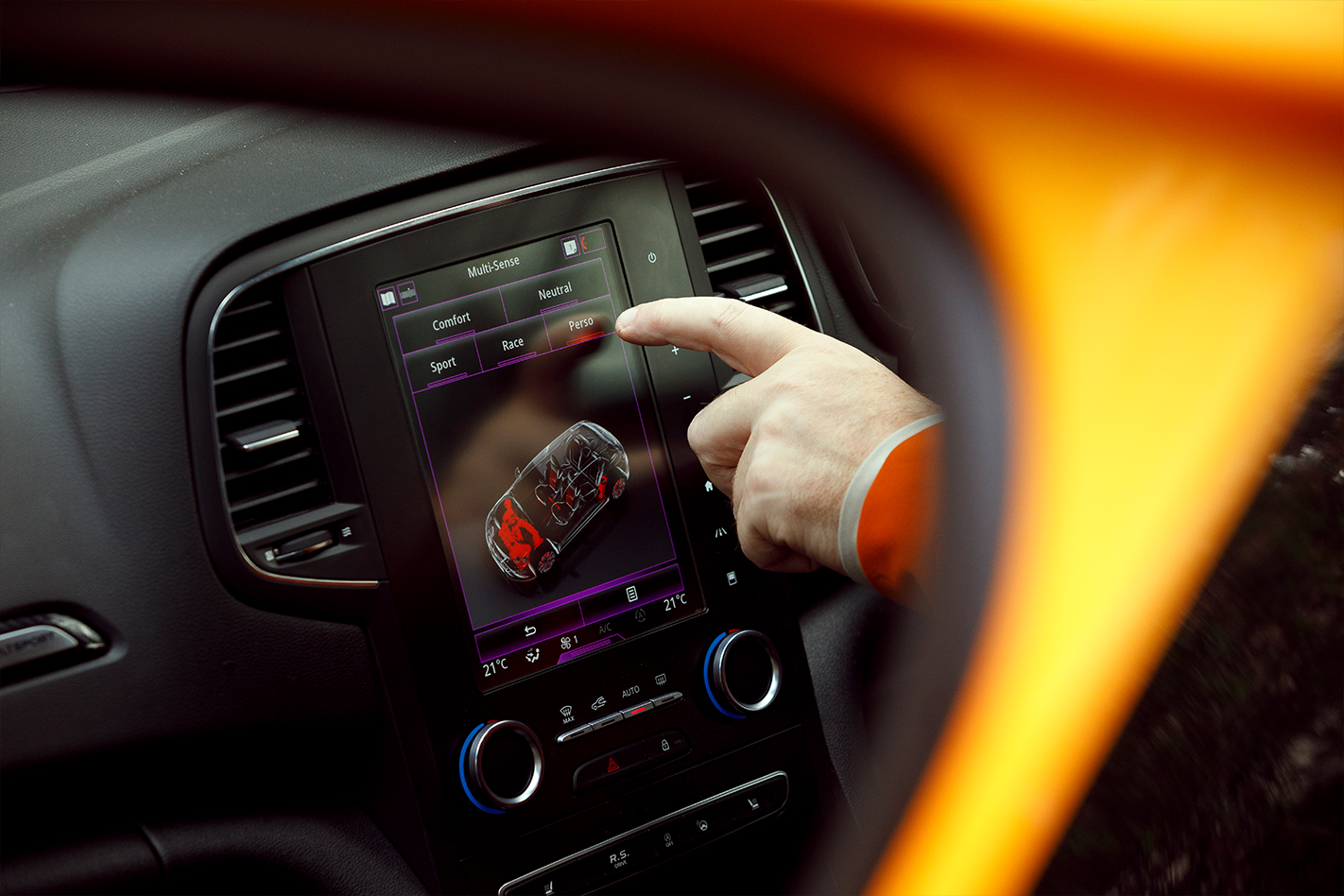
Once it’s up and running, however, there are very few complaints about the 1.8-litre turbocharged four’s pep and pick up. Nor its bi-material brakes. They’re brilliant. The Comfort drive mode is a bit of a dud, as the car has no adaptive suspension, so you don’t get a benefit in terms of ride quality. It also softens off the throttle map to such a degree that it makes heel and tow downchanges feel cumbersome. Switch to Sport or the Perso customisable mode and the right-hand pedal gets a lot more alert and tactile.
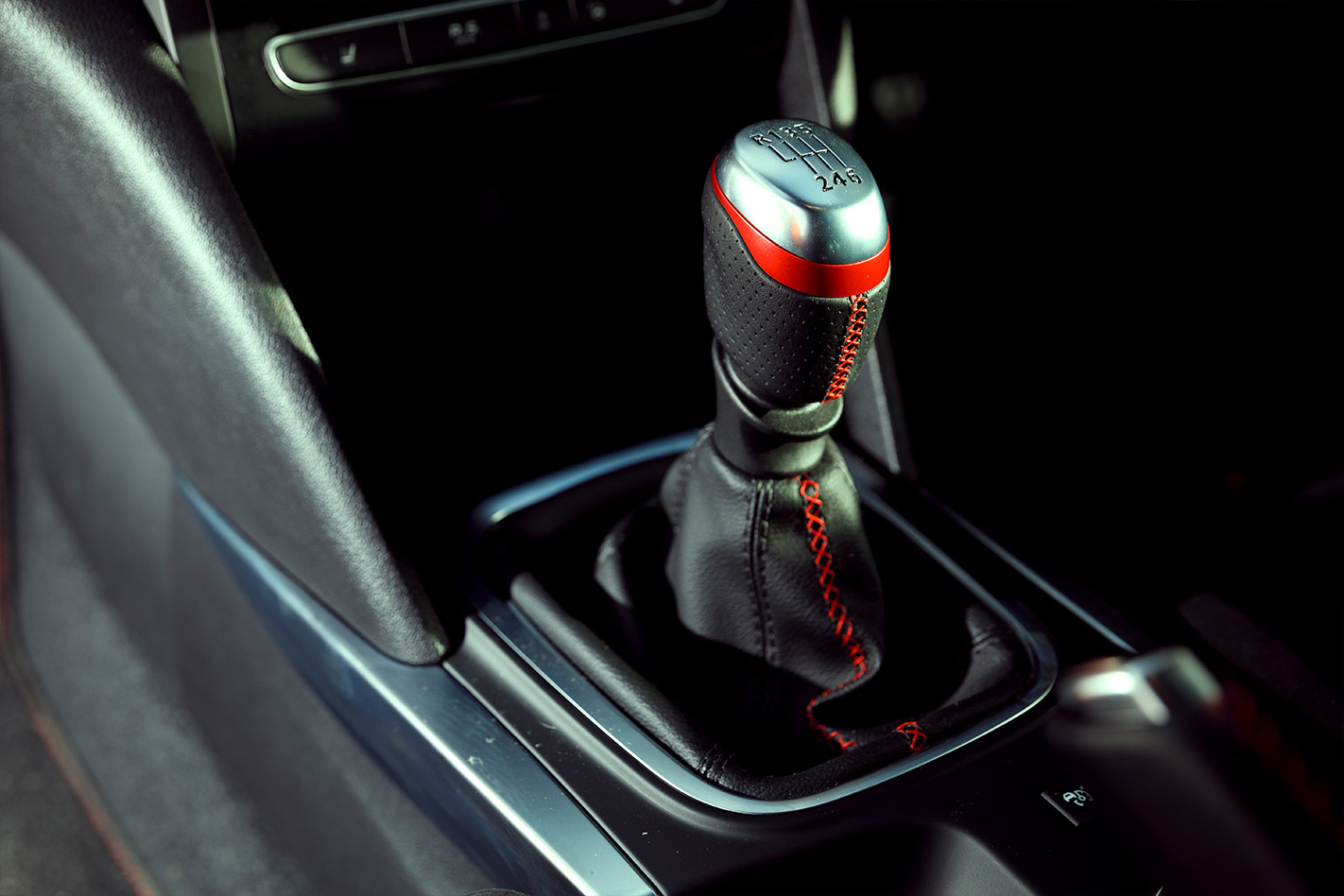
Fans of a good manual gearbox might need to look elsewhere. This isn’t a great example. The lever itself is weirdly shaped and its action is noisy and clunky. There’s little joy to be gained in finessing shifts. Instead, the Renault is at its happiest when it’s being absolutely beaten to a pulp, smashing shifts home at a frenetic rate. This is a theme that’s common amongst a few dynamic measures in the Cup and it seriously compromises its day to day utility.
If you’ve opted for the more hardcore Cup over the gentler Sport version should that matter? If you wanted something that was hard-edged and uncompromising, buy yourself a Lotus Elise that’s a year or two old. It’ll be more fun, more tactile, faster and more rewarding. A hot hatch is supposed to be a versatile thing and the Megane RS280 Cup does versatility like a teenager does tidying their bedroom.
Ride and handling:
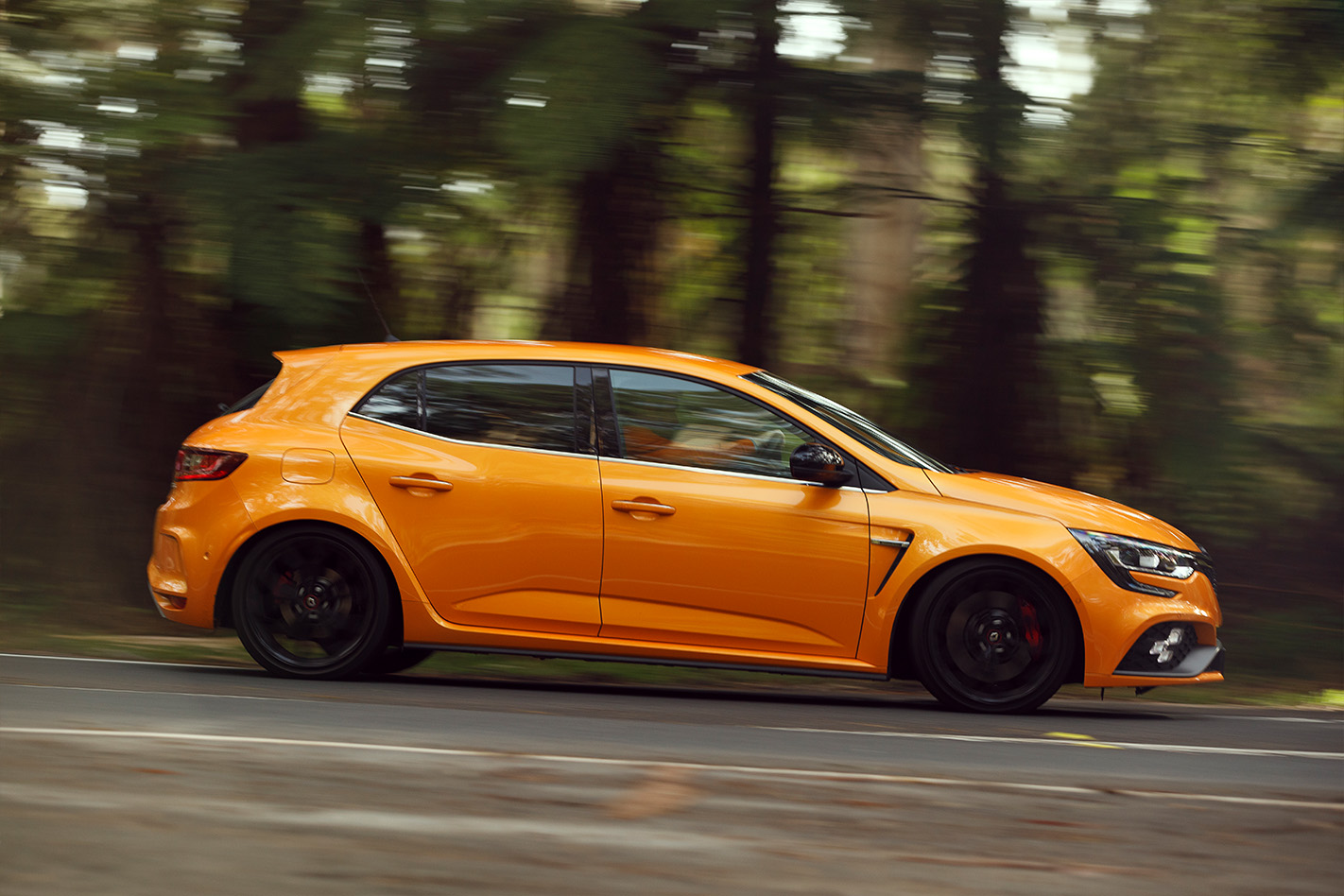
One of the big on-paper attractions of choosing the Cup is the fact that it gets a proper Torsen mechanical front diff rather than the Sport’s e-diff. Unless you take it on track or regularly drive like an utter berserker on-road, there’s not actually that much benefit. When you really punt the car through a corner and get on the gas early, you a feel a tug at the wheel as the diff claws you into a corner, but you really need to be dialling it up to get to the point where you’ll start to feel its effect. The 245/35 ZR19 Bridgestone Potenza rubber offers decent lateral grip when warmed up, although first thing in the morning, the front boots easily lapse into understeer.
On track, it’s a different story. Those that regularly attend track days will certainly be able to eke out a superior lap time using throttle rather than brake pads to scribe an arc and the unyielding ride of the dampers won’t present anything like such an issue on smooth hotmix. Our colleagues over the office at MOTOR tested the Megane and the Hyundai i30N back to back on track and preferred the Hyundai. And they preferred the Civic to the Hyundai as a track weapon which presents a pretty clear pecking order.
On road, the Megane is certainly firm, (the Cup gets revised springs, dampers and bumpstops) picking up imperfections in the road that most cars would smother to nothingness. It’s always jostling at you to the point that it becomes wearing in everyday use. Go really quickly and it starts to make sense but the numbers you’ll clock up before it does so would not have your local plod overly amused.
The Megane features rear-wheel steering that, in effect, shortens the wheelbase at modest speeds and lengthens it at high speeds, increased manoeuvrability and stability respectively. In Comfort, it switches between the two modes at 60km/h while in Sport the transition lifts to 100km/h. The rear wheels can counter steer up to 2.7 degrees. It can make the car’s response feel a little artificial and, tellingly, the super-focused Trophy-R model that’s available in some other markets – and which set a front-wheel drive Nurburgring lap record – does without it. I’m certainly not sold on its benefits.
Interior and Comfort:
The things that matter to enthusiast drivers are all pretty good. You get a decent steering wheel, reasonable pedal placement, great seats and visibility out of the car is good, so it’s easy to place and manoeuvre. But then you expect this of Renault – they’ve been the benchmark for a number of years.
Employ a more critical eye and things aren’t quite so happy. The infotainment system could most characteristically be described as quirky, with a number of touchscreen key presses required to shift between functions. The sat nav brings up your desired destination competently but then takes some utterly baffling routes to get there, sometimes skirting you up barely navigable cart tracks. The ten-speaker Bose stereo system is punchy and the Megane is fairly easy to pair a phone with, although Android Auto smartphone mirroring can be a hit and miss affair.
Practicality is a plus, with five doors, a decently-sized 434-litre boot which can extend to 1247 litres if you drop the rear seats. Stowage space is good with decently-sized door bins and a centre cubby as well as a pair of central cup holders, although as soon as you place any beverage in them, your access to the gear lever – a fairly fundamental aspect of driving the car – is severely hampered. Some of the ergonomics are decidedly French, such as the switch to enable the cruise control being on the centre console by your elbow and the other cruise functions being on a tab behind the steering wheel. Likewise, it can be a mission to see a visible clock in the car, the infotainment screen nor the dash carrying this info when other functions are enabled.
The capless fuel filler is a nice touch, but the fuel tank is relatively small for a car that can be relatively thirsty when driven hard. We’ve averaged around 9L/100km when driving the car gently, but go for a thrap and that can easily jump into the high teens.
Verdict
Know what you’re getting yourself into. That’s the key takeaway from the Renault Megane RS280 Cup. Nine times out of ten, the RS280 Sport is a better car, especially when teamed with the EDC transmission, but there will always be that hardcore of drivers who want something hard, angry and uncompromising. The Cup answers that call, and the harder you drive it, the better it gets. If you’re looking for a car that’s probably going to be a second car that can also lap up some track action at the weekend, the Cup gets a solid recommendation. As your daily driver? Best look elsewhere.
RENAULT MEGANE RS280 CUP SPECS
Model: Renault Megane RS280 Cup Engine: 1798cc four, dohc, 16v, turbo Max power: 205kW @ 6000rpm Max torque: 390Nm @ 2400-4800rpm Transmission: 6-speed manual Weight: 1427kg 0-100km/h: 6.5sec (tested) Economy: 9.2L/100km (tested) Price: $48,990 ($50,180 as tested) On sale: Now
What is it that sets a Porsche performance car apart? What are those elements that win industry awards with such metronomic regularity? You could argue that astonishing handling, detailed feedback, high-definition control integrity and a fundamental understanding of what keen drivers need, born from years of competition success, represent the special sauce. As sacrilegious as it sounds, it’s often not about the engine. Horsepower is an easily replicable attribute.
Think about that in the context of the Taycan, Porsche’s first electric car of the modern era. Cynics might snipe that here is a vehicle trying to replicate something that Tesla achieved with its Model S in 2012, or that minus an internal-combustion engine, the Taycan is somehow commoditised; a generic skateboard draped in Zuffenhausen’s dress-up. Nothing could be further from the truth. Program director Stefan Weckbach has heard the objections before.
“The Taycan looks like a Porsche, drives like a Porsche, and feels like a Porsche; it just happens to have a different type of drive,” he says. “Even an electric sports car can be puristic and highly emotional. We don’t consider that a contradiction. On the contrary, with the optimum drive technology and the right vehicle concept, the Porsche characteristics can be brought even more to the fore.”
Its positioning in the market is unambiguous. “It was clear from the beginning that an electrically powered Porsche – like every other Porsche model – must be the sportiest vehicle in its segment,” says Weckbach.
Wheels recently had the opportunity to experience the Taycan at flat chat, have a poke around its naked underpinnings and talk to the Porsche engineers in charge of its development. It’s been a long time coming, but it is clear that Zuffenhausen is not about to be rushed into launching anything that strays from the original design ethos.

POWERTRAIN
Porsche will initially introduce three variants of the Taycan to Australia in October 2020. The Taycan 4S, the Taycan Turbo and the flagship Turbo S all feature dual electric motors that drive all four wheels and a two-speed transmission at the back. An entry-level rear-drive Taycan will subsequently be introduced.
The range-topping Turbo S was on hand for us to sample at the reveal in Grevenbroich. This features a crushing 560kW and 1050Nm system output, a range of 420km and a 93kWh battery (84kWh net) composed of 384 LG cells with a pulse-controlled inverter on both axles to convert the battery pack’s DC charge to the AC required by the permanently excited synchronous motors.
Featuring in-built magnets, these motors are more expensive than asynchronous units, but the hairpin-wound copper inside delivers incredible energy density and compact packaging. Put simply, more copper equals more torque, and the way Porsche has wound the copper in this unit, built 100 percent in Zuffenhausen, ensures 70 percent fill per cubic centimetre, compared to around 45 percent for a traditional pull-in winding. It’s also easier to cool as a result. Whereas an asynchronous motor features a rotating magnetic field that can heat-stress the rotor, Porsche’s solution delivers repeatability, powertrain engineers claiming that the Taycan will handle 10 consecutive 0-200km/h sprints without any degradation of power.
The Taycan Turbo S is monstrously rapid. With a development driver at the wheel on a closed test track, Porsche’s 2.8-second 0-100km/h claim and 9.8-second sprint to 200km/h felt, if anything, conservative. The 505kW/850Nm Turbo won’t be much slower at 3.2sec/10.6sec and delivers up to 453km of range. The key difference between the two models is that the Turbo S gets a second pulse inverter on its front axle and so can handle more torque. The pulse inverter is also employed as a traction-control device, being able to cut and reapply power 10 times faster than Bosch’s traditional all-wheel drive ESC chipsets.
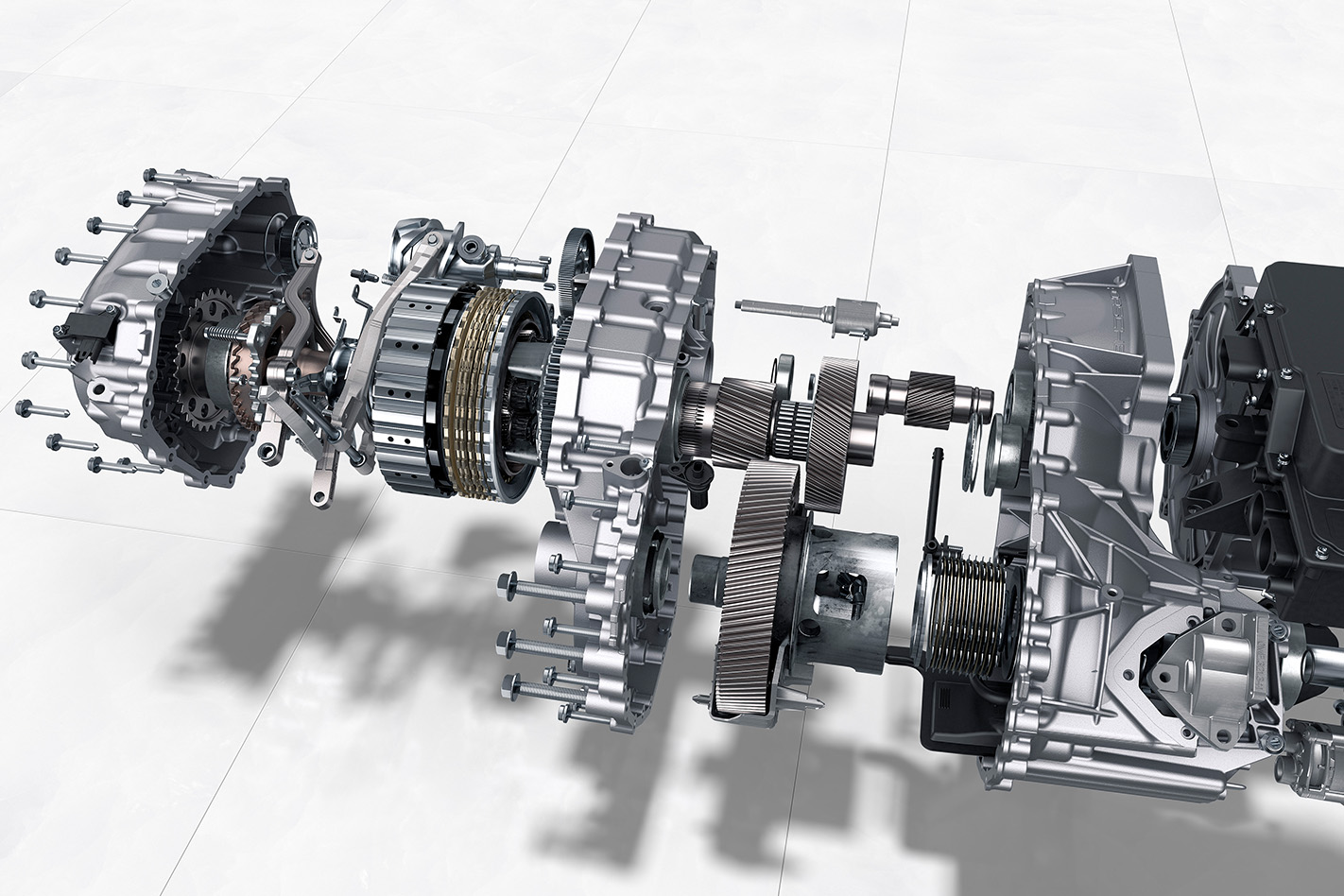
Unlike most EVs (apart from the Rimac C_Two with which it shares some technology), the Taycan has a two-speed transmission on the rear axle. The motor will spin to 16,000rpm, but the gearbox gives it added flexibility. In Sport and Sport Plus modes when, incidentally, launch control is offered, the transmission logic prioritises first gear for aggressive acceleration capability allied to an overboost function. In Range and Normal modes, the taller second gear is prioritised for efficiency. Weighing just 70kg, the transmission is subtle, but under full acceleration it’s possible to hear, if not feel, it snick up a gear. If required, the Taycan can run on its front motor alone at speeds of up to 150km/h, whereupon the rear motor cuts in.
CHASSIS
“It’ll lap the Nürburgring in significantly less than eight minutes,” said Dr Ingo Albers, the director of chassis engineering on the Taycan project. He’s right. It later recorded a 7min42sec lap of the Nordschleife. “It did an eight-minute lap without any braking,” he adds later, almost as an afterthought. All of the Taycan’s energy recuperation (up to an industry-best 265kW versus the 50-100kW of most competitors) comes via the brake pedal, and Albers claims that 90 percent of all braking events when you request the pedal are handled by energy recuperation, rather than troubling the brake discs. It’s but one mind-boggling aspect of the Taycan’s dynamics.
To look at a naked Taycan is to see repurposed aspects of Panamera suspension such as the rear wishbones and struts, some custom chassis elements like the canted-in front uprights and the three-chamber air suspension mixed with an underfloor battery pack, which is a stressed member and gives the Taycan a lower centre of gravity than a 911. Weight distribution is 51 percent front and 49 percent rear for the Turbo S, with the 2900mm wheelbase being virtually shortened with rear-axle steering.
Porsche Dynamic Chassis Control (PDCC) is an active roll stabilisation system that splits the front and rear anti-roll bars into two halves. When the processors detect bodyroll, a pivot motor twists the two halves in opposite directions, effectively cancelling lean angle. Albers claims that in the Taycan, “bodyroll is reduced to zero”, with the only detectable roll coming via tyre deformation. Reducing roll oversteer tendencies is clearly desirable in a vehicle that weighs 2295kg.
“We have PSM [stability control] with a Sport setting that offers a safety net, like a virtual rubber band, or there’s PSM off. And off means off with us,” grins Albers. I can attest to the fact that a Taycan will go very sideways indeed when provoked. It’s phenomenally adjustable, which is hardly surprising given the dynamic options at the car’s disposal. Drive can be shuffled back and forth and from side to side, there’s torque vectoring by braking, and a lock-up differential.
The cars we saw were fitted with a mixture of Michelin Pilot Sport and Goodyear Eagle F1 rubber. The standard 20-inch Taycan Turbo ‘Aero’ wheel is shod with 245/45 R20 front and 285/40 R20 rubber rear, while the Turbo S gets 21-inch ‘Mission E design’ wheels with 265/35 ZR21 boots up front and 305/30 R21s at the back. An optional carbon aeroblade ‘Exclusive’ 21-inch wheel is also offered, as are 20-inch and 21-inch all-season tyres, or 20-inch winter tyres that are snow-chain compatible. The air suspension system borrows its compressor from the Panamera and drops the ride height by 10mm at 90km/h and then by another 12mm at 180km/h. A pneumatic lifter also raises the nose of the car briskly for driveways or speed humps.

DESIGN/BODY
I’ll freely admit that my first glimpse of a Taycan provoked mild disappointment. Gone are the otherworldly proportioning and suicide doors of the original Mission E concept, replaced by a more practical – and taller – superstructure. Sit a Taycan next to a Panamera and the bonnet is lower, but the windscreen header rail much the same height, gradually tapering back, making rear headroom that bit tighter. There’s still a characteristic Porsche fly line, but that slinky silhouette now looks a bit more porcine. “It reflects the genes of the Mission E,” claims Dr Bernd Propfe, the platform director. “We’ve done our utmost to bring this into production.”
It’s almost sensible. The obligatory pair of golf bags will fit into the 400-litre rear luggage bay, leaving the 82-litre frunk for your charging cables or a soft bag. “You don’t even need to put the driver on the rear seats,” beams Propfe.
The exterior panels are aluminium, with a blend of hot-formed and cold-drawn steels making up the Taycan’s floor, adding strength and improving acoustics. Cast and extruded aluminium is also used, the aluminium battery frame weighing in at 151kg, with 28 screws rigidly mounting it to the bodyshell for crash protection. Clearly a lot of work has gone into protecting the battery pack, with rams that lift the rear motor over it in the event of a rear-end collision. Porsche intends to break with general tradition and submit the Taycan for EuroNCAP crash testing, internal tests showing that in 40 percent offset tests at 64km/h, the car suffers zero deformation of A-pillars or doors. A pyrotechnic bonnet is also fitted in order to retain the Taycan’s low front end.
There are some very slick touches, including an optional charging flap that glides into the body and then upwards. This has been tested for anti-trapping and ice-breaking ability and also keeps the charging flap out of sight of vandals when the car is on a public plug. Slightly less slick is the vast glass roof that has no tint and no blind, which is not ideal for Australian conditions, despite its 100 percent UV proofing. Dr Lutz Tender, director of body engineering integration, assured us that a steel roof would also be offered, and noted that a photochromatic glass roof was rejected on the grounds of durability.
The cabin is a marked departure from existing Porsche designs. The dash features no cowled binnacle, Porsche instead using a huge 16.9-inch freestanding curved glass display treated with anti-glare coatings. A set of eared tabs sits at each end of this screen, with the lights on the left and functions for ESC, lifter and others on the right. There are also driver-assignable hot keys. Sitting on the upper dash, rather incongruously, is the knurled gearshifter tab, much as we’ve seen in the 992 version of the 911, while the Sport Chrono option features a neat little manettino mode dial on the steering wheel arm and the analogue clock front dead centre of the dash rolltop.
The most striking aspect of the interior is the 10.9-inch optional screen that sits ahead of the passenger. This co-driver screen can be used to marshal sat-nav and infotainment, switching to a blank screen when the passenger seat is empty. In between these two displays is another 10.9-inch centre display, while the centre console houses an 8.4-inch haptic display. Porsche billed this Times Square array of screens the “distraction-free concept”, Miriam Mohamad, user interfaces manager for the Taycan, claiming “less is faster”. If she can point to a vehicle with more information displayed, I’d be interested to see it. Wireless Apple CarPlay and over-the-air updates will be supported, and there’s a now almost obligatory voice-activated assistant, summoned by saying “Hey Porsche”.
Considerable thought has gone into the Taycan’s air-conditioning system. This has no manually controllable vents. Instead, the front-seat occupants bring up an HVAC screen and drag schematic circles towards the part of their bodies they want heated or cooled. Motors in the ducting do the rest. With ‘Diffused’, ‘Focused’ and ‘Individual’ modes, it initially seems an unnecessarily complex solution to a relatively simple problem.

CHARGING ECOSYSTEM
Much has been made of the Taycan’s 800V electrical architecture, Porsche playing heavily on the fact that a five-minute charge will secure you 100km, sucking on the car’s 270kW charging power. The problem, as it stands, is that there isn’t a network of 800V chargers for the Taycan to exploit this. The company readily admits that most will be charged overnight at the owner’s home, using the Porsche Mobile Charger Connect on a 240V AC plug at 11kW, which will take six to eight hours. In conjunction with the Porsche Home Energy Manager, it supports smart charging applications and provides overload protection for your domestic connection.
The Porsche Charging Planner calculates travel time to a specified destination including live traffic updates and battery charging times. Once the destination has been entered and the vehicle knows where it will be charged, it preheats the cells to their optimum temperature to ensure the shortest charging times. The distance-to-empty calculator assesses both topography and driving style.
On a typical 400V public charger, the Taycan will charge at 150kW using the standard (for Australia at least) high voltage booster which juices 50kW up to 150kW. Porsche is planning to install the 800V ‘Turbochargers’ at its main dealerships, and these will charge a warm battery from 5 to 80 percent in 22.5 minutes. Expect to double that time if the battery is cold. Chargefox has announced that it is in the process of rolling out 800V chargers across Australia.
The Taycan is fitted with a pair of charging flaps; one on each front guard, for Type 2 Mennekes AC on the driver’s side and CCS DC charging ahead of the passenger door. Porsche guarantees the battery to at least 70 percent charge for eight years or 160,000km and recommends that the battery pack should be charged to 80 percent on fast chargers to save time and preserve the life span of the cells.

SALES
Porsche has already sold its entire first-year build run of 30,000 Taycans, and given that it sold 35,573 911s last year, the company is bullish that Taycan demand will rival that of its iconic sports car. Built alongside the 911 at Zuffenhausen, the Taycan will slot into Porsche’s range somewhere just below the Panamera. Expect the flagship Turbo S to be around $350K before on-roads, with the Turbo just under $300,000 and the 4S just under $200,000 when the three arrive in Australia next year. Typical option spend will be around 15 percent on top of those numbers. The rear-drive entry-level car is likely to debut in 2021, as is the Cross Turismo shooting brake body.
For the time being at least, the Taycan will sit at the progressive end of Porsche’s three-pillar strategy of internal combustion, plug-in hybrid and full EV. The investment into the Taycan makes it clear that this pivotal vehicle represents revolution, not evolution, within Porsche’s traditionally conservative corridors of power. “How do we bring Porsche into the next generation? How can we bring the fascination of sports cars into the future?” asks Dr Robert Meier, Director Complete Vehicle, Porsche Taycan, yet the future strategy is unambiguous. “Make no mistake, the combustion engine will be superseded by the electric powertrain,” he says.
The Taycan is Porsche’s future. It may seem like sacrilege, but the rest is just detail.

Motorclassica will enter its 10th year when the doors open to the 2019 show in Melbourne this weekend.
Held at the heritage listed Royal Exhibition Building in Carlton, Motorclassica will once again play host to the rare, classic and significant cars of history.
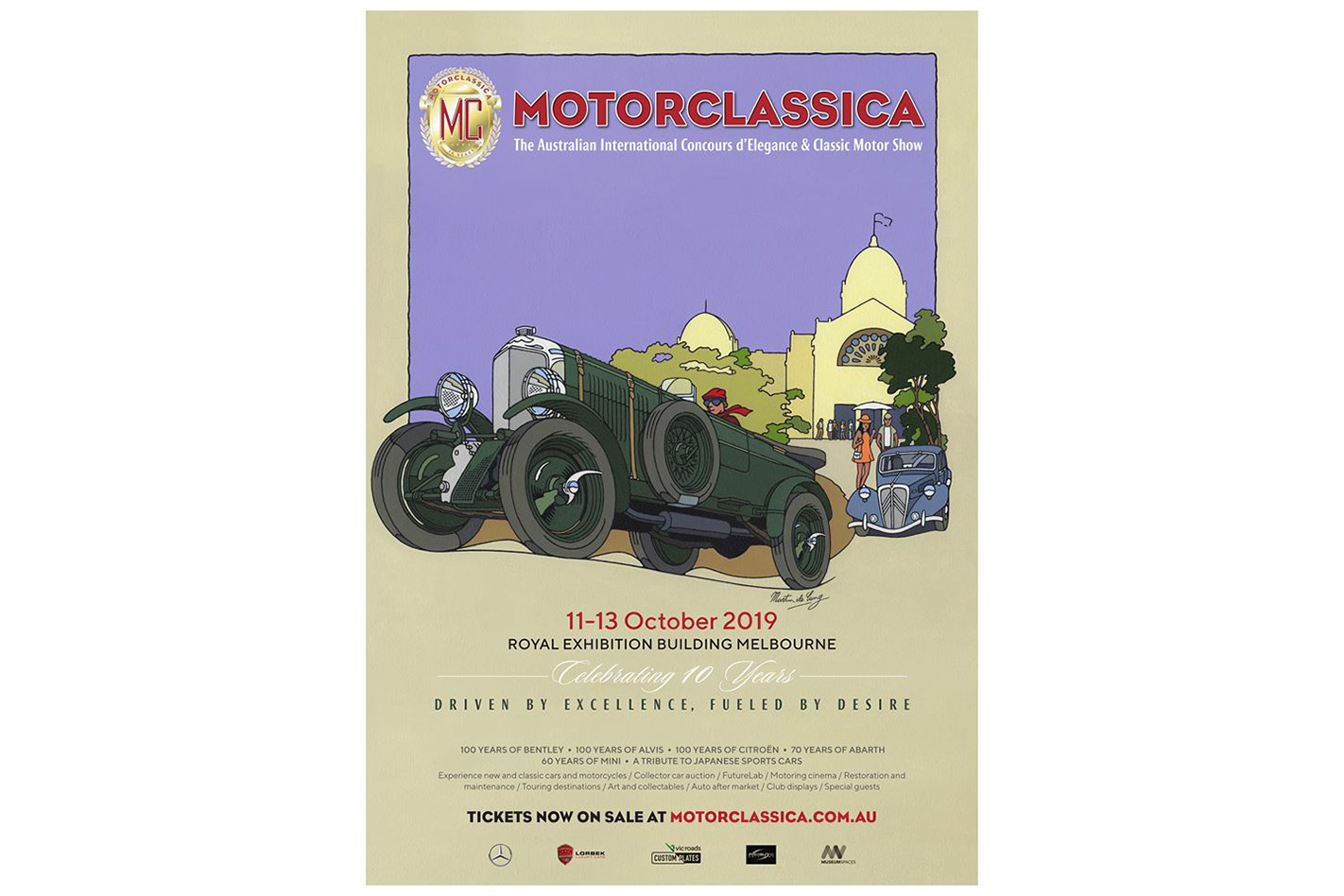
On this weekend from the October 11-13, tickets are available from the Motorclassica website and cost $39 for an adult, with concessions for pensioners and children.
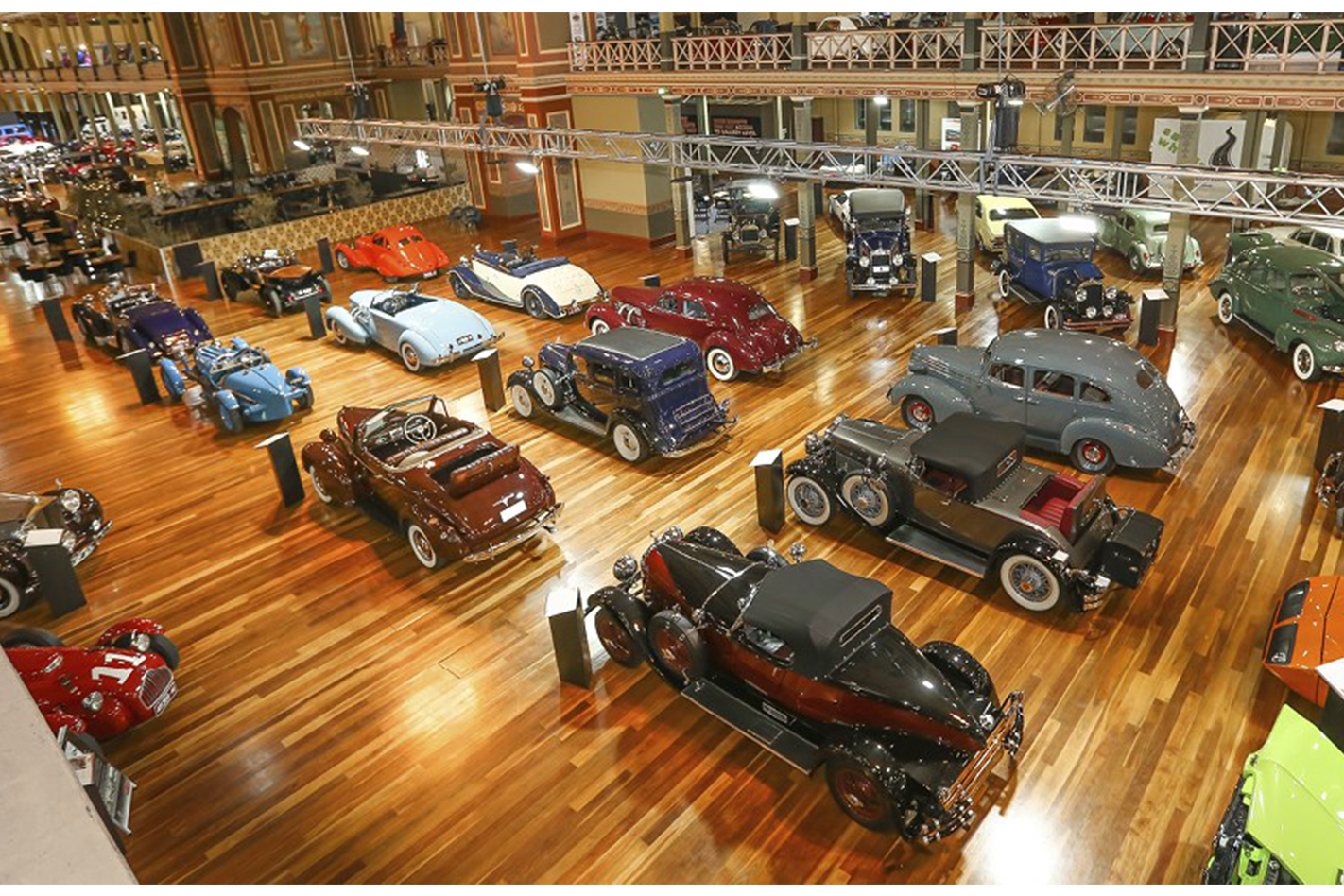
Specifically, Citroen, Bentley, Mini, Abarth and Alvis will all celebrate anniversaries this year, with each brand hosting displays marking the occasion.
Other drawcards include test drive experiences, the Club Sandwich car display, a live restoration, a Japanese sports car display and the most expensive motorbike ever sold at auction – the 1951 Vincent Black Lightning that sold for $1.16 million in 2018.
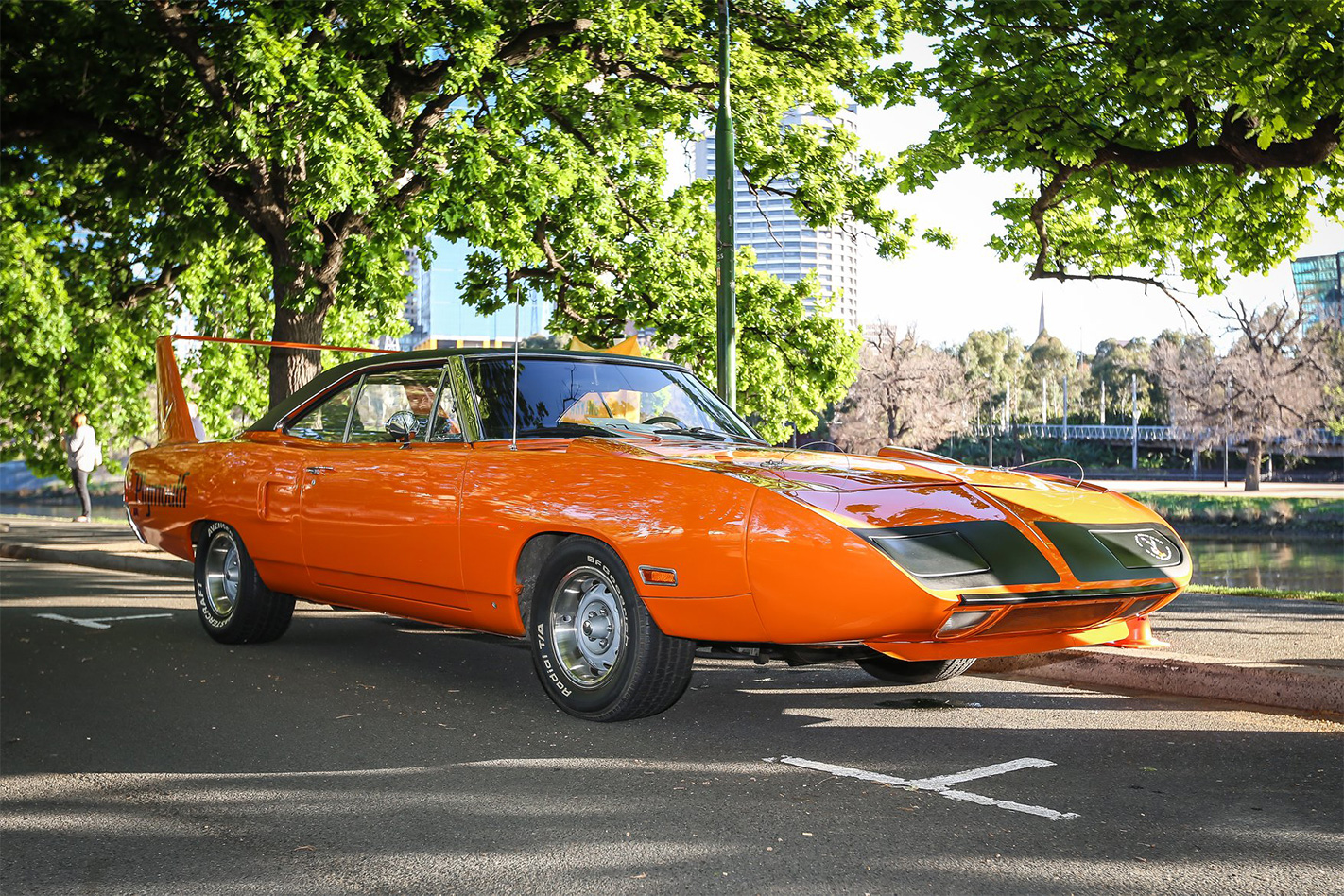
Should you be around Melbourne on Thursday morning with nothing to do, you can also see some of the cars in action on the annual Tour Classica, which sees some of the most valuable and rarest cars and motorbikes parading through the city to the Royal Exhibition Building. Catch them by the Alexandra Gardens from 9:00AM.
Doors open at 9:00AM on Friday, Saturday and Sunday, and tickets are available at the door if you happen to show up unannounced.
It all started with a well-intentioned query to Knight Rider Online (‘the oldest and most popular Knight Rider site’).
Hi Knight Rider fans
I’m new here – just been having an argument with a couple of work colleagues about how KITT was actually driven during the filming of Knight Rider – especially for external shots of KITT driving off on his own. I reckon there’s a midget, dressed as the driver’s chair, who steers and does the pedals!!
Am I miles off?? Any assistance on this vitally important matter will be greatly appreciated.
Cheers
JAGS
Cue the online derision but JAGS certainly poses a thought-provoking question. After all, autonomous vehicles were in their infancy in the early 1980s, a time when a Big Trak programmable electronic toy truck represented the pinnacle of self-driving vehicles. Of course, we wanted to believe that David Hasselhoff did actually partner with a sentient, indestructible weapon of justice in the form of a 1982 Pontiac TransAm.
The truth was clearly considerably more prosaic. While it’s not advisable these days to use the term ‘midget’ for small people, was JAGS onto something? After all, it’s clear that Hasselhoff isn’t driving the car. So who was?
The whole dwarf theory gained added traction when it became clear that, for some reason, a small person was routinely shoehorned into the car’s rear footwell. We have video evidence of this. Not to mention random disembodied fingers pressing the Turbo Boost button when Hasselhoff isn’t even in the car.
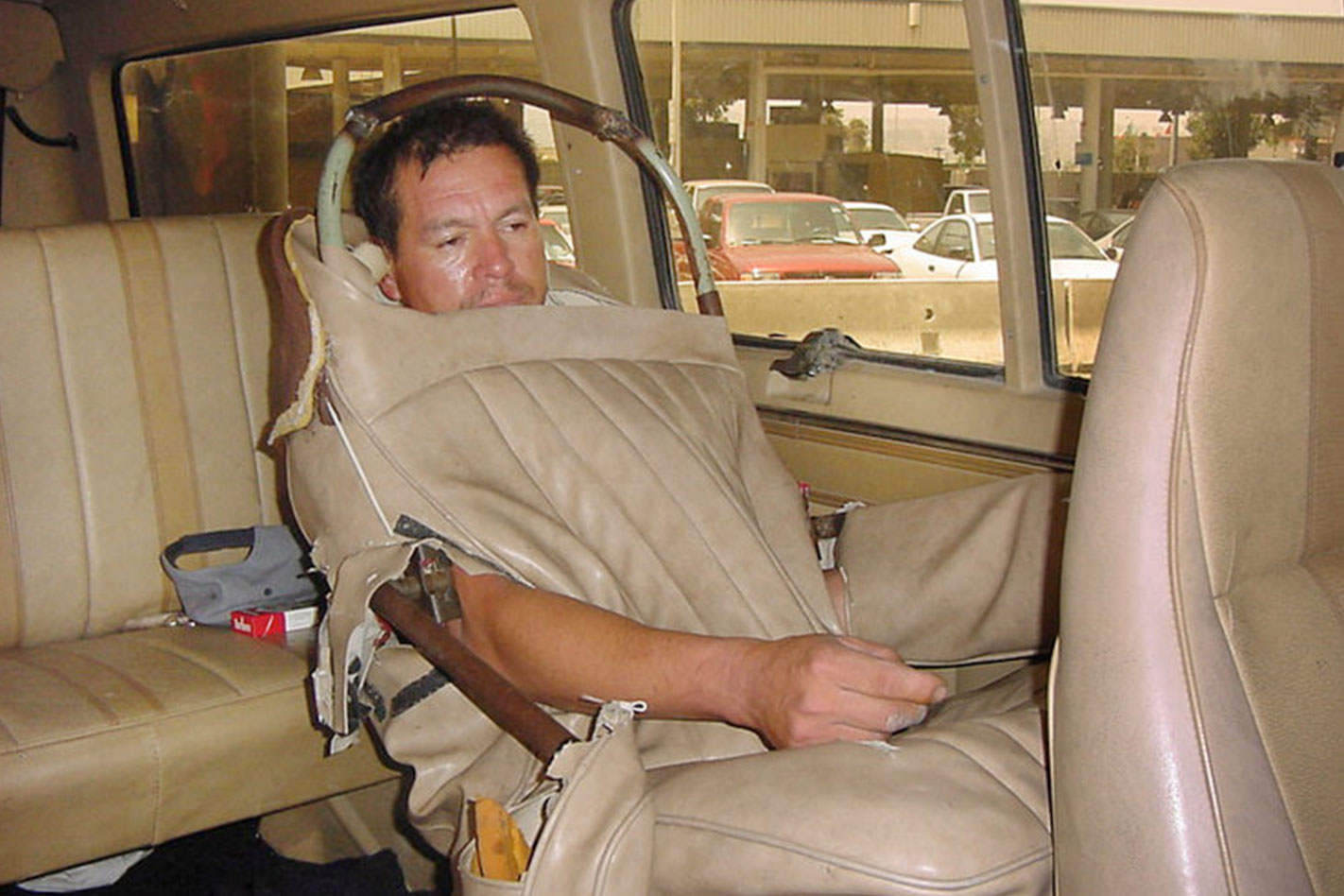
We have also seen that people can be disguised as car seats. This gentleman from Mexico attempted to gain entry into the US disguised as a car seat in 2001. Enrique Aguilar Canchola was sewn into the seat and tried to cross undetected at the San Ysidro border station in California. Mr Canchola was detected by sniffer dogs.
So, was KITT piloted by a dwarf? The best person to direct that inquiry to would be legendary stuntman Jack Gill, the show’s stunt co-ordinator. A veteran of The Dukes of Hazzard and Battlestar Galactica, he oversaw the procurement and modification of the Firebirds for the series, five of which survive today.
The key mechanical modifications to the cars were additional welding to brace the chassis, and line-lock facilities to brake either the front or rear wheels independently. Gill developed a polyurethane body that could be slipped over the car’s metal panels so that the supposedly indestructible car could be beaten with baseball bats without incurring damage. Unfortunately nobody told the kids at a later Make-A-Wish event, who demolished the body of one showcar by laying into the unprotected panelwork.

“When we first started off we had only had about three Knight Rider cars. By the time the show had got successful, we had about 18 cars that all did something different,” says Gill.
“Pontiac was giving them to us free, for a dollar. We would usually get water-damaged cars that we could do anything we wanted to, to the engine. We had cars that could do 150mph, cars that were made for the dirt, cars that had great suspension, cars that were right-hand drive,” he explains.
Then comes the information we were after. “I would be in the right-hand-drive car in a blind-drive seat where they couldn’t see me and I would come flying up, slide sideways and have to open the door for David,” Gill says. “David would jump in and we’d take off and then fight for who has control of the car.”
So it seems that our much-derided original commenter was partially correct. But, at 1.82m tall, Gill, it has to be noted, makes a lousy dwarf.
The 2019 Bathurst 1000 is nearly here, and it’s set to be the fastest and wildest in recent memory.
With the 2019 Supercars championship virtually a lock already, the likes of DJR Team Penske’s Scott McLaughlin and Red Bull Racing’s Shane van Gisbergen – both winless at Mt Panorama – are going for broke, while a strong field of top contenders will be going for the Peter Brock trophy equally as hard.
Without the traditional pre-Bathurst enduro on the calendar this year, expect a bit more weirdness, too, as teams shake out their enduro nerves in the white heat of battle around the most fearsome track in Australia.
And this year has seen the emergence of a brace of amazing new warpaint amongst the 26 starters – which includes a pair of IndyCar stars who are racing a Holden.
How to watch the 2019 Bathurst 1000
Click through the gallery for more, and stay tuned to WhichCar all weekend for updates live from Mt Panorama!
More Supercars stories
- Ford’s $10,000 podium stunt
- Winning ugly: the new Mustang Supercar
- Why there is no Camaro on the Supercars grid
- Could Penske Indy 500 winners pair up for Bathurst?
BMW would like to think the M6 came close to challenging the Porsche 911. It didn’t. And R&D chief Klaus Frohlich says the new M8 Competition “has what it takes to secure the sports car crown in the 600bhp segment”. It doesn’t. In fact, the M6 replacement is not a full-fledged sports car at all, rather a more desirable GT that weighs 285kg more than a 911 Turbo S.
The 8 Series is in essence, again, a rebodied 5 Series, kicked upmarket to a new price point that comfortably eclipses its predecessor, the commercially inconspicuous 6 Series.
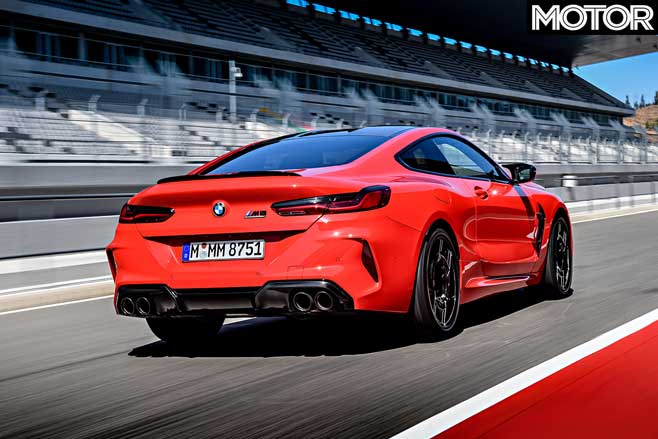
When they defined their new flagship, the engineers could have gone down electric avenue, taken a bunch of weight out or even put the engine in a different position, but instead settled for a pragmatic evolution of the status quo. Which raises the question whether the latest arrow in M Division’s quiver is sharp enough to really hurt the competition.
Unlike its ancient ancestor, the legendary reduced-to-the-max 3.2-litre CSL ‘Batmobile’ of the ’70s, the new M8 is kind of a no-holds-barred overkill proposition, aimed to be rigorously sporty yet overtly luxurious.
To accomplish this problematic mission, its creators pulled out all the stops, just as they had done with the sixth-generation M5. But while it was easy to pardon the four-door saloon for taking on weighty go-faster bits and ritzy upmarket mod-cons, the M8 perhaps should have been more of a purist’s car.
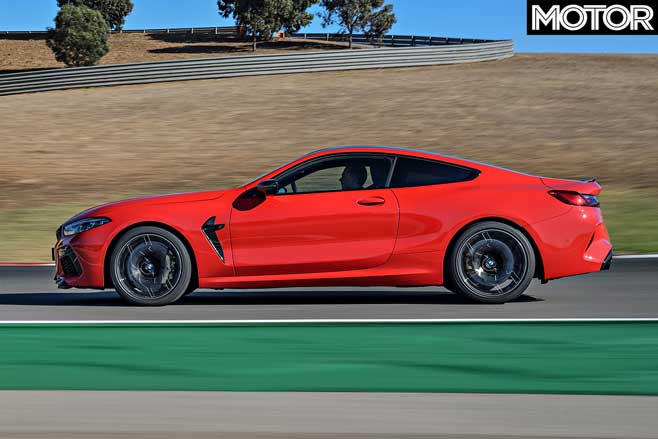
In the end it turned out to be more of the same, the strategists avoiding the risk of sharpening the brand’s flagship coupe when the Cabriolet and the Gran Coupe variants are destined to follow the same conservative concept that seemingly clicks with a loyal but ageing clientele. Although the 8 Series is on a standard seven-year lifecycle, electrification of any kind is conspicuous by its absence.
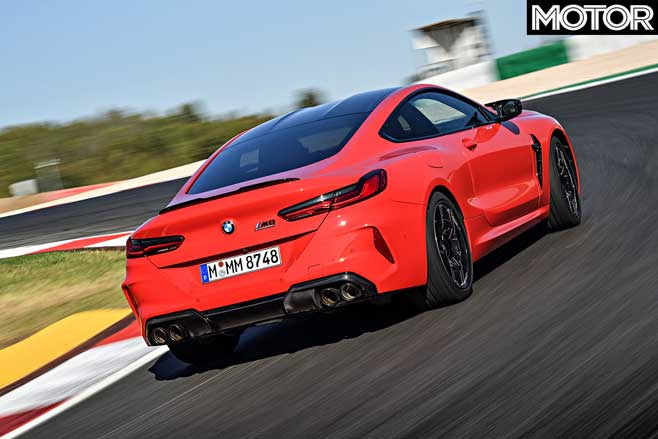
The 460kW M8 Competition was launched on the Portimao circuit in Portugal and nearby country roads. On the track, we had to follow a pace car, were cautioned not to touch the ESP button or activate 2WD, and since sideways cornering was strictly off limits no such pictures were to be taken at any time.
This car was to be presented as a precision tool, not an enabler of hooliganism. Which was a shame because the irresistible 750Nm torque summit from 1800-5600rpm is perfectly capable of initiating controlled drifts in 4WD Sport and sending up enough smoke to darken the blue sky in 2WD.
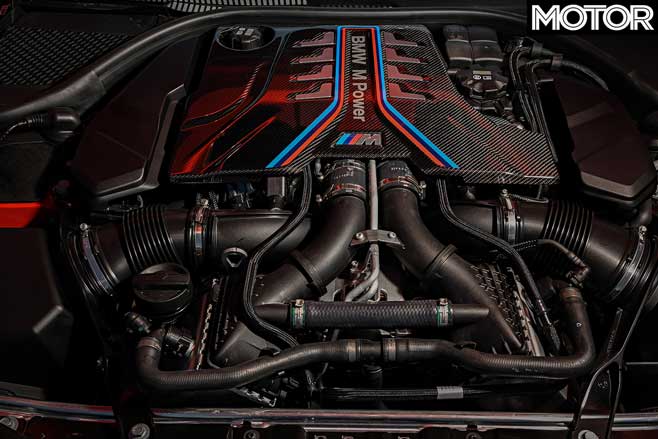
True, the awesome longitudinal acceleration rarely ceases to amaze. Whizzing up to 100km/h in 3.2sec and on to 200 in 10.6sec feels (and is) jolly quick. The same goes for the top speed, which increases from 250 to 305km/h in cars fitted with the optional M Driver’s Pack.
With these numbers, one expects great things from the cream-of-the-crop BMW. And the M8 delivers, for instance by masterminding the front-to-rear and side-to-side torque split like a pro, then conquering a banked second-gear corner with swift single-mindedness thanks to determined turn-in and a self-correcting balance supported by fast-acting dampers and standard rear-wheel steering.
Although it can play all the tricks and then some, the on-track performance of the ultimate Bavarian muscle car makes you frown with surprise and criticism more frequently than expected.
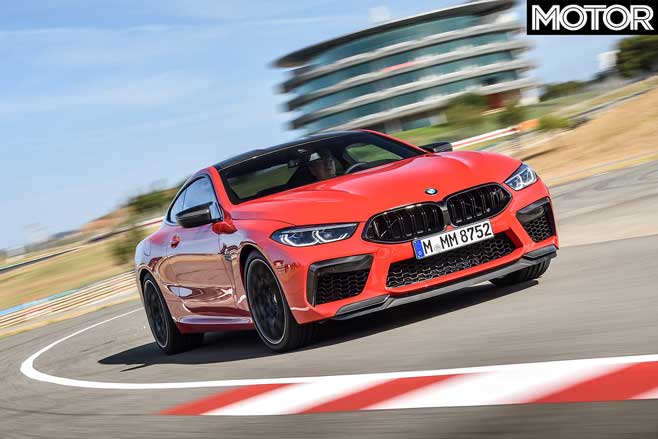
What keeps putting a spoke in the wheel is above all the weight; at 1885kg, the M8 Competition coupe simply has too much fat over its frame. On road, the 4.4-litre V8 produces easily enough grunt to overcome this physical handicap, but at Portimao the 250 excess kilos are clearly felt.
Predictably, the first victims are the tyres. On fresh rubber, the handling is not too nose-heavy and understeer has yet to rear its ugly head, but tyre pressures soon soar and the car squiggles and fishtails, fighting a losing battle against abrasive Portuguese tarmac.
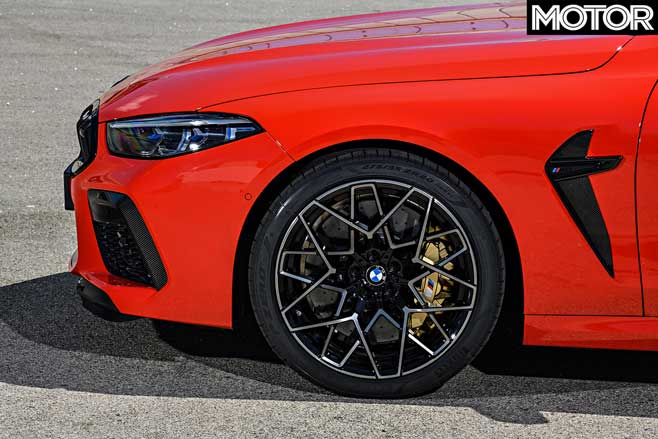
The M boys could have cobbled together a decontented rear-drive M8 CSL with only two seats and without AWD, but we’re told the market for such a car is too small to justify the investment. Instead, they opted for an all-in high-tech model featuring M-specific upgrades for aerodynamics, suspension, steering, brakes and drivetrain.
In addition, the carbon-core 2+2 coupe body received numerous reinforcements to beef up torsional stiffness, the ride height was lowered 10mm compared to the M5, the centre of gravity dropped 24mm, and the 19-inch wheels were replaced by 20s with Cup tyres.
Unfortunately, none of the tech goodies are weight-neutral, and most boast numerous alternative calibrations that make things complicated. In fact, for the first time ever, BMW even offers two different brake settings, but it’s hard to see the point of providing different feedbacks to what is essentially the same intent and input. In case you’re wondering, the stopping distances are allegedly identical.
So the hurdle on the way to your preferred dynamic set-up is how to best judge, access and bundle the myriad of options. Engine and transmission operate in Efficient, Sport or Sport Plus. The three tuning stages of the dampers are Comfort, Sport and Sport Plus. Brakes and steering each offer a choice of Comfort or Sport. The xDrive system can be set in 4WD, 4WD Sport or 2WD. The standard M Sport exhaust is even more brutal in Sport Plus mode.
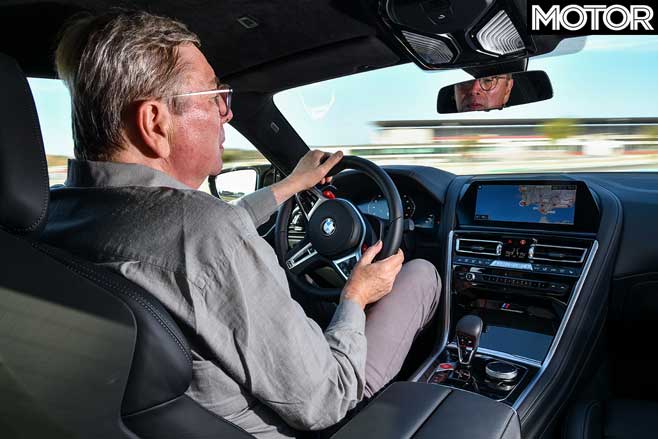
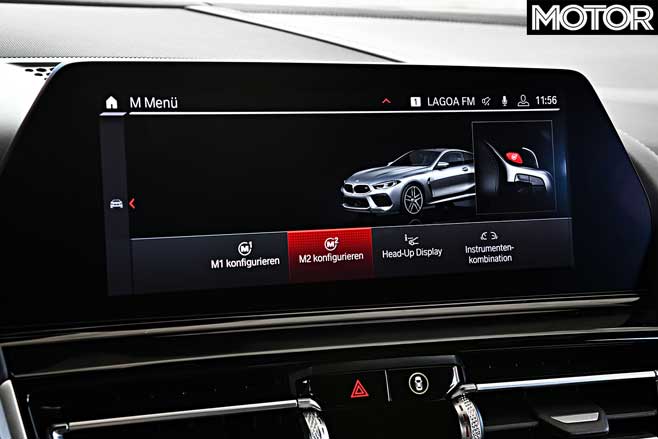
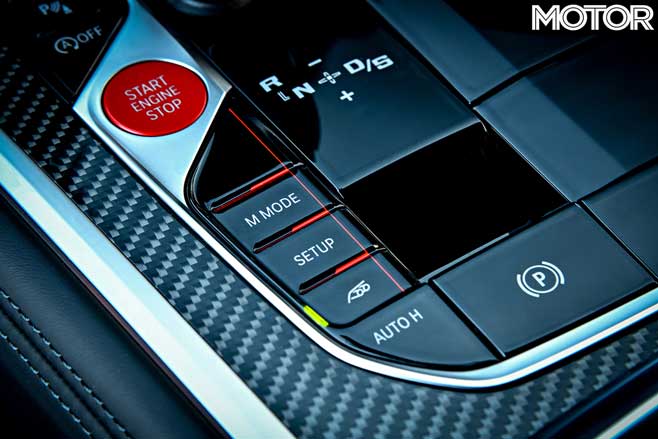
If that sounds complicated it’s because it is, at least until you discover the new ‘Setup’ button in the centre console. Push it to select, store, review and modify your favourite DNA. Red toggles on the steering wheel labelled M1 and M2 summon your two favourite dynamic medleys, be it for laidback cruising with all electronic watchdogs on duty, or for plenty of risk and even more fun without electronic safety nets.
Another fresh addition to the crowded cockpit is an M Mode button, which invites you to tweak the assistance systems and digital displays to your liking. In Sport, the main readout – focusing on revs, upshift warning lights, road speed and gear position – is flanked by g-force meter, tyre pressure monitor and boost indicator. Track mode idles all helpers, switches off the sound system and blocks incoming calls.
BMW expects the M8 Gran Coupe later this year to become the best-selling body style, accounting for every second order. The other 50 per cent will likely be split between the coupe and cabriolet, which tips the scales at an even more critical 2010kg, its rear passenger compartment is yet more cramped, the cargo bay less cavernous, and the three-quarter visibility is a guessing game. Despite these reservations, the folding top does suit the M8’s grand cruiser character, and confirms the effectiveness of the numerous body-strengthening measures.
Bleached by scorching sun, dusted with fine sand and deteriorated over time, the B-roads between Faro and Lisbon are a dangerous terrain for low-flying sports cars. A properly set-up GT like the M8, however, will master even the worst sections without bottoming out, hitting the bump stops or grazing its prominent chin spoiler.
Lack of low-gear grip is more of an issue in this habitat, as is the occasionally agitated on-off roadholding though quick pock-marked corners, dropping-away dips and alternating camber changes. But even on these tricky roads, it’s best to leave the driveline in Sport Plus, which keeps the transmission on its toes by striking a nice balance between relatively late upshifts and neatly timed downshifts.
On the other hand, the variable-rate, variable-effort steering feels more at ease in Comfort. Sport quickens the response when you need to wind on even more lock or stage a low-speed mid-corner correction manoeuvre, but the price for that extra dose of agility is more effort and a dash of artificial stiffness, which fakes a straight-line stability that eventually falls apart on sub-standard blacktop. It’s a different story altogether on smooth pavement and on the motorway, where steering weight and response, precision and poise don’t deviate greatly.
On the track and through the twisties, pushing the M8 to the limit is hard yet exhilarating work. In either environment it’s at the height of its game in MDM (M Dynamic Mode), which reels in stability control while sharpening the car’s key responses to driver inputs. With 7200rpm to play with and oodles of torque available at almost any speed in almost any gear, you can either rev the hell out of this engine or zoom in on the sweet spot around 2000rpm, where maximum grunt consumes minimum energy.
The 8 Series is an odd machine that falls between many stools. It costs ¤30,000 (AU$50,000) more than the discontinued 441kW M6 in Europe but is a less compelling drive than the current M5 Competition that sells for much less.
While it is notably quicker than, say, the Aston Martin DB11 V8, it lacks that special sense of occasion. Similar money buys a Mercedes AMG GT R, which is a superior track weapon and much more of a proper sports car. In the final analysis, the closest rival is perhaps the new Bentley Continental or, if money is not the decider, the Ferrari GTC4 Lusso V8.
Against the stopwatch, the M8 must fear none of these challengers. But when it comes to style and craftsmanship, flair and exclusivity, presence and space utilisation, the attempted synthesis of hardcore dynamics and augmented luxury produces a slanted picture. Perhaps a clear either/or concept would have yielded a more convincing result than attempting to conceive a best-in-class jack of all trades.
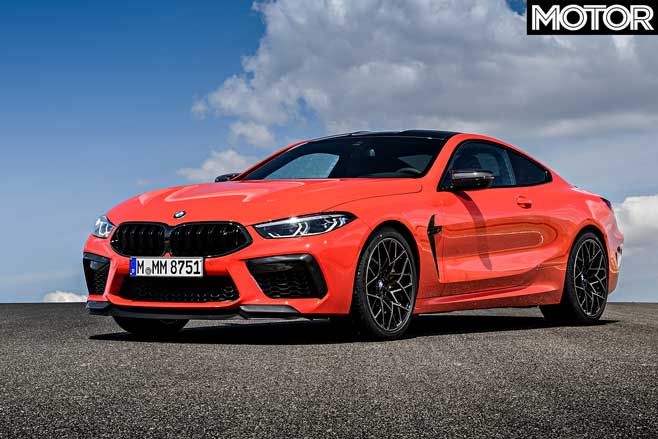
FAST FACTS 2020 BMW M8 Competition BODY: 2-door, 2+2 seat coupe DRIVE: all-wheel ENGINE: 4395cc V8, DOHC, 32v, twin turbo BORE/STROKE: 88.3 x 89.0mm COMPRESSION: 10.0:1 POWER: 460kW @ 6000rpm TORQUE: 750Nm @ 1800-5600rpm WEIGHT: 1885kg POWER-TO- WEIGHT: 244kW/tonne TRANSMISSION: 8-speed automatic SUSPENSION: double wishbones, adaptive dampers, anti-roll bar (f); multi-links, adaptive dampers, anti-roll bar (r) L/W/h: 4867/1907/1362mm WHEELBASE: 2827mm TRACKS: 1627/1632mm (f/r) STEERING: electrically assisted rack-and-pinion, rear-wheel steering BRAKES: 395mm ventilated/drilled discs, 6-piston calipers (f); 380mm ventilated/drilled discs, single-piston calipers (r) WHEELS: 20.0 x 9.5-inch (f); 20.0 x 10.5-inch (r) TYRES: 275/35 ZR20 (f); 285/35 ZR20 (r) PRICE: €168,000 ($A272,000)
PROS: Performance; transmission programming CONS: Weight; overly luxurious and complicated; steering RATING: 4 out of 5 stars
Aston Martin has announced four of its models will feature in the upcoming Bond film titled No Time to Die. The Aston Martin Bond cars featured will represent a broad span of the brand’s history, with two old, one current, and one future model.
Note: This story has been updated to include the more recent announcement that the DBS Superleggera is to appear in the film, and that the film will be No Time to Die.
The first and oldest is arguably the Bond car (not counting the Blower Bentley from the original novels), and to many the Aston Martin. Of course, it’s the DB5.
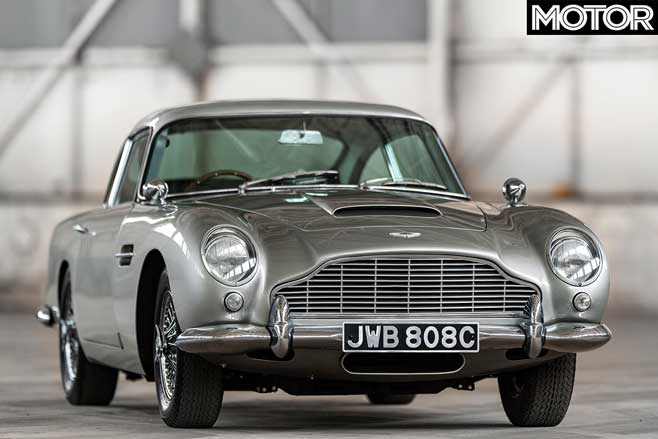
The car that has been Bond’s ‘ol’ faithful’ for decades will return, though it’s not certain whether it’ll remain gadget-free as the more recent incarnations have tended to.
Alongside that, another classic Aston will appear in the form of an Aston Martin V8, or AM V8 for short. A similar car, the V8 Vantage, appeared in an earlier film (The Living Daylights), so technically the AM V8 is making its Bond debut.
The third (and current) Aston model to feature in the film is the DBS Superleggera, which is gorgeous and brutal enough to suit the Bond universe perfectly.
Finally, as has been the trend lately, the next 007 flick will feature a car no one can buy – yet, anyway. The Aston Martin Valhalla, formerly known as the AM-RB 003, will make an appearance in the film in some form, likely in the hands of Bond or MI6 as all Astons have in the past.
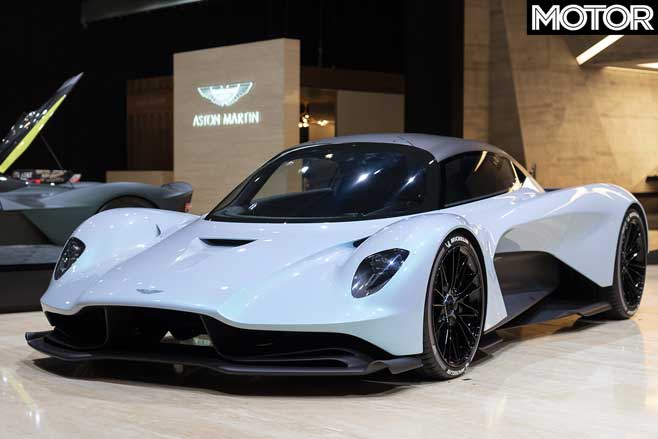
The announcement was made during a visit to the set from Prince Charles, which had been part of a slew of PR and announcements coming from the production currently shooting in Jamaica.
We can expect to see Daniel Craig’s Bond return to the screen around early 2020.
Bigger means better, right? If Aussie sales of converted American-based ‘trucks’ like RAM are anything to go by, the old adage might just be true.
We can’t seem to get enough of the oversized dual cabs down under.
RAM, like HSV’s converted Chevrolet Silverado and, potentially, the Nissan Titan, is here to fill the void for those who think something like a Ford Ranger or Toyota Hilux is a bit too small.
According to VFACTS, the demand is certainly growing, with the monthly data revealing RAM is outselling brands such as Alfa Romeo, Peugeot and Jaguar.
The figures equate to 1960 sales this year to date, or an average of 219 sales per month so far in 2019.
The rate of progress is seeing RAM’s year-on-year increases sit at around 200 percent compared to the corresponding month in 2018 (although it is admittedly coming from a low base).
A spokesman for RAM Trucks Australia claimed that our domestic dual-cab market is a particularly competitive one, but one which has shown headroom for bigger and more expensive metal.
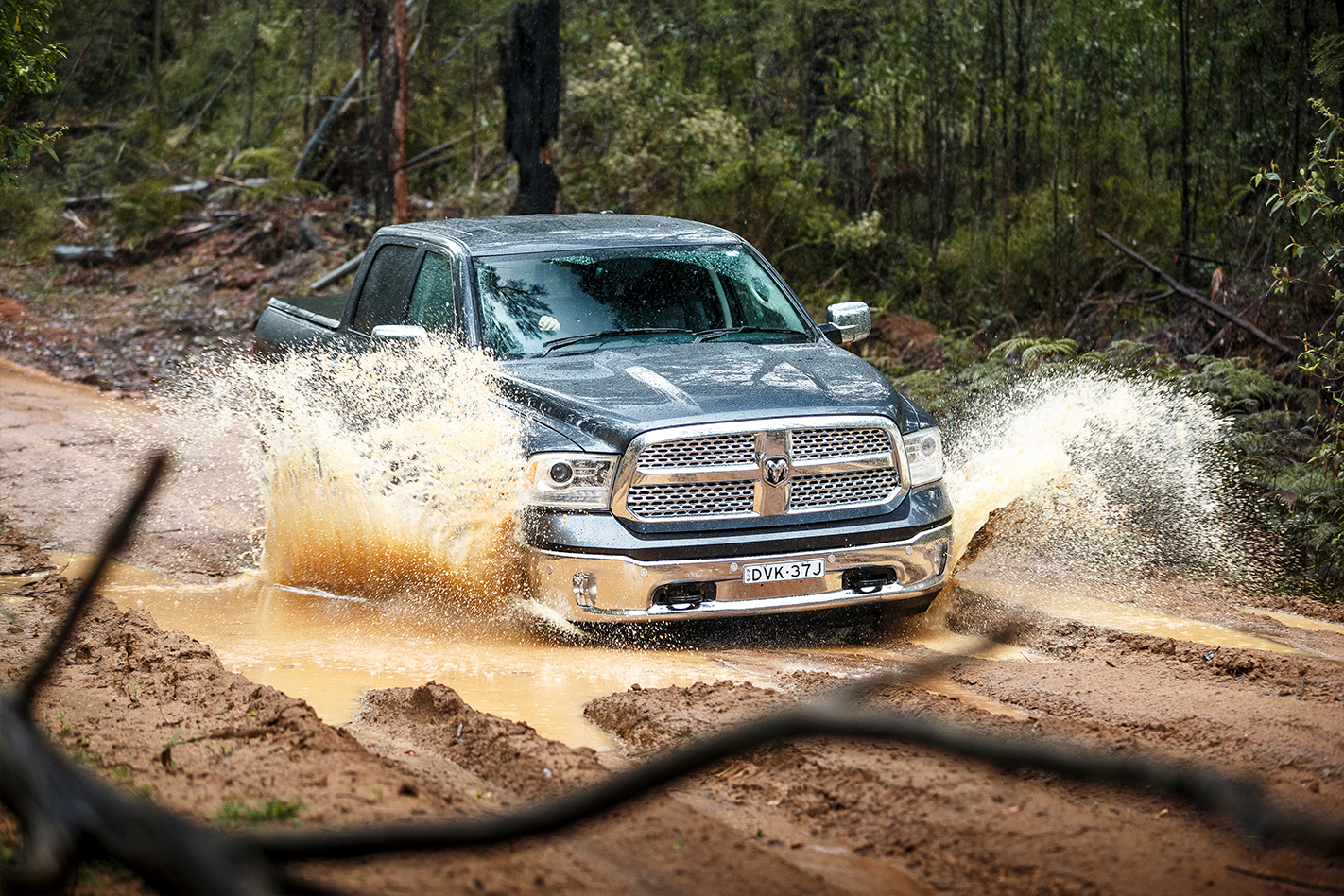
“It’s a vehicle [RAM] Australians want – the sales figures reflect that demand.”
To keep up with the conversions, Walkinshaw Automotive’s re-manufacturing facility in Clayton, Victoria, is ramping up the production line.
“There are three shifts, and an extended production line, to increase capacity and meet demand.”
The most popular model is the smaller RAM 1500, which is powered by a 5.7-Litre Hemi V8 with 291kW/556Nm and can be purchased for less than $80,000 in base trim.
Fuel economy isn’t the aim of the game here (there’s a 121-litre tank to keep you truckin’) but what you can pull behind it is.
One justification for the shift to bigger utes is that they are “full-size American pick-up trucks” with heavy-duty towing capacities and an 845kg payload.
While most of the largely four-cylinder turbo-diesel-based dual-cab segment offers 3.5 tonnes, the RAM 1500 has a “maximum braked towing capacity of up to 4.5 tonnes”.
There’s a healthy network of almost 50 RAM dealerships in Australia.
