
Nissan’s GT-R chief product specialist Hiroshi Tamura is one of us. He’d have to be. After all, he’s in charge of the R35 GT-R and its legacy.
And recently, when he was in Australia to launch the GT-R 50th Anniversary, we discovered it’s what he keeps in the garage that best verifies him as an enthuasiast.

His ride is a 1989 gun grey metallic R32 GT-R he bought brand new five years after joining Nissan. It’s changed a fair bit since then. When we asked about the philosophy of his GT-R’s modifications, he paused and replied a serious face “sleeper.”
He’s not lying. His GT-R is a 447kW monster that hides the best bits from the R32, R33 and R34 generations within an unassuming package. It’s incredible.
Behind its R34 Skyline GT-R wheels are a set of brakes from a Super Taikyu race car, complete with four-channel ABS. Underneath lies a flat aero tray, very similar to what debuted on the R34.
There’s more. It uses a R34-spec six-speed Getrag gearbox (which required modifying the transmission tunnel), with a 3.7 final drive ratio, and the same active electronic rear differential.
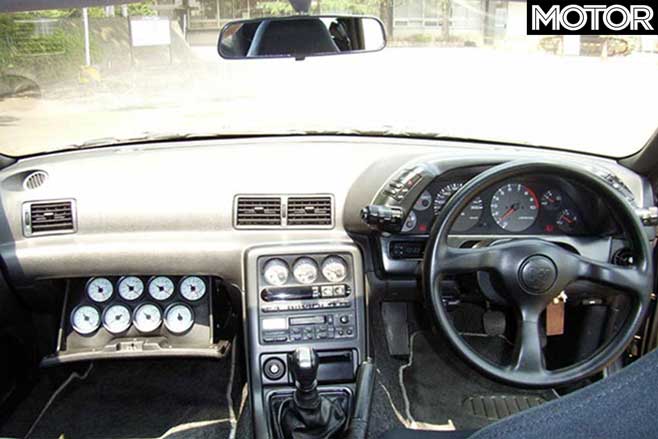
Clearly, he understands balance, and elaborates on this when describing the current R35: “If you want to put in the big power, you need to put in the big brake. You need to put in the good body. You need to put in the aerodynamics, cooling system. That’s my philosophy.”
This might also explain why his car produces ‘only’ 447kW (600hp) after, at one point, it was almost squeezing 600kW (around 800hp) through its four wheels.
“So, 800hp, 600hp. Which is quicker? Depends,” he said. “Not only 600hp. Because if the straight is so long distance, like Nardo circuit in Italy, 11km straight, more longer than airport. So you can touch about maximum speed, by 800hp.
“So pros and cons, you have these two typical type of shape [he draws us two power graphs]. I decided to choose about more flexible type [he points to the curve with more area]. Because reality is daily use, or some narrow track, it’s not like an oval course.”
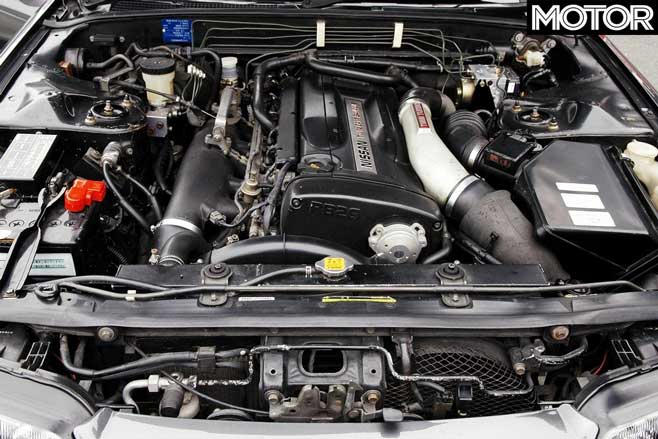
That tall intercooler peering through the Nismo-spec front bumper lends one of a few clues to the power. Amazingly, the engine bay looks almost completely stock, the washer fluid bottle hiding on the edge of the engine bay is an extension of the cold air intake.
The only inconspicuous detail anywhere on his car is the small, rectangular sticker on the front bumper. Bright silver, it bears the words “Mid Night Car Special”, alluding to the infamous street racing club that turned streets into 300km/h-plus battles.

Tamura-san shakes his head at the question whether he was a member, even though sporting a sticker without membership is a big no-no. He does concede, however, that he’s a close friend of Kazuhiko ‘Smokey’ Nagata – an infamous top-speed freak.
Either way, if there’s anything his car is guilty of, it’s being incredibly desirable. And no less than what we’d expect, or want, for the head of such a respected model. Good stuff, Tamura-san.
Forget the M850i, let alone the puffed up M8. The sweet spot of the 8 Series range is firmly planted at the bottom where the BMW 840i Gran Coupé gives the Audi A7 and the Mercedes CLS a hard run for the money.
Priced at $199,900, and arriving in Australia in Q4 2019, it replaces the 640i which cost $181,810 in 2018 when equipped with a 235kW straight six.
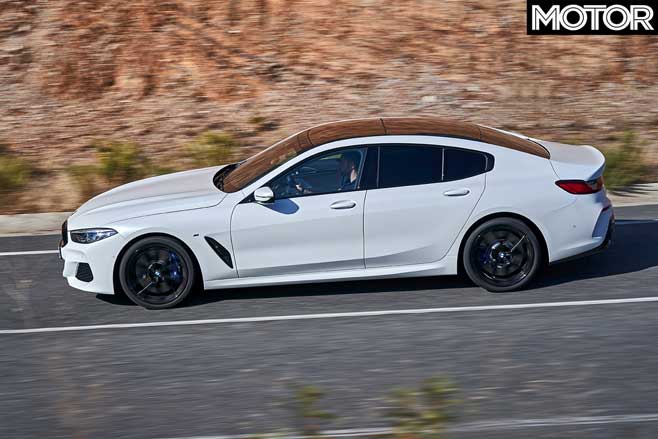
In exchange for the premium you get a prettier and more exclusive haute couture body style, a more generous and partly bespoke specification, and the street cred bonus generated by the more prestigious 8 Series badge.
Typically, at least half of the appeal relayed by any given product is based on substance. The other half, however, is created and then blown up by marketing.
But not even marketing can coax this author into the expensive ($272,900) and much thirstier M850i Gran Coupé which is almost 200kg heavier and accordingly more ponderous. In the real world, the 1.3sec advantage on the 0-100km/h acceleration run is almost immaterial. What matters more are traditional BMW qualities such as agility, nimbleness, sharp handling, a sweet engine, and overall driving pleasure.
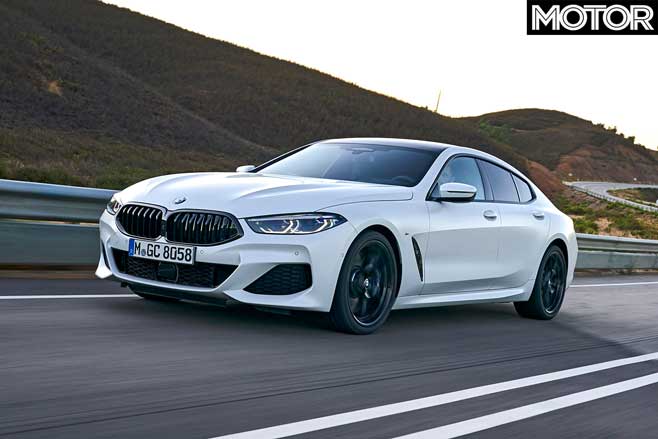
The 840i has all that in abundance. At the end of a long day on rough roads, empty highways and one of the world´s best race circuit, the quintessential impression is that of quantifiably enhanced involvement.
The RWD car splits the torque expertly between the rear wheels but not between the axles, and as a result its handling attitude is at all times laser sharp and absolutely unambiguous.
Nine out of ten test cars provided by BMW over the last 18 months were xDrive versions – which made one almost forget where the brand is coming from, how much fun a back-to-the-roots rear-wheel drive layout can be, and that it does not take a high-performance M model to put a smile on your face.
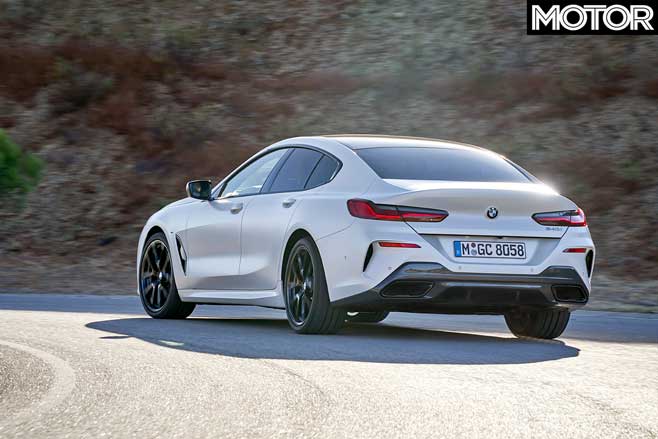
While not quite as quick and light-footed as a 340i, the 840i Grand Coupé instantly connects with all senses, including intuition and experience-based expectations. Marketing has tried hard to tap deep pockets for switchable anti-roll bars and rear-wheel steering, but there is absolutely no need to spend extra on these additives.
All it takes to ensure a totally balanced composure are the M Sport and M Technik packs, which comprise a drag-reducing body kit, better seats, 20-inch wheels and tyres, 19-inch sports brakes, and the M Sport limited-slip differential. True, some of the other stuff is nice to have, but not essential.
By making doors, roof skin, firewall, and engine rails of aluminium, and by using other lightweight materials for bootlid, transmission tunnel and instrument carrier, the Gran Coupé is only 70kg heavier than the two-door sister model.
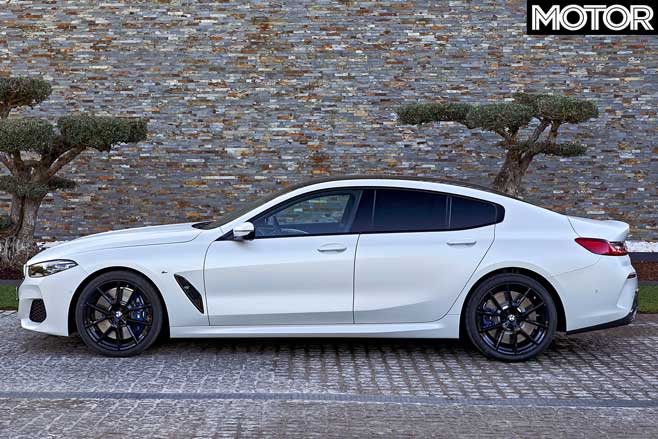
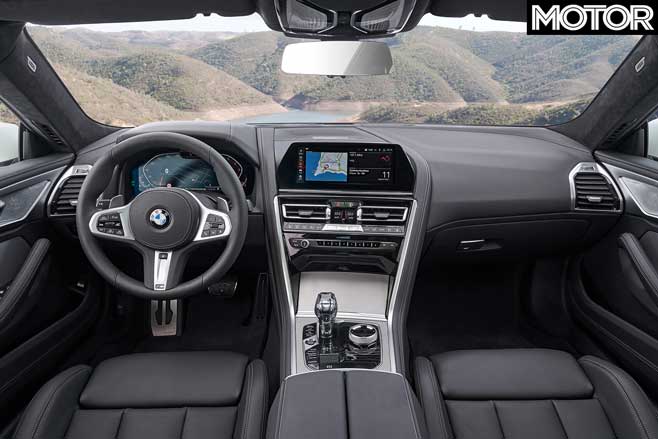
Standard equipment includes the adaptive M suspension, M Sports differential and the same M Sports brakes as fitted to the M850i. The seventh-generation iDrive system complete with head-up display is a carry-over item from the recently facelifted 7 Series.
Perhaps its biggest flaw is that the new Gran Coupé is a 4+1-seater. By generating this clumsy designation, the marketing team shot itself in the hoof. You guessed it: the tall middle seat is not even comfortable enough for a strapped in toddler, the 40:20:40-split rear backrest is too easily at odds with broad shoulders, and the big 440-litre boot expands at the expense of head and legroom in row number two.
But the short early-morning drive from the hotel to the race track was a real eye-opener. At an indicated 261km/h, the least powerful 8 Series Gran Coupé is certainly fast enough to jeopardize your licence no matter where.
The imposing 20-inch Pirellis provide grip in abundance without micro-destroying the ride at low speed or on Jurassic terrain. Unburdened by traction duties, the steering is a leather-wrapped life insurance system which helps, together with other dynamic wizardries, to lift car control to a new level.
And it does take car control to keep things together when one gives this car stick with ESP off, the transmission in manual, and the driving experience selector in Sport Plus.
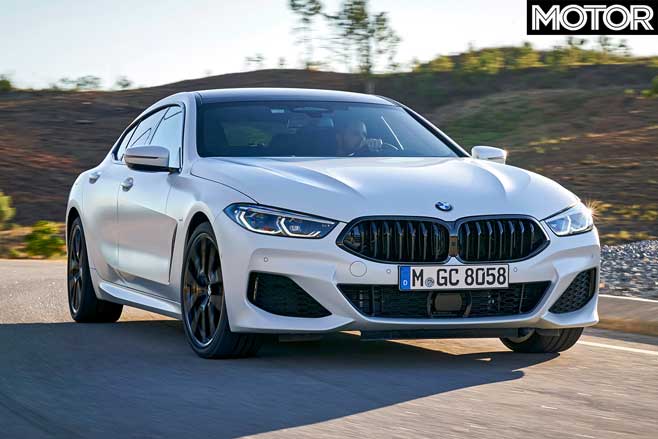
Do exactly that, and the glory days will return in Full Monty: supported by a delicate and transparent 3D steering, a confident chassis with strong telepathic talents and brakes which have been trained to do their job even at eleven-tenths.
The 840i sDrive fuses modern technology and traditional brand values to a remarkably competent and entertaining whole.
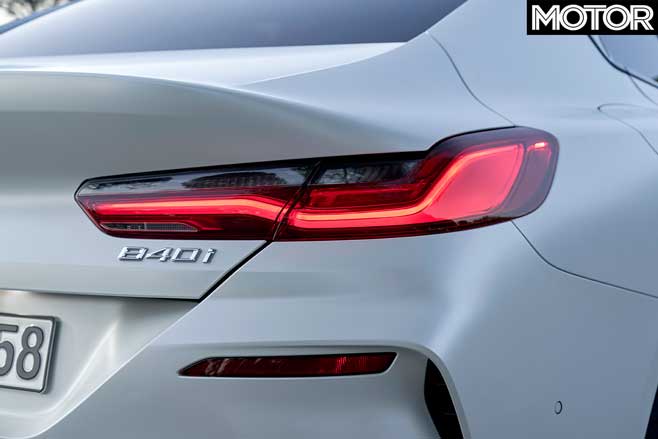
2020 BMW 840i GRAN COUPE sDRIVE SPECS Engine: 2998cc inline-6, DOHC, 24v, turbocharged Power: 250kW @ 5000-6500rpm Torque: 500Nm @ 1600-4500rpm Weight: 1800kg 0-100km/h: 5.2sec (claimed) Price: $199,900
A proposed change to recycling exports will potentially affect the way that tens of millions of old tyres are dealt with in Australia each year.
Prime Minister Scott Morrison announced last month that his government was working on a timeline to reduce the export of recycling waste for processing in other countries. This includes the export of end-of-life tyres to countries like China.
However, that means that Australian retailers will have to be more creative when it comes to disposing of old tyres in a proper, ethical way.
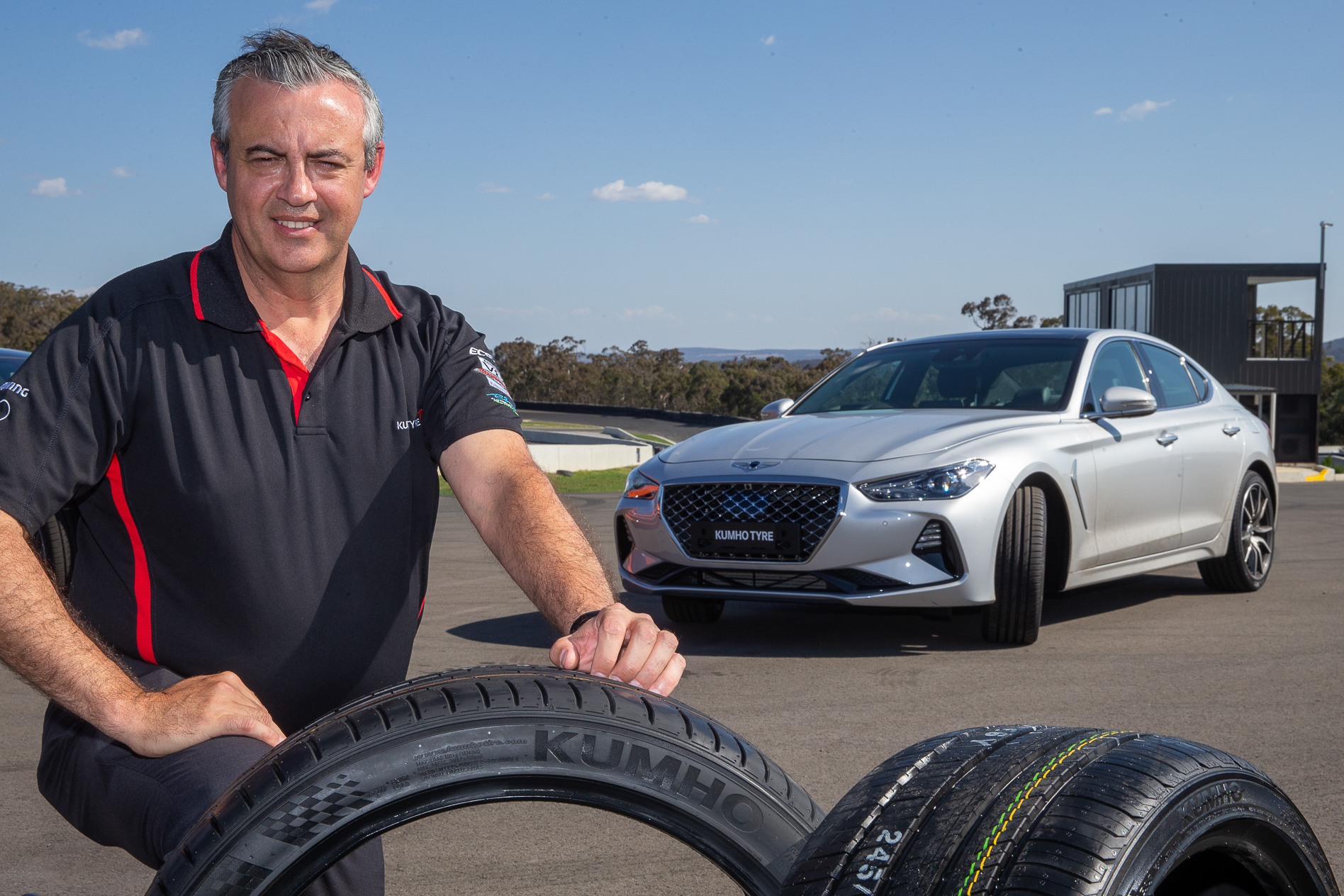
“Previously, a lot of our tyres were sent to China and they would do terrible things with them, like burning them for fuel, but they don’t want to do that any more,” said David Basha (above), the sales and marketing director of Kumho Tyre Australia and a 30-year veteran of the trade.
“We have to find a way to deal with 20 million tyres a year ourselves.”
Speaking at the launch of the brand’s Ecsta PA51 high-performance luxury tyre, Basha pointed to the actions of the industry’s own association, known as Tyre Stewardship Australia.
Founded in 2014 by the federal government and funded by a 25c levy on new tyres sold in Australia by member brands, the TSA works with key tyre brands to come up with solutions to recycling old tyres.
Some of the projects in progress at the moment include a mobile rubber crumb plant that can be added to tarmac as a sealant, a permeable pavement surface currently being trialled in a car park in South Australia as well as innovative new rubberised concrete barriers, which are more resilient and offer a cost-effective use for recycled materials.
The elastic properties of tyre-derived rubber can significantly enhance the impact resistance of concrete, according to the TSA. This will have the effect of reducing the force of vehicle impact thereby reducing the likelihood of injury and death, while the barriers themselves will more easily withstand small impacts without damage and the consequent need for replacement or repair.

Crumbed tyre rubber
However, Basha believes that more could be done – including greater participation from Australia’s major tyre players.
Brands including Continental, Bridgestone, Michelin, Pirelli, Goodyear/Dunlop, Toyo and Yokohama are members of the TSA, along with Volkswagen, which is the only car brand on the list at present.
“These are the only eight guys putting money into it,” said Basha. “I’m no greenie but we need to take it seriously. There are some big players – Hankook, Cooper, Maxxis, for example – that are missing from that list.”
Basha also believes that car brands – themselves responsible for the importation of approximately five million tyres a year – have a role to play.
“If you’re bringing 40,000 cars a year, you’re bringing in 100,000 tyres,” he said. “VW signed up first, and other car brands are looking. Everyone needs to do their part and to do their share.”
There’s a sense that we’re at a fairly important crossroads right now, environmentally-speaking. Climate change is becoming harder and harder to ignore, and even if you don’t care about being kind to Mother Nature, the steady economic pressure of fuel price volatility hits us all in the hip pocket whenever Country X decides to rattle sabres against Oil Producing Nation Y.
On the other side of the coin is the utopian vision of an emissions-free future, where cheap electricity is what gets us from A-to-B instead of liquid hydrocarbons. It’s here where the Hyundai IONIQ Electric steps in, as the first mass-market electric car from the Korean automaker and one that’s intended to normalise the electric vehicle (or EV) ownership experience. Whether you’re intrigued by EVs as a means of lowering your carbon footprint or merely lowering your vehicle running costs, the IONIQ Electric should pique your interest.
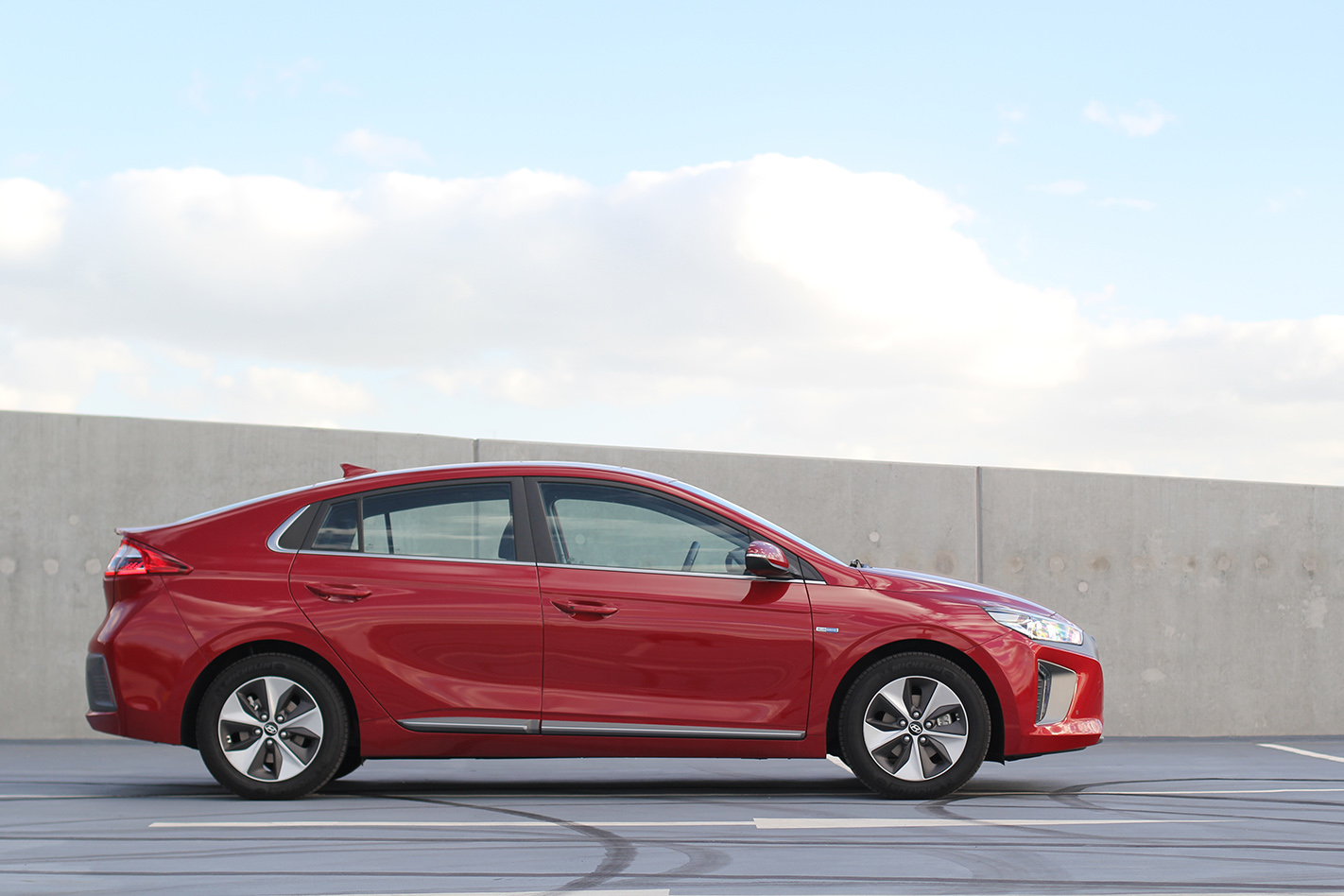
We’ve experienced the IONIQ in small doses so far, but now we’re parking it in our long-term garage to see how it fares during driving that’s a lot closer to what the Average Joe and Josephine would subject it to. Besides the usual do-the-plastics-start-creaking part of long-termer assessment, we want to cast a critical eye over things like the IONIQ’s comparatively limited (230km claimed) range, its charging times and whether the act of having to frequently plug it in starts to do our head in after a few weeks.
Retailing at $48,990, our IONIQ Electric Premium caps off the six-model IONIQ family, which covers regular petrol-electric hybrid variants and a pair of plug-in hybrids, in addition to the two all-electric offerings – the $44,990 IONIQ Electric Elite, and the IONIQ Electric Premium we’ve got on long-term loan. Costly for a non-luxury small car, but that’s the price of early adoption.
We’ll be sharing it across the WhichCar team over the next six months, which should be plenty of time to see whether the utopian ideal of all-electric motoring really is compatible with a modern Australian lifestyle. Keep checking back here to see how it’s travelling!
UPDATE 1 – 7 April 2019
So far, so good. The IONIQ has been kept busy shuttling me from home to office, and its been a great tool for what is otherwise the most boring thing you can do behind the wheel: commuting.
In fact, anyone who has to face the drudgery of driving to work and back for five days out of every seven really should be doing so in something electric. The seamless torque of an electric motor, the near-silence of its powertrain and, when you dial up the regenerative braking to full strength, the bulk of the drive can be done by simply modulating the accelerator pedal – you only ever need to prod the brakes when coming to a complete halt.
And besides, why are we burning precious hydrocarbons just to propel ourselves to our jobs? Petrol’s a finite resource, and I’d rather save it for driving that’s actually fun. In that regard, I’m all on board with the electric revolution. If only it were a little more affordable – near $50K for a non-premium small hatch is a touch steep, methinks, and sadly restricts the likes of the IONIQ Premium to early-adopter types.
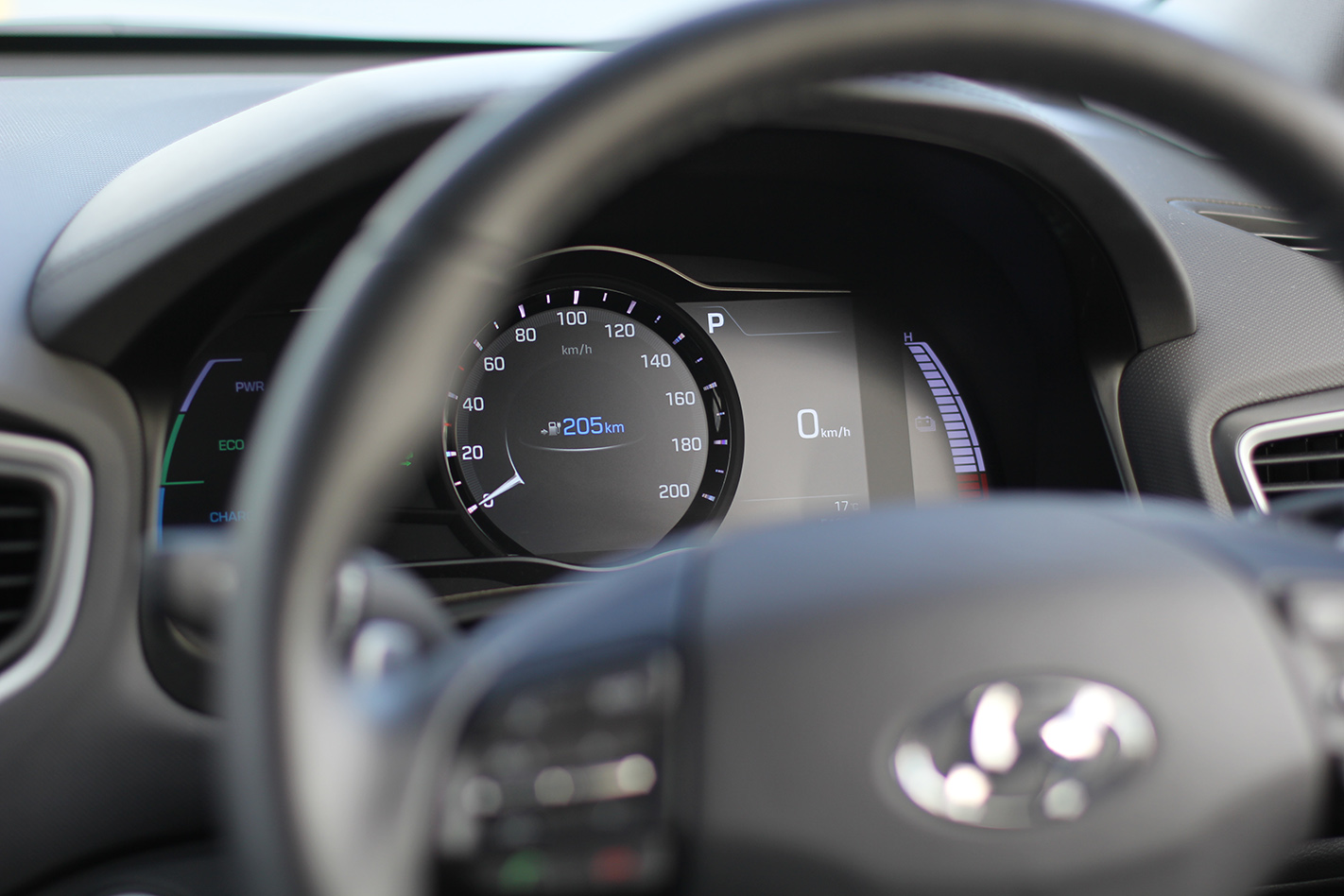
At 230km of claimed range I’m currently able to go to and from work for at least three days without recharging – including the occasional after-hours short journey to the shops – so range anxiety hasn’t really reared its ugly head just yet. That said, I’m not exactly in the habit of running the battery down into low figures. It’s probably also worth mentioning that the car’s computer doesn’t reckon I’m an efficient enough driver to unlock the full 230km range either, instead telling me that with my current driving style I’ll only get around 210-215km from a completely topped-up battery. Let’s see if I can convince it otherwise.
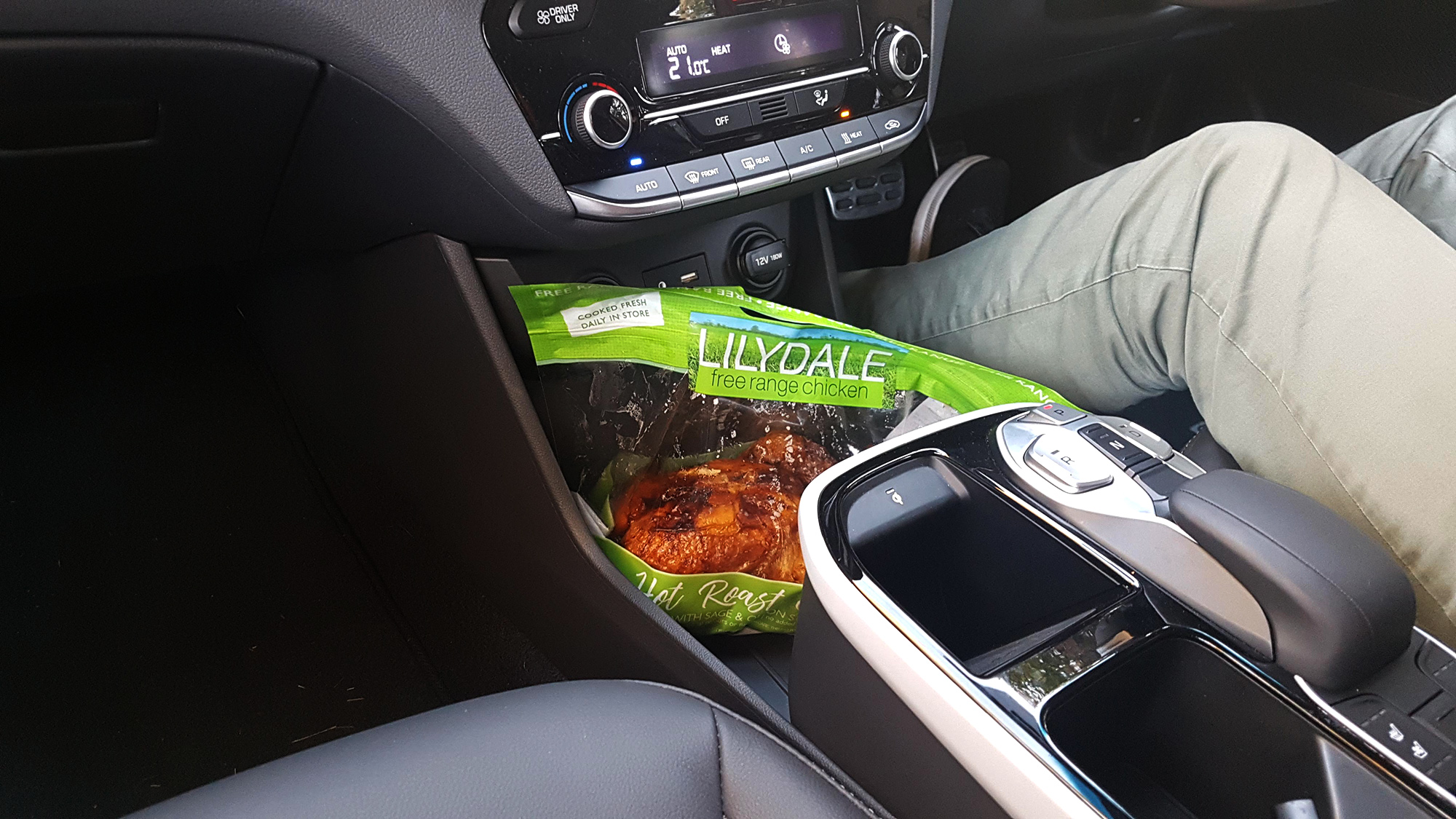
I’ve got some road trips coming up that should test the IONIQ’s range claim, but for now just one other feature warrants a mention for this update: the IONIQ Electric’s open-plan centre console. Combustion-engined IONIQs get a conventional set of console plastics, but the EV deletes all that for a space-liberating floor-mounted tray between the footwells, which I can happily confirm is large enough to tote an entire roasted rotisserie chicken (my metric of choice for measuring in-cabin storage), and then some. Handy!
Update 2 – 19 April, 2019
This update will be a quick one, given the poor IONIQ has been neglected of late thanks to a large flow of other cars in the WhichCar carpark. In fact, the only real trip of note I’ve taken in it was to the airport long-term carpark, where it then spent five days parked up while I went overseas for the launch of the updated Jaguar XE and F-Pace SVR.
Unless you have a Tesla, there are no EV charging options at Melbourne Airport’s car parks, either short term or long term. Even if you do own a Tesla, to juice it up while you’re out of town you’ll need to park it at Qantas Valet Parking – the costliest option at an airport that’s already exxy to park at.
But with a full charge and a home-to-airport distance of roughly 40km, the lack of charging infrastructure wasn’t a problem on my visit. The IONIQ’s battery is more than big enough to get me there and back. However, the length of time it would spend sitting idle did get me thinking – would a hydrogen car be problematic on a such a trip?
For those that don’t know, hydrogen cars have a bit of an engineering issue to overcome: the tanks leak. Not by a dangerous, explosion-starting amount, mind you, but with hydrogen molecules able to literally slip between the molecules of most other materials, it’s a difficult gas to contain. The actual rate of hydrogen leakage varies, of course, but as an example Ford was targeting 0.05 grams of hydrogen per hour as an ‘acceptable’ rate of tank permeation.
Which would mean that over five days you’d lose… just six grams of hydrogen to the atmosphere. Six grams in a car that would likely carry around five or six kilograms of hydrogen on board. It’s a negligible amount, so I guess my fear is unfounded.
But here’s the thing: while hydrogen cars are still very much in their infancy with many technological and infrastructural hurdles ahead of them, electric cars have already arrived. Why wait for hydrogen when the future is already here?
Update 3 – 27 April, 2019
The first fault has appeared – the passenger seat belt warning has taken it upon itself to start bonging away even when the front left seat is vacant, which you can no doubt imagine took me a little while to figure out what the source of that noise was. No, it’s not because a heavier-than-normal bag has been placed upon the cushion either, the sensor in the seat cushion that detects a passenger’s weight must have somehow become permanently closed.
The remedy for this (at least until I can take it back to Hyundai) is to drive around with the front passenger seatbelt buckled in at all times which, aside from looking a bit weird, also makes me feel like I’m some kind of Uber driver for ghosts. Other than that, though, the IONIQ Electric has been pleasingly trouble-free.
Recent political chatter around EVs has got me wondering though – just how much is this car costing me to run? It’s hard to tell. At least with a petrol car the costs are quite visible, because they’re literally right in front of you on the bowser every time you fill up. It’s a lot less transparent with an EV though, as those costs are built into your electricity bill. I have a plan though. Stay tuned.
Update 4 – 7 May, 2019
Alright, so I promised I’d get a little more scientific with the numbers and measure precisely how much energy the IONIQ was actually consuming. The running costs of EVs are already well-known to be cheaper than combustion-powered equivalents, but armed with such data I can properly quantify for you, dear reader, precisely how cheap it is to run an electric car.
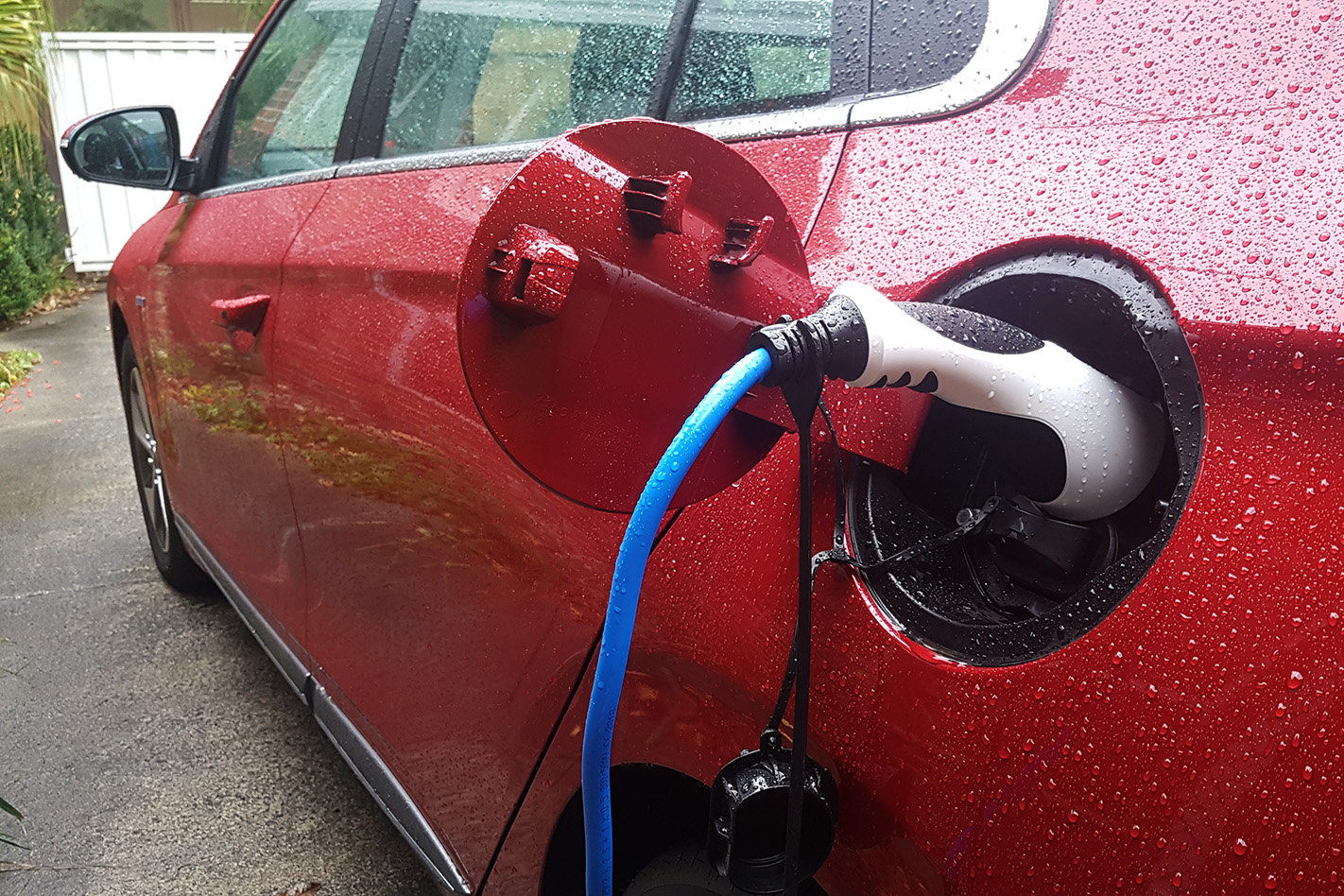
To do so I acquired an energy meter that counts the kilowatt-hours flowing from a single power point. It sits between the household power outlet in my garage and the Hyundai’s regular charge cable, so every electron that passes through it is energy that’s going into the car’s battery – long story short, this is as precise as it gets.
I started last week with a full battery and only recharged three times, the third being a very minor top-up on Sunday evening to bring the battery back up to 100 percent and thus give me the total energy consumption for the week’s motoring. The result? The IONIQ went through 32.9kWh of electricity in a seven-day period with 203.2km of distance travelled in mostly peak-hour urban driving. About 25 percent of the total was covered on the highway at 100km/h.
Yes, that kind of power consumption will make your electricity bill positively explode, but here’s the thing – you’ll be saving so much money on fuel that you won’t care.
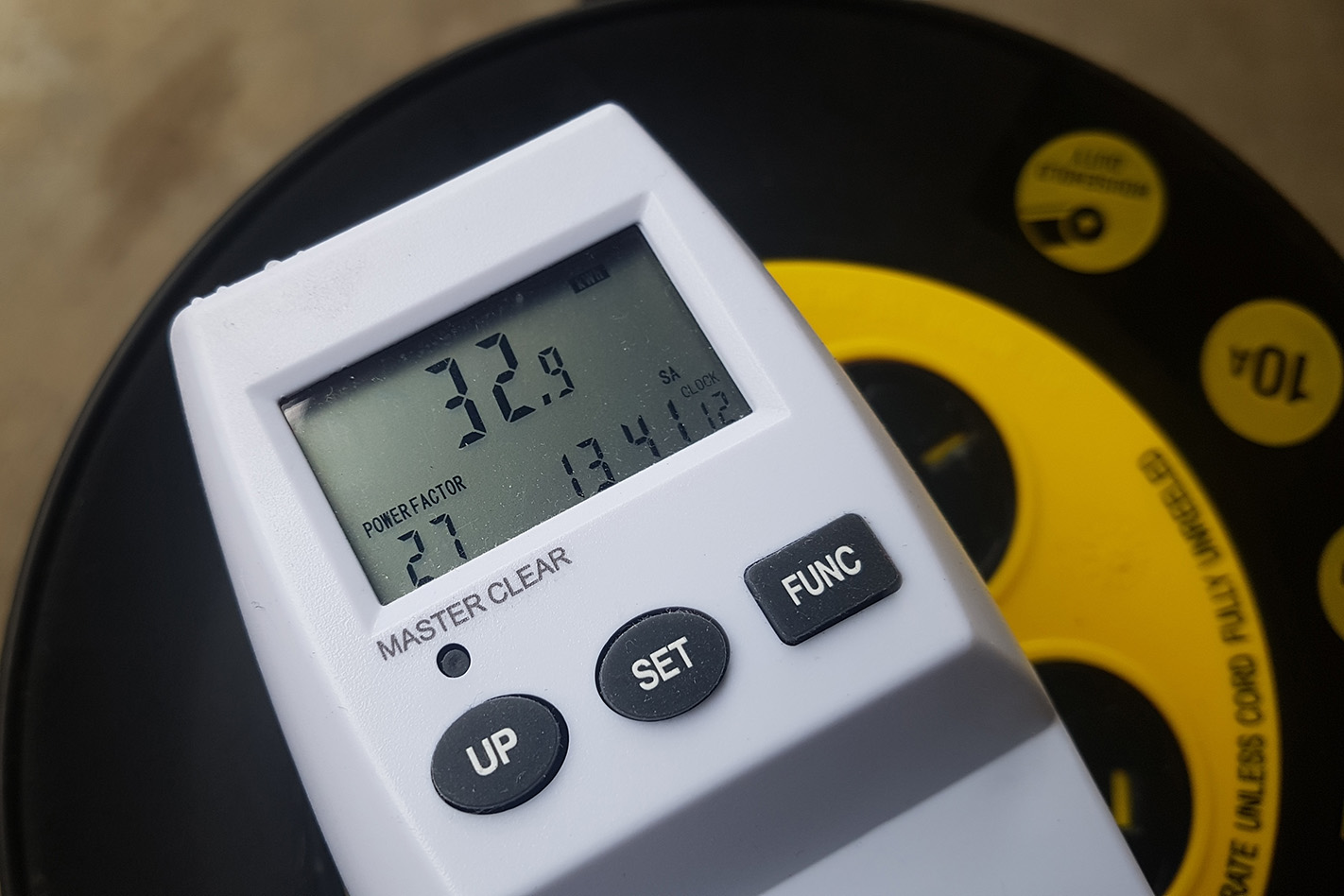
At 33 cents per kilowatt hour, my household power plan isn’t the most competitive deal around. Even so, the cost of the past week’s driving comes in at $11.07 total, or $5.45 per 100km travelled. That’s… still actually pretty good.
With some energy plans promising far more reasonable peak-time rates of 20-25 cents per kilowatt hour, the cost would shrink even further to between $3.29 and $4.11 per 100km. Charging just with off-peak energy? At the going rate of 17 cents per kilowatt hour, the IONIQ would cost a paltry $2.79 for a hundred kilometres of motoring. Substantially less than a cup of coffee.
Now consider that a petrol-powered i30 2.0-litre manual would need $10.22 per 100km at today’s fuel prices, and that throws EV running costs into sharp relief. I’m a firm believer that it’s not the idea of being kind to the environment that’ll drive EV uptake in this country, but dirt-cheap running costs. These numbers back up my hunch – the savings are just supremely generous.
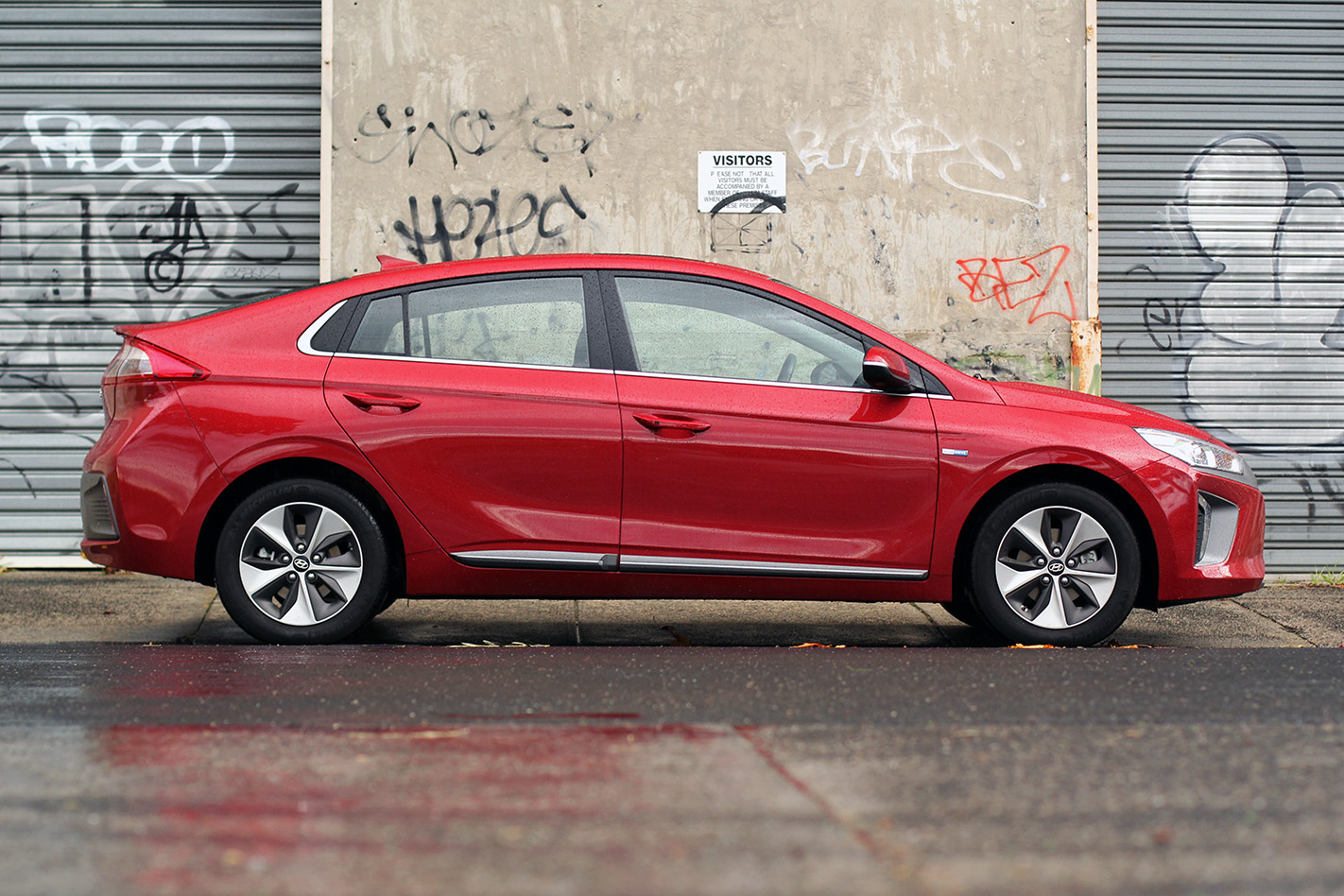
Even line it up against Toyota’s hybrid hero, the Prius i-Tech (which is the only petrol-drinking small car to come within a few thousand of the IONIQ’s pricetag), and the Toyota is harder on the hip pocket. If you can get a Prius to achieve its factory claim of 3.4L/100km, it’ll still cost around $4.75 per 100km. However making a Prius pull that kind of economy number is notoriously difficult, whereas our week-long drive in the IONIQ was done with reckless abandon for efficiency. Full-power traffic light launches? Why not?
So there you have it. The gulf between EV and petrol running costs are massive, but the major barrier of ‘purchase cost’ has yet to fall. Once it does, I have no doubt that Australian drivers will start to wake up to the incredible value of EV motoring and start looking at mainstream EVs like the IONIQ and Nissan Leaf in a more serious way.
What flow-on effect that’ll have for our power infrastructure, however, remains to be seen.
Update 5 – 24 May, 2019
Has it really been nearly three weeks since the last update? Time has flown, but the IONIQ has continued to serve well as a weekday hack, and the longer I drive it the more relaxed I feel both on the way into work, and when I arrive home. There’s some intangible quality about driving a car this smooth and quiet that has a calming effect, which is great.
Or maybe it’s just smugness I’m experiencing? Hang around on the internet long enough and you’ll quickly figure out that most Tesla owners seem to believe they’re single-handedly saving the planet, so maybe the Hyundai’s giving me a smaller dose of the same sickness?
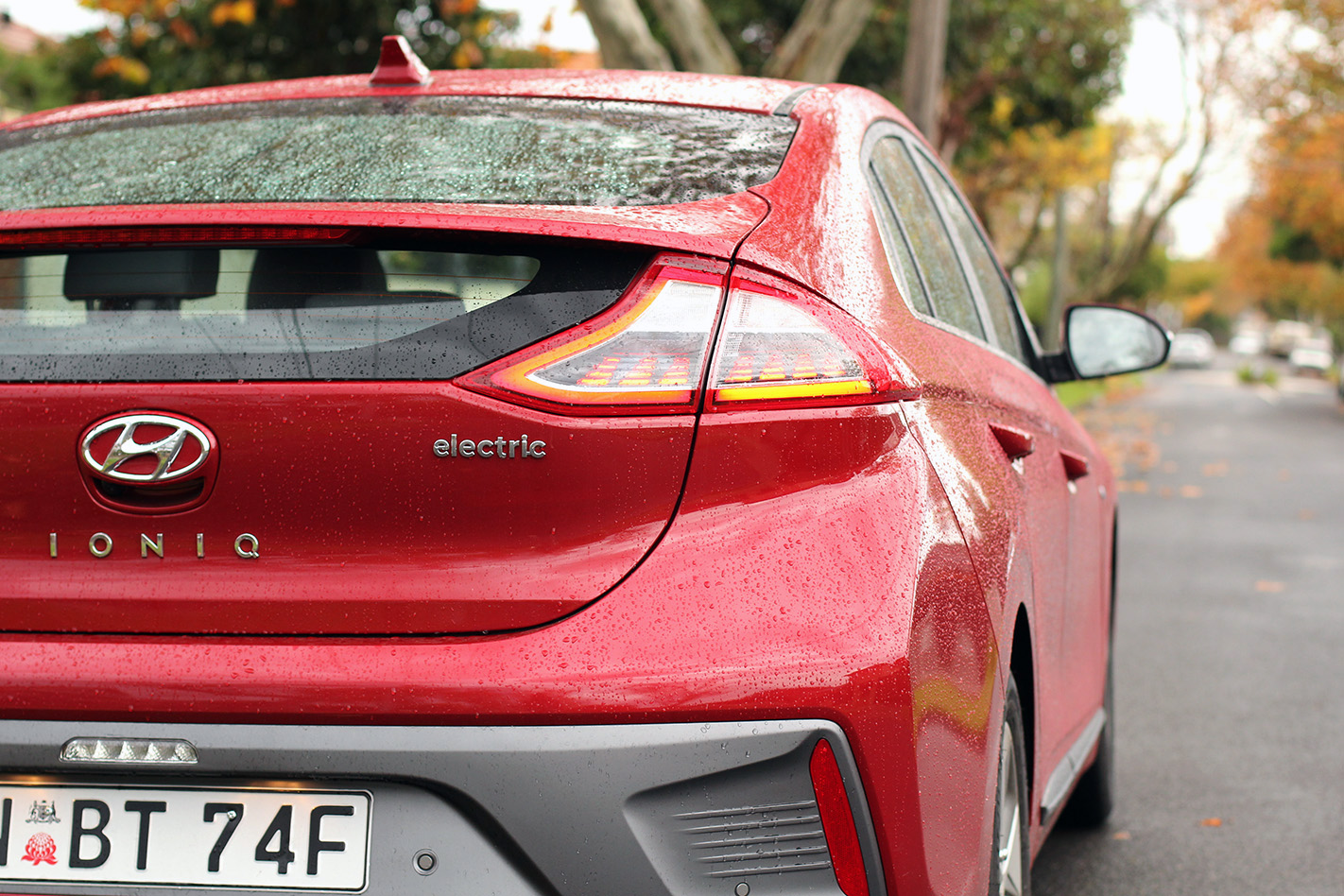
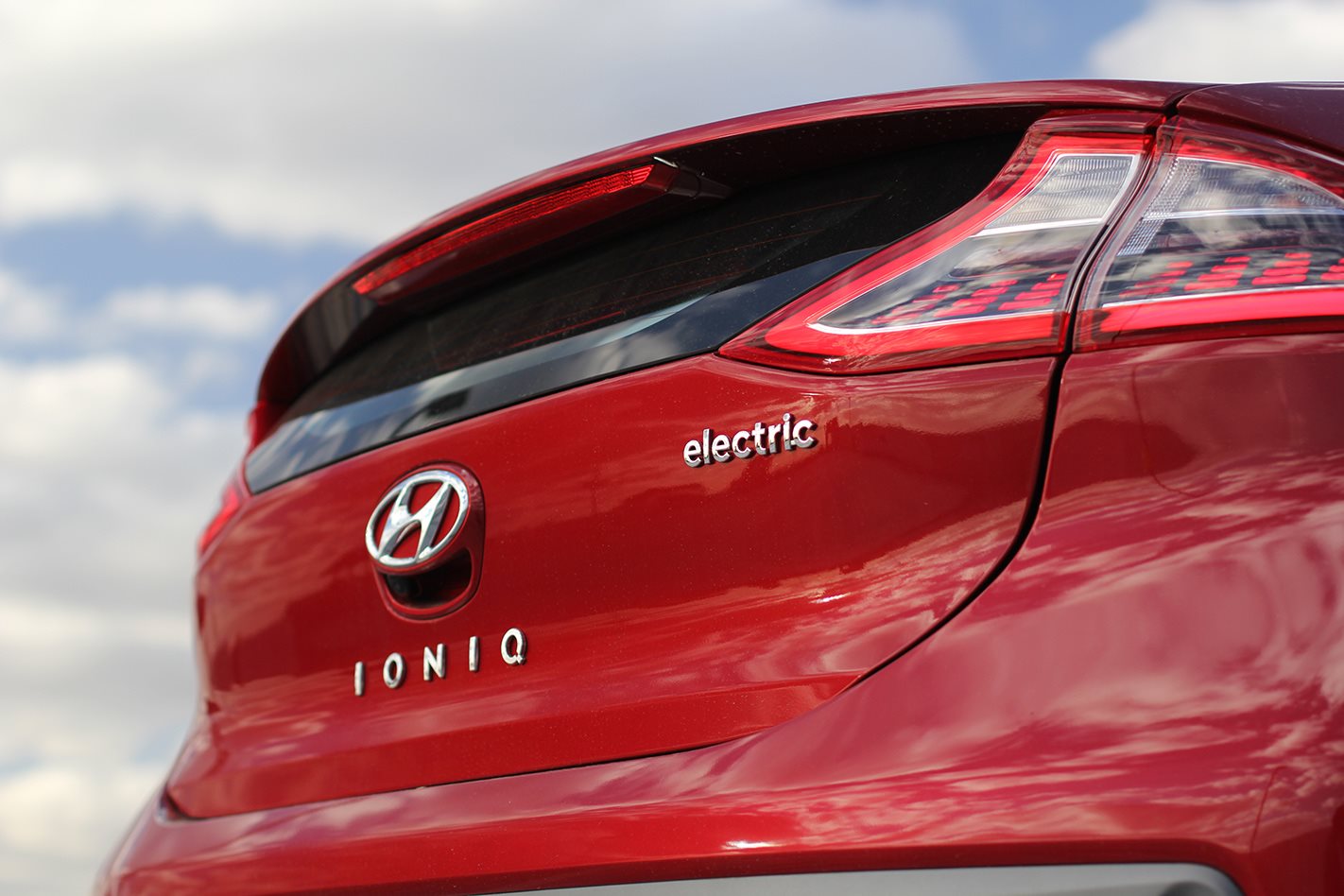
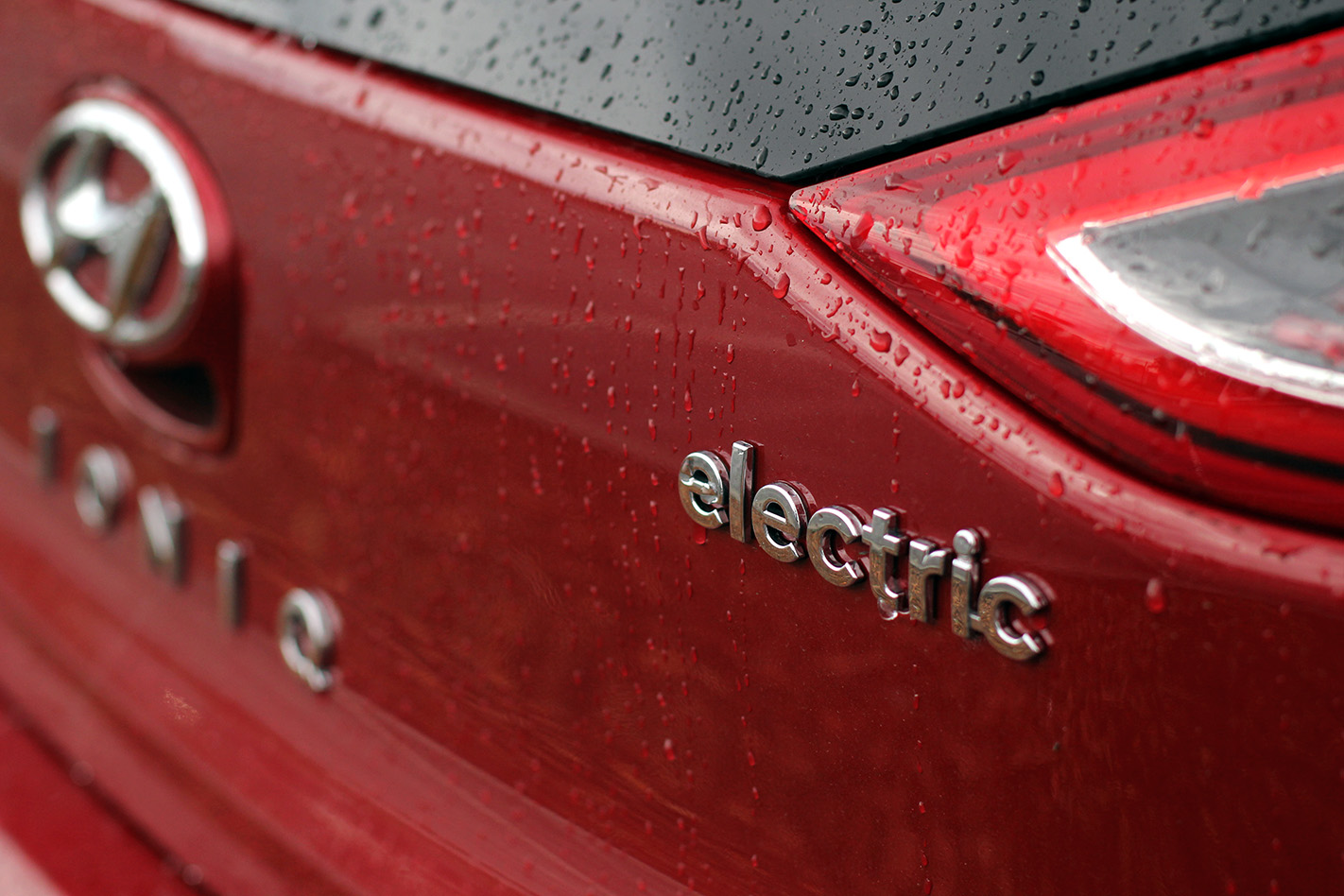
Either way, just like a Tesla there’s no hiding the fact that this an electric car from passers-by. Besides the chrome ‘ELECTRIC’ badge on the back of the hatch, the faired-over front bumper announces to everyone that yes, this car does things differently.
It’s the only explanation for why some random lady pointed to the front of the car as I drove past and gave me an enthusiastic thumbs-up. Maybe she knew what it was or perhaps thought it was a far more fashionable Tesla Model 3, but it’s clear that grille-less bumpers are very much an EV trait.
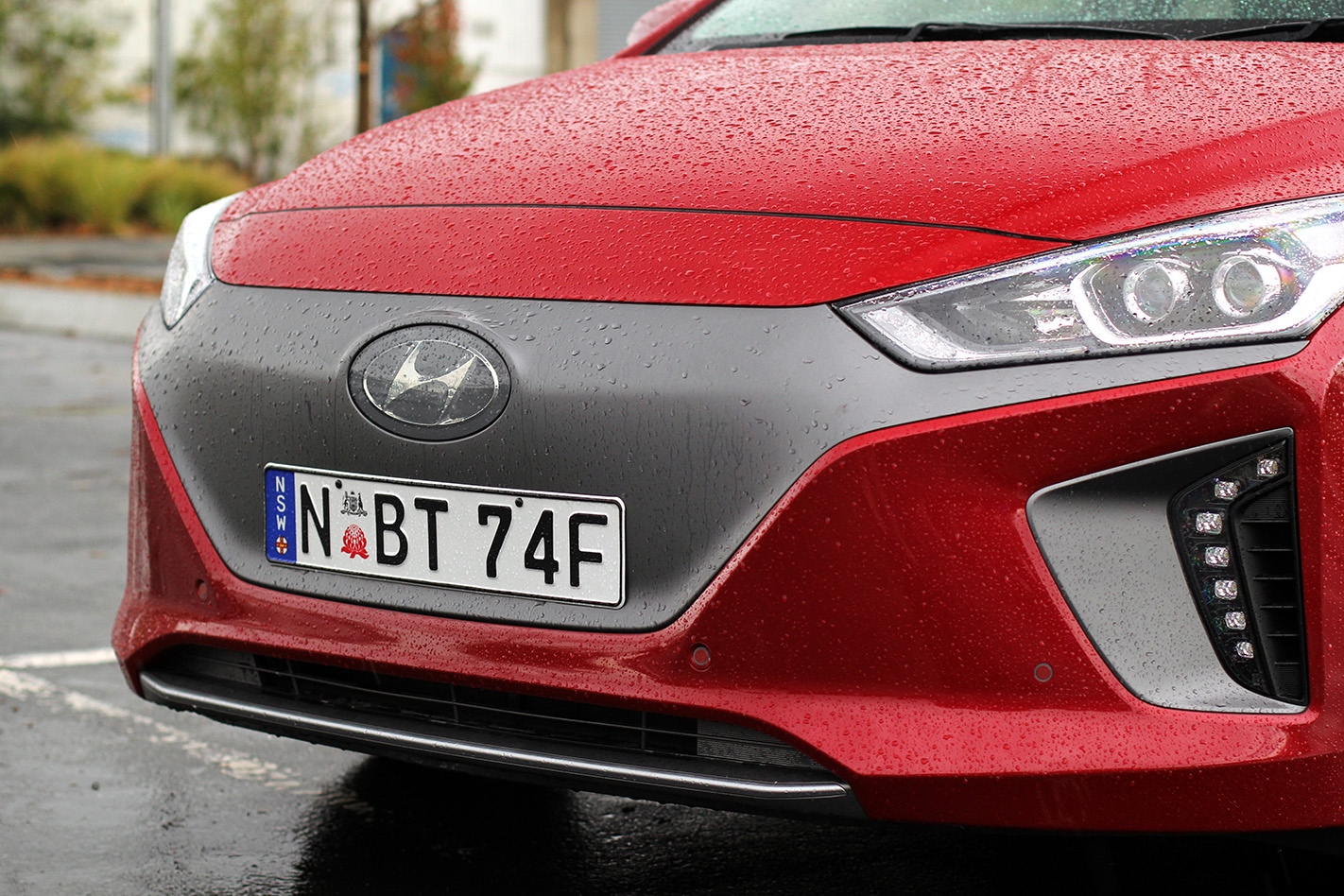
Virtue signalling, much? Personally, I’d rather fly under the radar and leave the overt displays of eco-mindedness to the Tesla crowd, whose eagerness to virtue-signal borders on vegan-esque. Yes, I know the IONIQ Electric’s front bumper looks that way because there’s bugger-all need for cooling, but maybe a subtler treatment would give it a more ‘mainstream’ appearance. Like the bulk of the population, I’d rather not draw too much attention to myself.
But that’s just me.
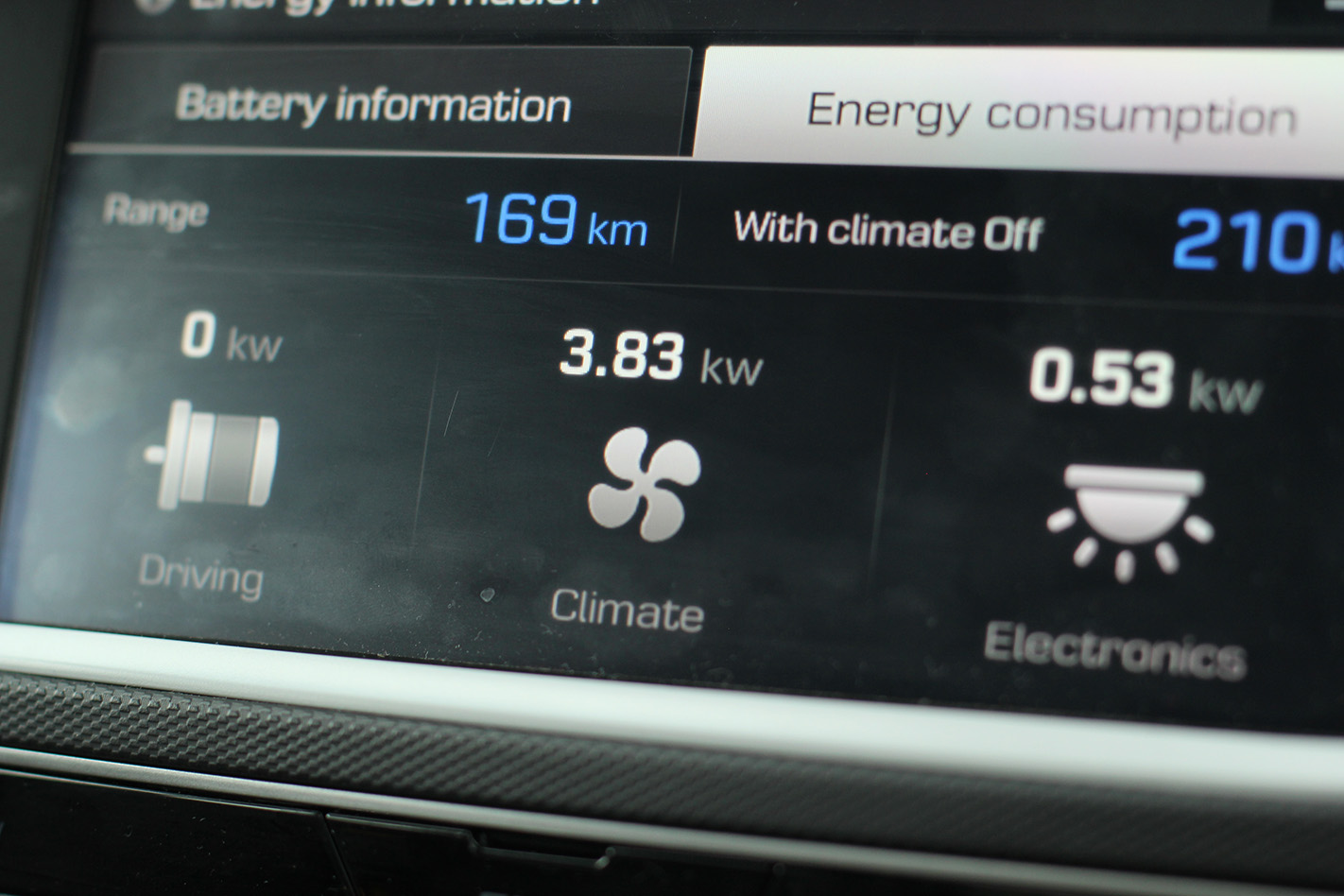
Other things to report? Happily the passenger seatbelt sensor has fixed itself and no longer bongs when the seat is vacant, but now I’ve got a new problem. Melbourne is very much in winter mode, and the morning chill is doing bad things to the IONIQ’s power consumption. Via the on-board data, the car’s heater is consuming around 3kWh on average, and sometimes up to 6kWh if the differential between the ambient and set temp is dramatic. I’ll go into the numbers on the next update.
Update 6 – 2 June, 2019
I think I’ve come across what is perhaps the electric car’s greatest bugbear, and it’s not a dearth of charging infrastructure. Rather, it is this: in cold weather you’re going to have significantly less range to work with than in winter, and it’s all the heater’s fault.
Melbourne in winter is melancholy at the best of times, what with brutally cold mornings and frequent rain doing their best to dampen your spirits. For many commuters, the ability to blast the heater all the way to work is a welcome respite, but doing so in the IONIQ just gives you something else to worry about – diminished range. If the climate control has to heat up a 10-degree cabin up to a more liveable 22 degrees, the car’s heater can draw 6kW – or more – to do so. For reference, when cruising at 60km/h on level ground the IONIQ EV’s drive motor burns about 12-13kW, so the heater’s consumption could be up to half of the energy that’s needed to move the vehicle itself. Once the set temp is reached the energy consumption tapers off, but it’s rarely less than 1kW.
Staying warm is an incredibly energy-intensive activity, but it’s not something a regular combustion-engined car has to worry about. Most petrol and diesel vehicles run their heaters off the engine’s coolant, so the cabin is warmed up from what is essentially waste heat. In fact, in those cars you’re actually making your car more efficient when you flick the heater on. The opposite is true of an EV.
What’s that mean in terms of single-charge range? Bank on anywhere between 40-70km being wiped off your theoretical maximum, which is a fair hit in a car that only has a full-charge range of 230-240km to begin with.
However, there is a way around this… kinda. The IONIQ EV Premium comes with heated front seats and a heated steering wheel as standard, and turning all of them to full doesn’t use anywhere near as much energy as the heater does – you could conceivably turn off the climate control heater and rely entirely on the seat and steering wheel for warmth. Their effect is also more instantaneous as the heat is being applied directly to your hands, thighs, back and bum. That said, it still feels a bit miserable having to keep a coat, scarf and hat on to fend off the still-frigid cabin air, while just a few select parts of your body get gently toasted. Sadly when it comes to maximising your range and staying warm in winter, the IONIQ forces you to choose only one of those things.
Update 7 – A better way?
“Is there a better way of doing this?”
That’s the thought that’s occupying my mind lately, when pondering the whole EV conundrum. Don’t get me wrong, I think the idea of electric cars is fantastic. As a car for urban commuting they’re perfect, but first-hand experience of living with one is starting to seed some doubt in my mind as to whether to challenges of integrating them into Aussie life will be worth the trouble.
And that’s no fault of the car itself, mind you. I’m still really enjoying driving the IONIQ EV, and in my mind it’s still the best version of the IONIQ by far. Rather, batteries are the issue.
It’s becoming increasingly obvious that batteries are the bottleneck that’s slowing us down on the path to a properly renewable society. Even the current state-of-the-art lithium-ion batteries are bulky and heavy, which introduces difficulties when integrating them into a car, but they’re also expensive and made of materials that are either hard to find or environmentally destructive to manufacture.
Furthermore, if Australians are indeed going to embrace EVs in a big way, that’s going to savage our power distribution infrastructure. The extra load of charging hundreds of thousands of electric cars would surely tax powerlines that aren’t accustomed to that kind of demand, unless everyone is conscientious enough to wait until off-peak hours to activate their chargers.
But imagine this: instead of a heavy battery, your car had a tank of hydrogen as its energy source. Imagine also that you were able to refill that tank using a solar-powered hydrogen generator that’s located right within your house or garage, just like a water heater. While you’re out of the house that generator is charging up its own tanks, and when you get home all you need to do is plug your car into the generator and wait a few minutes for the gas to transfer, rather than waiting eight or ten hours for a battery to charge up.
What’s more, your house could run on that same gas, potentially liberating you entirely from the power grid. This stuff isn’t science fiction, by the way, as household-size hydrogen generators and stationary fuel cells are already commercially available.
This is the utopian vision of the hydrogen economy, and besides giving you a car that’s lighter (and thus requires less energy in total to propel itself) and which can be ‘recharged’ much faster than an electric car with comparable range, it results in a decentralised energy infrastructure that is truly zero-emissions. The need to mine huge quantities of rare minerals for the world’s automotive batteries would cease to be a problem, as hydrogen is infinitely renewable.
Don’t have a garage or driveway to permit the refuelling of your car, can’t afford to buy a hydrogen generator, or you’re out on a long road trip? That’s fine, because the hydrogen vision sees existing petrol stations simply switching over to dispensing hydrogen rather than hydrocarbons – your current refuelling habit wouldn’t need to change. You also wouldn’t need to hang out for half an hour at an EV fast-charger, either.
But like so many utopian ideals, the hydrogen economy still has some kinks to be worked out. Generating hydrogen needs lots of energy, and it’s a much less efficient process than transferring power from a solar panel directly into a vehicle’s battery. When it comes to transitioning from combustion engines to something properly eco-friendly, there’s no silver-bullet solution.
And what’s more, hydrogen cars and the infrastructure needed to support them simply aren’t ready for prime time just yet, whereas electric cars are well and truly here. The fact that production battery-electric cars like the IONIQ EV have arrived on the scene first is a strong indication that they’ll be the dominant force in the future, at least for a good couple of decades.
So while there definitely seems to be “an even better way”, it still seems to be more than a little bit distant. For now, though, the minor inconvenience of plugging in the IONIQ EV every few days is still infinitely preferable to burning fuel on the weekday commute.
Update 8 – Meeting the competition
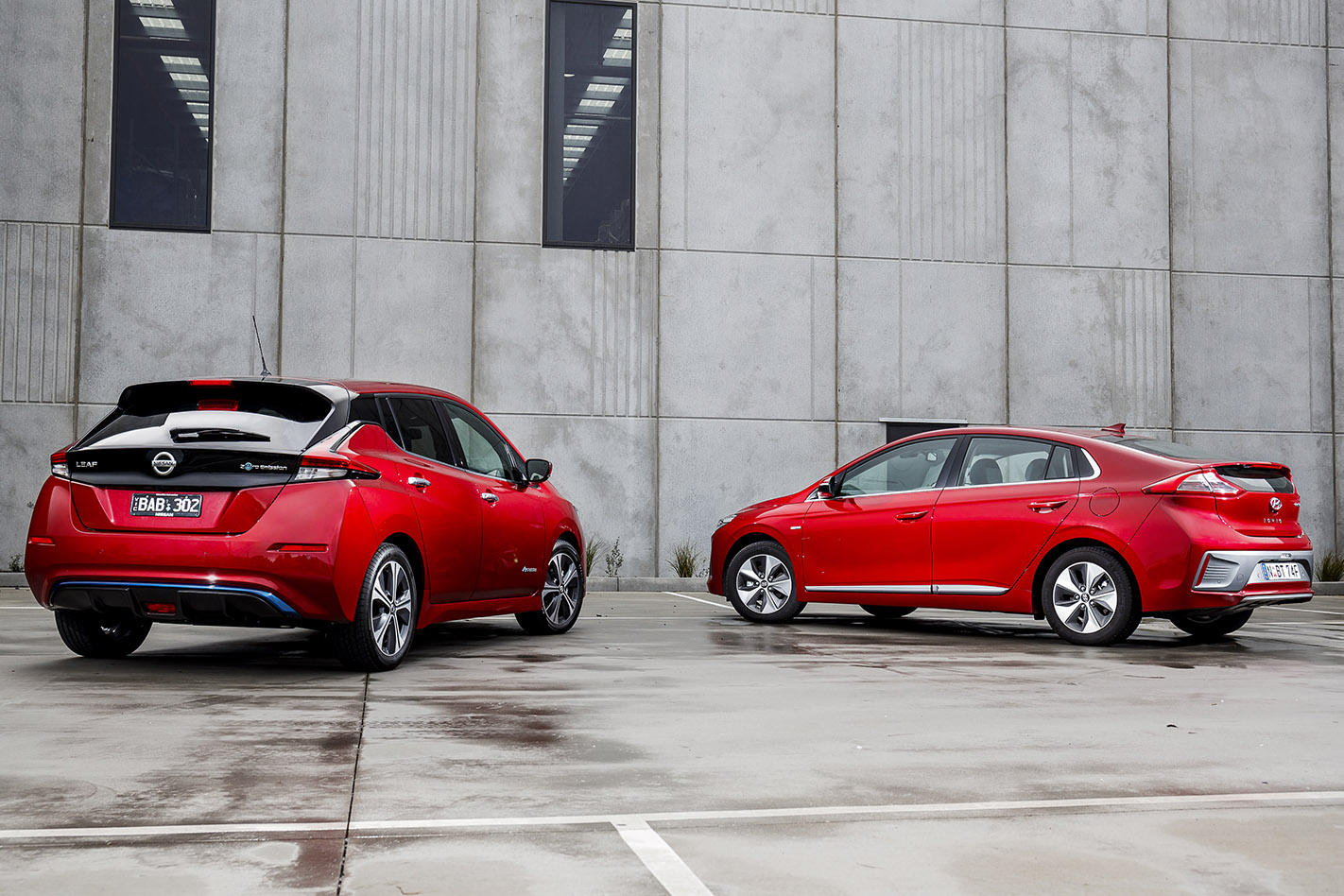
It’s taken a while, but now there are two EV hatchbacks at similar price points vying for your dollar on the Australian market. The IONIQ is very much no longer the only feasible option.
The new Nissan Leaf is now here, and at $49K it lobs for just a thousand dollars more than the IONIQ Electric Premium. We’ve put the Leaf and IONIQ head-to-head for an upcoming issue of Wheels magazine, and while you can’t read the outcome of that test just yet, I will say this: the two cars really do differ quite significantly.
For one, the Leaf has a bigger battery. With 40kWh of capacity the Leaf has a substantial 12kWh more energy storage than the IONIQ Electric, and its real-world range claim of 270km is a substantial 40km over what the IONIQ will do.
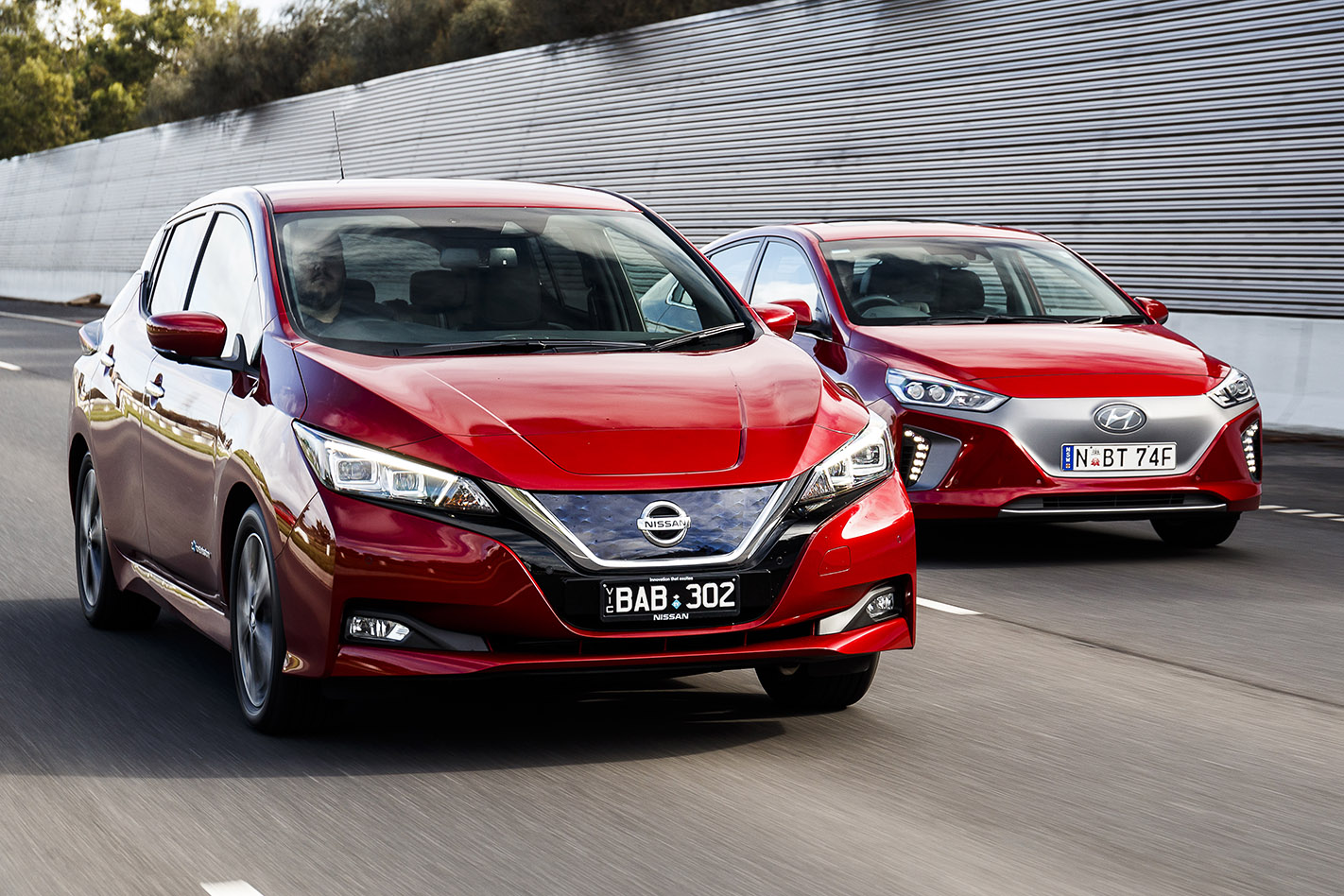
That alone suggests the Leaf wins the value equation. Batteries are far and away the most expensive part of any EV, and for Nissan to offer a battery that’s 42 percent bigger for just $1000 more seems like a pretty good deal.
But there are other technological reasons to choose the Nissan. Its climate control heat pump is one, given it takes waste heat from the battery and uses it to help the cabin warm up in cold weather, rather than just burning heaps of electrons in an electric heater. The IONIQ’s range is decimated by running the climate control in winter, but the Leaf only cops a modest hit thanks to that heat exchanger. A nerdy detail, but it really does make a difference for an electric car.
And then there’s the car-to-grid capability of the Nissan Leaf. Sure, we still need to wait for an energy provider to sign on to support that particular tech, but the idea that your car could earn you money while it’s parked and plugged in is a very enticing concept. Again, that’s a feature the IONIQ simply doesn’t have.
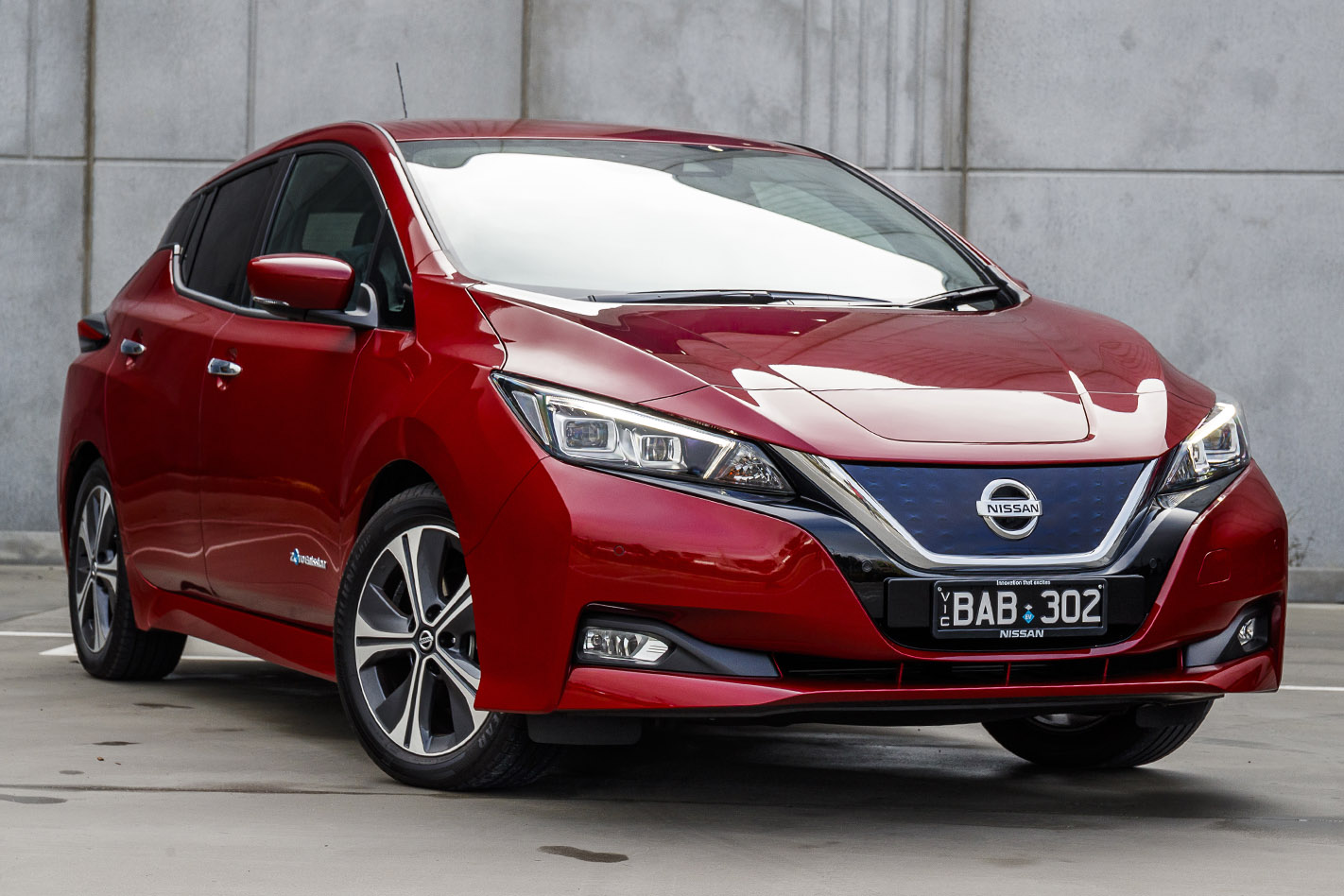
On the other hand, the Leaf is hobbled by its weird packaging, high driver’s seat position, lack of reach adjust for the steering wheel, poor rear seat comfort and wobbly handling. The IONIQ is clearly superior in these areas.
But as an electric car, the Leaf just seems like a better demonstration of the potential of EVs versus combustion cars. I’ll be honest, I’ve thoroughly enjoyed my time with the IONIQ thus far, but experiencing the second-gen Leaf has taken some of the sheen off Hyundai’s electric hatch.
Want to know which one comes out on top? You’ll have to read all about it in the October issue of Wheels magazine.
Update 9 – Family Resemblance
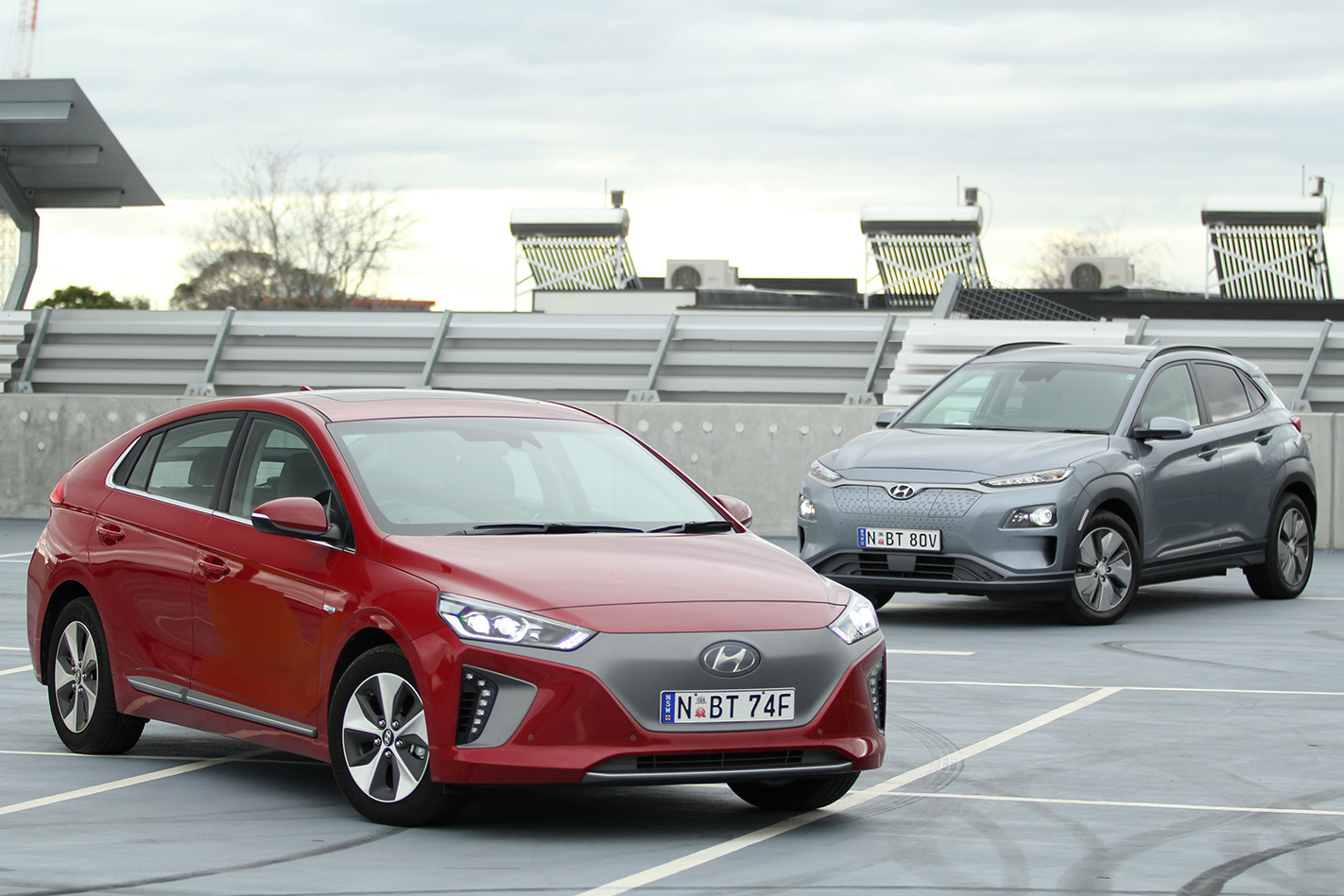
It now comes time for us to say goodbye to our electric IONIQ. It’s served us well, and it’s answered some important questions about what life is like with an electric car. Is it difficult? Not really. Does it require a change in behaviour and attitude? Absolutely.
If you’re thinking that owning an electric car can – or should – be anything like operating a combustion-engined vehicle, then they’re not for you. Range is a limiting factor and so is the recharging time (which even for the modest battery size of the IONIQ, requires the better part of a day to charge up from near-zero), but treat it like your mobile phone and those problems diminish greatly.
Popping it on the charger every second or third night is all most people will need to do to ensure they’re never left stranded, but longer journeys out of city centres definitely require more planning. The IONIQ isn’t really the car for that kind of driving, but with the average Aussie family’s garage already having two cars in it then making one of them electric for day-to-day duty makes a whole lot of sense.
However what if you don’t want two cars, but you definitely DO want an electric? Hyundai might still have you covered.
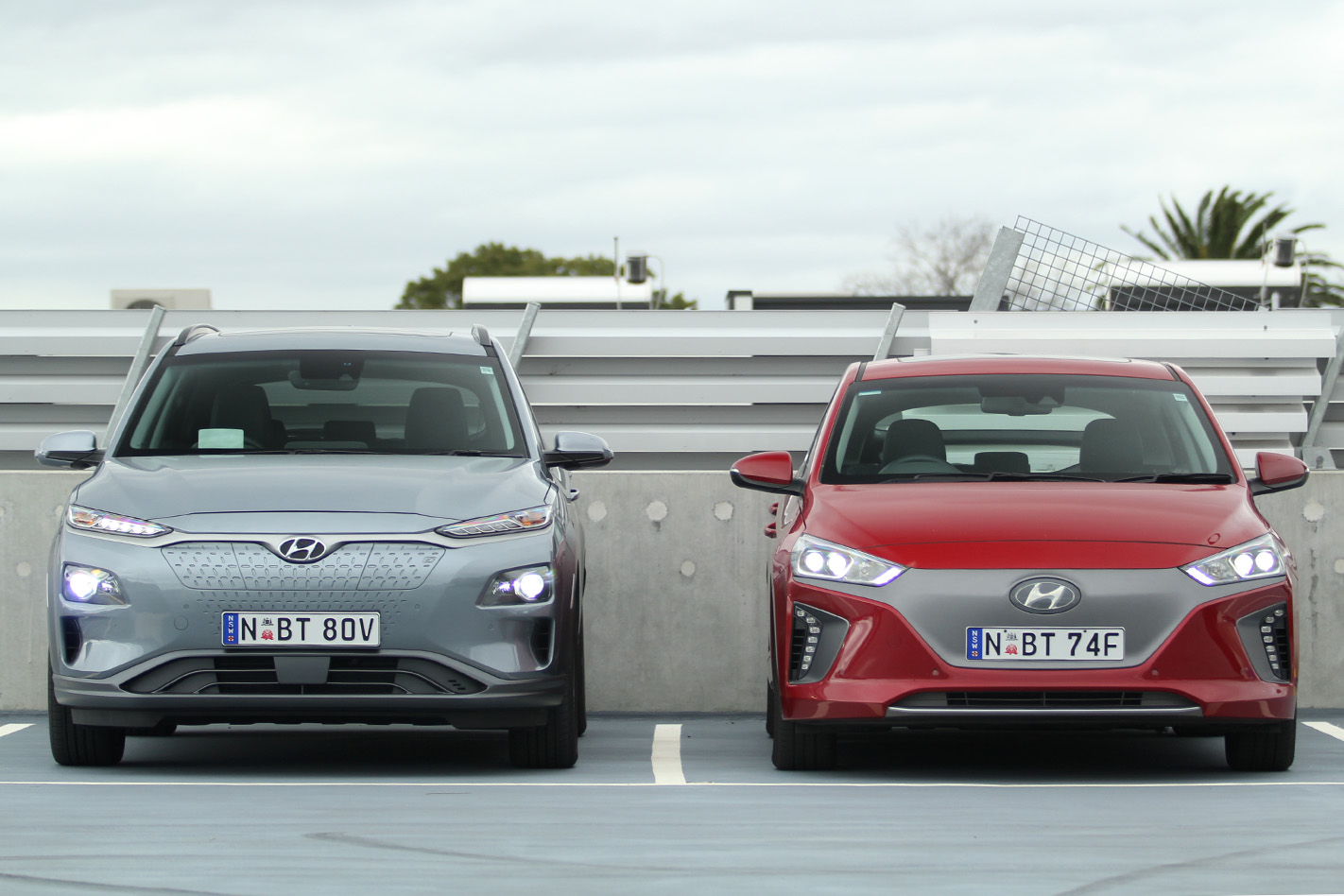
Now that’s a number that compares pretty well with something petrol-powered.
It certainly trounces the IONIQ on range, virtually doubling the distance our long-termer can travel on a full battery. What of the rest of it though? Lining the two up against each other, the Kona has a tighter boot area and a less spacious rear seat, though it looks more futuristic from the outside and it’s hard to deny the greater appeal of its SUV styling and taller seating position.
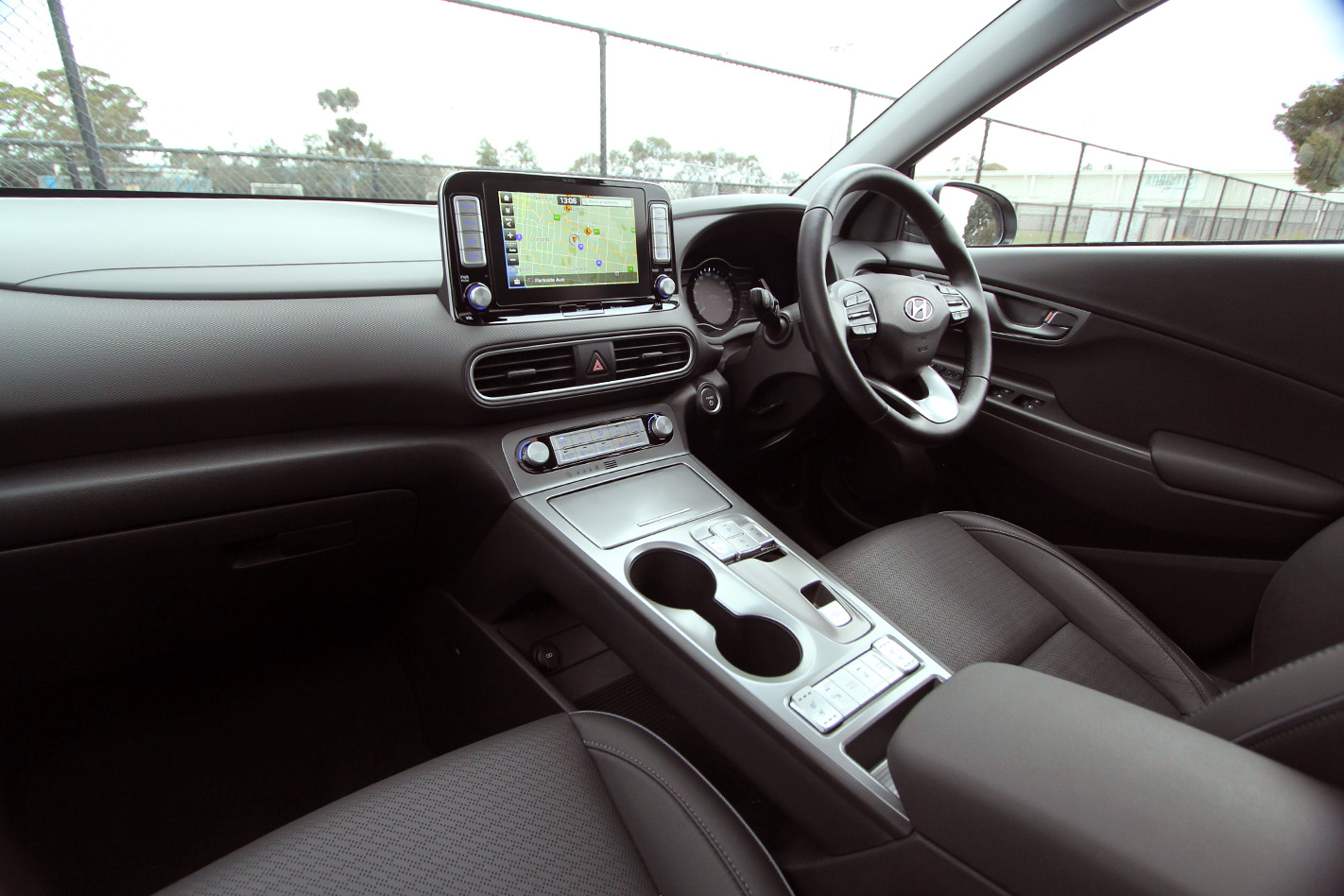
We’ll miss the IONIQ. Having a combustion-less option in the garage made light work of zipping up to the shops or dashing into the city, and the running costs were astoundingly cheap. If you’re able to charge it on solar power, it’s virtually free.
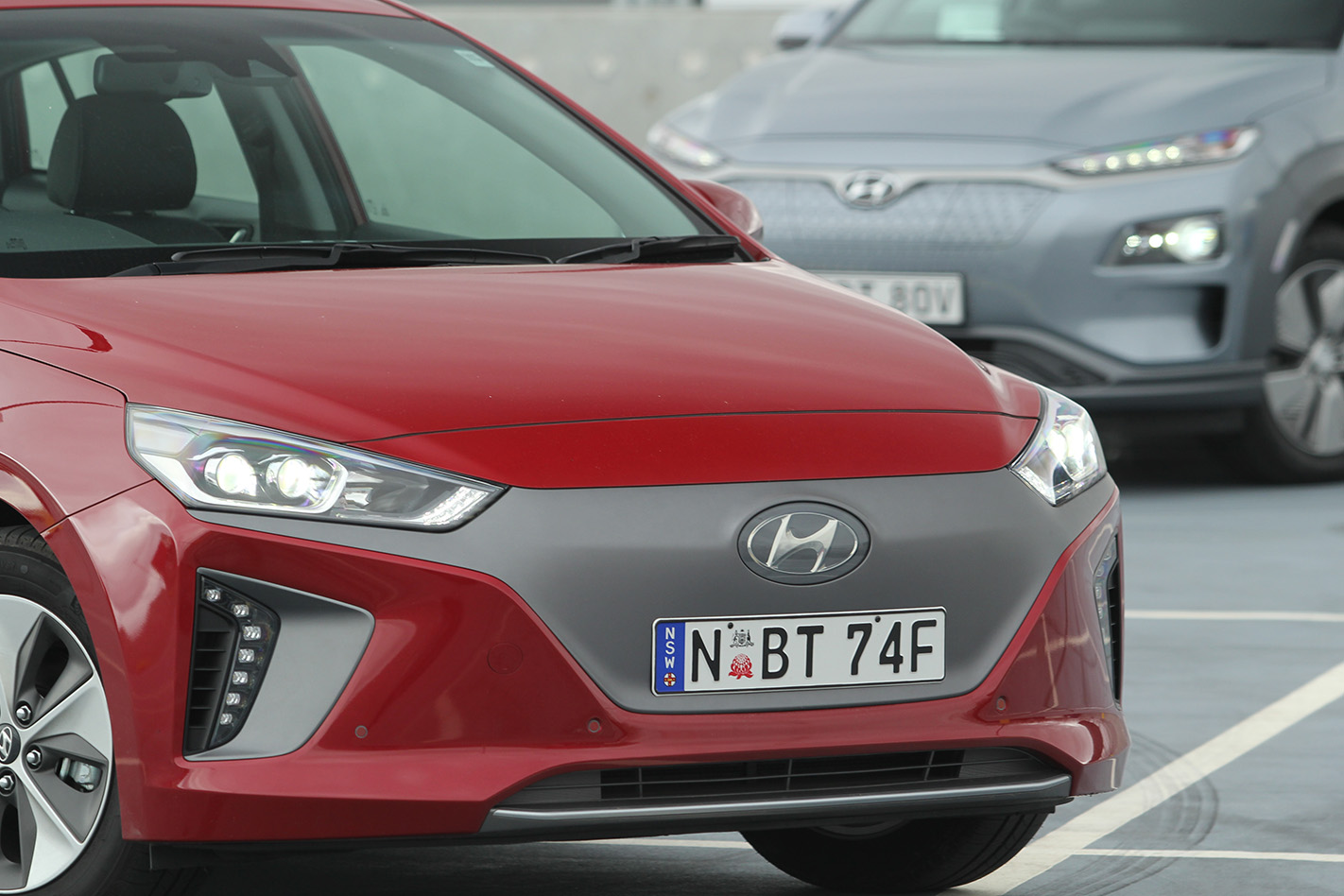
Is it ideal for everyone then? Of course not. Those who regularly drive long distances will be let down, as will anyone who doesn’t have the luxury of a garage, driveway or carport that allows them to charge it up.
Best of luck if your home is an apartment, or only has on-street parking.
However for Australians looking for a likeable, versatile and cheap to run city runabout, the IONIQ Electric is just about perfect.
Before the new Land Rover Defender was ever revealed to the world, it had a horde of detractors.
“It isn’t a true Defender” they decried, pointing with horror to the independent suspension front and rear as proof of the charges.
For many, no matter what JLR did with the Defender, it was never going to be good enough to live up to the legend of the badge.
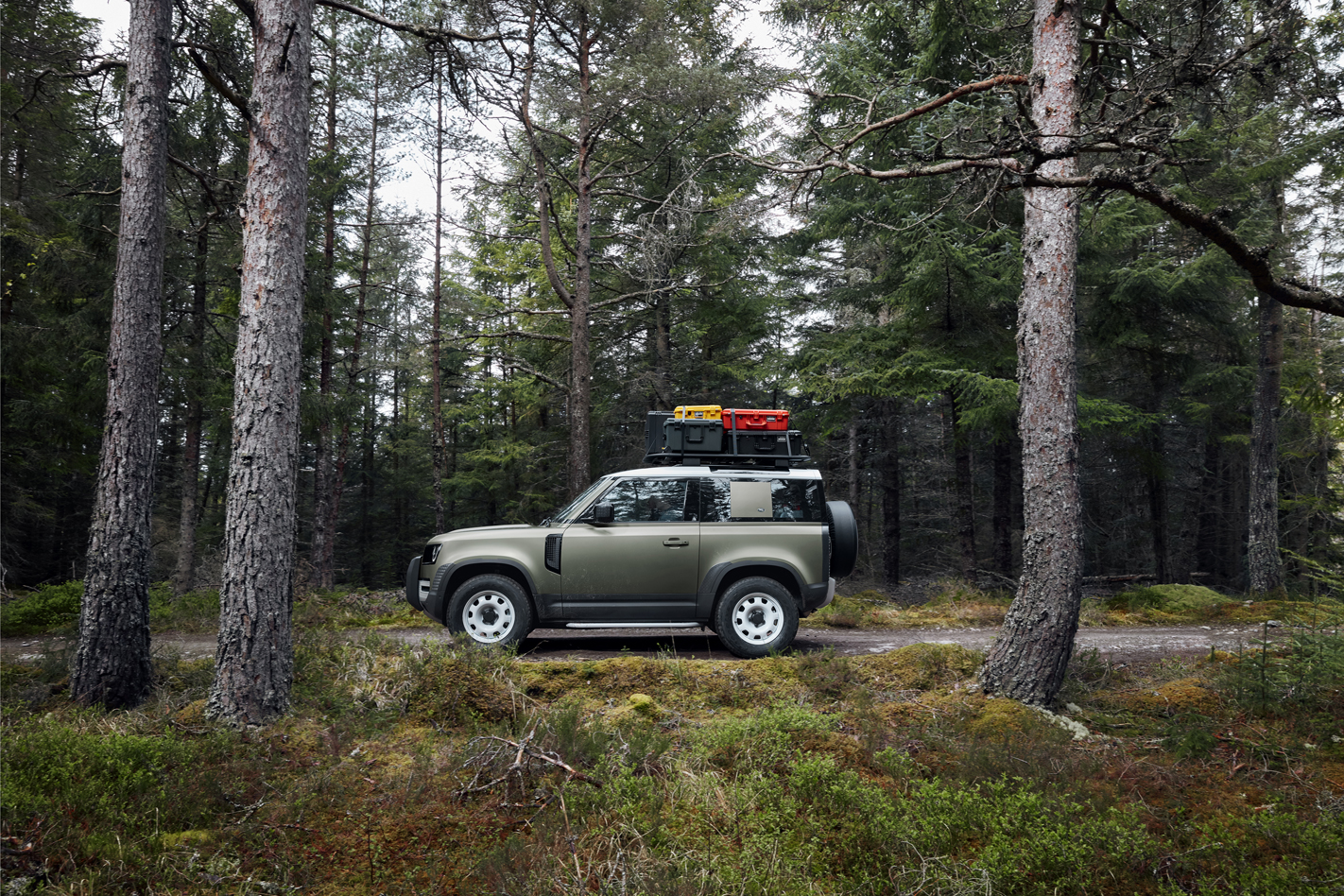
The reality of the situation is there is no definition for a ‘true off roader’ other than proven ability. It’s just a useless term used by Luddites that want to push back against the inevitability of progress.
Wheels, along with our sister title 4×4 Australia will be sure to put the Defender to the test in a gruelling outback adventure as soon as possible. That will allow us to get a better understanding of the minutiae of the Defender’s abilities. However, even before that happens, from the stats alone it’s clear the reborn legend will be vaulted into rarefied air when it comes to off-road ability.

Currently the best off roader you can drive straight off a showroom floor and onto a rugged trail is the Jeep JL Wrangler Rubicon. It will be the Defender’s biggest rival in this area.
On paper alone, the Defender should have the Wrangler sweating. Whether you choose the short wheelbase Defender 90 or the longer Defender 110 body, the approach angle of 38 degrees and departure angle of 40 degrees is seriously impressive, and it comes out one-all against the short wheelbase Rubicon’s figures of 42.2 degree approach, and 32.3 degree departure.
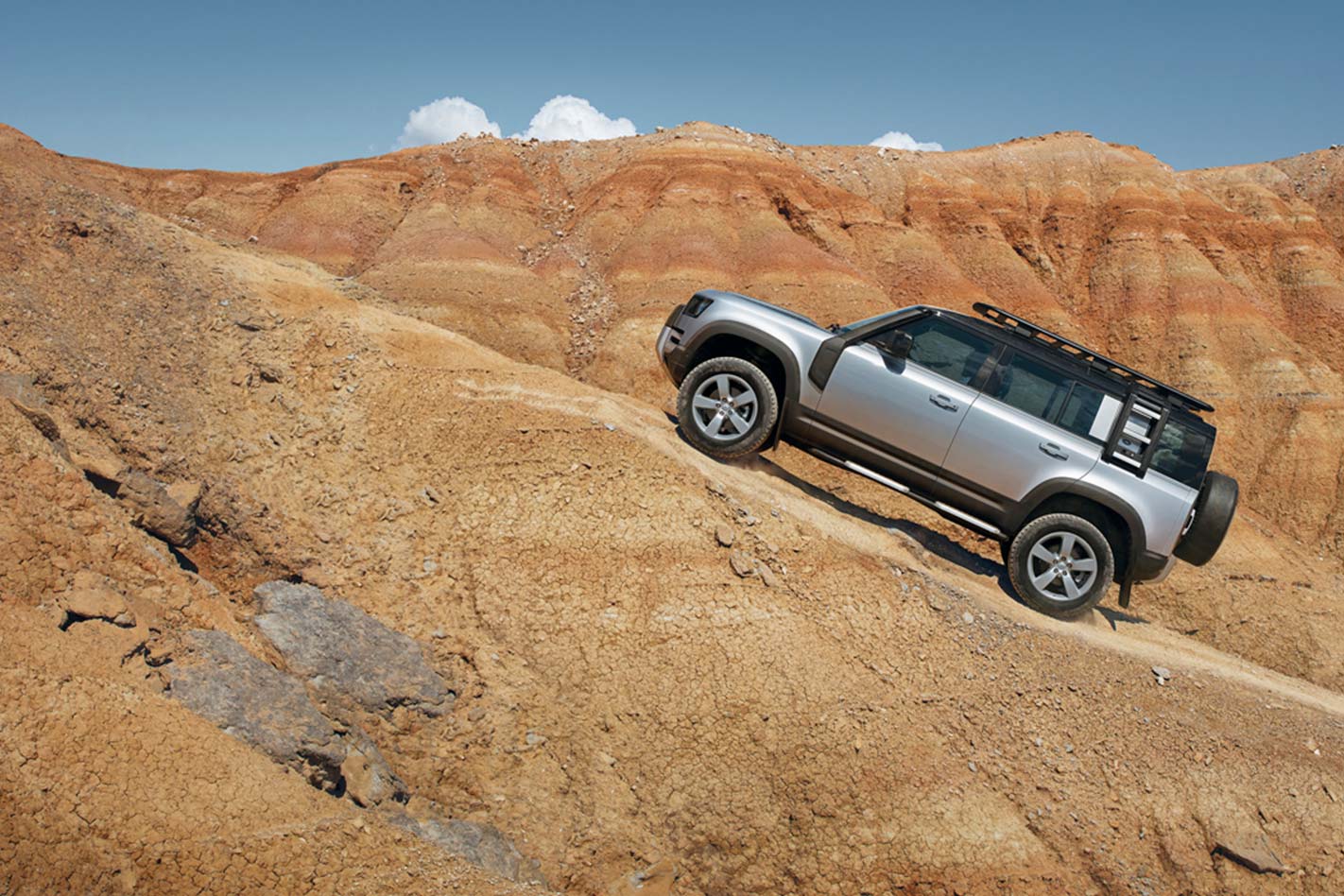
However, the short wheelbase Wrangler isn’t capable of carrying seven adults like the Defender 110 and nor is it suitable for daily duties. For that, we need to look at another rival the Toyota LandCruiser Prado, which has an approach of 33 degrees, and departure of just 23 degrees.
The Defender also has a claimed payload of 900kg, or in other words, near enough to a tonne. Now, try to find another SUV on the market capable of carrying that amount of equipment. Let’s also not forget that the towing capacity is claimed to be 3500kg, which is one of the biggest ratings of a non-large US pick-up in Australia.
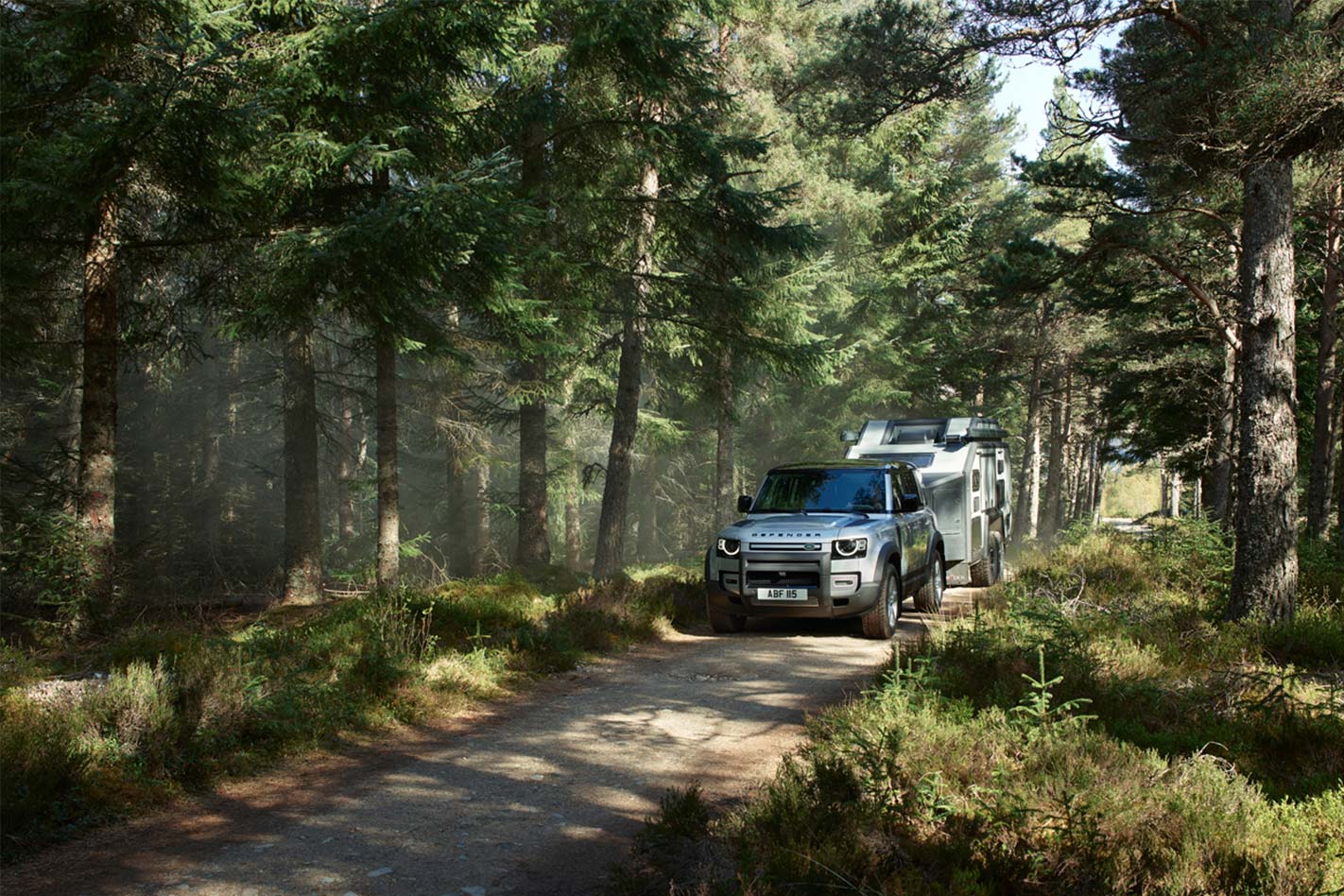
Another advantage the L663 has over the old Defender is the addition of Land Rover’s terrain response system. Anyone that has experienced this system will tell you that it is one of the most sophisticated and competent traction control systems for off-roading out there.
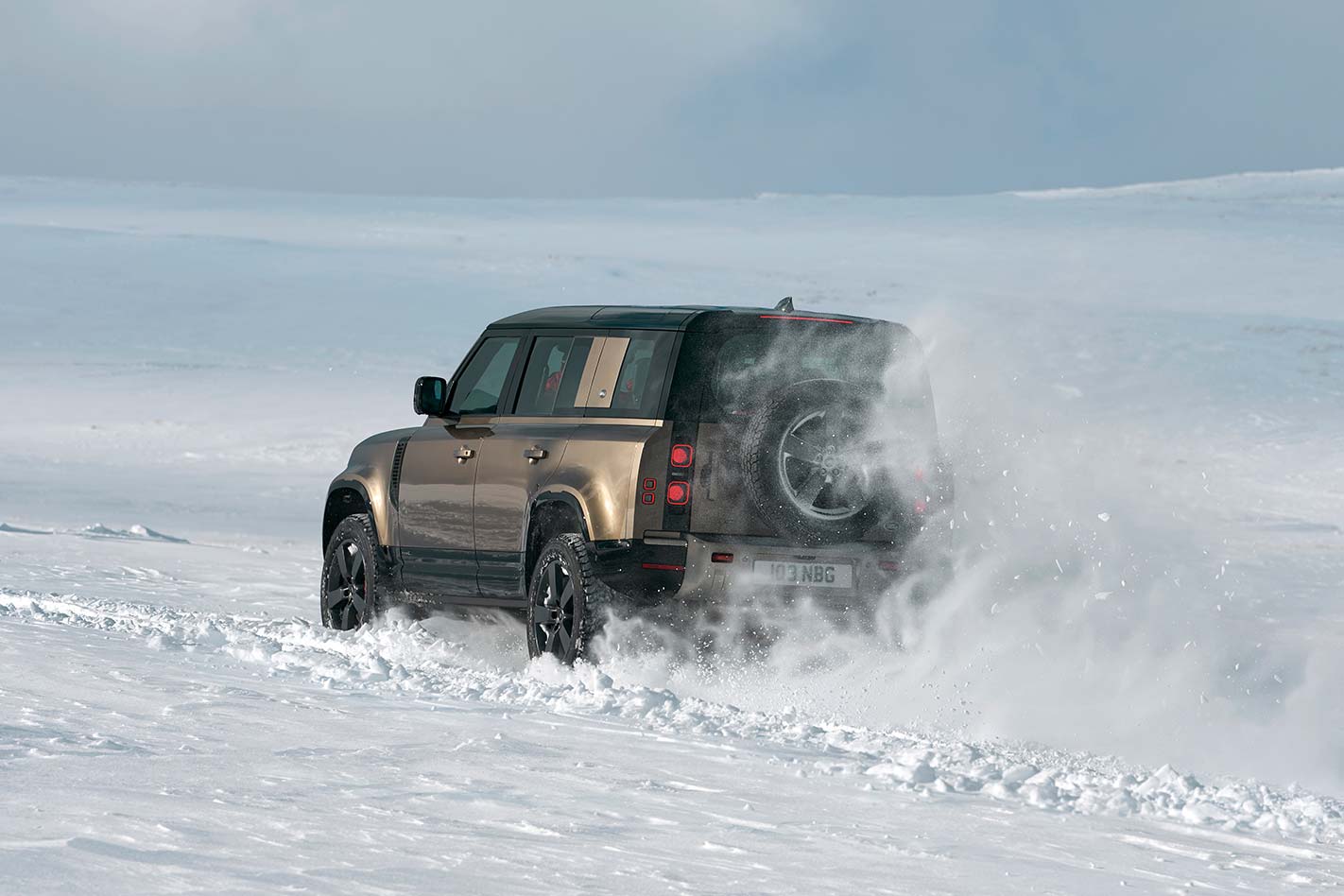
It’s confidence inspiring in the supreme, and when Land Rover is trying to bring new customers to the brand, that is a handy thing to have up its sleeve.
There is a caveat to my enthusiasm, and that is based around the 85 separate ECUs spread across the Defender. I’ll reserve judgement on whether this will be a good long-term reliability decision for JLR.
The old Defender was widely loved for its unyielding utilitarian ability. But that limited the scope of its appeal. This new Defender will be on the shopping list for multitudes more people because of its added sophistication and luxury compared to the previous model.
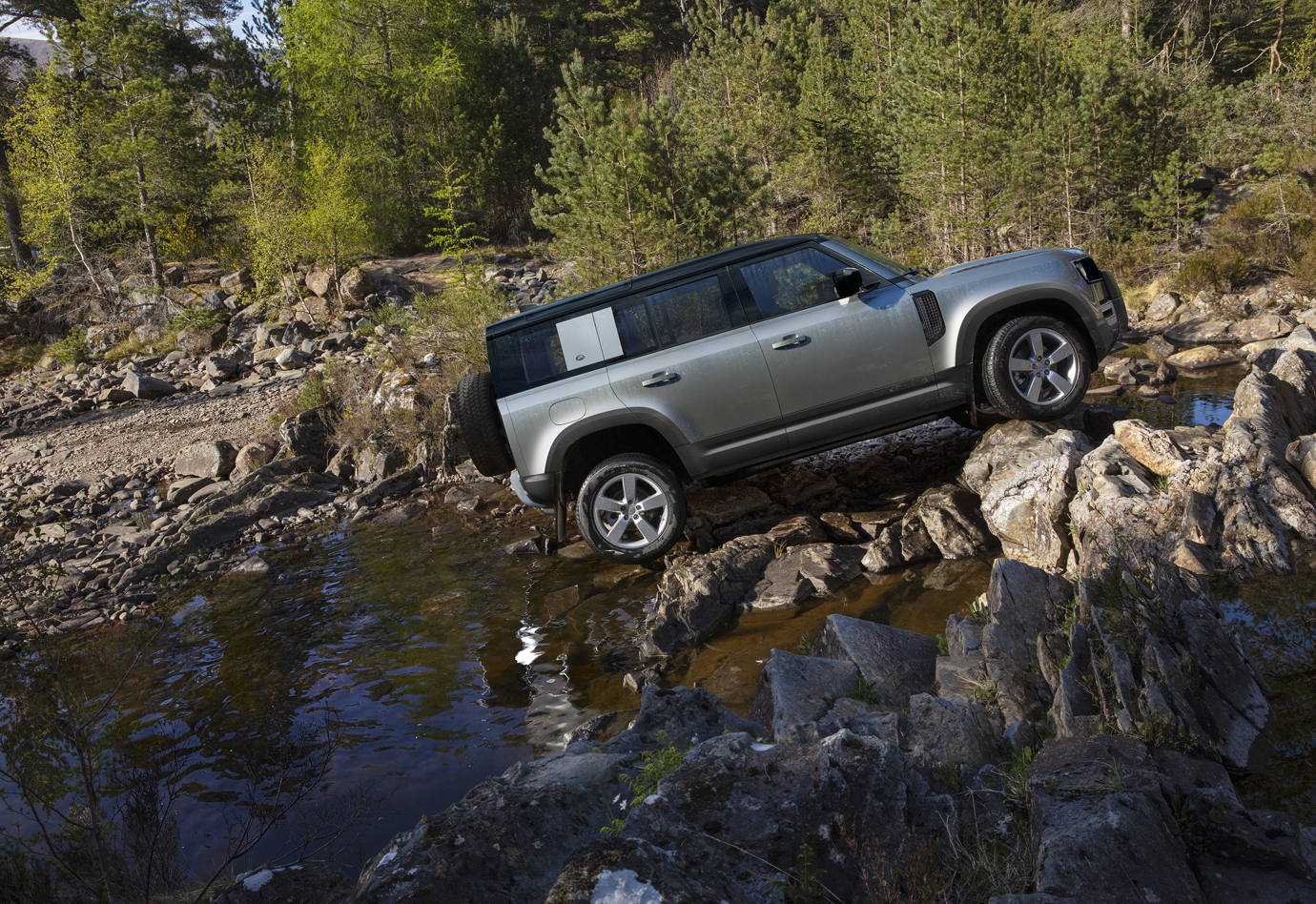
But importantly, it’ll retain serious off-road chops. Just because it doesn’t adhere to antiquated and outdated beliefs about what does or doesn’t constitute an off-road vehicle doesn’t diminish that fact.
“Show me an autonomous system without a human in the loop and I will show you a useless system.”
For someone charged with developing autonomous cars for one of the world’s largest car manufacturers, Dr Maarten Sierhuis certainly has some strong opinions about ensuring humans are involved in the driving process.
The Dutch-born Southern California resident spent 12 years as a researcher at NASA, building systems that resulted in human creations touching the most remote parts of our universe. He joined Nissan as Chief Technology Director at the company’s Silicon Valley research centre in 2013, and is responsible for developing the brand’s artificial intelligence systems and autonomous cars.

Despite ostensibly being responsible for trying to eliminate the flesh from the task of driving, Sierhuis, 56, holds a militant view that the autonomous dream sold by science fiction and parts of the motoring industry won’t become reality. Instead, he is developing a system referred to as ‘human-in-the-loop’.
“[Humans] are the best autonomous systems I know of,” Sierhuis says.
Under his leadership, Nissan has built the Seamless Autonomous Mobility (SAM) system, where remote operators would oversee as many as 50 ‘autonomous’ cars and intervene when vehicles encounter situations they are not prepared for, such as roadworks.
“Why do people think we can have millions of these vehicles just driving around and not needing any human interaction?” Sierhuis asks rhetorically during an interview at the regional Nissan Futures conference.
“We look at air traffic control: we have two pilots in the cockpit and we still need air traffic controllers. We have operators in a control centre who have geographic areas they are responsible for. They communicate with the pilots in the cockpit and make sure everything goes well, especially during take-off and landing.
“In the beginning, people said I was crazy – ‘You’re here to develop autonomous systems’,” Sierhuis adds, “but then you show them examples. What is the system going to do when it has to break rules? Are you going to allow it to break rules? But how are you going to define what rule it can break when and how?”

Sierhuis says that human intuition and instinct cannot be replaced by lines of code, and are essential for navigating the complex relationships that can occur between road users. “The system is always autonomous,” he says.
“The car is responsible for its safety, is responsible for driving. The human-in-the-loop is supervising and supporting the car in decisions where it needs help by human intelligence.”
SAM is several years away from being offered to the public, but Sierhuis describes the task of building a fully self-driving car as the biggest challenge of his lengthy career, which has included developing autonomous systems to aid astronauts on spacewalks. “In space you have just got to avoid the other rocks,” he laughs, “but on earth you have got to avoid a lot of other human beings. It is very difficult – the situational awareness, the understanding of the interactions of humans is incredibly complicated.”
Human oversight for self-driving cars is seen as a “non-negotiable” by Sierhuis. “That’s a personal opinion, but it comes from the background of working at NASA, but it also comes from a background of wanting to be human,” he says. “There are very few people in space, but I always say that you can send a spaceship to the end of the universe but at some point you have to communicate back to the human.”
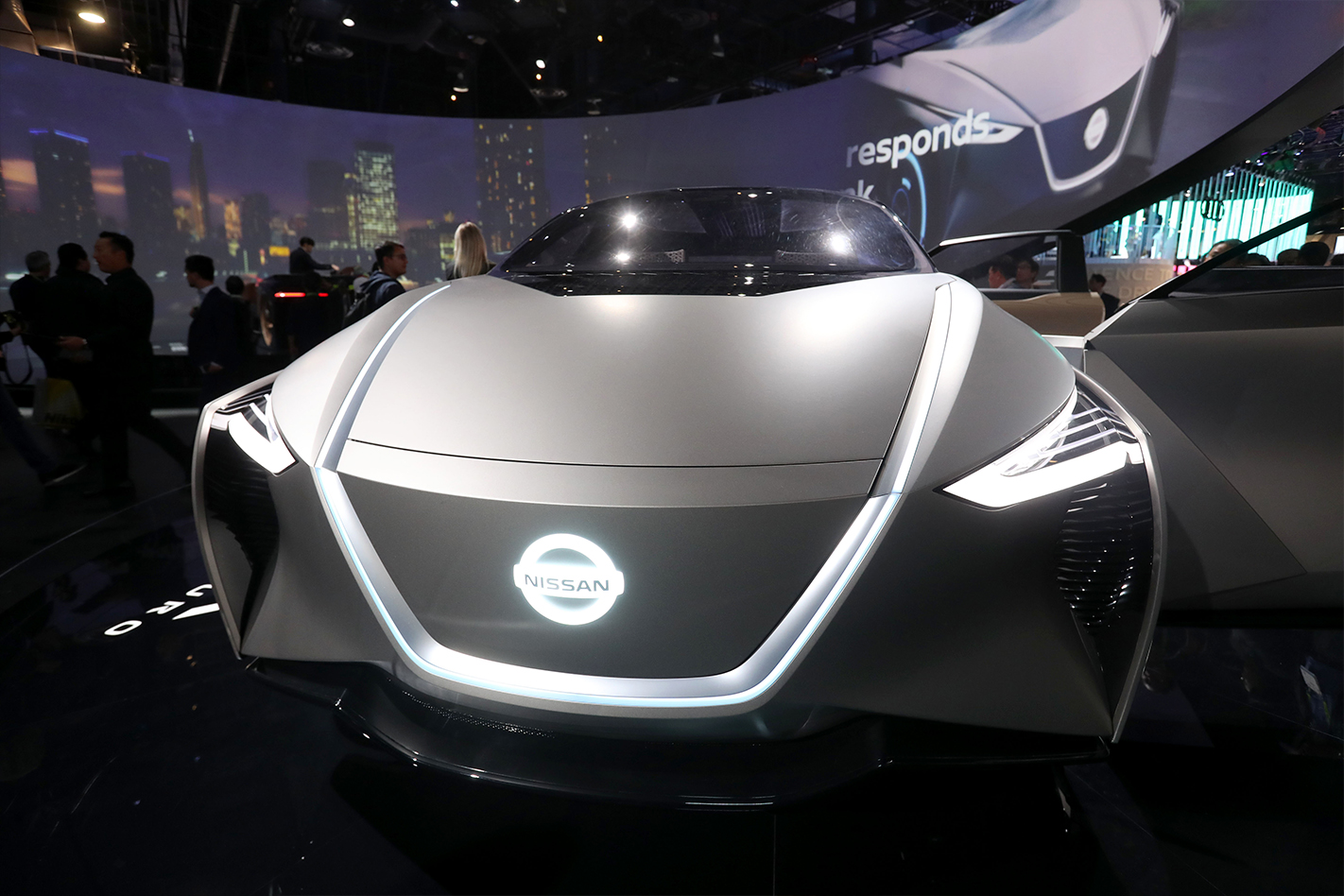
For those holding out for a car that will drive them everywhere at the press of a button, Sierhuis has some more inconvenient truths. In his vision of the future it is businesses that will be utilising autonomous cars long before private customers can afford to.
“I do think [commercial] is the first application you will see,” he says, “because the price of the system, the cost is going to be prohibitive in the beginning for consumers to pay. I think the market is just not there to do that.”
Budgeting for a new car is one thing, but often forgot is the slew of ancillary costs that also come along with it. Of course we know these exist, but depending on which car you’re shopping for, prices of insurance, servicing and petrol, for example, could blow out your finely tuned budget.
This is especially evident when you’re shopping in a new segment, like moving from a hatchback to an SUV. Consumables will become more expensive, it’ll be more expensive to fill up at the petrol station and servicing can also be dearer. That’s before we even discuss the real killer, depreciation.
So before you get to the dealership, or even once you do, begin the research into how much extra you’ll be paying over the course of your new car ownership.
Tyres
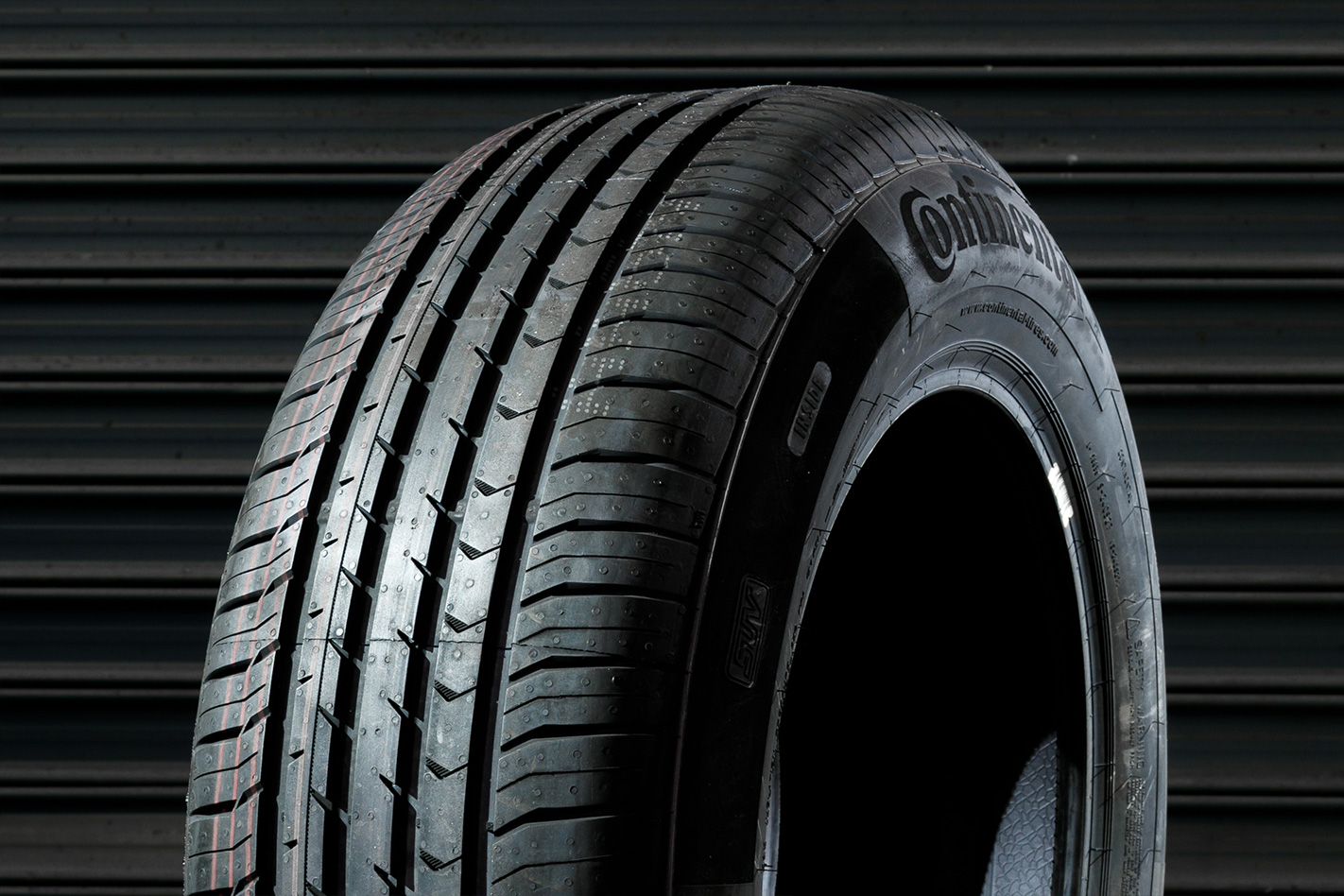
They only need to be replaced every few years, but once the time does come to swap boots it can come at great cost. SUVs generally use larger tyres than sedans and hatchbacks, and performance focused cars use better rubber than passenger cars – so costs can vary by a large degree.
They’re often one of the lesser discussed aspects of running a car, but on a per-year basis tyres can easily match yearly service prices, sometimes costing well over $1000 to have the lot replaced.
Fuel

Conversely, this is a cost that’ll be constantly front-of-mind during car ownership. Whether it’s petrol, LPG, diesel, electric, hybrid, hydrogen or other – all fuel costs money. Every car burns fuel at a different rate so pay close attention to the claimed fuel economy and cross-check it with online reviews to see whether the claim stacks up in real life.
The size of car and type of engine will go a long way in determining how much fuel your car uses, and be mindful that where and when you drive your car will impact the fuel bill too.
Depreciation
The silent killer of your automotive investment, depreciation is a cost that you can’t see until you go to sell your car further down the track and find that it’s lost more than 50 per cent of the value you bought it for.
There’s really nothing you can do to avoid it apart from keeping your car in good nick, and making sure the specification level is such that the next buyer will enjoy it as similarly as you did. That means no velour red interiors!
Registration
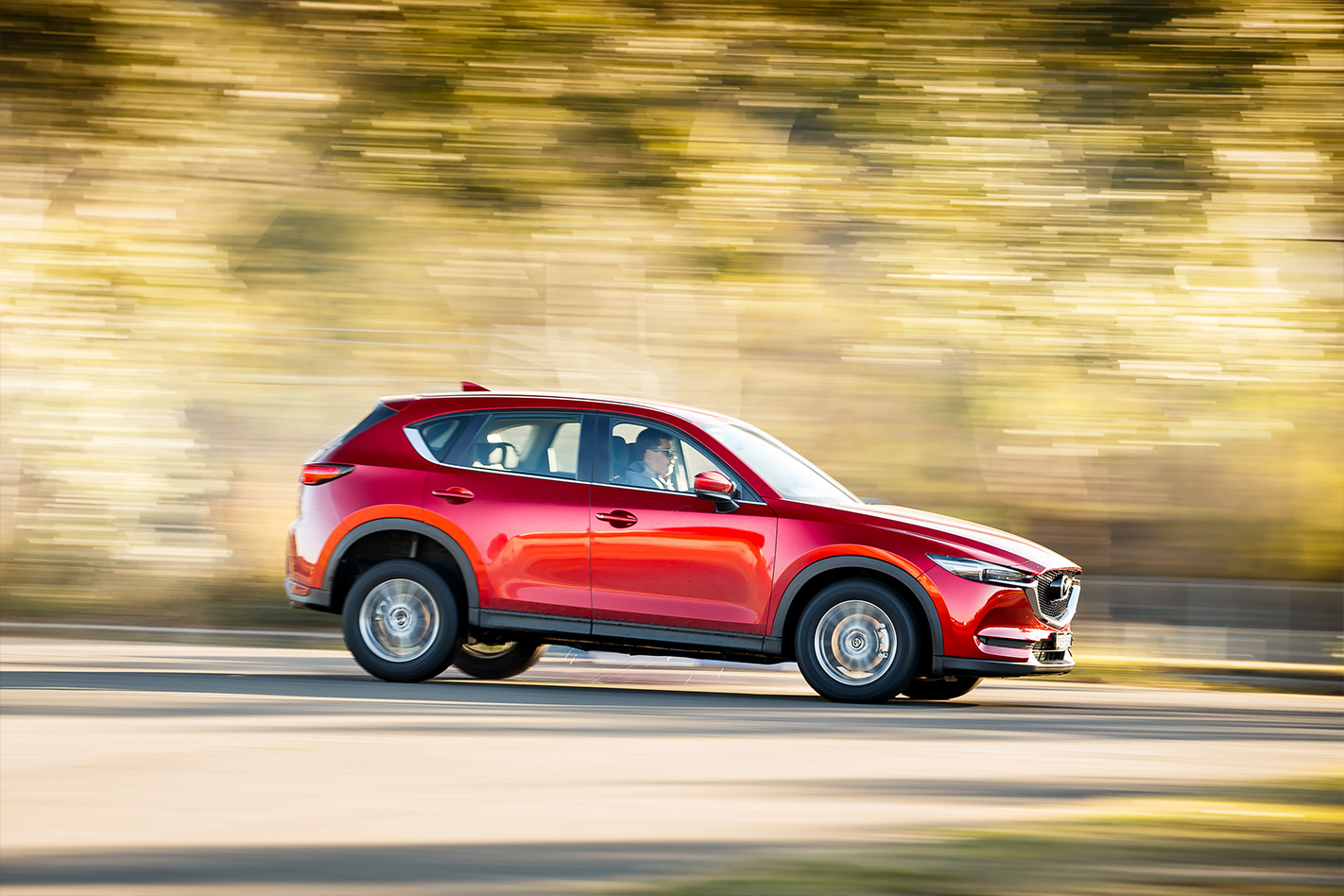
It goes without saying that this yearly cost is needed for every car on Australian roads. Annoyingly, not much concession is offered for electric vehicles like is offered in other countries too.
Insurance
Often compulsory (and if you’re skipping it you’re mad), car insurance adds on a hefty charge to your bottom line each year. In general, the more expensive your car is, the more it’ll cost to replace, and therefore the more it’ll cost to insure. But prices tend to jump for younger drivers as well.
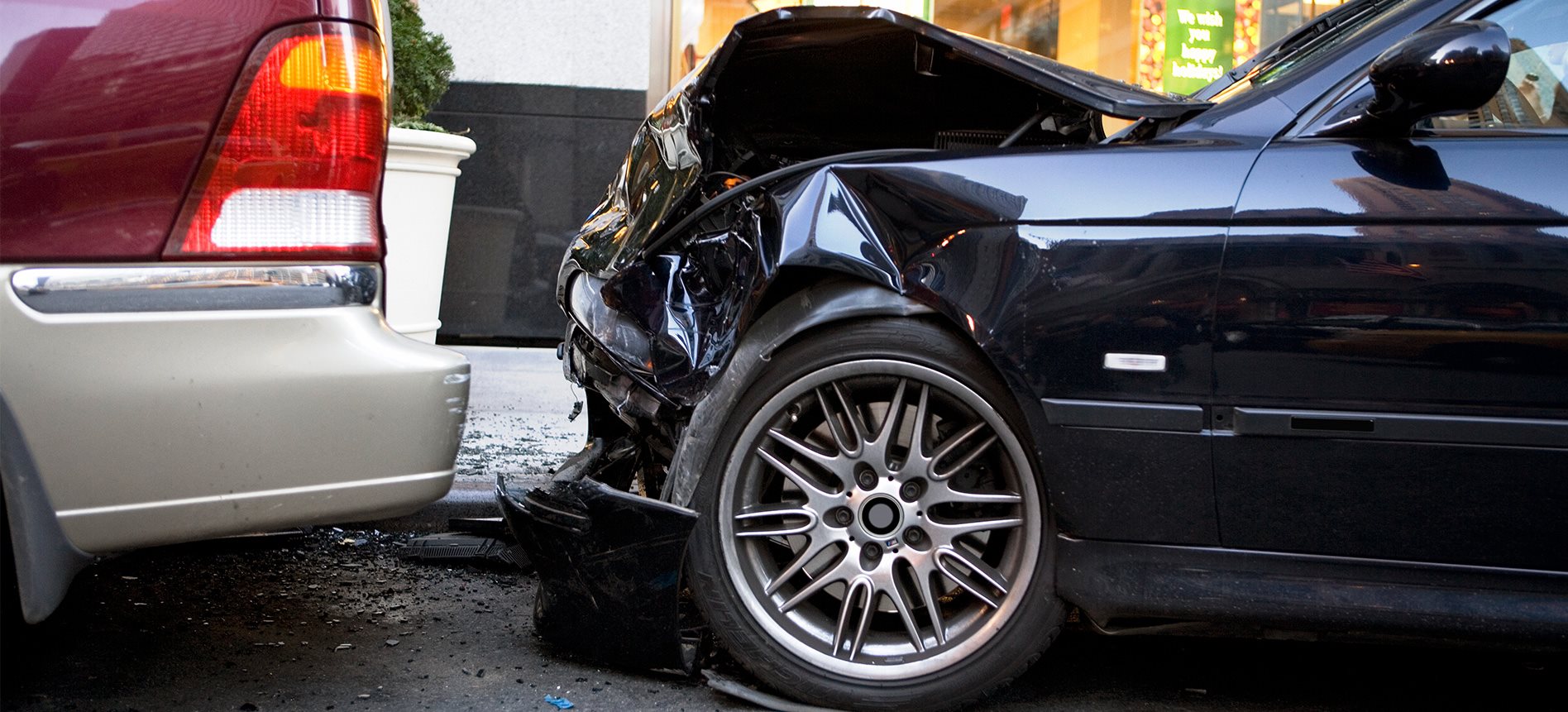
You can easily get a quote on a car you intend to buy before committing to the deal so make sure you do your homework before signing up for insurance coverage. And shop around – you’ll likely find a better deal the longer you look.
Servicing
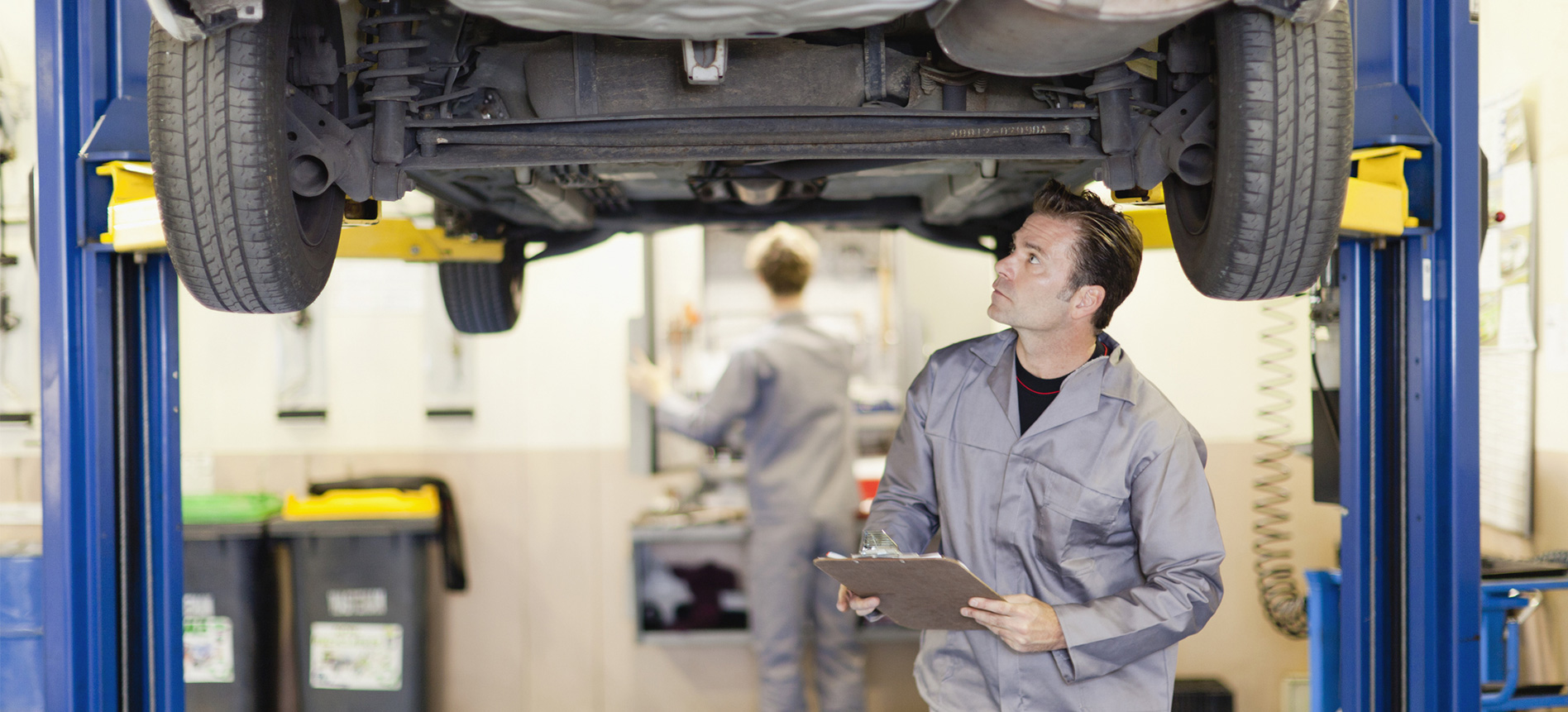
Luckily, manufacturers are trying to bring down the ongoing cost of maintenance and servicing. But even still, it’s yet another yearly cost (sometimes more often) that you’ll have to absorb to keep your car in tip-top shape. Dealerships are moving toward service packages that let you know how much you’ll be spending over the long run. And in some cases you can even pre-purchase when buying the car.
The Nissan Pulsar GTi-R represented a time when rally cars would have been proud of their road versions.
Born in 1990 at the height of Group A regulations that required the racecars to share core engineering with road cars, Nissan pinned its hopes of WRC glory on the N14 Pulsar.
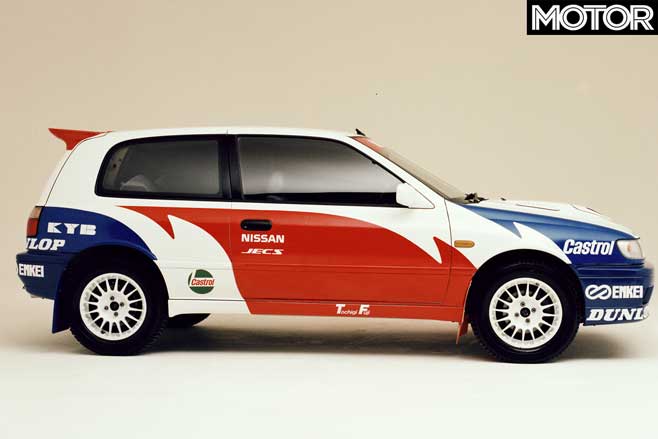
Its creators gave it a turbocharged engine and Nissan’s ATTESA all-wheel drive system to fight off Ford Sierra Cosworths and Lancia Delta Integrales, its 2.0-litre SR20DET engine shared with the Silvia and 180SX, but rotated 90 degrees to drive all four wheels.
Not to be confused with the R32 Skyline GT-R’s ATTESA E-TS oily bits that electronically controlled a multi-plate centre clutch, the GTi-R split grunt front to rear through a viscous centre limited-slip diff. But it was effective.
Its Garrett turbocharger helped it produce 162kW and 280Nm, channelled through a five-speed manual gearbox that allowed the GTi-R to hit 232km/h in top gear. Japanese outlet Best Motoring ran a stock 0-400m in 13.55 seconds.
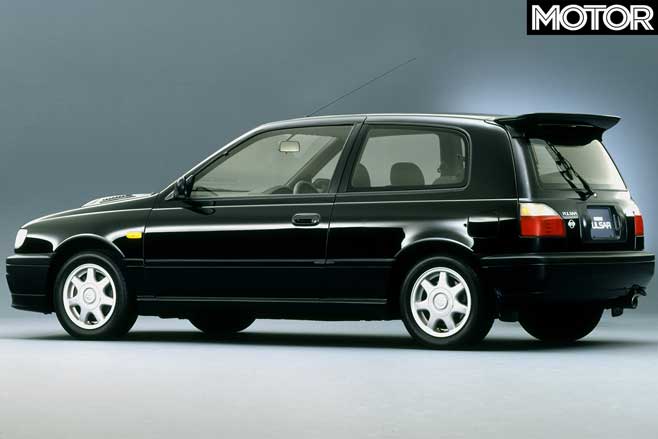
All this was, of course, crammed into a matchbox-sized body (its wheelbase was only 2430mm) that sat on strut front and parallel four-link rear suspension. It seemed like a great rally recipe, but limited success prompted Nissan to pull the plug on its World Rally Championship campaign after just two seasons. Boo.
Nissan continued to build the GTi-R until 1994 and even sold a version in Europe with a Sunny badge. It also offered a ready-to-race version that was delivered with steel wheels, no air-con or ABS, and offered a front LSD and close-ratio gearbox as options. Sadly, none made their way to Australian shores, officially anyway. Some came in private import form, with their desirability proven by their rarity.
Of all GTi-Rs, the ‘rally car for the road’ Nismo variant stands as the unicorn. Only 21 were built and one lives in Nismo boss Takao Katagiri’s garage.
1990 NISSAN PULSAR GTi-R SPECS Engine: 1998cc inline-4, 16v, turbo Power: 163kW @ 6400rpm Torque: 280Nm @ 4800rpm 0-100km/h: 5.4sec (est.) Price: $25,000 (current value estimate)
If you’ve ever watched the Bathurst 1000 and thought how cool it would be to live on the circuit, here’s your chance.
A large parcel of land with a house and three cottages – and parking for five cars – has come up for auction in Bathurst, and it comes with one of the coolest addresses in Australia… 448 Conrod Straight.
The 6.2km race track around the small mountain to Bathurst’s west becomes a thundering temple to the V8-powered kings of speed for four days every October – and there are plans afoot for more events – but for the rest of the year, the track becomes a 60km/h two-way public road, and the property – known as Lochinvar, nestles on the side of the track’s longest and fastest stretch.
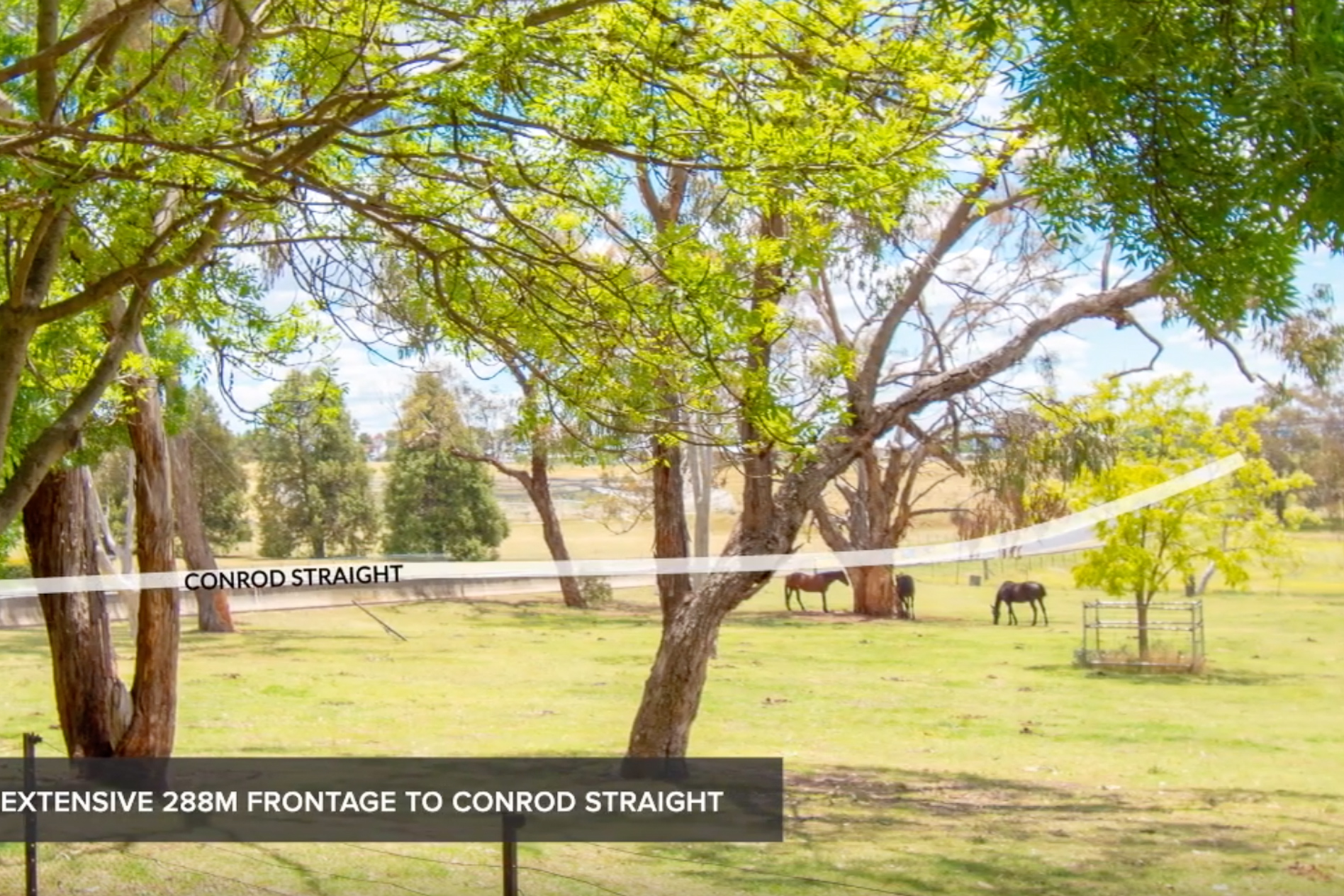
If you’re looking for a ringside seat to the sights and sounds of the Bathurst 1000, the property’s main draw is an almost 300m long stretch of absolute frontage right onto Conrod Straight.
Covering almost 40 hectares, Lochinvar sounds absolutely amazing. Between a primary residence and three brick cottages, there are ten bedrooms, ten bathrooms and five garages, and there’s also a large shed where you can stash a few more toys.
The cottages are currently available to the public, with rates starting at $240 a night… though you can be sure that the prices can be, err, massaged vertically come race weekends.
The huge tranche of land is zoned so that more rental accommodation can be added, or you could simply open the gates, shoo the cows aside and advertise a tonne of camping spots for visitors to the Bathurst 12hr, Bathurst Challenge or the planned TCR endurance round slated for next year.
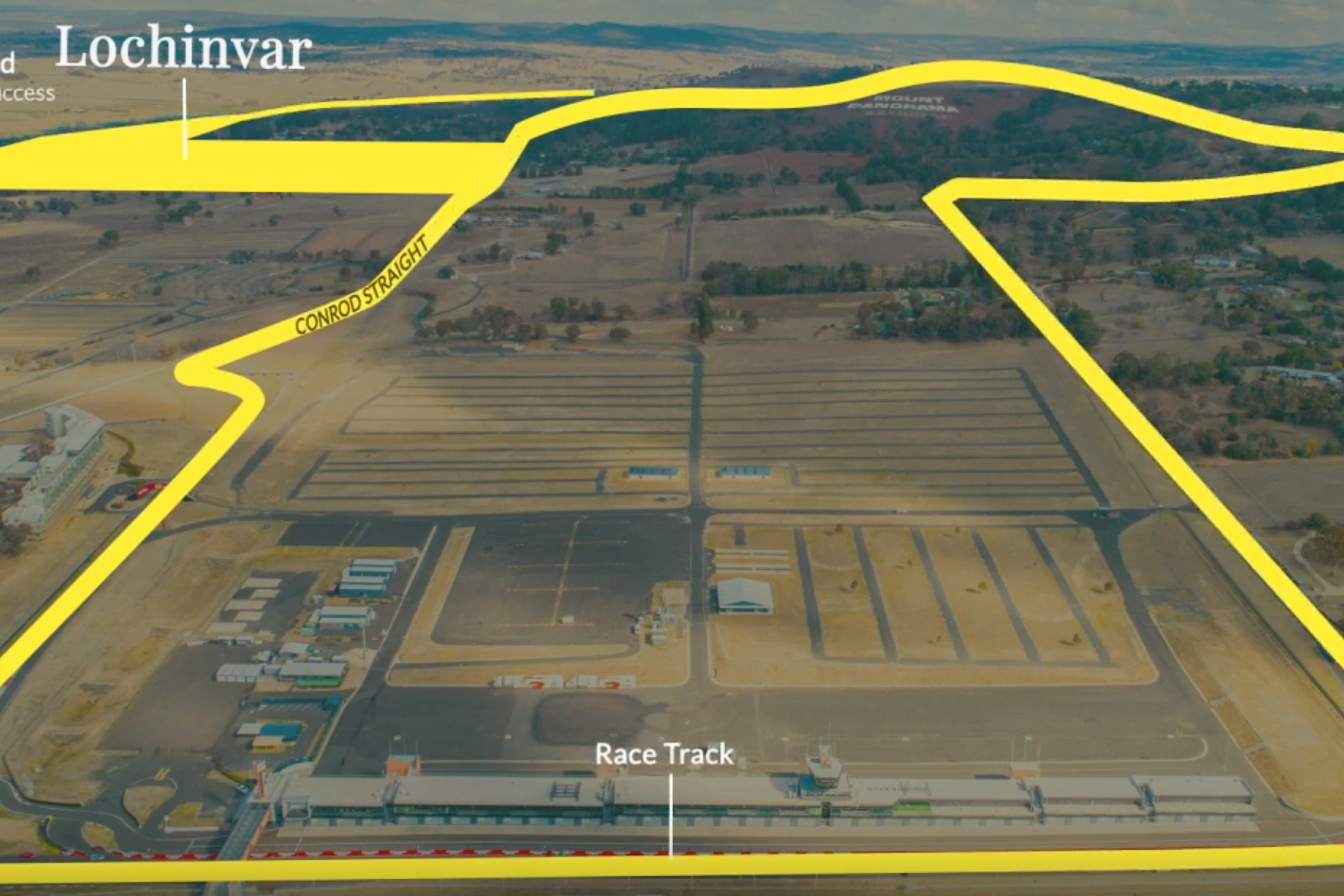
There are plans to add another small track to the precinct, too, which could increase the potential of the site for motorsport-mad fans.
There are several other properties scattered around the circuit, but the majority become largely isolated during race weekends. Not Lochinvar – it has its own access road.
Even when there isn’t an event on, though, the location is still a beauty, with terrific views over the rolling plains of the Central Tablelands. And if you think country life could be a bit boring, Bathurst has come a long way in the last decade when it comes to decent restaurants and cafes.
We’ll be pooling our meagre incomes and petitioning our bosses to put in a bid for Lochinvar as the new WhichCar HQ… but given that’s got a snowball’s chance in a microwave of succeeding, you can get along to the auction yourself in late November.
Be warned, though… a neighbouring property that is only a tenth of the size sold for $2.7 million in 2017, so bring your novelty-sized chequebook with you.
The 2019 Bathurst 1000 kicks off this week, and WhichCar will be there bringing you images and social feeds from inside the garages of the top teams – stay tuned.
Hi WhichCar,
It sounds a little crazy, but one thing I’ve always wanted to do is race cars.
I’m 51 now, my kids are grown up and moved out of home and now have the time and disposable income to do such a thing for fun.
I know that there are amateur racing series where you can race normal cars like Hyundai i30s, but what would be the steps required for an amateur to try for racing to see if I could actually do it, training, and then different relatively low-cost options to race as a hobby. Also, is 51 too old to start?
Jacquie, North Melbourne
G’day Jacquie,
Be warned – if you start down the path towards car racing, it will become an addiction… and like a lot of addictions, they can be bad for you!
First up, you’re never too old to have a crack. Motor racing favours the financially mobile, so if you have a few bob and a bit of time, then it’s a good combination.
First and foremost, though… safety, safety, safety. Buy the best gear you can afford and use it every time you go out on a track. This means a proper racing suit, good quality helmet with neck restraint fittings, boots, gloves and fireproof underwear. Not negotiable! If you baulk at the cost – budget two grand for new gear, though once-used second-hand stuff is pretty common – then rethink your aspirations. I’ve been going to tracks for 30 years, and I STILL see the damnedest things every time I go.
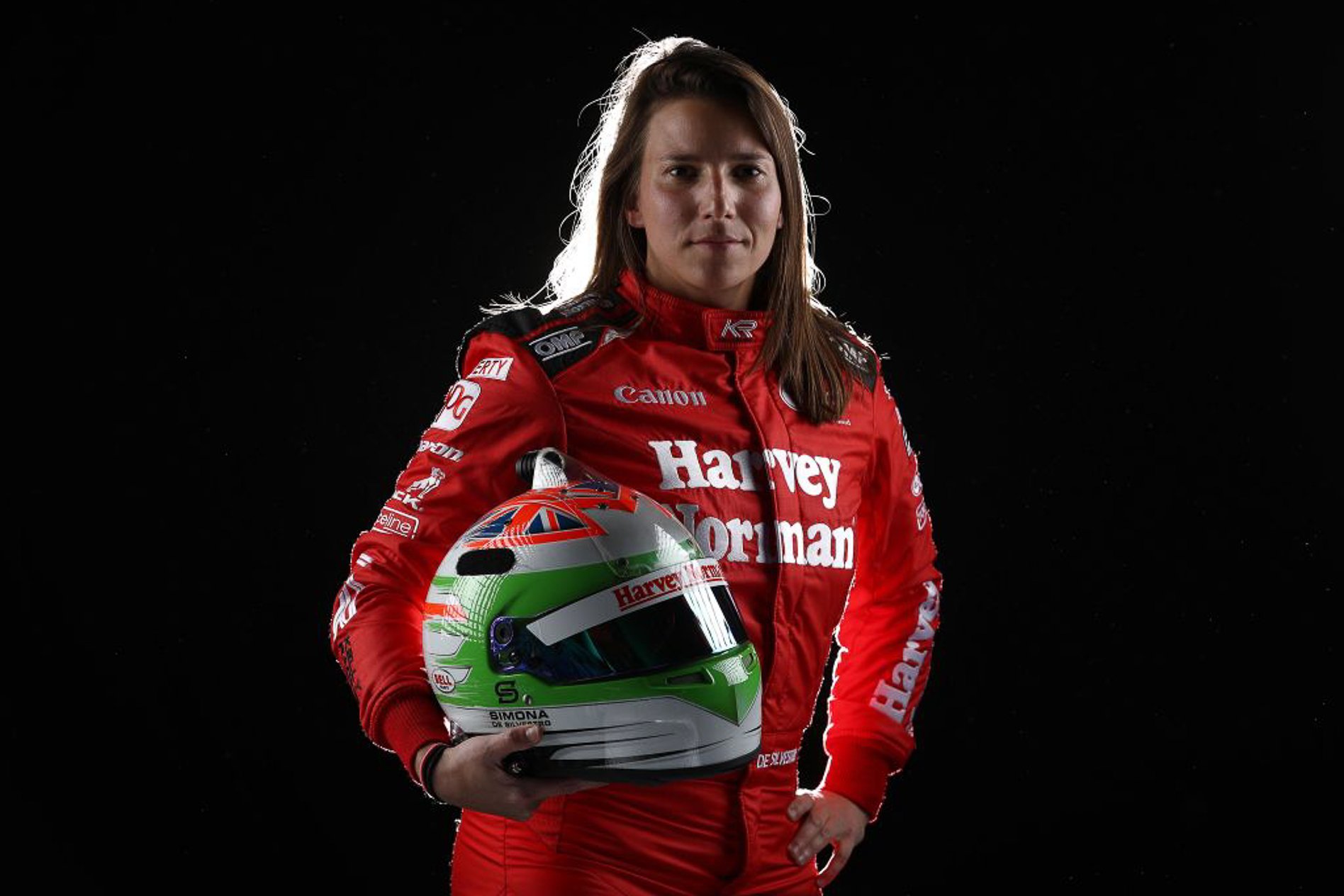
The very first step is to get along to an instruction day at a racing school. There are many scattered around the country, and if you’re in Victoria, then there are options at places like Phillip Island Raceway, Winton and Sandown.
It’s the best way to lose your track virginity, as you’ll ride along with an instructor in a session that should be aimed specifically at rookies. If the school you’re looking at doesn’t offer one, ask them, or consider another school.
You can either take your own car along, or you can look at renting a school car for the day. There’s really no restriction on what you turn up at the track with, but I’d really recommend something cheap and low-powered. Taking your other half’s limited edition HSV along – don’t laugh, I’ve seen it happen – just adds a layer of stress and difficulty you don’t need.
In fact, the very best drivers in the world from F1 and other disciplines heads to the UK once a year, where one of the world’s best instructors, Rob Wilson, teaches them using their rental cars!
It’s best to have your car serviced before going along, and clean ALL of the junk out of your car – you don’t need a stray umbrella rolling around under your feet.
Top tips to teach young drivers
On your first day, the biggest piece I can give is to breathe, smile and keep your vision up. It’s stressful and exhilarating, but by giving yourself a bit of room out on track by casting your eyes up and forward, it slows things down a LOT.
After a few instructor days, I’d suggest you look at a supersprint event, where drivers do flying laps solo to record the best time. It steepens your learning curve without bringing in the element of having other drivers on track.
If you’re still keen to go door-to-door, and you have a bit of spare money, get along to an event where series like the Hyundai Excel Challenge or the Pulsar Challenge are being held. There you can talk to owners and drivers and get a sense of whether it’s something you want to do.
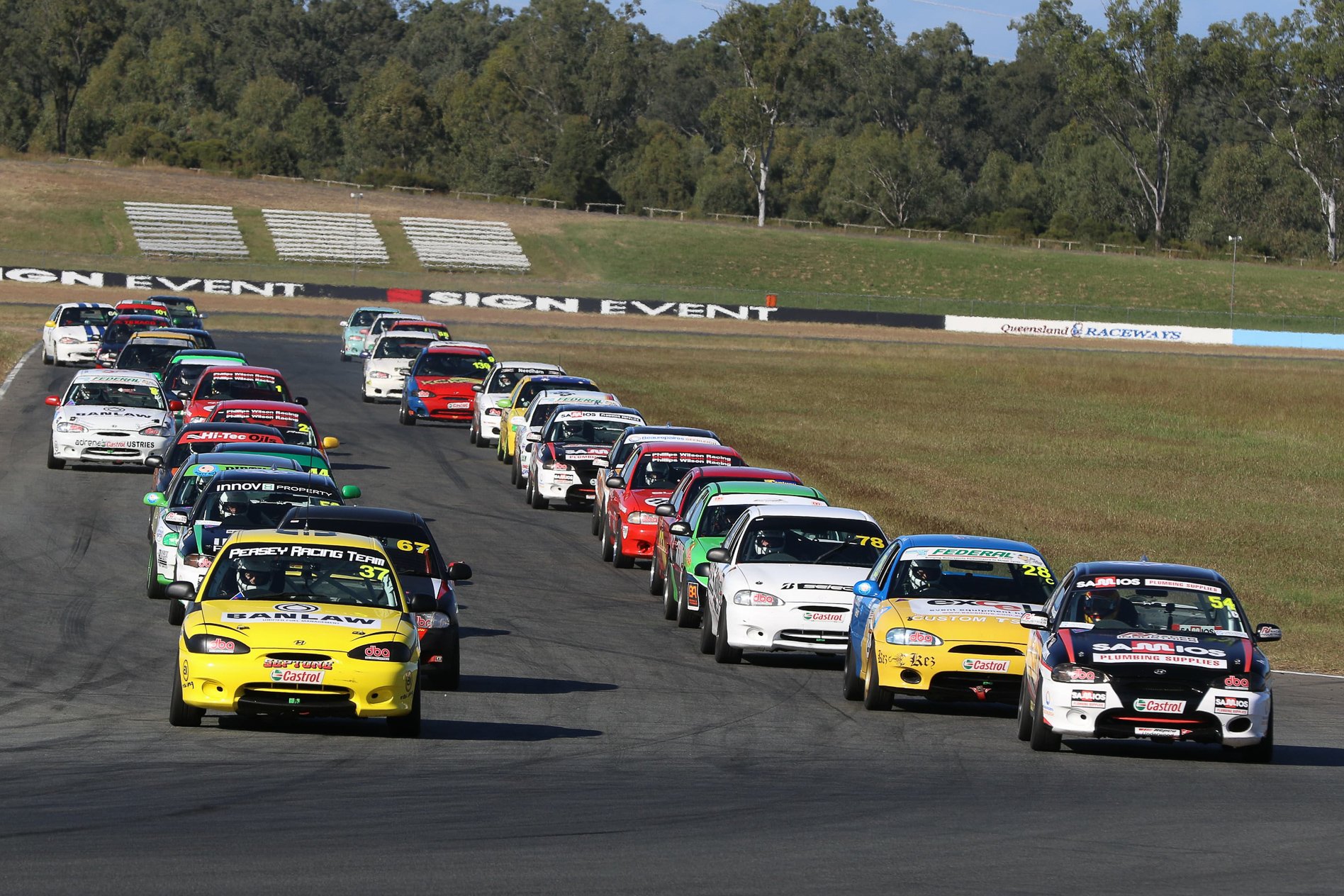
These series use low-powered cars that are relatively affordable, but all motor racing costs money – tyres, entry fees and the like need to be budgeted for, but chatting with competitors at the track (or even online) will give you vision around this.
A lot of owners will look at leasing you a car for a weekend, so you can try before you buy. BIG caveat here, though – it’s usually a case of ‘if you crash it, you own it’! Do make sure you square things like tyre cost and damage liability first.
16-year-old lands full-time Supercars drive
If you do go down the route of buying a car, take your time and make friends first. Buying a second-hand racing car is nothing like buying a road car; they are built to be worn out, and that’s usually why they’re up for sale!
I’d look for a car in the middle of the price bracket and get the owner to come to a track with you, so you can try before you buy. And don’t let them take it home after you’ve done the deal! What were new shocks might suddenly become old shocks…
Good luck with it all, and keep the rubber side down!
