
Mercedes-Benz Australia has broadened its Edition R portfolio, adding the GLE 53 SUV and Coupé to the line-up. Following the successful introduction of Edition R variants on the AMG C 43, GLC 43 and selected compact models, the latest additions are engineered to combine dynamic performance with bold design elements, delivering a distinctive additional pathway into the AMG brand.
At the heart of the GLE 53 Edition R lies AMG’s acclaimed 3.0-litre inline-six, enhanced with electrified technology to produce 320 kW of power and 560 Nm of torque. This performance is further sharpened by the AMG DYNAMIC PLUS Package, which incorporates AMG ACTIVE RIDE CONTROL active roll stabilisation and a high-performance composite braking system.
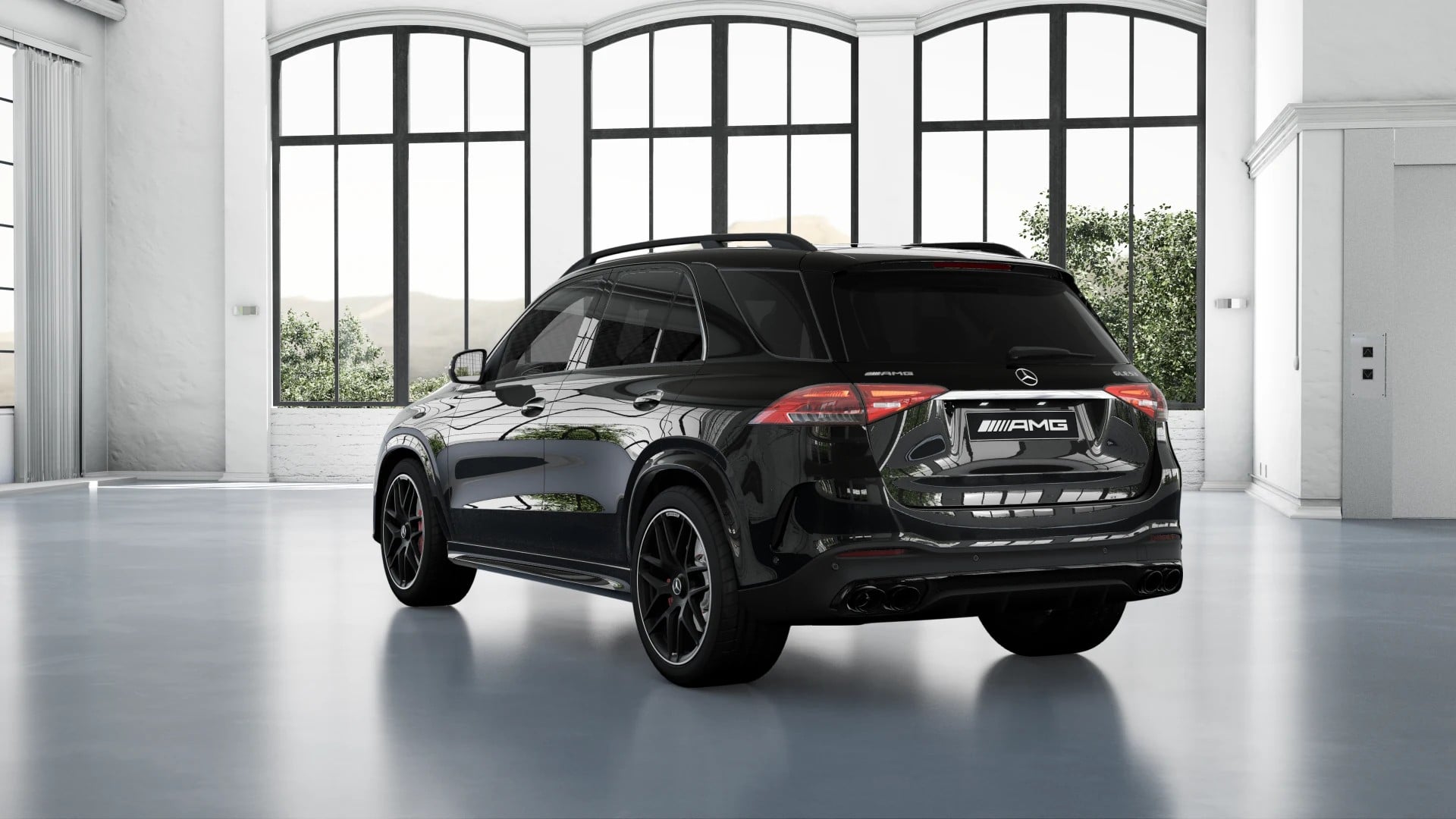
The brakes feature red-painted calipers with black AMG lettering, measuring 400 x 38 mm at the front and 370 x 32 mm at the rear, enhancing the SUV’s road presence.
Visually, the Edition R makes an immediate impression. Striking 22-inch AMG cross-spoke forged wheels finished in matt black with a high-sheen rim flange set the tone, while optional MANUFAKTUR paint finishes further elevate exclusivity. Inside, performance-inspired cues continue with brushed aluminium trim, red seatbelts, and the AMG Performance steering wheel trimmed in nappa leather and MICROCUT microfibre. The SUV variant features ARTICO man-made leather with red stitching, while the Coupé retains its hallmark black AMG nappa leather upholstery.
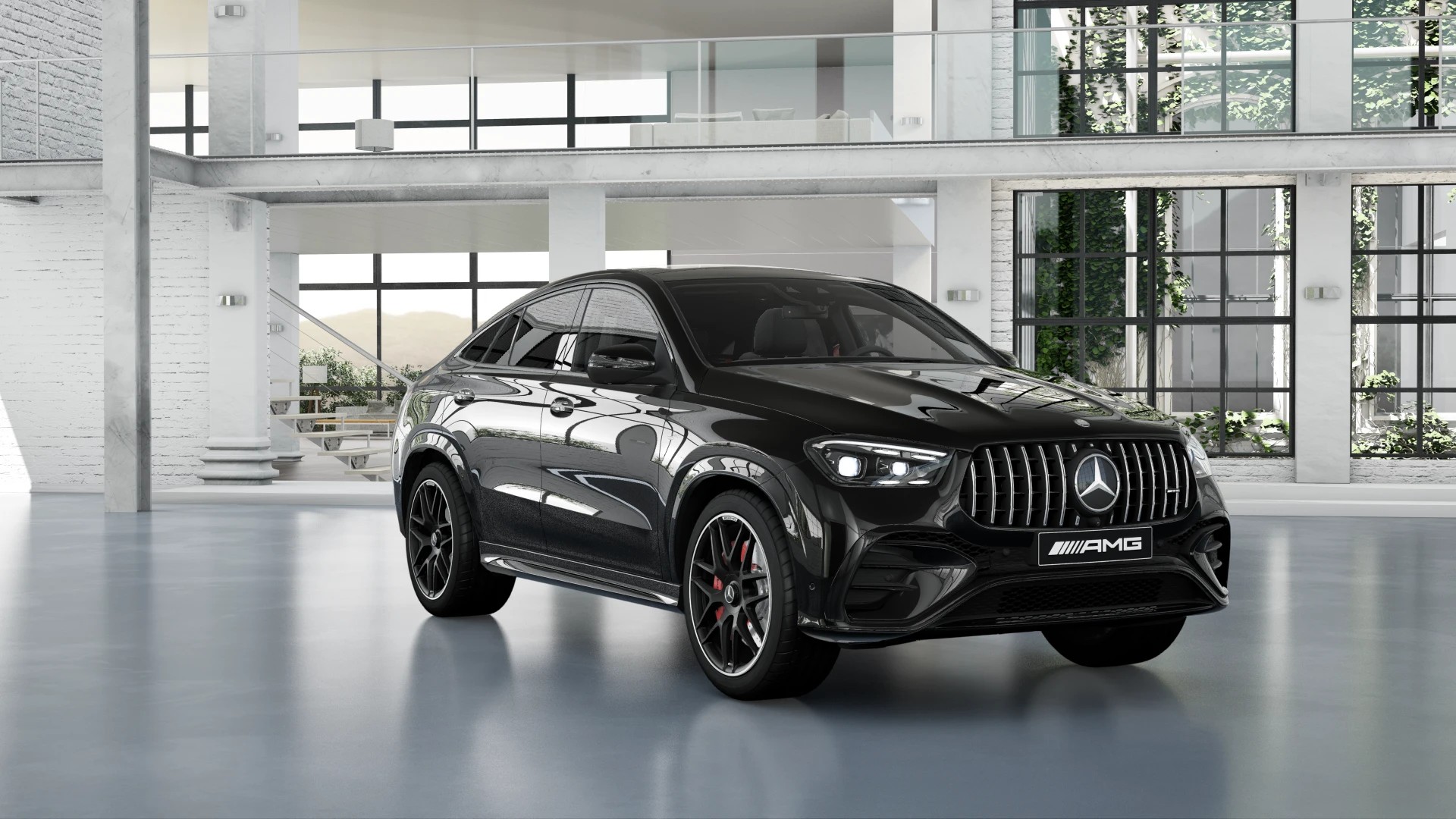
The combination of AMG-engineered power and distinctive styling positions the Edition R treatment of the GLE 53 SUV (top) and Coupé (above) as bold statements of AMG identity.
Pricing for the GLE 53 Edition R SUV begins at $184,100 (MRLP), while the Coupé starts at $188,100 (MRLP), reaffirming their place in the premium performance SUV segment.
Škoda is accelerating its electric vehicle offensive in Australia, unveiling the all-new Elroq 60 Select alongside the refreshed Enyaq 60 and 85 large SUVs. Together, the new models offer local buyers a broader choice of European-designed electric SUVs.
The Elroq 60 Select is Škoda’s newest medium SUV, joining the Elroq 85 Select and Elroq 130 Years Edition in showrooms from November. With prices starting at $47,990 RRP ($49,990 drive-away), the Elroq 60 Select undercuts many rivals while offering a compelling package of performance, practicality and smart features.
| Skoda Elroq 60 Select | RRP $47,990 | $49,990 DA |
|---|---|---|
| Skoda Elroq 85 Select | RRP $54,990 | $59,990 DA |
| Skoda Elroq 130 Years Edition | RRP $64,990 | $69,990 DA |
Under the bonnet, the Elroq 60 Select employs a 150kW/310Nm rear-wheel-drive system capable of 0–100km/h in 8.0 seconds. A 63kWh battery provides 395km WLTP combined range and up to 504km in urban cycles, supported by 165kW DC fast charging and 11kW AC charging.

Standard equipment is extensive, including LED headlights, heated front seats, a heated steering wheel, wireless phone charging, a 13-inch infotainment display, wireless Apple CarPlay/Android Auto, and Škoda’s full suite of active safety and driver assistance systems. Clever touches such as door-mounted umbrellas, rear-seat tablet holders and adjustable cargo solutions reinforce the brand’s reputation for practical design.
Buyers can add 20-inch wheels for $1,000 or a $6,000 Signature Pack, which bundles a head-up display with augmented reality, Matrix LED headlights, premium Canton audio, surround-view cameras, and massage seats.
Meanwhile, the larger Enyaq SUV builds on the Elroq’s value-focused pitch with greater space, performance and refinement. Priced from $50,990 RRP ($54,990 drive-away), the Enyaq 60 Select delivers a 150kW/310Nm output, 0–100km/h in 8.1 seconds and a 410km WLTP range. Standard gear includes a powered tailgate, tri-zone climate control, heated front seats, a 13-inch display and a seven-airbag safety suite.

The Enyaq 85 Sportline lifts performance to 210kW and 545Nm, slashing the 0–100km/h sprint to 6.7 seconds and extending range to 547km WLTP. It also gains progressive steering, heated rear seats, massage front seats, and a sportier interior trimmed in leather and Suedia. Buyers can further enhance the package with the $5,000 Ultimate Pack, adding adaptive chassis control, Canton audio, head-up display and 21-inch alloy wheels.
At the top of the line sits the Enyaq Coupe 85 Sportline, priced from $65,990 RRP ($68,990 drive-away). It offers a panoramic glass roof, the longest range in the line-up at 561km WLTP, and the highest specification, with all key luxury and technology features included.
All Škoda EVs are backed by a 7-year, unlimited-kilometre warranty, plus a Guaranteed Future Value program and finance offers from 7.99% per annum.
| Skoda Enyaq 60 Select | RRP $50,990 | $54,990 DA |
|---|---|---|
| Skoda Enyaq 85 Sportline | RRP $59,990 | $63,990 DA |
| Skoda Enyaq Coupe 85 Sportline | RRP $65,990 | $68,990 DA |
With both the Elroq and Enyaq, Škoda is targeting one of the most competitive EV markets in the world with an emphasis on blending European engineering, cutting-edge tech, and value pricing. The Elroq is aimed at buyers seeking a practical, mid-sized SUV under $50,000, while the Enyaq delivers family-friendly space and longer range without sacrificing performance.
Škoda expects both models to become key players in its Australian electrification strategy as more buyers transition to battery-powered vehicles. The Elroq 60 Select will be available from November, while the updated Enyaq range is already arriving in dealerships.
MG Motor has officially confirmed pricing and specification for the all-new MG U9 ute during its local launch, marking the brand’s long-awaited entry into one of Australia’s most competitive segments.
Available in three variants – Explore, Explore X and Explore Pro – the U9 will launch locally from $52,990 drive-away, while the mid-tier Explore X is priced at $55,990 drive-away and the flagship Explore Pro tops the range at $60,990 drive-away.
Unveiling the model in Australia, MG Motor Australia managing director Peter Ciao said the U9 represents a turning point for the brand.
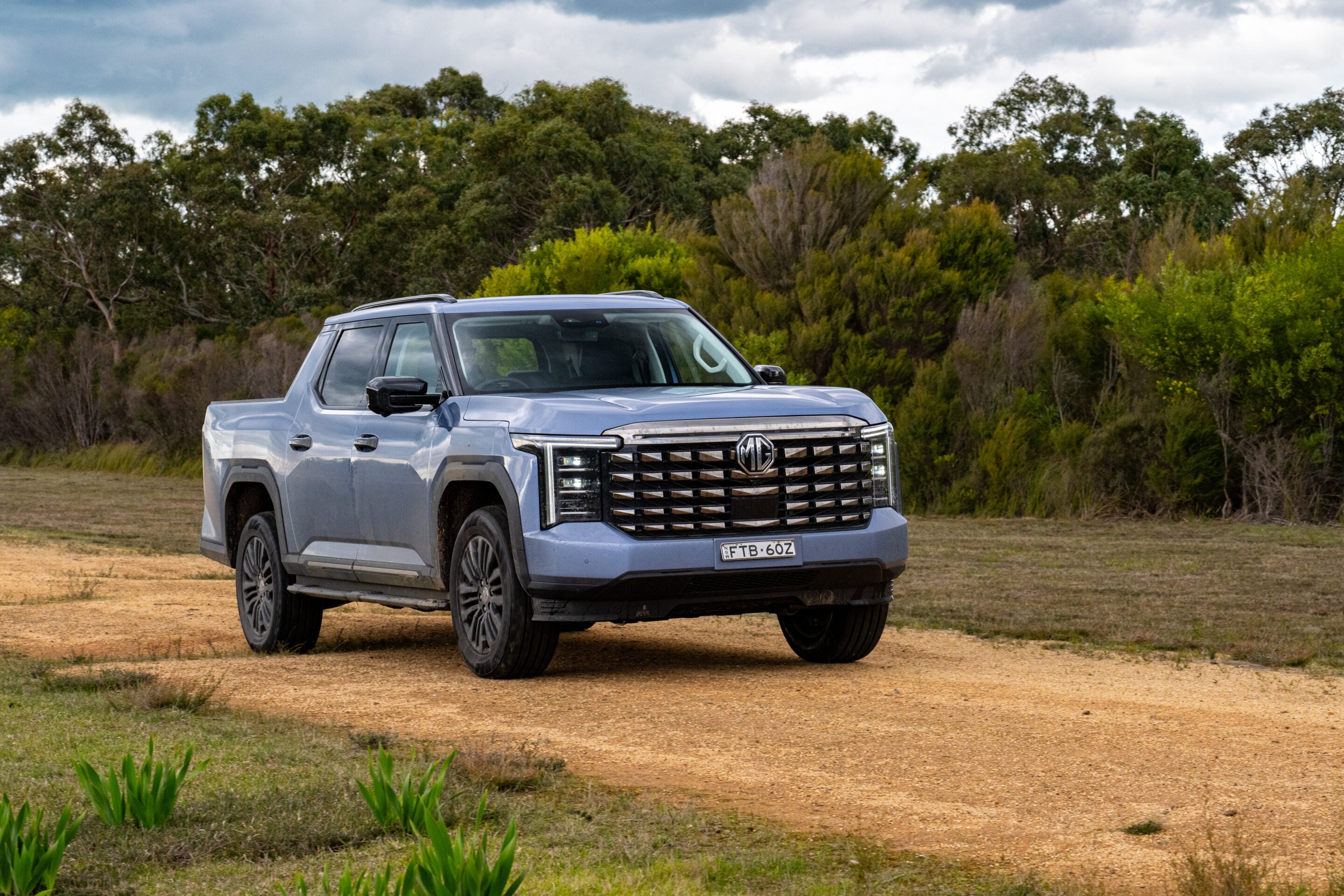
“Many of you have witnessed my journey leading MG from zero to a top-ten brand in Australia and New Zealand. That story enters a new chapter today. From this moment, the era of MG only making small cars is over,” he said.
It’s a bold statement reflective of where the brand currently sits in the Australian new car market. MG has appealed to Australian buyers with a strong value proposition, long lists of standard features, aggressive pricing and a long warranty – but only in segments that aren’t quite as pivotal as the dual-cab segment. Was an MG-badged dual-cab always part of the plan? Or is it an admission that the brand needs such a vehicle to take the next leap up the sales charts?
Ciao is rightly strong on what the U9 can do for MG in a market that has shown Australians will buy dual cabs from competition brands. Strong sales from the likes of GWM, LDV and BYD in a segment once weighed down by heritage is proof Australians will look to alternatives, and Ciao is adamant that MG has a contender on its hands.
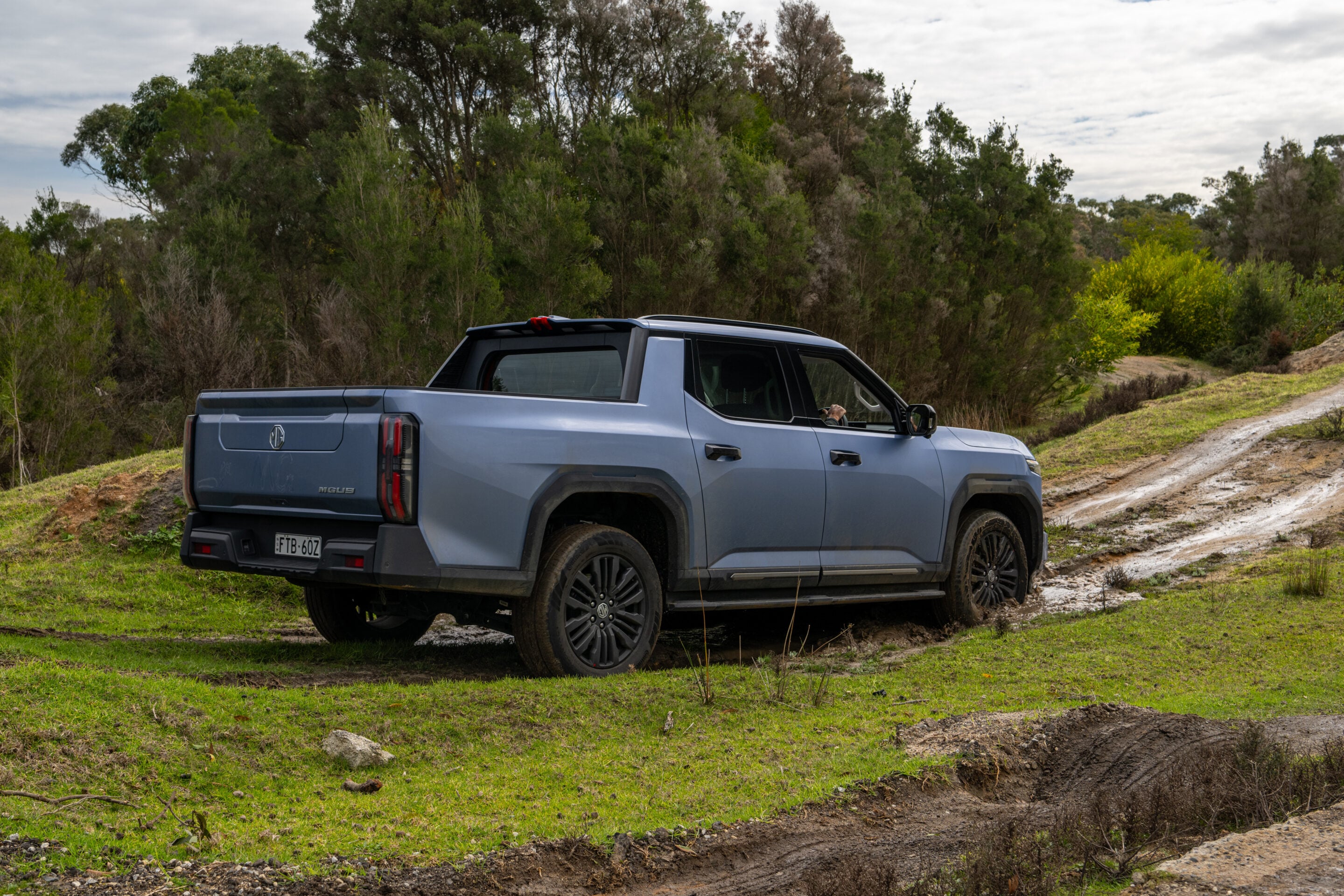
“Today we present a truly large vehicle, this 5.5m long MG U9,” he said. “This brand new ute marks a major milestone for MG. We know that a ute is not just a car, it signifies your freedom and your lifestyle and with the arrival of the MG U9, we enter the iconic ute segment.”
Ciao went on to explain that MG knows this segment is about more than just transport, certainly in 2025, where the dual cab has come to define driveways in family homes all over the country, moving well beyond its work horse origins.
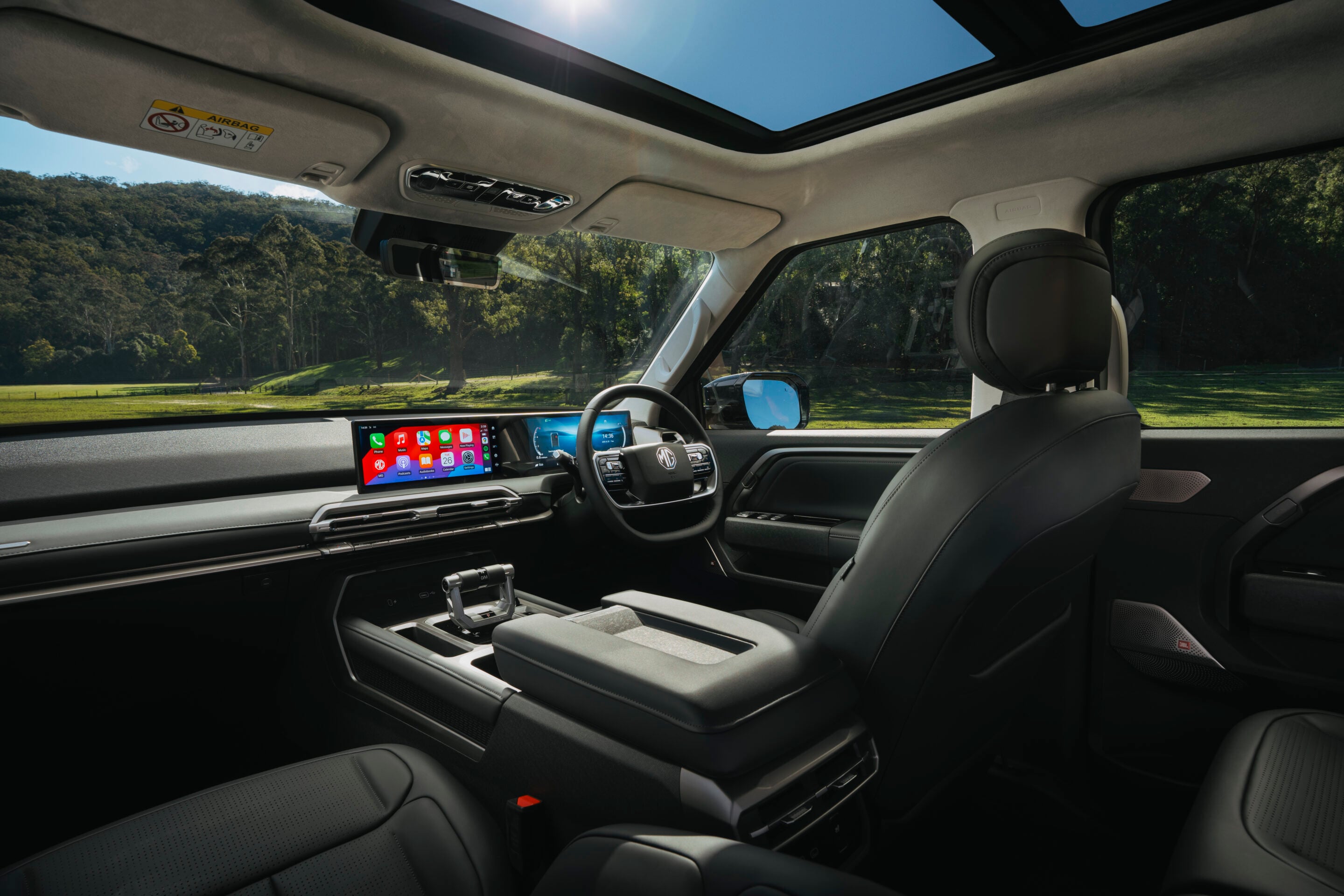
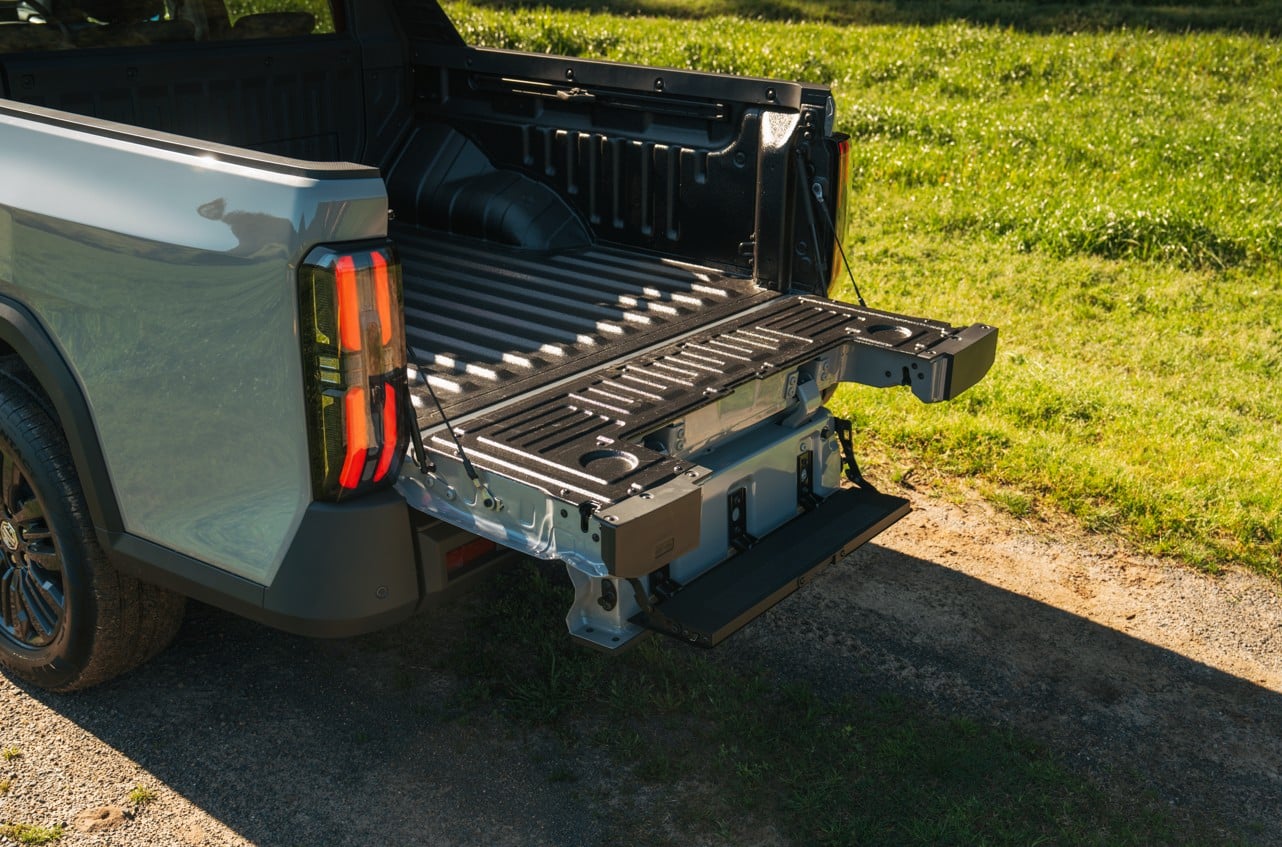
MG reckons the U9 will attack the segment with a different approach though, featuring a few party tricks we’ve never seen before (like the drop down tailgate and foldable rear bulkhead), the aggressive pricing we’d expect, and up to date cabin technology.
“This is a different ute,” Ciao said. “We are the next generation, created not just to meet the driver’s needs, but to exceed their expectation. A perfect blend of comfort and ability, and we will set a new standard.” According to Ciao, part of that ‘new standard’ revolves around the expected ride quality
that comes from a coil spring – rather than leaf – rear end.
“For a long time, ute owners have had to endure a rough ride from leaf spring suspension,” Ciao said. “MG U9 changes that. Our independent multi-link rear suspension delivers comfort, and pleasure, while innovations like the rear seat design, and tail gate, make this different from any other ute.”
While the complex rear bulkhead arrangement and step down tailgate are optional equipment on the top-spec model, the rear suspension system is standard across the range. Like KGM with the Musso before it, and Nissan with the Navara, it’s a bold move away from tradition, less focused on heavy payloads and more reflective of the way most high-end dual cab buyers use their vehicles.
For MG Motor Business Director, Kevin Gannon, success is something the brand won’t try to claim too soon. “We won’t be claiming sales targets and volume,” Gannon said. “In 12 months time, we’ll get a better understanding of where the U9 sits. “Buyers will come from SUVs and other dual cabs as well, it’s a big segment and a market that continues to grow.”
“Pricing is right for the market, and the key features of the vehicle will appeal,” Gannon said.
Measuring more than 5.5 metres long, the U9 is a full-sized dual-cab designed to compete head-on with established rivals like the Toyota HiLux and Ford Ranger. It is powered by a 2.0-litre twin-turbo diesel engine producing 160kW and 480Nm, paired with an eight-speed automatic transmission and selectable four-wheel drive. Braked towing capacity is rated at 3,500kg, with a payload exceeding 1,000kg depending on variant.
Inside, buyers can expect a tech-laden cabin, with higher grades offering a 14.6-inch infotainment screen, a 12.3-inch digital instrument cluster, wireless smartphone mirroring, heated and ventilated front seats, and a power-assisted tailgate. Safety is also a priority, with a suite including adaptive cruise control, lane-keeping assistance, blind-spot monitoring and a 360-degree camera system.
Ciao described the U9 as a vehicle designed not just for work, but to embody adventure and lifestyle.
“Owning a ute is more than transport. It’s freedom, exploration and lifestyle. With the arrival of U9, MG proudly joins that story,” he said.
3
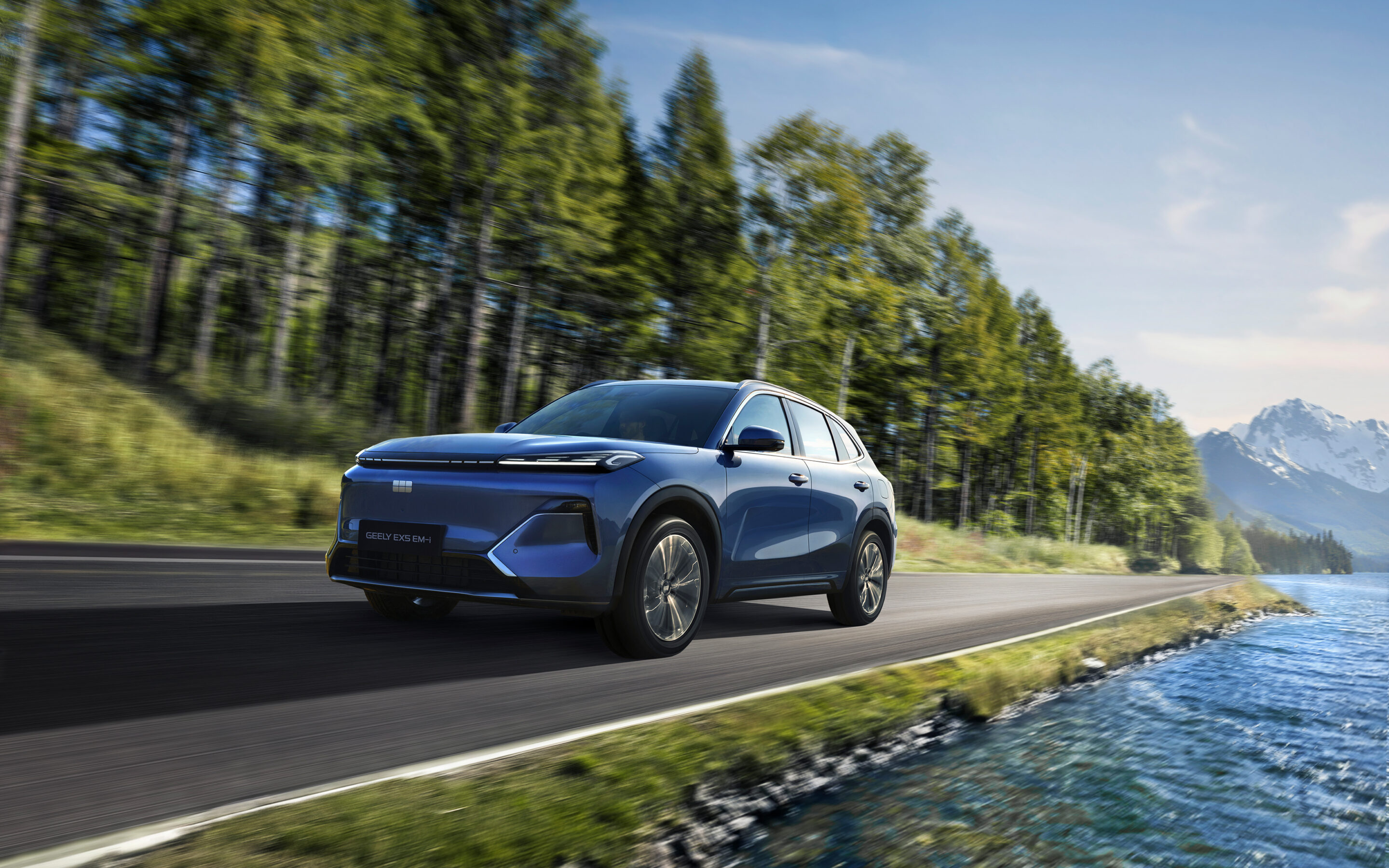
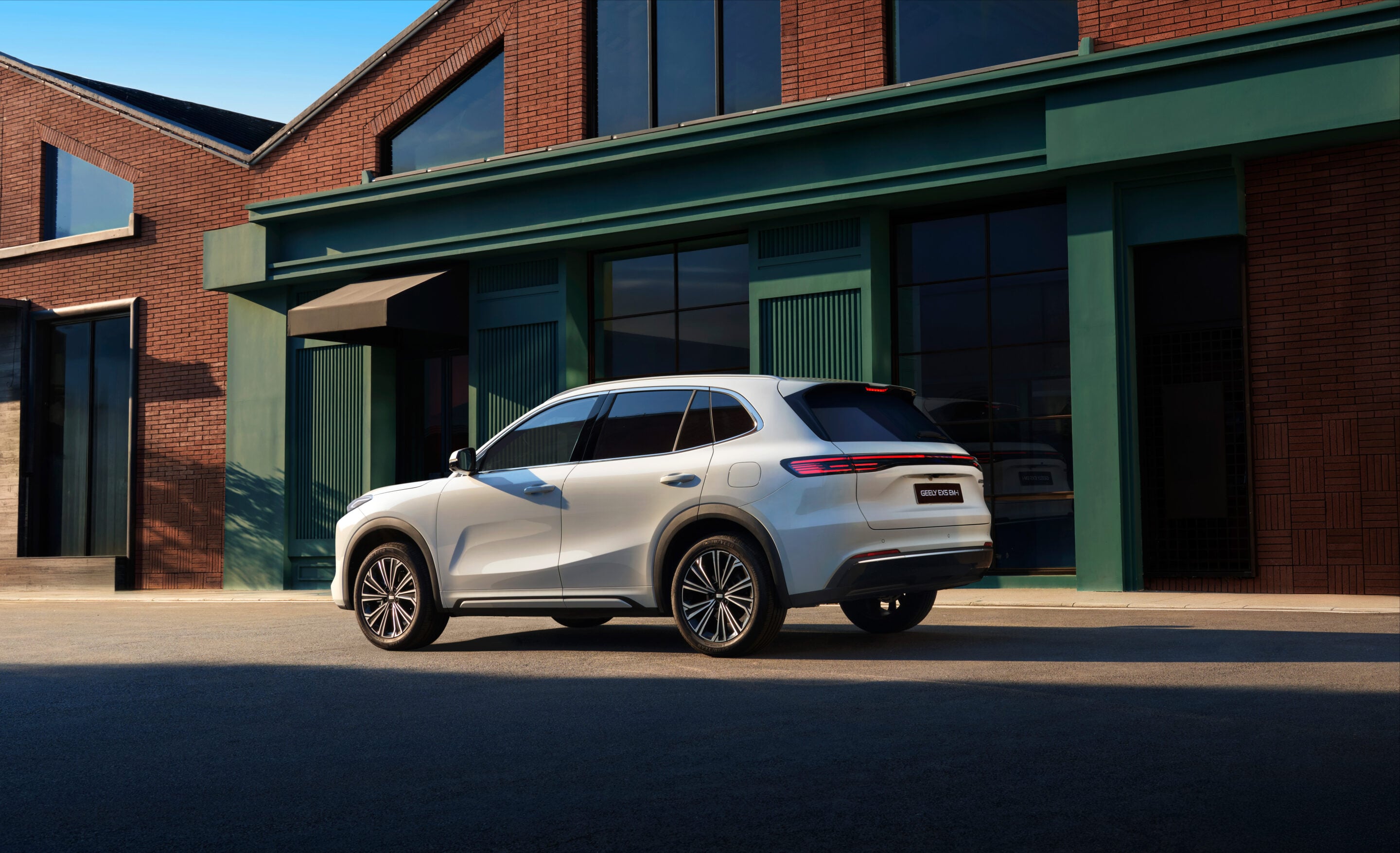
Geely has launched its one of the cheapest plug-in hybrid SUVs in Australia, unveiling the EX5 EM-i – marketed in Australia as the Starray EM-i.
Deliveries will begin on October 1, 2025, with the entry-level Complete grade priced from $37,490 before on-road costs.
To entice early buyers, Geely is rolling out a ‘Premium Offer’, which includes either a 3.88 per cent comparison finance rate or three years (45,000km) of complimentary scheduled servicing. The deal also bundles a Mode 2 home charging cable and premium paint at no extra cost.
Customers who finalise their orders by September 30 and take delivery before November 30 will receive an additional incentive: a discount matching their deposit contribution of up to $1,000.
The debut marks the beginning of a global rollout, with launches confirmed for Poland, Indonesia, Thailand and Mexico before the end of 2025.
Powered by Geely’s EM-i Super Hybrid System, the Starray EM-i pairs a 1.5-litre petrol engine with a 160 kW electric motor. Together, they deliver up to 943 kilometres of total range (NEDC) and 83 kilometres of pure electric driving (WLTP). With a combined fuel consumption of 2.4L/100km and electricity use of 14.7kWh/100km, the system is engineered to minimise running costs while maximising efficiency.
Built on the company’s new Global Intelligent Electric Architecture (GEA), the SUV features a lightweight, highly efficient 11-in-1 hybrid drive unit – the first of its kind – along with a thermal efficiency rating of 46.5%.
Inside, the Starray EM-i highlights space and versatility. A long 2755mm wheelbase and 84.3 per cent space efficiency allow for a roomy cabin, complemented by more than 30 smart storage solutions. Boot capacity starts at 428 litres, expanding to 2065 litres with the rear seats folded. Comfort is enhanced with ergonomic nine-layer seat cushions offering heating and ventilation.
Geely’s design has already drawn global recognition, with the Starray EM-i winning the Red Dot Design Award, the Italian A’ Design Award, and the MUSE Design Platinum Prize.
Technology takes centre stage with the Flyme Auto intelligent cockpit, featuring a tri-screen setup that includes a 15.4-inch central display, a 10.2-inch instrument cluster, and a 13.8-inch head-up display. A premium 16-speaker Flyme Sound system with a 1000W amplifier and headrest speakers delivers cinema-grade audio, while dedicated modes adapt sound profiles for different driving situations.
Safety remains central to Geely’s pitch. The SUV integrates active driver-assist features such as lane departure warning, collision mitigation, lane-change assist and rear cross-traffic warning. A reinforced battery safety system and six-airbag configuration further bolster occupant protection.
BMW is moving into the final phase before launching its Neue Klasse lineup, with series production of the new all-electric BMW iX3 scheduled to begin in late October at the company’s state-of-the-art facility in Debrecen, Hungary.
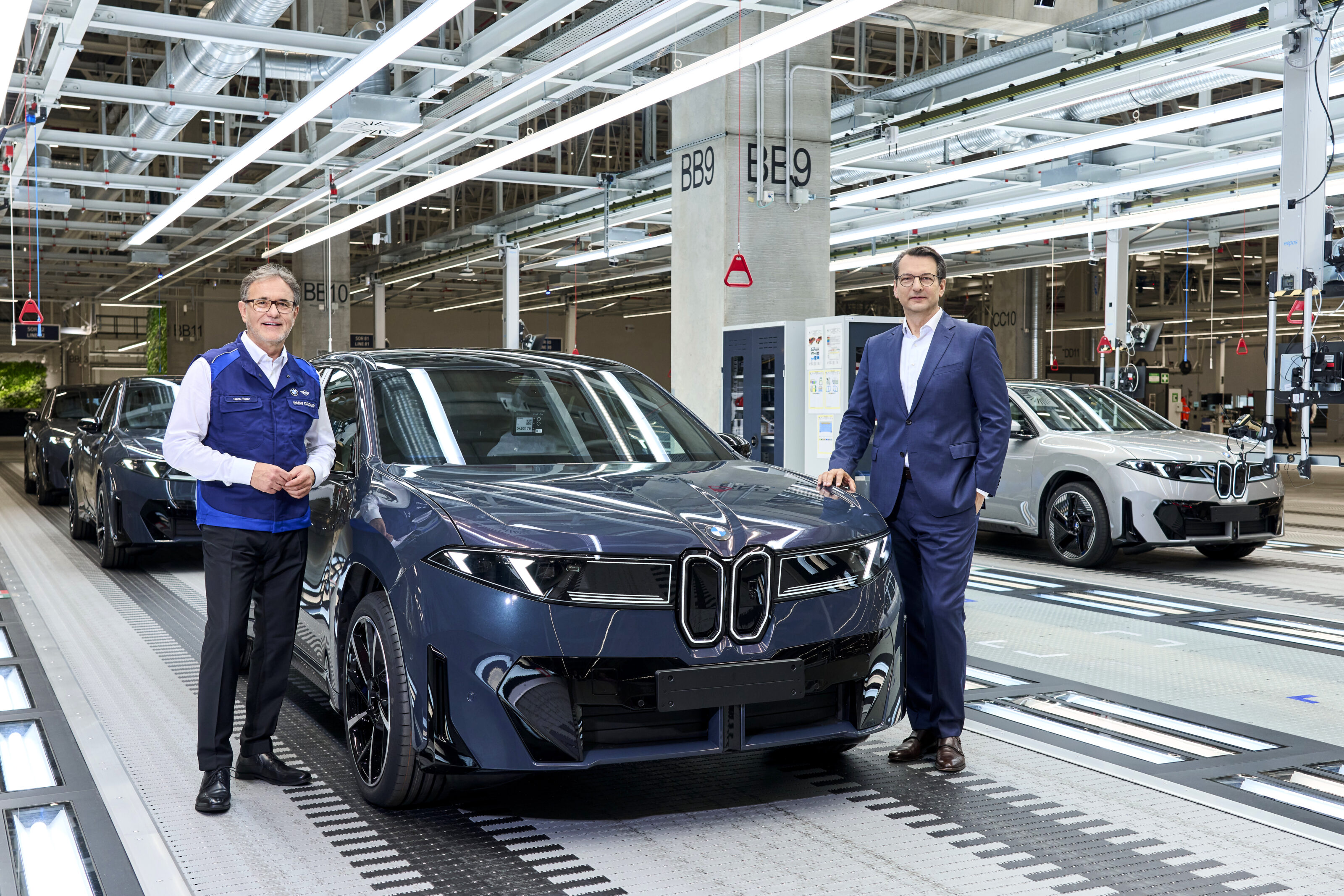
Milan Nedeljković (below, right), BMW’s board member for Production, said the milestone signals “a new era of automotive manufacturing,” noting that the plant is the first in the brand’s global network to be designed from the outset under the iFACTORY concept. That framework prioritises fully digital processes, fossil-free operations, and streamlined efficiency.
Hans-Peter Kemser (below, left), head of Plant Debrecen, said building both a new model and a new plant simultaneously was an unprecedented challenge. “We have simplified processes, reduced complexity, digitally validated each operation and leveraged global expertise. The result is a plant with efficient production and the flexibility to integrate additional models.”
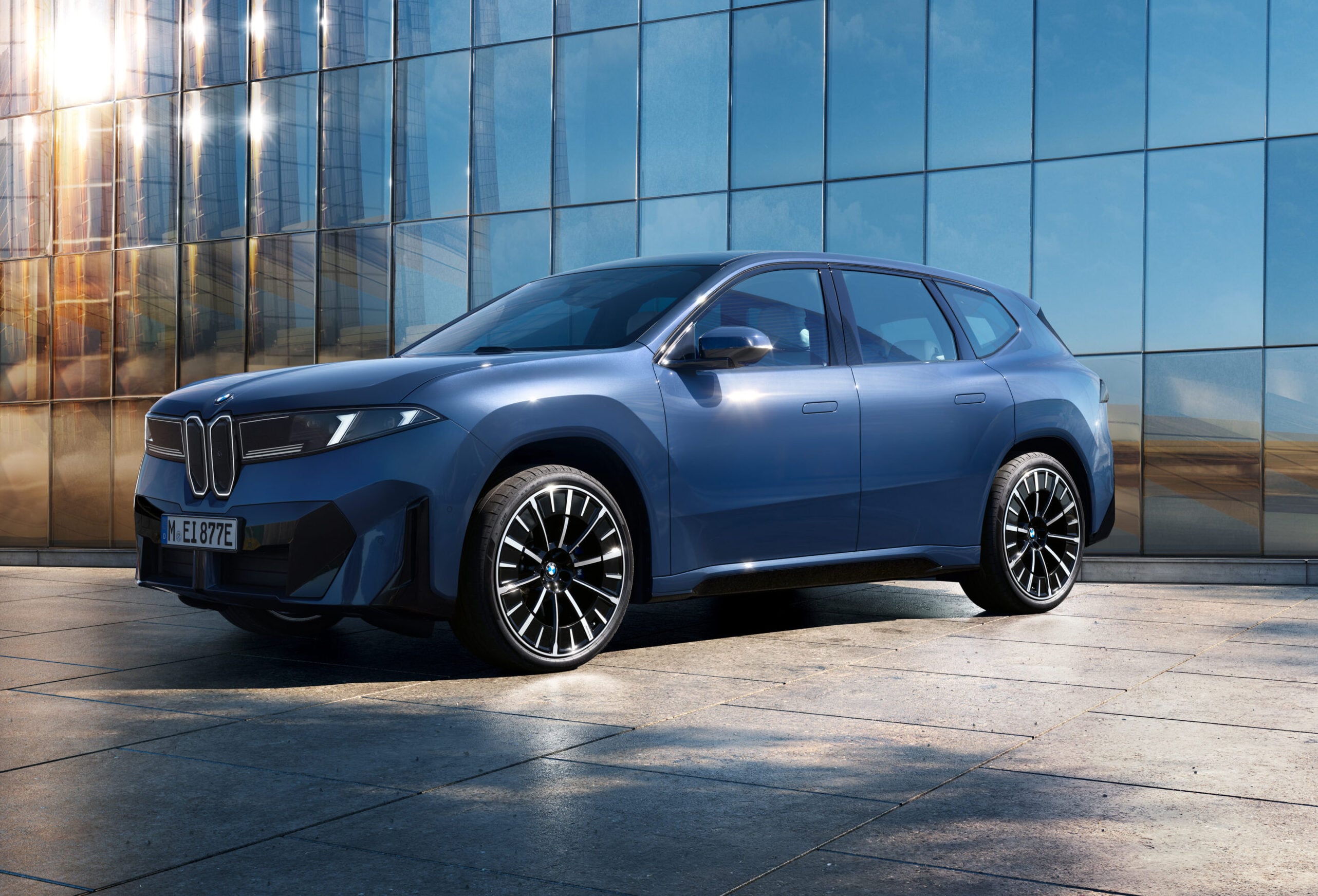
The iX3 will spearhead BMW’s next-generation electric vehicles, with Neue Klasse technologies set to roll out across 40 models and updates by 2027.
Plant Debrecen was planned and tested virtually, enabling exact installation of production lines. In the body shop, more than 1,000 robots were optimally placed using digital simulations, while the press shop uses standardised tooling across BMW’s global network. Artificial intelligence further drives efficiency, with the in-house AIQX platform automating quality checks and feeding real-time feedback to workers.
Debrecen is BMW’s first car plant powered entirely by renewable electricity, with a 50-hectare on-site solar farm supplying a quarter of its energy needs. The paint shop, a major energy consumer, now operates without fossil fuels, cutting annual CO₂ emissions by up to 12,000 tonnes. Thermal storage systems and waste heat recovery deliver further efficiency.
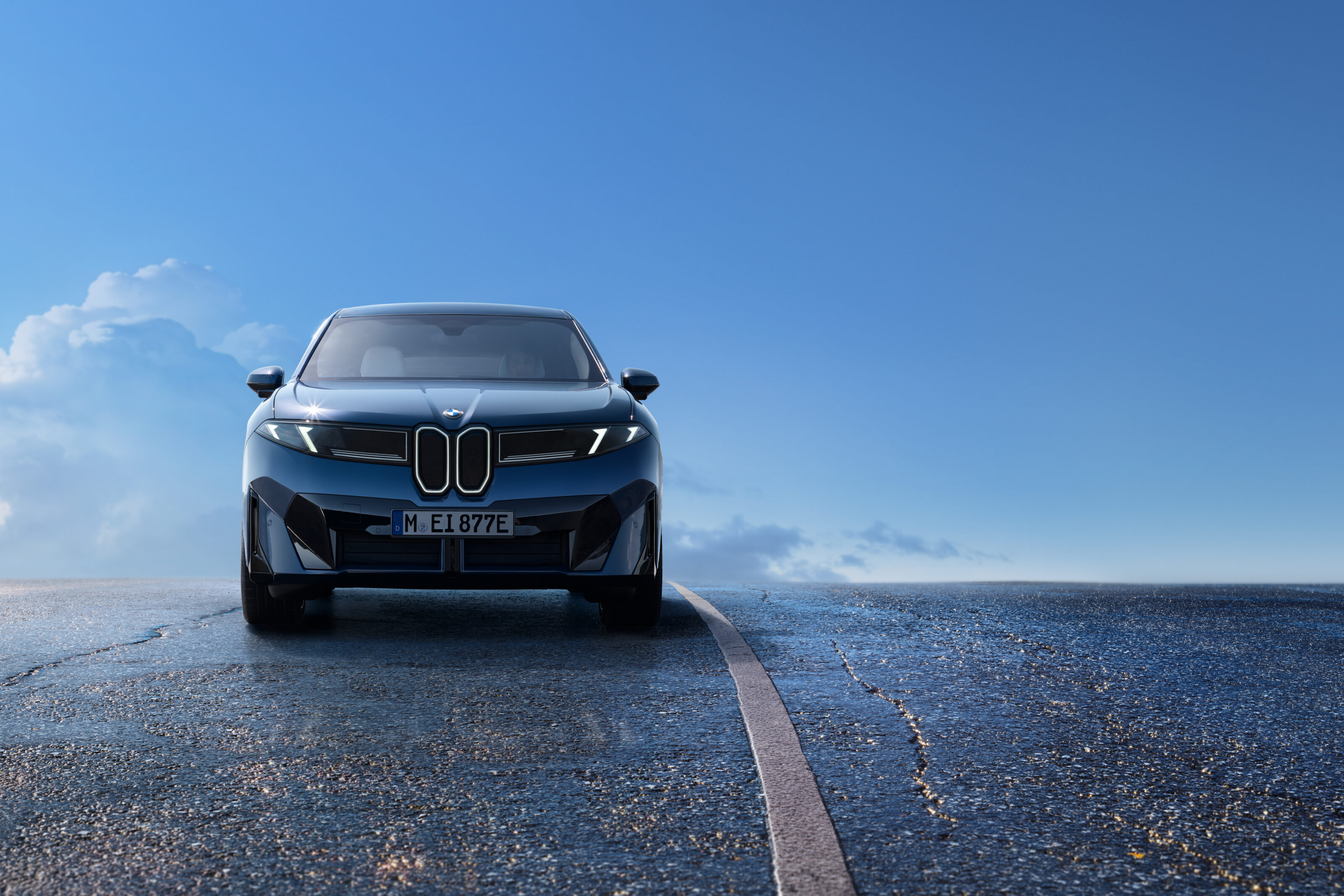
The Hungarian facility will also be the first to assemble BMW’s Gen6 high-voltage batteries. Production processes were refined in pilot plants and are supported by digital twins and AI databases, ensuring zero-defect quality monitoring and efficient local assembly.
With more than 2,000 employees and a design that integrates best practices from BMW plants worldwide, Debrecen will serve as a model factory for the brand’s global transition into the Neue Klasse era.
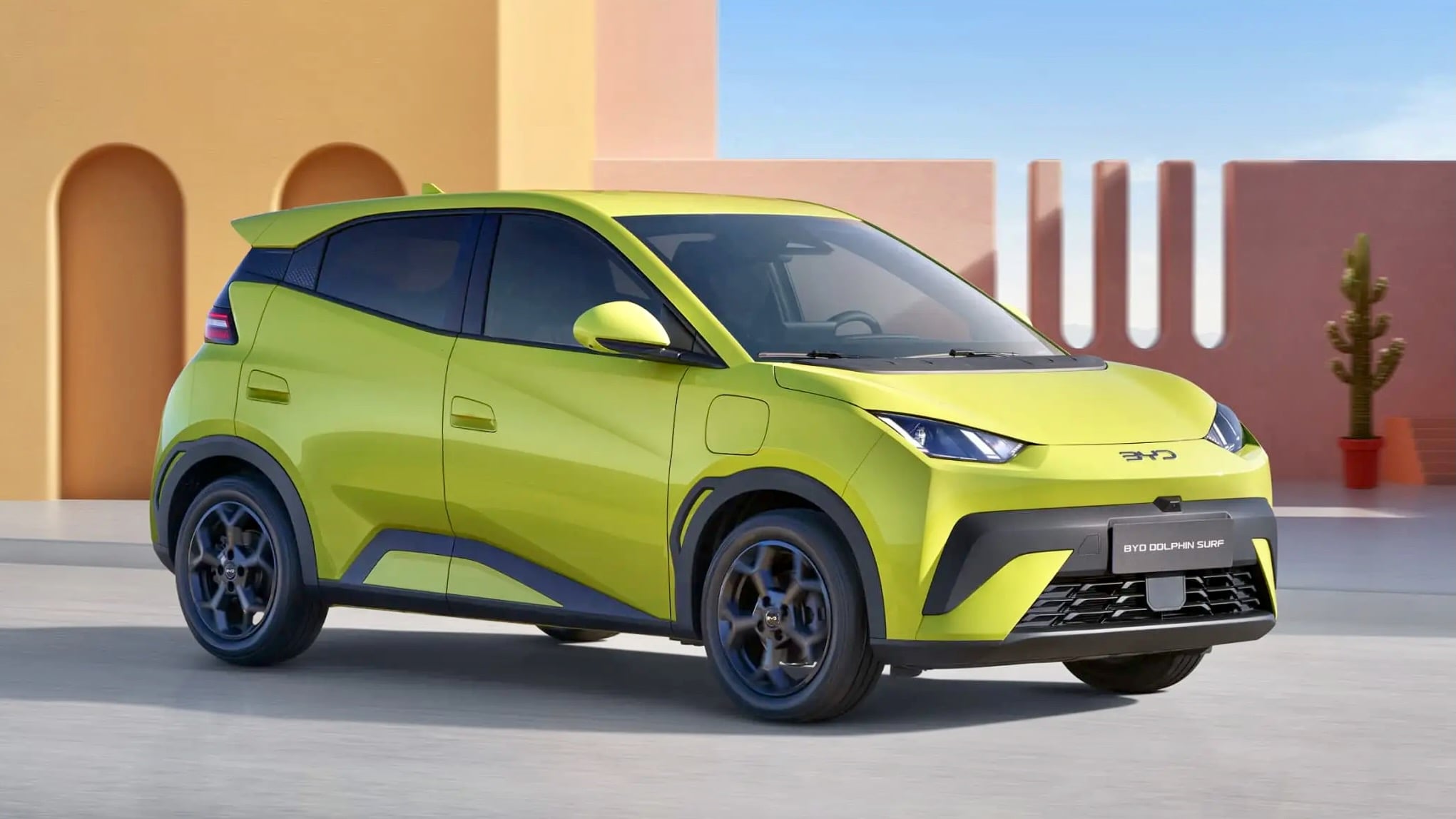
The long-rumoured BYD Seagull has been confirmed for New Zealand, though it will carry the name Atto 1 when it lands before Christmas, New Zealand’s Autocar reports.
BYD New Zealand country manager Warren Willmot confirmed that not only is the Atto 1 locked in for launch, but it will be joined by the upcoming Atto 2 EV SUV and the Sealion 5 plug-in hybrid SUV. While specifications are still being finalised, he said key details are already clear.
The Atto 1 will arrive in two variants – Essential and Premium. Both models seat four passengers in a compact 3990mm body, with synthetic leather upholstery and a width of 1590mm designed to suit tight urban environments.
The Essential grade is powered by a 65kW motor producing 175Nm, paired with a 30.08kWh lithium iron phosphate (LFP) battery. This setup promises a range of 220km under the WLTP standard, a 0–100km/h time of 13 seconds, and support for 65kW DC fast charging and 11kW AC charging. Vehicle-to-load (V2L) capability is also included.
Equipment highlights in the Essential include a 10.1-inch infotainment screen, seven-inch digital cluster, reverse camera, keyless entry with NFC functionality, and 308 litres of luggage space.
Stepping up to the Premium introduces a 115kW motor with 43.2kWh LFP battery, extending range to 310km WLTP and improving acceleration to 9.1 seconds. Charging capacity rises to 85kW DC.
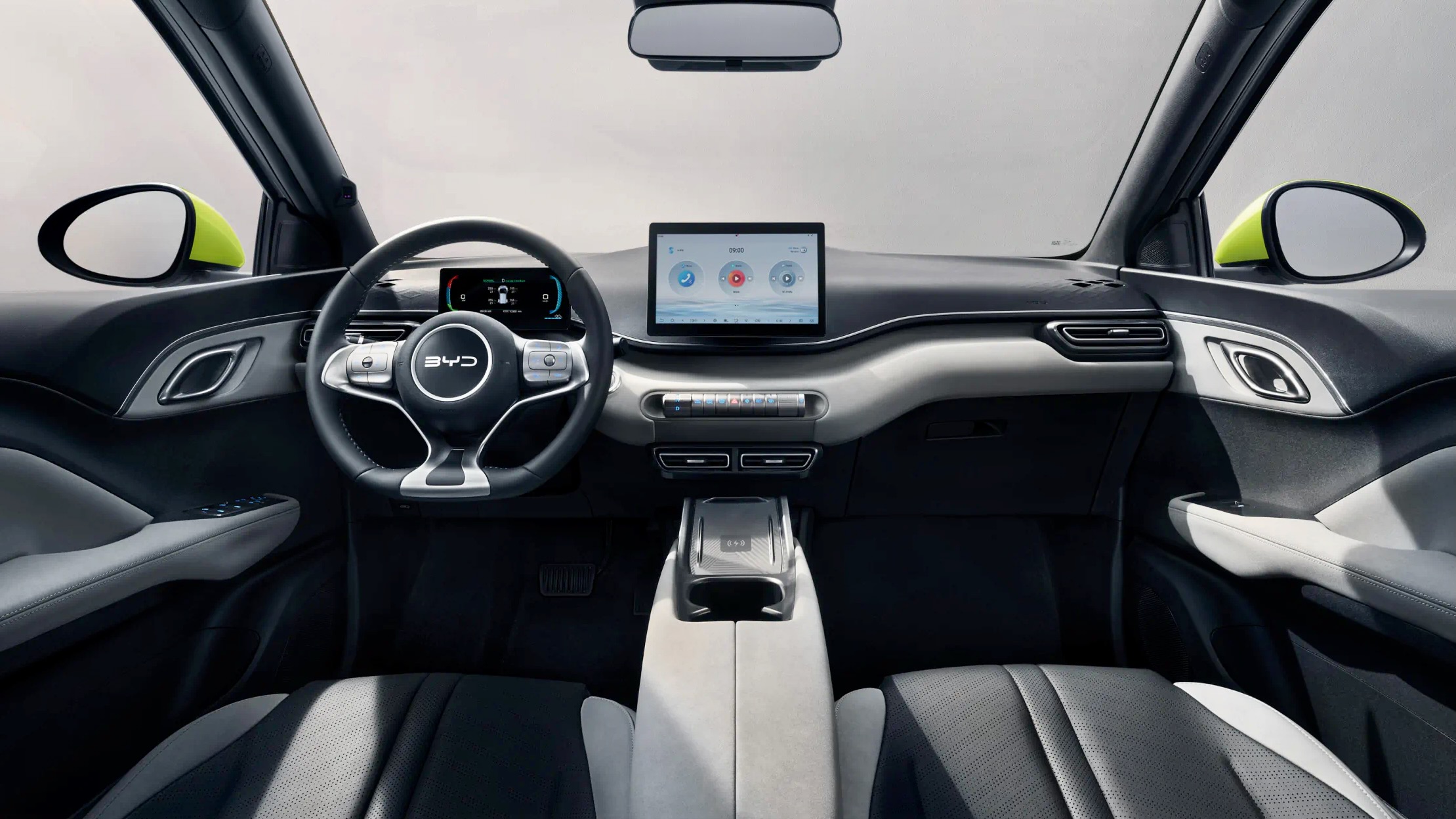
Premium features add LED headlights, 16-inch alloys, heated front seats, a 360-degree camera, wireless phone charging, and electric folding mirrors. Rear privacy glass, rain-sensing wipers, and six-way electric seat adjustment are also included.
Both grades will be available in Arctic Blue, Apricity White, Cosmos Black, and Sprout Green, with interior trim in black and grey.
According to Willmot, presales for the Atto 1, Atto 2, and Sealion 5 will begin in November, with first deliveries expected before Christmas. Pricing is yet to be confirmed.
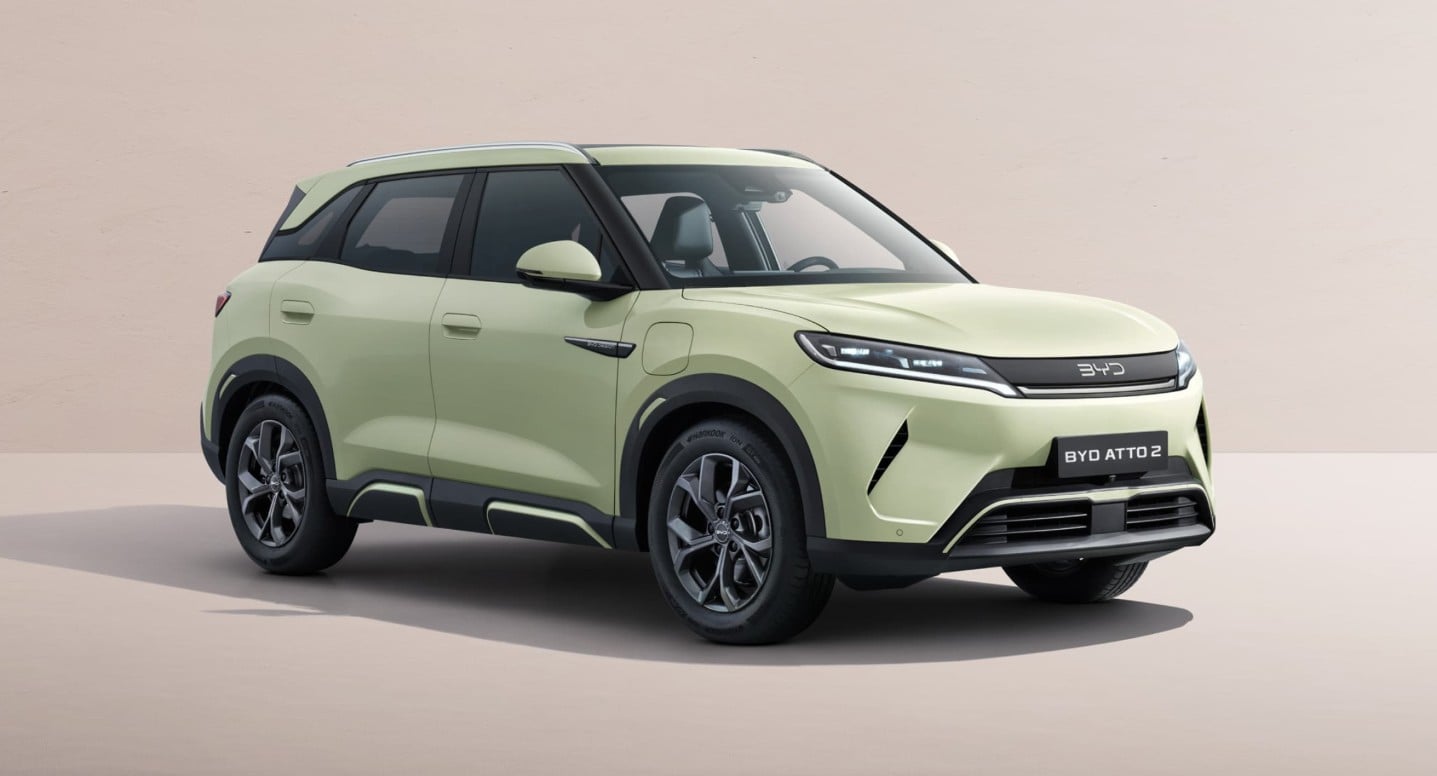
The model could be sold in Australia after a change in product strategy from the brand when it took back factory distribution after July 1 this year.
It had been ruled out by the company’s previous distributor, EVDirect, because of its likely four-star ANCAP rating, but now that it is made in right-hand drive form for the UK market, chances it will debut in Australia have increased. It would likely be the cheapest EV on sale in Australia.
Korean manufacturer KGM is preparing to unveil an all-new diesel-powered pick-up truck, with teaser footage suggesting the model will complement the recently introduced Musso EV.
The truck appeared this week in a corporate advertisement, wearing the word “expectations” in Korean script along its side. Early images hint at a tough new look, with a bold, Ranger-style front fascia, segmented LED light bar, and distinctive daytime running lights. The design suggests the model will compete directly with established dual-cab rivals such as the Toyota HiLux, Ford Ranger, and Volkswagen Amarok.

The double-cab silhouette confirms its workhorse positioning, though details on payload and towing capacities are still under wraps. Notable features in the teaser include fresh alloy wheel designs with unusual reflectors or indicators set into the wheelarches, robust bumpers, and heavy cladding along the sills – all pointing to a focus on durability and road presence.
At the rear, the new ute takes design cues from the Musso EV, showcasing vertical LED tail-lights and bold “KGM” lettering stamped across the tailgate. The company says the vehicle introduces a “new movement that exceeds expectations,” though has stopped short of explaining what this philosophy means in practice.

Industry observers believe the new model will succeed the existing Musso when it arrives in 2026, giving KGM a way to maintain a traditional diesel option alongside its growing electrified range. This move would allow the brand to cater to buyers not yet ready to transition to fully electric utes, while still modernising its line-up with cutting-edge styling and features.
KGM is yet to confirm official specifications, release timing, or market availability for the new diesel pick-up, but further announcements are expected in the coming months as development nears completion.
Nissan is preparing to reinvent one of its most celebrated performance icons, the GT-R, as the company shifts deeper into its electric era. The move will coincide with the expansion of its performance sub-brand Nismo, which has already been applied to the Ariya electric SUV, Patrol Nismo, and Z Nismo, with a hot-hatch Micra Nismo tipped to follow.
Hints of the GT-R’s electric future first emerged with the Hyper Force Concept revealed in 2023. Speaking recently, Nissan Europe product planner Xavier Tesson stressed that the new model must offer more than raw speed.
“GT-R is the toughest product in the line-up. It’s not just about a sports car – GT-R is about bringing something different. Do we really want to bring technology that already exists? That’s where the whole effort is concentrated, where do we find the edge?” he told Auto Express.
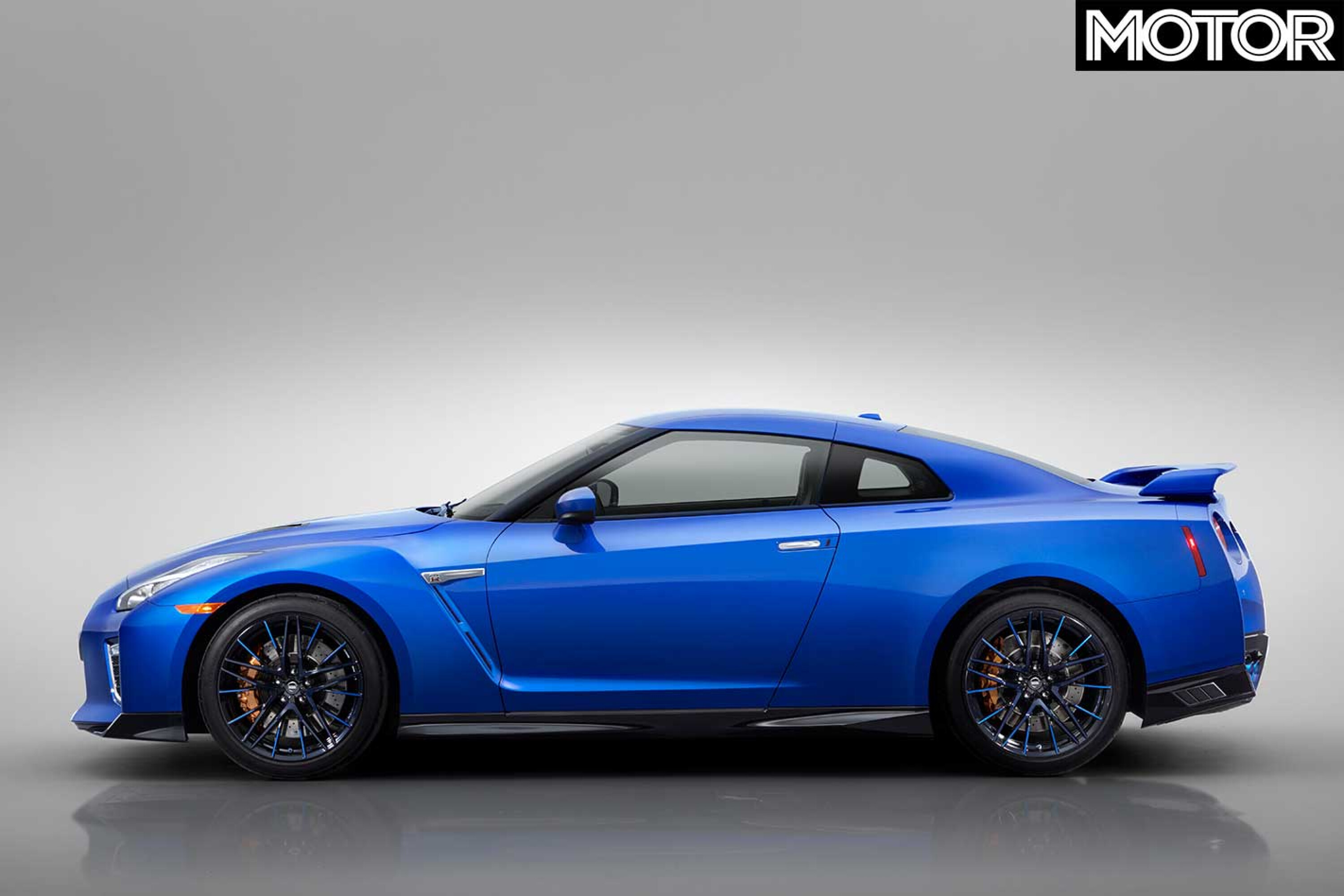
Recreating the aura of the R35 GT-R will be a greater challenge in the EV age, where rapid acceleration and high outputs are now relatively accessible. Nissan executives have acknowledged the need for distinction. Arnaud Charpentier, Nissan’s regional vice president of marketing and mobility, said: “If it is electric or electrified, it needs to remain a sports car. [But] if you end up with the same performance as an EV SUV, this is an issue… We need to reinvent the notion of a sports car.”
The Hyper Force concept suggested extraordinary figures, with its dual-motor powertrain producing around 1,000 kilowatts and driving all four wheels via Nissan’s e4ORCE system. But similar outputs are already being achieved by rivals employing multi-motor set-ups, highlighting the need for Nissan to look elsewhere for uniqueness.
One possible differentiator lies in solid-state battery technology. Nissan confirmed earlier this year that its first production vehicle equipped with the advanced cells will arrive in 2028. Solid-state batteries promise faster charging, greater range, and sharper power delivery than today’s lithium-ion packs. Aligning the GT-R’s relaunch with this breakthrough could cement its status as a pioneer once again.
For now, the timeline for the new GT-R remains under wraps. But if Nissan succeeds in marrying its motorsport heritage with cutting-edge electric technology, the next GT-R could redefine what a performance EV means in the years ahead.
Headed off on a road trip now the weather is warming up? A new study has identified the most dangerous parts of Australia to suffer a breakdown, while an ex-military survivalist has offered life-saving advice to motorists.
Car hire comparison site VroomVroomVroom analysed the coordinates of popular road-trip routes against the locations of fuel stations, mechanics, and hospitals. The findings reveal Australia’s 10 most remote and risky areas for breakdowns, where help is often hundreds of kilometres away
The Gunbarrel Highway in Western Australia topped the list as the most unforgiving place to break down, with long stretches of desert and few support services nearby. The Tanami Road, crossing the Northern Territory into WA, was also flagged, with stranded drivers often more than 200km from help. In Queensland, the Diamantina River Road and Birdsville Developmental Road ranked highly, placing travellers deep in outback territory with scarce resources.
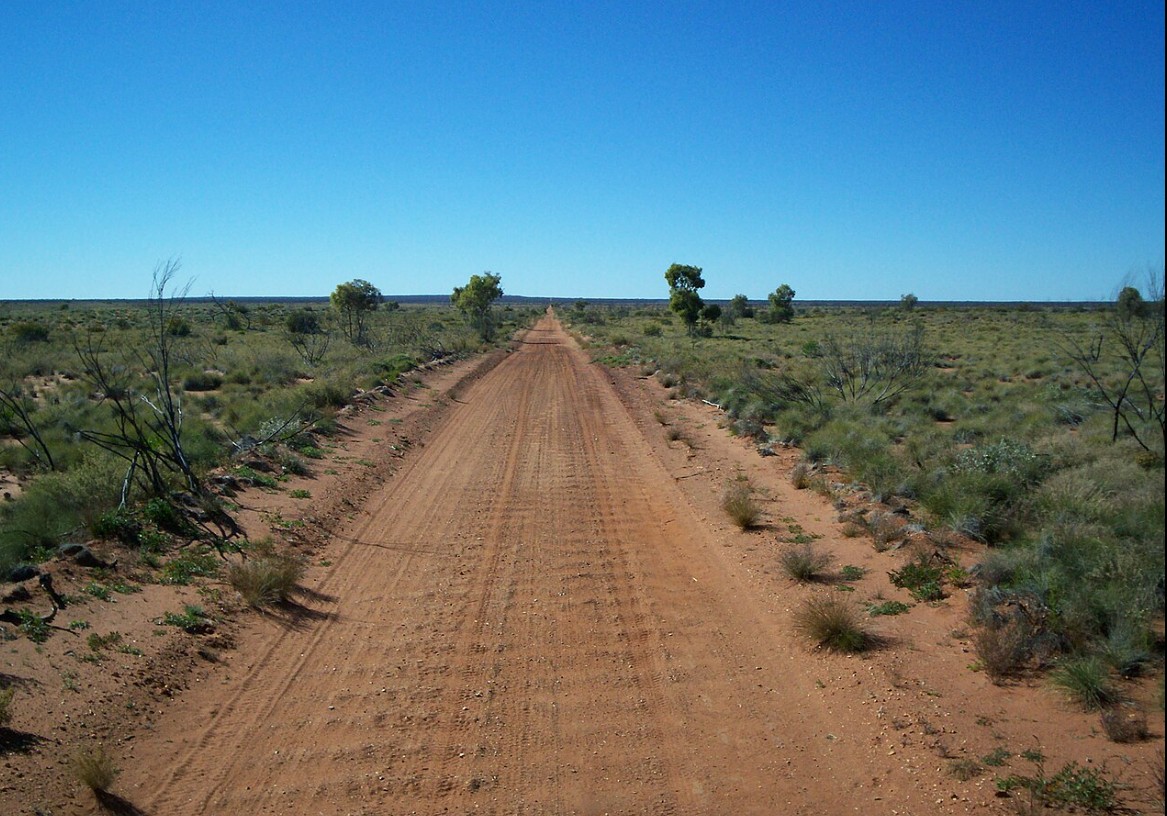
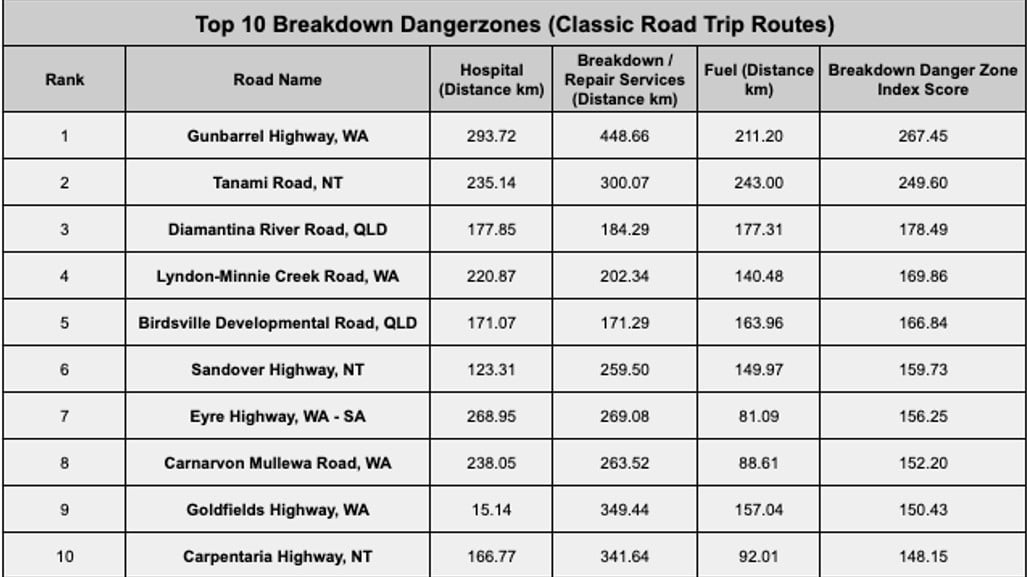
Military survivalist Ryan Wilson, founder of Working Paws Australia, said the findings were a timely reminder of the dangers. “Breakdowns happen, and when they do, especially in remote areas, you need more than luck to get through them,” he said.
Wilson, who served in the SASR, shared key survival tips for motorists heading into remote regions:
Survivalist’s Road-Trip Checklist
- Pack essentials: maps, GPS, repair kit, food, water, first aid, multitool, sunscreen, hat, mosquito repellent, snake-bite bandages, emergency contacts, and ID details.
- Stay calm and plan ahead: prepare mentally, check routes and weather, and always tell someone your plans.
- Don’t abandon the vehicle: use its materials for shade or shelter unless leaving is unavoidable.
- If walking away: carry water, sun protection, navigation tools, and stick to visible, open areas.
- Signal for rescue: mirrors, foil, or rocks can create visible signals; smoke from a controlled fire can also attract attention.

Mike Boyd, CEO of VroomVroomVroom, said the study underlines how critical preparation is for safe travel. “Our data highlights how quickly things can turn serious if your vehicle breaks down in a remote region and you’re not adequately prepared,” he said.
Boyd also cautioned renters to read their agreements carefully, as many hire firms prohibit driving on unsealed roads such as the Gunbarrel or Tanami, and breaking these terms could void insurance.
Joe Rogan has added another standout machine to his already impressive garage with the delivery of a custom-built Porsche 911 RSR tribute, constructed by New York-based specialists The RSR Project.
The one-off car, based on a 1985 Carrera tub, reflects Rogan’s passion for high-performance driving and the builder’s obsessive approach to Porsche’s motorsport-inspired heritage.
Founder Richard Schickman personally oversaw the project, which began with a complete teardown and bare-metal restoration. The centerpiece is a reengineered 3.5-litre flat-six producing 310 kW, fitted with twin-plug heads, GT3 intake plenum, Clewett throttle bodies, Elgin cams, Lucas injectors, Bosch coil packs, and managed by an Emtron SL ECU. A fully rebuilt transmission and refreshed suspension complete the drivetrain, ensuring reliability alongside performance.


“Our goal with every build is to honour Porsche’s motorsport heritage while elevating performance to meet modern expectations,” Schickman said. “For Joe, we wanted to create something stunning to look at and thrilling to drive.”
The RSR Project transforms each 1984–89 Carrera tub into a longhood-style shell, widened with steel flares and finished through a Pebble Beach–level paint process. Rogan’s example rolls on 15×9” and 15×11” Braid Fuchs wheels wrapped in Michelin TB15 vintage tyres, complemented by a ducktail spoiler, fiberglass bumpers, and Carrera striping.

Inside, the build mirrors the exterior’s detail. The stripped cabin was reupholstered with a new Porsche Classic dash, RS-style panels, and Perlon carpeting, staying true to its motorsport roots. Rogan opted for bespoke bucket seats trimmed in woven leather with nickel grommets reminiscent of 1960s GT40s, paired with a Momo Prototipo steering wheel and Wevo short shifter for mechanical precision. Unlike many customers, Rogan declined modern infotainment, requesting a minimalist, distraction-free cockpit, with only an electric air conditioning unit added for comfort.
Each car undergoes more than 700 miles of real-world testing before delivery. “Every RSR we create is built to be driven and enjoyed thoroughly,” Schickman said, noting Rogan’s car was extensively tuned and road-proven.
Builds from The RSR Project start at US$375,000 (approx. A$580,000), with typical delivery times of 12–18 months. Customers can commission additional performance upgrades, braking systems, or comfort features, but Rogan’s car remains a purist expression of Porsche’s golden era.

