
For a short time only, Coles are offering half price Coles Little Shop Collector’s Cases when you buy any of our motoring magazines at Coles or Coles Express.
From Monday 5 August until Tuesday 13 August 2019, whether you’re into Wheels, MOTOR, Street Machine, 4×4 Australia or Unique Cars magazine, you pay $2 for a Coles Little Shop Collector Case to display your minis.
* Terms & Condition apply. Available with any participating magazine purchased in Coles Supermarkets & Coles Express outlets nationally. Items must be scanned in the same transaction for discount to apply. Offer is available while stocks last.
They say repetition is a great way to make a point. That may be why, shortly after taking silver at Performance Car of the Year, the BMW M2 Competition claimed second at our other annual mega event.
This track review was carried out in conjunction with MOTOR’s Bang For Your Bucks 2019
We’re not trying to say it could never win PCOTY and BFYB, but that any car needs a lot of talent to finish second in two very different competitions. After all, less credentialled cars have won BFYB before.
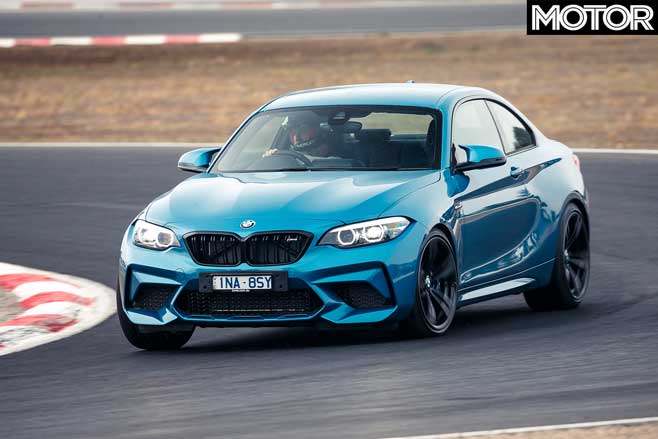
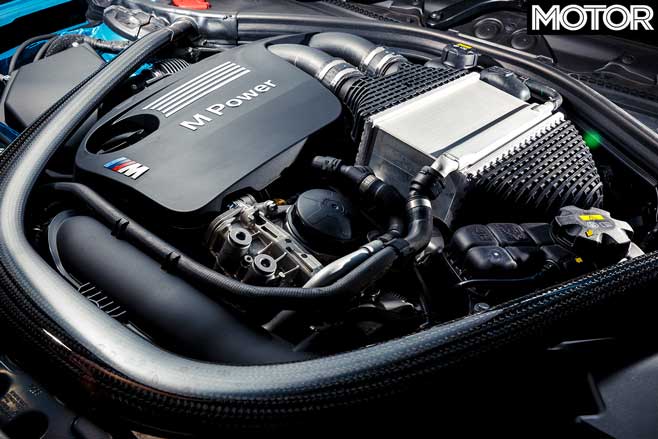
With the old M2’s single-turbo engine nearing its limits of power and efficiency it was replaced with a detuned M3/M4 Competition twin-turbo straight six, lifting outputs by 30kW and 85Nm for a total of 302kW/550Nm. All that, of course, is aimed exclusively at its rear axle.
Accompanying the engine is the same cooling system, carbon-fibre strut brace and side mirrors as its bigger siblings. They join the five-link rear suspension setup, aluminium suspension arms and electronically controlled locking differential originally interbred into the M2’s pugnacious body. Then there’s its price.
Thanks to the M2 Competition now sharing more components than ever with the M3/M4 range, like its ‘lightweight’ seats and software programming (which we’ll come back to), the fully kitted car now costs $104,900 (up from $99K). But settle on more basic wheels, headlights, seats and central locking and you can buy the discounted Pure version.
The six-speed manual costs the same as the seven-speed dual-clutch, so at $99,900 and almost double the average price of this year’s field it just scraped under the price ceiling.
Some might argue that the anomalous 2019 BFYB formula allowed it to achieve the otherwise impossible, but we firmly believe it would have swiped this stunning result, wet or dry. Let us explain.
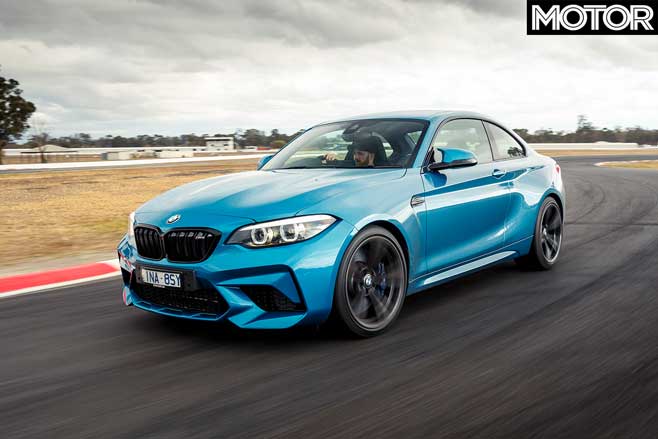
Back in 2016 the original M2 stormed across Winton’s hotmix to log a 1min 34.8sec lap. In the dry, this Competition Pure could easily improve on that time since it punches out an extra 13kW and 44Nm per tonne. And that would have dominated this event’s second quickest car, the Honda Civic Type R, which did a 1min 35.9sec lap in 2018.
It’s also in its own league for acceleration. We’ve previously launched it from rest to 100km/h in 4.5sec flat and to 400m in 12.52sec. The Ford Mustang GT is the only other car that could match those times.
As for judge’s rankings, even in a downpour the M2 clearly has us enchanted. The depth of pedigree is obvious. Starting with an excellently balanced chassis, you can use the brakes to adjust its stance into a corner, while a wide rear-track equals great drive exiting a corner.
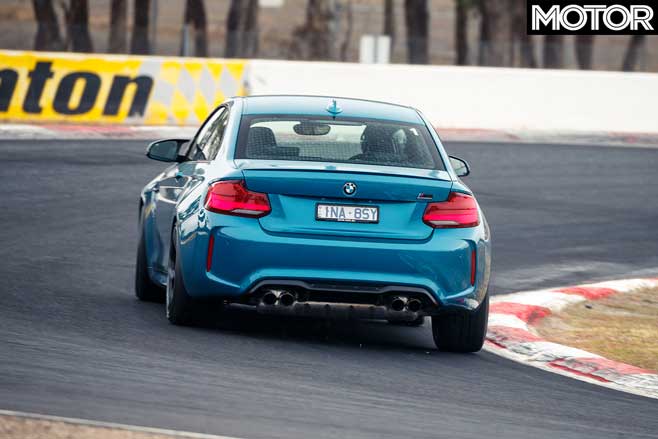
It extracts a good amount of grip from 245mm/265mm tyres that are held down by an expertly judged passive suspension setup. Or, you can use its locking diff and torque-laden engine to channel the spirit of the original 1M without fear of its most haunting flaw, its spooky rear end.
A forceful, flexible and smooth powerband gives your right foot good control over its angle of attack. And the weighting of the retuned electric steering feels more fluid and honest.
Its recalibrated DSC and MDM systems are very similar to the M3/M4 CS and BMW says they intervene later. But because they guide, rather than reprimand, you at the limit, it feels like they’re always working to inspire confidence.
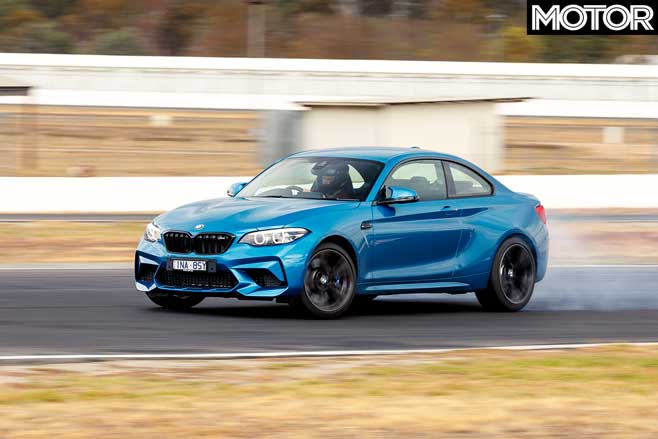
Gripes? Well, the Michelins don’t respond very well in cold conditions and there are better electric steering racks for tactility. The sound is hard-edged and metallic, like the M3 and M4, but hardly musical. However these things pale in the larger picture. It’s fantastic that the alluring, yet flawed, 1M has been evolved into this car.
Sure, it’s come so close to gold twice now and fallen short, but if what we hear is true, this will not be the M2’s last try for ultimate fame at a MOTOR mega event.
BMW M2 Competition Pure BFYB 2019 Results – 2nd place
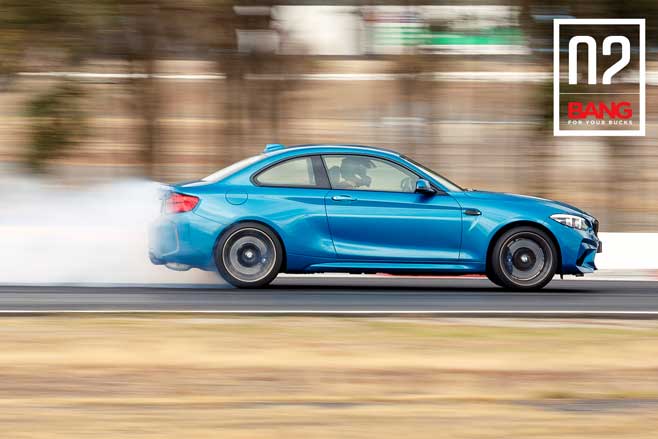
0-100km/h: 4.50sec 0-400m: 12.52sec @ 182.57km/h Price: $99,900 Bang Index: 188.7 Bucks Index: 52.2 BFYB Index: 120.4
Bang For Your Bucks 2019 Judges’ Comments
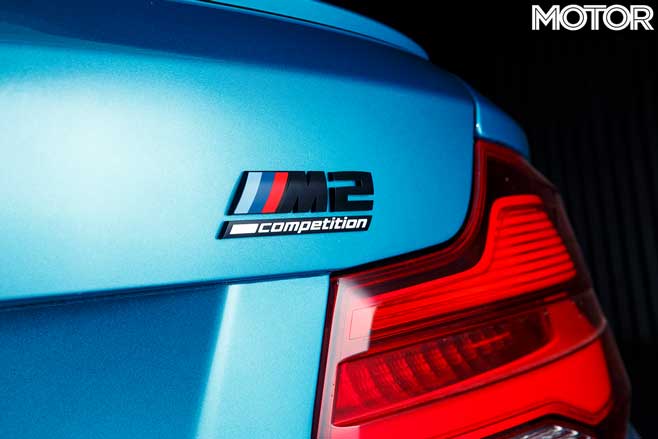
Campbell – 1st “Perfect in its own way. And that way will appeal to many.”
Cordony – 2nd “The CS is going to be a riot.”
Morley – =1st “One day BMW will build a better car than this. But they ain’t yet.”
Scott Newman – 1st “Should go down as a BMW great. Best car here, but also the dearest.”
Luffy – 1st “It did a 1:52.14 in patchy conditions and under those circumstances the tyres were the biggest let down. The Michelin Pilot Super Sport is a sport-focused tyre so in wet weather they were the limiting factor. But it is such a fun car to drive on the limit and it gives lots of driver feedback. In dry conditions it would have been so much better.”
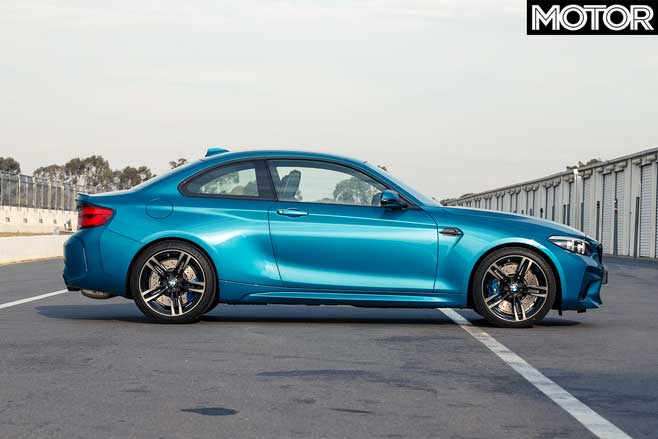
FAST FACTS 2019 BMW M2 COMPETITION PURE SPECS BODY: 2-door, 4-seat coupe DRIVE: rear-wheel ENGINE: 2979cc inline-6, DOHC, 24v, twin-turbo BORE/STROKE: 84.0 x 89.6mm COMPRESSION RATIO: 10.2:1 POWER: 302kW @ 5250-7000rpm TORQUE: 550Nm @ 2350-5200rpm WEIGHT: 1550kg POWER-TO-WEIGHT: 195kW/tonne TRANSMISSION: 7-speed dual-clutch SUSPENSION: struts, coils springs, anti-roll bar (f); multi-links, coil springs, anti-roll bar (r) BRAKES: 380mm ventilated discs, 6-piston calipers (f); 370mm ventilated discs, single-piston calipers (r) WHEELS: 19.0 x 9.0-inch (f); 19.0 x 10.0-inch (r) TYRES: Michelin Pilot Super Sport, 245/35 ZR19 93Y (f); 235/35 R19 (r) PRICE: $99,900
Bang For Your Bucks 2019
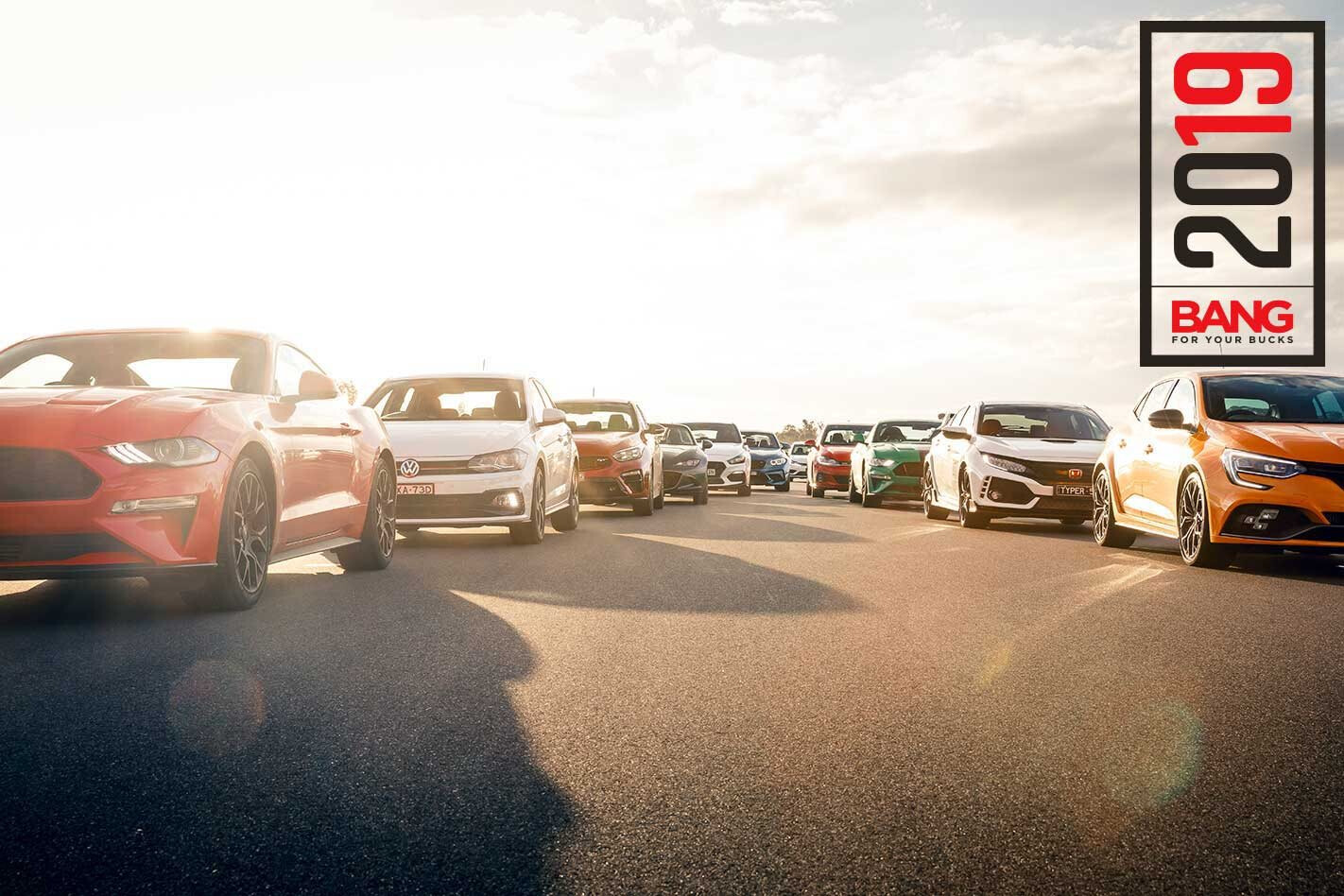 The Contenders, Judges & Criteria
11 of the hottest new fast cars under $100K roll up to take on our famous value-for-money formula. Which will be number 1?
Kids are always begging to sit in the front seat. The cockpit’s more exciting, right? And no one wants to be squashed between annoying siblings.
Most parents are confused about current regulations. As a mother of a 9-year-old daughter I’m guilty of this. Isn’t 7 — or something — the magic number when kids can move out of child restraints? My daughter can sit in the front seat now, can’t she?
Even if parents have a vague idea about the laws, they often give in to pester power; children complain they’ve outgrown their ‘baby’ seat and beg to sit in the front of the car. Too often, busy mums and dads — juggling shopping, school bags and other kids — acquiesce.
However there are national laws regarding carrying your precious cargo. These are set out by the National Transport Commission (NTC) which maintains the Australian Road Rules (ARRs). The thing is, each state and territory has adapted the rules to meet individual requirements, resulting in slight variations across borders. For that reason it’s best to check your local rules in the links below. As a general guide, however, here are the rules as set out by the NTC:
Children under 6 months
Babies up to the age of 6 months must be restrained in an approved rearward-facing restraint. The restraint is held in place by the seatbelt and the top tether strap, and incorporates an inbuilt six-point harness system.
Children aged 6 months to 4 years
If the passenger is 6 months old or older, but is less than 4 years old, he or she must be restrained in a suitable and properly fastened and adjusted:
- Rearward facing approved child restraint; or
- Forward facing approved child restraint that has an inbuilt harness.
6 months – 4 years: Front or back seat?
Children under the age of 4 years must only travel in the back seat of a vehicle.
Children aged between 4-7 years
If the passenger is 4 years old or older, but is less than 7 years old, he or she must:
- Be restrained in a suitable and properly fastened and adjusted forward facing approved child restraint that has an inbuilt harness; or
- Be placed on a properly positioned approved booster seat and be restrained by either a suitable lap and sash type approved seatbelt that is properly adjusted and fastened, or by a suitable approved child safety harness that is properly adjusted and fastened
4-7 years: Front or back seat?
A passenger who is 4 years old or older, but is less than 7 years old, must not be in the front row of a motor vehicle that has 2 or more rows of seats unless in the row or rows behind the front row:
- All of the other seats are occupied by passengers who are also less than 7 years old; or
- There is no empty seating position in which the passenger can sit in accordance with this rule.
Children aged between 7-16 years
Children aged over 7 years must use either:
- A booster seat; or
- An adult seat belt.
Children aged 7 years and over can travel in the front seat. However, research shows that children under 12 years are much safer travelling in the back seat.
As mentioned, some states have made amendments to the national laws. For example, Victoria, News South Wales and South Australia no longer consider age ‘7’ the magic number to take a child out of a child restraint. Because children come in all shapes, sizes and heights, these states recommend children stay in booster seats until they are 145cm tall.
This is because an adult lap-sash seat belt is designed for people with a minimum height of 145 cm. Research shows adult seatbelts only start to fit people properly when they reach this height. That’s when a seatbelt sits across the strongest bones of the body.
Children who are not tall enough to use an adult seat belt can slump into their seat. The lap part of the seat belt is then too high on their stomach which causes more serious injuries in a crash.
145cm is taller than you think; most children don’t reach this height until they are aged ten to twelve.
Parents can probably hear the howls of protest from their young ones. There’s always a temptation to give in to badgering kids. But if you do have an accident, you don’t want to regret the decision you made immediately before that: The decision to let your child ride in the front seat or go without their booster that day.
To see the specific rules for your state or territory, follow the links below:
Australian researchers have discovered that comfort-boosting accessories frequently used by senior drivers could be increasing their chances of becoming seriously injured in a car crash.
The study, conducted by the Transurban Road Safety Centre at Neuroscience Research Australia, performed over 130 simulations of what happens to a driver’s body when different car seat accessories are fitted. The type of accessories examined were mostly related to comfort or posture correction and are frequently used by older drivers – but they are not necessarily restricted to that age group.
Cushions placed on the seat base, on the seat backrest, lumbar support cushions and neck/headrest cushions all drew criticism for their ability to alter the driver’s body geometry.
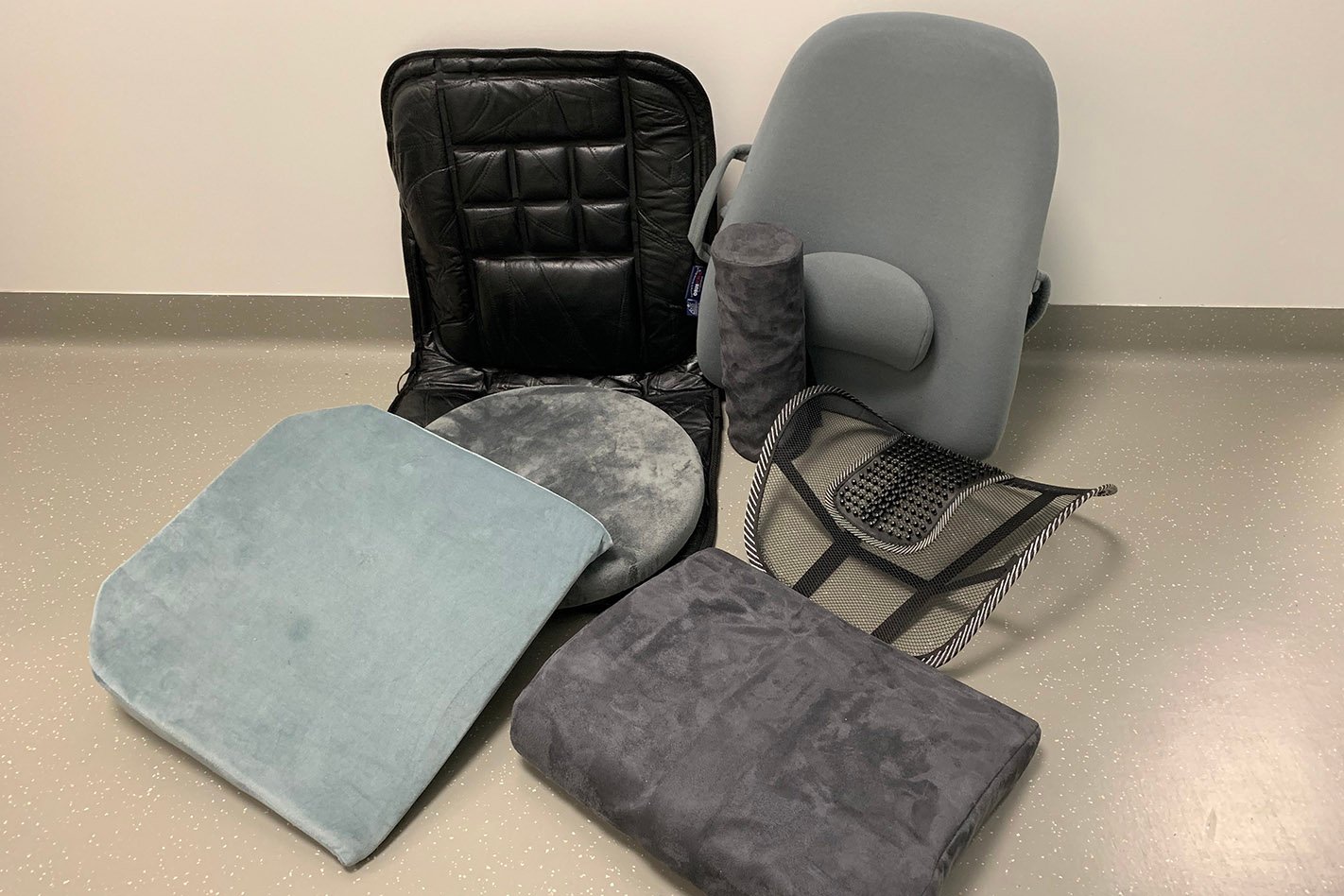
“Around a quarter of older drivers use an aftermarket accessory to improve their comfort. But these products often have not been tested for safety,” said Associate Professor Julie Brown, the joint director of the Transurban Road Safety Centre.
“The results show accessories that change the geometry of a seatbelt or the posture of a driver could increase the chance of these chest injuries in a crash,” she added.
“Our findings demonstrate the need to provide better guidance for older drivers on how to both be comfortable and safe while behind the wheel. Currently there is nowhere for people to go to get information about how to safely use these accessories,” she said.
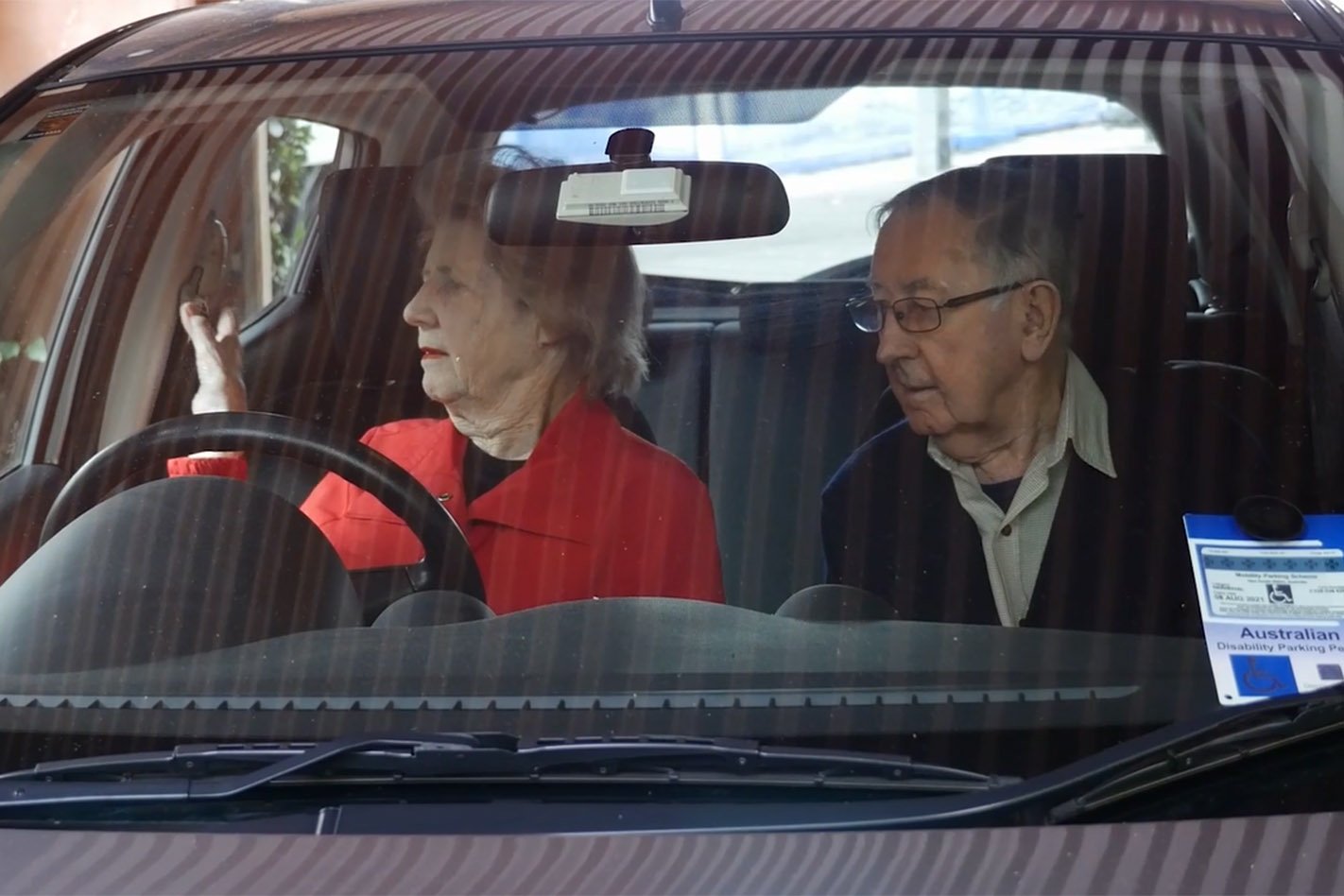
In many cases, drivers may not be aware that their car’s standard seats can be adjusted to their desired position without requiring an accessory to be used. In many cases, they may simply need to experiment with their seat controls.
“If a driver can adjust their seat instead of sitting on a cushion or placing something behind their back, it will likely be much safer,” she said.
While people over the age of 65 are naturally frailer and thus more susceptible to injury than younger adults, using cushions to change their seating position can put them at even further risk.
Seatbelts are designed to work best when the lower belt sits across the pelvis and the upper belt lays across the sternum, where the two halves of the ribcage meet; positions which help direct the force of a crash into the parts of the skeleton that can sustain it best.
Moving the belts away from these areas to sit across the abdomen or across the upper chest can have life-ending results – and not just for elderly drivers. While the advice applies to anyone seeking to add some extra comfort to their car seat, the Transurban Road Safety Centre says that elderly drivers are the group most likely to be using the kinds of accessory pillows that carry an injury risk.
After months of speculation, Toyota has finally been hit with a class action that alleges that its most popular vehicles, including the Toyota HiLux, fail to meet acceptable quality levels under Australian consumer law. The number of vehicles involved could exceed 250,000.
The action, instigated by legal firm Bannister Law, alleges that Toyota’s most popular diesel engine – the 1GD-FTV 2.8-litre four-cylinder turbocharged diesel found in the HiLux, Prado and Fortuner – is fitted with a potentially poor quality diesel particulate filter (DPF) that is costing vehicle owners money.
The DPF is designed to collect soot and other particles from the exhaust process and burn them off when certain conditions are met. In most cases, the DPF burns up the collected contents –known as regenerating – and vents it to the atmosphere once a certain exhaust temperature and road speed have been reached.
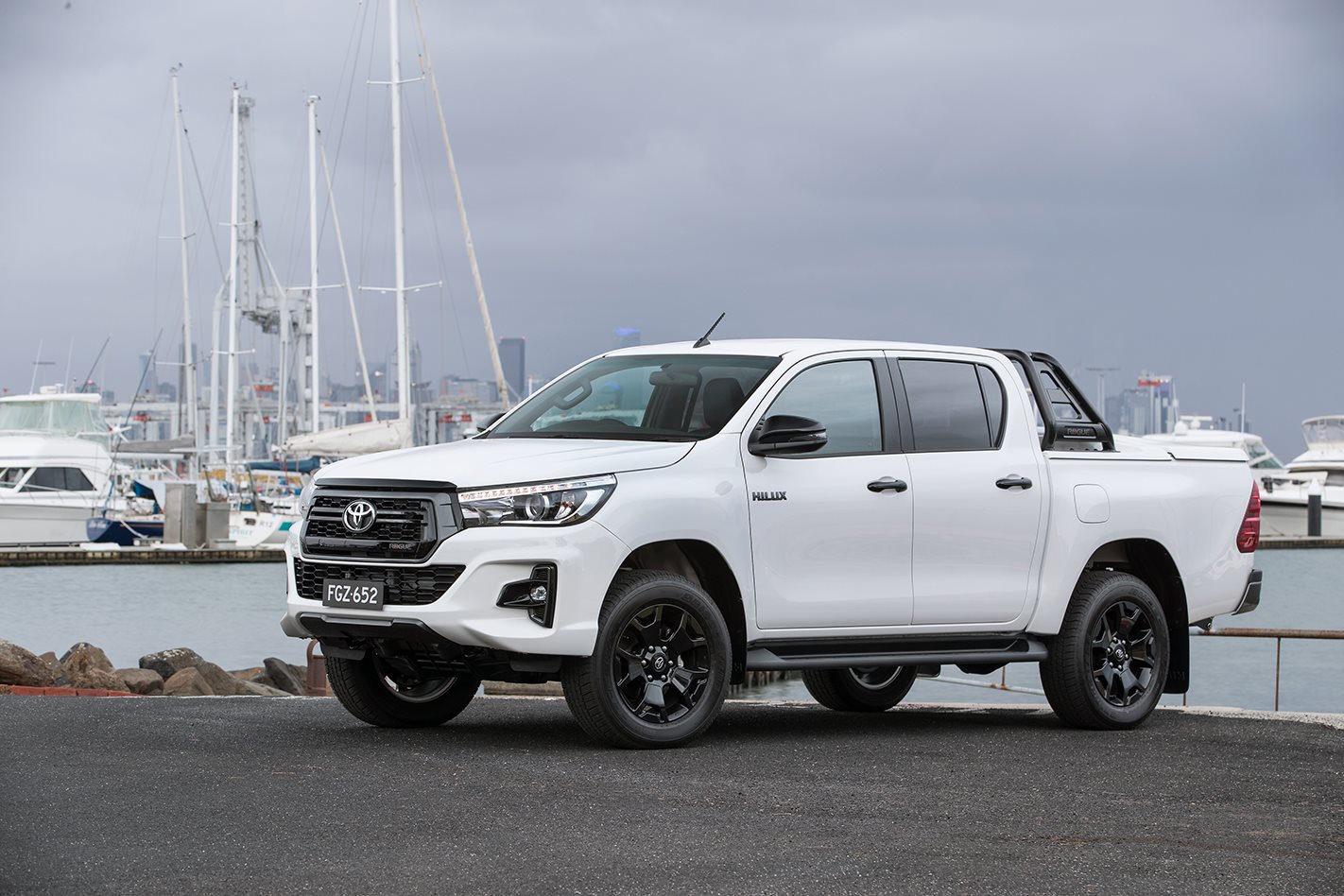
However, if a DPF-equipped vehicle doesn’t reach those parameters (such as a car being used exclusively for suburban driving), then the filter can clog up and fail.
“This regeneration system fails, or has a propensity to fail, to prevent the DPF from becoming partially or completely blocked,” reads the action notice from Bannister Law. “This, in turn, causes the Affected Vehicles to experience a myriad of other issues, including decreased power, increased fuel consumption and the emission of excessive white smoke and diesel particulate matter into the atmosphere.”
Growing claims about the poor performance of the DPF system saw Toyota make a running change to 1GD-FTV-equipped vehicles from half-way through 2018, adding a manual override button to the HiLux, Prado and Fortuner to force the DPF to regenerate on demand.
It also issued a service notification in January this year – in lieu of a recall – calling for 1GD-FTD owners to visit a dealership for repairs. This process included updated engine software and inspection of the DPF.
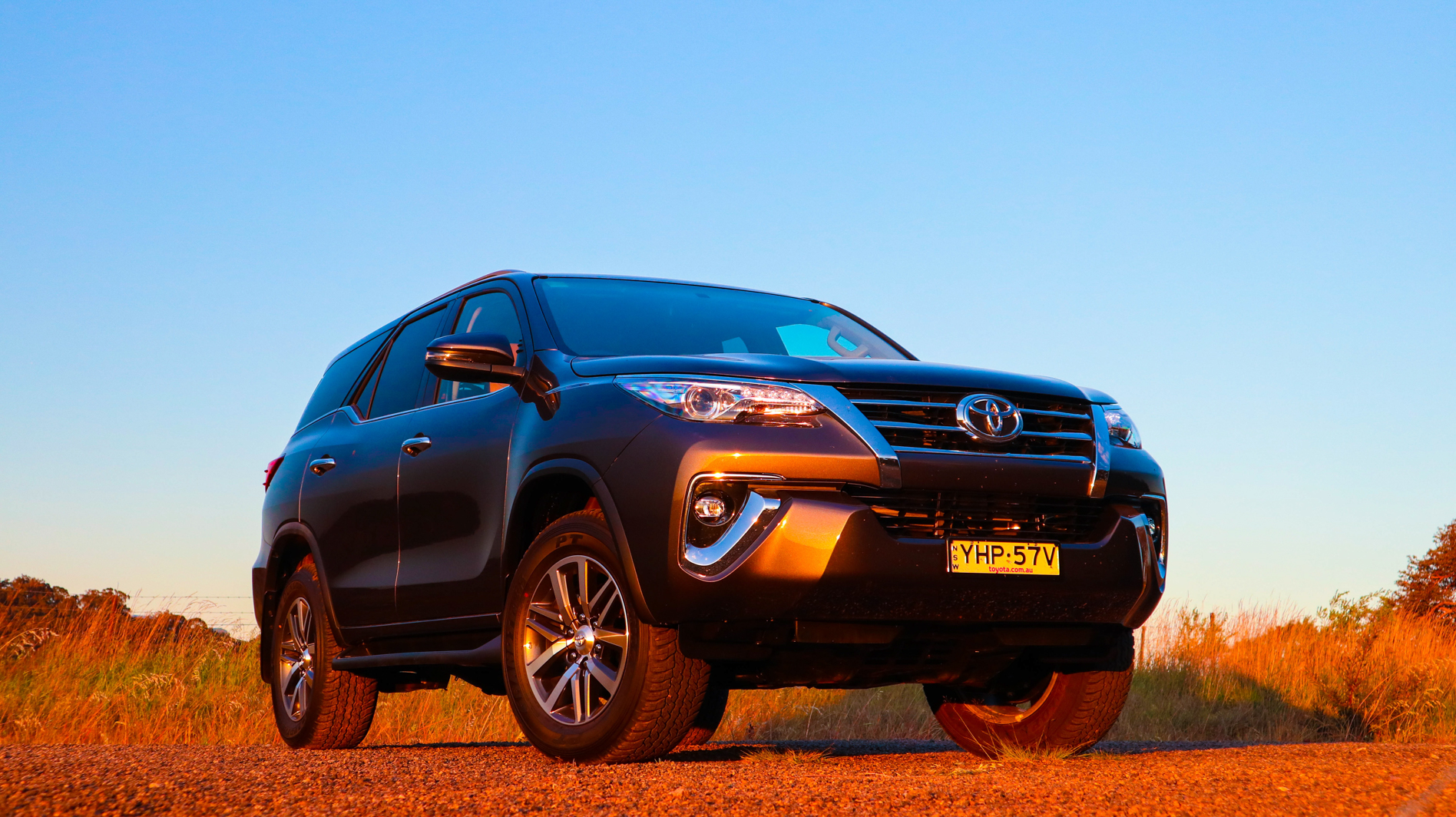
Toyota Fortuner
WhichCar also understands that the in-cabin switch is being retrofitted on-demand to older vehicles that use the 2.8-litre engine that are deemed to have DPF issues.
The law firm claims that the 2.8-litre engine-equipped vehicles fail to comply with the statutory guarantee as to acceptable quality provided under the Australian Consumer Law, and Toyota has “engaged in conduct that was misleading or deceptive and, in the circumstances, unconscionable.”
“The Affected Vehicles experiencing these issues require time-consuming and costly repairs, including repeated vehicle servicing and repeated replacement of the DPF in its entirety,” the statement read.
The claim will seek compensation for the loss and damage, including the reduction in value of the vehicles and the costs of excess fuel consumption resulting from the defects, inspection, service and repair costs, as well as lost income.
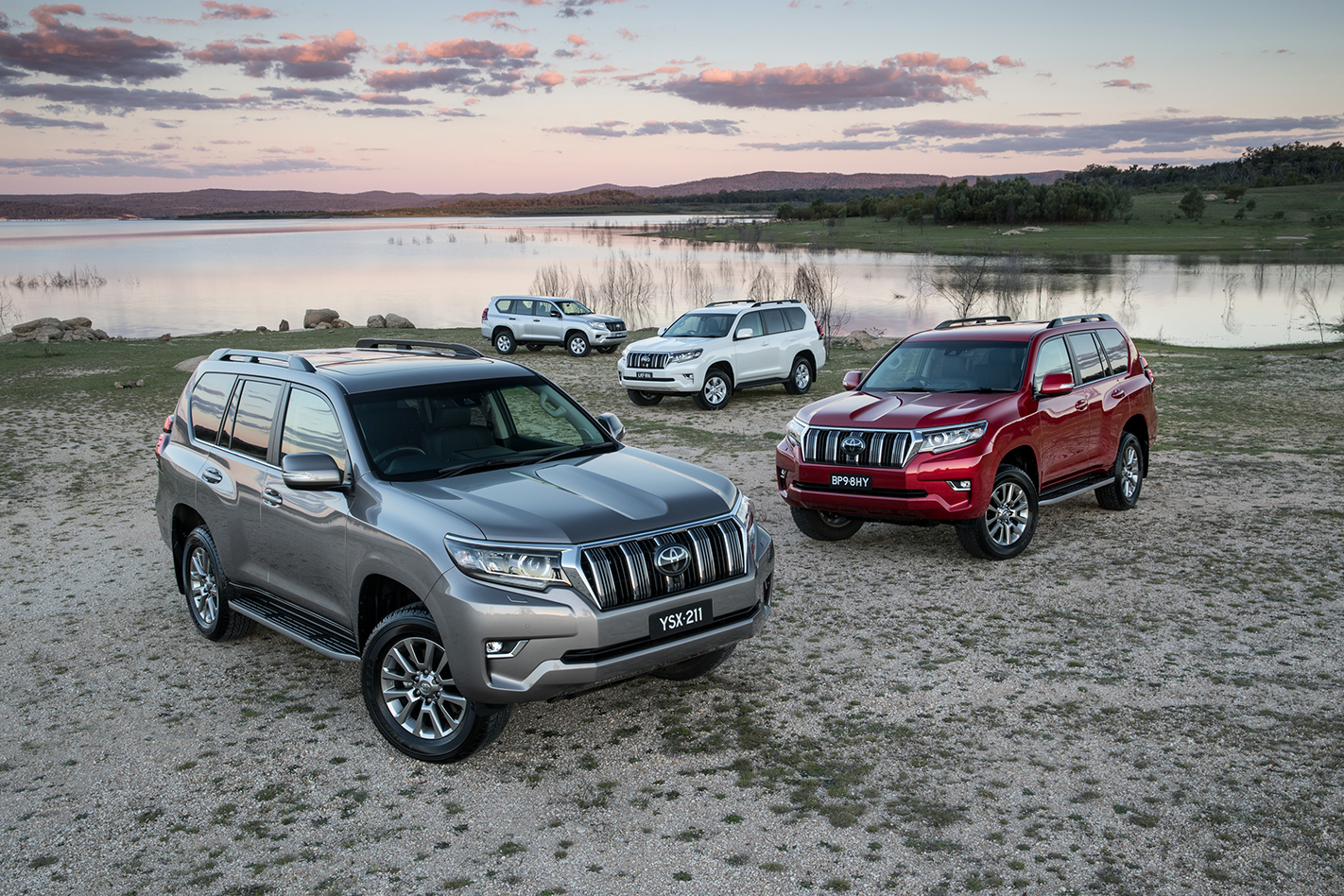
Toyota Prado
For its part, Toyota is staying mum about the matter.
“Toyota Australia is unable to comment as this matter is before the courts,” it said in a statement. “We encourage any Toyota owners with questions or concerns about their DPF to contact their closest/preferred Toyota Dealer (https://www.toyota.com.au/find-a-dealer) or the Guest Experience Centre on 1800 869 682 (Monday to Friday 8.30am to 5.30pm AEST).”
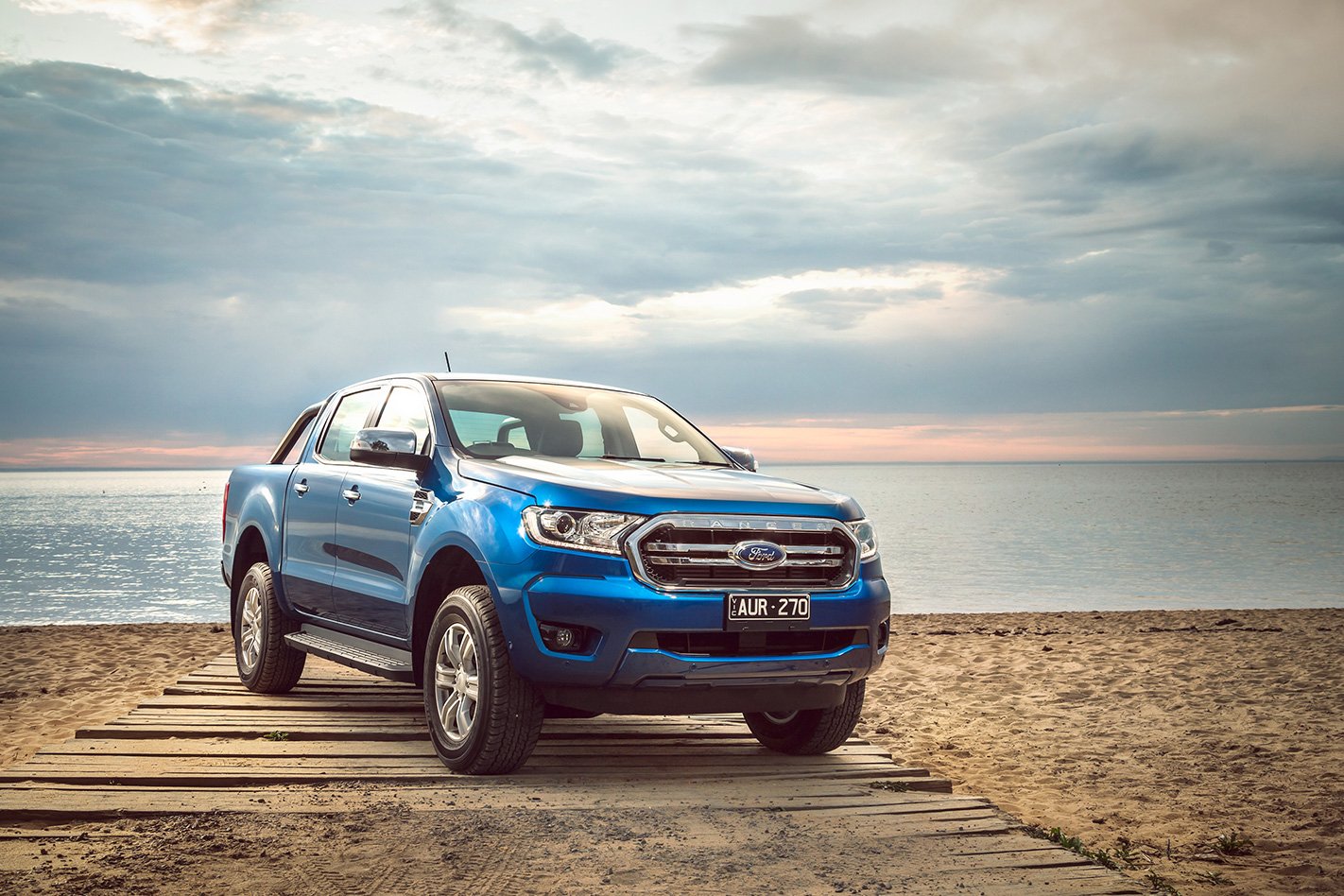
Dual cabs are in vogue. And it’s not just tradies who are buying them. The traditionally trusty workhorse has now become a fashion statement. It’s one where body cladding and stickers mean more than engine outputs and true off-road ability. Nowadays a Ford Ranger XLT is ‘driveway goals’ for myriad families and tradies alike. Or you could make a different statement. You could get behind the wheel of a FPV Pursuit ute for a circa $60k ask. For that outlay you can take home a supercharged V8 and not a four-pot turbo diesel.
FORD RANGER XLT
If you can’t stretch to the Ford Performance-fettled Ranger Raptor, the XLT offers a lot of the experience for less cash. However, you do miss out on Fox shocks, Baja driving mode and aggressive off-road styling additions among other things. In the XLT you can opt for the same 2.0-litre bi-turbo four-cylinder diesel and 10-speed auto that features in the Raptor. While it might not be a powerhouse, there’s a newfound refinement over the outgoing 3.2-litre five-cylinder and its efficient at 6.7L/100km.
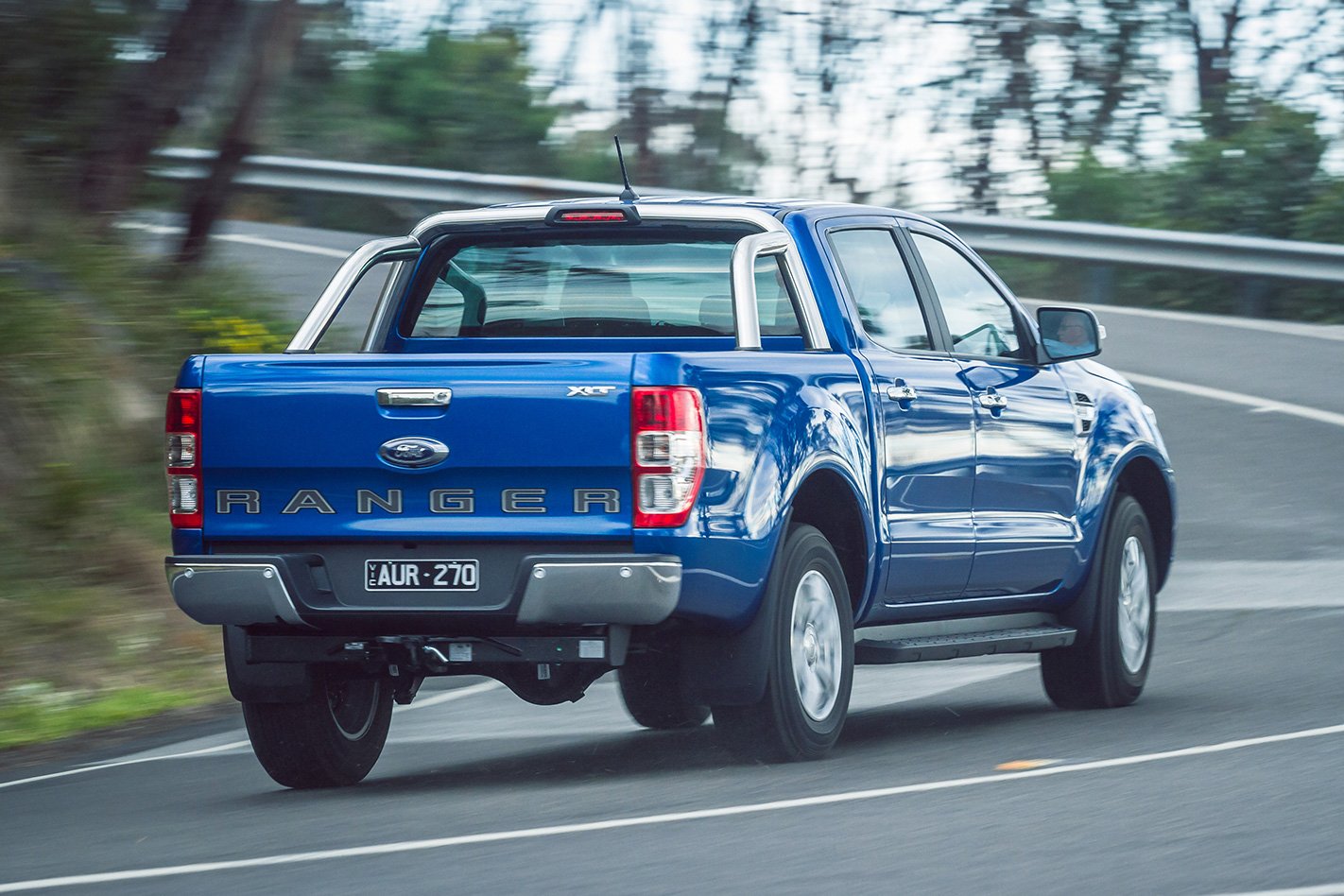
If you want to go off-road there’s 237mm of ground clearance, the wading depth is 800mm, while the 2.0-litre variants also gain the Raptor’s Terrain Management System. On-road the XLT mingles with the best of the dual cabs for dynamics and overall NVH levels are well suppressed. The XLT also gains a raft of safety tech, including AEB as well as pedestrian and vehicle detection.
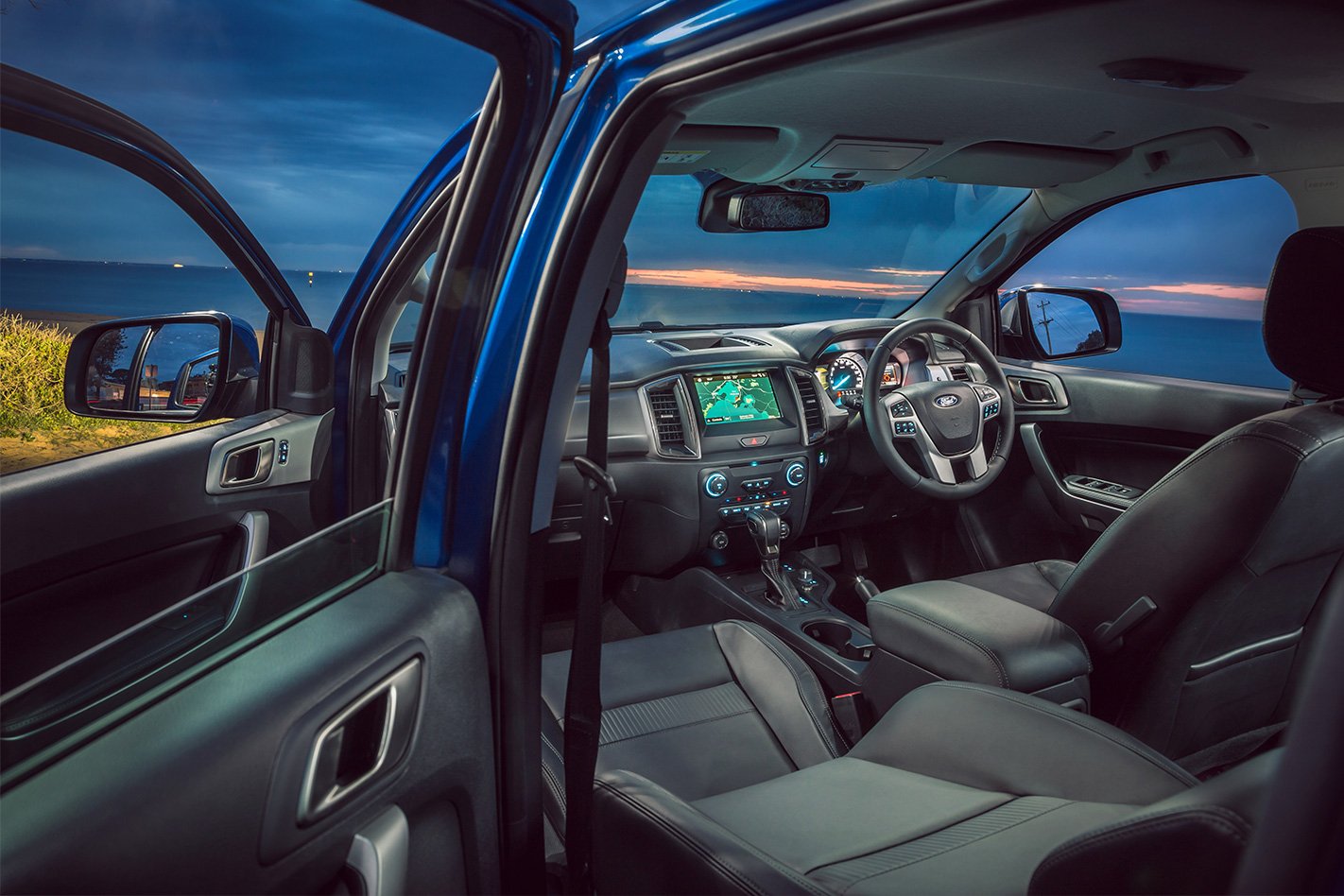
The Ranger XLT dual cab offers a spacious cabin with room for five to be seated comfortably. The overall design is a mix of passenger car and ‘truck’, but the SYNC infotainment system works well and also offers support for Apple CarPlay and Android Auto. The rear tub is useful (1041kg payload) and there’s a 3500kg towing capacity, but for towing purposes, the older five-pot oiler is the better pick. Still, it makes for an ‘adventure vehicle’, one where the family can come along, too.
FORD FALCON PURSUIT UTE
When you’ve got 315kW and 545Nm of supercharged V8 goodness, you can have a lot of fun in a different way. The FPV doesn’t have the off-road or family-lugging prowess of the Ranger, but it makes up for it. On the run, when managing traction becomes less of an issue, the 1792kg Pursuit hauls at a pace that belies its estimated 5.0sec 0-100km/h time. The six-speed ZF auto is by far the better choice (over the six-speed manual) and the soundtrack is beaut, with a great mix of supercharger whine and V8 rumble from the Miami 5.0-litre bent eight.
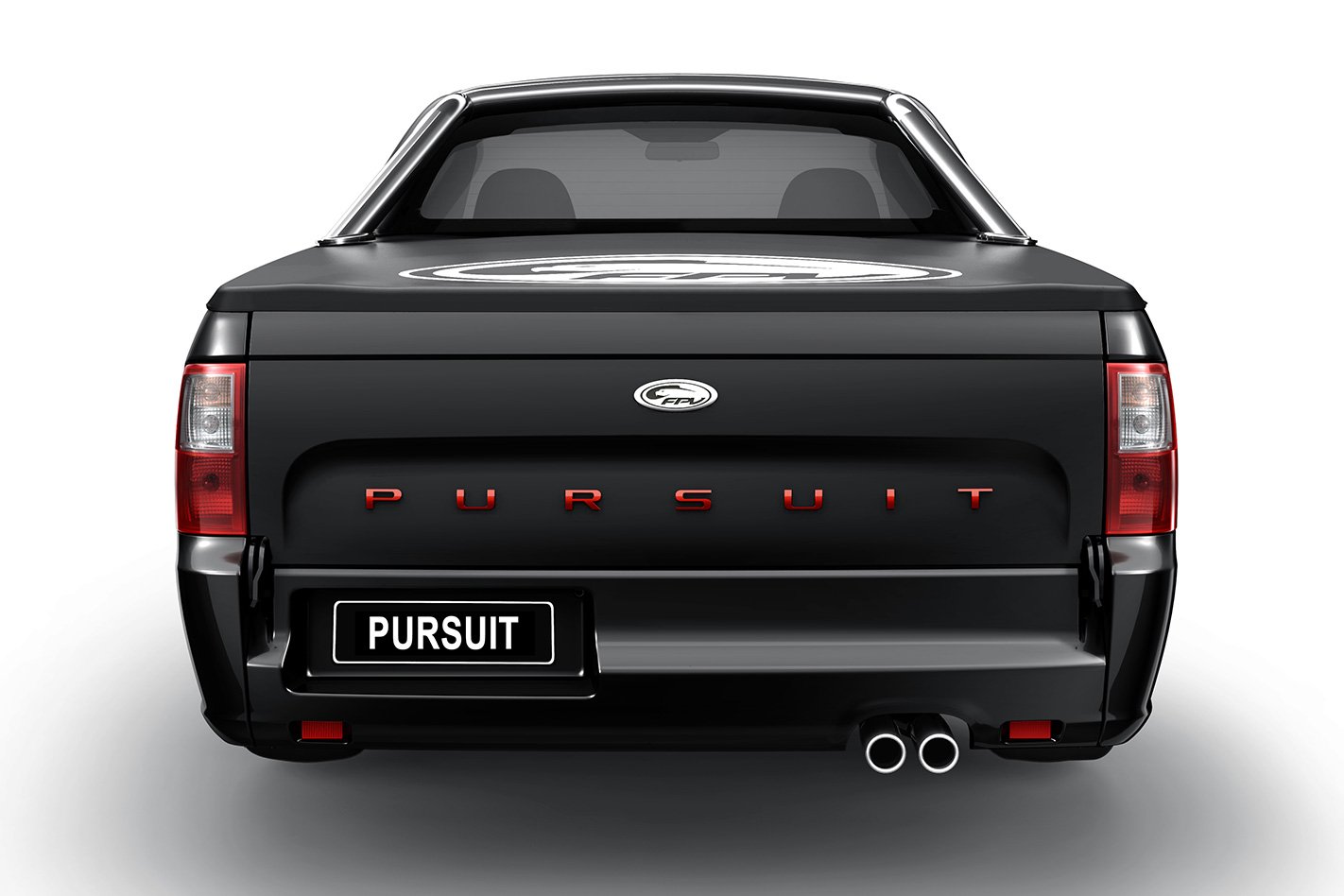
The Pursuit’s live rear axle, 245-section rear tyres and leaf springs makes getting 315kW down to the ground a little tricky. Hence it’s not dynamically brilliant either. However, the ride quality is supple enough and you could easily cover a lot of ground in the comfortable seats. Plus, if you’re using it like a pseudo performance coupe, the tray forms as a huge boot – although it is just as practical as a normal Falcon ute if you choose to use it as a work vehicle.
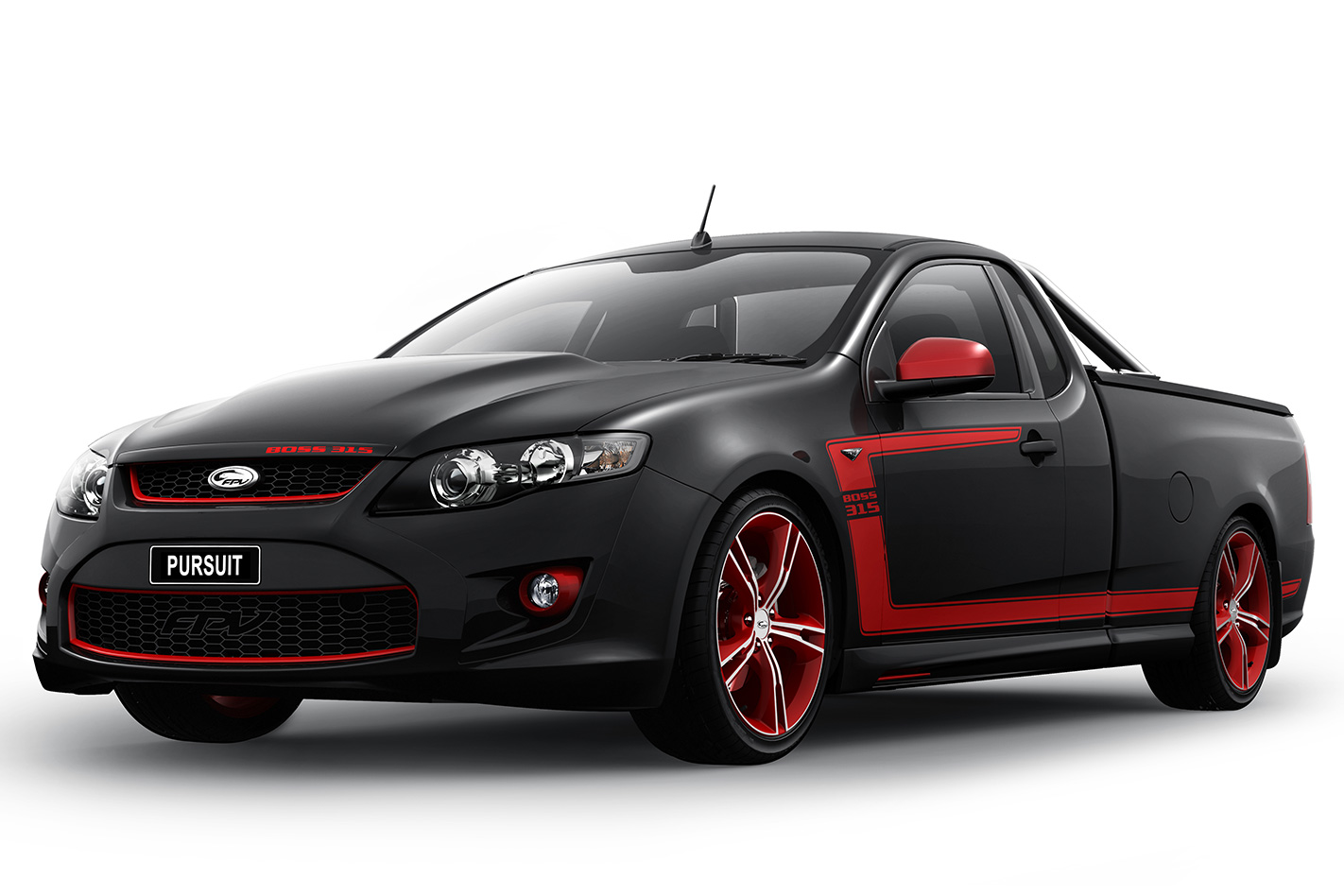
Inside, the FPV was showing its age even at launch, with the donor Falcon’s dash design receiving little love or cash for an update during its lifespan. Prices seem to be on the rise, too, so get in while you still can to score a piece of Aussie nostalgia. After all, only 75 were built.
Specs comparison
FORD RANGER XLT SPECS | FPV PURSUIT SPECS | |
Price (new) | $59,790 | $57,990 |
Engine | 1996cc 4cyl, dohc, 16v, turbo diesel | 4951cc V8, dohc, 32v, supercharger |
Output | 157kW/500Nm | 315kW/545Nm |
Transmission | 10-speed automatic | 6-speed automatic |
0-100km/h | 10.1sec (estimated) | 5.0sec (estimated) |
Efficiency (combined) | 6.7L/100km (claimed) | 14.2L/100km (claimed) |
Drivetrain | AWD | RWD |
Doors | 4 | 2 |
Seats | 5 | 2 |
Wheel size | 17-inch | 19-inch |
Country of origin | Thailand | Australia |
Wheels staff picks

Cameron Kirby
Staff Journalist
It has to be the FPV Pursuit, it just has to be. No, it won’t carry your family as effectively as the XLT (or at all), nor will it get to those hard-to-reach camp spots, but none of that matters when you have a rear-drive supercharged V8 powering things. Owning a piece of Ford Australia history would be a privilege that would bring a smile to my dial with every flex of the right foot. If the budget allows, I’d also get the blokes at Premcar involved to work their magic on the Miami engine.

Alex Rae
Online Editor
There’s a lot to like about the new Ranger over the Pursuit, such as the five-seat cabin and four-wheel-drive for going on some great trips with the family. But really, what a great piece of Australian motoring history the locally made FPV is. It is a cracking engine and an iconic shape that, I hope, is never forgotten. Unlike the new dual-cab, depreciation might turn into appreciation, too.

Trent Giunco
Staff Journalist
A big, supercharged V8 and rear-wheel drive with a light tub out the back. Sounds like a disaster and a whole heap of fun in one. Often those who buy utes like the FPV Pursuit have little use for them, much like the Ranger, but you just would, wouldn’t you… For those who don’t have to tow anything or chuck anything in the tray, it’d become the perfect faux V8 coupe – just one with unsophisticated rear suspension and a penchant for chewing rear tyres. For me I’d get the smooth-shifting ZF auto, relax back and enjoy the prodigious power and aural theatre.
Reckon we’ve got it right? Or are we way off the money (literally)? Find your best and let us know in the comments what you’d buy.
You should never underestimate the importance of your tyres. As the only points of contact between you, your car, your family, your valuables and the road, it is essential to make sure you have good quality and well-maintained rubber fitted, regardless of the vehicle.
But there are many variables to consider when selecting the correct tyre for your specific purposes including your budget, the type of vehicle they are being fitted to and the conditions you most frequently encounter.
Here’s our quick guide to the various types of tyres on offer, to help you pick the optimum rubber for the job, starting from the coldest and most extreme applications.
Ice
For the most severe winter conditions, studded ice tyres are largely the same as a winter tyre in terms of tread pattern and design features, but have short metal studs fixed into the surface of the rubber as an added line of defence.
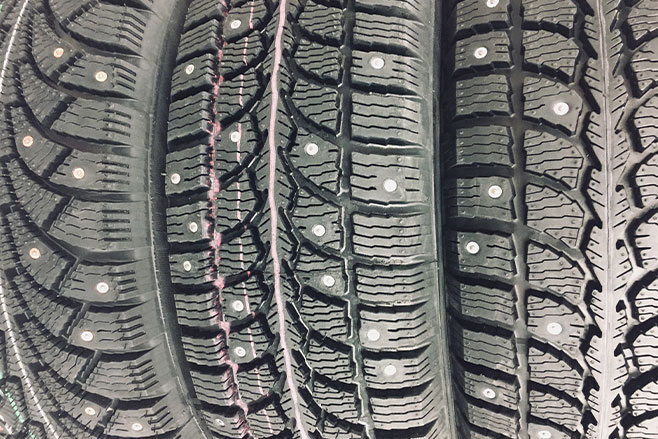
No matter how sophisticated the rubber tread, when the surface is hard ice, only an array of metal studs can bite into the surface and enable the vehicle to maintain control.
In many countries, the use of studded tyres is only legal under certain circumstances and it’s very unlikely you’ll ever need them in Australia – even in the most punishing alpine white-out this country can serve up. But if you can’t get where you need to go with studded ice tyres, then caterpillar tracks are the only way you can do better.
Winter
A winter-grade tyre is identified by the 3PMSF (three-peak mountain snow flake) symbol on the sidewall. This internationally standardised stamp indicates that the tyre has demonstrated significantly better handling and safety performance in cold, wet and icy conditions through rigorous testing.
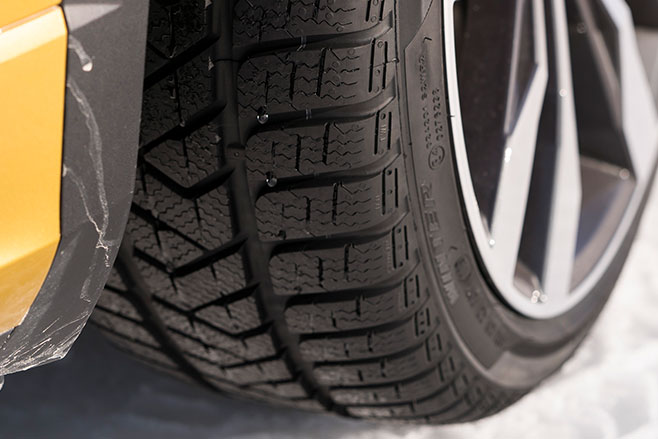
You can find out exactly how a winter tyre provides significantly better grip in adverse conditions here.
Unlike ice tyres (below), winter tyres can be used for extended journeys outside of their optimum operating conditions, although they won’t perform as well as models designed for warmer/drier climes.
Mud and Snow
Mud and Snow rated tyres identified by the M+S sidewall marking should not be confused with a dedicated winter tyre. While they have special features that boost traction on loose surfaces including snow, they are not necessarily made of the same soft rubber that stays supple in very cold conditions. As such, they are best suited to a majority of use in warmer temperatures above 7.0-degrees with occasional trips into cooler conditions.
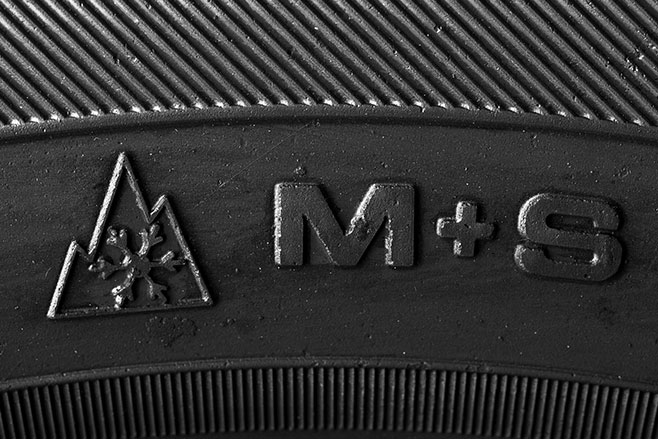
That said, there are special M+S tyres that have also been granted a 3PMSF rating for winter use.
These specialised but versatile tyres are designed for SUVs and more hardcore four-wheel drive vehicles that clock up a decent share of on-road kilometres, but also need more grip than a purely road-focused tyre can offer when the asphalt comes to an end.
All Terrain
For vehicles that spend less time away from the beaten trail but still need more than a modicum of go-anywhere grip, an all-terrain tyre offers a good balance of both. Primarily, the difference between a tyre designed for off-road or on-road use comes down to the arrangement of tread blocks.
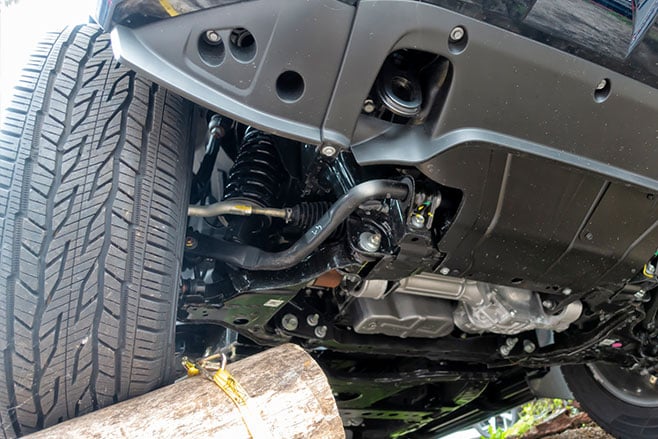
An off-road tyre has the blocks laid out radially, while a more road-focused model has the blocks arranged circumferentially. Radial arrangements offer better grip off-road but circumferential patterns are quieter and wear more gradually on the road.
All-terrain tyres are not just intended for SUVs and off-roaders, and can be applied to any vehicle that spends time away from the blacktop, just as a winter tyre can be applied to any vehicle in the correct climate.
All Season
The true all-rounder for on-road applications. All season tyres are designed for temperate climates where it is not necessary to swap your rubber on a seasonal basis. As with all-terrain tyres, the tread blocks can be arranged circumferentially or radially depending on the balance of traction, rolling resistance, durability and noise.
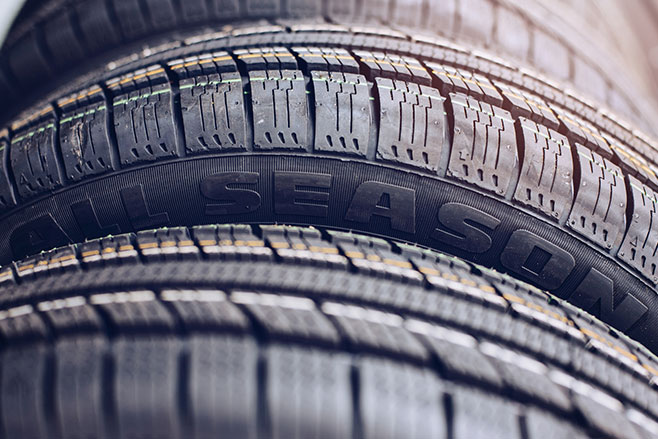
Regardless of the brand, all-season tyres offer low rolling resistance with good water clearing and wet weather traction but also a compound that responds well in hotter dry weather too.
That said, an all-season tyre will not offer the benefits of an outright high-performance tyre designed for optimum traction and dynamics when the sun shines…
Summer
Depending on the global region, summer tyres can also be referred to as performance tyres, indicating that their characteristics are best suited to fine weather and powerful vehicles.
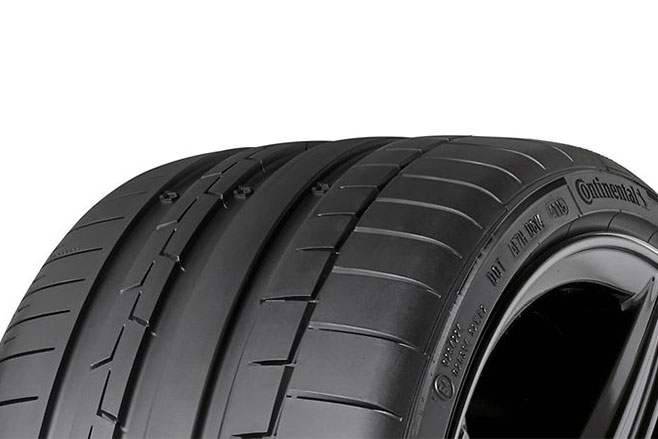
In Australia’s relatively warm and dry climate, it is acceptable to leave a ‘summer’ tyre fitted all year round as long as you do not mind a slight performance sacrifice in wet or particularly cold weather.
A summer tyre’s tread pattern has few or no ‘sipes’ to remove water faster, instead favouring large uninterrupted areas of smooth rubber that grip better on dry asphalt.
In some cases, summer tyres are easily identified by a sunshine symbol stamped into the sidewall.
Semi-Slick
At the very pointy end of road-legal high-performance car tyres you’ll find rubber that has very few tread grooves at all, maximising the amount of surface area to deliver a maximum of tyre-to-road grip. The compound is also formulated from a stickier type rubber which works best when warm, but these tyres often come with visible warnings that their qualities are dramatically compromised if the road is wet.
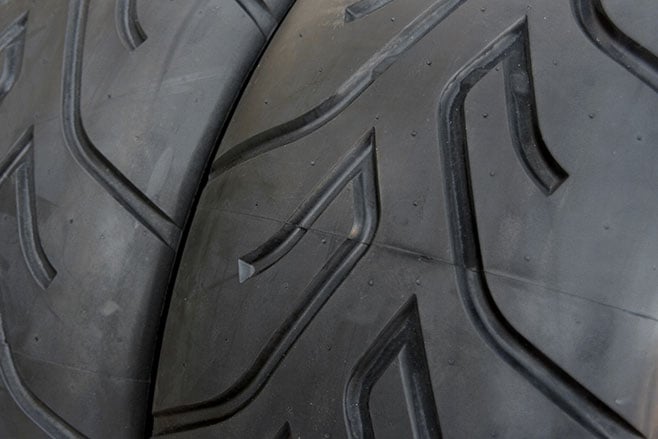
Minimal groves in the tread surface provide minimal resistance to aquaplaning should the weather turn unexpectedly wet, though there’s still a limited capability to deal with water that allows drivers to return home – slowly.
High-performance semi-slicks are exclusively for high-performance cars (often with the price to match), which only come out to play on heydays, high days and track days.
Slicks
Just like ice tyres, you’ll struggle to find anywhere in the world that allows the legal use of slick tyres on public roads, but these ultra-high grip performance tyres are unrivalled for grip in the correct conditions.
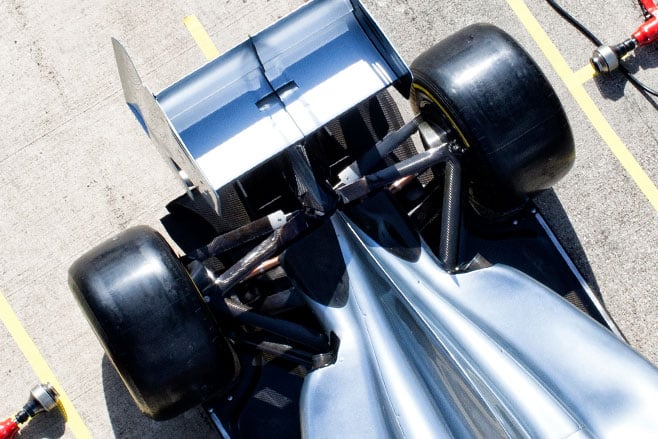
A slick tyre’s rolling surface is completely smooth and made from a very soft compound for a no-compromise result in the dry.
However, without channels to disperse and eject water from the space between the tyre and the road, or edges and slots to create mechanical grip against rougher surfaces, a slick tyre would be highly dangerous to use with any moisture present on the road. These are best left to the race track.
Whether it’s extreme cold and road surfaces you would find it hard to stand on, or blistering asphalt in bone-dry conditions, there is a tyre designed to perform brilliantly in every scenario. Make sure your vehicle is wearing the correct rubber for the job.
Audi has whipped the dropcloth off its all-new A6 sedan for Australia, which joins the A8 and Q8 in debuting Audi’s latest connectivity set, known as Connect Plus, which uses an onboard SIM card to keep the A6 connected to the internet at all times.
The system, which relies on 3G and 4G mobile connectivity, links deeply with the Audi’s onboard computers to bring a higher level of online functionality to the A6 than was previously available on the A8 and Q8.
Australian testing of the system has taken place using an e-tron SUV mule, which has covered more than 10,000km thus far tracing the major 3G/4G connectivity corridors in NSW, Queensland and Victoria.

For example, a Service Call button installed in the A6’s headliner above the dash connects with an Audi roadside assistance call centre, should a customer break down or have some sort of drama.
An SOS function can also be activated via a manual button or via an airbag deployment. In the case of the latter, the call centre will liaise directly with local emergency services. If the driver doesn’t respond to prompts, the system can then escalate the emergency to suit.
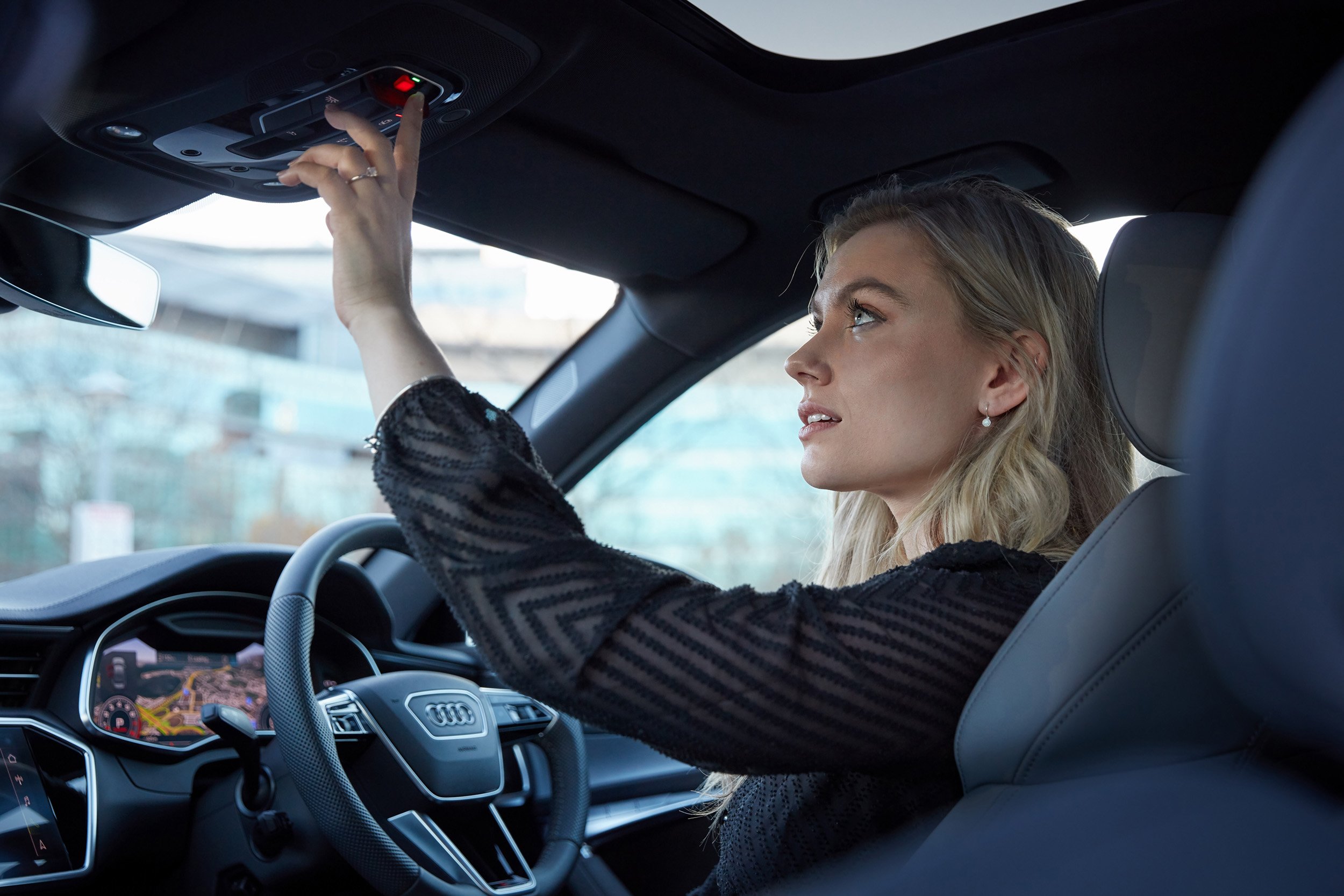
It can even count how many airbags have deployed and how many people are in the car (via seatbelt sensors), provide a location and even the car’s colour to the relevant emergency services.
The A6 can also send a push notification to a myAudi smartphone app if someone tries to break into it, and the owner can unlock the car from anywhere in the world and relock it. You can activate the horn and hazards remotely.
The system also takes finding a parking spot to the next level. It works with garages that have occupation sensors on their floors to give a heads-up on the number of spots, operating hours and costs within a given radius.
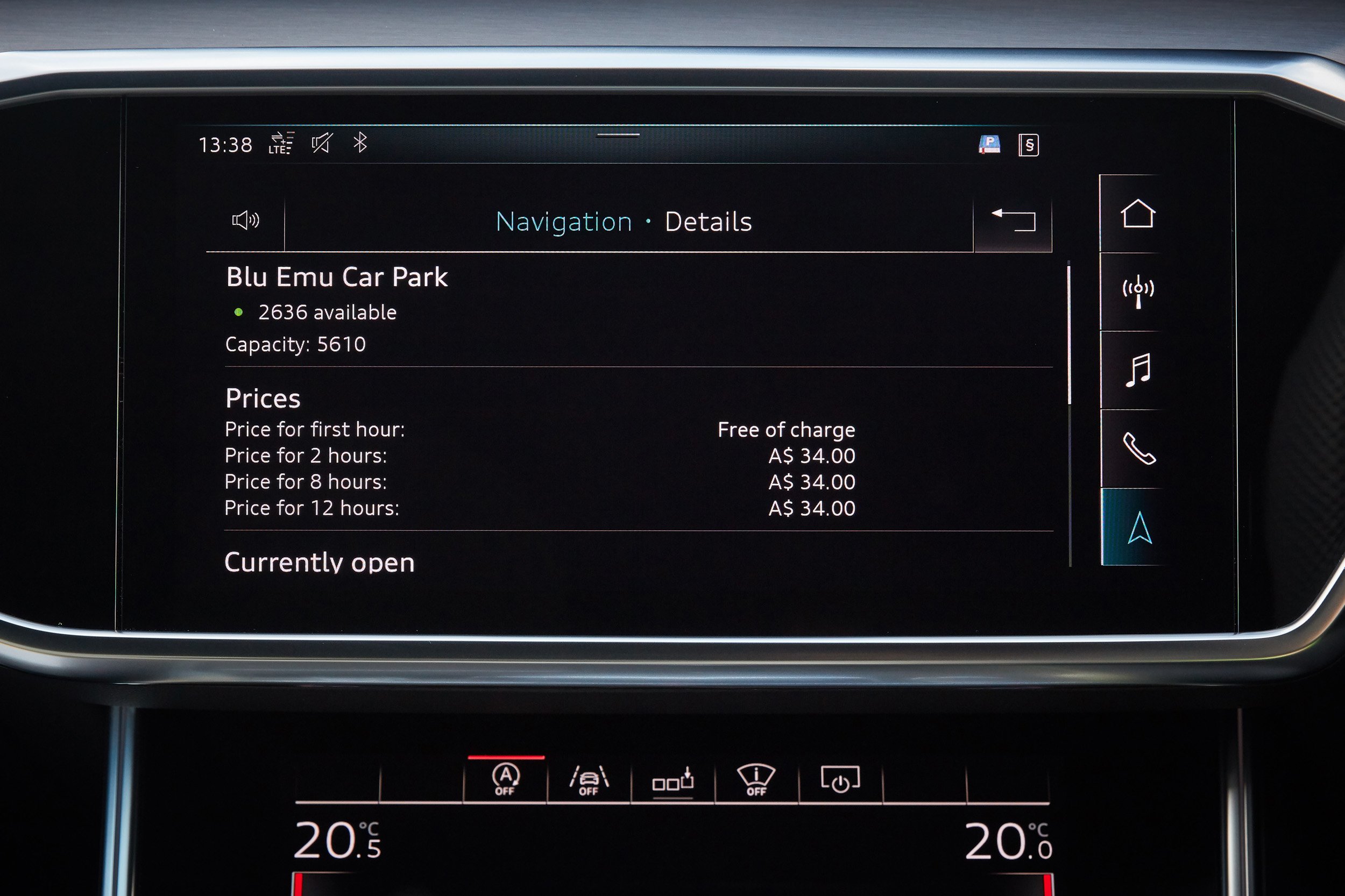
The car also talks to every Audi dealership and can prompt the owner forty days out from each scheduled service.
Online traffic updates are done via mobile data rather than via the outmoded radio signal method, while refuelling reminders can be narrowed down to fuel type and location.
As well, the system will use internet data to list and compare prices of the A6’s fuel – in this case, a minimum of 95 octane – at the nearest brace of stations, allowing the driver to navigate directly to the cheapest bowser.
When it comes to navigation, destination entry can be made via the myAudi app, which is then sent straight to the car, or via Google Maps. As soon as you start the car, the destination is set and ready to go.
Bad weather warnings can be sent to the car too, via data from sites like the Bureau of Meteorology.
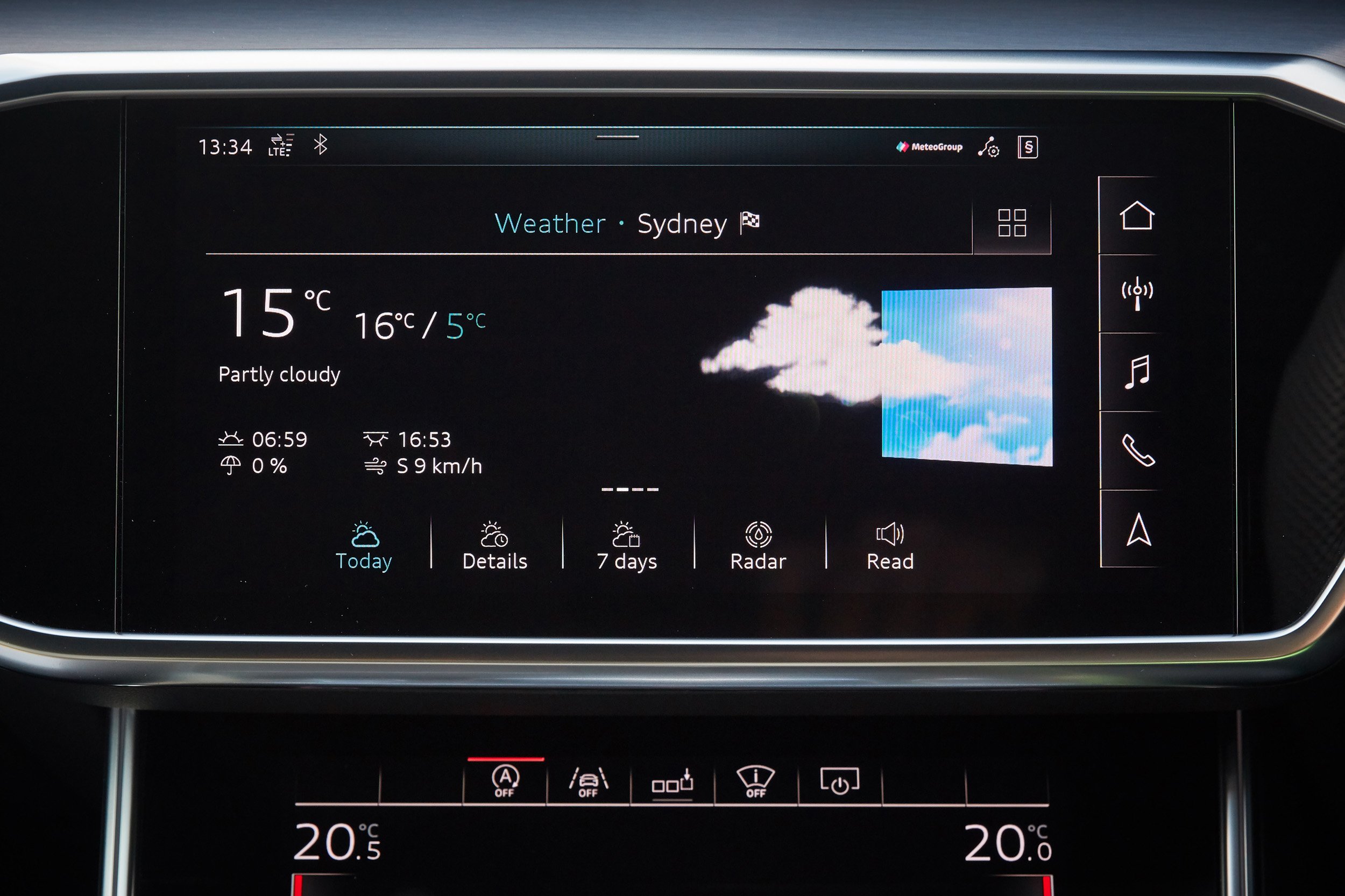
A new hybrid radio system combines digital and web-based radio to prevent digital dropouts by combining both sources.
The app can also give a detailed rundown on the A6, including tyre pressures (with push notifications if a tyre starts to leak) and oil level.
A geofencing mode also allows owners to set a digital barrier within a 5km range around a nominated location, as well as a notification of an overspeed above a predetermined level (the A6 can’t physically restrict speeds, though).
It even has an expense tracker via the myAudi app, which is ideal for logging for novated lease information.
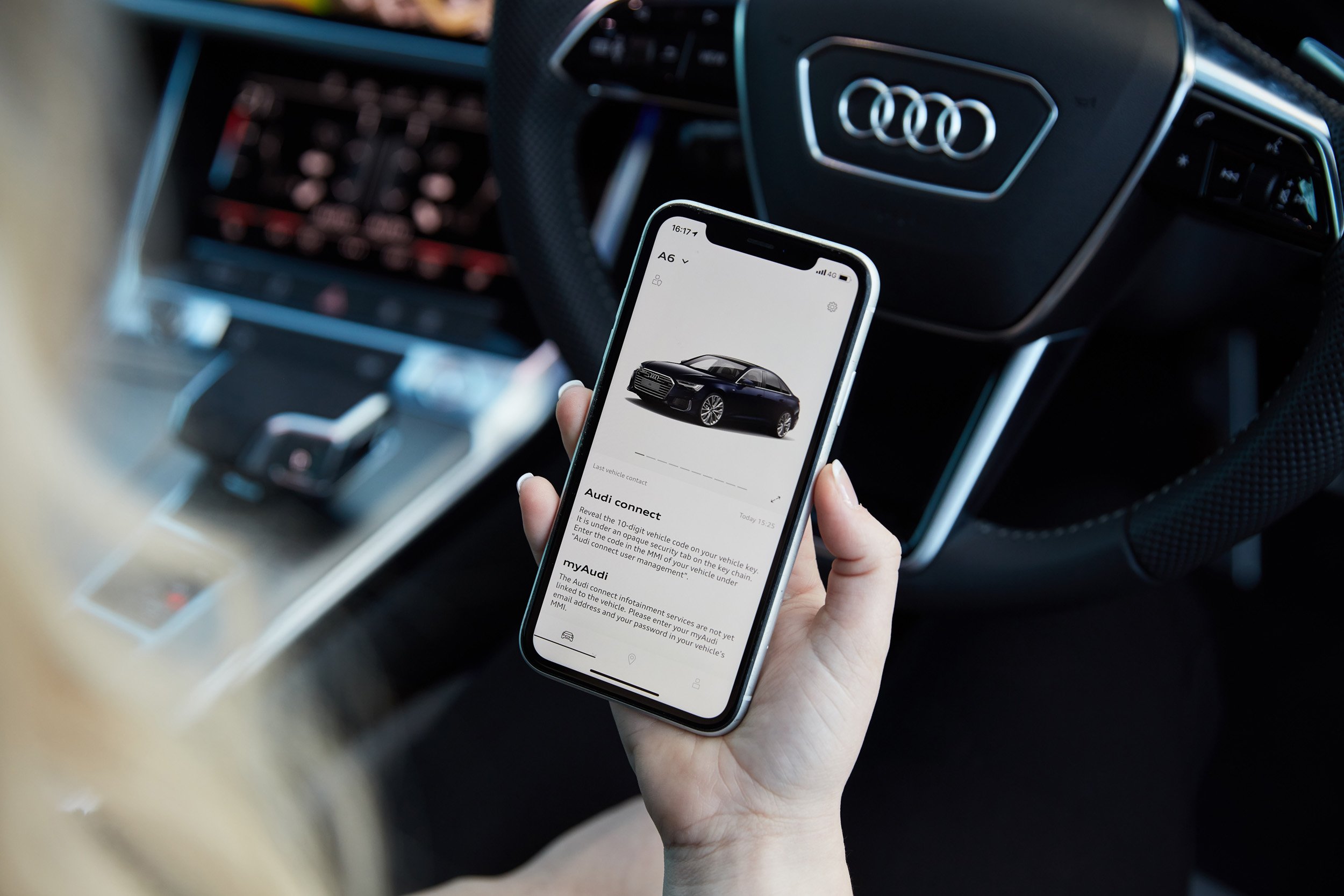
The system works with the Telstra network, and the owner will cover data fees as per a regular mobile service.
The A6 will launch in Australia in 2020, and the Connect Plus system will roll out across the Audi range over the next couple of years aboard cars like the A1, Q3, A4 and Q7.
The way car companies reveal new models is changing, with the internet having become a big part of unveilings in the last couple of years… but the reveal of the Pagani Huayra Roadster BC takes that idea an extra step further.
Rather than officially debuting the new roofless, track-focused Huayra to the world in its physical form, Pagani chose to partner with a mobile racing game to bring the 590kW twin-turbo V12 hypercar to the world.
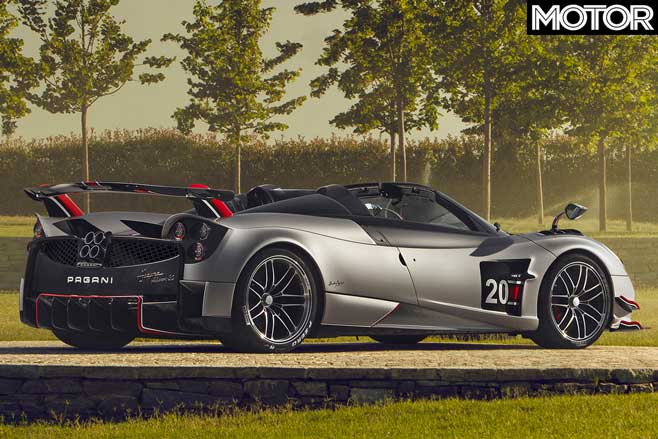
Yep, the world’s first look at Pagani’s new beast was via CSR Racing 2, a game from the same company that created time-suckers such as Farmville and Words with Friends.
Thankfully, Pagani also released actual photos of a real car, with information about the car and its new components. One such being its re-designed V12, built by AMG and able to produce a healthy 1050Nm between 2000rpm and 5600rpm as well as its 590kW.
Oh, and while all-wheel drive is becoming more prevalent in the world of high-performance, the Pagani Huayra Roadster BC remains true to rear-drive, with all that power and torque being sent back via an Xtrac transverse seven-speed sequential gearbox. Pirelli PZero Trofeo R tyres provide the grip for that power to actually be transferred to the road.
Sure, its outputs aren’t as significant as outputs from some other hypercars from Europe, but the Huayra Roadster BC weighs only 1250kg dry. That’s just 32kg heavier than the roofed BC.
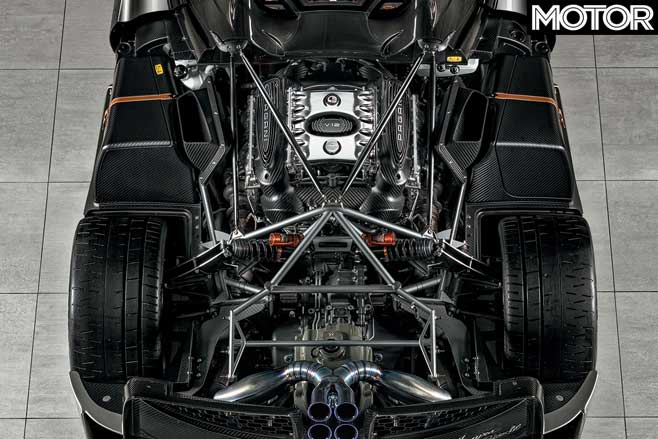
This boils down to the expertise Pagani has gathered in the field of carbon fibre engineering over the years, with the Huayra’s chassis and body being absolutely riddled with the lightweight material.
The company says the Huayra Roadster BC is able to provide “a full open-top experience without affecting the performance,” all due to the lack of compromise in the rigidity and weight of the Roadster version of the BC.
“Through intense scientific research for developing the Carbo-Triax HP62 and Carbon-Titanium HP62 G2 formulas, we succeeded in achieving some extraordinary results that allowed us to reduce the weight of the vehicle considerably and optimise mechanical features,” says Pagani’s head of concept and composite design Francesco Perini.
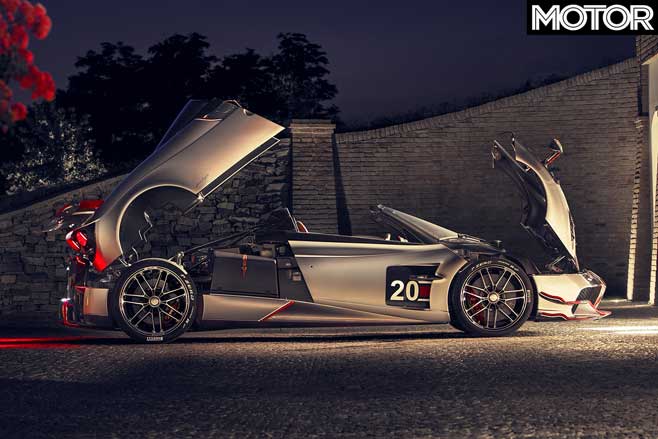
“Even so, when we presented these achievements to Horacio, along with the fact that they involved a 450 per cent increase in material costs, his reaction was, “the customer deserves even more!”
On that, the aerodynamics of the Huayra are also still up to scratch without the roof, having been designed to generate 500kg of downforce at 280km/h.
Stopping from a speed like that is taken care of by a set of Brembo brakes, with discs measuring 398x36mm at the front and 380x34mm at the rear. Calipers at the front are 6-pots, with 4-pots at the rear.
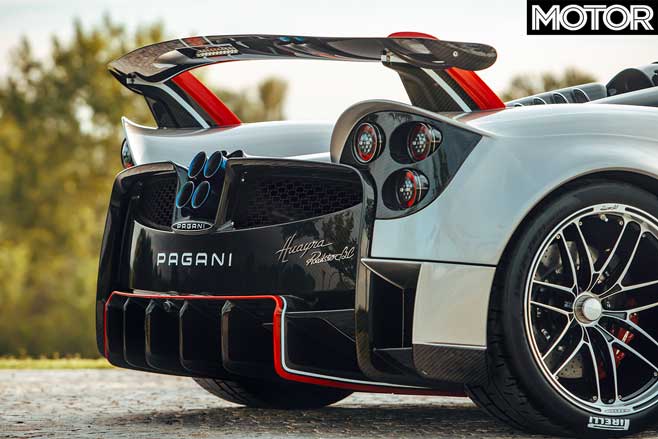
Whether the Pagani Huayra Roadster BC will make it to Australia in any number at all isn’t clear, but we know it won’t be cheap if it does. Australia has only one Pagani dealership – within the Zagame building on Melbourne’s Swan St – where one could buy a ‘regular’Huayra Roadster for an eye-watering AUD$5.5 million.
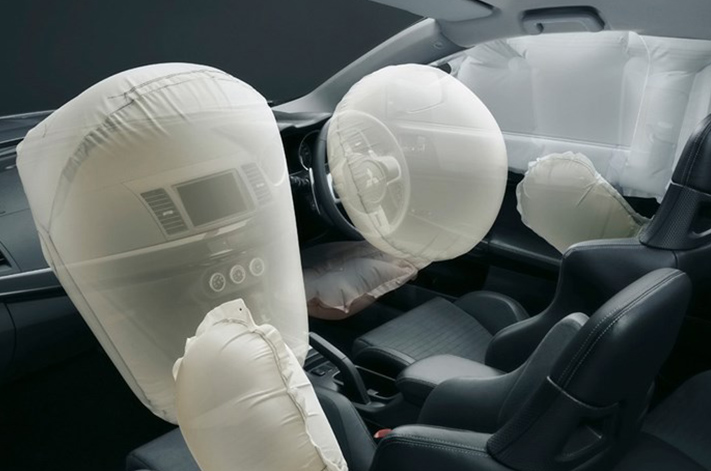
The Federal Chamber of Automotive Industries (FCAI), which governs the Australian new car market, is set to escalate its Takata airbag warning campaign as Australians are still not getting the message that their airbags are potential killers.
Despite running advertisements since July 2018, 537,000 Australians have either not heard or – even worse – actively ignored the message that the faulty Takata airbags fitted to Australian cars are unsafe and could potentially kill drivers and passengers in a crash.
The renewed advertising campaign will hit Australian television, radio, newspapers, digital and social media, and will focus on outer metropolitan areas where manufacturers say many of the outstanding vehicles are believed to be located.
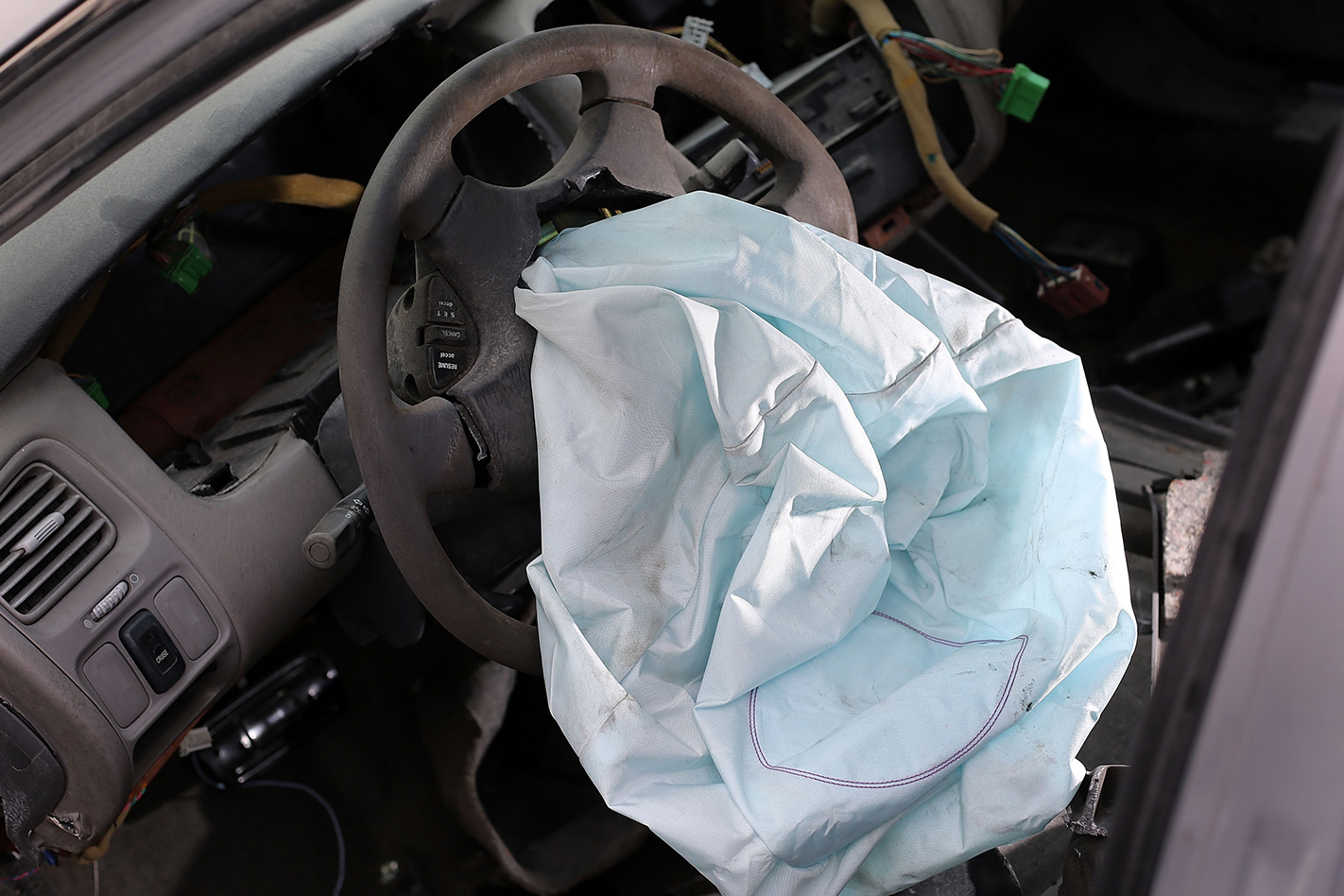
Beginning this week, the campaign consists of a number of repetitive advertisements warning car owners that faulty airbags may contain metal shards that, upon inflation, could be ejected throughout the cabin, injuring the driver and passengers.
“Our manufacturers have made tremendous progress in replacing faulty airbags. They have rectified more than two million vehicles,” said Tony Weber, chief executive of the FCAI.
“However, there are still many more vehicles in Australia that require airbags to be replaced.
“Many owners of outstanding vehicles have simply overlooked the need to check the status of their vehicles. Many others may erroneously believe that a faulty airbag will not affect them.
“By increasing the tempo of the advertising with more direct messaging, we hope to seize the attention of vehicle owners and their families.”

Despite more than seven million vehicle owners checking their vehicle status at www.ismyairbagsafe.com.au, more Australians need to heed the warning and get their vehicle fixed if they’re affected.
It’s a free process to get your airbag changed, with manufacturers often going out of their way to make the switch simple.
Head to www.ismyairbagsafe.com.au to find out your car’s status, or check by texting TAKATA to 0487 AIRBAG (247 224).
