
Here at Wheels we do a lot of performance testing on a range of cars. Anything and everything needs to be put up against its manufacturer’s claim.
One week it is the Lotus Exige 410 with our fastest manual 0-100km/h time of 3.9 seconds, and the next it’s a Suzuki Swift or a diesel dual cab that can’t crack 10 seconds to the all-important marker.
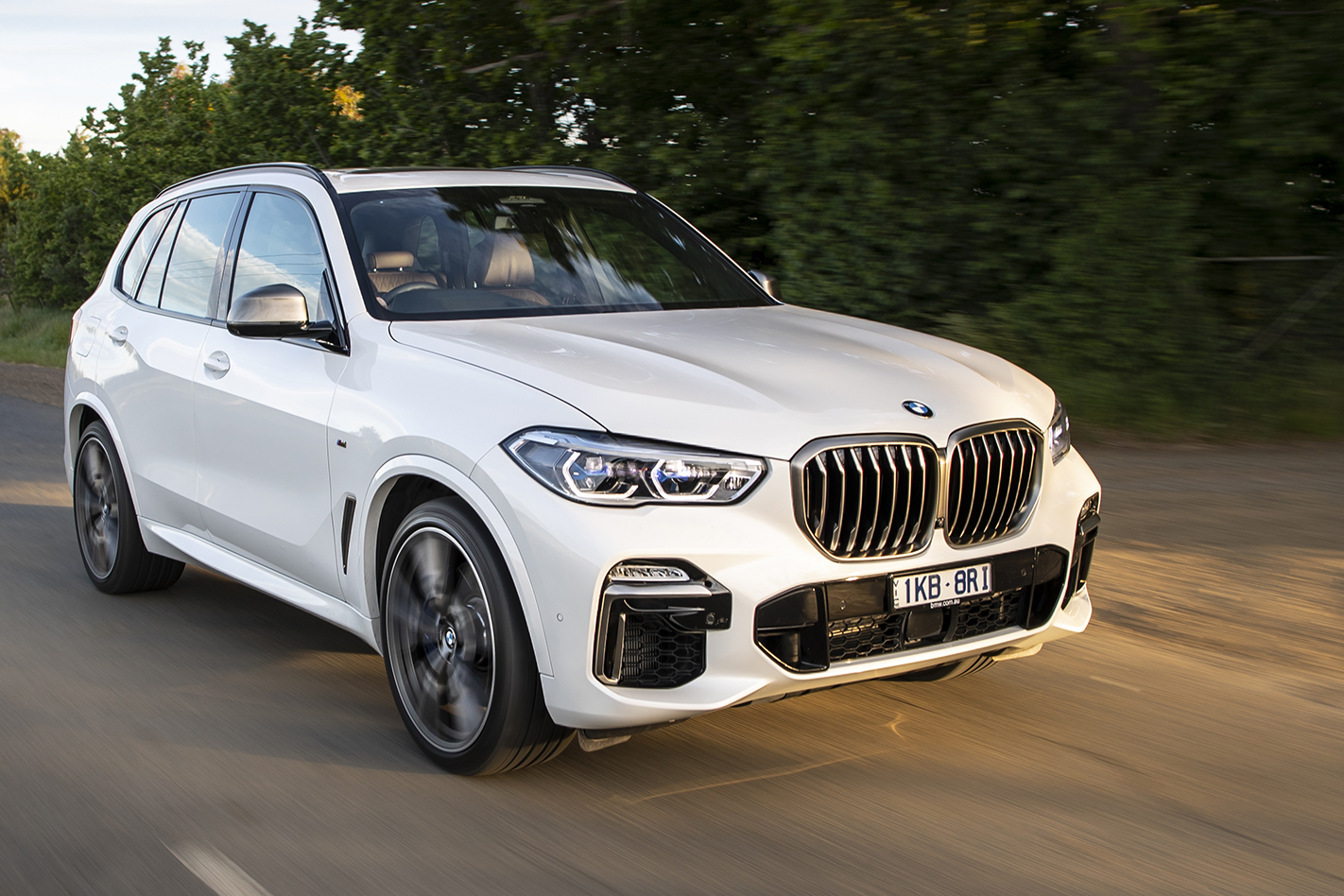
So stay with us when we mention the fact that the humble BMW X5 xDrive 30d recorded a 0-100km/h time of 6.6sec, a tenth slower than its claim, before going on to cover the quarter mile in 14.8sec at 147.4km/h.
Yes, in a world where the next Mercedes-AMG A45 S will dip below 4.0sec, that isn’t a crazy-fast group of performance figures. However, context is vital.
Remember, the $112,990 X5 is in no way marketed as a sporting diesel variant, there’s the M50d for that. Yet, the straight-line numbers place the TwinPower 195kW/620Nm inline-six diesel among esteemed company.
For example, the affordable pinnacle in terms of hot hatches, the Hyundai i30 N, reaches 100km/h in a claimed 6.2sec. However, sister publication MOTOR tested the i30 N repeatedly down the strip with a best of 6.24sec, admitting that the average run was more like 6.5sec.
In contrast, with the standard launch control system active (yes, the 30d has launch control), you simply press the brakes as hard as you can, wait for the 3.0-litre’s revs to build as the calipers clamp down, and then release the left pedal when you’re ready to go. And unlike the Hyundai, which can be tricky with its overzealous traction control, the X5 will do it on just about any tarmac.
Admittedly, the fuss-free affair is less exciting than trying to master the six-speed manual i30 N. There’s no rowing through the gears, timing shifts optimally or balancing wheelspin with revs. The reality is that the rear-biased xDrive system takes care of traction and the exemplary ZF eight-speed auto shifts appropriately when in Sport mode.
Of course, the X5 30d isn’t the fastest diesel SUV you can buy. The likes of the Audi SQ7, BMW M50d, Jaguar F-Pace 30d, Range Rover Velar and Mercedes-Benz GLE400d are all examples of other six-cylinder diesel SUVs that charge harder to 100km/h. Even the X3 30d claims 5.8sec to 100km/h.
However, it doesn’t take away from the fact that we’re in an era where an unassuming, 2.1-tonne diesel kid carrier can at least keep up, if not outrun, numerous hot hatches
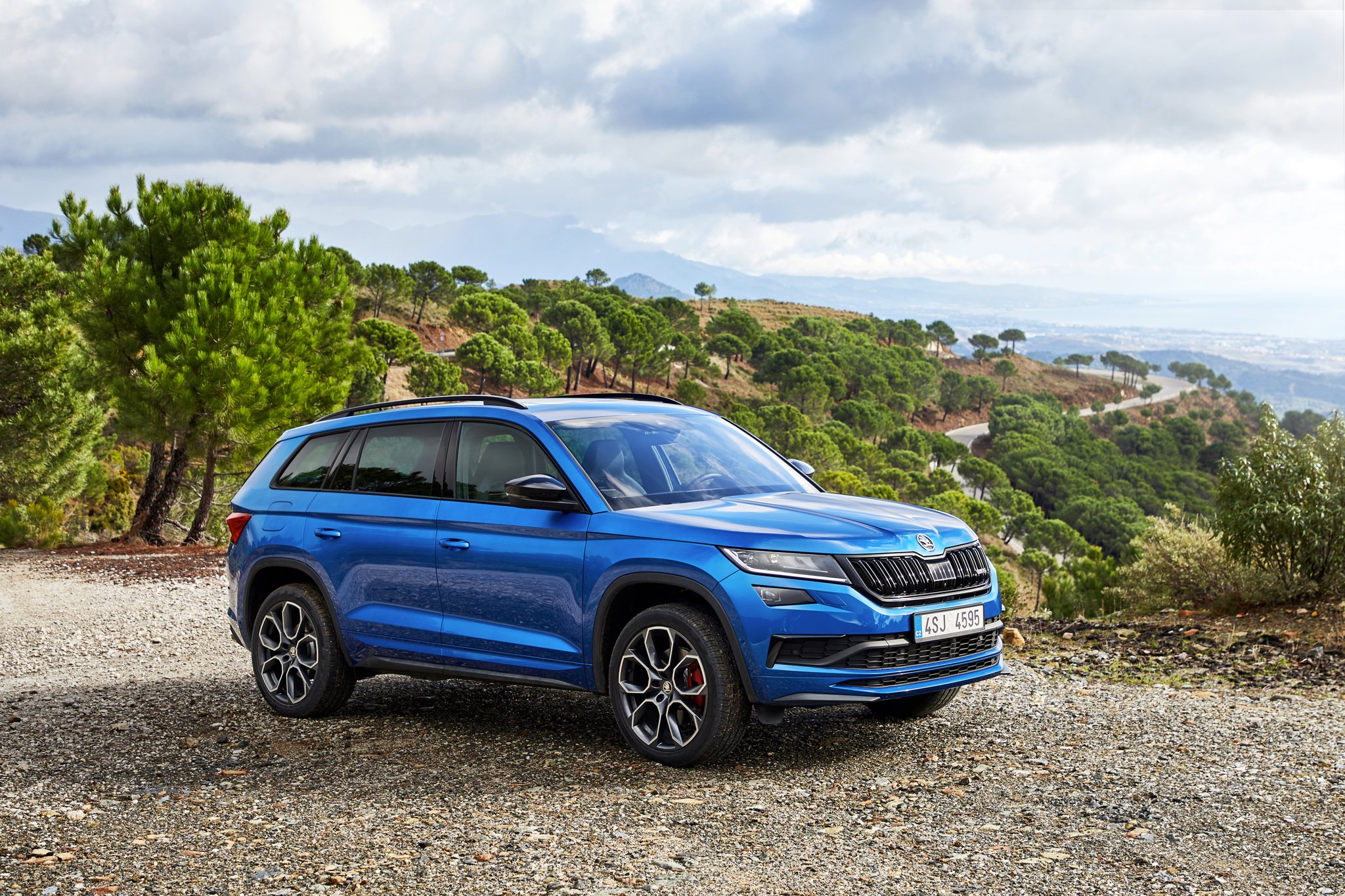
Skoda has announced that it will open the order books for its most powerful SUV yet, the Kodiaq RS, by the end of the year.
Previously ruled out for import thanks to Australia’s so-called hot climate status within the Volkswagen Group, engineers on both sides on the planet combined forces to reclassify Australia’s status to enable the importation of the warmed-over SUV.
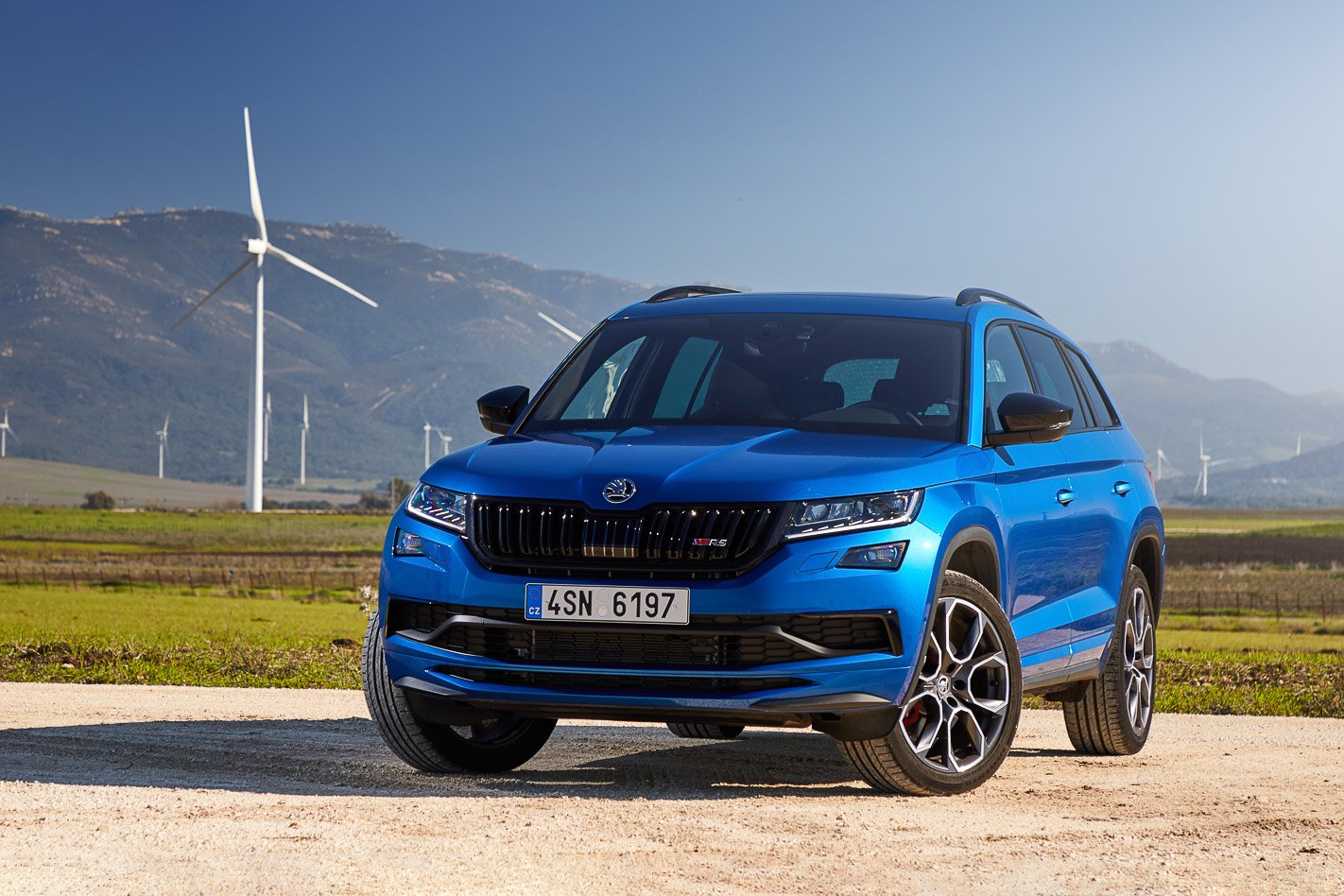
“Since its launch, we have been working tirelessly to bring the Kodaiq RS to our shores,” said Skoda Australia director, Michael Irmer.
“The project to bring the high-performance bi-turbo diesel-powered Kodiaq RS has seen collaboration between Australian and Czech technical teams sharing data and know-how.”
Specifically, Australia’s former ‘hot and dusty’ climate designation has now been downgraded to ‘moderately hot,’ allowing the 176kW/500Nm dual-turbo 2.0-litre diesel-powered seven-seat SUV to make the journey to Australia.
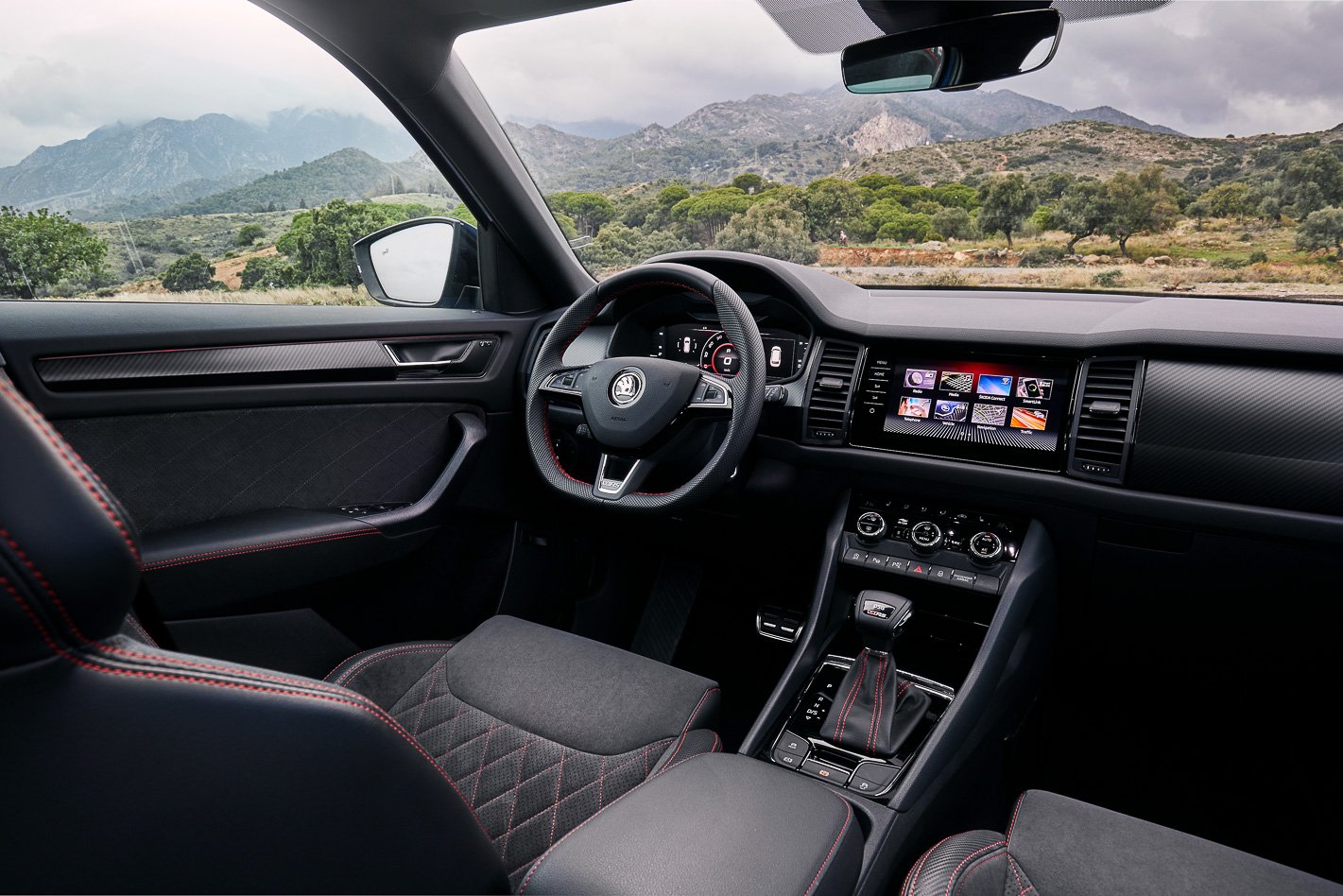
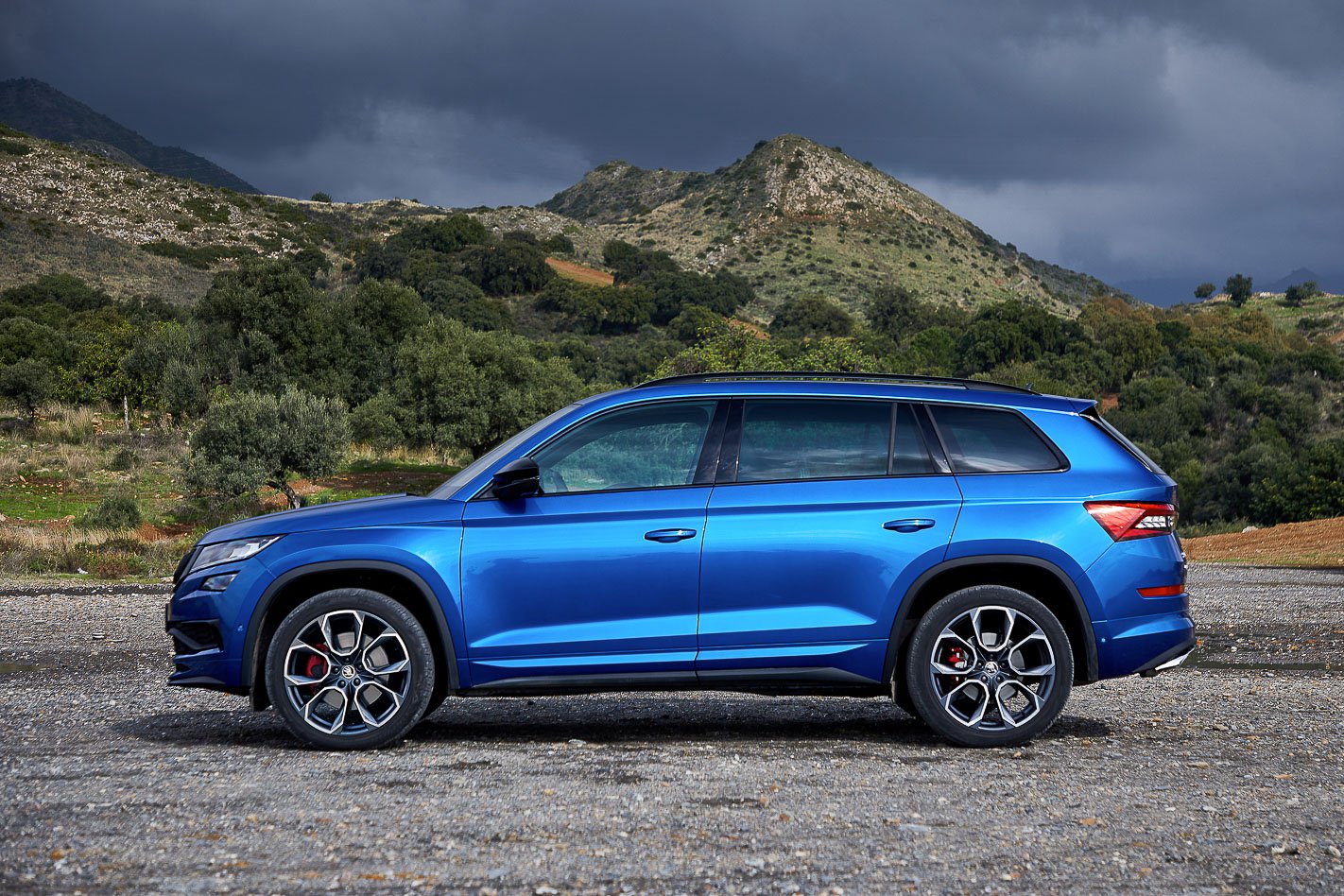
Pricing and final specifications have yet to be decided, but 20-inch Xtreme alloy wheels (similar to those on the Octavia RS), red brake calipers, black mirror caps, roof rails and grille, leather interior and a digital dashboard are expected to feature.
It’ll use an all-wheel-drivetrain in combination with a seven-speed dual-clutch gearbox, while driver aids like advanced AEB, lane departure control and adaptive cruise control are likely to be fitted.
The Kodiaq RS is rated at 6.4L/100km on the combined fuel economy cycle in Europe, and it should return a similar number for Australia.
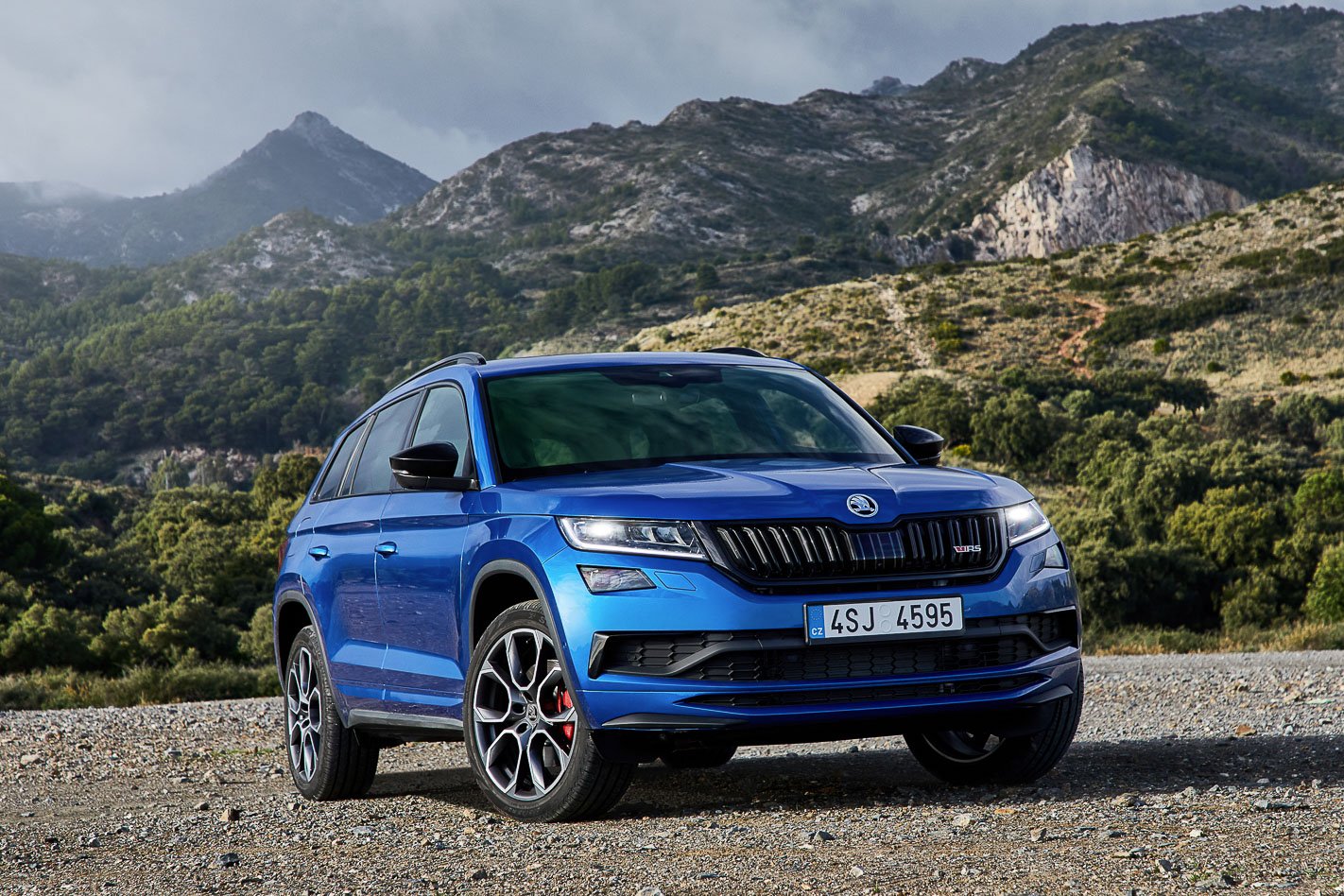
Currently, the most powerful Kodiaq on offer here is the Sportline 132 TSI petrol variant, which makes 132kW and 320Nm.
A number of premium brands including Audi and BMW offer performance SUVs, while several offer sports bodykits and wheels for their high-riding, but the Kodiaq RS will take the notion a step further when it lobs in 2020.
Plus
- New MMI system brings touch to A4
- Body styling updates subtle but effective
Minus
- New MMI system not intuitive out of the box
- New hybrid set-up so mild it may not as well exist
The Wheels Verdict: The Audi A4 has long been a solid, stable and trustworthy four-door exec express, and this facelift, while subtle, is effective in giving the A4 a much-needed shot in the arm in the face of rejuvenated competition from its Bavarian rivals.
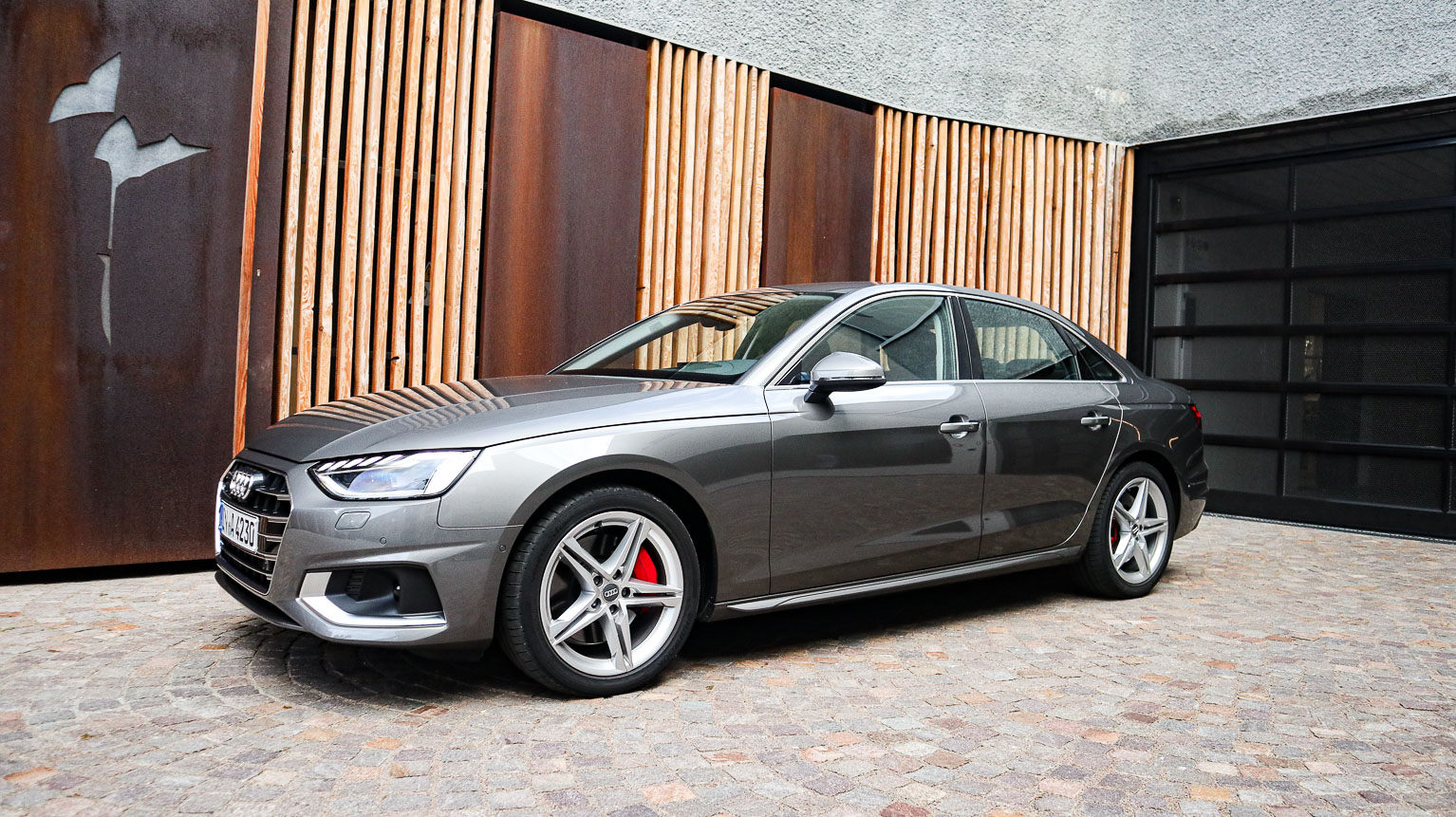
WHAT IS THE AUDI A4 45 TFSI QUATTRO?
Launched in 2016, the Audi A4 in B9 guise is the German company’s best-placed product to withstand – even if slightly – the onslaught of the luxury SUV wave. It runs a 2.0-litre turbocharged engine, a seven-speed DSG and all-wheel-drive, seats five in comfort and has long been a favourite of the Wheels road test team.
WHY WE’RE TESTING IT
This is the mid-life update for the MLB-based Audi A4, and it’ll land in Australia before the middle of 2020. Audi is plunging headlong into an electrified and hybridised future, and it feels as if the A4 may have missed out on the nip in the usual mid-life nip-and-tuck update procedure. Panels and screens are the focus, not powertrains and platforms.
THE AUDI A4 45 TFSI QUATTRO REVIEW
You have to feel for the Audi A4 a little. Here’s a decent, well-specced, good looking sedan that’s garnered plenty of positive praise across the media spectrum, including our own COTY team.
Alas, it languishes on the sales sheets behind its chief protagonists, the Mercedes-Benz C-Class and the new kid on the block, the G20 version of BMW’s 3 Series. Current figures make for sobering reading; so far this year, the C-Class has outsold it five to one, while BMW’s has double the 700-odd number that Audi has scored.
It’s hard to put a finger on why, but the Audi has – despite being first to market, for example, with a digital dashboard – simply not registered with the voters.
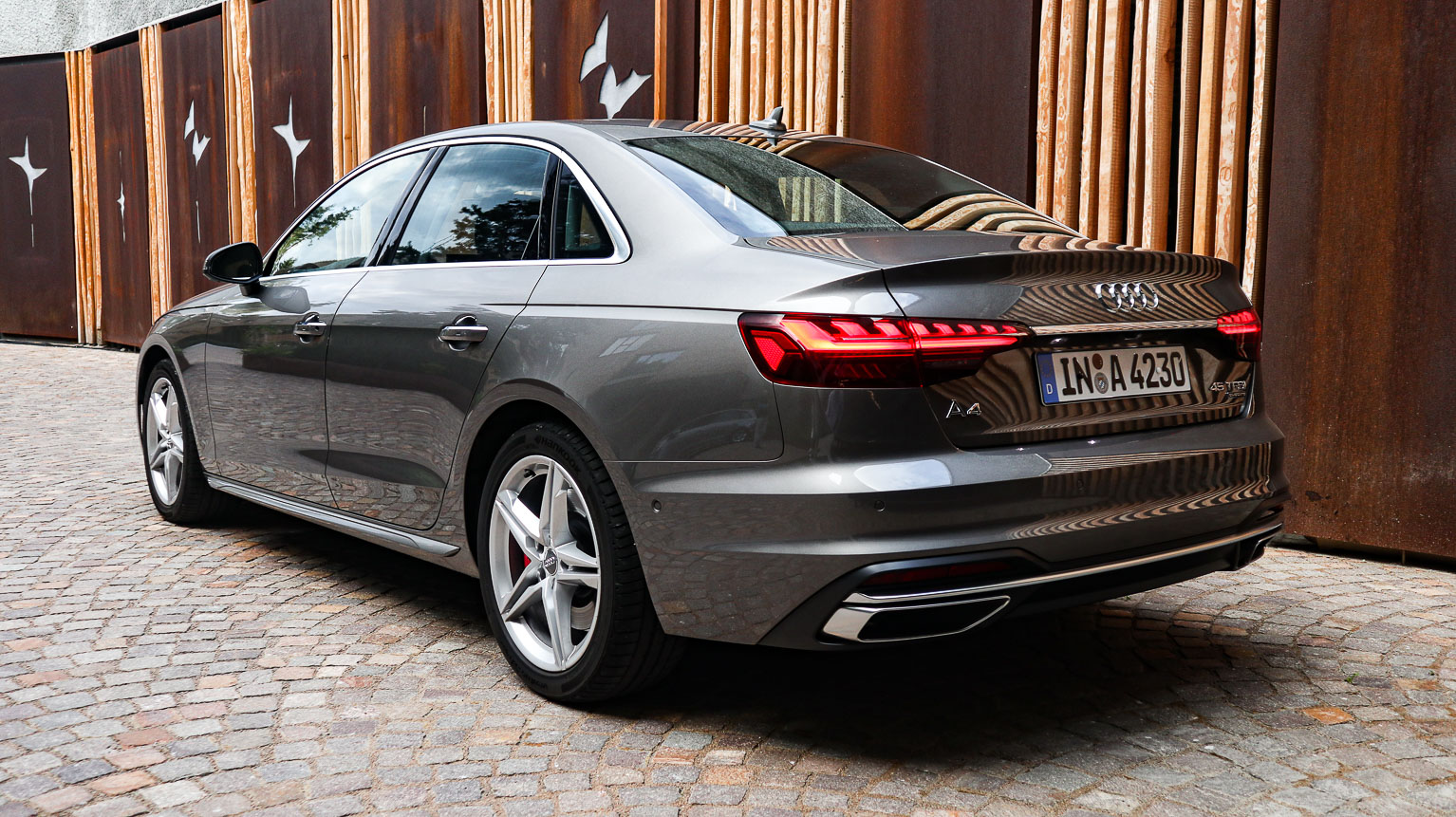
The mid-life refresh for the fifth-generation B9 sees around 30 percent of the car changed, and comprises new sheet metal on almost every surface, including the now-ubiquitous large-framed grille, LED headlights (now standard across the range), a revised side profile with slightly enlarged fenders and more deeply sculpted door panels, as well as a revised taillight architecture and larger rear diffuser.
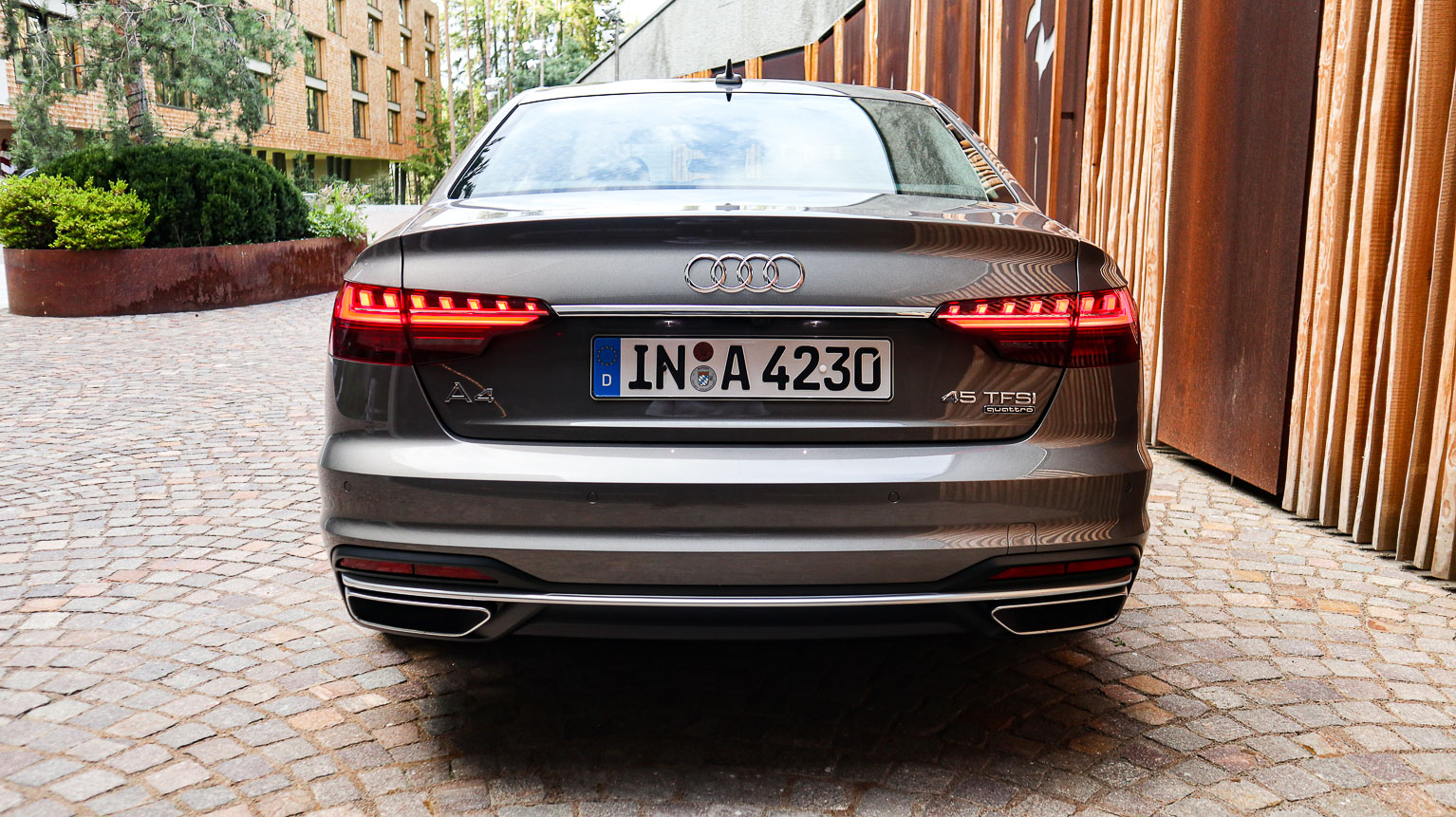
It arguably still presents the most conservative visage of the Euro power trio, but up close there’s a real sophistication to the A4 that becomes more apparent the longer you look. It’s quite colour-sensitive – bolder hues bring out the changes more effectively – but overall, the new render is a step forward.
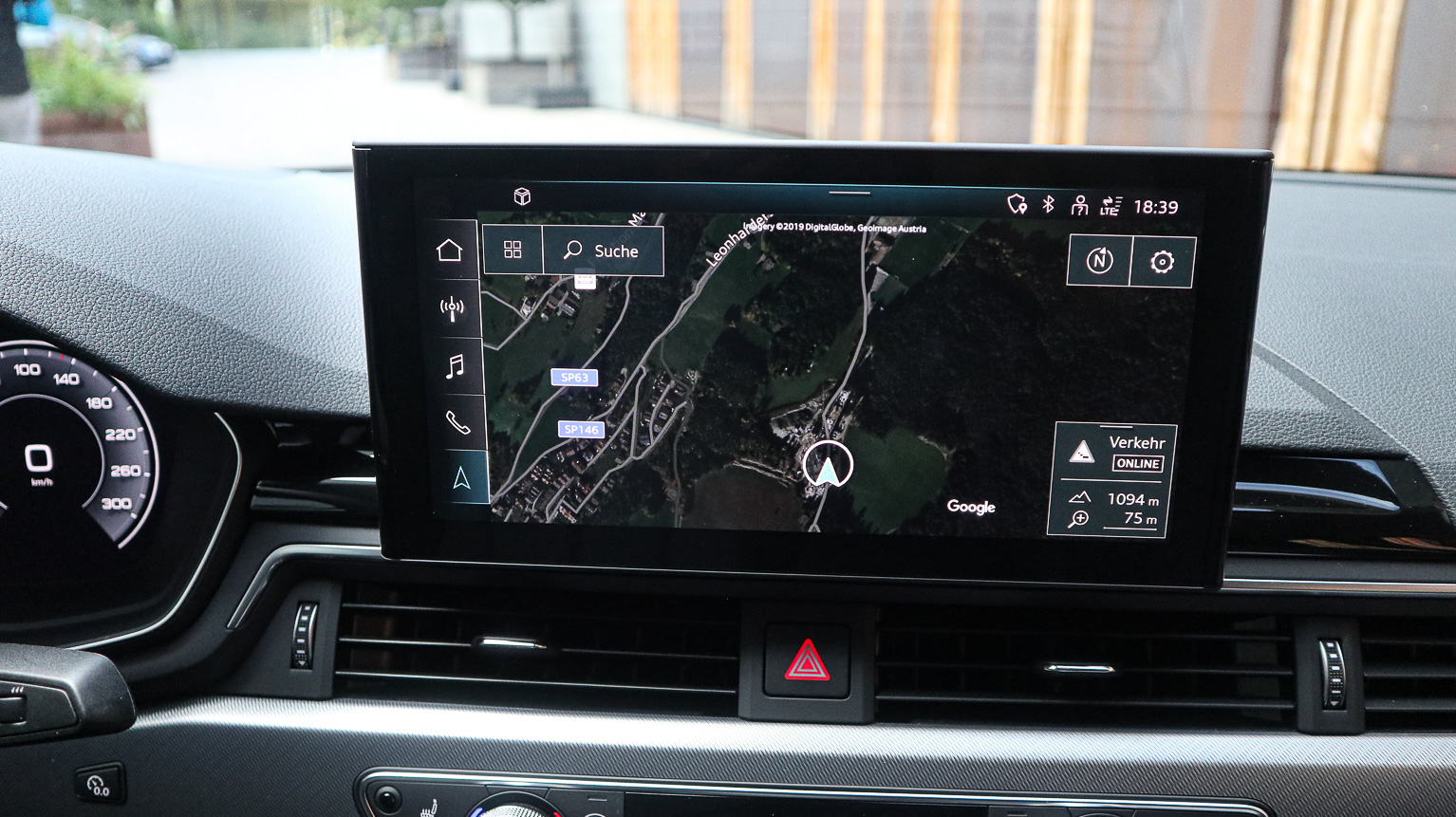
Inside, the change is all about multimedia; specifically, the new 10.1-inch screen-based system called MMI touch, which – finally – replaces the aging system aboard the current car. Audi’s other sedan offerings, like the A8, have led the way, and now the A4 joins them in stepping into this decade.
It also sees the end of the centre console-mounted rotary dial and button layout that has long served to supplement the MMI system. “We wanted to avoid the redundancy of the dial,” Audi’s head of A4/A5/Q5 program, Roland Hudler, told Wheels. “We want to make the system easier for the customer to control.”
Audi claims simplicity, speed and an improved voice interface as the key advantages to the new system, and while our time with the system was limited, the claims bear relevance. The initial learning curve will be high, even for existing Audi owners, simply because this is new baby and bathwater in one, but an improved voice interface and simplified menus are definitely a step in the right direction.
Almost no changes, then, for anything affixed with nuts and bolts… and the old adage about not fixing things that aren’t broken applies perfectly here. The 45 variant of the A4’s EA888 engine does score Audi’s slightly puzzling 12-volt mild hybrid set-up that adds ten seconds of in-gear coasting in perfectly perfect conditions but seems to do little else.
Audi claims it saves “up to” 0.3L/100km – it’s rated in Europe at 6.9L/100km – but given its location under the boot floor, it comes at the expense of a spare wheel.
The strut front and multilink rear suspension, then, remains unchanged, while the quattro system carries over as well. So test-driving the new A4 45 quattro reveals nothing new – it’s a lovely, compliant, quiet and composed thing, with excellent sound suppression and high levels of driver and passenger cossetting.
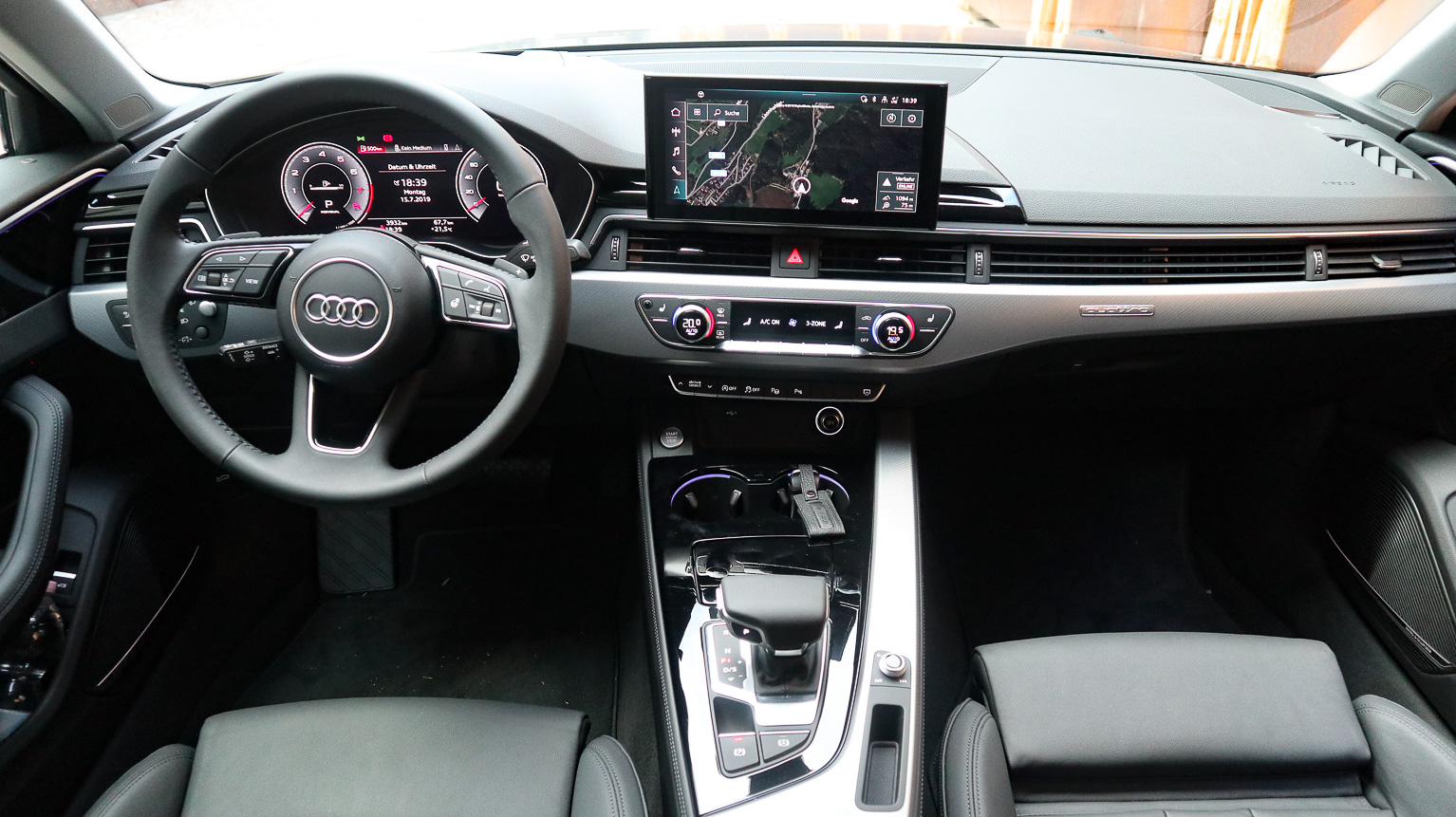
It doesn’t trip over into dull and conservative, though, and you can still switch things up via the drive mode selector. Granted, the detents between the levels are pretty similar, but there is a discernible difference between the two extremes.
So more of the same for the A4, then. No prices or specs as yet, given the potential 12-month wait, but stayed tuned for details as we get them.
THE AUDI A4 45 TFSI QUATTRO VS RIVALS
Mercedes-Benz C Class, BMW 3 Series, Lexus IS
THE AUDI A4 45 TFSI QUATTRO SPECS
Model: Audi A4 45 TFSI quattro Engine: 1984cc 4-cyl dohc turbo petrol Max power: 180kW @ 5,000-6,500rpm Max torque: 370Nm @ 1,600-4,300rpm Transmission: Seven-speed DSG 0-100km/h: 5.8 [claimed] Price: From $70,000 [est] On sale: Q2 2020
Lotus can usually be relied upon to develop aggressively light sports cars. The problem is electric vehicles are fundamentally weighty things, a heavy battery pack being something that would have founder Colin Chapman rolling in his grave. With the reveal of the Evija hypercar, the company steps up into a big league with an electric vehicle that aims to rewrite the rule book.
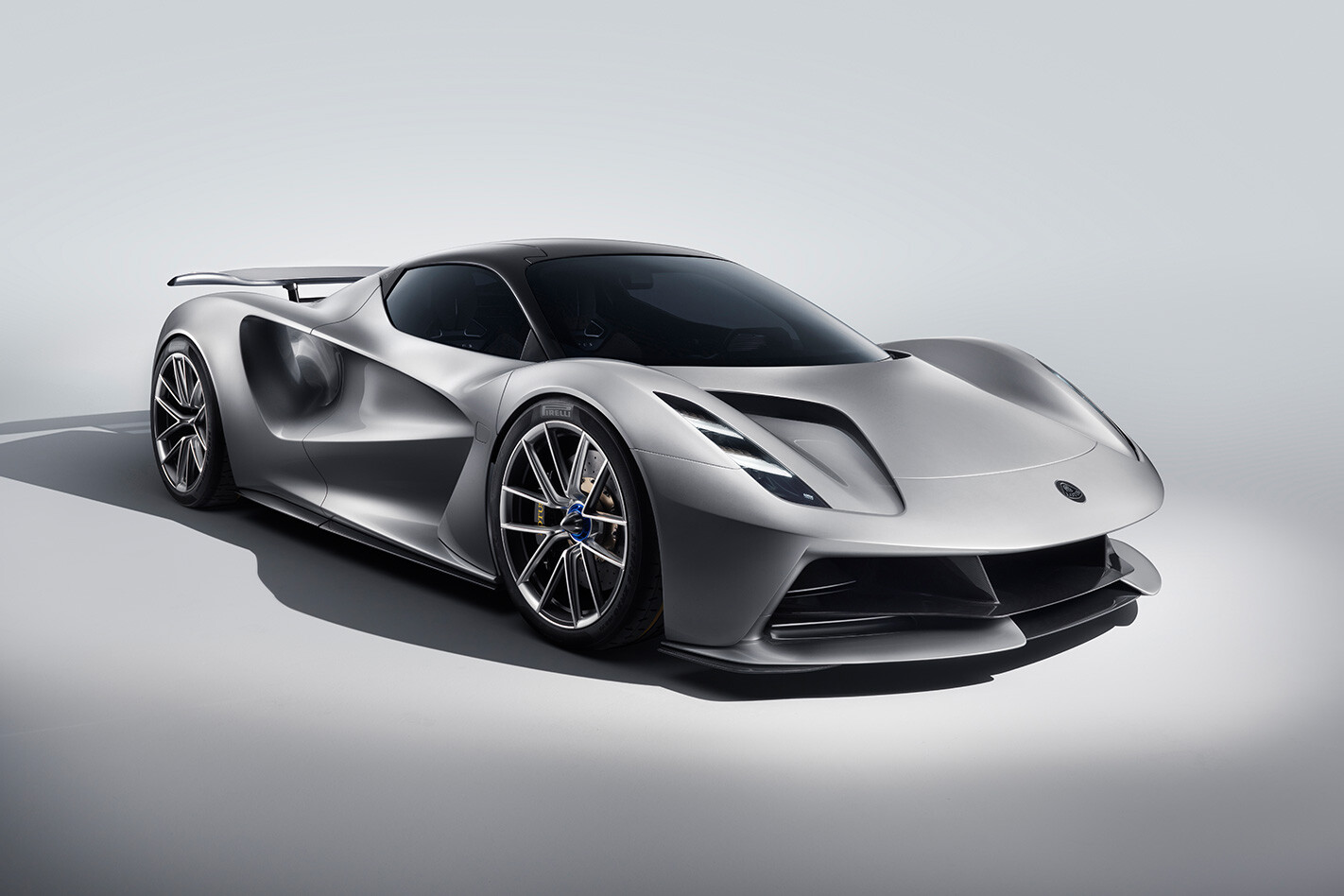
The headline figures are about what you’d expect from an ultra high-end battery-powered coupe. Zero to 100km/h vanishes in less than three seconds, top speed is pegged at 320km/h and there’s a pure electric driving range of some 400km. The power target is 2000PS, which translates to 1471kW, but the most intriguing stat is the kerb weight of 1680kg.
That’s in the same ballpark as a Porsche 911 Turbo - itself hardly a whale-like contrivance – and that figure comes about courtesy of Lotus’ very first carbonfibre monocoque chassis, built by CPC in Modena, Italy. By contrast, the NIO EP9, which claimed the Nurburgring lap record, weighed over 50kg more.
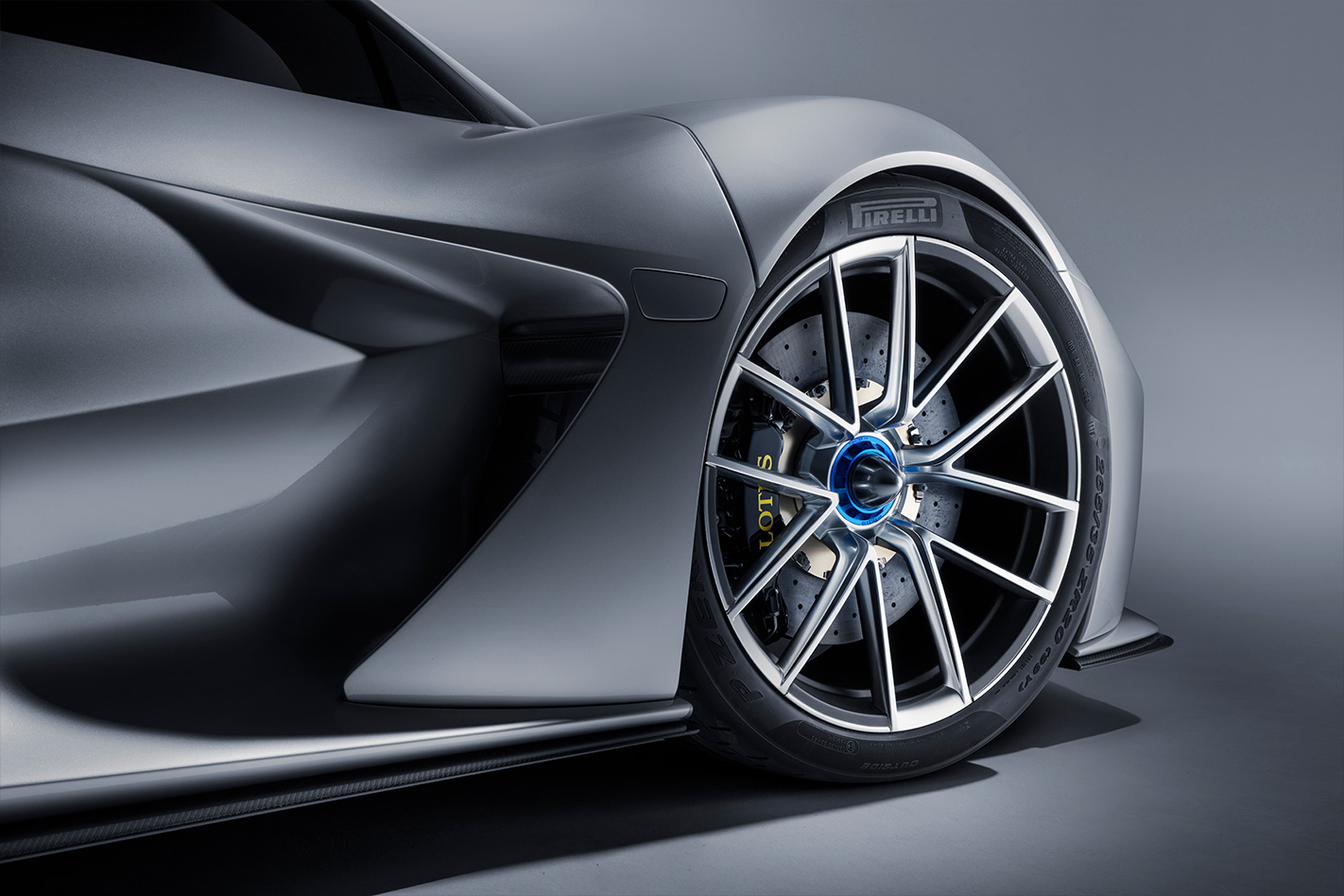
Production is due to start in 2020, with just 130 units set to be built, reflecting the model’s internal ‘Type 130’ designation. The price? That’ll be £1.7m (A$3m) plus duties and taxes. A £250,000 (A$445K) deposit secures a production slot, with direct orders accepted via the website at www.lotuscars.com.
The Evija (the name means ‘the first in existence’ or ‘the living one’ – representative, according to Lotus, of its pioneering approach) will be built at the company’s Hethel, UK, plant. And while it incorporates tech unseen in Lotus road cars to date, there’s certainly a nod to the manufacturer’s 71-year sporting heritage.
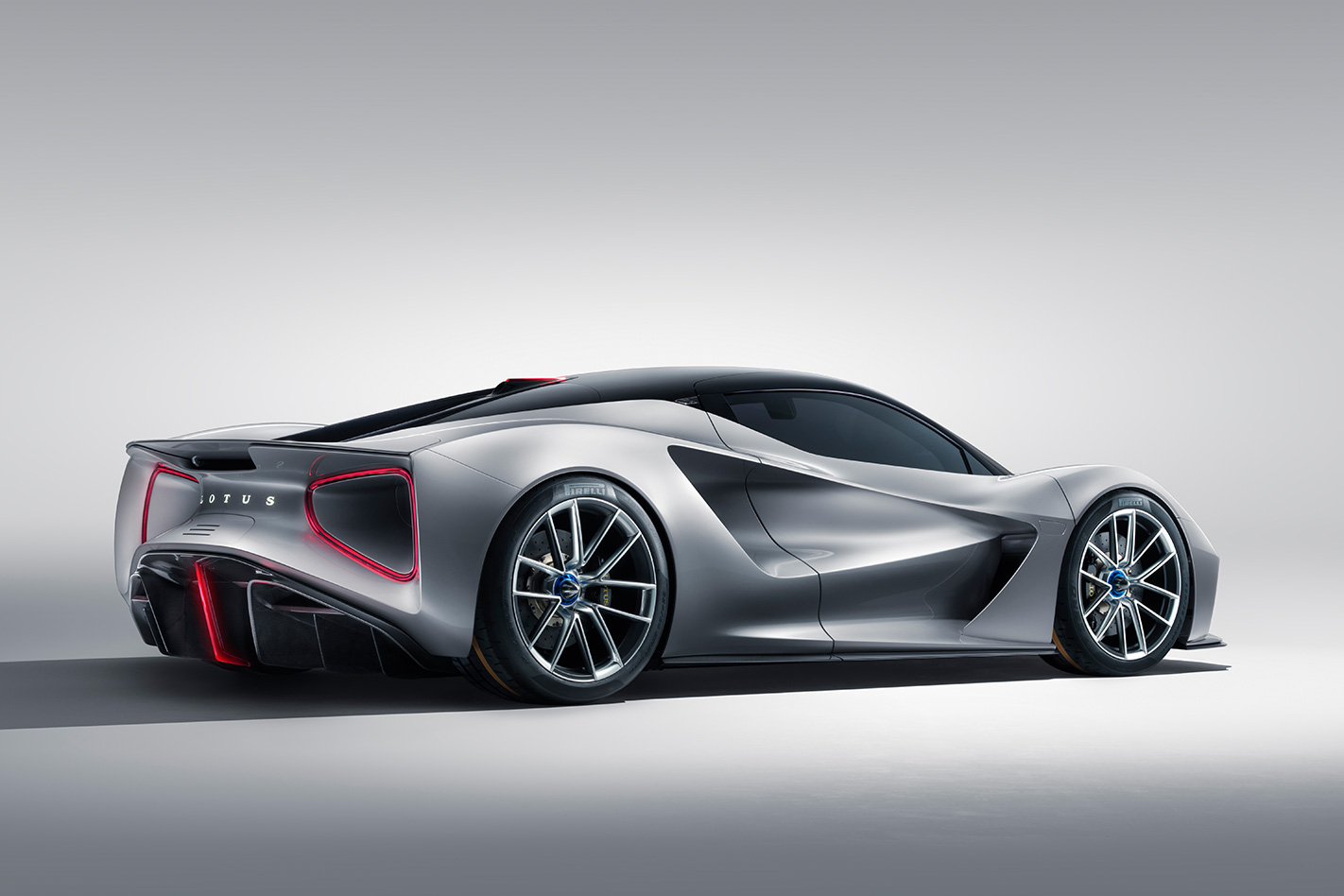
The Evija features a motorsport-inspired Venturi tunnel through each rear quarter, reminiscent of the rear-end shape that Aston Martin is developing with its Valkyrie and AMG has refined with its One model.
Lotus Cars’ design director, Russell Carr, said: “We studied how Le Mans race cars use air flow creatively to go over, under and around the vehicle, but also through it. This concept of ‘porosity’ is key to the Evija and has enabled us to create a timeless design with exceptional amounts of downforce.”
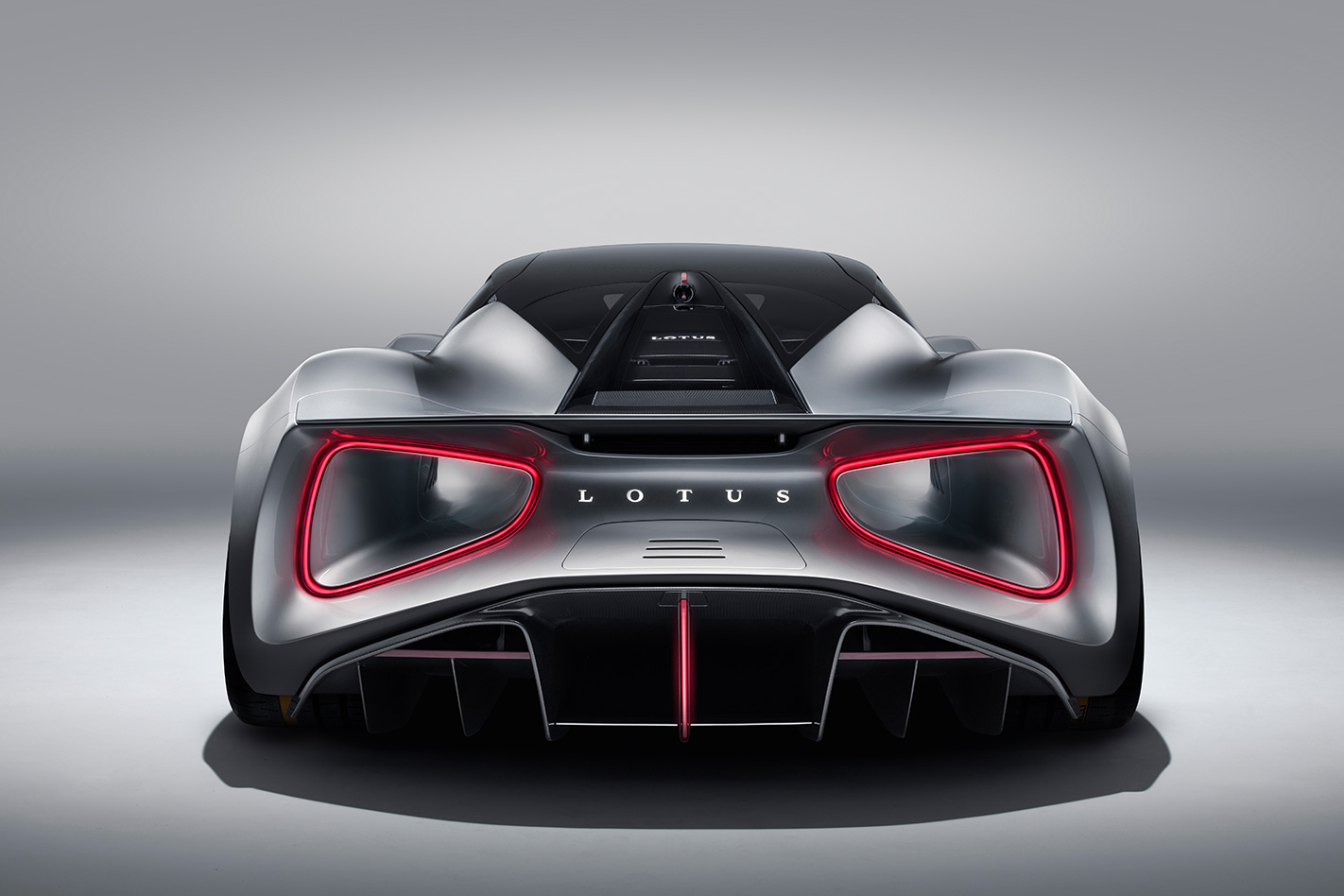
It’s certainly an arresting-looking thing. Although you might just be able to see hints of Ferrari or Pininfarina Battista about the front end and those flanks might bring to mind the latest Ford GT, it’s still an intriguing piece of styling. When viewed from the rear, each Venturi tunnel is edged by a red LED, creating a strong lighting signature. The indicators are enclosed within the corners of the red ribbon, while the reversing light is integrated into the illuminated ‘T’ of the ‘LOTUS’ badge, which sits above the charging flap.
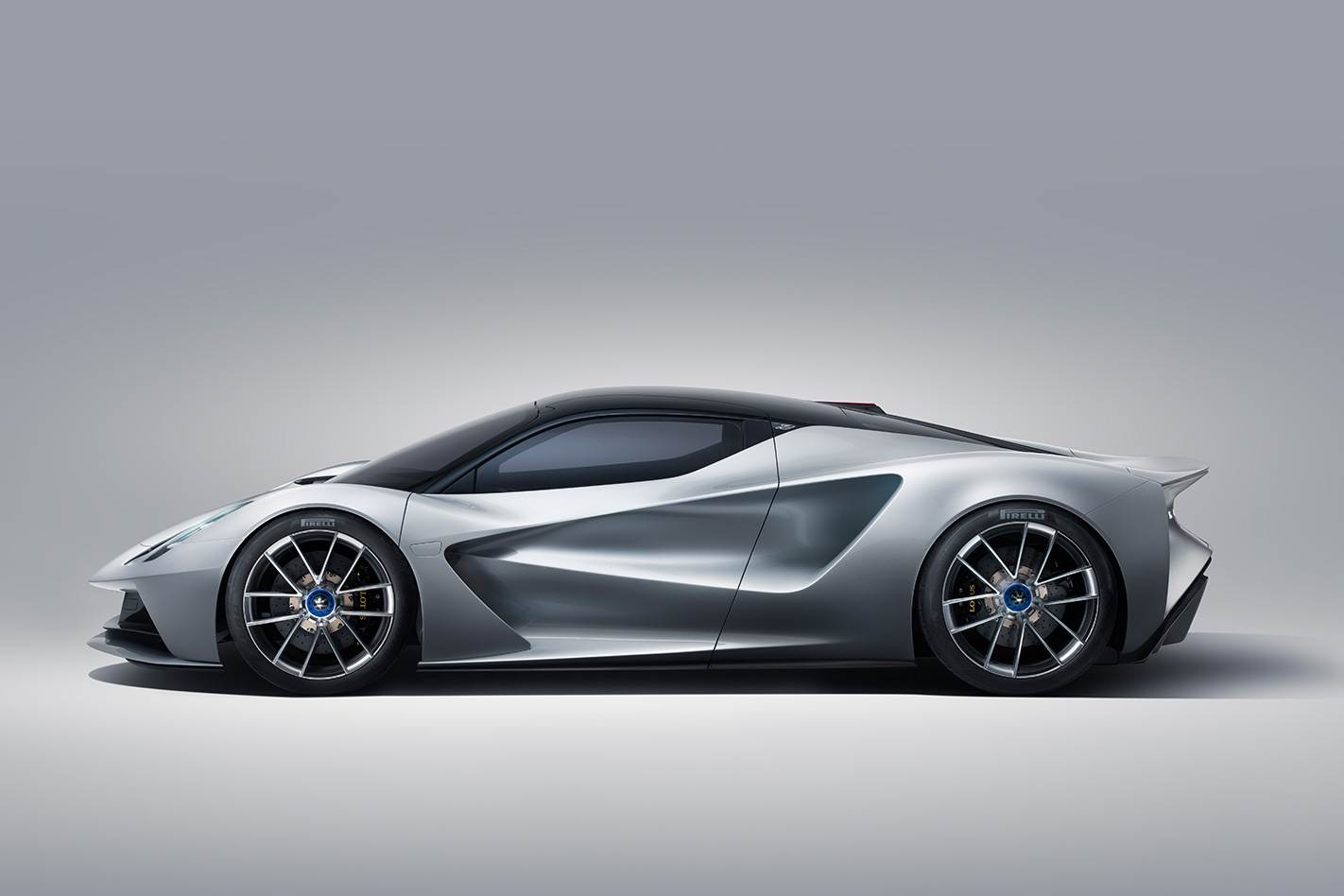
The jutting bi-plane front splitter directs air in three directions. The main intake channels air to cool the battery pack, while the outer intakes cool the front e-axle. There’s an active rear spoiler and what Lotus claims is an F1-style Drag Reduction System, both of which are engaged when the car’s switched into Track mode. There are no door mirrors, Lotus instead utilising discreet cameras that display on three separate interior screens.
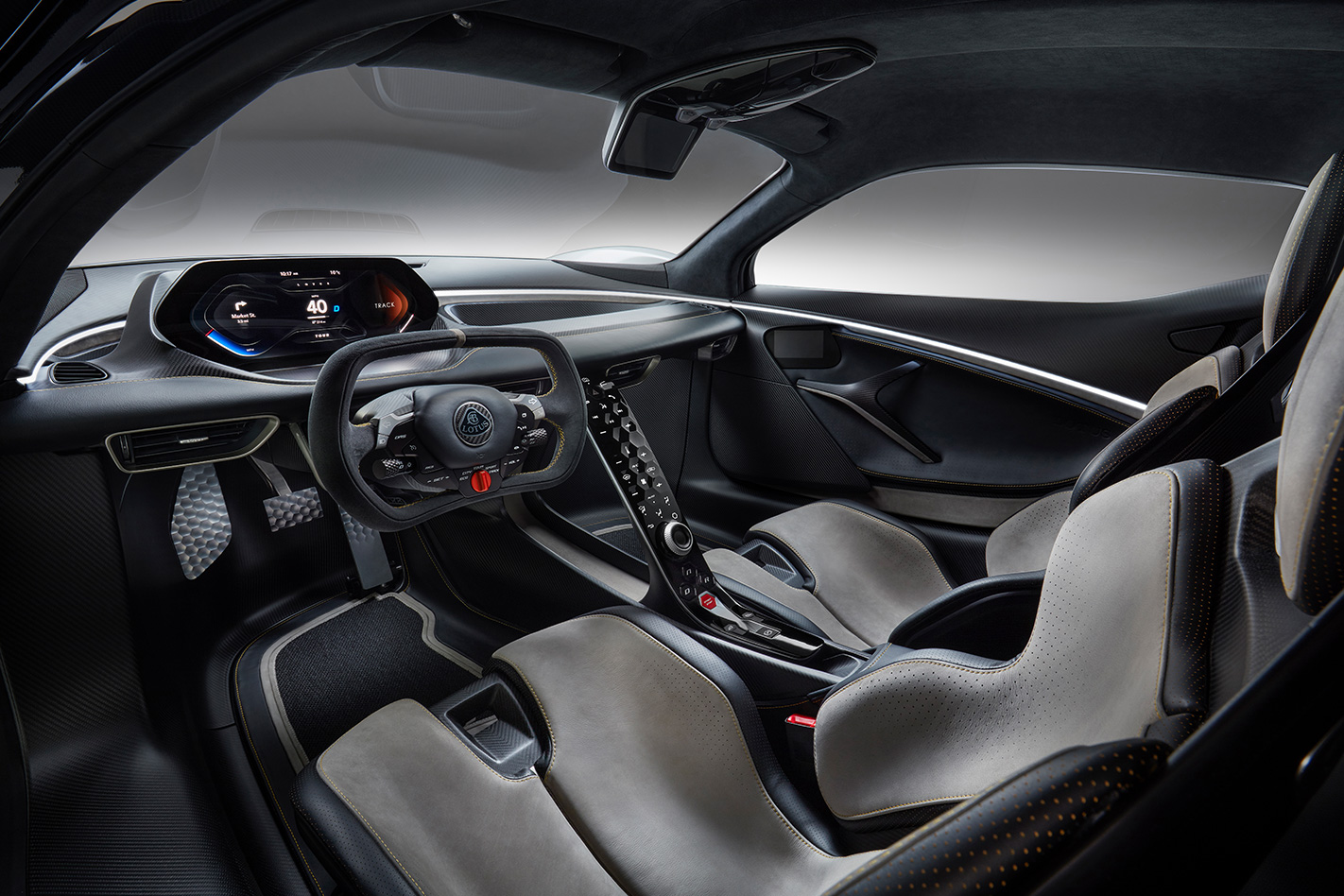
The cabin is designed around a ‘floating wing’ dashboard with visible-weave carbonfibre and metal finishes inside. Access is via a pair of dihedral doors, and when seated, a switch in the roof closes the doors so you won’t need to stretch to grab a handle. This roof console is another nod to Lotus’ heritage, the old Esprit Turbo featuring a bank of switches above the driver’s head.
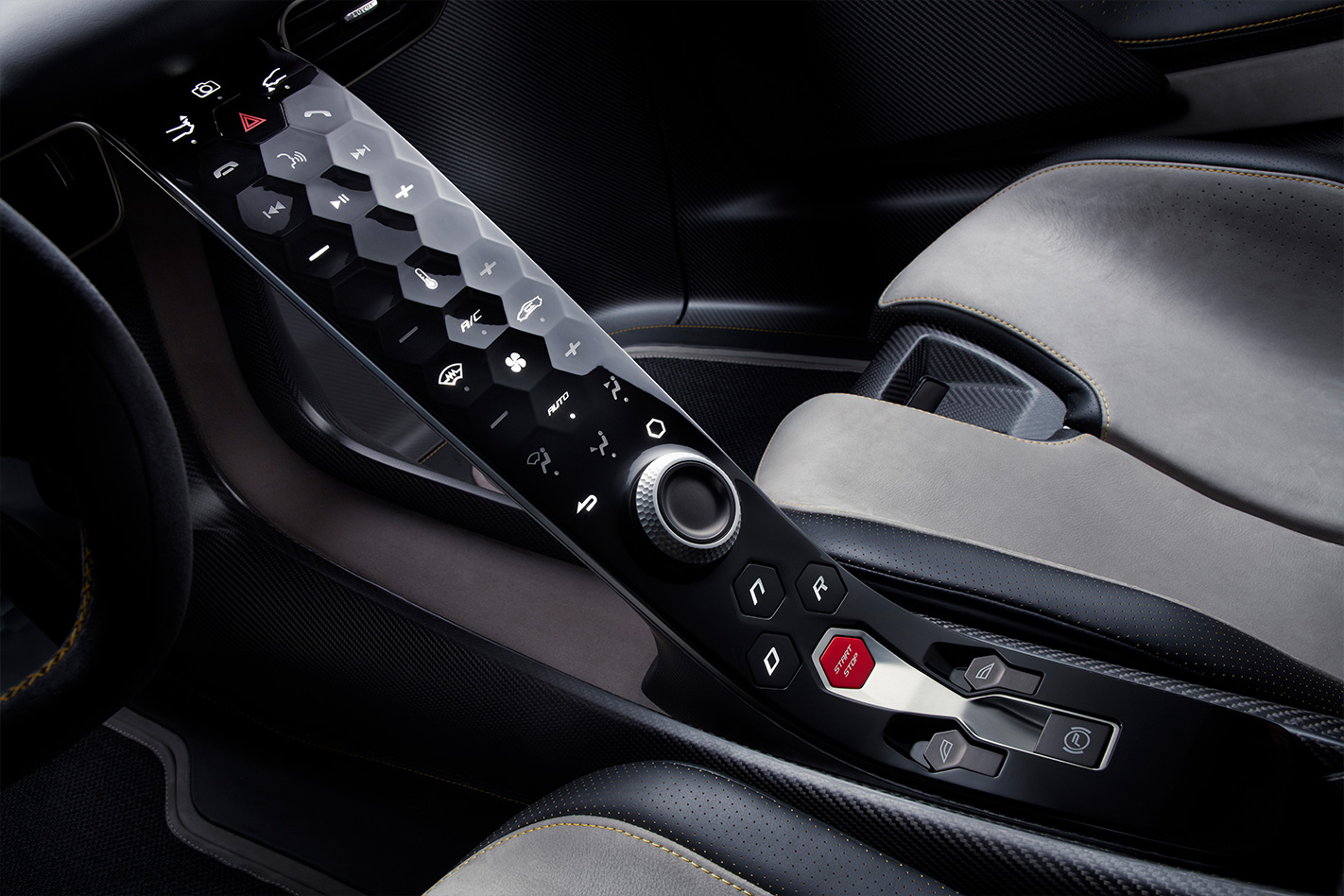
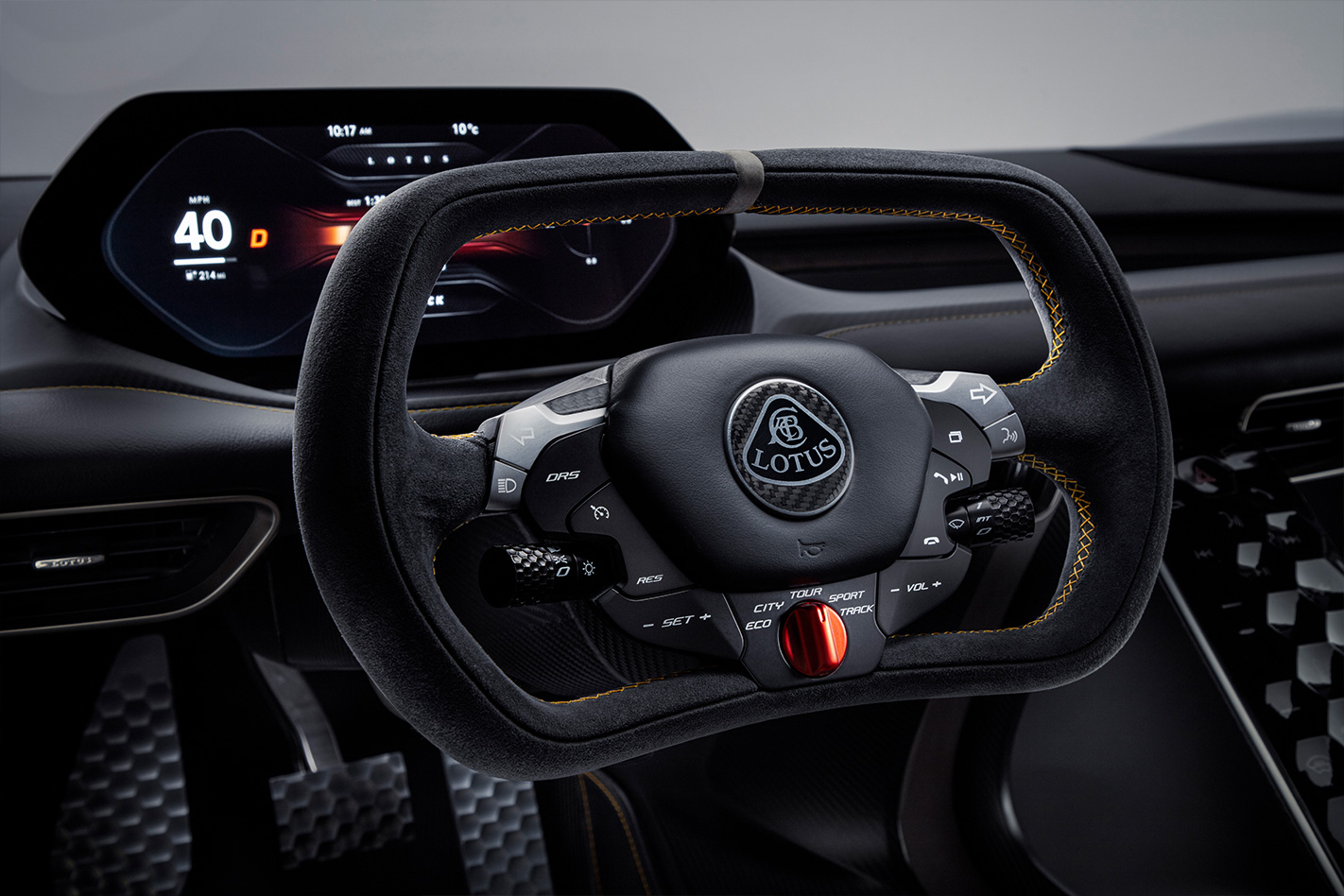
The tiny steering wheel can be specified in either Alcantara or leather finishes and includes a manettino-style mode selector for Range, City, Tour and Sport settings and an array of buttons for phone use, cruise control and DRS deployment. The instrument binnacle houses a digital display, while additional controls are housed on the floating ski slope-style centre console, which features touch-sensitive haptic feedback buttons. Climate control and a premium infotainment system are fitted as standard, as is Apple CarPlay and Android Auto smartphone mirroring. Well, you’d hope so for $3m.
Beneath the slinky bodywork is an electric powertrain developed by technical partner Williams Advanced Engineering, which has earned its spurs by electrifying the first four seasons of Formula E. The battery pack is mid-mounted immediately behind the two seats and supplies energy directly to four e-motors. Lotus claims that it’s the lightest, most energy-dense electric power package ever fitted to a road car.
The target figures of 2000PS and 1700Nm come courtesy of a huge 2000kW lithium-ion battery pack mounted centrally behind the passenger compartment. Like a good internal combustion engine, it can be viewed through a glass rear screen. Power goes from here to an in-line axial arrangement of two high-power-density e-motors. These feature integrated silicon carbide inverters and epicyclic transmission on each axle of the four-wheel-drive powertrain.
A quartet of single-speed helical gear ground planetary gearboxes transfer power to each driveshaft. Supplied by Xtrac, each gearbox comes packaged with the e-motor and inverter as a single cylindrical Electrical Drive Unit (EDU), each e-motor targeted for 500PS (368kW). In other words, each wheel of an Evija marshals the same power as a Porsche 911 GT3.
The four e-motors offer the possibility of sophisticated torque vectoring to any combination of two, three or four wheels. In Track mode, the ability to add more power to individual wheels offers the potential to reduce corner radii, in concert with the ESP stability control system. And the best bit? Despite being an EV, Lotus hasn’t migrated to an electrically assisted steering system. Yes, this unashamedly futuristic car uses an old-school hydraulically assisted steering system. There is a god.
The Evija can get to 300km/h in less than nine seconds, from 100-200 km/h in less than three seconds, and 200-300 km/h in less than four. So it’s properly rapid. Lotus has also worked on ensuring the stability of that energy flow. A combination of aero and the quad-radiator cooling package ensures that the battery resists overheating well. It’ll be good for a hot time-attack lap at just about any racetrack in the world, Lotus claiming the car can be driven flat out with no derate for at least seven minutes in Track mode. Expect a Nurburgring lap claim very shortly.
The battery pack can also be charged extremely quickly, should the necessary hardware be available. Williams Advanced Engineering reckons the pack can accept an 800kW charge which, in theory, would recharge the battery in just nine minutes. Given that a Tesla Supercharger only charges at 150kW, it’ll be a while before chargers with this amount of juice are a regular occurrence.
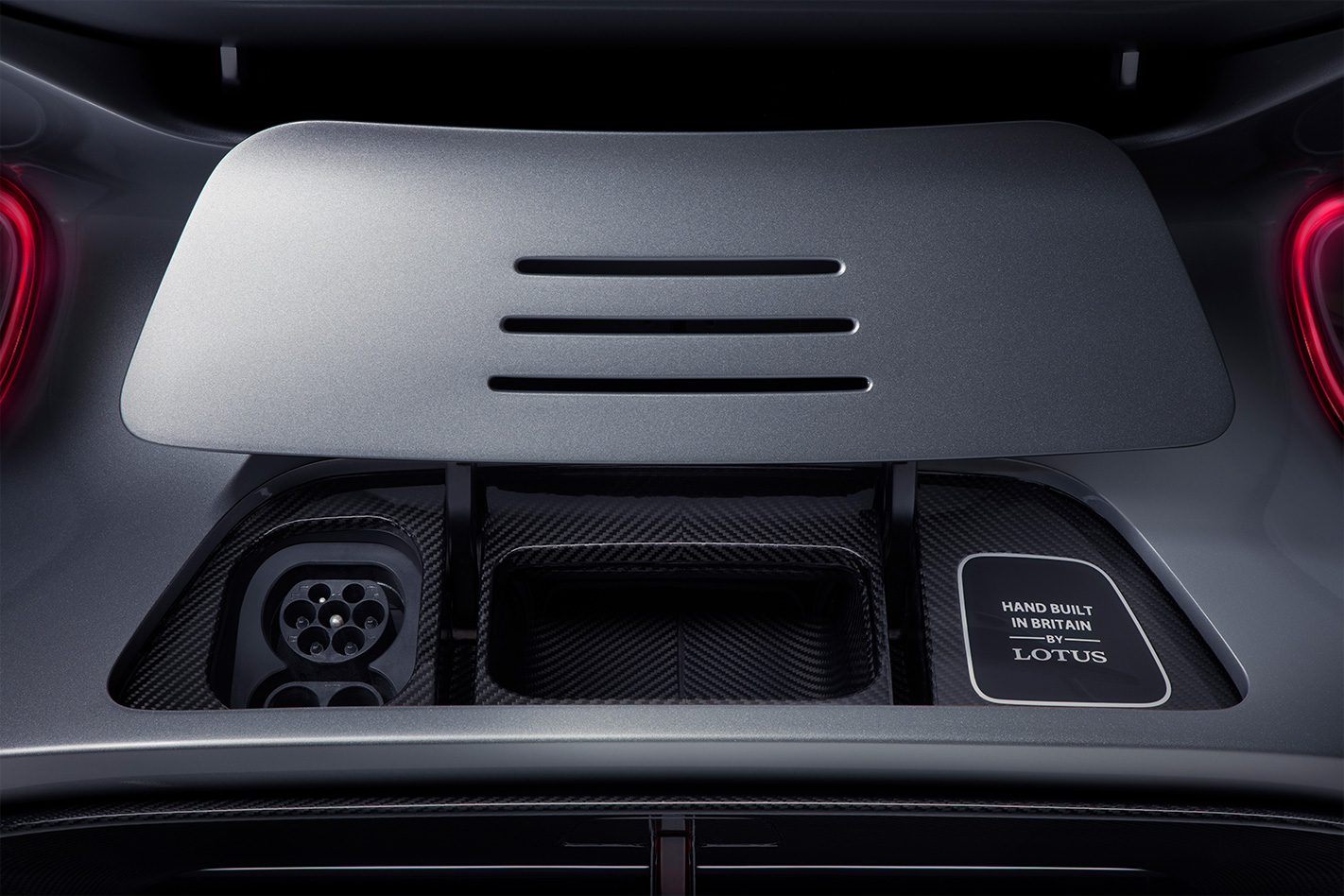
Using a more modest 350kW unit, which is akin to a state-of-the-art Australian Chargefox station, the Evija’s charge time will be 12 minutes to 80 percent and 18 minutes to 100 percent. The car’s range is 400km on the WLTP combined cycle, or 435km on the NEDC combined cycle.
The first major project under new paymasters Geely, the Evija looks the absolute goods. We look forward to getting behind the wheel to let you know whether it lives up to the initial promise. Stay tuned.
The Wheels Verdict: The third-gen 1 Series hopes to convince you that a front-wheel-drive BMW can be a good thing, but the jury is out as to whether the sportiest M135i is able to wave that flag. Final verdict when it gets here in December.
WHAT IS THE BMW M135i xDrive?
The third-generation 1 Series is the opening act for BMW’s passenger car range, and the five-door, five-seat M135i xDrive will top the model tree when it arrives late in 2019.
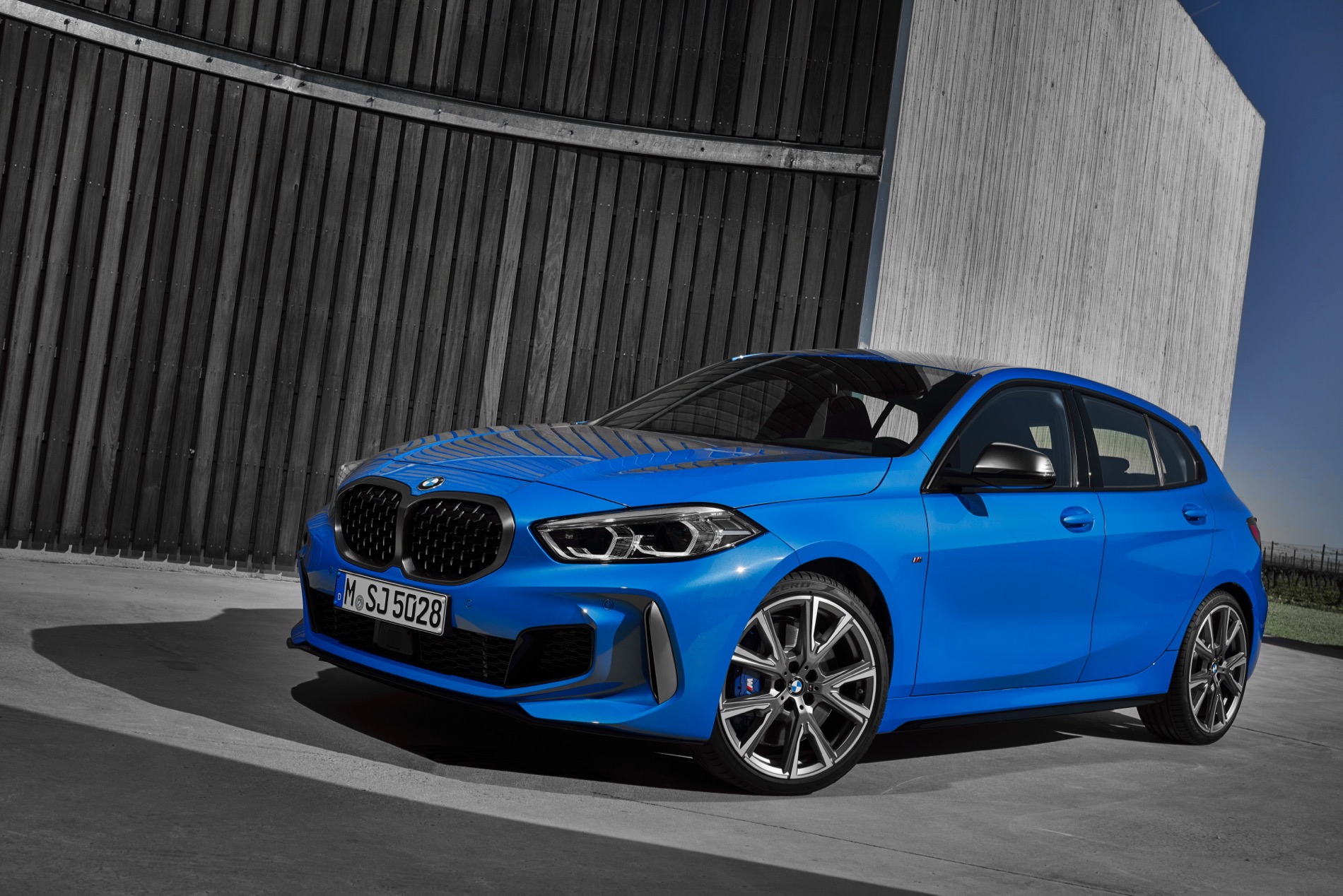
BMW M135i xDrive REVIEW
There’s really nothing like an enthusiast scorned, and BMW’s about-face on about-facing the third-generation 1 Series’ driveline has the internets up in arms. And then there’s the exterior design. Bless my good giddy aunt, but the kids are riled. Riled!
Honestly, though, switching the 1 Series to FWD was as good as signed off when BMW bought Mini in 1994. The gains for a car that spends its life in the ’burbs starring in insta pics and doggo playdates were, from an engineering and cost viewpoint, too great to pass up this time around – and it didn’t swap out in 2011 for the second-generation only because, according to powertrain chief for the 1 Series, Christian Bock, it was going to cost more to go FWD. “We had the engines and rear-drive platform already,” he said, “so it made sense then.”
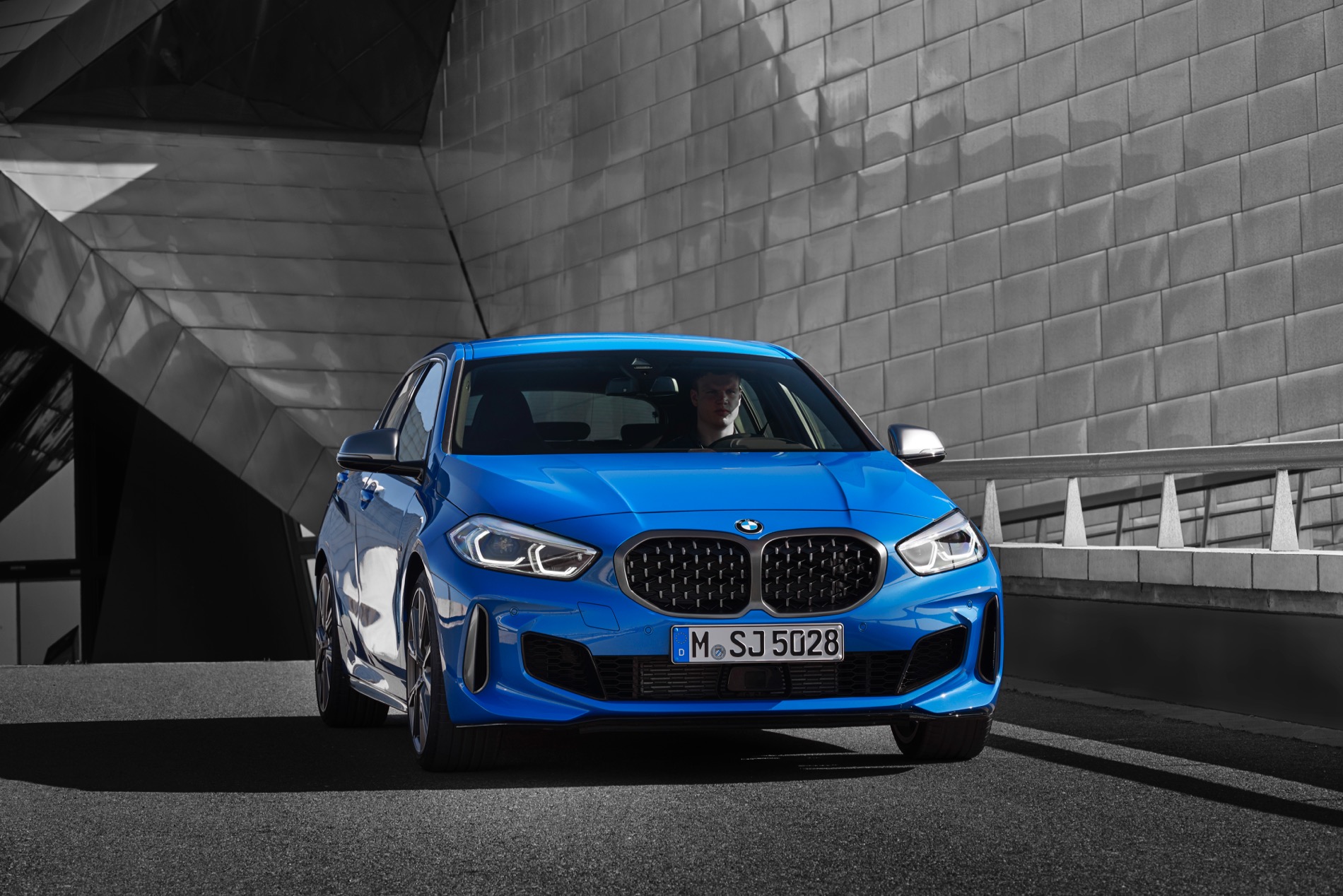
It makes sense now, too – it streamlines the 1 onto the widely used UKL2 platform, uses a common 2.0-litre four-cylinder engine tuned to (a Mercedes-AMG A35-matching) 225kW and 450Nm and adds moderate AWD capability from the X range for added zing.
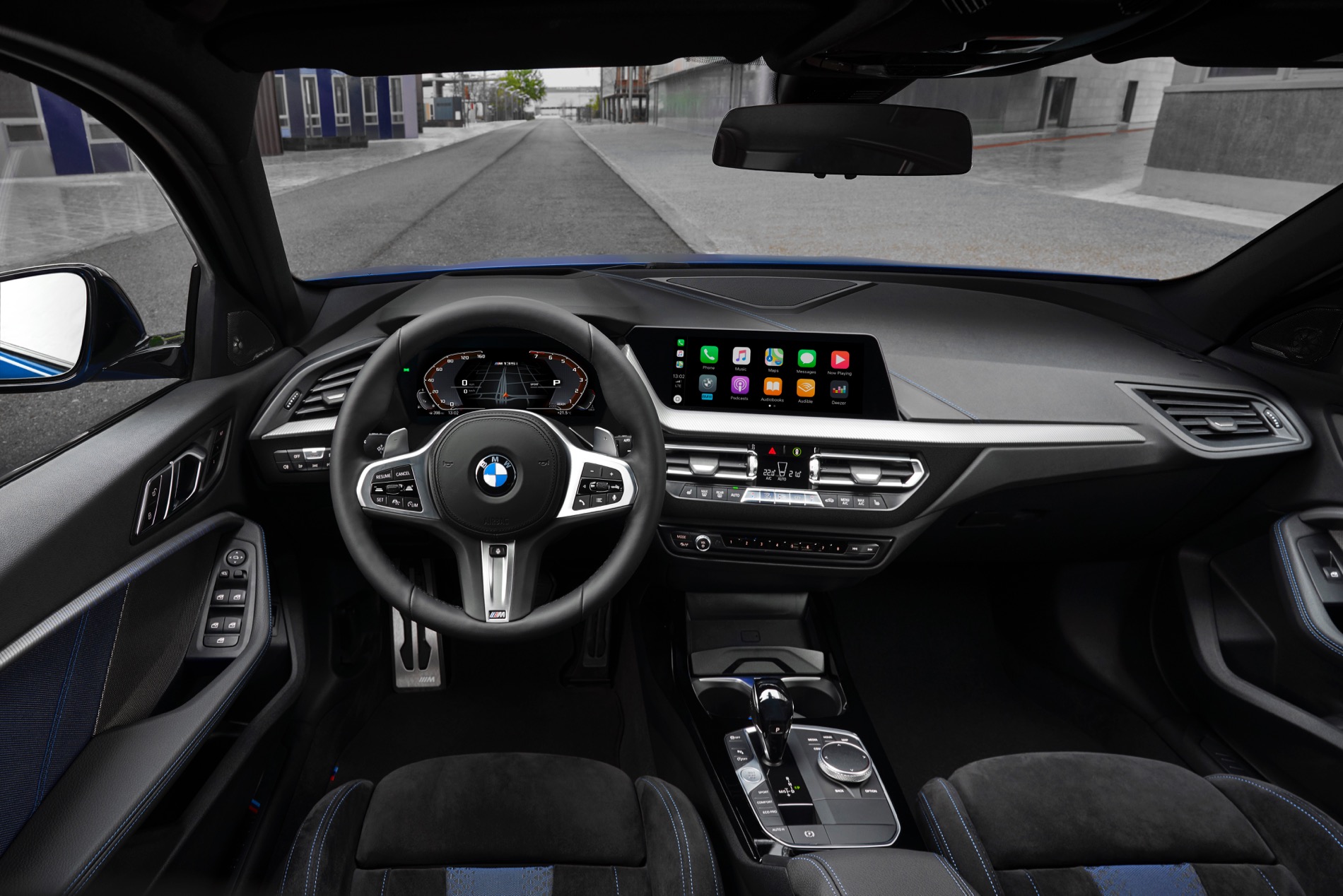
The move to make a more roomy, wordly entry-level car has, though, yielded an interior design best described as prosaic. The hatch silhouette does nothing to move the game on, and the enlarged kidney grille looks even more out of place here than on other, larger Bimmers. The interior is far nicer, and to my eyes pips the newest A-Class for multimedia screen integration and storage.
On billiard-table German roads, the M135i uses its torque well, and its around-town manners are excellent. It’s stable at speed, though a slow steering rack and artificial weighting dull the fun. The chassis tune, too, feels overwhelmed at big speed and under load. Adaptive dampers are an option, but even in Sport mode, the outside front cried uncle far earlier than it should have.
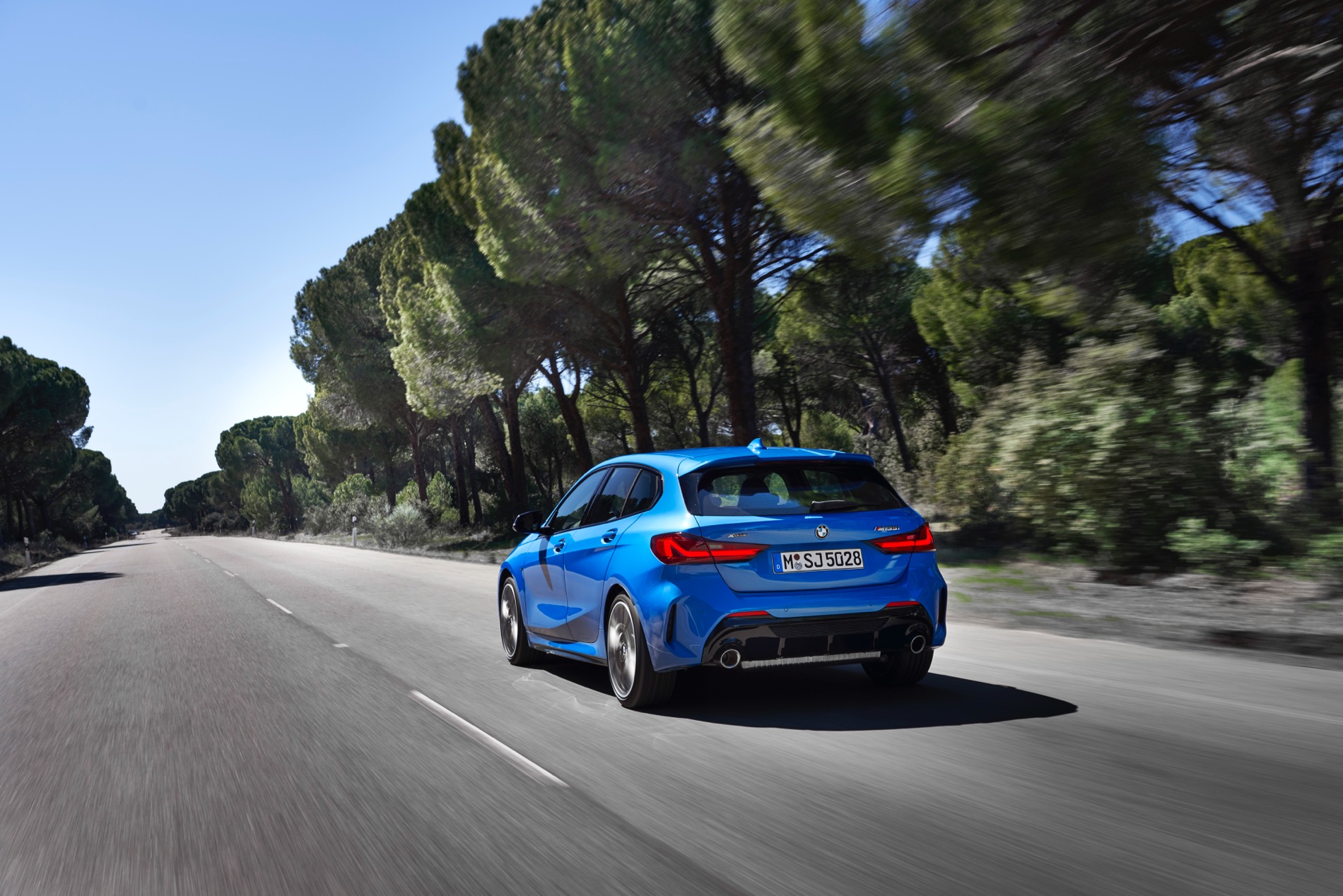
Final judgement should be passed on our rougher roads, and the softer tune may work well there. It also pays to keep in mind the target audience of this car which isn’t the frothing online hordes so busy throwing shade at BMW.
BMW M135i xDrive Rivals
Mercedes-AMG A35, Audi S3, Volkswagen Golf R, Ford Focus RS
BMW M135i xDrive Price and Specs
- Model: BMW M135i xDrive
- Engine: 1998cc inline-4cyl, DOHC, 16v, turbo
- Max power: 225kW @ 4500-6250rpm
- Max torque: 450Nm @ 1750-5000rpm
- Transmission: Eight-speed automatic, Torsen LSD, AWD (max 50:50 split)
- Weight: 1600kg
- 0-100km/h: 4.8sec (claimed)
- Economy: 7.1L/100km
- Price: TBA
- On sale: Q4 2019
ELECTRIC car charging points will be built into every new UK home as part of a proposal by the Department for Transport. The legislation will make it compulsory for all new houses, apartments and offices to be furnished with external charging point installations, to kickstart the migration to electric vehicles.
What’s more, the department has suggested that chargers be fitted to urban street lighting posts to cater for existing users who only have access to on-street parking.
Transport secretary Chris Grayling isn’t backwards about coming forwards on the impact of the plan, calling it “the biggest overhaul in road transport technology since the development of the Benz patent motorcar 130 years ago”.
The cost of developing the infrastructure project will be borne by private companies and represent an integral part of the UK government’s “Road to Zero” policy, which is designed to reduce new car emissions to “effectively zero” by 2040.
Given that Australia has long been an EV holdout due to distances and the particular economic conditions regarding fuel and electricity pricing, could such a policy work here?
While cars have made rapid advances over the past half-century, we don’t tend to think of the tyres they roll on as following a similar journey of improvement. After all, since their invention by John Boyd Dunlop in 1887, the humble tyre has remained almost exclusively black, round, rubbery, and filled with air. And that’s not likely to change.
According to tyre manufacturer Continental, the car tyres of the future will still bear a strong visual resemblance to what we use today, but they’ll be festooned with sensors, able to morph their shape to suit the road, be more environmentally friendly and generate significantly less noise.
Continental wheeled out a host of future tyre concepts at its 2019 TechShow in Hanover, and though there’s no wild and out-there ideas among them, that’s kind of the point. It’s hard to improve on something that’s already so close to the ideal, but here’s how Continental sees the next evolution of tyres shaping up:
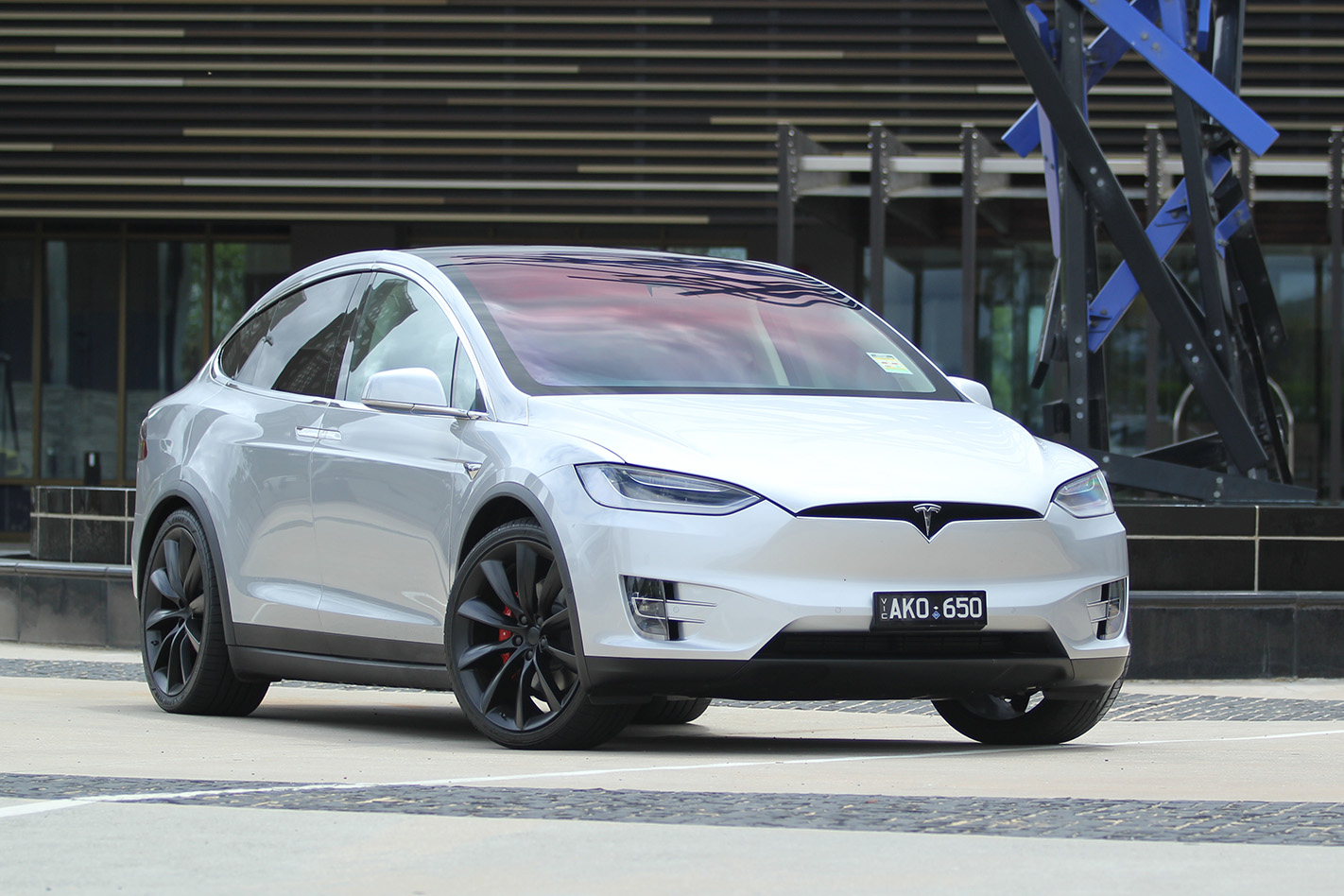
Fatter cars need beefier tyres
Electric vehicles (EVs) are fast becoming a fixture on roads around the world, and one of the main challenges of making tyres for EVs is dealing with their considerable weight. EV battery packs can be extremely heavy, making something the size of a small hatchback carry the weight of an SUV. Regular road tyres often don’t have the structural strength necessary to deal with that extra weight for a given size.
So Continental expects that tyres intended for EVs will be designed to be more robust than normal, with more reinforcing material to ensure handling and road-holding isn’t compromised by weight.
Naturally, non-electric cars will continue to use similar construction methods to what’s in use today, but with uptake of EVs forecast to increase significantly over the next decade, the notion of the “average car tyre” will soon become the one that’s fitted to a battery-electric vehicle.
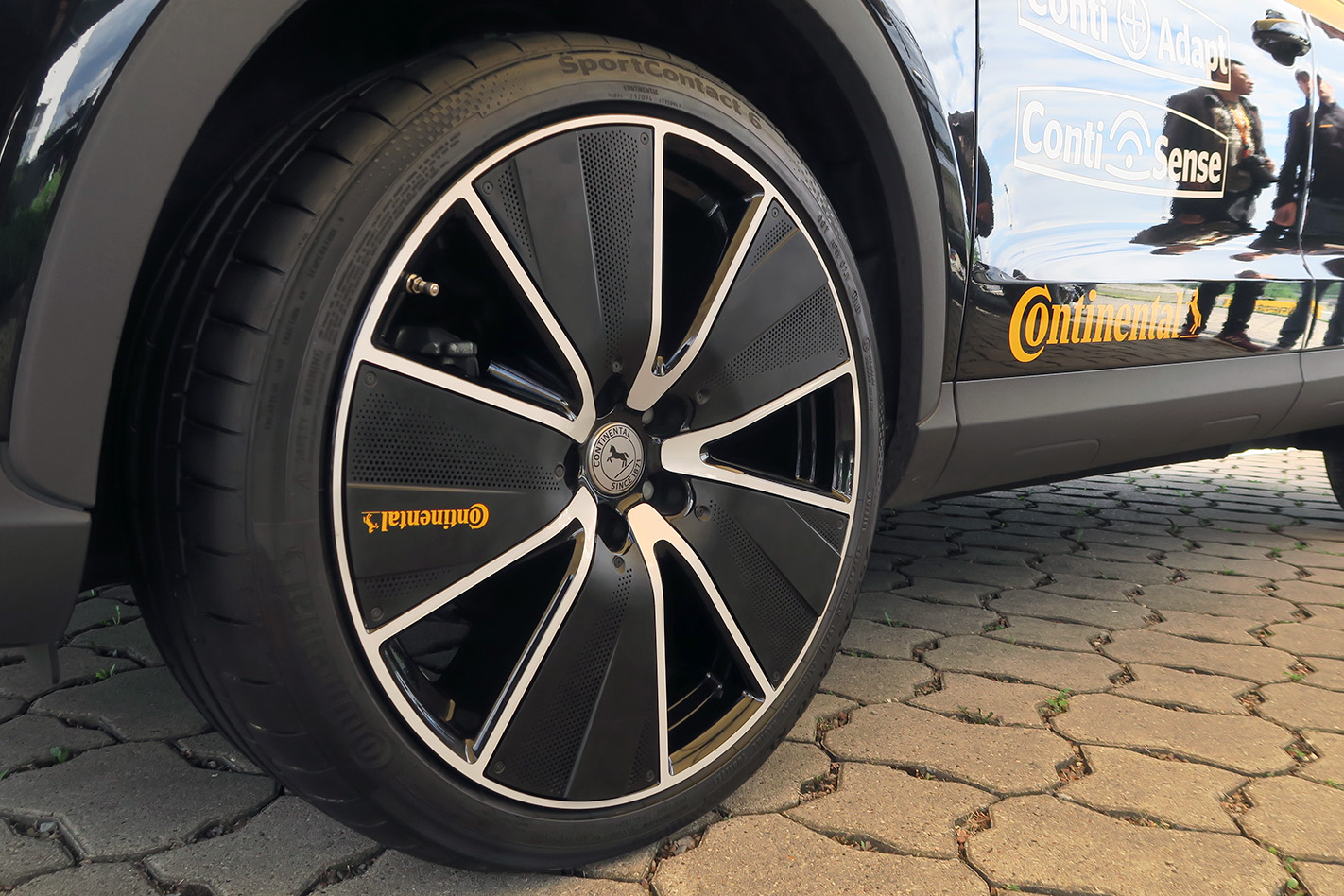
Shapeshifters
A tyre’s performance, comfort and efficiency is often tied to its physical shape. Tall-sidewalled tyres are typically riding better, low-profile tyres offer improved handling and narrow tyres burn less fuel, but those qualities are often in conflict with each other.
However, Continental says that shapeshifting wheels could allow future cars to blend those attributes into one tyre. The company showed off its DynamicPressure prototype at the 2019 TechShow, which houses a compact air compressor within the spokes of an alloy wheel, enabling it to pump-up or deflate a tyre without stopping.
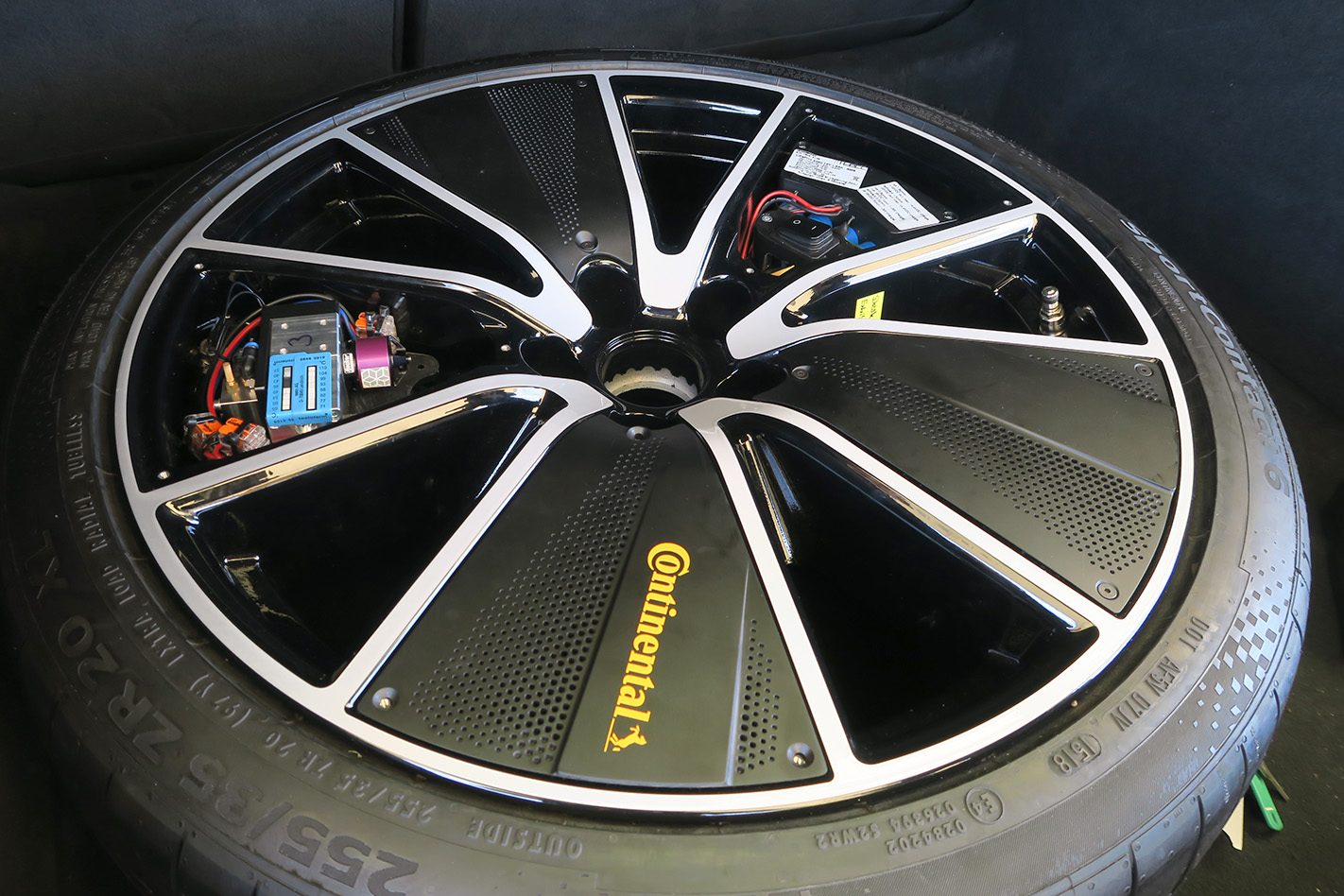
By increasing air pressure, rolling resistance is greatly reduced and fuel economy improves. By deflating it, comfort is boosted and the tyre contact patch grows, enhancing traction.
Similar systems are already fitted to military vehicles and mining trucks, but they’re not designed to operate at the same speeds as a road car. Continental’s challenge is to make the system compact, durable and affordable for regular motorists, however, it’s not expected to become a commonplace feature for at least the next half-decade.
Continental has also detailed a high-tech wheel capable of physically morphing its rim width from narrow to wide, allowing the car to switch from an economy mode to a high-performance mode on the fly, without requiring a tyre change. It’s an incredibly complex concept, however, and as such likely to remain a prototype only for the foreseeable future.
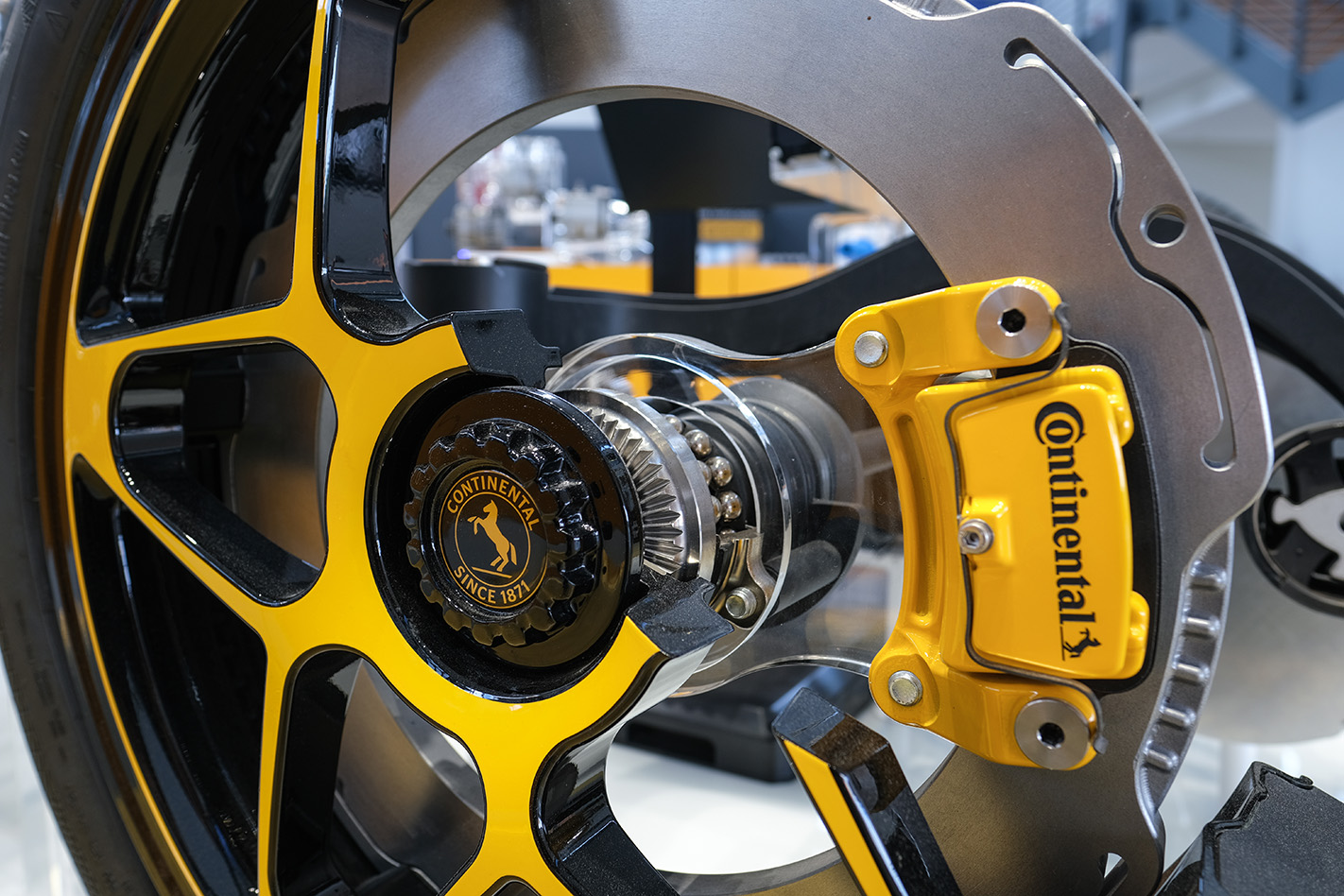
Smart tyres will talk to your car
Currently, the only electronic link between a tyre and the rest of the car extends to a tyre pressure monitor, which uses a sensor fixed to the inside of the wheel to measure the air pressure and inform the driver when a tyre may be running flat.
However, advances in sensor technology promise to make the tyre of the future a smart, self-diagnosing part of the car that won’t just tell you when there might be a puncture, but also when your tyre’s tread is getting low or when it’s overheated.
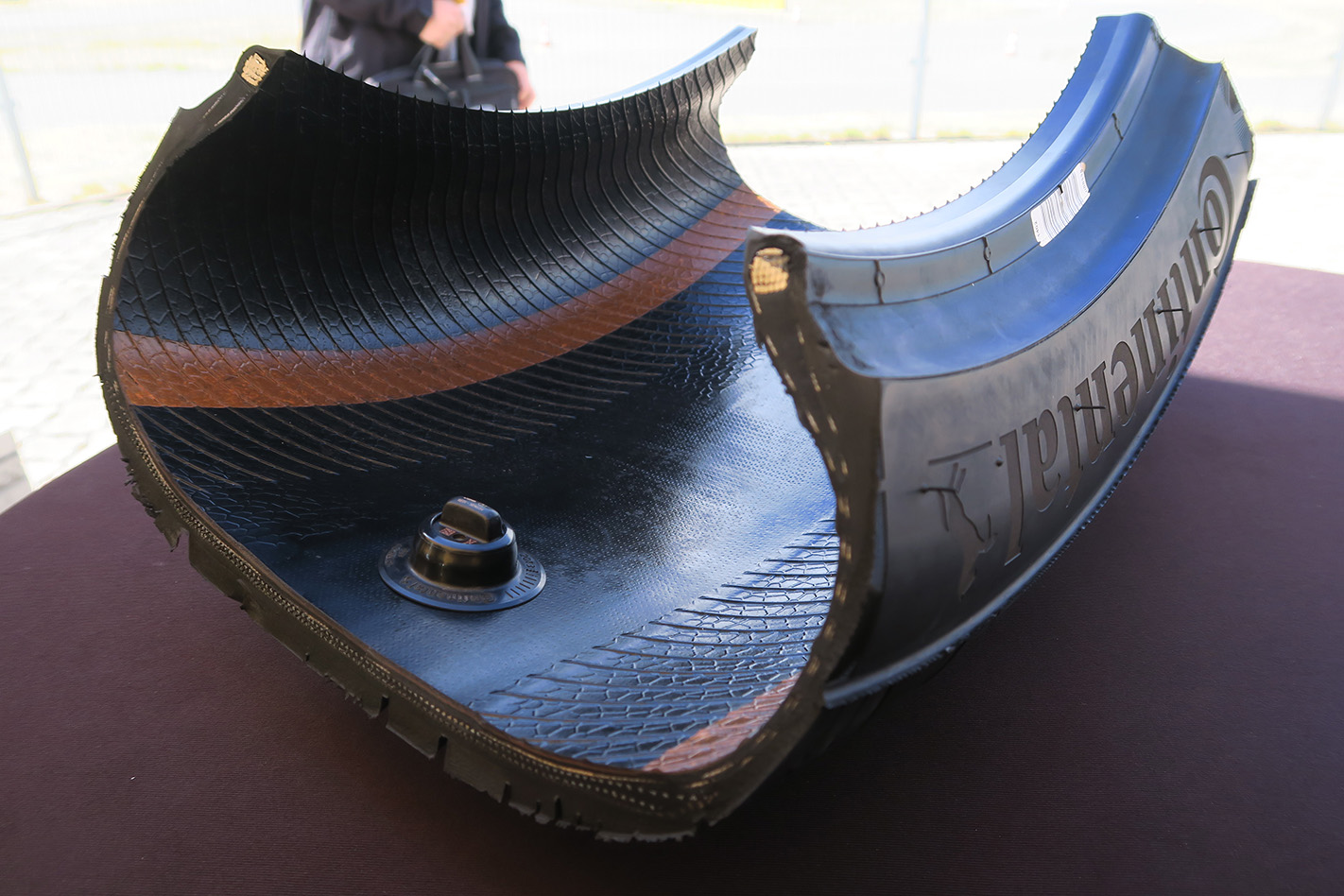
Using a sensor that weighs no more than 12 grams, Continental developed a system that bundles all of those functions into one unit, with tread depth monitored by conductive layers embedded in the tread face that close a circuit when they’re worn through.
Greener, in more ways than one
Besides improvements in rolling resistance (another change necessitated by the need to make cars more efficient), the tyre of the future will also be kinder on the environment through more eco-friendly materials.
Continental recently announced it will begin production of bicycle tyres made using natural rubber sourced from dandelions, and is examining whether that method can scale to production of tyres for road vehicles as well.

With rubber tree plantations taking up large amounts of land and often displacing rainforest, cultivating dandelions – which will grow pretty much anywhere – could be a more environmentally sensitive way of producing natural rubber for the tyre industry.
That said, synthetic rubber will still need to be a major ingredient of tyres, and unfortunately an alternative for the feedstock for that material – crude oil – has yet to be found.
Stronger to resist electric twist
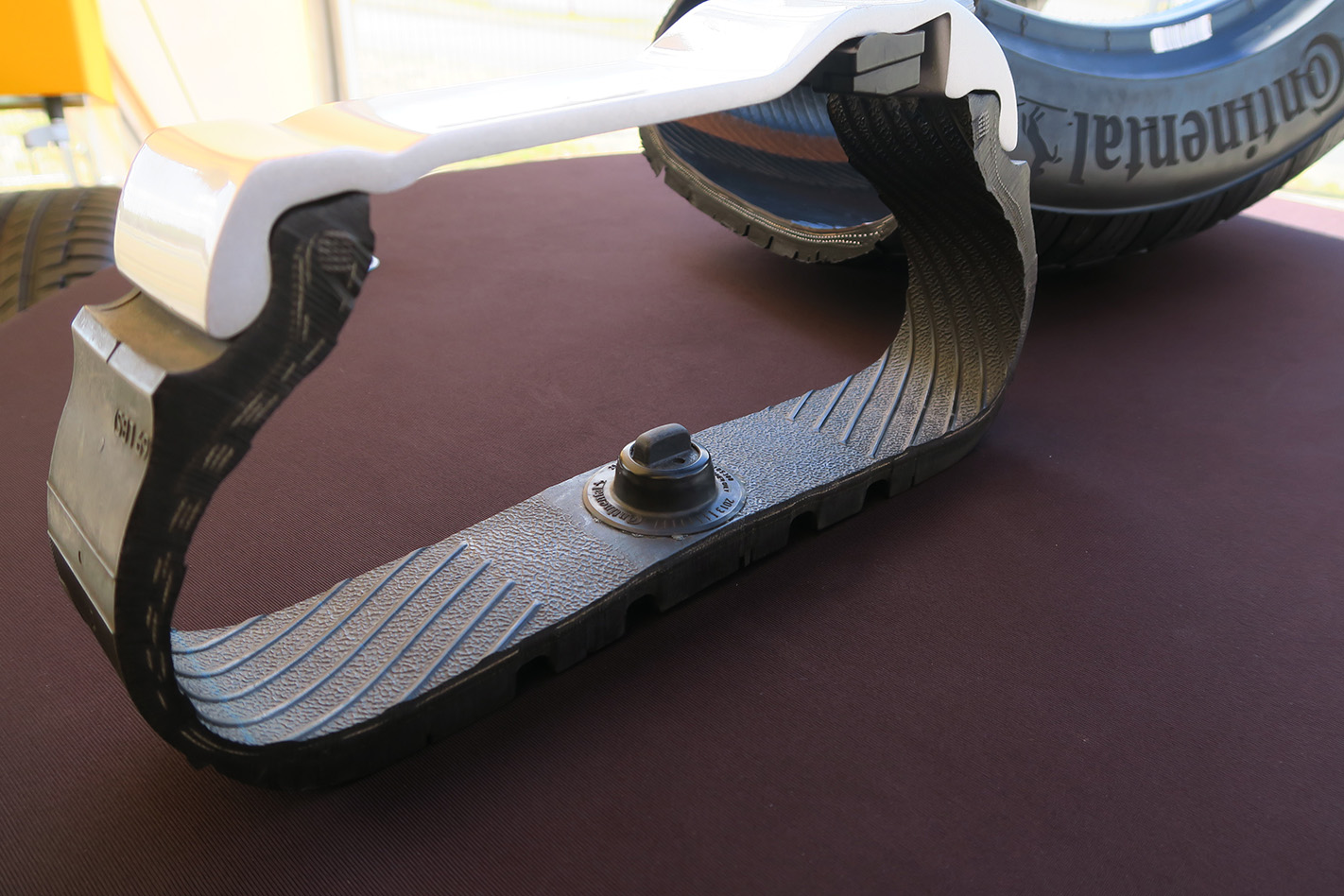
One of the trends identified by Continental’s tyre division is the greatly increasing torque loads of modern cars – the turning force generated by a car’s engine. Performance cars, in particular, are deploying significantly more torque than they used to (largely due to the widespread adoption of turbocharged engines), but electric cars are posing the biggest challenge.
An electric car, even something as pedestrian as a Nissan Leaf, produces its maximum torque figure at zero rpm, which can easily overwhelm a tyre’s grip capacity and puts more strain on the construction of tyres developed for lower torque outputs. Future tyres will accordingly be built to better apply that torque load to the road surface without breaking traction or degrading the tyre.
Quiet achiever
The steady rise of electric vehicles will also dictate another key change in tyres for the future – they’ll generate much less noise. Without a noisy combustion engine, the intrusiveness of tyre noise (that steady roar you hear from under the car at speed) becomes much more noticeable.
As such, future tyres will have compounds and tread patterns engineered to minimise the amount of noise they make. It won’t just benefit the driver and occupants either – anyone living next to a road will also notice less traffic-related sound as well.
An online auction with more than a dozen race cars from Aussie Driver Search (ADS) is set to end this week, after the business went into voluntary liquidation.
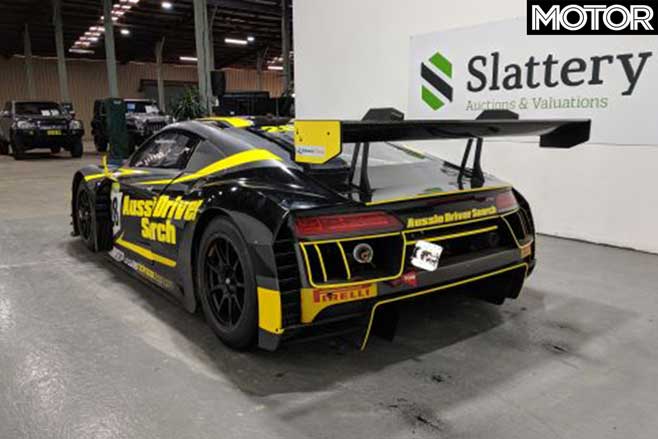
To help settle remaining debts, the cars owned by ADS, including the Audi R8 GT3 prepared by Matt Stone Racing for the 2019 Bathurst 12 Hour.
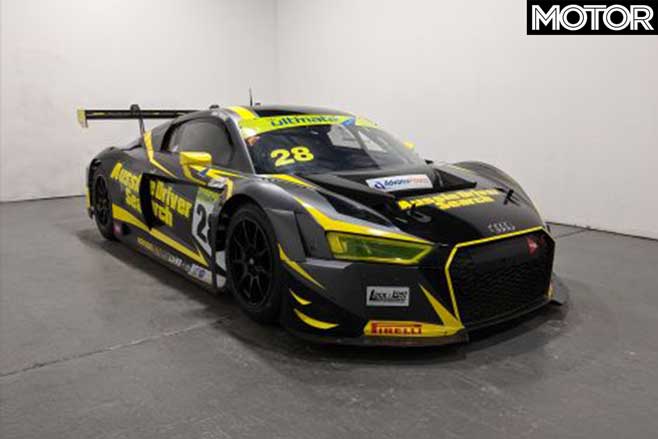
The R8 currently has no bids, with its starting point of $250k yet to be met.
ADS’ Supercars Support series vehicles are also up for grabs, with two Commodore V8 utes, a sedan, and two V8 Falcon utes included in the auction. All of these vehicles are relatively cheap with current bidding ranging from $5500 to $12,100.
Four Toyota 86 race series cars are also part of the auction (bidding is around $11,000 each for the four), as well as two BMW 130i hatch racers (current bids at $5755 and $5200), and a Ford Ranger support vehicle ($21,600).
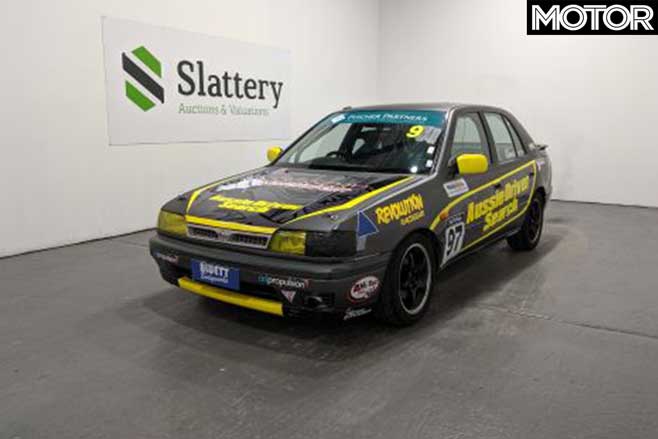
There’s even a race-spec Nissan N14 Pulsar with a 2.0-litre SR20 under the hood, with a bid of $3500.
Also up for grabs are a few of the support assets which ADS owned, like the transporter trucks and trailers which the company had relatively recently invested in.
Two road-going Ford Falcon XR6 Turbos are also up for grabs, though MOTOR is currently investigating their backstory.
The voluntary liquidation comes after financial difficulty encountered by ADS, which founder Kyle Austin appears to be quite open and apologetic about.
Austin released an audio statement, accompanied by a brief written outline of what happened to ADS and how the liquidation process will go forward.
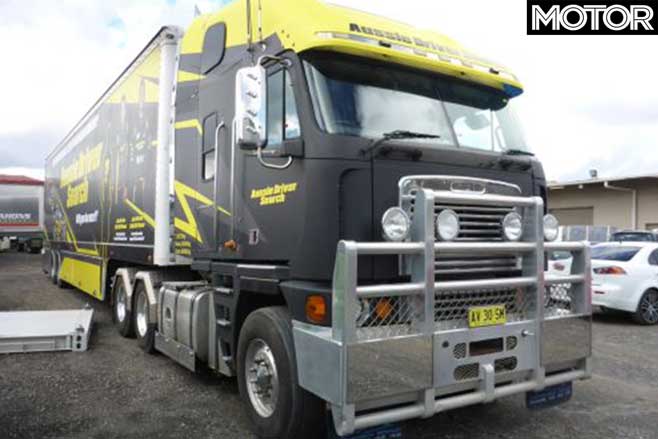
“Looking back now, I can see that I underestimated the resources required to grow a business, particularly a business in motorsport due to the huge expenses required to maintain race cars and specialised team members,” said Austin.
Also included in the statement is an assurance that ADS has done what it can to pay its staff and creditors, with additional information for racers who have paid money to ADS.
“Our competitors will be most impacted as they have paid money for events which will now not be fulfilled. I apologise to each and every one of these people and understand the magnitude of this.
“We have sent an email to all competitors outlining the steps they should take to try and recover their money. I am also very upset that I am no longer able to fulfil the remaining prizes for our winners and am deeply sorry to them.
“All of our wages are up to date and our permanent staff will be receiving any owed annual leave, redundancy and any other entitlements. Our event crew are also fully paid with nothing owed.
“Majority of our accounts with any other businesses are also fully paid and the liquidators will sell off all of our assets and distribute any remaining funds as appropriate.
“I want to also make it very clear that I did not make this decision for personal gain and have come away with nothing.
“I am a personal guarantor on all our loans and leases, and it is likely that I will have to become bankrupt due to this.”
The auction ends on Thursday July 18 at 7pm AEST. You can view the listings at the Slattery Auctions website.
Cadillac might be about to lead General Motors’ electric vehicle charge but there’s one last petrol-powered hurrah coming from the current generation.
Reports out of the US are suggesting an ultra-high performance variant of the Cadillac CT5 is on its way using the 6.2-litre supercharged LT4 V8 from the Chevrolet Camaro ZL1 and now-defunct Cadillac CTS-V.
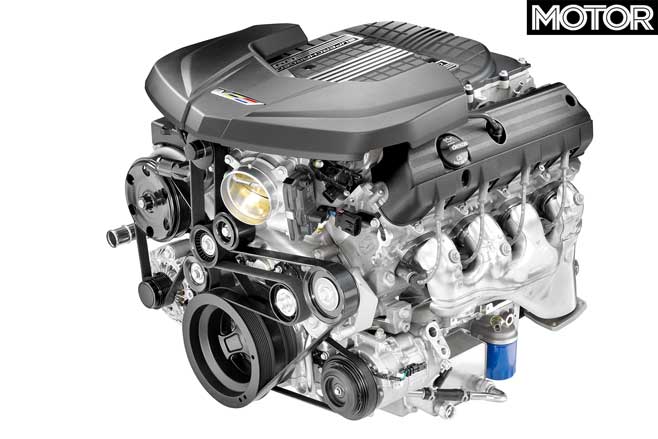
Media and consumers were left underwhelmed by the recent reveal of the CT5-V, a quick car with 265kW/542Nm from a 3.0-litre twin-turbo V6, but a long way from the 477kW/855Nm offered by its previous CTS-V super sedan.
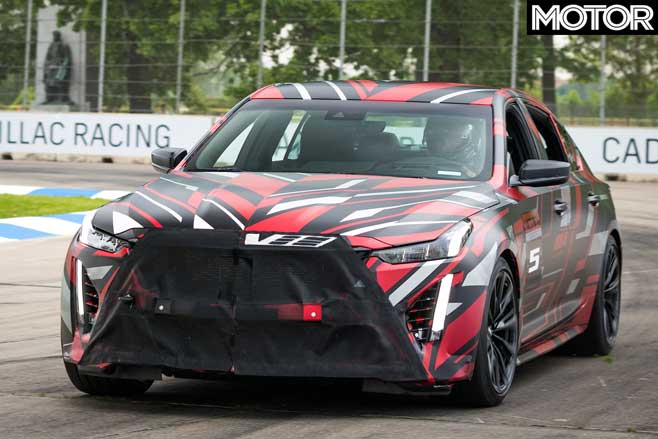
As it turns out, the CT5-V was just the entrée with the main course still to come, Cadillac telling US media that it has switched to a two-tiered line-up for its high-performance models, with the yet-to-be-named track capable models yet to appear.
It’s expected the CT5 will adopt the LT4 V8 while the smaller CT4 will use the 3.6-litre twin-turbo V6 from the previous-generation ATS-V which produced 346kW/601Nm. Cadillac offered a first look at these two new models when prototypes completed laps at the recent Detroit IndyCar Grand Prix driven by GM President Mark Reuss and Product Vice President Ken Morris.
There was speculation that high-performance Cadillac variants would be powered by its new 4.2-litre twin-turbo V8 dubbed ‘Blackwing’, but that engine’s future is in serious doubt as the car it powers, the flagship CT6-V, was revealed and then almost immediately cancelled.
Jonny Liebermann from US outlet Motor Trend reported on his Instagram both the future CT4 and CT5 high-performance variants will be offered in both manual and automatic. The CTS-V and ATS-V were both available as a six-speed manual or eight-speed automatic, however, the LT4-powered Camaro ZL1 uses a new 10-speed automatic.
GM revealed in its 2018 earnings report that “Cadillac will be GM’s lead electric vehicle brand and will introduce the first model from the company’s all-new battery-electric vehicle architecture” but apparently it’s still happy to keep at least one wheel in the traditional ICE camp for now.
“Don’t even get me started on this,” says Mark Webber when asked about Victoria’s road toll spike. It soon becomes clear that Australia’s approach to road safety has Webber more than exercised.
“I saw a European stat the other day where the UK is phenomenal in terms of fatalities per million people,” he says. He has a point too. The latest World Health Organisation figures from 2018 show that the UK suffers 31 road fatalities per million, whereas Australia’s figure is nearly double that at 56 per million. Consider that the Brits are driving on busier roads, in smaller cars and in far worse weather conditions and the issue is compounded.
“I think it what would be great for us to do is to look at it. It’s not a state problem, it’s a federal, holistic view of how we can learn from other countries,” he says, slating Australia’s parochial take on road safety. “There’s always a way to improve and revenue isn’t always about saving people’s lives. Are there countries doing it better? Absolutely yes, so let’s pick up the phone.”
“If you hit a tree at 60km/h, you’re still going to be killed, so it’s not speed,” says Webber. “If you fall asleep,” he adds. “It’s a big country, there’s road kill, people go off road missing stuff. So there are lots of things other countries don’t have,” he says.
Still, it’s not all bad news for Australian drivers. Despite the regional spike in Victoria, Australia enjoyed a 4.1 percent decrease in road deaths between 2010 and 2016. By contrast, the UK’s toll over the same period fell by 2.4 percent. So Aussies aren’t doing great but policy is going in the right direction. Compare that to the USA, which has seen fatalities rise by 13.5 percent from 2010-2016 and it’s clear that the road safety message isn’t disastrous.
But, as Webber rightly points out, Australian legislators could clearly benefit from looking at what the leading road safety nations in the world (currently Norway, Sweden, Switzerland and the UK) are doing.
