How long do solar panels last?
According to Forbes Home [↗], solar panels have a lifespan of at least 25 years.
However, their efficiency does naturally degrade around 0.5 per cent per year due to being exposed to the elements.

“Don’t even get me started on this,” says Mark Webber when asked about Victoria’s road toll spike. It soon becomes clear that Australia’s approach to road safety has Webber more than exercised.
“I saw a European stat the other day where the UK is phenomenal in terms of fatalities per million people,” he says. He has a point too. The latest World Health Organisation figures from 2018 show that the UK suffers 31 road fatalities per million, whereas Australia’s figure is nearly double that at 56 per million. Consider that the Brits are driving on busier roads, in smaller cars and in far worse weather conditions and the issue is compounded.
“I think it what would be great for us to do is to look at it. It’s not a state problem, it’s a federal, holistic view of how we can learn from other countries,” he says, slating Australia’s parochial take on road safety. “There’s always a way to improve and revenue isn’t always about saving people’s lives. Are there countries doing it better? Absolutely yes, so let’s pick up the phone.”
“If you hit a tree at 60km/h, you’re still going to be killed, so it’s not speed,” says Webber. “If you fall asleep,” he adds. “It’s a big country, there’s road kill, people go off road missing stuff. So there are lots of things other countries don’t have,” he says.
Still, it’s not all bad news for Australian drivers. Despite the regional spike in Victoria, Australia enjoyed a 4.1 percent decrease in road deaths between 2010 and 2016. By contrast, the UK’s toll over the same period fell by 2.4 percent. So Aussies aren’t doing great but policy is going in the right direction. Compare that to the USA, which has seen fatalities rise by 13.5 percent from 2010-2016 and it’s clear that the road safety message isn’t disastrous.
But, as Webber rightly points out, Australian legislators could clearly benefit from looking at what the leading road safety nations in the world (currently Norway, Sweden, Switzerland and the UK) are doing.
The numbers looked amazing. Back in 2017, Elon Musk promised that his Tesla Roadster would accelerate to 60mph in 1.9 seconds, would cover the quarter mile in 8.8 seconds, top out at over 400km/h, would achieve 965km on one charge and, he said, would “give a hardcore smackdown to gasoline cars. Driving a gasoline sports car is going to feel like a steam engine with a side of quiche.”
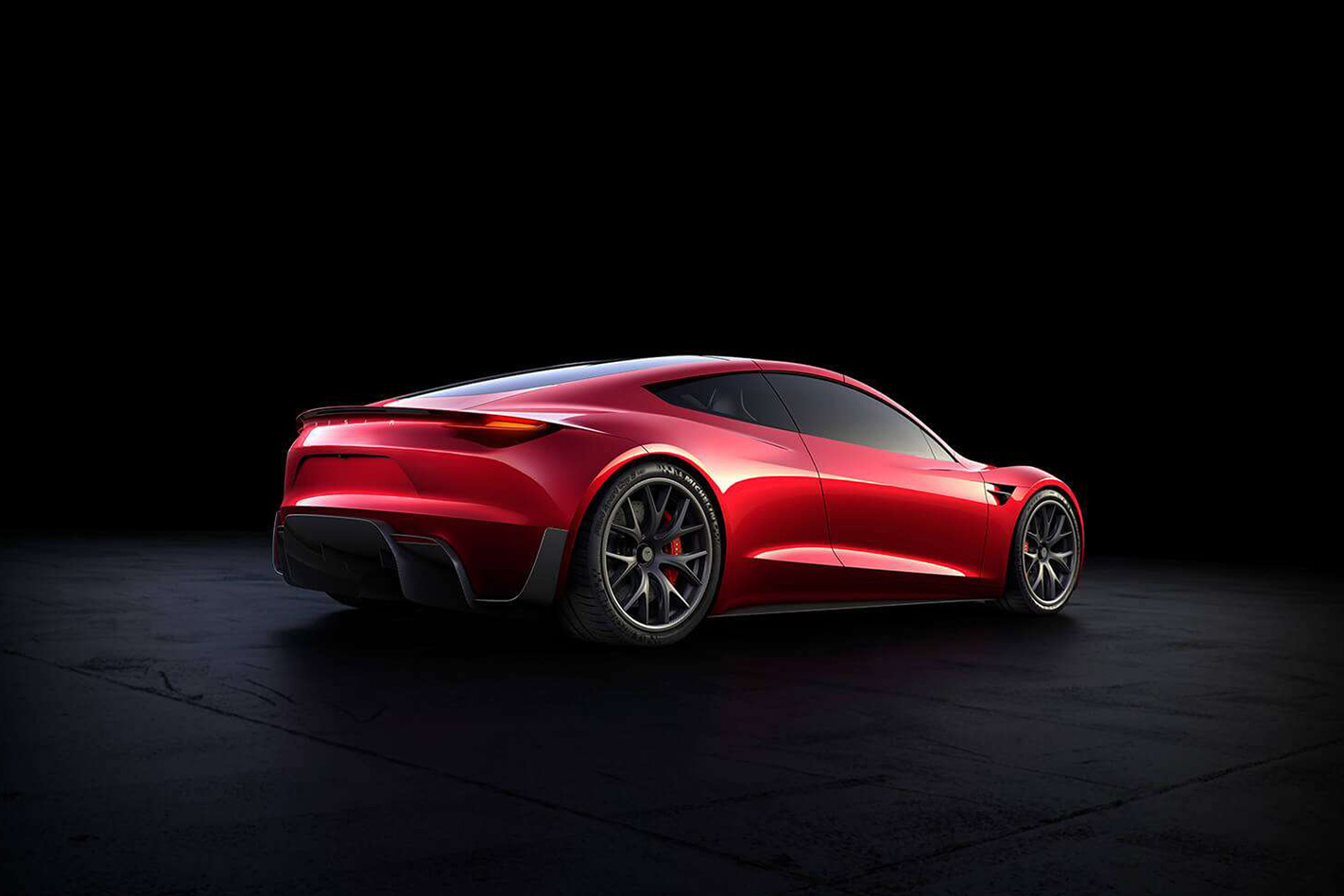
Giddy punters fell over themselves to hand over deposits and get a ride in a prototype set to ‘Maximum Plaid’, its fastest mode. And then tumbleweed. It’s all gone a bit quiet on the Tesla Roadster front. We featured it as the next big thing on the cover of our Future Issue over a year and a half ago.
Of course, Musk being Musk, we’ve listened to some hyperbole in the interim. In June 2018, he announced a “SpaceX option package” for the Roadster. This would add around 10 air thrusters to improve cornering, acceleration and braking and, to quote Musk, “maybe even allow a Tesla to fly”. Out would go the rear seats, replaced by an air tank and 700 bar compressor using the tech featured on Falcon space rockets.
After being ribbed by the online community, who joked the car would end up looking like Doc Brown’s DeLorean from Back to the Future, Musk has claimed that the thrusters would be discreet, the rear ones hidden behind the licence plate, which then calls into question the system’s road legality.
Originally earmarked for sale in 2020, it’s now clear that the Roadster’s place in the launch schedule comes some way behind the forthcoming Model Y, a compact SUV that runs on the Model 3’s underpinnings. The Model Y is tentatively scheduled for October 2020, so the Roadster has clearly been pushed back again, even behind the Semi truck and Robotaxi projects.

This moment of relative stability for Tesla comes on the back of Model 3 sales picking up the slack of nosediving Model X and Model S orders. The company lost money for the first half of this year, despite last year forecasting a golden period of profitability. Musk has stated that he now expects Tesla to return to profitability by the end of this year.
Investment analysts don’t share his optimism. “We believe the company is missing the required scale to operate profitably,” UBS analysts noted on June 28. “We do currently forecast profitability for the company when the Model Y ramps in 2021.”
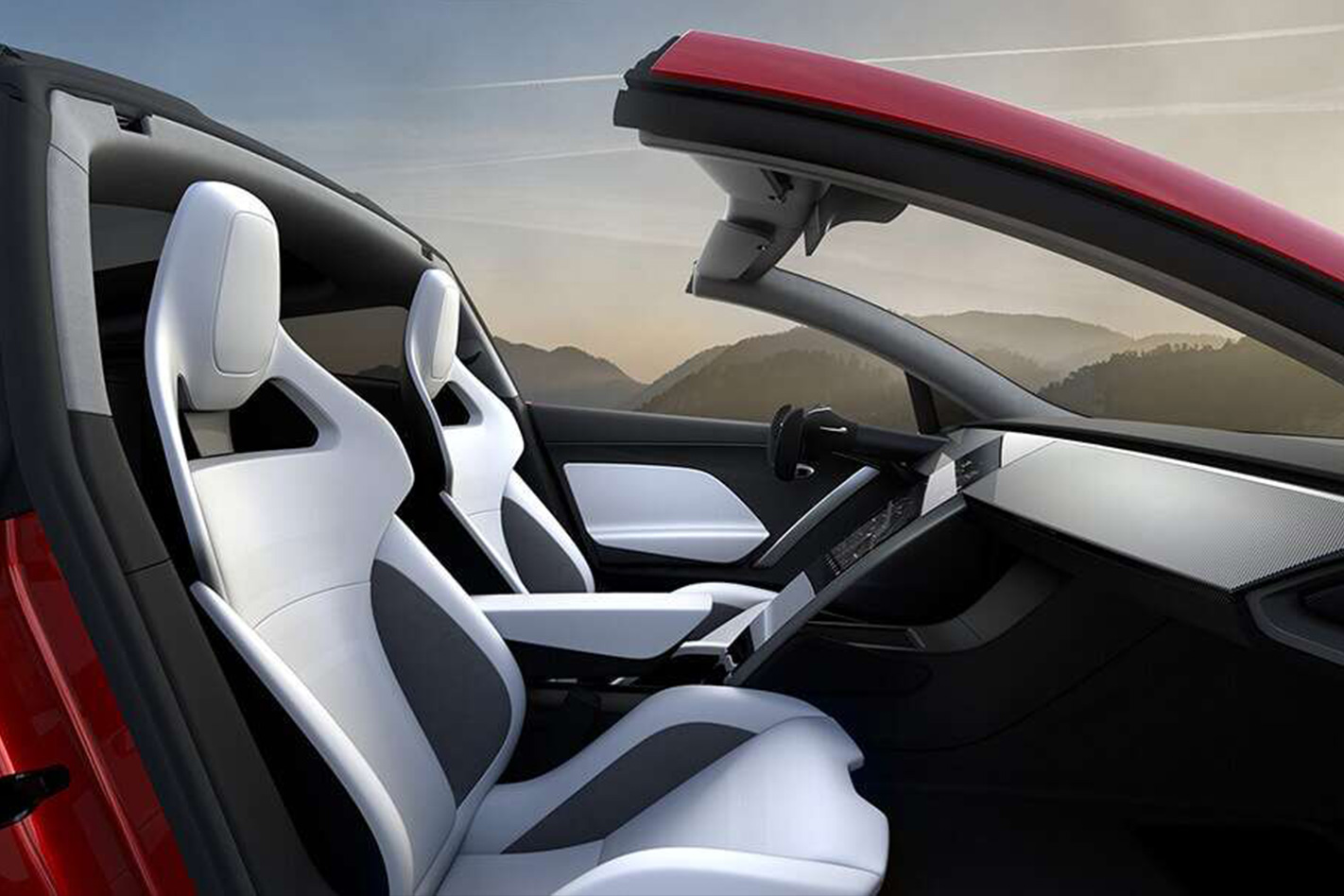
That’s a long way out. And for those who placed a deposit on the Tesla Roadster back in 2017, half a decade could pass between handing over their money and receiving a product. Tesla’s Australian site is still canvassing $66,000 deposits. Like the Roadster itself, it remains to be seen whether that business case will fly.
If you’ve been wanting a Ferrari 812 Superfast but find the presence of a roof too claustrophobic, help is at hand with the imminent arrival of a roofless Spider version.
The 812 Spider is set for a September reveal, likely to be at the inaugural Universo Ferrari event in Maranello, however the situation is complicated by the impending reveal of the forthcoming F8 Tributo Spider.
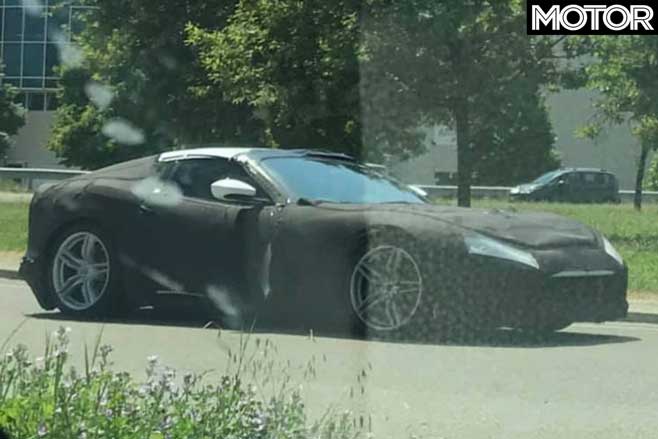
Prospective customers on the FerrariChat forum have said September 2 is the date for the 812 Spider, just prior to the Italian Grand Prix at Monza, however well-connected member ferr9000 has mentioned September 19 as the day the covers come off.
It seems likely that both dates are correct, with one scheduled for the 812 Spider and the other for the F8 Tributo Spider. It is believed that the Universo event (dates TBC) will replace Ferrari’s attendance at this year’s Frankfurt Motor Show, where it would traditionally reveal such models.
Information suggests the 812 Spider will use a 488 Spider-style foldable roof, or look to a car like the Mazda MX-5 RF for a similar treatment. All else should be as per the coupe, including the 588kW/718Nm 6.5-litre V12 and rear-wheel steering, bar a small weight increase.
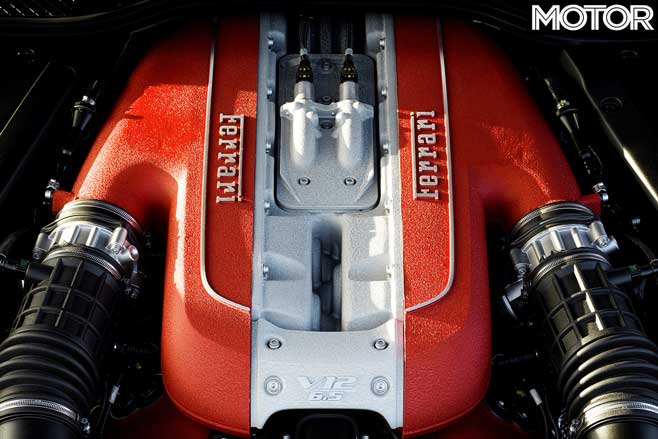
Given the 812 Superfast’s 2.9sec 0-100km/h claim is already traction-limited, there’s no reason to believe this figure will increase for the Spider, though whether the 340km/h top speed is achievable with an open top remains to be seen.
Regardless, the two drop-tops will be the latest in Ferrari’s product onslaught. Last year Maranello revealed the 488 Pista and Pista Spider and its first Icona models, the Monza SP1 and SP2 roadsters, while in 2019 the F8 Tributo appeared at the Geneva Motor Show and the SF90 Stradale, the first of Ferrari’s new-generation models, debuted in late May.
And it doesn’t stop there. It’s believed a new Coupe will be shown this year with a V6 hybrid engine, which will also find its way into the F8 Tributo ‘successor’ in 2020, while a year later it’s expected the Purosangue not-an-SUV will appear. Then there are rumours of a V12 Testarossa revival!
Sometimes, faults and flaws get past the manufacturer and the car dealer in quality control and new cars hit the market with potentially dangerous faults. When that happens, the car’s manufacturer or importer will be obliged to issue a safety recall.
The aim is to notify all the original purchasers of the car and have them bring the car in for the necessary repairs or modifications. It’s not a perfect system, though, because sometimes a car that has changed hands already will slip through the net. Other times, the owner just can’t be bothered taking the car in.
It’s always worth returning your car to get repaired however, as it’s in your best interest as well as the manufacturer’s – who will often go out of its way to make the process as swift as possible.
So when you’ve bought a new second-hand car, it’s wise to check the Federal Government’s website productsafety.gov.au/recalls and check whether your car has been the subject of such a recall. From there, you can check with a dealer who will be able to reference records and tell you whether the fix was done on that particular car. If not, fear not; recalls don’t cost the owner a cent – even subsequent owners. That’s the law.
Victoria Police has a shiny new toy to play with for the next 12 months, one that’s capable of hitting a barnstorming 305km/h top speed.
Revealing images of its new BMW M5 Competition Highway Patrol car, Victoria Police will be using the high-powered sedan for the next year, joining the 530d fleet that’s already in operation.

The force’s newest recruit is equipped with an eight-speed automatic transmission and all-wheel drive system, though its real trick lives underneath the bonnet, which makes the M5 Comp the most powerful vehicle in the police force. Motivated by a 4.4-litre twin-turbo V8 petrol engine, the M5 produces a meaty 460kW of power and tyre shredding 750Nm – not that the police condone that sort of behaviour.
As an indication of the sort of acceleration you’d need to beat the cops at the traffic-light grand prix (again, not that the boys in blue would be up for it), the M5 Competition reaches 100km/h from a standstill in just 3.3 seconds. Great stuff if you’ve just graduated from the police academy.

BMW Group Australia CEO, Vikram Pawah, said that it is just another stage of the relationship between the police and BMW Australia.

“Since co-operating in the deployment of BMW 5 Series patrol vehicles in 2018, BMW Group Australia has enjoyed working closely with Victoria Police,” said Pawah.
“Our 530ds have impressed the force with their combination of performance, comfort, dynamics and efficiency. With our Condition-Based Servicing model, these vehicles offer strong lifecycle value for Victoria Police.
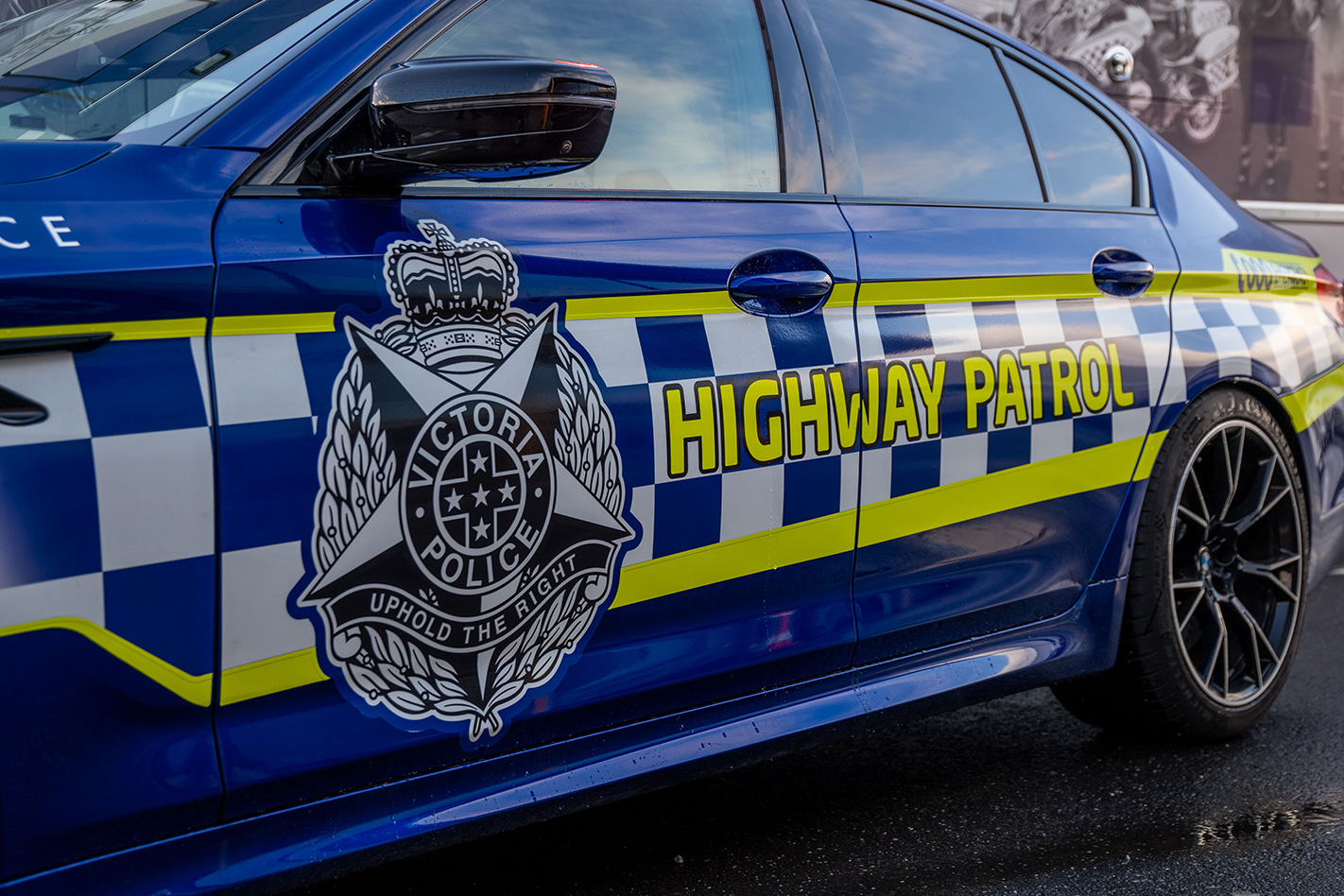
“Now with the incredible BMW M5 Competition entering Victoria Police service, the performance level has jumped up the scale. When combined with the safety of the xDrive four-wheel drive system, the M5’s all-round ability aspects makes it a natural fit for dynamic police duties.”
While making the electric vehicle switch can save hundreds and even thousands of dollars each year in running costs, being more money-wise can save owners even more.
Despite rising market prices, charging with electricity is still simply cheaper than pumping in fuel.
But, similar to choosing a different no-name branded fuel station and opting for lower quality E10 unleaded petrol (if possible) can save owners money, there are a variety of options for EV drivers to take the pressure off the wallet, with side benefits for the environment.
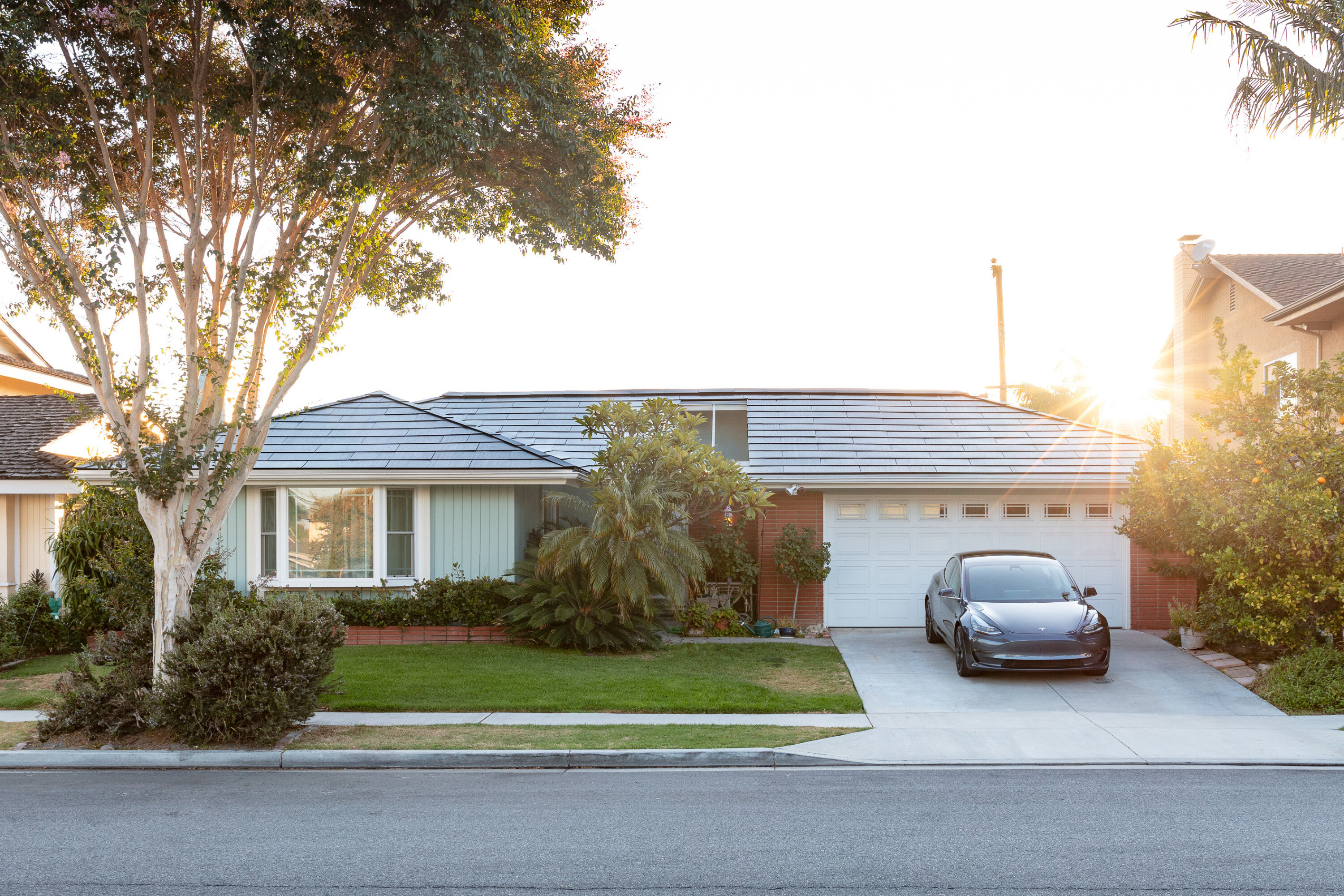
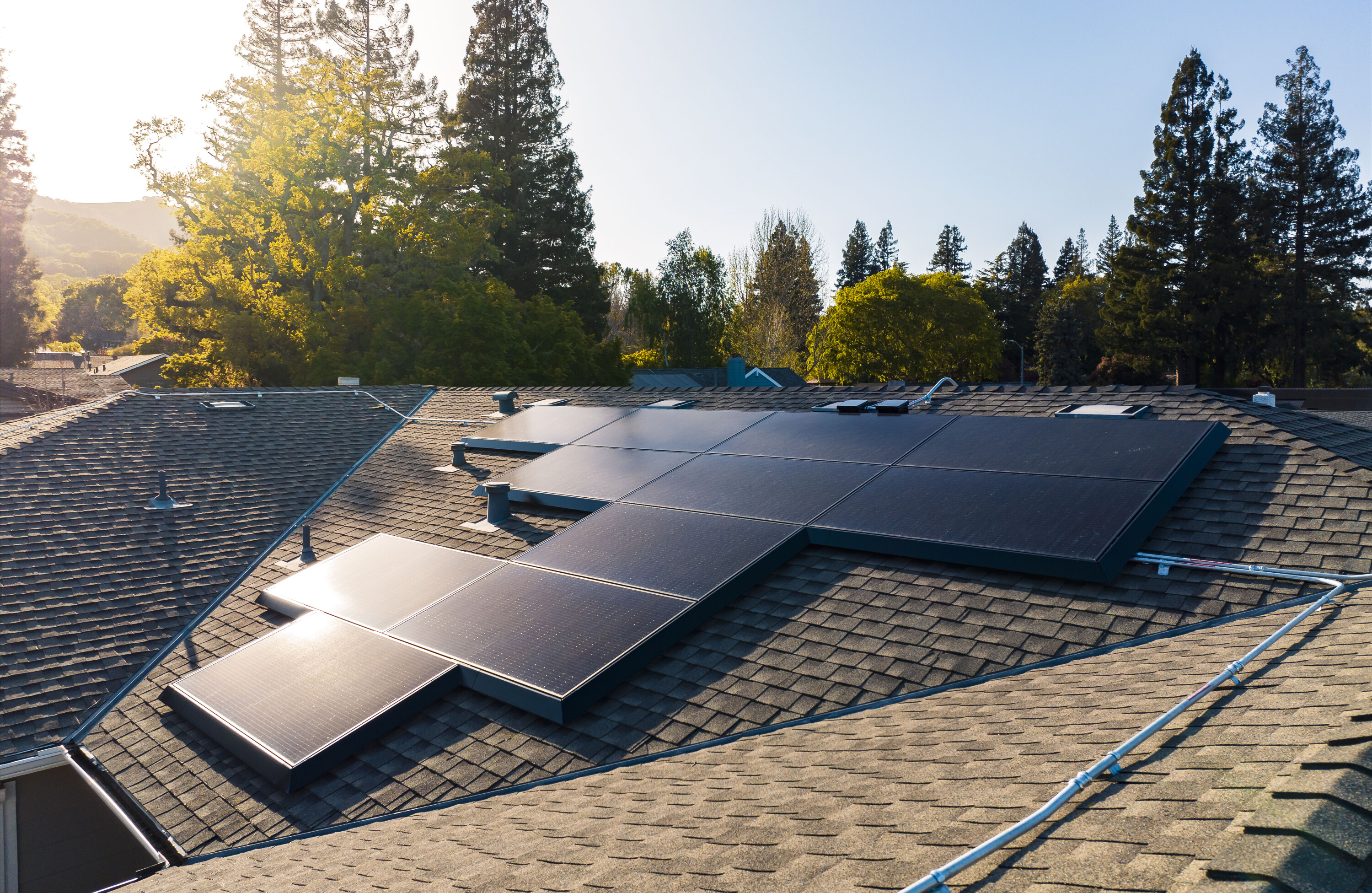
Utilising solar-generated energy at home or work essentially enables free charging for EVs.
It’s a key advantage that traditional petrol and diesel (even LPG) internal combustion engine (ICE) vehicles simply can’t offer, while further limiting an EV’s lifetime environmental footprint.
However, there are limitations. The building must have enough excess energy to charge an EV, in addition to powering the home or workplace.
Importantly, owners need to be able to plug in when there’s solar generation, which is when the sun’s out during the day and is particularly abundant in the afternoon. This will suit if it’s a weekend or you’re working from home, but it doesn’t work for everyone.
Using a three-pin trickle charging socket also won’t fully recharge most EVs within the few hours when there’s solar energy, but it should provide enough driving range for most Australians daily needs.
Installing a dedicated AC wall box charging station would help shorten charging times, and some come with a built-in feature to only charge when there’s solar.
Then, there’s the cost of installing solar photovoltaic panels, but the argument is the investment will pay dividends in the long-run. With Australia being one of the sunniest countries in the world, more than 3.2 million households already have solar photovoltaic panels installed as at mid-2022, according to Roy Morgan Research [↗].
To guarantee free charging, installing a home battery storage system will store the solar energy for use at night or when it’s a gloomy day.
According to Forbes Home [↗], solar panels have a lifespan of at least 25 years.
However, their efficiency does naturally degrade around 0.5 per cent per year due to being exposed to the elements.
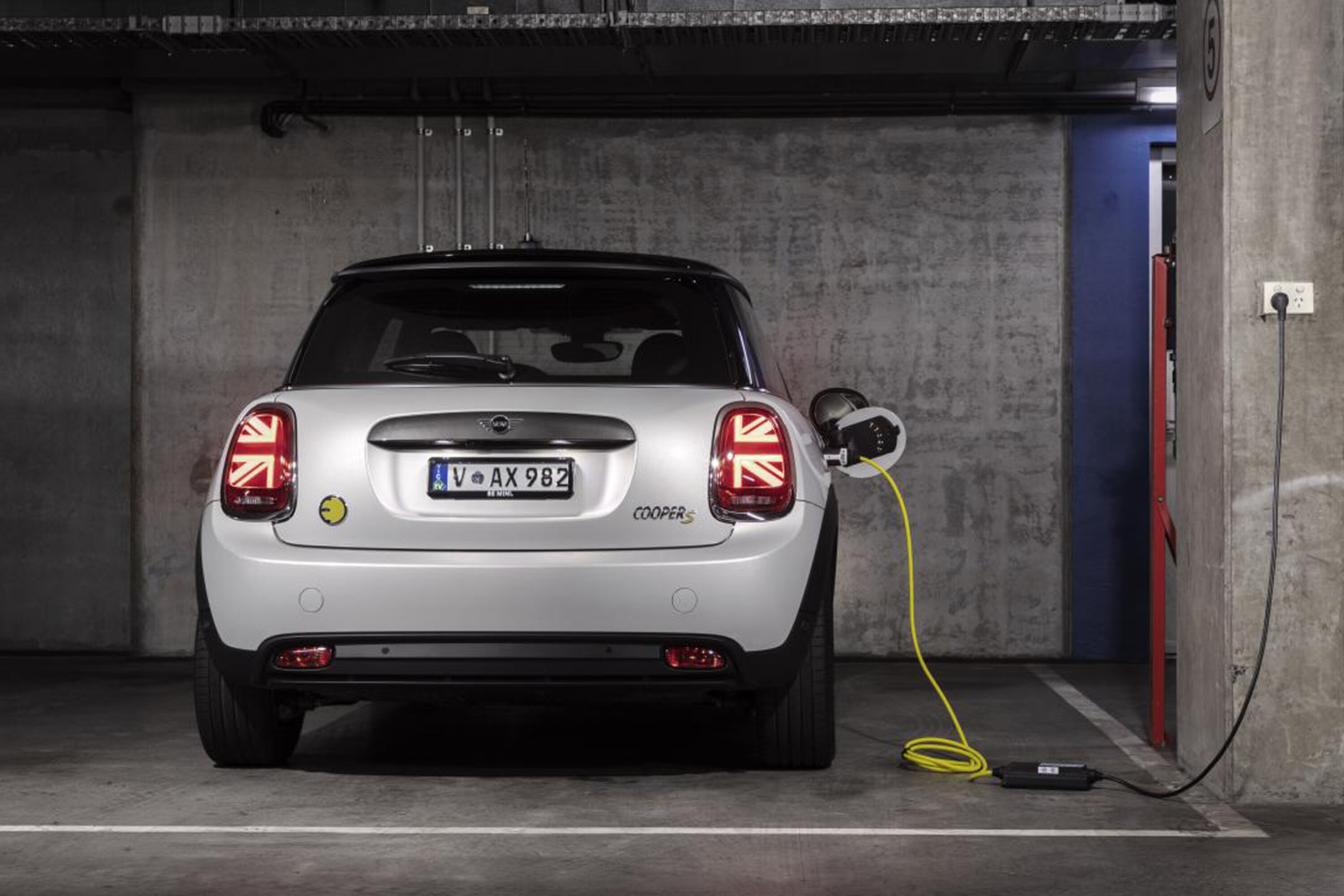
Charging at home is generally the cheapest, most reliable and convenient way to charge an EV.
This is why it’s ideal to access at least a standard three-pin plug at home to own an EV.
While electricity rates vary depending on the location, provider and plan, charging during off-peak overnight periods on a variable time-of-use plan can be up to 50 per cent cheaper than a public charging station – if not more.
For example, charging at home instead of using public stations can save hundreds in running costs per year depending on how much owners drive and the price of energy.
A home off-peak time rate can be between $0.15 to $0.30 per kWh, while the cheapest-available 50kW Evie Networks public chargers cost $0.50 per kWh (as at the time of publication). The savings add up over time.
Most EVs have a built-in charging schedule timer, so all owners need to do is plug in and the car will automatically start and stop charging within the set period.
There’s also no need to contend with the patchy availability and reliability of public infrastructure, and there’s no need to wait since EVs can easily charge when it’s not in use at home or work.
However, some public stations may be cheaper than the home, especially if on a fixed single rate plan or the provider charges higher fees.
Some electricity providers also offer dedicated EV charging plans with ultra-low cost tariffs ($0.05 to $0.15 per kWh), free energy periods, or bill credits.
However, be sure to look at the fineprint as general home usage rates could be overall higher-than-usual depending on the provider.
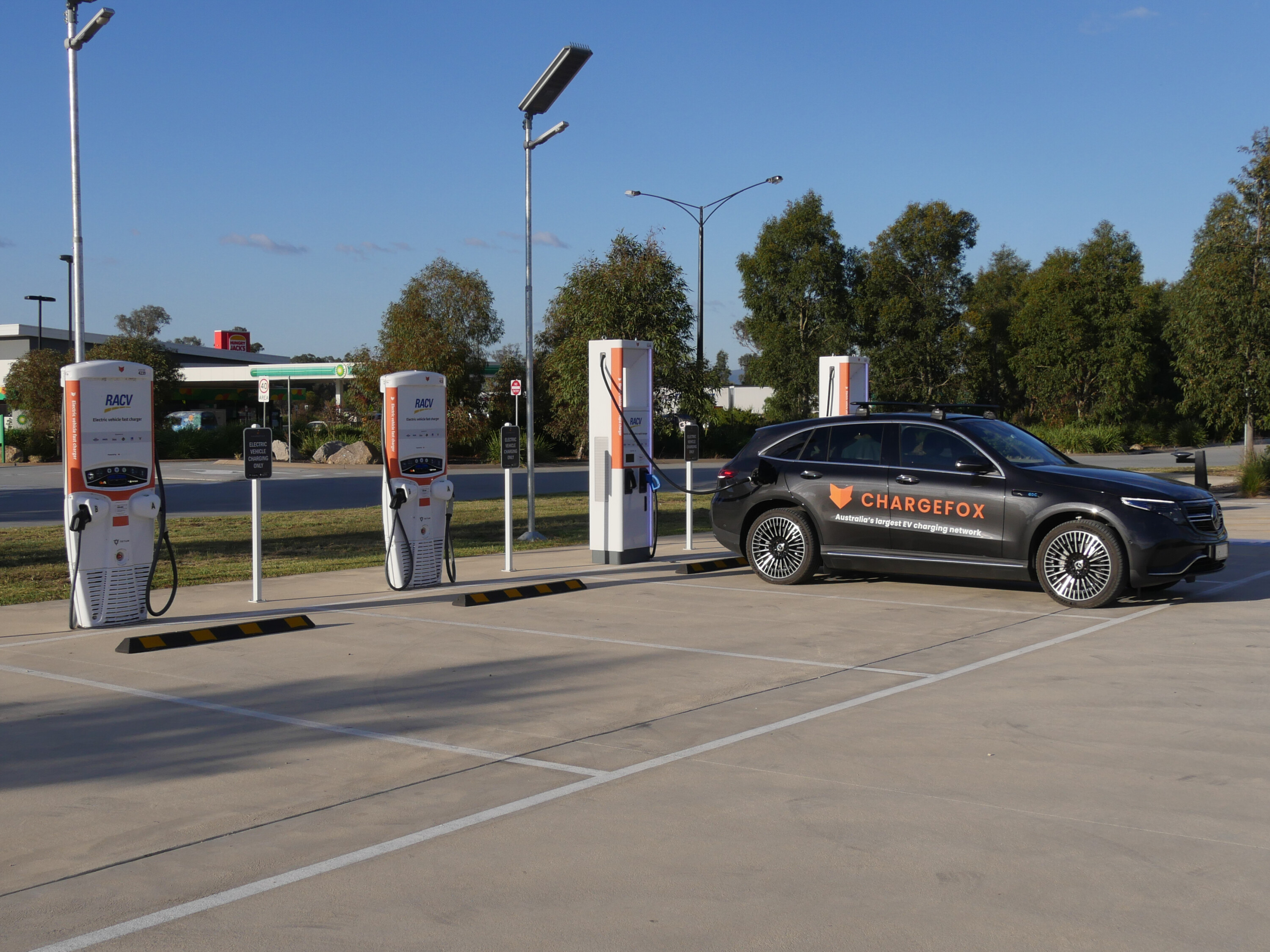
When charging on-the-move, owners can be smarter to select cheaper-priced public charging stations.
As we’ve detailed here, different charging networks and charge point operators can set significantly different energy costs – comparable to fuelling an ICE car with 98RON premium unleaded fuel, instead of E10 unleaded. The key distinction is, there’s no difference in energy quality.
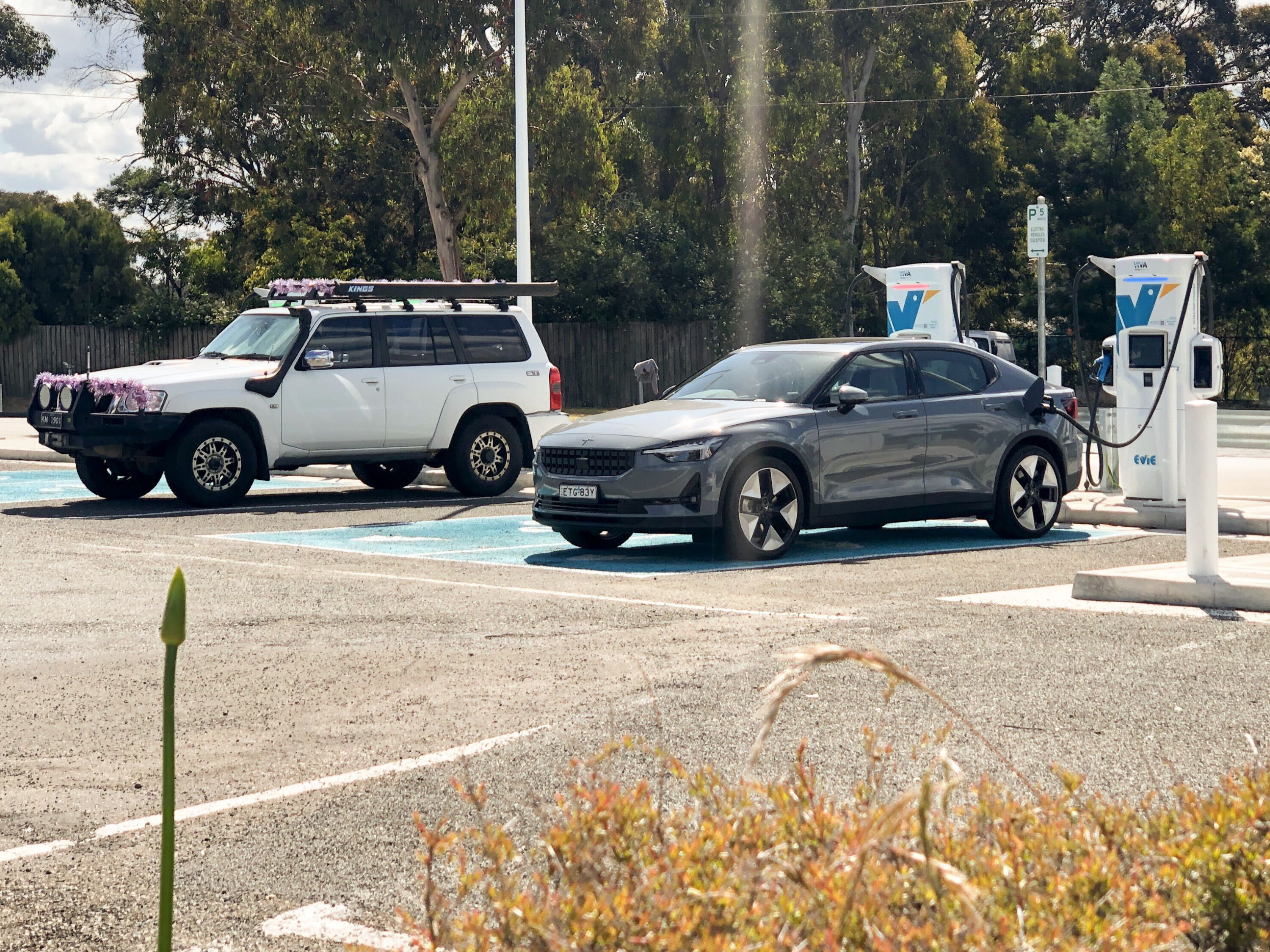
Generally, the faster the charging station output (eg: 50kW versus 350kW DC), the more expensive it is to recharge – but remember that your EV model likely won’t be able to take in the full ultra-rapid charging speeds.
Chargefox-owned and Evie Networks stations tend to be more affordable, whereas BP Pulse and Ampol AmpCharge set higher rates for similar charging speed outputs, and non-Tesla EVs accessing the select open Tesla Supercharging locations are by far the most premium (Tesla vehicles exclusively have lower rates).
For example, the QESH network is priced at $0.30 per kWh – in contrast to Ampol AmpCharge at $0.69 per kWh and non-Tesla EVs at select Tesla Superchargers can be up to $0.85 per kWh (as at the time of publication).
However, keep in mind that cheaper – especially free-of-charge – stations can be more popular. Therefore, exercising good EV charging etiquette is critical.
A number of charging networks have adopted ‘variable pricing’ at select locations, which changes the cost to charge depending on the time-of-day.
Select Tesla Superchargers and BP Pulse sites offer the cheapest off-peak rates during the night when there’s lower demand and market prices are cheapest. In contrast, a trial by the RAA and Engie (under the Chargefox network platform) offers lower costs during the day when there’s renewable energy generation.
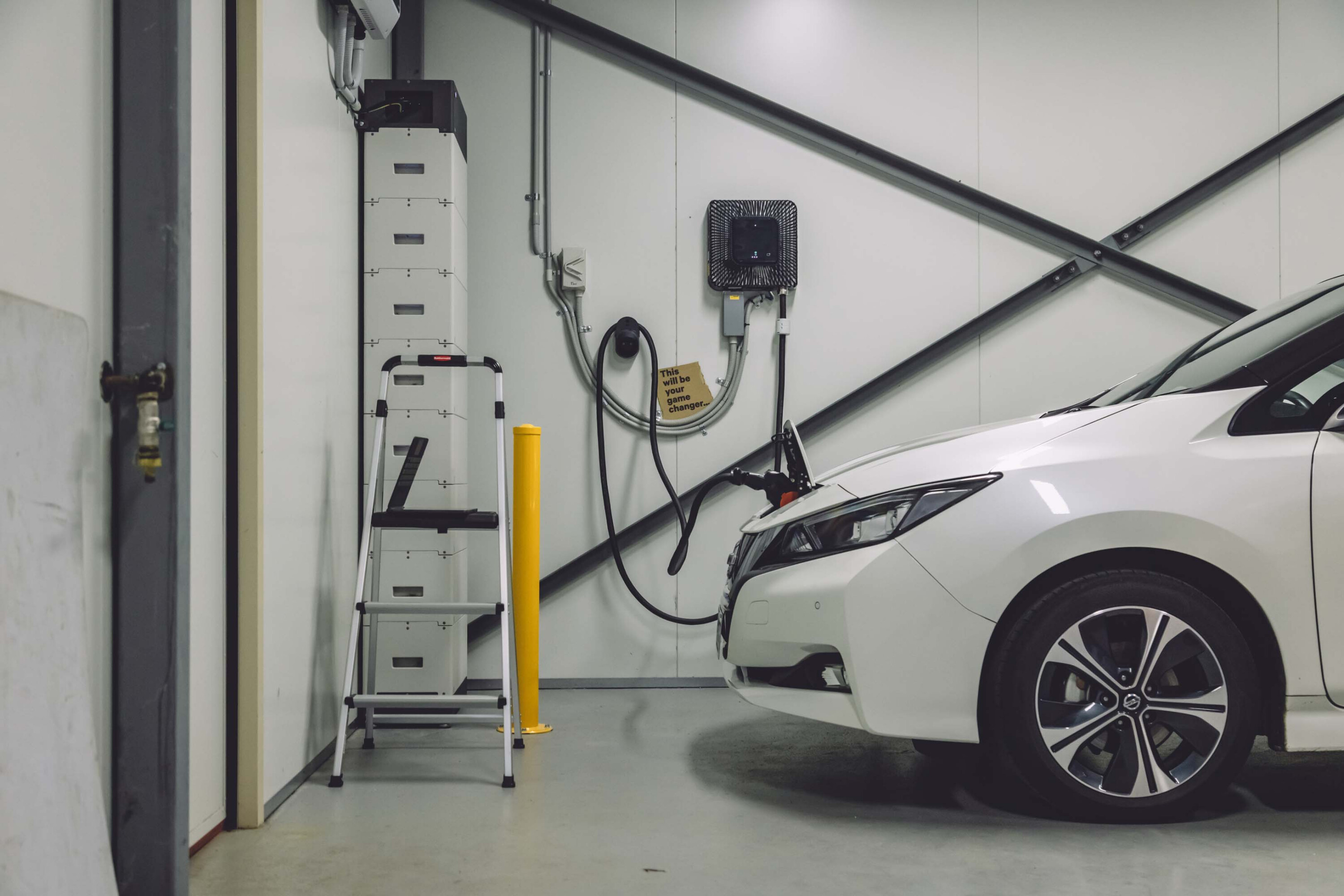
Bidirectional charging technology has long been mooted as another way to cut EV charging and home electricity bills, but is still emerging.
As the name suggests, vehicle-to-home (V2H) allows an EV to act as a battery bank to power households during the night when there’s no solar energy generation, or donate excess energy back to stabilise the grid – called vehicle-to-grid (V2G) – to receive credits and even profit from going off-grid.
However, while there are a growing number of models overseas supporting bidirectional V2H and V2G charging, it is currently limited to the Nissan Leaf pure-electric hatchback, Mitsubishi Eclipse Cross PHEV (plug-in hybrid electric vehicle), and Outlander PHEV – all of which use the rare CHAdeMO fast charging port.
The previous version was priced around $10,000 (before installation fees) and there are only approved trials underway in Canberra and South Australia.
Tesla chief executive Elon Musk has previously labelled EV bidirectional charging as “extremely inconvenient” compared to a dedicated battery storage setup, yet has promised to bring the technology to its models.
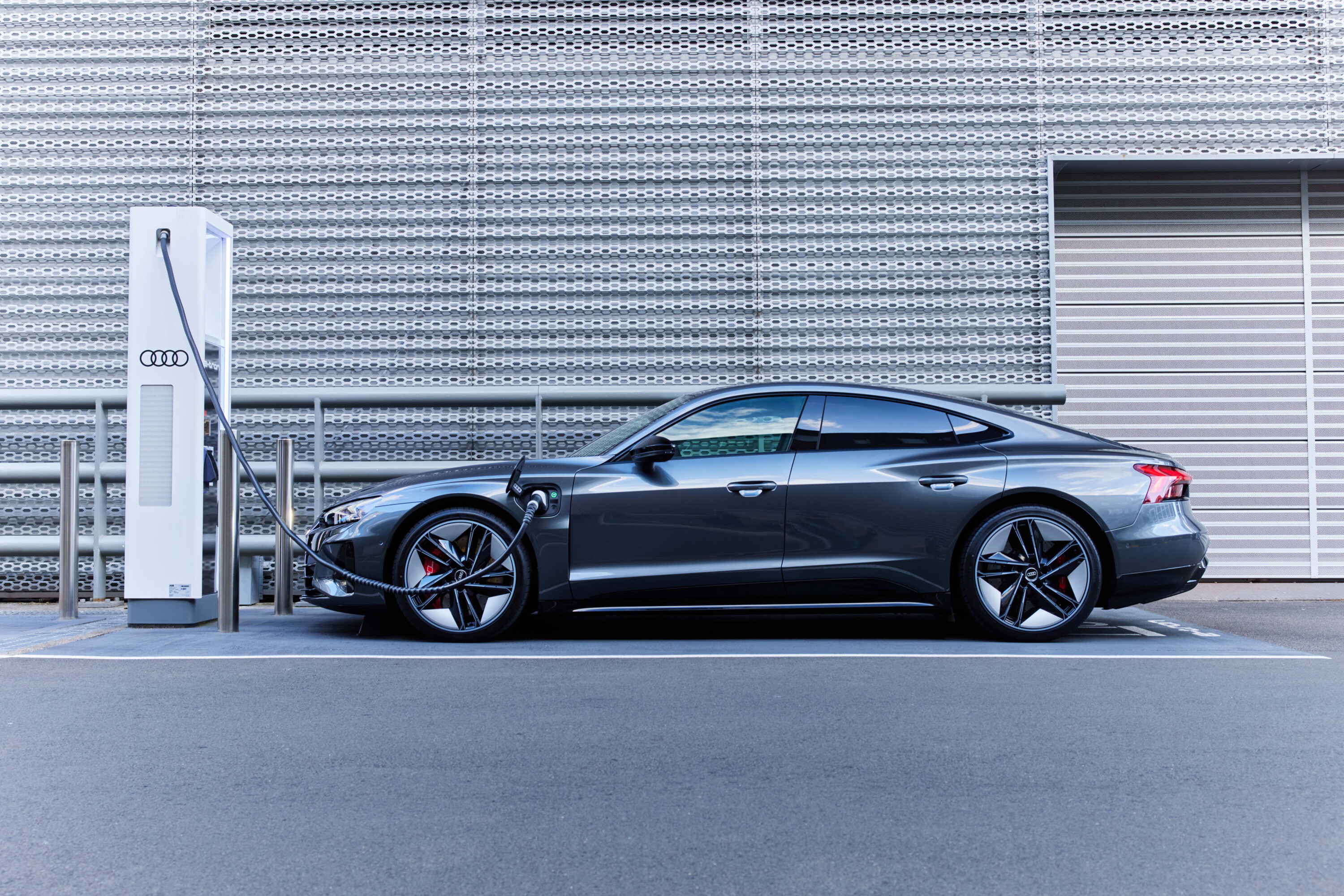
Making the electric switch is key to reducing the expenses to drive from A to B, but with some strategic and wise thinking, owners can cut costs even more.
Home charging is best, using free solar energy is even better and, when you do need to use public stations, pick the cheaper options (and off-peak times if applicable) that’s suited to your EV model’s charging speed capabilities.
By choosing a cheaper charging method, it will help pay back the extra price for buying an EV (if applicable) and it’s often better for the grid and environment.
Conversely, by choosing expensive public charging stations – such as non-Tesla EVs on its select open Superchargers – the energy bill could be equivalent to refuelling a traditional ICE car.
It pays to be wise when charging an electric car.
Wheels Media thanks Daniel Gardner for the original version of this story.
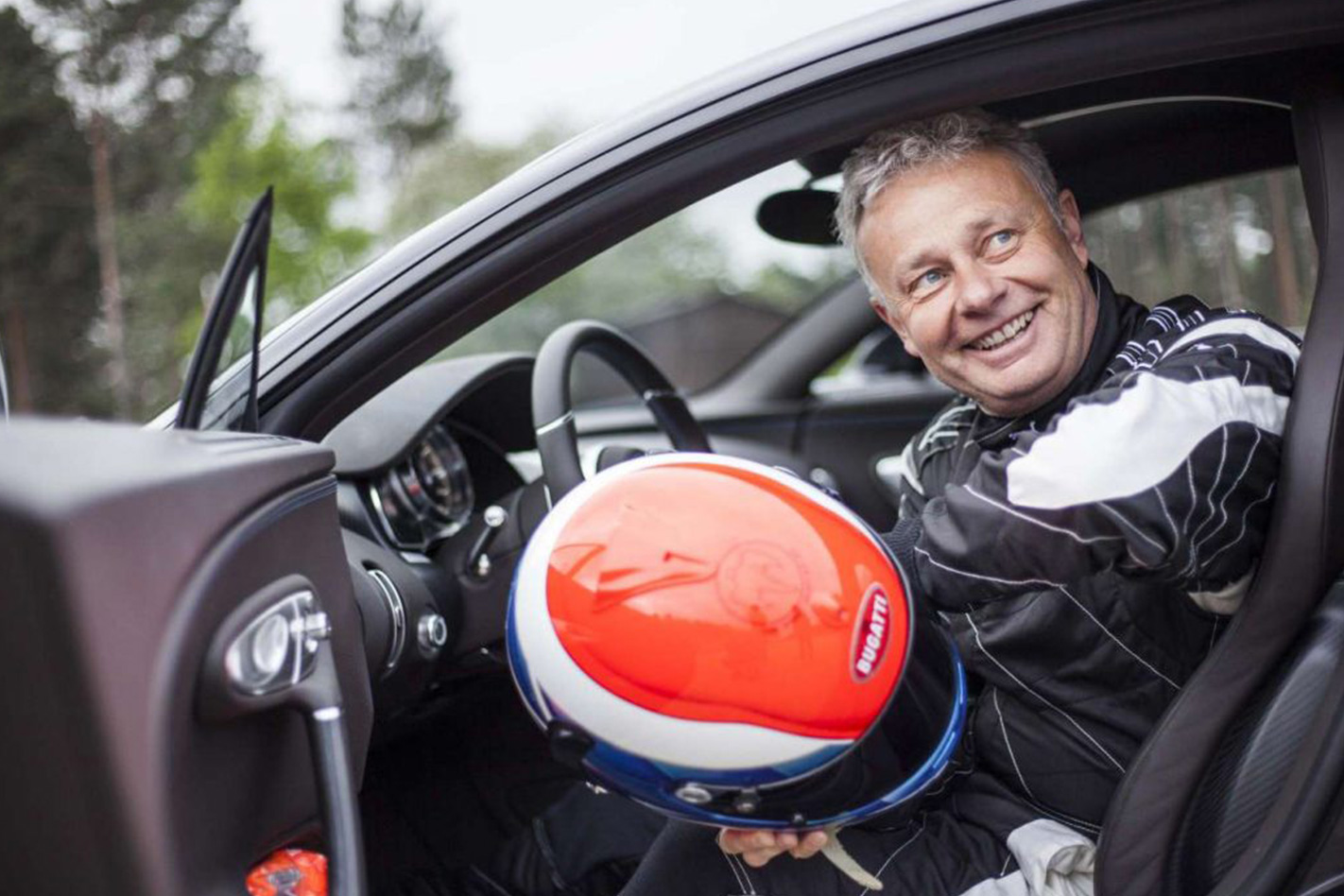
YOU’D THINK Loris Bicocchi might have the dream job. He’s chief test driver for Bugatti, so, yes, he gets to pedal Veyrons, Chirons and all sorts of exotic one-offs that otherwise never see the light of day, just to make sure they’re safe to sit in an air-conditioned bubble for the rest of their lives. But for all the glamour of the job, there are downsides. Sitting next to journalists who can’t drive would be one. The other would be that moment when you comprehensively bin a multimillion-dollar hypercar at a test track. Yes, it happened.
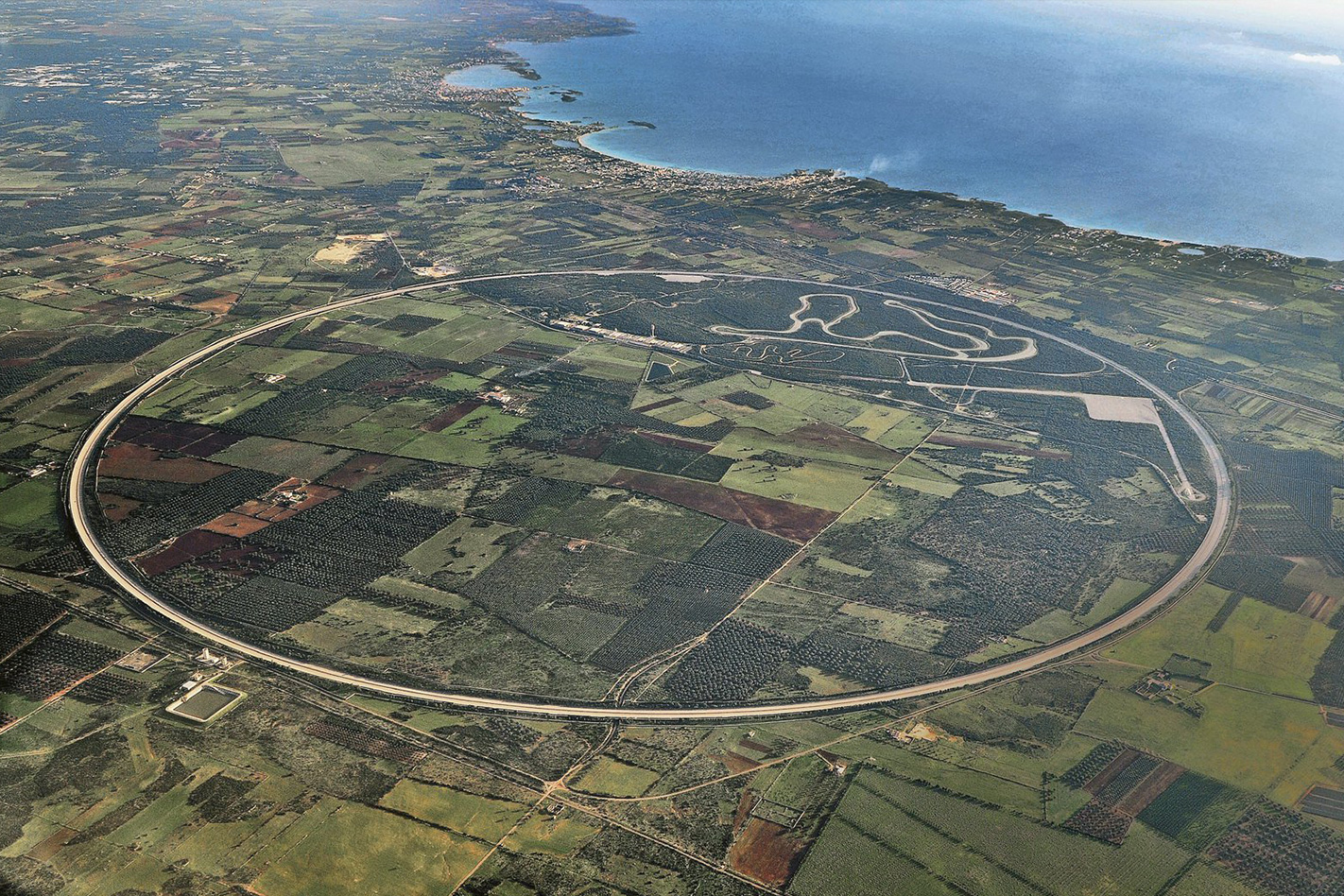
The Nardo test track in Southern Italy is one of the world’s best places for going extremely fast. The 12.6km long, high-speed banked bowl is one of the few places on Earth where you can really stretch the legs of a hypercar for non-stop periods of high-speed running. Owned by Porsche, it’s just been refurbished with a brand new guard rail system. The old guard rail, well, that had a bit of history.
Back in 2003, Bicocchi was driving a pre-production version of the Veyron, conducting a run to see how the radiators, heat exchangers and water temperatures behaved under high stress. He was asked to do a full speed lap, full speed being 400km/h in a Veyron.
“You know that the Nardo track is balanced until 240km/h,” says Bicocchi. “After that you start to turn and turn and turn. At 360km/h you have to withstand a 0.3 to 0.35g force, an important value. It’s not healthy to keep the car like that for 12 kilometres. It’s also not something the tyres want, because you have a weight transfer from the inside to the outside due to the body roll.”
Bicocchi did the lap, came in and the engineers then asked him to do two more flat-out laps because the temperatures were still climbing. Reluctantly he climbed in and floored the throttle.
“At the end of the second flat-out lap, which is something crazy, 390, 398(km/h) because Nardo has some little rises and falls, you can see the engine revs rise 100rpm more, 100rpm less,” he says. Suddenly he heard a sharp chirping sound and then BOOM.
“I couldn’t see anything,” he explains. “The front left tyre exploded. By exploding it carried the fender with it. The fender raised and brought the front hood with it, which collapsed and smashed the windscreen. I had a veil in front of me made by the fender,” he says. “I still remember it was beige. The black hood, the glass shattered into a million pieces and I was doing 395-398, in the luckiest case 390km/h.”
“When the tyre blew, I was a foot away from the guardrail, because the closer you are, the less is the steering input,” he explains. “In a snap, I didn’t even realise it, I hit the guardrail. The first hit made the left rear tyre blow as well. It actually lay there on the ground; I saw the strip [of tyre] afterwards. The suspension broke because I hit the guard rail hard. Those that were looking told me the [wheel] rim moved backwards and waved like a flag.”
“Besides that, I think I hit the side window with my helmet, and I don’t know if it was me or the crash, but I broke it or it broke,” he says. The helmet had a number of scratches on it, attesting to it taking a hit on something. “The pressure [change] in the cockpit caused me a trauma. At that moment the fear was ‘I can’t see anything, I’m going fast, I’ll try to brake’ but the pedal didn’t work. It didn’t brake. The flexible brake pipes probably broke. I can’t see anything, I have no brakes, what am I going to do?” he smiles.
“The cold blood came back after the crash. I realised that the only thing that could give me directionality and also brake was leaning against the guard rail. I knew Nardo had a thin, long and linear guardrail so I tried to get closer to it. But I was probably too eager or the reaction was too hard, after all I only had one tyre. Anyway, I hit it then descended [down the banking] a bit, then I came close again and I leaned on it and it started to scratch and decelerate. In the end it worked.”
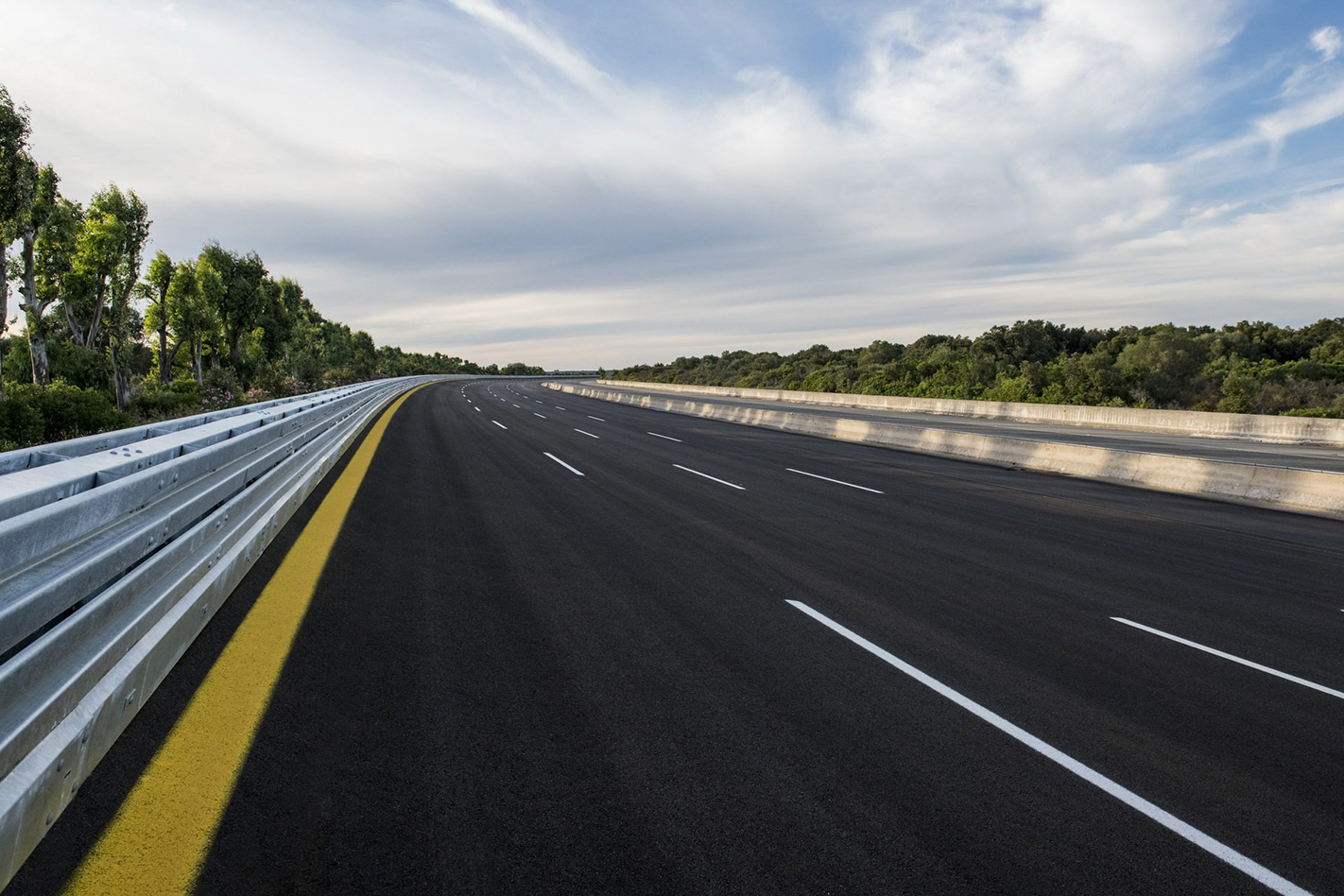
Bicocchi escaped unscathed but there were repercussions. “I received an invoice from the Nardo Technical Centre where they said we damaged 1800 metres of guard rail,” he laughs. That wasn’t the end of the problems though. An oil fire had started in the car and Bicocchi couldn’t get out. “I later found my race suit was covered in oil… I tried to open the door to escape, unfastened my six-point belts, but the door didn’t open because it had been welded a bit by the scraping down the guard rail. Back then Veyrons had the aluminium body, so I imagine that these curls [of twisted metal] tangled up.
“The desire to escape makes you stronger and I started to punch and kick the door until I opened it, got out and then I don’t remember anything. The nice thing is that the [chassis] frame withstood, proving the car’s structure was incredible,” says Bicocchi. Indeed, any road car that crashes at nigh-on 400km/h, and which you walk away from, is something extremely rare.
The post-mortem of the crash showed that this prototype had a hole cut into the front fender through which engineers could access the power steering system. A metal flap covering the access hole was pinned closed, and it was this flap which came loose and cut the tyre.
Bicocchi is typically sanguine about the whole experience. “For me, I don’t know if it was the experience, or cold blood, luck or maybe I simply wanted to go to the fish restaurant that evening, but I’m alive.”
Buying an Aston Martin Vulcan isn’t a straightforward process. Of the 24 cars that Aston Martin built and sold for $3m a pop, there’s just one that remains unsold, but the 600kW hypercar can be yours, albeit with a caveat. You have to buy an Aston Martin apartment first.
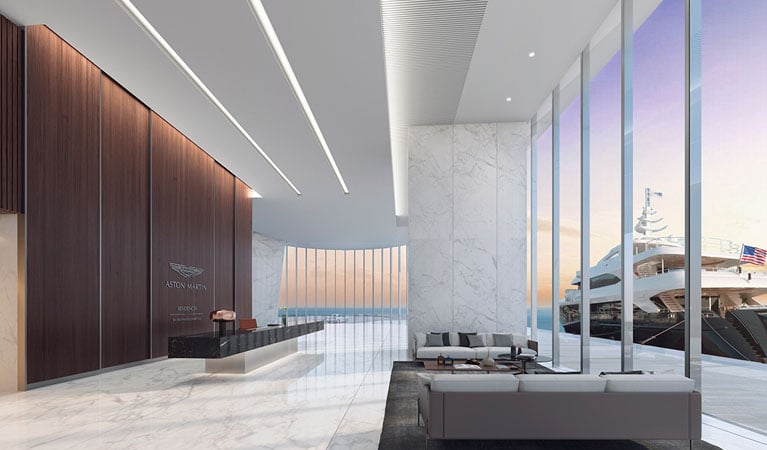
Yes, you read that right. Not content with building some of the world’s most desirable cars, the British manufacturer is lending its name to luxury real estate. Aston Martin Residences, a 66-storey tower on Miami’s Billion Dollar Mile offers prime beachfront views and the top three storeys are reserved for the penthouse.
Sign up for the princely sum of USD$50m (A$71.5m) and you not only get the tallest US residential square footage south of New York and the opportunity to lord it over the other 390 plebs in the building, but a Vulcan is included to sweeten the deal.
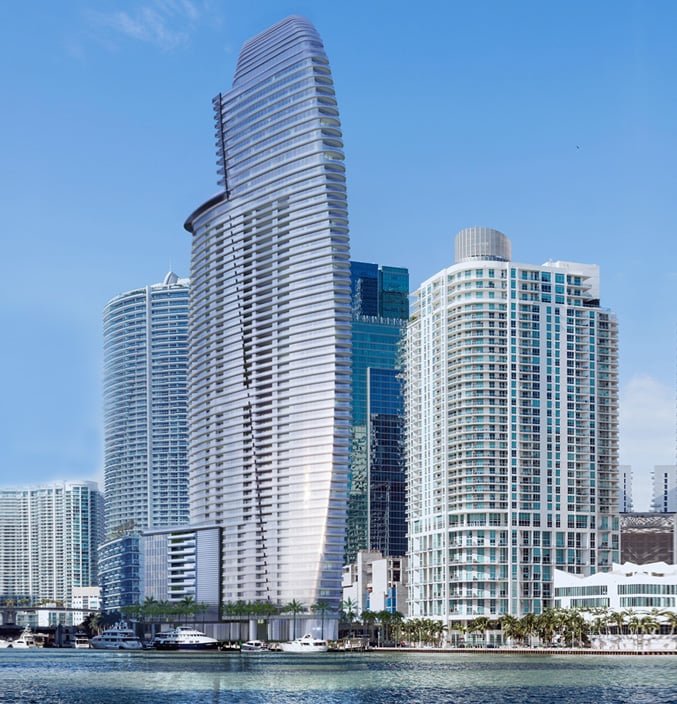
“No matter how much money you have, you cannot buy a Vulcan,” says Alejandro Martin Alijanati of G&G Business Developments, the property group co-developing the tower, somewhat ignoring the fact that if you front up with $50m you can do exactly that.
While 47 other tower residents get treated to a limited edition ‘Miami’ Riverwalk DB11 and will be able to parade up and down the Deco District hoping that another one doesn’t come the other way, the Vulcan isn’t road legal. The top dog at Aston Martin Residences instead gets a membership of a private track club with tuition that aims to keep the thing dirty side down.
Due to be completed in 2022, the residences boast marinas, spas, an art gallery and also feature a butler on hand 24 hours a day. True, you’d have to live among Floridians and the impending launch of the Valkyrie might take the shine off your free Vulcan somewhat, but should you have $50m knocking about and you’re at a loss to know what to do with it, we can think of worse…
I guess it means different things to different people. To my father’s generation, Brabham was a person long before it was a racing car company. Jack Brabham, ‘Black Jack’, tough as they came both on and off the track, a no-nonsense engineer from Down Under who came to the UK and showed the Poms how it was done with back-to-back world titles.
To me, Brabham meant something else: a series of sleek and innovative grand prix cars of the late 1970s and early ’80s showcasing the mercurial talents of designer Gordon Murray.
Fan-assistance, surface cooling, hydro-pneumatic suspension… whether it worked or not, I loved the sheer inventiveness of those cars and the fact they always managed to look so – well, to my young eyes – cool.
So I wonder what Brabham will mean to the young of today? If you’re Jack’s son, David, he hopes the answer is staring you in the face right now. After years of legal battles simply to regain control of his family name and years more of fundraising and development, the first Brabham since the Formula One team slipped under the waves in 1992 is here.
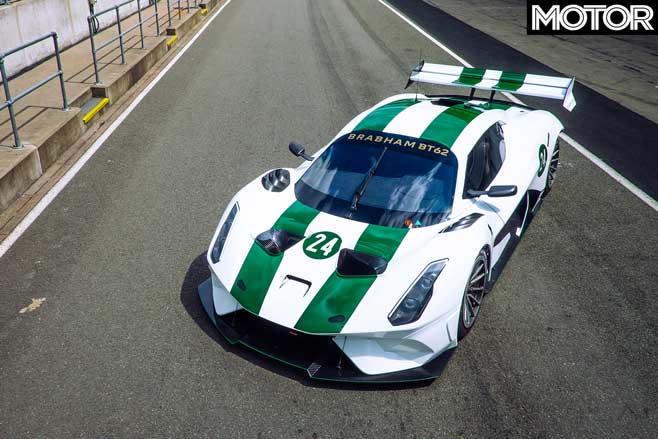
Although just 70 Brabham BT62s are planned to be built (at around $2.26m if you’re in the market), it is absolutely not a Led Zeppelin one-night-only return to the stage. Brabham, David tells me, is back. Next will come a road car including unspecified design elements of the BT62, and it’s the car that will be homologated into the GTE category to be raced at Le Mans as soon as 2021.
So the BT62 is a stepping stone to bigger things – a large, powerful and conspicuously good looking stepping stone to my eyes – but a stone nonetheless.
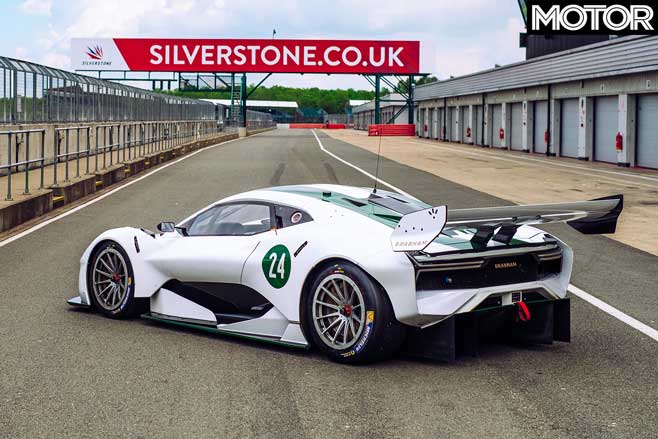
“People need to understand our plans. My intention is for Brabham to be a manufacturer of high-performance road cars,” David tells MOTOR one sunny day at Silverstone. “But we have to be able to grow the business to a point where we can raise the money to build the road cars. Racing feeds off the back of that.”
So the BT62 will race, probably in invitational categories because it couldn’t be homologated as a GT3 car, just because David wants to see Brabham competing once more. “Racing is in the blood,” he says. “My initial idea when we got the name back was for Brabham to be a race team. But then I thought there was the opportunity to do something more substantial, more adventurous. Happily our partners at Fusion Capital in Adelaide (which Brabham Automotive is part of) agreed.
“If we can build an automotive group that will then support a race team, that would be the best of all possible worlds and mean a sustainable future for Brabham.”
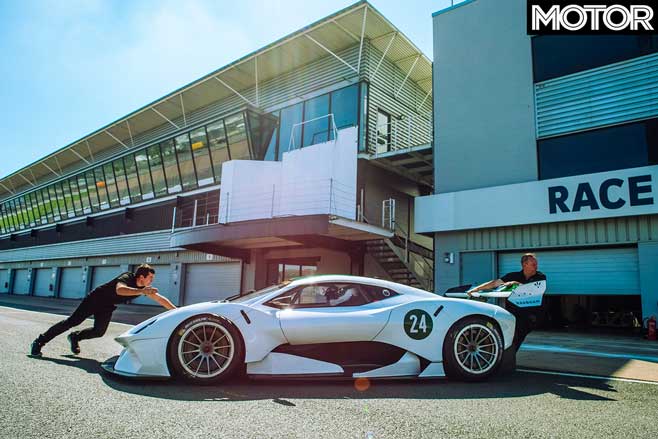
David is not saying how many of the cars are sold but simply that he is “happy with where we are at, which is where we expected to be at this stage. We were never going to sell them all at once. People need to understand our long-term plans and be reassured that we’re not going anywhere.”
But all that is for later. Right now the BT62 is waiting for me, so I asked David what were his prime motivations when deciding on its specification. The answer is refreshingly honest: “I asked myself what car I’d like to drive.”
And what David Brabham would like to drive is a two-seat closed-cockpit sports car with less than a tonne of weight, more than a tonne of downforce, and a normally-aspirated V8 developing 522 kilowatts. Which sounds fair enough to me.
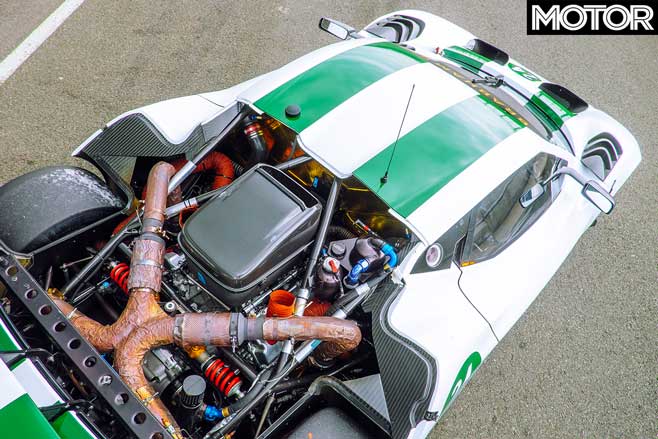
Unbound by any race regulations, Brabham has been able to design an engine entirely to its own specification, save the most basic component in the form of a Ford V8 block.
“It’s not unlike what Dad did,” David muses, referring to how Repco transformed an engine that started life powering an Oldsmobile road car into a Formula One powerplant capable of winning back-to-back constructors’ titles. By boring the 5.0-litre Ford block out to 5.4 litres and fitting new internals, an engine that produces a little more than 300kW in the standard Ford Mustang now yields the aforementioned 522kW.
It runs through a six-speed sequential Holinger race gearbox to the rear wheels where it directs its torque to the road via massive Michelin slicks located by double-wishbone pushrod suspension. Braking is via carbon discs. With 1200kg of downforce pressing a 972kg car into the track at 268km/h, this is a very serious piece of kit indeed. Serious enough to circulate Bathurst three seconds below the GT3 race lap record despite, “leaving a few seconds in our pocket”, as David puts it.
The car is still being developed, but if it ends up being five or six seconds a lap quicker than frontline GT3 pace I wouldn’t be surprised, although it might need then to be pegged back a touch before other GT3 manufacturers are happy to let it race alongside them.
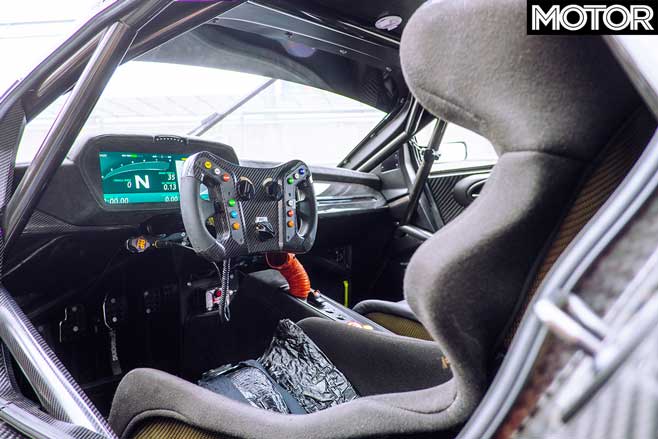
It’s an easy car to access thanks to quite a low sill, a removable wheel, a sliding pedal box and a fixed seat. It feels very comfortable, reassuring even, with decent visibility and information clearly displayed on a colour, high-definition screen. I extend quite a lot further than David in all three dimensions but it feels like it could have been built for me.
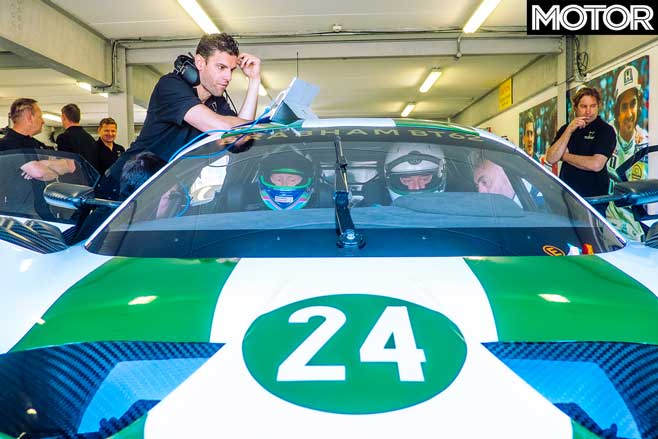
“The car is quick. You’ll notice that,” David says with masterly understatement. “The only thing I’d advise you to do is try the brakes on the straight first, just so you know what they feel like.” Not one word about bringing his near priceless development prototype back in one piece. Right now the only other BT62s in existence are a show car and the first customer’s.
Master on, ignition on, thumb the starter and ka-boom! My whole world erupts as ground-trembling V8 thunder breaks out all around me. I know turbos give lots of readily accessible power and are terribly clever, but they can’t do this. It is a ridiculously brilliant noise, far closer to that of a Ford GT40 than most modern GT3 cars. I could sit here for some time but the water temperature is rising. So I clonk into gear, lift the surprisingly gentle clutch and head out to discover more.
The first point of note, which you detect almost at once and whose impression only grows as you gather speed and familiarity, is how unlike a GT3 racecar this is. Perhaps because it’s a Brabham with slicks and wings I’d expected it to be utterly uncompromising – unpleasant even – when not being driven fast. It’s not like that at all.
Not that you’d choose to, but this is a car you could probably drive quite slowly. This is more important than it sounds: Brabham is very aware that his customers are not likely to have GT3 levels of skill and experience straight out of the box. To that end he is putting in place quite a comprehensive driver tuition program where clients will be able to drive road and racing cars of different levels of performance.
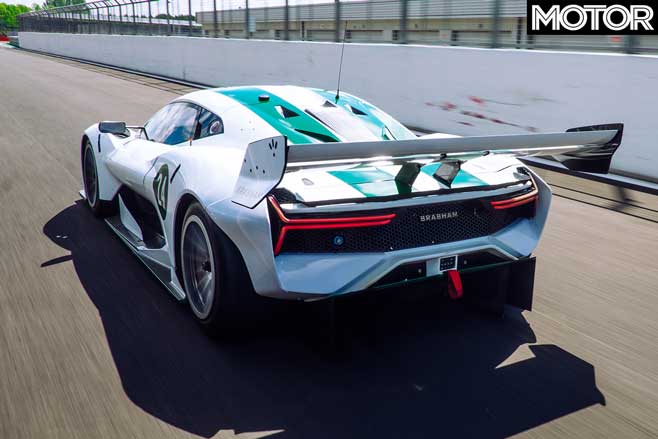
“One of my passions is to help people get to the next level because that’s how you get to really enjoy it. And it’s as much about instilling the right mental approach as it is driving the car. But sooner or later they’re going to have to saddle up the Brabham and being able to ease your way into that experience will only bring benefits.”
I don’t have that luxury. Brabham has an extensive testing program to complete and my laps are limited. There’s no option but to drive it fast, straight out of the pits. There aren’t many cars capable of this level of performance in which I’d be happy to take such a leap of faith, but the BT62 is so instantly reassuring, driving it rapidly feels entirely natural.
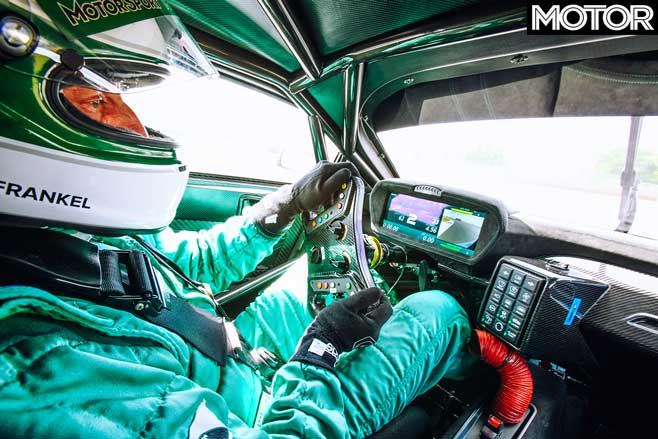
The engine is superb. It feels so different to the throttled-back turbo engines you find in most GT3 cars these days. Indeed, while straight-line performance is by far the most disappointing aspect of any GT3 car, the Brabham’s ability to move you from one end of the straight to the other, – like a table cloth has been ripped out from under you – feels entirely in keeping with the character of the rest of the car.
Okay, maybe not quite entirely but that speaks far more of the fluency of its chassis than it does of any shortcomings in the engine. What I loved most was its lack of a torque curve: it really builds as the revs rise, saving the real nuttiness until it’s past 4500rpm. From there to the 7500rpm redline it’s pure party time. The six ratios are close enough to keep the car on cam, and it’s so nice to be able to talk in such terms again.
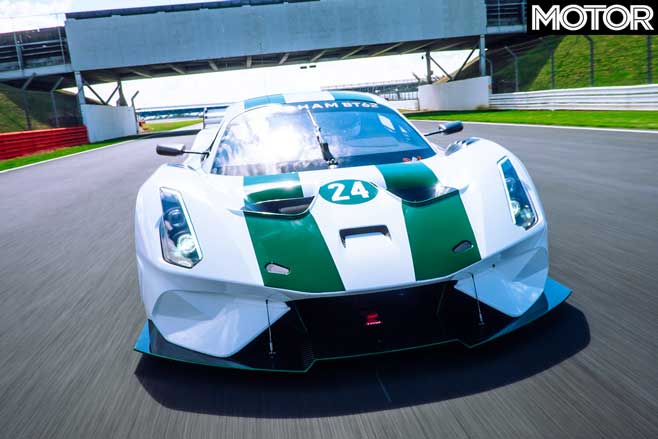
Shift quality could perhaps be tightened up a shade, just so it feels as immediate and alive as the engine, but this is the much-thrashed prototype on which development work will continue until deliveries begin at the end of this year.
It would take a lot to cast that powertrain in a supporting role, but the chassis damn near does it. As ever it is the brakes that require the most mental recalibration, not just in the absurd stopping distances they provide but also the immense pedal effort needed.
The car has ABS but when I ask David what his recommended setting is he says “don’t worry, you won’t feel it”, though whether that is the power of his brakes or the puniness of my right thigh he is too kind to say.
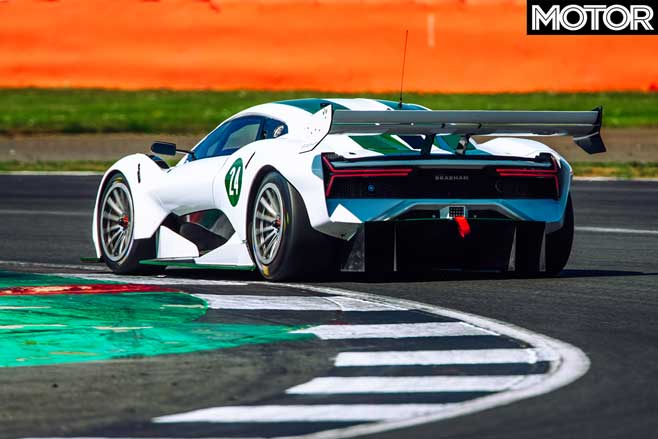
But basically you drive past what appears to be a natural braking point, past the absolute last braking point, up to the point where you know you’ve just crashed, pause and then brake. And that should guide you neatly into the apex.
Of course with a car like this, you don’t actually need to lose too much speed, especially if the corner coming up is quick enough to get its wings working. But even through Copse – a blinding right-hander – it’s not the apex speed that impresses most but the precision of the car. All cars with meaningful downforce do this and if you’ve never experienced it, you simply won’t believe how floaty and vague even well-developed supercars can feel. But the Brabham has something else, too.
It is terrific over bumps and rumble strips – excellent on the way into a corner, borderline freaky on the way out. There are some quite noticeable undulations where Silverstone’s National Circuit spears right onto the Wellington Straight and while you can feel the BT62 articulating itself over them, power delivery remains entirely uninterrupted.
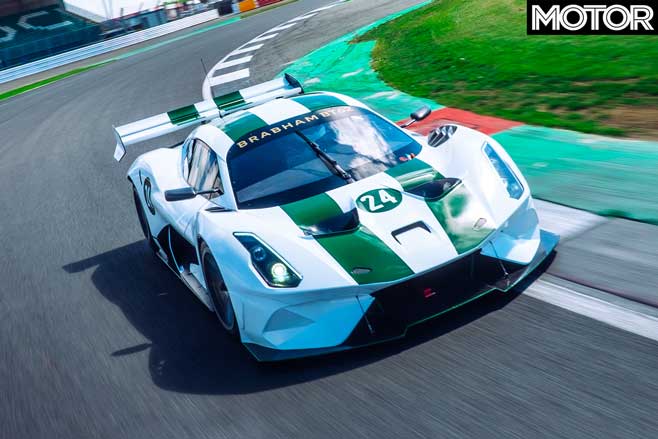
I’m so glad David Brabham decided not just on this specification for the BT62 but also developed it into the car it is today. People will say you can buy a hot Radical and go nearly as fast for a fraction of this car’s cost. And if that’s what matters to you, buy a Radical. That’s not what this car is trying to do.
Buy a BT62 and you are buying into the Brabham name, that of the Le Mans-winning, former F1-driving son and his triple World Championship winning dad. You’re also buying into a name that has adorned some of the most beautiful, innovative, and successful formula racing cars of all time.
Finally you’re buying just about the most fun I’ve had driving a modern racing car. I wish David and his team all the luck in the world with it. Jack would be proud.
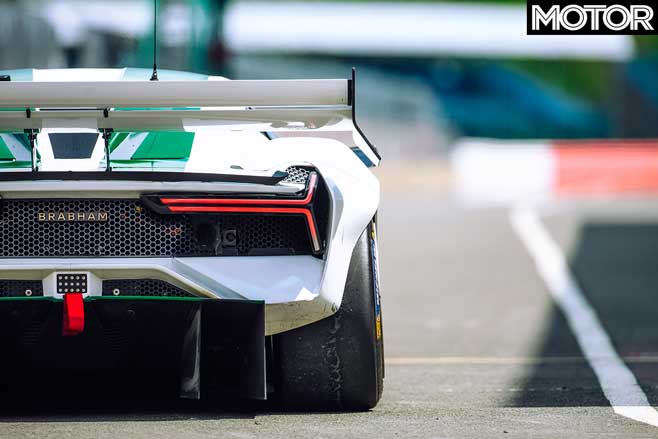
FAST FACTS 2019 Brabham BT62 BODY: 2-door, 2-seat coupe DRIVE: rear-wheel ENGINE: 5387cc V8, DOHC, 32v BORE/STROKE: 94.0 x 97.0mm COMPRESSION: 10.5:1 POWER: 522kW @ 7400rpm TORQUE: 667Nm @ 6200rpm WEIGHT: 972kg POWER-TO- WEIGHT: 530kW/tonne TRANSMISSION: 6-speed Holinger sequential manual SUSPENSION: wishbones, pushrods, adjustable coil-overs (f/r) L/W/h: 4460/1950/1200mm WHEELBASE: 2695mm TRACKS: 1649/1597mm (f/r) BRAKES: 380mm carbon/carbon discs, 6-piston calipers (f); 355mm carbon/carbon discs, 6-piston calipers (r) WHEELS: 18.0 x 11.0-inch (f); 18.0 x 13.0-inch (r) TYRES: Michelin competition slicks & wets, 27/65 R18 (f); 31/71 R18 (r) PRICE: $2,260,000 (estimated)
PROS: Riotous engine; incredible grip; Le Mans looks; rare CONS: Price; track only (at the moment); not much else RATING: 4.5 out of 5 stars
Who is Jack Brabham?
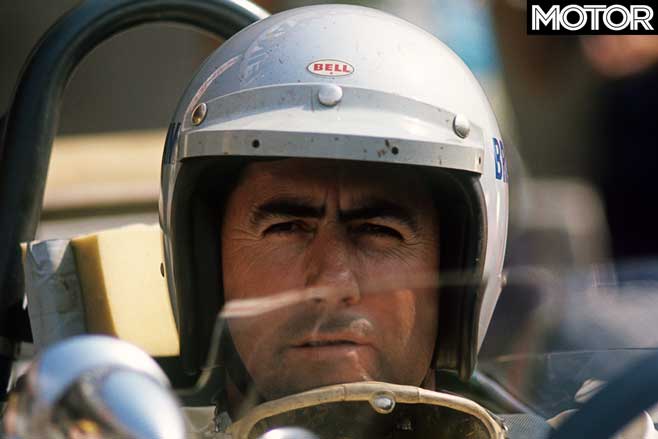
Sir John Arthur (Jack) Brabham‘s improbable Formula One story has been told thousands of times but it never grows old. In a few years, Brabham went from dirt speedways in ’50s Australia to the hallowed circuits of Europe, where he won three World Championships, including his unequalled 1966 title in a car bearing his own name.
Arriving in England in 1955 he quickly established a relationship with constructor John Cooper. In 1959, he won his first grand prix at Monaco, in a Cooper, and famously pushed his car across the line to finish fourth at the US GP and win his first World Championship.
He won the title again for Cooper in 1960 with five victories but Brabham, who was also an excellent engineer, knew he could do better and formed the Brabham Racing Organisation in partnership with brilliant Australian designer Ron Tauranac. It is legend now that Brabham convinced Repco in Australia to develop an engine based on an Oldsmobile road car block for the new 3.0-litre F1 formula for 1966.
With the Repco-Brabham V8 in Tauranac’s outstanding new BT19 chassis, Brabham won four grands prix in 1966, and his third and most significant World Championship.
He was second in the points in 1967 (teammate Denny Hulme won the championship) and raced on until 1970 when he won his final grand prix in South Africa at the age of 44 before retiring.
The guerrilla fighters at HSV have done it again, ambushing Australia’s car industry at the Sydney International Motor Show with their most radical design yet, the HSV HRT Edition Maloo ute.
This feature was originally published in MOTOR’s December 2001 issue
This top-secret project went from whiteboard scribblings to concept car in four months and almost stole the show from Holden’s much vaunted Monaro. This bodybuilder’s Maloo, hyped up on a cocktail of Nandrolone, testosterone and every other ‘rone’ you can think of, sends the ‘Wow Meter’ off the scale.
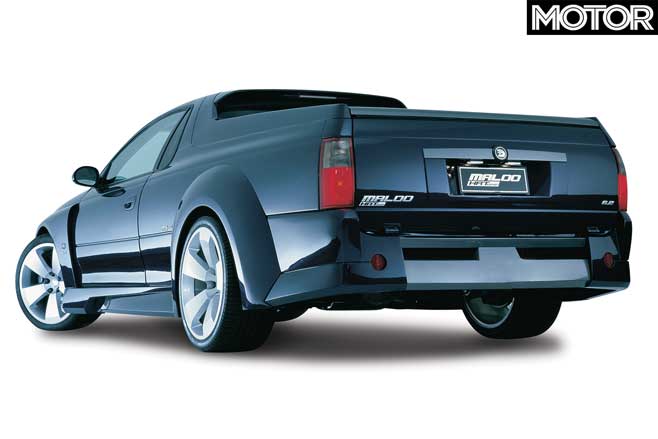
Get used to the pumped up styling because there’s a fair chance it will pop up on future HSV models. HSV’S UK-based designer, Neil Simpson, is known to favour the wide-body look and the TWR style guru had a lot to do with this Maloo’s malevolent stance.
Holden Managing Director Peter Hanenberger had encouraged HSV to up its style ante and the Maloo was the result, said HSV marketing boss, Chris Payne. “Early on Peter said HSV needed to move to the next level, to be more challenging in our concepts and it was directly in response to him that we got into it.”
HSV is monitoring reaction (which has been hysterical) to the concept very closely, trying to judge if over-the-top will sell and whether there is a place in its range for a car like the HRTE Maloo.
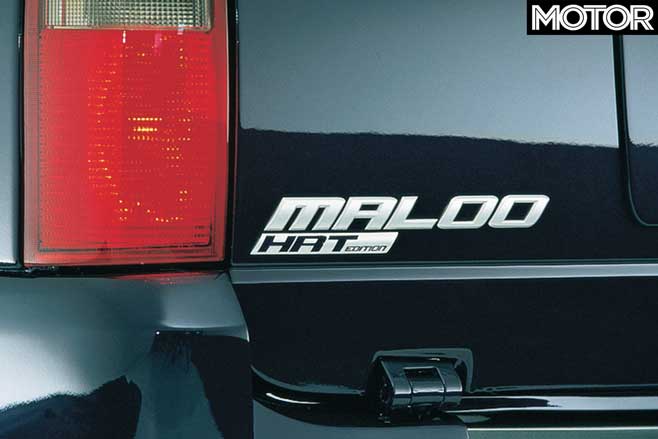
“We’re testing the market, pushing it to see what the response is,” said project architect Brad Dunstan. “You’re seeing a little bit of the way Neil wants to go and other features will be determined by public reaction.”
Payne concurs. “This car’s not so subtle. Who knows where it’s going to end but we’ve got to start somewhere.”
Dunstan, a 10-year HSV man now Executive in Charge of Engineering, said Maloo was a team-building exercise. “The guys in engineering are really enthusiastic about projects like this, they’re all petrol heads,” he said. “To let them have free reign is a good thing.”
Utes will never be the same again.
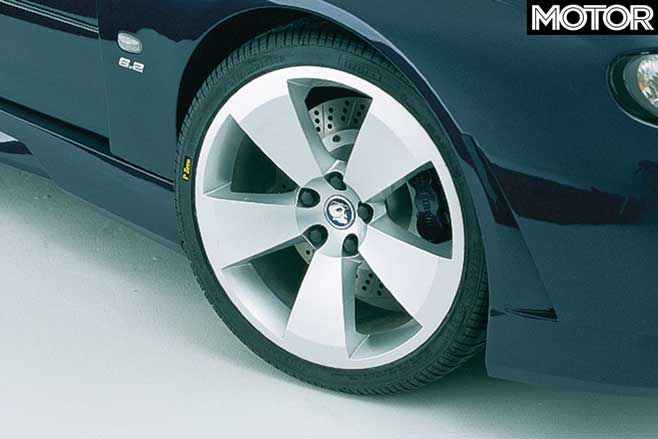
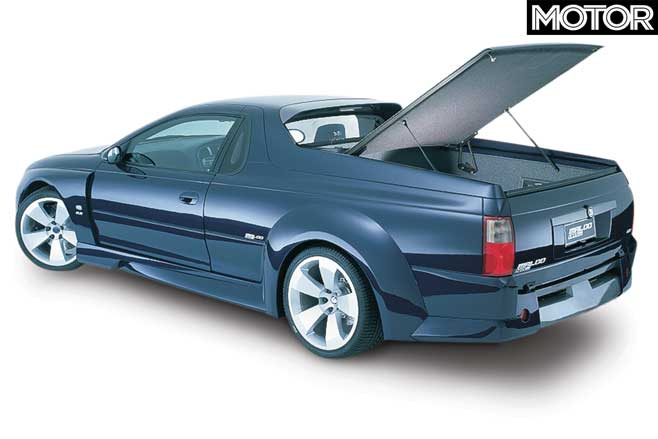
Despite being wider and longer, the HRTE Maloo body sits on a standard ute wheelbase. Front track has been widened 50mm by extending the steering rack to correct geometry and by using a reworked strut (basically now a coil-over shock) machined by HRT. The front also features an industrial-strength strut tower brace.
The 75mm wider rear track was achieved by using a different offset on the wider rear wheels. Multi-link suspension (including 15mm anti-roll bar), not found on other Holden utes, improves stability as does the placement of the fuel tank, cargo liner and hard tonneau cover which puts more weight over those monster rear tyres. We’re tipping you could still overpower the grip, though.
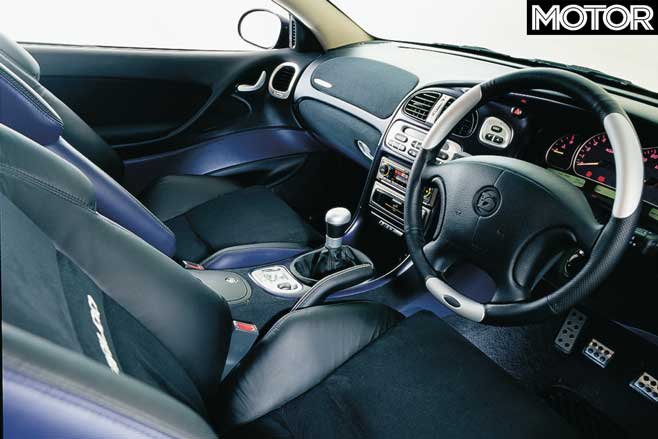
The extra 150mm of cabin space meant a kick-arse VDO sound system could be slung in, so behind the seats lurks the hardware (amps, crossovers etc), plus a 10-inch sub-woofer and two 51/4 inch mid-range speakers. Tweeters are in the doors.
The colour-coded dash houses a VDO stacker while elsewhere inside there’s drilled pedals, a sports steering wheel and leather clad gear shift knob. To make sure you don’t get bushed, Maloo runs HSV’s satellite navigation system.
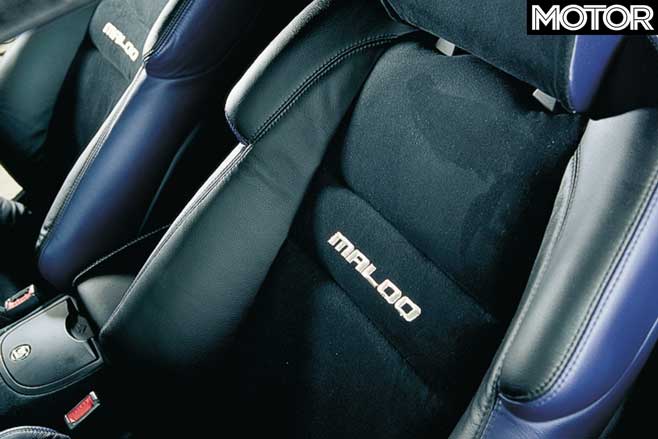
The interior is trimmed in purple and charcoal leather with suede inserts and silver highlights, (just the thing for a tradesman’s ute). The sports seats were hand made and are trimmed in suede. Oh, and there’s a fridge in the tray for a couple of coldies, with mood-setting downlights (bring bad the drive-in, we say).
The Maloo wears the biggest set of stoppers yet seen on an HSV car. HRT and AP Racing came up with a front mtor measuring 378mm, clamped by six-piston opposed calipers. The rears are 340mm rotors and four-piston calipers. Don’t be surprised to see these anchors on HSV’s highest performance Coupe (Monaro), the GTS when it is launched in December.
To house monster brakes you need monster wheels and they don’t come much bigger than the 20-inch suckers on a Maloo. Huge wheels on a concept car is a ”designer’s trick” it makes the car look smaller but 20-inch mags were always the goal with Maloo. The nine-inch fronts and 10inch rears are clad with Pirelli P Zeros.
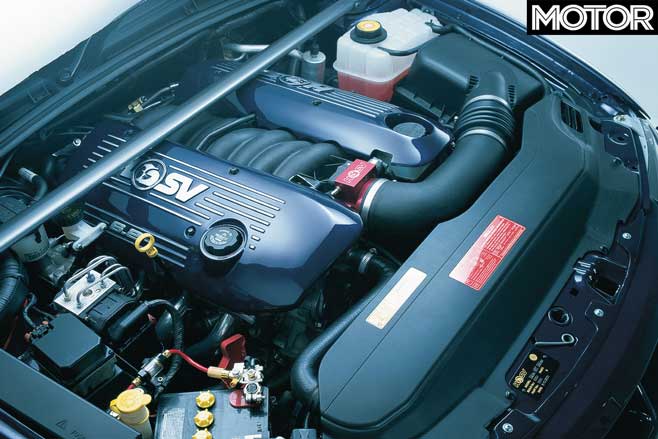
The mega displacement of 6.2-litres was achieved by bolting in a new crankshaft, rods and pistons pulled from the Chevy hi-po catalogue and sourced by Corvette tuning experts, Callaway Engineering.
On the inlet side, HSV’s 300kW manifold sits in the vee with the GTS throttle body. The better breathing LS6 Corvette alloy heads are distinguished from HSV’s 300kW jobbies via different shaped port and combustion chamber.
By 1300rpm the 6.2-litre already makes as much torque as the peak figure (475Nm) generated by HSV’s 255kW engine. Maloo gets a stainless steel 4-2-1 system dumping through a huge pipe in the driver’s side skirt. The six-speed transmission plugs in behind a larger diameter clutch and lightweight aluminium flywheel.
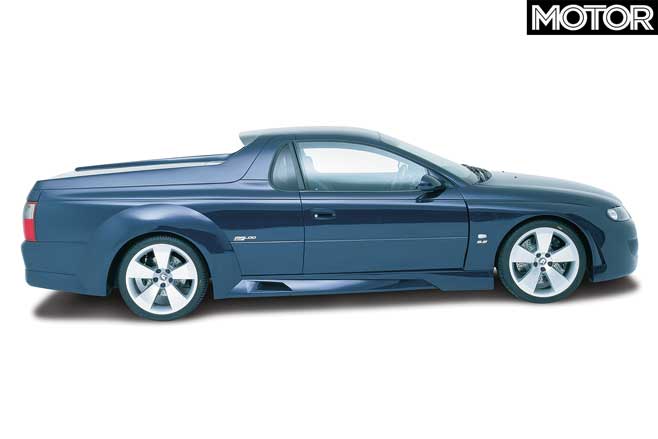
Engineering attacked a body shell, laying back the A-pillar in get the rake needed for a Monaro windscreen. The B and C-pillars were shortened by 40mm, and moved rearwards.
To fit coupe dams, the FDO (Frame Door Opening) was widened by stitching two panels together; extending the cabin by 150mm (shortening the tray by the same amount). Reshaping the roof was tricky, so a sedan roof was cat in size. Around 50-75mm of metal was cut from the rear arches to accommodate the flares and wheels.
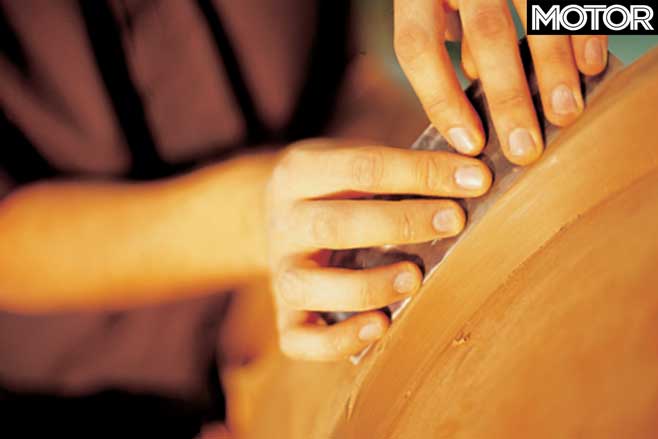
The styling team used a standard ute to hang clay flares, front bumper, sills etc. Moulds were then taken and ”low tech” fibreglass laid-in to form the parts. The one-piece front clip is also fibreglass, although the bonnet is steel. The colour is Violet Echo.
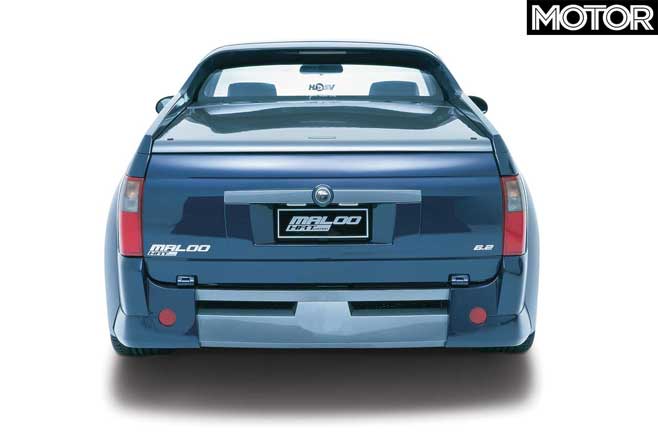
FAST FACTS 2001 HSV HRT Edition Maloo BODY: 2-door, 2-seat ute DRIVE: rear-wheel ENGINE: 6.2-litre pushrod V8, 16v BORE/STROKE: 99.0 x 101.6mm COMPRESSION: 10.6:1 POWER: 350kW @ 5800rpm TORQUE: 600Nm @ 4800rpm WEIGHT: 1680kg POWER-TO- WEIGHT: 208kW/tonne TRANSMISSION: 6-speed manual SUSPENSION: coil-over MacPherson struts, anti-roll bar and strut brace (f); multi-link with coil springs, anti-roll bar (r) L/W/h: 5051/1943/1382mm WHEELBASE: 2938mm TRACKS: 1619/1662mm (f/r) BRAKES: 378mm HRT/AP Racing vented & drilled discs, AP Racing 6-piston calipers (f); 340mm HRT/AP Racing vented & drilled discs, AP Racing 4-piston calipers (r) WHEELS: 20.0 x 9.0-inch (f); 20.0 x 10.0-inch (r), magnesium TYRES: Pirelli P Zero, 265/35 ZR20 (f); 285/30 ZR20 (r) PRICE: $150,000 (est.)
1. Out of reverence for the king of utes, the Chevrolet El Camino SS, the HRTE Maloo was almost called a Maloo Camino
2. Engineering boss Dunstan wanted to call the car ‘The Hammer’ but he rooled by the marketing department (who are no tools)
3. Early concepts ideas included a two-door, chop-top Grange and a chop-top ‘Woody’ wagon
4. Styling clay just doesn’t come from any old quarry; it’s specially made and comes from Germany
5. On the first day of the Sydney International Motor Show, 68 people wanted to buy an HRTE Maloo
6. Dunstan swears his next show car will ‘not’ be a wide-bodied Coupe. We wait with bated breath
7. The engine was run-in on a dyno, then driven around in a ClubSport by Dunstan. Bet he won a few traffic light showdowns
8. Using fibreglass was a bit old hat for HSV but saved time. Normally bumpers, wings et al are made from polypropylene or urethane using Reinforced Reaction Injection Moulding
9. HSV says Maloo cost $150,000, but that doesn’t include hundreds of hours of unpaid overtime. If Maloo goes into production expect to pay over $100,000
