
An investigation by the Detroit Free Press has uncovered court documents, internal emails and memos written by Ford engineers and lawyers relating to the problematic Powershift automatic transmission that prove the company knew, before selling the faulty models, that the dual-clutch transmission was not ready to go on sale.
The Ford ‘DPS6’ six-speed automatic was fitted to Australian Focus, Fiesta and EcoSport models built from 2011 which resulted in one of the ACCC’s largest fines issued to a company due to its poor handling of complaints by customers.
“As we said from the outset of this action – we took too long to identify the issues and we acknowledge that PowerShift customers did not have complaints handled appropriately between May 2015 and February 2016,” then Ford Australia CEO Graeme Whickman said at the time.
“Accepting the $10 million fine is the first action on our commitment to make right,” he added.
Affected models went into production from 2011 and were on sale for over half a decade. During that time, there were thousands of complaints raised to Ford from around the world as owners reported issues of the transmission dropping into neutral unexpectedly, suddenly accelerating – including into intersections – and shuddering.
But now, the damning new investigation reveals that these were not problems coming to Ford’s attention after it put the car on sale, with internal emails showing engineers recommended the transmission should not got into production before being fixed, and Ford lawyers noting that the Powershift transmission would result in a “Severity 10” rating – described by Freep as, “the worst possible rating under global engineering protocols designed to minimize risk and comply with Federal Motor Vehicle Safety Standards set by the U.S. government.”
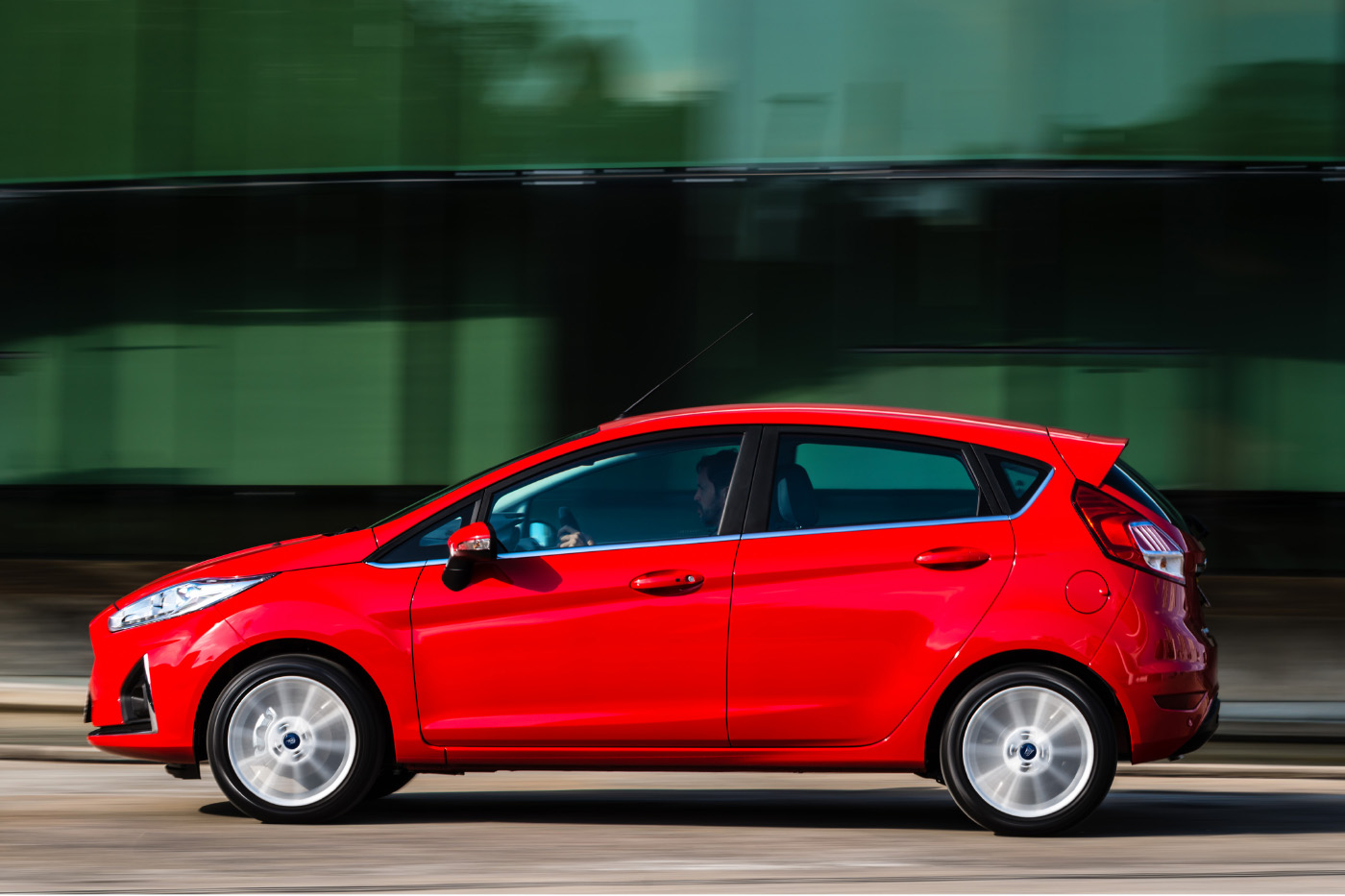
Ford’s Powershift transmission debacle is back in the spotlight with uncovered documents showing that Ford employees knew of numerous issues with the transmission. Just six months before production began, there was an email from an engineers pleading for a fix, according to documents published by Freep:
“But on Aug. 31, 2010, just six months before the 2012 Focus hit the market, product development engineer Tom Langeland emailed colleagues and supervisors describing “nasty launch judder” — intense vibration from a stop — that “did not clear up after many miles of driving.”
“We also cannot achieve a driveable calibration that will get us to production,” he wrote. “The clutch torque delivery MUST BE IMPROVED.”
… “There is no fix at this time,” system testing engineer Tom Hamm wrote separately in an October 2012 email to four colleagues. “We have a task force working on the issue but they haven’t identified any fixes at this time.”
Further emails show that Ford acknowledges the faults but attempted to downplay the faults to a ‘Broadly Acceptable level’ that could mitigate responsibility:
“Responding to lawyers’ concerns as the transmission was being developed, Ford quality supervisor Johann Kirchhoffer wrote in an email on June 27, 2008, that stalling “alone is not hazardous.”
“We have evidence that VW had a recall of a number of transmissions with a potential ‘Unintended Neutral’ occurring with low volumes,” he continued. “We are pursuing any effort to reduce the occurrence of an ‘Unintended Neutral’ event to a so-called ‘Broadly Acceptable level.’”
“Unintended neutral” refers to the transmission slipping out of gear.
While lawyers acknowledged that the engineers might be able to reduce the defect’s severity rating, the legal “team has evidence that this event is customer safety critical and should be rated as an SEV 10 event losing power entirely,” Kirchhoffer wrote.”
To read the full transcript and documents, find the original investigation published by the Detroit Free Press here.
The first Cayman GT4 arrived in 2015 as a near-perfect performance coupe, with the 3.8-litre naturally aspirated flat-six from a 911 Carrera S installed amidships – but it disappeared almost as quickly, demand quickly exceeding its limited supply.
Now it is returning as the Porsche 718 Cayman GT4, with more power, more downforce, and the promise of a dual-clutch option – and, prior to the open slather press launch, MOTOR was the first outlet in the world to drive it.
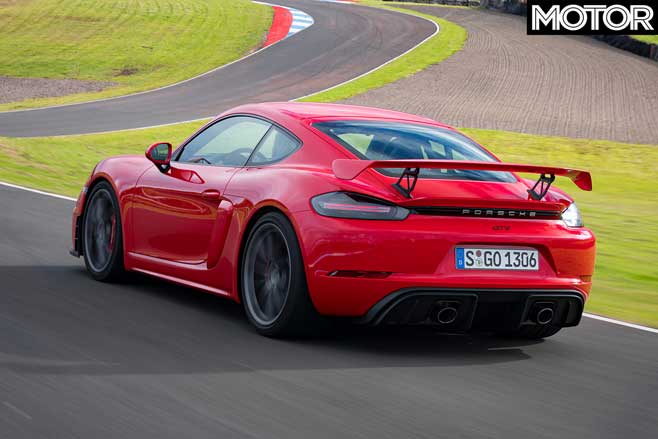
Increasing the engine capacity 200cc boosts power 26kW to 309kW at 7600rpm, just 400rpm shy of the redline and 200rpm higher than before – in keeping with Porsche’s desire for the GT4 to be revved even harder to deliver.
Although the previous 3.8-litre engine and the new 4.0-litre unit deliver an identical 420Nm, the oomph summit used to dwell at a slightly more relaxed 4750rpm, whereas it now kicks butt in the 5000-6800rpm bracket.
For now, the GT4 comes only with the six-speed manual gearbox, but next year the PDK transmission will become available and make the least expensive five-star Porsche complete. This will be a welcome addition because life is sadly not all about having fun in the twisties.
More often than not, you’re stuck in traffic, pottering along at 30-80km/h or inching forward in stop-and-go increments, so why not dial in your favourite streaming service, stick the lever in Drive and indulge in a slo-mo waft until the road clears?
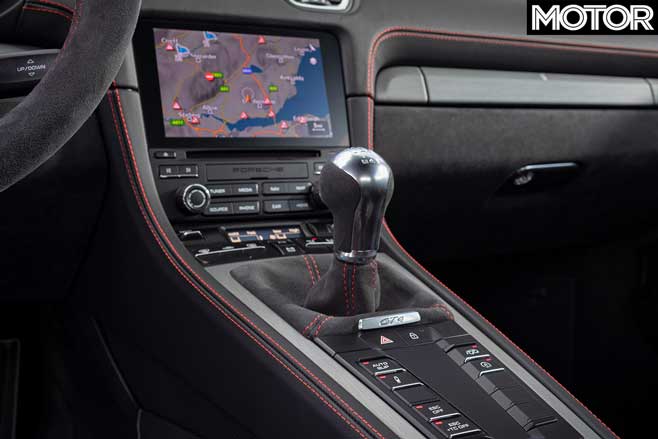
When defining the new GT4, Porsche thought long and hard about whether to cater exclusively for self-proclaimed purists. Late but not too late, they decided to offer the two-pedal dual-clutch arrangement in both GT4 models, starting in August 2020.
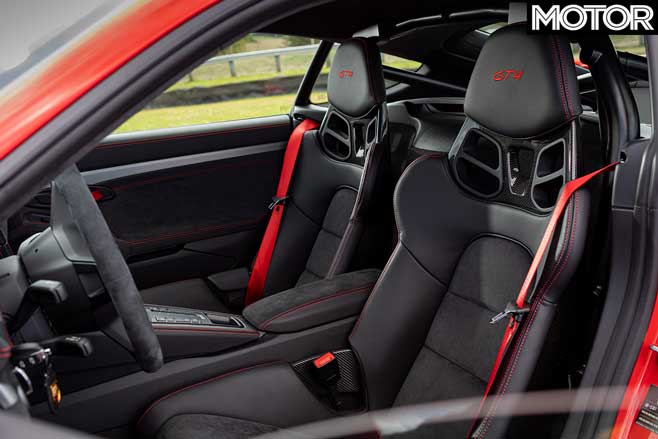
You can order your GT4 with Cup tyres, a partial roll cage and race buckets too tight to squeeze in the love handles. Alternatively, the car can be had with less extreme footwear – same size (245/35ZR20 and 295/30ZR20), but with superior wet grip – along with more comfortable 18-way sports seats or optional 918-style chairs.
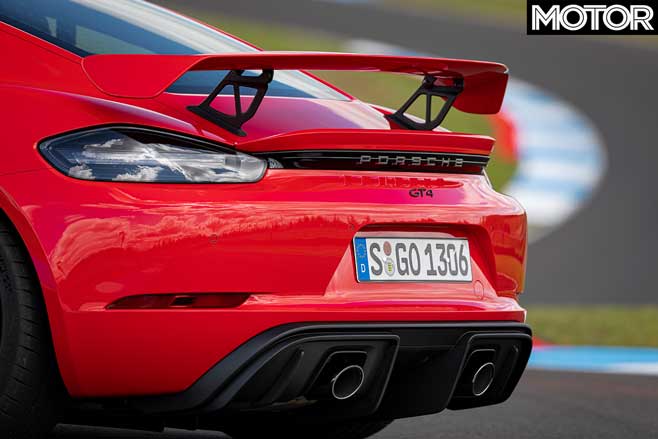
Price in Australia will be around $200,000, which is a lot of dough for an evolutionary product. If I was in the market for a new top-of-the-line Cayman, I’d want a broader choice of colours and a discount for taking off that huge rear wing. If the Spyder doesn’t need it, why is it mandatory on the coupe?
The upgraded suspension marks a big improvement. It is notably lighter, more rigidly connected to the body in places by metal uniball mounts, 30mm lower, and fine-tuned to match the stickier tyres, which were instrumental in clipping a full 12 seconds off the Nürburgring effort for a lap time of 7:28.
The 26kW power boost underlines the Cayman GT4’s dynamic personality, the revised aerodynamics work wonders for grip and stability, and the first-class chassis of the coupe is now also standard on the Spyder.
While the previous Spyder was little more than a modified 718 Boxster fitted with the GT4 engine, the 2020 model is the real McCoy. It looks significantly better, has a more practical watertight roof, is more generously equipped and at the same time cheaper than the coupe.
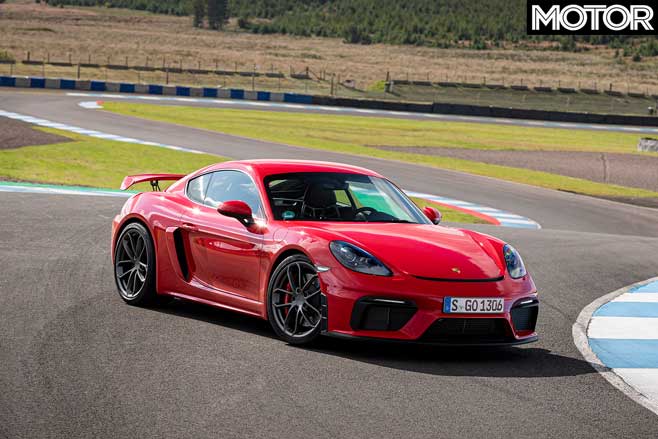
On the road, the new GT4 quickly reveals itself as the hard-revving machine Porsche promised. Hitting the limiter at 8000rpm in first is good for an indicated 84km/h, second cuts out at 137km/h, third stretches to 195km/h. That’s what happens when the GT skunkworks specialists lay their hands on that iconic normally aspirated flat-six.
This is definitely not an engine for the faint of heart, despite such compulsory CO2-friendly measures as the over-eager upshift arrow and impertinent idle-stop device. It’s best to ignore the tall gear advice because at 2000rpm in fifth or sixth this high-tech piece of art sounds like an assortment of silverware in the rucksack of a thief taking flight.
Mandatory high revs are not to everybody’s taste. Some users criticised the previous GT4 for its long-legged transmission, which kind of capped the unchecked urge above 200km/h, others loved it because the mix of zero throttle lag and ample mid-range torque rendered nine out of ten downshifts redundant.
There’s no doubt the extra 200cc helps to offset the thermodynamic loss incurred by the compulsory particulate filter installed to meet the EU6d TEMP emissions. Despite the modified multi-stage high-pressure fuel injection, rerouted exhaust system (featuring one big transverse silencer instead of two separate boom boxes), voluble dual-stage intake manifold and the part-throttle cylinder cut-off device that downgrades the six to a three – what, only one cylinder bank at work in a red-hot Porsche GT! – the official fuel consumption rating is actually about five per cent higher.
The 309kW boxer is a high-tech engine through and through. Having said that, tip-in can be a little jerky when revs and ratio have drifted apart, tip-out is in this case coarser than expected, and the torque curve is a sleeper below 3000rpm, where it starts a swift climb to its zenith at 4600rpm. The power and torque lines intersect at 6250rpm, so there’s no real need to stage upshifts beyond 7000rpm.
For some reason, maintaining smooth mid-range cruising speeds can be momentarily disturbed by split-second fits of restless throttle syndrome. Constant variation within a panoramic aural spectrum is what the catchy working noises are all about.
Solo parts include the trademark declutch clonk, the sotto voce intake chatter that enters fast-forward mode as the revs rise, fake heeling and toeing triggered by the puerile throttle-blip feature the marketing department insisted on, serious wind and road noise above 200km/h, and a rocket-in-a-tunnel full-bore exhaust note that can be fingertip-amplified for that special hooligan effect.
The difference in driving dynamics between the old Cayman GT4 and its successor is by no means instantly obvious. While the 4.4sec 0-100km/h acceleration time remains, top speed increases from 296 to 306km/h.
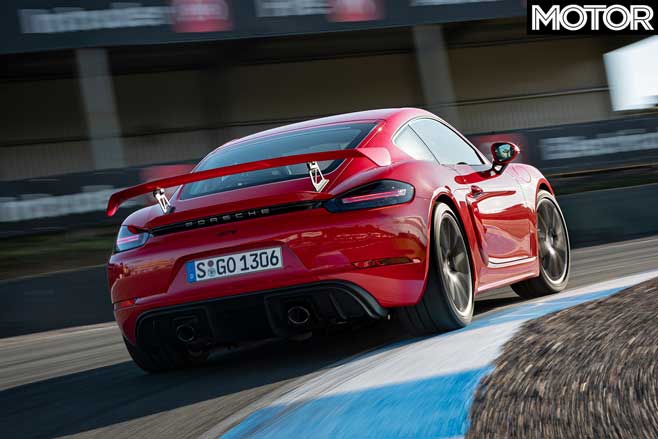
Since the drag coefficient remains unchanged, the top-end boost is exclusively due to the more potent engine and revised aero, featuring a larger chin spoiler, redesigned rear diffusor and more efficient tail rudder. Together, these aids beef up the downforce by a considerable 50 per cent.
“At the end of the day, it’s this subtle aero balance that makes the new GT4 so special,” explains Andreas Preuninger, the man behind Porsche’s GT division. “While it is important to keep the rear end firmly planted at any speed, front-axle lift must be proportionally reduced too. Done right, the result is a reassuringly stable vehicle even in adverse conditions. Confidence is key when it comes to exploring the limit.”
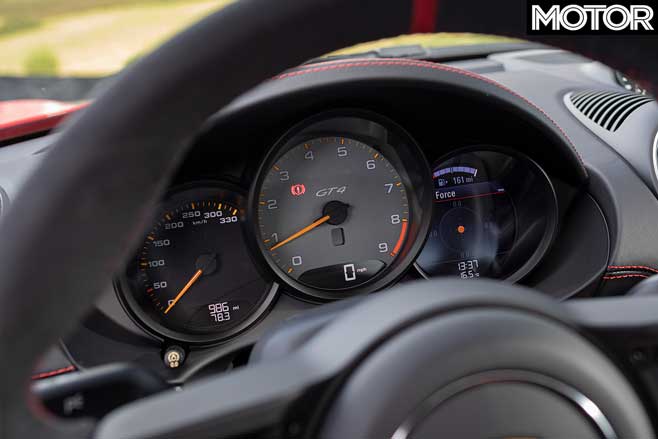
And the GT4’s limit is high. The g-force meter will regularly register over 1.0, the hard-working brakes devour tarmac, the second-gear, out-of-a-corner traction masquerades as all-wheel drive, and the ultra-high-performance Michelins provide phenomenal lateral grip. There’s no doubt about it – the Cayman GT4 still rules the kingdom of handling and roadholding.
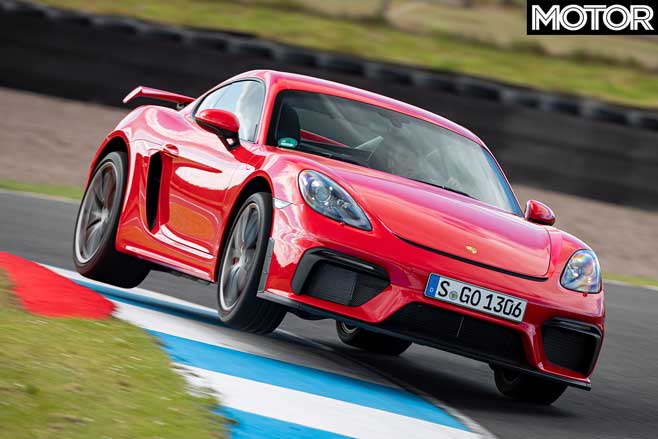
Like the version it replaces, this car is to the mid-engined fraternity what the GT3 is to the 911 class. In view of the less extreme weight distribution, one could even argue it is a sweeter and more balanced drive. But, because of the position of the engine, it also feels a little more ambiguous in the narrow demarcation zone that separates hanging on from letting go, which explains why PSM is again a two-stage affair.
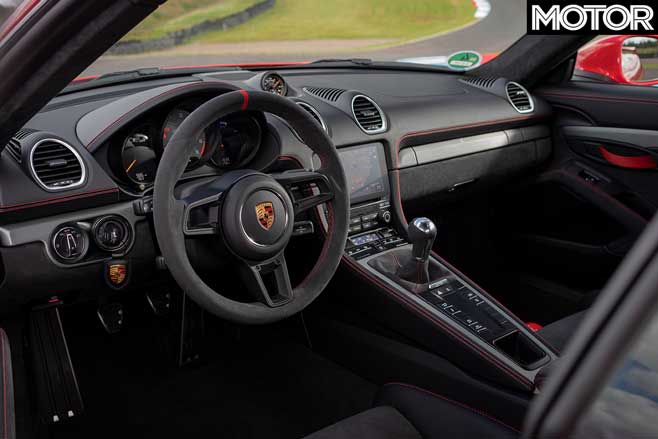
For feedback and precision, nothing beats steering that is neither burdened by the weight of an engine nor handicapped by part-time propulsion duties. Predictably, this Porsche’s rack-and-pinion box is excellent, and the single-function Alcantara-wrapped three-spoke steering wheel – totally devoid of buttons and the need for distracting finger exercises – bonds man and machine to perfection.
In the Cayman GT4, it’s above all the steering that encourages you to take the backroads. Every turn-in action is rewarded, and winding off lock generates its own unique haptic dynamics, with such natural weight and gearing.
The awesome directional agility is backed up by a comforting calm over bumps, potholes, camber changes and longitudinal grooves. On sub-standard ground, the helm is soothingly well damped and detoxifyingly stressless. Needless to say, there are no computer-generated aids involved in plotting the chosen line.
Although I’d still prefer the PDK ’box, the retained six-speed manual is a classic. Compared to the awkward seven-speeder that survived in the 992, the Cayman’s DIY arrangement gets full marks for quick throws, accuracy and ease of use.
Praise also to the nicely progressive and sufficiently power-assisted clutch. But when you drive the GT4 in high-rev, knife-between-teeth fashion, upshifts must for the blink of an eye split massive momentums, which takes its time or the cogs will grind in anger.
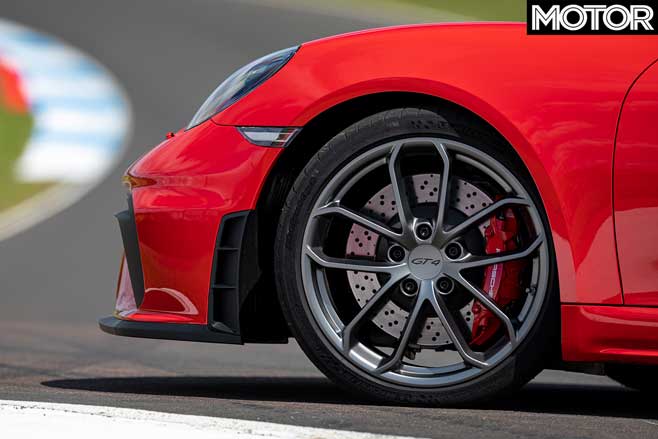
Although carbon-ceramic brakes are getting cheaper, they only make sense when the car in question spends enough time on track to justify the expense. If that’s not the case, don’t bother. After all, PCCB needs hot discs and pads to deliver, doesn’t like heavy rain and standing water, can be noisy in cold weather, and replacement parts will cost you an arm and a leg.
Our test car was fitted with yellow PCCB calipers, so we felt compelled to exercise the fade-free stopping power, relish the totally consistent pedal effort and marvel at the extra initial bite, all of which duly yellowed the complexion of my passenger’s face. At 1420kg, this featherweight Porsche is indeed the dream tool for notorious late-brakers.
The active damper system in Sport mode is firmer than in lesser versions. The combination of torque-vectoring and a mechanical diff lock makes the car more chuckable, while at the same time enhances traction. Although the front and rear strut suspension and both subframes are in essence carryover elements from the 991 GT3, the GT4 has its own set-up, which is less extreme but no less competent.
The Cayman GT4 is a more involving drive than the top-notch Toyota Supra, faster than the super-sweet Alpine, more challenging than the Audi TT RS, more complete overall than even the Jaguar F-Type R, and less compromised than a Lotus Exige and Evora.
But the Porsche is beginning to show its age. You still can’t have a head-up display, the infotainment dates back to the days of Game Boy, the archaic ergonomics are ho-hum and the traditional less-is-more approach to engineering doesn’t quite cut it in the age of electrification.
But we still love the GT4 because it’s not only a one-of-a-kind car but also a convincing last-of-line effort. After all, the next Cayman due in 2024 sheds the combustion engine in favour of a couple of electric motors while swapping the 64-litre tank for an underfloor battery pack. Here, then, is one of the last opportunities to purchase an old-school GT Porsche this side of the next-generation 911 GT3.
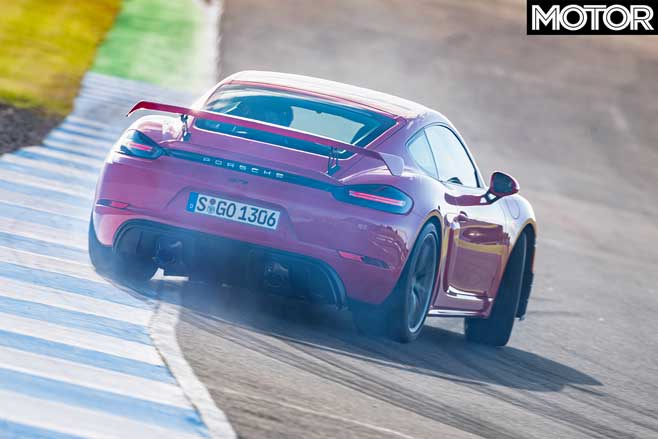
The Porsche Cayman GT4 is not so much about ultimate performance, and it really isn’t the best track-day special this kind of money could buy either. What it achieves with true greatness is to fuse and neutralise antagonisms such as ace handling and astonishing compliance, sharp handling and effortless controllability, emotional involvement and rational investment potential.
Using conventional means and minimal electronic assistance, this car achieves a remarkable balance of abilities. It can now fly with the fastest birds on the autobahn, is one of the most exciting backroad tarmac-peelers, absorbs surface vagaries and irritations like nothing else in its class, and is both forgiving and emboldening.
If driving satisfaction is all about maintaining the flow, finding the right rhythm and mastering the dialogue between input and response, then the GT4 perfectly matches this predator-prey scheme.
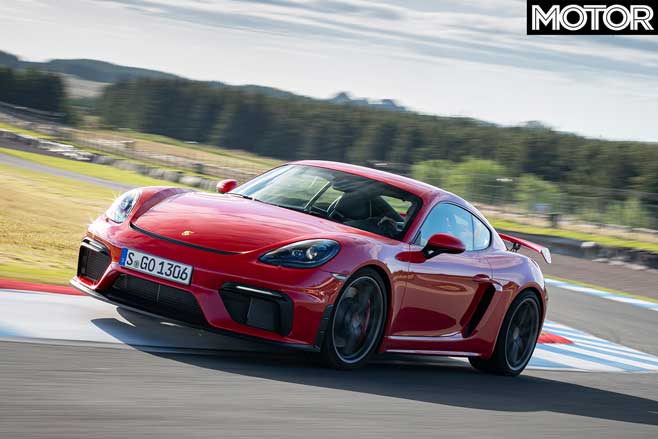
Back in 2014, we awarded the original car six points out of five, but time has moved on. While the second-season effort is every bit as competent and rewarding, it doesn’t really expand the envelope any further. It still rates five out of five, but only just.
Even though availability is this time reportedly not limited, it may be a good idea to hold your horses until the initial hype has ebbed away and the PDK option becomes available, perhaps even in combination with the Spyder, which could turn out to be the smarter buy. Whatever you do, think twice before trading in your old GT4 for the new one, because greatness is damn hard to improve on.
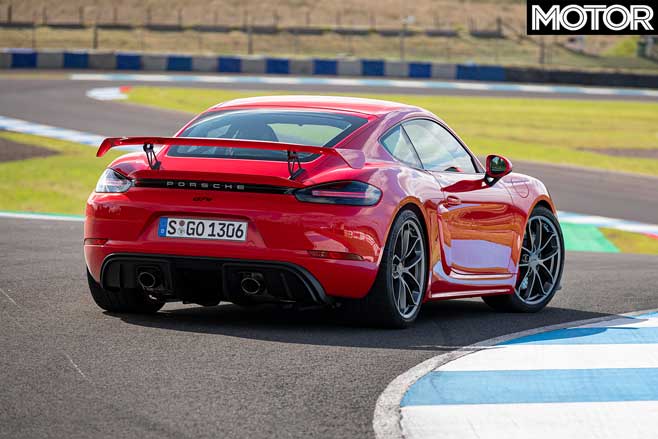
FAST FACTS 2020 Porsche 718 Cayman GT4 BODY: 2-door, 2-seat coupe DRIVE: rear-wheel ENGINE: 3995cc flat-six, DOHC, 24v BORE/STROKE: 102.0mm x 81.5mm COMPRESSION: 13.0:1 POWER: 309kW @ 7600rpm TORQUE: 420Nm @ 5000-6800rpm WEIGHT: 1420kg POWER-TO- WEIGHT: 218kW/tonne TRANSMISSION: 6-speed manual SUSPENSION: struts, adaptive dampers, coil springs, anti-roll bar (f); multi-links, adaptive dampers, coil springs, anti-roll bar (r) L/W/h: 4456/1801/1269mm WHEELBASE: 2484mm TRACKS: 1538/1534mm (f/r) STEERING: electrically assisted rack-and-pinion BRAKES: 380mm ventilated/drilled discs, 6-piston calipers (f/r) WHEELS: 20.0 x 8.5-inch (f); 20.0 x 11.0-inch (r) TYRES: 245/35 ZR20 (f); 295/30ZR20 (r) PRICE: $200,000 (estimated)
PROS: About as good as a driver’s car is ever going to get CONS: Time will tell if it lives up to the enormous hype RATING: 5 out of 5 stars
The Wheels Verdict: For people who care about driving, we’re not sure it gets much better than this. Yes, there are faster 911s, more aggressive 911s, and more exciting 911s. But if you’re not hell bent on outright speed or ultimate lap times, the Cayman GT4’s genius is its ability to zero in on the thrill of driving. It’s magnificent.
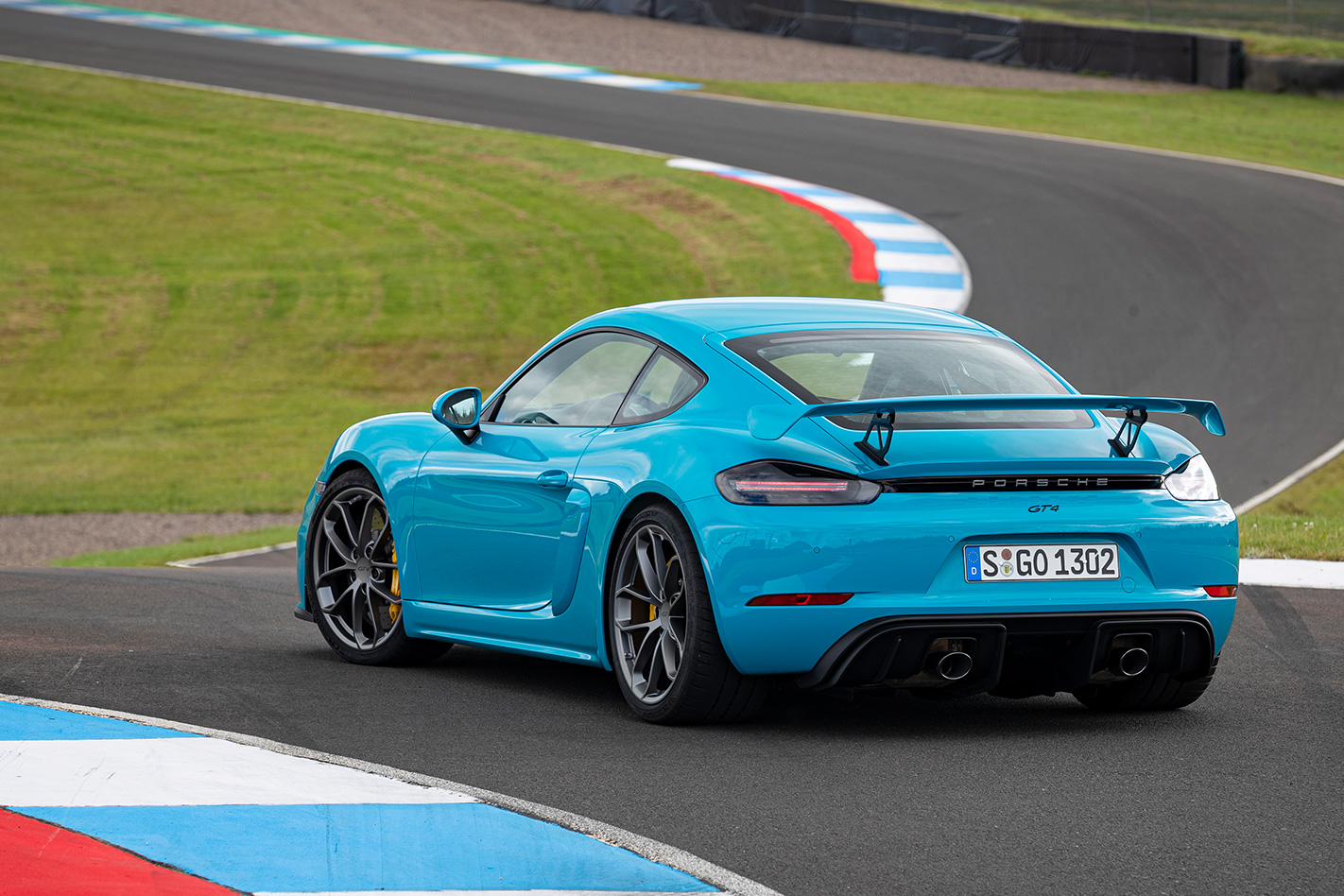
What is the Porsche Cayman GT4?
It’s Porsche’s second-tilt at its entry-level GT car. This time around the GT4 scores an all-new 4.0-litre engine, 50 percent more downforce, and, eventually, the promise of a 7-speed dual-clutch transmission.
Why we’re testing it
Because the first Cayman GT4 was an absolute peach. Balanced, tactile and rewarding, it was so convincing that many wondered if you actually needed to stretch to a GT3. Improving on that high water mark mustn’t have been easy, so we flew to Scotland to see if Porsche has raised the bar.
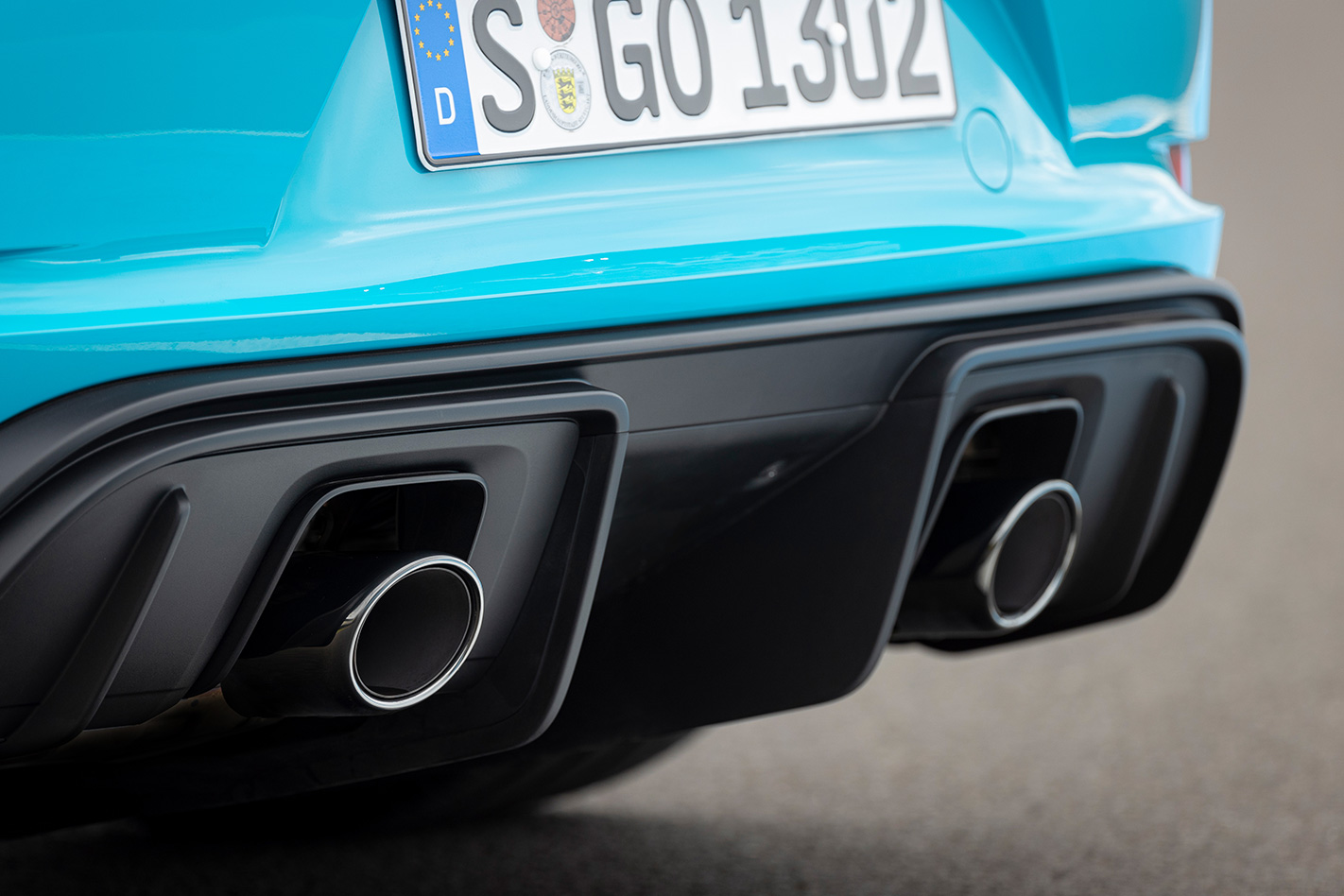
Porsche Cayman GT4 review
MARK WEBBER has made a mistake. He must have done. Sawing away at the wheel as our Cayman GT4 flip-flops through the tricky blind chicane at Knockhill circuit in Scotland, Webber’s internal calculation of our trajectory and the remaining road has clearly typed in 2+2 and come up with five. Wedged in the passenger seat like a useless sack of potatoes, I brace for the seemingly inevitable sojourn onto the grass. It never arrives. With the finesse of a concert pianist, Webber brushes the brakes to trim our line, the GT4’s left-side tyres running to the edge of the exit kerb with millimetre perfection. You can do that in this car, I’m soon to discover. Accuracy is a Cayman GT4 character trait.
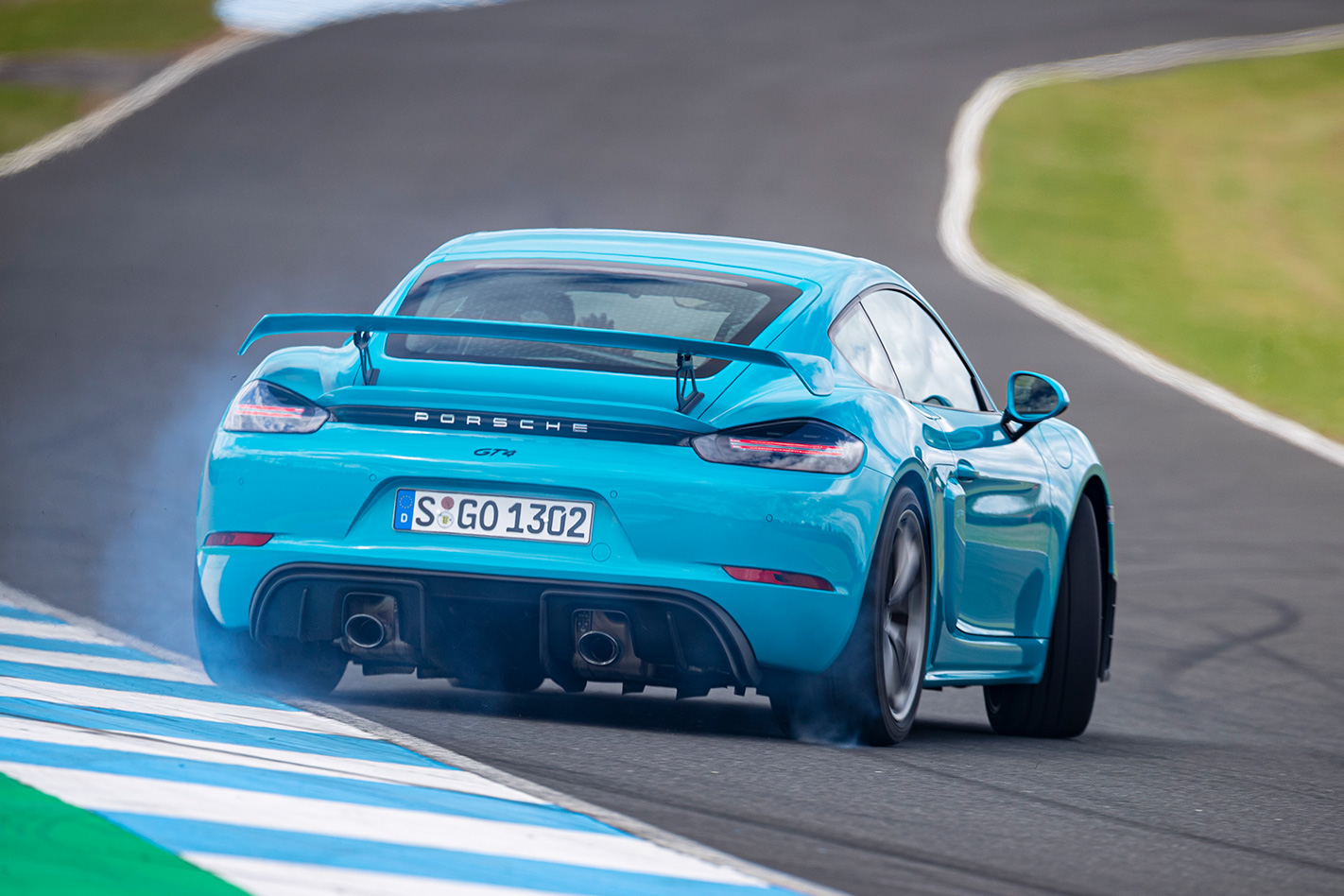
“How’s the balance, mate?” Webber smiles. “Spot on, isn’t it?”
Porsche had an unexpected cult hero on its hands with the old Cayman GT4. It might have been the ‘entry-level’ GT car, but for many, its mid-engine/manual-only recipe made it just as desirable as a GT3 or a GT2 RS.
Ensuring this second-gen car eclipsed that high benchmark can’t have been an easy task. For a while, there was talk that Porsche would gift the GT4 the screaming 4.0-litre flat-six from the GT3, but it wouldn’t fit. Plus, the head of Porsche’s GT Division, Andreas Preuninger, says it would have made it impossible to meet the GT4’s $220K price point.
“In the GT3 we have one of the most expensive engines in the automotive market ,” he told us. “That really is a motorsport engine, with titanium components.”
So Porsche decided to build a new engine for the GT4. Also 4.0 litres in capacity, it’s based on the 92A 3.0-litre donk found in the 992 911, though nearly all of the external components (cylinder head, valve train, crankcase, intake manifold) are new. It took four years to develop and encouragingly, the man in charge of the engine, Markus Baumann, says 9000rpm+ is possible and that “there’s a lot of room” to create more power.
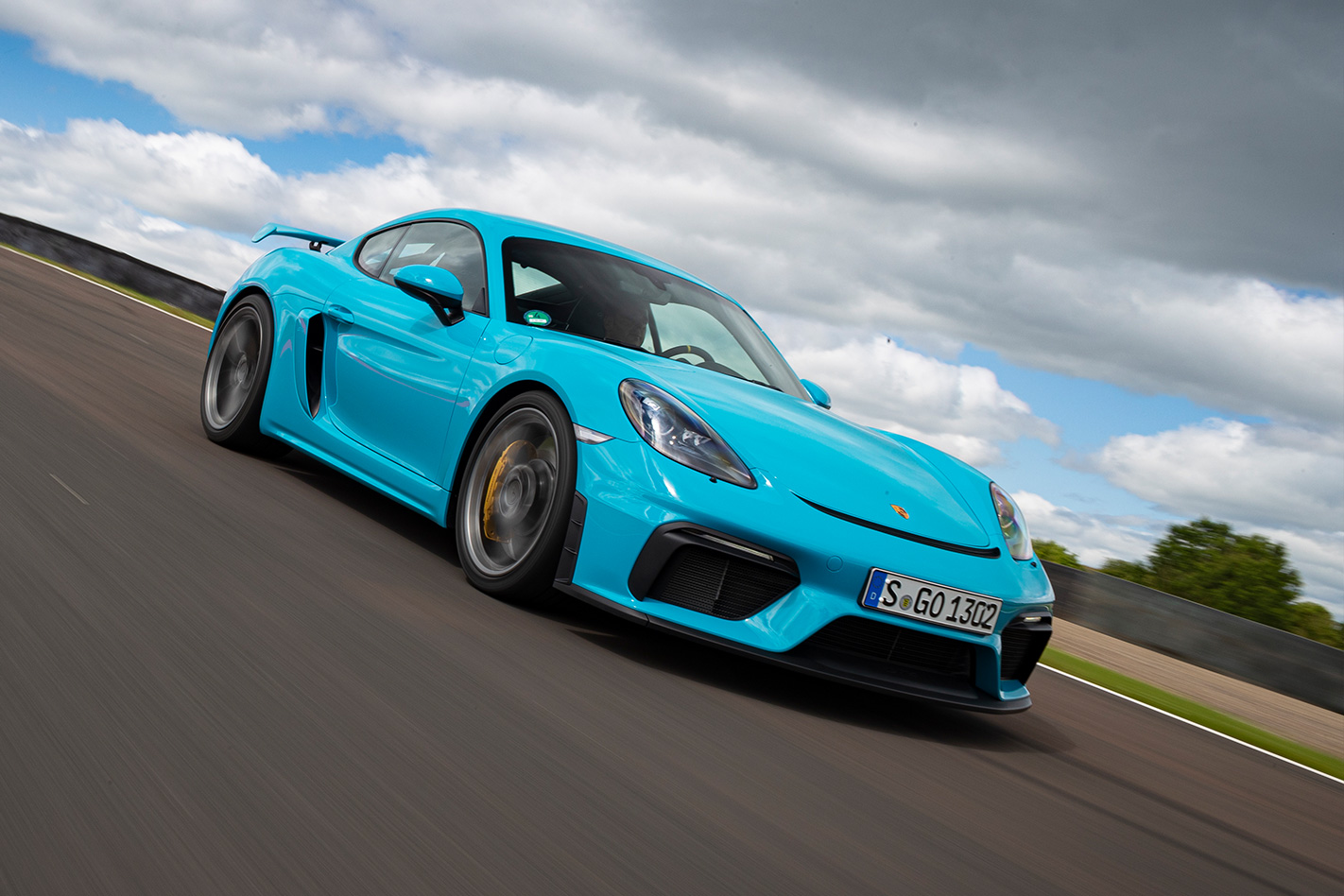
Still, this first hit-out is hardly limp wristed. Outputs are healthy at 309kW/420Nm, the rev-limit is set at 8000rpm, and when you drive it on the public road, the first impression is one of cultured smoothness. And of low-down muscle. The risk in this turbocharged age is that atmo engines start to feel light-on low in the rev range, but that’s a trap the GT4 neatly sidesteps. Peak torque (which is exactly the same as the old GT4) arrives between 5000-6800rpm, though there’s ample flexibility below that and a willingness to pull cleanly from as low as 1500rpm.
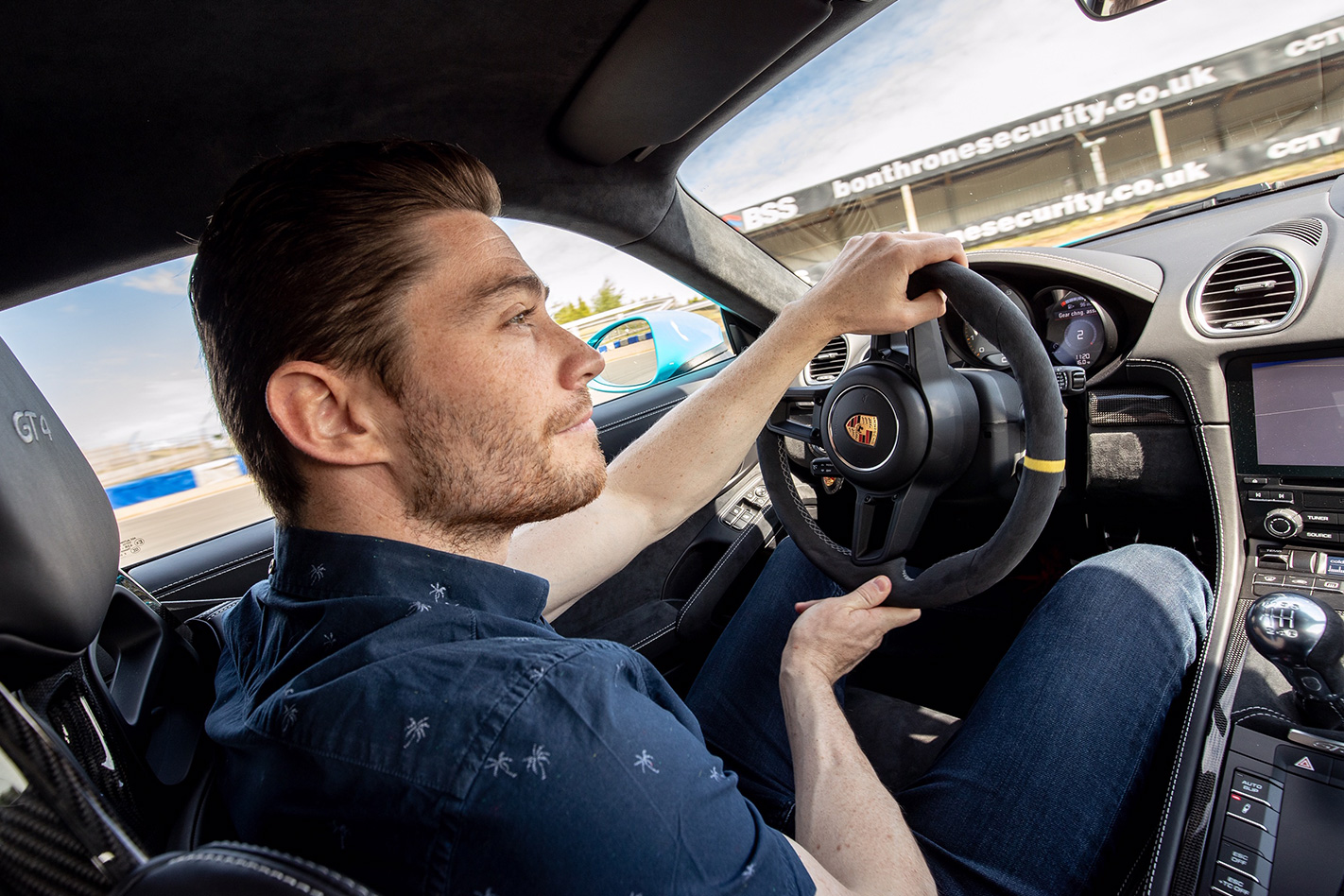
The engine is clever too. Cylinder deactivation sees it drop to a single bank on light throttle openings for an 11 percent efficiency gain, with the engine swapping seamlessly between each bank every 20 seconds to equalise temperatures in the catalytic converters.
The only downside to this is a bassy resonance that booms in the cabin when the system is active, though it can be switched off by pressing the stop/start button on the centre console.
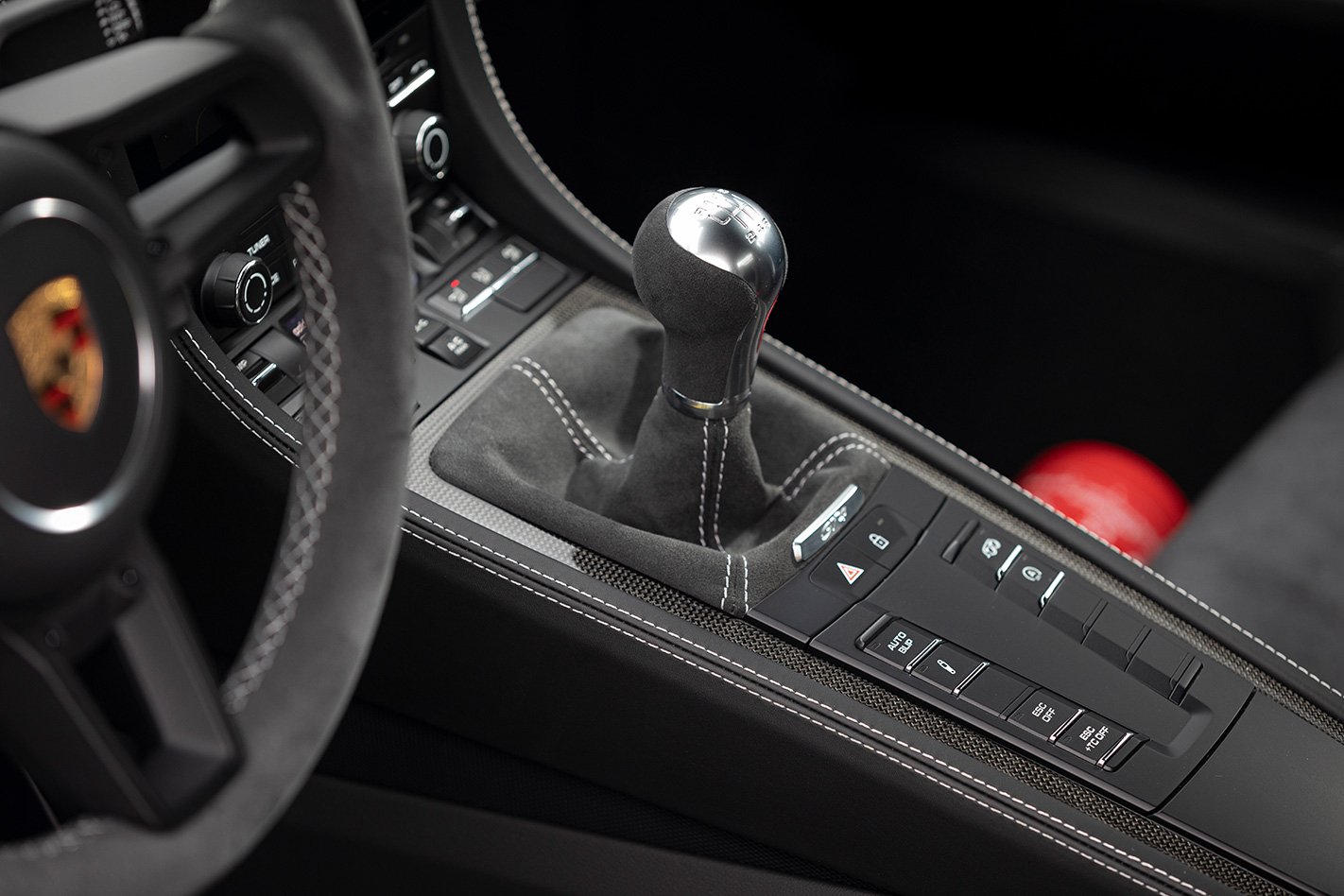
As before, the sole gearbox on offer at launch is a six-speed manual (Preuninger confirmed a seven-speed dual-clutch is coming), though pairing it with the new 4.0-litre has helped address the chief criticism of the old car – namely that its gear ratios were too long.
They still are, actually (“The ratios are identical in this new car,” says Preuninger. “We needed them for emissions), though this GT4’s gutsier engine does see it punch through each ratio with greater urgency.
Which brings us to the chassis. The basic layout hasn’t changed. The front suspension is lifted largely from the GT3, while both axles have three-way adjustable rollbars and the option to tweak the ride-height, toe and camber.
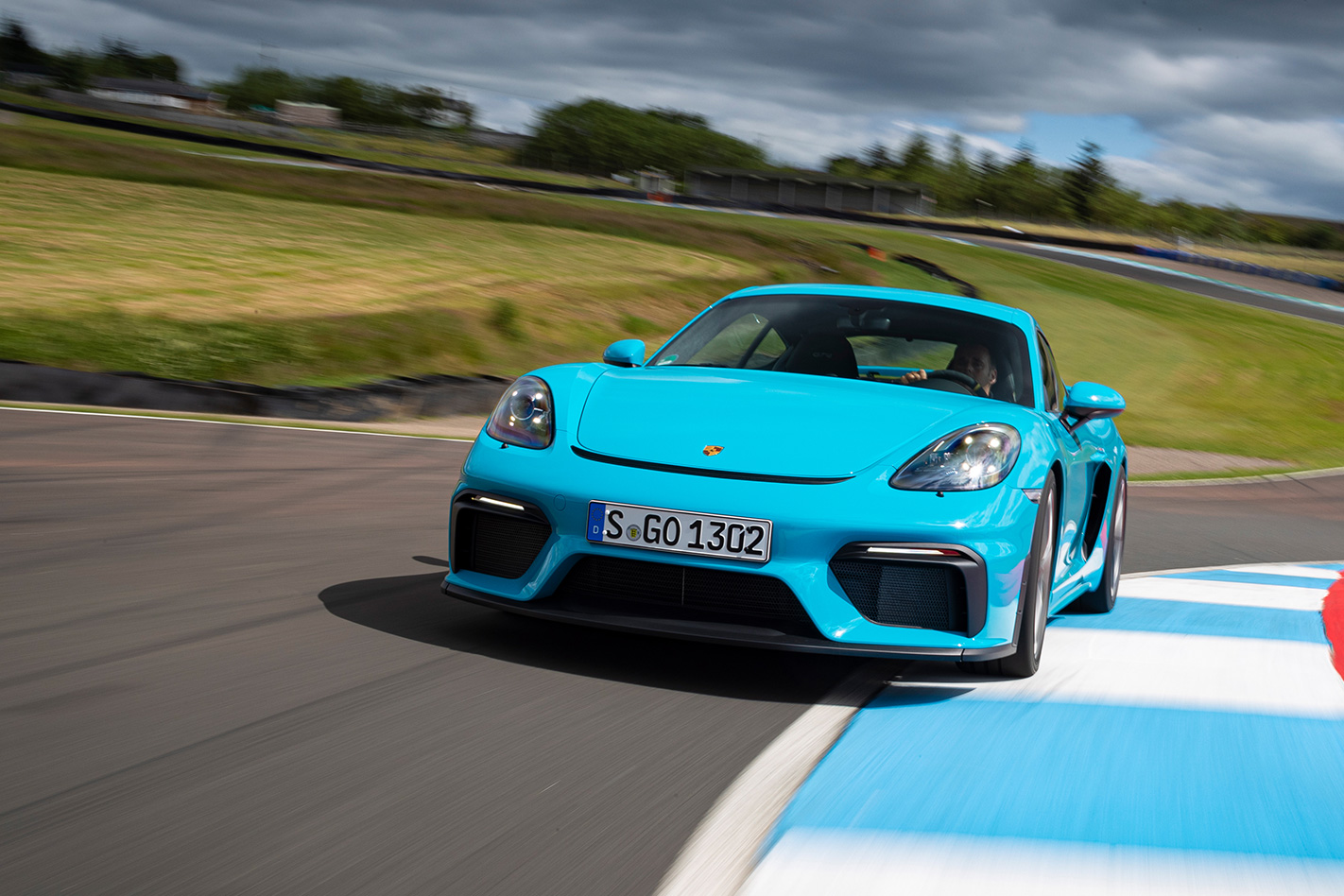
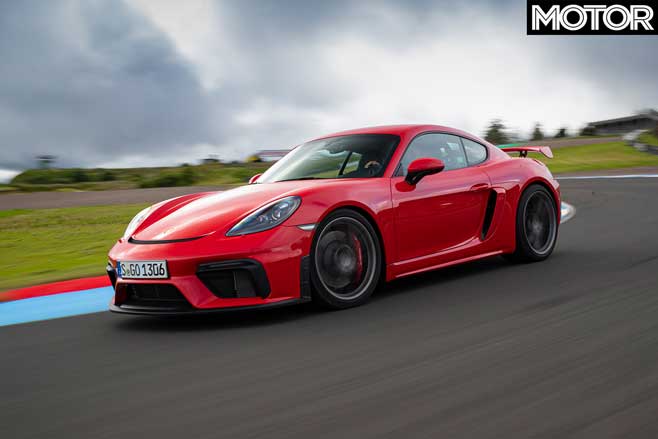
Drive it hard and the overriding sensation is one of balance. Knockhill is a busy little circuit, though the GT4 never feels rushed or ragged. It flows beautifully, with vicelike body control and steering that’s reassuringly weighted and accurate. Grip from the 20-inch Michelin Pilot Sport Cup 2s is mighty – helped in part by a 50 percent improvement in downforce – though the GT4 never feels locked down or inert. It remains a car that gives its driver options; one that responds positively to adjustments to steering, brake or throttle.
It’s a tactile experience, driving a GT4. An auto-blip function will rev-match every downshift perfectly, though it’s arguably more rewarding to do it yourself as you delve deep into the standard steel brakes (410mm ceramic stoppers are an option) and relish in the ideal pedal placement. The shift action is a highlight. The stick itself is 30mm shorter than a regular Cayman’s and the shift quality is nigh-on perfect.
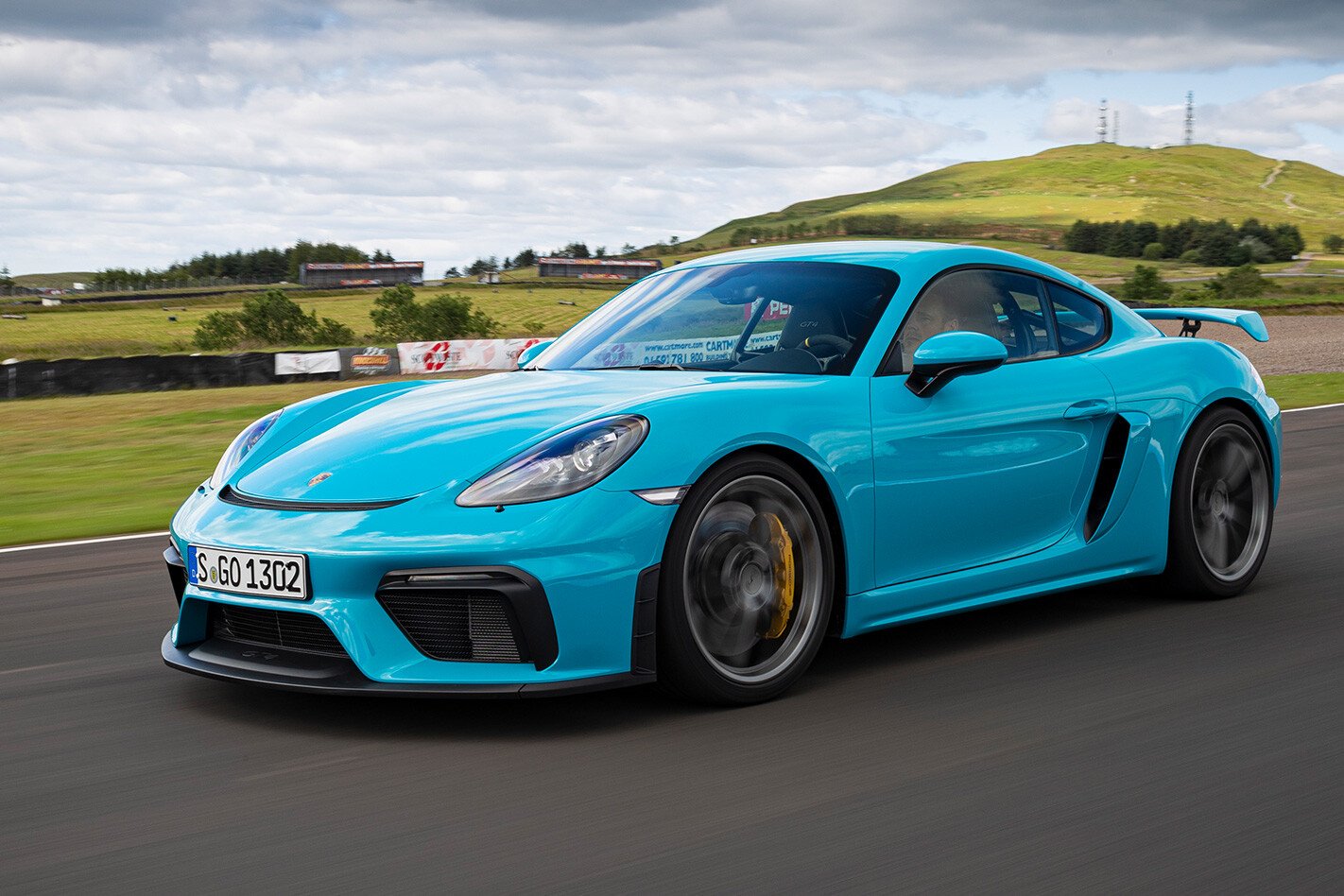
Interestingly, both the GT4 and its new 718 Spyder sibling now share identical chassis set-ups. Their spring and damper rates are the same, and despite riding on suspension that’s also 30mm lower than the regular 718 range, the ride quality is outstanding. We only drove the Spyder on the public road (the GT4 was reserved for circuit use), and while the suspension does feel firm, especially at low speed, it’s never harsh or sudden. On bumpy Scottish B-roads, the two-stage adaptive dampers helped round the edges off all but the sharpest of imperfections. The high-speed ride is particularly impressive, lending the feeling that this is the most comfortable car Porsche’s GT division currently makes. The only NVH niggle are some vibrations that make their way through the seat and steering wheel at idle.
So it’s a remarkably polished thing, the GT4, and one with a distinctly different character to the rest of Porsche’s GT range. It’s never as raw or as visceral as a GT3, yet the GT4’s brilliance lies in the completeness of its package. It feels of a piece, as though its powertrain and chassis are locked in a perfect two-step that puts the sensation of driving front and centre. And as drivers, what else can we ask for?
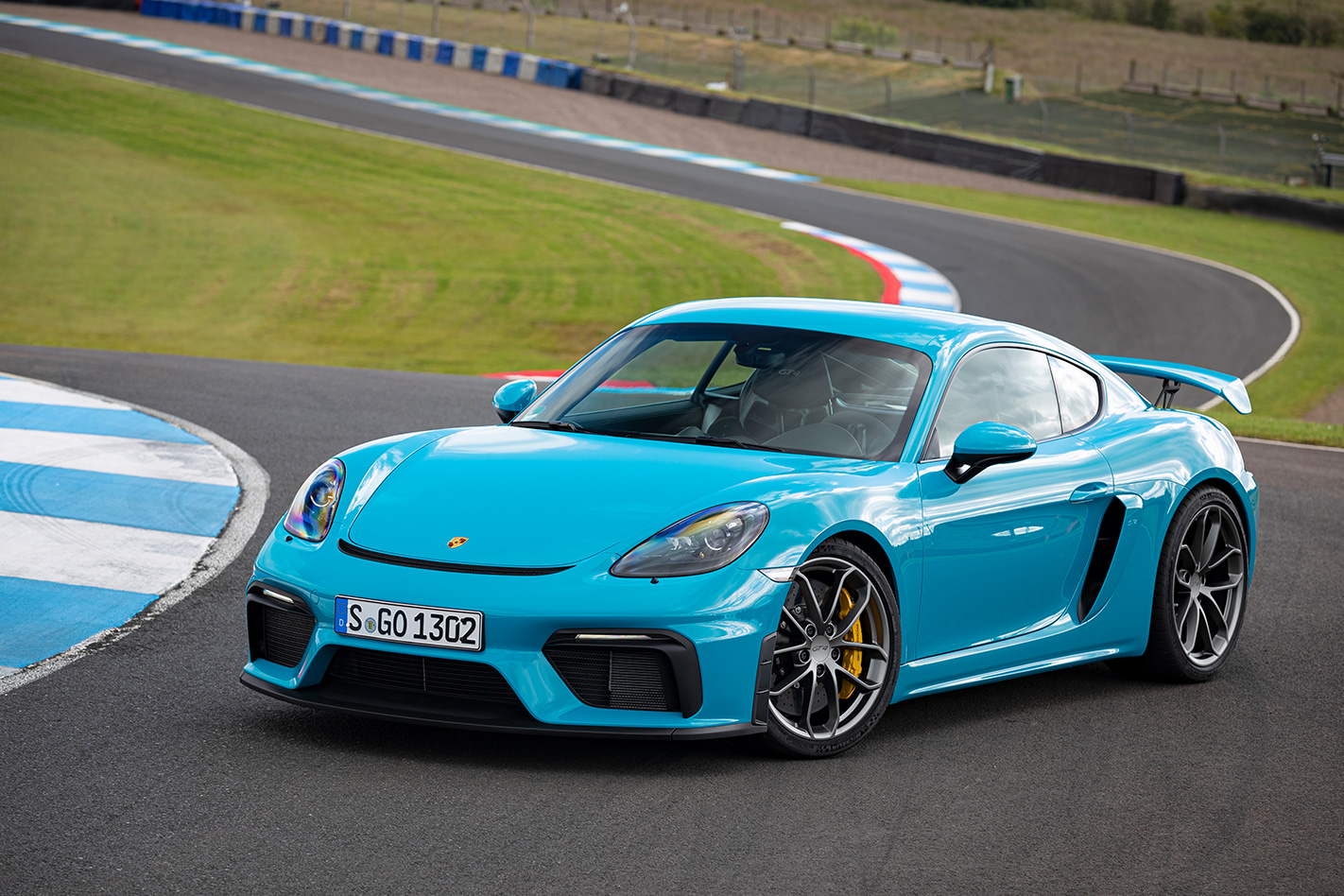
Porsche Cayman GT4 vs rivals
BMW M4 CS, Porsche 911 Carrera S, Jaguar F-Type R, Lotus Exige Sport 350
Porsche Cayman GT4 price and specs Australia
Model: Porsche Cayman GT4 Engine: 3995cc flat-6, dohc, 24v Power: 309kW @ 7600rpm Torque: 420Nm @ 5000-6800rpm Transmission: 6-speed manual Weight: 1420kg (old car 1340kg) 0-100km/h: 4.4sec (claimed) Economy: 10.9L/100km Price: $218,400 On sale: Q1 2020
The Wheels Verdict: Nissan has spun together a neat piece of EV technology and it’s much the same formula that made the first-gen Leaf so popular. But leaving aside the powertrain, it’s still not a challenger to what you can get for almost half the price, and shows that the industry is still a way from building an electric car for the masses.
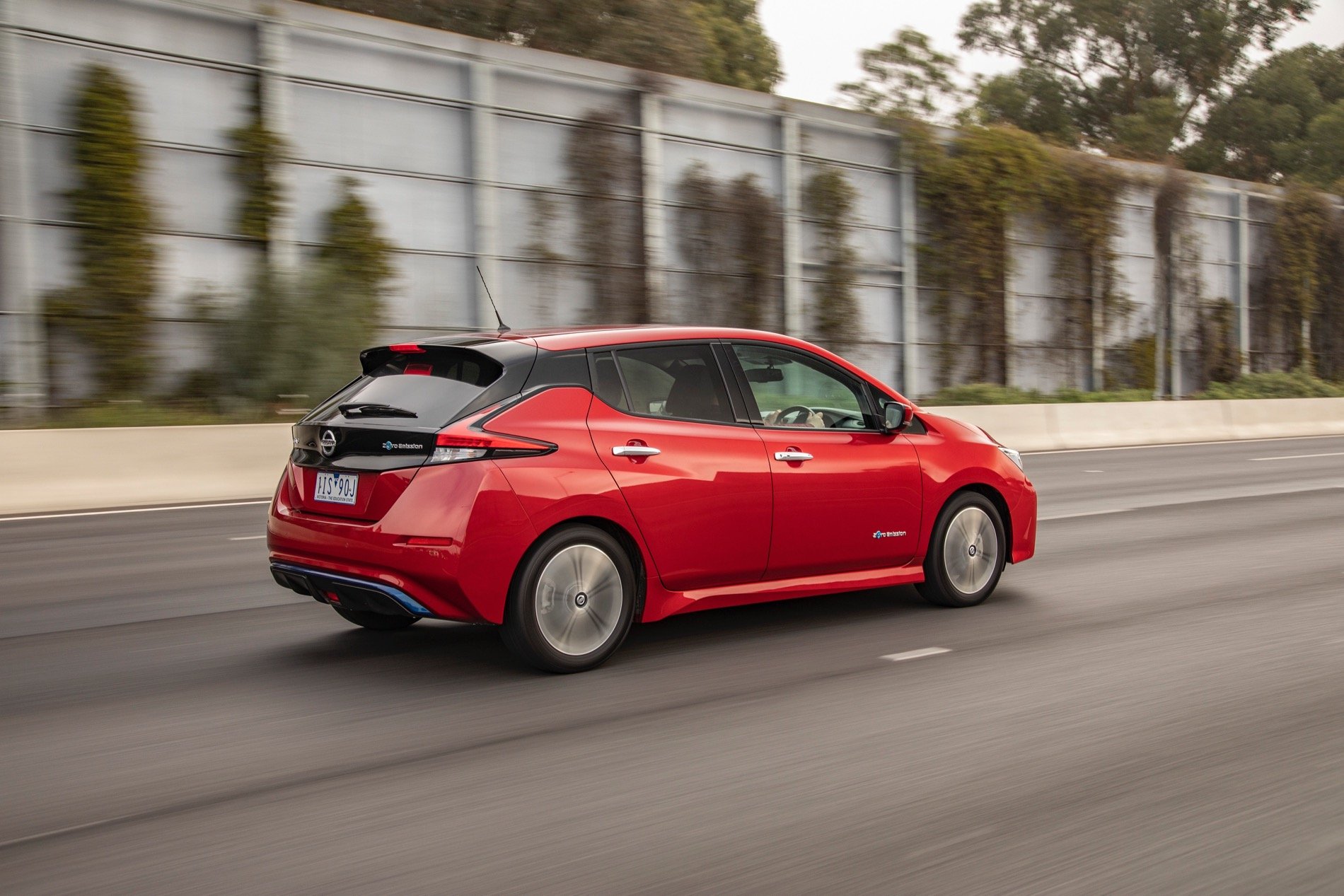
NISSAN LEAF REVIEW
The message delivered at Nissan’s Leaf launch in Australia was hammered home from the get go: once batteries are cheap enough, you’ll see these things everywhere. It’s a precept delivered with cult-like conviction that the only obstacle holding buyers back from electric vehicles is an eye-watering price tag. It assumes the Leaf is a better car than petrol and diesel equivalents. But is that putting the cart before the horse?
In its second-generation now, the Leaf has an advantageous headstart on many fledgling EVs. Just as Toyota has become the hybrid touchstone with its decades-old Prius, Nissan is carving its own green niche with the Leaf. Having sold 420,000 units since its inception, it is convincingly the world’s most popular electric vehicle.
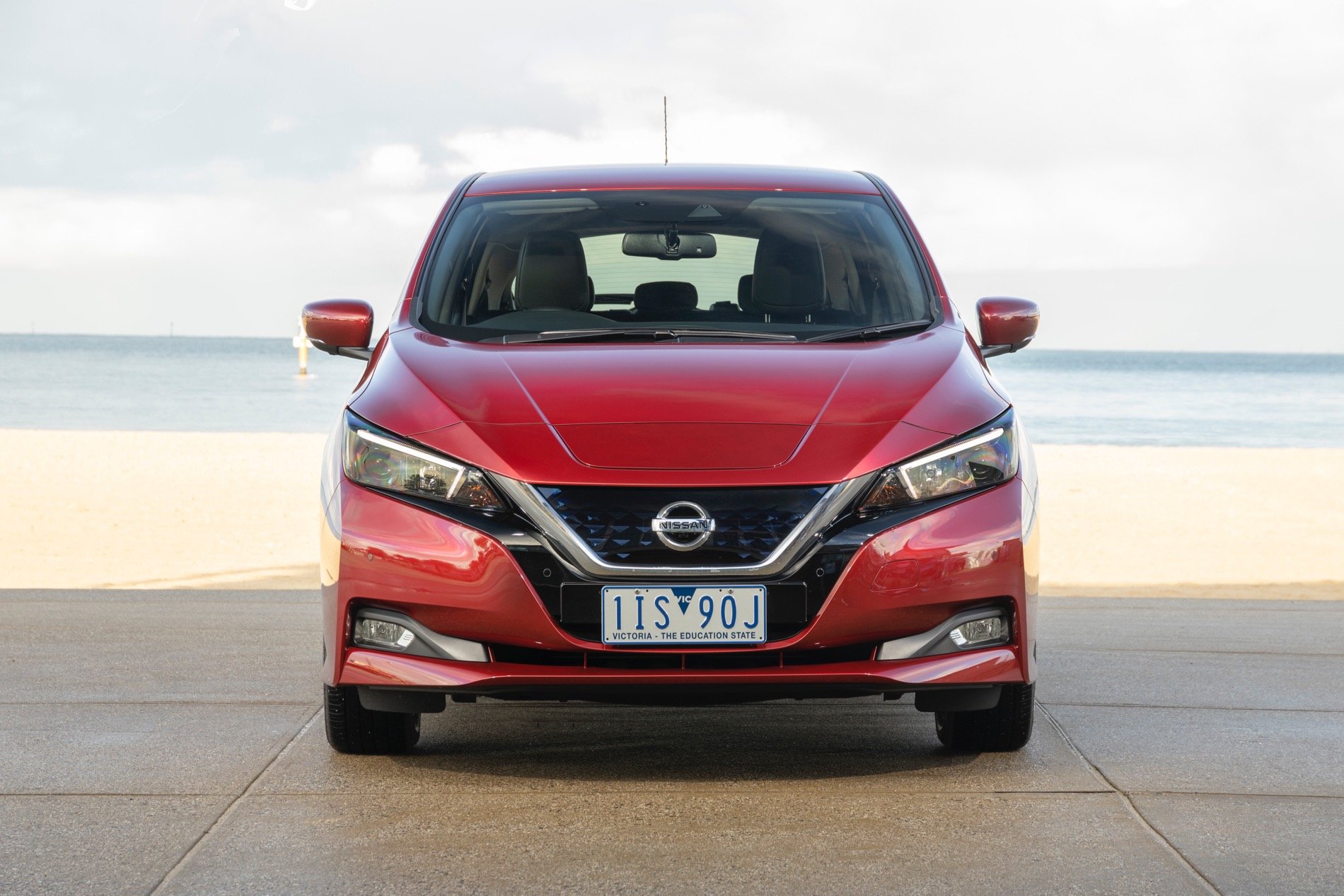
But is that enough to convince us in a slumping car market that this $50k hatch is worth its weight in lithium? Not quite.
Although it gets a slathering of standard gear that could make a bona fide greenie question its environmental credentials – full cowhide trim, heated seats all round, heated steering wheel, electric adjustment on the front pews and, finally, a good infotainment system – it is the balance of the scales that separates the Leaf from say, a Mazda 3, or just about any good combustion-engined hatch.
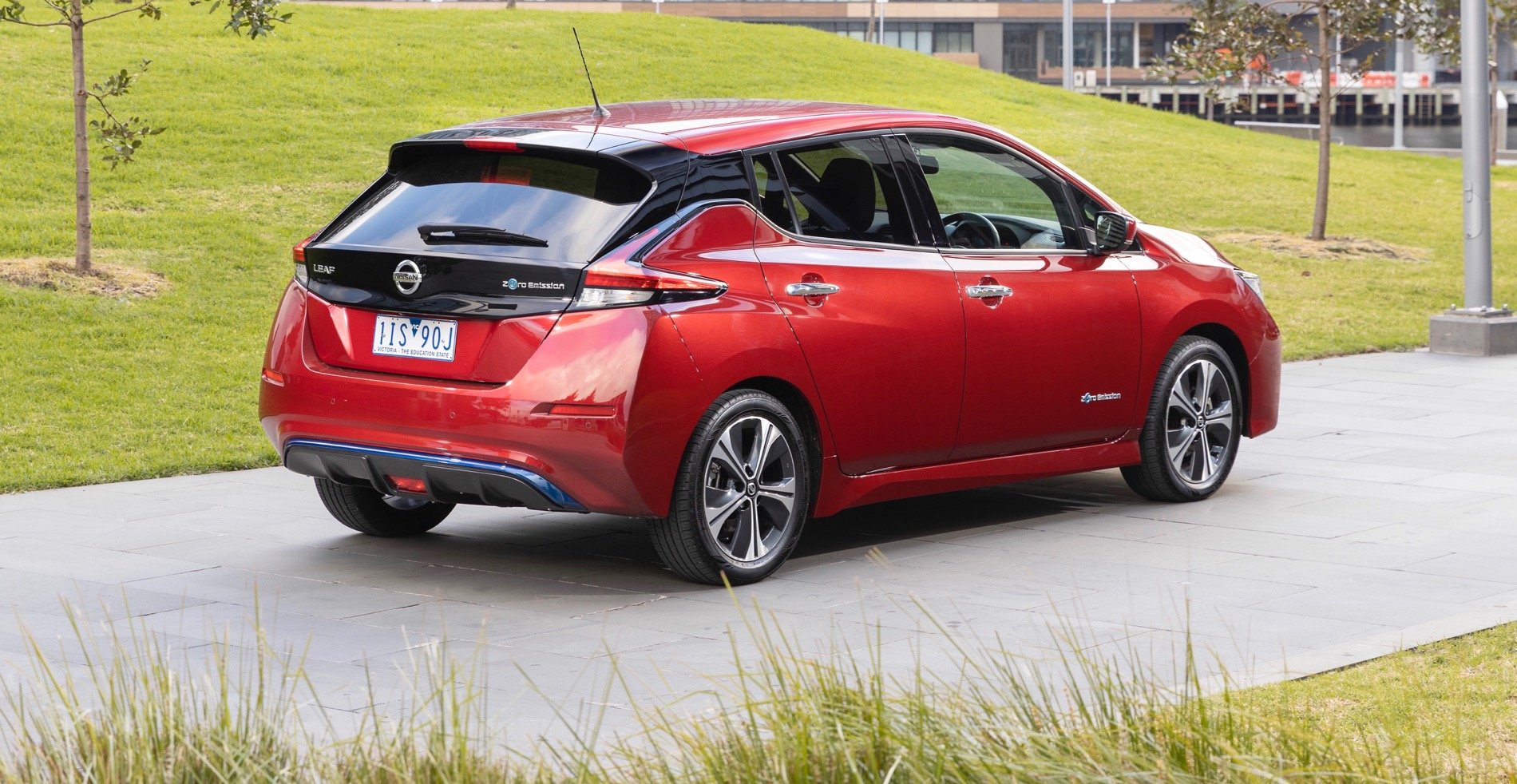
At almost the same size dimensionally – the Leaf 30mm longer, the Mazda 7mm wider – the Leaf has a more than 250kg deficit to deal with. It exposes underwhelming ride compliance that’s underpinned by an undercooked MacPherson front and torsion beam rear suspension setup. It feels unremarkable around town and underdamped over bumps when travelling with pace on country roads – not that you’d do much of that as the 40kWh battery’s 270km driving range evaporates quickly when cruising at 100km/h. And dynamically, it’s no challenger to any of the top three hatchbacks with a petrol motor. Curiously, it also suffers from a lack of agility at modest speeds, with a turning circle as big as that of the Toyota Rav4 SUV, though to its credit over the first-gen car, the steering feels direct and nicely connected to the wheels on turn-in.
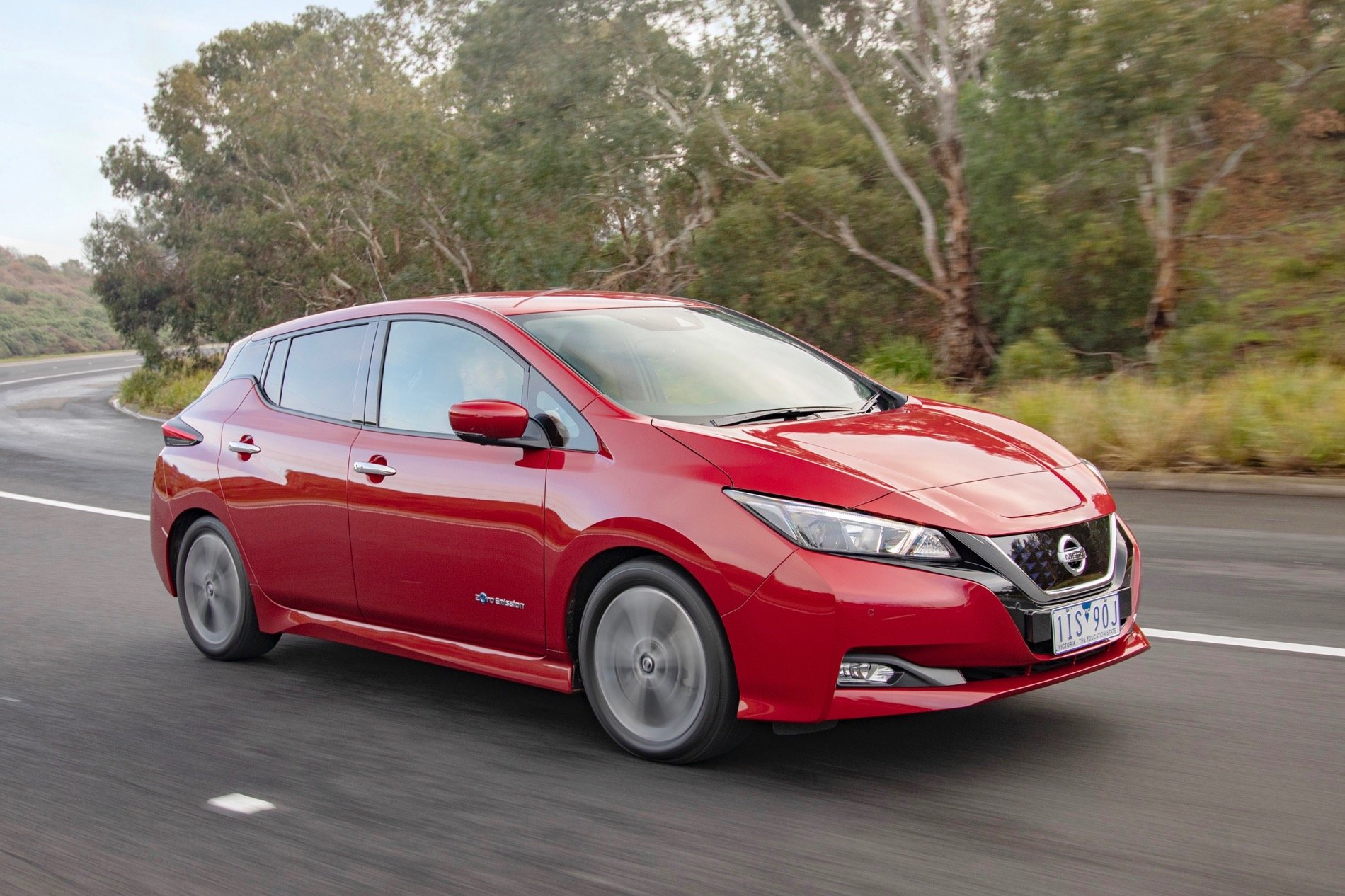
However, if you’re an early adopter or an anti-carbon warrior, it is one of the most accomplished emissions free (at the tailpipe) cars on the market for its price. The synchronous electric motor produces 110kW and 320Nm of torque, which gives it a surge of grunt to about 80km/h before slacking off to conserve energy. That whack of torque from 0rpm is appreciably massive and spins the front wheels too readily, shod as they are with eco-focused 215/50 R17 Dunlop Enasave EC300 rubber, but Eco mode (which should surely be its default state) dulls throttle response considerably. Even better is the e-Pedal button, that lets you drive almost brake-pedal free.
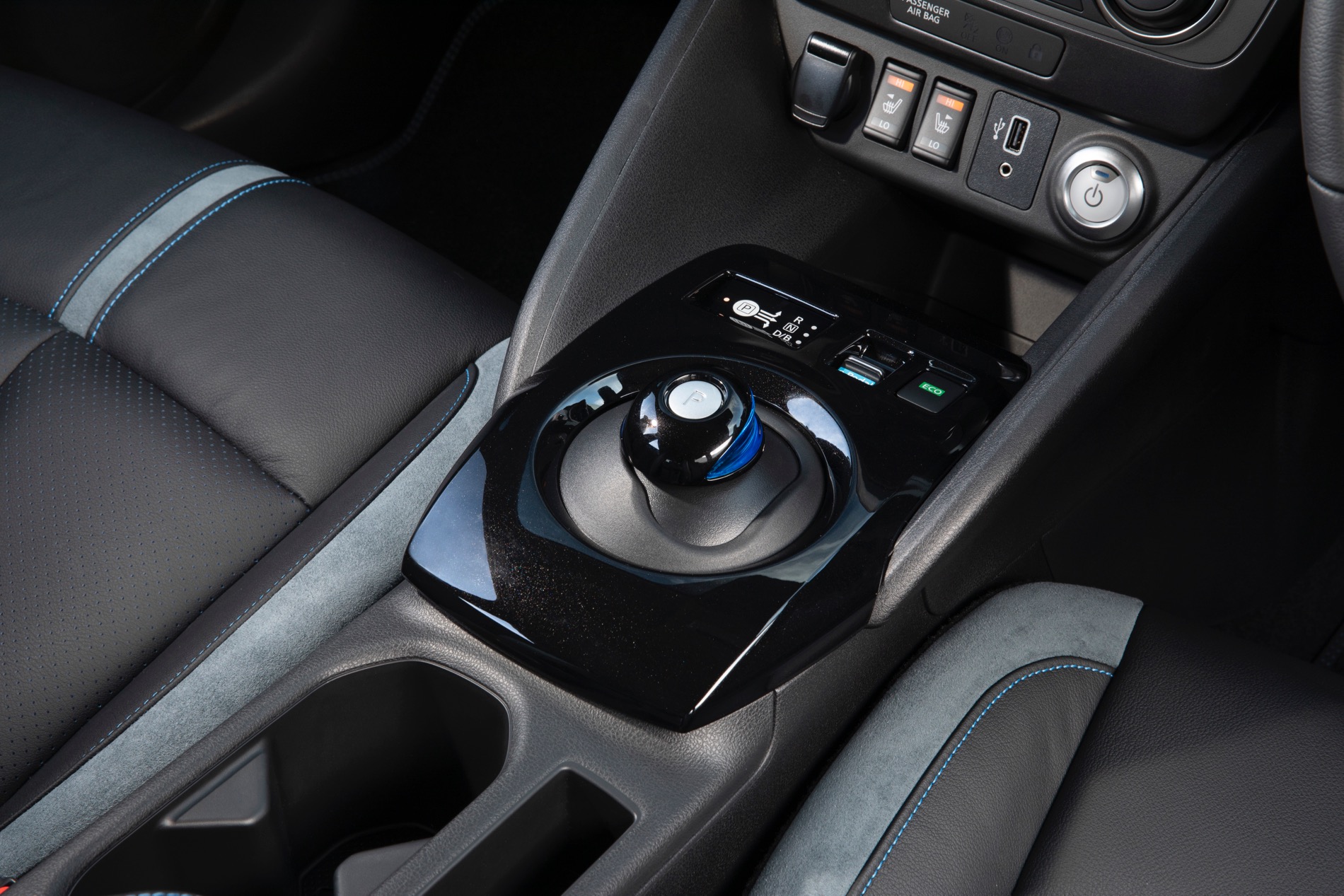
When selected, regenerative braking engages the instant you lift off throttle. It extends the driving range by converting momentum off throttle into energy the battery can store, but it takes some getting used to. Around town is where it works best, as you hardly need to shuffle between pedals in traffic, but on a country road, it can be a bit bitey when you just want to coast.
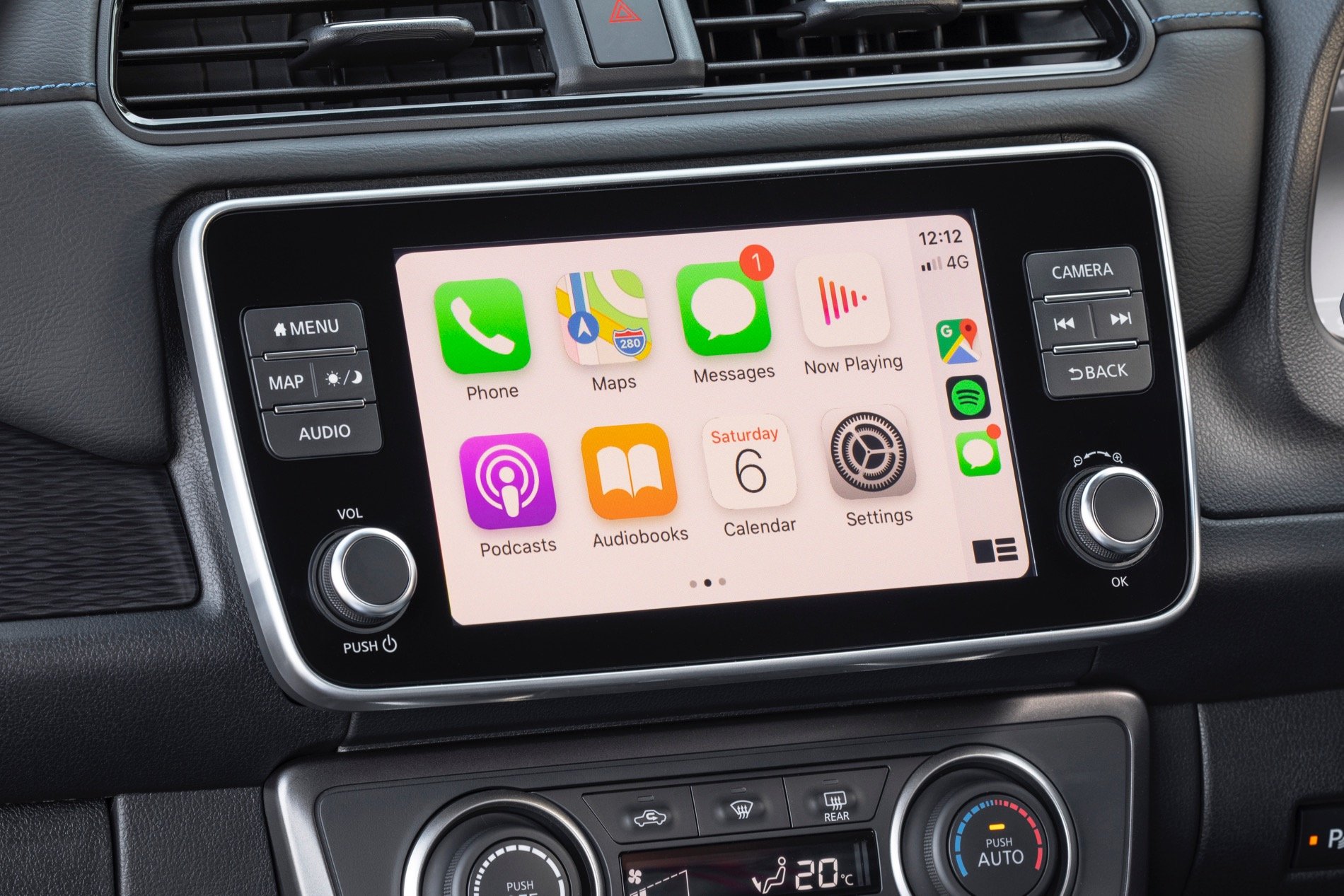
So the new Leaf doesn’t shape up as a great tourer, but it is a tidy town car. The interior is spacious for its size and it’s well equipped. We were particularly keen to try the infotainment system as we’d only driven the Leaf in overseas specification. The local Leaf, which comes in just one trim grade, gets an 8.0-inch infotainment screen that runs Apple CarPlay and Android Auto. Importantly, it is much easier to use than anything found in a Nissan before it. While that’s not saying much, this new unit is clear, crisp and the GPS is accurate. Unfortunately, we had issues pairing an iPhone with iOS 12 to CarPlay. It would load but drop out intermittently.
There’s a second screen – 7.0-inches wide on the diagonal – arranged in landscape orientation in within the main instrument binnacle. It isn’t integrated in the swish style of a Volvo or BMW, nor does it have the same calibre of graphics, but it does provide easy access to details on driving range, battery capacity and charging status.
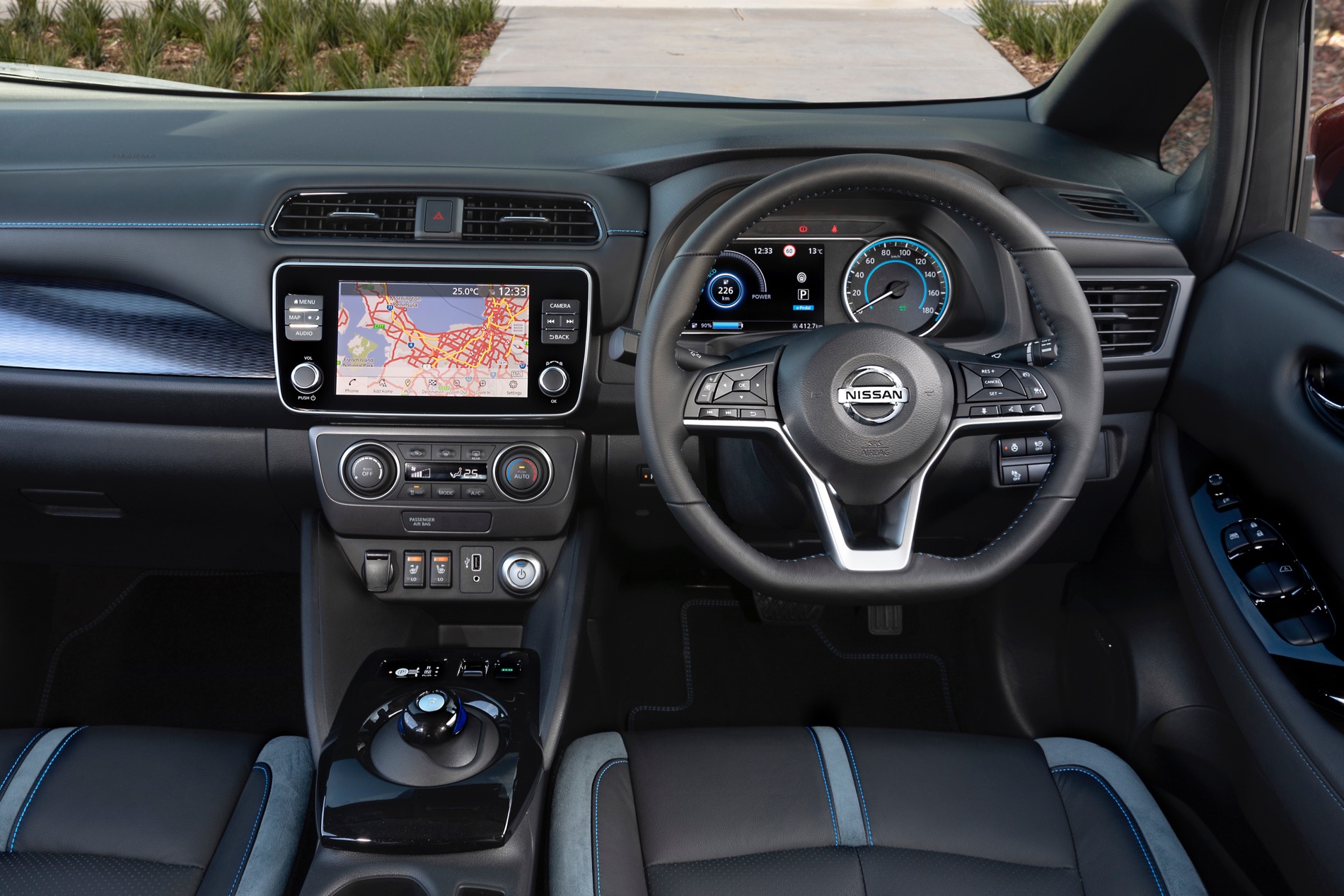
Despite a roomy cabin, ergonomics aren’t perfect by any stretch. The steering column only adjusts for tilt and the seats don’t have much adjustment to find a good driving position. They’re also a touch narrow and firm and the surroundings are made up with obvious parts-bin elements on the dash and plenty of boring plastic to fill the gaps. With the batteries located under a slightly propped-up rear-seat, foot space is pinched in the back, but the boot is mostly unaffected and measures 405L.
The battery pack remains small at 40kW, but in reality, for urban drivers, the 270km range is probably enough.
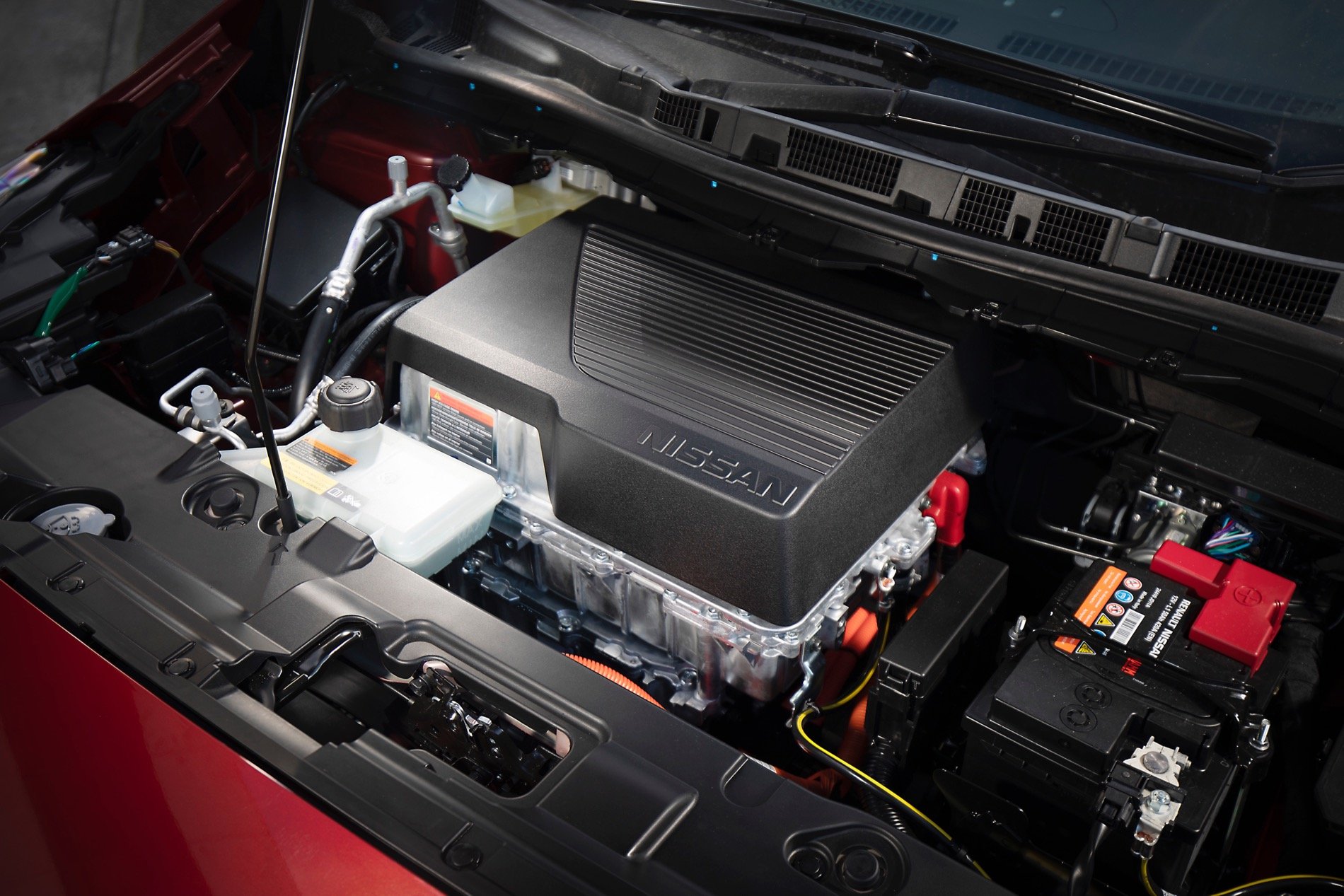
At an average 40km commute every day, you might want to charge it up once during the week for a run to the shops if you just plan on staying local. That can be achieved either through the included Mode 3 AC cable that gives you a full charge from empty in 7.4 hours via your own 32amp wallbox, the Mode 2 AC cable that can be plugged into a normal wall socket (but takes 24 hours to top up the battery), or the latest Mode 4 CHAdeMO DC plug. That’s the type of charging system found at quick-charge stations on the highway and it takes just 60 minutes to energise the battery to 80 percent capacity – the final 20 percent takes longer because fast-charging a lithium battery to 100 percent will harm the cells.
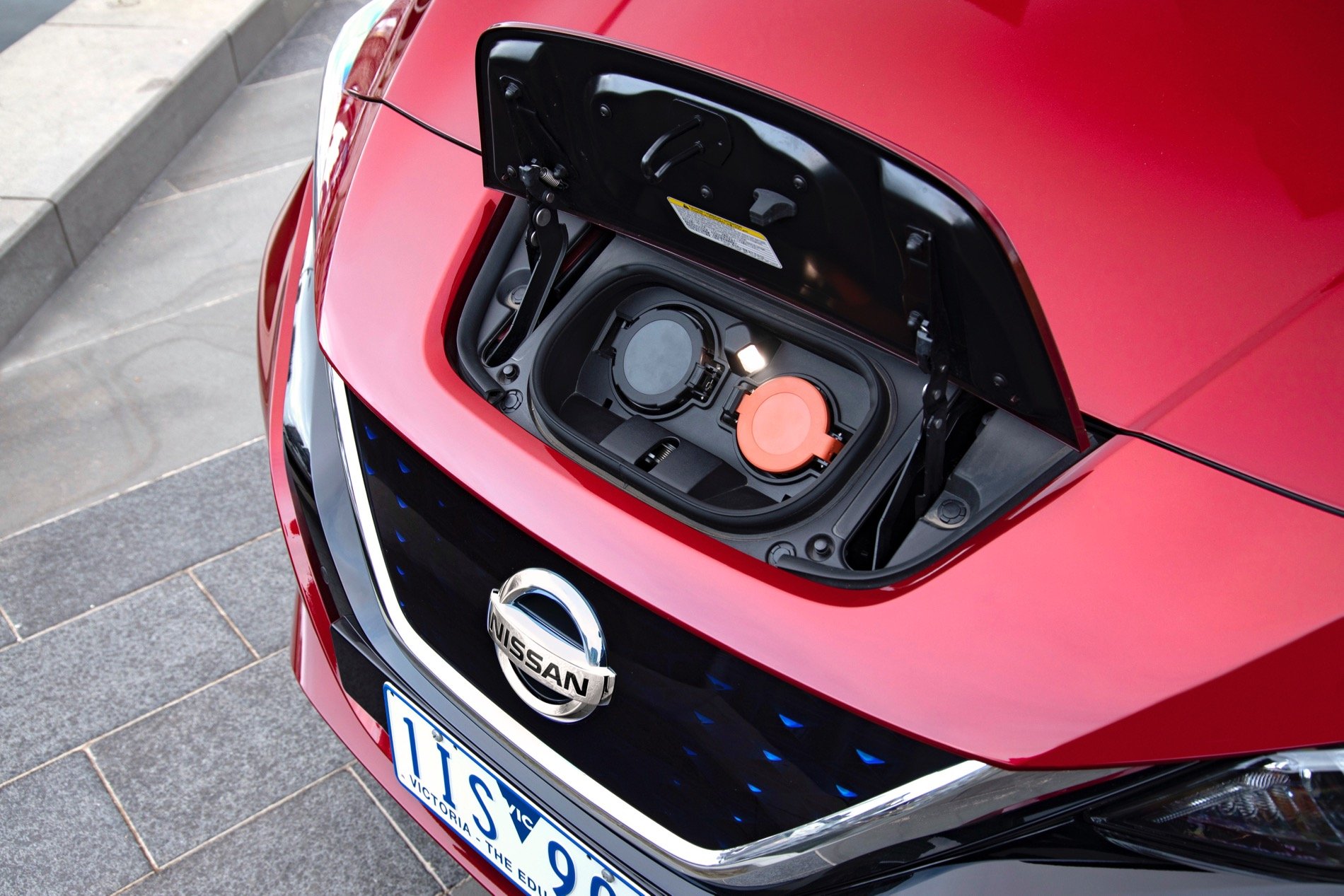
But it’s not just an energy sucker, as the Nissan Leaf is almost unique in that it has a bi-directional inverter. Though it is yet to be approved and regulated for use in Australia, all second-generation Leafs sold here come with the ability to act as a power generator.
Just imagine for a minute if your workplace offered free car charging during the day. On face value, it seems that you’d be nuts not to charge up at work on the boss’ dime and then plug the house into the car when you’re home for up to 40kW of free power at a maximum draw rate of up to 10kW/h.
In theory that’s good enough to power all the normal appliances, lights and an electric panel heater uninterrupted for four hours. You could even charge the car during off-peak and use it during peak. The thing is, there is an efficiency loss when charging and discharging, so you actually don’t have that many kilowatts to play with. So it might be more hassle than it’s worth and we’re also told the ‘vehicle-to-grid’ connection at the house could cost up to $13,000.
There’s also the potential problem of constant charging and discharging that the battery might degrade prematurely, but Nissan says even if you were to do this, they’d still honour the eight-year battery warranty. That’s pretty fantastic.
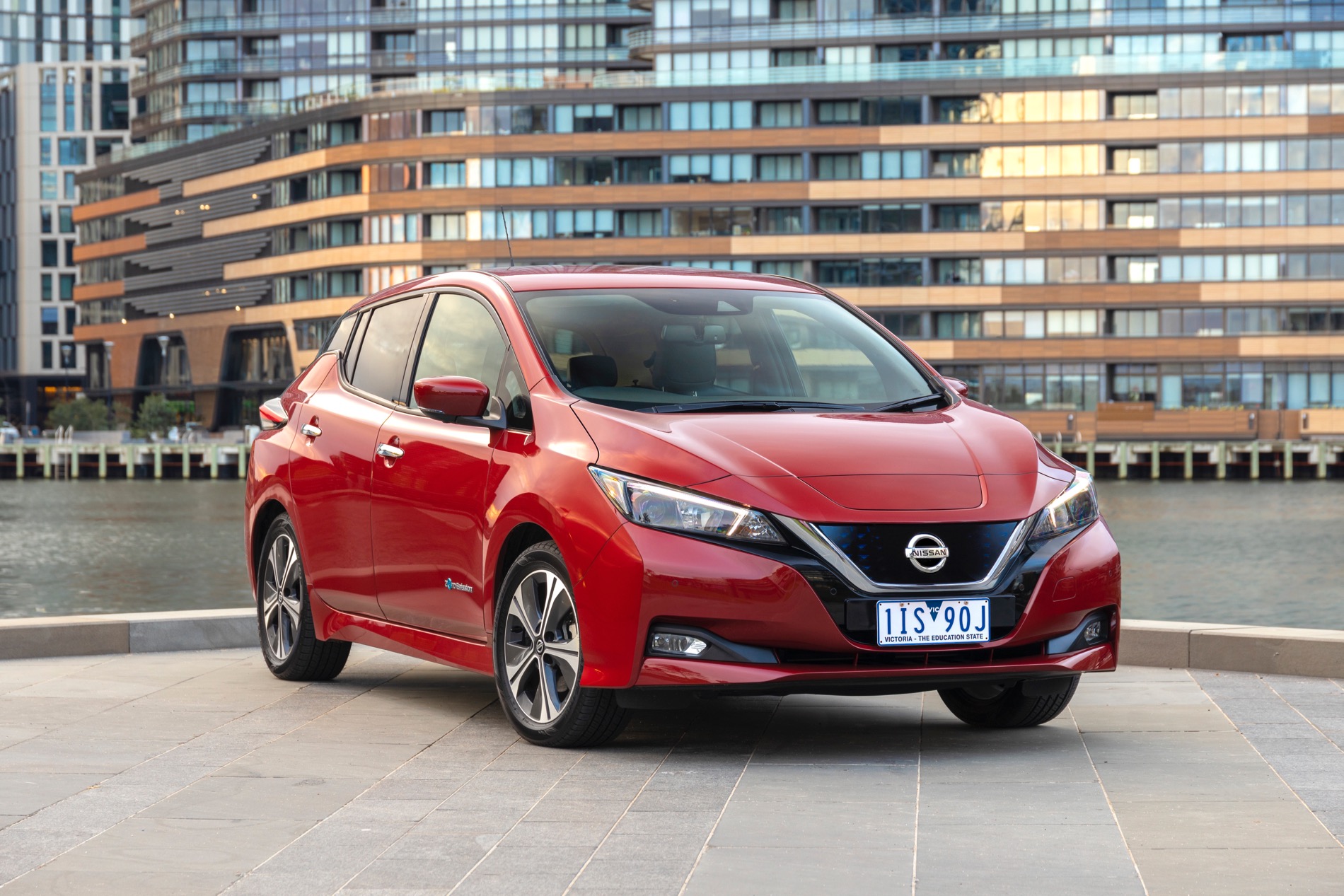
So what does all of this mean for the curious EV shopper? Well, the Leaf is a good piece of technology and an average family hatch. It’s not on par with a conventional car you’d pay about $15,000 less for, and that sum would cover you for about 80,000km in a typical family hatch that averages around 7L/100km.
But if the thought of spilling $15k worth of fossil into a car over the years hurts the environmentally-conscious part of the brain too much, the Nissan Leaf is one of the better – if still one of the few – EVs at this price point.
NISSAN LEAF VS RIVALS
Hyundai Ioniq, Renault Zoe, Hyundai Kona electric
NISSAN LEAF PRICE AND SPECS AUSTRALIA
- Model: Nissan Leaf
- Powertrain: AC synchronous motor 40kWh battery
- Max power: 110kW
- Max torque: 320Nm @ 0rpm
- Transmission: single-speed reduction gear
- Price: from $49,990
- On sale: Now
This year signifies the 30th anniversary of Mazda’s iconic sports car, and what better way to celebrate that milestone than to highlight all the things that make it unique.
Now, here are 10 things you didn’t know about the ND Mazda MX-5 roadster:
1. The front wings have been designed to replicate the look of the original pop-up headlight design, at least from the driver’s seat, so that you can see the front of the car.
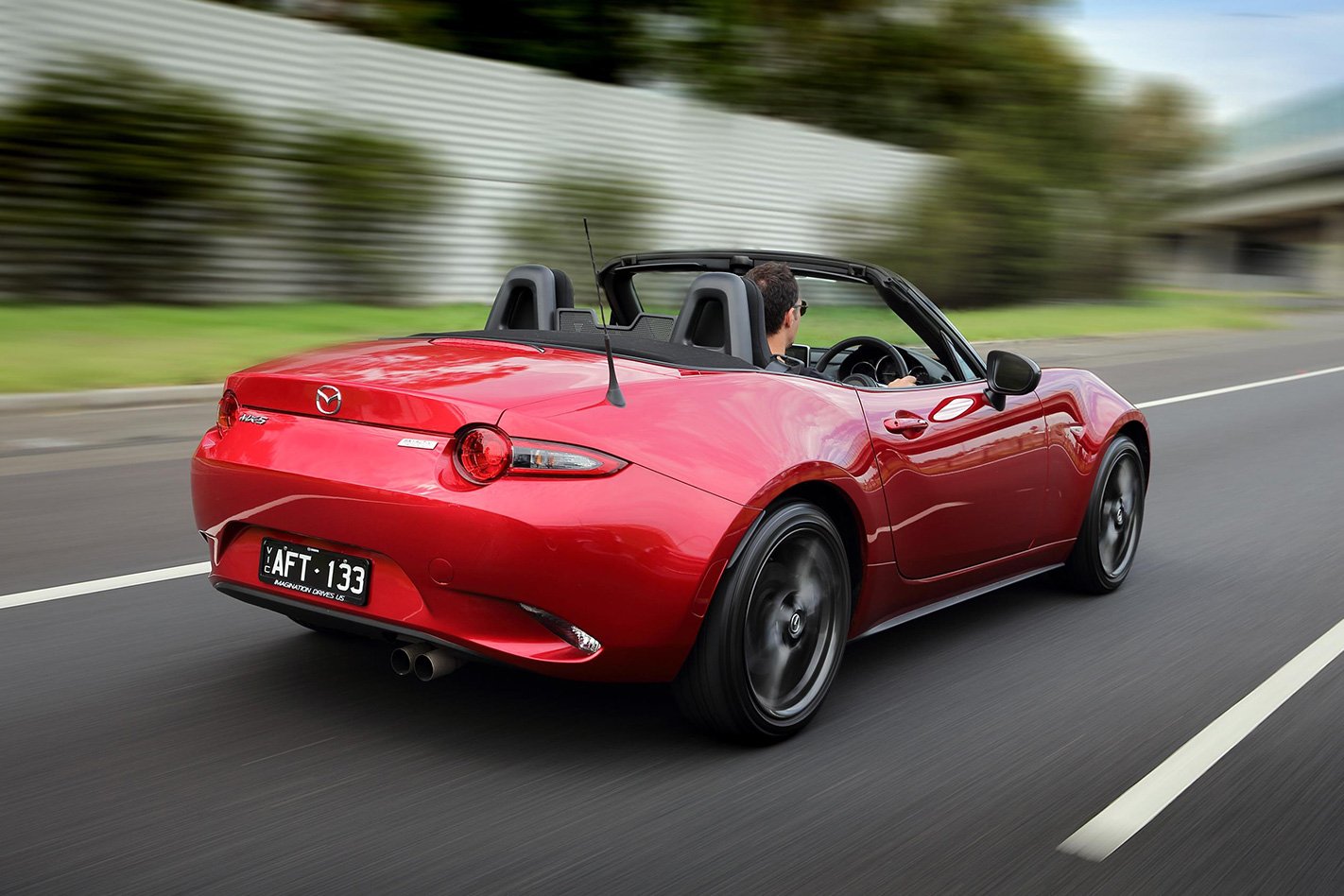
2. From an “ant’s eye” view, the front of the car smiles at you.
3. The original Mazda MX-5 concept used a 1.6-litre engine from the compact Mazda 323, a gearbox from the mid-sized 626 and the diff from an RX-7 sports coupe.
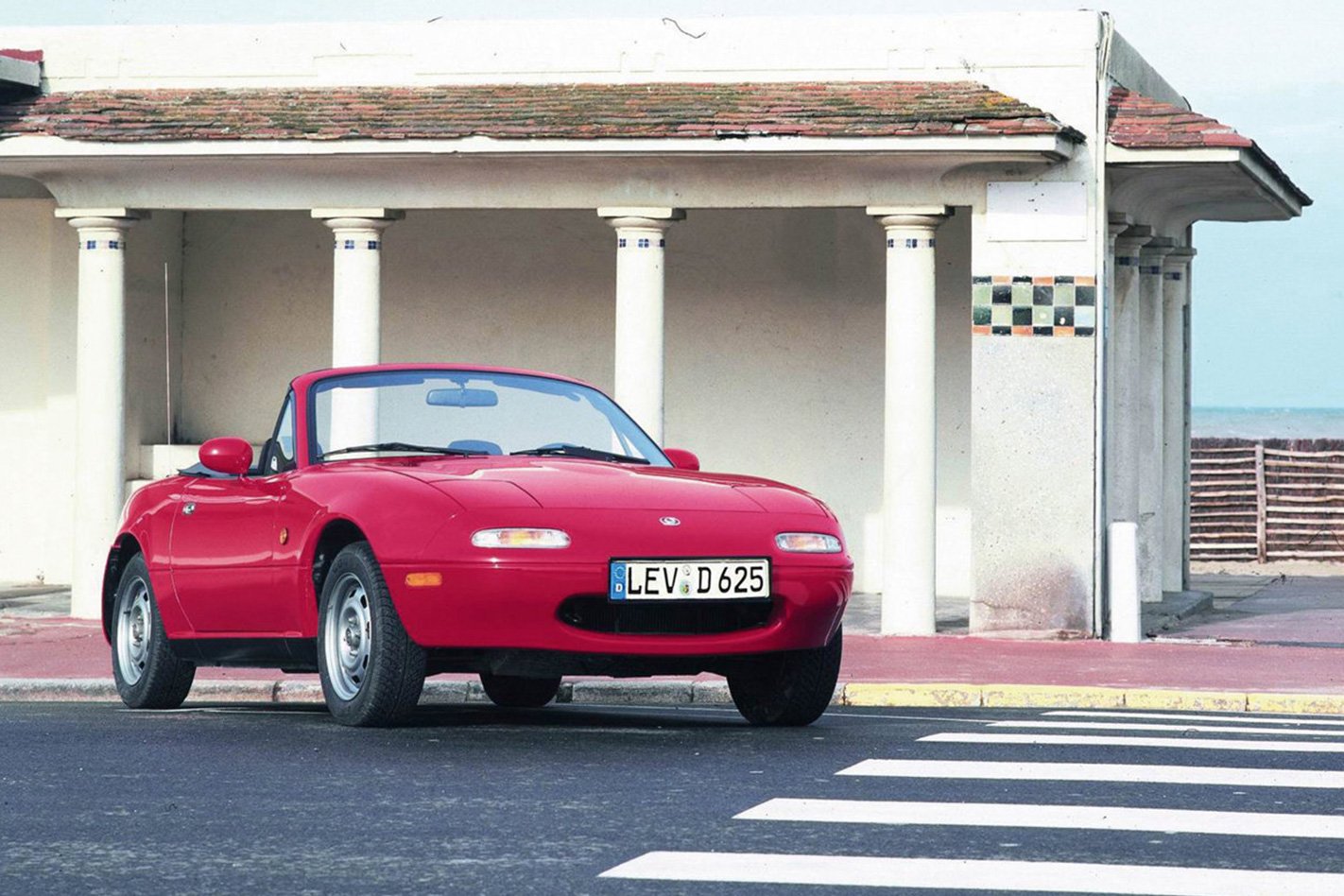
4. The side indicator is the one part shared on the first three MX-5 generations: all NA, NB and NC models used it. The new ND shares nothing with its forebears other than “maybe a few bolts”.
5. The MX-5 is the only Skyactiv car in the Mazda range not to feature stop-start technology, and you sure don’t miss it when it’s gone.
6. MX-5 guru Nobuhiro Yamamoto actually helped out Toyota 86 chief engineer Tetsuya Tada, because he thought it was a good thing for competing sports car makers to push each other to greater heights.
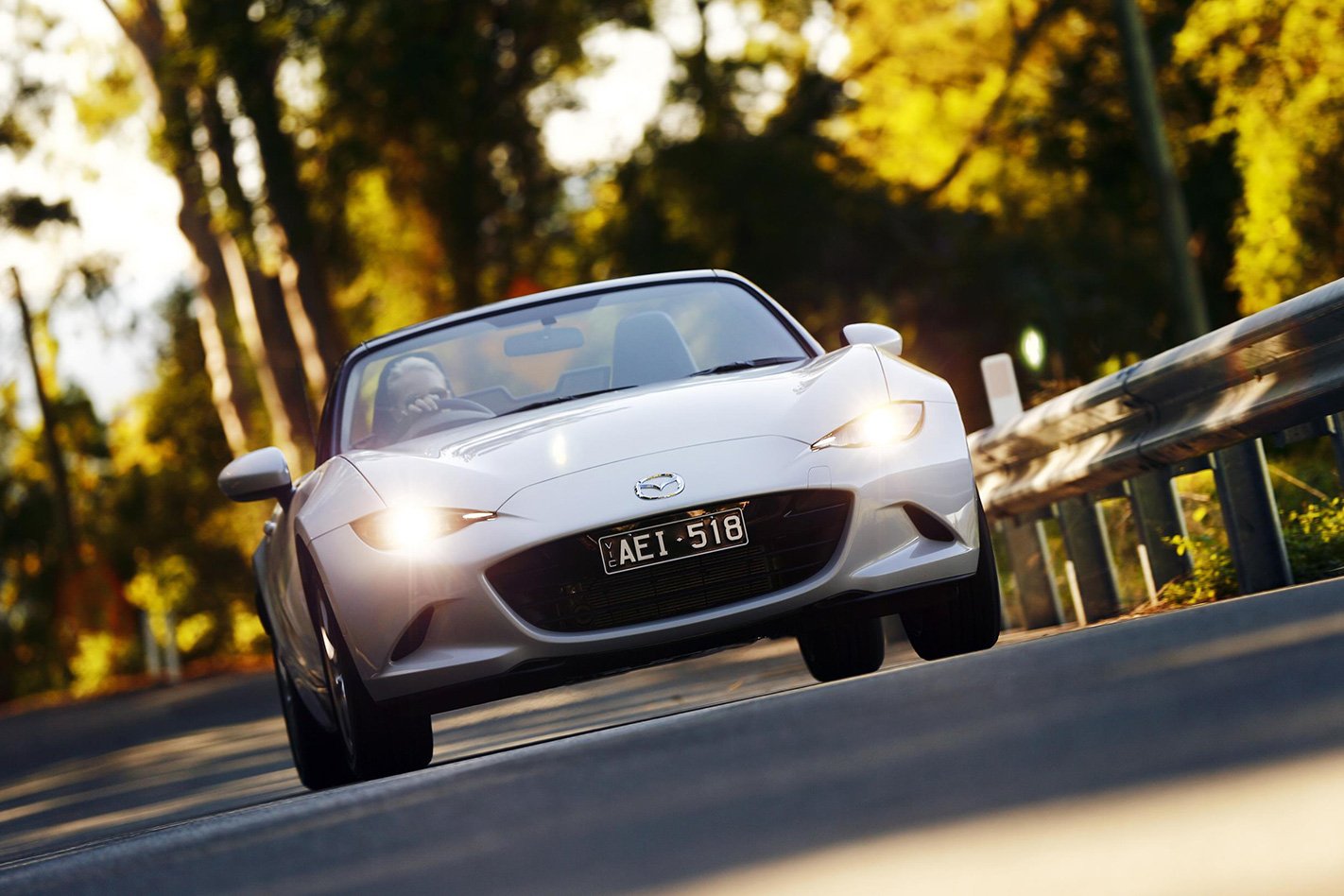
7. Our MX-5s use the European steering rather than the sludgy US set-up, because American roads are boring, straight and soulless. Mainly.
8. We should have had the current MX-5 in 2012, because Mazda was working on it from 2007, but the whole project was put on hold for three years because of the GFC. It was assumed people would be too poor and depressed to buy sports cars.
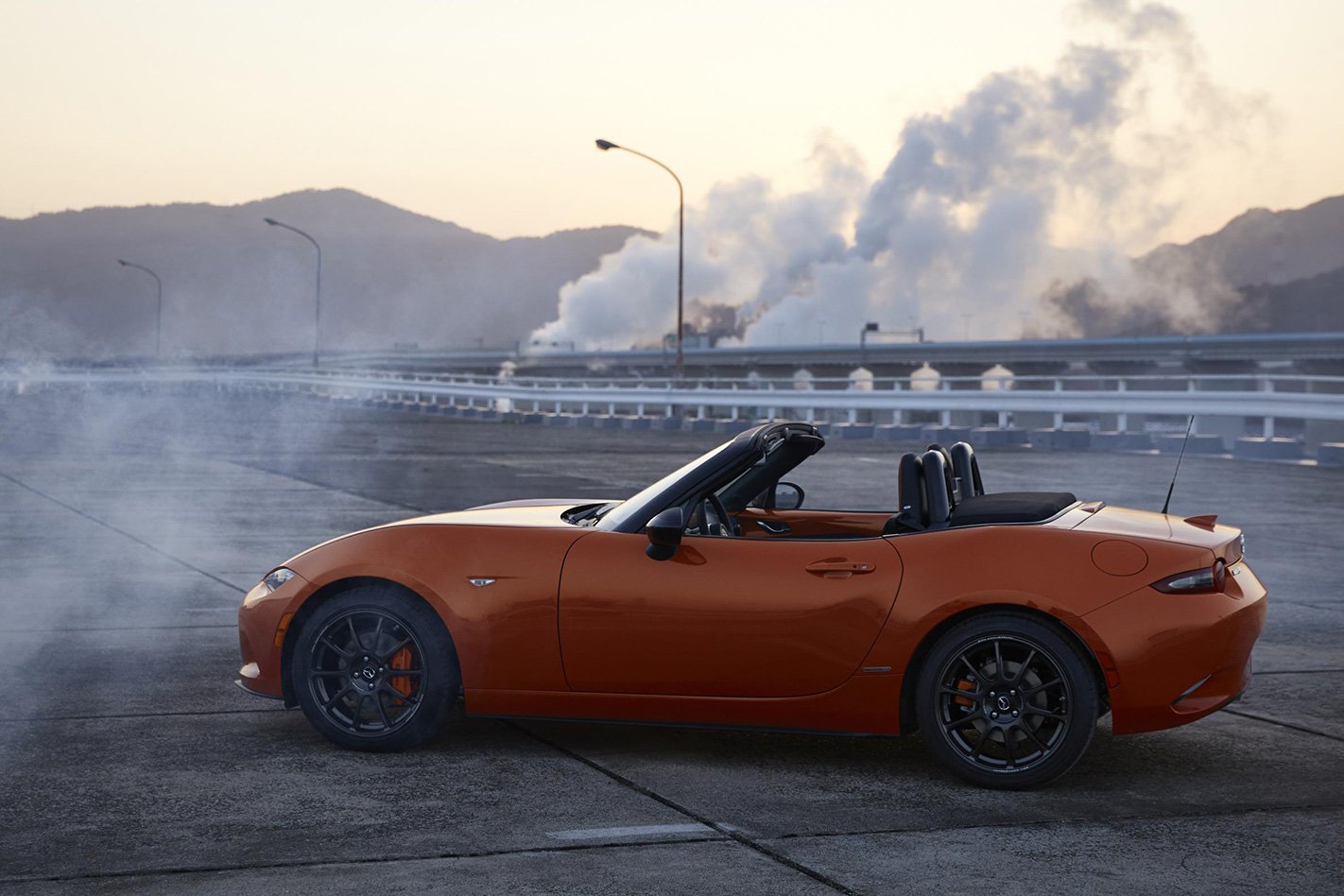
9. The ND MX-5’s boot release is cleverly hidden just above the top of the number plate recess, instead of between the seats where it’s been for 25 years. The change was made to save weight – that’s some gram theory – and for aesthetic reasons.
10. The glovebox has vanished in the ND to provide more knee room for passengers, with a dinky storage cubby now behind and between the seats instead.
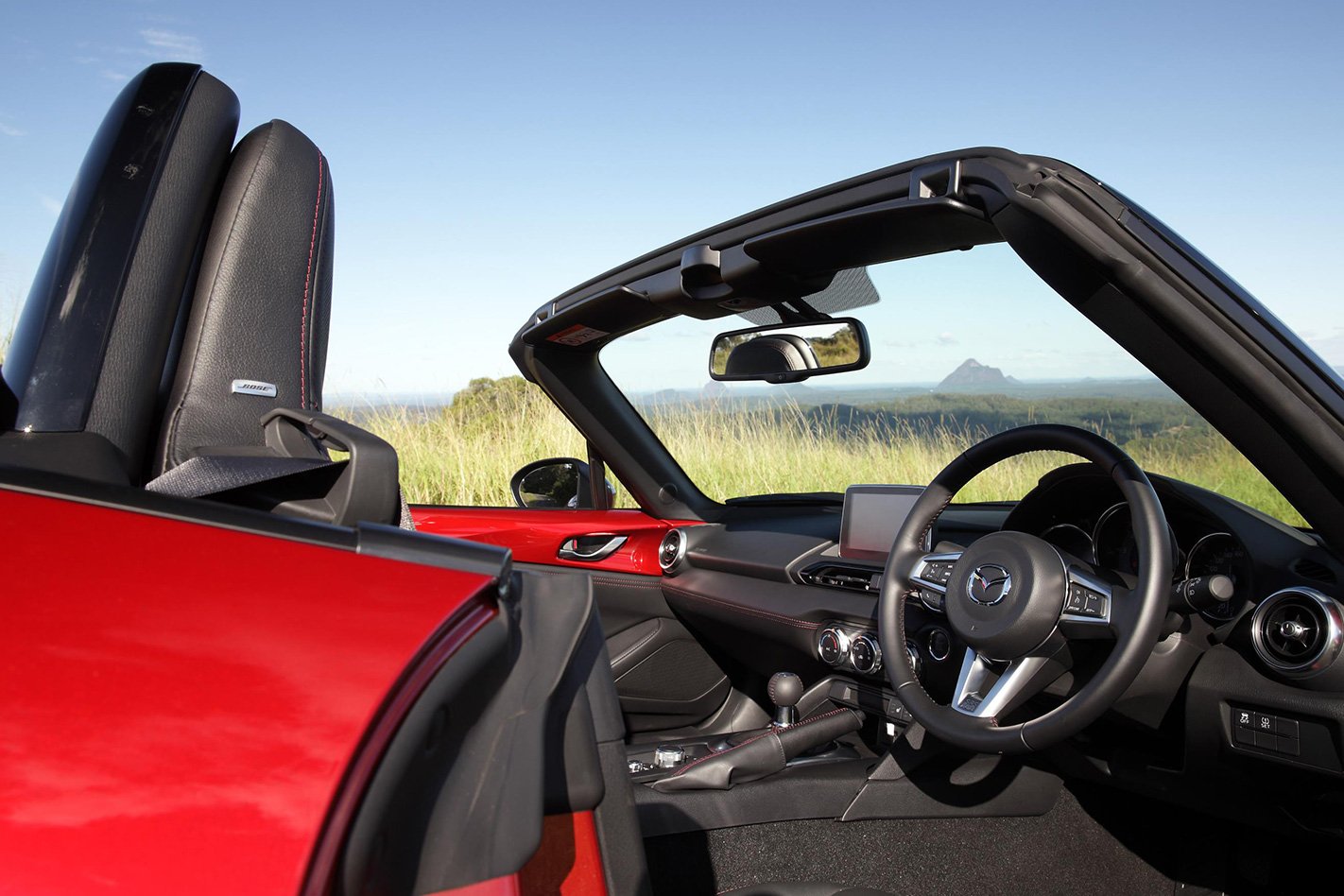
And, because we like to under-promise and over-deliver, here’s one more:
11. While it helps to share costs, Mazda would have gone ahead with the ND MX-5 whether or not Fiat Chrysler Automobiles had come on board with the Fiat 124 Spider joint venture.
For Mazda MX-5 goodness, click through the gallery above
In celebration of its 100th anniversary, Bentley has given itself a big and shiny present wrapped in exotic-sounding materials in the form of the Bentley EXP 100 GT concept.
With the theme of envisioning a luxury grand tourer for 2035, it comes as no surprise that the concept behind the EXP 100 GT features the adoption of an all-electric drivetrain and embraces the use of artificial intelligence.
Thrust for the EXP 100 GT is derived from four electric motors that would deliver a 1500Nm surge, propelling the 5.8-metre long concept to 0-100km/h in 2.5sec, with a top whack of 300km/h, and able to return a range of 700km.
Bentley claims the EXP 100 GT is capable of these performance figures thanks to the car’s construction of aluminium of carbon-fibre that lends it a weight figure of 1900kg.
A feather-weight by Bentley standards considering its lightest current model – the Bentley Continental GT V8 – already breaks the scales at 2165kg.
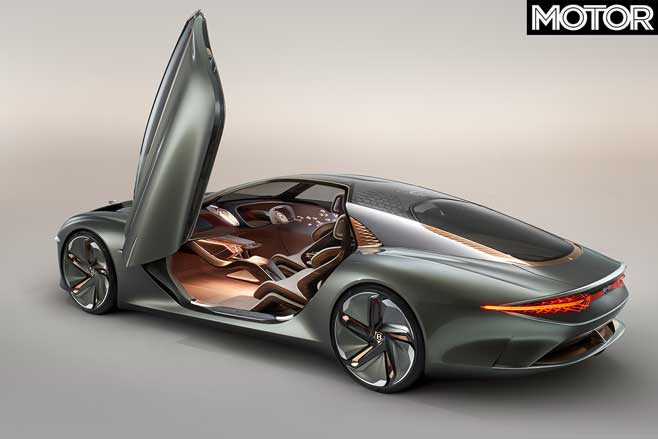
Speaking of construction, headlining the EXP 100 GT is its use of ‘sustainable’ materials, such as the exterior paint pigment being derived from rice husk ash, its seats wrapped in a leather-like textile derived from wine-making, and wooden trim made from 5000-year old preserved trees dredged up from bogs.
Though autonomous technology features heavily in the EXP 100 GT, the concept still has an eye on delivering some driving thrills with features such as torque vectoring, Active Aero Wheels that dynamically adjust itself for performance, and “Intelligent Pirelli Tyres” that adapts its contact patches.
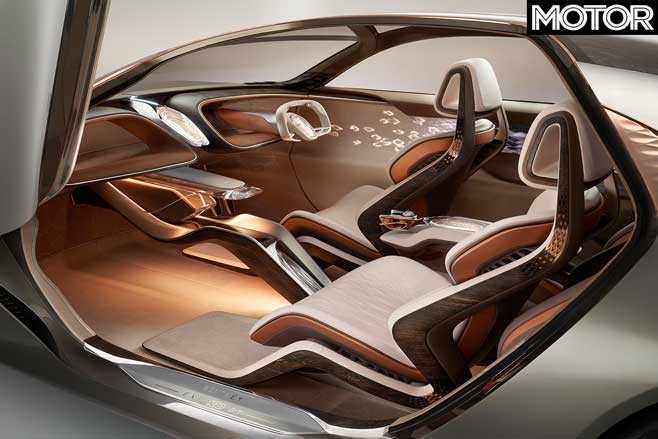
While the EXP 100 GT was envisioned for 2035, the year futurists are predicting when the auto industry will experience a convergence of the widespread adoption of electric drivetrain and autonomous technologies, it is also the year that marks a 100 years since W.O. Bentley left his eponymous company, which was by then owned by Rolls-Royce and began its decline into a subordinate role.
A neat but certainly unintended allegory for the driver’s role in cars, perhaps?
Say you’re into fast cars, but you’re also the target of nefarious individuals who want to see you sleeping with the fishes. The AddArmor APR Audi RS7 might just be for you.
Until relatively recently, armouring a sportscar meant losing the ‘sports’ part. Cars like the armoured Peugeot 205 GTi once owned by French billionaire Bernard Arnault were interesting but weighed hundreds of kilograms more than they should.
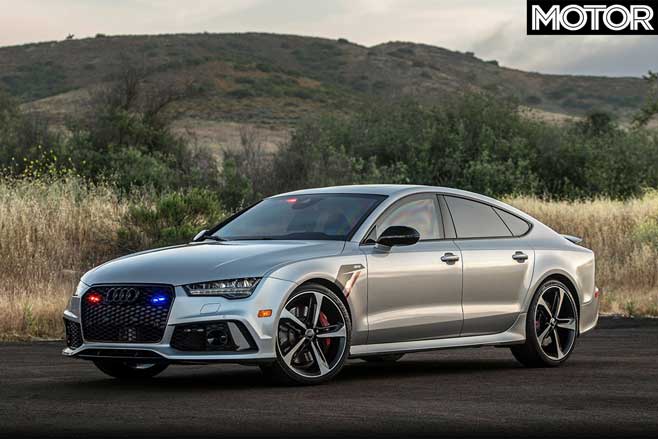
But this RS7, with an APR-tuned 4.0-litre V8 making 567kW and 1085Nm, weighs only 91kg more than standard. Given the RS7 is a 1930kg car as stock, that’s less than a 5 per cent weight increase.
As such, AddArmor claims the car can hit 97km/h (60mph) in just 2.9 seconds, which is only half a tenth off the claimed 0-100km/h run of a Porsche 991.2 911 GT2 RS.
AddArmor president Jeff Engen says advances in armouring mean options are no longer limited to limos and SUVs for armoured cars.
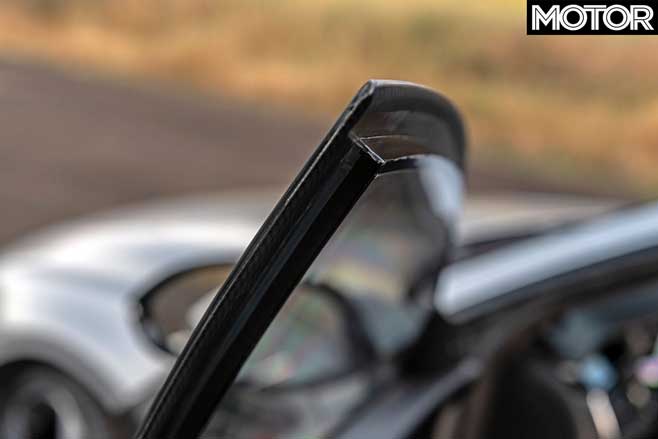
“With the new AddArmor APR RS7, we wanted to demonstrate how today’s armouring technology allows drivers to pick from a wide range of cars not normally associated with armoured vehicles. The total armouring weight of the AddArmor APR RS7 is no more than 200 pounds,” says Engen.
“That small amount of weight allows for exotic sports cars and even electric vehicles to be nicely armoured without compromising their performance or range.
“The key difference is AddArmor uses a polycarbonate composite instead of heavy steel plating. The weave offers a much stronger, lighter package that simultaneously allows the car to be much faster.”
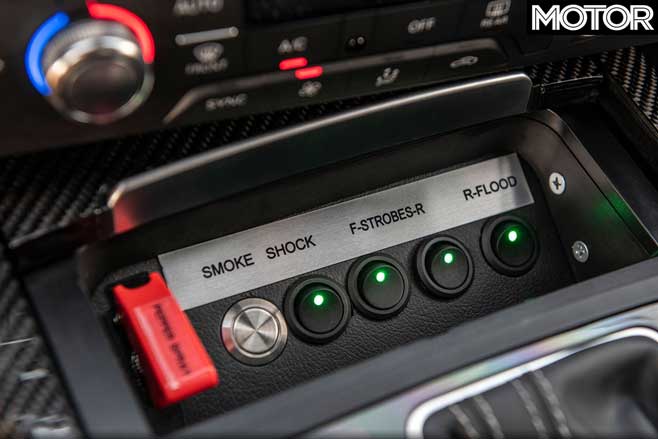
The armouring in the AddArmor APR RS7 is designed to European B4-level, which is able to stop a shot from a .44 Magnum, or something like a shotgun.
Of course, the thought arises that maybe it’d be possible to drive fast enough to outrun a bullet, but given bullets from sidearms can travel at speeds upwards of 1000km/h, the APR-tuned RS7’s 325km/h top speed is about 675km/h too slow.
Introduction
Volkswagen certainly got its money’s worth out of the previous generation Touareg large SUV, running it for almost a decade before replacing it.
The wait for the third-generation Touareg has been worth it, though, as VW cherrypicked some of the best tech from across its collection of brands and blended it with a brace of new gear that helps to reposition the Touareg at the top of the company’s tree.
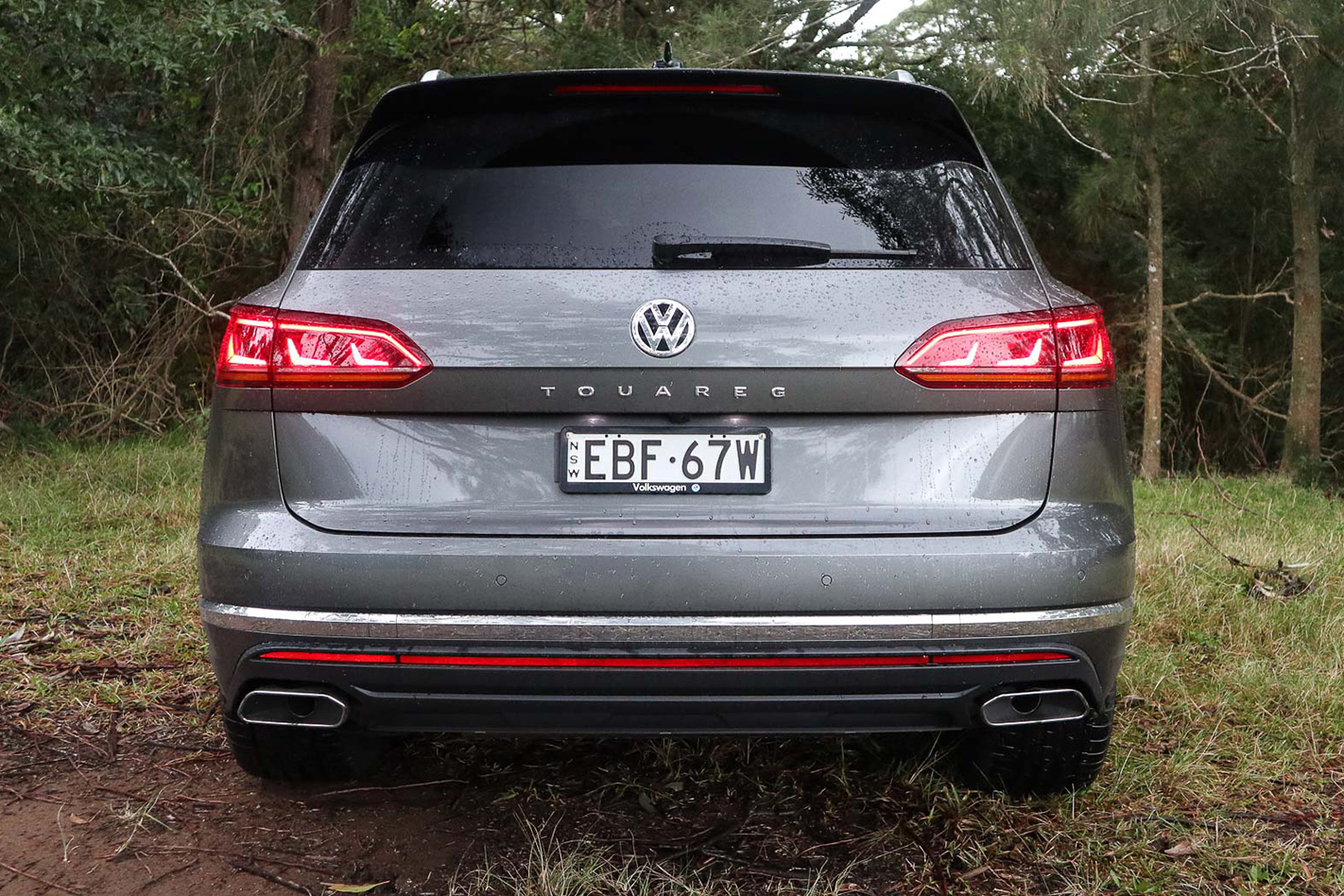
However, VW is also taking a big bet on the Touareg in terms of its configuration by offering it as a straight five-seater, and there are a couple of small issues we reckon need to be sorted out.
Style
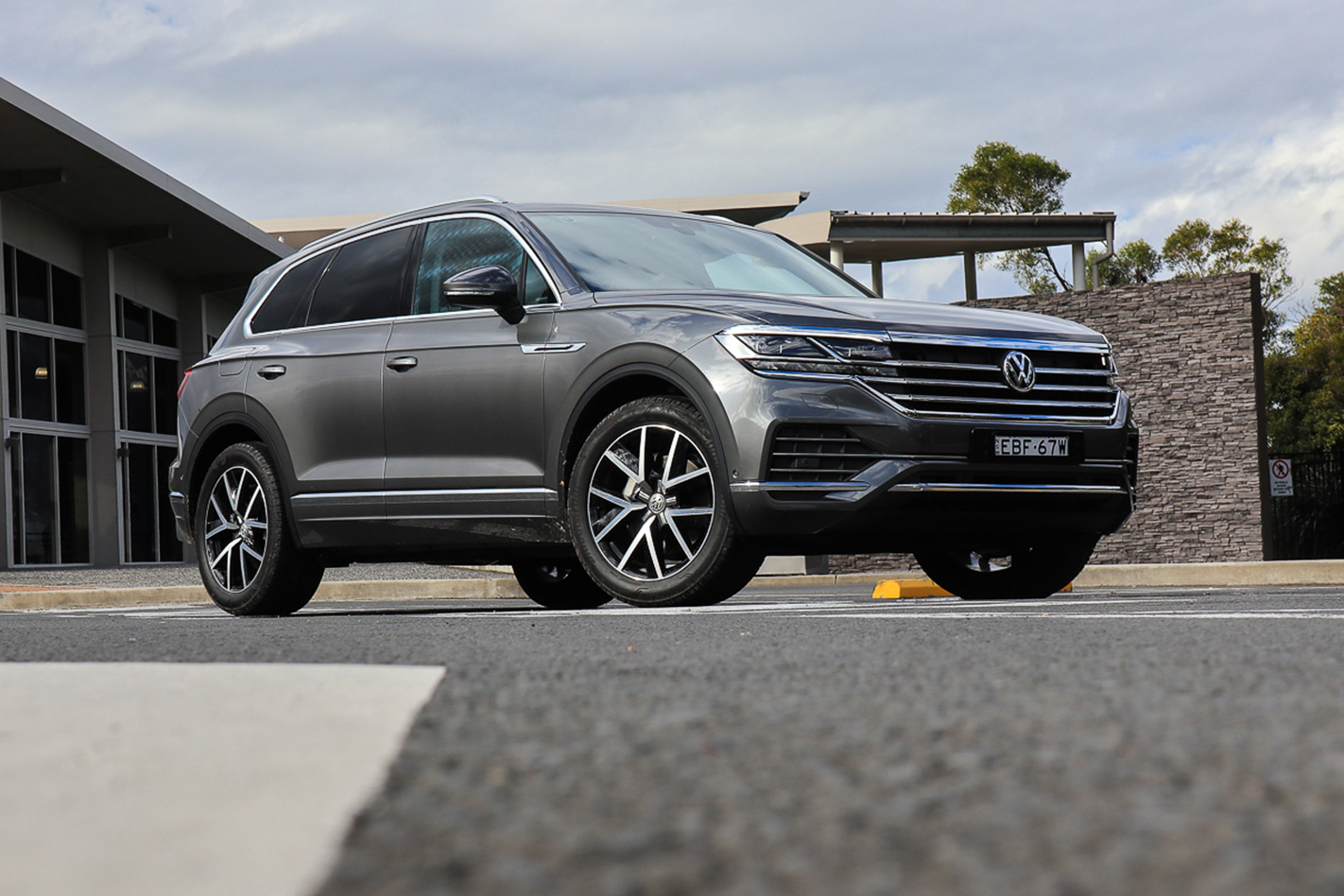
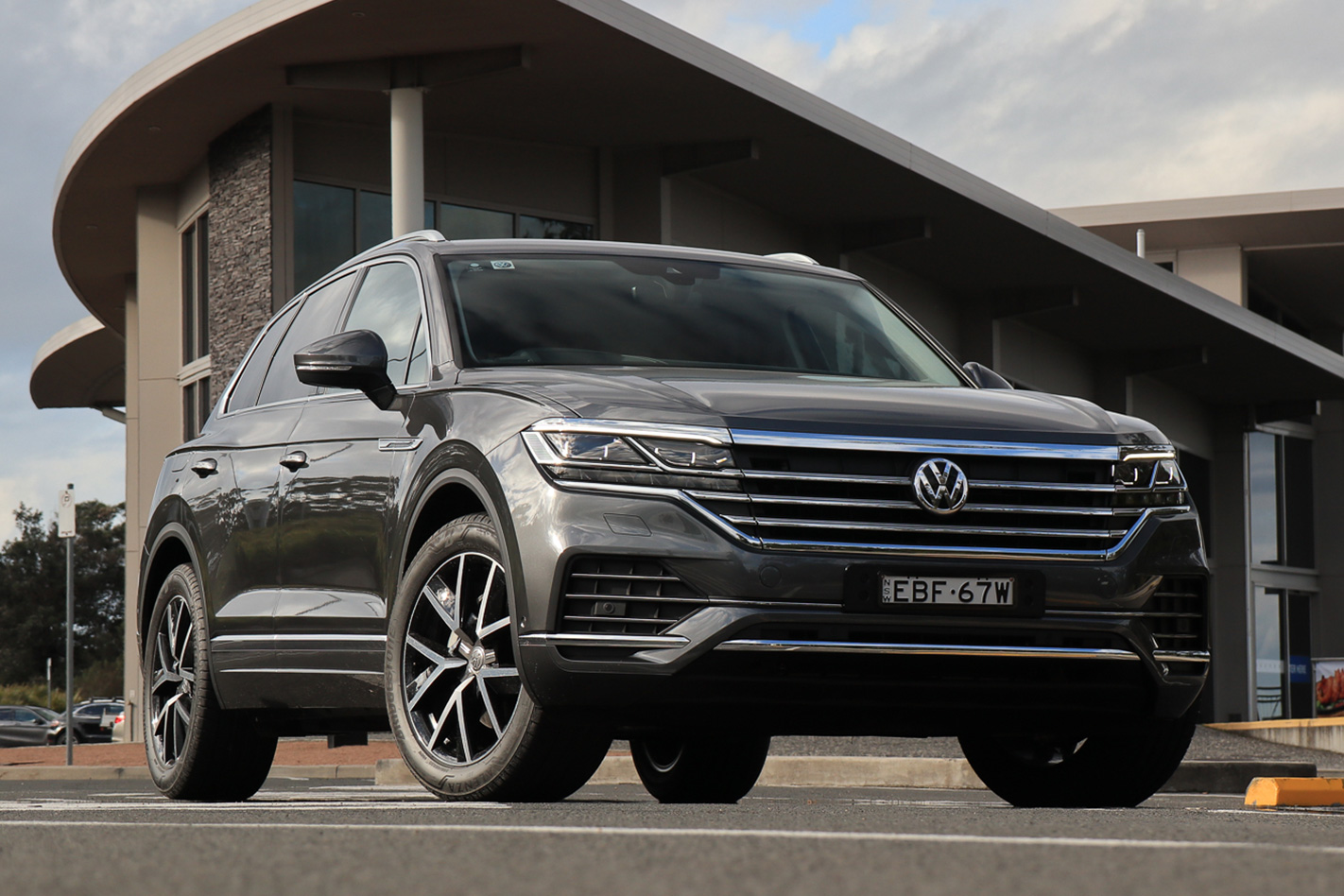
VW has taken the familiar silhouette of a large five-door, five-seat SUV and imbued it with real presence. The front end, in particular, makes a brash statement, with the wide-slat grille running the complete width and most of the height of the front fascia, with the subdued LED headlights and daytime lamps – located over the headlights – almost reduced to bit-player status.
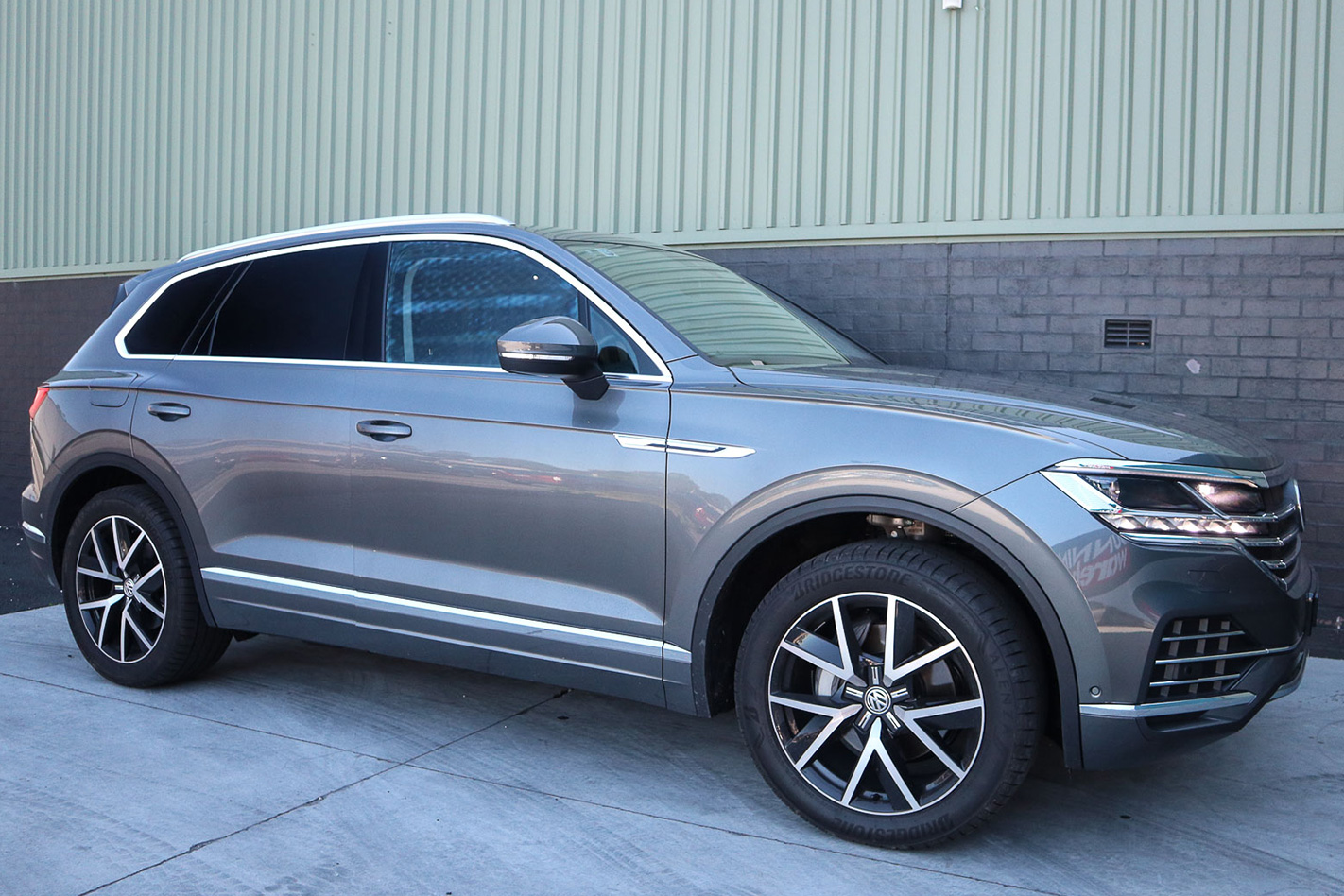
The chrome theme runs down the side of the Touareg, around the glasshouse and across the more conventional rear end, which also uses LED taillights with dynamic turn indicators to create a modern light signature.
VW hasn’t forgotten the Touareg’s USP, though, providing short overhangs front and rear for decent off-road clearance.
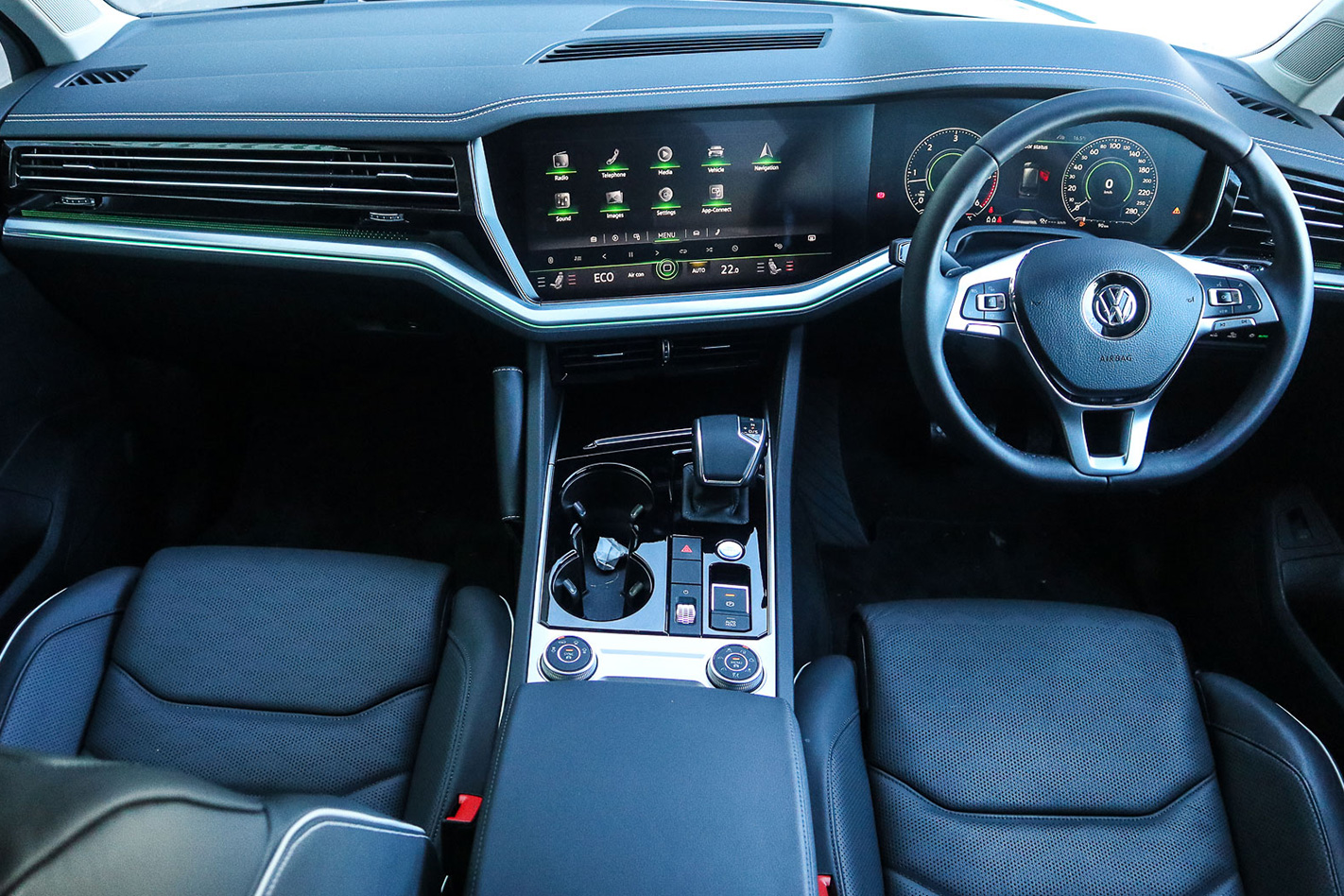
Inside, a very contemporary take on the modern multimedia display and restrained interior combine well with small, luxurious and sometimes surprising touches. The thumbwheel-style volume control, for example, is rendered in alloy and feels great to use.
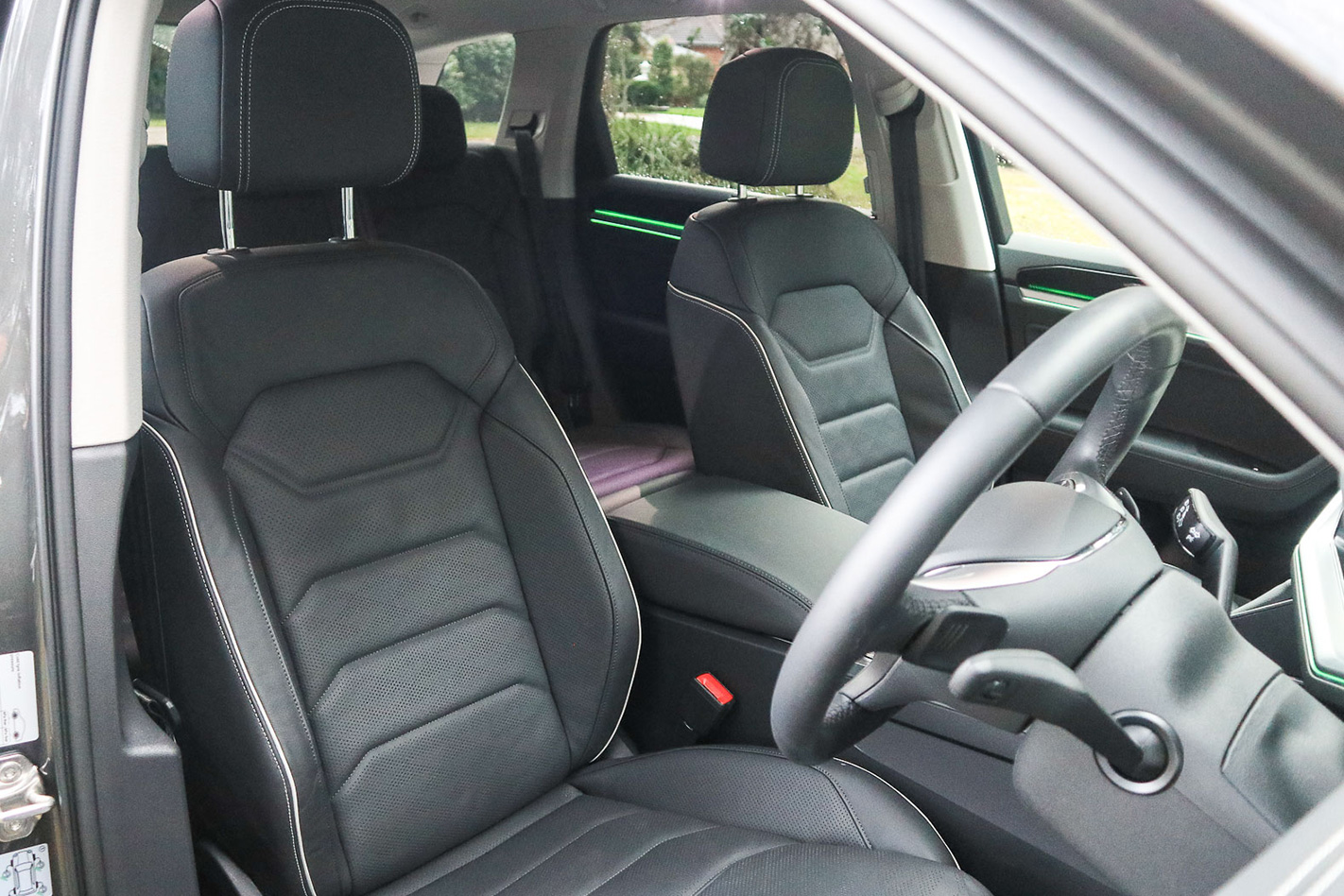
The huge Innovision screen and digital dash array take pride of place within a still reasonably traditional cabin, with rotary dials to control driving modes and air suspension height, and an updated take on the t-bar gear shifter.
Price and features
The Volkswagen Touareg costs $89,990 before on-road costs for the single variant – officially dubbed 190TDI Launch Edition – that’s currently on offer.
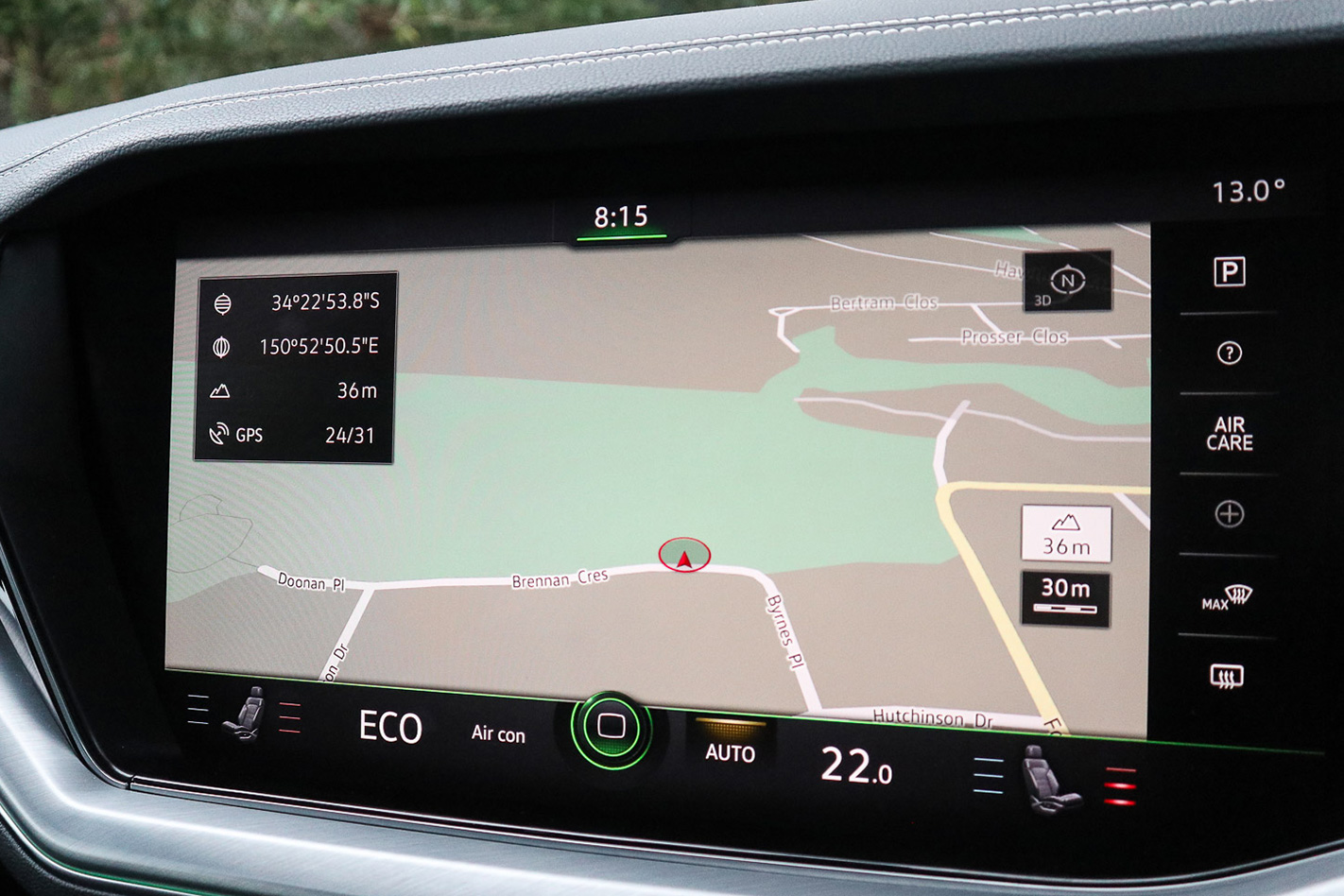
Our Silicon Grey tester (a $2000 option) has the $8000 Innovision package installed, which not only includes the simply enormous 15-inch central multimedia screen but also nets a heads-up display and gloss black interior highlights.
This gives us a Touareg that’s just ten bucks shy of a hundred grand.
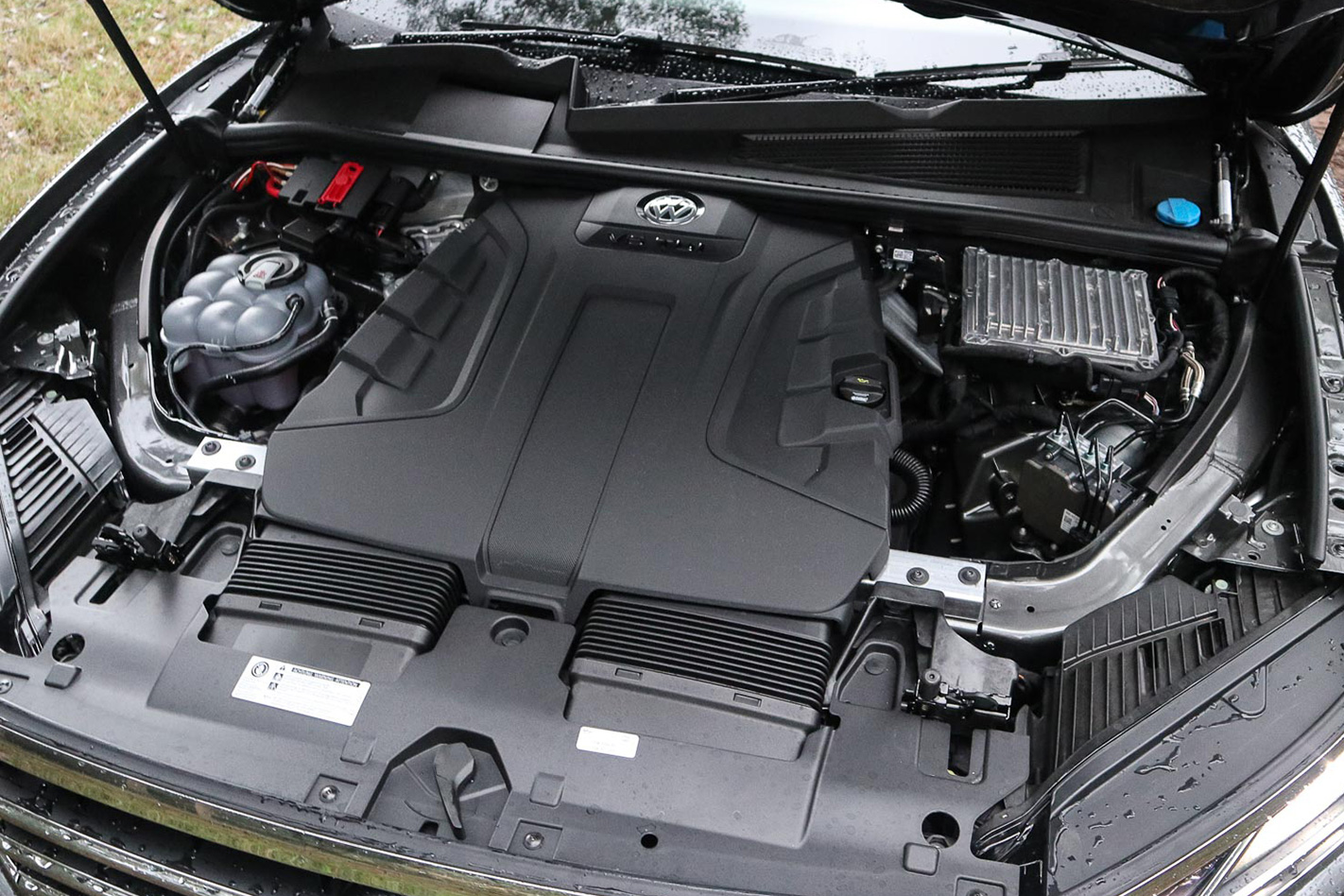
As standard, the VW Touareg comes with a six-cylinder, 3.0-litre, direct-injection turbocharged diesel engine that makes 190kW and 600Nm, backed by an eight-speed automatic gearbox that links to VW’s 4Motion all-wheel-drive system, with various modes to tackle different terrain.
It also runs adjustable-height air springs in partnership with adaptive shocks to change the quality of the ride between Comfort, Normal and Sport settings, while the airbags can be inflated on the fly to increase the ride height over more challenging terrain.
Headlights and taillights are LED with dynamic turn signals front and rear, and 20-inch rims are fitted as standard.
Leather seats, quad-zone air-con with rear controls and LED interior lights – including colour-changeable ambient strips throughout the car – along with push-button start, driver memory settings that can be programmed to individual keys, rear window blinds, automatic high beam and more provides a pretty good insight into the value equation of the Touareg. Really, it wants for very little out of the box.
MORE VIDEO: VW Touareg through Morocco.
In terms of competition, the Touareg has the specs to be cross-shopped against the likes of the entry-level versions of Audi’s Q7, the new BMW X5 and Volvo’s XC90 SUVs.
Land Rover’s Discovery SD6 SE is a few dollars cheaper but not as well equipped, while Jeep’s much older Grand Cherokee S-Overland is around $82,000, which also has a six-cylinder diesel for motivation.
Virtually everything else in the market is now powered by four-cylinder turbodiesel engines, which lowers the cost but changes the fundamental nature of the car it comes in. The six-cylinder diesel might be a dying star, but it’s very well suited to large-bodied wagons.
Safety and running costs
Volkswagen hasn’t missed much on the Touareg, with eight airbags and a comprehensive suite of driver aids including traffic-jam enabled adaptive cruise control, lane departure guidance and warning, front and rear cross-traffic alert, pedestrian-detecting AEB, side traffic assist with lane changing assistant, 360-degree sensor detection and parking assist.
I did experience an oddity with the rear-view camera image on the main screen, though; the image would disappear mid-manoeuvre if someone touched the screen to access another function, which is not something I’ve ever come across before. Not ideal!
I also was surprised at how poor the image from the rear camera became when it was even slightly wet, which suggests that it might be set at a slightly goofy angle. When the rain dried, too, it made the lens dirtier than it really should have, when compared to pretty much every other rear camera I’ve used.
Volkswagen offers a five-year, unlimited kilometre warranty on the Touareg, along with three- and five-year pre-pay service plans. At $1400 for three and $2500 for five years, the costs are line ball with those for cars like the Passat and Tiguan.
When it comes to fuel consumption, VW claims 7.4 litres per 100km on the combined cycle, and we recorded a genuinely impressive 8.5 litres per 100km over more than 1200km of testing. The VW Touareg has a 75-litre fuel tank, which gives it a theoretical range of more than 1000km.
Size
The Touareg is based on the VW group’s MLB platform, which sits under a swathe of large SUVs from other Volkswagen-owned brands like Audi’s Q7 and the Bentley Bentayga.
It’s a strictly five-seat deal, which is somewhat surprising given the competitive set it operates in, and even more so given the lack of a genuine seven-seater in the local VW line-up.
However, that does mean that every seating position in the Touareg has loads of room in every direction.
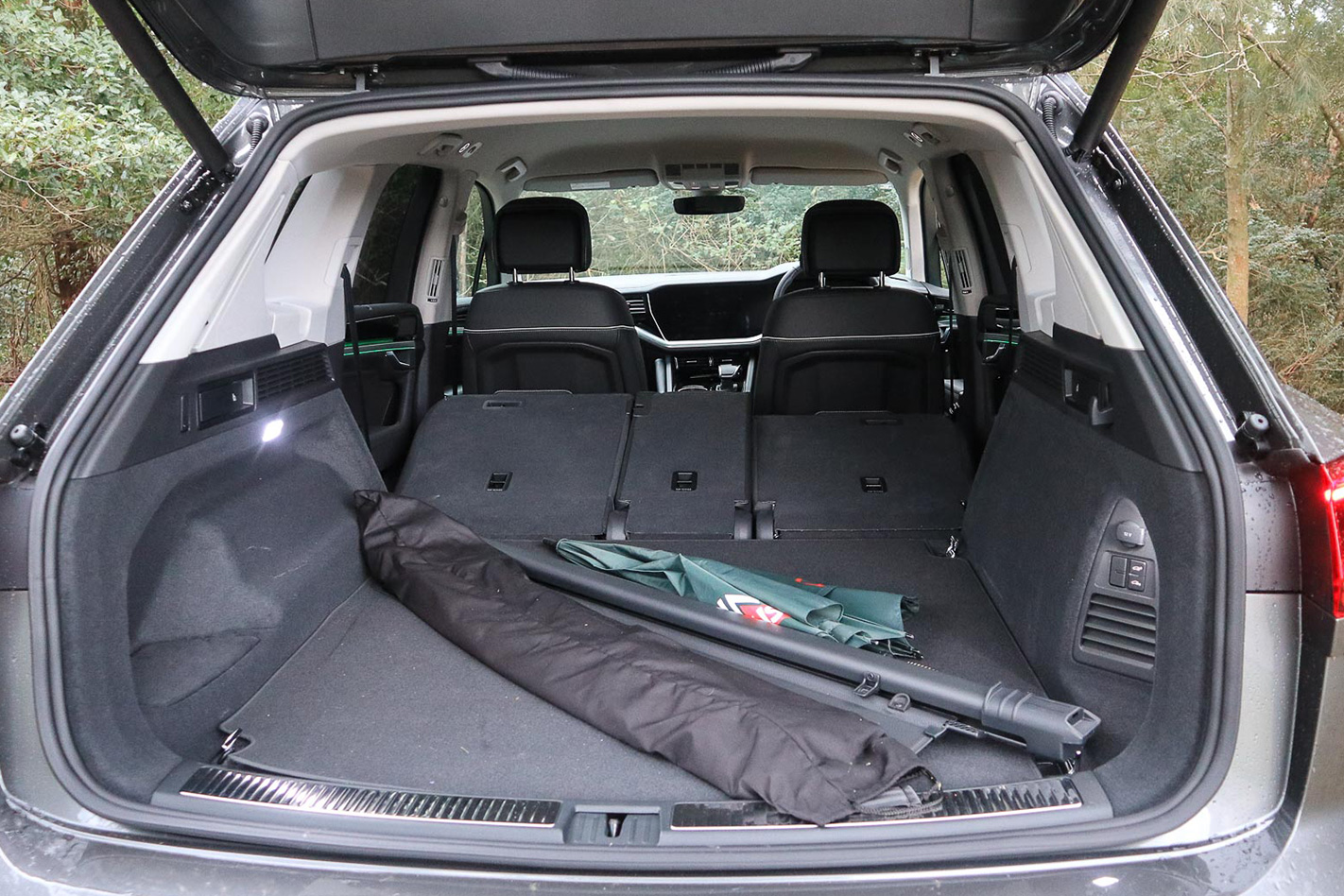
Cargo-wise, the Touareg has 810 litres of room in the rear with the seats in place, and 1800 litres of reasonably flat load space when the rear seats are dropped. How much will the Volkswagen Touareg tow? Up to 3500kg with a braked trailer, and a generous 280kg down-ball weight limit.
Comfort
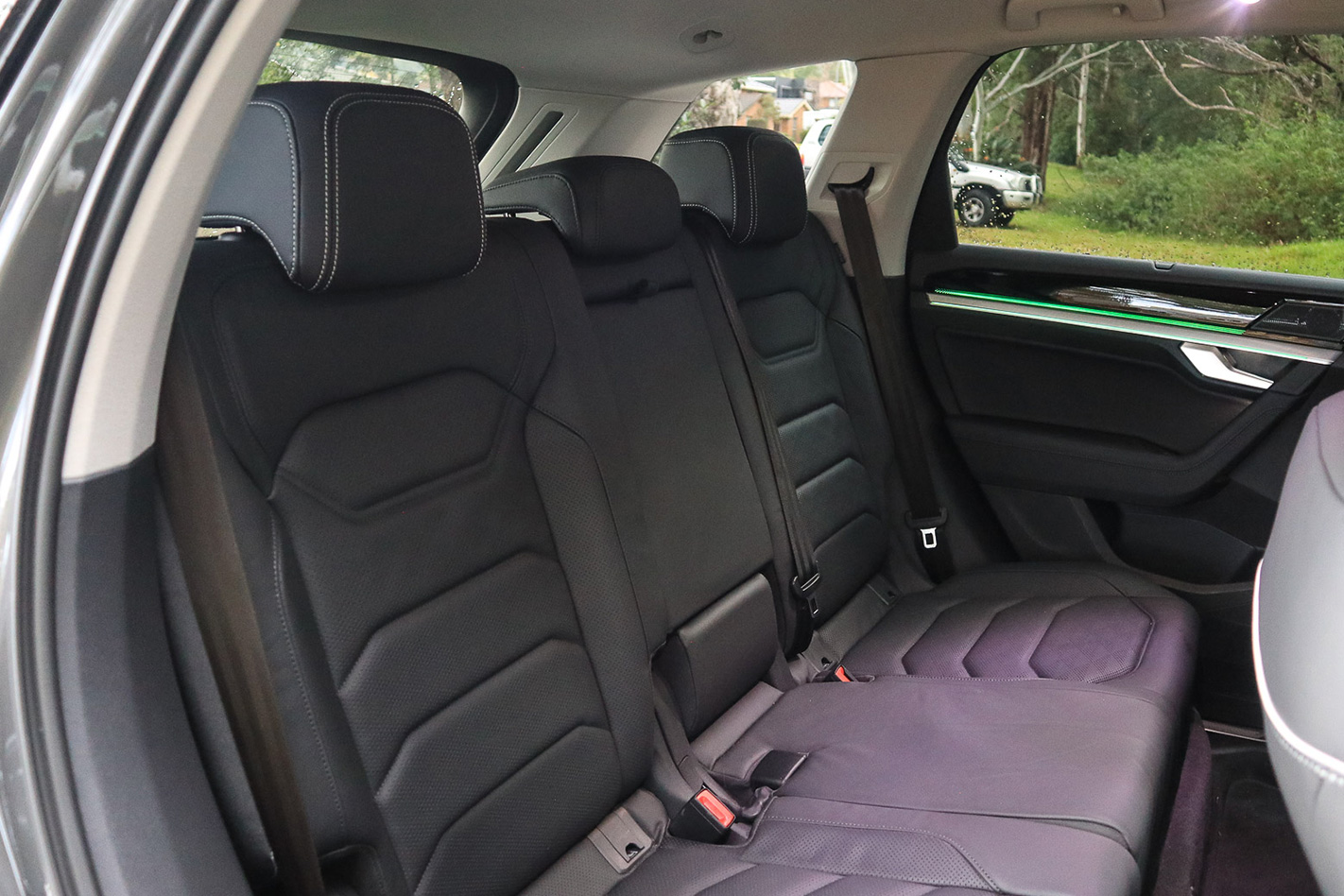
The rear seat backs can be reclined for comfort, or set vertically to create a flat-backed loading space. Second row passengers are also well catered for with an air-con control panel, charging points and cup holders. Two ISOFIX baby seats can be anchored too.
The front seats are broad and deep, and can be adjusted in multiple directions, including the length of the seat base. A multi-mode massage function combines with vented and heated seats to provide long-distance comfort par excellence, as a six-hour round-trip with no long breaks can attest.
Our second complaint, oddly enough, comes from the fact that the car is very well put together; so well, in fact, that it is a genuine chore for smaller folks to shut the final door with enough force to engage the secondary lock.
Other cars have, over the years, set power windows to crack open just enough to release the air pressure in the cabin to enable the door to close more easily, and this is a possible solution to for the Touareg.
On the road
On paper, the Touareg presents as a handsome off roader that’s raring to tackle the great outdoors, but it’s the way it resets the large SUV bar in terms of on-road civility that stands it in excellent stead.
Inside, it is whisper quiet, it offers up genuinely impressive road manners and it imparts a feel of pomp and prestige that belies its badge.
Sure, ninety grand and up sounds like a lot for a Volkswagen, but from behind the wheel, the Touareg feels like a bit of a bargain.
The suspension helps here, imparting an initial suppleness that only air springs can provide. They are well matched with the adaptive dampers, providing subtle but meaningful changes to the chassis behaviour without falling into extremes.
The Porsche-derived turbo diesel engine is a cracker as well, with plenty of low-down reserves of torque to get the 2086kg Touareg up and going.
It almost feels as if eight speeds are too many, but the top two gears contribute mightily to an astonishingly low real-world fuel burn figure.
Brake feel can be a bit numb despite the presence of big four-piston one-piece calipers, but there is nothing wrong with the steering, especially off centre.
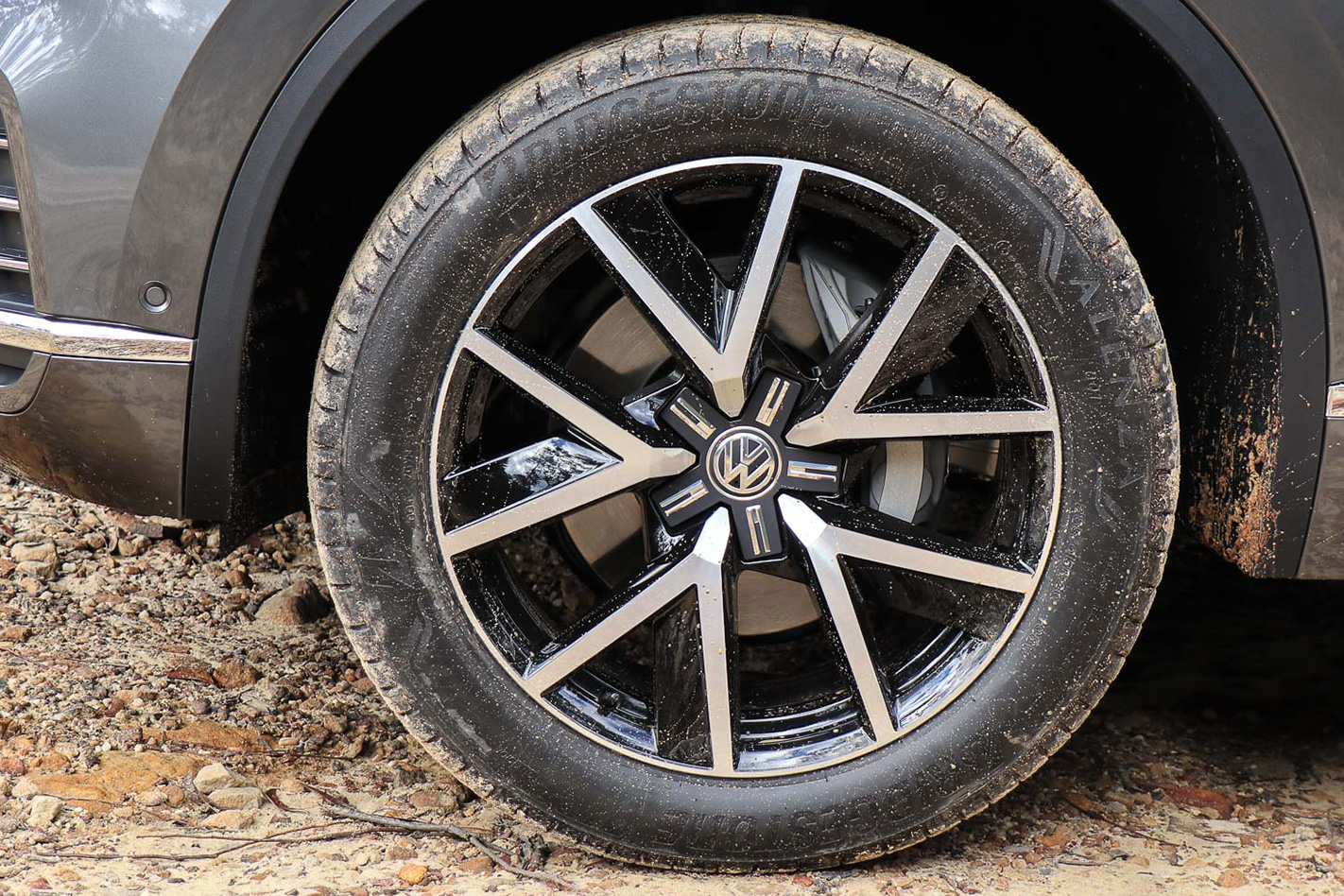
Off-road, the Touareg’s ultimate performance is blunted by the highway-spec Bridgestone Alenza tyres, but the well-proven 4Motion system makes easy work of moderate to rough terrain and loose gravel.
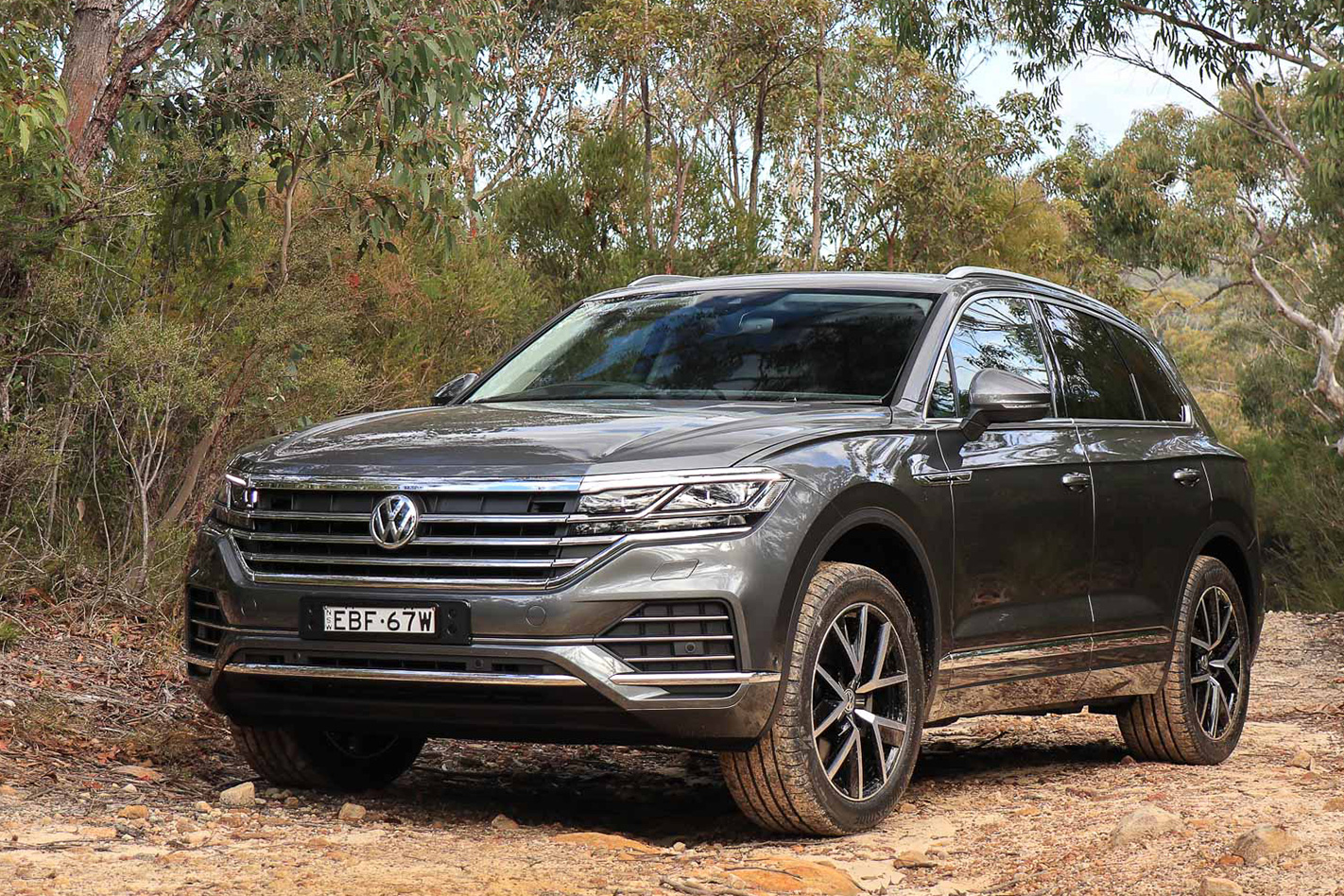
The ability to raise the car at the twist of a dial is a boon, while the VW Touareg’s 75-litre fuel tank capacity gives it a decent range.
Verdict
Volkswagen flags the Touareg as a flagship vehicle for the company, and its price moves it past everything else on sale within the company.
In the past, buyers have baulked at big-dollar VWs, but the success of the almost eighty-grand Amarok Ultimate dual cab ute, the Golf R and the Arteon coupe shows that the brand’s continued focus on highly specced machines is paying off.
Taken in isolation, the Touareg is a terrific five-seat large SUV, with impeccable road manners, excellent levels of driver safety, real on-board comfort for five and genuine flexibility as an everyday drive.
Having only a couple of small (but still noteworthy) niggles only serves to highlight what a thoroughly impressive job VW has done out of the box with the big Touareg.
Nissan’s bullish views on electric vehicle adoption go beyond passenger cars, with its new electric vehicle platform likely to underpin a range of light-commercial vehicles in the future.
Yes, that could include the Navara dual-cab ute and even the Mitsubishi Triton.
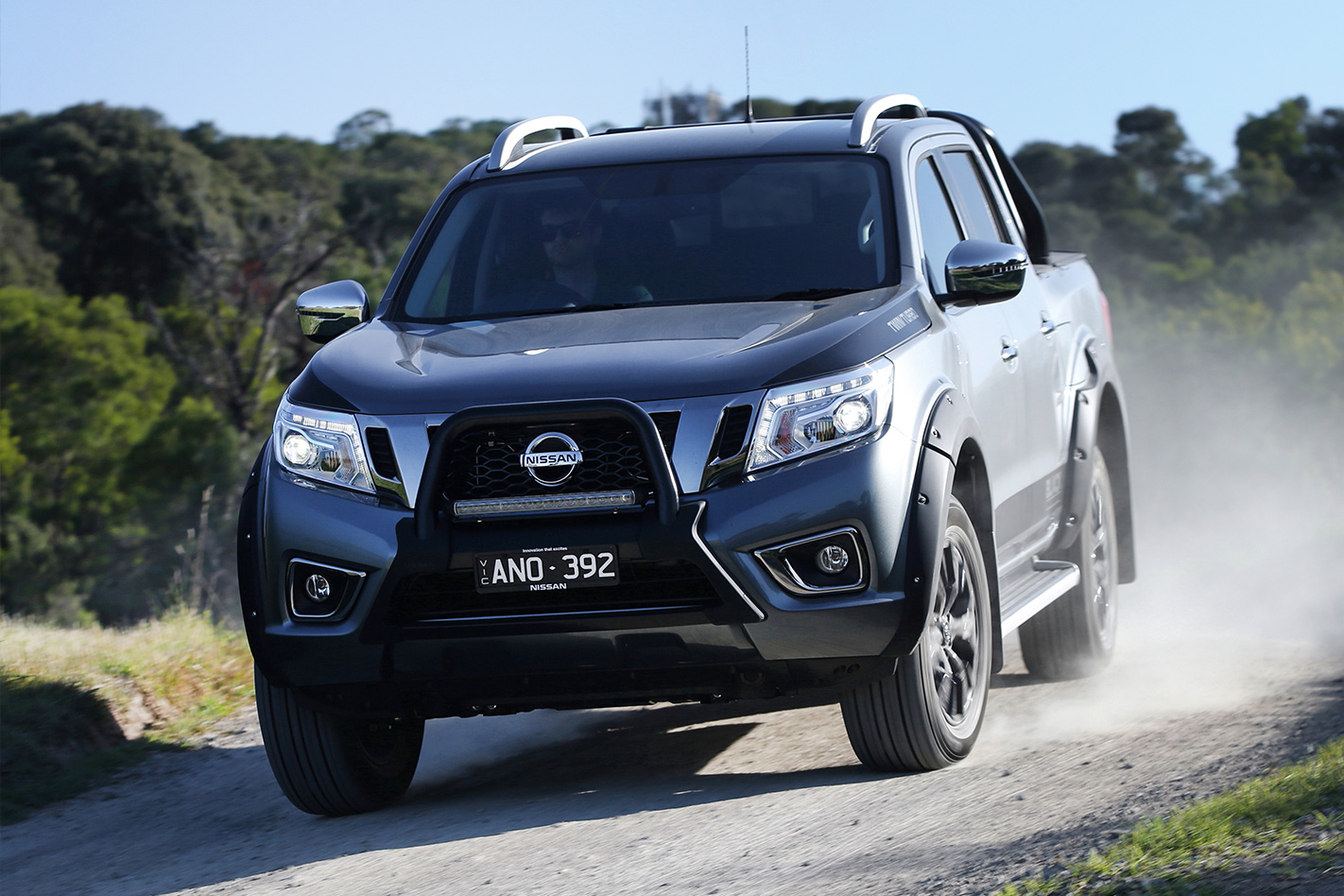
Time is of the essence, however, and despite Nissan telling Wheels that costs associated with producing batteries are rapidly reducing – thus advancing the introduction of EVs to the masses – it is weary of the unique requirements in the commercial segment.
But the platform for electric commercial vehicles is already there, according Nissan global director of electric vehicles, Nic Thomas, and it is only a matter of time until the affordability and capacity of batteries to suit an electric ute will spur a new range of commercial vehicles.
“We have developed a new platform, which is common across the Renault-Nissan-Mitsubishi Alliance, and we are building a new family of vehicles on that,” Thomas told Wheels. “There will be a new suite of vehicles that come out on a new vehicle platform.”
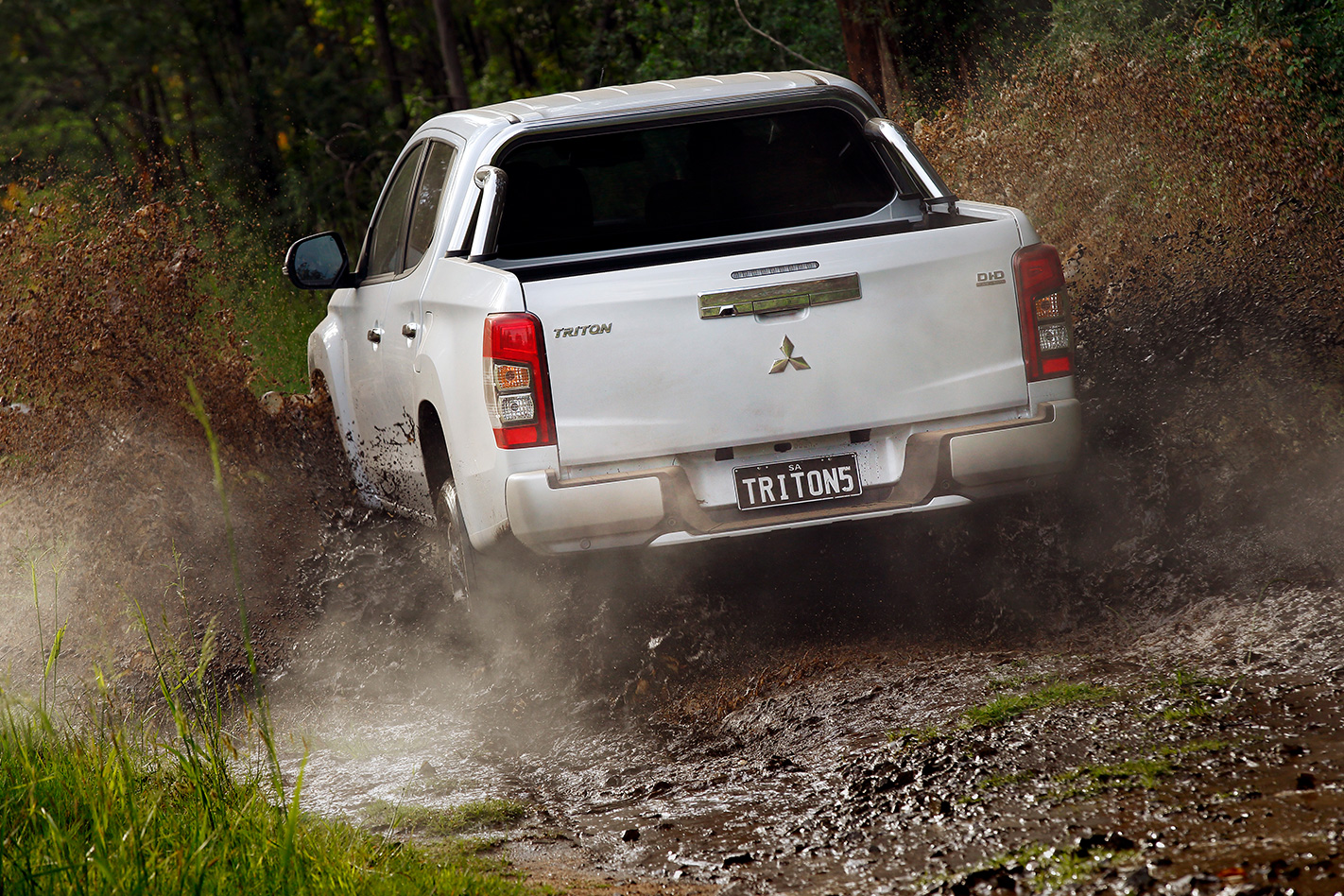
“Absolutely you can use it on commercial vehicles. Commercial vehicles cost is a very important consideration, so perhaps you would engineer different platforms for different uses, but it is totally possible, because it is this flat floor, you can literally build anything onto it. It is very, very modular and we can build many different vehicles onto one single platform.”
Asked specifically if Nissan and the Renault-Nissan-Mitsubishi alliance was considering an electric Navara and, potentially by extension, an electric Mitsubishi Triton ute, Thomas said the idea was already on the table.
“We are certainly investigating many different applications of it; it depends a lot on timing, on battery, costs and these things.
“The LCV customer is usually quite a cost conscious customer as well so you’ve got to get your timing right with those kinds of things, but anything is possible.”
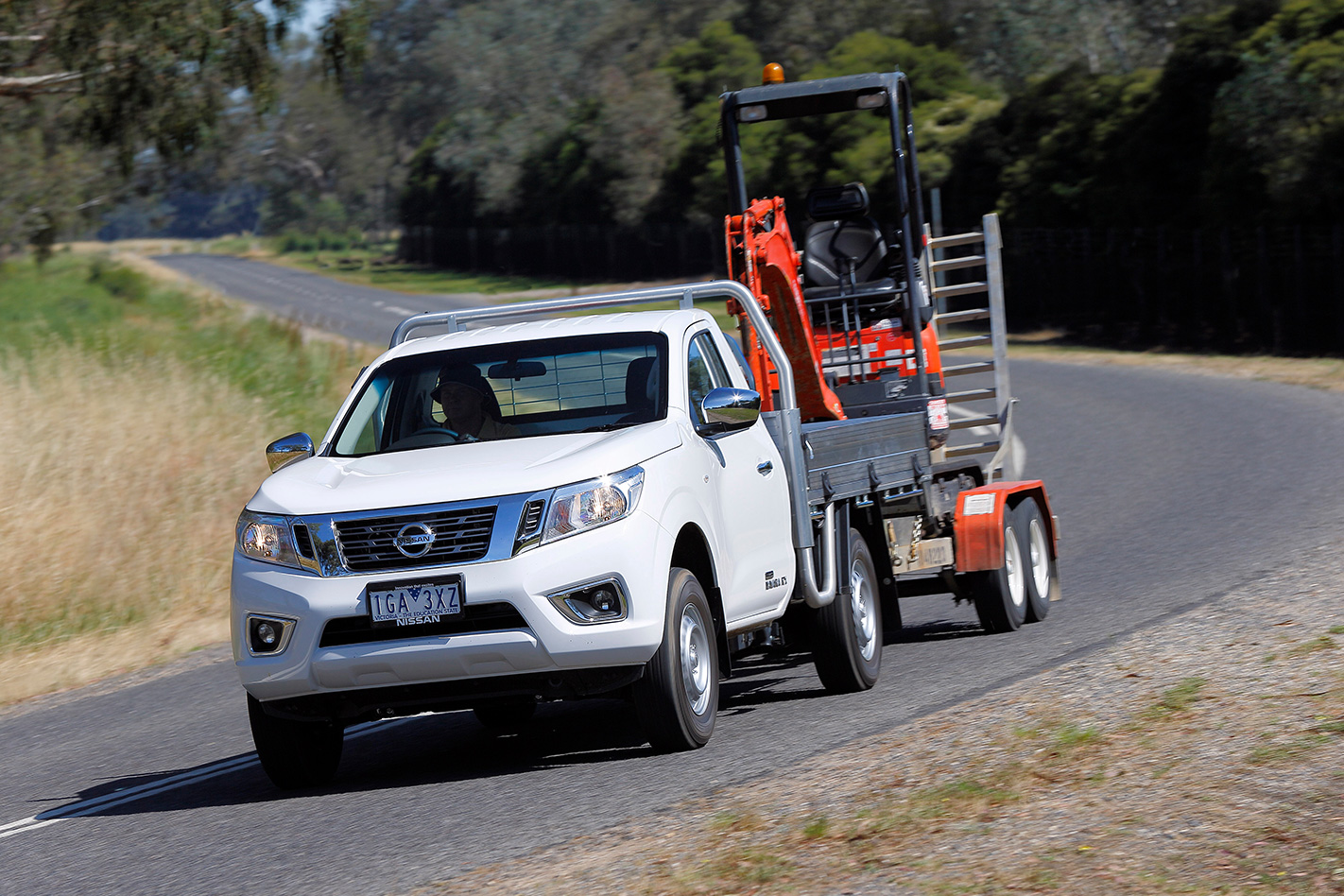
Nissan likely won’t be the first brand to introduce an electric ute in Australia, with US maker Rivian confirming it intends to bring its upcoming RT1 EV pick-up Down Under. But such a ute targets a small niche in the pick-up lifestyle segment, where driving range and cost are less influential on sales. Nissan needs to ensure its electric ute can deliver the range and price fleet customers expect.
“Those are intensive users,” said Thomas. “They place high demands on their vehicles, and we need to make sure we are giving the customers the kind of useable vehicle.
“The average car driver is only doing 40-50km a day, so therefore an electric [passenger] vehicle is a totally useable proposition. Your LCV user is a very intensive user, very heavy weight, very demanding customer, and we need to make sure we provide the right product at the right time for them.”
When is the right time? Thomas won’t say, but he added that he expects smaller vehicle battery packs to become more cost efficient than petrol and diesel engines in 2024, and that perhaps at the same time larger battery packs will become plausible in larger vehicles.
“You’re making bigger [cells] and placing more energy capacity in the battery pack [now],” he said.
“The cost per kilowatt hour is coming down. The cost of the pack might stay the same but you’ve got more energy in that same cost. Over time that will also enable us to do smaller vehicles at a more cost efficient way, or bigger vehicles with really big packs that can start to be affordable.”
HSV has announced the 1000th Chevrolet Camaro has been converted to right-hand drive at its Clayton factory, where the former fast-Commodore-maker now imports and converts GM products as well as ‘hotting-up’ the Holden Colorado to create the SportsCat.
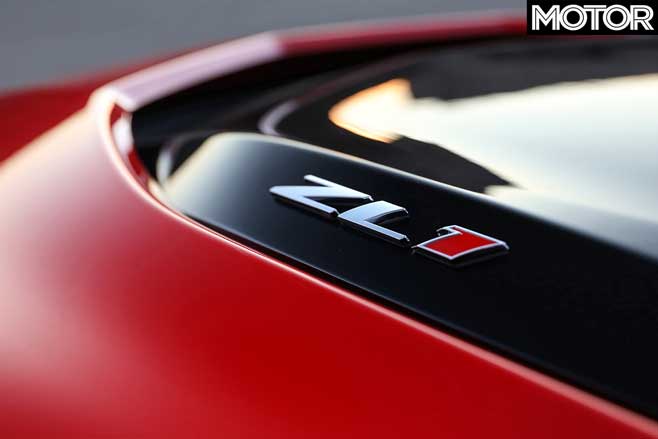
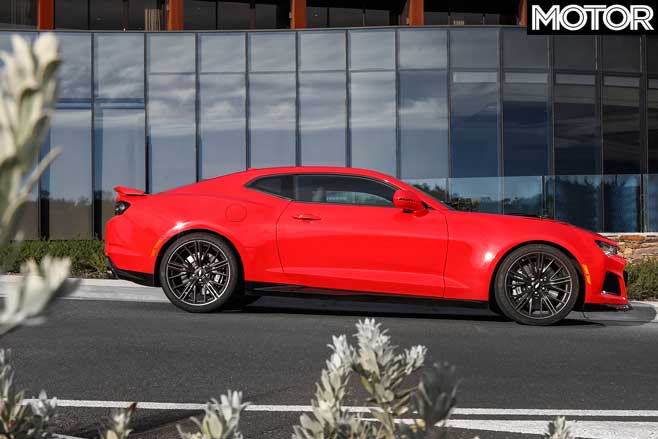
The 1000th car is a ‘Red Hot’ Chevrolet Camaro ZL1, which is bound for a HSV dealer on the northside of Melbourne – Ralph D’Silva HSV.
HSV managing director Tim Jackson, who predicted a build number of “anywhere between 1000-3000 units per year,” says the 1000th Camaro is an important marker for the company.
“It’s been a whirlwind 18 months for HSV and, as a team, we recognise this significant milestone with real pride,” says Jackson.
The car, which will come with a certificate of authenticity from HSV, hasn’t yet been sold at time of publish.
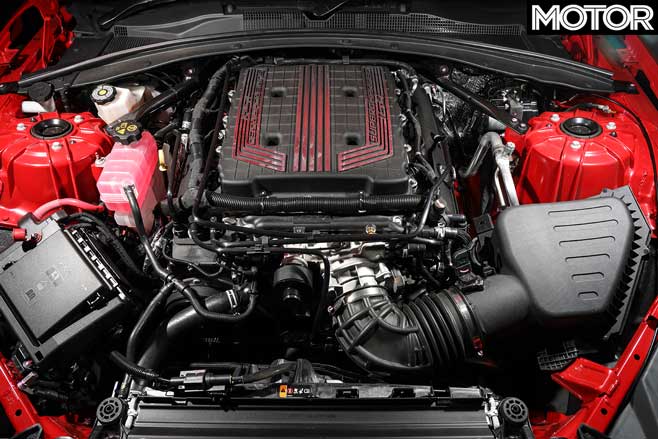
As a ZL1, the 1000th HSV-engineered Camaro will be powered by a 477kW 6.2-litre LT4 V8, aided by a 2.3-litre Roots supercharger running 9.4psi.
It’ll also cost the eventual buyer upwards of $159,990, depending on the dealer’s driveaway pricing.
HSV’s 1000th build comes as its closest rival, the Ford Mustang, recorded 2442 sales so far in 2019 at last count, averaging 407 units per month.
HSV has told MOTOR in the past it doesn’t see Mustang as a direct rival, but is more interested in meeting its own targets.
“Certainly, the traditional [Mustang] buyer will be interested… given the nature of the product,” Jackson revealed in a 2018 interview.
“If you look at the two-door sports sedan market, obviously Mustang’s had a pretty big impact there.
“But we haven’t set up to go after Mustang. We’re focused on the fact that within [Camaro’s] competitive set, it’s an exciting product on its own.”
