
This might be the newest Chinese SUV to tackle the Australian market, or is it just a major facelift to the second-generation Ssangyong Rexton?
A keen-eyed Wheels reader sent in spy shots of the SUV testing around the outer suburbs of Melbourne; not that it doesn’t stand out with huge lashing of camo cladding.
But it’s left the Wheels office scratching its head trying to figure out what we’re looking at – the reader thought it might be a new Mazda, given the round blacked-out badge that looks a lot like a Mazda logo, but this is in no way the body language the Japanese brand uses and nothing like the CX-4 we spotted earlier this year or the upcoming CX-30.
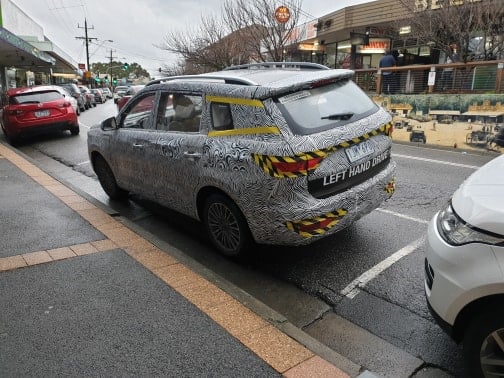
The kink from the bonnet to the windscreen suggests it might be a Ssangyong Rexton, but if it is, it’s packing a huge facelift over the recently released second-generation model. And the badge upfront doesn’t really fit.
Wheels has reached out to the local arm of the South Korean maker but is yet to receive any comment.
The round badge, unless a decoy, also rules out MG, which did get back to us and seemed just as puzzled, though the grille and headlights do echo some of the current-gen MG design.
The big hexagonal grille had some thinking it might be a test vehicle from Hyundai’s staple, but again, the design language just doesn’t work out.
So what about that badge?
It appears it could be a Cowin – a brand that falls under Chinese car brand Chery. The maker, which has been dormant in Australia since it last sold the J11 SUV here in 2014, has registered the Cowin logo trademark in Australia. The left-hand drive test vehicle has a markedly similar badge upfront, too.
Chery had a rough few years when it launched here in 2011, with low ANCAP crash test scores and vehicles that didn’t have electronic stability control so they were not allowed for sale in some states. If importer Ateco, which currently brings in LDV cars from China, thinks that might have tarnished the Chery brand too much, it could be preparing to re-launch with a stronger product lineup than it previously offered and under the Cowin name.
The current Cowin lineup of SUVs – the X3, X5 and X7 – hold some of the styling substance of this new model. But there have been no reports or spy pics of this model testing anywhere – and we haven’t found anything else in the world that might match it. Can you?
We’ve reached out to Ateco but the importer is yet to confirm if it might be considering the Chinese marque.
The 2020 Mercedes-AMG A45 S is set to take the hot hatch benchmark to a new level with sub-4.0sec 0-100km/h launch control acceleration and ‘next level’ handling including a tyre-frying drift mode.
Expected to officially break cover at the 2019 Goodwood Festival of Speed in September, MOTOR can exclusively reveal the first details of AMG’s hottest-ever hatch, one that promises to send all-wheel drive rivals like the Audi RS3 and Ford Focus RS packing.
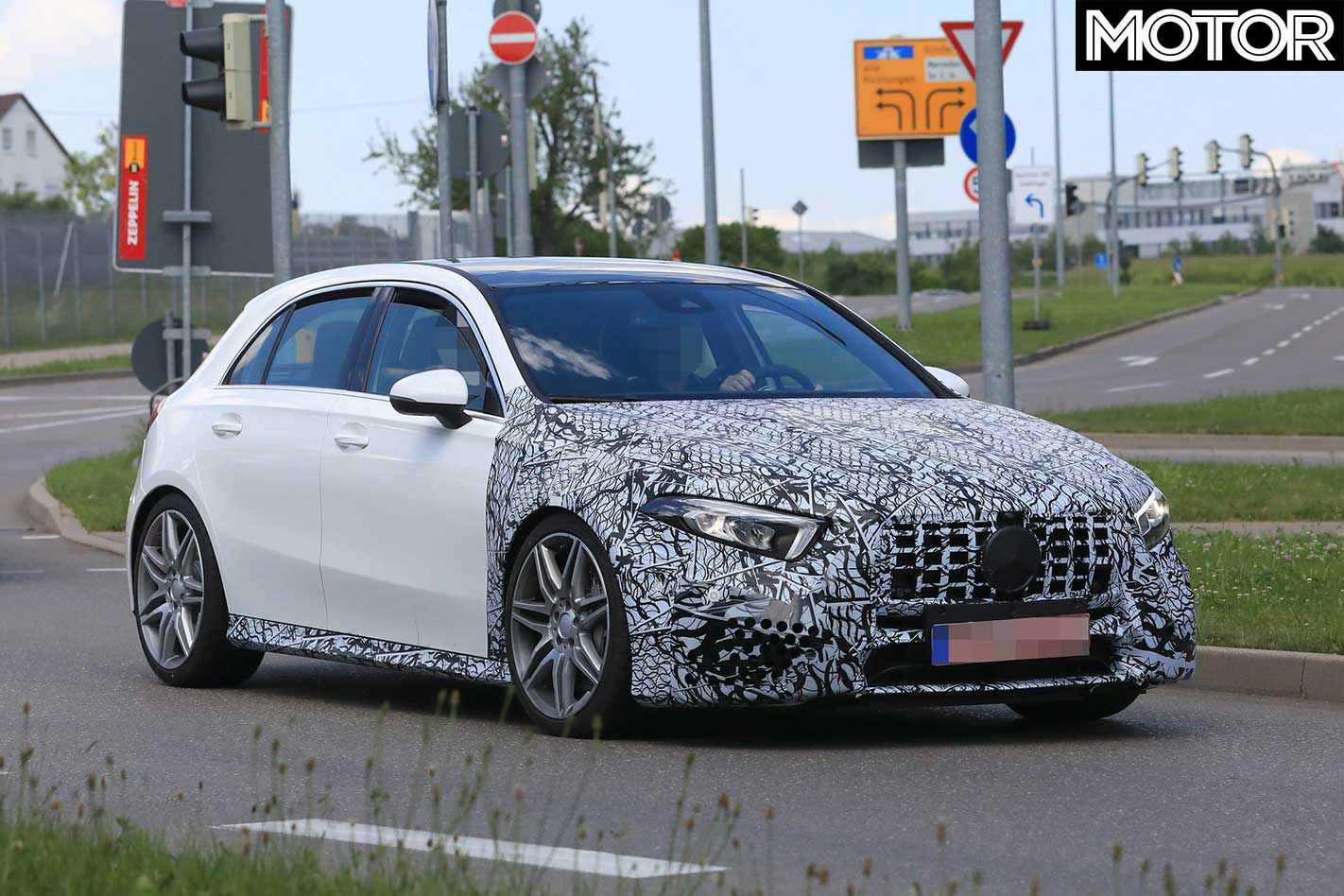
Set to follow the recently unveiled A35 4MATIC into Australian showrooms, Moers revealed the new A45 S will pack more than 294kW, though AMG has since revealed that to be 310kW, from a new turbocharged 2.0-litre four-cylinder – a sufficient enough gain in power to push it ahead of the Audi RS3 for overall firepower.
There will also be a less powerful non-S version of the A45, good for 285kW. It’s unclear what else the ‘base’ A45 misses out on just yet.
By comparison, the first-generation A45 served up 280kW at 6000rpm along with 475Nm of torque on a band of revs between 2250 and 5000rpm.
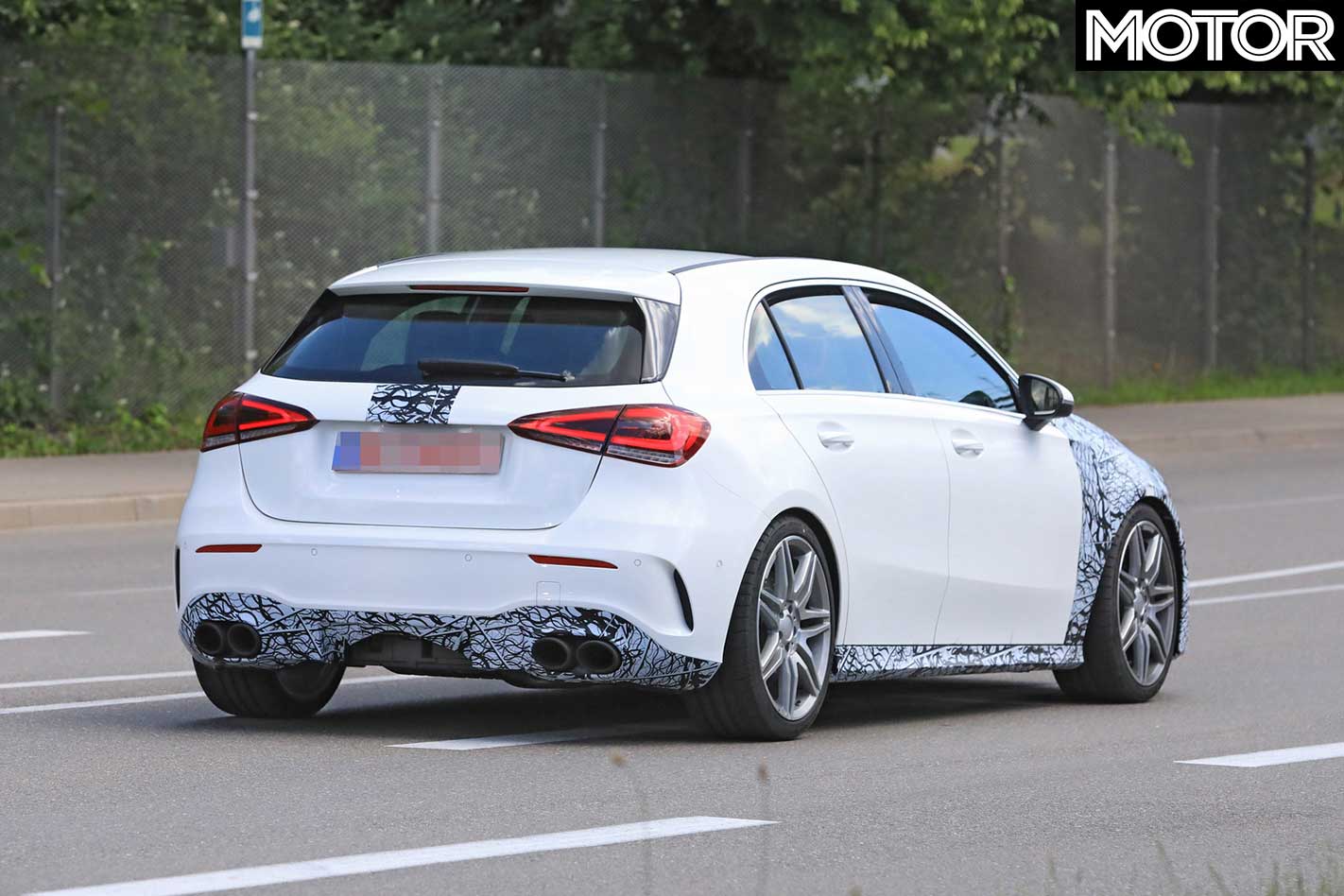
Despite the power bump for the S, the AMG chairman said there is more to the upcoming second-gen A45 S than merely output alone, suggesting a largely new chassis, including a mostly bespoke MacPherson strut front and multi-link rear suspension boasting variable damping, making it a “more engaging and more emotional car to drive”.
“There’s no oversteer, it is better handling. You feel every corner at the Nordschleife (a reference to the Nürburgring circuit where a good deal of the new five-door hatchback’s development has taken place during the European summer). It is also better riding; we’re very focused on chassis stiffness,” said Moers.
Like all new compact models from Mercedes-Benz, the 2020 A45 S is based around a heavily re-engineered platform. Known internally as the MFA2 structure, it has been reworked in various areas by the team at AMG to provide the new car with a level of rigidity described as being beyond that of regular fourth-generation A-Class models.
Further changes are aimed at the chassis, which receives its own unique track widths and a newly developed four-wheel drive system (4MATIC+) able to send the majority of drive to the rear wheels in certain driving modes. This is an advance on the old model, whose all-wheel drive system could only apportion up to 50 per cent to the rear wheels.
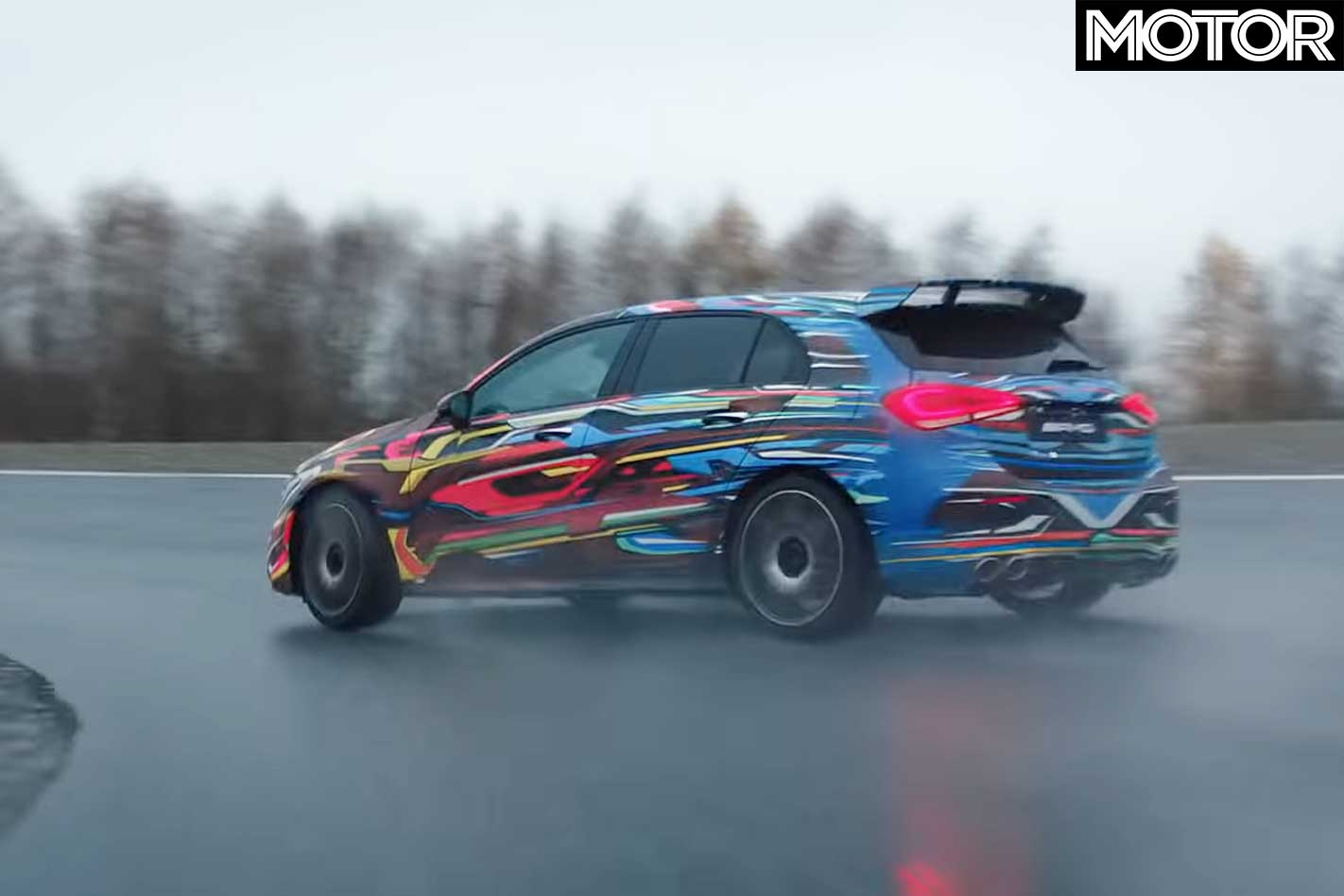
This critical change in the drivetrain has enabled AMG to provide the new A45 S with a drift function similar to that originally brought to the E63 S.
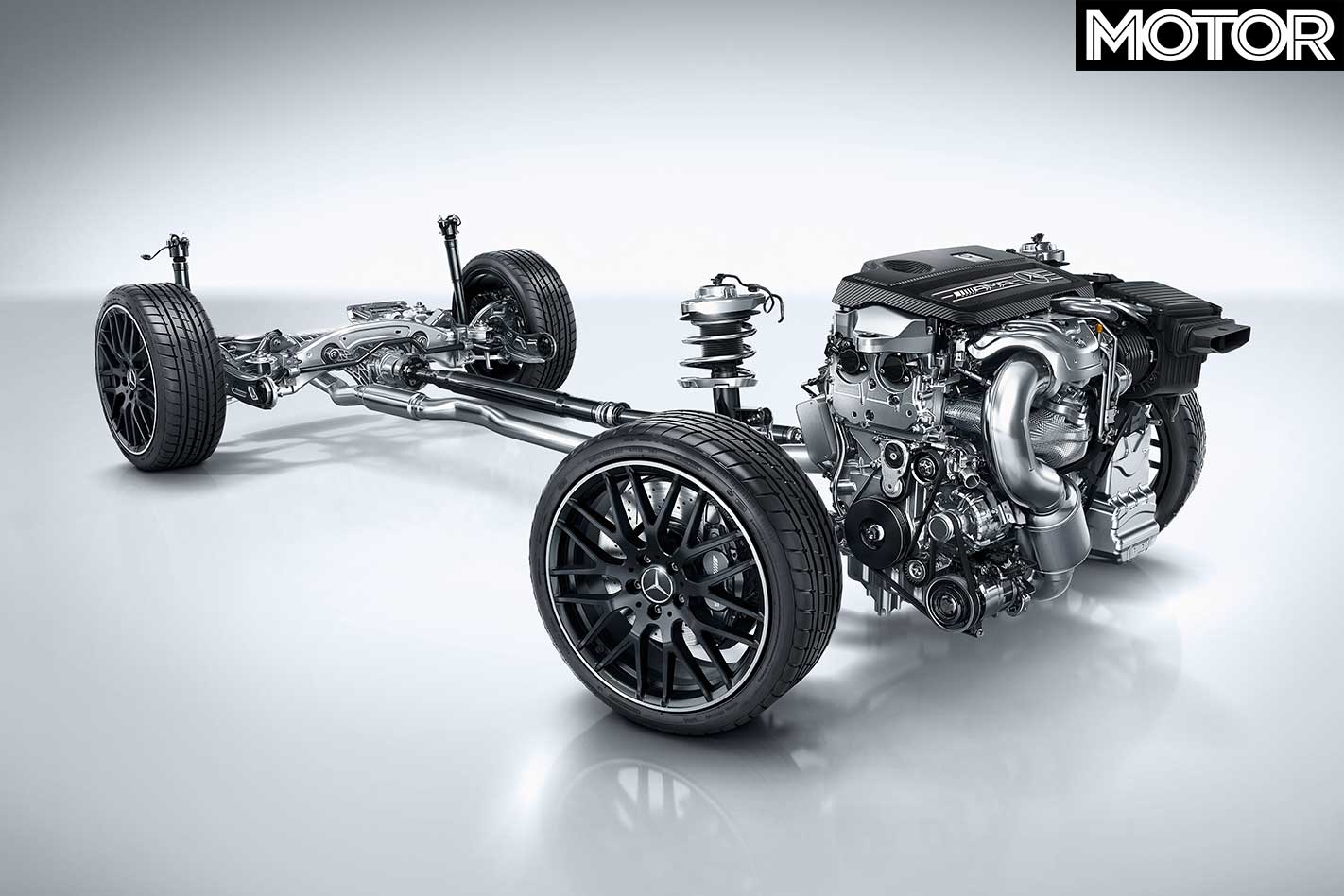
“It will go sideways,” enthused Moers, who previously headed up new vehicle development at AMG prior to being elevated to chairman in 2013, hinting it will go a long way to answering criticism of the clinical driving characteristics of the initial A45.
News of the adoption of the new four-wheel drive system and drift function comes after the unveiling of the new A35, a car the AMG boss said delivers a level of handling beyond “the A45 of today, if not more”.
Moers confirmed the new A45 S will pack a “totally new engine,” which we now know is the M139, the most powerful road-going production four cylinder yet.
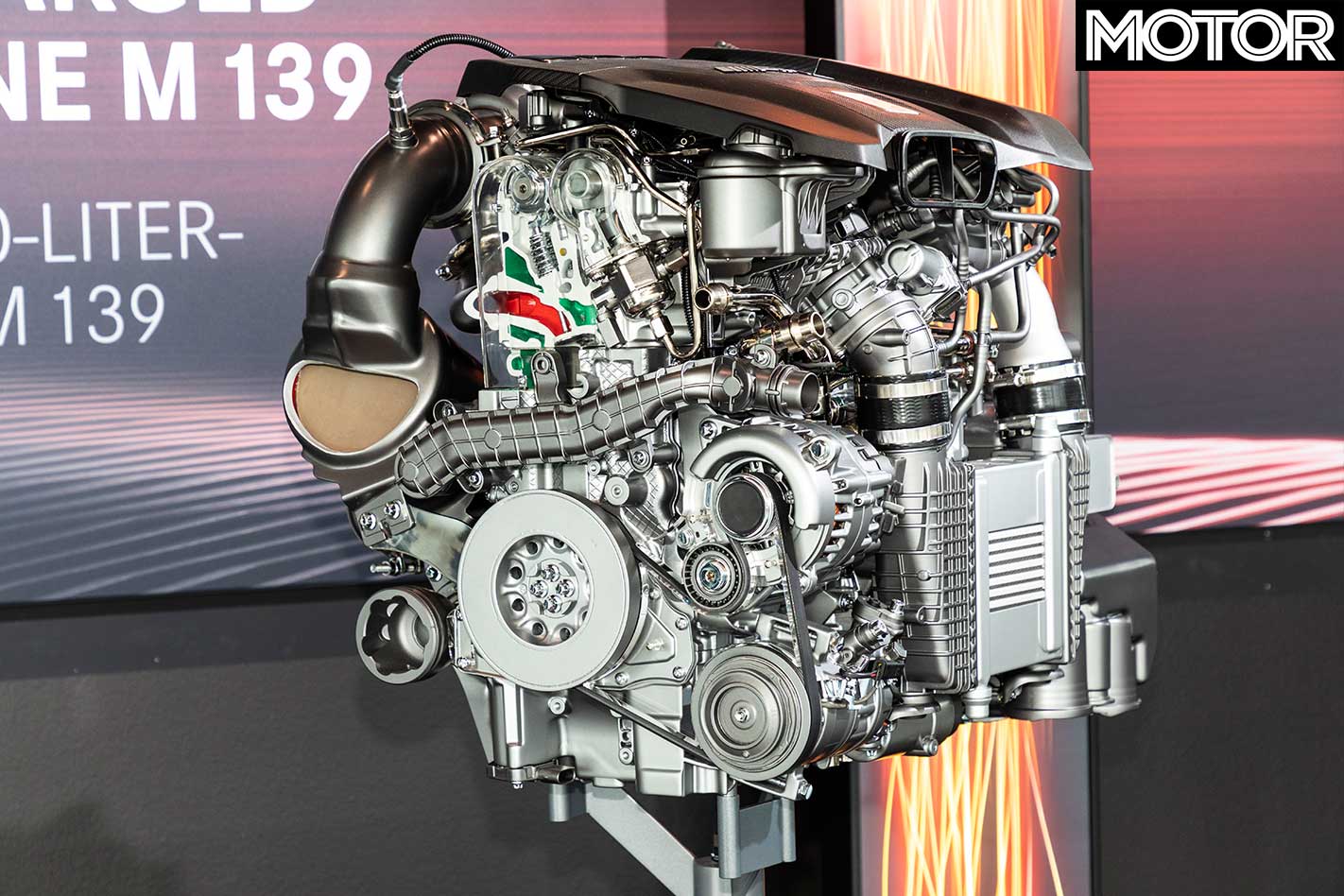
The M139 boasts the same swept volume as the M133 that powered the first-gen A45, with bore and stroke of 83mm and 92mm giving an overall capacity of 1991cc.
Key elements of the new engine, which will be built on a new state-of-the-art production line at in AMG’s engine facility, include a newly designed aluminium block. It is manufactured from an aluminium alloy known as ‘AlSi7Mg’, features the same 90mm cylinder spacing as the M133 and uses Mercedes-Benz’s patented Nanoslide coating for the cylinder walls to reduce frictional losses.
Additionally, the cylinder head has also been reworked. It is produced from an aluminium alloy known as ‘AlSi10MgZr’ that includes zirconium silicate to increase thermal conductivity.
The new four-cylinder also receives the German car maker’s spray-guided direct-injection, chain-driven camshafts and a twin-scroll turbocharger that, unlike that of the old engine, is programmed to operate at a maximum 30.5psi of boost pressure. That’s up from 26psi in the last A45.
The routing of air from the inlet manifold into the cylinders is different to that of the old M133, with engineers rotating the engine 180 degrees to reduce the ‘plumbing’ distance for airflow. This is claimed to provide a more ‘naturally aspirated’ feeling for throttle response. Oh, and it’ll rev to 7200rpm.
Various reports quote the AMG head as saying the A45 S’s new engine will be mated with an eight-speed dual-clutch automatic gearbox, although this has yet to be 100 per cent confirmed. With the current model offering no manual transmission option, it’s almost certain the next A45 will follow suit.
Assuming it hits the scales at a similar weight to today’s 1480kg first-generation A45 4MATIC, the new model may well be in line to become the first series production hatchback to deliver a 0-100km/h time under 4.0sec – some 0.2sec faster than its predecessor.
Nothing is official just yet, but AMG officials have revealed the Audi RS3 and its 4.1sec 0-100km/h time is the clear acceleration benchmark, with a launch-control-assisted sub-4.0sec sprint likely for the A45 S.
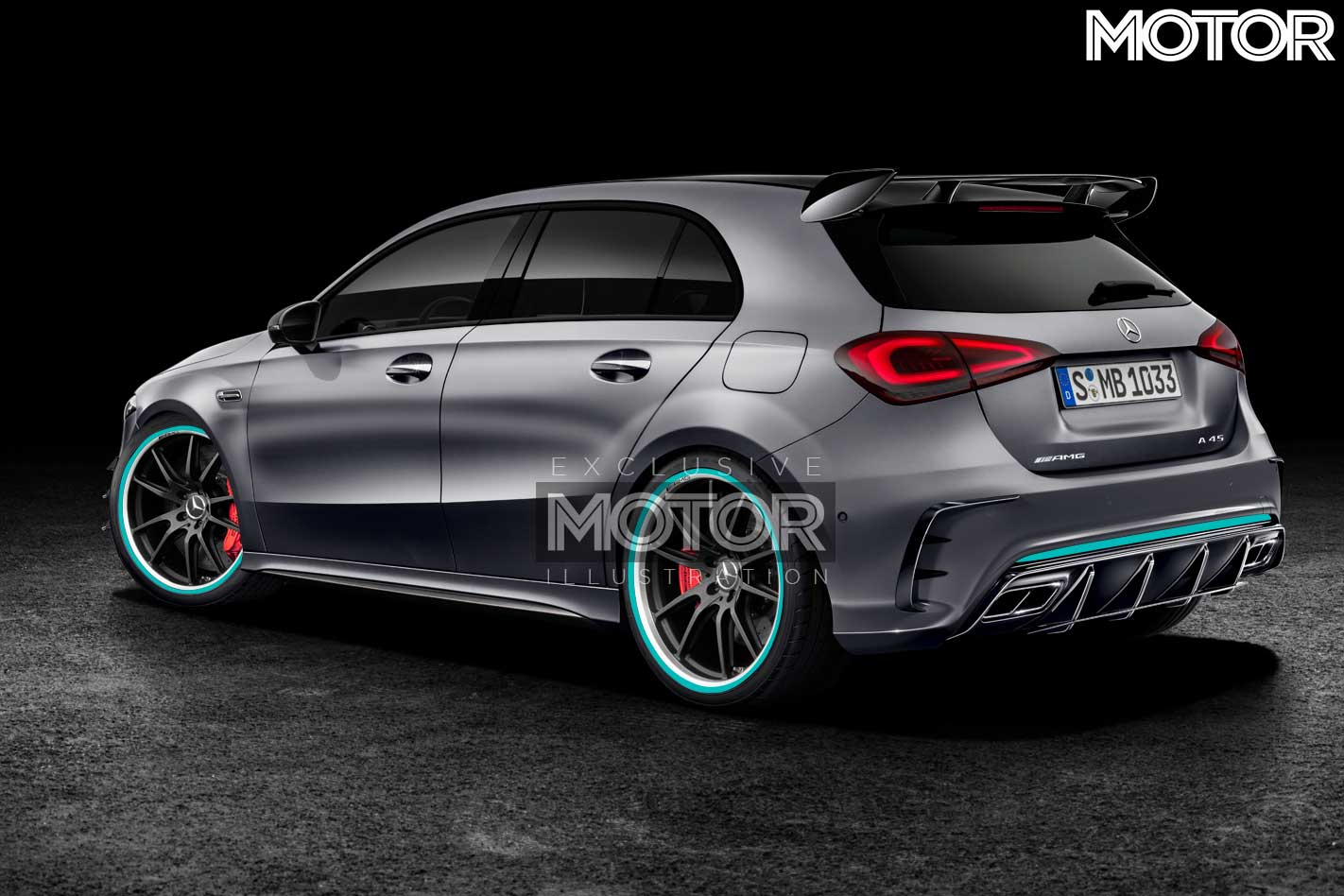
Stylistically, AMG’s new hyper hatch will be differentiated from the A35 by a more aggressive Panamerica grille set within a uniquely styled front bumper featuring larger air ducts. Further exterior elements include uniquely designed wheels up to 20 inches in diameter, wider sills underneath the doors, a more prominent rear hatch spoiler and larger rear diffuser.
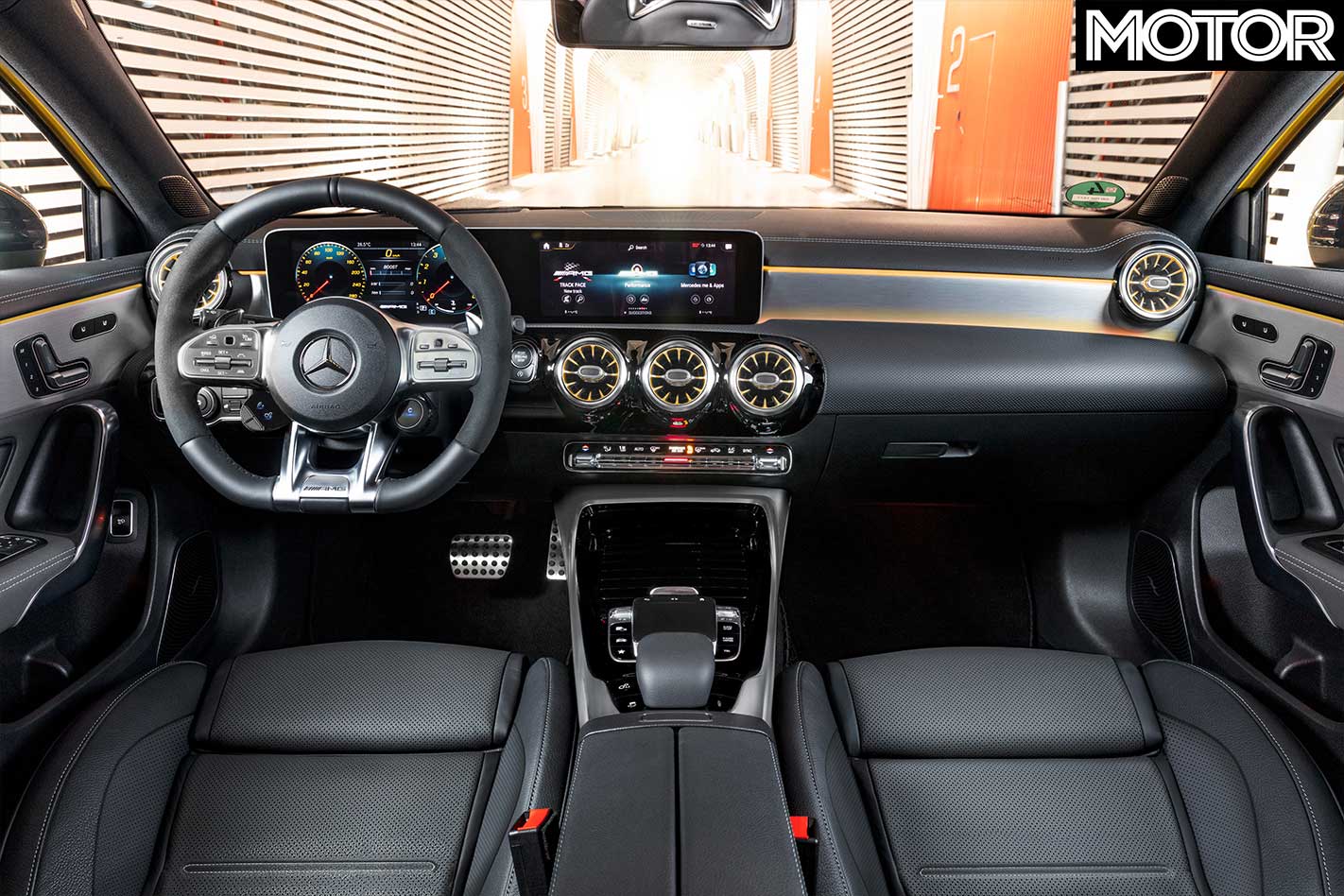
Inside, the second-generation A45 will feature its own unique digital instrument graphics and Mercedes-Benz’s new MBUX operating system among a range of sporting touches, including an AMG multi-function steering wheel, front seats and trim elements.
The next A45 S is unlikely to reach Australian shores this year, a 2020 on-sale date more likely. Pricing is currently the exclusive realm of speculation; the outgoing, heavily specified A45 is $78,240.
2020 Mercedes-AMG A45: Five things to know
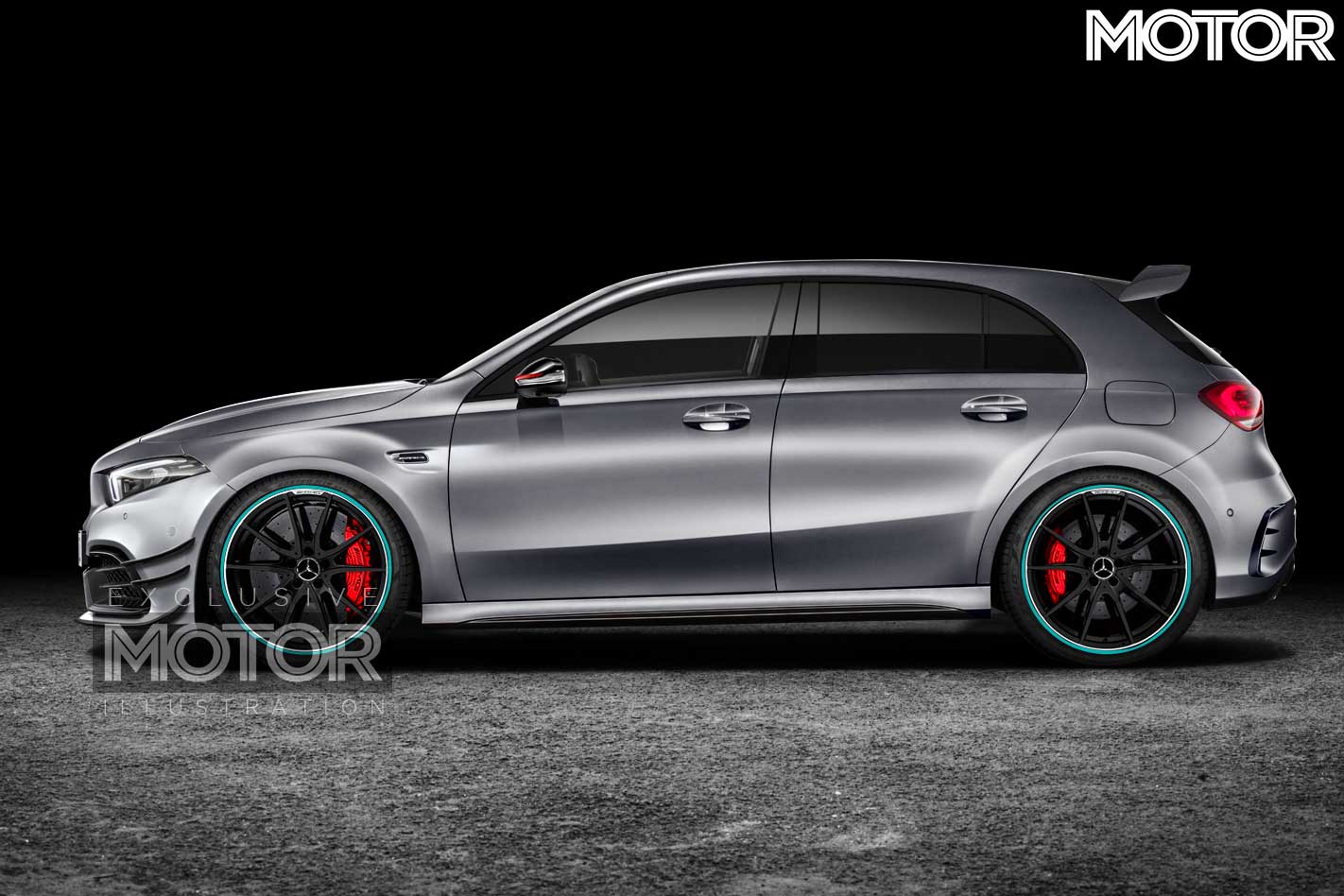
01 – Headline figures Boasting mega power figures, the next-gen A45 is rumoured to nail 0-100km/h in less than 4.0sec. This would make it the hottest of hot hatches, besting the Audi RS3’s 4.1sec.
02 – New engine Out with the old M133 and in with the new M139 – which boasts 310kW. Alloy block a new design, but displacement remains 1991cc.
03 – Drift ready Majority of drive can be sent to the rear wheels, as opposed to only 50 per cent with previous A45. Will gain unique track widths, too.
05 – Body donor New MFA2 platform will underpin not only the A-Class, but will be shared with the CLA and B-Class.
06 – Expected tech Merc’s new MBUX infotainment and massive digital instrument cluster will find its way into A45.
Hot Hatch Wars: The A45’s future rivals
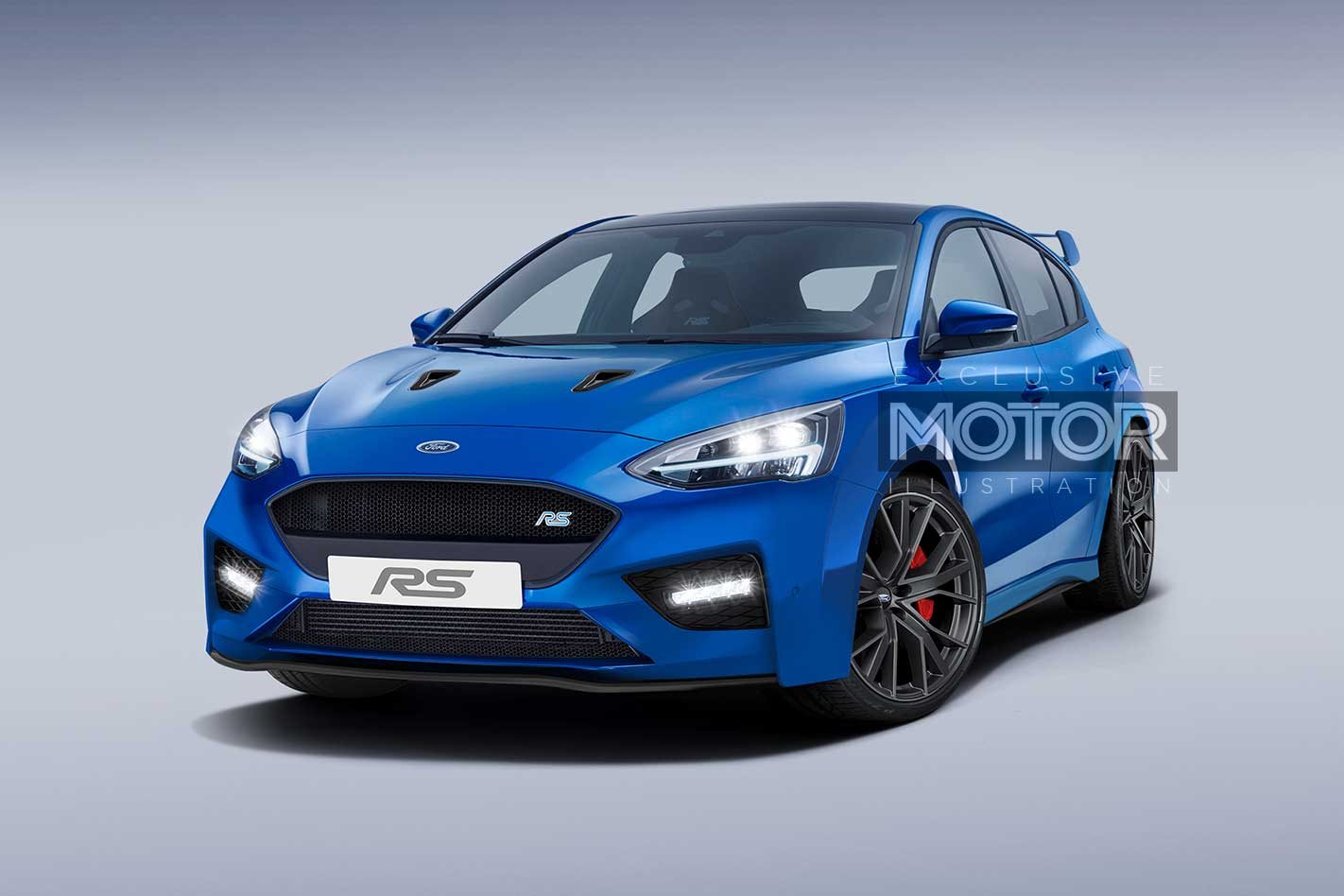
Far from having it all its own way, the second-generation Mercedes-AMG A45 will need to be good to compete against a slew of upcoming models.
Rumoured to be packing a mild-hybrid system in combination with a high-output combustion engine, the next Ford Focus RS poses one of the biggest threats. Expected to channel more than 300kW through all fours, the RS will also adopt an angrier exterior design (artist impression pictured) based on the all-new Focus.
Hyundai is wanting to add a halo model to its range, and the RN30 Concept could be a sign that an all-wheel drive hot hatch is in the works. The RN30 uses a 280kW/450Nm four-cylinder turbo and is tied to a wet-type dual-clutch transmission.
Rumours are gathering that VW is planning a mild-hybrid version of the Golf R, with a combined output of over 300kW (with the EA888 four-pot).
With the new BMW 1 Series adopting front-wheel drive and AWD, it seems an M version (if one is coming) would be AWD for better packaging. What powers it, four or ( unfortunately unlikely) six cylinders, is the bigger unknown.
A stampede of Mustangs descended upon Sandown Raceway in Melbourne for the latest Mustang Motorsport track day, with the company taking the opportunity to display its own creations on and off the track.
On hand to capture the action was MOTOR photographer Alastair Brook, whose work you can peruse through the gallery at the top of this page, as well as below.
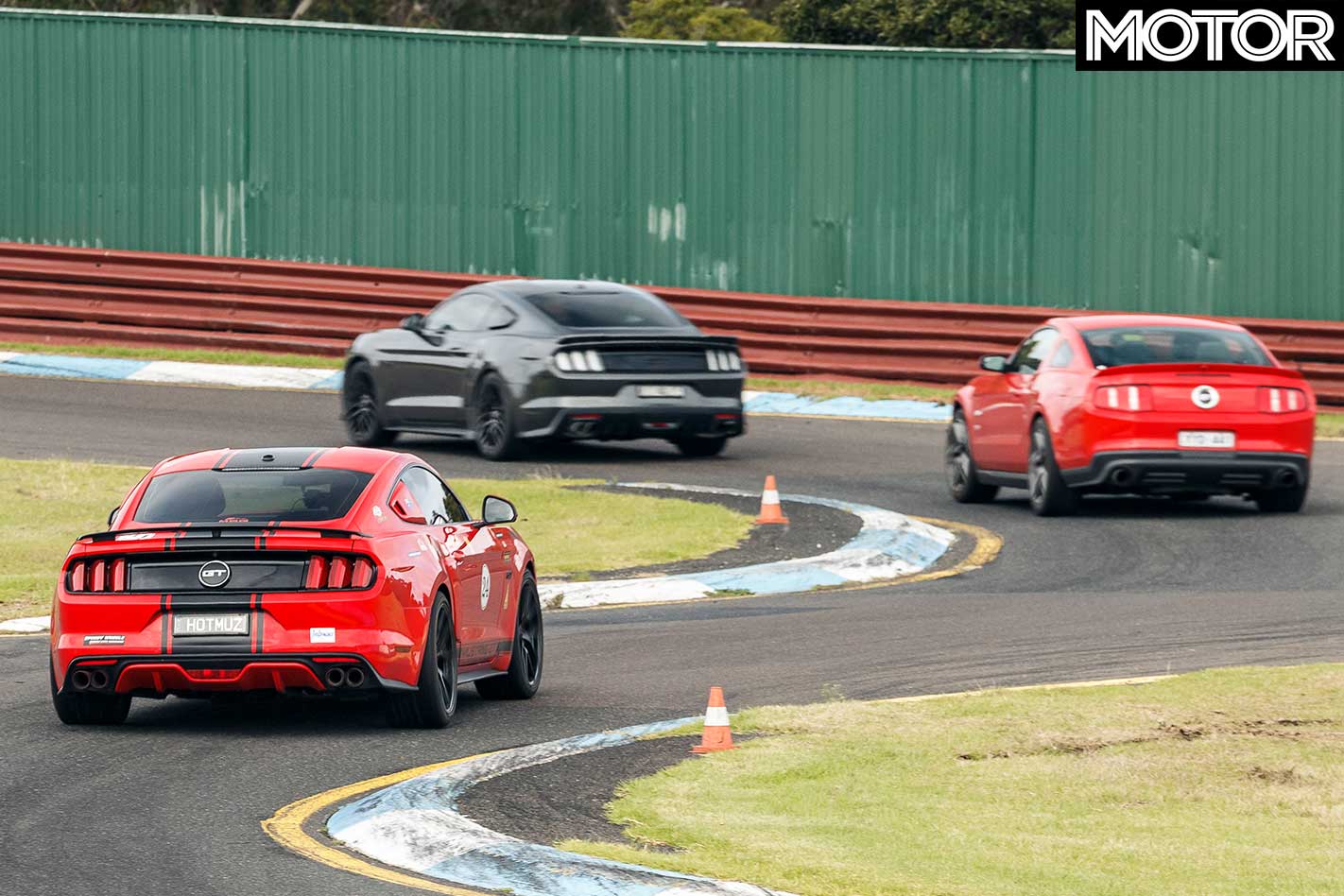
Mustang Motorsport, which converts imported cars to right-hand drive and is also licensed to produce vehicles created by the likes of Roush and Shelby, holds the track event annually at Sandown, drawing 50 Mustangs to take to the circuit this year.
Along with those cars, Mustang Motorsport managing director Craig Dean’s own Targa-tackling racer found its way out for a few laps, while we were treated to a test drive in the new Shelby Super Snake… stay tuned for that one.
As well as the track action, a show ‘n’ shine-style display of cars driven in by attendees provided some space to wander and gaze.
John Bowe was also present on the day, chatting with Mustang Motorsport customers and presenting their cars in a video series the company is posting to its Facebook page.
Did you know that you can be fined for your passenger using their mobile phone in the car!? It’s a reality for one Sydney driver and something the WCW team just couldn’t wait to get stuck into. And while they are on the subject, what about cameras designed to catch excessively noisy cars too?
The start of a weird dystopian motoring culture where big brother is always watching, or a step along the way to safer roads?
Next up Scott, Dan and Cam discuss the mule. These vital prototypes often test pioneering tech using an existing model as the surrogate vessel and there have been some incredible examples throughout the ages.
Speaking of prototypes, new regulations introduced for the Le Mans 24 Hours endurance race in 2021 are set to turn the field on its head. It’ll either result in a desolate deserted start grid in two year’s time or kick-start a whole flock of hyperbolic supercars from all the key players. Find out exactly how by listening in.
If you’re on the go, you can find WhichCar Weekly on all manner of podcast apps including iTunes and Podbean. Please rate, subscribe and leave a review! You can also follow the day-to-day happenings of the WhichCar team on Facebook, Twitter and Instagram @whichcarau.
Listened to the show? Help us out:
- Leave a note in the comment section below.
- Leave a review on Apple Podcasts/iTunes
- Subscribe to our podcast
While it is well known that you can’t use your phone while driving, an obscure rule has resulted in a number of drivers being fined for their passenger handling a mobile device.
The infringement has been used by New South Wales police to fine two separate drivers because a passenger in their car was caught watching video. Not the driver but the passenger was the ‘culprit’ in each instance.
One woman was fined in Catherine Field, southwest of Sydney, when her passenger was caught using a video-call function in the front seat. The Police issued a $337 infringement for “[driving a] vehicle with TV/VDU image likely to distract another driver.”
The second driver was fined on the Pacific Highway at Heatherbrae when his front passenger was seen using a laptop. This time the infringement was the more serious “[driving a] vehicle with TV/VDU image visible to driver”, which has the same $337 fine but also three demerit points.
Clarifying the rule, NSW Police said that “any part of the image on the screen” from a TV screen or a visual display unit must not be visible to the driver while the vehicle is moving or stationary, but not when parked.
The rule does not apply to GPS navigation systems, driver aids, and infotainment screens.
Victoria has a similar offence to NSW, “using a visual display unit or television illegally while driving”, which carries a punishment of four demerit points and a $484 fine. On the VicRoads website a unit that has a visual display is described as “DVD players or tablet computers”.
It remains unclear if this extends to phones playing videos or using video-call functions, or if the southern state’s police would enforce it to the same degree as in NSW.
Queensland drivers should also be wary, with the state’s road rules including an offence for “driving vehicle when image from television or visual display unit visible to the driver or likely to distract another driver”. In Queensland this offence carries a fine of $174 and three demerit points.
Again, it remains unclear if a passenger using a mobile phone would fall foul of the law, but the wording is vague enough that a fine could be applied in a similar way to NSW.
What we’re seeing is vague wording from an era before everyone had a mobile ‘mini-cinema’ in their pocket, combined with a police force that is cracking down on phone use. It means that drivers are breaking the law despite most doing what they think is the right thing.
The enforcement of this obscure rule in NSW could have a significant effect on the ride-share and taxi industries, with many customers of those services using phones when in the passenger seats, putting the driver at risk of significant fines.
It’s clear why the law exists – having a passenger hold up a screen for the driver to see is clearly dangerous and distracting. However, it seems that over policing is catching out road users who are trying to do the right thing.
They say slow and steady wins the race. If that’s the case, Toyota is playing a very long game. For several decades from the 1960s, the Japanese manufacturer helped improve the car as we know it (and the company’s bottom line) through better manufacturing, quality, reliability and value. But as for Ford Model T/Morris Mini/Volkswagen Golf-level game-changers? No dice. It was all about evolution rather than revolution.
Then, in the space of three years, Toyota changed the way we drive forever. Twice.
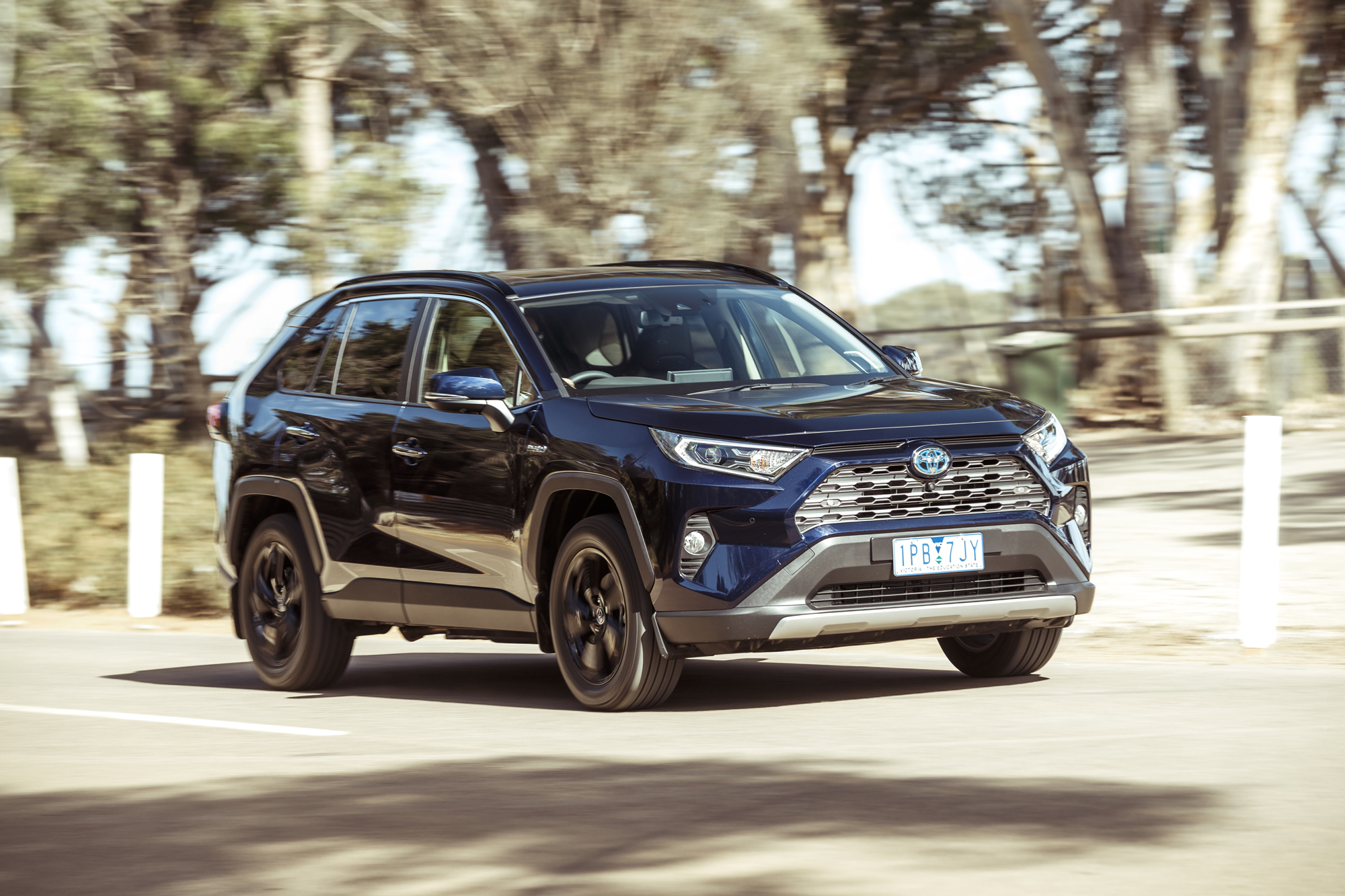
First up was 1994’s RAV4. Sure, like a motoring version of Madonna, inspiration from elsewhere played a role courtesy of Suzuki’s original Vitara of six years earlier. But the genius lay in the execution – similar adventurous styling to the latter, but in place of a cumbersome off-road chassis, Toyota instead jacked up the Corolla platform, raided the Camry/Celica running gear cupboard and fashioned a LandCruiser-lite cabin. Upshot? Nothing less than the invention of the modern SUV. It took just two decades to achieve global domination and sales are still surging.
Speaking of surging, Toyota’s second revolution, of course, was the petrol-electric Prius of 1997, ushering in the hybrid. Now the company has combined its trailblazers in the consumer-baiting form of the all-new RAV4 hybrid. Even the Avengers would think twice before tackling this juggernaut.
Hello, new Rav4
Now in its fifth generation, the latest RAV4 is the second model after the Camry to switch to the snappily titled ‘Toyota New Global Architecture K-platform’. The key points are improved centre of gravity brought on by lower seating and engine placement, wider tracks, a lighter yet stronger body and more rigidly mounted steering and suspension. Dramatically better dynamics, comfort, refinement and noise suppression are the goals.
TNGA-K couldn’t come soon enough. Though a top-three segment stalwart, the previous RAV4 released in 2013 essentially dated back to 2006, and was off the pace in all these areas and more. Did Toyota’s reputation and plain consumer laziness alone keep the old dullard selling? Who could say?
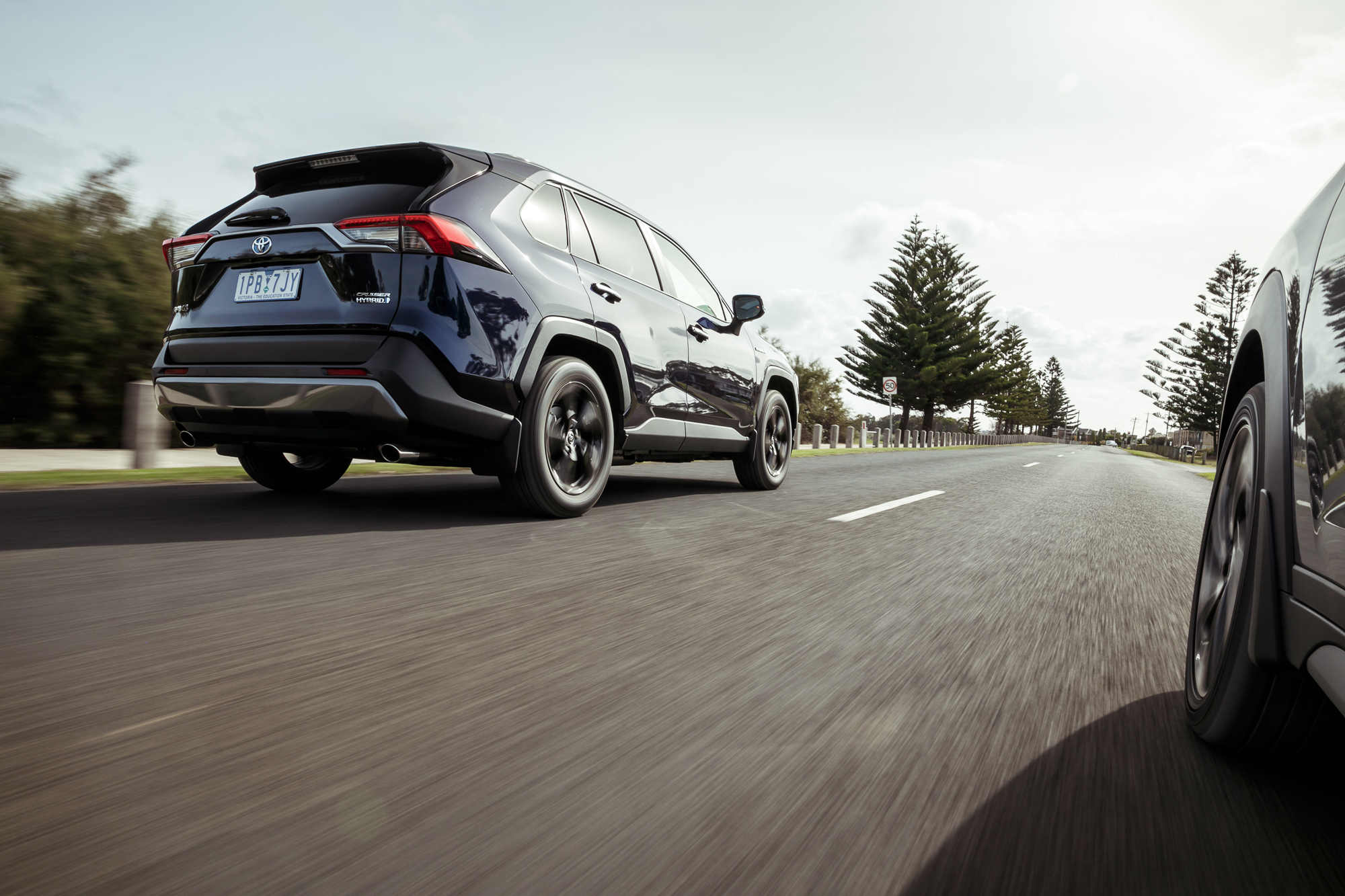
Today’s box-fresh Cruiser Hybrid e-AWD flagship starts from $44,640. The previous diesel equivalent cracked $50K. Equipment levels improve too, with autonomous emergency braking, lane-departure warning with steering assist, traffic- sign recognition, rear cross-traffic alert/braking, adaptive cruise control, auto high beam, configurable instrumentation, sunroof, premium audio, powered driver’s seat with memory, heated front seats, surround-view camera, climate control, wireless charging, DAB radio, powered tailgate and 18-inch alloys. Note some typical Toyota AWOL spec anomalies, though, namely no Apple CarPlay/Android Auto and front passenger-seat height adjustment – a potential pain in the neck for lankier folk.
The hybrid powertrain consists of a naturally aspirated 131kW/221Nm 2.5-litre four-cylinder Atkinson-cycle petrol/CVT combo assisted by an 88kW electric motor on the back axle solely providing torque to the rear and/or assisting the front wheels, as required.
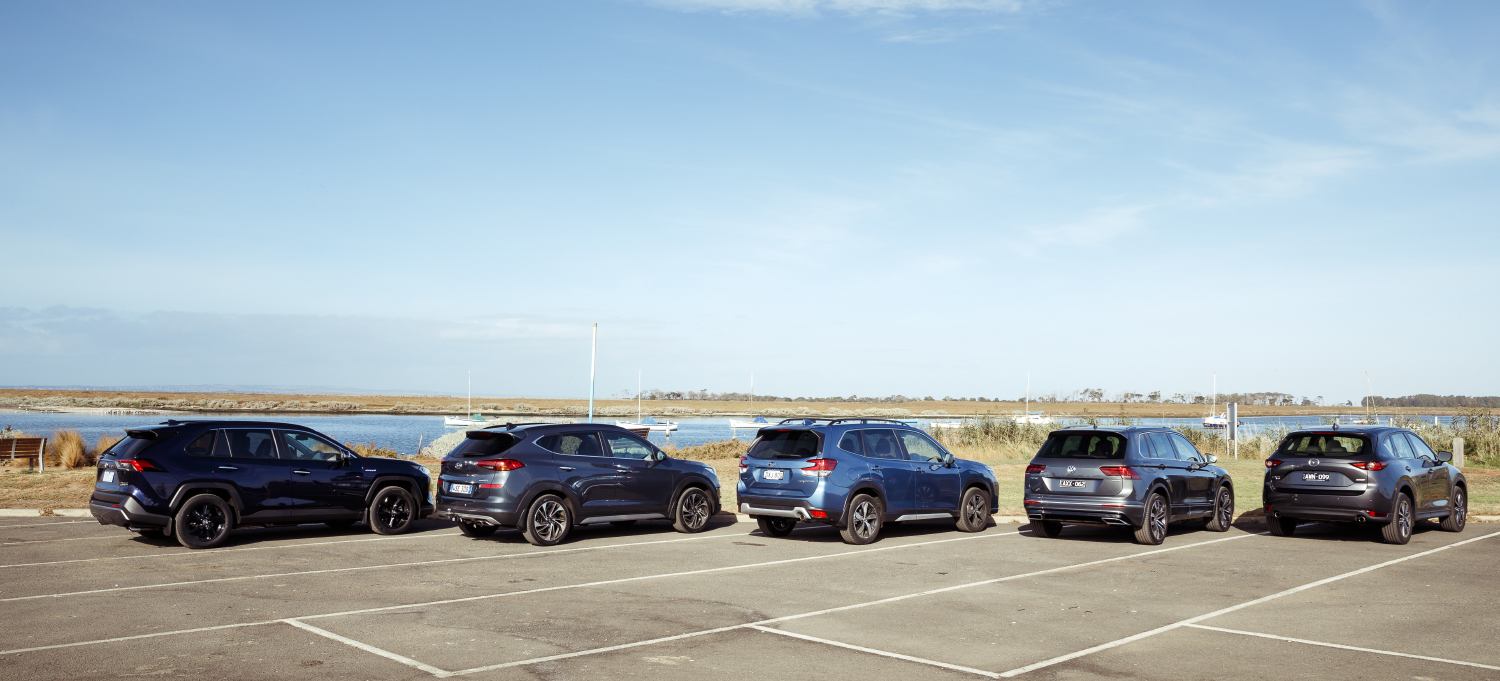
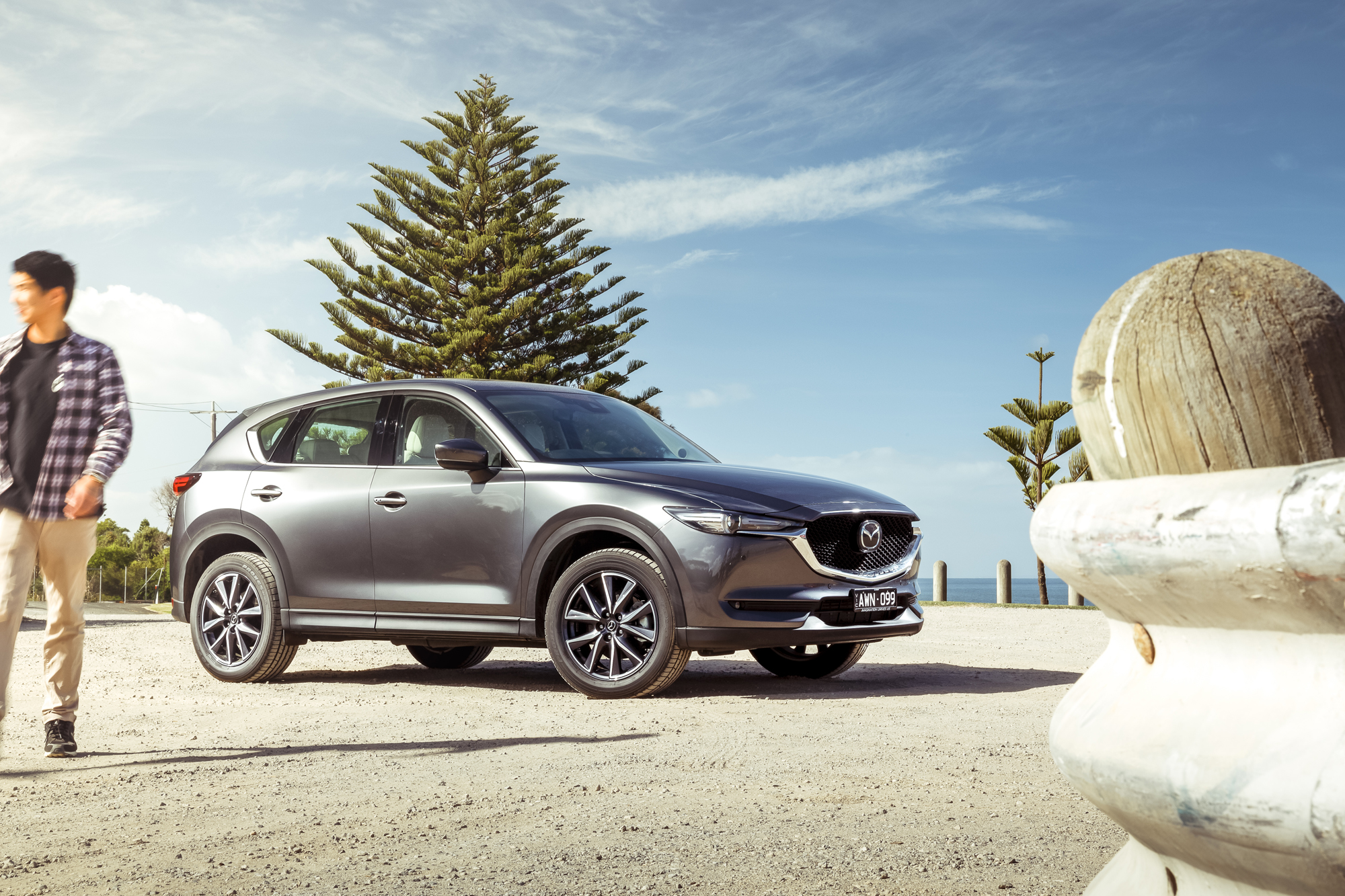
As it’s the most powerful (and intriguing) on offer for now, we’re pitching the Cruiser Hybrid against four of its better higher-grade AWD adversaries – the bestseller (Mazda CX-5), our current class favourite (Subaru Forester), the segment social climber (Volkswagen Tiguan) and the most recently facelifted (Hyundai Tucson).
The rivals
Newly armed with a 170kW/420Nm, 2.5-litre four-cylinder turbo-petrol heart/six-speed torque-converter auto transplant from our COTY-winning CX-9, the $47,890 CX-5 GT Turbo introduces more muscle for the two-year-old second-gen KF series, but sadly for some, there’s squat visual differentiation for the neighbours to notice. Equipment benefits over the RAV4 include a head-up display, adaptive LED headlights and 19-inch alloys – but the lack of a surround-view camera is a bad miss.
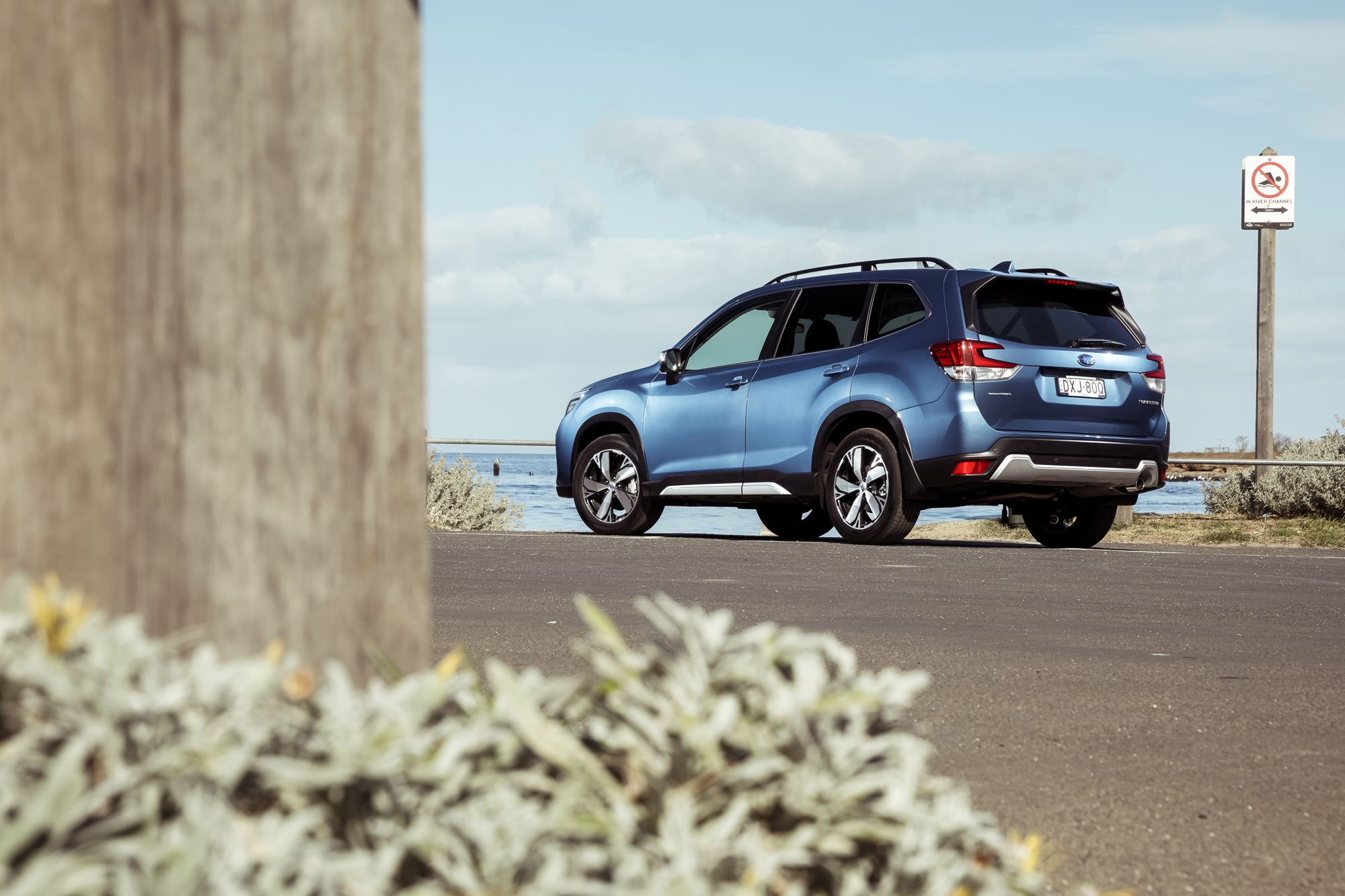
The most expensive version of the fifth-iteration Forester is still the cheapest car here – the $41,490 2.5i-S. New last year, our third Japanese contender also brings the lowest torque on test from its 2.5-litre atmo boxer/CVT powertrain (136kW/239Nm). Yet that didn’t stop it scoring a clear victory against the lower-spec CX-5 Touring, Ford Escape ST-Line and Tiguan 132TSI Comfortline (see Wheels November 2018), so the smart money is on the Subaru. There’s heaps in it, too. Along with much of the aforementioned, it introduces facial recognition tech that memorises individual driving-position settings and also signals when the driver’s eyes stray from the road ahead via a shaming alert. Big Brother much? Don’t expect a bum heater, though.
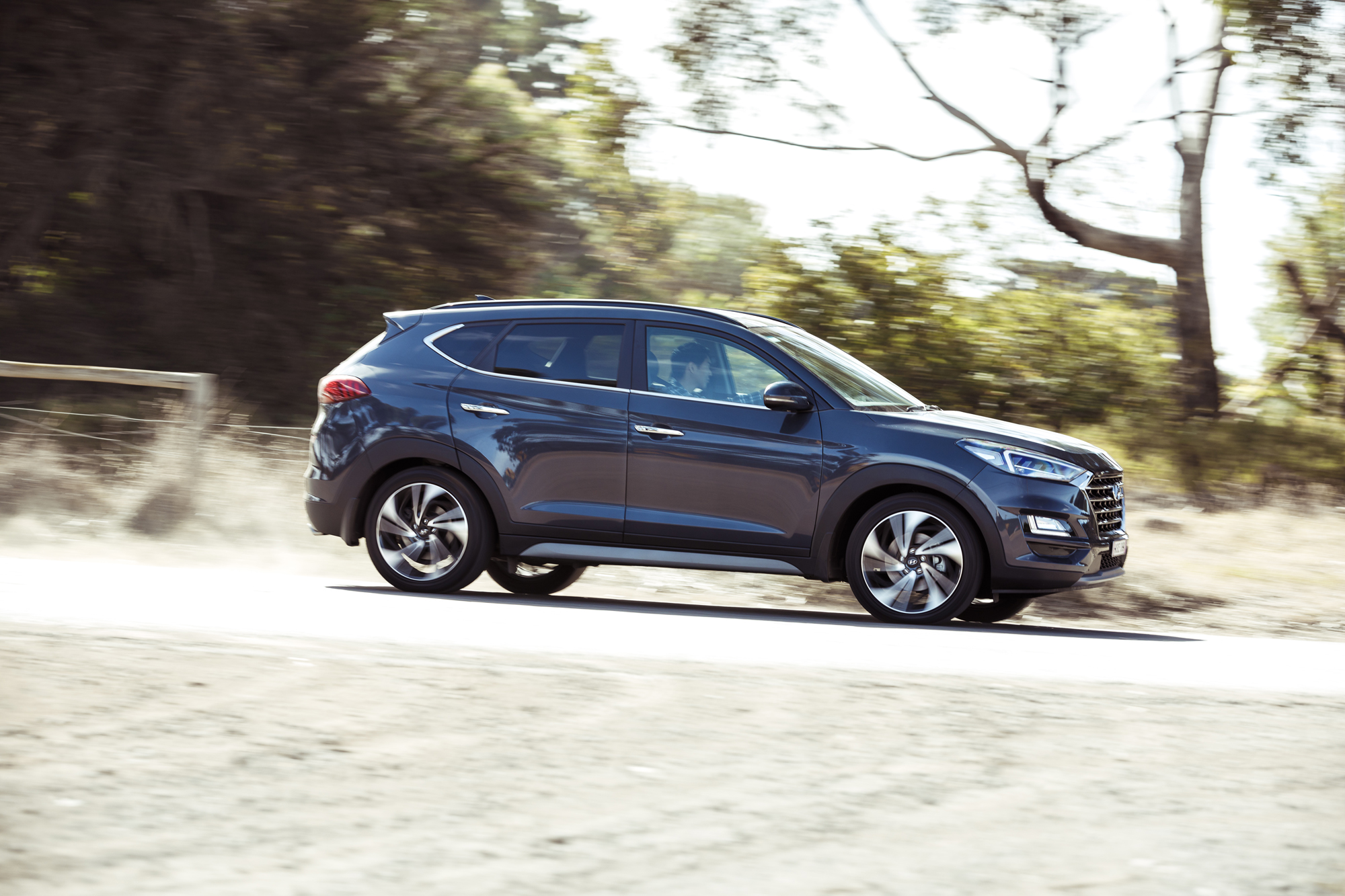
Facelifted after three years in mid-2018 with a nose job, dash makeover featuring a free-standing touchscreen, uprated safety and updated multimedia, the popular Mk3 Tucson in TL Series II Highlander Turbo AWD format meets its opponents for features and then throws down a vast panoramic sunroof, heated steering wheel and cooled front seating gauntlet, all from $46,500. Where the SUV from South Korea falls short is in power – 130kW and 265Nm from 1.6 hard-working turbocharged litres and a seven-speed dual-clutch trannie.
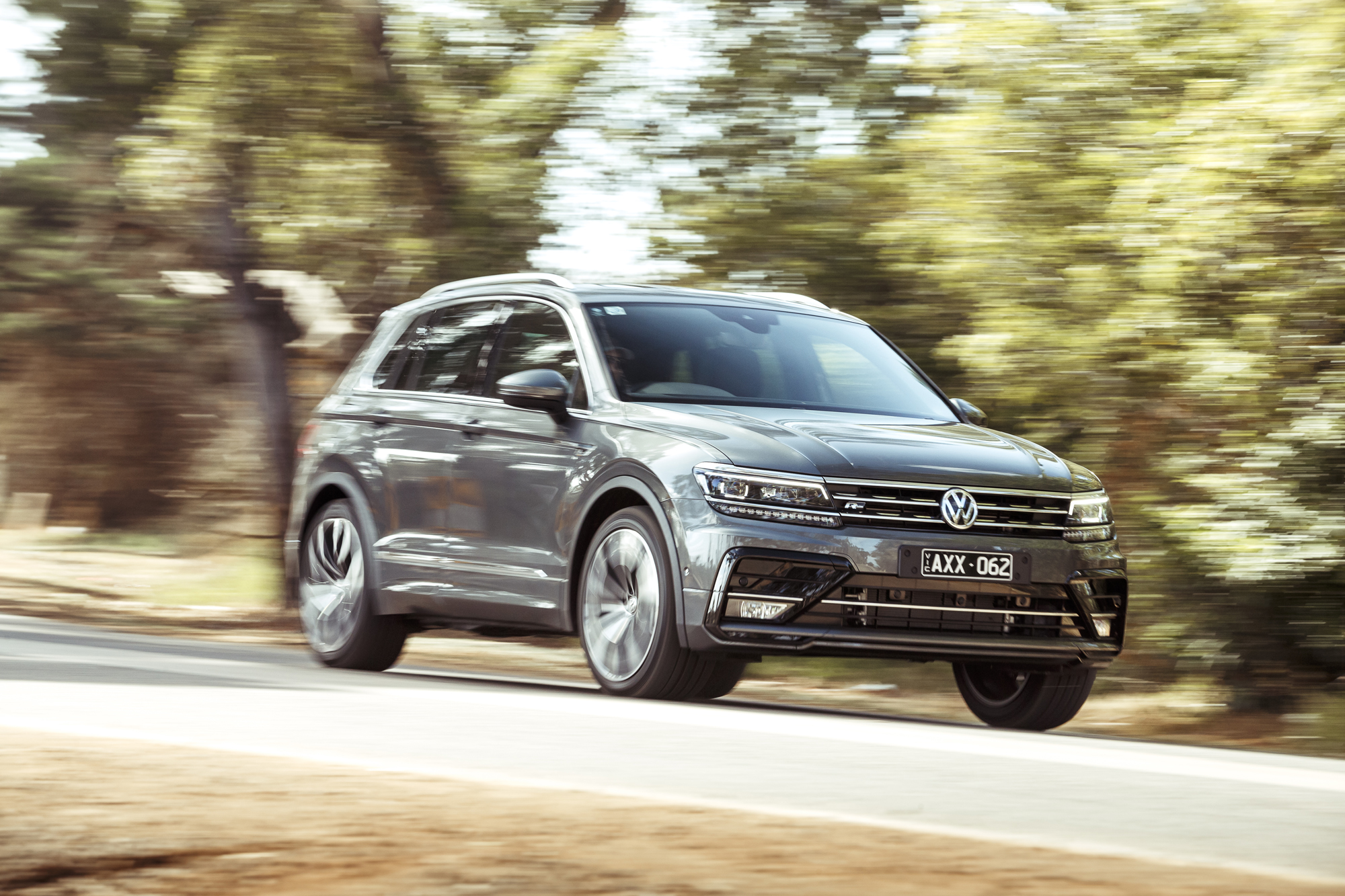
The opposite applies with the Tiguan. Shoehorning the Golf GTI’s 162kW/350Nm 2.0-litre turbo and seven-speed DCT to create the 162TSI Highline 4Motion conjures up tantalising notions of a mid-sized SUV/hot-hatch mash-up, helping justify the 2016-vintage German’s premium $50,150 pricing. Startlingly, it’s also the fastest-selling grade. Ours heaved with extras (racy R-Design kit inside and out, tech-rich Sound/Vision pack, giant sunroof, 20-inch alloys), bumping it up to nearly $59K. And that’s without a DAB+ radio. Still, with the quintet’s only standard adaptive dampers and configurable chassis, as well as a sliding rear seat, airline-style back-seat trays, 12V outlet and 40/20/40-splitting backrest for added versatility, we’re talking business-class travel.
Fun for all the family
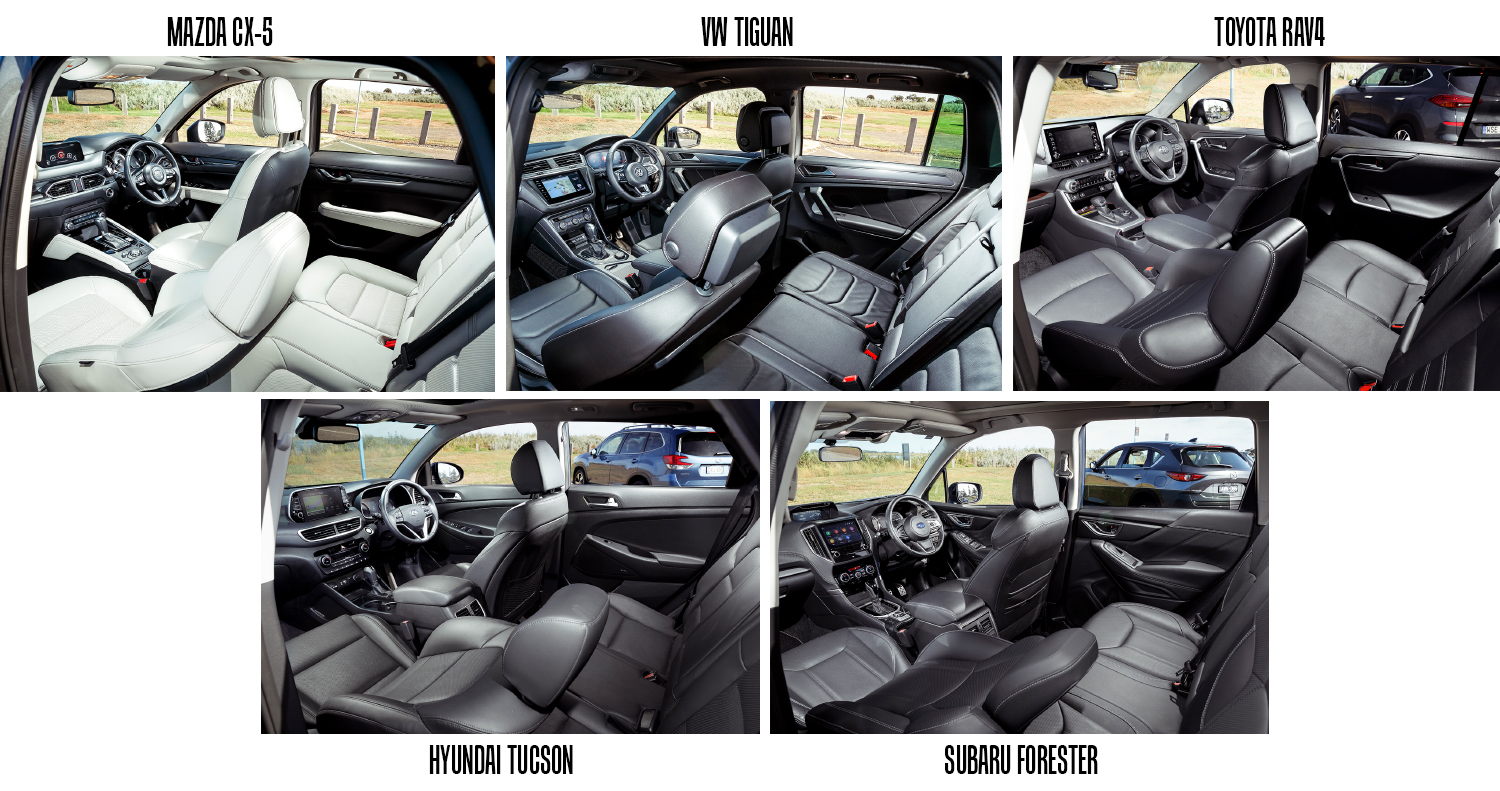
Brandishing remarkably similar dimensions if not designs, all five medium SUVs pass muster as roomy four seaters with an adult-tolerable rear-middle fifth position as required, while also boasting unfettered entry/egress, a fairly sizeable cargo area and the minimum-requirement cupholder and USB ports the modern family demands.
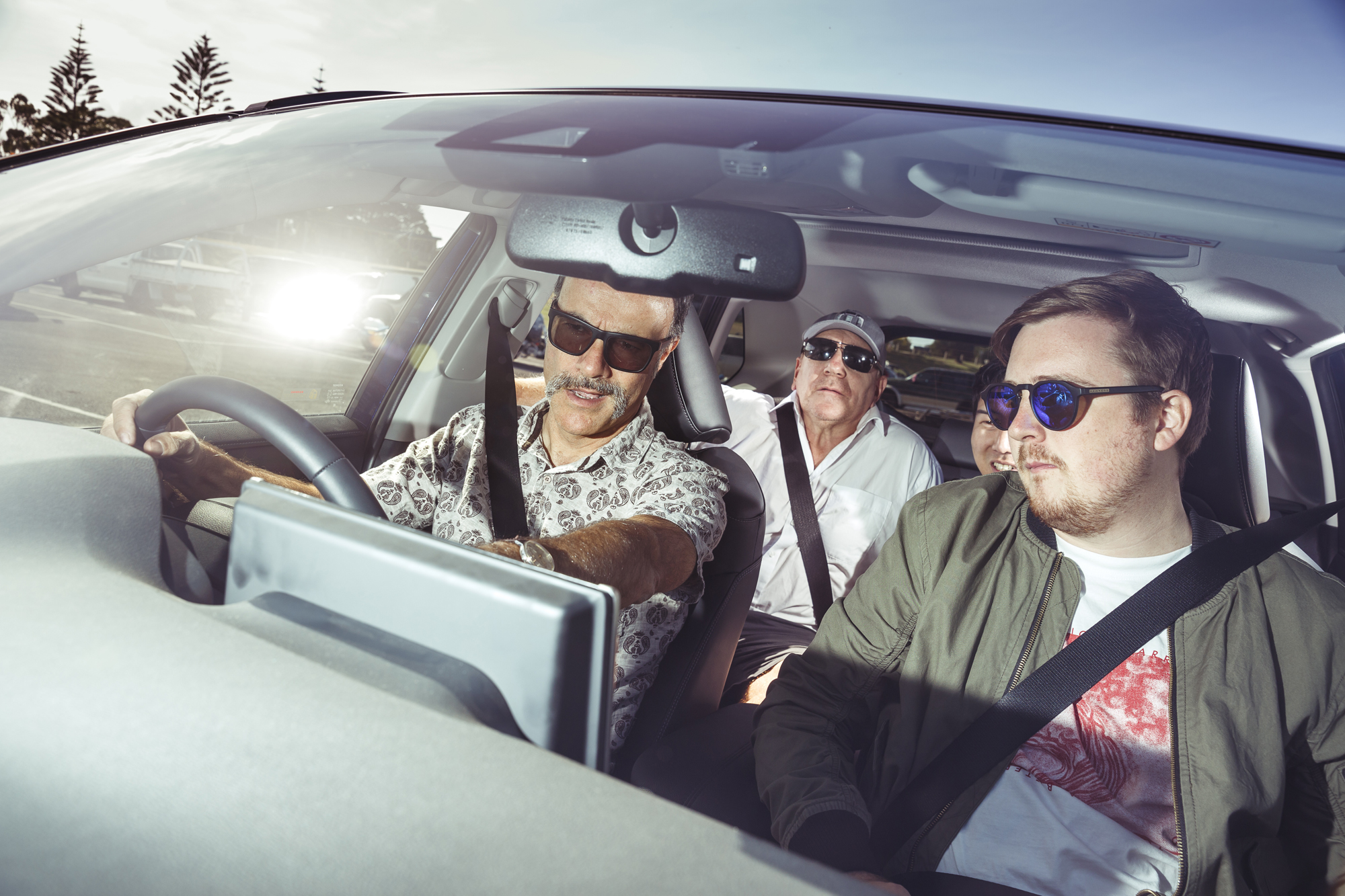
If you’re familiar with the previous RAV4, you’ll recognise the latest Cruiser as a Toyota, but one that’s trying much harder than before. Cheap and cheerless utilitarianism gives way to interesting design and appealing textures that don’t come at the expense of functionality. A real feeling of space, enveloping front seats, pleasing materials, good all-round vision and significantly better refinement represent huge strides for the nameplate, though the central screen’s chintzy little buttons and flair-free graphics may annoy some. And best try before you buy if you’re on the tall side, because the sunroof eats headroom. No remote rear-seat release is a bit mean, too.
If the expansive RAV4 conveys stylish yet practical IKEA-esque modernity then the cosy (though never cramped) CX-5 GT is a triumph of determined self-improvement. Five years ago, we called out the original KE as an SUV of two halves due to a cold, droney and miserable rear cabin undermining Mazda’s great work elsewhere. Nowadays, sumptuous seating, a sporty driving position, thoughtful ergonomics, delightfully tactile switchgear and pleasing consistency define a higher-quality cabin experience than anticipated. Yes, the small-ish central tablet looks a bit clunky, there’s no inductive charging pad and there’s still outside noise intrusion, so some wrinkles are beginning to show, but even a brief stay inside highlights why sales remain so buoyant.
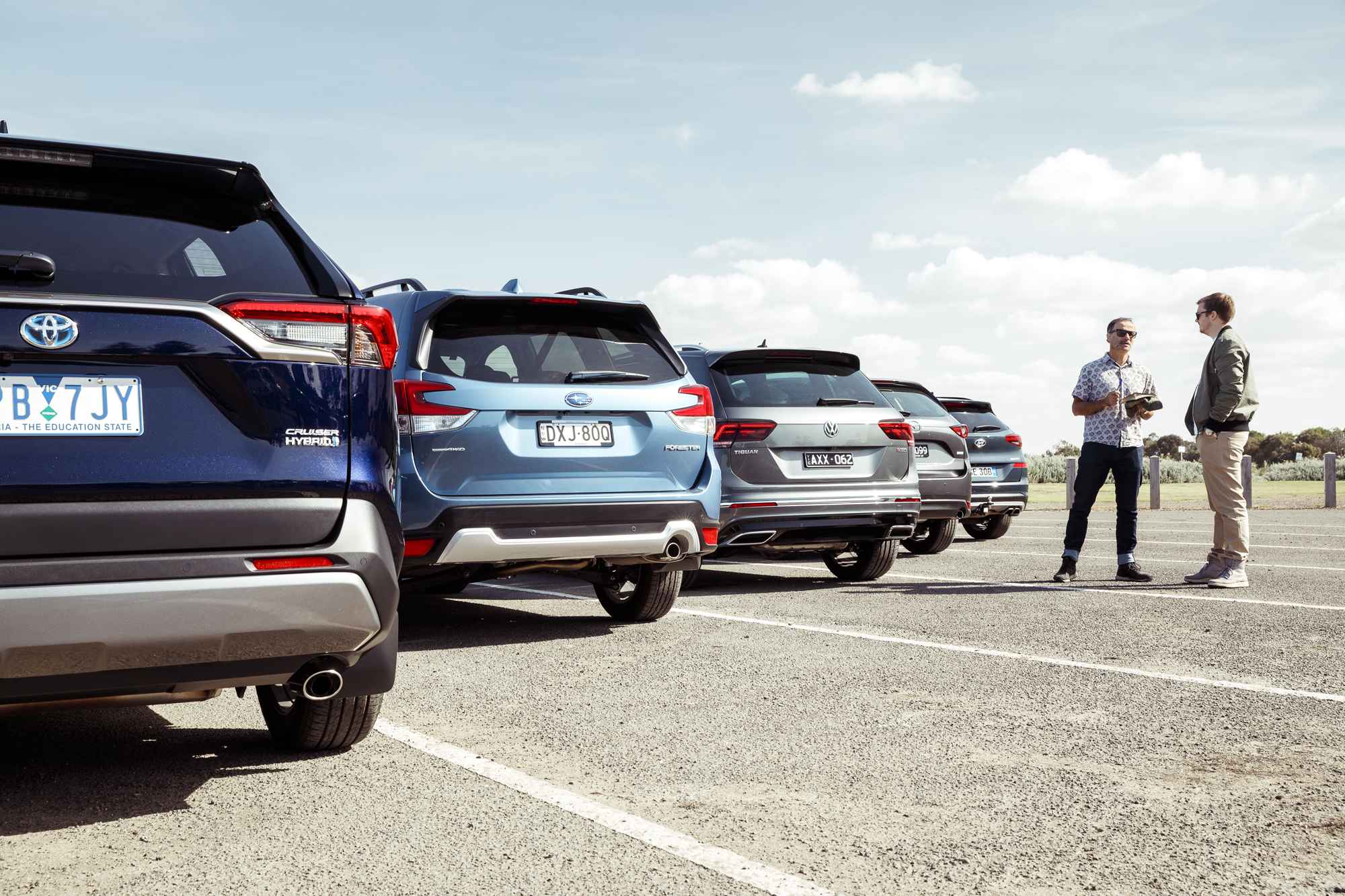
Still, if feeling rich is your deepest desire, then the Tiguan’s appropriately titled Highline R-Line with Sound/Vision package will oblige, offering multiscreen digital instruments and a gorgeously slick multimedia interface to go with the spacious surroundings. Deep windows and that vast sunroof also boost the already opulent cabin ambience, while beautiful, bolstered seating and considered surfacing further elevate the posh Vee Dub’s station in life. You might struggle to find a more capacious cargo area as well. That said, wind noise is an issue, the scaled-up cookie-cutter Golf-aping dashboard architecture is now dated, the rear backrests are too firm, and are seven cupholders encouraging obesity?
The Tucson earns admiration with an on-brand cabin that hardly puts a foot wrong, with ample space, comfy seating and abundant storage. It’s an easy vehicle to come to grips with quickly. Perfect rental fodder. But, aside from the overhead glazing, there’s nothing about the Highlander that suggests flagship, particularly with some obvious hard and scratchy plastics in the second row, while comparatively high road noise and lack of bump absorption means occupants are more likely to be shaken than stirred. Here more than anywhere else the Hyundai is showing its age. As one tester noted, this feels $10K cheaper than the others.
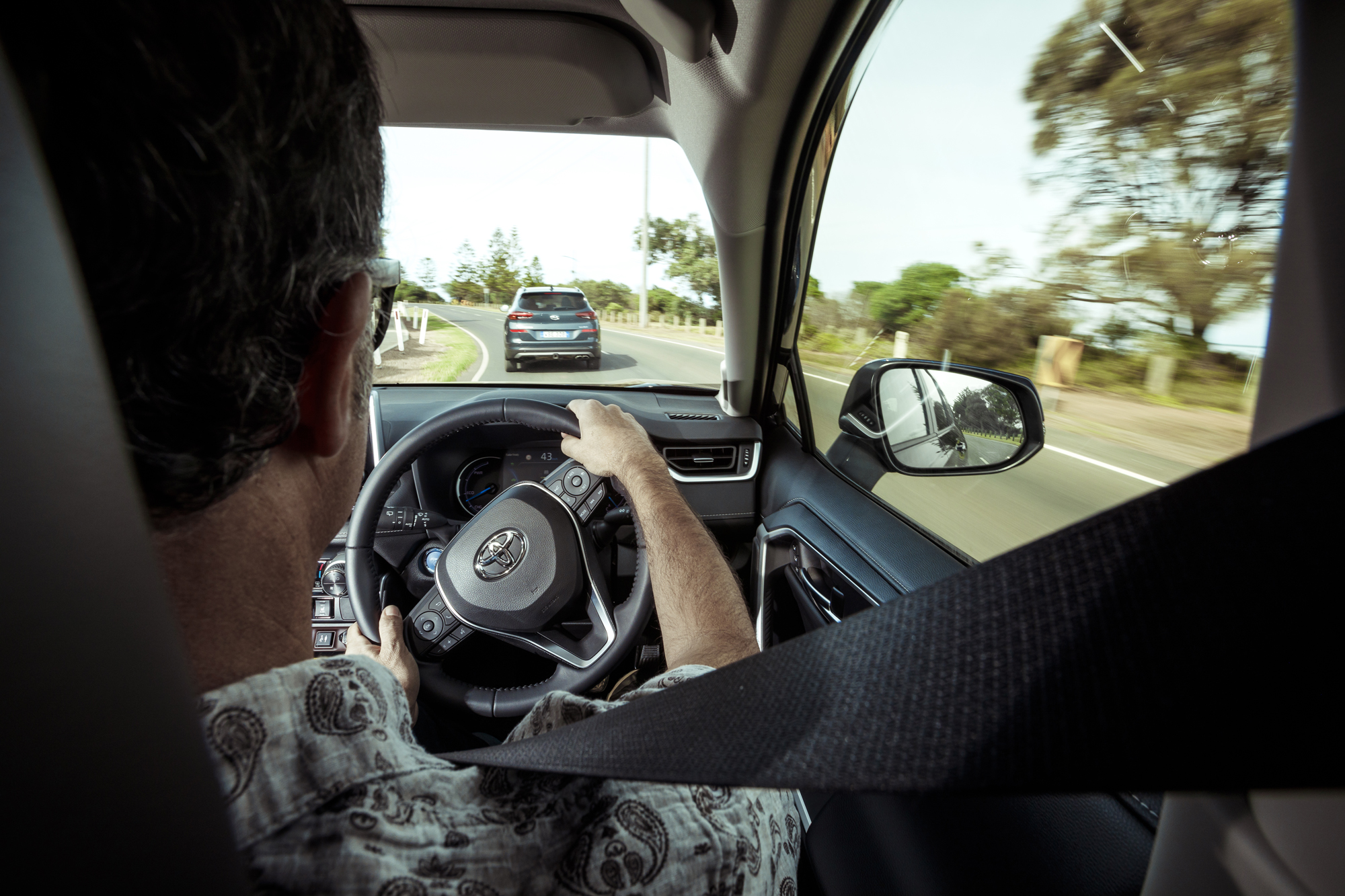
Today’s Forester, on the other hand, seems to exist outside accepted pricing, positioning and fashion parameters, transcending these to deliver a unique user experience. Larger, longer and wider than preceding generations, the latest version truly, madly and deeply feels designed from the inside out, acing its opponents for space, comfort, functionality and vision. The latter is extraordinary, actually, adding an almost unimpeded and confidence-enhancing dimension to driving. Seating and suspension are tuned to cosset and isolate. Controls are reached without stretching or straining, while items can be secured within reach. Dumpy and heavy-handed the design may be, with busy touchscreens bombarding you with data you may wish to ignore, but otherwise the Forester is also endearingly warm and accommodating. Outstanding engineering. Too bad its face looks like a koala.
Time to hustle
There’s an old adage about a brilliantly sorted chassis always being able to cope with a lot more power, and that applies to the Subaru. In isolation, the Forester’s FB25 boxer feels eager off the mark and spirited in the ease with which it gains speed, with the CVT working away unobtrusively in everyday traffic. In normal ‘Intelligent’ mode the performance on offer is more than sufficient, while selecting ‘Sport’ adds a discernible frisson of urgency.
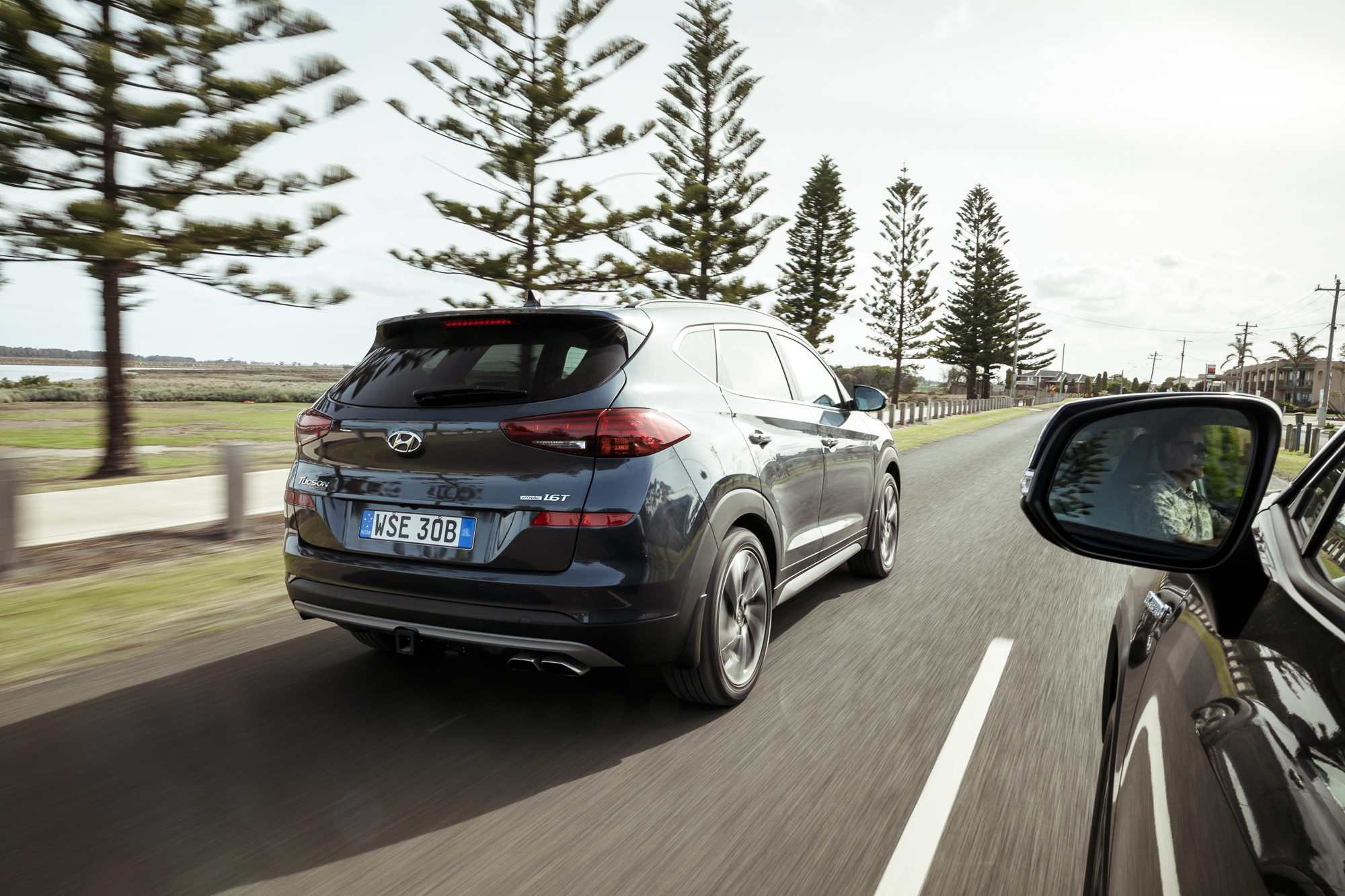
In the company of its turbo and electrically assisted foes, however, the Forester struggles to keep up, unable to crack nine seconds to 100km/h and lagging behind the rest across most increments. It does beat the smaller-capacity Tucson by 0.1sec between 80-120km/h though, proving there is no substitute for cubic inches. Planting the throttle also elicits a tiresome drone as the CVT digs its heels in. What the 2.5i-S’ engine needs is a big fat turbine. At least it’s the least thirsty out of the non-hybrids, so there is some consolation.
The Hyundai, on the other hand, has a hard time on both counts. An 8.4sec result racing to 100 is actually respectable, with the DCT plucking the appropriate ratios with inconspicuous ease. The lack of lag and very natural feel of it means you’d be hard-pressed to pick it as a dual-clutch gearbox. However, the 1.6 turbo has to be in its sweet spot to really sing, and with that come levels of mechanical clamour unwelcome to those seeking silence. And the numbers don’t lie; once in triple-digit speeds, there just isn’t the oomph on tap and the Hyundai starts to run out of steam sooner than later. Plus, there’s a price to pay at the petrol pump, with the Highlander proving to be the thirstiest on test at 12.3L/100km.
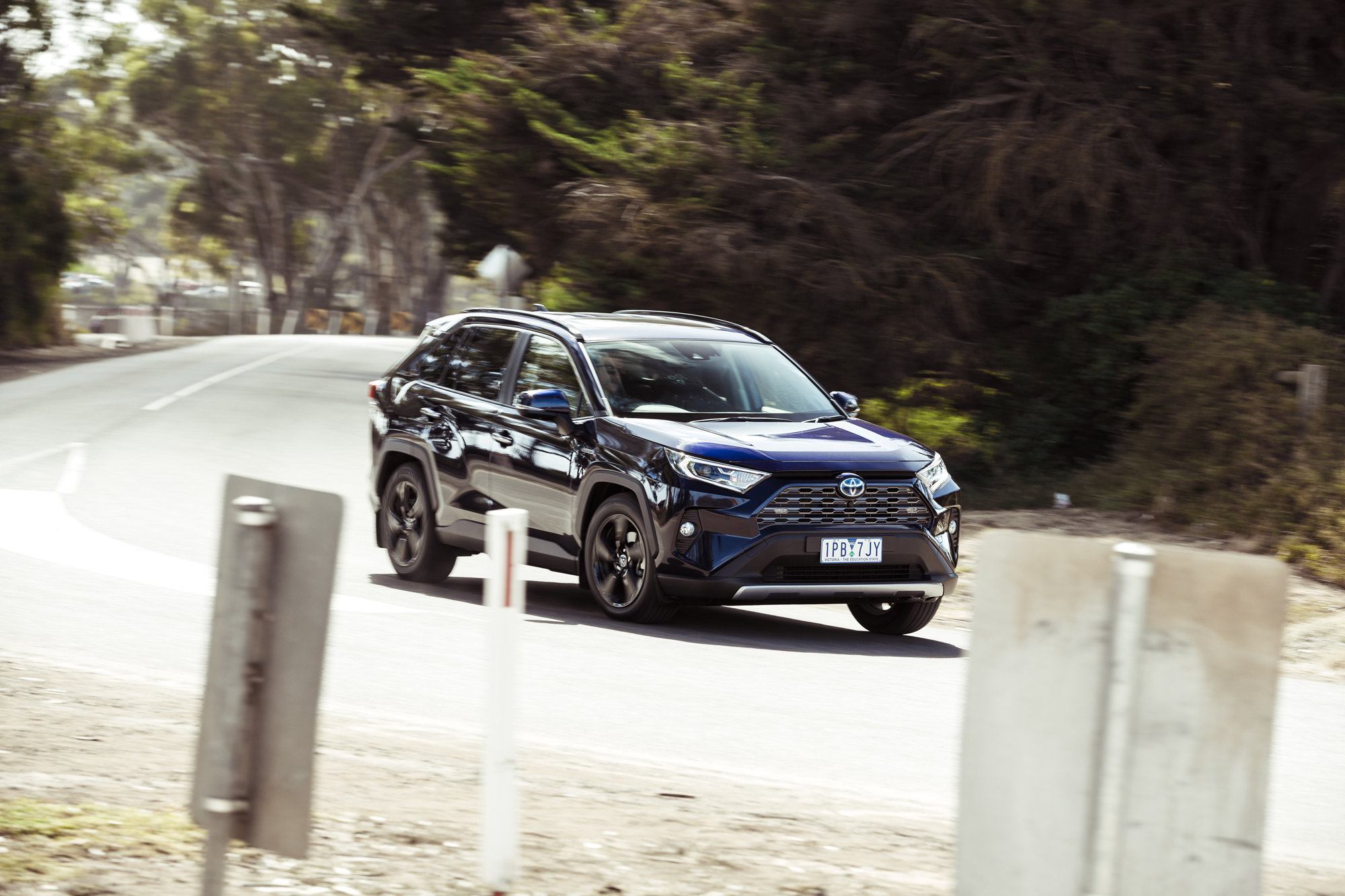
The group’s heavyweight at 1745kg, the portly Toyota’s party trick is its groundswell performance delivery that brings a deep, velvety well of mid-range torque for punchy overtaking abilities while returning a headline economy figure of just 8.7L/100km. Also armed with a CVT, it isn’t especially musical as the engine’s revs rise, bellowing out a thrashy rebel yell if you’re feeling particularly punky, but there’s speed on tap to savour. While 8.0sec to 100 is barely half a second better than the Hyundai, a 5.2sec 80-120 catapults the hard-charging 221Nm RAV4 into the 420Nm CX-5 turbo sphere, with vigour to spare. The hybrid/CVT combo feels ready and robust, rarely if ever getting caught out by terrain or driver inattentiveness.

Then there’s the Mazda, which delivered slightly muted performance given its engine spec. While measurably brisker than its atmo sibling, the 2.5 turbo’s 7.5sec best to 100 is substantially adrift of the less torquey Tiguan, which blitzed through in a sizzling 6.6sec. The numbers reveal a turbo that’s more about boosting the GT’s mid-range muscle than pinning occupants into their seatbacks at a touch of the throttle. Tipping the scales at just 10kg less than the Toyota hybrid as well as having only six speeds might also explain the CX-5’s voracious appetite for unleaded – 11.9L/100km versus a reasonable 10.7L for the 83kg-lighter Volkswagen. Note, however, that the Hiroshima SUV is the only auto on test with a forward-down tip-shift pattern, reflecting its driver focus.
On that subject, one-time Golf GTI owners craving to put fun back into functionality may finally have something to put their growing families in. Sweet-sounding and punchy across the whole rev range – and especially so with the Sport setting switched on – the 162TSI’s powertrain provides the group’s hot-rod sensation right from the onset, as revealed by further feverish performance figures: 80-120 in just 4.6sec, 14.9sec to 400 metres compared to the Mazda, next best at 15.5sec. That’s with barely 900km on the odo against the Mazda’s 4600km. And the Volkswagen ought to only improve with age.
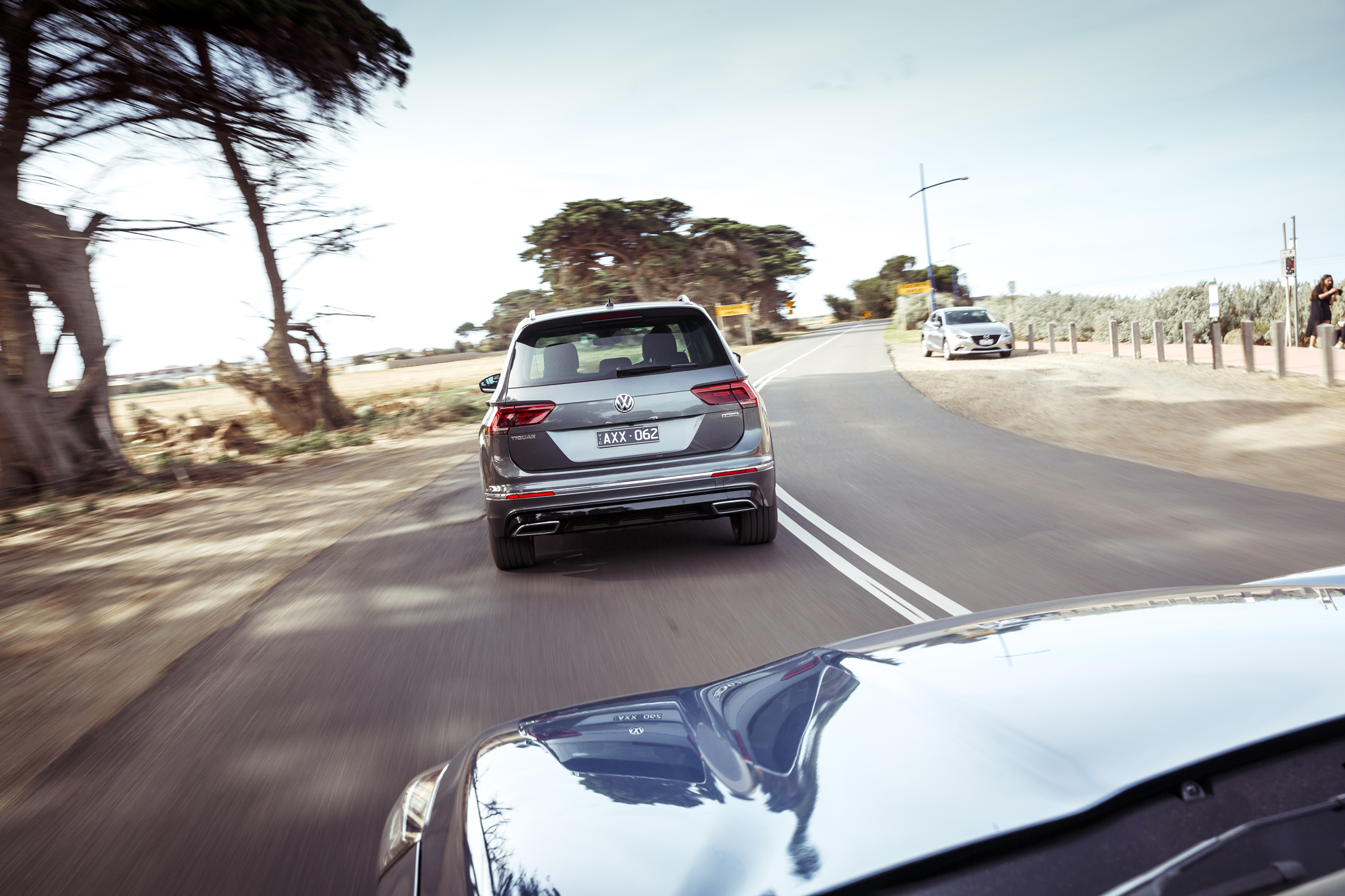
The big question is, though, is the 162TSI essentially a Tiguan GTI? Sadly, no, because in Wolfsburg’s case, even with adaptive dampers and a sport chassis tune, there isn’t the dynamic deftness to gel with all that power. On the positive side, the variable steering is promisingly sharp at lower speeds, and grip over the dry, hilly roads we raced across is prodigious. Beyond that, though, there’s just too much body lean and understeer for fast, fluid handling fun. Press on and the helm feels distant and inert, too.
At least the adaptive dampers largely compensate for the 20-inch alloys, with impressive bump (and reasonable noise) suppression. However, an underlying stiffness remains, prevalent over smaller-frequency irregularities. You’d never call the 162TSI’s suspension supple. Except, perhaps, compared to the Tucson.
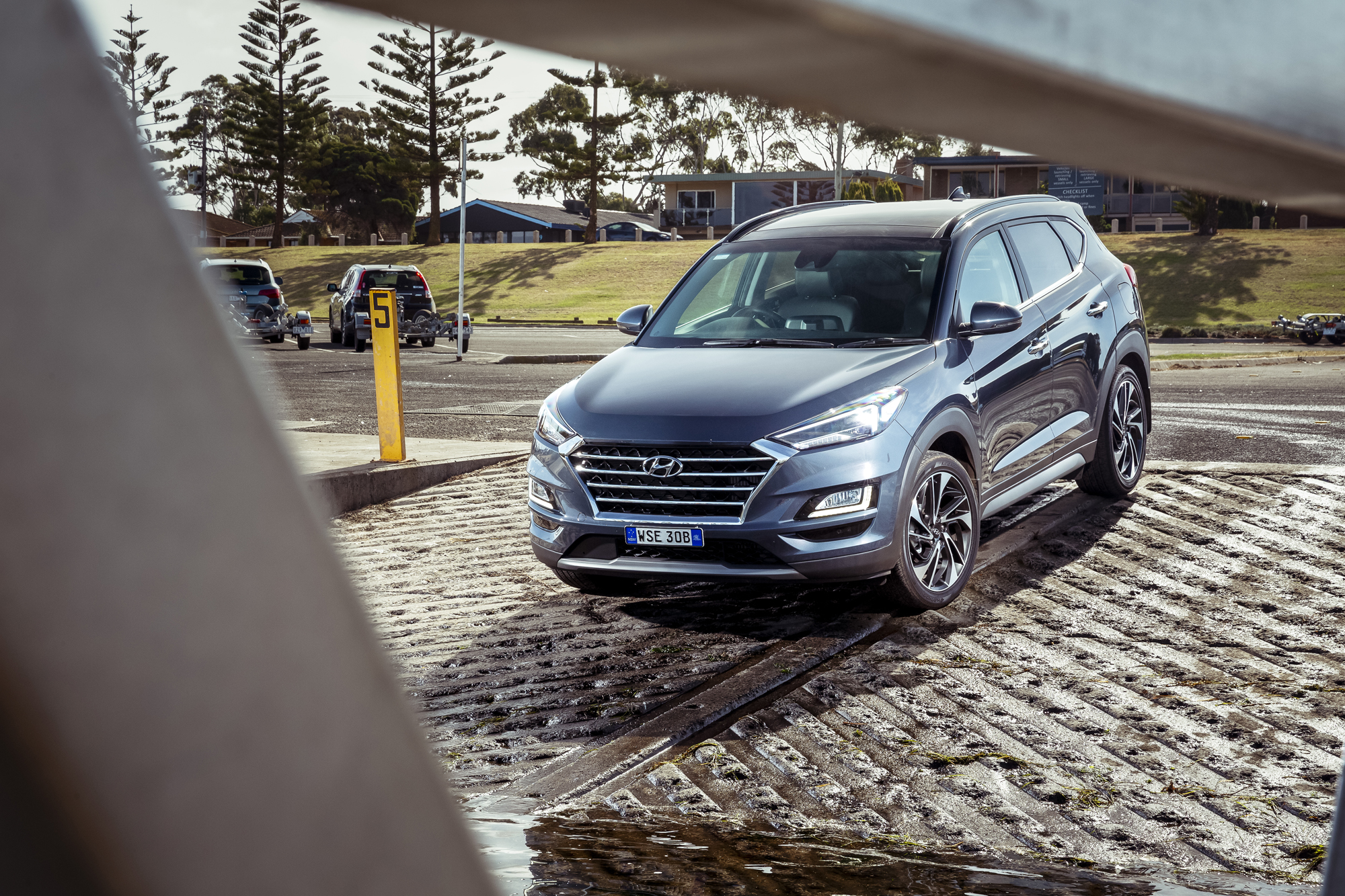
Hyundai, like Kia, loves to remind the media of the substantial Aussie tuning carried out, and subsequently the Highlander delivers decisive steering responses for confident and controlled handling. On a smooth ribbon of blacktop, the whole chassis gels together with pleasing fluency and focus. It can be a real hoot if you’re in the mood for a hoon. Maybe a name change to Torino might be more appropriate. But rougher patches reveal a firm, jittery ride, with lateral pitching and plenty of patter transmitting through to upset the serenity.
The very opposite set of characteristics define the CX-5. Quieter, more comfortable and more contained, the Mazda deals with the bad stuff underneath with a firm yet calming hand that only trembles over really chatty surfaces. But the steering is neither weighty nor talkative enough, and that’s an issue given it’s also unexpectedly reactive. The outcome is a nervous feel at speed. Fast, flowing cornering isn’t always achievable as two bites at the wheel may be necessary. There isn’t that nice four-square progression into roll through faster turns that the Subaru seems to naturally deliver.
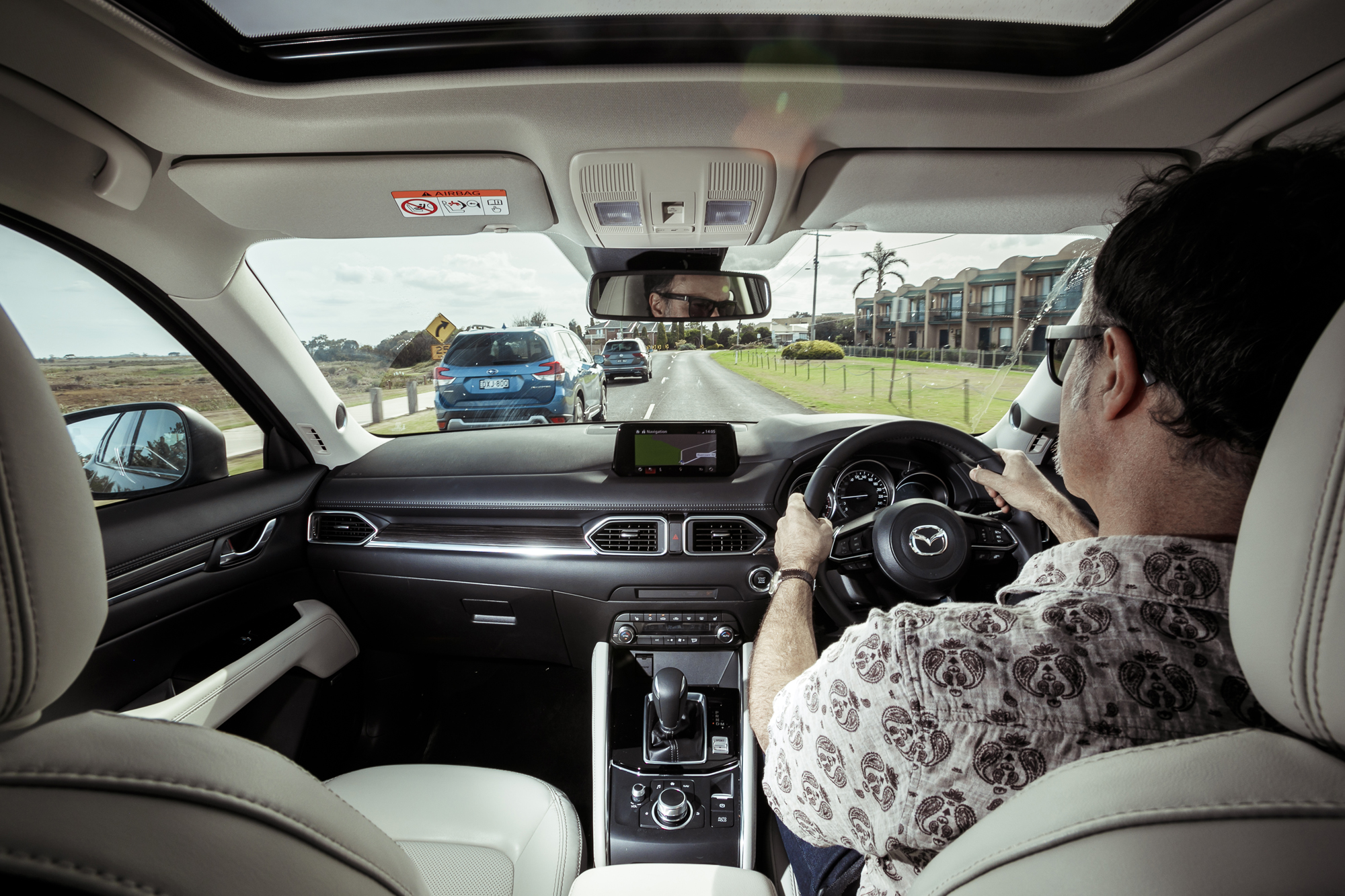
If comfort and control are paramount, seek out a Forester. The body likes to lean, but the handling is viceless and roadholding unshakable; and while the steering could provide a bit more feedback, unflappable relaxation is the name of the game here – helped out in no small way by the confidence-enhancing vision out. And nothing came close to the Subaru’s almost supernatural ability to soak up bumps. It finds its own pace and rewards the driver regardless of speed or load.
So where does this leave the RAV4? It’s as if Toyota studied and learned from the trials and tribulations of others, resulting in steering that’s nicely weighted and responsive; agile and precise handling; and confident, faithful roadholding. And while not quite as plush as the Forester’s, the ride quality remains remarkably isolated and controlled. Only the occasionally grabby brakes – a long-time hybrid foible – annoy. The Cruiser rarely drops the ball dynamically.
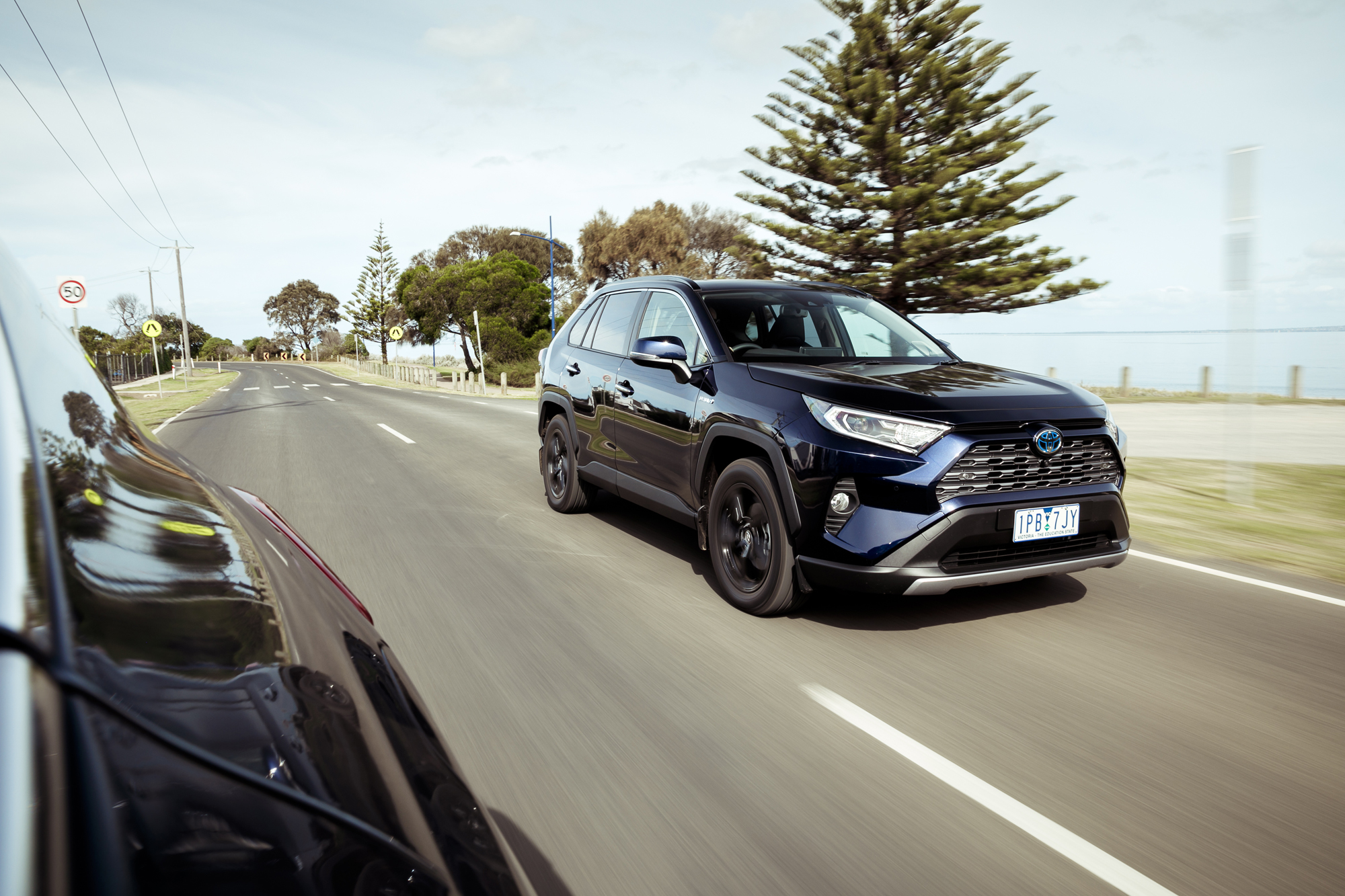
Coming to a boil
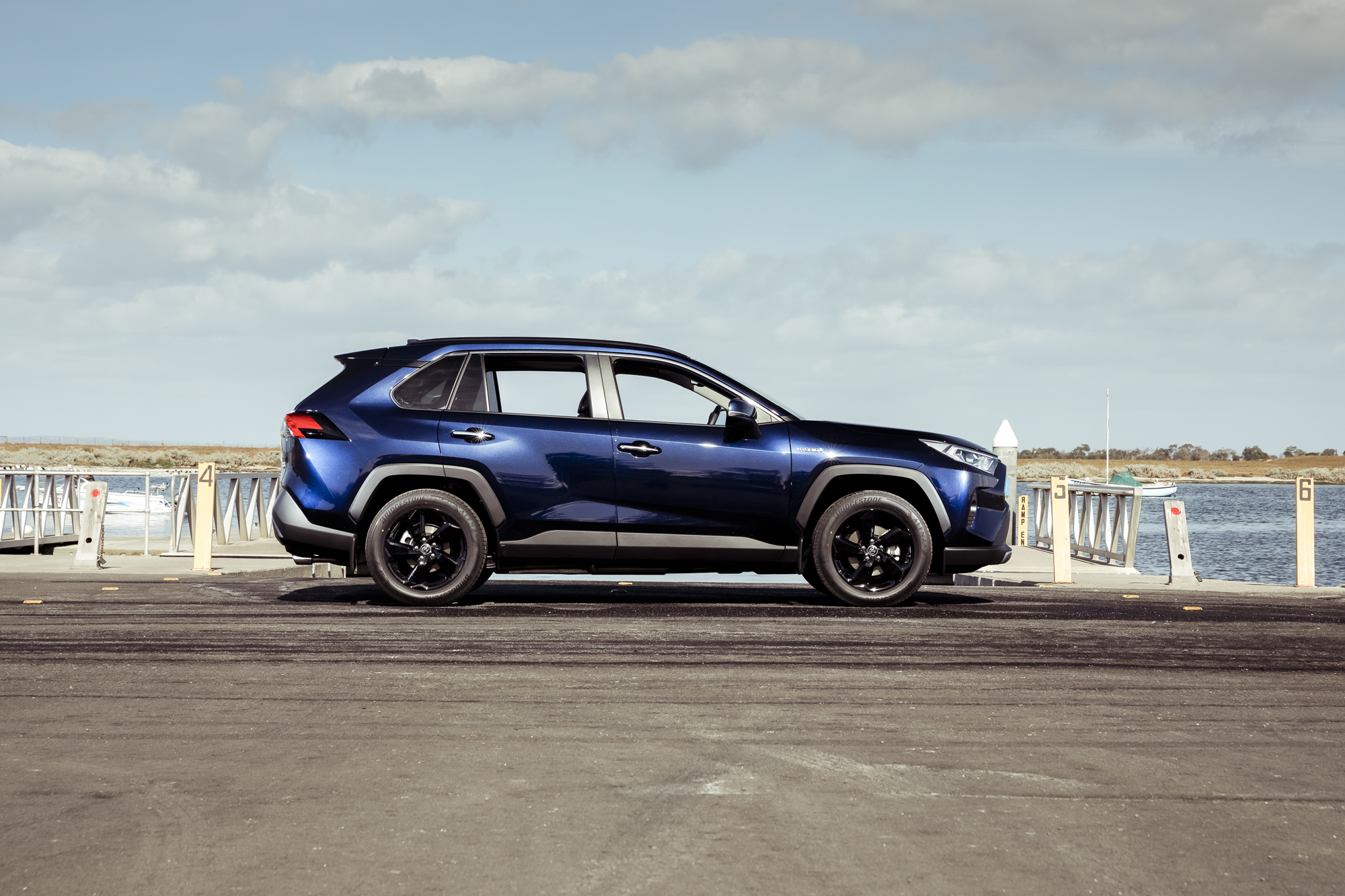
That’s why, for the first time in over a decade, a RAV4 wins a Wheels comparison. Not by much, for the Forester’s core attributes – bar-raising comfort, vision, safety and value – remain, but the Toyota hybrid is always close behind in all these and ahead in cargo space while offering palpably better performance and even better fuel economy. When the petrol-electric Subaru arrives, the order may reverse.
For different reasons, a similarly minuscule gap separates the charming Mazda and ripsnorting Volkswagen, but the CX-5 offers greater consistency. The Tiguan soars with searing speed, efficiency and packaging, but prices itself perilously close to luxury alternatives.
Which leaves the fun and frisky Tucson – still compelling in terms of accommodation and ease of operation, and truly a hoot to hustle hard thanks to self-assured handling. But the Hyundai is getting on, isn’t cheap, and is prone to restlessness and rowdiness. It would rather raise a drink than raise a bar.
That’s now the RAV4’s thing. Toyota has forged ahead in the biggest game in town.
Mid-size SUV specs comparison
TOYOTA RAV4 HYBRID | SUBARU FORESTER 2.5i-S | MAZDA CX-5 GT TURBO | VW TIGUAN 162TSI HIGHLINE | HYUNDAI TUCSON HIGHLANDER | |
Price | $44,640 | $41,490 | $47,890 | $50,150 | $46,500 |
Engine | in-line 4cyl, dohc, 16v + motor | flat 4cyl, dohc, 16v | in-line 4cyl, dohc, 16v, turbo | in-line 4cyl, dohc, 16v, turbo | in-line 4cyl, dohc, 16v, turbo |
Layout | front engine (east-west), all drive | front engine (east-west), all drive | front engine (east-west), all drive | front engine (east-west), all drive | front engine (east-west), all drive |
Capacity | 2487cc | 2498cc | 2488cc | 1984cc | 1591cc |
Power | 163kW (total system output) | 136kW @ 6000rpm | 170kW @ 5000rpm | 162kW @ 6200rpm | 130kW @ 5500rpm |
Torque | 221Nm @ 3600-5200rpm | 239Nm @ 4000rpm | 420Nm @ 2000rpm | 350Nm @ 1500-4400rpm | 265Nm @ 1500-4500rpm |
Trans. | CVT | CVT | 6-speed automatic | 7-speed dual-clutch | 7-speed dual-clutch |
Weight | 1745kg | 1617kg | 1720kg | 1637kg (tare) | 1666kg |
Boot | 580 litres | 498 litres | 442 litres | 615 litres | 488 litres |
Fuel | 91 octane/55 litres | 91 octane/63 litres | 91 octane/58 litres | 95 octane/60 litres | 91 octane/62 litres |
Economy | 8.7L/100km (test average) | 10.1L/100km (test average) | 11.9L/100km (test average) | 10.7L/100km (test average) | 12.3L/100km (test average) |
ANCAP | Not tested | Five-star | Five-star | Five-star | Five-star |
0-100km/h | 8.0sec | 9.2sec | 7.5sec | 6.6sec | 8.4sec |
80-120km/h | 5.2sec | 5.9sec | 5.3sec | 4.6sec | 6.0sec |
100km/h-0 | 37.6m | 39.5m | 37.3m | 37.7m | 36.1m |
Verdict | 8.5/10 | 8.5/10 | 7.5/10 | 7.5/10 | 7.0/10 |
Aston Martin has officially rechristened its upcoming AM-RB003 hypercar as the Aston Martin Valhalla, solidifying its claim that it will “draw from the ethos and DNA of the Valkyrie”.
Named after the heavenly warrior paradise of Norse mythology, the Valhalla name draws a mythological connection to the Valkyrie’s, which in itself is reference to the maidens that is said to collect and accompany the souls of the fallen into Valhalla.
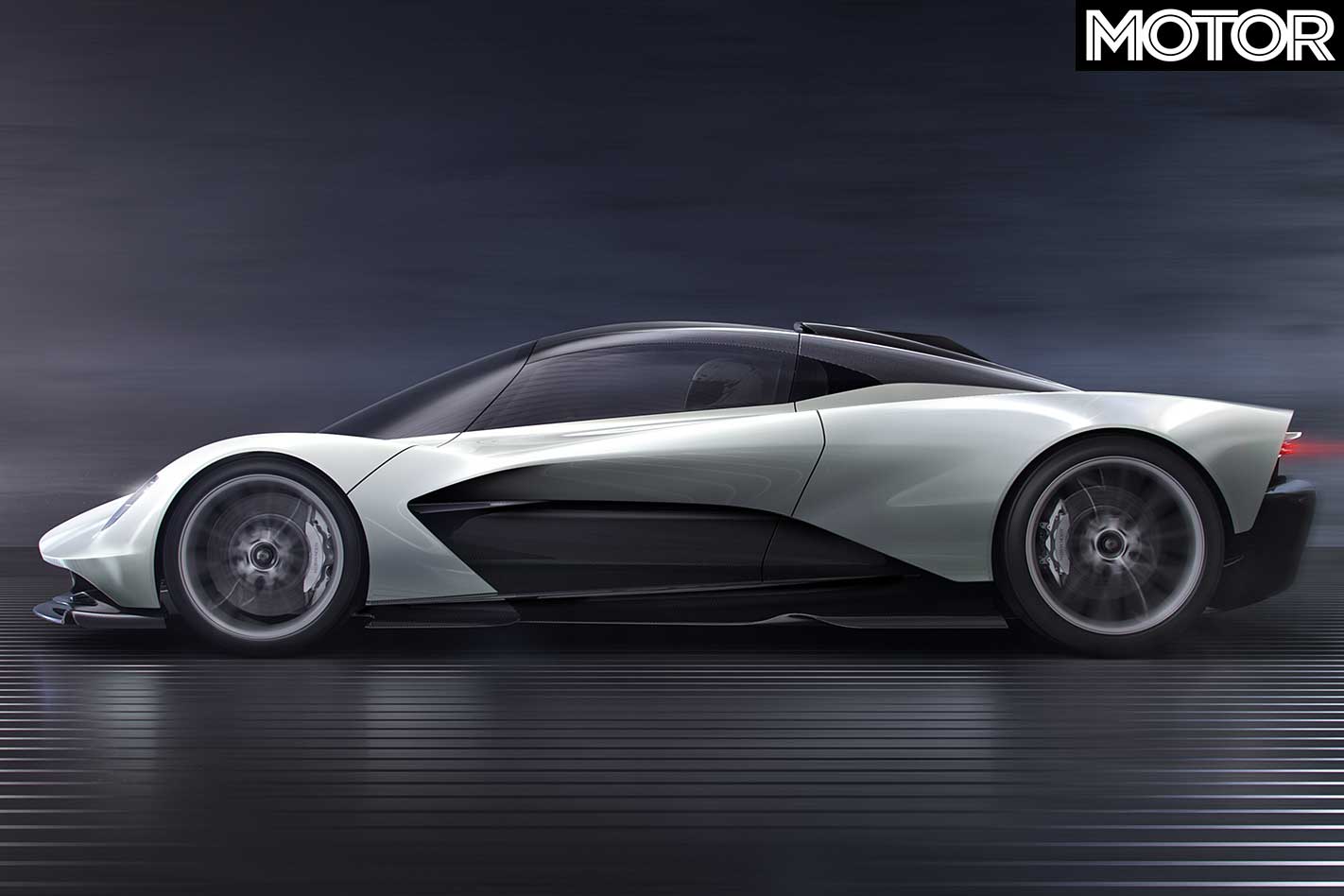
The Valhalla name is also a natural fit in Aston Martin’s tradition of ‘V’ cars, which stretches back to 1951 when the company created a ‘Vantage’ high-performance variant for the DB2.
The ‘Vantage’ name would officially appear on the high-performance variant of the DB5 in 1964. Since then Aston Martin had introduced other ‘V’ model lines such as the Virage, Vanquish, and the Vulcan.
Nomenclature aside, like the Valkyrie, the Valhalla is also the work of Aston Martin’s collaboration with Red Bull Technologies and F1 aerodynamic maestro Adrian Newey.
The Valhalla is said to employ the same all carbon fibre lightweight construction methods and advanced aerodynamics that will be utilised in the Valkyrie, though it will feature a new turbocharged V6 engine paired with a hybrid system instead of the Valkyrie’s hybridised naturally-aspirated V12 drivetrain.
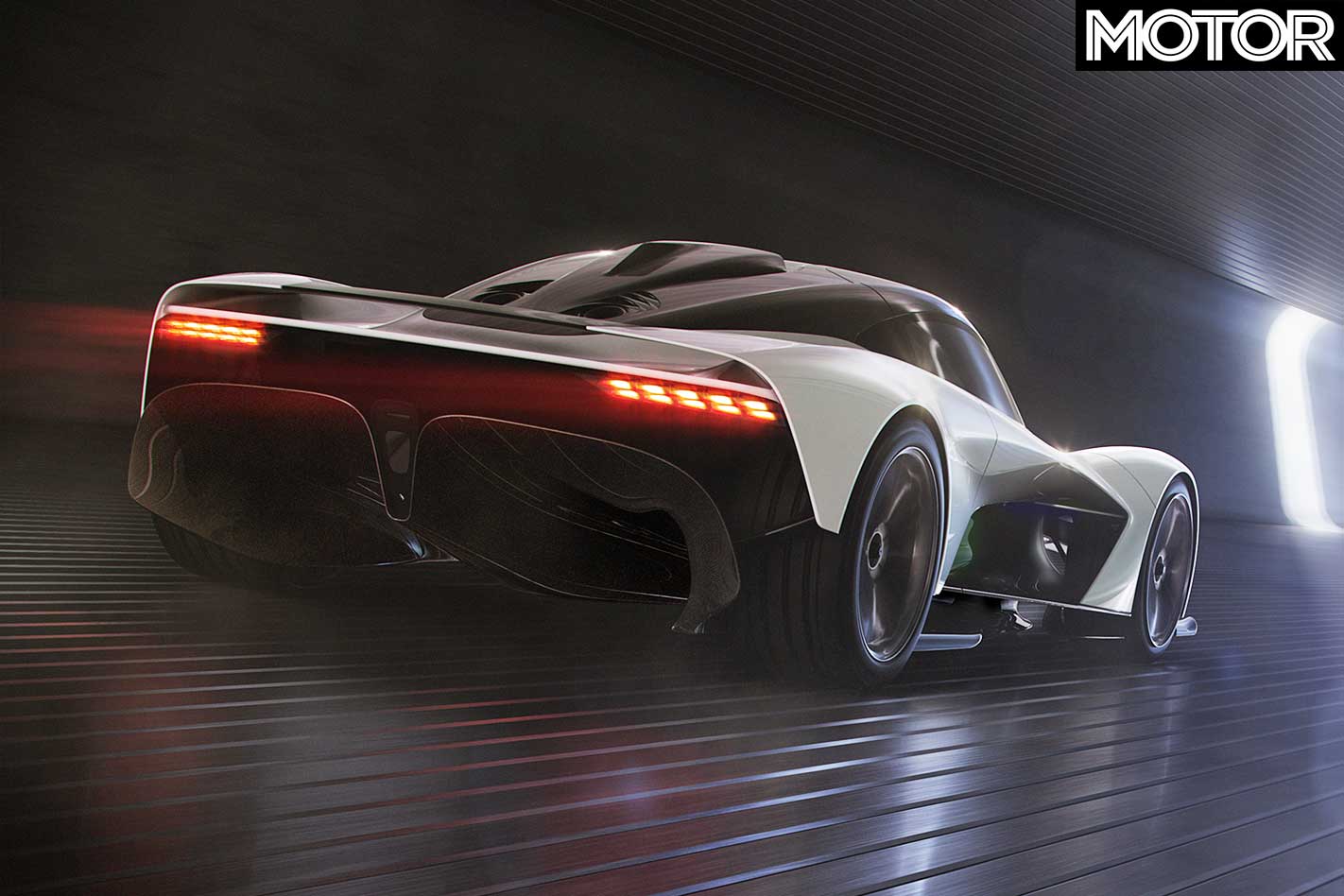
At this point Aston Martin has yet to confirm any projected power or performance figures, and has reiterated that production will be limited to 500 Coupes.
“For those fortunate enough to own one I’m sure they will recognise and appreciate the name’s connotations of glory and happiness, for there can be few more hallowed places than the driver’s seat of an Aston Martin Valhalla,” assures Andy Palmer, president of Aston Martin Lagonda.
Like it or loathe it, the Valhalla name definitely rings better than Aston’s DB “David Brown” designation.
Coming into the end of financial year we’ve had a look at some of the trends the Australian car market is currently experiencing, and no surprises here, SUVs are still one of the most popular cars being bought in Australia right now.
Medium SUVs are still best represented overall, with 80,871 sold year-to-date against 54,248 small SUVs and 49,953 large SUVs. But which models are the best-selling of all? Here are the most popular five SUVs that Australians are buying right now:
Mazda CX-5
11,045 sales YTD
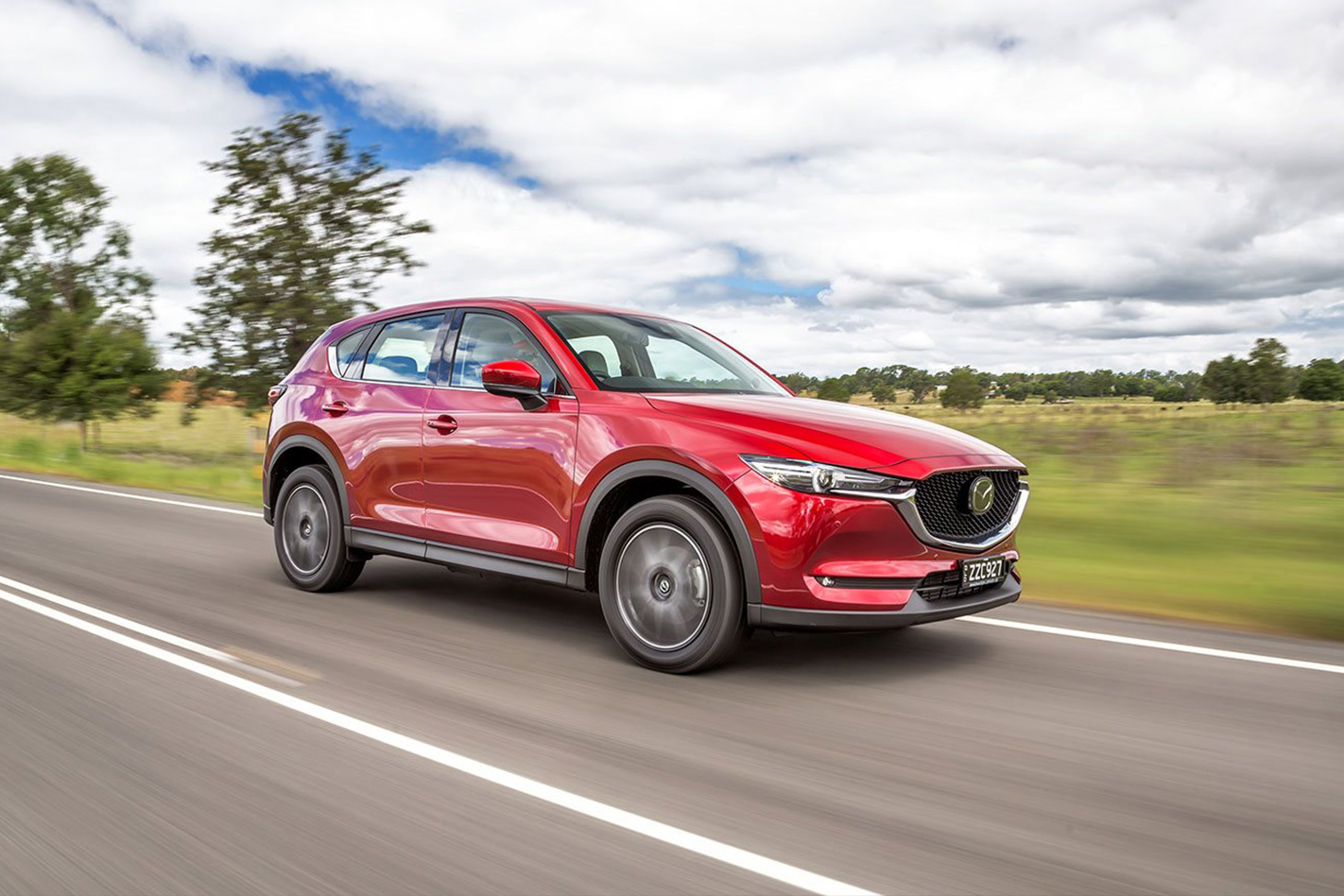
A sales juggernaut for the Japanese brand in recent years, the Mazda CX-5 is yet to be truly de-throned in the medium SUV sales race. A roomy, quiet and well-appointed cabin pairs with an enhanced driving experience to afford Australians a well-resolved ownership experience. It’s no wonder they’re onto such a winner.
Toyta RAV4
9010 sales YTD
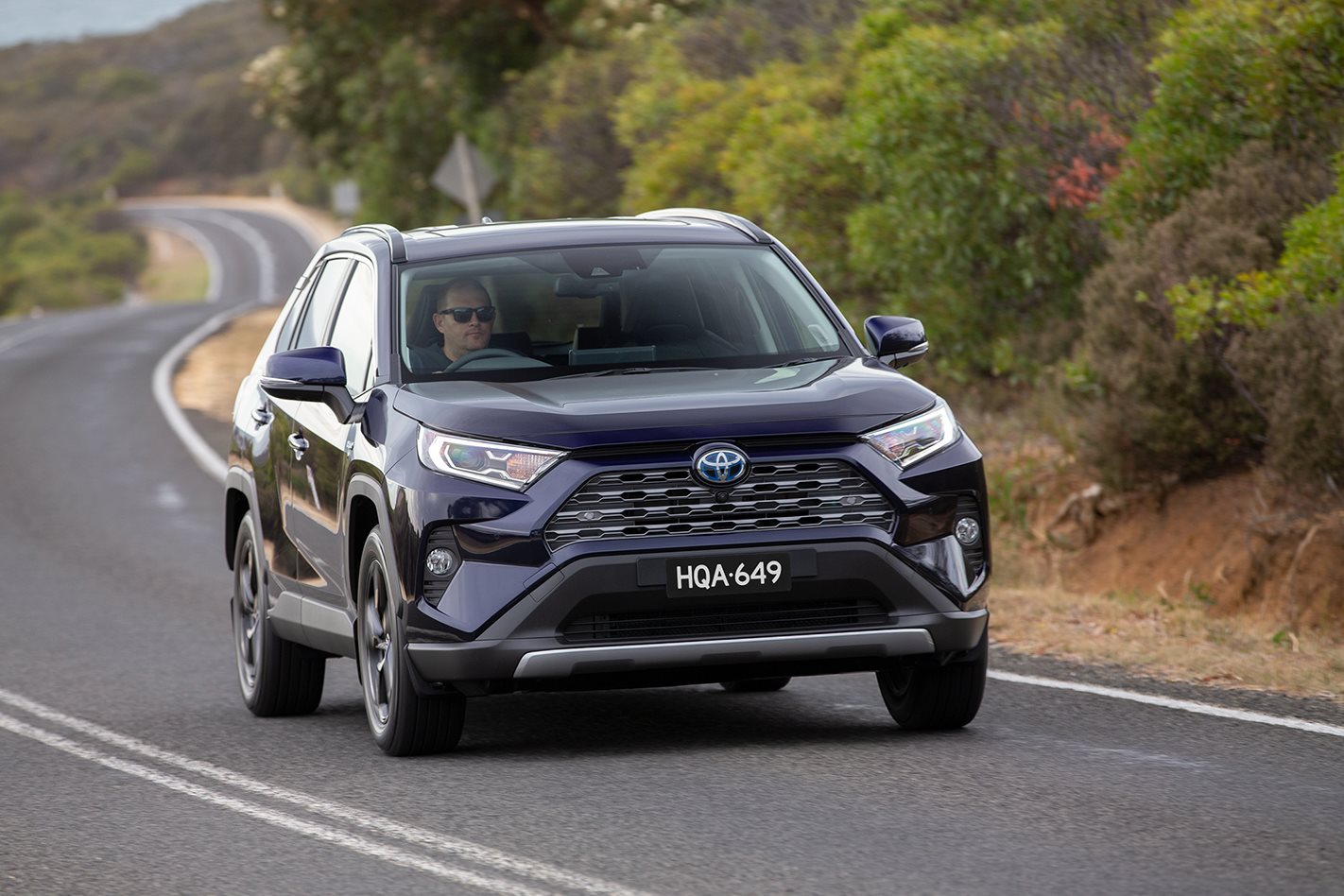
Newly updated Toyota RAV4 looks set to be a challenger for the title, selling 2917 models in its first month on sale. Based on Toyota’s TNGA chassis, the new generation RAV4 brings new engines, vastly updated technology and a refined driving experience compared to the outgoing model.
Mitsubishi ASX
8229 sales YTD
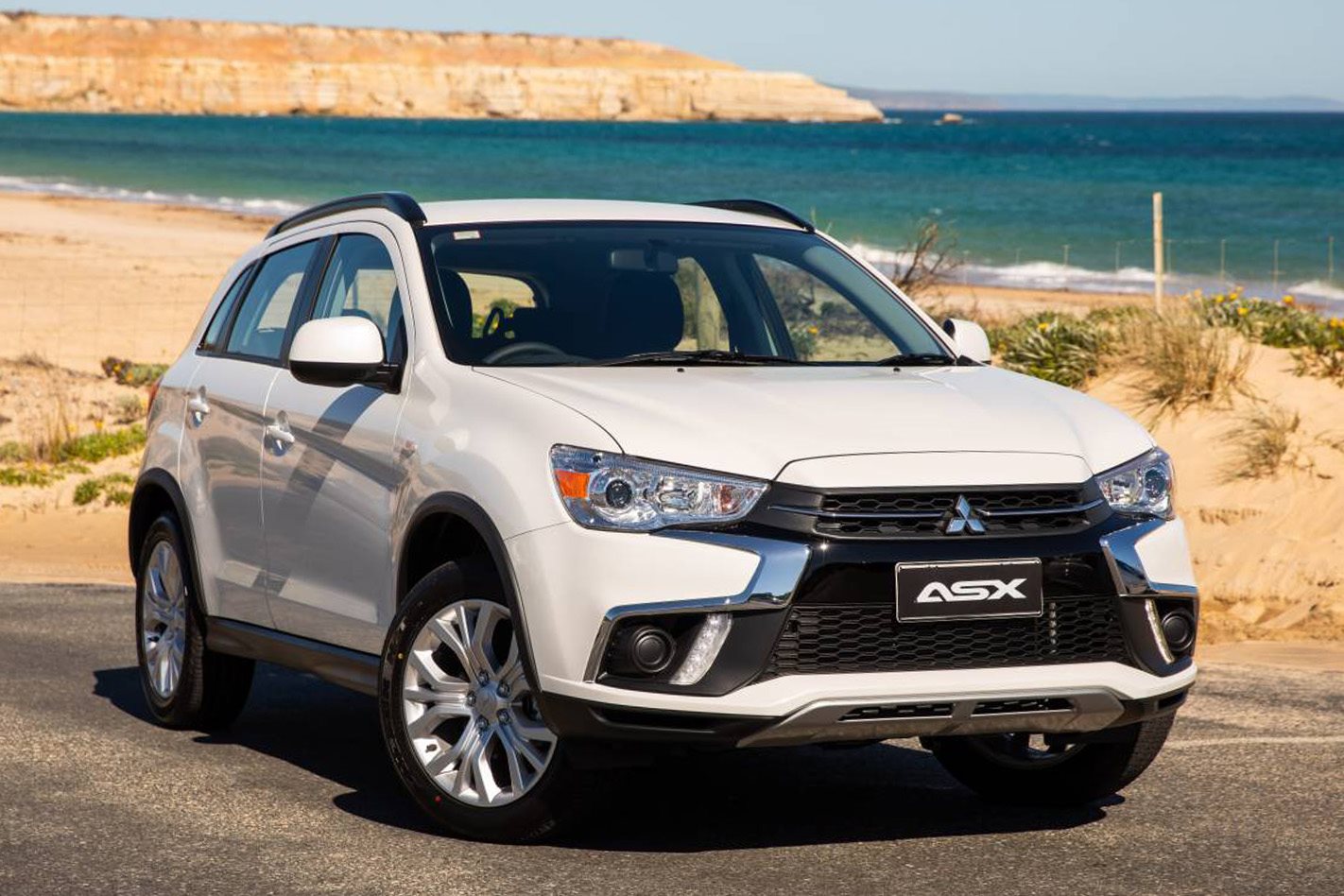
Despite being on sale for nearly ten years without a major facelift or update, the Mitsubishi ASX still sells remarkably well. We might never know exactly why it does so well, but considering it’s an affordable alternative to its competitors and the fact that it does what it says on the box might have something to do with it.
Toyota Prado
7833 sales YTD
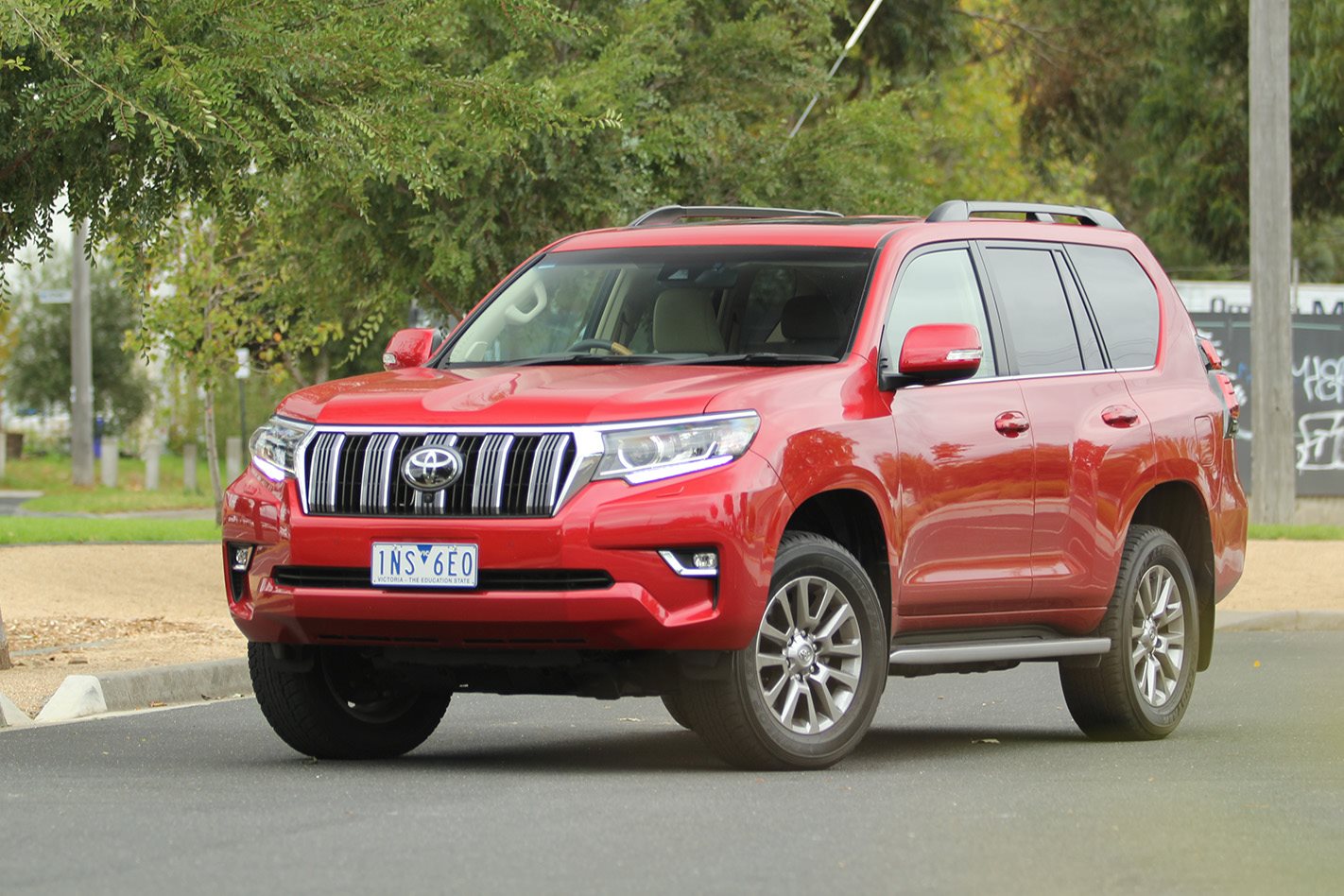
The most popular of all the serious off-roaders, the Toyota Prado continues to be a hit with families and outback trekkers.
Nissan X-Trail
7544 sales YTD
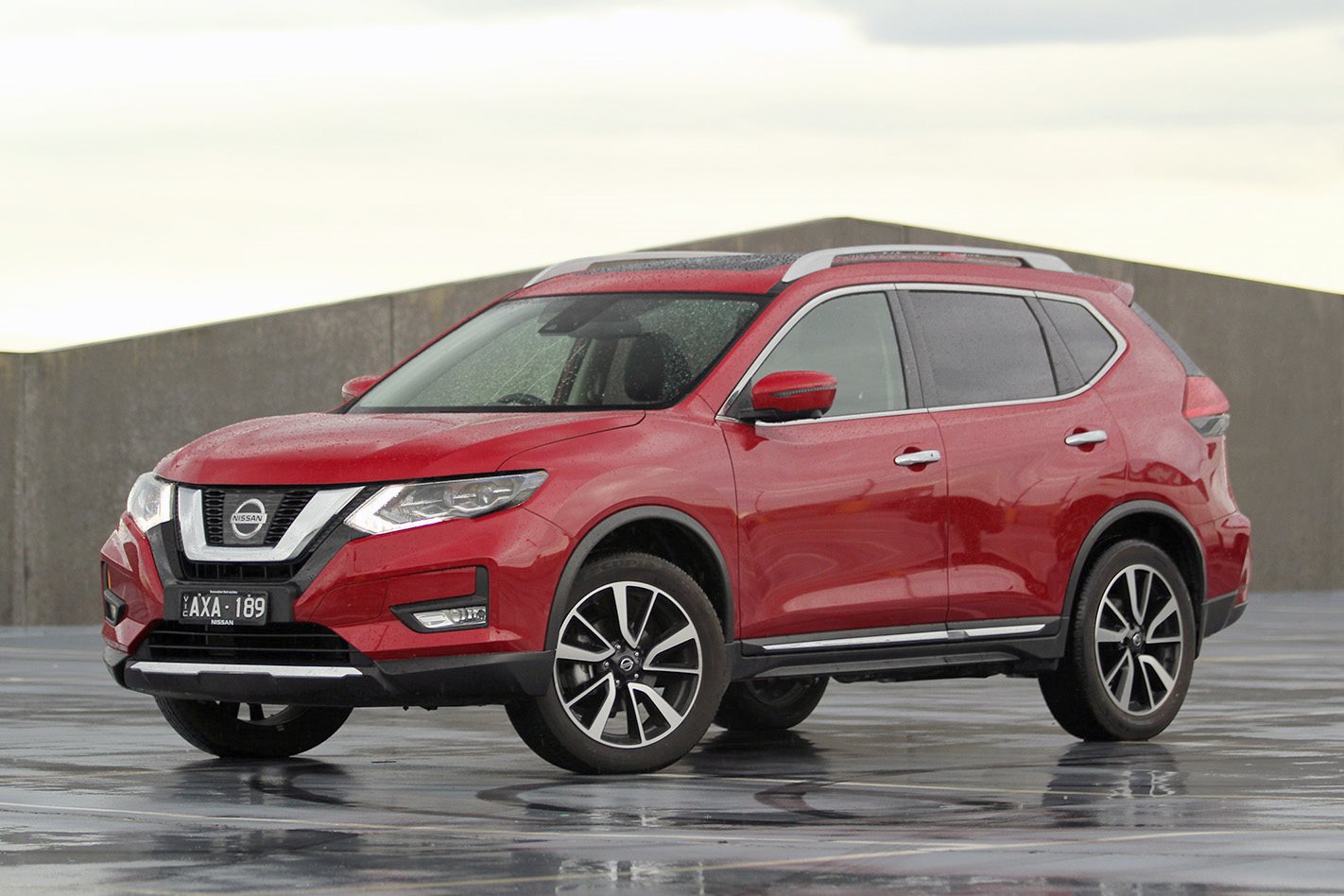
Sporting a number of advanced driver assistance features and a versatile interior, it’s no surprise the Nissan X-Trail is a continual hit with families. The fact that it’s a half-decent off-roader is also a plus.
Source: VFACTS, sales for Q1/Q2 2019
In the wake of ‘Dieselgate’, as the rest of the Volkswagen Group were told to rein in spending, the brains trust behind Porsche’s Le Mans-conquering 919 LMP1 team were retained and told to keep working.
Stopping development wasn’t an option, but what the team were working on changed dramatically. The heavily hybridised V4 prototype designed for the World Endurance Championship (WEC) was shelved, replaced by a plan to conquer the world of Formula 1.
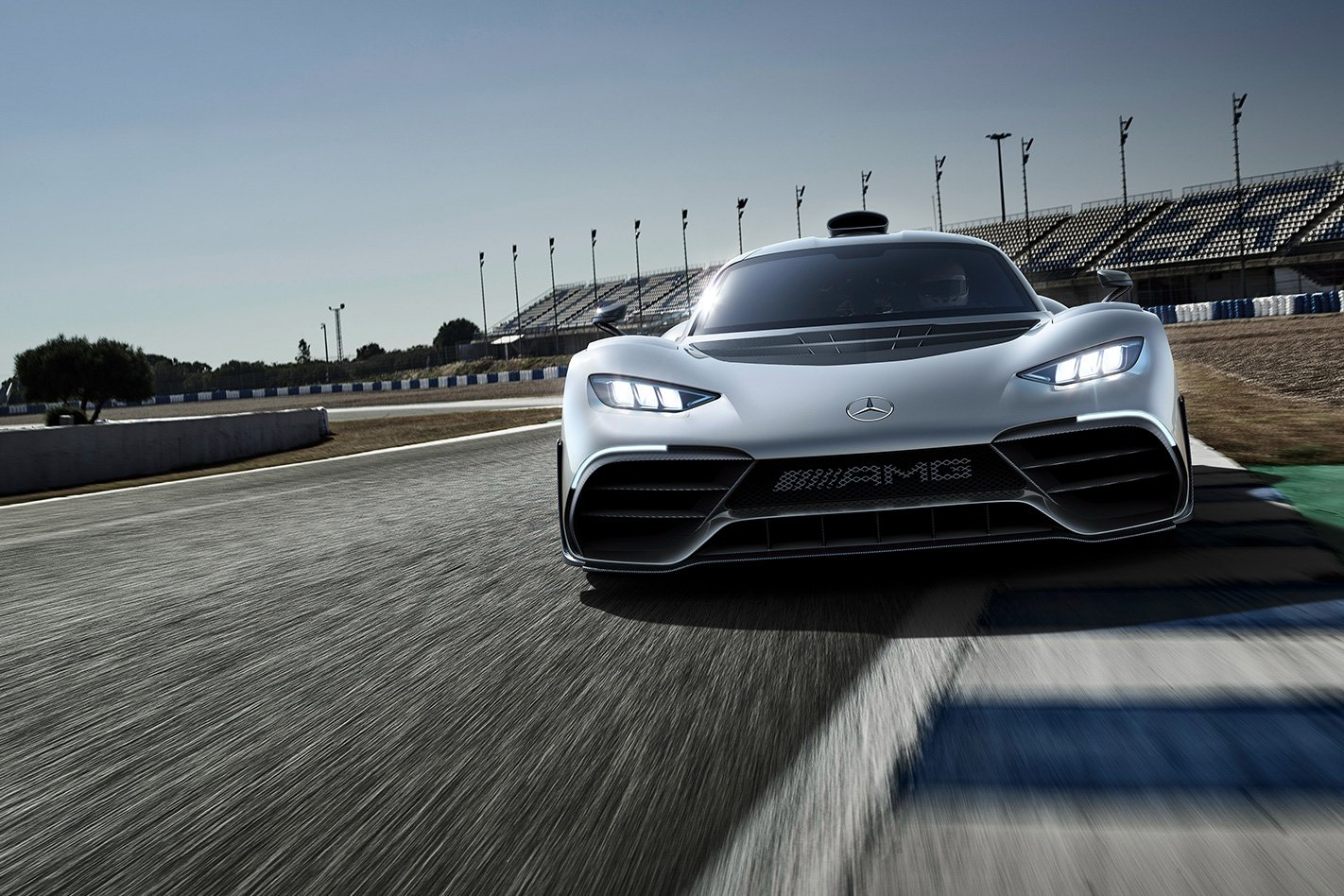
Enter the small-capacity 1.6-litre turbo V6 engine, built to comply with the 2021 F1 regulations. If it had been approved, it would have powered a Porsche Formula 1 car.
But now it could result in Porsche’s next hypercar for the road.
It seems history could repeat itself with the opportunity for Porsche to use that development engine to compete against the likes of the AMG One and Aston Martin Valkyrie under new WEC rules. The Carrera GT is proof that a stillborn racing program doesn’t automatically mean a Porsche powertrain is lost forever.
Porsche’s head of motorsport, Fritz Enzinger, told motorsport.com that its V6 engine “is complete and running on the test bench”, adding that a team of “20 to 25 technicians” utilise it “for analyses” of future relevance. “The possible use for this six-cylinder engine was completely open”, Enzinger said.
What peaks out interest is the fact Enzinger went on to say that the engine project continued unabated, believing that the concept could be useful without the MGU-H and stating that it would “also be interesting for a super sports car”.
Does this mean it is game on for Mercedes-AMG and Aston Martin?
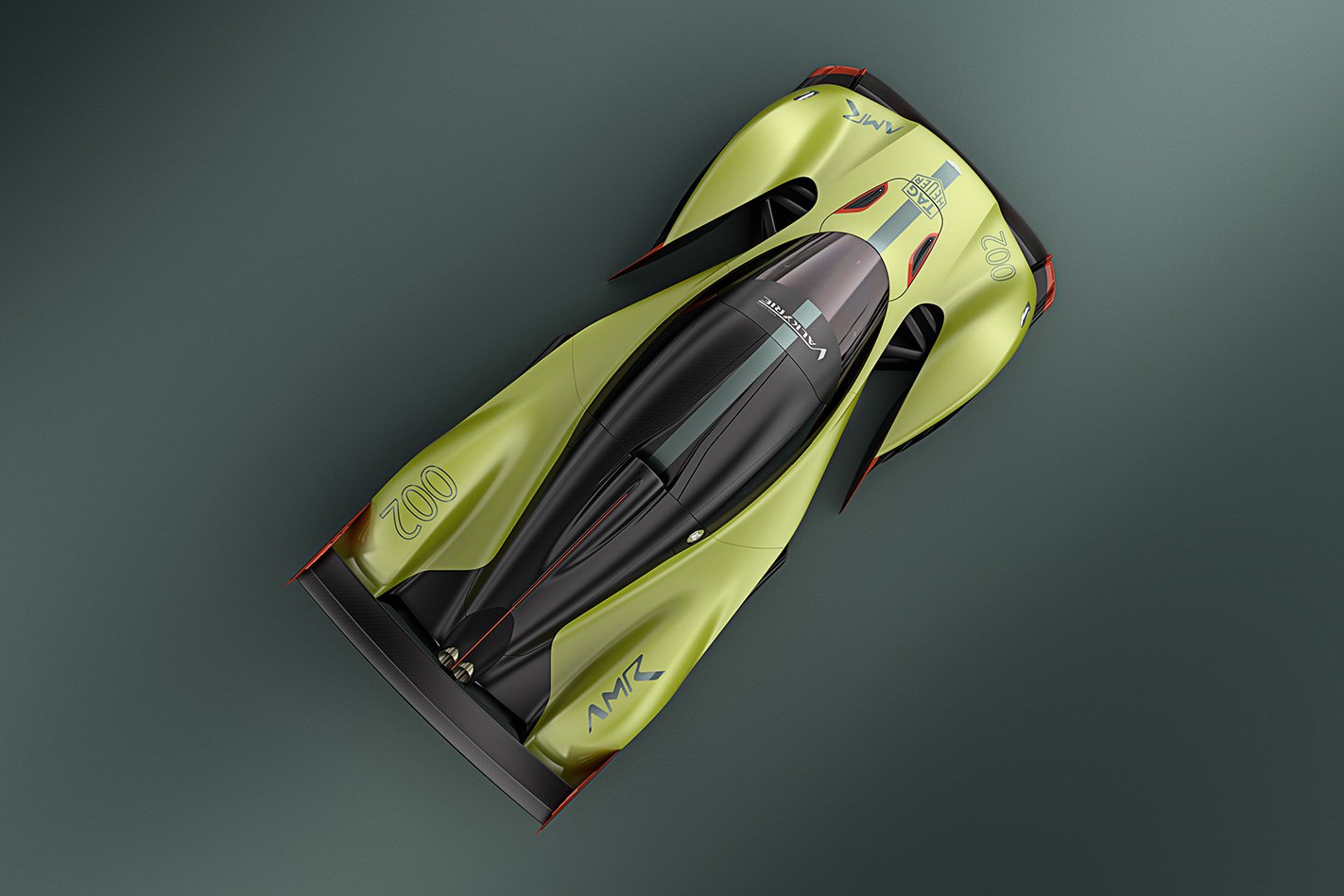
Adding spice to the mix is news that the FIA has confirmed the arrival of the “hyper sport” rules for the 2020/21 WEC, combining both specialised prototypes and road-going hypercars. This could reignite the race for homologation specials, like those of the nineties and early noughties, given 20 road cars must be produced to be eligible to race.
The 2018/19 Le Mans winner Toyota has confirmed its entry (as has Aston Martin) with the GR Super Sport, powered by a 2.4-litre twin-turbo V6 hybrid. Other manufacturers are rumoured to be readying for campaigns, too, but Toyota is already testing a full prototype.
Speaking with Wheels earlier this year, Porsche CEO Oliver Blume also hinted at the prospect of a hypercar on the horizon. “It’s not decided yet if the next Porsche hypercar is a hybrid or a full electric car. We are waiting on battery development,” Blume said.
Given that the Mercedes-AMG One is set to use a road-tuned version of the dominating Formula 1 V6, it’s not unfeasible to think that Porsche could mirror its fellow German competitor. “In the future I see a possibility for the hypercar to be powered with the next generation batteries. It should be a high-performing car”.
Ultimately, it seems like the heyday of road-registered Le Mans race cars is about to be reborn.
Ford has released a statement confirming the output of its 2020 Ford Mustang Shelby GT500, as well as a claim that the GT500’s engine boasts the highest specific power and torque outputs for a supercharged factory engine.
With 567kW and 847Nm, it would be not only the most powerful factory car on sale in Australia if it were offered, it’s also have its closest specific-power rivals beaten by a wide margin.
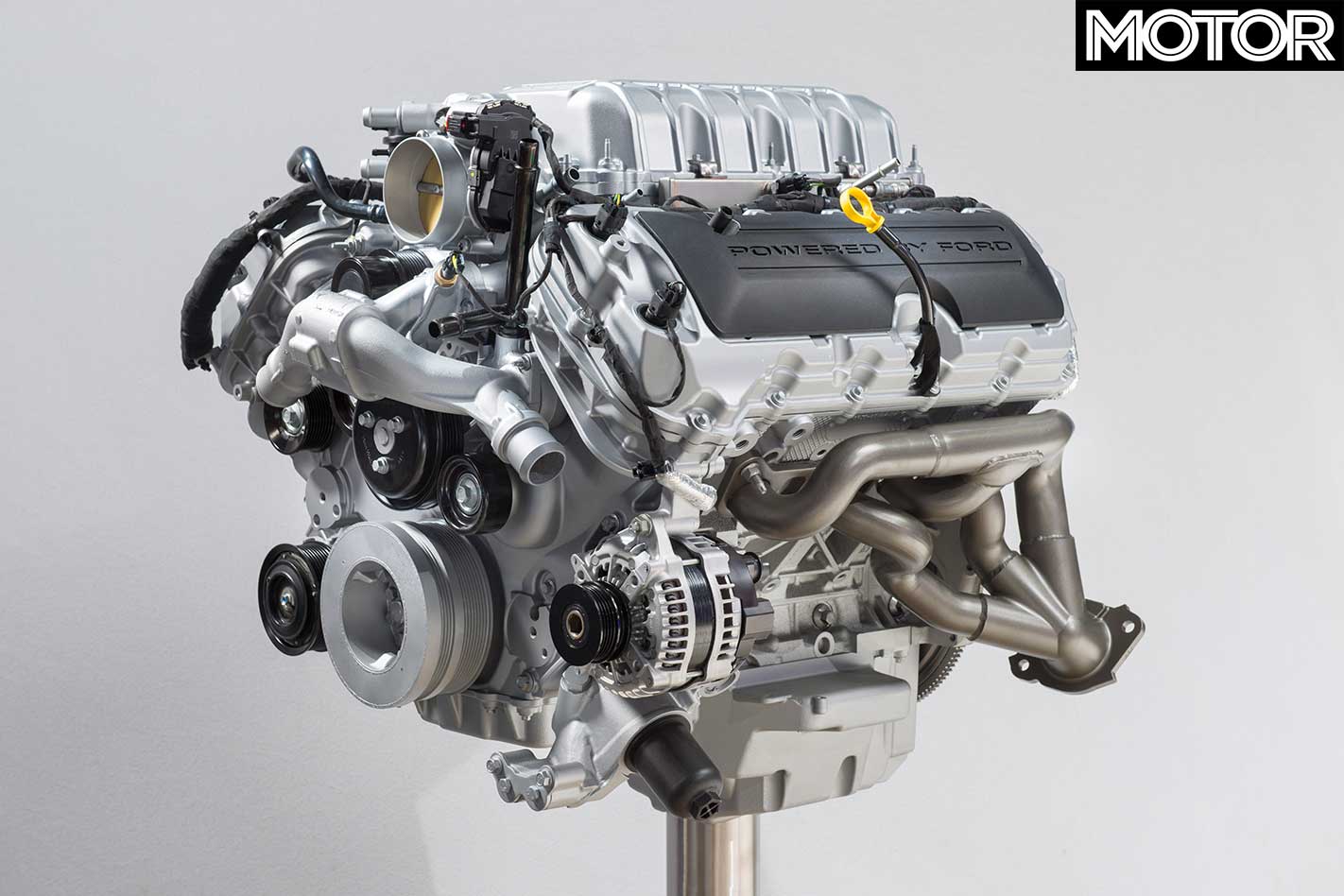
Ford’s short press statement also claimed the GT500 to be the most powerful Ford road car ever.
“The all-new 2020 Mustang Shelby GT500 will produce 760 horsepower and 625 lb.-ft. of torque, making it the most powerful street-legal Ford ever – with the most power- and torque-dense supercharged production V8 engine in the world. Enough said.”
As stated, this has the most powerful factory road car on sale in Australia, the Jeep Grand Cherokee Trackhawk, beaten not only for highest specific power, but also just completely outright.
The GT500’s 5.2-litre V8 makes 109kW per litre, where the Trackhawk’s 522kW 6.2-litre unit makes only 84kW per litre.
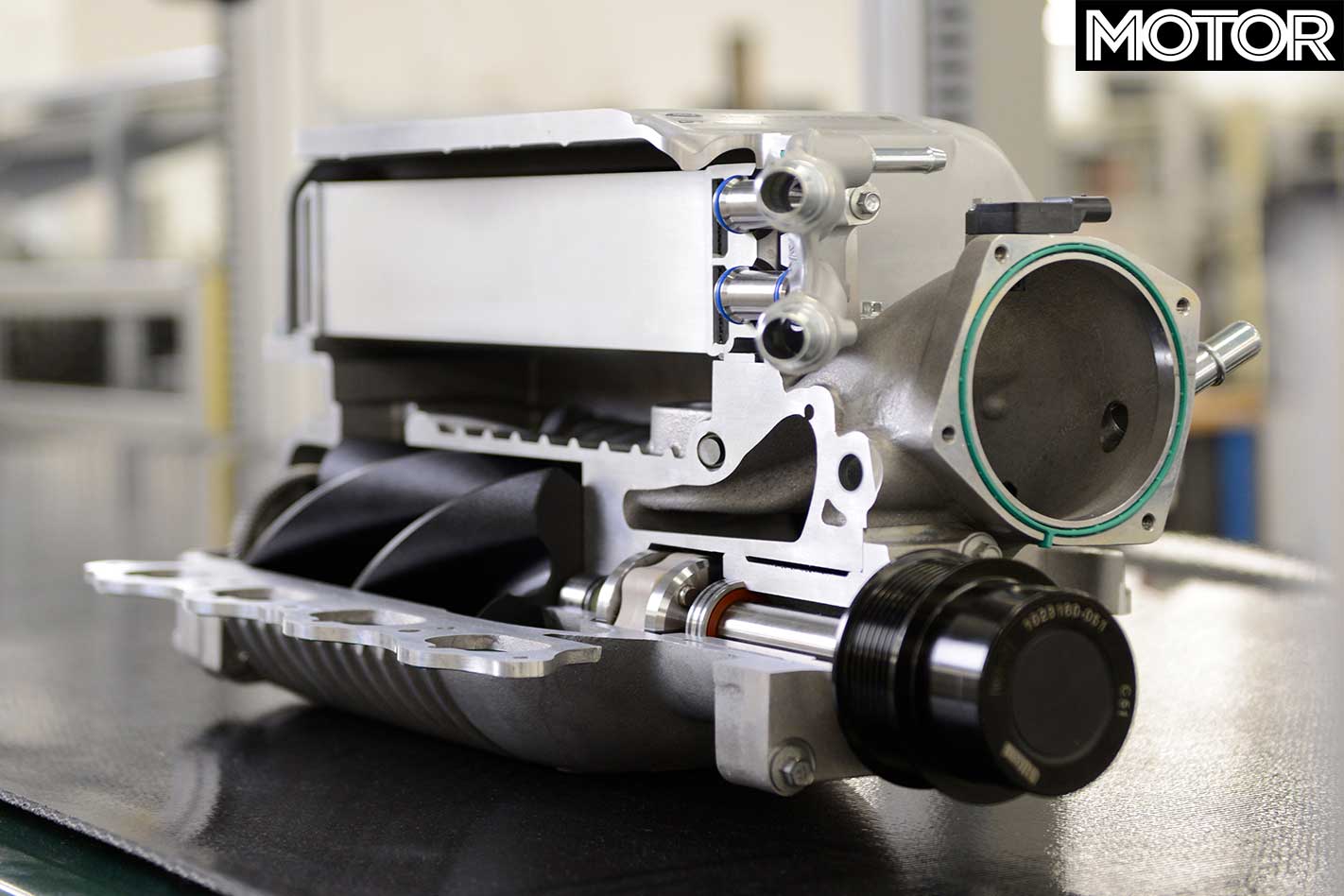
In the states, the Dodge Hellcat engine is also found in 626kW form, nestled in the Dodge Challenger Demon, though even then produces just 101kW per litre.
However, the Demon also boasts a much higher 1043Nm torque figure, and its 168Nm per litre specific output is still higher than the GT500’s 163Nm per litre.
While the GT500 won’t make it to Australia through Ford, Mustang Motorsport says it’ll be able to convert any that it gets its hands on.
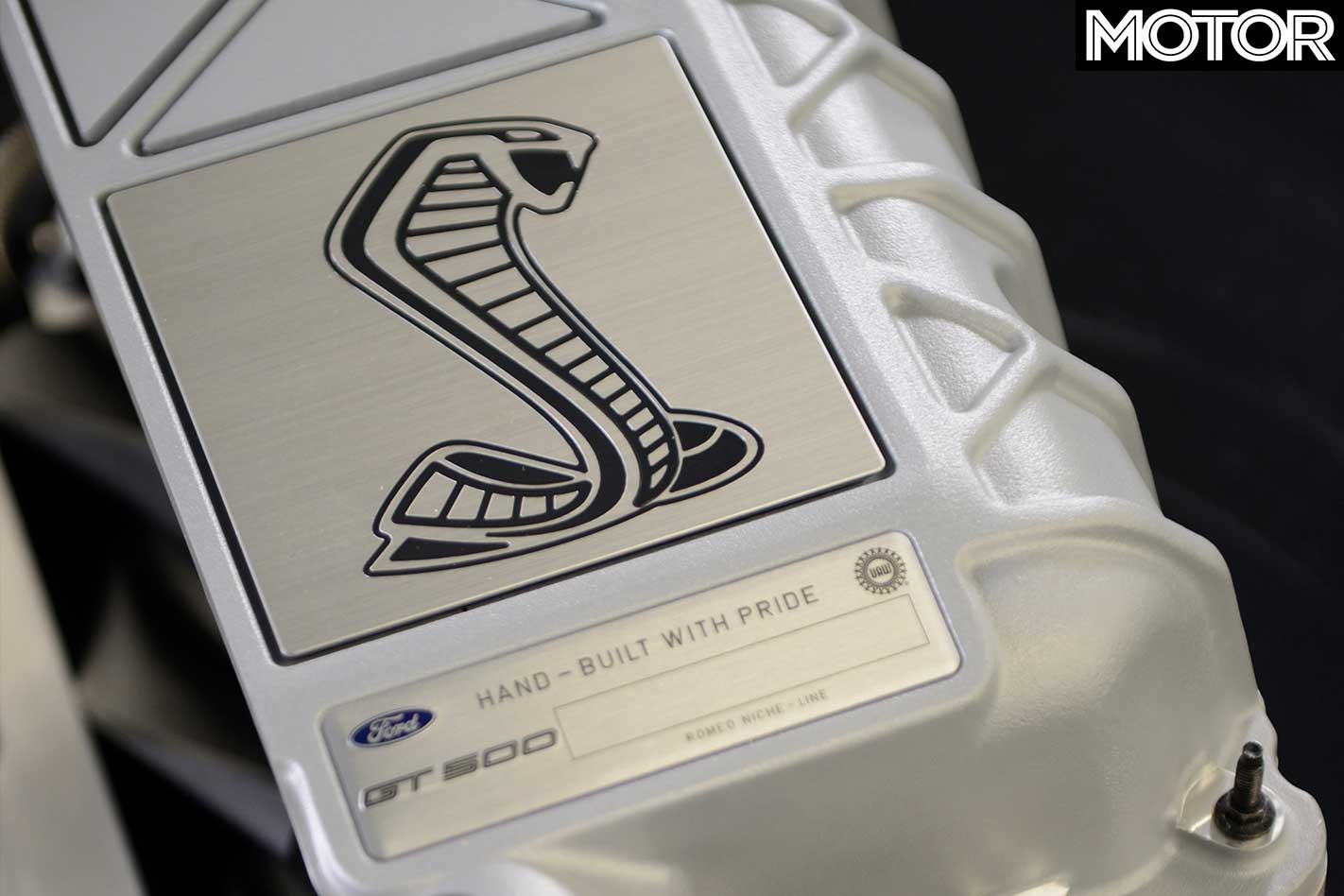
“Mustang Motorsport will be importing and converting Shelby GT350s and GT500s,” managing director Craig Dean told MOTOR.
“Pricing on GT350s is affordable and but the GT500 will be sold as a premium and we are predicting five or six.
“I have sent inquiries to Vehicle safety Standards to see when importation can be organised, I suspect after December 11 2019 [when new import legislation comes into effect].”
Stay tuned.
