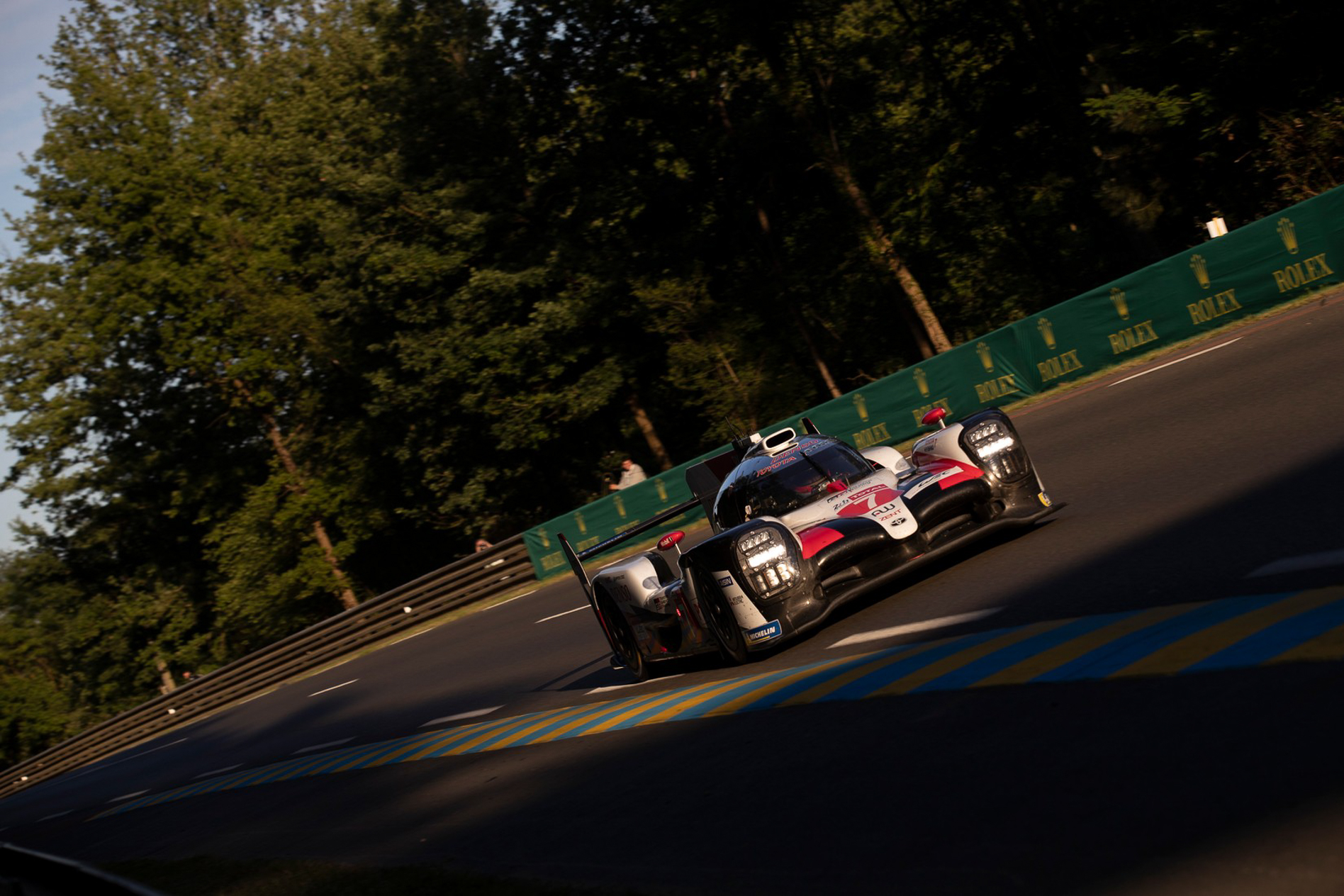
Toyota has confirmed that the GR Super Sport hybrid supercar revealed in 2018, and expected to launch in 2020, will form the basis of its World Endurance Championship assault from the 2020/21 season.
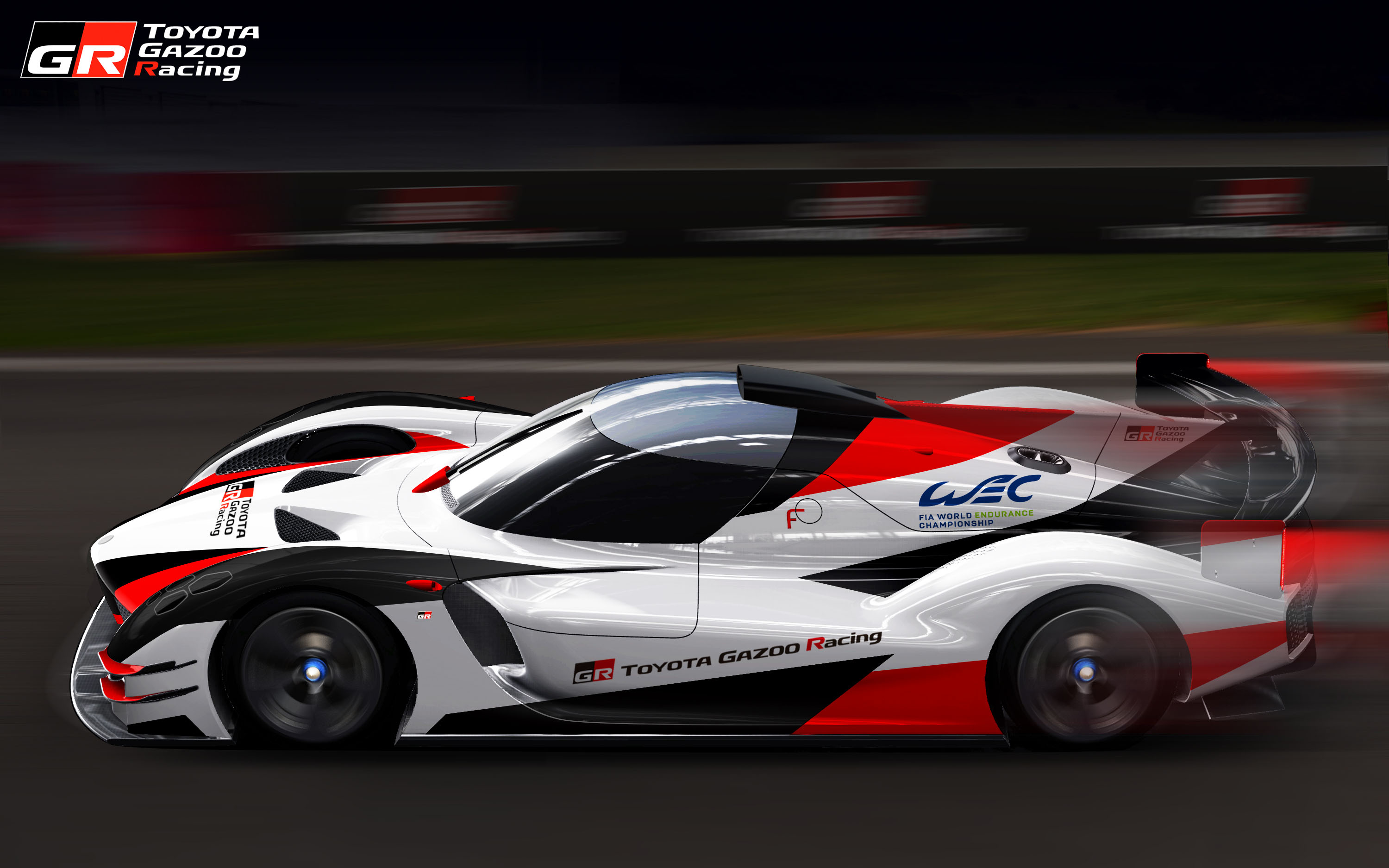
Toyota Gazoo racing president Shigeki Tomoyama confirmed the company’s plans to race this million dollar hybrid on the eve of the 2019 24 Hours of Le Mans, and just hours after the sport’s governing body, the ACO, confirmed that the series’ new halo category would seek to reduce competing costs by requiring that race cars be based on actual road cars.
Tomoyama, below, said Toyota’s ongoing commitment to the World Endurance Championship was good for the sport and good for Toyota.
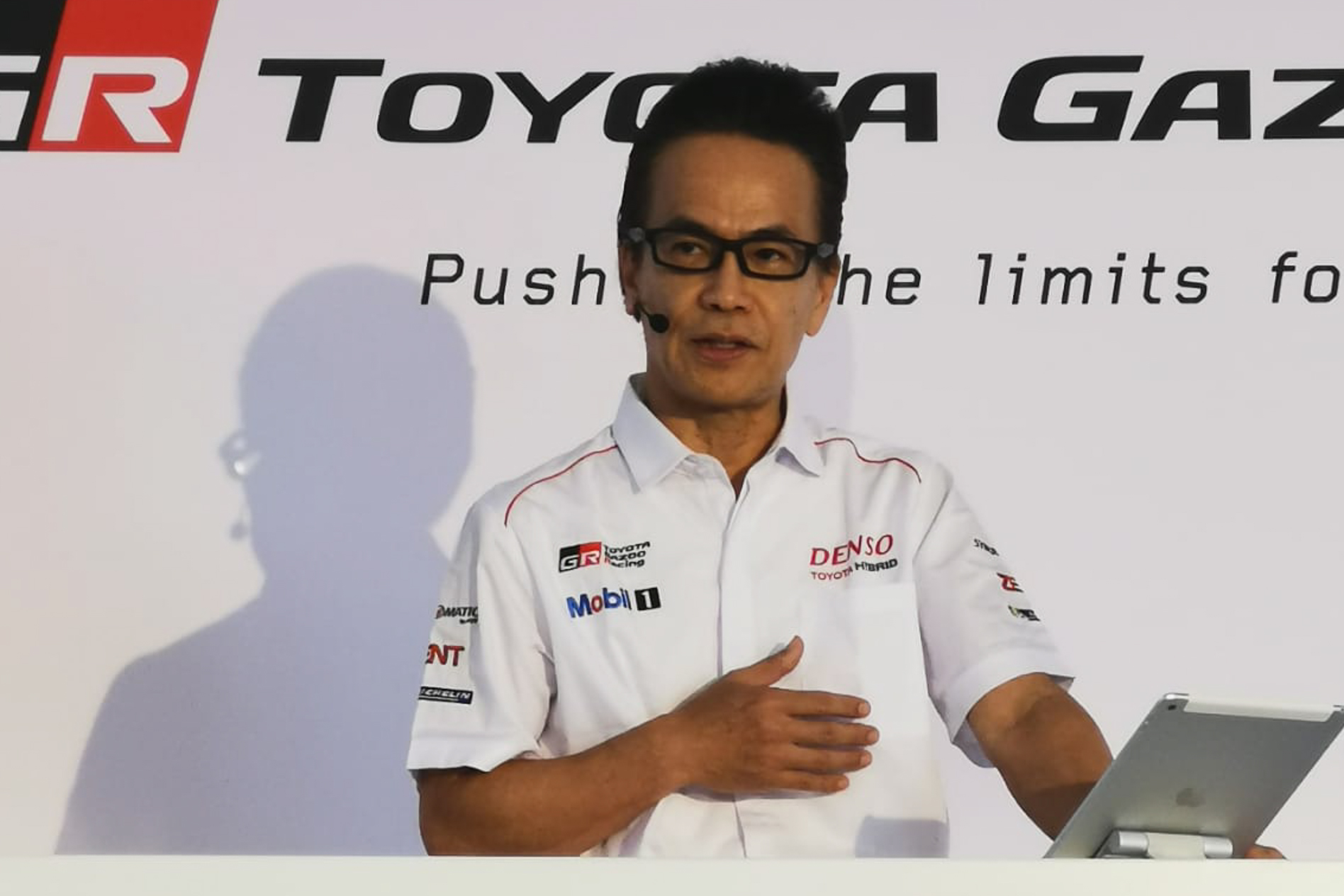
“This is a project which will be conducive to the transformation of Toyota. Transformation in the way of how we work, and how we produce or create cars. It’s the strong wish of the president that motorsport becomes the base for ever-better cars.”
Toyota also hopes to transform its image and build a legacy to equal the automotive greats.
“The ambition is there to create a legacy for Toyota Gazoo Racing to rival the greats of Aston Martin, Porsche and Audi,” he said.
Toyota is clearly keen to leverage its success at Le Mans for more than just brand building and technology development. Having a road car that resembles a successful race car will also help raise Toyota’s profile with car enthusiasts.
“Competing in the World Endurance Championship and racing at Le Mans helps us to advance the development of our world-leading hybrid electric technology and enables us to transfer the knowledge we gain to our production cars,” Tomoyama said.
Release video of 2018 GR Super Sport Concept
Toyota won the 24 Hours of Le Mans in 2018, and is an unbackable favourite to win again in 2019.
A cloud had hung over Toyota‘s longer-term involvement in the sport as manufacturers awaited the ACO’s announcement on future regulations. However, today’s announcement is seen as positive for the sport, and Aston Martin has already confirmed its involvement, this time with a race car based on the forthcoming Valkyrie hypercar.
Aston Martin Valkyrie
That said, today’s announcement by Toyota leaves the door open on whether the road-going GR Super Sport will actually be produced and sold. The WEC’s new rules allow two kinds of entries; the first allows for competition cars based on actual road-going hypercars, a new rule which Aston Martin and McLaren were advocating for.
Toyota preferred to maintain the status quo, which allowed entry by prototypes with no roots in road car production.
Today’s rule announcement accepts both kinds: racing machines based on a road-going hypercar, and prototypes in the style of a hypercar.
When asked specifically which of the two avenues Toyota would go down Hisatake Murata, Toyota’s general manager of motorsport, said the latter.
“We are developing a prototype in the style of a hypercar,” confirmed Hisatake.
If Toyota did decide to produce the road-going version of the GR Super Sport, it would likely build just the 20 examples required to meet the rules, and the price tag will be seven figures, in Australia at least. Will it come to Australia?
“Toyota Australia has put an order in for one and we’re hopeful,” said Brodie Bott, head of public affairs at Toyota Australia. “[Although] the limited volume would make it hard to make it a customer car.
“If anything it’s a promotional opportunity for Gazoo Racing, and hybrid as well. That’s not to say it won’t happen. Anything is possible and we’re working closely with head office in Japan.”
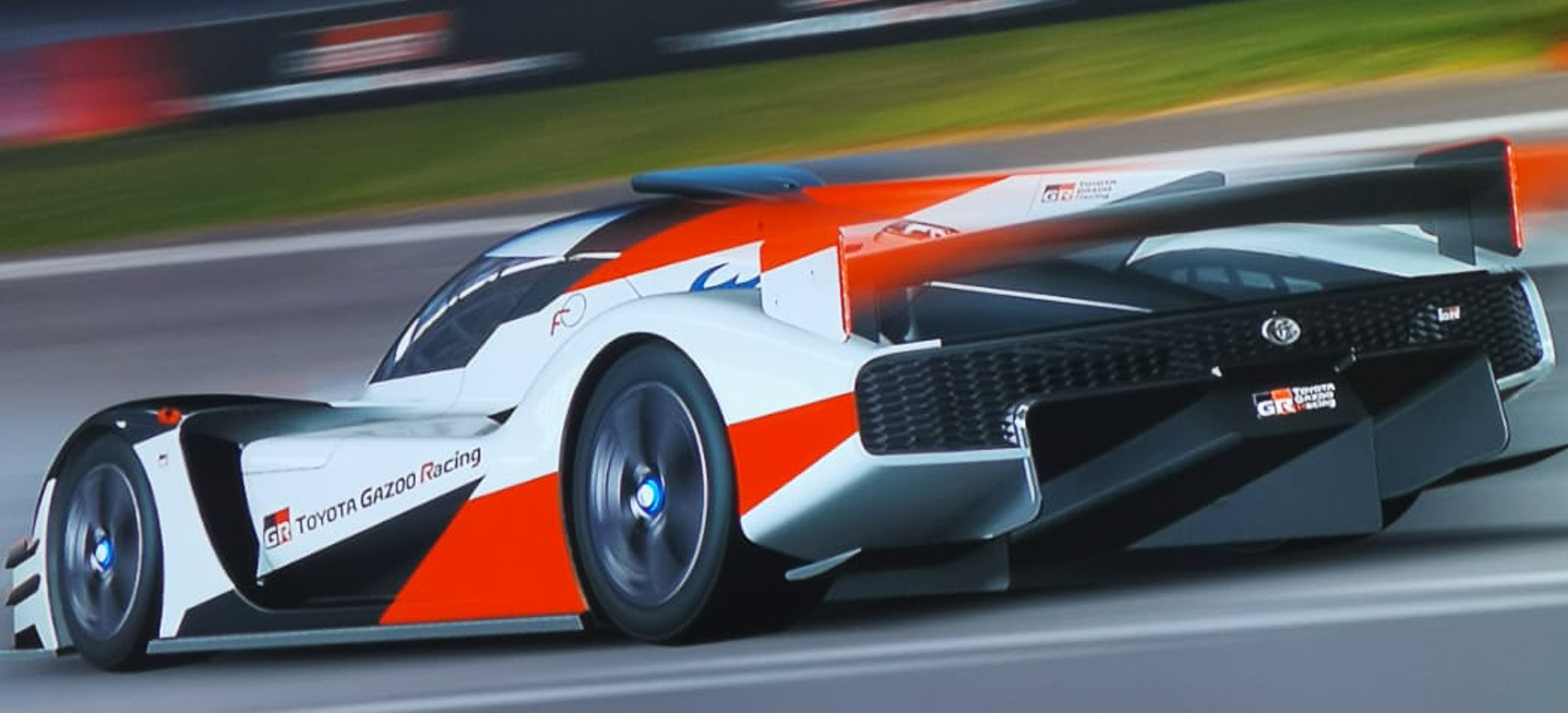
A few details on the GR Super Sport were shared in 2018, but Toyota’s not going into specifics, and nor is GR. The concept was powered by the Le Mans race car’s 2.4-litre petrol V6 which is electrically assisted to produce close to 1,000hp (745kW).
It’s also possible that the road car would share the race car’s all-wheel-drive layout, especially if Toyota is keen to promote 0-100km/h times in its marketing.
The GR Super Sport / Le Mans racecar homologation project is not the first road car that Toyota’s Le Mans team has been involved in. The 1998 Toyota GT1 was built to go racing with, and rules of the time required it to have road car roots.
Just a single car was built to satisfy the regulations, which now lives in Toyota’s motorsport headquarters in Cologne.
I’m writing this perched over the pitlane at the Le Mans 24 Hours endurance race in France, and it’s early something o’clock, that’s for sure.
We don’t do a lot of motorsport here at WhichCar, but being here reminds me that our industry still does, in fact, spend a lot of time, energy and resources on racing – and Toyota’s mighty petrol/electric hybrid Le Mans machine is a great example of the racing world and the real world coming together.
It’s been another big week at WhichCar HQ, with news emerging from the UK that the government there is considering adding noise ‘cameras’ to speed cameras to target loud exhausts.
Noise cameras are not new – they are used in NSW, for example, to keep trucks from overusing exhaust braking systems – but surely everyone actually buttons off the gas when they see a camera anyway?
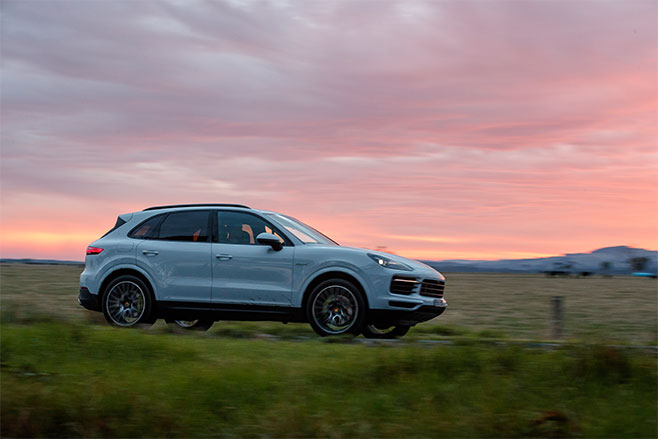
One car that won’t fall foul of the rule is our long-term Porsche Cayenne hybrid. We’ve built a host of fantastic video content around the car now, which is really worth checking out.
Also worth checking out is our deep dive into the world of selective LED headlights, which can actually darken a small section of your headlight to prevent dazzling oncoming traffic.
One of the more unusual stories to cross the desk this week comes from WhichCar’s home town of Melbourne, where Uber will – it says – debut flying taxis in 2020. Watch this space… it’ll be interesting to see how this one plays out in one of busiest air spaces in the country.

The team at Wheels has also nominated its 2019 Gold Star Award winners, which nominate the very best value cars on sale in Australia today. It’s a wide-ranging and comprehensive snapshot of the market today, and well worth a dig through.
Of course, it’s also EOFY time and everyone is looking for a new car bargain. We’ve grabbed the latest deals from Australia’s biggest car sellers to make the task a bit easier for people looking for a new car.
If you are, however, looking for something a little off the beaten track, then perhaps one of these quirky-cool cars might take your fancy.
On the technical side, we examine the insanely powerful new four-cylinder engine from Mercedes-Benz, as well as ask why there is only one diesel engine in the Jeep Wrangler range.
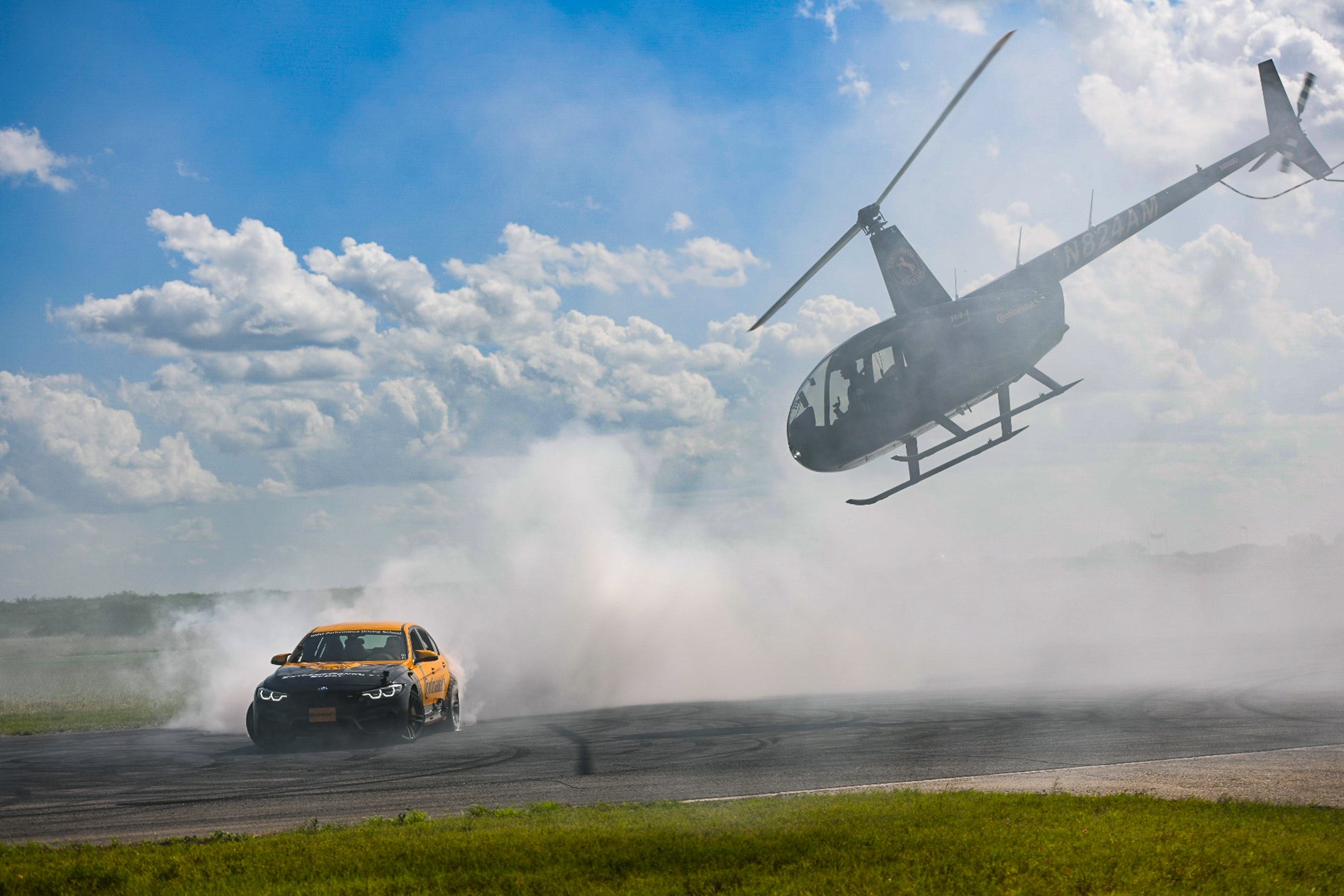
There’s a pretty amazing video story filmed at Continental’s huge proving ground in Texas, too, where a BMW M3 is chased by a helicopter – and yes, it’s as cool as it sounds.
We also pedal the automatic version of Suzuki’s terrific Swift Sports, Holden’s updated Colorado ute, the new McLaren 600 LT Spider, check out ‘Mad’ Mike Whiddett’s incredible new Lamborghini Huracan, examine the ‘new’ Ford Territory and farewell season one of WhichCar TV in style.
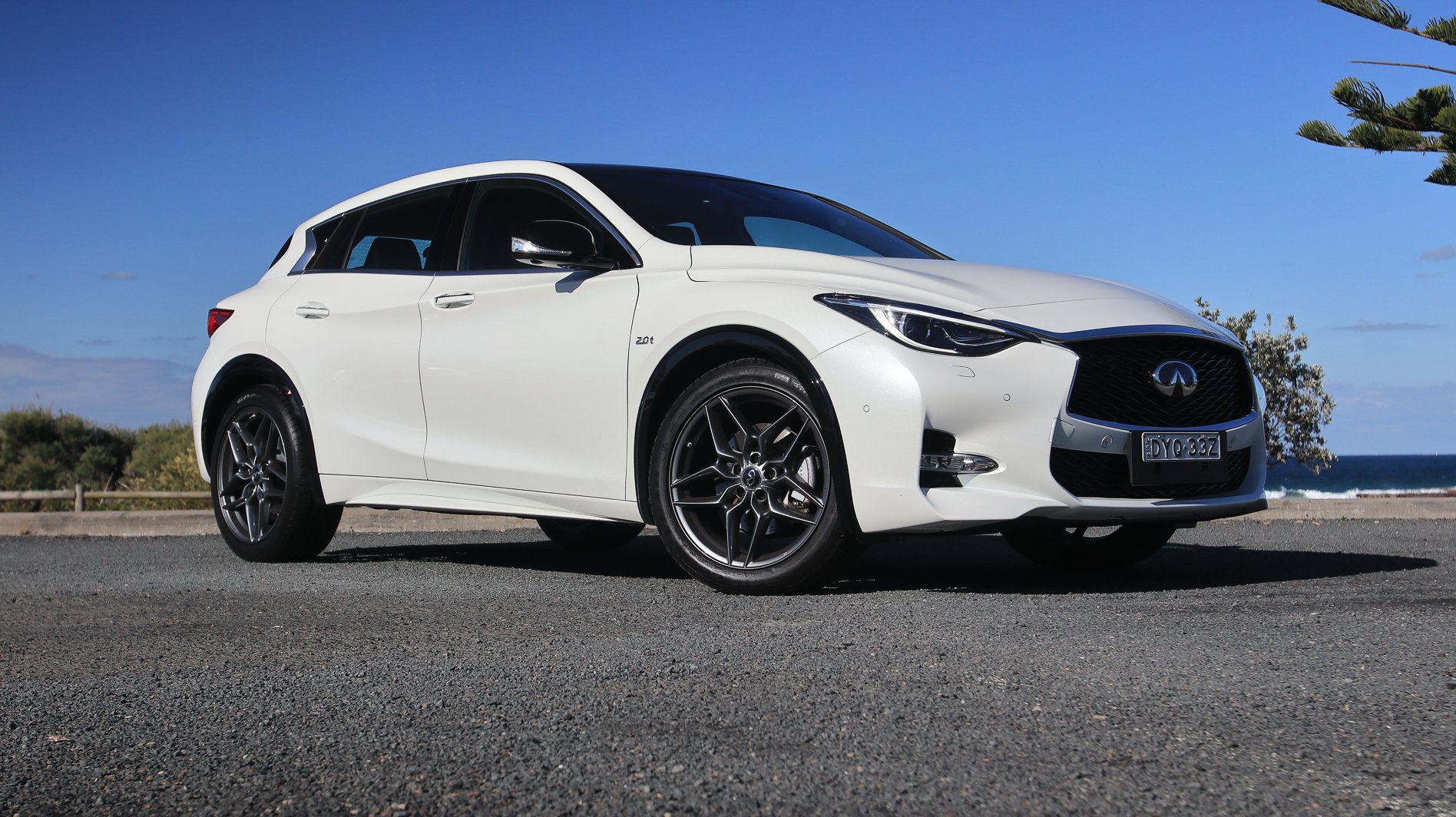
So apparently the car you’re seeing in the pics here is actually an SUV, and not a hatchback. Confused? Us too, a little bit. Infiniti – the luxury arm of Nissan that’s been around for about 20 years – insists, though, that the Q30 is a small SUV.
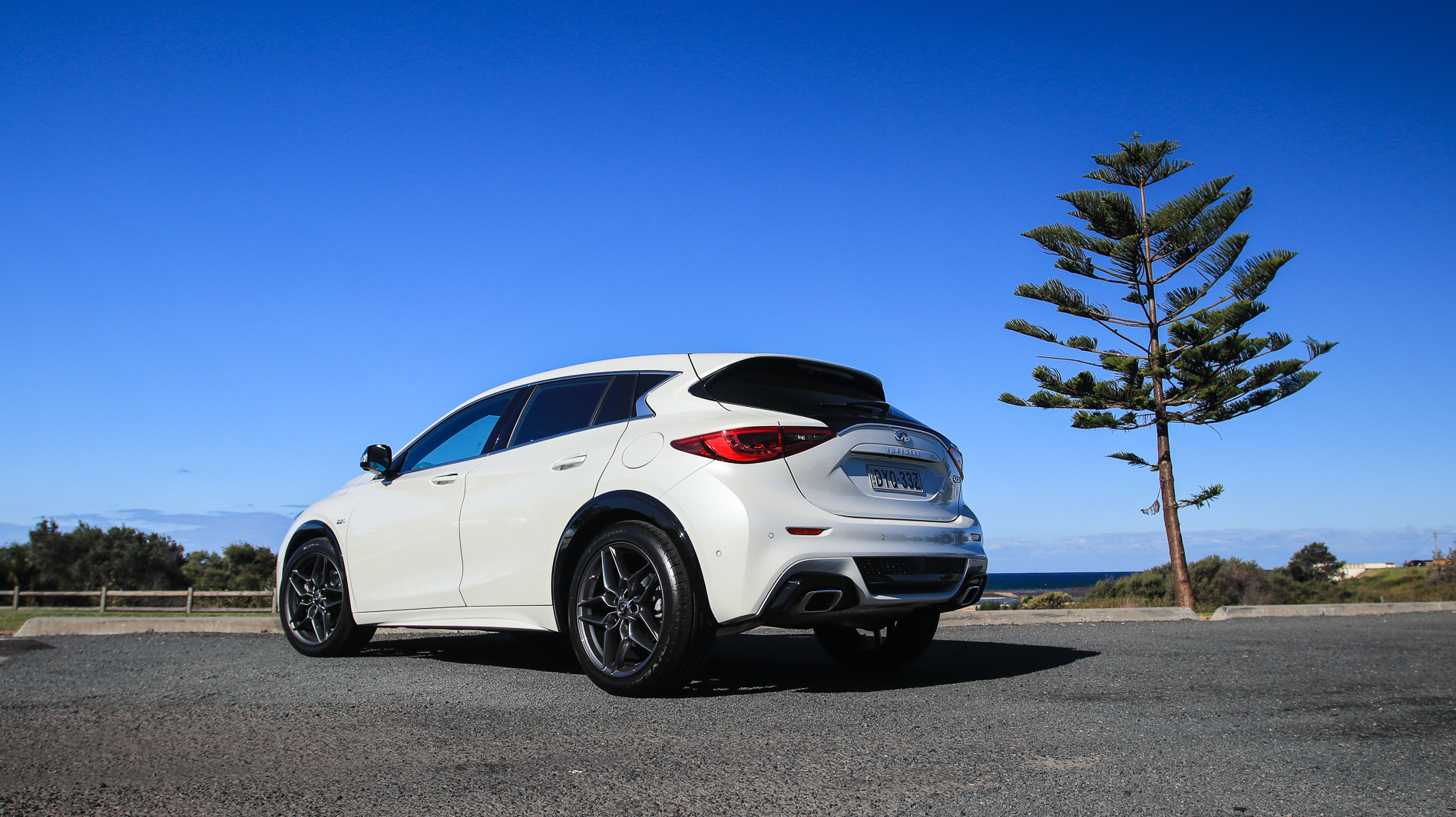
There is a bit of justification for the claim. The Q30 is a product of a collab between Mercedes-Benz and Nissan/Infiniti, and the Q30 mimics the Merc GLA down to the millimetre when it comes to its external dimensions.
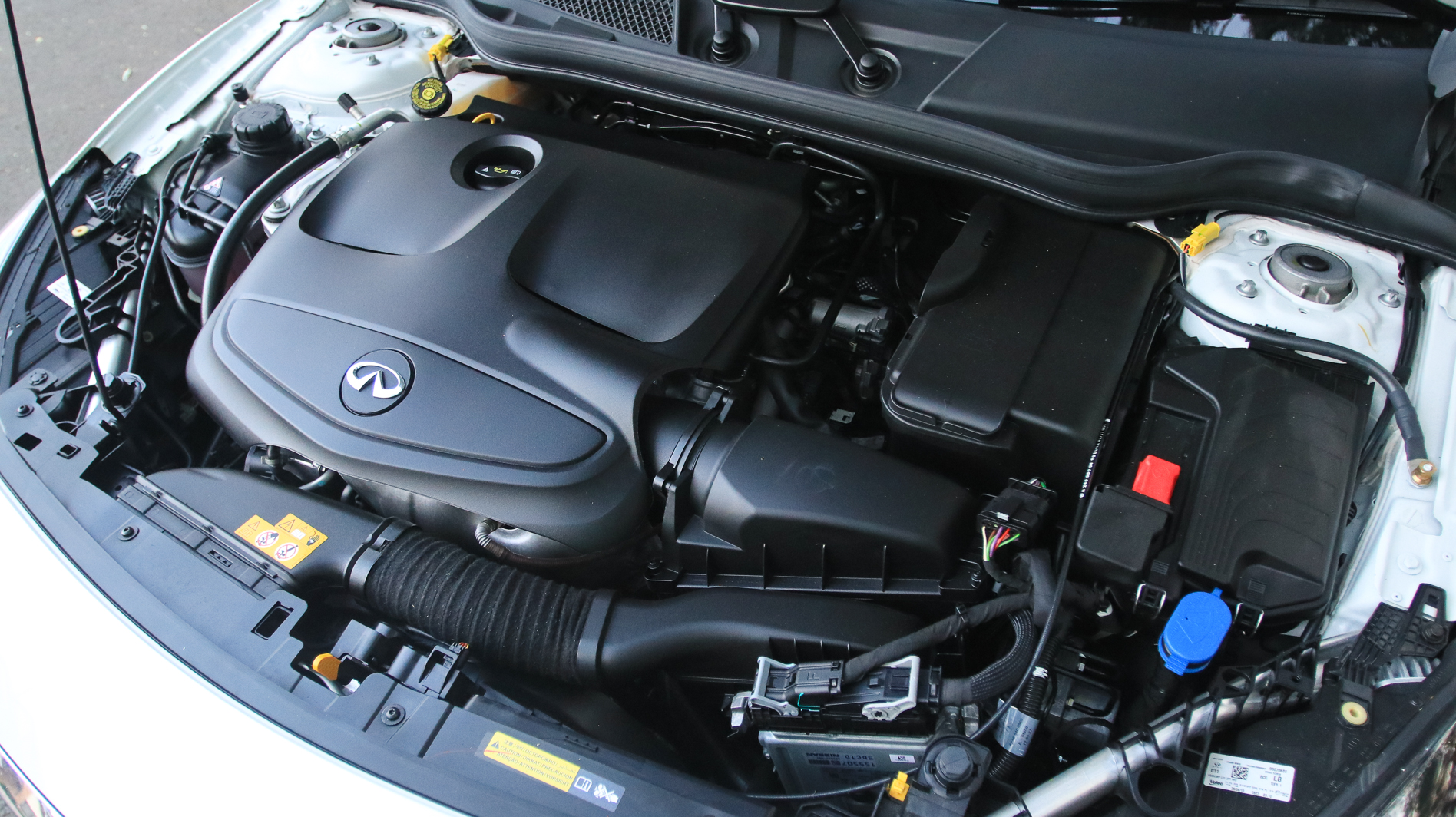
It also rides on the same platform as the previous generation A-Class, and uses a Merc-derived 2.0-litre four-cylinder petrol engine that powers the front wheels via a seven-speed dual-clutch gearbox.
Inside, it’s a mix of Merc and Nissan, though to be fair you’d have to be pretty familiar with either brand to pick the transition between one and the other.
The Q30 Sport tested here costs a not-trifling $46,888 driveaway – though it now takes the place of the formerly range-topping Sports Premium variant, and as such marks a $6000 drop in price from its 2016 launch.
There is a cheaper, similarly powered version called the Pure which costs about $2500 less before on-road costs are factored in, but it misses out on much of the Sport’s driver aids. Gone, however, are the 1.6-litre petrol and diesel options offered at its 2016 launch.
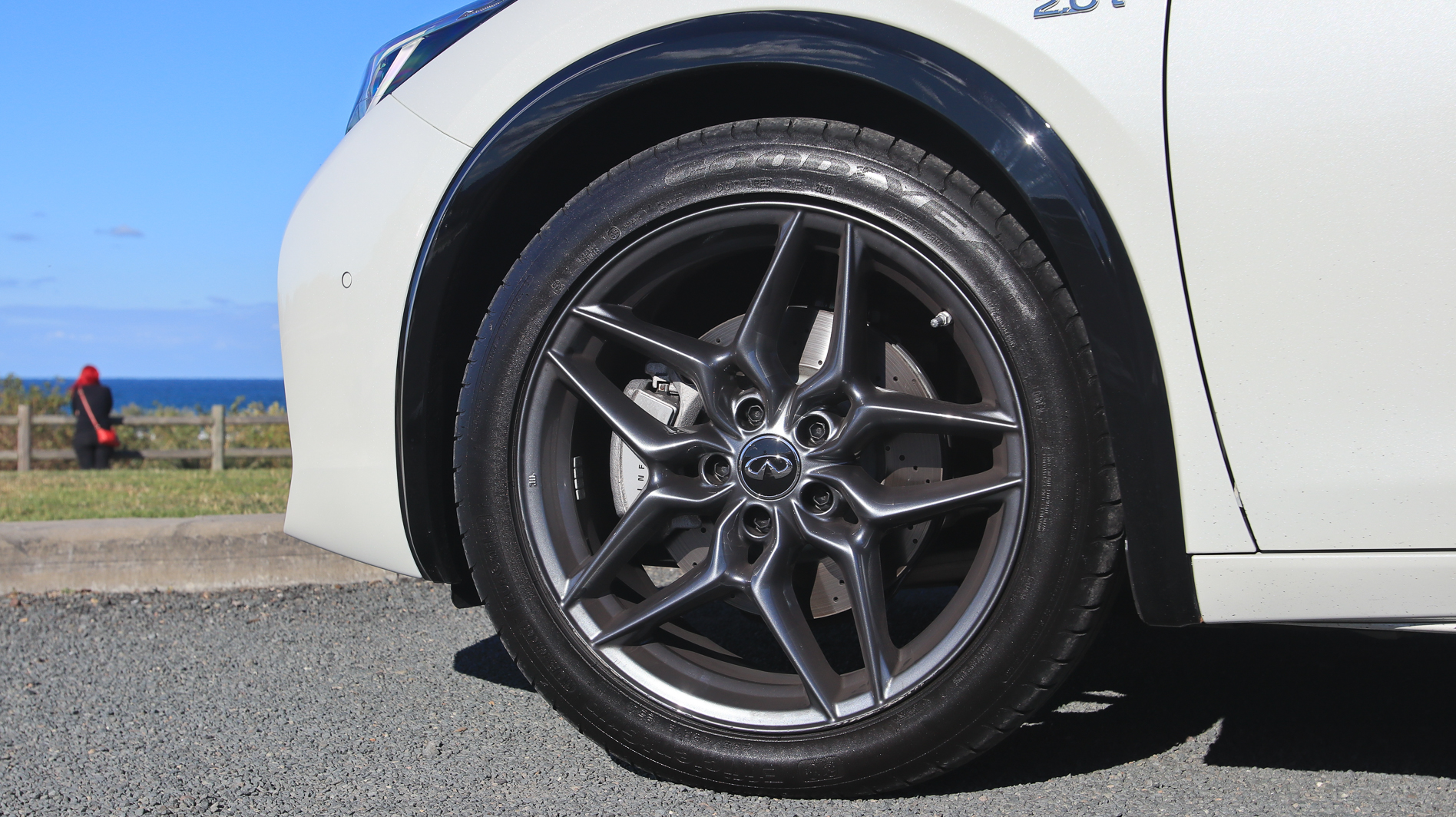
Given its relative age, the Q30 is very well equipped, with LED headlights, 360-degree camera, park assist, traffic sign recognition, heated leather seats with powered fronts, a Bose stereo, lane departure warning, AEB and adaptive cruise control, while the exterior scores a terrific-looking set of dark grey 19-inch rims.
If you’re cross-shopping it against the Audi Q2 and BMW X1 or X2, and even the GLA upon which it’s based, the Q30 comes up a couple of grand cheaper in most instances. The GLA only comes in AWD, though, which pushes its price higher.
MORE: Mid-life model makeover for Infiniti Q30 and QX30
Infiniti’s true rival is Lexus, though, and the excellent new UX is cheaper at the base level but about $7000 dearer for the mid-grade car.
Given all of the standard driver aid gear, as well as its seven airbags and high-strength steel build, the Q30 is a five-star ANCAP car all day long. It offers a four-year/100,000km warranty, as well as fixed-price servicing regimes that can be pre-paid when you buy the car.
The downside of owning such a rare breed of car, though, is a distinct lack of dealer coverage, with only six dealers across the country. Of course, a Nissan dealer can assist with the basics, while a Mercedes-Benz dealer could help out with the A-Class-based Q30 in a pinch.
Out in the sunlight, time has been kind to the Q30. Its sculpted, sensuous lines put it in stark relief against the more angular Audis and Bimmers, and its not-quite SUV ride height gives it a refined stance.
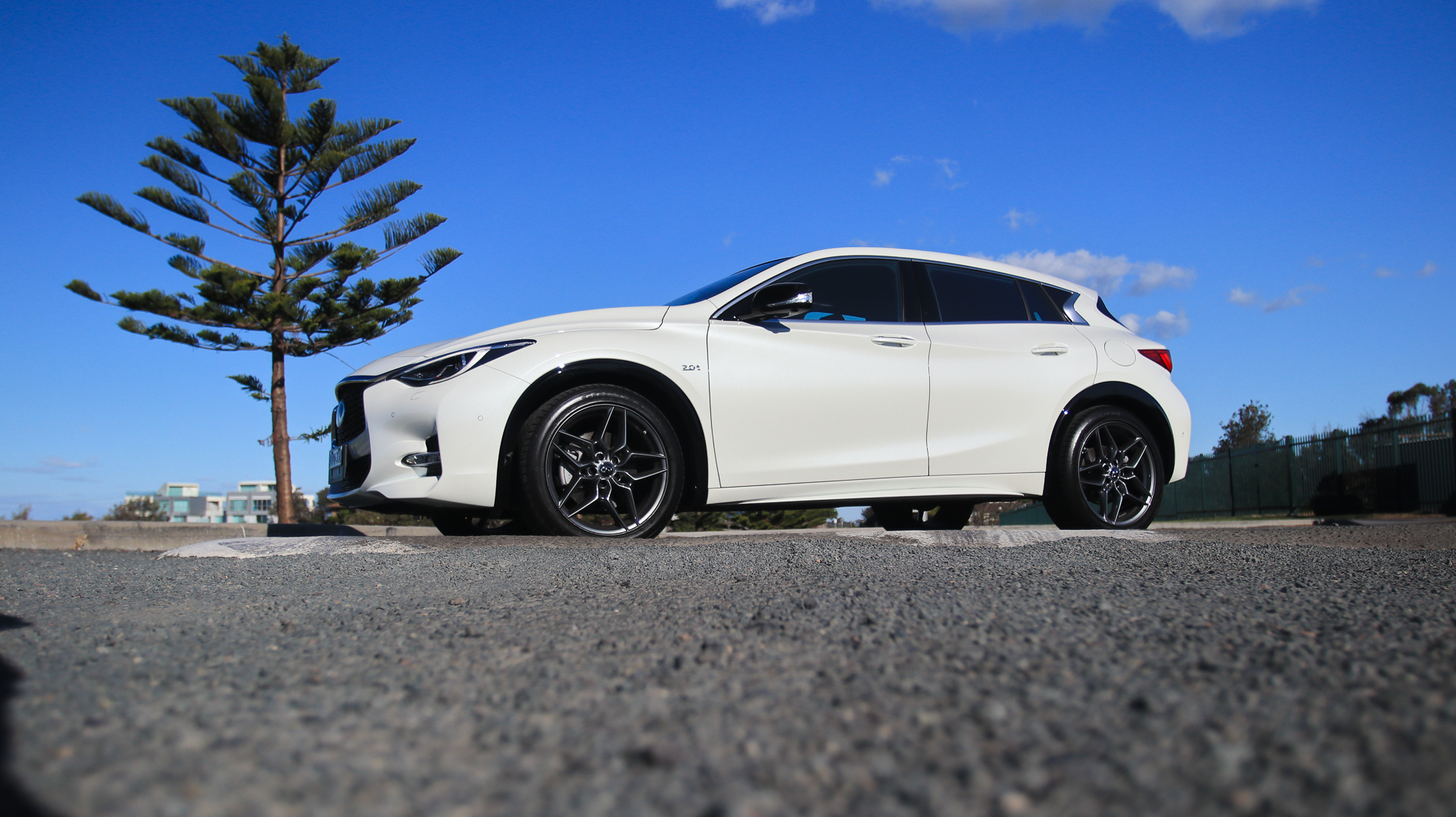
Those rims, too, give it a real presence in what can be a pretty cookie-cutter space.
Behind the wheel, Infiniti’s engineers waved their own spanners over the donor A-Class’s strut front/multilink rear suspension and electric steering, imparting a firm, robust character upon the car.
Its steering, in particular, is damped and quite weighty, and it’s been improved since the launch to give it more feel off-centre.
Its suspension tune, too, sits exactly on the right side of direct and firm without falling over into busy and annoying. It’s equipped with run-flat tyres as standard, but in this instance, they don’t detract from the low-speed ride quality of the Q30.
The turbo engine is fit and lag-free and hustles the Q30 up to the limit in good time, and the ratios of the dual-clutch box are well-matched to the powerband.
Against Infiniti’s combined fuel economy claim of 6.3L/100km, we recorded 7.5L/100km over 465km. It demands a diet of 95 octane or better.
Ergonomically, though, the Q30 isn’t a perfect fit for taller drivers. Its low roof and steeply raked windscreen mean that the rearview mirror and rain-sensing gear blocks some forward vision, while rearward vision through the tiny rear porthole… err, window, it minimal at best and – with the centre seat headrest raised – non-existent at worst.
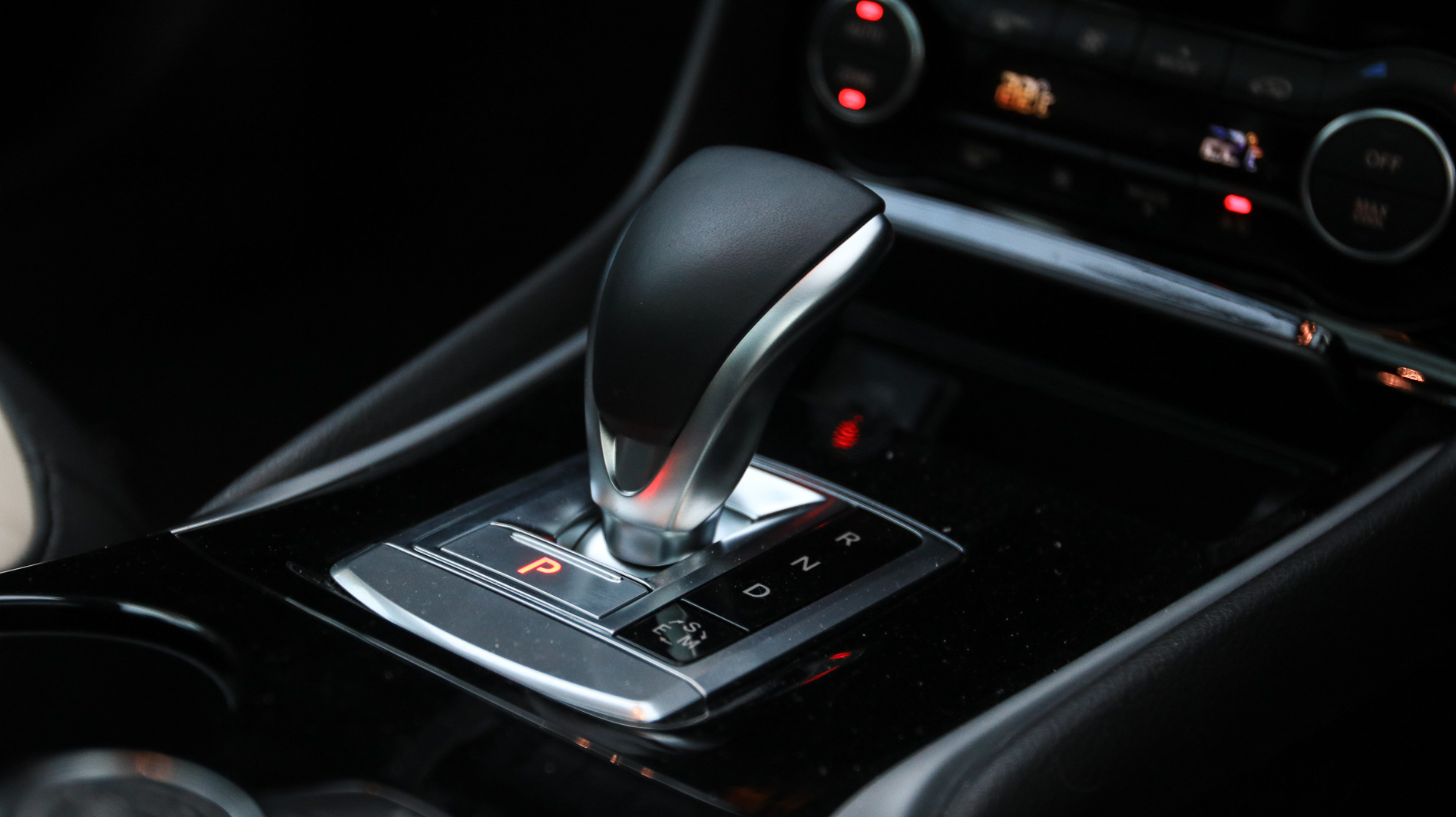
The joystick-style gearshift, too, isn’t a favourite of mine, taking a bit more time and a more deliberate action to get right when under a bit of pressure to get it done quickly. I also missed my Apple CarPlay, which gives me access to maps and music apps that the Q30 can’t help me with.
Luggage space is decent at 561 litres with the rear seats up, but rear passenger room is cramped for both headroom and knee room.
Overall, the Infiniti Q30 – which sells in truly minuscule numbers in Australia – is a unique beast in many ways, and it’s worth seeking out if you’re keen to break away from the pack and aren’t reliant on the rear seats.
A dearth of dealership support for the brand here, though, as well as pretty ordinary resale value, means that the Q30 will never be seen in serious numbers – but that might be a good thing.
SPECS Model: Infiniti Q30 Sport Engine: 1991cc in-line 4-cyl, dohc, 16v, turbo Max power: 155kW at 5500rpm Max torque: 350Nm at 1200 to 4000rpm Transmission: 7-speed dual-clutch Kerb weight: 1477kg 0-100km/h: 7.3sec (claimed) Fuel economy: 6.3L/100km Price: $46,888 (DA) On sale: Now
On September 2, 2019, Infiniti Australia announced it will fully withdraw from the Australian market by the end of 2020. For more information, head here.
Why should progress focus on the measurable? Nürburgring lap times dropping, 0-100km/h times getting insanely quick, power outputs getting so big they’re hard to properly comprehend.
And tyres? Wider and with ever more lateral grip, necessitating wilder and more ambitious speeds to get them unstuck. The preserve of racetracks, basically. Should you need to drive on a track to properly enjoy the magic of your new performance road car?
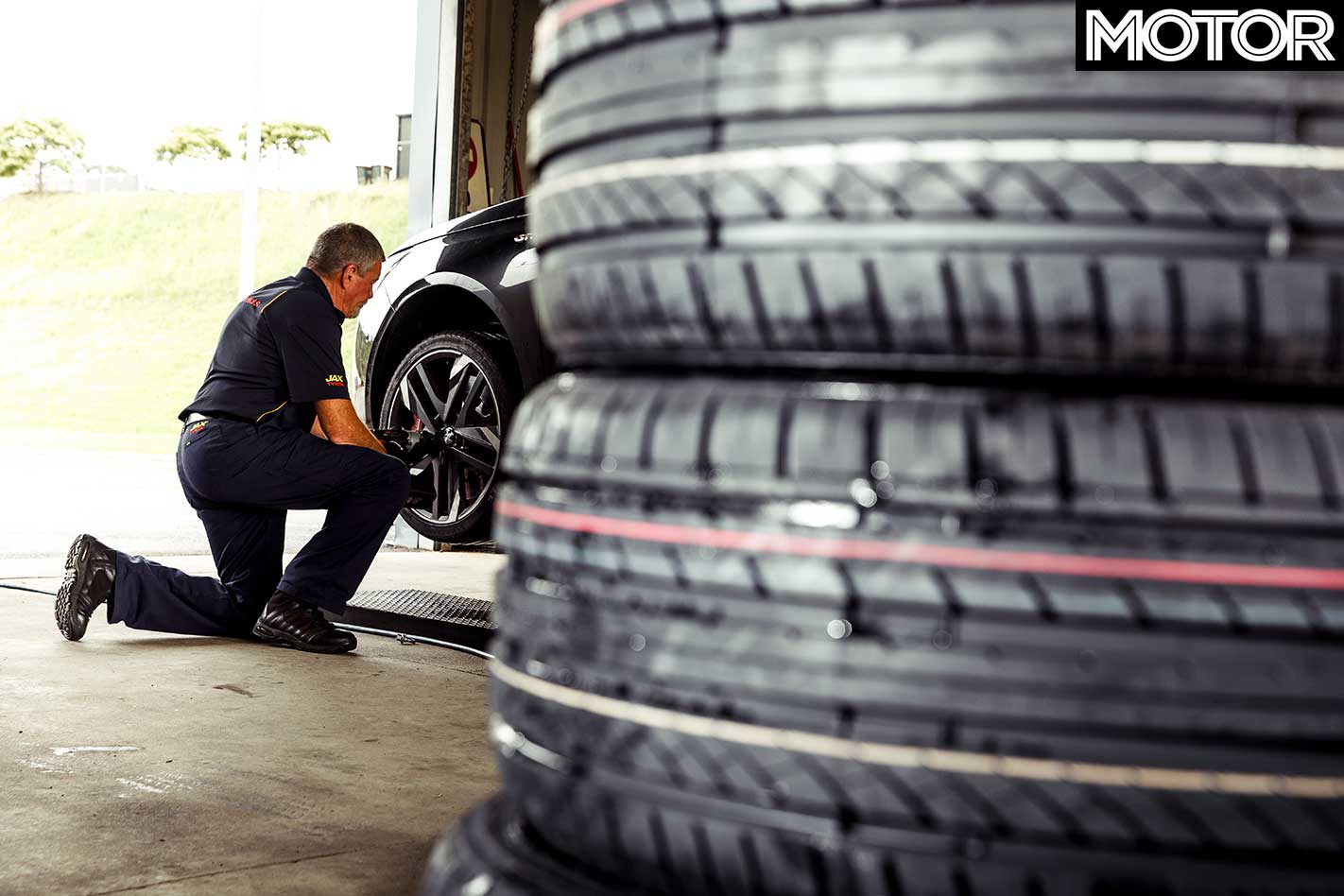
This month, I found myself wondering if MOTOR’s Tyre Test, which you’ll read in the June 2019 issue, should be more subjective. As in, ditch the numbers completely. Relax – we had good reason for this. Not doing much for my own stress levels, we actually did our Tyre Test twice in April.
The first one basically got rained out, and I was The Guy who had to shut it down as, with a key variable way out of our control – surface condition – we were all wasting our time. But it did cross my mind, fleetingly, that we save ourselves doing it all over again and just ask Warren Luff which tyre behaved nicest at its limit, and was even most fun to drive on. Feel, basically.
Some weeks earlier, I was thinking about how garbage the 175-section, 14-inch tyres are on my personal car, an AE86 Toyota Sprinter. Somewhere in the Victorian high country, my Hachi Roku’s front end was pushing, and its rear end yawing, at speeds that would be an amble for something like a new Renault Megane RS. But while I was going half the speed, I was easily having twice the fun. I know this is not a new thought, but there’s a reason it keeps coming up.

Having driven all the latest GT cars from Porsche (tough gig, I know), the first thing I’d do if I bought one is wear out the standard Michelin Pilot Sport Cup 2 tyres and replace them with something looser, just to feel that amazing chassis move about at more realistic speeds.
For track use, I might just go full slicks if I could afford it (and if I owned a 911 GT3, I could). Why bother with a tyre that has too much grip for the road and not enough for the track?
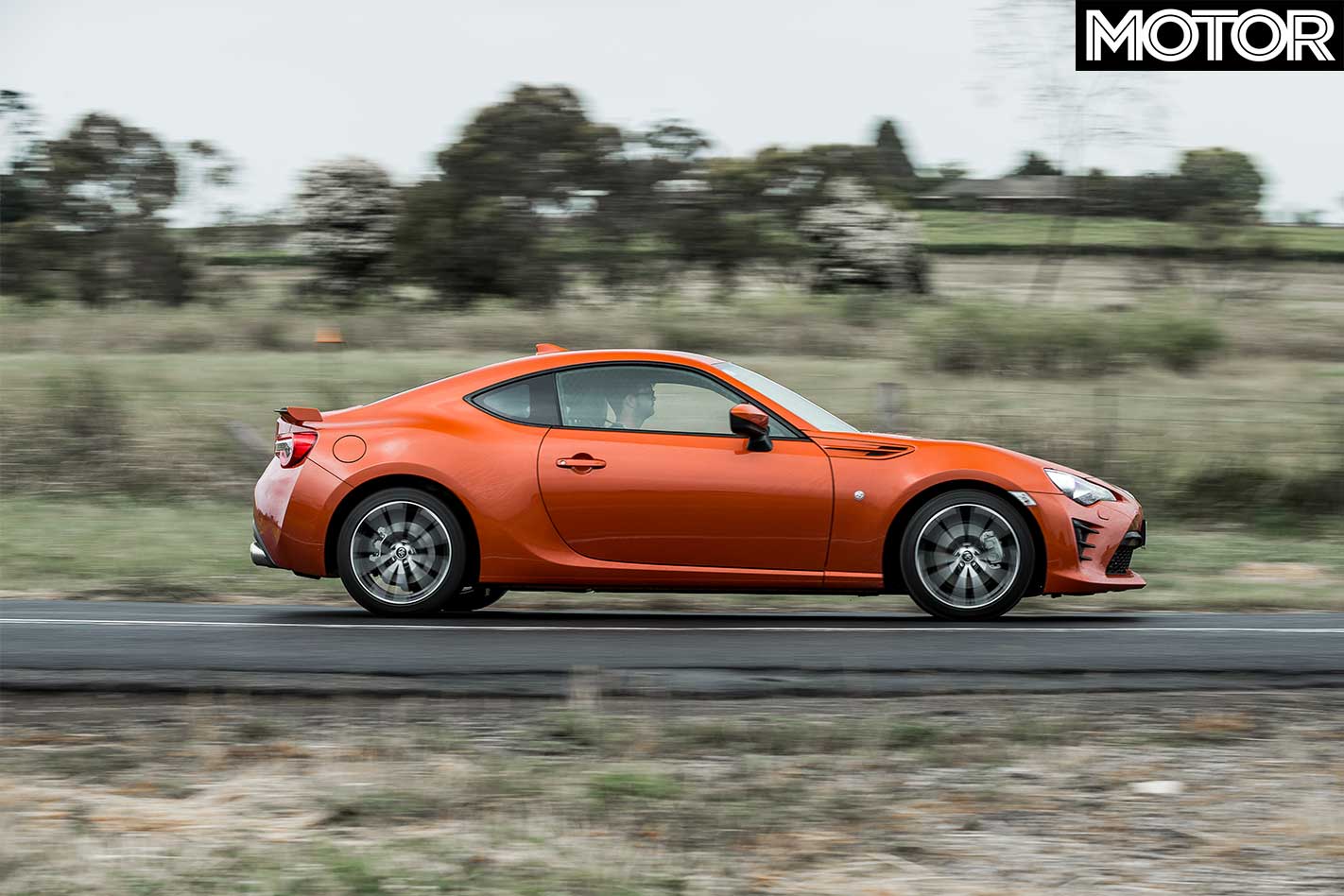
The big tyre brands should consider developing products that promise to show off more of your performance car’s chassis at less terrifying speeds. And I’m not talking Michelin Primacys on a Toyota 86 – these are not much chop to drive on, frankly, as they don’t behave like a performance tyre at the ragged edge.
Nope, I mean tyres that don’t claw into the bitumen quite as tenaciously, but instead prioritise feel and friendly on-limit behaviour, those impossible things to quantify. And things that can’t be said about the cheapest of tyres, which can be a bit dicey to drive fast on, or just don’t work in the wet.
We’re not about to introduce a subjective element to MOTOR’s Tyre Test as managing the numbers is already tricky enough. And not even the best road testers at MOTOR or anywhere have the bum-o-meters to properly compare things like tyre feel and behaviour. But the new performance tyre market is almost a microcosm for the new sports car market in general.
Case in point again, the new Renault Megane RS would be undoubtedly seconds faster than its predecessor around the Nürburgring or any track, but half the reason it’s fallen out of favour with many road testers is you just need to be going too fast to get it to do anything. In other words, it has too much grip. In so many areas of life, less can be more. And perhaps it’s time a bit of that applied to if not new performance cars, then the new performance tyres they wear.
The Bend Motorsport Park is set to help keep the spirit of the Adelaide Motorsport Festival (AMF) alive with the creation of a new event to take the reins from the Victoria Park Sprint, which has been cancelled for the year.
Scheduled for the weekend of December 7 and 8, The Bend Classic will host several categories for “for historic and performance oriented vehicles that typically don’t compete on a regular basis.”
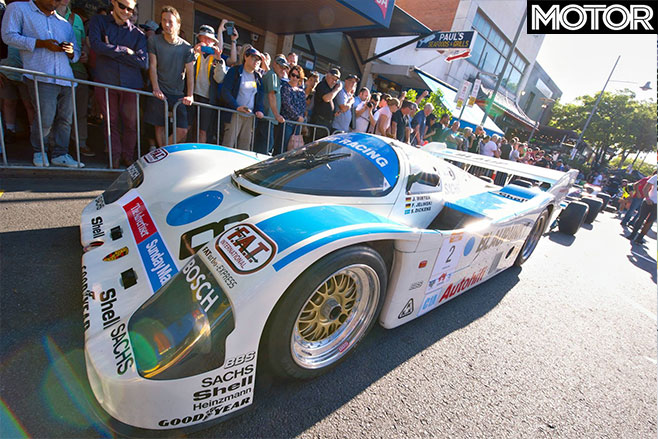
The Bend’s managing director Sam Shahin says he wants to see the continued growth of motorsport enthusiasm in South Australia.
“The AMF has been fantastic for motorsport fans in SA and around the country and it would be a shame to see some of the activities fall away.”
“It’s been humbling to hear encouragement and calls of support from so many people, who have asked how The Bend Motorsport Park can play a role.
“As a result we are opening Registrations of Interest for drivers and categories who want to participate in The Bend Classic, a sprint event at The Bend.”
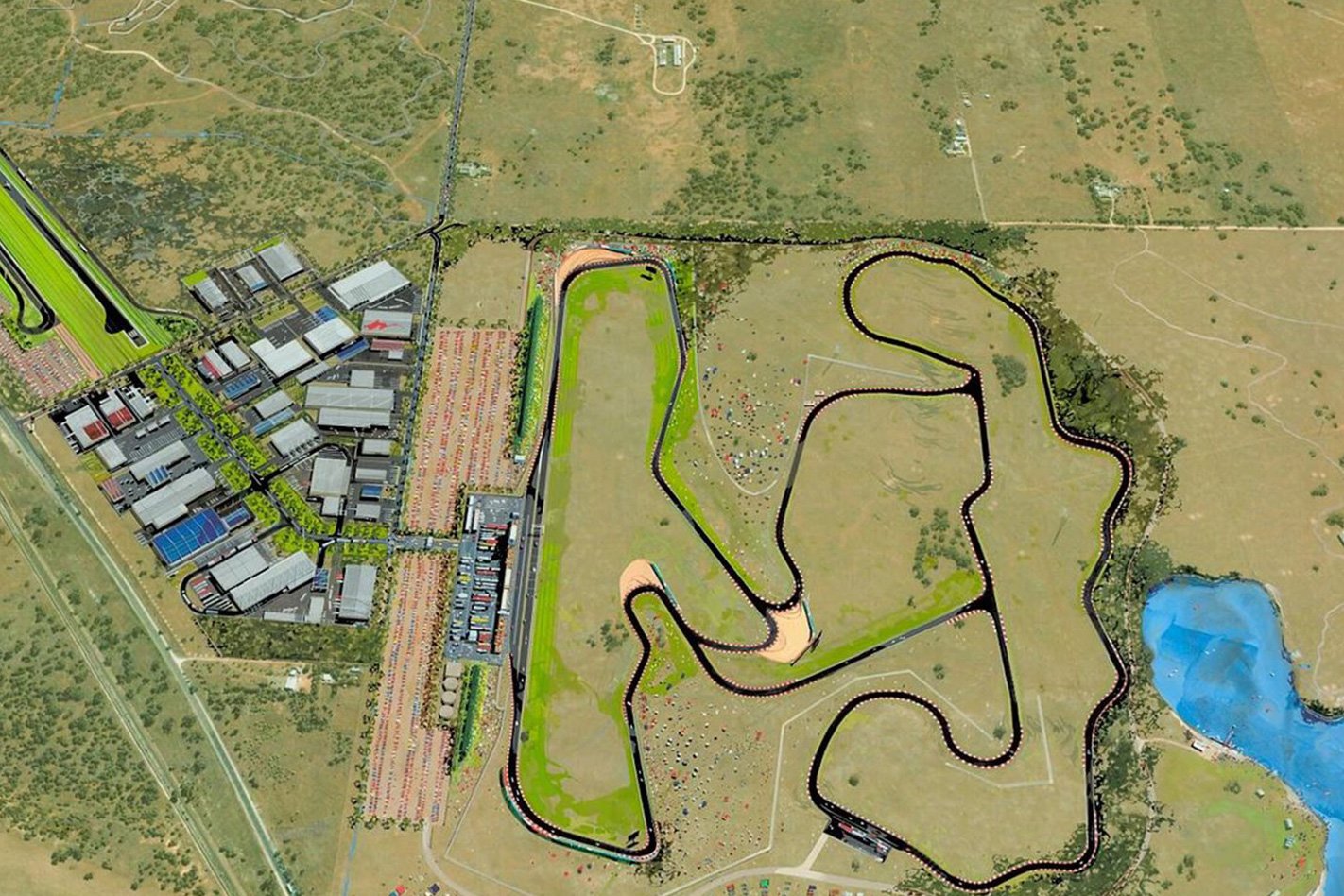
“There will be thousands of people travelling from interstate and locals enjoying the continuing aspects of the festival like the Shannons Adelaide Rally, and Street Parties.
“They can come by and stay at the park on their way to Adelaide or come up for the day to spectate or participate in the sprint.
“We hope the event will be supported and if we can play a role we will relish that opportunity.”
Registrations of Interest can be submitted via an online form.
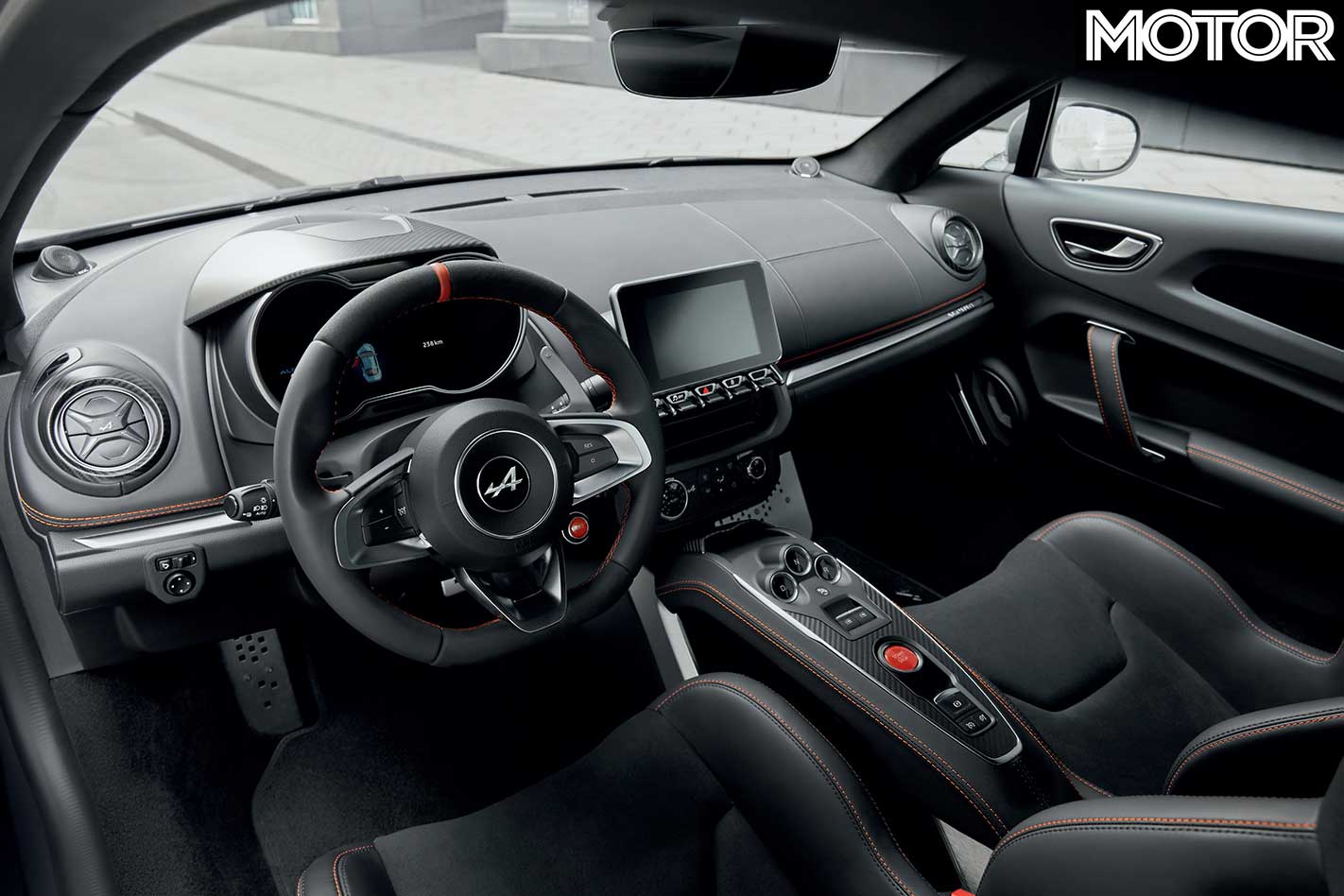
Alpine Cars has revealed a sharper version of the car it has been selling for the last couple of years, this time badged the Alpine A110S.
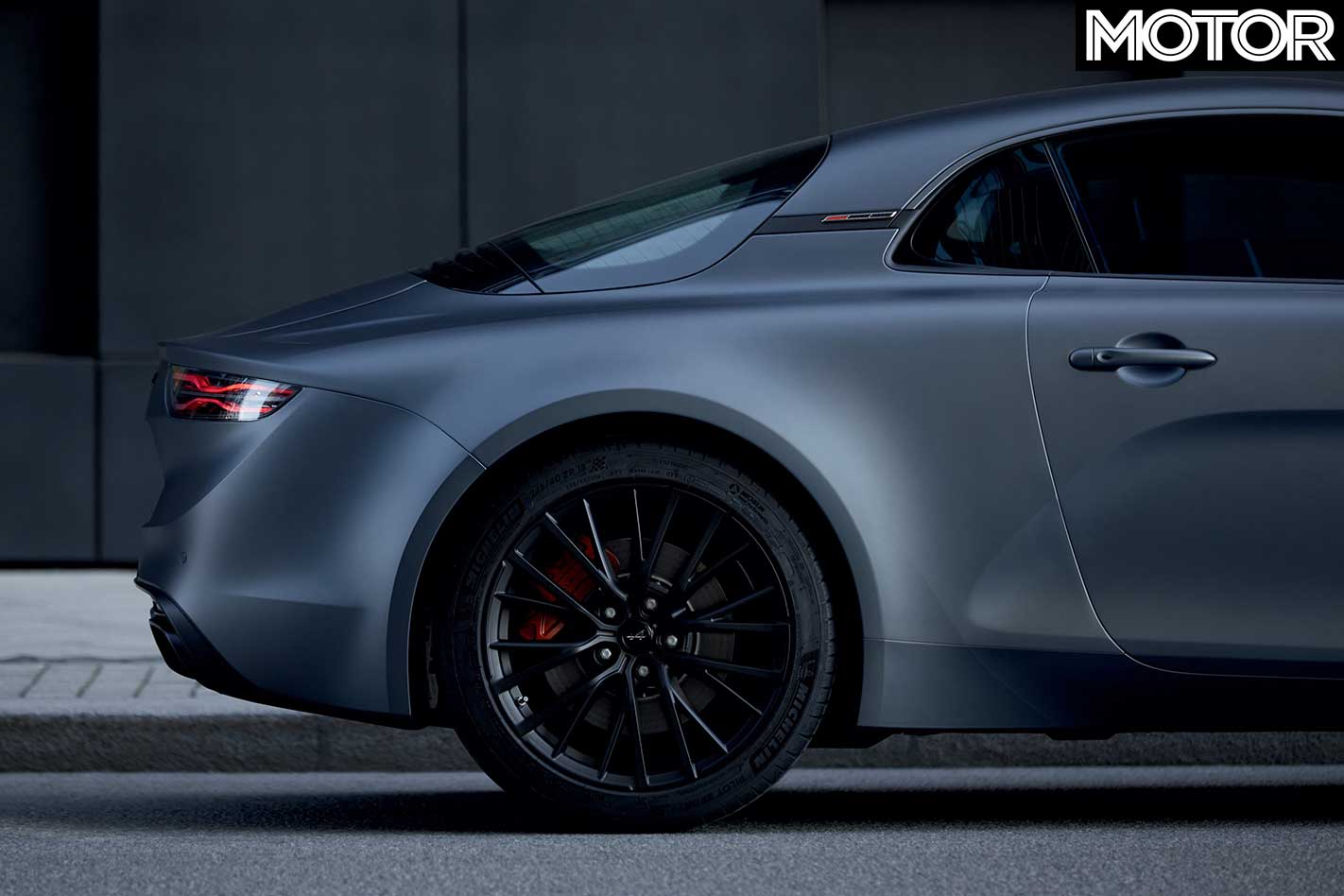
While the standard A110 is very closely inspired by the original car from decades ago, the ‘S’ is set to feature a stiffer setup, with a more powerful engine tune and some unique styling.
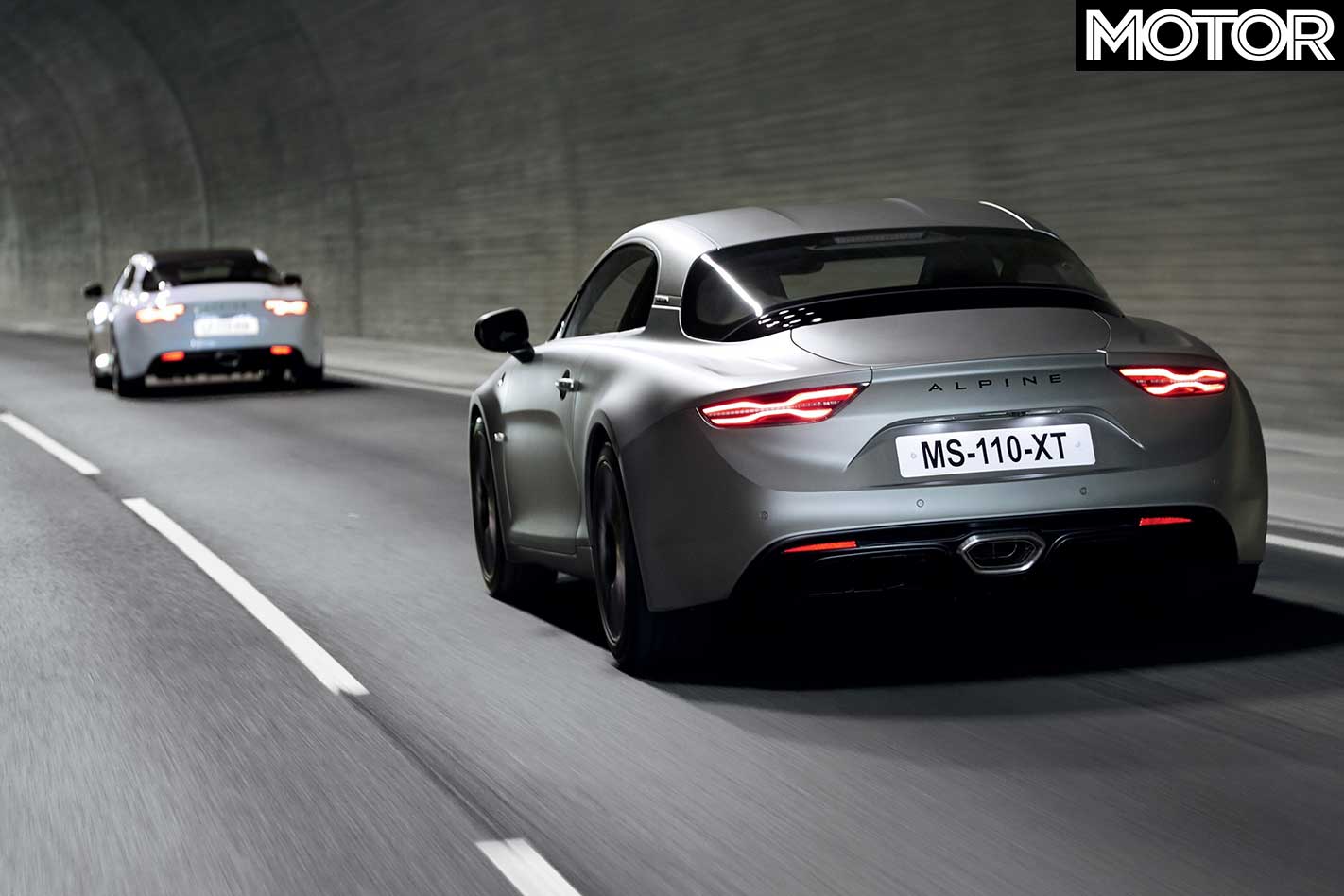
The engine, still a turbocharged 1.8-litre Renault four-pot, tow produces 215kW, 30kW up from the standard A110, with that power peaking 400rpm higher at 6400rpm. Torque remains the same at 320Nm.
Alpine chief engineer Jean-Pascal Dauce explains that the engine’s re-tune is designed to alter the characteristics of power delivery, rather than only add more of it.
“The objective was to intensify the engine’s character and power delivery. The A110S is characterised by high-speed stability and handling precision, and it was important to mirror those distinctive dynamic traits with the car’s powertrain as well.
“Between 5000 and 7000rpm the engine is especially energetic. It continues to push forward even at those very high engine speeds, which really encourages you to stretch every gear all the way out.”
Dauce says the chassis is arguably the most important aspect of the A110, with the A110S’ roll bars twice as stiff, coil springs 50 per cent stiffer, and the ride height lowered slightly by 4mm.
All up, the A110S is 11kg heavier, with an optional carbon roof helping keep 2kg of top weight off.
“Earlier versions of the A110 were pitched very much in line with the original 1970s A110 – just like that classic model they’re playful and fun to drive.
“The A110S has a very different character. Its bespoke chassis setup makes it a very focused sports car. High-speed stability and handling precision are two of its defining characteristics.
“Although lap times are never a priority for our road cars, the new A110S is nonetheless faster than the A110’s other versions.”
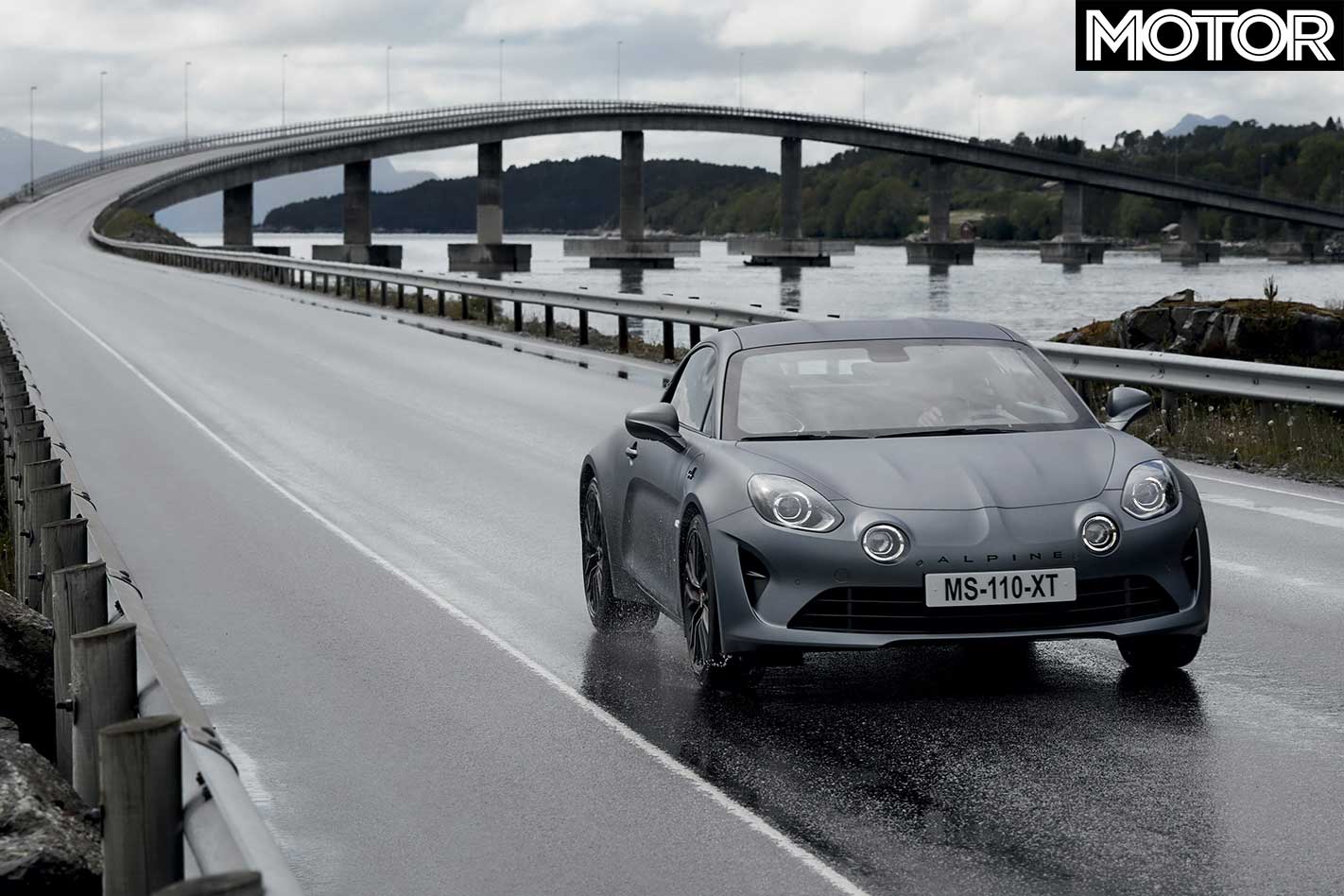
The A110s is a tenth quicker to 100km/h according to Alpine, with a 4.4sec claim.
Australian details for the A110s haven’t yet been confirmed, as it’s still believed the brand is yet to sell out of its initial allocation of A110s.
Have you ever found yourself suddenly out of your depth behind the wheel and wondering just how the situation escalated so rapidly? The WCW team opens this week’s chat with a look back at some of their most hopeless motoring predicaments and, ironically, almost none of them involved high speed.
Perhaps something that could have helped avoid the borderline catastrophic situations are a few vehicle modifications. This week, the boys chat about modified cars. Why do people feel the need to fettle with otherwise perfectly functional production cars, and is it worth altering your car from standard?
And it’s not just aftermarket modification that’s going on either. Alpine is the subject that rounds out the modded motors conversation with a chat about the new A110S. The new variant is faster, stiffer and lower, but has that undermined its core principle and the one thing that made it stand out from the crowd?
Making his first appearance on the podcast, Louis continues the chat from last week’s guide to track days, this time introducing the lowdown on karting. It might cost less than you think to get into this miniature form of motorsport, but how far you take it and how much you spend is very much unlimited.
If you’re on the go you can find WhichCar Weekly on all manner of podcast apps including iTunes and Podbean, please rate, subscribe and leave a review! You can also follow the day-to-day happenings of the WhichCar team on Facebook, Twitter and Instagram @whichcarau.
Listened to the show? Help us out:
- Leave a note in the comment section below.
- Leave a review on Apple Podcasts/iTunes
- Subscribe to our podcast
Suzuki has dropped the punchy 1.0-litre ‘Boosterjet’ turbo from its Baleno light hatch line-up, with the range-topping GLX now sharing the same, less-powerful engine found in the entry-level GX.
Losing the 82kW/160Nm 1.0-litre three cylinder turbo petrol engine, that’s shared with the Suzuki Swift GLX Turbo, arguably diminishes the appeal of the Baleno at the top end of its range, with its rorty exhaust note, enthusiastic throttle response and six-speed automatic having provided big points of difference over rivals such as the Toyota Yaris, Mazda 2 and Hyundai Accent.
As of September, anyone opting for the GLX will have to make do with the less powerful 68kW 1.4-litre four-cylinder naturally aspirated petrol engine coupled with a four-speed auto. The other side of the coin, however, is that the engine switch has enabled the GLX’s price to be brought down from $21,990 to $18,990.
The change is part of the introduction of the Series II Baleno that also brings a new front-end look and freshened-up interior.
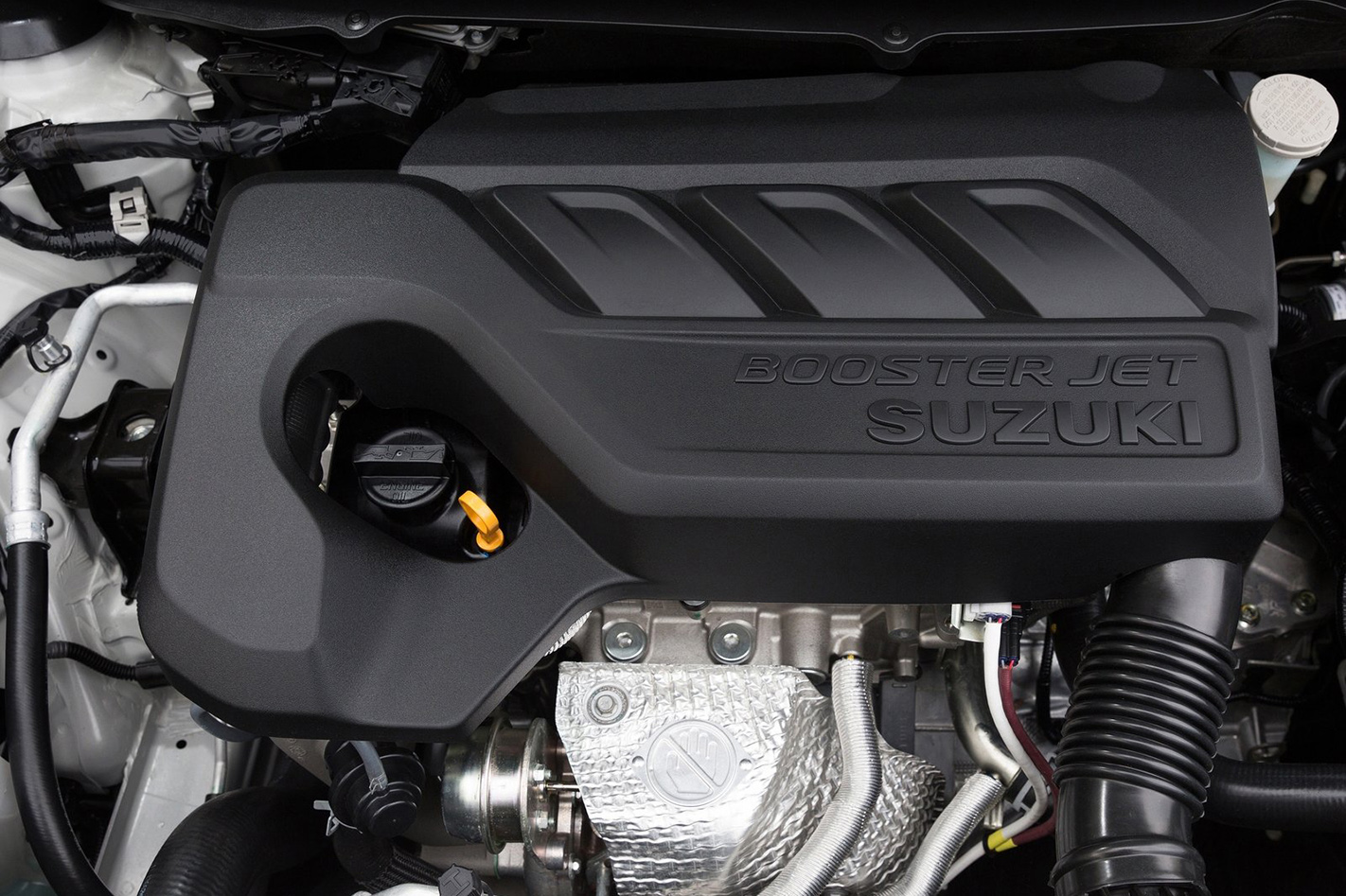
Despite the Series II tag, the update is relatively minor with both GL and GLX variants receiving a newly designed front grille, along with revised front and rear bumpers.
Inside, keen observers will notice a new door trim colour and new seat fabric design and hue.
As well as gaining a cylinder and losing a turbocharger, the GLX also receives UV protected windscreen and auto-levelling LED headlights.
Unlike the Swift that sits above it in Suzuki Australia’s range, the Baleno still misses out on active safety features such as autonomous emergency braking.
External colour options for the new look Baleno include: Fire Red, Arctic White, Granite Gray Metallic, Stargraze Blue Metallic and Premium Silver Metallic, with metallic paints attracting a $500 premium.
As before, standard equipment includes Apple CarPlay/Android Auto, satellite navigation, reversing camera, fog lights, and LED daytime running lights, with the GLX adding climate control air-conditioning, keyless entry/start, and alloy wheels.
PRICING
The Series II Baleno goes on sale from August with the arrival of the GL, with the GLX arriving from September.
MY19.5 Suzuki Baleno pricing
- Baleno GL manual – $15,990
- Baleno GL auto – $16,990
- Baleno GLX auto – $18,990
This weekend France hosts the 87th running of the world’s most famous 24-hour race, the 24 Heures du Mans. This is the road race that makes our esteemed Bathurst 1000 look like a quick afternoon sprint.
Car companies like Toyota, Audi, Porsche, BMW and others have spent millions of dollars building wild prototype cars and assembling huge teams of up to 300 people as they strive to win this round-the-clock race of attrition between man and machine.
And yet, it’s probably most famous with Australians for being the race in which Mark Webber spectacularly flipped not one but two Mercedes-Benz race cars, back in 1999.
The 24 Heures du Mans is run every June at the Circuit de la Sarthe just outside of Le Mans in northern France. Each year more than 250,000 spectators descend on the track to watch the world’s best drivers compete for victory – drivers from Formula One and IndyCar racing wheel to wheel with Hollywood stars and celebrities.
It’s that kind of event.
It is the world’s oldest active sports car race, held annually since 1923. It’s been the site of many titanic battles between carmakers over the years, and in modern times has seen a string of dominations, none more impressive than Audi’s 13 wins from 15 attempts between 2000 and 2014.
This year, WhichCar has embedded with the Toyota WEC Team (World Endurance Racing) as they attempt to go back to back. It’s been a long, hard road for Toyota which is now competing in its eighth WEC season, but the Japanese brand is an almost unbackable favourite to take out this year’s race.
In fact, many believe the only thing that can beat Toyota is Toyota.
Here are a few interesting facts about the Le Mans 24 Hour race.
- Beer is cheaper than water in many campgrounds (we checked)
- Dane Tom Kristensen has won a record nine times
- Each car has at least three drivers, although prior to the 1953 event some teams attempted to do the race with one driver
- Luigi Chinetti and Peter Michael Thomson won the 1949 race, but it was Chinetti who did all but 20minutes behind the wheel
- The last Australian to win was David Brabham in 2009, driving a Peugeot
- His brother Geoff Brabham won in 1993, also driving a Peugeot
- Two other Australians have won Le Mans: Vern Schuppan in 1983 and Bernard Rubin back in 1928
- Peter Brock and Larry Perkins had a go in 1984, in a Porsche 956, and were doing okay until the car crashed out with six hours left to run. Rumour has it Perkins was 4sec a lap quicker than Brock
- New Zealander Earl Bamber won the premier LMP1 category with Porsche in 2015 and 2017
- Aussie whizz kid Matt Campbell won the GTE AM race in 2018 with a Porsche 911 RSR
- The race used to start with drivers on the opposite side of the track to their cars. This was abandoned in 1970 due to safety concerns.
- Le Mans still holds the dubious record of the world’s deadliest motorsport incident, when a Mercedes flipped into the crowd in 1955 and caught fire, killing 84 people and injuring another 120.
- The last driver to die at Le Mans was Dane Allan Simonsen, in 2013. The Bathurst 12-Hour qualifying trophy is named after him.
The Cars
Today, the Le Mans 24 Hour has four main car categories ranging from wild Le Mans Prototypes (LMP) machines to more conventional road cars.
There are two LMP categories – LMP1 and LMP2 – for purpose-built race cars that bear absolutely no resemblance to road cars.
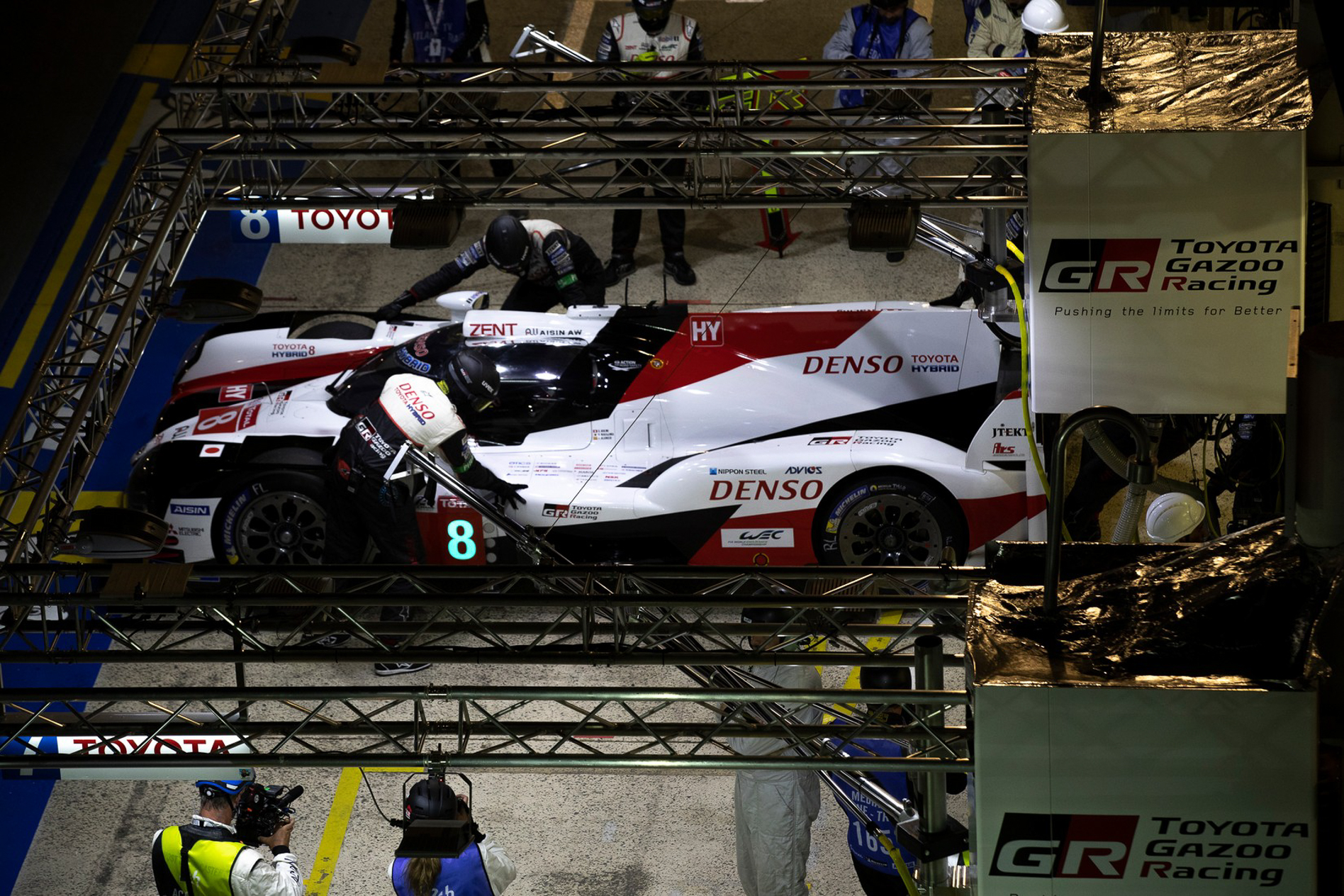
LMP1 cars are all-wheel drive, weigh around 870kg (including driver), and can produce up to 745kW (1000hp) of power from their petrol or hybrid engines. The teams are free to evolve or modify their chassis and bodywork to achieve the highest performance, which saw some crazy bodystyles in the 1990s and 2000s. Today, the rules stipulate that the cockpit must be enclosed. Oh, and they have limits on how much fuel they can burn and electricity they can expend per hour. They are the Formula 1 cars of the endurance world.
LMP2 cars look just as wild, but are slightly less frightening. Teams have four different chassis/bodies to choose from, each weighing around 930kg, and are not allowed to mess with them in any way or shape. The engine, too, is a regulated component – a 4.2-litre Gibson (Nissan) V8 producing around 450kW. Oh, and the cars are only rear wheel drive. Put that all together and LMP2 cars are around 10 seconds a lap slower that the brutal LMP1 cars at Le Mans.
The other two categories are GT Endurance Pro and GT Endurance AM. These cars have a lot in common with conventional road cars such as the Porsche 911, Chevrolet Corvette, Ford GT, Ferrari 488 and Aston Martin Vantage.

But the differences can be substantial. For example, the road-going Porsche 911 is called a rear-engine car because the engine hangs out over the rear axle. But the 911 GTE car has the engine practically inside the cabin behind the driver – a change Porsche made to make the car more competitive.
Generally, the biggest difference between GTE Pro and GTE AM is that GTE AM teams must have at least one amateur driver (AM = amateur). GTE AM cars must also be at least a year old to keep the cost of competing down.
The Toyota TS050
Toyota first entered its current Le Mans Prototype in the 2016 event. This state of the art carbon fibre race car is built for speed and downforce. It’s powered by a high tech petrol-electric drivetrain which combines a potent twin-turbo 2.4-litre V6 petrol engine with two electric motors to deliver a combined output of 1,000hp.
Add that to the LMP1’s standard all-wheel drive system and you get a car that New Zealand’s Le Mans winner and former F1 driver Brendan Hartley says “accelerates out of corners harder than any machine I’ve ever driven”.
Circuit de la Sarthe
For years Australians considered Bathurst to be the world’s second longest racetrack after the Nurburgring, even though the Le Mans track is a whopping 13.6km in length, which more than doubles Bathurst.
Perhaps it’s because the Le Mans track is not a permanent track – two-thirds of its length consists of real-world roads. But then Bathurst is not a permanent track either.
The Circuit de la Sarthe used to have a 6km main straight – Mulsanne Straight – on which cars would hit more than 400km/h, before two chicanes were put in back in 1990, effectively splitting it into three shorter straights.
Now, the fastest cars will be lucky to top 350km/h. Last year’s race-winning Toyota TS050 peaked at 336km/h, but still managed to average 251km/h per lap.
Stay tuned for more over the weekend!
What’s in the garage?
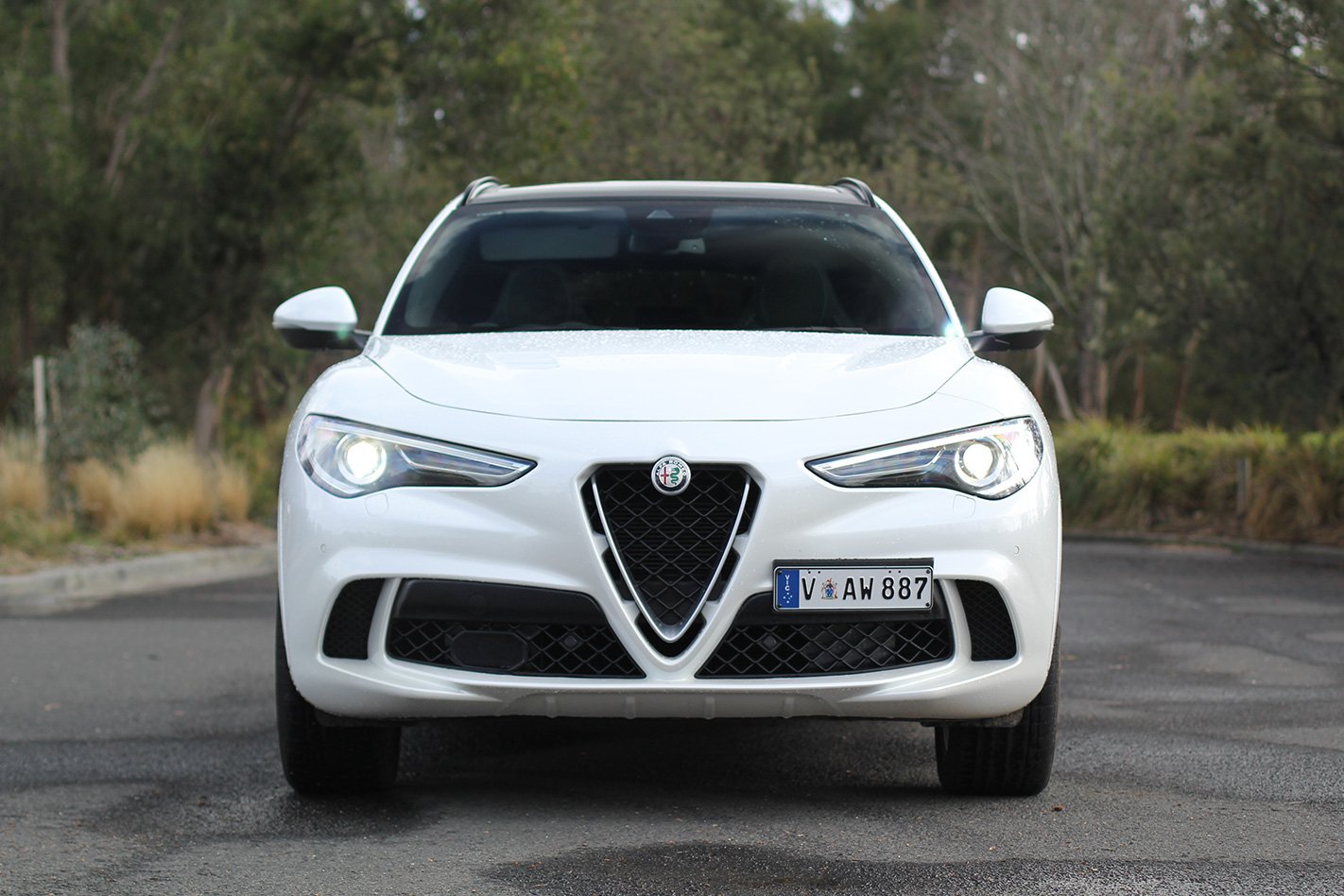
It’s faster around the Nurburgring than a Lamborghini Gallardo LP 560-4, and yet it can carry four in comfort, and the thought of taking it down a dirt road won’t make you cringe. Say hello to the bag of contradictions that is the Alfa Romeo Stelvio Q. As the flagship of the Stelvio SUV range, the Q is a hardcore performance-focused halo, and is fitted with the Ferrari-developed twin-turbo V6 that makes the Giulia Q sedan a Mercedes-AMG C63 fighter. The 2.9-litre six-cylinder produces 375kW and 600Nm, fed to all four wheels via an eight-speed automatic, which all coalesces to a claimed 0-100km/h time of 3.8 seconds. Want one? Alfa will take $149,900 from your back pocket to park it in your driveway.
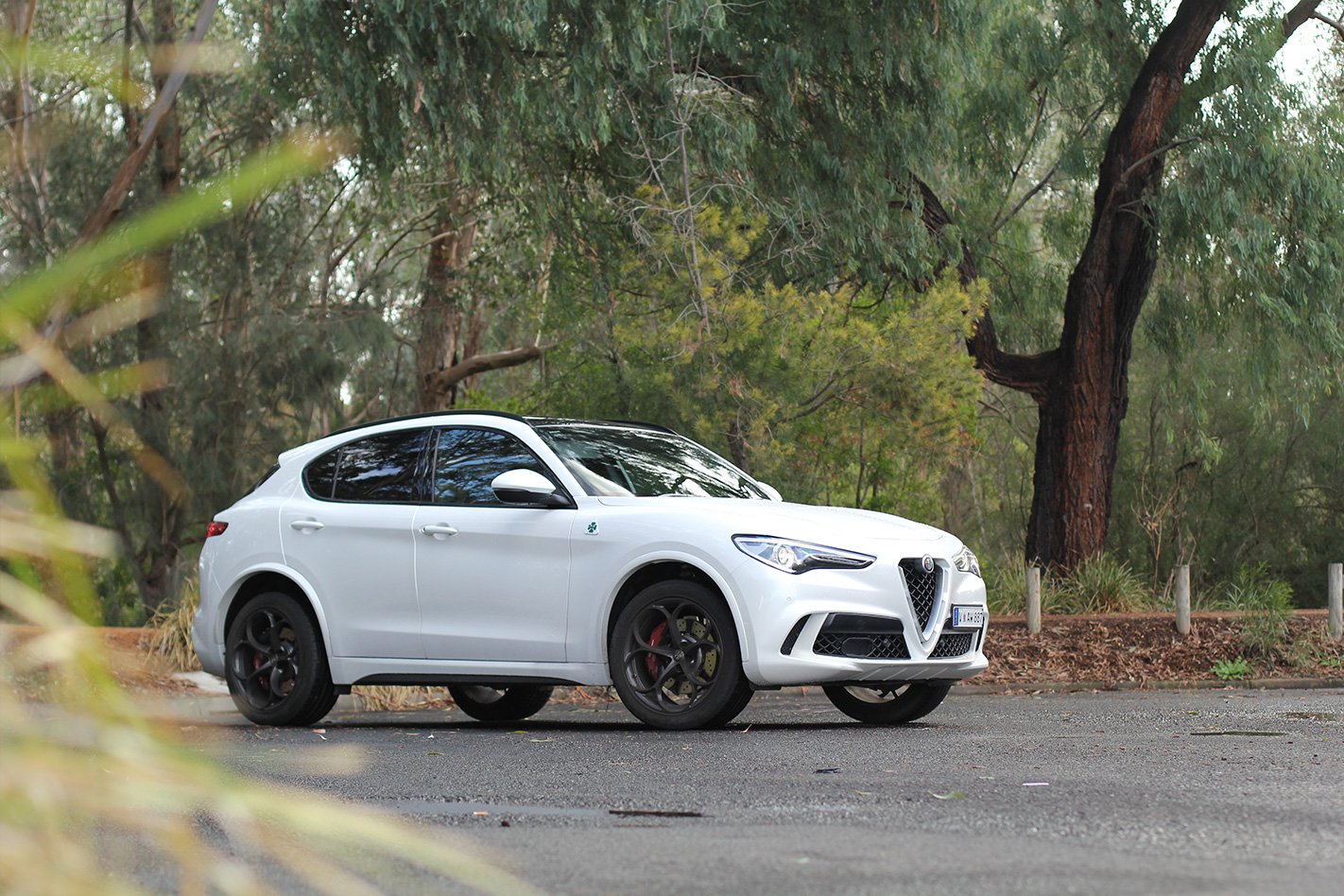
What we reckon

Cameron Kirby
Staff Journalist
| There is no sense in an SUV being this fast and dynamically capable, and yet I found myself absolutely loving the Stelvio Q. Day-to-day liveability is not where it needs to be for those looking for a practical choice, nor is the quality as high as what is found in German rivals, but for sheer theatre and smiles, the Stelvio Q is unrivalled. Though, so is the Giulia Q, which is a more dynamically pure offering, making the Stelvio a silly car for silly people. I like silly people. |

Andy Enright
Deputy Editor
| I haven’t got any children but I’ve often pondered what would happen if you had kids but hated them. I now know what happens: an Alfa Romeo Stelvio Q. It’s about the best fun you can have in an SUV as long as you’re pedalling. Seriously, this thing is deranged, especially if you click it into Race mode and get the full noise and angry suspension. If you’re in the back, it’s a different matter. Visibility out isn’t great and it’s all a bit claustrophobic. Still, at least the carbon-shelled sports seats are easy to wipe down. |

Alex Rae
Online Editor
| Unlike Andy I’ve got a kid, and though I love him dearly I wouldn’t worry about parking the Stelvio Q in the driveway because it’s a lot of the drama I love from the Giulia Quadrifoglio, in “family-friendly” SUV form. But my wife might disagree. It’s a bit edgy and needs some tough love to wrangle the best out of it, and the interior with its four-seat layout and hardshell bucket seats aren’t terribly flexible. There’s also a fair bit of hard and not-so premium appointments in the cabin for the $150k price tag. But when your up it, it goes like stink (it’s faster than the Giulia to the ton), and it’s got most of the brio of the sedan flagship, minus maybe two tenths the drama. |
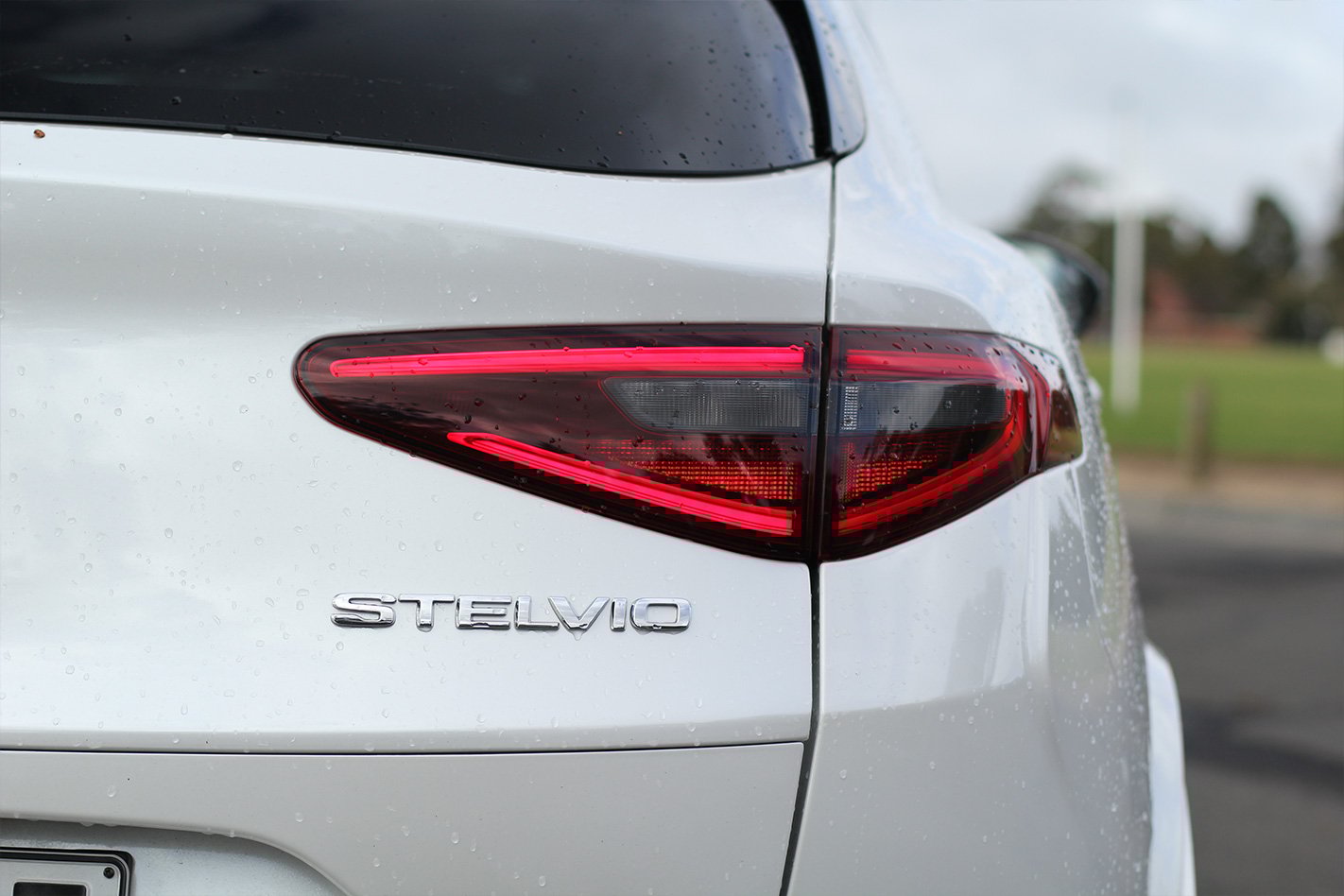
Review
Power and performance
What can we say about the Stelvio Q’s performance? Much of what is said when the loud pedal is stomped is a mixture of words not fit for print, and wild, cackling laughter. WIth the same power as the Giulia Q sedan, but with the added traction of all-wheel drive, the Stelvio Q is a weapon in a straight line. There’s not much that will have you worried at the traffic light grand prix, even when you have a car load of mates and luggage. Power is delivered in a ferocious fashion, with the turbos spooling up swiftly. The Stelvio has a killer soundtrack to accompany the punch as well, with evocative crackles and pops emitted from the exhausts as you tear down the road.
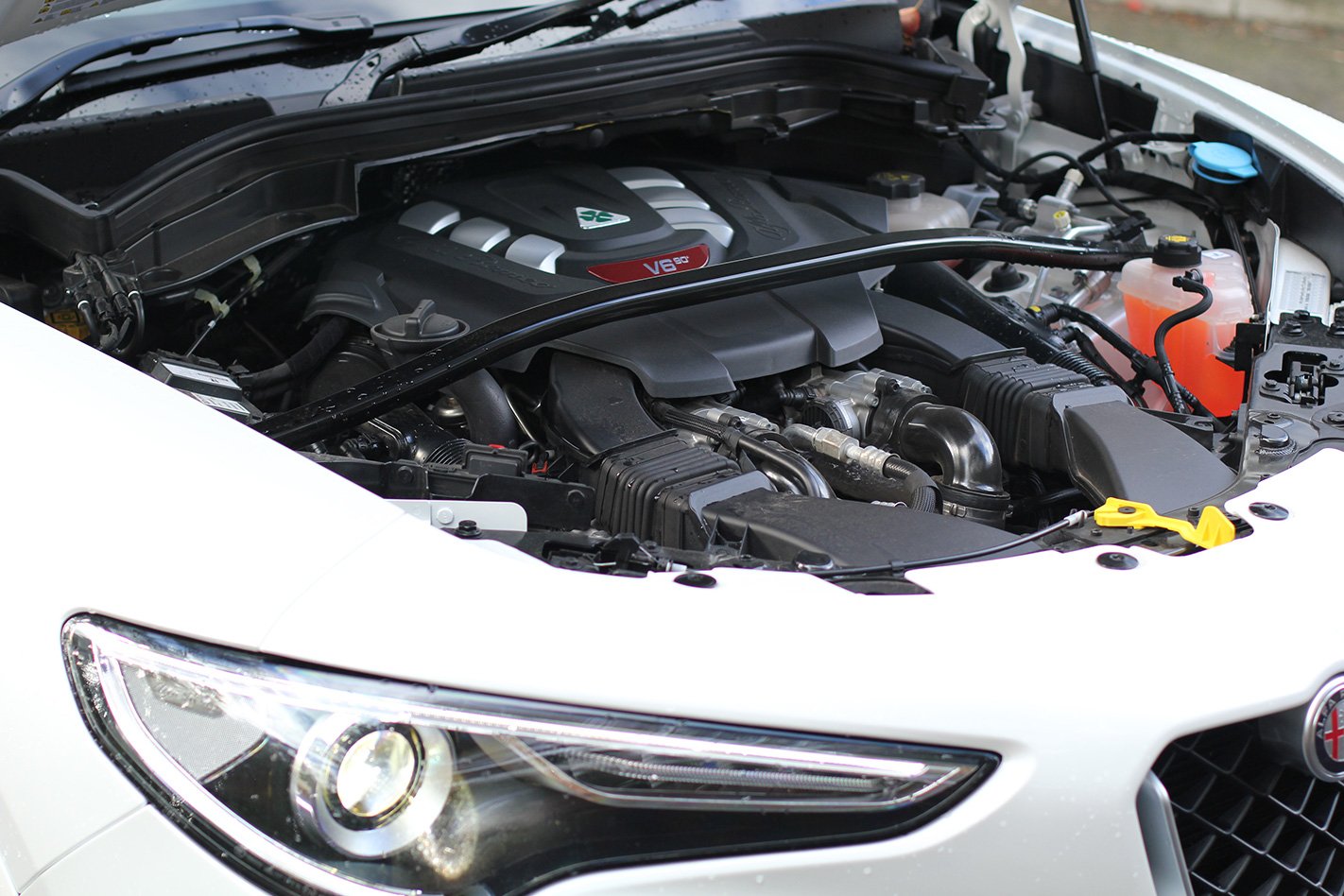
Ride and handling
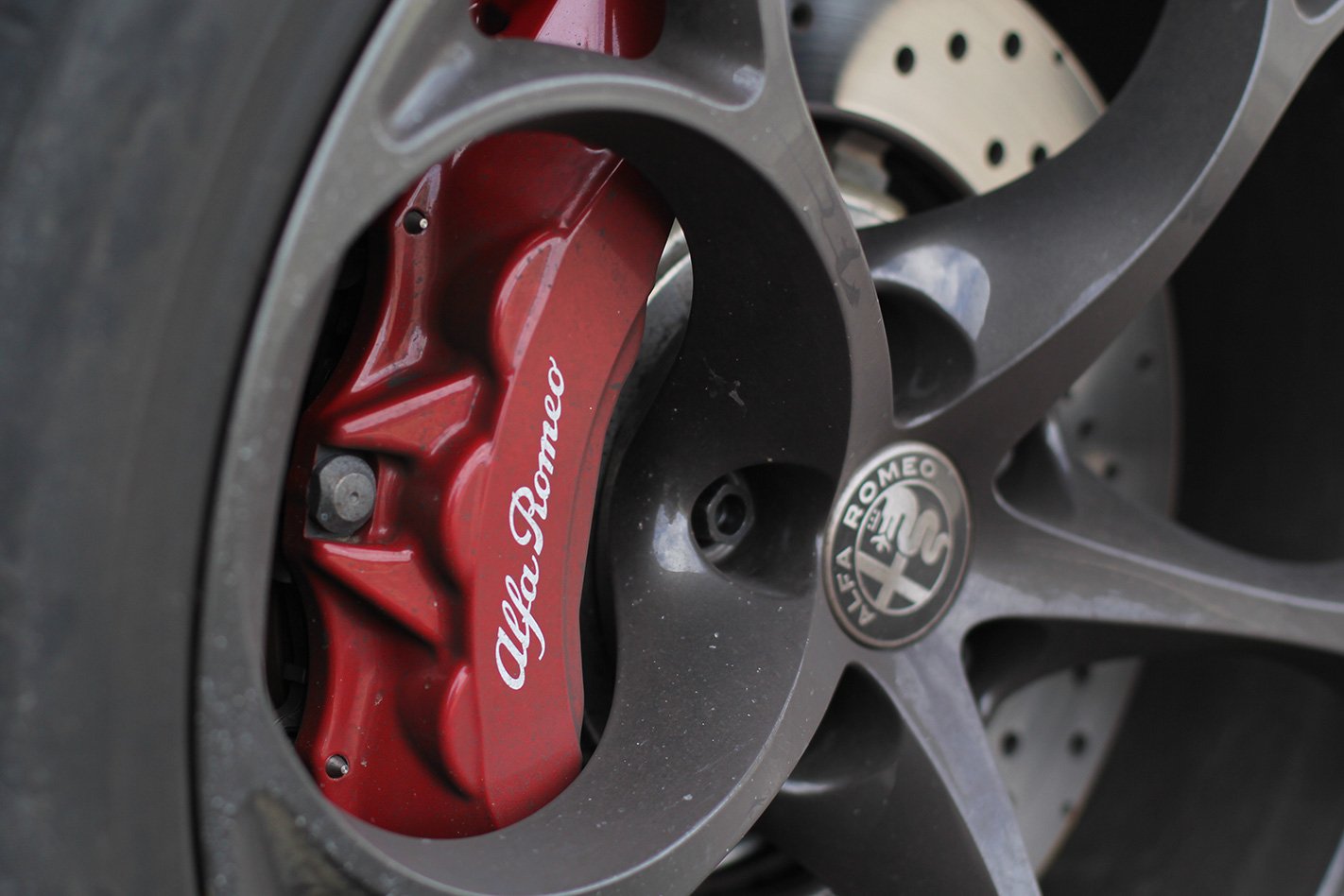
Alfa Romeo’s steering is one of the best in the business at the moment, and the Stelvio Q is no different. With a rapid rack, corner turn in is rapid and frantic – it can be easy to underestimate the speed of the steering, seeing the nose dart to an apex quicker than expected. Being a performance focused SUV, the ride will not be as congenial as tamer siblings in the Stelvio range, with the Q sacrificing compliance for control. This trade comes to fruition in the bends, where the Stelvio Q says ‘stuff you’ to physics and conventional norms. Despite the jacked-up ride height of the SUV styling, and inherent dynamic flaws that comes with it, the Stelvio Q is an engaging corner carver, with communicative steering, and impressive body control.
Interior and comfort
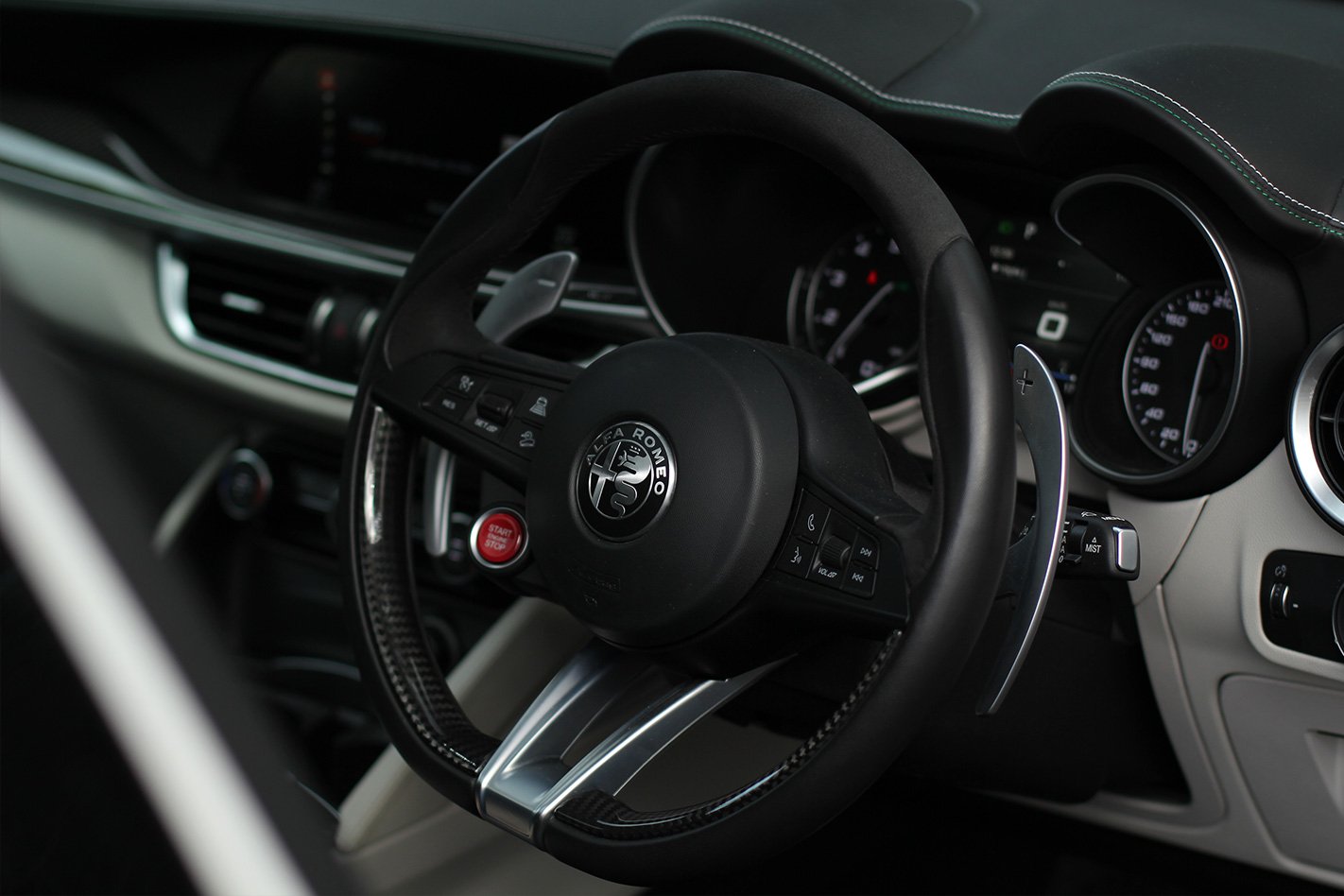
It’s at this point that the Stelvio Q falls short. Rear legroom is cramped for an SUV of this size, with taller adults banging their knees against the optional carbon-backed seats. Allowing the Stelvio to be such a riot in the corners also means ride comfort is compromised, with a stiff suspension set-up that can be tiresome on rougher Aussie roads. We also had some interior quality issues with our test car – the electric adjustment buttons for the driver’s seat came loose from their fitting, and fell into a recess underneath the rails. The quality of the materials used inside isn’t up to scratch compared to comparatively priced rivals – despite copious amounts of carbonfibre lavishing the cabin.
Verdict
While it’s dressed in a sensible SUV body style, the Stelvio Q is anything but. It’s not as nicely finished as its rivals, or as practical, but for driving entertainment it is near unparalleled in its segment. If you are truly married to the idea of owning an SUV, but driving enjoyment is also a high priority, then the Stelvio Q is for you.
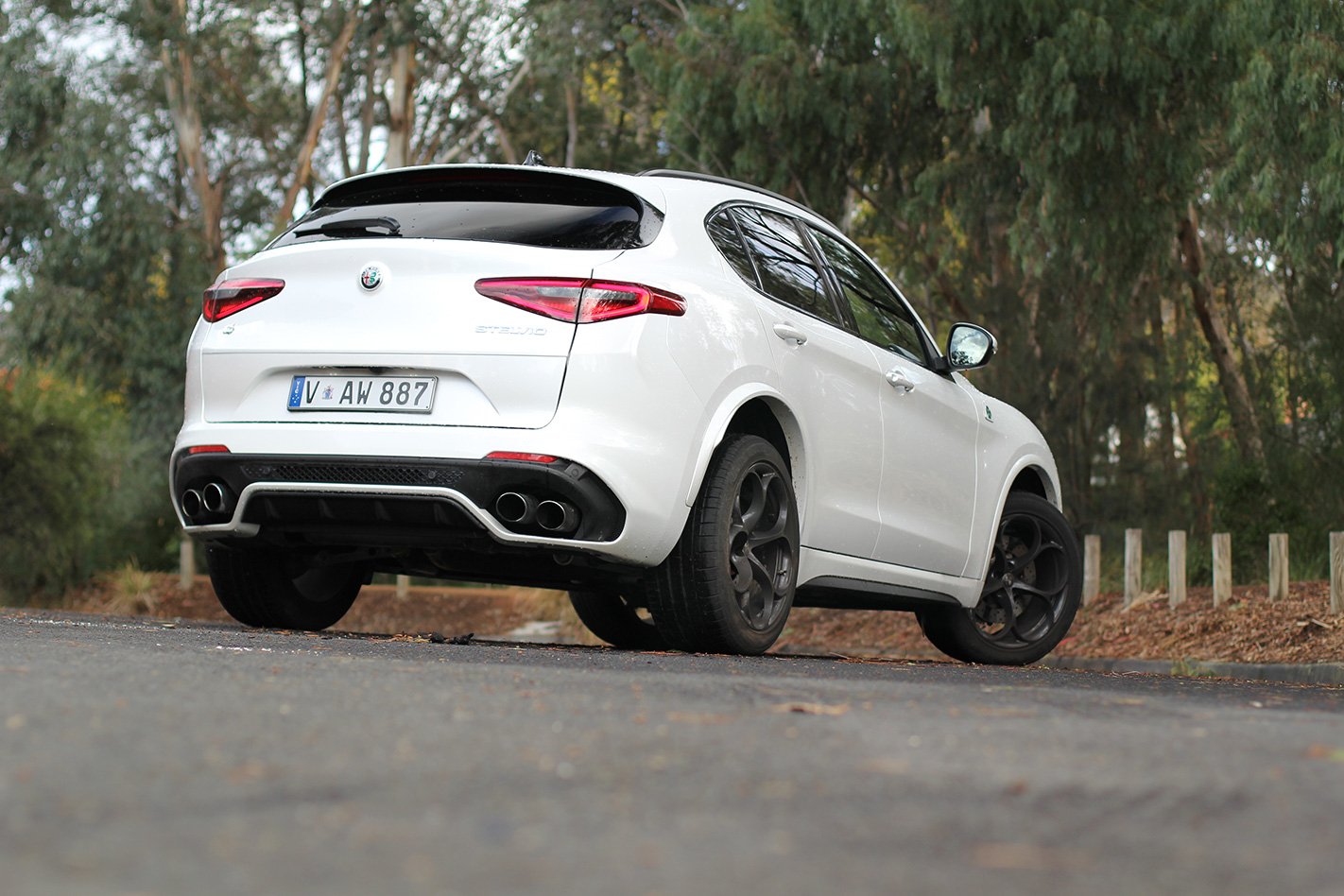
ALFA ROMEO STELVIO Q 2019 PRICING AND SPEC
Model: Alfa Romeo Stelvio Q Engine: 2.9-litre V60 (90), dohc, 24v, twin-turbo Max power: 375kW @ 6500rpm Max torque: 600Nm @ 2500-5000rpm Transmission: 8-speed automatic Weight: 1830kg 0-100km/h: 3.8sec (claimed) Economy: 10.2L/100km Price: $149,900 On sale: Now