
The contenders
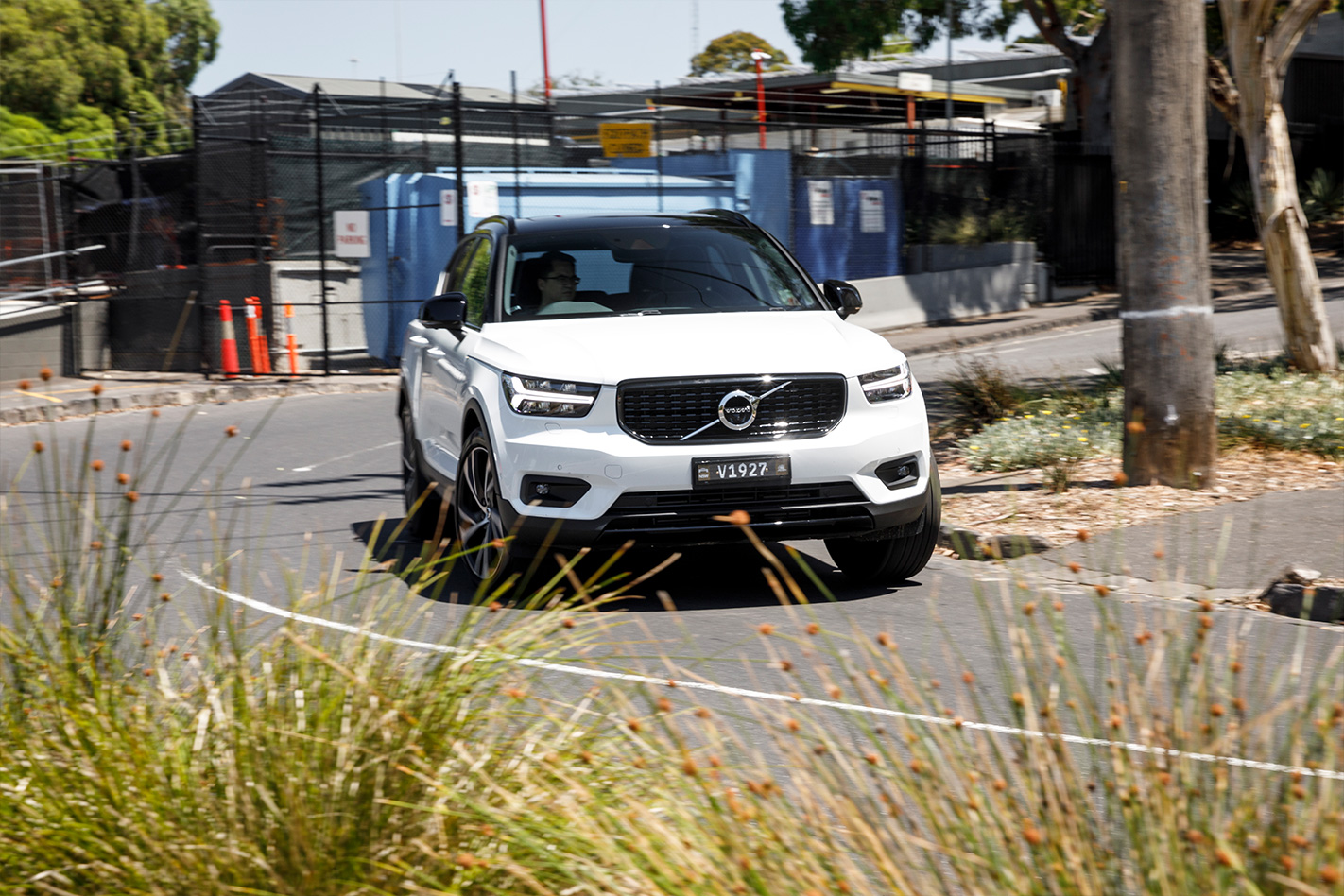
Everyone wants in on the small-SUV game these days, and our rivals here are two of the freshest in the compact-luxury-crossover segment. Volvo’s XC40, represented here in T5 guise, is also a newly minted Wheels COTY champ – a daunting opponent, then, for the Lexus UX 200 F-Sport that’s laying down the gatlopp (that’s Swedish for gauntlet). Lexus sorely needs to kick some goals with the UX. It’s the brand’s first stab at a small SUV, and its previous foray into somewhat-affordable hatchbacks, with the unloved CT 200h, has proven a struggle. The UX is certainly sized right, based as it is on the versatile TNGA GA-C platform used by its Toyota C-HR and Corolla cousins, and the lineup is incredibly feature-rich.
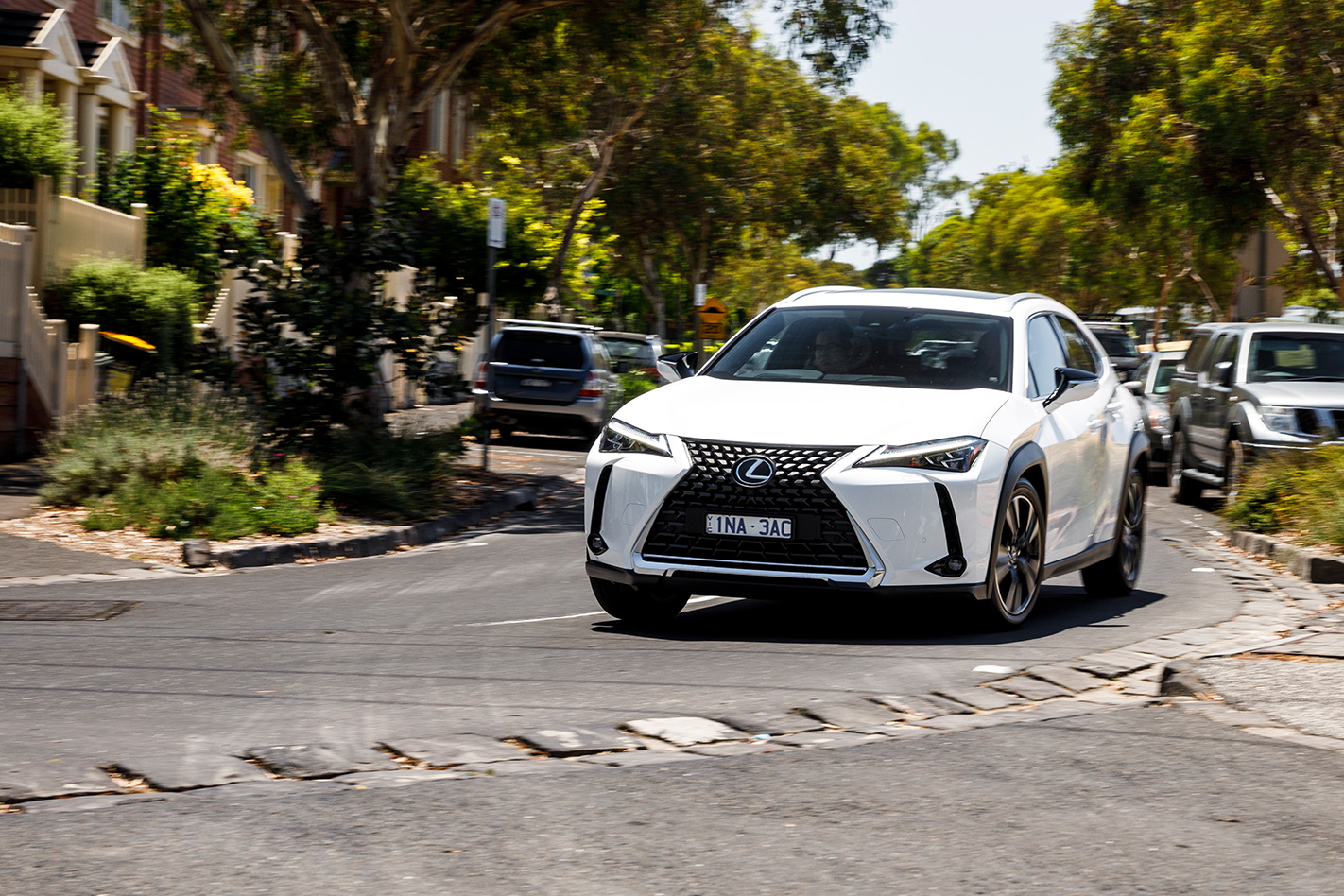
It squares off against the incumbent Swede in high-spec petrol FWD UX 200 F-Sport guise, but the Volvo has aces up its sleeve in the form of its intelligently designed cabin, bigger, broader-shouldered proportions and more mumbo.
Equipment and value
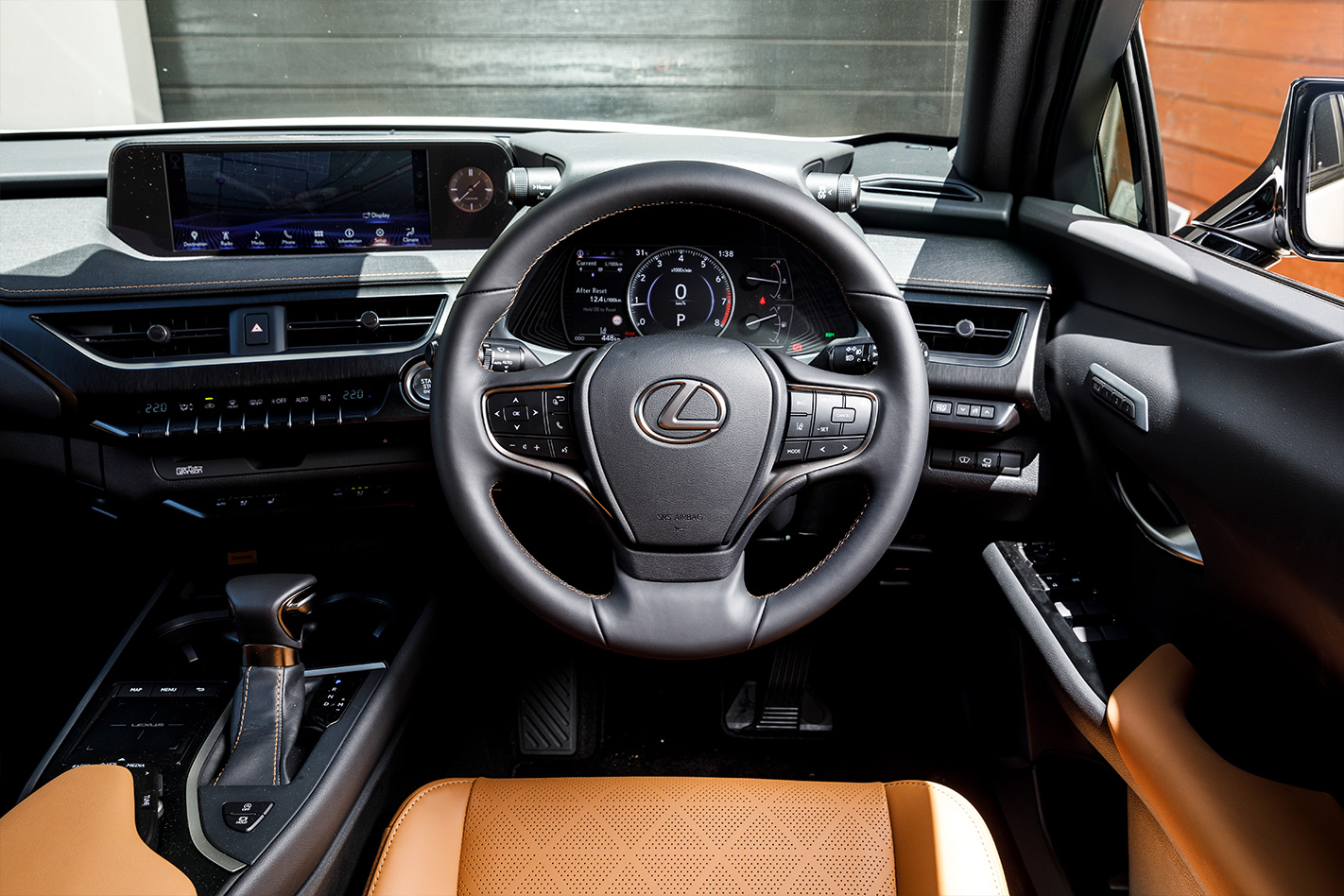
The UX 200 F Sport comes loaded with standard kit, like a power-adjustable steering column, heated front seats, a 10.3-inch widescreen infotainment display, bi-LED headlamps, various quasi-autonomous driving aids and a hands-free tailgate for a list price of $59,050. Our car came fitted with the innovatively named Option Pack 2, which adds a thumping 13-speaker Mark Levinson stereo, wireless charge pad, head-up display, panoramic-camera view, glass roof and ventilated front seats. All that, and it still costs a few grand less than the $62,710 as-tested price of the XC40 T5 R-Design. Value is a UX strength.
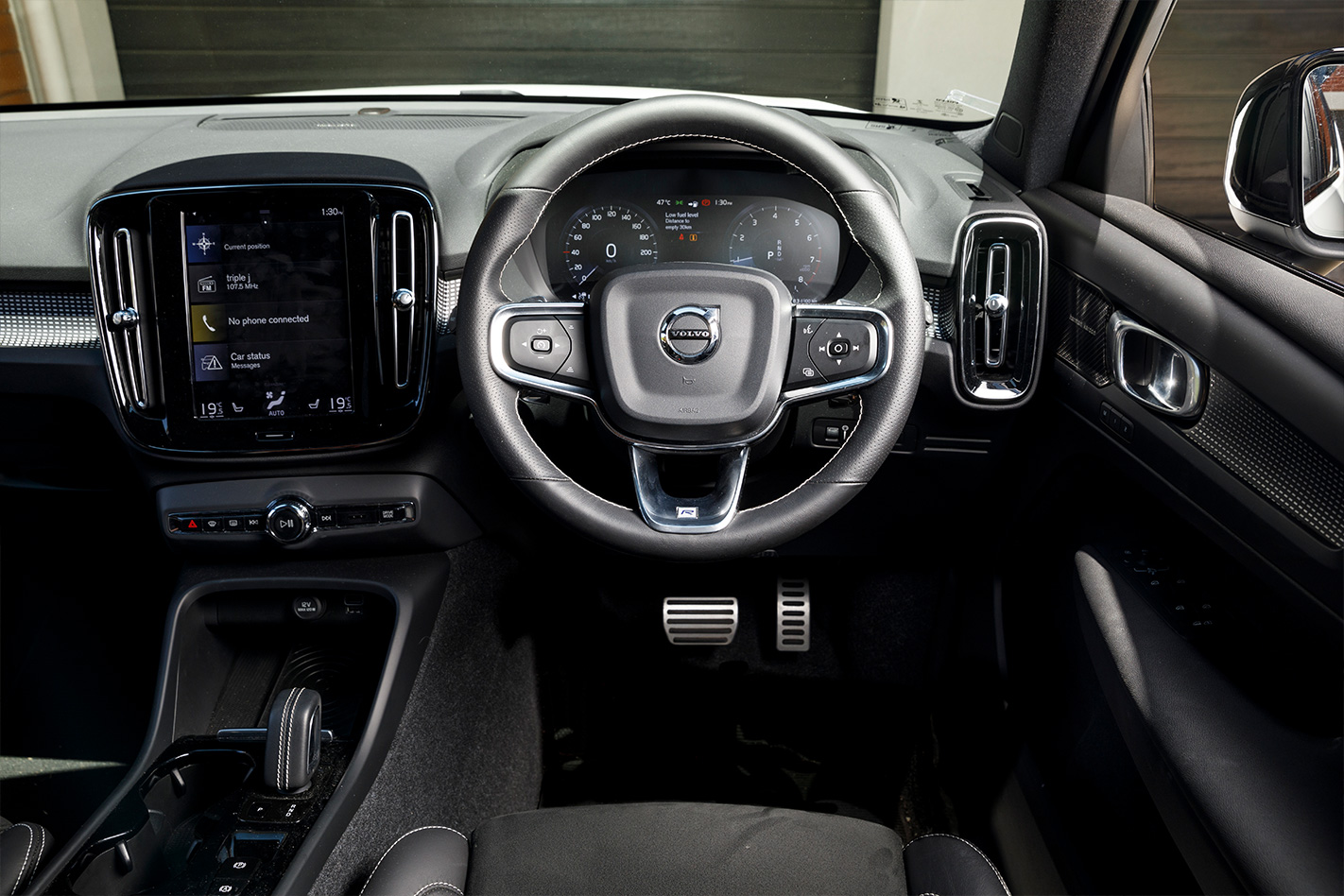
The Volvo counters with a fully digital instrument panel, far superior infotainment software, smartphone mirroring and fashionable 20-inch alloys, versus the 18s on the Lexus. It also comes with all-wheel drive as standard (something that only the hybrid UX offers as an option). But for sheer features-per-dollar it’s the Lexus that edges ahead.
Space and comfort
The Lexus UX is like a sleeping bag – snug and comfy once you’re inside, but getting in and out isn’t the easiest or most graceful process. A low roof rail and seat position mean the traditional SUV advantages of ease of entry/egress aren’t there, and there’s even more stooping required to enter the back seat. On the flipside, the F Sport front seats are exceptionally contoured and hugely supportive, and the driving position is sportscar-like. Cabin quality is also typical Lexus, meaning everything feels rock-solid, and there’s a stylish Japanese-paper trim panel on the upper dash that helps elevate the ambience.
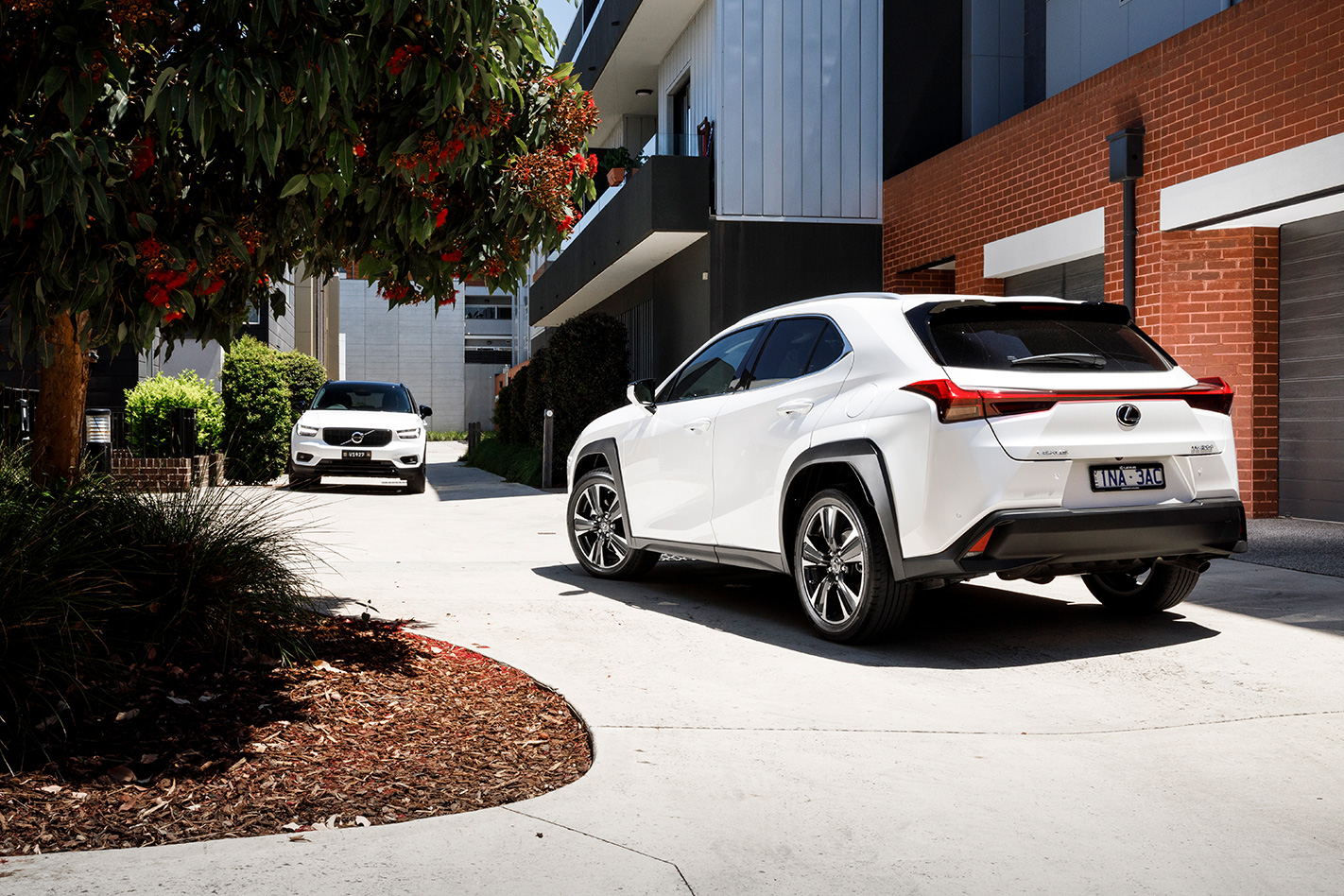
Volvo substitutes some of the glitzier furnishings of the bigger XC60 and XC90 for more understated design, but compensates with clever packaging that maximises storage and occupant space. It’s also comparatively huge. While the Lexus is a sleeping bag, the XC40 is like an expensive studio apartment – still cozy, but open-plan and very premium.
How they drive
It might have the slightly dozy powertrain of the Toyota Corolla behind its spindle-grille, but the UX actually provides more than a skerrick of driving joy, thanks to a finely tuned suspension, light yet accurate steering, and a surprisingly understeer-resistant chassis.
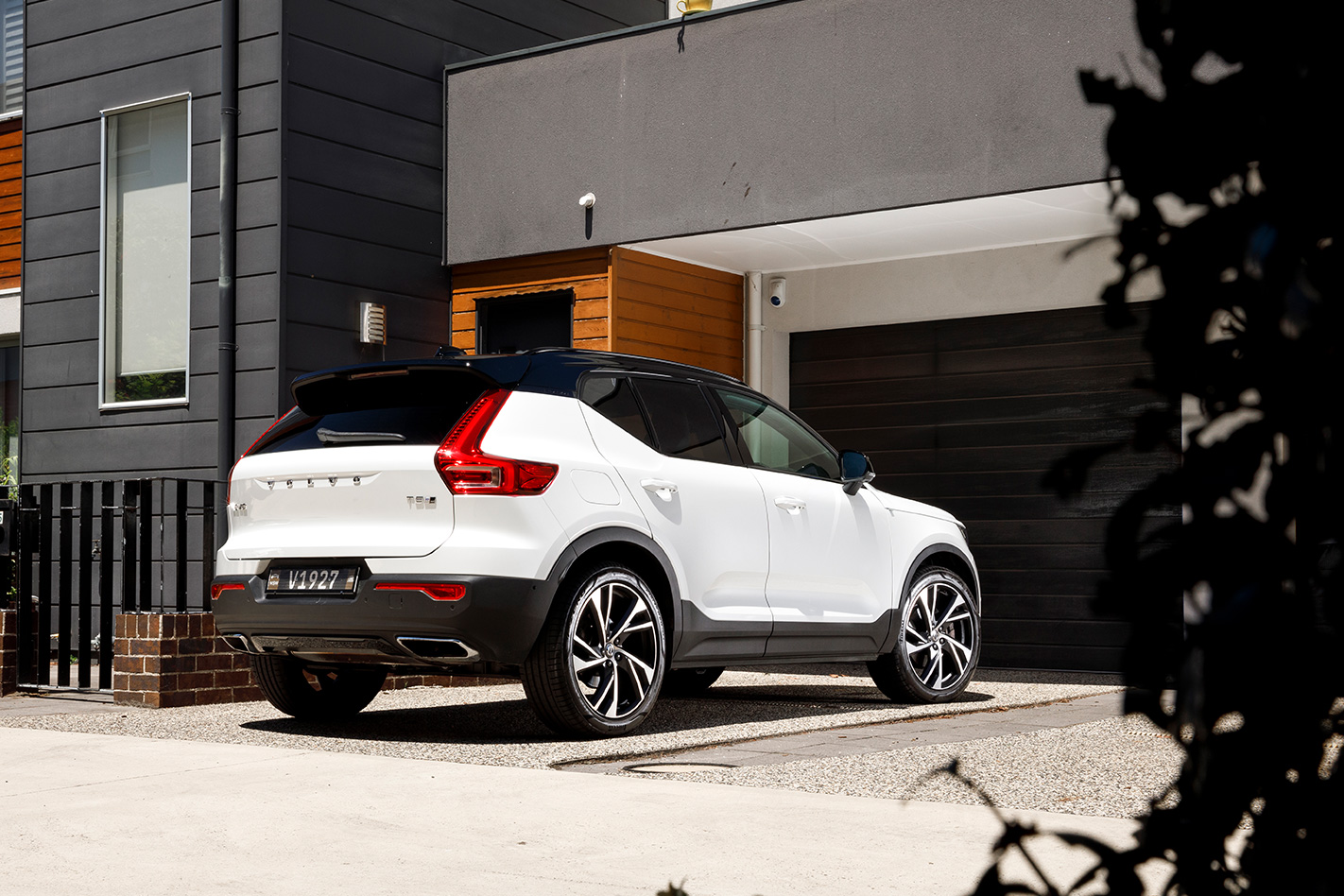
However, its atmo engine must work harder than those of similarly priced rivals, which are universally turbocharged, and that compromises refinement in a car that’s otherwise exemplary in this respect.
While the Lexus is competent, the XC40 T5 is a black belt. We described the T5 as hot-hatch-esque in our COTY issue, thanks to its exceptional handling and rorty 185kW/350Nm turbo four, yet it’s also perfectly happy being piloted through suburbia. And did we mention that it has twice the number of driven wheels of the petrol-powered UX? It might not be quite as refined as the UX 200, but in virtually every other on-road respect the Volvo dominates.
The Victor
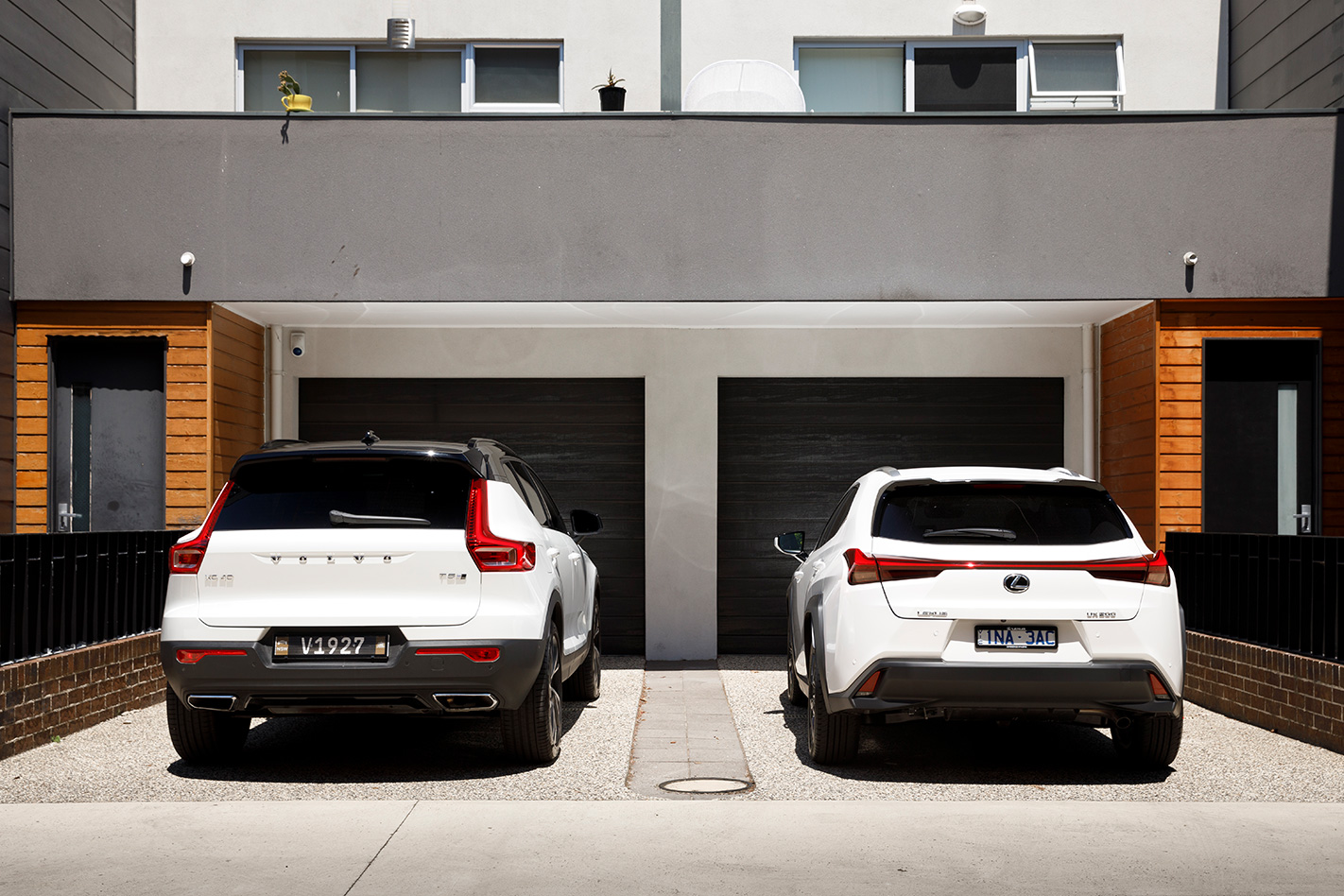
Lexus must be commended for its first, impressive crack at a small SUV, which is by some margin the most compelling soft-roader it has made to date. Even so, it’s not enough to outgun the more powerful, significantly more spacious and infinitely more practical Volvo. The XC40 earned its COTY crown for very good reasons, and Lexus needs to show much more than a strong value proposition to dethrone it.
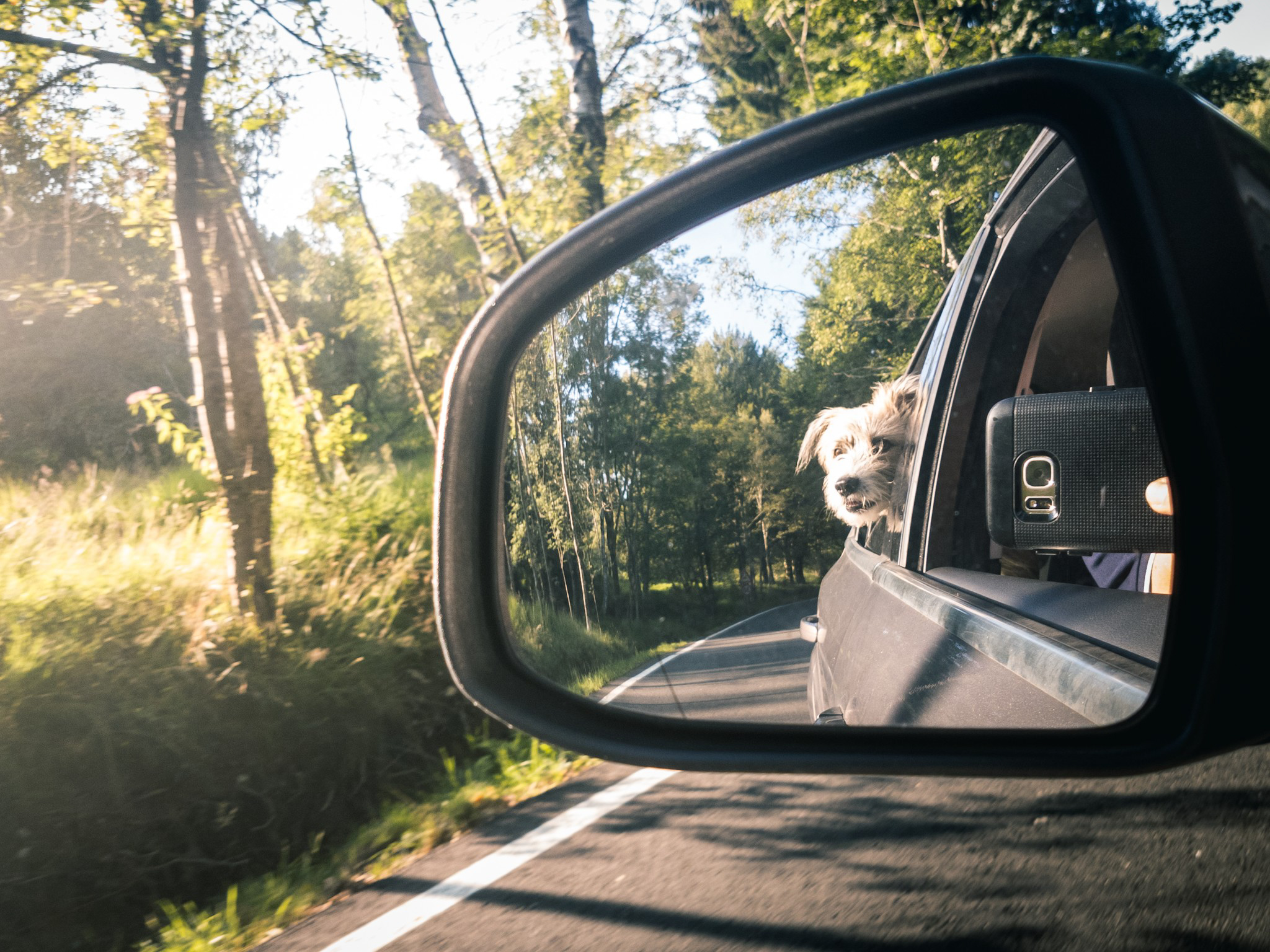
Cars, dogs and the open road; name a better combo. That’s okay, we’ll wait.
In Australia, we’re blessed with landscapes that could give the Pearly Gates a run for their money – but unlike the Promised Land, dogs aren’t always welcome in these places.
The majority of our rainforests and National Parks are protected grounds, and as a result are very selective about who enters – and most of the time, our domesticated companions are first on the prohibited list.
But there’s still plenty of land (and water) for us and our furry friends to roam in this wide brown land.
Let’s explore some of the best on offer.
Beechworth Historic Park, Victoria
This beautiful country town is just an hour out of Wodonga, on the border of NSW and Victoria. It’s got some gorgeous cafes, a freaky ex-mental asylum (the ghost tour is highly recommended) and some beautiful scenery along the way.
If you and pup are feeling particularly adventurous, there’s some neat bush walks through the historic park, but be aware that canines must be on a leash.
Turon Gates, Blue Mountains, NSW
This picturesque bushland is located two and half hours directly west of Sydney and offers a range of pet-friendly accommodation options – from camping and glamping to riverside and mountain-view cottages with a spa.
Puppers are welcome at Turon Gates, but they must be controlled at all times.
The Dog Cafe, Victoria
Tuckered out from all that walking? How about a coffee and signature puppacino for you and Pugsy? What about a puppy birthday party or even a wedding for sire and dam? No probs.
Located an hour out of Melbourne’s CBD, the Dog Café caters to all pup needs.
Mystery Bay Campgrounds, NSW
Can’t decide between the beach and the bush? Porque no los dos?
Down the south coast of NSW and a bit past Batemans Bay is Mystery Bay. It’s a cold-shower situation (no hot water), and there are no powered campsites or toilets (just holes in the ground).
You don’t need to make a booking, just rock up and shack up – with your precious pooches on a leash of course.

Belair National Park, South Australia
Located within 30 minutes of Adelaide’s city centre, this is one National Park that doggos can attend – as long as they’re on a leash and you clean up any mess they make.
Besides the obvious bush-walking and mountain biking, other activities are available too, with tennis courts and cricket pitches located in the park.

Nudgee Beach, Queensland
Sunny Queensland is home to dog-friendly beaches aplenty, but Nudgee has both land and water to offer – a dedicated doggy swimming area with an off-leash park just off the beach.
Not too far from Brissy airport, the pup beach allows dogs to roam free through the sand, dig to their heart’s content, explore rock pools and have a doggy paddle for you and your furry friend to cool off after playing.
Evans & Tate Cellar Door, Western Australia
You’ll find this five-star winery in the Margaret River wine region (Wilyabrup). Of course, it’s dog-friendly – but while humans will positively indulge themselves here, we’re not sure dogs will have just as much fun.

Marlow Lagoon Pet Park, Northern Territory
Can you imagine a theme park for pups? Well, this place might not be exactly that, but it’s gotta come close, surely.
Located in Darwin, the park’s full of obstacles to tire out the furry ones, and probably you as well. But it’s recommended you scout the area for croc sighting warnings first (best be safe than sorry, right?).
Secret Garden Cottage, NSW
Would you and fluffy prefer a fairy tale getaway? This dog-friendly accommodation is located in the Blue Mountains (Katoomba) set in a beautiful 1930s cottage.
Sure, it’s old and maybe a little chilly during the mid-year cold snap, but there’s an open-log fire – pack Pugsy’s cardigan anyway (for when you head outdoors) and get on the road ‘cause this is one worth the drive.
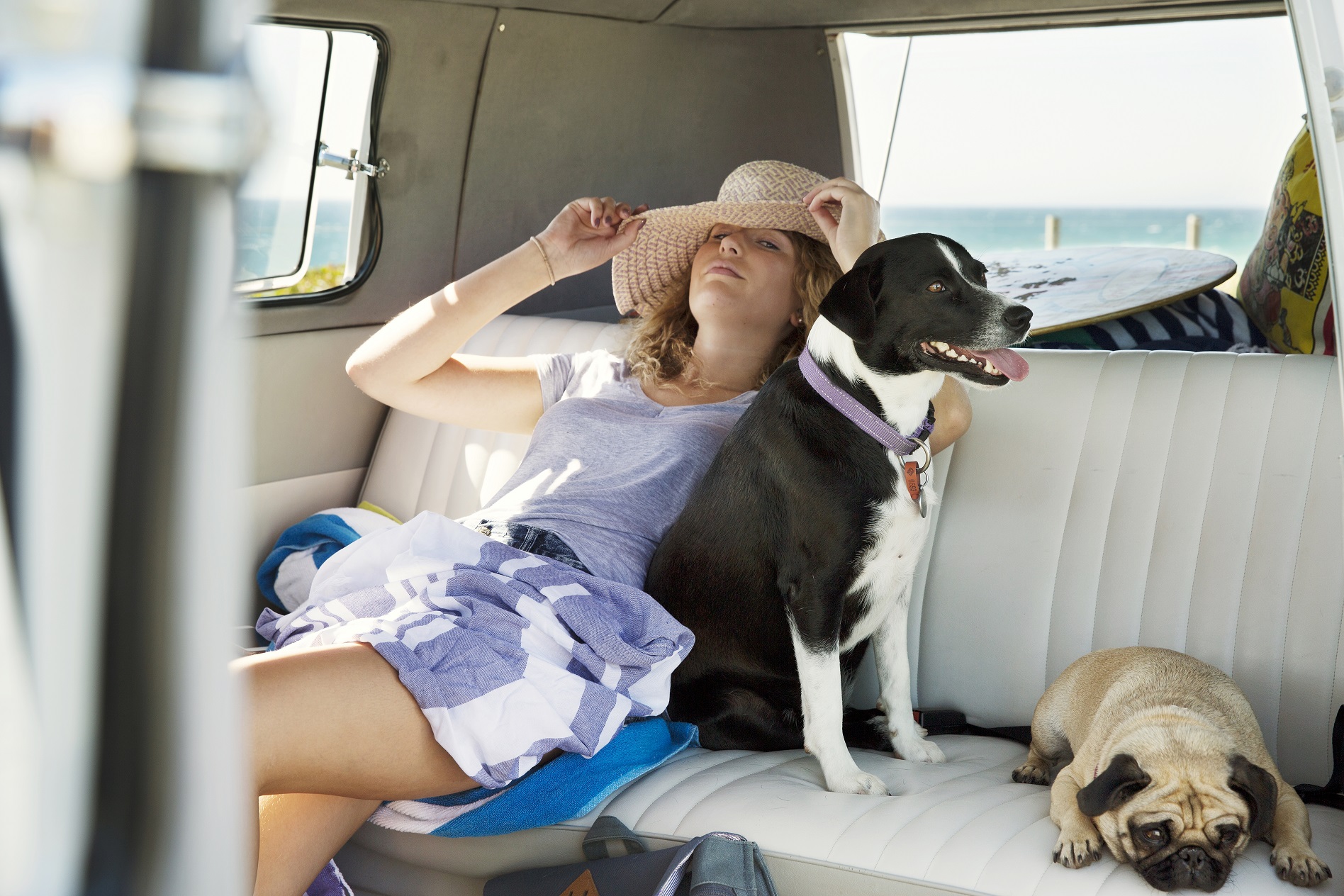
Wagtime Cafe, Victoria
A little out of Melbourne’s CBD is another doggy heaven. Wagtime, in the town of Olinda combines grooming, pet shopping and coffee/puppacinos for all. Relax in the café while Wagtime takes care of pooch’s furry coat and sharp talons.
Got a favourite road trip destination for you and your fur kids? Let us in on your secret in the comments below!
This feature seemed destined not to happen. The idea of celebrating Toyota Australia’s support of local motorsport by driving the machines it backs was ambitious to begin with; no-one was more surprised than us when Toyota agreed to the concept.
Weeks of planning to line up a date amongst car rebuilds and deadlines appeared in vain when, at the eleventh hour, the intended venue declined our hire request due to noise concerns and every other venue in NSW was unavailable.
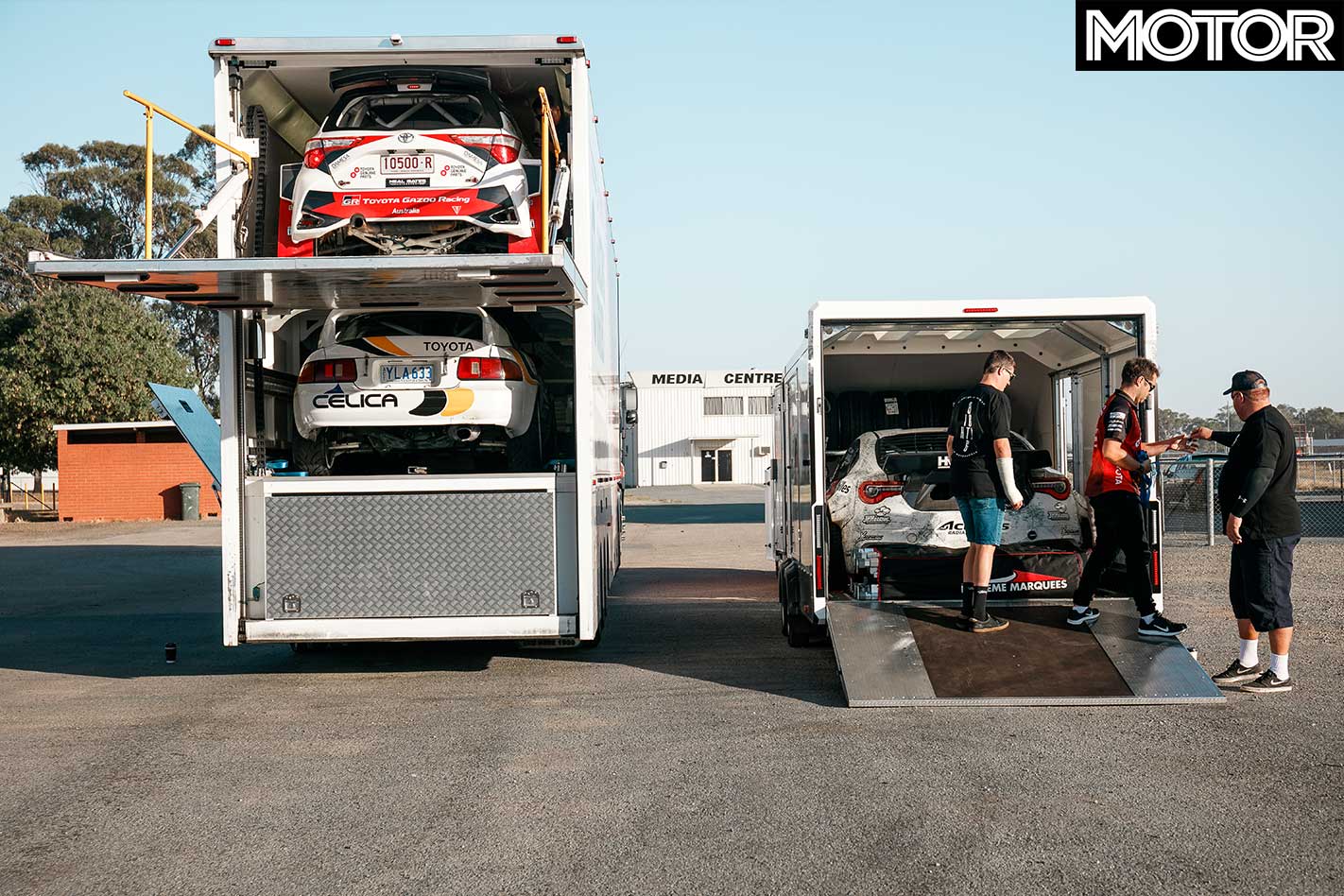
Winton Raceway came to the rescue and thanks to the amazing generosity of the people involved a trio of racing cars, covering the disciplines of circuit, rally and drifting, sit in pitlane idling impatiently. Not as impatiently, it must be said, as editor DC and myself, both of whom are giddy with excitement, yet incredibly nervous at being trusted with driving unfamiliar and very expensive machinery hard enough to put you, the reader, in the driver’s seat. Yeah, I know, cue the violins.
Few car companies boast a more impressive sporting resume than Toyota: the diminutive Sports 800; the gorgeous 2000GT; the long-lived Celica, which morphed from rear-drive coupe to all-wheel drive rally weapon to front-drive screamer during its lifespan; the Supra, Chaser and Soarer, JZ-powered darlings of the Japanese tuning industry; the MR2, an affordable exotic; the AE86, Japan’s answer to the Mk II Escort, the list goes on.
Then there are its motorsport efforts. Twenty-five years in world rally, including two world titles, a decade in F1, a dozen Le Mans campaigns, British Touring Cars, IndyCar, off-road racing and NASCAR all appear on the CV. This incredible CV only made Toyota’s hermit crab-like post-GFC withdrawal from anything remotely exciting even more disappointing.
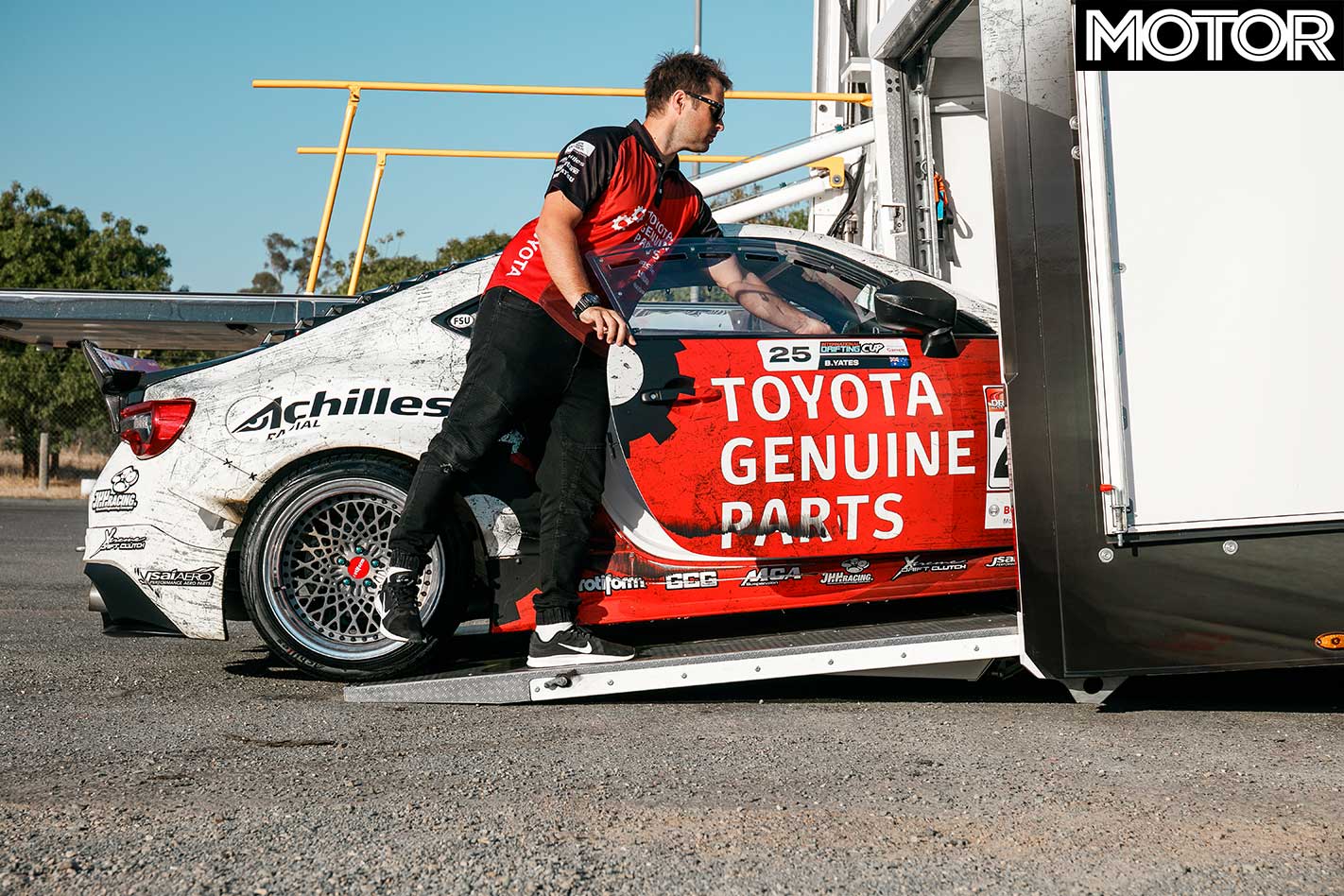
Toyota President Akio Toyoda provided the spark needed to reignite the flame. Promoted to head of the company in 2009, he greenlit the 86 sports car program and vowed “no more boring cars” at the 2014 Detroit Auto Show, where Toyota unveiled the FT-1 Concept which would (eventually) morph into the new Supra.
Since then, the Camry and Corolla have become interesting to look at and decent to drive, the Yaris spawned a (sadly Euro-only) hot hatch and Toyota re-entered global motorsport, finally securing Dakar and Le Mans victories and creating its front-running Yaris World Rally Car.
Closer to home, enthusiasm at Toyota Australia was clearly hibernating, not dead, for in recent years it has been a strong supporter of local motorsport. It launched the successful one-make 86 Racing Series, providing an entry into tin-top competition for budding young racers. Now in its fourth year, it regularly attracts fields of 40 cars or more.
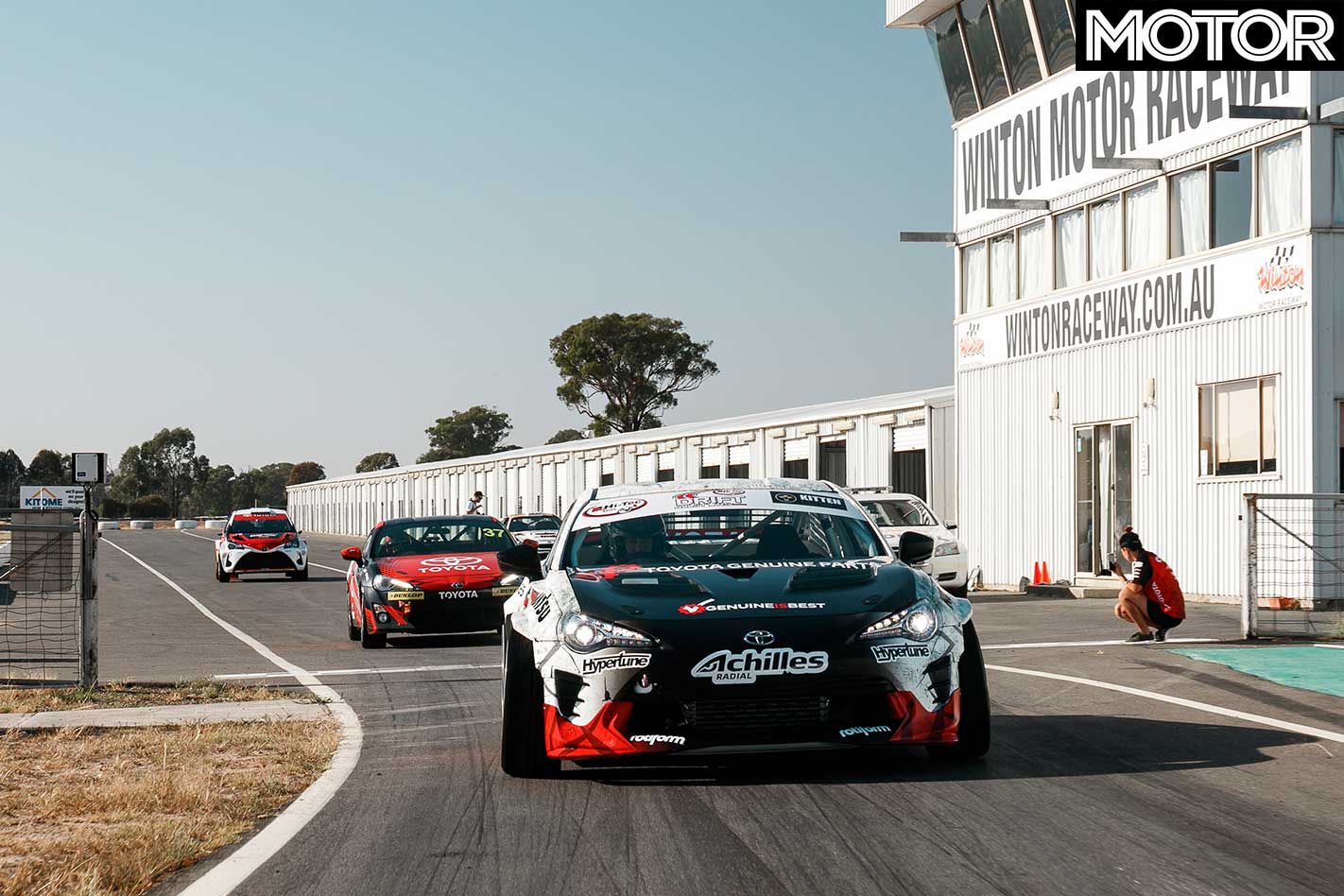
The Toyota 86 racer was developed by Neal Bates Motorsport, a name with a long and successful association with Toyota. Having won four Australian Rally Championships as a driver, Neal Bates is now team principal of Gazoo Racing Australia as Toyota embarks on its first factory rally effort in a decade, with a pair of Yaris AP4s to be driven by Neal’s sons, Harry and Lewis.
But if anyone has more Toyota passion running through their veins than the Bates family, it’s Beau Yates. If you examined his blood under a microscope, his cells would be little Toyota logos. In 2006, Yates became Toyota Australia’s first drift ambassador driving his iconic AE86 Sprinter.
Following a huge accident in 2013 he switched to the new 86, which has morphed over the years into a screaming circa-600kW beast that eats semi-slicks like the Cookie Monster downs Oreos. To simply experience these cars would be a huge privilege, to be allowed behind the wheel an incredible honour. Let’s go for a drive.
Read our review of Beau Yates’ Toyota 86 Drift car here
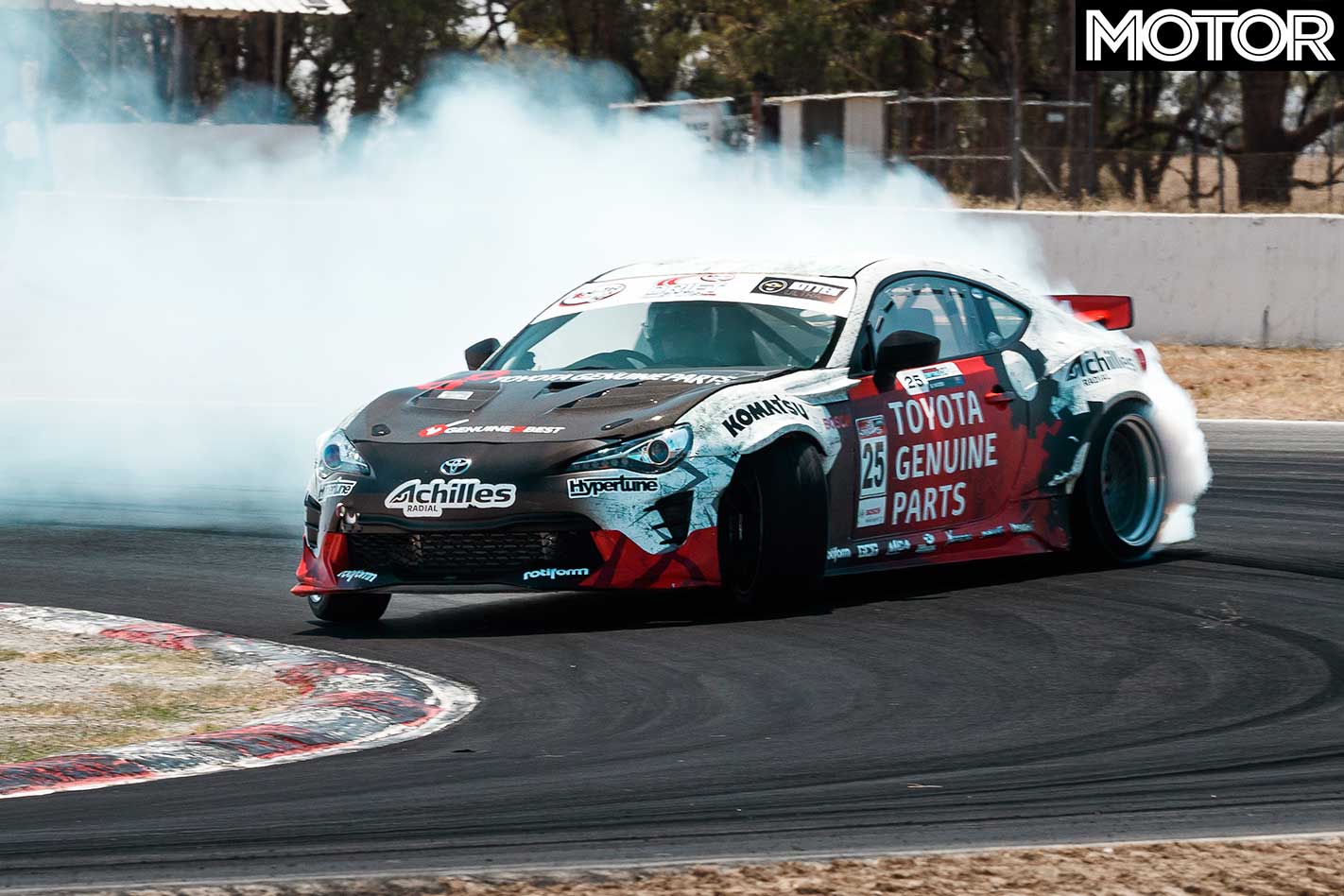
Read our review of the Toyota 86 Racing Series race car here

Read our review of the Toyota Yaris AP4 rally car here

Toyota Australia’s motorsport involvement

The smiles you see in these photos aren’t put on, they’re genuine emotion; Dylan’s being banging on about wanting to try a proper drift car since I’ve met him and I’ve had rallying in my blood since I learned how to spell WRC. But what have we gleaned from this exercise, other than having a hell of a lot of fun?
Firstly, no production car can deliver the excitement of a purpose-built competition car. Even the likes of the 911 GT3 RS or GT-R Nismo can’t match the sense of connection offered by a machine that’s sole purpose is to help its operator reach the top step of the podium.
Secondly, manufacturers still see value in motorsport if the right opportunities exist. According to Toyota Australia’s Senior Public Affairs Specialist, James Wang: “Toyota’s motorsport philosophy is, ‘We race, we learn, you win’. At a global level this is reflected through our WEC and WRC participation; we take what we learn on the racetrack and ultimately apply this to our production cars. In Australia we have much the same philosophy: the Bates family and Beau Yates are at the top of their game in their respective sports; conversely, the Toyota 86 Racing Series has a stronger focus on grassroots racing.”
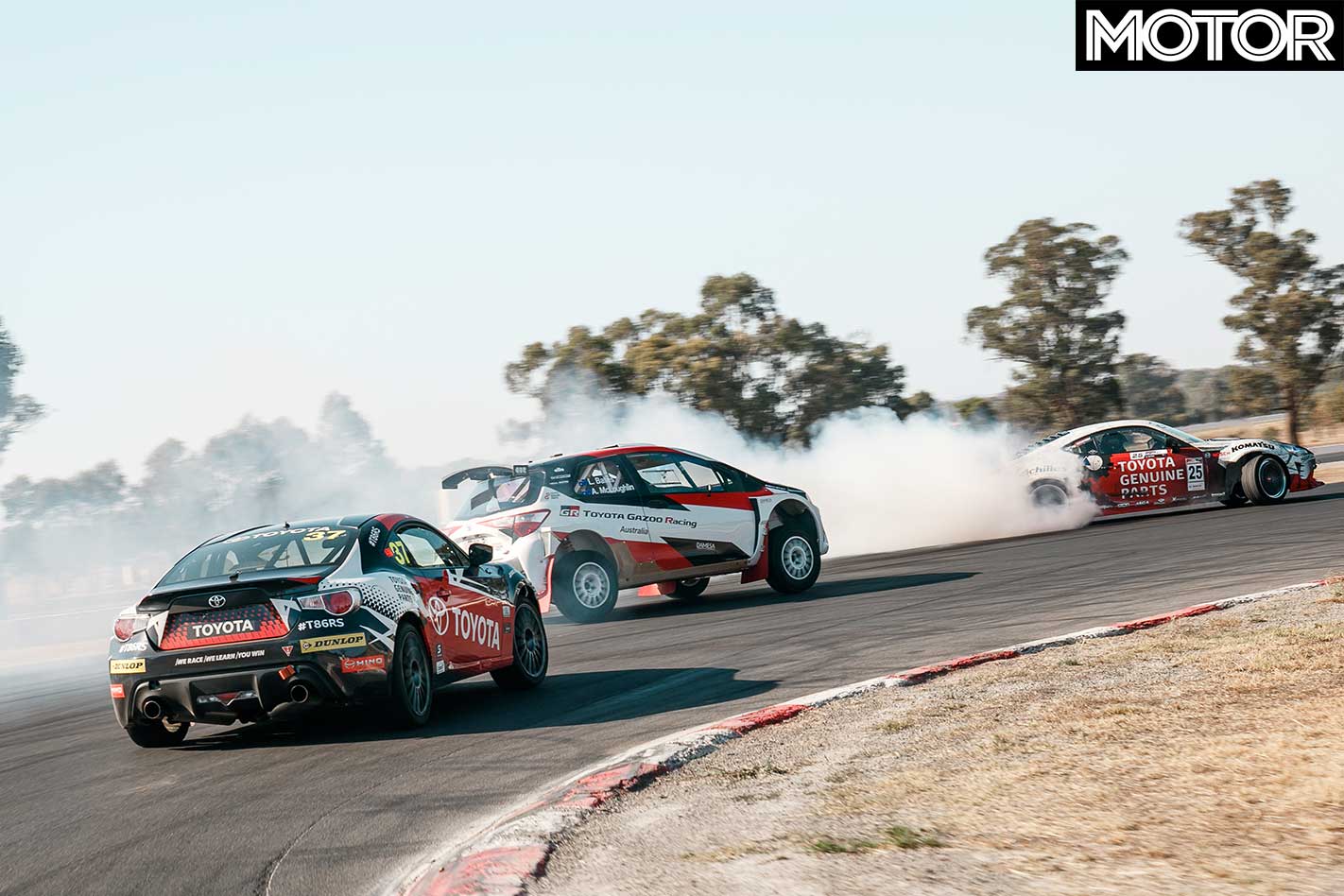
Toyota should be congratulated for its support of a variety of categories. It spends mega bucks reaching everyday motorists as the major sponsor of the AFL, but clearly recognises that if it’s going to be taken seriously by enthusiasts, it has to engage with them.
It’s part of the reason we wanted to do this story; if manufacturers receive publicity for their motorsport programs, more are likely to appear. Factory-backed teams bring their own complications, but there’s no doubt most series are healthier when car makers are involved.
Let us hope this renewed commitment to competition transfers to the showroom. The 86 was a great start, a new Supra an excellent follow-up, but it’s been a long time since Toyota offered a true performance variant of a regular production model. If Toyoda has the will, Toyota will find a way.
Fast Facts
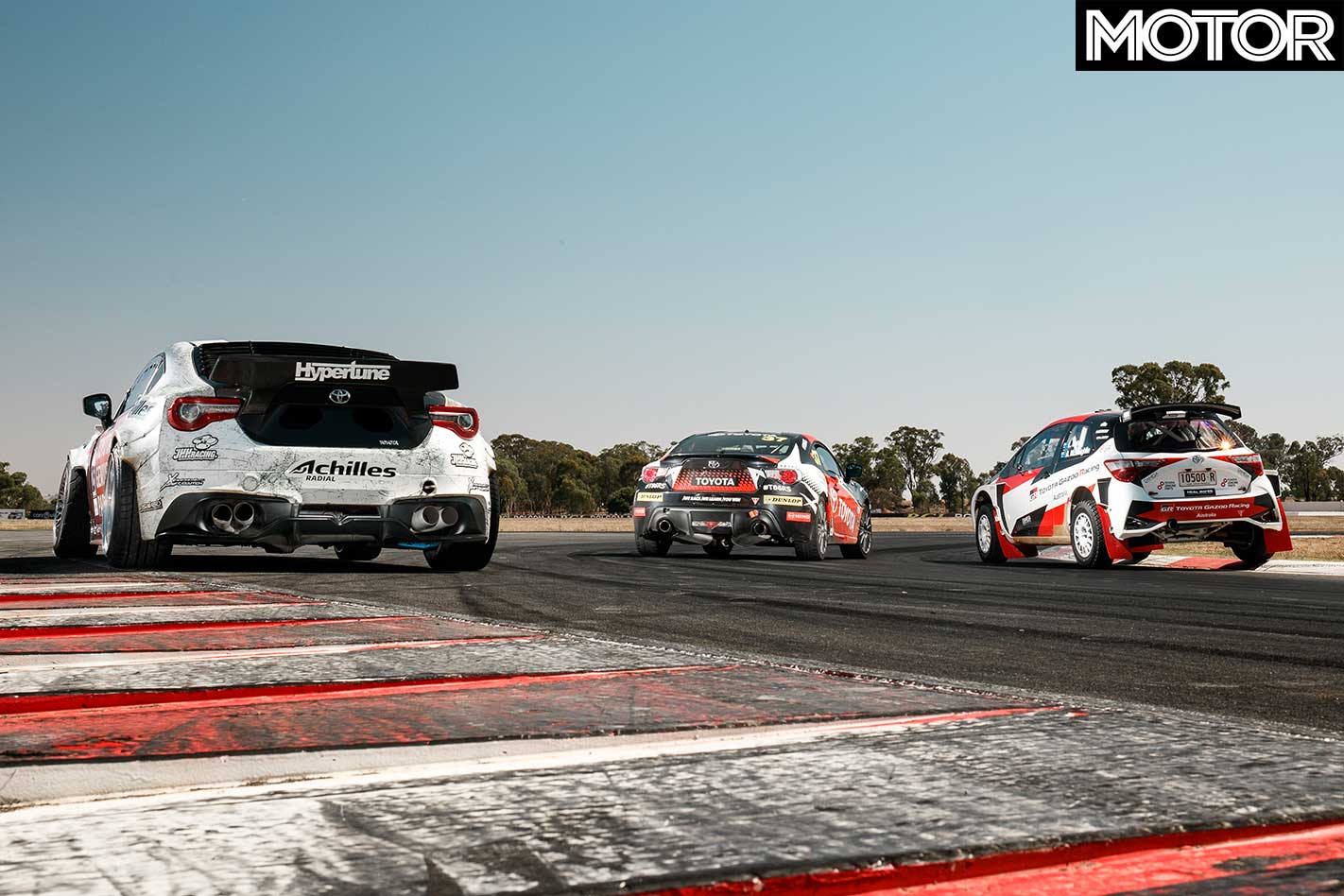
| u00a0 | Toyota 86 Drift Car | Toyota 86 Racing Series | Toyota Yaris AP4 |
| Body | 2-door, 2-seat coupe | 3-door, 2-seat hatch | |
| Drive | rear-wheel | all-wheel | |
| Engine | 2997cc inline-6, DOHC, 24v, turbo | 1998cc boxer-4, DOHC, 16v | 1613cc inline-4cyl, DOHC, 16v, turbo |
| Power | 537rwkW @ 8200rpm | 169kW @ 7000rpm (approx) | 224kW |
| Torque | 1000rwNm @ 3200rpm | 236Nm @ 6400-6800rpm (est) | 420Nm |
| Power/Weight | 471rwkW/tonne | 132kW/tonne | 182kW/tonne |
| Transmission | 6-speed sequential manual | 6-speed manual | 6-speed sequential manual |
| Weight | 1140kg | 1285kg (including driver) | 1230kg (dry) |
| Suspension (f) | coilover strut | coilover strut, anti-roll bar | struts, coil springs, anti-roll bar |
| Suspension (r) | A-arms, coilover strut | A-arms, coilover strut, anti-roll bar | struts, coil springs, anti-roll bar |
| Steering | hydraulically assisted rack-and-pinion | electrically assisted rack-and-pinion | hydraulically assisted rack-and-pinion |
| Brakes (f) | 355mm ventilated disc, 6-piston caliper | 330mm ventilated discs, 4-piston calipers | 300mm ventilated/slotted discs, 4-piston calipers |
| Brakes (r) | 345mm ventilated disc, 4-piston caliper | 316mm ventilated discs, 2-piston calipers | 300mm ventilated/slotted discs, 4-piston calipers |
| Wheels | 18.0 x 9.0-inch (f); 18.0 x 11.0-inch (r) | 18.0 x 8.0-inch (f/r) | 15.0 x 7.0-inch (f/r) |
| Tyres | Achilles 123S; 235/40 R18 (f), 265/35 R18 (r) | Dunlop Direzza DZIII86; 225/40 R18 (f/r) | MRF rally tyres; 205/65 R15 (f/r) |
| Price | $180,000-plus | $45,000 (used, approx); $75,000 (new) | $250,000 (approx) |
It doesn’t take long to settle into the 2010 Audi R8. It’s a user-friendly supercar, and even with the bigger V10 engine cranking out 386kW, it’s still a pretty easy car to go quick in.
This feature was originally published in MOTOR’s January 2011 issue
But how quick is it? Does that puppy-dog persona make it a tad soft right at the pointy end of things? And how does it go when you line it up against exotic stuff like Lamborghinis, Vipers and Moslers? Best way to find out, of course, is to race one in the Australian GT Championship. And that’s exactly what Mark Eddy is doing.
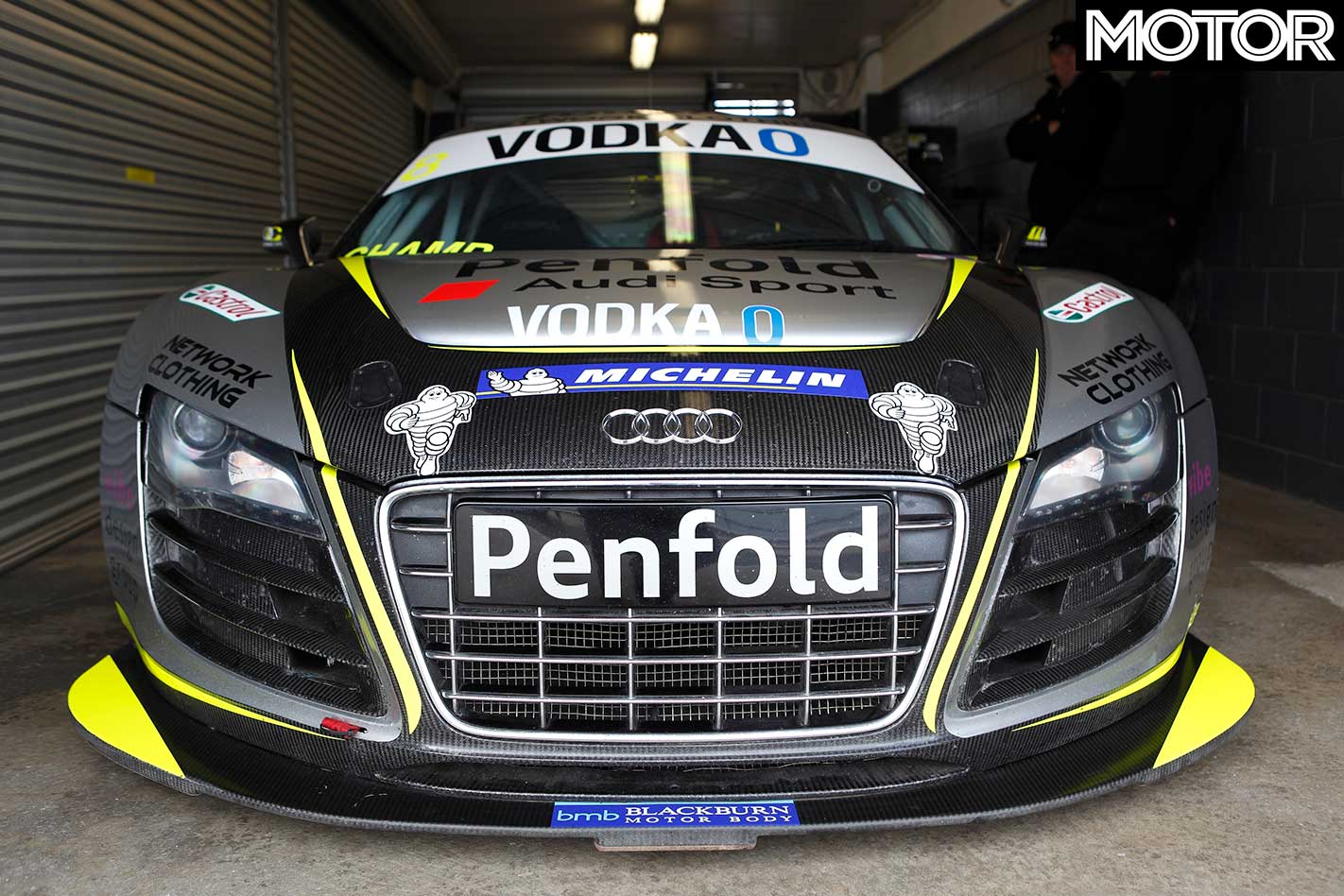
And it’s making its mark in the local GT series. Against the Moslers, Aston Martins, Vipers, Lambos and Porsches that make up the thoroughbred GT field, the LMS has impressed with top-10 finishes at the recent Bathurst round.
In line with GT3 regulations, quite a bit has changed in the transition from road to racetrack.
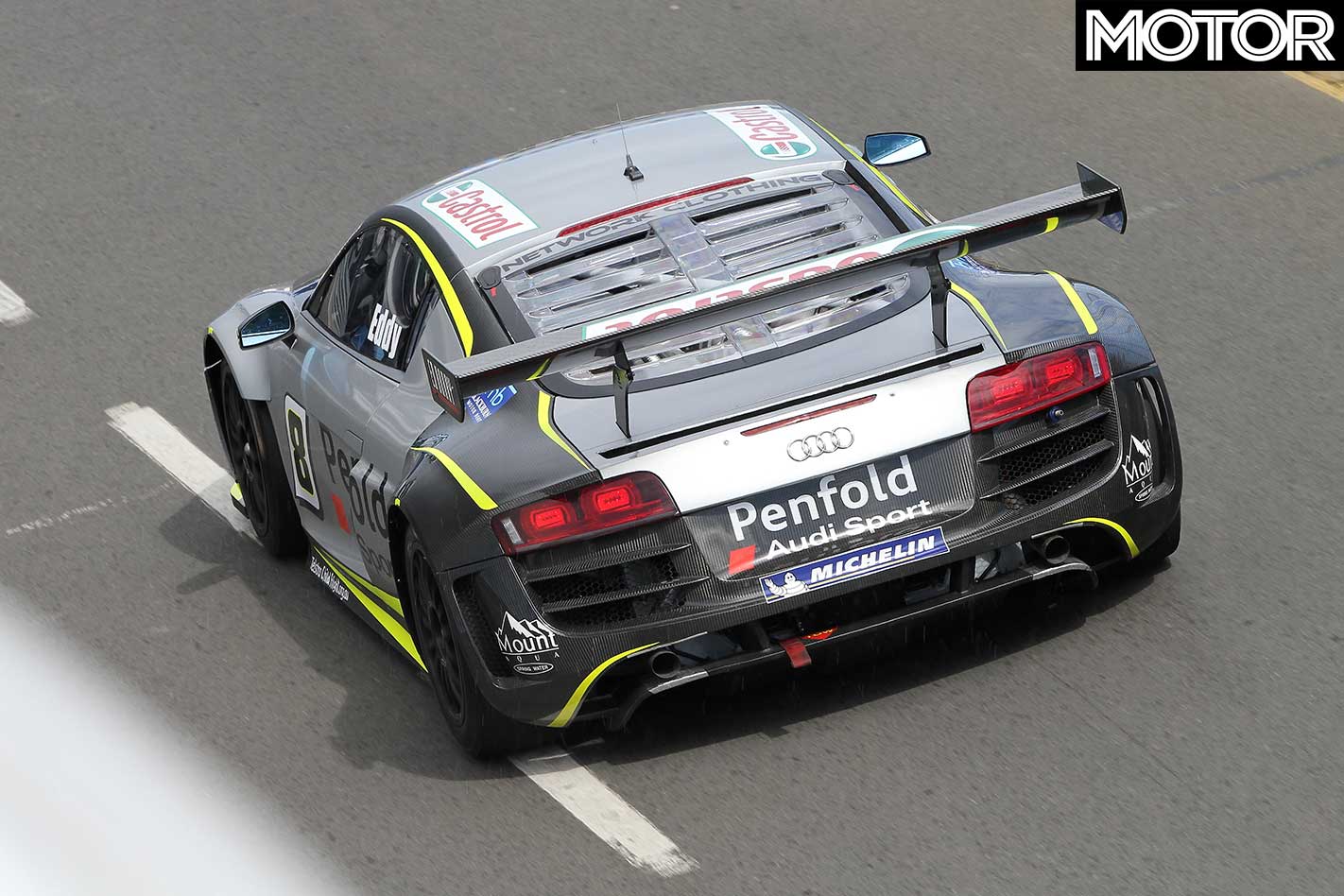
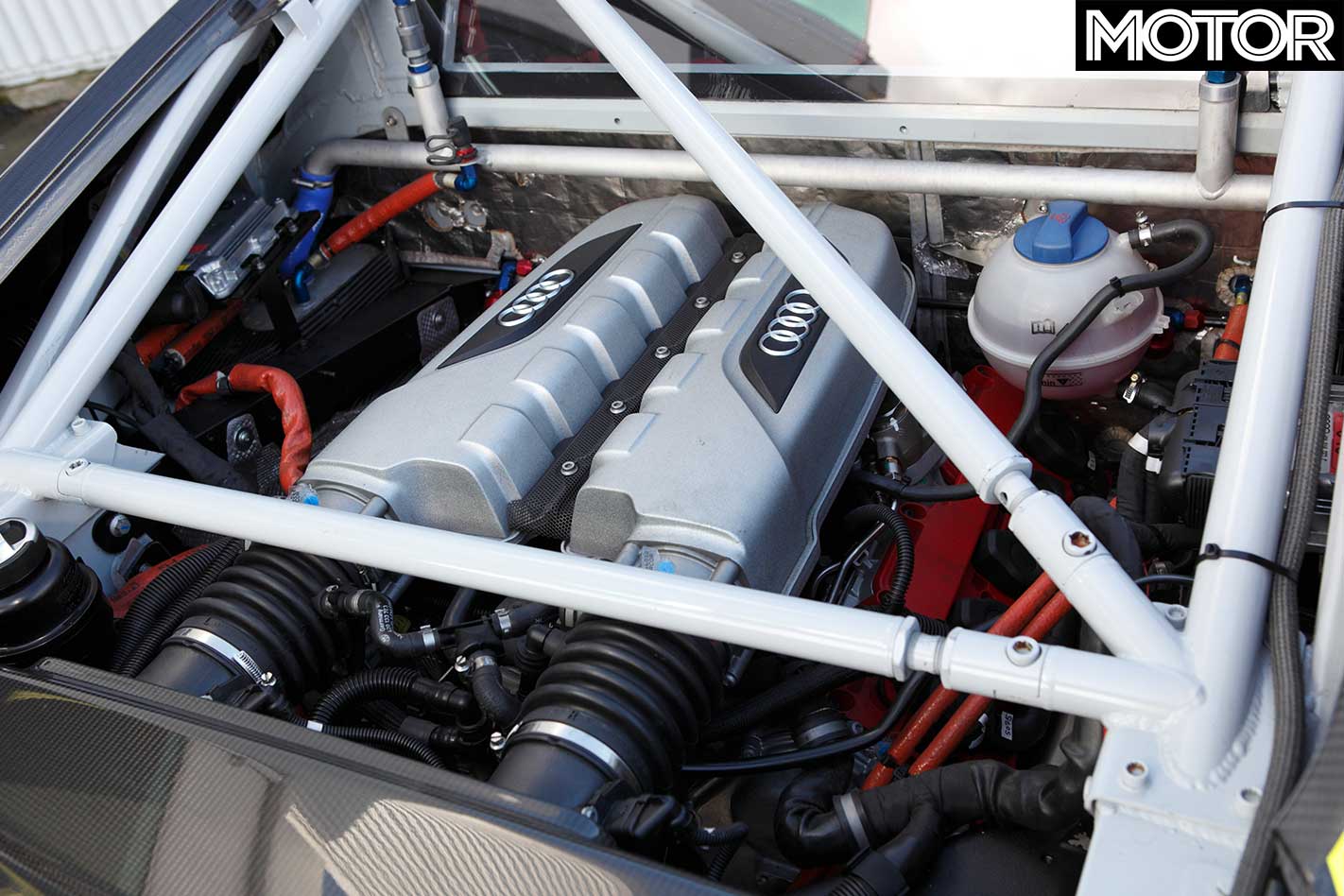
Engine performance has stayed much the same and the gearbox is Audi’s six-speed paddle-shifted sequential manual. But the gearbox is a new design that allows for inspection of the internals through an access hatch, so the tranny can be checked over in situ.
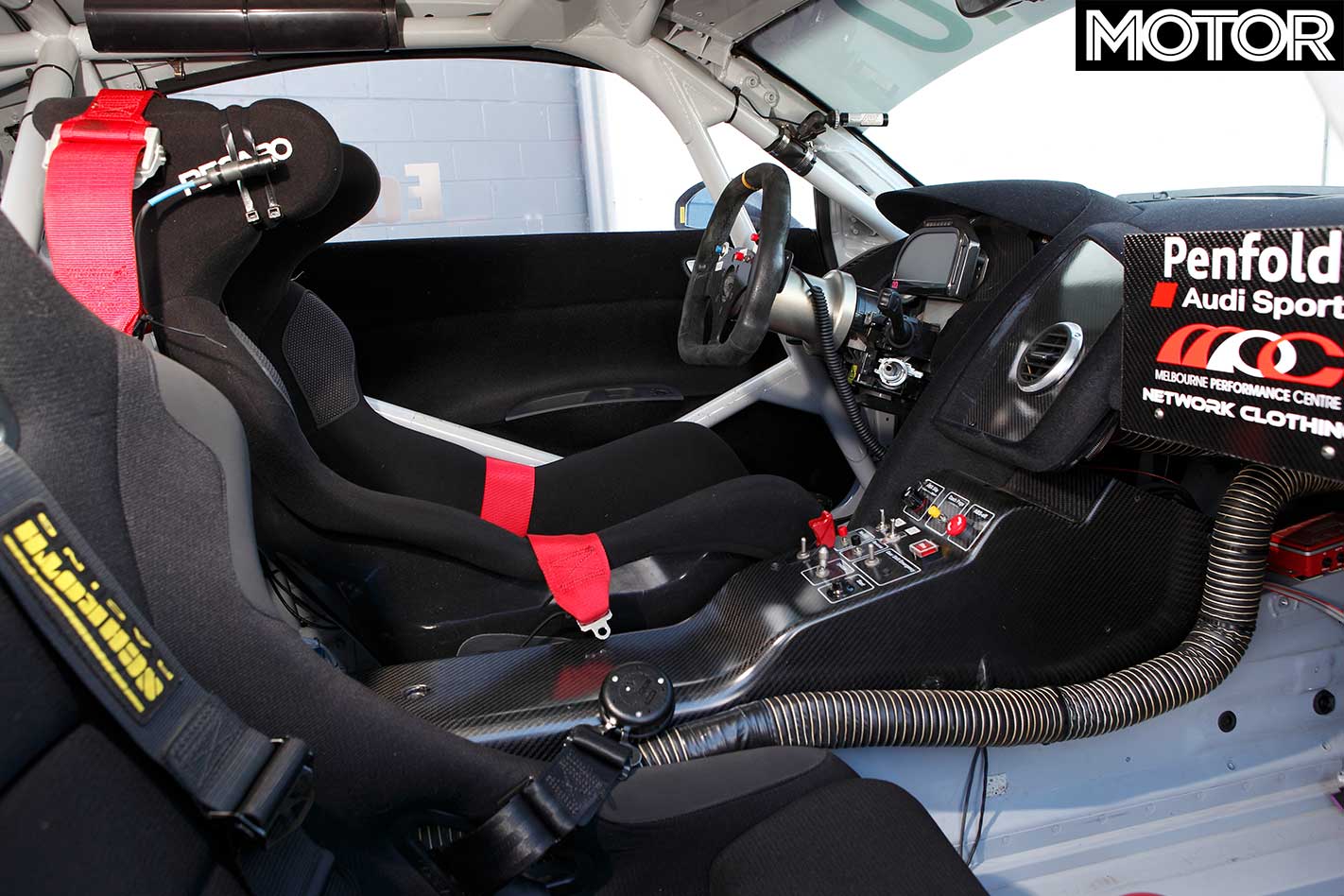
There are bigger radiators to cope with competition speeds in high-ambient temp conditions, it runs on full slicks, and the interior has been stripped out and resembles pretty much any other race-car.
The big change has been the deletion of the car’s quattro all-wheel-drive set-up. GT3 rules forbid all-wheel-drive, so the Eddy LMS is rear-drive, which, if nothing else, makes it a bit more exciting in the wet. Which it kind of was when we showed up at Phillip Island recently.
So, with slick tyres, a slowly drying track and much trepidation, we sallied forth in the jump seat of the Eddy R8.
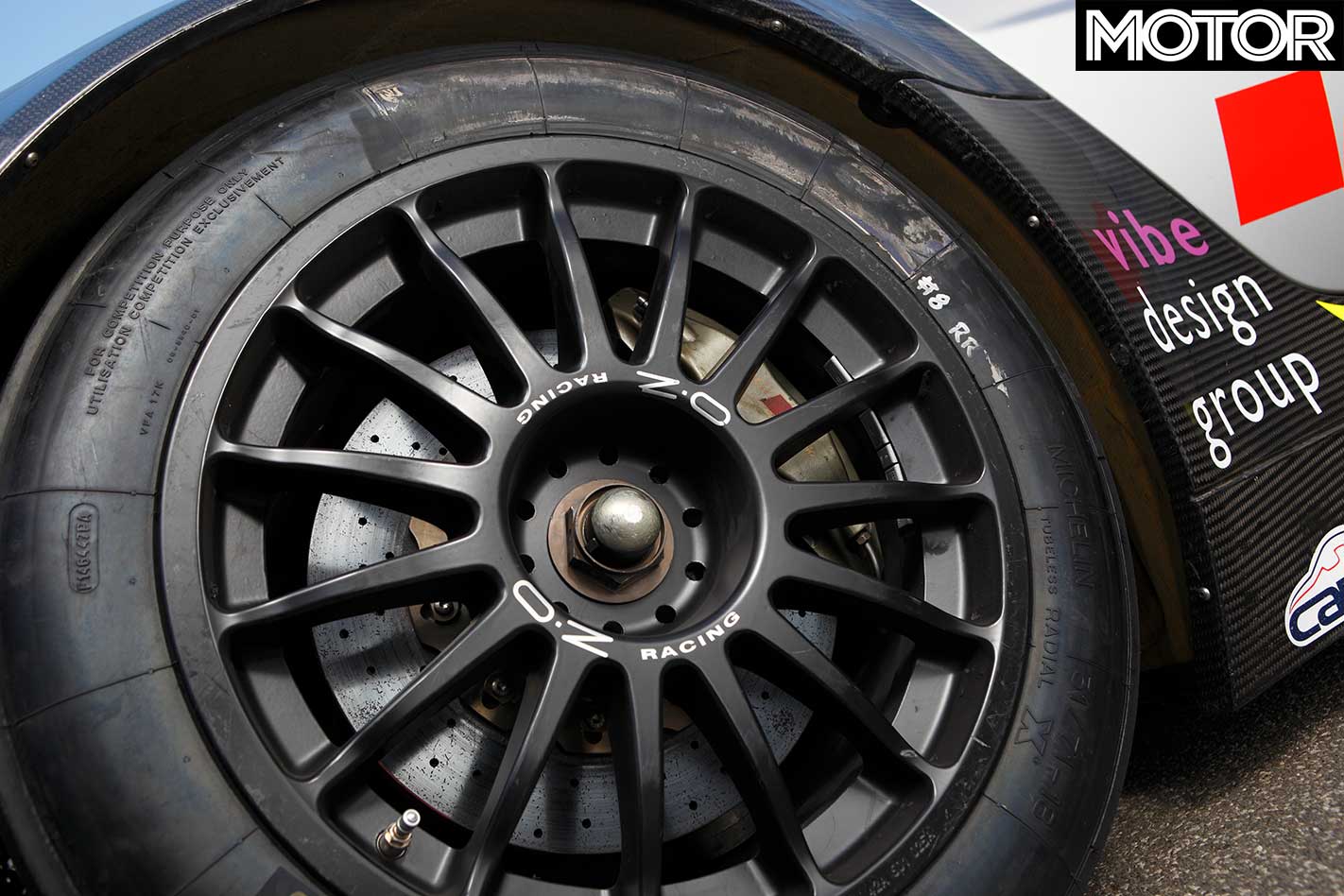
The first trick is to actually get aboard the mother. You need to climb over and through the roll-cage as well as bend your knee right up under your chin to get your right leg inside without kicking the side window out of the door. Did I also mention the thing’s left-hook?
The next instruction is from the bloke helping bend your knee beyond the traditional 180 degrees, and it’s all to do with not stomping around on the ECU once you’re in. That’s because the magic-box lives on the firewall of the passenger’s footwell; right where you’d brace your feet to steady yourself.
The harness takes some doing (some little bloke must have gone before me), but finally, you’re in, one foot either side of the computer and butt snuggled into the race seat.
Eddy fires up the V10: it’s quick and easy, like the stocker it pretty much is. Even though it’s clearly not a road-legal exhaust, there’s none of the usual assortment of groans, rattles and squeaks you nearly always get with a bare-floored, painted metal cabin.
First clunks home – again, like the stocker – and Eddy points her between the pit exit gates. In no time at all, you’re struck by a couple of things.
First, this is really quite a roomy race-car. You’re a long way from the screen and there’s none of the usual getting-to-know-you bump and grind that goes on between driver and passenger in most caged competition vehicles.
The second is just how civilised and unthreatening this car seems. I’m not exaggerating one bit in suggesting I have and still do own road cars that are noisier and ride sharper than this thing.
Okay, so El Pilote was taking it relatively easy thanks to the lack of grip and Phillip Island’s propensity to suck you into going faster and faster, but I’ll be damned if we couldn’t hold a decent conversation even at full chat.
The other thing to strike me was what a shallow line we were using most of the time. Where most cars dare you to apex late and use the outside kerbs, the LMS was making no such demands. Mark was slipping across to the inside of each corner entry and letting the grip take us around the bend the short – and surprisingly fast – way.
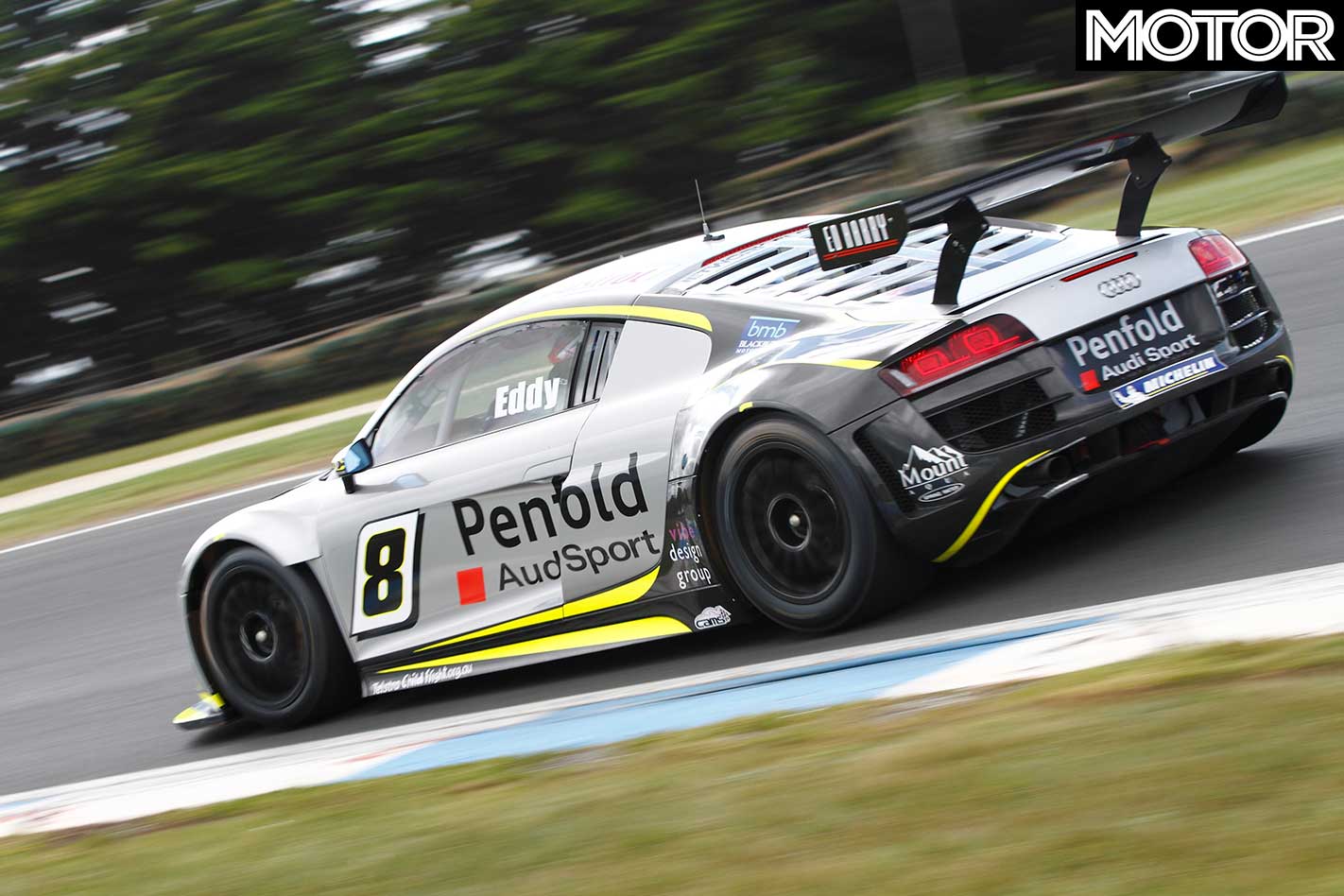
The E-gearbox works far better in a race-car than any road-going critter, too, and you can instantly see why they’re the tranny of choice for the modern race-car engineer. And that motor…
Without the second diff to haul around, it felt even friskier than the already rather playful stock version.
I’d love to tell you that losing all-wheel drive has made it faster/slower/more fun/less grippy, but I can’t. But I sure as hell can tell you that this feels light and agile and if anything is going to keep a Mosler honest on a track, this could be it.
2010 Audi R8 V10 LMS – The Good
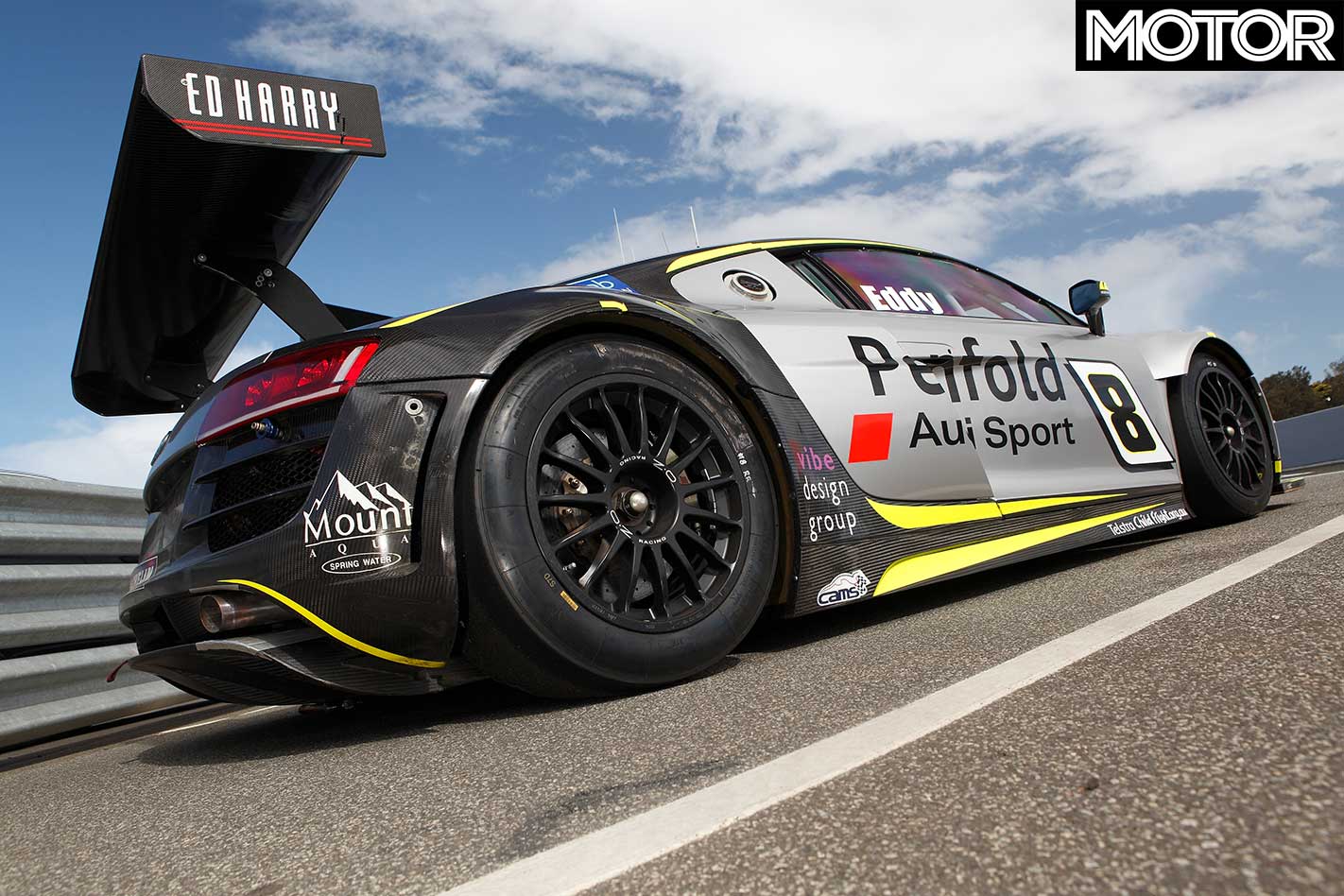
02 – Less weight …and without the added quattro complexity you get a lighter, rear-drive only rocket-ship. On slick tyres, too
03 – Higher pace Add proper race-car aero bits (splitter, diffuser, rear wing) and you’ve got yourself a neck-snapping monster
2010 Audi R8 V10 LMS – The Bad
01 – Not cheap $415K before tax. And that’s before you stick it on a boat bound for Oz. And build a race team to run it
02 – Track only Though built for GT3 racing, it’s not an answer to Porsche’s GT3 road car. Only used on Sundays, on a circuit
03 – No frills Fewer interior niceties than a Bangkok sweat shop, and you have to be Gumby to negoitate the roll-cage climbing in
Audi’s racey customers
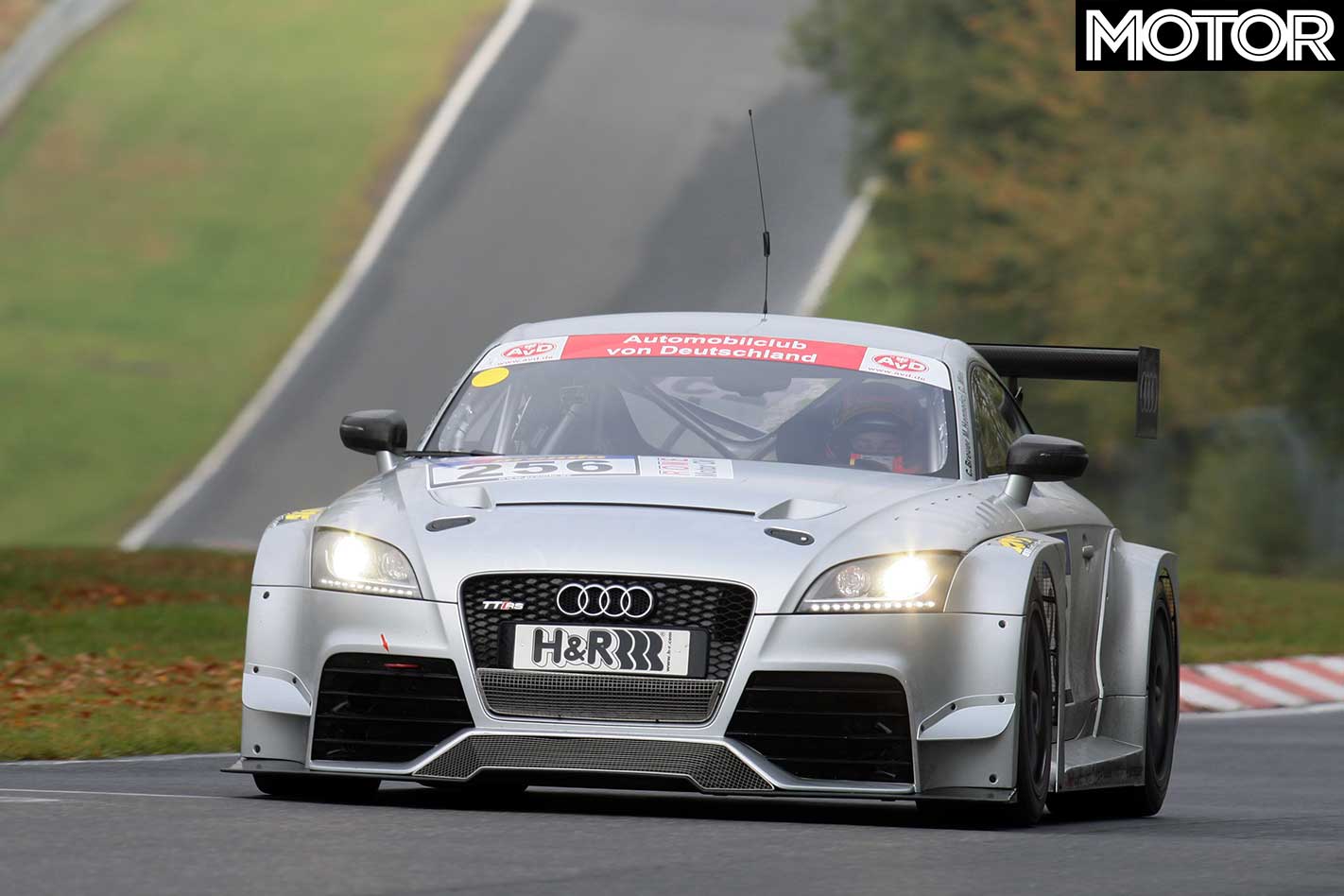
When the GT3-spec R8 LMS race car was first unveiled at the Essen Motor Show in 2008, it marked the beginning of Audi’s customer-based racing program. Basically, rather than enter GT3 races as a factory team, Audi will build cars on request for its motorsport customers to compete in.
Audi’s two front-running DTM teams entered R8 LMSs in this year’s Nürburgring 24-hour race, and filled the first four spots on the grid. However, when it came to racing, the Audis fell down the order.
The second item in Audi’s motorsport range, a TT RS racecar, has been tested recently in some German endurance races. It has been jointly developed by Audi AG, its technical division and Quattro GmBH.
1. Never break focus
Before he was dominating the world’s rally stages, Tommi Mäkinen was a champion in a very different, and much slower, form of motorsport in his native Finland – tractor ploughing. While it didn’t stress his adrenal glands, it was behind the wheel of his father’s tractor that Mäkinen learned a valuable lesson on the importance of maintaining an unwavering focus.
“It was very low speed, but you had to concentrate to do it as carefully as possible,” he says. “You had to see what you were going to do before you did it. If you didn’t realise ahead of time, it was already too late and you had made a mistake. The same applies to rallying, and all aspects of life. Wherever you compete, concentration is vital. Whatever you are doing, and wherever you are doing it, you will always enjoy greater success if you concentrate very hard.”

2. Share your knowledge
Rallying, unlike most other motorsports, requires the driver to share responsibilities with a co-driver. It’s a symbiotic partnership, with the co-driver having to have faith in a driver’s abilities, while the driver requires accurate and coherent pace notes to keep the duo both fast and safe.
Now running Toyota’s WRC campaigns, Mäkinen is trying to transfer the lessons he learned as champion in the cockpit to a corporate environment.
“One of the biggest and most important things I say to everyone is to share your information,” he explains.
“Wherever it’s gained, either from here or there, it’s important to spread knowledge. It seems to be a challenge for people to share enough information they have. But those that are able to do this well are able to work better as a team, and to improve as a collective.”
3. Always hold on to hope
Mäkinen’s 1998 WRC campaign is a lesson in perseverance. He entered the final round with a slim lead over arch-rival Carlos Sainz, but due to an error from rally organisers which left oil on the fourth stage, he crashed out. Sainz would only need to finish fourth or better and the title was his, prompting Mäkinen to pack his bags and go home early.
But with the finish line in sight – literally – the engine of Sainz’s Corolla failed, and Mäkinen won his third world title while standing in a hotel lobby.
“This taught me that you must never give up hope,” Mäkinen told us, with that event clearly taking an emotional toll on the 54-year-old.
“I think it’s really important that you are able to continue pushing no matter where you are in your life. You need to keep hunting, and chasing the competition, whoever that may be. It’s the nature of success that you do not give up in the face of failure. If you’re able to push and commit and not give up, you will naturally become the champion.”
4. Mistakes equal experience
You don’t become a rallying legend without bending a few rollcages, and Mäkinen has had his fair share of colossal shunts. While he isn’t proud of those moments, he says they were necessary to pave the way to success.
“People always make mistakes, and they may be hard on themselves until they realise that is the way to learn, and gain experience.”
5. Embrace the unknown
To be a truly successful rally driver, Mäkinen says it’s essential to accept that you cannot understand everything, and that uncertainty cannot be eradicated from every circumstance. Mäkinen says it’s this willingness to push the limits in unfamiliar conditions that differentiates WRC drivers from competitors in other motorsports.
“In circuit racing you have known conditions,” he explains. “But in rallying almost everything is unknown. You have to cooperate with a co-driver, and have to understand and decrypt the condition of the road through notes, and so many different elements are involved. You need to understand how your car may behave when placed on one bit of the road compared to another, all before you drive it.”
Love, hate or simply feel indifferent about the result, the federal election is finally over and we must all turn our attention to finding something else to complain about until the next one.
Perhaps it will be the price of the Toyota Supra which was at last confirmed unceremoniously this week on the Japanese brand’s consumer website. How much is too much for a Toyota that’s based on a BMW? You decide.
Maybe we can get your blood boiling with more Ford job cuts? In addition to the thousands chopped from the Australian workforce when the factories were shuttered locally, another 7000 roles will be culled worldwide this year.

Nope? Still not enough malevolence to displace your loathing of political campaigns? How about yet another car advert torn from our tellies by Ad Standards Australia? In the spotlight this time was Holden’s new SUV campaign which staged a ‘heist’. All it took was one meddling killjoy to disapprove of a J-turn and it was curtains for yet another light-hearted commercial.
With a coalition government reinstated, it’s unlikely the alternative energy, electric vehicle and hybrid tech movement will make any local quantum leaps any time soon. No surprise then that Audi has put the brakes on a hybrid version of its excellent Q5 mid-sized SUV (who knows if its TT successor will make it to our shores).
And the renewable energy opposition (yes, believe it or not, there is such a thing) will be popping the champagne. Mmm, you can taste the coal.
But there has been plenty to be happy about in this week’s motoring news. Mercedes’ latest innovation in driverless technology means even the most diabolically bad drivers can remain safe behind the wheel, we revealed why it’s a good idea to get your driver’s licence and also why it’s also just as good to get rid of it under certain circumstances.
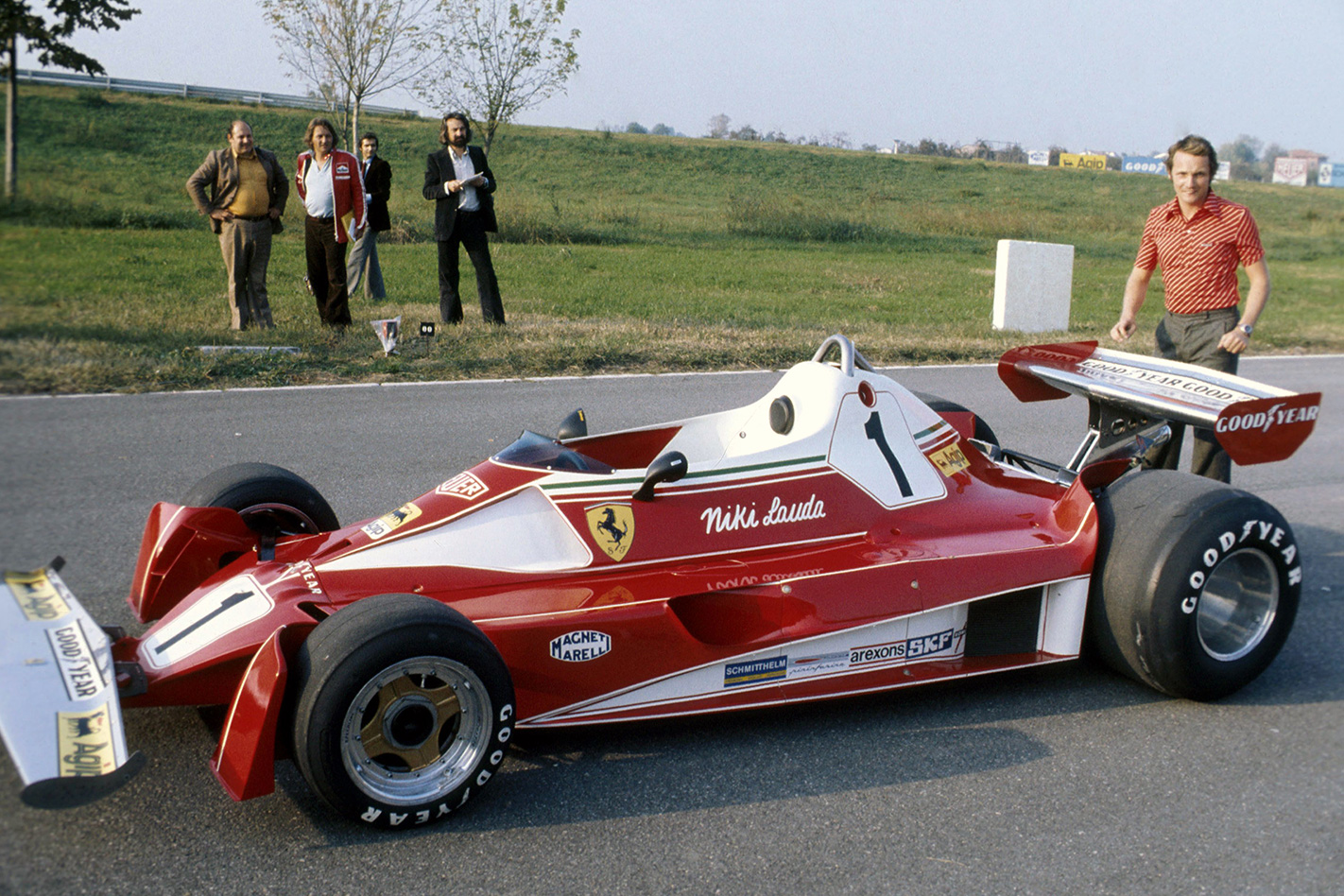
The week was, of course, marred by the passing of a motorsport legend. As a company of motorsport fanatics, we rallied around to bring you our favourite moments of Niki Lauda’s incredible life in motorsport. It was also a great excuse to revisit our favourite car movies.
As always, Andy, Dan and Scott swept up the cutting room floor morsels and brought you instalment number 20 of the WhichCar Weekly podcast. Watch this space, as we’ll be bringing you even more on-demand podcast content soon.
If moving images are your thing then another episode of our TV show went out on Sunday afternoon, and you’ll be able to catch number 18 coming to your screens this weekend too.
Like early voting, you can get a sneak preview here, and if clock-watching and calendars are definitely not your thing, then you can catch the last four episodes at a time that suits you by heading to TenPlay.
Regardless of the torrent of news heading through the WhichCar doors, the tide of car reviews never stops. This week we got behind the wheel of the Mazda 3 G25 Astina, Volvo V60 Cross Country, Skoda Octavia wagon, Ford Focus ST-Line Wagon, Holden Equinox LT, Renault Trafic, BMW 330i and Jeep Wrangler. Phew! What a week.
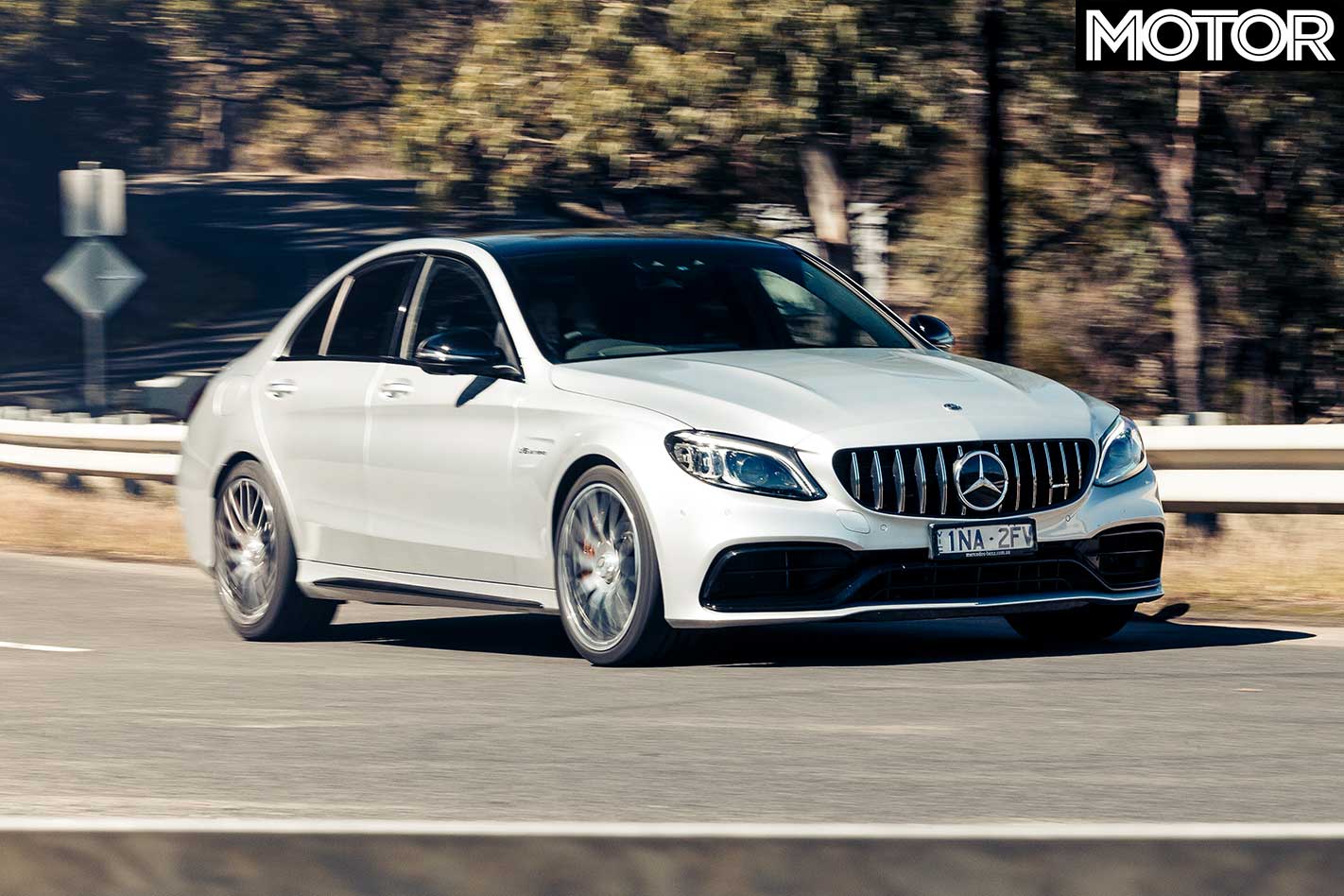
Take deep breath. Concentrate. You control 510 of Affalterbach’s finest horses with your right foot. The new 2019 Mercedes-AMG C63 S you’re in should handle them. Its electronic brain has been spliced with a new ESP matrix and adjustable traction control that lets you switch between tyre frying lunatic and corner-carving surgeon.
Twin turbos plumb into a 4.0-litre V8 to produce a colossal 700Nm, all aimed at its rear tyres. But then there’s the other side of the story. Although the old seven-speed transmission was known for being brusque, a new nine-speed wet clutch automatic promises to smooth things out.
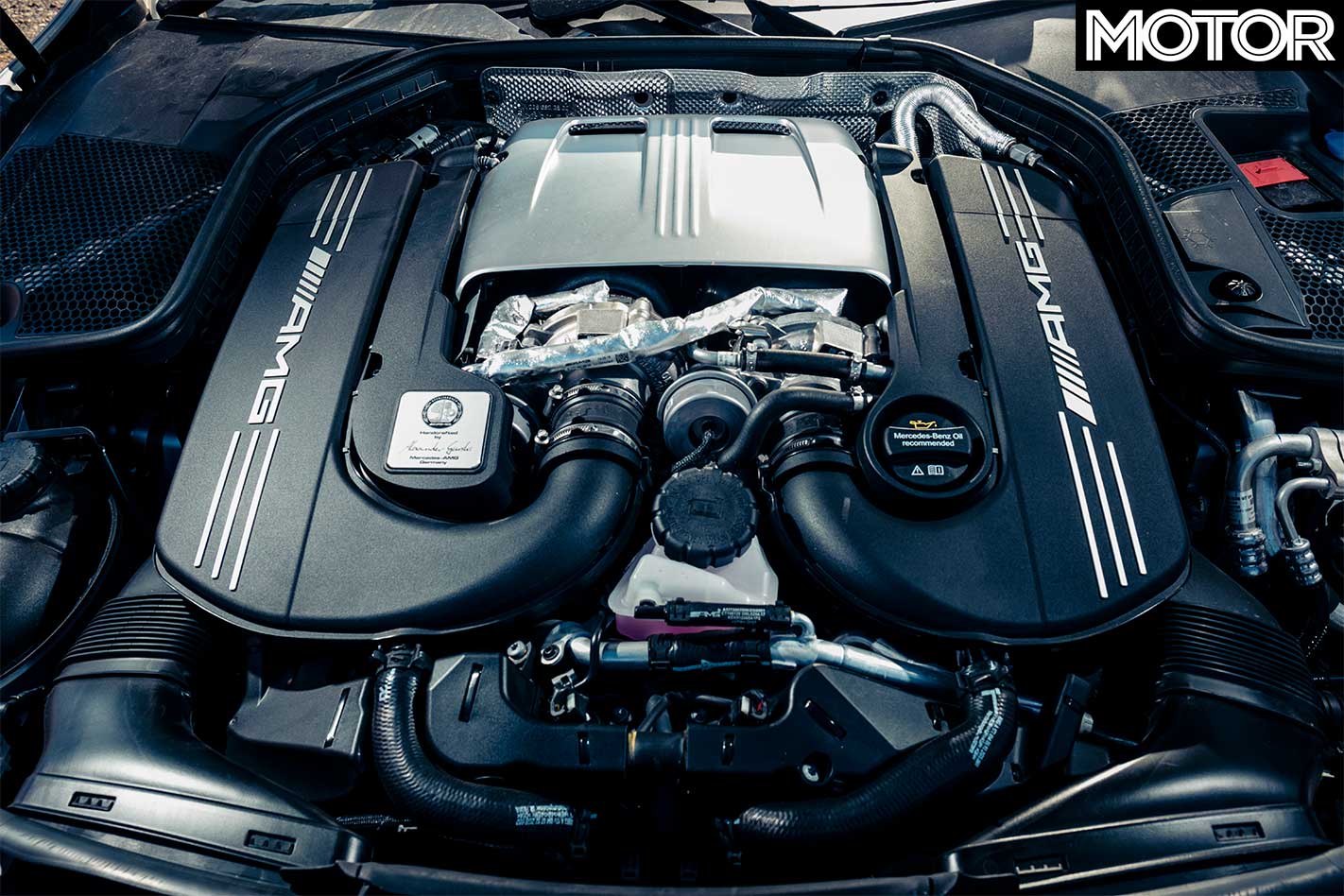
These changes amount to a comprehensive revamp of the C63 S at its mid-life point. And although they hope to unlock class-dominating potential, as we burble down the highway something lurking in our rear-view suggests that won’t be easy. It’s a swollen-looking sedan. As it closes in, its vented bonnet and aggressively cooled bumper come into view.
It’s a Cadillac ATS-V. Gulp. General Motors’ anti-C63 weapon. The ‘LEFT HAND DRIVE’ sticker on its rear window signals it’s an engineering mule, here for GM development work at the hands of Holden, and since we’re around Melbourne’s South Eastern suburbs it’s probably destined for Lang Lang.
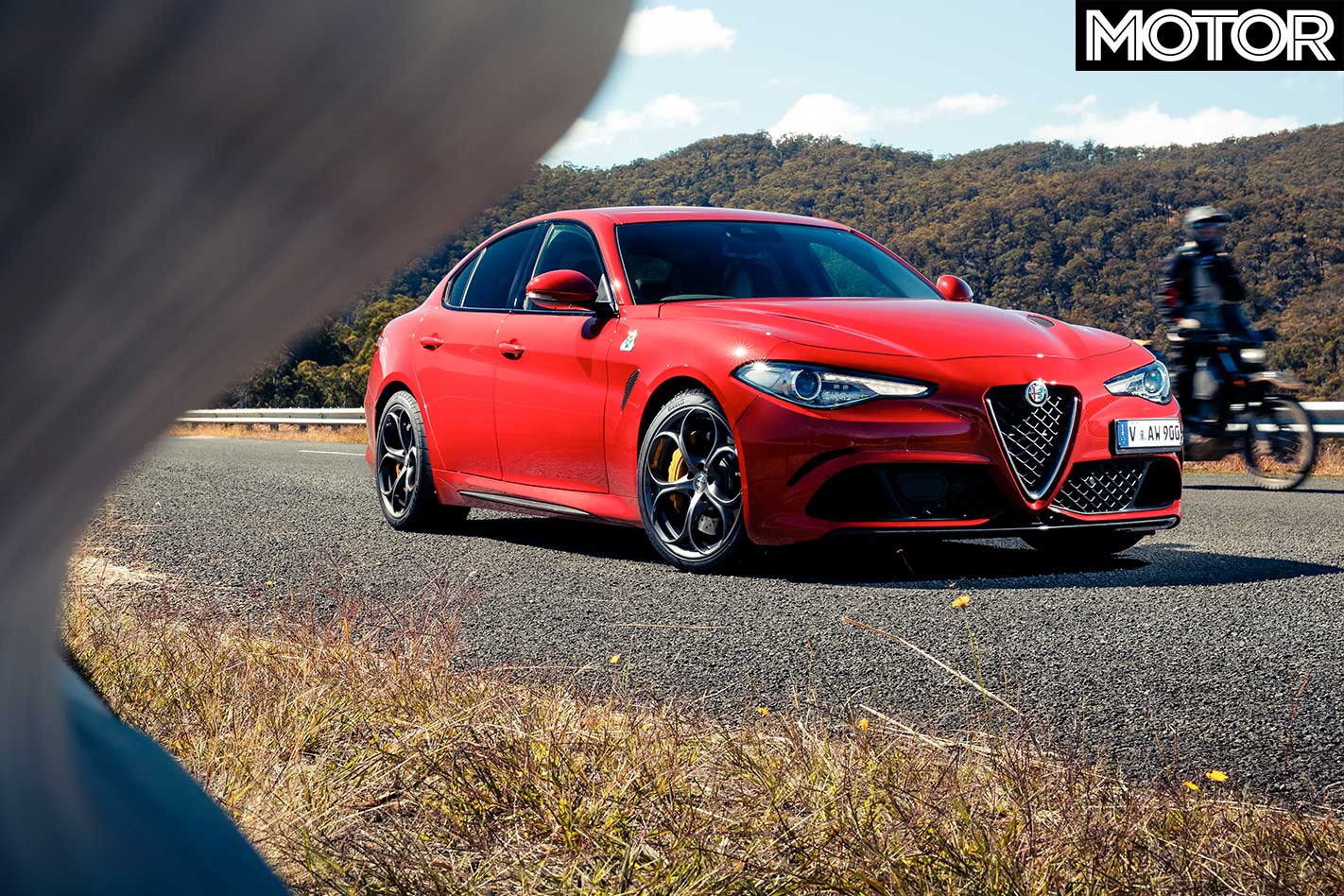
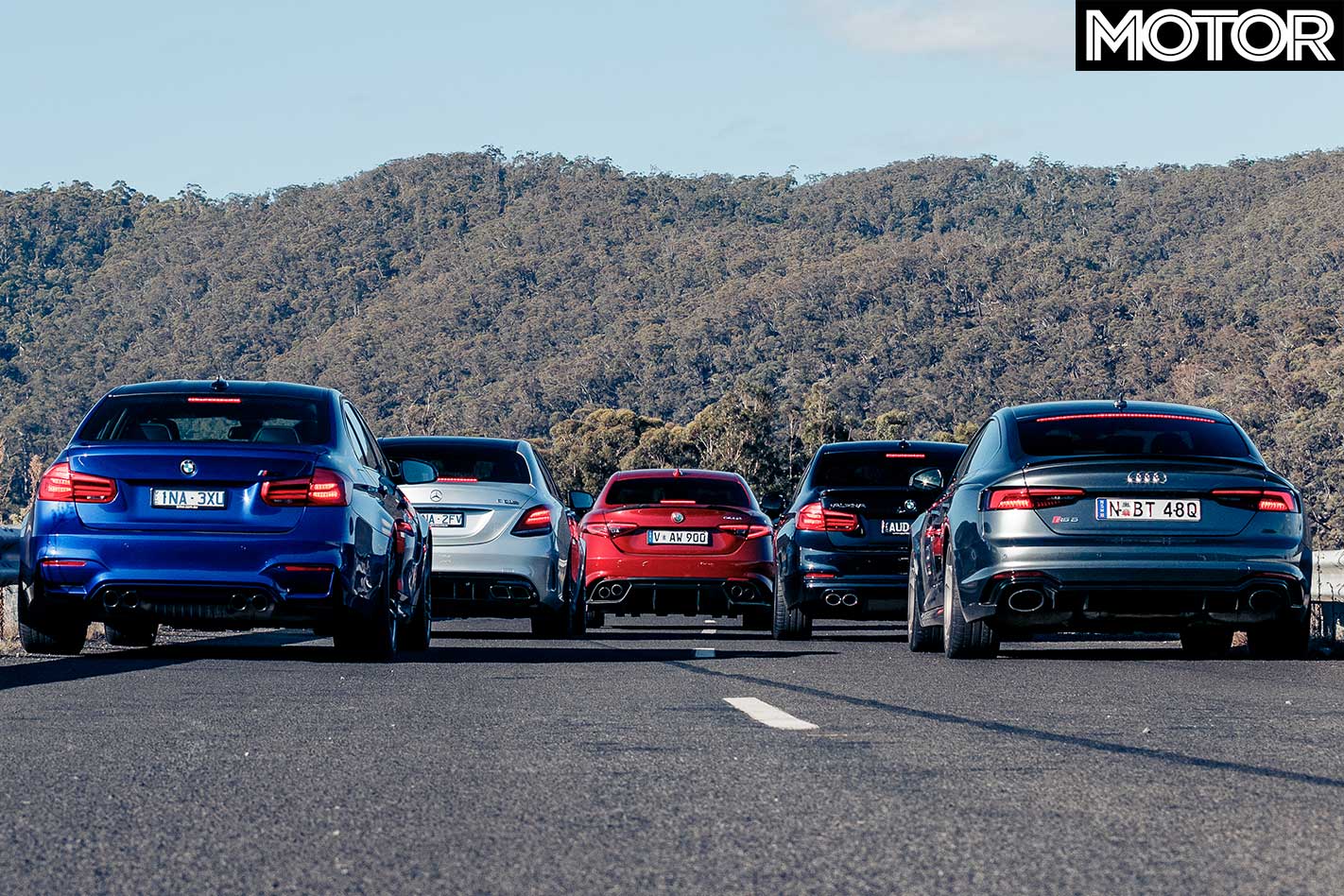
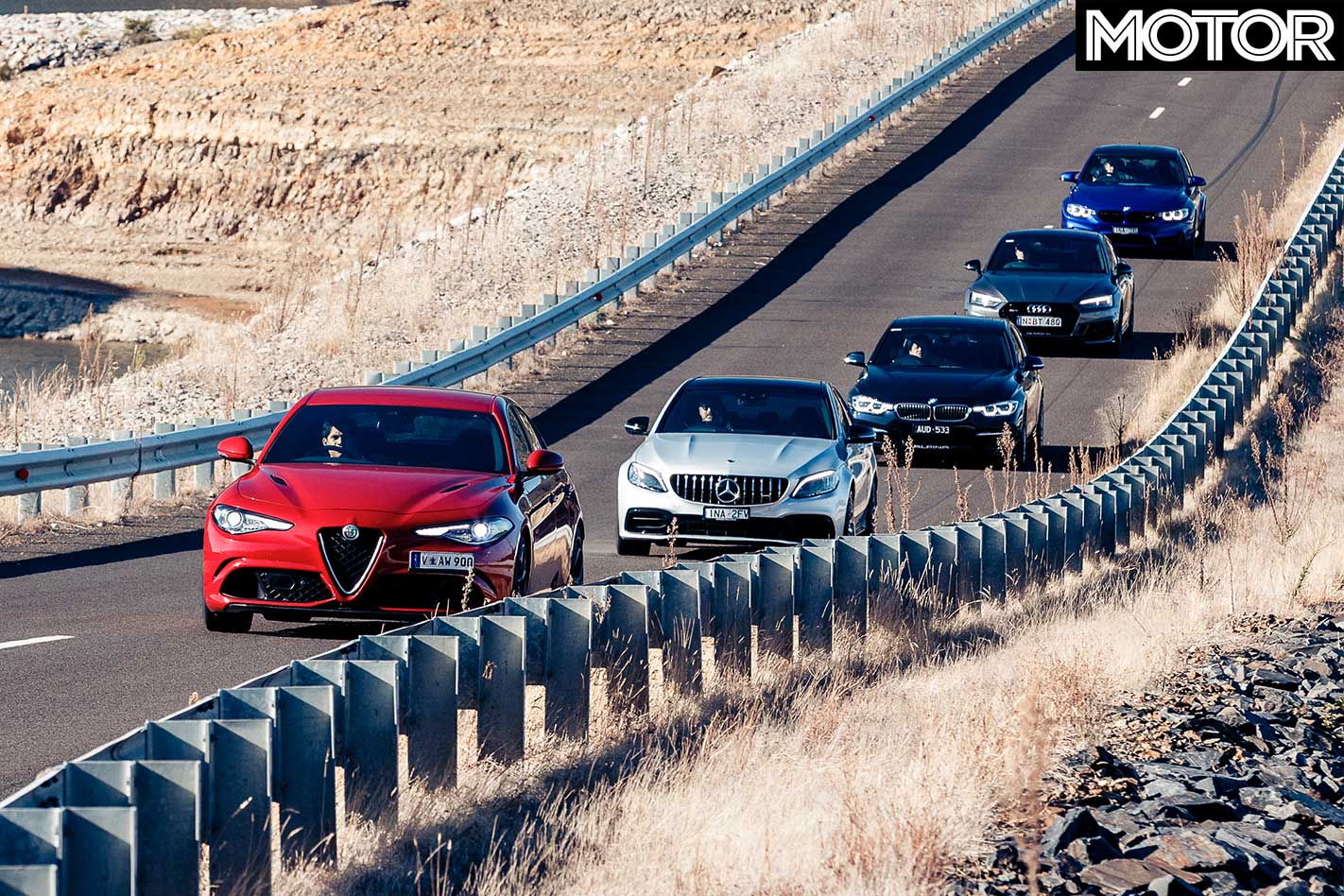
But it serves as a reminder this AMG faces serious competition before claiming the throne. After all, with a twin-turbo V6, four doors and rear-drive, it’s as if the ATS-V was built in the image of the Alfa Romeo Giulia Q – the Italian we placed on equal footing with the C63 S in 2017. It’s back for round two with a gang of refreshed rivals.
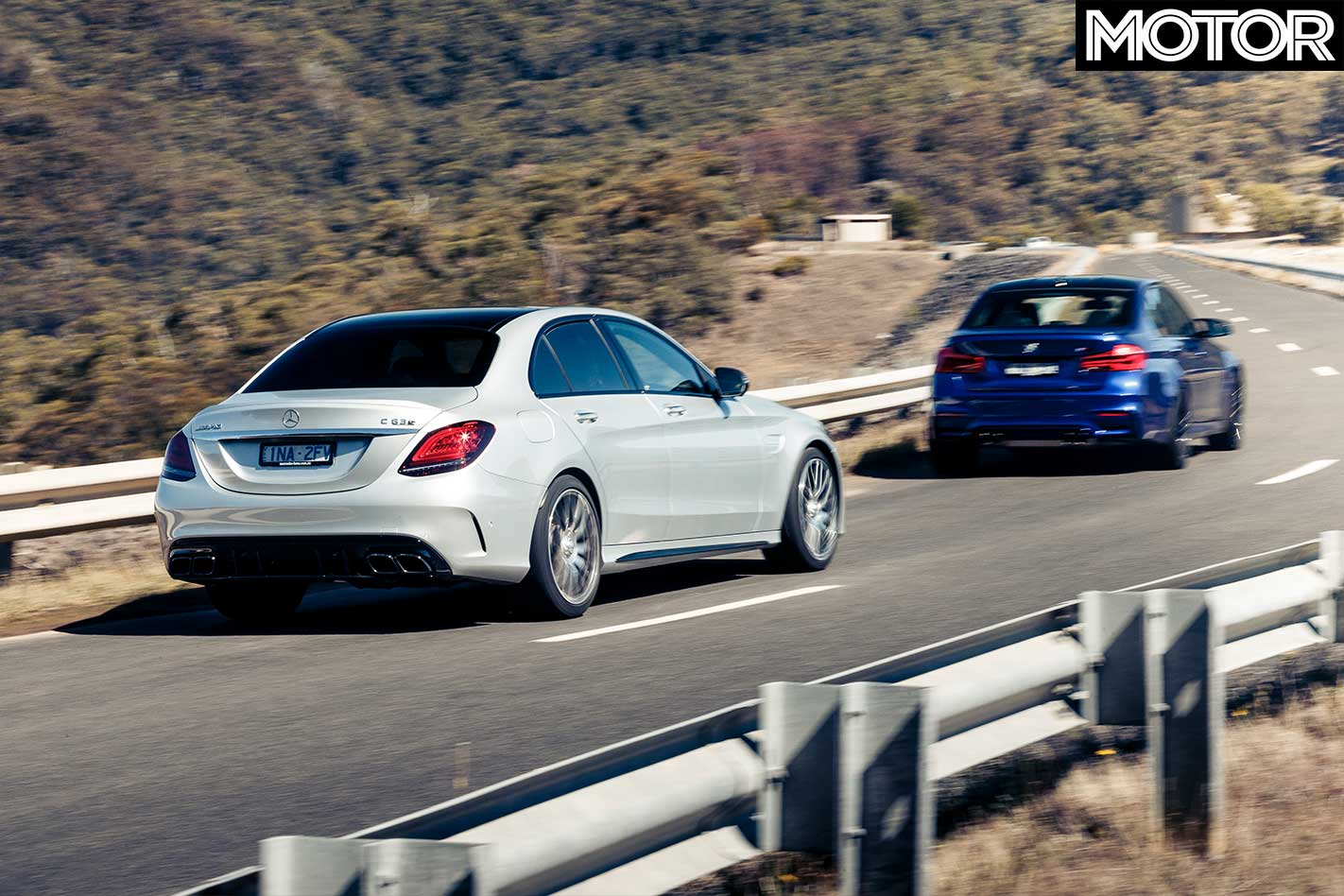
Alfa Romeo has tweaked some things. It’s now a five seater, for starters. But we assume owners might have enjoyed a 375kW/600Nm 2.9-litre engine, adaptive shocks and an electronic locking rear differential too much to ever notice it was missing an extra seatbelt on the rear bench.
Oh, and Alfa Romeo has dropped the ‘Verde’ from the Giulia’s QV suffix to create the Giulia Q. The rear seats are now also heated and drivers sit behind the fancy, and previously optional, Alcantara rimmed racing wheel with carbon-fibre inserts.
This inflates its price by $2000 to $145,900. A reasonable ask for the fastest four-door around the Nürburgring Nordschleife and much cheaper than the AMG’s $160,900. But if you’re after a cheap performance car then pop into a BMW sales yard.
The M3 Pure was devised to send off the sixth-generation car. It takes a standard Competition variant, ditches the 20-inch wheels, seat heating, leather seat inserts, fancy audio and adaptive headlights to drive its price down to $129,900. That’s staggering when you consider the performance and it once cost $156,300.
Fitted with Competition-spec software, a 331kW/550Nm twin-turbo six, lowered suspension and 19-inch wheels on fatter tyre sidewalls, it’s quoted to dispatch 100km/h from rest in 4.0 seconds, equalling the AMG and only one tenth off the Alfa Romeo. But we’ll get to that later, because BMW isn’t the only one slashing prices on a 3 Series.
Alpina, the Buchloe-based company that’s hot rodded BMWs with Munich’s blessing since the ’60s, has dropped its B3 S’s price from $157,651 to $117K drive away. But rather than create its own version of an M3, the B3 S approaches the fast, premium, rear-drive sedan in a different way.
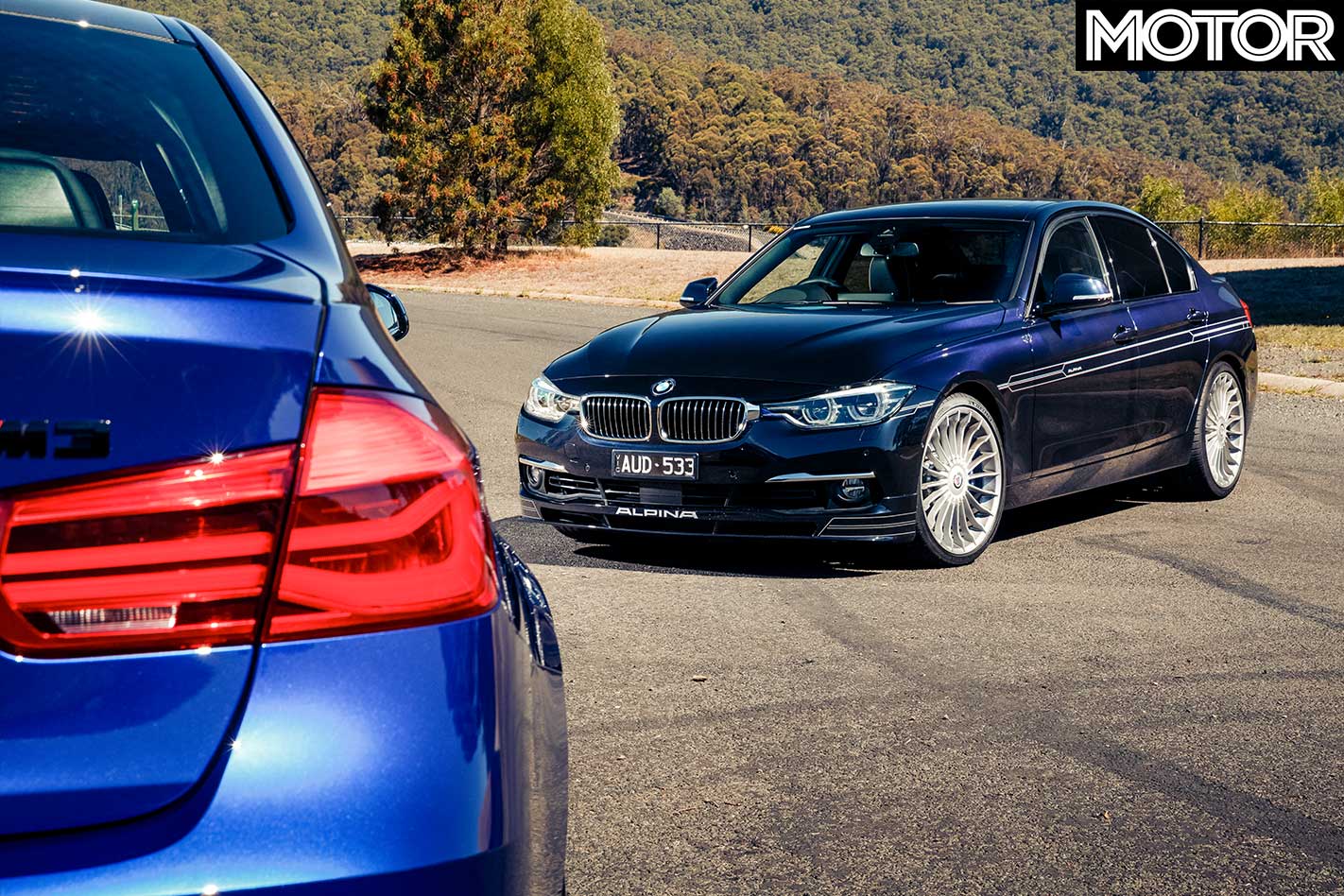
Yes, its 3.0-litre straight six, based on an N55 that spins two sequentially arranged turbochargers, squeezes 324kW and 660Nm through its rear wheels. But it sheathes it all with a silken suit. Instead of the M3’s seven-speed dual-clutch transmission, it has a smoother eight-speed automatic, a cloud-like ride and lacquered inserts throughout the cabin.
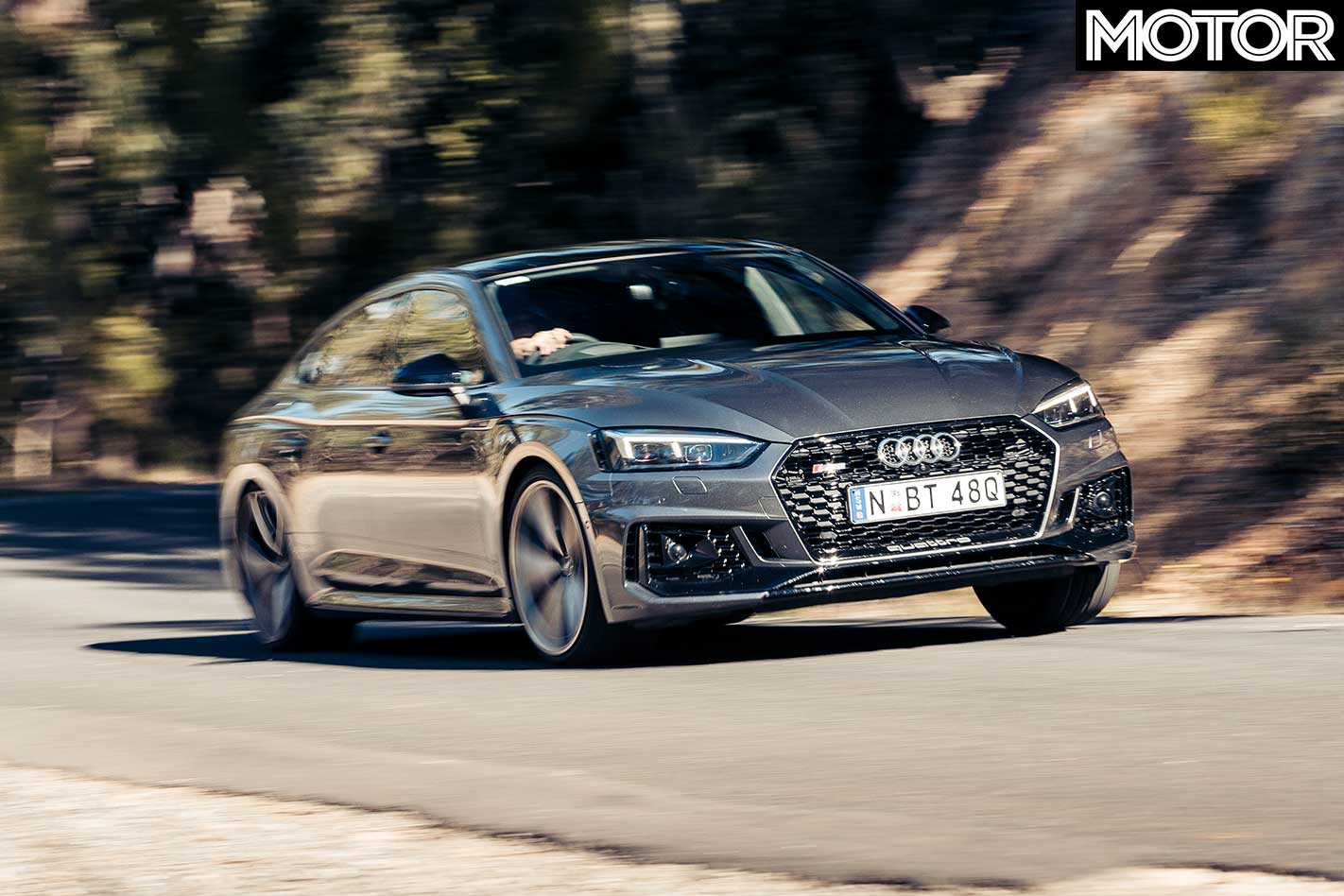
Yet, there’s another outcast in our midst. Audi’s new RS5 Sportback drives four wheels, instead of two, and derives its core measurements from the RS4 Avant. Oh, and it’s technically a five-door since its boot hinges off the roof.
It still wields fearsome credentials, like its hot-vee twin-turbo V6 that wrings 331kW/600Nm from 2.9 litres. That’s put through an eight-speed auto and active rear-LSD that can focus 85 per cent of power on a single rear wheel. The claim is it can hit 100km/h from rest in 3.9 seconds, so we’re going to test that at a drag strip. First, though, in the Mercedes-AMG.
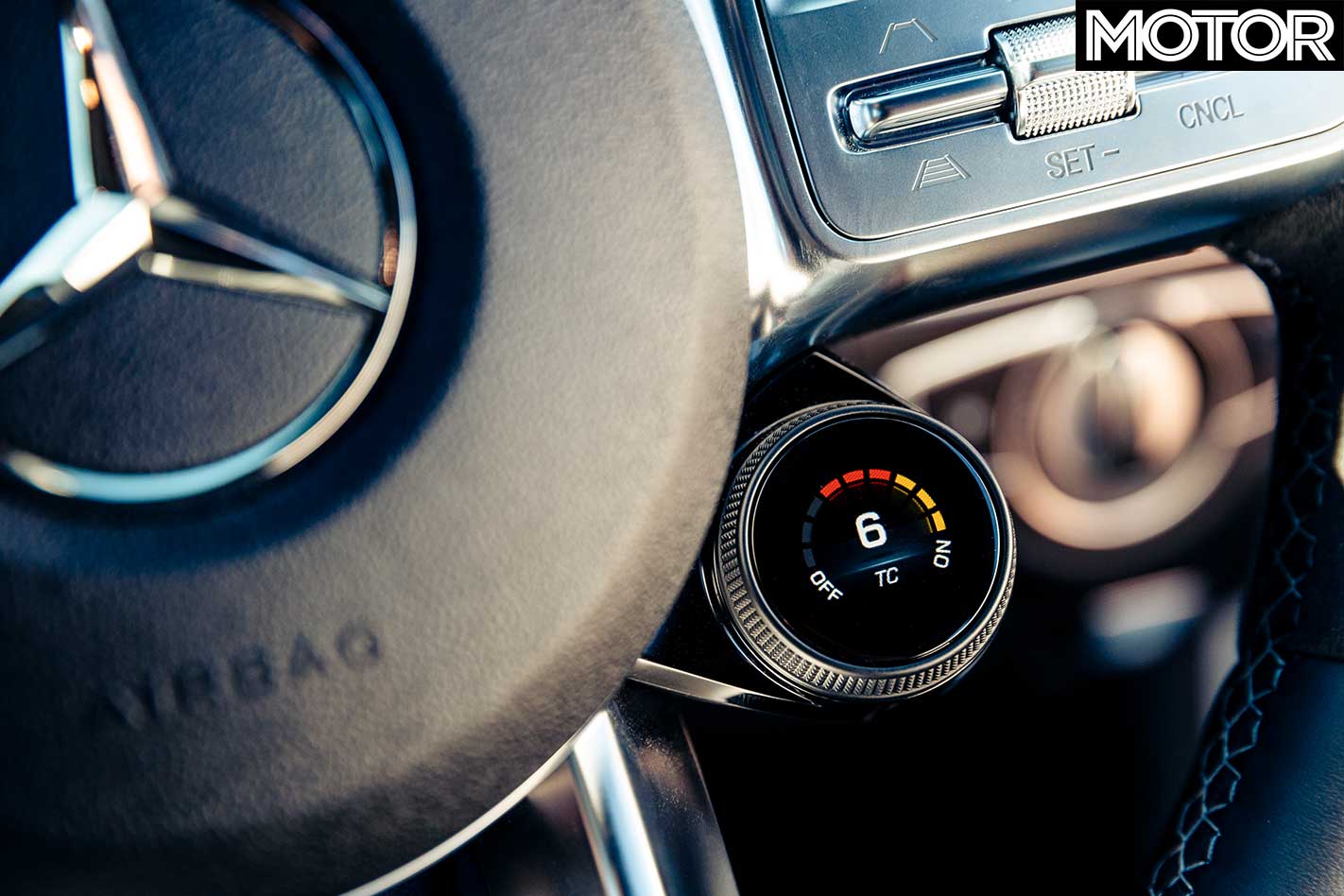
Pinch the round dial on the AMG’s right steering spoke, twist it until a flag appears on its mini-LCD and you’re now in Race. The hydraulic engine mounts tense like a weight lifter’s calves. The stability control loosens its hold on yaw rates and revised software primes the powertrain with its most aggressive settings. Deep breath.
Jam your left foot on the brake, the right one on the throttle. The nose lifts as the revs build and the exhaust booms through the cabin. The digital tacho cluster burns red, ready for your cue. Release the brake.
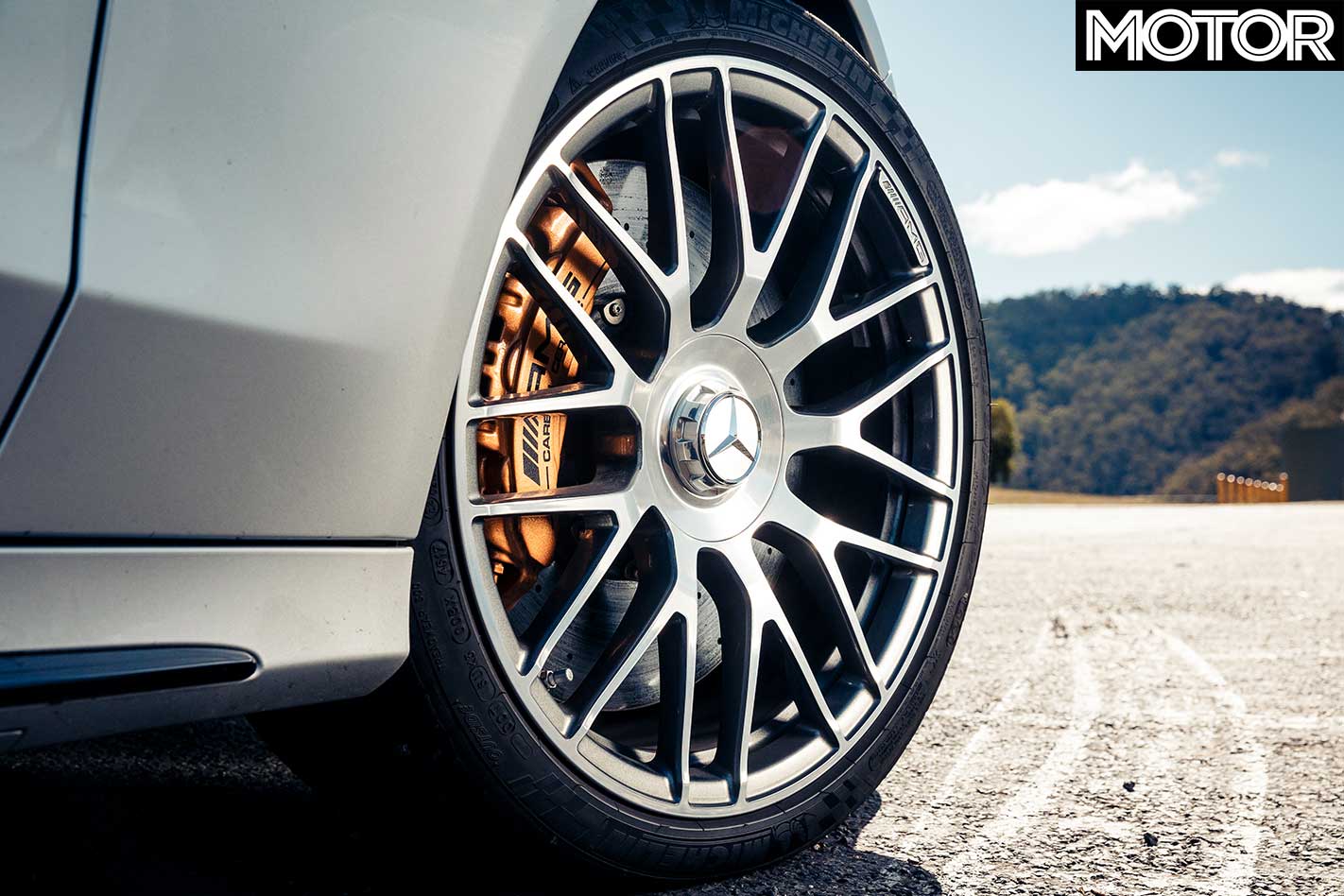
The back axle shudders as 700Nm try and rip apart a pair of Michelins. Traction control cuts in. The onboard stability software deems first gear useless and upshifts early. Revs drop… then unfurl on to the 375kW power peak. More axle shudder. More traction control.
Third gear arrives at just under 100km/h. The engine bellows through third, then fourth, before snicking into fifth just at the finish line. As poor as traction is, though, this is its best run. Despite everything you do to improve it.
We try traction control off, on or half-engaged. Ditto the ESP, and rolling it away from the line. If we knew how to launch the powertrain in second gear, we would. Back in 2017 at Winton Raceway we achieved 4.27sec and 12.20sec at 195.68km/h with the previous C63 S, but we can’t improve on 4.4sec 0-100km/h and 12.3sec at (194.60km/h) 0-400m times.
It’s easy to explain why it’s slower to 100km/h. Max speed in second gear has dropped from 112km/h to 96km/h, forcing an upshift before it reaches triple figures. But the reasons behind its lower trap speed are, ultimately, less obvious.
The thing is, while it produces the same power at the flywheel, the nine-speed’s shorter gear ratios increase the force put through the rear wheels. Yet, its rear tyres are still the same width. The result leaves the C63 starving for grip and the Alfa Romeo is about to prove that’s nothing to do with today’s drag strip surface.
Spin the Giulia’s drive mode selector past Dynamic to Race, disabling ESP in the process, and stomp the gas. It bucks sideways down the launch pad as it breaks traction, the Pirelli P Zero Corsas clearly no match for the Ferrari-derived engine even with the widest rear tyres of this lot. You try a cleaner launch and hold your left foot soft on the brake, the right softly on the throttle. Build revs to 1800rpm, then lift.
Blending one pedal input into the other from the line is key. The short-stroke V6 is extremely energetic and threatens to break traction high in the revs, so plucking the huge shift paddle to snatch second keeps the rear axle gripped up. Watch the revs soar past its indicated redline to 7200rpm. It’s quick. It snags 100km/h in 4.21 seconds and covers the strip in 12.11sec in fifth gear carrying 193.6km/h.
Next is the BMW M3 Pure. Gulp. Its heavily boosted six cylinder engine is known to fry tyres. Will it matter the Pure’s rear boots are 10mm skinnier? Let’s see. Set the shift program to Sport, the transmission map to its highest setting, engine response to Sport Plus and, with a quivering finger, press and hold the DSC button until it’s switched off.
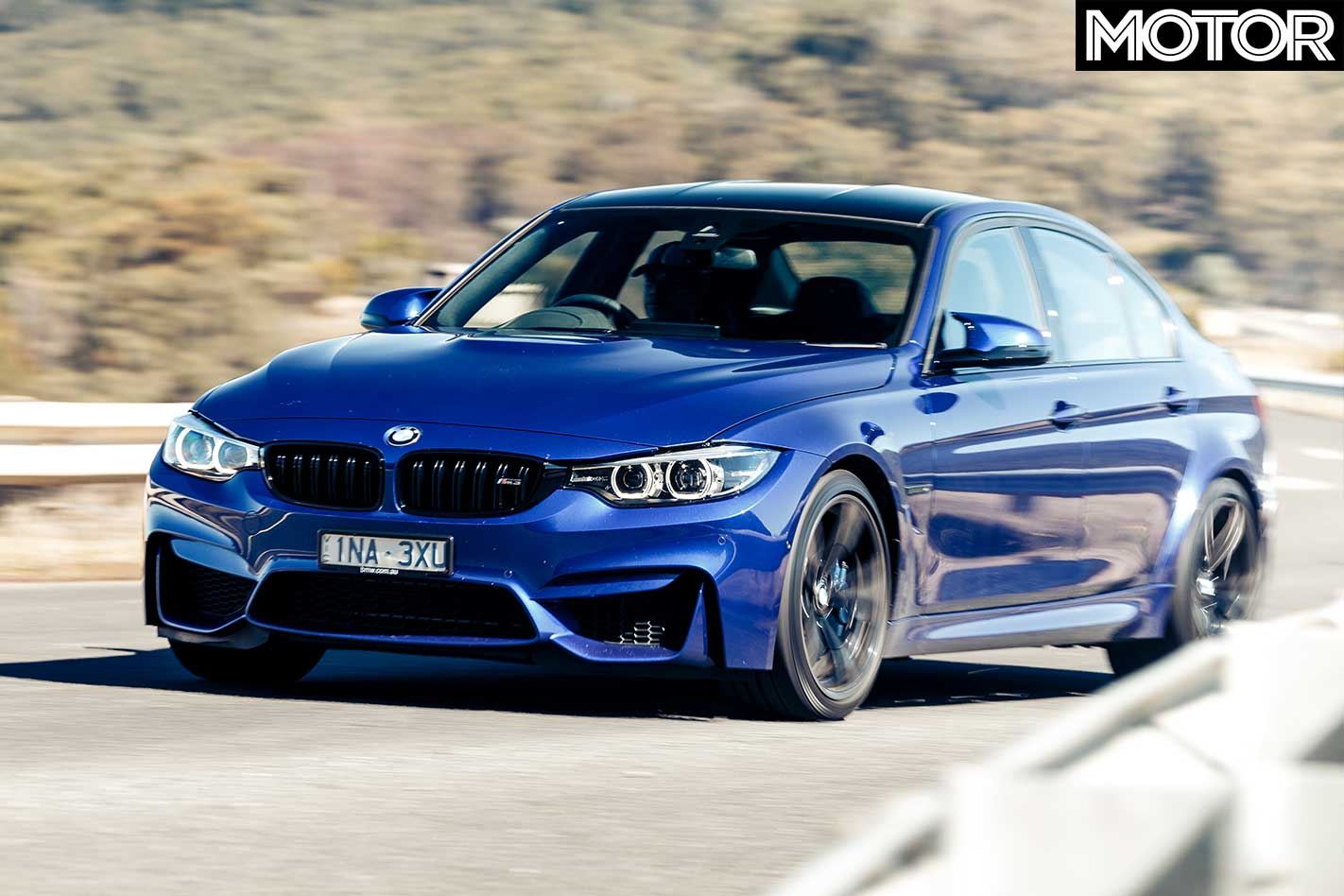
Revs rise on the brake with a hard-edged buzz. Then, release, and nothing. No evil wheelspin, axle tramp or power cut. It just digs in. You can feel the fatter, softer Continental sidewalls pressing into the ground, helping it explode from the line like Ian Thorpe launched off the blocks. More revs? Sure.
At 3500rpm it still grips and goes. Storming to the 7500rpm limiter in each gear and at the horizon with intimidating ease. It reaches 100km/h from rest in 4.15 seconds, only a tenth off its claimed time. It covers the strip’s total distance in 12.14sec at 191.39km/h.
Launch control in the Alpina B3 S is similar to the M3. Whack its gear lever across into Sport mode, disable stability control and stall the eight-speed ZF automatic at 2000rpm. But that’s where the similarities end. Lift the brake and nothing happens for a second. Then the turbos wake up. All of a sudden you’re on opposite lock, wrestling the 660Nm that’s arrived.
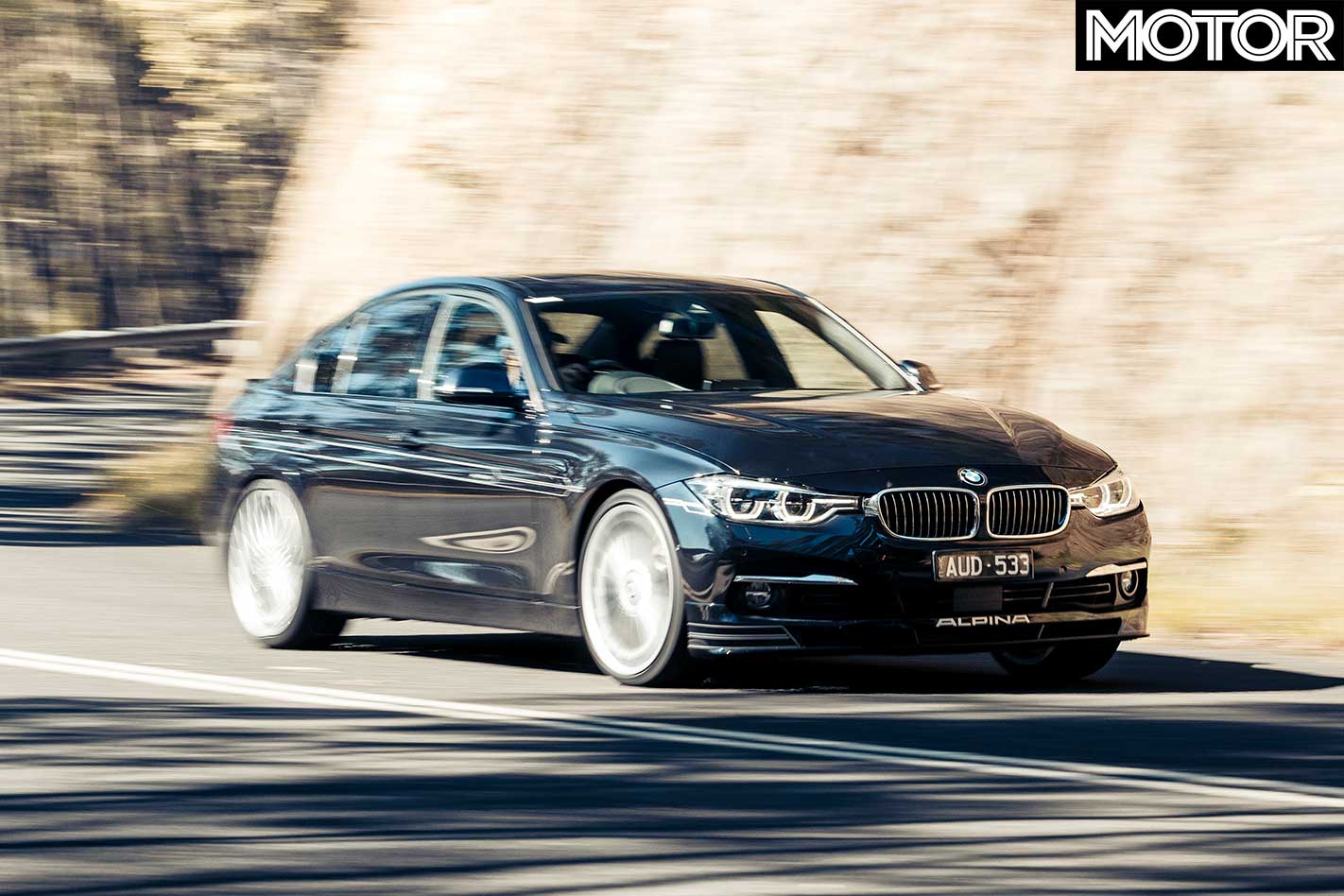
Launching on a grippier section helps tame this sudden rush of boost. It squats and rocks about as you roar away, shifting at 6300rpm as the stability systems delicately balances between grip and slip. Persistence pays off, though.
Times tumble as heat builds in the B3 S’s tyres and turbochargers. Without changing anything, its 400m time falls from 12.7sec on the first run to 12.6 in the second, then 12.5 for the third, then eventually to 12.44sec. Each 0-100km/h time drops as well, ending with 4.37sec, or a tenth off the claimed time. But it’s the Audi that’s about to prove quoted figures can be beaten. Smashed, in fact.
Rolling to the start line with almost more than double the driven footprint than anything else here is a decent advantage. But it doesn’t prepare you for the RS5’s savageness. When you set its systems to attack, then drop the stalled revs at 3150rpm, it lunges forward so fast you have to brace your head against the seat to avoid whiplash.
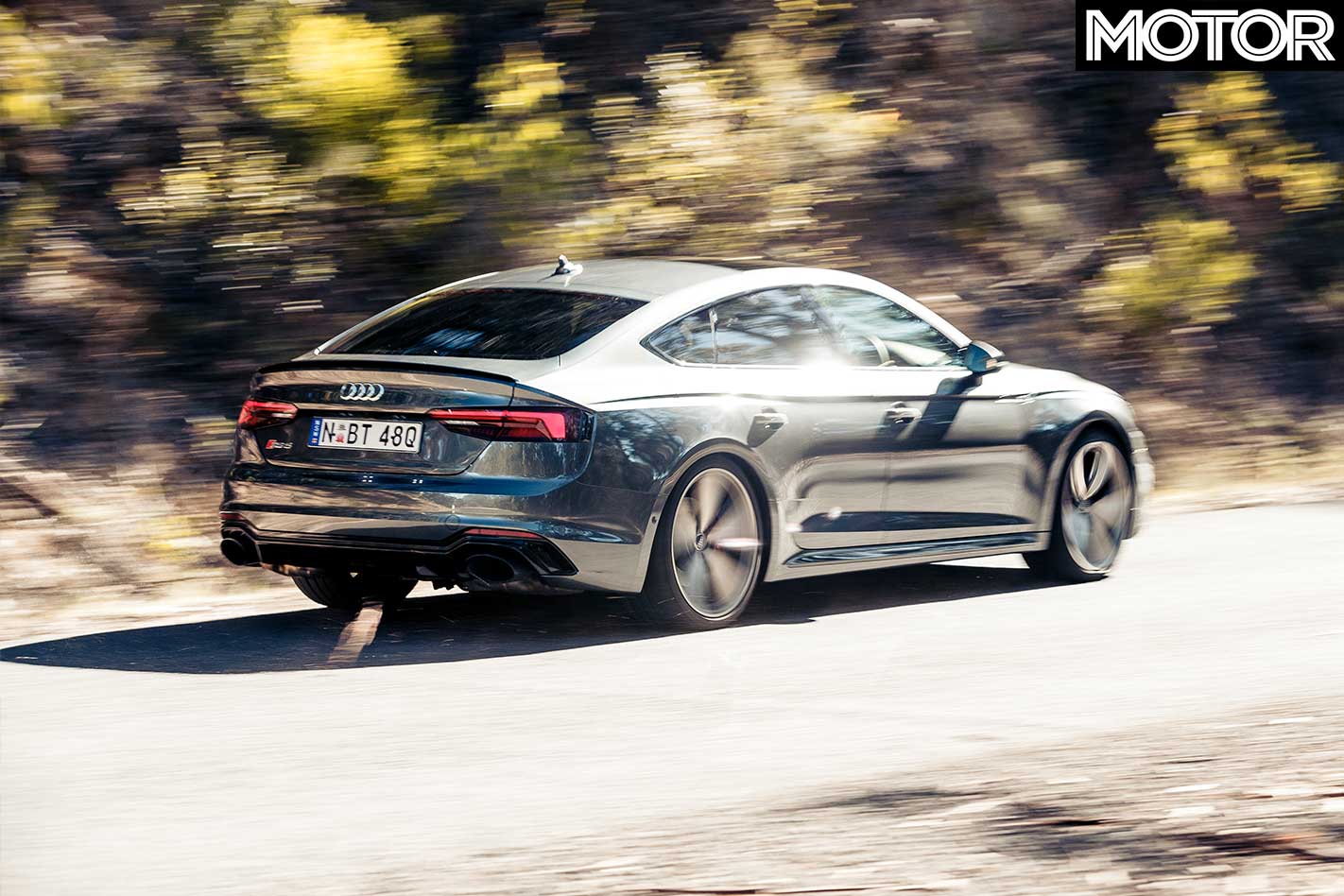
From rest, triple figures arrive in 3.7sec and 400m passes in 11.9sec. However, with the lowest power-to-weight ratio, it also is the slowest across the finish line at 185.46km/h. And while its ferocious grip and speed define it in a straight line, it’s memorable on snaking roads for other reasons.
Through long, constant radius corners its nose responds slowly and is horribly indirect. We’ve criticised Dynamic Steering in the past, perhaps explaining why it’s optional, but it can lock the steering ratio in Dynamic mode (at 13.5:1 versus 15.9:1). This added accuracy would improve the connection with its front-end dramatically, rather than feel like you’re just holding on. Because that’s what you will need to do.
Charge at a tight bend, stomp on the brakes, lean into the wall of grip and get on the power. Hard. It claws into the surface with its huge paws, growling with an enjoyable but slightly artificial tone, then leaps at the next corner. Watch others in the rear-view shrink.
It’s so grippy it’s hard to imagine it ever letting go. But it will. Trail some brake, throw it at an apex and it’ll wriggle into oversteer. This happens with a slight delay, so there’s time to get back on the power and overspeed the outside rear wheel into a smidge of oversteer. It’s a fast, but blunt, instrument.
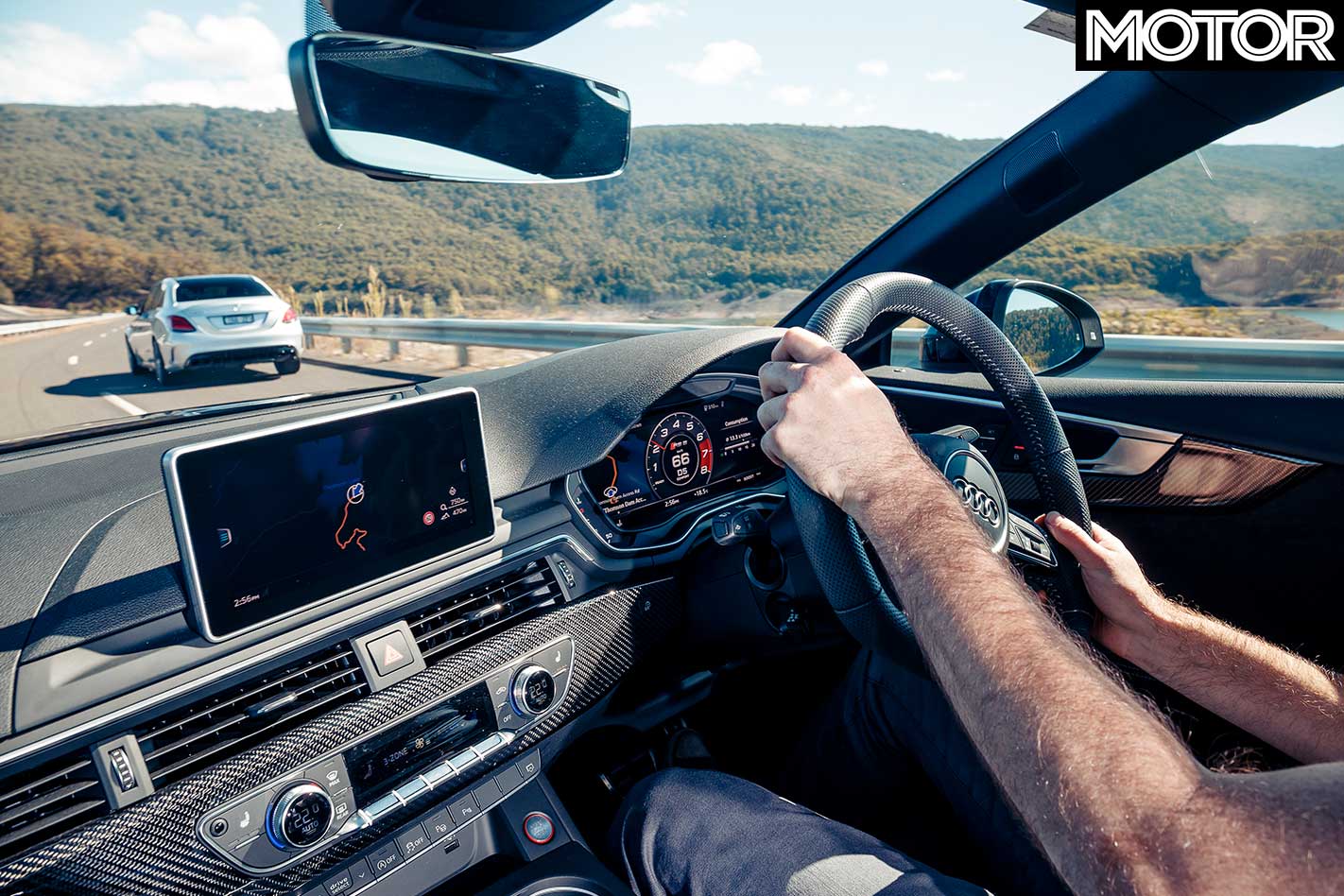
Meanwhile, on the other end of the grip spectrum is the B3 S. As much as it looks like a tarted-up 3 Series, it has unique caster and toe alignments, and a ride that feels like it’s air suspended – even on 20-inch wheels. And, ultimately, there’s nothing wrong with its setup since it’s bred for touring long stretches of smooth, German highways.
But on gnarled Australian mountain roads hard acceleration exposes boat-ish body control. Coupled with some front-end push into a corner, the experience reminds you of an FG Falcon.
We would tick the box for an optional limited slip differential to give the stability control light a break, and a set of slotted discs would give its brakes some needed bite. However, there’s at least a charming honesty to the way it handles that is lost on our next contender.
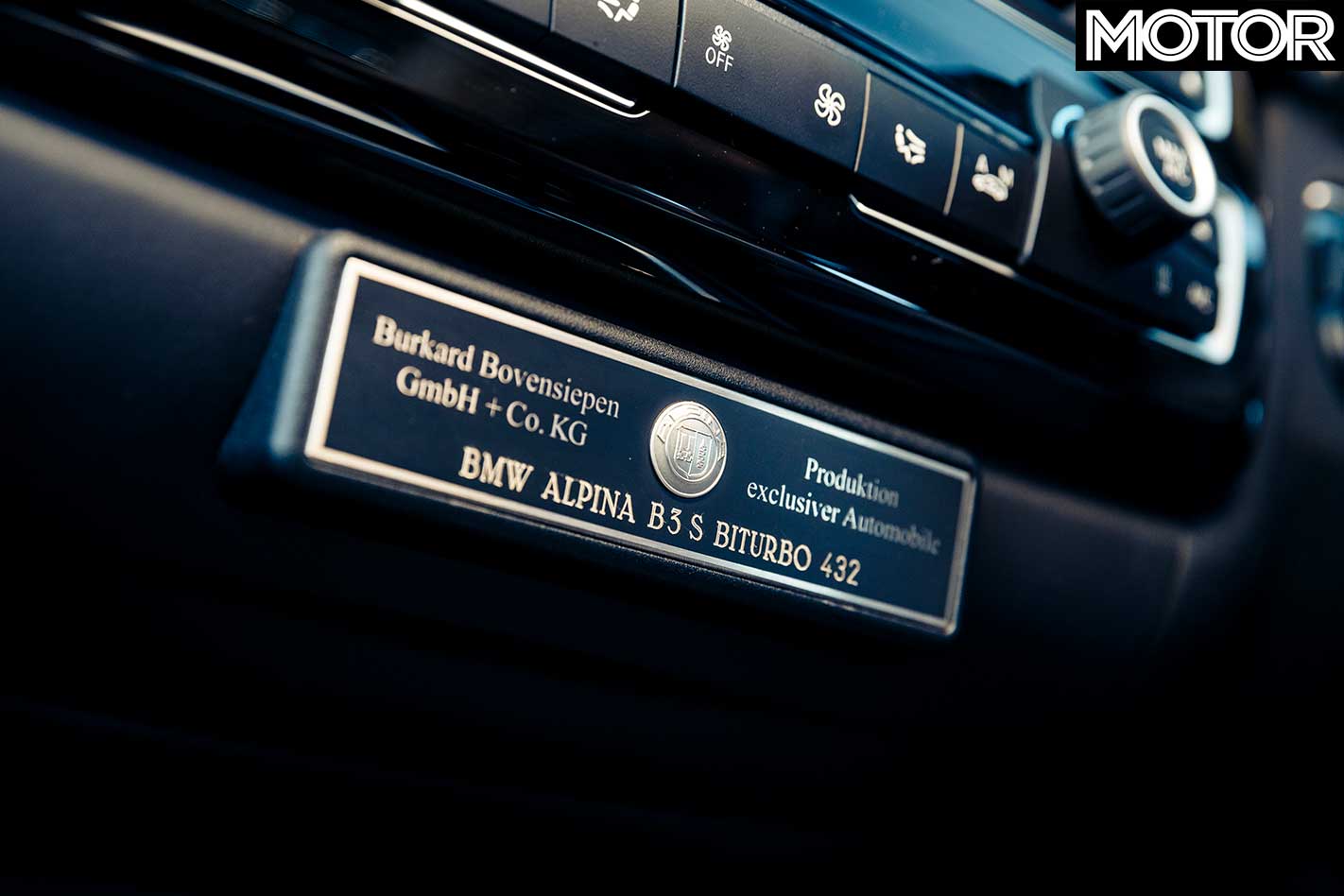
There’s no doubting the Giulia is a ground-bound jet. But punching out of corners leaves you wondering if it really has the grip, or did the ESP secretly cut power and guide you out? Either way, you won’t care for an answer since it blends handling and ride so well.
Its turbochargers, tucked low under a 90-degree block, suck hard as it pushes down on its rear axle. Surging forward between corners it breathes with road surfaces, using the compliance to unleash its fearsome power. Oh, and upshifts relieve a wicked crack from the exhaust.
At least the steering is clear about what it’s doing. It’s front-end is devastatingly sharp and will always keeps your intended line. It’s lovely on long bends as you progressively load its front tyres. On tighter corners, though, it lacks weight and can feel a little too darty. That’s not just the steering either, the brakes suffer as well.
They’re its Achilles’ heel. Like a set of carbon ceramics that never reach temperature, they’re so dull you can’t fine tune weight transfer. And that’s the rub with the Giulia. Some days it’s a fluid, back-road devouring beast. Other days it feels much less than cohesive.
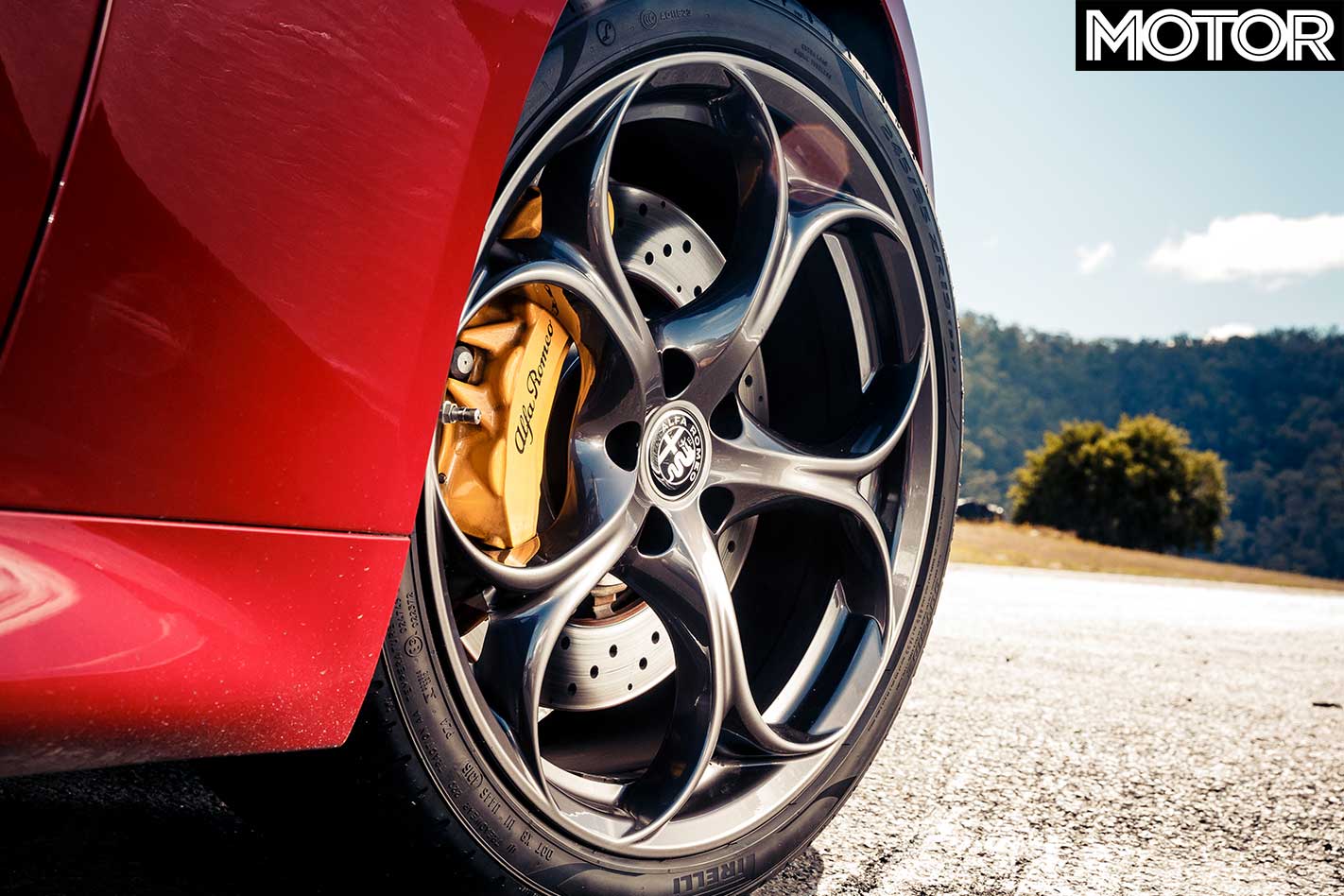
There’s nowhere to hide among this company. The AMG is verging on dynamic greatness, if only for a few things. Some float creeped into its suspension tune when engineers tried to unlock more compliance. An extra 25kg around its hips only makes things worse. Stab the brakes, point the steering at a corner and its mass needs a moment to settle.
Luckily, while the new wheel might be a little fat in your hands, the steering is excellent. It’s sharp off centre, points true, and weights up with a genuine sense of feedback. It’s a handy tool when the Michelin Pilot Super Sports are cold.
But the flashing ESP light in Race Mode, that you need to disable if you want to adjust the nine-stage traction control, means you’ll need to be confident before trying to tame this beast on your own. After all, its powertrain is relentless.
It’ll shake passing trees with its thunderous growl, and fire an artillery-like crack on overrun at those trailing behind. That nine-speed automatic also handles the V8’s road-devouring grunt with ease, snicking through gears with a smooth mechanical action. This powertrain delivers instant smiles, even if the chassis lacks that extreme level of feedback a racecar driver might crave.
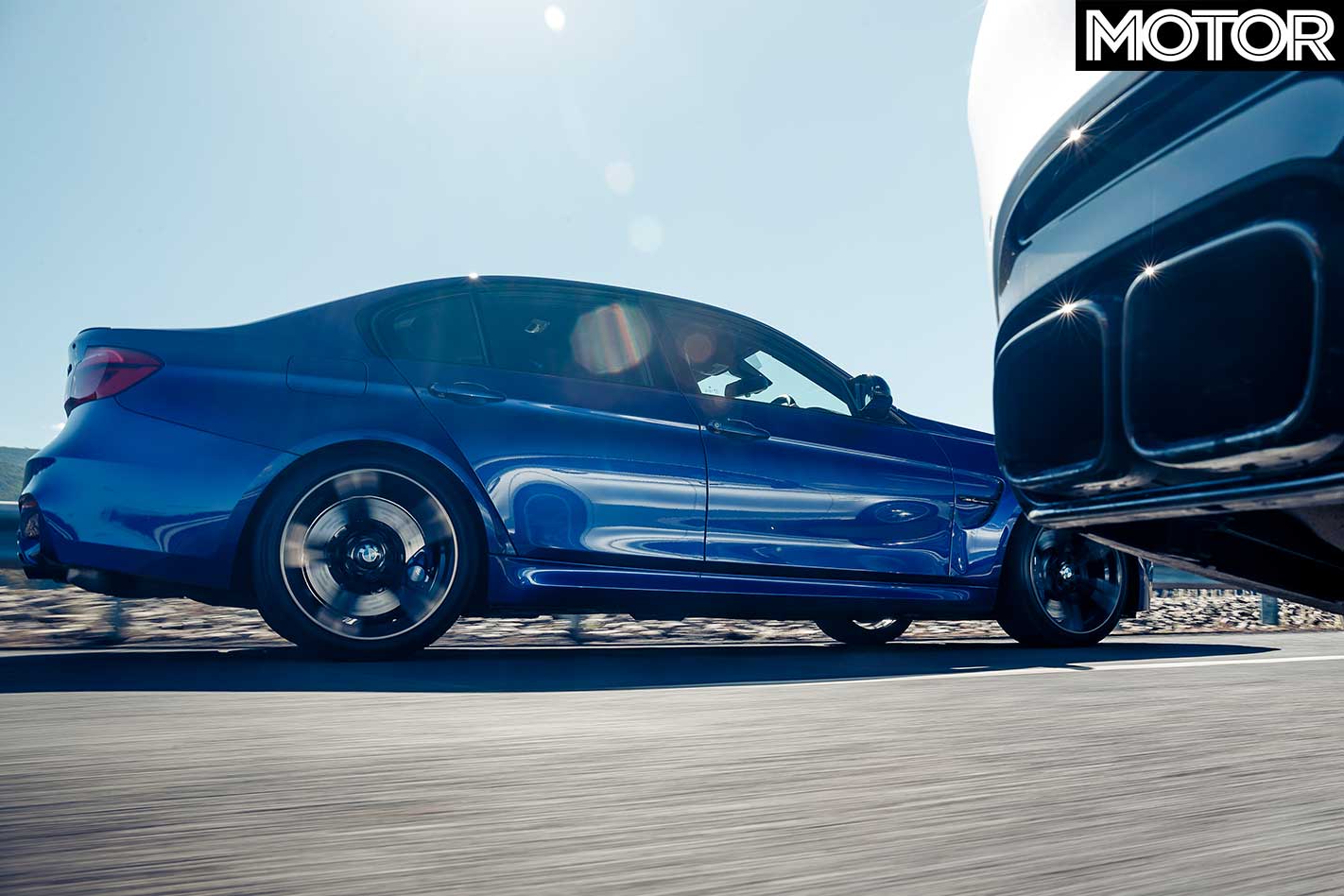
They’d be satisfied in the M3 Pure, though. Things just happen so much faster. The brakes, if you haven’t cooked them, bite hard with feel. That front-end, despite a lifeless and vague steering rack, rotates the chassis so quickly, you’ll lock on a corner’s exit before the AMG or Giulia have released their brakes. It’s potent.
Confidence builds through the next corners. And while you may have used to dread squeezing the throttle in an M3, the Pure hooks up like never before. Tighten the steering, sink the throttle, and wait for the engine’s vicious mid-range to unglue the rear. And rather than bless the MDM mode’s safety net, you start to curse it, because you’re ready with a good dab of opposite lock when it lets go.
Its Continental boots are to thank for this welcome progressiveness. Their softer sidewalls, that are also taller than the optional 20-inch Michelin’s, cushion the Pure’s firm, lowered suspension. We’d bet they’d do better in the rain, as well. But, at the end of the day, is this the one car we’d stow in our garage? Well, it’s not our last pick. That is the Alpina.
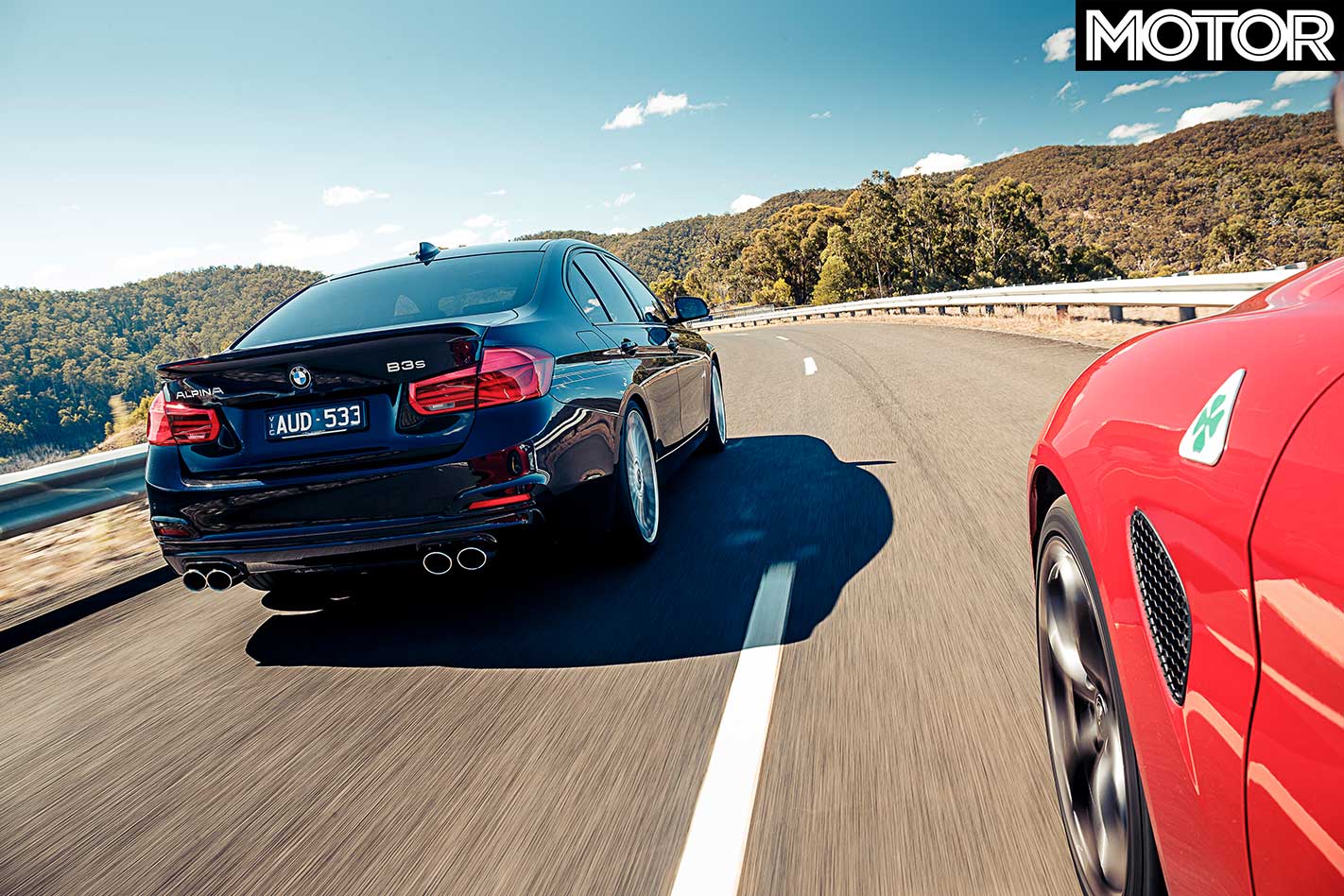
Sure, the B3 S is impressive. It’s found an absorbent ride with a long-travel feel on 20-inch wheels. Also that N55-based engine, howling through an Akrapovic exhaust, is rortier than the M3’s coarse sounding S55.
And its new drive-away price, at $117K, is outrageously cheap considering it’s attached to something that can reel off 12.4sec quarter miles. No wonder there’s a crankshaft on the brand’s emblem, these people can build an engine.
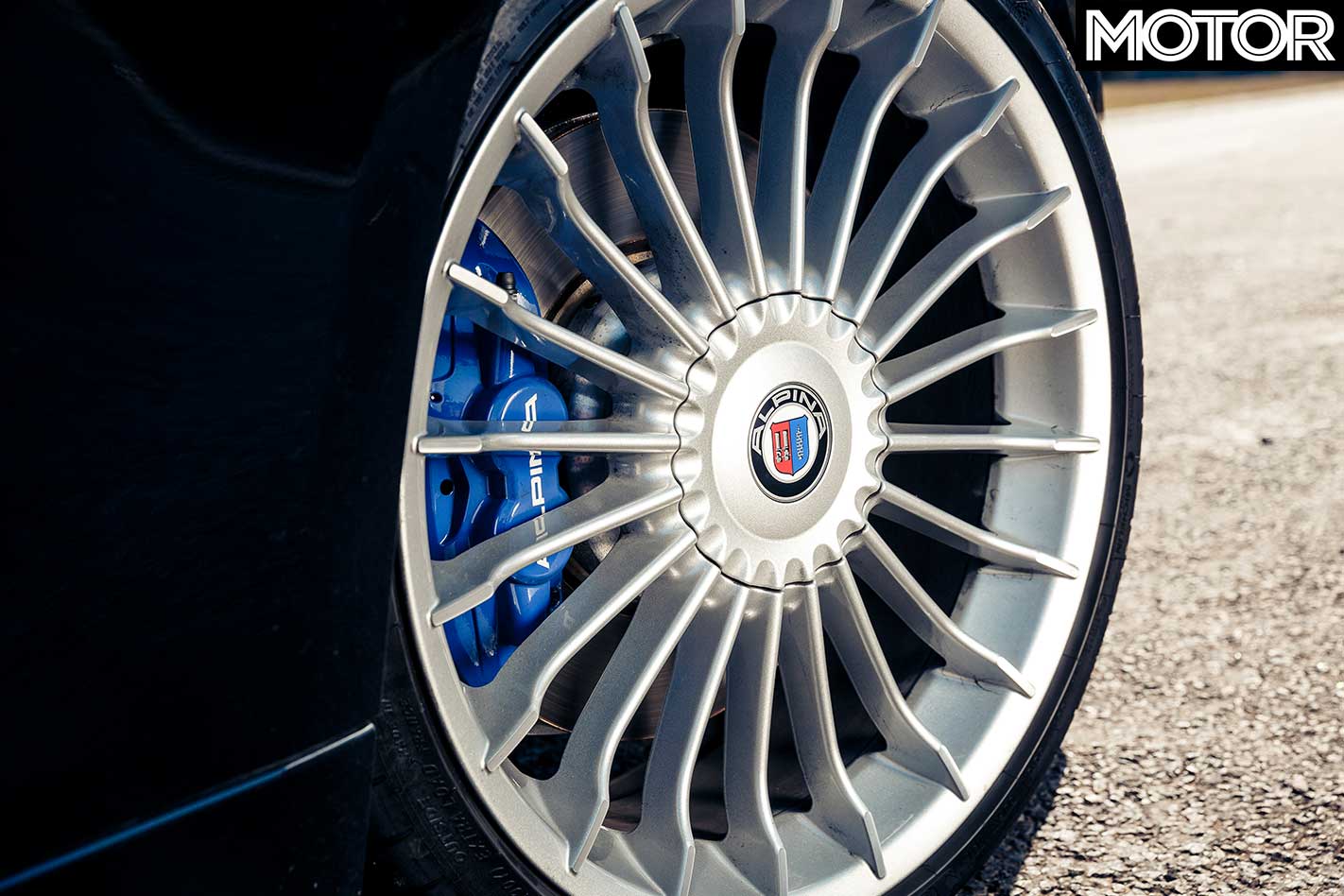
But the B3 S’s interior is literally a generation old. And it was never going to look the part for its original $157K price without the M3’s aggressive, swollen sheet metal. Those wheels are gorgeous, and its sticker kit nods to the firm’s history, but it feels more like a heavily tuned 340i than something re-engineered to a higher level.
However, if comfort sits high on your priority list then the Audi and Alfa Romeo are both equally good options as each other. The Audi differentiates itself from a frenetic Giulia Q or brash C63 S as a grand tourer on steroids.
Climbing into it is like entering a leather-lined Zen den. It also rides wonderfully on its hydraulically linked dampers in Comfort, even if it needs more travel, and always has enough grip for explosive straight-line acceleration.
It’s problem, though, is a philosophical one. While it’s ferociously fast in the right environment, part of us thinks something with an RS badge, that stands for RennSport (‘motor racing’ in German), should deliver more handling precision, chassis responsiveness and an aggro noise. And if we had to define this car on its character, it feels closer to what an S5 Sportback Performance would be rather than a racetrack mauler in a leather suit.
The Giulia Q, meanwhile, finds the precision that’s missing in the Audi. In fact, its ride and handling mix is world-class. That engine, too, is effortless and the force behind the car’s staggering speed. But it’s all tarnished by a weird feeling brake system and an addictive exhaust note hidden away in Race mode that disables ESP.
Then there’s its interior. The Alcantara steering wheel and long paddles are striking, and wonderfully tactile, while the interior is beautifully designed, but it’s all compromised by some questionable fit-and-finish. The gearshift lever’s dim back-lighting is unacceptable at this price point.
This leaves the M3 Pure and C63 S. If both cars fit your budget, despite the yawning $31,900 price gap (before the AMG’s options), then the M3 would be mighty tempting. Its performance has only been enhanced by age. Munich worked hard to fix its spikey power delivery and spooky rear-end over its life cycle and the Pure distils that learning into a very attractive deal.
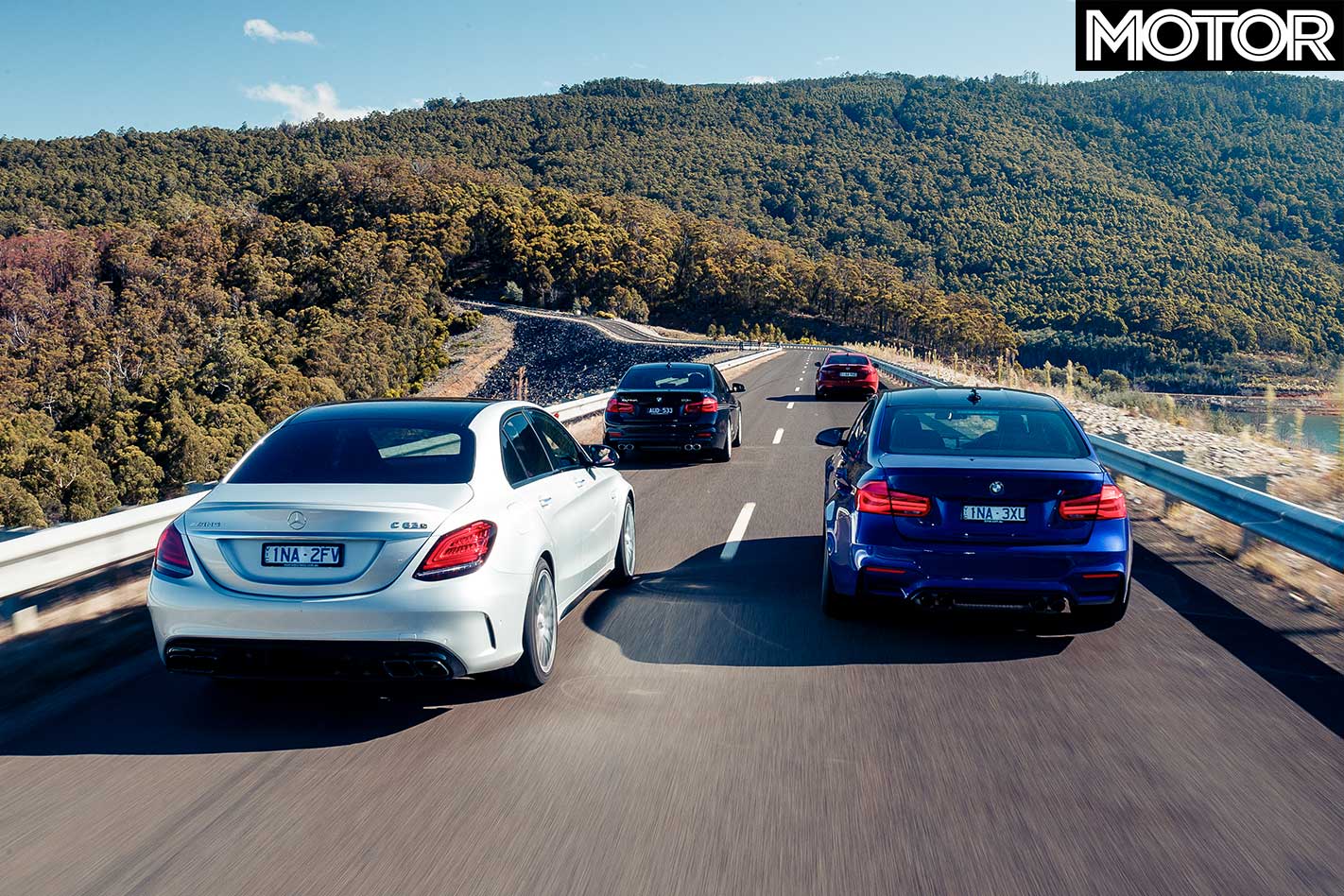
But as the faster car it’s also the firmer one. It bobs a touch more over humps and drones a bit more inside over the coarse chip stuff. Its pedals are also crude looking and the shift paddles, while they work with a crisp click, are undersized and look nasty. You never really fall in love with its engine, either. On balance it comes close, but falls short of a cigar.
Mercedes-AMG obviously slaved away at the C63 S and it’s paid off. It brings the luxury of the Audi, the smoothness of the Alpina, the front-end accuracy of the Alfa Romeo and then mixes it all with the pedigree of the M3. But it’s also a V8 lunatic with enough power to overthrow a government.
Ride comfort is good. Meanwhile, the interior’s taken strides forward in technology, as have the car’s stability systems, and while it’d be easy to pick any of the others for your own reasons, anyone would be very happy to take its keys at the end of the day. Now, where’s that pesky Cadillac ATS-V?
Fast Facts
| u00a0 | BMW M3 Pure | Mercedes-AMG C63 S | Alfa Romeo Giulia Q | Alpina B3 S | Audi RS5 Sportback |
| Body | 4-door, 5-seat sedan | 5-door, 5-seat sedan | |||
| Drive | rear-wheel | all-wheel | |||
| Engine | 2979cc inline-6cyl, DOHC, 24v, twin-turbo | 3982cc V8, DOHC, 32v, twin-turbo | 2891cc V6, DOHC, 24v, twin-turbo | 2979cc inline-6cyl, DOHC, 24v, twin-turbo | 2894cc V6, DOHC, 24v, twin-turbo |
| Bore x Stroke | 84.0 x 89.6mm | 83.0 x 92.0mm | 86.5 x 82.0mm | 84.0 x 89.6mm | 84.5 x 86.0mm |
| Compression | 10.2:1 | 10.5:1 | 9.3:1 | 10.2:1 | 10.0:1 |
| Power | 331kW @ 7000rpm | 375kW @ 5500-6250rpm | 375kW @ 6500rpm | 324kW @ 5500-6250rpm | 331kW @ 5700rpm |
| Torque | 550Nm @ 1850-5500rpm | 700Nm @ 1750-4500rpm | 600Nm @ 2500-5000rpm | 660Nm @ 3000-4500rpm | 600Nm @ 1900-5000rpm |
| Power/Weight | 212kW/tonne | 223kW/tonne | 237kW/tonne (tare) | 199kW/tonne | 192kW/tonne |
| Transmission | 7-speed dual-clutch | 9-speed wet-clutch auto | 8-speed automatic | ||
| Weight (dry) | 1560kg (est) | 1680kg | 1585kg (tare) | 1630kg | 1720kg |
| Suspension (f) | struts, coil springs, adaptive dampers, anti-roll bar | A-arms, coil springs, adaptive dampers, anti-roll bar | double A-arms, coil springs, adaptive dampers, anti-roll bar | struts, coil springs, adaptive dampers, anti-roll bar | multi-links, adaptive cross-linked dampers, coils, anti-roll bar |
| Suspension (r) | multi-links, coil springs, adaptive dampers, anti-roll bar | multi-links, adaptive cross-linked dampers, coils, anti-roll bar | |||
| L/W/h | 4671/1877/1431mm | 4756/1839/1426mm | 4639/1873/1426mm | 4632/1811/1431mm | 4783/1866/1399mm |
| Wheelbase | 2812mm | 2840mm | 2820mm | 2810mm | 2826mm |
| Tracks | 1579/1603mm (f/r) | 1609/1546mm (f/r) | 1555/1607mm (f/r) | 1539/1556mm (f/r) | 1598/1588mm (f/r) |
| Steering | electrically assisted rack-and-pinion | ||||
| Brakes (f) | 380mm ventilated/drilled discs, 4-piston calipers | 402mm ventilated/drilled carbon-ceramic discs, 6-piston calipers | 360mm ventilated/drilled discs, 6-piston calipers | 370mm ventilated/drilled discs, 4-piston calipers | 375mm ventilated/drilled discs, 6-piston calipers |
| Brakes (r) | 370mm ventilated/drilled discs, 2-piston calipers | 360mm ventilated/drilled discs, single-piston calipers | 340mm ventilated/drilled discs, 4-piston calipers | 345mm ventilated/drilled discs, 2-piston calipers | 330mm ventilated/drilled discs, single-piston calipers |
| Wheels | 19.0 x 9.0-inch (f); 19.0 x 10.0-inch (r) | 19.0 x 8.5-inch (f); 19.0 x 9.5-inch (r) | 19.0 x 8.5-inch (f); 19.0 x 10.0-inch (r) | 20.0 x 8.0-inch (f); 20.0 x 9.0-inch (r) | 20.0 x 9.0-inch (f/r) |
| Tyre Sizes | 255/35 ZR19 92Y (f); 275/35 R19 100Y (r) | 245/35 ZR19 93Y (f); 265/35 ZR19 98Y (r) | 245/35 ZR19 99Y (f); 285/30 ZR19 98Y (r) | 245/30 ZR20 90Y XL (f); 265/30 ZR20 94Y XL (r) | 275/30 ZR20 97Y XL (f/r) |
| Tyres | Continental ContiSportContact 5P | Michelin Pilot Super Sport | Pirelli P Zero Corsa | Michelin Pilot Sport 4 S | Continental SportContact 6 |
| Price | $129,000 | $160,900 ($172,900 as tested) | $145,900 ($159,860 as tested) | $116,990 (driveaway) | $157,700 ($167,050 as tested) |
| Pros | That price, extreme pace, still pretty after all these years | Excellent powertrain, steering, classy interior, engaging tech | Striking looks, effortless pace, ride and handling mix | Rorty engine note, huge pace for little bucks | Gecko-like grip, suave interior, comfy ride, insane acceleration |
| Cons | Doughy steering, coarse engine note, low speed tip-in | Feels a bit tubby, traction woes | Unnatural brakes, mysterious ESP and cabin quality | Dated cabin, traction woes, imprecise handling | Numb steering feel, weight, slow responses |
| Rating | 4.5 out of 5 stars | 4.5 out of 5 stars | 4 out of 5 stars | 3.5 out of 5 stars | 4 out of 5 stars |
The Strip
| u00a0 | Alfa Romeo Giulia Q | Mercedes-AMG C63 S | Alpinau00a0B3 S | Audi RS5 Sportback | BMW M3 Pure |
| 0-10km/h | 0.32sec | 0.40sec | 0.34sec | 0.17sec | 0.33sec |
| 0-20km/h | 0.75sec | 0.86sec | 0.82sec | 0.41sec | 0.67sec |
| 0-30km/h | 1.17sec | 1.27sec | 1.33sec | 0.66sec | 1.03sec |
| 0-40km/h | 1.53sec | 1.67sec | 1.73sec | 0.96sec | 1.44sec |
| 0-50km/h | 1.94sec | 2.08sec | 2.10sec | 1.32sec | 1.83sec |
| 0-60km/h | 2.32sec | 2.53sec | 2.52sec | 1.72sec | 2.25sec |
| 0-70km/h | 2.74sec | 3.00sec | 2.94sec | 2.12sec | 2.67sec |
| 0-80km/h | 3.18sec | 3.43sec | 3.37sec | 2.64sec | 3.14sec |
| 0-90km/h | 3.69sec | 3.90sec | 3.88sec | 3.09sec | 3.63sec |
| 0-100km/h | 4.21sec | 4.44sec | 4.37sec | 3.70sec | 4.15sec |
| 0-110km/h | 4.77sec | 4.98sec | 4.98sec | 4.36sec | 4.77sec |
| 0-120km/h | 5.37sec | 5.60sec | 5.62sec | 5.06sec | 5.40sec |
| 0-130km/h | 6.04sec | 6.27sec | 6.33sec | 5.82sec | 6.10sec |
| 0-140km/h | 6.75sec | 7.01sec | 7.19sec | 6.67sec | 6.84sec |
| 0-150km/h | 7.52sec | 7.80sec | 8.04sec | 7.60sec | 7.67sec |
| 0-160km/h | 8.35sec | 8.63sec | 9.00sec | 8.74sec | 8.58sec |
| 0-170km/h | 9.36sec | 9.56sec | 10.06sec | 9.89sec | 9.62sec |
| 0-180km/h | 10.46sec | 10.56sec | 11.43sec | 11.16sec | 10.72sec |
| 0-190km/h | 11.63sec | 11.71sec | 12.78sec | – | 11.94sec |
| 0-400m | 12.11sec @ 193.6km/h | 12.30sec @ 194.6km/h | 12.44sec @ 187.64km/h | 11.90sec @ 185.46km/h | 12.14sec @ 191.39km/h |
| 80-120km/h (Drive) | 2.15sec | 2.19sec | 2.25sec | 2.40sec | 2.26sec |
| 100-0km/h | 35.05m | 35.10m | 36.87m | 36.96m | 32.9m |
| Speed in Gears | |||||
| 1st | 57km/h @ 7200rpm | 58km/h @ 7000rpm | 66km/h @ 7000rpm | 51km/h @ 6500rpm | 57km/h @ 7500rpm |
| 2nd | 90km/h @u00a0 7200rpm | 96km/h @u00a0 7000rpm | 100km/h @u00a0 7000rpm | 80km/h @u00a0 6500rpm | 106km/h @ 7500rpm |
| 3rd | 134km/h @u00a0 7200rpm | 138km/h @u00a0 7000rpm | 148km/h @u00a0 7000rpm | 120km/h @u00a0 6500rpm | 162km/h @ 7500rpm |
| 4th | 167km/h @u00a0 7200rpm | 191km/h @u00a0 7000rpm | 188km/h @u00a0 7000rpm | 150km/h @u00a0 6500rpm | 216km/h @ 7500rpm |
| 5th | 218km/h @u00a0 7200rpm | 256km/h @u00a0 7000rpm | 243km/h @u00a0 7000rpm | 196km/h @u00a0 6500rpm | 250km/h @ 6800rpm* |
| 6th | 287km/h @u00a0 7200rpm* | 290km/h @ 6500rpm* | 306km/h @ 6580rpm* | 250km/h @ 6325rpm* | 250km/hu00a0@ 5750rpm* |
| 7th | 307km/h @u00a0 6325rpm* | 290km/hu00a0@ 5650rpm* | 306km/h @ 5750rpm* | 250km/hu00a0@u00a0 5200rpm* | 250km/hu00a0@ 4560rpm* |
| 8th | 307km/h @u00a0 4925rpm* | 290km/h @ 4675rpm* | 306km/h @ 4580rpm* | 250km/hu00a0@u00a0 4040rpm* | N/A |
| 9th | N/A | 290km/hu00a0@ 3690rpm* | N/A | N/A | N/A |
Heathcote Raceway, 20˚C, dry. Driver: Louis Cordony *Manufacturer’s claim Official timing supplier – VBOX Australia
Second Opinions
Damien Pelletier, MOTOR Art Director My pick: Mercedes-AMG C63 S
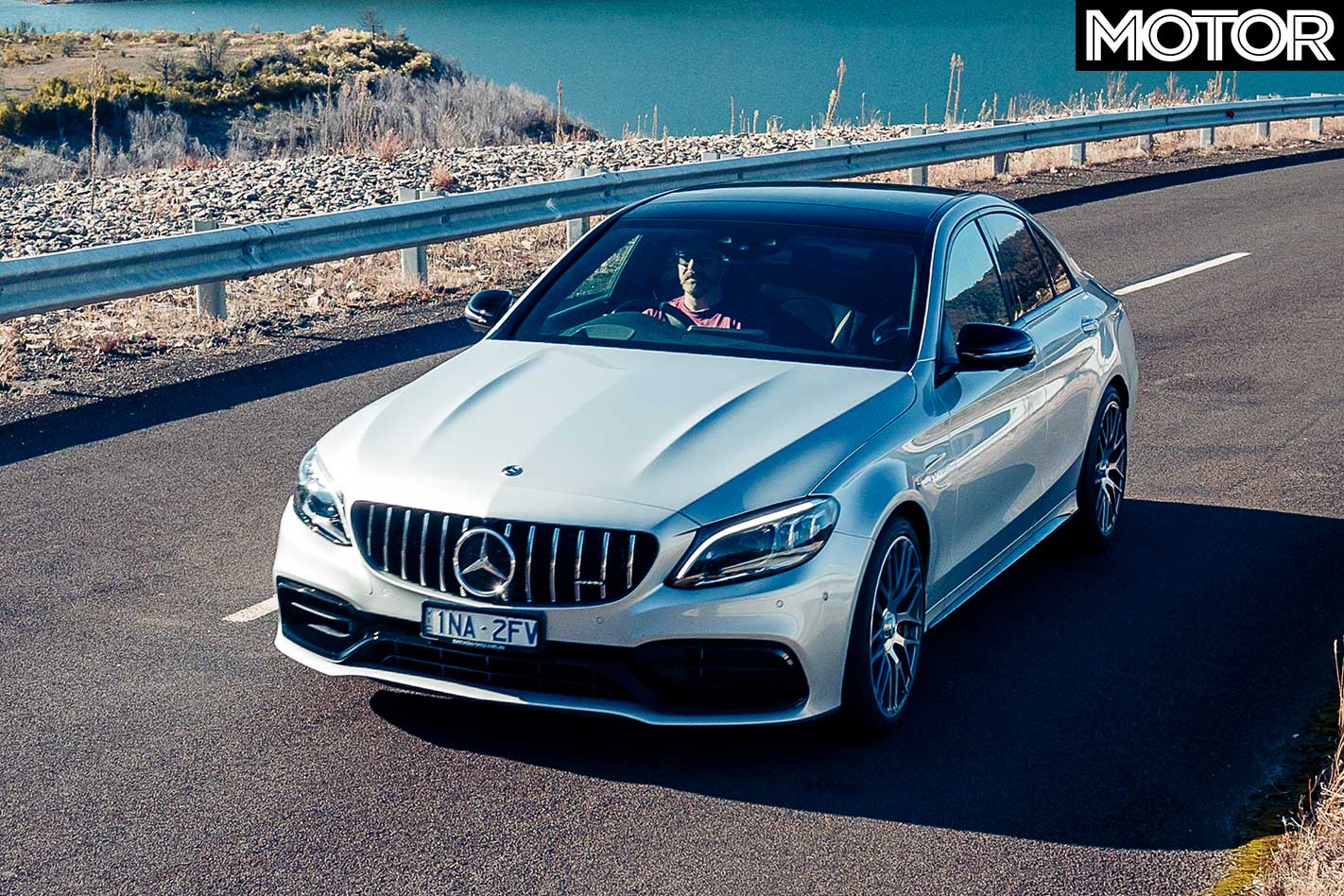
All of these muscle-bound Europeans can annihilate a given set of corners with poise and comfort, but if I were faced with the unlikely predicament of which to choose, three stand out. The M3’s flared haunches exude menace and it carves apexes with laser accuracy. The Giulia steers and rides beautifully and those Italian curves are oh-so enticing. But I’d pinch the keys to the C63 S every day of the week for one reason – that twin-turbo V8 beast lurking under the hood. The ride can still be a touch busy and you feel the extra heft after the BMW, but the way it snorts and bellows whilst delivering a 700Nm kick to the spine never, ever gets old.
Daniel Wong, MOTOR Digital Producer My pick: Alfa Romeo Giulia Q
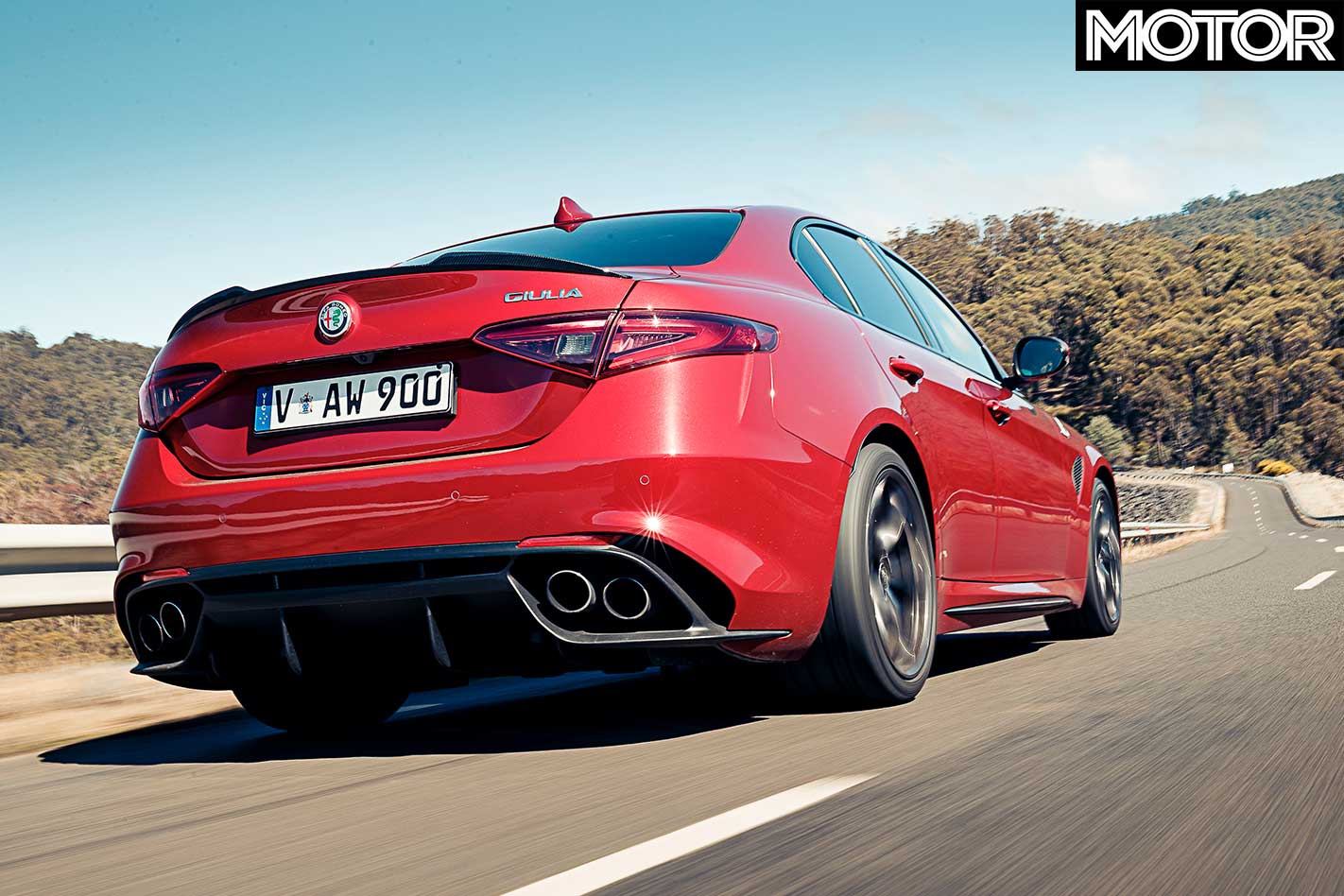
It isn’t as perfect as the Mercedes-AMG C63 S, cohesive as the BMW M3 Pure, or capable as the Audi RS5 Sportback, and I doubt I would get over its numb brake pedal and interior bits that might not outlast the warranty. However, I don’t think I could resist its charms either. It strikes the heartstrings with steering and a chassis that has a lithe and effervescent quality that you won’t find amongst this company. It snubs the cold objectivity of the “ownership experience” and eggs us on to savour each moment and live a little, come what may. For that I applaud its bravado and pocket its keys.
Scott Newman, MOTOR Associate Editor My pick: BMW M3 Pure
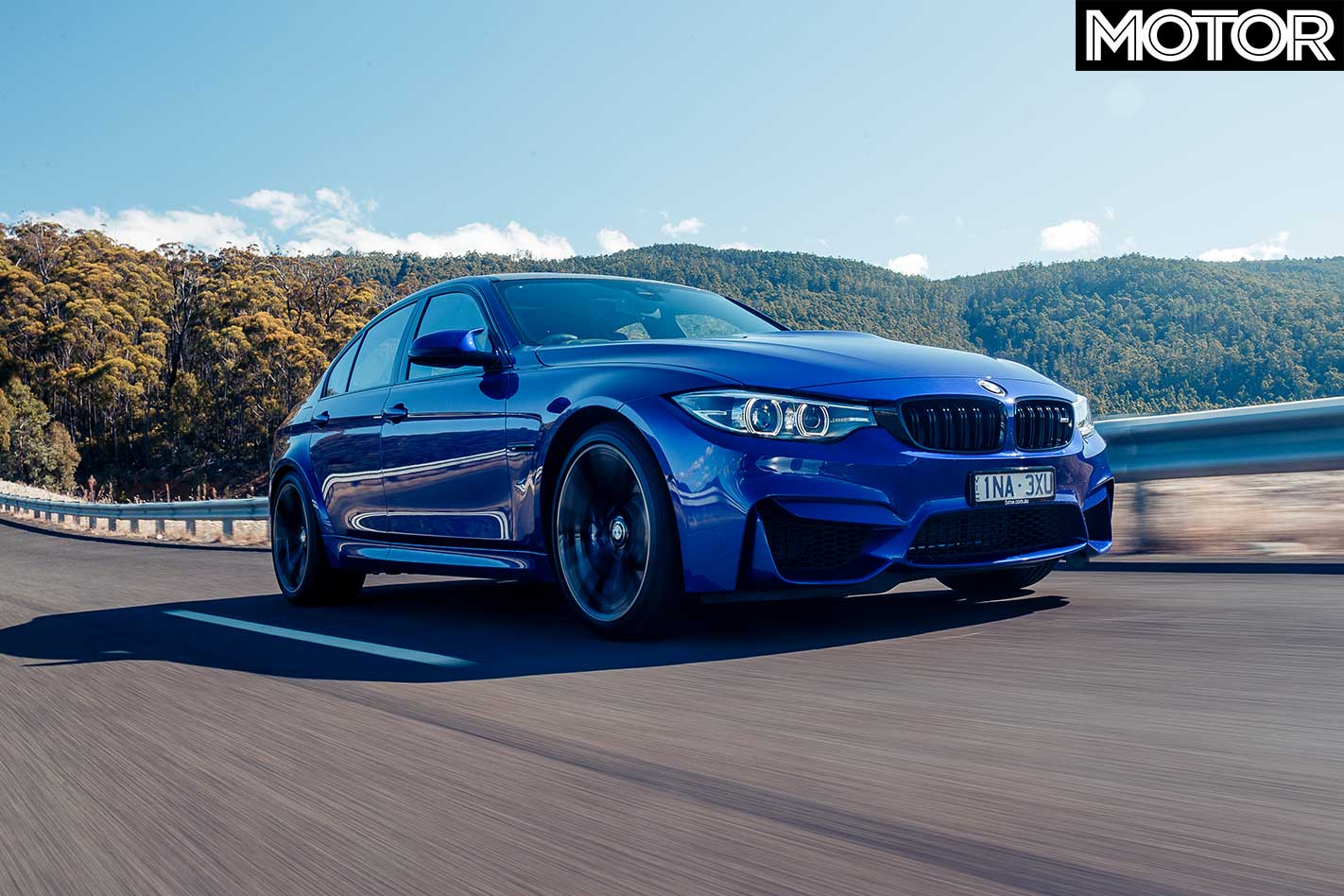
Objectively, it’s the C63. It’s expensive, but the ride has been transformed, the tech is cutting-edge and the thunderous engine makes you forgive the gearbox’s low-speed jerks and thumps. Subjectively, each car makes a strong case. The RS5 Sportback has the fast family thing sown up (though we’d prefer an RS4 Avant), the Giulia rides beautifully, loves to play and goes like a rocket and at its sharp run-out price the Alpina is an intriguing, road-focused halfway house between M3 and 340i for those who value exclusivity. Remarkably, though, I’d take the M3. I wish its steering wasn’t so numb and that the engine sounded better, but as a cohesive driving machine it’s the best here and at $129,000 it’s the bargain of the century.
The Honda Civic Type R is already a Performance Car of The Year and Bang For Your Bucks champion, so it hardly wants for improvement.
But Ralph Hosier Engineering (RHE) thinks it’s about time it conquered new frontiers, and has built the Honda Civic Type OveRland concept for inspiration.
Built as part of ‘Project OveRland’, the car was unveiled in England yesterday for Honda UK at a local automotive industry event. And while it retains the standard 2.0-litre turbocharged VTEC engine, with 228kW and 400Nm, it makes use of it with some very cool improvements.
The $76,920 Civic Type R Carbon driven on track!
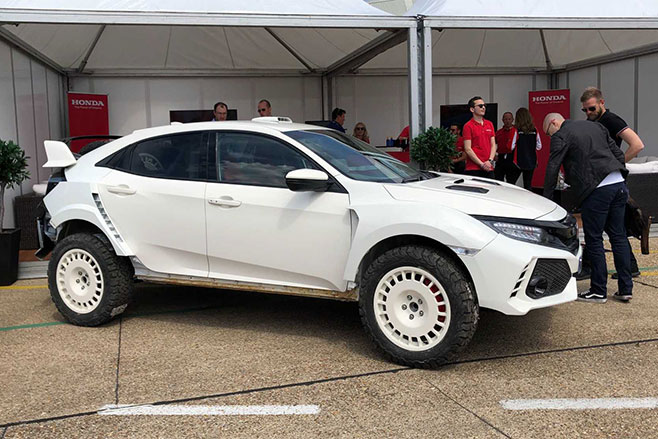
According to Honda, the car has been lifted by a huge four inches plus has been fitted with different rally components such as a bespoke trailing arm mounting, modified tranverse linkage and massive BF Goodrich tyres. It’s also gone to lengths to retain the car’s Dual-Axis strut arrangement.
All of this has created the world’s first rally-inspired Honda Civic Type R, but for now, RHE say that the car is still under development for its final form.
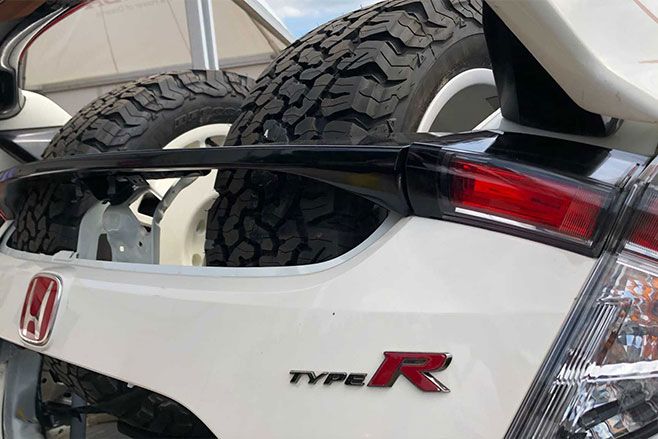
While the Type OveRland is a purely a concept, it says it’ll consider ‘one-off’ versions for “discerning” customers. So the wild Honda Civic rally car may just live on.
Possible update for the Civic Type R inbound
The OveRland was also joined by the Team Dynamics Motorsport Type R on the day. It may look like a regular Type R, but it produces lots more power from only a few modifications.
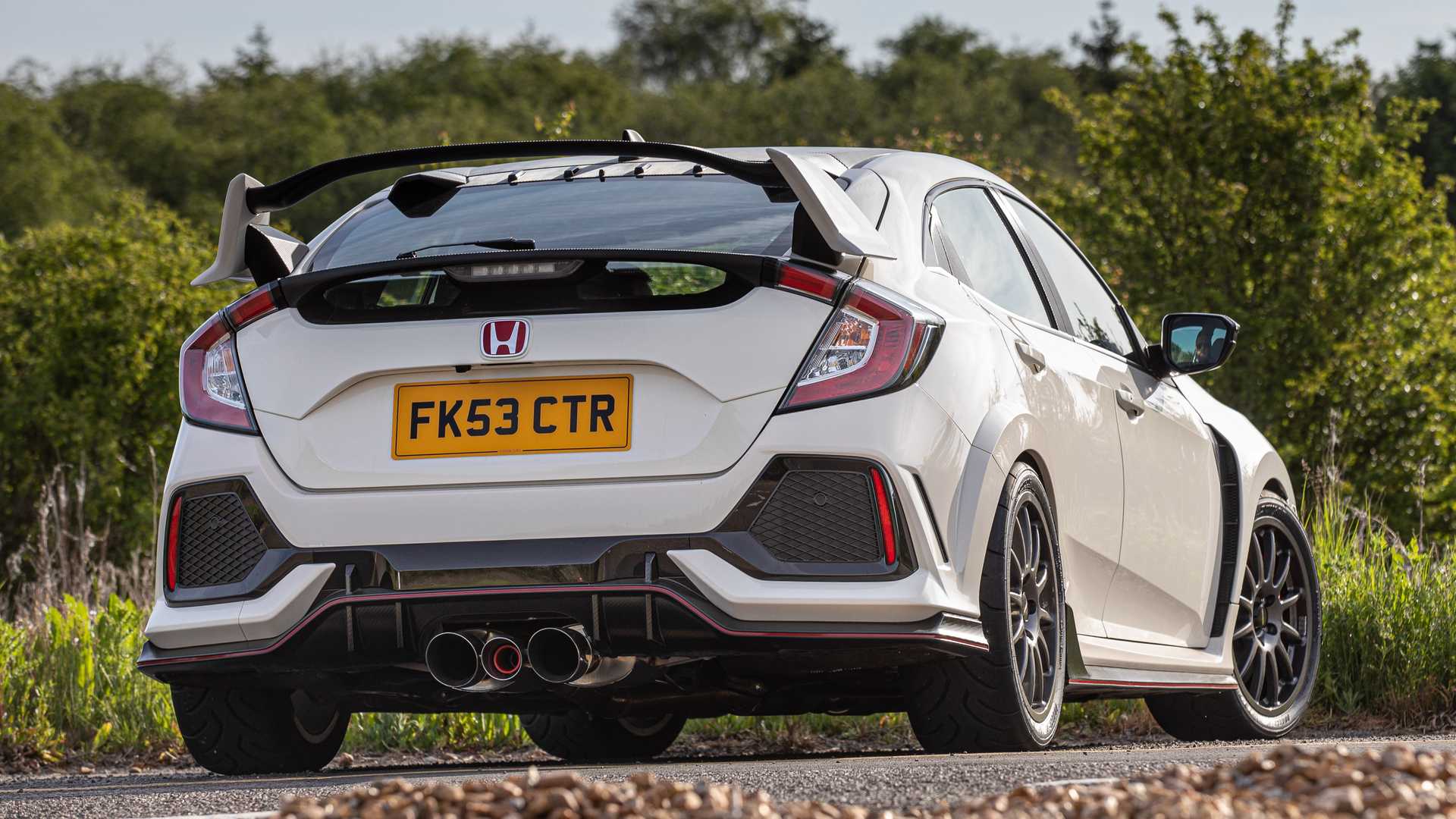
The Team Dynamics crew made changes to the ECU, intercooler, induction system and exhaust which produce a 25 per cent gain in performance with an extra 100hp (75kW), raising the performance figures to 298kW and 677Nm.
Along with all the extra power, Team Dynamics added Eibach Pro performance springs, Goodridge stainless steel performance brake hoses, adjustable anti-roll bars, Team Dynamics 19-inch lightweight wheels and special Dunlop track day tyres.
Colour us interested.
False positives and a passive smoking defence have put drug driving enforcement on shaky ground in New South Wales.
A driver who tested positive for cannabis in NSW had her charges dismissed by a magistrate last month after successfully claiming she was affected by ‘passive smoking’.
Nicole Spackman said she had not smoked cannabis in the weeks leading up to her roadside test, but had visited a terminally ill neighbour who was smoking medicinal cannabis at the time.
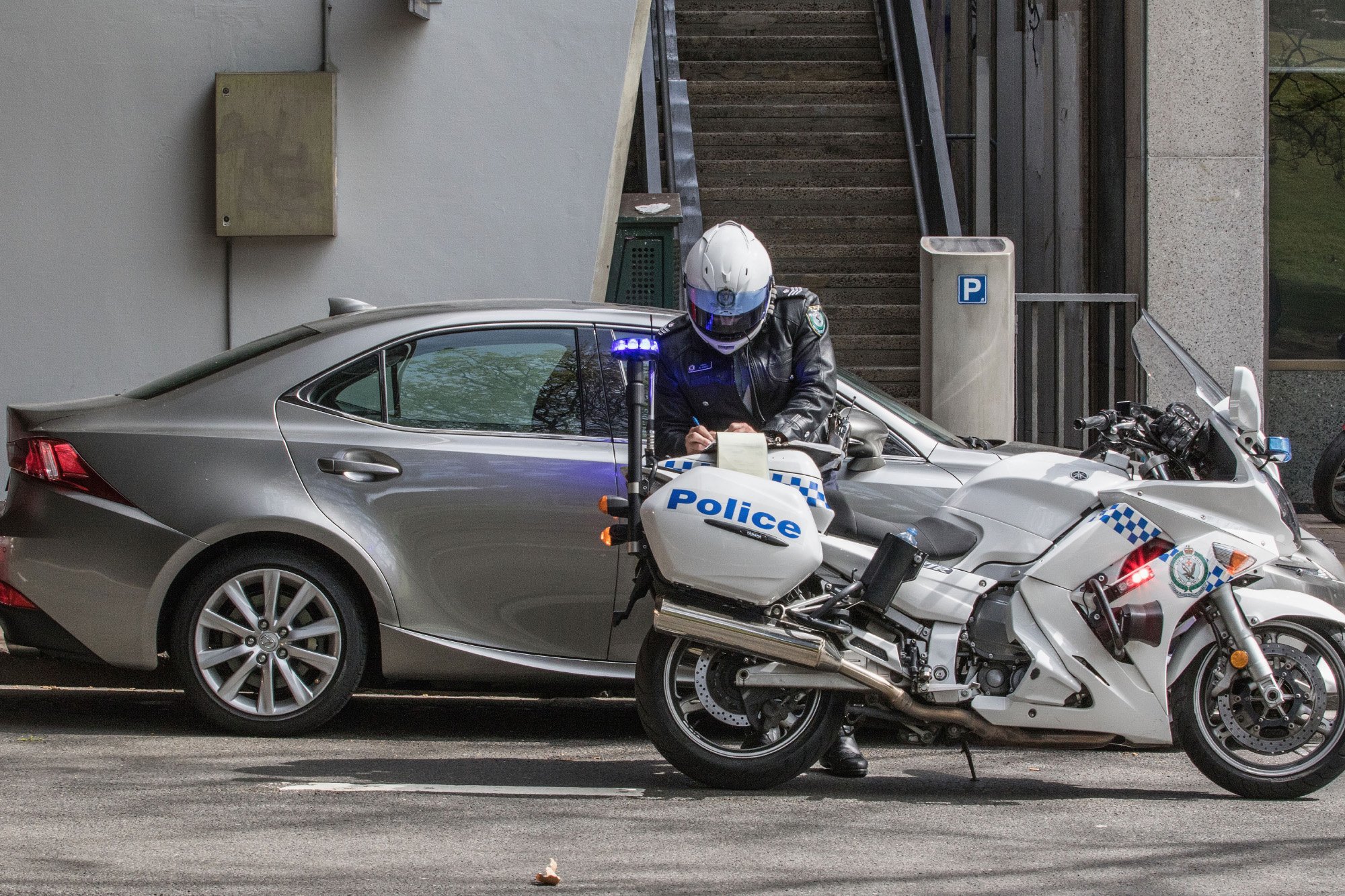
While Police claimed it was not possible to test positive to tetrahydrocannabinol (THC – the main psychoactive ingredient in cannabis) from passive smoking alone, Magistrate David Heilpern ruled the prosecution did not provide enough evidence to refute the claim.
“Scientists do not know everything about THC and its rate and method of absorption,” he added.
Steve Bolt was the lawyer for Ms Spackman, and claims the decision to accept passive smoking as a defence is the first of its kind.
“It’s significant because it throws into doubt the fairness of the law, that someone can inadvertently have drugs in their system for being a good Samaritan, spending time with a terminally ill friend, not be impaired and still be charged and face losing their licence,” he said.

To add insult to injury for police, a new study has shown that roadside mobile saliva tests used to enforce drug driving return inaccurate results 20 percent of the time.
Data collected by Sydney University’s Lambert Initiative for Cannabinoid Therapeutics after testing hundreds of drivers showed false positives were worryingly common.
The results came amidst research looking into links between cannabis and driver impairment.
Results of the research are yet to be published, but the program’s academic director Iain McGregor says there are multiple reasons to be concerned.
“The tests are particularly poor at detecting when people have a lot of THC in their system so they can be really stoned and getting a negative test,” he said.
“We found on occasion the tests gave a false positive when people have very low levels of THC and that is a concern for the carriage of justice, people are not impaired and they have not had cannabis for quite a long time.
“We had someone test positive for THC who was using a placebo.”
NSW Police are understandably worried about the study, but in a statement to the ABC said the chance of a false positive for innocent drivers was unlikely, with 97 per cent of the state’s roadside tests confirmed positive in the laboratory.
In the most populous state in the country, police use a three stage system to test for THC, with the two done on the roadside.
If both return a positive result, a sample is sent to a laboratory for a third test.
However, this system also raised concern with Professor McGregor, who warned the “extremely accurate” lab test could take months, and it could detect THC from passive smoking due to its high level of sensitivity.
These new concerns add to concerns that current drug testing policy is unfairly punishing drivers that are not impaired at the time of testing.
There is no lower limit for drugs in the Police Standard Operating Procedures, unlike drink driving, meaning even the smallest traces of drugs in a driver’s system can result in a positive test.
Australians are amongst the biggest users of cannabis in the world, with figures showing more than a third of us have tried it, and one in 10 have used it in the past year.
Of 206 people killed on Victorian roads in 2016, 58 were found to have had illicit drugs in their system, compared to 43 with illegal alcohol levels in their blood.
For any first-time parent, the baby seat capsule can be a sanity saver. The little tot falls asleep while you’re driving along and then you gracefully unclip the seat from its cradle and plonk them somewhere inside to enjoy some sweet Zs.
Problem is, this is the most common cause of infant deaths in sitting devices.

I know how easy it can be to see the baby capsule as a kind of all-in-one baby sleep minder after owning one myself, but being lax about manufacturer guidelines can result in truly a devastating outcome.
A study conducted by the American Academy of Pediatrics investigated 11,779 sleep-related infant deaths over a decade-long period. Sleep-related deaths include sudden infant death syndrome (SIDS) and accidental suffocation. Truly horrible stuff to grasp, particularly for a parent.
Of all the sleep-related deaths, 348, or almost three percent, occurred in sitting devices. Of that, almost 63 percent happened in car safety seat devices. That’s two-thirds of all sitting-device infant deaths occurring in a car seat.
But the deaths were not a result of a car accident, with the published research paper citing incorrect usage of the seat as a sleeping device could result in potential positional asphyxia. This could be something as simple as moving the little one out of the car and inside the home to continue sleeping.
In one instance, an infant was left to sleep in a car seat during daycare and died.
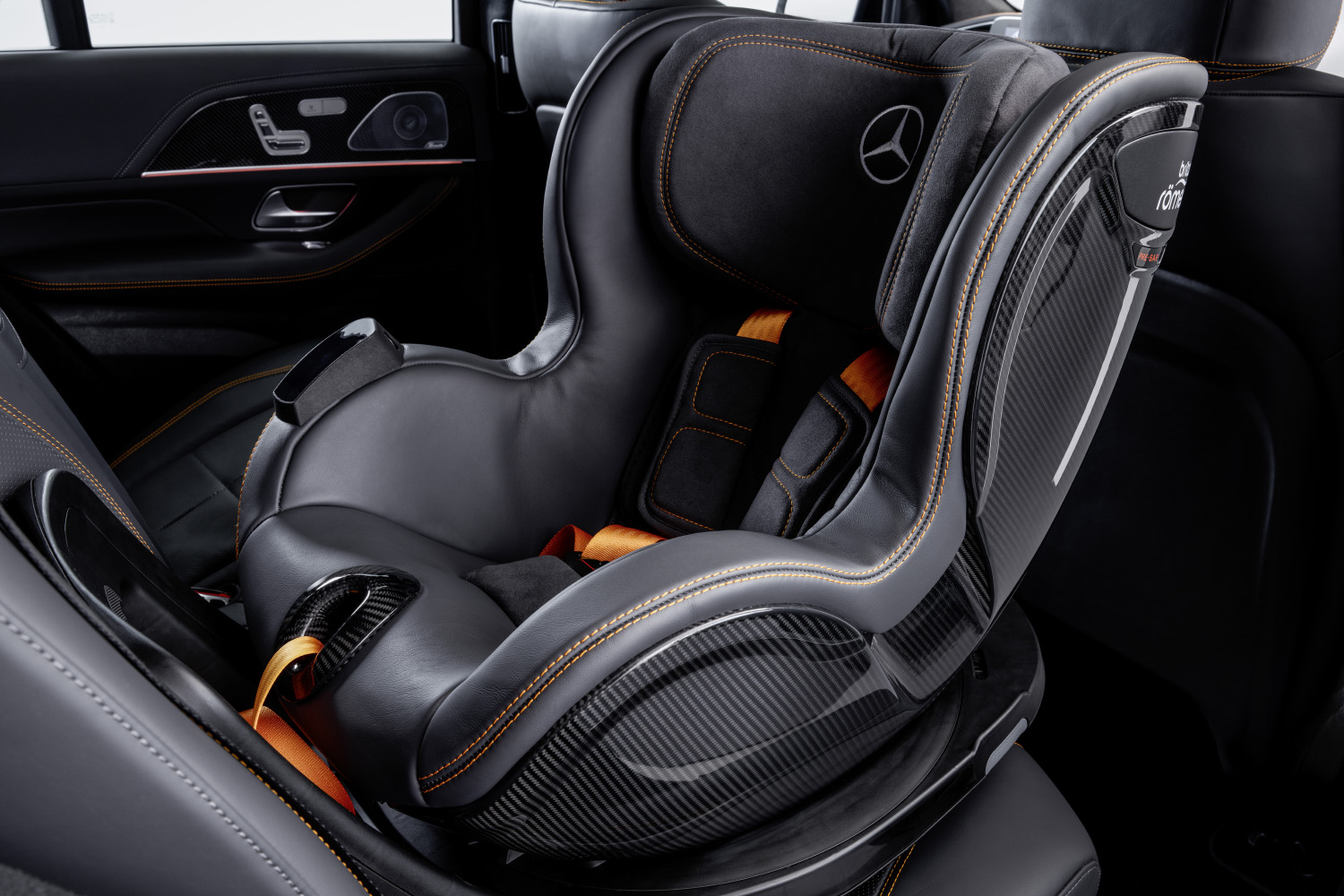
Speaking with Today, Dr. Jeffrey Colvin said that car seats were being incorrectly used “as a substitute for a crib or bassinet.”
“A lot of times we just saw this context where the infant had been left in the car seat for hours and hours, and the supervisor was asleep or intoxicated during the time.”
In all cases of sleep-related deaths in a car seat, the seat was only used as per manufacturer directions less than 10 percent of the time.
Paediatrician Dr. Harvey Karp explains that when a baby is left in a car seat, particularly on an incline to facilitate sleeping, the head can drop, causing suffocation:
“When your baby is seated, her heavy head can fall forward causing difficulty breathing… and even suffocation.”
Of course, the baby seat is a crucial safety device to be used at all times when driving, and it’s important to ensure it is installed correctly as per manufacturer instruction. However, it is equally important not to use a car seat beyond its designed purpose, which means, unfortunately, having to attempt the dreaded ‘transition’ to a proper bed for sleeping.
