
BMW has revealed pricing of its three-tiered Z4 roadster range with a base price of $84,900 extending all the way to $124,900 for the range-topping hero Z4 M40i – undercutting the price of an equivalent Mercedes-AMG SLC43 roadster by $11,000.
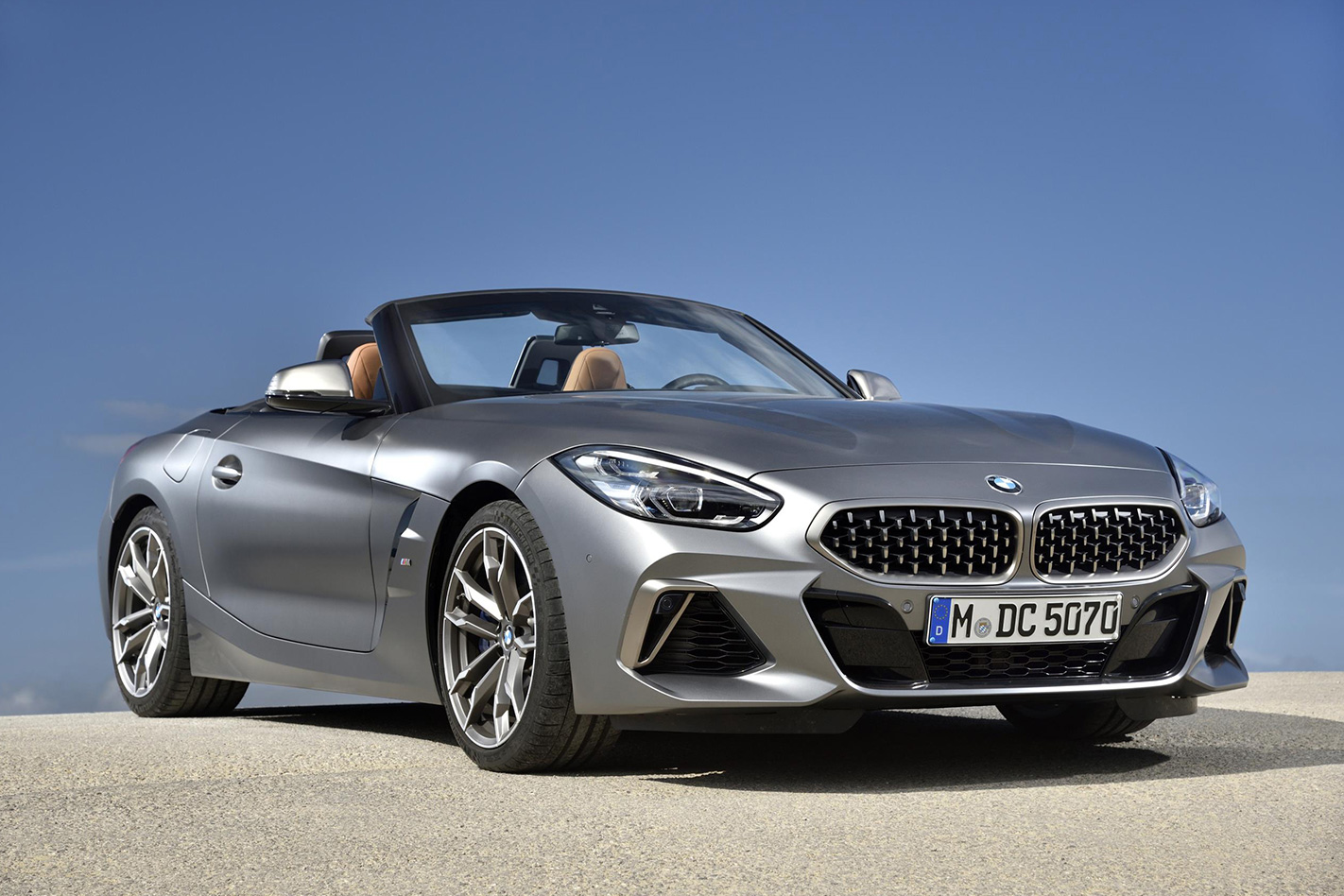
The soft-top Z4 is a key model for the brand, its predecessor enjoying a seven-year model life cycle. Compared to its forebear, the new Z4 has a wider track, a lower centre of gravity and 50:50 weight distribution.
Much of the talk surrounding the new Z4 range has been of the M40i variant, which closely shares its architecture with the new Toyota Supra sports car. The Z4 M40i flagship looks set to stay that way for the foreseeable future as no full-fat Z4 M Roadster model is slated, and packs a 3.0-litre turbocharged six-cylinder engine outputting a healthy 250kW and 500Nm. That equals that of the recently announced Toyota Supra.
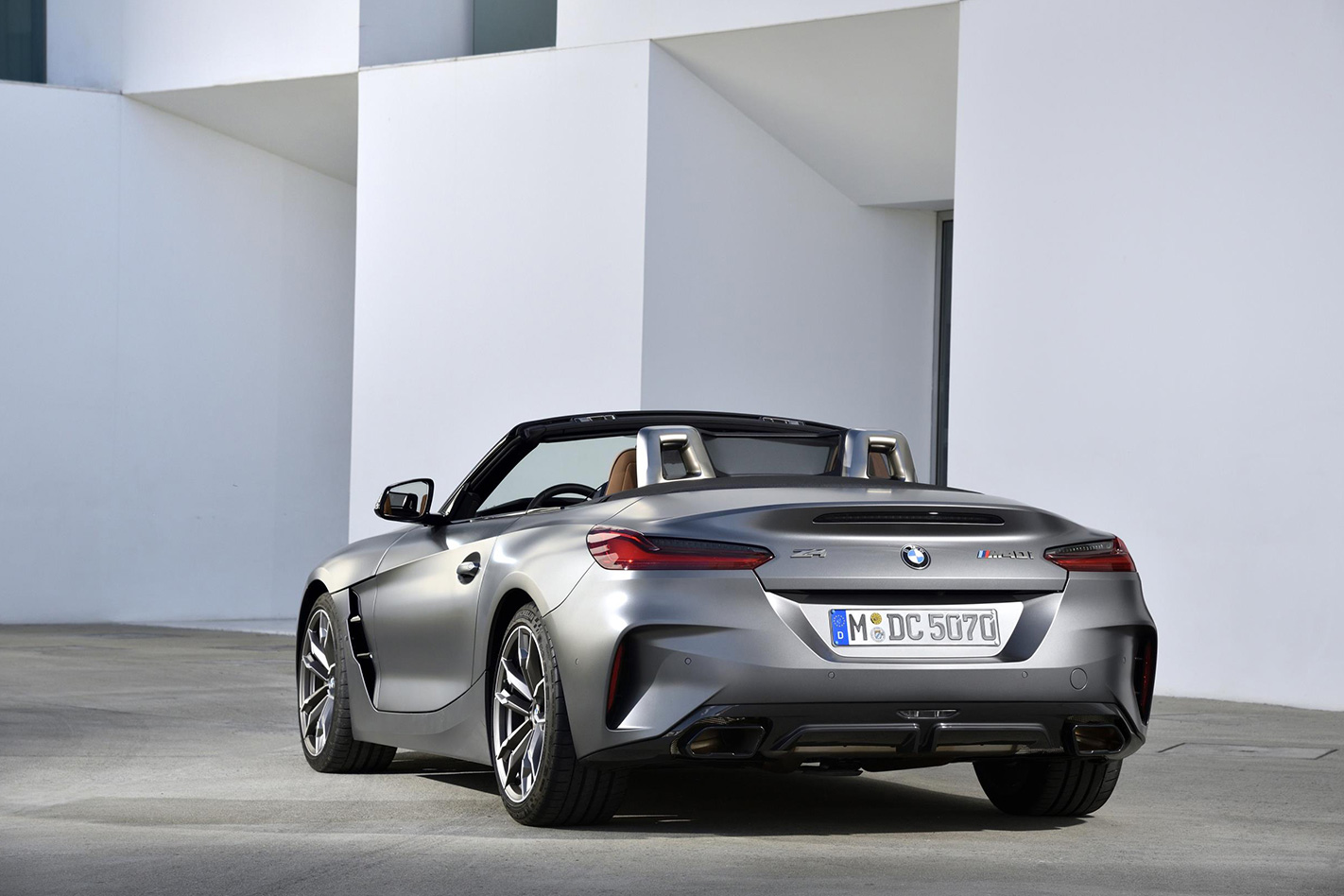
Apart from the big step up in engine and performance tuning that you’ll get with the Z4 M40i, it also receives a specific M Sport electrically-controlled limited-slip differential, a 12 speaker Harman/kardon sound system and an ambient lighting package. The M40i will sprint from 0-100km/h in 4.5 seconds.
Stepping down from the top is the $104,900 Z4 sDrive30i which employs BMW’s 2.0-litre turbocharged four-cylinder engine and completes a 0-100km/h run in 5.4 seconds with 190kW/400Nm on tap.
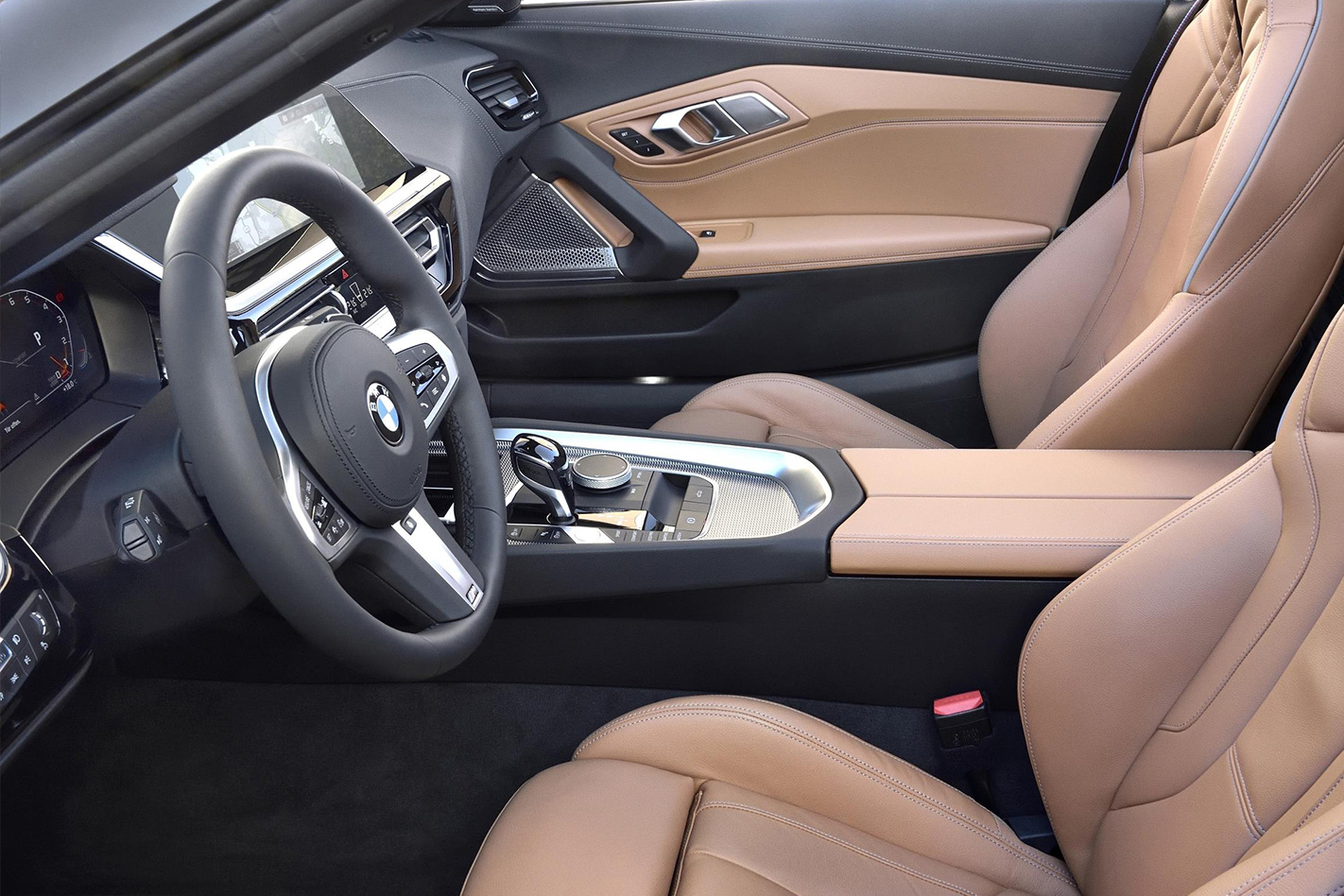
The Z4 sDrive30i comes equipped with 19-inch alloy wheels, keyless entry with digital key, M sport brakes and suspension, adaptive cruise control and adaptive LED headlights.
At the bottom of the rung is the $84,900 sDrive20i, which uses the same 2.0-litre four-cylinder engine with a tamer tune, outputting 145kW/320Nm and hits 100km/h in a still respectable 6.6 seconds.
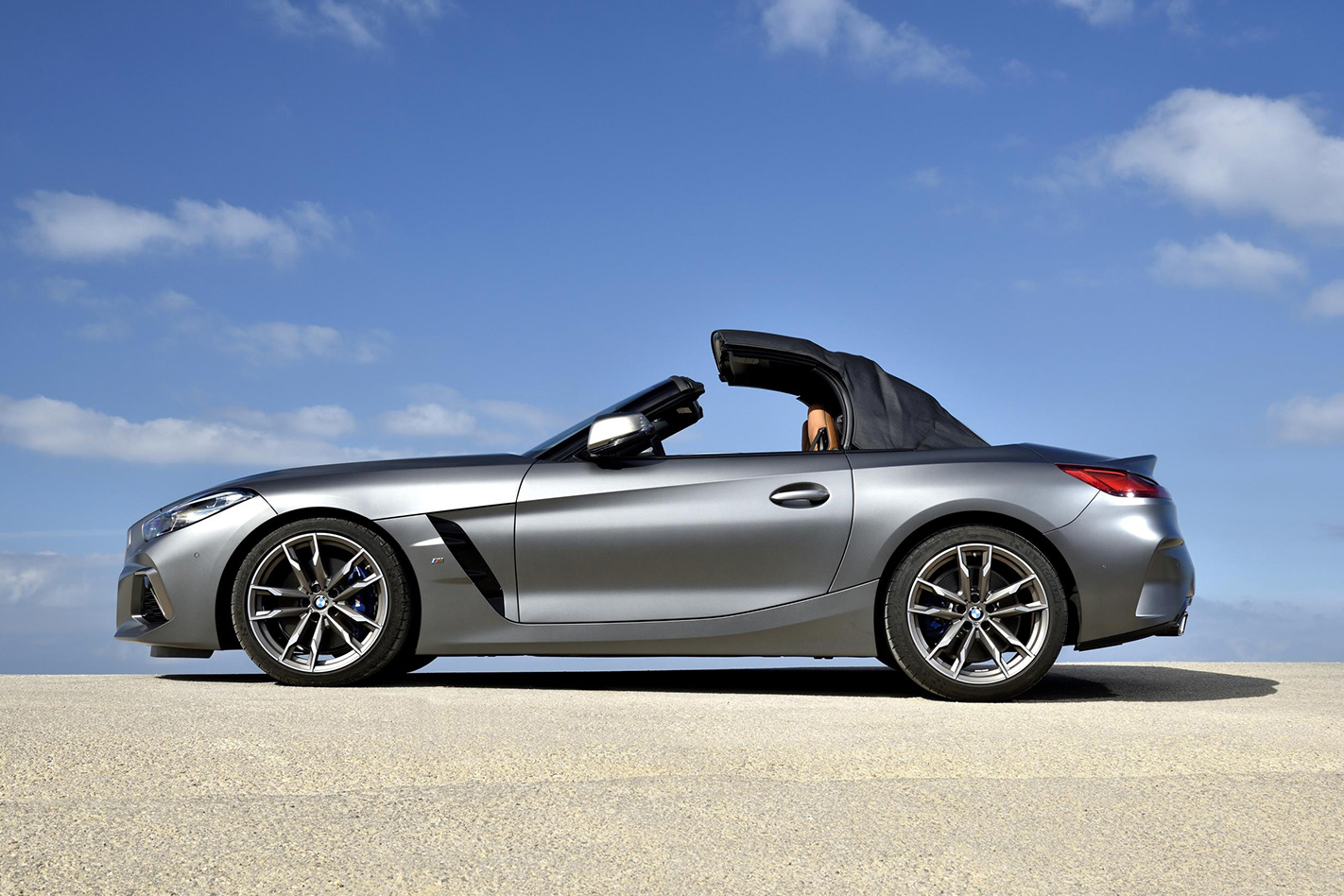
In standard specification the sDrive20i receives an M Sport package, 18-inch alloys, heated sports seats, dual-zone automatic air conditioning, head-up display, BMW Connected package with Apple CarPlay, wireless phone charging and ‘Vernasca’ leather upholstery.
The 2019 BMW Z4 is the third model penned by Australian designer Calvin Luk, following the latest BMW X1 and BMW X3.
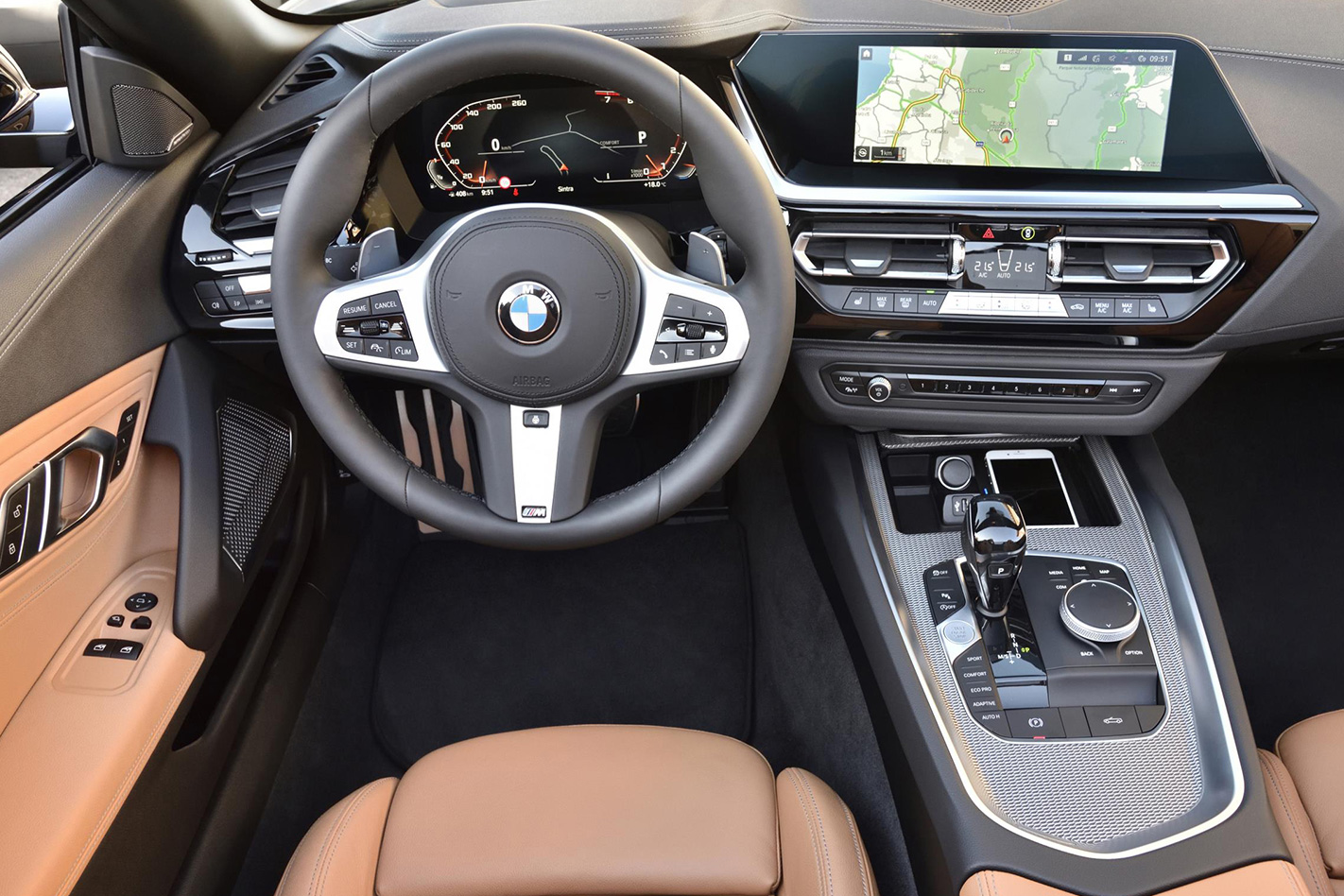
The entire range will be in showrooms from April.
2019 BMW Z4 pricing
- Z4 sDrive20i – $84,900
- Z4 sDrive30i – $104,900
- Z4 M40i – $124,900
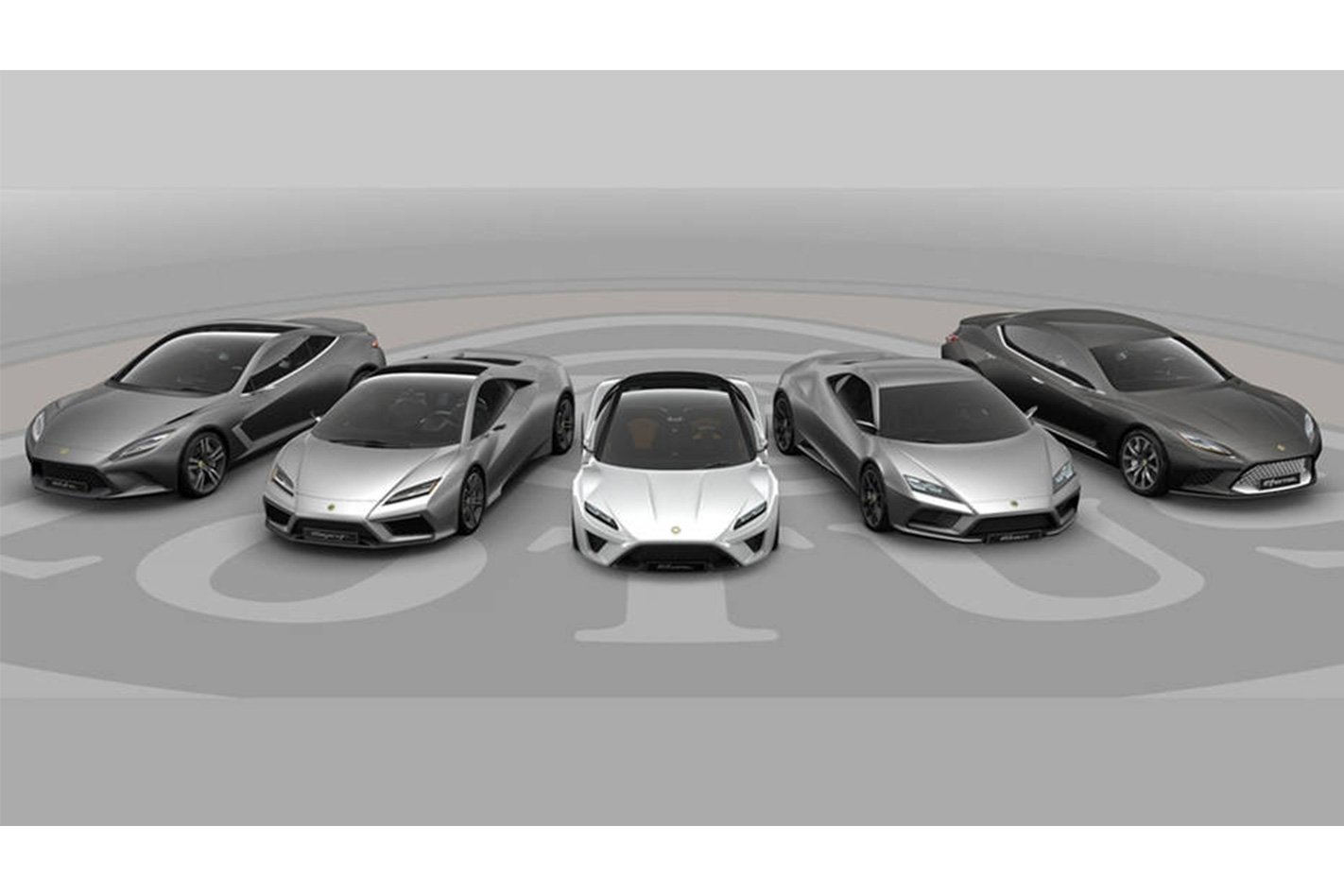
LOTUS has long been viewed as a financial basket case, a bleak money pit amongst the beet fields of Norfolk that has seen investment after investment disappear without trace. Remember former CEO Dany Bahar’s five-car unveil at Paris in 2010 that disappeared in a miasma of its own hubris?
News that Geely is planning a giant Lotus production line in China would undoubtedly provide easier corporate oversight for the company’s paymasters, but is moving the majority of production to China the right way to elevate this brand to a credible rival for Ferrari, Porsche or Aston Martin?

Before we look into that question, a few inconvenient truths. In 2016, Lotus recorded pre-tax profits for the first time this century.
Its dealer footprint has also increased 50 percent since 2014 and that has resulted in a sixfold increase in US sales over the same period.
Global sales rose by around ten percent last year and some 300 new staff are being hired at Hethel, mostly in vehicle development. Those aren’t the vital signs of a moribund business.
Former Lotus CEO Jean-Marc Gales has gone on record to confirm that work has started on the SUV project, slated to arrive in 2022.
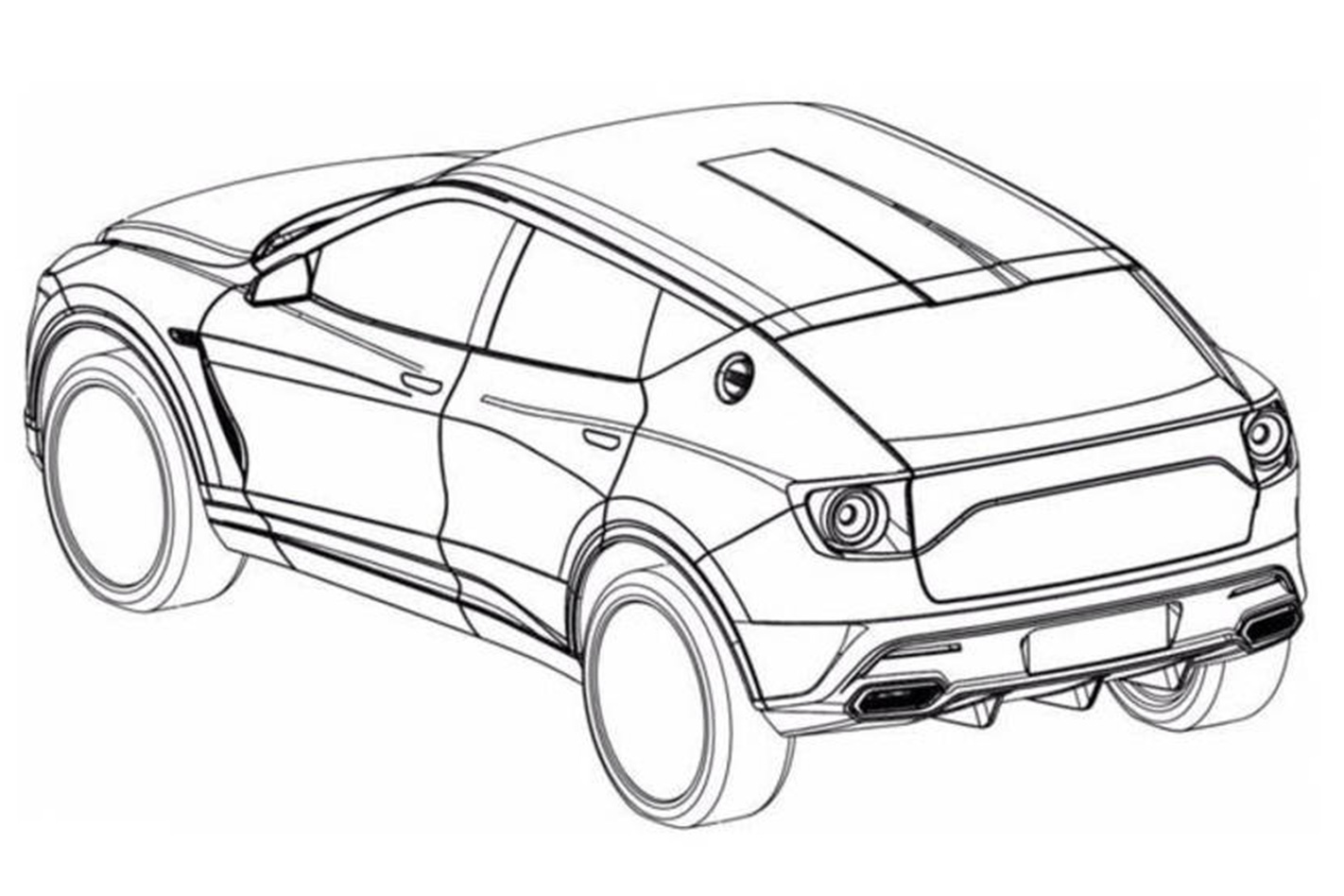
Gales, who stepped down in June, oversaw the initial planning phase of the brand extension. “The SUV has to be the right car. We get one shot,” he said.
“We can’t use the same design language as the sports car, but you should be able to recognise that it is a Lotus.”
The SUV project will rely on existing Zhejiang Geely platforms and Gales has identified the Porsche Macan and Cayenne bodies as target segments, with sales of around 3000 per year the target.
Despite revenue lifting by 24 percent last year (to $180m), Gales reckoned Lotus could double that figure by the time the SUV comes to market and wanted revenue ten times that with the SUVs on stream.
Sports car production is likely to remain in the UK, spearheaded by next year’s Evora replacement. As Geely chairman Li Shufu said, “This is just like what we have done with London Taxi Company, engineer in Britain, design in Britain, built in Britain. We see no reason to move fifty years of combined experience to China – let them do what they do best – in Britain.”
SUVs, it seems, are a different matter.
Geely has demonstrated a light touch with the brand management of Volvo, allowing Gothenburg a degree of autonomy while cranking out huge volumes in China for local markets.
Replicating that business model with Lotus will require canny planning, replicating what Porsche did with the Cayenne.
Fully 76.5 percent of all Porsches sold now have five seats and a tailgate. Back when Lotus introduced the last new chassis for the Elise, that figure stood at zero percent for Porsche.
Zuffenhausen has radically adjusted its product portfolio while Hethel has remained a bemused bystander. That’s changing.
It’s hard not to feel a slight pang of distaste at the idea of a Lotus SUV, a feeling that the company has sold out, despite assurances that it’ll live the Lotus brand values in terms of agility, design and commitment to light weight.
But if it can serve as the cash cow that allows Lotus to kick on in its sports car development, we welcome the SUV with open arms. You don’t have to like it. Just acknowledge its place in the overall scheme of things. This being Lotus, however, if a story sounds too good to be true, it usually is.
Maserati’s Levante has demonstrated that merely building an SUV with a premium badge on the bonnet is anything but a magic bullet to turn around the fortunes of an ailing balance sheet.

That car shifted around 22,500 units globally in 2017 – around half of total Maserati sales – and was the cornerstone of Maserati’s 2014 plan to sell 75,000 cars globally by 2018.
That patently didn’t eventuate. Nevertheless, it was the only ray of hope in Maserati’s portfolio in 2018 – Granturismo sales slipping by 56 percent, Quattroporte falling 27 percent and Ghibli sliding 25 percent year on year. Levante was up 95 percent.
Within 18 months of the Levante’s introduction, Maserati has effectively become a mediocre SUV company. Sergio Marchionne’s passing will only serve to bring its performance under renewed scrutiny.
Lotus deserves a brighter outcome. We’ll reserve judgment until we’ve driven the Lotus SUV and seen the sales numbers. Until then, we’re hoping for the best.
BMW’s next-generation M3 is set to be revealed at September’s Frankfurt Motor Show and Car, our sister title in the UK, has some good news to report.
Heavyweight European correspondent Georg Kacher – whose intel is normally bulletproof – reports that the M3, with its M4 coupe sibling, is set to get a 353kW version of its twin-turbocharged 3.0-litre lump which outmuscles both the Audi RS4 and the Mercedes-AMG C63. Factor in a 65kg weight loss and performance can best be described as more than adequate.
More intriguingly, BMW has split the M3/M4 range. There’s rumoured to be a rear-drive entry-level variant, following the philosophy of the current ‘Pure’ models, powered by a slightly detuned 339kW powerplant and with a manual transmission and a sharp e-diff at the rear.
As reported in Wheels back in September 2018, BMW’s former M division boss Frank van Meel has gone on record stating that there’s a level above which all-wheel drive is a necessity.
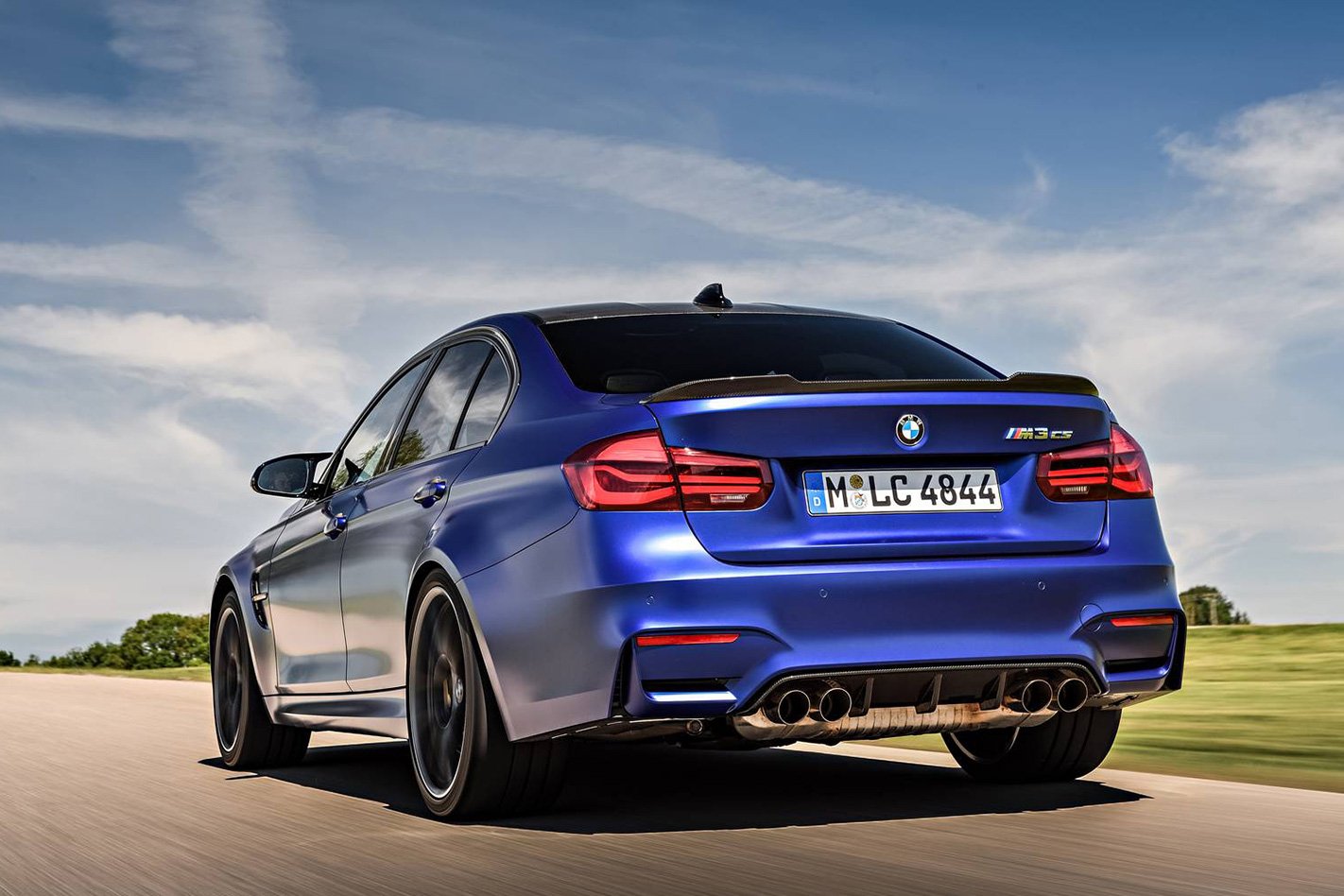
The twin-turbo S58 engine can generate torque in excess of 650Nm, which is purportedly the maximum amount of torque that can be run through BMW’s manual transmission, so expect the entry-level rear-drive versions to come in just under that figure and the full-fat xDrive versions to exceed it.
The xDrive models will feature the same switchable AWD/RWD function as seen in the current M5.
A soft-top M4 Cabriolet is also in the pipeline, ditching the folding hard top of its predecessor. Those looking for an even sharper focus will savour the forthcoming M4 Competition, due in 2021, which will generate a Mercedes-AMG C63 S-equalling 375kW.
Beyond that, CS and CSL versions of the M4 are said to be in advanced planning.
Bad news for those who love a hot wagon is that in an internal shootout at BMW’s Munich HQ, the proposal for a four-door M4 Gran Coupe got the nod over an M3 Touring. With a Q3 reveal, expect the M3 to land in Australia some time early in 2020.
The first 2020 Toyota A90 GR Supra has sold at Barrett-Jackson’s Scottsdale auction for an eye-watering USD$2.1 million, or just a smidge over AUD$2.93 million.
The sale was undertaken to benefit the American Heart Association and the Bob Woodruff Foundation, with 100 per cent of the total sale being given to these two charities.
The first Supra has a couple of changes from the standard production cars which will follow, most notably its matte grey paint and red mirror combination which the Barrett-Jackson auction listing notes will be a one-off.
“This vehicle will include an engine cover signed by Toyota CEO Akio Toyoda,” the listing adds.
The Supra wasn’t the only ‘first’ to pick up a big bid for charity, with the first VIN of Ford’s 2020 Mustang Shelby GT500 selling for USD$1.1 million (AUD$1.54 million) to benefit diabetes charity JDRF (Juvenile Diabetes Research Foundation).
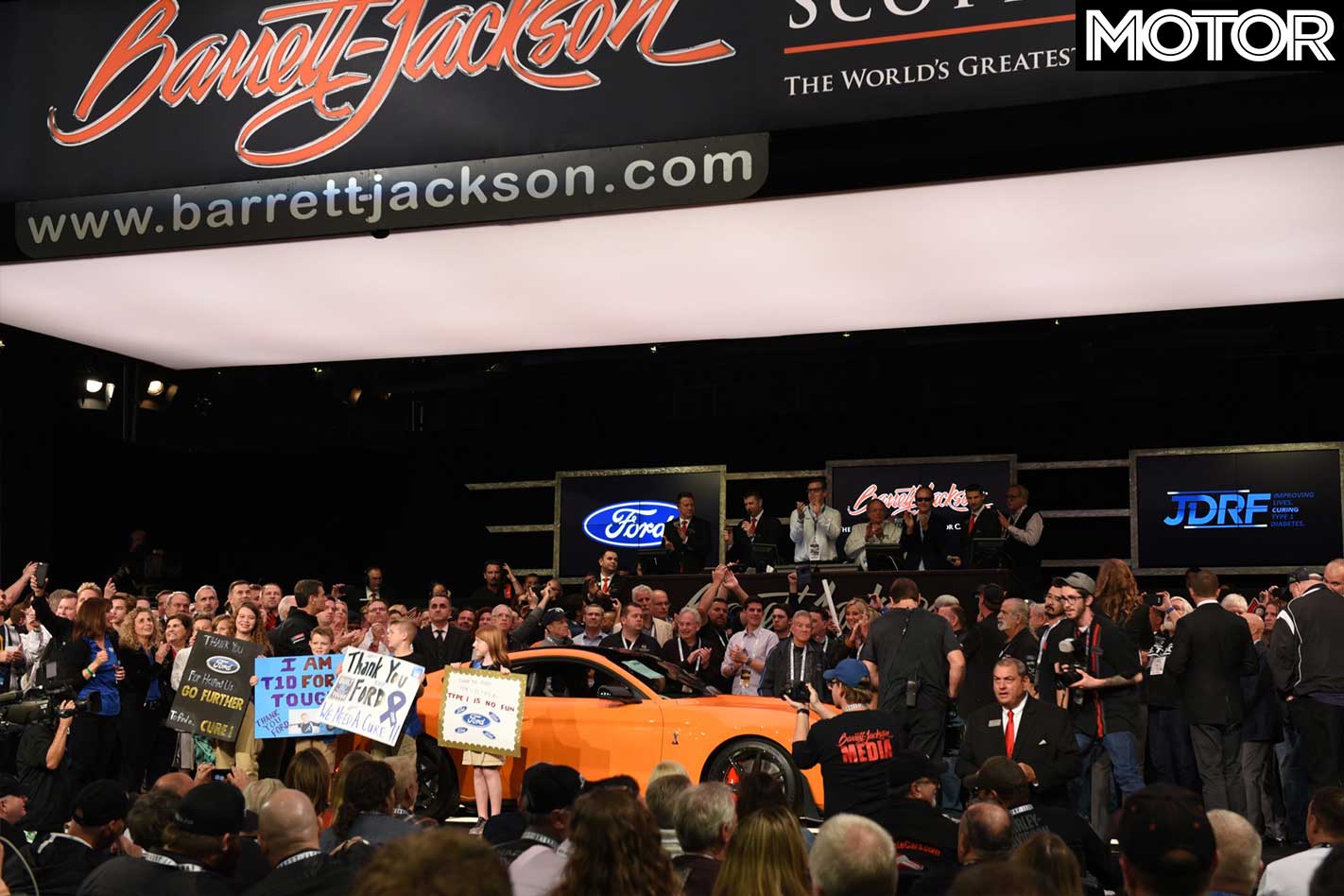
Both cars were only officially revealed at the Detroit Motor Show last week, with Australian details on pricing for standard models remaining elusive in each case.
Additionally, both cars are yet to be delivered to the winning bidders on account of their production schedules, though Barrett-Jackson says the winner of the GT500 will have more of a say in what their car looks like.
“The winning bidder will become the owner of the coveted first production Mustang Shelby GT500 and can choose from all available colours and options.”
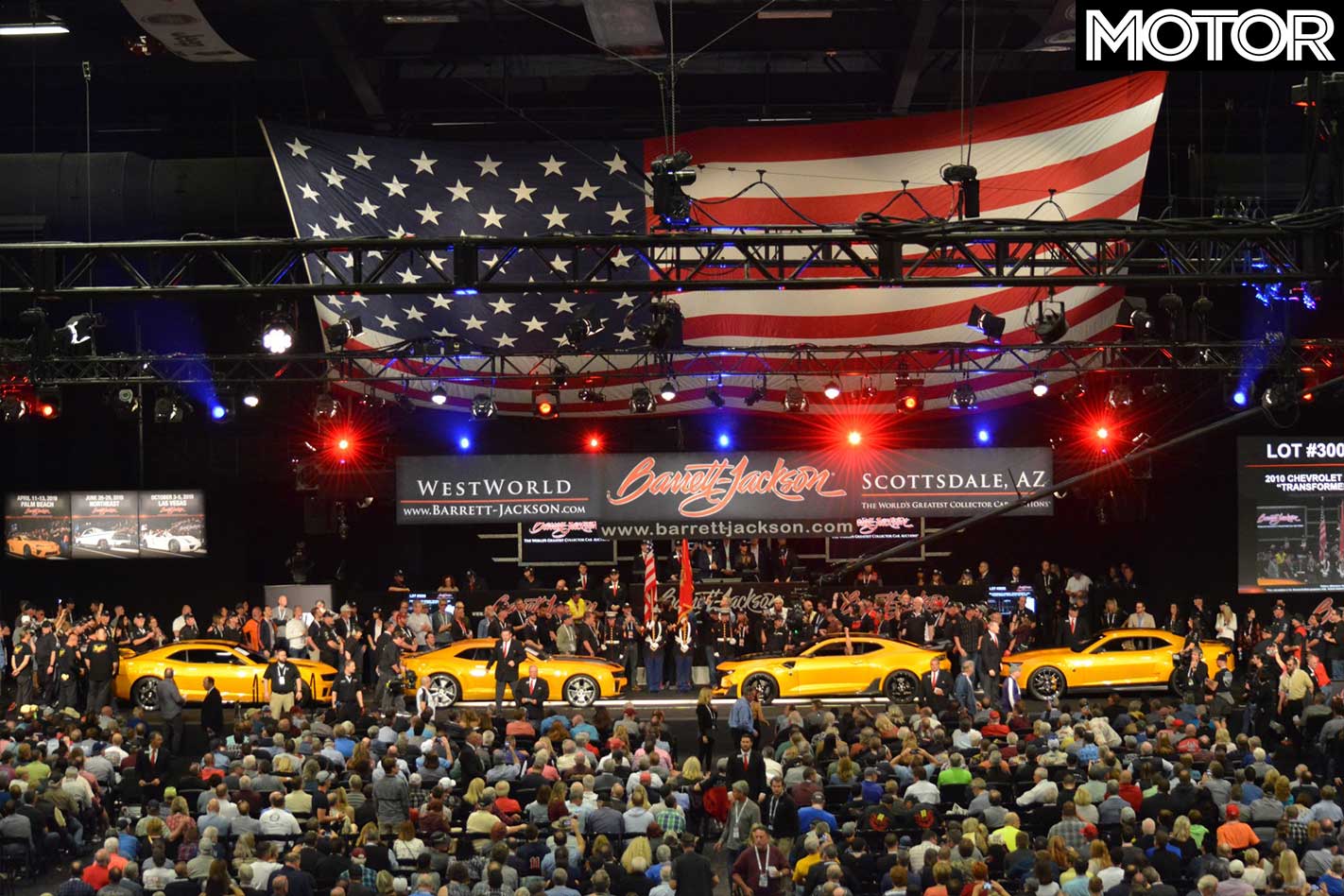
As well as the Supra and Mustang GT500, four of the Chevrolet Camaros used in various Transformers films sold for USD$500,000 (AUD$698,000) with the proceeds set to benefit US military families through the Operation Homefront foundation.
None of the four cars are street legal, and sold on scrap titles making them essentially film props.
THERE are only ten days remaining until Wheels announces the winner of this year’s Car of the Year award.
Wheels Car of the Year (COTY) is the longest continuously running motoring award in the world, and is the most highly coveted prize in the local industry.
The winner of COTY 2019 will be made at the Australian Motoring Awards on January 30.
Motor’s Performance Car of the Year, 4×4 Australia’s 4×4 of the Year and WhichCar’s style award winner will also be announced at the Australian Motoring Awards.
Be sure to check in to the Wheels Facebook page at 9:30pm to watch a live stream of the announcement.
If you are a Wheels subscriber, this next bit of information will be of particular interest.
The first Wheels magazine of 2019 goes on sale January 31, and includes 65+ pages of Car of the Year coverage. However, to keep the winner of COTY a secret until our official announcement on January 30, subscriber copies will be posted a few days later than normal.
Happily, we have a solution. To ensure subscribers can access the magazine before anyone else, we are giving you a unique code to download a digital copy free of charge.
The code can be redeemed from 9:30pm on January 30 on Apple and Android devices, which will ensure you still get your Wheels fix while you wait for your paper copy to arrive.
Testing for COTY 2019 was conducted late last year, with 24 of the best new cars released in the prior 12 months vying for glory, with 47 variants presented for testing.
The 2019 field is stacked with strong contenders, and covered a wide range of vehicles, from the entry-level Volkswagen Polo which cost $17,990, all the way to the Bentley Continental GT, which wore an eye-watering $422,600 sticker price.
Toyota’s Corolla and Camry attracted a lot of pre-event tipping, the Japanese giant having only shared one award back in 2012 with the Toyota 86/Subaru BRZ twins. Is it time for Toyota to stand alone on the top step of the podium for the first time in 56 years? Find out on January 30th.
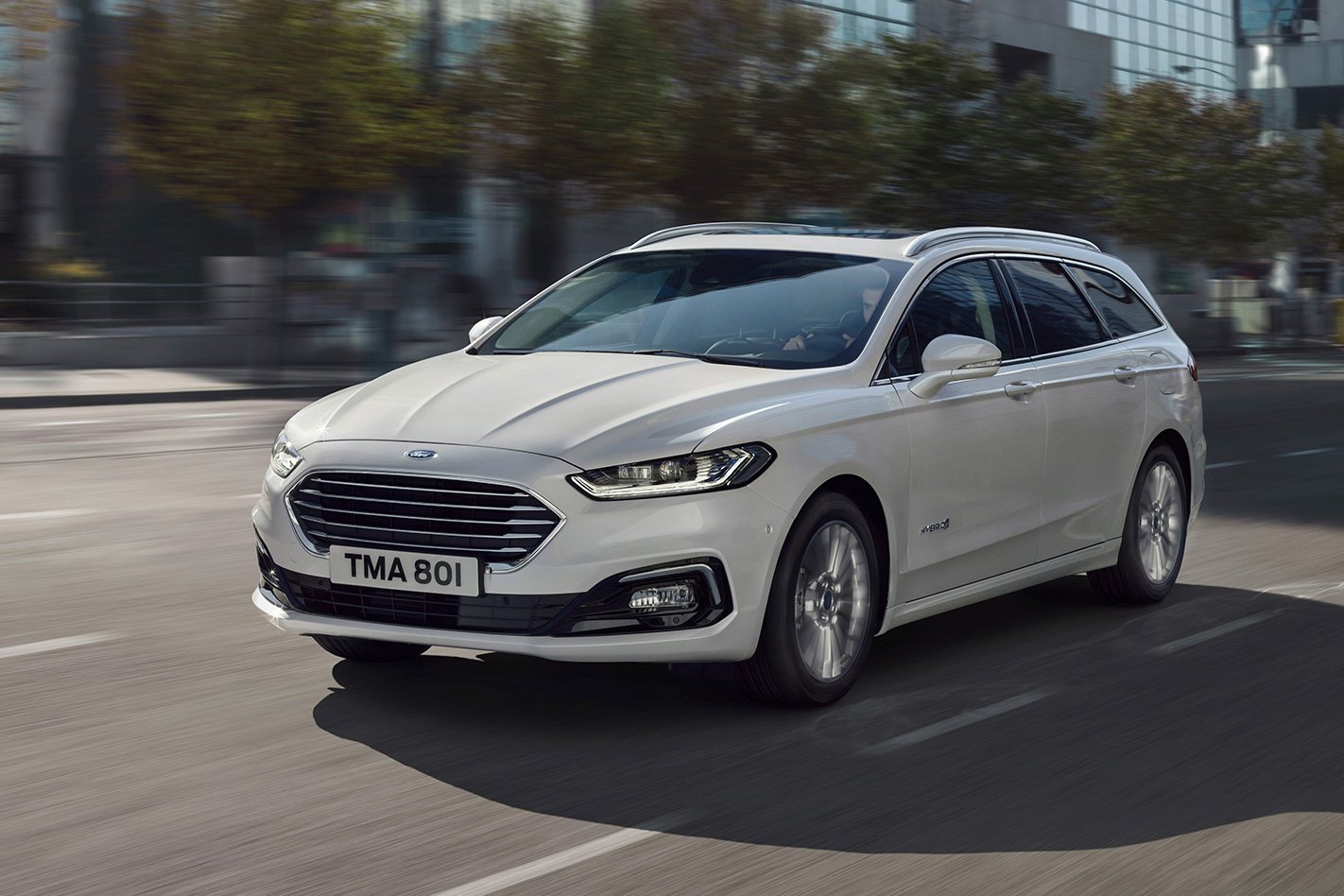
FORD Australia will introduce an updated version of the Mondeo to its showrooms in the second quarter of 2019, with a subtle facelift bringing new engines, a new gearbox, and safety tech improvements.
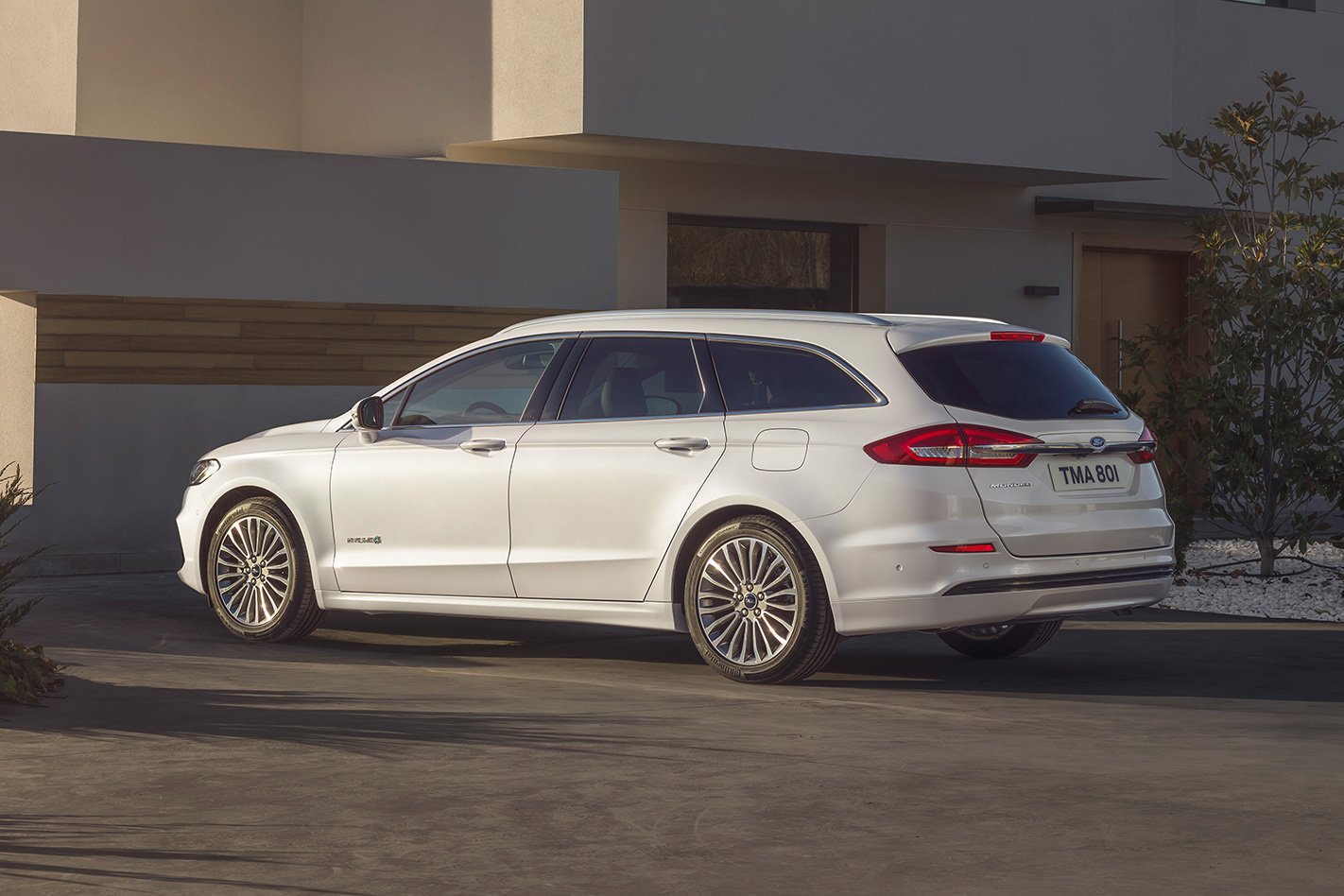
Visually the changes are minimal, with sedan variants gaining a new bumper and new grille inserts and alloy wheel designs on some models. Under the skin, however, the tweaks are more substantial.
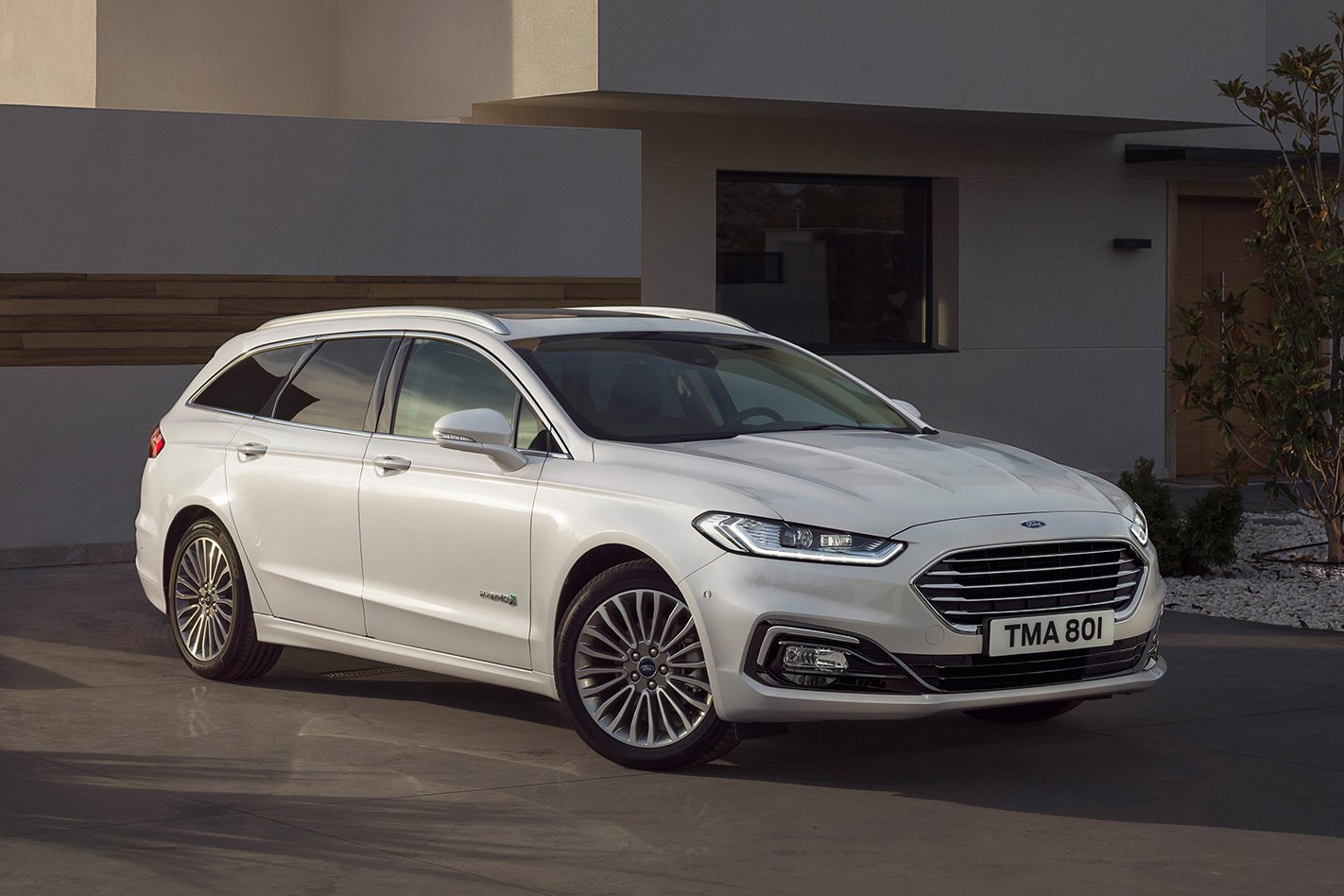
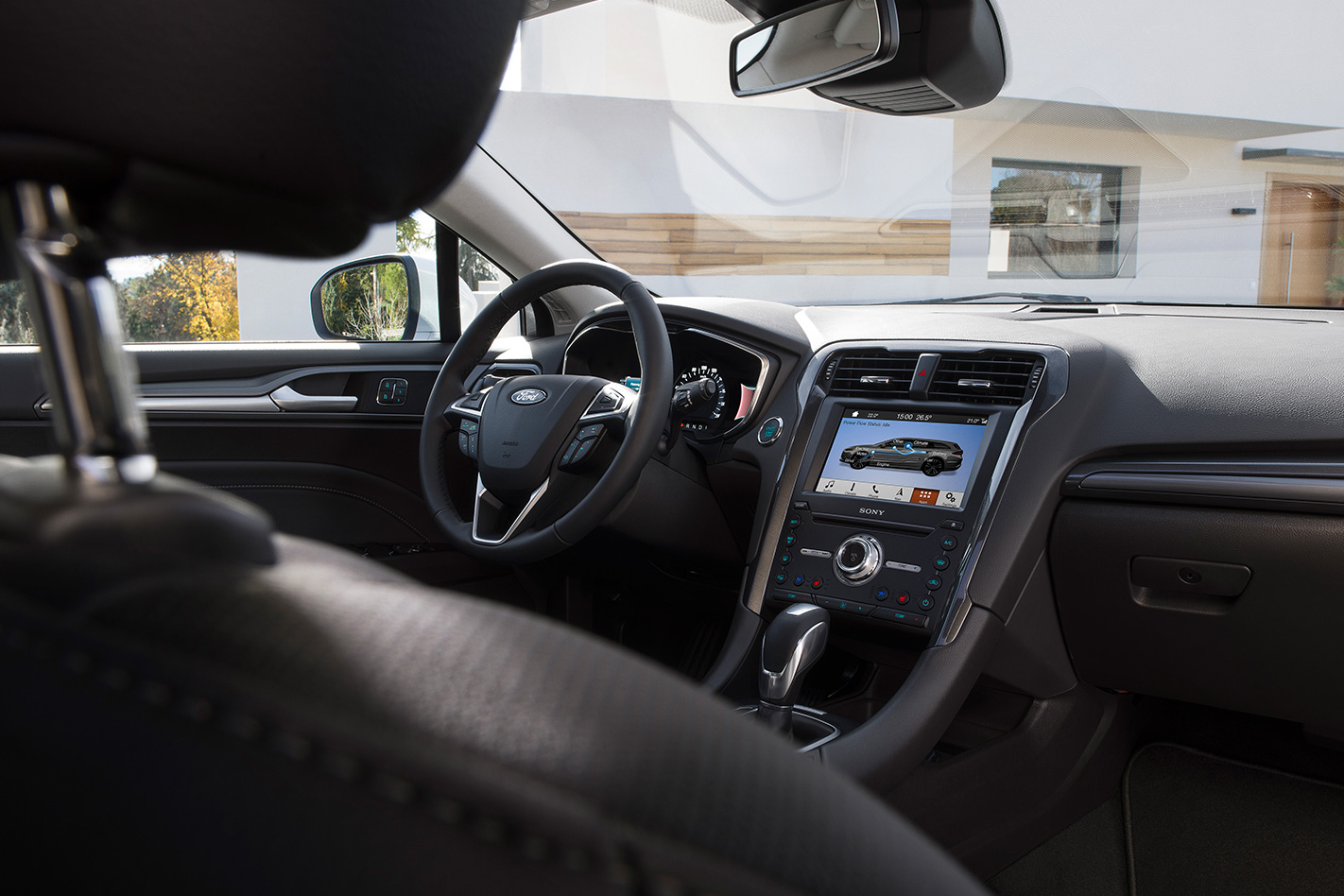
Ford’s new eight-speed automatic gearbox is now available, along with advanced safety features such as adaptive cruise control with stop and go functionality, and an intelligent speed limiter that uses traffic sign recognition technology. Cabin infotainment has also been given a boost, with an 8.0-inch touchscreen now available.
Another first is the addition of a hybrid version in Europe for the Mondeo wagon, which produces a total system output of 138kW by combining a 2.0-litre Atkinson-cycle petrol engine and a 1.4kWh lithium-ion battery system. Ford expects hybrids to account for half of all European Mondeo sales.
However, a Ford Australia spokesperson confirmed to Wheels the electrified Mondeo would not be coming Down Under.
The current Mondeo’s 132kW 2.0-litre ‘TDCi’ diesel engine is replaced by Ford’s fresh ‘EcoBlue’ unit, in 110kW and 140kW states of tune. In certain markets the new diesel engine is offered with all-wheel drive, though every variant in the Australian line-up will continue to drive solely the front axle.
Ford will begin to sell the new Mondeo overseas from March, with an Australian arrival expected in the second quarter of the year.
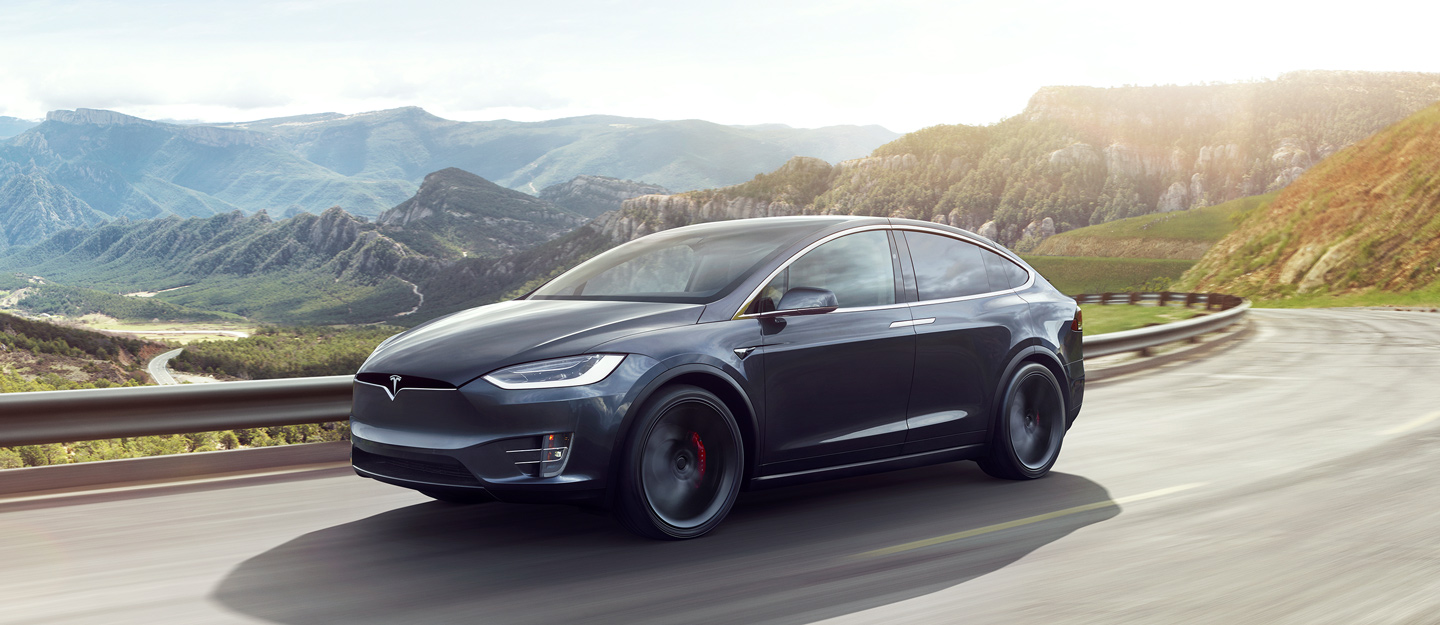
Tesla founder Elon Musk has declared that the company’s cars are “too expensive”, as he announced plans to cut the company’s workforce by a further seven per cent in 2019.
In a staff email, Musk said that the “road ahead is very difficult,” as the EV maker battles to produce cars to schedule and to budget. A modest $US311,000 ($500,000) profit for the final quarter of 2018 is only the third profitable quarter for the publically listed company since 2011, and Musk admits that it’s only Tesla’s ability to sell premium-priced versions of cars like its Model S and Model X in the US market that led to the positive result.
“We face an extremely difficult challenge: making our cars, batteries and solar products cost-competitive with fossil fuels,” Musk said. “While we have made great progress, our products are still too expensive for most people.”
The company increased its workforce – currently estimated at 45,000 – by 30 per cent early in 2018, as it battled to meet its own lofty production targets for its smallest car, the Model 3. Some nine per cent of that total was shed in June 2018 as Model 3 production stabilised, but Musk puts the latest round of job cuts down to a need to produce cars more cheaply.
Despite cutting the smallest battery-equipped versions of its Model S and Model X from its range last week, the cheapest car that the company makes – the mid-range Model 3 with a premium sound and interior package – still costs in excess of $US44,000 ($60,000).
The original premise of an entry-level Model 3 is yet to materialise, a point that Musk also acknowledges.
“We will need to deliver at least the mid-range Model 3 variant in all markets, as we need to reach more customers who can afford our vehicles. Moreover, we need to continue making progress towards lower-priced variants of Model 3,” he said.
The cost of the Model 3 and other models is also under external pressure, thanks to the pending elimination of United States government tax breaks applied to the purchase of electric vehicles.
The federal tax incentive drops from $US10,000 to $US5000 ($12,000 to $7000) in July this year, before disappearing completely on December 31.
This will add thousands of dollars to the cost of a Model 3, according to Musk.
“Tesla will need to make these cuts while increasing the Model 3 production rate and making many manufacturing engineering improvements in the coming months,” he said. “Higher volume and manufacturing design improvements are crucial for Tesla to achieve the economies of scale required to manufacture the standard-range, standard-interior Model 3 at [US]$35k and still be a viable company.
“There isn’t any other way.”
The days of Tesla’s dominance in the EV space are also under increasing threat, thanks to the pending emergence of small EVs from Volkswagen and its subsidiaries, and the launch of Model X-rivalling SUVs from Audi and Mercedes-Benz.
Many range-topping cars from plenty of manufacturers carry model suffixes that suggest something quite special to distinguish them from the lesser siblings. Plenty of these fall are, regrettably, little more than lightly warmed-over, meaning they are tarted up with visual exterior addenda, and bundled with extra equipment, but don’t actually offer any tangible improvement in performance, dynamics, or general driver appeal.
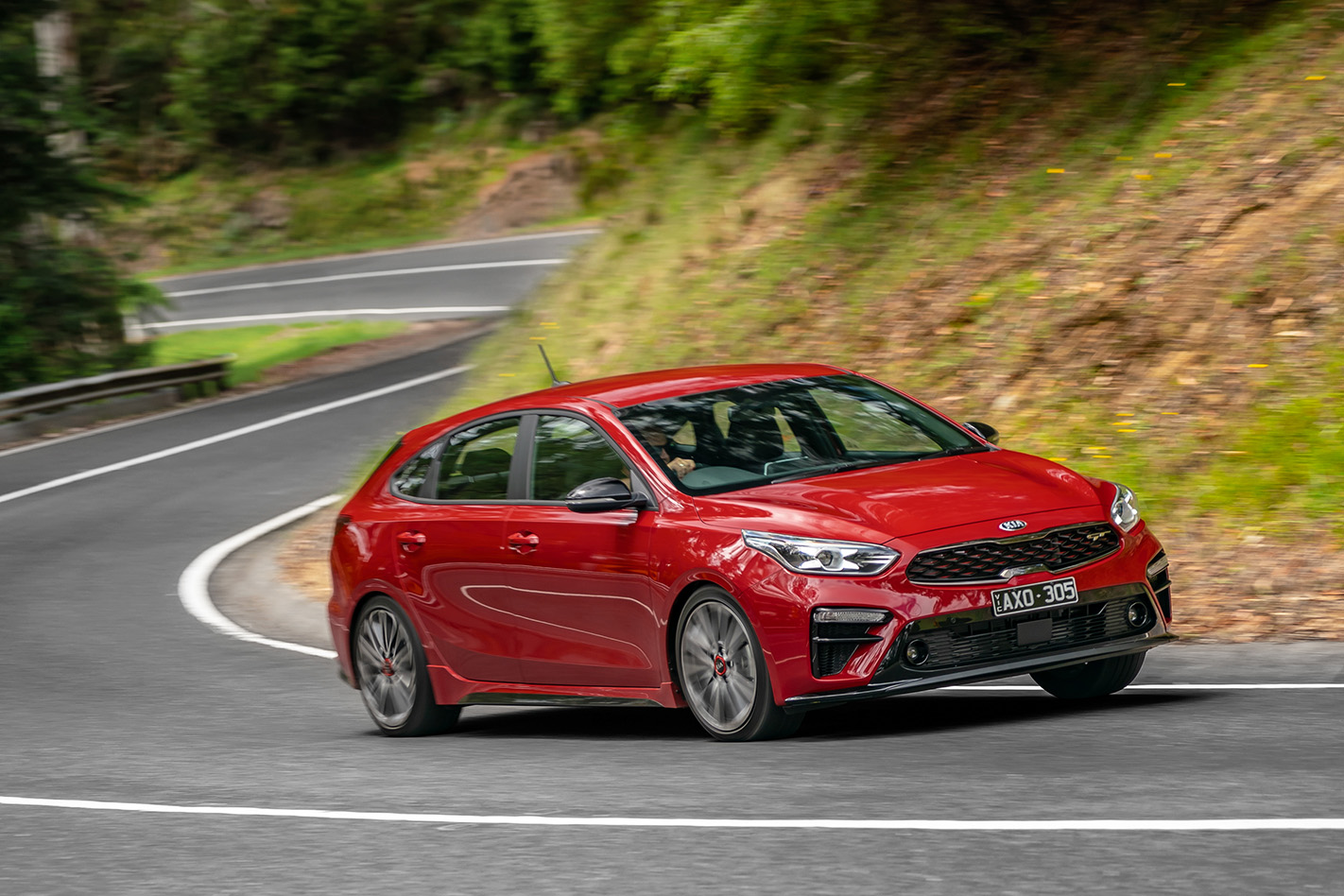
The newly launched Kia Cerato GT is not one of those cars. It steps clear of the three models below it by not just providing an appreciably higher list of standard equipment, but also by having a far better, much punchier (and more frugal) turbocharged engine, as well as a thoroughly revised suspension, tyres and braking set-up to increase its appetite for corners and deliver a far greater level of driver satisfaction.
VALUE
The jump to this top-spec Kia Cerato is not insubstantial at $4250 over the Sport+ model below it, but overall, the GT’s driveway pricing of $31,990 is keen when rated against similarly equipped competitors such as the Mazda 3, Ford Focus, VW Golf and Toyota Corolla. Factor in the industry leading seven-year/unlimited kilometre warranty and Kia’s reasonable servicing costs, and the GT starts to look very attractive. Historically this model has not been a resale champion, but that remains unproven with the current iteration and if you intend to hold onto it for four or more years, this may be less of a concern.
STANDARD FEATURES
Even the base Cerato S is not exactly a povo pack, but the GT ramps up the standard equipment with a stack of desirable gear to help justify that price jump from the Sport+ model below it.
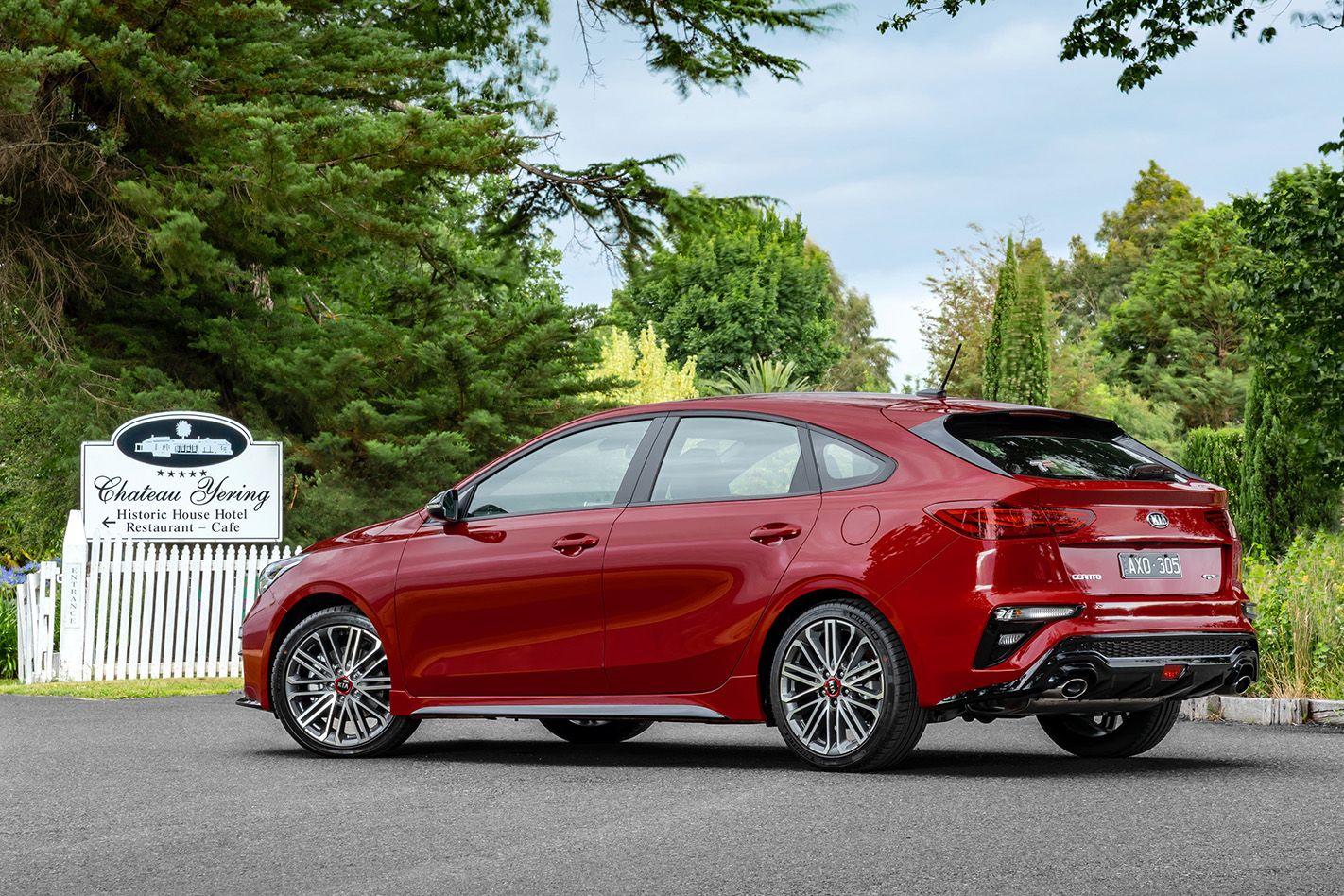
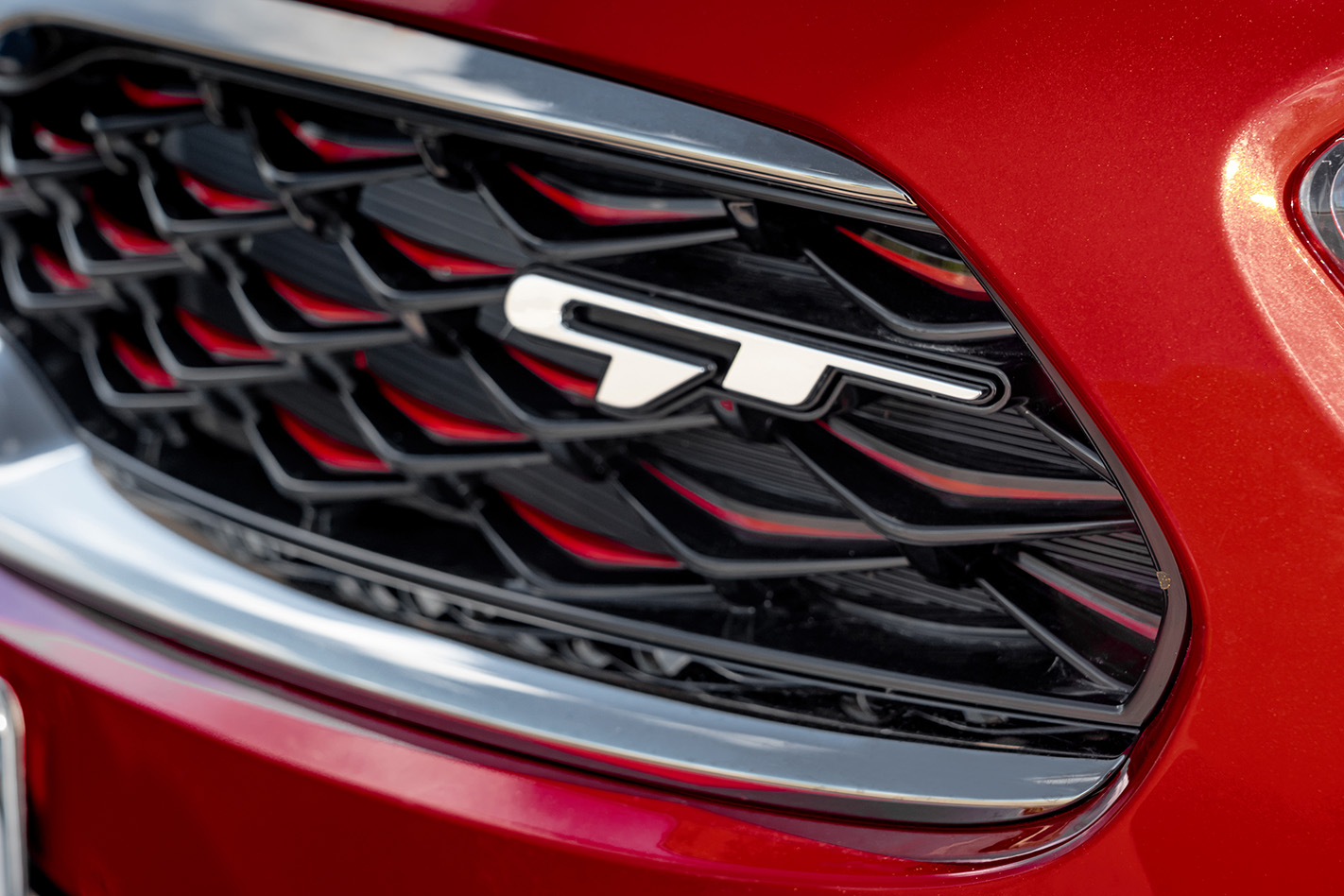
In terms of exterior upgrades, you’ll quickly pick the GT via its body-coloured sideskirts with black accent strips, and a revised rear fascia with twin exhaust tips. At the front, LED headlights light the way, while exterior mirrors feature a high-gloss black finish.
Inside, the GT is an appreciably more sporty and visually appealing offering. The seats are far more deeply bolstered, trimmed in perforated leather with red accent stitching, and offer extra adjustability and two-position memory function. They also also feature three-speed ventilation (as well as the heating provided in the Sport+ spec.) The wheel is a nicer flat-bottom item, the pedals are finished in aluminium, and wireless phone charging is there to avoid cable-spaghetti syndrome.
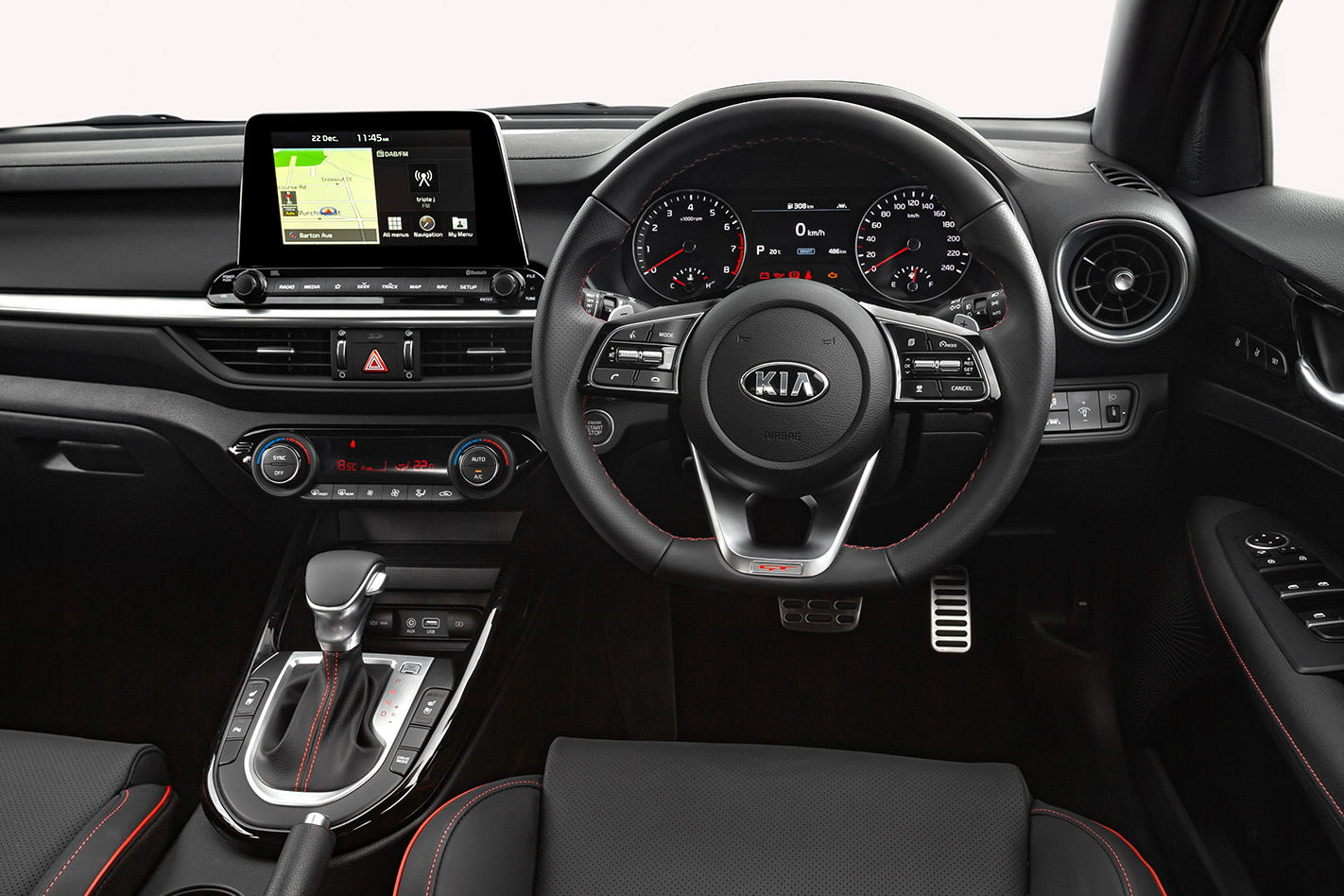
Music fans will also instantly hear the improvement delivered by the eight-speaker JBL audio system, which replaces the regular six-speaker set-up, and features separate amplification and a rear-mounted subwoofer. The 8.0-inch central touchscreen is home to factory satellite navigation. The level of standard safety equipment is also excellent, which we’ll get to in a second.
SIZE
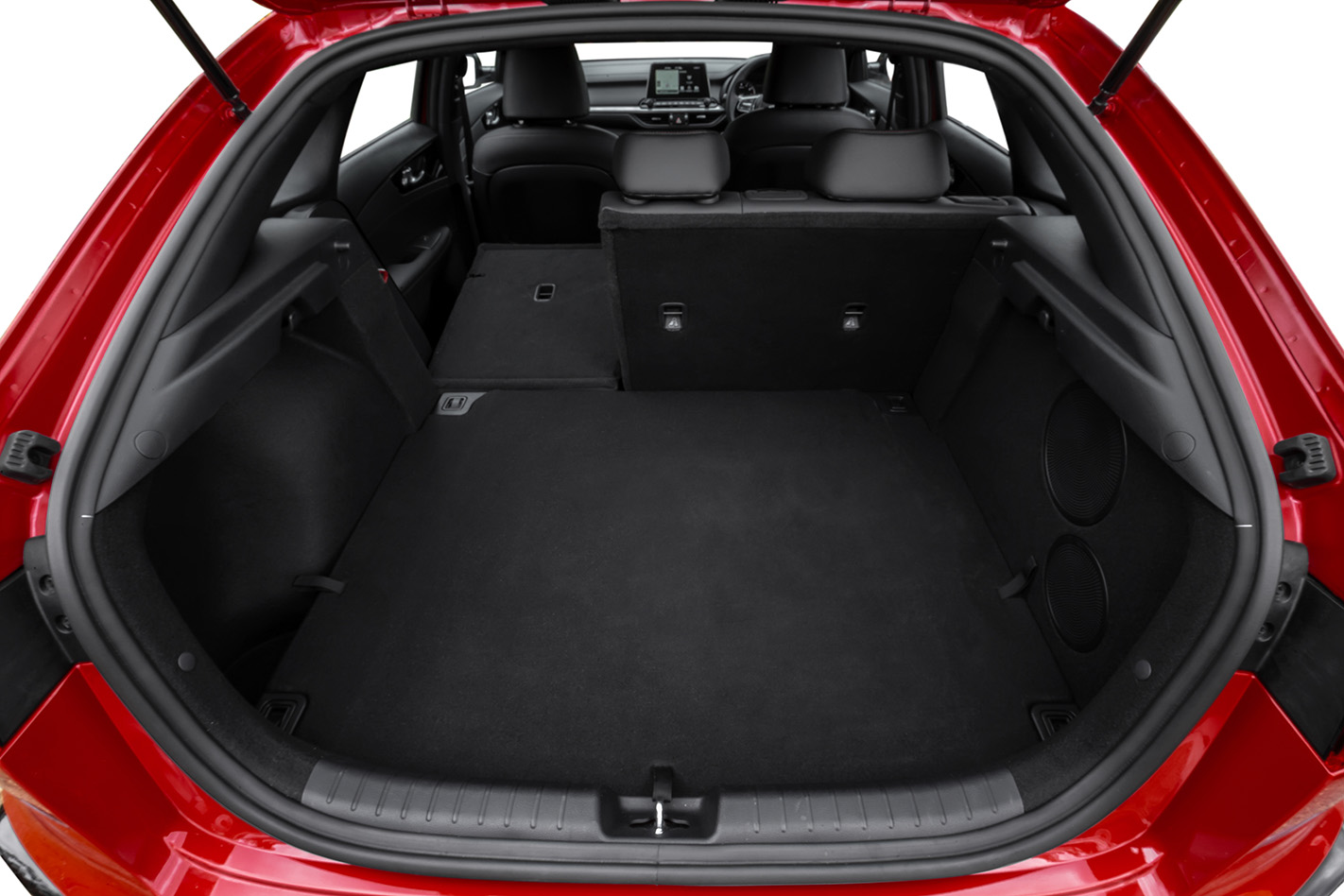
We’d say ample for a family of four with kids up to early teens. Rear seat legroom can get tight if a tall driver or passenger need their seat slid all the way back, but if that’s not the case then the back seat feels perfectly adequate. Boot space for the hatch is a healthy 428 litres with the seats up, stretching to 741 litres with seats folded.
SAFETY
We rate the GT quite highly here overall, and very strongly in its class. It features adaptive cruise control, lane-departure warning, blind-spot monitoring, driver fatigue alerts, speed-sign recognition, rear cross-traffic warning, and AEB. Not all AEB systems are created equal, though, as evidenced elsewhere in the Cerato range (which take a less-capable AEB system and receive a four-star ANCAP rating as a result). This is the more sophisticated system, which uses a combination of radar and camera to detect cyclists and pedestrians as well as cars. So yes, excellent job, as evidenced by its five-star ANCAP rating.
COMFORT
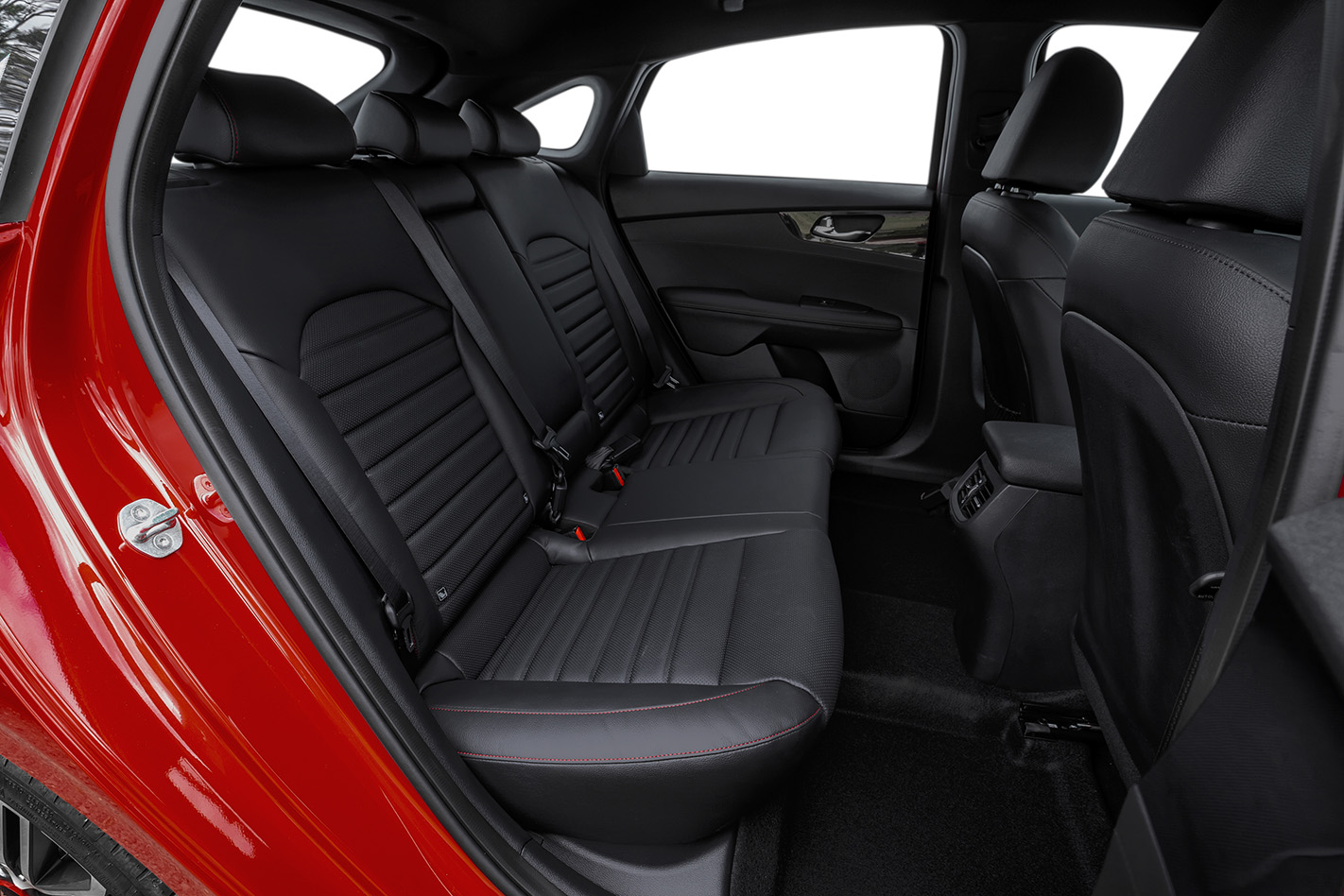
Let’s start with those front seats, which are far more deeply bolstered that those in the lesser Cerato models, meaning much better lateral support through corners, and greater comfort and support overall. Wind noise is well supressed; tyre noise is not excessive, but the high-performance Michelin Pilot Sport 4 tyres on 18-inch wheels are quite surface-sensitive, and can create a moderate roar on coarse-chip bitumen. In terms of climate control, seat ventilation or heating, space to drop your phone and wallet, the GT scores top marks. No complaints about the rear seat either; its base is long enough to support adult legs, and there’s ample shoulder and headroom for two burly blokes; plenty for everyone else.
As for ride comfort, it’s far from plank-like, but it does lean more towards ‘futon’ than ‘pillow topper’. You need to be willing to accept this trade-off for the reduced bodyroll in corners that comes with the revised suspension.
ON THE ROAD
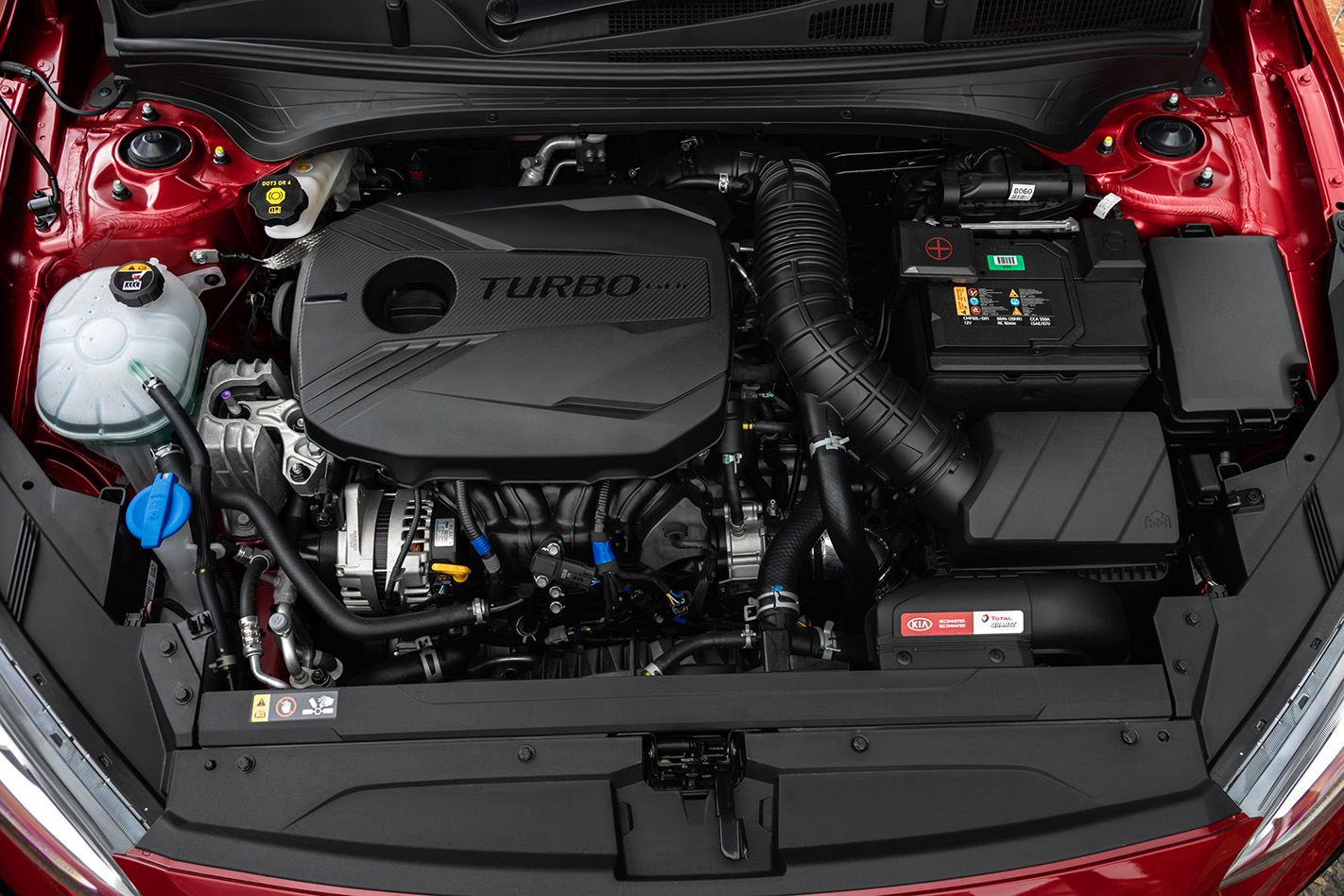
The most significant difference, initially at least, is that the way the new engine raises the GT’s responsiveness compared to the rest of the range. Rather than running the dated, noisey atmo 2.0-litre petrol four used across the rest of the range, the Cerato GT is fitted with the a 1.6-litre, direct-injected turbo-petrol four that is used in the Hyundai i30 N-Line (formerly known as i30 SR.) It produces 150kW and 265Nm, and makes a world of difference to how the Cerato drives. Instead of a fairly hollow and languid midrange delivered by the 2.0 atmo, the 1.6 turbo digs in early and feels eager and strong. At higher revs it’s not exactly hushed, but is way less intrusive and strained sounding compared to the 2.0-litre.
Fact is, though, you really don’t need to stretch it to maximum rpm to hustle along swiftly or overtake quickly and safely. Upshifting around 5500rpm is ample for even press-on driving conditions, and there’s not a huge amount to be gained by wringing it out anyway. Like most turbo engines, this one does its best work in the midrange, feeling grunty and robust from around 3000rpm to that 5500 point. Also aiding its response is the move to a seven-speed dual-clutch transmission, replacing the six-speed conventional automatic used by other Cerato variants (a manual is offered only on the entry-level S model).
Further driver satisfaction comes from the revised chassis tune and improved wheel and tyre package. Regarding the former, Kia’s local suspension tuning division arrived at a set-up that is significantly firmer than that run by non-GT-spec Ceratos, featuring stiffer springs, upgraded dampers, and thicker anti-roll bars. The software for the steering power assistance has also been recalibrated to deliver more weighty, driver-centric feel through the wheel. Appreciably more grip is delivered by larger 18-inch wheels (up from 17s on the Sport+ model one model rung below) running 225/40 R18 Michelin Pilot Sport 4 tyres.
The trade-off is that ride as mentioned – it’s unapologetically firm, and can feel a bit reactive and restless at suburban speeds. However in more flowing, open driving conditions, chances are you will appreciate the better body control and absence of the occasional wallow that can afflict the softer, lesser models below the GT.
VERDICT
Apart from the Stinger, we reckon this could just be the best-driving Kia in the range. It sets out to be a warm (not hot) hatch (or sedan) and mostly nails the brief.If we’re being picky, we’d like a slightly sweeter engine note at high revs, and keen drivers who really probe the limits of grip in appropriate driving conditions will notice that the stability control system intervenes too early and with little subtlety. But overall, the GT delivers enough improvement and provides enough driver involvement to justify its price hike over the Sport+, and gets a resounding thumbs-up from us.
Let’s get something straight right from the off: I don’t ever want to see kids (or almost anybody else) getting hurt in the name of enjoying themselves. I take my own fun very seriously, and the idea that you could become injured or worse just because you were trying to enjoy yourself is a shocker. And yet it happens. Anybody who can keep kids safe while allowing them to continue to have fun should be on a winner.
So I can see where the idea of pill-checking came from as a means of harm minimisation. The idea is that kids rock up to a music festival and, while they have their bags searched, they can also submit their Go-Go Pills to a government-funded grown-up who can test them and make sure they’re not going to leave junior lying in the mosh-pit, frothing from the gills until the stretcher arrives.
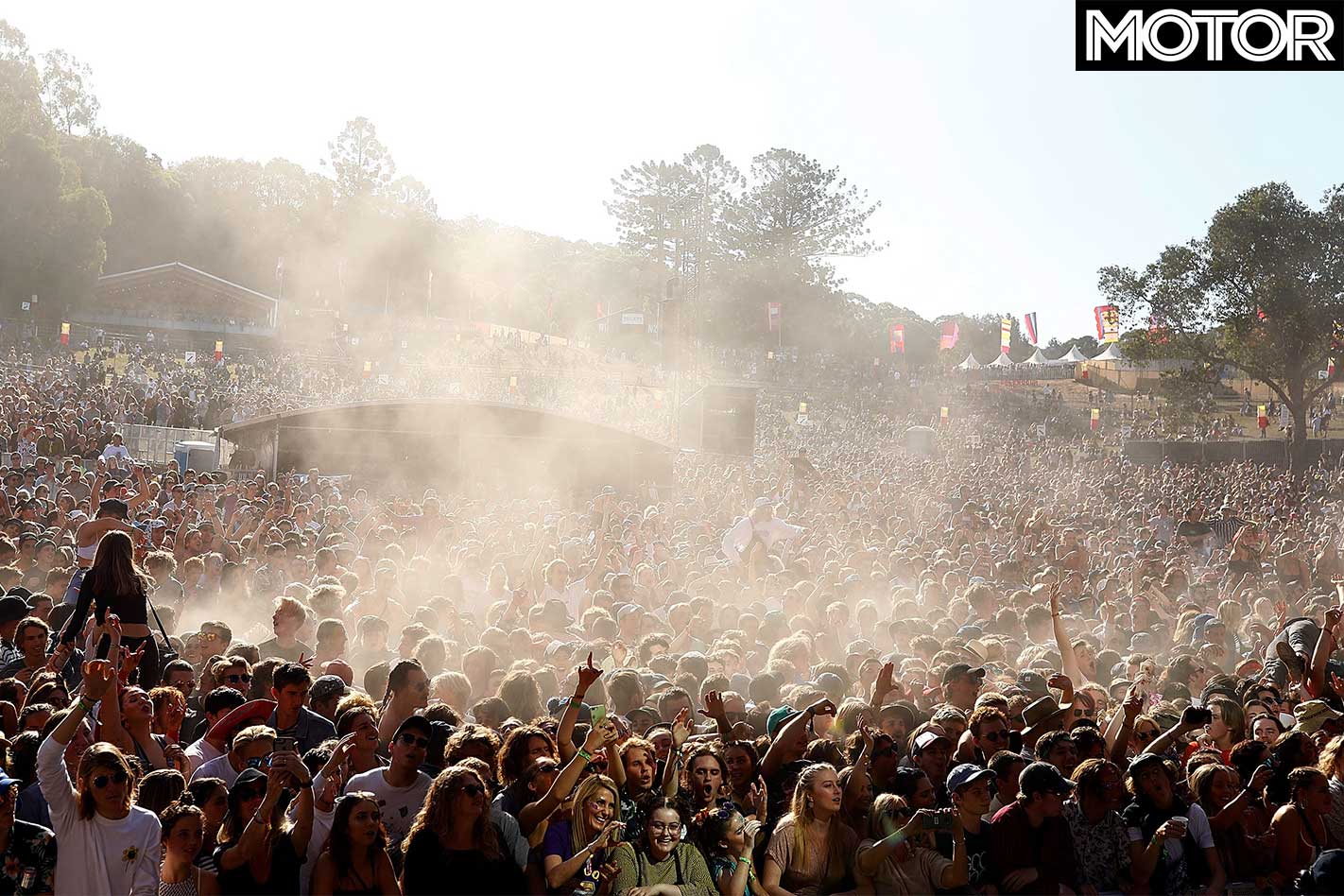
It’s true, of course; laying off the eccies would reduce the harm. No-brainer. But so would hunting down the shitbags who cook this toxic muck in suburban kitchens all over the country. And shooting them.
Seriously, how can a police force that can track a high-IQ white-collar crim across three continents and be waiting for him at the airport bar be unable to identify and corner some brain-fried douche-nozzle when he staggers down to the shop in his dressing gown for his Winny Blues and 400 boxes of cold-and-flu tablets?
In any case, just saying no (thanks Nancy Reagan) is firing marshmallows at the Town Hall. Nothing is going to stop youngsters scoffing a palm-full of happy beans at a three-dayer. So it looks like pill-checking might be a wise move. If you can’t stop illegal conduct, at least make it safe, right?
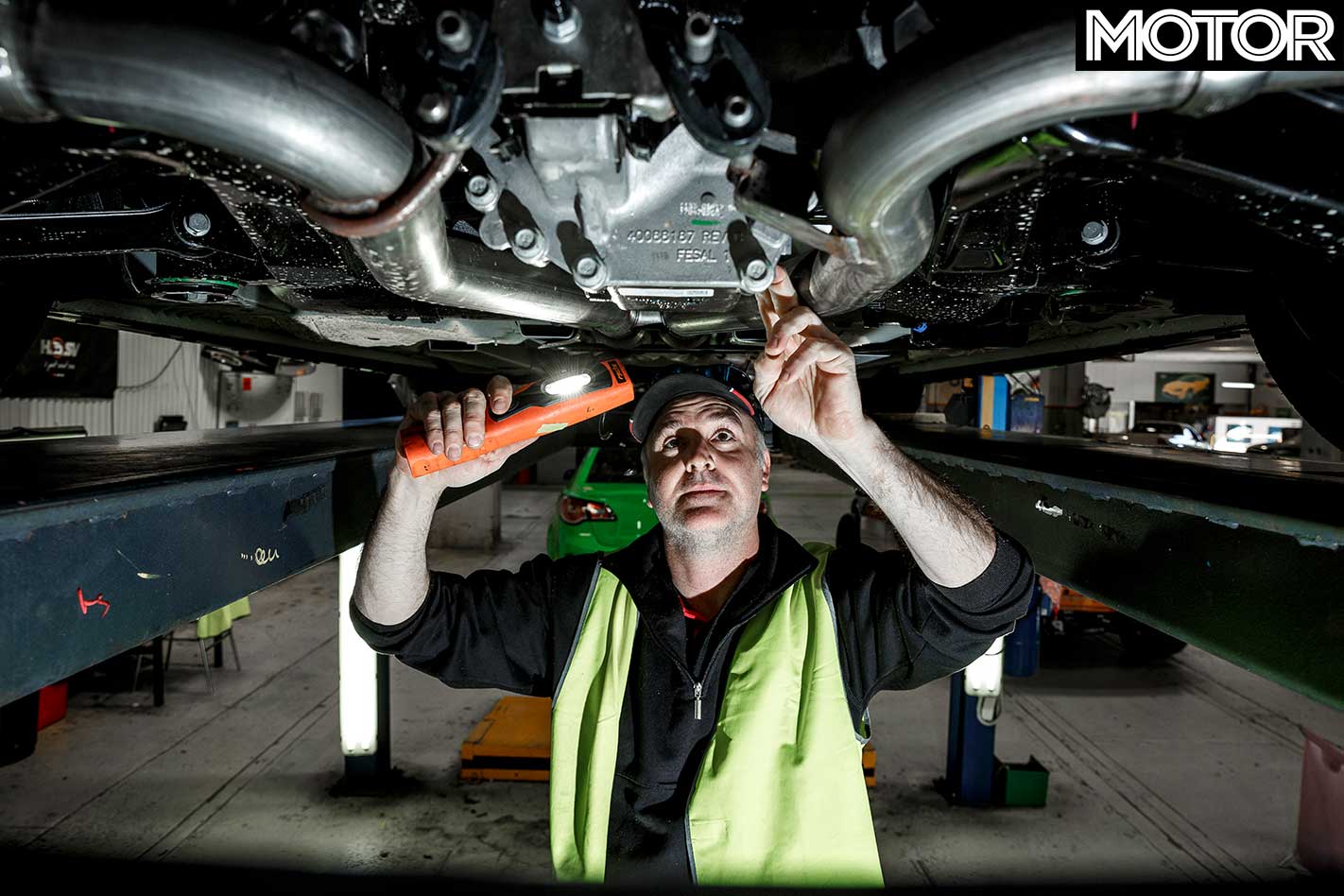
Okay, fine. But here it is from my angle. As a bloke who pays more tax than the first three rows of a music festival, I want my questionable behaviour treated in the same manner. I like to drive quickly, so I need the government to build a workshop where I can wheel my car in and have it checked over by a scientist to make sure nothing is going to go wrong as I tip it into a hairpin. I want it for free and it can’t lead to any further attempt by the law to stop me, even though they’ll know exactly what I’ll be up to. Just like pill-checking.
I’m thinking a big workshop facility at the start of the Putty Road and another one at the entrance to the Alpine Way. For starters.
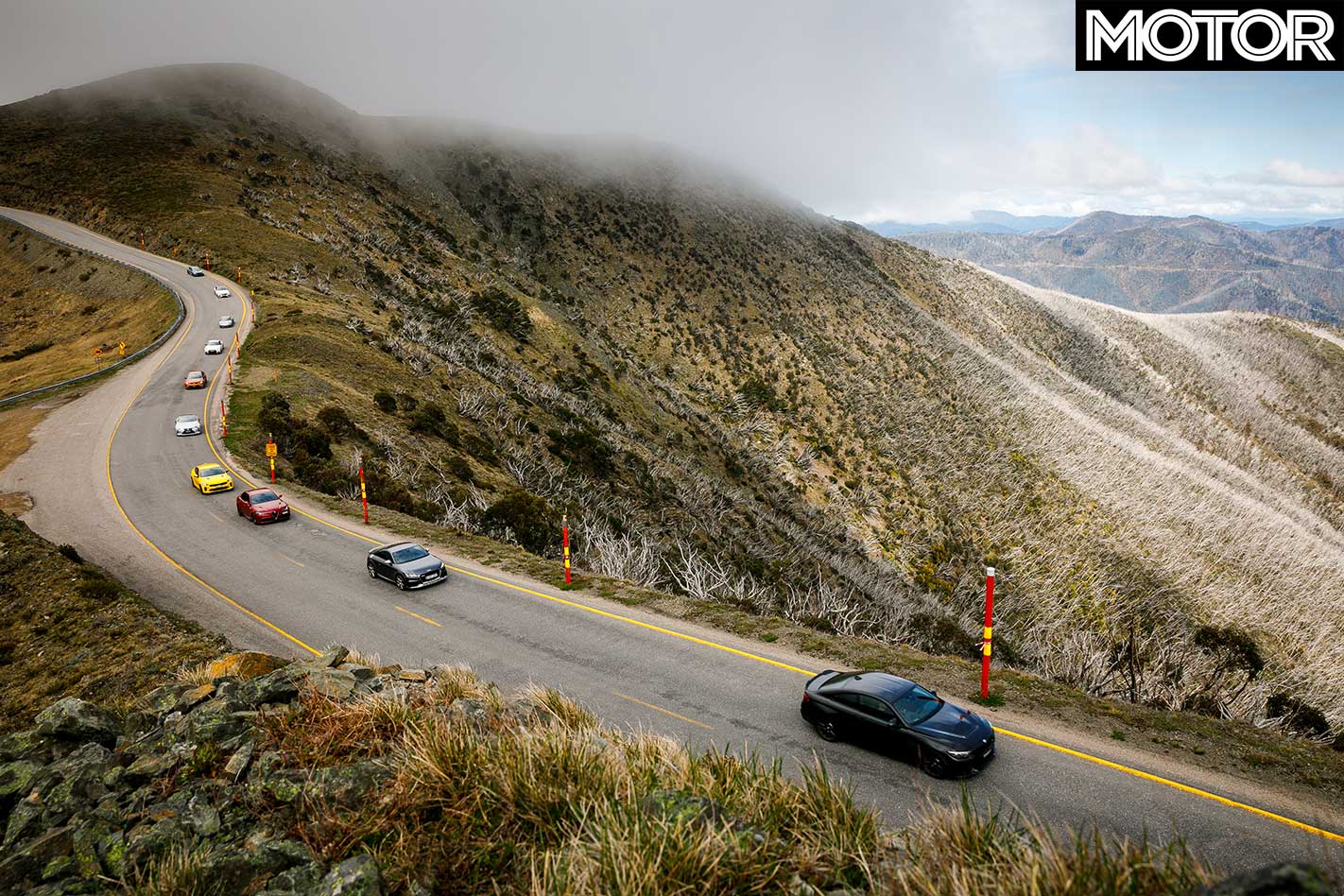
And if it proves successful, then just as the government has done for the illicit drug industry with safe injecting rooms, we can move on to safe burnout cul-de-sacs where I can drop a few skids while an emergency crew watches and steps in to haul me clear of the burning wreck when it all goes wrong.
Just like the festival ravers, I need to have the law-makers understand that I’m not about to stop my quest for fun just because it’s dangerous and illegal. Why should I? Face it, all these activities occur because we’re fundamentally bored first-world risk-takers. And that’s not our fault. Er, is it?
I’d like you to honestly answer a simple question: how far do you drive each day? I’m not talking about your weekend adventures, the Sunday joyrides or the early morning strafes along deserted, sinuous mountain passes, because, honestly, how often do we actually do those?
No, I’m talking about the type of driving we all try to forget. The tedious, infuriating, mind-numbing grind of traffic, speed cameras and tailgaters that, truthfully, makes up 95 percent of our time at the wheel.
Unless you’re a truckie, a cabbie, or you own a Camry, and are therefore an Uber driver, statistics suggest that your daily commute is 16km, one way. That’s the Australian average. So around 32km a day; 160km travelled in a working week. Even accounting for ambitious weekend adventures, it’s likely you won’t drive more than 300km in a week – a distance well within the reach of most modern EVs.
Now ask yourself this: will your next car purchase be an electric one? Again, the data shows your first mental response will be “nope”.
There are a number of glitches to potential EV ownership, but none is larger than the issue of range. It was, for a while, an omnipresent thought, an unpleasant smell that clung to any electric car. Australians in particular seemed to relish rubbishing EVs, our minds firmly on this brown land’s vast distances and lack of charging infrastructure as we sagely shook our heads and said “Nah mate, they won’t work out here.”
But then the talk of range anxiety faulted. It was slow at first, a slipping into the background that occurred so naturally we barely noticed. You can thank Tesla for that. Say what you like about those Kool-Aid chugging, tech-altar worshipping disruptors from California, but they changed the game. Talk of ranges leapt from a few hundred kays to 400 plus, and slowly but surely, fast chargers were drilled into the ground on key arterials. Now we have ‘supercharge highways’, a cresting wave of cutting-edge electric SUVs from companies as disparate as Jaguar and Hyundai that claim 450km ranges, and enough charging points on the east coast to feasibly drive from Melbourne to Cairns.
I’ll admit that for a brief period I genuinely thought range anxiety was dead. That it was an unpleasant hiccup of a new technology, which thanks to progress, had been quietly taken out the back and shot.
But, as happens from time to time, I was wrong.
Wheels has driven more electric cars in the past two months than it has in the last decade and the overall experience has been fraught. It’s true we drove them much further than 32km a day, but the issues have been numerous. Cars have thrown up catastrophic system errors and refused to move, software glitches have drained batteries at fearsome rates, charging stations have been non-responsive or equipped with the wrong type of plugs, cars have arrived with no charging cables at all, and the overarching experience has been one of real-world driving seeing most fall disappointingly short of their claimed ranges.
This magazine’s EV megatest, which as far as we can tell is the first of its kind in Australia, was especially ambitious and challenging. It did, however, cement one irrefutable fact: ‘range anxiety’ is a truly appropriate label. Multiply the above problems across six cars over four days and it’s little wonder that deputy editor Enright returned to the office a broken man, his face painted with the strange, grim expression of someone who has spent the last four hours in the left-hand lane on the Hume, his speed dropped below 90km/h, his nose tucked in behind a truck, his eyes glancing furtively at the battery gauge.
These problems will, of course, eventually be ironed out. Few industries move as quickly as the tech world, infrastructure will continue to develop, and for most owners, fitting a wall box at home will alleviate, if not totally remove, the anxiety of day-to-day driving. And the future is bright. Wheels regularly champions the benefits of electric cars and it will continue to so, but for now, there’s still a way to go before Australia feels properly ‘EV ready’.
