
The next generation Toyota RAV 4 will arrive in Australia in the second quarter of 2019, and Toyota’s local office says it will land here bristling with more under-bonnet technology than ever.
Headlining the powertrain list will be a hybrid AWD option, something which has been available in the US market for some time but has yet to make its way to Australia. With the arrival of the new-gen RAV4, Toyota will become the second mainstream manufacturer to offer a hybrid midsize SUV – the second being Mitsubishi with its Outlander PHEV.
Powered by a 2.5-litre direct-injected petrol inline four with variable valve timing (and shared with the Toyota Camry hybrid), the RAV4 hybrid will deliver a combined output of 155kW and 221Nm to all four wheels. However, there won’t be a traditional tailshaft taking mechanical drive to the rear wheels as with other all-wheel drive RAV4s. Instead a rear-mounted electric motor is responsible for turning the RAV4 hybrid’s rear wheels, severing the physical link between them and the engine.
Why is that so? Because driving the rear wheels electrically rather than mechanically actually saves weight and improves packaging, thus boosting fuel consumption while still providing plenty of slippery-surface traction.
Two non-hybrid powertrains will also be offered, a 2.0-litre inline four producing 127kW and 203Nm (borrowed from the Corolla and exclusively front-wheel drive) and a Camry-sourced 2.5-litre with 152kW and 243Nm. Both are petrol, and it’s unlikely the current model’s diesel option will make a comeback.
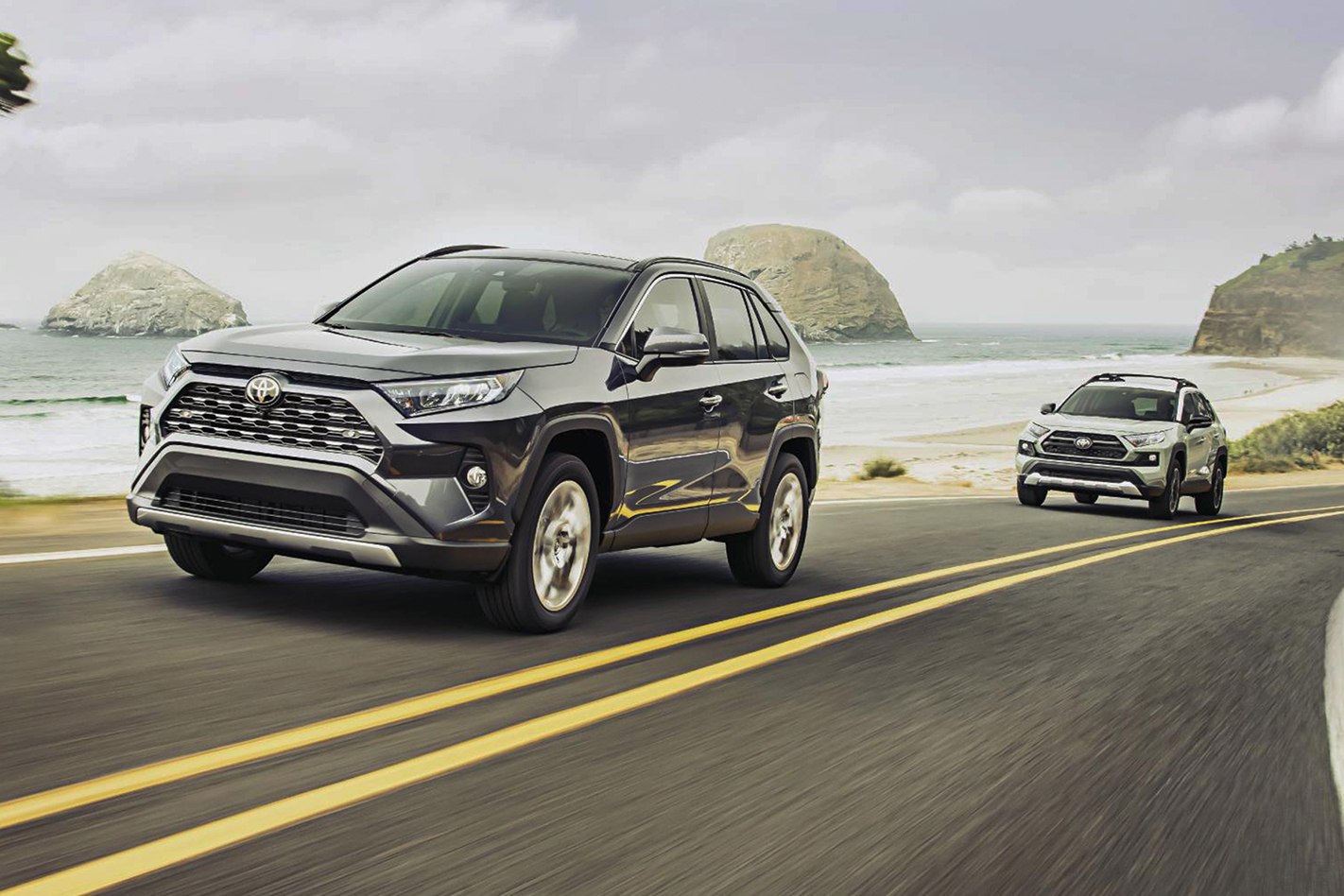
The base 2.0-litre will be offered with the option of a six-speed manual with rev-matching (a segment first) or a CVT automatic, and its 127kW power output represents a significant power jump over the outgoing RAV4 2.0-litre’s 107kW figure. It’s a recurring theme. The new 2.5-litre also generates 20kW more than the motor it replaces, and the hybrid – as the new fuel-sipping alternative to the diesel – produces a sizable 45kW more than the old diesel.
The 2.5-litre will also boast a new eight-speed automatic and the option of torque-vectoring AWD, along with multi-terrain drive modes to help it grip the ground. Able to channel up to 50 percent of drive to the rear axle, the torque vectoring driveline also enables that torque to be fed to the left or right wheels depending on which side has more traction.
Full features, specifications and pricing will be announced when the new RAV4 arrives in the second quarter of next year.
“The estate car market will never be quite the same again now that the Range Rover has been introduced. It is, after all, just as much an estate car as anything else…” – LJK Setright, Car, February 1971
WHETHER you like it or not, the SUV is the modern evolution of the wagon. Resist the temptation to aerate this messenger in a hail of bullets and consider that for a moment. Buyers have voted with their wallets and wagons now sit a little higher and can go a little farther off the beaten track. Leonard Setright, a cranky, British facsimile of Peter Robinson, had this figured out almost half a century ago but, for most of us, it’s taken that long for the penny to drop.
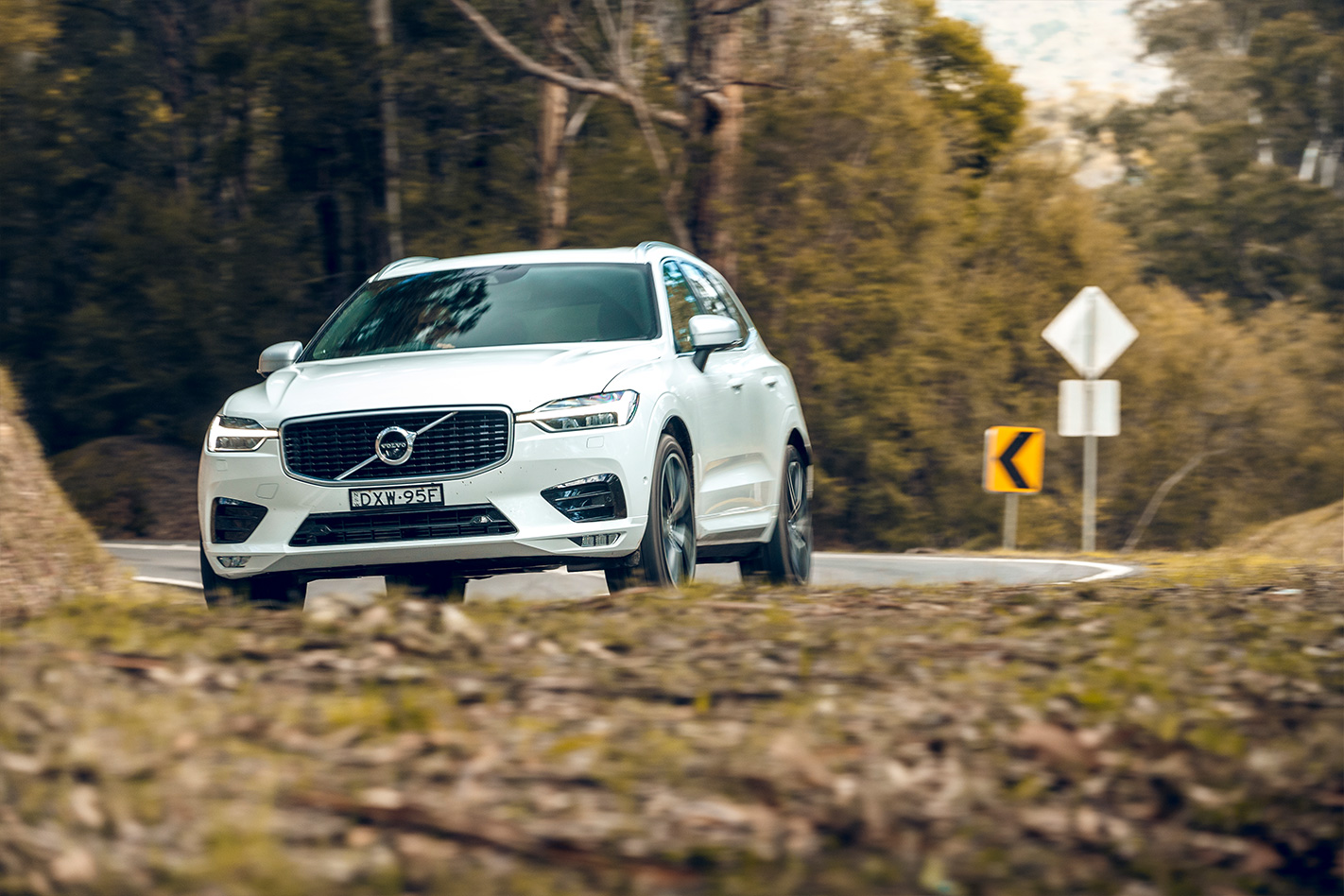
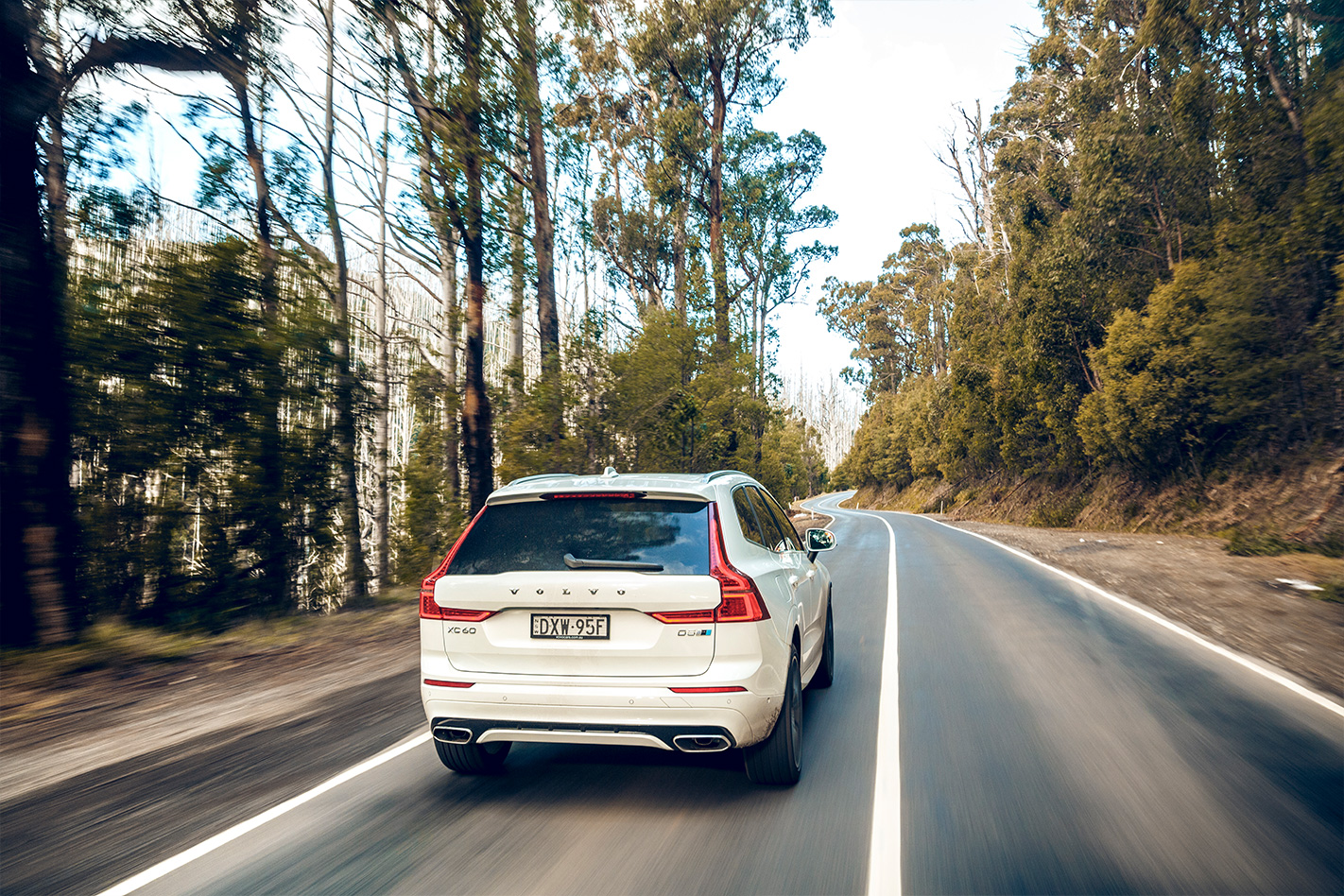
Indeed, it took until 2004 for Wheels to anoint an SUV with its Car of the Year gong and that year’s winner, the Ford Territory, has belatedly been joined in the past two years by two more of its ilk; the Mazda CX-9 and the Volvo XC60. Our reigning champ swept the board in the final round of voting, and the Swede has imperiously batted aside anything in its path since. It cleaned up in its first Wheels comparo, is reigning World Car of the Year and, by my reckoning, is likely the most extravagantly awarded vehicle in history. Everything to lose, then.
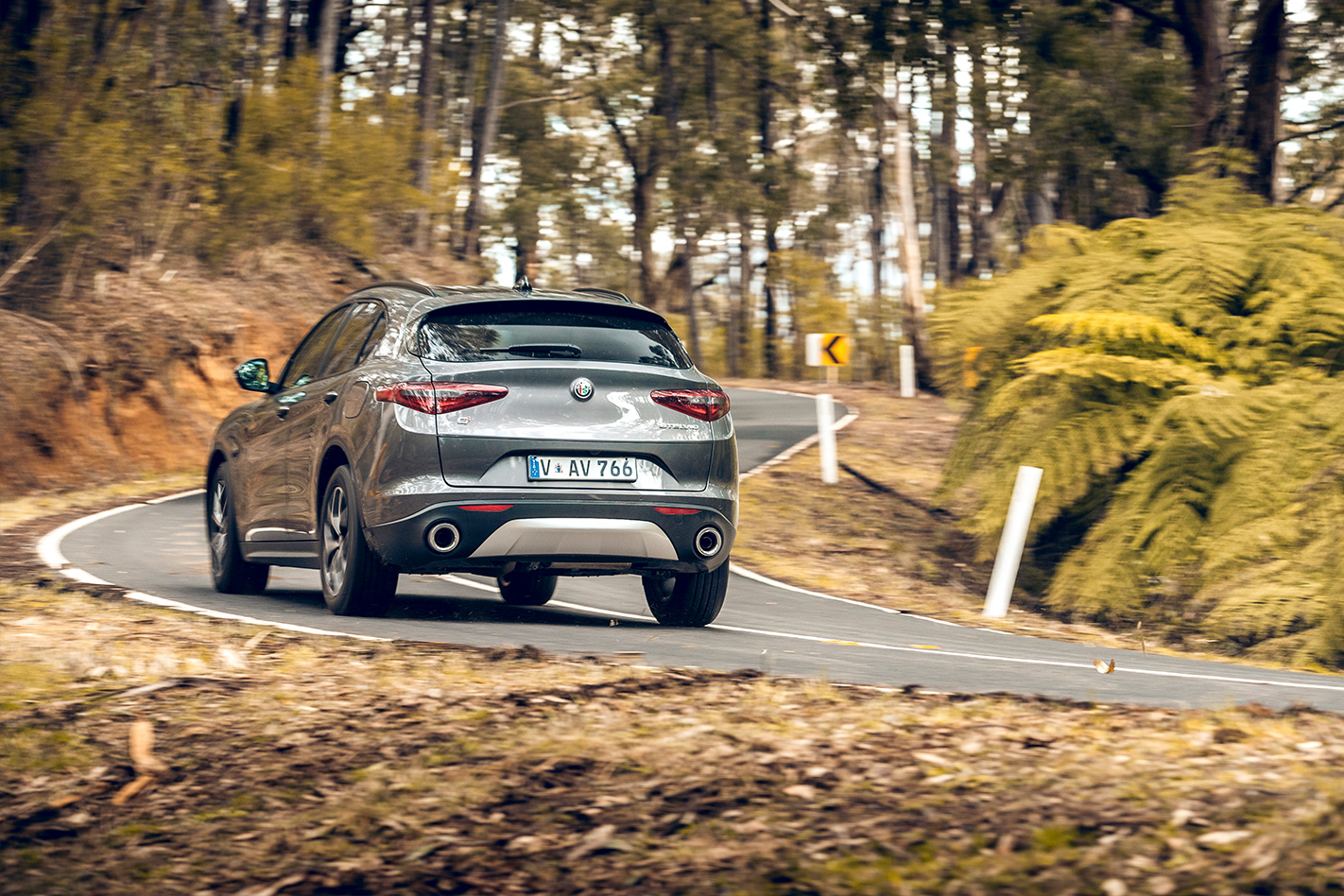
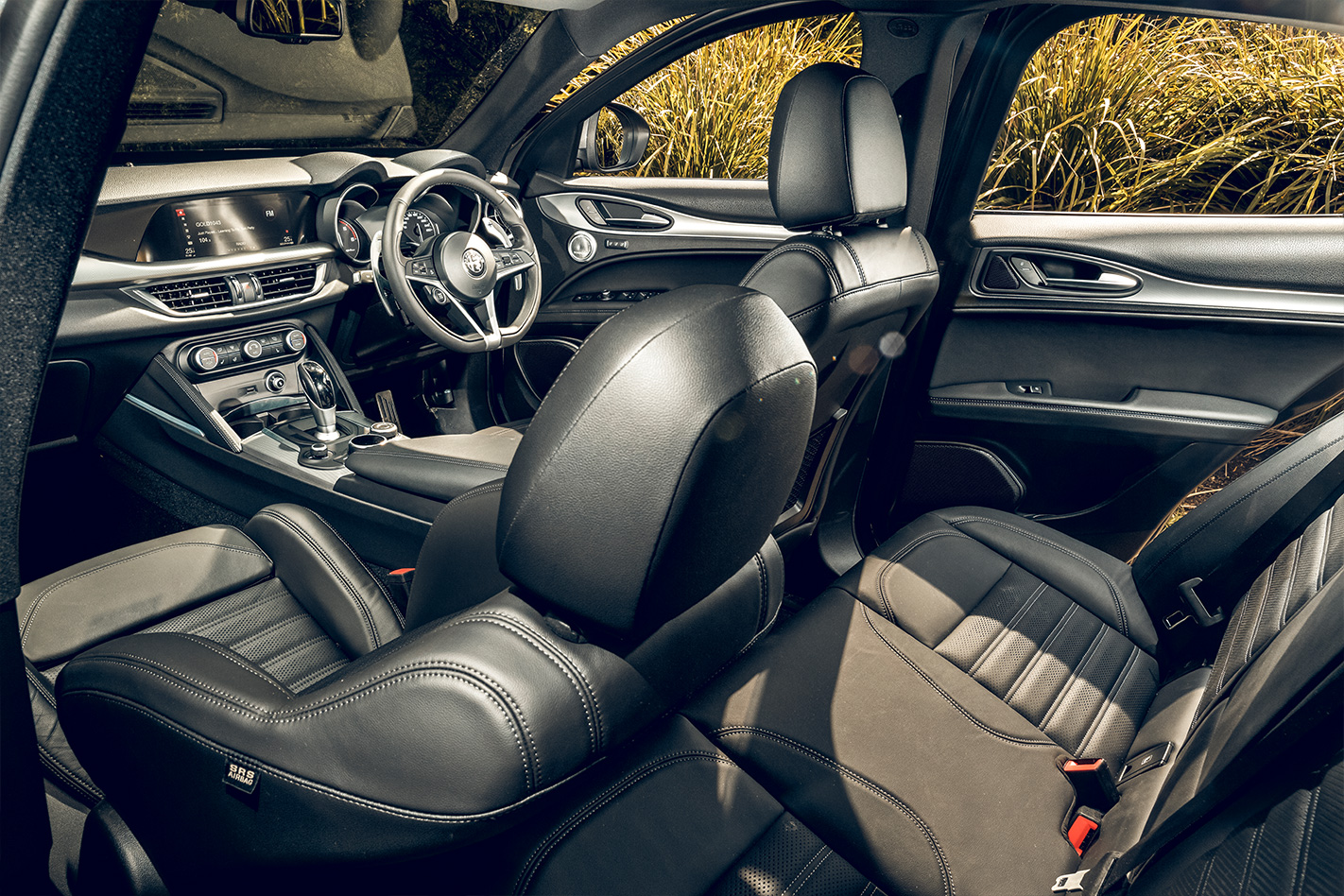
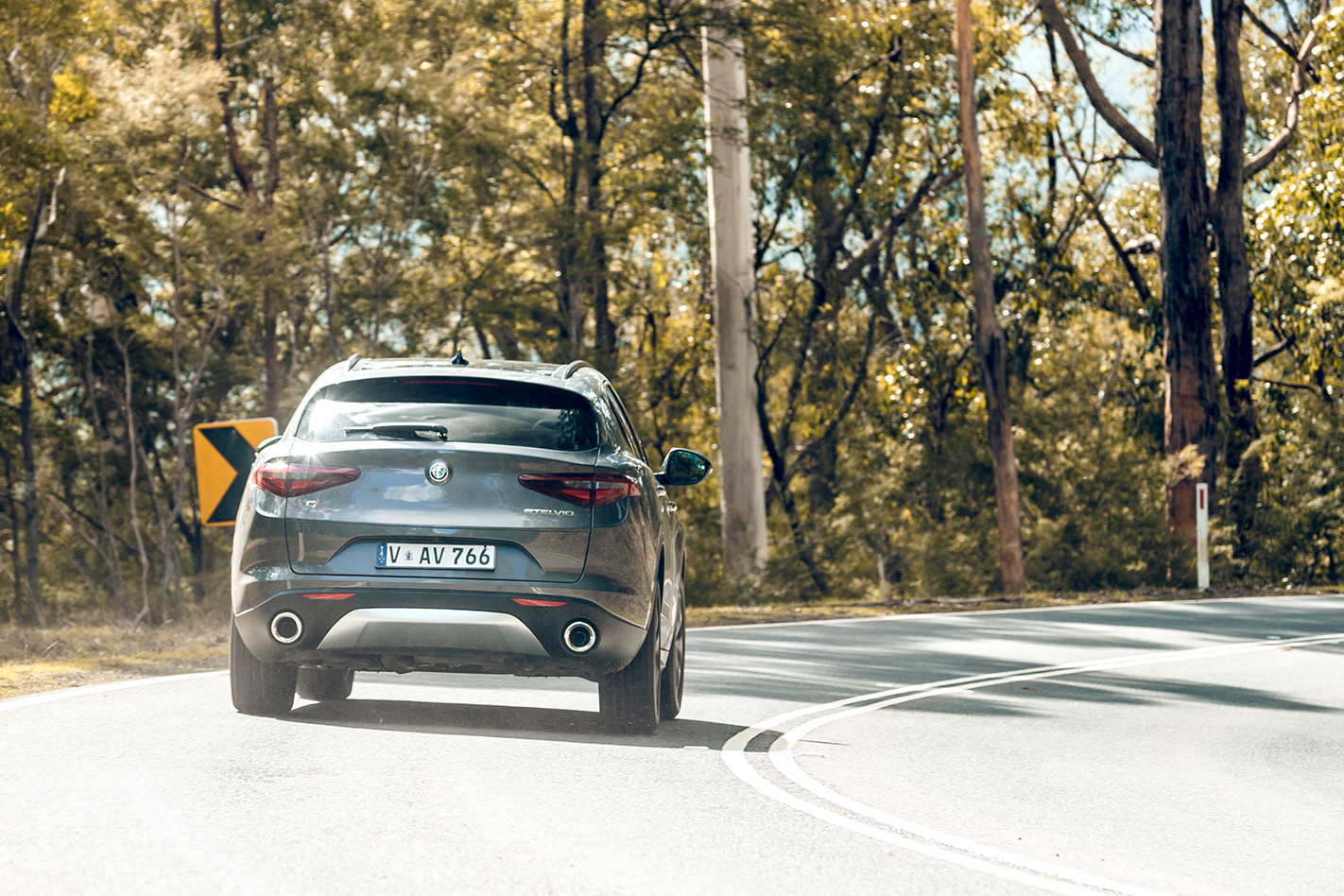
The arrival of Alfa Romeo’s Stelvio was the catalyst for this test. Its sedan counterpart, the Giulia, landed a podium spot at the XC60’s COTY win and we were curious to see whether elevating the Alfa’s Giorgio platform genes a few centimetres would detract from the formula. We’re scratching our heads a little here and wondering when the last time we pitched the philosophical poles of Alfa and Volvo into a comparison together, so to tie the two together and act as a median point of reference, we’ve also included BMW’s X3.
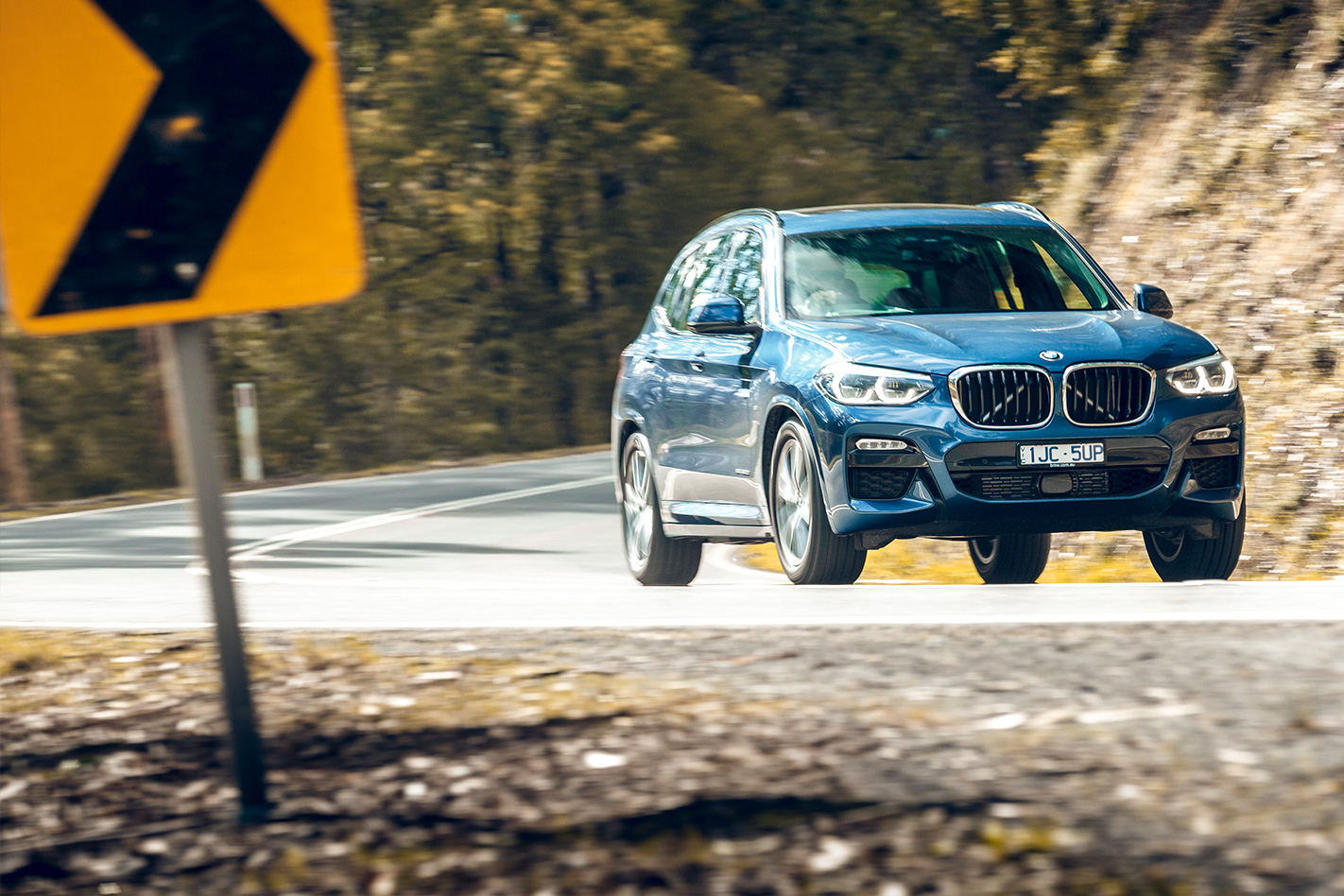
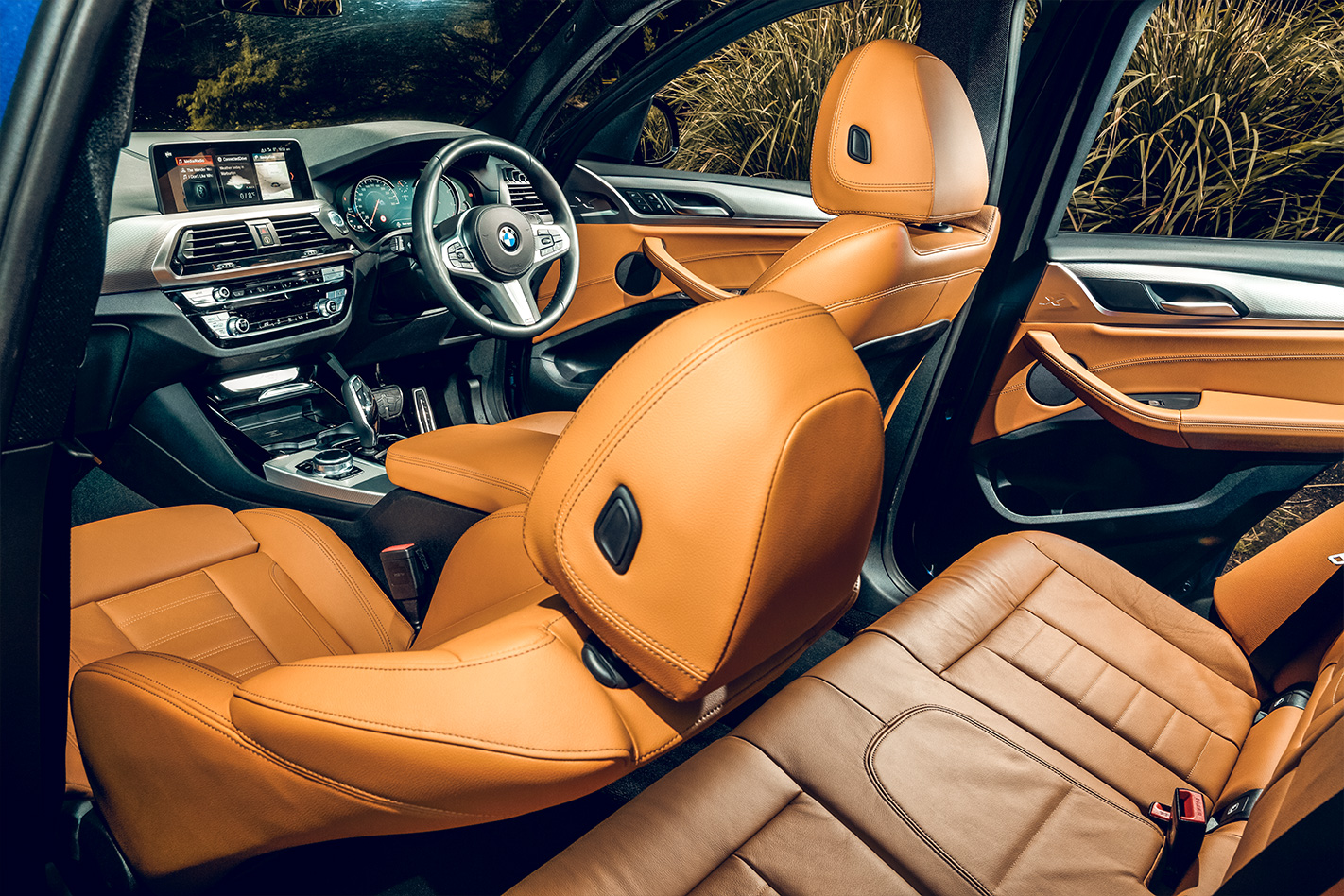
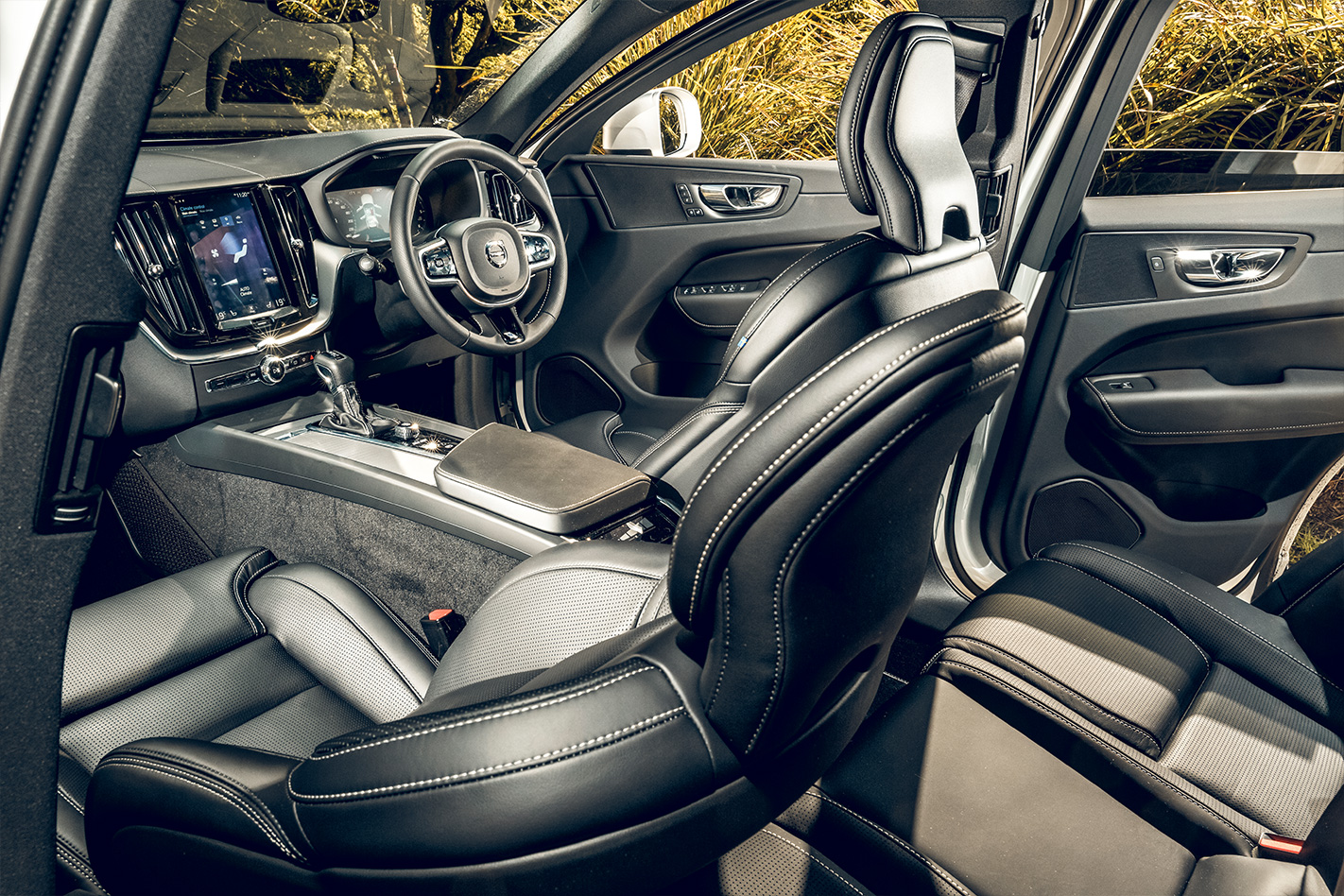
All three wagons are diesel powered and drive goes to all four wheels. In price order, we have the $67,900 Alfa Stelvio Q4 diesel, followed by the $69,900 BMW X3 xDrive 20d with the Volvo XC60 D5 R-Design weighing in at $75,990. But then things get a bit more convoluted. We’ve always recommended that you spend an additional $2490 on air suspension when specifying an XC60, but this one’s running on steel springs and, to compound the issue, huge 21-inch alloys. Add the optional Lifestyle Pack which includes a glass roof, heated front seats and metallic paint and this one runs out of the showroom at $80,840. The Stelvio we have here includes the First Edition pack, a $6000 bag of tricks that adds 19-inch wheels, adaptive suspension, a 14-speaker Harman Kardon stereo and a whole host of other bits.
You’d be mad not to tick this box, but the as-tested price gets lifted to $75,200. Then there’s the BMW which adds, well, everything. An M-Sport package, a glass roof, metallic paint, Vernasca leather, the Driving Assistant Plus package, a navigation upgrade and the Innovations Package, which lifts the price to an eye-watering $88,650.
Most of these optional inclusions are nice-to-haves, which we can effectively ignore, but the Alfa and BMW ride on cost-plus adaptive suspension systems while the Volvo, which needs to, doesn’t. And as soon as you drive them down a road, you notice the fact. The XC60 never quite settles into the sort of serene glide path you expect. It’s never harsh nor does it feel as if it’s running out of answers at sensible speeds, but there’s a tiring nerviness to its ride. Switch the BMW and Alfa into their soft suspension settings and they’re both more confidence-inspiring. The Alfa feels supple and limber while the X3 is wonderfully serene.
Although buyers who prioritise handling and performance tend not to make their next search criteria ‘diesel’ and ‘SUV’, there’s also a marked difference in how these vehicles tackle a demanding road. The Alfa is an unmitigated joy. No, it’s not as sharp as a Giulia, with additional roll and pitch, but it’s the only one of these three that you’d take for a drive just for the fun of it. Everybody who drove it emerged shaking their heads in admiration and then wondering what the hell the 375kW Stelvio Q is going to be like. In Q4 form the Stelvio already has a monster front end and a supremely responsive gearbox.
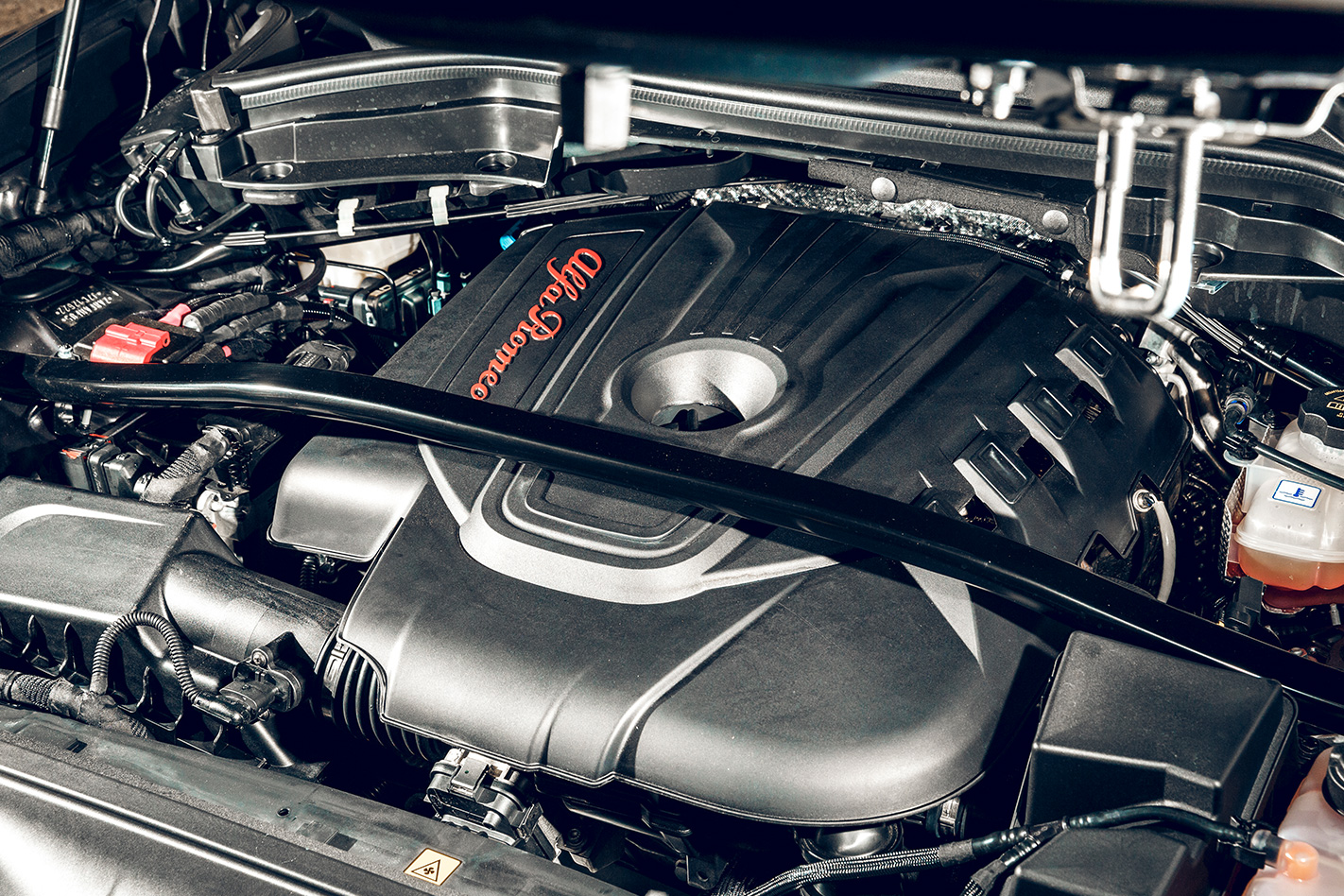
Should you scruff it up a road in manual mode, it’s the only one here that will sit on the redline before you click up on one of those delicious fixed aluminium paddles. The hypersensitive brakes take some getting used to. Most of the time you can modulate them with just a gentle flex of your big toe, but anything more than that requires a sensitive caress with the clog. The 2.1-litre four is vocal when stretched but it’s punchy, carrying 250kg less up the road than the XC60 and delivering 100Nm more than the X3. In terms of straightline grunt to 100km/h, the X3 is to the Stelvio what the Alfa is to a Porsche 911.
Dynamically, the BMW and the Volvo are an intriguing pairing. The BMW is markedly the slowest, and while it can’t match the laser focus of the Stelvio, nevertheless does a tidy job on a challenging road. The steering is actually better in Comfort than Sport, the latter introducing an inconsistency that always requires half a hand more lock mid-corner, resulting in disappointing apex authority. Switched to Comfort, it’s far easier to scribe a clean line and feed what power you have. Body control in both modes is probably the finest of the bunch, but it rewards a disciplined driving style. Try to bully it into a corner on the brakes, as you would with the Alfa in Dynamic mode, and the X3 lapses into understeer earlier than you’d like.
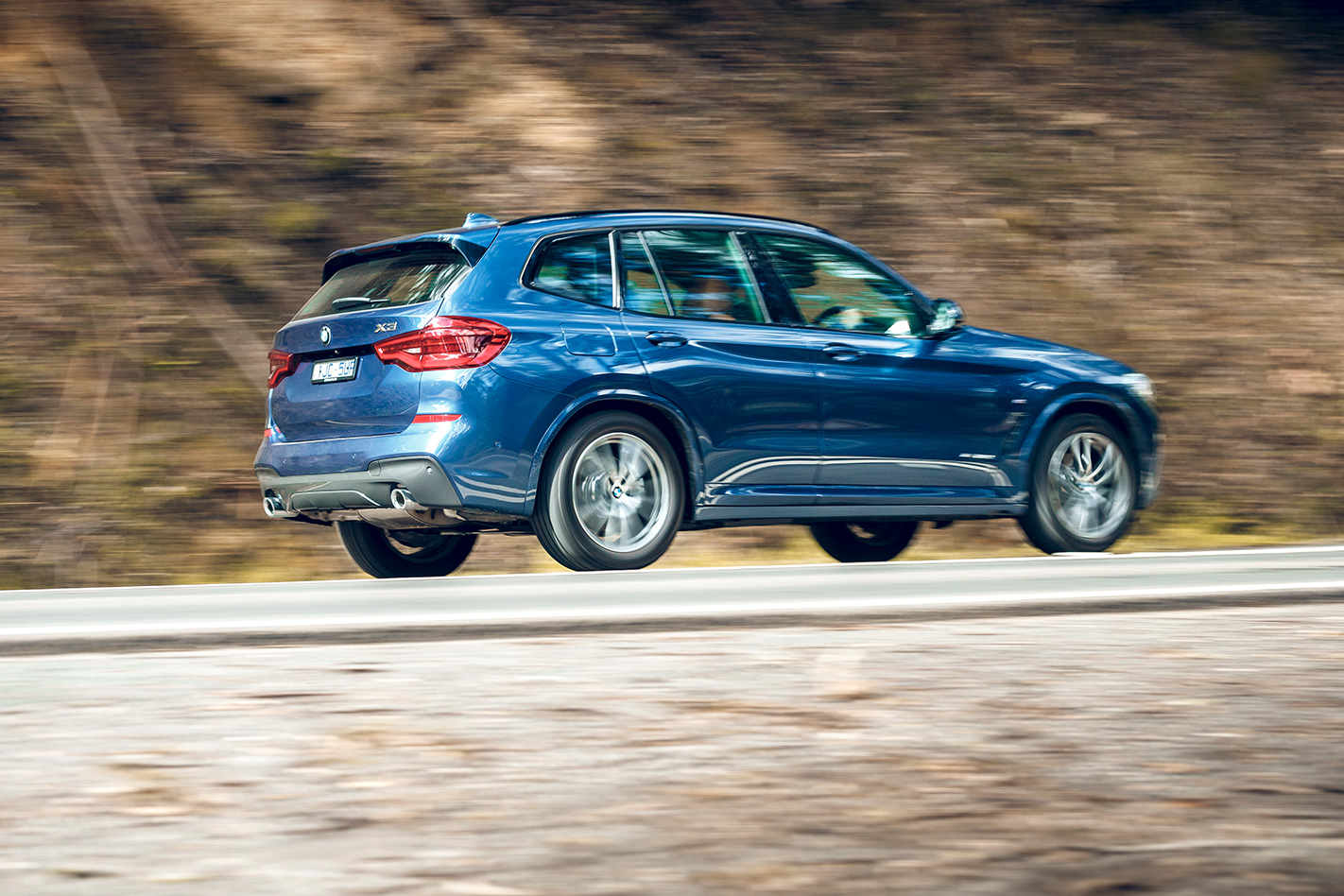
The Volvo makes good on its 37kW power advantage over the German SUV, relentlessly reeling it in on straights, but the XC60’s weight, remote steering and pattery front end sees the BMW distance it on corner entry. Refinement at freeway speeds is close to the X3 with the Alfa introducing a little more tyre roar and engine noise into the cabin. The Stelvio’s superstructure also has a curious propensity for long-decay thrums as it hits expansion joints, harmonic frequencies ringing through a chassis that clearly suffers a transient acoustic damping inadequacy.
What the Volvo loses in dynamics it claws back with perceived quality. Put bluntly it feels far more expensive inside than the BMW and in a completely different class to the Alfa. You’ll need to invest some time getting to learn the touchscreen control system, but once you’re up to speed with it, you’ll be flicking through it like Tom Cruise in Minority Report. The quality of fit and finish, the boldness of design, the depth of considered thinking inside the vehicle and the sheer presence of the XC60 make it a lovely thing to live with day in day out. Just ask editor Inwood, who’s suffering some sort of post-traumatic stress from having to hand back the keys to his XC60 T8 long-termer.
The BMW’s cabin looks like a design trope that’s reaching pensionable age by comparison. My teenage nephew would doubtless describe it as ‘normie’, but here’s the thing: it all works, beautifully and without that level of opacity that you’ll initially experience in the Volvo. The biggest door bins, a wireless phone charger, physical buttons for all the key functions, a tactile input system, the list goes on. Only the overly chubby steering wheel, poor legibility of electroplated button typefaces and the lack of steering wheel adjustment range detract from its functionality. It’s also easily the biggest inside, with acres of space in the rear, an agreeably low rear window line and the largest boot.
Then there’s the Stelvio. Pluses? It has a classically handsome twin-cowled instrument panel, great seats and a biggish boot. Stacking up the minuses is depressingly easy. The most perplexing fact about the Stelvio is that it takes the chassis of the Giulia, a compact sedan for the thrusting single buck, and in transforming it to the sort of vehicle that might be deemed family-friendly, reduces the length of its wheelbase. It’s far more cramped in the back, and the rear door aperture is pinched if you’re shoehorning kids into child seats. It also lacks the head-up display and adaptive cruise control systems that have become standard fit on almost all of its rivals. It’s no hyperbole to say that it feels more akin to a Hyundai Tucson than a Volvo XC60 inside.
Arriving at a verdict here presents us with a dilemma. As-tested, the vehicle with the most rounded set of skills is the BMW X3 xDrive 20d, but much of what makes this particular car feel so good comes from the liberal sprinkling of optional fairy dust and the hardly negligible effect of the adaptive damping. It’s also hard to overlook the fact that, for an engineering-led company like BMW, the X3 is the slowest and thirstiest on test. By contrast, the only notable minus on the Volvo’s ledger is the omission of its brilliant but optional air-sprung ride. Were we to specify these cars as we’d recommend them, the Volvo would comfortably win, so to decide this test on the vagaries of a press office box-ticking exercise seems invidious in the extreme.
The Alfa clearly comes third albeit with some caveats. It’s a delightful thing to pedal but an average SUV and the criteria for success here is as a versatile family-friendly oil-burner. If you fancied a Giulia but want something that you can fling a bike or camping gear inside, the Stelvio earns a solid recommendation. It’s an easy thing to love as long as you don’t expect it to excel at the utilitarian, and we can’t help but admire its intransigent refusal to play to established rules.
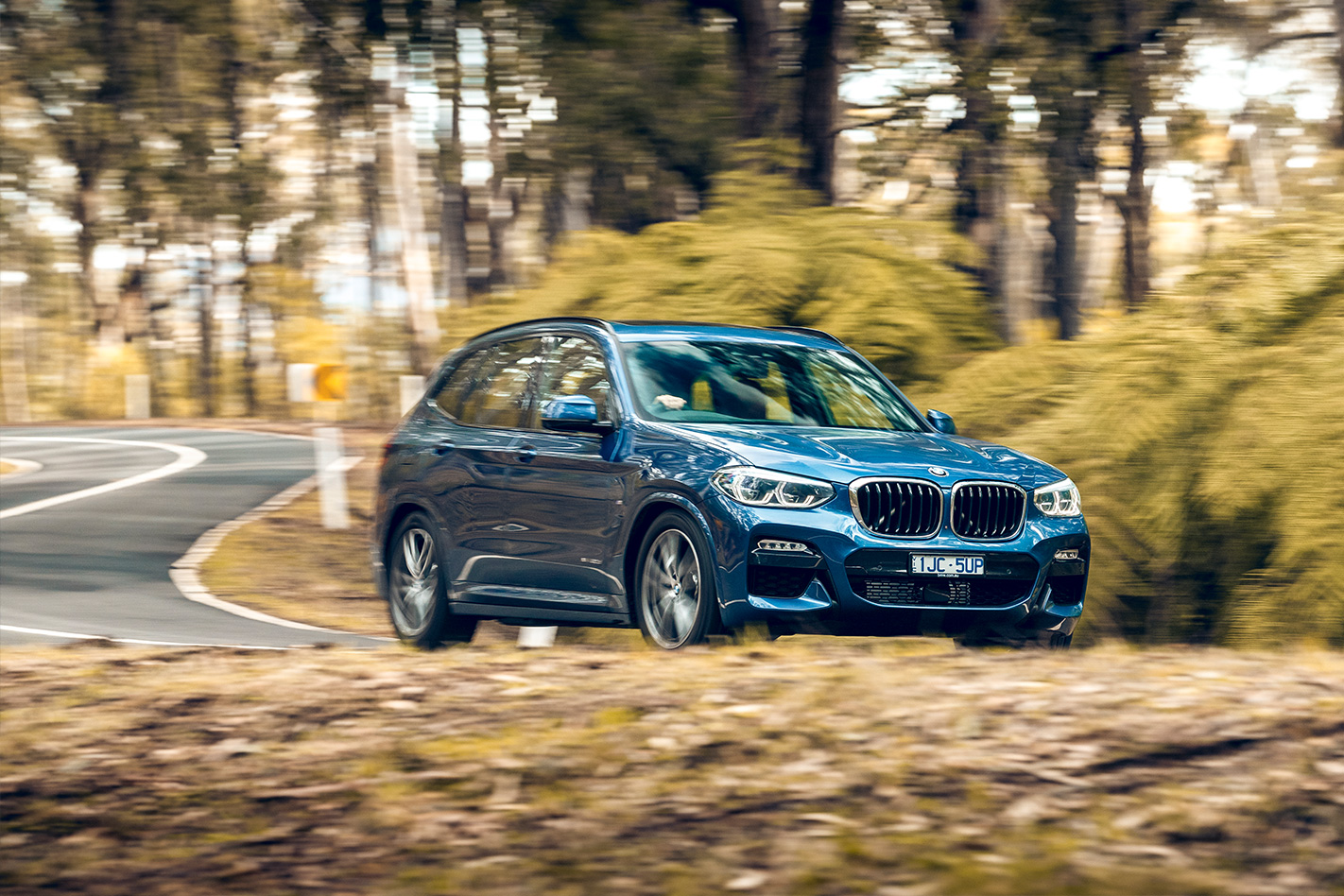
Despite Volvo doing its best to hobble its car for this review, the least convincing XC60 we’ve tested squeaks in by a nose. The BMW X3, a car we’ve pigeonholed as a perennial underachiever, almost managed a Bradbury here and in the process has won a serious measure of respect. While the Volvo wins on a theoretical tot-up, if there was a spiritual winner’s award on offer it’d be winging its way to Munich.
Mitsubishi’s long-departed (and extremely long-lived) Express was the stuff of commercial legend, and the Japanese brand will soon re-enter the light commercial van world… only this time, it’ll be selling rebadged Renault Trafic vans.
Mitsubishi is now part of the Nissan-Renault Alliance, and its chief Carlos Ghosn – one of the most respected car bosses in the automotive world – has been forthright in his desire for the three brands to shed costs by sharing products. In fact, the three companies will cleave around $15 billion in costs by 2022, if Mr Ghosn gets his way. Grafting Mitsubishi badges onto the Trafic is certainly one way of achieving that kind of cross-brand synergy.
The Trafic sits above the Kangoo and underneath the Master in Renault’s commercial line up, and competes against the evergreen Toyota HiAce, the Hyundai iLoad, Volkswagen Transporter and Ford Transit. Since the departure of the Express in 2014 after an epic 20-year production run, Mitsubishi Australia has been without a light or medium-size commercial van in its lineup.
To this end, he has announced that the Renault Trafic light commercial van will provide the basis for a new range of Mitsubishi LCVs from 2020. To be built in Renault’s huge Sandouville plant, the Mitsubishi-branded product will hit Australia in 2020 – or earlier.
Whichcar.com.au understands that Mitsubishi Australia’s CEO Trevor Mann made the request for a Trafic-based van directly with Renault-Nissan-Mitsubishi top brass, and that he wants the van on stream as quickly as possible.
The current Trafic is actually powered by Nissan turbo diesels. The short-wheelbase versions use a single-turbo 1.6-litre four-cylinder unit, while the long-wheelbase versions use a twin-turbo version of the same engine.
The only transmission available is a six-speed manual; however, by the time the Mitsubishi-badged version surfaces, an automatic variant of the Trafic will be ready.
MORE TO COME
The project was top secret. Only the inner circle of the Mercedes Car Group had been informed about it; only a handful of sworn-in engineers and mechanics knew the true nature of the products they were working on.
This feature was originally published in MOTOR’s January 2004 issue
First discussed by the core smart management over a few beers late last year, project PD6TF officially kicked off on February 20, 2003. When asked what the codename stood for, smart told suppliers that they were considering a Dakar rally raid vehicle with a turbocharged six-cylinder engine.
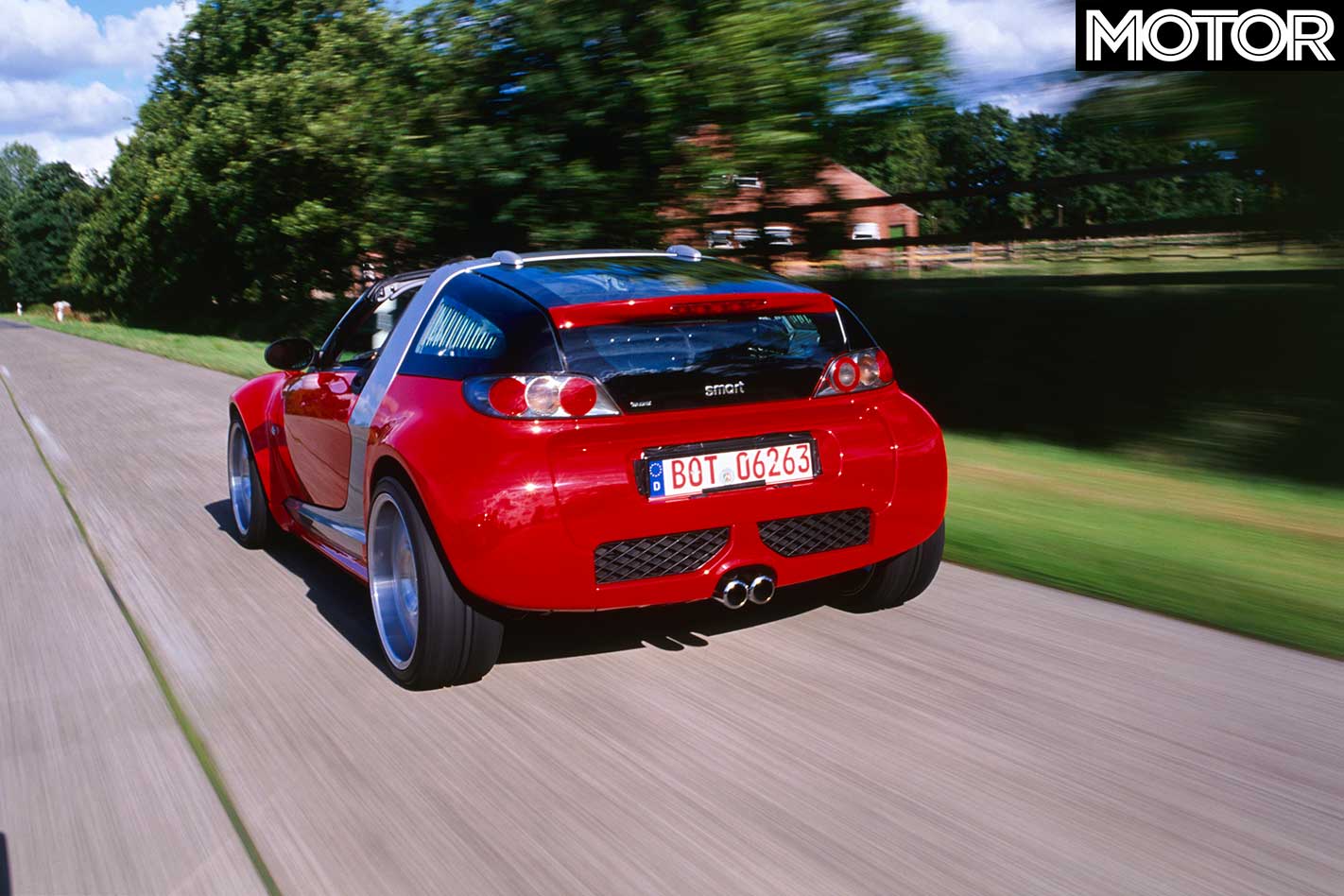
“I still can’t believe this thing is now a runner,” says Ulrich Gauffrés, a former Mercedes-Benz power broker who now heads the Brabus R&D team. “After all, the car was developed in record time – complete with a brand new engine.”
The chief motivation behind the little red runabout is to demonstrate that the scope of the smart brand stretches way beyond the city-coupé (soon to be rebadged fortwo) and the upcoming forfour. “We knew the roadster could handle a lot more power,” says engineering and design director Horst Dahm. “But even the optimists among us didn’t expect the end result to be quite so much fun.”
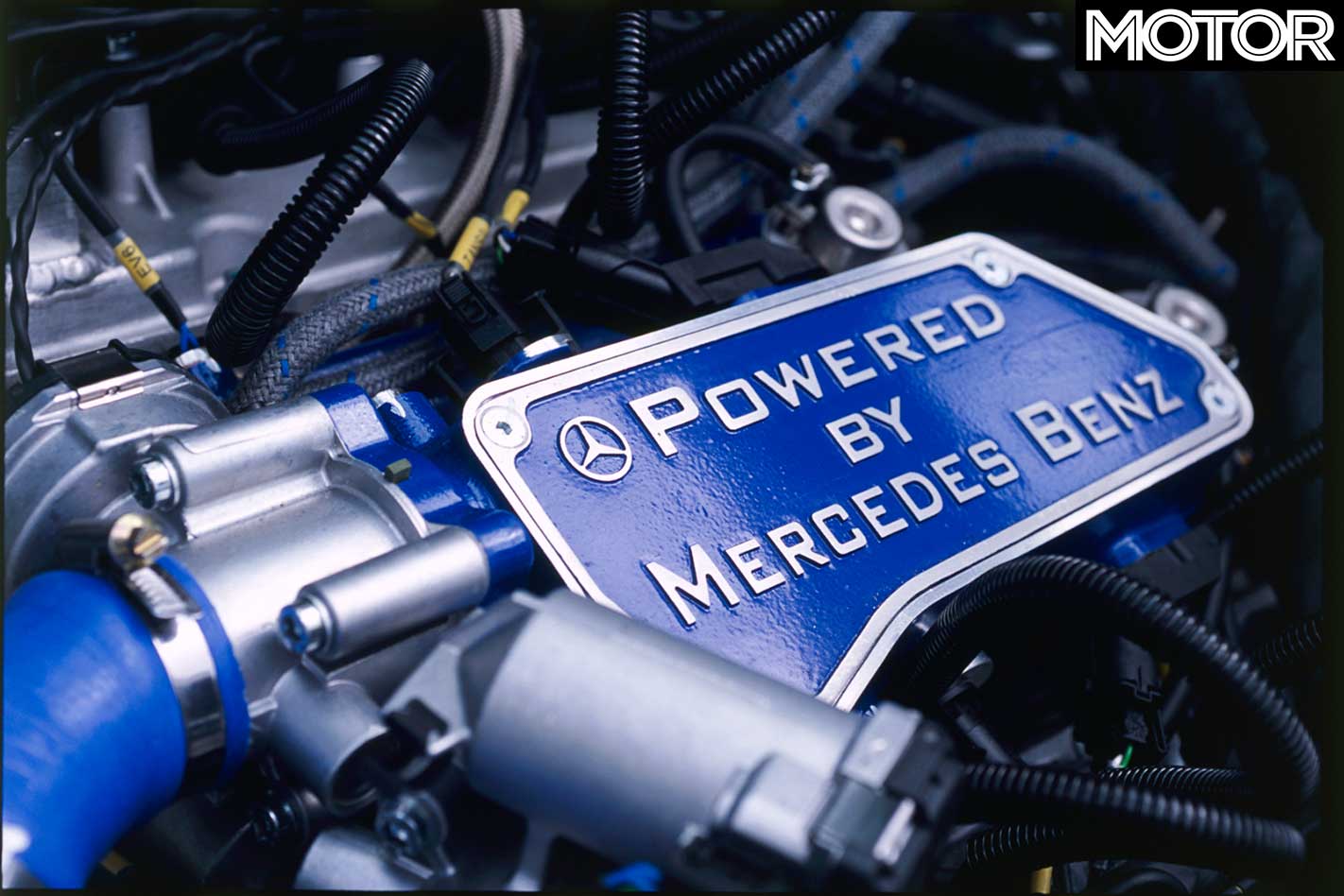
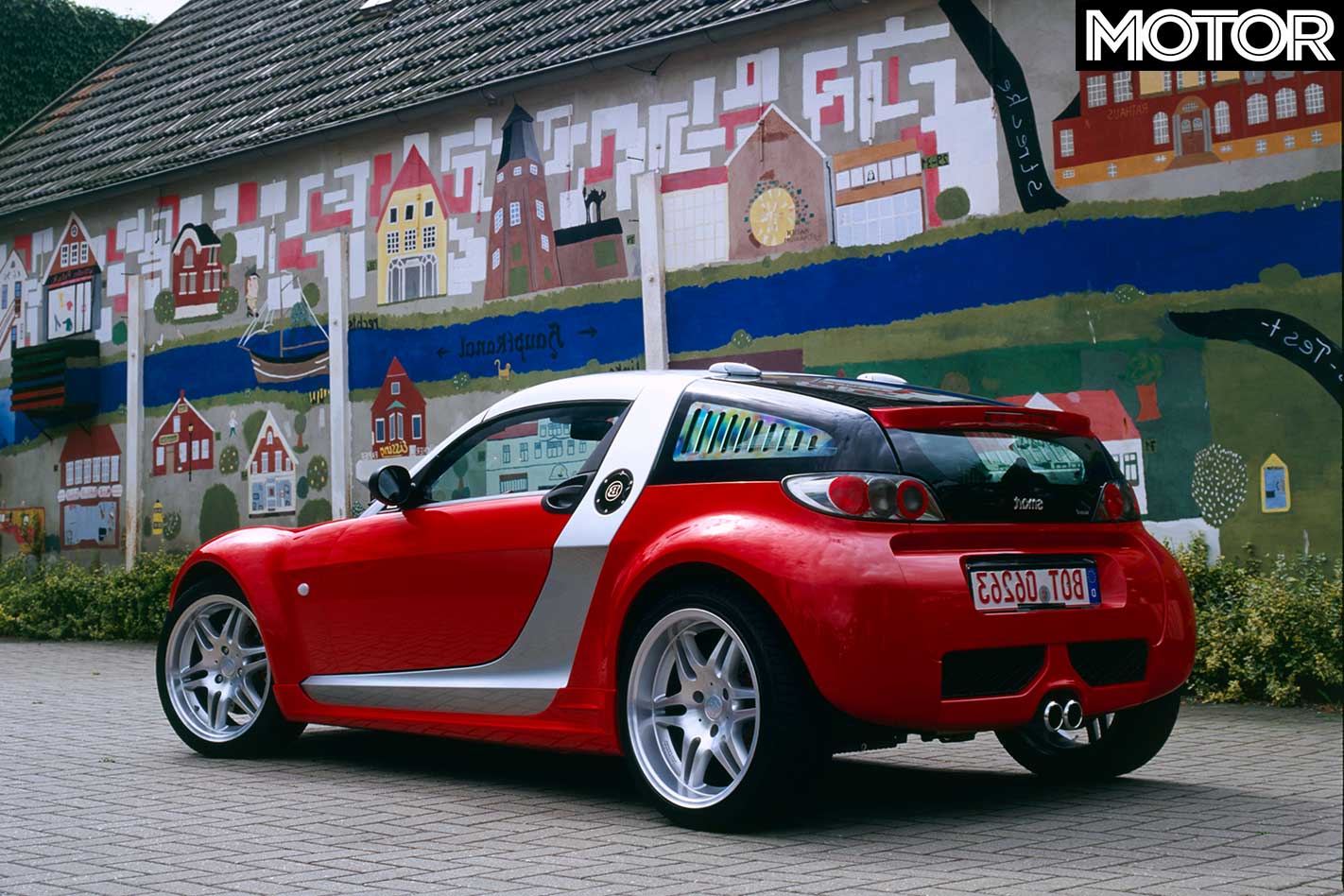
The most obvious difference between a regular three-cylinder roadster-coupé and this red riot special is, of course, the V6 engine – developed by Mercedes-Benz, a company normally not known for flexibility and ultra-quick execution. Beautifully detailed, the compact 1.4-litre V6 sits proud in an engine bay that looks more like a display area than a work station, covered by a glass tailgate.
The new V6 consists of two 698cc smart three-cylinder engines mated at a 60-degree angle. Maximum power is now 125kW at 5500rpm, and the torque curve peaks at a healthy 220Nm between 2250 and 4500rpm.
Mated to an automated sequential five-speed transmission, the busy twin-turbo unit propels the lightweight 840kg two-seater to 100km/h in a hand-timed 5.7sec. Top speed is an equally impressive 225km/h.
The most dramatic suspension-related surgery is to the de Dion rear axle, which now features struts instead of separate spring and damper units. The whole arrangement has been reinforced and modified to accommodate an additional mounting point and the relocated generator. Also new are the water pump, exhaust system and the whole turbo circuit, which consists of two blowers connected to a single air-to-water intercooler.
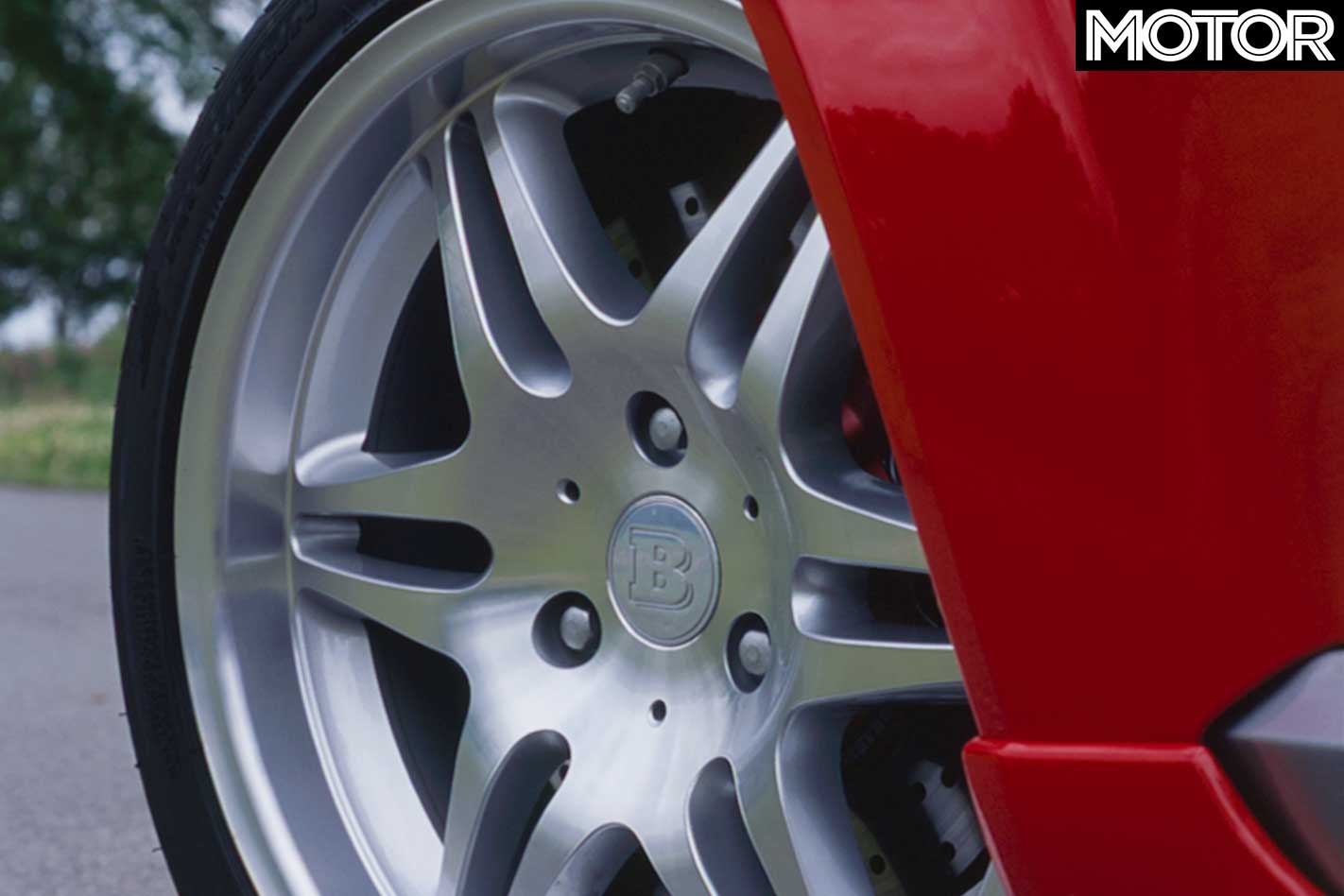
Externally, the Brabus-liveried smart gets the usual mix of deep front spoiler and sill extensions, plus a butch rear apron, a dual-exit exhaust, a pair of side flaps and two small black air deflectors attached to the leading edges of the front guards. The polished 10-spoke 17-inch alloys are shod with 205/40 R17 and 225/35 R17 Michelin Pilot Sport tyres.
The smart V6’s first official test drive begins with a brief shouting match between starter and engine that leads to a high-pitched idle-speed purr. Massaging the throttle triggers an almost orchestral cascade of tunes and tones that’s spine-tinglingly catchy.
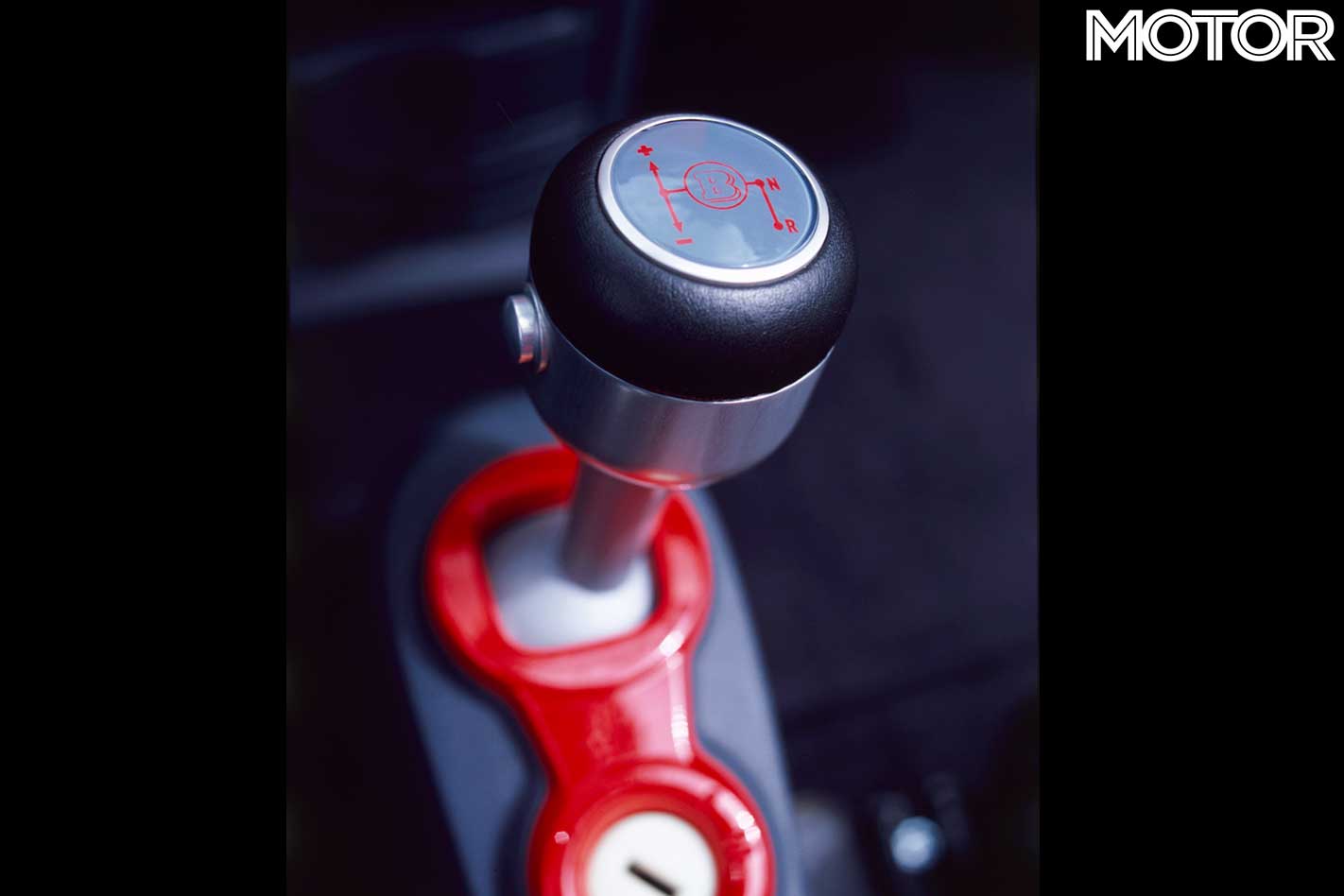
First gear spins to 6500rpm in no time at all, and before my lazy index finger can reach for the upshift paddle, the obliging black box whips in second gear. Zei-zing! The noise is incredible, the high-pitched wail pushing the decibel meter way beyond the legal limit. The high-rev boost-off, boost-on duet is matched by a deep-voiced ooh-aah whenever you take your foot off the accelerator.
No doubt about it: the jam session played by the 12-valve smart V6 would pull a bigger crowd than any Ferrari, Lamborghini or Maserati. You want to crank up the volume? Then take off the roof panels and treat yourself to some rare acoustic ecstasy.
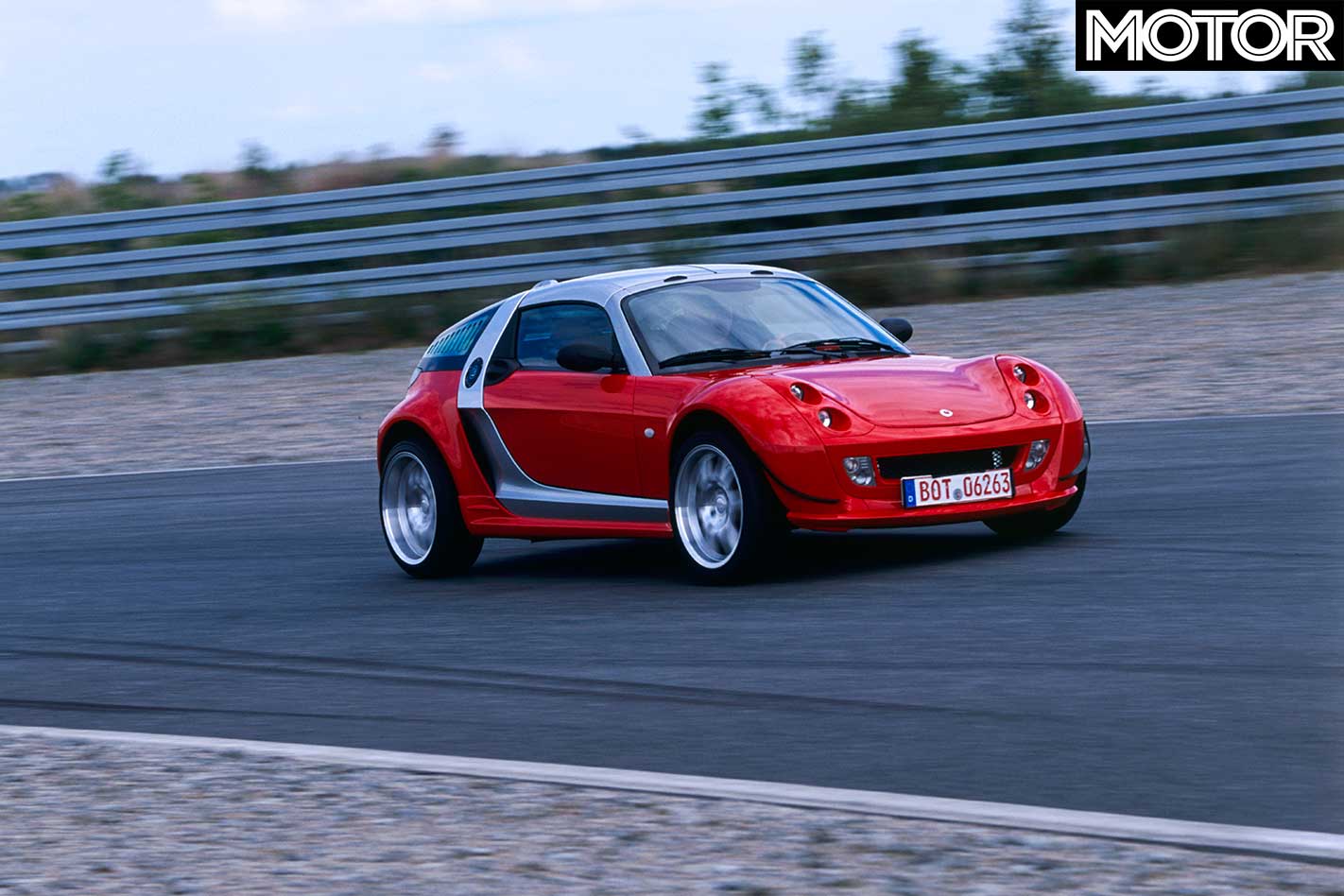
On the track, although the biturbo smart doesn’t feel particularly fast, it’s commendably nimble, chuckable and always game for anything. The unassisted rack and pinion steering is a little heavier than expected, but its gearing is quick enough to let you tackle 90-degree corners without tying a knot in your arms.
The evenly balanced 50:50 weight distribution is the key to the fact that this car handles like a slot racer. With maximum torque available at low to medium engine speeds, third-gear powerslides soon become the preferred cornering attitude. In the dry, it takes a sudden mid-corner lift-off manoeuvre to upset the confidence-inspiring balance.
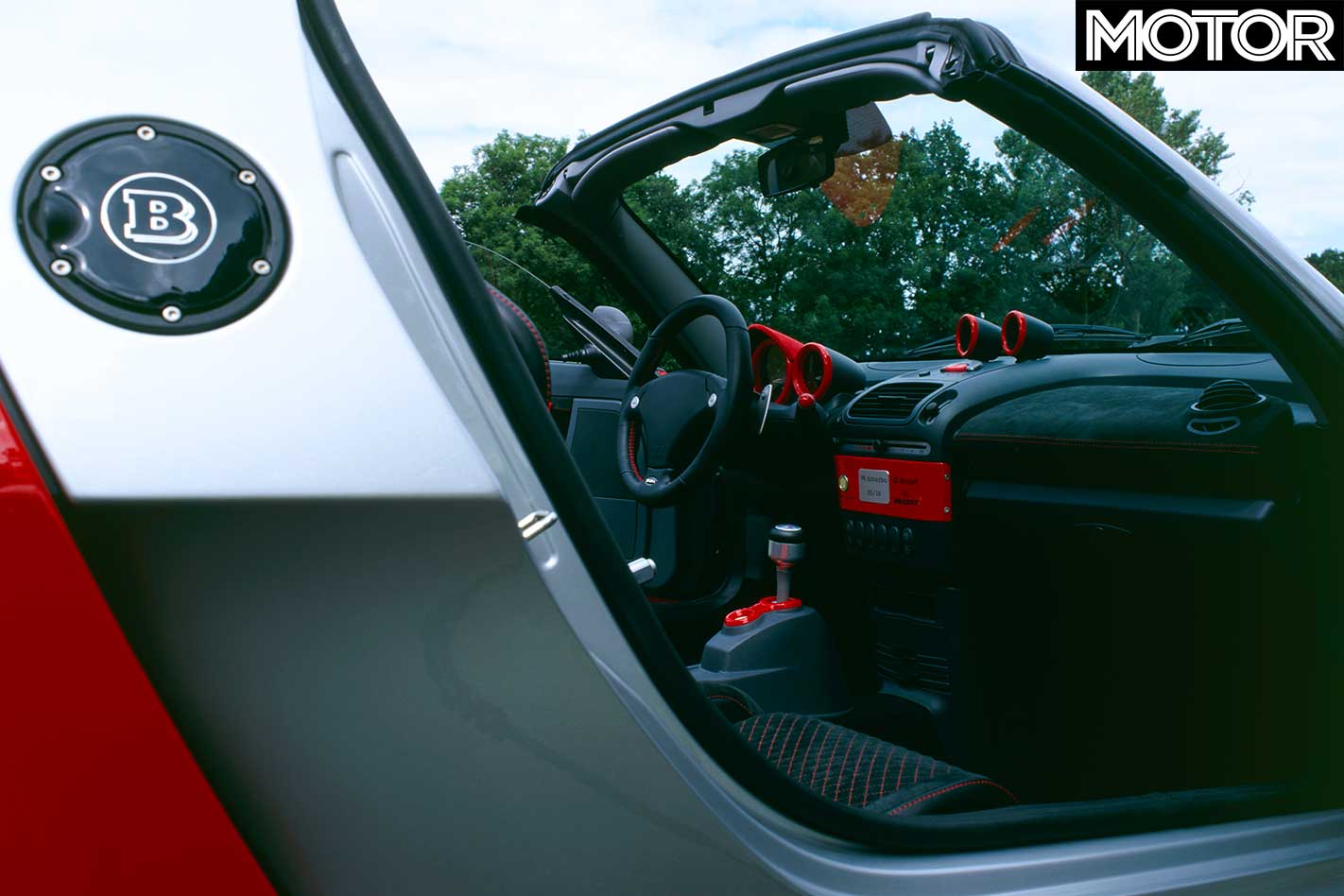
Inside, the seats are slim racing buckets trimmed in black alcantara with red diamond stitching and red four-point shoulder harnesses. Nice detail touches include black suede dashboard inserts, drilled stainless steel pedals and a jazzy instrument shroud made of red alcantara.
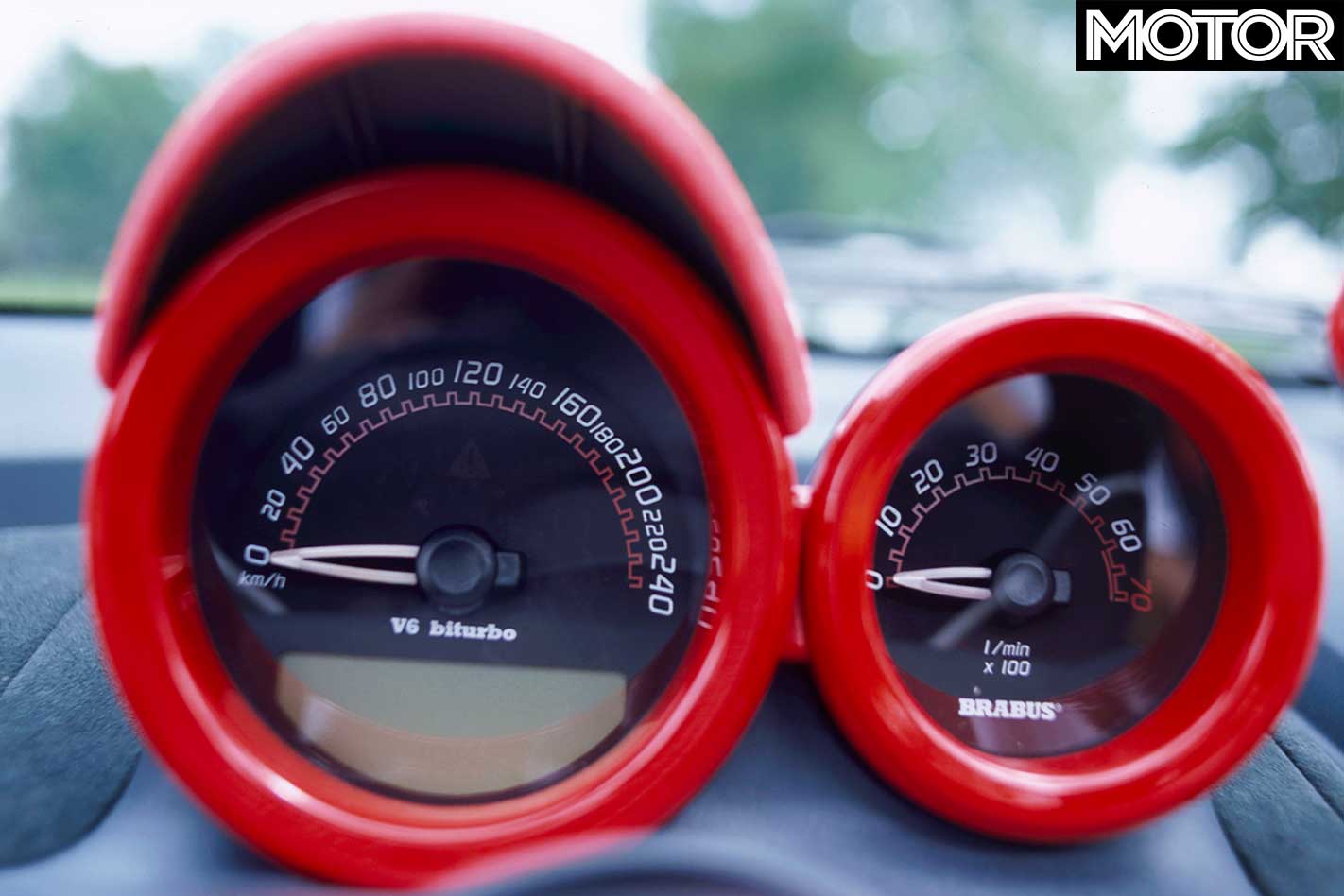
The red-rimmed speedometer and miniature rev counter (redlined at 6500rpm) are joined by a water temperature readout on top of the dash and, next to it, a boost pressure gauge. Its sweet spot is at 1.1bar; anything above 1.4bar falls prey to the wastegate.
There’s plenty of leg and headroom behind the height-adustable three-spoke steering wheel, but both the radio and air conditioning are conspicuous by their absence – the latter for packaging reasons, the former because it would only interfere with the engine’s inimitable sound of music.
Even though it lacks any luggage space (the relocated fuel tank taking up the front boot area), air-con or sound insulation, this no-frills roadster has the rare talent of making people smile. Not only is it ferociously quick, but it also provides the kind of raw driving pleasure that is increasingly hard to find in this electronic age.
Electrifying handling, addictive acoustics and cutesy looks add up to the kind of I-want-one appeal you’d never have expected from a however distant relative of the dinky city-coupe.
FAST FACTS 2004 Brabus Smart V6 Roadster
BODY: 2-door roadster DRIVE: rear-wheel ENGINE: 1.4-litre SOHC 12-valve V6 POWER: 125kW @ 5500rpm TORQUE: 220Nm @ 2250-4500rpm COMPRESSION: 9.0:1 BORE/STROKE: 66.5mm x 67.0mm WEIGHT: 840kg POWER-TO-WEIGHT: 147kW/tonne TRANSMISSION: five-speed semi-auto SUSPENSION: MacPherson struts, lower wishbones, coil springs, anti-roll bar (f); struts with de Dion tube, coil springs, anti-roll bar (r) L/W/h: 3427/1615/1192mm WHEELBASE: 2360mm TRACK: 1357mm (f), 1392mm (r) BRAKES: 315mm vented discs, one-piston calipers (f); 290mm vented discs, one-piston calipers (r), ABS WHEELS: 17 x 6.5-inch (f), 17 x 8.0-inch (r), alloy TYRES: Michelin Pilot Sport, 205/40 R17 (f), 225/35 R17 (r) FUEL: 50 litres, ULP PRICE: $65,000 (est)
Will they or won’t they?
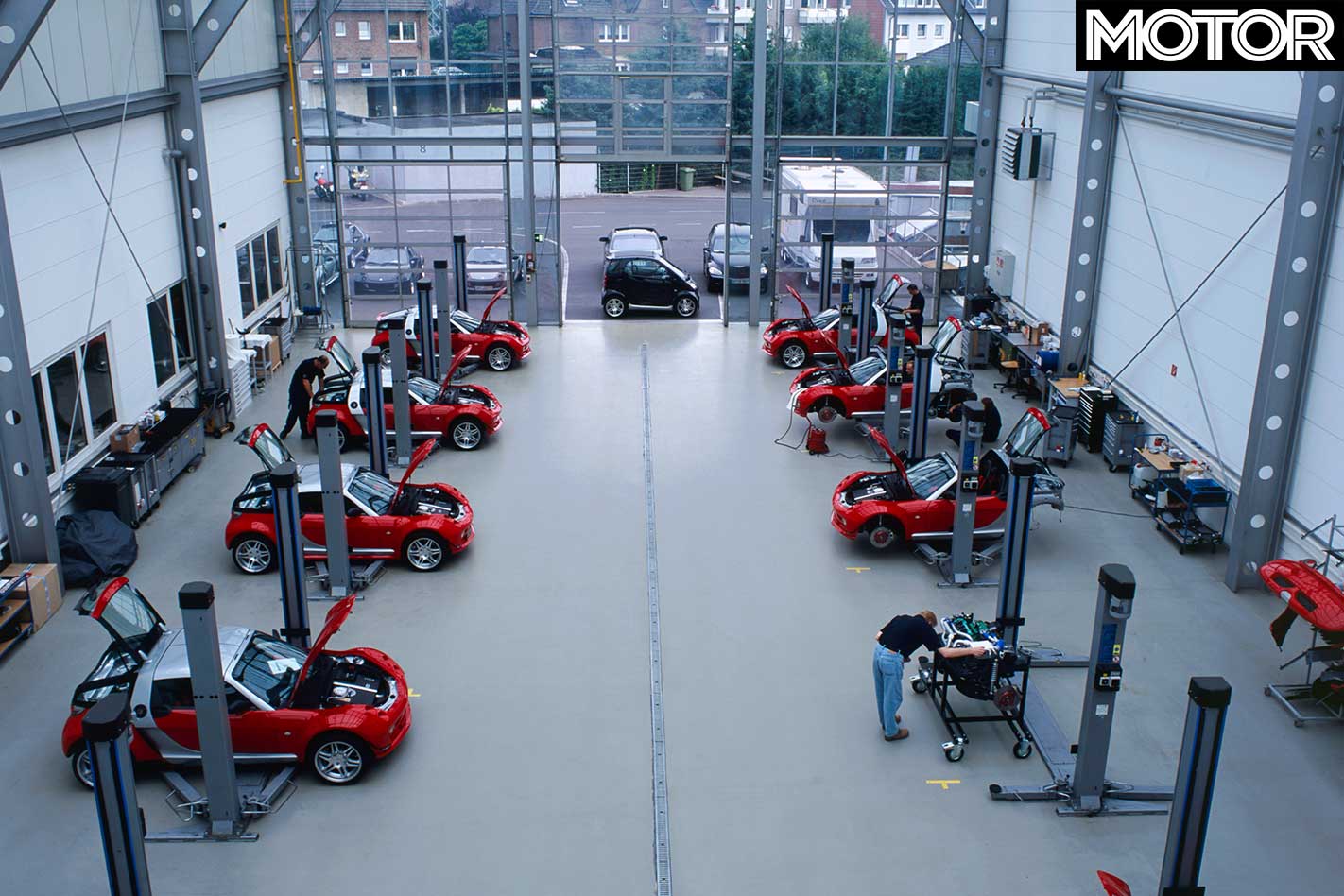
In a cordoned-off section of Brabus’s workshop, an area as surgically clean and elaborately equipped as a F1 garage, a batch of 10 roadsters are in various stages of completion.
“Here are all the V6 smarts you are ever going to see,” starts Heinz Gottwick, the senior PR officer of the Micro Compact Car Company. “They are not street legal, they were not designed for low-volume production, and they will not compete in motorsport. They are hand-made show cars.”
Bollocks they are. “We put too much money and effort into this project to keep it a one-off,” confesses Brabus R&D boss Ulrich Gauffrés later. “That’s why we decided to build 10 of them.”
Neither smart nor Brabus will commit themselves at this point, but the men in charge are born petrolheads. It takes some reading between the lines to decipher the potential game plan, which could mean anything from 200 units to 1000 units at a cost of 40,000 Euros or more.
Five other no-frills roadsters
• Lotus Elise – reinvented the genre for the modern era • Caterham 7 R500 – raw, featherweight and mental • Westfield XTR2 – how does 0-100 in 3.1 seconds sound? • Porsche Boxster – okay, it’s got frills, but still fabulous • VW Roadster – straight-talkin’ V6 sportster due in ’04
HIS photography features in state and national galleries, but Aussie Jeff Carter was also a talented writer who penned compelling features for Wheels about the Porsches he loved to steer … after importing them on the cheap.
Jeff Carter is one of Australia’s great photographers, with his work featuring in the National Gallery of Australia as well as in state galleries and museums. But Carter was better known to Wheels readers for his love of Porsches. His first, the final 356C imported to Australia, was bought on expenses from National Geographic magazine, for whom he wrote at the time. But his masters objected to paying for a “hard item” and he never wrote for them again.
He did buy more Porsches, though: when its tyres were worn, the 356C was replaced by a 912 – the four-cylinder 911 – followed by a 911E. Carter worked out that if you bought a 911 on tourist delivery in Germany and stayed with the car for 15 months, you could import it and bypass the 45 percent duty, near-halving the cost of the Porsche. In 1976, 1977 and 1978, he wrote six stories on his Carrera 3.0-litre for Wheels, helping to cover his 15-month holiday. Readers loved them, though Jeff’s efforts always put a large hole in the magazine’s budget. The bloke knew his worth: the terrific, wonderfully readable words were always accompanied by great photographs, which he insisted be returned each issue.
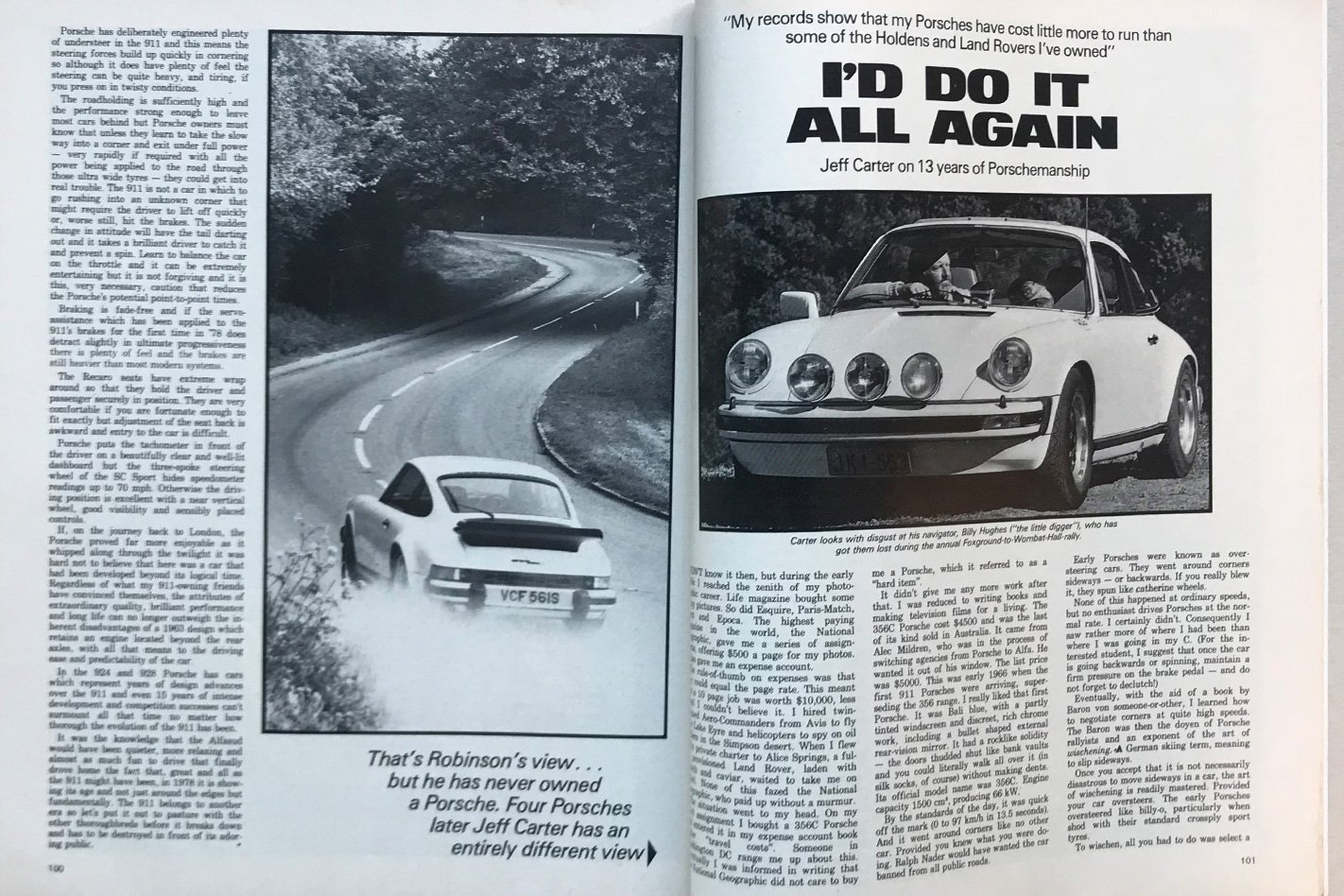
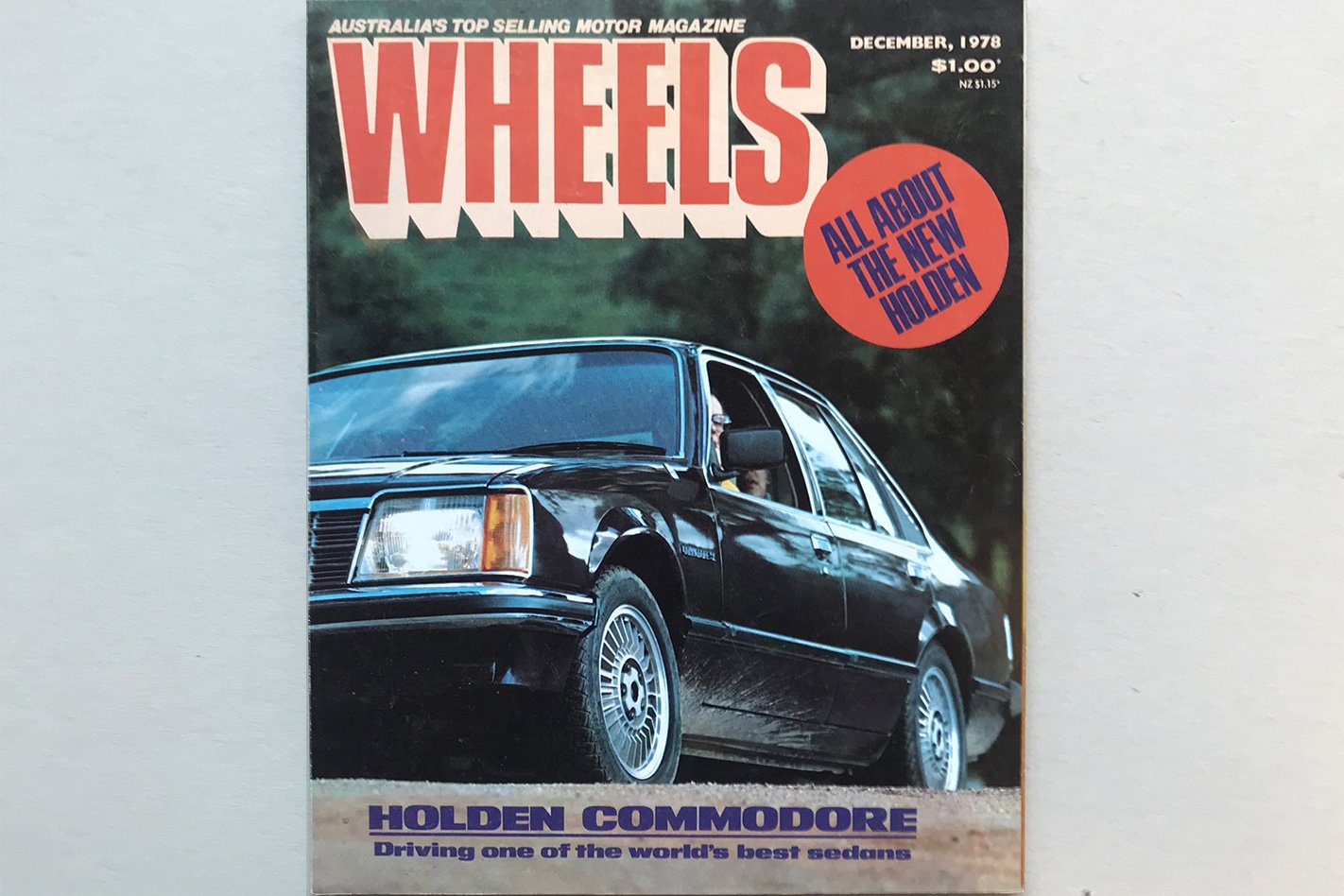
This highly entertaining tale concerning Carter’s four Porsches, published in December 1978, acted as a favourable sequel to my highly critical drive story on the 911SC 3.0 (embarrassingly now, I wrote that the 911, “belongs to another era so let’s put it out to pasture.”) We’d agreed to a word count, but Carter couldn’t help himself and, as always, supplied an extra 1250 or so words. Of course we paid up and ran them all: cutting his words was not something an editor did lightly without incurring his considerable wrath. Besides, his compelling narrative made it all but impossible.
Jeff quickly discovered that Porsche depreciation was minimal, that they were remarkably reliable as they were superbly built, and they cost little more to run that his Holdens or Land Rovers. They also taught him about driving and, especially the 356C, wischening, a German skiing term for ‘slip sideways’, or, in car-talk, oversteer.
He explained: “All you had to do was select a gear that left you with plenty of reserve acceleration and then go into the chosen corner much too fast. Quite small but rapid sawing motions of the steering wheel and firm acceleration controlled the resultant slide. The worst thing you could do was to ease off on the loud pedal. Any hesitation with the right foot causes the car to swap ends or spin, even if you backed off only by the thickness of your socks.”
Despite the publicity Carter provided Porsche, he was at pains to explain that he never received, “any form of consideration” from the dealer or the factory. Once, he claimed that Hamilton’s threatened legal action over what it believed were defamatory remarks about one of the Porsches.
“My praise for the marque is inspired solely by my admiration for the cars,” Carter wrote. “No slings have ever come my way, only arrows.”
Photographic memories
Carter wanted a steady job after the birth of his first child, and in 1949 became the editor of Outdoors and Fishing. As a result, he was in on the birth of Wheels and became friends with its first editor, Athol Yeomans. He then resigned to travel the inland of Australia, writing books and articles – occasionally for this magazine – all backed by his evocative photography. The Porsche era ended when falling import duty meant there was no point to buying a car in Germany and thus made the cars “too bloody expensive” in Carter’s words. He died in 2010, aged 82.
The smell of expensive leather greets you as you climb into the Range Rover Autobiography SDV8, an airy, light and spacious cabin with seemingly more screens than your typical 21st century living room.
Technology, to an almost excessive degree, and luxury – of which too much is not enough – combine to form the main attraction of this car, its beautiful interior. And it’s the interior that will keep your attention as you waft along on the air suspension, well insulated from noises, and riff-raff, outside.
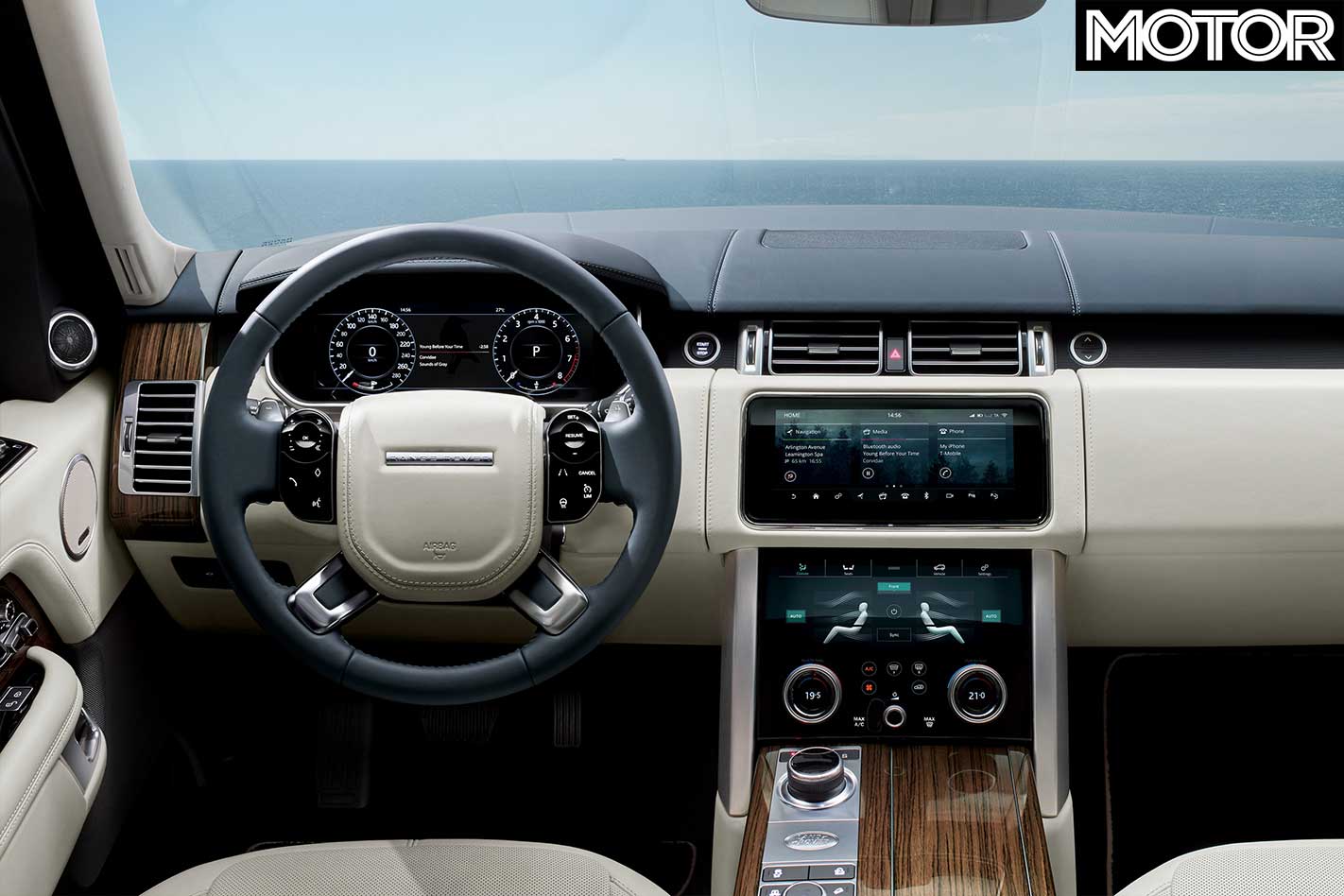
That’s because the Range Rover SDV8 can be fun to drive, in a smooth, softly-sprung, 2.5-tonne exaggerated bodyroll kind of way. Beyond that, it prefers a very relaxed canter, thank you. Though it does a good job managing its not inconsiderable mass in the corners, this is plainly a lumbering luxury beast of a thing.
As for the turbo-diesel V8, it’s very smooth, offering strong, if not frantic acceleration (0-100km/h in 7.0sec) and even sounds good under full pelt.
So, would we buy one? The standard of luxury offered by Range Rover is hard to match, but there are faster SUVs with very nice ride quality, and interiors, asking much less. If you must have a Rangie, don’t be half pregnant, skip the diesel and shell out for the blown petrol V8.
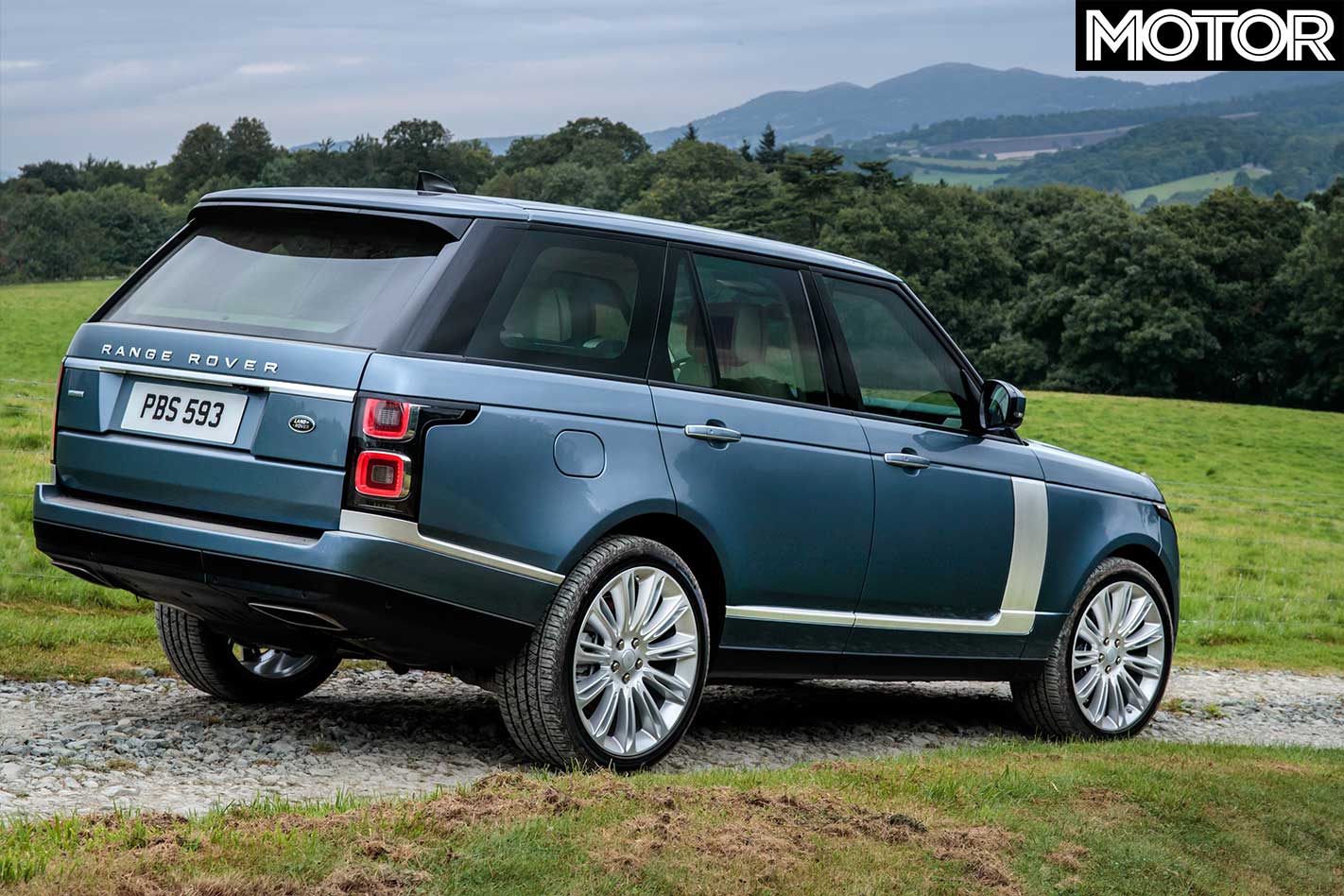
2018 RANGE ROVER SDV8 AUTOBIOGRAPHY SPECS: Engine: 4367cc, V8 diesel turbo Power: 250kW @ 3500rpm Torque: 740Nm @ 1750-2250rpm Drive: 4WD Weight: 2505kg Price: $256,000
A five-cylinder Volkswagen Golf might not be as far-fetched as is originally seemed, especially if Volkswagen Australia’s hopes echo those in Germany.
At a recent product launch, MOTOR asked Volkswagen’s product management team what VW is doing with the recently spotted RS5-powered Golf R.
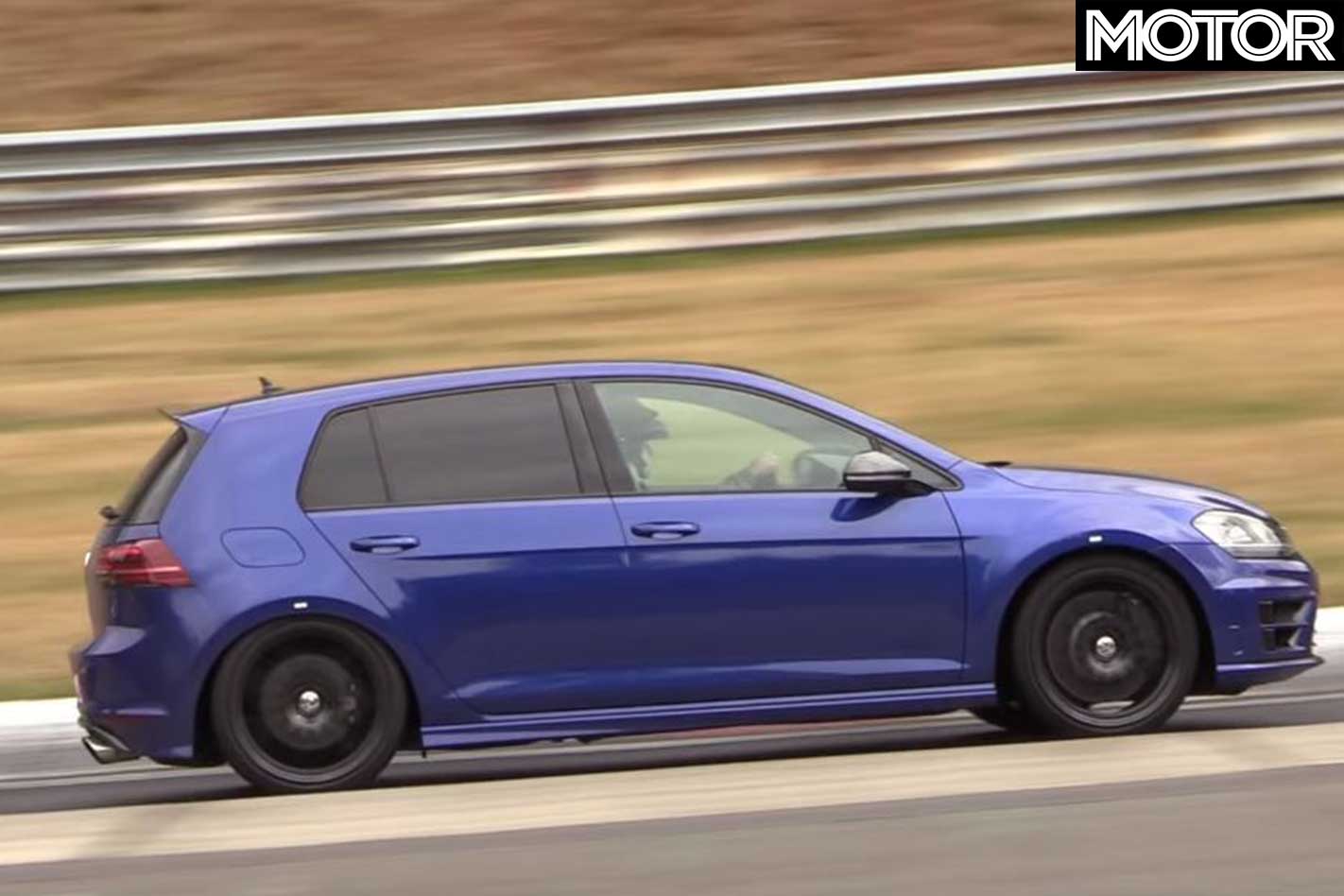
Todd Ford, product manager for Volkswagen Australia, says it’s Volkswagen’s R division attempting to see what works and what could become a product to take to market.
He says not to expect an Audi-powered Golf to hit the showrooms any time soon, but doesn’t rule it out.
“It’s a bit of an arms race, constantly,” says Todd.
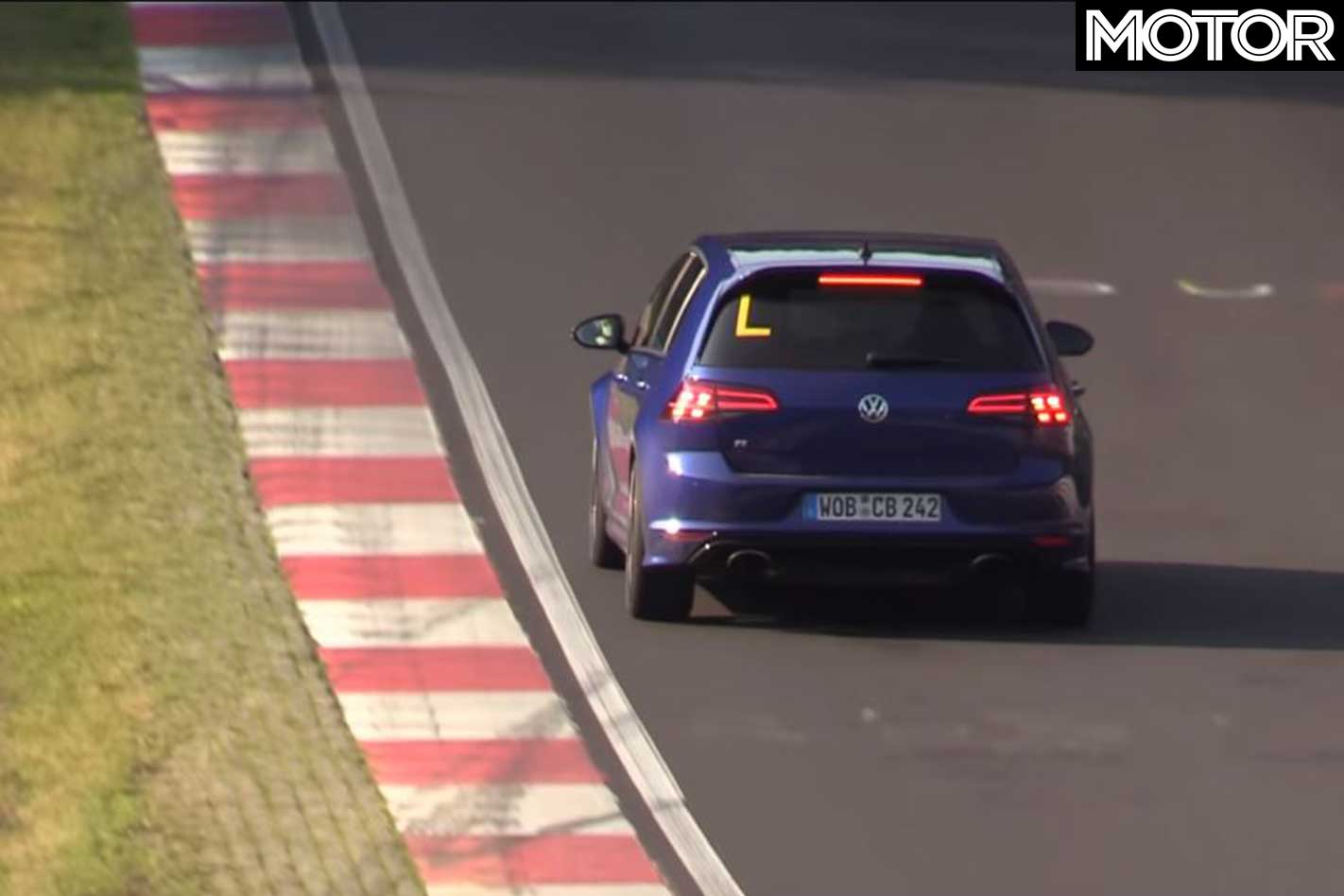
“Sometimes we look to other power sources so it’s great for our market to have that drive to have a greater performance product, it’s just the R division working on that.
“It’s their car, so it’s just them testing the 5-cylinder engine as a large percentage of their work is evaluating and looking at new engines and technologies to see if there’s a business case for putting something to the market.
“Certainly there are no plans that we’ve been made aware of, but it certainly wouldn’t be the only thing they’re evaluating in terms of different drivetrains.”
He added that because of this testing, and the fact that Volkswagen’s R brand is set to expand, there’s been ‘gentle’ pushing from Australia over the last couple of years for something more potent since the R400 fell over.
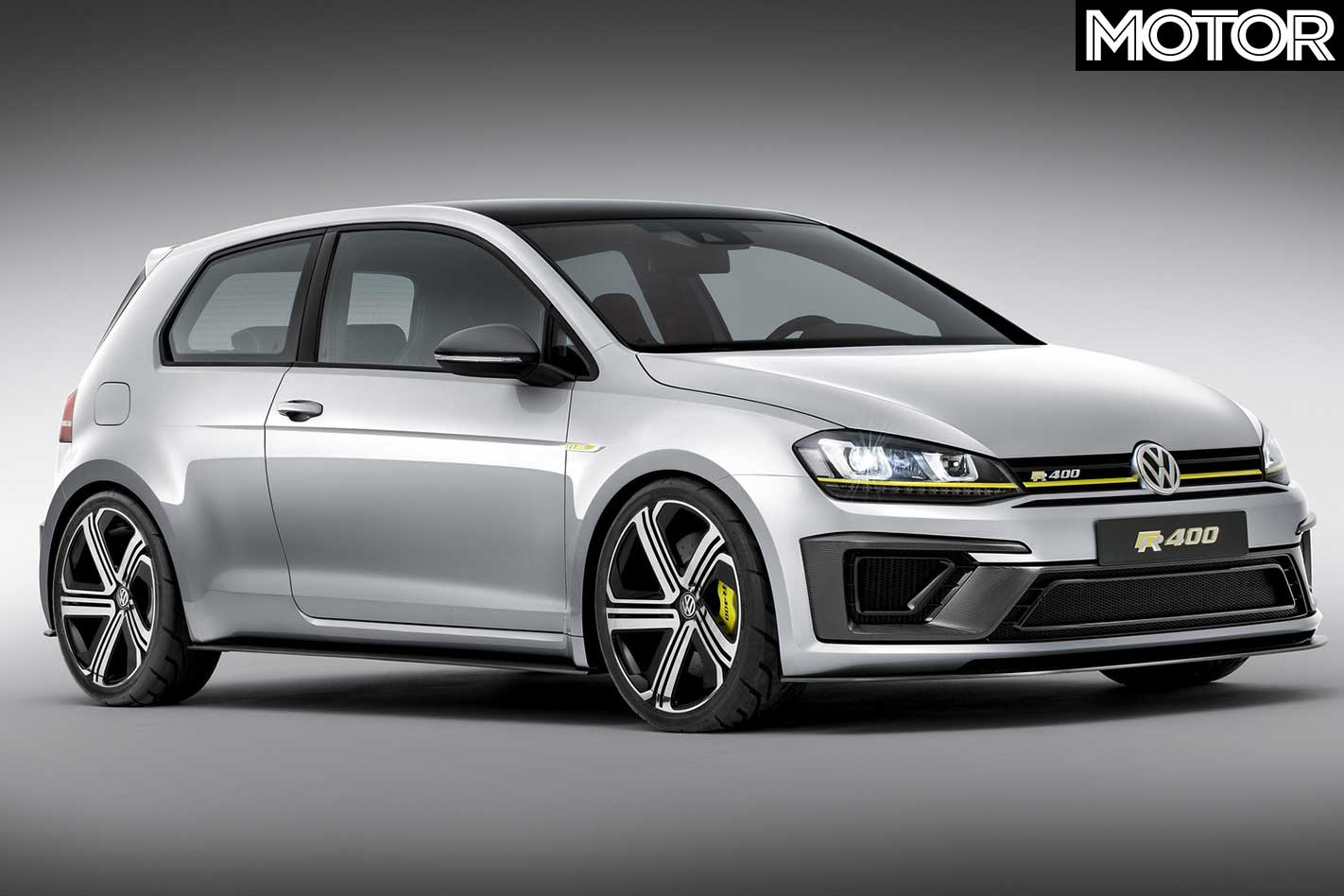
We asked if VW Australia had been passing the pressure on to its German HQ.
“Yeah, definitely. From ourselves as people passionate about the brand and its performance, as well as our dealer network and customers.
“We’ve had the stories of dealers who’d taken deposits for a car that didn’t even exist, but the passion and the interest in that was phenomenal, so we certainly shared regular stories [with Germany]
“Again, no plans, but there are always discussions.”
New-car manufacturers are forever giving their sports cars more power, extra grip, tightening suspensions and keeping bodies – car and yours – pinned flat against the ground. And if they come fitted with a soft suspension setup, car enthusiasts will be in the aftermarket realm to do so.
But have we got it all wrong? This isn’t a new question – it’s about driver connection and sheer fun, versus methodical speed in a straight-line or through bends. The best sportscars manage to balance both, and the arrival of the Alpine A110 spurs us to look at how the former camp plays a part in that.
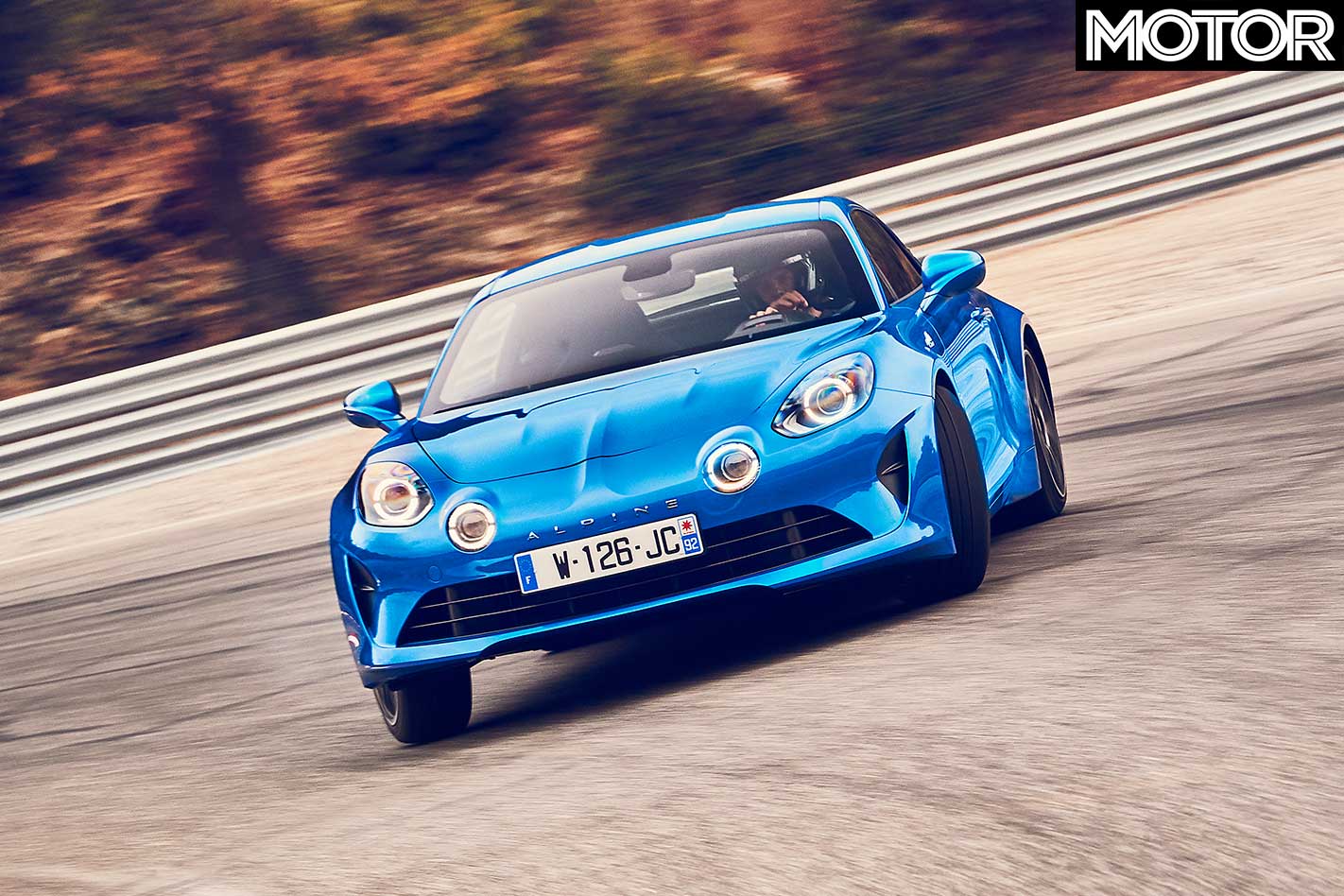
Far from being overly tied down, MOTOR editor Dylan Campbell reported delightfully from the French Cayman’s overseas launch that, “with relatively soft spring rates the A110 feels deliciously light on its suspension, a unique feeling only found in a few new cars, all of them weighing around the 1000kg mark, the MX-5 being one of them.”
“With suspension on the soft side, the Alpine likes a smooth driver,” he tells. “The nose dips visibly as you transition from full throttle to full braking, the body moving through big curves during hard cornering — extra exciting to push the limits of the … tyres, but also easy to upset the A110 if you’re not smooth enough. There will be some people who don’t like the extra body movement of the soft suspension and crave less of it, particularly on track.”
The thing is, some of the most fun this tester has had in cars, has been in relatively soft set-ups perfect for Australian road conditions, but crucially underpinned by superb chassis balance and with limits telegraphed to the driver via great steering. So, before we can drive the little A110 on local roads, here are our top-five bodyroll-loving driver’s car picks…
1 – Mazda MX-5
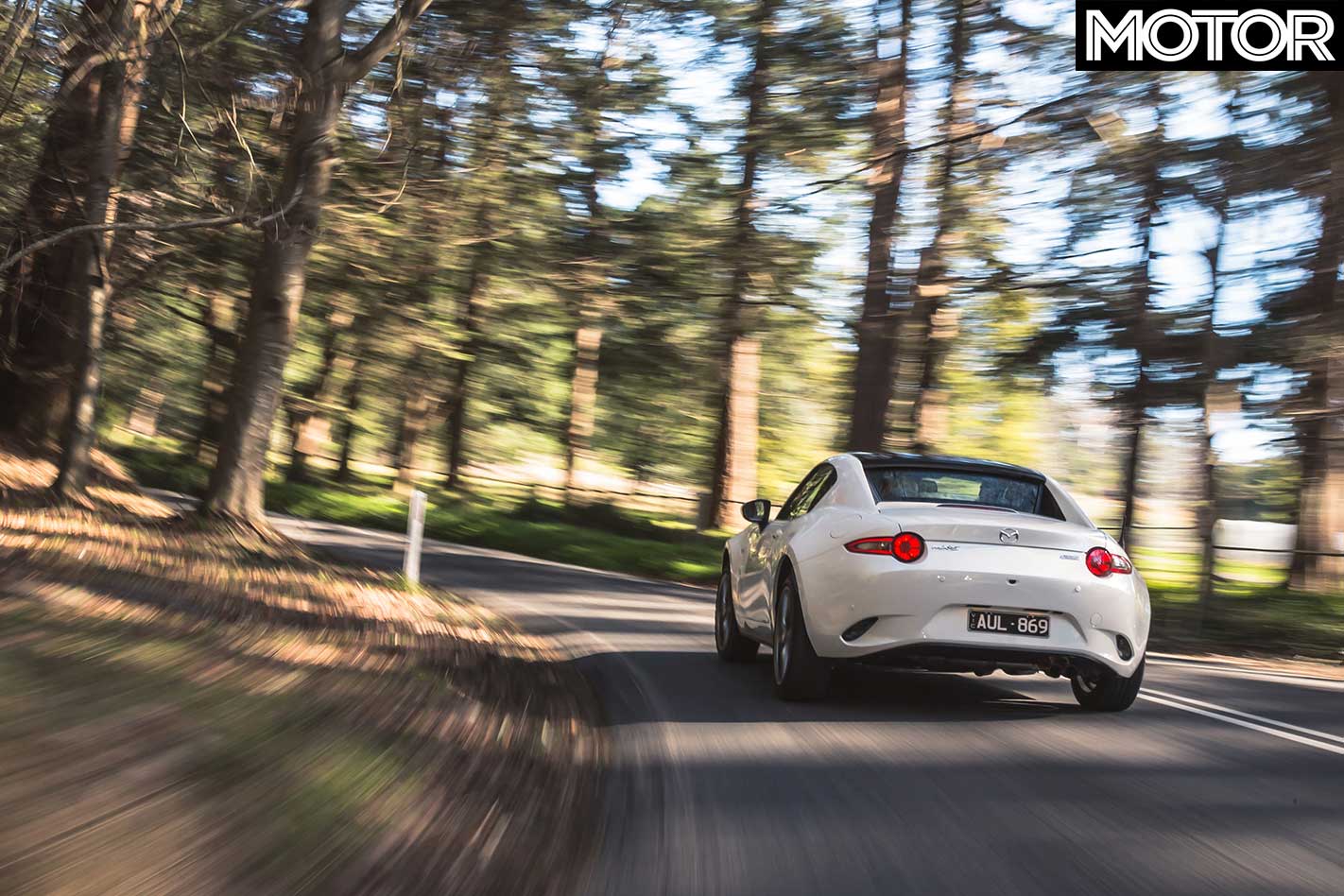
The ND-generation of Japanese roadster can only be in first place here. With the weight of the engine behind the front axle, and not much of it, the little Mixxer leans like a teapot in full pour going into a corner.
But once the angle is at full tilt, it settles immaculately on its outside-front tyre, cocking half-a-metre on its inside-rear hoop, and begging the driver to mash the throttle.Thanks to modest grip, a terrific electronic stability control (ESC) and limited-slip differential (LSD), the soft-top pivots around its nose, steering almost becoming neutral, all at relatively low pace.
2 – Suzuki Swift Sport
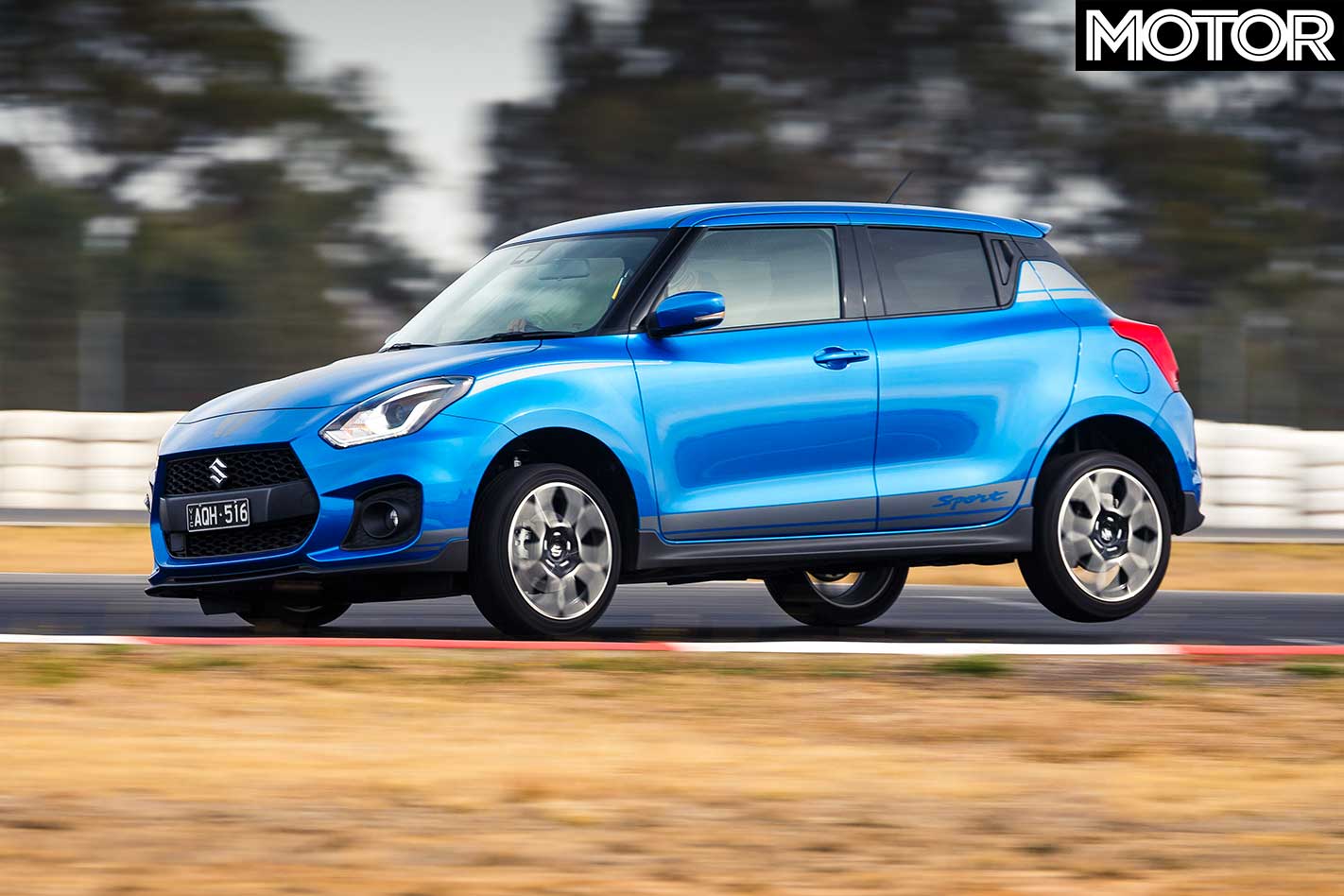
Long a warm hatch, the Swift Sport now graduates to become a hot hatch not via excess power, but stripping back weight. With a 970kg kerb mass, this five-door light car can be driven hard all day while barely causing its Continentals to sweat.
Even the odd motoring journo, privileged enough to see more racetracks than most, would have still seen more round-a-bouts that ripple strips – and that’s where the Suzuki loves to dance its backside around, but in a socially acceptable fashion, skimming through curves with zest and verve that eludes many ‘sports’ cars.
3 – Volkswagen Golf GTI Original
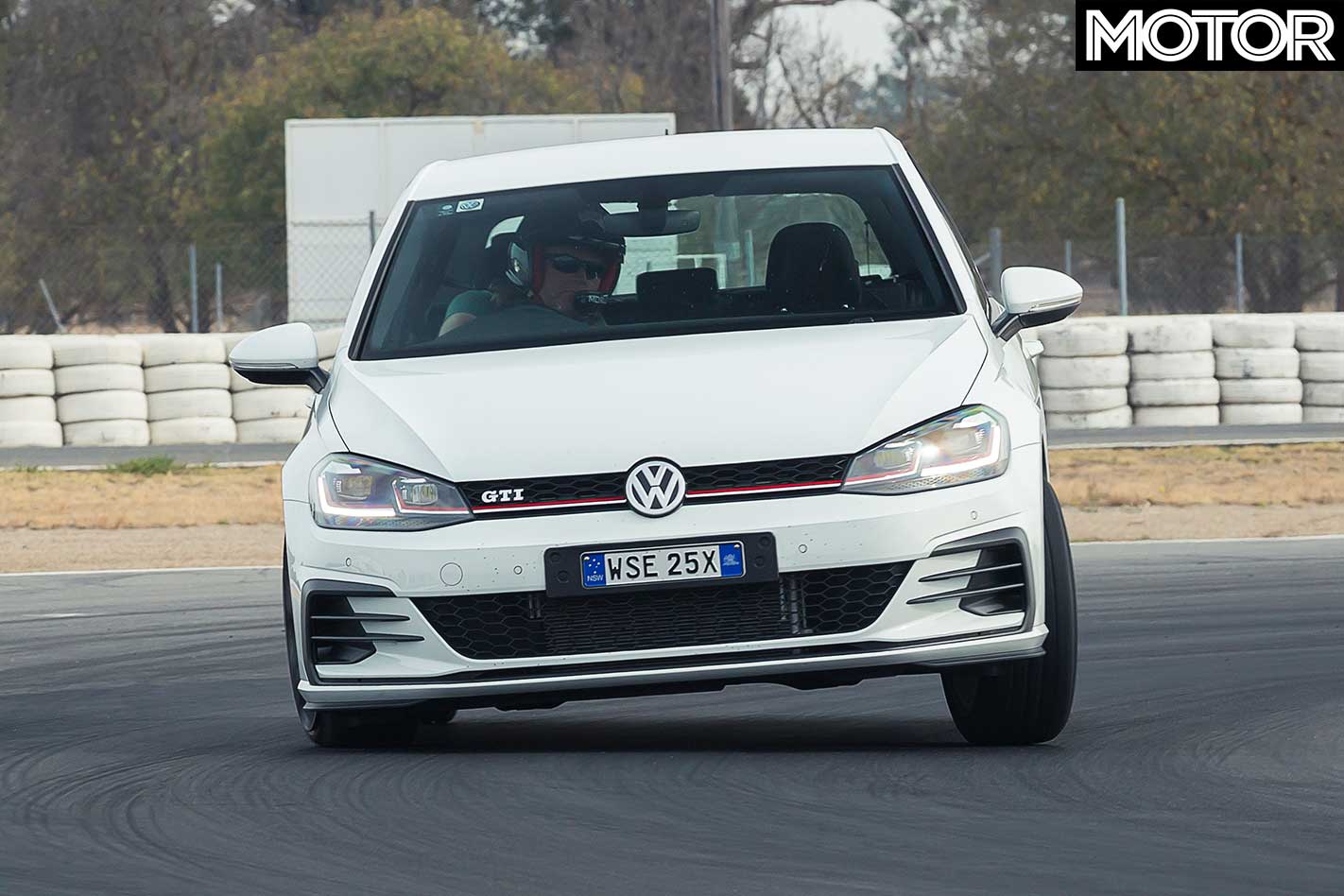
They’re almost all gone, sadly, but this German original-recipe was more than just marketing hype. And that’s because there wasn’t any – rather than adding stuff and raising the price, this GTI lost its back doors and adaptive suspension, dropped a bit of weight, kept its tartan trim, golfball manual gearknob and 18-inch tyres, then sold for $38,990 driveaway.
The standard dampers sent the rear-end into a playful frenzy, almost always subtly helping the nose point. Lift-off oversteer, done to perfection here, is very different to a usual stickier tyres/ hard suspension/add LSD recipe.
4 – Audi S4
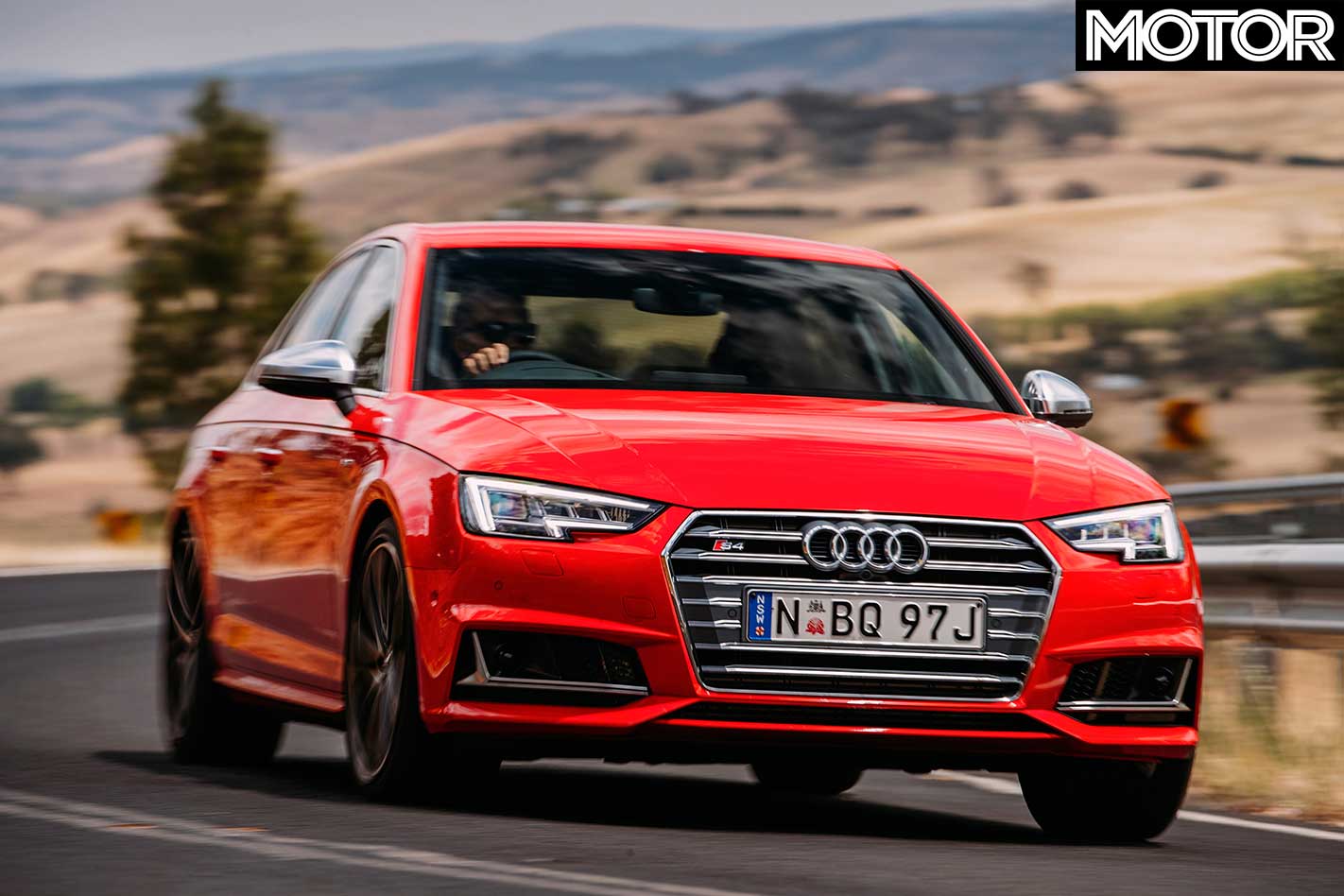
Okay, this is a relative – but important – one. The previous- and current-generation S4 and RS4 have shared a 60 per cent rear-biased torque split, and a crown centre differential that can direct all torque to an individual back wheel. It was optional on the S-badged A4-based sporty model, but every press car comes with it.
Then or now, the lesser grip and extra bodyroll of the S4 has arguably made it a more playful car than the RS4, enabling a driver to actually indulge in throttle-induced rear-steer, if not big-time oversteer, that is more difficult in the firmer, grippier Avant-only car.
5 – BMW 330i
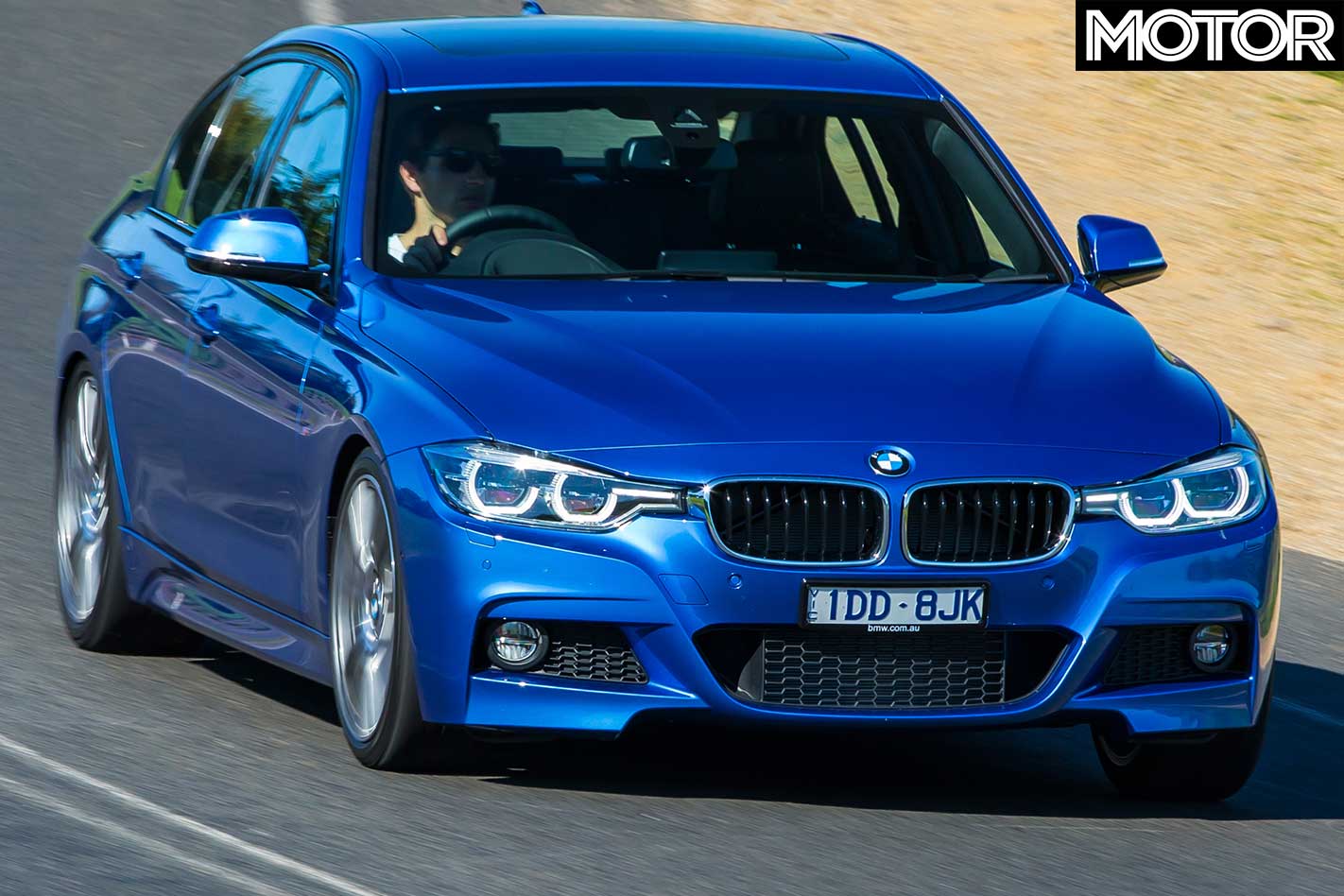
There are three things that the 330i is, which the S4 isn’t – rear-wheel drive, four cylinder and relatively light. Whether we’re talking four-cylinder Falcon or F-Type, taking a couple of pots off the nose of a rear-driver, preferably one with a relatively short overhang, is always a good thing.
The 2.0-litre turbo 3 Series weighs 1495kg, 45kg less than a 3.0-litre turbo six 340i. Yet the 330i’s 5.8-second 0-100km/h is just 0.6sec behind. It’s a balance of weight and performance that ensures this is a mid-sized sedan that feels nimble, agile and engaging. The new one has big shoes to fill…
While not always conventionally beautiful, many race cars are attractive purely by virtue of their function.
However, that’s not always the case. Released earlier this week, Ford’s Mustang Supercar has divided opinions in the comments section due to its unusual proportions.
There’s no doubt the Ford Performance, DJR Team Penske, and Tickford Racing engineers have worked hard on the Mustang Supercar to create a potent race car. However, the regulations surrounding the dimensions of the Car of the Future chassis has resulted in aesthetics and proportions which don’t quite equal the visual impact of the road car.
While stunners like McLaren’s MP4/4 are often lauded as beautiful race cars, today we are celebrating some of motorsport’s ugly ducklings that stood out thanks to daring, innovative, and unique designs.
Caterham CT05
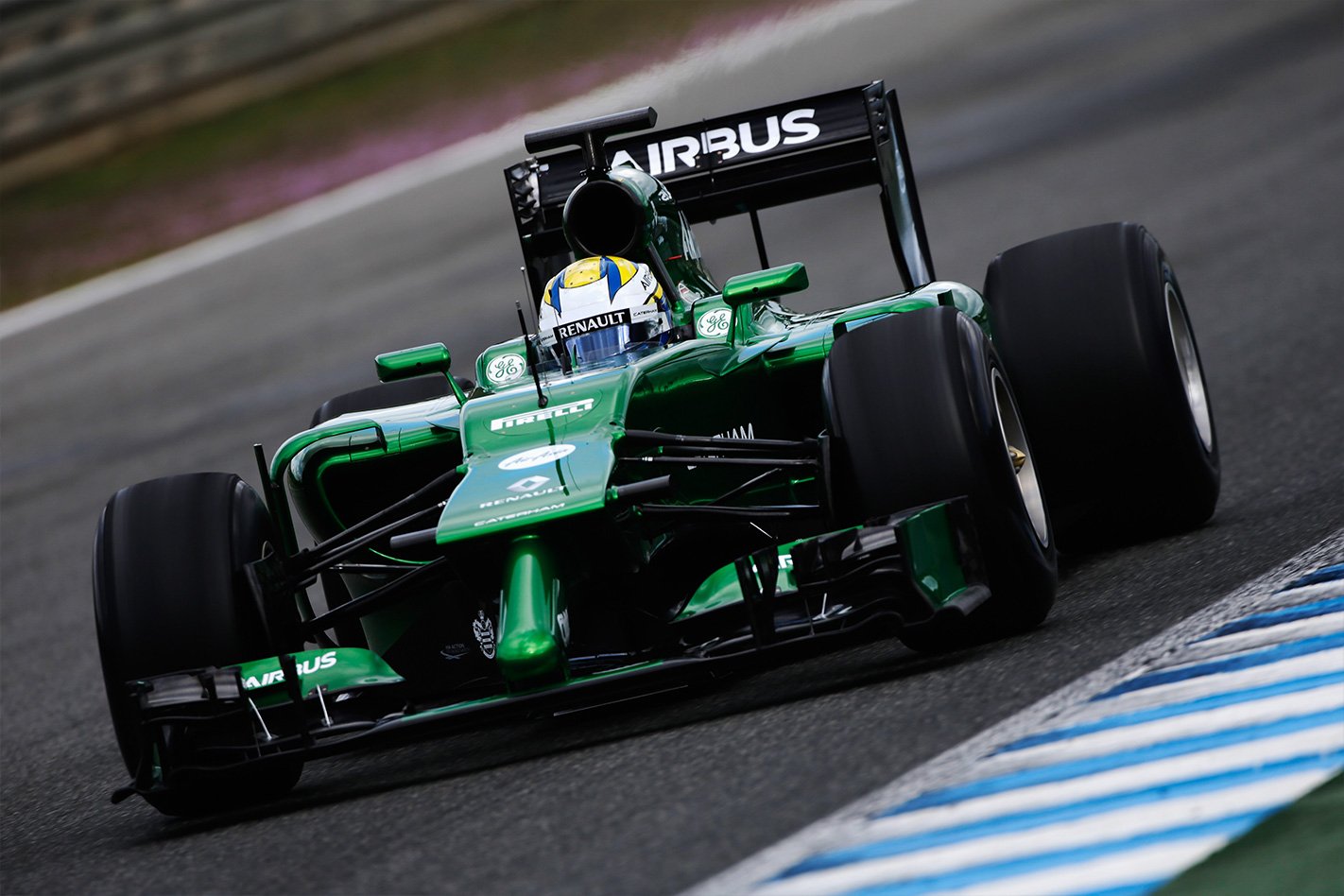
Formula 1 offers plenty of beautiful race cars, (here’s looking at you Jordan 191), but the Caterham CT05 was not one of them.
F1 racers achieve their beauty through a ruthless ethos of function over form, but sometimes, as the CT05 epitomises, that form is difficult to look at.
The CT05 is a prime example of modern F1 regulations resulting in a less than beautiful product. While most cars that took to the grid in 2014 alongside the Caterham weren’t exactly wallflowers, the CT05 was the worst of them all – combining the duckbill design of prior years with the extended nose that was new for that season.
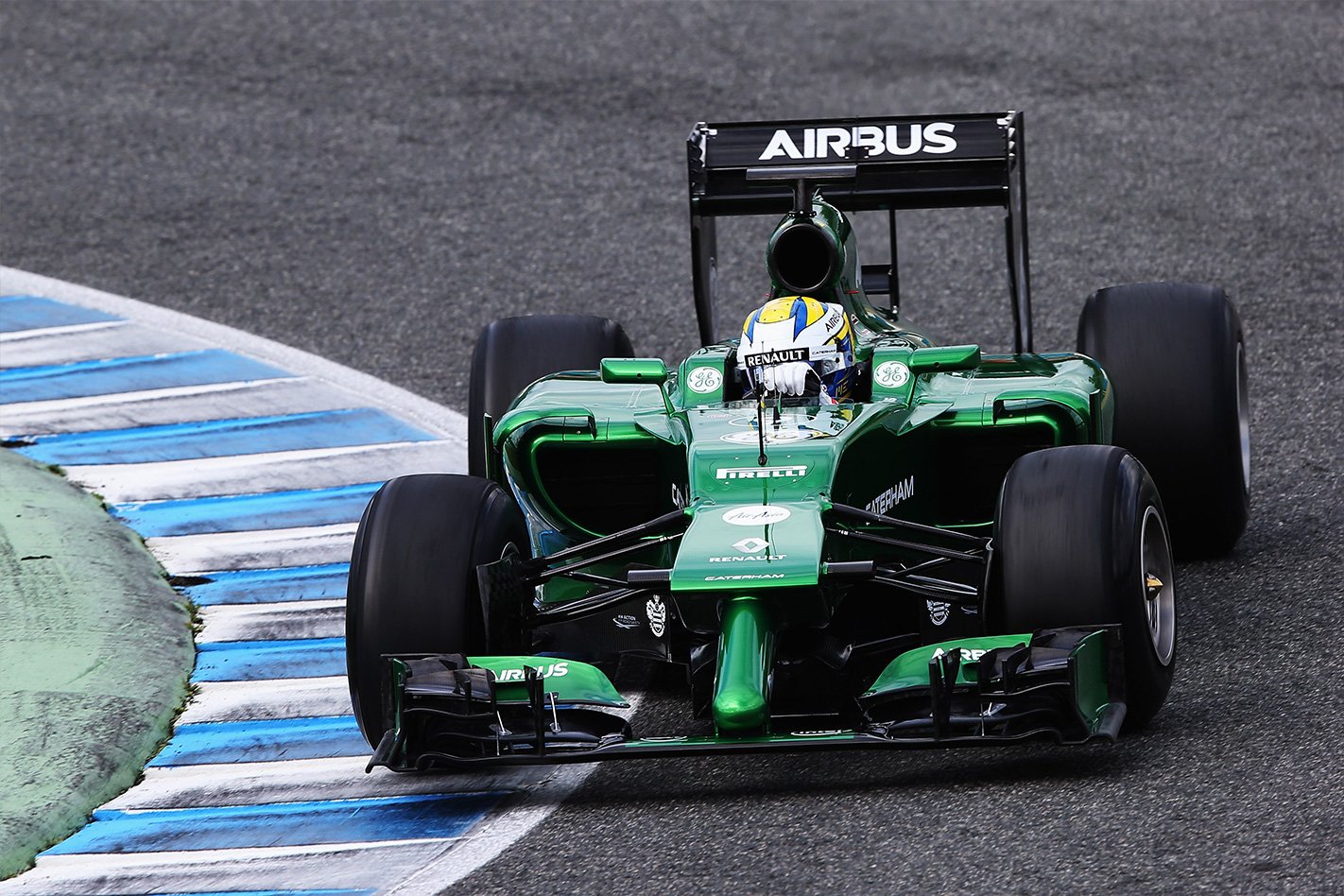
The duckbill portion of the nose was amended in a mid-season update at the Belgian Grand Prix, but the, ah, appendage, remained.
Caterham’s F1 team would be shuttered before the start of the 2015 season, making the CT05 the brand’s last Formula 1 car.
Cadillac Le Monstre
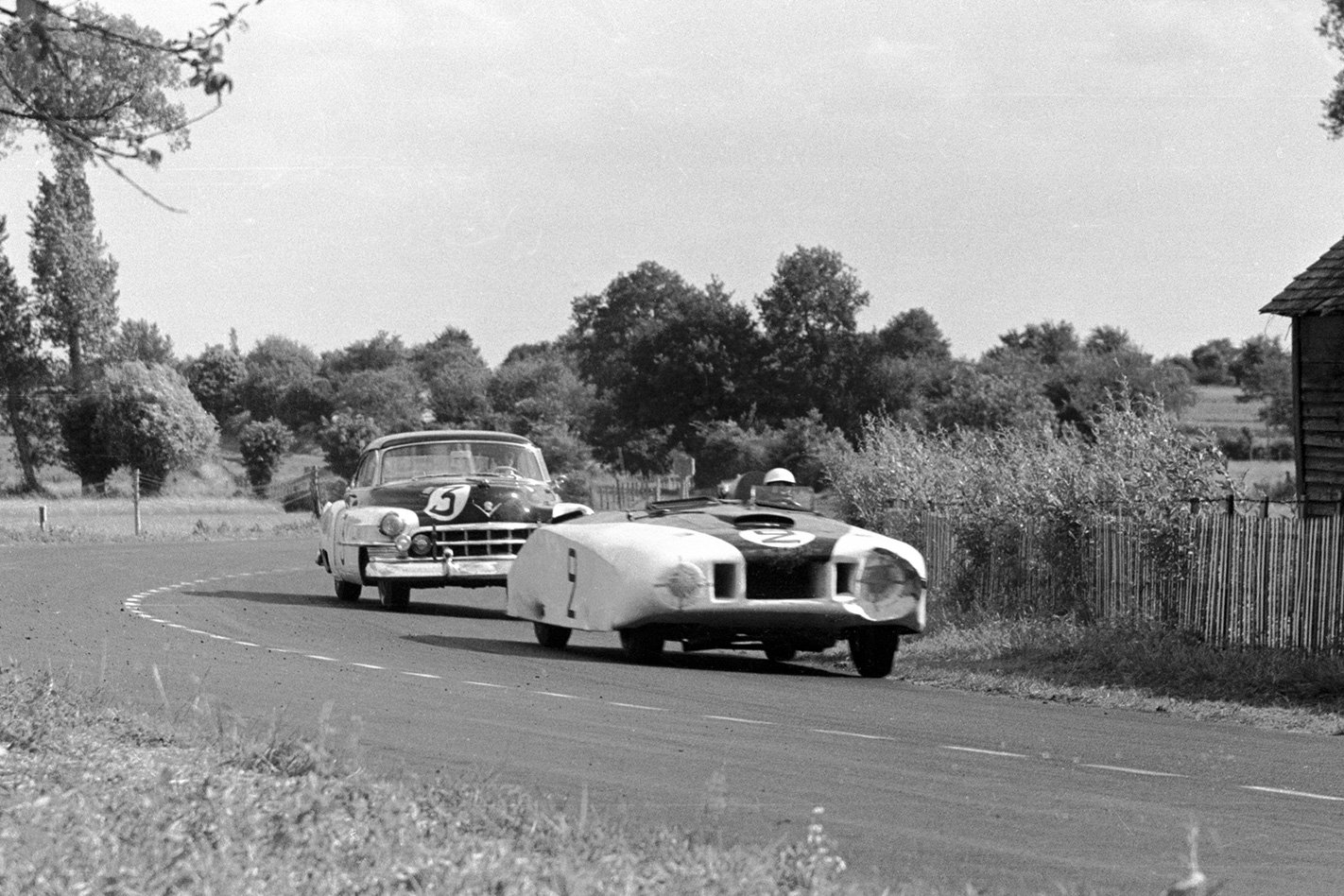
It was the first time Americans had competed in the 24 Hours of Le Mans, with Briggs Cunningham bringing a pair of 5.4-litre Cadillacs. The first was a standard Series 61 sedan, while the second wore custom aerodynamic bodywork which had been refined in the Grumman Aircraft windtunnel.
The French quickly nicknamed the pair ‘Petit Petaud’ (small puppy) and ‘Le Monstre’. Briggs leaned into the nicknames, going as far as having the new monikers printed on the bonnets beside the American flag.
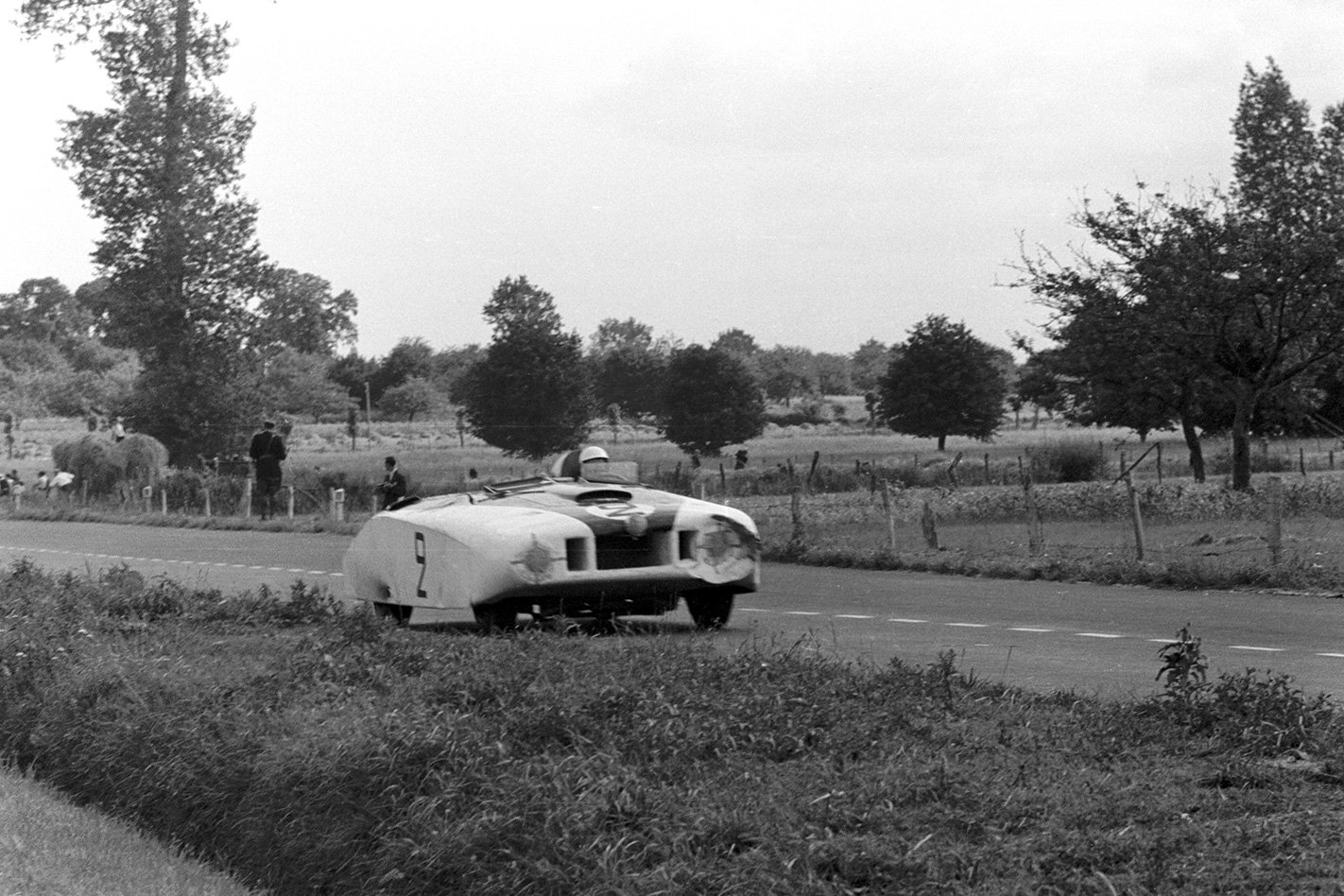
As a result of being buried in a sandbank mid-race, and the gearbox only allowing high gear to be selected for much of the 24 hour event, Le Monstre finished 11th overall, one position behind its regular-bodied sibling.
Dallara DP01
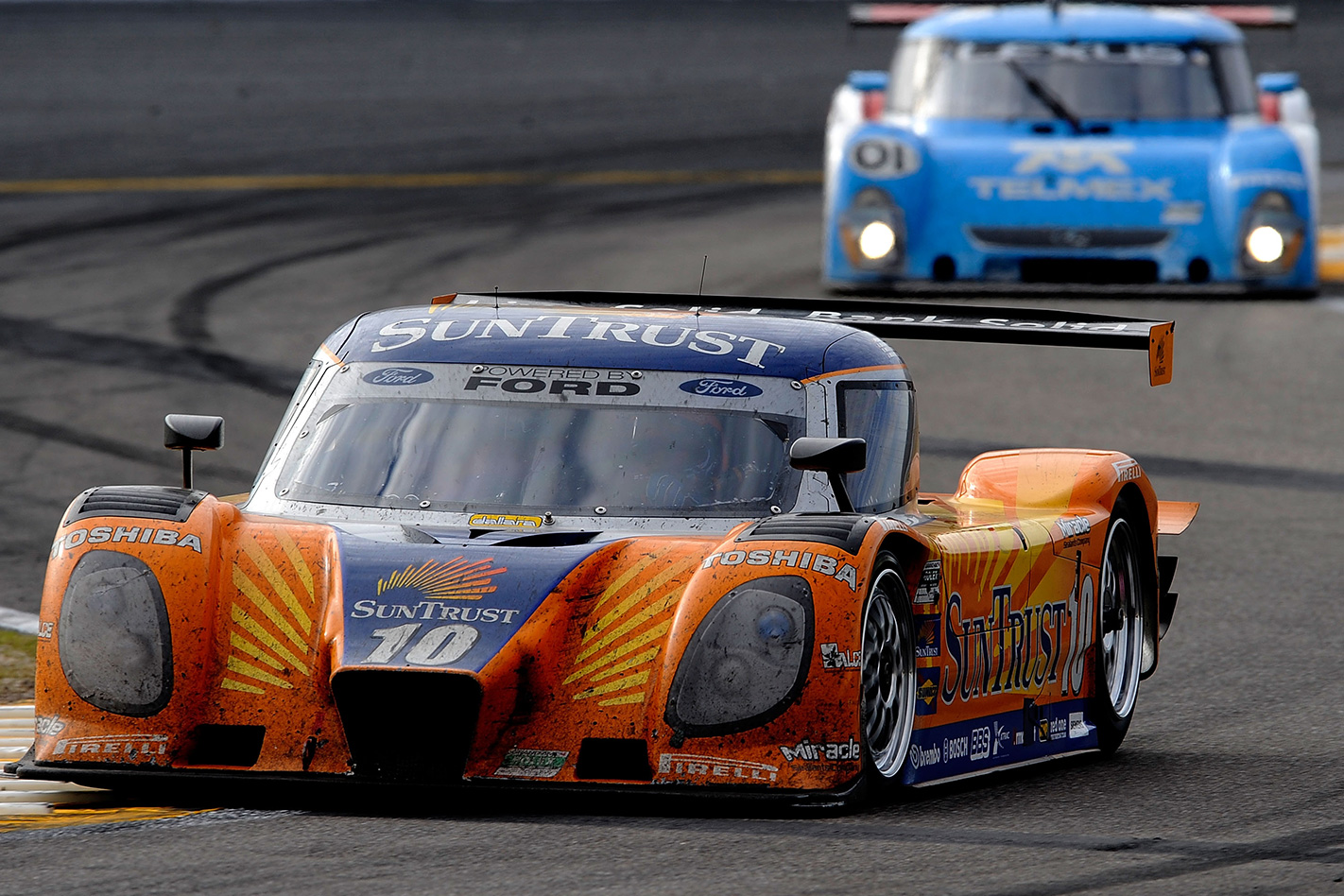
Most commonly known as Rolex Grand-Am, the Grand American Road Racing Association’s Rolex Sports Car Series was North America’s answer to the World Endurance Championship.
Instead of LMP1, Grand-Am had a flagship category named Daytona Prototypes, paying homage to the championship’s season opener and premier event, the Daytona 24 Hours.
Since they were introduced in 2003, Daytona Prototypes have always been slightly aesthetically challenged.
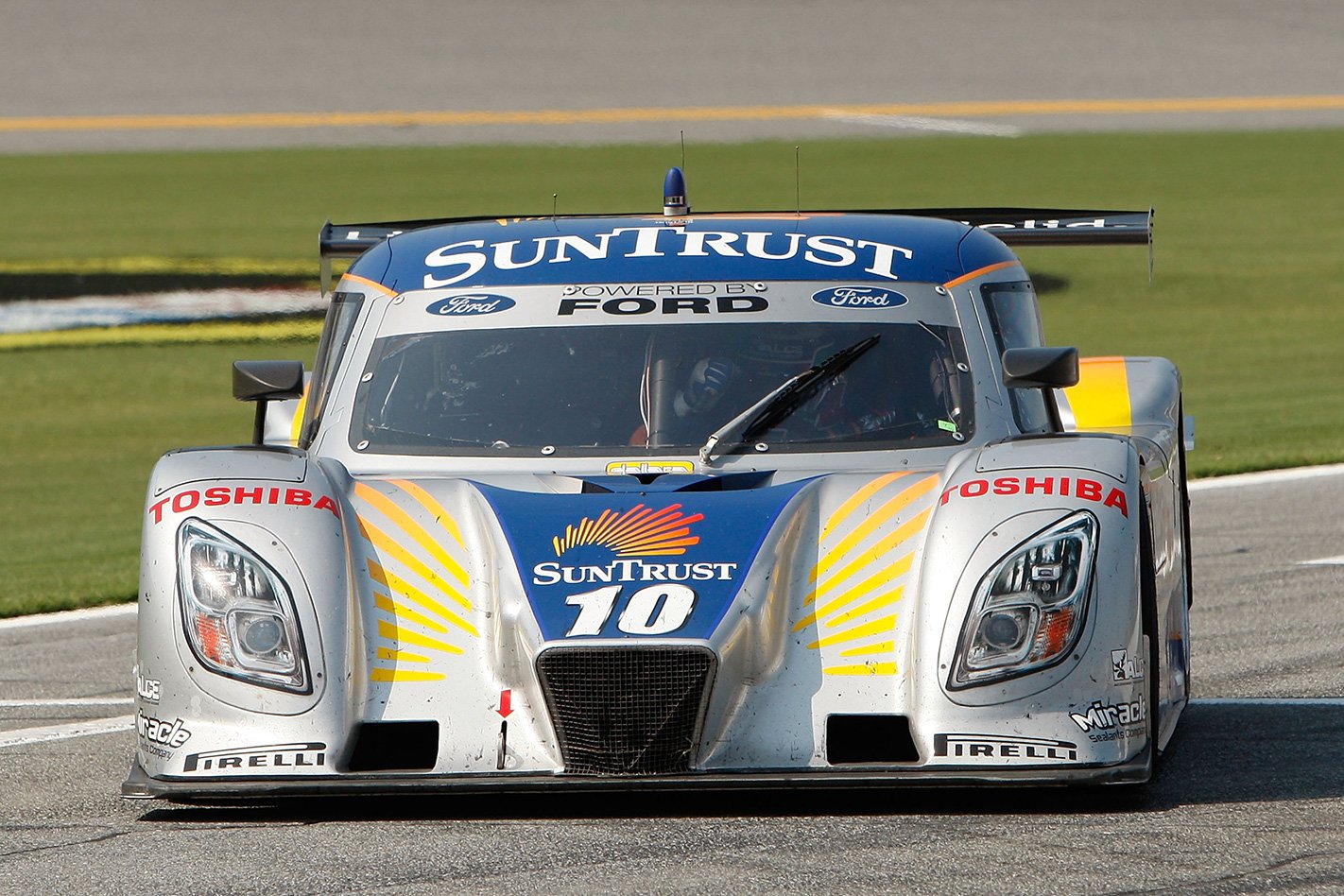
However, the Dallara DP01 is one of the least pleasing. Built as a ‘Gen 2’ car which made its debut in 2008, the DP01 differed from its Daytona Prototype counterparts thanks to a snout-like duct which dominated the frontal area of the car.
Regulations allowed a variety of engines to be used, ranging from a Porsche flat-six, to a Ford 5.0-litre V8. The DP01 was used mainly by Ford teams, who used the company’s eight-cylinder engine.
Chaparral 2J
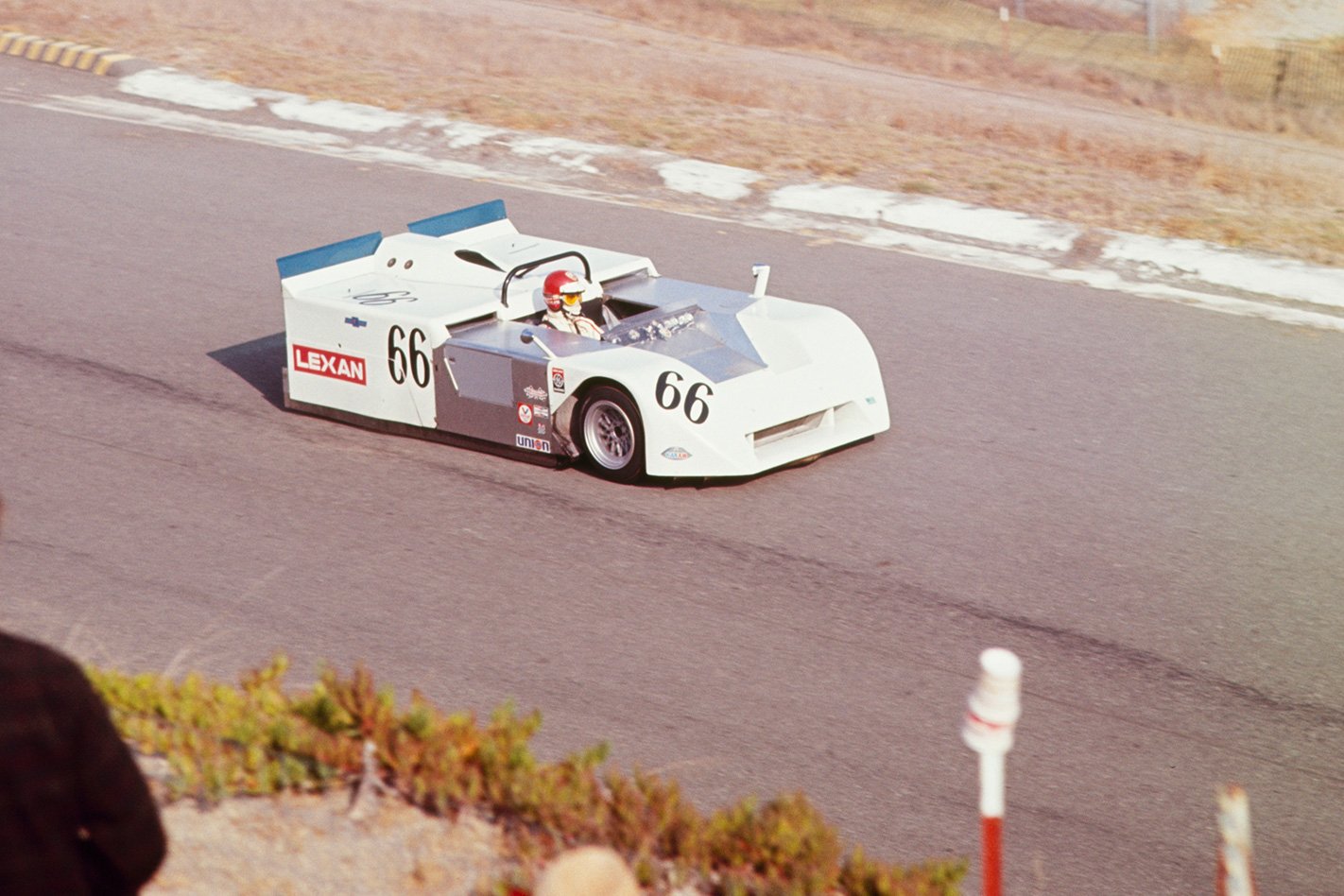
The Chaparral 2J is one of the odder-looking cars on this list, as well as arguably the most controversial, and successful.
Using ground effects, the 2J featured a pair of fans at the rear of the car which were sourced from a military tank, and driven by a two stroke twin-cylinder engine. These helped sucked the car to the ground, with a seal provided by articulating plastic skirts along the chassis’ edges.
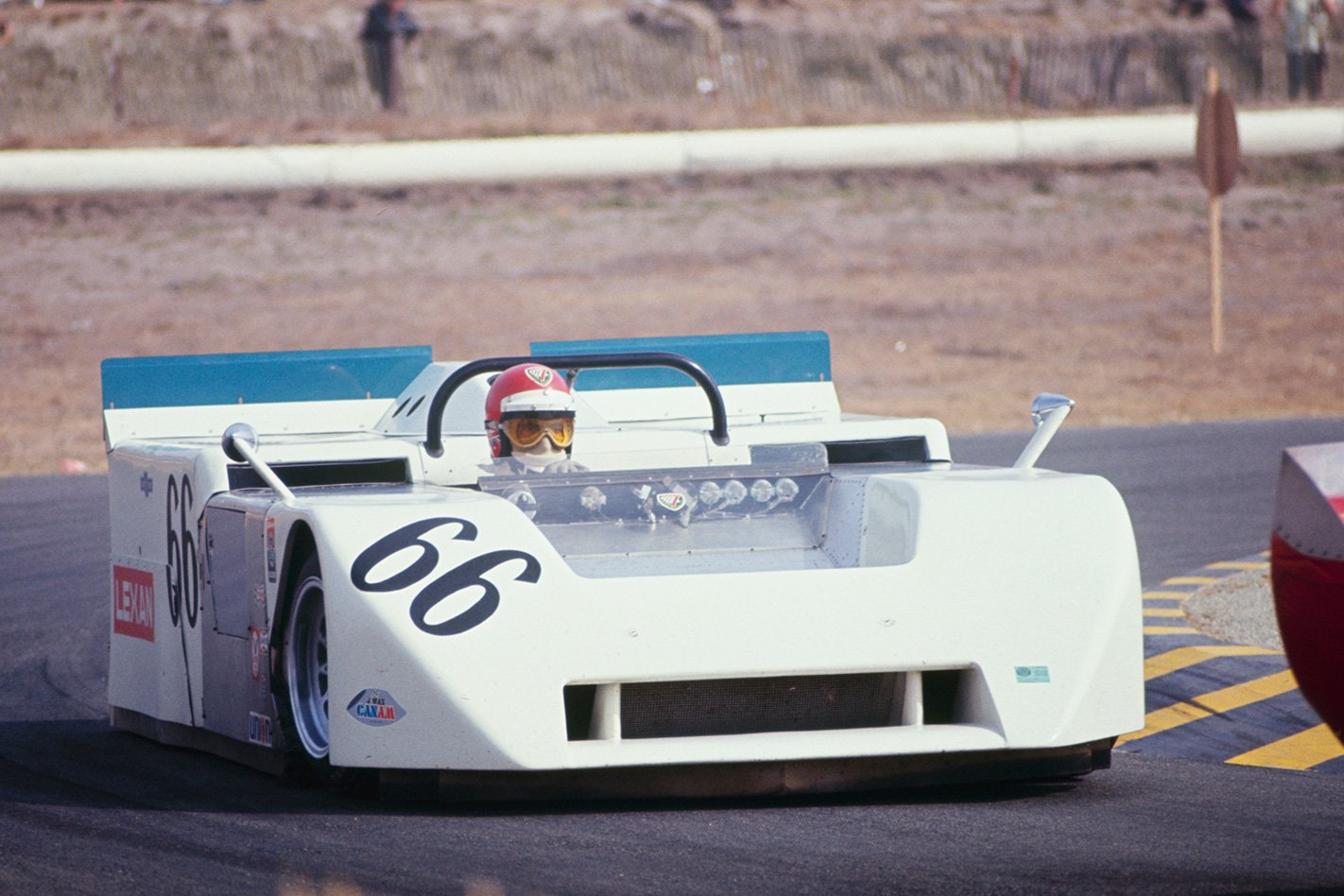
The system allowed for tremendous levels of grip, and unlike conventional wings and spoilers, didn’t lose downforce at lower speeds.
Only competing for a single season in Can-Am, and powered by a Chevrolet V8, the 2J was capable of qualifying two seconds quicker than its competitors.
Panoz GTR-1
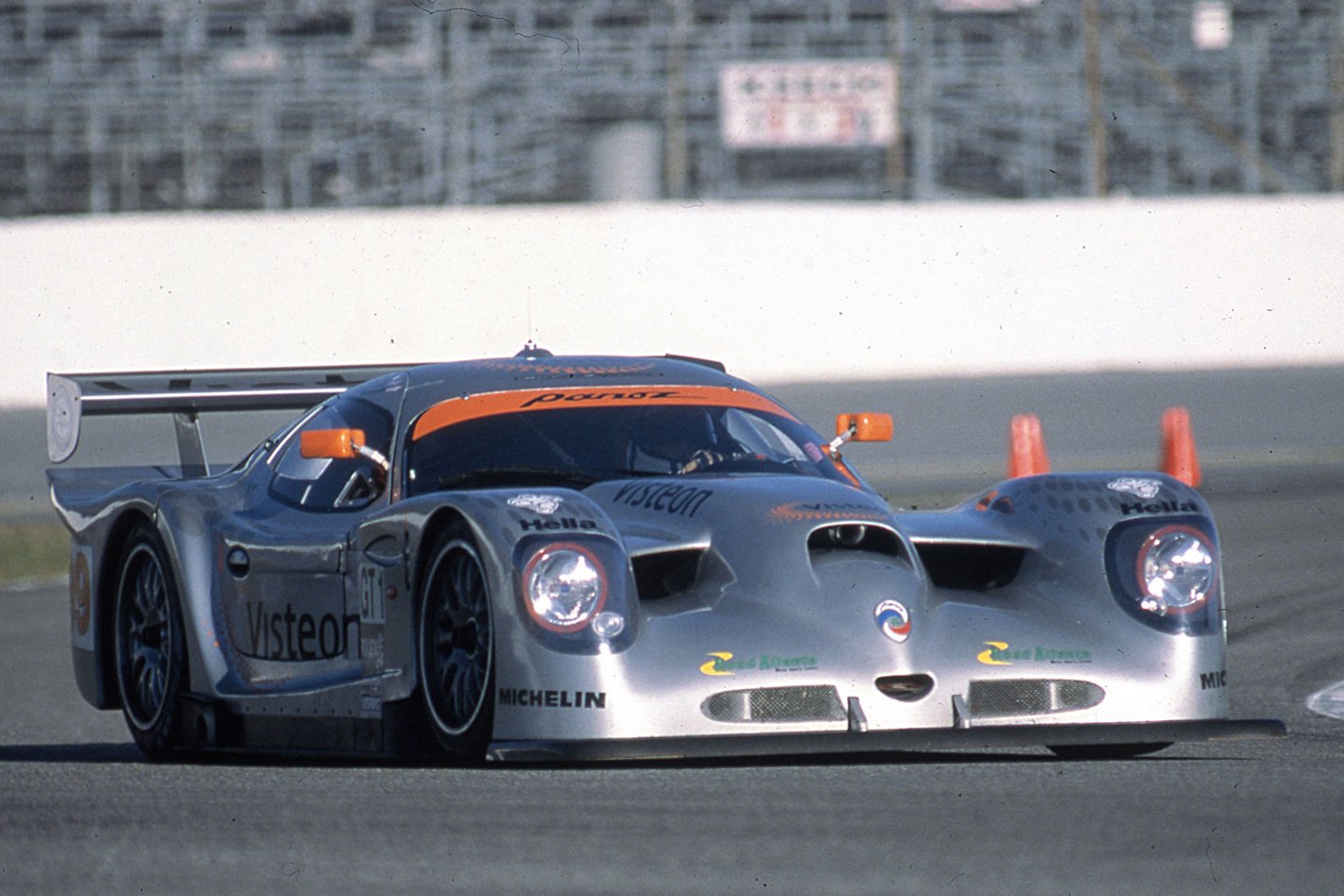
Competing in the FIA GT Championship and 24 Hours of Le Mans, the Panoz GTR-1 debuted in 1997.
Although named after the Panoz Esperante road car, the GTR-1 bore no mechanical relation to the roadster, with minor styling points the only link between the pair. Two road-legal GTR-1s were built, but only to meet minimum requirements for homologation.
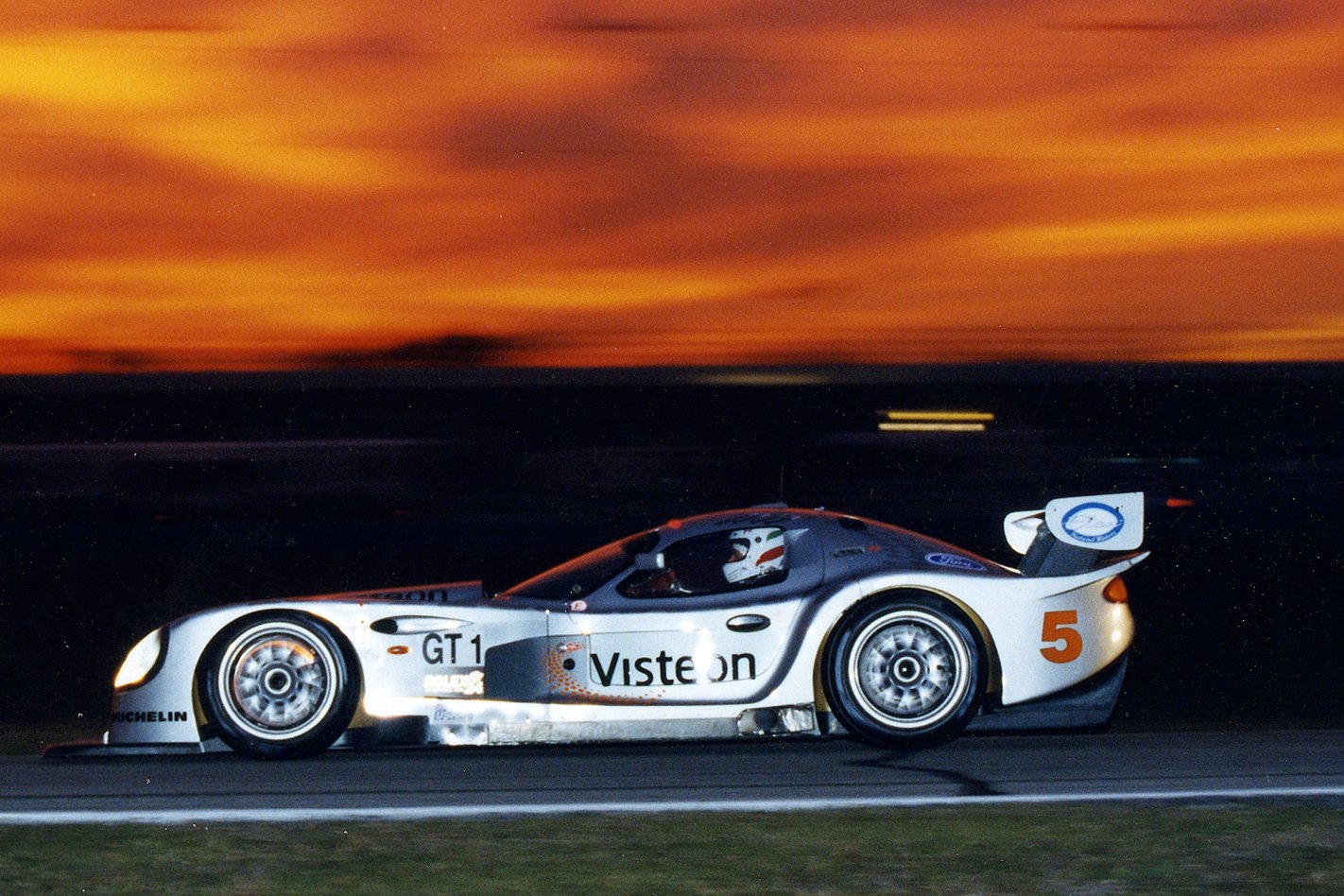
The car’s unique design earned it the nickname of the ‘Batmobile’.
Dallara DW12
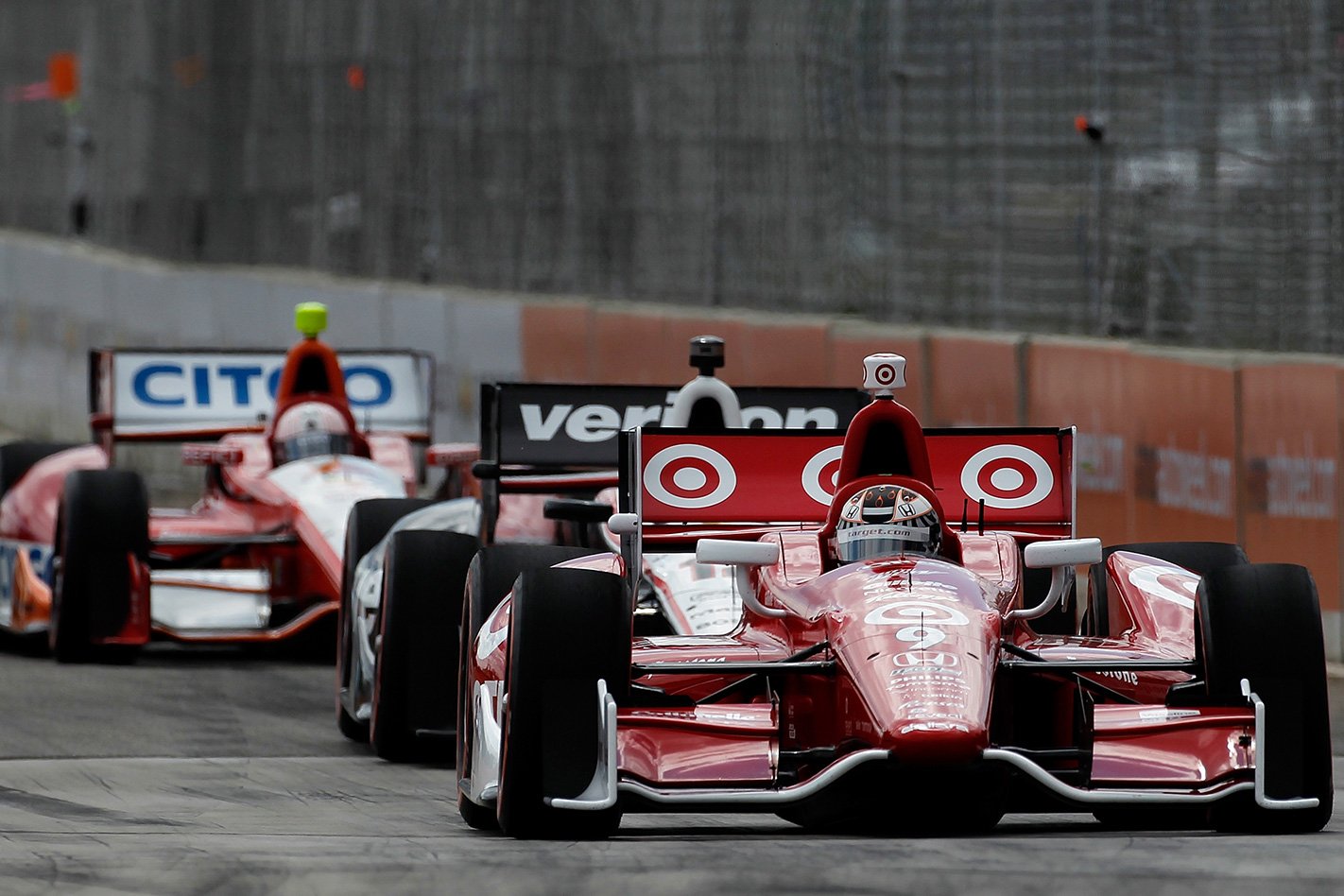
Oh, how open-wheel fans gnashed their teeth when IndyCar revealed the DW12 concept.
Built by Dallara, and named after its test driver Dan Wheldon who had lost his life a year before its debut, the spec chassis replaced the aging IR-05.
Of particular offence to racing fans were the bumpers placed behind the rear wheels designed to prevent the kinds of crashes which took Wheldon’s life.
The DW12’s bulging side pods also caught the ire of fans.
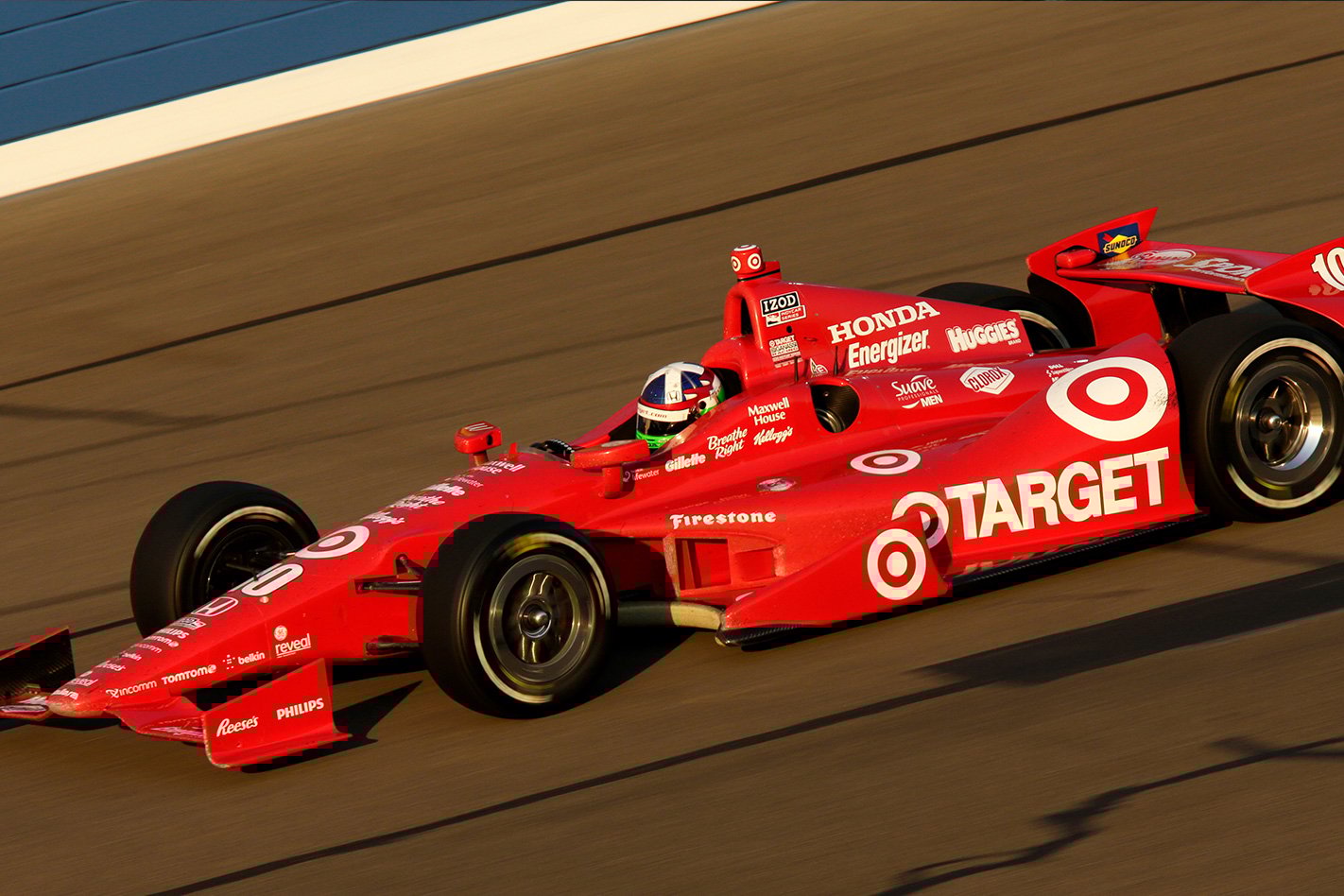
Originally slated to last until 2020, the DW12’s was replaced with a much more conventionally attractive offering in 2018.
Tesla’s eccentric founder Elon Musk has been forced to relinquish one of his roles at the company, ceding his chairman’s position to Australian-born Robyn Denholm – who will vacate one of Telstra’s most senior jobs just a month after starting to take on the role with the controversial electric car-maker.
Mr Musk was forced to vacate the chairman’s position as part of a plea deal with US stock market security officials after he was accused of manipulating stock prices via a tweet about potential foreign investment in Tesla. As part of his punishment, he is barred from chairing Tesla for three years, but will keep his role as chief executive officer.
Ms Denholm, who has been on Tesla’s board since 2014, only started her role as Telstra’s most senior financial officer in October, and will be required to serve a six-month notice period before she can start full-time at Tesla.
She spent the early part of her career at Toyota Australia as the national finance manager (reportedly the first woman to claim that role within the company), before moving into the IT sector with some of the world’s largest companies.
Born in Milperra in Sydney’s south-west, Ms Denholm worked alongside her parents at the family’s petrol station in her younger days, where her bookkeeping skills would eventually take her to the Universities of both NSW and Sydney for accounting and commerce degrees.
Her time at Tesla has been nothing if not exciting; as the first woman on the board, she is also the highest-paid, receiving a claimed A$70 million in stock options in 2015. Her salary for her new role will be a retainer of US$300,000 ($413,000) and 8000 stock options per year. Tesla shares are currently trading at around $300 each.
As well, she was recently part of a briefly-convened three-person committee that was set up to investigate taking Tesla private – seven days after Mr Musk tweeted that he had ‘Funding Secured’ to do so to his 23 million followers. The committee was disbanded after 17 days, with no resolution reached.
Some sectors of the automotive industry have questioned whether Tesla has missed an opportunity to broaden the company’s scope by not recruiting someone from outside its inner sanctum – in fact, James Murdoch, the British-born son of Australian media tycoon Rupert, was previously touted to take the chair.
