
Volkswagen is the latest manufacturer to extend its new-car warranty period in Australia from three to five years, albeit temporarily.
The Australian arm of the German carmaker is offering a five-year, unlimited-kilometre coverage on all its models purchased from today until December 31, with selected models also available with sharp driveaway pricing.
Volkswagen vehicles are normally covered by a three-year, unlimited kilometre warranty.
The temporary warranty offer is similar to ones initiated other brands, such as Holden and Honda, both of whom went on to offer five-year warranties permanently.
Volkswagen Group Australia managing director Michael Bartsch said a permanent move to five years would be determined by customer feedback.
“From the 80,000 customer surveys that VGA conducts annually, we see strong response to our driveaway pricing and finance offers,” said Bartsch.
“Customer reaction to Five Year Warranty will be informative.”
A permanent move would leave just Nissan, Subaru, Suzuki and Toyota as the only mainstream manufacturers to still offer three-year terms.
LEWIS HAMILTON has one hand on his fifth F1 drivers’ world championship following victory in the Russian Grand Prix, but it was the youngster Max Verstappen who was the real star of the race.
The Dutchman enjoyed his 21st birthday by starting from 19th on the grid following engine penalties, before carving his way through the field in thrilling fashion to end up in fifth by the end of the eighth lap.
The Red Bull driver inherited the lead of the race on lap 19 once the Ferrari and Mercedes duos ahead of him pitted for tyres, and remained there until there were just 10 laps remaining.
Once Verstappen finally pitted, he re-joined again in fifth position, ahead of his teammate Daniel Ricciardo, who had suffered from a damaged wing after also starting near the rear of the grid.
Ricciardo ran a lonely race, taking a more subdued path through the field, but taking his damaged aerodynamics into account still impressed.
But it was Hamilton who took home the winner’s trophy following a controversial decision by the Mercedes squad to implement team orders and solidify the British driver’s championship lead.
With five races left in the 2018 season, Hamilton sits 50-points clear of his only remaining rival, Sebastian Vettel.
Hamilton’s teammate Valtteri Bottas started the race from pole position, and was leading early on from the points’ leader, before team orders came into play and he finished second.
Vettel finished the race in third position, but didn’t make life easy for Mercedes. During the pit stops Ferrari was able to undercut the then second-place Hamilton to put Vettel in between the Silver Arrows.
It was short-lived, with the defending champion using DRS to his advantage to power past the Ferrari driver and back into second place.
However, with Hamilton in the hunt for the championship, Mercedes-AMG used team orders to swap their drivers, elevating the Briton into a race-winning position.
Following the race both Hamilton and Bottas were subdued, with neither celebrating the one-two victory with vigour.
Charles Leclerc, Kevin Magnussen, Esteban Ocon, and Sergio Perez rounded out the top 10.
I SEE THE FUN POLICE are having a crackdown on people enjoying themselves in the car again.
I’m talking about a recent poll that revealed 38 per cent of drivers have eaten takeaway food while driving, while 10 per cent have steered with their knees. “It’s dangerous driving,” huffed the disgusted fun-o-phobes, on their way home to grimly re-check the batteries in their smoke detectors.
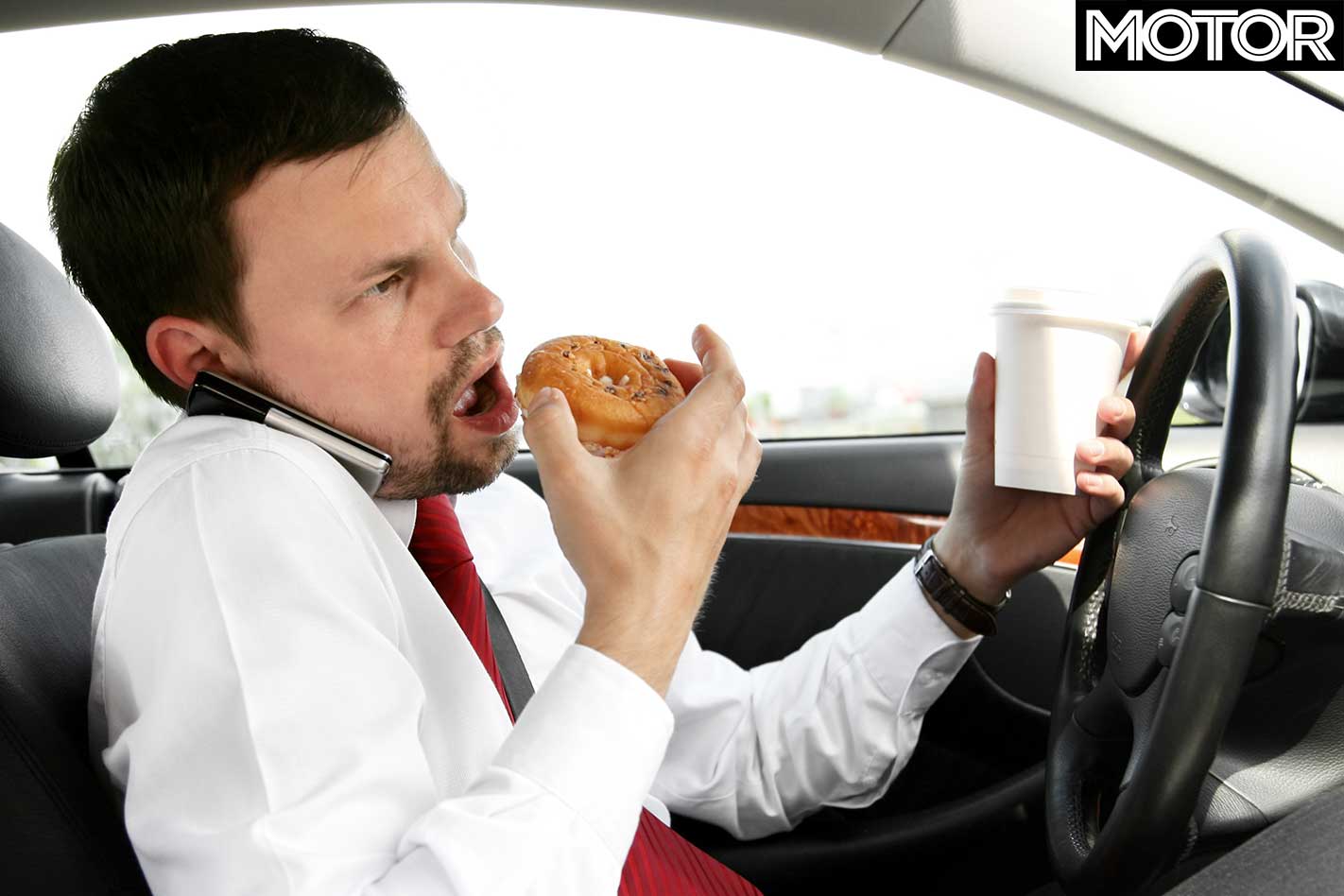
But my sharply honed instincts as a defence lawyer – I’ve watched My Cousin Vinny like 12 times – reveal a glaring hole in the case: how did 28 per cent of people eat takeaway food without steering with their knees?
I occasionally eat while driving. But before the Fun Police reach for the handcuffs, I should point out that I do it very safely. I don’t steer with my knees, because of course I need to keep my thighs level to rest the plate on – too much movement slops gravy and peas everywhere. And anyway, if I turn at all, it could upset the ice bucket balanced on the centre console.
Enough lies. I say everyone who eats takeaway in the car steers with their knees. No? Because you waited until you got to the lights to have a chip? No you didn’t. You’re lying. You know it, and I know it.
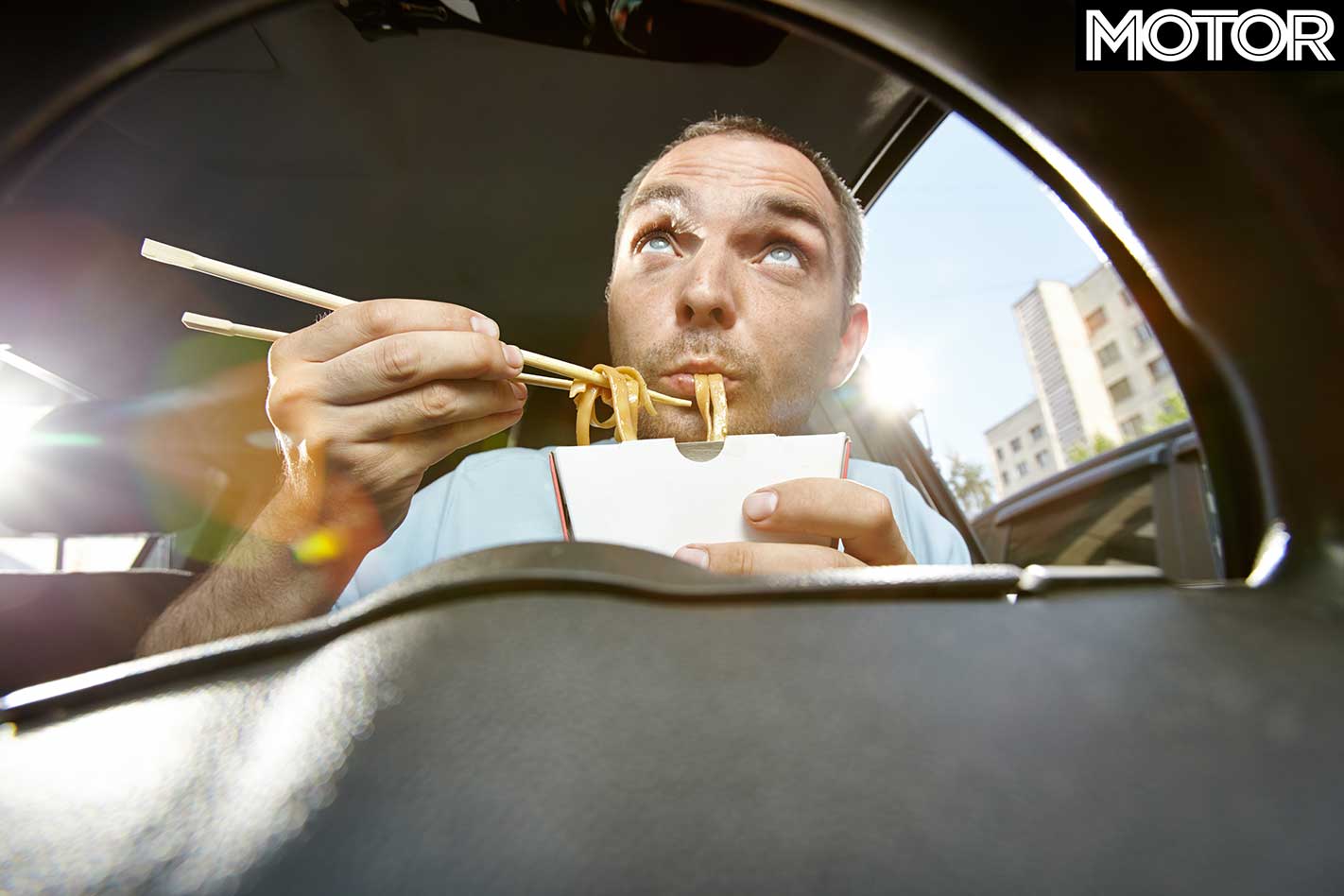
Fun Police polls are like all police interrogations – they start with the small stuff to lock you into your story, and then whammo, they trot out the big guns: here’s a human head, and it has your fingerprints on it, and here’s a video of you sparing a seven-ten split with it at Bowlarama.
It’s the same inside the Fun Police interrogation room.
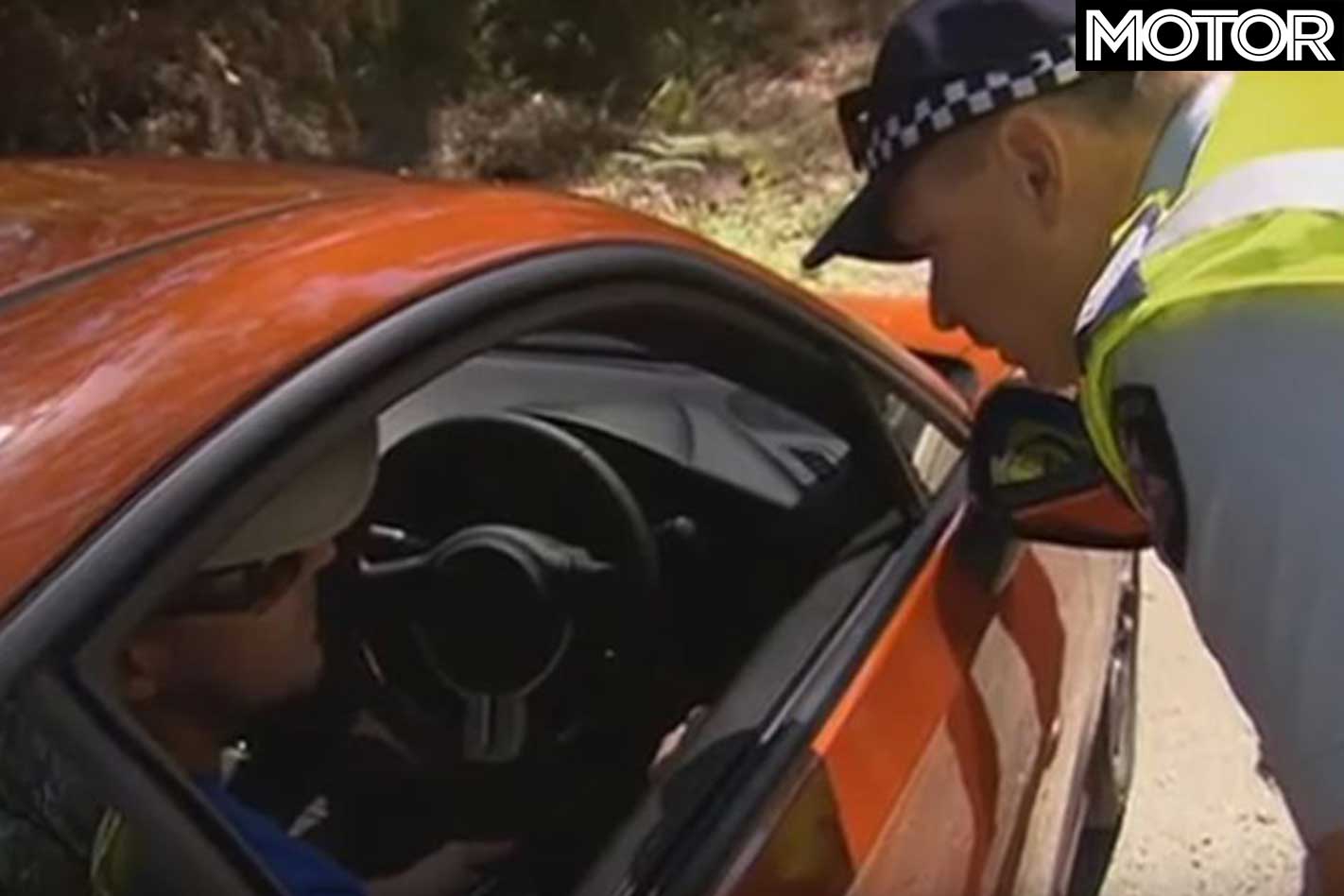
“Have you ever eaten takeaway while driving?” the Fun Police ask lightly, like you’re just having a friendly chat, and you fail to sense the trap lying in wait: “Yes, I have,” you admit, grinning guiltily like a labrador with pillow stuffing on its lips.
Then the tone turns sharp – and now you hear the snap as the trap closes on your ankle: “Then have you ever steered with your knees?”
“N-n-no,” you stammer, the heat creeping up the back of your neck. “No, sir, that would be – that would be dangerous and wrong.” “It would, wouldn’t it,” the Fun Police murmur, and somehow the quiet sounds louder than a shout. “But let me ask you this – how did you eat the takeaway, if you didn’t steer with your knees?” “I… uh, I eat with one hand,” you reply, knowing they’ll never believe you, knowing that no-one could believe such a preposterous lie, wishing you had more time to think, to come up with a better story, but there’s no time, the questions just keep coming and coming, and it’s so hot in here, why is it so hot?
“So you never took a sip from your drink while you were eating?” “I, uh, I did, but I put the burger down first, and then I…” “Have you ever listened to In The Air Tonight while driving?” “What?” “Phil Collins. HAVE YOU EVER LISTENED TO IT WHILE DRIVING!” “Y-yes, but I…” “Then how did you air-drum the bit at three-minutes-thirteen if you’ve never steered with your knees?” “I… just sort of tap my fingers on the steering wheel at ten and two…” “Lies! You air-drum it! You know you do!” “Okay! But I just… I drum with one hand… like the guy from Def Leppard…” “I see you bought your shirt at Fancy Man in Westfield Warringah Mall… You’ve never had to dig the multi-storey carpark ticket and your credit card out of your wallet before you get to the boom gate?” “Okay! Okay! I admit it! I steered with my knees! God help me, I did it, I steered with my knees…” “Guards! Take this piece of filth to the Fun Gulag… and bring in the next suspect.”
Thank god they didn’t ask about burnouts.
Mount Panorama is Australia’s answer to the Nurburgring and has etched itself into our culture as the battleground for the iconic Ford vs Holden rivalry that defines Aussie car culture. So what better way to get to this year’s Bathurst 1000 than in two of the brands’ hottest examples on the road today?
This feature was originally published in MOTOR’s December 2006 issue
We were mostly interested in getting behind the wheel of the 307kW GTS rocket ship that HSV has shaped from the new VE Commodore and finding out exactly what $77,680 (as tested) buys us.
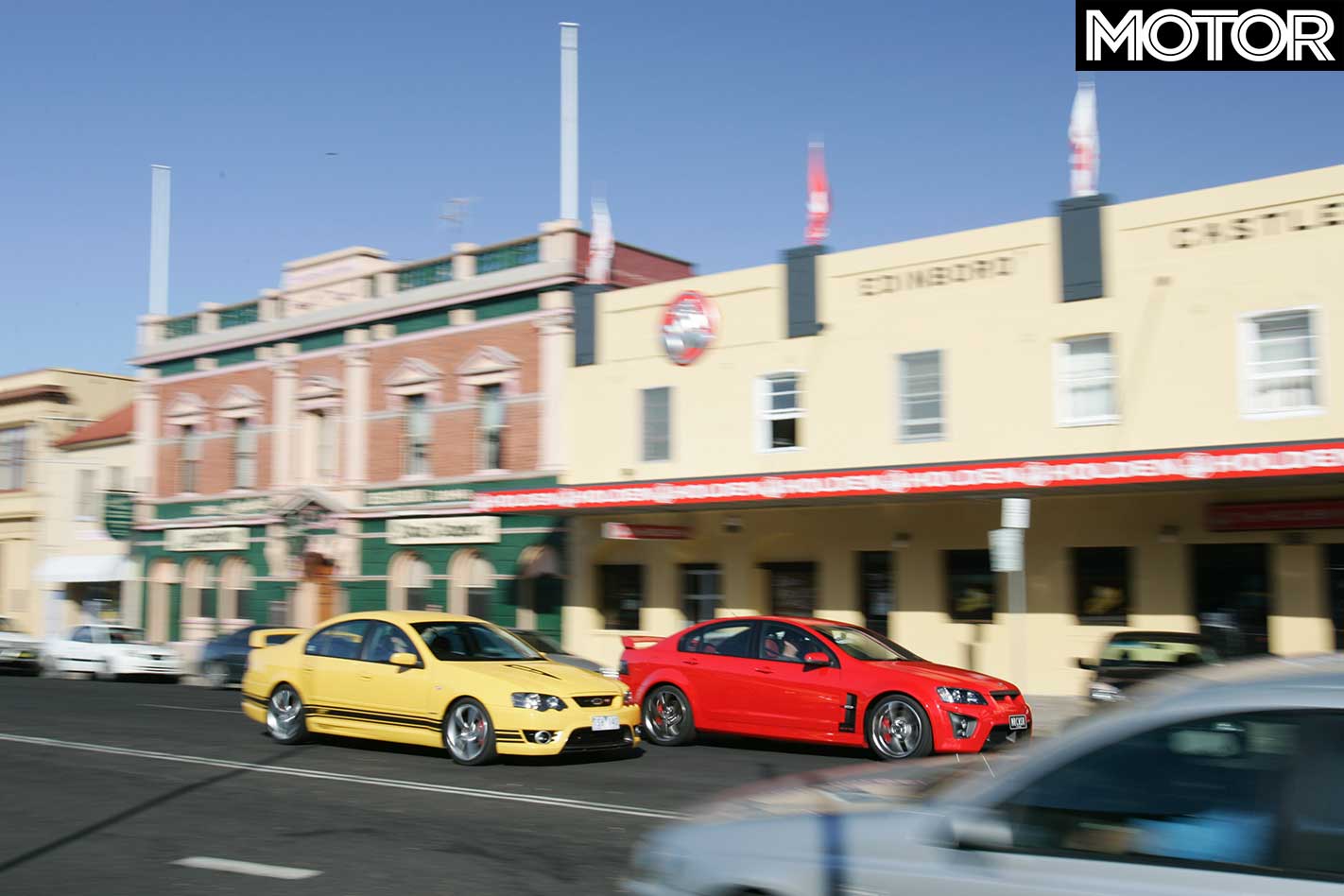
Before we headed off on our trek across the Blue Mountains, there was an early morning detour to Oran Park for a couple of quarter-mile runs to see if the extra ponies HSV extracted from the 6.0-litre LS2 V8 could shoot it on a sub five-second sprint to the speed limit.
HSV is claiming 5.05 seconds to the 100km/h – a figure set by one of their technicians – and they’re offering a bottle of champagne to the motoring scribe who can beat it. Well, we were keen for a crack and the Oran Park front straight is skewed our way, because the second half slopes away gently. We were also keen to see what Aussie ingenuity had delivered in this highly-anticipated car.
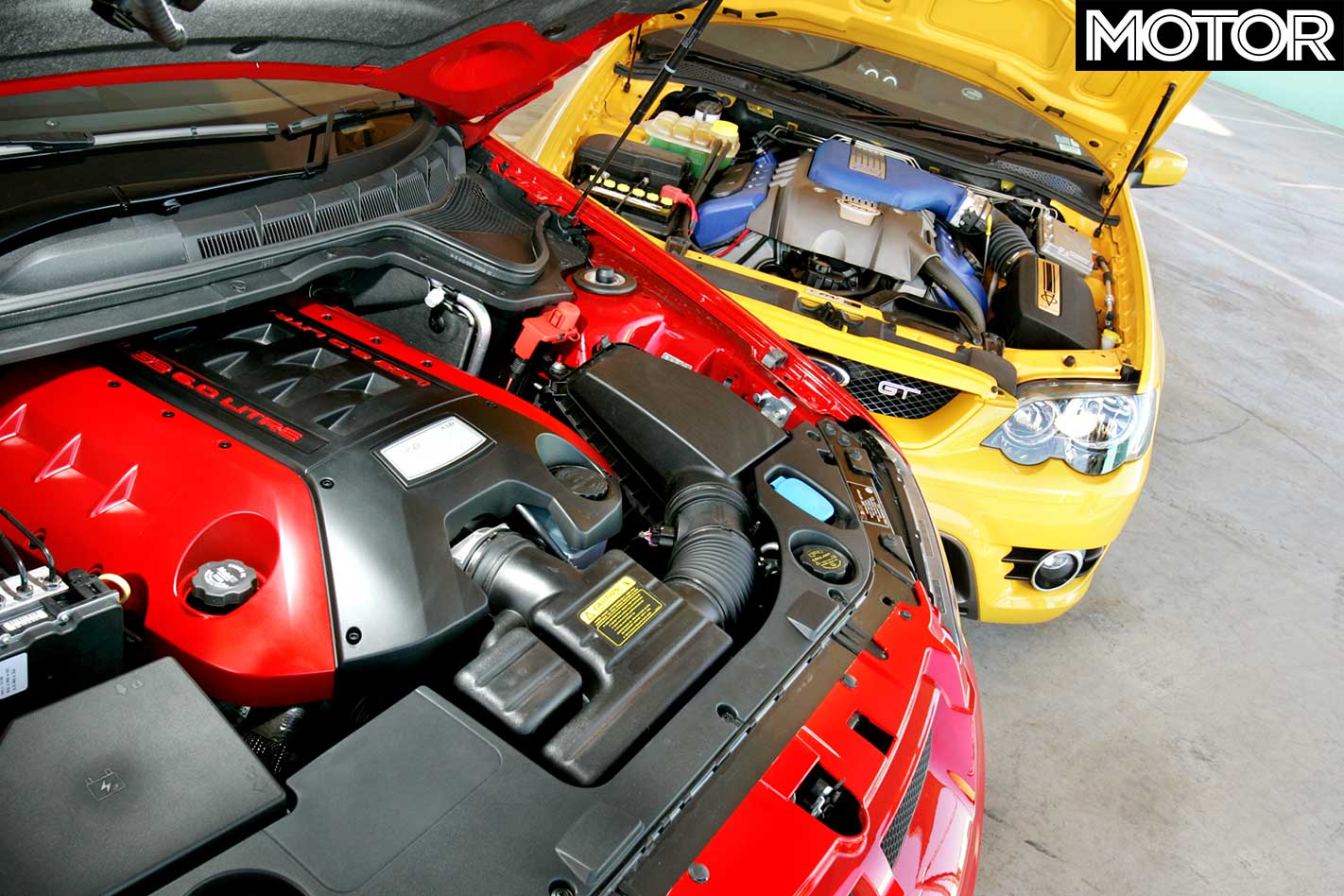
It’s the first full-house GTS from HSV, with previous versions featuring hand-built engines by American Corvette tuner, Callaway. That means it shares the same all-alloy, pushrod-driven LS2 (that’s exclusive to the Clayton camp) with the ClubSport and Senator, and they all have an extra 10kW over the VZ variants.
This is eked out with locally-made headers and fine tuning of the engine’s computer module, and hits peak power at 6000rpm, while maximum torque, which has risen from 530Nm to 550Nm, comes in at 4400rpm.
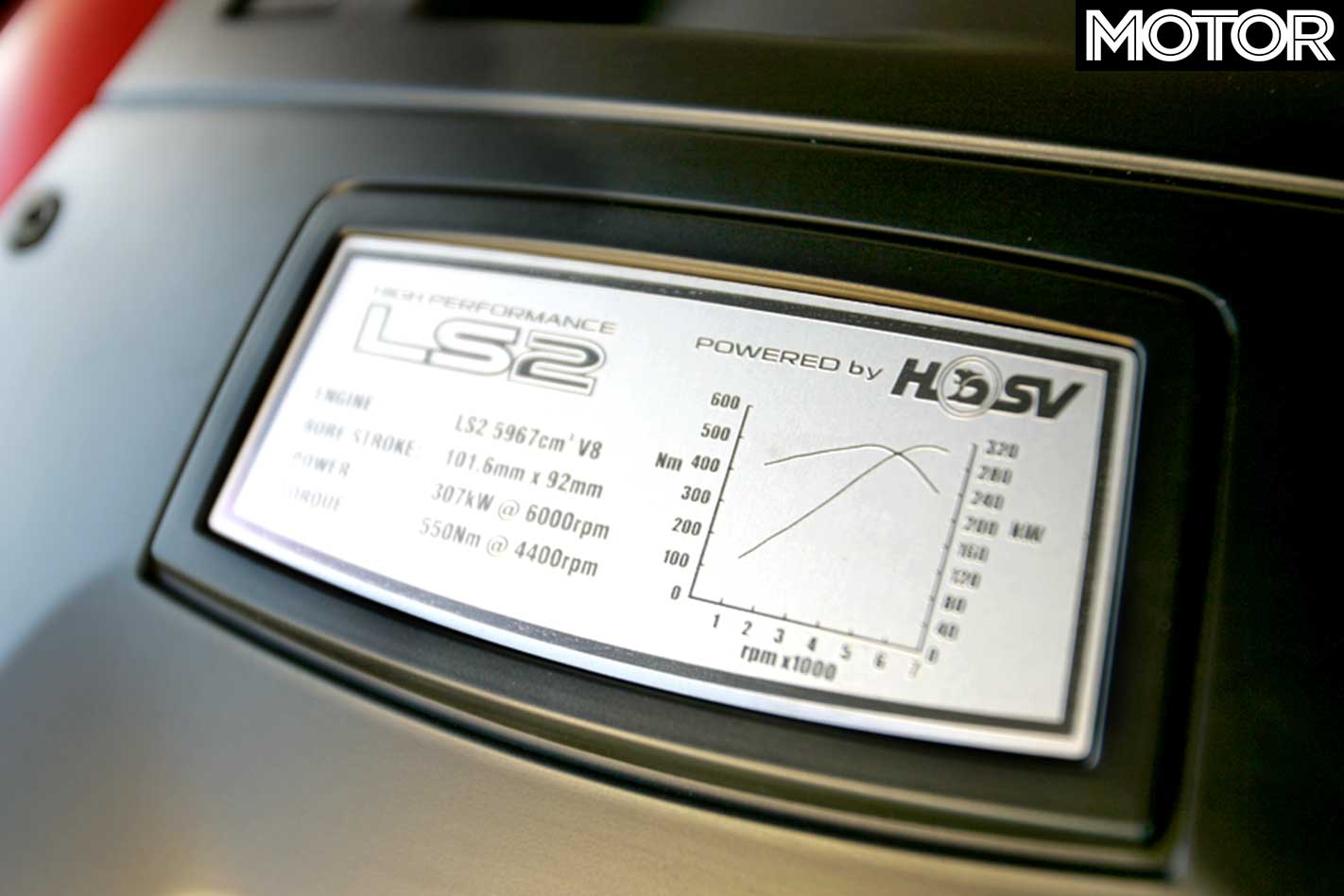
Those figures leap-frog FPV’s offerings. Both the GT and GT-P have a claimed 290kW and 520Nm, but its 5.4-litre Boss V8 hasn’t seen any changes since the BA model was introduced in 2003. It still has the same long-stroke cast-iron block fitted with all-alloy quad-cam cylinder heads featuring four valves per cylinder, which, unlike the Mexican-made LS2 in the GTS, is built in Australia at FPV’s Campbellfield headquarters.
At Oran Park, launching the GTS was to be a simple matter of pushing the sport button in front of the gear selector, dialling in 1500rpm, releasing the brakes and mashing the accelerator. Or so HSV says on their cheat sheet, designed to assist us journos to beat their performance times and claim the champers. But we found 1500rpm to be a little loud for a good launch. 1200-1300rpm seemed to be closer to the mark, and delivered us a 5.4sec to 100km/h and a 13.4sec quarter.
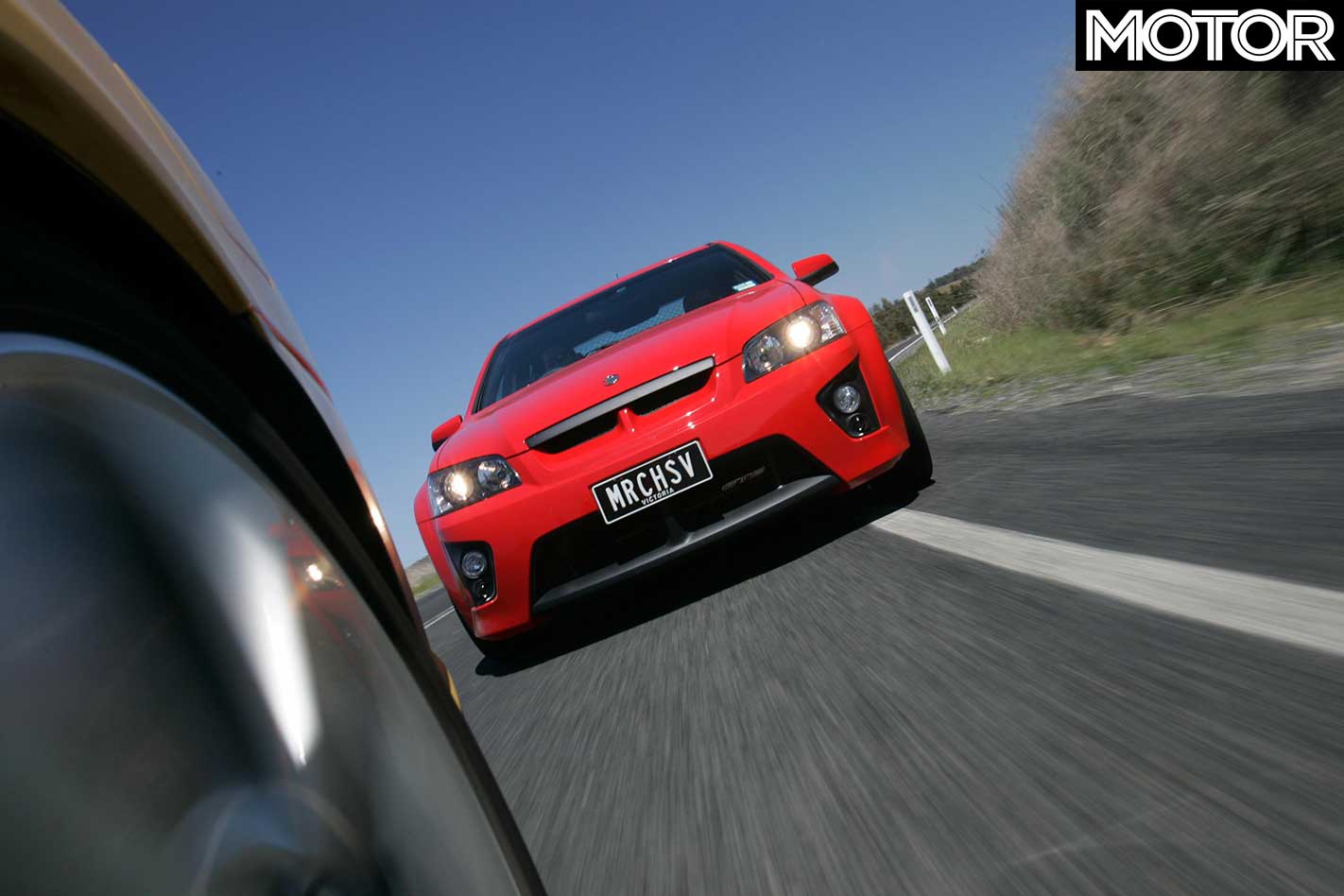
The big V8 pulls hard until about 4500rpm, but then softens off slightly – perhaps with only 1100km on the clock it was a little tight and for now, we’ll give it the benefit of the doubt. But this time we miss out on the bubbly.
The HSV’s tentativeness gave the GT a bit of a sniff, and with more than 12,000km of hard use on the clock, it felt right in its sweet spot. Working against it in this comparison is the smaller-capacity quad cam Boss V8 that struggles to shift the greater mass of the GT off the line.
But once it gets going and the sublime ZF 6HP26 does its job, the Boss comes alive, especially at about four grand where the cams really kick along with a raunchy exhaust note from the twin pipes. The big GT rose to the challenge, marching down the quarter in 13.9 and taking just 5.6sec to reach 100km/h – the fastest times we’ve ever run in a GT.
However, it’s unlikely that you’ll spend much time on the track in your GTS or GT – they’re designed to munch miles with a nice, fat V8 burble in the background. And Bathurst is still five hours away. So we head down the backroads of western Sydney, then onto the Great Western Highway to climb up and across the Blue Mountains, with a quick fang out on some nearby twisty stuff for good measure.
The first stage, in the stop-start heavy Sydney traffic, is a true test of economy – a test the GT is never going to win. It didn’t get any better going up the mountain and by the time we got to the famous Hydro Majestic hotel in Medlow Bath, its trip computer was reading 15.1 litres/100km. Comparatively, the GTS’s computer read just 12.3 litres/100km, despite its bigger capacity engine.
However, the GT does score extra points for its ZF auto which swaps cogs almost invisibly, and is a sweet match to the 5.4 Boss V8. It has to be, as you find yourself shifting a lot to keep in its narrow powerband (between 4000 and 6000rpm).
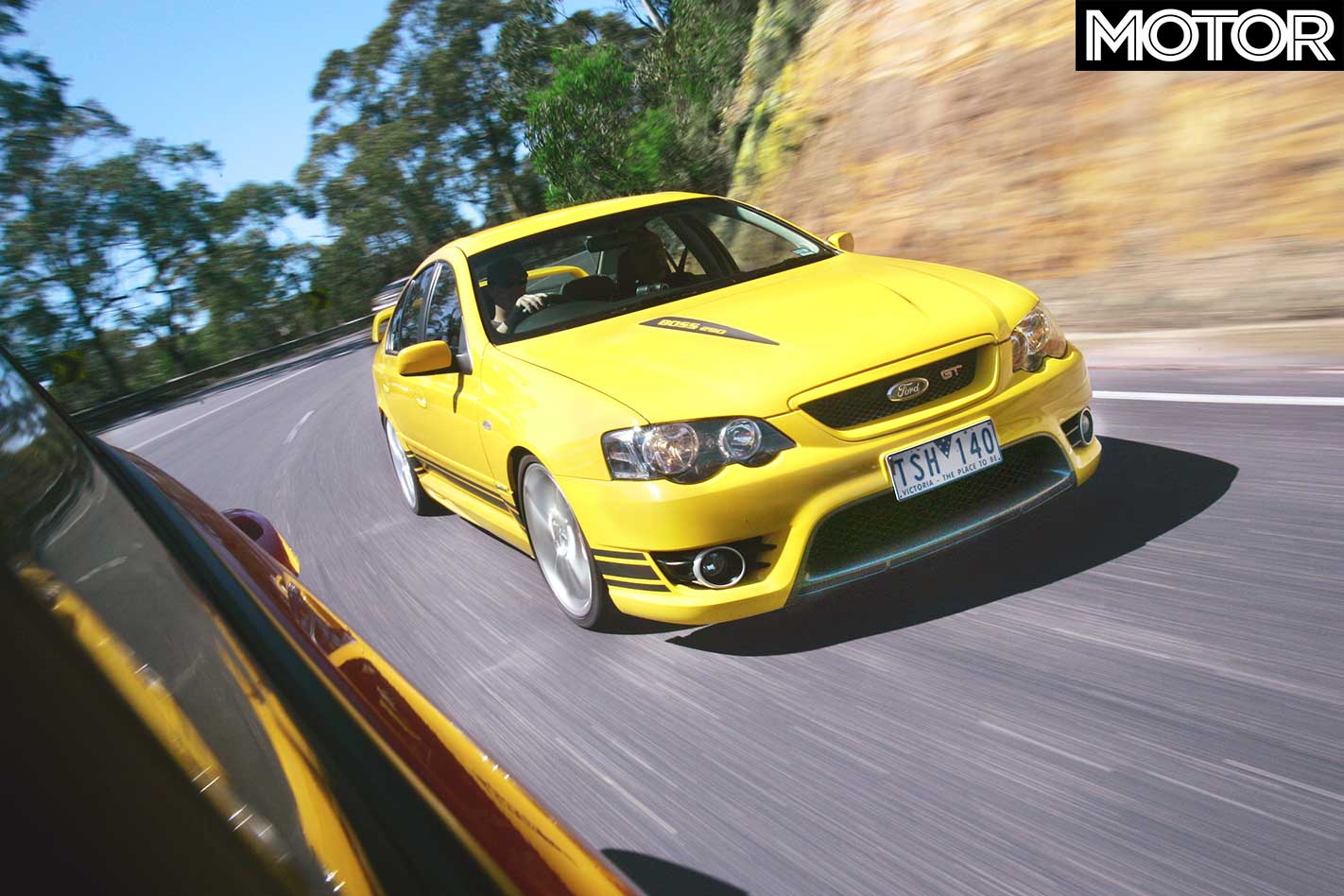
The GTS has a much wider power spread, but using the 6L80 auto in manual mode is an exercise in frustration. Where the GT will let you change down into higher revs, the GTS will ignore your yanking on the shifter until it sinks well into the lower mid-range. Not much fun when you’re looking for a storming launch out of a mid-to-low speed corner.
The GT also comes out in front with its sublime ride on open country roads. While it’s more prone to road noise from its Dunlop Sport Maxx tyres, it rides over irregularities in the road better than the GTS.
Sure, a pothole is still going to crash through into the chassis – remember, it is on 19-inch wheels – but it’s well balanced on gentle, flowing roads. The GTS still feels too stiff for everyday driving and, even with the magic of the Magnetic Ride Control suspension, it doesn’t seem to have the same level of control over small corrugations.
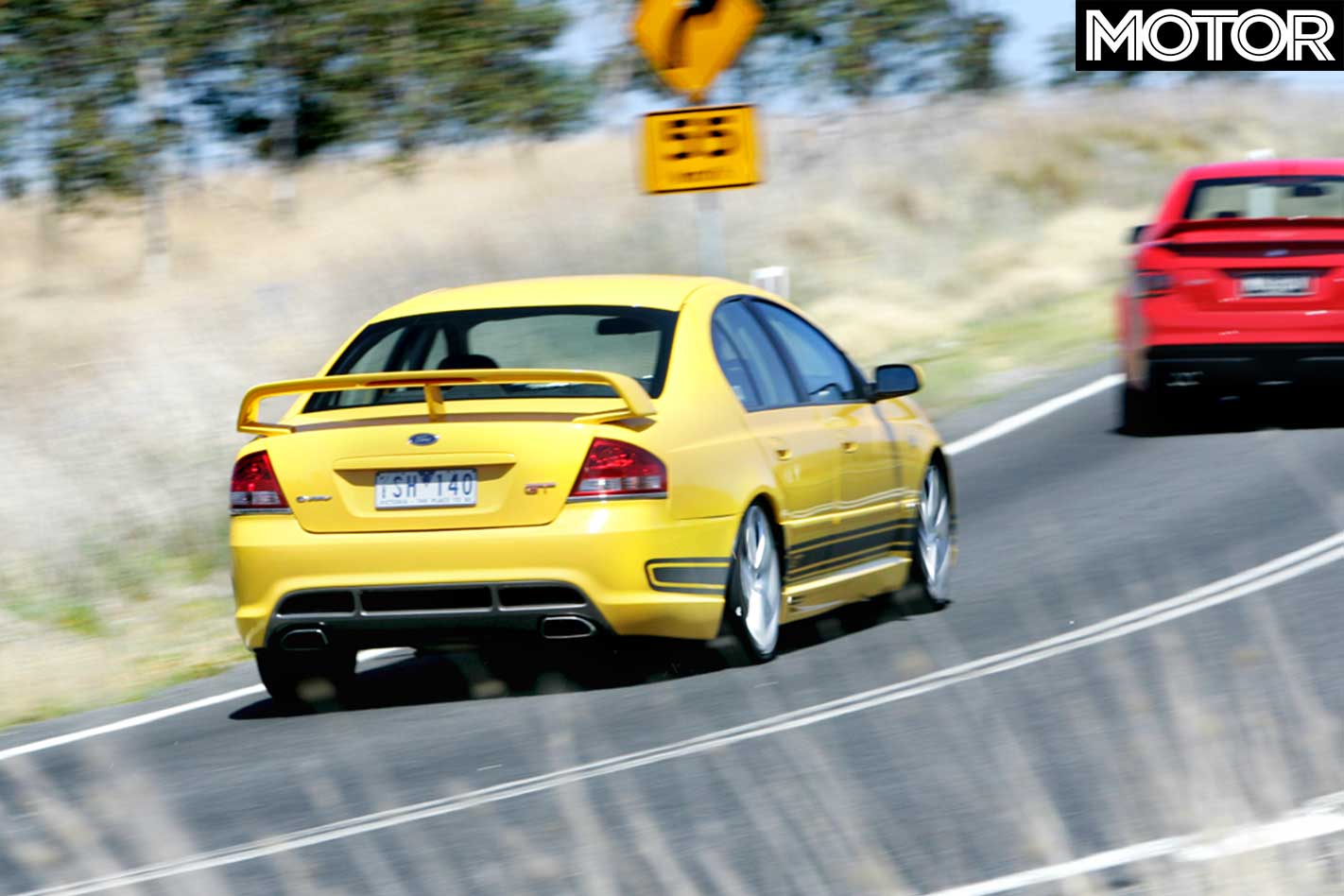
The GTS springs into a different league when the road smoothes out, and the GT works hard trying to keep up. The momentum from the extra mass of the tall iron block V8 can be felt laterally and longitudinally, making it more of a handful in corners.
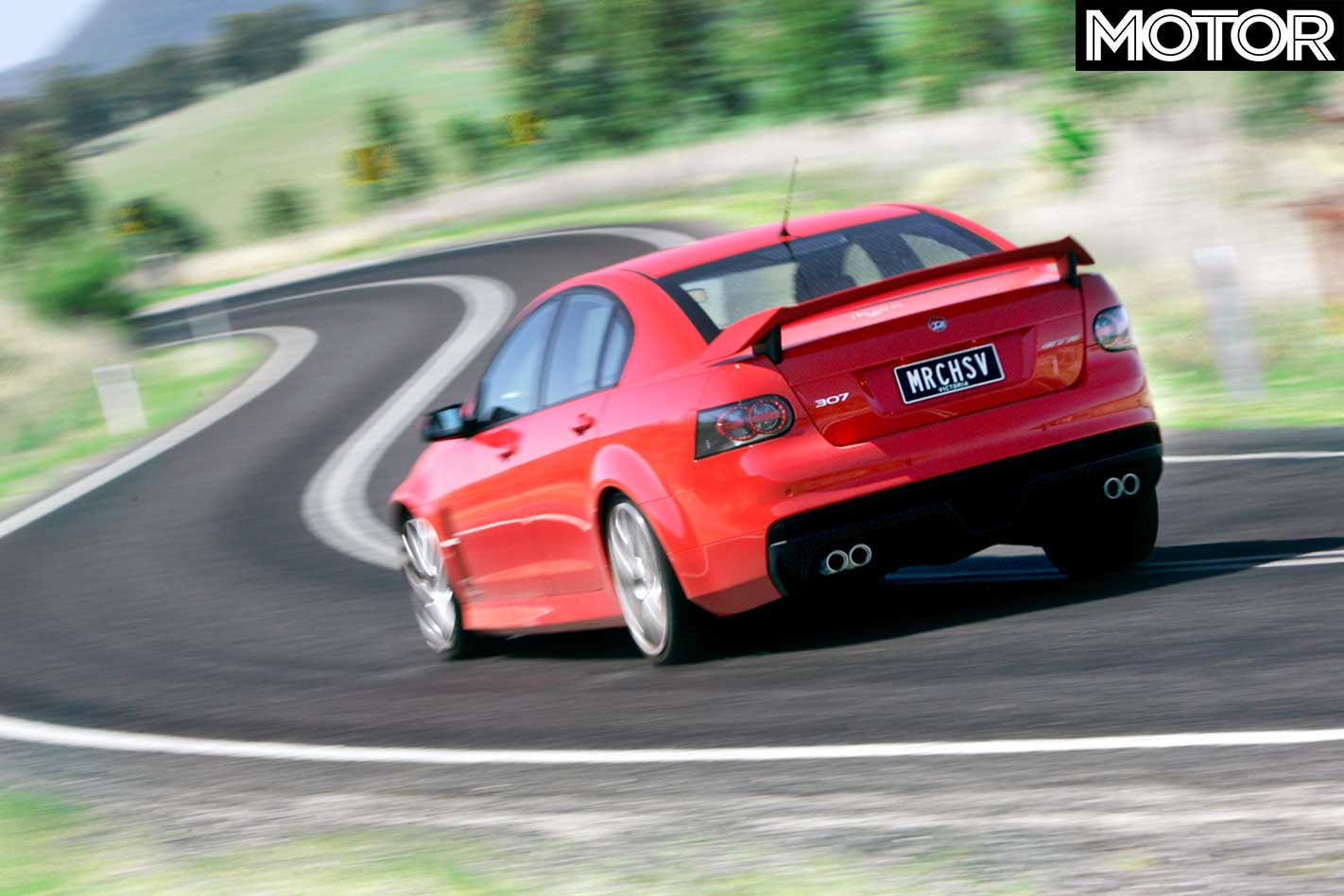
The GT moves around a lot in comparison to the HSV. It feels less planted on turn-in, as the rear is prone to stepping out a little, and then requires attention while the power is fed in on corner exit. It’s an exercise in minute steering and throttle adjustments to get it to drive off the corner as well as the HSV, that in comparison, fires off unflustered.
Even with the MRC track setting turned off, the GTS hunkers into the road with superior balance and grip. It sits flat, slices into the corner more precisely and hangs on with noticeably more mid corner speed.
Select ‘track’, and the GTS steps up another notch. On a tight, closing-radius third-gear corner – which was second in the GT – you can confidently throw the GTS in and feel the damping get stiffer and stiffer as the cornering loads increased.
It’s surprising how hard you can steam into corners, turning in while trail-braking to keep some weight over the front tyres, and then roaring out the other side. The front grips tenaciously on turn-in, and the rear stays hooked up on exit with nary a slide.
Bigger boots on the back help provide this sure-footed neutral balance, with the only negative aspect being severe steering kickback generated by a series of mid corner bumps. The GT sailed across them with ease.
But hauling these two beasts down from top speed are two surprisingly similar set-ups: the GT featuring four-piston front Brembo calipers and single piston rear, while the GTS has AP Racing four-piston calipers all ’round. The GTS also has slightly bigger rotors, and while both have ABS, the GTS also picks up the added security of Electronic Stability Program.
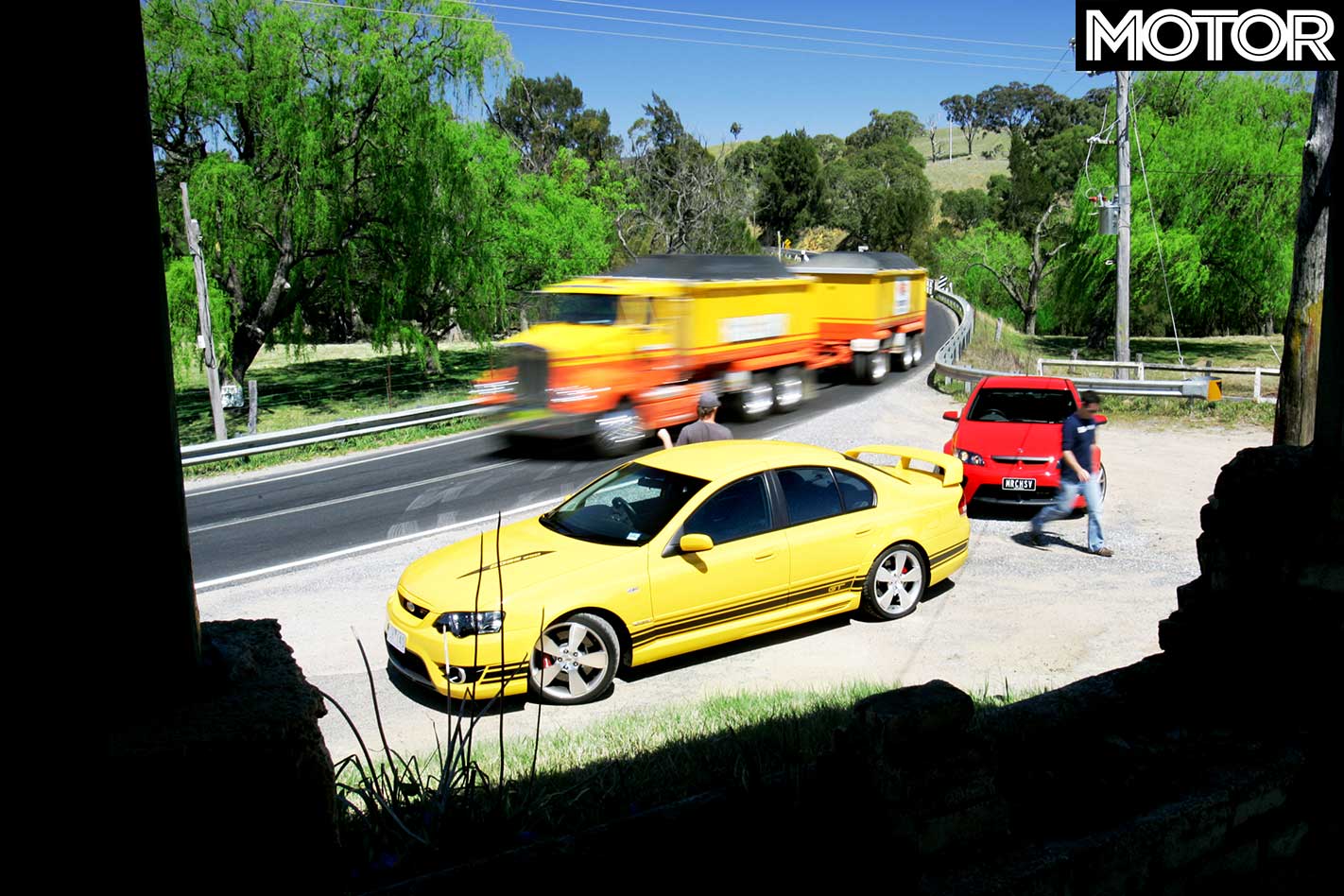
The FPV brakes are more than adequate and have no problems pulling up the GT time after time, but they don’t have the progressive feel or overall power of the HSV anchors. There’s not much in it, but the HSV provide just that extra dash of confidence.
The GT is more comfortable than the GTS, the ZF self-shifter is smarter and smoother and it scores points for price in this comparison, but the GTS is a much more advanced package. The Clayton clan has developed a hugely capable car that’s as close as you could get to a road-going V8 Supercar, with a magical 6.0-litre V8 that feels like it could belt around Bathurst all day.
| u00a0 | HSV GTS | FPV GT |
| Body | four-door sedan | |
| Drive | rear-wheel | |
| Power | 307kW @ 6000rpm | 290kW @ 5500rpm |
| Torque | 550Nm @ 4400rpm | 520Nm @ 4500rpm |
| Compression | 10.9:1 | 10.5:1 |
| Kerb Weight | 1846kg | 1855kg |
| Power-to-Weight | 166kW/tonne | 156kW/tonne |
| Transmission | Six-speed automatic | |
| Length/width/height | 4943/1899/1468mm | 4944/1864/1470mm |
| Wheelbase | 2915mm | 2829mm |
| Track | 1592mm (f), 1590mm (r) | 1553mm (f); 1586mm (r) |
| Suspension | struts, coil springs, anti-roll bar (f); multi-links, coil springs, anti-roll bar (r) | double wishbones, coil springs, anti-roll bar (f); multi-links, coil springs, anti-roll bar (r) |
| Brakes | 365mm vented/grooved discs, four-piston calipers (f); 350mm vented/grooved discs, four-piston calipers (r); ABS, ESP | 355mm vented/cross-drilled discs, four-piston calipers (f); 330mm vented/cross-drilled discs, single-piston calipers (r); ABS |
| Wheels | 20 x 8.0-inch (f); 20 x 9.5-inch (r) | 19 x 9.0-inch (f); 19 x 9.0-inch (r) |
| Tyres | Bridgestone Potenza 245/35R20 (f), 275/30R20 (r) | Dunlop SP Sport Maxx 245/35ZR19 (f & r) |
| Price | $74,990 ($76,990 as tested) | $62,210 ($67,150 as tested) |
Home Turf
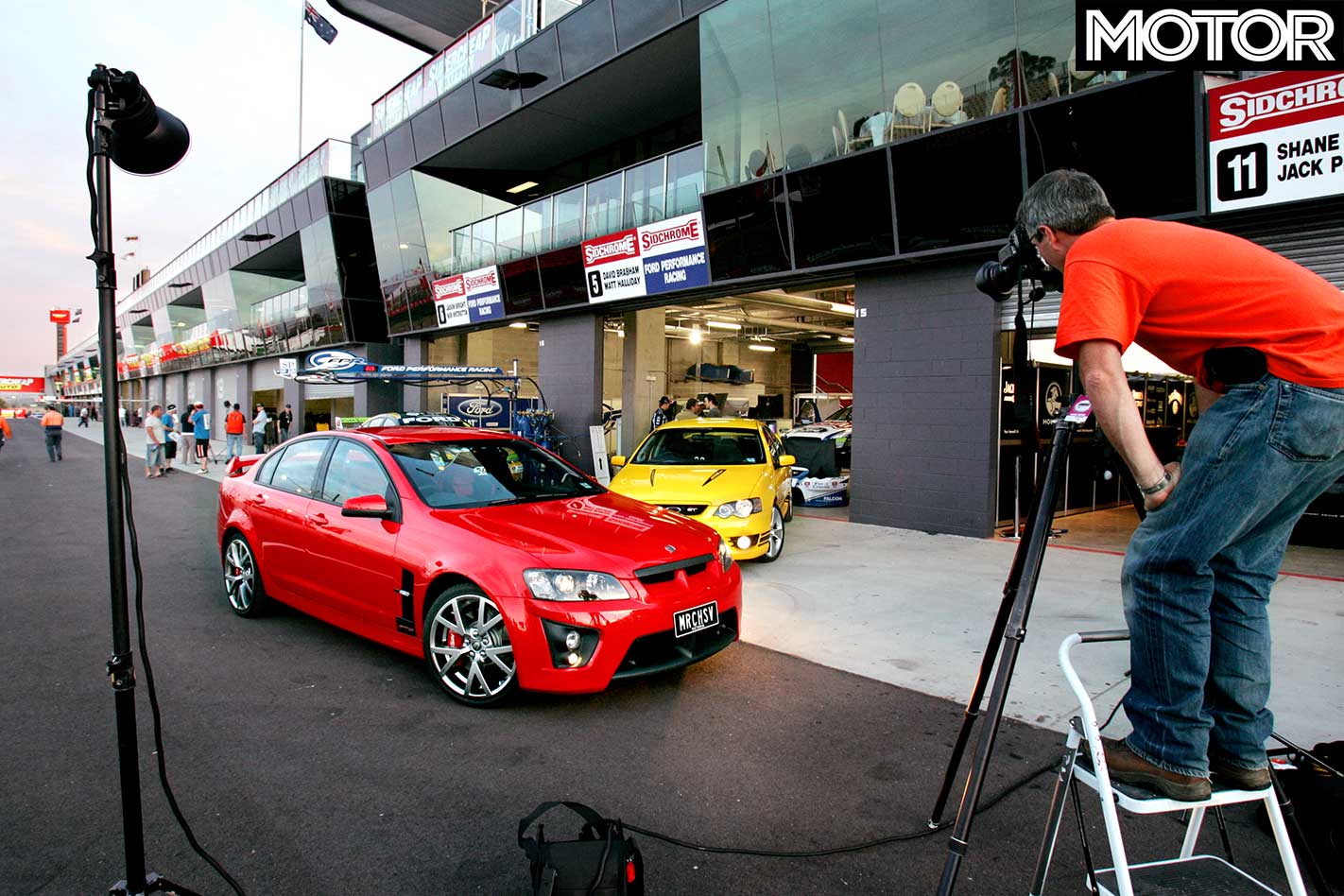
HSV and FPV owe their livelihoods to Mount Panorama. The local performance car segment was essentially born from Holden and Ford’s quest for success in the Bathurst 1000.
As the two companies battled for supremacy in the early years of the great race, they both started special vehicles operations to create unique vehicles designed to handle the rigours of racing. If it wasn’t for Bathurst, we may never have seen the likes of the Falcon GT, Monaro GTS 350, Torana XU-1 and Torana A9X.
Gradually, the race has evolved from showroom cars to dedicated race cars, loosely based on production vehicles.
1. BMW 118i – 100kW
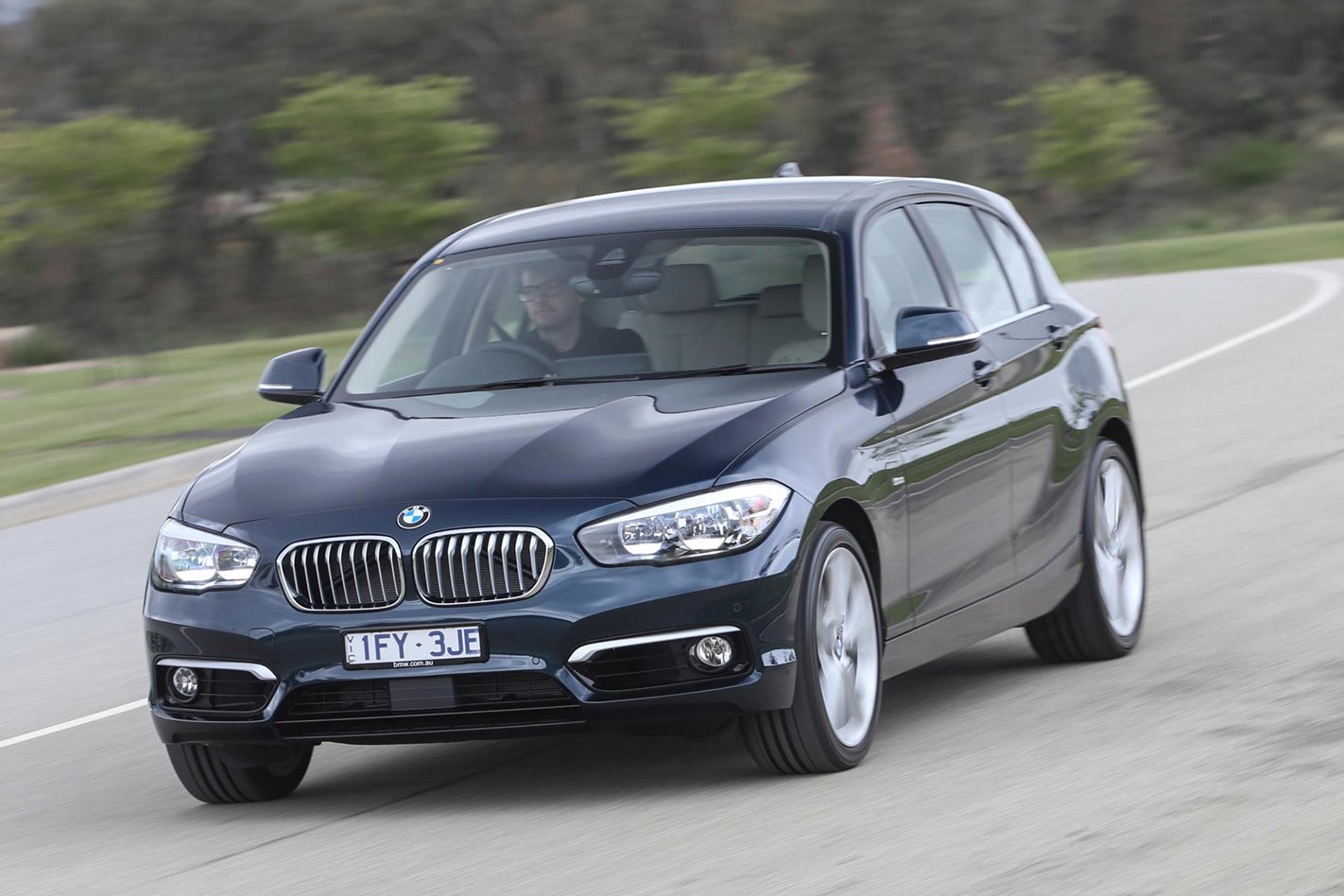
The equal most-powerful turbo triple sold in Australia (until the next-gen Fiesta ST arrives), the 118i and its 2 and 3 Series siblings are also the only three-pot rear-drivers.
2. Mini Cooper – 100kW
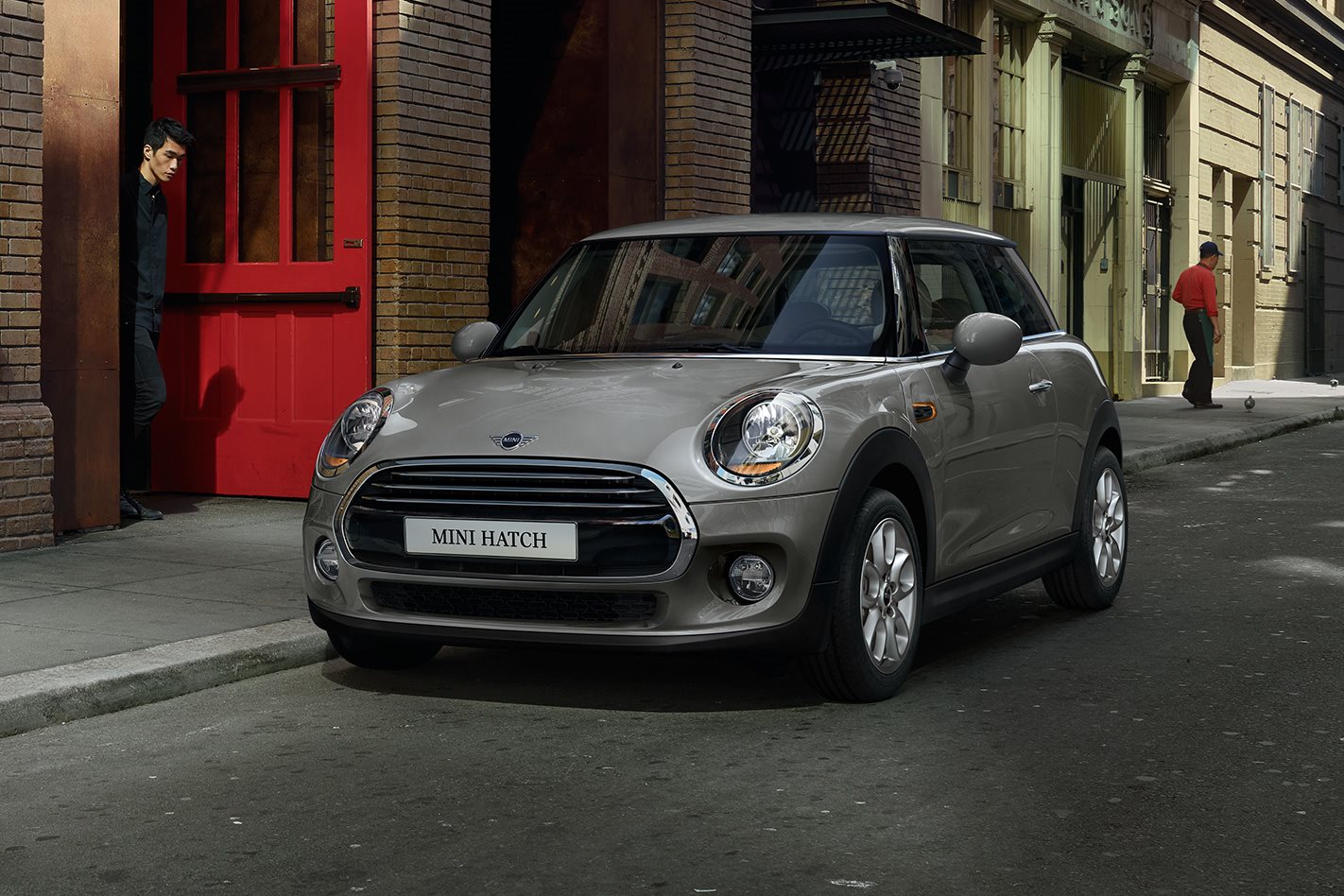
The Mini has precisely the outputs of the BMW – it’s the same engine – but at 1115kg the Cooper is 280kg lighter than the 118i and about a second quicker 0-100km/h.
3. Peugeot 308 Active – 96kW
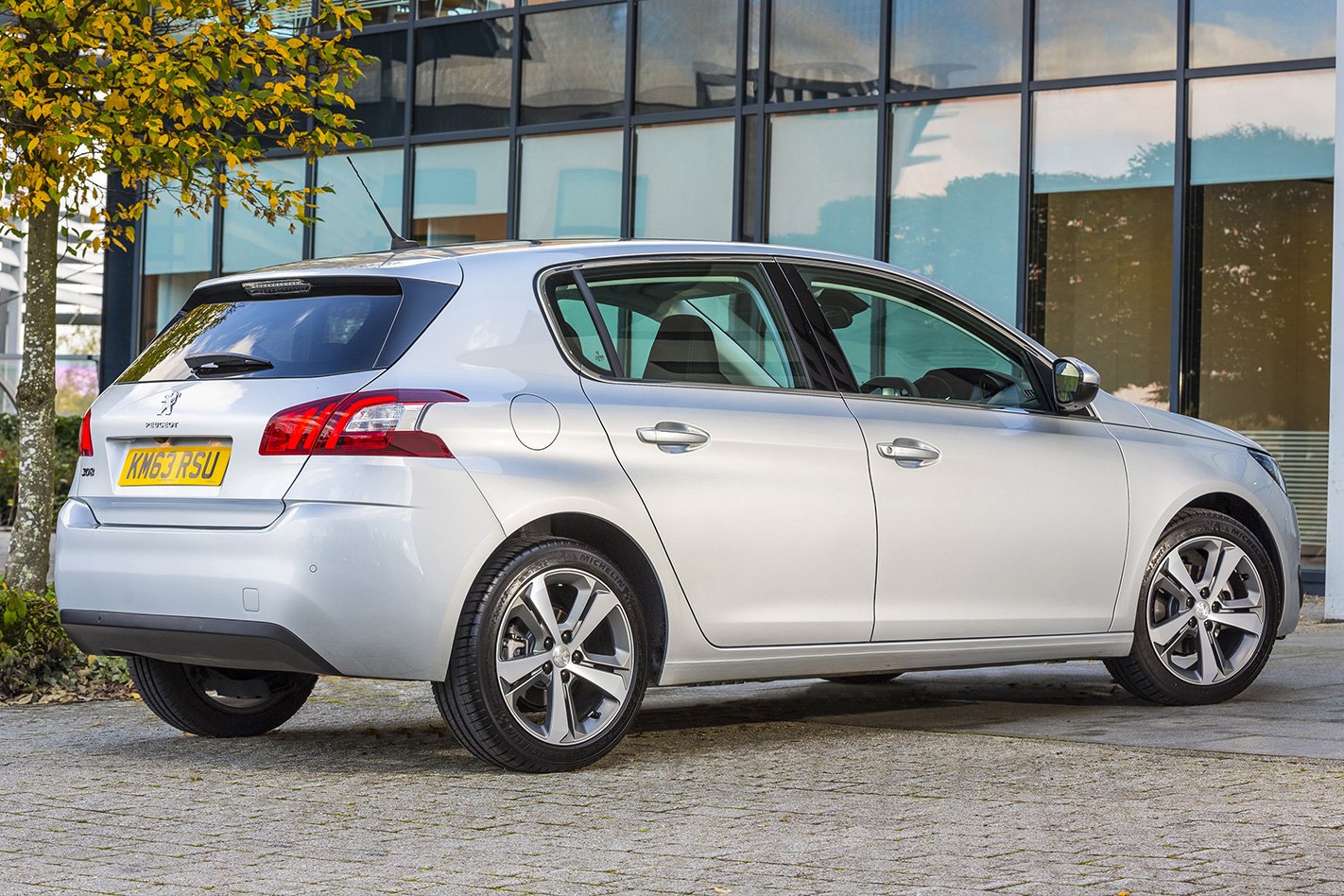
The Pug 308 Active might be outgunned (by 4kW) but its 230Nm makes it the torquiest triple available, with the healthiest torque-to-weight, at 205Nm/tonne. It’s a sweet engine – and steer.
4. Volkswagen Polo 86TSI – 85kW
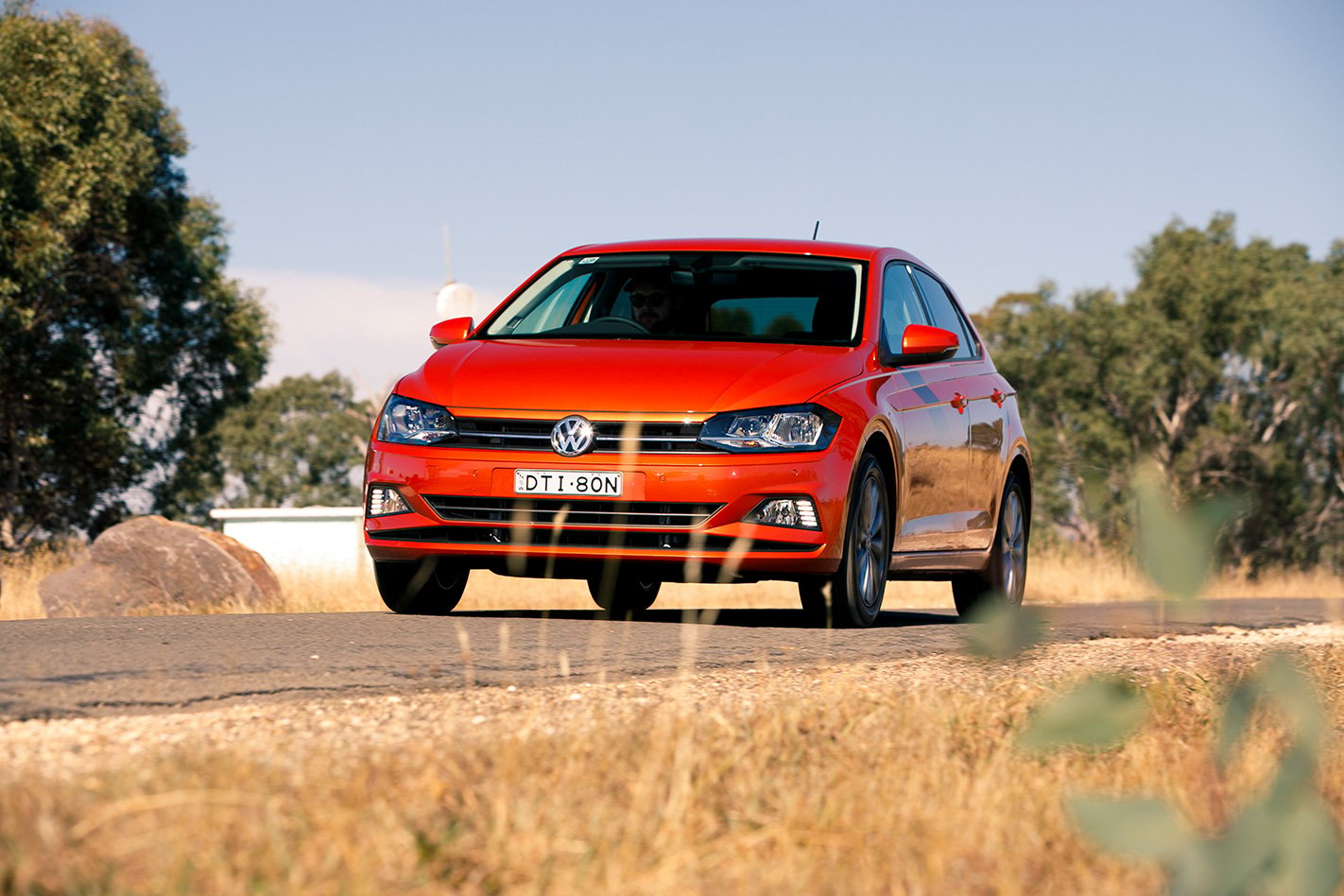
It’s not the most potent, but with 85kW/200Nm in 1116kg the Polo 85 TSI is lively as well as characterful and refined. And, at $20K, it’s the least costly warm triple.
5. Suzuki Swift GLX Turbo – 82kW
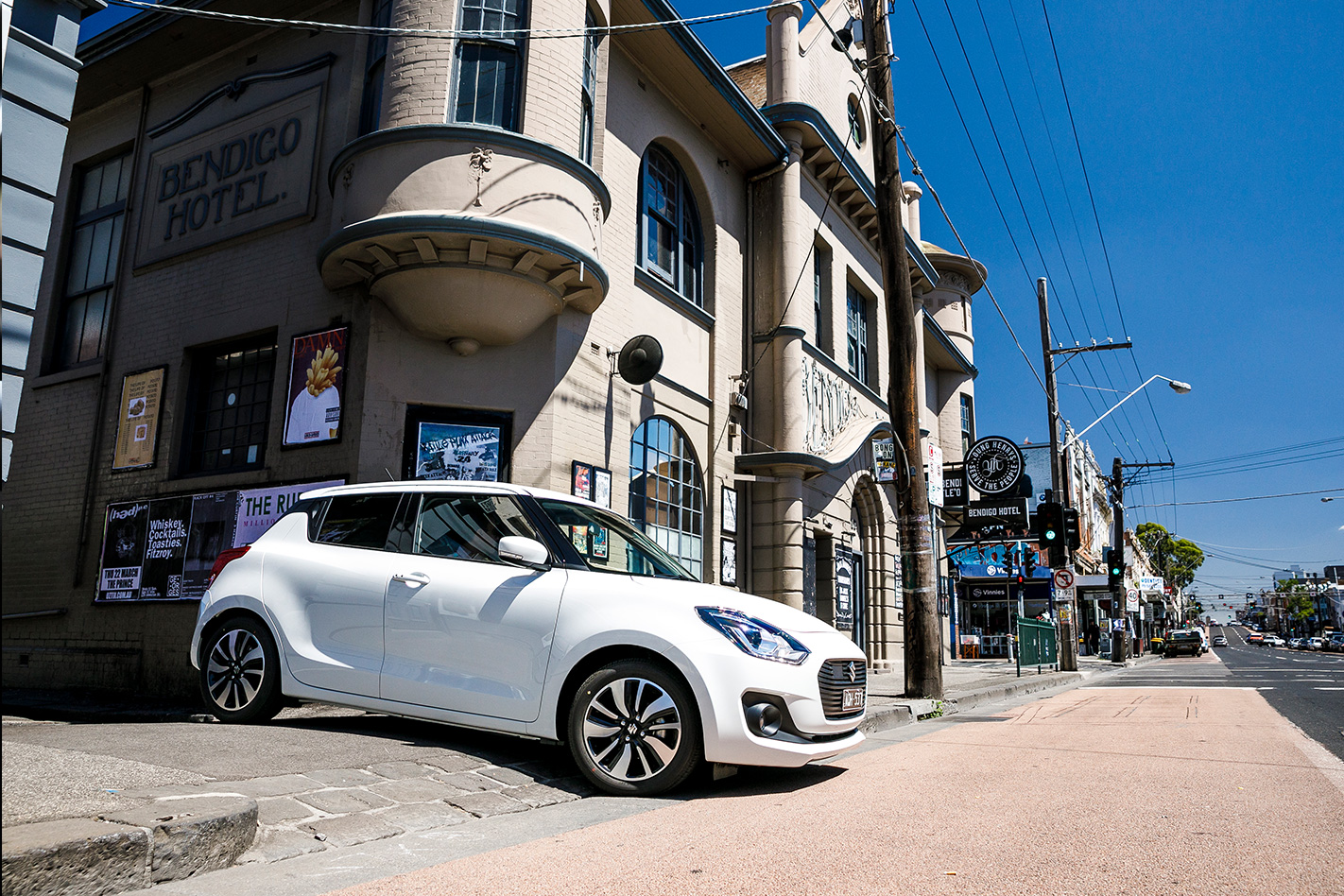
At 945kg the Suzuki Swift GLX is the lightest turbo three-cylinder sold in Oz. Yet with 82kW and 160Nm it’s certainly not the least potent. It’d be a ripper with a manual.
WRIT LARGE on any list of motoring mightabeens is the name of the Bantam BRC 40, a 1940 product of American Bantam (previously American Austin). Roughed out by the small Pennsylvania car maker’s plant manager Harold Crist in consultation with the client, and properly penned by Detroit freelance designer Karl Probst, the BRC 40 was done in a hurry: the client’s commission had allowed just 49 days from concept to prototype delivery.
The client was the US Army and the urgent market force was World War 2. In mid-1940, the US War Department issued a requirement for a quarter-ton, 4WD reconnaissance vehicle and invited 135 US industrial manufacturers to submit working prototypes by late-September.
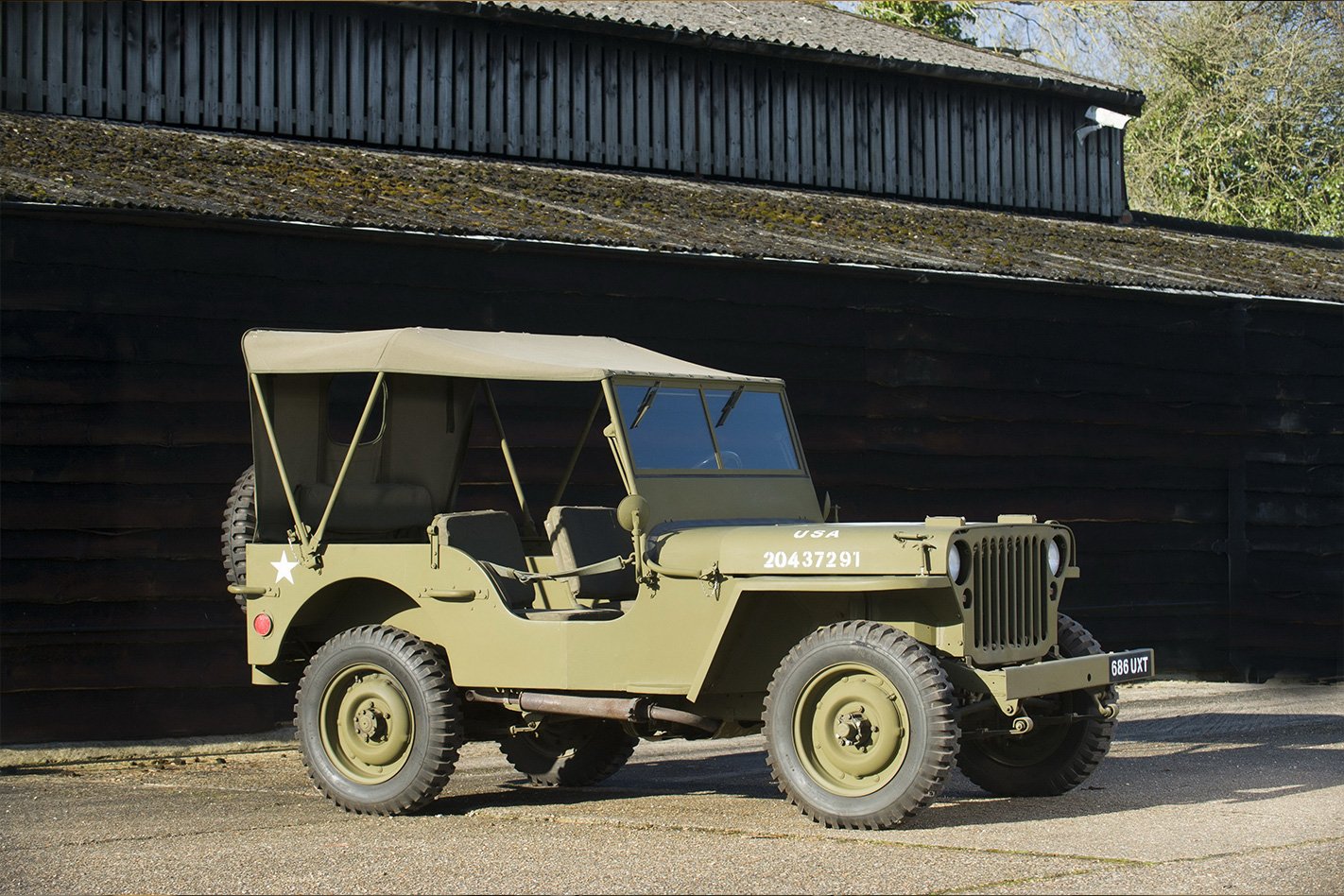
Of just three that responded – Bantam, Willys-Overland and Ford – only Bantam delivered on deadline. Concerned by the small size of the company, the US government encouraged Willys and Ford to press on with their prototypes; the Quad and the Pygmy, respectively, were delivered in November. All were similar in layout and appearance, prompting many to believe that Bantam’s design was leaked to the rivals.
Each was invited to submit 1500 examples for field-testing.

Much was admired about the Bantam, but aspects of the others could not be overlooked, notably Willys’ more powerful four-cylinder engine (the 45kW ‘Go Devil’), and Ford’s easier-to-produce, practical flat bonnet and mudguards and stamped steel grille.
In July 1941, the War Department melded them into a standardised design. Further evolution focused on removing weight (the Army’s initial requirement had been an unrealistic 590kg, later raised to 980kg). Willys’ engine designer and former Studebaker engineer, Barney Roos, specified shorter bolts, lighter steels and even a single coat of paint.

Hurtfully, in October 1941 the production contract was awarded to Willys-Overland, largely on the basis of its superior engine. In January 1942, a second contract was awarded to Ford, whose Willys-licensed vehicle was known as the Ford GPW. Ford stamped its flying F into various bolts and small parts, but everything was interchangeable.
Between 1941 and the end of production on September 21, 1945, Willys produced 362,841 of its ‘MB’ and Ford around 281,448 of its GPW. And Bantam? Furious, and having produced only 2643 cars, its consolation was a contract to produce quarter-ton, amphibious trailers to be towed behind the ‘Jeep’.

Just the shot
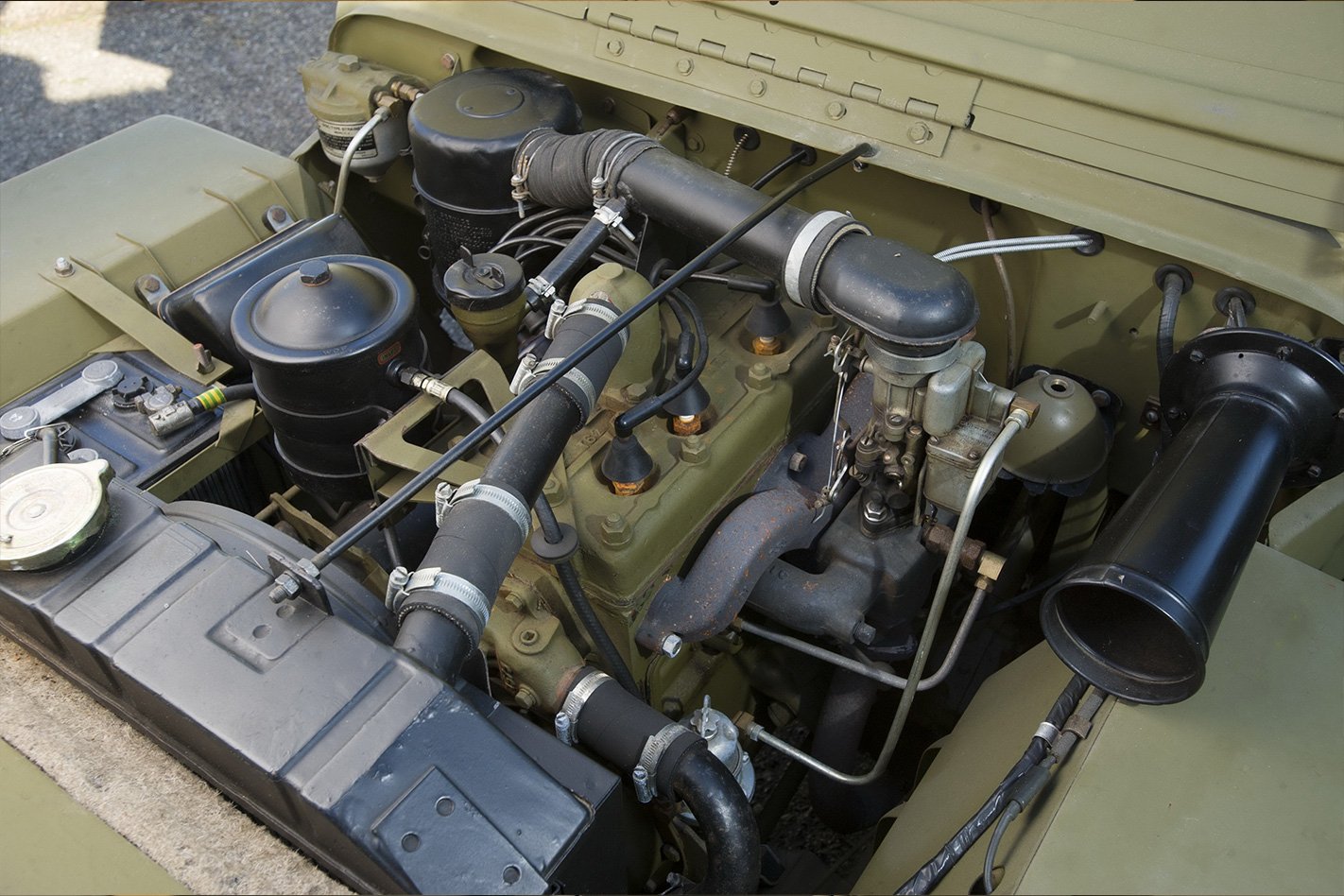
The Willys L134 ‘Go Devil’ in-line four wasn’t hi-tech, but it was (perhaps literally) bulletproof. Displacing 2199cc, the ‘flathead’ (side-valve) design had a cast- iron block and head, with a single carburettor and cast-iron manifolds. It made 45kW at 4000rpm and 142Nm at 2000rpm. A Borg-Warner T84 three-speed manual drove via a Dana 18 two-speed transfer case. Top speed on-road was 100km/h.
Platform ladder
The chassis was as simple as a steel ladder gets, with only a different-shaped radiator crossmember distinguishing Willys and Ford builds. Overall length was 3353mm, on a 2032mm wheelbase. Suspension was by semi-elliptic leaf springs front and rear, with telescopic dampers. Wheels were 16-inch with drum brakes. Kerb weight was 1100kg, for payloads of 365kg off-road or 545kg on-road.
Departure lounge
There wasn’t much to see around a Jeep, but it was capability that counted – like the 45-degree approach and 35-degree departure angle – not comfort. The windscreen folded flat for transport; early wipers were manually operated. Ford contributed swivelling headlamps, to illuminate the engine bay. Seats were simple canvas cushions on steel tube frames, with a similar rear bench. Folded roof bows framed the rear cockpit. Exterior brackets held shovel, axe and fuel can; an optional rifle rack straddled the dash.

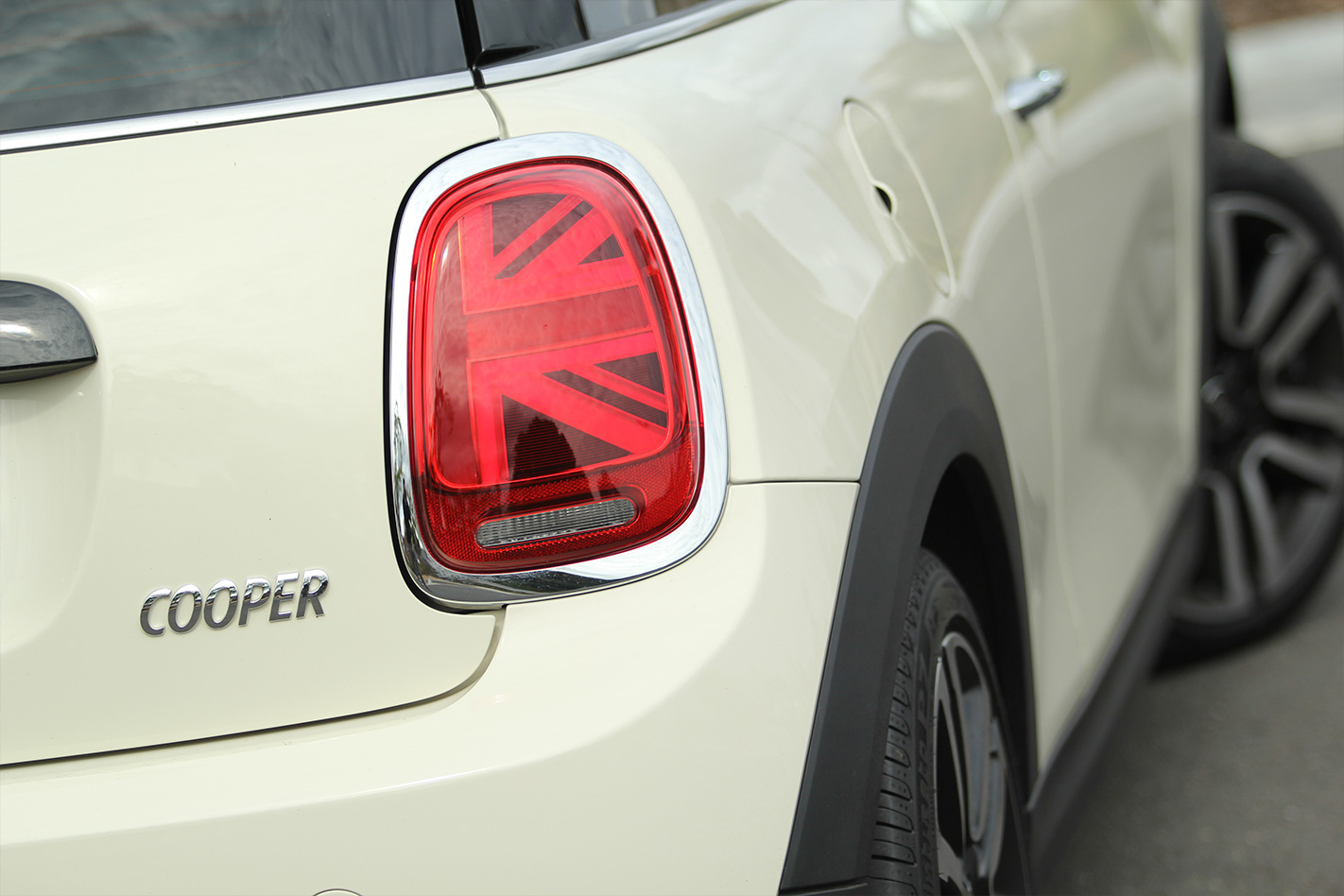
The fashionably retro Mini Cooper hatchback received an update earlier this year that brought a new automatic gearbox, a new infotainment fit-out and some endearingly kitsch cosmetic enhancements that see the Union Jack literally stamped all over a car that’s already quite overtly British.
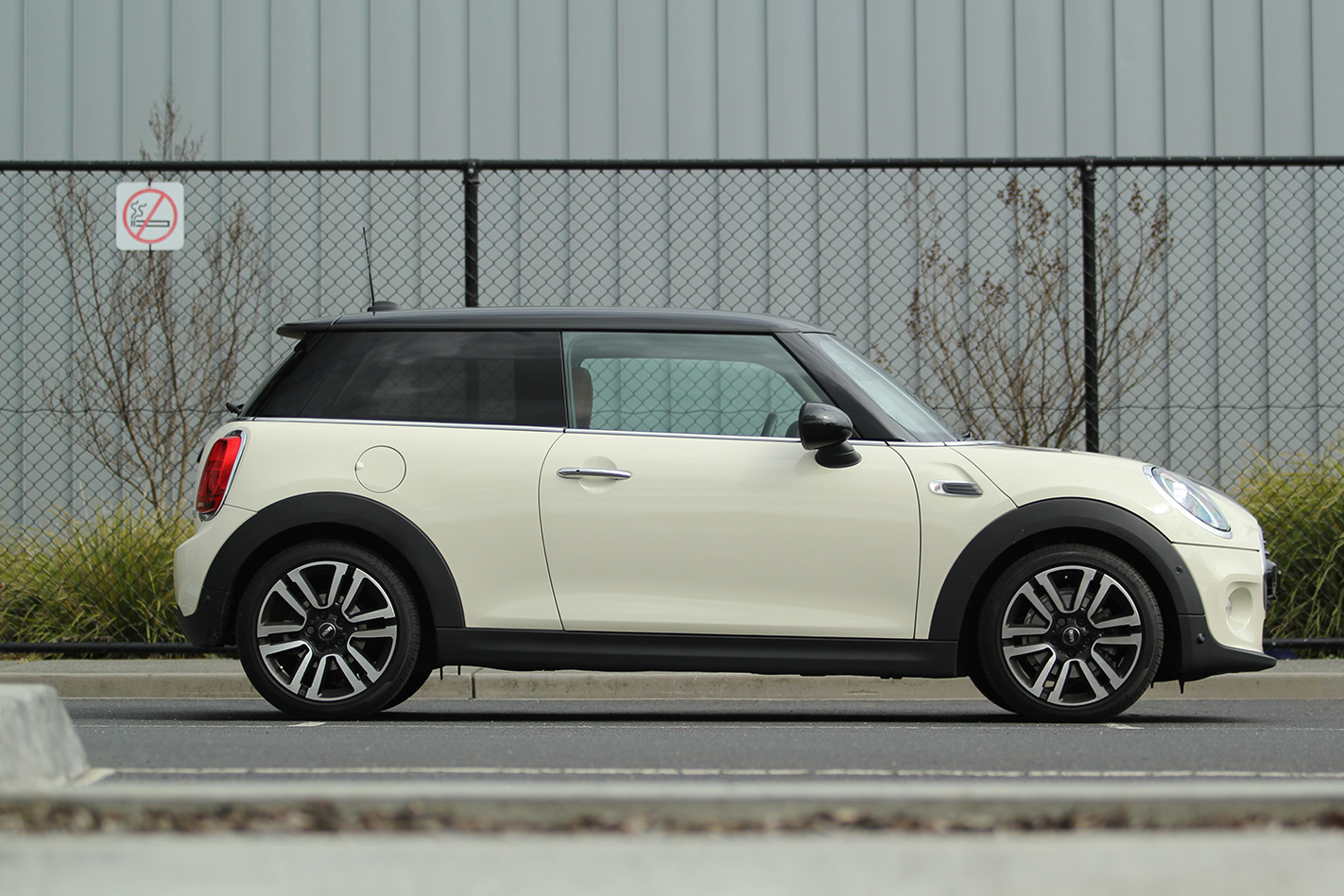
Do these changes enhance the core car? We spent a week at the wheel of a base model Cooper three-door automatic to find out.
VALUE
With a $32,400 retail price before on-road costs, the auto-equipped version of the base Cooper three-door hatch is not what you’d describe as a bargain buy.
But if you consider its positioning as a premium vehicle in the light car class, it’s about par for the segment. Its natural rival in this country is the Audi A1, which retails at $30,500 for the similarly-specified 1.4TFSI Sport grade. The Mini makes more power and torque, has a more sophisticated suspension set up and boasts sat-nav as standard, but the A1 counters with five-door practicality by default. The Cooper can be had as a five-door too, but at a price premium of $1250 over the three-door’s retail.
Another rival is the similarly retro Abarth 595, which aligns quite closely with the Cooper on price, configuration, power and torque. It is, however, significantly older and pitched at a more performance-focused buyer.
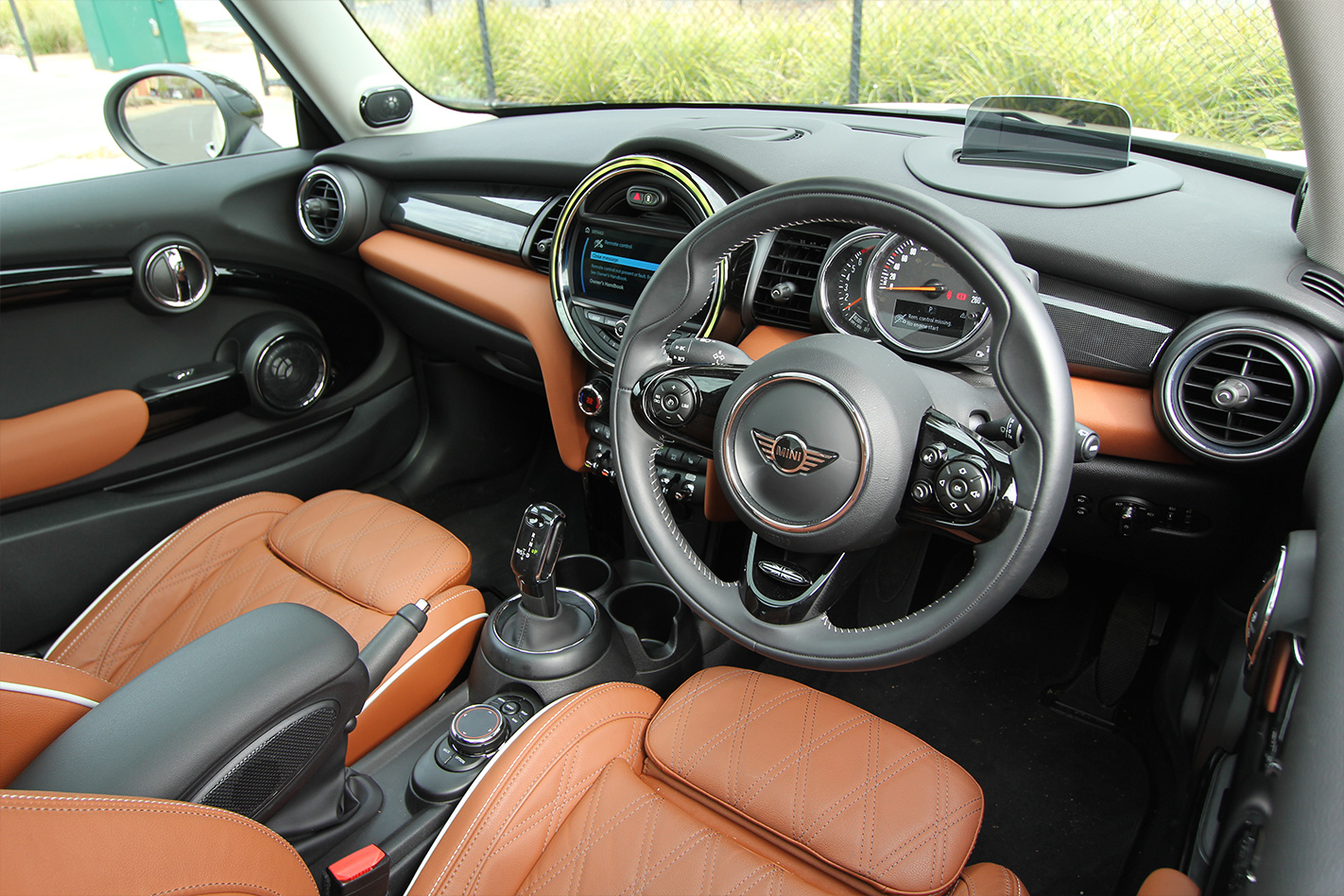
The Cooper we tested was far from standard-issue, however, which hurt its ‘value for money’ quotient. Equipped with thirteen options and option packages, our car had an as-tested retail price of $47,450. No matter how you cut it, that’s an eye-watering amount for a three-door light hatch. If price is important to you, do your best to steer clear of the options list.
Running costs should at least be affordable, with a claimed fuel consumption of 5.3L/100km on the combined cycle. Our as-tested economy of 6.2L/100km over the course of a week of mostly urban commuting was certainly reasonable.
STANDARD FEATURES
As standard, the Mini Cooper comes with a fairly basic specification that includes manual air conditioning, cloth upholstery, 16-inch alloys, Bluetooth, rear parking sensors, Bluetooth, dusk-sensing headlamps, rain-sensing wipers, power windows and a reversing camera.
A 6.5-inch colour touchscreen is the central interface for the car’s infotainment, and can also be controlled via a rotary dial behind the gear selector. If you’ve ever used BMW’s excellent and intuitive iDrive system, you’ll quickly become accustomed to Mini’s infotainment interface – no surprise, given BMW is Mini’s parent company. For the 2018 update, there’s also Apple CarPlay smartphone mirroring and additional internet-enabled services to play around with.
However, the feature list pretty much ends there. Even dual-zone climate control, something that you would expect to be standard on a $29K light car, doesn’t become available until you start spending more money on options – and our car had plenty of those. Here’s a list of what our tester came with:
- 17-inch alloy wheels
- Bonnet stripes
- Chrome interior accents
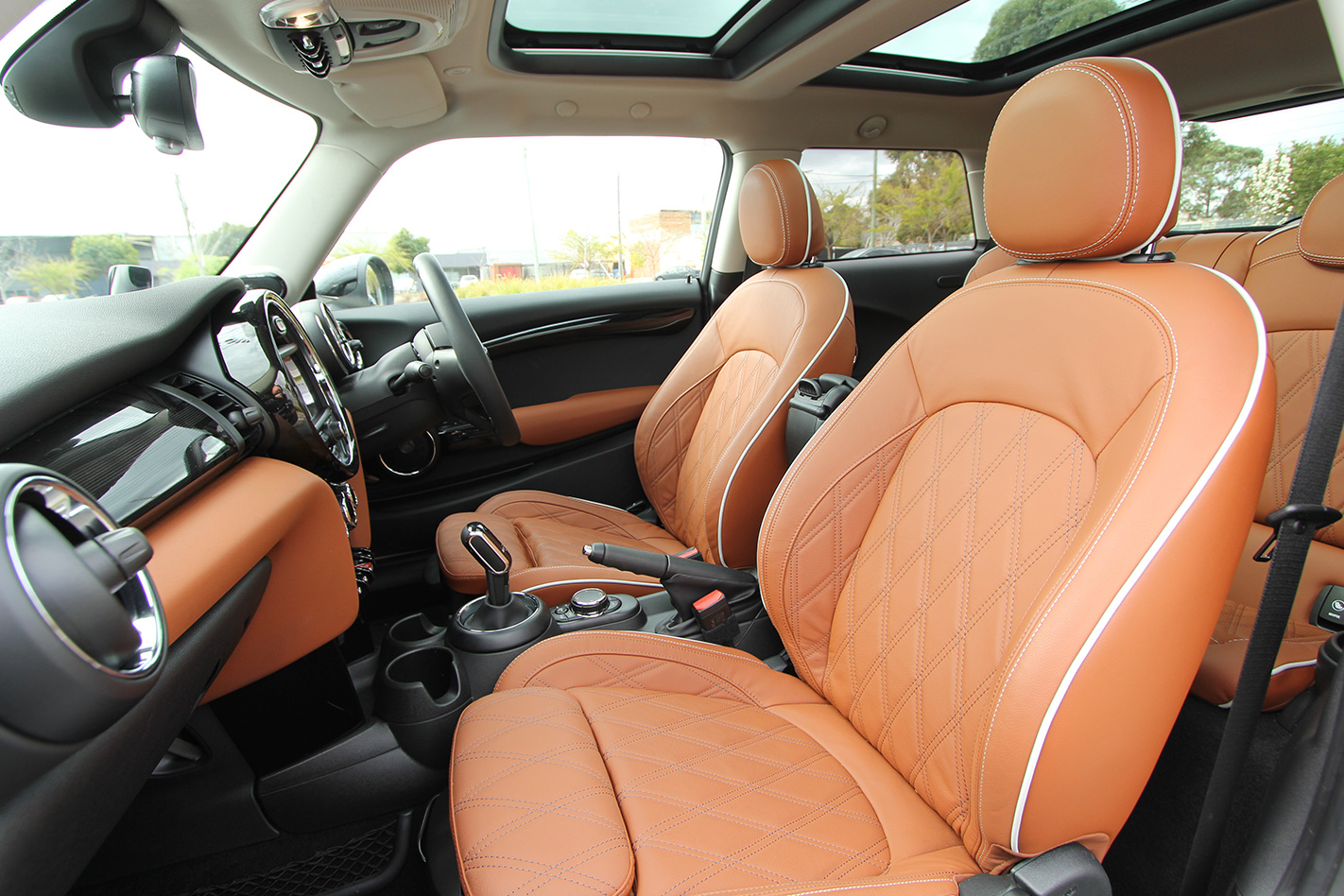
- Sports seats
- Chester Malt brown leather upholstery and cabin trim
- Sports leather steering wheel
- Backlit piano black dash trim
- Chili package (LED headlamps, front armrest, dual-zone climate control, drive mode selector, front foglamps, interior ambient lighting)
- Convenience package (keyless entry, front parking sensors, park assist, power folding mirrors, self-dimming mirrors)
- Climate package (panoramic glass sunroof, front seat heating, UV-cut glass)
- Multimedia Pro package (8.8-inch infotainment screen, voice recognition, head-up display, Harman Kardon 12-speaker audio, wireless phone charging)
SIZE
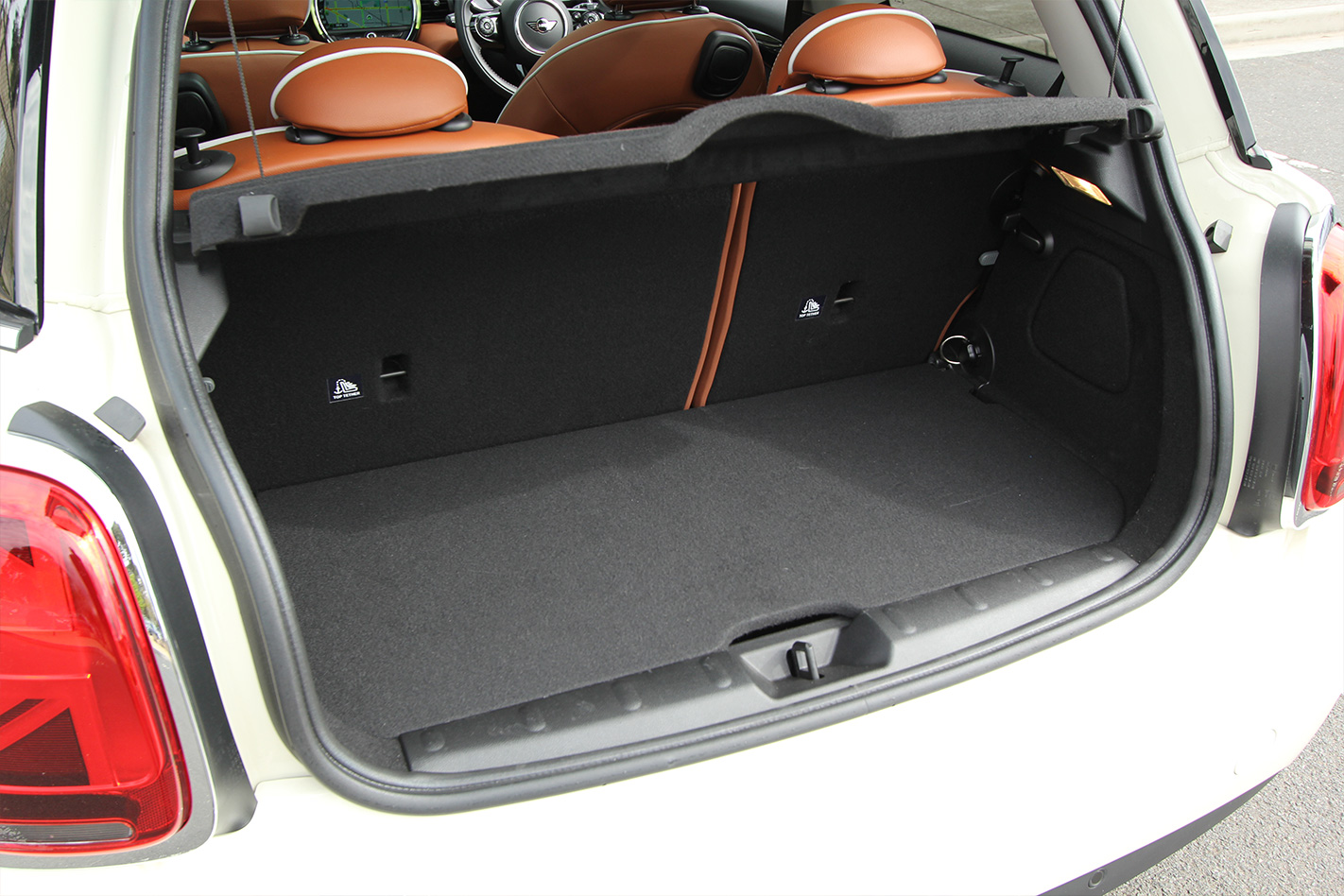
With a diminutive footprint that measures 1.7 metres wide and just 3.8 metres long, the Cooper three-door is tiny. Those dimensions put it firmly in the light car class, and slightly under the Audi A1 that’s its primary rival. The Fiat/Abarth 500 is smaller again, but for a two-door hatch that’s best suited to carrying two adults most of the time, the Mini Cooper is about as small as you’ll probably want to go.
Luggage space is, predictably, quite limited, though the repositionable – or completely removable – boot floor offers either double-decker stowage or enough room (just) for a single large suitcase. Flip the 50/50 split rear seats forward and you get more cargo space, though we still wouldn’t recommend using the Cooper for transporting something like a flat-pack bookcase.
SAFETY
Standard safety equipment includes stability control, traction control, ABS, brake assist and six airbags, however autonomous emergency braking (a feature fast becoming commonplace in mainstream light cars) is not included in the base Cooper.
You only get that feature if you opt for the Control package, Active package or Chili package, putting the Cooper at odds with many other vehicles in its size or price class. Furthermore, the current-generation Cooper was assessed by ANCAP in 2014 and given a four-out-of-five star crash safety rating – another demerit in a market where five-star ratings are the norm.
COMFORT
There’s some ergonomic iffyness courtesy of the centre armrest’s high position, but that’s a cost option and you arguably won’t miss it if you don’t tick that particular box.
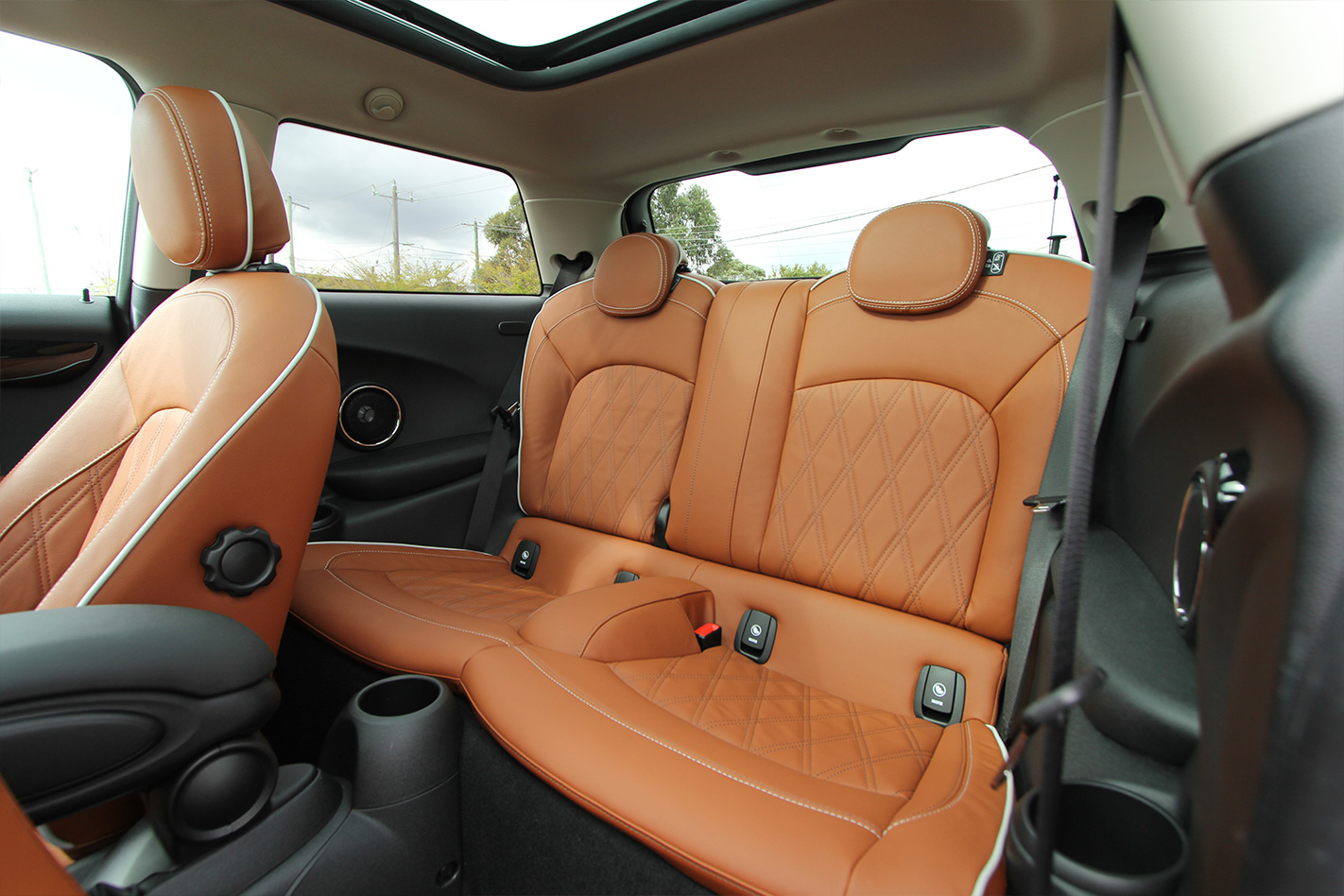
Otherwise, front-seat comfort is generally excellent. The Cooper may be small, but the range of adjustment in its front seats and steering column mean people of a broad range of body types will easily find a comfortable posture. The sports seats of our test car might be a $1700 option, but they’re supportive, attractive and arguably worth the extra spend.
Materials and build quality are superb, and the cabin ambience is one of near-premiumness. The influence of BMW is evident, and in a good way. Unfortunately, the rear seats are the Cooper’s Achilles heel: with nearly no legroom with the front seats occupied, you’re better off paying a little more for the five-door Cooper if you regularly carry more than one passenger.
Ride quality is the source of another complaint. With the 17-inch wheels and run-flat tyres of our test car, the Cooper had a ride that was more brittle than desirable for an urban runabout. We’d be forgiving of that if it were a performance-oriented model, like the Cooper S or Cooper JCW, but if you’re looking in the Cooper’s direction for daily-driver duty we’d recommend sticking with the (rather attractive) standard-issue five-spoke 16-inch alloys.
ON THE ROAD
Great driving dynamics has always been a central part of the Mini ethos, and even the base model Cooper delivers on that front. The steering provides a solid, connected feel with the front wheels yet still feels fluid and natural, while the multi-link rear suspension delivers glued-down handling. Body control is taut, perhaps too taut for those who just want to zip around town. If road quality is poor in your neighbourhood, perhaps take an extensive test drive to ensure Cooper’s suspension is pliant enough for your tastes.
But one thing that’s new for the 2018 model year is a fresh new automatic transmission. Gone is the old conventional automatic, and in its place is a seven-speed dual-clutch auto.
Transmissions of this type aren’t normally known for their low-speed driveability, with jerky engagement at low speeds, such as when parking or dealing with heavy stop-start traffic. Thankfully, the Mini’s dual-clutch has no such problems. It’s smooth when taking off from a standstill, yet crisp and decisive when in motion. Exactly how an automatic should be.
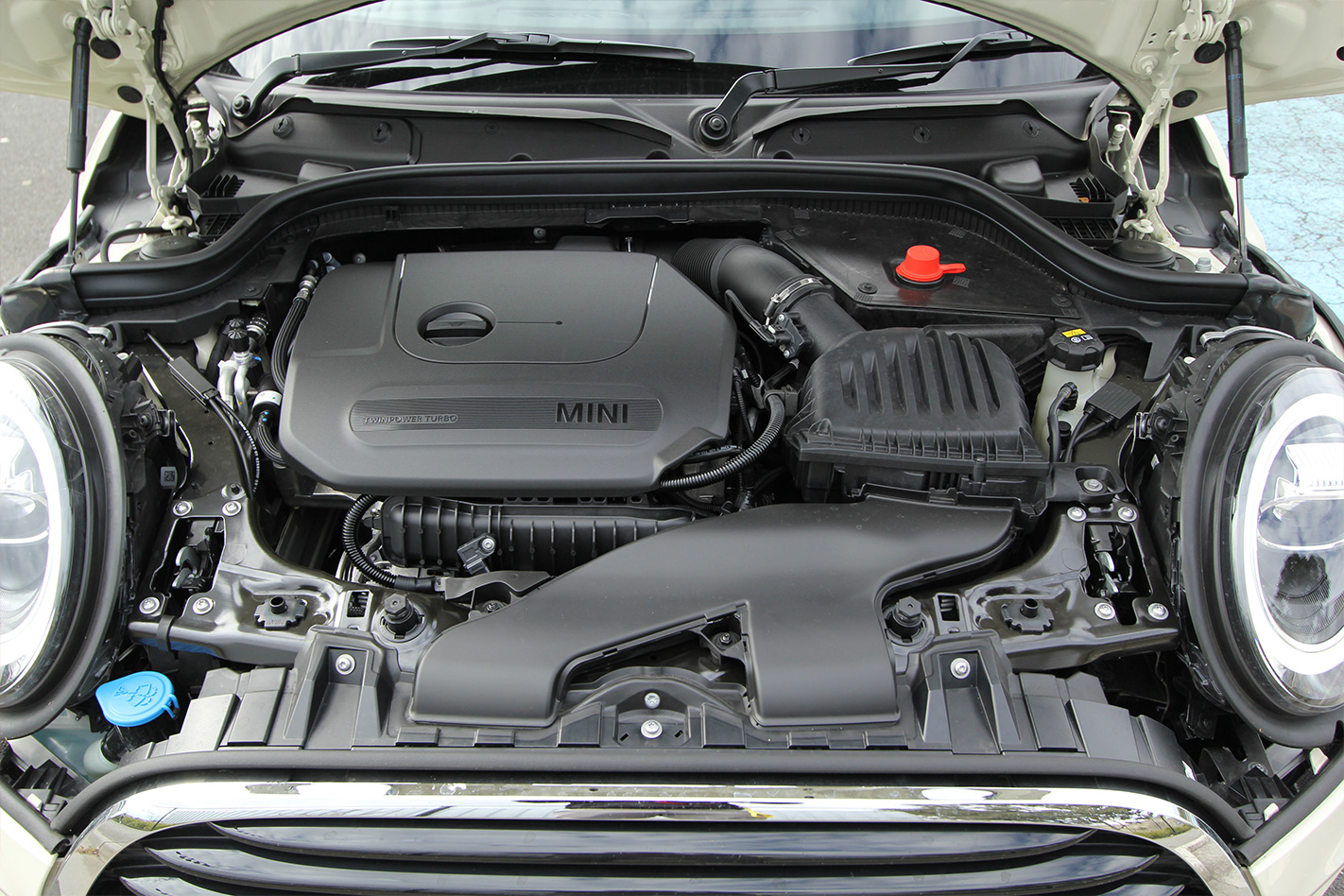
In the base Cooper it’s paired with a 1.5-litre turbocharged petrol inline three, which makes a healthy 100kW and 220Nm and accelerates to 100km/h in a quite respectable 7.8 seconds. It’s a likeable engine, but it suffers from a lot of vibration when the auto engine start-stop system is working. A minor quibble, but one that may annoy in the long-term.
VERDICT
It’s difficult to make a definitive judgement on the base Cooper from this particular car, given its particularly heavy coat of options and the fact that many of them alter the car’s fundamental character.
It certainly feels premium, we’ll give it that, but so it should given the vehicle we tested was nudging $50K before on-road costs were factored in. Stripped of all of the options to put it at its base $29,900 retail price, there’s a risk that the Cooper may feel a touch bare-bones. Options, then, become almost mandatory, but unless your wallet is especially thick we’d urge restraint when selecting which options you’d like.
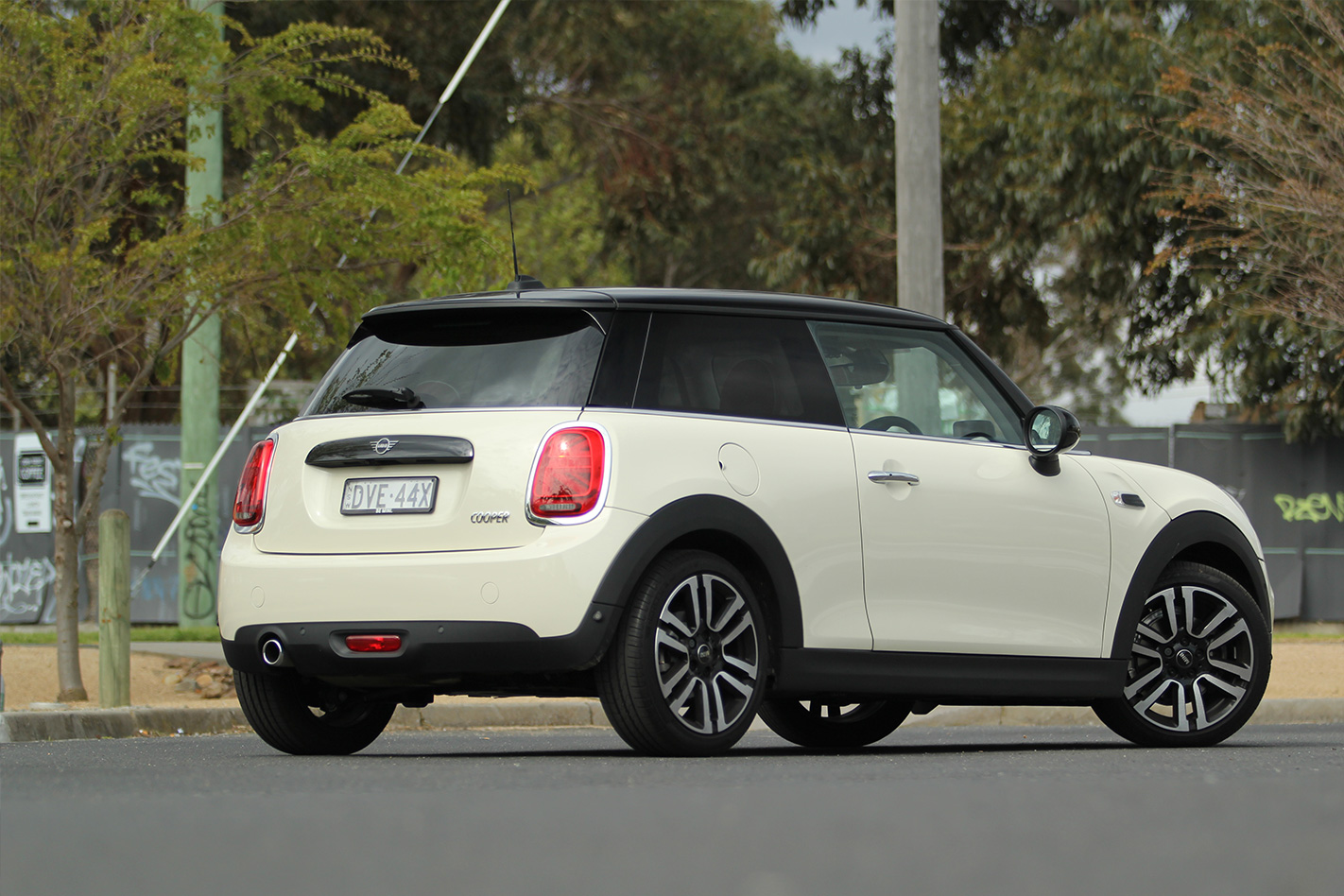
On the other side of the coin, there are few cars in this size class that boast the kind of personality that the Mini Cooper does. It’s seemingly endless customisability and outstanding handling are its calling cards, and for those that shop with their heart those are likely reason enough to consider one.
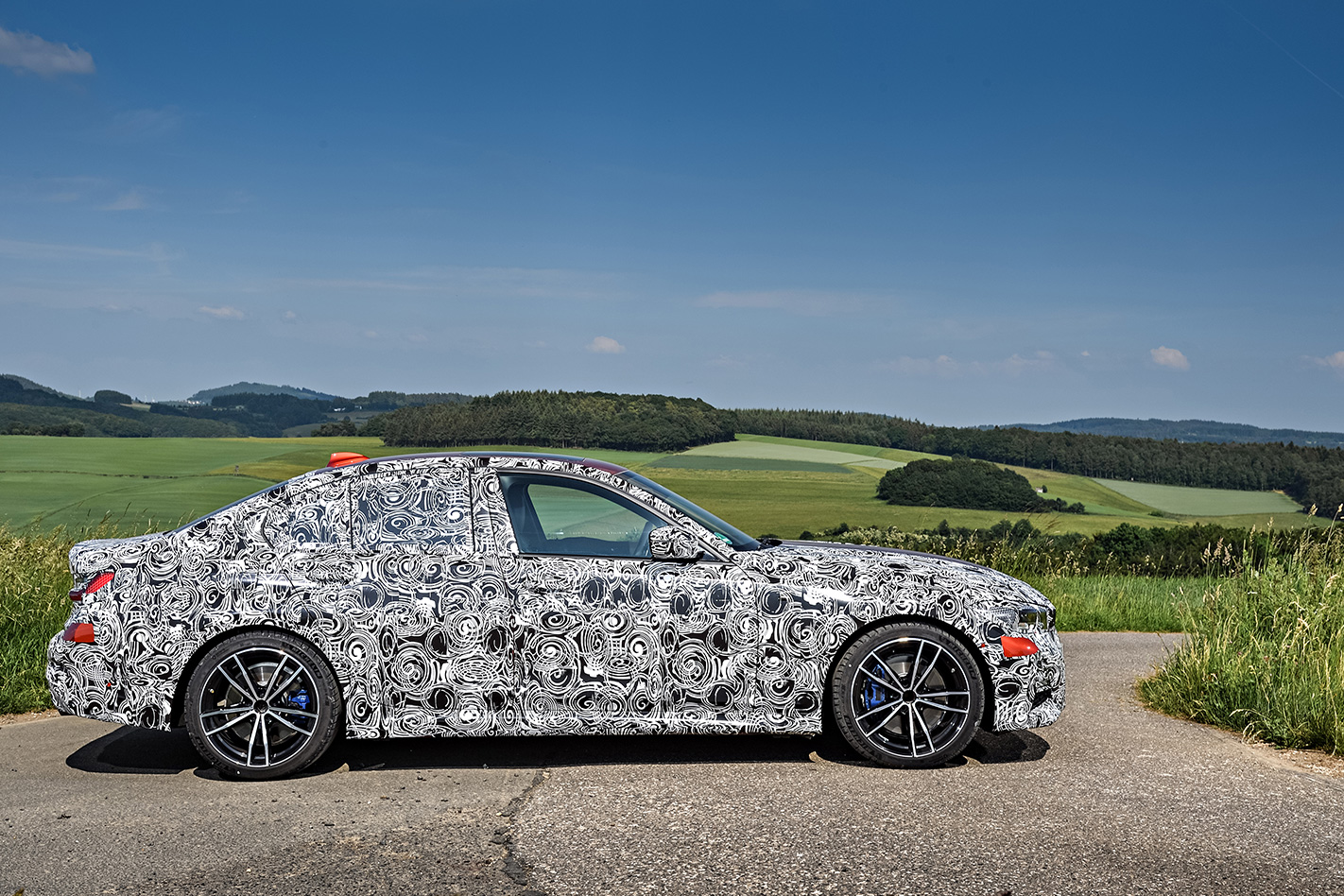
WITH dwindling global sales and its reputation as the dynamic leader in the class among its junior premium executive sedan rivals no longer unimpeachable, BMW’s 3 Series replacement, codenamed G20, can’t come quickly enough. We’ll see it officially at the Paris Motor Show but we’ve spent some time in a 3 Series prototype in advance of its October unveiling.
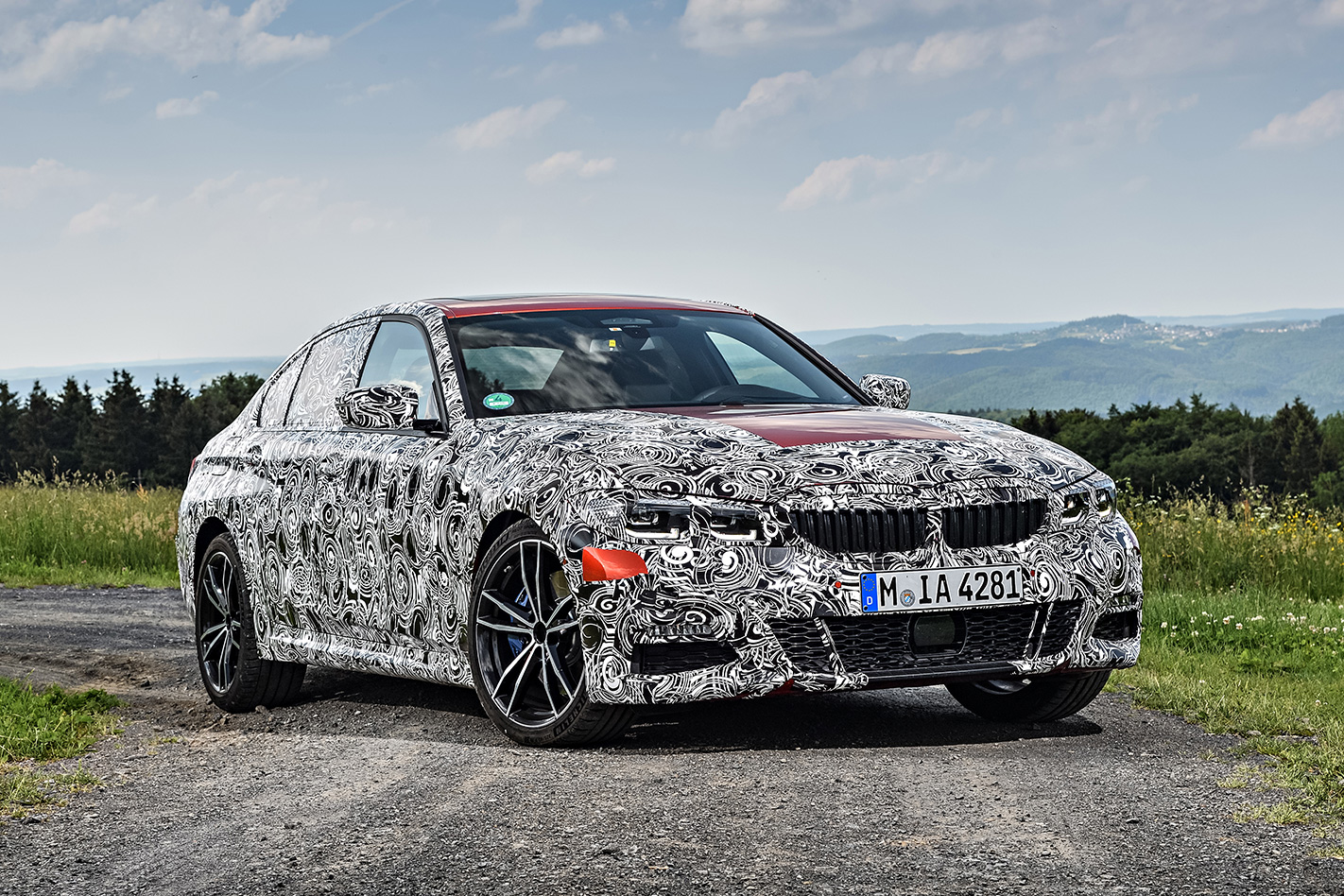
Utilising BMW’s CLAR (Cluster Architecture) rear-wheel-drive platform, the next generation 3 Series will grow in dimensions, offer a range of revised engines and improved info and entertainment systems inside a larger, more upmarket interior. There’ll be a slight increase in the wheelbase for that more spacious cabin, but it’s the 30mm boost in track width that the engineers are most excited about.
Clearly stung by criticism that the existing 3 Series has been surpassed, or at least equalled on the road, that 30mm track width is instrumental – as well as a 10mm drop in the centre of gravity – in reasserting the 3 Series at the top of the class. In addition the 3 Series features new dampers with hydraulic bump stops for improvements not just in agility and precision, but also ride comfort. The new bump stops will be standard on all BMW 3 Series variants, from the lowliest entry-level 318i to the 340i M Performance models, these additionally gaining 10mm lower M Sport suspension with the option of an electronically controlled limited-slip differential.
With the suspension working off underpinnings that are some 50 percent stiffer than its predecessor, our early drive of the 3 Series, on road and track, underlines BMW’s assertion that it’ll take class honours dynamically. The 330i we sampled did benefit from riding on the optional M Sport suspension, as well as featuring the optional electronic limited slip differential, variable sport steering and BMW M Sport brakes; the engineers admitting that so equipped the 3 Series is at its very best. It’s unlikely to represent the biggest seller though.
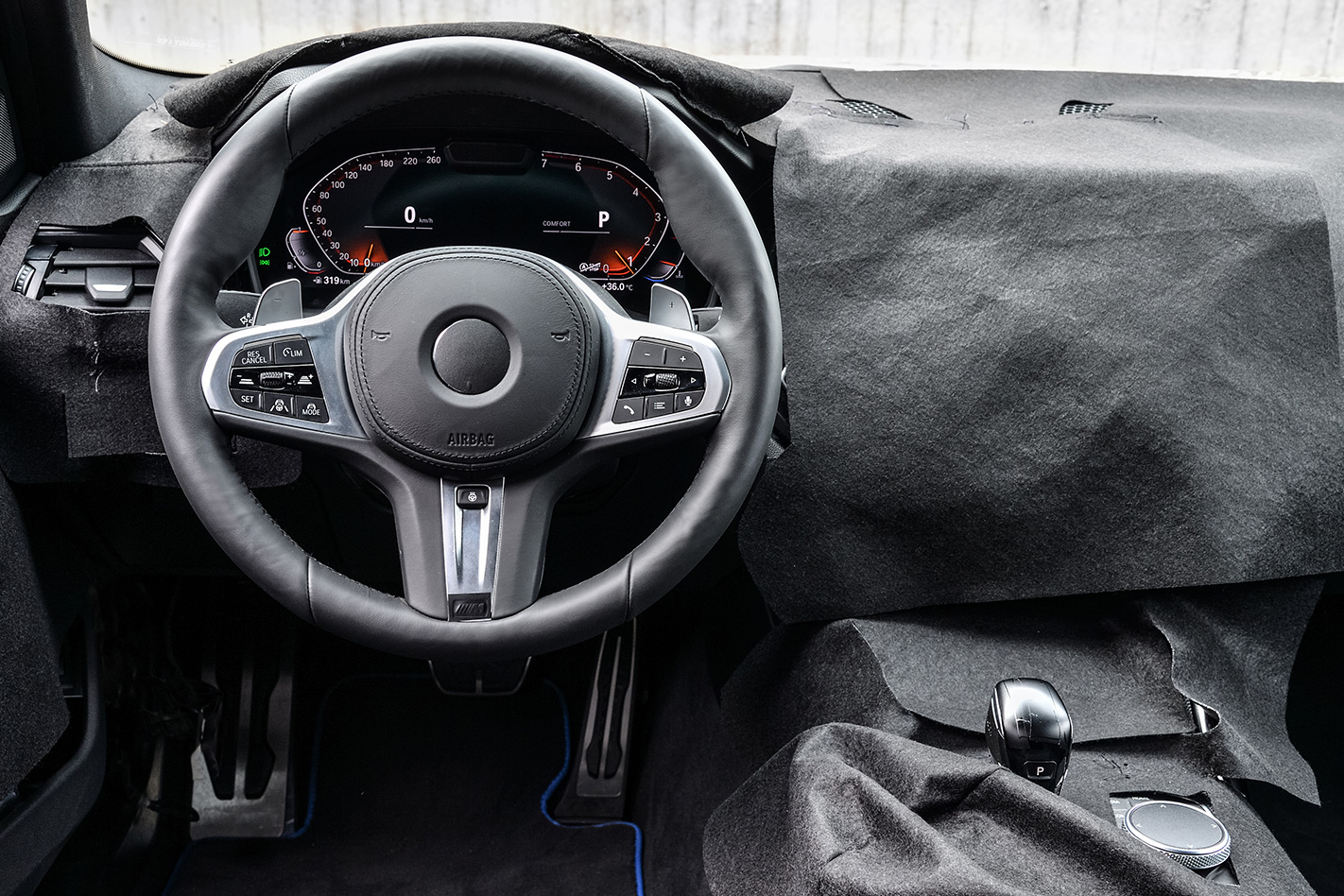
What is undeniable is the 3 Series feels appreciably bigger inside, while even these late pre-production cars had an interior that’s a big step on in terms of quality feel, as well as visually. That, say BMW insiders, was a key development goal, as the current 3’s interior lacks the quality look and feel of its key C-Class and Audi A4 competition. The instrumentation in this upper-level 330i model is all digital, while lesser models are likely to feature a mix of analogue and digital displays, and an iDrive that’s a development of BMW’s latest seventh-gen system.
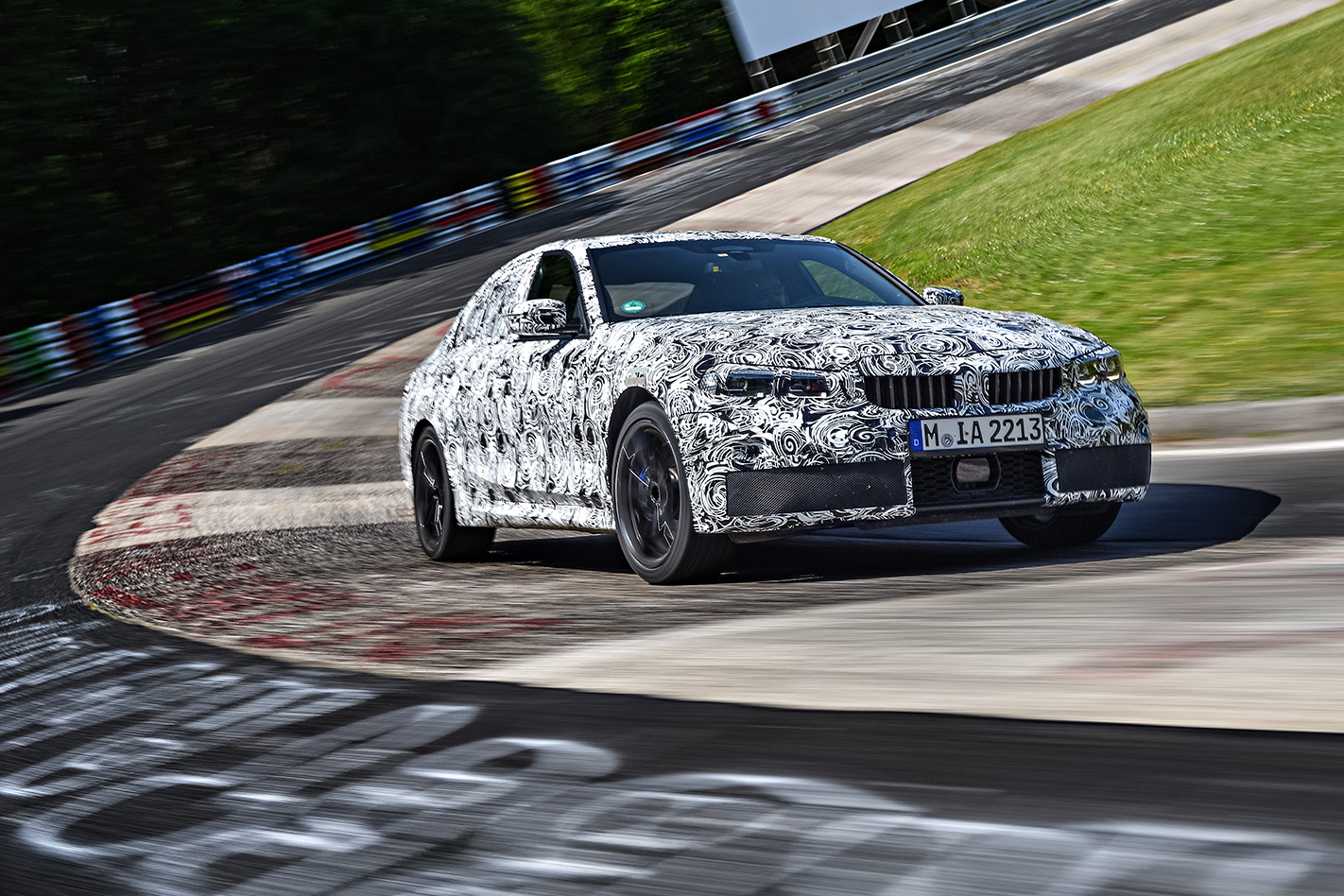
With 50/50 weight distribution and a reduction in overall weight by around 55kg over the outgoing model, agility has been improved significantly. That’s been achieved without impacting ride comfort, those new dampers allowing a fine balance of control and a smooth ride – even on the scabby roads around the Nurburgring.
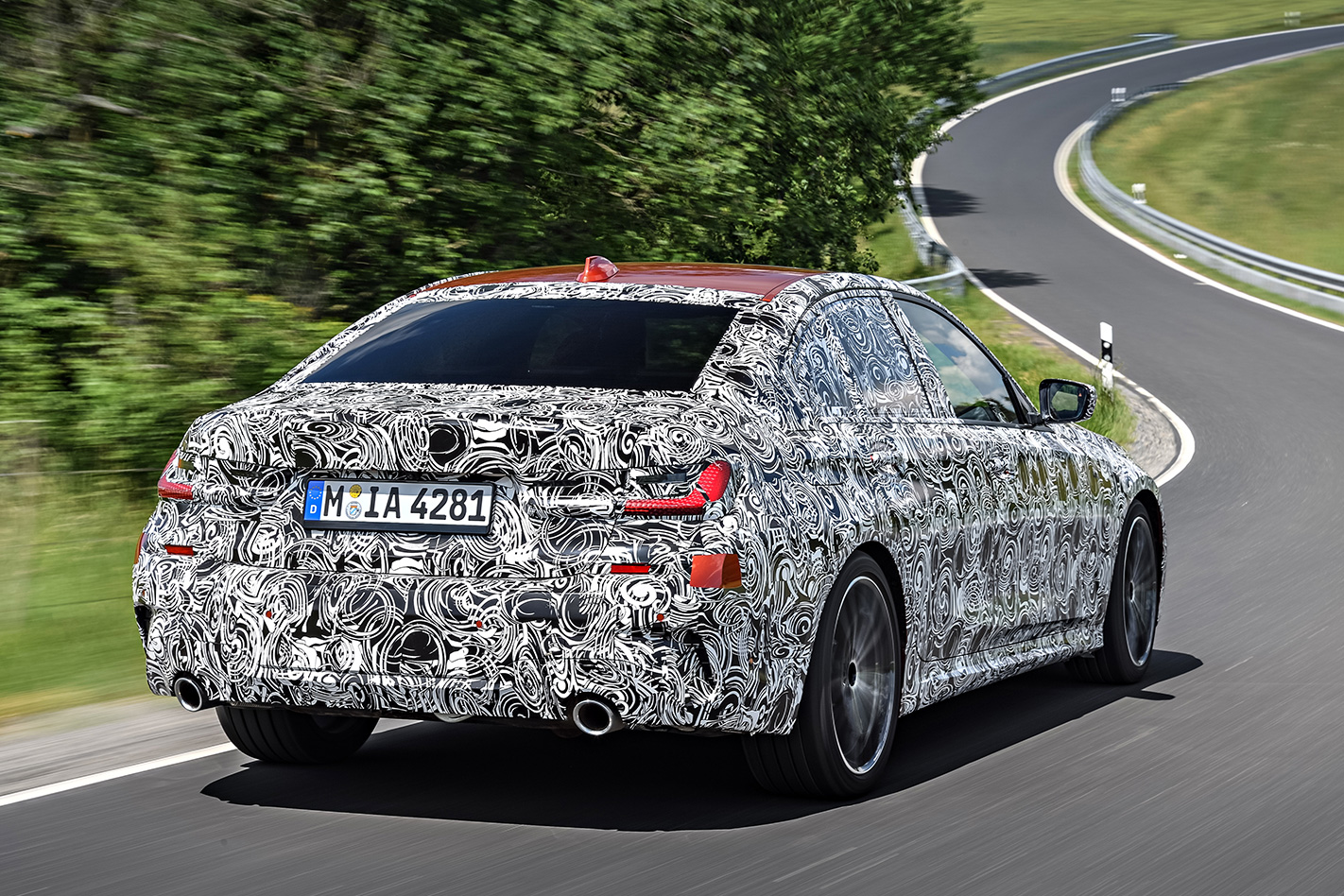
On track, at higher speeds, the 3 Series exhibits that perfect 50/50 weight distribution, the wider track aiding stability, the turn-in sharp, the steering being light, quick and precise with fine weighting – and what passes for feel these days. The chassis engineers admit there’s about 10 percent of the finishing work to be done, the tuning of the electric power steering being a key area.
The engine line-up will largely follow the current range, the 330i we sampled gaining around 5kW, for an output of 190kW, torque increasing by as much as 50Nm to a 400Nm maximum. Those improvements come with a five percent gain in economy from the outgoing car’s 5.8L/100km. Getting the new 3 Series ready for the latest WLTP standards mandated by the EU will see the new 3 fitted with a particulate filter in the exhaust for both petrol and diesel models.
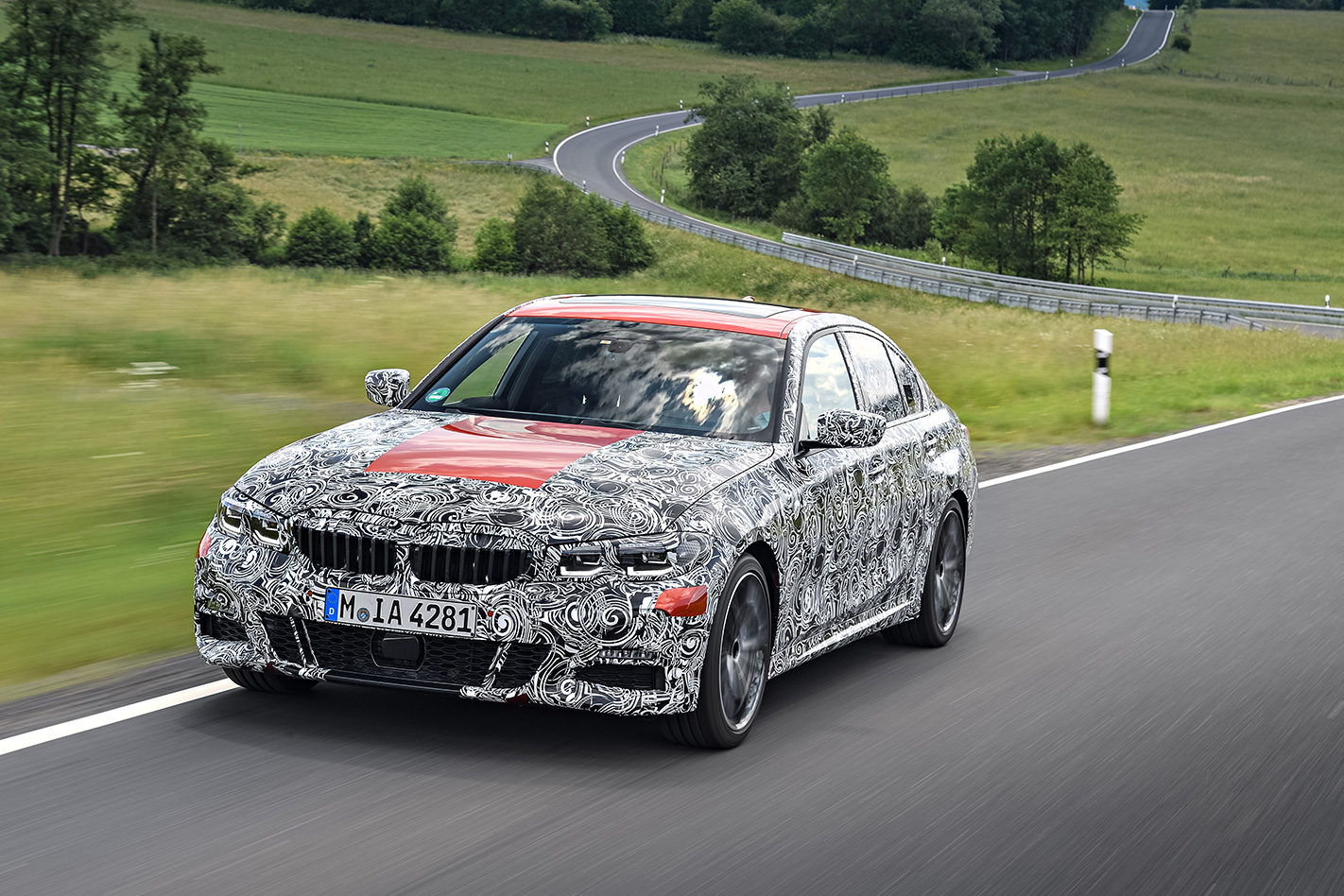
At the entry-point to the range the 3 Series will continue to be powered by the 1.5-litre three-cylinder turbo engine, also with a 5kW bump to 105kW, and will still be badged 318i. Above that BMW’s turbocharged 2.0-litre four-cylinder will account for the bulk of global sales and will be offered in various states of tune from an unchanged 135kW in the 320i, to 190kW in the 330i.
Above that the 340i will be the only six-cylinder petrol 3 Series, with power output expected to be around 272kW. Diesel choices comprise the 2.0-litre four-cylinder 316d, 318d and 320d, with a six-cylinder 3.0-litre in both 330d and 335d guises.
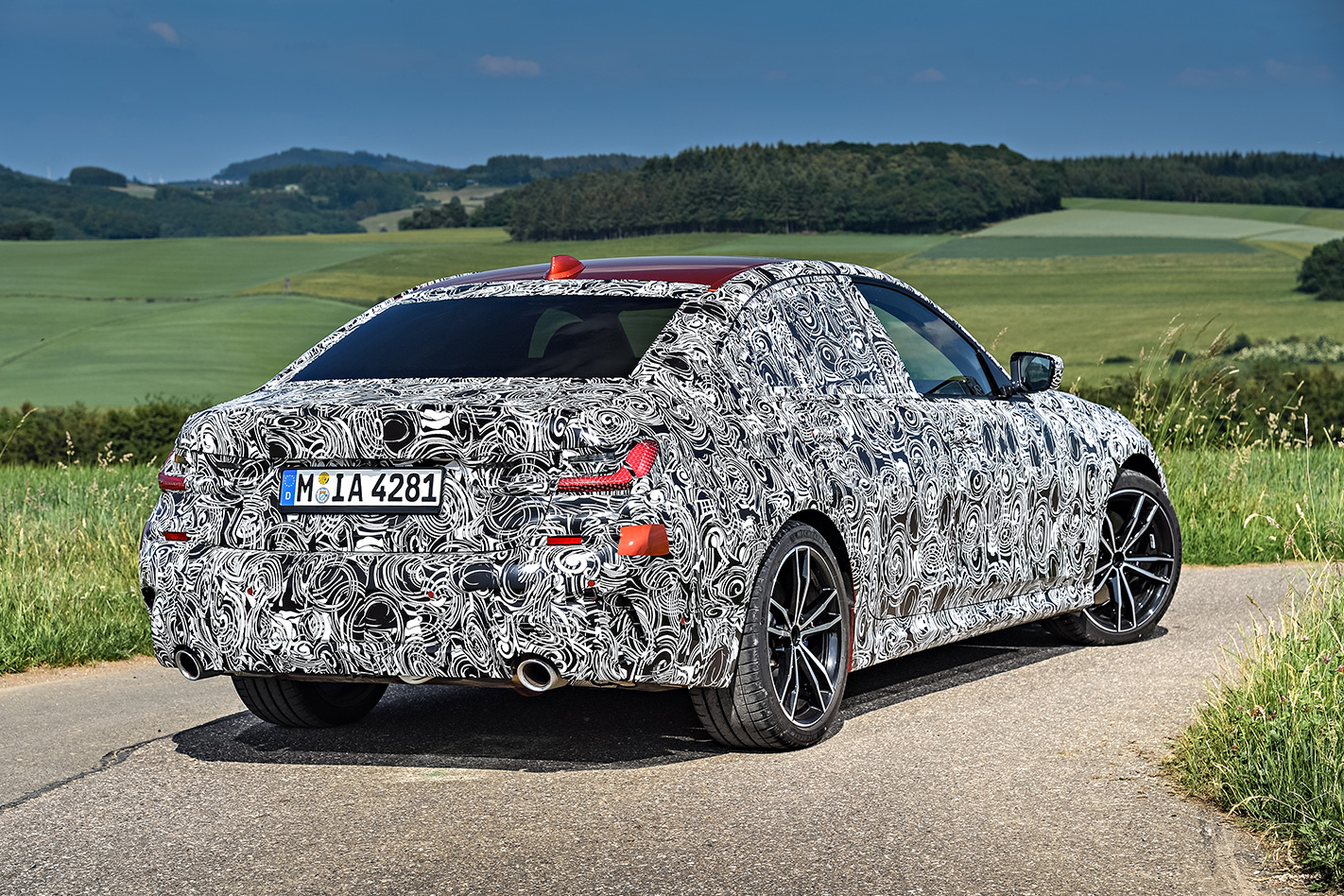
In line with the zeitgeist, a pair of plug-in hybrid models will be offered. They will use the 1.5-litre three-cylinder engine and the 2.0-litre petrol turbo engines boosted by electric motors of differing outputs. Likely to be badged 320e and 330e, the electric-only range will be in the region of 50 to 80 kilometres.
Just as for the existing 3 Series range there will be the option of xDrive all-wheel drive (TBC for Oz), as well as M Performance versions to take on Audi’s S and Mercedes-AMG’s 43-badged competition. The M Performance models will be introduced shortly after the 3’s introduction in Paris and early 2019 on-sale date, giving BMW some wiggle room before it replaces the M3.
M3 & M4
Rumours of the M3’s technical specifications remain exactly that, but it’s likely that the 2020 model year M car will retain turbocharged in-line six-cylinder power, aided by the water injection intake system borrowed from the limited-run M3 GTS special.
Electric turbos and a 48-volt mild-hybrid system are expected, bringing torque fill and improved throttle response, as well as benefits in economy. Switchable all-wheel drive is likely given a figure of 372kW is being bandied about it. BMW M CEO Frank Van Meel is on record saying above a certain level all-wheel drive is a necessity.
Local heroes
If there’s one thing we’ve learned with past 3 Series generations, it’s that something tends to be lost in the translation when export to Australia is considered. We have had to make do with a seriously cut-down subset of what’s on offer in Europe and the US, missing out on xDrive variants and performance diesels. That may well be changing. BMW plans to streamline its product planning to harmonise across world markets. The 3 Series certainly needs all the help it can get in Australia. In 2017 the Mercedes-Benz C-Class more than trebled the local sales of the 3 Series.
Since its introduction in 1989, more than 720,000 MX-5s have been snapped up, making it the best-selling sports car the world has ever known.
This feature was originally published in MOTOR’s December 2006 issue
The bare-bones open-topper was the spiritual successor to British roadsters like the Triumph Spitfire, Austin-Healey Sprite, MG Midget, and Lotus Elan – only it was better than all of them. Mazda took the best aspects of each of these iconic cars (even the Elan’s sweet exhaust note), and put them into one neat, reliable package.
Lightweight, well-balanced and inexpensive, MX-5 immediately won a legion of fans who’ve stuck by it through three generations – NA (’89-’97), NB (’98-’04) and now NC (’05- ).
In that time, the car has gained kilowatts and kilograms, and undergone body and chassis tweaks, all in the name of progress. But some reckon Mazda got it right first time and that the NA is yet to be outdone.
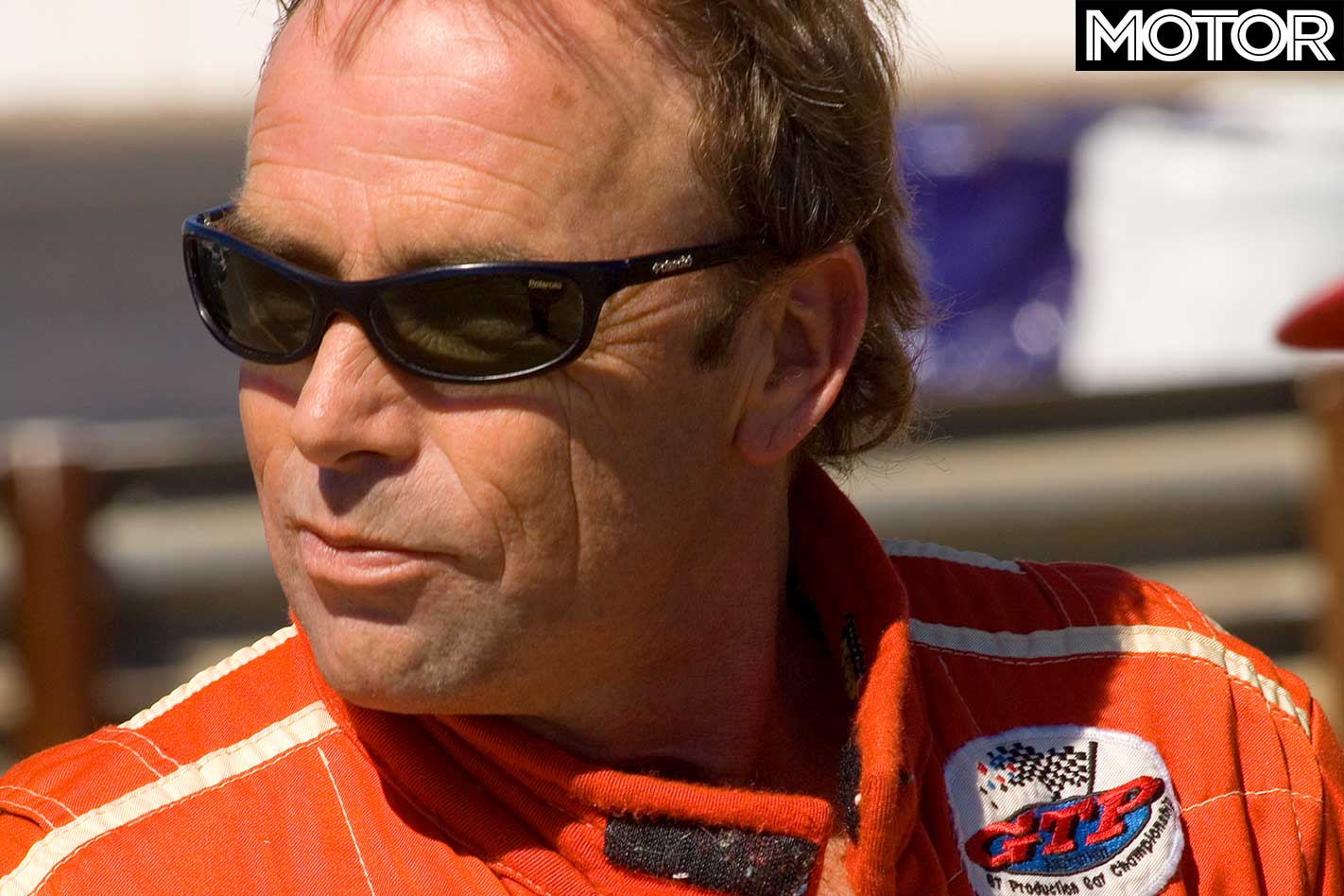
Well, we thought we’d put theory to the test and rustled up an example from each generation to belt around Adelaide International Raceway. To keep it all nice and professional, we roped in GTP competitor and Mitsubishi test-driver Steve Knight to hot-lap our fleet.
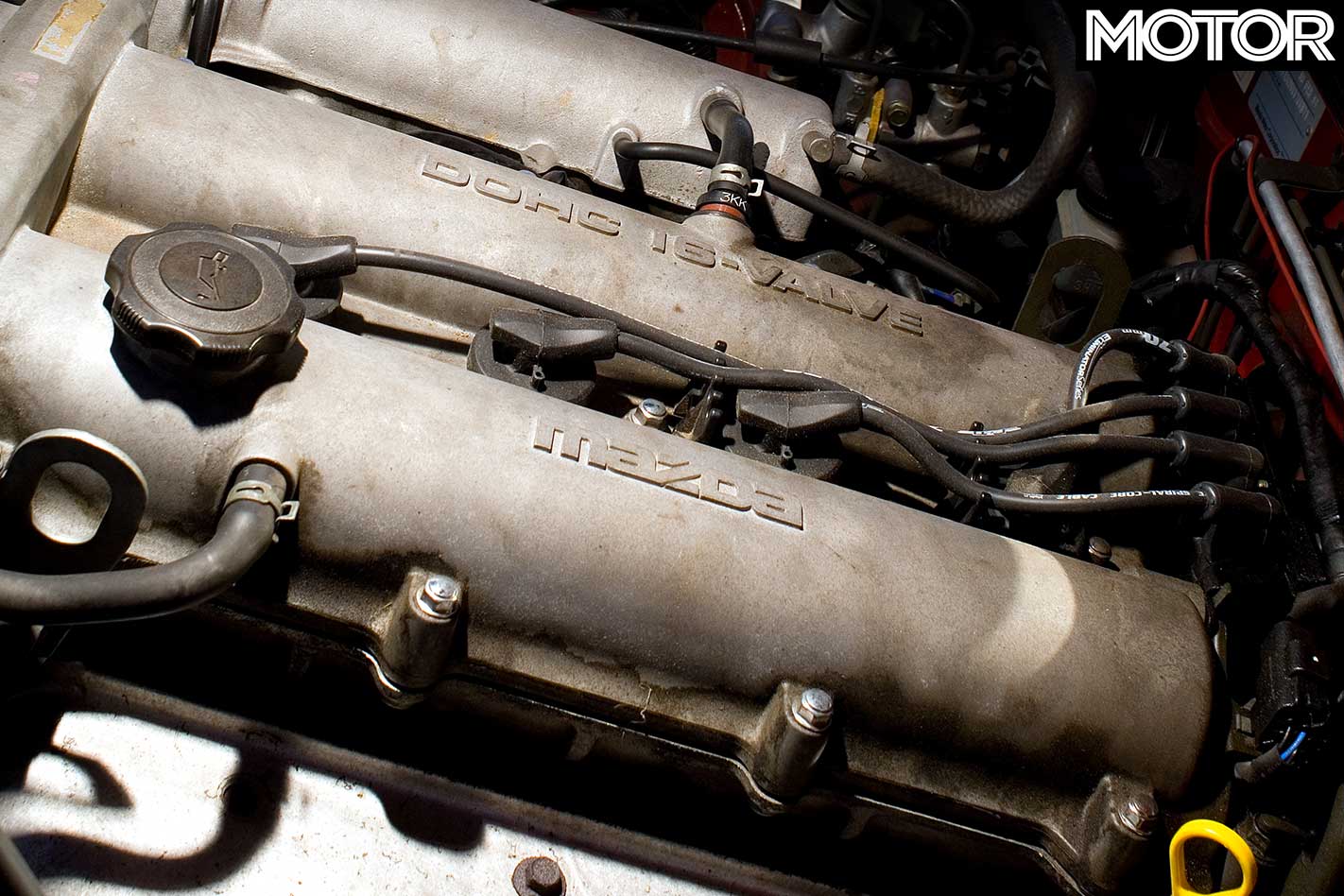
Representing the original MX-5 is a 1994 NA Clubman – the model that purists claim is the finest of the breed. Along with Clubman-specific gear like an LSD, Bilstein shocks and manual steering, the 990kg ragtop runs the 98kW/155Nm 1839cc four-pot introduced in late-’93 as a replacement for the 85kW/130Nm 1597cc version, plus stronger bracing of the rear suspension and cabin centre structure.
Next is the middle child, the NB MX-5. It looks more mature with fixed, ovoid-style headlights, while power comes from a tweaked 1.8 with 106kW and 165Nm – handy as the car’s weight increases to 1026kg.
Last but not least is the current NC MX-5. With its new 1998cc four-cylinder engine punching out 118kW and 188Nm, it’s the heavy hitter of the family. Weight jumps to 1106kg and it sits on bigger 17-inch alloys – the NA and NB wear 14- and 15-inch alloys, respectively.
Mazda MX-5 NA Clubman
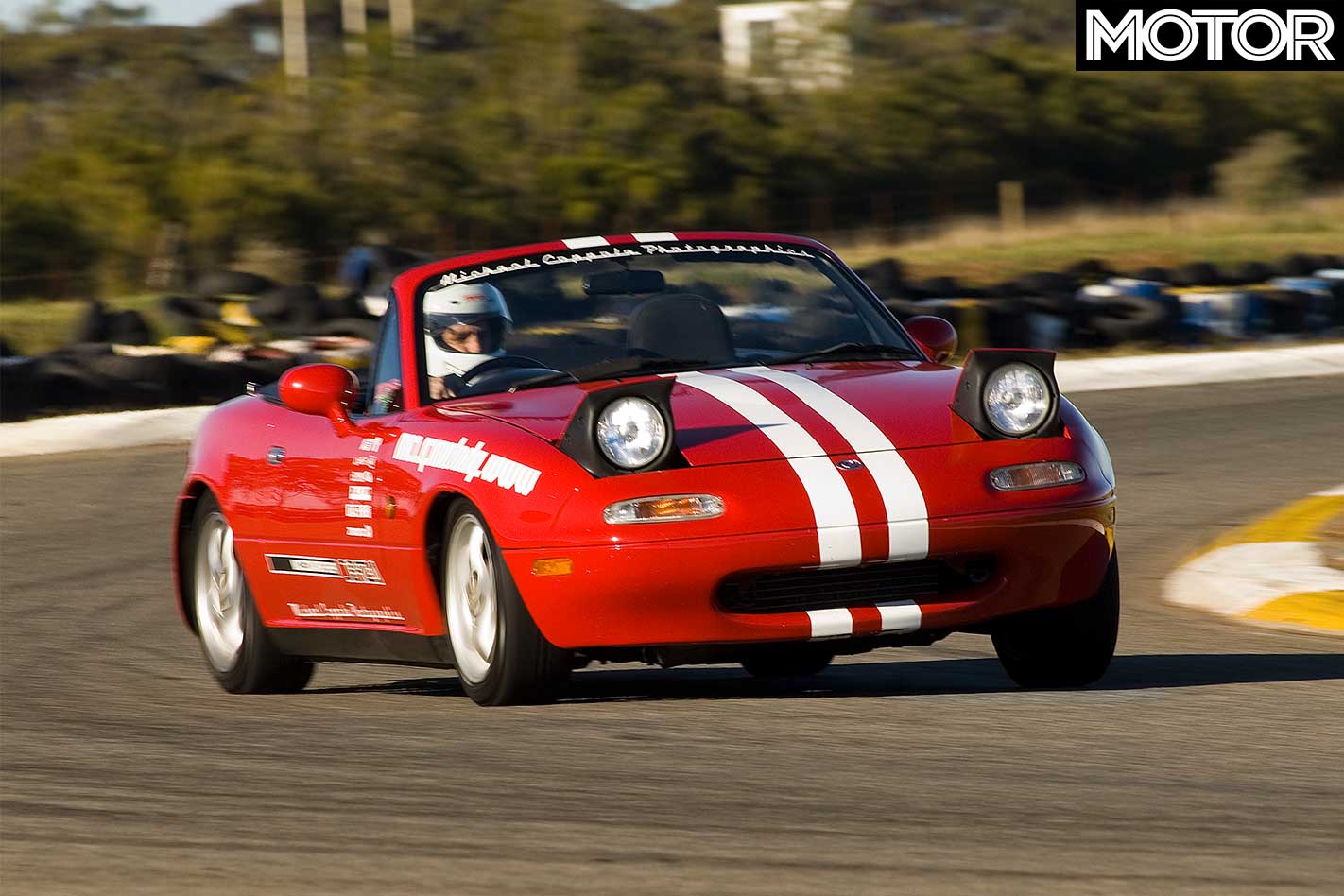
With the Drift Box unconventionally fitted to the Clubman, thanks to a dodgy cigarette lighter, Knight hops in and bangs out a couple of hot laps. On the standard Bilsteins and 14-inch road tyres, the lightweight Clubman is predictable and communicative under brakes and through the turns. So well-balanced is the car that halfway through the first corner it’s actually carrying the same speed as the more powerful NC MX-5.
The NA Clubman’s biggest problem is its shabby acceleration. The 1.8-litre engine is huffing out just 98kW, so the NA is really struggling to pick up its skirts and get going out of the corners. It has all the right gear with its Bilstein shocks and Torsen diff (Mazda also turfed out the power steering), but the 1.8-litre engine just lacks the sophistication of the NB’s upgraded version.
The NA Clubman manages a top speed of 157km/h down the straight, and through all the corners it sits neatly between its siblings, only losing out in acceleration. It might not be the quickest, but it’s a competent little car and possibly the most consistent of the three. Its lap time of 1:16.59sec is the time for the others to beat.
Fastest Lap: 1:16.59 | Top Speed: 159km/h
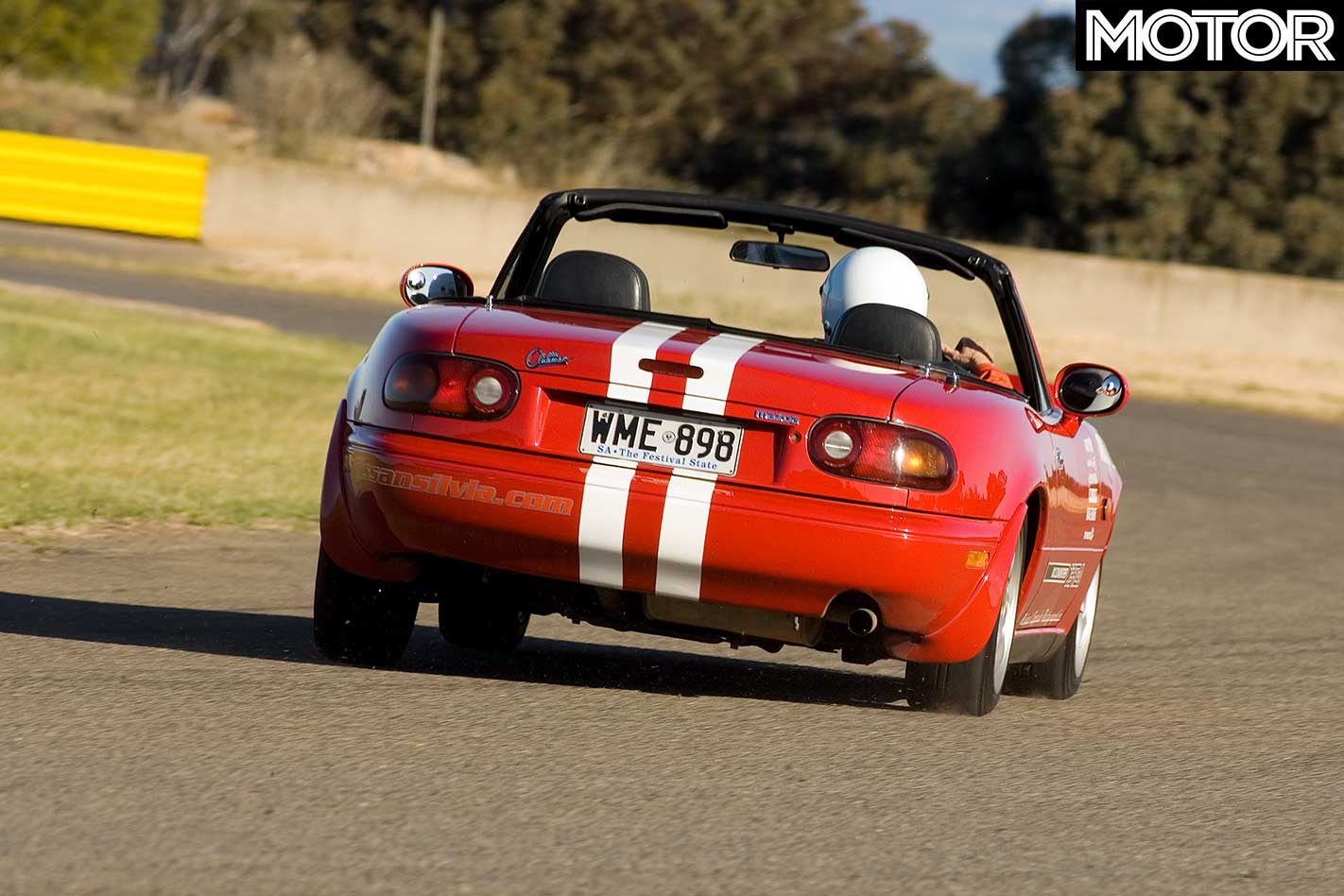
Steve says: “You can really feel the lack of power steering in the NA, but it still steers really well, and while it’s a bit slow in a straight line, it feels just as quick through the corners as the others. On occasion it felt a bit bouncy, like it was oversprung and underdamped. It was a nice car to drive – reminiscent of driving an MGB.”
Mazda MX-5 NB
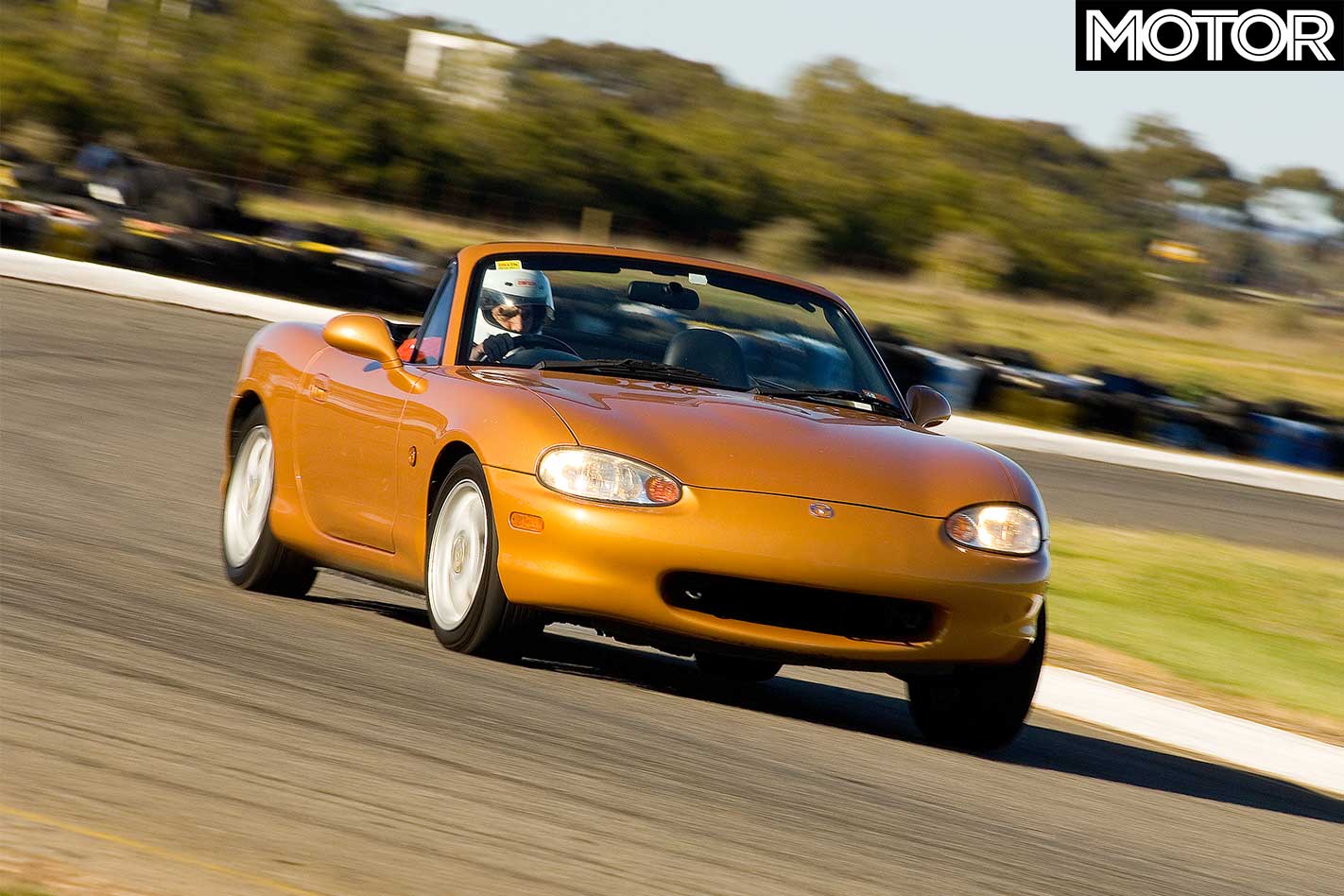
Released in 1998, the NB runs the same 1.8-litre four-potter as the NA Clubman, but its engine copped several tweaks over the earlier car. It benefitted from a lighter flywheel, a twin-tract intake manifold, and a compression ratio upped from 9.0:1 to 9.5:1. Power jumps to 106kW; it isn’t a huge leap, but it’s enough to make it feel more nimble and spritely.
This shows on the track where the NB is able to exit corners much harder and build speed quicker than the NA. It lapped faster than the NA, too, thanks mostly to an extra 10km/h down the main straight. In fact, it’s fastest lap of 1:13.40 was the best on the day, making the NB the track champion.
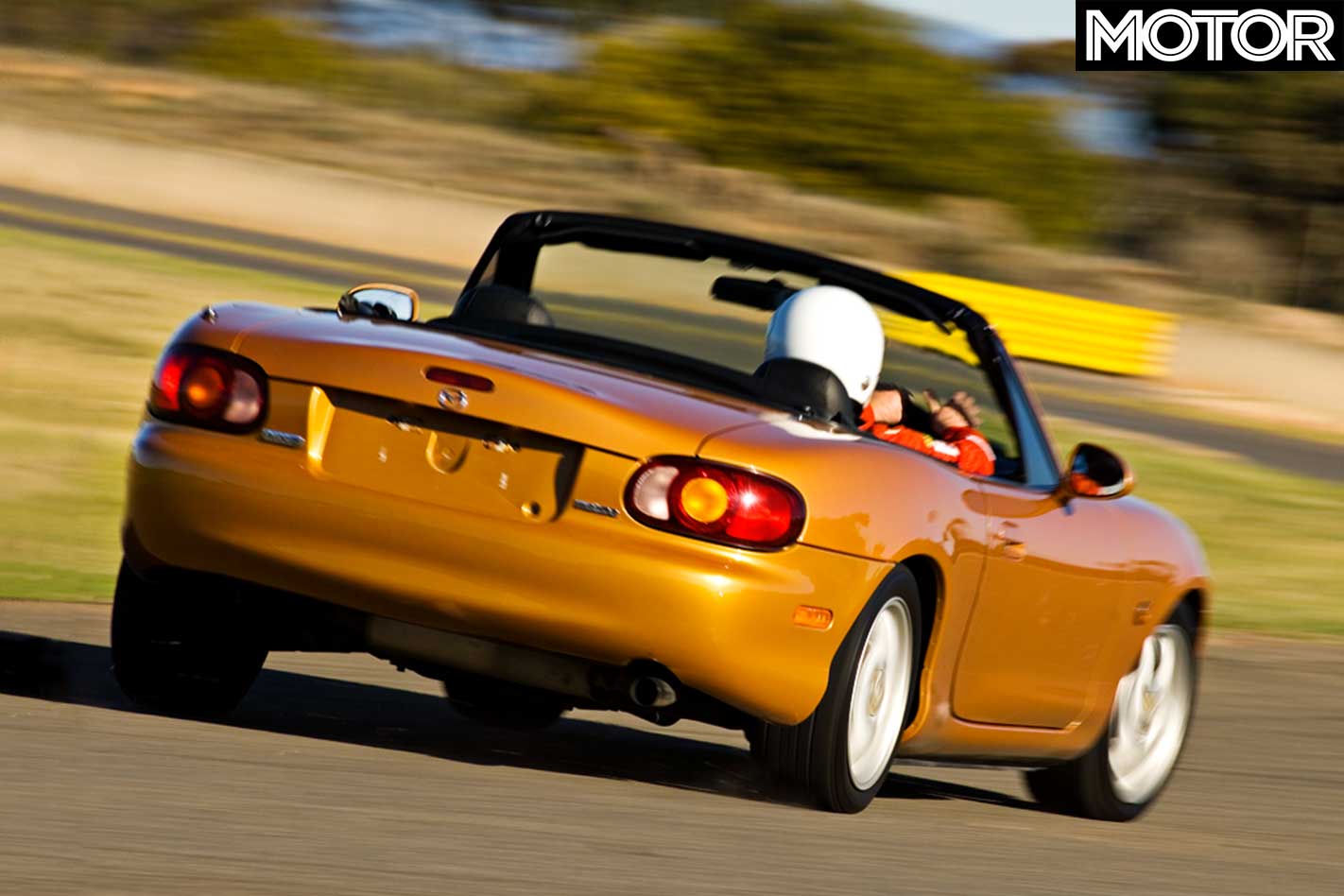
In a number of instances, the second-generation MX-5 is actually carrying a much higher corner speed than either the NA or the NC, and only really loses out to the NC in peak speed. Thanks to its better-breathing engine, grippier 195/50R15 tyres, and its still-trim 1026kg weight, the NB MX-5 is clearly the best balanced and quicker in the tight stuff.
Indeed, coming into the kink, in the back half of the track, it is carrying 11km/h more speed than the NA and a massive 14km/h more than the NC MX-5.
Fastest Lap: 1:13.40 | Top Speed: 169km/h
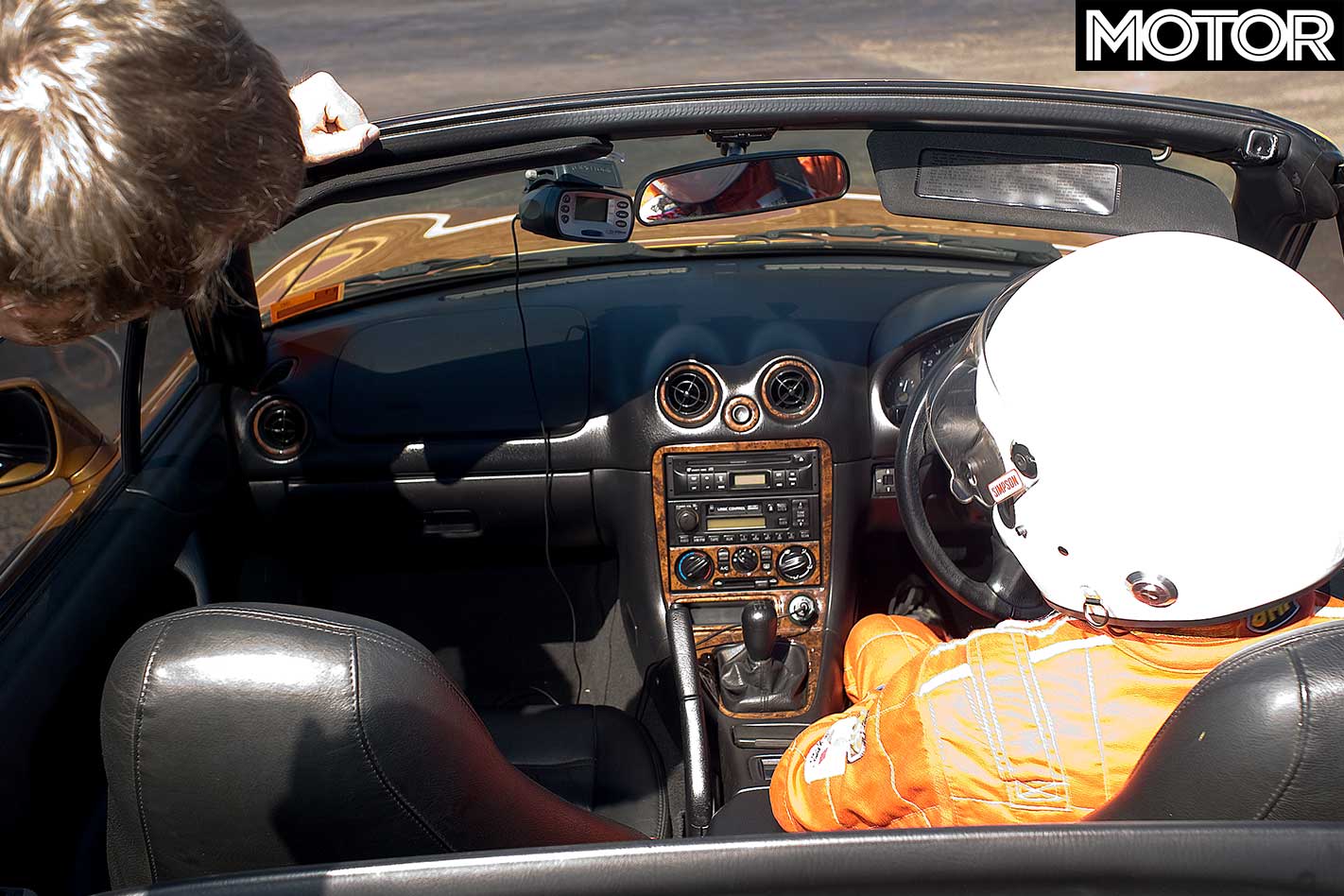
Steve says: “I felt a lot more in touch with this car than with either the NC or the NA; it was just excellent to drive. It offered plenty of feel and was really comfortable to drive on the edge. The suspension feels much better than the NC and it’s a lot more playful. It’s a much more down-to-earth, multi-use car than the other two.”
Mazda MX-5 NC
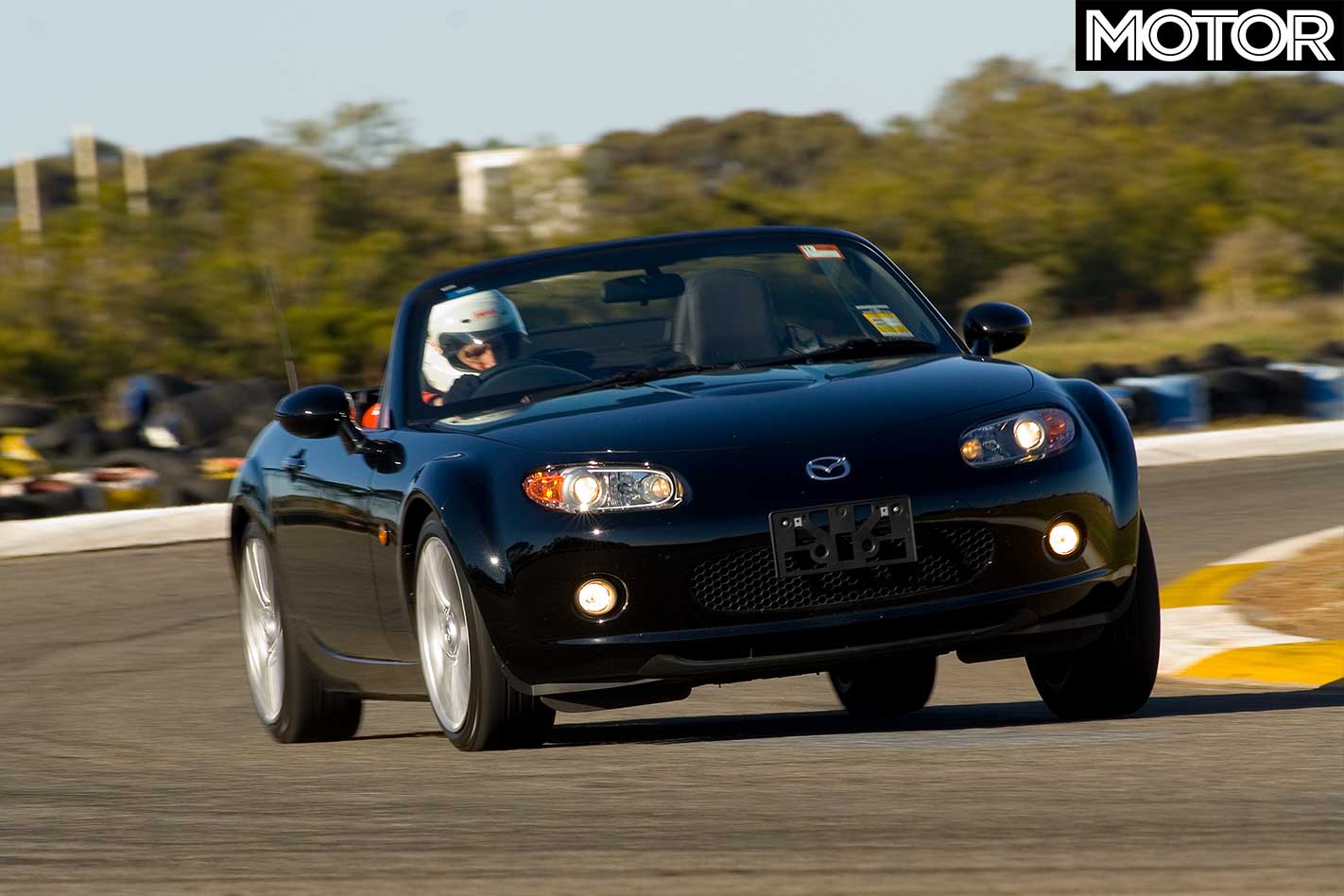
The NC MX-5 has won plenty of awards, and it’s easily the most powerful of the breed. Its 2.0-litre four-cylinder S-VT engine produces 118kW (at 6700rpm) and 188Nm (at 5000rpm), but that extra oomph is soaked up by the extra weight – a good 80kg heavier than the NB.
But it doesn’t work out that way on the track, with the NC posting a peak speed down the straight of 173km/h. It also manages to accelerate harder than the other two, but its ability to carry speed through the corners doesn’t seem proportionate. This is because the extra weight forces you to brake much earlier than either the NA or NB.
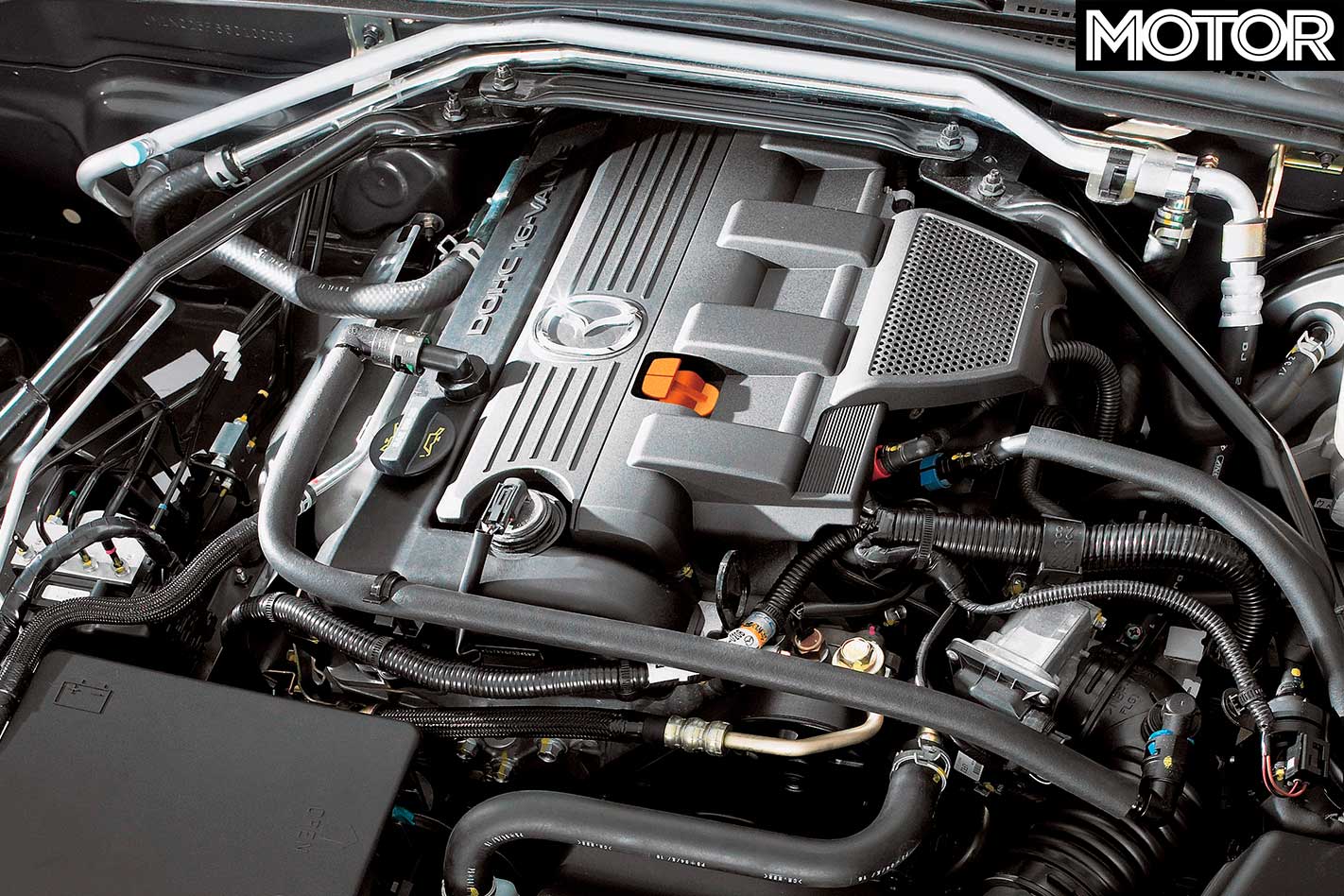
There’s not as much feel as those two either, with Mazda going for a softer set-up to appeal more to road users. Ultimately, this is where the majority of use is, but the compromise is a doughy, less accurate package. While that reduces its effectiveness on the track compared to the earlier generations, with a bit more time, we reckon it could have improved by a couple of 10ths.
Fastest Lap: 1:14.20 | Top Speed: 173km/h
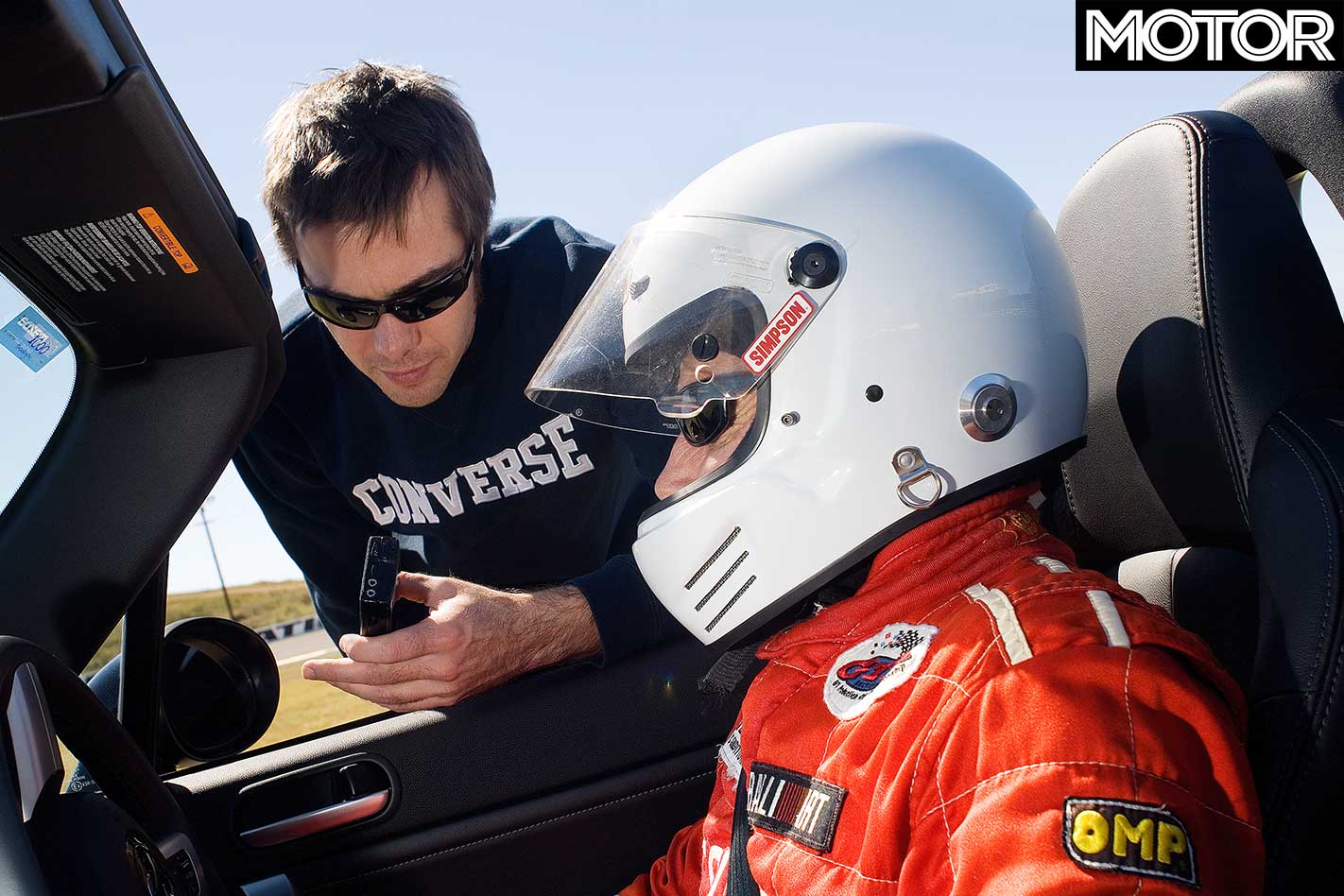
Steve says: “It’s a nice car to drive, though it doesn’t feel overly powerful. And the suspension is way too soft for serious track use. It just doesn’t seem to have enough damping either. It turns in nicely, though, and it would be great around town, but it’s not a serious weekend track car in this trim. It just feels sterile and compromised.”
Result
It isn’t that simple to pick a winner in this one. Sure the lap times suggest the NB MX-5 is the pick of the bunch, but if you have a squiz at the speed trace you’ll notice each generation has its moment of strength and weakness.
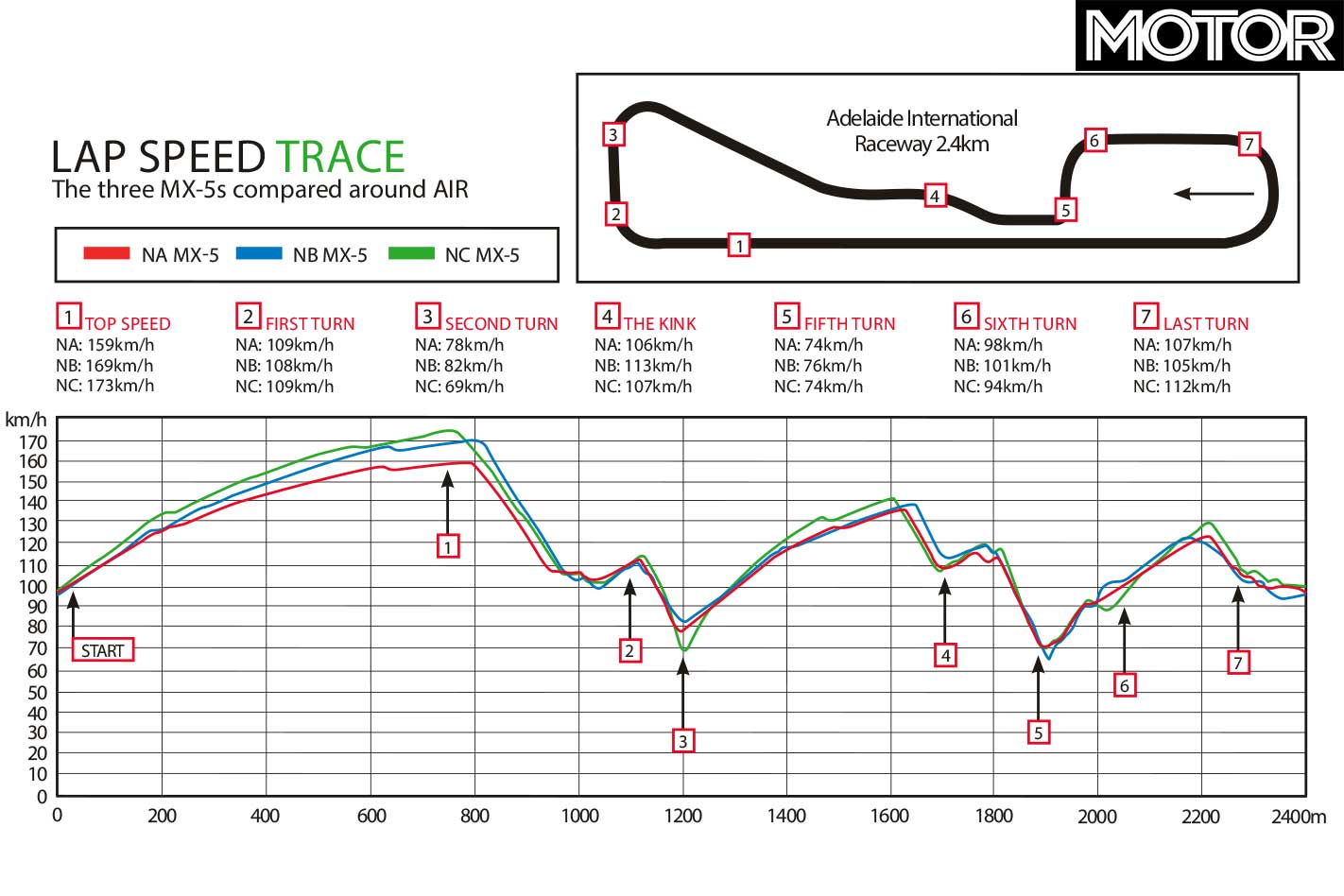
But it’s plain to see that with each generation, mechanical enhancements mean there has been noticeable improvements to acceleration and mid-corner balance. We weren’t able to lay down 0-100km/h times, but the result would have seen the NA storm home leading the NB which, in turn, would have finished ahead of the NC.
Around the track the NC impressed with its acceleration, but that’s not surprising. What was surprising, though, was its inability to lead the others through the corners. On more than one occasion it lost out to the NB and NA in speed into and through a corner. The NA was impressive, but for different reasons, and while it wasn’t as quick as the others, it was consistent.
But we want a winner. So for its almost-invisible nature, its awesome balance and its perfect blend of luxury and performance and for the fact it’s quicker around the track, and that it’s a steal on the used car market, the win goes to the NB MX-5. It’s not the original and it’s not the newest, but it’s definitely the best.
Fast Facts
| u00a0 | NA MX-5 Clubman | NB MX-5 | NC MX-5 |
| Engine | 1839cc DOHC 16-valve in-line four-cylinder | 1839cc DOHC 16-valve in-line four-cylinder | 1998cc DOHC 16-valve in-line four-cylinder |
| Power/Torque | 98kW/155Nm | 106kW/165Nm | 118kW/188Nm |
| Weight | 990kg | 1026kg | 1106kg |
| Drive | rear-wheel | ||
| Wheels/Tyres | 14x6in, 185/60R14 | 15x6in, 195/50R15 | 17x7in, 205/45R17 |
| Price in 2006 | $8,900-$11,900 (Red Book) | $10,800-$13,300 (Red Book) | $16,200-$19,100 (Red Book) |
My very first car, when I was 20 years old, was a used Porsche 356 with 75 horsepower. I bought it because my brother, who was 10 years older than me, had one.
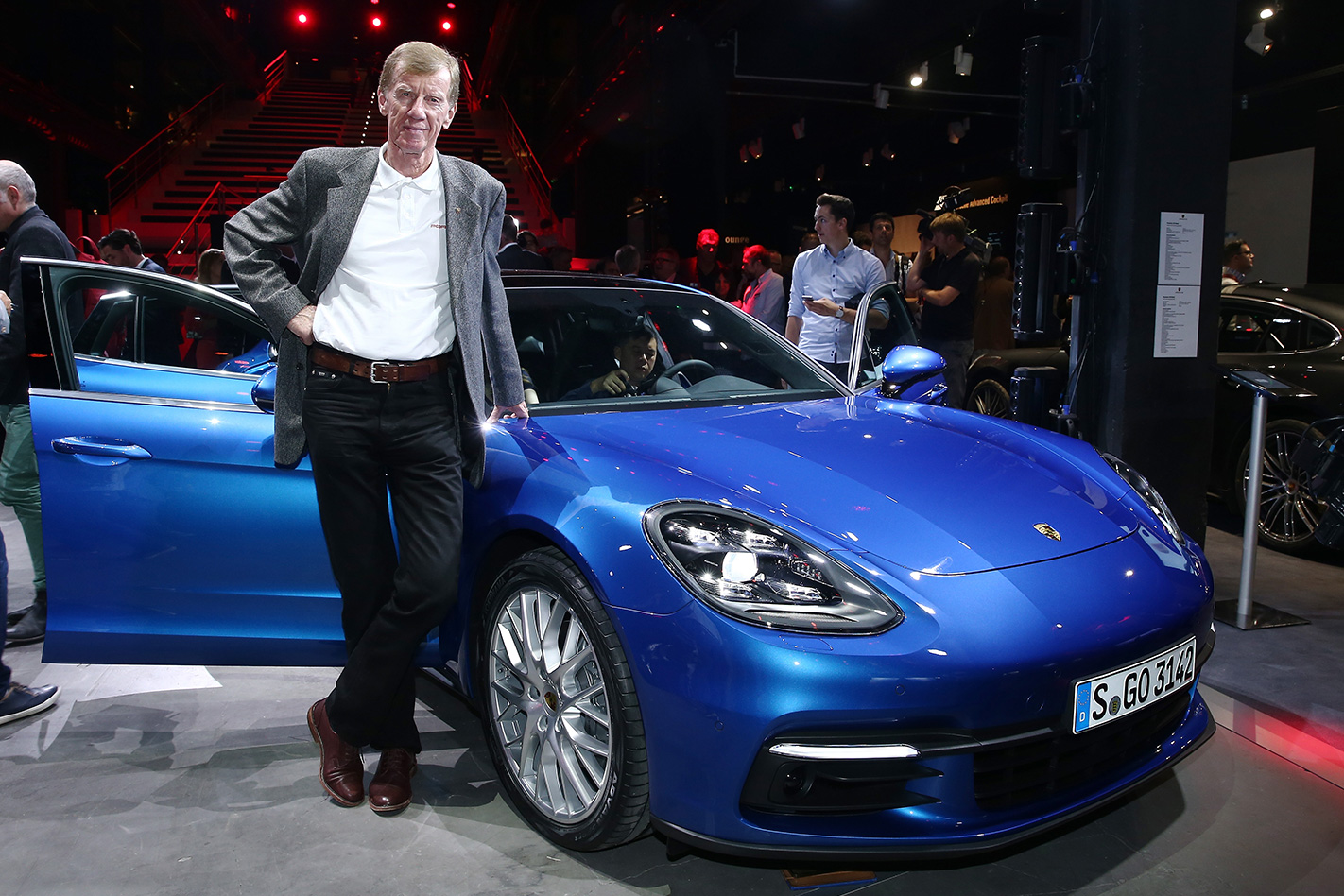
Back when I was around 10 years old myself, my parents would always tell my brother, “take the small one with you”, so I used to go with him on Sundays when he went driving with his girlfriend. This made him very angry, of course, but he told me: “Listen to me, when you have enough money to buy a car, buy a good car. And the only good car is a Porsche.” So when I was 20, I bought my 356 even though I didn’t have a lot of money.
Then of course the situation was very lucky when I finished competing in ’92 with Audi because one day later the member of the board at Porsche, Mr Wiedeking, called me and asked, “Is it true Audi has let you go? If so, you can start tomorrow as an ambassador for Porsche and as a chief test driver.” That offer was the maximum for me in my life and now I am 25 years with Porsche. But I had one condition. I told him: “Mr Wiedeking, you are sure? If you have me under contract I will tell you what I think, I will tell the truth, not what you want to hear.”
He said, “Okay, that is the reason I want you because it is good for my company. And everybody knows you are very undiplomatic.” That was the agreement between us right from the beginning.
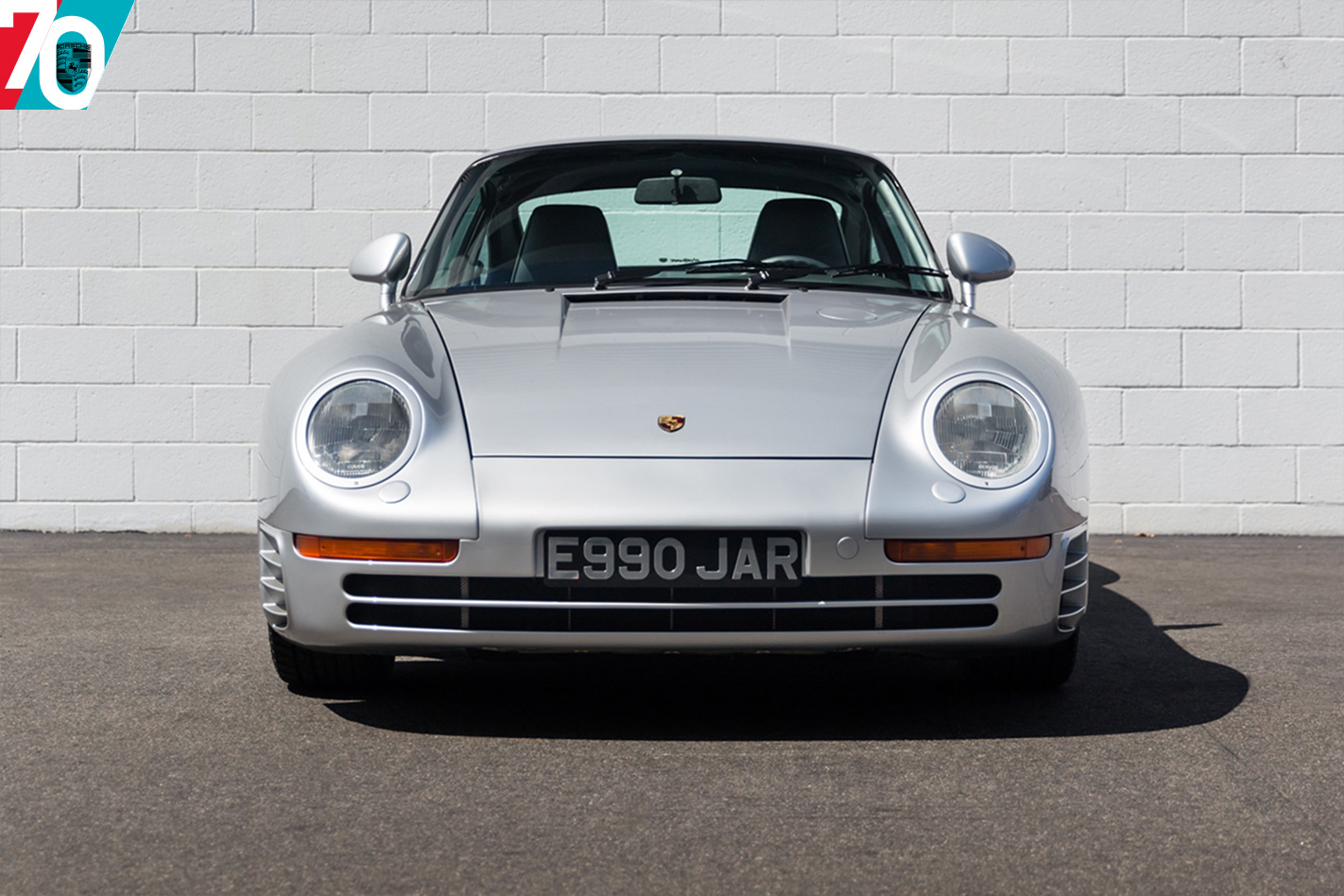
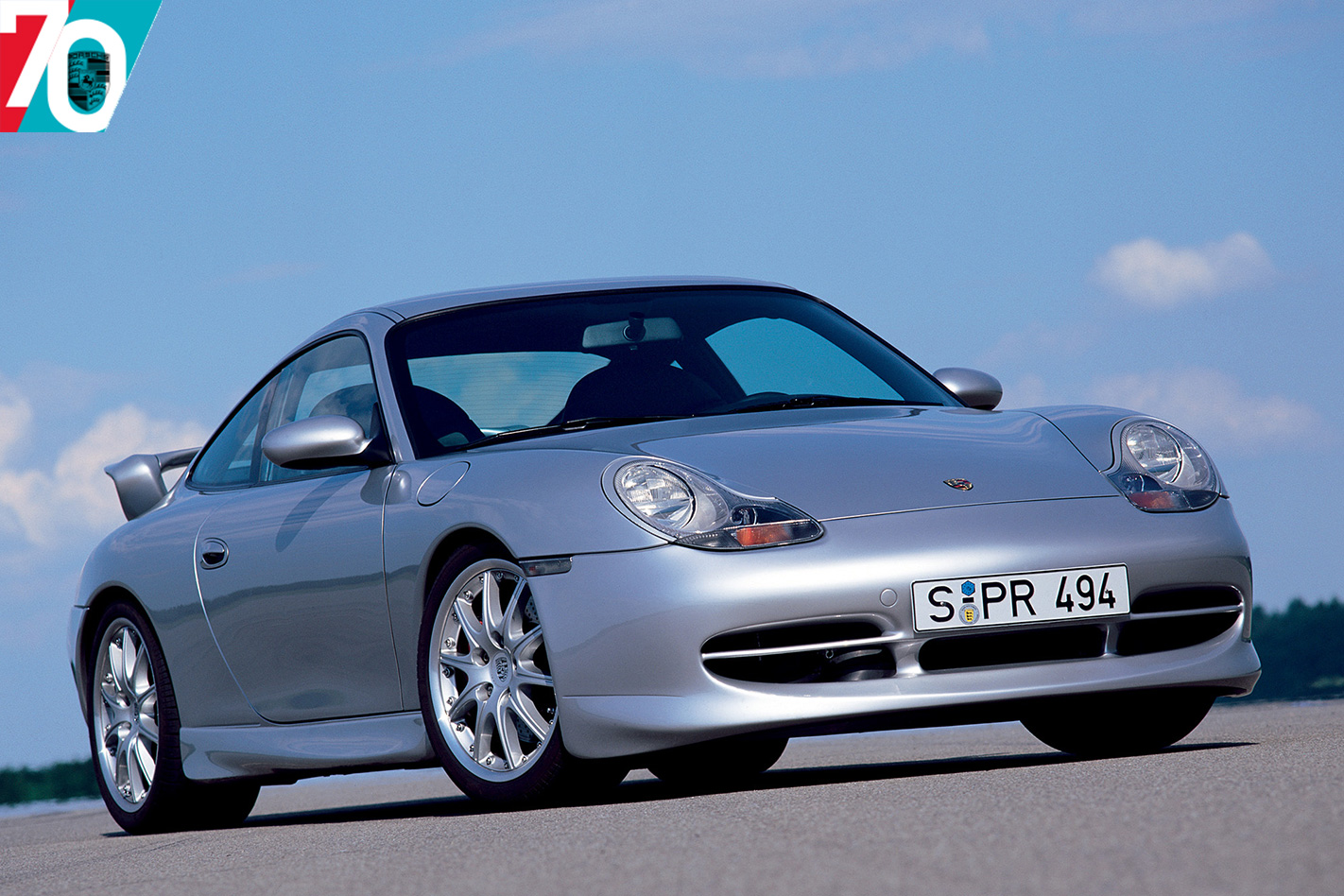
I’ve been lucky enough to develop the 959, Carrera GT and 918; three very special cars. My favourite is the Carrera GT, though I’ve been involved with the first GT3 and every GT3 RS since. I’ve developed Boxster, the Cayman and even the Cayenne. In the beginning I was shocked when they told me I had to test an SUV.
I said, “Listen we are a sportscar company, we are not building lorries!” But finally, as is always the way with Porsche, when the product was ready it was better than its competitors. It was more sporty than an X5 or other rivals.
For me, the thing that sets Porsche apart is very obvious: when you buy a Porsche you buy two cars. You buy a sportscar and you buy a daily car. That was the most important thing. A Porsche is the only car where you can spend an entire day at the racetrack then in the evening you go home and you have no shaking in the steering wheel; you still have brakes left. Porsche is the only brand to have this big difference.
And that’s because of the engineers. I’ve known them for 40 years and there is this special spirit in these people. Their life is Porsche, nothing else. They are in the office at 7am and going home at 10pm and they never complain. I think that’s why the Porsche cars are better than the rest. All my life, even when I was driving for Ford, Fiat, Opel or Lancia, my private garage has always had a Porsche in it. Now I own 11, so you can see clearly that for me, it has always been Porsche.
Family ties
Rohrl actually has good reason to dislike Porsche. In a cruel twist of fate, Walter’s older brother died at the wheel of his own 356. Rohrl promised to never put his parents through that again and was famously meticulous in his event preparation. He committed entire rally stages to memory and, despite his prodigious speed, drove within his limits. Rohrl’s meticulousness is also evident in how he cares for his own Porsches. “I go around every small hole in the road and never push hard,” he explains. “The rev counter is very seldom over 3000rpm.” Highlights of his collection include two 356s, a ’72 2.7 Carrera, 993 RS, 987 Boxster Spyder, 911 R and 991.2 GT3 RS.
