
Porsche’s 70th birthday sees the marque in ruder health than ever before. Wheels celebrates the company’s seven decades of engineering excellence forged on road and track.
IT’S EASY to get overwhelmed at the Porsche Museum. The public have left the building and we’re led from the foyer through a labyrinthine series of elevators and corridors, all finished in unadorned white, to a set of double doors. Our guide swipes her fob on the wall and there’s a momentary pause. The doors swing open and there right before us is a plain black Beetle. Behind it is a 1939 Type 64 body, and peeking through a far set of stairs are racing 911 RSRs and 936s. A Paris Dakar 911 and a race 944 to the left, the second 356 ever built to the right. For a moment, I’m a bit overloaded and just gawp, head swivelling in disbelief.
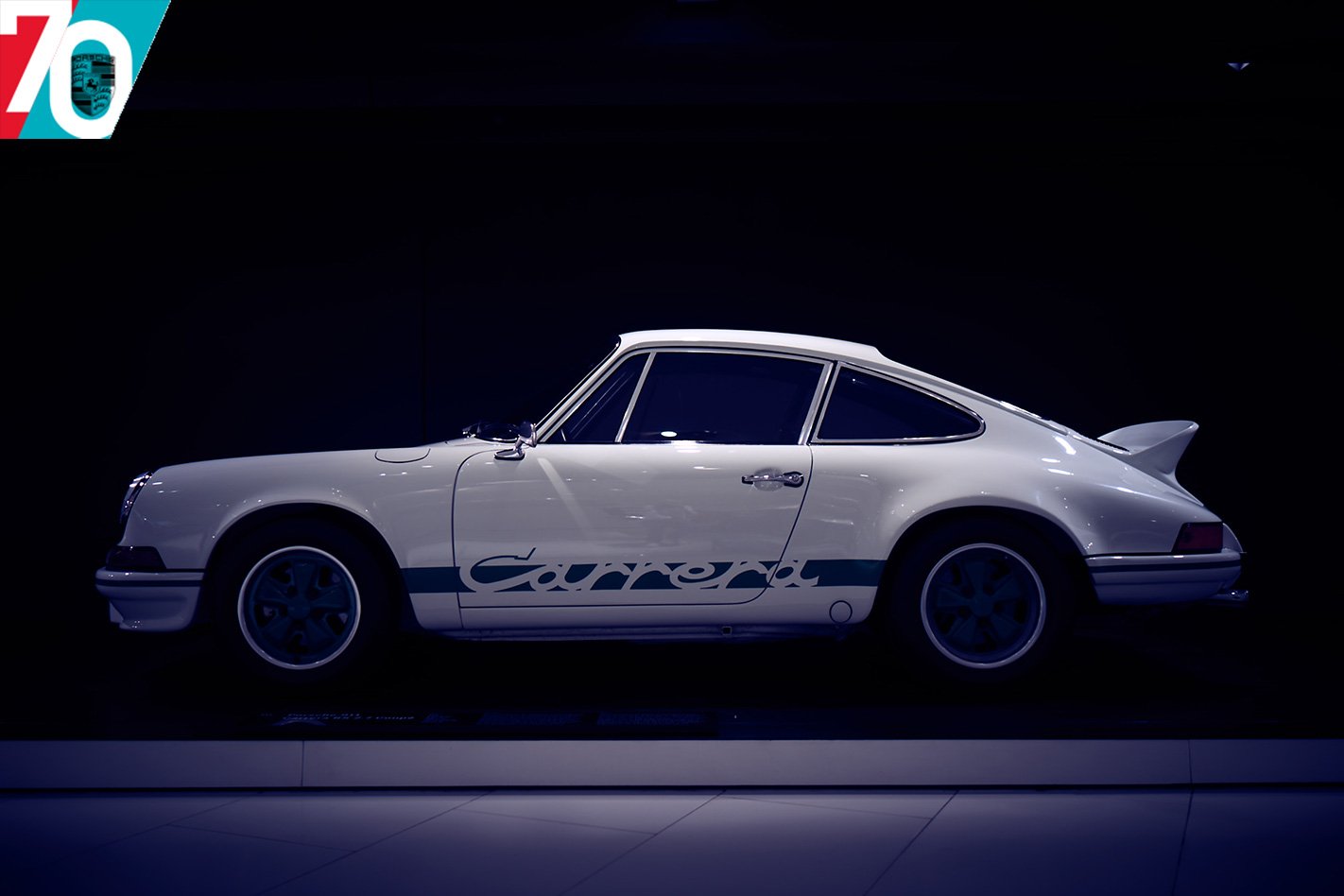
Photographer Jahn’s a regular here and he’s straight into it, but I need a moment. Our guide asks if we’re okay and then leaves. They genuinely have left us alone in here with these priceless cars. Kid, meet candy store. There’s a certain flow to the 80 cars on show, starting with the earliest and spiralling up three levels to the most recent, represented by the current production car range, the 918 Spyder hypercar and the 919 Le Mans winner.
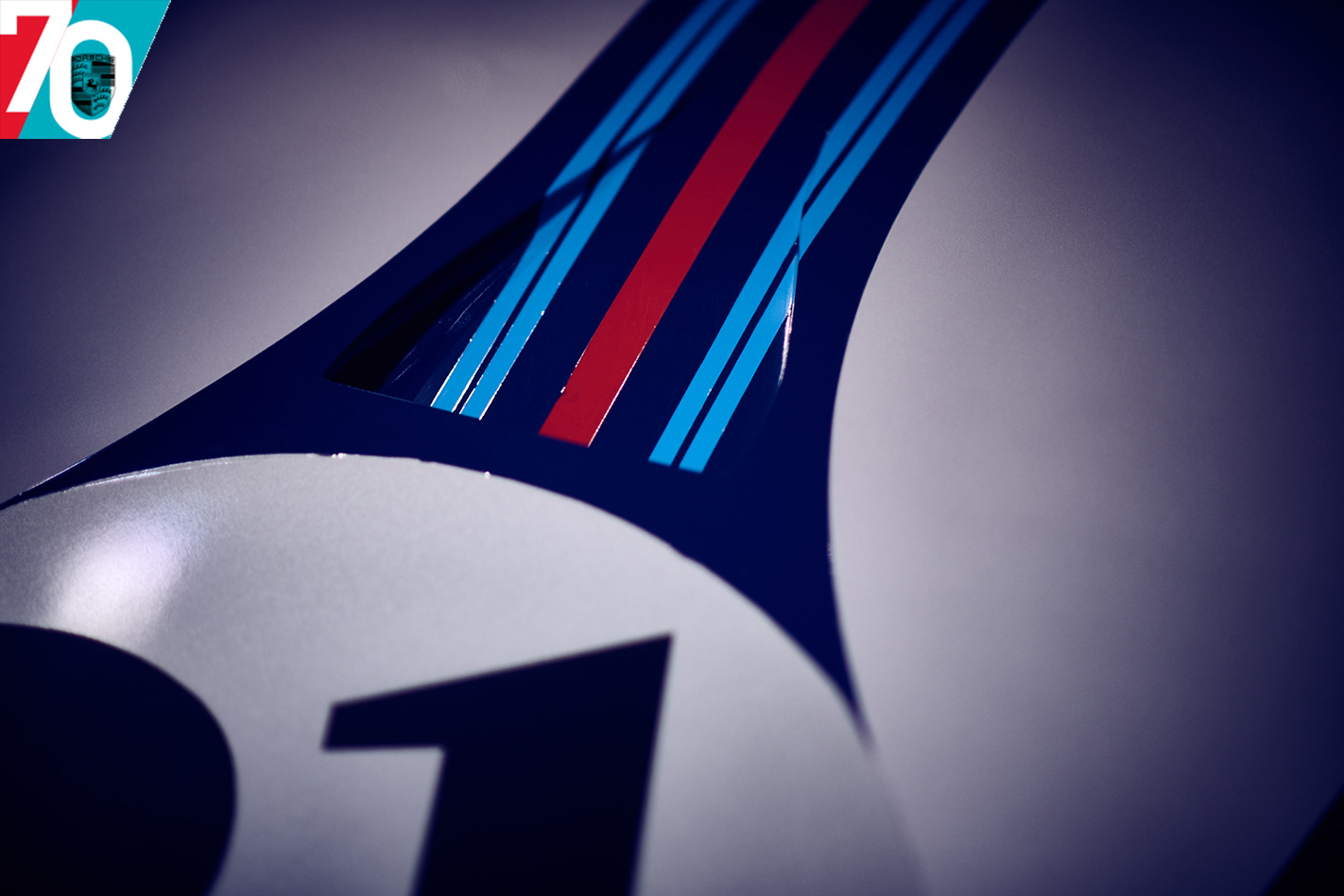
My footsteps ring out on the white marble floor tiles as I walk to the front of the museum and look out. Daylight is fading at the picture windows and lights blink on in the apartment blocks of this eastern suburb of Stuttgart. Commuters head home on the dual carriageway. I’m watching them while sitting on the rear tyre of Alain Prost’s McLaren MP4/2C F1 car, powered by Porsche. I look into the cockpit, keen to see what The Professor would see out of the car. Just one gauge, marked to 12,000rpm, a Personal steering wheel and a burnished gear lever at his right hand. It smells slightly funky, some biological top notes among the oil and rubber.
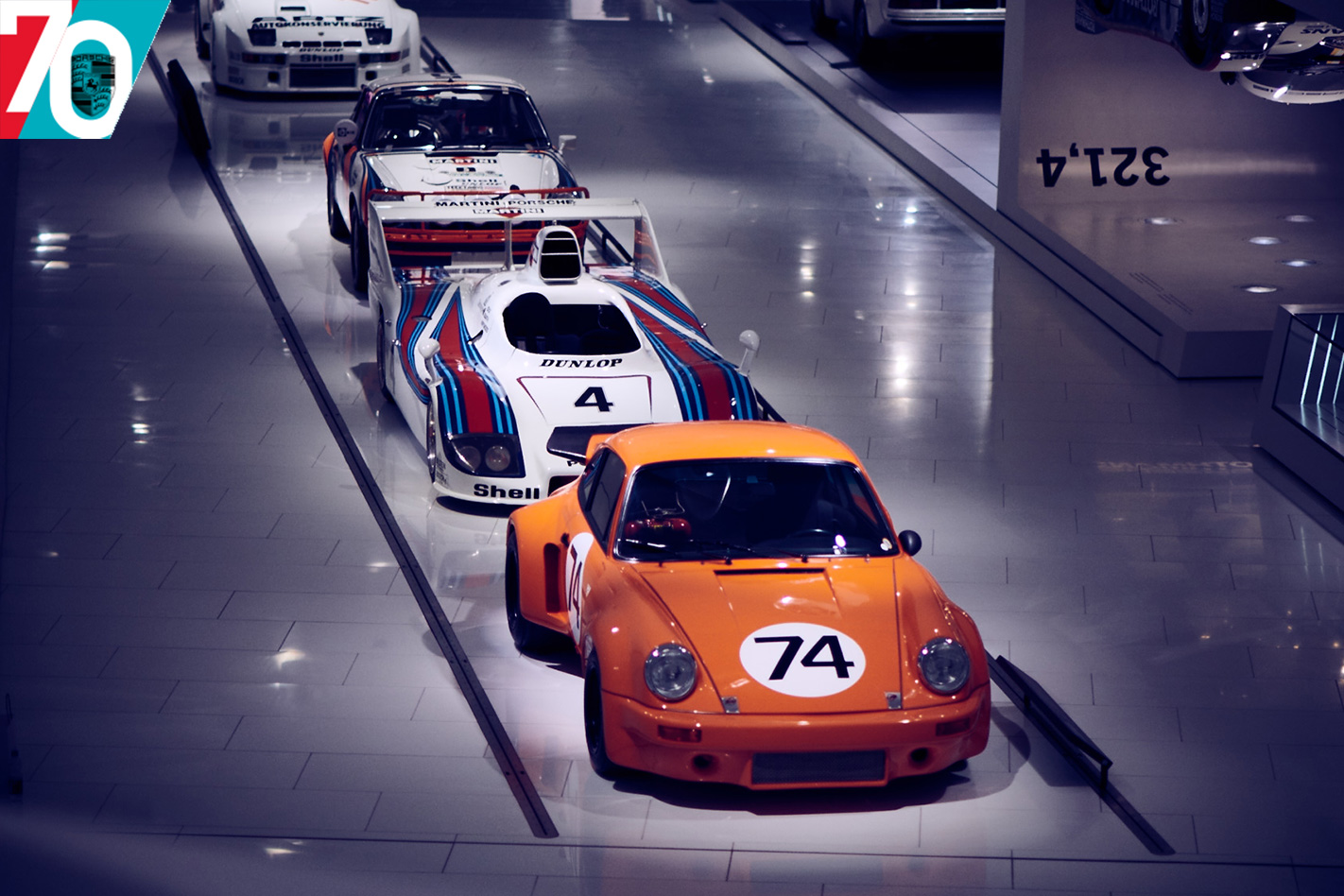
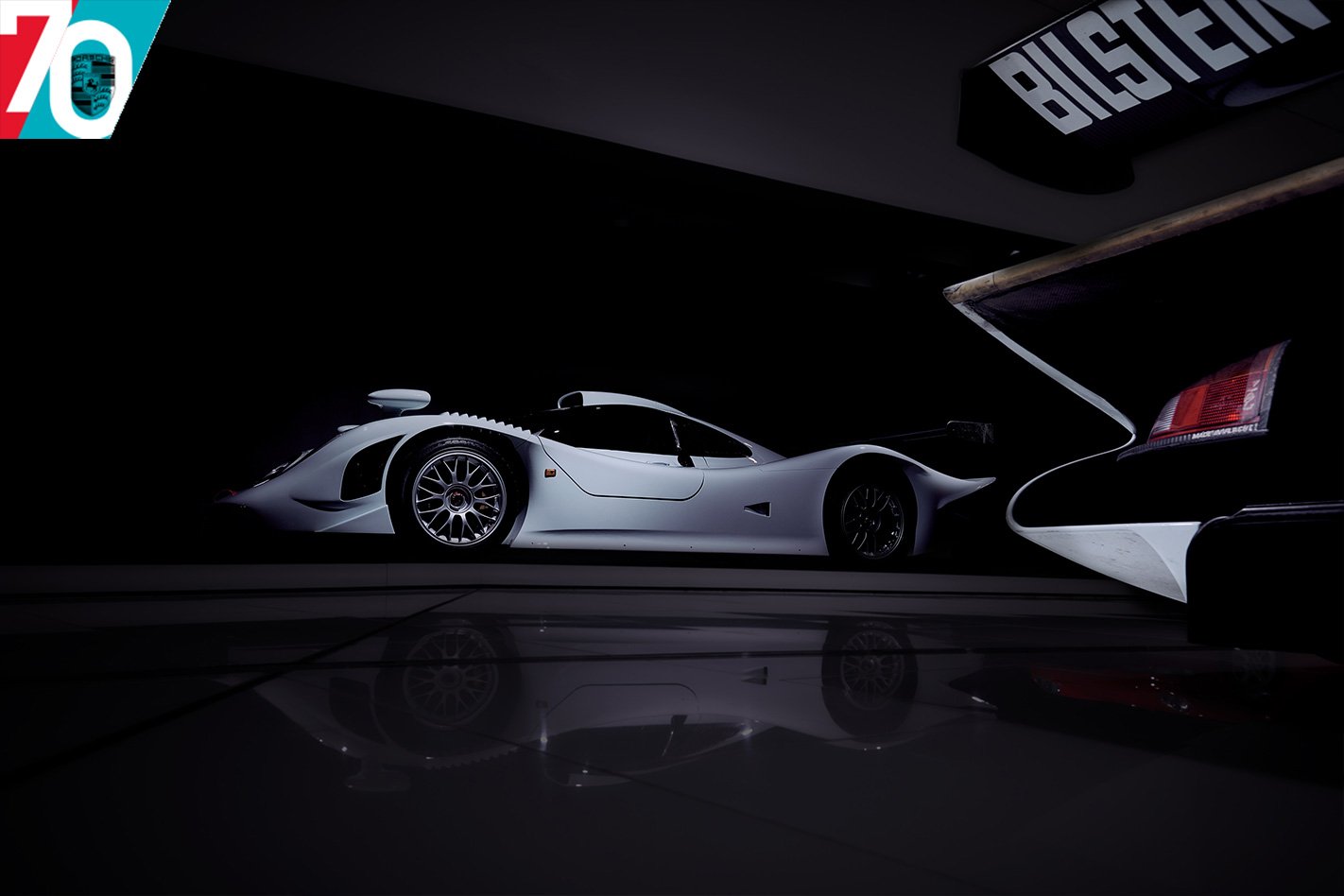
Start walking clockwise and you’ll tick back in time through Porsche’s competition cars. The 919 looks like some giant carbon sarcophagus, pure function, awesome in its purposeful ugliness. The RS Spyder is its antithesis, all primary colours and open cockpit. The brake dust from the 911 GT1 is still baked hard onto the louvres on its front wheel arches. It’s been there for 20 years since this car raced at Le Mans, deposited there by Bob Wollek on the big braking zones at Arnage and Mulsanne.
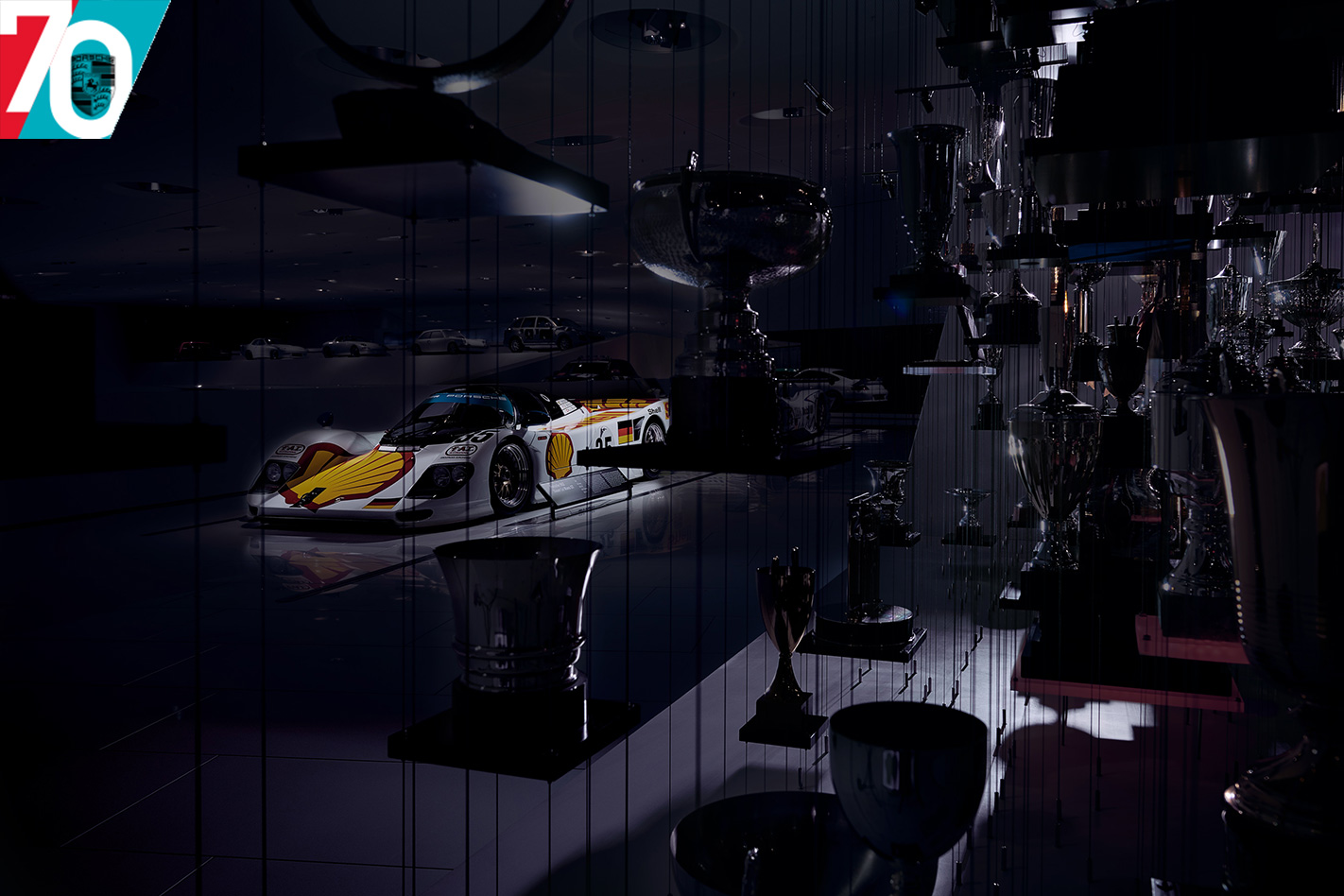
Underscoring Porsche’s competition success is a vast forest of trophies suspended on wires. There’s the dainty little opal headscarf for the Paris Dakar, the big bowl of the Mille Miglia and there in the centre is the trophy awarded to Le Mans 24 Hour winners. I feel compelled to touch it, this thing lifted by Carroll Shelby, Bruce McLaren, Jacky Ickx, Derek Bell, Graham Hill and countless other legends of the sport. The engraved panel only runs to Mike Hawthorn’s win in 1955, but the names prior to that include Nuvolari, Veyron and Barnato.
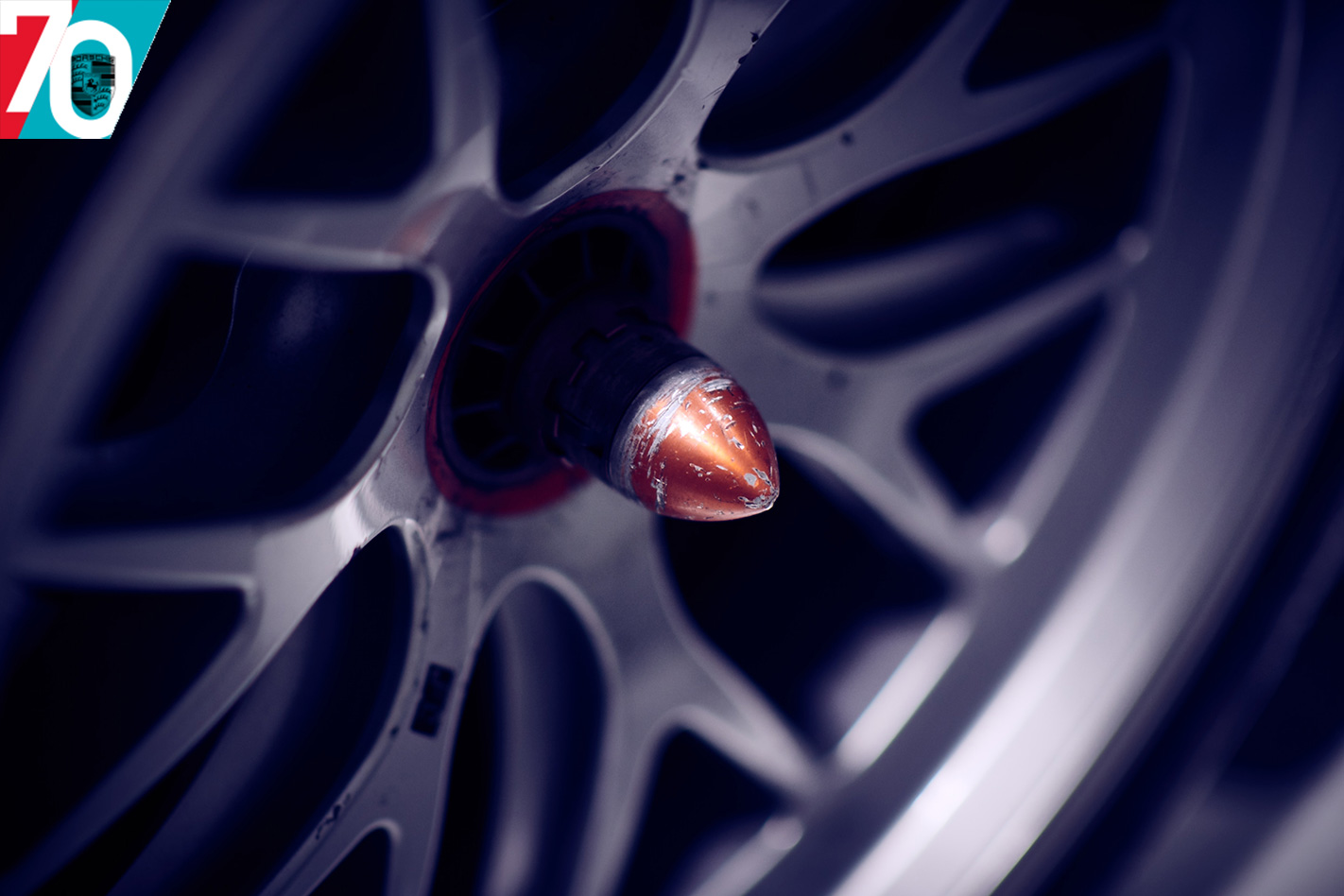
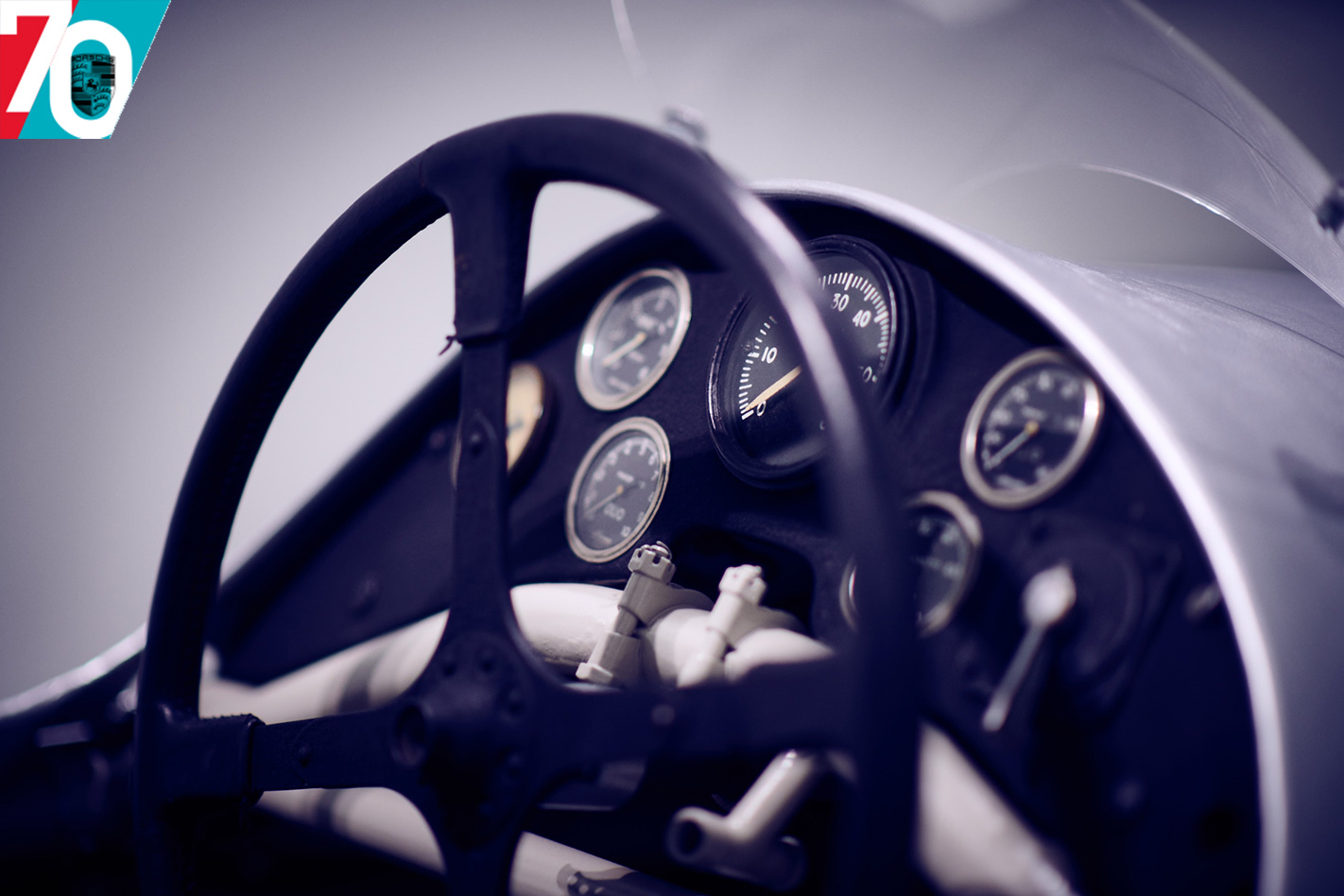
Just opposite is a 956 mounted upside down, illustrating the fact that this car makes enough downforce at 321.4km/h to stick it to the ceiling. Theoretically. There’s Bjorn Waldegard’s Safari Rally 911 SC, complete with dings in the front bar that tell of some unfortunate creature meeting its maker. The casually knotted bungee holding the first aid kit in place on the parcel shelf is but one charmingly human aspect to these cars. Look inside the 1962 Typ 804, Porsche’s only fully in-house Formula 1 car, and you can see the light scratches on the gear lever caused by Dan Gurney’s wedding ring as he piloted the car about the pits.
The big-ticket racers like the 956, the 917 and the achingly beautiful 908 are all well documented. A more fascinating aspect of the museum is the weird and wonderful, the cars that never made production or were one-off gifts. The very first 911 Turbo was a present to Louise Piech for her 70th birthday. You have to stop for a moment to let that one sink in. This one-off, narrow-body 911 Turbo, the archetypal scary road car of the 1970s was given to a 70-year-old woman as a birthday gift? Likewise one of only two eight-cylinder 914s ever built is on display, a gift to Ferry Porsche on his 60th. With 221kW at its elbow, this little thing, built in 1969, must have been seriously rapid, its output only being eclipsed by the introduction of the 3.3-litre turbo version of the 911.
There are cars here that are like trick questions for Porsche fans. The Porsche 968 Club Sport Cabriolet, for example. Or how about the 1981 911 Turbo 4×4 Cabriolet. Yep, this G-series is the first rear-engined Porsche with all-wheel drive as well as being the first 911 cabriolet. Finished in pearl white with pearl white leather, it used a shortened 928 prop shaft to bring torque to an adapted 911 Turbo diff on the front axle. This engineering study proved an evolutionary dead end, a pearl white elephant, but it’s utterly intriguing nevertheless.
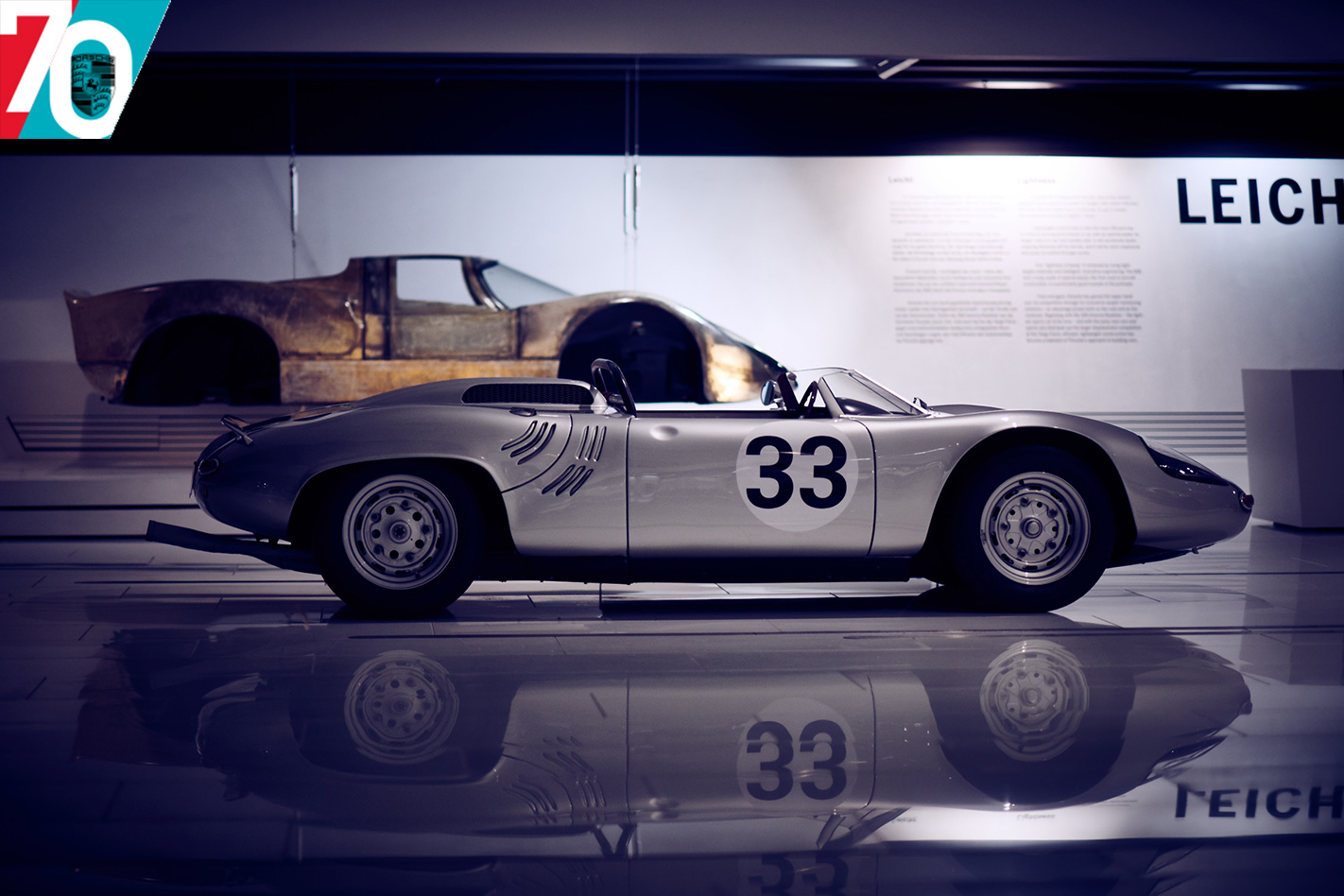
There’s so much here to stop you in your tracks. I don’t know a great deal about Rolf Stommelen, but I know that in 1968, this unbelievably brave German gent strapped himself into a 909 Bergspyder hillclimbing car that weighed 384kg, thanks to its thin plastic shell, beryllium brake discs and aluminium frame, which appeared to have the crashworthiness of a bathtub. The tiny eight-cylinder 1981cc engine behind his head made 202kW for a power-to-weight figure of 526kW/tonne, better than something like a Bugatti Veyron Super Sport.
Behind the Bergspyder is the 917 PA Spyder, a giant white receptacle for a normally aspirated flat-16 engine, the driver propped ahead of it seemingly as an afterthought. Unsurprisingly, this one never made it beyond the test facility at Weissach. Running on a mezzanine above is the ugly mug’s ball, a series of five cars that were never going to win any beauty contests. The Porsche 915 Pininfarina Holzmodell is probably the most ungainly; a 1969 attempt to build a long-wheelbase 911 sedan. Think of it as the Panamera’s great grandad.
Next to it is the rough-edged and strangely proportioned 924 Weltrekordwagen, an abortive attempt to set a world mark of 250km/h for 10,000 miles. The 984 Prototyp is the forerunner to the Boxster, although this bug-eyed 1984 design study possessed none of the elegance and drama of Grant Larson’s Boxster Concept that debuted in Detroit in 1993. The decline in the US dollar and subsequent collapse of Porsche sales did for the 984.
For all the glamour here, my eye is drawn to possibly the cheapest car in the museum; a simple green 924. I walk around the thing and suddenly I’m a nine-year old kid in Marina di Massa, Italy, repeatedly pestering the local dealer for a brochure. He stonewalled me every time. Visiting the showroom for yet another try, I noticed he’d gone out back and left the carousel of glossy brochures unattended. I grabbed one and ran, but only managed to run fill tilt into the plate glass window in my haste to escape. As I came round with the dealer principal and his receptionist clucking over me, I finally got to keep my brochure. Every visitor will have their own personal Porsche memories, even if not all will be clouded by concussion, but that’s part of the charm of this place. For a moment, you’re a child again, filled with giddy wonder. I’m not going to spoil all the surprises because, if you’re one of us, you need to make the pilgrimage to this slightly scruffy suburb of Stuttgart once in your life.
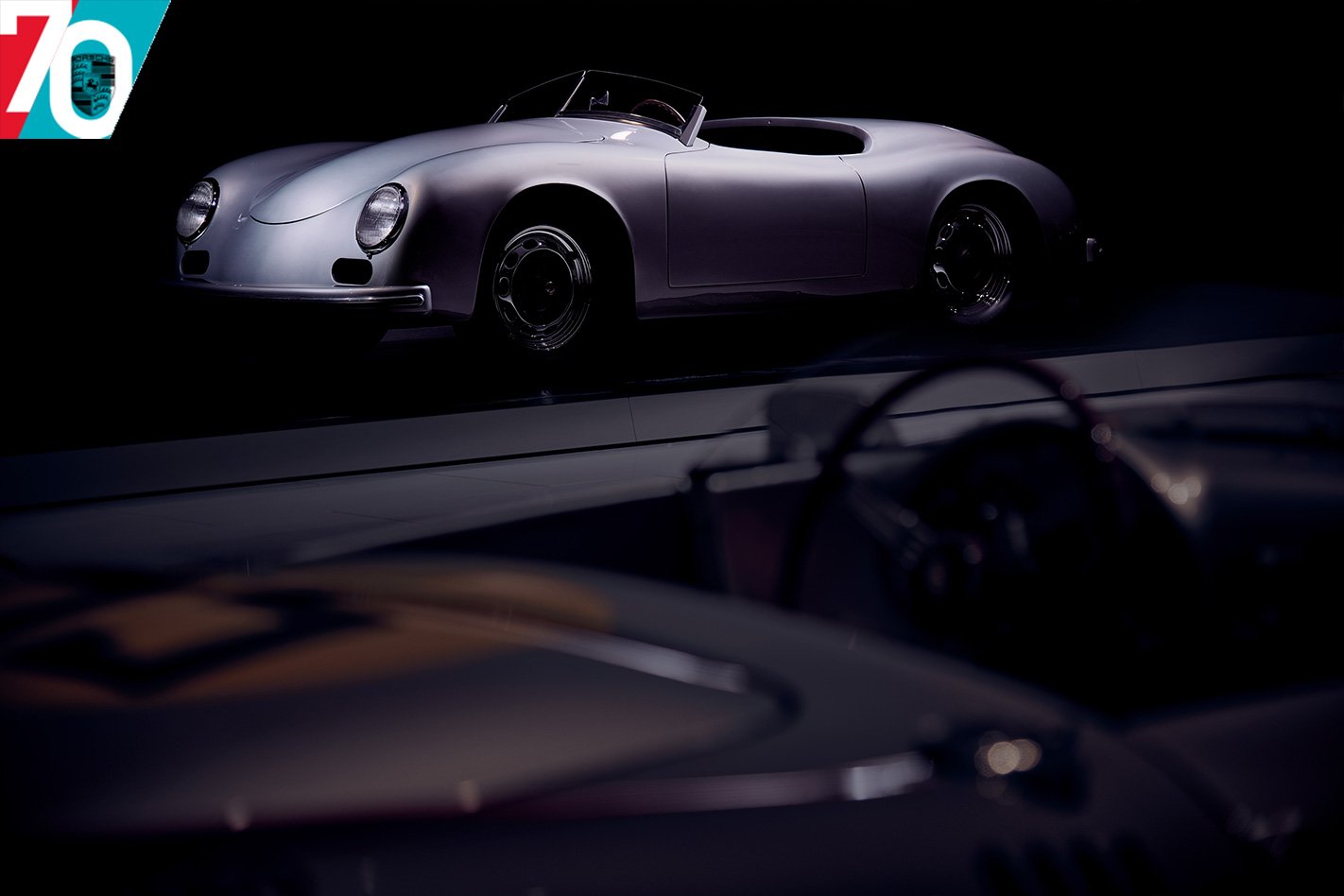
We finally turn to leave, departing via the workshop in the basement, where we spot a 935, the 959 Paris Dakar winner and the 2708 IndyCar all awaiting a bit of restorative TLC from Porsche’s master technicians. We step outside into the cold night air, the massive factory opposite having sent so many of these cars around the world and then welcomed them back into retirement, back home here in Zuffenhausen once circumstance and serendipity had rendered them too valuable to drive.
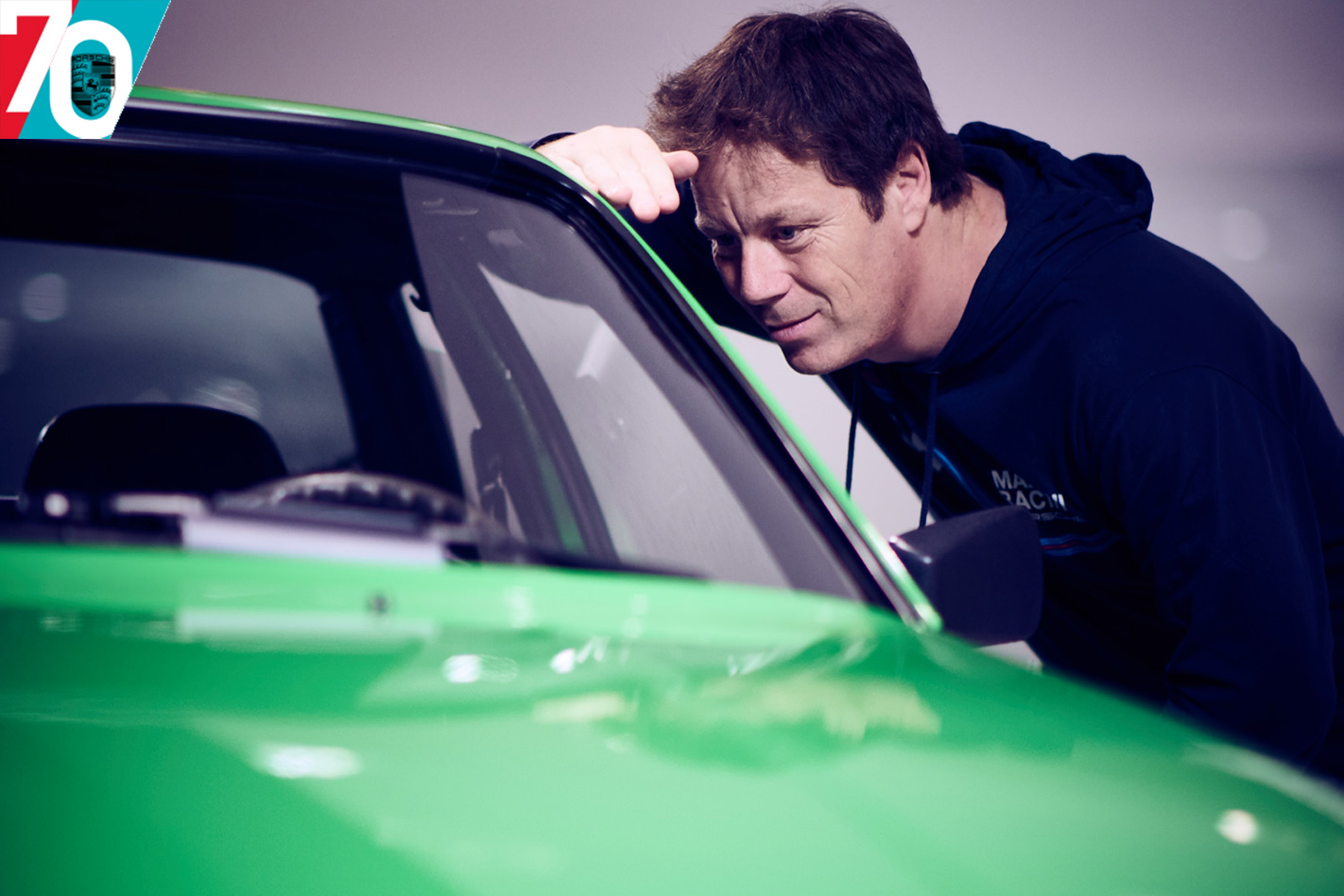
I’m not sure how I feel about embalming them in perpetuity. It saddens me a little that their days of fuel and fury are behind them. We get into our taxi as a camouflaged Mission-E supercar slinks across the yard in the factory behind us. It’s as silent as a tomb in the museum but across the road Porsche is busy building a new history.
Across the ancient stone bridge that’s seen everything from medieval knights to bring-out-yer-dead peasant wagons, a brushed paddle snaps the XKR up another gear, and the coupe’s chassis responds.
This review was originally published in MOTOR’s December 2006 issue
It squats harder, in fourth gear now, driving its outside rear wheel into the smooth, Spanish hotmix with the front Dunlops howling to leave a ghostly wake. A series of small bumps are feeding up through the seat without alarming anybody and the ESP light remains stoically invisible.
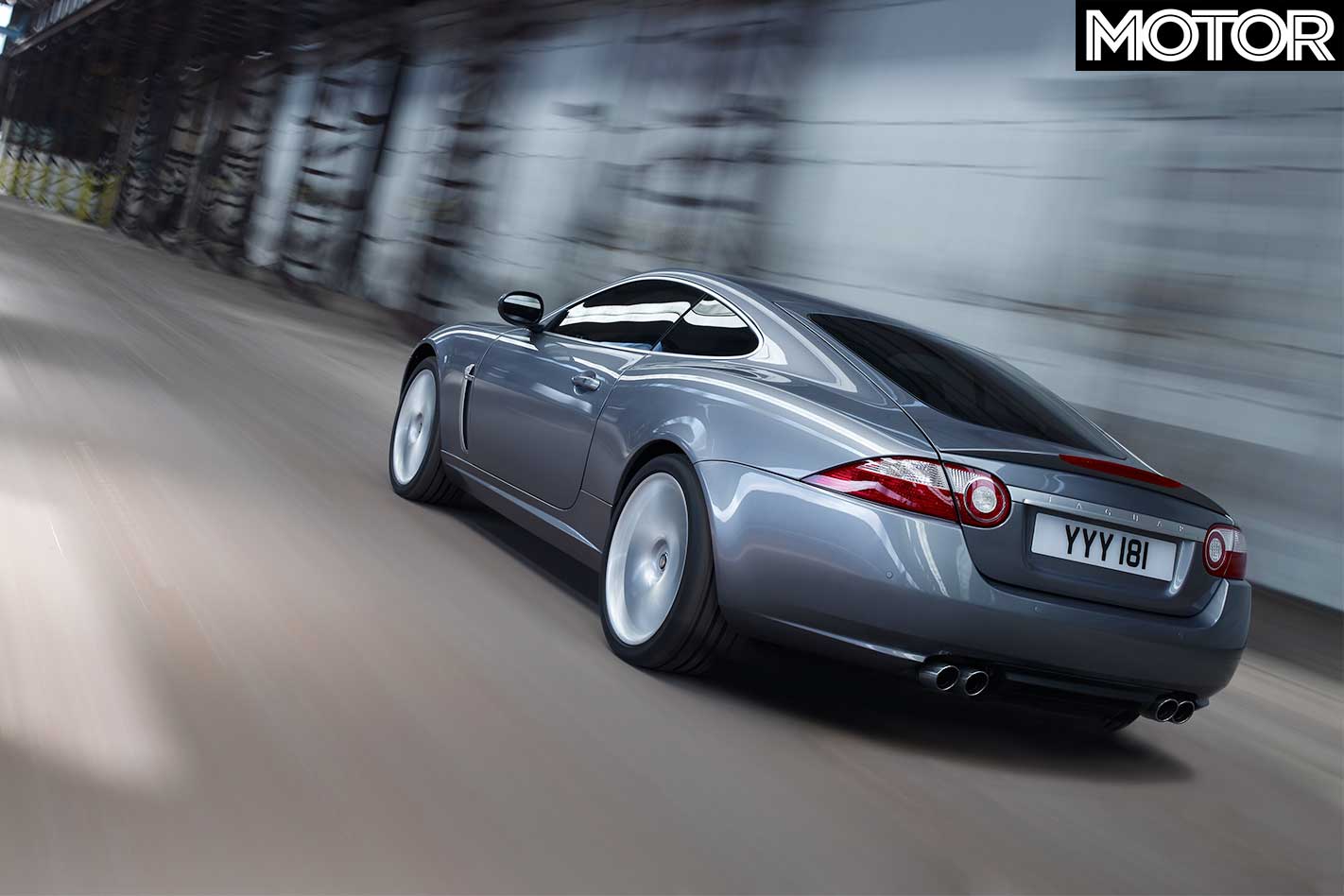
If the new XK has been the car that’s finally given beleaguered Jaguar something to smile about, then the XKR is the one to give the marque the muscle to go picking fights with everything from M6 Bimmers to screwed Benzes. And it’ll win more fights than it loses.
Aimed somewhere between a hardcore sports car and a traditional grand tourer, the XKR is simply one of the best ride, handling, grip and grunt packages out there. And it looks hot.
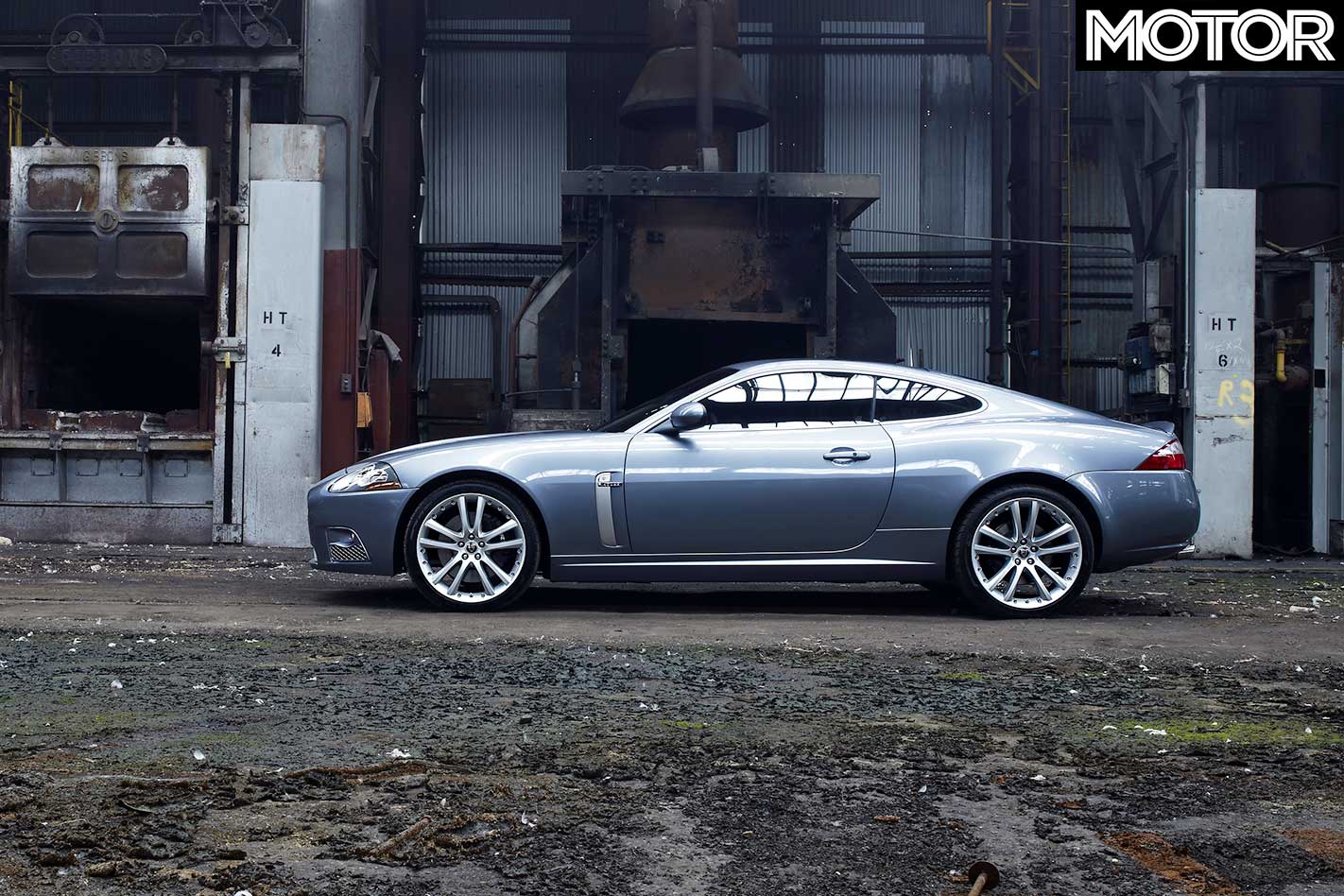
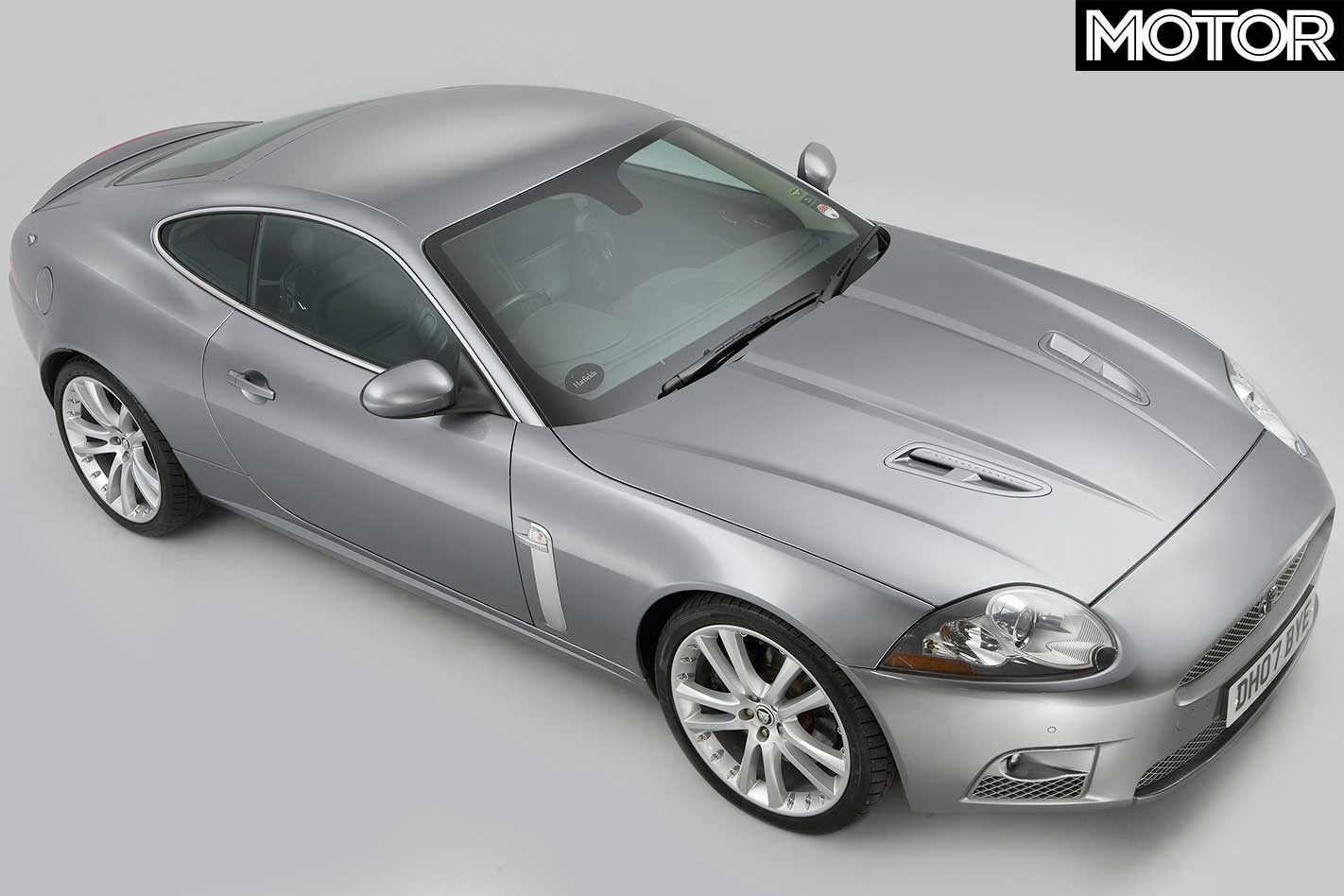
Initially a little generic, the more time you spend in its company, the more you appreciate its nuance and craftsmanship – like its vented bonnet, brake duct inlet openings and aluminium mesh grille. The long-nose, short-tail thing’s been done before, but it’s not normally done this well.
That grille hides an engine that delivers a rare combination of thumping, all-pervading low-rev torque and a willingness to spin hard to its redline. It achieves all of this in a shrieking, demonic howl that begins the instant you drive the pedal beyond about three-quarter throttle, regardless of revs.
The XKR’s updated supercharged engine now pushes out 560Nm of torque and 313kW of power, so it’s nobody’s pushover – especially with an all-aluminium chassis and body 19 percent lighter than the old XKR’s shell. Even brimmed with mod cons, the new R tips the scales at just 1665kg.
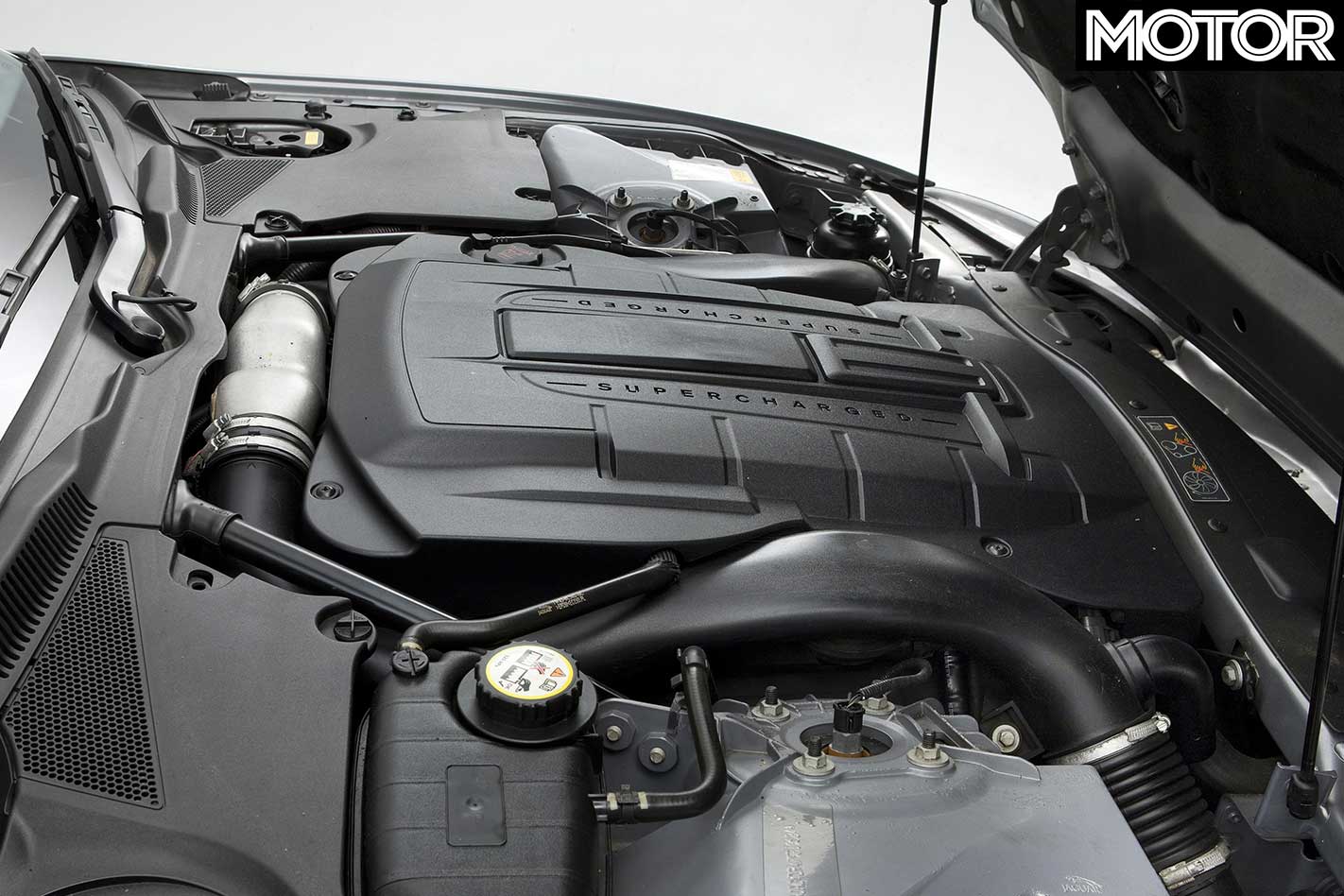
There’s a school of thought (that I happen to be a part of) that there’s no forgiving a car like this for heading towards 1.7 tonnes. But the XKR is 45kg lighter than the steel/aluminium M6 and several hundred kilos lighter than steel-chassised grand tourers like the big Benz coupes, let alone a 2.3 tonne Bentley Continental.
So while the XKR is 60-odd kilowatts shy of an M6, it’ll still bellow to 100km/h in an even five seconds and, being automatic, it’ll do it all day, every day – not just once every couple of hours. Neither will it ask you to juggle wheelspin by feathering the throttle and fiddling the clutch.
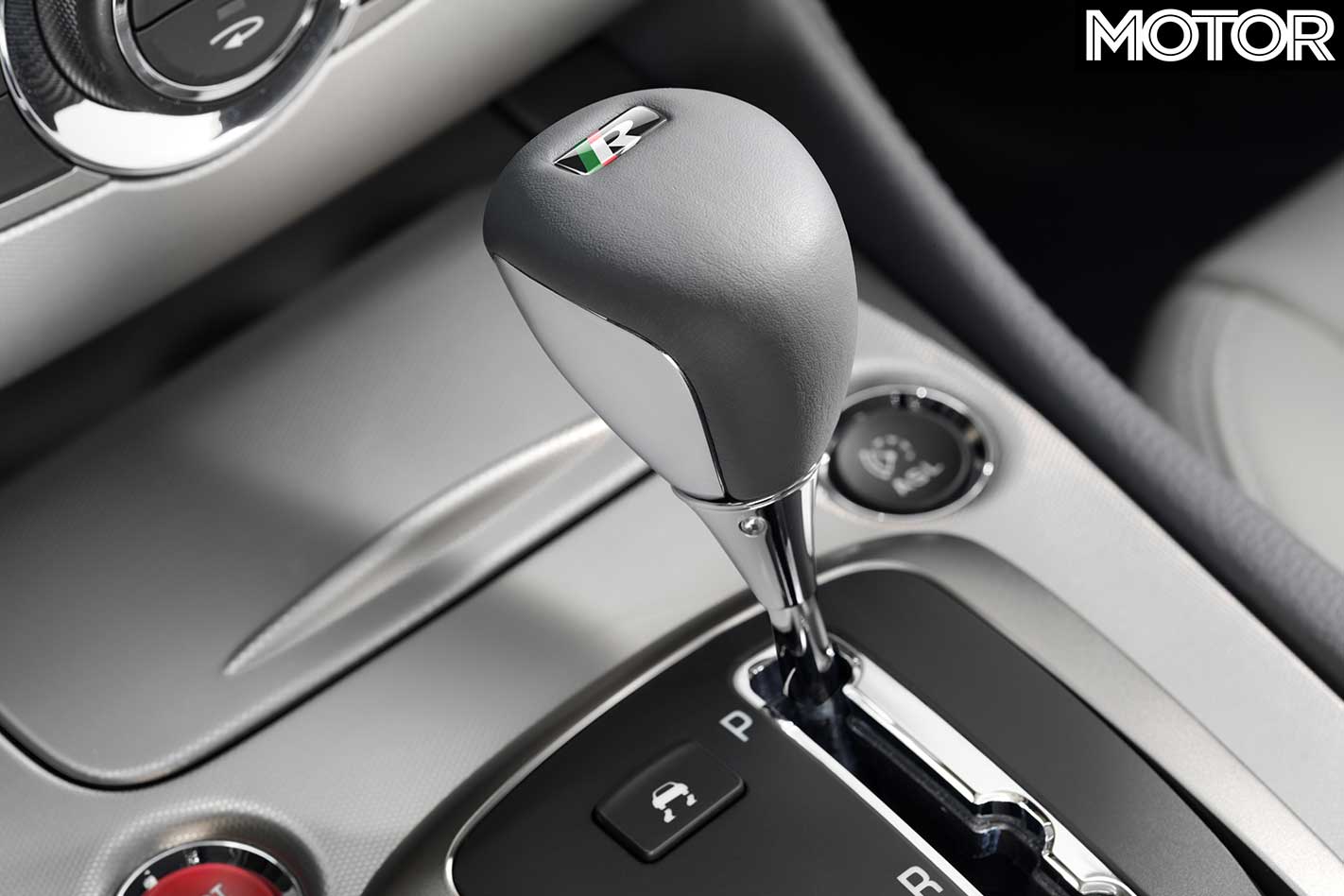
In fact, at odds with our very MOTORness, the six-speed auto is one of the highlights of a car so integrated that few things stand out from such a complete package. It is simply not possible to upset it and generate shift shock out of its innards. It isn’t possible to miss a shift, either, and it’s even got a properly masculine downshift blip every time you pull the left paddle to grab a lower cog.
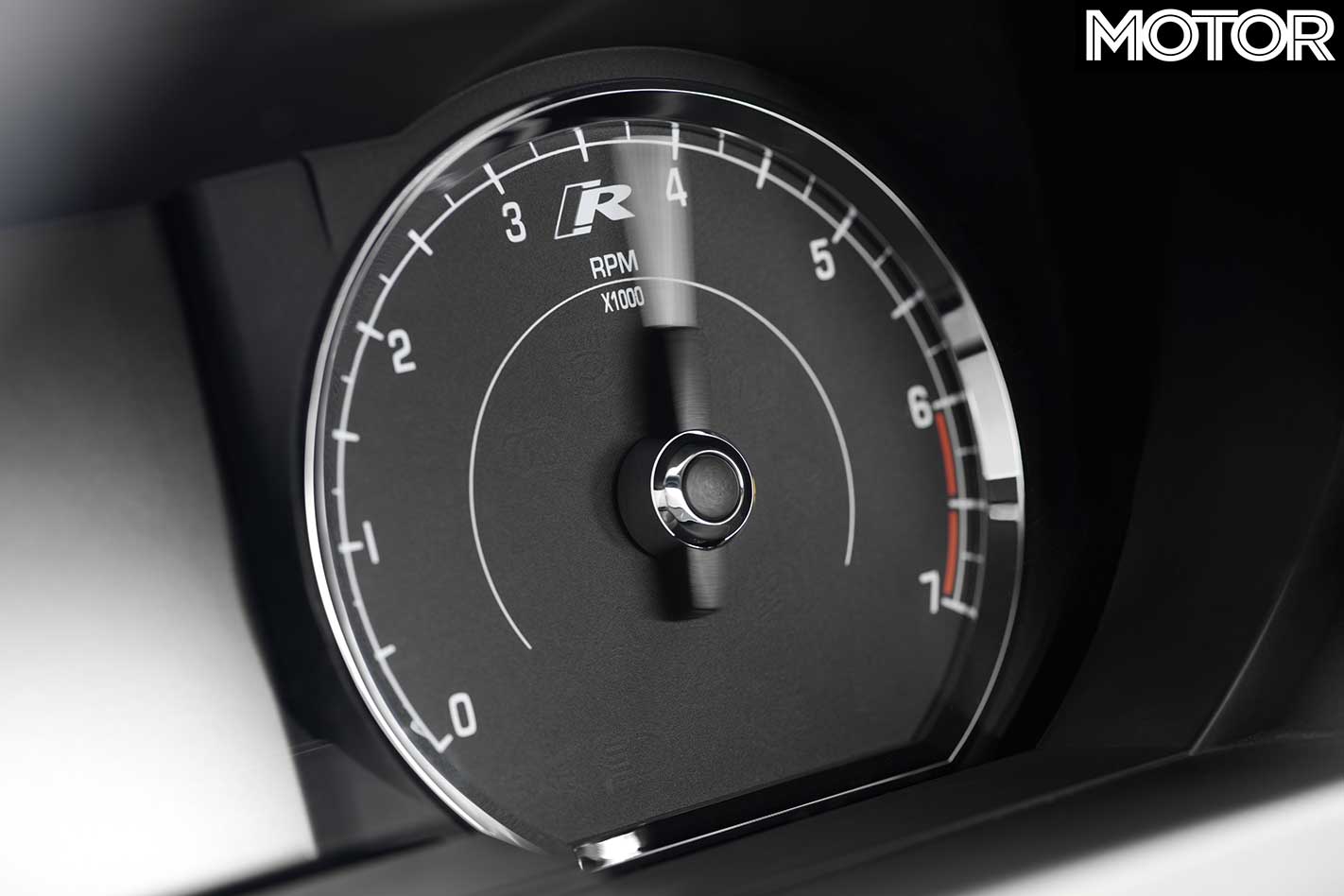
It’s impressive in the way the transmission hides its automatic past and promotes an instant, manual feel. And it’s not just hardware. You can be flitting along at around 210km/h (or 4500rpm) and downshift into fourth at 6000rpm – which is just 250 revs shy of the on-the-limit shift point!
This rarest of autos will bait you into dipping into the well and fiddling through the cogs just for the fun of it, just like the very best manual boxes do. It also helps with the unfussed, serene speed the thing can punch out.
The XKR’s chassis is a brilliant piece of work, too. While the steering’s lack of heft and low levels of feedback can take some familiarity, the rest of the car is instantly comfortable and instantly rewarding. It’s that rare package that neither bores you, nor wears you out.
Initially, it’s the steering that seems to detract from everything else, and you tend to hear the onset of understeer first, then feel it through the seat if you push further, and then finally, the light steering trends lighter.
But a couple of hundred kays convinces you that this is actually in keeping with the Grand Touring aims of Jaguar. It kind of fits after a while, especially when the chassis can successfully walk the fine line between security and entertainment at the rear end.
Its ESP will allow a bit of angle in low-speed corners, and it’s subtle when it finally does chirp up in disturbance. That doesn’t happen often, because the XKR’s ability to put its urge to the road belies its 53 percent front weight distribution, especially when you’ve got it pinned in cresty corner country.
Mid-corner bumps don’t shake the XKR’s commitment either, and while the ride quality seems pretty firm to start with, it’s more noise than actual vertical cabin movement and it’s not bad for a car riding on 19- or 20-inch boots.
It doesn’t have that wonderful Porsche quality of supply oozing into every scrap of road, but then it’s not a direct Porsche competitor, and neither does it have a Porsche’s weight distribution.
The XKR is also disturbingly easy on its tyres and the speed it generated during the launch came without even the slightest feathering of the fronts, much less the chunking we’ve seen with a lot of powerful front-engined thumpers.
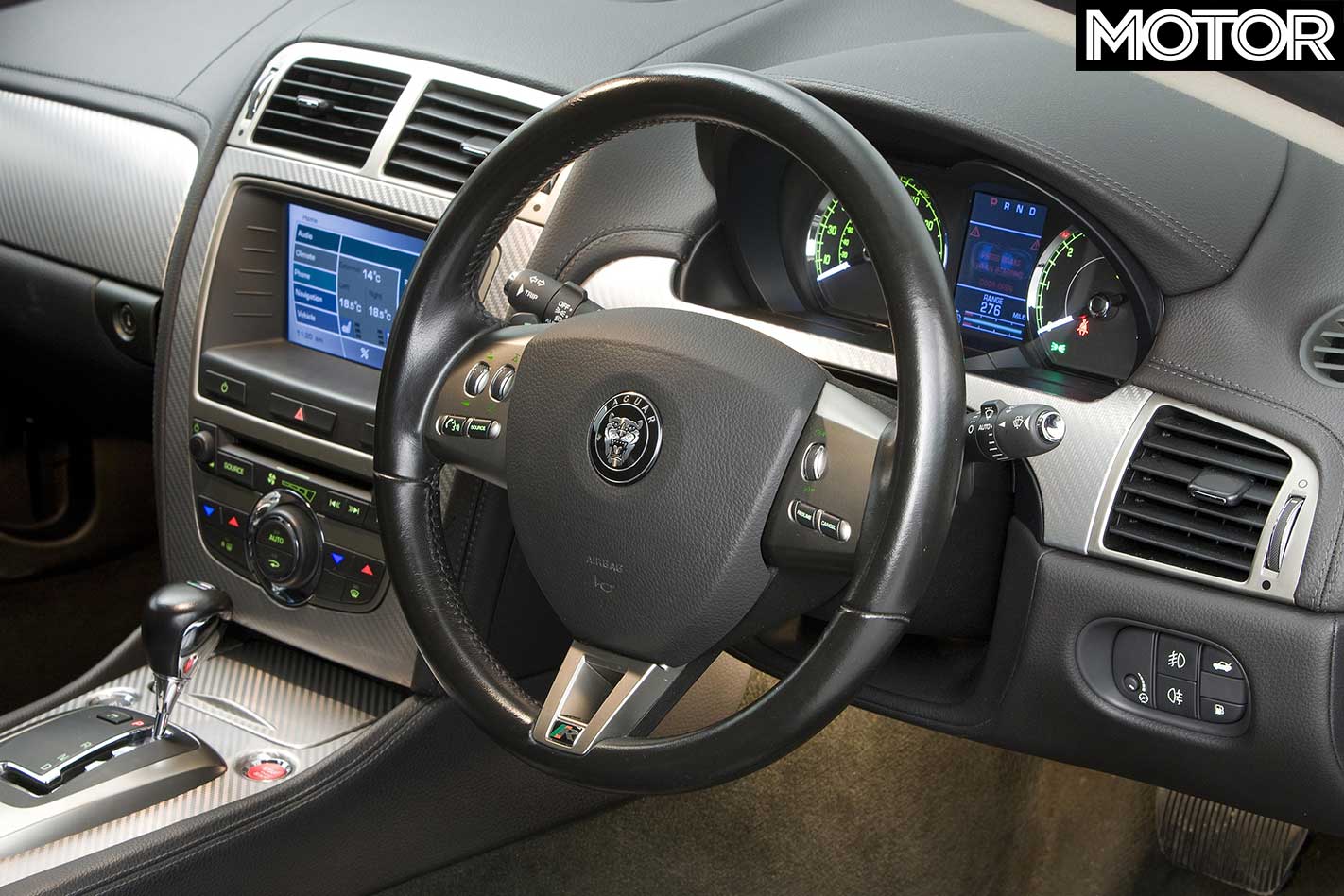
The interior is perhaps a let down, though, with the bland expanse of space in front of the passenger at stark odds with the classiness of the array in the driver’s eye line. The seats, are grippy (well the front ones are – the rears are a giggle), but you’d wonder at their big-mile ability.
Curiously, though, the chassis balance is so good that the power never seems intrusive and the torque never threatens to overwhelm it. Spend a few hours flinging it through the hills – even with its traction control switched off – and it feels like it could use another 100 or so of either number. Maybe more.
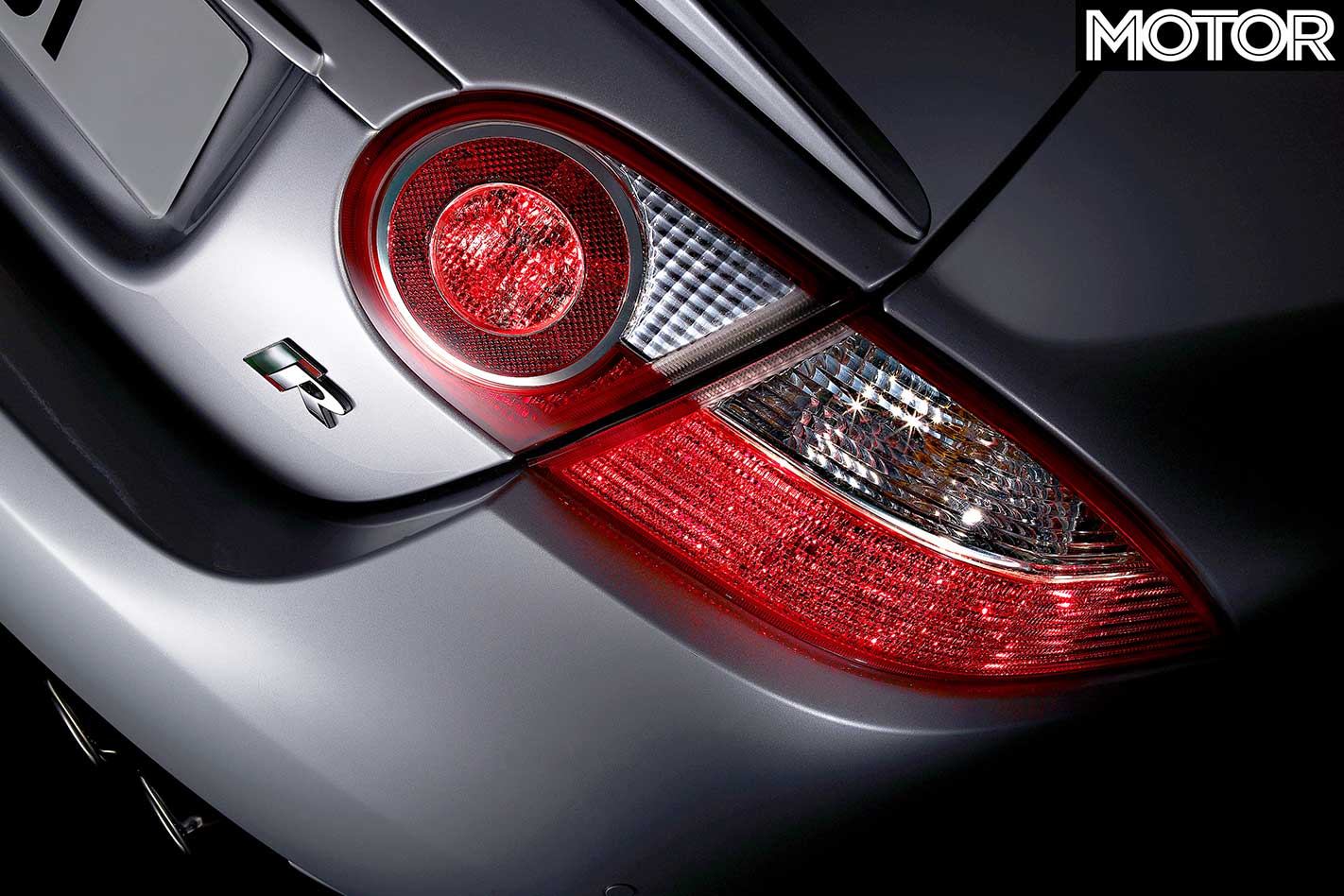
All this integration, all this speed and all this grace makes it clear that Jaguar has kicked two consecutive goals now. The XK is good, the XKR is fantastic, and Jag reckons it’ll sell more XKRs than it does the cheaper, slower XK. And they bloody well should.
FAST FACTS 2006 Jaguar XKR coupe
BODY: 2-door, 2+2 coupe DRIVE: rear-wheel ENGINE: 4196cc V8, DOHC, 32-valve, supercharger POWER: 313kW @ 6250rpm TORQUE: 560Nm @ 4000rpm BORE/STROKE: 86.0mm x 90.3mm WEIGHT: 1665kg POWER-TO-WEIGHT: 188kW/tonne TRANSMISSION: 6-speed automatic 0-100KM/H: 5.2sec (claimed) 0-400M: 13.3sec (claimed) TOP SPEED: 250km/h (limited) SUSPENSION: double A-arms, coils, adaptive dampers, anti-roll bar (f), multi-links, coils, adaptive dampers, anti-roll bar (r) L/W/H: 4791/1892/1322mm WHEELBASE: 2752mm BRAKES: ventilated discs – 355mm (f), 326mm (r); ABS, EBD, BA WHEELS: 20-inch alloys TYRES: 255/35 ZR20 (f), 285/30 ZR20 (r) FUEL: 71.1 litre tank/98 octane PRICE: $220,000 (est in 2006)
Not so Grand a Tourer
The XKR’s fuel range is really the Jag’s only bugbear as a grand tourer. The tank swallows just 71 litres and, with the supercharger on song on our test drive, it was only good for about 320km. Jaguar denies it’s a major problem – claiming a fuel range to match the M6 and SL55 AMG – but MOTOR begs to differ.
On a full-noise blast across Germany, it’s difficult to imagine more than about 250km. Ford of Europe road-tester supreme, Richard Parry-Jones, agrees. He discovered the same thing driving the mule he tests regularly, and almost ran out of fuel on a run from Scotland to Wales.
The fix, he reckons, is not embiggening the fuel tank, but upping the temperature the catalytic converters can cope with. For every 100 degrees the survivable temperature goes up, the less raw fuel you have to pump through them on full throttle to keep them alive. So the strategy is to work on the full-throttle fuel consumption, rather than tackling the trickier task of packaging a bigger tank.
Soft Top
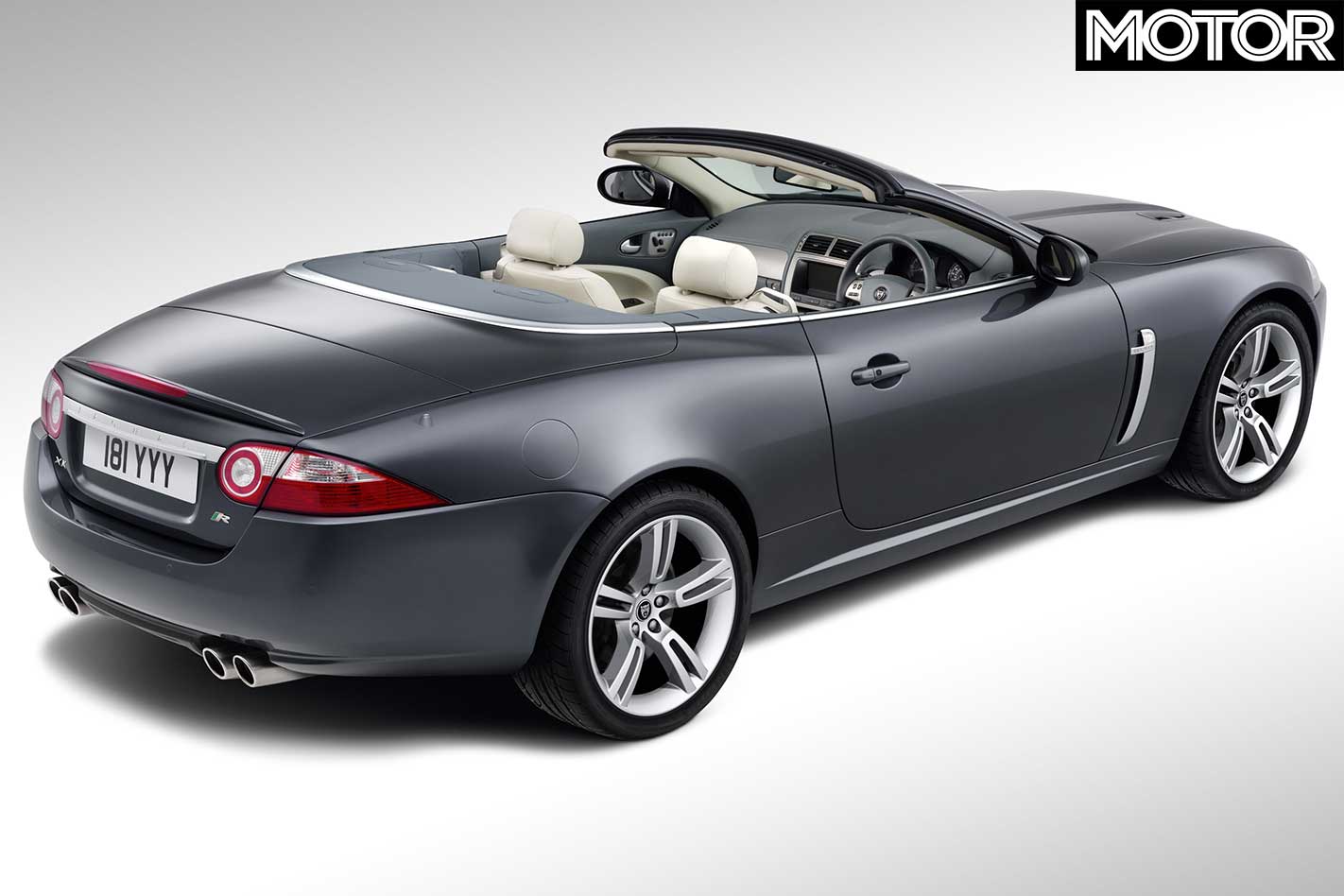
As rag-tops go, the XKR is bloody sexy. As stirring drives go, it’s a notably paler imitation of its encapsulated brother. The coupe needs 29,000Nm of body twist to produce one degree of flexing, but the convertible only 16,000Nm, and shows in the way it drives.
Even with reinforcement below decks, it still suffers whenever you generate x-rated levels of cornering force or strike any sort of square-edged bump. Where the coupe’s steering wants for feedback, the convertible’s is riddled with it – and not always good. It’s forever nibbling at your hands and wriggling at the road’s inputs.
Stiffened seat mountings over the coupe make sure you’re still feeling one with the car, but that’s not enough. It’s sexy and it’s good, but it’s not much more than a dead-ahead Fred cruiser. At least you can put the roof up or down at 20km/h!
Honesty 101
Both the coupe and convertible feature an old-school antenna that rises electronically out of the right rear quarter panel. While most competitors now use an antenna in the front windscreen (BMW’s rear roof fins are for something else), Jaguar believes that’s no good for AM reception, which is big business in the US.
Still, it’s a low-rent look, and Chief Body Engineer Paul White agrees: “It’s crap. I know. We’re working on it,” he said.
The 2018 Paris Motor Show is shaping as the biggest ever, with a flood of exciting new models from the world’s biggest car brands. From Aston Martin to Hyundai, from Kia to Skoda and beyond… chances are there’s something for everybody this year in Paris.
Known for its designer flair, the Paris Motor Show is the home ground of the French brands – the likes of Citroen, Peugeot and Renault. But Europe is also the second home of a few outsiders, such as Hyundai and Kia, which will also be keen to make a lasting impact on potential buyers in the region, and the world over.
Top of our list is German brand Opel’s promise to reveal something spectacular to woo car enthusiasts across the globe. Opel, formerly owned by General Motors but recently acquired by Peugeot-Citroen, currently builds the Holden Commodore, so could their sexy new beast also come to Australia? With the current Commodore still quite fresh, there’s currently no clarity on what its eventual replacement will be.
Here’s our rundown of the most important and exciting new cars set to make a Paris debut when the doors open October 2 and 3.
ASTON MARTIN DBS SUPERLEGGERA
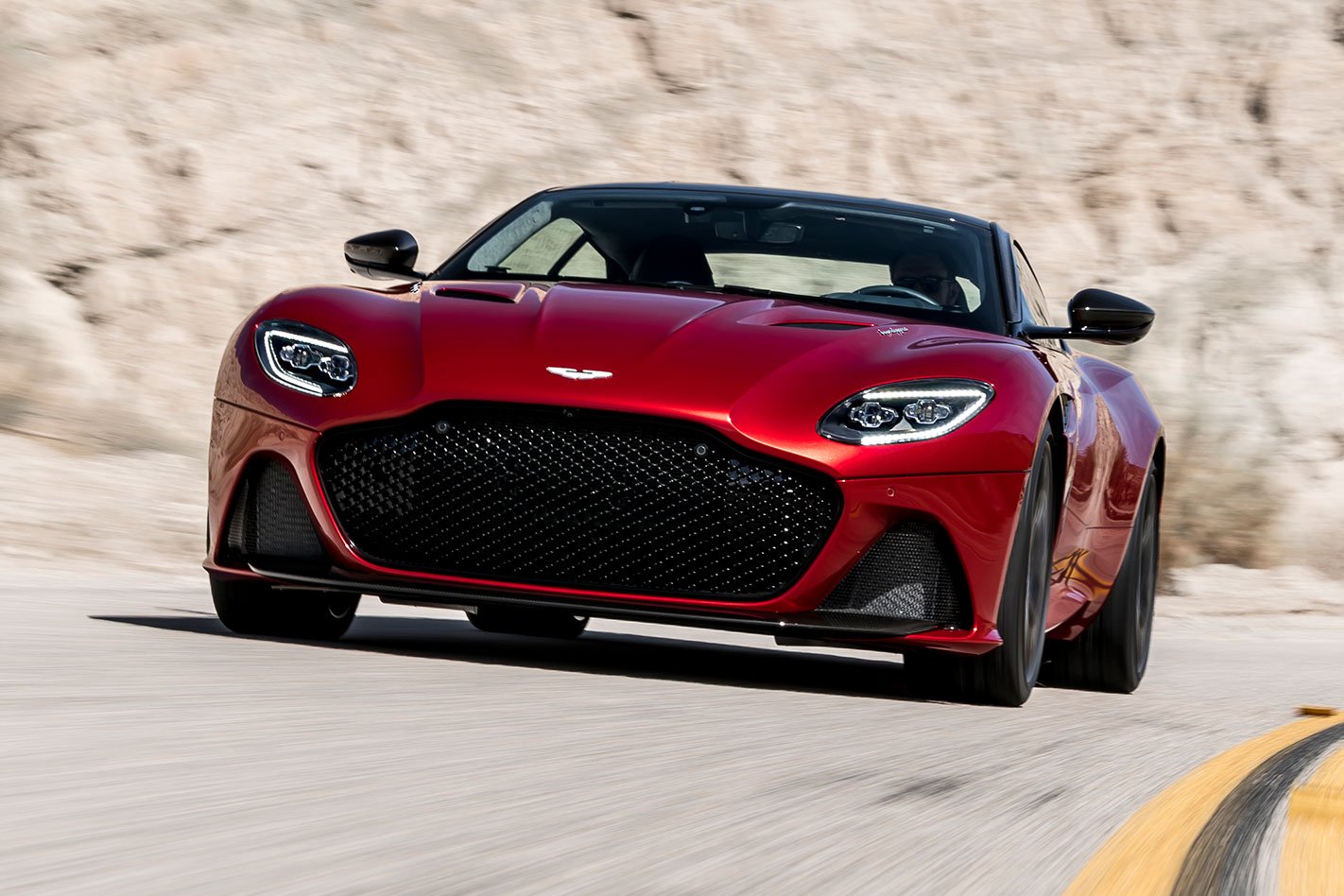
The Aston Martin DBS “superlight” won’t actually make its appearance at the show. Instead, the privately held car maker – major shareholders include racing group Prodrive and a clutch of Kuwaiti-based investors – will ambush the show to reveal the most hardcore version yet of the DB11 to potential buyers. An early reveal of the hyper-GT displays more aggressive, ground-hugging aerodynamics that cut even further into the fascia and bonnet, gills on either side of the wheel arch and deep side sills. It’ll need to be sticky; the Mercedes-AMG-sourced twin-turbo 5.0-litre V12 resting underneath that restyled bonnet produces 533kW.
AUDI A1 SPORTBACK
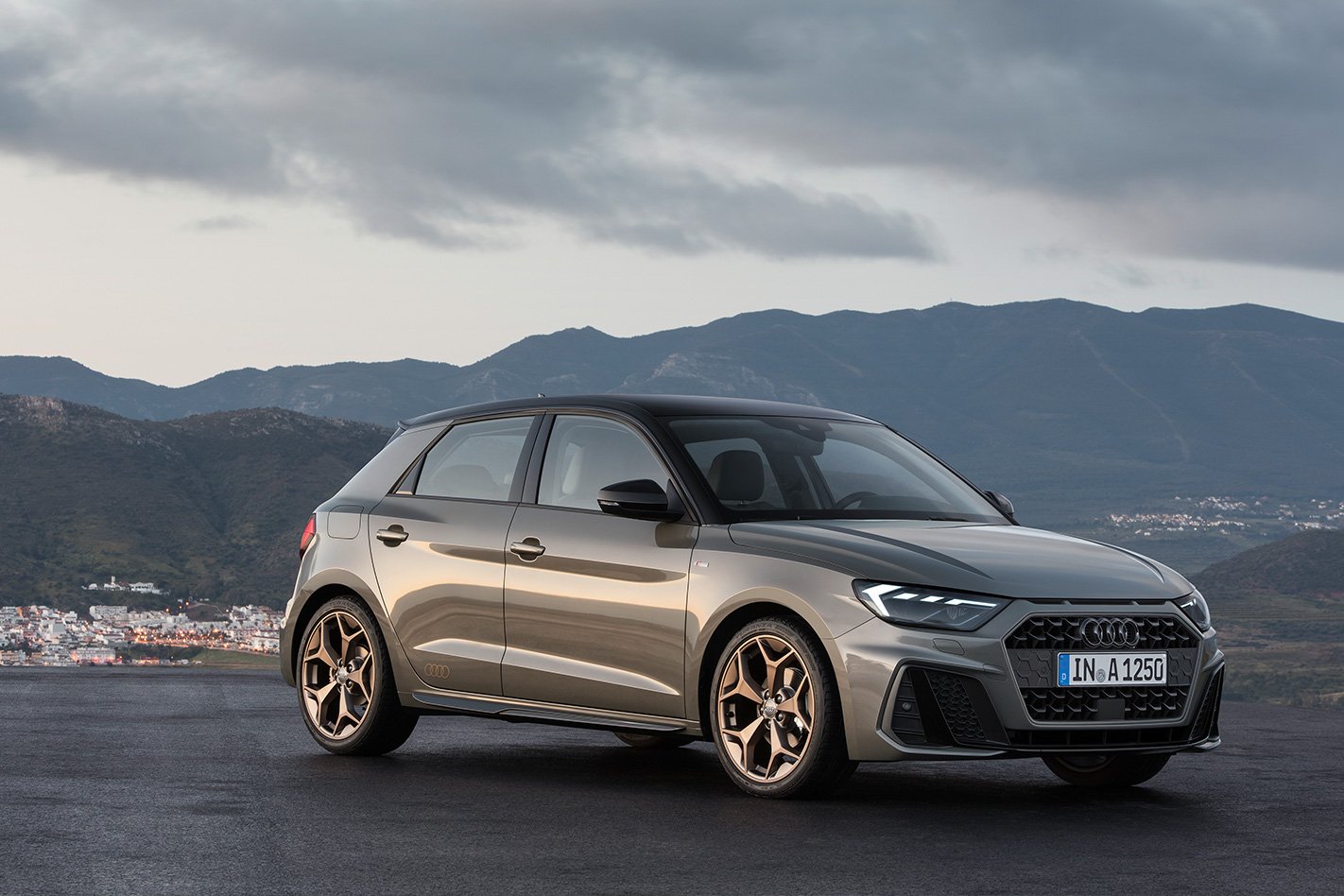
The German baby hatch is expected at Paris as a rival to the Volkswagen Polo, and featuring a variety of engines including a 1.0-litre three-cylinder turbo, 1.4-litre petrol and 1.8-litre petrol choices. The new Sportback potentially marks the end of the Audi A1’s slower-selling three-door version (there’s no mention of it in press material), and also the death of the diesel – an engine not offered as part of the Australian line-up. Slightly longer and wider than the generation it replaces, the fresh-look A1 should offer more passenger space.
BMW 3 SERIES
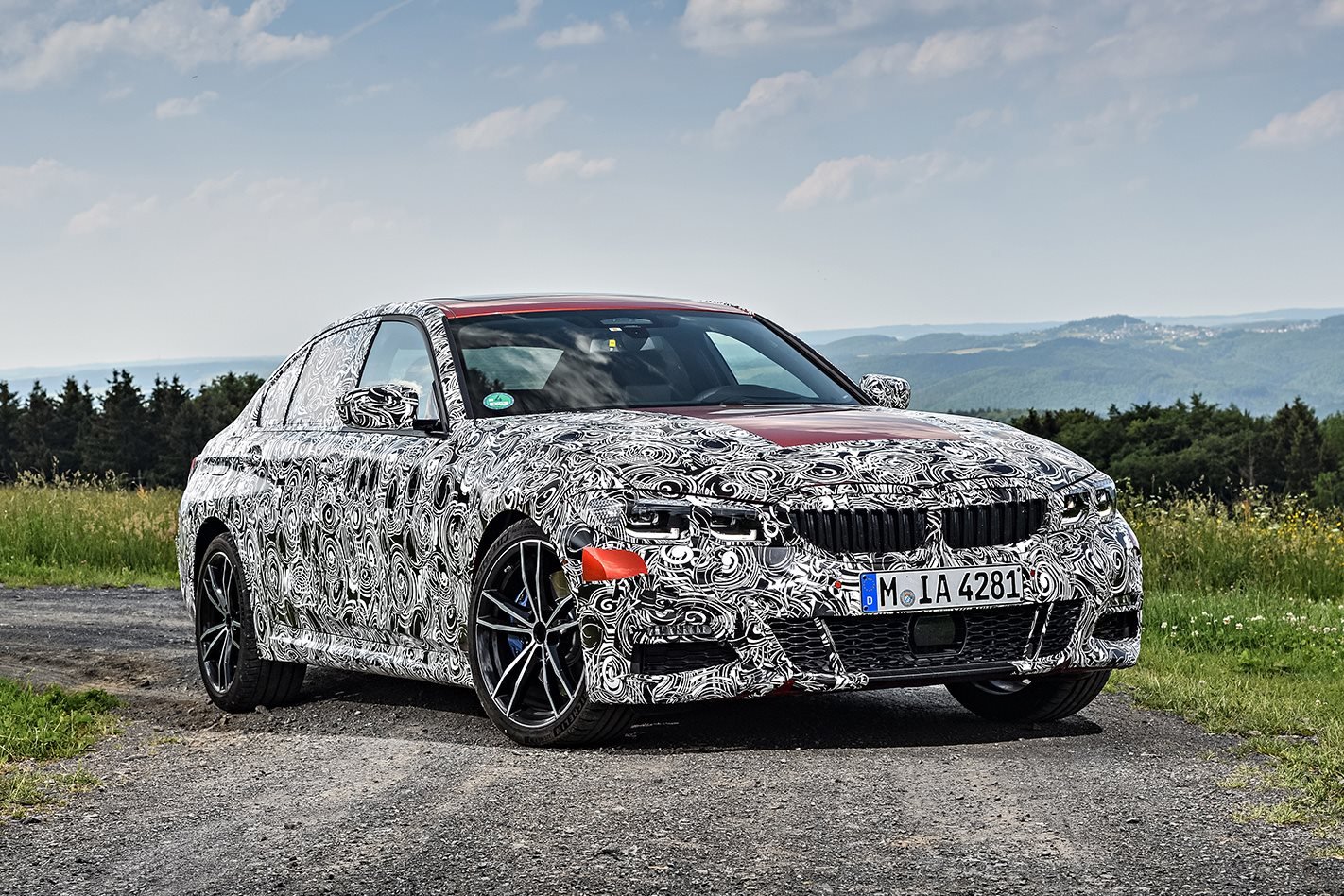
A seventh generation of BMW’s compact executive shuttle will lob in production form at Paris, featuring looks that don’t stray too far from the proven three-box sedan formula – nice in an era where everyone wants headroom-robbing fastback styling. The showroom heavyweight – the 3 is by far the brand’s best-selling model globally – is expected to add a hybrid-engined version, while the range-topping M3 is expected to follow the same path as the M5 and adopt all-wheel drive for the first time.
The range is expected to include engine choices ranging from an entry-level 1.5-litre three-cylinder option right up to an in-line six-cylinder, and our first taste of a camouflage-clad prototype suggests that the next incarnation of the 3 Series will be one of the best.
BMW X5
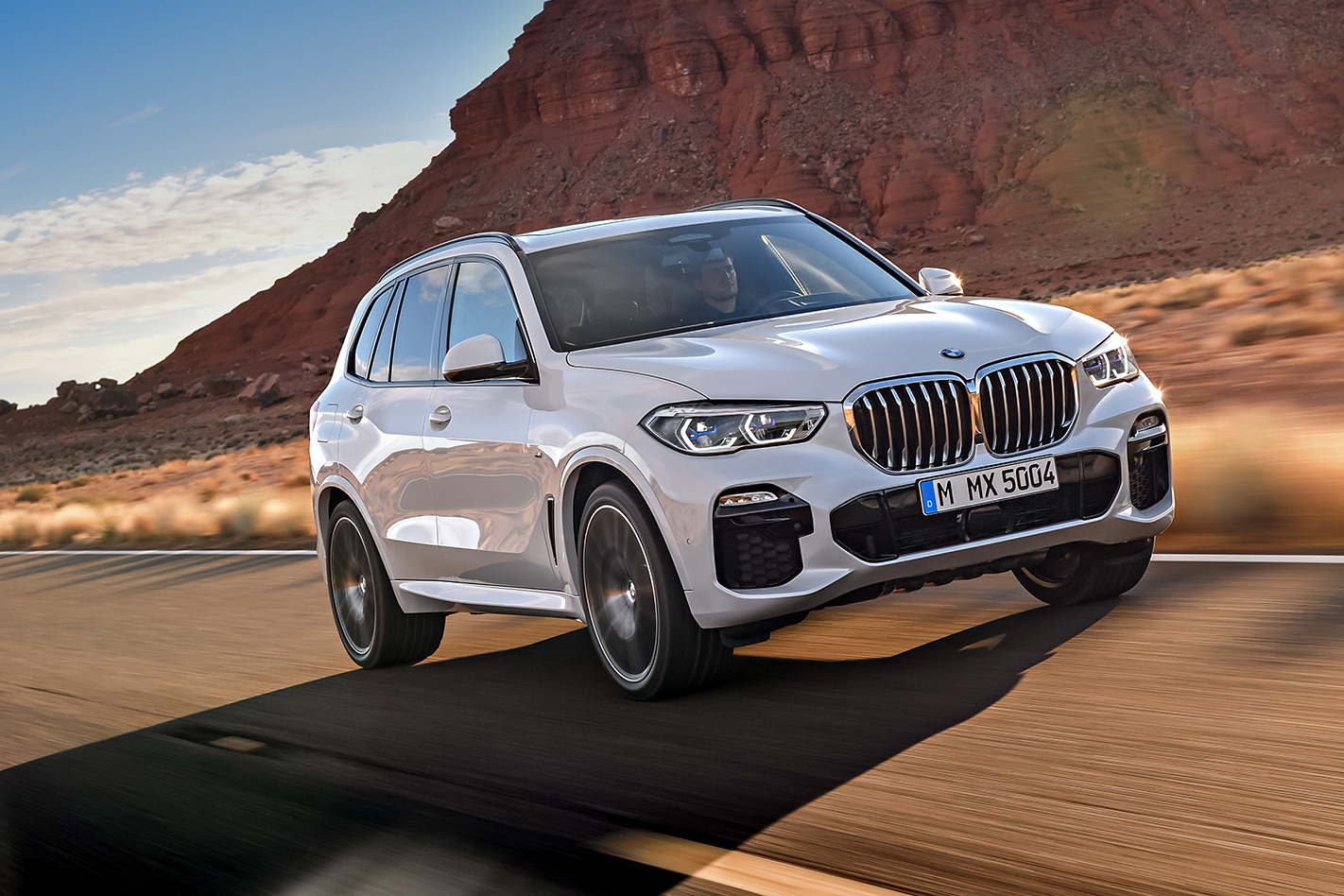
The fourth-generation X5 will make its first public appearance at Paris, but we’ve already learned much about BMW’s large SUV when the company revealed all back in June. It grows bigger yet weighs less, while the interior sports a more luxurious design. Equipment and infotainment tech also gets significant attention, while an all-new platform promises sharper handling and better comfort.
BMW Z4
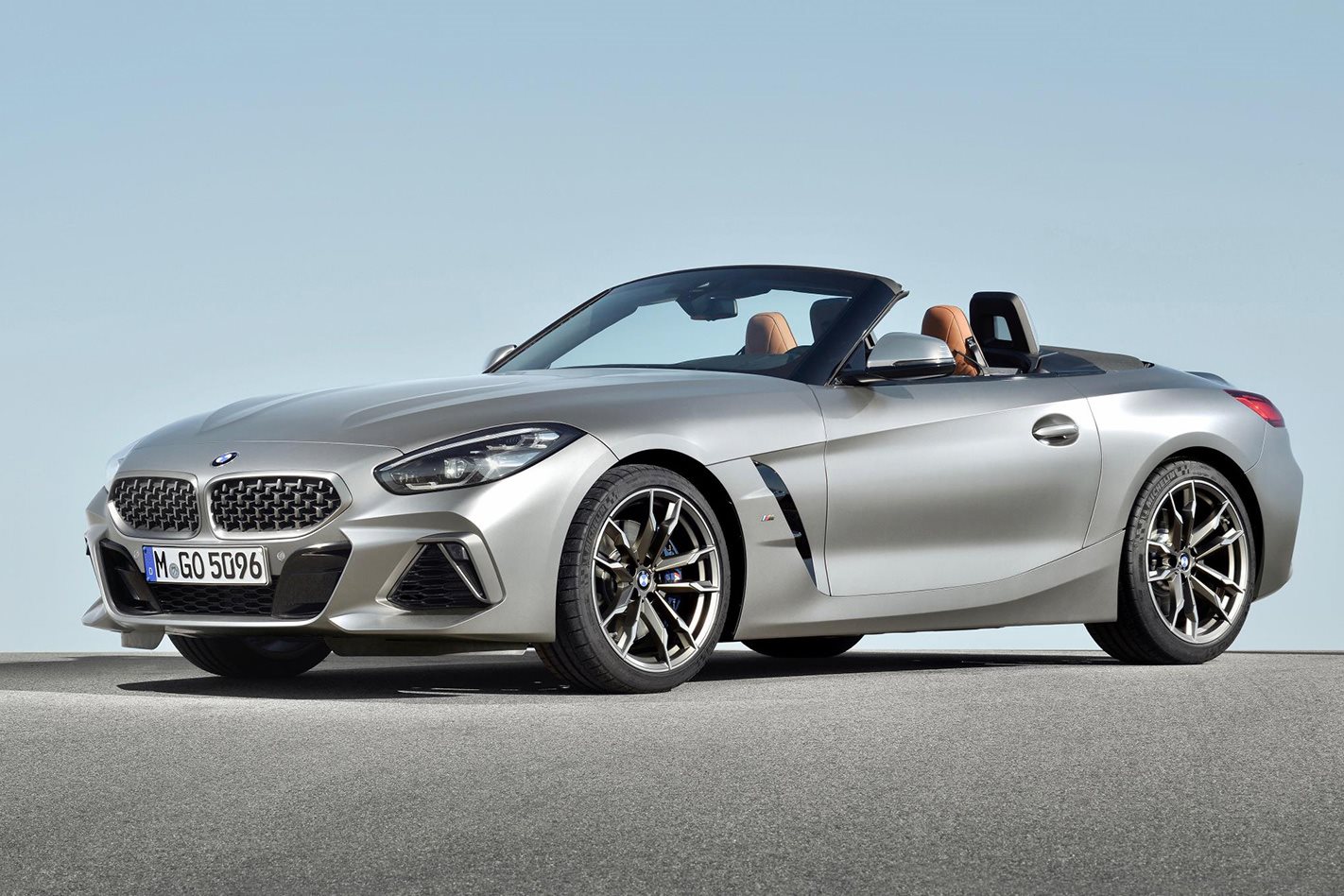
The lid is well and truly lifted on BMW’s third-generation Z4 roadster, with the company announcing a swathe of details on its compact sports car earlier this month ahead of its public debut at Paris.
Accordingly, you won’t need to wait until then to learn all of the basics about the Z4 – you can just head here and read our run-down instead.
DS3 CROSSBACK
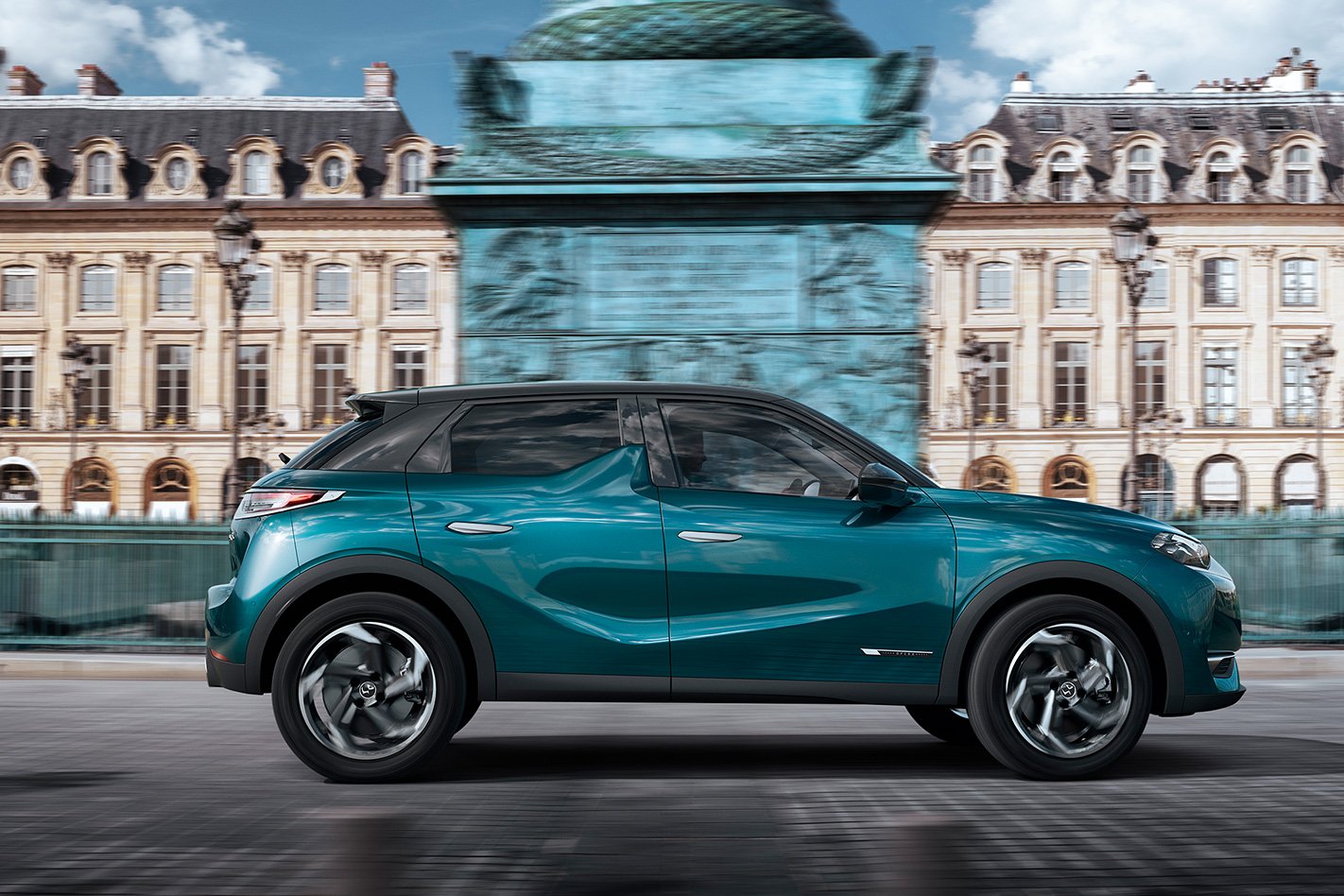
The premium French brand should have its Audi Q2 and BMW X 2 competitor at Paris, with the Crossback the first step in the French brand’s plans to electrify its range by 2025. The small SUV will likely have a 450km range on a single charge. The chances of the electric DS3 being offered in Australia are slim at the present, but if it does arrive here it will compete directly with other oil-free rides including the Hyundai Kona EV.
CITROEN DS7 CROSSBACK E-TENSE
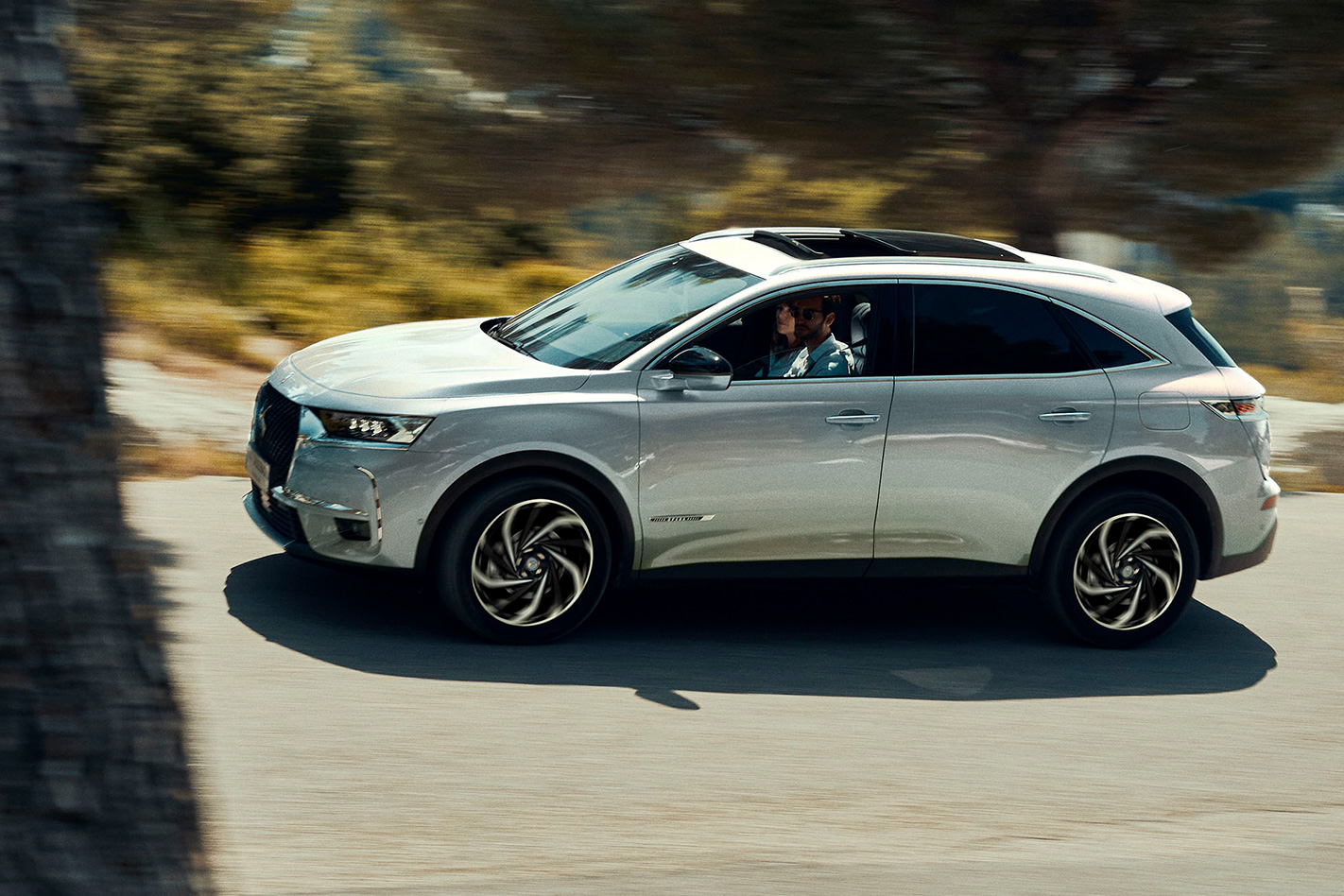
Think of this high-riding French 4X4 wagon as Citroen’s rival to the BMW X3, LandRover Discovery Sport and Lexus NX. This e-Tense model is the first Citroen DS model to utilise electrification, its plug-in hybrid technology adding to the practical wagon’s bag of tricks. Citroen says the DS 7 E-Tense is capable of travelling 50km on pure electric power. When not using electrons for motion, the e-Tense calls on a 1.6-litre turbocharged petrol engine. No word on whether the DS 7 will come to Australia yet.
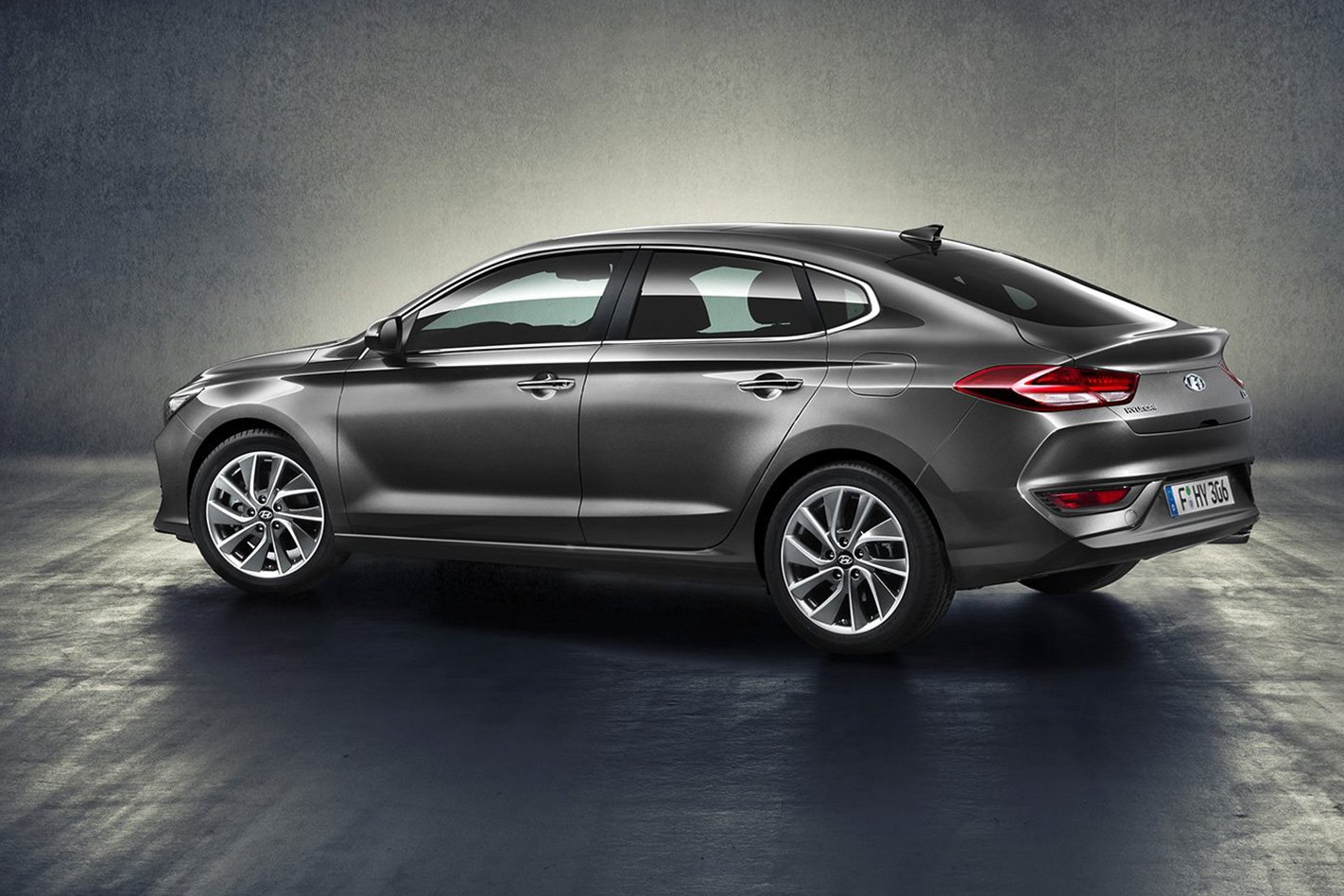
HYUNDAI i30 N FASTBACK
The Hyundai i30N performance hatch is already on sale in Australia, and now we’ve got pictures of the handsomely proportioned Fastback version to be unveiled in Paris. The i30 Fastback N uses the same 2.0-litre turbo four as the hatch, producing a very hot 202kW and 353Nm in ‘Performance’ trim. Performance is the only trim level offered here in hatch form, and is what we expect will be the only version of fastback offered here.
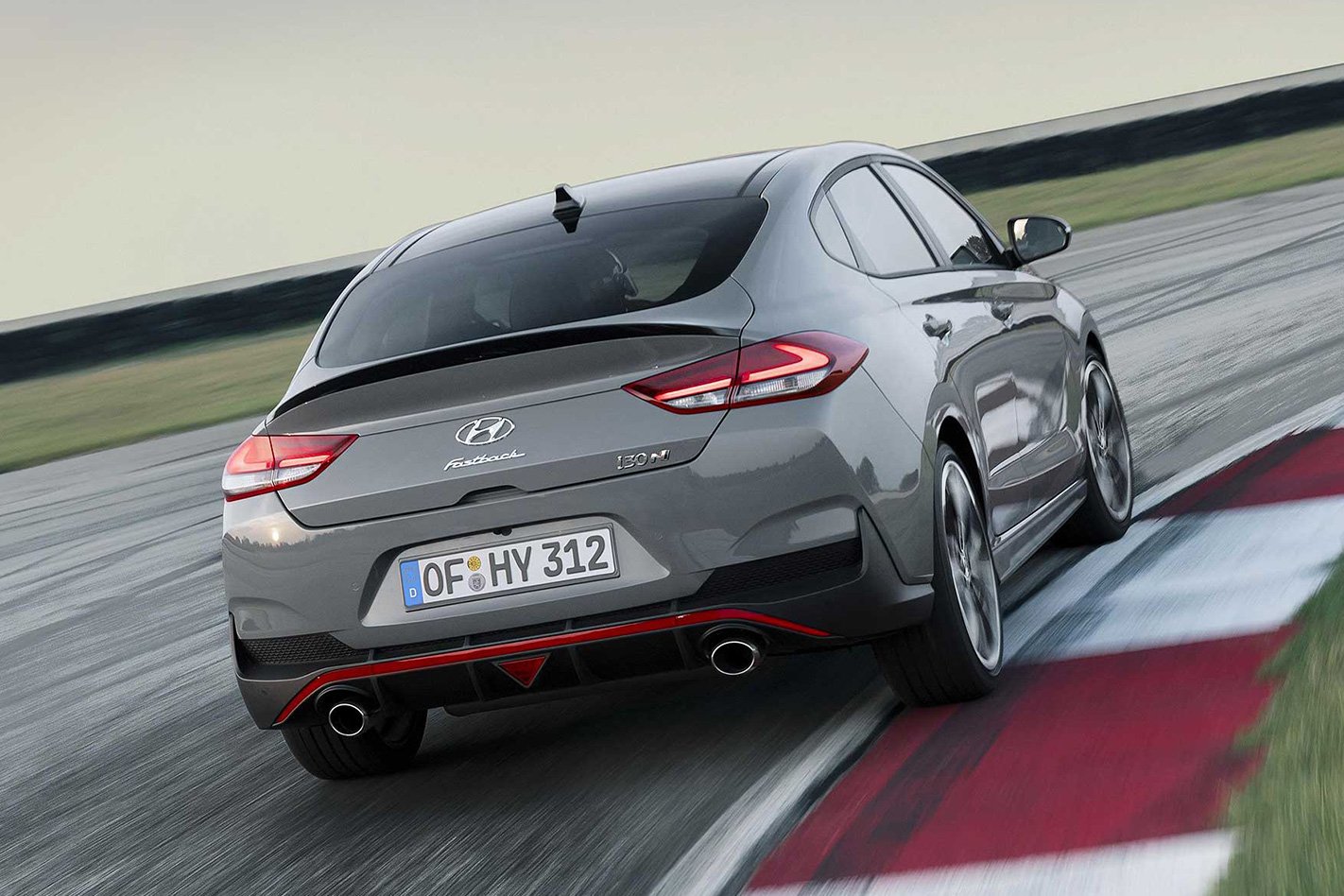
KIA PROCEED SHOOTING BRAKE
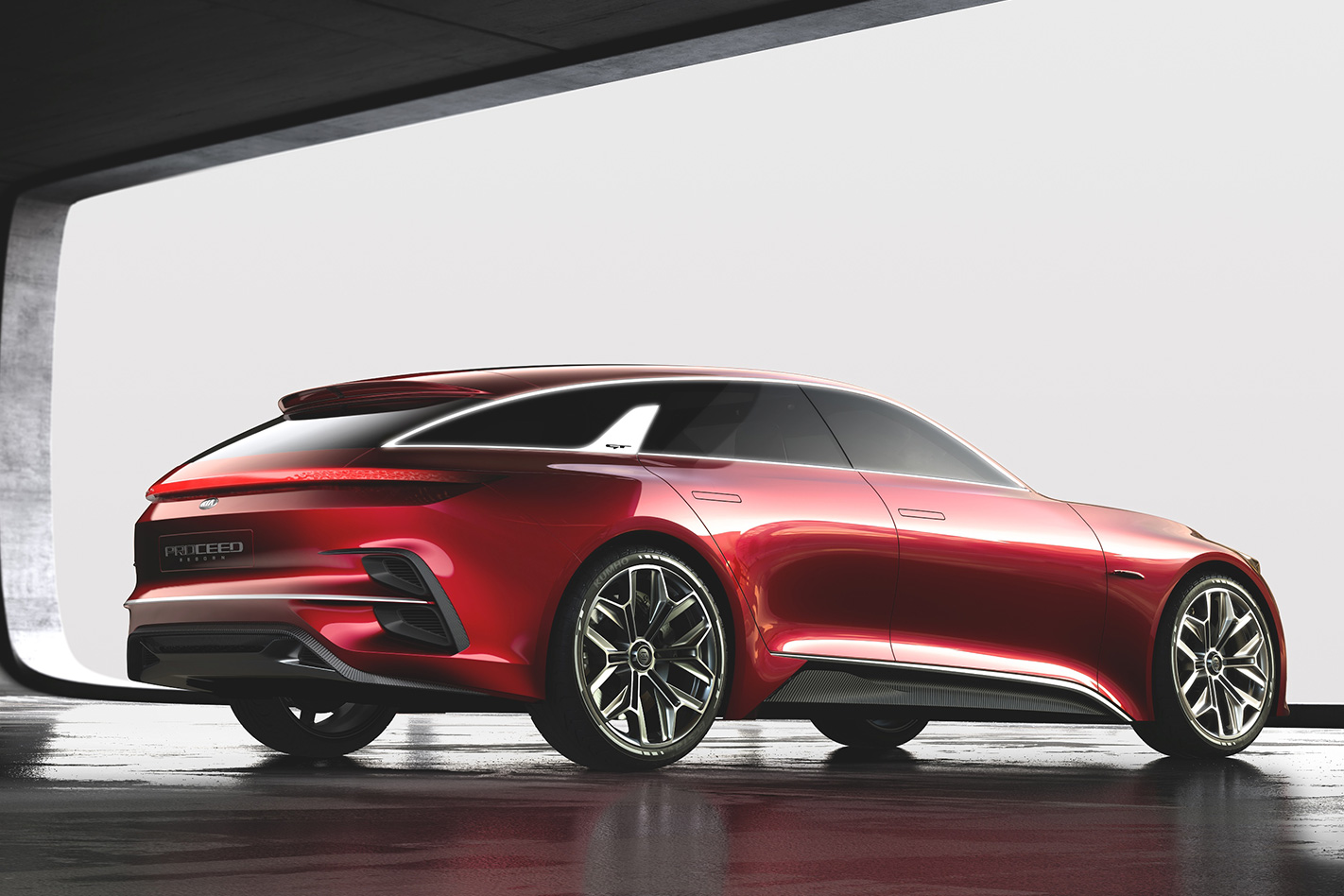
Rumours suggest the production model of the 2019 Kia Proceed Shooting Brake will arrive at Paris, with the showroom version lobbing a year after it was unveiled in concept form at Paris’s alter-ego, the Frankfurt Motor Show. Based on what we saw last year, the Kia Proceed should come across as sportier than the already existing wagon and hatchback models. The third member of the Euro-only Ceed family would give customers plenty of options to choose from.
MERCEDES-AMG A35
The brand-new A-Class has already landed on our shores, but what’s been missing is something with a little more performance pep. Then wild A45 flagship will arrive later, but until then the A35 – a new addition to the A-Class family – will whet our appetites for fast German hot hatches.
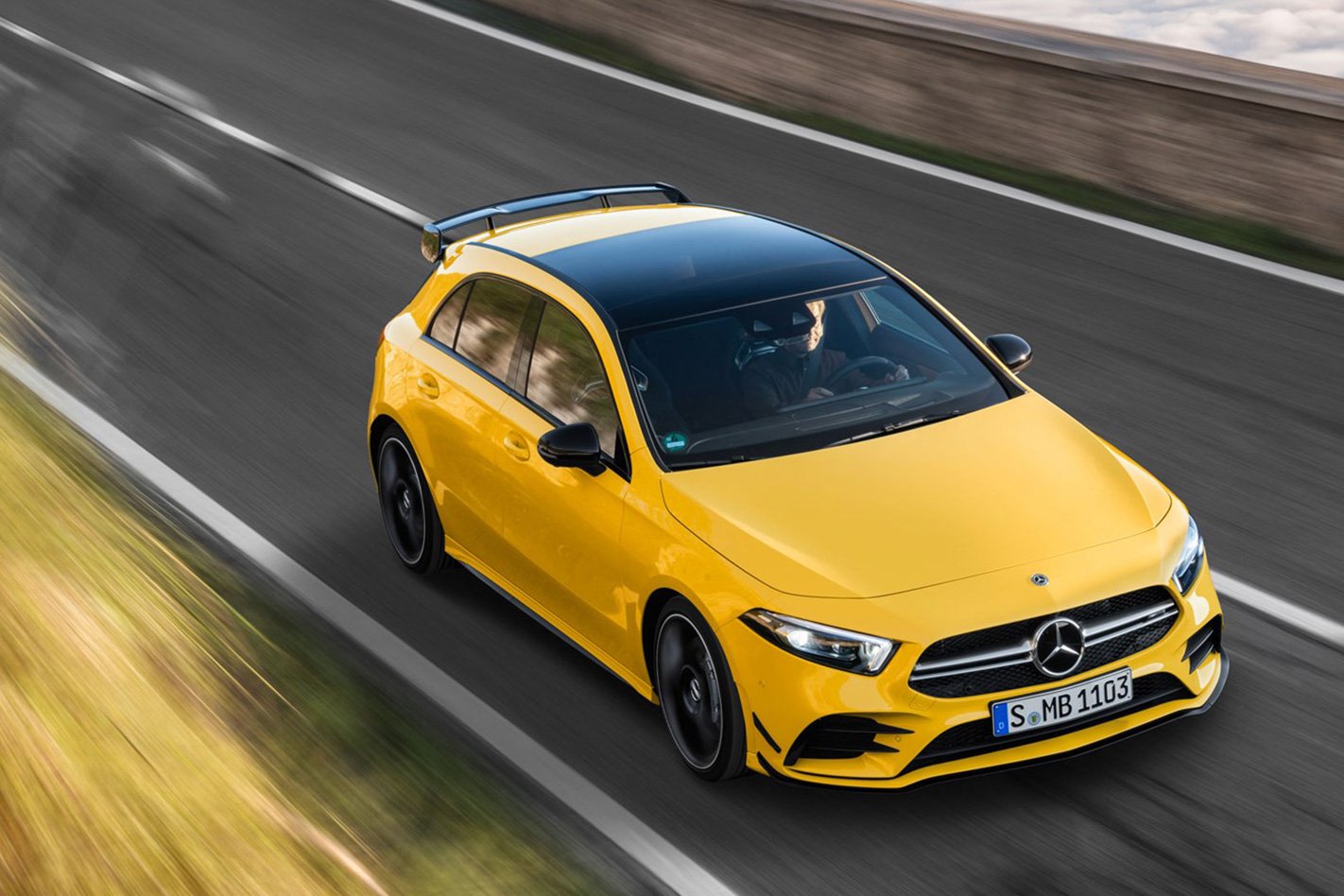
It’ll appear at Paris, but the good news is we’ve already been treated to a comprehensive preview of it by Mercedes.
The baby brother to the A45 makes 225kW and 400Nm from a 2.0-litre turbo four, and sends it all to the ground via an AWD driveline. Want to learn more? Read all about the Mercedes-AMG A35 here .
MERCEDES-BENZ A-CLASS SEDAN
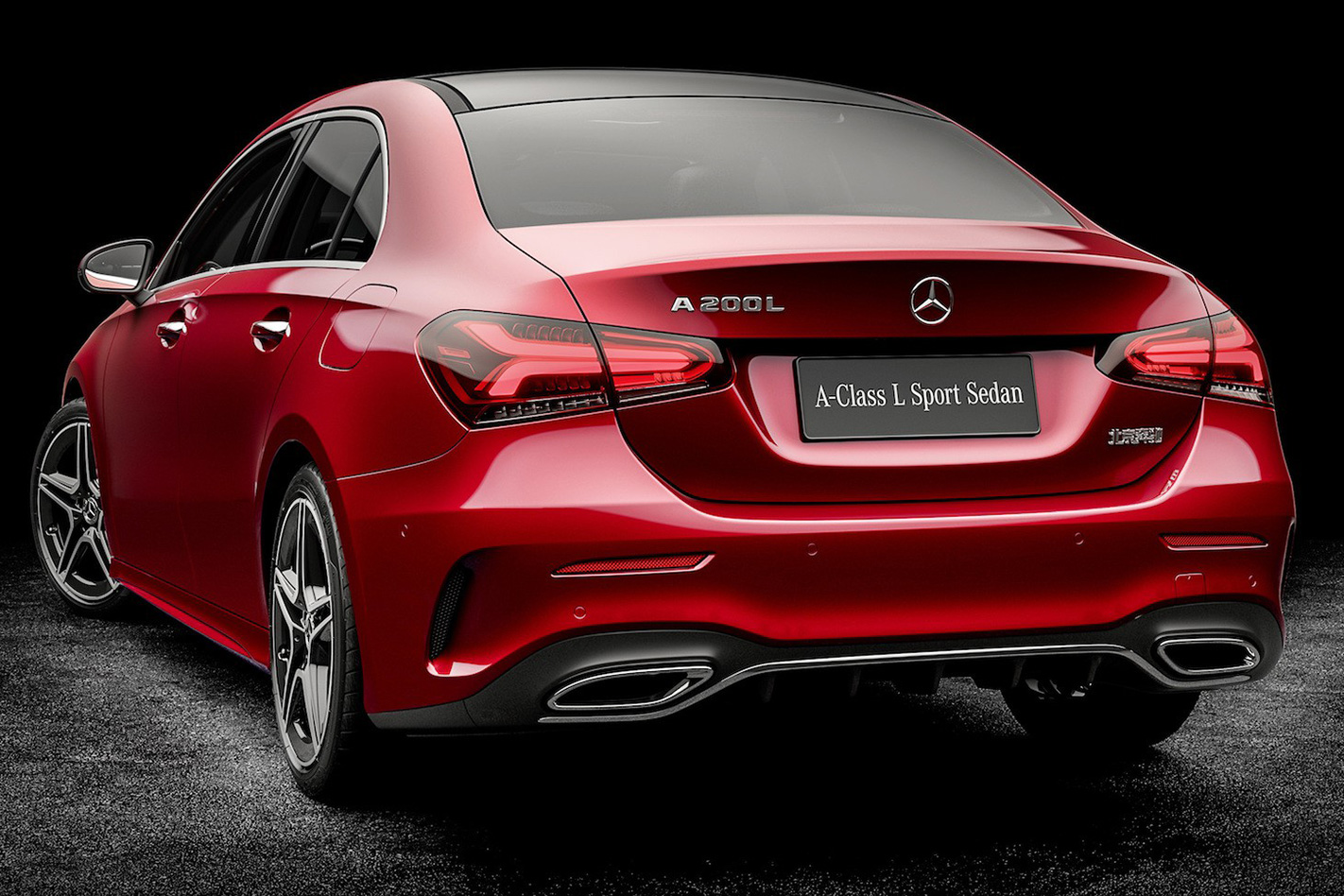
Have you been enticed by the A-Class but weren’t keen on its hatchback form factor? Does the swoopy CLS-Class not tickle your fancy? Mercedes has a solution in the form of the A-Class sedan, which will also be on the Benz stand at Paris.
Once again, all of the crucial facts and figures have been announced ahead of its public debut, so if you’re curious about what makes it tick – and Benz’s claim that it’s the most aerodynamic car money can buy – head here to learn more.
MERCEDES-BENZ EQ C
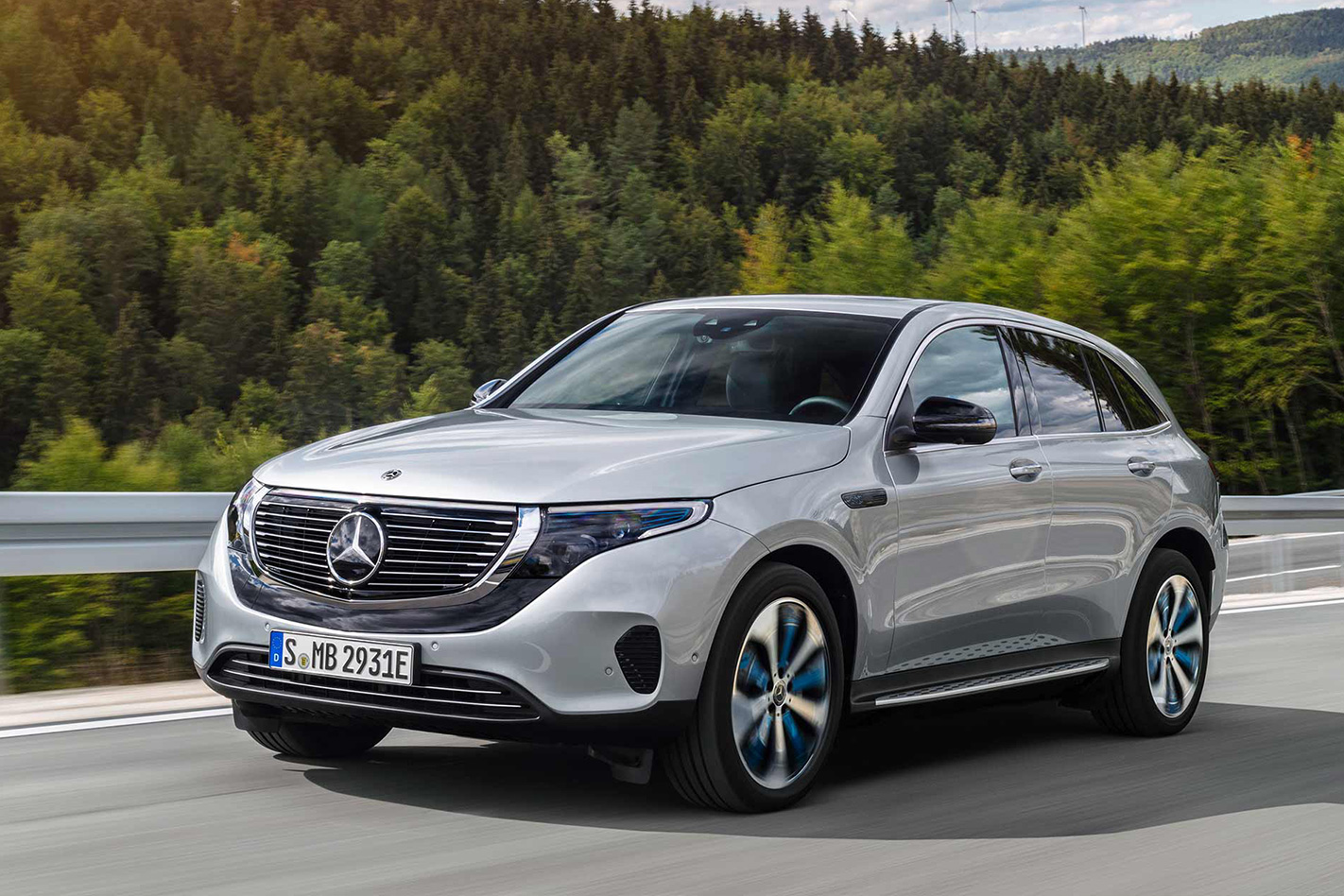
Benz’s first exclusively-electric model, the EQC, will be on display at Paris. The company sees it as a cornerstone of its future, and we’ve been able to test it ahead of its Paris appearance. Key facts: 450km of range, a pricetag of roughly $125K and an Australian launch sometime in the second half of 2019. Head here to read about what Benz’s Tesla-fighting SUV is like to drive.
MERCEDES-BENZ GLE-CLASS
Alongside the electron-burning EQC will be something more familiar – the next generation of Benz’s mainstay M-Class SUV.
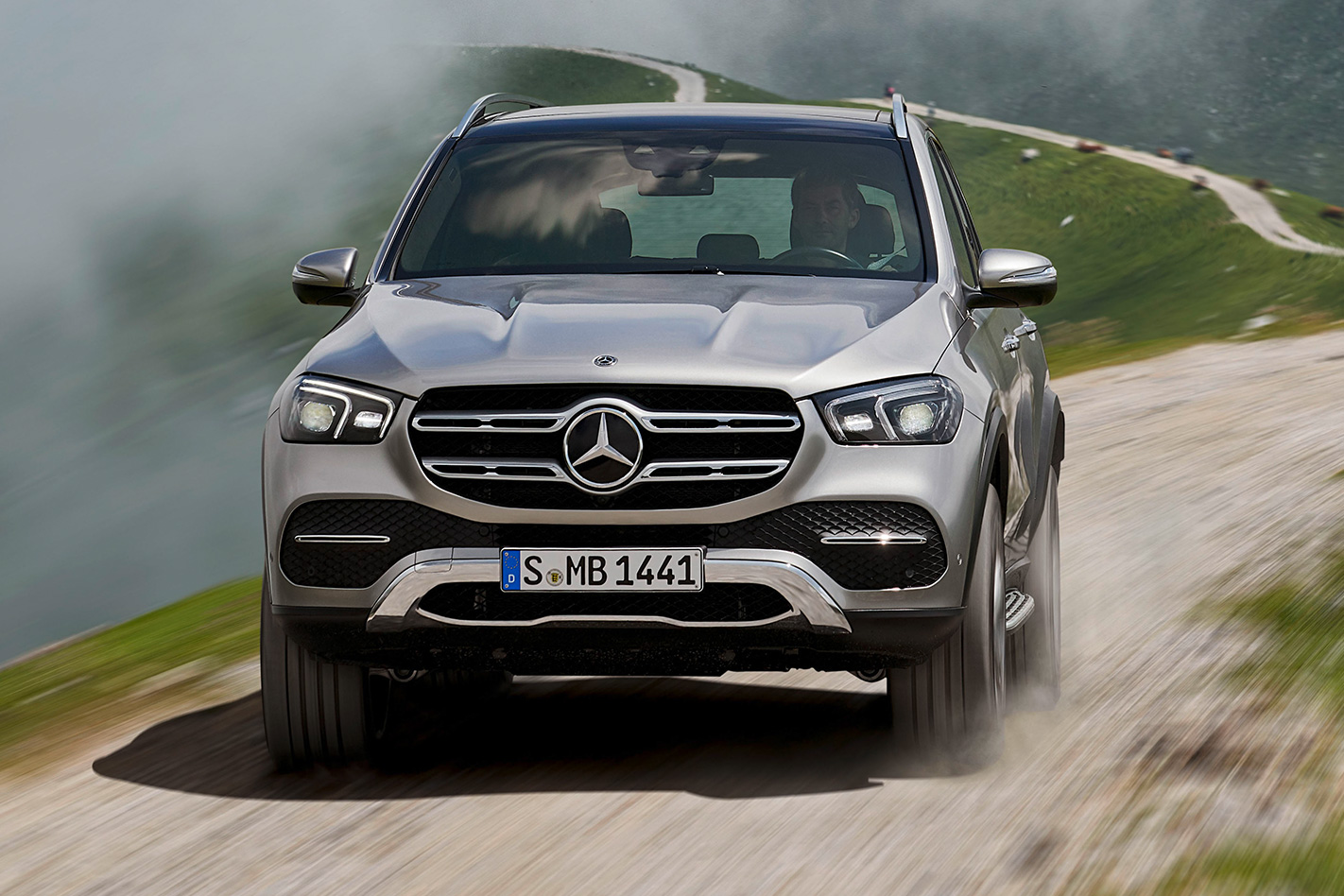
Directly competing with the BMW X5 that will also be making its global debut at the same show, the GLE steps onto a new platform and adopts new technology both inside the cabin and under the bonnet.
It’s a significant step forward relative to the car it replaces, and you can discover why in our full rundown of the 2019 Mercedes-Benz GLE-Class.
PORSCHE MACAN
The Porsche Macan – the German sports car and performance SUV brand’s best seller in Australia – will get a significant midlife makeover for Paris, featuring Panamera-like styling around the front with a different DRL signature, and a subtle makeover down the rear that links the tail-lamps across the rump to emphasise the SUV’s width. Of note, the current turbocharged 3.6-litre V6 hangs up its hat in place of a new 2.9-litre twin-turbo V6 version that’s already serving duty in the Audi stable. The Macan is also expected to introduce its first petrol-electric hybrid version using technology handed down from the Panamera.
PORSCHE TAYCAN
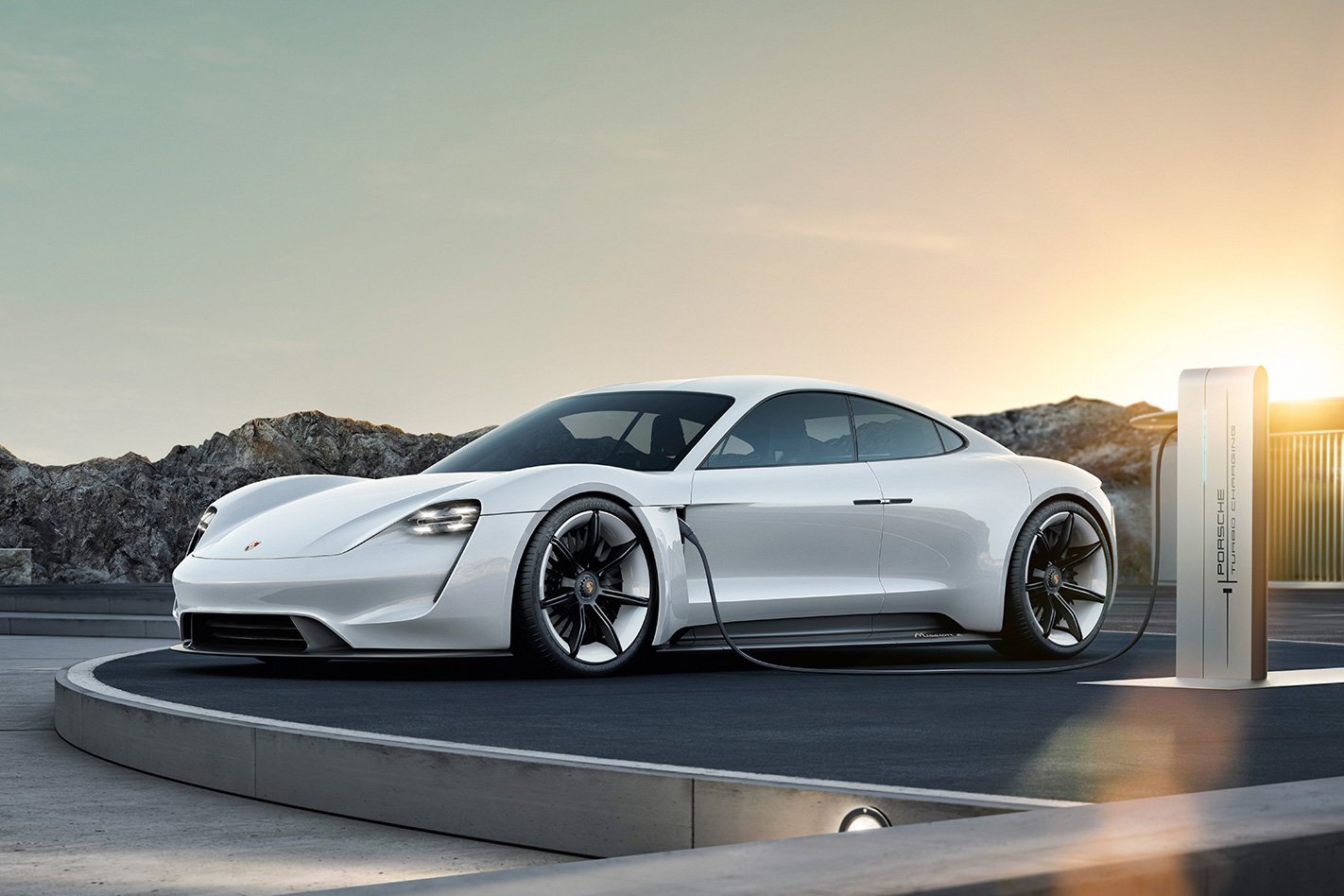
We’ve seen the images of Porsche’s new electric four-door, but we’re yet to experience its form in the bright, glaring lights of the show floor. Mark Webber’s driven it and given his tick of approval, even if the moving vision of him behind the wheel was heavily edited to remove any indication of just how quick this Tesla Model S fighter is likely to be.
SKODA KAROQ RS
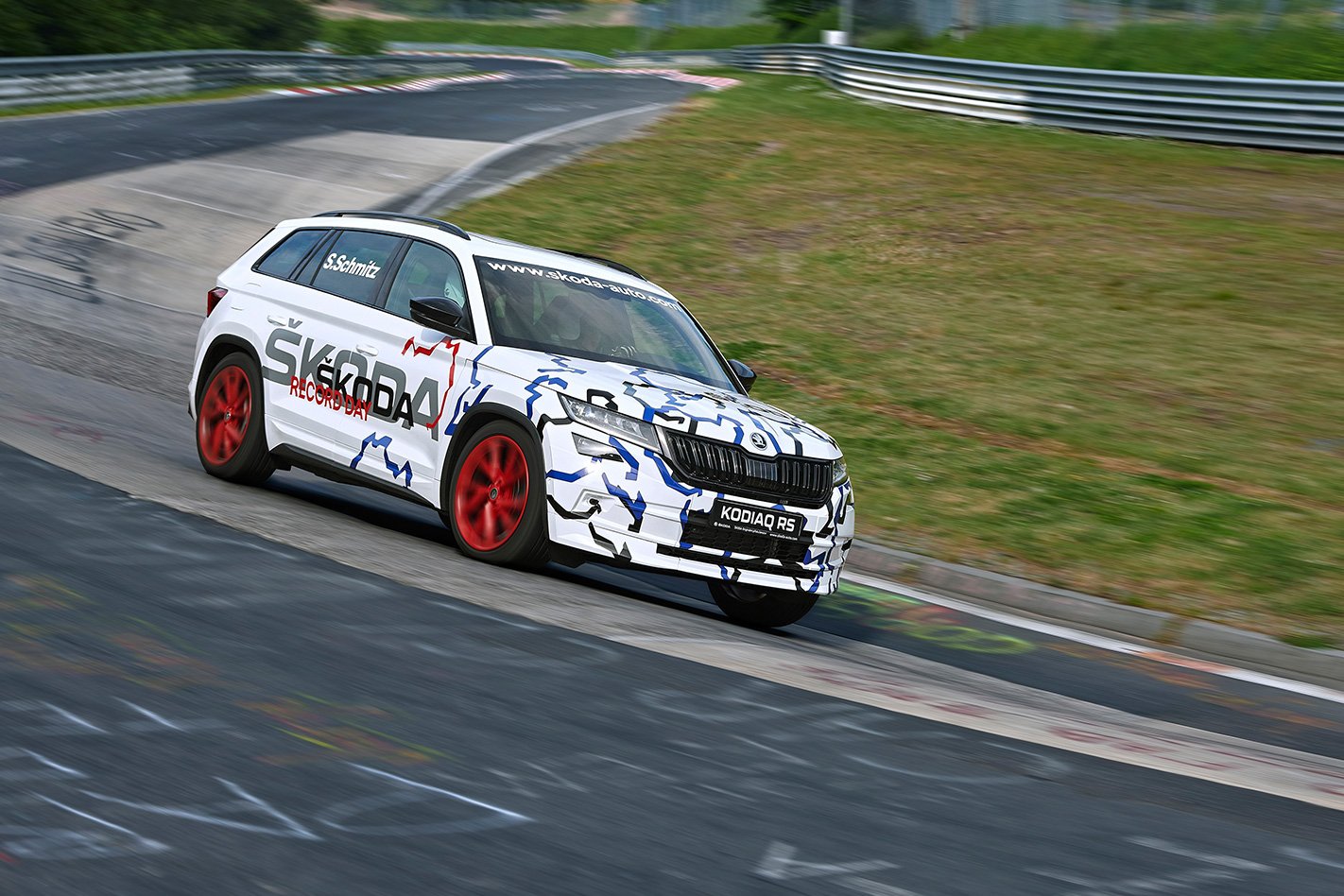
It has already set a class record at the Nurburgring for the fastest seven-seat SUV to lap the famous Green Hell (but, we note, significantly slower than an Opel Zafira OPC people mover). At Paris, the Czech brand will discard all the disguise to show us the most warmed over SUV-styled breeder bus the car maker has ever produced. The Skoda Octavia RS will spring from 0-100km/h in around 6.6 seconds; expect the RS-badged Karoq to do the same in around (pause to check watch) 7.0-ish.
SKODA KAROQ SCOUT
Skoda’s latest addition to its Karoq line-up will make its public debut in Paris after being revealed online ahead of the show.
Dubbed the Karoq Scout, the Nissan Qashqai rival will have all-wheel drive as standard, with a selection of three powertrains available (two diesels, and a petrol).
The Scout variant is a more off-road focussed version of Skoda’s Karoq small SUV, with fresh styling tweaks including chrome and silver-coloured scuff plates. Inside the cabin, the Karoq Scout is fitted with unique fabric seat upholstery.
SUZUKI JIMNY
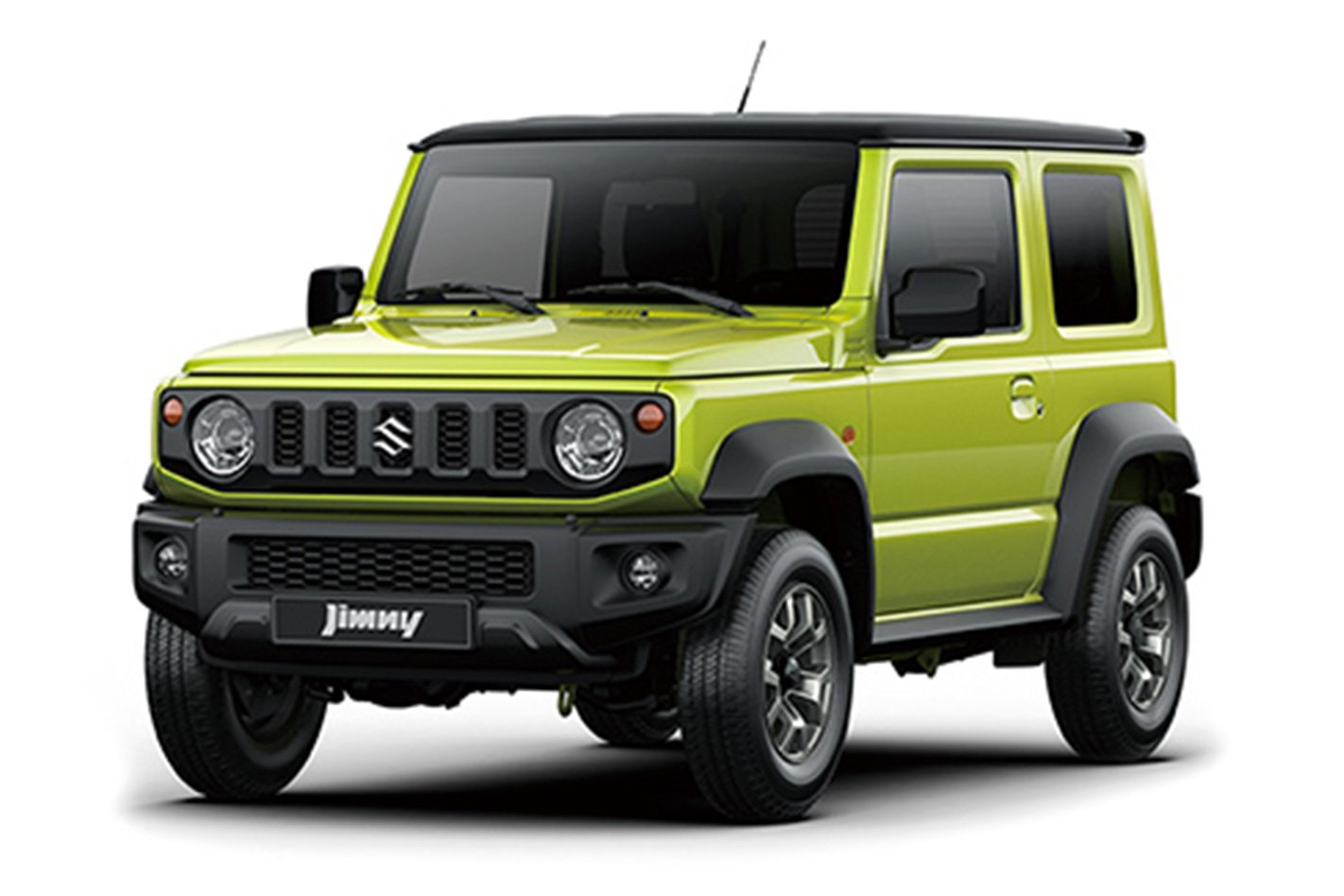
If you’ve been to outback Australia in the last couple of decades, you’ve probably seen swarms of these skipping over the rain-induced mud while everything else around them become instantly stuck. Yep, Jimny is back, baby, keeping most of the formula that made the original so outbackedly famous; small, boxy and light. It’s even built, in true off-roader style, as a body on frame. It’s potentially in line for an Aussie reintroduction late this year.
VINFAST
Never heard of them? We’re not surprised, as this is the name of a Vietnamese car maker that plans to have two cars – an SUV and a hatchback – on the global stage by 2019. It has teased a couple of sketches designed by Euro styling houses Pininfarina (now owned by Indian carmaker Tata) and Italdesign Giugiaro. VinFast, a subsidiary of a Vietnam-based property group, wants to scale up to build 500,000 cars a year in a relatively short space of time, a goal that will make it Asia’s biggest vehicle manufacturer.
AUDI A4
The four-ringed German mid-sizer is due for a facelift, and Audi is expected to crash BMW’s party by revealing its updated A4 at Paris, where the new 3 Series is also slated to debut. The revised A4 will no doubt bring slightly tweaked styling, and additional equipment filtered down from its more expensive siblings.
PEUGEOT E-LEGEND CONCEPT
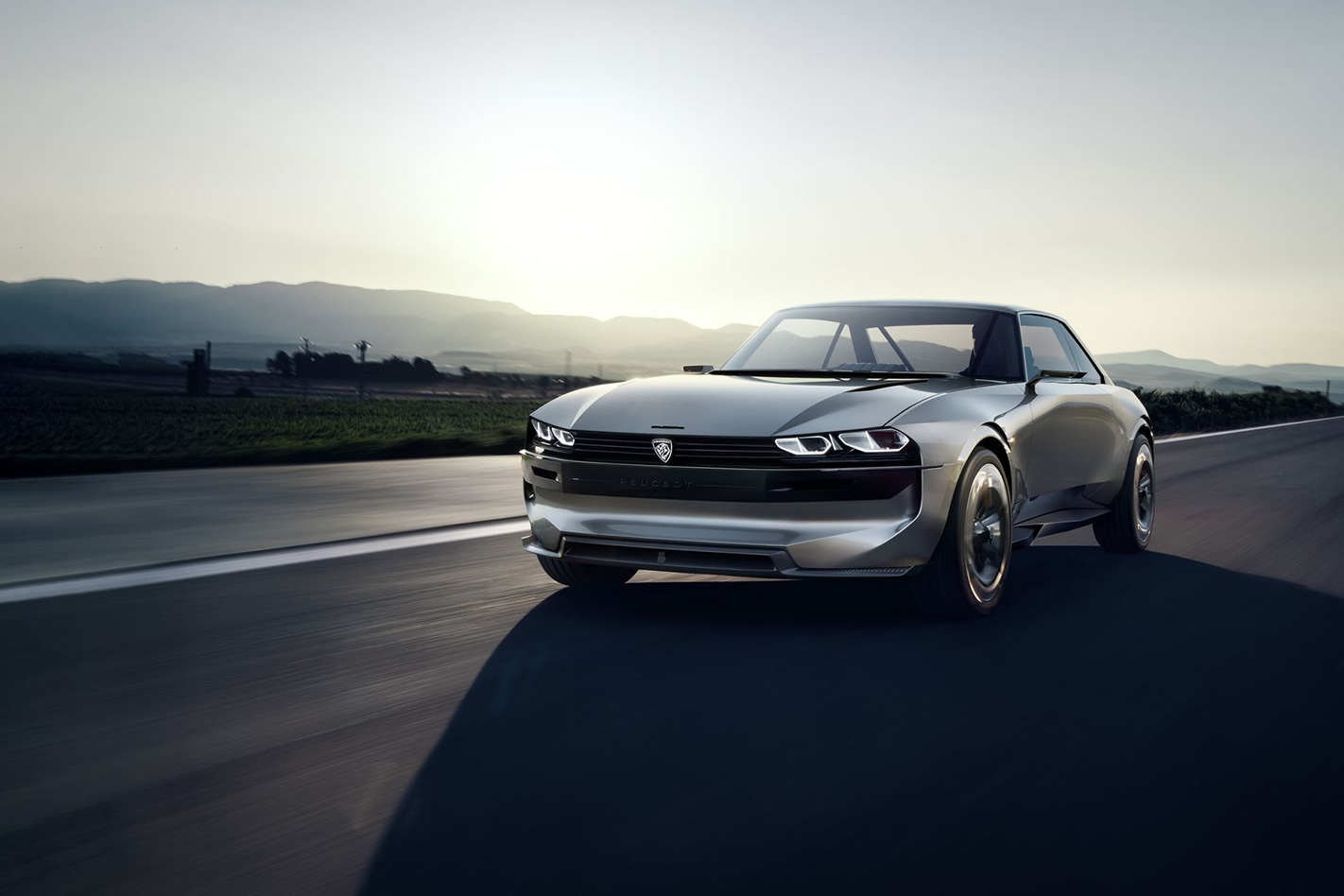
Peugeot’s rhetoric for the e-Legend concept is incredibly bold. “#Unboring the Future”, and “it’s more than a technological manifesto, it is the vision of a brand”. We love it when car companies talk big, and we love it even more when they deliver, so let’s hope Peugeot’s promises are more than just rhetoric. The e-Legend Concept is an all-electric two-door coupe inspired by the classic 504. Peugeot claims the car accelerates like a true sports car (0-100km/h in 4.0 seconds), and can travel up to 600km on a single charge.
PEUGEOT 508 SW
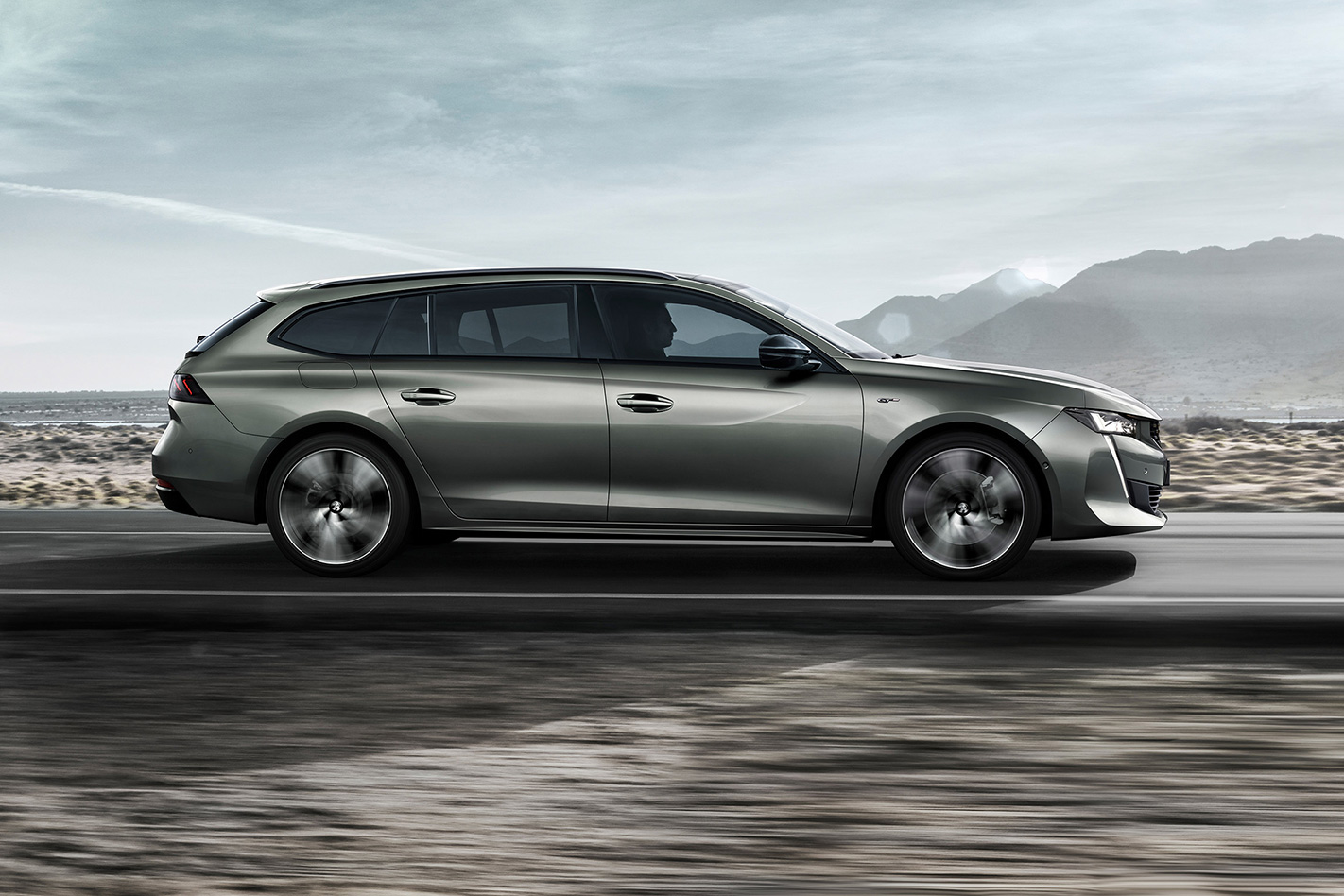
Peugeot is expected to reveal its sleek 508 SW wagon in the metal at the Paris Motor Show. The French manufacturer has revealed photos of the 5008 alternative online, but this will be the first opportunity to see the car for real. There’s also a good chance the French brand will use its home event to showcase something unexpected, as Renault did two years ago with the Trezor concept.
SKODA VISION RS
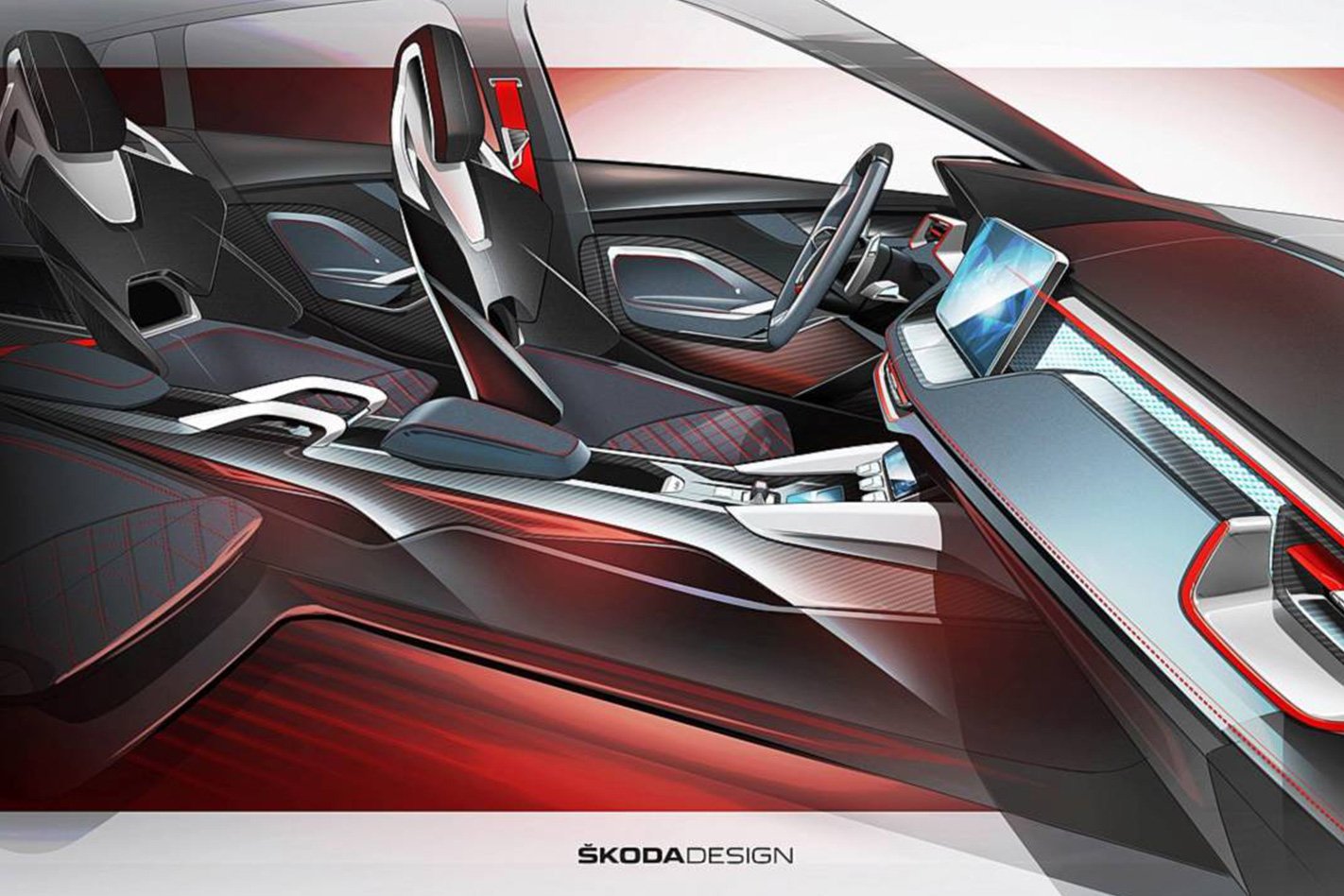
Along with a bevy of jacked-up SUVs, Skoda will reveal a hatch concept at the Paris show called Vision RS. It’s likely to spawn a production car to replace Skoda’s ageing Rapid, an alternative to the Volkswagen Golf. A Golf GTI competitor is also expected in the form of a vRS variant.
NOTABLY ABSENT
There is a rather long list of manufacturers choosing to abscond from this year’s Paris Motor Show. The French-owned Opel and Vauxhall brands have confirmed they will not be attending, instead stating they will be putting “a stronger emphasis on our own events for the upcoming product launches.”
They join the likes of Volkswagen, Ford, Nissan, Fiat, Jeep, Volvo, Mitsubishi, Mazda, Bentley, Aston Martin, Rolls-Royce and McLaren who will also be missing the second major European motor show of the year.
Collectively, these brands account for almost 40 percent of European new car sales.
Australian petrol prices have spiked to the highest in four years, with some car owners forced to pay more than $1.67/L for regular unleaded in the worst-hit states like Victoria, New South Wales and Queensland. There have even been reports of service stations charging more than $1.70/L.
Adelaide motorists are faring better thanks to a higher percentage of independent servos across the South Australia, but with average per-litre pricing for 91-octane unleaded hovering between $1.40-$1.50/L in the city, prices are still markedly above the yearly average. The more regulated West Australian market enjoys a more predictable petrol price cycle, but even Perth motorists are feeling the sting of prices above $1.50/L – again, a four-year high for that state.
The recent surge in fuel costs has spurred more than 40,000 Australian motorists to sign a petition started just a week ago by a Queensland grandmother, calling on the federal government to remove the 30 percent excise it places on fuel.
This excise and the GST nets the Australian Government 58.5c from every litre of fuel sold at $1.60/l. In 2017/18 the Australian government collected $17.2 billion in revenue thanks to the fuel excise.
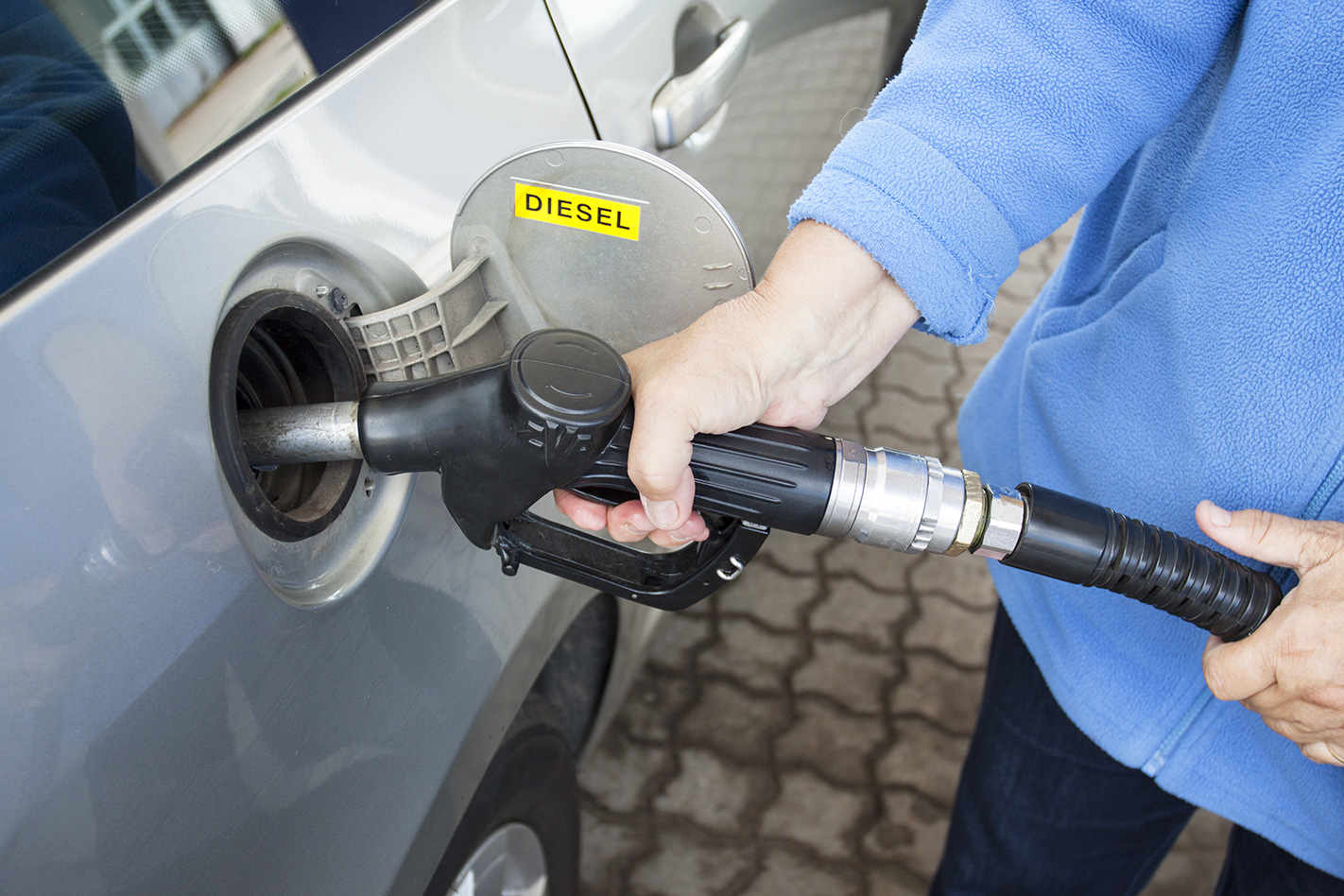
Price monitoring service PetrolSpy shows the bulk of metro-area service stations in Sydney and Melbourne selling 91-octane around $1.65 a litre at the time of writing. According to data from the Australian Institute of petrol, the national average price of petrol at the pump was $1.30 per litre in early October last year.
That’s an increase of 26.9 percent in just 12 months, and while wholesale fuel prices have largely remained stable, a recent jump in the at-the-pump cost of petrol suggests that service stations are behind the increased impact on Australian hip pockets, says consumer watchdog, the Australian Competition and Consumer Commission.
“Current gross retail margins in the five largest cities are now over 50 percent above the 16 year average since the ACCC began tracking this data”, said Rod Sims, ACCC chairman.
According to the ACCC, fuel retailers achieved record high profit margins in the 2017-2018 financial year, and the commission has been keeping a sharp eye on the industry. Back in May this year, the ACCC even went as far as singling out Coles Express as the country’s highest-priced seller of fuel.
Speaking with WhichCar, managing director of industry monitor FUELtrac Chris Kable said that retailer margins have been driven up largely thanks to a large reduction of independent ‘mum and dad’ petrol stations and the rise of major fuel companies in their place.
“Over the last five years, retail margins have gone up around 50 percent,” Kable said. “They’re now around 20 cents per litre … roughly 20 years ago, margins were between 4-5 cents a litre.”
While Kable said the recent spikes into the high $1.60/L range were likely to dissipate, he said it was unlikely there would be any substantial relief soon. As the northern hemisphere enters winter and increases its demand for oil, the flow-on effect is that global prices – and thus the price Australians pay at the pump – will generally remain high.
“The recent spike is a retail margin grab, and it should come down,” he said. “However, there won’t be any [meaningful] downward pressure soon. With the northern hemisphere about to enter winter, there’s not much hope for prices to come down before April next year.”
According to the Australian Bureau of Statistics, the average Australian drives 15,530km per year, which at 167c/L equates to more than $1554 annually on petrol in a fuel-efficient car like the new Toyota Corolla. This financial burden is even greater for SUVs like the Toyota Kluger ($2256), which is among Australia’s most popular new cars. Drivers of less-efficient older cars, or vehicles that require premium fuel, will be even harder hit by sustained high fuel prices.
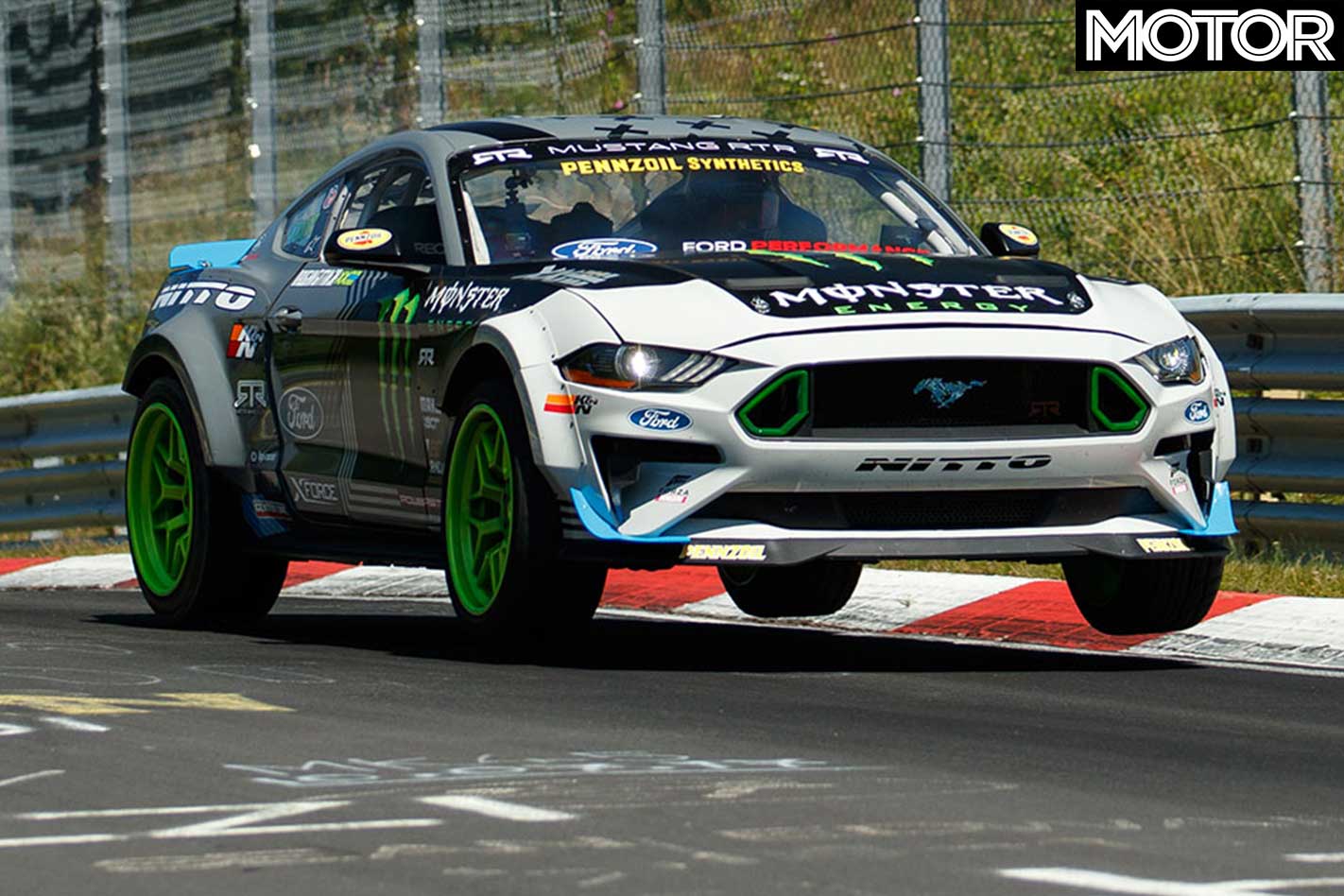
In a 671kW Ford Mustang RTR, Vaughn Gittin Jr. has drifted the “entire length” of the 20.8km Nürburgring Nordschleife – something Ford Performance claims he’s the first person to do.
Though there’s no footage of the entire lap yet, a three minute video titled ‘Drift King of the Ring’ shows off Gittin Jr’s lap highlights, and proves his skills as a drifter – not that they were in doubt.
“I finally went there in person in 2013 and it was then that I made a promise to myself that one day I would return to drift it in its entirety.
“Drifting the Nürburgring represents the ultimate challenge to me: it is something that many questioned whether it would be possible and whether the car and driver could do it and come out in one piece. Something inside of me had to take this on to find out.”
Gittin Jr recalls a specific moment in the lap which had him a little ‘shook’ – getting some air at Pflanzgarten.
“Pulling this off was scary! Crazy speed built up from the downhill section before the jump, then as soon as the car touched the ground a hard flick sideways to scrub speed and make the sharp Pflanzgarten right hander that is surrounded by walls.”
“I was out of my comfort zone for the majority of the hot laps,”
“I did not know the Green Hell nearly as well as I thought I did. Everything changes when you’re going sideways at those speeds.
“When we stopped for the first tire change I was elated. I had to catch my breath, which is something I have never experienced behind the wheel since I was a rookie in Formula Drift.”
It’s not the first time we’ve seen Gittin Jr drift the Nürburgring, as a video uploaded a few months ago shows what he got up to during the same trip.
In a post on Facebook, Gittin Jr perhaps sums the experience up best with a couple of sentences.
“Drifting the Nordschleife at the Nürburgring was the most insane and scariest experience I have ever from behind the wheel.
“Sometimes you have to force yourself outside of your comfort zone to make dreams come true. This one did not disappoint.”
At the recent launch of the 2019 McLaren 600LT, MOTOR spoke with George Biggs about the future of McLaren’s powertrains, as performance cars become more and more electric.
Asked if there’s been any backlash or lack of enthusiasm for the potential for McLaren to embrace electrification, Biggs said McLaren’s approach is very enthusiast-focused.
“Hybridisation for us is – and sure there are some regulations we need to meet – but that we’re only going to use hybridisation if we can increase performance.”
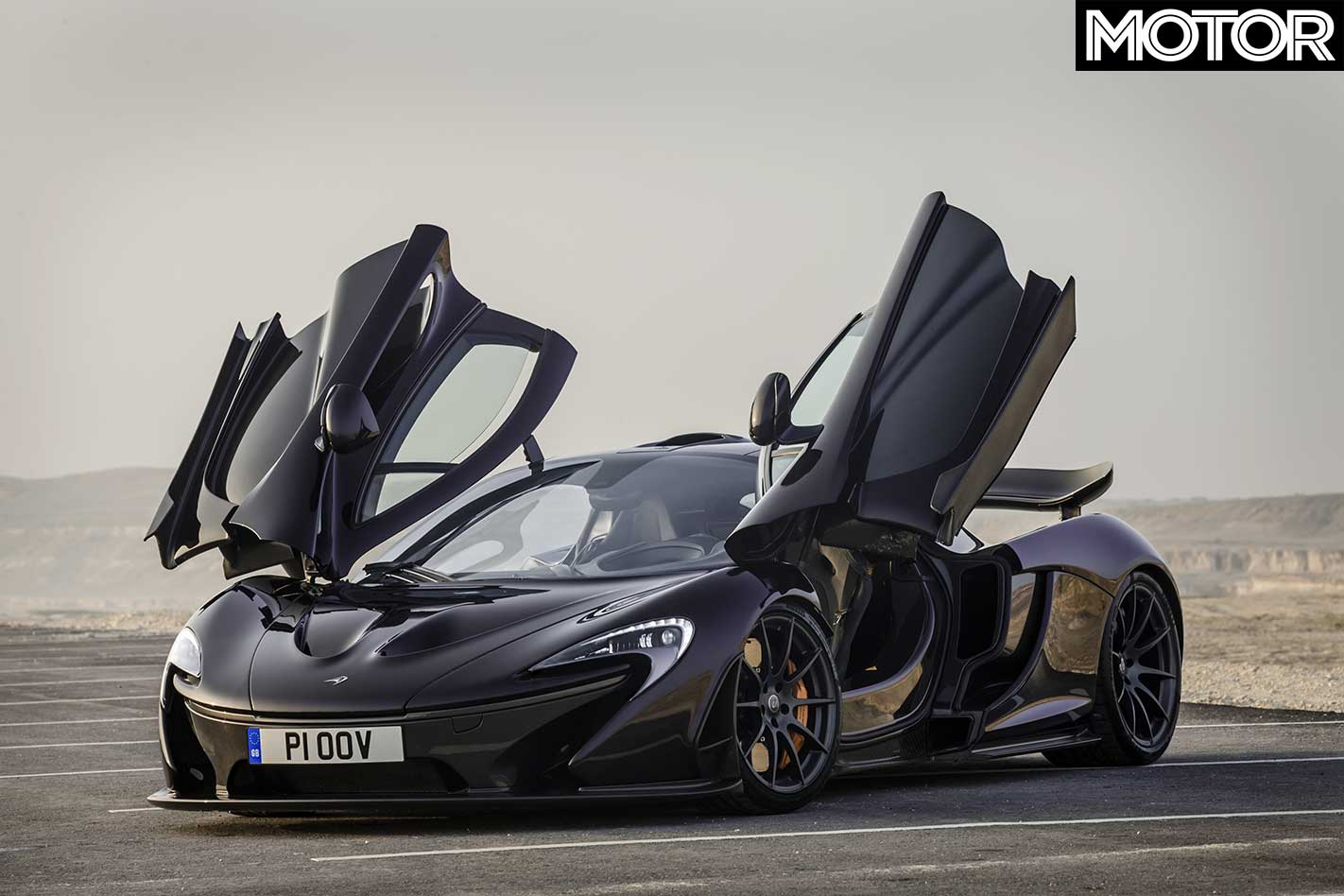
Of course, McLaren’s been successful in turning electrification into a ‘plus’ for its cars in the past. The hybrid McLaren P1 is considered part of the ‘Hypercar Holy Trinity’ alongside hybrid rivals from Ferrari in the LaFerrari, and the Porsche 918 Spyder.
“So when you saw it in P1 it was all about filling in that torque lag and providing a straight-line experience in terms of acceleration. A number of customers were just blown away by that.
“It’s all about performance. It’s all about ‘how can you increase that driver experience?’
“And when I say performance, that’s not just straight-line speed. It’s also how the car feeds back to you, how do the driving dynamics with a hybrid powertrain feel – can you enjoy that experience?
“That’s what we’re very focused on.”
We briefly discussed the Speedtail, though Biggs was unable to reveal much about the upcoming hybrid ‘hyper GT’. He did however say that other models will soon join it as hybrid supercars and sports cars.

“With the [Track22] business plan, we’ve laid out the life-cycle of our products, and we’ll be renewing some of those and when they do, they’ll likely include hybrids.”
MOTOR has previously reported that the BP23/ Speedtail is in with a good chance to show up locally, as McLaren works hard to adhere to regulations around the world.
Biggs tells us that Australia isn’t actually much different in terms of difficulty adhering to laws, after all, the top-exit exhausts on the 600LT are road-legal here.
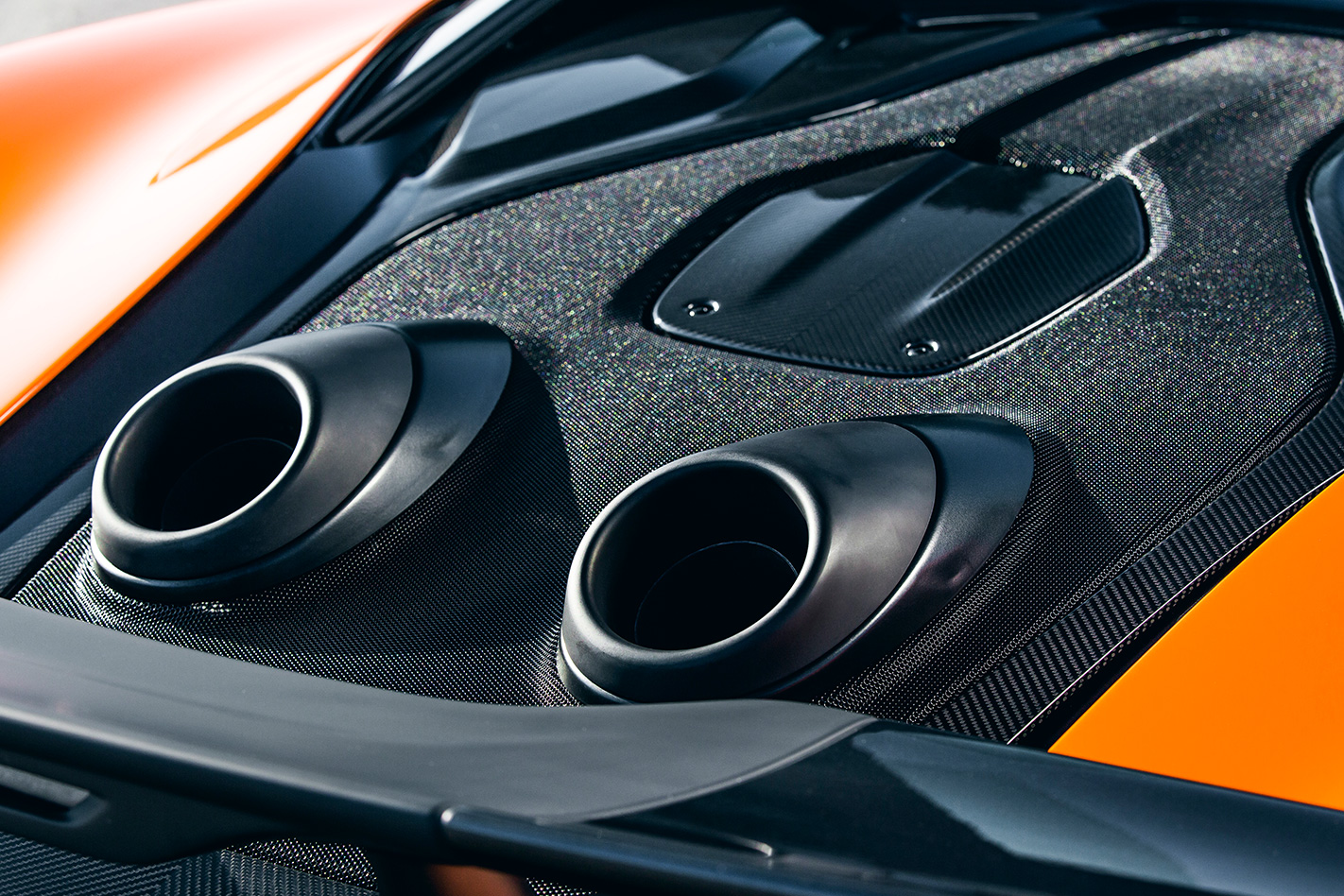
“If you look at all of our models, we make sure that we offer them to a global base. Australia is one of our most important markets, so we would like to bring it here.”
He says the central driving position shouldn’t prove too challenging as a design element to be approved.
“The unique nature of [The Speedtail] means we’re still working through, but I would hope to see that car here.
“We’re under a number of different regulatory environments in different markets, and Australia is very similar in that we respect and work through [ADRs].
“It’s not particularly unique, it’s just a case of going through that process.”
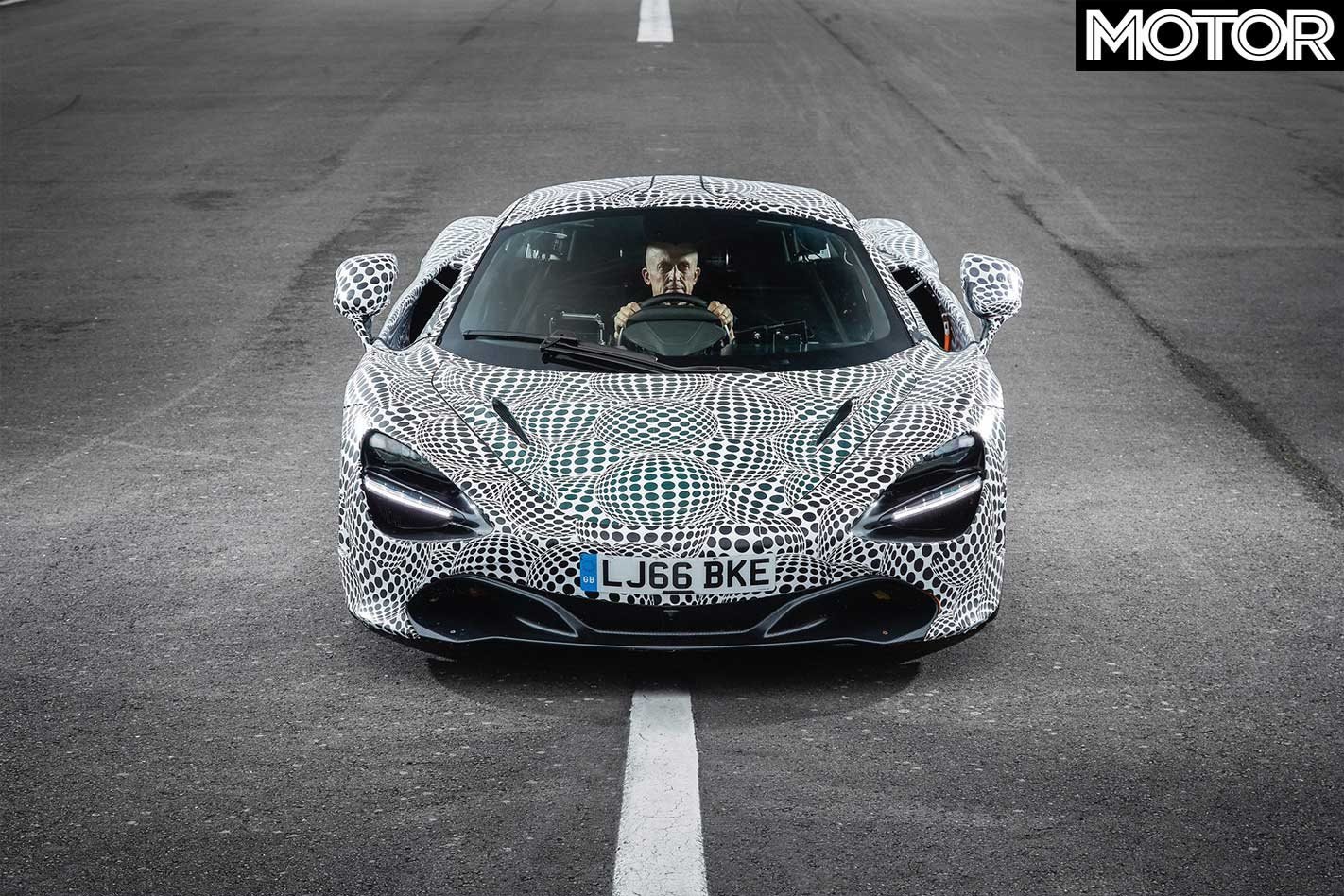
When we asked about whether there were any all-electric McLarens on the horizon, Biggs said it’s something McLaren hasn’t come to a decision with yet.
“We’ve said in our previous business plan, Track22, that we were having a look at a prototype that was all-electric, just to see how it drove and how it felt.
“That was very much, and is an ongoing, experimental phase to see how you can make it feel like a McLaren with an all-electric powertrain.
“We’ve not yet come to a conclusion in terms of what’s actually coming from the production side of things.”
Aston Martin has been spotted testing its next model, the drop-top version of its DBS Superleggera.
The 2019 Aston Martin DBS Superleggera Volante is expected to receive the same engine treatment as its coupe sibling, a twin-turbo 5.2-litre V12 producing 533kW and 900Nm for the rear wheels to put to use.
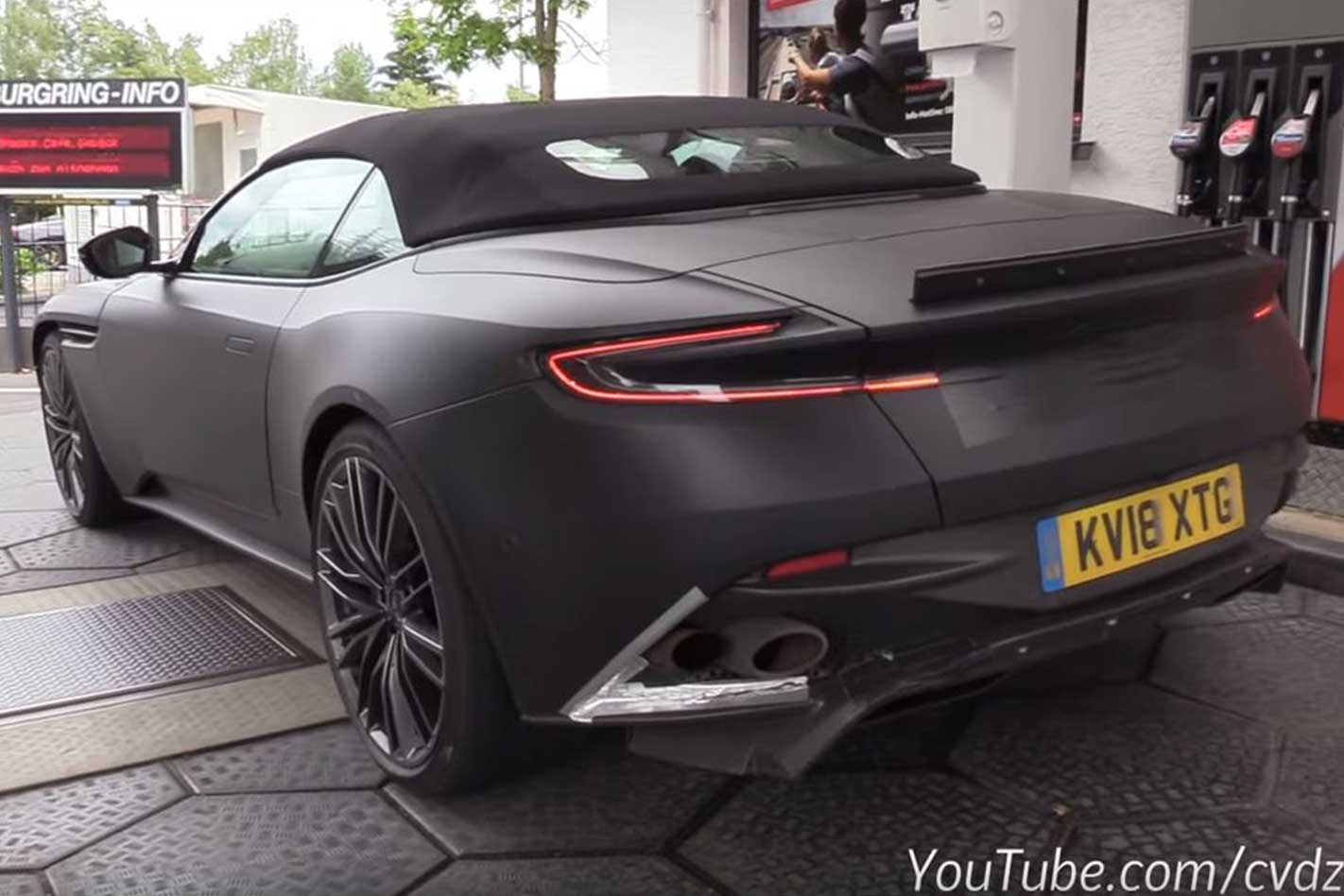
The YouTuber also managed to find the DBS before it hit the track, and gave viewers a closer look at the semi-camo car.
The black wrap doesn’t hide much, and the primary visual change to the car will above the line where it ends. This particular test car however is actually be quite ‘DB11’ from the front wheels back.
As per Aston design boss Marek Reichman’s philosophy of designing Volante models as their ‘own’, there are likely to be subtle changes that make the DBS drop-top more cohesive than just a roofless coupe.
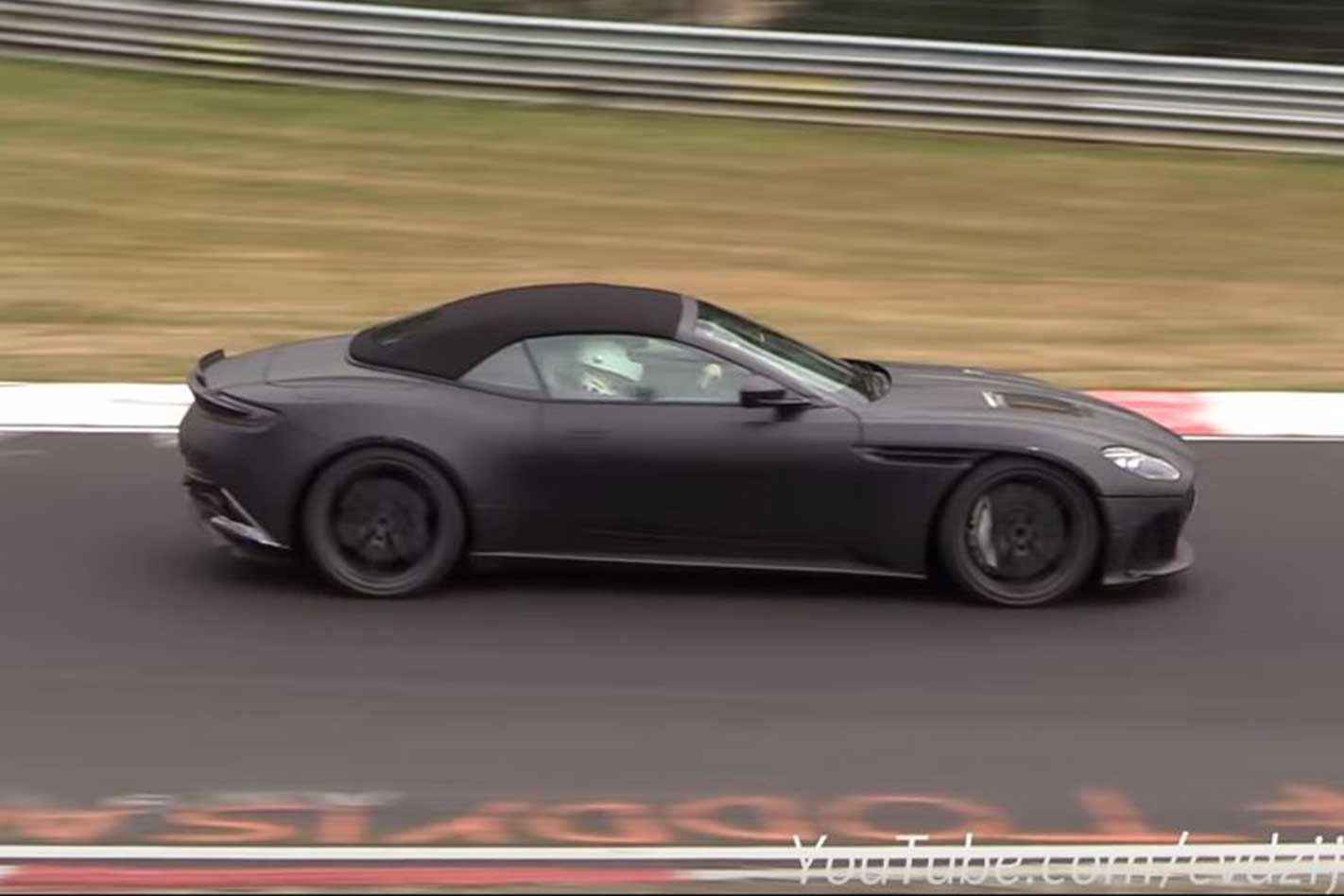
The DBS Superleggera Volante has also been spotted testing around the UK, with publication Autocar having published spy images from a reader.
When the outlet spoke to Aston’s CEO Andy Palmer about the possibility of more DBS models, the response was that “there will be an AMR version of every car, so you can take that as read, and the Volante is a given.”
One thing we can bank on is that the Volante will likely sacrifice some of the ‘leggera’ from the DBS to account for its altered structure, building up from the 1693kg the coupe weighs.
LAST week I visited heaven. There were no pearly gates, Saint Peter wasn’t waiting at the door, instead I was 100 clicks south east of Adelaide, standing on the balcony of a freshly built hotel soaking in the morning sun.
Laid out before me was something I had once dismissed as another fanciful pipe dream of a big-noting entrepreneur – a world class racing circuit, which could have been easily lifted from the oil-rich sands of the Middle East, known to most as The Bend.
The Bend Motorsport Park, to give it its full moniker, could well be the most important racetrack in Australia. While Mount Panorama is more revered, and the Albert Park Grand Prix circuit brings in the biggest crowd with the Australian Grand Prix, both circuits are temporary.
The only real rival to Tailem Bend is Phillip Island, and while its flowing layout and picturesque seaside venue are impressive, they are dwarfed by the scale and impact of The Bend.
Until The Bend, the newest motorsport facility in Australia was Queensland Raceway, which was constructed in 1999. Comparing the pair would be like putting a McLaren 720S up against a clapped-out Holden VT Commodore that’s missing a fuel-filler cap.
Currently The Bend Motorsport Park has a full FIA Grade 2/FIM Grade A circuit, making it eligible to host international categories such as the World Endurance Championship, IndyCar, and MotoGP. Scuttlebutt in the motorsport community suggests plans are underway to bring WEC to the circuit, while the circuit’s owners have already flagged their intention to one day bring premier international motorcycle racing to the circuit.
The large earth moving equipment which still lingers near the giant skid pans behind the pit building is an indication that construction on The Bend is far from finished. More tracks for drag racing and rallycross are being built, along with a premium property development for the motorsport-mad family.
There is also a link to Australian vehicle manufacturing, with the circuit being built atop what was once Mitsubishi’s local proving ground.
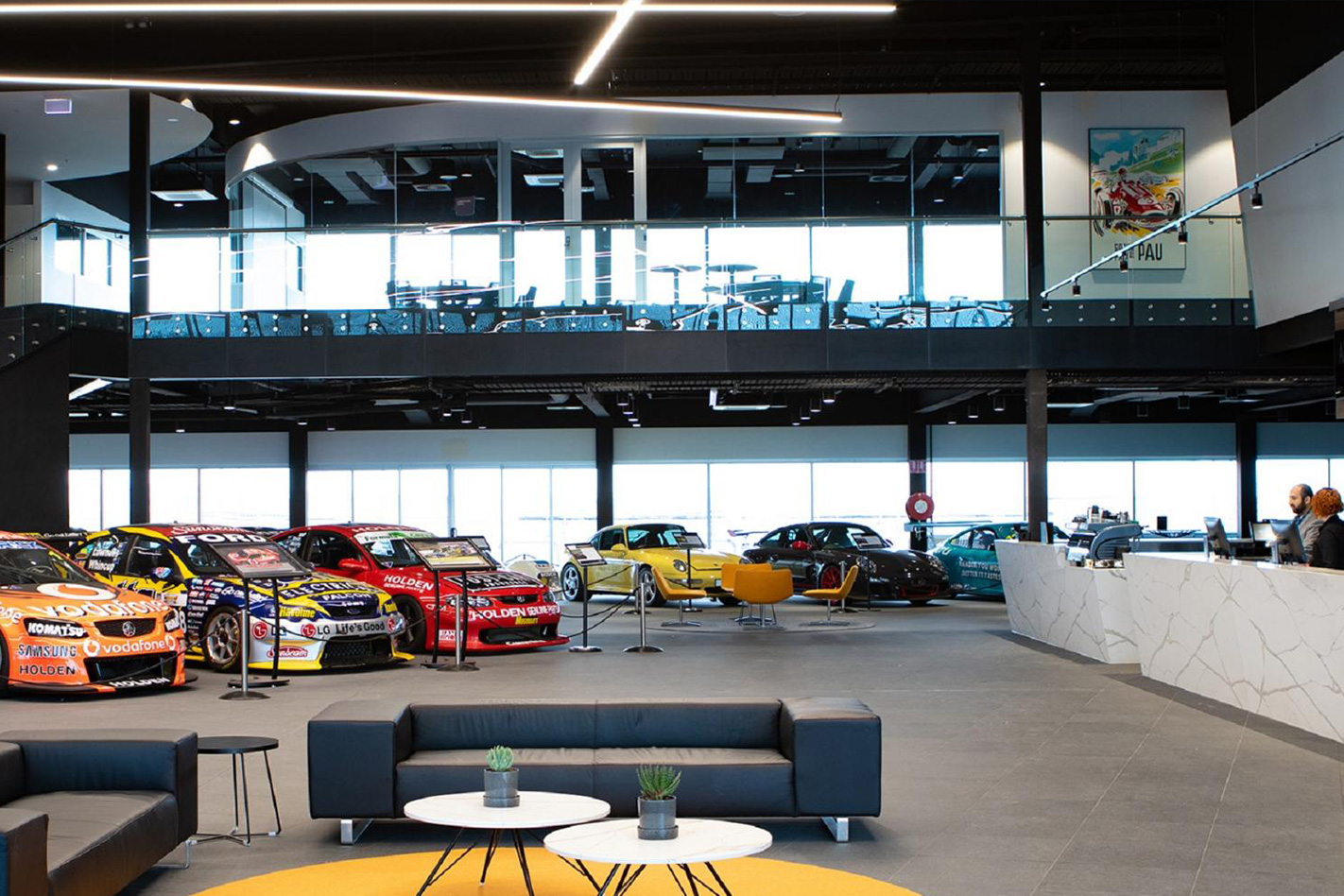
Nestled in the foyer of the 100-room Rydges hotel which forms part of the pit building is a car collection that would make any enthusiast weak at the knees. A Ferrari Enzo, F50 and a Carrera GT take centre stage, while a Porsche 962 flanked one wall, with Jos Verstappen’s Arrows F1 car sitting next to the entrance. Nestled to one corner is a trio of V8 Supercars, each with enough heritage to be museum centrepieces on their own, while the very first right-hand drive Porsche 911 customer car is lined up alongside a pair of Jaguar E-Types. Ev en if you never venture out on the circuit, that foyer alone is worth a day trip to visit.
Wheels was at the circuit at the invitation of Audi Australia, to take part in its Audi Sport Week celebrations. During the event, we took the opportunity to drive both an RS5 coupe and R8 V10 plus on the circuit, lapping the full-fat GT layout in the latter.
But what is the Bend like to drive? Well, in short, technical. The Bend is difficult to master on first visit, and can be somewhat overwhelming. But even a brief drive reveals this is a circuit that rewards a technical driver, with many corners requiring patience and intuition to navigate in the fastest way possible.
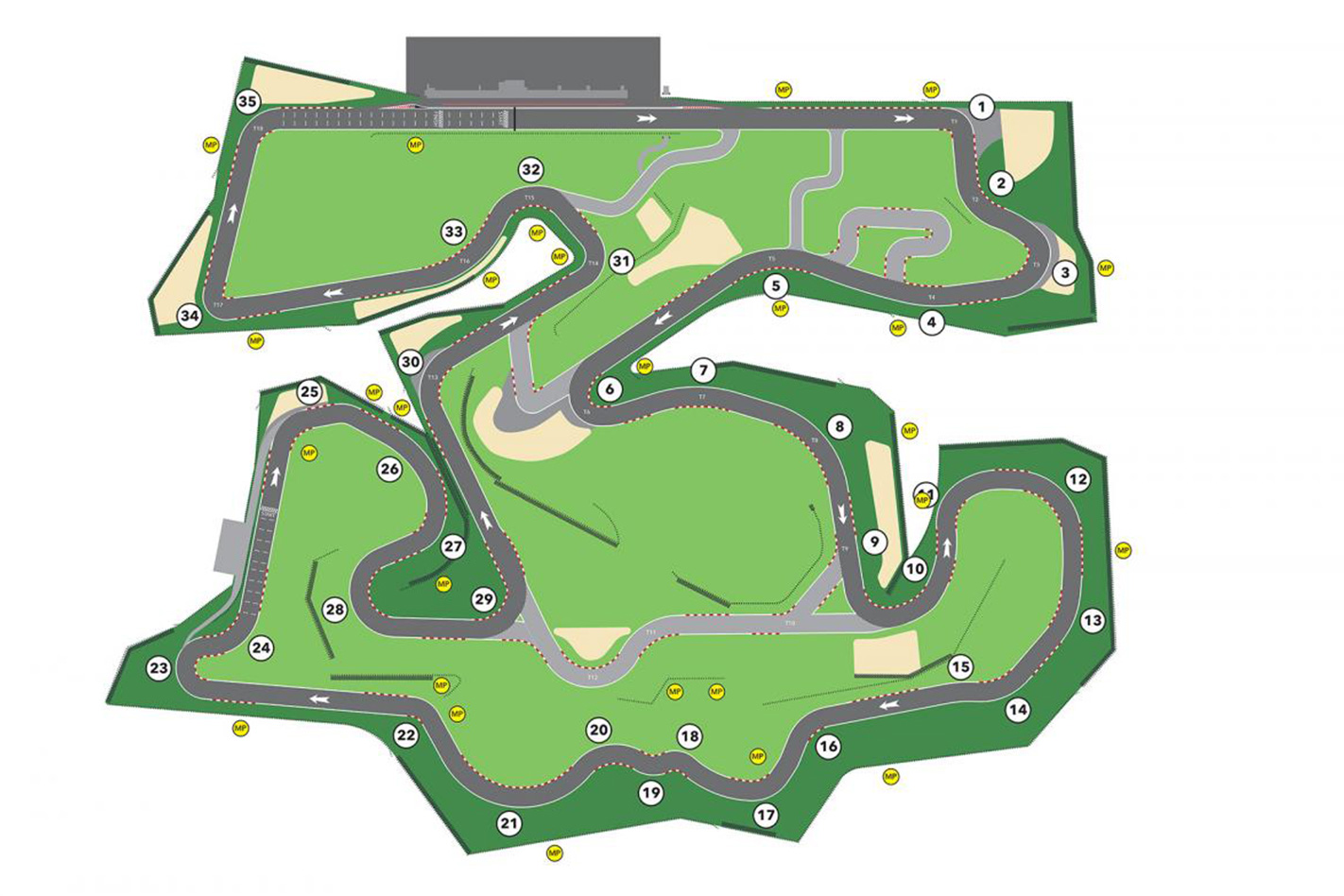
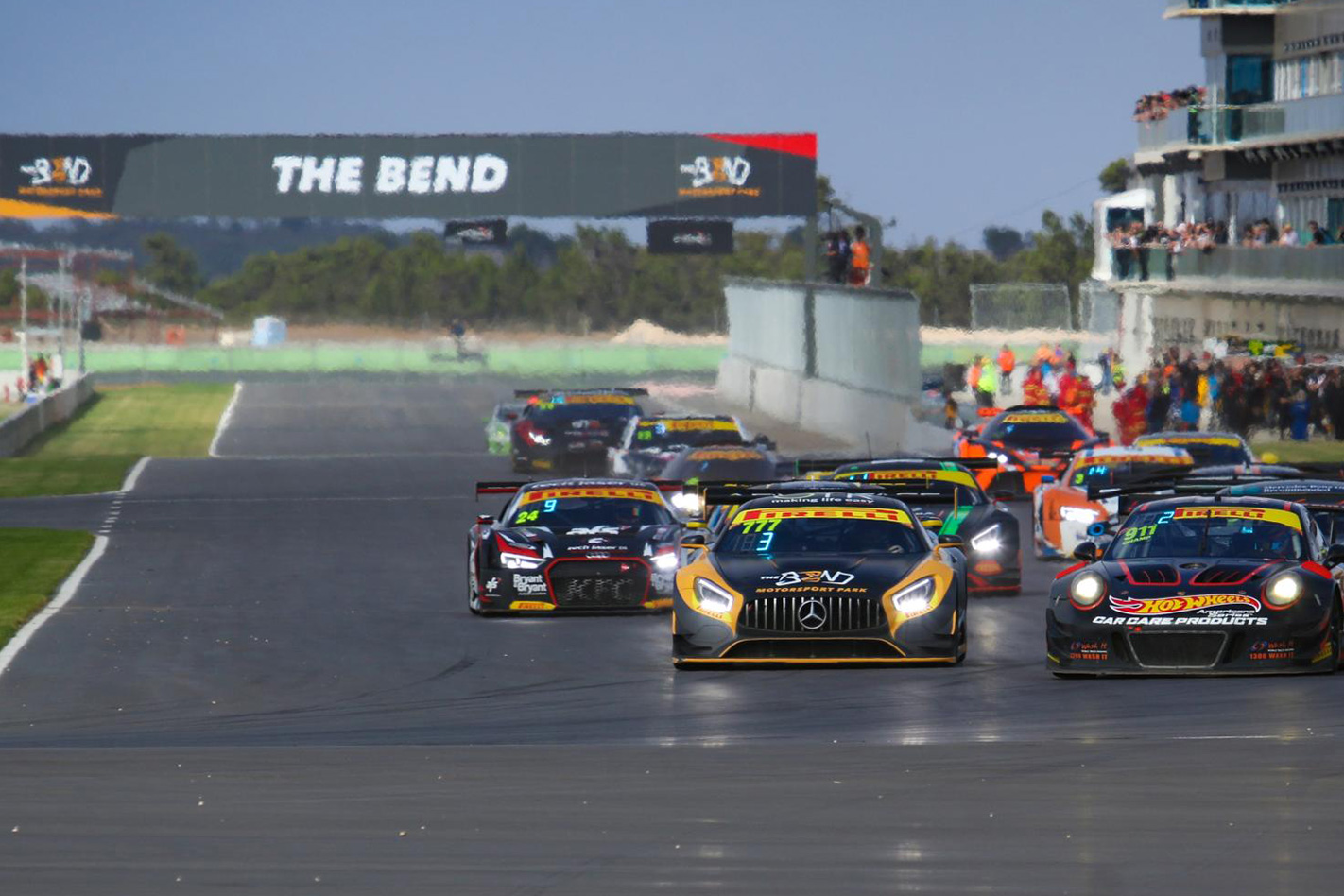
The International layout, measuring 4.9-kilometres, is probably the more enjoyable of the two we tasted. It’s the same as was used by the Supercars circus when it visited, and includes a fast, blind right-hander that demands bravery and commitment. Passing opportunities are also rife throughout the lap.
Touted as the second-longest permanent circuit in the world, the longer GT layout is a mental workout, with a lap stretching to around four minutes with an average punter behind the wheel of a fast road car. The top half of the circuit, which forms the extended track, while including some notable bends, can feel like length for the sake of it and you’ll value every kilowatt at your disposal here. That said, the sense of accomplishment from a cleanly executed lap on the full GT circuit is massive.
Almost every great circuit in the world has one common element: elevation change. This posed a conundrum for the team behind the circuit, who had a piece of land that was as flat as it was large. As a solution, they flipped the track layout onto a more rolling part of their acreage and then created 85-metres of elevation change around the circuit by moving earth – literally. The results are impressive, with multiple blind crests, and mid-corner drop-offs, but without an artificial feel.
The track surface is unlike any other bitumen or tarmac that I’ve witnessed before. It was billiard-table smooth, and along with providing impressive levels of grip, didn’t shred tyres. Much work has been done to ensure green grass lines the circuit, but the circuit was still rather dusty during our visit, an issue the management team is working to solve.
Sure, there will be those that would have preferred the track be built in someone else’s backyard, but it’s likely The Bend will have a positive long-term economic impact on the region. A total of 17,100 race fans turned up for the Sunday Supercars race at Tailem Bend, bolstering the region’s population tenfold in a single day. Throw in more international events, and the cash will start flowing into the hotels, motels, restaurants and shops of the area more regularly.
It’s not even finished yet, and The Bend is already the best motorsport facility in the country. Its benefits for the Tailem Bend region, and Australian motorsport will be indelible, and it needs to be seen to truly appreciate the scale of it all. Hats off to the Shahin family in realising their vision. It’s truly world class and will only get better.
WHAT IS IT
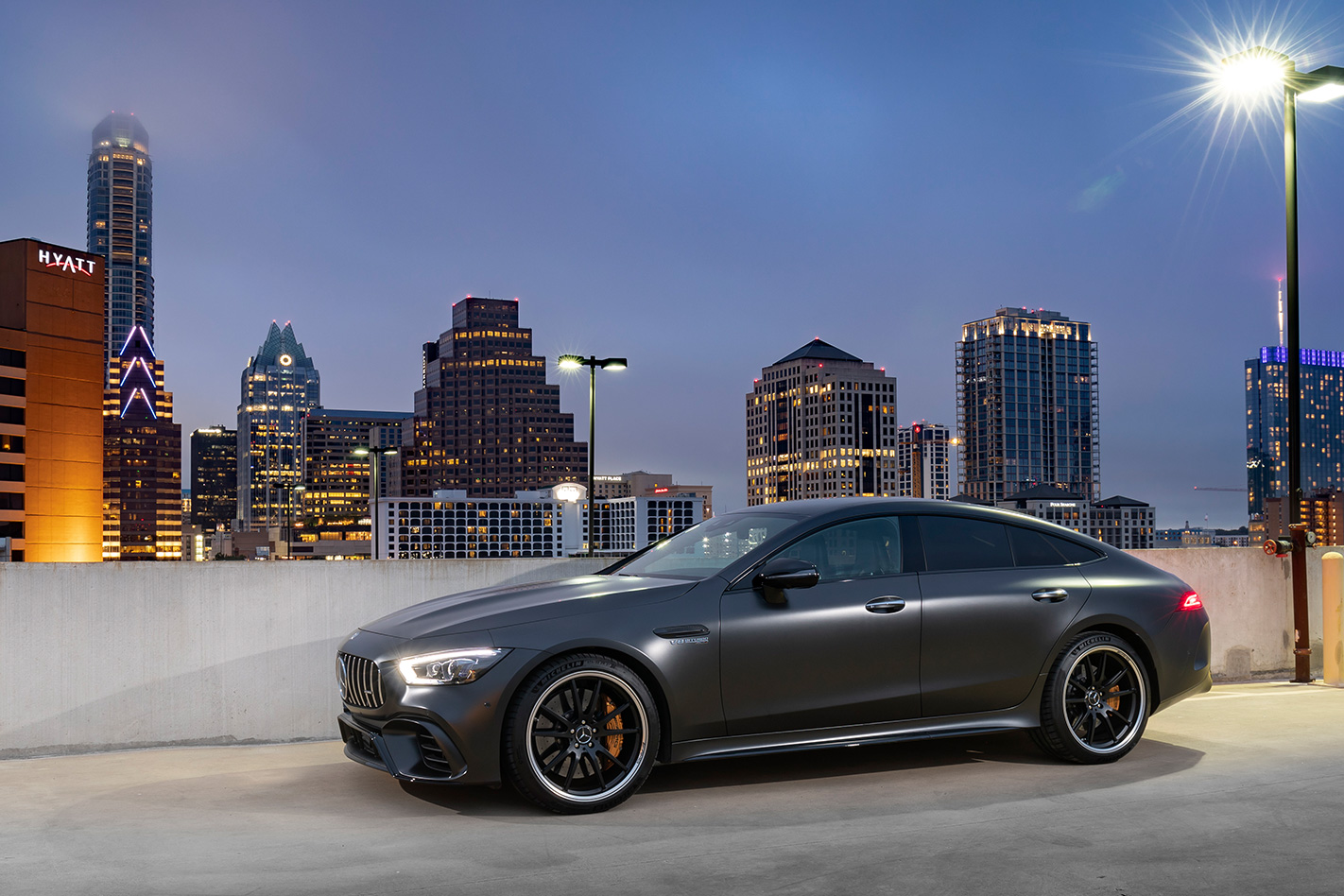
A four-door, four- or five-seater super sedan, and the third dedicated model line produced by AMG, rather than a reworking of an existing Mercedes-Benz vehicle. Despite the name, it shares little with AMG’s GT line; instead, it’s closer to an E63 S in a sharper suit, and, thanks to the swooping roofline, is positioned as a replacement for the CLS AMG 63.
WHY ARE WE TESTING IT
The international launch in Austin provided the F1-spec Circuit of the Americas for track testing, and some good roads in the hills above. Besides, it’s hard to resist some down-home Texan hospitality.
MAIN RIVALS
Audi RS7 Performance; BMW M6 Gran Coupe; Porsche Panamera Turbo
THE WHEELS VERDICT
AMG seems to have finally realised customers want a comfort mode that actually provides a degree of comfort, and the new GT 4-Door Coupe delivers that, as well as real usefulness as a four-seater grand tourer. But it’s the duality of character, the ability to take you deep into a thrilling dark side, that really defines this car. Monstrous torque, huge traction and lateral grip, plus a fiery top end make it wickedly satisfying to drive fast. The cabin feels expensive and special, while the liftback hatch and folding seats give it proper load-carrying versatility. It’s AMG’s most complete car to date.
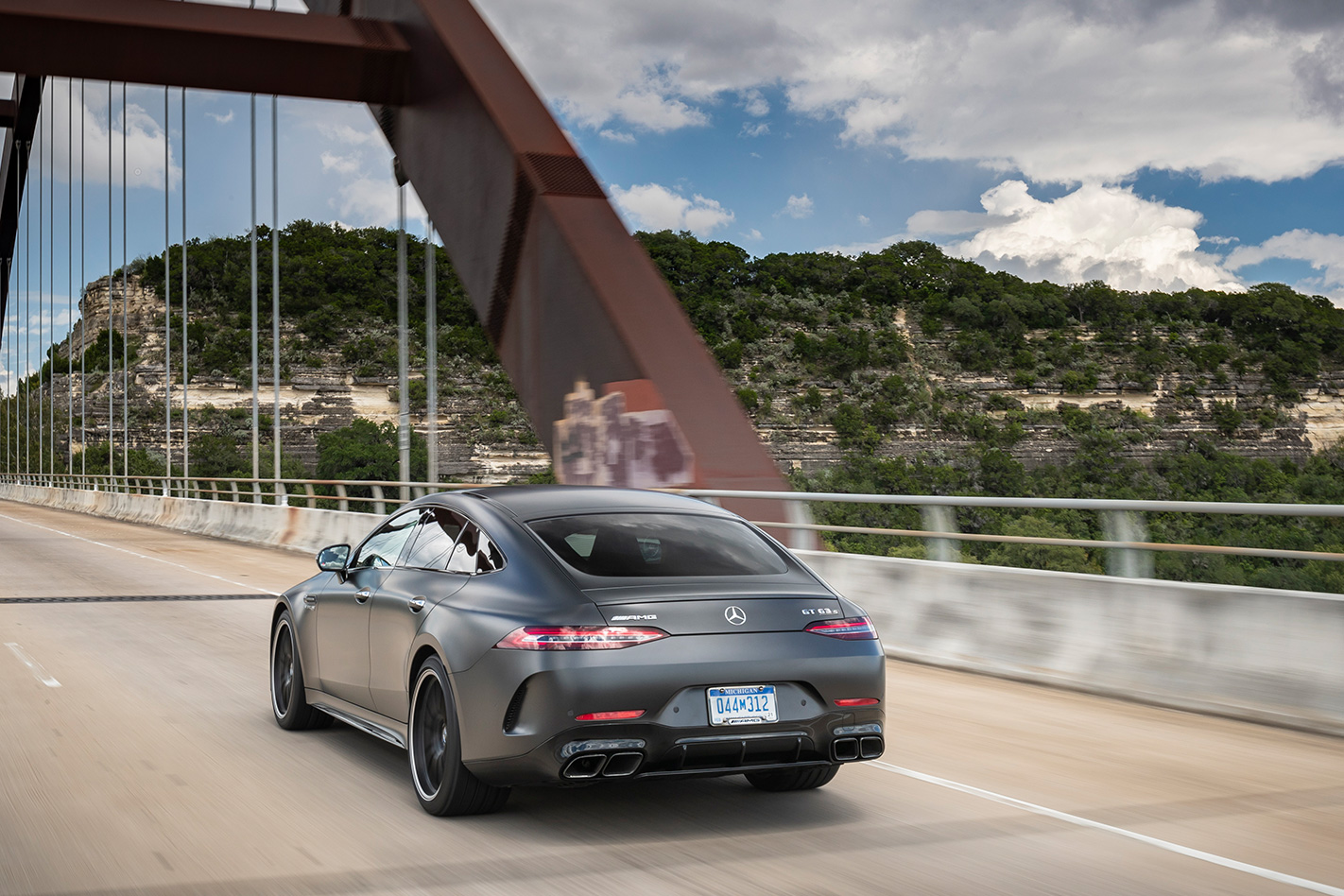
PLUS: Twin-turbo V8 hits new highs; chassis switches between compliance and performance; interior comfort and presentation; load-carrying ability. MINUS: No touch screens or voice-controlled MBUX user interface; rear seats have limited under-thigh support for taller occupants
THE WHEELS REVIEW
THE rotary controller used to select the drive modes of the new AMG GT 4-Door doesn’t move with quite the crisp precision you may expect from a circa-$290,000 super sedan (or should that be super-liftback?), but that doesn’t seem especially important right now. What really has my attention is the word glowing in the dash, arrived at via the selection of Race mode, combined with a button-push for ESC Sport. The displays shows ‘Master’, part of the system intended to outline the recommended driving skill for each combination. It opens with Basic, moves to Advanced, steps up to Pro, and tops out with that term making me just a little uncomfortable.
This is the setting that ramps the powertrain to its most aggressive, the damping to its firmest setting, and allows the stability control its longest leash. But Master? I’m a master of precisely nothing; that accolade should be reserved for men like the bloke climbing into the AMG GT R in front of me, German tin-top champion Bernd Schneider, who will lead our trio of cars for hot laps around Texas’s Circuit of the Americas.
Minutes earlier, Schneider had assured me that the Master setting is entirely suitable: “For sure, you’ll slide, but the intervention from the car is very subtle; hardly anything at all if your corrections are okay…”
Right then; I’ll take his word for it. After all, this all-new offering from AMG only has 470kW, 900Nm, and the circuit is fearsomely fast in most places, and technical in others. What could go wrong?
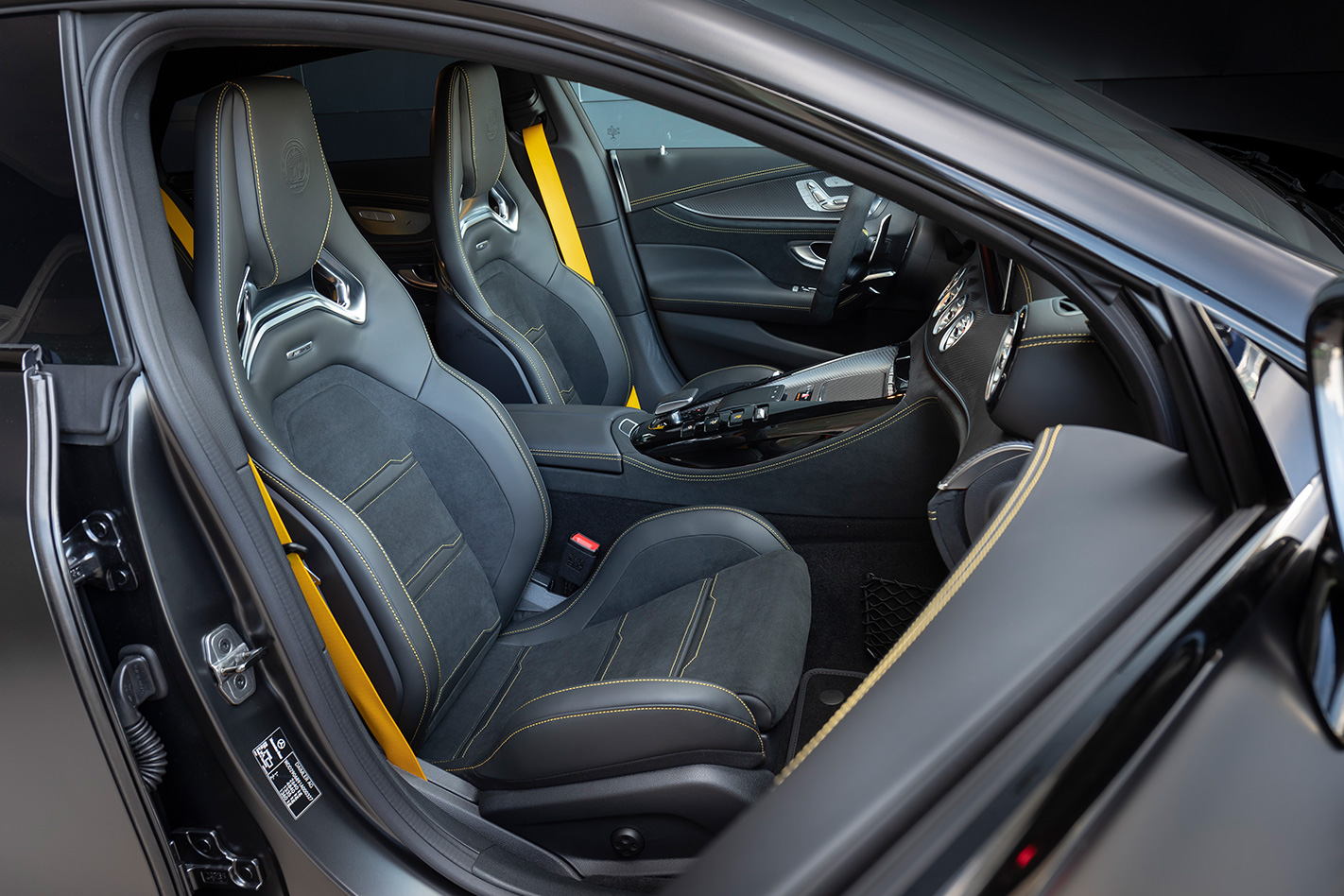
As we idle in pit lane waiting for our session, I reflect on truth-in-naming policies, and can’t help but think there’s a little sleight of hand here. The Mercedes-AMG GT 4-Door Coupe 63 S, to give it its full moniker, is unrelated to AMG’s GT line in anything other than styling cues and some interior inspiration. That car, in its five-variant line-up, is a rear-drive, rear-transaxle layout. This new model is neither of those things. It’s an all-wheel driver built on the MRA architecture that underpins E Class and CLS. It’s simplest to see it as a lower, swoopier version of the E63 S with the wick turned up. Effectively it’s a replacement for the AMG CLS 63, which now tops out as a six-cylinder model with a 55 badge. But that’s not to downplay the new car’s significance as only the third dedicated model the AMG division has produced, and the first with four doors and room for the kids.
In terms of the segment into which it lands, the AMG honchos must be cackling with delight. The rivals from BMW and Audi – the M6 Gran Coupe and RS7 Performance – are both in their twilight days, with replacements still some time away. Which really only leaves Porsche’s Panamera, which, in Turbo guise, is well down on outputs, and about $90,000 more expensive. The Turbo S E-Hybrid has AMG-rivalling outputs, but costs a whopping $460,000. “Open goal” is the term that springs to mind.
And that bit about wicking up the 63 S? The twin-turbo 4.0-litre in this installation matches its previous torque record of 900Nm (in the AMG S63 super limo) but takes power to a new all-time high, with 470kW. So yes, comfortably more than even the most hardcore of the two-door line-up, the GT R (430kW/700Nm) that Schneider is strapping into.
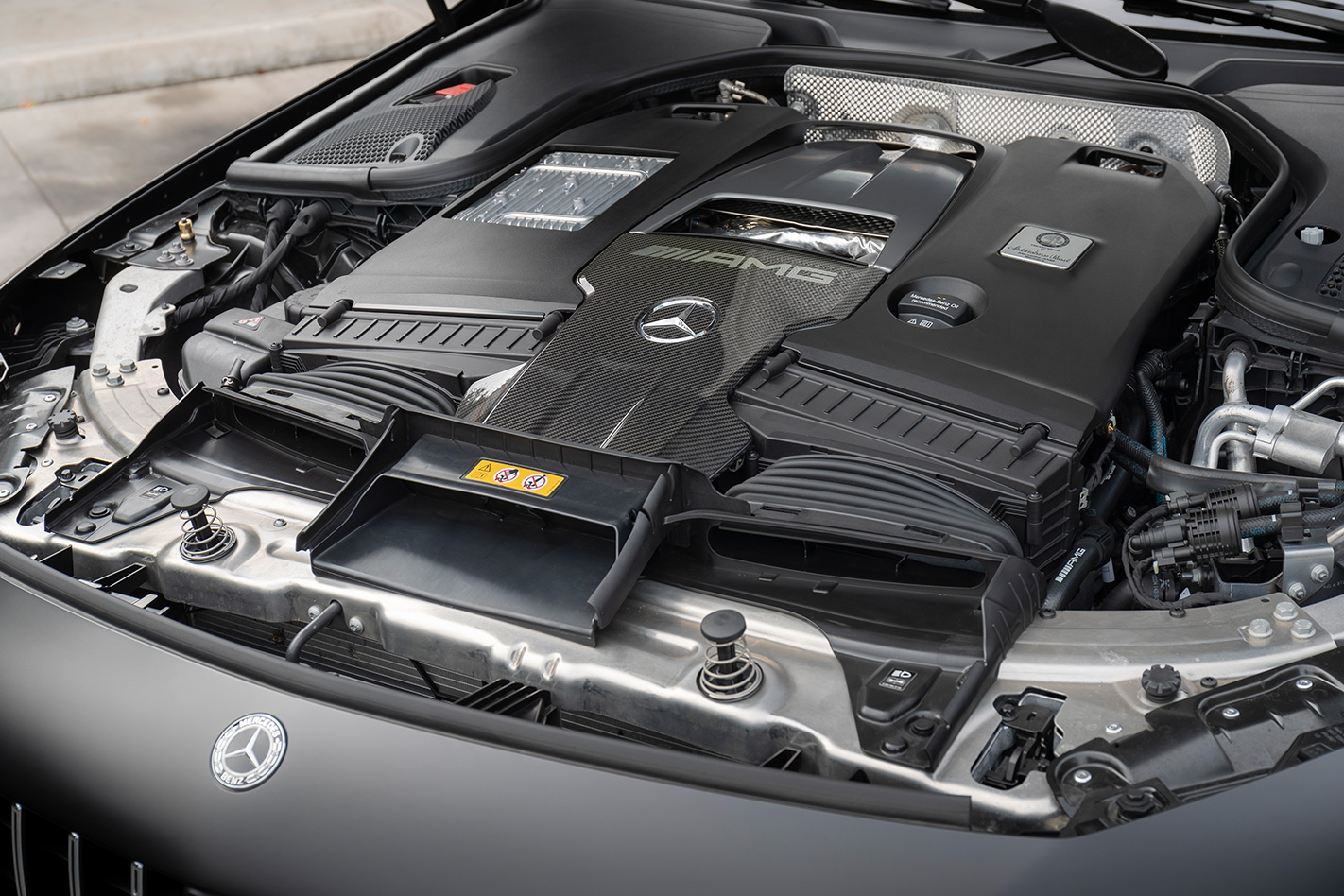
Curiously, as we accelerate hard onto the main straight and fire toward the uphill braking area for the turn one hairpin, 900Nm doesn’t feel ludicrous, it feels about perfect. The strength of this engine through the midrange feels monumental, the upper reaches found via a torrent of grunt that’s delivered with utter linearity. Race mode opens the switchable exhaust, and allows the V8 to properly open its lungs. There’s both ferocity and culture intertwined in the note, even if it doesn’t have the aural crispness of an atmo or supercharged engine. And if you wanted to be picky, I guess you could point out that there’s not a great deal of tonal change as the tacho makes it sweep to 6700rpm, just greater volume and intensity. Still, it seems churlish to single that out, and to focus on that leaves less brain processing power to deal with the rest of the package, which is just over two tonnes moving at indecent speed. AMG claims 0-100km/h in 3.2sec, which sounds credible, thanks to the traction advantage of all-wheel drive, and the fact we’ve recorded 3.3sec and 0-400m in 11.3sec from an E63 S. Down the front straight, the digital speedo flicks past 270km/h before a big stomp of the optional carbon ceramic brakes hauls it down with rock-solid stability. Autobahn Vmax is 315km/h.
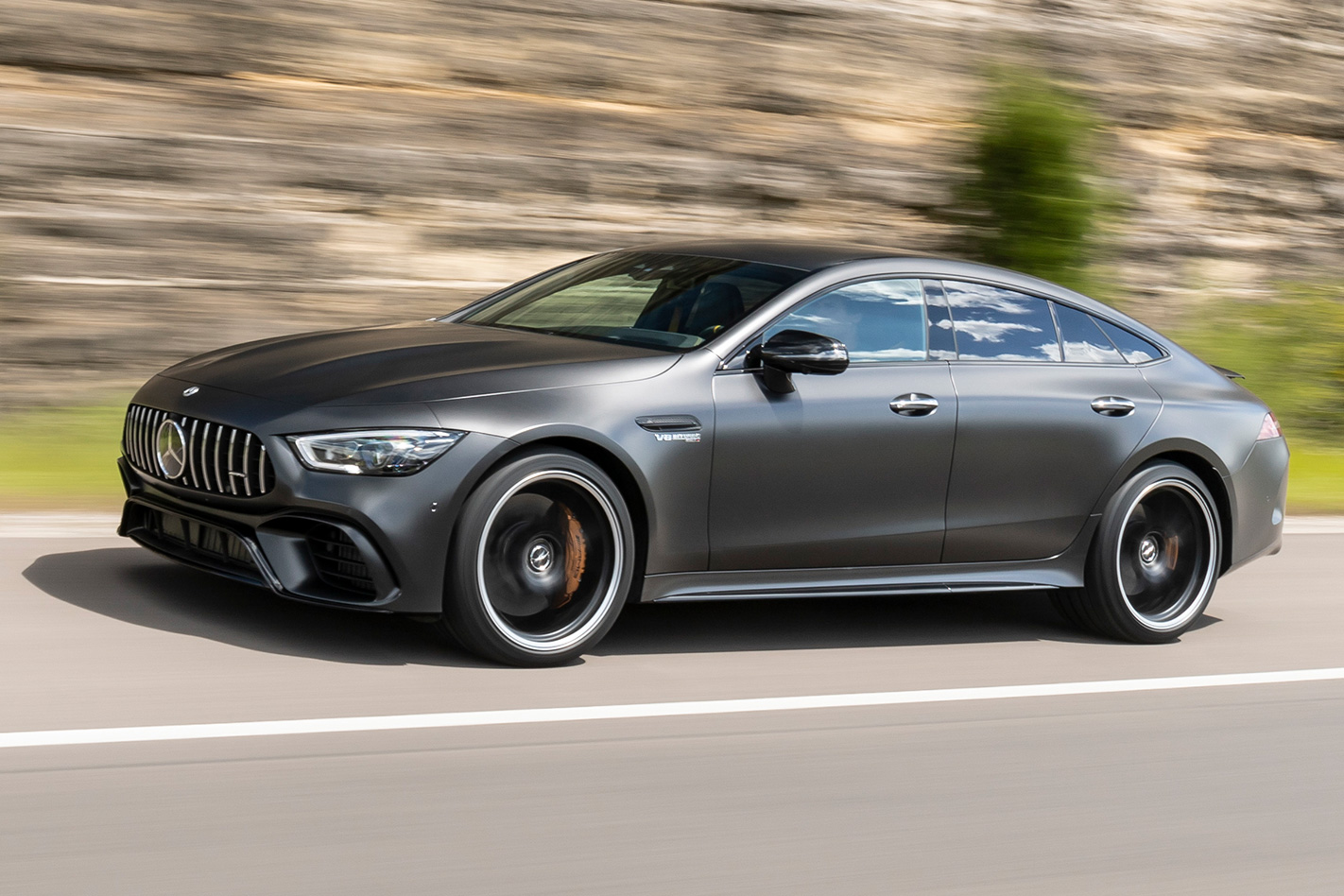
So far, so awesome, but also in line with expectation. What I wasn’t counting on was the level of steering connection and confidence levels this car provides. I’ve always found the GT coupes and convertibles a little aloof and detached in this area, despite the fact it runs a hydraulic steering rack aimed to optimise these very attributes. The GT 4-Door runs an electro assist system, yet it instantly feels ultra-connected to the pointy end, with a chunky weighting and crisp response. Maybe the less cab-rearward design also contributes to the four-door’s sense of cohesion and control; whatever it is, it makes it instinctive in terms finding the limit of front-end grip and managing the onset of understeer in the tight turns.
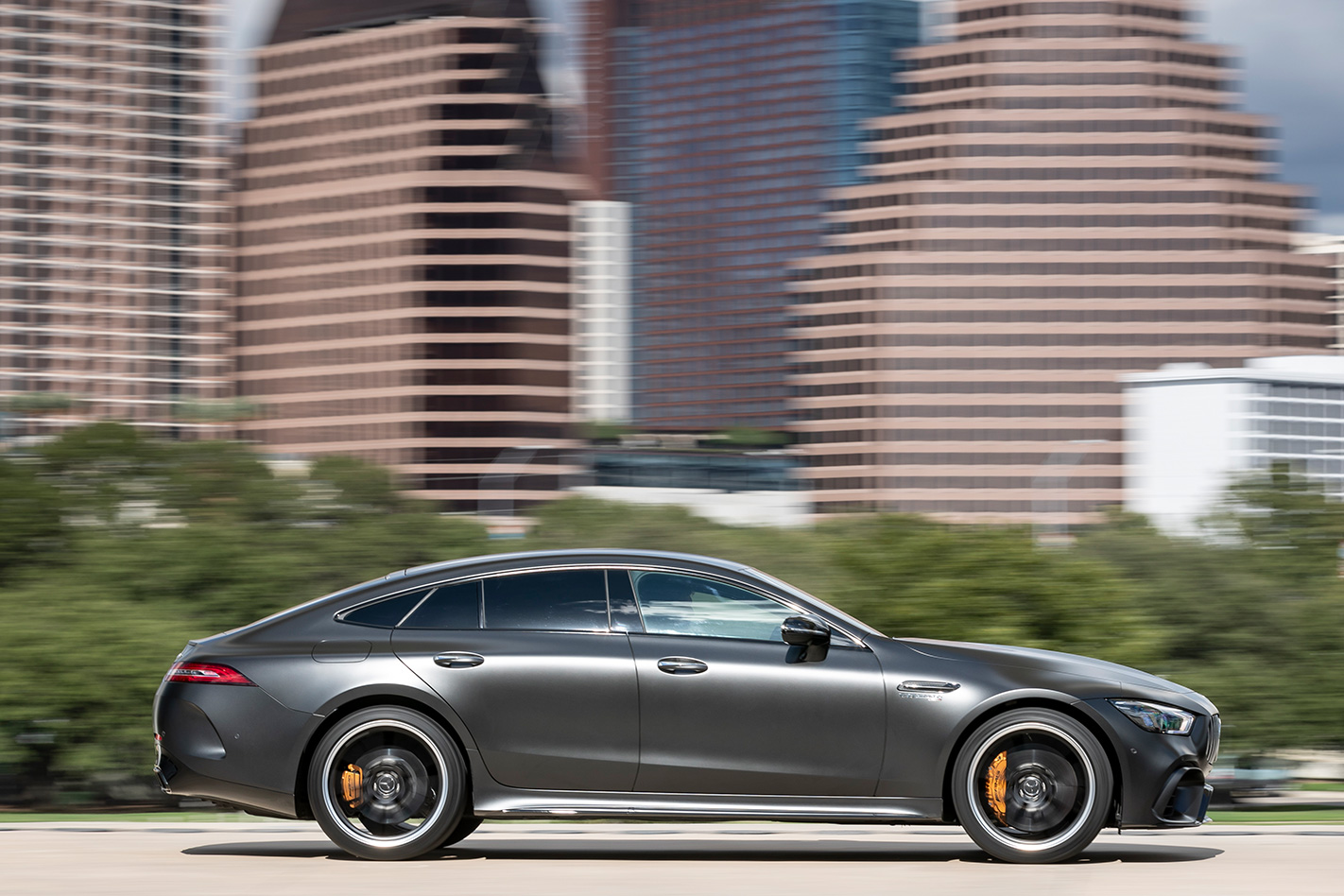
That initial front-end push is unavoidable on a track in a car of this size and weight, but the sense of agility and keenness of turn-in is helped by the fact there’s four-wheel steering (as fitted to the GT C and GT R) helping those vast rears pivot the back end. As for actually deploying all that grunt in the exit phase, the GT 4 is a beast. The constantly variable all-wheel-drive system only gives the fronts what they can use, so the overall balance of the car feels properly rear-driven, the way it should in an AMG. As I start getting harder and earlier on the power in an effort to stay on Schneider’s tail, the rear starts lighting up and progressively stepping out, just as he promised, with no apparent retardation of spark. It’s all telegraphed with utter transparency.
The Senna Esses complex at CotA, into which the F1 boys pile at a scarcely believable 280km/h, is a great test of the GT 4’s body control and agility. In terms of the former, it’s not absolute; there is a small lateral shrug of suspension compression as the Michelins bite, in line with what you’d expect of a super sedan expected to operate in the real world. But it’s this bit of compliance, even in the stiffest chassis setting, that also allows the car to absorb the saw-tooth kerbs, as opposed to crashing over them.
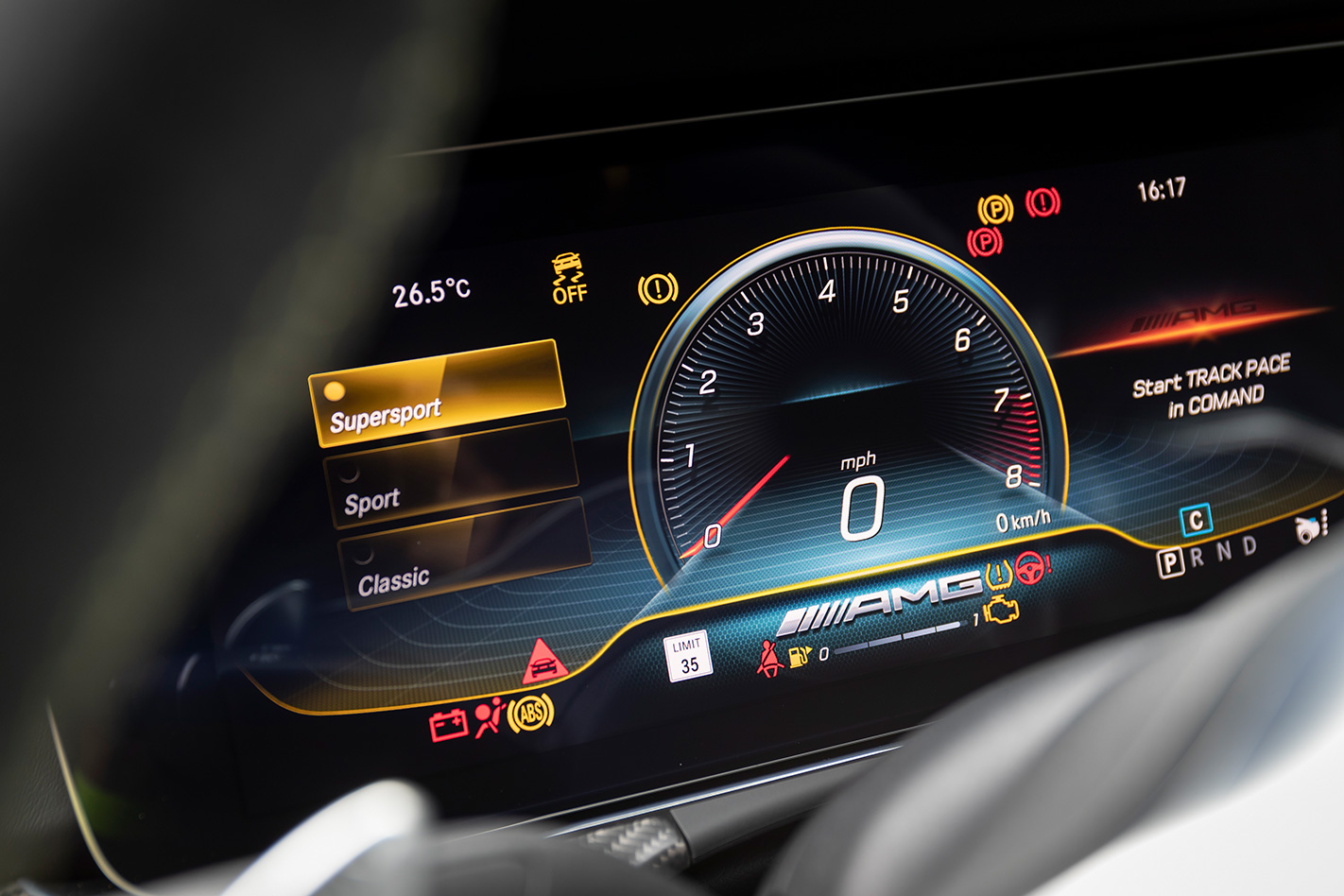
Later, away from the circuit, up in the hills above Austin where Texan super-juicer Lance Armstrong still cycles, the full magnitude of AMG’s achievement becomes clear. In its most benign setting, the suspension has just enough travel to breathe with the road, and even sharp edges don’t clang through the body the way they have in previous AMG cars. The nine-speed transmission is expertly calibrated for road driving, slipping quickly through the ratios to make full use of the huge torque reserve and restrain engine sound and fuel consumption, if that’s what your mood demands. Equally, each adjustable parameter is ever-ready to unleash hell when the opportunity presents itself. I found myself unable to extract everything the car can give in these conditions, purely out of deference for the blind corners and occasional Armstrong impersonator. But even at seven-tenths, there’s real satisfaction to be had, because everything about this car feels to be meshing so cohesively – steering feel, power delivery, braking strength and pedal feedback, body control, bump absorption, engine note; I could go on.
On reflection, maybe Bernd Schneider wasn’t the only master out on the circuit earlier. You could easily argue there was a group of them, all with those AMG letters on their rumps.
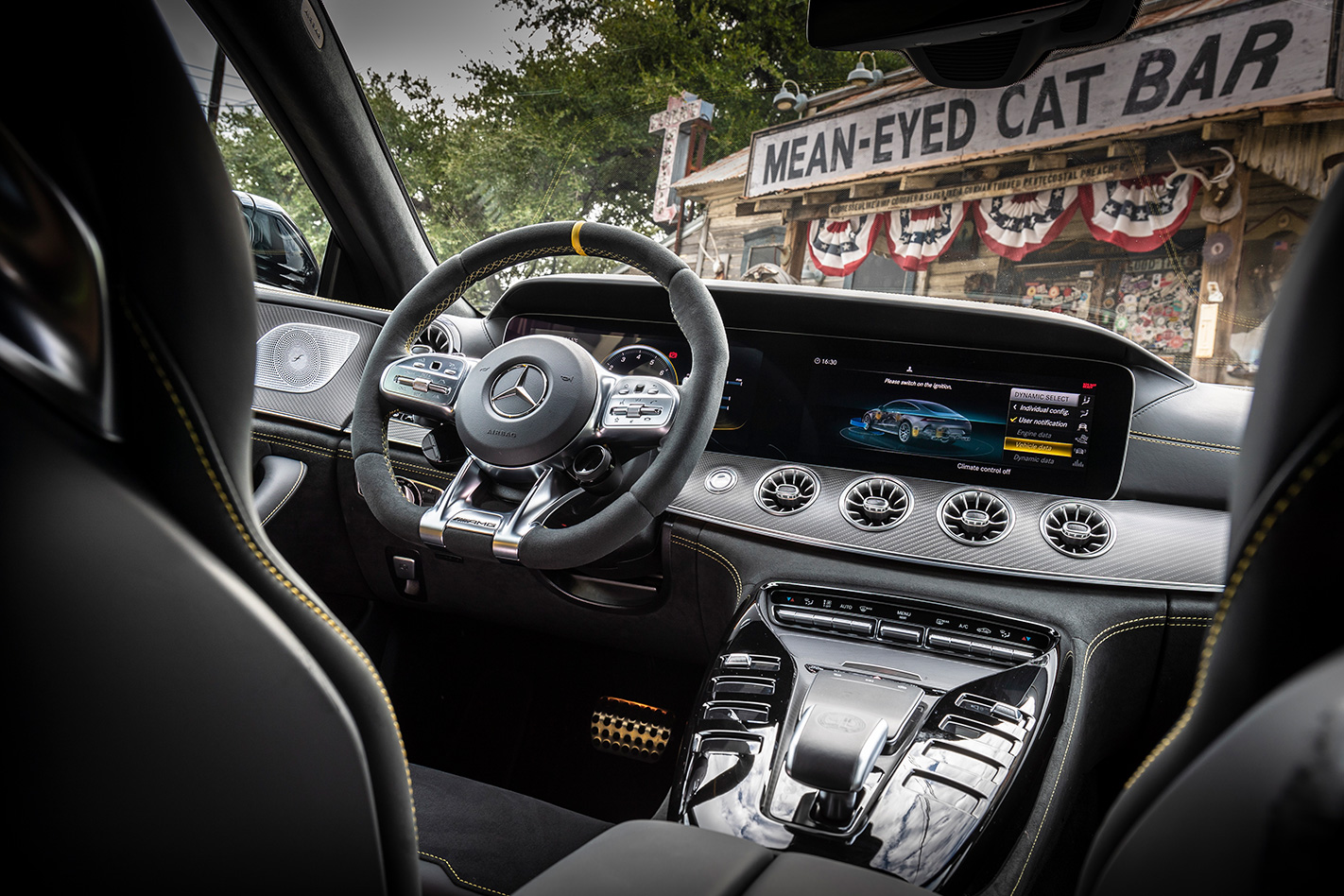
SPECS
MODEL: Mercedes-AMG GT 4 Door Coupe 63 S ENGINE: 3982cc, V8 (90 degree), dohc, 32v, twin turbo MAX POWER: 470kW @ 5500-6500rpm MAX TORQUE: 900Nm @ 2500-4500rpm TRANSMISSION: 9-speed automatic KERB WEIGHT: 2045kg 0-100km/h: 3.2sec ECONOMY: 11.2l/100km PRICE: $290,000 (estimated) ON SALE: Q2 2019
You might remember a LEGO Barra engine we wrote about back in early August, after a video of the miniature Ford engine surfaced.
If not, here are the basics: a Queensland man who we know as Leo has built a ‘functional’ model of Ford’s mighty 4.0-litre Barra Turbo, complete with moving pistons and a spinning turbo.
Even Leo himself admits it’s not perfect, but he did the whole thing without modifying any pieces and it would almost certainly look spot on to the casual observer.
We managed to track Leo down, and it turns out this isn’t the first – or last – engine he’s built.
“My first LEGO Barra was around 2010,” Leo tells us. “It was 1 brick wide x 4 long NA engine from my trusty BF Falcon.”
Leo, a self-described “true-blue Aussie” is still disheartened with the loss of our local car manufacturing industry, and celebrates what we have left through both the LEGO projects, and his own garage. He says his own BF was the inspiration for the first LEGO engine he built.
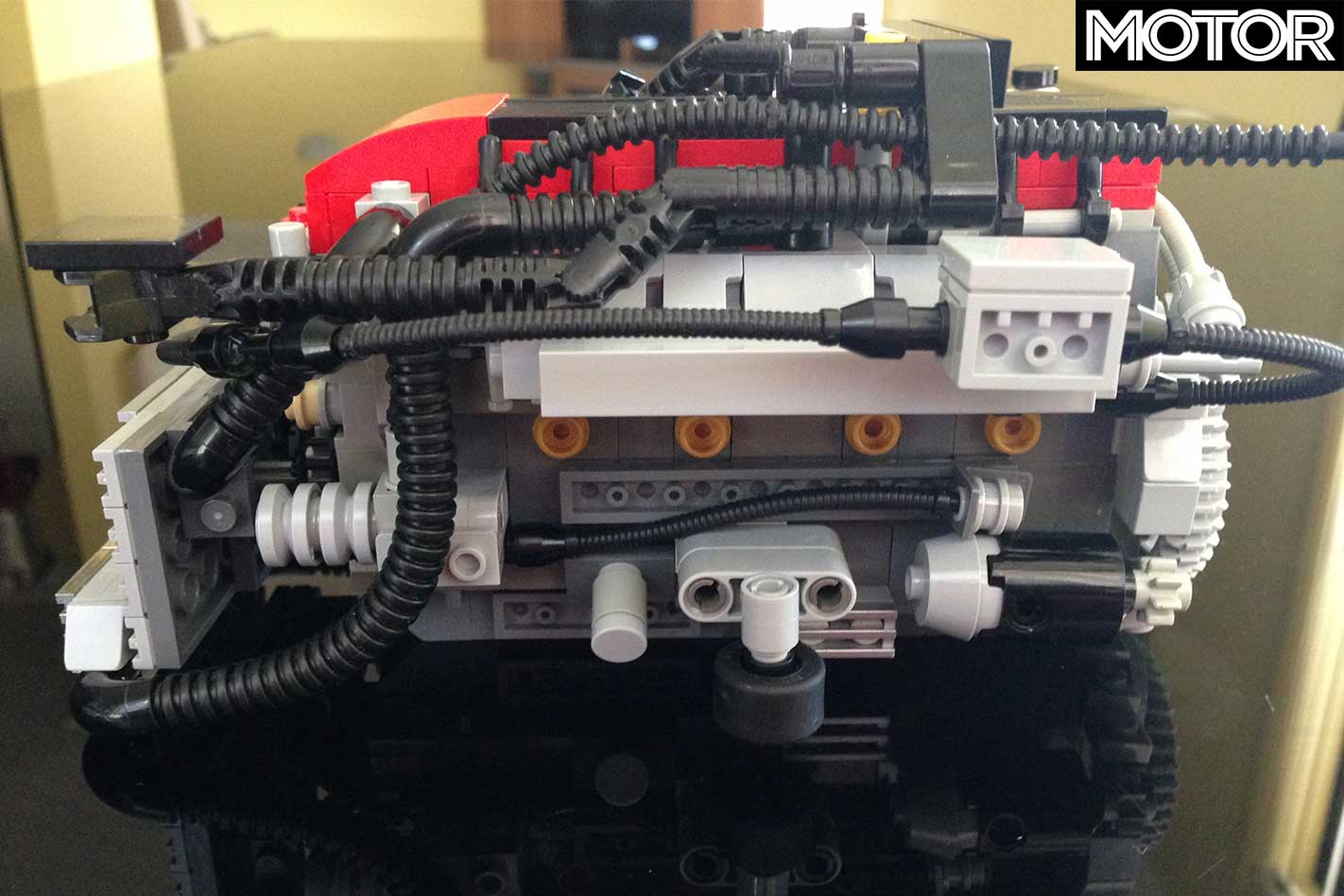
“This car was great. It went pretty hard for a NA six, never let me down, always had enough space for a family of five… and did a good burnout.”
It ended up leading to more LEGO builds, with each one gradually becoming more complex.
“Next LEGO engine was a 2-brick by 6-brick turbo Barra complete with intercooler and next a 3×9 turbo.”
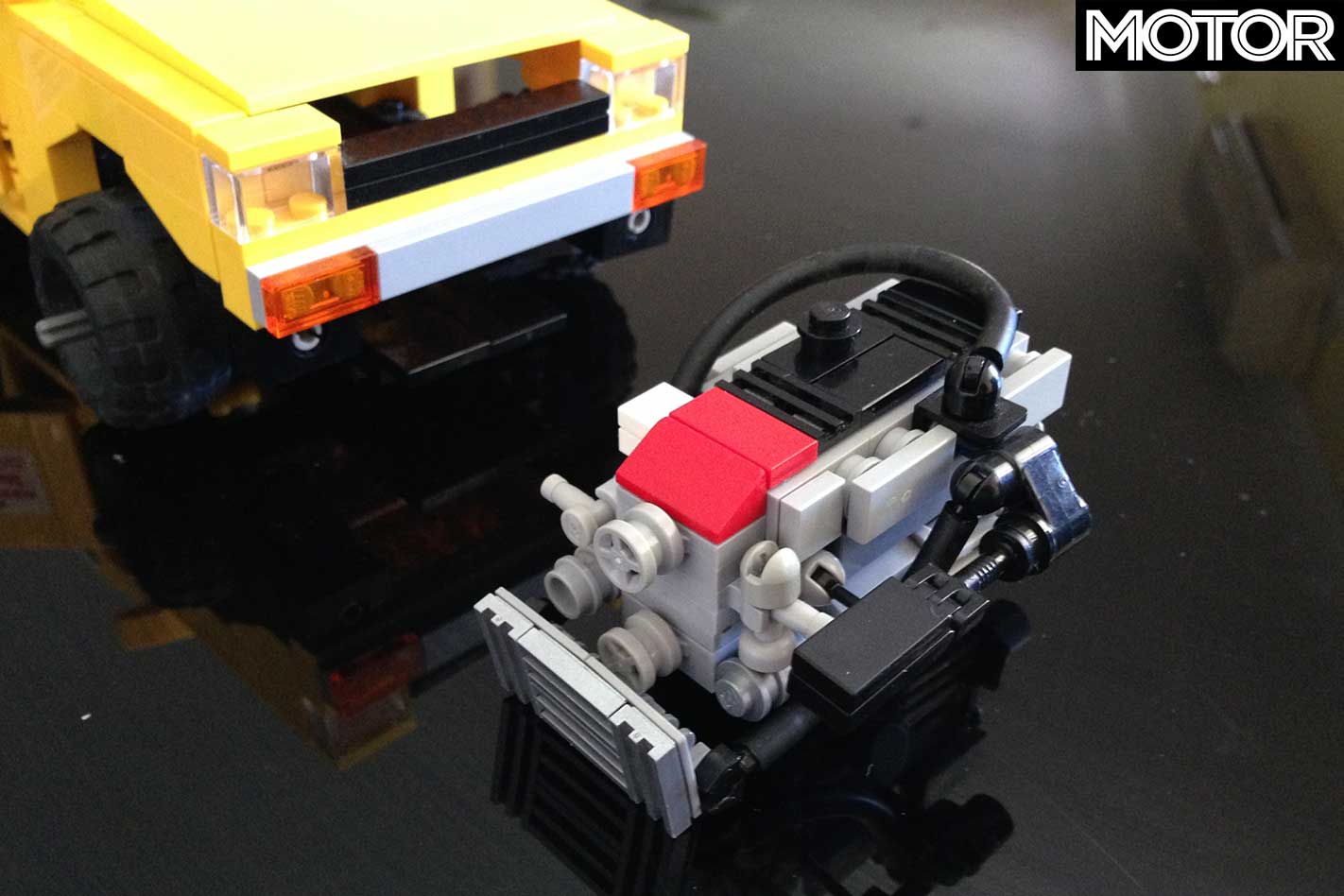
“As they got bigger they required more detail and as I didn’t own a turbo I sourced the internet for turbo engine pics. This is where I found I was not the first to build a LEGO Barra.
“There it was, a blue FPV, bigger and better than what I was building. My project stopped.”
At this point it’s 2015 and Leo had just traded his car at the time, a “perfectly good, low kay FG” in for a new FGII XR6 Turbo. This served as the inspiration for his next build, which is the one we originally found and wrote about.
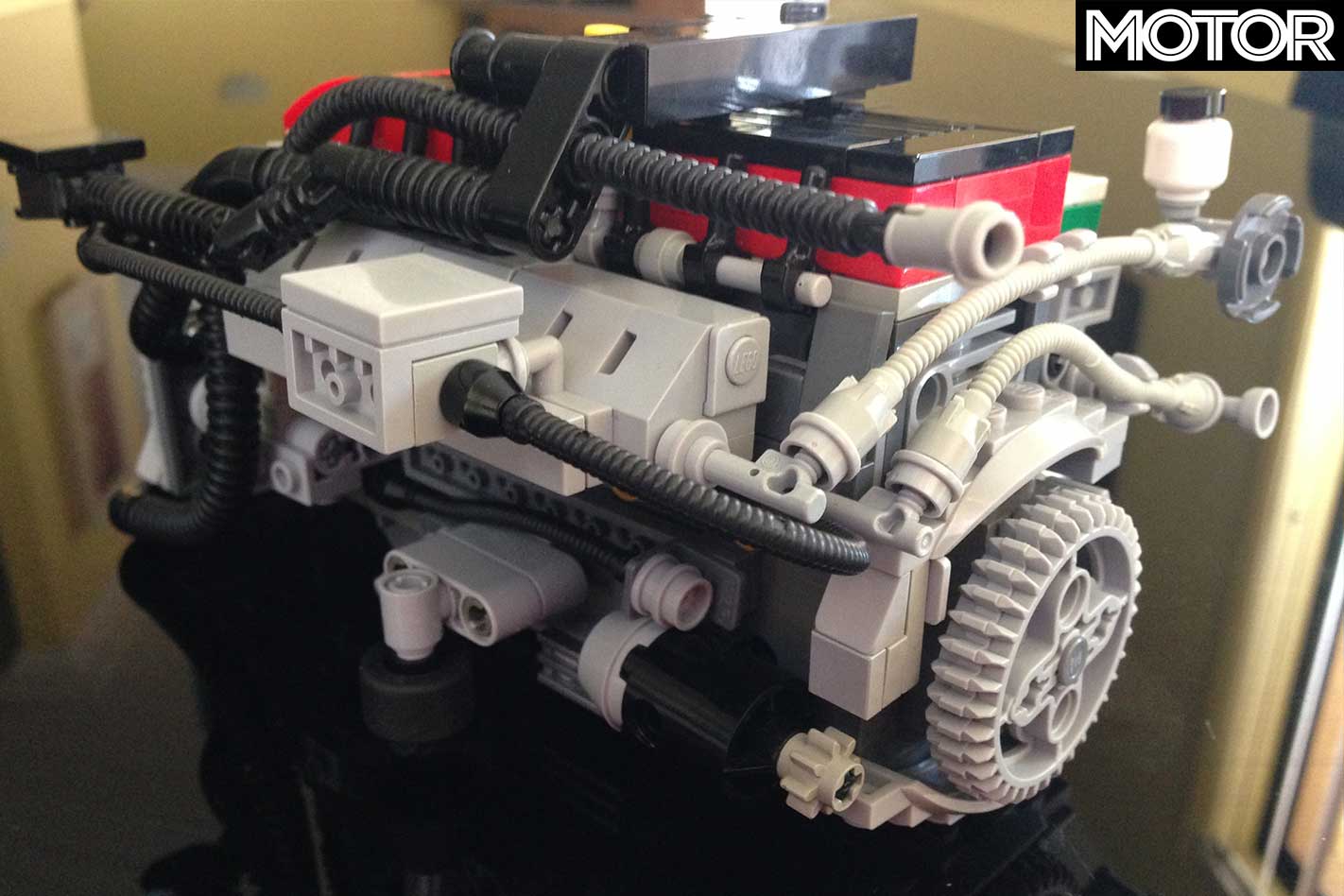
Leo says it’s about 17cm long, 12cm wide, and 19cm tall. It weighs about 320 grams, and consists of more than 650 pieces. Leo estimates it took more than 40 hours overall, and cost more than $150 due to needing to order specific parts to avoid modifying any.
He tells us he has another couple of engines on the way, so you can be sure you’ll hear about it. In addition to that, he’s entered the most recent ‘red’ Barra onto the LEGO Ideas website, where if it receives enough support, LEGO may consider implementing it as an official set.
We’ll keep you in the loop here at MOTOR – stay tuned.
