
1. Everything has changed
But at the same time, it’s stayed the same. Forester now sits on the Subaru Global Platform that first appeared under the current Impreza and XV, and the rest of the car has been overhauled to suit. It’s a big step forward, but Subaru hasn’t thrown the baby out with the bathwater.
Much of what has made the Subaru Forester appealing in the past to a legion of buyers has carried over. It may be all-new, but there’s a likeable familiarity about the fresh Forester.
2. It’s grown
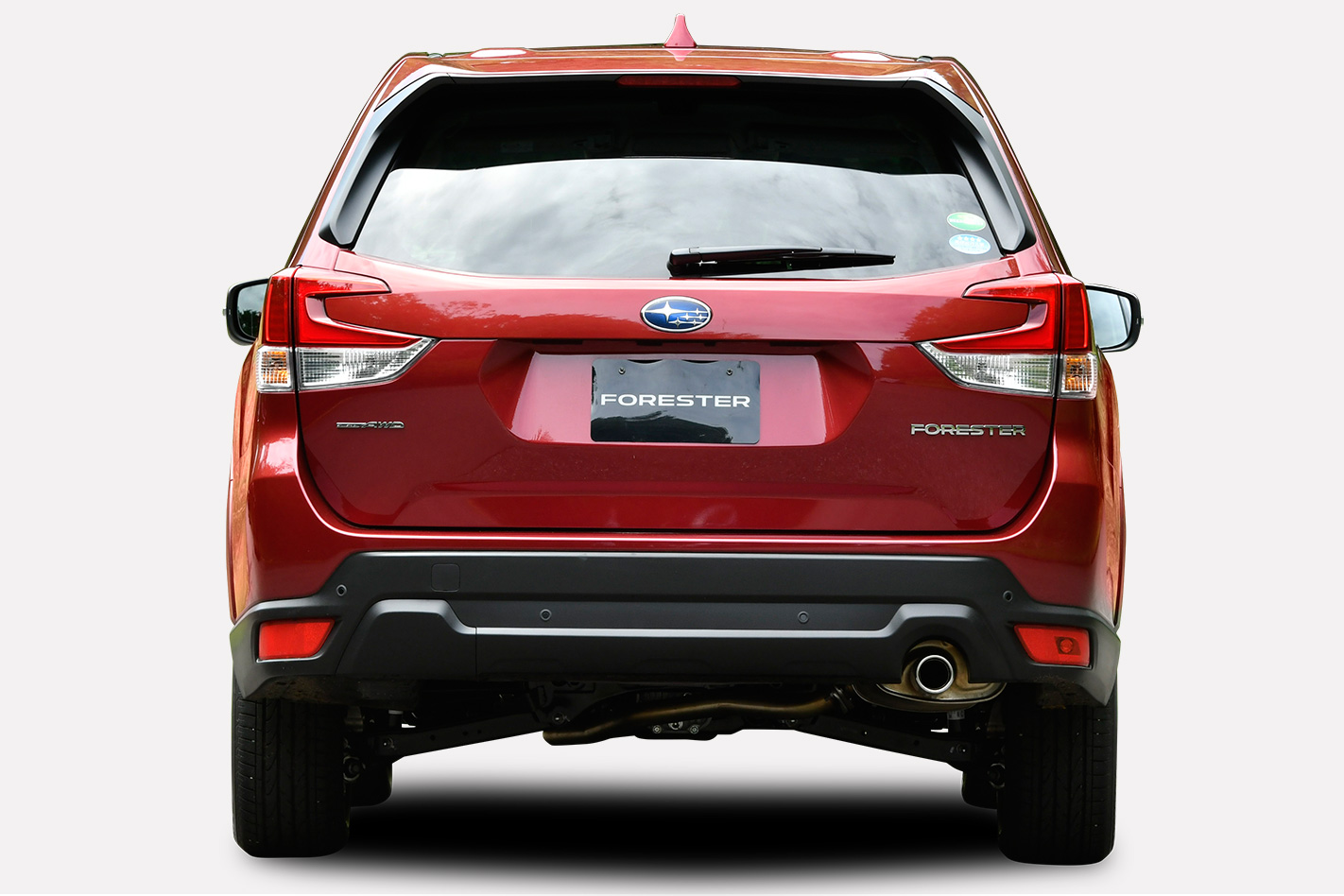
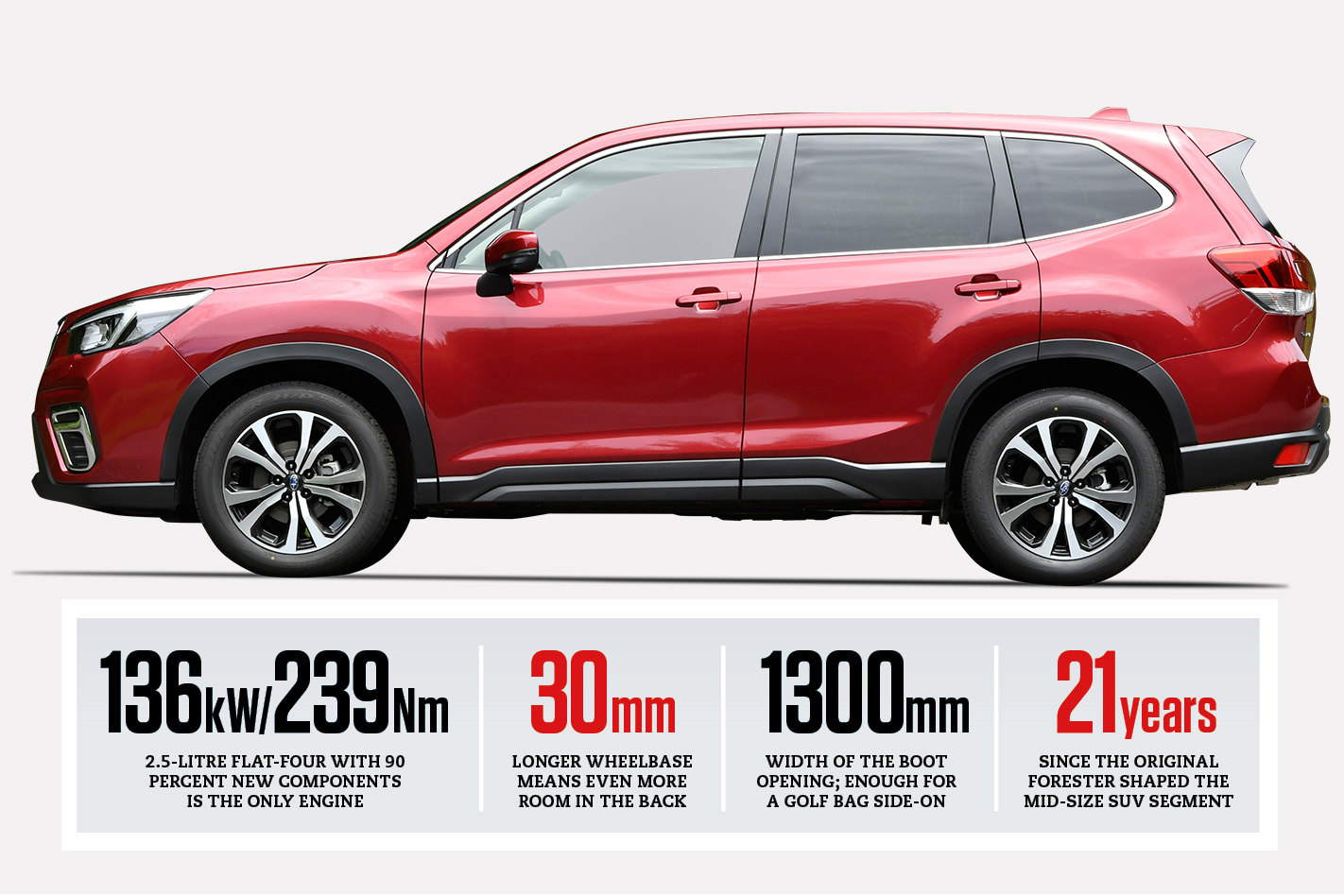
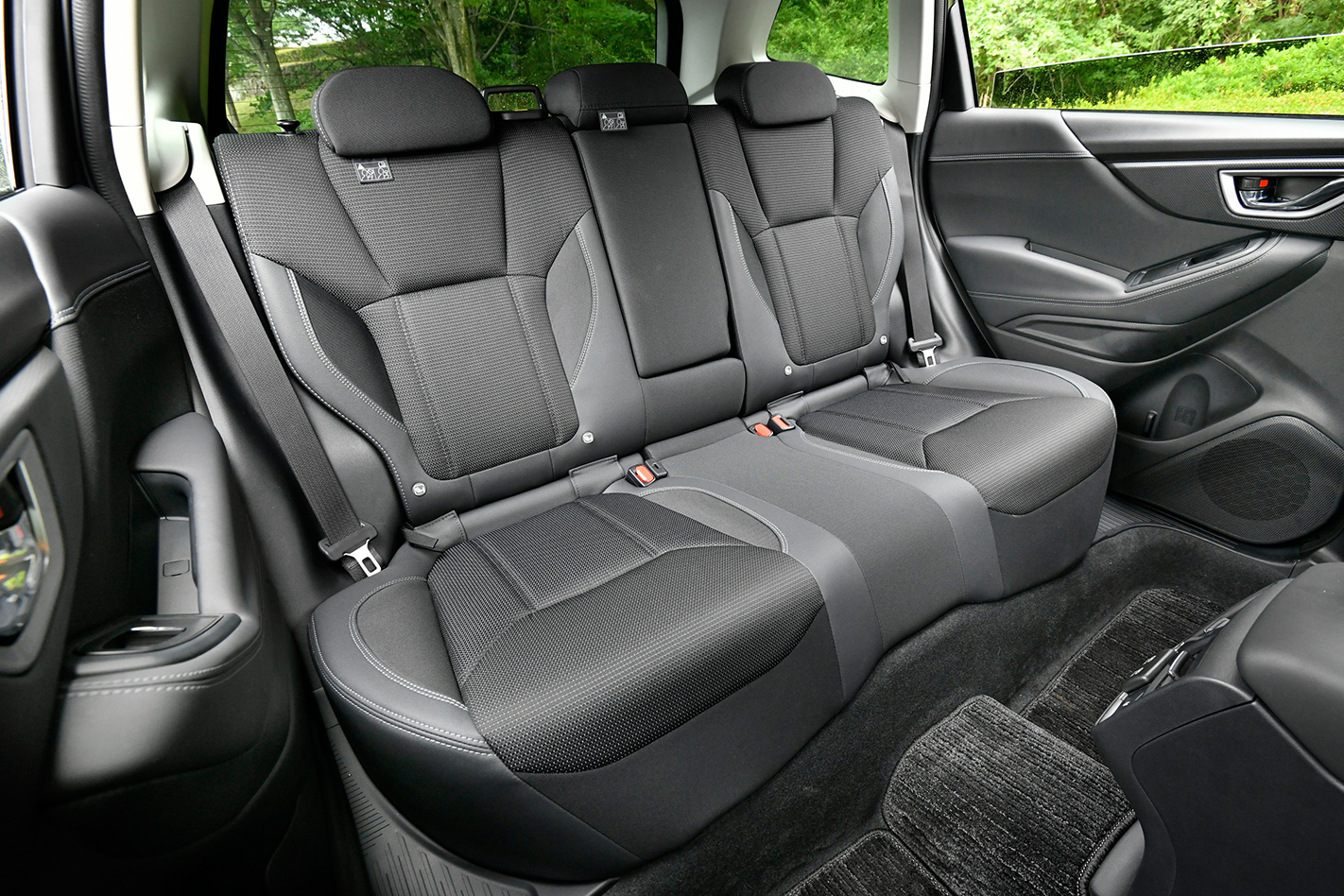
The Forester’s body is now 20mm wider and 15mm longer, and 30mm has been added to the wheelbase. This brings 20mm more room between front occupants’ shoulders, and 33mm more rear legroom – a lot considering the old car was among the roomiest in its class.
Some body panels are aluminium to mitigate weight gain; kerb weights rise by between 15 and 25kg. Safety, refinement and handling benefit from 40 percent greater torsional rigidity.
3. Say sayonara to the snail
Subaru has had a rethink and rationalised its line-up by cutting the old turbo-diesel and the XT’s turbo-petrol engine.
Just one drivetrain will be available for the local launch; a new 2.5-litre naturally aspirated flat-four producing 136kW and 239Nm. That’s 10kW/4Nm more than the outgoing atmo unit, and fuel efficiency should improve on that engine’s 8.1L/100km claim thanks to direct injection and a Subaru-first thermo control valve that helps reach operating temperature more quickly.
The boxer still needs revs to reach its peak numbers. Full power arrives at 5800rpm and maximum torque sits at 4400rpm, and driving at those upper reaches brings out a lot of unwanted chain whine from the CVT despite claimed improvements in that department. Subaru has widened the range of the transmission and given it seven ratio steps that can be selected with paddle shifters.
It’s an adequate drivetrain for pottering about at low speeds, but some will long for the torque of the outgoing turbo engines. A mild hybrid variant with a smaller 2.0-litre engine and 48v technology is expected to join the range in 2019.
4. Not scared to get dirty
A variable ratio steering rack offers more immediate response as lock is twirled on. Beyond a quarter of a turn the weighting is heavy, and though variable racks aren’t always desirable, our quick test suggested the new model hasn’t lost the old car’s fluid handling.
A new mud and snow setting for Forester’s X-Mode system ups already respectable off-road ability, which benefits from a hill-descent control system. With 220mm of ground clearance it rivals most dual-cab utes.
5. Stay glassy
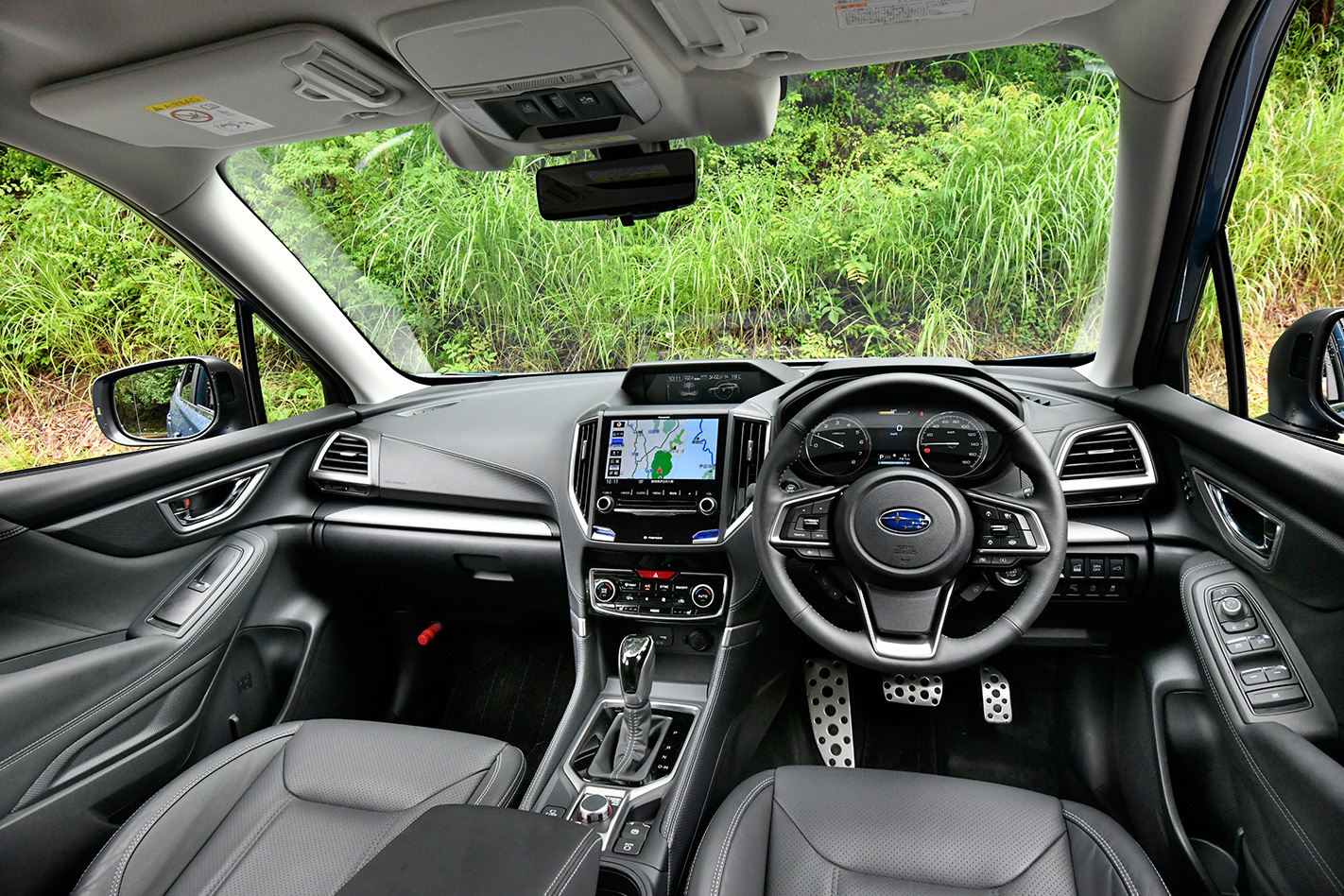
Forester’s trademark high roofline and low beltline are retained, meaning tall windows with narrow pillars for an airy cabin feel and excellent outward visibility. Inside is where the biggest changes are. The use of hard plastics has been minimised and touchpoints are notably plusher.
Major controls are logically laid out, though the wheel is still busy with 17 buttons on its spokes. Textured new materials elevate the look while preserving a hard-wearing feel.
6. It’s watching you
Subaru’s Driver Monitoring System uses a small camera, hidden in the dashboard, linked to a program that can recognise the faces of up to five drivers and automatically adjust seat and mirror positions, climate control settings and preferred display configurations based on stored preferences.
And it works impressively quickly when a new driver gets into the car. It can also check for signs of drowsiness or distraction and alert the driver.
7. Boosted boot
The boot aperture has been widened to a generous 1300mm, and the electric tailgate has been sped up to address any frustration the slug-like operation may have caused previously. There are bag hooks, a 12V socket and rear seatback releases in the wider and longer cargo area that still houses a full-size spare and now holds 520L, which is more than most rivals.
MORE: Subaru Forester Range Review MORE: Subaru Forester Specs, Range & Price
With a bigger atmospheric induction flat-six in a body pared of unnecessary luxuries, the parallels between the 2011 997 Porsche 911 GT3 RS 4.0 and 1973 Carrera RS are unmistakable. As significant variants of Stuttgart’s evergreen sports coupe go, Porsche’s final 997 had it all.
The GT3, although less powerful than the Turbo and GT2, was the most focused of 911s and the RS took that up a notch, while tipping its hat to the definitive early 911. The final 997 was the last 911 with hydraulic steering and a handbrake and history shows that each time Porsche removes technology – like air-cooled cylinders – collector interest spikes.
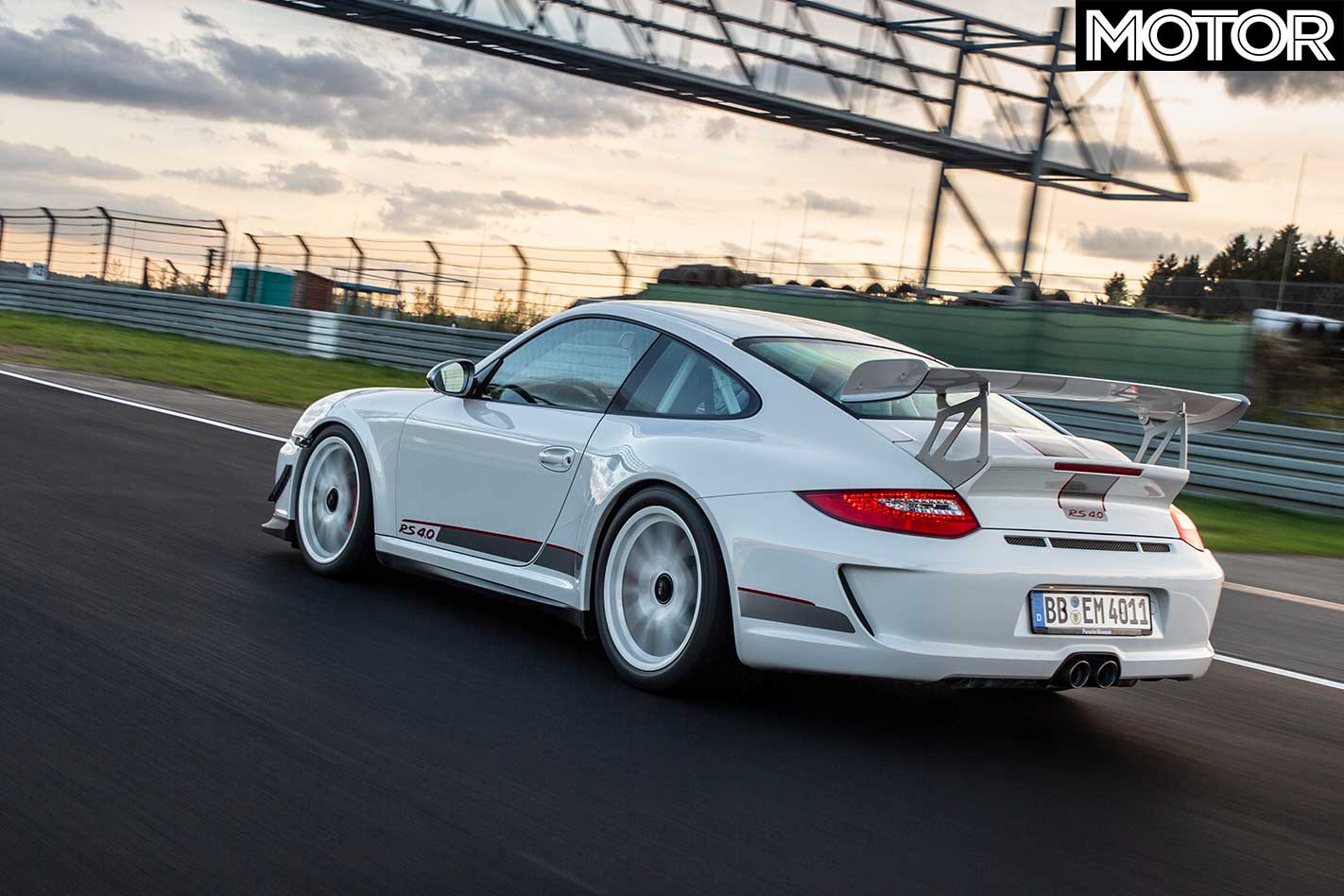
Perhaps most importantly, though, the RS 4.0 might be the 911 to drive (the ’73 RS being the one to own) balancing the nameplate’s old-world values with modern era driveability. The day-to-day sports coupe had never been so quick or, if you prefer, a sub-7min 30sec Nurburgring machine has never worn number plates with such nonchalance.
Porsche had to revive an engine line when the GT3 RS 4.0 was given the green light. Engineers slotted a GT3 R/RSR crank into the 3.8-litre block increasing stroke from 76.4 to 80.4mm which, with a 102.7mm bore, took capacity to 3996cc and created the largest 911 engine to date.
Beyond the capacity increase, development focused on improving airflow with a modified intake manifold featuring shorter runners, a variable induction system and variable valve timing, higher flow air filters in a carbon airbox, and a freer exhaust system with less restrictive catalytic converters.
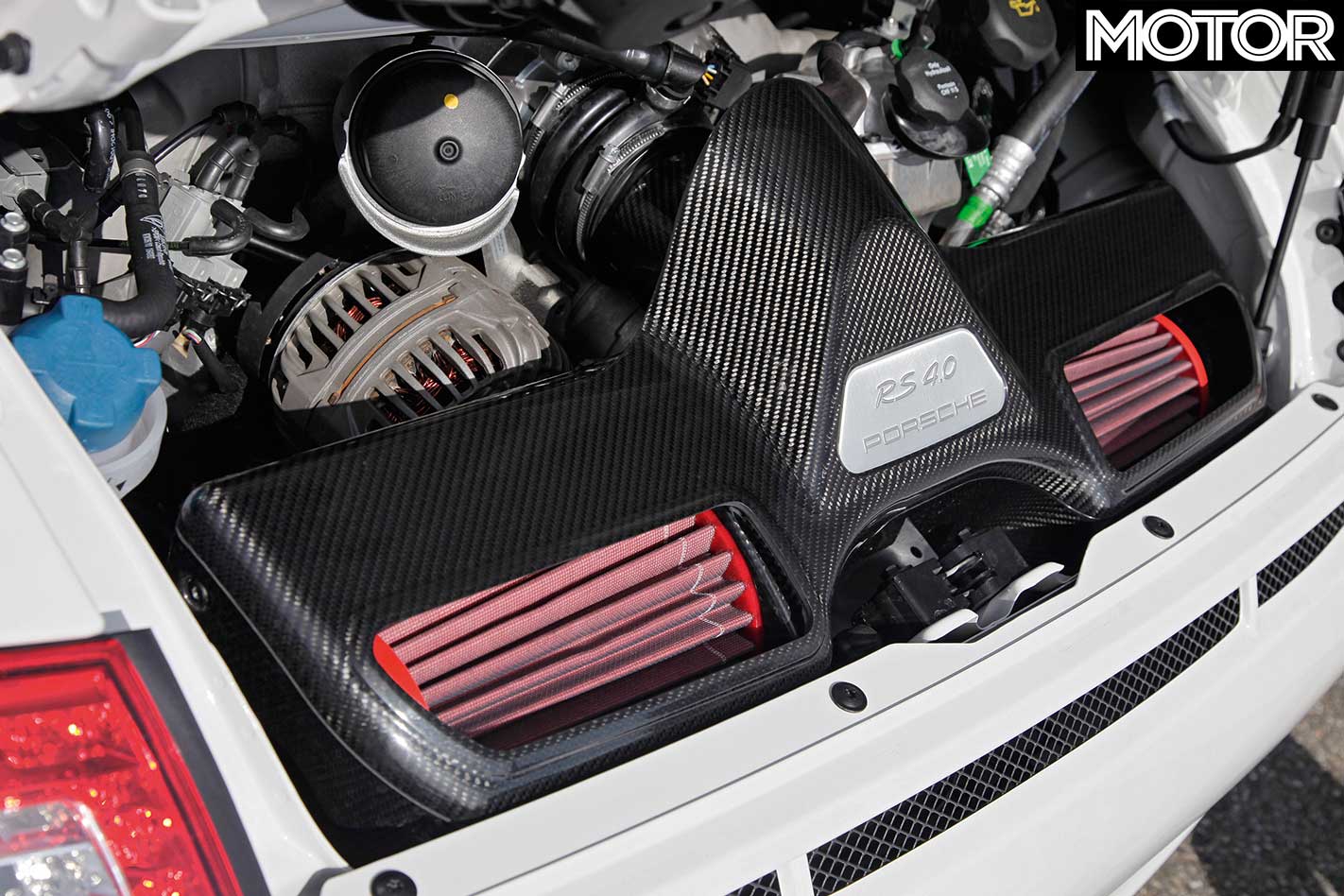
The stroked six set a new high mark for naturally aspirated 911 outputs. The RS 4.0’s 368kW (at a dizzy 8250rpm) and 460Nm at 5750rpm (which told little of its low-end shove) made it the ultimate development of the original 911 block (now in water-cooled form). Seven years on, the 911 GT3 RS eclipses the 4.0’s specific power of 92kW per litre by only 4kW.
Light weight is that other RS fundamental, yet further kilogram reductions were not easily achieved on the RS 4.0 given the amount of pruning that had already been done on the GT3. Reciprocating mass was a logical starting point, and a single-mass flywheel and titanium connecting rods bolted to forged pistons lightened the load.
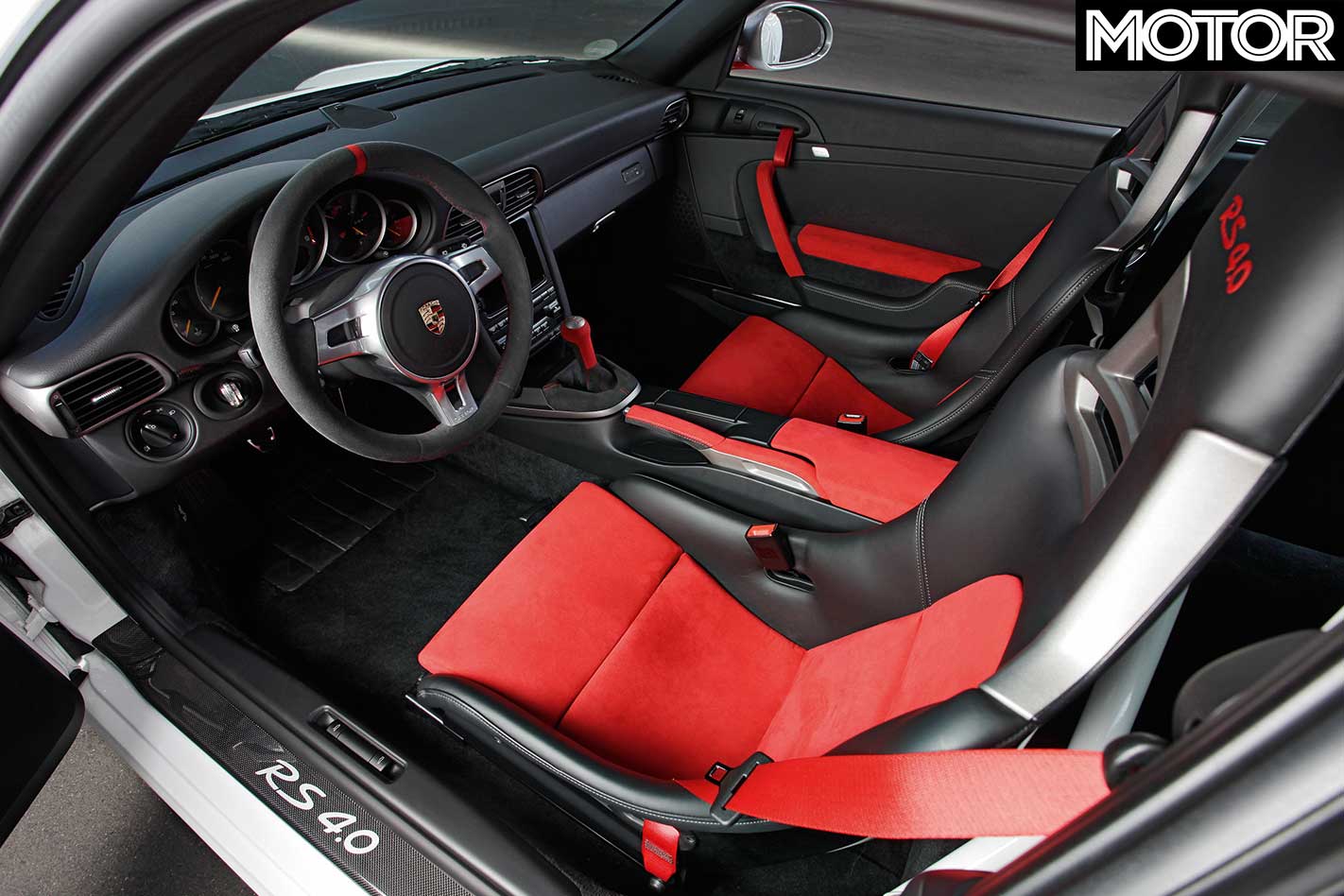
Shedding steel panels was next and Porsche replaced the front guards and front cargo compartment cover with carbon fibre versions, and ditched the glass rear quarter windows and rear windscreen for polycarbonate. One-piece seats weighing 8kg each and lightweight carpets saved more weight, which was somewhat offset by the mass of a half roll cage, although it increased the monocoque’s rigidity.
After all that the GT3 RS 4.0 had dropped just 10kg, however, its kerb weight of 1360kg – about the same as a Volkswagen Golf – gave it a power-to-weight ratio of 271kW/tonne.
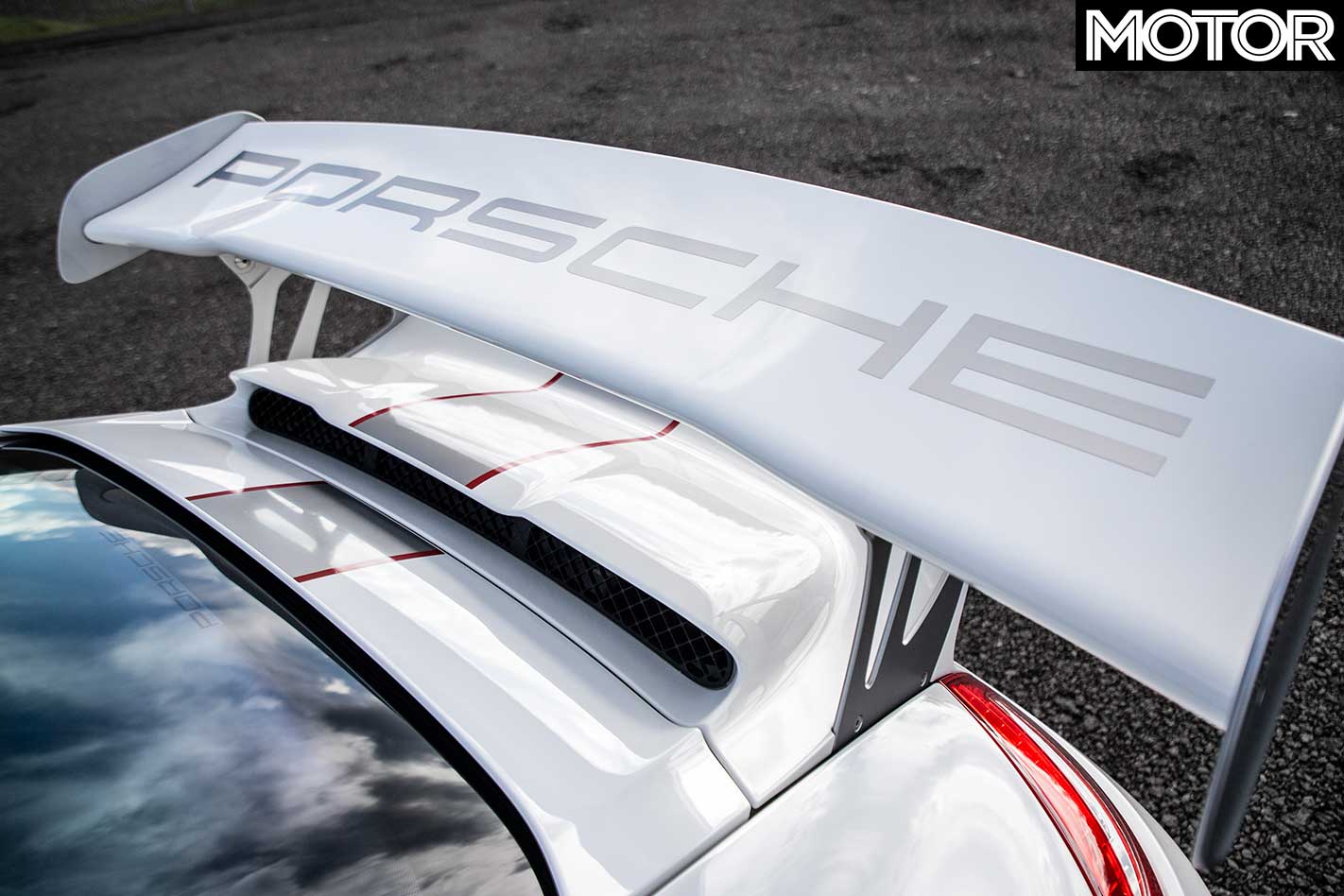
Aerodynamic enhancements to the subtle 993-inspired 997 shape included front dive planes, or ‘flics’, to reduce lift and a large rear wing that kept the rear end planted. Downforce was a claimed 190kg at a v-max of 310km/h.
Suspension features unique spring and damper rates, specific toe and camber settings, and rose-jointed rear suspension links borrowed from the GT2 RS. Dynamic engine mounts controlled the mass of the flat-six. An optional pneumatic nose-lift did not improve track performance, but allowed the low snout to safely negotiate speed bumps on the street.
Porsche offered just two stark colours – black and Carrara white – but it was possible to order an RS 4.0 in any solid or metallic paint-to-sample shade you chose.
When it was launched, road testers revelled in the way the evolution from RS to RS 4.0 built on the qualities of the donor to make the 997 finale incrementally better by every measure. The attraction of increased displacement as a means to greater performance is that driveability benefits as much as outright acceleration, and the GT3 RS 4.0 was even more docile and flexible than lesser versions.
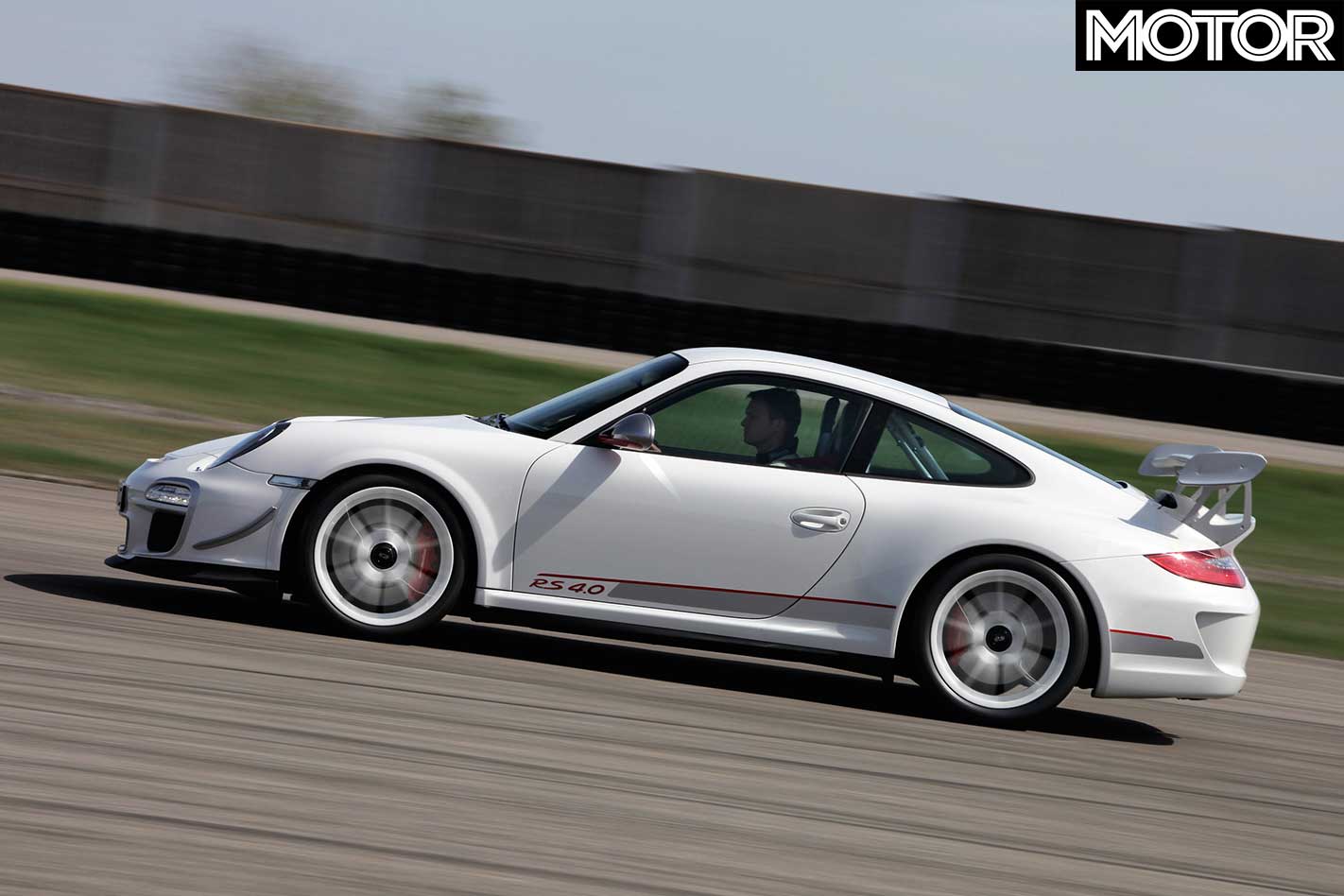
The advantages of a light body were evident everywhere too compared with a regular GT3, from sharper turning to more agile handling and more eager acceleration, and the suspension struck that unmistakable Porsche compromise of controlled-yet-compliant ride and handling.
Quick, yet unbreakably reliable, as satisfying to drive hard as it was to own and live with every day, the GT3 RS 4.0 delivered the essence of the 911 in highly concentrated form.
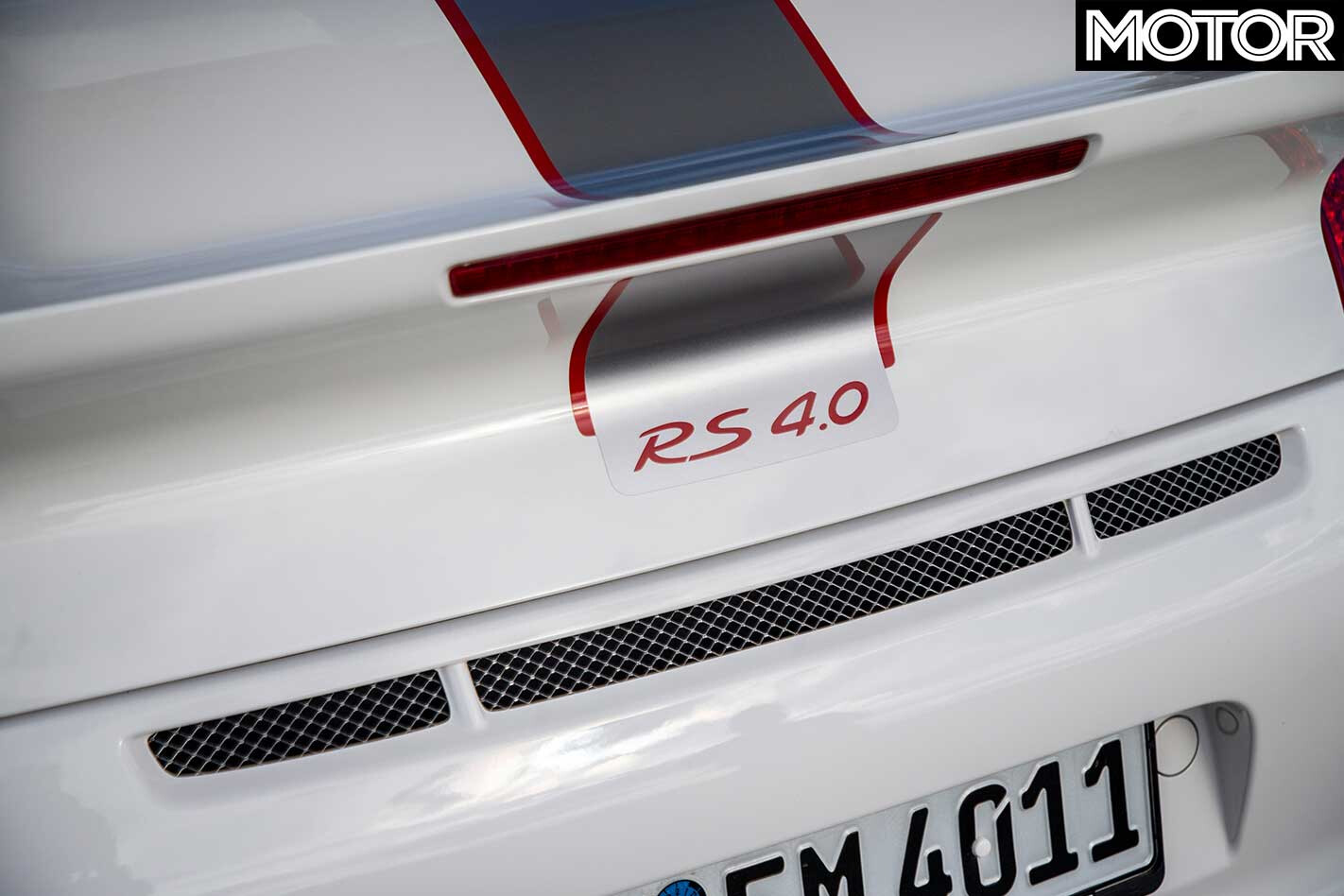
PORSCHE 911 997 GT3 RS 4.0 SPECS Year: 2011 Production: 600 Engine: 3996cc flat-six, rear-mounted Power/Torque: 368kW/460Nm Transmission: 6-speed manual Drive: rear 0-100km/h: 3.9sec Price: AUD$409,100 (new)
THE BIG Bangers are back! Australia’s stillborn Super5000 category has been brought back to life, ready to put V8-powered open-wheelers on race tracks around the country.
The category, which now has official CAMS approval, will be the fastest motorsport series in Australia when it makes its debut (slated for 2019).
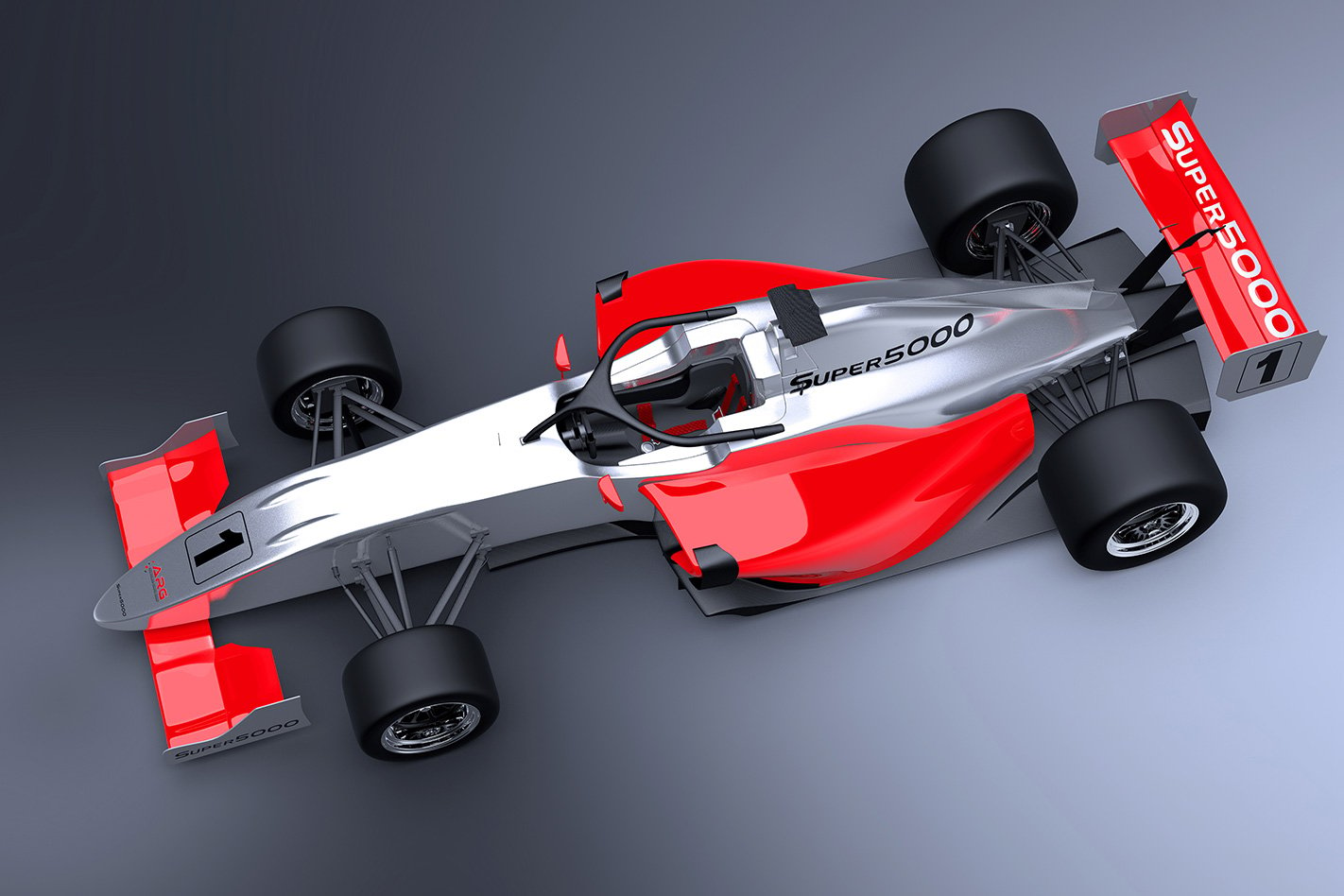
You may remember the feud that erupted between Australia’s two rival F5000-style racing categories last year. Well, the two parties have cooled their jets and joined together for the new project.
The Super5000 category will shoehorn 5.0-litre V8 engines into the rear of a modern open-wheel Onroak-Ligier carbonfibre monocoque chassis (similar to that used in Formula 3 in Europe), and then fit the car with big wings and bigger rubber.
The Australian Racing Group (ARG) is the category manager for the series, which will become the flagship open-wheel championship locally when it debuts.
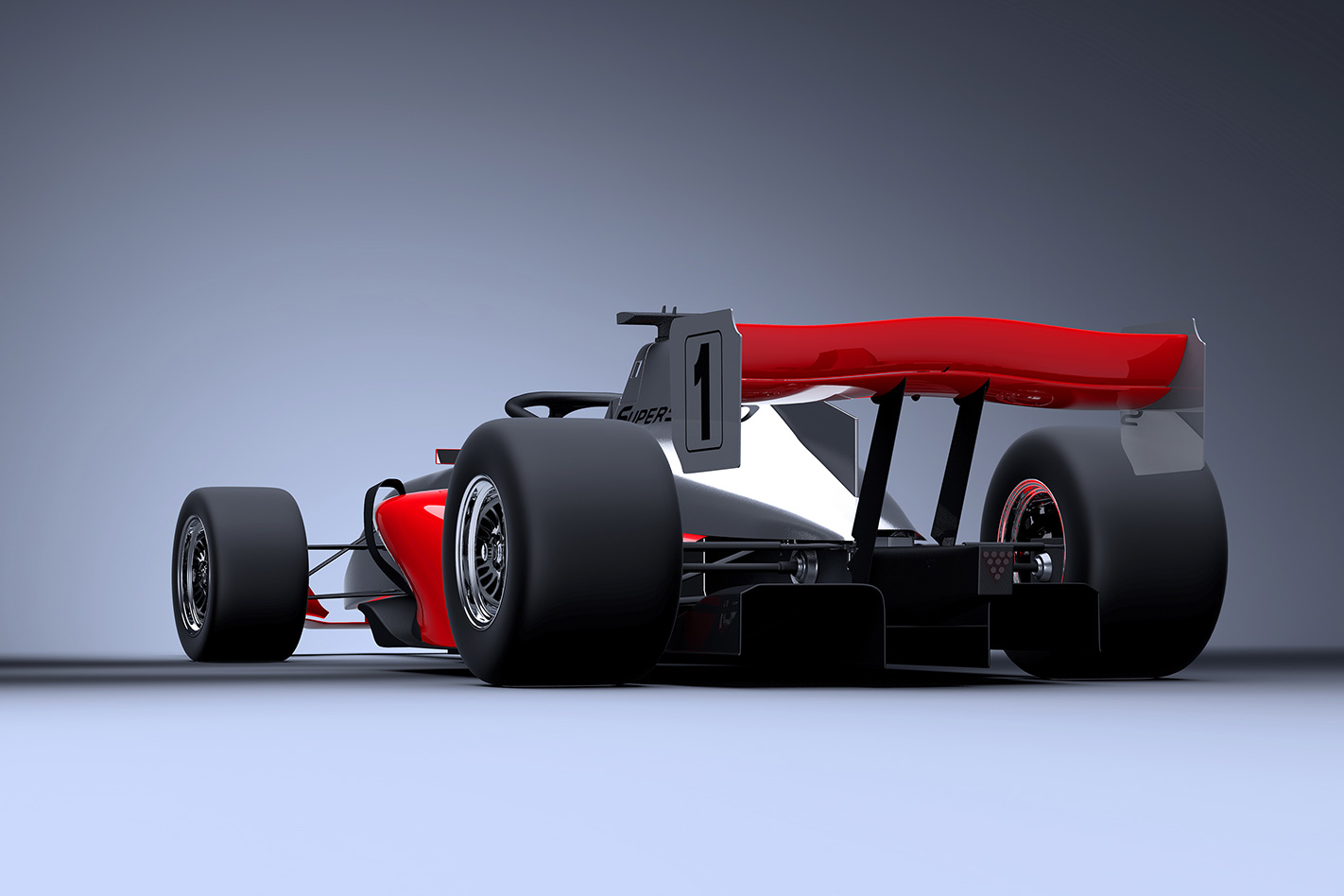
Super5000 cars will have a 5.0-litre naturally-aspirated Coyote ‘Aluminator’ Ford V8 wedged under their cowling, and send power to the rear via a Holinger six-speed sequential transaxle.
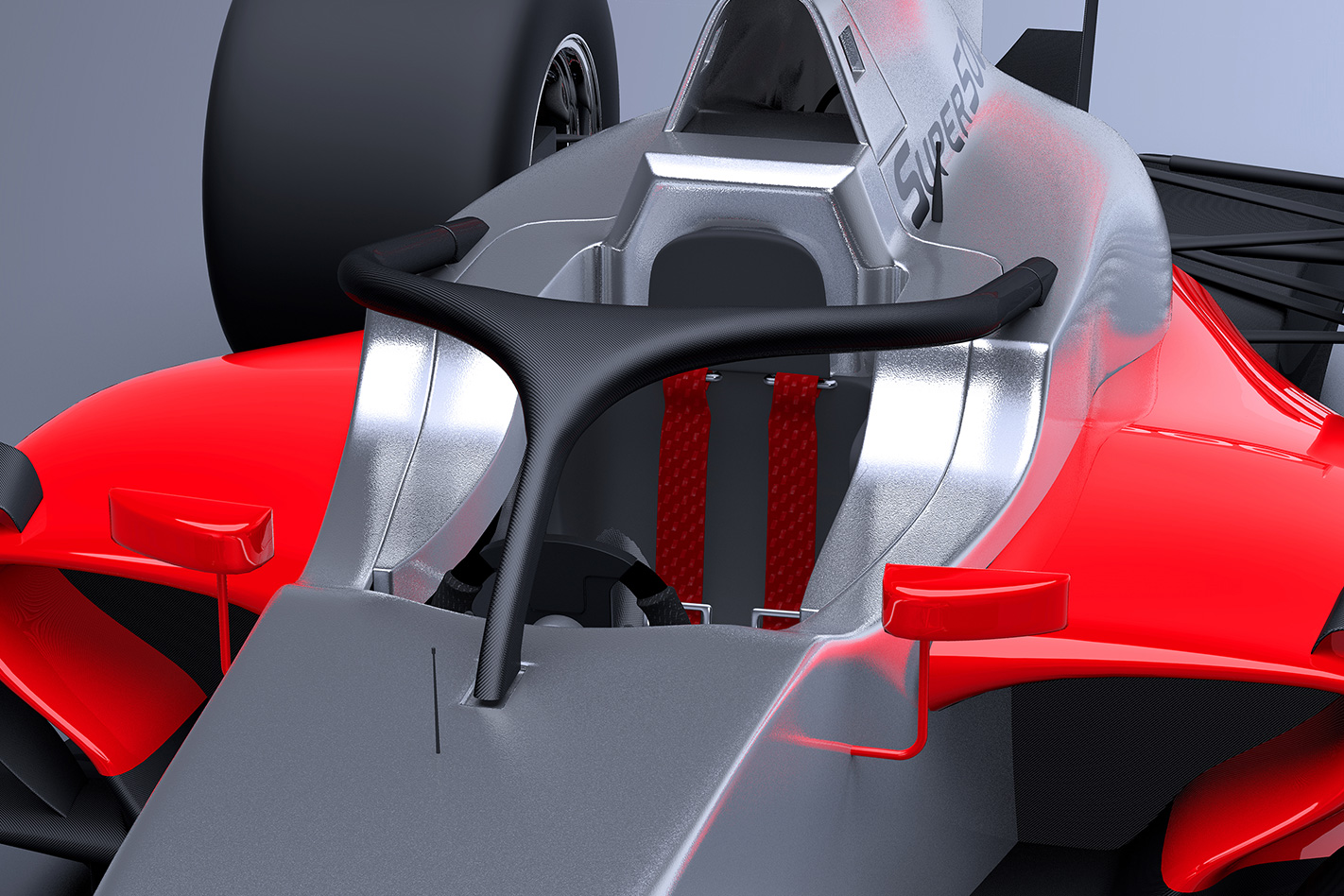
ARG has also confirmed the cars will feature the controversial halo safety device, a first for an Australian category.
Technical specifications supplied to Wheels regarding the Super5000 race cars reveal power and torque outputs of 417kW and 623Nm, and a 8000rpm redline. The crate engines will be prepared to Super 5000 specifications by InnoV8 in Brisbane.
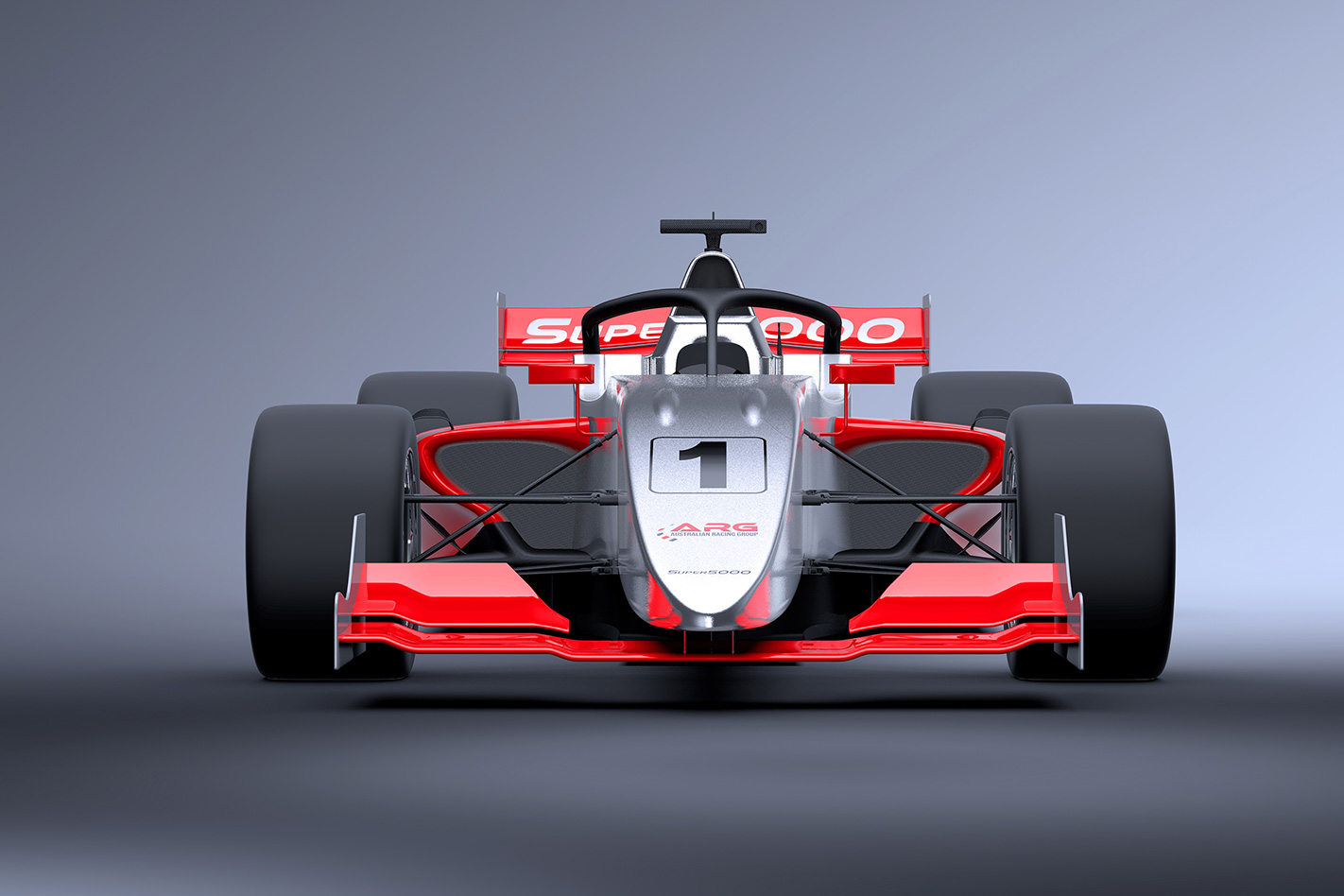
One of the defining features of historic F5000 race cars is copious rear rubber, and Super 5000 will be no different, with 680/405R15 rubber sitting on a 15×17-inch rim at the rear, and 15×12-inch front wheels shod in 570/290R15 slicks.
Super 5000 racers will have pushrod adjustable front and rear suspension, with three-way adjustable shock absorbers, while slowing the cars down will be taken care of by four-piston monobloc callipers grasping vented steel brake rotors.
Despite announcing a 2019 debut for the reborn category, the promotor is yet to reveal a calendar, or confirm teams and drivers.
ARG director Matt Braid, formerly of Volvo Cars Australia and Supercars, says the category will rejuvenate open-wheel racing locally.
“The 2019 specification Super5000 car not only looks great, but will be extremely safe, fast and spectacular on track, foregoing technical driving aids to ensure driver talent shines through and provide a level of excitement on track that open wheel fans in Australia and the world have not experienced in some time,” he said in a statement. “We can’t wait to see the spectacle of a strong field of Super5000 cars racing wheel-to-wheel on the track in 2019.”
A 2004 Koenigsegg CCR and a 2008 Koenigsegg CCX have appeared for sale at Dutton Garage, a Melbourne-based luxury used car dealership.
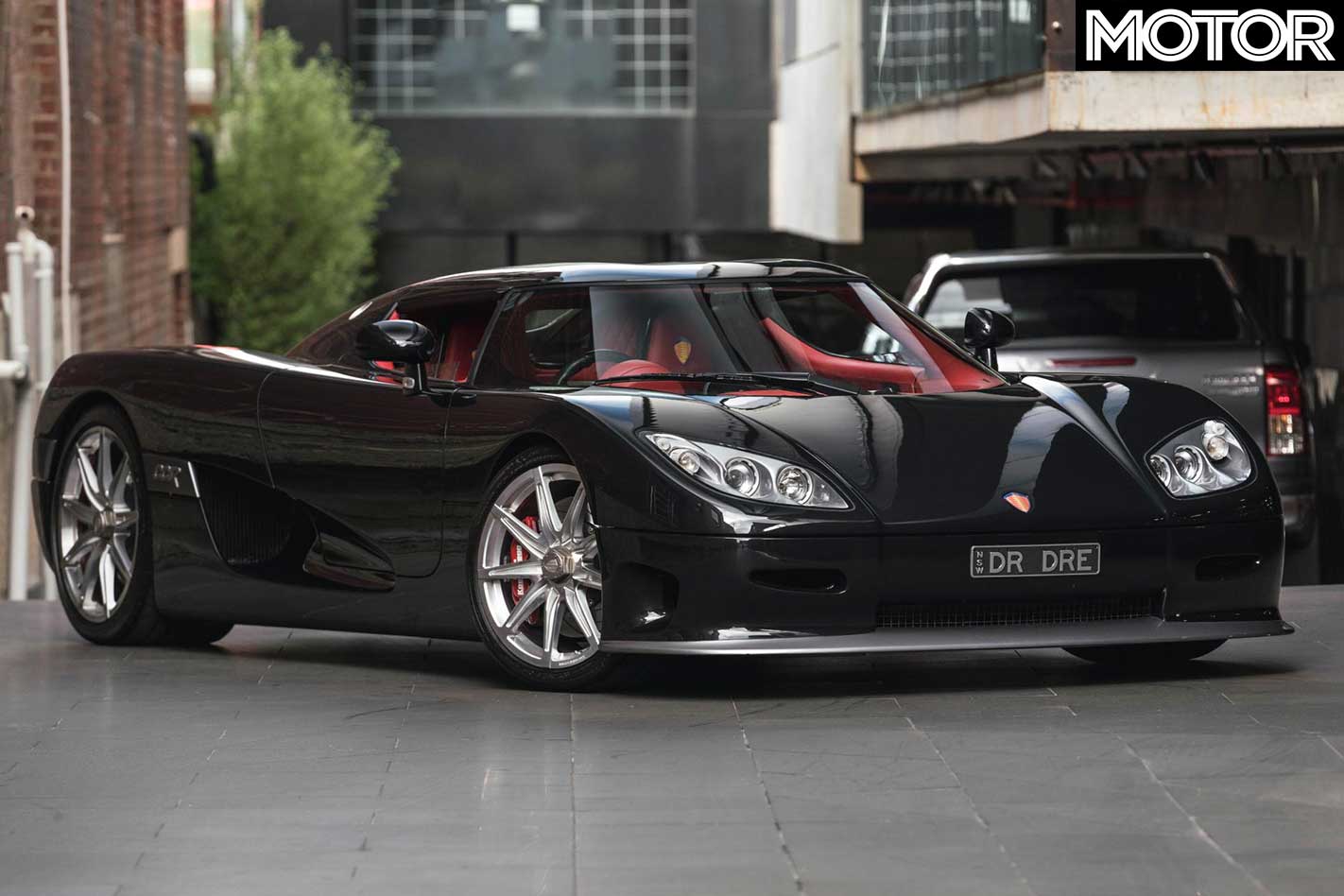
The cars, one of 14 and one of 30 respectively, are two of a very small number of Koenigseggs in Australia, with the CCR being the only of its kind in the world in right-hand drive.
The timing of this appearance is odd, however, given the recent anointment of Dutton’s closest competitor Lorbek Luxury Cars as Australia’s only official Koenigsegg dealership.
Though the CCR and CCX are used cars, and are able to be sold wherever the owner likes, these two cars were quite prominently used during the opening of the Lorbek Koenigsegg showroom.
The 2004 CCR is, as mentioned, the only factory built right-hook car of the 14 CCRs built, and one of only 9 surviving cars. Its twin-supercharged 4.7-litre V8 is capable of pulling it to 100km/h in just 3.2 seconds, thanks to 600kW+ and 920Nm.
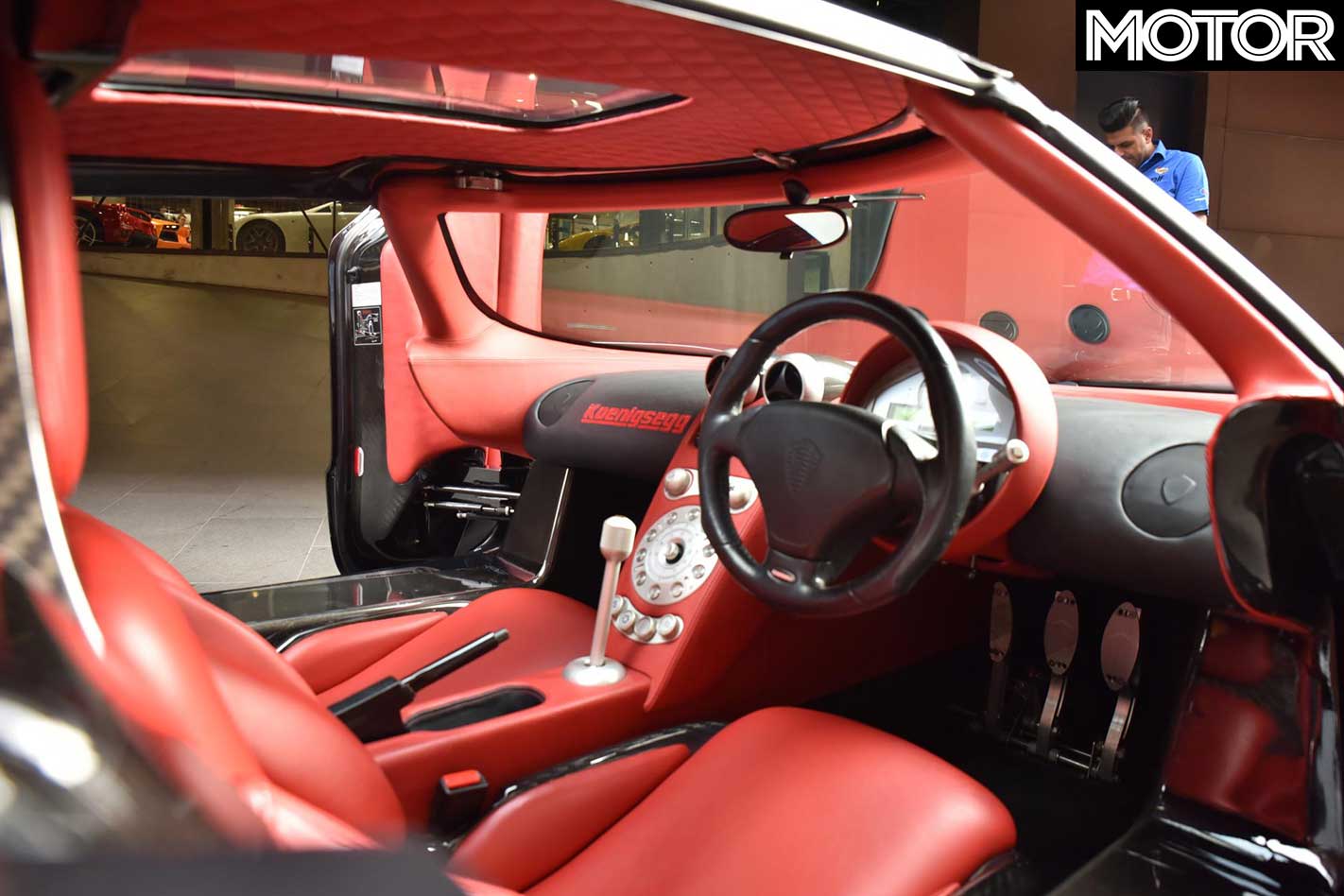
This particular car, known in Australia for its ‘DR DRE’ number plate (and the fact it’s a Koenigsegg) has only covered 600km. Its price, as with the CCX, is listed as POA.
The other car is the ‘MR X’ CCX, which features the same engine and outputs as the CCR. Its 0-100km/h sprint is, however, two tenths quicker at 2.9 seconds.

As one of two Australian-delivered CCXs, and with an odometer reading 1600km, it’s likely this car will fetch a very handsome sum. It’s not like you have many options if you’re looking for a Koenigsegg, anyway.
Ever wanted to drive an F1 car on the road? You’re in luck…
Zac Mihajlovic thought the same thing a few years ago, and now he’s almost reached that goal, thanks to the Zacaria (pronounced Zacariah) supercar he’s building with his business partner Scotty Cox, a custom motorcycle builder by trade.
It’s as close to a road-legal F1 car as you’ll get, thanks to a Ferrari V12 engine and a good grasp of ADR requirements.
Where does the experience required to do this come from? Well, Zac built a road-legal Batmobile based on the car from Tim Burton’s 1989 Batman, which he sometimes uses for appearances as The Caped Crusader.
https://www.instagram.com/p/BlH99OjASJZ/?utm_source=ig_embed
We’ll let Zac explain: “It started for me after I built the 1989 Batmobile, I had built some other cars before, and as most people know, once you sink a lot of money into a car a lot of the time you’ll never get it back. It doesn’t hold value because it’s customised to what you like.
“If you’re going to channel a lot of time and money into something, it should be really extreme… so I built the Batmobile and then I got a lot of orders from people for me to make them one. I’m not allowed to with the licencing, and I wouldn’t want to anyway.
“So I thought, what’s the next-most extreme thing I could build to drive on the street? No one’s done it with an F1 car, they’ve done thing like the BAC Mono or the Ariel Atom, but they’re four-cylinder and look like concept cars.
“If you wanted to drive a real F1 car it’d take a team of people to run it so I thought about a modern V8 or V12 from a Ferrari, there’s probably a market for people who want something no one else has.”
https://www.instagram.com/p/BQCbMGLAriX/?utm_source=ig_embed
He tells MOTOR that getting the engine was one of the biggest challenges, but a written-off 2014 Ferrari F12 in the UK solved that problem. Fazza V12, sorted.
The gearbox is to come from Albins, a company which builds transmissions for the Supercar series, in this case as a transaxle six-speed. Customers can choose between paddles or a race-style sequential shifter.
Because of its pedigree, Mihajlovic says the atmo 6.3-litre engine is perfect for an F1-inspired road car, and expects the power-to-weight to hit roughly 1:1 in terms of horses and kilograms.
https://www.instagram.com/p/BSfp5ubA3ye/?utm_source=ig_embed
“The engine puts out around 740 horsepower, and the car should weigh around 700kg without a driver in the car. With the straight-cut gearbox you lose almost no power. Maybe with a tank of fuel and a driver it’d be about one-to-one, which is rare for a street car.”
So how close is it to finished? Closer than the pictures would suggest, Mihajlovic says. He’s leaving the car as unpainted aluminium to reduce the ‘worry’ factor when it comes to bodywork blemishes.
“At least with what we’re doing, because it’s all polished aluminium, it doesn’t matter too much if it gets scratched. You can just polish it out, so whoever has one can really just enjoy it.
“We’re pretty good with aluminium, but if someone does want carbon fibre parts we can do it.”
https://www.instagram.com/p/BkRFy9NAhpK/?utm_source=ig_embed
Mihajlovic says he’s expecting to sell any Zacarias that he builds for more than $1 million, at the very least because of the time and effort required.
“We’re the ones who are going to have to work on it and fix it, so we’ve put so much thought into how to maintain the car, how to change the oil, and how to access everything, because obviously when Lambo or Ferrari builds a car it goes somewhere else and it’s up to the dealership.
“The people that made it don’t have to fix it. If someone came to the workshop we could spend a day just showing how everything works.”
https://www.instagram.com/p/BaYQL3AgMMG/?utm_source=ig_embed
The Zacaria, as a road-legal car, will also need to be able to traverse tricky streets and driveways, so Mihajlovic devised a hydraulic lift and a system which allows the front bodywork to be removed (in dire situations) in about 12 seconds.
“All of this has come from the Batmobile, and living with a car that’s really low and really difficult. I’ve taken everything that’s wrong with that car and fixed it for this.
“Everything’s fully adjustable, there’s the air-brake, a straight-through exhaust that has valves… it’s pretty wild.”
He says he expects to be testing the Zacaria by the end of the year, even though the engine hasn’t run for the last couple.
Mihajlovic also says he’s already got an informal expression of interest from someone to purchase one, a supercar collector who wants something unique.
Stay tuned as MOTOR follows the Zacaria’s development in the future.
Each year, one of the world’s biggest car auctions on the calendar is the RM Sotheby’s Monterey auction, which coincides with the Monterey Car Week and the Pebble Beach Concours d’Elegance.
This year, we’ve selected a handful of highlights to keep an eye on when the hammer starts dropping this weekend, on August 24 and 25. Price estimates have been converted to AUD, to the nearest thousand.
2017 Mercedes-AMG GT3 ‘Laureus’ ($544,000 – $816,000)
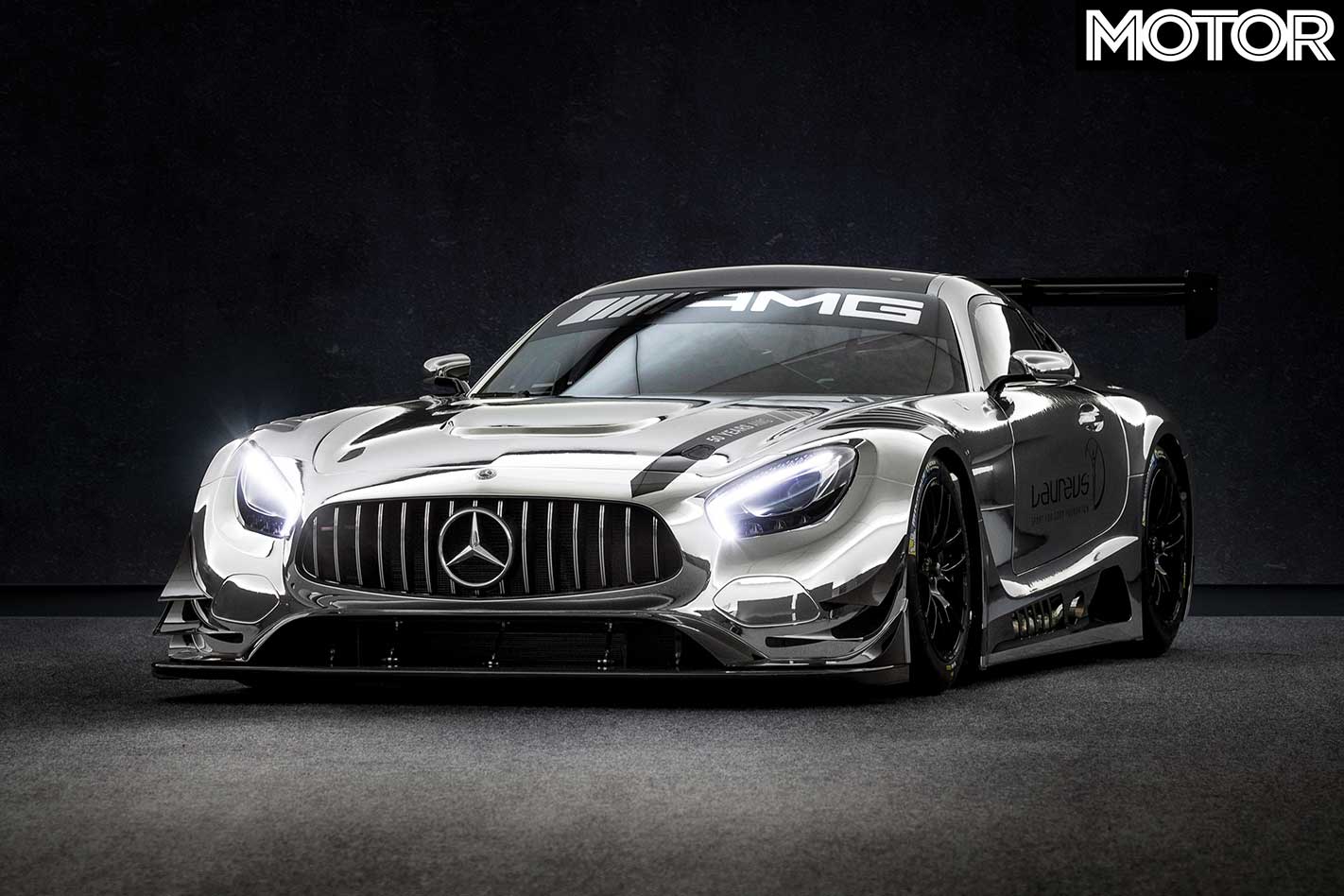
Its mirrored chrome paintwork makes it unique, while its 6.3-litre V8 is unrestricted by FIA rules for a free-breathing 485kW.
2014 Ferrari LaFerrari ($4,078,000- $5,437,000)
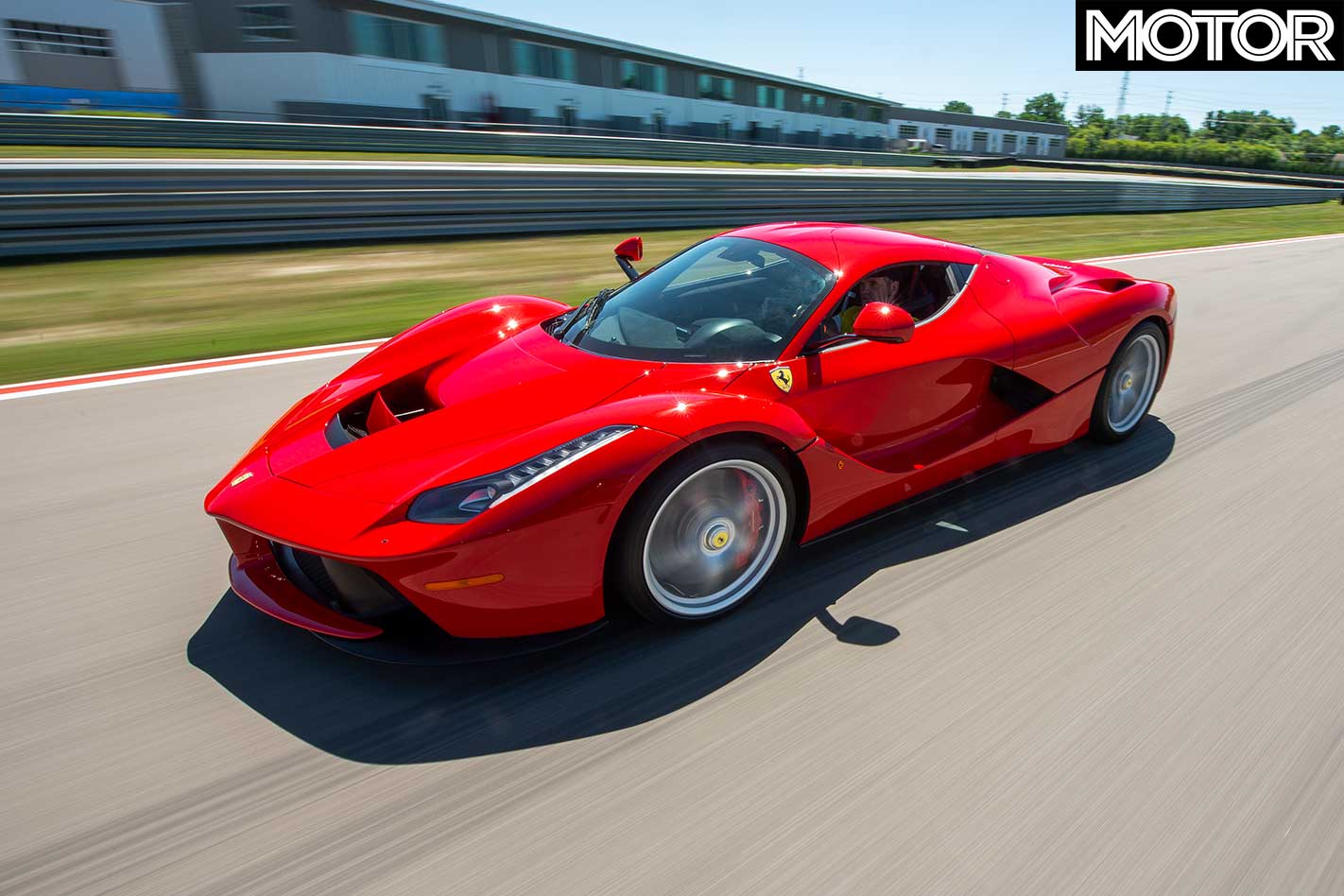
Italy’s member of the ‘hypercar holy trinity’ is seen here in its iconic Rosso Corsa, with fewer than 240km showing and a note that the proceeds of the sale will go towards the College for Creative Studies in Detroit.
A 6.2-litre V12 with electric motors makes for 708kW, but if you’re in Australia there’s one sitting in a Melbourne showroom with just 170km on the clock.
2014 McLaren P1 ($2,311,000 – $2,719,000)
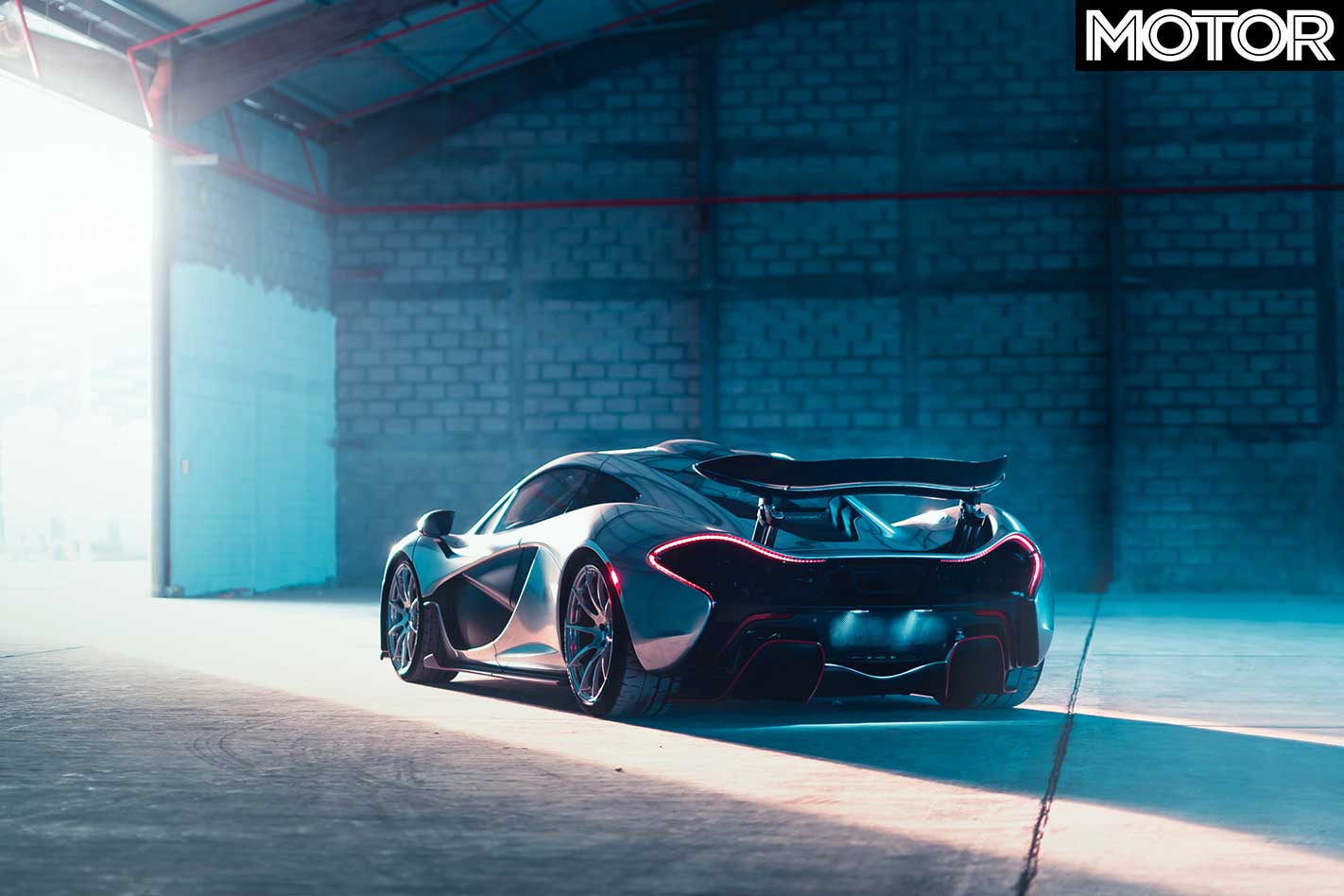
Another of the ‘trinity’, from England this time, the McLaren P1 opts for turbo power in the form of a twin-charged 3.8-litre V8, also with an electric motor to add a few more kiloWatts. It’s output totals 673kW.
Sotheby’s says its only one of two finished in ‘MSO Liquid Silver’, and is the 24th P1 built. It’s had one owner and has been driven only 3540km since new.
2011 Ferrari 599 GTO ($782,000 – $884,000)
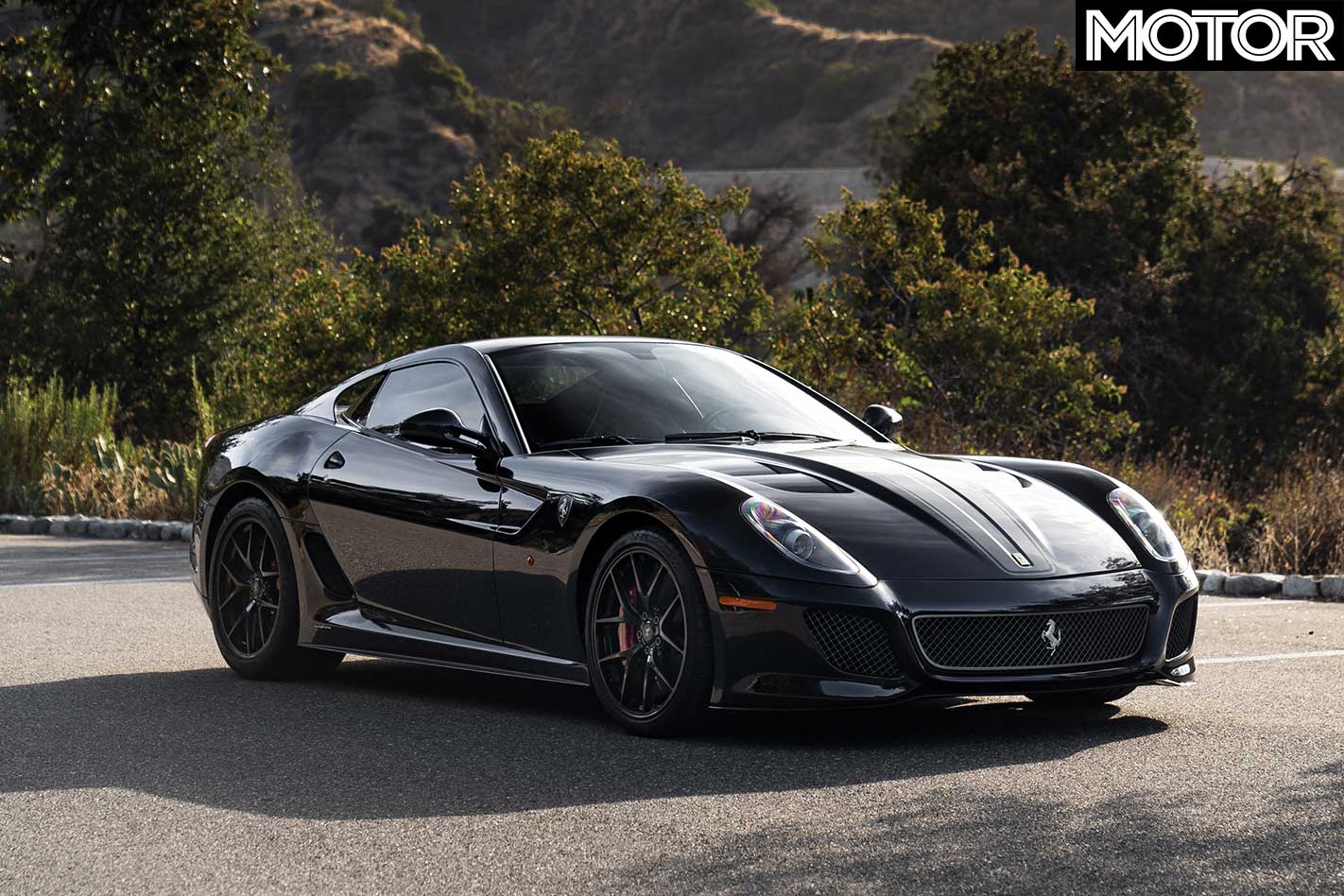
Back down below the million-dollar mark, this 599 GTO strikes us as an excellent buy if you can cop the cost. It’s one of Ferrari’s road-legal track-focussed supercars which is a rare sight given its build number of 599, to match its badge.
If that doesn’t convince you, an atmo 6.0-litre V12 revving to 8400rpm should.
2004 Porsche Carrera GT ($952,000- $1,223,000)
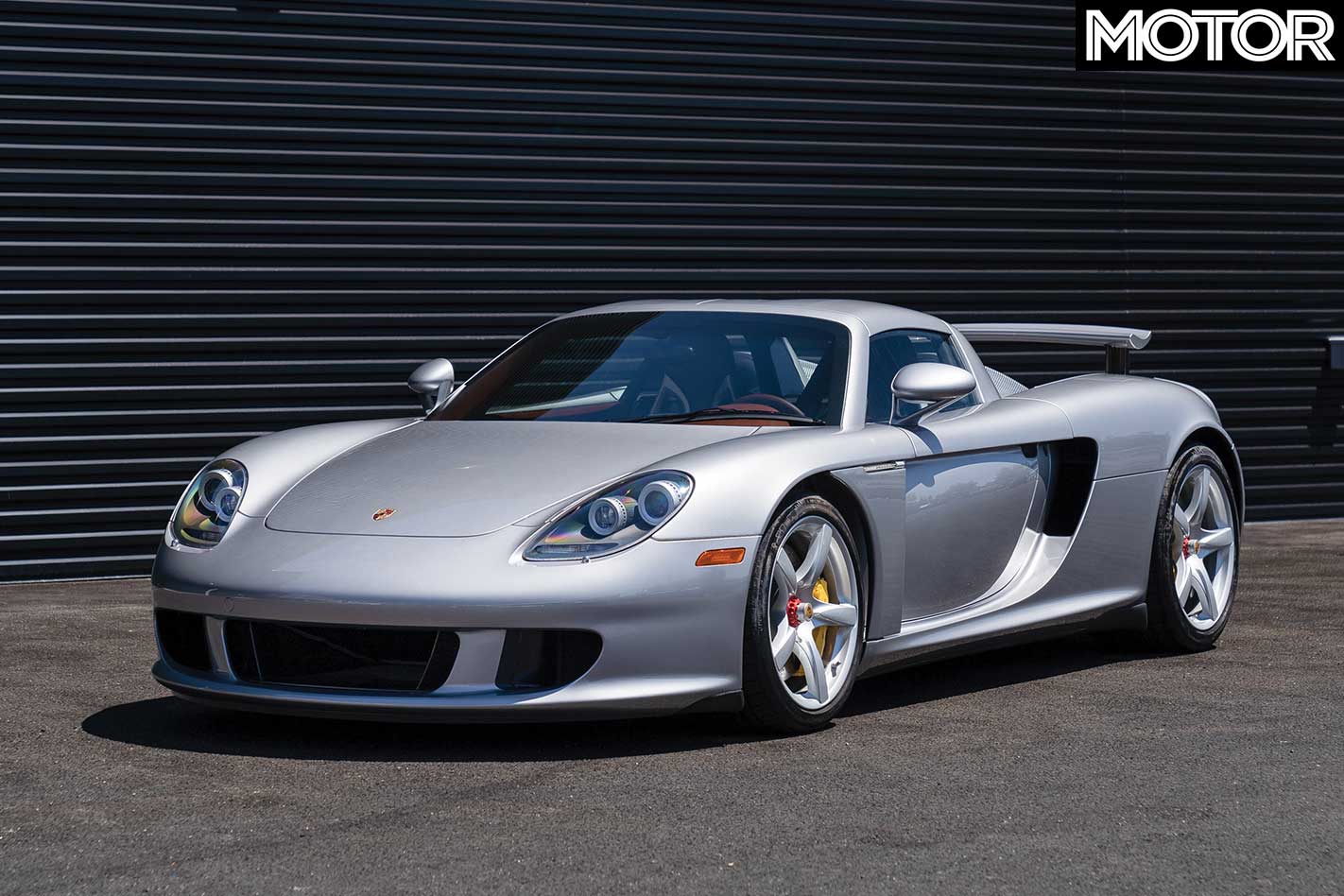
We couldn’t leave this out. A Porsche V10, a manual gearbox, and that styling. If you’ve got about $1.2m sitting around, this 283km example is just begging for an actual drive.
Finding one in Australia is tough, but last we saw $1.5 million was the asking price for one at the Gosford Car Museum.
1989 RUF CTR ‘Yellow Bird’ ($1,359,000 – $1,631,000)
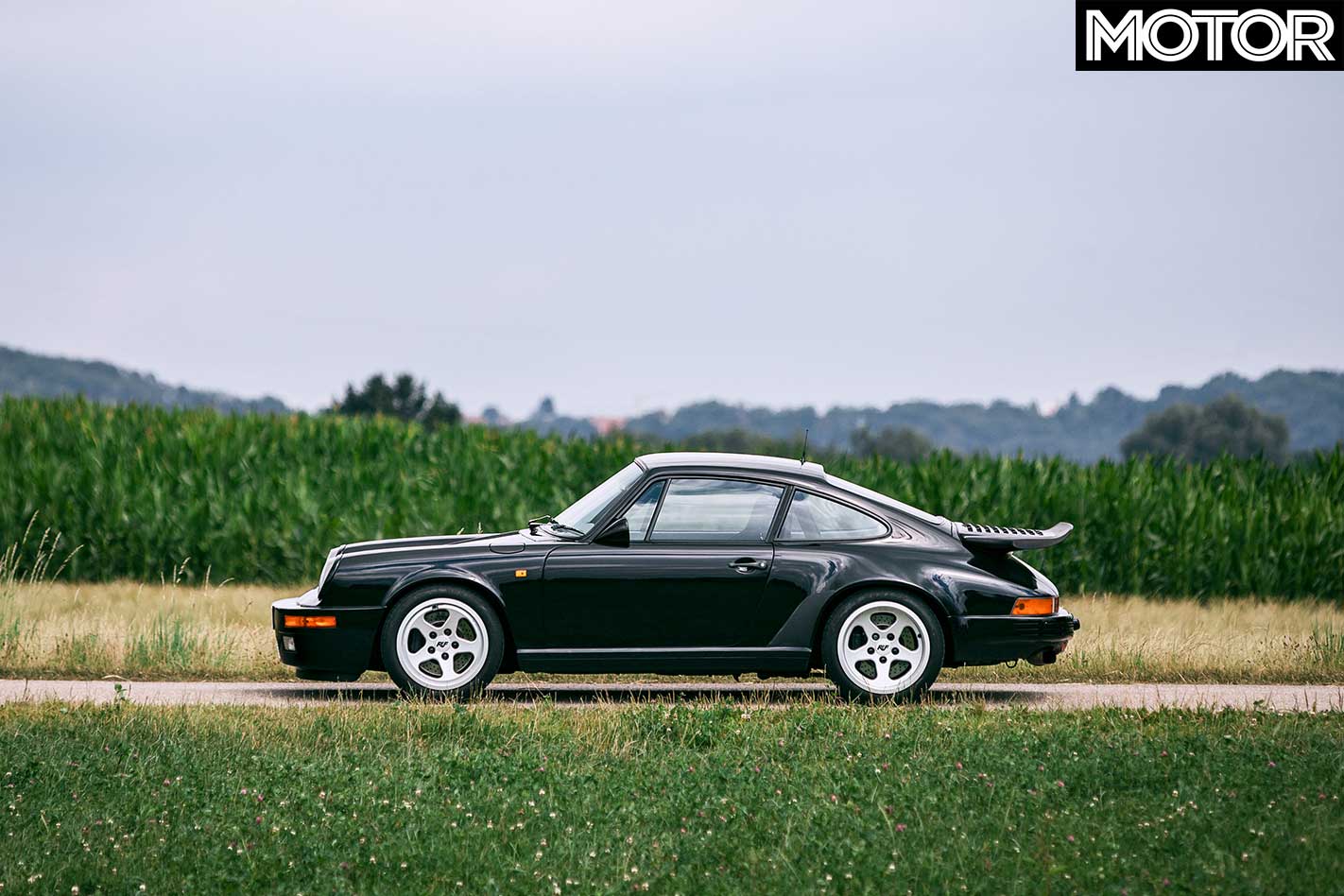
With 52,200km on the odometer, the Yellow Bird up for grabs this year makes an excellent case for itself.
It’s been driven enough (and likely cared for enough) that it won’t have any surprises lurking, due to lack of use, while it’s rare enough that you’ll make your money back if you sell it down the track.
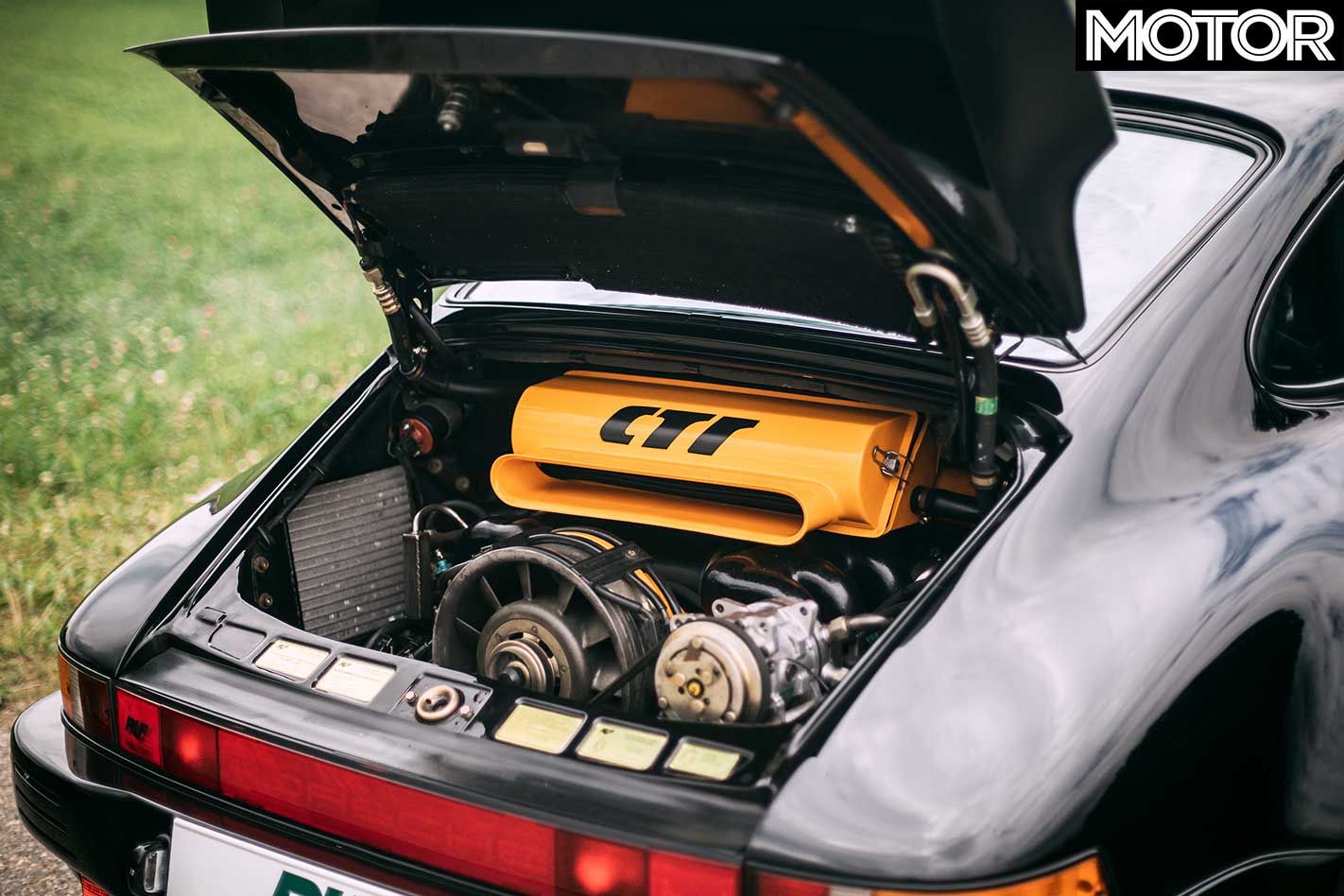
It’s number 10 of 29 original RUF CTRs which were given the Yellow Bird name thanks to one test car, painted a very loud shade of the same colour.
This one’s not actually yellow though, so that will confuse a few people.
1968 Porsche 908 Works ‘Short-Tail’ ($3,127,000 – $3,806,000)
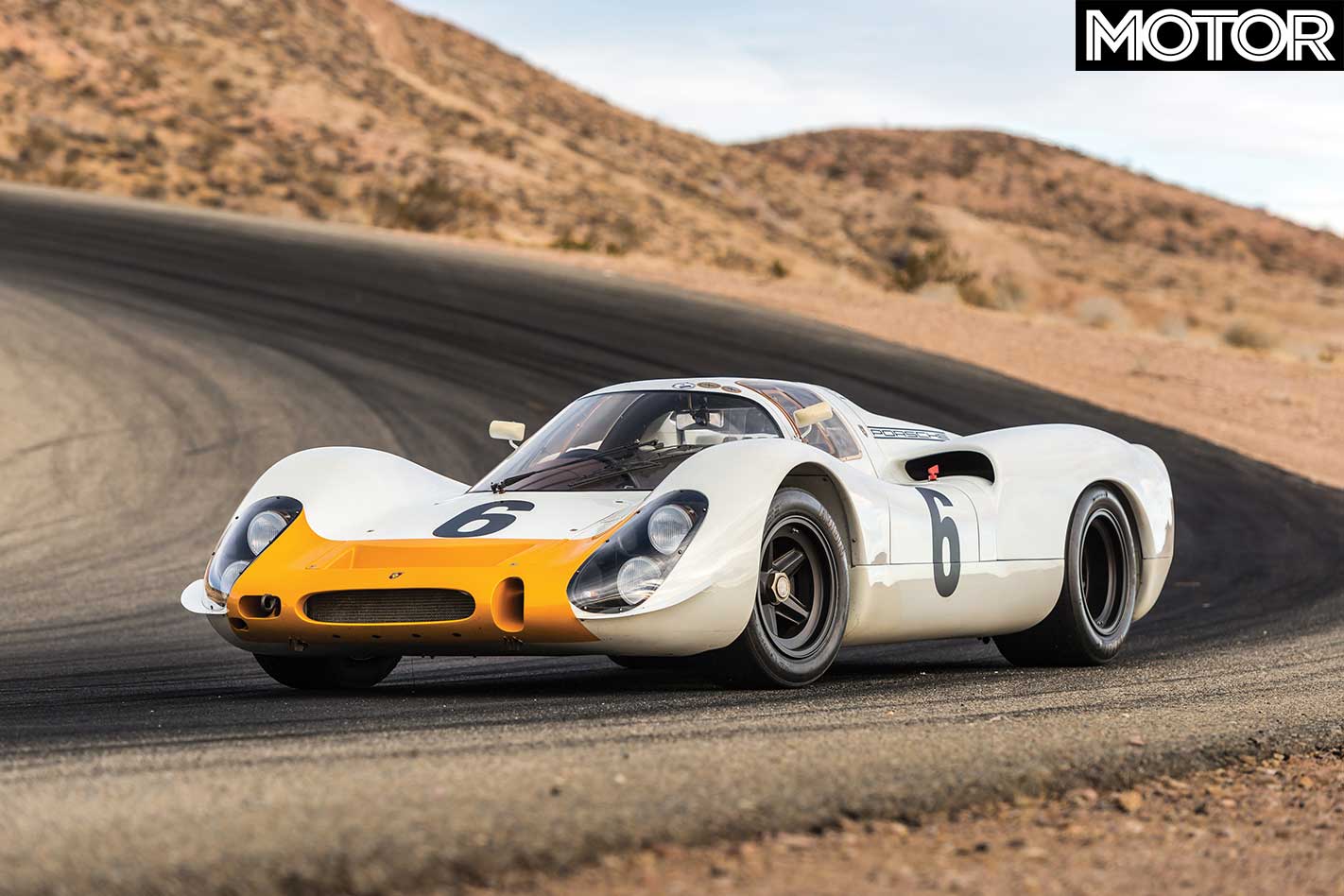
Imagine showing up to a track day in this. You probably wouldn’t want to, unless you had the track to yourself.
This car is special because it was the Porsche team entry at the 1968 Spa 1000km, driven by Vic Elford and Jochen Neerpasch, which crashed into a telephone pole.
Now in restored condition, the original chassis has a new engine to replicate its original.
1966 Ford GT40 Mk.II ($12,234,000 – $16,312,000)
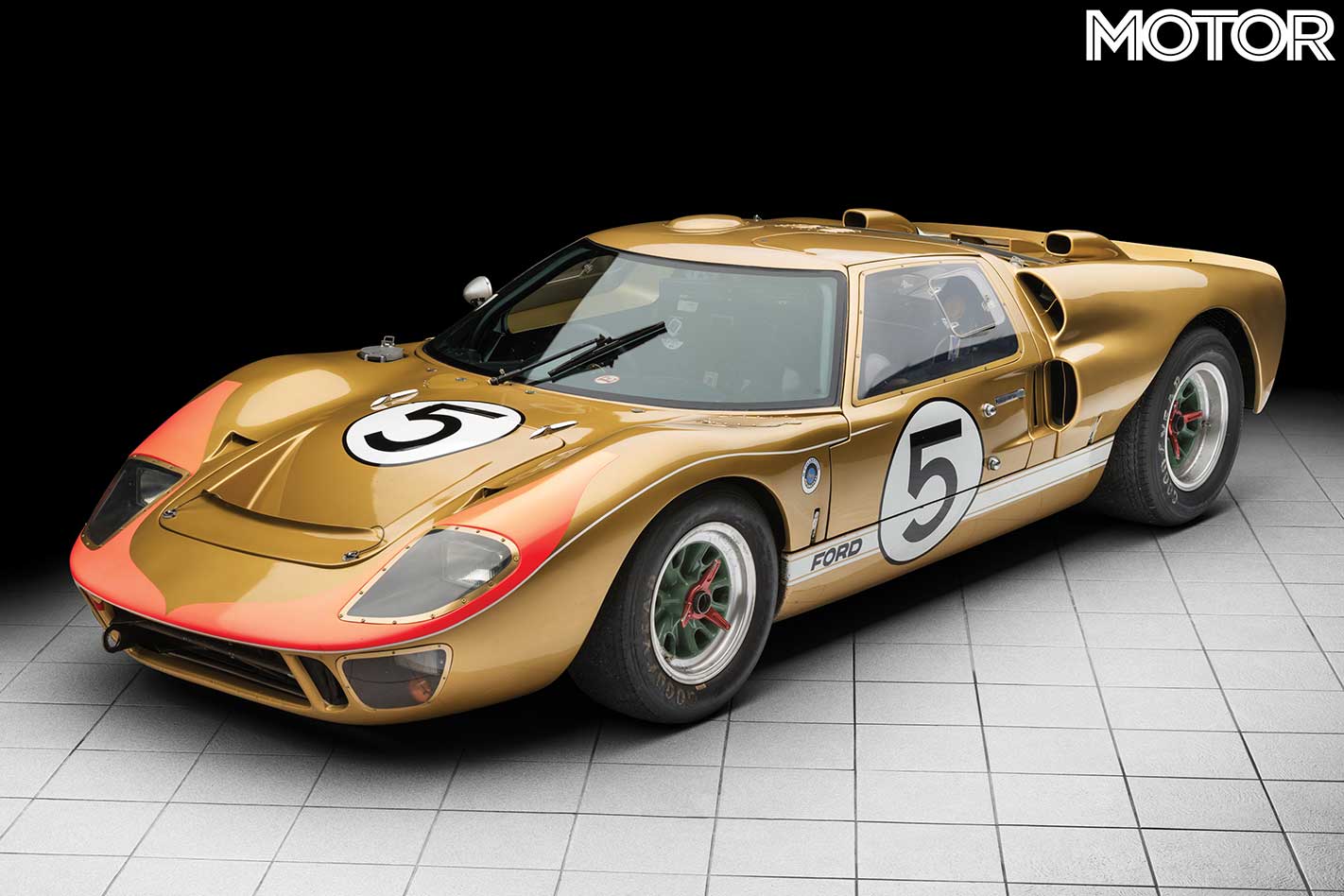
In the year Ford achieved a 1-2-3 victory at Le Mans, this car was the ‘3’.
Driven by Ronnie Bucknum and Dick Hutcherson, the #5 GT40 was restored to its original spec in the 1990s after some time being mistaken as one of the other GT40s (in the iconic blue livery).
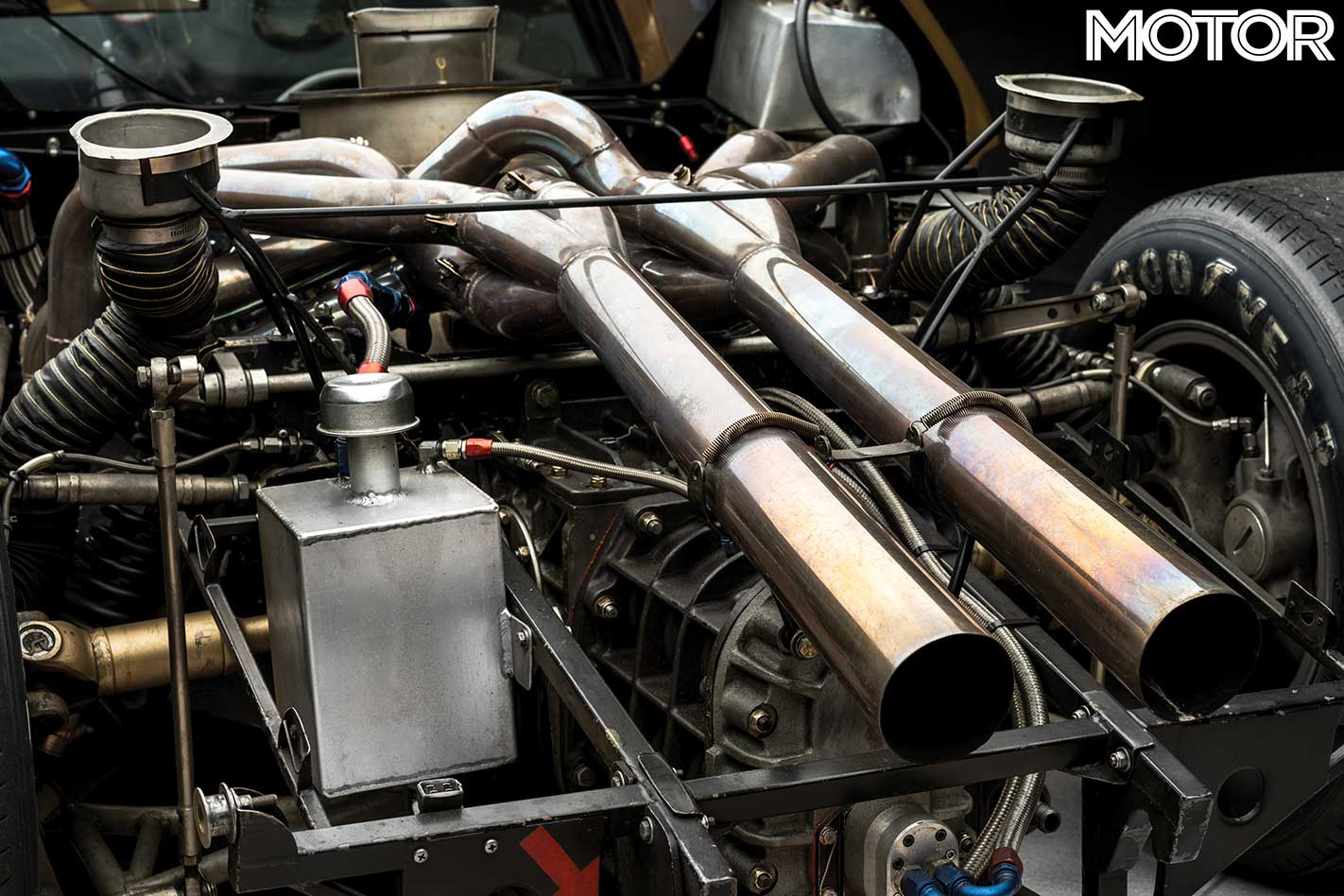
It has since made appearances at several events including the Goodwood Revival and the Festival of Speed.
1962 Ferrari 250 GTO by Scaglietti ($61,171,000 – $81,561,000)
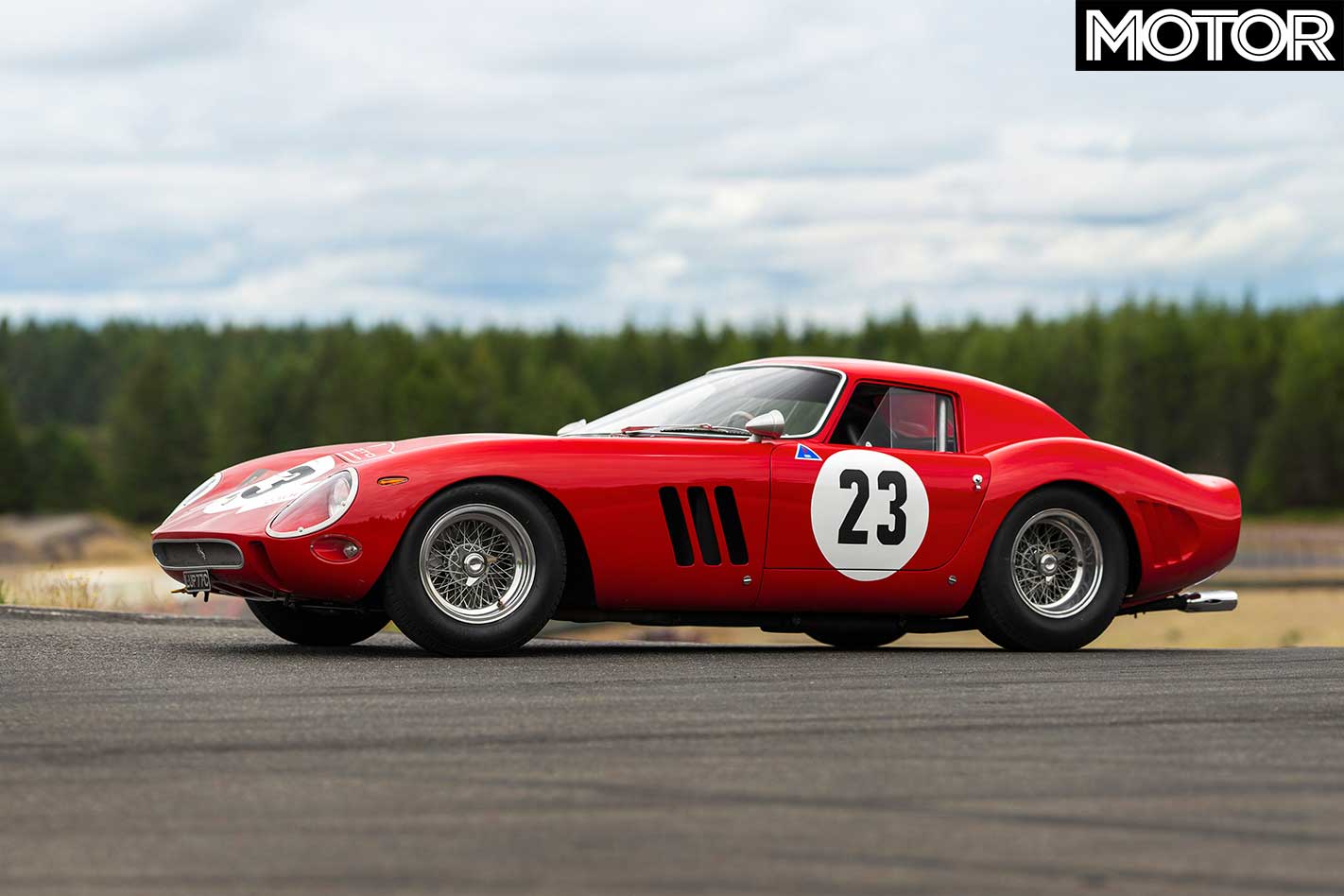
RM Sotheby’s doesn’t shy away from the GTO’s pedigree in its lot listing, calling it “the world’s most important, desirable, and legendary motor car.”
This is the third of the 36 250 GTOs built, and could become the most expensive car sold in the world if it tops the USD$70 million mark, though its estimate tops out at USD$60m, or AUD$81.5m.
Sotheby’s says it’s ‘considered by marque experts to be one of the most authentic and original of all GTO examples’ and its career as a racer is riddled with wins. In fact, it’s almost entirely class wins. We’ll be watching this one closely.
ENGINE manufacturer Cosworth might be looking for a new social media person this week, after the brand published (and quickly deleted) a post on Twitter seemingly revealing the power output of the Aston Martin Valkyrie’s atmo V12.
The figure leaked by Cosworth is a staggering 831kW, or 1130hp in old money – a scarcely believable amount if you interpret the brand’s wording literally, which suggests all 831 kilowatts are produced by the road-going Valkyrie’s combustion engine alone (as opposed to the track-only Valkyrie AMR Pro).
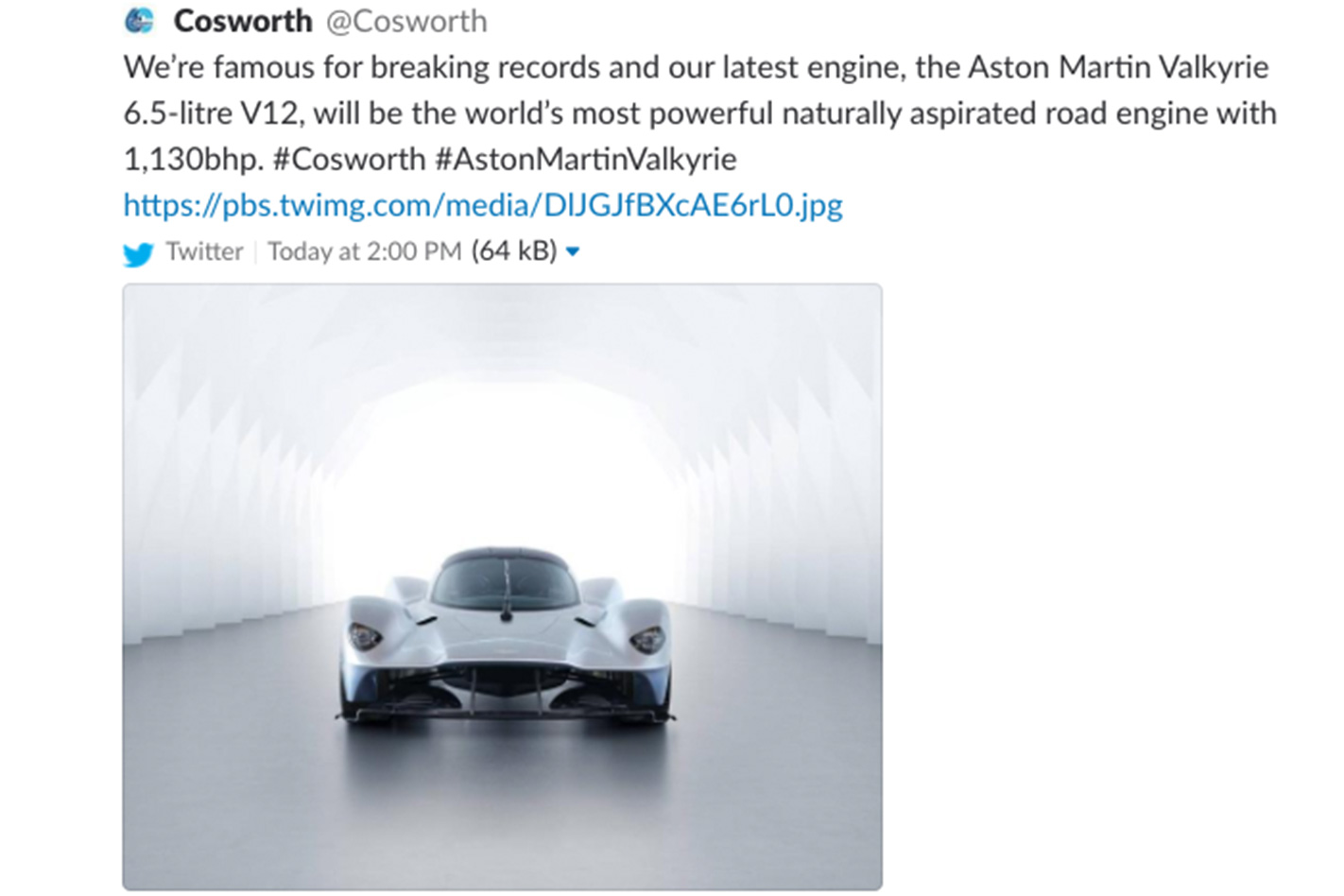
However, Cosworth could be forgetting a key detail or bending the truth somewhat, as Valkyrie is a hybrid, with a battery and electric motor for the front axle supplied by Croatian EV specialist Rimac.
Cosworth could in fact be linking Valkyrie’s total system output to its combustion engine alone, but even if we assume that’s the case, the claim its 6.5-litre V12 is “the world’s most powerful naturally aspirated road engine” looks credible.
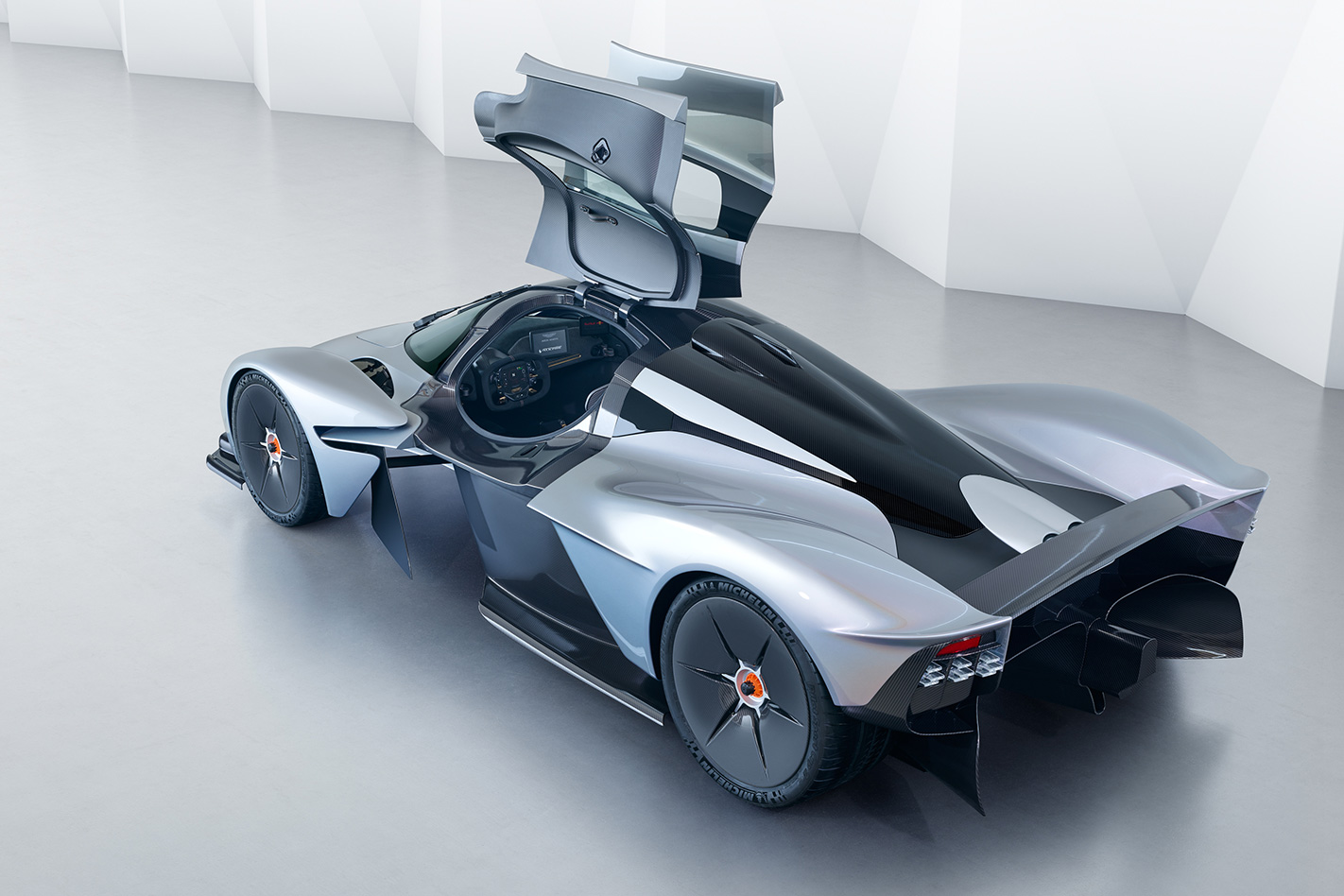
The most powerful V12 you can buy (turbocharged or not) is the naturally aspirated 6.5-litre unit found under the bonnet of the Ferrari 812 Superfast, which produces 588kW. Even if the Valkyrie’s electrical assistance accounts for a significant 200kW of the Valkyrie’s total power, the V12 on its own has the Ferrari beaten.
If Cosworth is in fact talking about the race-ready Valkyrie AMR Pro, more than 800kW from an atmo engine is still remarkable stuff.
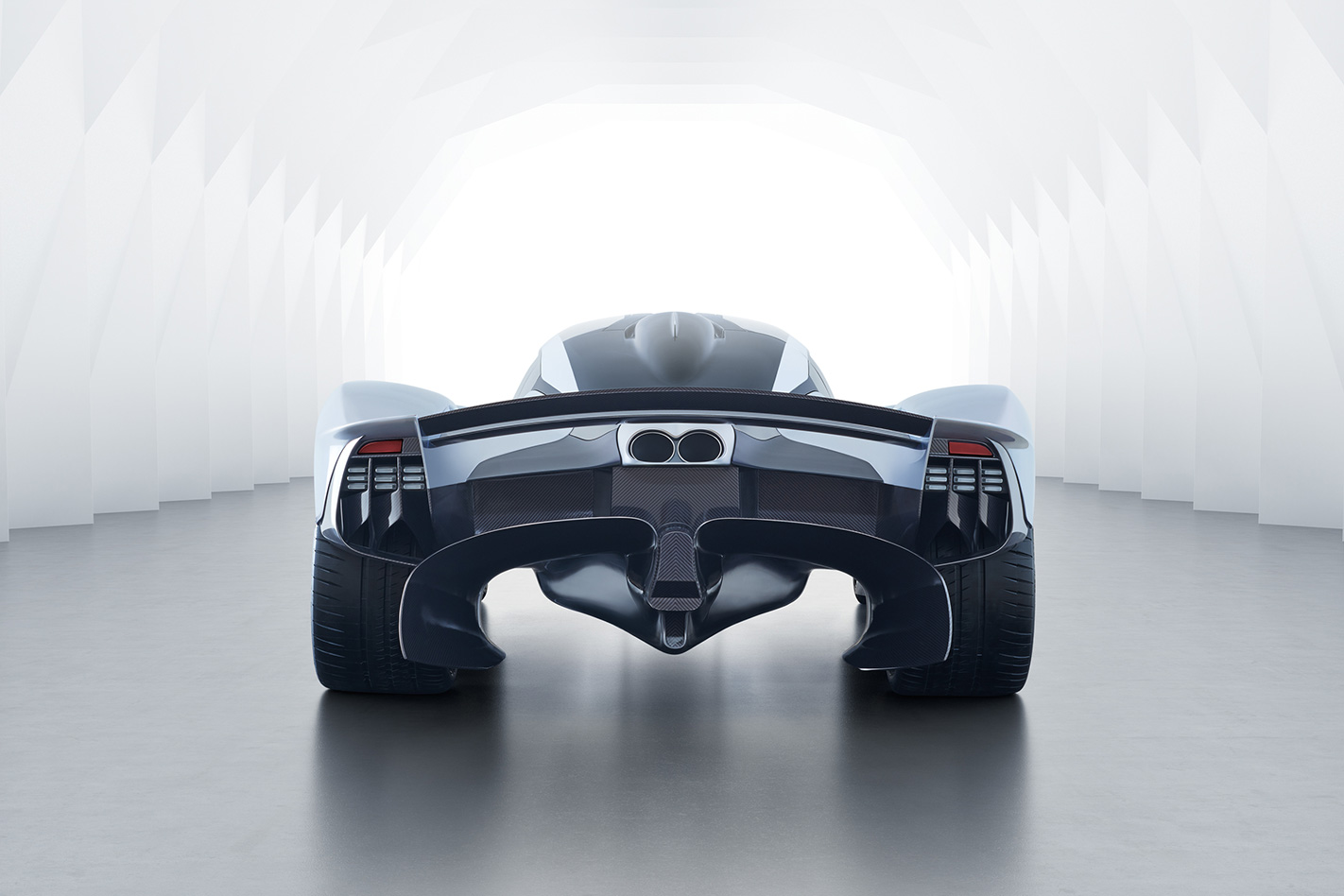
Lewis Hamilton’s F1 championship-winning Mercedes-AMG W08 has at best guess 707kW according to German publication Auto Motor und Sport, and that is from both the 1.6-litre turbocharged V6 and its complex hybrid system.
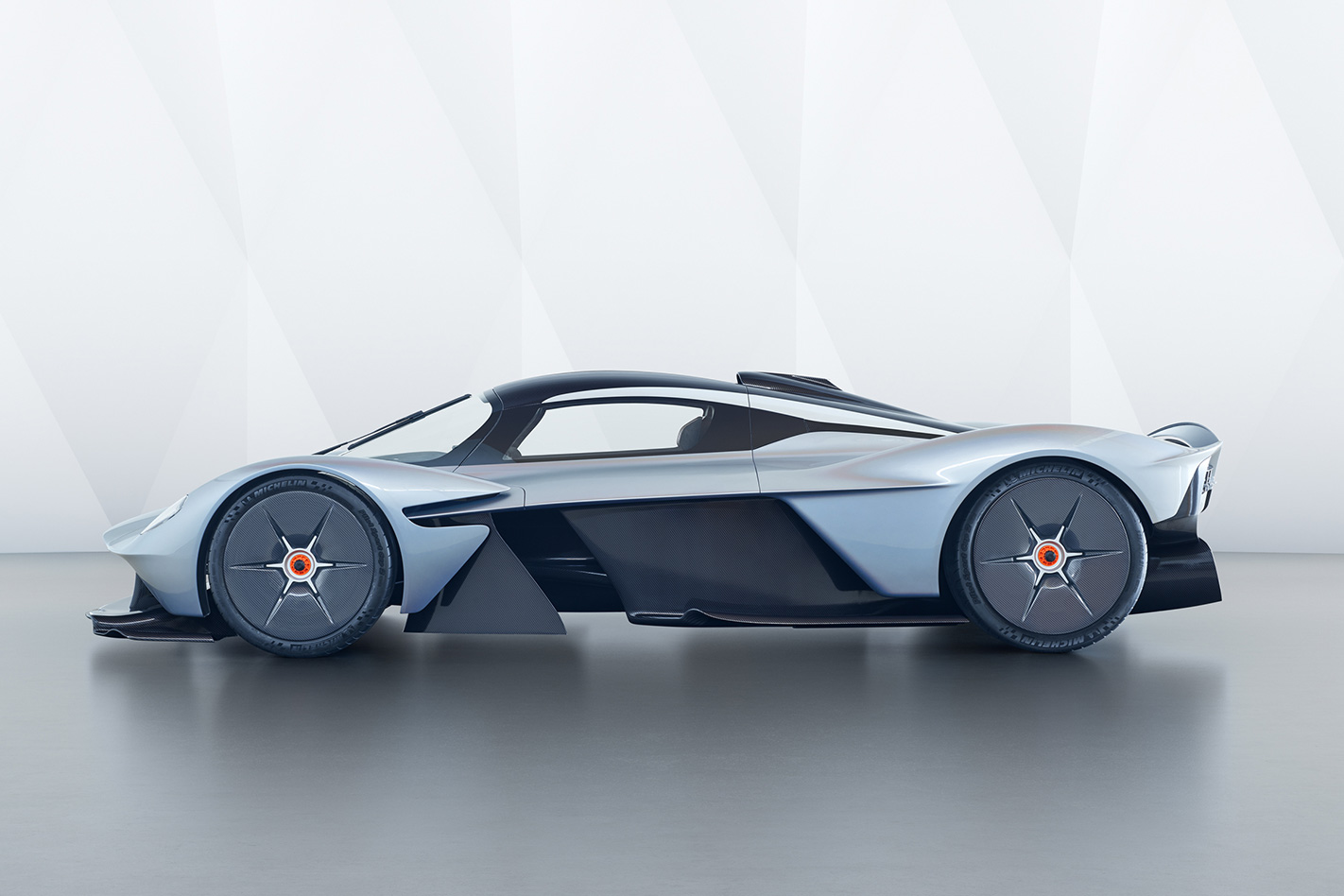
Whichever way it comes out in the wash, should Cosworth’s leaked figure sit in the ballpark of the Valkyrie’s final power outputs, it is undoubtably one of the most extreme vehicles the world has seen.
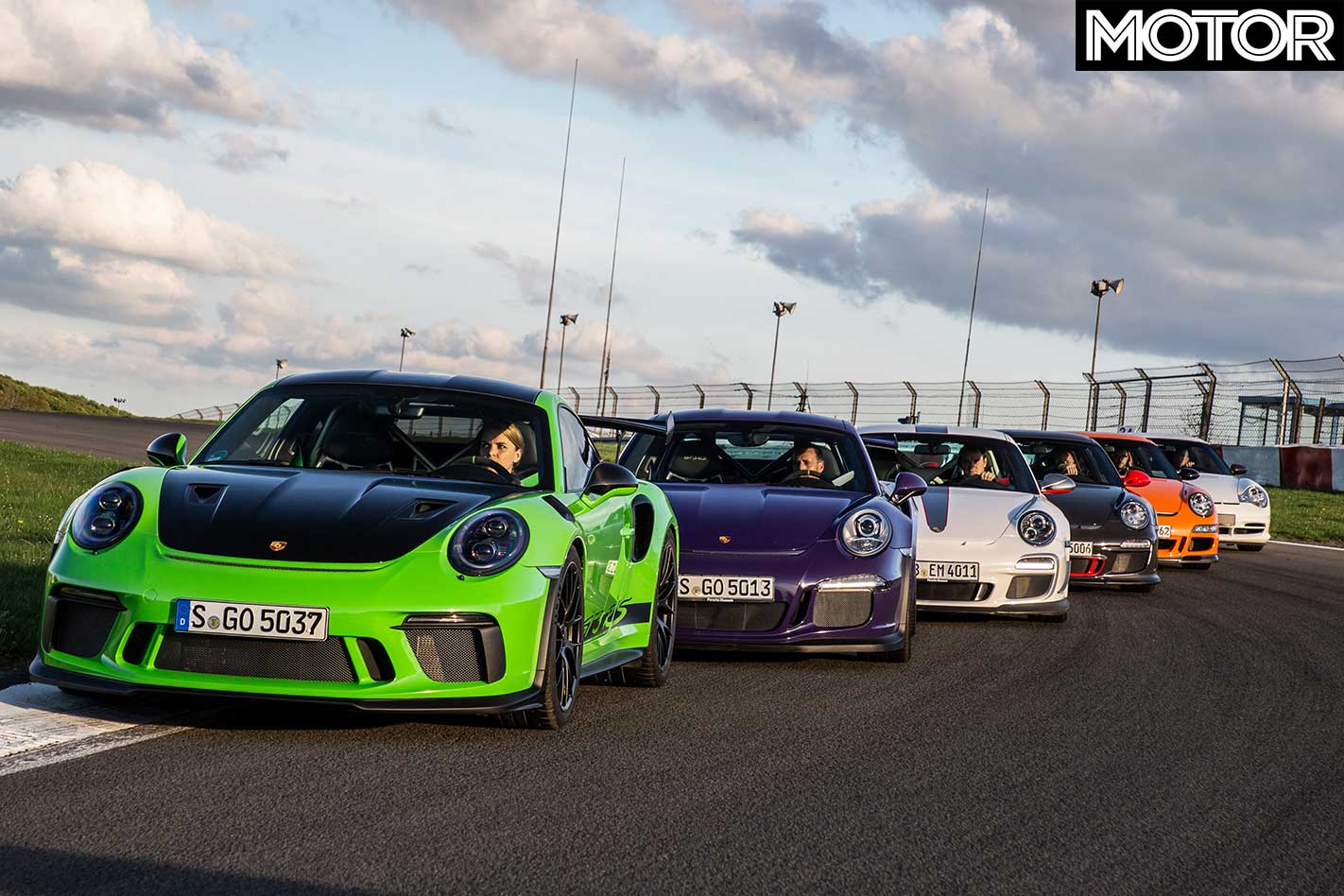
Porsche has always made racing specials of its regular road cars, but what cements the 996 GT3’s place here rather than, say, the 964 RS or 993 Carrera RS, is that it started a dynasty. Its release in 2000 began an unbroken run of excellence that culminates today with the 991.2 GT3 RS.
Compared to Porsche’s latest winged warrior, the original GT3 looks more meek than monster. It’s much narrower than its wide-body successors because it uses the standard Carrera 2 body. A stripped-out cabin dropped weight to 1380kg and an optional Clubsport pack shed more kilos by replacing the seats with racing buckets, but an extinguisher and half cage added some. Air-con and a stereo were no-cost options.
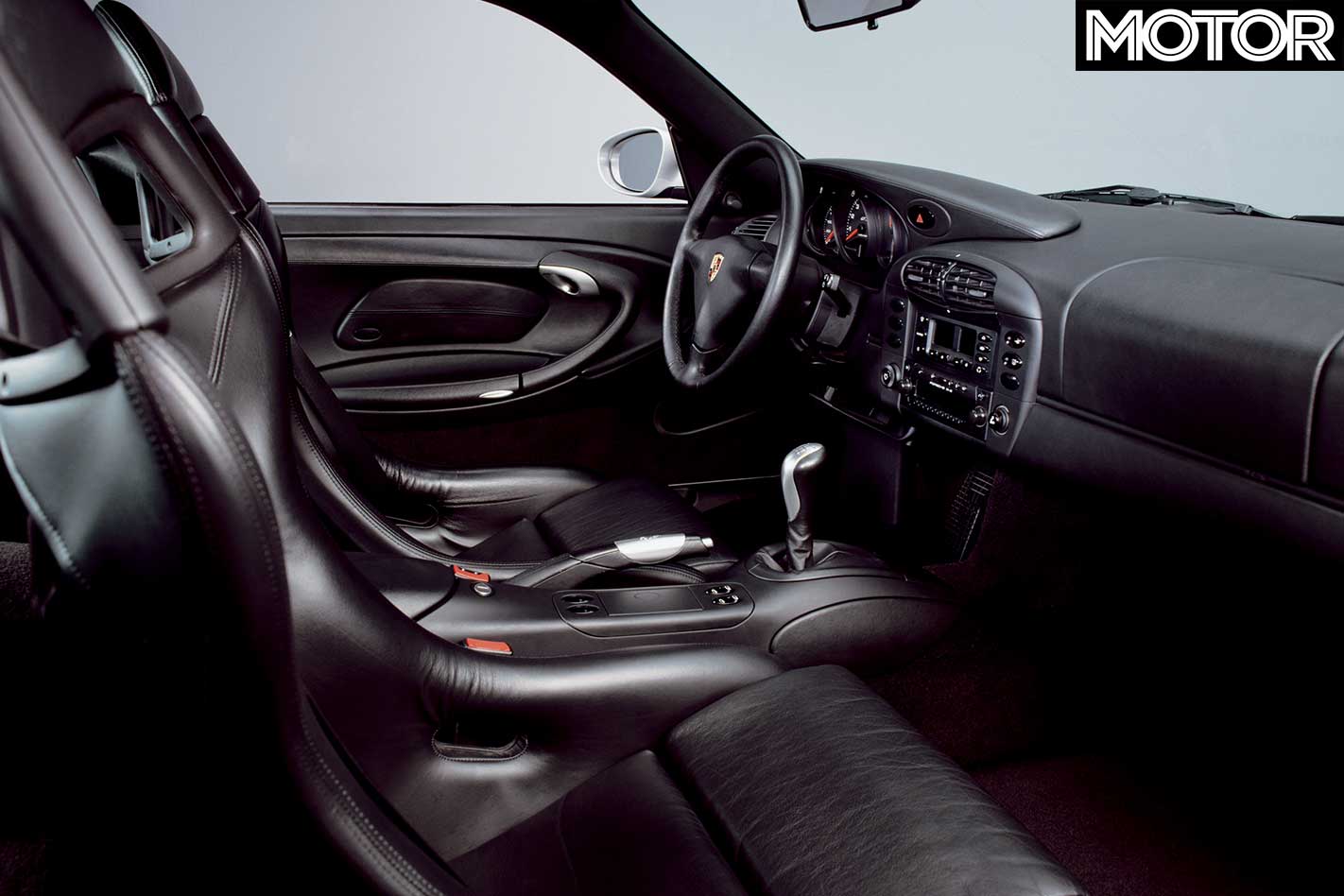
The GT3’s ground-hugging stance and massive spoiler were reasonably extrovert in 2000, but what truly made it special was a production version of the 3.6-litre dry-sumped ‘Mezger’ flat-six, variants of which had powered Porsche’s endurance racers for years, most recently the Le Mans-winning GT1.
It thrived on revs, an 11.7:1 compression ratio delivering 265kW at 7200rpm, 370Nm at 5000rpm, and a 7800rpm cut-out. Incredibly, the latest GT3 has just 400cc extra displacement, yet delivers 103kW and 90Nm more. Still, the 996 could do 100km/h in 4.8sec, 200km/h in 15.6sec, and hit 306km/h.
A six-speed manual, different from the Carrera’s, was the only ’box available, the Clubsport pack also replacing the standard dual-mass flywheel with a lighter single-mass version. Porsche boasted of the ability to quickly change gear ratios and worn parts like synchros, evidence of the car’s intended purpose.
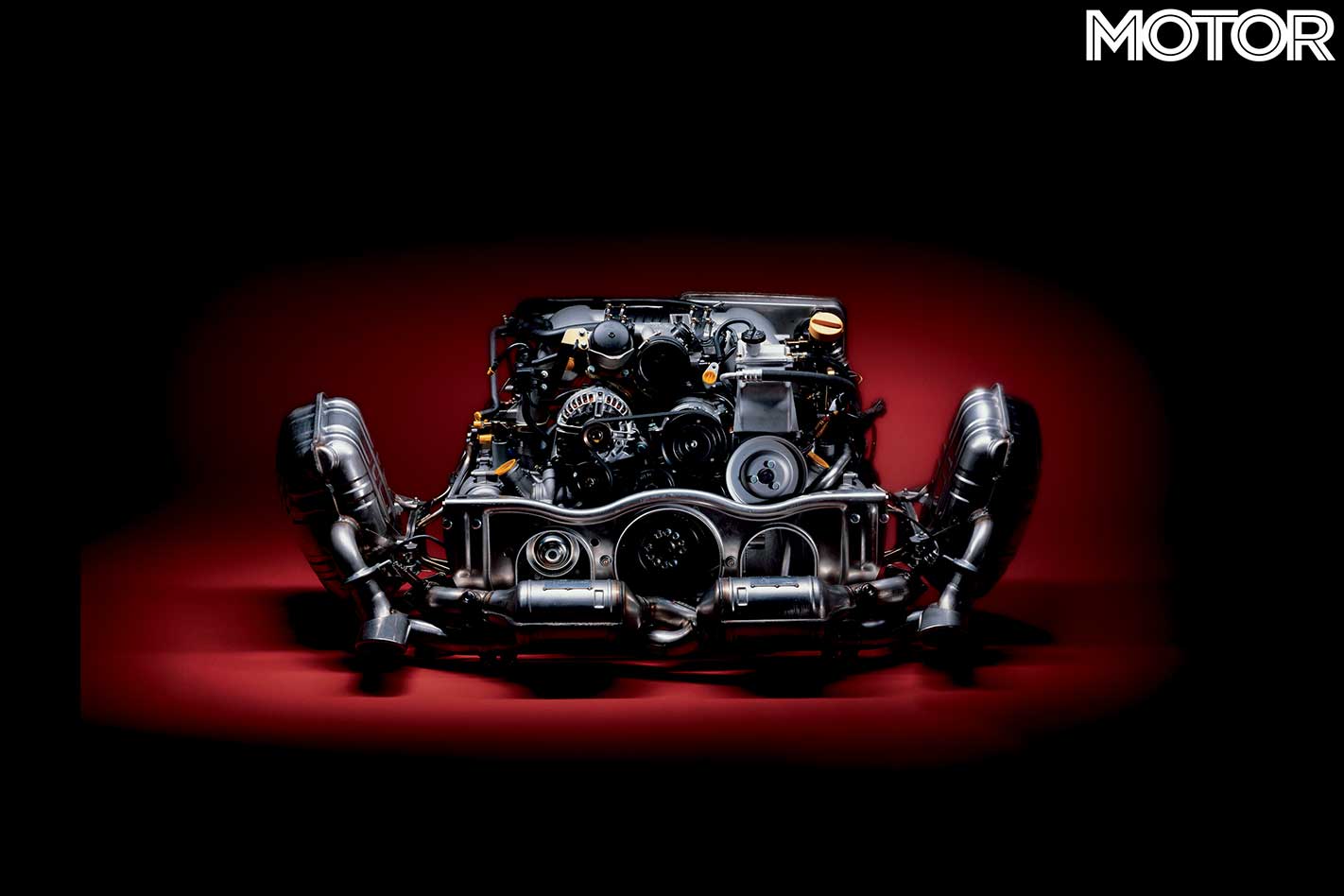
Anti-roll bars were adjustable, springs could be swapped for racing versions, and lowered suspension dropped the centre of gravity by 30mm. Brakes were 330mm rotors with four-piston calipers, while 18-inch wheels wore 225/40 and 285/30 tyres.
Porsche proved the GT3’s prowess at the ’Ring, with Walter Rohrl setting a time of 7min56sec and becoming the first to lap a standard production car there in less than eight minutes.
The 996 also introduced Porsche’s mantra of continual evolution and four years later the 996.2 GT3 arrived, based on the facelifted 911. Its upgraded six received VarioCam variable inlet camshafts, boosting outputs to 280kW at 7400rpm and 385Nm at 5000rpm and raising the rev limit to 8200rpm.
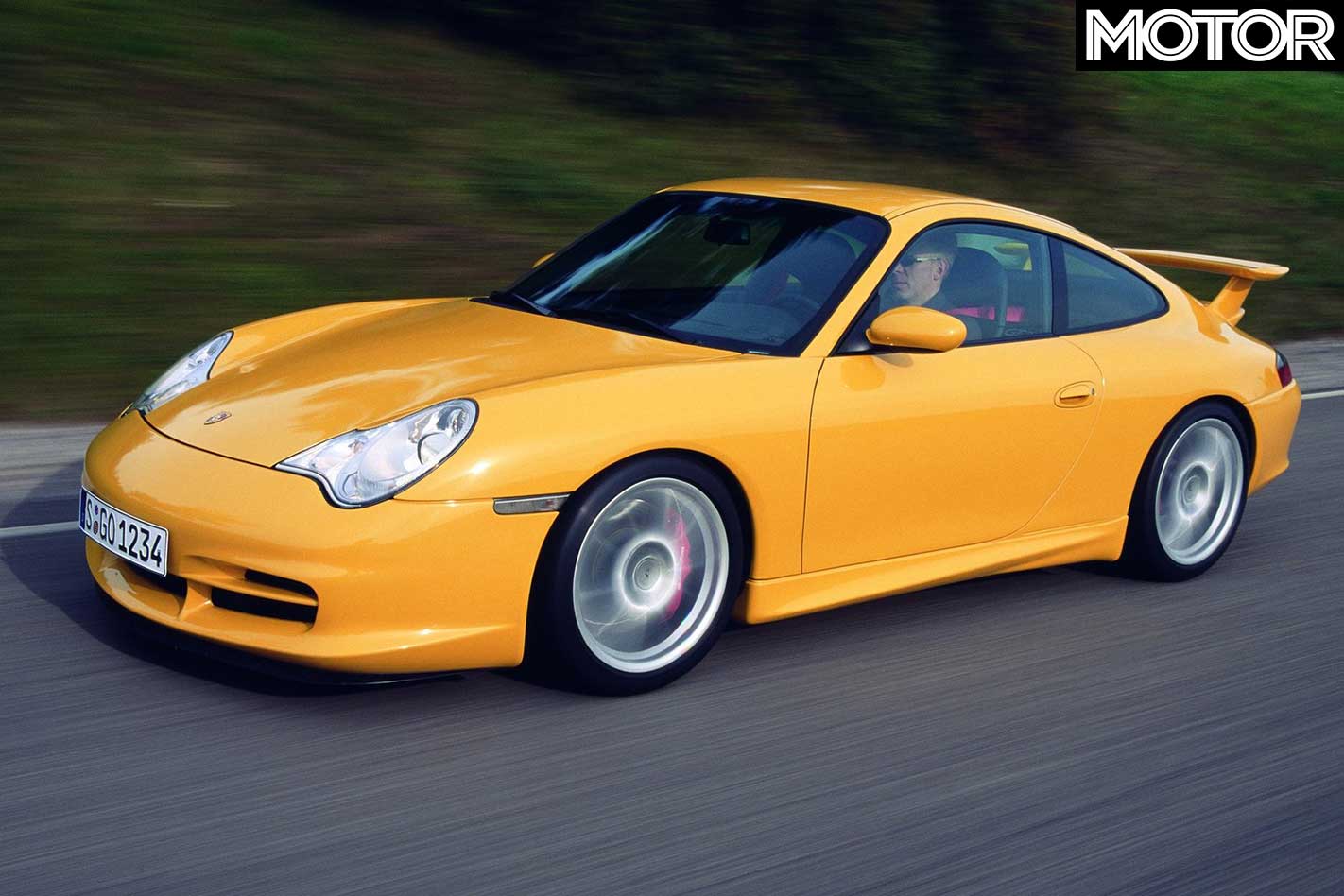
Wheels were a half-inch wider (18 by 8.5, 18 by 11.0), with 10mm wider tyres. Front rotors were 350mm with six-piston calipers and carbon-ceramics were optional. Weight rose to 1380kg, but the 0-100km/h time dropped to 4.5sec and v-max increased to 306km/h, despite shorter fifth and sixth gears.
For the 996-gen swansong, Porsche combined its new motorsport badge with its old one. The GT3 RS was an even more finely honed version, its 50kg diet so severe even badges made way for stickers. The engine was rated the same as the GT3’s, but ram air ducts were said to lift power closer to 300kW.
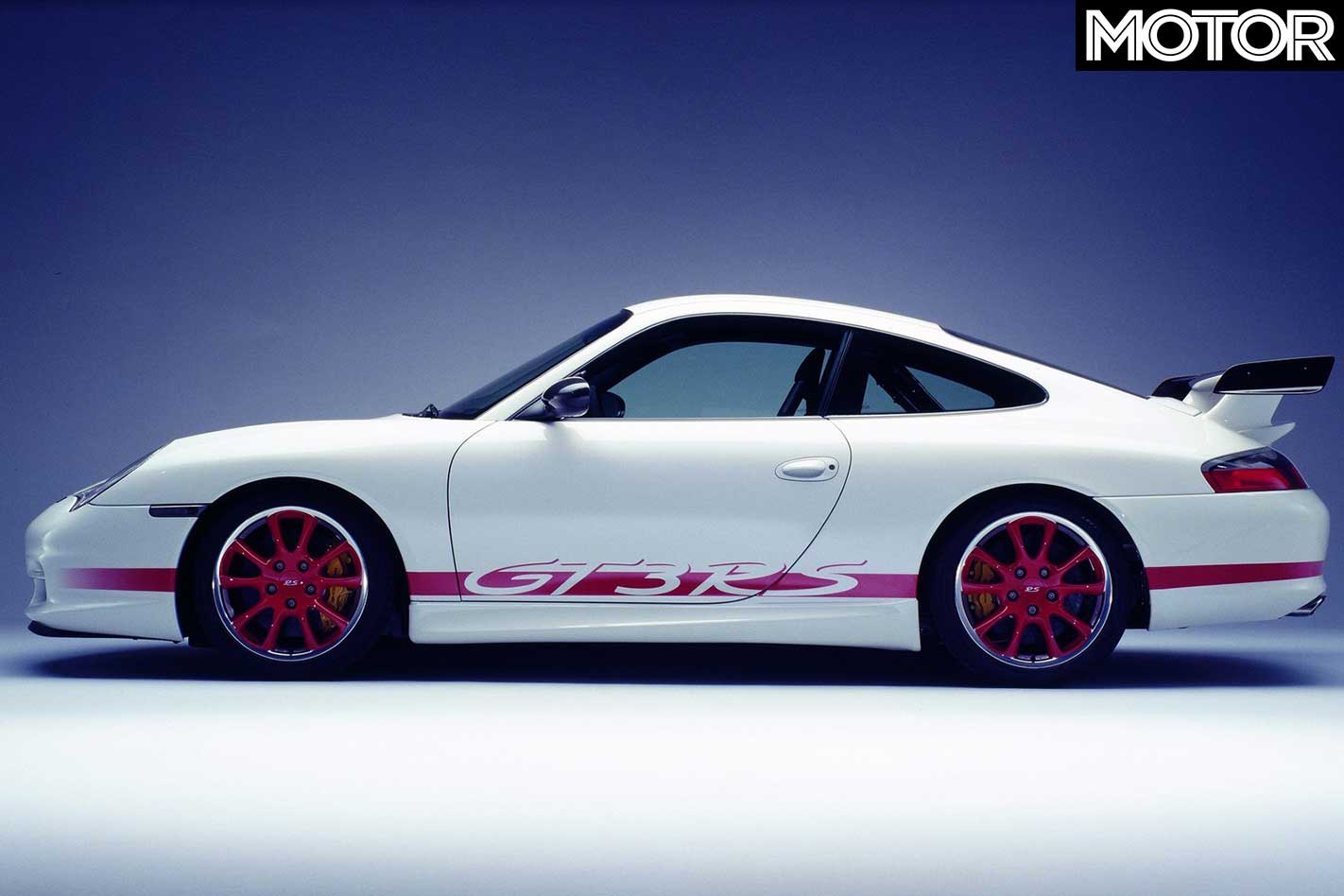
Extra power and less weight cut 0.1sec from the 0-100km/h time and the 0-200km/h time was now just 14sec. Retuned suspension dropped the ride height by 3mm and increased bump and rebound rates by 10 and 15 per cent respectively. Fewer than 700 were built, only around 140 in right-hand drive.
Each subsequent GT3 has been more powerful, faster and yet more liveable, but those who have had the privilege to drive all the generations back-to-back suggest the original is as good as any of its successors when it comes to driving thrills.
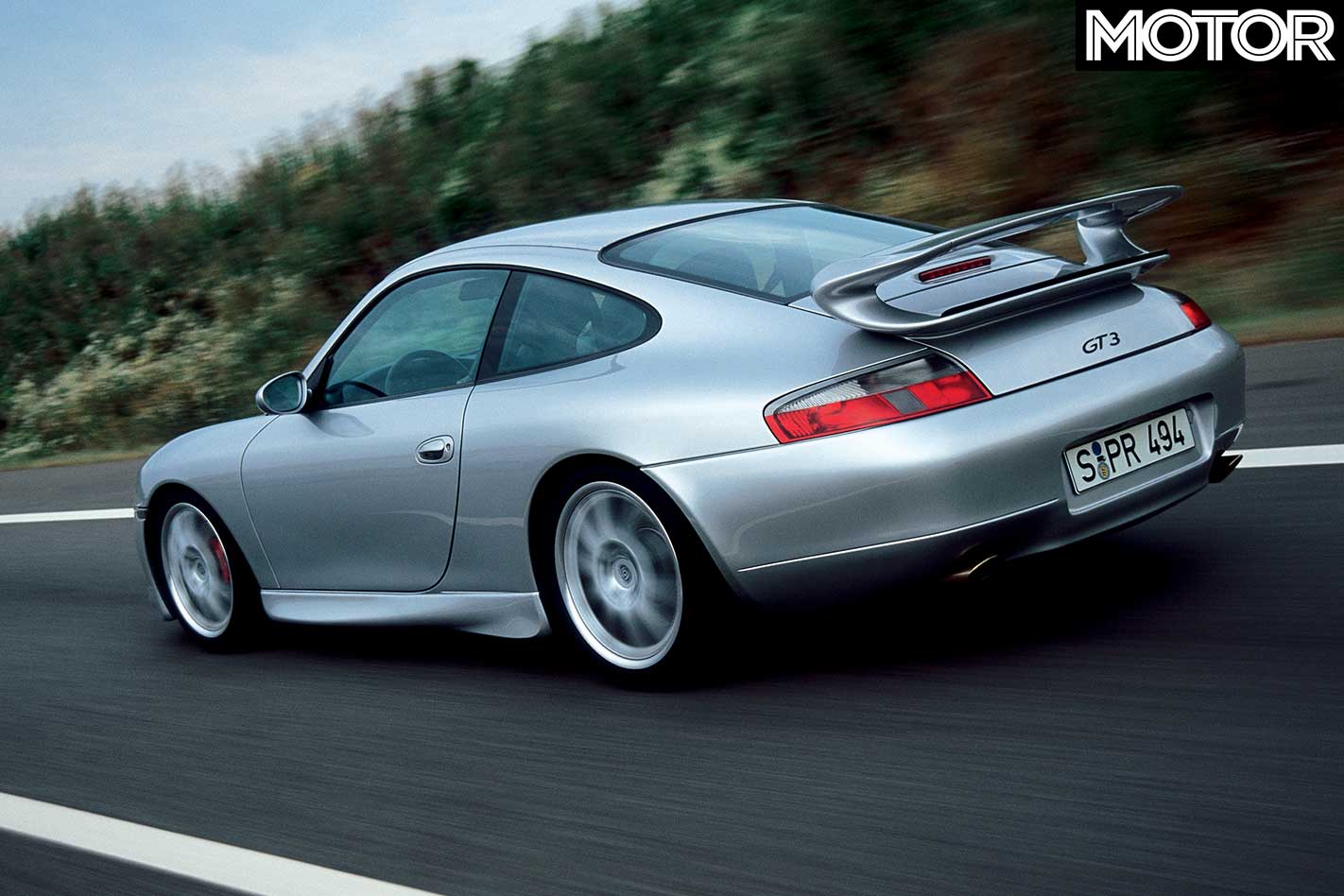
PORSCHE 911 996 GT3 SPECS Year: 2000 Production: 1868 Engine: 3600cc flat-six, rear-mounted Power/Torque: 265kW/370Nm Transmission: 6-speed manual Drive: rear 0-100km/h: 4.9sec Price: AUD$224,600 (new)
EACH year the world’s most exquisitely maintained classic cars convene on the manicured lawns of a Californian golf course for the Pebble Beach Concours d’Elegance.
The event is the curtain closer for Monterey Car Week, held in August, and has become an increasingly attractive venue for manufacturers to put on a show. This year’s gathering takes place next week, and Wheels anticipates a slew of fresh metal to ogle.
The event began in 1950 as an adjunct to the Pebble Beach Road Race, and featured 30 cars. Pebble Beach isn’t a motor show in the traditional sense, having started life as a classical concours event.
However, that hasn’t stopped the Monterey Car Week finale attracting major OEMs eager to rip the covers off cutting-edge designs and historically significant masterpieces.
It’s no coincidence that Maybach revealed concept cars two years in a row at Pebble Beach, while both Pagani and Koenigsegg have been known to debut special editions on the lawn.
So, here are all the reasons you should care about this year’s Pebble Beach Concours d’Elegance
Mercedes-Benz EQ Silver Arrow Concept
The Three Pointed Star is expected to debut a sleek retro-styled concept dubbed the EQ Silver Arrow at Pebble Beach this year.
Penned by Mercedes-Benz’s chief design officer, Gorden Wagener, the name hints at a fully-electric retro racer. EQ denotes Merc’s new electrified sub-brand, while ‘Silver Arrows’ was a nickname given to Mercedes-Benz’s grand prix racers of decades ago.
https://www.instagram.com/p/BmtJIMwgoYN/?utm_source=ig_embed&utm_campaign=embed_loading_state_camera
Porsche Project Gold
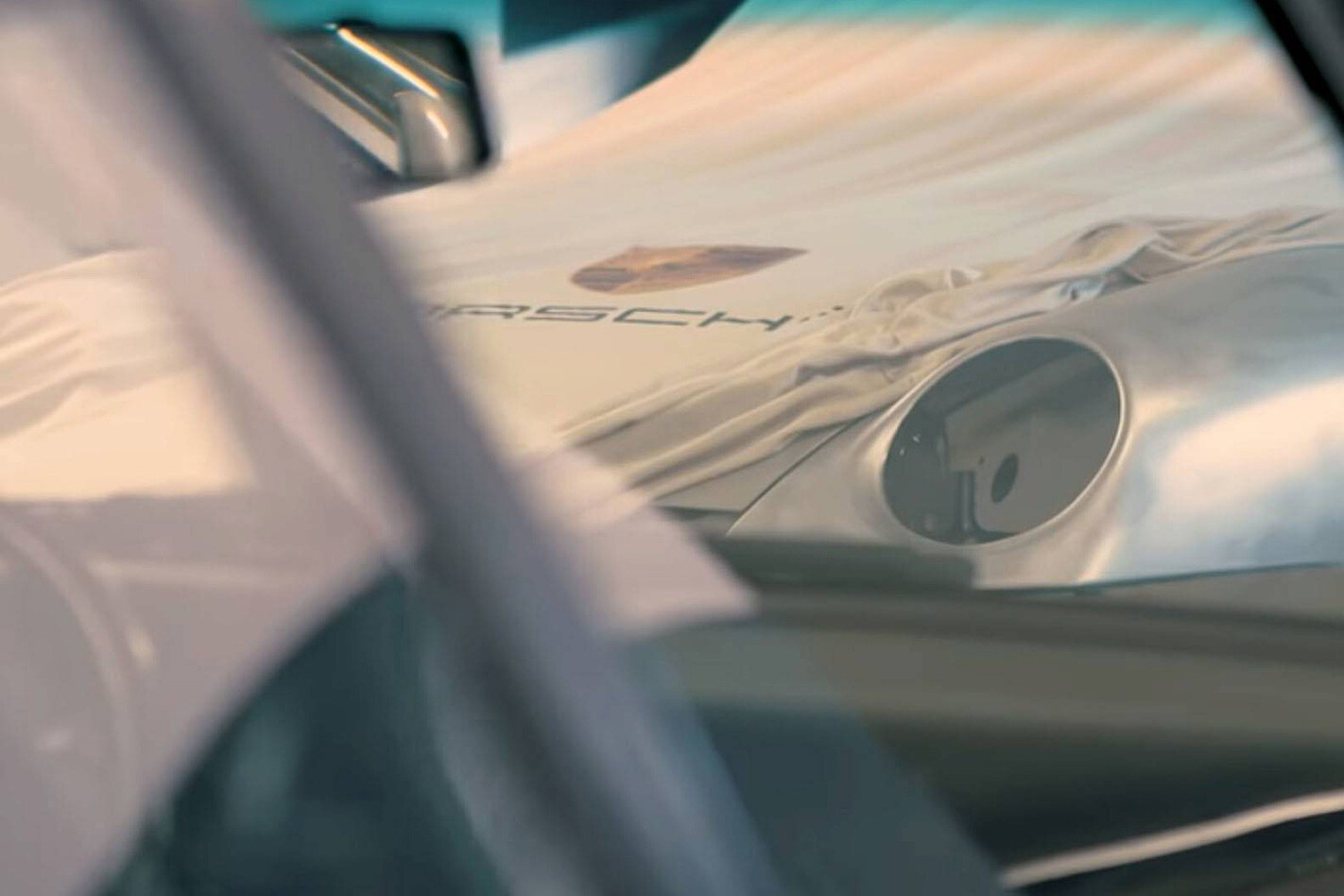
Porsche’s classic car team has been working feverishly in the lead up to Pebble Beach on its ‘Project Gold’ vehicle, which is expected to be shown on the lawn.
Project Gold is a meticulously restored and modified 911, which has been teased in short videos over the past few months. Porsche is yet to confirm whether Project Gold started life as a 993, as it appears, or as another generation of 911, but the Stuttgart press office has confirmed a 3.8-litre air-cooled twin-turbo flat-six engine producing 331kW will be nestled behind the rear axle. With Pebble Beach’s classic car focus, Project Gold is sure to fit right in with the crowd.
Audi PB 18 E-Tron
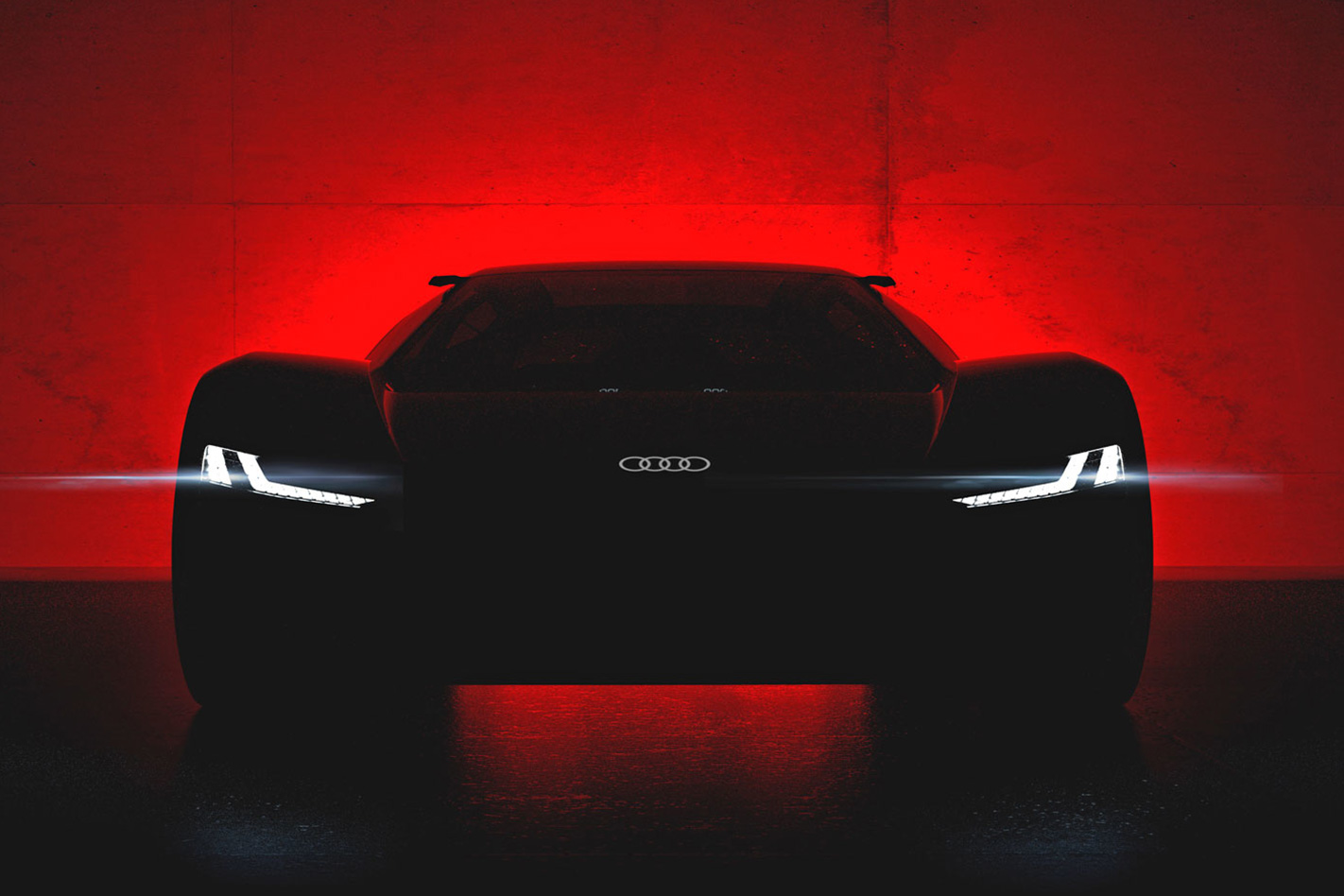
One concept which isn’t going to blend in with the established Pebble Beach classics is Audi’s PB 18 E-Tron, a futuristic concept car inspired by Le Mans.
As is now expected of new concepts, the PB 18 E-Tron will be fully electric, with its pre-show reveal location of Laguna Seca hinting at a racing focus.
The concept will debut August 23 at the race track, before being rolled onto the golf course later in the week.
Bugatti Divo
No, it’s not a misspelled tribute to the synth-pop band, it’s the corner-carving sibling to the horizon-smashing Chiron.
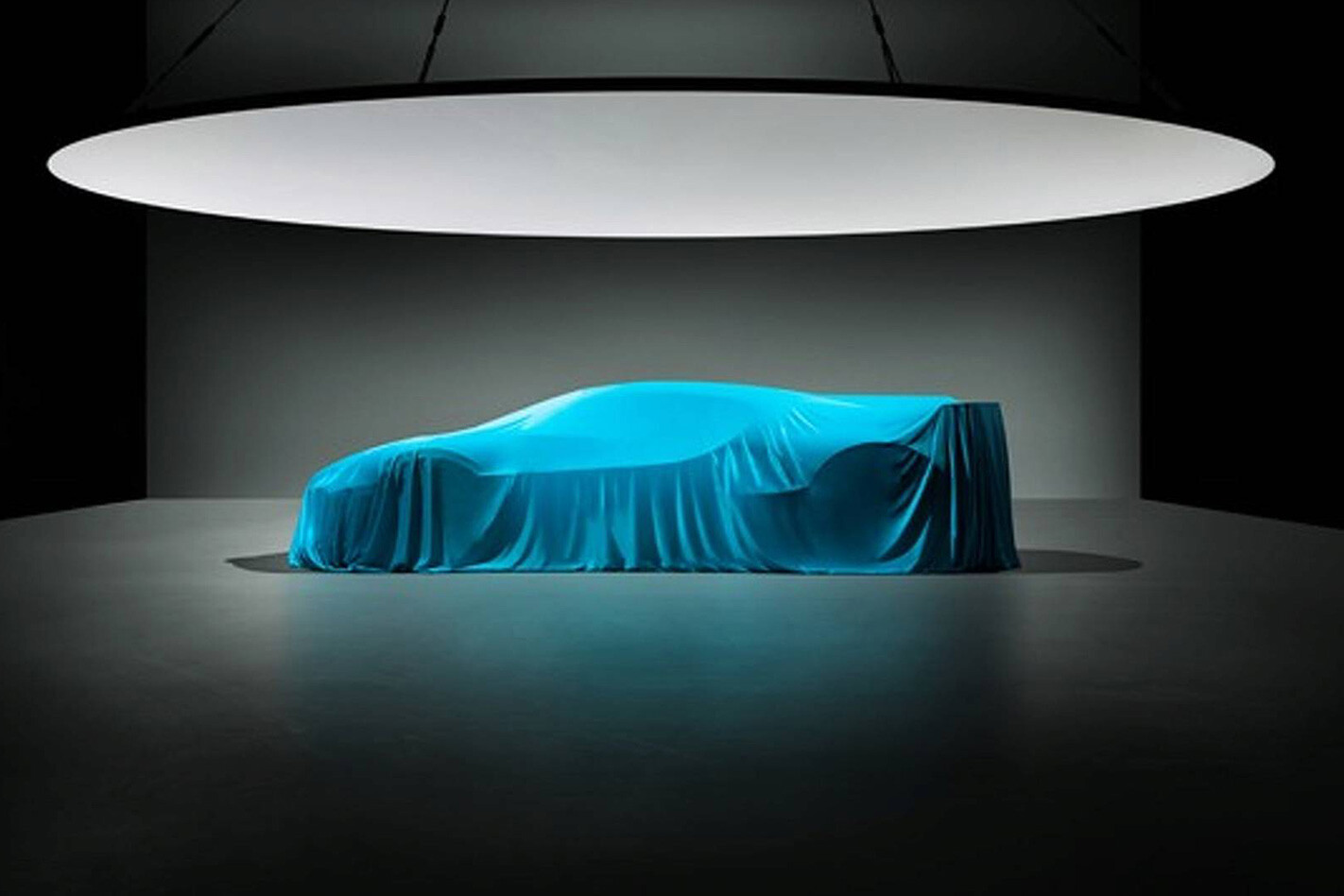
No technical details have been revealed but the coach-built machine will wear the moniker Divo, honouring pre-war grand prix racer Albert Divo, who won the Targa Florio twice for Bugatti in the 1920s.
Unlike the Chiron and Veyron, the Divo usurps the traditional top-speed focus of previous Bugatti hardware, and is instead engineered to attack apexes with more vigour than its straight-line speed siblings.
Bugatti claims the Divo will “be light and nimble and will boast enormous downforce and G-forces” and have “outstanding” handling.
Each Divo will be built atop the same chassis and powertrain as the Chiron, which means the limited-edition Bugatti will be afforded 1102kW of shove to attack corners with, although the engineers might not be able to resist turning up the taps a little further.
The Divo will reportedly cost $7.9m to buy, and is limited to just 40 cars globally.
Infiniti’s Prototype 10
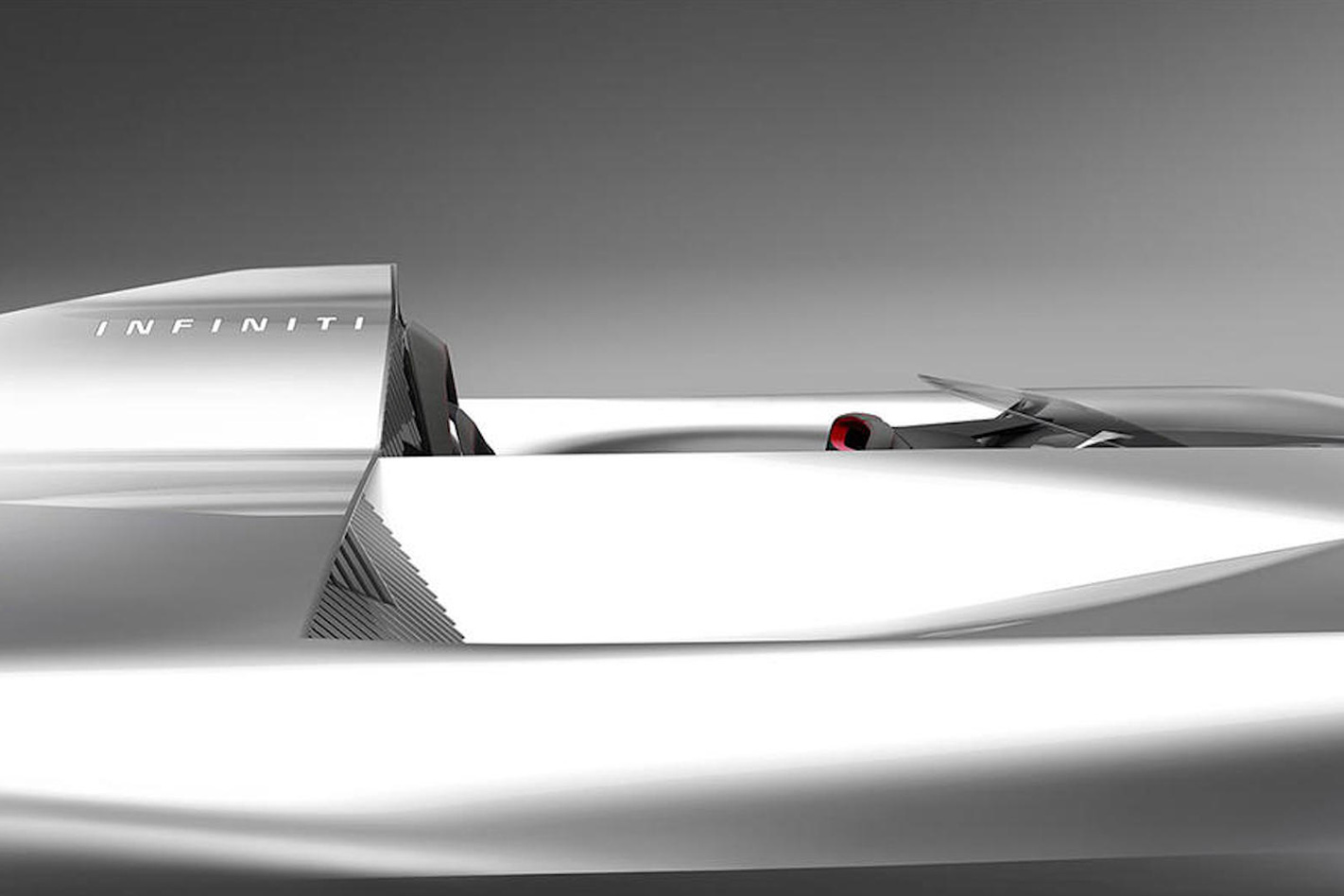
Nissan’s luxury off-shoot has teased a Pebble Beach reveal for its follow-up concept to last year’s Prototype 9, a Leaf-powered creation inspired by 1940s grand prix racers.
Teaser images for the concept hint Infiniti has again done away with a roof, leaving a driver’s seat exposed to the elements.
Penned by the brand’s new executive design director, Karim Habib, who jumped shipped from BMW, the concept will be a fully-electric machine.
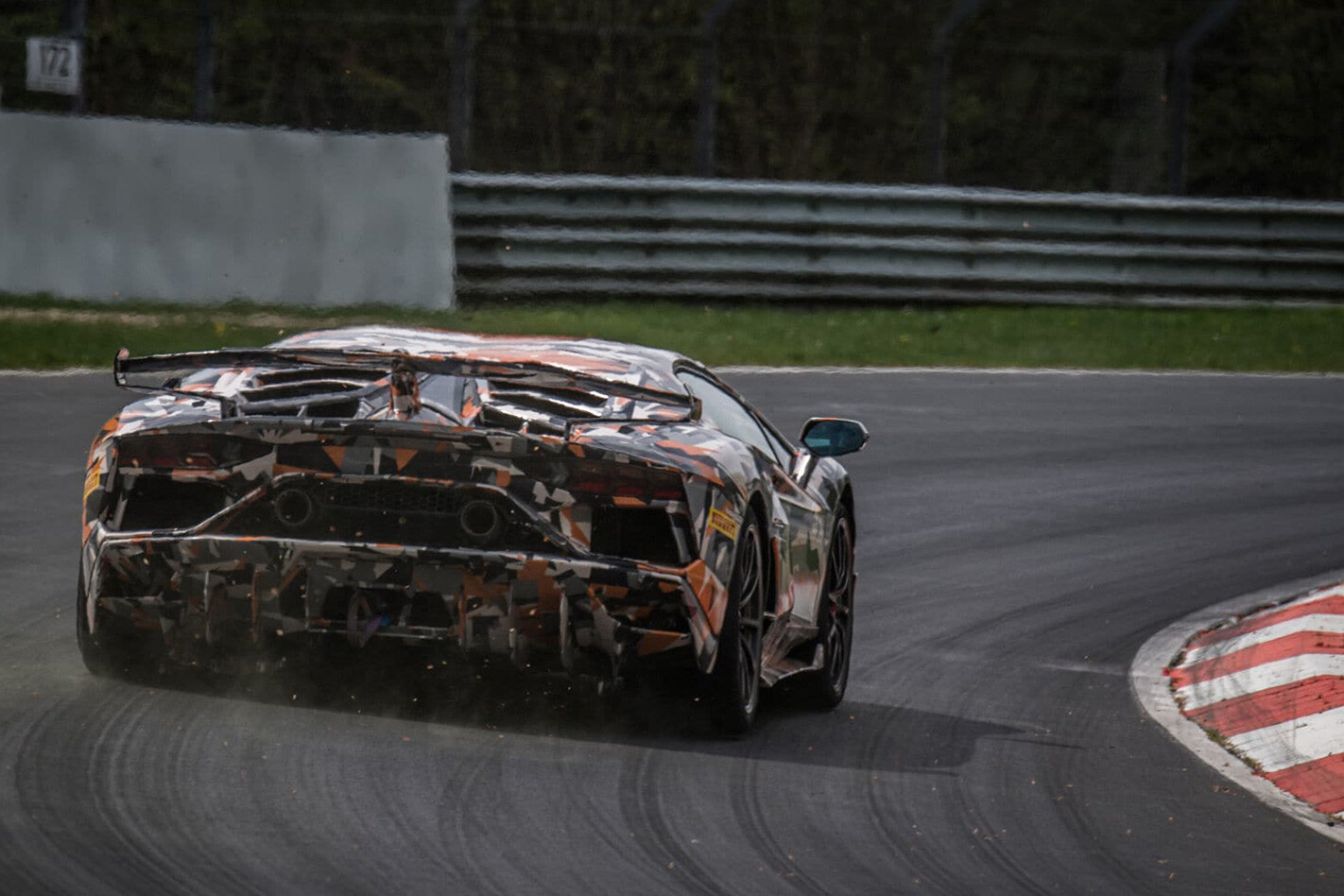
Lamborghini Aventador SVJ
The latest V12 monster from Sant’Agata stormed onto the scene by crushing the Porsche 911 GT2 RS’s Nurburgring record. However, Lamborghini is expected officially debut the Aventador SVJ in a much more genteel location at Pebble Beach.
Billed as the Aventador swansong, the SVJ is also likely the final naturally-aspirated V12 Lambo, pumping out 567kW and 720Nm.
It’s expected the SVJ suffix could simply become Jota, a famous badge which has been worn previously by just two Lamborghinis, the Miura and rear-drive Diablo SE 30.
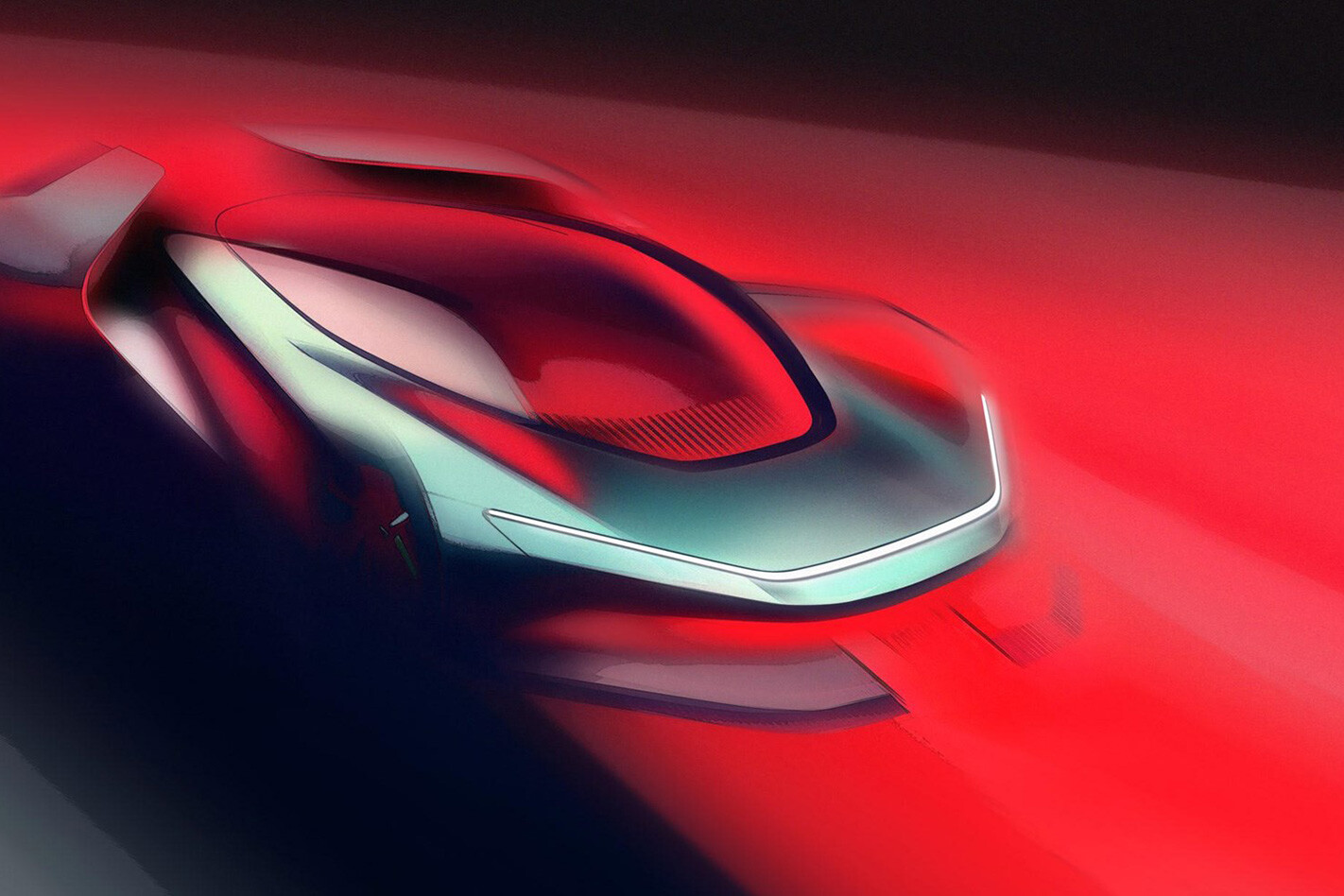
Pinifarina PF0
The famed Italian design studio Pinifarina is expected to reveal its first in-house hypercar at Pebble Beach this year.
Dubbed the PF0, the all-electric hypercar will be hand-built in an incredibly small number from 2020, with no more than 150 to be spread across the globe.
It’s claimed the car will be able to crack 100km/h from a standstill in less than two seconds, with a 400km/h+ vmax, thanks to modular underpinnings co-developed by electric hypercar manufacturer Rimac and the Mahindra Racing Formula E team.
A production version of the PF0 will be shown at the Geneva Motor Show in March next year.
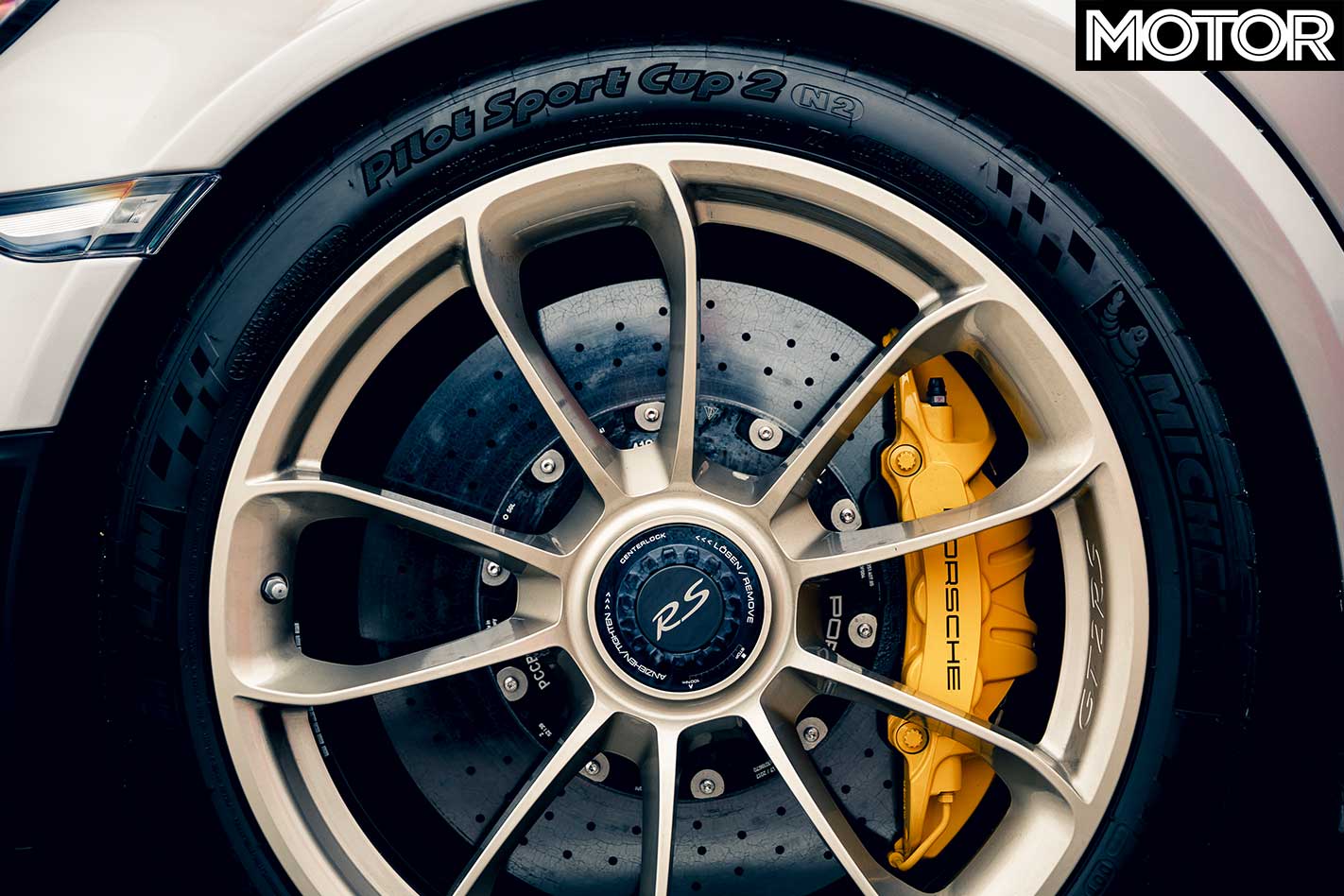
Michelin’s Pilot Sport Cup 2 R, the tyre used for the sub-7-minute lap of the Nürburgring by a Porsche 911 GT3 RS, is soon to be available in Australia.
Compared to the ‘standard’ Cup 2 tyre, Michelin looked to its motorsport-spec tyres and developed semi-slick road versions, primarily for use with Porsche RS cars for now.
“The tyre’s outer shoulder now has fewer dimples and a lower void ratio, and therefore more rubber in contact with the ground.
“In addition, the central grooves in the tread have been narrowed to further increase the amount of rubber in contact with the road, and this increases the tyre’s rigidity to improve steering precision and to cope with the higher grip levels generated.
“Overall, this gives the new tyre an almost 10 percent larger contact patch and allows it to exploit the very high performance levels available with today’s ultra-high performance cars.”
Testing the Cup 2 Rs at the Nardò racetrack in Italy, Michelin used a Porsche 911 GT2 RS to run laps with a set of R and non-R Cup 2s. It recorded a 2.9-second lap time difference in favour of the Pilot Sport Cup 2 R, something Michelin estimates is the equivalent of a 30 per cent power increase.
Initially, Michelin says the Pilot Sport Cup 2 R will be an optional extra for the Porsche 911 GT2 RS and 911 GT3 RS, but will be available for purchase in Australia from mid-2019 with further ‘OE homologations’ for different models on the way.
