
Front-row seats to the Lamborghini Huracán Performante’s atmo V10 are now available.
At the Geneva Motor Show, Lamborghini announced the Spyder version or its track-slaying supercar, with the same 5.2-litre naturally aspirated V10 hauling it along.
As with the Coupe version, the Spyder produces 470kW and 600Nm, but it’s packed on a few kilos. Where the Performante coupe weighs 1382kg dry, the Spyder weighs 1507kg.
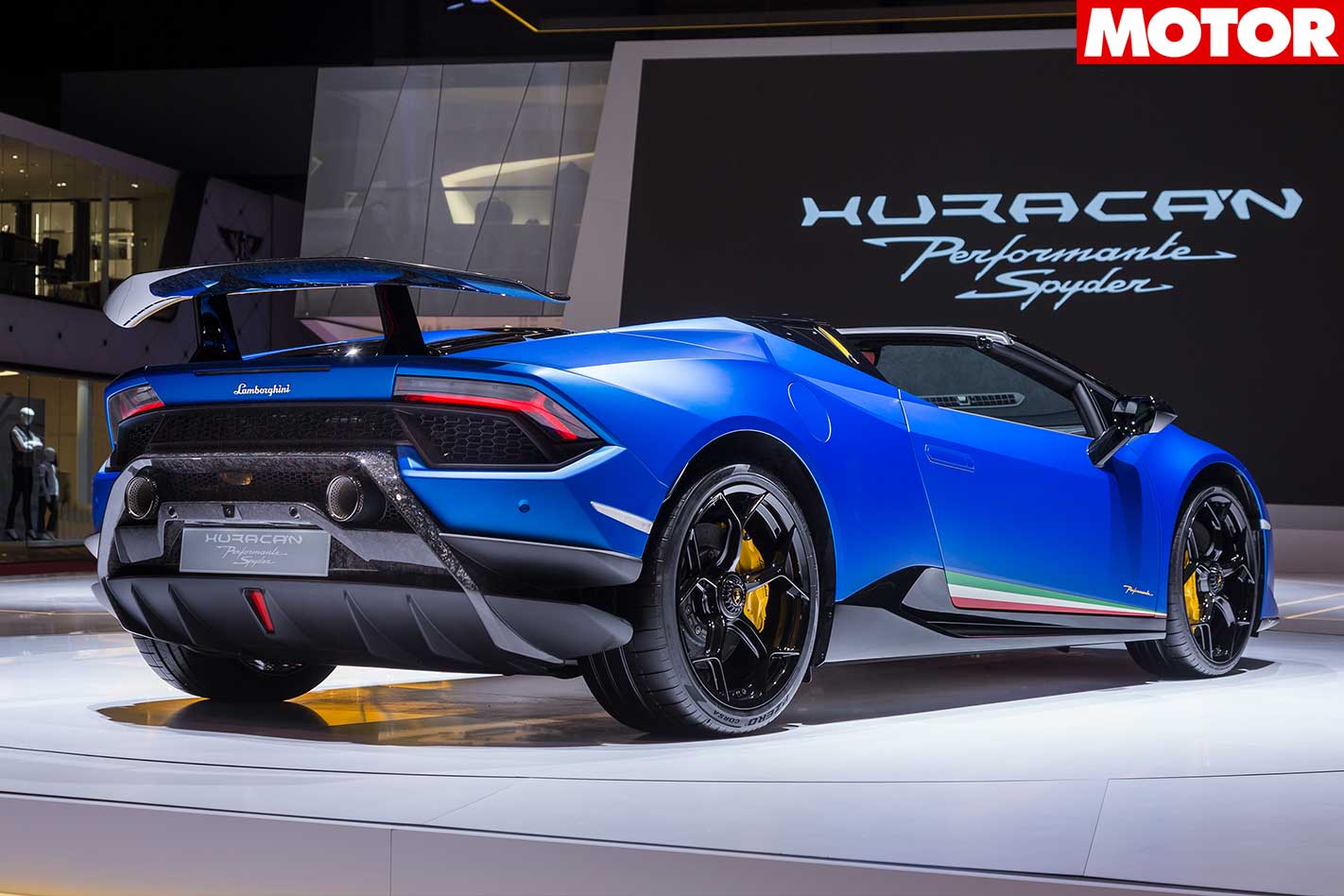
But Lamborghini chair and CEO Stefano Domenicali says while the Spyder isn’t the fastest Performante, its open-air cabin makes it a more raw experience.
“The Huracán Performante Spyder takes the zenith of Huracán developments, combined with the enhanced emotion of driving a convertible,” says Domenicali.
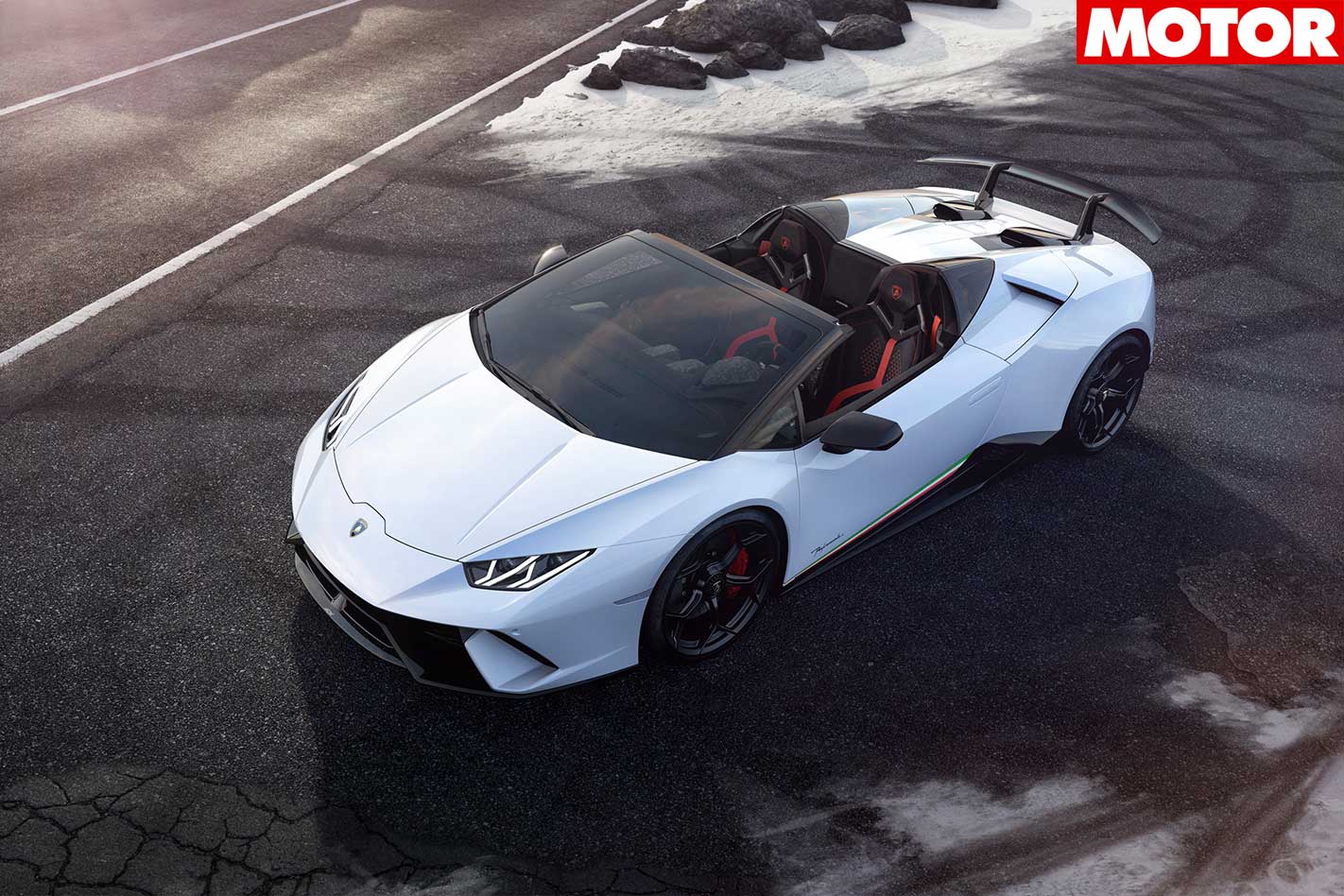
Even with the roof closed, Lamborghini has made the Spyder ‘its own car’, with differentiation from the Coupe.
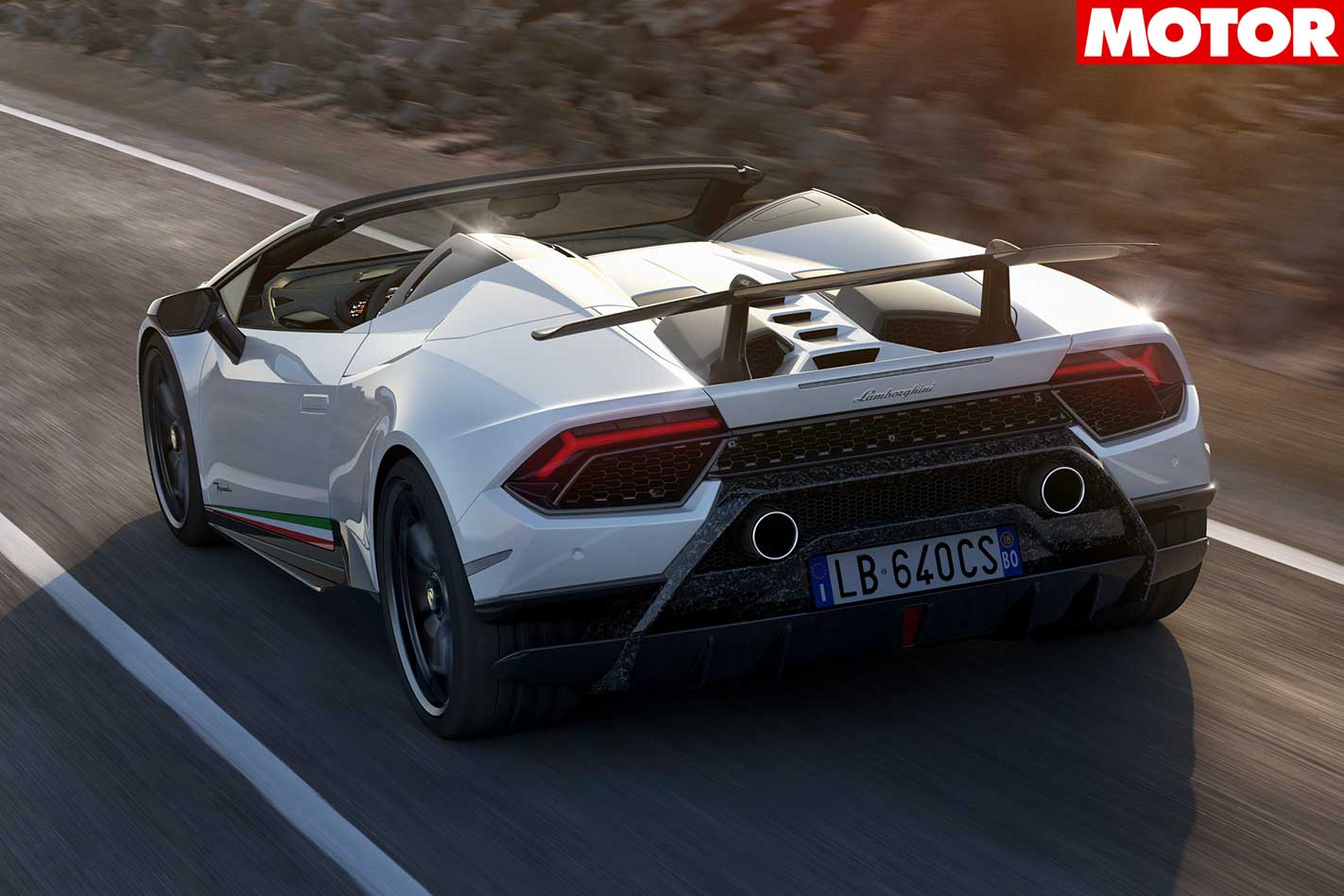
It takes 17 seconds for the roof to open, but this can be done at speeds of up to 50km/h.
Lamborghini has suggested the Performante Spyder should cost €219,585 in Europe, £195,078 in the UK, USD$308,859 in the US, and even 4,237,777 RMB in China, but no suggested pricing has been announced for Australia.
McLaren’s divisively-styled Senna has joined the ranks of the F1 and P1 GTRs with its own track version, the McLaren Senna GTR.
Only 75 examples of the GTR will be produced, each priced at £1 million.
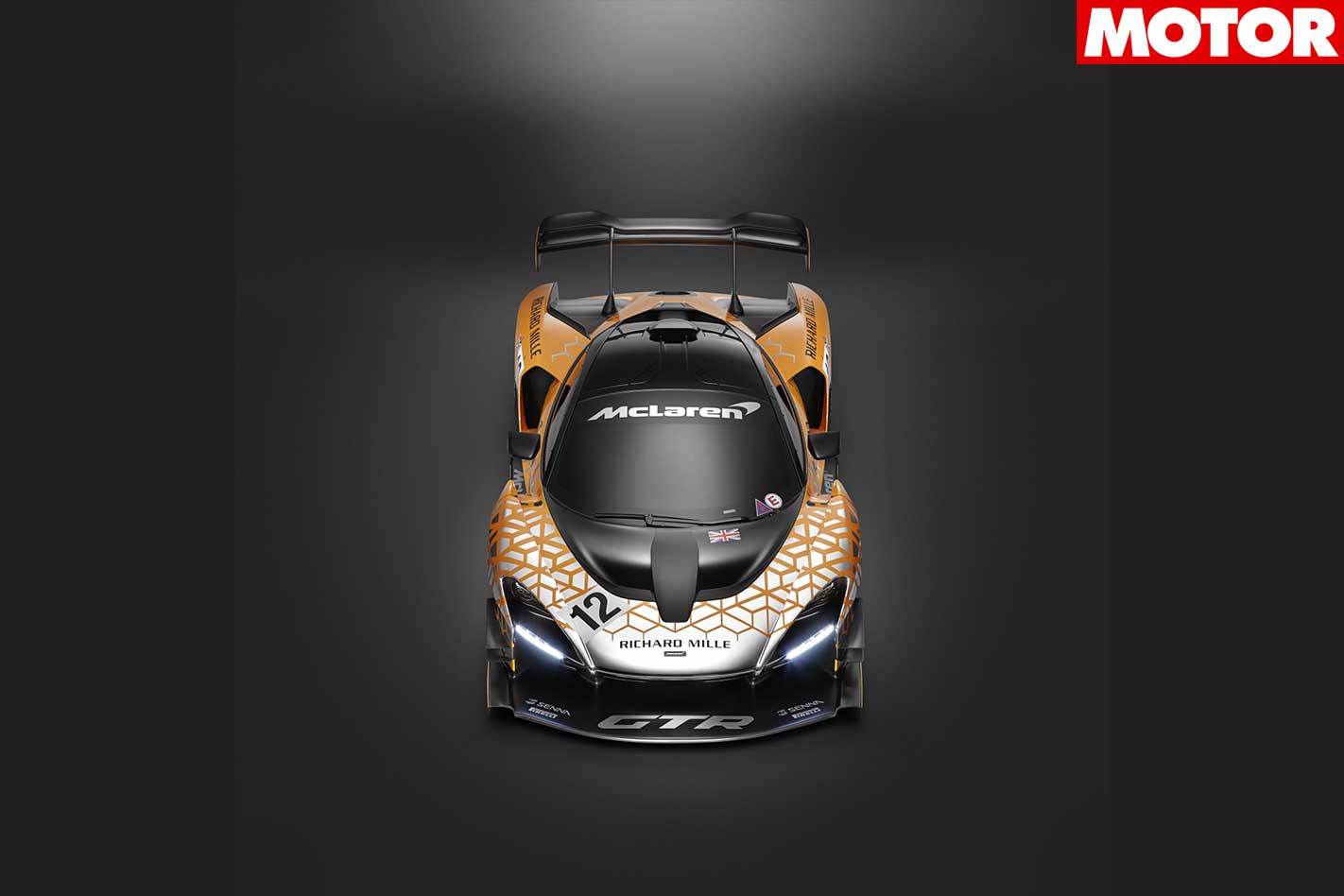
It’ll weigh roughly the same as the road-going Senna, at 1198kg dry, but will generate up to 1000kg of downforce. A race-style transmission, revised double wishbone suspension, and Pirelli slick tyres are also now part of the GTR’s diet.
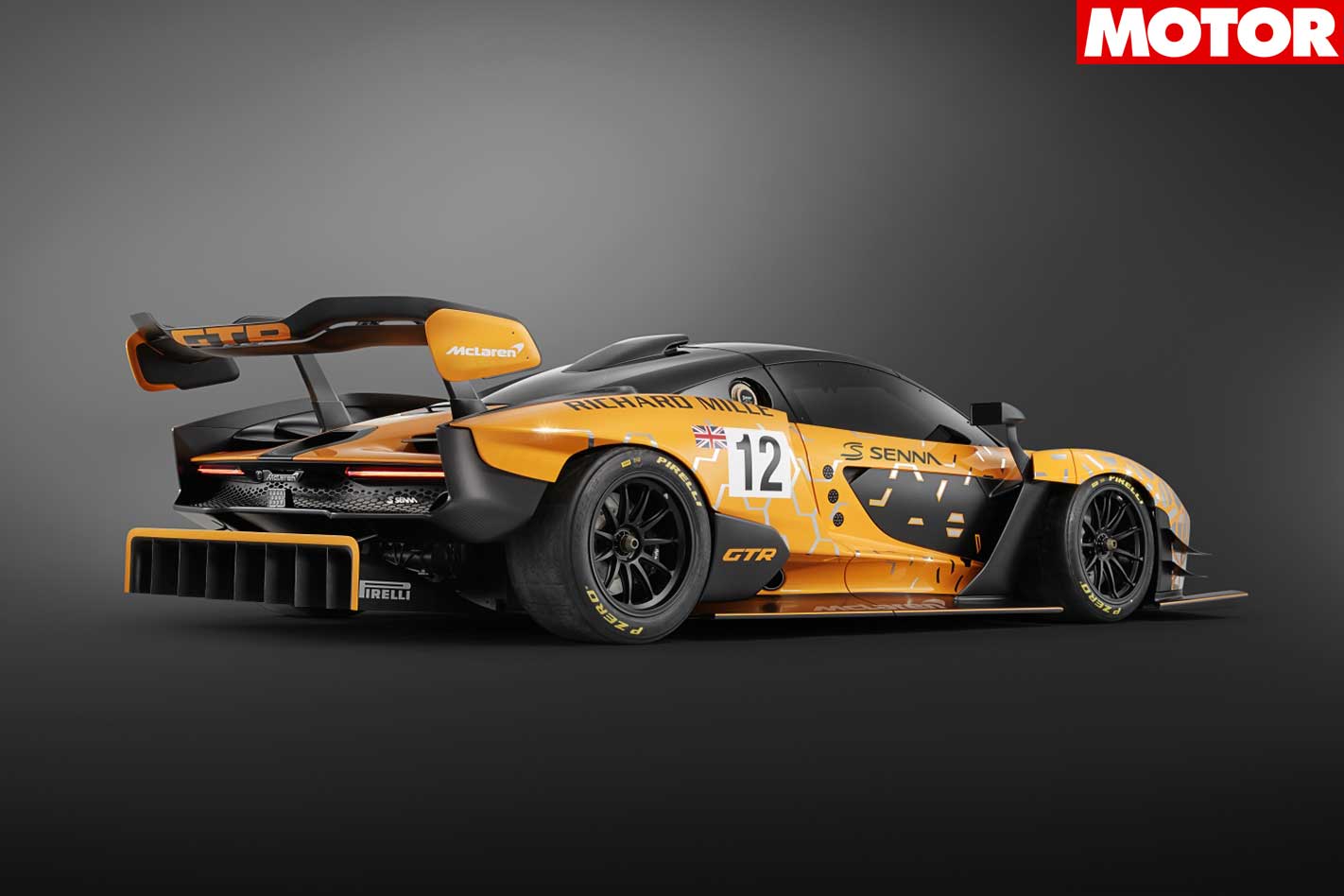
McLaren Automotive CEO Mike Flewitt says the cars will be hand-assembled in Woking, England, during 2019.
“Excelling on the track underpins the heritage of the McLaren brand and is as important and relevant today as it has ever been,” says Flewitt.
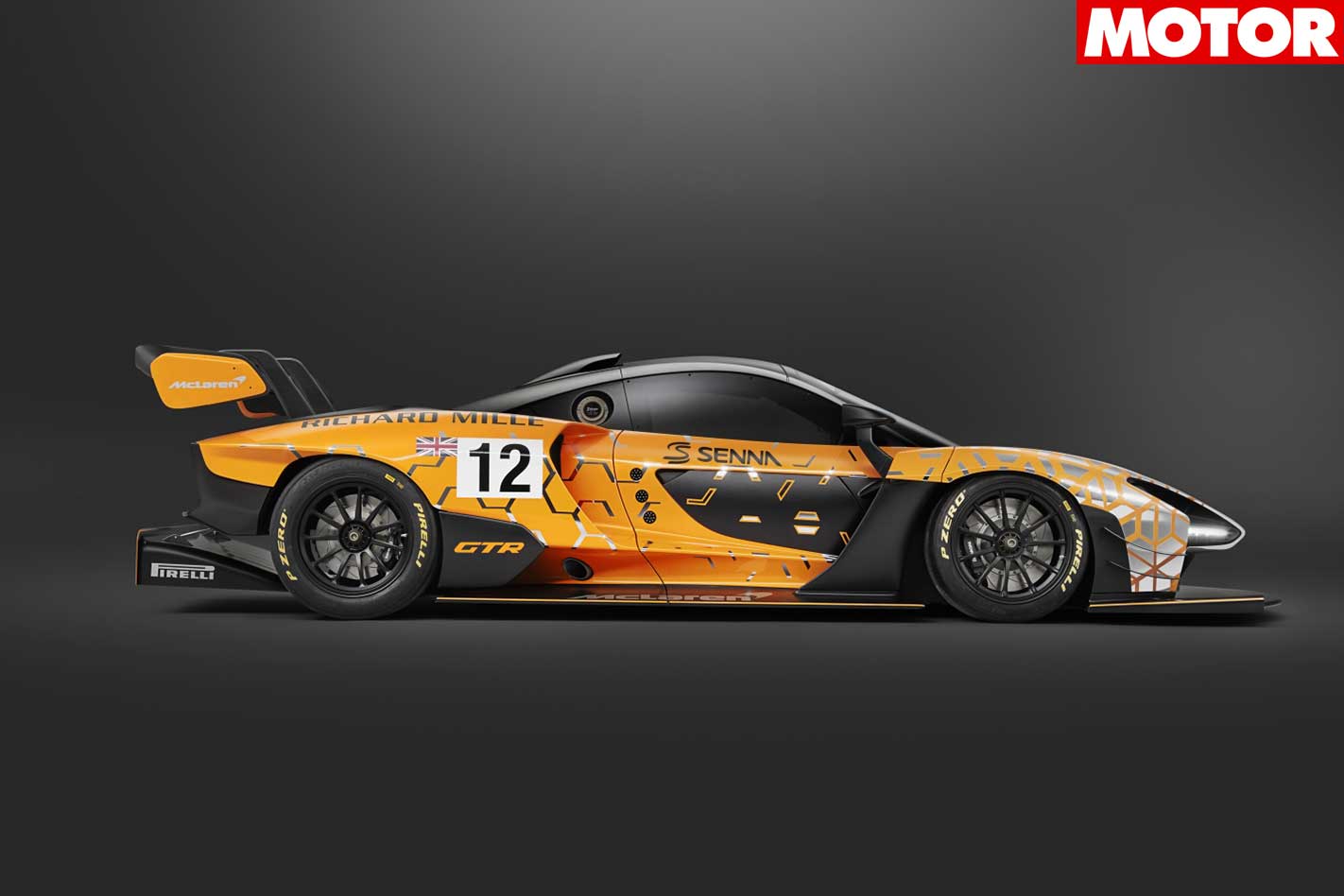
McLaren says it’s taking the ‘form follows function’ approach as it did with the road car – something which could explain the contentious style – which gives the GTR a wider track and a larger front splitter, as well as doors being as close to the centre of the car as possible and a polycarbonate ‘ticket’ window.
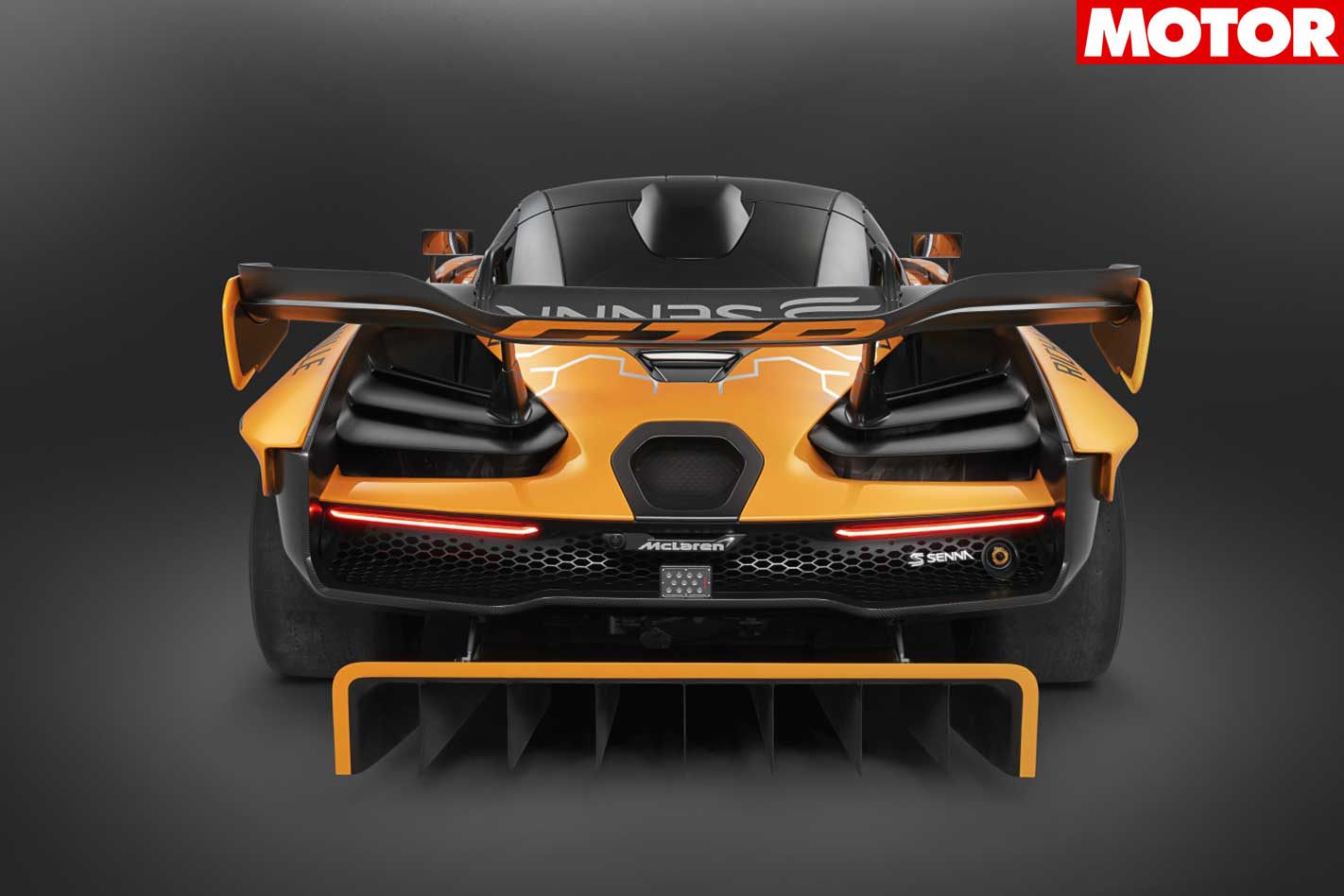
“The McLaren Senna was designed from the outset with the full spectrum of road and track requirements in mind, so developing a GTR version is within the scope of the original project,” says design engineering director Dan Parry-Williams.
“The McLaren Senna GTR Concept unveiled in Geneva is not the finished article but it does give a clear indication of our thinking for the car, which promises to be the most extreme and exciting McLaren to drive for many years, if not ever.”
WHILE EV-philes were still fawning over the newly released Jaguar I-Pace, rival luxury brand Audi showed its all-electric SUV hand at the Geneva motor show in less-than conventional circumstances.
Instead of a traditional reveal to industry suits within the PalExpo building’s halls, the German carmaker sent a bunch of garishly camouflaged Audi E-tron test vehicles to wow the public on Geneva’s des rues.
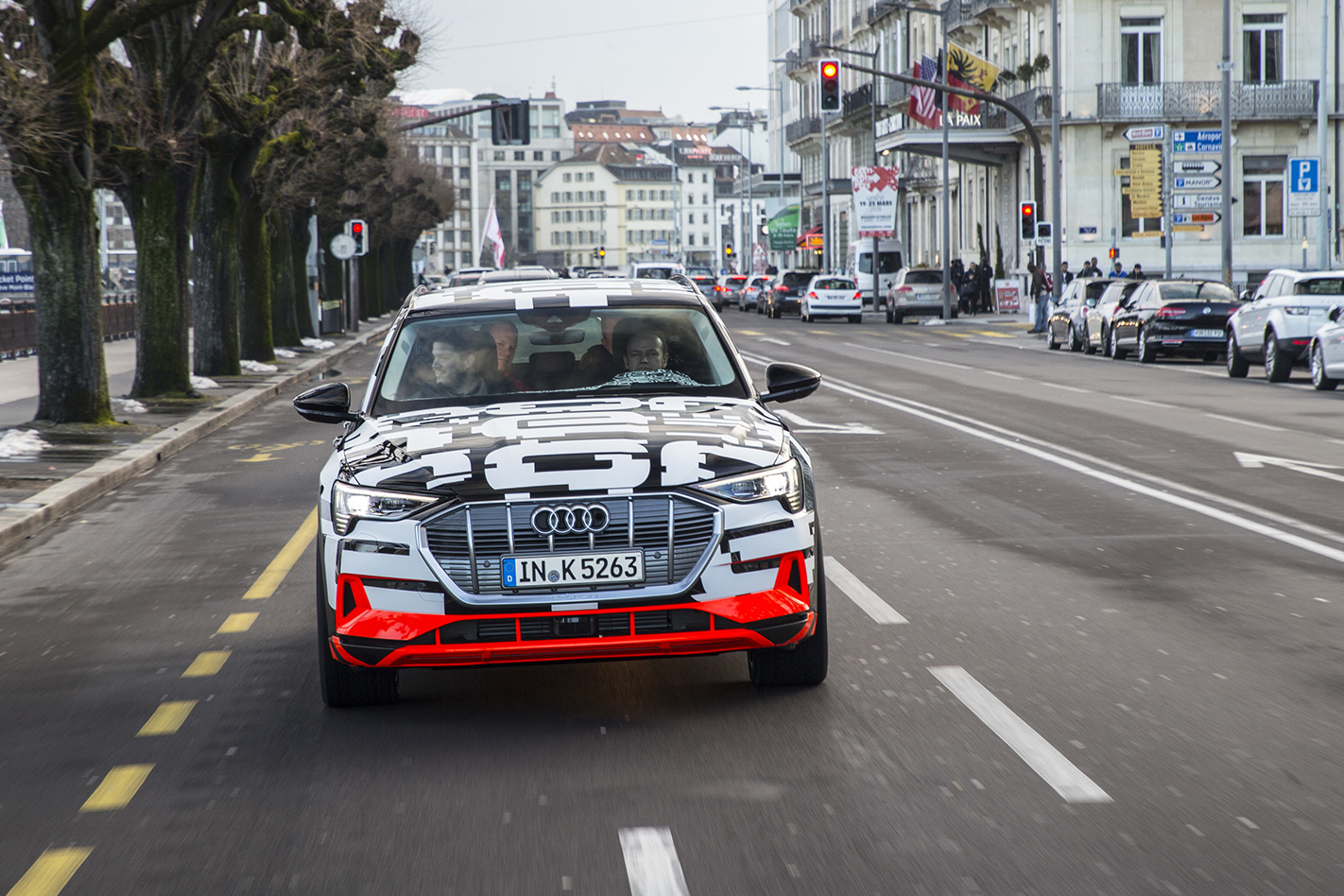
They’re powered by three electric motors, (two on the rear axle and one at the front) that combine to produce 320kW, and drive a special electronic quattro all-wheel-drive system.
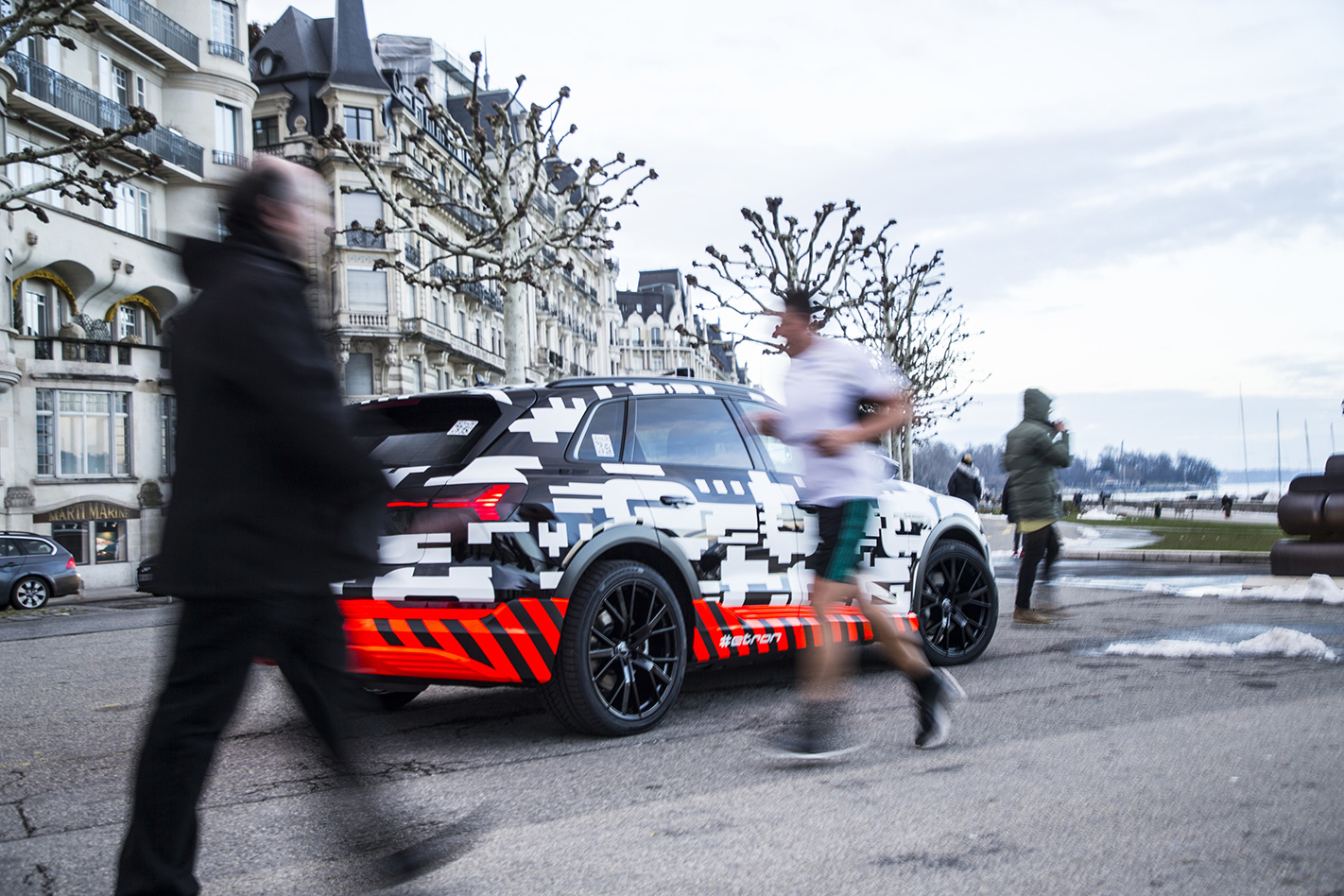
Audi says the E-tron will travel about 450km between charges, which will take as little as 30 minutes with a fast charger.
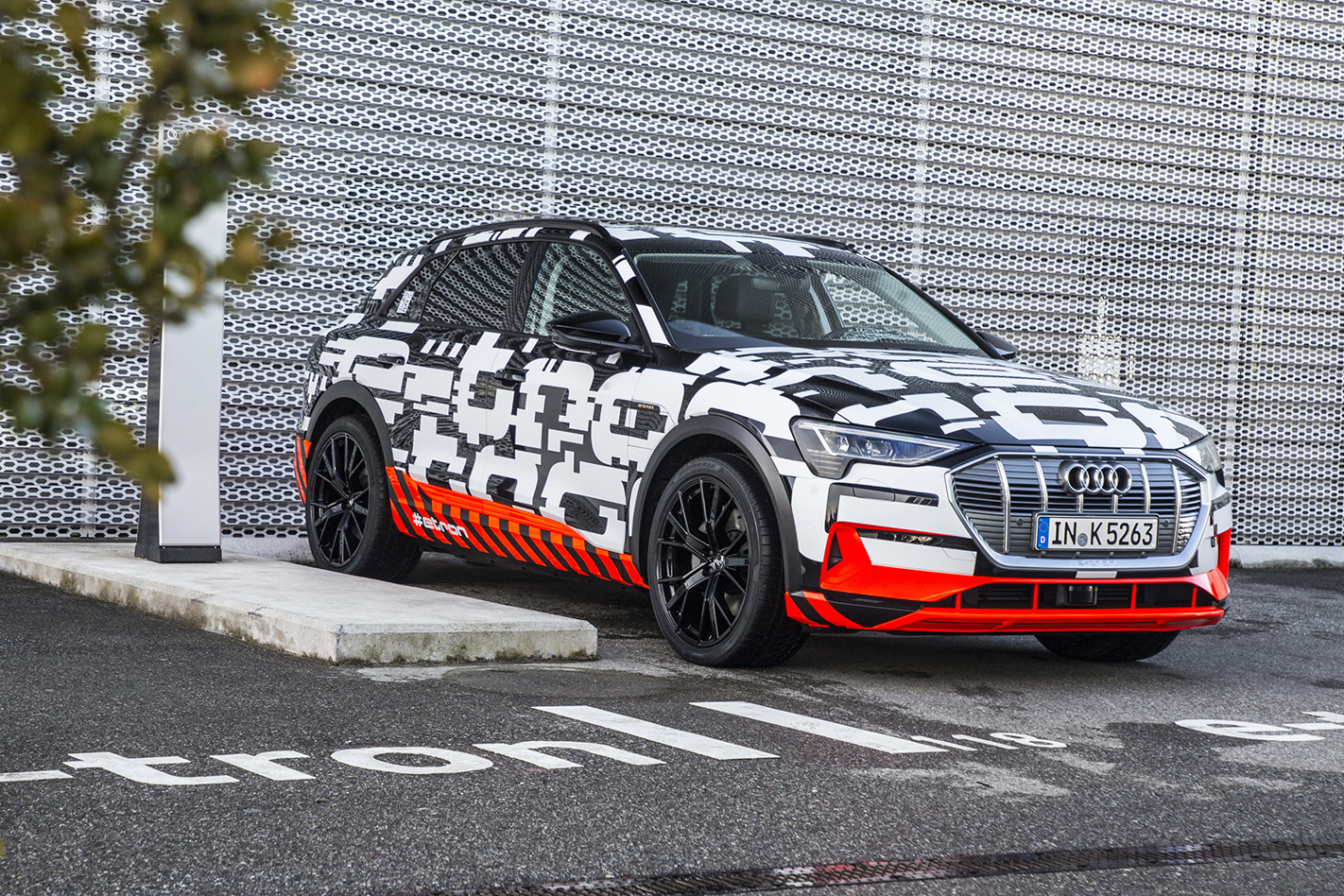
The E-tron SUV will be the first of three all-electric Audi models rolling out by 2020, including the four-door Gran Turismo based on the E-tron Sportback concept, and a compact model.
THE Bugatti Chiron has added a new variant, the Sport, a slightly lighter version of its monstrous hypercar for the ultra-rich.
The Sport, unveiled at this week’s Geneva Motor Show, has gone on a light diet, losing 18kg compared with the regular 1998kg Bugatti Chiron, but while that could be undone with a couple of hearty lunches, Bugatti has worked on improving the car’s dynamics.
Stiffer suspension and the introduction of torque vectoring is designed to give the Chiron sportier handling characteristics for those who want to carve corners as well as dominate autobahns.

The Chiron Sport can be identified from its sibling via a unique wheel design and quad-pipe exhaust deflector. The price: A cool $A4.2 million.
“We have developed the Chiron Sport for customers wanting an even sportier driving experience with their Chiron, with improved lateral dynamics on winding roads,” Bugatti president Stephan Winkelmann said.

The power figures for the Chiron Sport remain unchanged, which isn’t a problem when the ‘standard’ version already produces an unhinged 1103kW and 1600Nm (more than any other production car) from its 8.0-litre quad-turbo W16 engine.
The performance figures haven’t changed either, with a 0-100km/h sprint of less than 3.0 seconds. The Chiron’s real party trick, though, is barrelling well past that, with 200km/h dispatched in 6.5sec, and 300km/h cracked in 13.6 sec. While most supercars will be running out of puff, the Chiron will continue to push past 400km/h in 32.6sec.
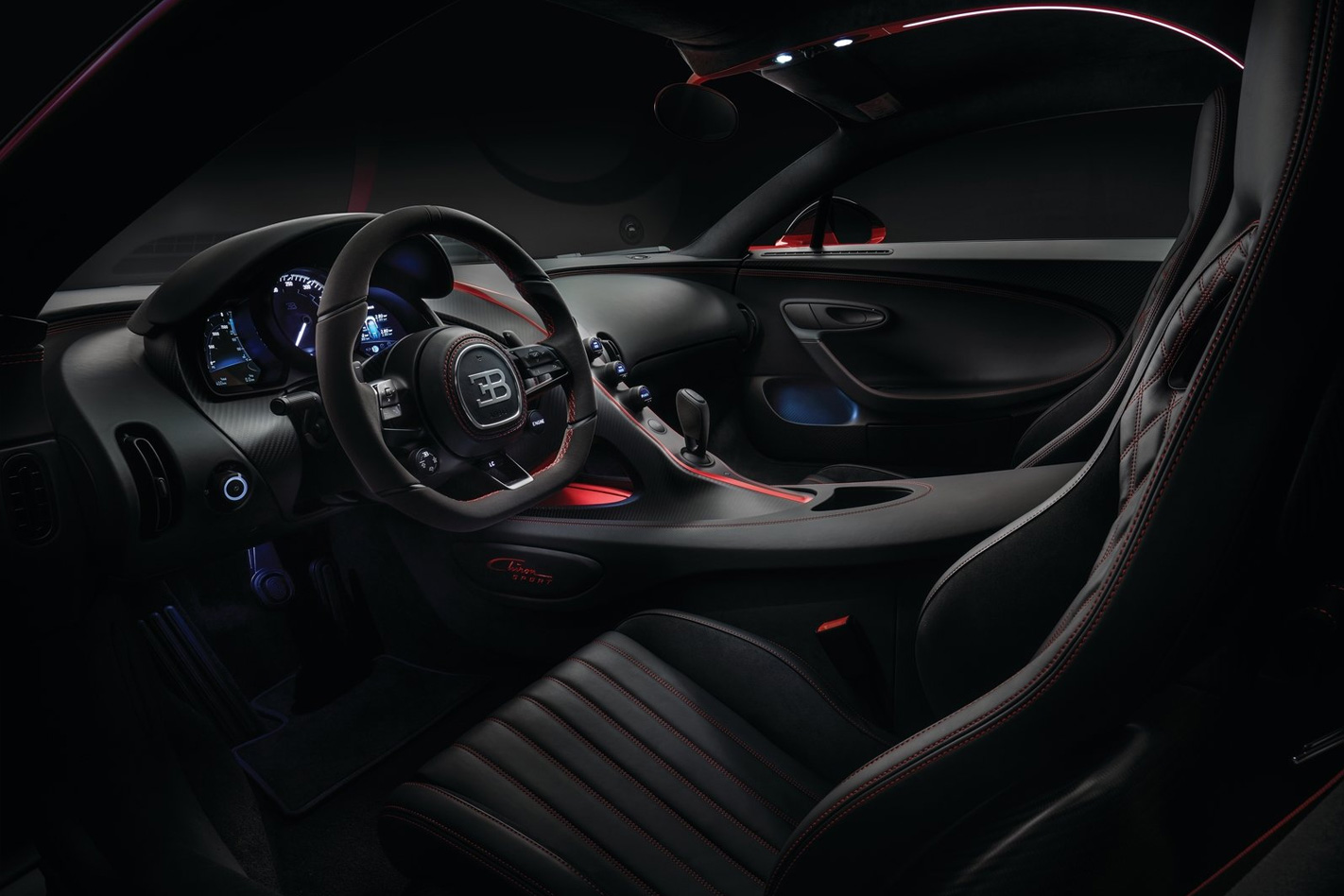
The Chiron Sport also introduces a first for the automotive world, with Bugatti introducing carbonfibre windscreen wipers.
LAMBORGHINI may have lost its outright Nurburgring production car lap record to Porsche’s GT2 RS widowmaker, but the Italians have retaliated. They’ve now chopped the roof of the Huracan Performante for a neck-snapping topless experience.
With the fabric roof folded away, passengers can now be treated to the full orchestra of Lamborghini’s screaming mid-mounted V10 engine tucked in behind them.
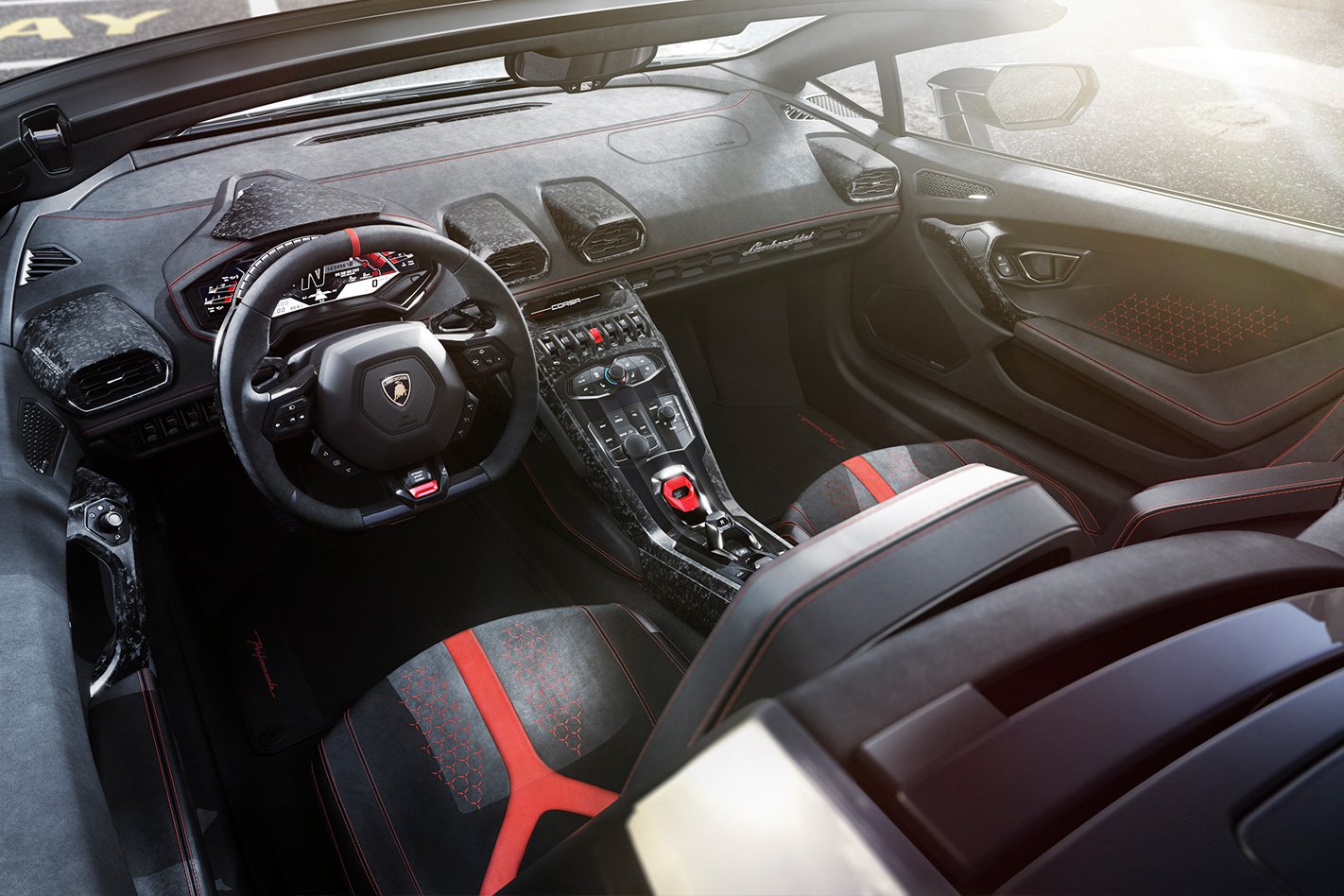
Losing the roof shaves 35kg compared with the Performante, with the Spyder claimed to have a 1507kg dry weight.
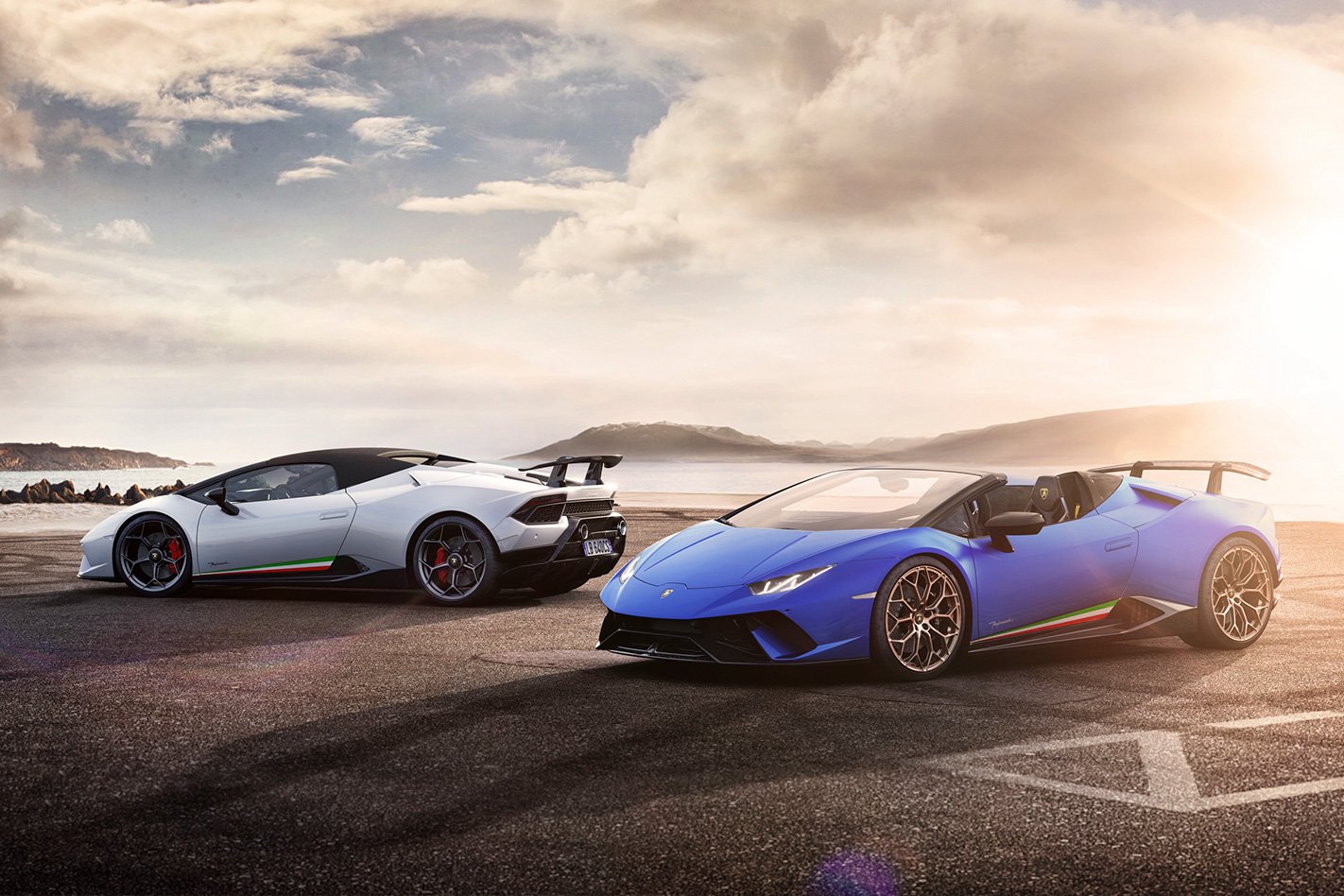
The roof-less Performante will sprint to 100km/h from a standstill in 3.1 seconds, and you’ll have the wind whipping through your hair at 200km/h in just 9.3 seconds. The Spyder matches the fixed-roof Huracan Performante with a maximum velocity of 325km/h.
All that go is worthless without some woah – carbon-ceramic brake discs enable the Performante Spyder to haul itself from 100km/h to a full stop in 31.5 metres.
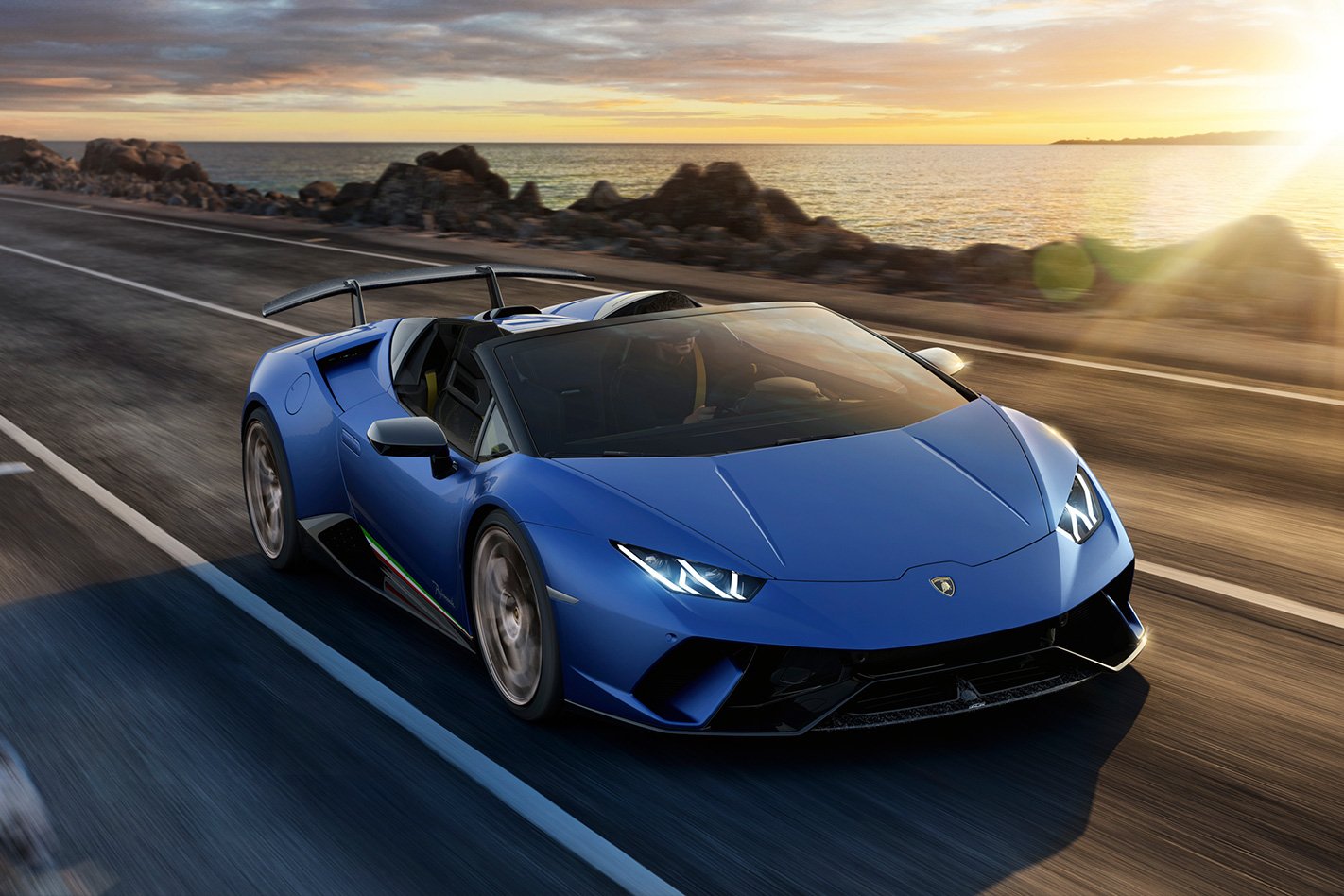
“The Huracan Performante already provides the most heightened feedback and emotion from road and track, and the Huracan Performante Spyder puts the driver even closer to asphalt and air, as well as the unique resonance of a naturally aspirated Lamborghini engine.”
Perhaps a drop-top Nurburgring lap record will be on the cards.
Hoop maker Goodyear has used the Geneva Motor Show to launch a concept tyre that uses living moss to help cut down the impact that the vehicle wearing them has on the environment.
The Oxygene airless tyre uses a special sidewall that has moss – one of the hardiest organisms on the planet – growing on its surface. According to Goodyear, the “living” sidewall can absorb water, either from the air or as spray coming from the road’s surface – to mix with airborne carbon dioxide. Plant science then takes over, with photosynthesis turning the mix of good and bad stuff into the oxygen we breathe.
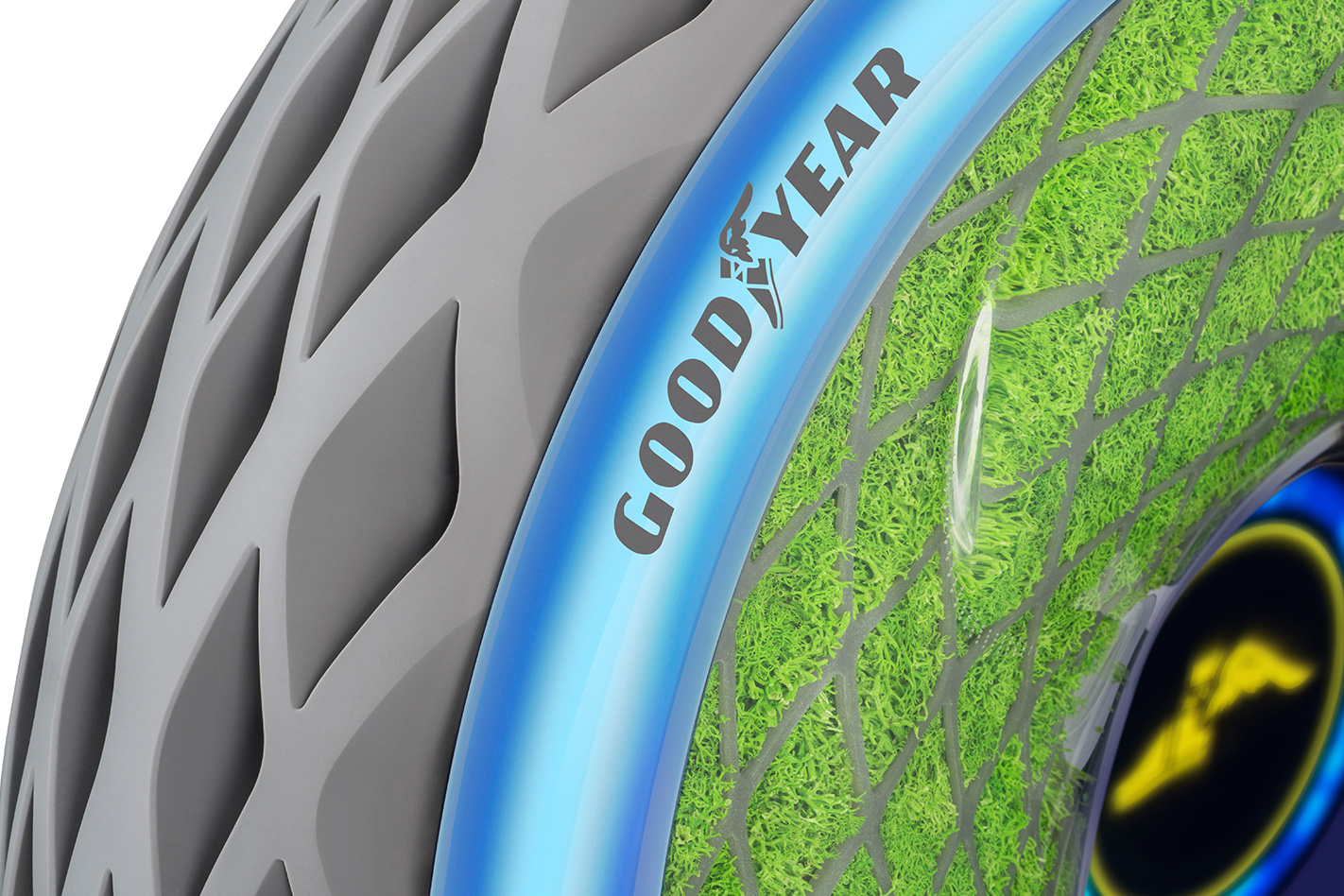
Goodyear has run the numbers over how the “mosswall” tyres will perform, estimating that in a city about the size of Paris with 2.5 million vehicles and a pollution problem, the green rubber could generate almost 3000 tonnes of oxygen a year from more than 4000 tonnes of carbon dioxide.
But there’s more environmental benefit. Goodyear imagines the puncture-proof tyre will be 3D printed, using rubber powder sourced from recycled ones. Its open structure also helps improve wet-weather grip by absorbing water from the tread.
The tyre maker even reckons it can tap the photosynthesis process to harvest electricity, which can then be used to light up the tyre to warn pedestrians or indicate a lane change to other road users.
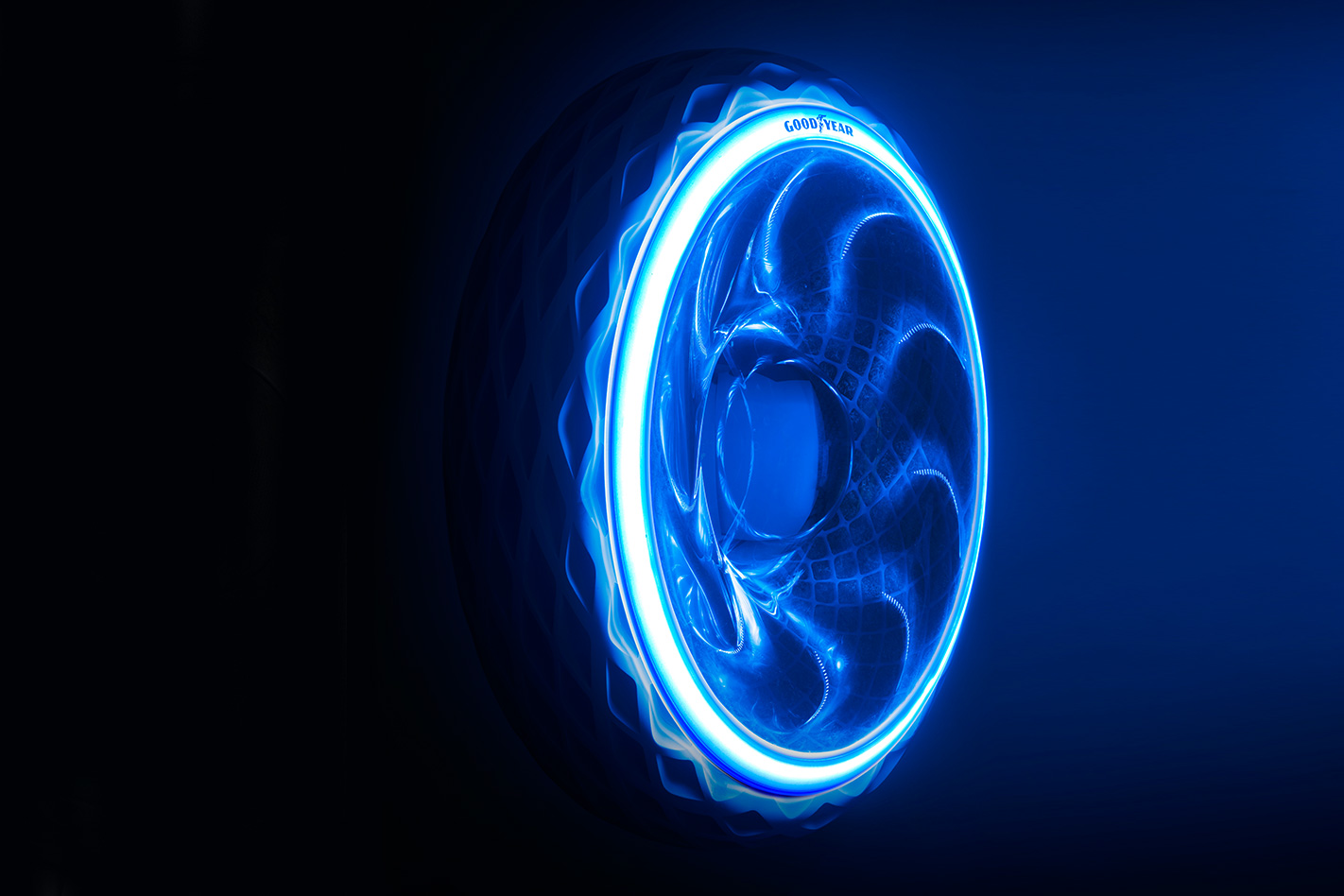
Goodyear has had a few cracks over the years at redesigning the tyre, and so far very few of the ideas have made their way onto the cars we drive. But the company isn’t giving up.
“Like the concept designs Goodyear has presented at Geneva in the past, Oxygene is meant to challenge our thinking and help drive the debate around smart, safe and sustainable future mobility,” Chris Delaney, the president of the tyre maker’s European division, said.
“By contributing in this way to cleaner air generation, the tyre could help enhance quality of life and health for city-dwellers.”
The Skoda Kodiaq seven-seat SUV has donned activewear, with a new range-topping Sportline spec adding a more dynamic-look exterior and interior features for an extra $4000.
Available with both the Kodiaq 132TSI petrol and 140TDI diesel versions, the Sportline’s athleticism is evident over the standard models with its special 20-inch anthracite alloy wheels, gloss black radiator grille, and blacked-out mirrors and roof rails.
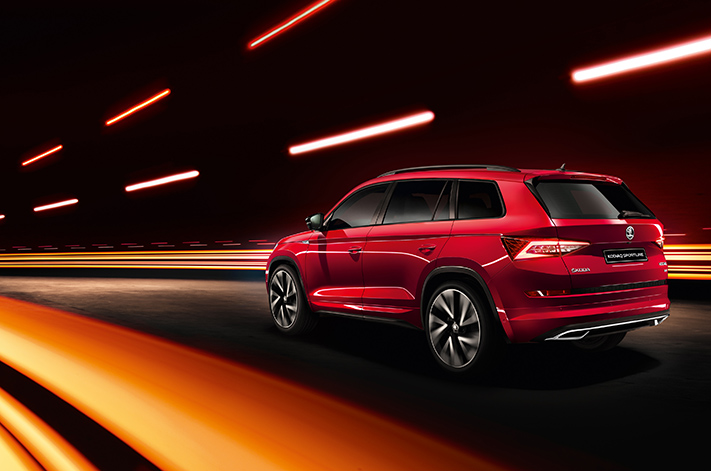
If you don’t want to leave any doubt, it’s available in Velvet Red, a colour it will share with the Skoda Superb Sportline.
Inside, the Kodiaq Sportline is decked out with quilted Alcantara sport seats with silver stitching, a black roof lining, paddle shifters and aluminium-capped pedals.

Other features include driving mode selection, a performance monitor, auto-dimming rear-vision mirror and SportLine logos.
Skoda says the extra gear is worth $5000, but only adds a $4000 premium to the standard variants’ retail and driveway prices.
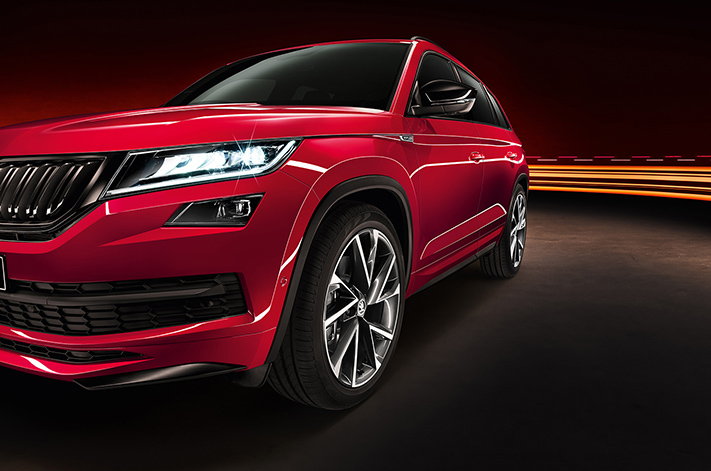
Similar to all Skoda models, the Kodiaq Sportline is available with a five-year, unlimited-kilometre warranty.
2018 Skoda Kodiaq driveway pricing
- Kodiaq 132TSI – $46,290
- Kodiaq Sportline 132TSI – $50,290
- Kodiaq 140TDI $52,790
- Kodiaq Sportline 140TDO – $56,790
EUROPE’S sudden shift away from diesel in the wake of Volkswagen’s emissions cheats scandal has done the unthinkable – pushed up average vehicle emissions in the region for the first time in a decade.
Automotive market research group JATO Dynamics released a report overnight that found overall vehicle emissions in Europe jumped 0.3 grams per kilometre in 2017, the first time the region’s emissions have risen in 10 years.
The reason? JATO put it down to the decline of diesel vehicles, as well as a rush towards larger, heavier and less fuel-efficient SUVs.
The analysis looked at the average emissions across 23 European markets and found that the average CO2 emissions rounded out at 118.1g/km in 2017, 0.3g/km above the previous year’s figure.
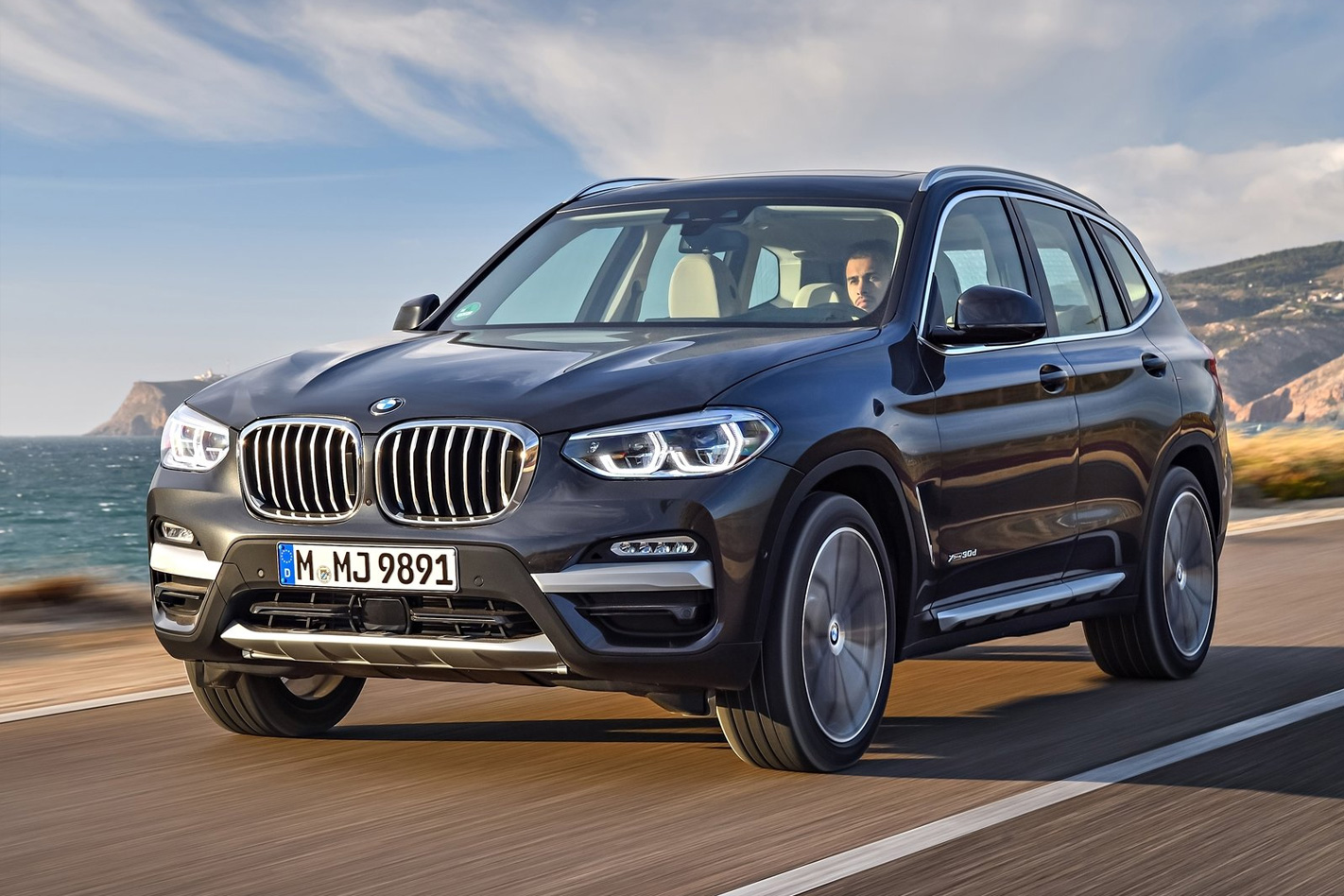
“The average power output of a diesel engine registered in the EU was found to be 142HP [106kW], with 117.9g/km CO2 emitted. The average power output of a petrol engine registered in the EU was found to be 123HP [92kW], with 123.4g/km emitted – this shows that diesels are chosen by customers who prioritise power output and torque,” it said.
“With increased negative public perception towards diesels, combined with increased government regulation and scrutiny of the fuel type, the volume of diesel cars registered fell by 7.9 percent to 6.77 million units in 2017.
“In turn, diesel cars accounted for just 43.8percent of total registrations in 2017, which is 11.1 percentage points lower than their peak, seen in 2011, and the fuel type’s lowest market share since 2003, when diesels accounted for 43.4 percent of total registrations.”
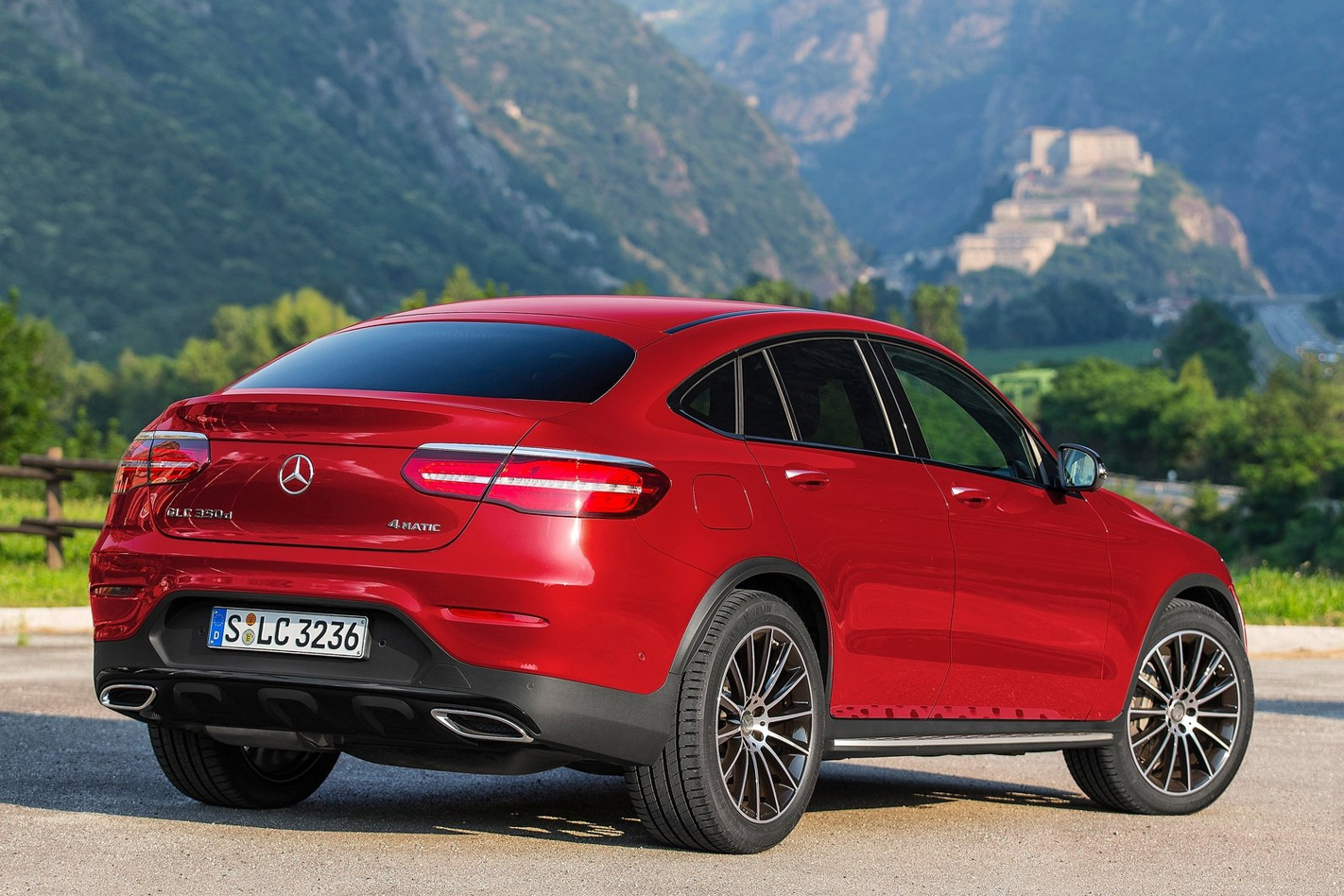
According to JATO, there are likely to be more emissions rises for the region.
“As demand for diesel cars continues to decline, consumers will increasingly turn to petrol vehicles and those seeking higher power and torque will emit higher average CO2 emissions than if they used diesel,” it said. This will likely lead to average CO2 emissions further increasing in the future.”
Some of the hardest falls in diesel sales have occurred in Germany and Britain – the two markets where the backlash against diesel has been the most obvious – where emissions rose 0.5g/km to 126.2g/km, and 0.9g/km to 120.3g/km respectively. The worst-performing country was in the Netherlands, where emissions rose 3.4g/km to 109.0g/km, the survey data shows.
The study shows that battery electric vehicles have failed to take advantage of the diesel backlash, placing future emissions targets for the region in jeopardy.
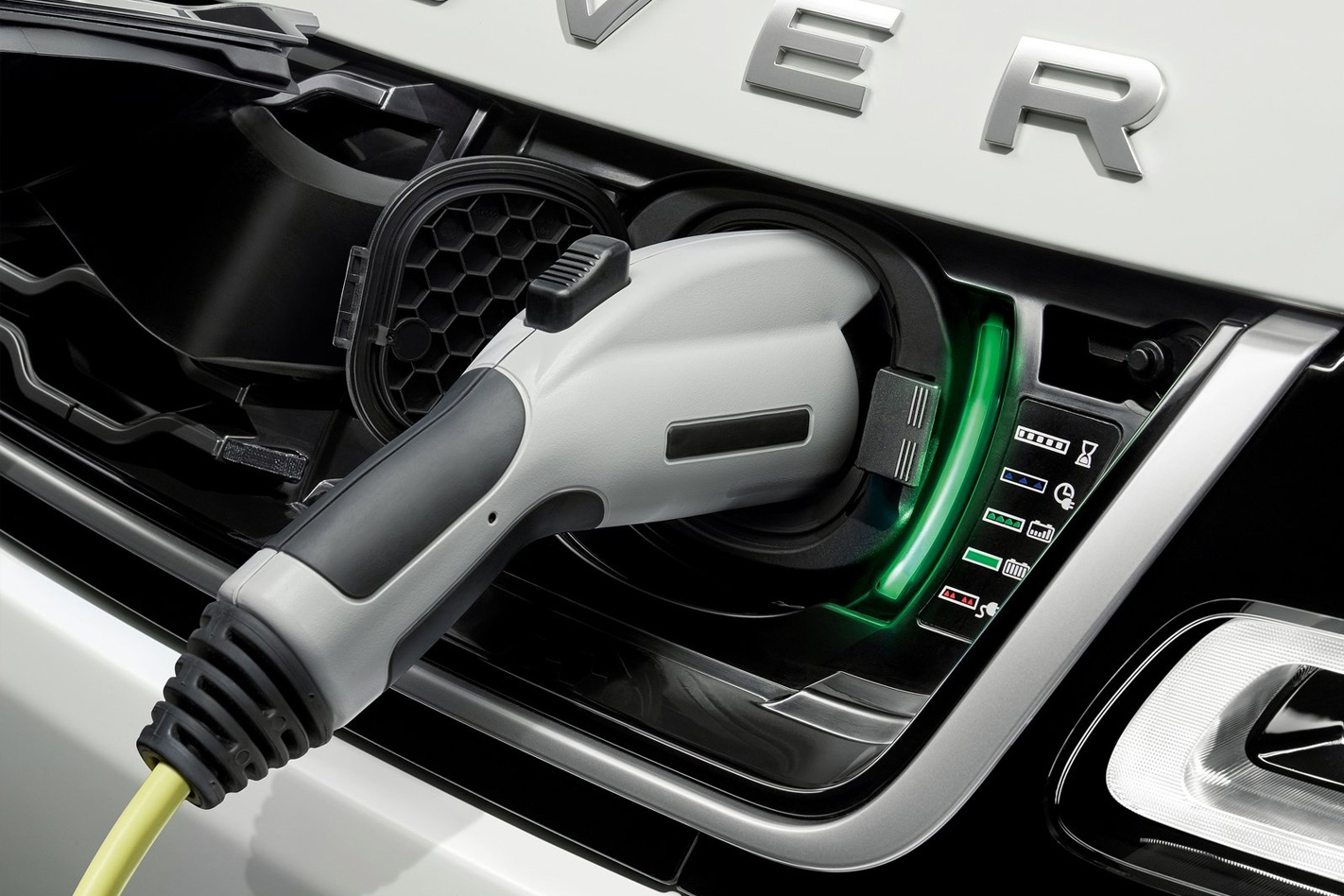
Australia’s average emissions figure in 2016 was 180.0g/km, a fall of 1.1 percent compared with 2015’s figure, government data shows. The average across Australian-made vehicles was 213g/km, showing our appetite for big-engined V8s – at 222g/km Holden was the worst-performing local brand – meant we didn’t give a tinker’s cuss for what was coming out of the exhaust.
The average Australian emissions rating for 2017 is expected to be released in May.
The Lexus UX, the first compact SUV from Toyota’s luxury brand that will compete against the likes of Audi’s Q2, and the Mini Countryman, has been revealed at the Geneva Motor Show.
Due to arrive in Australia in early 2019, the UX 250h will use the fourth generation of Lexus’ hybrid system, combining a 2.0-litre petrol engine with a CVT transmission.
The electrified crossover will have a combined system output of 131kW, while the UX 200 will utilise a combustion engine.
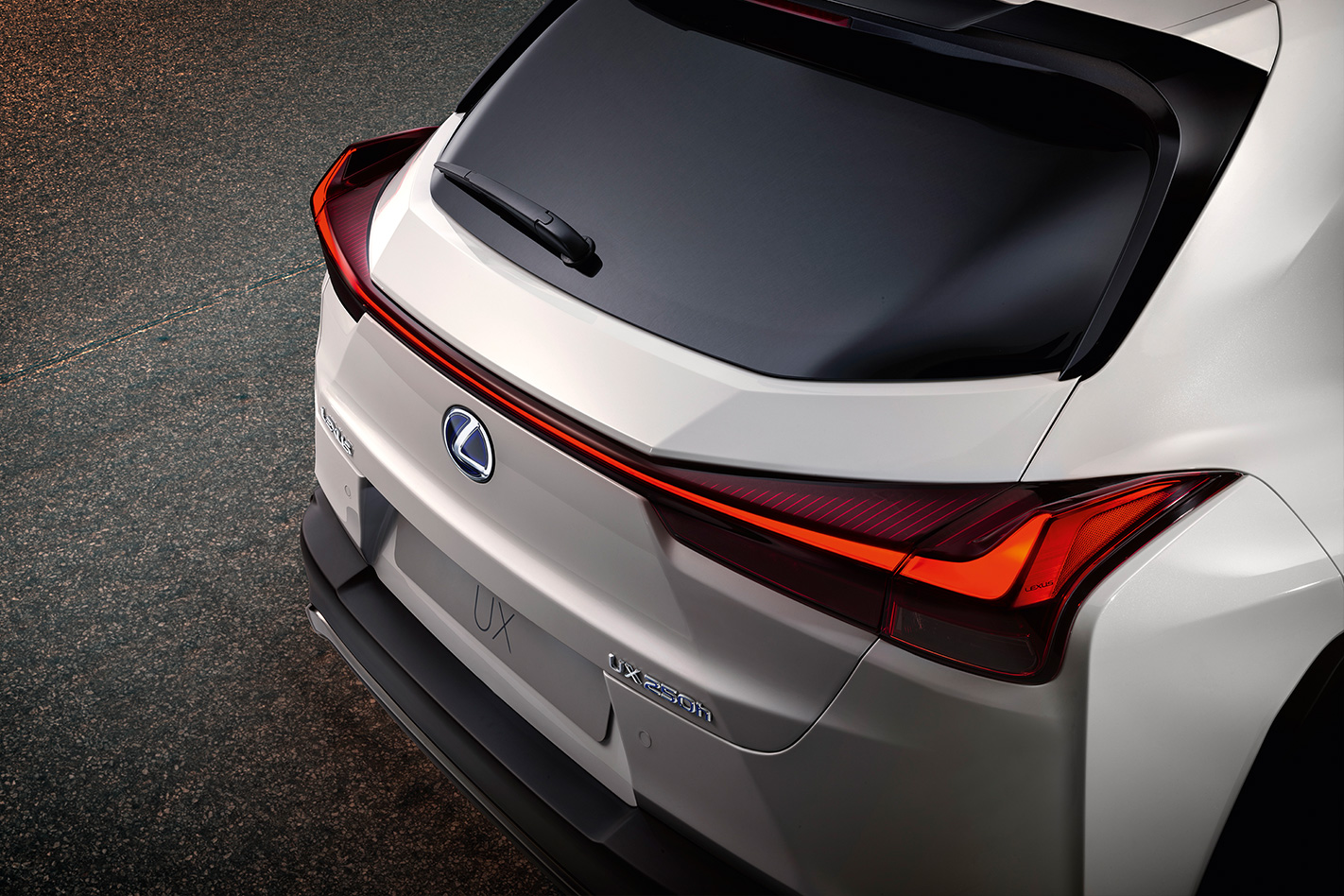
Lexus Australia chief executive Scott Thompson said the UX was likely to be an important car for the company.
“The UX with its all-inclusive luxury will further broaden our range and enable Lexus sales to cross over the 10,000 sales barrier for the first time in our history,” he said.
“For the first time, Lexus can compete in the luxury small SUV segment, growing that category by attracting new, younger customers while offering an aspirational alternative to our long-standing customers.”
Stylistically, the UX retains Lexus’ distinctive design language, with a clear resemblance to its larger RX and NX SUV siblings.
The UX measures in at 4495mm long, with a height of 1520mm, and width of 1840mm. The wheelbase is 2640mm, with a city-friendly turning circle of 10.4 metres.
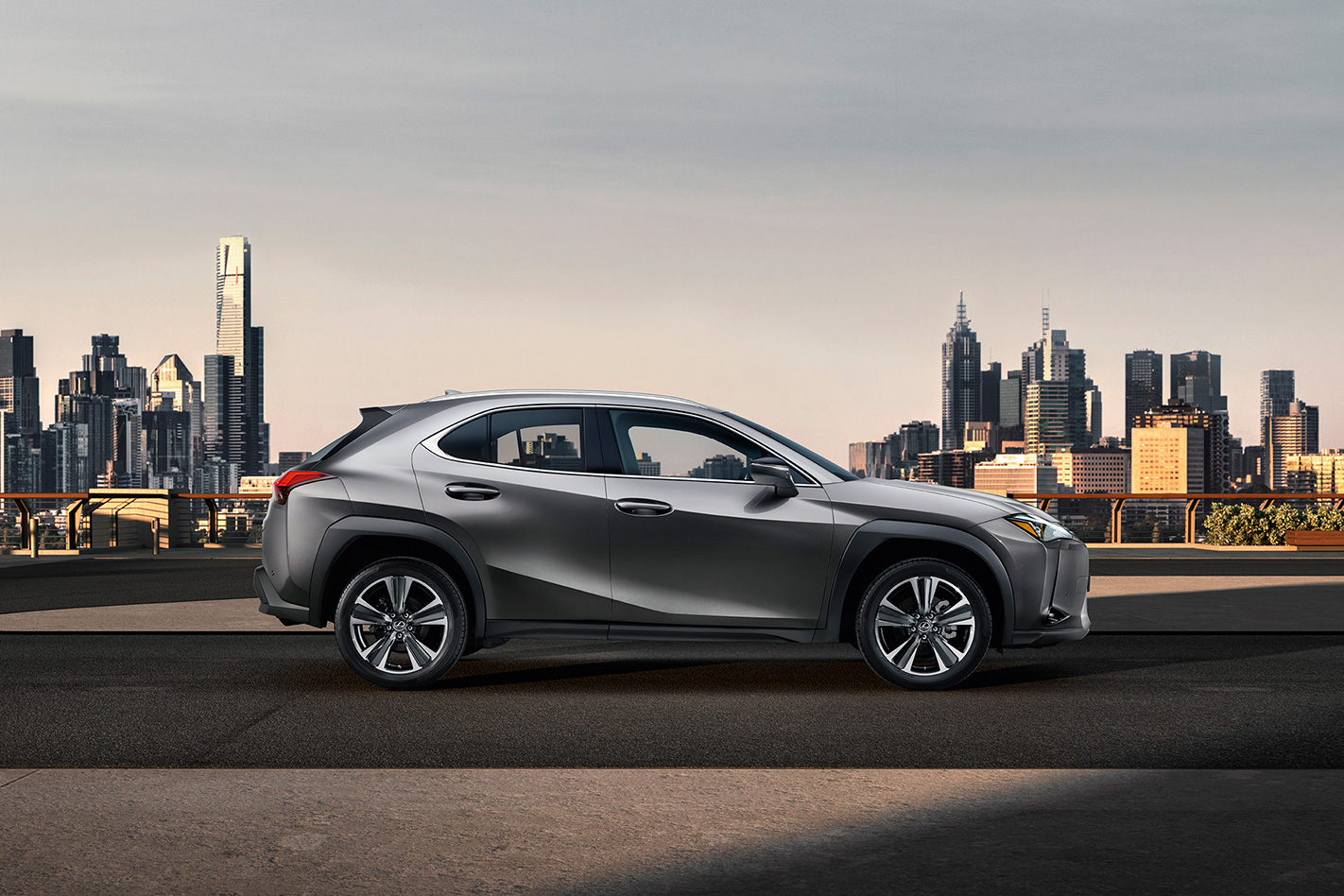
Lexus claims the UX will have the lowest centre of gravity in its class, aiding its dynamic abilities.
Lexus’ Safety System+ will be fitted to the UX, which includes a pre-collision system that can recognise pedestrians at night and cyclists during the day, as well as road sign assist and lane tracing assist.
An F Sport version of the UX will also be available, which adds design tweaks to the frontbumper, unique 18-inch alloy wheels, and adaptive variable suspension.
Lexus’ showroom has been booming in the last 18 months, with the UX to join the recently added LC coupe, RX “L” seven-seat SUV, and soon to be launched locally LS sedan.
THE Subaru Viziv Tourer Concept unveiled at Geneva overnight appears to point more at a replacement for the city-focussed Levorg than the adventure-ready Forester and Outback.
Tear away the chunky guards, tone down some of the harsh angles, and then follow the pinched glasshouse over the rear haunches, and this isn’t a car made for taking the kayaks upstream or the mountain bike to the nearest gnarly peak. It’s a city-friendly wagon, driven by design and more at home in suburbia.
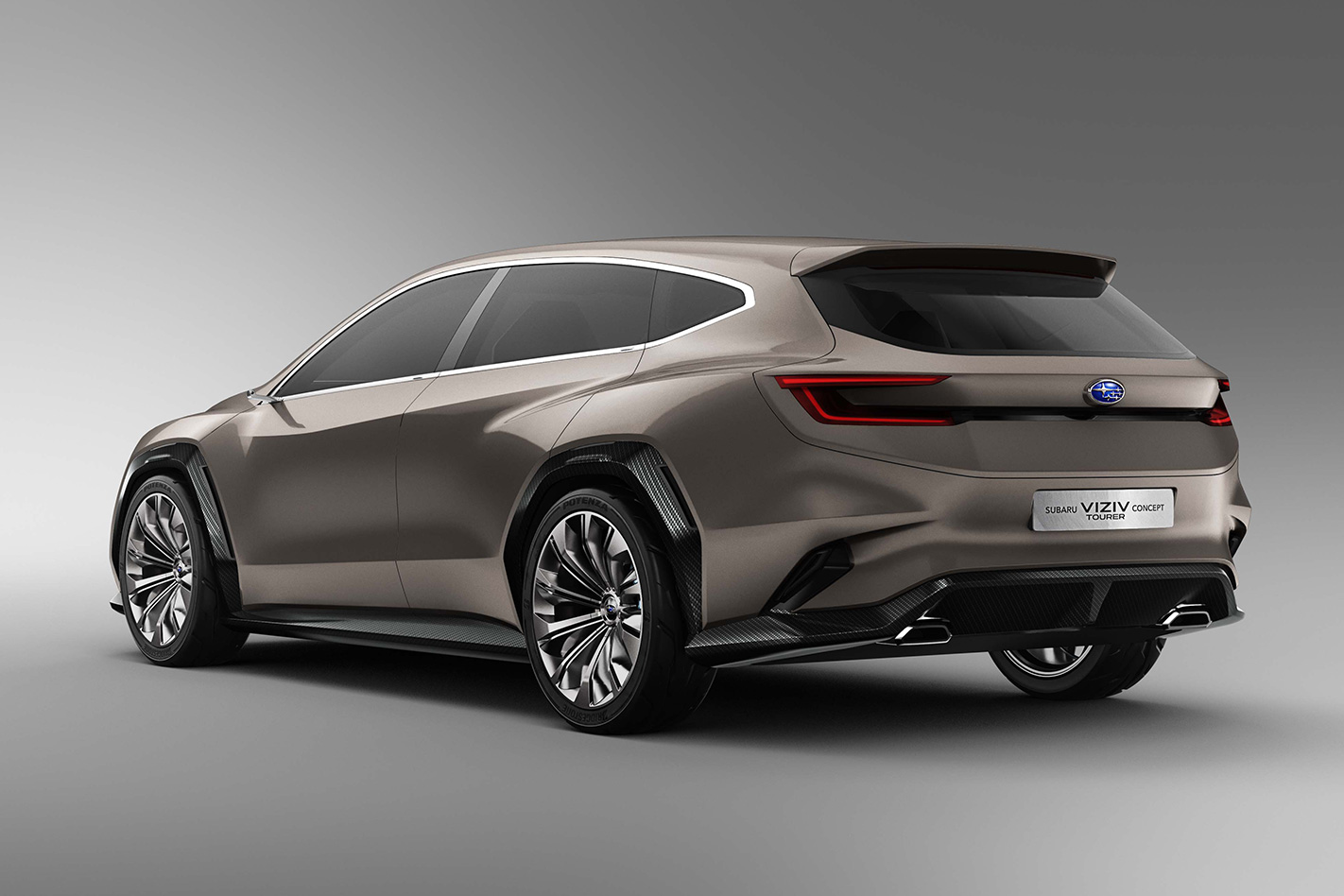
The bonnet scoop hints at an intercooler mounted on top of the engine, suggesting that beneath its bonnet rests a turbocharged beast – a thought supported by the twin exhaust outlets. This all-wheel-drive concept could also tap into Subaru’s hybrid powertrain development.
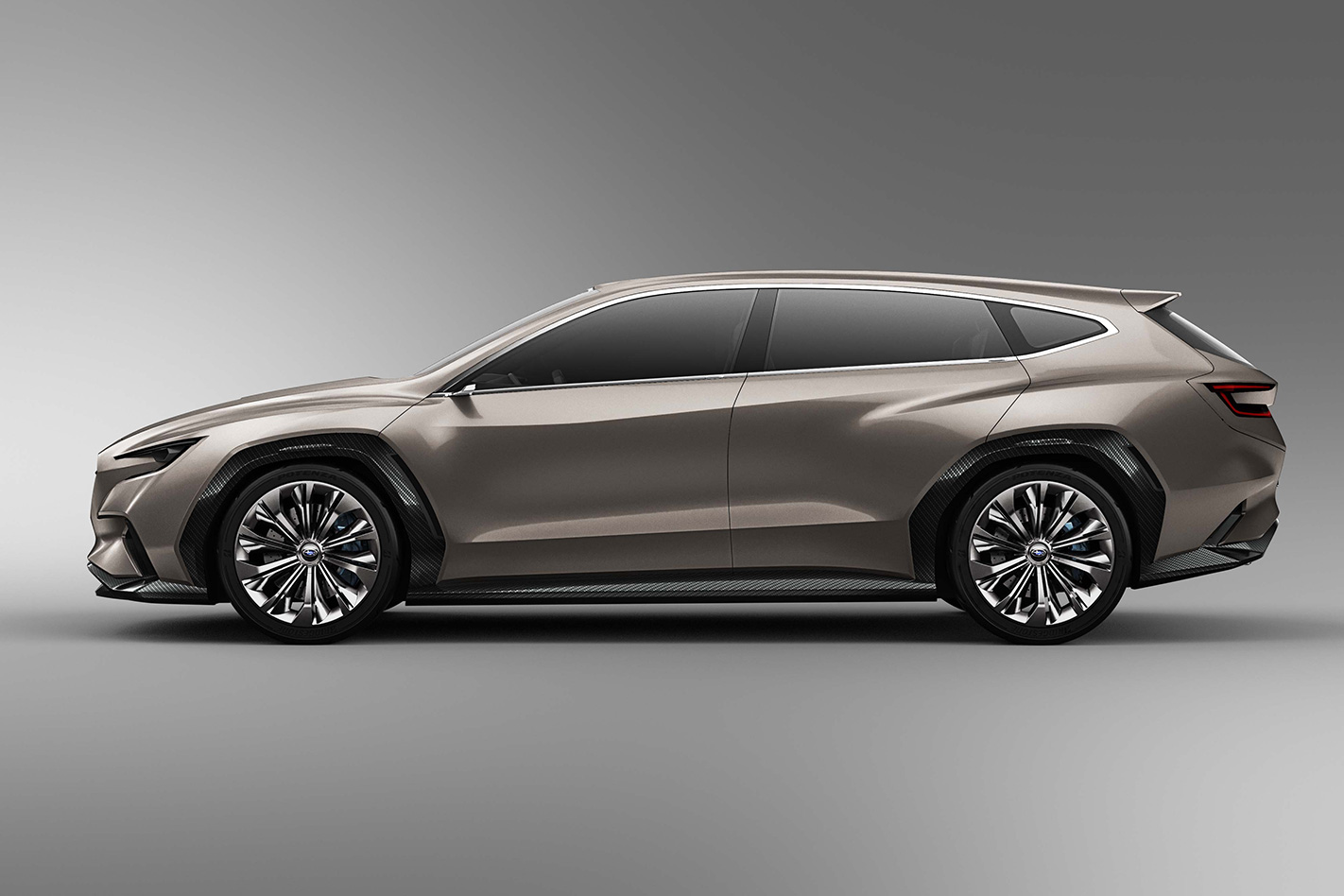
Subaru’s road-focussed Levorg and Forester SUV are both due for replacement. The Viviz Touring Concept gives a strong clue as to how they will evolve.
