FIAT Chrysler Automobiles is now two models into the overhaul of the venerable Alfa Romeo brand but FCA CEO Sergio Marchionne says the automotive manufacturing giant still has a lot of work to do if the Italian brand is to return to prominence.
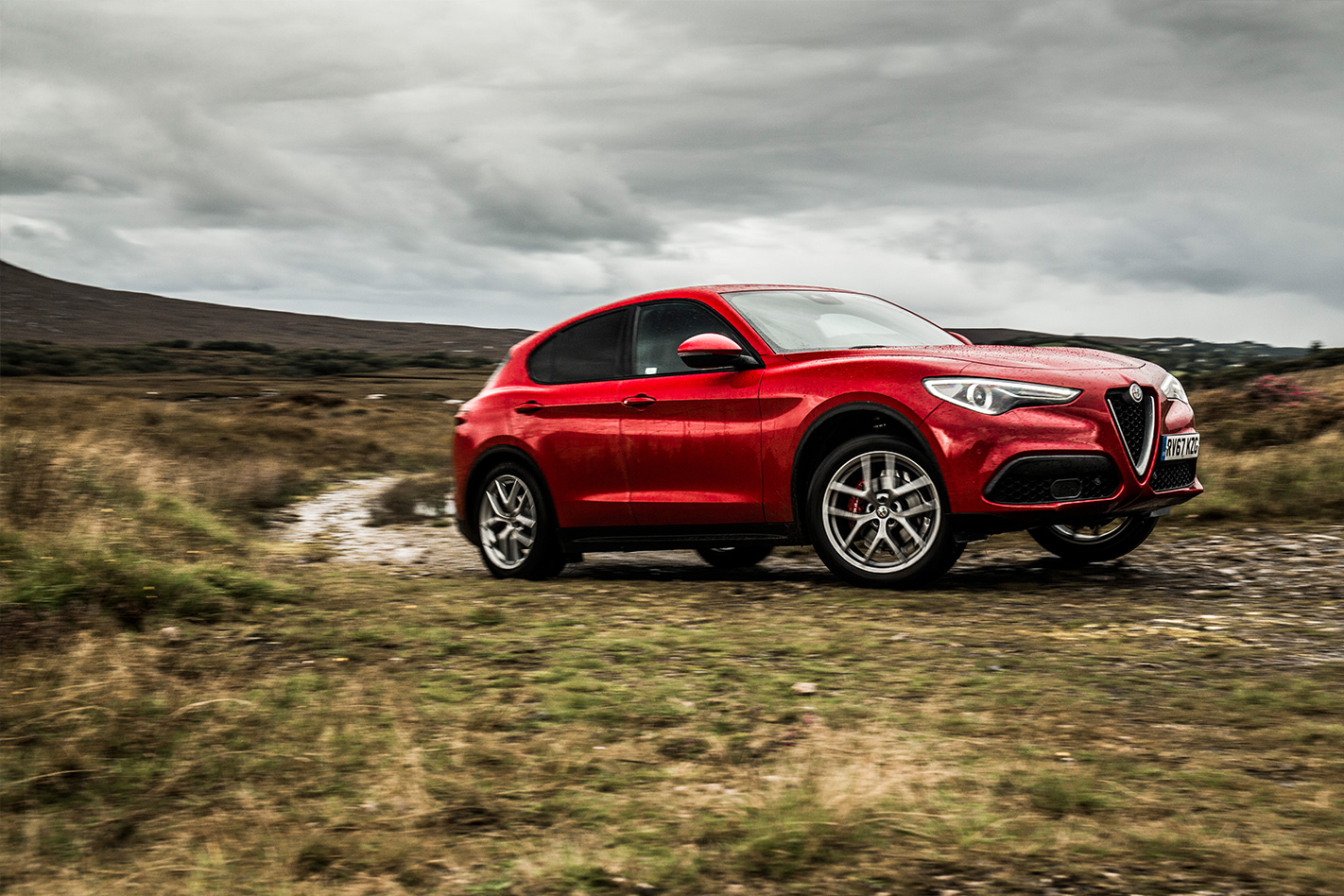
Heralding the new Giorgio platform, the Alfa Romeo Giulia mid-sized luxury sedan was the first of a new generation of Alfas, while the more recent Stelvio drags the company into the SUV world for the first time, but that’s just the tip of the iceberg, according to Marchionne.
Speaking to media at the North American International Auto Show, Marchionne explained that the Alfa remodelling and realignment would carry on long after his retirement at a point this year.
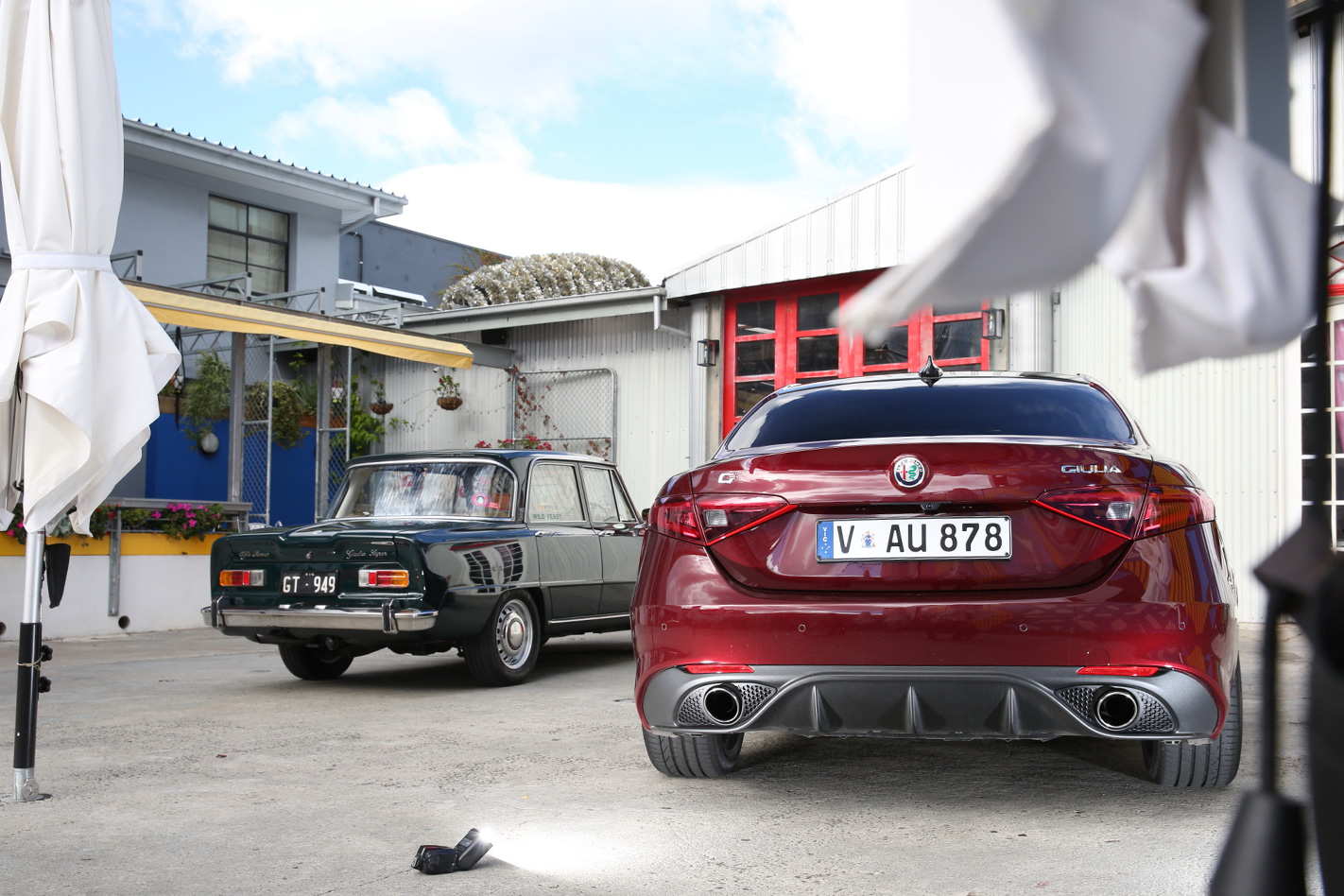
“We got two products out, which technically are great products and they set benchmarks. I think the Alfa Romeo story is a longer-dated story. It takes time. It’s going to take until 2022 to see the full effect. Not developing Alfa, not developing Maserati would be economically suicidal for FCA.”
Forming the Giorgio platform required a significant company investment and is a statement of intent for Alfa and FCA, with more models due to roll out on the scalable architecture over coming years.
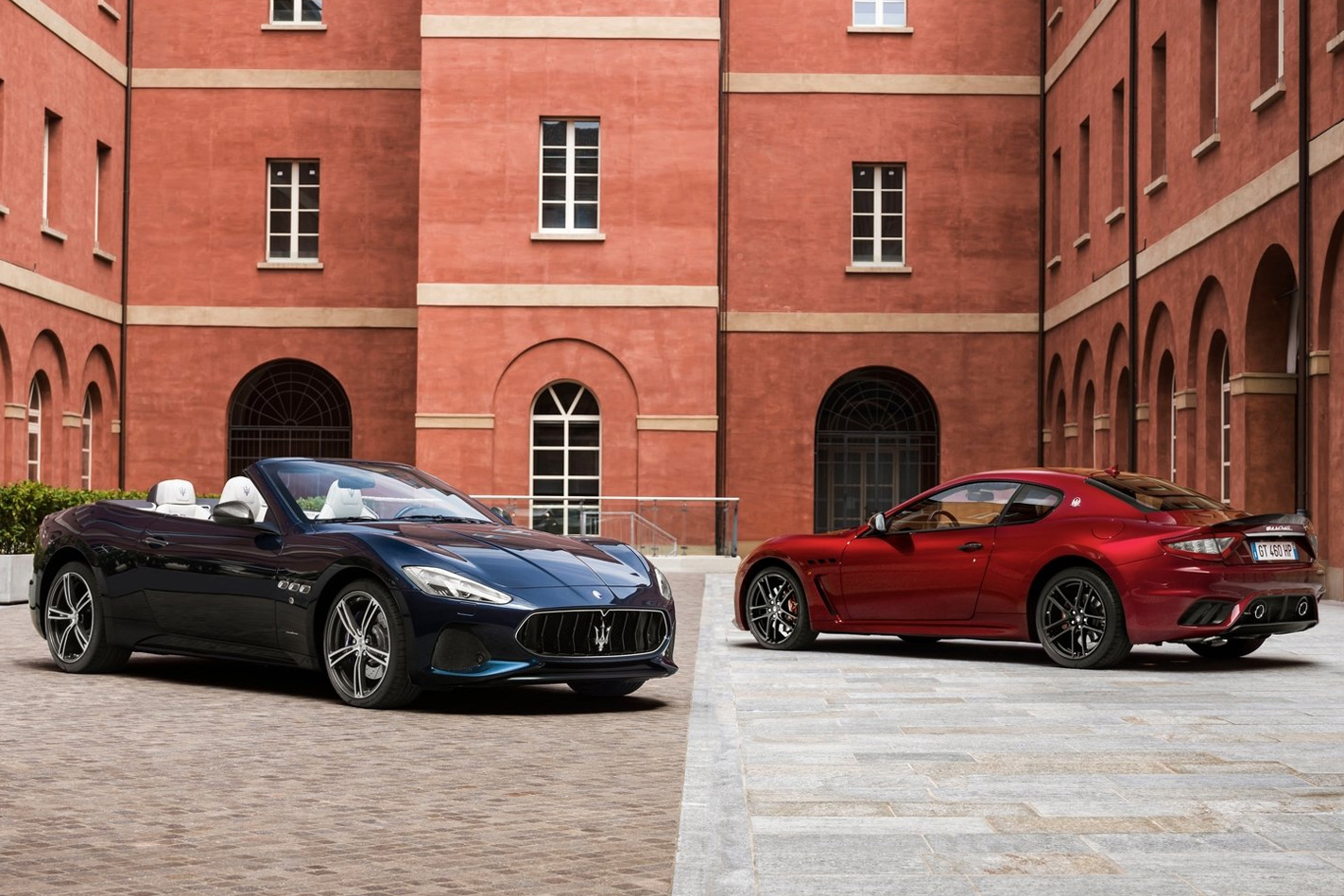
“It was easier with Maserati because Maserati came and played in a not so crowded part of the segment.
“Alfa came in with the bastions of German manufacturing and technology. It took on Audi and BMW and Mercedes all at the same time so it’s bound to run into a higher degree of friction.”
“I think it was essential for us to play that game because if we had not, the credibility of Maserati going forward would have been in doubt. The technical credibility of Maserati is based on the work that we have done with Alfa.”
While Alfa Romeo’s quality and customer service has been through tough times in the past, Marchionne said the heritage and passion for the brand alone makes it worth investing big. As for the car makers that don’t have such a recognisable or loved identity, the FCA boss said they might suffer as the automotive landscape moves into a new era.
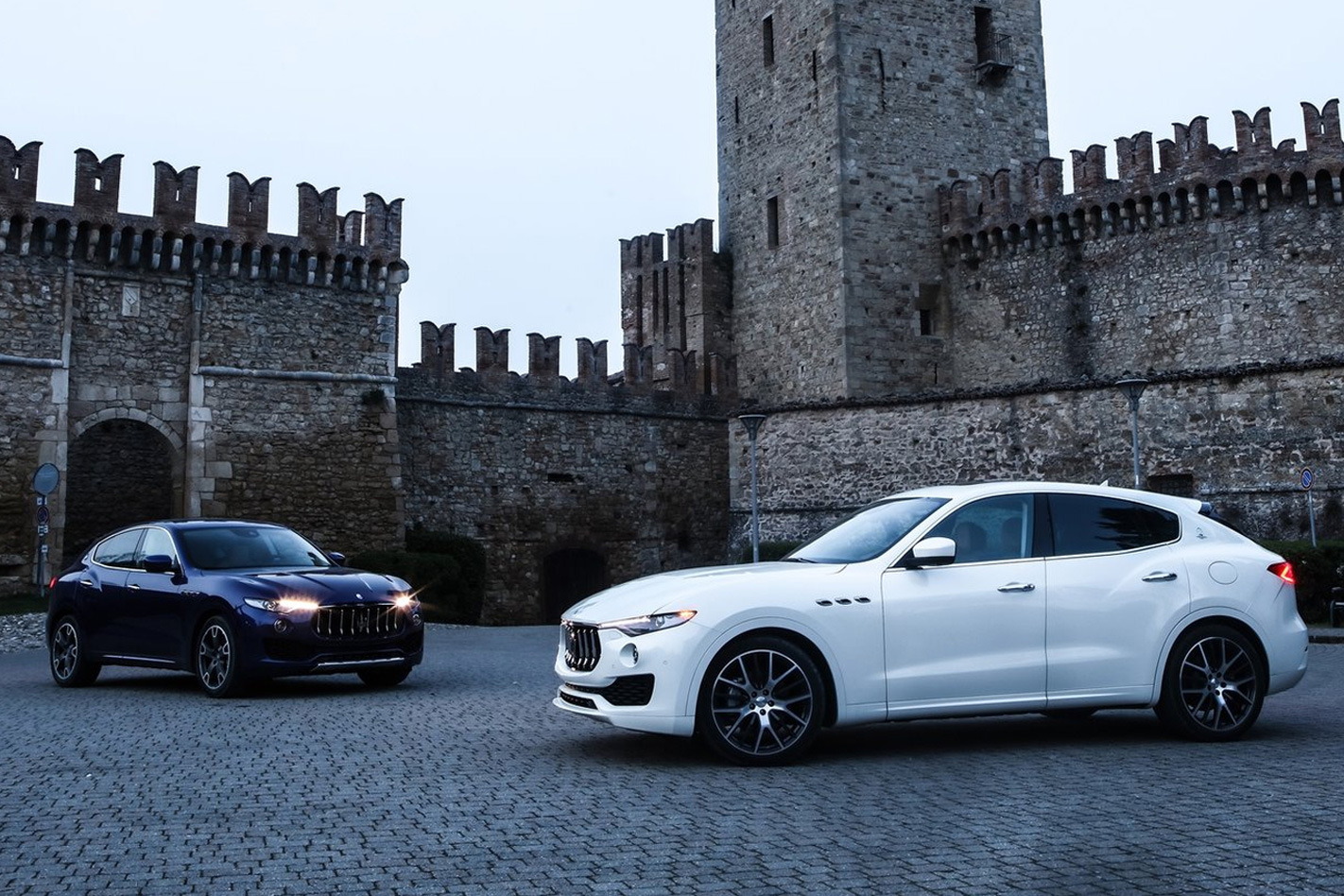
“If you own brands that are worth defending like Alfa and Maserati, then you’re okay. Generic brands are having a tough time because then they become indistinguishable and they become demonetised.”
Welcome to the latest episode of the Performance Car Podcast.
In this episode we chat with BMW Australia CEO Marc Werner from behind the wheel of the BMW M140i during the updated BMW 1 and 2 Series launch on the awesome roads of Tasmania.
The two cover how Marc came to be boss of BMW Australia (1:20), the unique nature of the Australian market (2:00), BMW chasing volume (3:20), Australian car pricing and parallel imports (4:20), BMW’s Australia-only initiatives (6:15), the future of performance cars (8:00), how enthusiasts will enjoy driving in the future (10:00), the timeline of autonomous vehicles (12:25), which model best expresses BMW’s Efficient Dynamics ethos (13:40) and his favourite memories from 20 years at BMW (14:30).
Don’t forget you can listen to this podcast for when you’re on the move through iTunes or Podbean, please subscribe and leave us a review! As ever, any topics you’d like us to cover, guests you’d like us to interview or cars you’d like us to feature, please let us know in the FB comments or at [email protected].
Enjoy the chat with Marc Werner and in the next episode of the Performance Car Podcast we’ll be joined by MOTOR stalwarts David Morley and Tim Robson to discuss the greatest ever performance Commodores.
INFINITI, Nissan’s luxury brand, will add a mix of battery-only and range-extended battery vehicles to its line-up from 2021, the brand has announced.
Speaking at the Automotive News World Congress in Detroit yesterday, Nissan chief executive Hiroto Saikawa said the first electron-fuelled car would arrive in 2021, with Infiniti tapping into the Nissan-Mitsubishi Alliance for the technology.
“As a result of this emphasis on ultra-low emission technology, Infiniti expects more than half its global sales to be comprised of electric vehicles by 2025,” the car maker said in a statement.
Infiniti’s technology is expected to be similar to that developed for the Mitsubishi Outlander PHEV, a plug-in petrol-electric SUV that uses a front-mounted 2.0-litre engine to act as a generator to top up the batteries for front- and rear-mounted electric motors. The plug-in Outlander can also use its engine to drive the front wheels when its efficiency is maximised, such as cruising down the freeway.
Car makers are rushing to add more electric vehicles to their range ahead of much tougher emissions standards being introduced in Europe from 2021 that will encourage production of low- and zero-emissions vehicles.
In Australia, Infiniti currently only offers the one hybrid model in its line-up, the 3.5-litre V6 petrol-electric Q50 sedan that produces a sports car-like 268kW and 546Nm when combined with its single electric motor.
The announcement come sin the wake of the Infiniti Q Inspiration being named the best concept vehicle unveiled this week at the Detroit Motor Show.
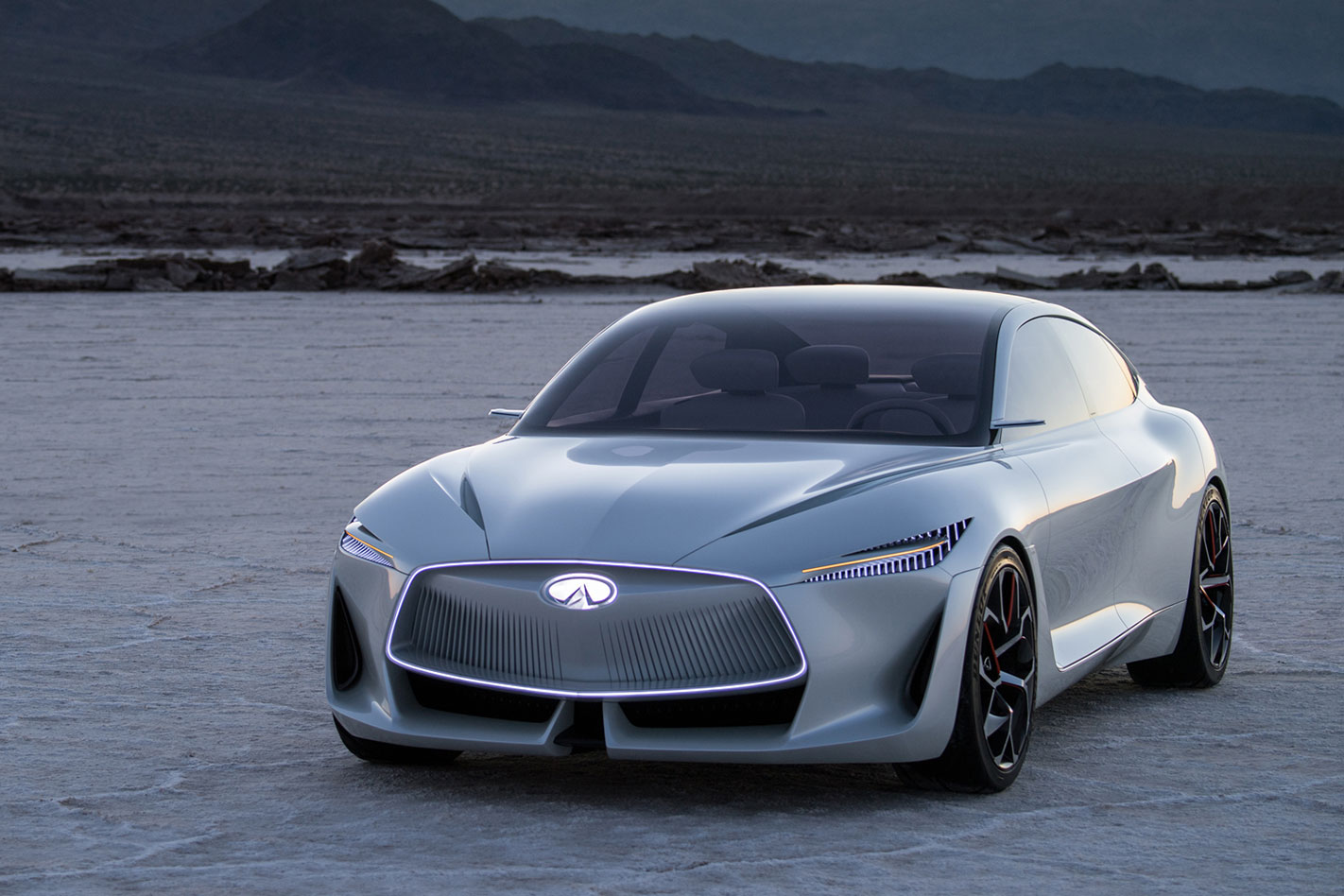
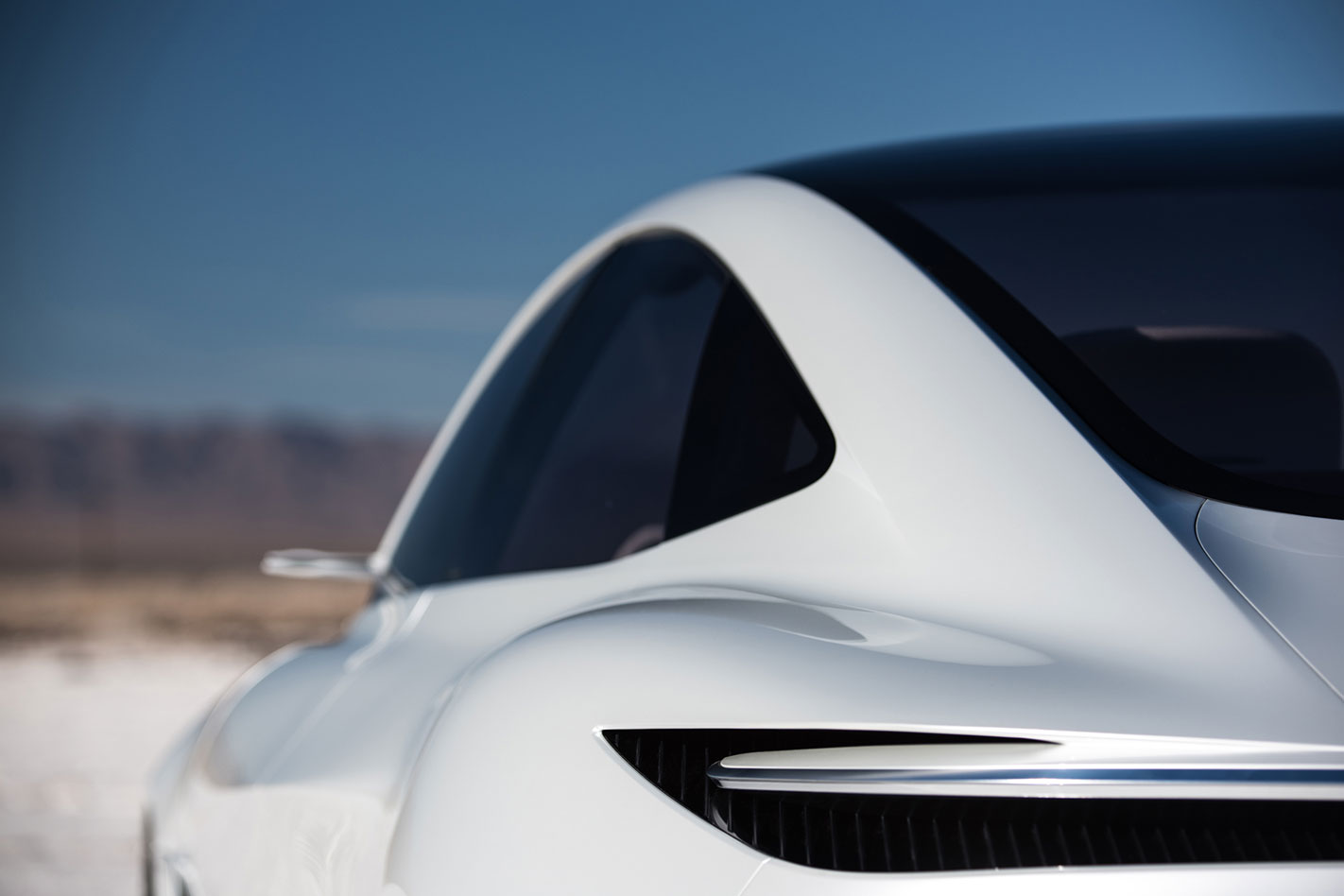
Introducing a sleek, new look for the brand, the Q Inspiration is a midsize four-door fastback with taut lines and a baleen whale maw. Infiniti says a version of its variable-compression VC-Turbo engine powers the concept. With the next generation of Infiniti cars expected to draw on the concept’s design as inspiration its likely this engine will also be adapted for hybridisation, providing the performance the brand will expect from its cars, and the fuel economy that government framework demands.
The Nissan-Renault-Mitsubishi Alliance is now so large that about one in 10 cars sold globally will wear one of the brands’ badges.
Infiniti has struggled to find buyers in Australia after launching here in 2012, last year attracting only 776 buyers. Its Q30 small hatchback, based on the third-generation Mercedes-Benz A-Class platform but wearing significantly new sheetmetal, and the Q50 midsize sedan are the brand’s bestsellers, accounting for more than half of its sales.
So here we are.
Holden Special Vehicles has revealed The Plan and it’s special bits for Colorados, gigantic Silverado trucks and right-hand-drive converted Camaros – news broken by MOTOR in our October 2017 issue.
As you’ll soon read in our interview with Clayton powerbrokers Ryan Walkinshaw and Tim Jackson, they’re seeing it as an opportunity to make the company bigger and stronger than ever. That includes moving to a larger, brand new facility and ambitions to output more vehicles than at the height of HSV’s Commodore-based success.
Scaling back? Nope, they’re scaling up. But at the same time that it’s a beginning, it’s a very obvious end. The HSV brand has effectively been put into quasi-hibernation.
Reportedly, many HSV dealers will be rebranded Chevrolet in anticipation of Camaro and Silverado, with the HSV brand, for now, only going on Colorados in a secondary sense. Walkinshaw and Jackson have hinted there will be future models from the adored HSV brand but it’s not clear what, and when. And so for now, it’s a quiet and solemn goodbye to Aussie Commodore-based HSVs like our beloved Clubsport and GTS, the world’s best attainable muscle cars heading to the knackery long before they’ve run their last race. Now, HSV will gesture you towards a Camaro instead when the novated lease is up.
So what’s next for those who love the idea of a performance model, even if it’s from overseas, optimised for Australian tastes? Surely, given the GM internal politics we’ve heard of before, we’ll never see an HSV-enhanced Camaro so long as there’s a ZL1 around; it doesn’t make sense to put an HSV badge on a Chevrolet anyway.

All we know is, Falcon and Aussie Commodore are gone, but an appetite (and market) for uniquely Australian-style muscle cars has not. For enterprising types with their finger on the pulse, an opportunity awaits.
The automotive world is in the midst of a massive transition right now, one that will see powertrains shift gradually away from combustion and toward electrification while advanced driver-assist tech will slowly reduce the need for a person to actually be in control.
Both of these things will have a profound effect on the shape and configuration of car interiors, the former because the greater packaging flexibility of compact electric drivetrains allows more space to be allocated to passengers, and the later because a driverless car means traditional in-car furniture like steering wheels and pedals will become optional.
But what’s really around the corner? We took a look at some of the more recent concept car interiors to see what’s coming in the world of cabins.
Mercedes-Benz A-Class
Mercedes-Benz is set to debut its A-Class small car in the coming weeks before a local arrival later this year, and while it’s the entry point to Benz ownership (its cheapest model, in other words), its interior is intended to be anything but low-rent.
Besides a general lift in cabin design and improvements to material quality, the new A-Class will also be the first platform in the Benz product portfolio to use the company’s fresh MBUX infotainment system. Centred around a large, high-resolution central touchscreen – up to 10 inches across in the A-Class, and paired with another 10-inch display for the instrument panel in high-grade cars – the MBUX system is said to democratise functions previously only seen on high-end luxury metal like the S-Class.
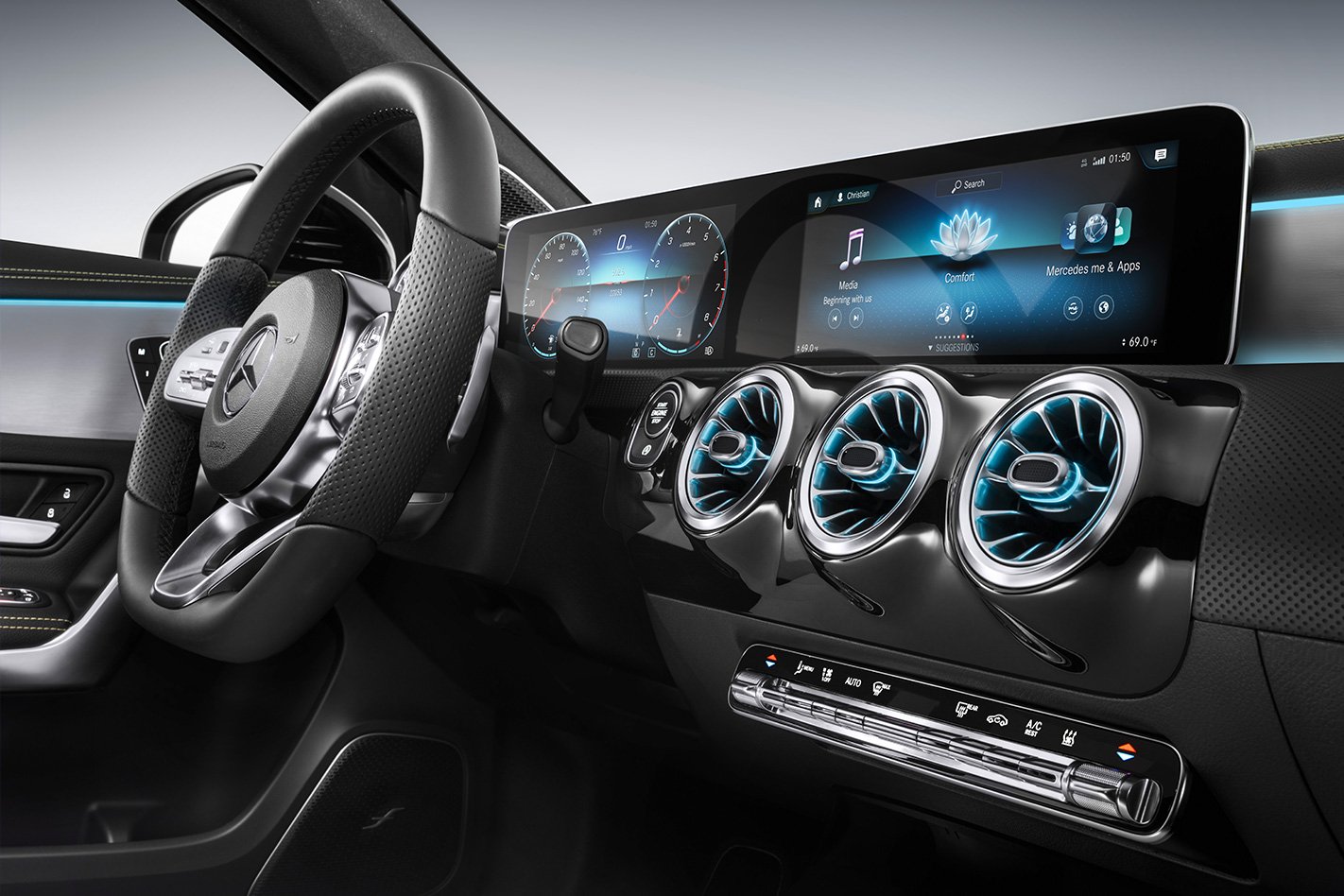
And with slick graphics courtesy of more computer processing power, Mercedes reckons the younger demographics that typically buy the A-Class will appreciate its video-game style presentation and speed. Its reconfigurable layout is also designed to appeal by allowing drivers to personalise what information is shown to them, and how it’s displayed.
But visual presentation is just one of MBUX’s assets. Voice-activated controls are its other party trick – and one that Mercedes reckons is the real cornerstone of MBUX. It’s meant to interpret and respond to natural human speech rather than pre-ordained phrases – think of it as being more like an iPhone’s internet-enhanced Siri voice assistant, rather than the primitive voice controls in today’s cars.
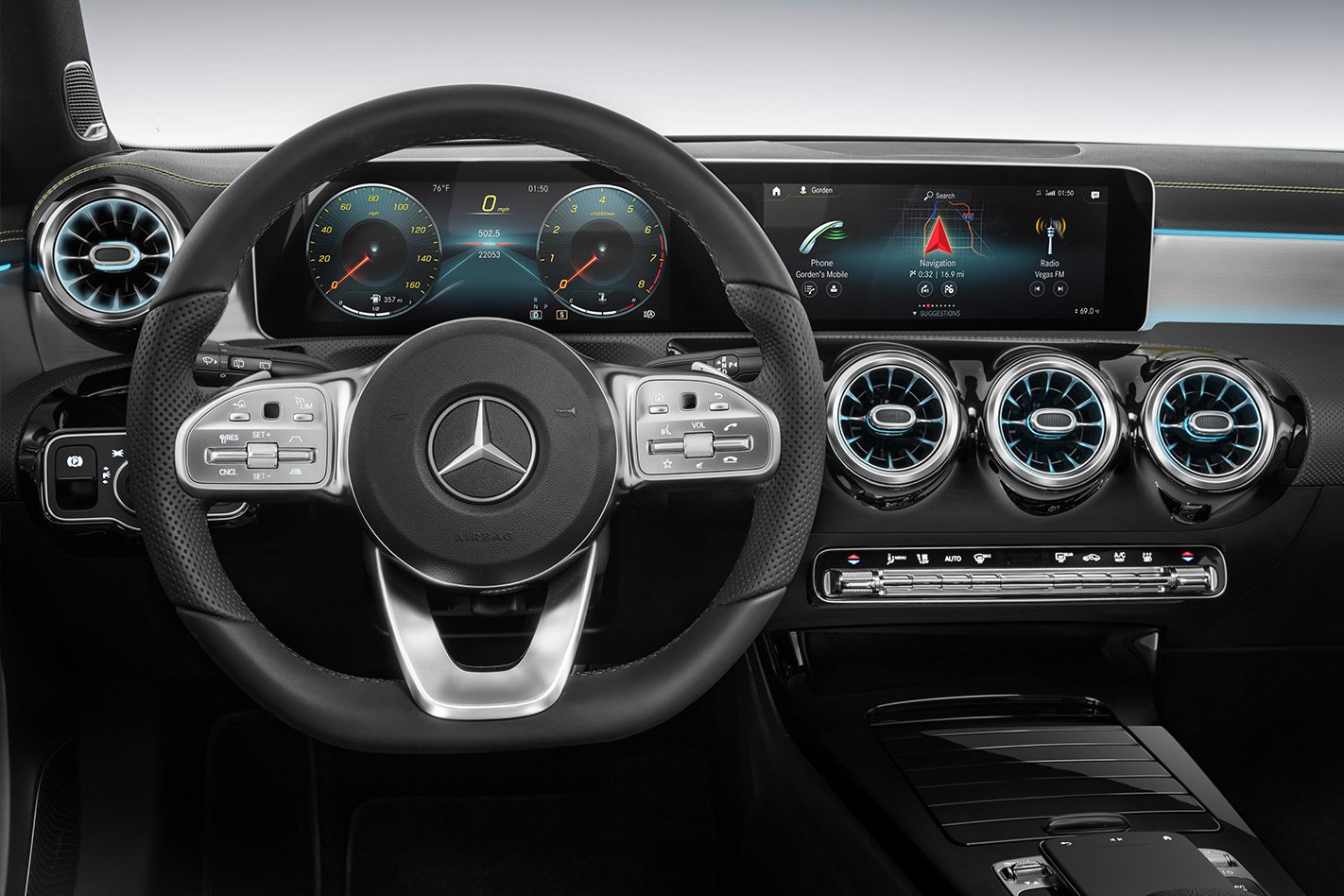
On top of that, MBUX is designed to evolve as it ages, with downloadable app modules expected to be added in future to give it new capabilities – especially in regards to web-connectivity.
However, while MBUX certainly looks like a huge leap forward for infotainment, the rest of the new A-Class’ interior will be fairly conventional. To see what’s further afield, we need to look at some more forward-looking concepts:
Harman Configurable Entertainment and 5G Digital Cockpit
Electronics company Harman doesn’t just make audio equipment anymore, and its stand at this year’s Consumer Electronics Show in Las Vegas was dominated by in-car connectivity concepts aplenty.
Owned by technology giant Samsung, Harman debuted a vehicle cabin concept that leans heavily on ultra-fast 5G mobile internet. 5G, it should be pointed out, has still yet to receive a widespread public roll out.
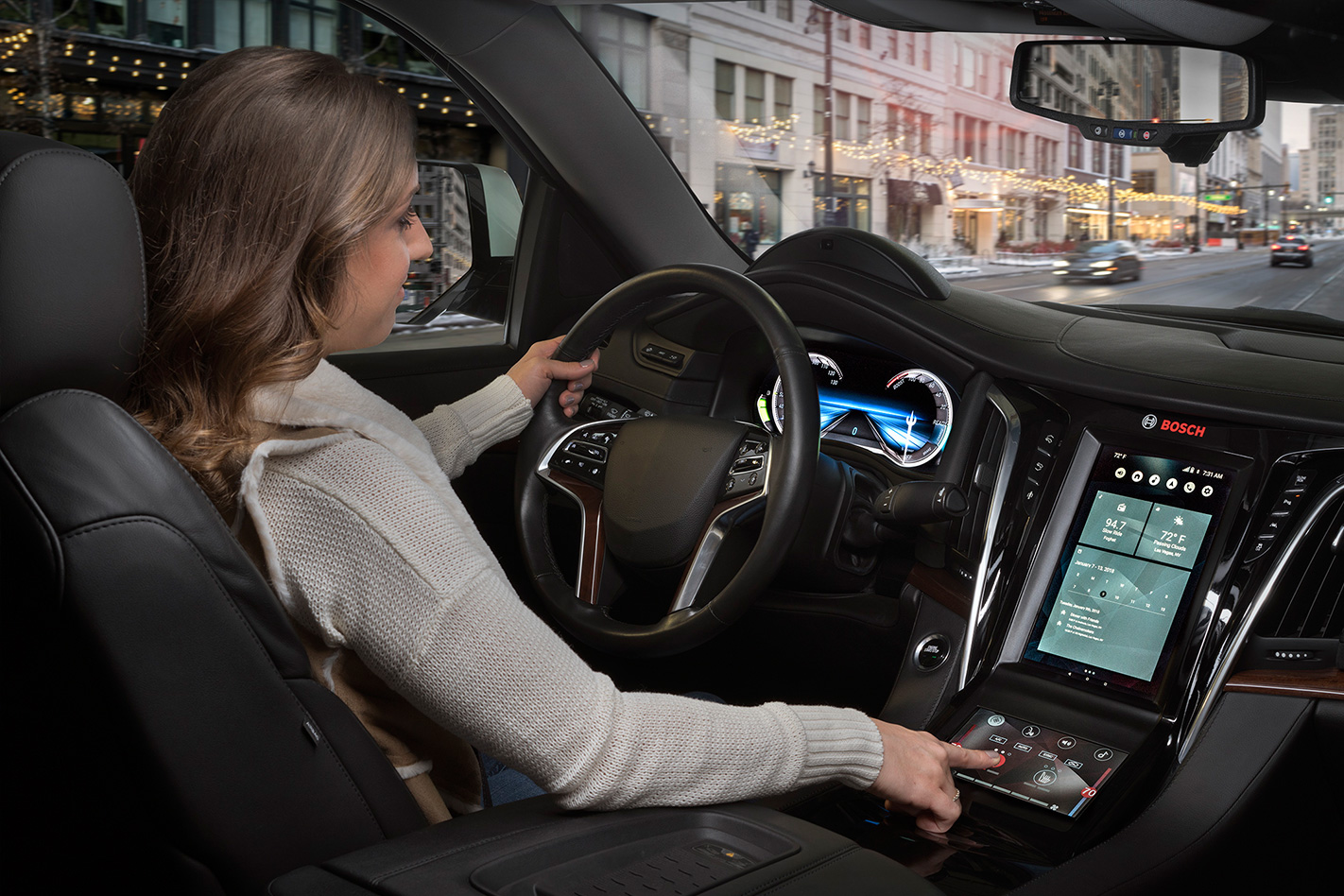
By being able to transmit and receive high volumes of data, Harman’s 5G tech is able to offer a user experience more akin to a desktop computer than what’s in modern cars today. Its Maserati-based tech demonstrator, with a massive high-res display stretching from door to door, illustrates just how much information Harman’s system can present to the occupants.
It can also transmit information via 5G, with the ability to interface directly with internet-enabled devices in your home, like a fridge, slow-cooker, climate control or security system, and interact with them remotely. No more stepping into a chilly home after a long day at work.
The potential for driver distraction seems huge, but other movements in the in-car tech space aim to reduce that risk. Read on.
Toyota, Nissan, Mini and others revolt against the steering wheel
Looking further into the future, more than a few manufacturers have predicted the demise of the steering wheel as autonomous technology improves in capability.
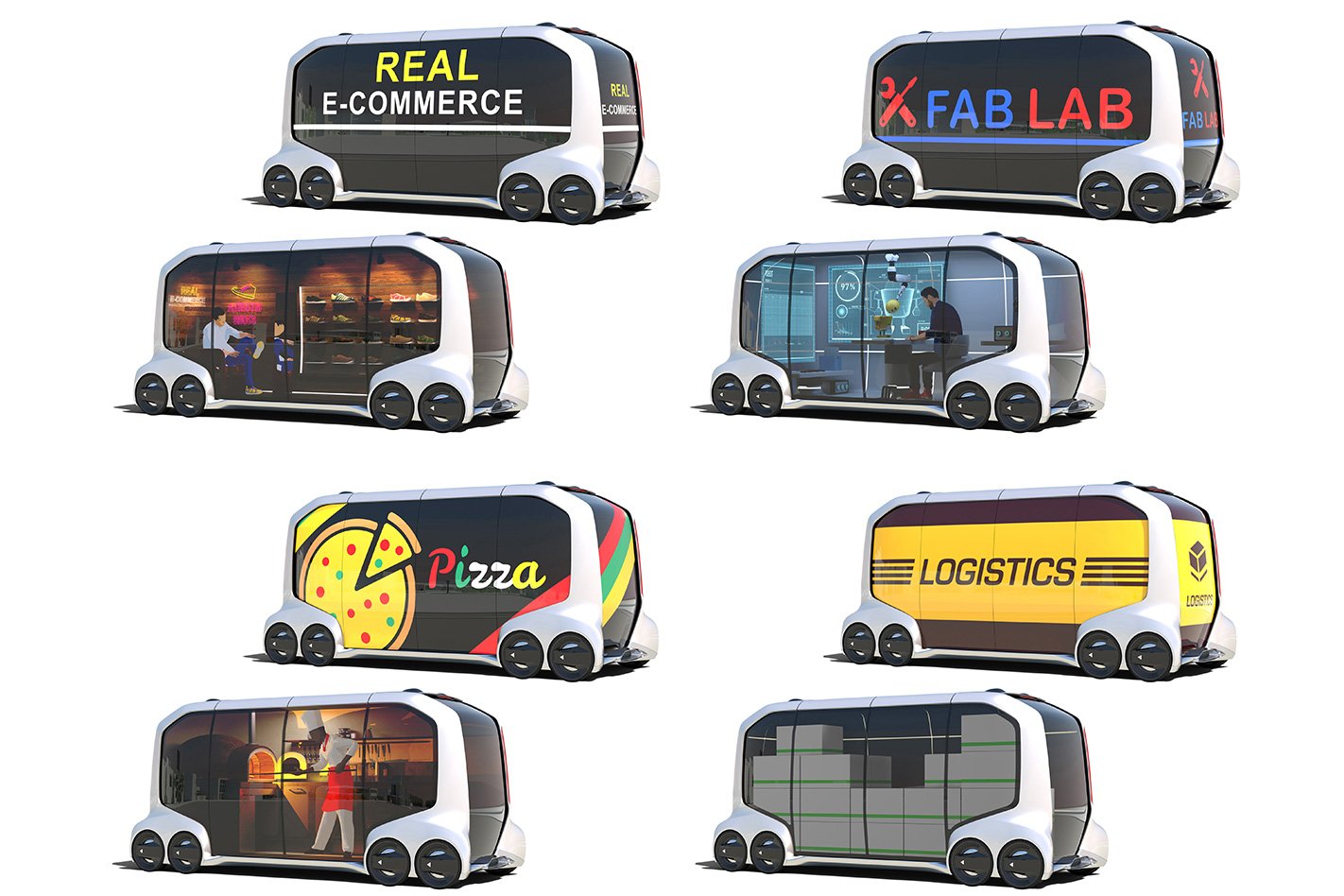
And when traditional driver controls disappear, new opportunities for cabin layout present themselves. Toyota’s E-Palette is a great example, being an eight-wheeled electrically-powered box with the ability to be configured as a mobile office, a lounge room on wheels, a minibus or as a delivery vehicle.
And then there’s the Mercedes-Benz F 015 concept (see top), a car that’s more singular in purpose – Mercedes wants you to load people into it, not parcels – but nevertheless has a steering wheel that electrically retracts into the dash when in autonomous mode, and seats that pivot around to face each other, lounge-style. Those seats are surrounded by screens, naturally, with high-res touchscreens built into not only the dash, but the doors as well.
Supercar test drivers have one of the most desirable jobs in the world.
Not only do they get to drive some of the world’s most impressive machines well before they’re even known to the public, but they also get paid to do it.
But the downside to testing something is being the first one to find out if something is going to go wrong. This is one aspect of the ‘cons’ column that a supercar can multiply exponentially.
Supercar development driver and regular testing go-to man for Bugatti, Loris Bicocchi, has one such tale, though not many have heard it.
Though the Bugatti Veyron was launched in 2005, this story about its development has only surfaced recently, over 12 years afterwards.
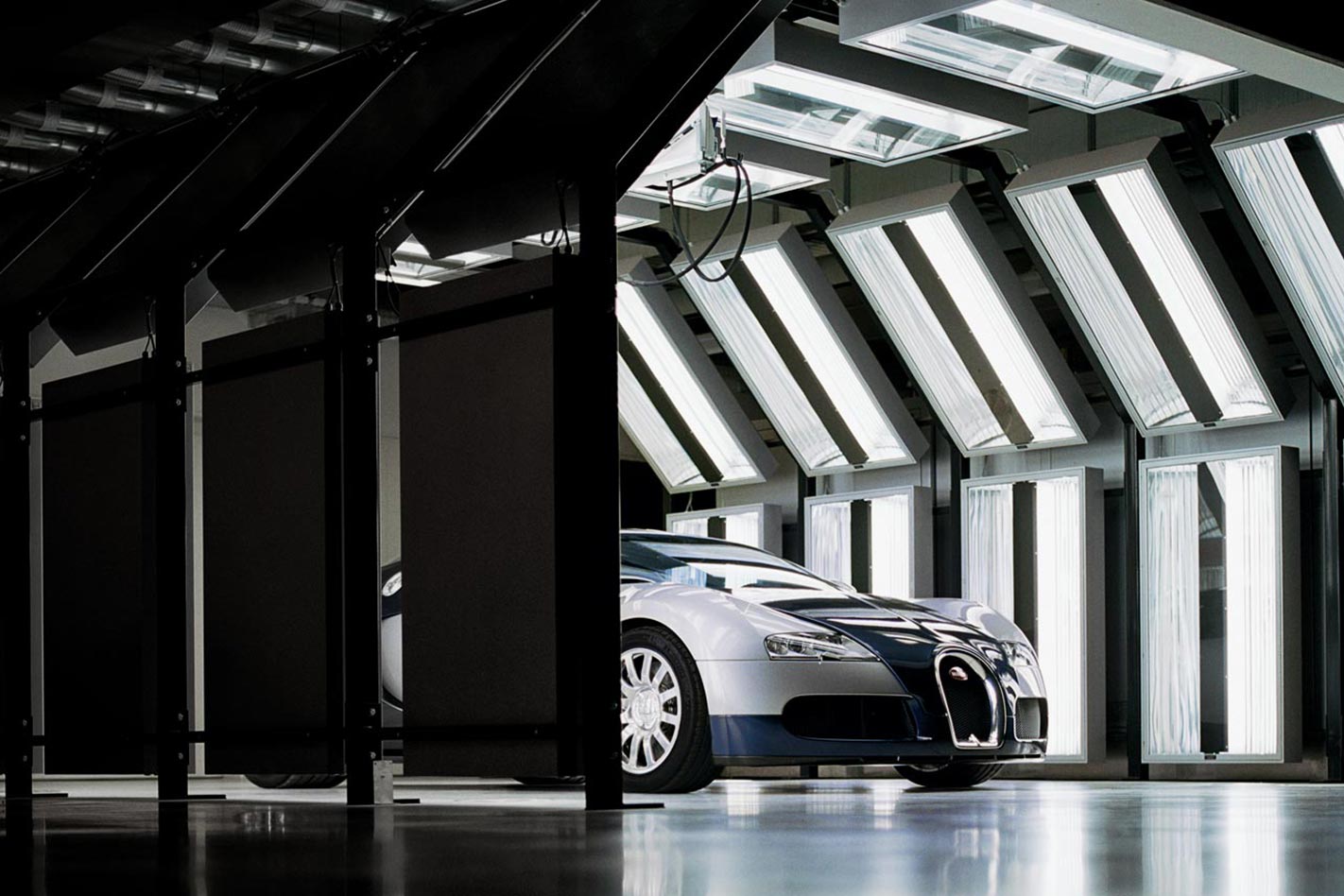
“It was one of the first tests we did in Nardo,” he begins, though the video is in Italian so we’re trusting the accuracy of the subtitles.
He says he was there to work with the engine engineers during the early development of the Veyron. He points out that it seemed to them the rest of the car was something they could do without.
The important thing was that the engine and transmission were perfect.
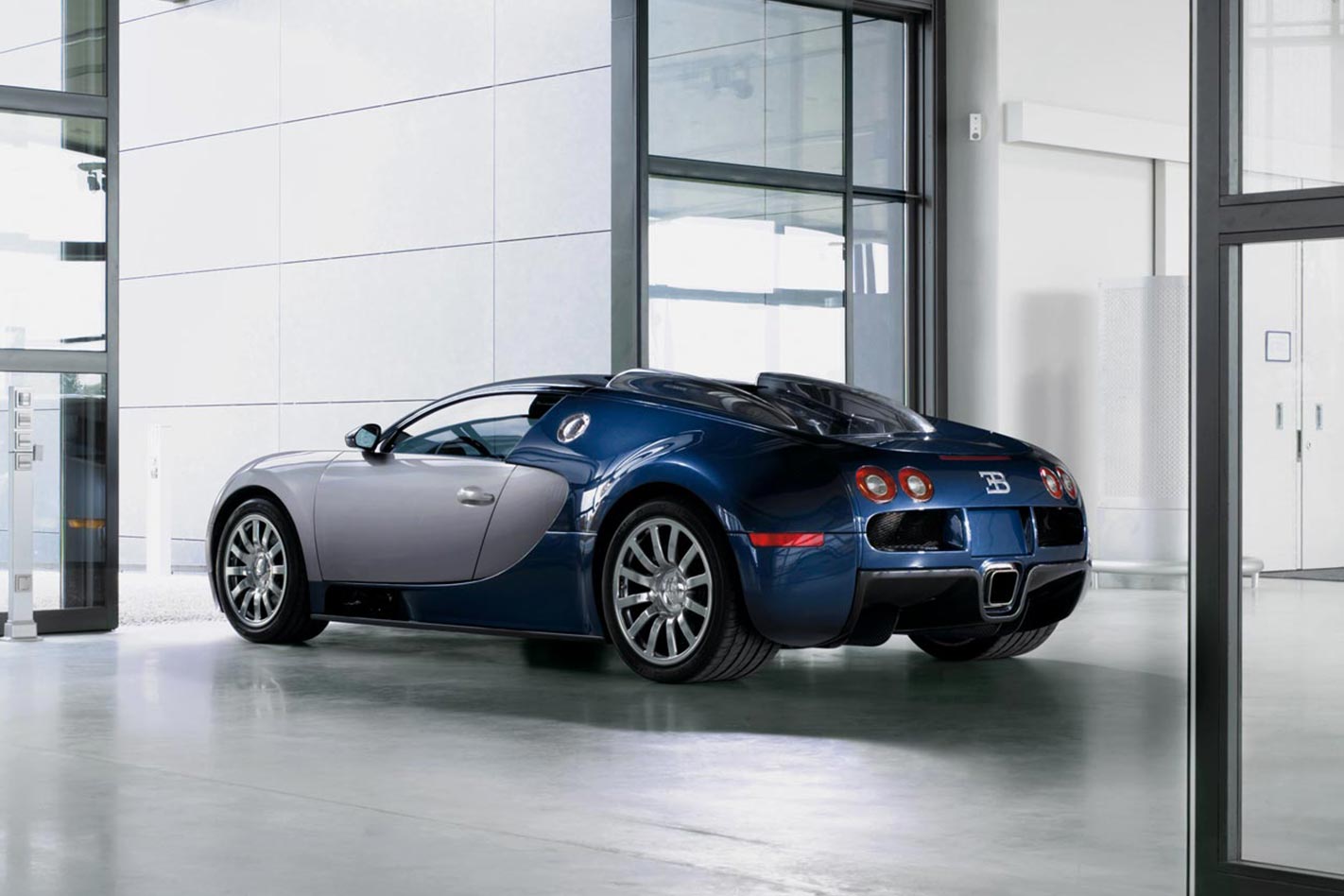
“You know, the Nardo track is balanced until 240km/h, after that you start to turn, and turn, and turn… at 360km/h you have to withstand a 0.3-0.35g force.”
He explains that the car starts to struggle with the track in some places, and then the engineers ask him to do two laps.
Hesitantly, he agreed.
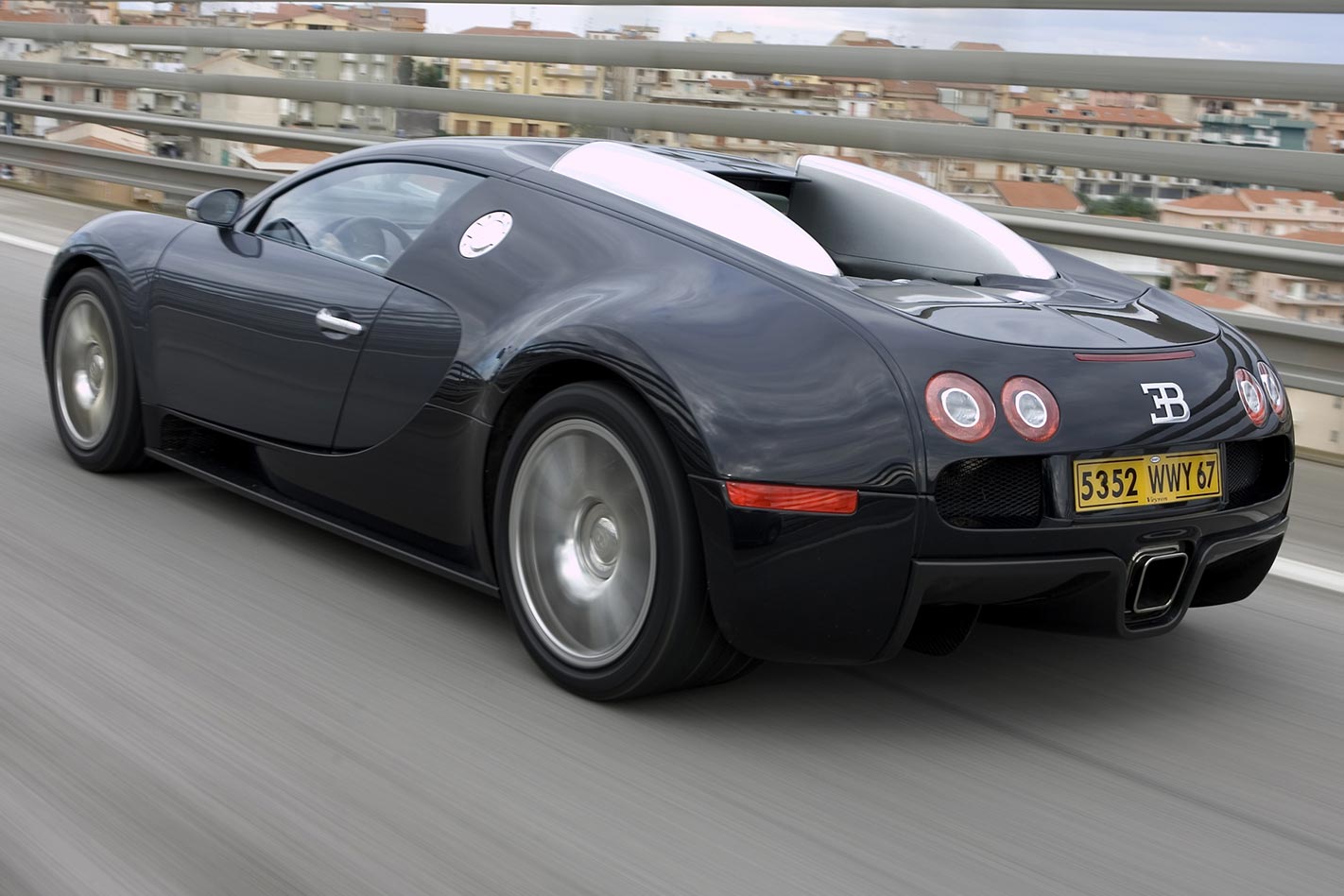
The windshield and hood were now shattered and bent in front of Bicocchi, while he was traveling at about 395 to 398km/h.
“When the tyre blew, I was a foot away from the guardrail, because the more you are near, the less any wheel input is needed due to the banking becoming higher.
“In a snap, I didn’t even realise it, I hit the guardrail.”
He explains each thing he noticed happening on the car (this is at around the 5-minute mark in the video above, you really should watch it), and adds that a huge amount of pressure in the car ‘like opening an airplane door’ caused him some physical trauma too.
He describes the rather intense course of action he had to take to survive, and then notes:
He says a fire started due to the heat and leaking oil, but he managed to escape thanks to the chassis of the car actually being in quite good condition.
It’s a good idea to watch the video interview to get the full story, especially since it’s only a 15-minute long investment. Enjoy!
The car world is littered with so many acronyms it can be easy to lose track. One of the latest is ESA, or Evasive Steering Assist, and it is starting to appear on mainstream models.
ESA at its core, helps a driver avoid a collision, before returning the vehicle to its path.
The key word here is ‘assist’. The safety system is only triggered when a human driver attempts to avoid an obstacle, and the pilot can override the system at any time.
What ESA does is help the driver put in the appropriate steering angle to avoid a crash, and then return to its lane. It does not steer for you.
Mercedes-Benz has implemented the system in the 2017 E-Class, and talked up its ability to enhance the reflexes of the driver.
But it’s already making its way into mainstream vehicles, including the Ford Edge, which will arrive in Australia with the Endura badge, will also feature the system.
Working alongside a full suite of safety systems, such as automatic emergency braking, ESA helps drivers avoid a collision, without taking full control of the vehicle.
Expect to see more cars proclaiming to have ESA as a feature in the near future.
The Jeep Cherokee has been under the knife, with the bandages removed at the Detroit Motor Show to reveal a more classic Jeep design with premium interior and a new 2.0-litre turbo petrol engine.
The significantly updated Cherokee has a strong family resemblance to the new Compass and sits perfectly between the smaller SUV and the big Grand Cherokee.
The narrow grille, which polarised opinion, now bares toothier grin and is flanked by wider headlamps with an attractive tick-shaped DRL signature.
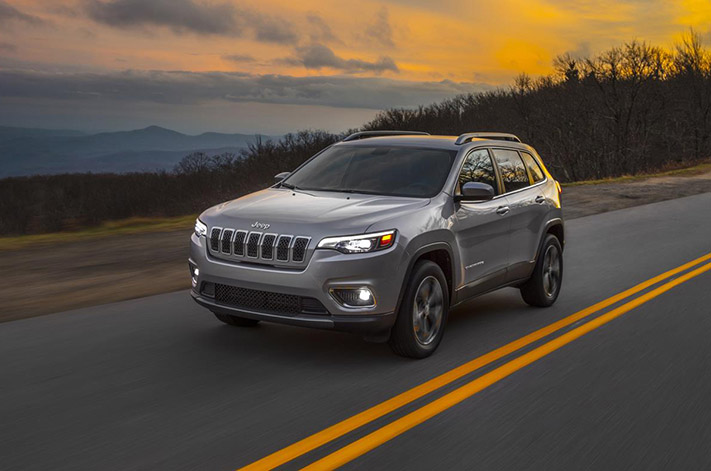
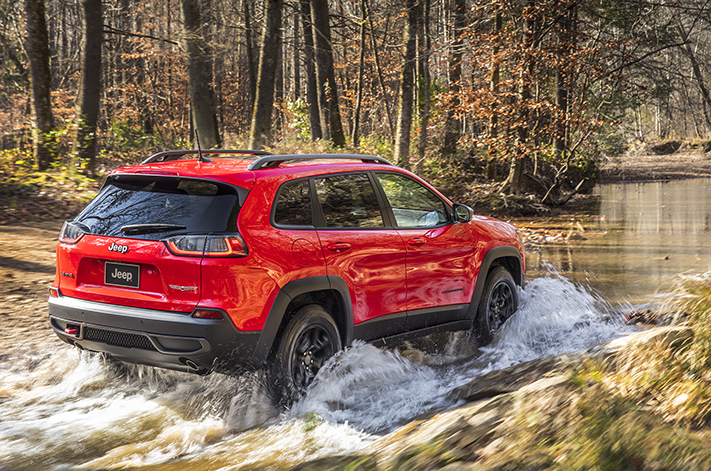
The rear-end has also been tweaked, with a new and redesigned lightweight composite tailgate available with hands-free opening, while the boot space has been redesigned to increase width by 90mm.
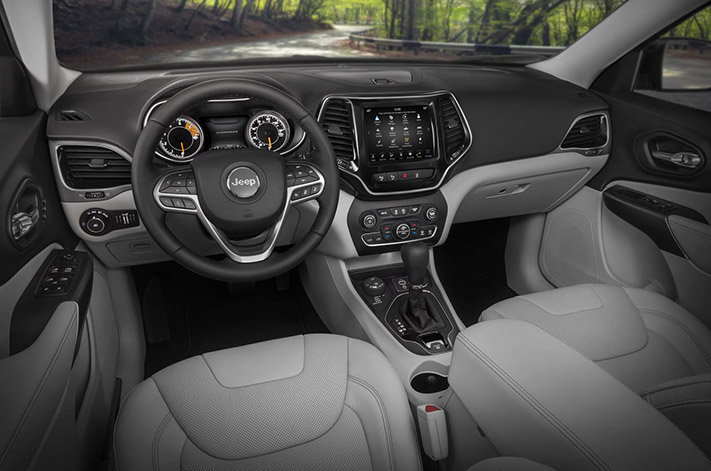
Jeep has gone for a more upscale interior with softer touchpoints more quality materials highlighted by satin chrome and piano black accents. Cabin storage has been increased thanks to a revised centre console.
Infotainment is powered by the fourth generation of FCA’s Uconnect system with a choice of 7.5- or 8.4-inch touchscreens with pinch-and-zoom capability and Apple CarPlay/Android Auto connectivity.
But it’s under the skin where the new Cherokee offers big improvements over the current model. The new 2.0-litre turbo engine produces 200kW, the same as the 3.2-litre Pentastar V6 which carries over to the new model, but with significantly more torque – 400Nm compared to the V6’s 316 Newtons. Jeep says it provides impressive fuel economy but has yet to provide figures.
The 2.4-litre Tigershark MultiAir2 petrol engine will also carry over for the cheaper front-wheel-drive models, while 2.0-litre turbo diesel currently in the Jeep Limited appears to have been dropped.
The nine-speed automatic transmission is still standard across the range.
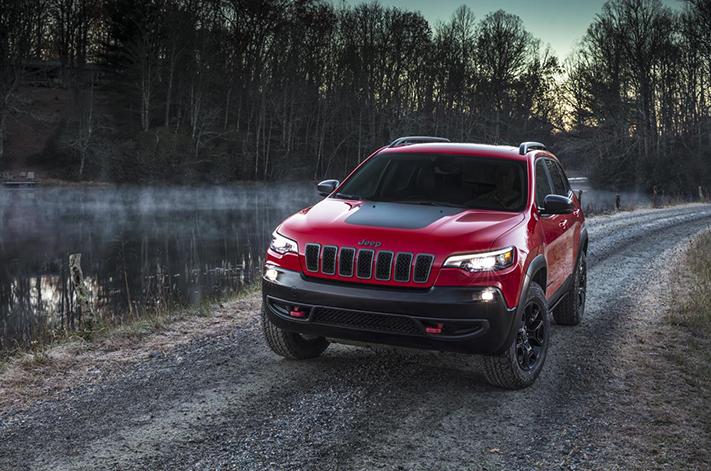
The Cherokee’s off-road capabilities have also been enhanced with a choice of three four-wheel-drive systems which have the ability to disconnect the rear axle, and automatically switch between two- and four-wheel drive to maintain traction.
This is best exemplified in the dirt-focused Trailhawk, which comes with the automatic rear-differential lock as standard and has had its bodywork tweaked to provide a 220mm ground clearance and 29.9 degree approach angle.
Despite the 2019 label, the updated Jeep Cherokee will go on sale in the US within the next couple of months and will arrive in Australia later in the year.
Toyota Australia says it is looking at adding Apple CarPlay support to its vehicles, after it appeared in one of the brand’s cars launched in the US this week.
The smartphone support software, which can integrate some of the device’s functionality with the vehicle’s multimedia system, is rolling out in more of Toyota’s competition. However, the Japanese carmaker has steadfastly held on to its own version of Apple CarPlay, called Toyota Link, which falls well behind the functionality that Carplay adds to a vehicle.
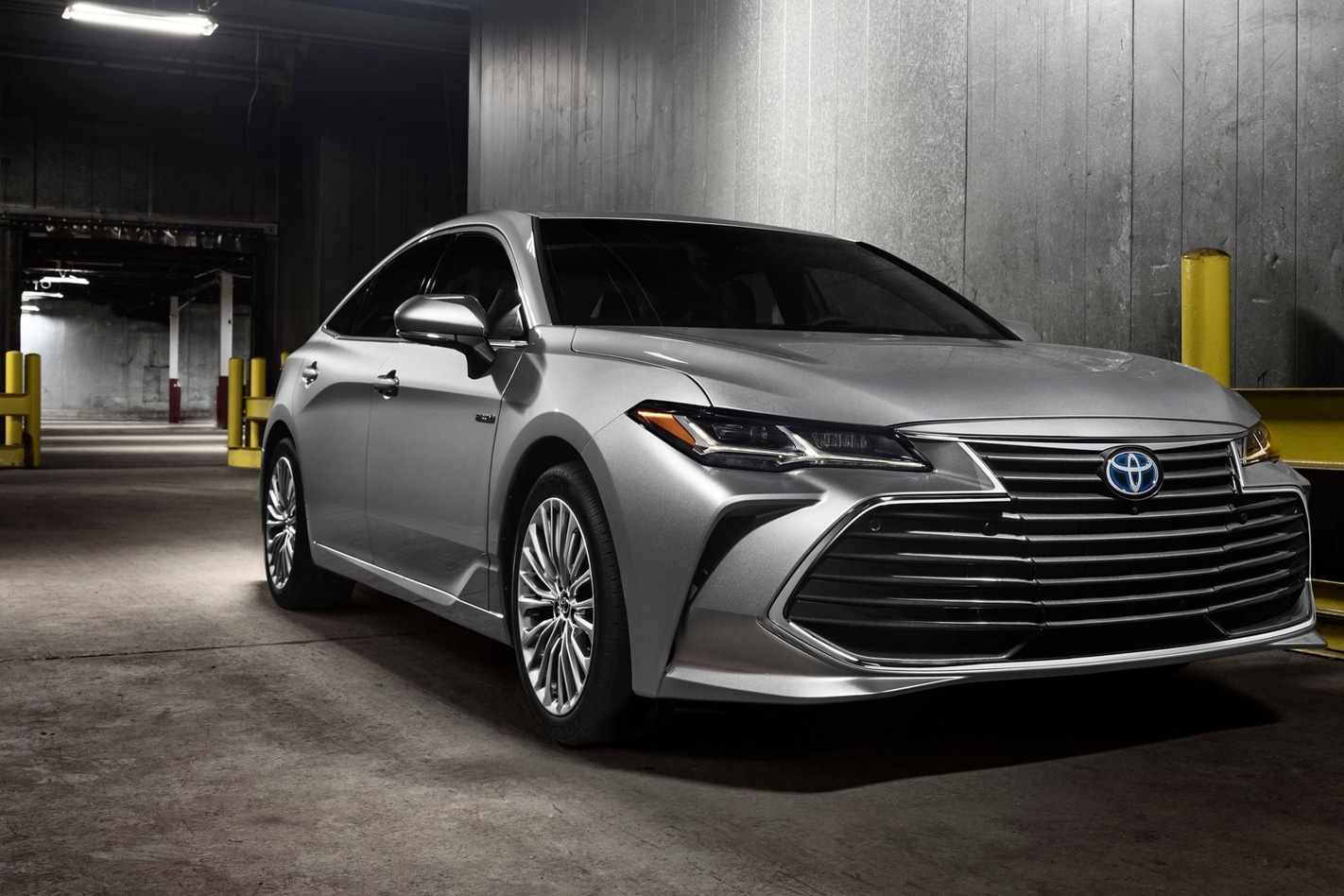
It was added to the Toyota Avalon, a US-market V6-engined version of the Camry sedan revealed at the 2018 Detroit Motor Show.
However, Toyota Australia says while there are no immediate to add Apple iPhone support to products in local showrooms, but it is considering it.
“There is no announcement regarding the roll-out of Apple CarPlay in Australia to make today,” Toyota Australia public affairs manager Aleks Krajcer said.
“But the technology, along with other multimedia and connected solutions, is under consideration as we seek to create and provide the best product and spec combinations for Australian Toyota buyers.”
Even so, the US-market car is missing support for the most common type of smartphone out there – Android Auto.
A number of car makers including Ford and Toyota announced early last year that they would form a consortium to slam the brakes on rolling out Apple CarPlay and Android Auto in their products. This was over fears that the two operating systems could soon start to wrest control of the way smartphones integrate – and the valuable data they collect – away from carmakers. Toyota has also cited security fears if hackers are able to make their way into a vehicle’s electronics via the smartphone’s data connection.
Other members of the Ford-led SmartDeviceLink group include Mazda, Subaru, the Holden Commodore’s new manufacturer Groupe PSA, Mitsubishi and Suzuki.
The iconic Land Rover Defender has returned. And it’s got a dirty big engine.
This is the Land Rover Defender Works V8, and it’s the most powerful and fastest production Defender ever built.
With 298kW and 515Nm being pumped out of a naturally aspirated 5.0-litre bent eight, the Works V8 is capable of 170km/h.
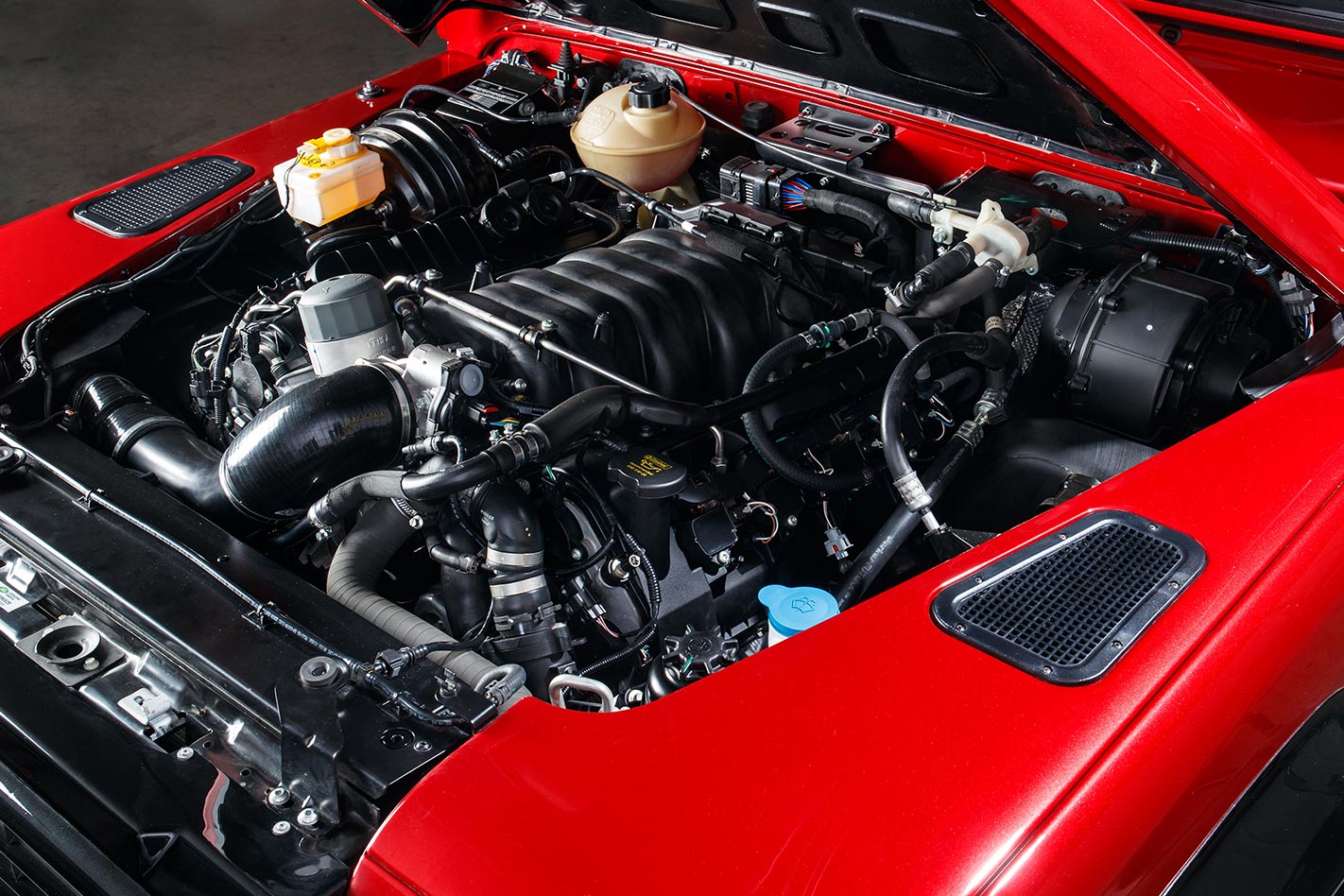
This makes the V8’s claimed 5.6 second sprint to 97km/h all the more impressive.
Even more interesting is the use of Sport Mode in the re-engineered Defenders, complimented by upgraded brakes and a handling kit.
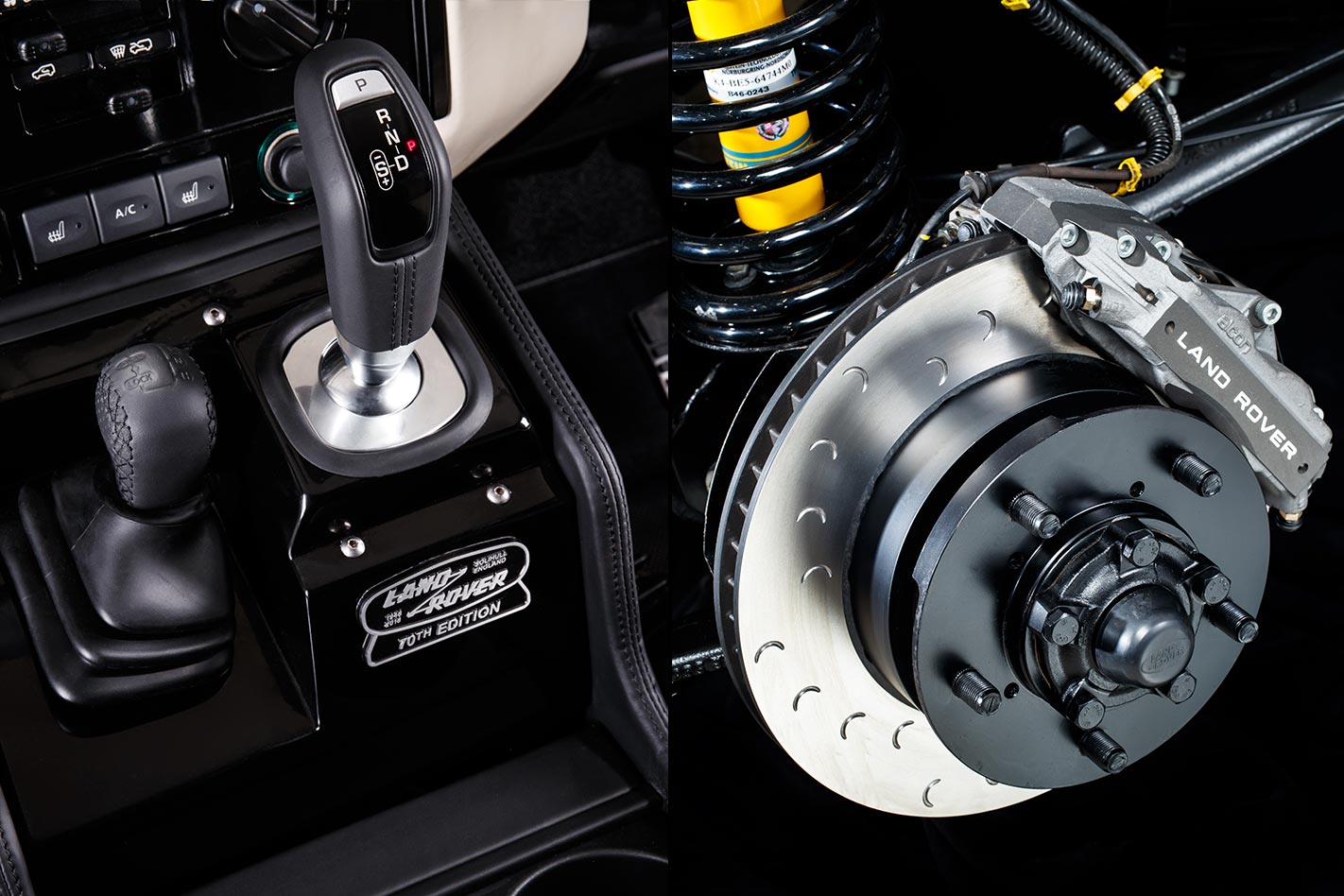
Jaguar Land Rover Classic director Tim Hannig says keeping the Defender badge around for 70 years was a feat worth celebrating, and that’s where the Works V8 comes in.
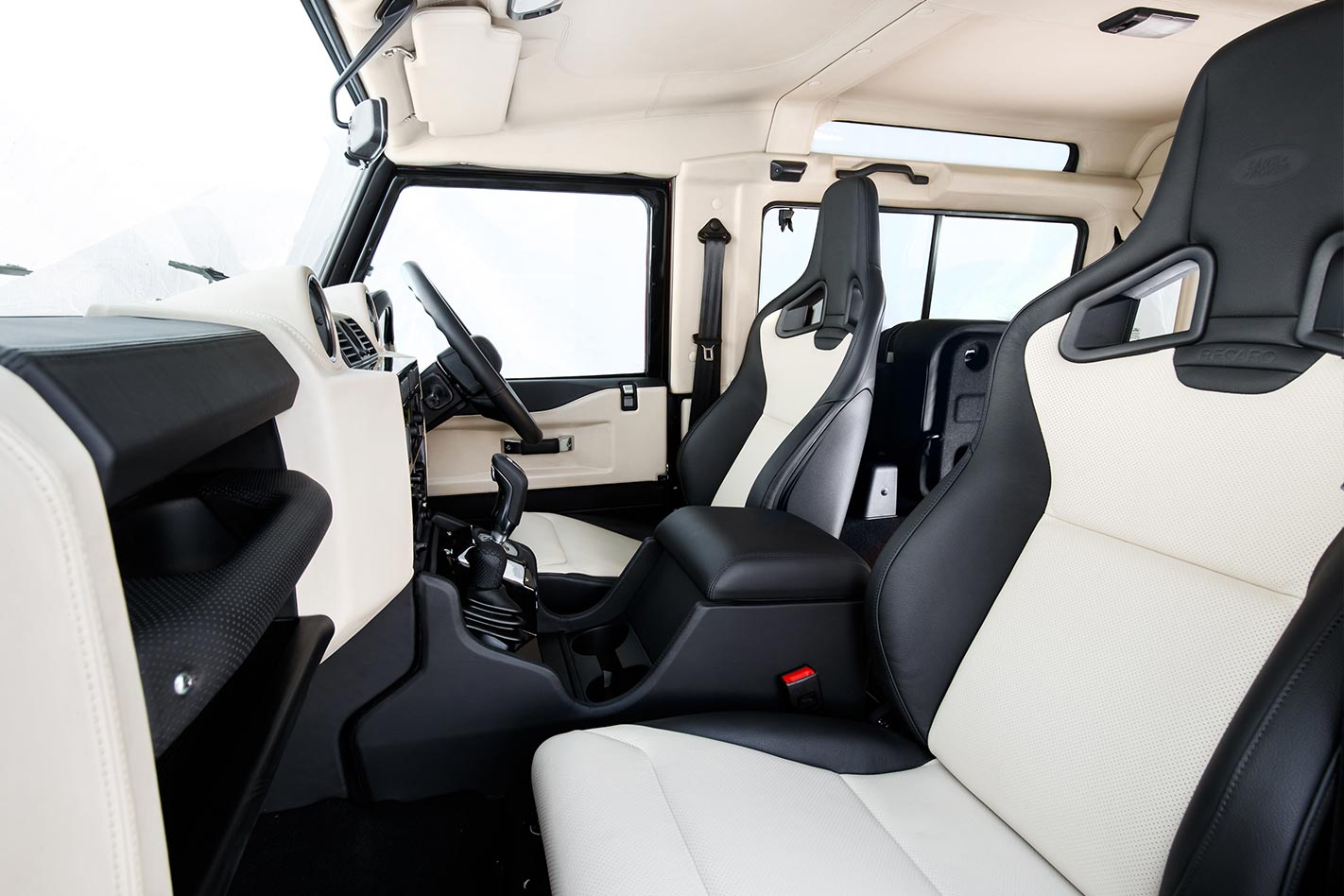
“The idea of reintroducing a V8 Defender was something we were discussing as far back as 2014, when we were still building the Defender in Solihull.
“We knew the demand was there for a powerful and fast Defender; the Land Rover authenticity is the ultimate finishing touch for discerning clients purchasing these collectors’ edition Defenders.”