
RANGE Rover has confirmed a facelifted range of its large SUV will be arriving in Australia late this year with a new plug-in hybrid variant added to the line-up, elevating the “serene comfort” of its flagship model, it says.
The P400e PHEV combines a 221kW Ingenium 2.0-litre petrol four-cylinder engine, with an 85kW electric motor for a combined output of 297kW and 640Nm. Acceleration is swift, with 0-100km/h dealt with in 6.8 secs, and a top speed of 220km/h.
With an all-electric range of up to 51-kilometres, Range Rover claims the 13.1kWh battery can be fully recharged from empty in two hours and 45 minutes, using a special wall box charging unit.
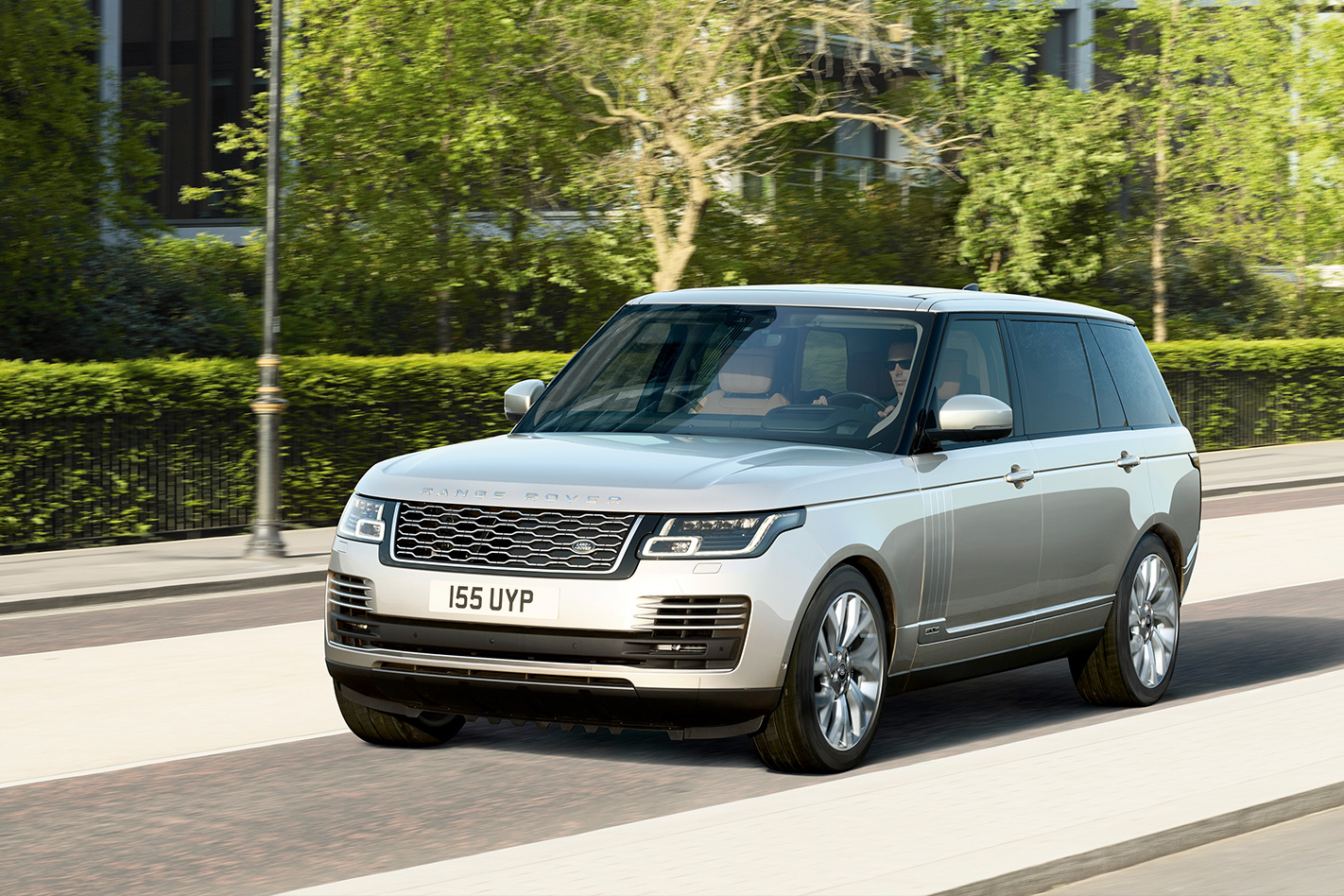
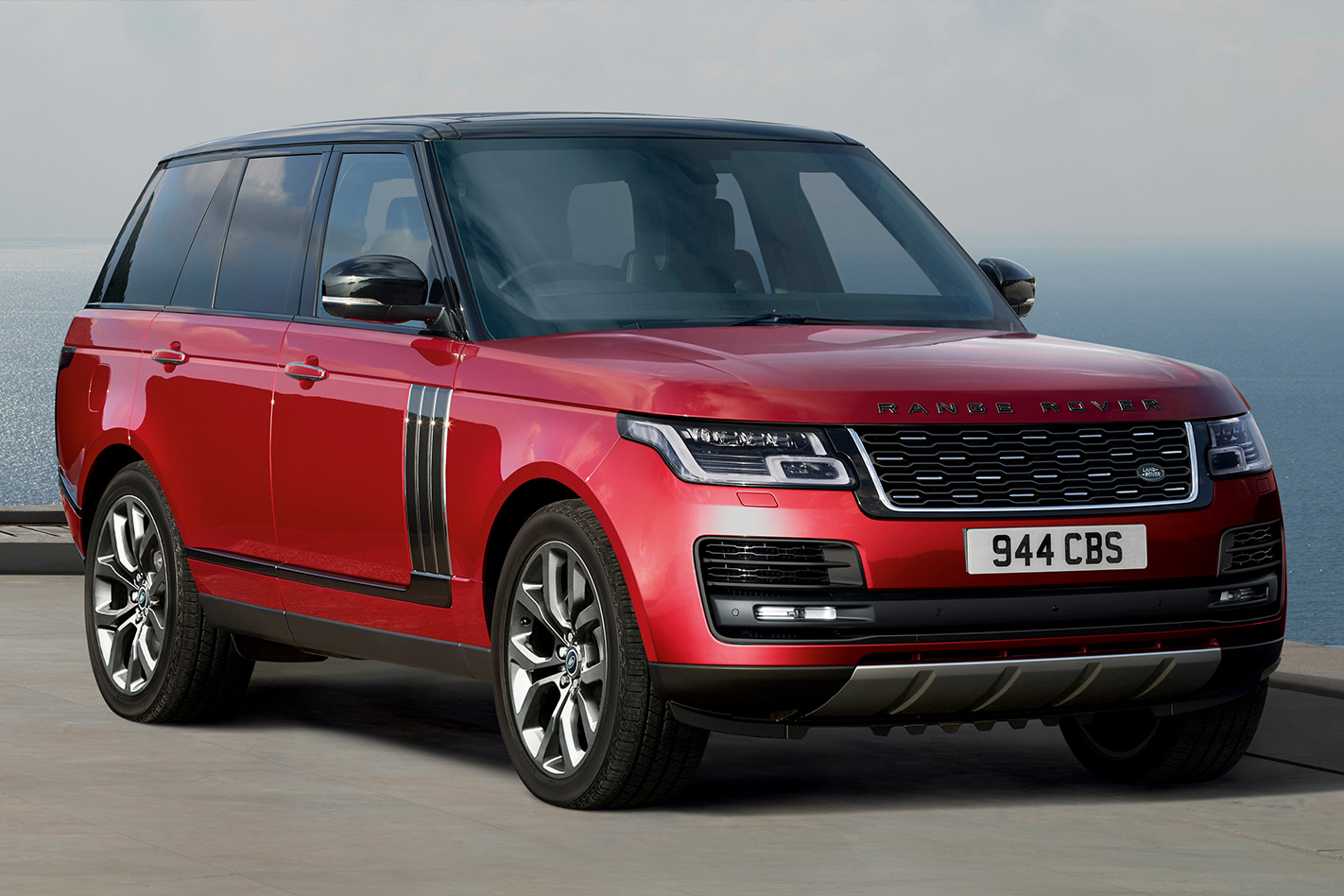
The model update is not purely focused on saving Polar Bears, and the refreshed line-up brings a new SVAutobiography Dynamic – the most powerful production Range Rover so far.
The supercharged 5.0-litre V8 under its bonnet produces 416kW and 700Nm, an increase of 12kW over the previous model, and propels the SUV to 100km/h in just 5.4 seconds.
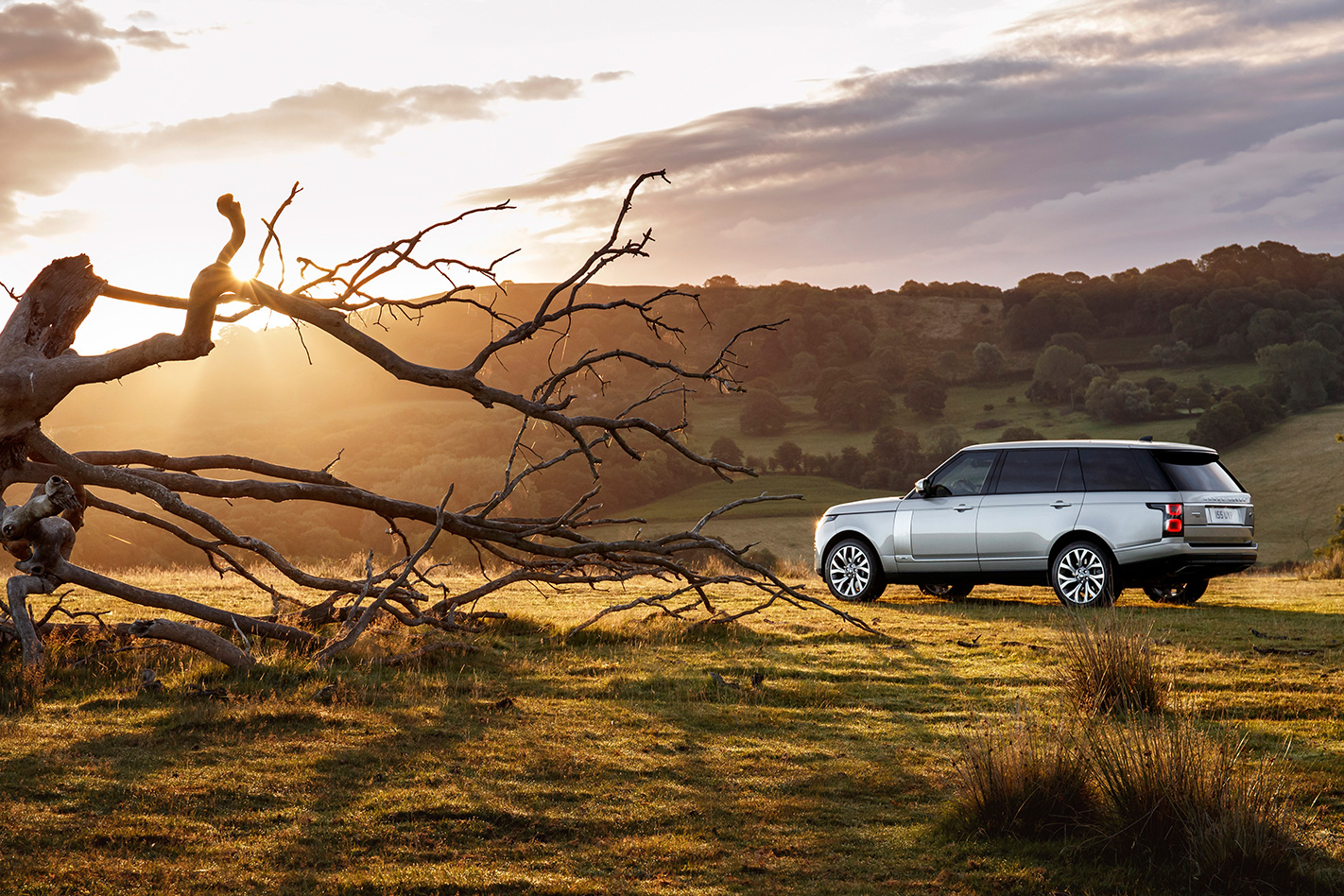
There have been subtle changes to the exterior of the car, with a refreshed grille and new LED headlights, while the cabin has an adapted version of the twin touch screens found in its smaller brother, the Velar.
There are also wider, softer seats, which can recline by up to 40 percent for increased passenger comfort. It’s also the most connected Range Rover the company has produced, with up to 17 connection points inside the cabin, including USB, HDMI, and 12-volt ports.
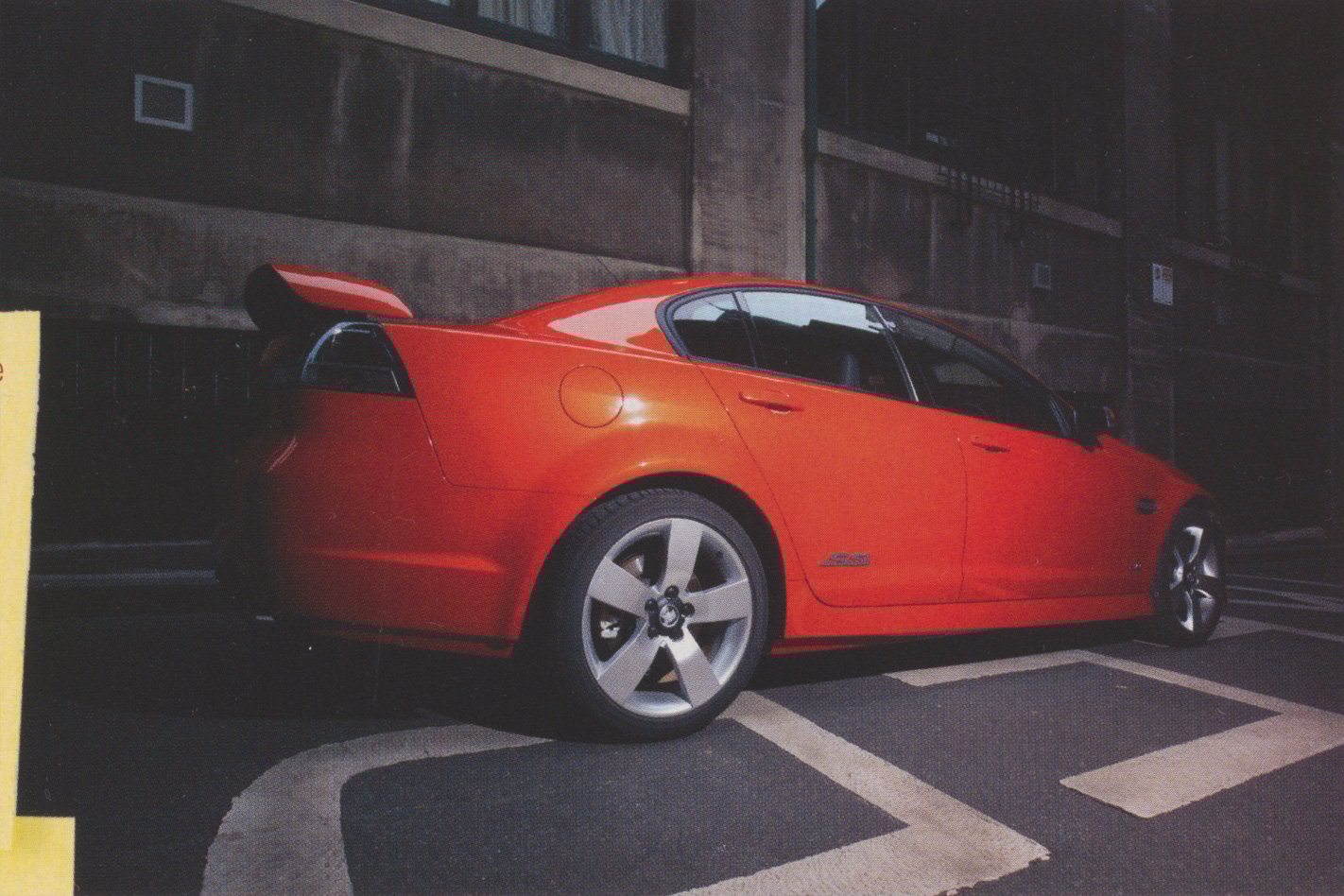
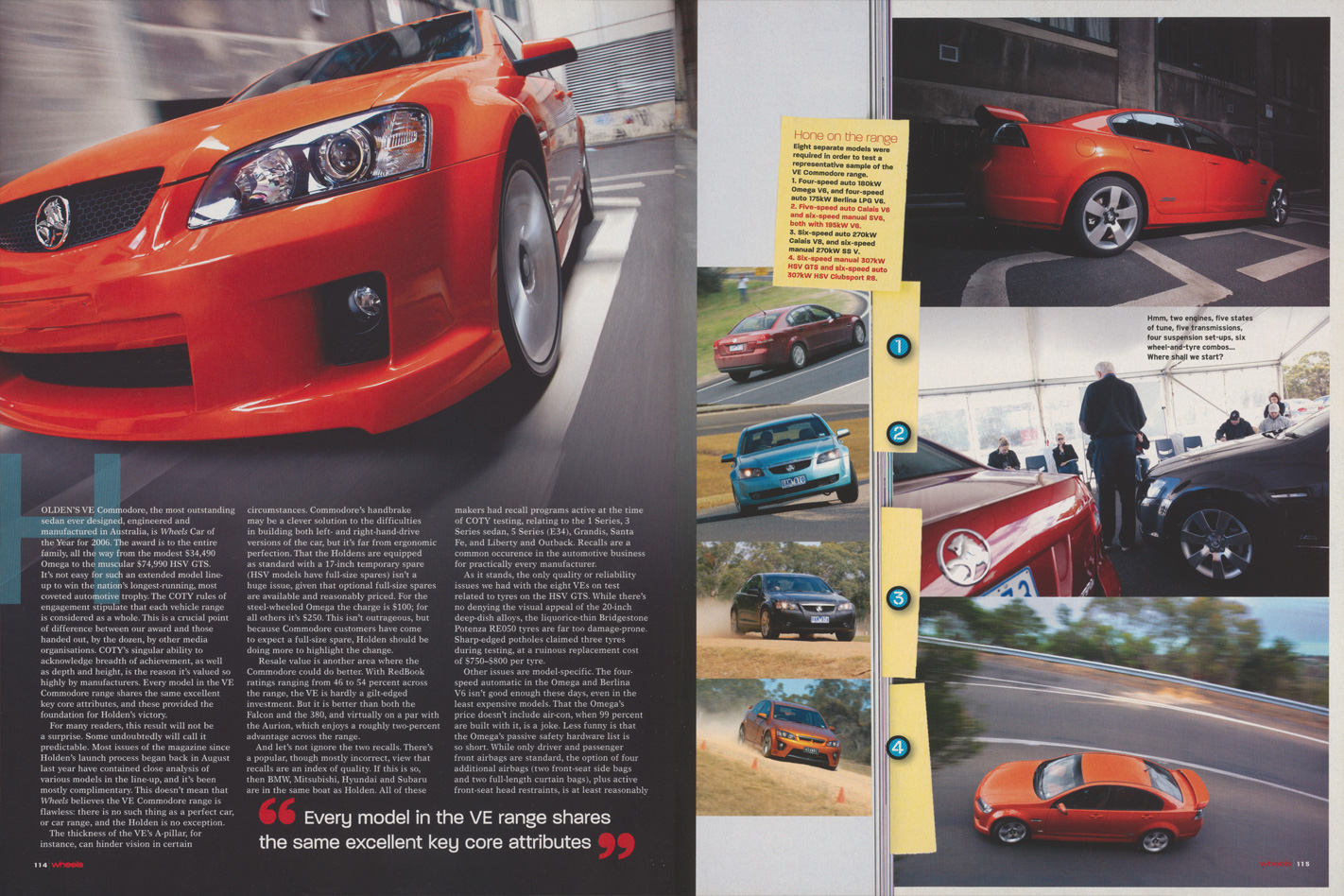
HOLDEN’S VE Commodore, the most outstanding sedan ever designed, engineered and manufactured in Australia, is Wheels Car of the Year for 2006. The award is to the entire family, all the way from the modest $34,490 Omega to the muscular $74,990 HSV GTS.
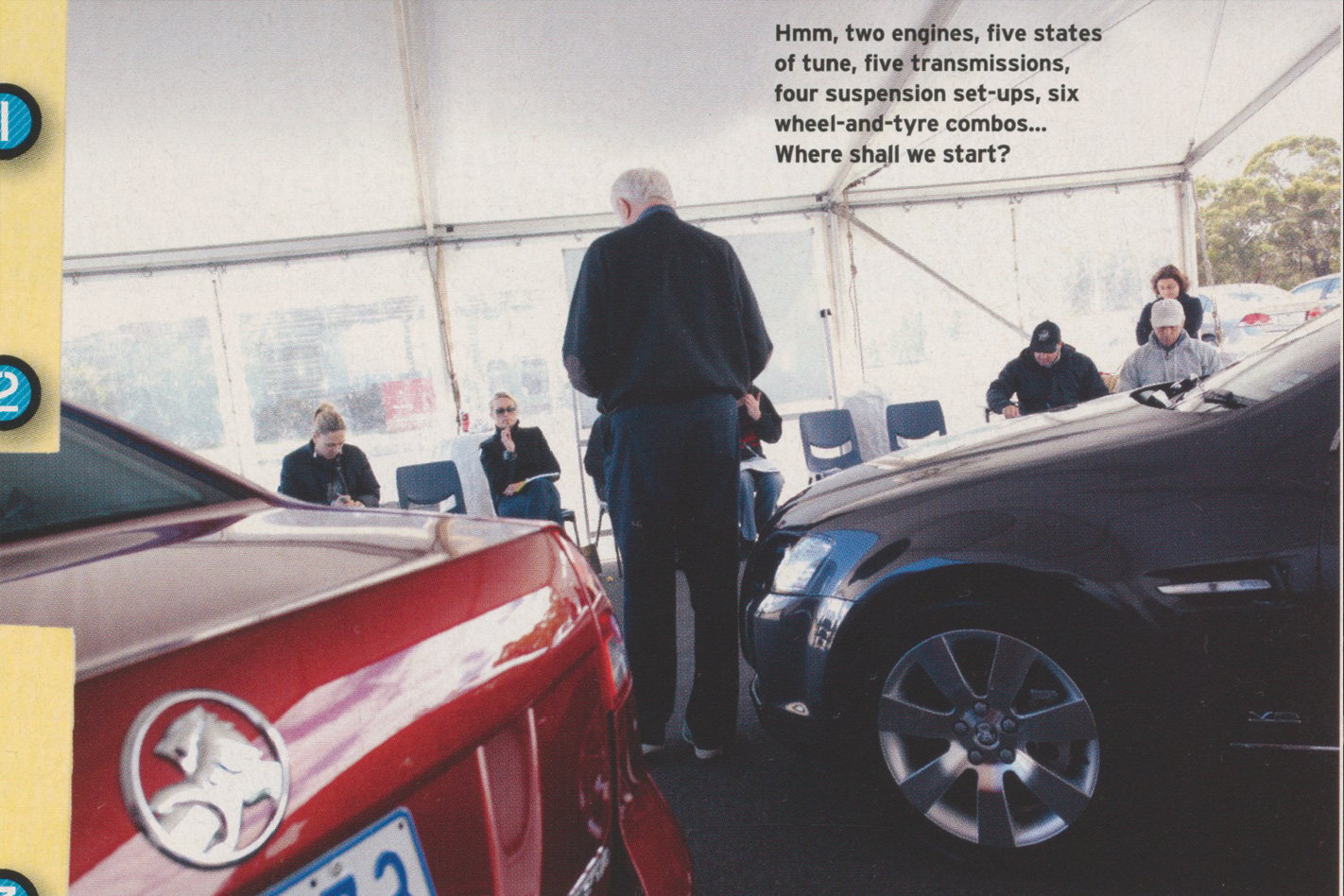
It’s not easy for such an extended model line-up to win the nation’s longest-running, most coveted automotive trophy. The COTY rules of engagement stipulate that each vehicle range is considered as a whole. This is a crucial point of difference between our award and those handed out, by the dozen, by other media organisations. COTY’s singular ability to acknowledge breadth of achievement, as well as depth and height, is the reason it’s valued so highly by manufacturers. Every model in the VE Commodore range shares the same excellent key core attributes, and these provided the foundation for Holden’s victory.
For many readers, this result will not be a surprise. Some undoubtedly will call it predictable. Most issues of the magazine since Holden’s launch process began back in August last year have contained close analysis of various models in the line-up, and it’s been mostly complimentary. This doesn’t mean that Wheels believes the VE Commodore range is flawless: there is no such thing as a perfect car, or car range, and the Holden is no exception.
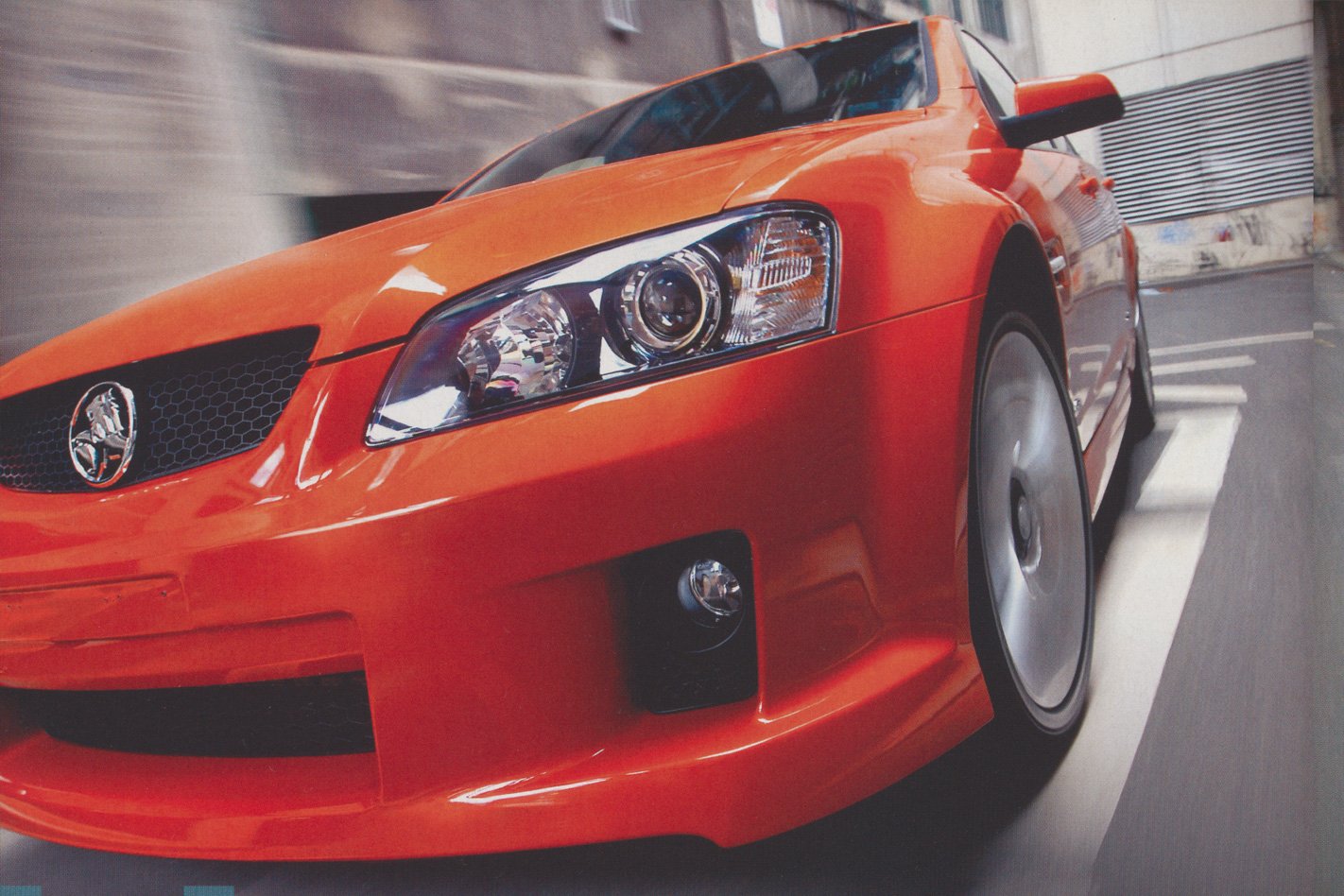
Resale value is another area where the Commodore could do better. With RedBook ratings ranging from 46 to 54 percent across the range, the VE is hardly a gilt-edged investment. But it is better than both the Falcon and the 380, and virtually on a par with the Aurion, which enjoys a roughly two-percent advantage across the range .
And let’s not ignore the two recalls. There’s a popular, though mostly incorrect, view that recalls are an index of quality. If this is so, then BMW, Mitsubishi, Hyundai and Subaru are in the same boat as Holden. All of these makers had recall programs active at the time of COTY testing, relating to the 1 Series, 3 Series sedan, 5 Series (E34), Grandis, Santa Fe, and Liberty and Outback. Recalls are a common occurrence in the automotive business for practically every manufacturer.
Sharp-edged potholes claimed three tyres during testing, at a ruinous replacement cost of $750-$800 per tyre. Other issues are model-specific. The four-speed automatic in the Omega and Berlina V6 isn’t good enough these days, even in the least expensive models. That the Omega’s price doesn’t include air-con, when 99 percent are built with it, is a joke. Less funny is that the Omega’s passive safety hardware list is so short. While only driver and passenger front airbags are standard, the option of four additional airbags (two front-seat side bags and two full-length curtain bags), plus active front- seat head restraints, is at least reasonably priced at $2000. In contrast, adding two optional head-protecting side-curtain airbags to the Berlina, SV6 and SS models, all with four standard bags, costs $2500 because the extra airbags are bundled with leather upholstery.
Holden painstakingly designed the VE’s core structure to be stiff in all the right places, using the latest techno-tools to do it. The body structure is intended to dissipate impact energy in a controlled fashion where space is available, and to stoutly resist intrusion where there isn’t. The value of extensive computer simulation and hundreds of component and system tests was proved by the destruction of 79 complete prototypes in a variety of barrier tests. Holden had no choice but to resort to widespread use of high-strength steels, and, for the crucial B-pillars, advanced manufacturing technology to achieve its body-strength objectives.
Expertly calibrated to cope with Australia’s wide variety of often appalling road surfaces, all members of the range have fabulous steering feel and well-balanced handling – thanks, in large part, to near 50:50 weight distribution in all load conditions – with excellent ride comfort and good directional stability. The springs and dampers selected for the basic Omega and Berlina deliver a wonderfully lush ride. Indeed, some COTY judges’ first impression was of over-softness, but familiarity usually bred content. “You think it’s too soft, but it’s not,” noted Bruce Newton. “Steers very well and hangs on.”
Back-stopping the Commodore’s responsive, yet predictable and trustworthy handling characteristics is an excellent set of electronic driver aids. The Holden’s ABS and traction control systems are good, but its electronic chassis stability system is truly outstanding.
The VE Commodore’s ESP is quite simply the best Wheels has ever driven. The switchable system, standard in every VE Commodore, is fabulously effective. Its subtle and early inverventions don’t upset the cars’ balance or detract greatly from driving pleasure. More importantly, the Holden’s ESP is especially good on slippery surfaces, especially dirt. Overseas studies point to ESP’s life-saving promise. In the case of the VE, it’s a guarantee.
Some competitors are better, some are worse. Holden deserves some credit for the admittedly small reduction in official fuel consumption of the VE Omega, compared with its VZ Executive equivalent.
For those particularly concerned about fuel costs, there is the dual-fuel V6. At $3900, it’s a fairly expensive option in Omega and Berlina, and you forfeit boot space, but it is, nonetheless, an alternative for cost-conscious, high-mileage drivers.
While there are those who ridicule the notion of a pushrod-and-two-valves-per cylinder V8 in a modern car, the 6.0-litre VEs mount a strong counter-case. This engine is compact, light and affordable, surprisingly refined and very effective.
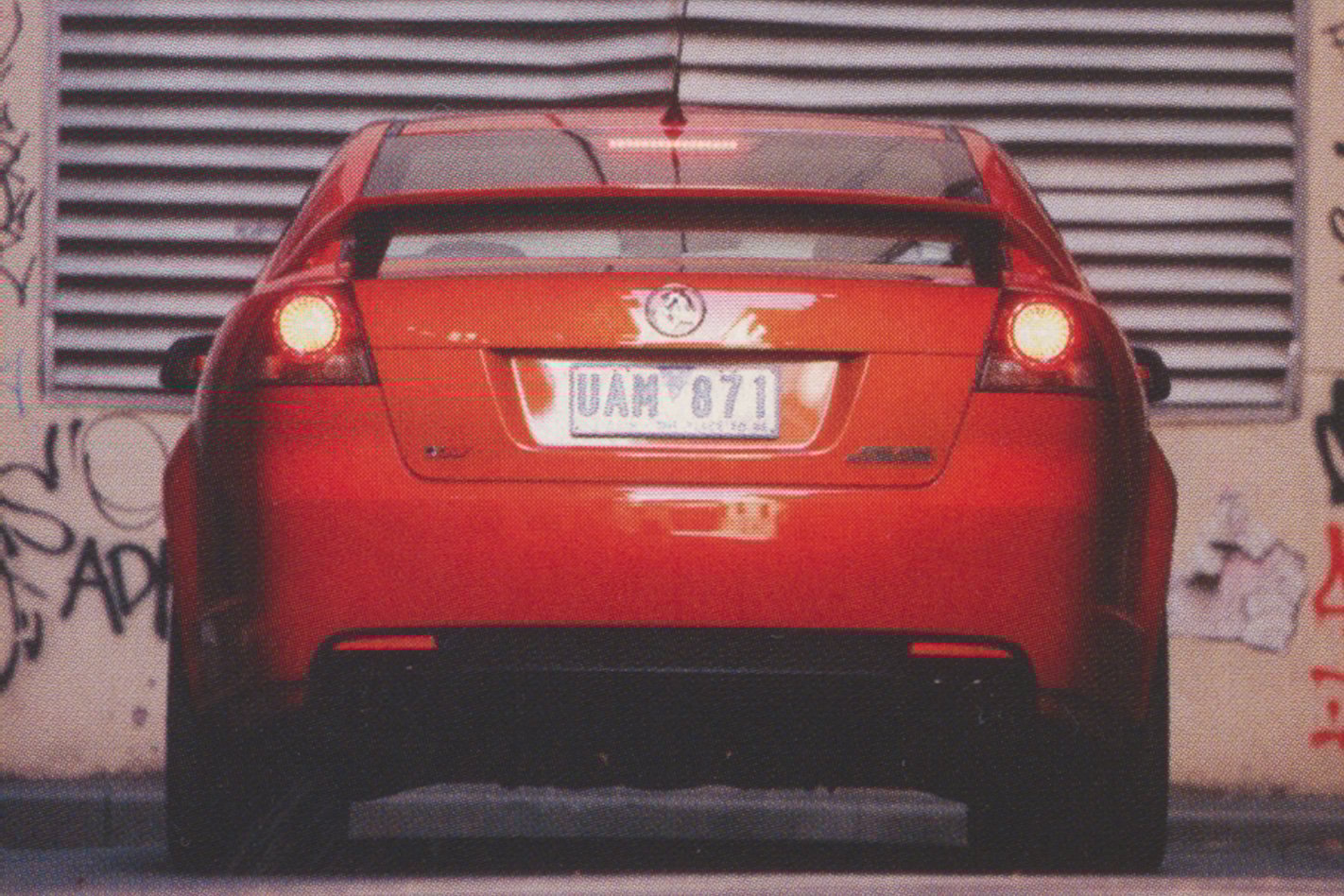
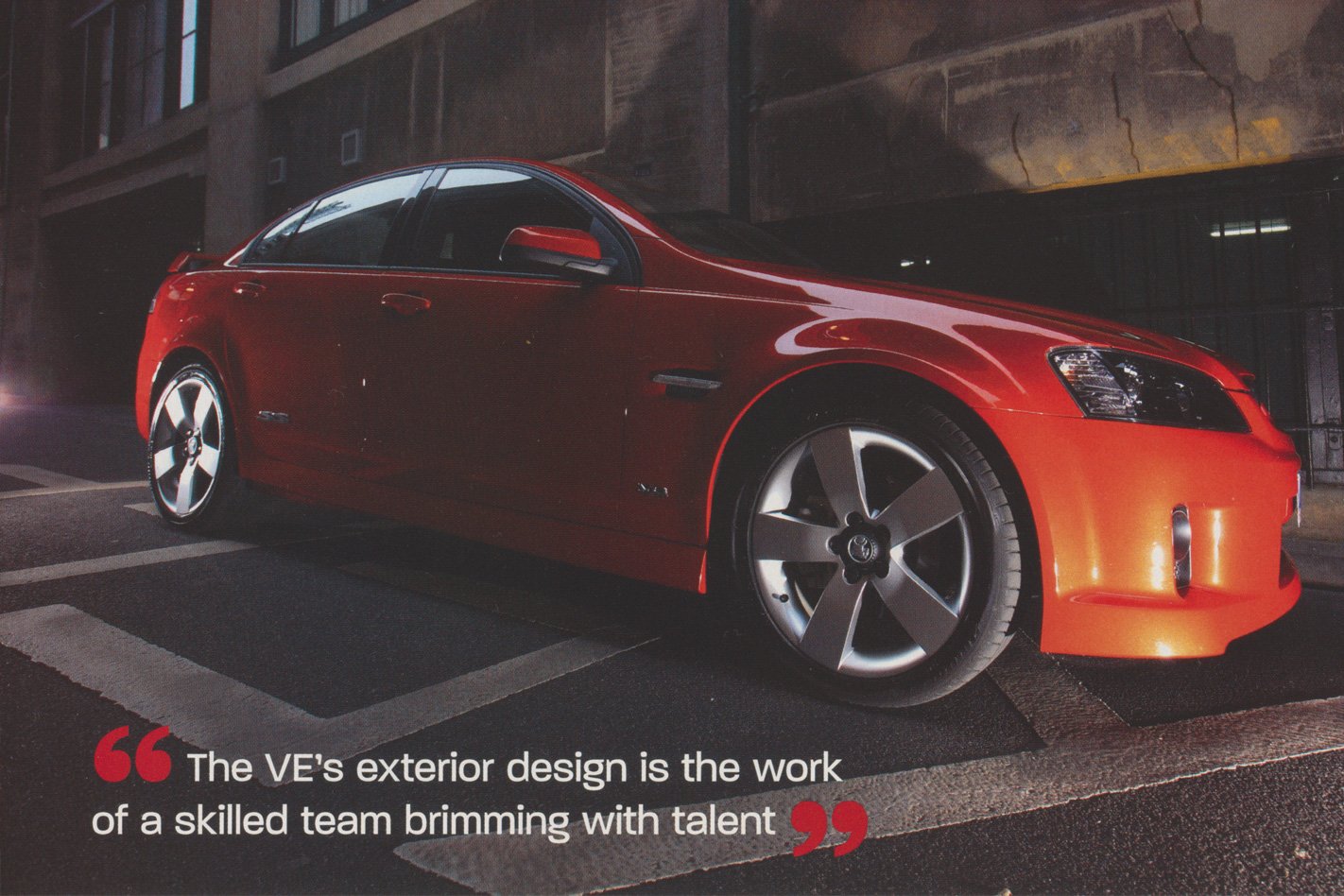
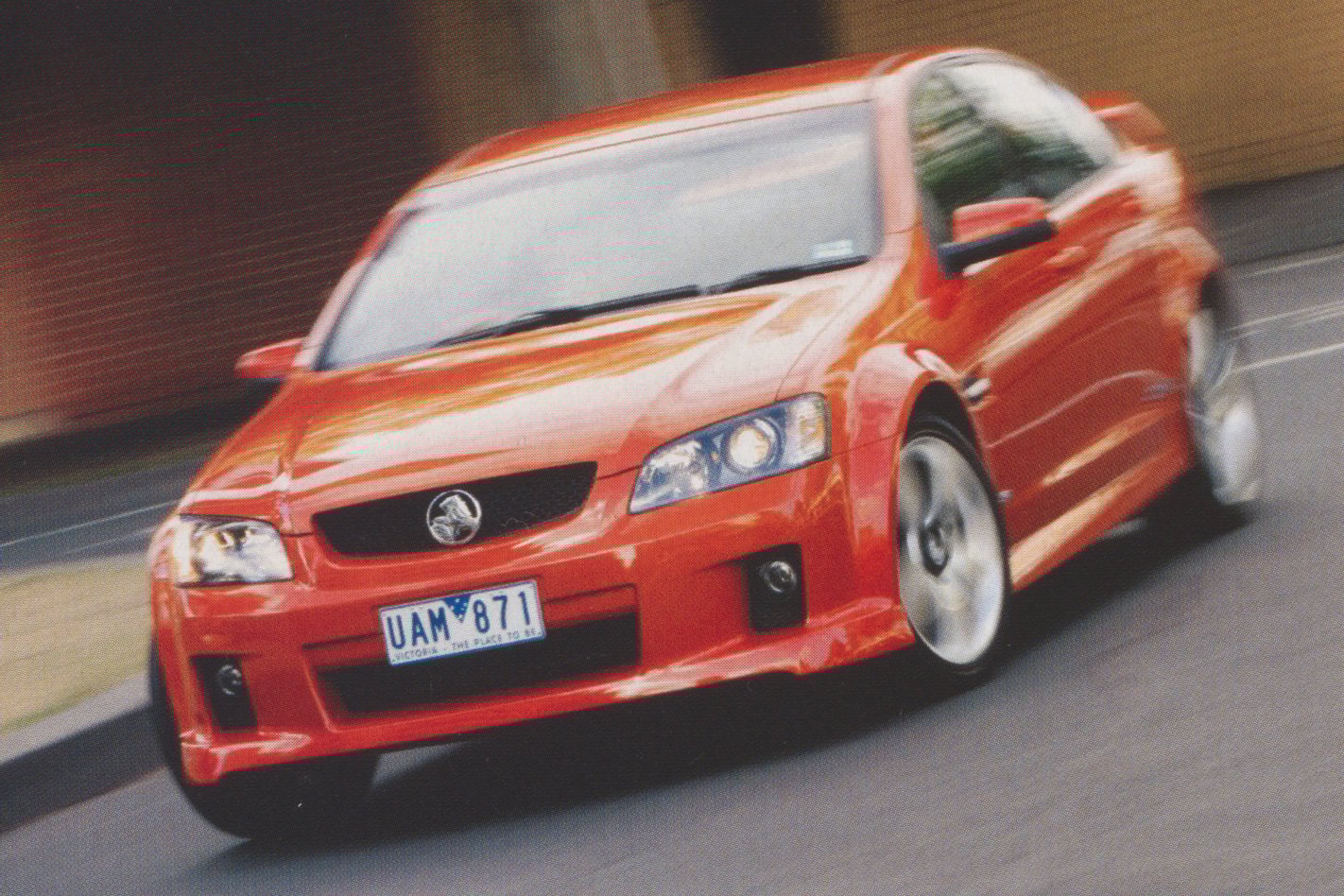
No-one should write off Holden’s design department, either. The VE’s exterior is the work of a skilled team brimming with talent. The car’s proportions are balanced and attractive, its confident stance implying dynamic ability.
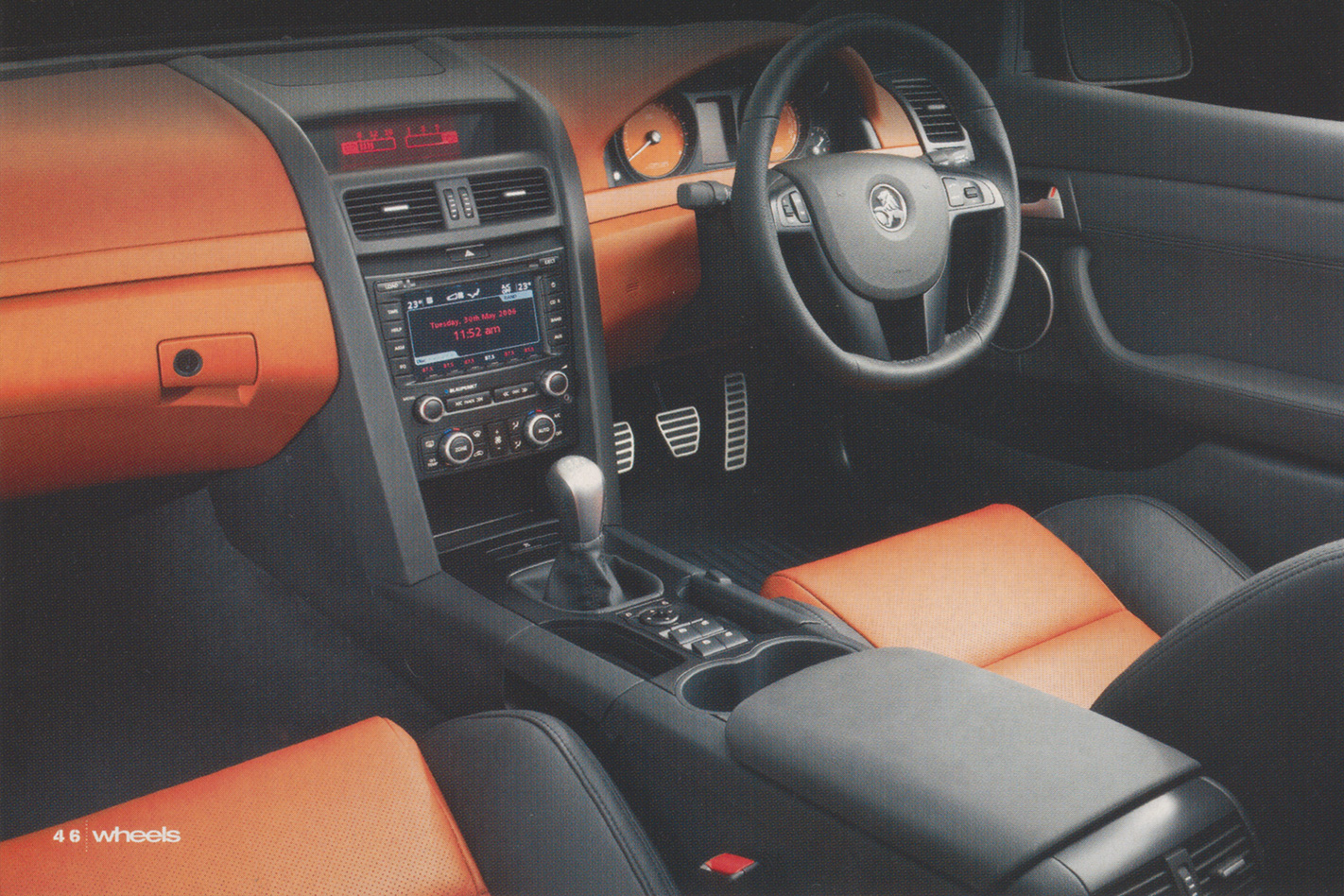
The exterior designers’ next challenge was to ensure that each model’s defining details clearly indicated its status. They succeeded. So, too, did Holden’s interior designers. Inside the car, model differentiation is dauntingly difficult. But with a clever concept that allowed a choice between horizontal and vertical design emphasis, despite a large proportion of shared components, the VE’s instrument panel can express everything from monochromatic austerity (Omega), through colourful exuberance (SS V), to European-inspired luxury (Calais). The top-end models are, rightly, the most impressive. Throughout the range, there are very few lapses in taste. Despite the car including additional features, many of them customisable, it’s obvious that Holden put great effort into making the human/machine interface user-friendly.
With a driving position adjustable to suit most sizes and shapes, VE also provides well for passengers. The rear seat, wide enough for three adults, has a broad, supportive base and well angled backrest.
The Holden’s boot is also damned good, a practical, straight-sided space, and its new parallelogram bootlid hinges don’t intrude at all into the cargo compartment, meaning every cubic centimetre is usable.
Generally, the VE range is competitively priced, and middle and upper models, from SV6 to Calais V, lack little in comparison with their obvious competitors. The base-model Omega, however, faces competitors which may have lower prices, more standard equipment and superior drivetrains, but, in turn, they cannot match the Holden’s strong points. As with every other VE, there’s value in its bodily strength, unrivalled stiffness, accomplished dynamics, excellent suspension and steering, effective electronic driver aids, comfortable spaciousness and attractive design.
These are the same reasons why the VE Commodore – the entire range – is Wheels Car of the Year 2006.
The VE satisfies the award’s criteria admirably, scoring well for function, value, safety and technology, if not efficiency. Just as important, from a customer’s point of view, they’re all cars for those who love the road.
From the lushly absorbent control of the Omega, through the crispness of the Calais and the eagerness of the SS, all the way to the raucous, upstart athleticism of the HSVs, the VE is a range that covers an amazing spectrum. While Holden will undoubtedly treasure the Wheels COTY trophy, it’s GM’s long-overdue recognition of the company’s ability that is more important to its future. We’ll be interested to see how many more awards are won by the other models that will be built by GM brands on Holden’s VE architecture. And there will be more, we’re certain…
If you want a guaranteed conversation starter with a rally fan at the moment, simply ask: “So, do you reckon Ford will return to the WRC?”
This might confuse casual motorsport fans, who have probably seen footage of heavily spoilered Ford Fiestas travelling at high speeds on tarmac, snow and gravel this year, suggesting Ford already competes in the WRC.
This is not the case. The Fiestas are run by UK motorsports firm M-Sport, which has operated the Blue Oval’s world rally program since 1997, but has done so without factory backing since 2012.
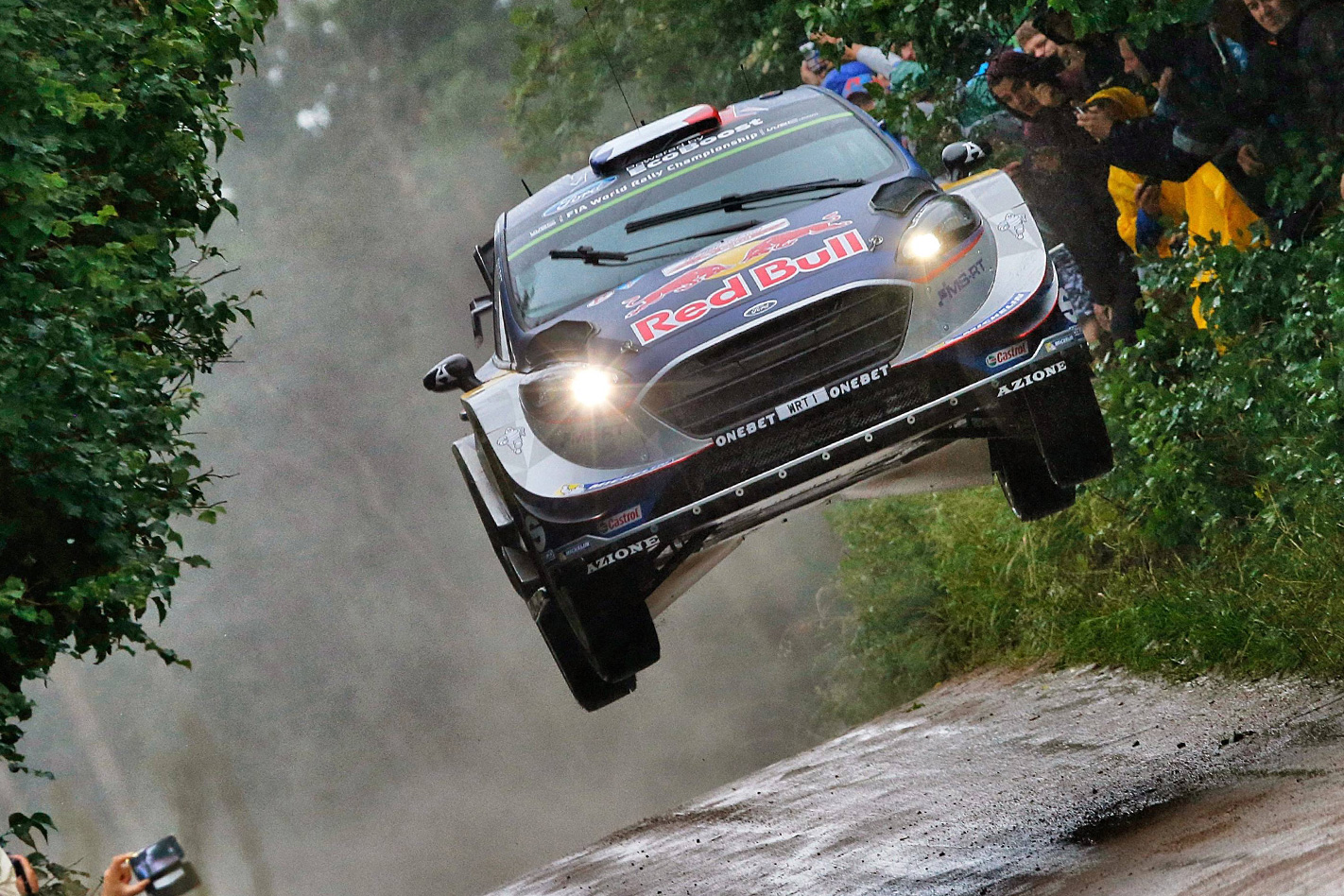
A quick glance at this year’s standings suggests M-Sport is doing just fine; the last few years have been relatively lean in terms of results, however, it currently leads the manufacturers’ championship and occupies the top two spots in the drivers’ championship.
A number of unusual factors have led to this situation. Firstly, M-Sport is exceptionally good at designing and building rally cars. The 2017 WRC technical regulations forced teams to start with a clean sheet of paper and while the Fiesta might not be brilliant on any one surface, it’s very good on all of them as well as being strong and reliable, not something all its rivals can claim.
Secondly, the last-minute withdrawal of Volkswagen at the end of 2016 allowed M-Sport to snare the services of reigning four-time world champion Sebastien Ogier. Ogier is the world’s best rally driver, smart enough to score maximum points if he can’t win outright and eight podiums from 11 rallies (including two wins) means he enjoys a comfortable 37-point championship lead.

Back to our original question: Will Ford return to the WRC? There are two ways of looking at it. The cynical would ask why would Ford spend money going rallying when it’s currently winning for free? On the other hand, M-Sport has proven it can win so a relatively small investment could ensure it continues to do so. Ogier’s already made his ultimatum: Ford comes, or I go.
In search of answers MOTOR reached out to the parties in question. Ford responded with the following: “Ford is providing the bodyshells to M-Sport for the 2017 season, [but] all the engineering/development is being carried out exclusively by M-Sport for the programme. We continue to evaluate where we invest resources in different motorsports disciplines.”

Come the end of the year, the work will not stop, and we’ll review our options moving forward. We’re pushing on every front to be in a position to build on the great work so far.”
Not particularly helpful on either count. So what do we know? Ford already heavily invests in motorsport through its World Endurance Championship and NASCAR programs, therefore any extra expenditure seems unlikely, especially when CEO Jim Hackett last week announced US$14billion in cost cuts.
On the other hand, MOTOR understands that motorsport programs are safeguarded from any cuts and Ford also announced it was ending its World Rallycross involvement, potentially freeing up budget for a WRC program.

Perhaps that visit wasn’t the red herring the lack of subsequent action led most to believe it was. Furthermore, Ogier said he wanted his future decided by the end of September, yet it’s now well into October with no announcement – why the delay?
The truth is, at this point, we just don’t know, but we’ll keep digging. Personally, as much as I’d love to see M-Sport secure Ford backing and retain Ogier, it seems unlikely. My money would be on Ogier returning to Citroen and M-Sport fielding Elfyn Evans, Teemu Suninen and whoever wants to help pay the bills in 2018. Stay tuned.
WHILE the HSV was airstrip hero, the FPV F6 was, to all intents and purposes, just as eye-bleedingly rapid.
This Performance Car Of The Year article was first published in MOTOR Magazine November 2008.
It missed out on matching the GTS’ 400m time by just a single tenth (13.5) and it was just two tenths off the HSV’s 0-100km/h time. The reason for that is simple, and it wasn’t a lack of grunt. Nope, the F6 lost time in those crucial first few metres because it was wheel-spinning all the way through first second gears.
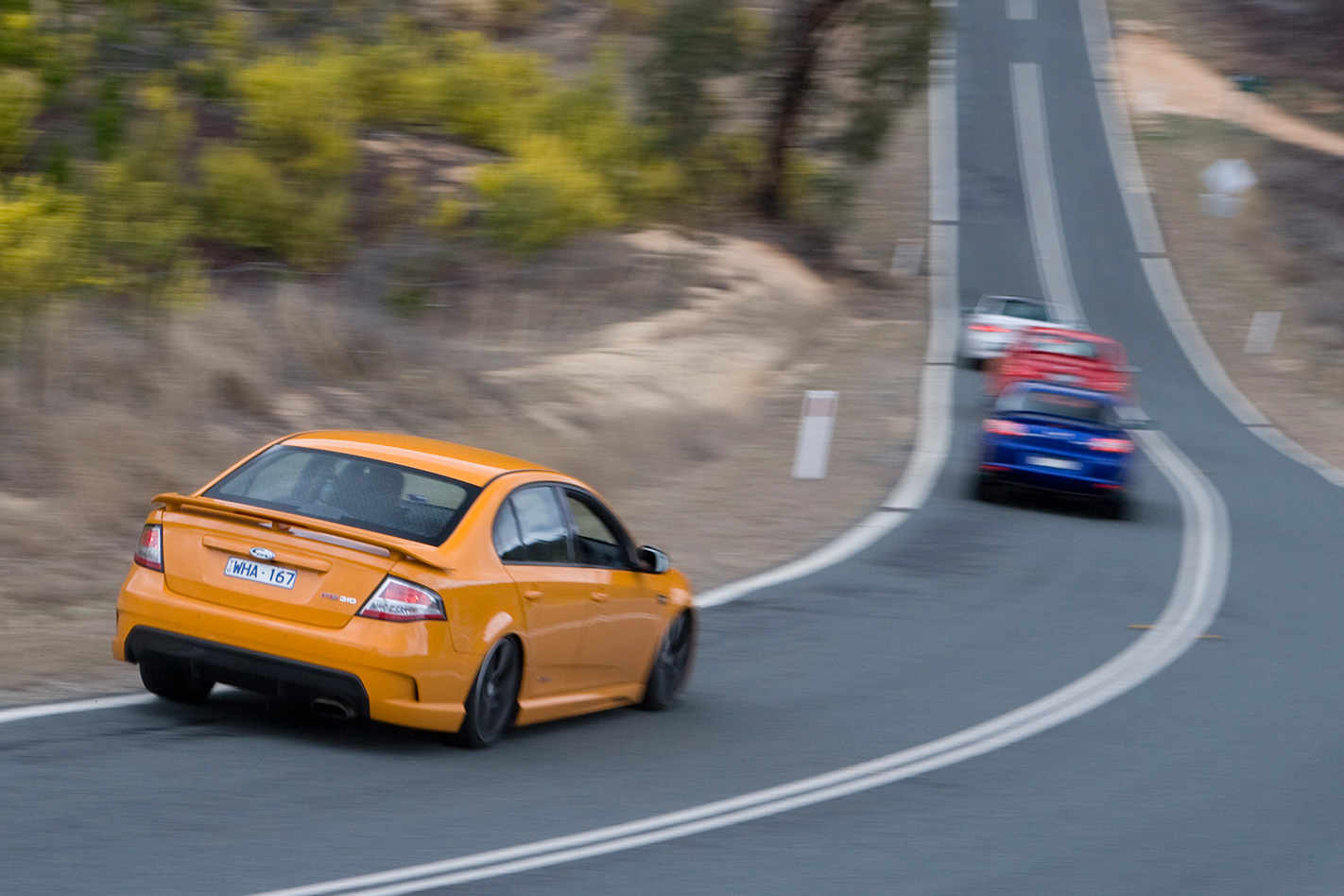
On the racetrack, the Ford opened up a small gap, lapping 1:09.9 (two tenths faster) than the HSV mainly because it was just that little bit sharper where it mattered. The front end has a more eager turn-in and the whole shebang seems to stay flatter on the track.
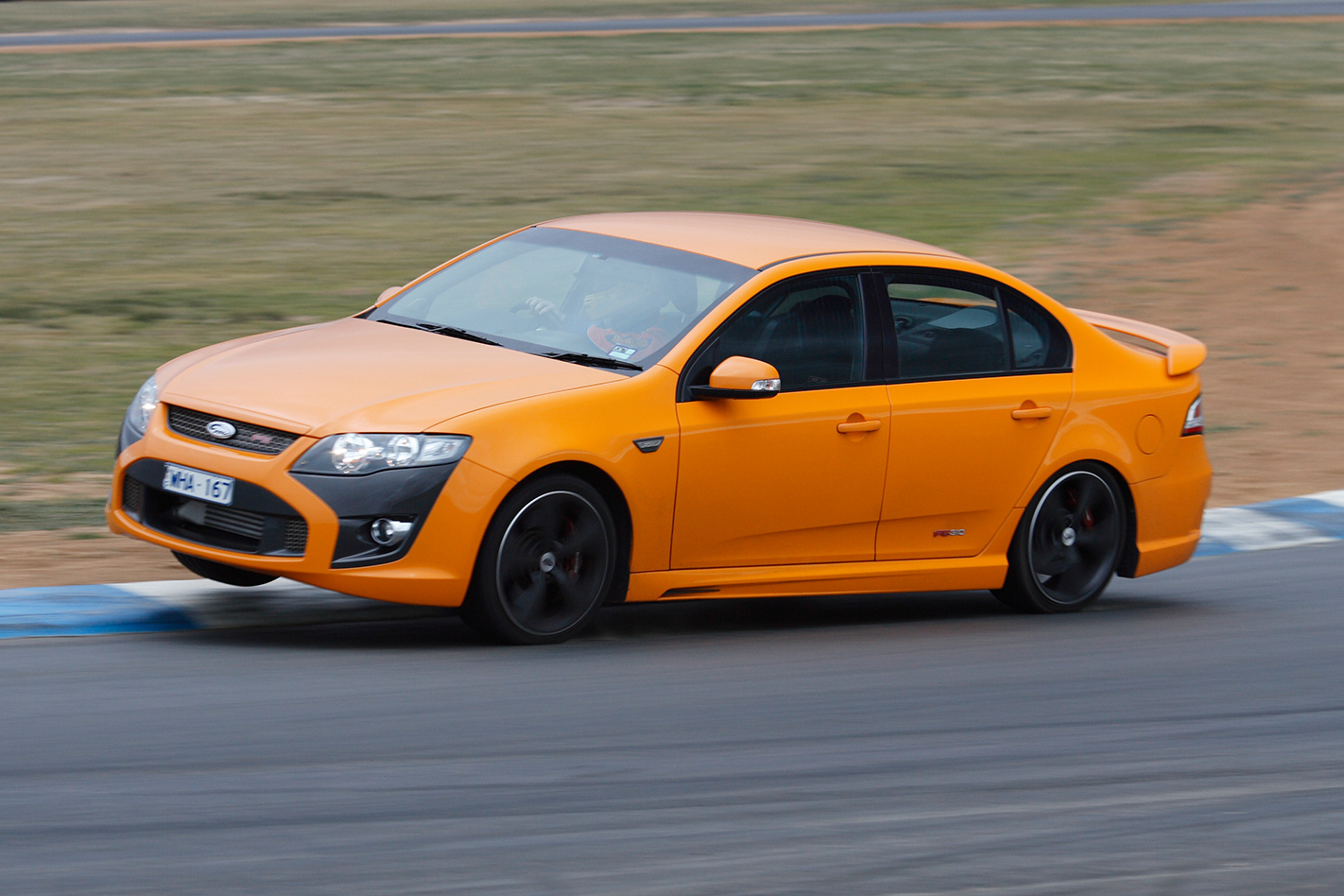
Pumping the four-litre six up to 310kW has certainly given the thing bigger lungs, but it’s also made the power delivery a little more laggy and a fraction more rushy when it does arrive. So, if it all comes on boost when you’re not expecting it to, you can find yourself with a real handful.
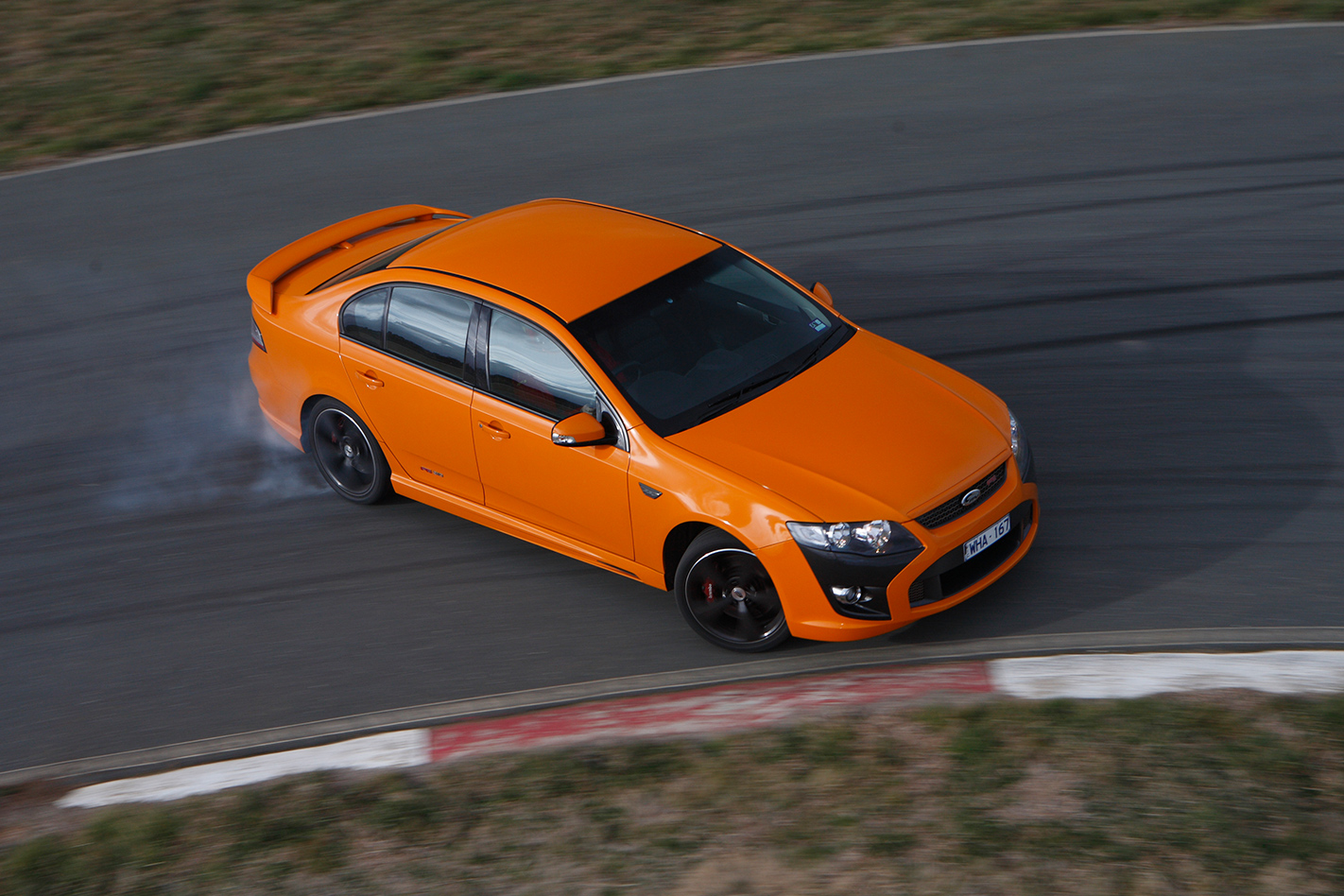
While atmo cars tend to build up to things, the F6 is all hot breath on the back of your neck and a mighty boot to the freckle region. And it happens fast. Those who love turbo-motors will absolutely lerv the F6. The rest is ace, too; big interior space, better-than-average on-road ride, good noise levels and five-star safety.
There’s a decent stereo, too, but we’re betting you’ll be listening to that afterburner soundtrack from the exhaust before Billy Joel gets a look-in. And. bless my soul, the F6 is a tenner under $67,000. Mercy me.
IT could have been very different. Had an ironic twist of fate not intervened, the Torana A9X wouldn’t have been Holden’s last official homologation special.
A Super Commodore version of the original VB model was not only proposed, but a prototype was actually built. The idea was to go head-to-head with Ford’s 351 cubic inch V8-powered XD Falcon on the racetrack and the road with a Chevrolet 350 V8-propelled high-performance Commodore.
The factory-fit small-block Chevy would have been accompanied by A9X-style flared fender extensions, front and rear spoilers, and bonnet scoop penned by legendary Holden designer Leo Pruneau. Of course, a VB Commodore with the 5.7-litre Chev V8 never happened.
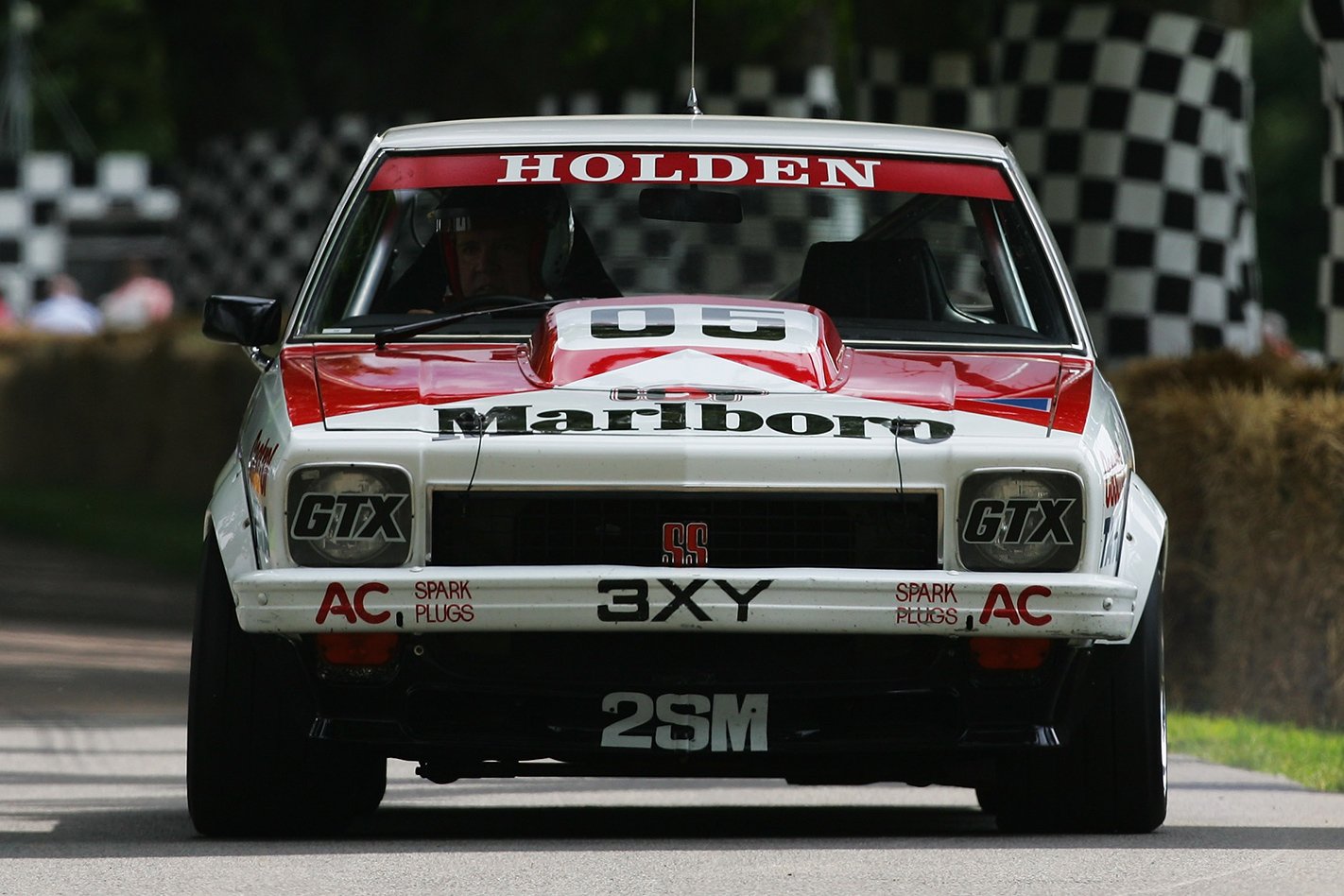
It was Holden’s decision to officially end its unofficial involvement in racing in late ’79 that put paid to the plan for a limited run of Commodore 350s to enhance the Lion’s prospects at Bathurst and beyond. The project got as far as an unofficial running prototype road car. Had it made it to production, the proposed Super Commodore would have been the last Holden-made homologation special.
It could have been the first Commodore SS or, more likely, would have become known by its special production option code, just like XU-1, L34 and A9X. One was never allocated, so let’s call it the Commodore B57 – B is for Bathurst and 57 is for 5.7 litres. It’s perhaps a fine distinction, but later race-bred Commodores weren’t strictly factory homologation specials.
There was plenty of Holden help and funding behind the scenes, but they were developed and produced by HDT Special Vehicles and then Holden Special Vehicles, as opposed to special builds from the main plant. The last Commodore built as the basis for the racing version was the HSV-concocted VN SS Group A in 1989.
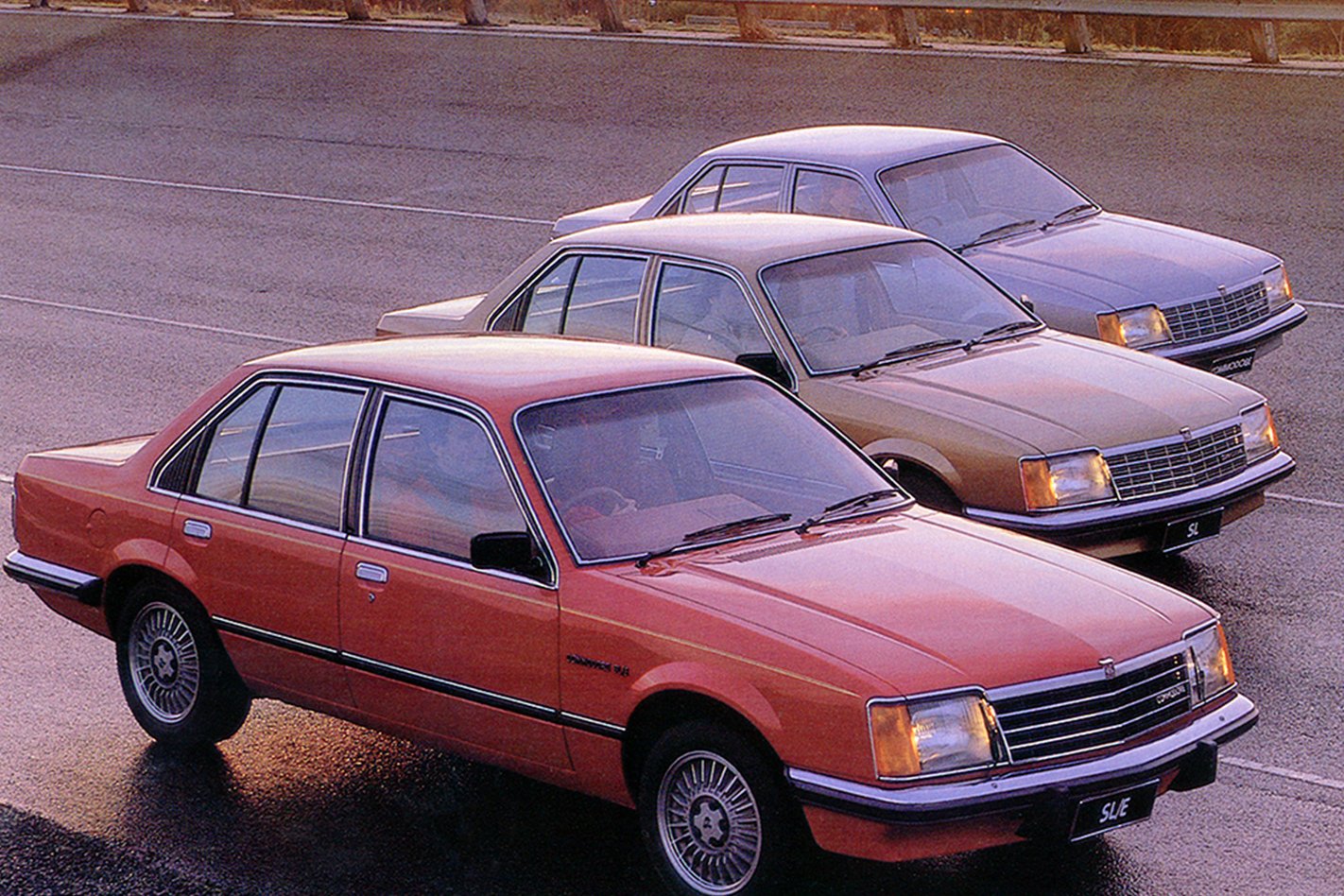
Despite uncertainty about a change of rules, his wish list included replacing the 5.0-litre Holden V8 with the 5.7-litre imported Chevy. His rational was that if the XD Falcon could race with a 351, why couldn’t the VB move up to GM’s equivalent? Sheppard’s idea for the ‘B57’ was met with scepticism by Holden engineers, who said the conversion would be too difficult.
Not to be deterred, he fitted a 350 to a VB test hack and then presented it as a running car. As many Commodore modifiers have found, the 350 dropped straight in, with only the starter motor needing to be relocated. Having proved it was practical, Sheppo recalls that the possibility of producing ‘B57’ as a Bathurst special became serious enough for Pruneau to sketch some styling concepts.
Then the whole landscape changed. In late ’79, following a directive from Detroit, Holden declared that it was withdrawing from racing. Which was interesting in itself because for more than a decade, the Lion had been hiding the factory team behind the Holden Dealer Team facade.
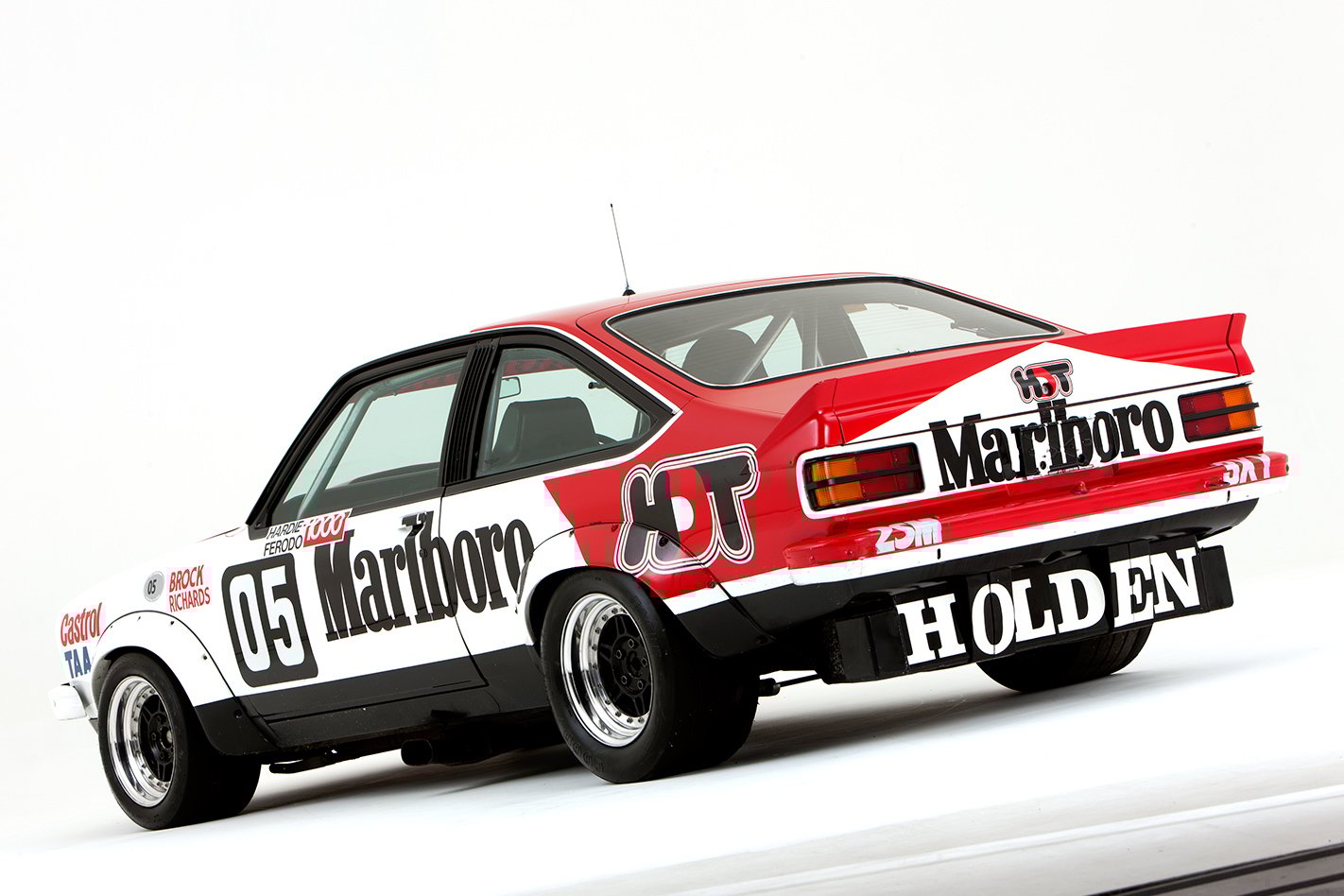
A pilot-build VB ‘mule’ with competition A9X mechanicals and hacked-away wheel openings to accommodate wider racing rubber, plus apolycarbonate front air dam, was track tested and proved promising. The specification was frozen as Holden prepared to offload the team.
HDT was sold to Brock in a deal underwritten by a band of influential Holden dealers, who backed him in return for exclusive access to enhanced signature-edition Commodore V8s. Thus was born HDT Special Vehicles. As it happened, the A9X-derived 5.0-litre Holden V8 was still good enough for the Commodore to be competitive against Dick Johnson’s 5.8-litre XD.
The new-look Marlboro HDT completed development of the VB racer in time to dominate the 1980 Australian touring car championship with Brock. In updated VC guise, wins at Sandown and Bathurst completed his second ‘Triple Crown’.
What stands out?
The Jaguar F-Pace is the first SUV ever made by the British brand and is now its fastest selling vehicle. It maintains Jaguar values by being good to drive, stylish to look at, and fit for purpose.It is a worthy competitor to other sporty, premium SUVs such as the Audi Q5 and Porsche Macan.
What might bug me?
Optional extras are numerous and can be quite expensive. In entry-level form the basic F-Pace doesn’t feel as premium as you might expect, with more exposed hard plastics and cheap materials than the higher model grades.Road noise from the tyres can be an issue inside the cabin on certain road surfaces.
What body styles are there?
Five-door SUV only.The F-Pace is classed as a medium car.
What features do all versions have?
Cruise control, stability control and traction control.Push button engine start/stop, plus front and rear parking assist and a rear view camera.An electric tailgate, which raises or lowers at the touch of a button, and electric front seats with adjustable lumbar support.Rain sensing wipers and automatic headlights, which illuminate in low light. Fog lights and LED tail lights are also standard on all F-Pace models.Driver aids present in every F-Pace include Hill Launch Assist to stop the car rolling back when setting off on an uphill incline, Trailer Stability Assist to prevent a trailer sway when towing, All Surface Progress Control for driving on loose terrain, and torque vectoring, which can adjust the amount of drive being sent to the wheels and prevent or control a slide.
Which engine uses least fuel, and why wouldn’t I choose it?
Engine choices include two diesel and two petrol options. One of the diesels comes in two versions for different levels of performance.The 132kW/430Nm 2.0-litre turbo-diesel four-cylinder engine (20d) uses the least fuel. In September 2017 a more powerful twin turbocharged version of this engine introduced which produces 177kW/500Nm and promises more performance at high engine speeds without compromising responses at low revs.They are joined by a 221kW/700Nm 3.0-litre turbo-diesel V6 (30d and S). The V6 sounds better than the four-cylinder and offers greater pulling power for anybody looking to carry or tow lots of cargo. It is also the most effortless engine for touring on the open road.A new economical 184kW 2.0-litre petrol engine (25t) was also added for the 2018 model year.The other petrol engine is a 3.0-litre supercharged V6 that produces either 250kW/450Nm in Prestige, Portfolio or R-Sport models, or 280kW/460Nm in the S model. This is the engine to choose if outright performance is the most important to you, as it provides the driving experience most similar to other Jaguar sportscars.(Power outputs and all other Jaguar F-Pace specifications are available from the Cars Covered menu, under the main image on this page.)
What key features do I get if I spend more?
The F-Pace range is includes four core model variants called Prestige, Portfolio, R-Sport and S. There was also a top of the range version called First Edition available for the initial 12 months of sale.Higher model grades feature Jaguar’s premium infotainment system called InControl Touch Pro, which adds a fully customisable digital display where the speedometer and tachometer gauges are in other F-Pace variants.The Portfolio derivatives feature enhanced front seats with powered headrest height adjustment and manually adjustable winged headrests.An optional ‘Activity Key’ is available at extra cost. It is a wearable, waterproof wristband that allows F-Pace owners to lock their normal key inside the car while they visit the beach or another outdoor pastime.
Does any upgrade have a down side?
How comfortable is it?
Ride quality in the F-Pace is good. It is firmly damped yet comfortable, blending its sports car underpinnings with open road practicality.Front seats are supportive, generously sized and trimmed in premium materials. Rear seat space is large enough to seat adults for long journeys, with plenty of headroom and decent clearance around knees and legs.
What about safety?
Autonomous emergency braking (AEB), forward collision warning, lane departure warning, stability control and traction control are included in every F-Pace model.Forward Vehicle Guidance, which uses the surround camera system to provide a low down view to assist when parking or manoeuvring near obstacles, was introduced in September 2017.Every Jaguar F-Pace features front airbags for driver and passenger, front side airbags to protect occupant’s bodies, and full length side window curtain airbags to protect occupant’s heads.ISOFIX fittings for child seats in the second row are standard on all models.A tyre pressure monitoring system is also standard across the F-Pace range.
I like driving – will I enjoy this car?
Even though the F-Pace is an SUV, it drives a lot like Jaguar’s more conventional sports cars. It has an inherent dynamic ability that makes it very satisfying and easy to drive quickly even on challenging roads.Steering in the F-Pace is especially noteworthy. It is well-weighted and accurate, and conveys the car’s confident cornering prowess.Engine performance is strong from the diesel and petrol V6 engines. Acceleration is rapid even though the F-Pace is heavy at around 1800kg depending on the model.The addition from September 2017 of a more powerful Ingenium diesel and a smaller, more economical petrol engine for the 2018 model year gives you more options. This article will be amended after reviewers have gained some experience with the new engines.
How is life in the rear seats?
How is it for carrying stuff?
The F-Pace has a cleverly designed 508 litre cargo area. It easily accommodates suitcases and large luggage for trips away.Split fold rear backrests allow taller items to be transported at the expense of passenger spaces in the second row.In other markets F-Pace is sold with a 650 litre boot, however all Australian-delivered models have a full size spare wheel under the boot floor, which reduces outright space but increases practicality for anybody taking their F-Pace journeys where a space saver spare tyre or inflation kit would be unsuitable.
Where is it made?
The F-Pace is built in the United Kingdom, at Jaguar’s factory in Soulhill.
What might I miss that similar cars have?
Jaguar F-Pace does a good job of being sportier than most SUVs, but it does fall a little bit short of the outright comfort some luxury-focussed SUVs manage.It is also not quite as sharp dynamically or as powerful as the excellent Porsche Macan Turbo, which has 294kW and 550Nm.
I like this car, but I can’t choose which version. Can you help?
Are there plans to update this model soon?
The F-Pace was first introduced in 2016 and received a minor update in September 2017, with the most notable change being the introduction of two new engines to the range.No significant updates are expected before 2019
When ‘Quiet Mode’ on the 2018 Ford Mustang GT is still louder than most cars could ever be, you know you’re in for a good time.
The best video examples of each exhaust mode we’ve seen so far come from YouTube user Eric Max, who recorded each exhaust mode from behind the car at what looks to be a Mustang meet.
We get a glimpse of the new Pony’s front end as it rolls up, but that’s nothing new since we’ve seen footage both official and otherwise from the US. But those videos didn’t completely showcase the carious sounds of the four exhaust modes the new Mustang will feature.
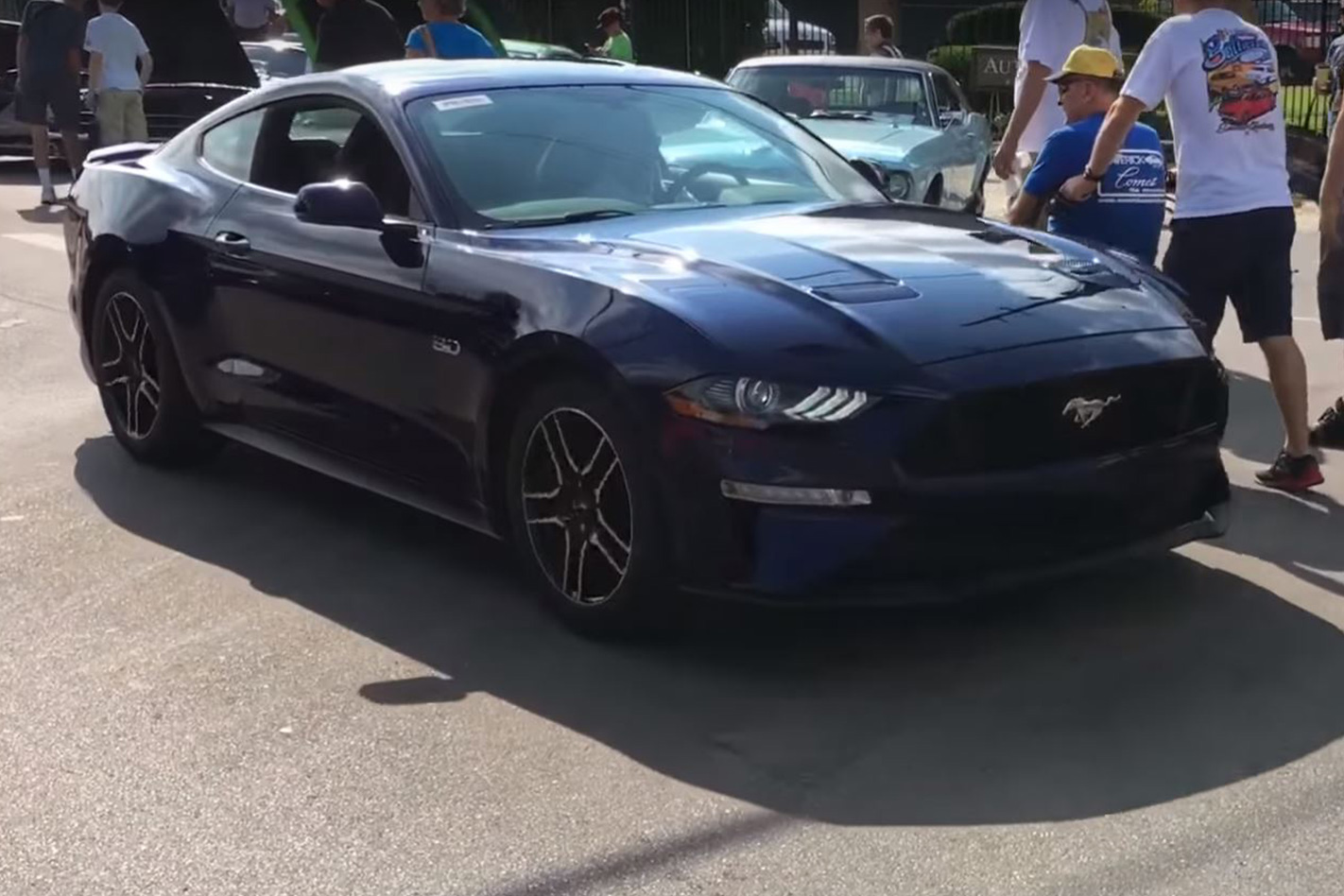
Track Mode, which is labelled in the video as “Loud Mode”, sounds like it’s going to result in amny smiles here in Oz, and especially amongst us here in the MOTOR office. The last two modes, Normal and Sport are pretty self-explanatory.
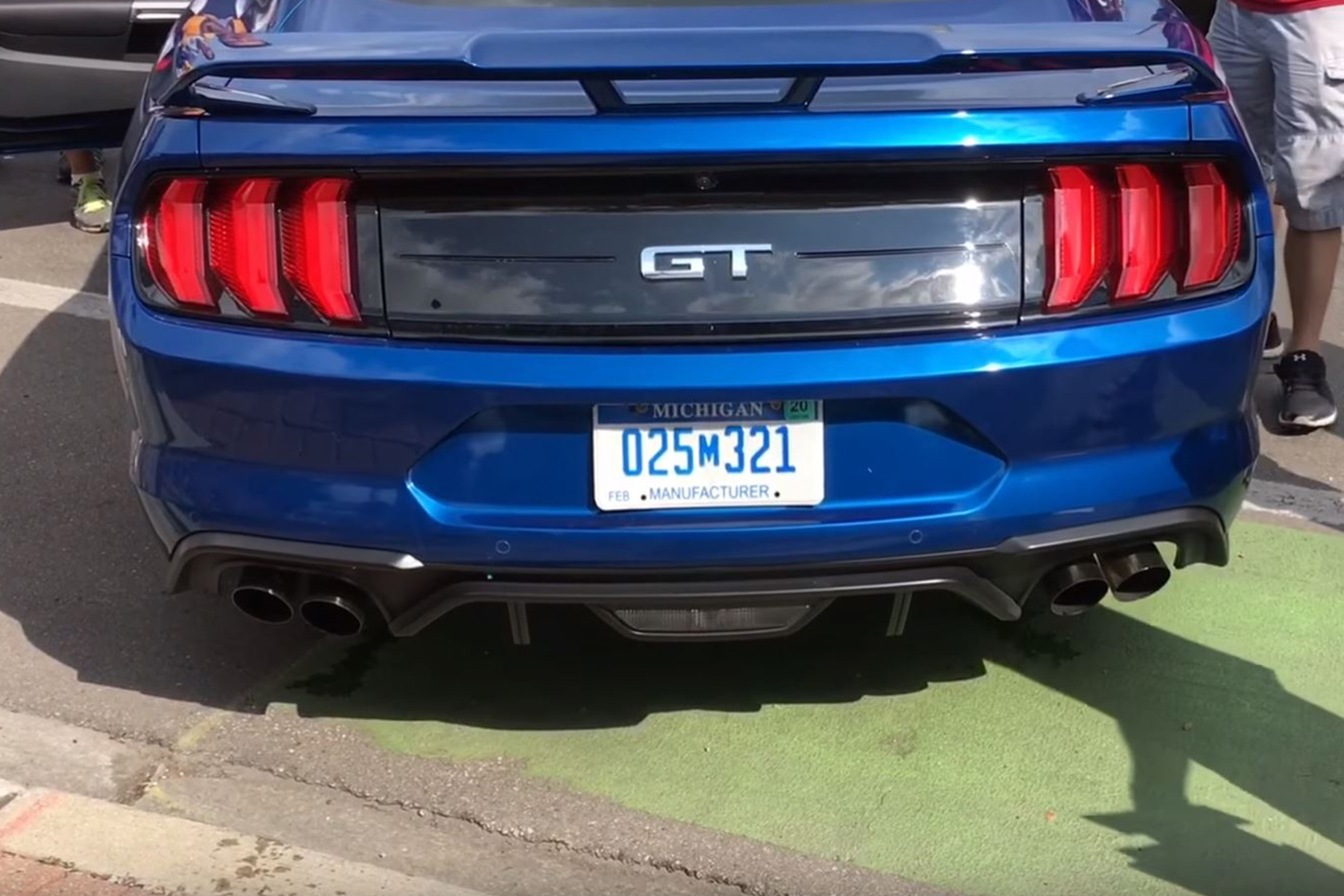
Oh, and stick around towards the end of the video to get a look at the new digital dash.
TELL ME ABOUT THIS CAR
The Mazda BT-50 shares much of its DNA with the big-selling Ford Ranger including the gutsy 3.2-litre five-cylinder diesel turbo engine.
The XTR dual cab sits between the XT and range-topping GT and has a well-equipped interior making it comfortable for both private and workhorse duties.
Highly capable off road, the BT-50 XTR Dual Cab Pickup with six-speed automatic that we tested retails for $51,700 though at the time this review was published it was offered for $49,990 drive-away.
STRENGTHS
- The BT-50 is highly practical and with the auto transmission has 3500kg maximum towing capacity, 1082kg payload and a 1549mm x 1560mm cargo floor area.
- Handling is surprisingly agile, with reasonably direct and well weighted hydraulic steering, and while you feel every bump through the leaf-spring suspension – especially with an empty tray – it’s not uncomfortable.
- The 3.2-litre five-cylinder intercooled turbo diesel gives it plenty of grunt – the 6-speed automatic version takes off surprisingly well from a standing start despite a little turbo lag.
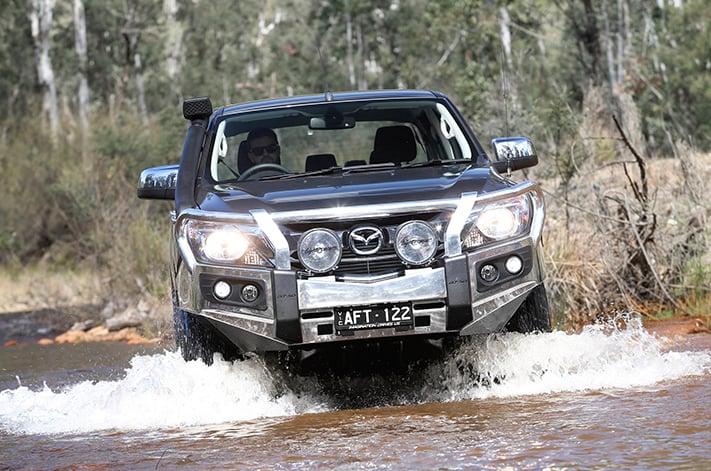
- It’s a highly capable off-road performer, helped by the 232mm empty ground clearance, 800mm wading depth and 28.2 degree approach angle. Off-road handling is assisted by the chunky stock tyres on 17-inch rims, low range 4WD and hill descent control.
- It’s highly underrated. In our dual cab ute comparison held last year, the BT-50 XTR scored equal second with Ford Ranger XLT and was best off road.
- It comes with trailer sway control to help steady things should the trailer or caravan you’re towing become unstable.
- The interior finish manages to combine work-ute ruggedness and SUV refinement. It has hard wearing floor carpet, and dual-zone air-conditioning and durable cloth seats that feel comfortable and offer good back support.
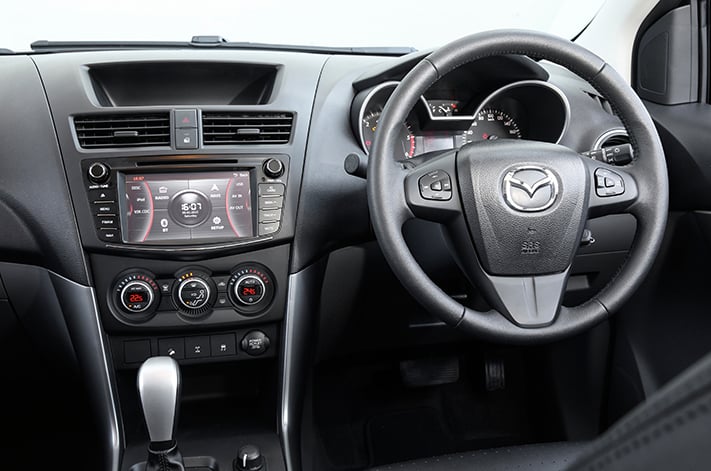
- The rear seats are comfortable and roomy with plenty of room for two adults or three children. A 12v socket is available to rear seat passengers to charge their mobile devices.
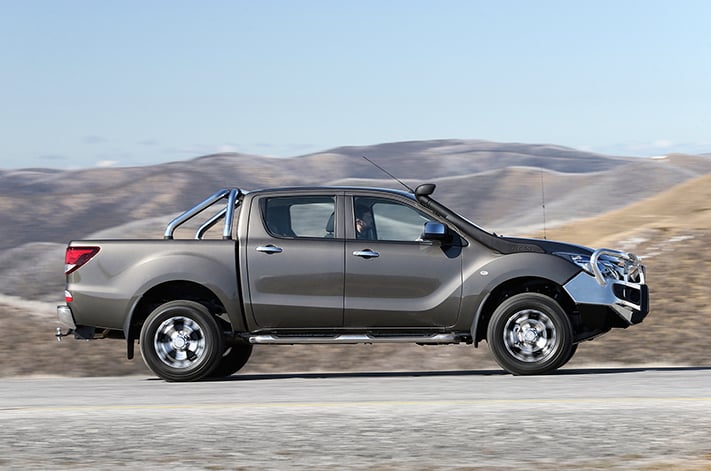
- Equipment levels won’t leave you wanting for much and include cruise control, rain sensing windscreen wipers, dusk sensing headlamps, fog lamps, chrome rear and side steps, 17-inch alloy wheels, 8.0-inch touchscreen with satellite navigation, digital radio and reversing camera. (Pictured bulbar is a factory option)
- While it feels like a very big vehicle it’s 1850mm width is actually 40mm less than a Holden Commodore so parking isn’t a problem – though it might poke out a bit length wise especially with a tow bar.
WEAKNESSES
- While it shares much with the Ranger, the BT-50 didn’t adopt Ford’s subsequent refinements to aesthetics, road handling and performance.
- Infotainment system looks a little dated and using the touchscreen can be difficult on bumpier roads in a vehicle like this. The MZD Connect infotainment system with rotary control knob found in Mazda passenger cars and SUVs would be a great addition.
- The Blutooth syncing is slow even with phones that have already been paired.
There is no shortage of dual-cab rivals, not least the similarly equipped Ford Ranger XLT plus the Toyota HiLux SR5, Mitsubishi Triton GLS, Nissan Navara ST, Isuzu D-Max LS-U and Holden Colorado LTZ.
TELL ME ABOUT THIS CAR The Alfa Romeo Giulia is a mid-size luxury sedan made in Italy and aimed at the established German stronghold of luxury executive cars from BMW, Audi and Mercedes-Benz.
A range of four model variants in Australia starts with the simply named Giulia, at a retail price of $58,895. It is powered by a 2.0-litre turbocharged four-cylinder engine producing 147kW and 330Nm.
STRENGTHS
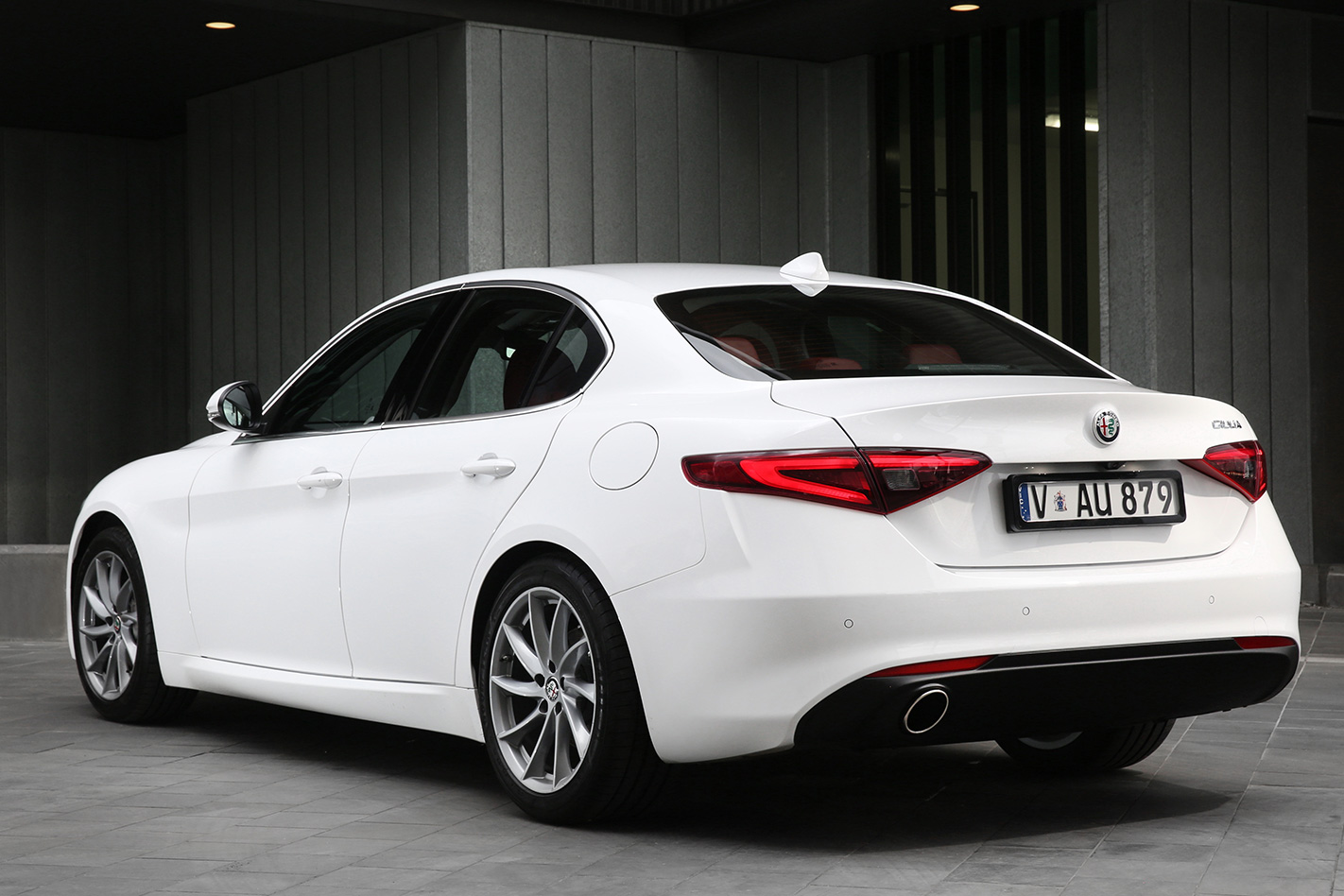
- Design – Slightly wider and longer than the BMW 3 Series, and with a lower roofline, Giulia’s Italian curves are beautiful to look at. What’s more, the plain Giulia model on handsome smaller diameter wheels doesn’t look underdone from the outside as some base models tend to do.
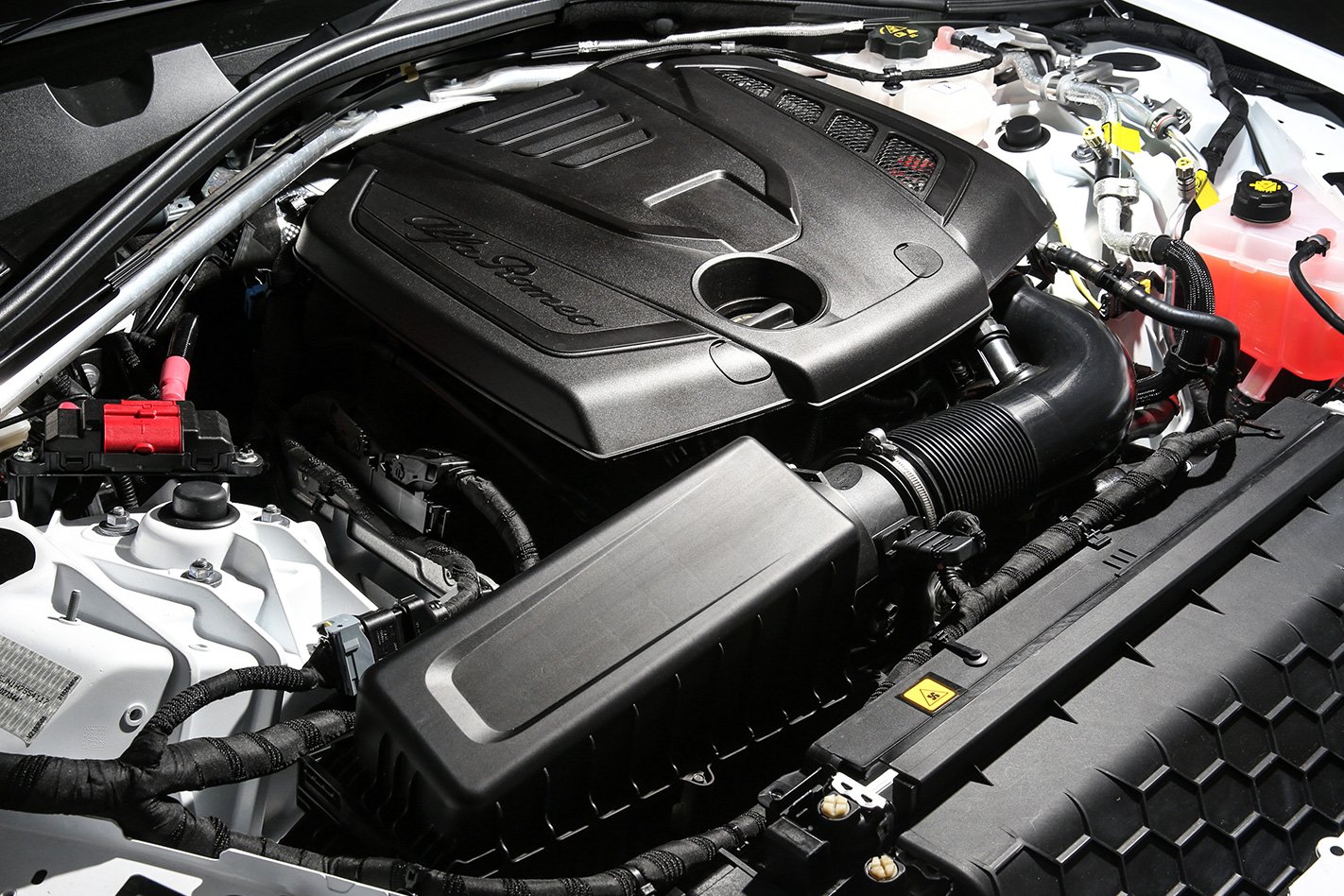
- Drivetrain – Engine performance from the 2.0-litre turbo isn’t firecracker strong (like the M3-rivalling Giulia QV), but it does a refined job of moving it along while maintaining admirable economy of a claimed 6.0L/100km. It pairs well with a smooth, eight-speed automatic gearbox.
- Ride – Giulia’s excellent ride comfort highlights the sophisticated engineering in this platform. It soaks up road imperfections naturally, which gives the car a premium feel.
- Dynamics – Once the Giulia’s fast and reactive steering has been adjusted to, its balanced rear-drive dynamics make it enjoyable to drive quickly. It has strong grip front and rear and holds together cohesively when driven hard on tight sections of road.
- Practicality – When compared to Alfas of old, the Giulia should be applauded for its thoughtful ergonomics and usefulness. Rear leg- and head-room is acceptable for adults and it has a competitively sized boot.
- Equipment – Standard features include leather trim, cruise control, rear parking sensors, a reversing camera, bi-xenon headlights, keyless start, stop/start, satellite navigation, dual-zone climate control and rain-sensing wipers. Standard active safety comprises forward collision warning, autonomous emergency braking, pedestrian recognition and lane-departure warning systems.
- Seats – In entry-level guise the Giulia’s front seats aren’t as comfortable or as supportive as is desirable in a premium sedan. In particular the seat bases are a little too firm and flat for long distance comfort. Optional Sports seats available at additional cost in higher grade models are better.
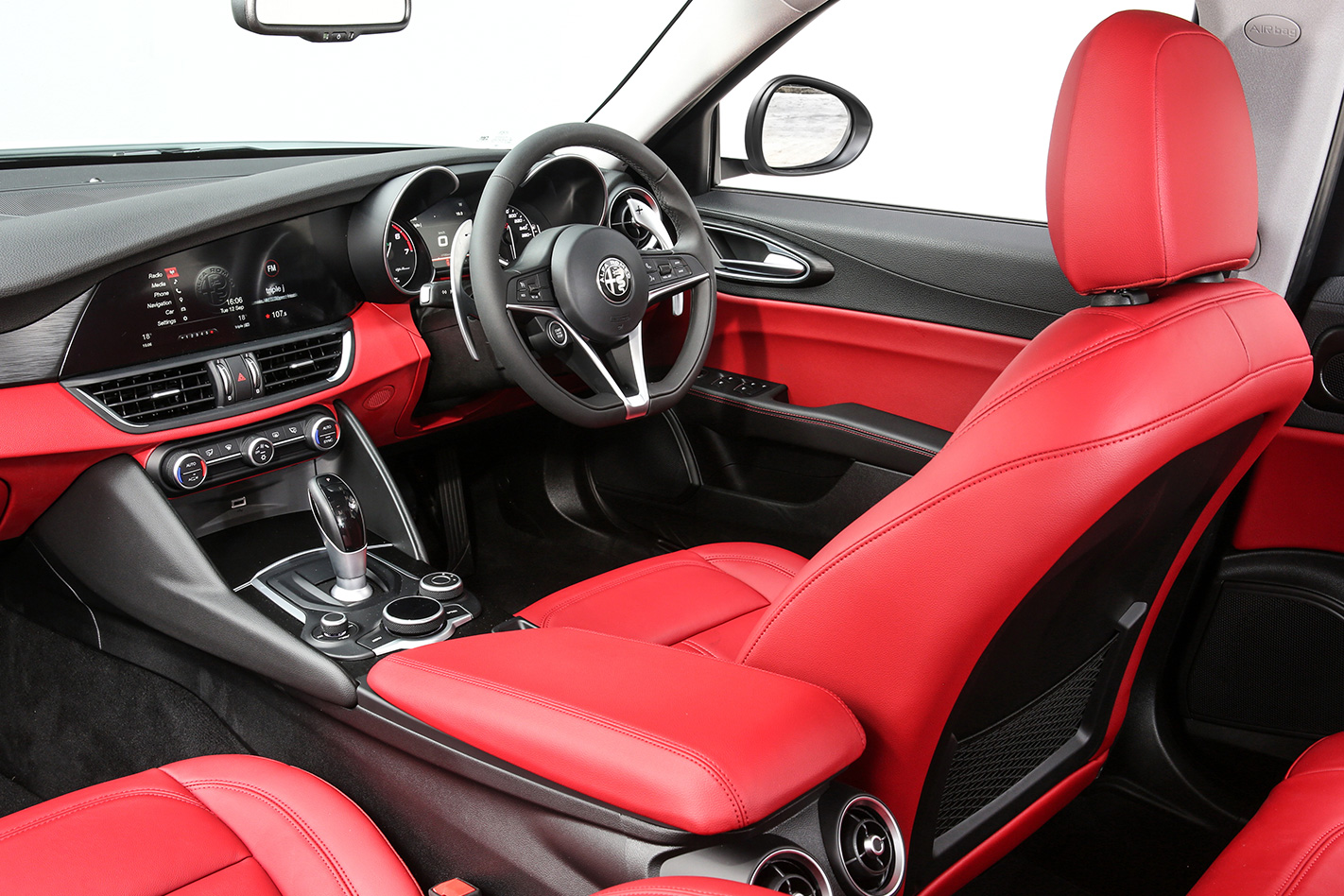
- Brakes – Alfa Romeo has employed a ‘brake-by-wire’ system for all Giulia models, which means the brake pedal is connected to the calipers by a computer. In practice this gives the pedal a slightly spongey feel that makes it difficult to modulate smoothly at low speeds. Like the sharp steering, it can be adjusted to over time, but unlike the steering this is a point of difference it could do without.
- Finishes – Though well designed, the base model Giulia’s cabin features lots of monochromatic black on black surfaces that don’t look or feel as nice as those in more expensive versions of the model. The most affordable Giulia lacks some of the upmarket touches of its equivalent rivals.
ANY RIVALS I SHOULD CONSIDER
Alfa Romeo Giulia is up against a broad range of accomplished mid-sizers including the BMW 320i ($63,400), Mercedes-Benz C200 ($61,400), Audi A4 2.0 TFSI ($60,900), Jaguar XE 20t Prestige ($60,400) and Lexus IS200t Luxury ($59,340). The Alfa Romeo is a worthy competitor and deserves a look if you are in the market.
A NEW survey by Roy Morgan has found Mazda owners to be the most satisfied in the country, just a week after Hyundai and Kia topped a similar poll from J.D. Power.
The Roy Morgan Automotive Satisfaction Report is based on 40,000 interviews from the last 12 months with Aussie motorists.
A whopping 95.3 percent of Mazda owners responded they were ‘very’ or ‘fairly’ satisfied with their vehicle in the year leading up to July 2017.
While that only represents a 0.2 percent increase, it moves Mazda from fourth to first in the rankings, leapfrogging Lexus, Skoda, and Isuzu.
At the other end of the spectrum, Daihatsu customers were the least satisfied of the top 24 brands, with 85.9 percent, behind Jeep (88.9 percent), and Holden (89.3 percent).
| Australia’s endangered car brands
Renault was most improved, with 94.2 percent of respondents satisfied with their French car (up 5.2 percent), while Jeep took the steepest dive, down 5.2 percent on the previous 12 months.
The Roy Morgan study looks at long-term owner satisfaction, while the J.D. Power results published earlier this month focus on initial post-sale happiness.
“In such a highly competitive car market as Australia, it is critical that brands focus on their satisfaction ratings relative to their major competitors and across key segments because customer satisfaction has the potential to impact on customer retention and advocacy,” said Norman Morris, director of industry communications for Roy Morgan Research.
