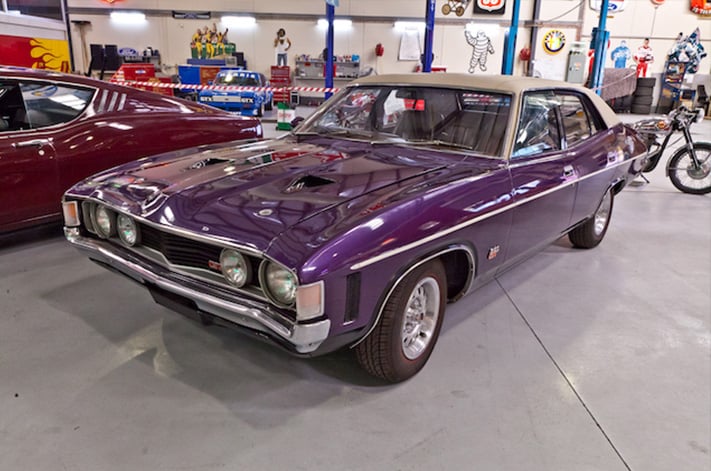
IN 1953, Australia was changing.
Post-war rationing was over, some bloke called Lang Hancock had found iron ore in Western Australia, hurdler Shirley Strickland became a household name after winning gold at the Olympics, Bathurst hosted the Australian Grand Prix for the first time and a bunch of Poms blew up their first atomic bomb right in our back yard.
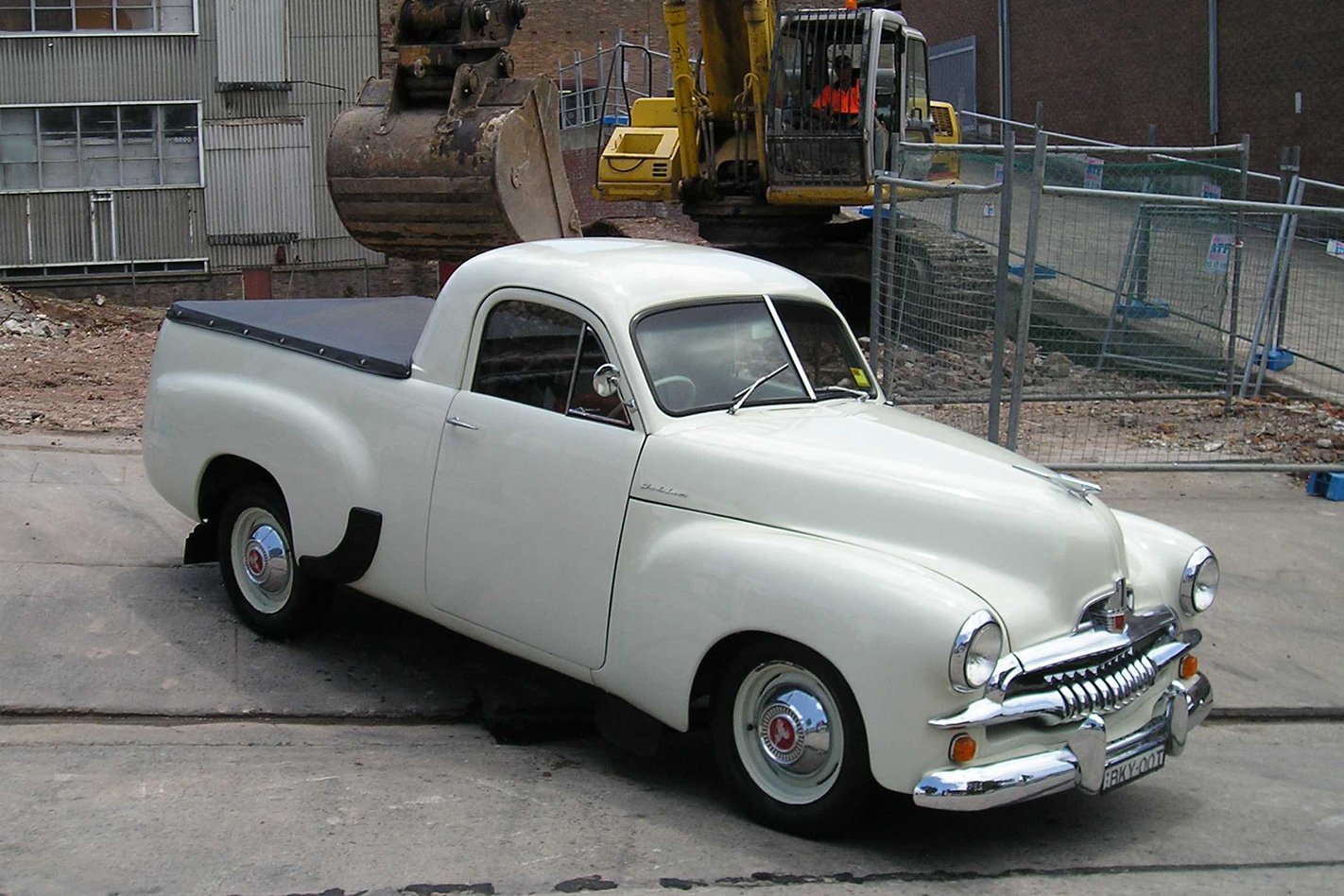
It was also the time the first seeds of expansion were sown for the Australian car industry. Demand for Holden’s 48-215 was outstripping supply, as was a freshly added sedan-based “Coupe Utility”. So, on the fourth anniversary of the first homegrown sedan rolling out of Woodville, GM announced an ₤11 million investment in the plant that would lift production to 200 a day.
The flood of migrants into Australia brought with them European tastes. Porsche had launched the 356, the first of its cars, in 1951 at the South Melbourne town hall, just up the road from the Albert Park Grand Prix circuit.

A number of them started to establish a foothold in Australia to work around punitive tariffs brought in to protect local jobs and Holden.
The complicated merger of Nuffield and Austin, British Motoring Corporation and Leyland formed British Leyland Australia, Chrysler Australia was formed after the US carmaker bought out coachbuilder T.J. Richards with the aim of building a family of passenger cars and commercial vehicles with 90 percent local content.

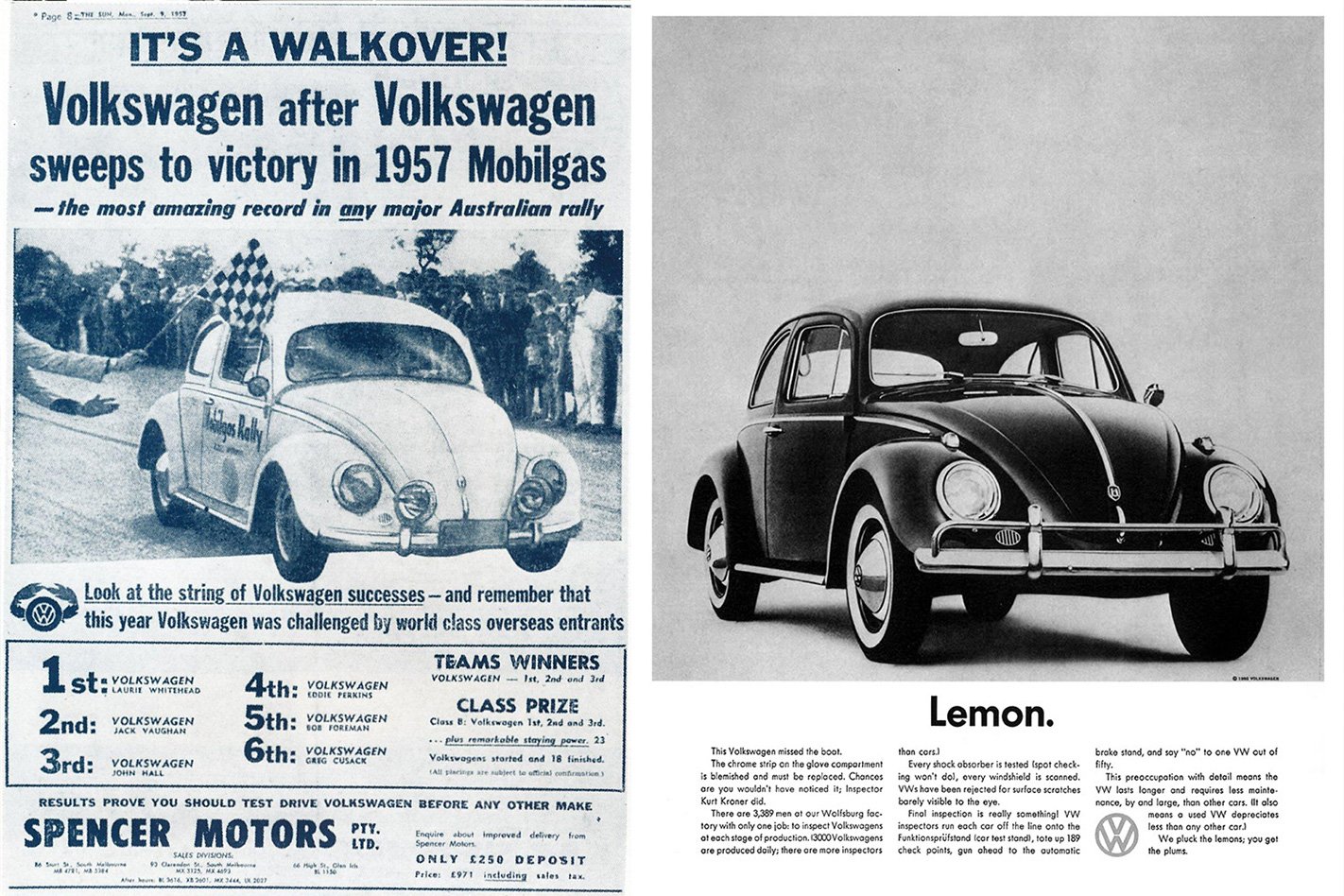
A strange little car from Germany – one that both Morris and Ford rejected after World War II – arrived in Australia in 1953. It was simply known as the Volkswagen, though the air-cooled, rear-engined family car devised during the Third Reich’s reign was more popularly known as the Beetle.
After a slow start, sales built steadily as the decade progressed, with the Beetle the fifth best-selling vehicle in 1956 and reaching number three two years later. It would eventually add an assembly line in Clayton, Victoria.
Originally intended for a factory to build a future Zephyr, the Broadmeadows head office was to eventually become the home of the US-designed and engineered Falcon.
British cars such as the Hillman Minx (maker of the 1956 Mark VIII Gaylook De Luxe Saloon – oh these were much more innocent times!), Humber Super Snipe (both by Rootes Australia, the local offshoot of a British company that also made the Sunbeam and Singer models), Standard Vanguard Spacemaster, Vauxhall Velox, Austin A30 and Morris Minor were still comparatively popular in Australia during this era.
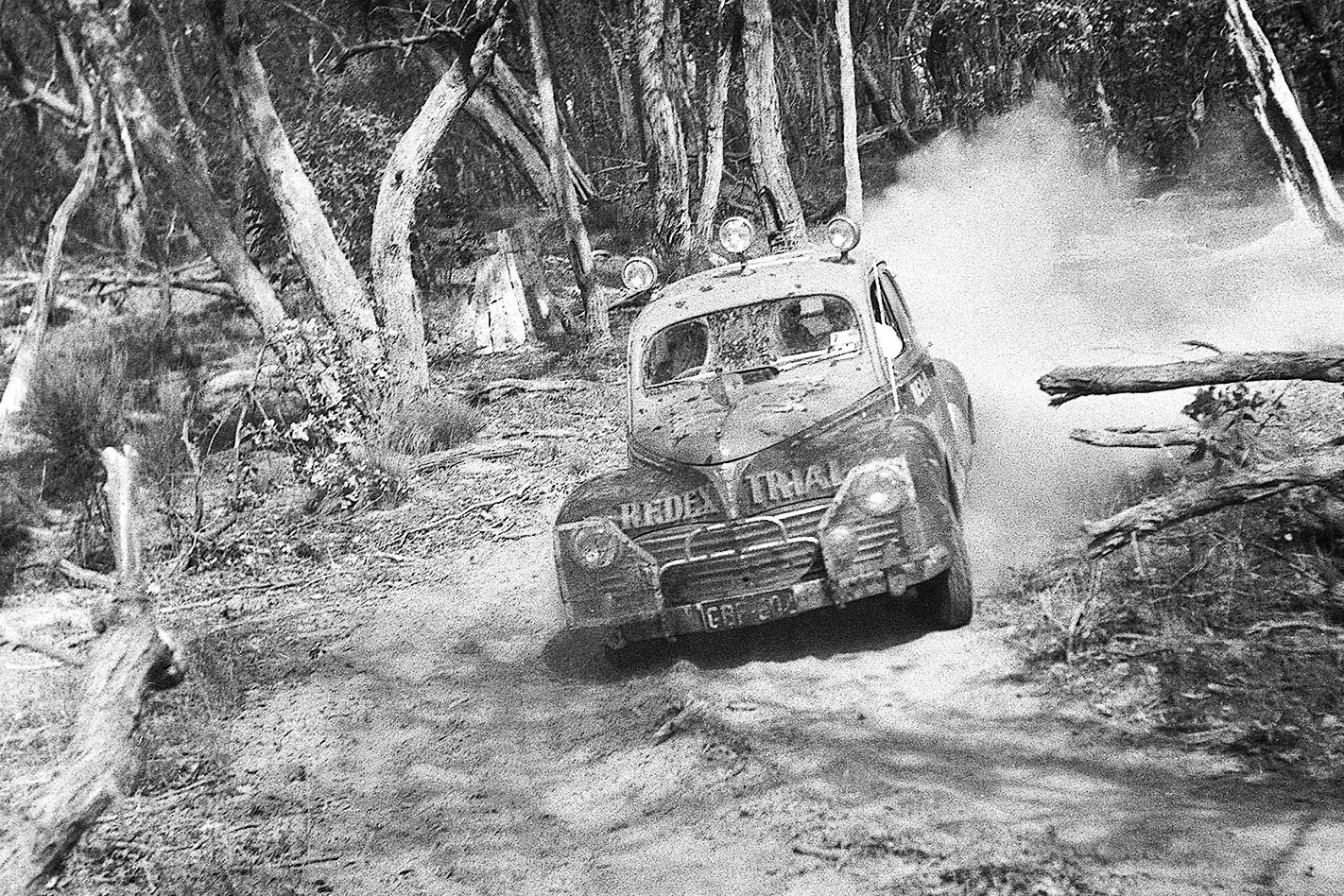
An event called the Round Australia Trial was introduced to allow carmakers to demonstrate how well-adapted their products were to the Australian environment.

The 403 built on its predecessor’s reputation from 1955, but the lack of six-cylinder power meant no Pug ever came within a cooee of Holden’s popularity.
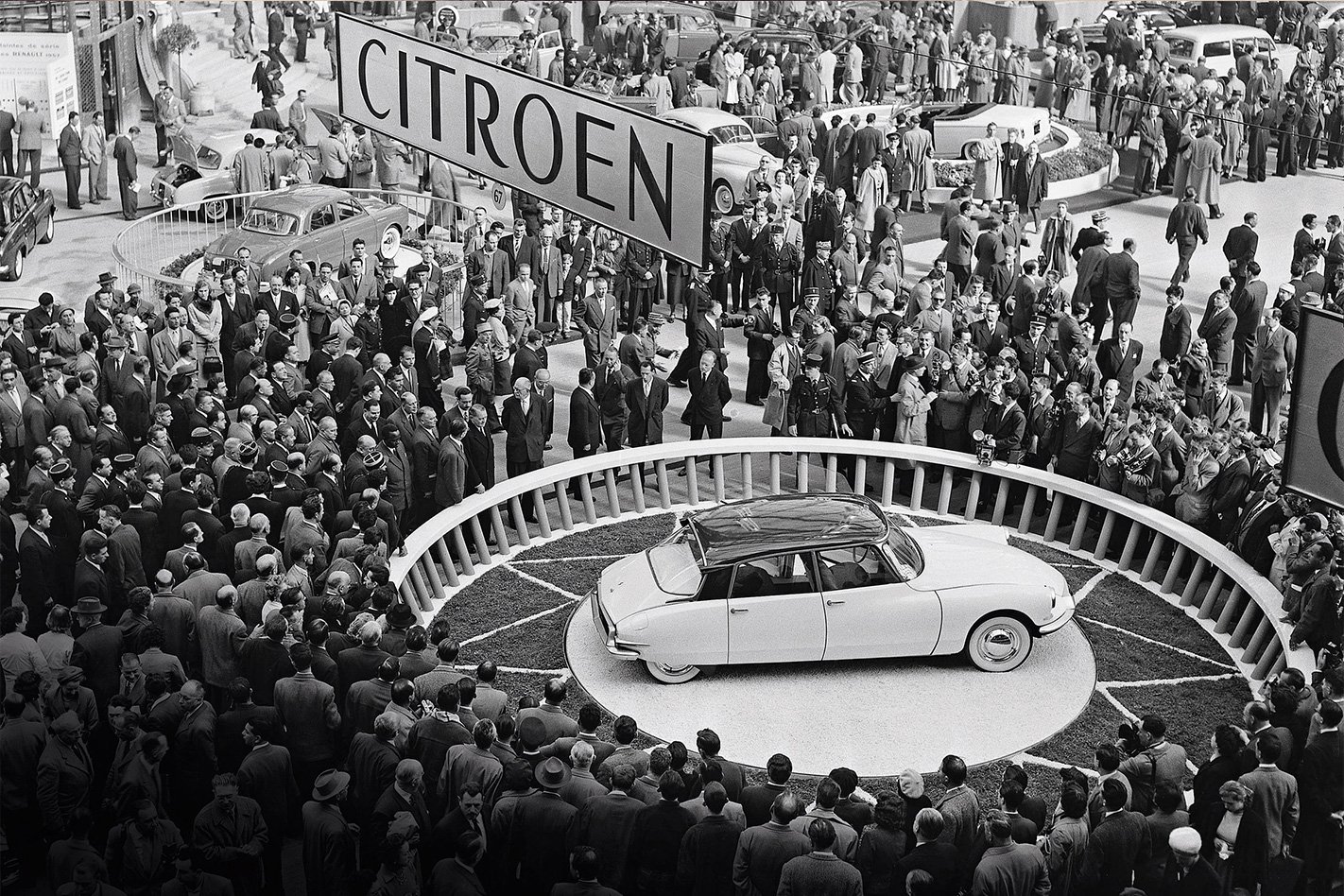
The epochal Citroen DS that shocked the world in 1955 arrived in Australia a couple of years later. Its futuristic styling clicked with the UFO mania sweeping the world at the time, though Aussies were sceptical about the cost maintaining the ingenious hydraulics that controlled the suspension, brakes and gear lever. Arguably the most beautiful car ever produced, the DS also somehow found a following among more avantgarde-minded motorists.
But a completely redesigned top hat that evolved into 1956’s far-more contemporary FE Holden ended up being one of the most exciting moments of the decade, making headlines and causing mayhem in dealerships as folk clambered to take a look at the latest version of Australia’s Own.
Holden would enter the 1960s as the undisputed king of the Australian car market.
Next: 1958-1962: The Ford Falcon flies
Catch up on our previous 1948-1952 recollection: Australia’s post-war car industry is born
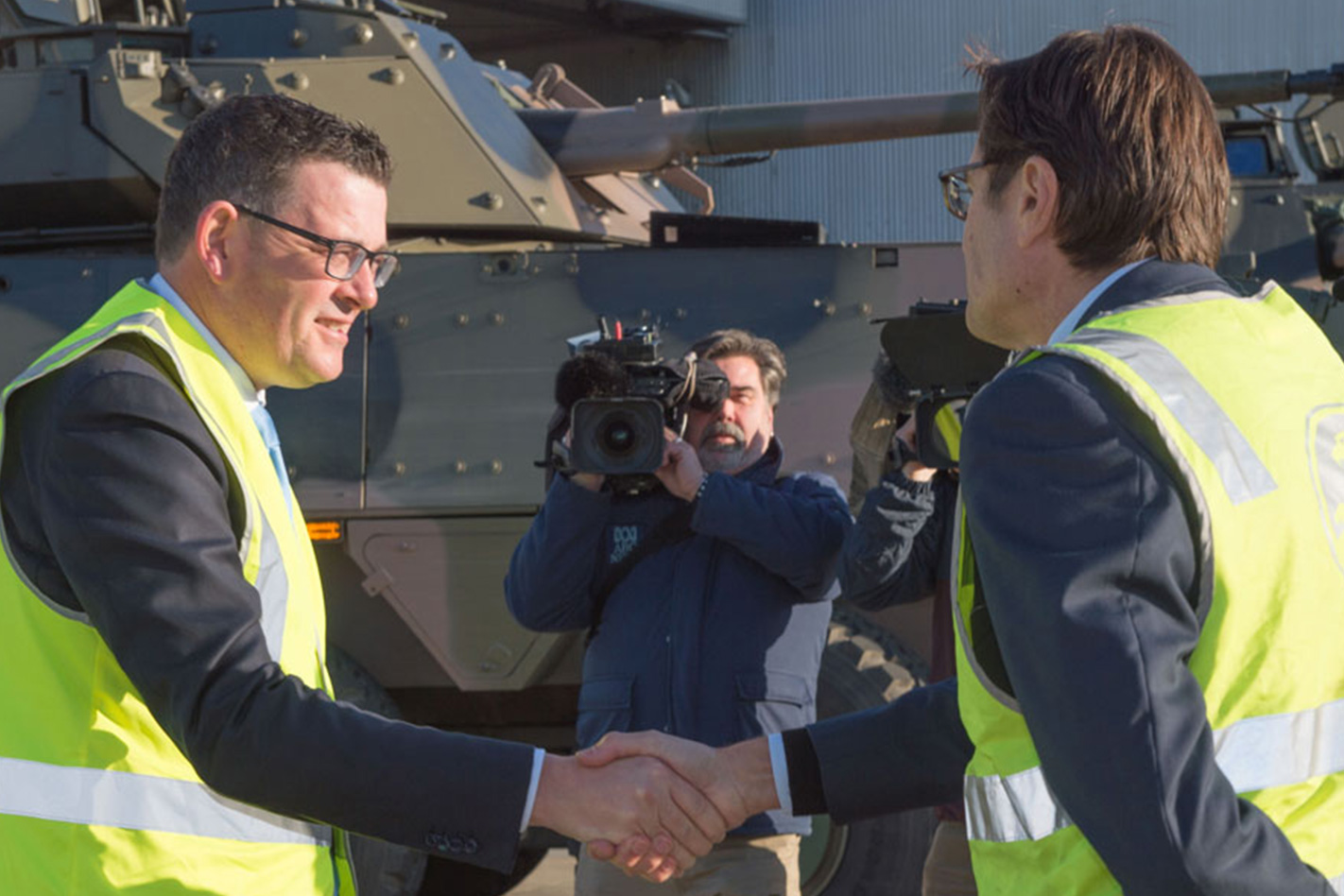
Multinational defence company BAE Systems has announced it will set up an engineering hub in Holden’s former engine manufacturing plant at Fishermans Bend in Melbourne.
As part of a Federal Government tender (which BAE is a contender for) called ‘LAND 400’ the contractor aims to build 225 new combat recon vehicles to replace the current fleet of light armoured vehicles used by the Australian military.
BAE Systems says the hub will be the biggest of its type in the country if it is successful in its bid, with the roughly $5 billion project estimated by the Victorian Government to create more than 2,000 manufacturing and supply chain jobs.
Other vehicles BAE has for offer are the BvS10 armoured articulated vehicle, which is adaptable as a combat or command support vehicle, and the CV90 tank, which BAE says has been deployed in “UN and NATO in missions across the globe”.
These are the two vehicles the company lists as its products for Australia, though its international repertoire of combat vehicles is dozens strong thanks to acquisitions of other defence businesses.
For example, it also manufactures the somewhat well-known Bradley tank after it bought US contractor United Defense in 2005.
If its plans go ahead, BAE says up to 1000 engineers will be designing and maintaining new defence systems for the Australian Defence Force from the Fishermans Bend plant, with over 200 people estimated to be employed for the building phase of the project.
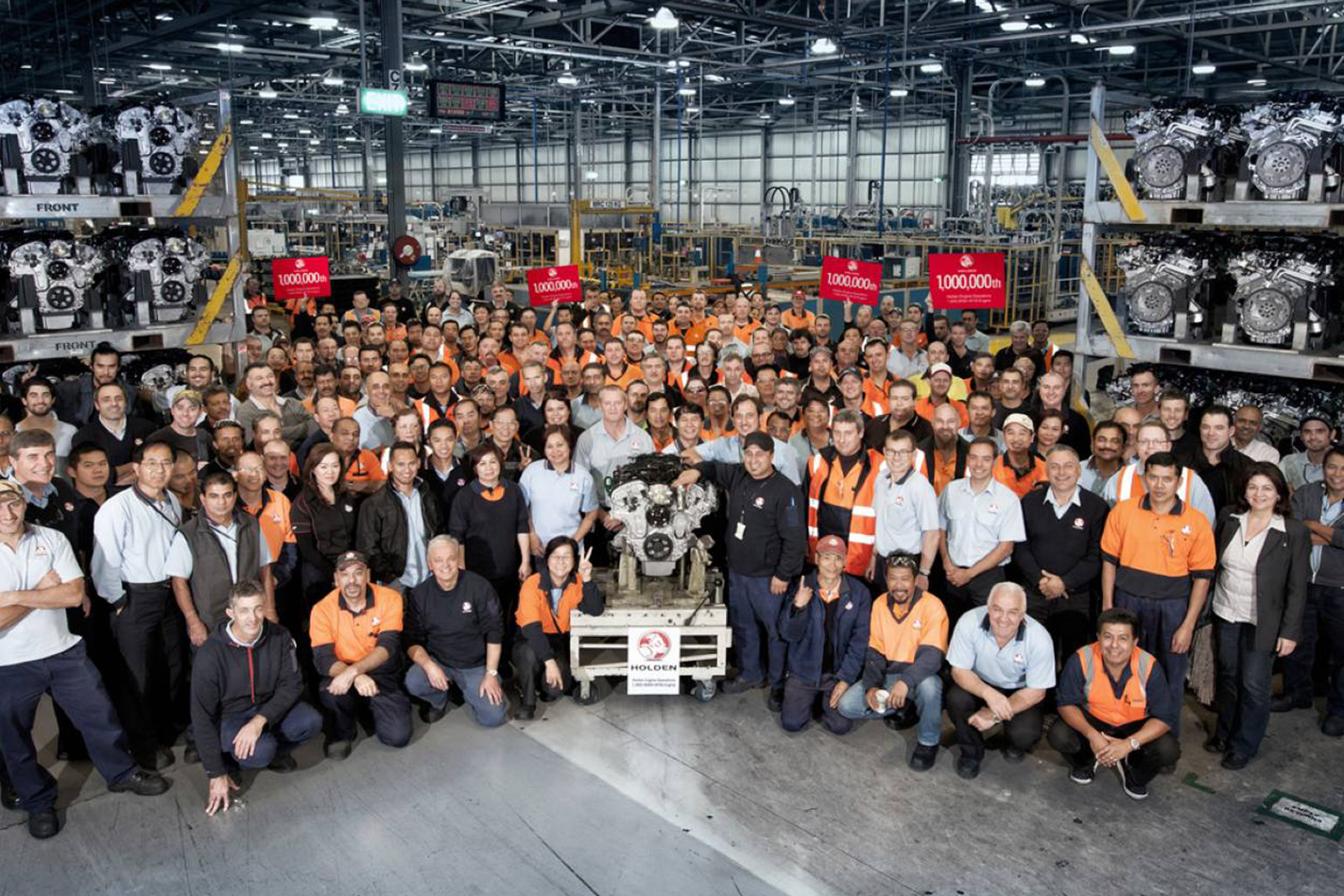
The Victorian Government has backed BAE as a contender, while a German company would set up in Queensland with backing from the Queensland Government if it is successful.
Premier Daniel Andrews says the deal shows that vehicle manufacturing can live on in Australia, even if not for passenger cars.
“Victoria is the traditional home of vehicle manufacturing, and this project would create thousands of jobs at a time when our automotive sector is in transition.”
UPDATE: 3.20pm August 2nd
MOTOR has received information which contradicts BAE’s confirmation that the plant will go ahead. We have contacted the government to confirm details of this story which are now in contention, and will update the story accordingly.
UPDATE: 5.50pm August 2nd
The Federal Government has not yet announced its decision on which company will be awarded the tender to build 225 military vehicles for the Defence Force, however BAE systems has advised it is still keen to explore the viability of the project should it not be successful. Fishermans Bend is still set to become an engineering hub, and a Victorian Government spokesperson has told MOTOR that BAE is still likely to pursue a development there.
Subaru Australia has bulked up its Levorg range of midsize wagons, doubling the amount of models on offer by introducing two new 1.6-litre turbocharged models to compliment the existing 2.0-litre variants.
The range now starts with the $35,990 Levorg 1.6 GT, which takes over from the discontinued 2.0 GT spec as the entrypoint to the Levorg family. The $42,890 1.6 GT Premium is next in line, with the $49,140 Levorg 2.0 GT-S sitting above it. At the top end, the newly-christened Levorg 2.0 STI Sport caps off the range at $51,990.
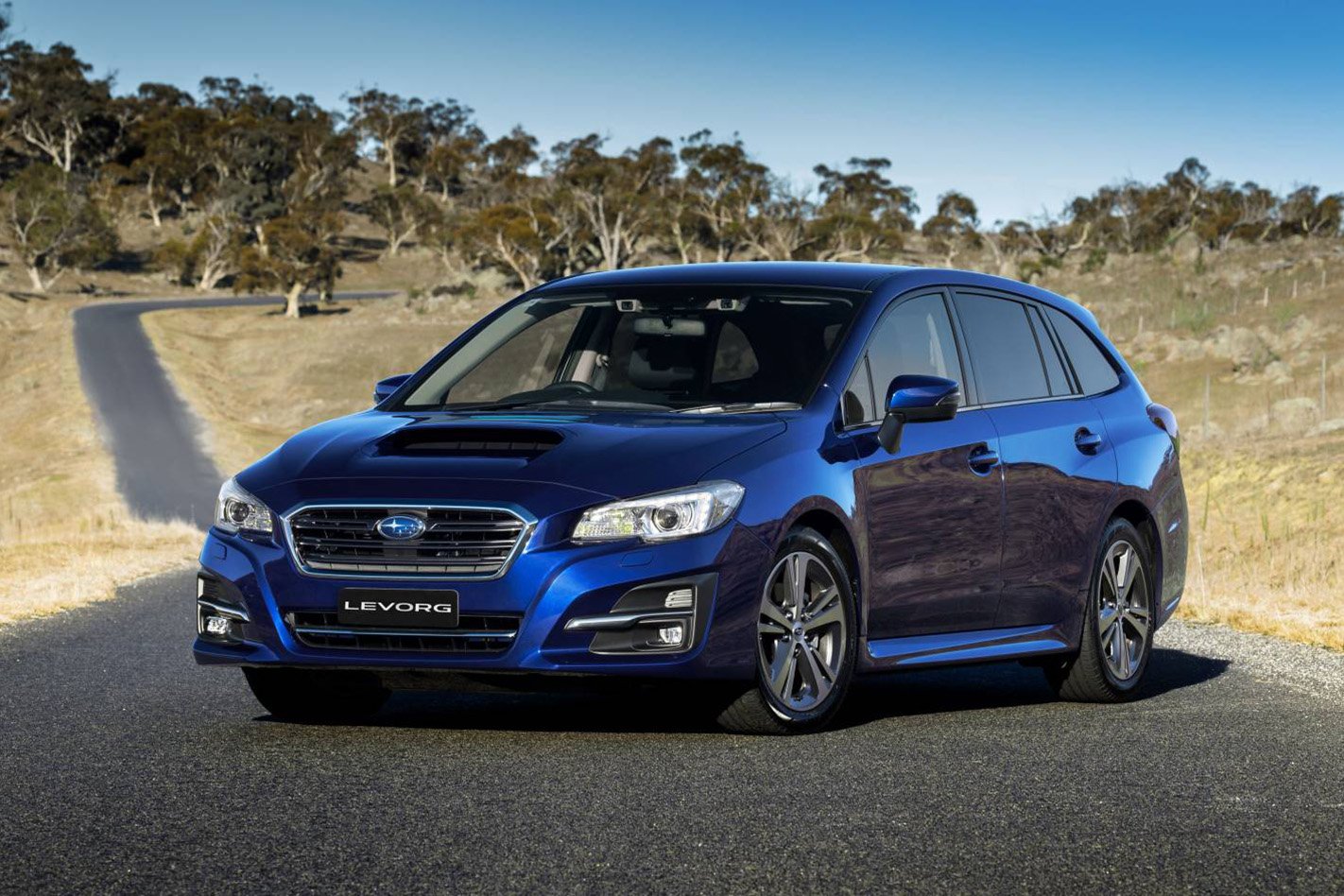
The 2.0-litre engine, shared with the WRX sedan, continues to generate 197kW and 350Nm, with a CVT automatic the sole transmission on offer.
The 1.6-litre, however, is an entirely new engine for Subaru Australia, and produces 125kW between 4800-5600rpm, and 250Nm spread between 1800rpm and 4800rpm. It too comes standard with a CVT.
Both engines require 95-octane petrol.
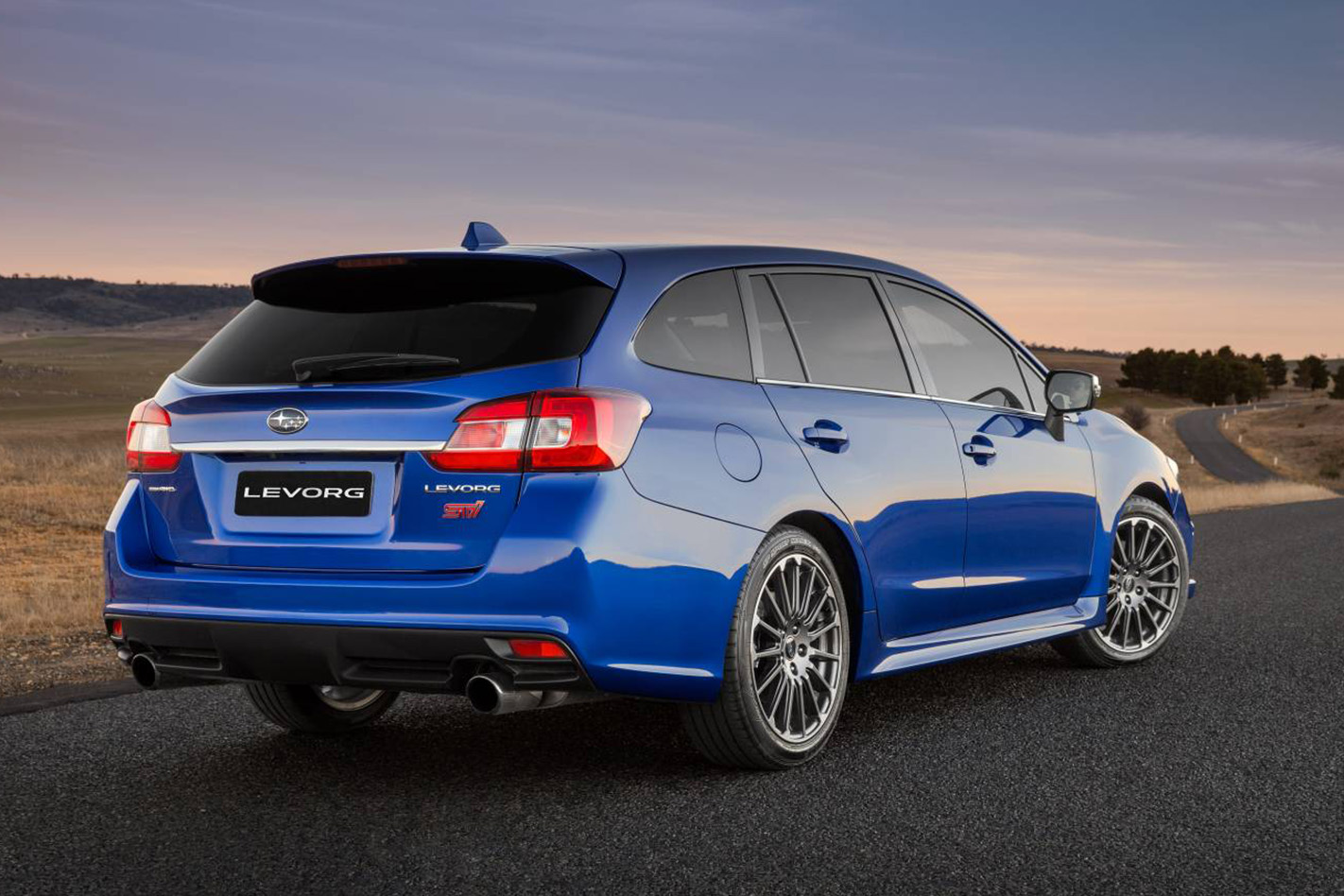
The flagship Levorg 2.0 STI Sport has its own STI-tuned suspension hardware, while all 2.0-litre models also gain new brake pad compounds for improved stopping power with reduced braking effort.
All 2018 Levorg variants wear revised front-end styling and new LED headlamps, though other cosmetic updates are few.
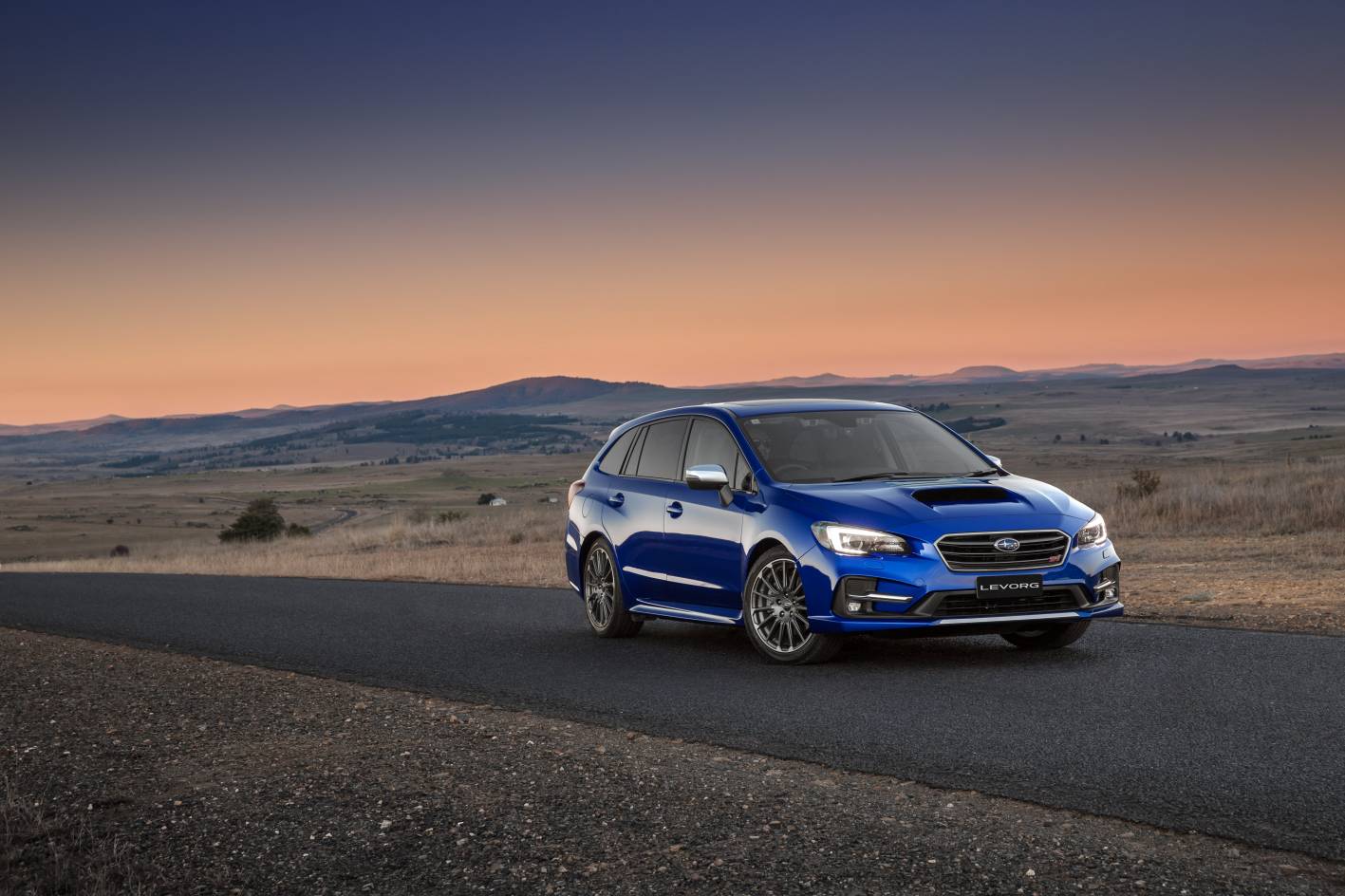
Mid- and high-grade models gain new alloy wheel designs.
Equipment upgrades see a 5.9-inch colour multifunction display replace the 4.3-inch screen that previously sat at the top of the dash, with rain-sensing windscreen wipers, hillhold assist, steerable headlamps and 40/20/40 split rear seats also on the list of new additions for the 2018 model year.
All models bar the base 1.6 GT receive a ‘smart’ rearview mirror, which is capable of displaying the rear vision camera feed within the mirror itself, as well as a front-facing camera to aid parking precision and to avoid danger when pulling out from intersections with poor visibility.
PRICING
The 2018 Levorg range is on sale now, with retail pricing as follows (on road costs not included):
- Subaru Levorg 1.6 GT – $35,990
- Subaru Levorg 1.6 GT-Premium – $42,890
- Subaru Levorg 2.0 GT-S – $49,140
- Subaru Levorg 2.0 STI Sport – $51,990
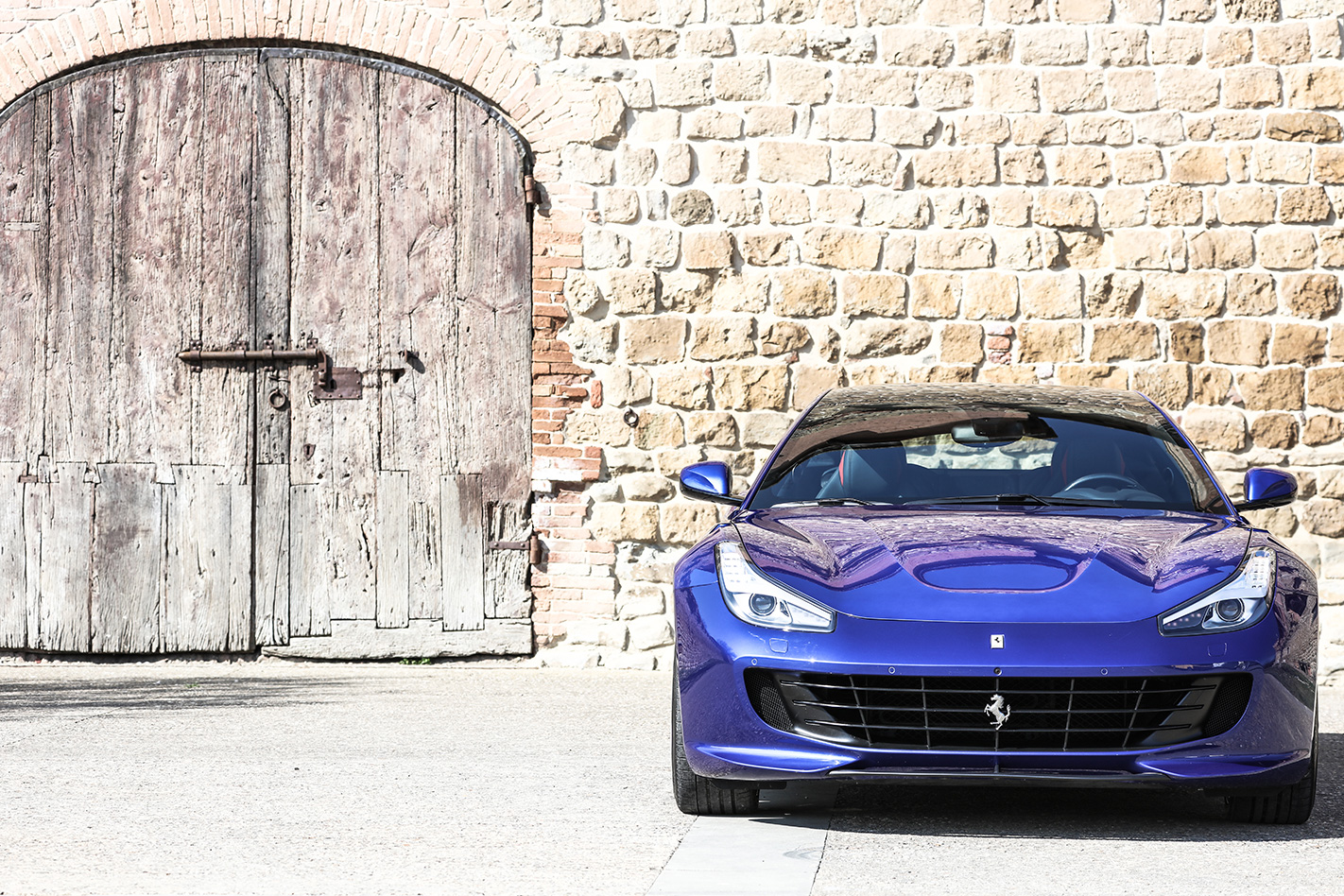
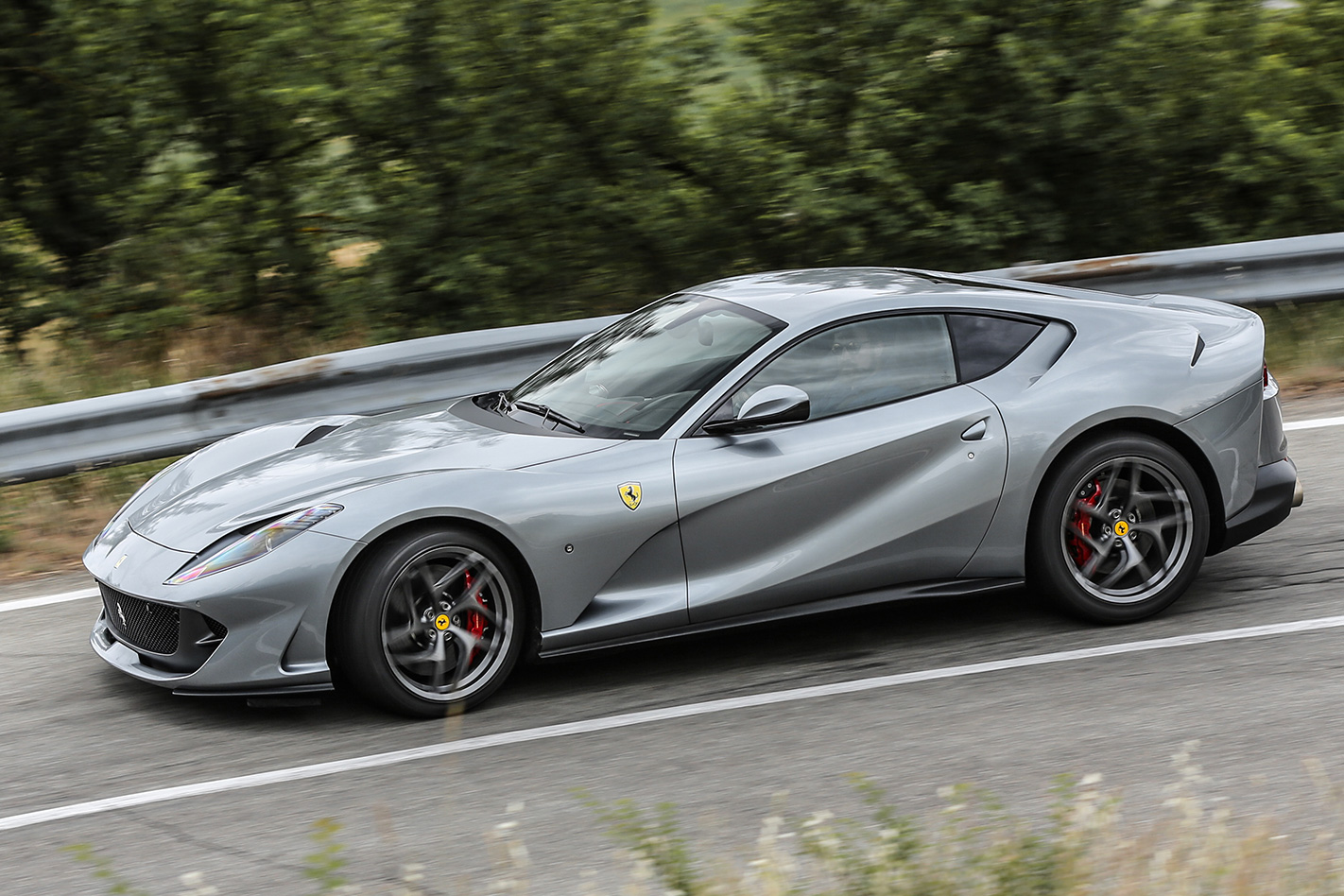
With a previous extended warranty of (an already impressive) 12 years, Ferrari has added three years to bring its total extended factory warranty to 15 years.
As standard, new Prancing Horses come with a three year full factory warranty and access to Ferrari’s seven-year free maintenance programme.
The maintenance plan, which is already a good , though probably offset somewhat by the initial purchase, is now complemented by another offer from Ferrari.
Now, the full factory warranty can be extended for a further two years, and between the vehicle’s 6th to 12th year, owners have the option to take on the ‘New Power’ warranty which covers only the vehicle’s major components.
This section of the cover lasts 12 months and can be renewed annually for three years.
Ferrari adds that the warranty extension applies to new and used cars, provided a used car can pass some of its technical inspections.
“This makes the New Power15 Extended Warranty the most flexible and comprehensive package of its kind and sets a new benchmark in the automotive world.”
“Another plus if you choose to sell on your car is that the vehicle remains under warranty even if it changes ownership Safety and peace of mind.”
WHAT IS IS?
The new flagship of the Porsche Panamera range. While the previous top-shelf version in both this and the first-generation were in Turbo S form, a new Turbo S E-Hybrid version now rounds out the line-up with plug-in electric power.
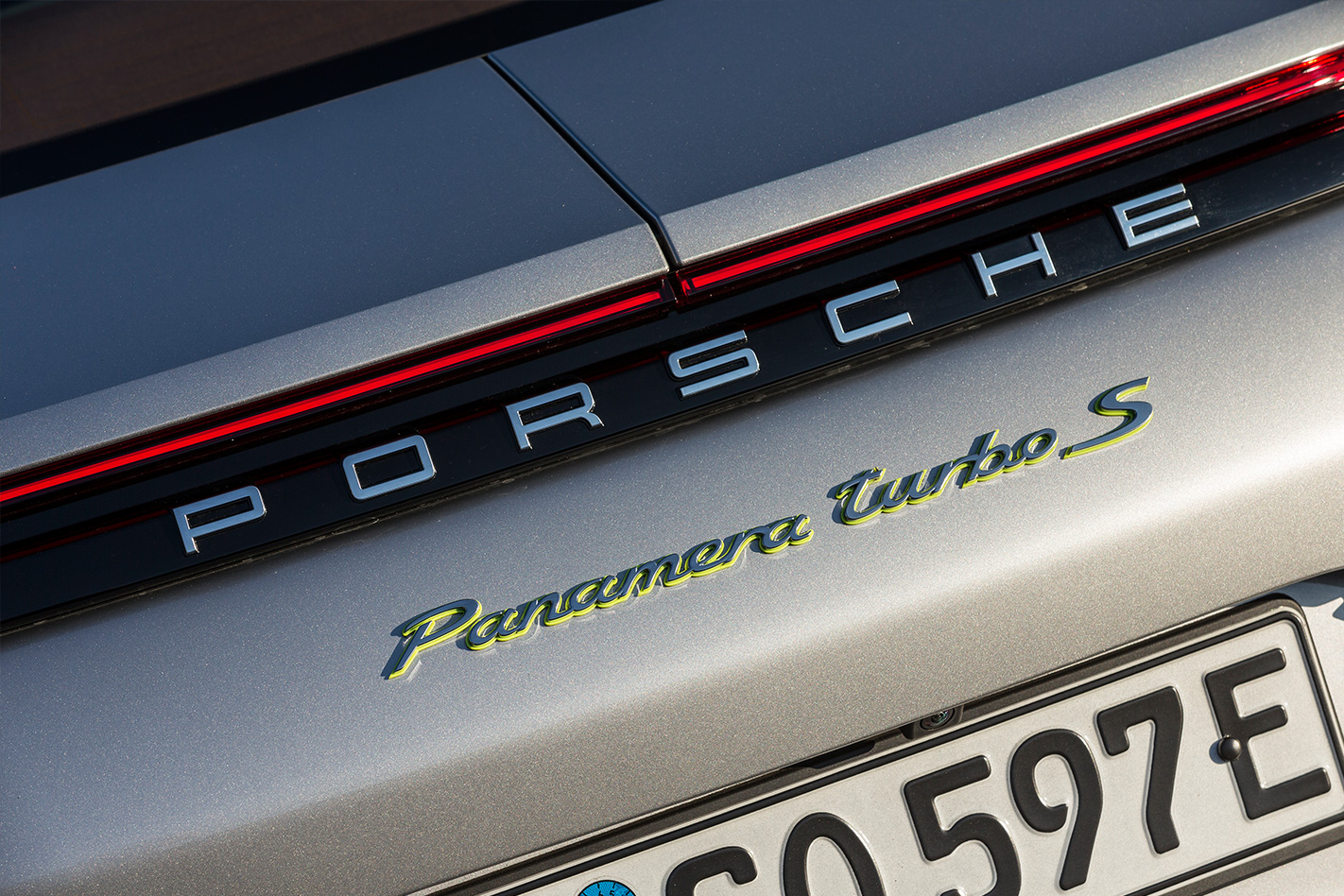
Offering a hybrid variant as the top-performing model in any model line is a first for the German car maker and a sign of intent for its future electrification strategy. From here, expect to see increasing numbers of electrified Porsche vehicles going online. If the Panamera can pull off its plug-in party trick, Porsche’s demanding fans are more likely to accept others.
MAIN RIVALS
Maserati Quattroporte; Tesla Model S; Mercedes-AMG CLS 63
THE WHEELS VERDICT
Porsche is not alone among revered sports car brands in taking the odd evolutionary turn that initially sits about as comfortably as a sandpaper scarf among purists.
When the iconic 911 dropped its air-cooled engine for the 996 generation, for example, diehards ran around throwing their Nomex undies on bonfires. Then, more recently, when the entire Carrera range went turbo, Stuttgart flags were burned in the streets.
Yet the 911 is still stands elevated as among the most complete sports cars of them all. (If you think otherwise, there’s still space in next month’s Inbox to air your flameproof undergarments).
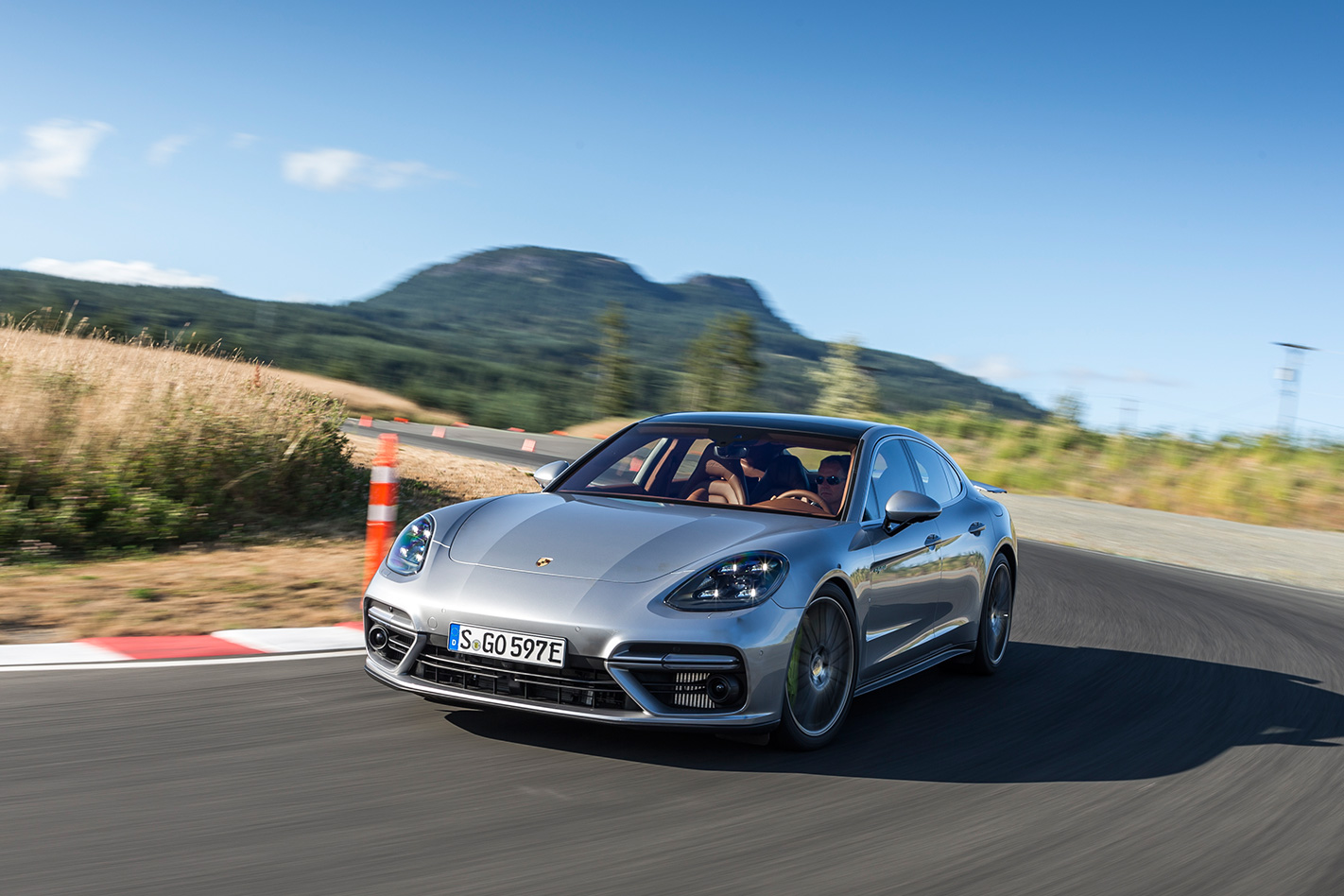
This new addition is the performance flagship, cementing that status through the addition of an electrically assisted powertrain. While the Panamera 4 E-Hybrid uses much the same electric hardware as this Turbo S E-Hybrid, that model plugs a gap between Panamera 4 and 4S; its focus on minimal consumption. But with this range-topper, Porsche global communications manager Herman-Josef Stappen explains that the company sets out to prepare fans for halo models that deliver electrifying performance from a battery.
“In the first generation of the Panamera the hybrid model was purely based on efficiency … now we have a new strategy,” Stappen said. “Now we go even more in the performance direction, but it’s still more efficient than the normal Turbo. The first step was with the 918 Spyder. That showed us that it could work, [now] we have done it with the Panamera. It’s no secret that there are other cars due to be revealed.”
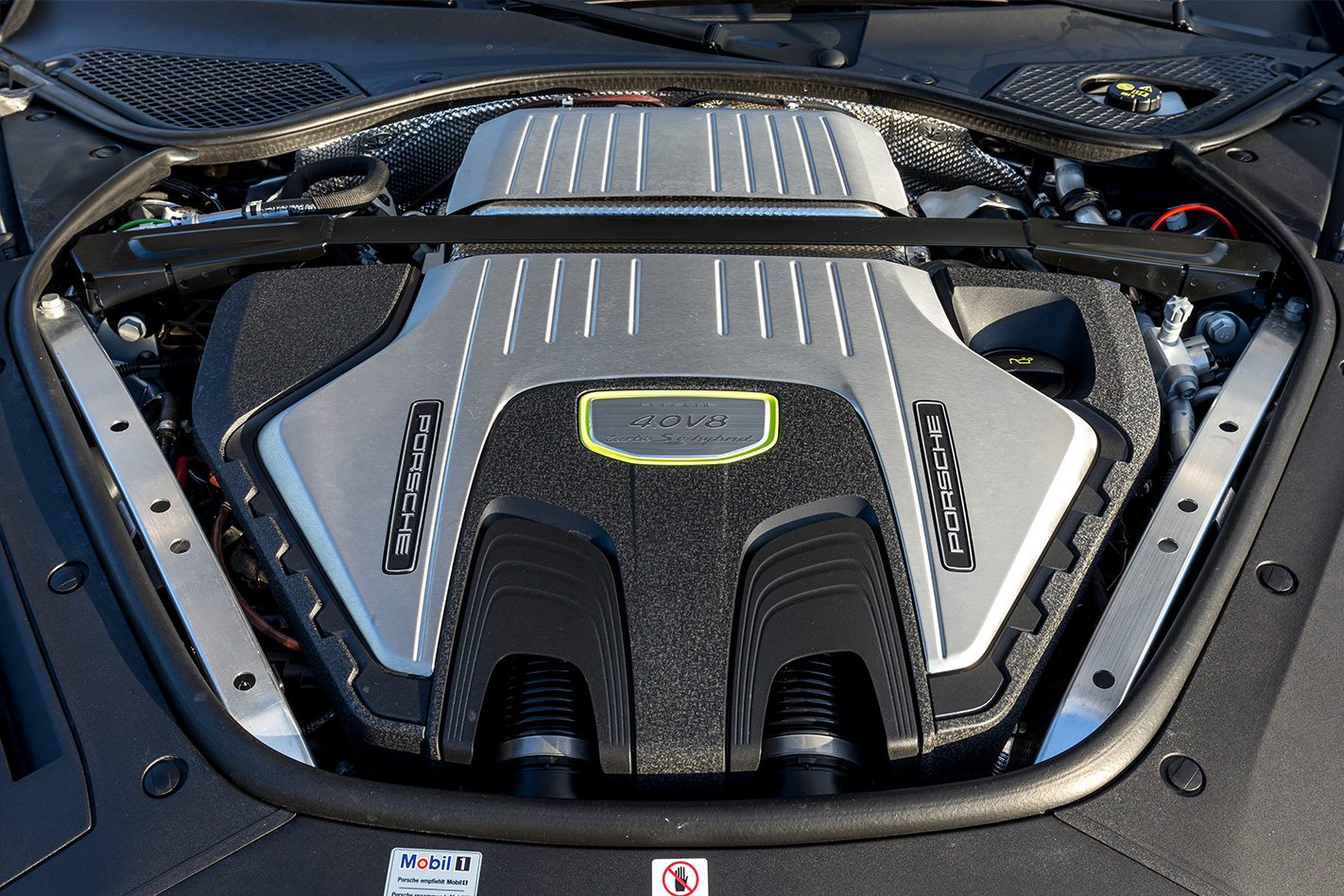
Cost? An extra $75,600 over the price of the Turbo, and an additional 300kg to haul around, yet the advantages are clear. Official combined cycle consumption drops to 2.9L/100km while the 0-100km/h claim is trimmed by 0.2sec. As a plug-in hybrid, the Turbo S can commute up to 50km without using any fuel at all, says Porsche.
During our first blast in the hybrid Panamera on Canada’s Vancouver Island we managed to temporarily bludgeon the fuel economy figure into the 20s, but in fear of Canada’s speed enforcement – even stricter that Australia’s, would you believe – most of our road driving was sedate, which brought a corresponding drop in thirst.
Unlike some PHEVs that have a sewing machine to back up the petrol engine, the Porsche’s 100kW/400m of emissions-free electric grunt easily covers normal driving without having to poke the V8 into life.
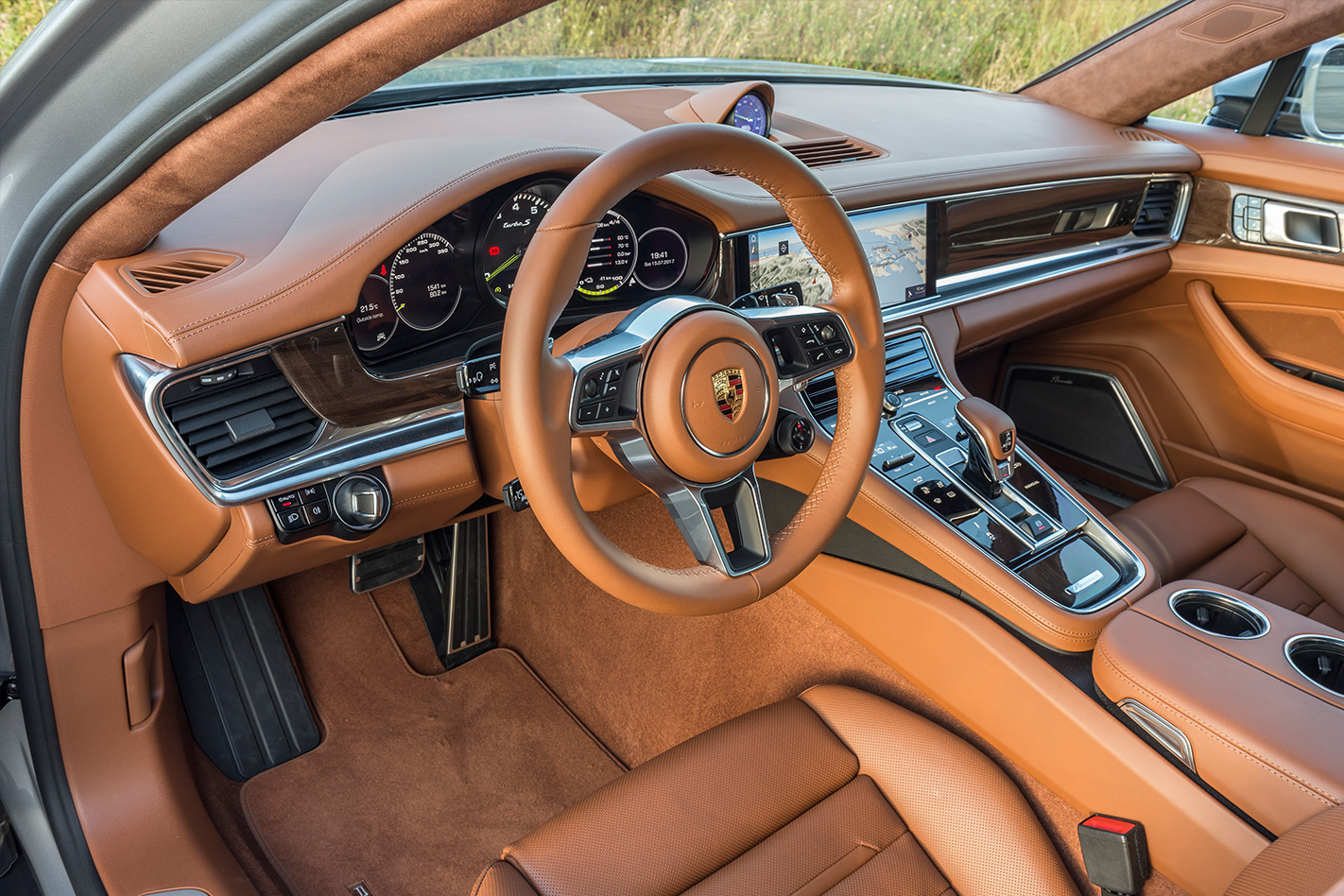
The Panamera’s transition into combustion power is eerily seamless. At one point, I thought I had detected the distant rumble of the V8 firing to life but it turned out to be a Chevrolet Silverado with a side-exit exhaust pulling alongside for a closer look.
The 3996cc Porsche V8’s power is prodigious and the delivery broad, and the assistance of the 400Nm electric motor results in the most wonderfully muscular and willing powertrain.
There is little turbo lag thanks to the siting of the two turbos in the V8 valley, close to the exhaust ports, and any hint of dullness just off idle is erased by the motor.
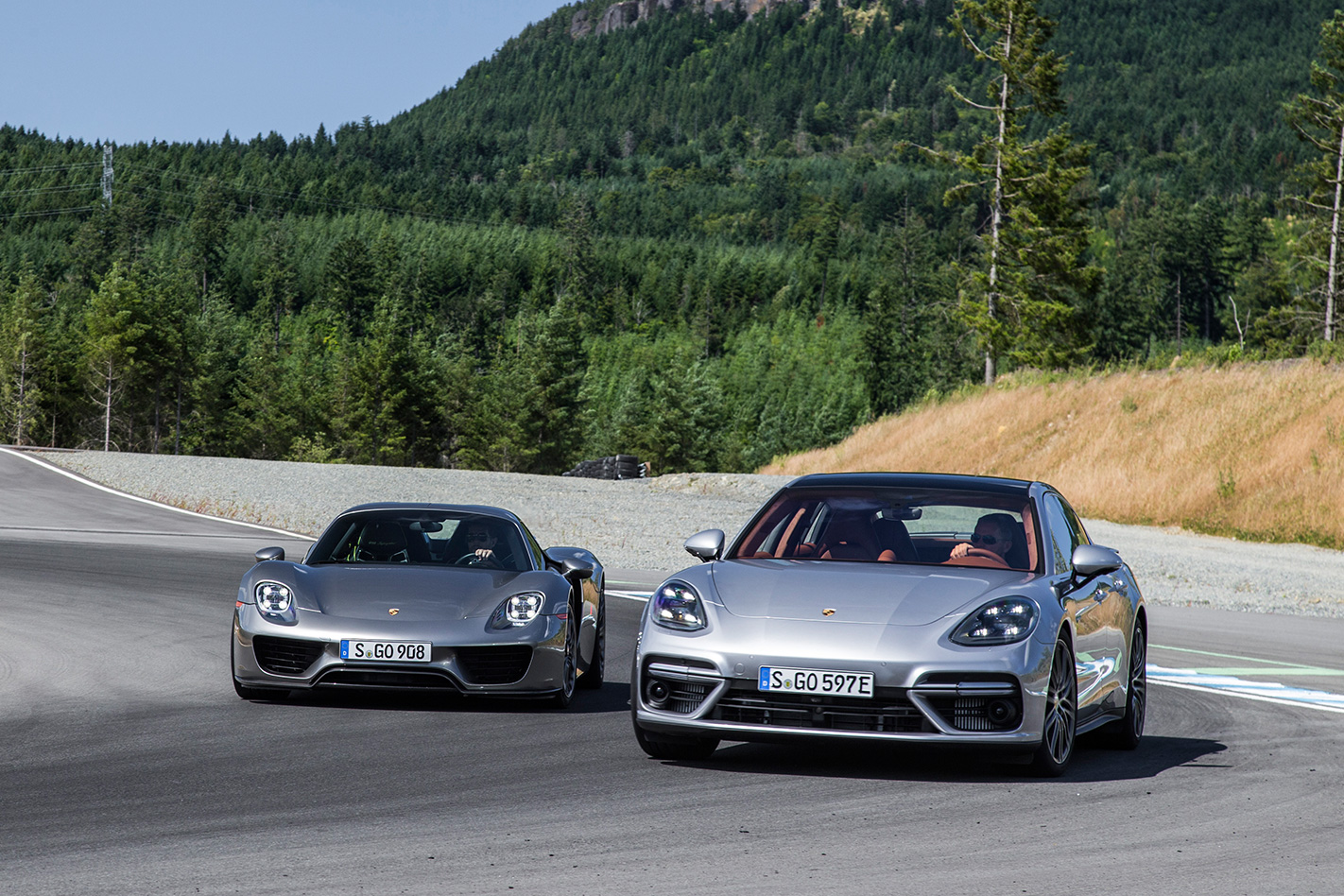
Despite its long 2950mm wheelbase and broad 1937mm body, the Panamera carves a surprisingly precise line. In tight turns, the optional four-wheel steering can be felt providing the effect of a shorter wheelbase, mid-corner grip is bountiful and the standard-fit carbon ceramic brakes with monstrous ten-piston calipers provide terrific feel and unfading power.
Officially, the Panamera is all-wheel drive, but with the selector dialled to Sport Plus the big sedan does a convincing impression of a rear-driver. The nose tips keenly into corners with minimal complaint from the tyres and torque vectoring subtly and effectively tightens the angle of attack.
Under hard braking into the circuit’s steep descents, the tail can be shaken loose, revealing a delightful playfulness, yet can be gathered up with the chatty steering in a manner that’s uncommon in cars of this weight and size.
Away from the track on Canada’s iconic pine-lined roads, the four-seat powerhouse settled into duty as an accomplished cruiser, which is precisely how most customers will use their Panamera.
Although we didn’t do a back-to-back comparison, the Turbo S E-Hybrid’s ride seems just as polished as the Turbo’s and the comfort of the sports seats is stunning. Three-stage adaptive dampers and air suspension smooth all but the most offensive road imperfections and the cabin ambience is on a par with a BMW 7 Series or Mercedes S-Class.
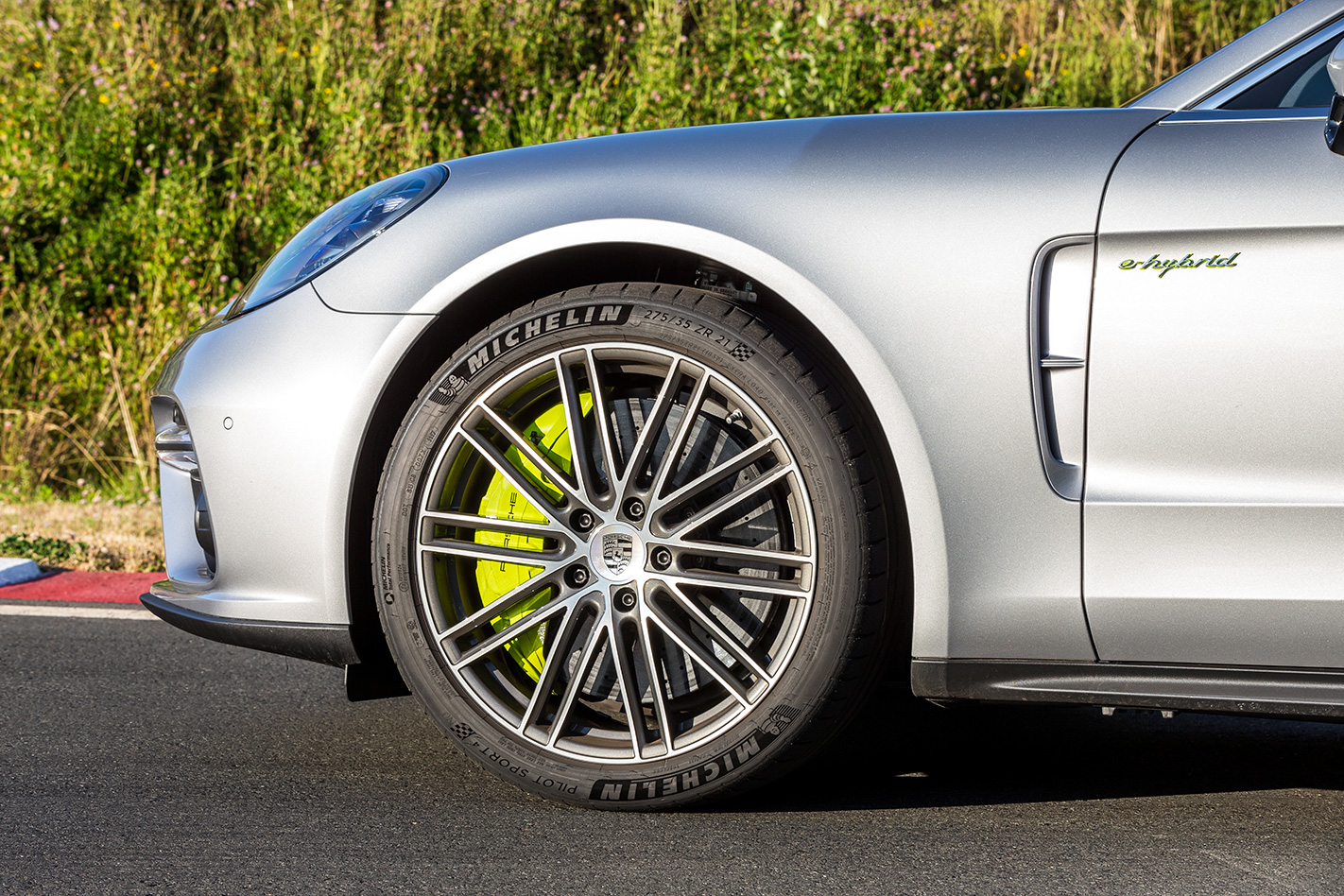
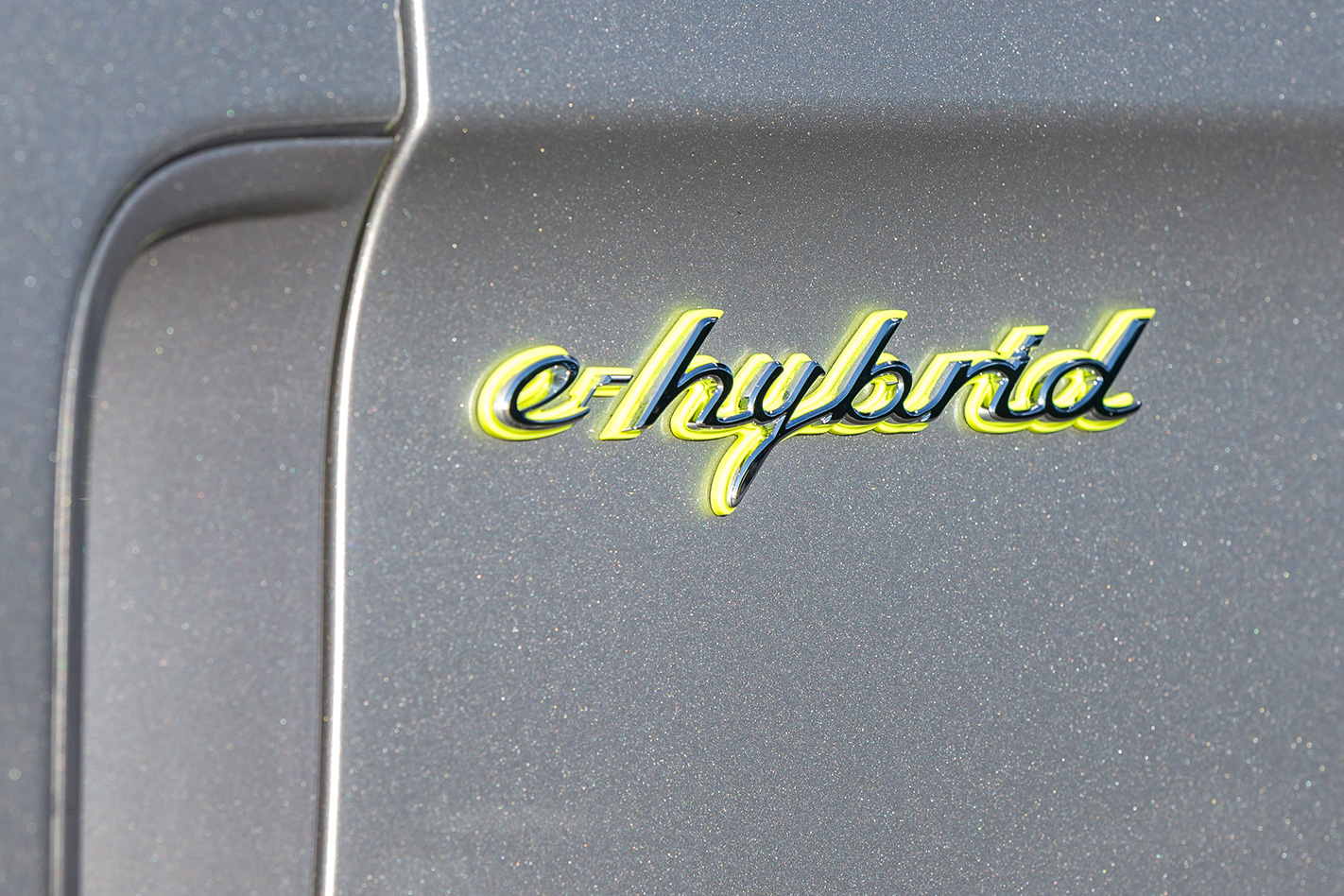
If you’re a fan of the existing Panamera range then the good news is that, beyond the hybrid’s startling turn of speed, it’s much the same appealing package stepping from the Turbo into its electrified sibling. From the outside, there are few hints at its super-hybrid status other than Zombie Squad fluoro green badges and calipers.
If the 911 had led the charge into electrified high-performance Porsches it’s likely to have caused seismic unrest, but thanks to the incredible abilities of the company’s first electrified range-topper and its uncompromised teaming of performance and zero-emissions capability, Porsche’s electrified future is starting to make sense.
Hyundai has rationalised its MY18 Santa Fe SUV line-up and added value by dropping the six-speed manual Active variant and rolling out high-tech safety features across the range.
Deleting the price-leading manual version from the line-up means the seven-seat Santa Fe’s price of entry is now above $40,000, however all variants from the base-model up now include SmartSense driver assistance technology as part of the price.
Previously, Hyundai’s active safety tech was standard equipment in the range-topping Highlander only. SmartSense is now included in the Active, Active X and Elite variants and adds autonomous emergency braking, forward collision warning, lane departure alert, blind-spot detection and adaptive cruise control.
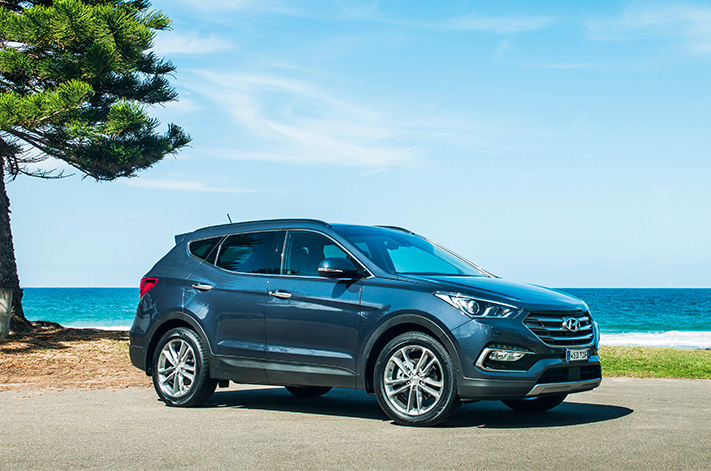
The Active and Active X models also receive extra gear in the form of a 4.2-inch multi-function display in the instrument cluster, plus an electronic parking brake, auto-dimming rear-view mirror and powered side mirrors with puddle lights.
The Elite and Highlander variants gain a new 8.0-inch multi-media system with satellite navigation and Apple CarPlay and Android Auto compatibility, which was already available in the Active and Active X.
Apart from the manual Active variant, the model line-up remains the same with the front-wheel-drive 3.3-litre V6 petrol Active X the new entry-level variant, still priced at $40,990.
Now rolling in to showrooms, the MY18 update is expected to be the last for the current generation Santa Fe, which is due for replacement sometime next year.
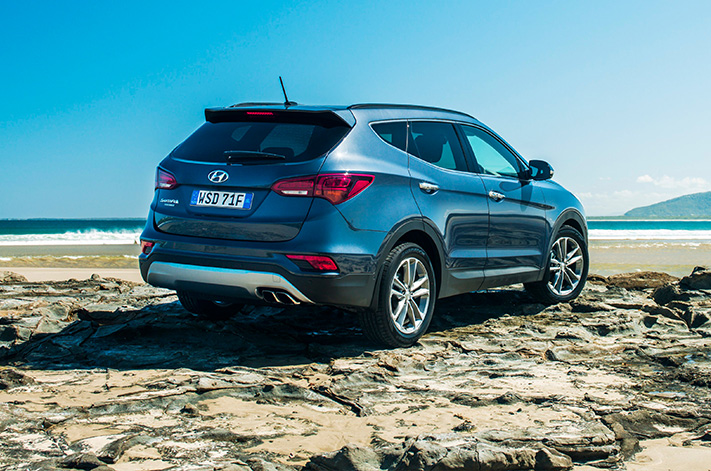
MY18 Hyundai Santa Fe pricing*
- Santa Fe Active X FWD, 3.3L V6 petrol – $40,990
- Santa Fe Active AWD – 2.4L 4cyl petrol – $41,850
- Santa Fe Active AWD, 2.2L 4cyl turbo diesel – $44,850
- Santa Fe Elite AWD, 2.2L 4cyl turbo diesel – $51,990
- Santa Fe Highlander, AWD, 2.2L 4cyl turbo diesel – $57,090
Options
- Metallic/mica paint – $695
- Beige interior (Active X, Elite & Highlander) – $295
- Brown interior (Highlander) – $295
- Panoramic sunroof (Elite) – $2000
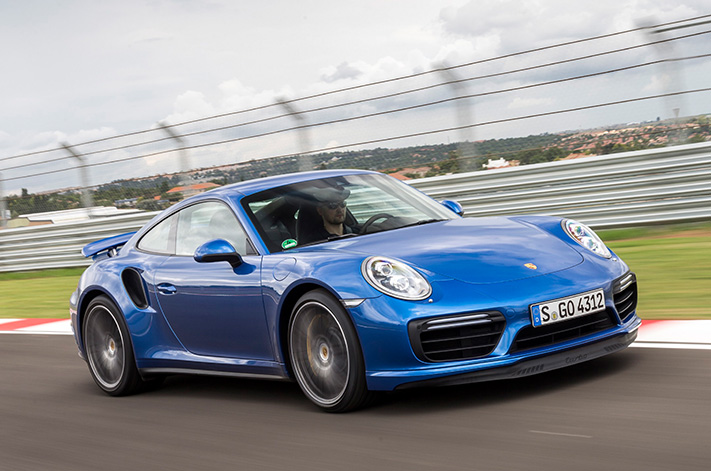
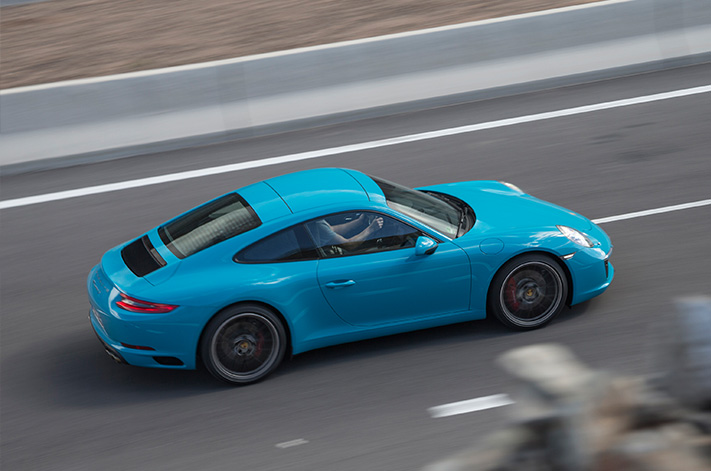
With the recent introduction of the GTS variants, Porsche’s 911 range has expanded to a whopping 20 options. Track stars and powerslide junkies will have already made up their minds regarding the motorsport-developed GT3, GT3 RS and GT2 RS, but what about the rest of the line-up that ranges from the entry Carrera to a limited Turbo S Exclusive?
With prices ranging from $220,900 to a hefty $590,400, rear- and all-wheel-drive options, convertible, coupe or Targa top, manual or PDK auto and a number of power outputs, here’s the simplified guide of what’s on offer from one of the world’s most recognisable sportscars.
Variants
At the entry level, the Porsche 911 range starts with the Carrera, which is available as both a coupe – the most affordable 911 – or a Cabriolet, which commands a $21,500 premium over the fixed-roof version. Standard fare for the Carrera is a rear-mounted 3.0-litre twin-turbocharged flat-six engine which sends 272kW and 450Nm to the rear wheels for 0-100km/h acceleration in as little as 4.4 seconds for the PDK coupe, or up to 4.8s for the manual convertible. For an entry-level variant, the Carrera is well equipped and includes leather upholstery, electric-adjust front seats, satellite navigation and a sunroof.
Technically, the 911 has a second row of seats but they can really only accommodate small children or more compact adults for only the shortest journeys. The space is a useful storage area, however, in addition to the front luggage area under the bonnet.
All versions except the Turbo family are available with a seven-speed manual gearbox or an optional seven-speed dual-clutch PDK automatic for an extra $5950, or $7390 when added to a GTS. All Turbo variants are fitted with the auto as standard.
The Carrera also comes with all-wheel drive, which adds $16,100 to the cost of the entry manual Carrera coupe and a “4” to the end of boot badge. Carrera 4 variants gain weight but the extra traction through the driven front axle increases acceleration.
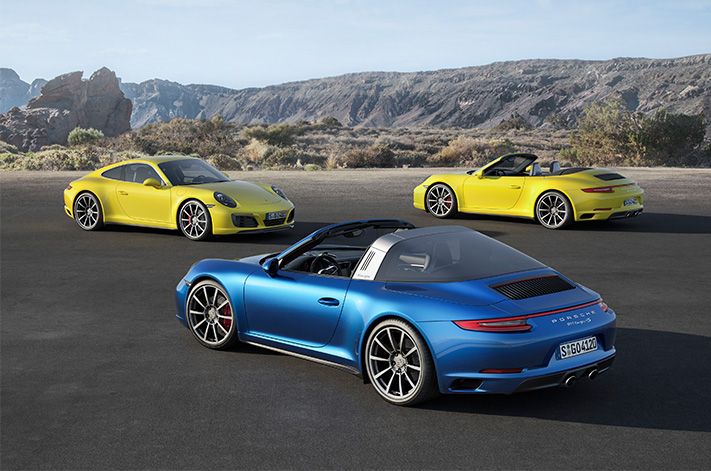
For more performance, Porsche offers the Carrera S, which uses the same boxer engine but wrings out extra output to the tune of 309kW and 500Nm. Similar to the standard Carrera, the Carrera S can come with the all-paw transmission (Carrera 4S) and the Cabriolet or Coupe body styles. The 4S and variants above it introduce the so-called widebody, which brings a 44mm wider rear track and more plumped wheel arches to accommodate the offset wheels. Getting into a manual Carrera S coupe costs $256,000. Standard 19-inch wheels are upgraded to 20-inch versions, and sports suspension matches the extra performance.
The 0-100km/h acceleration time drops to as little as 4.0secs in the case of the auto Carrera 4S coupe, while the slowest variant is the manual Carrera S Cabriolet which does the dash in 4.5secs.
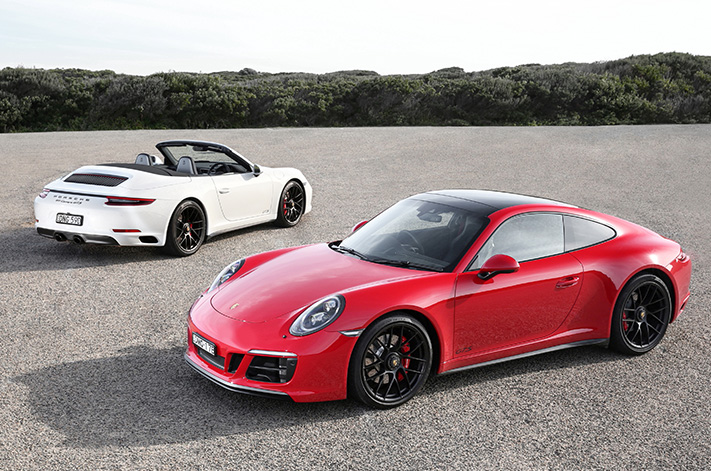
Still not enough performance? The newest GTS addition to the range blows the 3.0-litre even harder with a larger pair of turbos for peak performance of 331kW and 550Nm. As well as the extra oomph, the GTS adds 20-inch centre-lock wheels lifted from the Turbo, lowered suspension, a different bodykit and the Sport Chrono package that is available optionally on lesser variants.
If convertible motoring is your thing but you don’t want to sacrifice a solid roof for the fabric Cabriolet top, the Targa variant offers a clever hard-top folding mechanism and a unique look for the 911. The Targa is only available with all-wheel drive and in three variants – the Targa 4, which shares specification with the Carrera 4, a mid-range Targa 4S that aligns with the Carrera S, and the Targa GTS. Prices range from $258,500 to $327,490.
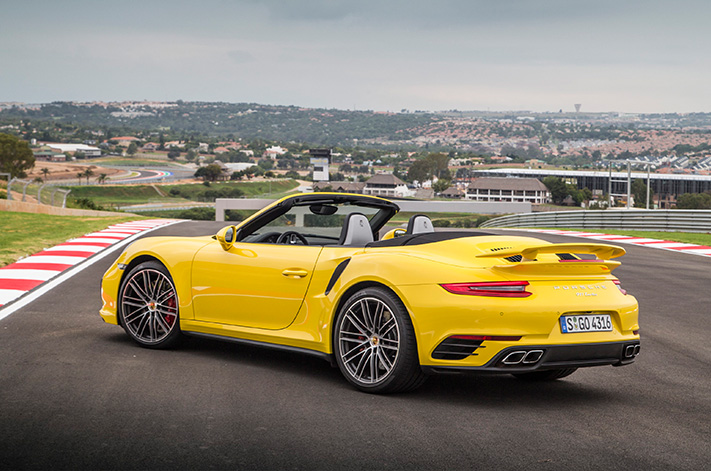
At the top of the 911 pile, the Turbo range represents the performance and luxury halo starting from $390,000 for the Coupe. It upsizes the turbocharged flat-six engine to 3.8 litres and a corresponding boost grunt – 397kW/710Nm. To cope with the prodigious power, all Turbo variants are all-wheel drive with the PDK automatic transmission also standard. Optioning your Turbo with a convertible roof takes the price up to $411,500.
Similar to the Carrera, the Turbo also comes as a performance-enhanced Turbo S, which gets 427kW and 750Nm from a tuned-up version of the same 3.8-litre engine. Performance peaks with the Turbo S Coupe, which can dash to 100km/h from standstill in 2.9secs, while the convertible version takes a tenth longer.

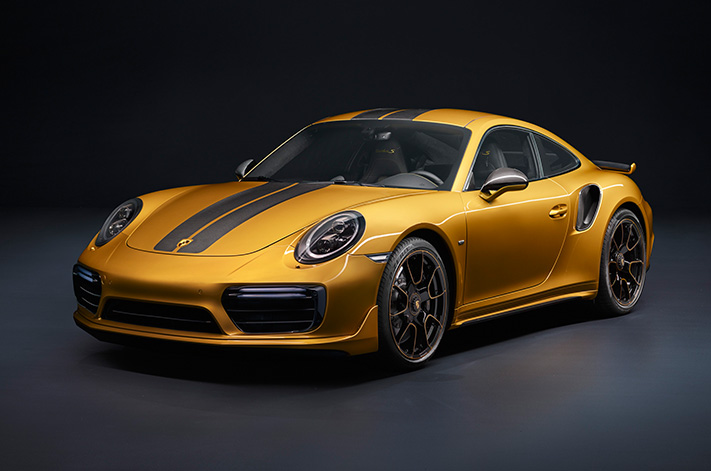
For those with an even bigger budget, the limited-run Turbo S Exclusive Series offers an extra touch of exclusivity with bespoke material and colour options, plus active suspension, carbon ceramic brakes, rear wheel steering and the Sport Chrono package as standard. The Exclusive Series also gets an extra 19kW of power but the 0-100km/h sprint is unchanged. Production will be limited to 500, and the price carries a hefty $128,800 premium over the ‘standard’ Turbo S Coupe.
Our pick
With so much variety within the 911 range it is almost impossible to pick just one variant to do it all, so we will narrow it down to two.
With a more flexible budget, the GTS Coupe offers a lot of 911 for the money. Not only does it get the most potent version of the 3.0-litre, but it is also the only way you can have the sexy widebody and rear-wheel drive for ultimate driver involvement. The compelling package is completed by race-derived centre-lock wheels, the more purposeful bodykit and sportier interior and seats as standard. Driving purists will also appreciate the most powerful 911 you can get with a manual gearbox.
Australia’s favourite? Of the numerous variants and combinations on offer, the Carrera S Coupe with PDK auto is the most popular.
In reality though, the entry-level 911 is an exceptionally well-rounded sportscar and often overlooked in the shadow of its more powerful and expensive siblings. Its 272kW is still ample to have a lot of fun with behind the wheel, especially when combined with the 911’s sharp chassis. The most affordable version also gets the unmistakable 911 shape that will keep you glancing over your shoulder every time you walk away.
The Honda Jazz has been given a mid-life spruce, receiving visual and interior enhancements.
The updated range will arrive in dealers later this month, completing Honda’s commitment to refresh, update, or introduce all-new models across its entire showroom over the last 18 months.
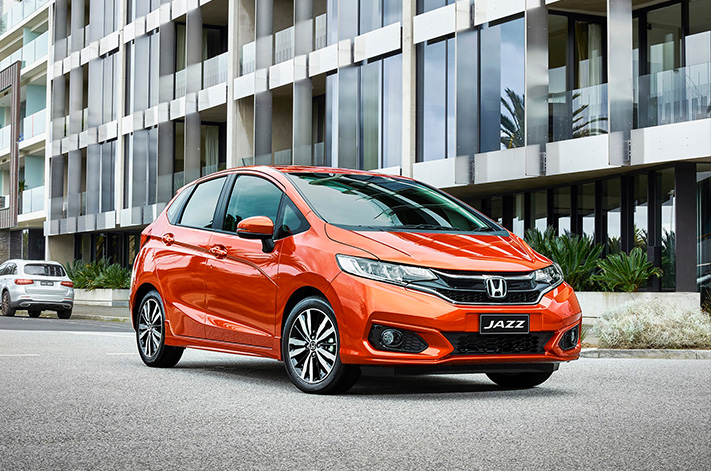
Exterior changes to the 2018 model year Jazz now includes new front and rear bumpers, along with a redesigned front grille, and, on the higher-spec VTi-L spec, bi-LED headlights, LED daytime running lights, and LED high and low beam.
The entire range gains new wheel designs and colour treatments, while a new paint colour has been introduced – Phoenix Orange.
Inside, the cabin gets a 7-inch touch screen audio system.
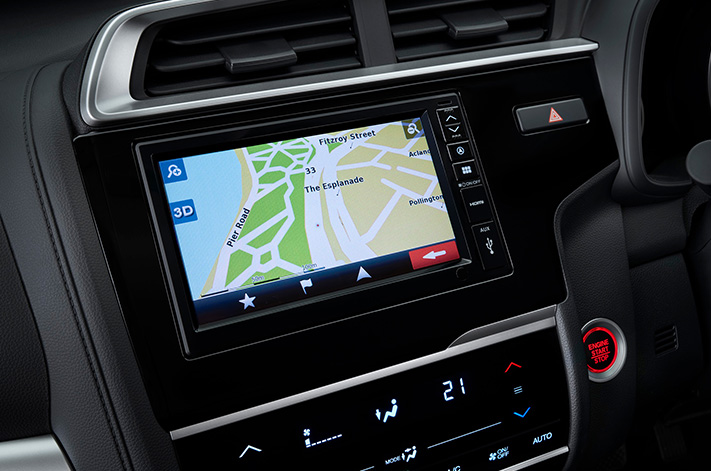
The VTi-S and VTi-L models also receive refreshed 16-inch alloy wheels, and inbuilt sat-nav as standard.
Honda’s updates for the Jazz follows its announcement that the Japanese manufacturer will now offer a 5-year, unlimited kilometre warranty on all its vehicles – an extension of two years over what it previously offered.
The Jazz range is equipped with an 88kW/145Nm 1.5-litre turbo four-cylinder engine, with CVT transmissions available for all model grades. The base-spec VTi is the only variant in the line-up that can be had with a manual transmission.

A unique feature for the Jazz is what Honda calls its ‘Magic Seats’, which are capable of 18 different configurations, providing versatility for customers with a focus on luggage space.
“Combined with Honda’s new 5-year / unlimited kilometre warranty, the refreshed Honda Jazz makes a very compelling argument for customers as one of the best equipped and best value-for-money light cars available,” Honda Australia Director, Mr. Stephen Collins, said.
The Jazz will battle the Kia Picanto for sales, which has the countries strongest standard warranty offering at seven years and unlimited kilometres.
Honda Jazz pricing:
- VTi (MT) — $14,990 (Recommended Retail Price) or $16,990 Driveaway
- VTi (CVT) — $16,990
- VTi-S — $19,990
- VTi-L — $22,990
Peugeot’s all-new 3008 medium SUV arrives in showrooms with relatively high entry-level pricing that’s offset by a broad list of standard features.
Priced from $36,990, the entry-level 3008 Active costs around $8000 more than its entry-level Mazda CX-5 rival and $5000 more than the cheapest Volkswagen Tiguan variant.
However the standard equipment list in the base-model 3008 Active is more in keeping with a similarly priced mid-spec CX-5 Maxx Sport FWD [$34,390] and Tiguan 110TSI Comfortline [$36,990].
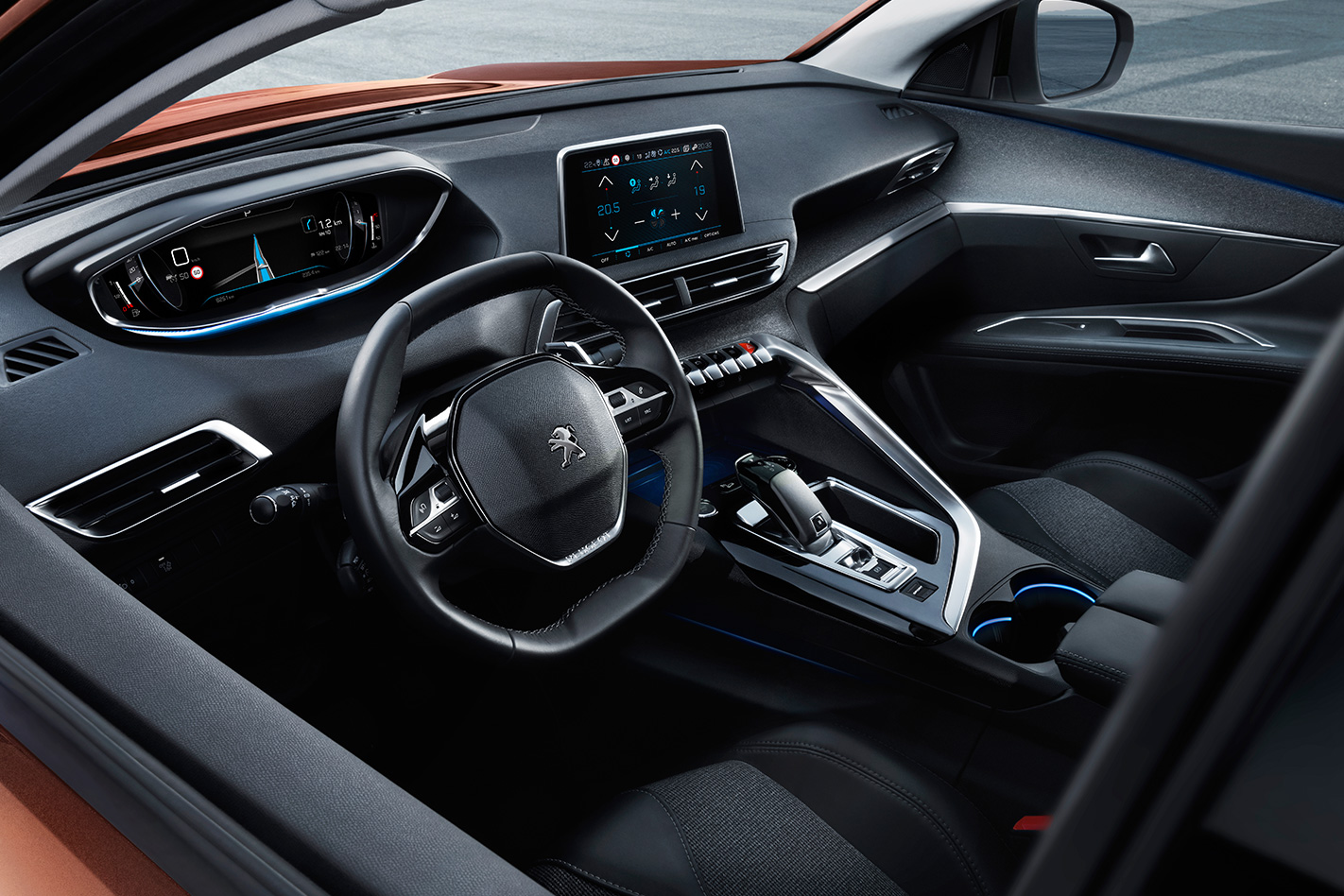
This includes the latest version of Peugeot’s i-Cockpit virtual dashboard, which features a 12.3-inch digital instrument panel and an 8.0-inch central touch-screen.
Other standard features in the Peugeot 3008 Active include:
- Speed limit recognition and recommendation
- Distance alert
- Driver attention alert
- Lane departure warning
- Front and rear parking sensors
- Reversing camera
- Leather sports steering wheel
- Cruise control with speed limiter
- Dual zone climate control
- Rear air vents
- Auto dimming rear-view mirror
- Driver Sport Pack – which provides more responsive electric power steering, throttle mapping, gearbox response, engine sound, and instrument display
- Digital radio
- Apple Carplay and Android Auto
- Smartphone charging plate
- Voice recognition for phone and radio
- Satellite navigation
- Aluminium roof bars
- 17-inch alloy wheels
- LED daytime running lights
- Automatic windscreen wipers
Both engines meet Euro 6 emissions standards, with the turbo petrol having a frugal combined fuel economy rating of 7.0L/100km and the diesel managing an even thriftier 4.8L/100km.
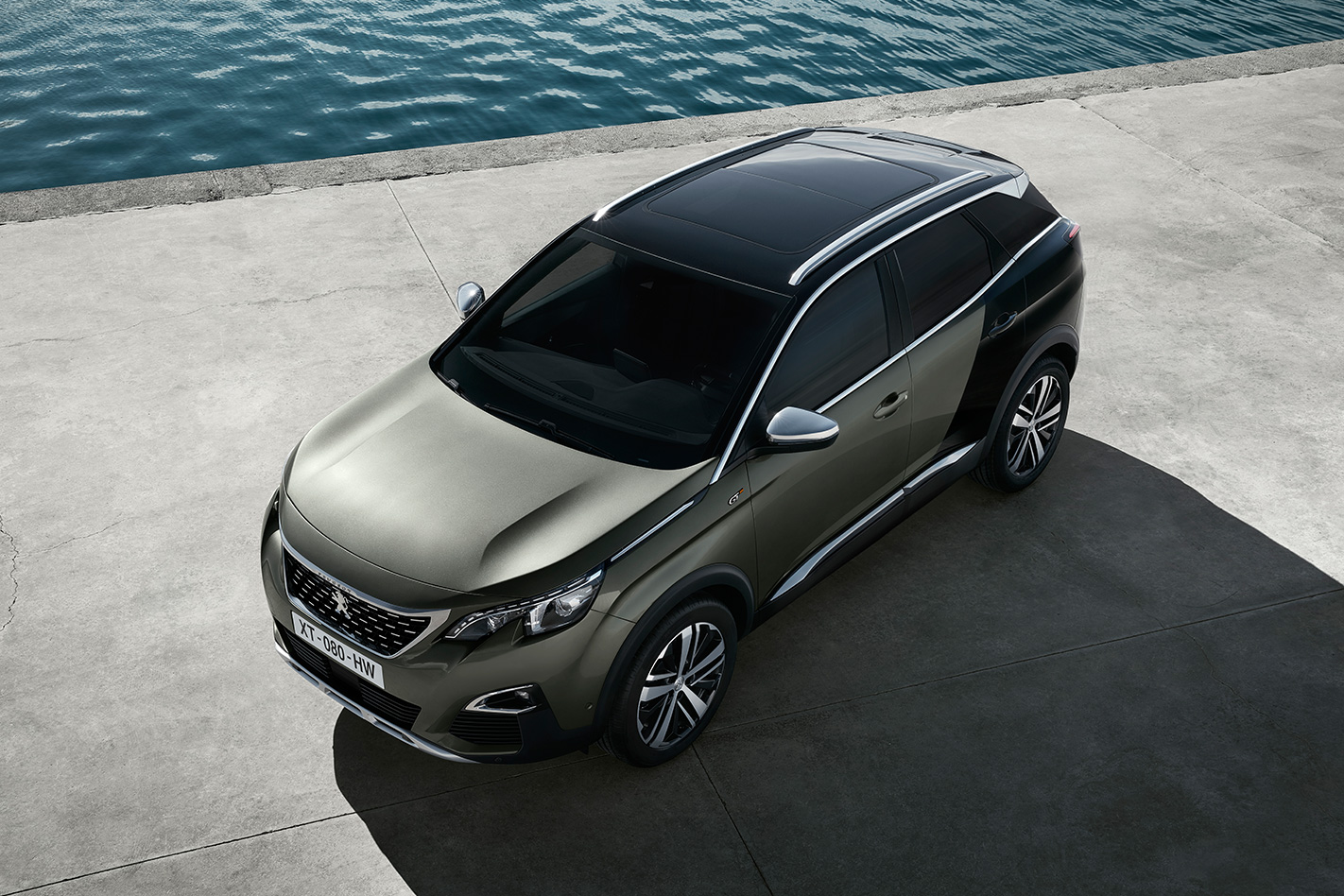
There’s just one transmission option in the range, a six-speed auto, which pushes power to the front wheels. While there is no AWD option, a Grip Control traction system is available as a $200 option.
An Advanced Safety Pack, which includes emergency braking, active cruise control and lane keeping assist is standard in the GT-Line ($43,490) and GT ($49,490) variants, and a $1500 option in the second-up Allure ($39,490).
Other standard features found in the higher spec models include:
- 360-degree reversing camera
- Reverse and parallel parking assist
- LED headlights and foglights [GT-Line and GT]
- Driver seat lumbar adjustment
- Powered heated front seats with massage function [GT]
- 18-inch alloy wheels [Allure and GT-Line]
- 19-inch alloy wheels [GT]
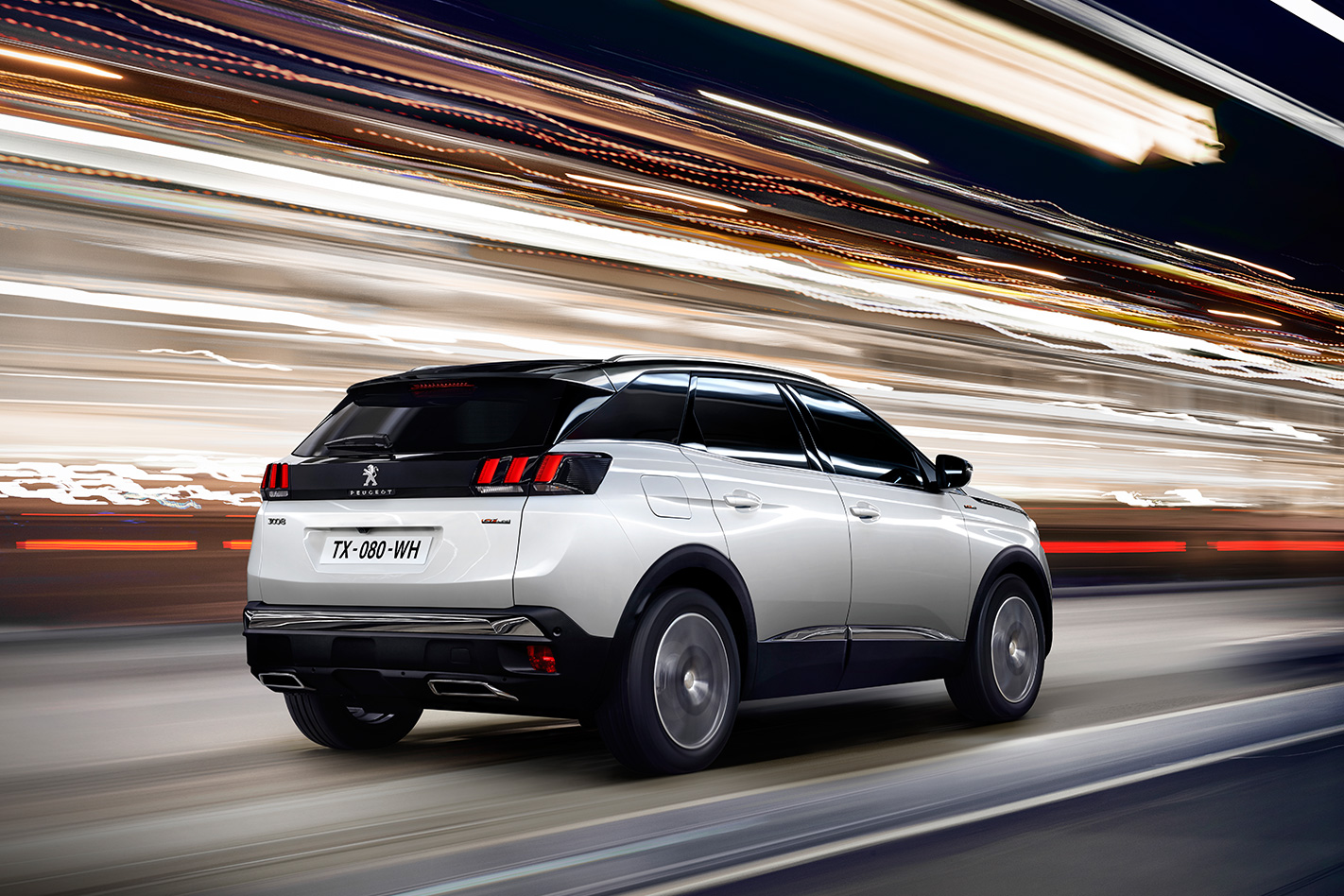
Its dimensions are a slightly smaller than the Mazda CX-5. The 3008’s 4450mm length and 2675mm wheelbase is 10mm and 23mm shorter than the Mazda’s respectively, though its boot boasts 78-litres more space than the CX-5’s.
The all-new Peugeot 3008 will arrive in Australian showrooms this month.
2018 Peugeot 3008 pricing*
- 3008 Active – $36,990
- 3008 Allure – $39,490
- 3008 GT-Line – $43,490
- 3008 GT – $49,990
- Panoramic sunroof with ambient lighting blind – $2000]
- Hands-free tailgate with foot control – $500
- Two-tone paint – $1000
- Premium paint – $790/$990
- Nappa black leather interior trim – $2000
YOU can buy some fairly fun cars for $25,000. That amount of cash puts a Mazda 3 SP25 in your garage, or gets you within $500 of a Ford Fiesta ST…
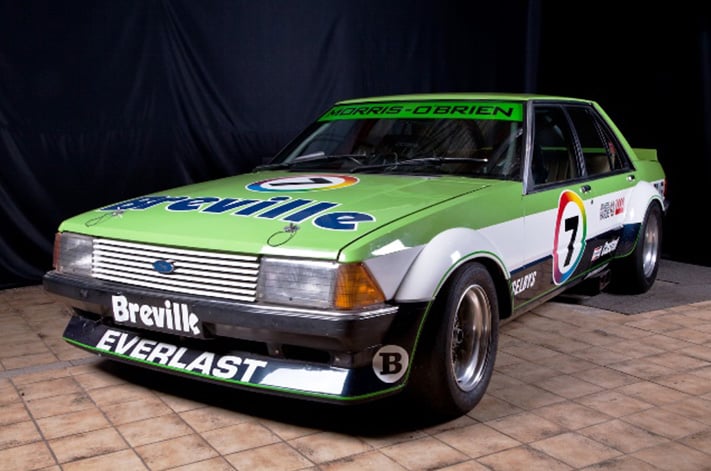
Or, you could have a single, crumpled, mostly green door off a 34-year old Ford Falcon.
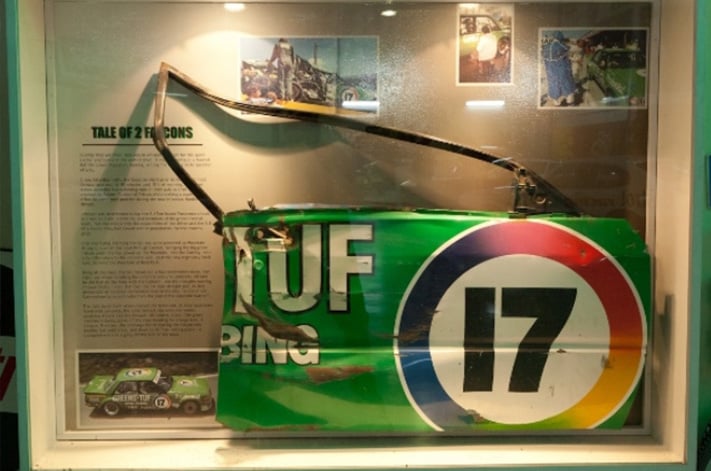
More than three decades on, the mounted and framed collector’s item went under the hammer at auction, achieving a final sales price of $25,500.
Dick’s door wasn’t the most expensive piece of memorabilia to sell at the event, which also included a selection of Ford Falcon Group C race cars from the collection of John and Craig Harris.
Former race driver Neil Schembri spent more than $800,000 on a pair of XC Falcons.
The boss of Bettergrow, a fertiliser company, had a winning bid of $400,000 for an ex-Bill O’Brien Ford XC Falcon Coupe, and $430,000 for the XC Falcon Hardtop raced by John French and Warwick Brown at the 1978 Bathurst 1000.
Other highlights included a 1968 Ford Mustang Fastback styled in homage to ‘Eleanor’ from Gone in 60 seconds, which sold for $101,000, and a 1973 Ford XA GT RPO83 attracting a final bid of $131,500.