
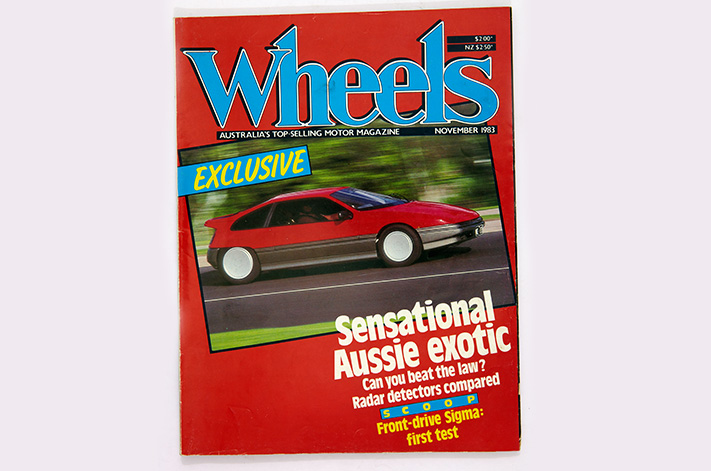
YOU’VE NEVER seen anything like it before, except in photos, perhaps from a European motor show.
First published in the November 1983 issue of Wheels Magazine, Australia’s most experienced and most trusted car magazine since 1953.
This is the Mirella 230TS, looking for all the world like a tomorrow car mock-up, the sort of thing the big makers and leading designers dream up to stir beholders’ imagination and interest. But their versions are usually just three-dimensional styling doodles, inanimate shells, all shape and no substance. And they’re designed for short, static lives in the styling studio or on the show stand.
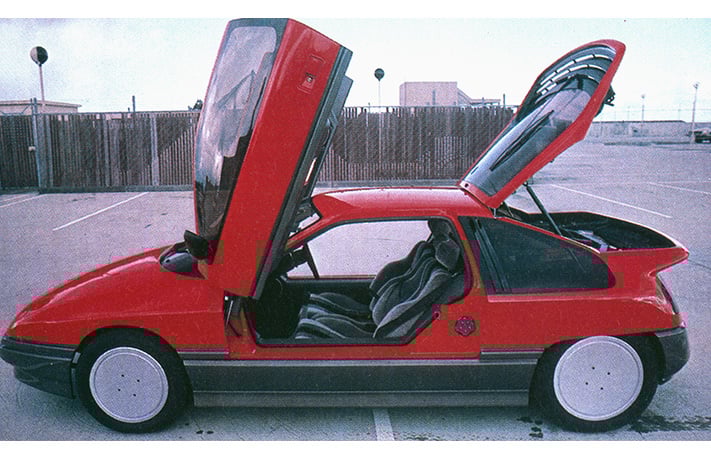
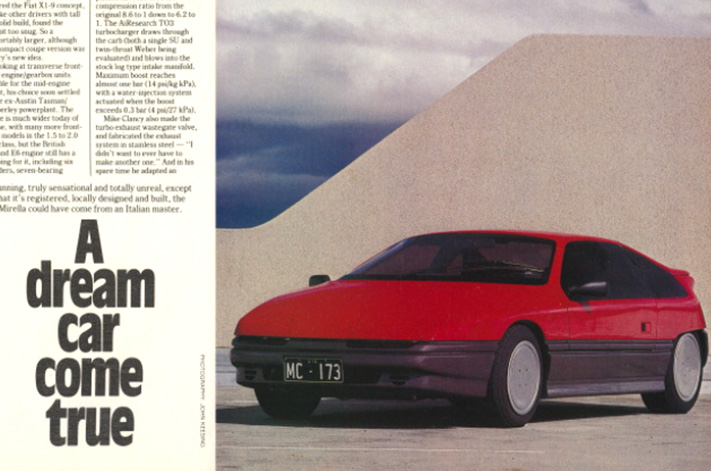
To see the Mirella, just sitting out in the open at the roadside, comes as a shock to the senses. One’s first sight of the car triggers a jolt of raw disbelief. To hear it start, and to see it drive away, is something else again. Futuristic design exercise cars as we know them don’t do that … the Mirella does. And suddenly, as the tiny red wedge joins the traffic, you realise the Mirella isn’t a glimpse of the future. It is today’s car, here and now, with a stunning shape which, at one superb stroke, puts everything else behind the times.
From the several hours we spent with the Mirella, we know it catches attention, turns heads, opens mouths, races pulses and pops eyes like no other car.
“Unreal!” said the Porsche 944 owner who followed until we stopped. “Unreal!” sighed the 260Z girls as they parked in mid-road and ogles.
“Unreal!” said many others among the throngs who stopped and stared. It was the afternoon’s single most popular word. What that actually says of course, is that the Mirella is unreal because it is real, that it is extra-extraordinary because it is a proper car, for driving. It has to be. Enthusiast that he is, doctor Michael Clancy wouldn’t have it any other way.
Apart from an abiding interest in cars, Clancy is an incurable do-it-himselfer. The list of projects to which the 42-year-old Melbourne GP can lay claim includes a caravan with separate accommodations for the family hound and a mini beach buggy, a couple of earlier cars, and other self-made ventures too numerous for him to remember.
Most of Clancy’s self-built projects are mainly his own designs. Most are his own work, all are a credit to his workmanship. But all pale beside his latest venture. In the Mirella TS230 the good doctor has produced a simply stunning little coupe, without question the most striking and most professional road special ever made in Australia.
The Mirella TS230 earns top billing by setting yet higher standards in boldness of design and quality of execution. It’s a 100 per cent guaranteed mindblower … styled out of tomorrow, finished like something out of an elite Italian bodywork boutique, and performing like something straight off the racetrack.
It didn’t happen overnight. There was a lot more time and experience behind the project than the three years involved directly with the TS230. Strictly speaking, the new car is, for Mike Clancy, a logical extension of an activity which began when he was first bitten by the special-builder’s bug during the ’60s.
In 1966, more than a decade before the still-booming replicar craze got off the ground, Clancy built a pre-war Mercedes-Benz SS look-alike. In the best bitsa tradition, it wedded an early ohv Ford V8 to a Jaguar four-speed gearbox, installed in a Sunbeam Talbot 90 chassis with a Ford Customline rear axle and a Jaguar Mk IV front axle. The big roadster was provided with a suggestion of authenticity by a 1947 M-B 1700 grille, and exposed flexi-pipe exhausts added to its SS-style character.
The second car was begun in 1970 and reached the road only 20 months later. Although built in front-engine/rear-drive configuration, it was designed to allow relatively easy conversion to a four-wheel drive system. Clancy built the coupe’s semi-monocoque chassis which incorporated a full roll-over cage and accepted Austin 1800 front and rear sub-frames complete with Hydrolastic suspension, rack and pinion steering and four-wheel disc brakes. The car was initially powered by a Valiant 225 Slant Six engine, later by a Hemi265.
Clancy named the car after his wife, Mirella, and proceeded to use it for everyday transport, including three family-holiday trips from Melbourne to Queensland and back, towing a caravan. By the late ’70s the itch to build another more advanced and more specialised design was too strong to resist. He admired the Fiat X1-9 concept, but like other drivers with tall and solid build, found the cockpit too snug. So a comfortably larger, although still compact coupe version was Clancy’s new idea.
Looking at transverse front-drive engine/gearbox units suitable for the mid-engine layout, his choice soon settled on the ex-Austin Tasman/Kimberley powerplant. The choice is much wider today of course, with many more front-drive models in the 1.5 to 2.0 litre class, but the British Leyland E6 engine still has a lot going for it, including six cylinders, seven-bearing crankshaft, single overhead camshaft and 2.3-litre capacity.
About the only drawback is the four-speed gearbox – a five speeder would be nice – and the non-availability of alternative final drive ratios.
In stock form the single-carburettor E6 produced a claimed 76 kW at 5500 rpm and 157 Nm at 3500 rpm. With twin carbs the maxima increased to 85 kW and 160 Nm. Mike Clancy estimates his E6’s maximum power is about 150 kW thanks to his own-design turbo system. New pistons have lowered the compression ratio from the original 8.6 to 1 down to 6.2 to 1. The AiResearch T03 turbocharger draws through the carb (both a single SU and twin-throat Weber being evaluated) and blows into the stock log type intake manifold. Maximum boost reaches almost one bar (14 psi/kg kPa), with a water-injection system actuated when the boost exceeds 0.3 bar (4 psi/27 kPa).
Mike Clancy also made the turbo exhaust wastegate valve, and fabricated the exhaust system in stainless steel- “I didn’t want to ever have to make another one.” And in his spare time he adapted an airconditioning compressor at the front of the engine, replacing the alternator which was moved to the rear face. An oil cooler was also added. It had already been decided to use Datsun 240Z strut type rear suspension, and the Austin’s output flanges were drilled so the Datsun half-shafts could be bolted up to them. Because the Austin’s flanges were farther apart than the 240Z’s, and the chosen Globe “Bathurst” 14 x 7-inch alloy wheels had a bit more offset, rear track emerged at 1445 mm, an increase of about 100 mm over the Datsun.
For the front-end, Mike Clancy chose Toyota Mk II wishbones, uprights and hubs (same bolt pattern as the Datsun rear hubs), giving 1422 mm front track with 13 x 6-inch Bathursts. He also retained the Toyota’s disc front brakes and the Datsun finned rear drums. Rack and pinion steering came from a Peugeot 404, while the collapsible steering column and its switch stalks were BMW 633. The wheels were shod with Dunlop 60-series tyres, 205s front and 224s rear.
The remaining major parameter was the wheelbase, subsequently put at 2286 mm which, although compact for a mid-engine design, was determined by Clancy to be adequate to accommodate the cockpit and engine bay between the axle lines.
To help resolve the allocation of areas for the mechanical elements and occupants, and to clarify the chassis design, a scale model was made using lengths of three and six mm square balsa wood. This was subsequently translated into the full-size space frame, an elaborate, fully triangulated structure consisting of mostly square (some rectangular) tubing in 25, 38 and 50 mm sizes. To complete and further strengthen the chassis, thin steel panels were attached to the tubes to sheet-in the front and rear of the cockpit while giving a flat floor and fully boxed triangular-section side members which were then filled with expanding foam. Great resistance to intrusion in side impacts obviously rates very high in the doctor’s priorities.
Ahead of the cockpit toe board the unsheeted chassis tubes carry the suspension and steering while supporting the two radiators – a Morris Marina core for engine cooling and a Datsun 200B airconditioning condenser. The basic cockpit was completed with the gearshift rod (the only part beneath the flat floor), Volkswagen pedals, and a 63-litre fuel tank shielded from the cockpit in the inverted V between the vertical firewall and the seat backs. The fuel tank filler is housed in the offside B-pillar, behind the door, while the coolant filler is in the same location on the nearside.
While all this was going on, the body hasn’t been forgotten. In that department Mike Clancy collaborated with his brother-in-law, Clive Potter. A graduate of England’s renowned Royal College of Arts, Potter did a stint with Ford UK; then about 10 years ago came to Ford Australia where he is now Principal Designer, Interior. But his talent obviously isn’t limited to interiors only.
The initial thoughts of Clancy and Potter were towards a neat little notchback coupe. Determined partly by the mechanical elements, the packaging and the production (Citroen CX) windscreen, the notchback design was eye-catchingly modern if not mindboggingly dramatic. The pair was well satisfied with it in essence, however, and proceeded to make a quarter-scale model before commencing full size mock-up.
But even as the model was being finished, Potter continued developing the design on paper, taking the roofline and side windows to the tail in one smooth swoop, and adding a bold duck-tail to divide the rear-end into distinctly upper and lower sections. He converted his sketches into renderings and a large scale tape line drawing.
When they saw what they now had, they didn’t even hesitate. Mike Clancy remembers his excitement: “I told Clive that that was it. We wouldn’t bother making a model. I wanted to be making the real thing.”
In the traditional labourious way, the body mock-up was built directly over the chassis. Pieces of plywood were attached between the tubes, giving a solid if angular foundation. Next came a layer of sand and cement mixture to provide the raw outline, which was then covered in some places by plaster of paris, and in others by the special clay used by professional model makers. The surfaces were then painstakingly scraped, cut, filed, dragged and sanded to shape. In this hard, slow and necessarily demanding work, Clancy was also helped by Steve Park, another Ford design person glad to lend a hand on such an exciting project. Clancy is justifiably proud that the body is not only superbly finished but also immensely accurate … ‘at the very worst, to within a couple of millimetres or so”.
Early in this stage an Alfa G TV windscreen was added as the rear window, and as the mould took shape the detail work continued, including attention to ventilating the engine compartment. Air-entry slots were sculpted in the wing’s upper face, with air-exit slots under the wing between the special Clancy taillights.
The engine bay is isolated from the cockpit by a fixed window above the firewall. This may be double-glazed if noise proves a problem, although our run in the Mirella suggested the audio level is just about right to enthusiasts’ ears. There isn’t an engine cover as such, because Clancy wanted “the works” to be visible to onlookers. “Why hide a good-looking powerplant under a lid?”
Making the overall mock-up was only a fraction of the job. It then remained to divide the mock-up into its major sections including the bonnet, rear hatch and doors. Early in the project Clancy had decided against either conventional or gull-wing doors. Instead he opted for a horizontal pivot on the A-post, so the doors would swing up and forward, a Ia Lamborghini Countach. The design avoids problems with close-parked cars, but you wonder about low-roofed places like garages.
The doors have to be opened to pay tolls, to say “Good morning Officer … “, and whatever else you usually lower the windows for. The Mirella’s side windows are fixed, which also explains the airconditioning. The side windows are darkly tinted acrylic, made on moulds taken from the master mock-up.
Inner skins were also moulded for the hatch, the doors and the cockpit roof. To facilitate working inside the roof, Clancy made a huge spit-like jig to turn the body upside down. Apart from the inner skin, the roof has upholstered panels either side of the National Panasonic overhead radio cassette console.
In all, no less than 14 separate fibreglass moulds were taken from the master mock-up and its related separate sections. The required fibre glass panels were then produced and assembled together for final finishing, although relatively little of that was required due to the exceptionally good quality of the mock-up and moulds.
The next step was to have the whole thing painted, and at that point Mike Clancy decided to step back and let a pro have a go. Thus the colour, a two-part enamel, was applied by Caress Panels, and it’s as good as the very best we’ve ever seen. In case you’re wondering about the bumpers, there aren’t any. In spite of the different colour and deep demarcation lines, the front and rear “bumpers” are integral with the nose and tail sections. The reasoning is that they are there to prevent chassis damage, and it would be easier to replace the nose and/or tail panels completely rather than design and make worthwhile separate bumpers.
The interior is furnished and finished with Scheel buckets, complimenting carpet and a Mono wheel. It will soon have some of the most advanced digital instrumentation ever to confront a driver. The main panel wasn’t ready when we were out in the car, but we saw and learned enough to have no doubts that this too will be extraordinary. There are, for instance, 12 warning lights and more than 100 LEDs, plus some fibre optics, and LCD readouts for the speedometer, tachometer and trip computer.
Clancy silk-screened the custom-made face, which will be night-lit by a special panel from the USA. It resembles a sheet of plastic with a mirror-like layer on one face. When a voltage is applied to the panel its entire surface is softly lit. Another nicety is the use of light-control films, also comparatively new to Oz. The film acts like a venetian blind in that you get clear vision only when you look between the slats. By covering the instrument panel with two layers of the film – one with the slats horizontal and the other with them vertical – the Mirella shouldn’t be troubled by external light affecting legibility of the LCD displays.
Such attention to detail is typical of the lengths Mike Clancy has gone to in making Mirella the car that it is. How much and how long? The cost of parts and services is put at about $10,000, which says nothing about the vast labour content. In terms of time, the project took three years solid, and was done in a workshop area about the size of a double garage.
He has no intention of producing another car. “This is it. The one and only.” He has done what he set out to do; build a car which is probably the best of its kind ever in Australia, and is in fact absolutely in world class according to local and overseas professional designers who’ve admired the Mirella’s lines, structure and finish.
Fast forward to 2017
Dr Michael Clancy, the enthusiast who created the mid-engine coupe, still owns the Mirella (now with around 30,000km on the odo). It’s still road registered, though at the moment not a runner. He’s currently slowly building a turbocharged Mazda 13B rotary engine to replace the 2.0-litre turbo Lancia Beta engine that now sits transversely behind the Mirella’s cockpit.
HOLDEN’S post-Commodore V8 hero car – the all-new C8 Corvette due in 2019 – will be a $120,000-plus mid-engine belter set to take the performance fight to Ferrari for one-third of the price.
First published in the May 2017 issue of Wheels Magazine, Australia’s most experienced and most trusted car magazine since 1953.
The next-generation Corvette will emerge from the Bowling Green production line with the steering wheel on the right and deliver traditional V8 performance as well as a hybrid-infused high-tech knockout as part of a three-tiered range set to redefine America’s most iconic muscle car.
It will possibly use the Zora name – referencing Zora Arkus-Duntov, the ‘father’ of the original 1953 Corvette. GM has also trademarked E-Ray, which is expected to be used on a hybrid flagship.
The shift to a mid-engine layout will allow for better positioning of weight over the rear wheels, bringing dynamic benefits and allowing for more power in high-end versions of what insiders say will be the fastest, most engaging Corvette in the 64-year history of the model.
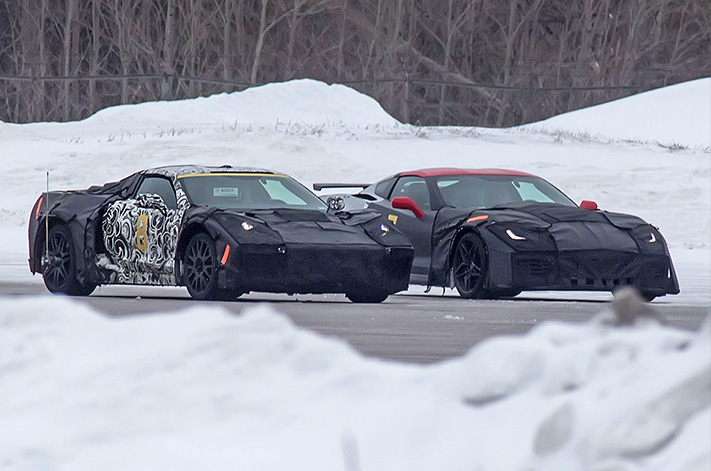
That early mule – which allowed easy fitment of a V8 in the modified tray of the ute – has been sidelined, with near-production ready prototypes undergoing final validation ahead of an anticipated public reveal early in 2018.
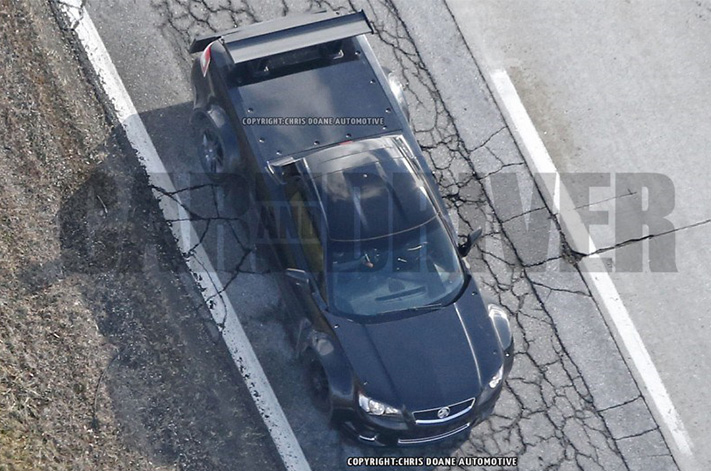
Despite the dramatic shift in its basic layout the C8 will continue with key Corvette styling themes, including the low-slung shape, distinctive Camaro-inspired tail lights that were a controversial addition to the soon-to-be-discontinued C7, and pronounced rear hips, complete with air intakes to feed the trio of V8 options.
The move to a mid-engine layout will continue along with the Ferrari-crushing price tag, at least in its most basic guise, which is expected to use a 375kW small- block ohv V8.
That power output may seem low, but GM is also expected to focus on reducing weight to create the fastest Corvette in eight generations.
Further, we understand that as the ’Vette flexes its muscles throughout its life, we can expect a new dohc engine for the hi-po ZR1, which is also likely to be utilised with the hybrid drivetrain.
Penned under the guidance of GM design chief, Australian Mike Simcoe, the C8 Corvette will adopt modern aerodynamic principles from supercars as diverse as Porsche and McLaren; think air blades to release pressure and lift in the wheelarches, as well as vents to divert air at the rear.
The aero will be even more crucial for a higher-output ZR1 model with around 500kW, although it won’t arrive until 2020 at the earliest.
But it’s the hotly anticipated hybrid ’Vette, possibly to be called E-Ray, that will top the power race.
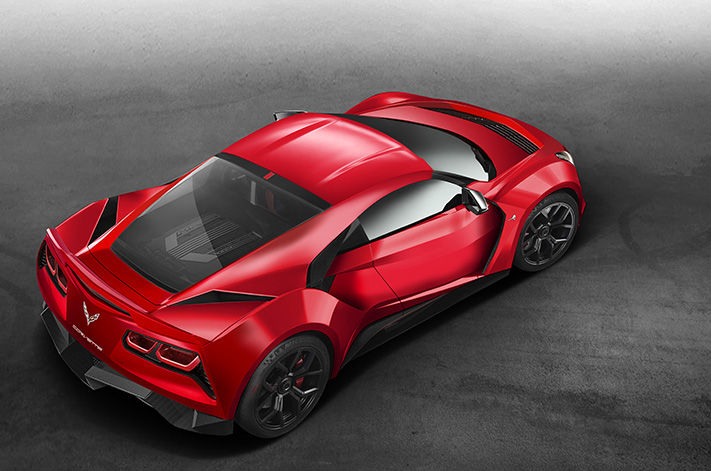
“[Chevrolet] Bolt technology and electrification really has applications in performance cars,” said Cafaro. “You see it at Le Mans … it’s going to happen.”
While Cafaro says the floor is the most logical place for batteries in an electric car – helping lower the centre of gravity – the mid-engine Corvette is tight for space everywhere except under the bonnet. Such a move would pave the way for electric motors powering the front wheels.
It’s weight that’s the challenge for any hybrid system, something GM’s vast battery lab at Warren is working hard to overcome.
All drivetrains should be available to Holden; as the lack of an engine under the bonnet allows easier placement and shuffling of steering and brake components.
For decades GM has dreamt of mid-engine Corvettes, but production costs and complexities have resulted in the V8 being placed up front instead.
Work on a mid-engine C7 Corvette was well underway from 2006, before being shelved when GM filed for bankruptcy in 2009.
A large tech influence on the C8 will be the Cadillac CT6 unveiled in 2015. It’s a car that stretched engineers at Warren to rethink the makeup and production of a luxury car.
The CT6 uses 11 different materials in its body as part of its ‘mixed material’ strategy, whereby various grades of steel and aluminium are used.
The C8 will have an aluminium intensive frame wrapped in carbon composite panels, but expect GM to infuse it with production efficiencies gleaned from the CT6.
There’s plenty of detail yet to surface about the C8 Corvette, but what is becoming clearer is that it will be the most technologically advanced car ever to emerge from General Motors.
As winter approaches we’re more likely to experience foggy conditions which can severely reduce road visibility even in well-lit city areas. Driving through fog can be an unnerving experience particularly at night, but there are a few things you can do to safely get through the mist.
Drive to the conditions
Make sure you have time to react as other cars or hazards appear through the fog. If you have to slow down, do so carefully to avoid being rear-ended. If you can see a car in front try and maintain at least a two-second gap remembering it’s more likely to stop or slow down than during normal conditions. There may be cars close behind that you can’t see so drive at a constant speed where possible and avoid changing lanes.
Stop if you have to
If you’re forced to drive ridiculously slow there’s a bigger risk of being hit from behind by more confident or careless drivers so consider pulling over and parking in a safe spot away from the road’s edge.
Correct lighting
Don’t use high-beam headlights or driving lights in fog as the light will reflect off the water droplets making visibility even worse. Use the normal low-beam setting and fog lights if fitted. Because they’re mounted low, fog lights help you see more of the road surface but don’t actually penetrate the fog. Don’t forget to turn fog lights off when the fog clears as it’s an offence to drive with them on during clear and dry conditions.
Be seen
Even if you can negotiate daytime fog without lights, you should turn your headlights or parking lights on to help other drivers and pedestrians see you. If your car has daytime running lights remember that they only work at the front so turn on your other lights so your car can be spotted sooner from behind.
Clear vision
Fog is made up of water particles in the air which will gather on your windscreen and further reduce your concentration, so use your windscreen wipers intermittently.
Concentrate
Driving through fog requires a lot more concentration on the immediate road ahead and for any hazards on the side. To help you concentrate, avoid distractions such as a loud radio or chatting with passengers. If you are driving through fog for a long time, consider taking frequent breaks, making sure you park somewhere safe away from the road.
Driving blind
Fog means fewer visual references to help gauge your sense of speed, making you appear to be travelling slower than you actually are. Like a pilot in cloud, use your instruments to help maintain a safe and constant speed.
The new 2018 BMW F90 M5 will be all-wheel drive, but only when you want it to be.
Following the path first trodden by its main rival, the Mercedes-AMG E63 S, the all-new M5 uses a switchable all-wheel drive system, allowing for maximum traction but also the ability to haze the rear tyres in time-honoured fashion should you want to.
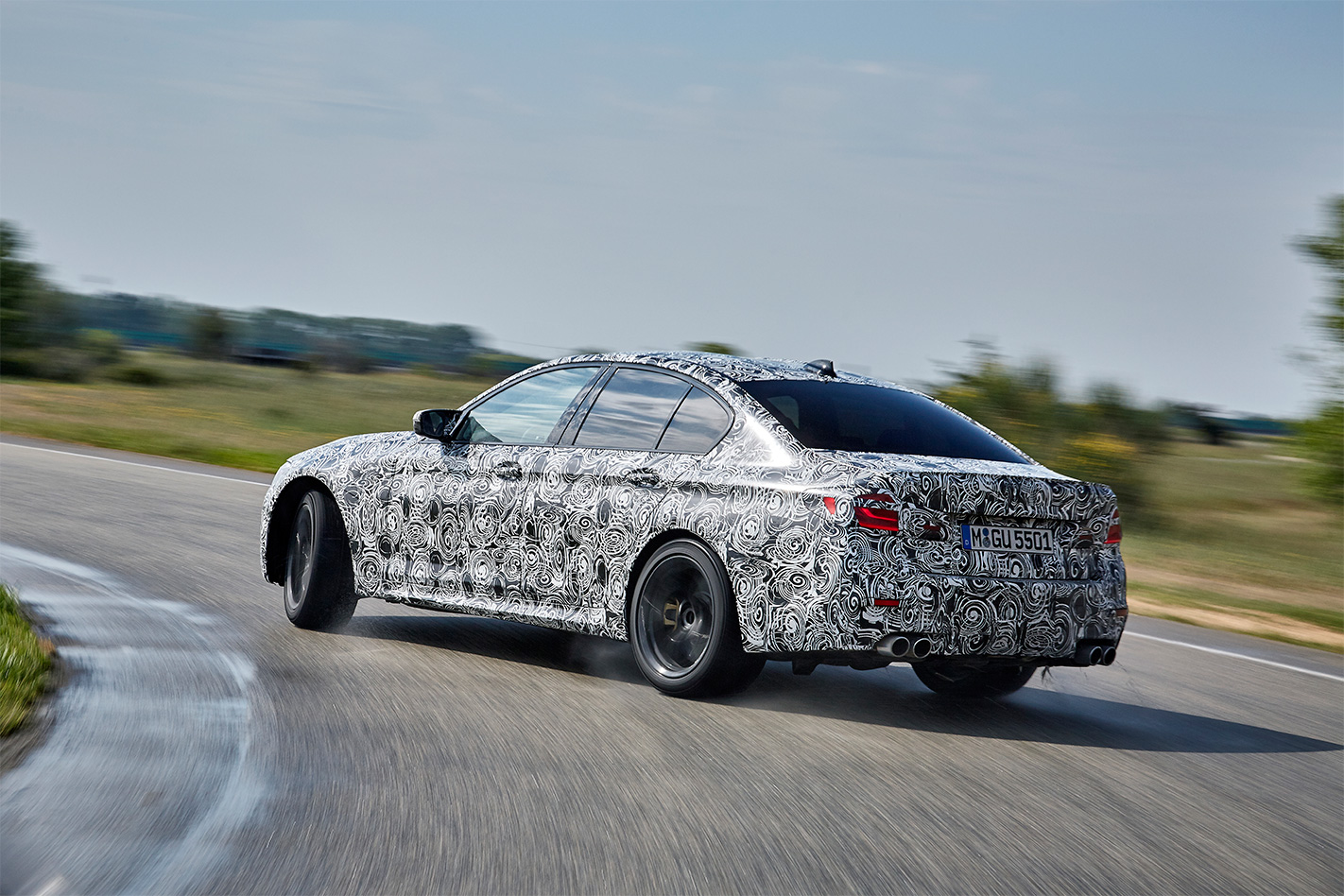
This works in conjunction with the traditional electronically-controlled rear M differential, which now uses carbon plates.
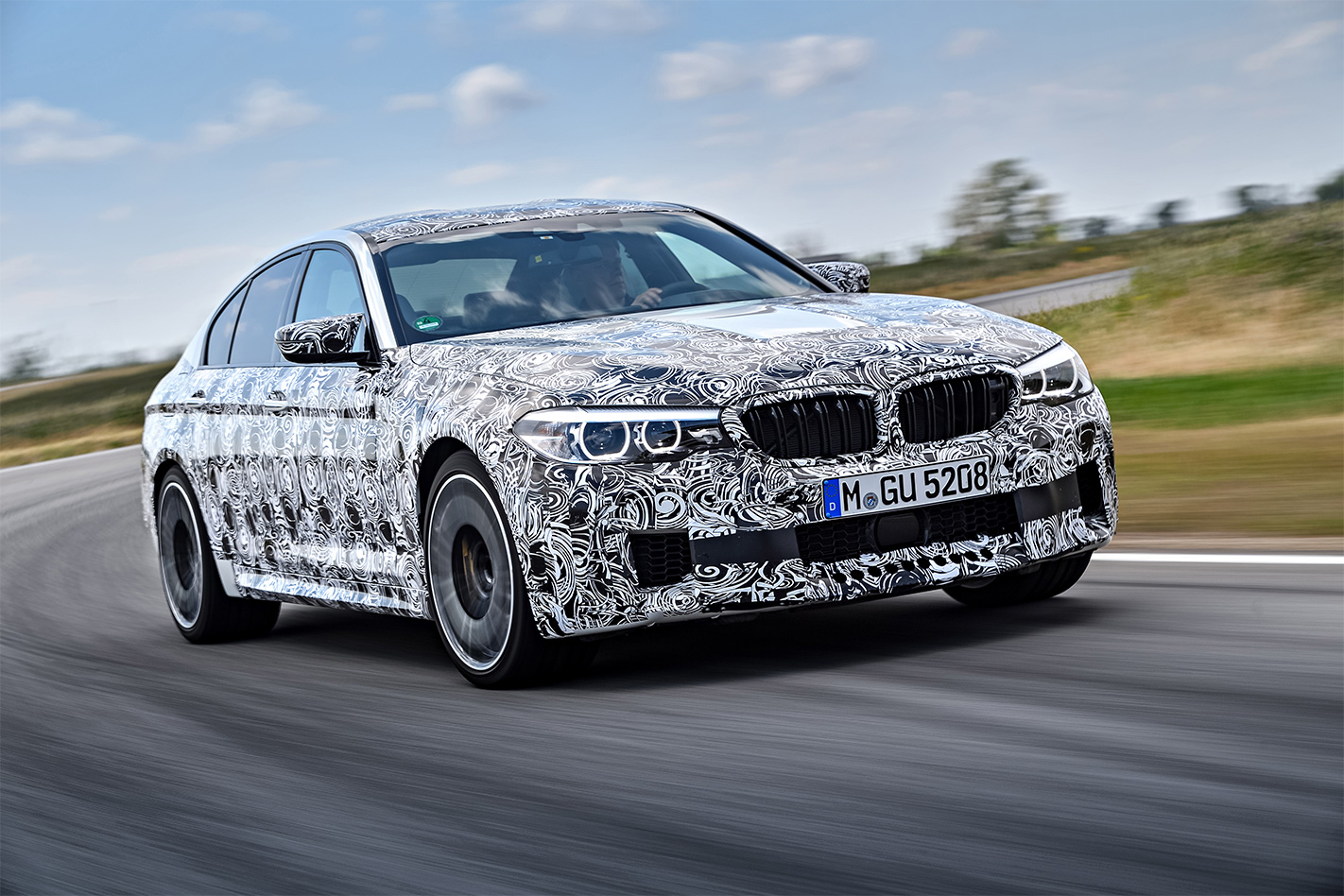
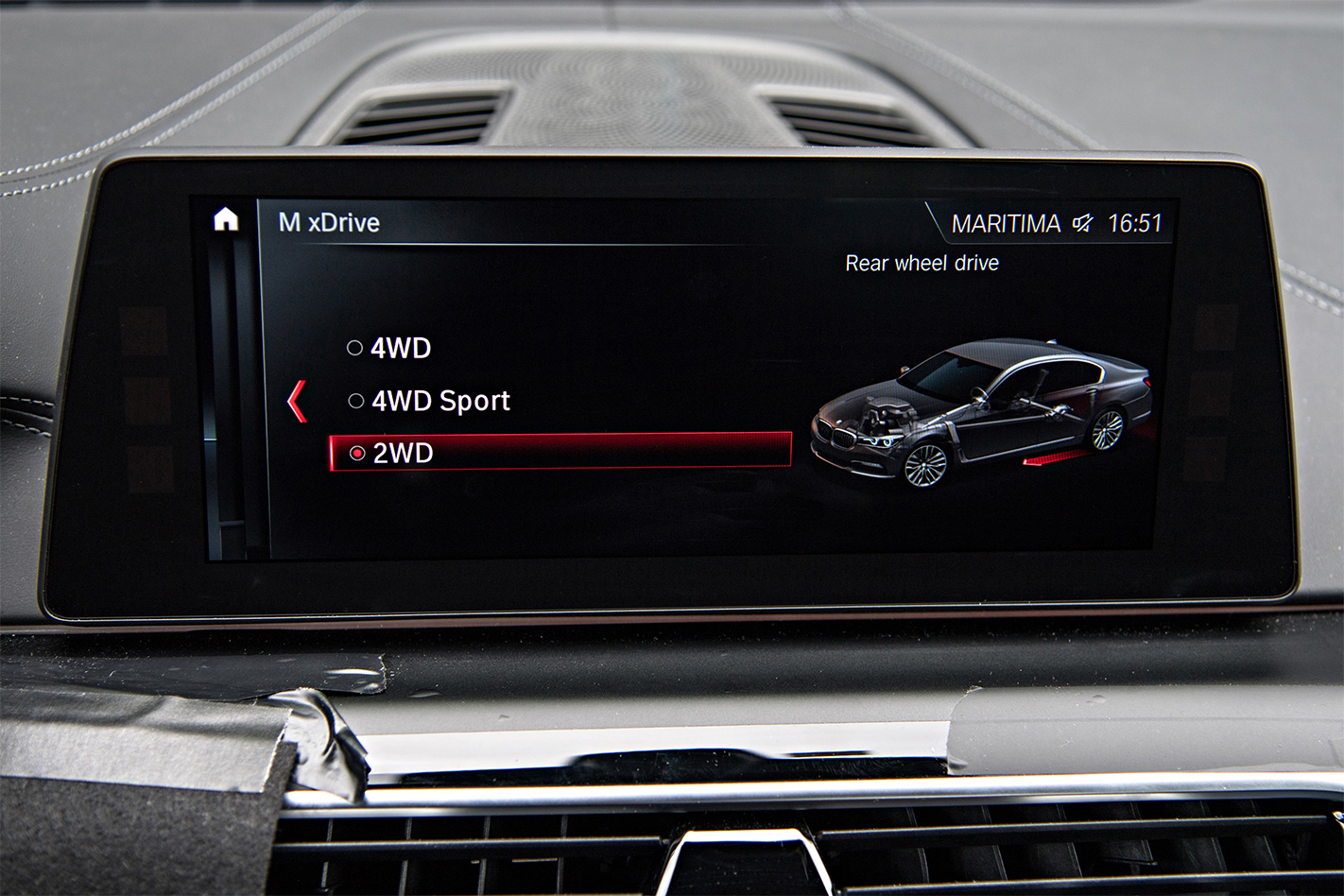
Finally, switching the DSC completely off allows the driver to select from 4WD, 4WD Sport or 2WD. The driver’s preferred mode can also be saved along with a favourite combination of settings for the suspension, powertrain, steering and DSC with the M1 and M2 buttons.
The recently-deceased M5’s 4.4-litre twin-turbo V8 remains, albeit heavily revised with higher injection pressure, new turbochargers, new cooling and lubrication systems and a new exhaust, with BMW sources saying the new car sounds much better than the old.
Power is expected to be in the 450kW/700Nm region, which combined with a new eight-speed automatic – replacing the old seven-speed dual-clutch – and lighter kerb weight should slash the 0-100km/h time to around 3.5sec.
We’ll have a first drive of the BMW F90 M5 prototype in the July issue of MOTOR magazine.
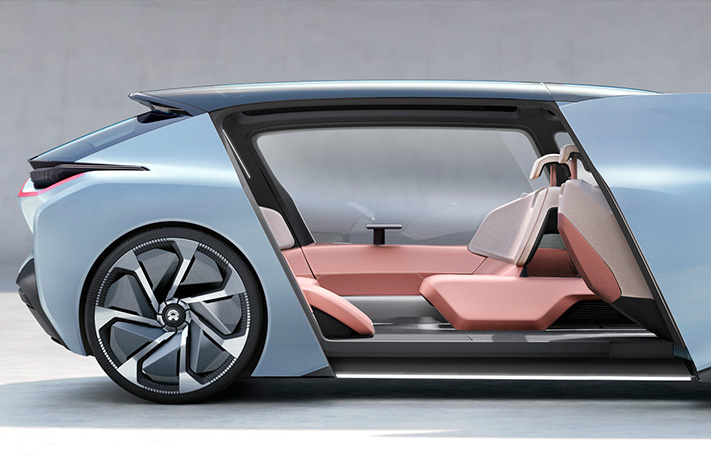
There’s a certain appealing symmetry about founding a tech company on a handshake. Yet that’s exactly what happened at the 2014 Paris Motor Show when Martin Leach and William Li shook hands on a deal to start NextEV, an electric vehicle startup.

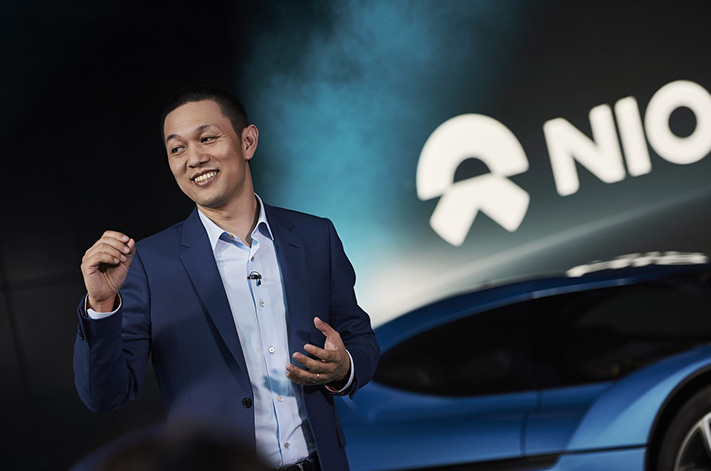
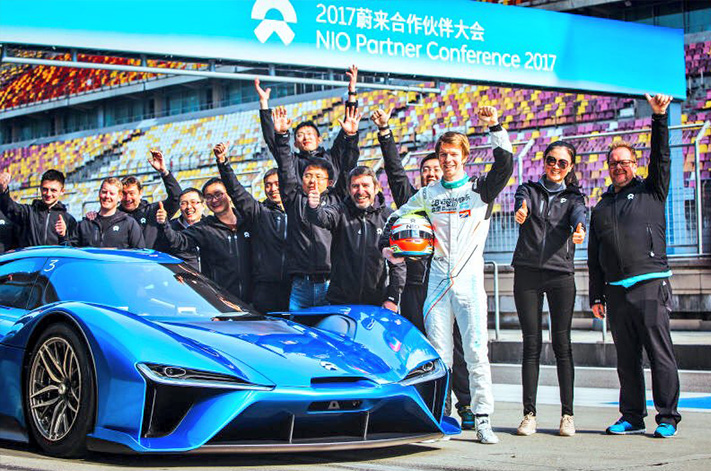
It had also become the first Chinese company to take out any top-line drivers’ championship in racing, Nelson Piquet Jr winning Formula E in 2015. It had even built a fully production-ready seven-seat electric SUV, the NIO ES8. Then there was the NIO EVE, an autonomous concept that is slated for production. Just as it looked as if NIO was an unstoppable force, Martin Leach died, aged 59, having fought illness for a few months.
On the tech side, there’s former CTO of Cisco and Motorola and current Microsoft board member, the gloriously named Padmasree Warrior, who heads up the company’s US division. “When I was looking at a startup, I asked what would be the spaces that would interest me,” she said. “I narrowed it down to transport and education. Those were the two areas where I felt that technology was still on the periphery.

But where Tesla has identified itself as a tech company, keeping the dirty old auto industry at arm’s length, NextEV hasn’t been so stand-offish, attempting to fuse the best car industry brains with Silicon Valley smarts. With its Shanghai nerve centre in China and R&D and design centres in multiple countries, including the USA, Germany and the UK, NextEV has just over 2000 employees and growing fast. Just check out the vast list of available positions on its website. Its US arm has been issued an Autonomous Vehicle Testing Permit by Californian authorities and plans to begin testing driverless cars on public roads in the near future.
Lamborghini CEO Stefano Domenicali has confirmed that the upcoming Urus will feature a twin-turbo V8 which will produce 485kW.
According to Automotive News Europe, Domenicali also says Lamborgini will make a hybrid version of the performance SUV a year after the Urus is released.
Set to be more powerful than the current 4.0-litre V8 Volkswagen Group currently uses in its Audi products, the Urus’ engine will be more powerful than that of the Bentley Bentayga, BMW X6 M or the Porsche Cayenne.
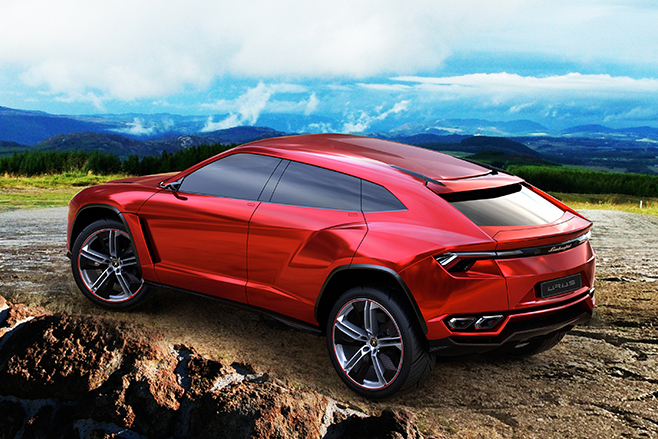
This means Lamborghini would essentially be doubling its current vehicle production, with half being the Urus, as the manufacturer built around 3500 cars last year.
The SUV will be unveiled by the end of this year at the company’s factory in Italy, joining the Aventador and Huracan.
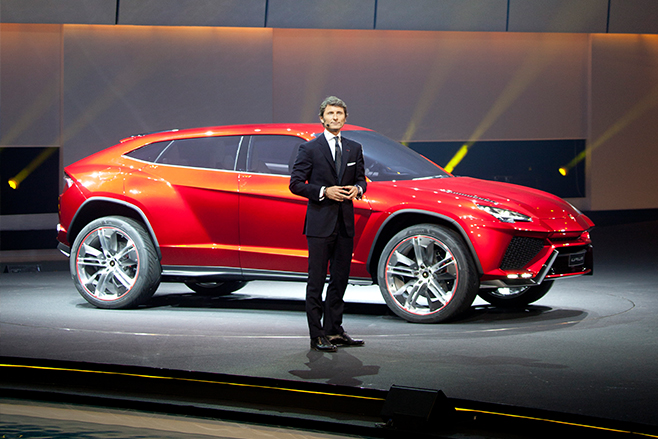
Set to be priced in Europe at just below 200,000 Euro (~AUD $300,000), the Urus will go on sale in 2018 Q2, with US sales commencing in Q3.
Lamborghini customers currently wait around half-a-year to receive a Huracan, or about a year for a V12 Aventador, though waiting lists for the Urus will likely be shorter due to inflated production.
SUBARU has announced a new BRZ Sports Pack Special Edition, which brings a largely aesthetic refresh for a smaller price, but leaves power output and performance untouched.
Unlike the previous BRZ Sports Pack that was offered in 2013 for close to $8000, the 2017 version has arrived with a more attractive price tag that adds $2300 to the standard BRZ 2.0 Premium.
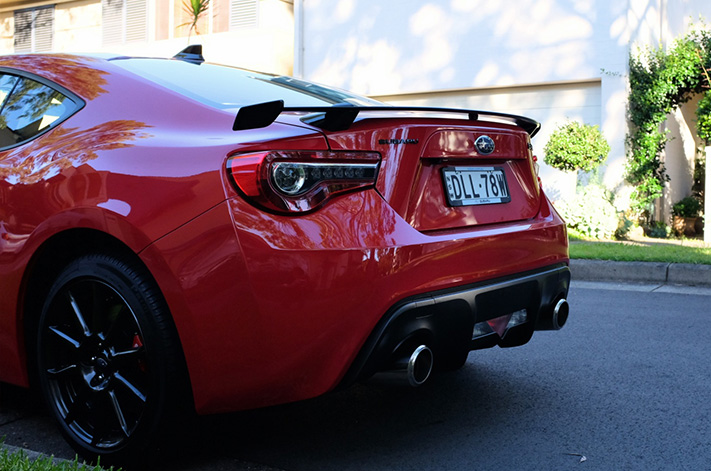
All versions of the BRZ continue to offer the same 2.0-litre boxer petrol engine which produces 152kW/212Nm and 147kW/205Nm when mated to the six-speed manual gearbox and automatic transmission respectively.
However, the BRZ Sports Pack special edition receives a visual upgrade.
Listed on Subaru’s website, the new 2017 BRZ Special Edition features updated Brembo brakes and Sachs suspension for more track-carving capability, while 17-inch wheels, rear wing, mirrors, shark fin and rear badges are finished in black for a more menacing look.
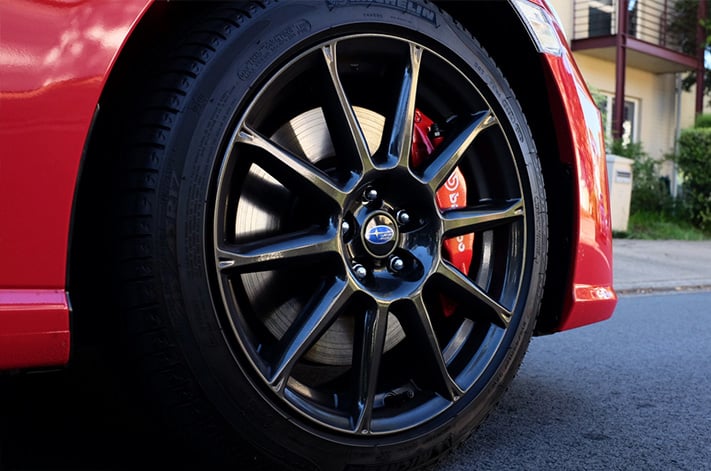
The additional cost of the Sports Pack brings the BRZ to $36,694 plus on-roads for the six-speed manual and $38,694 plus on-roads for the automatic.
Subaru is offering 150 of the specials, with customers invited to choose from one of four colours: Pure Red, Dark Grey metallic, Crystal White and WR Blue pearl.
The updated 2017 Subaru BRZ arrived in Australia late in 2016, offering buyers new tech, improved ride, a sharper price and a power and torque increase for the manual.
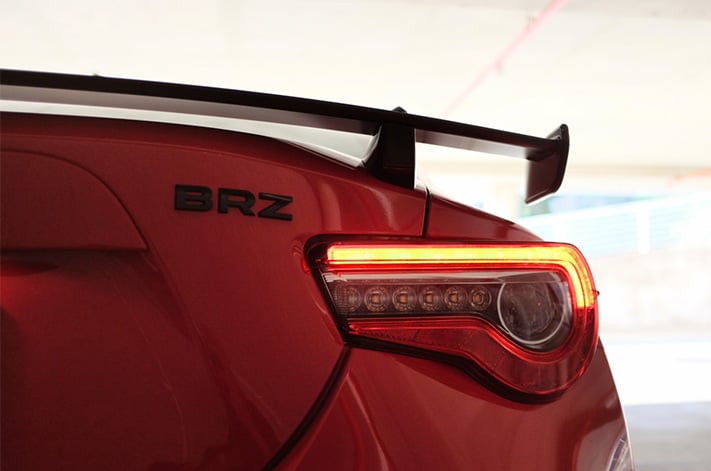
The upgrade also offered chassis tweaks for better rigidity, as well as a revised suspension for better comfort and stability. Track Mode was added to the Vehicle Dynamics Control, as well as hill start. It was also given a minor facelift with a new bumper design, LED lights and alloy wheels.
Inside, a 6.2-inch touchscreen, 4.2-inch colour LCD dash display, redesigned steering wheel and seat-coverings made up a number of other changes.
TELL ME ABOUT THIS CAR
For the first time in a long time, the Honda Civic range is consistent once again. For the past two generations, the Civic sedan and Civic hatch have been related by name only, with the former using an all-independent suspension and being sourced from Thailand, and the latter using a simplified torsion-beam rear axle and built in the UK.
Placed side by side, most would struggle to link the two together – though both wore a Civic badge on their rump, their dimensions, styling and interior packaging were wildly different.
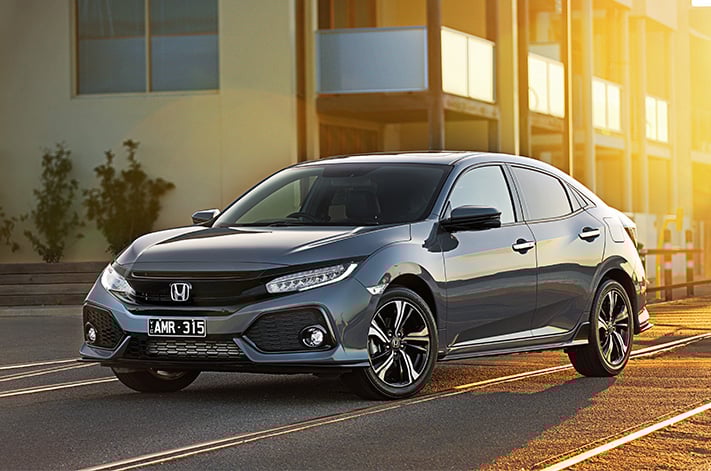
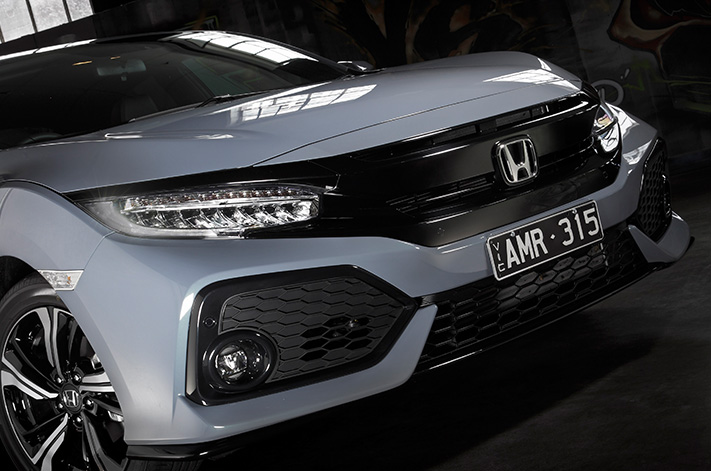
But that’s all in the past. For the 10th-generation Civic, Honda has brought the hatch and sedan into alignment with each other. Both are now built on the same platform, with the same range of engines and transmissions, sporting the same styling and priced almost identically. From the B-pillars forward, they’re practically the same car.
Look toward the rear, though, and the differences become apparent.
STRENGTHS
Versatility. A wide hatch opening is a major plus for those needing to move big cargo, and though the Civic hatch’s boot capacity measures 414 litres against the sedan’s 519 litres, that’s still big enough to give the Civic segment-leading cargo volume. 60/40 split rear seats fold down to increase the space further, and the innovative side-mounted cargo barrier doesn’t get in the way of big items either.
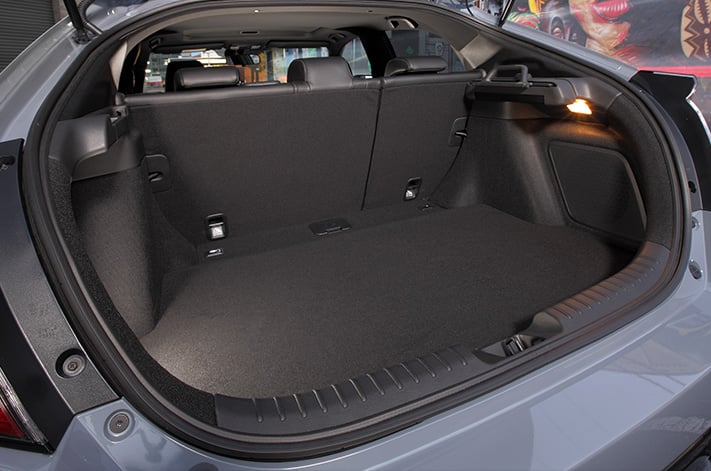
Handling. The Civic Type R is still many months away from going on sale, but you won’t have to wait for its arrival to sample a sharp-handling Honda hatch. The new Civic five-door boasts impressive cornering ability courtesy of a finely-tuned suspension with MacPherson struts up front and a sophisticated multi-link at the rear. Grip and body control is superb, and – just like the sedan – the Civic hatch is a surprisingly enjoyable car to throw at a winding mountain road.
Steering. The Civic’s on-road dynamics are all the more enjoyable because of its well-sorted steering, which boasts a fast steering rack ratio, pleasingly progressive weighting and the added benefit of brake torque vectoring that helps point the nose into corners. It feels exceptionally nimble for a car that isn’t marketed as a performance hatch.

Comfort. The Civic’s front seats could benefit from some extra lateral support, but that aside, the Civic hatch boasts just as much cabin comfort as the roomy sedan variant. Rear seat legroom is at the more generous end of the small car segment, and headroom is only fractionally tighter than the sedan – though few will be able to tell the difference. While the previous hatch had compromised rear seat comfort relative to its sedan contemporary, the new Civic hatch and sedan are virtually identical in that regard.
Refinement. Don’t be fooled into thinking that the Civic hatch handles well because it has a rock-solid, low-compliance suspension. The truth is that the Civic is as plush over broken roads as it is agile over a twisty one.
WEAKNESSES
No rear air vents. It’s a shame there are no rear air vents in any Civic variant, because that rear seat space is otherwise admirably well-equipped for carrying a pair of adults. Granted, such a feature is far from being universal in the small hatch segment, but the Civic scores so well in other areas that it’s disappointing to see Honda drop the ball on rear cabin ventilation.
Transmission. This is probably the biggest blot on the Civic hatch’s scorecard. The sole gearbox on offer is a continuously-variable automatic (CVT), and it suffers from sluggish response and a restlessness even when cruising. It can be a challenge to maintain a steady speed as the CVT shifts its ratios, though it becomes a little more predictable – and spritely – when slotted into Sport mode.
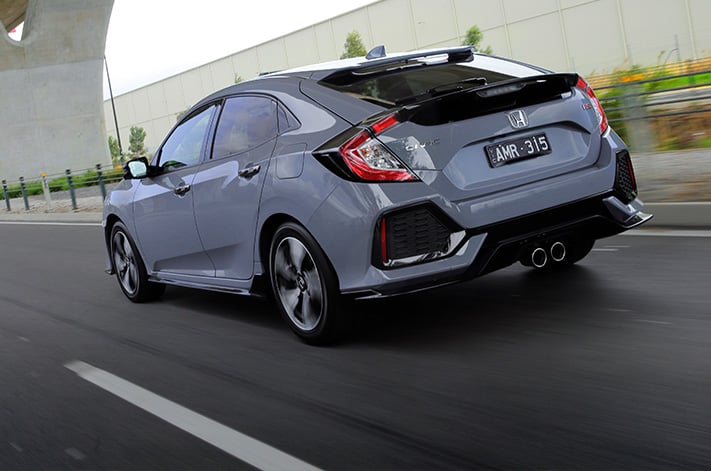
No more Magic Seats. Remember Magic Seats? The ultra-useful feature that allowed you to flip the rear seat bases up vertically so you could use the full height of the cabin to carry tall cargo? It was perfect for moving bicycles, flatscreen TVs and large pot plants, but sadly it’s no longer available in a Civic hatch. Blame the move to a new platform for that one.
ANY RIVALS I SHOULD CONSIDER?
Rivalry is rife in the small car segment, and the Civic hatch faces off against a bevy of commendable five-doors. Among them are the Mazda 3, Peugeot 308, Volkswagen Golf, Holden Astra, Ford Focus and Toyota Corolla.
IT IS NO LONGER a rumour or petrolhead pipe dream. BMW is stoking the coals in its super coupe forge and preparing to recast the mighty 8 Series.
When the revenant luxury GT takes to the stage for its first public appearance at the Concorso d’Eleganza Villa d’Este later this month, it will end a 20-year hiatus and stir fresh speculation that the German car maker will, at last, spawn a vicious M8 for the first time in its history.
Diehard BMW aficionados and hyper coupe fans alike will delight at the possibility of an M-powered big two-door with looks to melt hearts, but you may be surprised to learn that we have been here before, and that an M8 once came close to becoming showroom reality.
We have to travel way back to the late 1980s to pick up the origins of the 8 Series badge and the launch of the first generation but, while the lifecycle of the production model is not hard to trace, there were incredibly secret development projects underway behind the scenes.
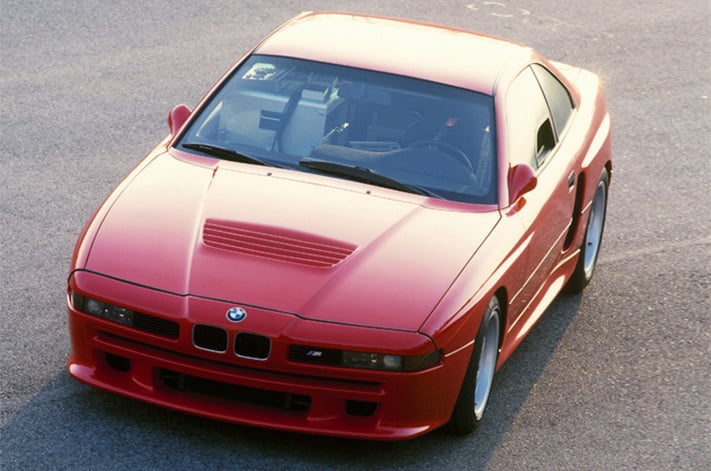
In production form and over its ten-year evolution, the 8 Series was offered in entry 840i, 850i and 850CSi varieties ranging from a 4.0-litre V8 to the rare 5.6-litre V12 that powered the CSi but, for the top secret M8 project, the engineers pulled out all the stops.
With 6.1 litres and 410kW at its disposal, the M8’s engine was just the start of the manic skunk works developments that took what was already a capable GT coupe and turned it into a snarling supercar.
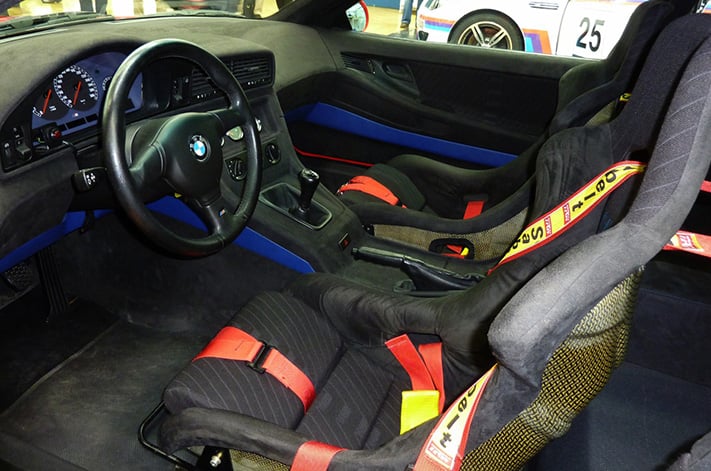
Its cabin was an unashamed exploitation of synthetic suede, which extended to the pair of Kevlar bucket seats, complete dashboard, doors, roof and centre console, but not to the rear seats because they had been removed in the name of weight saving.
The bonnet was vented and the pop-up headlights of the road car were deleted to make room for the massive engine and cooling system below, a svelte bodykit shouted M-car performance with a nod to the M1, a new vent behind each of the doors fed air to engine and transmission oil coolers, while the lower-drag panda-ear door mirrors completed the package.
Performance figures were never made official but a top speed of 320km/h has been speculated, so why wouldn’t BMW give the green light to a handsome beast of a bruiser that could have embarrassed some serious supercar royalty of the time?
The answer may lie in its spectacular engine…
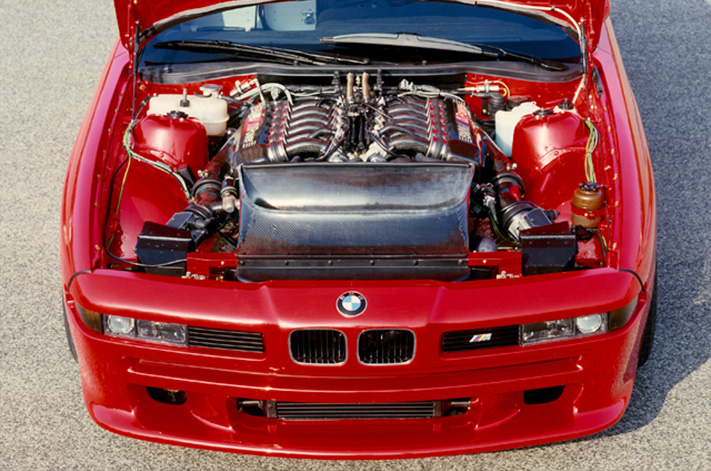
Urban myth states that the BMW M8 engine was the very same that would power the iconic McLaren into the record books but, in fact, it wasn’t.
The BMW’s S70/1 engine displaced 6061cc while the F1’s S70/2 had 6064cc to its name and produced 51kW more with a number of external dimensional differences, but there’s no denying the pair shared DNA.
While BMW’s official reason for not giving the M8 a green light was somewhat ambiguously due to the lack of demand for the car and a prohibitively high showroom price due to the massive development costs.
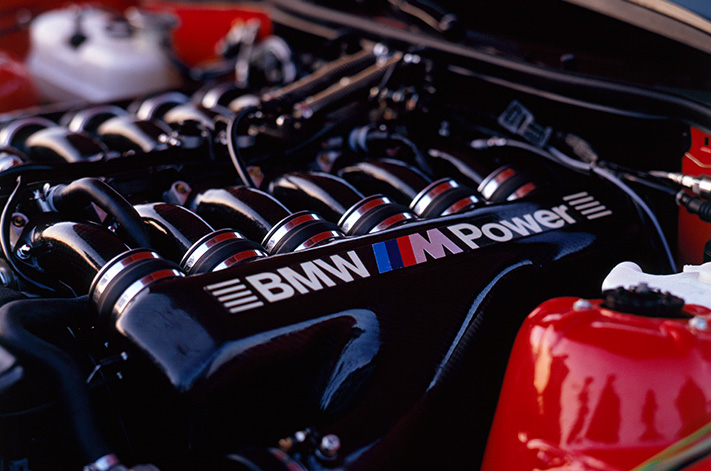
But what if BMW had pushed ahead with the M8 production car and forced McLaren to consider other engine options?
In addition to the BMW partnership possibilities, McLaren was also in discussions with Honda who had been briefed to pitch for a 410kW engine based on the Formula One engine in service at the time.
Without BMW’s manic V12, a Japanese-engined McLaren would not have gone on to crack the dizzying 372km/h record top speed and would have been forced to share the supercar limelight with BMW’s gorgeous M8.
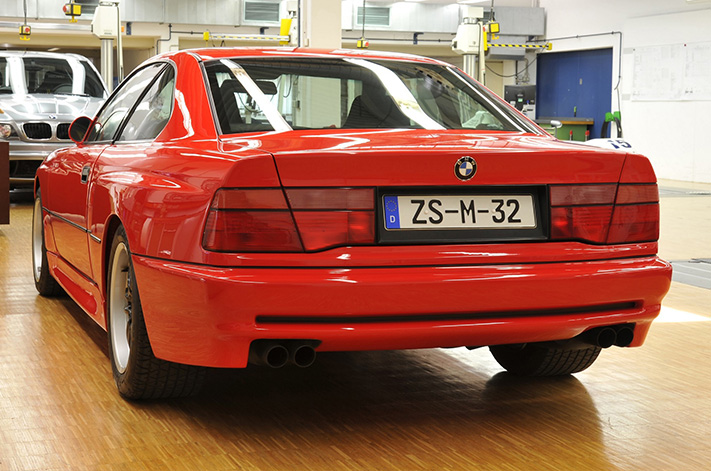
Looking further into the future, if BMW had spawned another back-to-back generation of the M8, it would have also had a model to compete with Audi’s first supercar – the R8 – when it arrived in 2006.
How different the supercar landscape could have been.
Until BMW tears the covers from its second-generation 8 Series, the all-new model will remain just a tantalising but gorgeous coupe profile – but the potential for an M8 is more than just speculation.
Information provided by the World Intellectual Property Organisation offers a glimpse at the company’s intentions with applications submitted to protect not just the M8 name but also M8 CS.
It seems this hi-po, big boss coupe party is only just getting started and when it emerges, the M8 has the potential to shake up the high-performance car world once again.
Aussie Racing Cars are difficult little beasts to tame.
A short wheelbase, high levels of grip and screaming naturally-aspirated engines means there’s a real art to extracting the best from them. And that’s in the dry.
Add in some moisture, or in the case of the recent Symmons Plains Supercar round, a complete monsoon that even Noah would’ve found a bit much, and things become even more hairy.
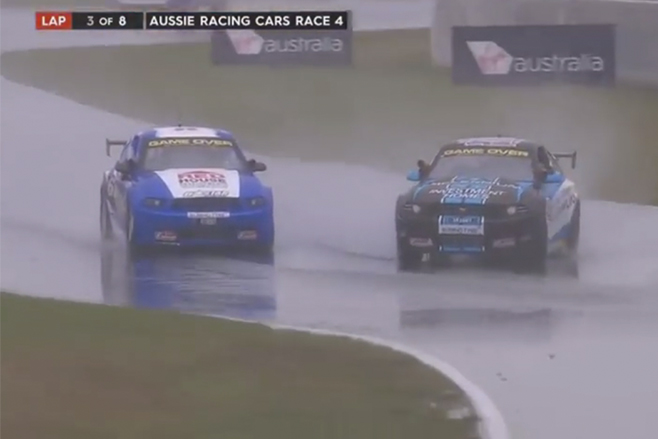
Both cars were constantly sideways, but Sciberras had arguably the save of the race at the start of lap 4, backing the car into turn one and somehow staying on the black stuff.
You can watch the full race below.
Sciberras recovered and kept the pressure on throughout the entire eight-lap race, however Robson would take the win by a mere 0.212sec, though all drivers were probably just happy to survive the ordeal.
Nonetheless, after three rounds of the seven-round 2017 season, Sciberras holds a narrow three-point lead in the standings.
The next round of the Aussie Racing Car series takes place in Townsville on July 7-9 before continuing on to Sydney Motorsport Park, the Gold Coast and the new Newcastle season finale.
Aussie Racing Cars use space frame chassis powered by 1.2-litre four-cylinder engines that scream to 11,500rpm and a five-speed sequential gearbox. Weighing just 450kg, they can reach 230km/h.
