ALL-NEW electrified engines, sharper styling and an even bigger step towards autonomous driving: behold internet, it’s the facelifted Mercedes-Benz S-Class.
Officially revealed at today’s Shanghai motor show, Wheels first saw this mid-life update in New York last week, and while that top-secret glimpse was short, it was enough to glean that as facelifts go, this one’s a doozy.
The biggest changes are found in the engine department, headlined by the introduction of a new 3.0-litre straight-six petrol engine with electrified boost.
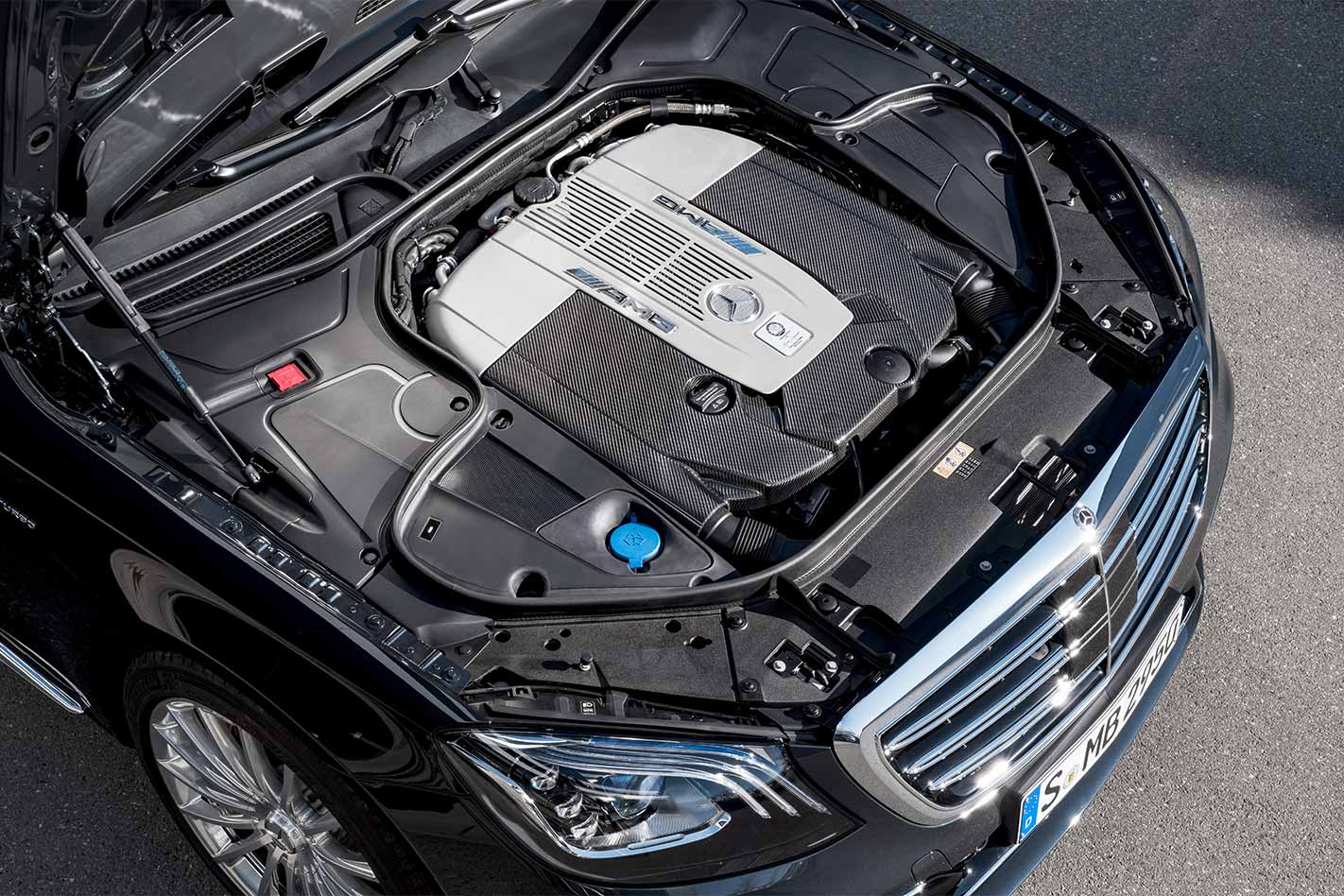
Dubbed M256, the new 3.0-litre donk is paired with an electric turbo, or “electric booster compressor” as Mercedes calls it, that’s designed to eliminate turbo lag. Paired with a complex 48-volt sub system, the electric turbo spins at low engine speeds to provide boost while the conventional exhaust-driven turbo is still coming up to pressure.
Power outputs are yet to be revealed, though expect a number north of 260kW, with Mercedes saying “the new engine delivers the performance of an eight-cylinder with significantly lower consumption.” Wheels understand AMG is already working on high-performance versions of the electrically assisted drivetrain, with outputs around 330kW.
Other changes to the overhauled S-Class engine line-up include new straight-six diesels in the S350d and S400d that promise to be quieter and use less fuel, plus the move to a detuned version of AMG’s 4.0-litre twin-turbo V8 in a new S560 variant, replacing the old S500.
With 345kW/700Nm on tap, the S560’s 4.0-litre unit is mass produced on the Mercedes production line, not hand-built at Affalterbach like the V8 in the revised S63 AMG, which now boasts 450kW/900Nm.

Completing the overhauled engine range will be an improved plug-in hybrid system with 50km of electric range.
As expected, the facelifted S-Class will come armed with the latest version of Mercedes’ semi-autonomous driving systems – a move that will see it reclaim its spot as Benz’s technology flagship from the E-Class.
Known internally as “Generation 4.5”, the S-Class’s improved driver assists systems are now integrated into the car’s satellite navigation and will autonomously brake, accelerate and turn the steering wheel for upcoming curves and junctions. The system is also influenced by your driving mode, with the car braking later and harder if you’re in Sport or Sport+ than it does in Comfort.
The autonomous lane change system has also been tweaked and can now be operated by simply tapping the indicator stalk rather than holding it for three seconds as before.
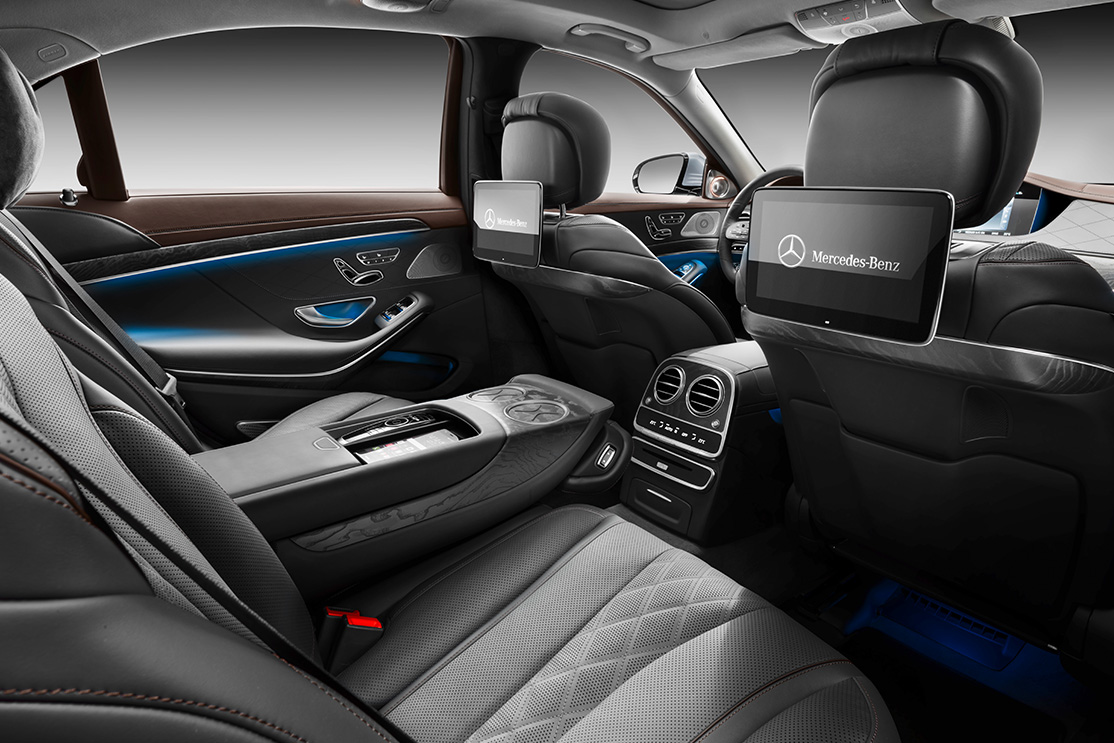
How drivers interact with the semi-autonomous tech has also changed, with the old car’s steering column- mounted Distronic stalk replaced with buttons on the steering wheel.
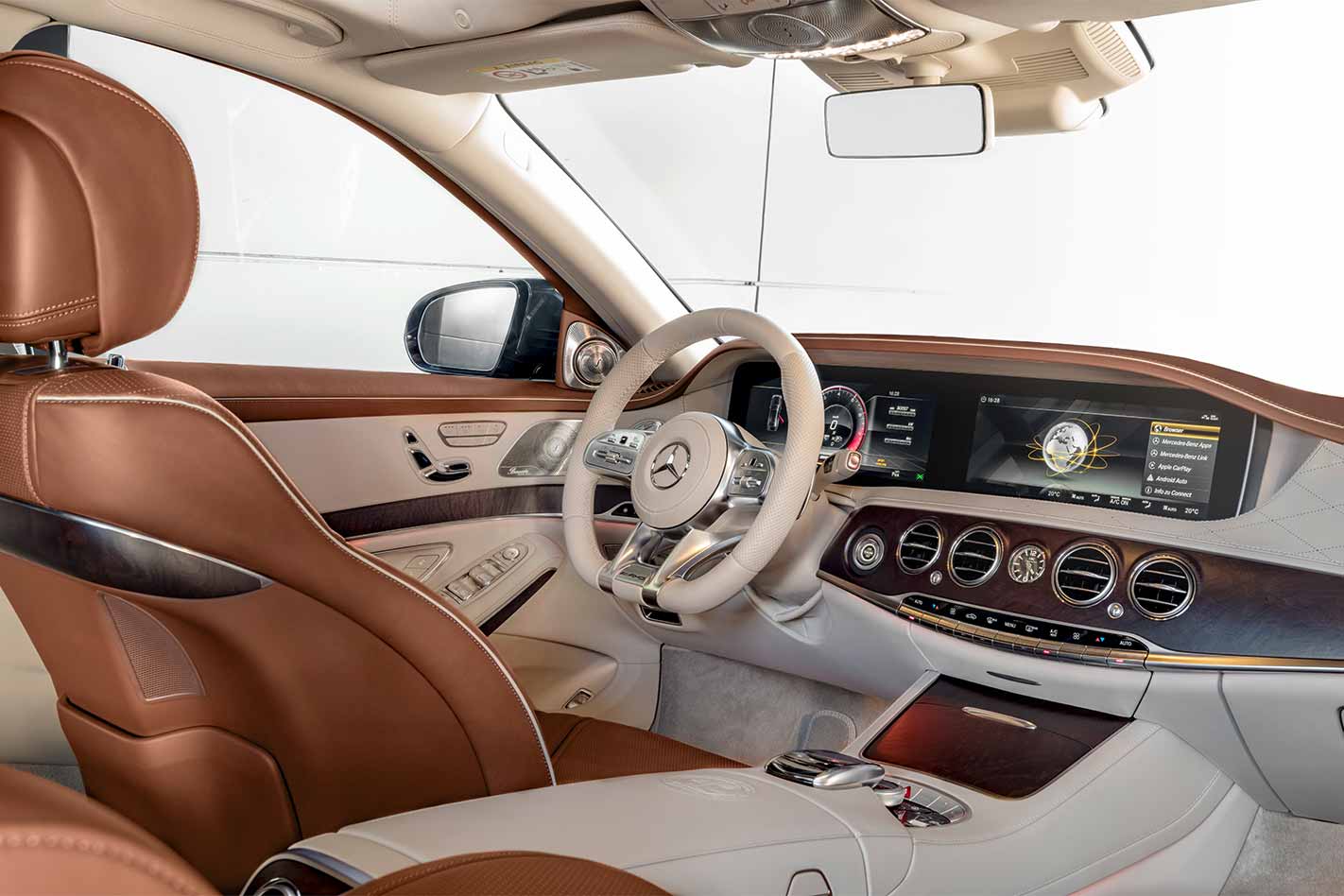
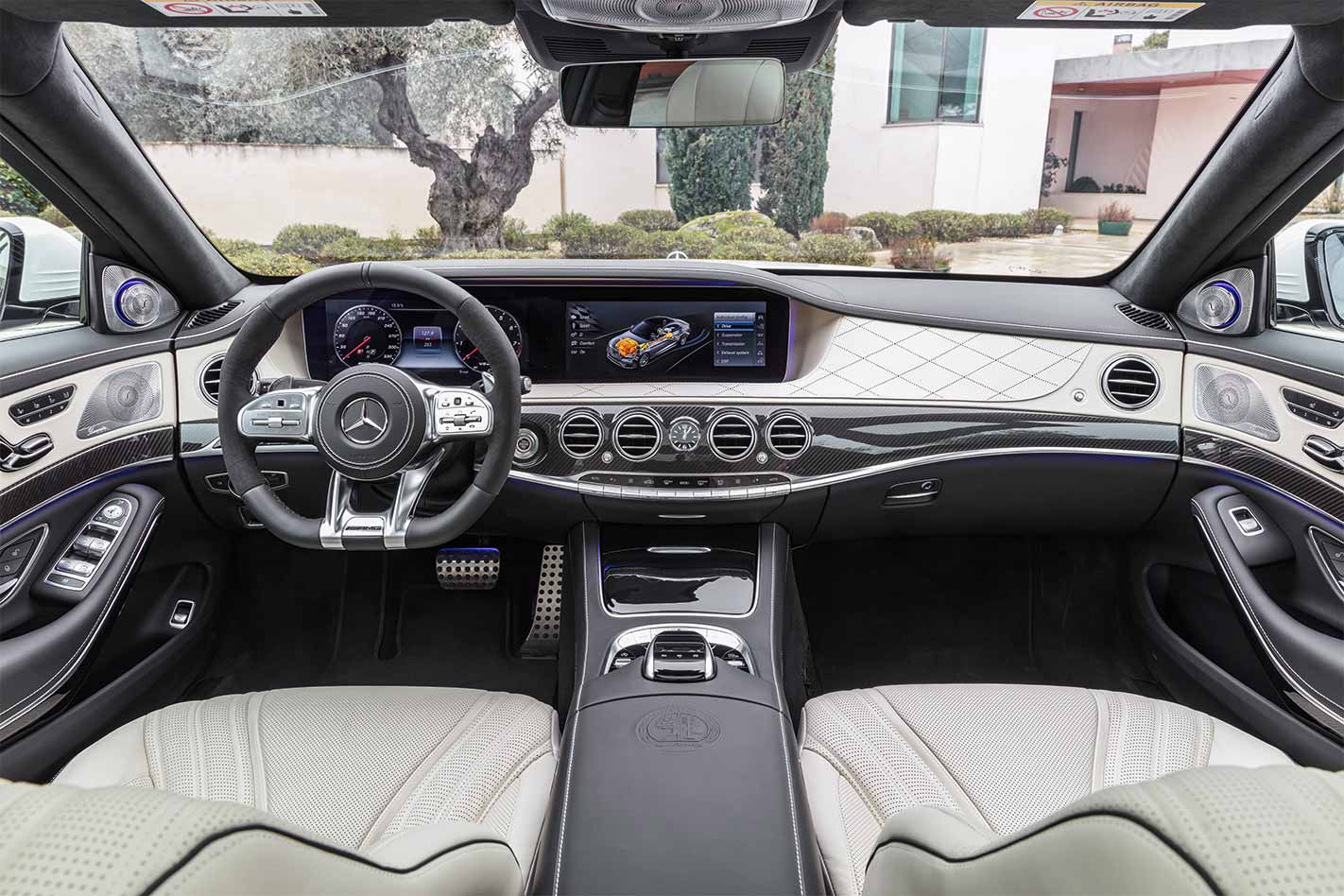
Inside, the enormous digital dash has been revised and now places the two 12.3-inch displays under a single piece of shared glass. The latest version of Mercedes’ touch-pad controls, that debuted on the E-Class, also appear on the S-Class’s steering wheel and are now smaller.
Mercedes-Benz to test autonomous cars in Australia
A stronger focus on passenger well-being and health has seen the inclusion of a new ‘Energising Comfort’ system, which alters the car’s climate control, seat functions, lighting and music to suit the occupants’ mood. There are six 10 minute programs that can be selected, ranging from Freshness to Warmth and even Training, with the latter choosing fast-paced music and brighter interior lighting.

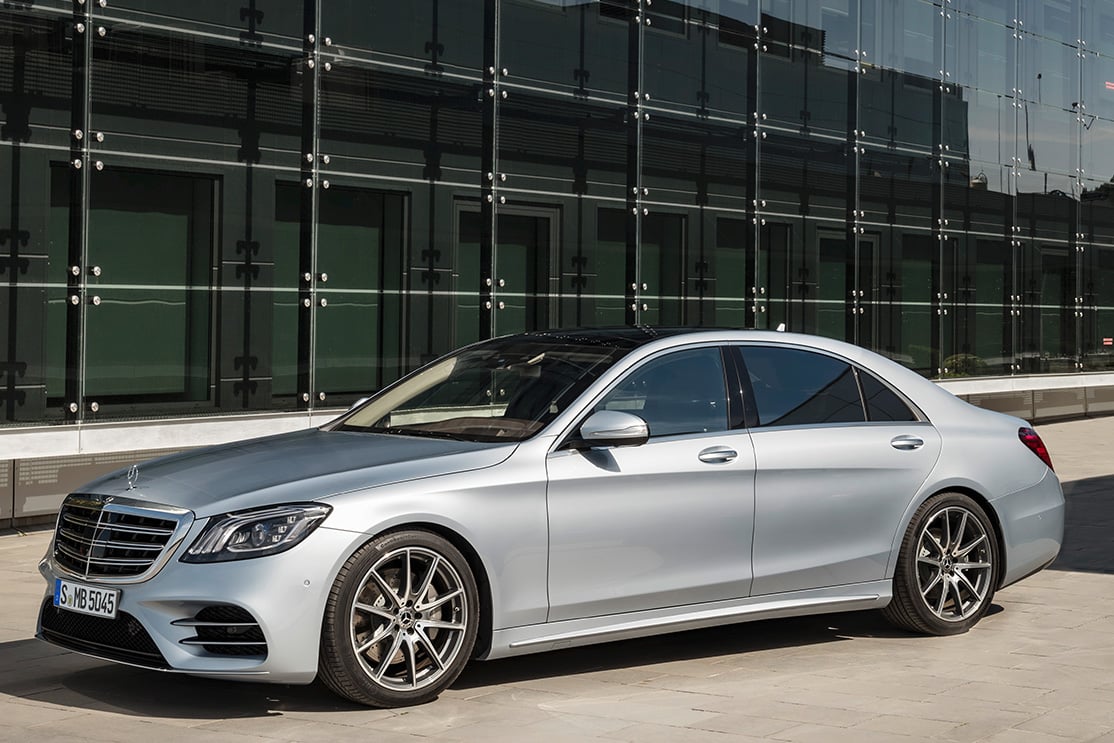
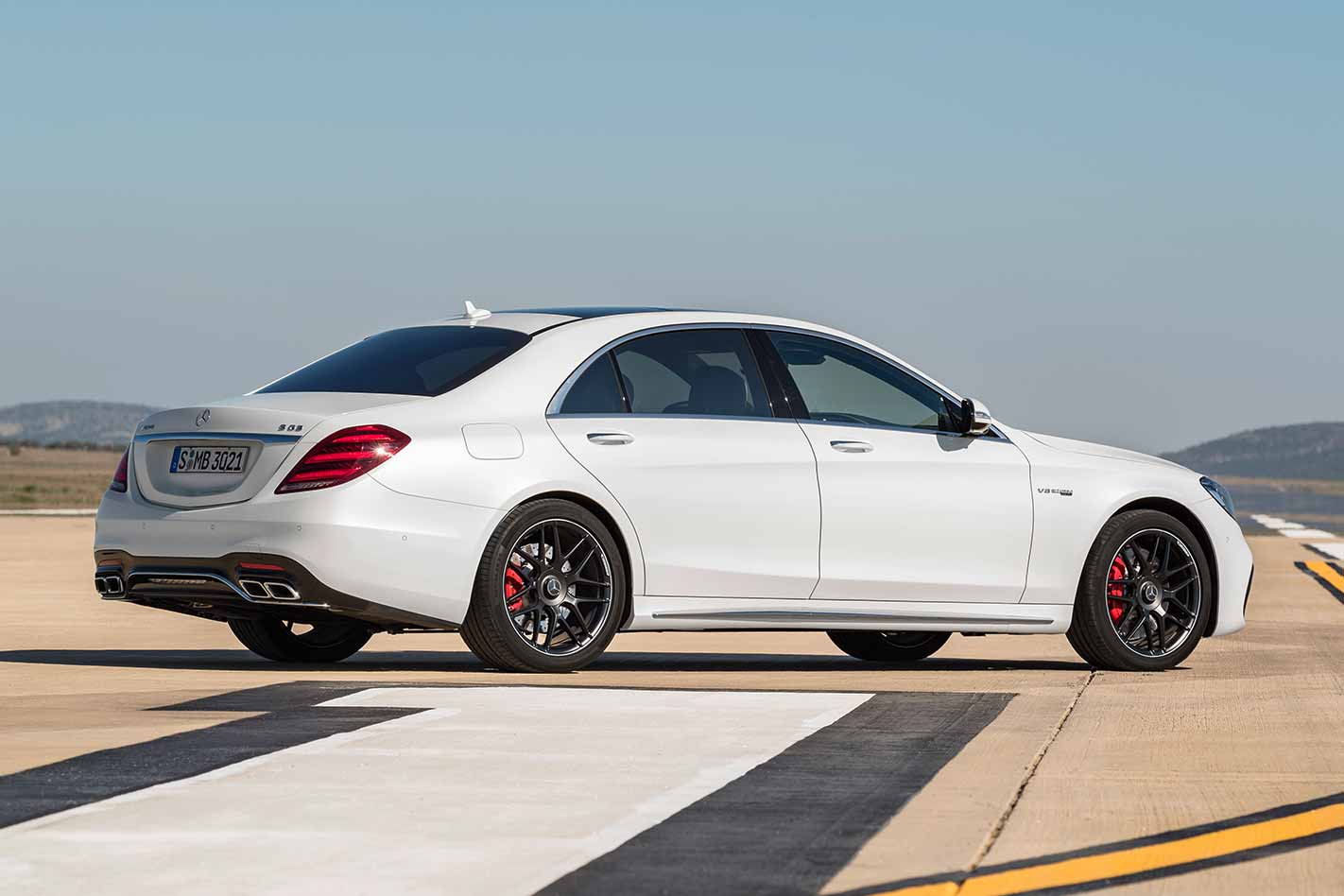
Exterior changes include a redesigned front bar and grille, plus tweaked headlights with three distinctive LED strips to give the S-Class a clear point of separation from other Mercedes sedans. Expect the E and C-Class to soon sport headlights with two and one LED strips respectively.
Out back the biggest change is a tweaked rear bumper with visible exhausts.
Expect the facelifted S-Class to arrive in Australia from December 2017.
Mercedes-AMG has unveiled an updated version of its twin-turbo V12 S65 flagship at the Shanghai Motor Show.
The drivetrain remains unchanged, meaning a 6.0-litre twin-turbo V12 producing 463kW/1000Nm through a seven-speed automatic gearbox, however while 0-100km/h takes just 4.3sec, the newly updated S63 has now overtaken its bigger brother in terms of speed.
The updated Magic Body Control system, which is able to scan the road ahead to warn the suspension of bumps, now incorporates the curve-tilting function introduced in the S-Class Coupe.
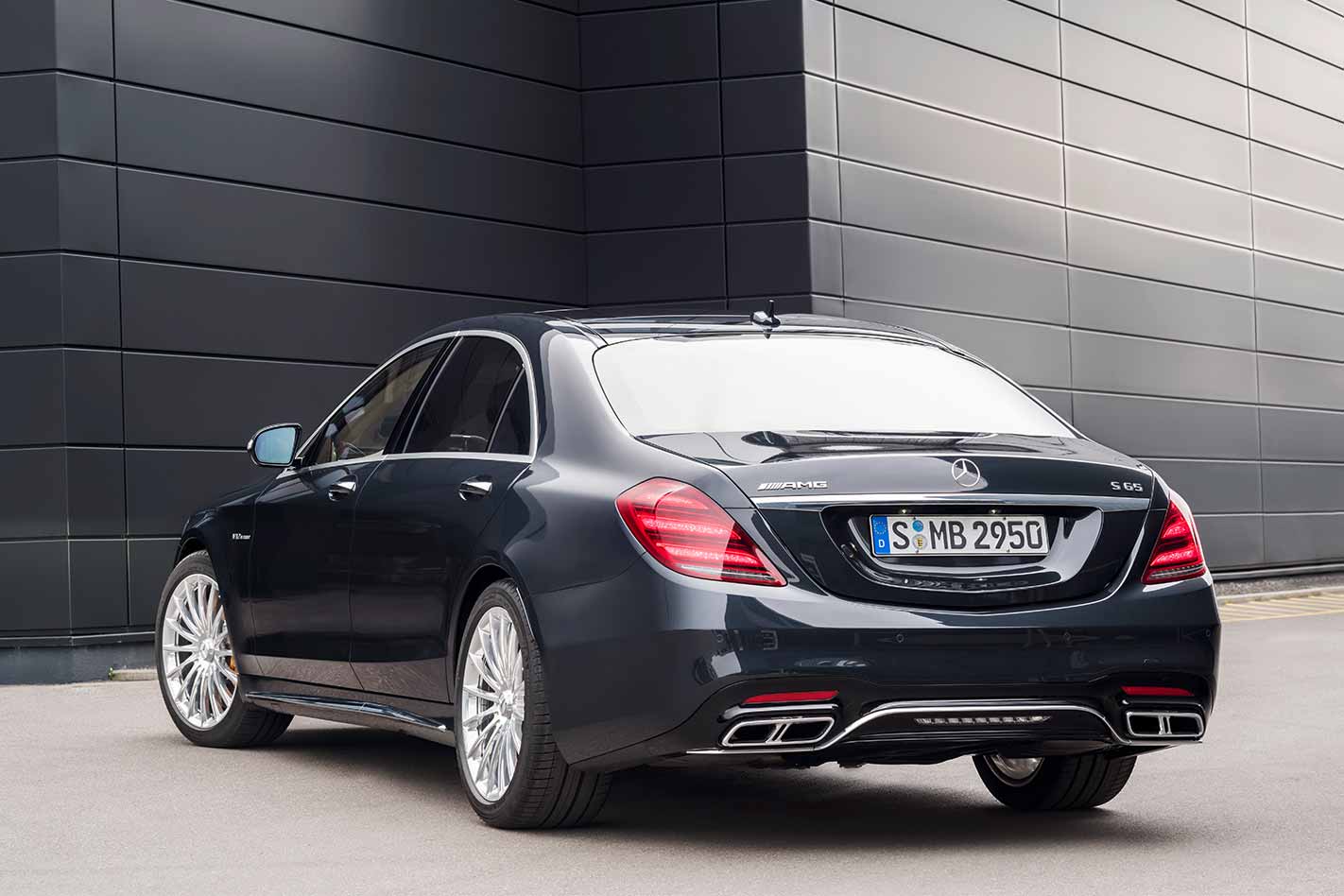
Elsewhere, the S65 benefits from all the upgrades introduced as part of the new Mercedes-Benz S-Class facelift, including a new interior with twin 12.3-inch digital displays, revised styling front and rear and an unprecedented level of driving assistance systems.
The new Mercedes-Benz S-Class range arrives in Australia in December 2017.
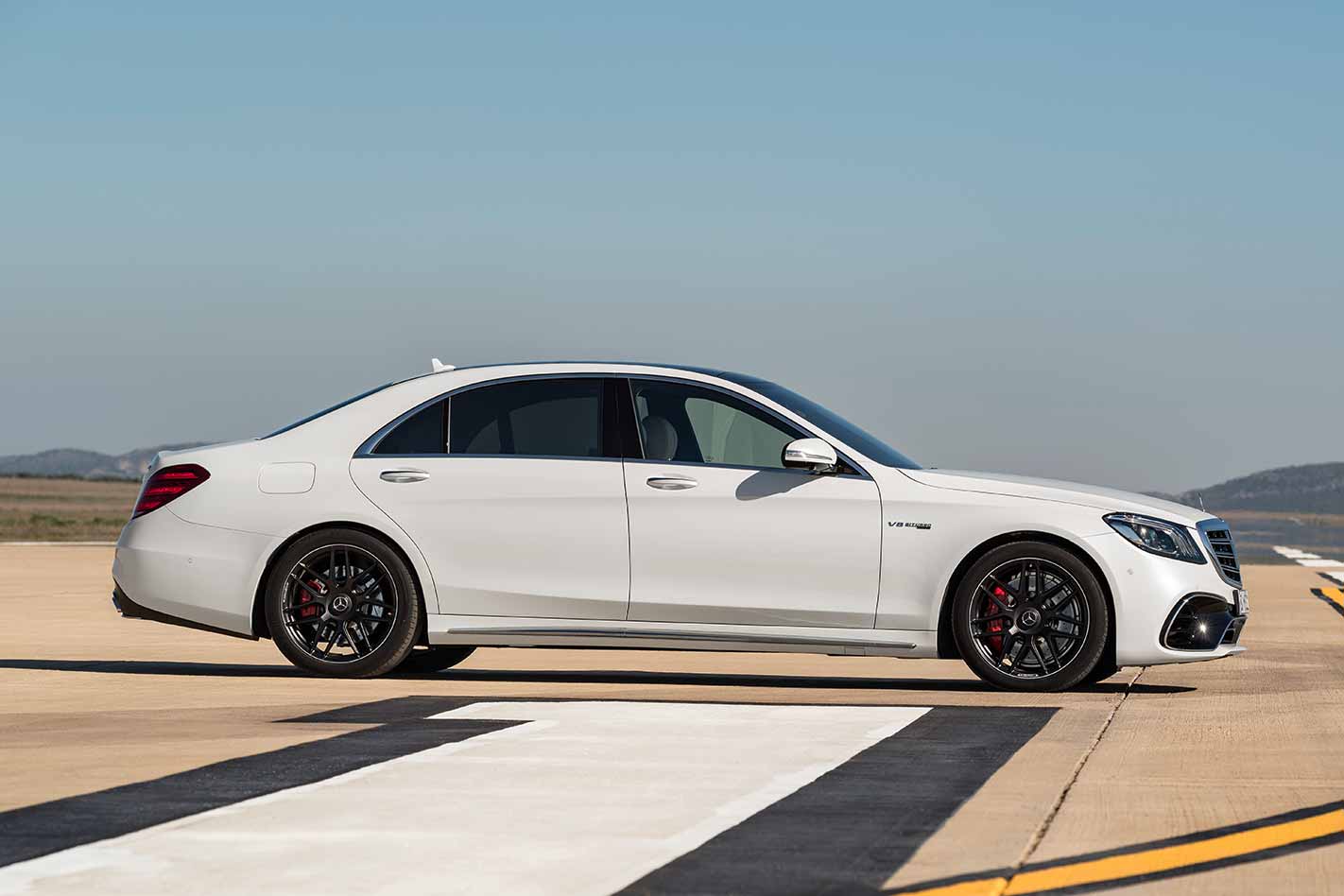
The new Mercedes-AMG S63 can thunder from 0-100km/h in just 3.5sec – but sadly not in Australian specification.
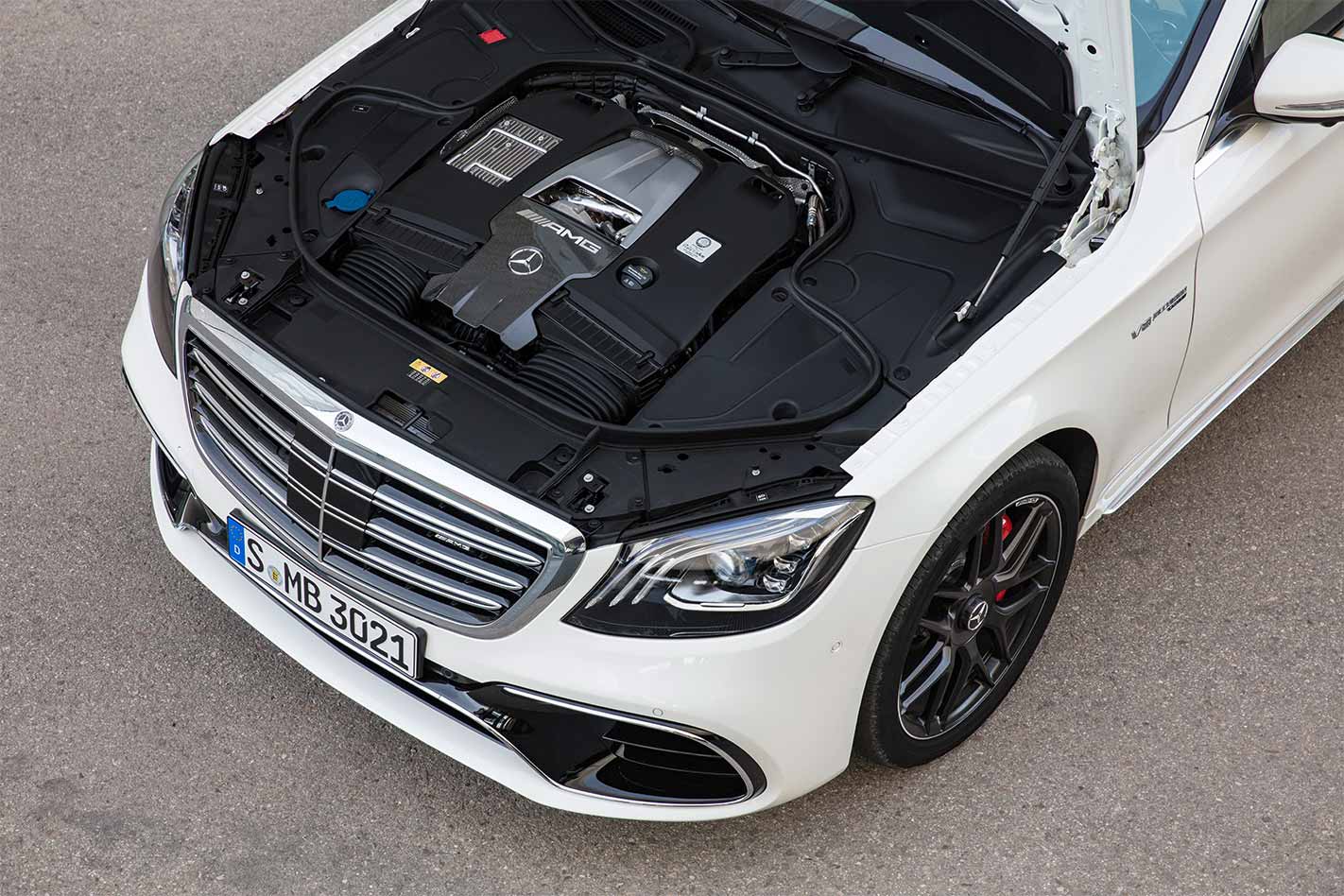
The good news is that local buyers will feel the full force of 450kW/900Nm from the latest – and most powerful – iteration of AMG’s 4.0-litre twin-turbo V8, attached to a new nine-speed wet-clutch automatic, which replaces the previous model’s seven-speeder.
AMG doesn’t claim a 0-100km/h time for the rear-drive S63, however its 463kW/1000Nm S65 brother’s effort of 4.3sec provides a clue, though with both cars the challenge will be getting the cars off the line without tearing the rear tyres to shreds.
The latest iteration of the engine, shared with the E-Class, is able to shut-off four cylinders under partial load, allowing this 1995kg, 450kW super limo to claim just 8.9L/100km on the combined cycle.
Weight can be further reduced by optioning the carbon-ceramic brake option, which replaces the standard steel discs, measuring 390 x 36mm front and 360 x 24mm rear, with discs measuring 420 x 40mm front and 360 x 32mm rear.
Mercedes-Benz has shown off what could be the basis for its next A-Class at the Shanghai Motor Show.
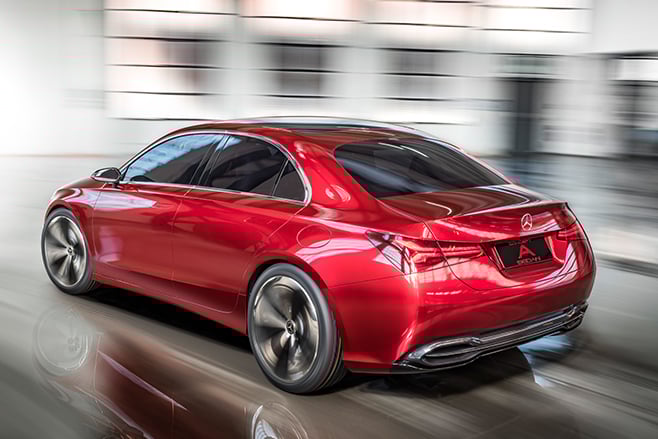
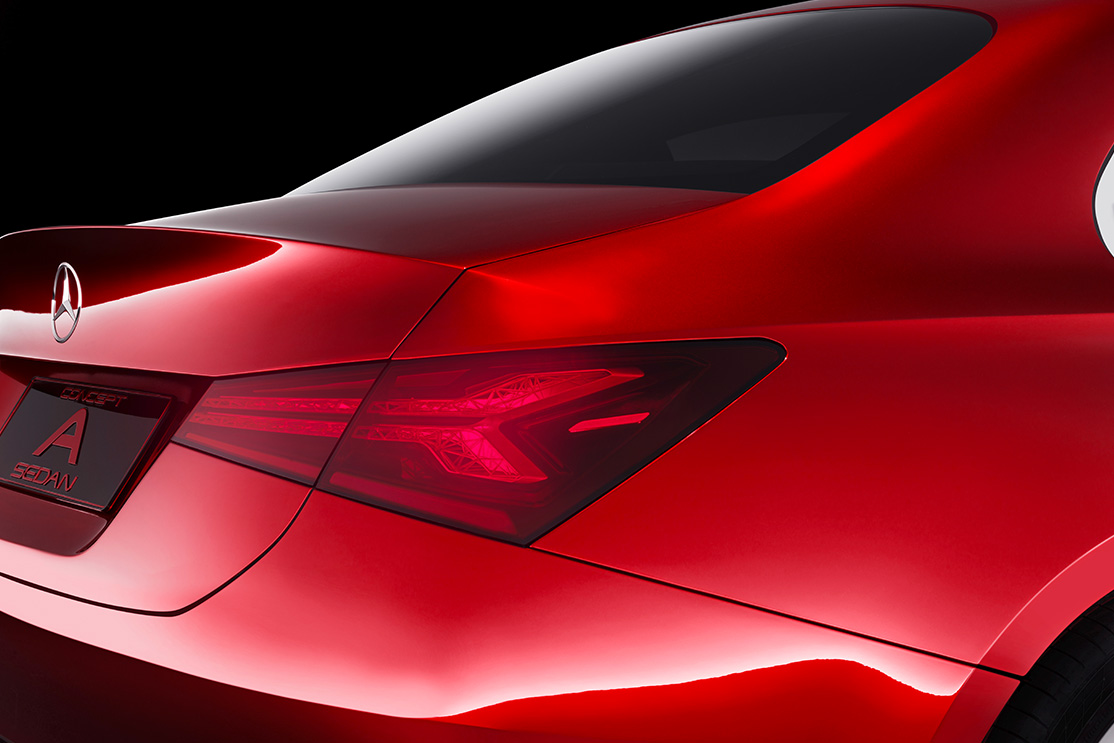
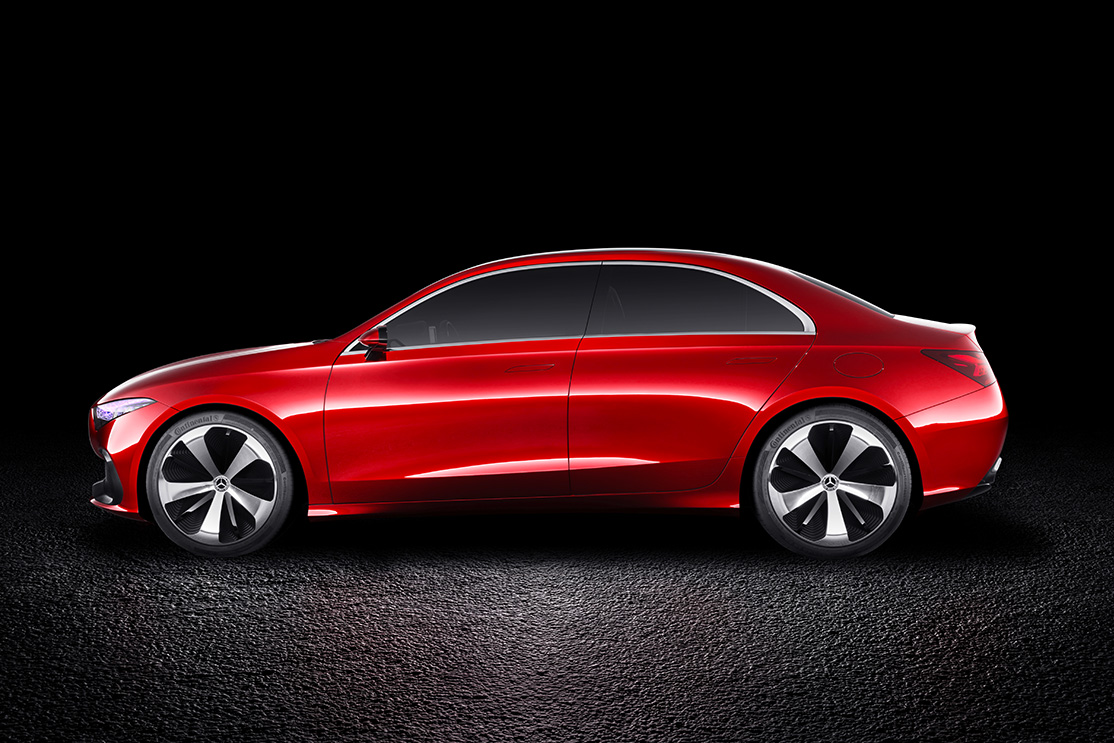
Dubbed the ‘Concept A’, the compact sedan design heralds that “the time of creases is over,” according to Daimler Chief Design Officer Gorden Wagener.
And his words are true to the model. A very rounded face is followed by a curvy body and a “coupe-like” roofline. It’s also sitting on “exclusive” 20-inch wheels, which is nice.
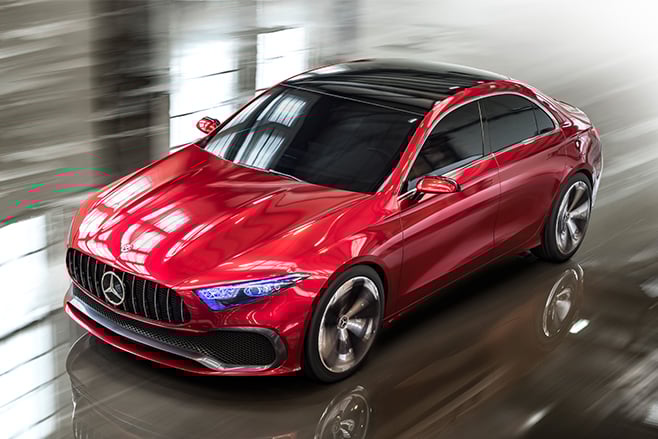
It does, however, mean the next of Merc’s hot compacts will probably get the same Panamericana-style grille seen on the AMG GT-R.
The concept comes as Mercedes claims its current compact lineup has its “most successful and rejuvenated appearance ever”.
“We are therefore extremely confident that the planned expansion will lead to a continuation of this success story.”
We’re hoping this means Mercedes will continue to give punters plenty of options when it comes to A-Class hot-hatches and AMG varieties thereof.
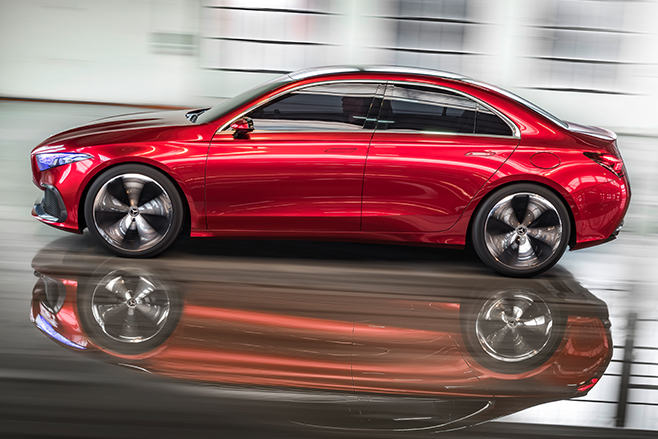
While Mercedes-Benz hasn’t confirmed production of a new A-Class sedan following this design study, we won’t be too surprised to see it appear in the next 12 months or so.
THE POPULAR Mercedes-Benz small car line-up looks set to grow a sixth body style, previewed by the Concept A revealed at the Shanghai motor show this week.
Concept A is an appetiser for the A-Class sedan expected to join the MFA family as part of the platform’s second-gen roll-out, which will start with the updated A-Class hatch later this year.
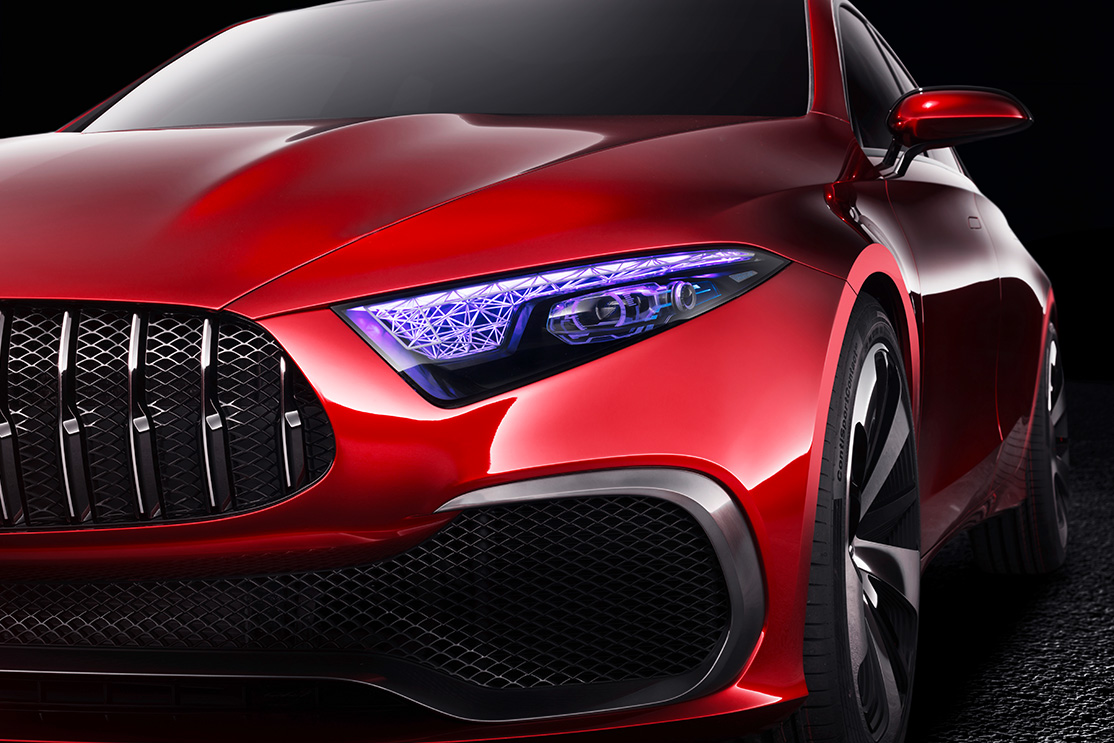
“The time of creases is over,” said chief designer Gorden Wagener. “With perfect proportions and surfaces with reduced lines, it has the potential to introduce a new design era.”
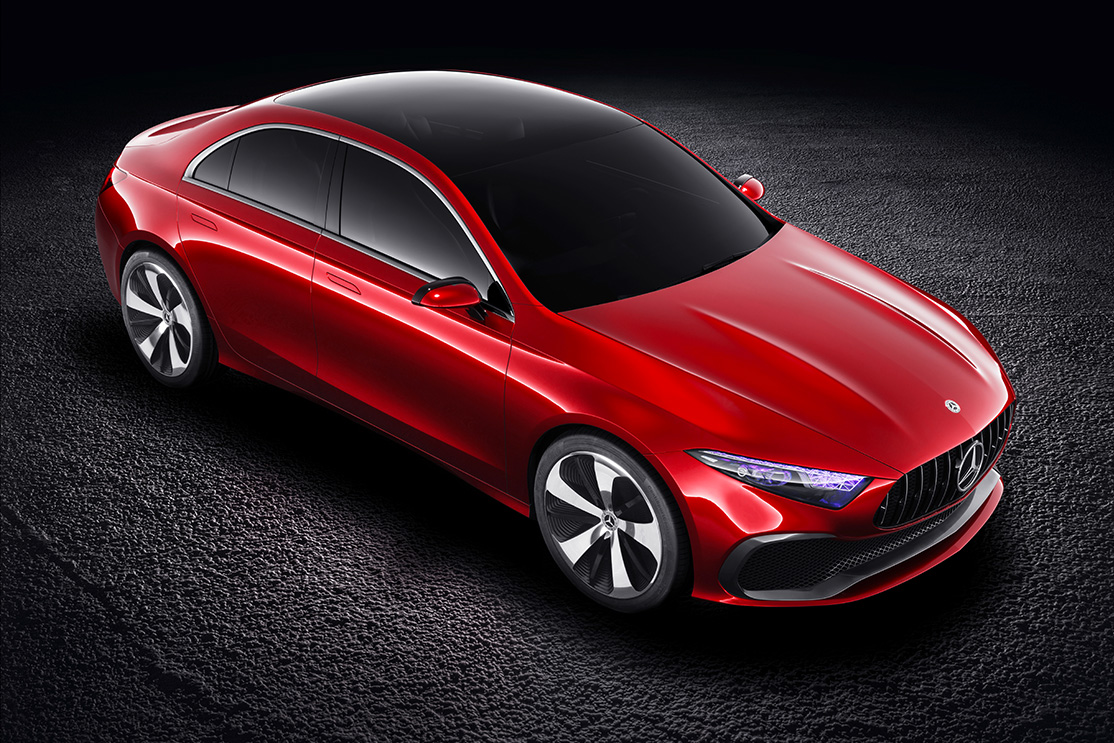
Other standout elements include the tilted Panamericana front grille inspired by Mercedes-Benz racing cars, a panoramic glass roof, and LED headlights with a grid-like pattern that ties in with the diamond grille below.
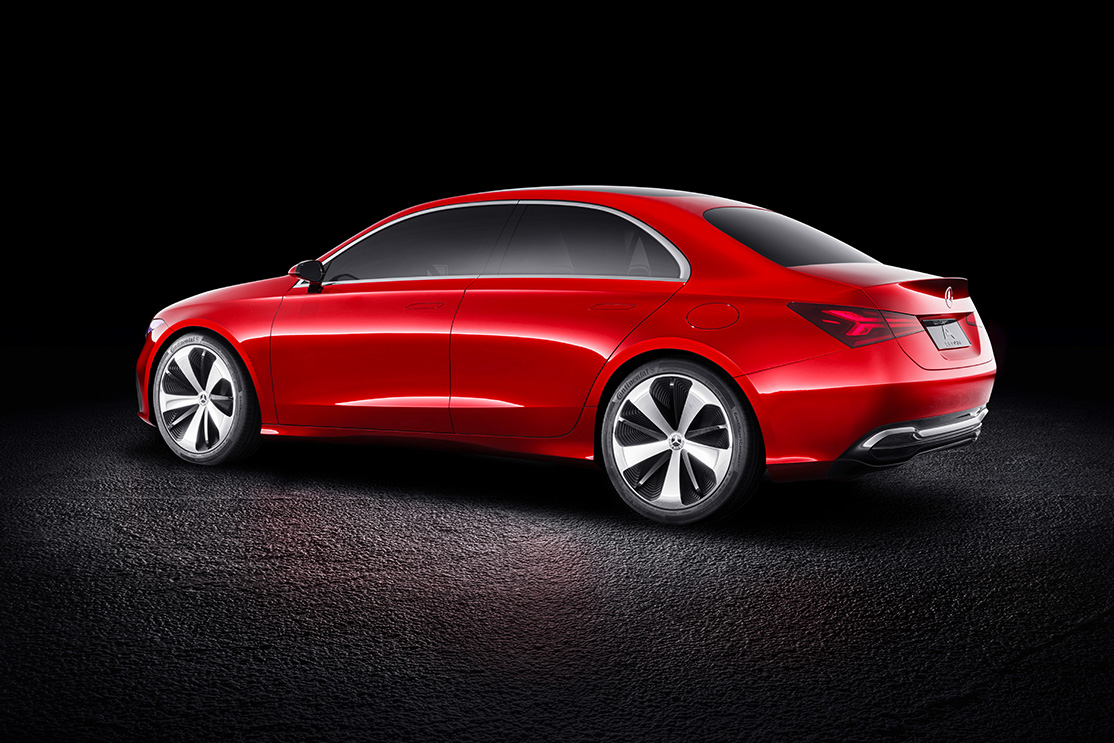
Concept A is a “roadworthy show car” and, though heavily stylised, appears closer to production than many other concepts.
Daimler has its sights set on a US-market berth for the production A-Class sedan, where the current A-Class hatch is not sold due to buyer preference for sedans.
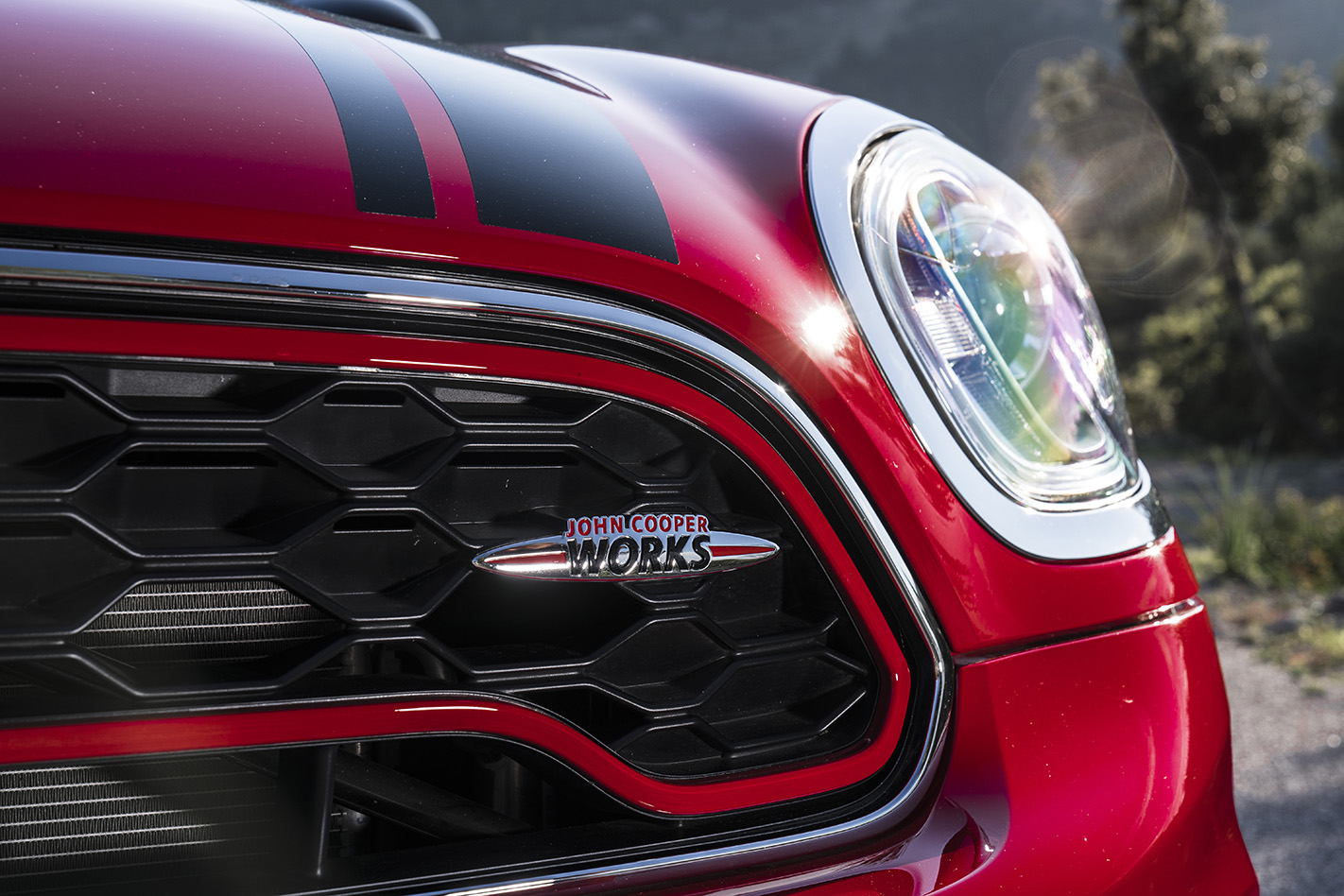
John Cooper Works has given Mini’s rotund Countryman SUV a heart bypass and a tracksuit to transform it into sub-seven-second sprinter.
Due to debut at this month’s Shanghai motor show, the Mini Countryman JCW is powered by the same 170kW/350Nm 2.0-litre turbo of the Clubman JCW and is capable of 0-100km/h in just 6.5sec. That’s just 0.2sec slower than the Clubman JCW and almost a second faster than the oil-burning Countryman Cooper SD All4 that currently tops the range.
As well as improving straight line performance, the AWD drivetrain optimises traction in slippery conditions and rough roads to preserve the country cred of Mini’s sole SUV offering.
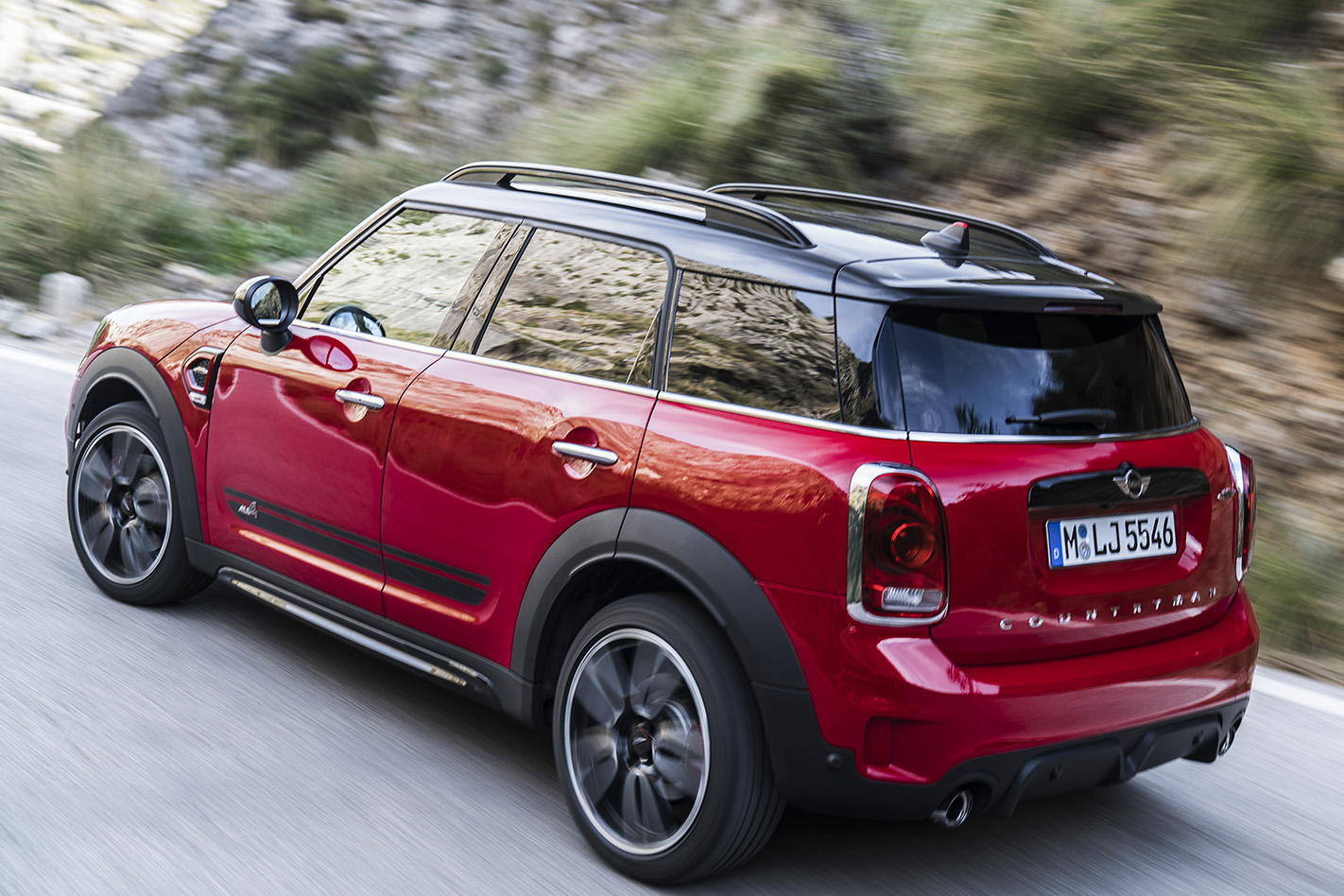
Adding an ‘athletic’ body kit to an SUV can have the same aesthetic outcome as a middle-aged bloke in Lycra but it works well on the new Countryman, like a footballer whose bulk is obvious, but not obnoxious.
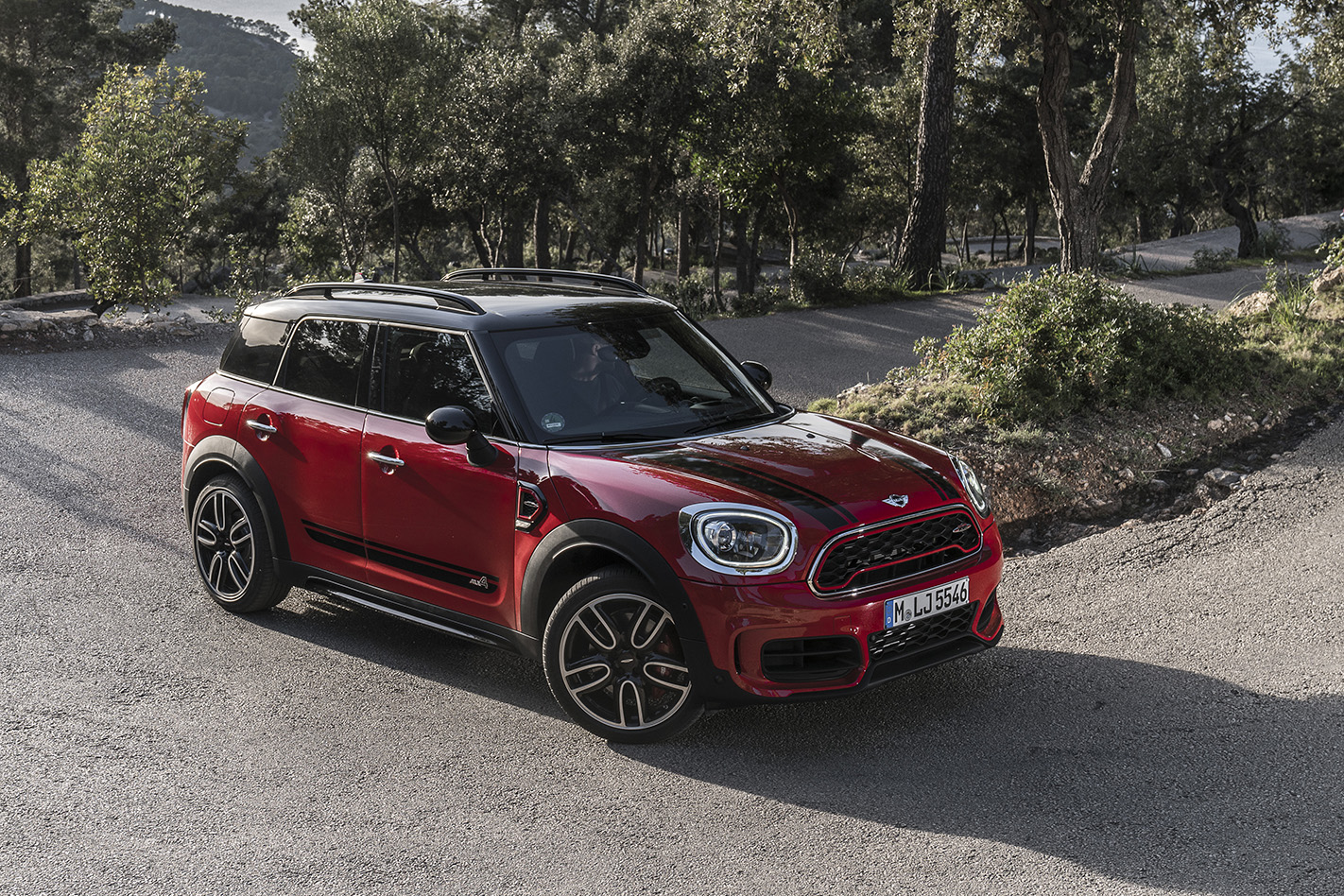
It’s available in four non-metallic and six metallic paint finishes including the JCW-exclusive Rebel Green.
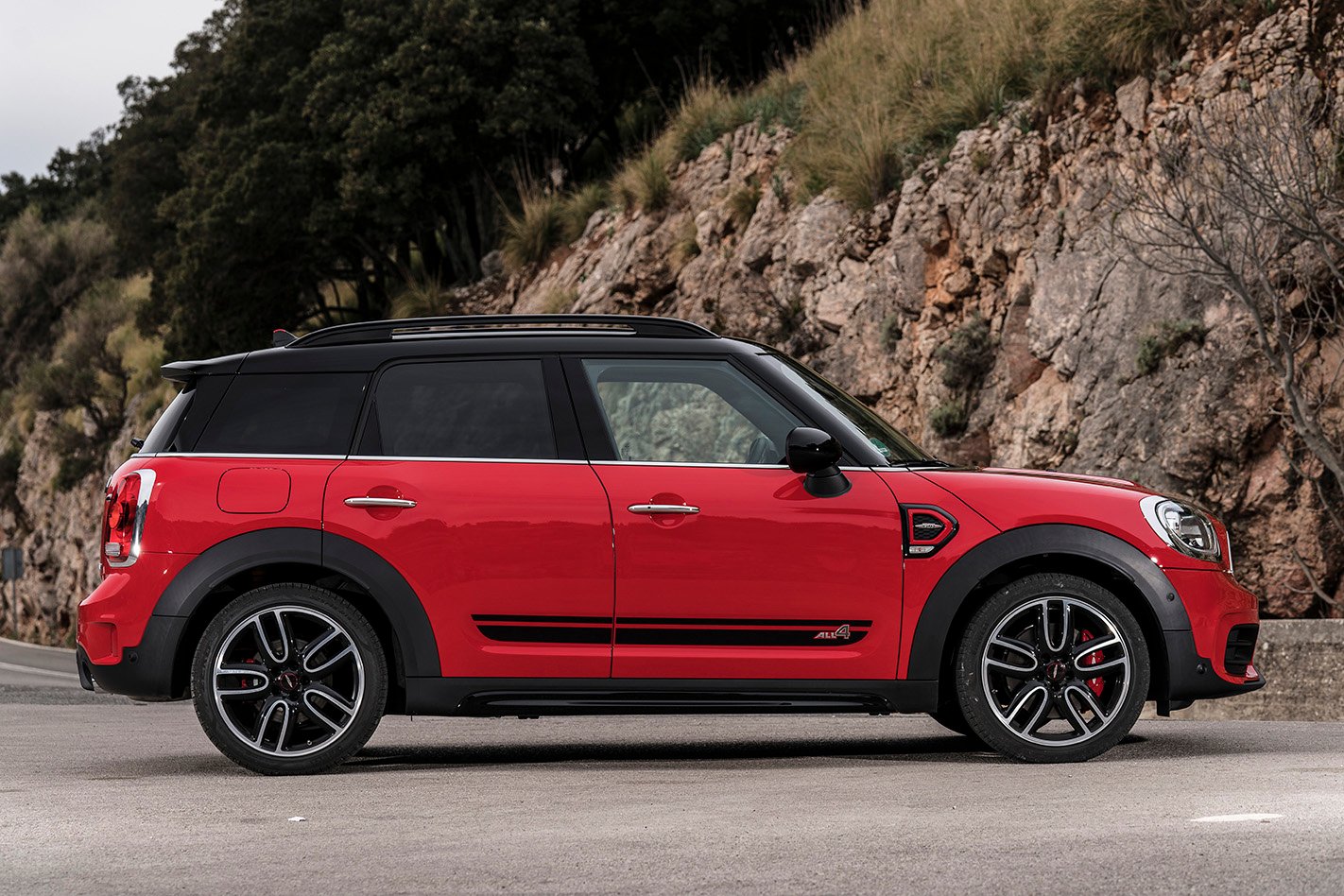
The Mini Countryman JCW is expected to arrive in Australia within the next few months. Local pricing is yet to be confirmed, though what is known is that it will be the most expensive Mini ever sold in Australia. Expect the tag to show around $56,000, which is a $4500 premium over the Cooper SD All4.
The Jaguar F-Type SVR produces one of the most evil/awesome exhaust notes one could possibly conjure up.
How Jaguar managed to get a portal to Hell in the SVR’s exhaust will remain a mystery.
The regular old V6? Still sounds pretty wicked – in fact it puts a lot of V8s to shame. Its roar, coupled with its spits of bangbangbang and rorty crackles, sound like someone’s trying to blow up a bowl of Rice Bubbles.
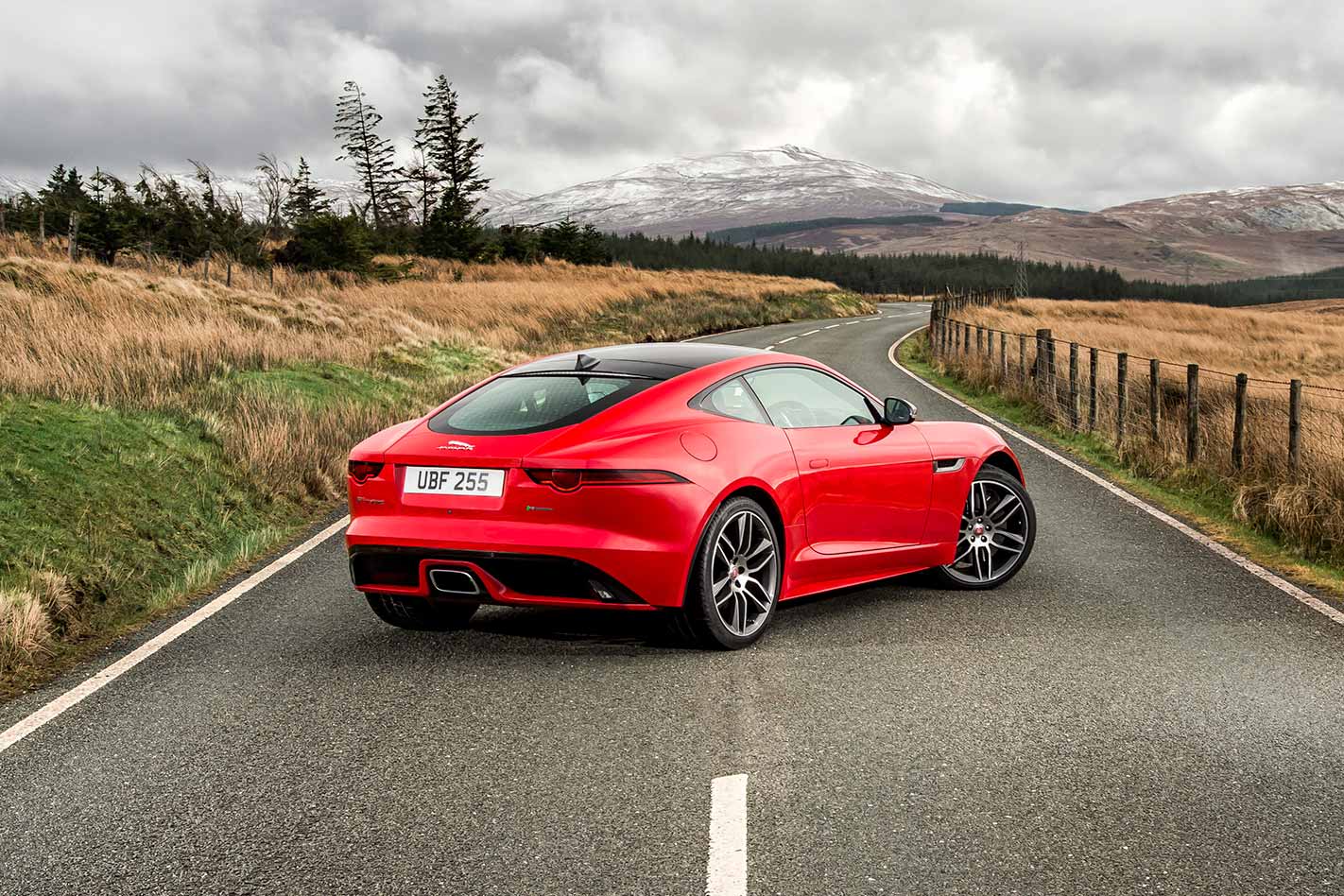
While Jaguar attempts to focus our attention on the ride quality and improved handling that comes with a lighter front-end, it’s probably not going to escape criticism for turning its beast of a sports coupe into an (albeit quick) turbo-four.
That’s not very ‘Jag’. However, with 221kW at 5500rpm, 400Nm from 1500rpm, and a 0-100km/h time of 5.4 seconds, it’s got enough performance potential to keep most people happy.
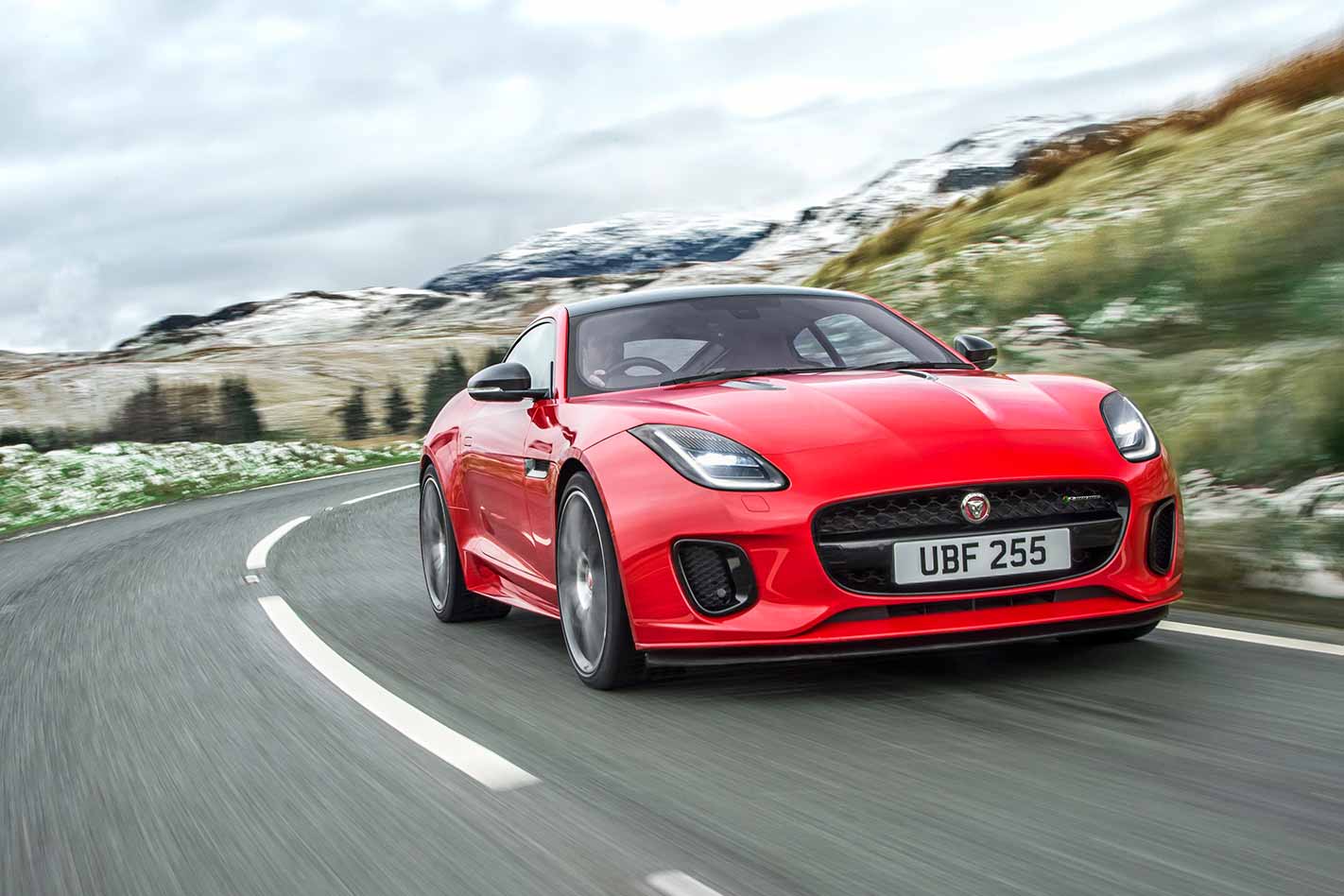
The confusion that accompanies a four-cylinder coupe priced over $100K is that it’s got incredibly competent alternatives, which all appear to have an on-paper advantage.
Putting aside the obvious rival, the similarly turbo four-pot Porsche 718 Cayman, there’s the more powerful Mercedes-AMG C43 Coupe, the quicker Audi TT S, more affordable Infiniti Q60 and BMW M2, which is just…more.
William Shakespeare once pondered, “What’s in a name? A rose by any other name would smell as sweet.” No, no it wouldn’t.
If you changed the word for ‘roses’ to ‘turd-giblets’ you can bet sales on Valentines Day would drop off sharpish. “Here you are, my love, a bunch of turd-giblets.” SLAP. No nookie for you, mister, as the sales rep for tulips quietly passes an envelope filled with cash to the dictionary publisher.
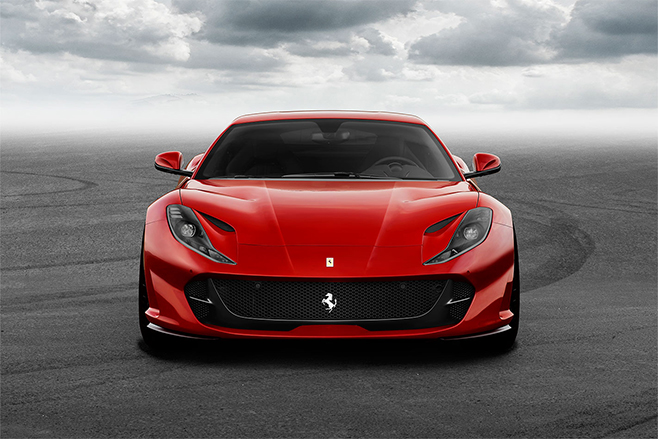
Names matter. Which is the true genius of the forthcoming Ferrari 812 Superfast.
Yes, there’s cleverness to admire in the shape of a 6.5-litre V12 with roughly the same energy output as the sun; and doing nought to 100 in less than three seconds is not to be sniffed at.
But calling it the Superfast is what really eclipses the F12 Berlinetta (which sounds like an ice cream cake), and is what will put one of these in the driveway of every NBA player on the planet. “I think you’ll find it’s a reference to the 1964 500 Superfast which replaced the 400 Superamerica” huffs the Ferrari purist.
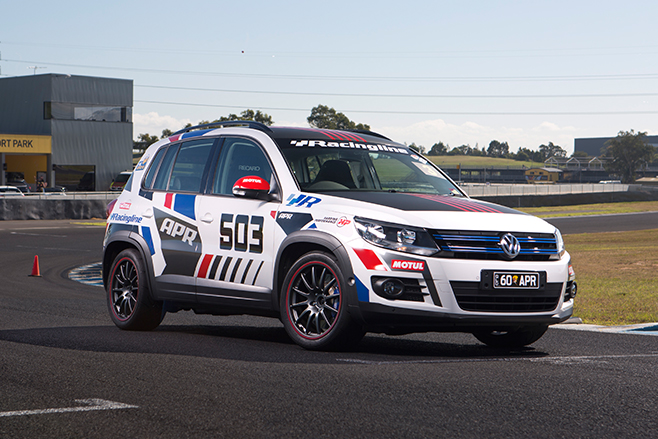
Ask Volkswagen. VW named its new seven-seater Atlas, but it was going to be called the Teramont, in keeping with the other T-named SUVs – the Tiguan, the Touareg, the Tugboat, the Trigonometry. But then the PR department remembered they were hoping to sell some to Americans, and that Teramont sounds like a bad guy from the Power Rangers.
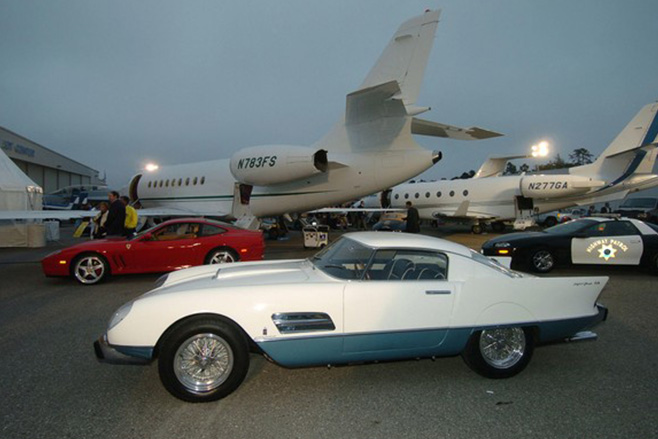
Or for that matter, ask Mercedes-Benz, whose model names used to be easily decipherable into body style and engine size, as befits the work of Teutonic efficiencybots. But then they discovered they could make the engines smaller but the numbers bigger, and everyone was just as happy. C63? More like a C40.
In fact, since Benz’s internal model codes mostly start with W (for ‘wagen’), if you’re in a C63, you might logically be driving a WD40. No wonder the hinges don’t squeak.
Don’t judge a book by its cover, nanas worldwide used to advise. But that was before marketing experts took over. Now if you see a book with a shirtless Fabio on the cover, perhaps being gripped around the thigh by an adoring maiden in an easily rippable bodice, you can be fairly confident it’s not a crime thriller.
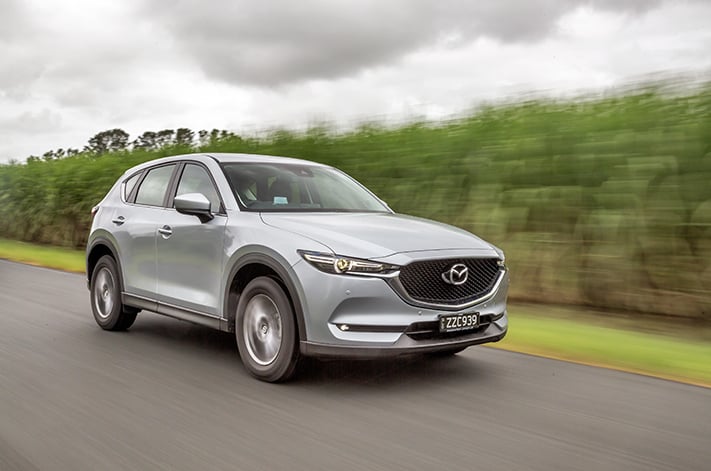
MAZDA’s first generation CX-5 was a sales juggernaut, and has consistently held the title of Australia’s most popular medium SUV thanks to an appealing combo of sporty handling, sharp design and strong equipment levels.
However, it wasn’t perfect, with a lack of refinement and intrusive road and wind noise being bugbears for the car. Mazda has heard the criticism, however, and answered it deftly with its second-gen iteration of the CX-5.
Updated styling, improved sound suppression, and an even lengthier list of standard features make the second-gen CX-5 an impressive offering in the most popular SUV segment in Australia
Tell me about this car
The new Mazda CX-5 is longer and lower (just), than the first generation model it replaces, with the Japanese manufacturer focusing primarily on improving cabin refinement and value for money. The Touring is the mid-level spec, with either a 2.5-litre naturally aspirated petrol or 2.2-litre turbo diesel that sends power to all four wheels through a six-speed automatic. The petrol variant tested here costs $38,990 (MLP). Touring is a new spec for the CX-5, designed to fill the gap between the Maxx Sport and GT grades.
Strengths
- The most striking thing about driving the new CX-5 is the work put in by Mazda in improving Noise Vibration and Harshness (NVH) suppression. It is impressively quiet at highway speeds, with tyre roar and wind noise only becoming intrusive on coarse-chip roads.
- Despite its high-riding SUV stature, the CX-5 remains a dynamically impressive vehicle. It corners stable with some small body roll, with steering on the lighter side that does well to communicate what is happening at the wheels. The suspension is also well tuned, soaking up most bumps at both high and low speeds. It impressed on corrugated dirt roads.
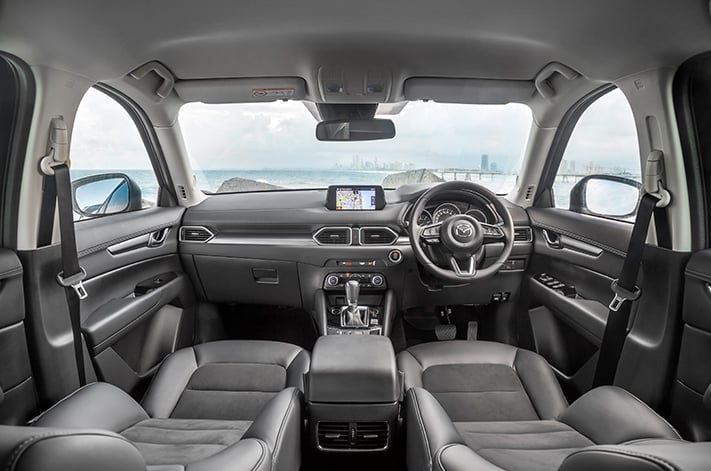
- The interior feels more luxurious than the sub-$40k price point suggests. This is thanks largely to the generous application of comfortable black “MazTex” faux leather and suede upholstery on the seats and key touch points like the armrests, making the Touring grade a pleasant place to spend time.
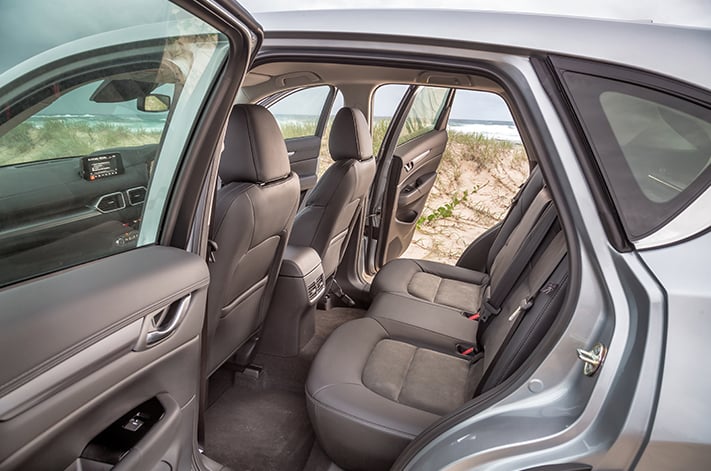
- Speaking of cabins, the inside of the CX-5 is spacious with front passengers separated by a wide and deep centre console. The redesigned unit is now higher as well, for improved ergonomics. Rear passengers are given plenty of legroom, and redesigned rear pews now have a 10mm lower hip point for more headroom and a more comfortable posture. Yet, four adults could complete long drives vey comfortably in the CX-5.
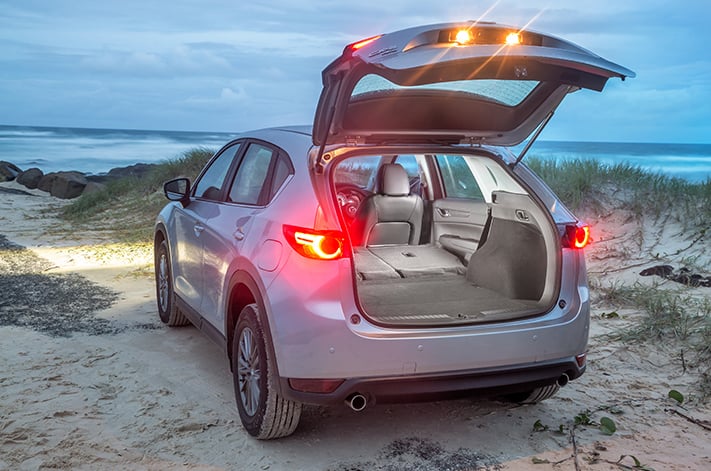
- Rear luggage space is ample, with 442 litres (up from 402 in the old model) with the rear seats upright, which can be increased thanks to 40/20/40 folding seats. However, this is less than what is likely to be the CX-5’s staunchest rival, the VW Tiguan. During the test period the CX-5 was able to transport three adults, their luggage (including oversized sporting equipment), plus food and drink for a long weekend getaway with ease.
- Mazda has kitted out the CX-5 with plenty of standard equipment. The Touring receives a heads-up-display, reversing camera, sat-nav, rear cross traffic alert (which works well to warn drivers of oncoming cars while reversing), keyless entry, traffic sign recognition, AEB, 17-inch alloy wheels, automatic wipers, and rear air vents as standard. This is impressive for the price and segment, and a definite step above the base model Maxx.
- While looks are subjective, Mazda should be commended for the styling of the new CX-5. The car looks smart, and is likely to age well, appearing more up-market than it is priced. The cars exterior is evolutionary instead of revolutionary, with mature and elegant styling.
Weaknesses
- Prices have risen slightly for all spec grades bar top of the line Akera. However, Mazda has justified the increases with more equipment as standard. The Touring’s $38,990 (MLP) is still competitive for the segment.
- To really nitpick, the steering in the CX-5 may not be as sharp as some buyers would want – there are sportier SUV offerings available – like the Volkswagen Tiguan. Mazda’s focus on luxury and refinement has slight dulled the CX-5’s sporty edge.
Hyundai Tucson, Toyota RAV 4, Nissan X-Trail, Volkswagen Tiguan, Kia Sportage, Subaru Forester, Ford Escape, Honda CR-V, Mitsubishi Outlander
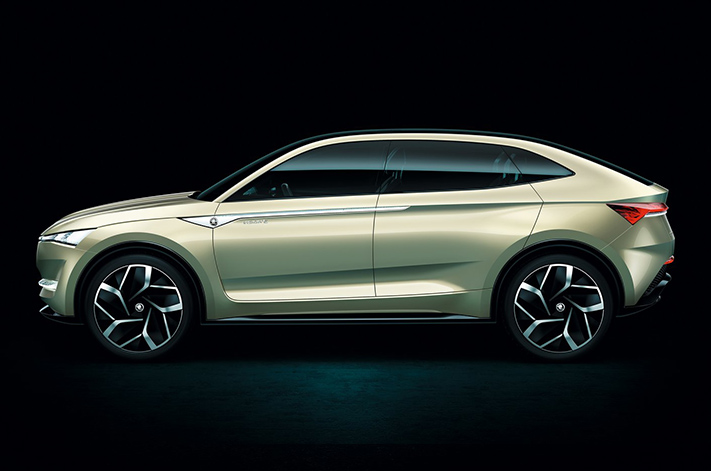
We’ve seen it teased and sketched, but now we can see Skoda’s sleek Vision E crossover concept in its final form.
Scheduled to make its first public appearance at the Shanghai Motor Show later this week, the first images of the Vision E Concept have leaked early thanks to Russian website Autowp.ru. With slightly more realistic proportions than the exaggerated concept sketches, the Vision E presents as an especially streamlined interpretation of the ‘coupe’-like SUV form factor, with some parallels to Tesla’s Model X.
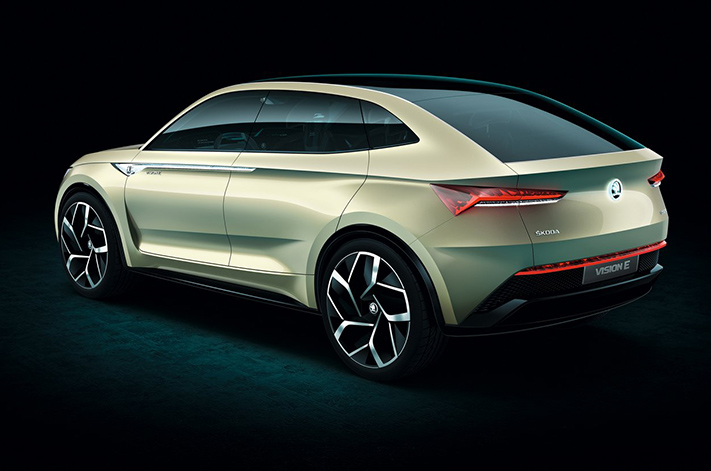
A full-glass roof that’s integrated with the windshield is one feature that riffs on the Model X’s design cues, as are the almost featureless flanks, grille-less snout and flush-fit doorhandles. Level 3 autonomous driving aids are also a highlight of the Vision E, and preview the first application of the self-driving tech for Skoda.
And then there’s the powertrain, which comprises a 225kW two-motor all-electric setup with lithium-ion batteries supplying enough electrons for a 500km range. Built on the Volkswagen Group’s MEB platform, the Vision E Concept is intended from the outset to be a purely electric vehicle – much like the Model X.
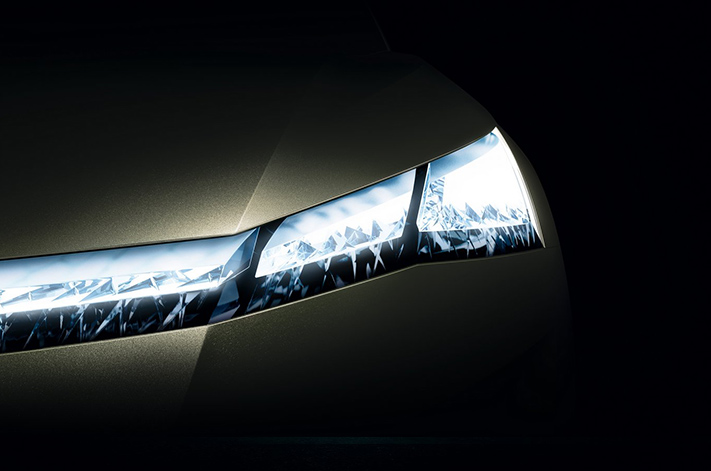
But unlike Tesla’s gull-winged SUV, the Skoda Vision E features more sheetmetal detailing in the form of sharp creases that echo the styling of the Czech brand’s existing production cars.
Speaking of which, the Vision E is expected to eventually morph into something more showroom-ready. A production version of the Shanghai concept is reported to be in the pipeline for a 2020 on-sale date, becoming the first of five pure-electric models for Skoda.