
AUDI has given the RS3 new clothes and a new heart for 2017 – not to mention a sedan bodystyle for the first time in the nameplate’s history.
WHAT IS IT? The mid-life update for the Audi RS3, now available in both sedan and hatchback form for the first time ever.
WHY WE’RE TESTING IT Audi Sport has designed a brand-new five-cylinder engine for its entry-level RennSport model, the RS3, and with more power and more torque surging to all four tyres coupled with significant weight reductions, it promises greater agility and urgency than before.
MAIN RIVALS Mercedes-AMG CLA45, BMW 340i, Infiniti Q50 Red Sport
THE WHEELS VERDICT The 2017 Audi RS3 takes what was already a capable platform and enhances it by carving off kilos from all the right areas, while simultaneously adding power and torque. It’s a compact rocketship that pays homage to Audi’s rallying roots in the most flattering way, and as a sedan it’s extra desirable.
PLUS: Sedan looks grown-up compared with hatch; more agile than before; muscular engine; five-cylinder engine note MINUS: Best configuration requires extra dosh for carbon stoppers and wider front rubber
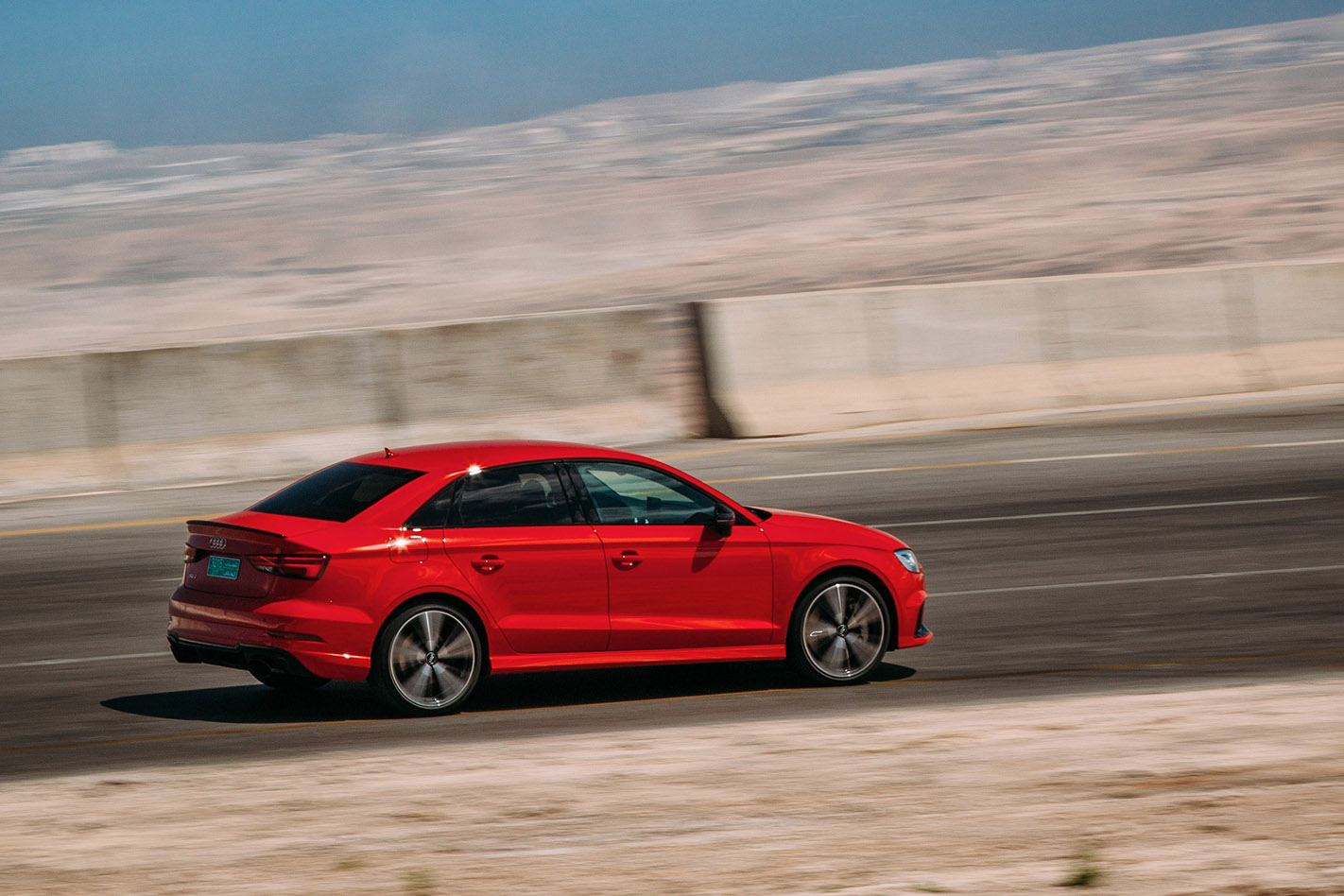
Audi Sport hasn’t just pumped its A3-based entry level model full of botox to keep it looking fresh – it’s given it a heart transplant that sees power and torque figures ascend and kilograms drop. Leaner and meaner, the new RS3 has been reshaped into a more athletic offering.
And there’s a sedan now, too.
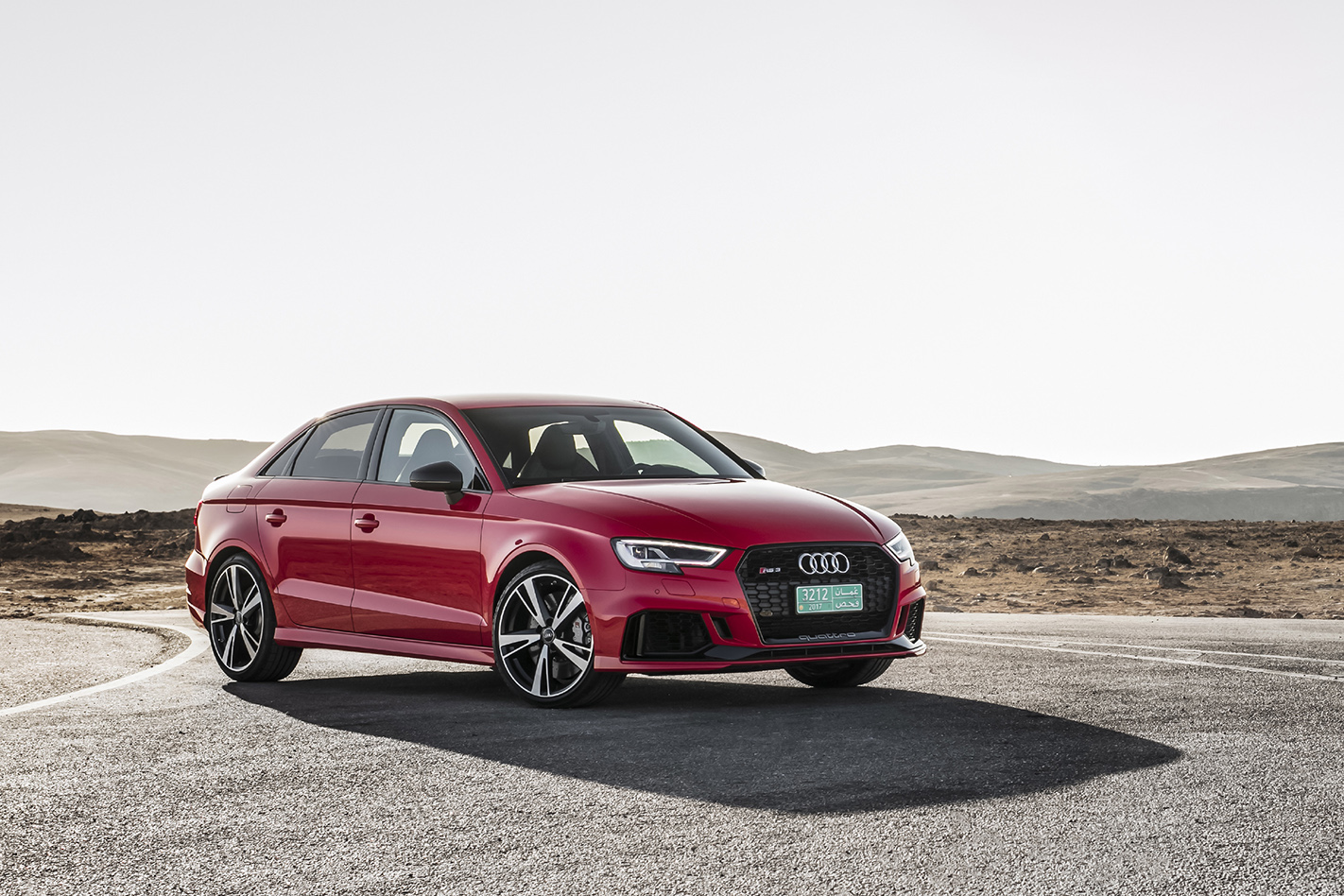
Up until now Audi Sport has resisted building the RS3 in anything but hatchback flavour, but market demand (and the not inconsiderable competition of the Mercedes-AMG CLA45) has swayed the company in a four-door direction. Our eyeballs are grateful.
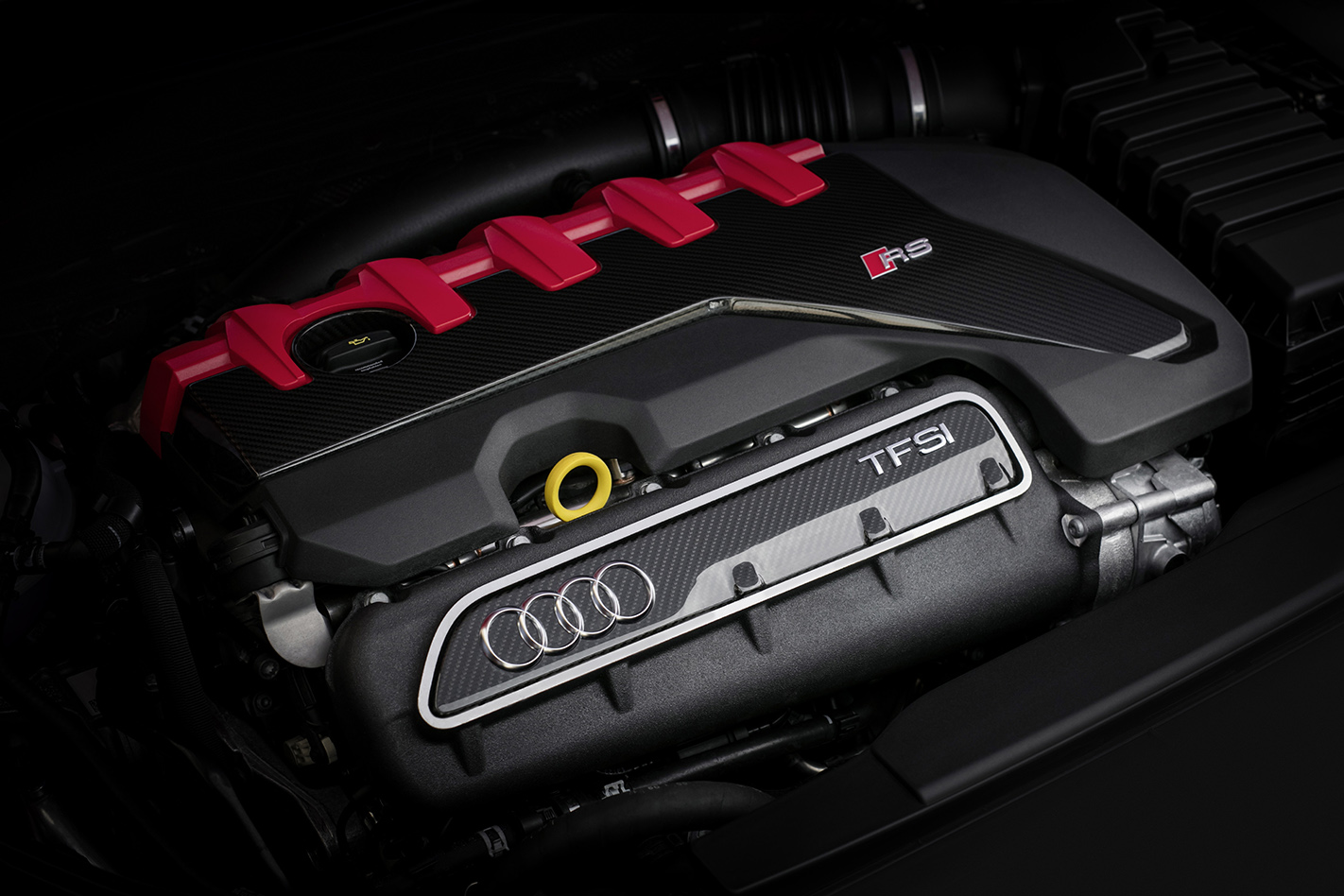
A lightweight crankshaft, smaller main bearings, dual port/direct fuel injection and a switchable coolant pump are among this motor’s nerdier party tricks, but all you need to know is that the power-to-weight ratio of this powerplant has travelled in a virtuous direction.
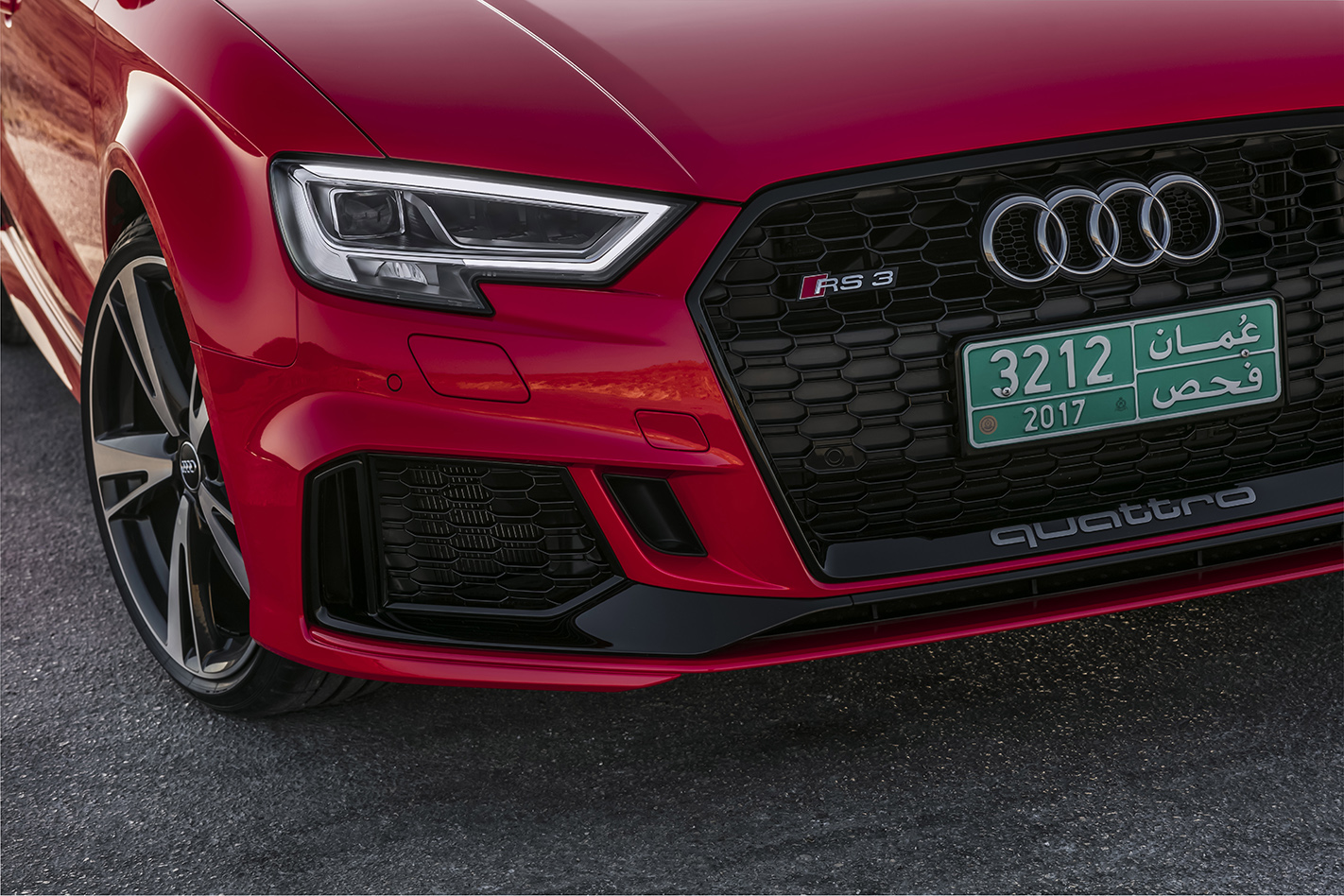
And here, at the 2017 RS3’s international launch on the southern tip of the Arabian Peninsula in Oman, Audi’s RS entry point showcases its newfound dynamic edge well. Oman’s road network offers up countless kilometres of surprisingly smooth tarmac, but it’s dusty and often greasy thanks to arid environs and the poorly maintained Tata trucks that crawl across the Sultanate.
With lower friction than the average Aussie road, Oman offers a good environment to explore the handling of a grunty AWD sports sedan – especially up in the Dhofar hills that overlook the southern coastal city of Salalah.
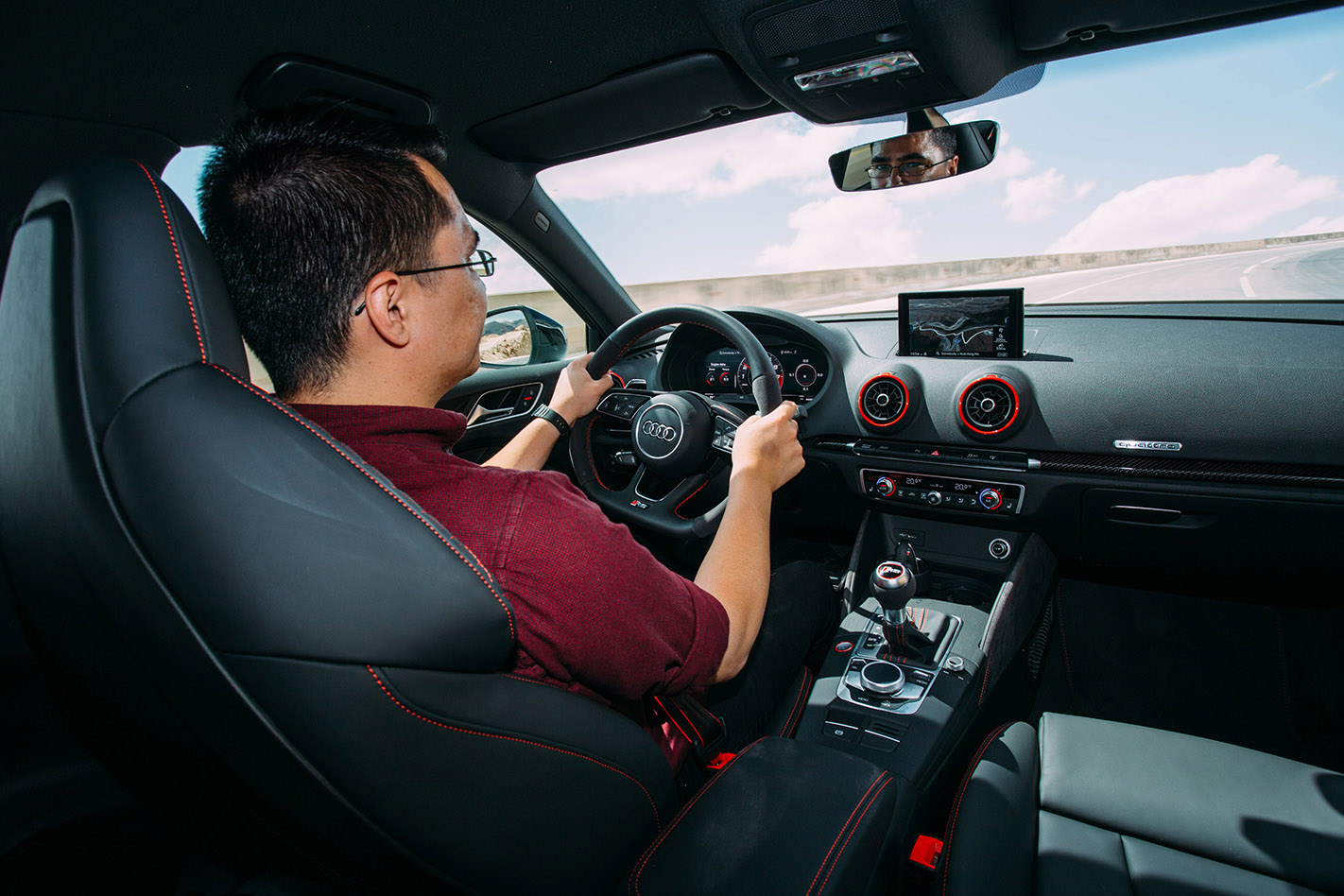
Brake torque vectoring also helps out with maintaining composure when cornering under power and the RS3 feels unshakeable as a result. Much like the old car did.
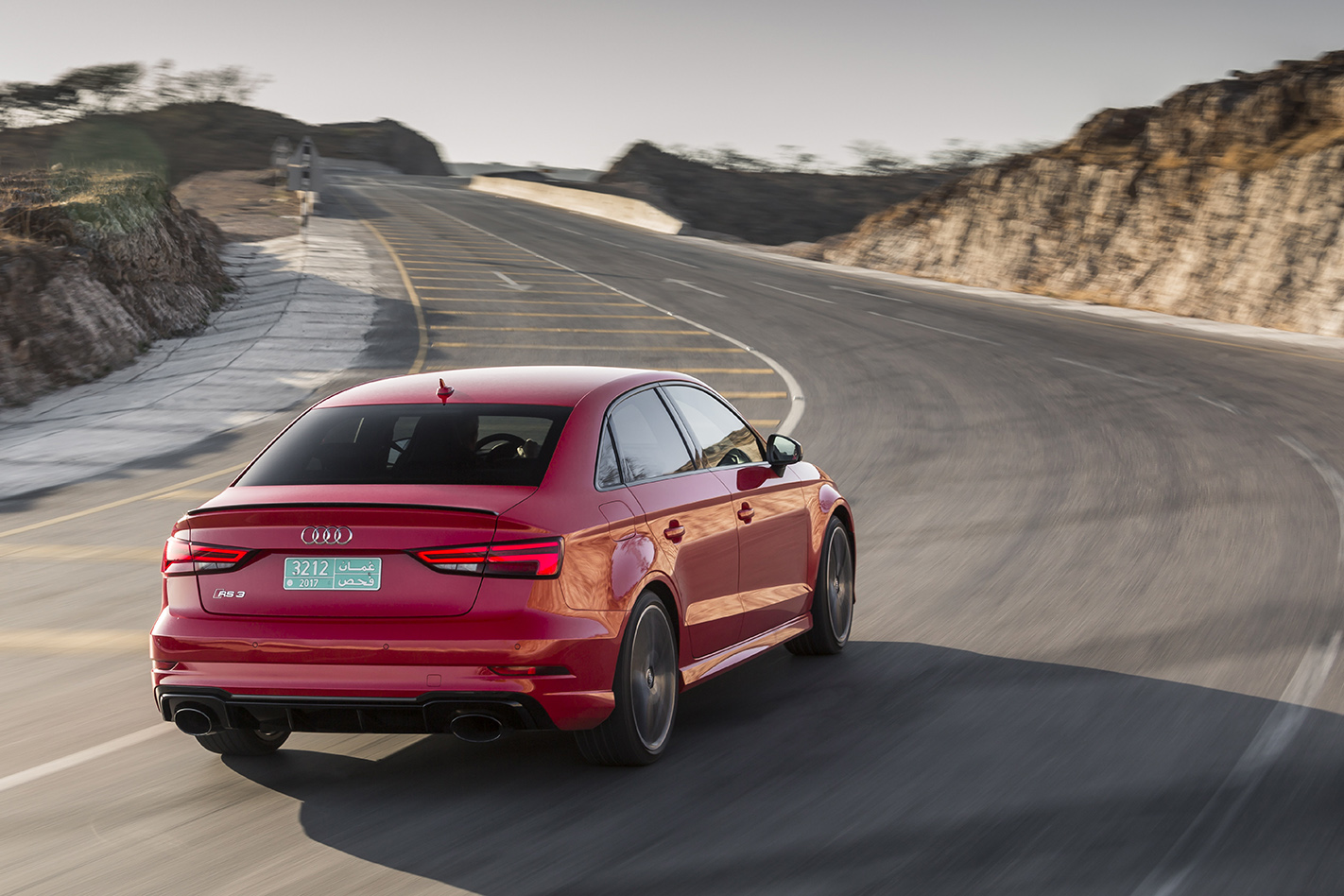
It may have displacement on its side, but in terms of turbo lag this 2.5-litre doesn’t feel a whole lot more responsive than the boosted 2.0-litre that powers Benz’s CLA45.
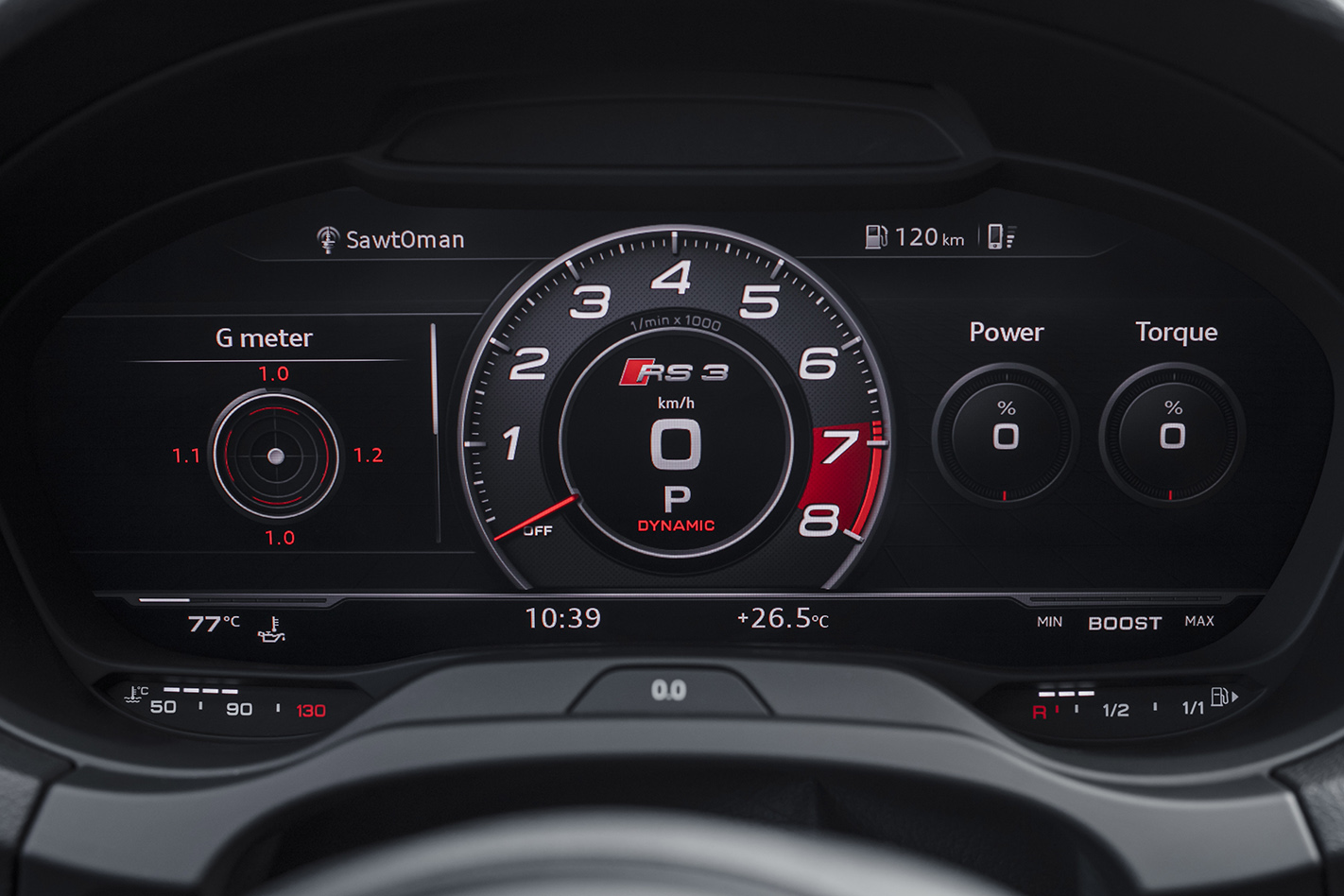
Thumb the ESC button to relax the electro-nannies, aggressively steer into the corner and the tail will come right out in a smooth, predictable, and ultra-satisfying arc of oversteer.
Once sideways, the angle of attack can be adjusted with the throttle. Anyone who says AWD cars lack handling nous needs to drive this RS3 – it’s good.
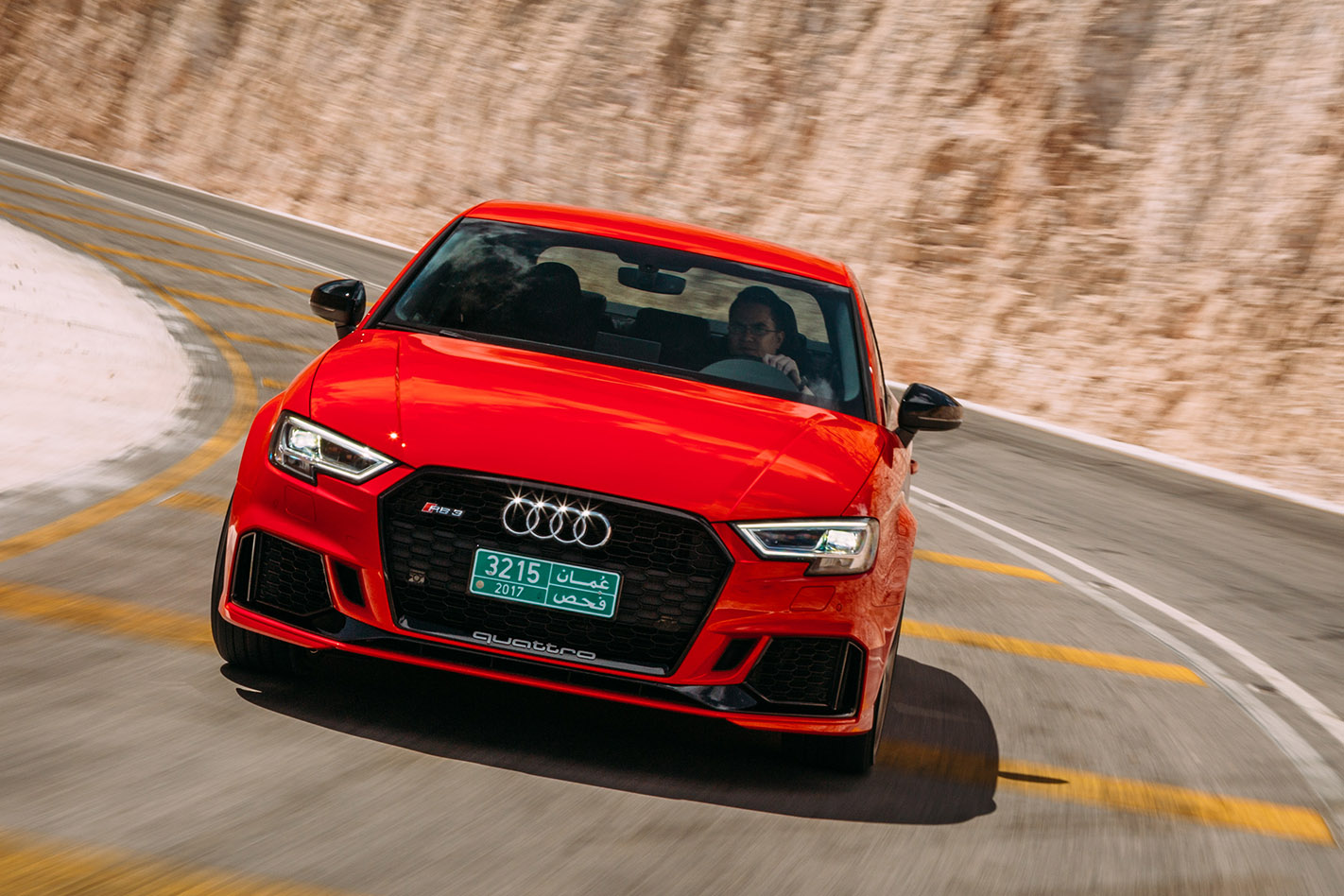
It’s simple physics: less weight plus more grip at the front equals faster direction changes and a looser rear end. Equipped as such, chassis balance is – dare we say it – fairly neutral.
Is it cheating? Not really. All it means is you should probably aspire to spec your own RS3 similarly, but with the carbon brakes expected to be a $10-15K option we’ll forgive you if you don’t tick that box. The chubby rubber is worth your coin, though.
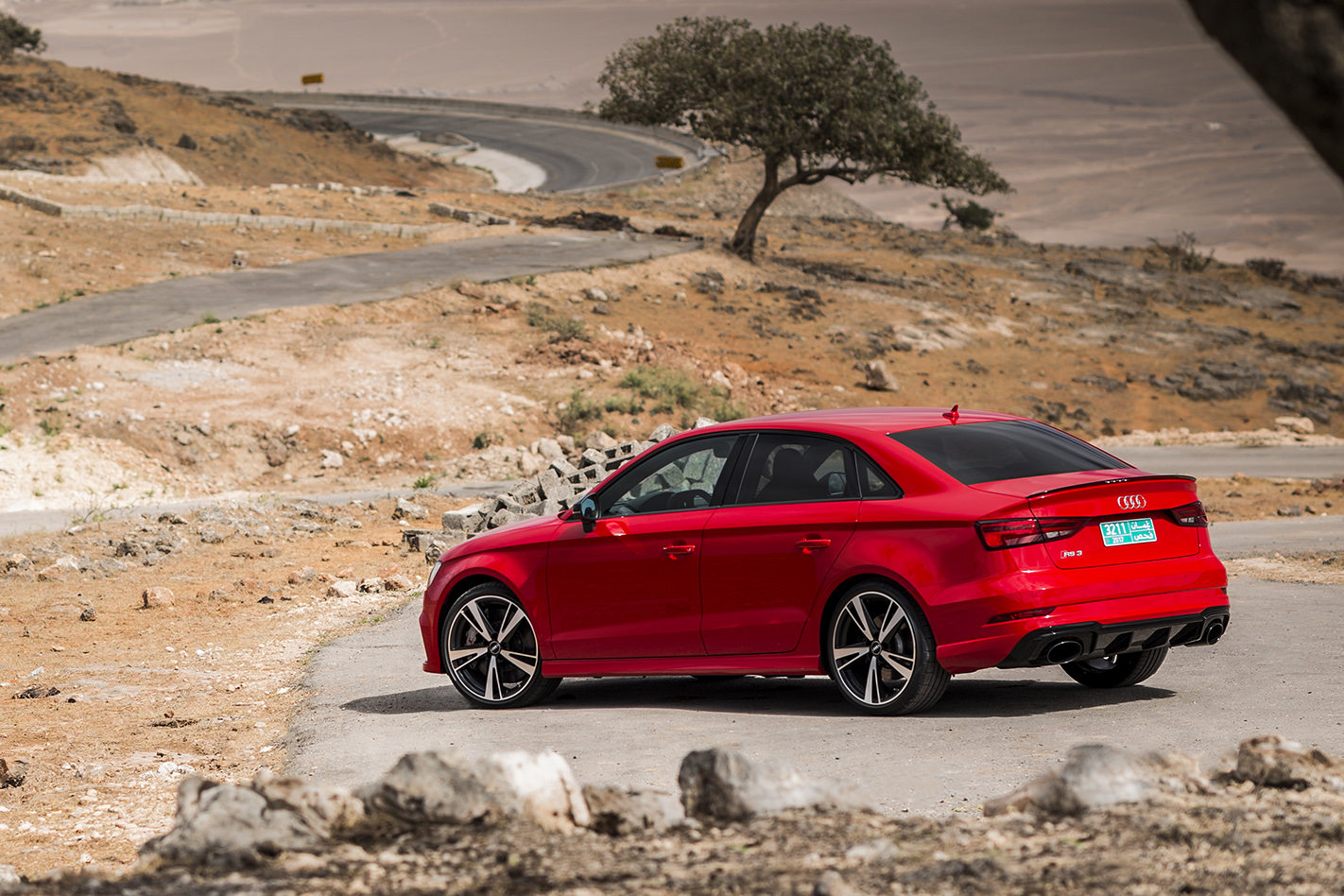
Thankfully, despite the myriad mechanical changes the character of the RS3 remains largely intact, with its appealing combo of all-paw traction and a grunty five-cylinder being retained. However it’s the details – less weight and more neutral handling – that transform it from good to great. Like we said, this is not your average mid-life facelift…
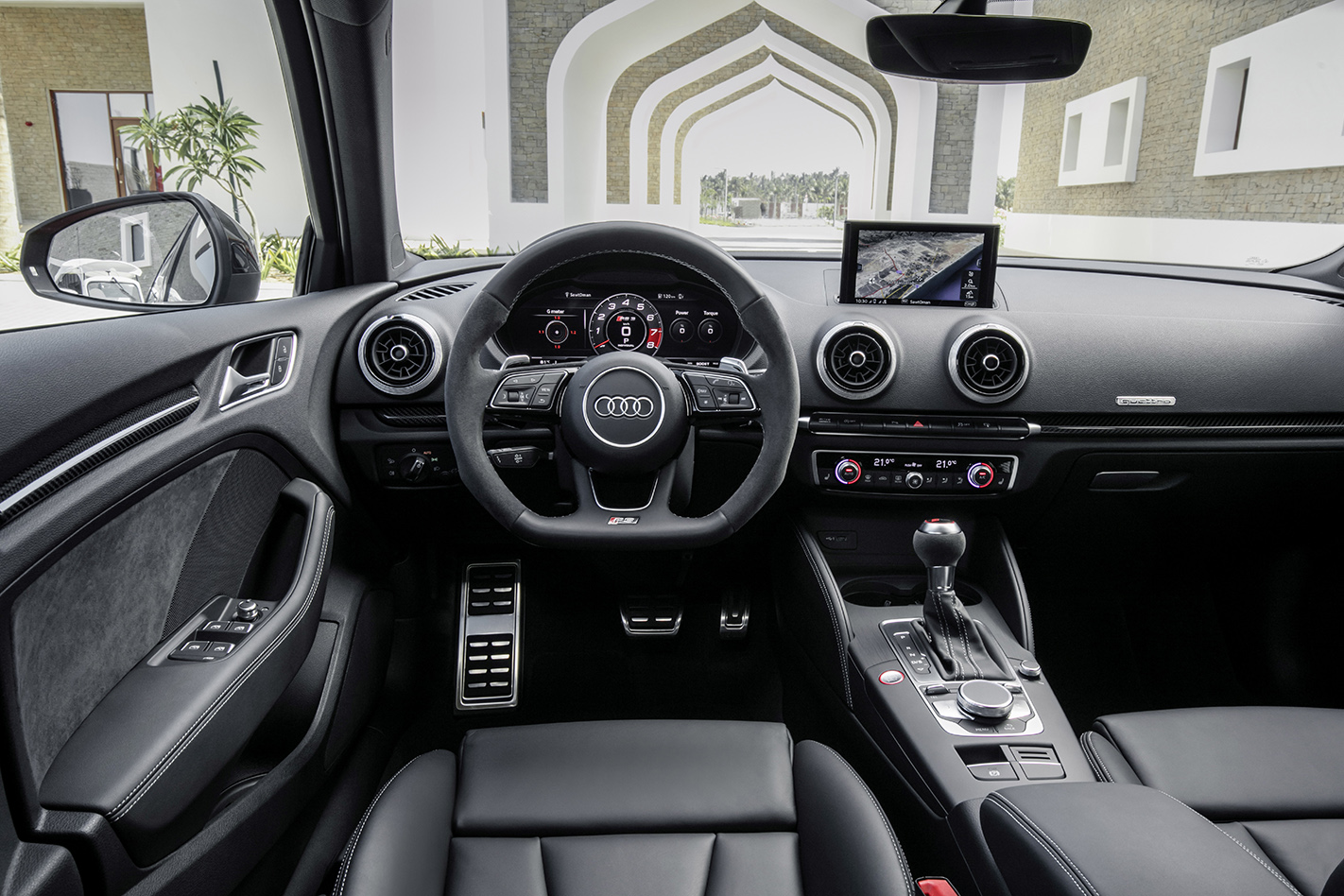
Bentley has decided that one of its oldest sub brands hasn’t had quite enough exposure in its 400-year history and will progressively roll out a Mulliner variant of each model starting with the Bentayga Mulliner that debuted at the Geneva motor show.
The next model to gain the Mulliner moniker will be the second-generation Continental GT at a point after the new version launches in 2018, but if the strategy of applying heritage brands to new models is a success, the British car maker could pull the same stunt with Supersports variants.
Speaking at the Australian Grand Prix, Bentley Mulliner Head of Technical Operations Uday Senapati confirmed to Wheels that Mulliner variants would spread to all model lines.
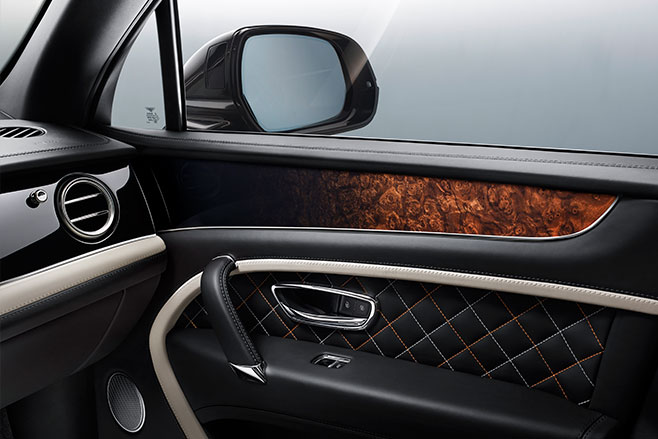
“In future, what you can expect is a GT Mulliner, a GT Convertible Mulliner, a Flying Spur Mulliner and so on.”
After an eight-year hiatus, Bentley has resurrected the Supersports name for a more potent version of the Continental GT (below) to farewell the current-generation model, but Senapati said it was possible that the name could be applied to the rest of the British luxury range in the same manner as the Mulliner versions.
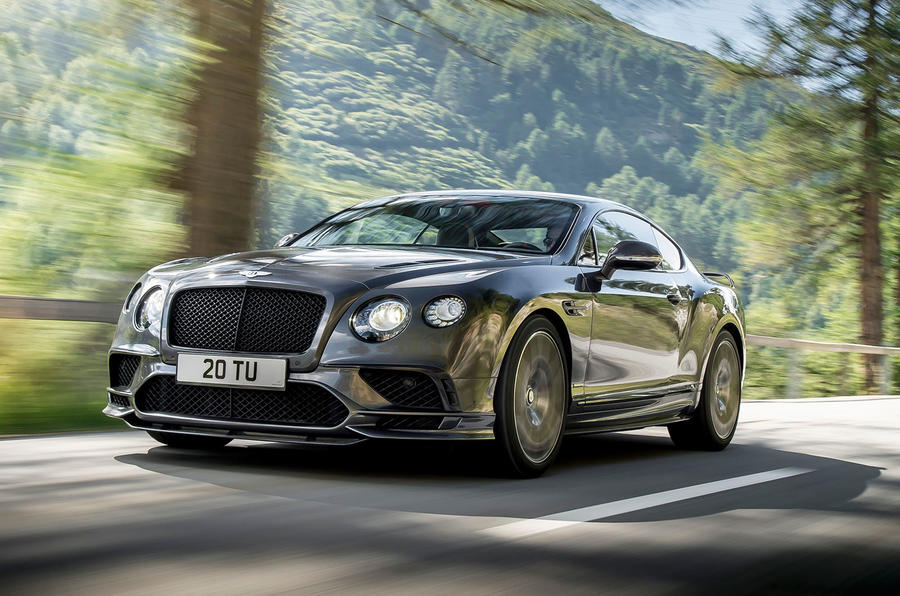
Senapati explained that the Mulliner variants are “not a special edition” but a permanent addition to the line-up and would give customers a clearer choice between comfort-focused features or outright performance.
“This will be a variant of the car,” he said. “For example with GT, and GT Speed, if you want more performance then you go to Supersports, if you want more luxury you go to the GT Mulliner. That’s the beauty of our brand – we’ve got luxury and performance together.”
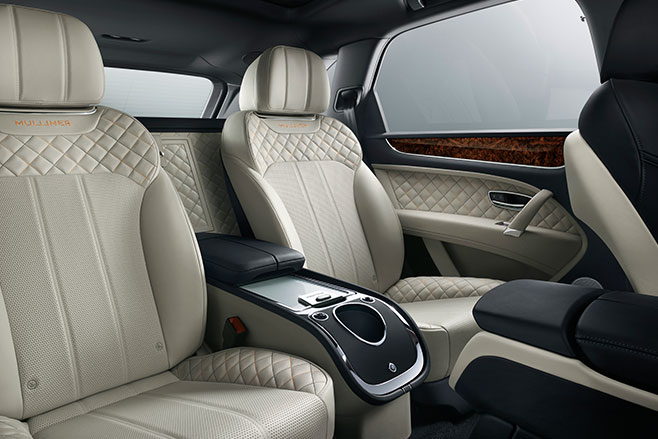
For the range of Mulliner variants, Bentley will apply some of its most luxurious treatments including
Electro-chromatic glazing that can go from perfectly transparent to completely opaque at the touch of a button, the use of innovative new lighting techniques and invisible controls including haptic touch-sensitive surfaces.
According to Senapati, Bentley is not exploring the relatively new technology of gesture control as it has difficult cultural and familiarisation problems for users, he said.
“The reason no one is launching gesture control in a big way is that it’s very confusing.
“The kind of things we’ll be looking at are true luxury. Almost all automotive materials have been explored now so we’re looking at going into new territories in materials.”
Mini vans can be a handy tool for urban businesses and the Renault Kangoo is no exception. It’s available in both long and short wheelbases, as a crew van, and with a diesel or petrol powerplant. But now the petrol powered Kangoo Compact has had a heart transplant with the arrival of a new auto gearbox and a 1.2 litre turbo engine.
What Stands Out
The short wheelbase Kangoo has three cubic metres of room in the back and payload varies on the type of transmission you want. The auto can haul 540kg and the six-speed manual can carry 675kg. Manual versions can also tow up to a tonne.
But it’s the new engine and gearbox that grab the most attention. The 1.2 litre four-cylinder makes 84kW at a rather revvy 4,500rpm and makes 190Nm of torque. It’s clearly not a stump-puller but then again it’s a mini van not a semi trailer.
The new dual clutch six-speed auto is an automated transmission. Which means it’s basically a manual with a computer engaging the clutches and selecting the gears for you. Automated transmissions are pretty common these days but in terms of performance in a light commercial it’s pretty hard to go past a traditional automatic.
What’s Inside
There’s no crew option for the short wheelbase models, so this Kangoo really is a business proposition. The cockpit has a business like feel to it without much in the way of bling. The styling may seem a little awkward and maybe even a little Lego-like but it’s all quite functional.
The transmission selector is a little counter-intuitive with the gear display actually showing on the instrument panel rather than beside the gear stick. Standard equipment includes four airbags, air conditioning, reverse parking sensors, and a Bluetooth enabled stereo system. A reverse camera, touchscreen media unit and steel bulkhead between the cockpit and load area are all options. You can even opt for alloy wheels. Noise levels are kept at bay with improved padding on the floor of the load area.
Choosing Yours
The big selling point for the new petrol engine is fuel economy and low cost of ownership. However there is also the option of a 1.6-litre diesel engine in long wheelbase models.
The Kangoo Compact’s engine and driveline are also used in Renault’s passenger car line-up and as such are quite refined on the road. The Kangoo works as an economical proposition for small businesses needing a nimble city van to get the job done. Yet it’s also easy to live with as after hours transport.
There’s also Renault’s business-focused three year, 200,000km warranty with three years of roadside assistance to sweeten the deal.
Summing Up
The Kangoo’s styling may not be to everyone’s taste but for economical working wheels the Kangoo is a nimble drive that’s easy to live with in the city back streets. The addition of the sophisticated little drivetrain to the range has made it just that bit more attractive.
STEFANO Domenicali is a bloke with a long and storied history in the automotive realm. Having worked with Ferrari since his university graduation in 1992 until the end of a six year stint as Formula 1 team principal in 2014, he then jumped ship to Audi and took up a role at Lamborghini.
Today, the 51-year-old is chief executive officer at the iconic sports car manufacturer, a position he has held since March 2016. As a proud Italian, he speaks about his work with passion and with his hands. Wheels sat down with the man to talk sports cars, motor racing and the next generation.
Wheels: Lamborghini has a reputation built on epic engines and dramatic styling. How do you balance that heritage and commitment to tradition while maintaining relevance in this era of innovation?
Stefano: “We cannot ever sleep. We want to be different. We are Lamborghini, you know? If we follow the route of the others, we will never be different.
“We are not against the technological revolution; we have an attention to this revolution. The key of being successful in this condition that is changing so quickly is to be flexible. The business cycle is done in such a way that as soon as the new technology is ready, then of course it’s time to change, without waiting a second.
“In that respect there is an important project that we have just started with MIT [Massachusetts Institute of Technology] to think about the supercar. I’m sure that within this year we are going to have some new ideas on which we can work to project the shape of the Lamborghini of 2035 onwards. This is our duty, to think ahead.”
W: We have seen hybrid performance cars from competitors like Porsche, Ferrari, McLaren and now Mercedes-AMG has something on the way. Is there risk Lamborghini might be left behind?
S: “I don’t think so. I have a way of saying that the pitch of football is quite big. If everyone is following the ball there will be a lot of congestion. So there is space for us to be different.
“In saying that, I cannot deny that we are looking at what is happening and what will be the evolution. For example, in the discussion of what will be the future of the Huracan, that’s on the table for discussion. This is part of the strategic approach that we have to have.
“I believe that Aventador will remain a very, very specific car, which needs to be totally different because it will remain our reference if we want to be Lamborghini. Then Huracan, or whatever we call it, for sure will be discussed. We are talking about it internally, what will be the right power unit, the right power train.”
W: How do you carve out a unique identity for Lamborghini from the wider VW group you share quite a lot with?
S: “The more we go towards electrification the more the technical base of all the cars will be the same. Each company needs to think what is the differentiating factor on which [a customer is] going to buy when underneath it’s almost equal.
“On our side it’s important we stay different in terms of lines and technology. If we all jump into that specification the question our customers will raise is ‘why are we there?’ when there are so many things that are almost the same.
“It’s our aim together with the group to be the stimulator of discussion. It’s really to see how we can potentially stay unique. The next years are crucial because if you give the possibility for our brand to grow and to be stable with a solid foundation then we’ll be in a position to be more autonomous in terms of investment.
“So we are in a way in a moment where we are in very positive position for Lamborghini. I have the duty and responsibility to make sure that everyone understands what is the meaning of this growth and change, because if we miss that it will be a problem.”
W: Coming back to the brand’s history, how do you look forward when the past is so important?
S: “The more that I see society growing and changing, the more to be hooked to the past is difficult. For us it is essential. We have our credibility through that foundation and that’s why we need to always look behind to be correct on what we’re doing now. Evolution is the base of our approach. It’s a heavy weight to have on the shoulders but with our brand it’s the only way to be successful in the future.
“All the lines of the old cars, all the thinking behind the old cars is there as a reference for the future.
“Now the challenge is that the young generation is part of our brand more and more. We know that there are two, let’s say, specifications for the young generation: the ones that do not give value for the heritage and the others who are giving value.”
W: Lamborghini seems to have made a deliberate effort to be involved with gaming like the Forza series on Xbox. Is that important?
S: “Absolutely. That’s the hook for the youngsters who do not have the heritage in their mindset. For them it’s important because they recognise there is Lamborghini, it’s in the place I would like to be.
“We are pushing like hell and it’s incredible because there are young teenagers who know us because of the game. So this is the hook for those who don’t really know, if you go to this guy ‘who is [Marcello] Gandini?’ they say ‘who?’ But if you say ‘Forza 3’, they say ‘oh, yeah’, so we have to be on both sides.”
W: Your personal history with Formula 1 is long. Would you like to see the Raging Bull on an F1 car again?
S: “I tell you, you’re touching a very sensitive part of my heart! But I want to be very open with you. Today, we have other priorities on which we have to be totally focussed on. Tomorrow, because motorsport will always be a part of Lamborghini and the steps that we made in the last two years were very, very good… if the [F1] platform changes and we have the solidity as a company to have passed this period now, the answer is why not? It could be.”
W: Is there a case for entering other types of motorsport to help with the development of future road cars?
S: “I would say that the product developed for Formula 1 is too specific for any other kind of application. This is why I say the motorsport platform must change. Because for us to enter there with the level of cost that is needed not to compete, but to be competitive – otherwise you don’t do it – is too far from what we’re doing. So if we see change in that specific environment and we are OK, I think it’s worth it to look at it.”
W: You would be familiar with Aussie driver Daniel Ricciardo. What do you think of him?
S: “Very good guy. I know him very well, as you can imagine, and what I like is that he is positive. Sometimes people that are involved in motorsport feel the pressure of the whole country, or wear the world on their shoulders. They are sportsman, but sometimes they forget that they have to be an example for kids and they have responsibility, and the fact that [Dan] is approaching this job in a very positive way – he is always smiling – this is a great thing. He is doing what he loves, and that is why I like him very much.”
W: Your predecessor Stefan Winkelmann was not particularly keen on autonomous driving. Do you feel the same or would you consider it, possibly for dealing with traffic jams and things like that?
S: “For super sports cars I think that autonomous driving in the way that people are thinking of it will not be used. But technology that is used for autonomous driving could be very good for improving the skill of our drivers. You can use some reference while you’re driving in a heads up display to push to the limit of braking when you’ve got this technology, so it will be important for the super sports car.”
W: Huracan Performante is the fastest car you’ve ever put around the Nurburgring. How important is it to have a benchmark time at that track?
S: “For manufacturers, as we know, it is the Church of Rock ‘n’ Roll! So for sure [the Nordschleife] has been a reference for auto manufacturers, because they know that for historic reasons to be there and to be strong is very important. Maybe coming from Australia it’s more difficult to perceive that importance and I totally respect that, but if you’re talking about the manufacturers… what a car did at the Nurburgring gives it a pedigree – a ranking – so it’s important to give credibility to a product, to a story.
“Personally, I do believe that for us it’s good because it always reminds us that we need to be challenging ourselves versus the others, but the design at the end of the day is more important for the future.
“The way you are hit by something is about the first look. In the new world you will be affected immediately by either the fact that the brand is cool or the lines are superb. So we don’t give up on being different and attractive and current with our approach to design. And, of course, the colour is part of our nature.
“In certain places white cars are growing, and the customer is always right, but to look at our cars in yellow and green is part of their nature. It’s part of the combination with the design and I would say that for us even more so than for other manufacturers, when the technology will be mostly the same, at the end of the day when you look at the design of our car it will give you something.
“Countach has to be always the feeling with our cars.”
One car that didn’t debut at the Geneva Motor Show earlier this month as expected was Volkswagen’s all-new compact SUV. However the carmaker did briefly show a teaser image of a car, believed to be the production version of T-Roc crossover concept revealed at the same venue back in 2014.
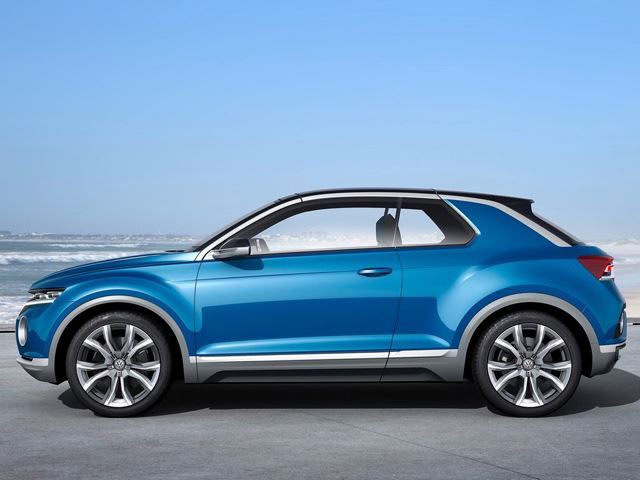
Now due for unveiling at next month’s New York motor show, the Polo-based crossover appears similarly proportioned to its Audi Q2 cousin, especially at the front, which differs from the 2014 T-Roc concept with its larger headlamps and grille, and rectangular fog lamps replacing the concept’s round ones.
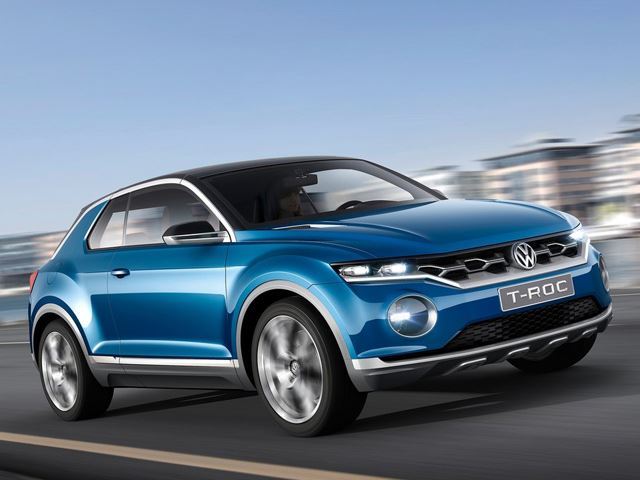
It’s also a lot more SUV-like than the concept with bulging wheel arches, raked tailgate and boxier roofline. The targa-style open roof is also nowhere to be seen.
Whether the image is an accurate reflection of the actual production model is currently the subject of debate, with some reports quoting VW sources as saying the styling of the car in the teaser is a dramatically toned down version of the real thing.
What is generally known is that that the production T-Roc will come with three engine options, including a 1.0-litre three cylinder engine and 1.5-litre and 2.0-litre four cylinders with the biggest pumping out 180kW. There will also be 1.6-litre and 2.0-litre four-cylinder turbo diesels.
The T-Roc is expected to be priced directly against the likes of the Mazda CX-3, Toyota C-HR and Peugeot 2008 when it goes on sale here either late this year or in 2018.
It will be a key player in Volkswagen’s plans to expand its SUV line up Australia, which began with the release of the all-new Tiguan and will also include the third-generation Touareg and seven-seat Tiguan Allspace.
The record for the fastest standing mile was, for the last few years, held by a 2006 Ford GT. Now it’s been beaten… by a 2006 Ford GT.
Johnny Bohmer, owner of Performance Power Racing in the USA, will be disappointed to discover that his 283.2mph (455.8km/h) world record has been topped.
High performance modifiers M2K Motorsports have built a Ford GT capable of running a standing mile and reaching a top speed of 293.6mph (472.5km/h), more than 10mph faster than Bohmer’s.
As visible in the video above, the GT has had almost no external modification, which goes to show how impressive the original design is. A car which was essentially designed half a century ago is aerodynamic enough to go that fast without being launched into orbit.
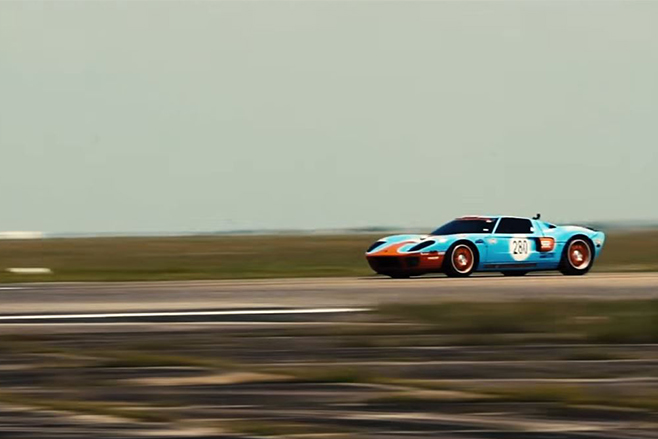
To put this into context, it’s fast enough to drive from Brisbane to Perth in less than eight hours, if you had a straight-line of road and didn’t have to stop for fuel. We imagine this thing drinks more than a failed writer.
The staging ground for this absurdly fast one-mile-run was the Texas Mile event, held at the Victoria Regional Airport in Texas. Event organisers Top Speed Racing Association posted the video evidence, but an onboard video popped up from a different account.
The quality is pretty sub-par and it’s pretty overexposed, so you can’t really see much. What you can see is the speedo rocketing its way to 293.6mph and then some. Plus, you get an idea of what the twin-turbo V8 sounds like from inside. Loud.
Ever wanted to know what the Mercedes-AMG Petronas F1 livery would look like on an AMG GT R? Look no further.
In the wake of the Australian Grand Prix, we’ve been scouring the web for anything F1-related to sate our hunger.
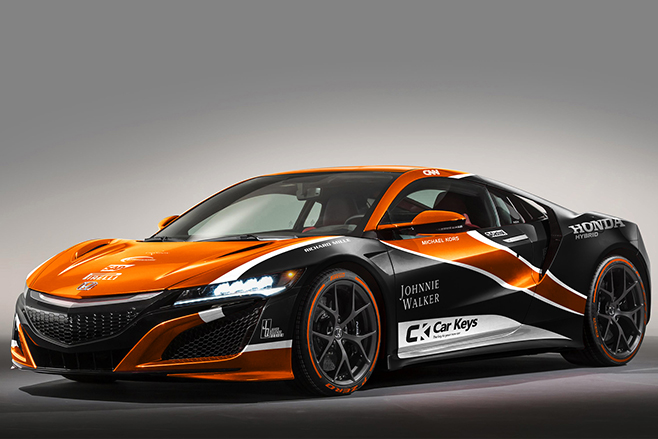
We stumbled upon these designs, put together by US-based artist Javier Oquendo, which show each team’s current F1 livery on a road-going car from its engine manufacturer.
Created for UK website Car Keys, each livery has a different car, so we had a look and chose our favourites.
McLaren Honda livery on a Honda NSX
Mercedes-AMG Petronas livery on an AMG GT R
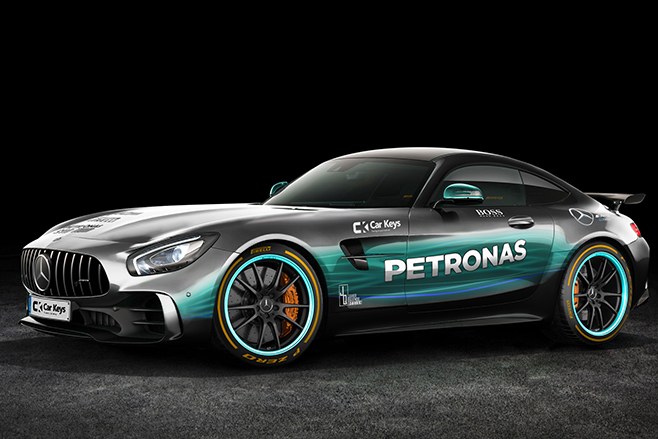
Love him or hate him, we reckon Hamilton would probably feel at home in this Petronas GT R.
Scuderia Ferrari livery on a LaFerrari
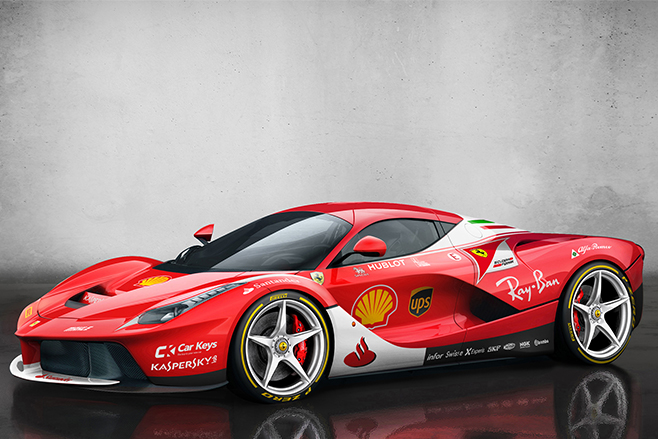
This recreation of the manufacturer’s F1 team livery has reminded us of Schumacher’s Shell/Marlboro F2003-GA. We’re sure Seb Vettel wouldn’t mind being compared to him, either.
Red Bull Racing livery on an AM-RB 001
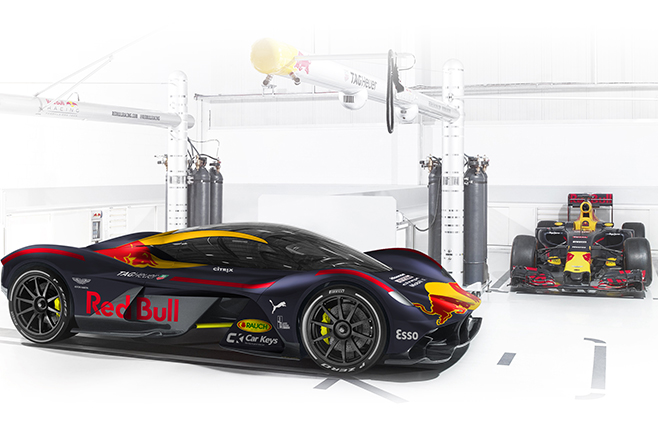
Though Red Bull Racing might be a sore topic for some Australians right now, the AM-RB 001 delivers an almost comforting presence.
You’ll never spot a cobweb in the fuel flaps of these thirsty four-wheelers.
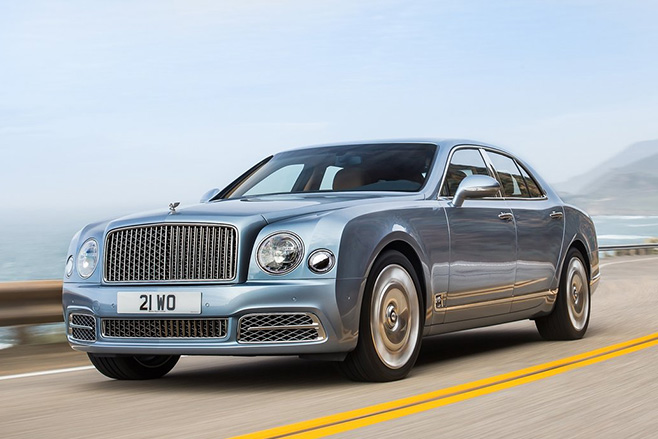
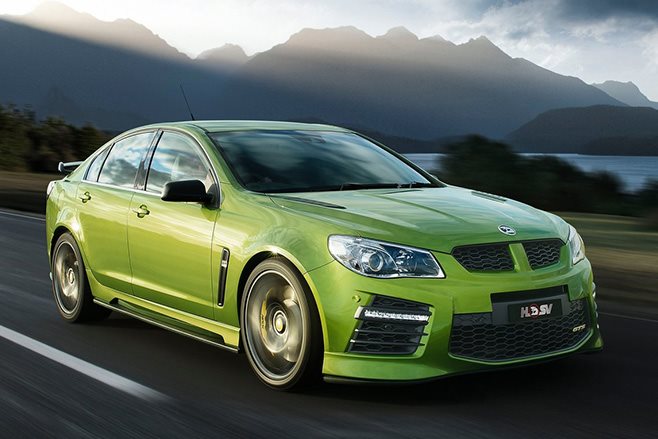
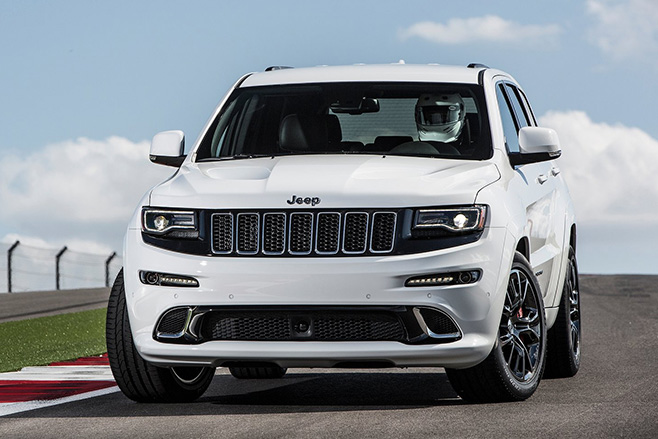
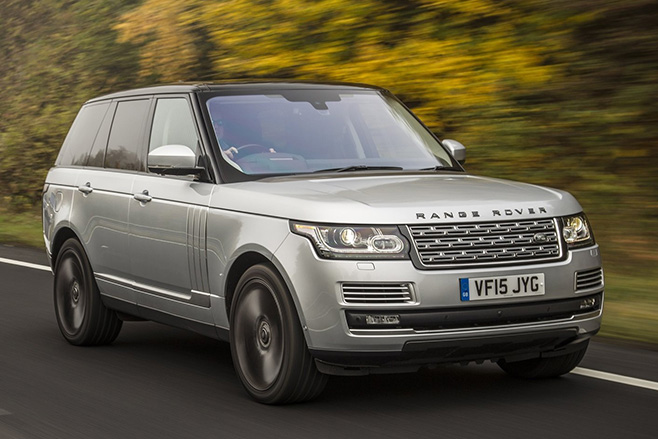
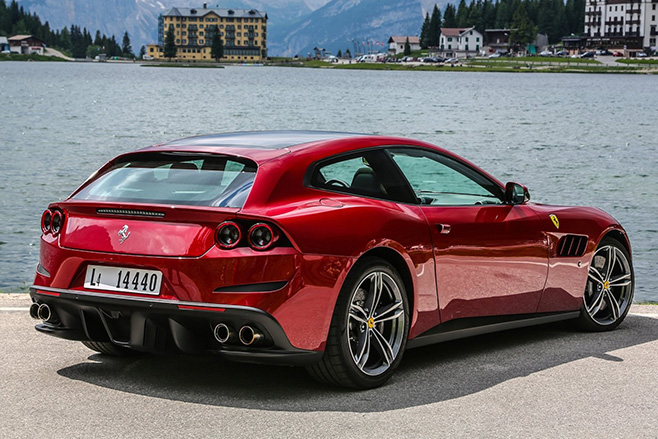
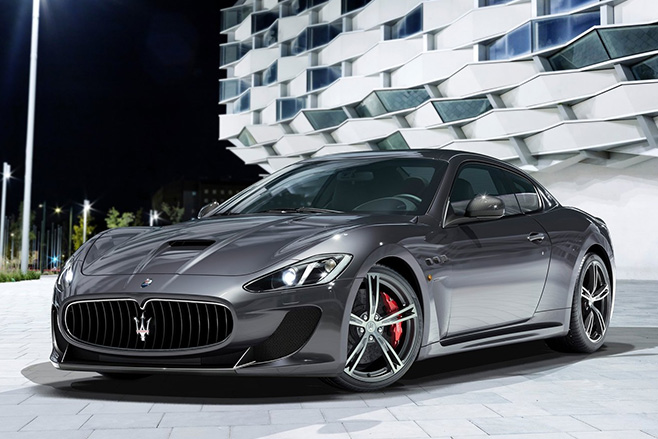
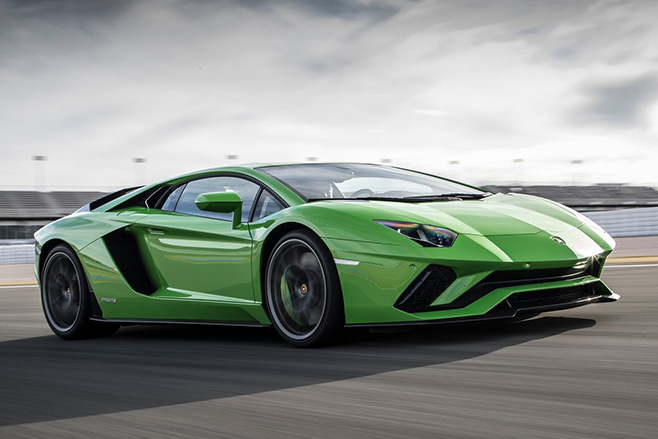
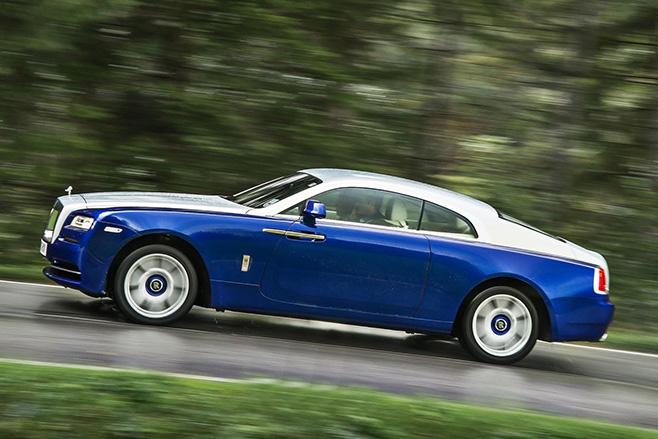
Aussie car owners drove the equivalent of almost half-way to the moon over the 12 months to June 30 last year, the latest snapshot of how we use vehicles shows.
The latest Australian Bureau of Statistics (ABS) data shows trips in passenger cars alone for the period totalled a combined 175 billion kilometres, up from 156 billion. Pitch in the journeys made by trucks, buses, motorcycles and the like, and we travelled almost a quarter of a trillion kays.
And if you think the week-daily commute was a bit of a slog, we travelled more than 48 billion kilometres just going to and from work, the data shows, well up on 2014’s figure of 44.9 billion.
The number of passenger cars on our roads grew only slightly compared with the previous survey’s results, rising by almost 300,000 to 13.7 million. Overall, Australia now has 18.2 million vehicles on its roads, an increase of more than half a million compared with 2014.
However, According to the ABS, despite the bigger distances we travelled overall, the number of kilometres the average car travelled fell to 12,827km, well down on the 13,800km average we travelled in 2014, and the 14,000 average recorded in 2012. Turns out it’s the lowest figure we’ve seen since 2007.
| Top 10 most popular vehicles in Aus- January 2017
We’re definitely driving our cars less in capital cities, with the distance covered falling from 110 billion kilometres last year to 99.5 billion in 2016. In contrast, trips made in other urban zones rose by 4.3 billion kilometres to 32.7 billion. Rural road use, meanwhile, rose from 3.04 billion kilometres in 2014 to 36.8 billion.
We’re chewing through only marginally less fuel, though, with the statistics showing the average fuel use across all passenger vehicles fell to an average of 10.6L/100km, down just 0.1L/100km compared with the 2014 figures.
All up, Aussie passenger cars consumed 18,606 megalitres of fuel over the 12-month period, or about the equivalent of 620 Olympic-sized pools a month. Before you get upset, that’s six fewer pools of fuel a month than we used in 2014. The highest average fuel use figures – 11.0L/100km – were recorded in NSW and South Australia, both up by 0.5L/100km over 2014’s numbers.
New South Wales, the state with the most vehicles (5.3 million), covered the most distance (70 billion kilometres) in 2016. In contrast, the 118,000 vehicles in the Northern Territory covered only 2.0 billion kilometres, making it the don’t-stray-too-far-from-home capital of Australia.
If you’re in the market for a motorcycle, the average distance they travel each year continues to fall. The figure for two-wheelers was only 2600km a year, well down on the 3700km pegged in 2007.
In contrast, the average distance travelled for “articulated trucks”, more colloquially known as semi-trailers, was 79,000 kilometres, also well down on the 93,200km average back in 2007. They also posted the highest fuel-use average – 53.6 litres per 100 kilometres.
Pirelli is flexing its muscles in the realm of high-performance tyres with the introduction of not one but two new innovations in road-car rubber.
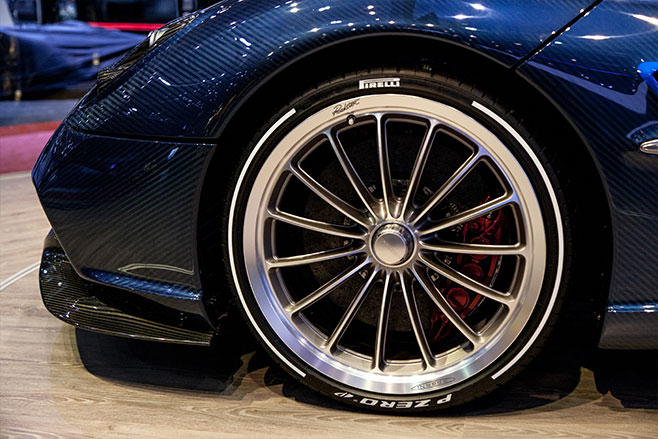
Its new coloured side-wall tyres will roll out on Australian blacktop in July this year adding conspicuous Formula One flair to high-performance cars, but the Italian manufacturer will upgrade the new line with ‘Connesso’ integrated sensor technology next year.
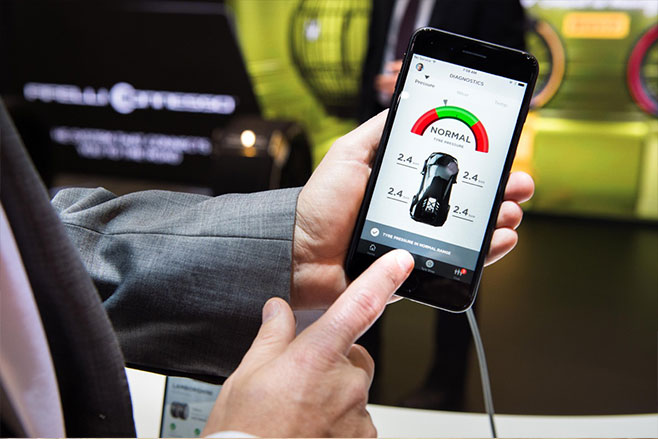
Translated as ‘connected’ in English, the new Connesso range uses an embedded sensor like a virtual watchdog that communicates with a paired smartphone, allowing the driver to monitor critical tyre information such as pressure, temperature and even tread wear.
Speaking to Wheels at the Melbourne Grand Prix, Pirelli global Chief Commercial Officer Roberto Righi said that offering revolutionary technology and advancements asserts the company’s authority in the world of high-performance tyres.
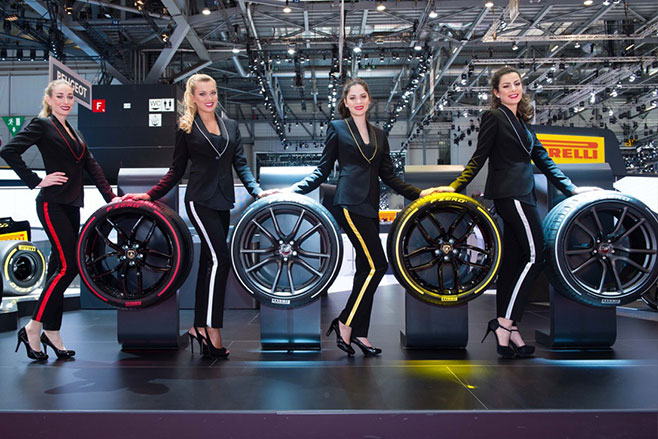
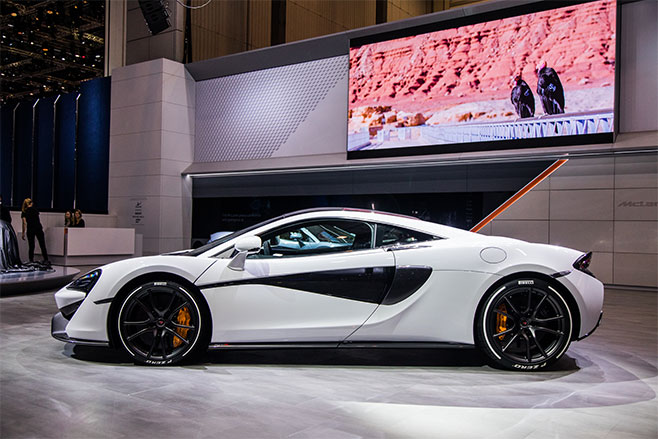
The special new tyres were officially launched at the Geneva motor show where Pirelli conducted a survey which revealed that 63 percent of all prestige cars on display at the Swiss show were shod in Pirelli rubber – another indication of the brand’s dominance, said Righi.
“Our advantage is that we talk to all the premium and prestige manufacturers with a position of credibility that is the result of everything we have done in the last ten or 15 years.”
For the colour-branded side-walls, Pirelli’s engineers borrowed technology from the boots fitted to F1 cars and developed new materials that provide a durable finish that will last the life of the tyre.
Initially, customers will be offered the iconic Pirelli and P Zero brands and side-wall stripe in a choice of white, grey, red and yellow, but the range will be expanded at the end of 2017 to offer any colour a customer wants.
At the point of purchase, a colour sample can be submitted and the set of tyres will arrive with side-walls to match paint work or a contrasting colour, for example.
Given Australia’s desire for high-performance cars and luxury goods, Righi said he expects the new products to be warmly received and that customers were already starting to place orders.
“I’m sure that it will be a success because this is a market that understands this kind of thing. [Australians] appreciate the possibility of spending money not to show off but to have something that is a bit different. That’s what we are going to be able to provide.”
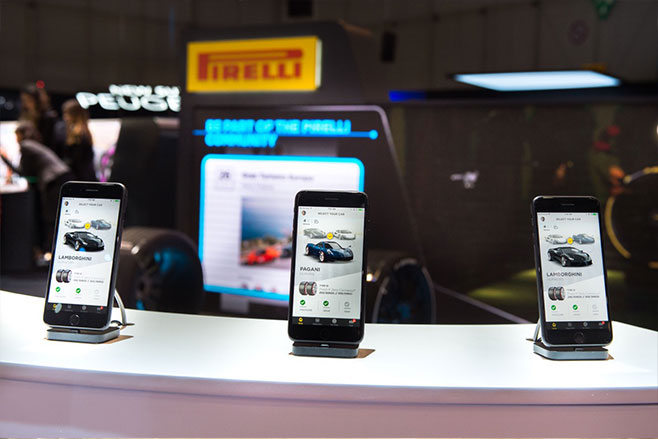
Each sensor sends signals to a central control unit, which relays the information to Pirelli’s cloud data server, before being processed and beamed back to the user’s device via the Connesso application.
Far more than a glorified pressure gauge, the Connesso system recognises each individual tyre code and can trace its performance from manufacturing all the way through to recycling.
From launch, the system will provide owners with tyre pressure and temperature information, plus static vertical load and tyre wear, while keeping a tally on the number of kilometres covered by each tyre. For trackday junkies, it’s perfect.
The application can warn drivers if a sudden pressure loss is experienced or if the minimum tread depth has been reached and by integrating with other applications, can even advise where the nearest Pirelli dealer or tyre shop is located if assistance is required.
“The idea is to add to the relatively standard features that the sensors deliver. At least an indication of tyre wear, and we want to link it through an app to other information that can connect the driver with things that happen in the Pirelli world,” said Righi.
“Now we are in a position where it is possible to talk to car makers with a higher level of solidity and technical solutions.
“There’s clearly a lot of interest. Talking about connected vehicles these days is the name of the game.
“There are a lot of ongoing discussions on the subject but original equipment requires long testing activities. Something will happen in 2018 but for the time being it’s difficult to say with who.”
The technology has been developed alongside Pirelli’s Cyber Tyre system which uses a different type of sensor in the tyre to communicate with a vehicle’s various key electronic systems, and can alter stability and suspension systems according to road conditions and driving environment.
