
VOLKSWAGEN Group has opened the door to a possible merger with Fiat Chrysler Automobiles after posting a strong financial result for 2016 despite the growing cost of the Dieselgate scandal.
The group posted a 5.14 billion Euro ($A7.2 billion) profit for the 2016 financial year, and only a year after recording its biggest-ever loss after racking up more than $US25 billion ($A33 billion) in fines in the US tied to its diesel emissions cheat scandal.
The strong result came on the back of Volkswagen’s luxury brands, Porsche and Audi, which both grew sales and improved revenue for the group.
When asked about the potential for a merger in the wake of GM’s sale of Opel to European carmaking rival PSA Group, VW Group chief executive Matthias Mueller said: “We are more open on that account than we used to be previously.”
Although he said Volkswagen’s rethink on a potential merger was “nothing to do with FCA specifically,” he told reporters at the group’s annual results announcement overnight: “It would be very helpful if [FCA chief executive Sergio] Marchionne were to communicate his considerations to me too and not just to you.”
Marchionne last week said Volkswagen would be the hardest hit by PSA Group’s buyout of GM-owned Opel and its British sub-brand Vauxhall, which would make PSA – which also owns Citroen and Peugeot – the second-largest carmaker in Europe behind Volkswagen.
At the time, Mueller was quick to quash the rumours suggesting the potential for a merger. “We are not ready for talks about anything … we have other problems,” he told Reuters.
Last year, Volkswagen Group sold 10.4 million vehicles globally including via its Chinese joint ventures, overtaking Toyota’s 10.2 million sales to become the world’s largest carmaker.
Sales of Volkswagen-branded passenger cars fell slightly in 2016, while luxury marque Audi grew its sales. The best-performing brands, though, were value-focussed Skoda and sports car and SUV maker Porsche, which both grew strongly – Porsche set a revenue record despite its big spend on a push into “electrification, digitalisation and new business fields”.
The carmaker has also grown to become more than just a company selling cars; it’s finance division also contributed a record 2.1 billion euro profit to the result.
And what of Volkswagen Group’s future? It reckons it is on track to sell even more cars next year, despite the ongoing fallout from Dieselgate.
THE Volkswagen Tiguan is the first of five new SUVs that the German semi-premium brand plans to launch in Australia in the not-too-distant future.
The Tiguan is VW’s second best-selling model behind the Golf hatchback and wagon range, taking on the likes of the soon-to-be-updated market leader, the Mazda CX-5.
It performed highly in the 2017 Wheels Car of the Year awards, passing through to the second round, as one of six vehicles selected from 26 hopefuls.
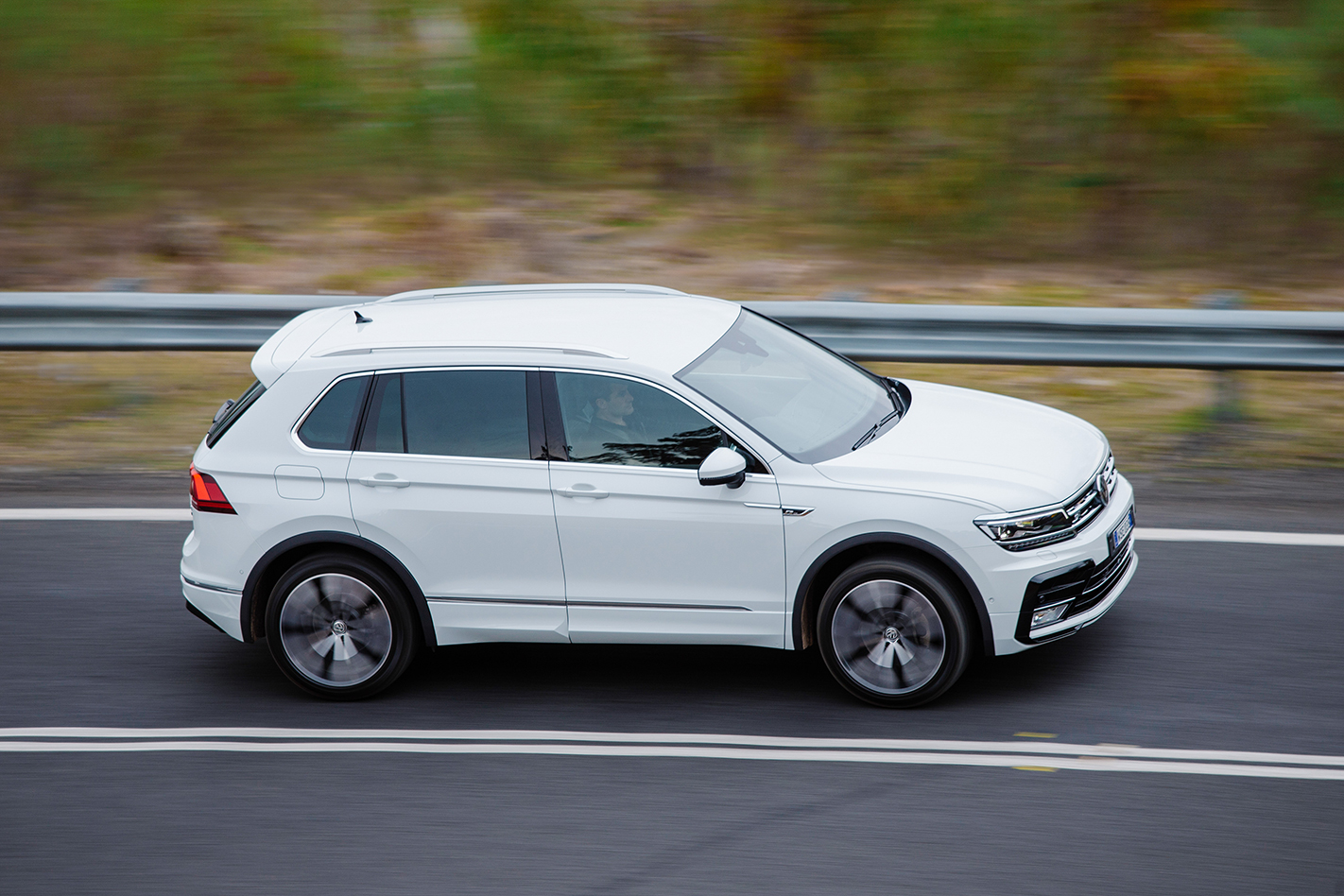
The range starts with the $31,990 Volkswagen Tiguan 110 TSI Trendline, the only model to drive only the front wheels via either a six-speed manual or dual-clutch transmission. Its equipment list is basic compared with the rest of the model line-up, running to manual control air-conditioning, cruise control with a speed limiter, black roof rails, tinted glass, and 17-inch alloy wheels.
All cars get an armrest in between the front seats, a leather-wrapped steering wheel with controls for the audio, phone and cruise control functions, the headlights stay on at night until you’re safely indoors, and the radio is controlled via an eight-inch monochrome touchscreen with a USB connection. The supportive seats are cloth-covered.
Other convenience features include rain-sensing wipers, auto powered windows, and three 12-volt sockets
In the boot, there are hooks for shopping, a light, and a removable cargo cover.
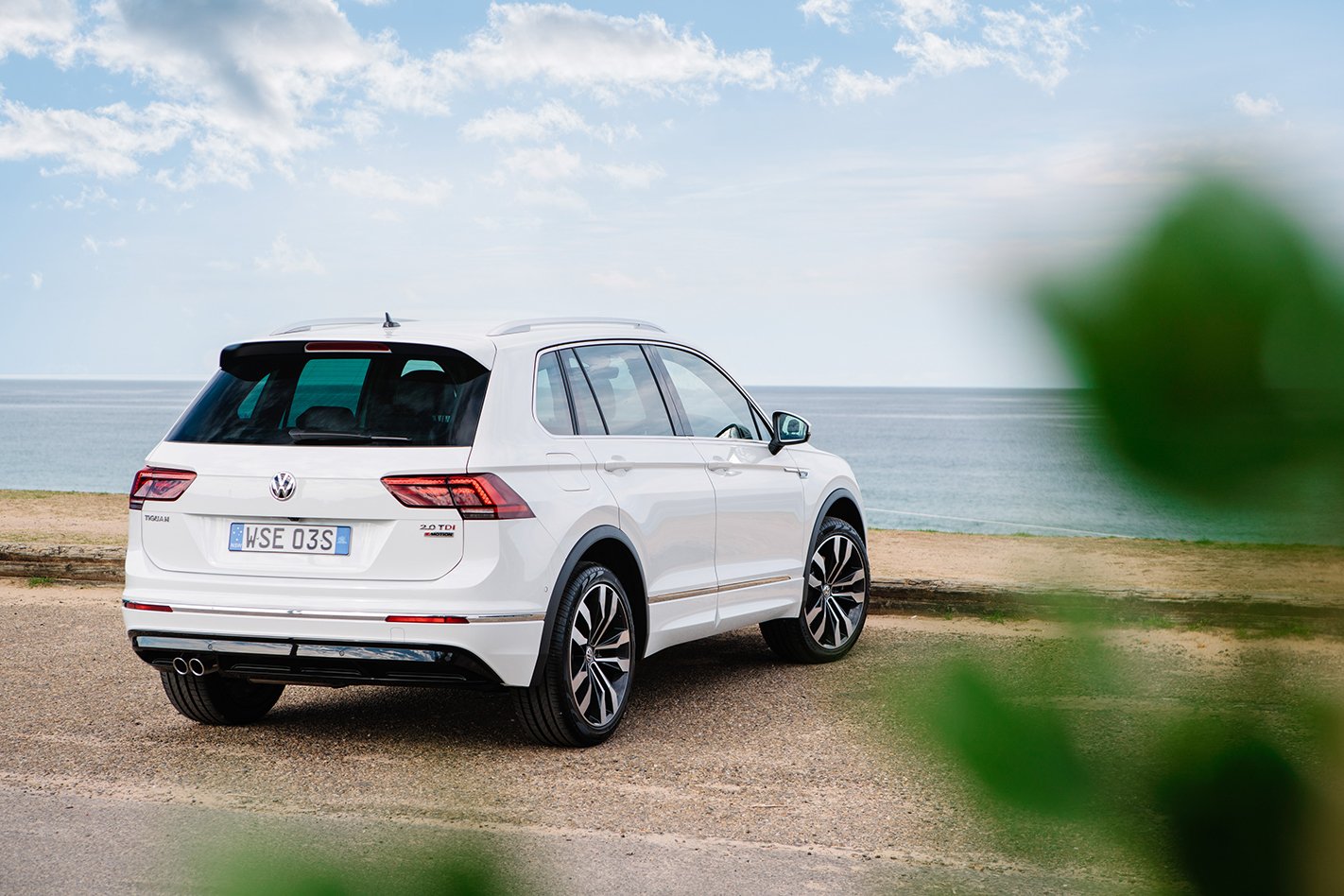
Spending an extra $5000 will lift the 110 TSI to Comfortline specification and add a six-speed dual-clutch transmission.
Over the Comfortline, it adds better front-seat headrests and lumbar adjustment for the seats, a storage drawer under the driver’s seat, front fog lamps, more flashes of chrome inside and around the body, chrome-look roof rails, different-look 17-inch alloys, a rear-seat central armrest with two cupholders, folding tables and pockets on the front seatbacks, satellite navigation, rear-seat reading lights and extra lighting in the footwell, a luggage net for the boot, and more storage in an overhead console. The touchscreen adds colour.
The 132 TSI Comfortline adds VW’s 4Motion all-wheel-drive system, and steps up to a 132kW/320Nm 2.0-litre turbocharged four-cylinder petrol engine paired with a seven-speed dual-clutch transmission.
The $42,990 110TDI Comfortline slips a 110kW/340Nm 2.0-litre diesel engine under the bonnet, also fitted to a seven-speed dual-clutch gearbox.
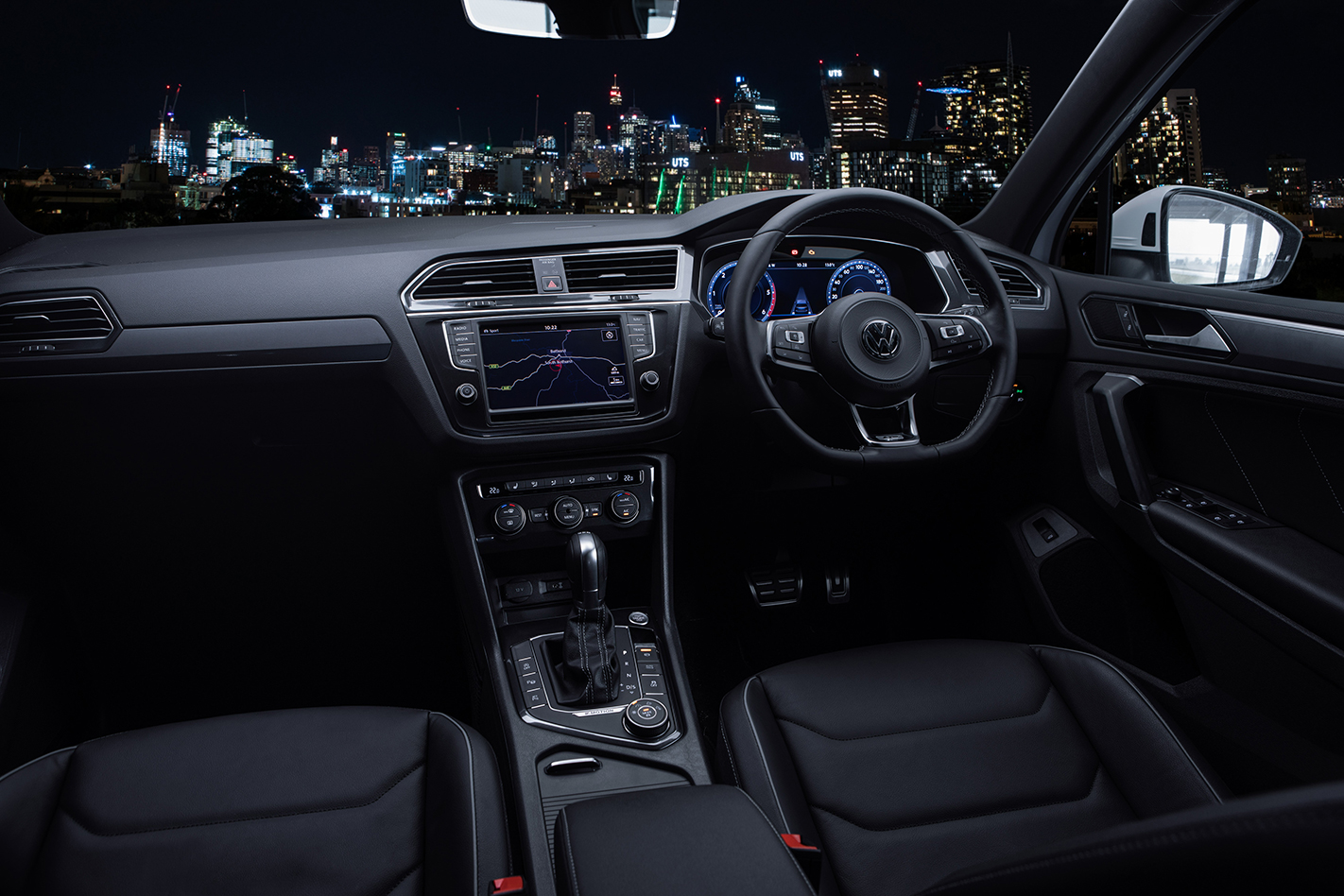
Topping the range is the $49,990 140TDI Highline that uses a 140kW/400Nm 2.0-litre diesel four-cylinder engine. It misses out on the fancy exhausts of its petrol-powered sibling.
No Tiguan comes standard with a sunroof; instead you have to either add it as part of a package for Comfortline and Trendline models, or as an optional extra on the Highline.
All variants get a reversing camera, automated emergency braking, seven airbags, and a bonnet that’s more kind to any pedestrian that strays in front of the car. The rear seats have air vents, and the door pockets are flock-lined to stop rattling.
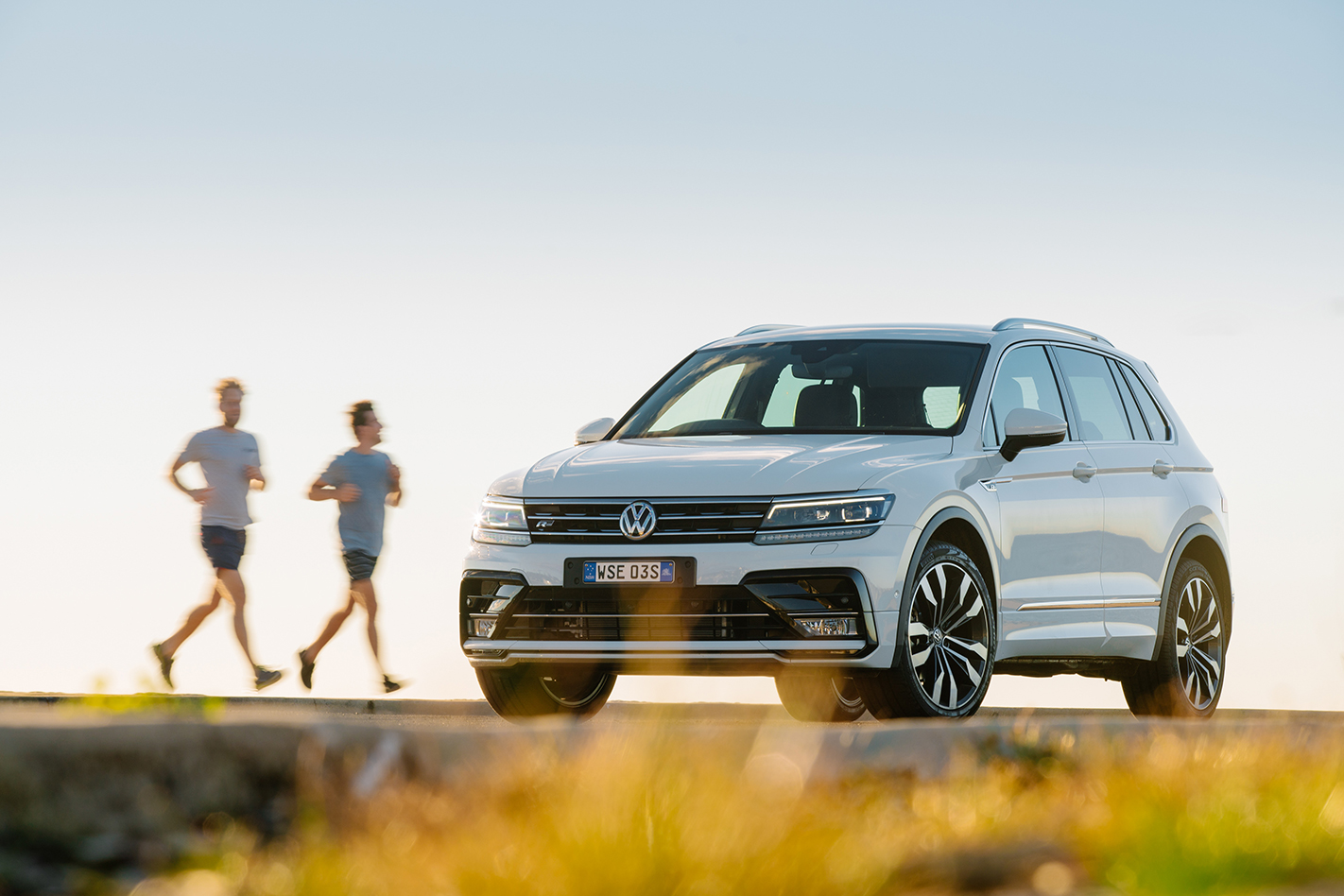
It’s now much better-handling, too. The top-spec 162TSI uses the same engine as the Volkswagen Golf GTI hot hatch. Inside, the cabin is a lot more premium than some of the Tiguan’s competitors.
One downside is the price of the Tiguan, which pushes it firmly into premium territory; you’re paying a competitor’s all-wheel-drive money for the entry-level, front-drive Volkswagen Tiguan. A sunroof is a $5000 option on some models because it is tied in with a package.
The ride, too, borders on rough. It does get better if you spend $4000 on the R-Line package only available on the highest-priced Highlines.
The one to get The 132TSI Comfortline is the volume model for Volkswagen, and for good reason. The 2.0-litre engine lacks any obvious weakness, it’s economical and powerful enough to tackle city traffic with relative ease. There’s no point in chasing comfort unless you have a lot to spend: you don’t get electric seat adjustment until you’re spending north of $48K, which is a big leap compared with its rivals, so stick with the value model.
Meet Nissan’s small SUV offering, the Qashqai. I’m not a fan of obscure car names, especially ones you can’t pronounce. (It’s “Cash-Kai” for the uninitiated). Something to do with nomadic tribes from some far flung Iranian province. It has big boots – or should we say tyres – to fill following up on the success of its predecessor the Dualis.
TELL ME ABOUT THIS CAR There are four models in the line-up: Two petrol variants including the entry grade ST and top grade Ti; and two turbo-diesel variants including the base grade TS and upmarket spec TL, the latter tested here.
The top grade TL tested here costs $39,990. It sports a turbo-diesel 1.6-litre engine with Continuously Variable Transmission (CVT). Official fuel consumption is just 4.9L/100km.
SUVs may have evolved from four-wheel drive bush bashers, but the Qashqai only comes in front-wheel drive. Tread carefully if you venture off the blacktop.
STRENGTHS
- The cabin is classy, comfortable and uncluttered. All models, including the TL, have a generous 430L boot and there are also two handy hidden ‘drawers’ built into the floor to store your valuables.
- Despite the 1605kg weight, Nissan claims a low fuel consumption of just 4.9L/100km. The reality, with a 280km mixture of highway and a bit of city driving, was closer to 6.6L/100km.
- Even with its large 19” alloy wheels, the TL has well-planted suspension that handles inner city speed bumps and potholes well. Not quite as smooth as the 17” wheels on the ST and TS models but still more than comfortable enough.
- The TL also comes equipped with great safety features including a clear and comprehensive reversing camera as well as blind spot monitoring and lane departure warning.
- The leather “accented” (i.e. real and fake leather) shift knob and tiller, complete with audio controls, works pretty well.
- The front seats are also leather accented and, best of all, heated – but only the driver gets 6-way power adjustment.
- The Qashqai’s high-riding position ensures good visibility for all passengers. Plus you don’t have to make that undignified grunting noise when getting out of the car.
- The panoramic glass sunroof is huge, but can strain the air-conditioning on hot days. The turning circle is tight – great for that three point turn at school drop off.
- At 96kW it’s not overly powerful. Due to both CVT flaring and a bit of turbo-lag, the TL lacks grunt when accelerating from stand still, which is concerning when turning right in front of oncoming traffic. The slow take off is compounded by the stop-start feature, which automatically shuts off the engine to save fuel when the car is stationary.
- The Qashqai is front-wheel drive only meaning it’s intended for city driving. A pity, as competitors like the Mazda CX-3 provide an all-wheel drive model.
- The 7-inch display console comes with the basic – if obsolete – CD player, plus MP3 capability and AM/FM Radio. But there is no digital radio option and the connectivity is infuriating; it requires hooking up with NissanConnect which is confusing and cumbersome.
- The centre console bin is too narrow and deep. It’s like the black hole of storage spaces;
- You risk losing everything – including sunglasses, iPhones and kids’ Shopkins.
- Neither air vents nor adequate storage compartment are offered to rear passengers.
- Black and white colour options are standard. You’ll have to cough up an extra $495 for fancier options like Truffle Bronze, Gun Metallic and Nightshade.
SPECS Model: TL Engine: 1.6L turbo diesel engine Max power: 96kW@4000 Max torque: 320Nm@1750 Transmission: CVT Weight: 1605kg Fuel economy: 4.9L/100km Price: $39,990
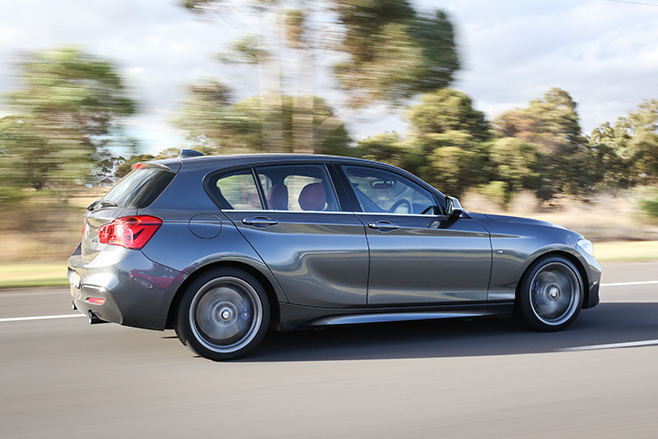
YES, BMW has released a replacement for the M135i.
You may not have noticed. That’s because, apart from the M140i badges, visually, the upgrade is a bit of a trade secret.
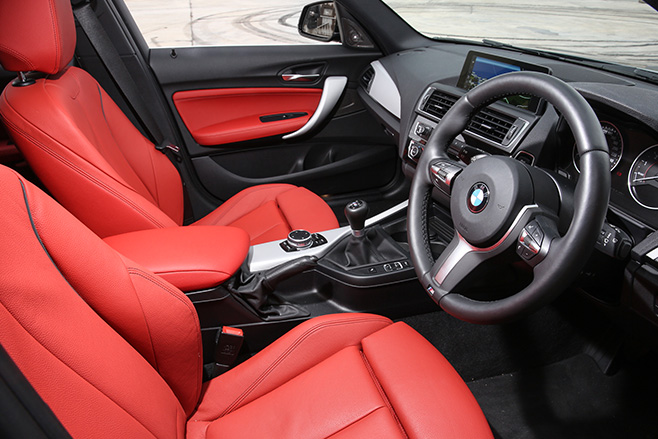
But don’t think non-event, because under that stumpy little lid is not only an all-new engine from an all-new engine family, but also a better unit with more power, more torque and more attitude. And in a vehicle that was hardly lacking the latter in the first place, that’s saying something.
The new engine remains three litres, but actually has a slightly larger capacity of 2998cc (versus 2979 for the N55) thanks to a new bore-stroke relationship. In fact, the new motor is actually more undersquare than the N55 at 82mm by 94.6mm (84mm by 89.6mm) probably since longer-stroke engines tend to achieve better cylinder-fill which is crucial in a turbocharged application. Beyond that, the N55’s cast-iron cylinder liners have been flung and the new unit uses a sprayed-on ultra-thin plasma material known as Nikasil.
But it’s not just instant, the grunt is also prodigious. There are 10kW more than the BMW M135i had, and those 250kW are matched by a full 500Nm of torque (50 up). But it’s the torque curve that really makes you sit up straight. While the power peaks at 5500rpm, that max-twist is being produced anywhere from 1520rpm to 4500. That spread means that even in sixth gear at a lazy 100km/h, you’re already 600 or 700 revs into the full-fat zone.

It’s engine tech like this that must make hybrid and plug-in driveline engineers grit their teeth. Because it proves that the internal-combustion baby has life in it yet and that BMW still knows how to build a great straight-six.
4.0 OUT OF 5 STARS
Like: Stonking new engine Dislike: Artificial steering feel; unconvincing looks; price hike
SPECS Engine: 2998cc in-line 6cyl, DOHC, 24v, turbo Power: 250kW @ 5500rpm Torque: 500Nm @ 1520-4500rpm Weight: 1445kg 0-100km/h: 5.1sec (manual) Price: $64,990
The Volvo V90 Cross Country high-riding crossover wagon will cost $112,065 driveaway in Australia, according to the Swedish brand’s website.
Volvo has yet to announce official pricing for its latest 90-series variant that is due to launch soon, however driveaway pricing has been released on the sly via the Volvo consumer site’s vehicle configurator. Subtract likely on-road costs, and the V90 Cross Country’s RRP rest just over the $100,000 mark.
That would undercut two direct rivals – the $112,855 Audi A6 Allroad and the upcoming Mercedes-Benz E220d All Terrain that’s expected to cost in the region of $110,000.
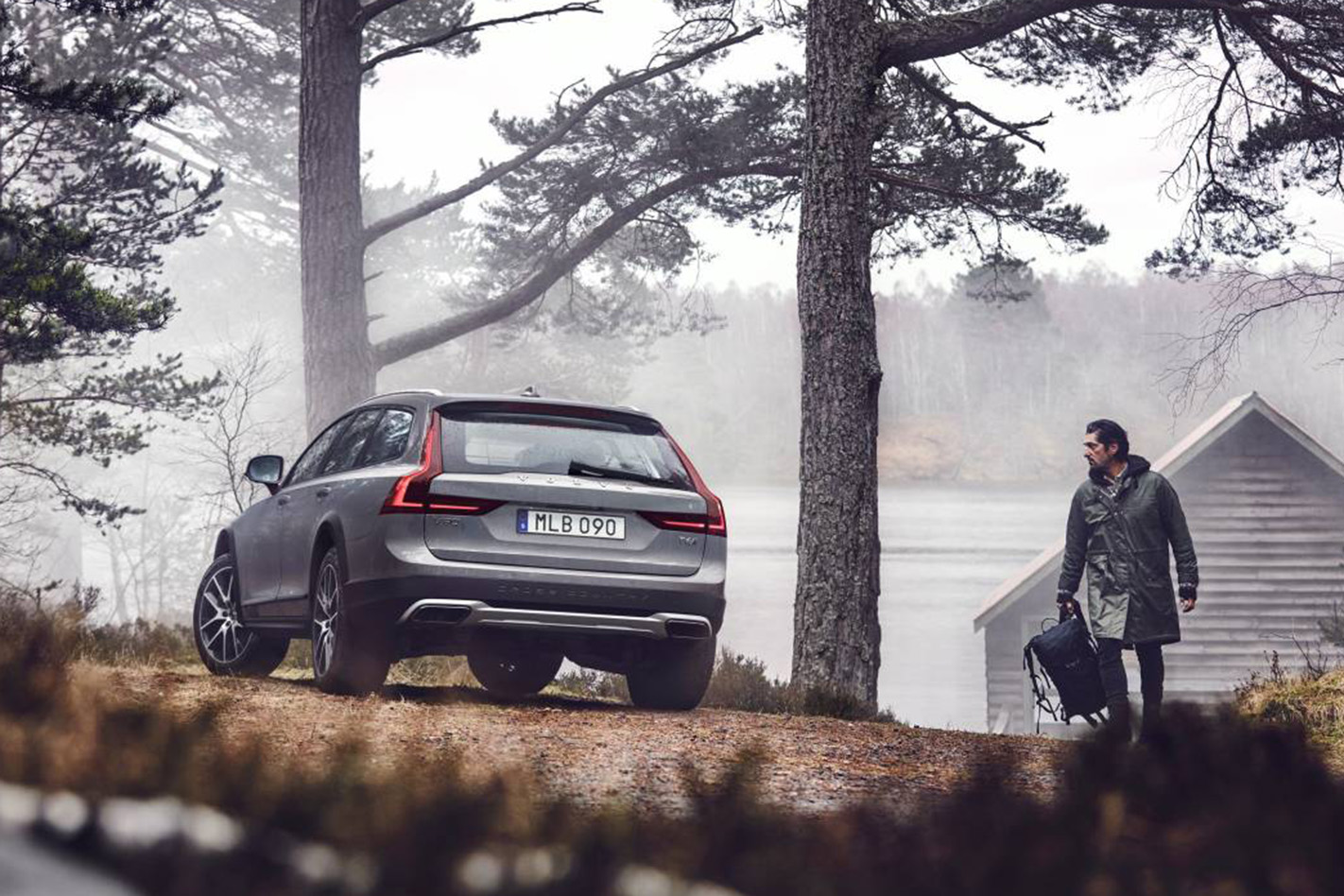
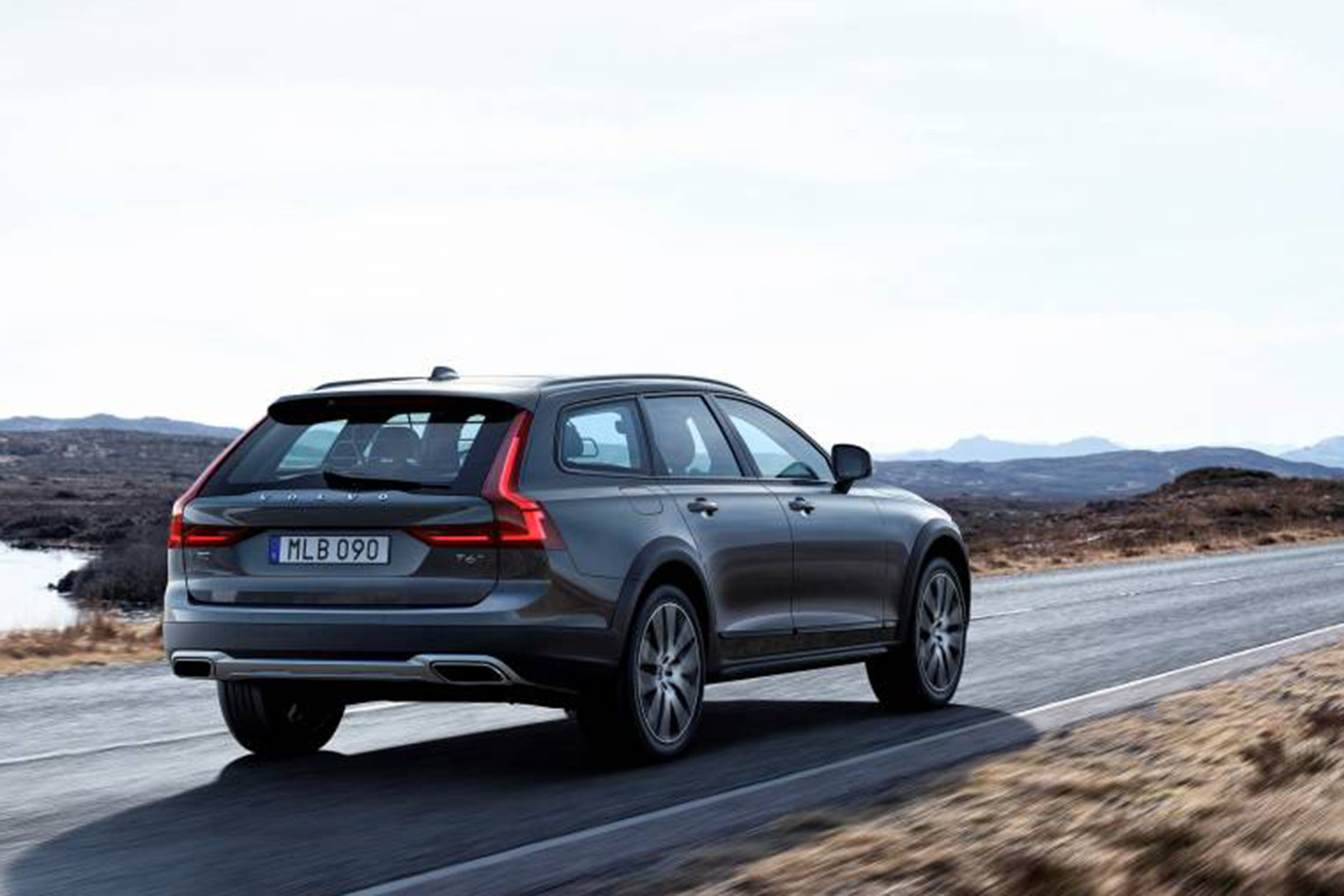
Like those models, the V90 Cross Country is a more rugged-looking version of its donor wagon with increased ground clearance. Visual exterior differences to the regular Volvo V90 wagon beyond the elevated ride height include pronounced, black wheel-arches, black plastic lower-body kit, side scuff plates and a front skidplate.
The V90 Cross Country will be available in just one trim grade in Australia – Inscription – and with just one engine – a D5 twin-turbo four-cylinder diesel.
Standard interior features include a 9-inch portrait-shaped central touchscreen, 12.3-inch digital instrument display, four-zone climate control, and nappa leather seats with electric adjustment up front.

Inclusive technology includes partial autonomous steering called Pilot Assist, semi-autonomous parking, lane-keeping assistance.
The D5 engine produces 173kW of power and 480Nm of torque – the latter at a useful point in the rev range, between 1750 and 2250rpm.
Standing-start acceleration to 100km/h is quoted at 7.5 seconds, while official fuel consumption is 5.7 litres of diesel per 100km.
That makes it slightly less efficient than the E220d All Terrain (5.2L/100km), though faster and more powerful.
The A6 Allroad takes the honours for torque (500Nm) and acceleration (7.3 seconds).
The V90 Cross Country essentially replaces Volvo’s V70 model, while unusually it also looks set to pip the regular V90 wagon to this market.
WHAT IS IT?
Competition, as they say, improves the breed. That well-worn cliche applies just as much as it does in the world of sport as it does to the world of cars, and when it comes to cars there are few segments that are more competitive than the SUV market.
Renault has been battling the competition in SUV-land for a while now with the mid-sized Koleos, which has been around since 2008. Its replacement only arrived this year, meaning the first-generation model had soldiered on for a whopping eight years without major change.
Now, that car wasn’t much to write home about either, which meant up until now Renault had the double-handicap of not only having an uncompetitive vehicle in a highly competitive segment, but an extremely old one as well.
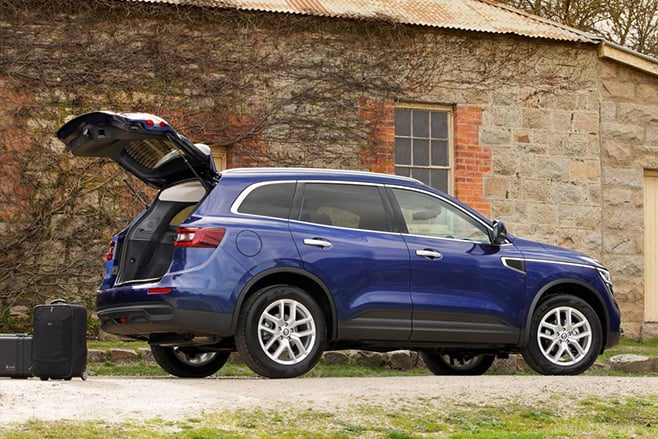
ON PAPERHere’s a quick rundown on the new Koleos range. Three grades are on offer – Life, Zen and the range-topping Intens – and prices span from $29,990 to $43,490.
A single engine is offered for the time being – a naturally-aspirated 2.5-litre petrol four-pot with a modest 126kW and 226Nm –while all models are equipped with a CVT automatic as standard. Depending on the grade, the Koleos is available either with front-wheel drive or all-wheel drive.
WHY IS IT IMPORTANT?Now, there’s a lot riding on the shoulders of this Koleos, at least for Renault in Australia. There seems to be no end to Australia’s appetite for family-sized SUVs like this one, and with the previous Koleos being so ancient and underwhelming it’s important that Renault gets this one right.
The company reckons they’ve got the formula sorted out with this one, though, and so confident are they that it’ll be a hit, they’ve decided that Australia will be the first market in the world to receive it. So, is their confidence justified?
FIRST THINGS YOU NOTICEFirst impressions are good. This is a thoroughly modern car compared to its predecessor, and it shows. The design is clean and straightforward, there’s heaps of technology – like this electronic instrument panel, for example, and there’s plenty of space and decent outward vision from the driver’s seat.
And, it’s the Intens grade that’s the pick of the litter. It may be the most expensive, but it’s packed with features that are rare at its price point. Features like heated and cooled front seats, LED headlamps, a hands-free tailgate and a huge 8.7-inch portrait-format touchscreen display that’s as responsive and easy to use as a smartphone.
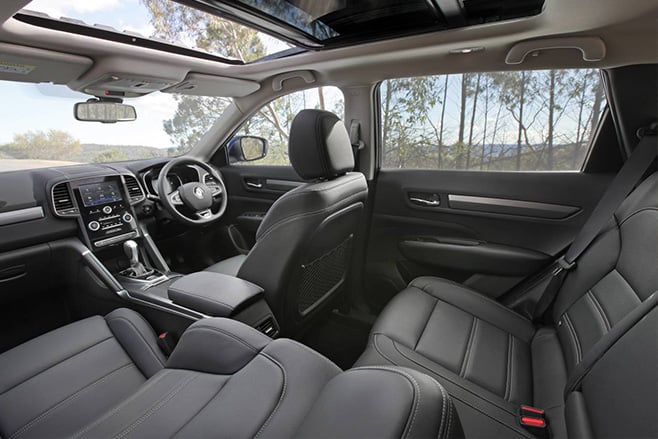
PLUS AND MINUSThere are some shortcomings. The new Koleos is based on the Nissan X-Trail – which, by the way, isn’t necessarily a bad thing – but you can tell its origins when you see Nissan-sourced switchgear on the doors.
And speaking of switches, why does Renault insist on putting the cruise control/speed limiter toggle down on the centre console, where it’s so hard to find?
The interior packaging is great for five people but some might wish there was a third row. Others might simply wish the Koleos had a bit more shove under the bonnet, because this X-Trail sourced powertrain isn’t all that special.
Not only is the atmo 2.5-litre engine less powerful than many similarly-sized engines from rival carmakers, but the CVT can be a bit lazy to respond – especially if you click it into “Eco” mode – and when loaded up it likes to make a lot of noise up steep hills.
A diesel engine will join the Koleos range around the middle of next year, which should transform the car’s driveability. Until then, however, the underpowered petrol and gluggy CVT is your only choice.
It rides and handles fine for a midsize SUV, so no complaints there. The steering is also nicely weighted, which we certainly appreciate. But what we’d like to see is a two-wheel drive version of the range-topping Intens grade. The all-wheel drive hardware that’s standard on that model is great if the road is greasy or muddy, but the rest of the time it’s just dead weight – and it’s weight that makes this engine feel like a bit of a slug.
Not only would a two-wheel drive Intens be cheaper, it would also be lighter and feel a bit zippier too.
VERDICTThe Renault Koleos has come a long way, and it’s a vastly improved product. There are areas where it could do with a little more polish and the mechanical package is nothing special, but when it comes to carting around five people in comfort Koleos finally has the right stuff.
International auto expos such as the Geneva Motor Show are great fun to attend. As one of the bigger events on the calendar, Geneva rarely disappoints car fans thanks to a reliable flow of high-end, mega-dollar supercars and wild concepts gracing the show floor each year.
This year’s show was no different, but mixed among the glamour cars at Geneva was a sizable contingent of production-ready mainstream models – the type of vehicles you head to WhichCar to read about. Here are the ones that are coming our way, and the ones you might want to consider for your shopping list.
Suzuki Swift
Suzuki’s all-new Swift may be one of the smallest on this list, but it is by no means the least important. The Swift is a mainstay model for Japanese automaker Suzuki, and the next-generation compact hatch the company will send to Australia will be near-identical to the model range revealed at Geneva.
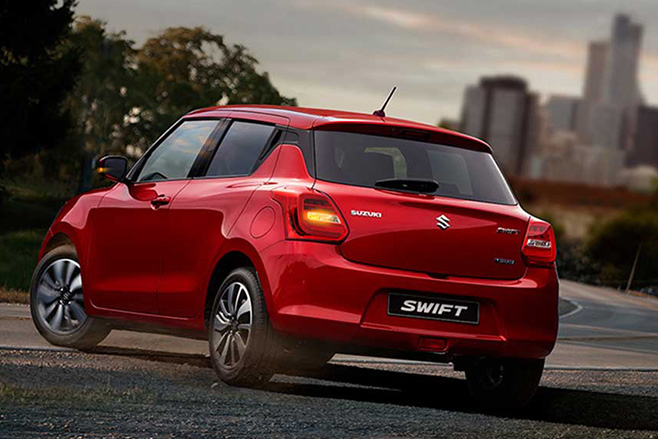
It weighs less than before and is powered by the same 1.0-litre turbo three-cylinder as the Baleno, with reduced fuel consumption and improved driveability being the result. There’s more active safety gear too, though we will likely miss out on the mild hybrid powertrain and all-wheel drive option that will be available overseas.
Range Rover Velar
In terms of production-ready head-turners at Geneva, the Range Rover Velar, an entirely new model for the British SUV specialist designed to sit between the entry-level Evoque and the mid-tier Range Rover Sport, was a standout.
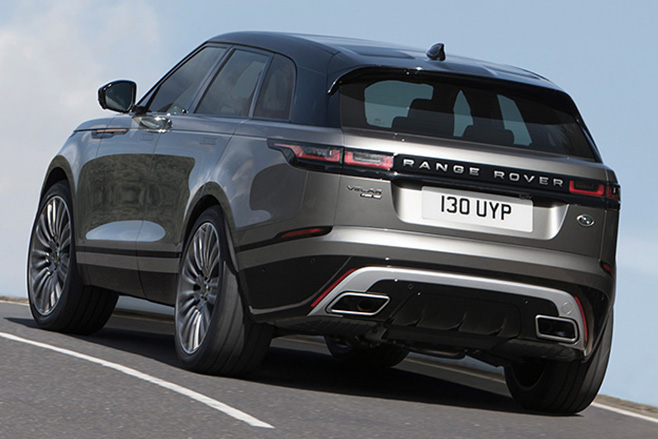
Built on the same all-aluminium bones as the Jaguar F-Pace, the Velar promises to be a sleeker, more road-biased and sportier model than what presently occupies Range Rover’s showrooms. It will do battle with the BMW X6, Mercedes-Benz GLE Coupe and the upcoming Audi Q8. Want to have the coolest whip at the country club? The Velar may be your steed.
Holden Commodore Sportwagon
We’ve already driven the next-generation Commodore (appropriately codenamed ‘NG’ by Holden) in sedan form, but Geneva was our first look at its wagon-bodied sibling in Opel-badged form.
To be offered as the Opel Insignia Sport Tourer in Europe, the new Holden Commodore Sportwagon will be heading here in early 2018 with a model range that largely mirrors that of the sedan. Expect the same engines and equipment, just in a more practical wagon bodystyle.
Honda Civic Type R
Hot hatches are one of the most popular types of performance cars in this country, and Honda will be returning to he segment when it re-introduces the Civic Type R at the end of this year.
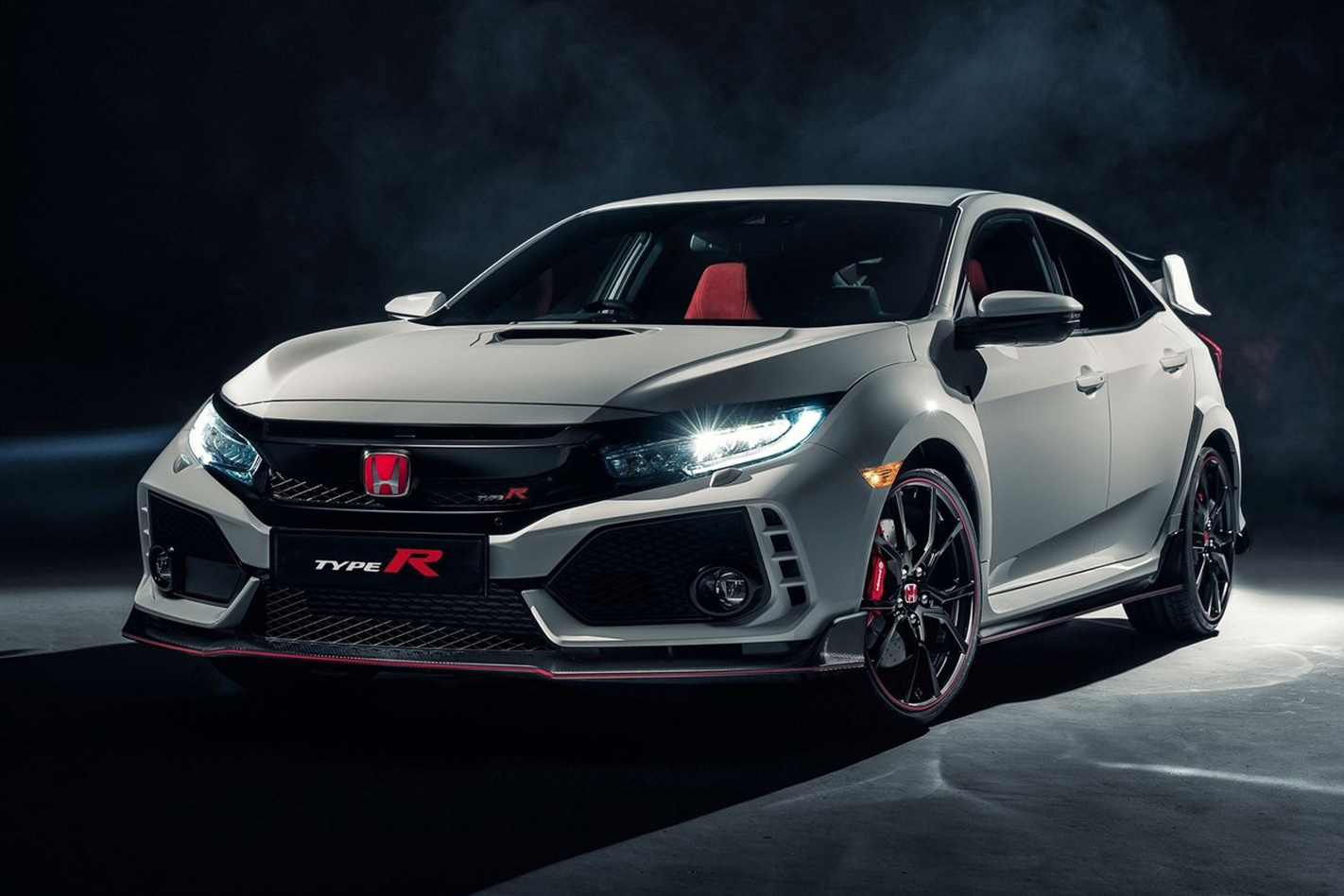
The production version rolled out in public for the first time at Geneva. While there’s some significant powertrain carryover from the previous model (which wasn’t exported to Australia, but was the first turbocharged Civic Type R to be offered by Honda), the Type R’s 235kW and 400Nm outputs place it near the top of the hot hatch pecking order.
Subaru XV
The new XV is much like its predecessor, in essence a jacked-up Impreza hatchback with additional plastic body armour and few other changes. That said, the very fact that it boasts rugged styling and a higher hip-point than the regular Impreza means the Subaru XV is playing an increasingly important role for Subaru as the uptake of small SUVs accelerates.
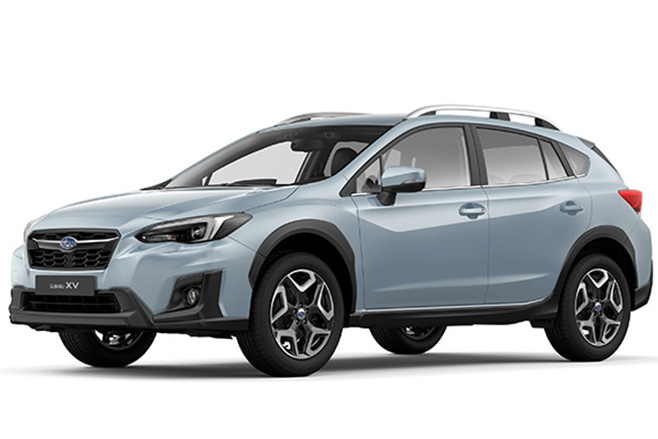
The XV is based n the same all-new platform that also underpins the Impreza, and also shares its 2.0-litre petrol flat-four engine and all-wheel-drive driveline. Refinement, interior space and equipment are also improved as a result.
Mitsubishi Eclipse Cross
The Mitsubishi Eclipse Cross may resurrect the name of a 1990s Mitsubishi sports car, but the chunky, sharp-edged crossover that was on show at Geneva is worlds apart from the low-slung two-door that previously wore the Eclipse badge.
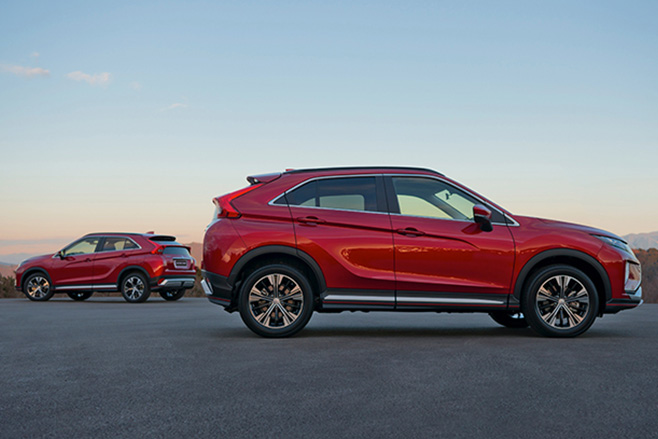
Effectively taking the place of the ASX (which will move down in size and maintain its position as an entry-level SUV) in Mitsubishi’s line-up, the Eclipse Cross is pitched as a Nissan X-Trail, Mazda CX-5 and Toyota RAV4 competitor.
Infiniti Q50
The Infiniti Q50 is the BMW 3-Series rivalling medium sedan from the Nissan-owned luxury brand, and while it’s struggled to gain traction in this market Infiniti hopes the updated model revealed at Geneva will provide extra appeal.
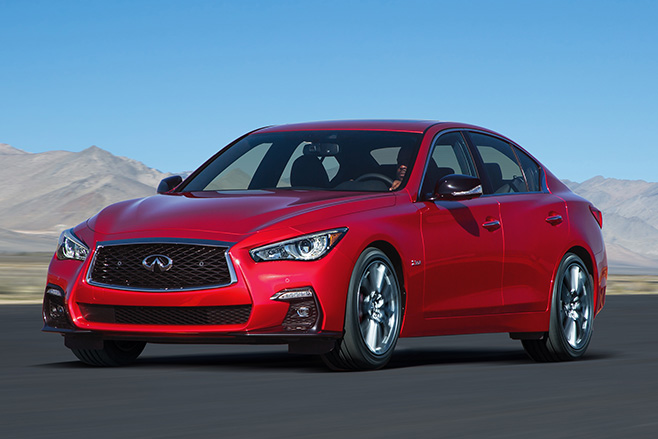
Semi-autonomous driving features were announced for the Q50, along with refreshed exterior plastics and a revised variable-ratio steering system. Australian prices and specs are yet to be locked in, but with the first revision for the current-generation Q50 only having arrived here at the end of September, there may be a wait for the latest update finds its way over here.
Ford Fiesta ST
Though regular versions of the Fiesta were revealed overseas toward the end of 2016, Ford reserved the hotter Fiesta ST version for Geneva. It’s a dramatic departure from the template set by its predecessor, with power now supplied by a turbocharged 147kW 1.5-litre three-cylinder engine rather than the old car’s 1.6 turbo four. More power, fewer cylinders.
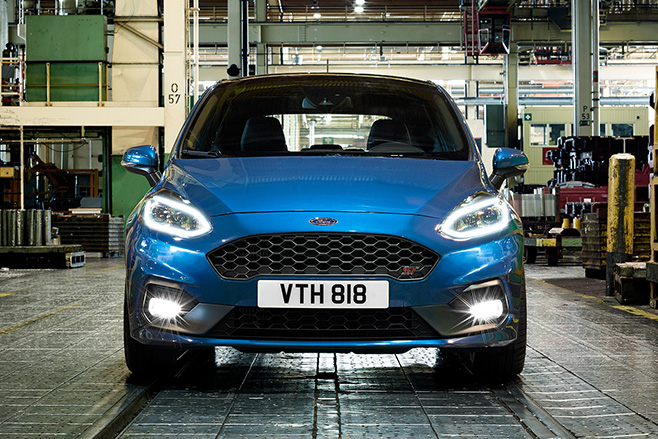
What’s more, it can even run on just two cylinders when cruising to save fuel. Power still goes to the front wheels and the emphasis remains on razor-sharp handling – the only catch is that Ford Australia is staying quiet on the Fiesta ST’s prospects for a local launch. Here’s hoping.
Volvo XC60
The latest model in Volvo’s stable to get an all-new replacement is the XC60, and besides box-fresh styling and a thoroughly modern interior, Volvo’s new SUV will also boast a massive tech update.
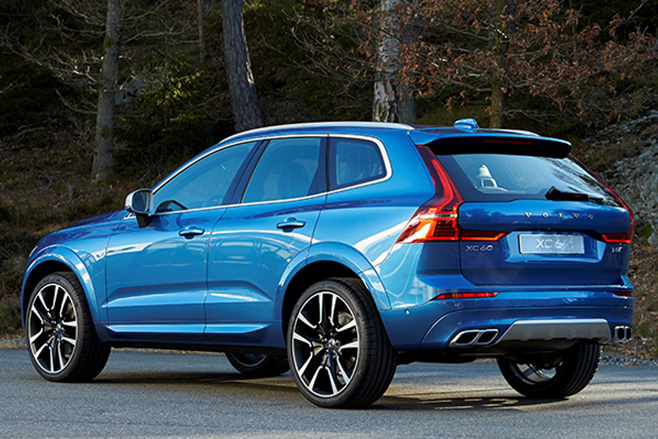
Headlining the new XC60’s spec sheet are semi-autonomous safety features and the same cutting-edge turbocharged (and supercharged, in the case of the T6 variant) four-cylinder diesel and petrol engines as used by the XC90 and S90.
Concept sketches of the next-generation Citroen C5 Aircross suggest the French brand’s medium-sized sedan will soon transform into an SUV.
Citroen has released sketches of the new model ahead of its debut at April’s 2017 Shanghai motor show – the same venue where it was first teased as the Aircross Concept two years ago.
The drawings exaggerate the proportions and styling of the model that will take the C5 badge from the medium sedan that was discontinued in some markets (including Australia) in 2016 and will take on contenders such as the Mazda CX-5 from 2018 onwards.
The styling of the C5 Aircross, as with the 2015 concept, is inspired by the brand’s C4 Cactus model. Overall length should come in at roughly 4.6 metres long – similar in size to the CX-5 – if it retains the concept’s dimensions.
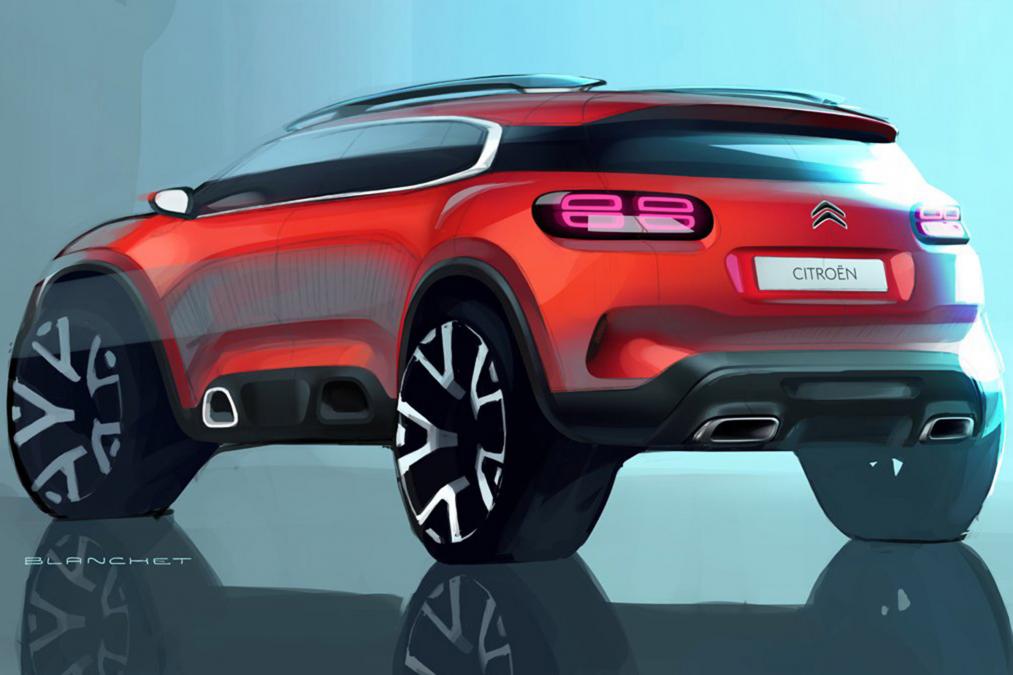
Citroen’s Aircross concept was powered by a hybrid drivetrain combining a 160kW turbocharged petrol engine and 70kW electric motor, which was good for 0-100km/h acceleration of 4.5 seconds and fuel consumption of just 1.7 litres per 100km.
Though production powertrains are yet to be confirmed, the C5 Aircross is expected to become Citroen’s first plug-in hybrid model with engine choices including petrol and diesel engines from the Peugeot-Citroen Group (PSA).
It’s also expected to utilise PSA’s modular EMP2 platform, which underpins Peugeot’s new 5008 SUV – though the Citroen won’t necessarily share that model’s seven-seater layout.
Citroen is following its sister company’s move to broaden its line-up of SUVs by reimagining current models. Peugeot has turned the original 3008 and 5008 models from MPV body styles to the vastly more popular SUV format, and Citroen’s C-Aircross Concept shown at this month’s Geneva motor show points to how the C3 Picasso will make a similar move.
An expanded range of SUVs will mark a dramatic change for both PSA brands, which took belated and tentative steps into the segment with rebadged and re-nosed Mitsubishi models in recent years.
GENERAL Motors has flagged more sweeping changes for underperforming global markets, raising questions over whether more tweaks are in store for its Australian operations.
US car industry website Automotive News reported overnight that GM, the world’s third-largest carmaker behind Volkswagen and Toyota, said it was weighing up pulling out of underperforming markets worldwide after recently selling off its loss-making European divisions Opel and Vauxhall to French carmaker PSA Group.
“There’s a little bit more work that we’re doing in the international markets,” Automotive News quoted GM chief executive Mary Barra as saying in a conference call with journalists held shortly after last week’s Opel sale announcement.

While Holden has struggled for profitability in recent years, helping its cause is the enormous cuts already announced for its loss-making manufacturing facilities, which will close on October 20 – reducing the capital investment in Australia.
The Automotive News report said GM “plans to reduce investments in certain international markets as well as cars for North America” – potentially affecting future model plans for Holden in the medium to long term.
GM has made it clear it is focusing on core markets and models as part of a move to improve profitability.
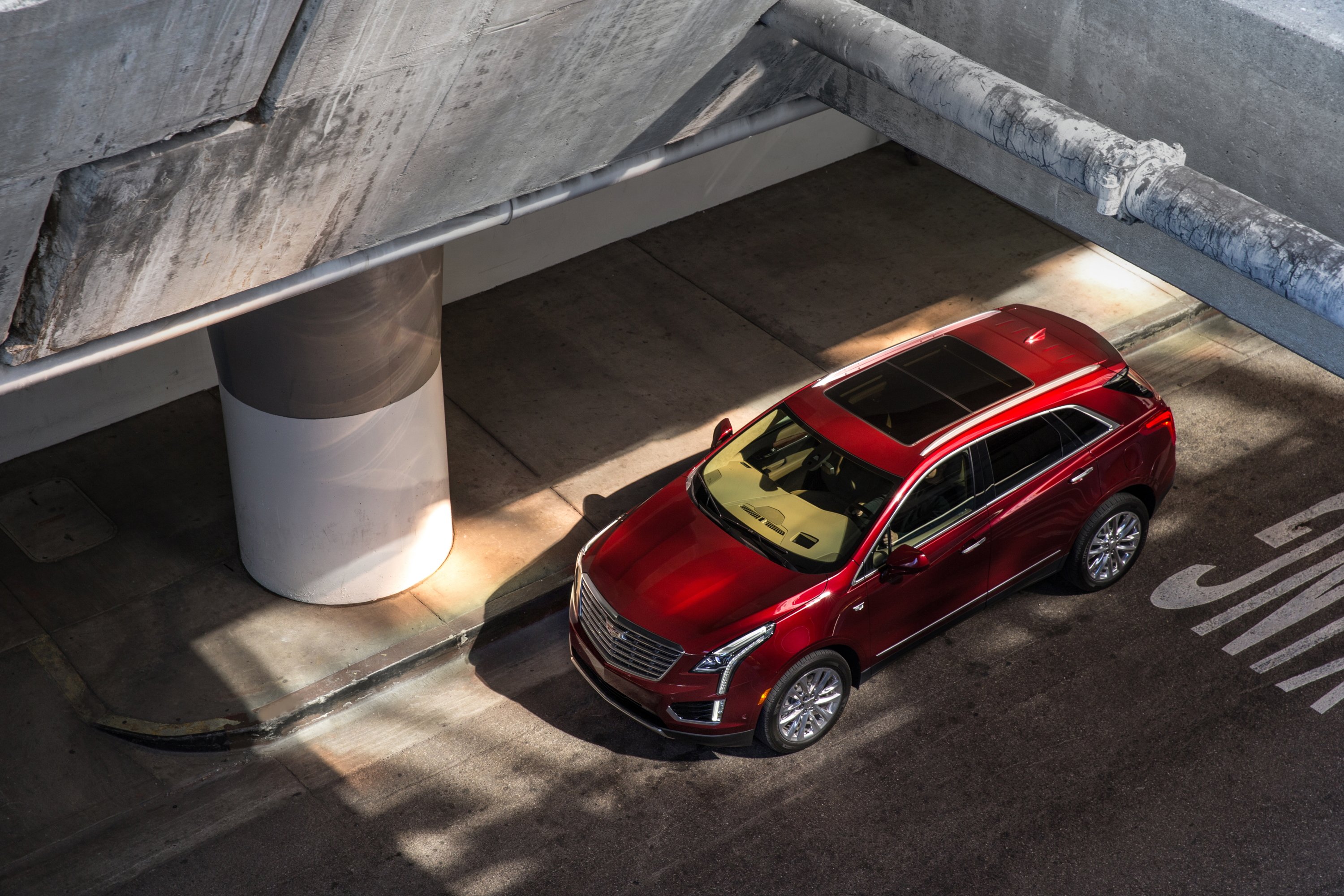
Cadillac is on GM’s radar for Australia, with the US luxury brand confirming that if a push into Europe – and in particular the UK – paid off, it could be here within the next four years.
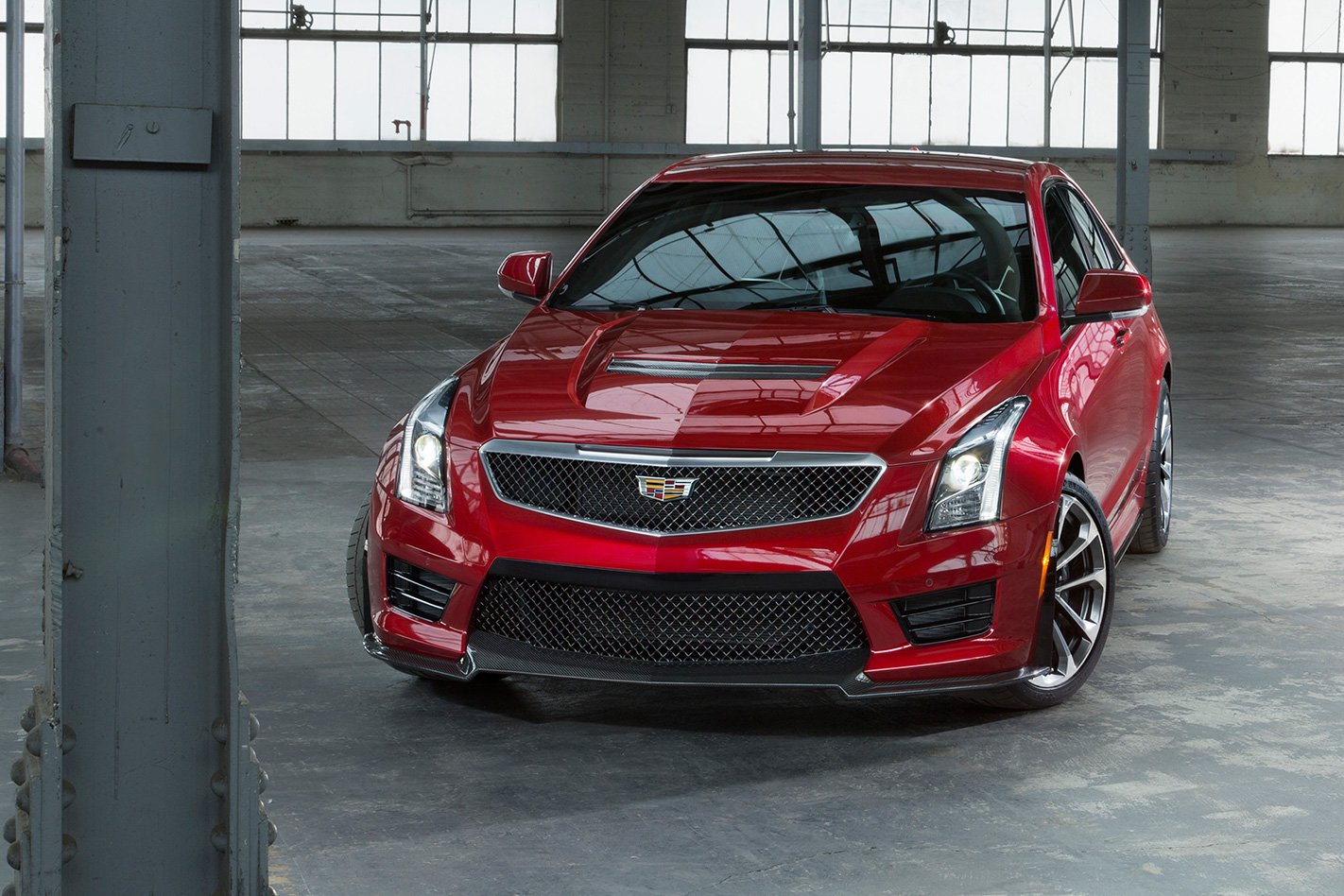
Cadillac president Johan de Nysschen said right-hand drive was “a key requirement” to be a high-profile brand in Europe.
“Once you’ve entered the UK market, well obviously you’ve just unlocked the first big hurdle to entry into some of the right-hand-drive markets; Japan, Australia, South Africa,” he said.
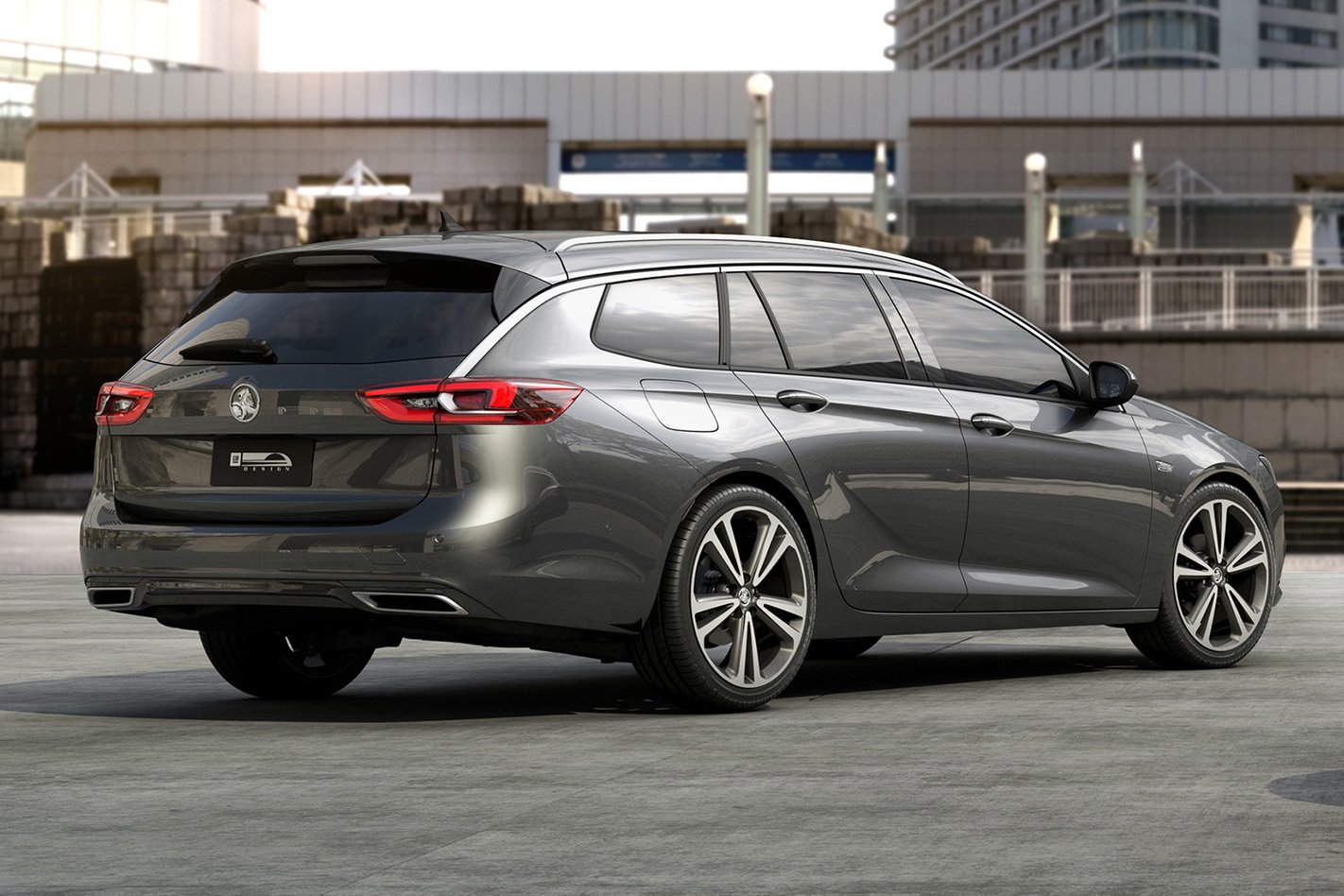
GM president Dan Ammann refused to tell Australian media attending this month’s Geneva motor show where Holden may source its vehicles from once PSA Group-owned models – the Astra small car and the Commodore-badged Insignia mid-size sedan and hatch – reach the end of their lives, likely to happen from 2022 and beyond.
“No specific decisions have been taken on that front,” Ammann said. “We have, I’d say, as a result of yesterday’s announcement, there’s more opportunity [of where Holden sources future models from] not less.
“Clearly the current models that are just launching will run through their full life cycle and then what we do beyond that is yet to be determined.”
Opel’s sale was prompted by a string of losses at GM’s Euro branch – more than $26 billion since 1999. Since 2000, Holden has made more than $1.5 billion in profit for GM, but it has written that off against more than $1.7 billion in losses.
Holden declined to comment on the Automotive News story, instead referring Wheels to Ammann’s comments that GM was “100 percent committed to the business in Australia and New Zealand”.
The carmaker has struggled since 2005 to keep its head above water after escalating production costs, falling sales and challenging financial conditions hurt its bottom line, and its nervous owner severely scaled back its plans for the Holden-developed Zeta rear-drive platform in the wake of the 2008 global financial crisis and tightening US corporate average fuel economy standards.
It is expected to report its 2016 result – likely to be an improved profit despite a sales slump, as many of the costs associated with closing down almost 60 years of manufacturing legacy have already been written off – in about May.
Holden’s rollercoaster ride 2015: $128.2 million profit 2014: $255.2 million loss 2013: $361 million loss 2012: $553.8 million loss 2011: $89.7 million profit 2010: $112.4 million profit 2009: $210.6 million loss 2008: $70.2 million loss 2007: $6 million loss 2006: $146.5 million loss 2005: $144 million loss 2004: $216.4 million profit 2003: $287.6 million profit 2002: $257 million profit 2001: $285 million profit 2000: $135 million profit
“JESUS Christ, Kris!” Aren’t words you want to hear when you’ve nailed the throttle pedal to the firewall, your rally car bucking and kicking as it steps out sideways, and a packed car park hoves into view.
Footage has emerged of what went down inside the cabin of Kris Meeke’s Citroen C3 rally car after he fired it off the road while leading last weekend’s Rally Mexico less than a kilometre from the finish.
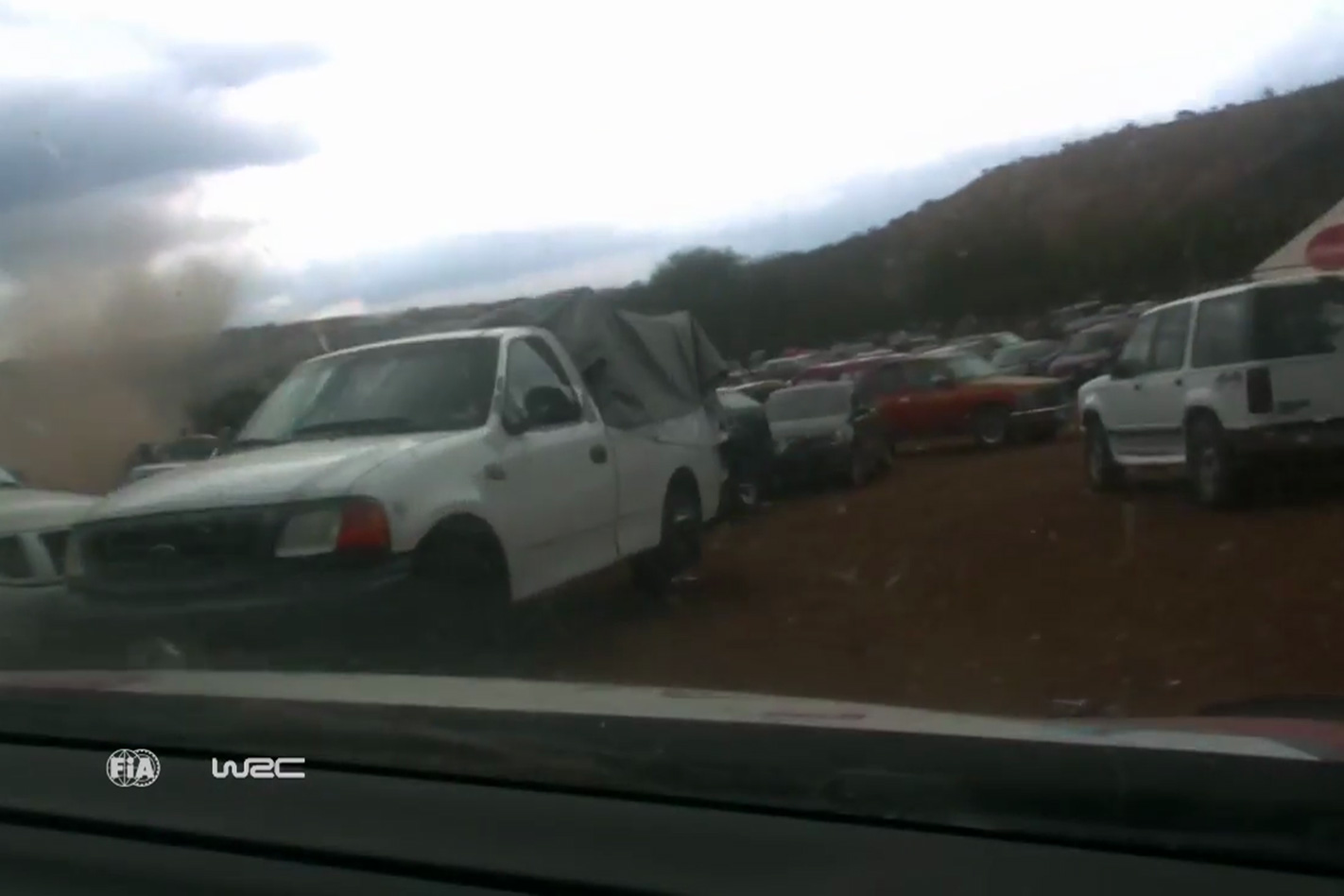
Amazingly, despite finding himself in a public car park and pointing the wrong way, Meeke is relatively calm as he narrowly avoids parked cars during the unexpected excursion.
The above outburst came from the Irishman’s co-driver, Paul Nagle, in the moment before Meeke’s car abandoned the road.
“How am I gonna get out of here?” is Meeke’s calm response as he casually drifts the Citroen around the parked cars.
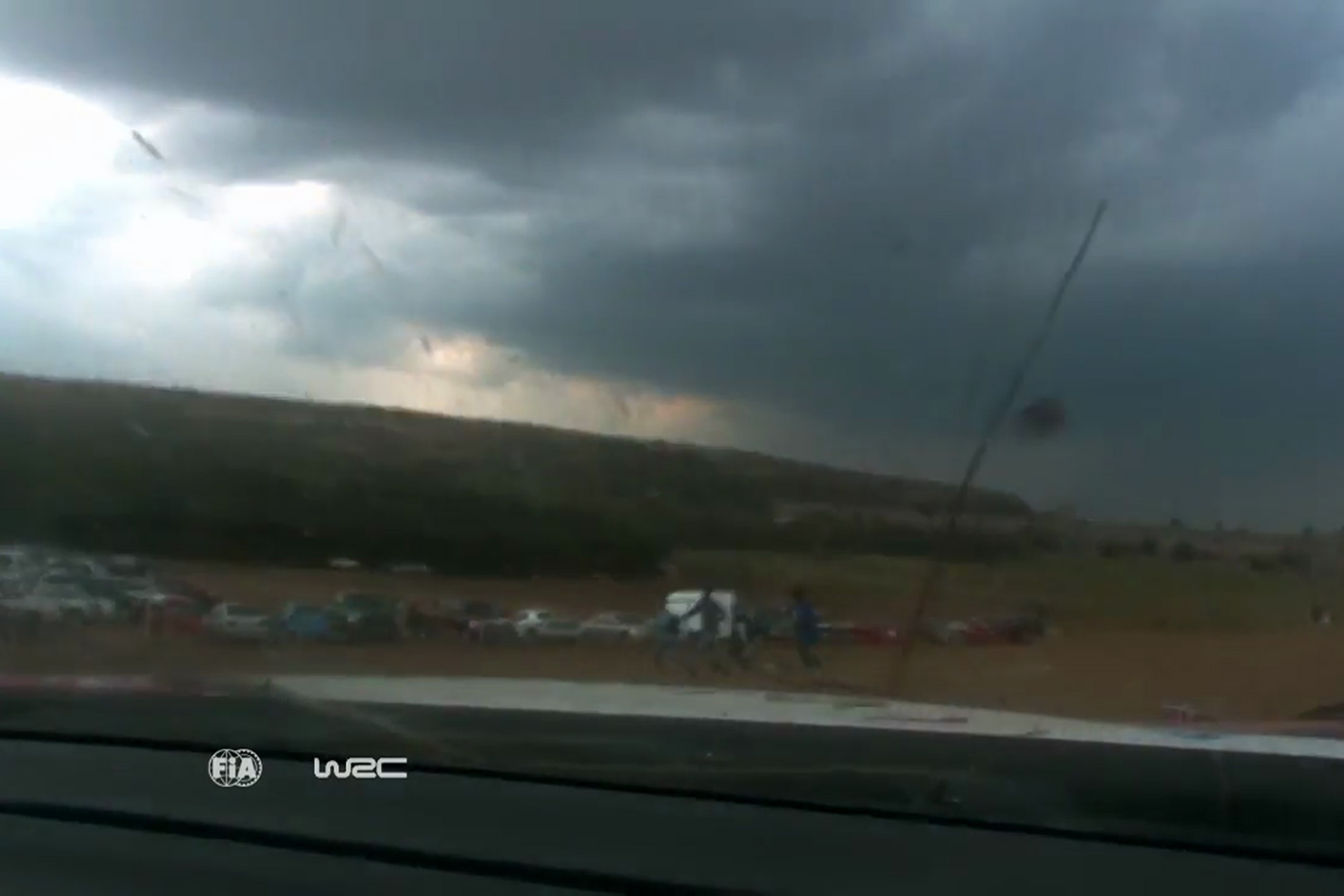
Nagle responds with “I dunno” before he finally identifies an exit point and Meeke gets back on course and powers towards the finish line.
Their reactions at the end of the stage – Meeke was leading the rally with a comfortable 37.2sec buffer when he went off – are priceless as they try and work out if they’d blown their chances of taking the stage and the overall victory.
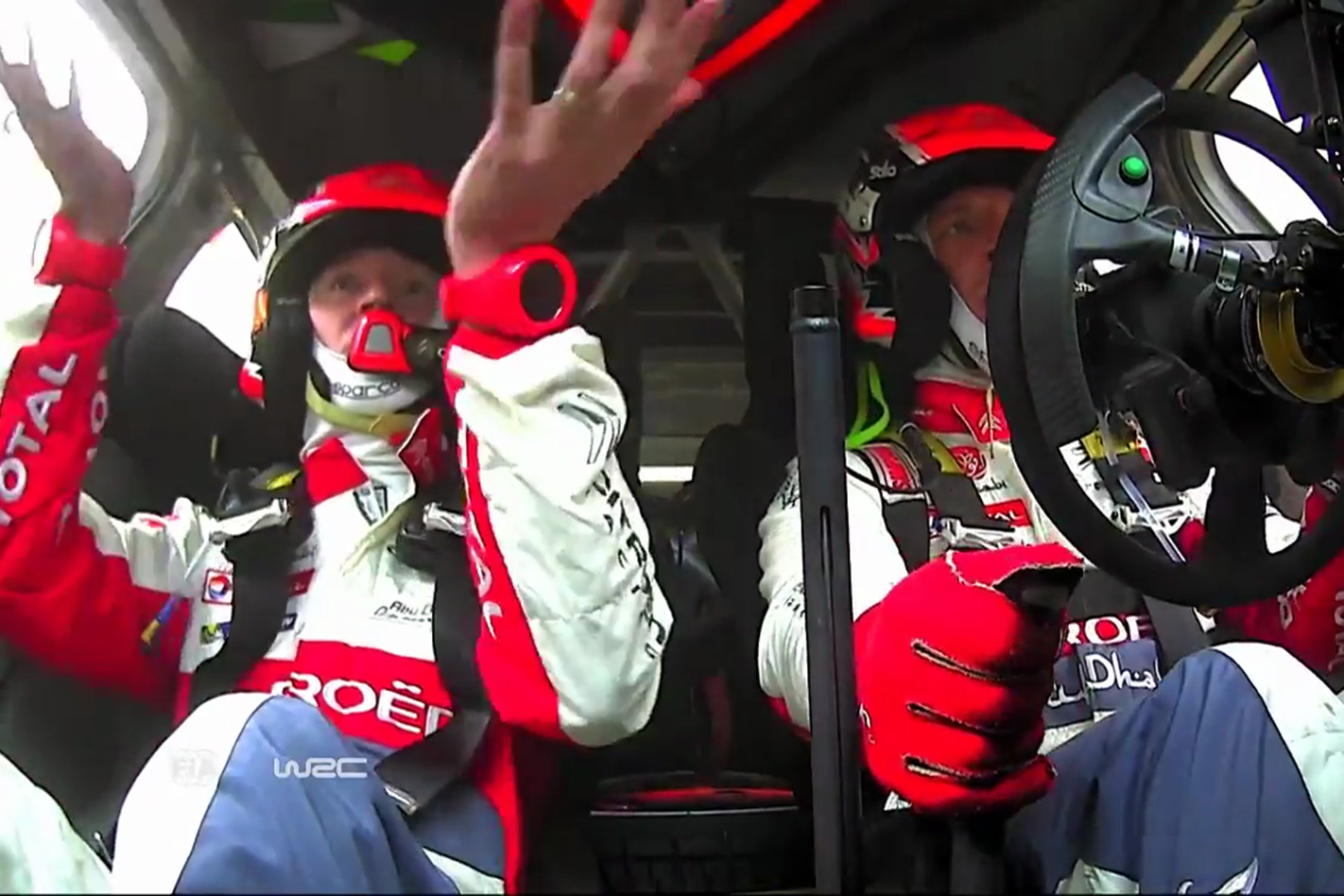
“Holy s**t,” says Nagle. “We lost it,” replies a clearly disappointed Meeke. “Did we?” questions Nagle.
Turns out they didn’t, sneaking home with a 13.8sec buffer. Talk about the luck of the Irish.
