
Isuzu has teased images of the updated MU-X seven-seat wagon, expected to launch in March.
Following the release of its updated sibling, the D-Max, on which the wagon is based, the new MU-X is expected to receive a facelift with new front-end design, re-styled LED tail-lights, and restyled interiors complete with leather trims.
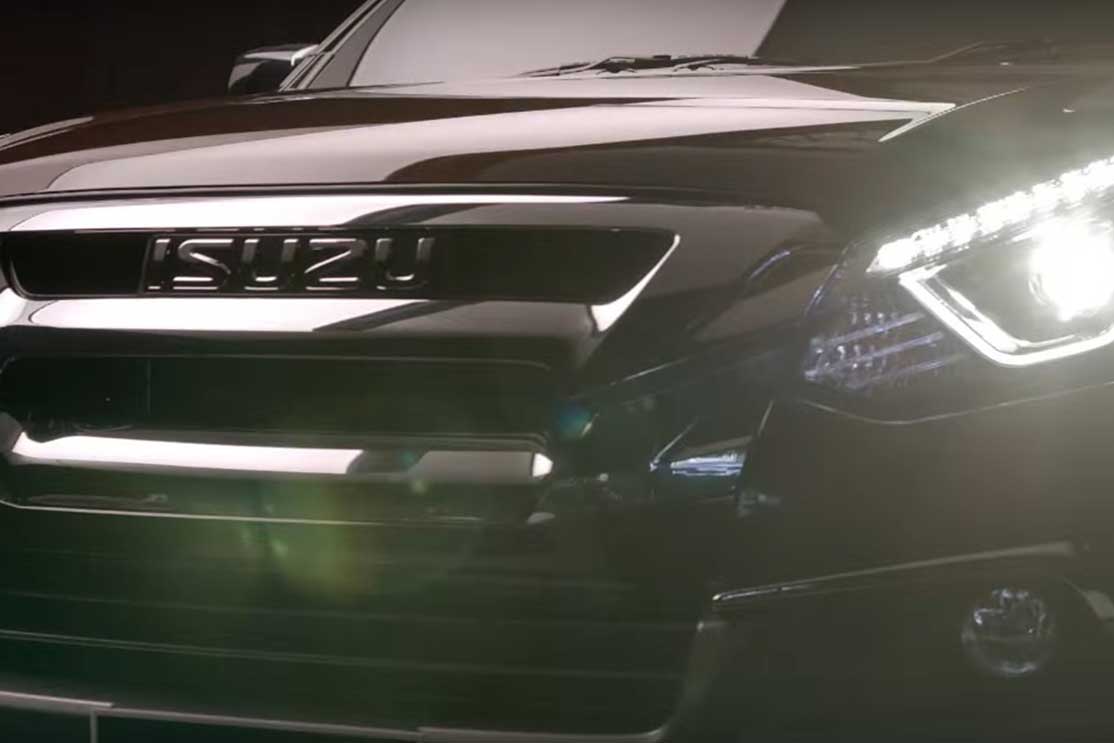
The images reveal a more upmarket version of the current first-generation MU-X which was released in 2013.
Inside, leather trims and soft textiles have been used to give it a more sophisticated appearance, moving away from its utilitarian foundations.
Its re-shaped nose looks like it will receive a new grille, and re-designed headlights.
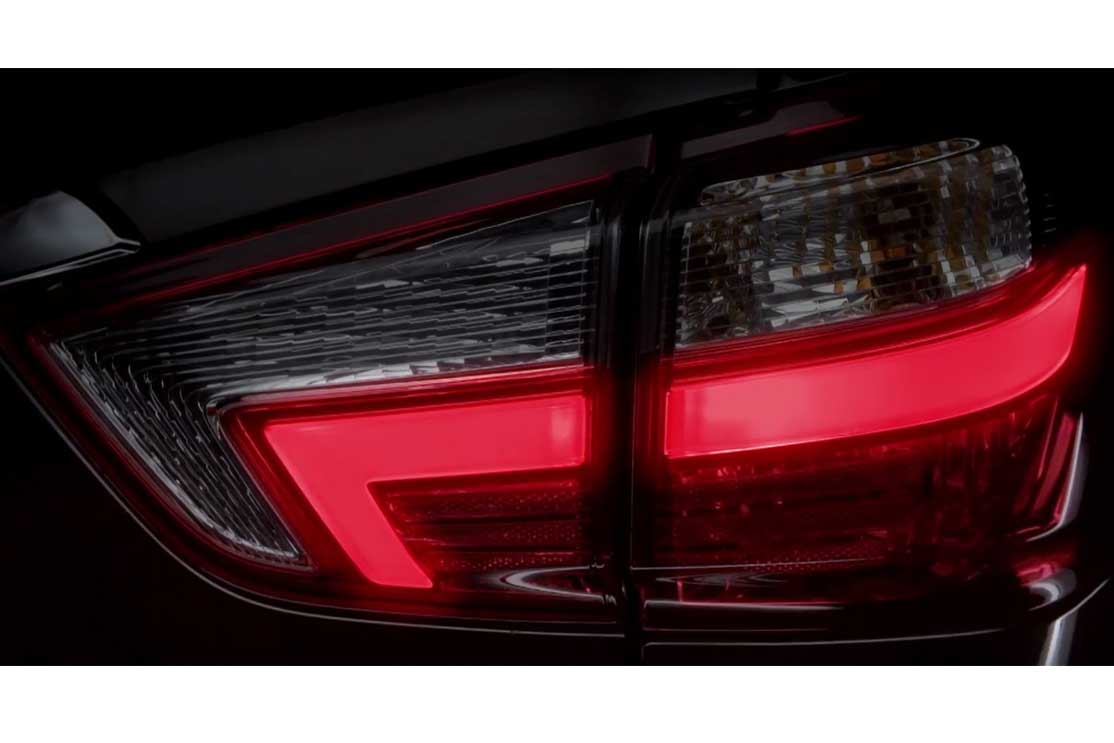
The release of these images come just weeks after Isuzu Australia announced the MU-X MY16.5 update which includes a tweaked engine and gearbox.
The adjusted 3.0-litre four-cylinder diesel engine offers better fuel efficiency and power.
Adding 50Nm to 430Nm to its torque, the MU-X’s engine upgrade gives it better towing capabilities to put it in line with its competitors. Adding an all-new six-speed manual and six-speed automatic offers a more user-friendly drive.
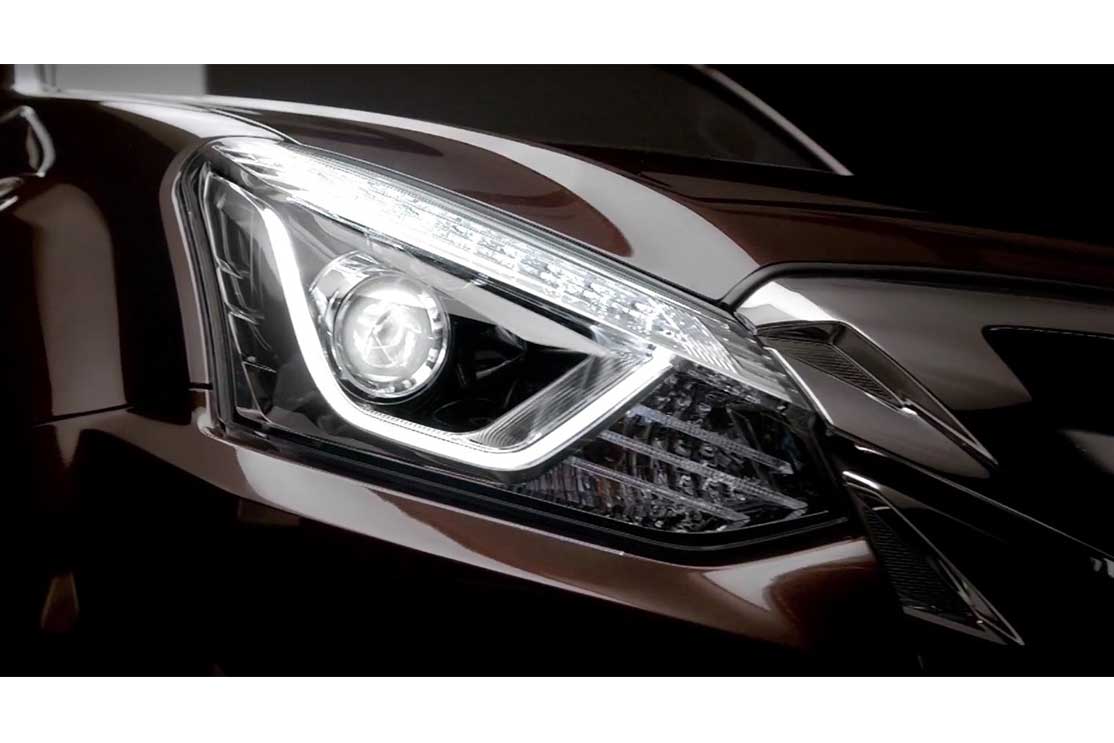
The MY16.5 update also added a reversing camera and seven-inch screen to the base LS-M model, while all models received more soundproofing, three USB points and an eight-inch unit on all models above the LS-M.
At the time of the 16.5 announcement, no changes to the exterior and interior design were announced until these images were released.
The Isuzu MU-X was one of the best-selling seven-seat SUVs in Australia in 2016, sitting behind the Toyota Prado, Ford Kluger, Holden Captiva and Hyundai Santa Fe.
McLaren’s second generation Super Series cars will have a brand-new 4.0-litre twin turbo V8 lurking under their engine covers, with power outputs expected to stretch as far as 530kW – 52kW more than the 650S’s 3.8-litre turbo eight-cylinder mill currently pushes out, and 34kW more than the 675LT that caps off the current Super Series range.
The replacement for the 650S and 675LT models, provisionally codenamed P14 for now, will also have slipperier aerodynamics to take it from 0-200kmh in less than 7.8 seconds on its way to a top speed of around 330km/h.
By way of comparison, a 675LT coupe hits 200km/h in 7.9 seconds and Vmax is limited to 330km/h. The next-gen Super Series will most assuredly be phenomenally quick.
This will partly be achieved by employing ultra-low inertia, twin-scroll turbochargers on the new M840T engine, which spool up more rapidly than previous designs to deliver reduced turbo lag and quicker throttle response. Having an extra 200cc of displacement also plays its part in quickening turbo spool, with more exhaust gas being pushed out during each revolution of the crankshaft to spin those two turbines.
“The new 4.0-litre M840T is an outstanding engine powering an exceptional supercar capable of covering a standing quarter mile (402m) in 10.3 seconds,” said McLaren Super Series Vehicle Line Director, Haydn Baker.
“Power, torque and throttle response are all significantly enhanced compared to the first-generation Super Series, yet with fuel efficiency and emissions also notably improved.”
All that power comes with an all-new ‘crescendo’ soundtrack, which will “match the extreme performance of the engine, with the further option of a sports exhaust”.
According to McLaren the “soulful, clean and crisp exhaust note is among the most emotive of any McLaren”.
The magnificent little donk will also provide some visual spectacle, thanks to engine bay illumination as part of the welcome sequence on vehicle unlocking that will reveal a cast-aluminium air intake plenum with McLaren’s speedmark logo.
Aesthetically, an image leaked last month of the new super series car shows a sharp new front end and nose along with more aerodynamic styling along its flanks. We’ve also been alerted that the new Super Series will feature an oversteer-promoting “Variable Drift Mode” for those who like to conduct their work commute at a constant slip angle.
More details of the second-generation McLaren Super Series, including engine and performance specifications, will be confirmed on March 7 at the Geneva Motor Show.
In the August 2002 issue of MOTOR, Ford, in all its wisdom, allowed our David Morley to build an engine for a Tickford TE50.
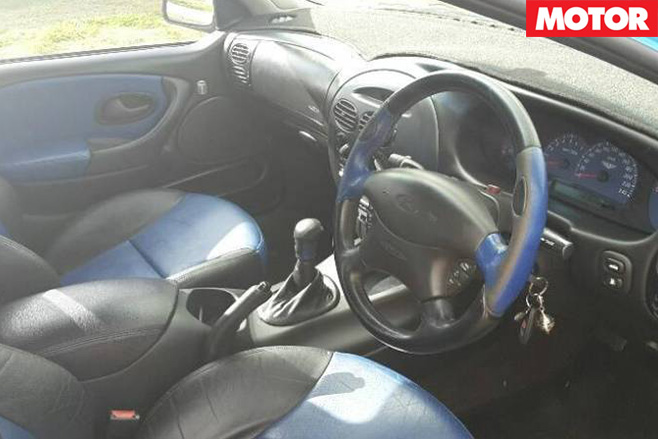
Well, when we say ‘he’ built it, he was very carefully supervised by Tickford’s crack engine builders, which will be a big relief to James, from Wanneroo in WA, who currently has the Tickford TE50 T3 that the engine ended up in for sale on Gumtree.
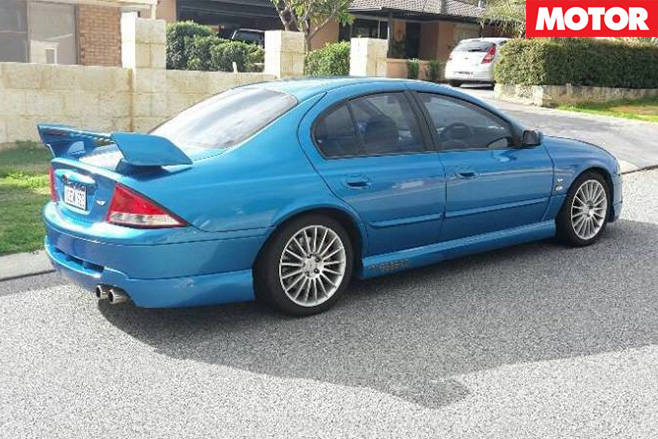
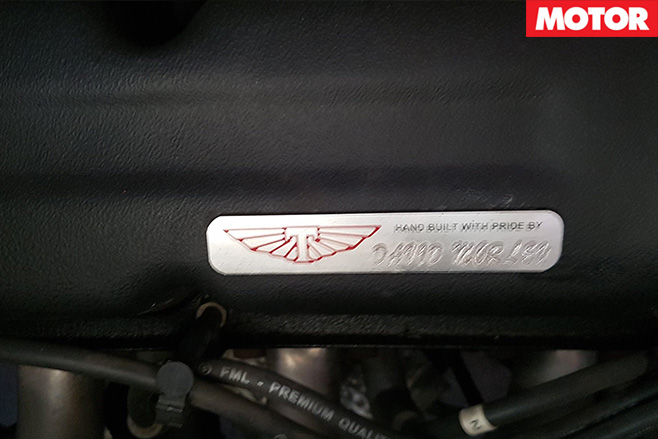
Morley remembers the car drank like an alcoholic sailor (even by the standards of the notoriously thirsty stroked Windsors) but that it was also the fastest Tickford the magazine ever tested, so he must have done something right.
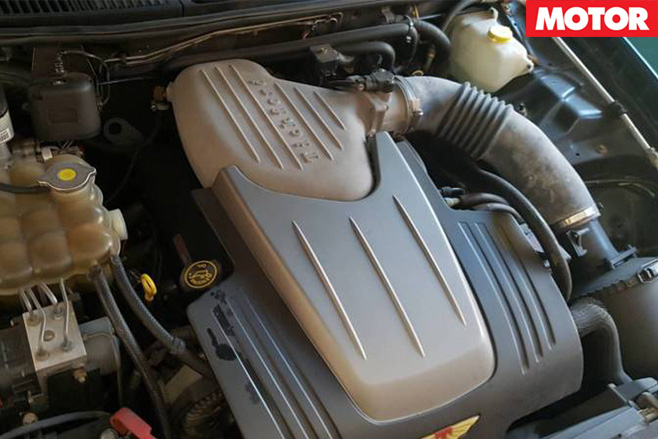
Now, someone buy it before MOTOR’s TE50-loving editor Dylan Campbell drains the editorial budget and returns it to our long-term garage.
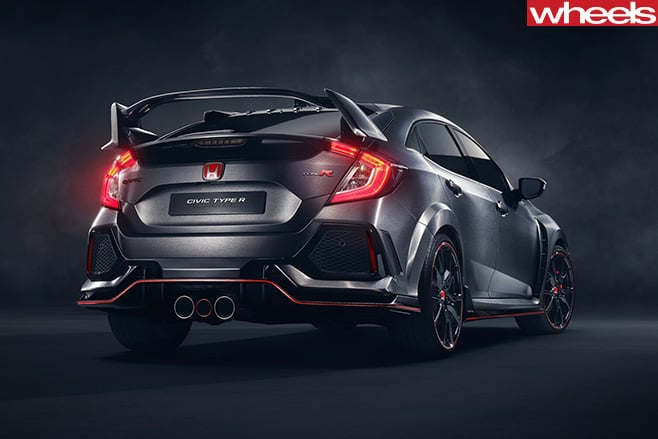
The eagerly awaited production version of the all-new Honda Civic Type R is set to make its debut at next month’s Geneva motor show.
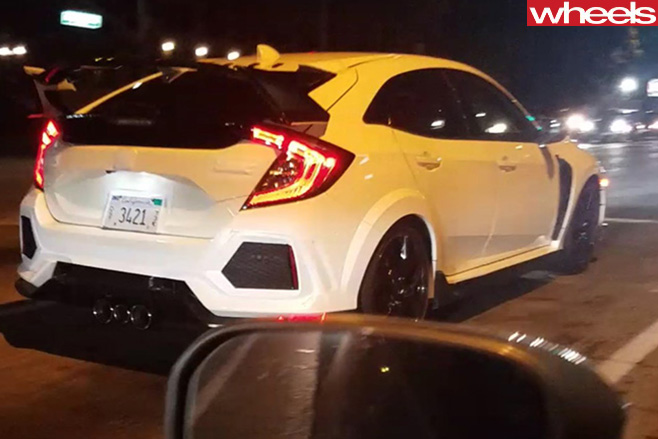
The UK-built hot hatch is expected to closely resemble the Batmobile-esque concept revealed in Paris last year, whose aggressive styling included a double-decker rear spoiler and carbon-fibre front splitter, carbon-fibre side skirts, engorged wheel arches (vented at the front) and a trio of prominent exhaust pipes.
Many of these features as well as the diamond mesh grilles, turbo-cooling bonnet scoop and wide-track 20-inch alloys with Brembo brake calipers have already been spotted on tge Honda Civic Type R prototypes being tested around the world including Sydney. It’s getting real close.
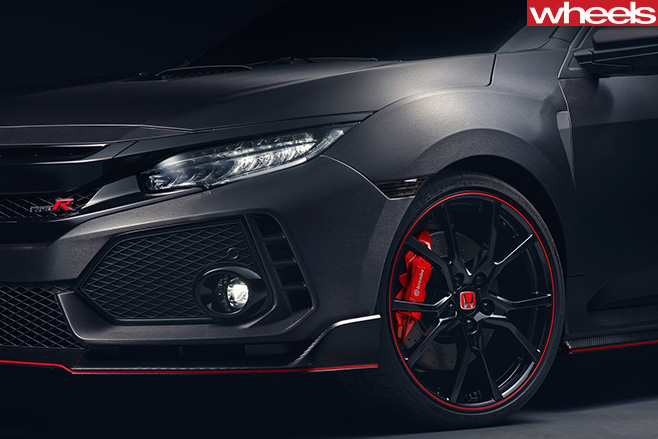
Unlike the ninth-gen model, the new Type R has mostly been designed on a clean slate alongside the new Civic hatch. This allowed for a lot more design flexibility with the aerodynamic package, which will play a big part in the new Type R’s on-track performance. All of that lairy aero isn’t just for show, it seems.
There’s no word on transmissions at this stage either, but the purists will be hoping for something along the lines of the Mk9’s six-speed manual gearbox.
We can’t wait for the comparo between it and rivals such as the Volkswagen Golf GTI, Ford Focus RS, Peugeot 308 GTi and Renault Megane RS 265 – as well as the incoming Hyundai i30 N. The world of hot hatches is about to get even toastier.
UNTIL THE big boy RS5 is unleashed on unsuspecting M4s and C63s later this year, the new Audi S5 serves as their hardest-hitting mid-size coupe.
With two doors, four seats, a longitudinal, permanent quattro all-wheel drive and a torquey turbocharged V6, it’s a car made to a time-honoured mechanical template for Audi.
Although it’s powered by six cylinders rather than five, this is the closest thing to a classic 1980s Ur Quattro that the firm currently makes. And that might count for something given that people who are in the market for a fast coupe like this are probably just the right age to fondly remember the 1980s.
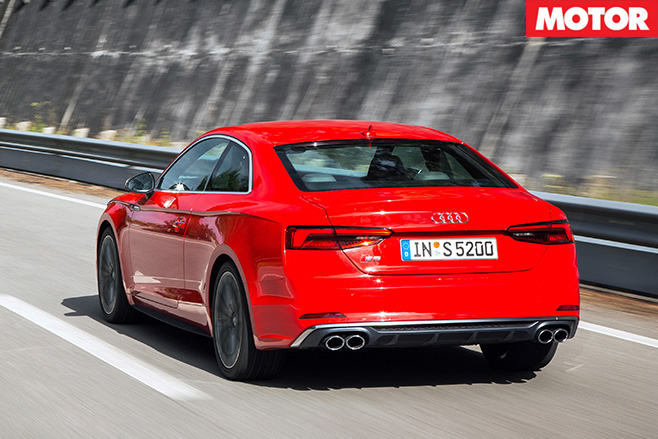
The figures aren’t eye-popping, particularly alongside rivals like the bigger-hitting Mercedes-AMG C43 Coupe, yet the S5’s 260kW/500Nm is still nothing to complain about. Nor the potential for 0-100km/h in less than five seconds.
The S5 also gets its own suspension tune, riding lower than even sports-sprung versions of the standard A5. But here, Audi’s trick is to mix in greater comfort and civility than you might get in a more powerful RS.
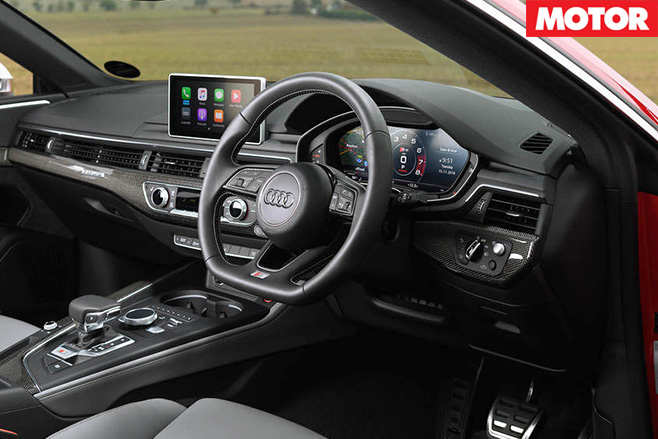
The motor is a worthwhile improvement over what it replaces but doesn’t always combine brilliantly with the eight-speed gearbox. Overall, we suspect petrolheads will still narrowly prefer either AMG’s new 3.0-litre turbo V6 or BMW’s longer-serving 3.0-litre straight six.
The S5’s chassis, meanwhile, seems to do 90 per cent of what most owners will desire, very proficiently – but it isn’t a natural entertainer. Even with Audi’s optional sport rear differential, our test car wasn’t particularly poised or engaging when cornering, although it was always grippy, precise and sure-footed.
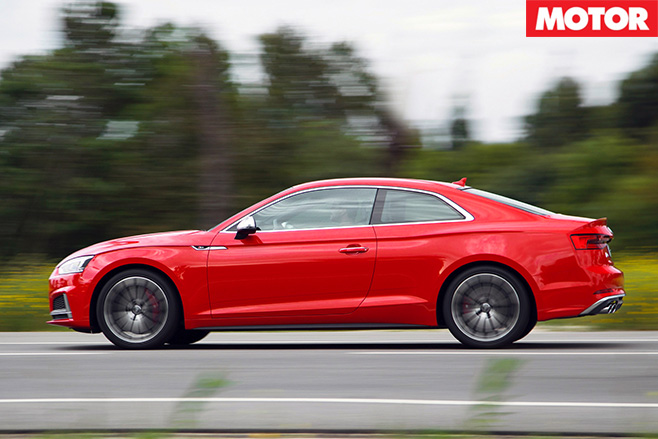
Audi probably needs to do more with its S-branded cars to successfully counter the threat from AMG’s more engaging 43-badged line-up. If it can, this performance niche’s newly competitive forces might yet bring us a worthy successor to the original 1980s Quattro – but they haven’t done so for now.
3.5 OUT OF 5 STARS
Like Traction; grunty turbo V6; great interior
Dislike Could and should be more involving; tough rivals
Specs Engine: 2995cc V6, DOHC, 24v, turbo Power: 260kW @ 5400-6400rpm Torque: 500Nm @ 1370-4500rpm Weight: 1615kg 0-100km/h: 4.7sec (claimed) Price: $120,000 (est)
Bentley turns its luxury grand tourer up to eleven.
THEY say that nothing succeeds like excess, but even the great W.O. Bentley, founder of the storied British luxury marque and a man not known for his willingness to die wondering, would be proud of what the crew from Crewe have conjured this time around.
Building on the potent platform laid down by the 2009 Continental Supersports and more recently with the Continental GT Speed, Bentley has turned the dial up to 11 in reviving the Supersports moniker in a car it’s heralding as “the fastest and most powerful luxury four-seat car in the world”.
Those in the know would reckon Ferrari might have something to say about that, but a check of the specs reveals that the new Continental Supersports’ eye-watering 336km/h top speed edges Maranello’s GTC4Lusso by a single kilometre an hour.

Drawing a strong line between the company’s motorsport efforts, the latter recently witnessed at the Bathurst 12 Hour where the Continental GT3 of Smith/Kane/Oliver took an impressive third place, Jones described the Bentley Continental Supersports as “the most dynamic Bentley ever to take to the road”.
And powerful. Jones pointed to the latest iteration of Bentley’s venerable twin-turbo W12 engine and its remarkable outputs of 522kW and 1017Nm. Those numbers are enough to overcome the coupe’s hefty 2280kg kerb weight to rocket it from 0-100km/h in just 3.5 seconds, on its way to its much-hyped top speed.
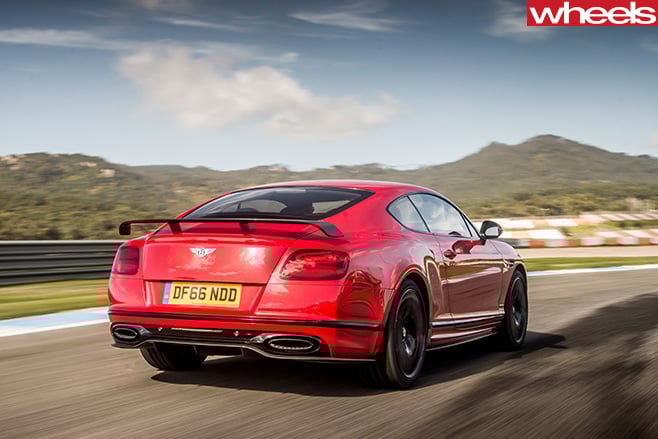
Sitting behind the W12, the eight-speed ZF transmission also came in for engineering attention, adopting a new torque converter that’s softer initially to allow the turbos to spool up, but which then locks up faster and across a wider rev range to allow the car to make best use of its huge torque, thus enabling even more rapid acceleration.
Of course, making power is one thing but getting something this big and heavy to stop and go around corners is quite another. Here Jones and his team looked to those old staples of targeted weight reduction mixed with some new tech to aid the cause.
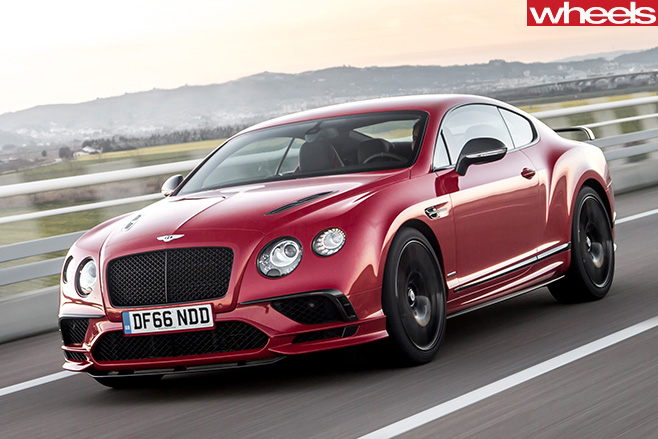
Tucked in behind the lightweight 21-inch forged alloys and charged with hauling up the hard-charging behemoth are massive carbon ceramic brakes, which Bentley reckons are the largest on a current model production car. Measuring 420mm x 40mm up front and 356mm x 28mm at rear, and with eight and two pot calipers respectively, the platter-sized stoppers can apparently handle temperatures up to 1000 degrees Celsius – the same temperature as lava.
In addition, torque vectoring technology originally developed for Bentley’s hardcore limited-edition Continental GT3-R was further refined for the Supersports. The system brakes individual front and rear wheels to sharpen turn-in and optimise acceleration out of corners, improving the Supersports’ overall agility.
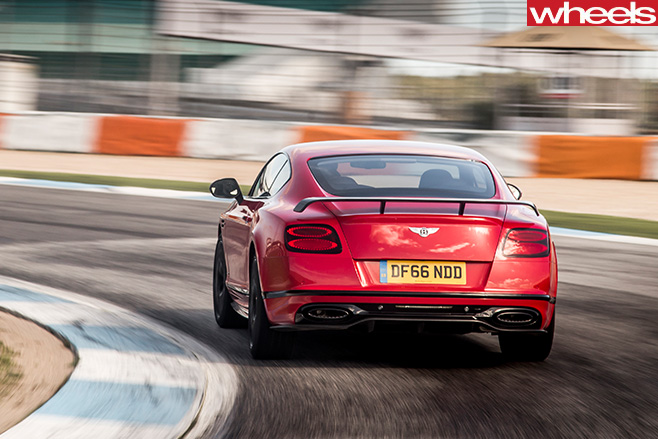
The combination of massive horsepower, reduced unsprung weight, torque vectoring, and the Continental’s standard 60:40 rear-biased permanent all-wheel-drive system give the Supersports a surprising degree of agility and balance. However, as we discovered over the course of several hot laps at Portugal’s famed Estoril circuit, the Supersports is no track-day racer. It’s simply too big and heavy to be precise enough on what is a particularly challenging track.
To be fair, Paul Jones and the rest of the Bentley team were at pains to point out the car is not a track car, and that we were unleashed on the track only to explore its outright performance potential. Of which there is plenty.
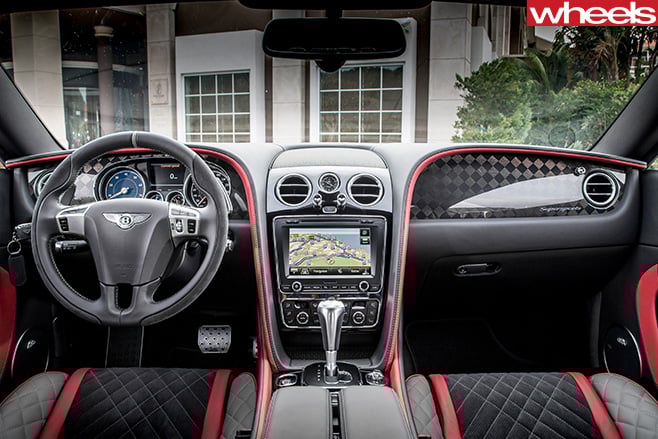
As rapid as it is on the racetrack it’s out on freeways and more open backroads that the Supersports really shines. No-one understands the Grand Tourer ethos better than Bentley, and the Supersports is the consummate GT.
As Paul Jones put it, it’s the sort of car you could drive for 600 miles at high speed, and then get out of feeling refreshed. While we didn’t quite manage 600 miles, we did cover plenty of kays at a fair clip and the car’s unique blend of craftsmanship and epic performance really do set it apart.
All cars in the test fleet came equipped with the optional titanium exhaust system, which adds its distinct resonance to the extroverted rifle-shot pops and cracks on downshifts and deceleration. The note is enjoyable enough in the coupe, but if you really want the full “help, I’m being chased by Al Capone experience”, best opt for the convertible.
On tighter backroads, of which there are plenty in Portugal, you’re very much aware of the car’s physical presence. At 4.8m long, 2.2m wide and weighing almost 2.3 tonnes, the Supersports commands a bit of road. But it’s precisely this imposing heft, coupled with its generous 2746mm wheelbase and that unbelievably flat torque plateau that give the Supersports such rock-solid stability at high speed.
Rocketing along the autostradas outside Lisbon, the big Bentley felt utterly unfazed at numbers that would see you locked up for life back home, yet it still has massive pace in reserve, should you feel game.
SPECS Model: Bentley Continental Supersports Engine: 5998cc W12, quad cam, 48 valves, twin turbocharged Power: 522kW @ 5900rpm Torque: 1017Nm @ 2050-4500rpm Transmission: 8-speed auto Kerb Weight: 2280kg Fuel economy: 15.7L/100km 0-100km/h: 3.5secs (claimed) Price: $569,522 (coupe), $626,474 (convertible) On sale: Soon
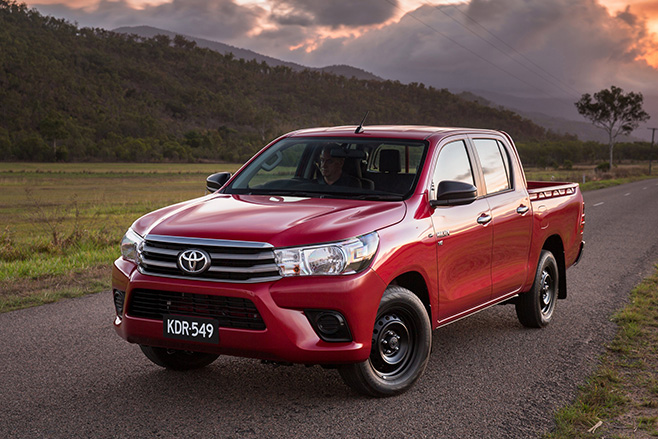
Hyundai’s Toyota Hilux is badly wanted in Australia, but it will be years before the big Korean has one ready for showrooms. The project is currently in the planning stages, according to Hyundai Australia’s Scott Grant, but hasn’t been given the go-ahead for production.
“I do know that HMC (Hyundai Motor Company) is taking it very seriously and a model code has been allocated to it and there’s some work under way,” says the chief operating officer. But this doesn’t mean it’s certain to be built, adds the exec, who in the past has worked for both Toyota and HSV.
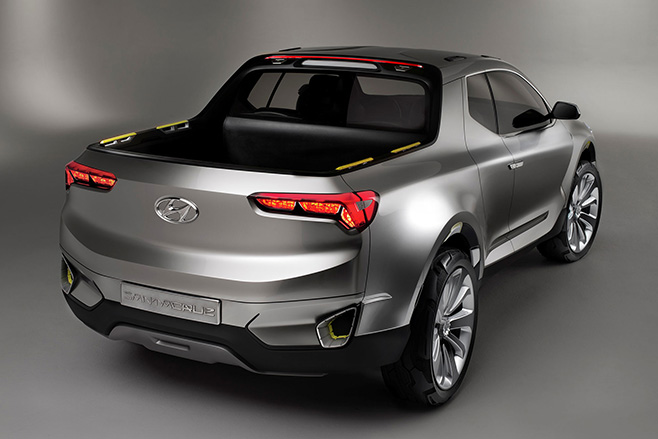
“As far as I’m aware there’s no commitment to develop and produce the vehicle… but we’re desperate for it, there’s no question.”
Grant’s desperation is understandable. The Toyota Hilux was the best-selling vehicle in Australia in 2016, yet ambitious Hyundai doesn’t make the kind of ute we buy. HMC’s objective is growth; the target for 2017 is to push global sales through the five million barrier.
Australia is just one of the markets begging for something Hilux-like from Hyundai. “A lot of the Asian countries generally are looking for something like a light commercial vehicle,” says Grant.
What’s not wanted in Australia (or Asia) is something like Hyundai’s Santa Cruz concept pick-up shown at Detroit in 2015. “Their (the USA’s) requirement is a bit different to ours,” according to Grant.
“We want a real truck. They’re looking for something that’s a bit more of a sports-based, urban-lifestyle thing. We’re looking for something that’s a bit more heavy-duty.”
And Hyundai is likely, in time, to provide exactly that…
Only weeks before its Geneva motor show reveal, the Lamborghini Huracan Performante has reportedly blown the Porsche 918 Spyder into the weeds at the Nurburgring Nordschleife and nabbed a new production car lap record of six minutes and 52 seconds.
Without an electric-boost powertrain in sight, Lamborghini’s tweaked 5.2-litre V10 – now with around 480kW and 630Nm – aided the aggressive, track-focused Huracan in wiping a full five seconds off the time set by Porsche’s hybrid hypercar, according to Motor Trend.
Perhaps even more impressive is the reduction from the Lamborghini Aventador SV’s 2015 time of 6min 59.73sec, which previously placed it second on the production car record charts ahead of the Nissan GT-R Nismo’s 2015 time of 7min 8.68sec.
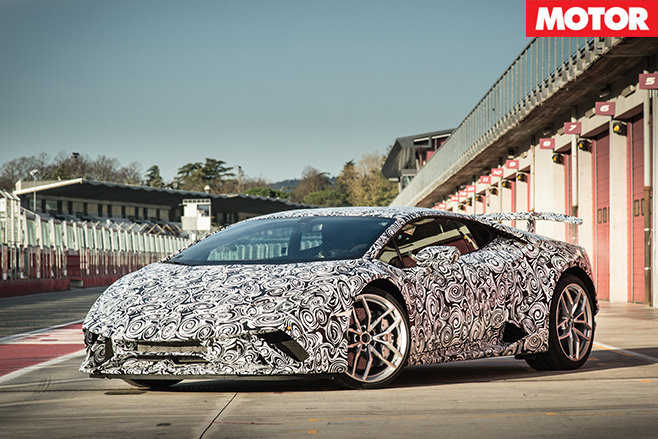
Active Lamborghini Aerodynamics – as dubbed by the brand – makes its debut and uses three electric motors to operate a duo of flaps in both the front bumper and rear wing, which can operate together or independently depending on the situation and mode.
All four flaps can close to maximise downforce when braking from around its 340km/h top speed, for example, or open completely to minimise drag when accelerating from standstill to 100km/h in 3.0 seconds and up; or, during cornering, it can even open on the outside wheel side to reduce load on the heavily worked tyre, yet remain open on the inside wheel to increase downforce on the lightly loaded side.
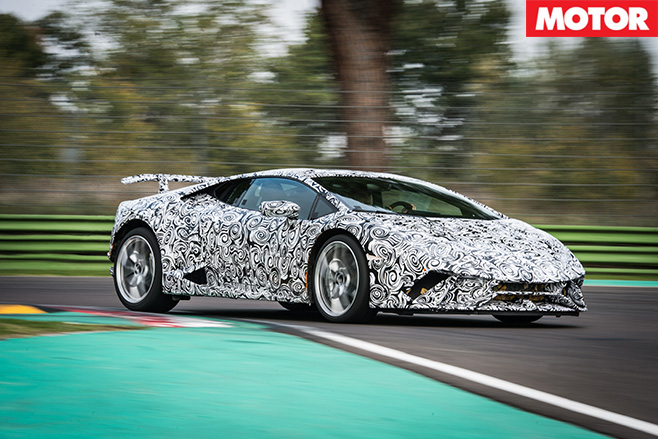
Lamborghini head of research and development Maurizio Reggiani recently told Australian media that “we achieved much more than expected” with the Huracan Performante, and he confirmed it would eclipse the time of the Aventador SV. What he didn’t say is that it would take the 918 Spyder with it, too…
Want to know more about the Lamborghini Huracan Performante?
Its city-chic meets off-road toughness, wrapped up in a neat little box. But the funky-looking pint-sized Jeep looks the business, unlike many of its competitors.
What stands out
The American-designed, Italian-built Jeep Renegade is the only small SUV to offer the best of both worlds – an urban-run-about with genuine off-road capabilities, in the Trailhawk variant which is the top-spec of a four-model line-up.
Despite how it looks from the outside, the Renegade’s cabin feels spacious thanks to its height. Matched with a list of convenient features, it’s pretty comfortable on the inside.
We’re also pretty impressed by its adventurous design. It a mixture of the Patriot, Jeep Wrangler and Cherokee, merged with a daring colour palette and an interior that’s a better quality than Jeeps of old.
Speaking of design, Jeep designers from the US-based HQ have hidden a bunch of little Easter eggs inside the Renegade, like this spider under the fuel cap or a silhouette of the 1941 Willys Jeep from WWII.
What’s inside
At all spec levels, the Jeep Renegade is packed with gear with a touchscreen, Bluetooth and reversing camera. The Longitude will add electric seats, dual-zone climate control, automatic headlights and blind spot monitor.
When you get to the most expensive model, which we’ve got here, a 2.4-litre Jeep Trailhawk, you get more stuff suitable for off-roading, like higher-clearance, less overhang in the front and rear, and a full-sized spare.
The Jeep Renegade offers a 40:20:40 rear-seat split, so the rear seats can fold flat. But in order to do this, Jeep had to make them a bit too flat to be considered comfortable.
If you just love the look of it and don’t fancy driving it off the beaten track, then you could settle for the Limited.
Summing up
Those wanting the practicality of a small SUV for urban driving, without sacrificing the adventure, can have both with the Jeep Renegade.
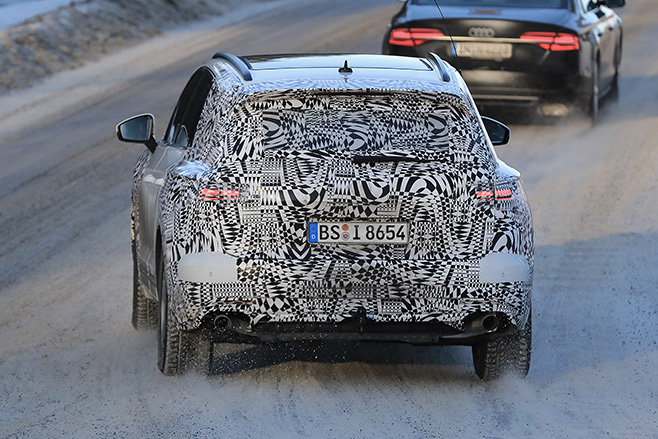
With more and more camouflage coming off, it is becoming clear that the 2018 Volkswagen Touareg that’s slated for an April debut at the Shanghai Motor Show will grow in every conceivable dimension when it arrives in Australia sometime next year… including price.
Aimed at the completely revamped BMW X5 and Mercedes GLE also due to break cover within the next 12 months, the third iteration to wear this nameplate is clearly from the same stable that has brought us the Tiguan and Volkswagen Passat – down to archly conservative design, similar body surfacing and quite blunt stylistic detailing around the nose and tail.
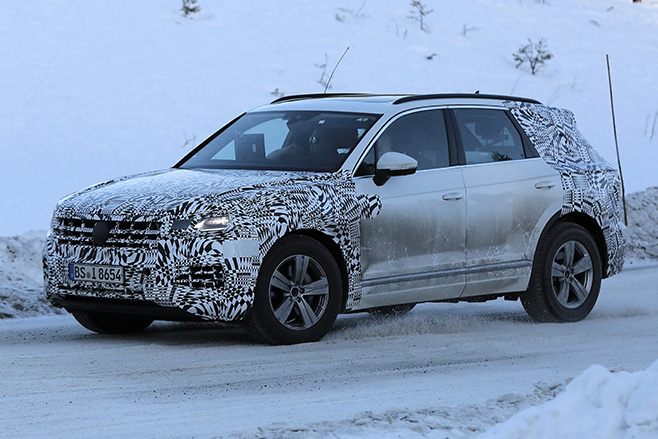
More importantly for some, the Touareg ‘3’ will switch to an all-new premium SUV architecture, for it to help maintain its position as the Wolfsburg company’s global luxury flagship.
To that end, the completely redesigned Touareg will adopt the Volkswagen Group’s advanced MLB Evo modular longitudinal architecture that has served the current Audi Q7 (and next year’s Porsche Cayenne ‘3’) so well, ushering in semi-autonomous driver-assist tech, an array of plug-and-play electrification on certain hybrid versions, and a platform that delivers on both the driveability and comfort fronts.
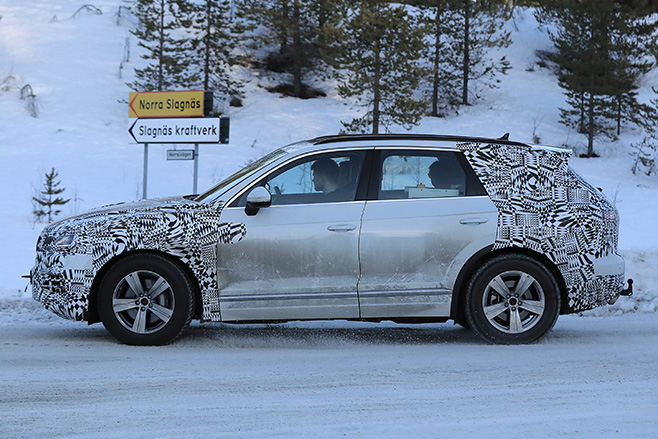
Aiding the latter are reports that kerb weight has plummeted by a dramatic 200kg, taking the large luxury SUV’s appetite for fuel with it.
On the topic of powertrains, a pair of 3.0-litre V6 turbos in petrol and diesel formats are said to be in the pipeline for Australia, driving all four wheels via an eight-speed torque converter automatic transmission. Some markets are also in line for a rumoured 2.0-litre four-cylinder turbo petrol plug-in hybrid, featuring an electric motor capable of providing emissions-free driving for up to 50km.
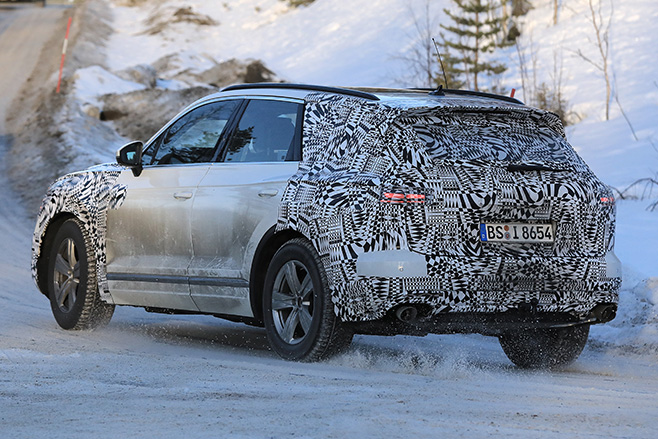
Interior space will likely balloon in line with this vehicle’s far larger footprint (overall length increases from about 4.7 metres to nearly five metres), addressing the relatively poor packaging issues suffered from the previous two generations launched in 2002 and 2011 respectively.
While the resoundingly five-seat Touareg is virtually a certainty for Australia, it will be positioned much higher against the physically larger Volkswagen Atlas seven-seater SUV currently being mulled over for importation. So watch for pricing to commence from about $70,000, rising to around $120,000 in top-line guise.
The Atlas has been created (and is built in the USA primarily for North American consumers) to take on more mainstream rivals like the Toyota Kluger, Kia Sorento and Mazda CX-9.
As with all of its predecessors, the Mk3 Touareg will be built in Bratislava. The name derives from the Tuareg people of Saharan North Africa.*
Have spy pics of your own? We’d love to see them. Just email them to [email protected]
