
Meet Sandro Ziegler. We don’t know much about him, apart from the fact that he’s extremely handy behind the wheel of a Porsche 911.
He operates a YouTube account called Showdown911, which features numerous videos of him driving Stuttgart’s iconic sports car at (and over) the ragged edge.
Despite what the lairy oversteer in the video above suggests, the car in question is actually a a 993 Carrera 4, which just goes to show how much fun rear-biased all-wheel drive systems can be. A point further proven by the 993 Turbo video below.
According to the internet, Zeigler’s 911 is an early 200kW model, with performance enhanced thanks to a G64/21 close ratio gearbox and a drastic weight reduction (including plastic windows) down to just 1200kg, a drop of around 200kg.
A lightweight flywheel helps it rev more freely while new suspension keeps everything (relatively) stable. Of course, the main factor in the car’s speed is the man behind the wheel, who appears to straddle the line between genius and madman.
One of his favourite pastimes appears to be hunting down much more modern 911s, like this video above chasing a 997 GT3 RS around the Nurburgring, a place of which he has intimate knowledge if his commitment levels are anything to go by.
Zeigler’s home track (the majority of videos are from here) is a technical 4km layout called Anneau du Rhin in Blitzheim, France. Who wouldn’t feel a little smug giving a new 991 911 Turbo S a hurry-up in a 20-year old Carrera 4?
Sandro Zeigler, you’re a legend.
There’s something about electric cars that speak to my inner wild child and set my soul alight. The idea of getting around this beautiful country in a vehicle that won’t contribute to climate change and doesn’t require pushing pedals and sweating my face off gets my insides excited.
My inner-bohemian often daydreams about a barefooted life, with sparkly arm tattoos, salty-wavy hair decorated in flowers, eating organic foods and travelling the coast in a Volkswagen I.D. Buzz concept. I hate to play to a stereotype here, but without a word of a lie, my enviro-warrior self would love nothing more than a country dominated by electric cars.
The concept itself intrigues me. But until recently, I’d never actually experienced driving one. Actually, there was one time I sat in a passenger seat of a Tesla P90D, which I found so befuddling I got carsick and had to ask to pull over. Not a great first impression. Still, fundamentally, I loved it and everything it stood for.
If I confess, though, aside from knowing electric cars are better for the environment, there was actually very little I knew about the reality of living with them. That all changed when last week when I was handed the keys to the funky-looking, 2015 Wheels Car of the Year winner – the BMW i3.
I had grand plans for the little futuristic bubble. We were going to drive to Daylesford for the day and eat some delicious local produce, before spending the weekend on a vegan tour of Melbourne.
The realities of an electric car hadn’t yet set in until I realised the car was sitting in the garage plugged in to a wall. Just because we know how something works, doesn’t mean we actually comprehend it. Until I saw the car, plugged in to a power point charging its battery, the whole concept was, well, a concept. Mind-boggling. It was at the moment, as my car suddenly took form as a household appliance over a transportation necessity, I realised range was something I had to worry about.
You see, I’m one of those annoying people who often leave refuelling to the very last minute thinking I have more range on my car than I actually do (don’t judge me, I’ve only ever actually run out of fuel once). But unlike my car which I can top up with a jerry-can enough to drive to the nearest fuel pump, charging an electric car is not so simple. I can’t carry a can of electricity and even if I could, it’s not instantaneous. It’s a time investment. I’ve not yet managed to charge the i3 enough to get it at full range. Close, but no cigar.
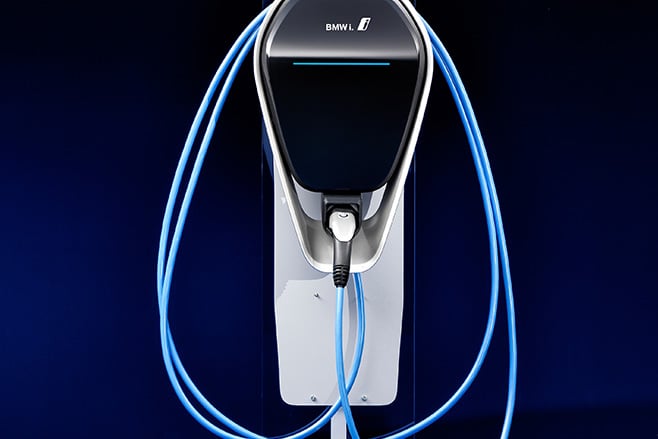
It’s not that this is actually a problem when you own an electric car like the i3. In fact, I could probably get close to two weeks of my daily commute from my house in inner-Melbourne to the office in the south-east of Melbourne out of the little car, before it would need the better part of a day to re-charge its batteries using a normal household charging point.
The idea that it could run out of charge and leave me standard on the side of the road, however, takes a bit of getting used to and enough to cause a little bit of uncertainty on longer road trips. So Daylesford was ditched, as was the vegan tour, and instead, I spent my week using the car as I would normally to see how far I could get out of it. And it’s surprisingly efficient. I charged the i3 on Wednesday, I’ve driven to and from work almost every day since, spent the weekend running around to my usual haunts as I went to yoga, brunch and a quick trip to IKEA in Richmond and I’ve still got around 100km range on the thing, even in the BMW’s ‘Comfort’ mode. Eco Pro ups it to near 130kms.
All that worry was in vain in the end. I could have made it to Daylesford and back on one full-battery. Of course, the new i3 also comes with the option of a range extender for an extra $2000, which will get 70km more juice (of the electrolyte kind) from the battery, which would have come in handy.
Stylistically, though, the BMW i3 is a winner. It didn’t quite play to my bohemian style cues, but visually it combines Captain Planet with the Jetsons as it plays eco-warrior and super geek. Blue tinges to the exterior matched with the interior’s matte carbonfibre chassis and bamboo dash.
The i3 also drives a lot better than I expected of an electric car. It’s agile, offers sharp steering and it’s certainly not slow, reaching 100km/h in just 7.2 seconds, but it feels much faster than that.
And it’s silent. Read any review of an electric car and they’ll tell you they don’t make a noise. But until you drive along narrow Melbourne backstreets, trailing a person, without headphones, walking in the middle of the street (because footpaths are for the weak) for its entire length without them realising you’re driving behind them, the concept is as mind-blowing as it is frustrating!
Despite my initial apprehensions, my love for electric cars has been re-ignited and my inner-hippy, bohemian, wild child has flourished. Even as I write this column, I’ve Googled “how to become a bohemian goddess and travel Australia in an electric car” and purchased a floral crown off eBay.
Do I still hope electric cars take over our roads and save the environment? You bet.
As for my range anxiety, my therapist says it’s only a matter of time before I conquer that irrational fear.
A production version of Volvo’s XC40 crossover has been spotted testing in Sweden.
The Volvo XC40 is based on the concept of the same name which was revealed at the 2014 Paris Motor Show, though the production model doesn’t appear to be as streamlined.
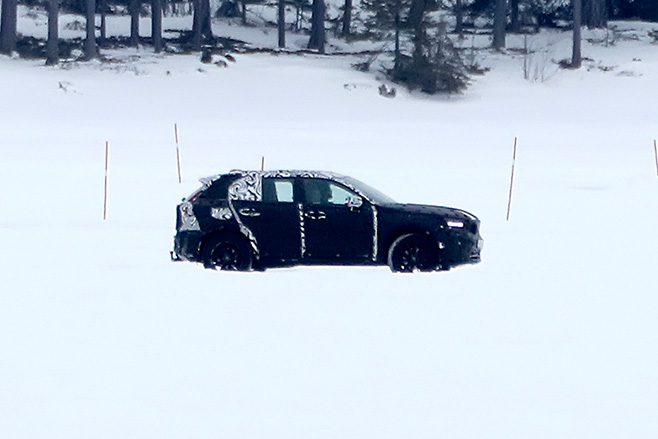
The XC40 is part of Volvo’s range overhaul and SUV expansion and is set to take on the Mercedes-Benz GLA, BMW X1and Audi Q3.
Volvo’s head of research and development, Peter Mertens, said the XC40 will be the first of the new 40-series which will include an S40 small sedan and C40 hatch.
While it will be Volvo’s smallest SUV, expect it to be big on features including high-end interior design and advanced driver assist technology.
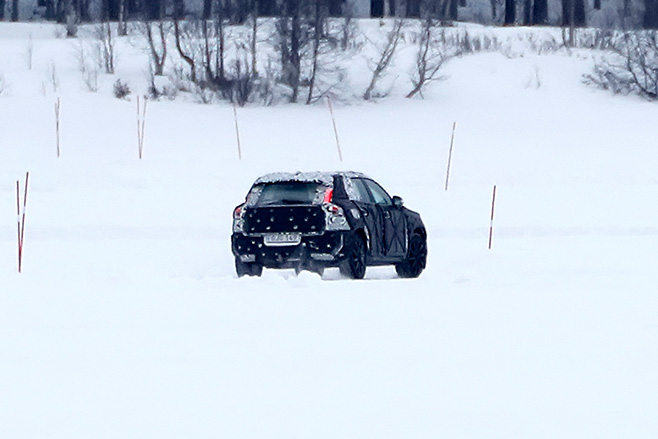
Mertens says Volvo will focus on a high riding position and a large boot for increased practicality so it’s more than just a high-riding hatch.
Volvo hasn’t revealed drivetrain details although expect it to feature engines from its current 4-cylinder petrol and diesel range along with a three-cylinder turbo entry-level unit and a plugin hybrid for the T5 variant.
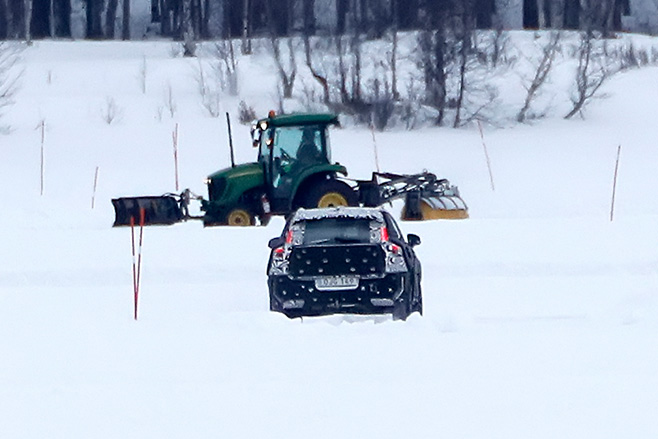
A full electric drivetrain giving the XC40 a range of 350 kilometres is in the pipeline, too, but won’t be available before 2020.
The XC40 is scheduled to make its debut at this year’s Shanghai Motor Show in April, though it’s not expected to roll into showrooms until later in the year in Europe and early 2018 here.
Based on its rivals, expect the XC40 to come with a base price tag of around $40,000.
1. The Levante is the first SUV sold by Maserati, a brand that is part of the Fiat Chrysler group.
2. The Levante was initially planned to be produced in America using underbody components of the Jeep Grand Cherokee. However, parent company of both brands, Fiat Chrysler Automobiles made the decision to produce Maserati’s first SUV in Italy on a bespoke Maserati platform.
3. The Levante uses a 3.0-litre V6 turbo diesel engine produced by Italian company VM Motori. The basic engine is also used in various Chryslers and Jeeps, although Maserati has tweaked the exhaust and other items to produce slightly more power. The Levante’s 202kW power peak is 10 percent more than the Jeep Grand Cherokee’s 184kW.
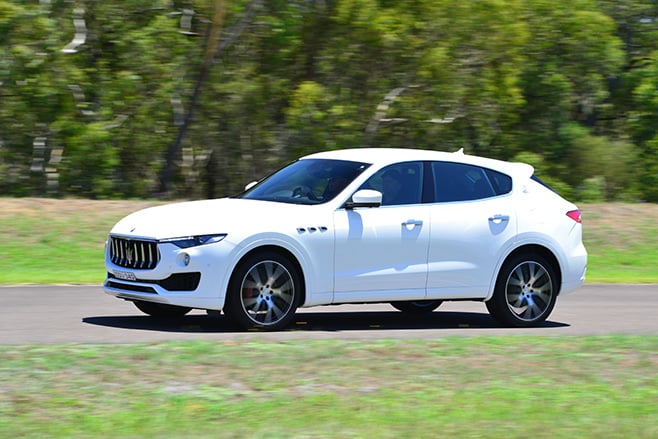
4. V6 diesel engines typically sound fairly dull, with most brands keen to mute the associated clatter in the quest for refinement. But Maserati has worked hard to boost the aural qualities of the Levante. Carefully plumbing and tuning has created more of a burble, particularly at low revs.
5. The Maserati Levante is available overseas with a V6 twin-turbo engine with a lot more power than the diesel. However, that engine is not yet available in Levantes with the steering wheel on the right. Maserati is currently considering engineering the flagship V6 petrol engine for right-hand drive vehicles, although it would arrive in 2018 at the earliest.
6. The Levante is available in three basic guises in Australia. All come with leather, digital radio tuning, satellite navigation, active cruise control and adjustable height air suspension. The base model misses out on the race car-like gearshift paddles of the more expensive variants.
7. The Levante misses out on autonomous emergency braking, an increasingly common active safety feature that monitors vehicles ahead and can automatically apply the brakes to avoid a crash. Instead it has a forward collision warning system that warns when the car is about to crash but doesn’t apply brakes. Maserati argues the driver should always be in control, hence the notable safety omission. It’s a similar argument used until recently by BMW.
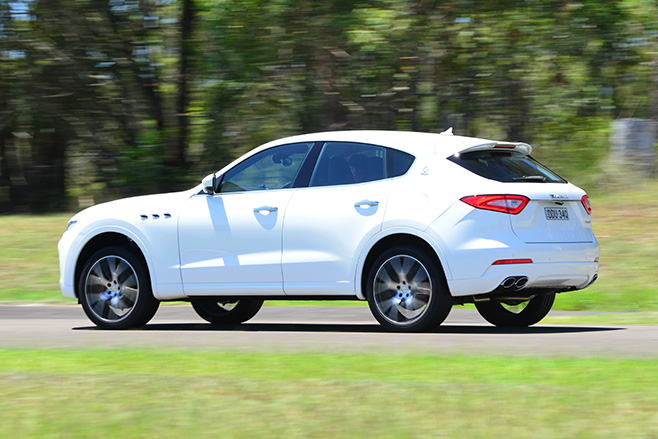
8. Some features and switches in the Levante are shared with Chryslers and Jeeps. The audio buttons on the back of the steering wheel. For example, and the 8.4-inch colour touchscreen; the latter includes Maserati colours and a Maserati logo to differentiate it.
9. All Levantes come with 19-, 20- or 21-inch wheels. Each step up in wheel size gets a slightly lower profile (the distance between the wheel rim and the road) that makes small or sharp bumps more obvious. Those wanting smaller wheels – which would be more resistant to punctures off-road – can option 18-inch wheels.
10. Like key rivals the Maserati Levante is designed predominantly for on-road driving. However Maserati has fitted an off-road program that raises the standard air suspension system by up to 40mm and to make light-duty off-reading easier. There is also a hill descent control system that uses the anti-lock brakes to maintain a pre-set speed (between 4 and 14km/h) down hills.
11. The Levante is set to be the best selling Maserati ever sold in Australia. Maserati is expecting to sell about 500 per year, in turn doubling the marque’s sales. However, at that rate the Levante will still be one of the most exclusive luxury SUVs on the market.
12. The Levante is one of five models planned for the Maserati family. It includes the Ghibli mid-sized sedan, Quattroporte large sedan, Gran Turismo four-seat coupe, Gran Cabrio four-seat convertible and the upcoming Alfieri two-seat sports car.
What is it?
The Levante is the first SUV from Italian sports car brand Maserati. It’s priced from $139,990 and is available in three models, all sharing the same V6 diesel engine.
Main rivals
The popular cars in this segment are the BMW X5, Mercedes-Benz GLE and Audi Q7. As a competitor to the Levante, though, the Porsche Cayenne is perhaps the most serious competitor, bringing a more exclusive badge and sports car heritage. The new Jaguar F-Pace is also worth a look.
Strengths
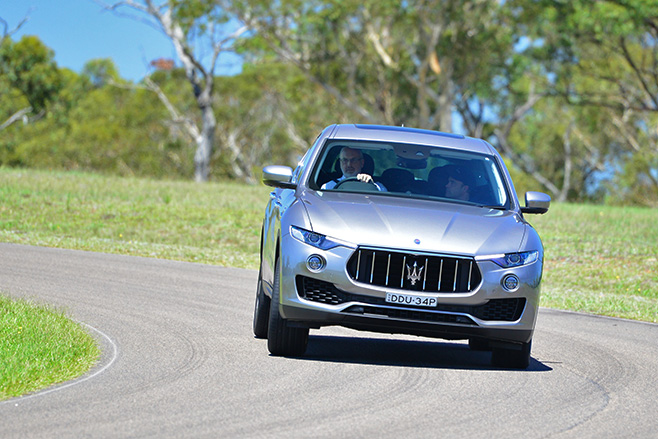
- Cornering. While it’s not especially fast in a straight line, the Levante is very capable and fast around corners. Its 2.2-tonne body sits quite flat, keeping the wheels in better contact with the road and reducing unwanted leaning. The Pirelli tyres are designed for high speed driving and have high levels of grip.
- Attention to detail. From the roof lining to the leather and general finishes the Levante has a high quality appearance. Even outside there are well-placed chrome details, including the distinctive trident badges above the stylised rear wheel arches. It is also one of the only SUVs with pillarless doors, so there are no frames around the door windows.
- Fuel economy. While Maseratis have typically been quite thirsty ‑ a result of big power and big performance ‑ the Levante is impressively economical. Claimed average fuel use is just 7.2 litres per 100km, enabling 1000km-plus range from the 80-litre fuel tank.
Weaknesses
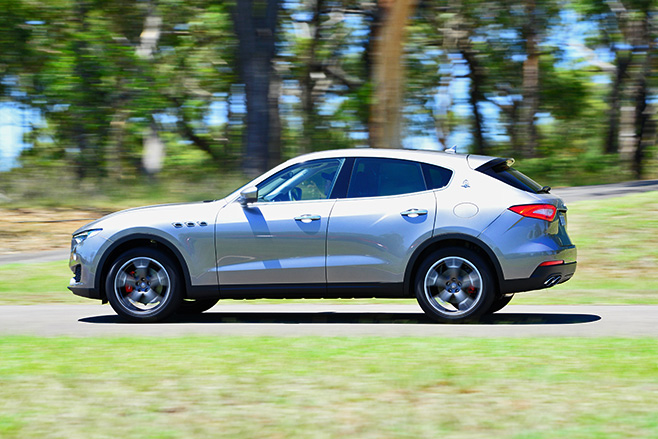
The Levante’s 3.0-litre V6 diesel engine is not traditional Maserati. That’s because it’s a more powerful version of the same engine used in various Jeeps and Chryslers. Maserati has worked to improve the sound and performance but it lacks the drama and excitement of the petrol engines (typically V6s and V8s, some based on Ferrari designs) that have long defined the brand.
- The price. The Levante’s $139,990 starting price is tens of thousands above the entry price of key alternatives from the likes of Porsche, BMW, Mercedes-Benz and Audi. However, for the outlay you should get exclusivity, with only about 500 Levantes likely to be sold in Australia each year.
- Active safety. While the Levante comes with blind spot warning and lane departure warning it misses out on autonomous emergency braking, something increasingly popular in new models and very common in luxury cars. AEB can automatically slam on the brakes to avoid a nose-to-tail crash. Instead the Levante gets forward collision warning, which simply alerts the driver if a potential crash is imminent.
Prototypes of Porsche’s seventh-generation 911 have been spotted roaming frozen roads in Northern Europe, and unlike previously-spied mules based on the existing 991.2-generation car, these proudly flaunt near-production-spec bodywork. Camouflage is surprisingly minimal, and there’s plenty of detail on display.
From the side, the new Porsche 911’s silhouette is true to form – don’t expect any radical departures from the fastbacked coupe profile that has been the 911’s calling card since its inception in 1963. However that’s where the similarities with the current model end.
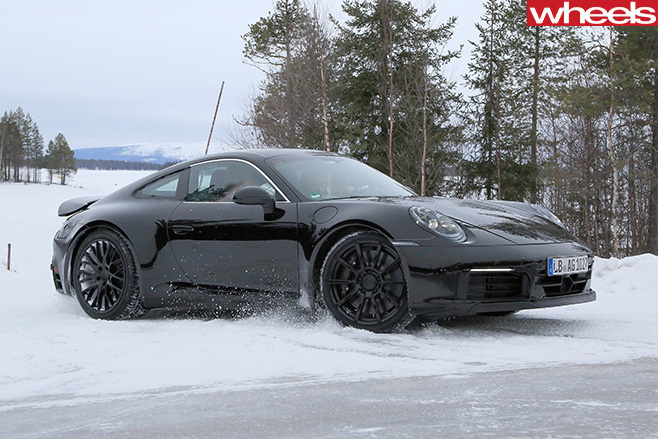
At the opposite end of the car, the front quarter panels now completely encircle the headlamps ‑ 993-style ‑ while the side indicator repeaters are relocated above the cutline to nest within the quarter sheet metal. Some sparingly-applied camouflage attempts to give the front air dam a similar look to the present-gen ‘991.2’ Carrera, but beneath the tape we can see a broader, squarer aperture similar to that of the Porsche 718 Boxster and Cayman.
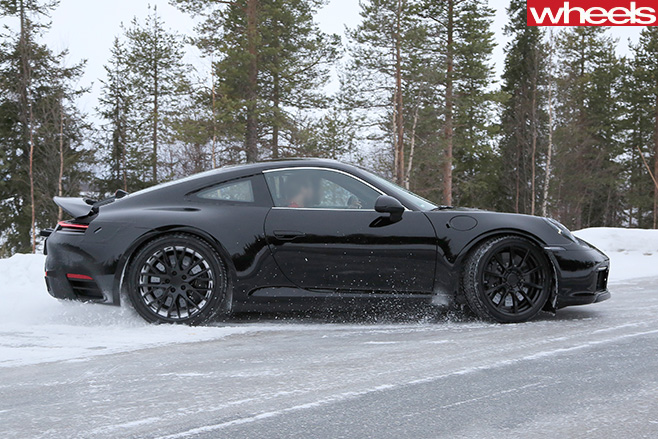
Slim flush-fit door handles replace the current car’s door pulls, though features like the longitudinally-straked engine cover and door-mounted wing mirrors remain.
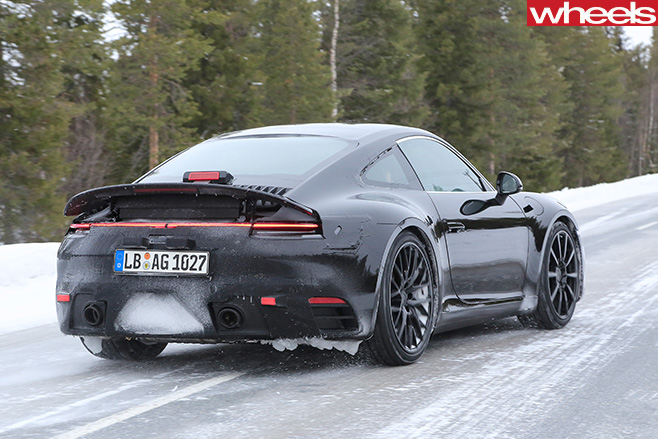
The platform is expected to accommodate both rear- and mid-engined configurations, with the next-generation Porsche Boxster, Porsche Cayman, Lamborghini Aventador, Huracan and Audi R8 all expected to be spun off the new architecture.
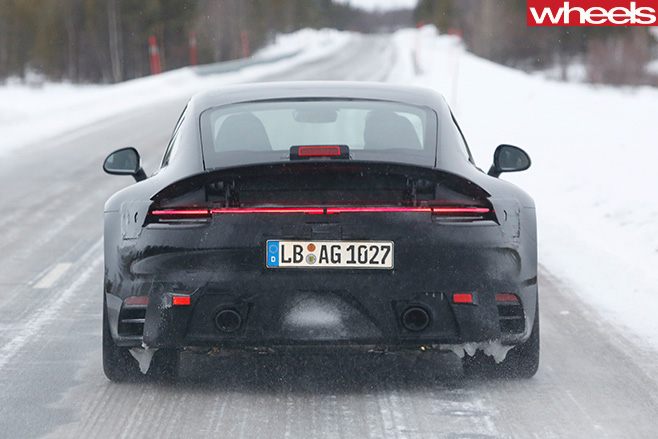
Expect to see the next-gen Porsche 911 make its global debut sometime in 2018, before launching as a 2019 model.
Buy one of these today and Future You might just be very thankful.
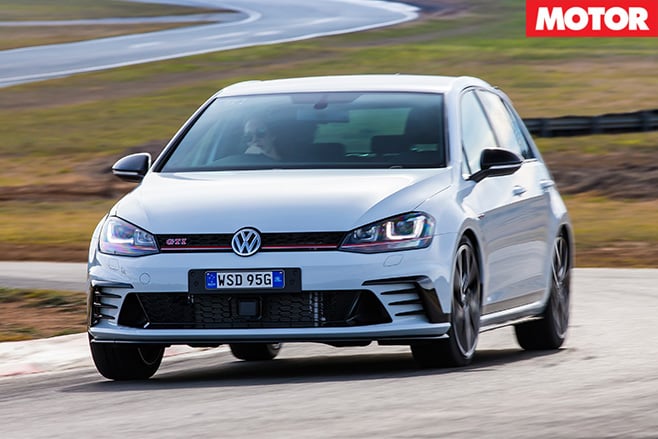
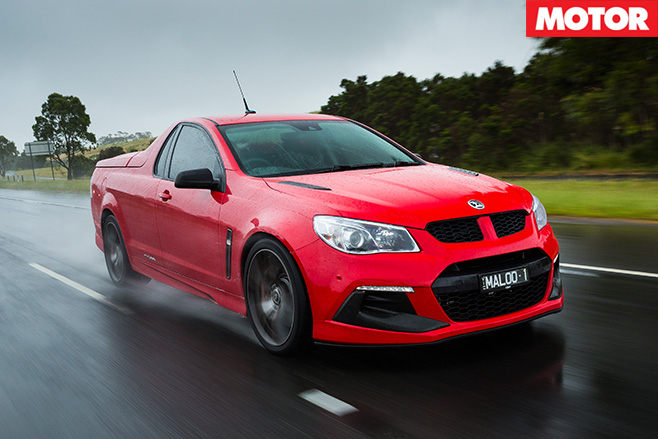
The Holden Astra RS-V is the sporty range topper of Holden’s new German-designed small car. It comes equipped with a suite of driver assistance functions and a host of creature comforts making it one of the most well-equipped cars to wear a Holden badge. It’s also quick, with a 1.6-litre turbo engine and excellent handling that dials things up towards hot hatch territory.
Strengths
- The 1.6-litre four-cylinder turbo petrol engine pushes out 147kW which is more than enough power for this car. You can feel it lunge when you put the foot down especially in Sport mode and it has plenty of oomph in reserve.
- Driver enjoyment is enhanced by driving modes including Sport which adjusts engine tune, suspension and electronic steering for even better handling. The steering has been tuned for Australian conditions and the new chassis provides excellent body control.
- Choice of six-speed manual or automatic transmissions.
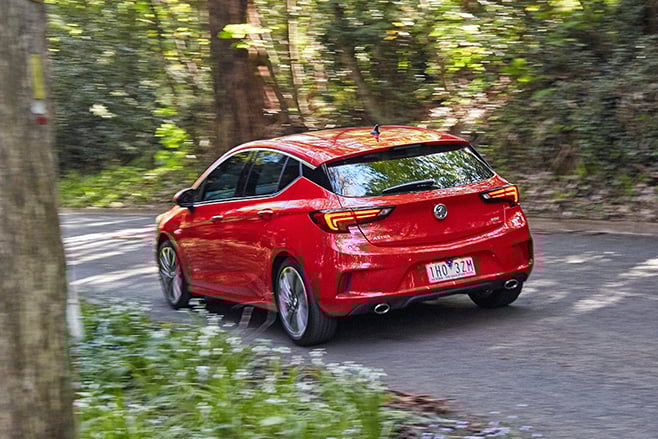
- Fuel economy is very good for car with so much go. Holden claims a combined economy rating of 6.3L/100km. I averaged around 7.0L/100kms mostly driving around town and freeways in Sport mode.
- The driver assist system makes this one of the best ever equipped Holdens and includes autonomous braking, collision alert, active cruise control, lane keeping assist and blind spot alert. It even tells you how many seconds you are behind the car in front, which is often not too many.
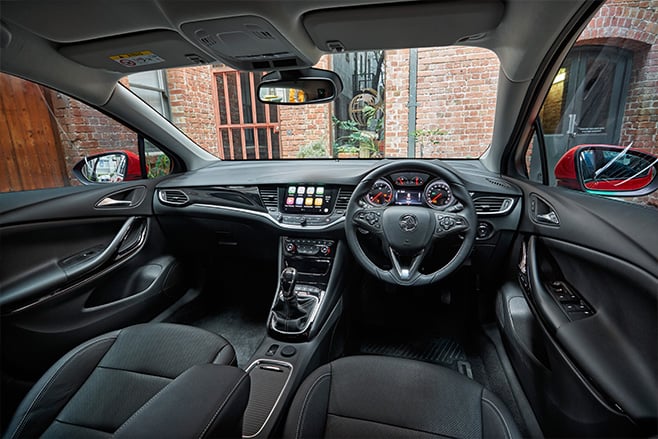
- Standard equipment in the RS-V includes an 8-inch colour touch screen, DAB+ digital radio, 18-inch allow wheels, heated front seats and steering wheel, shark fin antenna, automatic engine stop-start, auto wipers and LED head and tail lights.
- It’s roomy. The chassis is smaller than its predecessor however they’ve managed to fit more interior space. The two outer back seats are comfortable and there’s plenty of leg and head room, though like any small car the middle seat is a little tight for adults.
- The interior looks good and has an air of quality about it. Like most Holdens the leather-appointed front seats are firm at first but get comfortable and supportive once you settle in. The driver’s seat has four-way lumbar support.
Weaknesses
- The MyLink infotainment system is complicated. I had to work out most functions through trial and error which sometimes meant having to pull the car over. For some reason my USB connection kept cutting out while in Apple CarPlay.
- Unlike some other systems, Lane Keeping Assist only works when road lines are clear. This means it can become unavailable when lines are fading or in bright sunlight or rain.
Any rivals I should consider?
There’s no shortage of performance hatches and the Astra fits well alongside most of the range-toppers from other brands including Toyota Corolla, Hyundai i30 and Mazda3. It’s not in the same hot-hatch territory as the Ford Focus RS and Golf R, but holds its own against the Focus ST and Golf GTi.
HOLDEN is shaping up to borrow more than just the Commodore name for its fully imported replacement for the locally made car.
The carmaker yesterday revealed its spin on the Opel Insignia mid-size car that will wear the hallowed badge from 2018 in the wake of local Holden Commodore production switching off later this year.
However, instead of sticking with the Grand Sport name given to the Opel version of the longer-wheelbase wagon featuring GM’s latest E2XX vehicle architecture, Holden will stick with the Sportwagon badge.
That’s not all. The image is also tagged as a Calais version – another throwback to the locally made product – alluding that we’re looking at a range-topping 230kW and 370Nm 3.6-litre V6-engined, all-wheel-drive version of the Opel Insignia wagon.
While we’re quite used to the stepped, fastback-styled rear end – the current Sportwagon has a similar cut-in bootlid as the Insignia – we will have to get used to packing less gear in the new Commodore; load space with the rear seats folded down drops from 2000 litres to 1600L.
The Holden-badged Insignia wagon has a similar falling roofline to the Commodore Sportwagon. A highlight is a chrome strip running along the roofline that plunges into the tail-light design. A fast-rising door sill gives the Insignia a much smaller glasshouse than the Commodore.
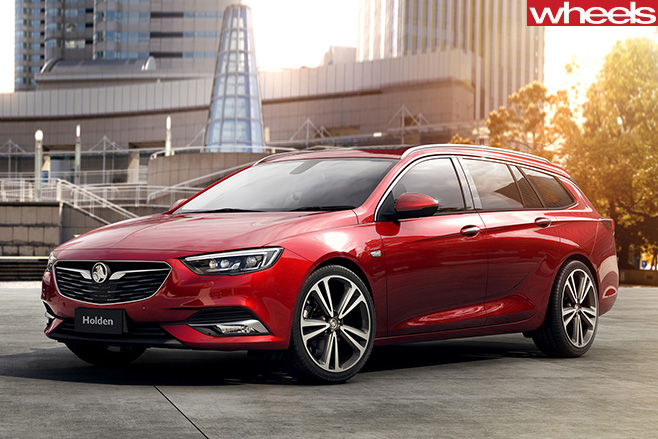
Opel says the Grand Sport will come equipped with “the same leading technologies” as the sedan version, which includes LED headlights, active cruise control and a surround-view camera system. Aussie models will include features such as heated front and outboard rear seats, and a massaging function for the front seats – a feature once offered for the rear seats of exported Commodores, but never rolled out here.
V6 versions of the Sportback-badged Insignia will send drive to all four wheels via a nine-speed automatic transmission. Other driveline choices include the same 2.0-litre turbocharged petrol and diesel engines as the five-door hatchback Insignia.
The version of the Grand Sport wearing the Holden badge was released by Opel in the lead-up to the Commodore replacement’s unveiling at March’s Geneva Motor Show.
Opel’s version of the Insignia wagon is said to be 200kg lighter than the one it replaces, meaning it could weigh in at around 1450kg.
Boot space with the rear seats folded down is up to 1640 litres, well down on the 2000L that the current generation offers. One of the key areas of development of the Aussie-made Commodore was a 2.0-metre long flat floor so that people could sleep in it.
LUXURY SUV buyers now have an Italian alternative to the German feast with the Maserati Levante.
WHAT IS IT? Maserati’s first SUV and a five-seater that offers an alternative to predominantly German competitors.
WHY WE’RE TESTING IT The Levante has arrived in Australia and is a key ingredient in plans to double sales for the niche sports car maker.
MAIN RIVALS Any go-fast SUV from the Porsche Macan and Cayenne to the recently arrived Jaguar F-Pace. Then there are the German stalwarts, such as the BMW X5, Audi Q7 and Mercedes-Benz GLE.
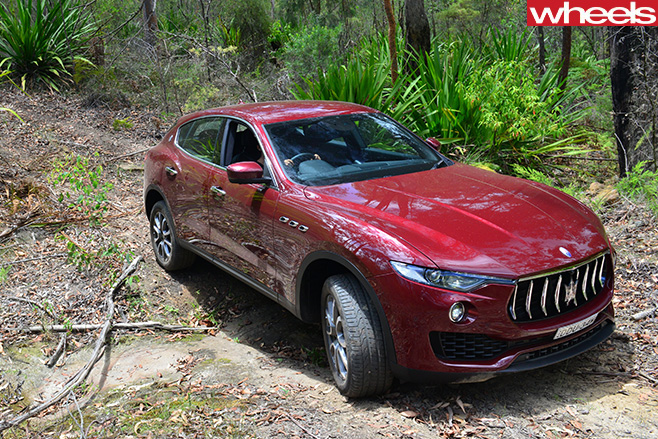
PLUS: Laced with trident badges; familiar V6 diesel has decent snarl; competent dynamics; elegant interior
MINUS: Engine not very Maserati; no AEB; heavy; it ain’t cheap
THE WHEELS REVIEW
There’s something NQR about being on the limit of adhesion in a Maserati at 5km/h. Twigs and leaves are crunching under the 19-inch Pirelli P Zeros before the nose dips through a shallow creek crossing.
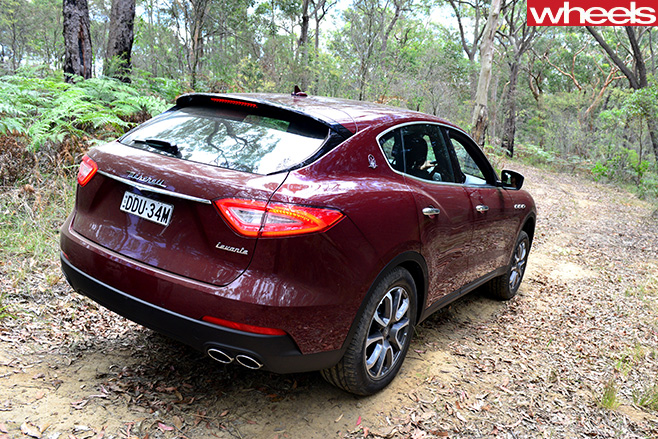
Despite our vast outback expanses, beaches and myriad mountain ranges, Maserati Australia admits the chances of anyone shelling out upwards of $139,990 on the Italian-made Levante, and then heading for the scrub are slim, although “it’s important that they know they can,” according to Maserati’s Australian chief operating officer, Glen Sealey.
Admittedly the off-road course chosen for the media launch is gentle, indicative more of a choppy track on the road to the country retreat rather than the stuff you’ll typically encounter in the Red Centre.
But the Levante’s off-road mode at least raises the ride height by as much as 40mm.
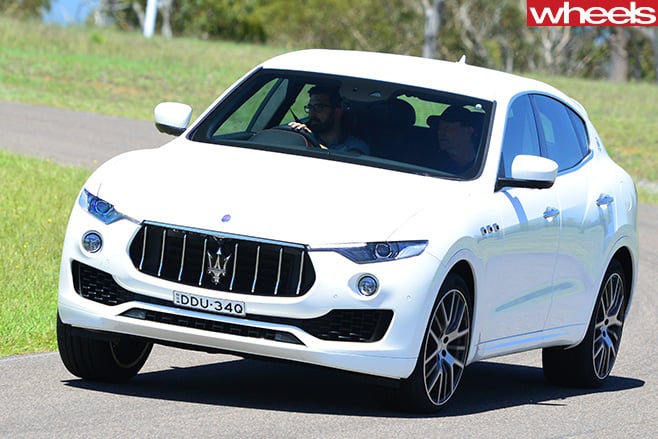
Ultimately those Pirellis will be the biggest limiting factor on how far you travel beyond the blacktop. Along with rim options stretching up to 20 and 21 inches, the tyres are engineered more for 200km/h-plus autobahn fangs (top speed is 230km/h) or successive switchbacks rather than craggy rocks or sand.
Cop a puncture and you’ll be fumbling with a repair kit or fitting a space-saver spare; the latter only if you’ve ordered it.
But the Levante’s natural habitat is bitumen. That’s where the rear-biased dynamics work with torque vectoring to help point the nose crisply, making for slick and accomplished cornering. Grip levels are high and the five-seater recovers neatly from mid-corner uglies.
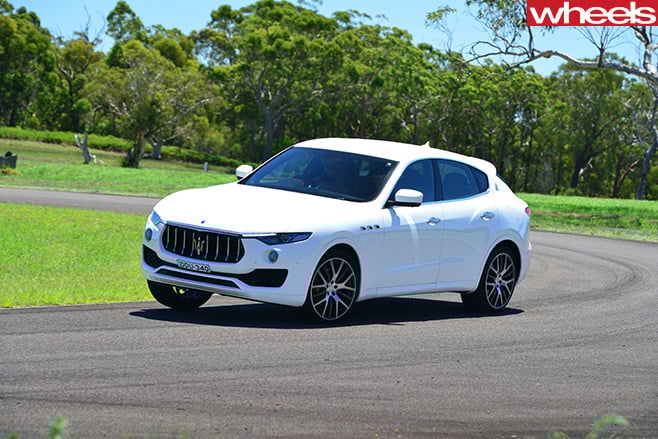
Lower the pace and well-weighted steering makes for easy progress, while the suspension copes with all but sharp-edged bumps elegantly.
Under the bonnet is a VM Motori 3.0-litre V6 diesel, something already employed in the Maserati Ghibli and Quattroporte as well as various Jeeps. Maserati has upped outputs to 202kW and 600Nm, the latter arriving in a swell of usable torque from 2000rpm.
Driving through an eight-speed ZF auto with well-spaced ratios it’s claimed to nudge 100km/h in 6.9 seconds. So it’s brisk without anything approaching ballistic.
The noise, too, is better than most V6 diesels courtesy of some nicely tuned plumbing within the induction and exhaust.
But it tapers off as speed increases; something that goes for the performance, too.
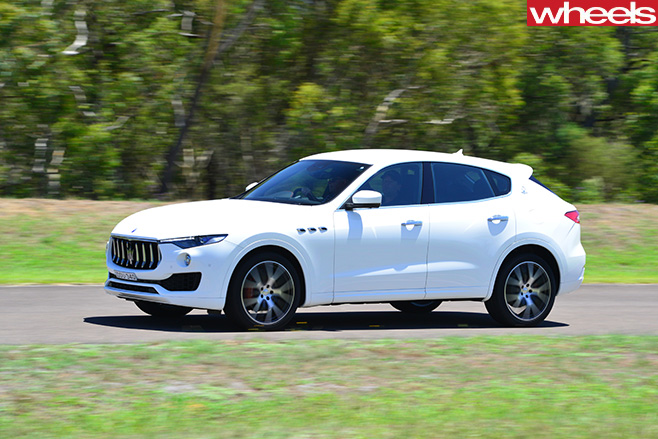
The best bit about the engine is how little fuel it uses; claimed consumption is 7.2 litres per 100 kilometres.
Elsewhere the Levante plays the SUV game faithfully, from a spacious back seat and boot to generous storage cubby holes.
The biggest deficiency to the equipment list is autonomous emergency braking. Despite having blind spot and lane departure warnings, the Levante will only warn of a nose-to-tail crash, and not take any action to avoid it.
Yet the Maserati SUV is generally well catered for, with heated leather seats, surround camera, digital radio, smart key entry (only on the front doors) and adjustable air suspension. There’s also Apple CarPlay and Android Auto as part of a tailored 8.4-inch touchscreen also used in various Jeeps and Chryslers. Column-mounted paddle shifters are on all but the base car.
Dig deeper and attention to detail comes to the fore, from the head lining to the leather on the dash. Some switchgear will be familiar to Jeep drivers, but the classy trim choices and traditional touches – such as the oval analogue clock that protrudes from the dash – wins back points.
But playing the game is not what the Levante is about. Its Italian heritage and trident badge is aimed at making it stand out in a sea of predominantly German rivals.
And that, rather than the driving experience, is what most defines the Levante. At least until – and if – the twin-turbo V6 arrives in Australia.
SPECS Model: Levante Turbo Diesel Engine: 2987cc V6 turbo diesel Max power: 202kW @4000rpm Max torque: 600Nm @ 2000-2600rpm Transmission: 8-speed auto Kerb weight: 2205kg 0-100km/h: 6.9sec (claimed) Fuel economy: 7.2L/100km (claimed) Price: $139,990 On sale: Now
